Former Navy Specialist Triggers Mindset Shift to Multiply Executive Sales
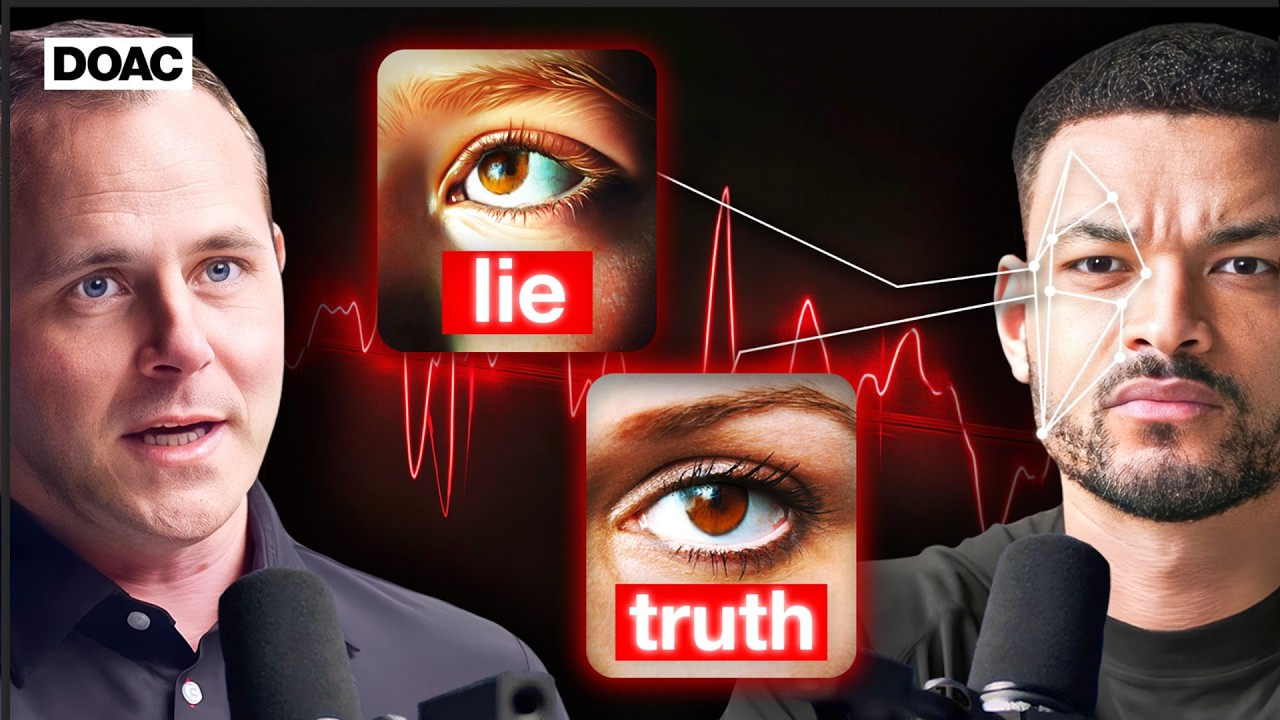
The Diary Of A CEO
Overcoming behavioral obstacles through environmental agitation and identity commitment drives professional growth while subverting cognitive default scripts.
AI-assisted summary of The Behaviour Expert: Instantly Read Any Room & How To Hack Your Discipline! Chase Hughes — original source. Check the original for full context.
Source published:
Detailed notes
## Background Published on December 26, 2024, by Steven Bartlett on his YouTube channel The Diary Of A CEO, this episode features former U.S. Navy Chief and behavior expert Chase Hughes. The episode explores human behavior, non-verbal communication, psychological persuasion, building authority, and techniques for reprogramming personal discipline.
## TL;DR Behavioral expert Chase Hughes breaks down the core mechanics driving human interaction, authority, and influence. He shares insights on reading body language—such as blink rates and micro-expressions—and details practical frameworks like the ACSS, PCP, and FATE models for communication and sales. Furthermore, Hughes outlines psychological techniques to rewire internal confidence, overcome limiting childhood beliefs, and master discipline by serving one's future self.
## Atmosphere & style The conversation carries an intense, analytical, yet deeply engaging atmosphere, blending military-grade psychological strategies with practical personal growth advice. Steven Bartlett acts as a curious and reflective host, pulling actionable insights from Hughes' calm, authoritative demeanor. The dialogue maintains a sharp focus throughout, seamlessly shifting from high-stakes intelligence tactics to deeply human reflections on self-mastery and focus.
## Key takeaways - [00:00](https://www.youtube.com/watch?v=RvjR9GM2kX8&t=0s) Success or failure in any pursuit relies on three core pillars: Self-Mastery, Observation, and Communication. - [02:00](https://www.youtube.com/watch?v=RvjR9GM2kX8&t=120s) Every major historic, organizational, or interpersonal outcome fundamentally traces back to human behavior and factors such as leadership, self-management, and persuasion. - [06:42](https://www.youtube.com/watch?v=RvjR9GM2kX8&t=402s) Under the ACSS Model, Authority and Comfort dictate influence far more than specific technical skills or scripted lines. - [06:42](https://www.youtube.com/watch?v=RvjR9GM2kX8&t=402s) Slowing down physical movements to 'underwater speed' calms the nervous system and projects grounded personal authority. - [12:04](https://www.youtube.com/watch?v=RvjR9GM2kX8&t=724s) Personal authority consists of five internal elements (Confidence, Discipline, Leadership, Gratitude, and Enjoyment) expressed across five core life domains. - [21:03](https://www.youtube.com/watch?v=RvjR9GM2kX8&t=1263s) Internal limiting beliefs and negative self-talk often originate from early childhood coping mechanisms, but can be rewired by exposing them publicly and reframing them. - [29:23](https://www.youtube.com/watch?v=RvjR9GM2kX8&t=1763s) High stress or deception elevates blink rates to 70–80 blinks per minute, whereas exceptionally low blink rates indicate intense focus or high psychological control. - [34:34](https://www.youtube.com/watch?v=RvjR9GM2kX8&t=2074s) Effective behavioral analysis requires the 5-C Framework: Change, Context, Cluster, Culture, and Checklist. - [52:15](https://www.youtube.com/watch?v=RvjR9GM2kX8&t=3135s) Elicitation gathers sensitive information without asking direct questions by strategically leveraging human psychological reflexes, such as the instinct to correct false statements. - [59:27](https://www.youtube.com/watch?v=RvjR9GM2kX8&t=3567s) The PCP Model (Perception -> Context -> Permission) shows that shifting a person's perception alters their context, naturally unlocking permission for new actions. - [01:08:40](https://www.youtube.com/watch?v=RvjR9GM2kX8&t=4120s) The FATE Model outlines four primary levers of human behavior across all species: Focus, Authority, Tribe, and Emotion. - [01:10:33](https://www.youtube.com/watch?v=RvjR9GM2kX8&t=4233s) Disarming manipulation or aggression involves using a 'golden bridge' that pairs a clear, direct call-out with an empathetic exit clause. - [01:23:03](https://www.youtube.com/watch?v=RvjR9GM2kX8&t=4983s) Cold outreach and sales performance improve significantly when unexpected, humanizing disruptions are used to break rigid cognitive filtering. - [01:33:10](https://www.youtube.com/watch?v=RvjR9GM2kX8&t=5590s) Discipline is best defined as prioritizing the needs of your future self ahead of your present self, acting as a 'butler' for your future state. - [01:40:48](https://www.youtube.com/watch?v=RvjR9GM2kX8&t=6048s) Lasting behavioral change requires environmental agitation—disrupting surroundings to prevent the brain from defaulting to old, automated scripts. - [01:48:06](https://www.youtube.com/watch?v=RvjR9GM2kX8&t=6486s) Short-form content algorithms utilize hypnotic fractionation—cycling rapidly between contrasting emotional states—to heighten user suggestibility.
## Detailed walkthrough ### [00:00](https://www.youtube.com/watch?v=RvjR9GM2kX8&t=0s) New Year's Resolutions and the Mechanics of Behavioral Success
The conversation opens with a discussion on New Year's resolutions, noting the stark reality that only about 9% of them actually stick. Chase Hughes immediately reframes the challenge of personal transformation: achieving long-term goals like losing weight isn't about setting target outcomes, but rather about understanding that human lives are governed by habits. He emphasizes that one of the most effective strategies is learning how to systematically re-engineer your own brain to form and maintain these new behaviors.
Chase introduces the three fundamental pillars that dictate why an individual ultimately succeeds or fails in any pursuit: **Self-Mastery**, **Observation**, and **Communication**. Self-mastery encompasses confidence, body language, discipline, and authority. Observation relies on real-time behavior profiling (such as monitoring an individual's blink rate to gauge stress or discomfort). Communication centers on reading who you are speaking to—categorizing people into distinct behavioral groups—to deliver persuasive, outcome-driven messaging.
- **Resolution Failure Rate:** ~91% of New Year's resolutions fail because people focus on goals instead of habit formation. - **The Three Factors of Success/Failure:** 1. **Self-Mastery:** Internal control over confidence, discipline, body language, and personal authority. 2. **Observation:** Ability to read the room and track behavioral metrics (e.g., rapid blink rates signaling a need to pivot topics). 3. **Communication:** Adapting messaging based on personality archetypes to ethically persuade and inspire.
---
[02:00](https://www.youtube.com/watch?v=RvjR9GM2kX8&t=120s) Chase Hughes' Background and Core Mission
When host Steven Bartlett asks Chase Hughes to define who he is and what drives his work, Chase describes himself simply as a "behavior guy." A former U.S. Navy veteran with two decades of military service, Chase has dedicated his life to uncovering the invisible mechanics of human interaction that most people never notice or understand.
Chase argues that across 10,000 years of recorded history, every major event, political outcome, or organizational success comes down to human factors. Whether facing economic turmoil, technological shifts, or artificial intelligence revolutions, the ultimate outcome is always decided by human interactions—specifically who can manage themselves, who can lead effectively, and who can persuade others. His mission is to reveal this "invisible advantage" to people who feel stuck, giving them tangible control over their personal and professional lives.
> "Everything that dictates the outcomes of situations comes down to human factors every time... whether or not you can manage yourself, you're a good leader, who the good leaders are, and who can persuade the people to feel a certain way."
---
[04:17](https://www.youtube.com/watch?v=RvjR9GM2kX8&t=257s) Working with Intelligence Agencies and High-Stakes Operations
Chase details his extensive background working with elite military and government organizations. His operational training has been utilized by intelligence agencies, the U.S. Army Special Operations Command (specifically Psychological Operations), U.S. Navy leadership, and law enforcement entities. Today, a significant portion of his client base also includes high-performing civilians, executives, and business owners.
He explains that whether he is training an intelligence officer to recruit a foreign agent to spy against their own country or training an investigator in interrogation techniques, the underlying psychological mechanism is identical: persuading someone to do something that is not initially in their best interest or comfort zone. This same psychological leverage applies directly to ethical sales, negotiation, and high-stakes leadership in the civilian world.
---
[05:41](https://www.youtube.com/watch?v=RvjR9GM2kX8&t=341s) The Creation of "The Behavior Operations Manual"
Pointing to a massive volume sitting on the table—*The Behavior Operations Manual: Neuro-Cognitive Intelligence*—Steven asks about the vast scope of Chase's written work. Chase shares a poignant, vulnerable story behind its creation. After receiving a serious medical brain diagnosis, he faced the real fear of losing his cognitive abilities and was terrified about how his family would survive financially.
Driven by desperation and a desire to leave a complete legacy, Chase poured 30,000 to 40,000 hours of research and every single classified and unclassified technique, framework, interrogation method, and influence tactic he had ever developed into a single comprehensive manual. It stands as the complete synthesis of his 20-year military career and research in human behavior.
---
[06:42](https://www.youtube.com/watch?v=RvjR9GM2kX8&t=402s) The ACSS Model: Why Skills Fail Without Comfort and Authority
When clients approach Chase, they almost always believe their primary issue is a lack of technical "skills"—demanding new sales scripts, phone pitches, or conversational tricks. Chase refutes this approach using his **ACSS Model**, which ranks the true prerequisites for human influence:
1. **Authority** (Personal ground and presence) 2. **Comfort** (Internal ease and absence of anxiety) 3. **Social Skills** (Relational navigation) 4. **Skills** (Tactics, scripts, and checklists)
Chase notes that 90% of people mistakenly seek level 4 (Skills), when their actual bottleneck is level 1 (Authority) or level 2 (Comfort). He uses the analogy of handing a Cessna 172 flight checklist to a non-pilot: having a step-by-step paper list does not make you capable of flying the plane. Similarly, giving a high-persuasion sales script to someone suffering from social anxiety will fail because influence is not a magic spell—without baseline comfort, the script falls flat.
``` [ SKILLS ] <-- 90% of people focus here (Scripts, tactics) [ SOCIAL SKILLS ] [ COMFORT ] <-- The real bottleneck (Internal ease) [ AUTHORITY ] <-- The foundational bedrock ```
To build genuine comfort, Chase advises competing on physical and vocal composure rather than superficial status markers like wealth, height, or looks. He challenges clients to practice moving at "underwater speed"—deliberately slowing down body movements as if submerged in a swimming pool. Because fear inherently speeds up human motion causing rapid, jerky gestures, slowing down physical movement forces the nervous system into composure and signals absolute comfort to everyone in the room.
---
[10:26](https://www.youtube.com/watch?v=RvjR9GM2kX8&t=626s) Navigating Posturing vs. Collapse: The Path to Composure
Chase breaks down how people handle high-pressure conversations along a spectrum anchored by two negative extremes: **Collapse** and **Posturing**.
- **Collapse:** Shrinking oneself physically, vocally, or financially to make the other person comfortable or avoid conflict. - **Posturing:** Puffing oneself up, acting aggressively, or overcompensating to force others away or mask insecurity. - **Composure:** The psychological center point driven by quiet personal authority and grounded comfort.
Chase shares a personal anecdote from his early post-military days when a client called to book him for a keynote presentation. When asked for his rate, Chase timidly quoted $6,000 including travel. The client made a slight pause and an indecipherable sighing noise on the line. Panicking, Chase immediately fell into *collapse*, offering unsolicited discounts down to $5,000, 50%, and even 75% off before the client could even respond. He highlights how people who live in collapse often mistake *posturing* (like pickup artist tactics) as the solution, failing to realize that true strength lies in the middle: composed authority.
---
[12:04](https://www.youtube.com/watch?v=RvjR9GM2kX8&t=724s) The 5 Elements of Authority and the 5 Controllable Life Domains
According to Chase, genuine personal authority is not hierarchical dominance; it is composed of five internal traits: 1. **Confidence** 2. **Discipline** 3. **Leadership** 4. **Gratitude** 5. **Enjoyment**
When a person lacks these traits, the internal deficit bleeds out into their body language, vocal pitch, micro-expressions, and breathing patterns. Even if someone reads a listicle on "19 ways to look confident" and adopts pristine posture, an unmanaged personal life causes an internal cognitive dissonance ("I'm faking it") that manufactures negative "gut feelings" in other people.
To prevent this subconscious leakage, Chase outlines the **5 Life Domains** that must be actively managed to project authentic authority: - **Environment:** Cleanliness and organization of personal space (e.g., not leaving an 8-foot pile of dirty laundry or unwashed dishes at home). - **Time:** Proper scheduling, punctuality, and time respect. - **Appearance:** Grooming and self-care. - **Social Life:** Healthy, intentional interpersonal relationships. - **Financial Life:** Responsible management of personal finances.
---
[14:45](https://www.youtube.com/watch?v=RvjR9GM2kX8&t=885s) The Milgram Experiment: The Terrifying Power of Authority
To demonstrate how deeply humans are hardwired to respond to authority signals, Chase recounts the famous 1962 Yale University experiment conducted by Stanley Milgram. Volunteers were recruited under the guise of a memory and learning study for a $20 payment. The volunteer was paired with another participant (a confederate actor) and assigned the role of "Teacher," while the actor was the "Learner."
The Learner was strapped into an electric shock apparatus in an adjacent room. The Teacher was instructed by an authoritative figure—a tall man wearing a grey lab coat holding an official clipboard—to administer increasing voltage shocks every time the Learner answered a test question incorrectly. The control board ranged from mild shocks up to 450 volts, labeled with ominous warnings ending in "XXX Danger: Severe Shock."
As the experiment progressed, the actor would scream in pain, bang on the walls claiming to have a heart condition, and demand to be let out. When volunteers turned around in distress to question the setup, the experimenter in the lab coat simply responded with flat, authoritative prompts: *"Please continue, the experiment requires that you continue."* Even when the Learner went completely silent and non-responsive, the authority figure instructed that silence must be treated as an incorrect answer. The overwhelming majority of ordinary participants continued shocking the victim up to the maximum lethal-labeled voltage solely due to the presence of perceived authority.
[16:42](https://www.youtube.com/watch?v=RvjR9GM2kX8&t=1002s) The Power of Authority and the Milgram Experiment
Referring to high-stakes psychological studies, Chase Hughes highlights the extreme impact authority and novelty have on human behavior. He brings up Stanley Milgram's famous obedience experiment at Yale University, noting that before the study, leading psychiatrists predicted that less than 1% of participants would go all the way to administering the maximum shock. In reality, **67% of participants went all the way**, and **100% of participants administered up to 250 volts**—a level more than high enough to be lethal. The presence of authority (represented by the university setting and lab coats) combined with the novelty of the environment drove ordinary people to perform acts equivalent to murder. Chase argues that if authority can compel someone to commit murder, using authority to influence someone in everyday scenarios—like selling a car—is comparatively simple.
Steven Bartlett asks how people can establish authority for themselves and whether physical expressions of authority exist in daily life. Chase explains that **slowness of movement** is one of the most visible indicators. He outlines the five key pillars on the right side of his "Authority Triangle": * **M**ovement * **A**ppearance * **C**onfidence * **C**onnection * **I**ntent
Chase warns against chasing the outward "symptoms" of authority—such as sitting up straight or copying posture tips from LinkedIn articles—without addressing the internal root cause. True authority alters how a person views the world, which naturally transforms their posture and presence, triggering deep, intuitive gut reactions in others.
---
[18:44](https://www.youtube.com/watch?v=RvjR9GM2kX8&t=1124s) Coaching High Performers: Overcoming Authority Deficits
Chase shares one of his favorite client success stories involving a CEO in Los Angeles whose company was rapidly deteriorating. The CEO initially approached Chase looking for quick tactical fixes—asking for the "flight checklist" without wanting to learn how to fly. In reality, his employees were openly mocking him during board meetings, and his authority was completely compromised.
Chase diagnosed the issue by auditing the CEO across five core personal areas: **confidence, discipline, leadership, gratitude, and enjoyment**. Identifying confidence as his weakest point, Chase focused his intervention entirely on building that lever. Utilizing hypnotherapy, cognitive behavioral techniques, and aversion therapy, Chase reshaped the executive's mindset over a couple of months.
> "I literally used brainwashing techniques to help him... within just a few months he went from around I think 6 to 800k per month to like 4 million a month."
The CEO experienced a massive cultural and financial turnaround. Chase points out a unique psychological challenge when coaching clients to undergo rapid transformations: they must be prepared with a plausible story or excuse for their team explaining why they have returned to the workplace as a completely changed person.
---
[21:03](https://www.youtube.com/watch?v=RvjR9GM2kX8&t=1263s) Rewiring Internal Confidence and Childhood "Apps"
Addressing the internal dialogue that leads to imposter syndrome, Chase asks Steven if he ever hears an inner voice asking, "Why am I here?" or "Do I deserve to be here?" Steven acknowledges experiencing this frequently as a podcaster without traditional credentials. Chase clarifies that confident and unconfident people hear the exact same internal voice; the difference lies entirely in how they interpret it. Unconfident people take the voice as truth, whereas confident people dismiss it as fiction.
To illustrate this, Chase presents an analogy: imagine two people driving together in a car listening to an audiobook that includes a realistic radio broadcast about a nuclear attack. The driver knows it is a fictional audiobook and remains completely relaxed, while the passenger believes it is a live news report and enters a state of panic with an elevated heart rate. Both are listening to the identical audio stream, but their interpretation dictates their physiological and emotional state.
Chase explains that these negative internal voices almost always originate around ages **8 or 9**. During childhood, individuals develop subconscious coping strategies to remain safe, earn rewards, or retain friends: * **The People-Pleaser:** Kissing up to authoritative parents for praise transforms into constantly flattering the boss in adulthood. * **The Defiant:** Acting hostile to keep others at a distance carries over into adult relationship avoidance.
These childhood behaviors become "apps" running automatically in the background of adult life. To break these loops, Chase forces clients into radical self-awareness. He has them expose their limiting beliefs publicly—even requiring them to put desktop wallpapers or posters in their workspace that read *"I don't deserve money, money is for other people"* until their brain recognizes the absurdity of the thought.
---
[25:43](https://www.youtube.com/watch?v=RvjR9GM2kX8&t=1543s) The Mammalian Brain, Future Self, and Dopamine Mapping
To lock in genuine confidence and discipline, Chase emphasizes the need to establish a strong relationship with the **mammalian brain** (the lower, emotional brain structure). Because the mammalian brain does not process spoken language or superficial affirmations, Chase asks his clients: *"How would I teach this to a dog?"*
To communicate long-term goals to the mammalian brain, visual stimulus is necessary. Chase requires his clients to use face-aging apps to generate realistic photos of themselves at **95 years old**—wrinkled and balding—and place those images everywhere for several weeks. Visualizing their aged self creates an immediate emotional connection, altering daily habits around diet, spending, sleep, alcohol intake, and dopamine management.
* **Dopamine Mapping:** High-performing, successful individuals consciously map their sources of dopamine. If over 50% of a person's dopamine comes from low-value triggers like alcohol, pornography, or doom-scrolling, discipline fails. * **Generalized Expectation:** Confident individuals hold a generalized, non-specific expectation of positive outcomes ("things are going to be fine"). * **Perception of Discipline:** People intuitively identify disciplined individuals within seconds in public spaces like airports. Living disciplined "off-camera" directly projects outward authority. * **The Magnetism of Enjoyment:** Chase notes that "calm enjoyment" of the present moment is the single most magnetic human trait.
---
[29:23](https://www.youtube.com/watch?v=RvjR9GM2kX8&t=1763s) Reading a Room: Blink Rates, Stress, and Context
Transitioning to observation skills, Chase breaks down how to read human behavior in public settings or business meetings. The key indicator of authority and composure is **slowness of movement**, while the most reliable subconscious metric for reading emotional state is **blink rate**.
Because blinking is regulated by the nervous system and rarely controlled consciously, it offers an unedited window into a person's mental state: * **Normal / Focused State:** Slow, controlled blinking indicates intense focus or high engagement. * **Prey Focus (Psychopathy / Manipulation):** Psychopaths or manipulative negotiators exhibit a near-zero blink rate when locked onto a target. * **High Stress / Deception:** Under severe pressure, deception, or anxiety, an individual's blink rate can surge to **70 to 80 blinks per minute**.
When addressing a large audience from a stage, Chase monitors the collective blink rate of the crowd by taking an aggregate visual average. If he sees the overall blink rate spike across the room, it signals that the audience is losing focus or feeling unsettled, indicating an immediate need to change the topic. The same baseline tracking is used in angel investor pitch meetings and jury selection to identify the most interested party in the room.
Chase cautions that isolated behavioral markers must always be interpreted through the **5 C's of Behavior Profiling**, with **Change** and **Context** being paramount. Steven shares an example where he crossed his arms during a past podcast recording and worried it looked closed off or defensive, only to realize he had goosebumps because the studio was freezing. Chase confirms that misreading body language without evaluating environmental context is the primary flaw in amateur behavioral analysis.
[34:34](https://www.youtube.com/watch?v=RvjR9GM2kX8&t=2074s) Body Language: Deception, Context, and Clusters
Chase Hughes continues explaining why reading body language isn't as simple as checking off a single gesture on a list. Controlled peer-reviewed studies on lying often fail to capture reality because human behavior under extreme stress—such as a sleep-deprived subject in an interrogation room—cannot be replicated in a standard laboratory or simplified into a rigid spreadsheet. Rather than looking for a single isolated tell, behavior analysis relies on a multi-step framework based on likelihoods.
First, you look for a **Change** from baseline behavior. Next, you evaluate **Context** (e.g., asking someone what they were doing on a specific night). Third, you look for **Clusters** of behavior happening simultaneously. For example, if someone becomes nervous, shields their groin, and licks their lips, that combination forms a meaningful cluster. Fourth, you filter out **Culture**—such as the regional head-tilt common in South Asia, which an untrained observer might misinterpret as a "no" or a sign of dishonesty. Finally, you consult the **Checklist** of known deceptive indicators. A single gesture on a checklist, like scratching one's nose, means almost nothing on its own, as it could easily be caused by seasonal allergies rather than deception.
Steven Bartlett reflects on how people pick up idiosyncratic nervous ticks, recalling a two-year phase in his youth where he repeatedly flicked his hair after picking up the habit from a friend. Chase notes that unless a habit occurs as a sudden shift during a specific moment in conversation, it isn't a baseline change. On television shows like *Dragons' Den* or *Shark Tank*, simple behavioral metrics can reveal immense focus or stress. For instance, watching which investor blinks the least often reveals who is most deeply focused and personally invested in the pitch—and that person is almost always the first to make an offer.
- **The 5-C Framework for Behavioral Analysis:** 1. **Change:** A distinct shift from baseline behavior. 2. **Context:** The specific situational trigger (e.g., a direct question). 3. **Cluster:** Multiple indicative behaviors occurring together. 4. **Culture:** Social or regional habits that explain the gesture. 5. **Checklist:** Standard behavioral indicators (evaluated last). - **Practical Application:** In high-stakes pitching environments like *Shark Tank*, the investor who blinks the least is usually the most focused and will make an offer $99\%$ of the time.
---
[39:46](https://www.youtube.com/watch?v=RvjR9GM2kX8&t=2386s) The 6 Human Social Needs in Communication
Moving to the third pillar of success—communication—Chase emphasizes that masterful communication isn't just about storytelling; it's about speaking directly to the underlying psychological drive of the person in front of you. Humans can be categorized into six primary groups based on what they socially need from others:
1. **Significance:** The drive to feel important, unique, or impactful. They boast about achievements, job titles, or their large reach. 2. **Acceptance:** The drive to belong to a group. They frequently use collective language like "we," "us," "our," and "team." 3. **Approval:** The drive for validation. They often self-deprecate (e.g., "I'm going to bomb this presentation") to prompt the listener to reassure them. 4. **Intelligence:** The drive to be seen as smart or sophisticated. They mention degrees, research, or higher-level insights. 5. **Pity:** The drive for recognition of their suffering. They seek validation for how much hardship they have endured. 6. **Strength / Power:** The drive for control and authority over people or situations.
When communicating or selling to someone, tailoring your pitch to feed their specific need releases a surge of positive neurotransmitters. If you pitch a significance-driven person on how "intelligent" an idea is, your message misses the mark. Instead, telling a significance-driven person that an opportunity will "double their audience and deepen their legacy" directly hits their psychological reward system.
- **The 6 Core Human Needs:** Significance, Acceptance, Approval, Intelligence, Pity, Strength/Power. - **Conversational Cues:** - *Significance:* "I'm the CEO of a company with 490 employees preparing for an exit." - *Acceptance:* "We all went down to Miami and had a great time together." - *Approval:* "I suck at public speaking, I'm going to bomb tomorrow." - *Intelligence:* "I wrote my Master's thesis on that specific topic." - *Pity:* Wants to hear: "I can't believe everything you've been through to get here." - *Strength/Power:* Focused on dominance, control, and authority.
---
[46:07](https://www.youtube.com/watch?v=RvjR9GM2kX8&t=2767s) Advanced Persuasion: Subconscious Anchoring and Identity Framing
Chase demonstrates how to apply these concepts to pitch an object or idea, such as selling a pen to an "intelligence-driven" person. Rather than listing features, you frame the narrative around their need: "Most people are basic and don't think outside the box, but occasionally you meet someone who sees things at a higher level." By associating the product with that higher tier of thinking, the listener subconsciously links the item to their own self-image.
A master-level persuasion strategy involves negative and positive behavioral anchoring using physical space:
* **Negative Anchoring:** When demonizing a trait you *don't* want the other person to exhibit (e.g., being closed off or dismissive), gesture away from both of you toward an empty area of the room. This subconsciously isolates the bad trait to "other people." * **Positive Anchoring:** The moment you transition to the desired behavior or state (e.g., "stopping and connecting"), gesture directly back and forth between you and the other person.
By pairing these spatial gestures with embedded commands—such as emphasizing the word "stop"—and following up with an identity question (e.g., "Have you always been someone who can just open up and connect, or did you have to work on that?"), you lead the other person to agree with a premise about their own identity. Once someone verbally or physically agrees to an identity statement, their behavior naturally aligns with it.
Chase wraps up the concept by noting that while people crave "flight checklists" for persuasive speaking, listening remains the most critical—and most overlooked—part of communication. He references TED speaker Julian Treasure, whose talk on speaking gained tens of millions of views, while his talk on listening received far less attention because people naturally prefer learning how to project over learning how to absorb.
[051:30] Listening as the Core of Effective Communication
Chase Hughes addresses the underappreciated role of listening, noting that while people rarely sign up for courses on listening, it is actually the foundational element that dictates how effectively someone can speak, negotiate, or lead. Listening allows an individual to determine the underlying needs, social drivers, and decision-making styles of their counterpart. By gathering this data first, a speaker gains the precise vocabulary and psychological leverage needed to communicate effectively, whether they are a therapist, a hostage negotiator, or a suicide hotline operator tasked with persuading someone to take an life-altering action they would not otherwise take.
- Listening reveals internal motivations, core needs, and cognitive decision-making styles. - Tailoring words to a subject's specific motivators dramatically increases persuasion and rapport.
---
[052:15] Elicitation Techniques and Soviet-Era Intelligence
Hughes breaks down "elicitation"—a covert information-gathering framework originally formalised by John Nolan in his hard-to-find book *Confidential*. Elicitation is the practice of extracting sensitive information without asking direct questions, as asking direct questions sets off psychological security alarms in the subject's brain. Hughes shares a thought exercise set in a New York Whole Foods: instead of directly asking a produce worker her hourly wage (which feels invasive), you make a deliberately false or provocative statement, such as stating that you read online that all Whole Foods employees just got raised to $26 an hour. Driven by an innate human reflex to correct inaccurate information, the worker immediately counters, *"No, I make 17,"* unwittingly revealing the exact figure without ever being questioned.
He illustrates three major layers of elicitation: 1. **Triggering the Need to Correct the Record:** Presenting inaccurate information or bold generalizations that compel the other person to set the record straight. 2. **Bracketing:** Presenting a range or specific boundary (e.g., *"I heard your company is moving between March and May"*) to force the subject to narrow down the actual date or number. 3. **Expressing Disbelief:** Voicing extreme skepticism or improbable optimism (e.g., *"There's no way the CEO would approve that with interest rates this high"*) which prompts the subject to defend their claim with detailed, internal information.
Hughes highlights how Soviet spies leveraged these exact methods against young, intoxicated 19-year-old US Navy sailors in places like Thailand or Singapore during the Cold War. A spy wearing an Hawaiian shirt would sit next to a sailor and remark that German submarines could outrun American ones because German propellers were 22 feet in diameter while American ones were only 18 feet. Feeling a sudden blow to his pride, the sailor would impulsively blurt out the confidential specifications of his ship just to correct the record. Hughes concludes with a key rule of thumb: "The more sensitive the information is that you need, the less questions you need to be asking." Simple conversational prompts like "So..." or "I bet..." allow a skilled elicitor to recap and guide the conversation effortlessly.
- **Nolan's *Confidential*:** A foundational text on CIA/intelligence elicitation techniques. - **Rule of Thumb:** Sensitivity of information is inversely proportional to the number of direct questions asked. - **Key Elicitation Starters:** Using recaps and phrases like *"So..."* or *"I bet..."* to elicit details smoothly.
---
[059:27] The PCP Model: Perception, Context, and Permission
Hughes details the **PCP Model** (Perception $\rightarrow$ Context $\rightarrow$ Permission), explaining it not as three isolated steps, but as a cascading series of psychological dominoes. Changing a subject's perception of a situation alters the context in which they view it, which subsequently gives them internal permission to perform actions they would ordinarily resist. To illustrate this, Hughes shares a striking example of an attorney in Washington State who used hypnosis-based context manipulation on a client: by guiding her to visualize coming home, dropping her keys, and stepping into a warm shower, he shifted her perceived context, thereby granting her psychological permission to undress in a professional office setting.
Hughes contrasts this with his six weeks of research observing both cult recruiters and door-to-door sales representatives selling $95,000 solar systems or vacuum cleaners. Both groups rely on changing perceptions early to alter context. Cult recruiters rarely open with a needy pitch; instead, they reframe the encounter as an "anonymous survey." This small shift changes the permission structure, making the subject receptive to micro-agreements about their personal identity (e.g., agreeing that they value family or want to be around people who appreciate them). After making 25 minor identity agreements, cognitive dissonance locks the subject in—it becomes far easier for them to alter their behavior (joining the group) than to face the discomfort of acknowledging a contradiction in their self-concept.
``` +-------------------+ +-----------------+ +--------------------+ | CHANGE PERCEPTION | ---> | SHIFT CONTEXT | ---> | GRANT PERMISSION | | (Frame of mind) | | (Environment) | | (Action/Behavior) | +-------------------+ +-----------------+ +--------------------+ ```
To demonstrate the power of public identity commitment, Hughes references Robert Cialdini's classic study on safe-driving signs. When researchers directly asked homeowners to place a large, unsightly "Drive Carefully" sign in their front yards, only about **6%** agreed. However, when researchers first visited the neighborhood two weeks prior and asked residents if they supported safe driving (**91%** said yes) and requested they place a tiny sticker in their window, the dynamic changed. When returned to two weeks later, roughly **89%** of those who took the small action agreed to put the massive, ugly sign on their lawn. Once someone takes a public action that captures their identity—whether putting up a window sticker or posting on social media—their future behavior shifts dramatically to remain consistent with that identity.
- **PCP Sequence:** Shift Perception $\rightarrow$ Alter Context $\rightarrow$ Unlock Permission. - **Weaponized Cognitive Dissonance:** Forcing a change in behavior by creating a mismatch between a person's actions and their identity agreements. - **Cialdini Safe-Driving Study:** Prior public micro-commitments boosted compliance for a major, intrusive request from 6% to roughly 89%.
---
[01:06:41](https://www.youtube.com/watch?v=RvjR9GM2kX8&t=4001s) Novelty, Focus, and Re-evaluating the Milgram Experiment
The discussion transitions into how identity creep and gradual micro-agreements explain historical atrocities, political polarization, and societal shifts, such as how normal citizens in Nazi Germany were incrementally brought to commit horrific acts. Re-examining Stanley Milgram's famous obedience experiment, Hughes points out that before subjects were ever instructed to deliver high-voltage shocks, they were first systematically led through small identity agreements: volunteering for the study, accepting the role of "teacher," sitting in the designated chair, and delivering a negligible low-voltage shock. Within two minutes, the subject had agreed to an identity: *I am a person who delivers shocks for scientific research.*
Hughes offers a fresh critique of the Milgram study, arguing that while psychologists typically attribute the results entirely to "authority," **novelty** plays an equally decisive role. In the Milgram setup, every single variable is completely new to the participant: driving onto a strange campus, entering an unfamiliar building, meeting a stranger in a lab coat, sitting before an unknown machine, and reading a script they have never seen before. Hughes explains that novelty is the single strongest trigger of focus in the mammalian brain. From an evolutionary perspective, an ancestor walking past a familiar bush every day experiences routine until a stick snaps behind it—that sudden break in expectation is novelty, forcing the brain to drop its default script and direct absolute focus to the immediate environment.
- **Evolutionary Purpose of Novelty:** A disruption of predicted patterns forces immediate cognitive focus and hyper-awareness. - **Milgram's Overlooked Factor:** High environmental novelty strips away routine defenses, leaving subjects highly susceptible to incremental identity commitments and authority directives.
[01:08:40](https://www.youtube.com/watch?v=RvjR9GM2kX8&t=4120s) The FATE Model of Influence
The mechanics of human and mammalian influence can be distilled into the acronym **FATE**, representing four distinct psychological levers: **Focus**, **Authority**, **Tribe**, and **Emotion**. This core blueprint dictates behavior across species—whether training a dog, running a political campaign, or structuring a high-converting television infomercial. In dog training, a professional redirects the animal's focus, asserts calm authority, utilizes physical touch and social inclusion to signal tribe, and rewards good behavior to create a positive emotional connection.
Commercial advertising leverages these exact same levers to drive sales. A typical infomercial first grabs your **Focus**, establishes **Authority** via social proof or expertise, demonstrates **Tribe** by showing millions of satisfied neighbors and peers leaving five-star reviews, and triggers **Emotion** through vivid, relatable imagery. When examining summer soft-drink advertisements, the sensory sound of a can cracking open combined with friends enjoying the sunshine checks the focus, tribe, and emotion boxes. In that specific context, the **Authority** element stems from the brand’s visual presence, iconic recognition, or celebrity endorsements. Ultimately, human behavior remains tethered to ancestral biology; historically, failing to heed a recognized tribal leader meant an early death.
---
[01:10:33](https://www.youtube.com/watch?v=RvjR9GM2kX8&t=4233s) How to Win an Argument and Disarm Narcissists
When navigating high-stakes discussions or relationship disagreements, trying to "win" through immediate intellectual dominance or fact-checking usually backfires. A critical rule in interpersonal conflict is to save corrections of minor inaccuracies for the very end of the conversation. Interrupting someone to point out a misstatement causes them to become defensive, whereas letting them air out their full perspective diffuses their pent-up energy. The primary goal at the outset should be establishing common ground by asking a unifying question, such as: *"Do we both want the same outcome from this discussion?"*
Effective conflict resolution requires hearing what is *not* being explicitly said. For instance, if a partner complains, *"You never call me when you're away on business trips,"* a factual rebuttal—like pulling up call logs to prove miss calls—completely misses the point. The underlying statement is not about cellular network logs; it is an expression of feeling unappreciated, lonely, or unloved. To disarm hostile or manipulative behavior, it helps to recognize when someone is deploying **FOG**: **Fear**, **Obligation**, or **Guilt**.
``` [ Manipulative Behavior (FOG) ] ├── Fear ├── Obligation └── Guilt │ ▼ [ Disarm with a Non-Confrontational Frame ] "It sounded like you wanted me to feel guilty..." │ ▼ [ Build a "Golden Bridge" for Safe Retreat ] "...and I know you're a good person, so you probably didn't mean it that way." ```
Calling out manipulative tactics requires providing a **"golden bridge"**—a concept borrowed from Sun Tzu's *The Art of War* and military interrogation tactics—which gives the other person a safe, graceful path to retreat without losing face. Pair this with a deliberate, non-tactical pause after they speak to visually process their words, significantly defusing the tension.
* **FOG Acronym:** Fear, Obligation, and Guilt—the three primary tools used to manipulate others in arguments. * **The Golden Bridge Framing Formula:** Combine a direct call-out with an empathetic exit clause (e.g., *"Stephen, it sounded like you wanted me to feel guilty about working next week, but I know you're a good person and probably didn't mean it that way"*). * **The Power of the Pause:** Taking a meaningful 30-to-40-second pause after someone speaks signals deep reflection, neutralizing aggression far more effectively than an immediate, defensive counter-argument.
---
[01:16:34](https://www.youtube.com/watch?v=RvjR9GM2kX8&t=4594s) Elicitation and Reading Core Psychological Motivations
To demonstrate how to decode a person's underlying personality and primary drivers, Chase Hughes turns the interview around, asking the host to define who he is and state his core mission. The host's eye movements reveal a **trans-derivational search**—looking up to the right, up to the left, and then center—as his brain scans various internal "file cabinets" for an accurate answer. When describing his identity, the host lists specific labels in order of subjective importance ("podcaster," "entrepreneur," "investor," "boyfriend"), completely omitting high-visibility titles like "TV star." This hierarchy immediately reveals what he values over superficial recognition.
``` [ Trans-Derivational Search ] Eye movements: Up-Right ➔ Up-Left ➔ Up-Center (Searching internal neural "file cabinets") │ ▼ [ Primary Driver Identification ] Labels stated: Podcaster, Entrepreneur, Investor, Boyfriend Stated Mission: Pursuing potential & following curiosity │ ▼ [ Core Psychological Profile ] • Primary Need: Significance (Personal potential & impact) • Underlying Fear: Insignificance (Failing to leave a footprint) ```
When asked about his mission, the host explains that it is driven by a desire to pursue his own potential and follow his curiosity, rather than a performative claim about changing the world. This unprompted honesty demonstrates that his fundamental psychological needle is tuned to **significance** rather than external **approval**. Understanding a person's primary need automatically reveals their deepest hidden fear; for someone driven by significance, the core fear is failing to leave a meaningful footprint or dying with unfulfilled potential. Conversely, trying to appeal to a significance-driven person with statements tailored for an approval-driven person (e.g., *"You're the center of attention in every room"*) triggers an involuntary physical recoil or grimace.
* **Elicitation Techniques:** Using open-ended, non-threatening conversational probes to draw out authentic psychological data without triggering defensive filters. * **Trans-Derivational Search:** The rapid movement of a person's eyes across different quadrants as their brain retrieves memories and organizes complex self-perceptions. * **Sales & Team Management Profiling:** Effective sales communication avoids rigid scripts; instead, it adapts in real time to the prospect's underlying driver (Significance, Approval, Certainty, or Control).
---
[01:23:03](https://www.youtube.com/watch?v=RvjR9GM2kX8&t=4983s) Cold Outreach Tactics: Capturing Attention with Novelty
In fast-paced environments like cold-calling or telesales, sales professionals rarely have the luxury of time to build a comprehensive psychological profile. To bridge this gap, top-performing sales teams revert to the **FATE** model—specifically targeting the element of **Focus** through immediate, unexpected **novelty**.
One highly effective technique trained into cold-calling teams involves creating a chaotic, humanizing micro-scenario the second the prospect answers the line. The representative pretends their new puppy just knocked a cup of coffee all over their computer keyboard, exclaiming: *"Oh my god, I am so sorry, hold on one second!"* As they audibly scramble to clean up the mess and offer a brief, embarrassed apology, the prospect's brain is completely disrupted. Because the situation is entirely novel, jarringly human, and vulnerable, call retention rates jump significantly.
* **Telesales Window:** Standard cold calls offer only a tiny window of time to establish rapport before a prospect hangs up. * **70% Retention Bump:** Introducing an authentic, non-standard disruption (such as a spilled coffee scenario) keeps prospects on the line **70% longer** by capturing mammalian focus through novelty and admitted vulnerability.
[01:25:02](https://www.youtube.com/watch?v=RvjR9GM2kX8&t=5102s) Overcoming Sales Pitch Deficiencies and Script-Driven Disengagement
When asked about the single biggest flaw in modern sales pitches, Chase highlights slowness, lack of perceived authority, low confidence, and, above all, **relying on a rigid script**. Human brains are hyper-tuned to patterns through neuroscience and habituation; the moment a recipient hears a typical script or telemarketer cadence, their brain instantly checks out to preserve cognitive energy. To capture attention, sales messaging must immediately disrupt expectations and break the standard "salesperson" template.
Steven validates this principle with a personal anecdote about a cold caller who gained his full attention simply by declaring: "This is a sales call and you can hang up now if you're not interested, but if you give me 30 seconds..." By explicitly offering autonomy, the rep shattered the standard script and earned a chance to pitch.
- **Authority & Pace:** Sales pitches frequently suffer from a lack of authority, slowness, and unconvincing product confidence. - **Cognitive Filtering:** Standard sales intros trigger automatic cognitive dismissal because the brain recognizes familiar patterns immediately. - **Autonomy as a Pattern Interrupt:** Giving a prospect explicit permission to hang up or opt out breaks expectations and builds instant rapport.
---
[01:27:32](https://www.youtube.com/watch?v=RvjR9GM2kX8&t=5252s) The Habituation Filter in Cold Outreach and Marketing
The conversation moves into cold emails, application filters, and general content marketing. Steven reveals that he hired the CEO and COO of his media company after receiving an email whose subject line and opening line bypassed the typical formal pleasantries and went straight to the point without activating his "habituation filter." Having read Chase's book, they deliberately tailored the outreach to capture his attention.
Steven explains that when sifting through tens of thousands of recruitment emails, he scans within three seconds for immediate exclusionary factors (surface-level tropes used by average applicants) and inclusionary factors. The same dynamic governs marketing: high-design email templates perform far worse in click-through and retention studies because readers automatically categorize polished templates as promotional spam, whereas simple, unformatted text emails feel like genuine personal messages from a friend.
- **Text vs. Template:** Unformatted, plain-text emails outperform visually polished marketing templates because they feel personal rather than commercial. - **Subject Line Tweak:** Steven drastically increased email open rates by avoiding capitalization in the subject line (e.g., using "this sucked" instead of a formal title), mimicking a natural text message from a friend. - **Audience Context Matters:** While fast-paced "shouting" intros work for creator MrBeast with younger audiences, that specific pattern interrupt quickly causes habituation for mature audiences who prefer structured, authentic conversations.
---
[01:33:10](https://www.youtube.com/watch?v=RvjR9GM2kX8&t=5590s) Redefining Discipline as Care for Your Future Self
Turning to personal growth, Chase identifies discipline as the single most frequent topic people ask him about. He views discipline as the ultimate foundational element for building internal authority and composure. However, Chase redefines the concept entirely: discipline is not grueling self-punishment, but rather "the ability to prioritize the needs of your future self ahead of your own present self."
When Steven ponders a choice between sleeping early or going to the gym late at night, Chase notes that both serve future well-being, meaning either choice can represent discipline depending on what future state is being prioritized.
- **Gateway to Composure:** Developing discipline accelerates all other authority-building traits. - **Core Definition:** Prioritizing future needs over immediate present desires.
---
[01:35:05](https://www.youtube.com/watch?v=RvjR9GM2kX8&t=5705s) Generating Dopamine from Your Past Self
To make discipline sustainable, Chase advocates shifting your source of dopamine from immediate indulgence to **gratitude for past choices**. Instead of looking back with regret (e.g., oversleeping or overdrinking), individuals should intentionally act as a "butler for their future self."
By pre-setting small daily tasks—such as loading the coffee maker, laying out clothes, or organizing travel gear near the door the night before—you wake up feeling genuine gratitude toward your past self. Chase even shares a playful personal habit: hiding $100 bills or encouraging notes in winter coat pockets or seasonal shoes so that months later, finding them creates an unexpected moment of joy and appreciation for past actions.
- **The Butler Mindset:** Organize your living environment at night as if you are a personal butler servicing your morning self. - **Small Gratitude Anchors:** Leaving cash or positive Post-it notes in seasonal clothing builds a habitual positive feedback loop with yourself across time. - **Shifting Perspective:** Transforming regret into past gratitude automatically directs your care forward toward your future self rather than clinging to present impulse.
---
[01:38:32](https://www.youtube.com/watch?v=RvjR9GM2kX8&t=5912s) Micro-Habits vs. The Discipline Fallacy
Addressing the high failure rate of New Year’s resolutions (where roughly 90% fail), Chase explains that long-term transformation relies on **habits and byproducts, not brute-force discipline**. Observers often misinterpret disciplined people (like those who go to the gym daily or eat cleanly) as constantly exerting immense willpower. In reality, they are simply executing automated micro-habits.
Willpower and discipline are only required in minute amounts—like a "teaspoon"—at the very inception of an activity to start the loop. Over time, the routine becomes completely automatic, identical to brushing one's teeth.
- **Focus on Byproducts:** Identify the specific habits that make your desired goal an inevitable byproduct, rather than fixating on abstract goals. - **Teaspoon Rule:** Reserve discipline purely for triggering tiny micro-habits until repetition transforms them into friction-free routines.
[01:40:48](https://www.youtube.com/watch?v=RvjR9GM2kX8&t=6048s) The Discipline Equation and the Power of the "Why"
Steven Bartlett reflects on the core elements of human discipline, unpacking a framework he explored in his book. He poses a mathematical model for human action: discipline equals your core motivation plus psychological reinforcement minus the perceived friction or cost. Brushing teeth serves as a classic illustration: while it yields little immediate joy, its long-term necessity outweighs the trivial two-minute effort required. The fundamental driver, however, is always the "why."
``` Discipline = Why + Psychological Reinforcement - Perceived Cost ```
Chase Hughes agrees, noting that short-term, immediate pleasures constantly threaten long-term goals. When a person's primary motivation remains trapped in present gratification—such as mindlessly eating Cheetos or drinking twenty beers every night—long-term goals fall by the wayside. Overcoming self-destructive patterns requires extending your focus forward into a future that has not happened yet.
* **Core Equation Factors:** * **Why:** The underlying emotional driver or future vision. * **Reinforcement:** Immediate or delayed psychological reward gained from the action. * **Cost:** Time, physical discomfort, mental effort, or inconvenience. * **Cost of Inaction:** The escalating consequence or penalty of failing to act.
---
[01:43:03](https://www.youtube.com/watch?v=RvjR9GM2kX8&t=6183s) Applying the Discipline Framework with Simon Sinek
Steven recalls sharing his discipline formula with author Simon Sinek, who tested it against the mundane task of taking out the trash at 7:00 a.m. Although dragging himself out of a warm bed carries a high immediate cost and zero intrinsic pleasure, the steep cost of inaction—facing overflow and municipal fines—tilts the scales.
``` Why + Psychological Reinforcement Behavior Impact = ───────────────────────────────── Perceived Cost of Action ```
Chase expands on the formula by adding the mammalian brain's subconscious drivers:
> "It's always going to be your perception of the why, your perception of the cost, and your perception of the cost of inaction. All of that is about whether I can leverage my focus, exert authority over that mammalian part of my brain, and involve the tribe."
---
[01:44:16](https://www.youtube.com/watch?v=RvjR9GM2kX8&t=6256s) Decoding Vision Boards: Communication with the Primitive Brain
Chase demystifies vision boards, steering clear of mystical concepts like "manifestation." Instead, he explains them through neurobiology: the evolutionary mammalian brain responds primarily to primitive visual cues rather than complex abstract reasoning.
``` ┌───────────┐ │ FOCUS │ └─────┬─────┘ │ ┌───────────┼───────────┐ │ │ ▼ ▼ ┌─────────┐ ┌──────────┐ │ EMOTION │ │AGITATION │ └─────────┘ └────┬─────┘ │ ▼ ┌────────────┐ │ REPETITION │ └────────────┘ ```
By regularly exposing yourself to vivid imagery, you communicate directly with subconscious mental structures. Effective self-repatterning relies on four interconnected pillars:
* **Focus:** Channeling conscious awareness toward specific, clear targets. * **Emotion:** Generating sustained feeling rather than fleeting initial excitement. * **Agitation:** Environmental disruption that breaks entrenched subconscious routines. * **Repetition:** Continuous, high-frequency exposure to target stimuli.
---
[01:45:22](https://www.youtube.com/watch?v=RvjR9GM2kX8&t=6322s) Disrupting Scripts: Environmental Agitation and Systematic Repetition
When you wake up every morning in the exact same environment, your brain relies on visual cues—such as a hallway, rug, or couch—to trigger habitual routines. To overcome deeply ingrained habits, Chase advises changing your physical surroundings to break these automatic responses.
> "Agitation means I'm going to disrupt my environment so much and so often that my brain has no chance to default to an older script. I have clients that repaint their house, rearrange their furniture, change their wardrobe, or get a completely new haircut so they're not even looking at the same person in the mirror."
To illustrate maximum exposure, Chase shares an extreme example from his practice. He had a client wall-mount a massive 70-inch television powered by a budget tablet running a non-stop, 900-slide visual presentation 24 hours a day. Eliminating the friction of manually turning on the display ensured continuous, effortless exposure to the target vision.
---
[01:48:06](https://www.youtube.com/watch?v=RvjR9GM2kX8&t=6486s) The Danger of Problem-Free Products and Social Media Traps
Offering a core piece of advice he passes on to his own children, Chase warns against adopting products, services, or software apps that fail to clearly define the functional problem they solve.
| Product Category | Stated Problem Solved | Hidden Operational Purpose | |:--- |:--- |:--- | | **DoorDash / Uber Eats** | Solves food delivery speed and travel inconvenience. | Explicit utility. | | **Amazon** | Solves logistics, access, and purchasing friction. | Explicit utility. | | **VR / AR Headsets** | Vague or undefined everyday functional utility. | Escapism, coping with isolation, and emotional numbing. | | **Short-Form Video Apps** | Casual entertainment or leisure time filler. | Dopamine extraction, attention capture, and monetization. |
Chase warns that technologies lacking clear daily utility often exploit underlying emotional vulnerabilities, such as isolation, boredom, or a desire to withdraw from life.
---
[01:50:49](https://www.youtube.com/watch?v=RvjR9GM2kX8&t=6649s) Hypnotic Fractionation and the Mechanics of Algorithmic Addiction
Short-form video platforms use psychological manipulation techniques to keep viewers hooked. Chase highlights **fractionation**—a method developed by psychiatrist Dr. Milton Erickson in the 1960s to heighten hypnotic suggestibility.
``` [High Emotion: Heartwarming Reel] ──► Deep Emotional Drop │ [High Stress: Sudden Street Fight] ◄────────┘ Rapid Spike Upward │ [Target Outcome: Targeted Ad] ◄────────┘ Maximum Suggestibility ```
By rapidly cycling users between contrasting emotional states—shifting from a tear-jerking video of a grandfather to a chaotic street fight seconds later—the platform heightens psychological vulnerability. After four or five rapid cycles, an advertisement appears, dramatically increasing impulse buying. Chase admits that despite his professional expertise in behavioral manipulation, he had to ask his wife to lock his iPhone's Screen Time settings with a password he does not know.
---
[01:53:05](https://www.youtube.com/watch?v=RvjR9GM2kX8&t=6785s) The Psychological Cost: Social Isolation and Overstimulation
Constant exposure to short-form algorithms exacts a heavy psychological toll on long-term well-being. Ad-supported platforms rely on two primary mechanisms to drive engagement:
* **Unhealthy Comparison:** Prompting users to evaluate their lives against curated highlights. * **Deficit Mindset:** Reinforcing the feeling that you are fundamentally inadequate.
These systems lock users into echo chambers by surrounding them with small, hyper-specific groups that validate niche or extreme beliefs, distorting their view of reality.
---
[01:54:13](https://www.youtube.com/watch?v=RvjR9GM2kX8&t=6853s) Squeezing Crowds: The Bystander Effect and Urban Psychopathy
Reflecting on their current location in New York City, Chase contrasts high-density urban environments with low-density communities. He notes how urban overcrowding triggers the **bystander effect**—a psychological phenomenon where individuals fail to offer help in emergencies when others are present.
* **Liverpool Street Experiment:** In a study led by researchers in London, nearly 400 pedestrians walked past or stepped directly over a woman lying distressed on train station steps. * **Kitty Genovese Case (1964):** A woman was fatally attacked outside her New York apartment building while dozens of neighbors failed to intervene, each assuming someone else would call for help.
Chase explains that the human brain evolved to operate within small social groups of roughly 150 to 200 people. When population density exceeds these natural limits, social accountability breaks down and empathy wanes. In a small town of 2,000 residents, a minor accident prompts immediate aid from passersby; in a mega-city, artificial overload leads to urban apathy. High-density digital networks trigger this same response, overloading our natural capacity for empathy.
[01:58:02](https://www.youtube.com/watch?v=RvjR9GM2kX8&t=7082s) Separation from Nature and the Root of Disease
Chase offers his personal theory on human health and well-being, observing that depression, loneliness, and suicide rates skyrocket in large cities without exception. He compares this phenomenon to the way our bodies react to unnatural substances. Pointing to previous podcast guests like the Glucose Goddess and a toxicologist who discussed how we put unnatural things into our systems, Chase argues that our ancestors' cells do not recognize these foreign inputs. When the body cannot process what is put into it or what is happening around it, it turns into physical and mental disease. In his view, the further humanity is separated from nature, the more mental and physical disease will emerge.
[01:58:50](https://www.youtube.com/watch?v=RvjR9GM2kX8&t=7130s) The Last Question: Delusional Self-Forgiveness
Steven shifts to the closing tradition of the podcast, where the previous guest leaves an anonymous question for the next: *"How can we consistently feel and appreciate the blessings in our lives?"* Steven notes that this ties back to their earlier discussion on gratitude. Chase remarks that "mindfulness" has become an overused trope on the internet, yet learning present-tense mindfulness remains a true superpower.
To master enjoying the present moment, Chase offers what he considers his best piece of advice: become **delusionally self-forgiving** about everything. When Steven asks what that looks like in reality, Chase explains that most people spend their lives looking back with regret, shame, and embarrassment over past mistakes. By forgiving yourself so completely that it feels almost crazy or delusional—to the point where past missteps become hilarious—your ability to stay grounded in the present rather than trapped in the past will "10X overnight." When Steven asks how this prevents overthinking the future, Chase clarifies that looking forward is great, especially when paired with discipline and gratitude for what lies behind.
[02:00:45](https://www.youtube.com/watch?v=RvjR9GM2kX8&t=7245s) Phrase Seven, NCI, and Closing Thoughts
Steven asks Chase about his fictional book, *Phrase Seven*, which is currently being adapted into a TV series scheduled for release next year. Chase humorously mentions that he will feature in the show as a bartender for a brief 25 seconds. He describes the book as a mix between *24* and *Suits*, focusing on mind control, hypnosis, and brainwashing—exploring both how these techniques are secretly used on the population and how individuals can recognize or apply them in daily life.
For listeners looking to dive deeper into his work, Chase directs them to his main website: * **Website:** `nci.university` (Neuro-Cognitive Intelligence) * Chase notes that at the bottom of the page, he created a custom `/CEO` link containing downloadable materials related to everything discussed in the interview, along with access to the paperback edition of his book.
Steven wraps up the conversation by expressing deep appreciation for Chase's insights, admitting he could easily talk with him for 20 hours because "everything is about humans." Steven reflects on how every challenge, goal, and dream in his life—whether with his partner, his businesses, or host duties on the podcast—distills down to human behavior. He references classic psychological studies like the Milgram experiment, noting how understanding human nature has been the single most critical skill throughout his career in call centers, leadership, and media. Steven commends Chase for his YouTube channel's breakdown of cultural moments through the lens of body language and behavior, praising it as both illuminating and highly entertaining.
## Notable quotes > [02:00](https://www.youtube.com/watch?v=RvjR9GM2kX8&t=120s) Everything that dictates the outcomes of situations comes down to human factors every time... whether or not you can manage yourself, you're a good leader, who the good leaders are, and who can persuade the people to feel a certain way. — Chase Hughes
> [18:44](https://www.youtube.com/watch?v=RvjR9GM2kX8&t=1124s) I literally used brainwashing techniques to help him... within just a few months he went from around I think 6 to 800k per month to like 4 million a month. — Chase Hughes
> [01:43:03](https://www.youtube.com/watch?v=RvjR9GM2kX8&t=6183s) It's always going to be your perception of the why, your perception of the cost, and your perception of the cost of inaction. All of that is about whether I can leverage my focus, exert authority over that mammalian part of my brain, and involve the tribe. — Chase Hughes
> [01:45:22](https://www.youtube.com/watch?v=RvjR9GM2kX8&t=6322s) Agitation means I'm going to disrupt my environment so much and so often that my brain has no chance to default to an older script. I have clients that repaint their house, rearrange their furniture, change their wardrobe, or get a completely new haircut so they're not even looking at the same person in the mirror. — Chase Hughes
> [03:18:06](https://www.youtube.com/watch?v=RvjR9GM2kX8&t=11886s) everything is about humans. — Steven Bartlett
## Mentioned Amazon, Chase Hughes, Confidential, DoorDash, Dragons' Den, FATE Model, FOG Model, Glucose Goddess, John Nolan, Julian Treasure, Kitty Genovese, Milton Erickson, MrBeast, PCP Sequence, Phrase Seven, Robert Cialdini, Shark Tank, Shopify, Simon Sinek, Stanley Milgram, Steven Bartlett, Sun Tzu, The Art of War, The Behavior Operations Manual: Neuro-Cognitive Intelligence, The Diary Of A CEO, The Ellipsis Manual: Analysis And Engineering of Human Behaviour, U.S. Army Special Operations Command, U.S. Navy, Uber Eats, Whole Foods, Yale University, YouTube, ZOE
[Source](https://www.youtube.com/watch?v=RvjR9GM2kX8)