Harvard Psychiatrist Prescribes Ketogenic Diet to Reverse Mental Illness
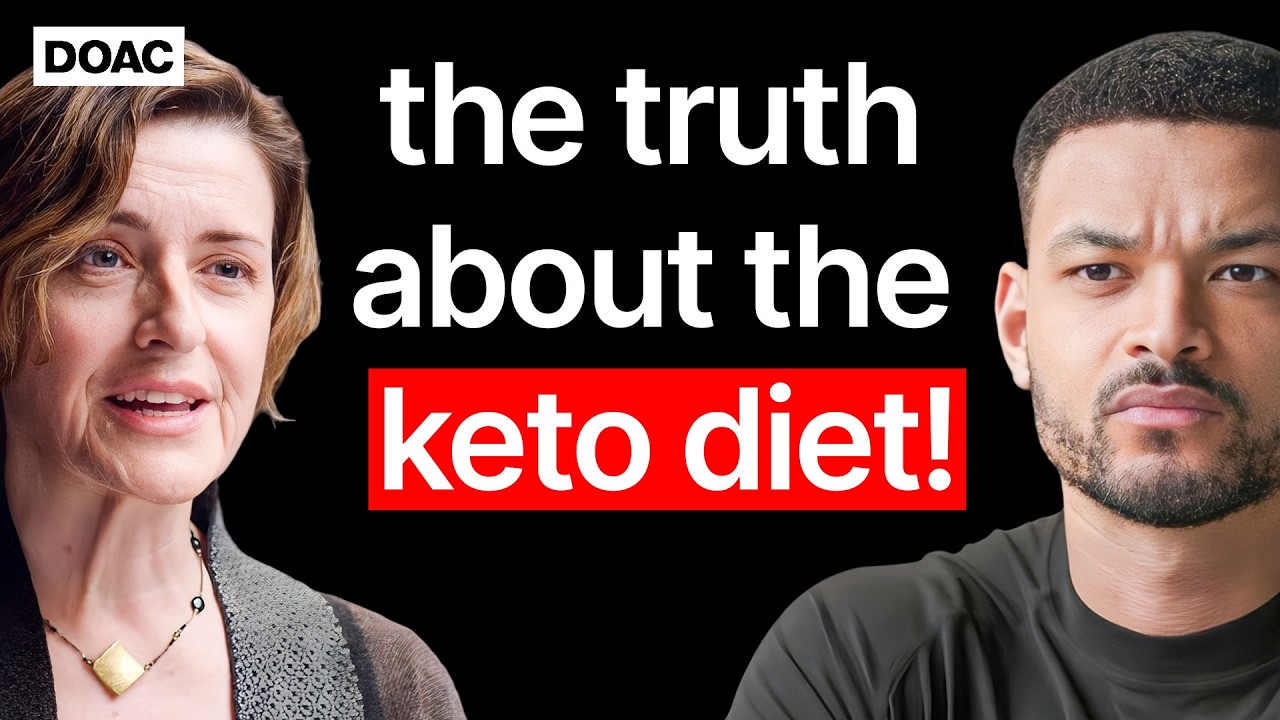
The Keto Psychiatrist: What Keto Is Really Doing To Your Body! Can It Cure 43% Of Mental Illness? — The Diary Of A CEO

The Diary Of A CEO

Lowering insulin through low-carbohydrate eating repairs cellular pathways to treat root biological causes of psychiatric conditions rather than merely covering up symptoms with medication.

AI-assisted summary of The Keto Psychiatrist: What Keto Is Really Doing To Your Body! Can It Cure 43% Of Mental Illness? — original source. Check the original for full context.

Source published:

Detailed notes

## Background This interview was published by the YouTube channel The Diary Of A CEO on January 16, 2025. Featuring Harvard-trained psychiatrist Dr. Georgia Ede, the video explores metabolic psychiatry, how the ketogenic diet influences brain health, and how targeted dietary changes can alleviate refractory mental illnesses and disorders like ADHD.

## TL;DR Dr. Georgia Ede explains how metabolic and nutritional psychiatry use low-carbohydrate and ketogenic diets to address the root biological causes of mental health conditions. She details how lowering insulin levels triggers cellular repair, stabilizes appetite hormones, and improves brain function across conditions ranging from ADHD to depression. The discussion covers practical strategies for transitioning to ketosis safely, addresses common myths around fiber and meat consumption, and highlights emerging clinical research backing metabolic interventions. Ultimately, the conversation frames dietary choice as an empowered, root-cause approach to mental wellness.

## Atmosphere & style The dialogue is intellectual, clinical, yet deeply empathetic, balancing rigorous scientific explanation with accessible health advice. Host Steven Bartlett maintains an curious, reflective tone, grounding abstract metabolic concepts in real-world personal experience and thoughtful questioning. The dynamic feels like an intimate, serious-minded exploration of health and human biology, shifting from technical discussions of insulin dynamics to moving case studies and deeply human reflections on life, peace, and personal relationships.

## Key takeaways - [35:32](https://www.youtube.com/watch?v=B7tnfSPySb0&t=2132s) The ketogenic diet is unique in its ability to safely and sustainably lower insulin to maintain long-term ketosis compared to fasting or severe calorie restriction. - [37:27](https://www.youtube.com/watch?v=B7tnfSPySb0&t=2247s) By stabilizing glucose levels and preventing sharp spikes and crashes, the ketogenic diet regulates appetite hormones and protects against intense food cravings. - [41:15](https://www.youtube.com/watch?v=B7tnfSPySb0&t=2475s) Metabolic friction during the transition from burning carbohydrates to fat causes 'keto flu', which can be managed with electrolytes and a gradual reduction of carbs. - [45:26](https://www.youtube.com/watch?v=B7tnfSPySb0&t=2726s) Ketosis is defined clinically by lowering insulin sufficiently to generate blood beta-hydroxybutyrate (BHB) levels of 0.5 mM or higher, regardless of dietary pattern. - [46:55](https://www.youtube.com/watch?v=B7tnfSPySb0&t=2815s) Entering ketosis triggers essential cellular maintenance and repair processes like autophagy, which are hindered by continuous high carbohydrate consumption. - [55:56](https://www.youtube.com/watch?v=B7tnfSPySb0&t=3356s) Dietary interventions such as oligoantigenic diets show strong clinical promise for ADHD, but major medical bodies remain hesitant to recommend them due to limited official trial evidence. - [01:10:27](https://www.youtube.com/watch?v=B7tnfSPySb0&t=4227s) High-carbohydrate and ultra-processed diets provoke dramatic hormonal surges, such as adrenaline spikes, that disrupt focus and emotional stability. - [01:20:58](https://www.youtube.com/watch?v=B7tnfSPySb0&t=4858s) A carnivore diet provides every essential nutrient human biology requires, while eliminating digestive irritants like fiber that are not biologically required. - [01:29:23](https://www.youtube.com/watch?v=B7tnfSPySb0&t=5363s) Elevated insulin levels actively block body fat burning, making continuous ketosis for at least six weeks crucial for full cellular metabolic adaptation. - [01:40:12](https://www.youtube.com/watch?v=B7tnfSPySb0&t=6012s) Adopting a ketogenic diet can reduce anxiety symptoms and improve overall mental quality of life within weeks, offering a metabolic path forward for treatment-resistant conditions.

## Detailed walkthrough ### [00:00](https://www.youtube.com/watch?v=B7tnfSPySb0&t=0s) Remission in Chronic Mental Illness and the Intro

Dr. Georgia Ede opens with a striking statistic: most people experience "tremendous reductions in anxiety within 3 days to 3 weeks" after adopting a ketogenic diet. She references a study in which patients suffering from severe, chronic conditions—including bipolar disorder, major depression, and schizophrenia—tried a ketogenic diet. The results were dramatic: 43% achieved full clinical remission, and 64% were able to leave the hospital taking less psychiatric medication. While standard treatments aim to balance brain chemistry, Dr. Ede challenges us to consider what actually causes those chemical imbalances in the first place.

Host Steven Bartlett introduces Dr. Ede as a Harvard-trained psychiatrist who stands among the pioneers of nutrition-based strategies to optimize brain function and performance as an alternative to lifetime pharmaceutical reliance. Dr. Ede highlights her own health journey, detailing how her physical and mental health hit a wall in her early 40s with chronic fatigue, irritable bowel syndrome (IBS), anxiety, and depression. When standard diagnostic tests insisted "there's nothing wrong," she took matters into her own hands through dietary experimentation, landing on a protocol that ran entirely counter to standard dietary advice—yet resolved every single one of her symptoms.

- **Key Study Finding:** 43% achieved clinical remission from chronic mental illness; 64% reduced their psychiatric medication load. - **Anxiety Onset Timeline:** Noticeable reductions often occur between 3 days and 3 weeks on a ketogenic protocol. - **Core Cause:** The goal of nutritional psychiatry is to address the underlying drivers of chemical imbalances rather than just masking symptoms with drugs.

---

[02:02](https://www.youtube.com/watch?v=B7tnfSPySb0&t=122s) What Is Metabolic Psychiatry?

Dr. Ede defines her specialty as nutritional and metabolic psychiatry—the study of how food directly affects brain chemistry, how brain metabolism functions, and how that metabolic state ultimately dictates our mental health. She notes that the term "metabolic psychiatry" itself is quite new, having been coined roughly five or six years prior by Dr. Shebani Sethi, a metabolic psychiatrist at Stanford University.

This field is even newer than nutritional psychiatry, marking what Dr. Ede calls a deeply hopeful and empowering shift in medicine. For decades, patients were told their conditions stemmed from mysterious, unexplainable chemical imbalances that could only be managed with medications. Metabolic psychiatry looks deeper at root causes: brain inflammation, oxidative stress (which damages cells and explains the push for antioxidants), and insulin resistance or pre-diabetes, which now impacts over 90% of Americans.

- **Key Term Coined By:** Dr. Shebani Sethi at Stanford University. - **Three Main Drivers of Mental Health Conditions:** 1. Brain inflammation 2. Oxidative stress 3. Insulin resistance (pre-diabetes) - **Metabolic Statistic:** Over 90% of Americans currently suffer from some degree of insulin resistance or pre-diabetes.

---

[03:38](https://www.youtube.com/watch?v=B7tnfSPySb0&t=218s) Why the Ketogenic Diet Is Central to the Work

When asked why the ketogenic diet plays such a prominent role in her work, Dr. Ede explains that ketosis fundamentally changes the brain's "operating system." Switching from a high-carbohydrate, high-insulin diet to a low-carbohydrate, low-insulin ketogenic diet alters the fuel mixture and energy delivery mechanism to every brain cell.

This shift impacts virtually every chemical pathway within the cell, transitioning the brain into a state where cells not only function superiorly, but are actively given the biological room to heal. The longer a patient remains in therapeutic ketosis, the more profound the long-term neural repair becomes.

> "When you switch from a high-carbohydrate, high-insulin diet to a low-insulin... ketogenic diet, the way that cells receive energy—the mixture of fuels that they're using—changes, and that has profound influences on just about every chemical pathway inside of that cell."

---

[04:40](https://www.youtube.com/watch?v=B7tnfSPySb0&t=280s) Dr. Georgia Ede's Academic Background and Career

Tracing her background, Dr. Ede shares that her passion for science began with an undergraduate biology degree from Carleton College in Minnesota. She spent years as a laboratory research assistant working in research labs around the world—including Boston and Munich—where she participated directly in diabetes research before deciding to enter medical school.

She earned her M.D. at the University of Vermont in Burlington, followed by a four-year psychiatry residency in a Harvard-affiliated program at Cambridge Hospital in Cambridge, Massachusetts. At the time of this interview, she had been practicing psychiatry for 25 years.

- **Undergraduate:** Biology degree from Carleton College (Minnesota). - **Early Research:** Laboratory assistant in diabetes research across Boston and Munich. - **Medical School:** University of Vermont. - **Residency:** Harvard-affiliated residency at Cambridge Hospital. - **Clinical Experience:** 25 years of psychiatric practice.

---

[05:38](https://www.youtube.com/watch?v=B7tnfSPySb0&t=338s) Standard Psychiatric Practice vs. Conventional Limitations

Dr. Ede outlines the typical scope of standard psychiatric practice, which generally centers on a combination of psychotherapy and psychopharmacology (medication management). Some clinicians focus exclusively on prescribing drugs, while others focus purely on talk therapy, but the vast majority offer a blend of the two.

However, during her first decade in conventional practice, Dr. Ede noticed a disheartening pattern: despite her best efforts and rigorous training, her patients simply weren't getting truly better. Consulting senior colleagues who had been practicing for decades revealed the same reality. Psychiatry had effectively trained clinicians to treat mental illnesses as "chronic, mysterious, and incurable," teaching them that the best they could do was manage lifelong symptoms with pharmaceuticals and supportive therapy.

- **Standard Model:** Psychotherapy + Medication Management. - **Clinical Reality:** Conventional paradigms view mental health conditions as lifelong, incurable mysteries to be managed rather than resolved.

---

[06:07](https://www.youtube.com/watch?v=B7tnfSPySb0&t=367s) Nutrition Was Completely Missing from Medical Training

Reflecting on her education, Dr. Ede reveals that in four years of medical school, she received only two to three hours of total nutrition instruction. During her four years of psychiatric residency at Harvard, the relationship between nutrition and brain function was never mentioned once.

While acknowledgeing the undeniable social components of mental illness—such as light exposure, loving relationships, fulfilling work, physical movement, and stress—Dr. Ede points out that food is completely ignored as an environmental input. Furthermore, when patients do attempt nutritional changes, they are usually given incorrect guidelines. They add blueberries to their morning oatmeal, make flaxseed smoothies, or try eating more plants than animals, only to see no meaningful change in their mental health—causing them to throw up their hands and revert to eating "everything in moderation."

- **Medical School Nutrition Training:** 2 to 3 hours total over 4 years. - **Psychiatry Residency Nutrition Training:** 0 hours. - **Common Nutritional Misconceptions:** Standard advice like "eating more whole grains" or "adding superfoods" fails because it does not address the underlying metabolic stressors.

---

[09:46](https://www.youtube.com/watch?v=B7tnfSPySb0&t=586s) The Personal Eureka Moment: Reversing Her Own Symptoms

Dr. Ede shares that her breakthrough was not triggered by a clinical trial, but by a personal health crisis in her early 40s. Despite strictly following standard health guidelines—eating a low-fat, low-cholesterol, calorie-restricted, high-fiber diet rich in whole foods, and exercising religiously—she developed severe chronic fatigue, IBS, fibromyalgia, and migraine headaches. Specialist colleagues at Harvard ran exhaustive batteries of tests, only to inform her that everything came back "normal."

Frustrated, she began a meticulous six-month process of dietary trial and error, tracking inputs and reactions in a food and symptom journal. By 2007, the diet she landed on was upside down relative to conventional dietary guidelines—and it completely eliminated every single one of her physical symptoms. Unexpectedly, it also dramatically improved her mental health. She realized she had been living with "suboptimal mental health" that society treats as normal: mid-day energy crashes, post-lunch brain fog, exhaustion after 5:00 PM, Sunday night work anxiety, and seasonal winter depression.

> "The diet that I ended up on purely by trial and error was almost upside down and backwards from what we're told is healthy for us... It should theoretically kill me, but it resolved every single one of my physical health symptoms."

Her experimental diet was centered on seafood, red meat, poultry, non-starchy vegetables, and healthy fats from whole foods, while entirely eliminating whole grains, legumes, and high-fiber plant foods. Realizing she couldn't simply prescribe this to patients without proof—since standard theory suggested such a diet should be dangerous—she spent years auditing graduate courses at the Harvard School of Public Health and reading primary scientific literature. Her key insight was that the true power of dietary intervention lies in **subtraction** (removing metabolic agitators) rather than **addition** (adding supplements or superfoods).

- **Personal Reversal:** Chronic fatigue, IBS, fibromyalgia, migraines, mid-day energy slumps, and winter depression resolved. - **Eliminated Foods:** Whole grains, legumes, high-carbohydrate plant foods, and high fiber. - **Core Principle of Diet:** "First, do no harm." Subtracting damaging elements (carbohydrates, seed oils, processed ingredients) yields far greater results than adding superfoods.

---

[16:50](https://www.youtube.com/watch?v=B7tnfSPySb0&t=1010s) Adapting Diet to Personal Needs

Steven Bartlett notes that Dr. Ede’s use of the word "explore" implies that dietary intervention is an individualized journey of experimentation rather than a rigid, one-size-fits-all prescription. Dr. Ede strongly agrees, emphasizing that personalized adaptation is essential when implementing metabolic strategies for mental health.

[01:17:20](https://www.youtube.com/watch?v=B7tnfSPySb0&t=4640s) The Two Levels of Dietary Knowledge and Core Principles

Dr. Georgia Ede explains that dietary knowledge operates on two distinct tiers: universal fundamental principles and individual personalization. The first tier consists of non-negotiable biology that applies to all humans. At a cellular level, every individual requires the same core nutrients, must keep glucose and insulin levels balanced, and must avoid toxic ingredients that damage cells. Dr. Ede synthesizes these foundational rules into a three-part directive: **nourish**, **protect**, and **energize**. Beyond these universal principles lies personalization, where individual differences dictate specific dietary tolerances based on age, activity level, baseline metabolic health, existing medical conditions, and food sensitivities. Her approach focuses on teaching people these simple baseline rules and guiding them to personalize their diet to fit their specific metabolism and goals.

``` ┌─────────────────────────────────────────────────────────────┐ │ UNIVERSAL FUNDAMENTAL RULES │ │ Every human cell requires the exact same baseline │ └──────────────────────────────┬──────────────────────────────┘ │ ┌───────────────────────┼───────────────────────┐ ▼ ▼ ▼ ┌───────────────┐ ┌───────────────┐ ┌───────────────┐ │ NOURISH │ │ PROTECT │ │ ENERGIZE │ │ Complete nutrient │ Subtract foods│ │ Clean, stable │ │ availability │ │ that inflame │ │ fuel supply │ └───────────────┘ └───────────────┘ └───────────────┘ │ ┌──────────────────────────────┴──────────────────────────────┐ │ INDIVIDUAL PERSONALIZATION │ │ Calibrated by age, metabolic health, sensitivities & goals │ └─────────────────────────────────────────────────────────────┘ ```

The three pillars form the essential baseline of a brain-healthy diet—which Dr. Ede stresses is identical to a body-healthy diet, as human biology does not require separate nutrition for each organ:

* **Nourish:** The diet must reliably supply all essential nutrients through whole foods without relying on synthetic supplements or processed fortification. Dr. Ede notes that meeting this standard naturally is impossible without including animal-sourced foods. * **Protect:** Brain protection relies on subtraction rather than addition. Chronic inflammation and oxidative stress damage brain tissue silently without physical pain, as the brain lacks pain receptors. Instead of consuming extra plant antioxidants—a strategy Dr. Ede argues is ineffective—individuals must remove the dietary drivers causing oxidative stress and inflammation. * **Energize:** The brain is a high-energy electrical organ requiring a steady, clean-burning fuel supply. Modern diets degrade the brain's ability to generate energy over time, driven by elevated glucose and insulin levels. Lowering insulin alongside glucose allows brain cells to produce energy efficiently and reliably.

---

[02:21:45](https://www.youtube.com/watch?v=B7tnfSPySb0&t=8505s) Diet Personalization and Metabolic Health

Personalization begins at the "energize" level, determined by an individual's position on the insulin resistance spectrum. Individuals with robust metabolic health can effectively energize their brain cells without extreme carbohydrate restriction. However, those with significant metabolic damage—such as older adults, sedentary individuals, or those with pre-diabetes or type 2 diabetes—often need to restrict carbohydrates dramatically, sometimes requiring a ketogenic diet to restore proper energy production. Dr. Ede highlights insulin resistance as "the number one risk factor for almost all chronic diseases, mental and physical." Controlling glucose and insulin gives individuals profound leverage over their long-term cognitive and emotional health.

``` LOW RESISTANCE HIGH RESISTANCE (Metabolically Healthy) (Metabolically Damaged) │ │ Insulin ├────────────────────────────────────────────────────────┤ Resistance: │ │ ▼ ▼ Carb Higher tolerance for whole-food Requires strict carb restriction Tolerance: carbohydrates without metabolic distress (often ketogenic) to lower insulin ```

A second layer of personalization centers on immune function and gut barrier integrity. Many people can no longer tolerate foods they naturally should be able to eat because environmental toxins—plastics, pesticides, food additives, ultra-processed foods, and broad-spectrum antibiotics—have compromised the gut and blood-brain barriers while overwhelming the immune system. Dr. Ede acknowledges that finding a tolerable diet involves trial and error, but she structures elimination strategies by providing patients with targeted lists of high-culprit foods to minimize frustration.

---

[03:25:12](https://www.youtube.com/watch?v=B7tnfSPySb0&t=12312s) What Is the Ketogenic Diet?

Addressing widespread misunderstandings, Dr. Ede clarifies that the ketogenic diet is not merely a modern weight-loss trend, a high-protein regime, or a carnivore fad. Historically, the ketogenic diet was developed in 1921 at Johns Hopkins to treat severe, refractory childhood epilepsy long before effective anti-seizure pharmaceuticals existed. Physicians realized that fasting dramatically reduced or eliminated epileptic seizures, but long-term fasting was unsustainable. The ketogenic diet was designed as a "fasting-mimicking diet" to keep patients in a continuous fat-burning state while providing necessary calories and nutrients.

``` Fasting State Ketogenic Diet (No Food Intake) (Fasting-Mimicking Fuel) ┌─────────────────┐ ┌─────────────────────────┐ │ Low Insulin │ │ Low Insulin │ │ High Fat Burn │ ─────────► │ High Fat Burn │ │ Ketone Production│ │ Ketone Production │ └─────────────────┘ │ + Sustained Nutrition │ └─────────────────────────┘ ```

The historical impact of therapeutic ketosis on neurological function established a strong precedent for modern clinical application: * Over **50% of children and adults** with severe epilepsy experience a greater than 50% reduction in seizure frequency on a strict ketogenic diet. * Between **10% and 20% of patients** achieve complete seizure freedom without medication.

---

[03:27:05](https://www.youtube.com/watch?v=B7tnfSPySb0&t=12425s) What Ketosis Does to Brain Biochemistry

The ketogenic diet acts as a versatile tool for brain health by systematically targeting root metabolic dysfunctions. It directly mitigates neural inflammation, lowers oxidative stress, and reverses insulin resistance. Beyond structural protection, ketosis rebalances key neurotransmitter systems—including serotonin, dopamine, norepinephrine, glutamate, and GABA. While traditional psychiatry views mental illness as a primary "chemical imbalance," Dr. Ede emphasizes that metabolic dysfunction, energy deprivation, and chronic inflammation are the foundational drivers *causing* those chemical imbalances in the first place.

When brain cells suffer from energy failure due to impaired glucose processing, systemic breakdowns occur in patterns determined by individual genetics and lifestyle history:

| Shared Root Cause | Variable Clinical Manifestations | |:--- |:--- | | **Metabolic Malfunction** (Impaired cellular energy, high oxidative stress, chronic insulin elevation) | • Alzheimer's Disease<br>• Bipolar Disorder<br>• Major Depressive Disorder | | | • Type 2 Diabetes & Fatty Liver<br>• Cardiovascular Disease<br>• ADHD |

Dr. Ede emphasizes that while individual outcomes appear distinct, these conditions share a common root in underlying metabolic malfunction, giving patients significant agency over their risk factors through targeted dietary intervention.

---

[03:29:42](https://www.youtube.com/watch?v=B7tnfSPySb0&t=12582s) Landmark Research: Ketogenic Diet in Refractory Mental Illness

Dr. Ede reviews a groundbreaking 2022 clinical study led by her colleague, Dr. Albert Danan, a French psychiatrist with over 35 years of experience in Toulouse, France. Inspired by observing a family member with severe autism and epilepsy improve rapidly on a ketogenic diet, Dr. Danan tested the intervention on 31 hospitalized adult patients with treatment-resistant psychiatric conditions—including severe bipolar disorder, major depression, and schizophrenia. These individuals had been ill for an average of 10 years (some up to 30 years), were taking an average of 5 psychiatric medications simultaneously, and all exhibited markers of poor metabolic health (such as obesity, hypertension, or elevated blood sugar).

``` 31 Inpatients (Avg. 10 yrs ill, 5 psychiatric meds, poor metabolic health) │ ▼ 28 Patients Adhered > 2 Weeks (Inpatient Whole-Foods Ketogenic Diet) │ ┌─────────────────────────┴─────────────────────────┐ ▼ ▼ 43% Full Remission 64% Discharged on (Clinical recovery from severe illness) Reduced Medication ```

The inpatient results were remarkable compared to standard psychiatric care: * **28 out of 31 patients (90%)** successfully adhered to the ketogenic diet for more than two weeks under medical supervision. * **100% of adhering patients** showed measurable clinical improvement in both psychiatric and metabolic parameters. * **43% achieved full clinical remission** from chronic, treatment-resistant mental illness. * **64% were discharged from the hospital on reduced doses** of psychiatric medication.

Dr. Ede notes that inpatient hospital control provided essential supervision, enabling safe medication adjustments. Because a ketogenic diet rapidly improves insulin sensitivity and drops blood pressure and blood sugar, diabetic medications often must be cut in half on day one to prevent dangerous hypoglycemia. The diet itself is safe, but pairing it with active pharmaceuticals requires cautious medical oversight.

---

[03:34:07](https://www.youtube.com/watch?v=B7tnfSPySb0&t=12847s) Ketosis, Insulin, and Ketone Production

Clarifying the mechanics of ketosis, Dr. Ede points out that a ketogenic diet is defined not by arbitrary carbohydrate limits, but by its capacity to lower circulating insulin to a threshold that allows continuous fat burning. High baseline insulin—common in individuals who consume refined carbohydrates frequently throughout the day—locks fat inside adipose tissue, preventing fat oxidation even overnight.

``` HIGH INSULIN STATE LOW INSULIN STATE (Standard Western Diet) (Ketogenic / Fasted) ┌─────────────────────┐ ┌─────────────────────┐ │ Fat Burning Locked │ │ Active Fat Burning │ └──────────┬──────────┘ └──────────┬──────────┘ │ │ ▼ ▼ Glucose Dependent Energy Liver Produces Ketones (Prone to Energy Gaps) (Clean Fuel for Brain) ```

When insulin levels drop, the liver metabolizes fatty acids into ketones—compact, highly efficient energy molecules that readily cross the blood-brain barrier. Ketones bridge the neural energy deficit caused by impaired glucose transport, providing brain cells with a clean, stable, and uninterrupted source of fuel.

<FollowUp label="Want to explore the next part of the transcript walkthrough?" query="Please provide the detailed walkthrough for part 3 of this transcript."/>

Here is a detailed, faithful walkthrough covering this part of the transcript.

---

[35:32](https://www.youtube.com/watch?v=B7tnfSPySb0&t=2132s) Alternative Ways to Lower Insulin and the Role of Ketosis

Steven Bartlett notes that when people are brought into a controlled study environment and deprived of ultra-processed, high-sugar foods, that change alone would naturally yield benefits. Dr. Georgia Ede agrees, acknowledging that transitioning from a modern, processed diet to a whole-foods ketogenic diet alters many variables simultaneously. While researchers are still studying how much benefit stems specifically from ketones versus dropping processed junk, Dr. Ede emphasizes that lowering insulin is the core underlying mechanism.

Insulin can be lowered through multiple avenues, such as intermittent fasting, vigorous exercise, or severe calorie restriction. For instance, restricting intake below 750 calories per day triggers ketosis via a fasting-mimicking state, a concept popularized by Dr. Valter Longo. However, Dr. Ede stresses that the ketogenic diet is the only method that allows someone to safely and comfortably maintain a state of ketosis over the long term. One cannot fast continuously, exercise all day, or survive indefinitely on fewer than 750 calories. A well-formulated ketogenic diet—very low in carbohydrates, moderate in protein, and relatively higher in fat based on individual energy needs—can be sustained indefinitely.

* Fast, severe calorie restriction (below 750 calories/day), and intensive exercise all lower insulin, but only a ketogenic diet allows sustainable, long-term ketosis. * "The ketogenic diet is the only way to safely, sustainably maintain a state of ketosis long-term."

---

[37:27](https://www.youtube.com/watch?v=B7tnfSPySb0&t=2247s) Why Is the Ketogenic Diet Difficult to Sustain?

Steven shares his personal experience with the ketogenic diet, explaining that he adopts it for about eight weeks once a year around January or February. He reports profound benefits: sharper focus, faster improvements in body composition than from exercise alone, and better sleep quality. However, he finds staying on it long-term very challenging, noting that even short two-week clinical trials suffer from participant dropouts. He asks Dr. Ede why it is so difficult to maintain, given that she has followed it for the better part of 12 years.

Dr. Ede acknowledges that eating low-carb in a high-carb world presents real social and environmental hurdles, alongside the genuine biochemical reality of sugar addiction. However, she argues that compared to other restrictive diets she tried while struggling with weight earlier in life, keto is actually the easiest to stick with. The diet stabilizes appetite hormones by preventing the rapid glucose spikes and crashes that drive hunger, stress hormones, and brain chemistry fluctuations. Between meals, the body seamlessly burns fat for energy, creating an inner state of calm where food cravings fade into the background.

* Steven observes that keto alters his body composition faster than any other diet or exercise regimen he has tried. * Dr. Ede uses the metaphor of a "suit of armor" to explain how ketosis shields patients with food addiction from intense cravings. * When appetite is properly controlled, people often realize they are in ketosis because they can work right through lunch without feeling hungry or thinking about their next meal. * Dr. Ede points out that modern humans eat roughly six times a day and carry food everywhere, whereas human ancestors could never have survived if they required constant feeding. * "Most people, the way we eat most of us now, are thinking about food all the time... We're not eating in a way that is nourishing us and satisfying us; we're eating in a way that's making us hungry."

---

[41:15](https://www.youtube.com/watch?v=B7tnfSPySb0&t=2475s) Keto-Adaptation, "Keto Flu," and Transition Strategies

Steven explains the cycle he falls into: after getting past the initial week or two, he feels great and enjoys a break from the constant "roller coaster" of food cravings. However, six to eight weeks later, during busy periods of travel or exhaustion, a single moment of weakness causes him to break keto. Thinking about the headache and five days of feeling unwell required to get back into ketosis creates a major mental barrier.

Dr. Ede confirms this is a common experience caused by shifting the body's operating system between burning primarily carbohydrates and burning a higher ratio of fat. Because the body and brain run on hybrid engines, they rarely burn 100% fat, but shifting fuel ratios after consuming refined carbohydrates or sugar causes uncomfortable metabolic friction. This transition phase is commonly known as the "keto flu."

To minimize or prevent keto flu symptoms, Dr. Ede advises two primary strategies: 1. **Electrolyte Supplementation:** Keeping salt and fluid balances even as insulin levels drop and the kidneys flush out water and sodium. 2. **A Gradual Transition:** Slowly lowering carbohydrate intake over one to two weeks rather than switching abruptly overnight.

In her book *Change Your Diet, Change Your Mind*, Dr. Ede outlines a moderate-carbohydrate prep phase. Gradually reducing glucose and insulin levels prevents a sudden shock to the brain and body. She notes that while many modern individuals have lost their evolutionary "metabolic flexibility" due to years of poor dietary habits, taking these steps makes switching back into ketosis brief, mild, and comfortable.

* The discomfort during keto transition stems from shifting fuel ratios in hybrid metabolic engines. * Electrolyte supplementation and a gradual 1- to 2-week ramp-down of carbohydrates eliminate most transition headaches. * "Our biology is designed for us to be able to shift back and forth between fat and carbohydrate as fuel sources, but many of us have lost some of our metabolic flexibility."

---

[45:26](https://www.youtube.com/watch?v=B7tnfSPySb0&t=2726s) Misconceptions About Foods Included in a Ketogenic Diet

Addressing common misconceptions, Dr. Ede explains that many people mistakenly view keto as a rigid food list or an inherently miserable, restrictive regime. In reality, a ketogenic diet is defined functionally: it is any pattern of eating that lowers insulin levels enough to trigger fat burning and blood ketone production.

Because the focus is purely on insulin management rather than specific ingredients, ketosis can be achieved through various dietary preferences: * Vegan ketogenic patterns * Vegetarian ketogenic patterns * Omnivore ketogenic patterns * Carnivore ketogenic patterns

Understanding macronutrient dynamics is essential: refined carbohydrates and whole-food carbohydrates trigger the largest insulin spikes, while refined proteins (like protein powders) stimulate moderate insulin responses. In contrast, fat is metabolically the quietest macronutrient because it barely affects insulin levels at all.

* Ketosis is defined by metabolic state and insulin response, not by a specific or rigid list of allowed foods. * Dietary fat is "metabolically the quietest and safest macronutrient you can eat because it barely stimulates insulin."

---

[46:55](https://www.youtube.com/watch?v=B7tnfSPySb0&t=2815s) Is Ketosis a State? Blood Meters and Cellular Cleanup

When Steven asks if ketosis is a binary state, Dr. Ede explains that clinical consensus defines being "in ketosis" as having a blood concentration of beta-hydroxybutyrate (BHB) of **0.5 mM (mmol/L) or higher**, measured via a finger-prick blood Ketone meter.

Reaching the 0.5 mM threshold requires three distinct physiological events: 1. Blood glucose levels must fall. 2. Insulin levels must drop. 3. The liver must deplete a significant portion of its stored starch (glycogen).

The liver's carbohydrate storage tank holds less than a single day's worth of energy, reflecting our biological design to use starch for short-term emergency fuel while storing energy long-term as body fat. Once liver glycogen drops below a critical threshold, the liver begins breaking down fat—either from the plate or body stores—into ketones. While standard diets keep blood ketones flat at 0.0 to 0.3 mM, crossing 0.5 mM unlocks critical "metabolic magic." These pathways trigger cellular recycling, cleanup, maintenance, and repair (such as autophagy).

Dr. Ede notes that while individuals with severe mental health issues may need to stay in ketosis continuously, all humans benefit from entering ketosis at least intermittently. Without periodic drops in insulin and glucose, the body functions like a 24/7 manufacturing plant that never pauses production to replace worn parts or sweep the factory floor, leading to systemic breakdown over time.

* A blood reading of **0.5 mmol/L (mM)** of beta-hydroxybutyrate marks the baseline threshold for nutritional ketosis. * The human liver holds less than one day's worth of carbohydrate energy in glycogen stores. * "All of us need to spend some time in ketosis on a regular basis or else we can't heal... It's like a manufacturing plant where the plant is just running 24/7... and they never do any maintenance work or repair work."

---

[50:46](https://www.youtube.com/watch?v=B7tnfSPySb0&t=3046s) Evolutionary Context, Overnight Ketosis, and Children

Dr. Ede highlights how our prehistoric ancestors achieved regular ketosis naturally. Lacking access to modern ultra-processed foods, their diets relied on whole foods like seasonal wild fruits, roots, and hunted meats, while cultivated grains and legumes are relatively recent additions to the human diet.

When people consume whole foods that do not trigger exaggerated glucose and insulin spikes and refrain from constant snacking, insulin levels naturally drop overnight. This overnight drop temporarily shifts the body into a healing, restorative state during sleep. For younger, athletic individuals without established metabolic damage, simply eating whole foods and allowing sufficient time between meals—rather than strictly eliminating carbohydrates during the day—is often enough to maintain good metabolic health. In fact, many healthy children eating whole-food diets naturally wake up in mild ketosis every morning due to their high degree of metabolic flexibility.

* Prehistoric human diets allowed natural overnight drops in insulin, routinely opening cellular repair windows during sleep. * Metabolically healthy children often wake up in ketosis naturally without following a formal ketogenic diet.

[053:07] Connection Between Food and Neurodivergent Disorders

While most adults take anywhere from several days up to a full week of fasting to enter ketosis, young children can sometimes enter a ketogenic state simply by sleeping overnight without eating. Turning to the broader conversation around children's health, there has been a dramatic rise in ADHD and neurodivergent diagnoses. When asked whether dietary factors might be driving this trend, Dr. Ede points to compelling European research conducted during the 1980s, 1990s, and early 2000s.

In those landmark studies, researchers placed children diagnosed with severe, hospital-level ADHD on an "oligoantigenic" or "few-foods diet." This low-allergen intervention removed common dietary triggers and focused strictly on basic whole foods—typically chicken, lamb, fruits, vegetables, and occasionally apple juice or margarine (since butter is dairy-based). Across multiple studies, these simple dietary modifications yielded a staggering 62% to 82% response rate, with some trials documenting a 70% cure rate within just weeks, to the point where children no longer met the clinical criteria for ADHD based on parent, teacher, and researcher ratings.

- Fasting requires 2 to 3 days minimum for most adults to reach ketosis, but can take up to 7 days for others. - Oligoantigenic (few-foods) diets eliminate common food allergens to test behavioural responses in children. - Studies on few-foods diets for childhood ADHD demonstrated a 62%–82% response rate and up to a 70% symptom remission rate within weeks.

[055:56] Why Are Dietary Modifications Not Commonly Prescribed for ADHD?

Despite these striking outcomes, dietary modification remains absent from mainstream ADHD treatment protocols. Host Steven Bartlett reads a summary noting that as of 2019, major clinical authorities like the American Academy of Pediatrics (AAP) and the National Institute for Health and Care Excellence (NICE) do not recommend dietary changes as a standard treatment due to "insufficient evidence." A 2014 review similarly concluded that elimination diets only offer minor benefits to a small subset of children with specific food sensitivities, which is insufficient to justify widespread dietary guidelines.

Dr. Ede counters this institutional stance by emphasizing that these studies provide families with a high-hope, zero-risk pathway. She passionately questions why society defaults to prescribing powerful stimulant medications—which carry known risks of stunting growth, inducing anxiety, and imposing high financial costs—rather than addressing root causes. As a psychiatrist, she argues that standard psychiatric medications merely cover up symptoms rather than solving the underlying biological problems or preventing them altogether.

> "Medications don't solve problems, they cover them up. And what we really want to do is we want to get to the root of these problems... not just treat them, which nutrition interventions can do in many cases, but perhaps even prevent them from happening in the first place."

[057:46] Are ADHD Medications Helpful in Some Cases?

Steven shares his personal story with ADHD, explaining that while he was formally diagnosed, he chose not to take medication because he felt the net impact on his daily life did not warrant it. However, he acknowledges that friends with more pronounced symptoms—as well as guests like Dr. Daniel Amen, whose daughter experienced a life-changing turnaround in school through medication—view stimulants as revolutionary. This highlights the deeply personal and variable nature of managing ADHD symptoms.

Dr. Ede validates this perspective, drawing on her extensive clinical background, which includes two years at the Hallowell Center near Boston and 13 years treating college students at Harvard and Smith College. She explains that stimulants are among the most effective tools in a psychiatrist's arsenal for those who respond to them. ADHD exists on a wide spectrum; severe cases are associated with doubled divorce rates, elevated risks of substance abuse, depression, anxiety, and suicidal ideation. For high-achieving students, the painful gap between their natural intelligence and their actual functional capacity causes severe psychological distress. She advises playing to one's unique strengths and adapting one's lifestyle, while recognizing that severe impairment often demands stronger medical or dietary interventions.

- Dr. Georgia Ede spent 2 years treating ADHD at the Hallowell Center and 13 years working in college mental health at Harvard University and Smith College. - Adults with ADHD face double the average rate of divorce, along with significantly higher risks of accidents, depression, substance abuse, and suicidal ideation.

[01:02:42](https://www.youtube.com/watch?v=B7tnfSPySb0&t=3762s) Research on the Link Between the Ketogenic Diet and ADHD

When asked if there is clinical research directly testing the ketogenic diet for ADHD, Dr. Ede reveals two groundbreaking clinical trials set to launch in 2025. The first trial at Oxford University will investigate the ketogenic diet in adults suffering from both ADHD and depression, while the second trial at the University of Michigan will evaluate its impact on adults with ADHD.

The biological rationale for these trials stems from strong metabolic overlaps. Children with obesity—a primary marker of insulin resistance—are twice as likely to be diagnosed with ADHD. Similarly, adults with type 2 diabetes (a state of severe, end-stage insulin resistance) are twice as likely to have ADHD. Because the ketogenic diet is the single most effective intervention available for reversing insulin resistance, researchers strongly suspect it will deliver measurable cognitive and behavioural benefits.

- Oxford University and the University of Michigan are launching landmark clinical studies in 2025 to test the ketogenic diet on adults with ADHD. - Children with obesity are twice as likely to have ADHD. - Adults with type 2 diabetes are twice as likely to have ADHD.

[01:03:53](https://www.youtube.com/watch?v=B7tnfSPySb0&t=3833s) Could ADHD Lead to Diabetes?

Steven raises a thoughtful question about establishing cause and effect: Could the stress, lifestyle challenges, and socioeconomic difficulties of living with unmanaged ADHD be the actual driver of obesity and diabetes, rather than insulin resistance directly causing ADHD? Dr. Ede agrees that observational studies struggle to isolate such confounding factors, but she points to real-time clinical evidence from her general psychiatry practice that isolates the diet's direct metabolic impact.

In her practice with hundreds of patients suffering from conditions ranging from PTSD to bipolar disorder, the biological effect of ketosis operates independently of external life stressors. When patients accidentally or intentionally fall off their ketogenic diet, their psychiatric symptoms frequently return within 24 hours—even though their external life circumstances remain completely unchanged. Pilot tracking data from researchers like Dr. Ali Houston at Oxford University show that daily blood ketone levels correspond directly with fluctuations in attention symptoms.

Dr. Ede shares the story of a patient with bipolar 2 disorder who experienced severe suicidal ideation every time he argued with his wife. Upon entering ketosis, his suicidal ideation completely disappeared during marital conflicts, even though the relationship dynamic had not changed. Ketosis acted as a crucial psychological "buffer," creating mental space so he was no longer reacting reflexively to acute stress.

> "A lot of people say to me that the ketogenic diet gives this space. It allows them to pull back and see things from a different perspective... It's like a buffer so that people aren't reacting as reflexively to difficult situations."

- Patients who drop out of ketosis often see a return of psychiatric symptoms within 24 hours, long before external life stressors change. - Pilot data collected by Dr. Ali Houston at Oxford University shows a close correlation between daily blood ketone levels and attention span markers. - Bipolar 2 disorder involves periods of depression and hypomania (a milder form of mania previously termed manic depression).

[01:09:23](https://www.youtube.com/watch?v=B7tnfSPySb0&t=4163s) Benefits of the Ketogenic Diet for People With Food Addiction

Steven shifts the discussion to food addiction and binge eating disorders, asking if ketosis breaks the vicious cycle of craving and overeating. Dr. Ede enthusiastically agrees, explaining that the ketogenic diet stabilizes blood glucose and lowers insulin levels.

She notes that while most people view insulin solely as a hormone that lowers elevated blood sugar, it is actually the body's master metabolic hormone. Insulin receptors exist on every single cell surface in the human body, meaning insulin directly regulates cellular activity and metabolic function far beyond simple blood glucose management.

[01:10:27](https://www.youtube.com/watch?v=B7tnfSPySb0&t=4227s) The Hormonal Rollercoaster of High-Carb Diets

Dr. Georgia Ede explains that when someone eats high-carbohydrate or refined foods, it triggers a "glucose and insulin rollercoaster" that affects far more than just blood sugar. Insulin directly communicates with and regulates a vast array of other critical hormones circulating in the bloodstream. This includes stress hormones like adrenaline and cortisol, reproductive hormones such as estrogen and testosterone, blood pressure-regulating hormones, and the satiety and hunger hormones that dictate whether a person feels full or ravenous. Because of this interconnected web, a diet high in spike-inducing foods leaves a person hormonally unstable from within.

People frequently misattribute their dietary choices to psychological stress, telling themselves, *"I'm stressed and that's why I'm eating... I feel really anxious, I get irritable, I get stressed, I'm hungry, I need to eat, and then I feel better."* While eating may offer temporary relief for a few hours, the underlying physiological response creates a dangerous cycle.

Dr. Ede highlights a striking study conducted with healthy teenage boys who were given either sugar-free, caffeine-free cola or a caffeine-free cola sweetened with real sugar. Four to five hours after drinking the sugary soda, the boys experienced a **fourfold increase (quadrupling)** in their adrenaline levels, whereas the group drinking the sugar-free soda maintained flat, stable stress hormone levels. This demonstrates that the food itself is often driving the physical stress response, which then prompts further emotional overeating.

- **Engineered to Overeat:** Ultra-processed carbohydrates and refined foods are engineered by food scientists to blow past human "hormonal stop signs," making them nearly impossible to resist or feel satisfied by. - **Whole Foods Satiety:** Whole, nutrient-dense foods—such as meat, seafood, poultry, eggs, non-starchy vegetables, and whole fruits—naturally activate fullness cues. While fruit contains sugar, its built-in fiber and water content make it difficult to overeat compared to drinking multiple fruit juices or eating packages of candy. - **Breaking the Cycle:** Stepping away from hyper-palatable processed foods takes a few days, but achieving the other side grants individuals tremendous freedom and control over their appetite.

---

[01:13:40](https://www.youtube.com/watch?v=B7tnfSPySb0&t=4420s) Case Study: Carl’s Journey with Bipolar, ADHD, and Extreme Exercise

Dr. Ede walks through the opening case study of her book, sharing the story of a patient named Carl (a pseudonym), a gentleman in his mid-60s who suffered from lifelong depression and anxiety. After leaving an expensive specialty psychiatry clinic with three diagnoses—depression, anxiety, and ADHD—and three corresponding prescriptions, his original depression improved, but he immediately developed severe, uncharacteristic **mania**. To manage this new side effect, he turned to marijuana, which quickly resulted in a substance addiction.

Realizing the pharmaceutical route had traded one issue for two new ones, Carl discontinued all medications and decided to use intense physical exercise as his medicine. He began road cycling over **100 miles per week**, which successfully suppressed his psychiatric symptoms to a manageable baseline for years by improving his underlying metabolic health.

``` +-----------------------------------------------------------------------------------+ | CARL'S SYMPTOM TIMELINE | +-----------------------------------------------------------------------------------+ | 1. Lifelong Depression & Anxiety | | 2. Clinic Visit -> Prescribed 3 Medications -> Developed Mania & Cannabis Use | | 3. Quit Meds -> Biked 100+ miles/week -> Symptoms Managed for Years | | 4. Entered 60s / Work Stress -> Severe Agitation (Walked up to 25 miles/night) | | 5. Switched to Carnivore Diet -> Score ZERO on All Scales by Week 6 | +-----------------------------------------------------------------------------------+ ```

When Carl entered his 60s, a stressful job restructuring triggered acute episodes of severe anxiety, restlessness, and agitation. Because he could not cycle outdoors at night when these episodes struck, he resorting to walking **8 to 25 miles in a single night** just to burn off the surges of nervous energy. Desperate for a sustainable solution, he researched carnivore diets and contacted Dr. Ede for a consultation.

- **Carnivore Intervention:** Carl adopted a strict, plant-free, dairy-free carnivore diet, eating **3 to 4 pounds of fatty meat per day** (primarily beef and pork). He tracked his ketone levels using urine test strips. - **Rapid Remission:** By week three, his symptoms began clearing; by **week six**, his scores on standardized depression and anxiety scales dropped to **zero**. He reported feeling better than he ever had in his entire life. - **Weight Loss & Carbohydrate Re-entry:** Because Carl was already lean and physically active, his extreme metabolic rate caused him to lose 10 pounds that he could not afford to lose. Even on 4 pounds of fatty meat daily, he could not regain the weight until Dr. Ede reintroduced small, targeted amounts of whole-food carbohydrates (up to **100 grams per day** of plain unsweetened yogurt and potatoes) tailored around his training days. - **Long-term Outcome:** Since starting the dietary protocol in 2019, Carl has maintained complete remission by understanding metabolic principles and adjusting his diet according to his physical activity.

---

[01:20:58](https://www.youtube.com/watch?v=B7tnfSPySb0&t=4858s) Nutrients and Common Misconceptions in the Carnivore Diet

Addressing widespread skepticism around meat-only diets, Dr. Ede explains the difference between plant and animal foods regarding essential nutrient density. Contrary to popular belief, animal foods (specifically meat, seafood, and poultry) contain every single essential nutrient required for human survival. In contrast, no single plant species on Earth supplies all essential human nutrients.

When Steven Bartlett brings up common concerns about fiber, vitamin C, vitamin E, and magnesium deficiencies on a strict carnivore diet, Dr. Ede clarifies that animal foods meet these baseline requirements—with the nuance depending on how much of a given nutrient an individual actually needs once high-carbohydrate foods are removed.

- **Essentiality of Fiber:** Fiber is technically **not a nutrient** because human enzymes cannot digest or absorb it. - **Definition of Pure Carnivore:** In its strictest form, a carnivore diet consists exclusively of animal products and is entirely **fiber-free**. - **Plant vs. Animal Profiling:** Meat, seafood, and poultry carry complete nutrient profiles, whereas eggs are missing a few specific elements and dairy is missing even more.

---

[01:22:09](https://www.youtube.com/watch?v=B7tnfSPySb0&t=4929s) Debunking Fiber Myths: Digestion, Gut Health, and Toxins

Dr. Ede dismantles several pervasive "half-truths" regarding the necessity of dietary fiber for digestion, colon health, and gut microbiome maintenance. She clarifies that while fiber *does* blunt blood sugar spikes when added to a high-carbohydrate diet, a far more effective strategy is simply not consuming the refined carbohydrates that cause those glucose spikes in the first place.

Addressing the common claim that fiber acts like a "broom" sweeping the colon clean of toxins, Dr. Ede emphasizes that there is zero scientific evidence supporting this belief: *"It's really just a belief about what we imagine fiber as being... but there's no science behind that whatsoever."* The human intestines clean themselves through regular shedding and self-sweeping movements of the intestinal border.

``` +----------------------------------------------------------------------------------+ | MYTH VS. PHYSIOLOGICAL FACT | +----------------------------------------------------------------------------------+ | MYTH: Fiber is required to sweep the colon clean of toxins like a broom. | | FACT: Intestines shed their lining frequently and self-clean without fiber. | +----------------------------------------------------------------------------------+ | MYTH: Fiber is essential because it produces gut-nourishing butyrate. | | FACT: Beta-hydroxybutyrate (a primary ketone body) feeds intestinal cells | | just as effectively as fiber-derived butyrate. | +----------------------------------------------------------------------------------+ ```

- **Soluble vs. Insoluble Fiber:** Soluble fiber (found in foods like apples) absorbs water and can be fermented by lower gut bacteria; insoluble fiber (the tough, woody parts of plants like broccoli) passes through intact. - **The Fuel Source Fallacy:** Critics argue that fiber is required to produce **butyrate**, a short-chain fatty acid that feeds colon cells. However, ketone bodies—specifically **beta-hydroxybutyrate** produced during a ketogenic or carnivore diet—nourish intestinal cells just as effectively without requiring plant fiber.

---

[01:25:40](https://www.youtube.com/watch?v=B7tnfSPySb0&t=5140s) Long-Term Diet Safety and the Double Standard on Nutrition

When asked if a person can safely remain on an extreme carnivore diet long-term without supplementation, Dr. Ede acknowledges that long-term, multi-decade randomized trials do not exist for *any* dietary pattern, including the Mediterranean, vegan, or standard diets. Demanding 20-year outcome studies before accepting the clinical benefits of ketogenic or carnivore diets creates an unrealistic standard that is never applied to other eating patterns.

Dr. Ede points out a glaring double standard in modern nutritional advice: unsupplemented vegan diets are known to be completely incompatible with human life and lead to dangerous nutritional deficiencies unless paired with fortified processed foods or synthetic supplements (such as Vitamin B12). Yet, veganism is widely accepted by public health institutions, while nutrient-dense ketogenic and carnivore diets—which have repeatedly demonstrated the ability to reverse type 2 diabetes, eliminate clinical depression, lower coronary risk markers, and resolve seizure disorders—face intense mainstream resistance and fear.

- **Proven Clinical Gains:** Patients on ketogenic and carnivore diets routinely demonstrate normalized blood sugar, significant weight loss, lower triglycerides, improved coronary artery calcium (CAC) scores, and total remission of complex psychiatric illnesses. - **The Long-Term Question:** When critics are confronted with overwhelming short-term clinical trials showing reversed chronic disease, their final line of defense is often, *"Well, I wonder what's going to happen 20 years from now."* - **Symmetrical Skepticism:** If society tolerates diets that require synthetic fortification to sustain life, it should evaluate animal-based ketogenic interventions based on their observed biological outcomes rather than theoretical fears.

[01:27:36](https://www.youtube.com/watch?v=B7tnfSPySb0&t=5256s) Nutritional Philosophy and the Flaws of Epidemiology

Dr. Georgia Ede emphasizes that she views nutrition through a flexible, non-dogmatic lens, describing herself as "nutritionally pro-choice." If a patient seeks help for a mental health issue, her goal is to support them in optimizing whichever diet they prefer to make it as brain-healthy as possible. While she clarifies that she is not claiming a carnivore diet is suitable for everyone, she notes that animal foods contain all essential nutrients. She urges practitioners and the public to maintain an open, curious mind focused on actual biological mechanisms rather than dogmatic nutritional rules.

A major obstacle to understanding food science is that most public nutrition advice stems from epidemiology studies rather than clinical experiments. Dr. Ede criticizes nutrition epidemiology as "questionnaire-based guesswork," filled with untested theories, wild guesses, and wishful thinking. Rather than examining cellular biology or measuring true physiological impacts, these observational surveys form the basis of most modern diet recommendations, obscuring what actually happens inside human cells.

- **Nutritional Philosophy:** "Nutritionally pro-choice" approach that customizes diets to individual comfort while maximizing brain health. - **Flaws in Standard Advice:** Most nutritional guidance relies on observational survey studies rather than clinical, biological, or cellular experimentation.

---

[01:29:23](https://www.youtube.com/watch?v=B7tnfSPySb0&t=5363s) Insulin, Fat Burning, and Continuous Ketone Tracking

Shifting to weight loss and metabolic mechanics, Dr. Ede explains that many people adopt a ketogenic diet for cosmetic or surface-level reasons. Steven Bartlett shares that he personally follows a keto protocol once a year for a couple of weeks. Dr. Ede delivers a foundational biological rule: body fat cannot be burned when insulin levels are elevated. Lowering insulin turns on fat-burning pathways, and ketones serve as a direct biological signal that fat oxidation is actively taking place.

``` High Carbohydrate Intake ➔ High Insulin ➔ Fat Burning Inhibited (Carbohydrate-Burning Mode) Low Carbohydrate Intake ➔ Low Insulin ➔ Fat Oxidation & Ketone Production (Fat-Burning Mode) ```

Because the brain cannot access fat energy when insulin is high, it continually signals hunger for carbohydrates—even in an individual carrying hundreds of pounds of stored adipose energy. Training the body and brain to transition smoothly into fat-burning mode requires several weeks for cellular enzyme pathways to ramp up. Dr. Ede highlights her 91-year-old mother, who successfully lost 50 lbs on a ketogenic diet by monitoring her blood ketones.

While continuous glucose monitors (CGMs) have become widely accessible (now available over the counter in the United States for $50 or less), glucose levels alone do not reveal insulin levels. A person can maintain stable glucose while having elevated insulin that blocks fat loss. Blood ketone meters—available on online retail platforms for $30 to $50—serve as an effective proxy for low insulin. To achieve true adaptation, Dr. Ede advises maintaining consistent, daily ketosis for at least six full weeks.

- **Biological Mechanism:** Ketones act as a "mirror image" of insulin levels; fat loss is biologically blocked whenever insulin is elevated. - **Adaptation Timeline:** Requires at least 6 weeks of continuous daily ketosis for cellular enzymes to fully adapt to burning fat. - **Personal Example:** Dr. Ede's 91-year-old mother lost 50 lbs by tracking ketones to verify fat burning. - **Monitoring Tools:** CGMs track glucose trends, but affordable blood ketone meters ($30–$50) are required to verify true fat oxidation.

---

[01:34:59](https://www.youtube.com/watch?v=B7tnfSPySb0&t=5699s) Integrative Psychotherapy and Team-Based Dietary Transitions

Addressing the intersection between psychology and metabolism, Bartlett asks whether focusing on diet feels strange when a patient presents with heavy emotional trauma, life stress, or job loss. Dr. Ede explains that her residency training at Cambridge Health Alliance was deeply grounded in psychotherapy, a skill set she relies on daily. She emphasizes that metabolic psychiatry does not discard traditional therapy; rather, it acknowledges that human relationships with food are intensely complex, shaped by history, culture, spirituality, and addiction.

Changing one's diet involves navigating deep behavioral and social hurdles rather than merely following a sheet of food rules. In her clinical practice, Dr. Ede spends 90 minutes to 2 hours over two or three initial intake sessions just to understand a patient's full life context before modifying their diet. She explores family dynamics, exercise habits, sleep patterns, and social support systems. When family members are skeptical of a ketogenic diet, it creates significant friction, requiring careful strategic planning to overcome potential roadblocks.

``` [Prescribing Physician] ◄───► [Keto Dietitian / Nutritionist] ◄───► [Therapist / Health Coach] (Medication Management) (Personalized Meal Planning) (Psychological & Social Support) ```

To ensure safety and long-term compliance, Dr. Ede recommends a collaborative multi-disciplinary team approach: * **Prescribing Professional (Psychiatrist / Primary Care Physician):** Manages psychiatric and metabolic medications as underlying physiology rapidly shifts. * **Keto Dietitian or Nutrition Therapist:** Crafts enjoyable, personalized, and nutrient-dense meal plans to prevent boredom. * **Therapist, Psychologist, or Coach:** Provides accountability, psychological support, and behavioral strategies during the difficult initial three-week transition.

- **Initial Intake Protocol:** 2 to 3 sessions (90 to 120 minutes each) to map out emotional, social, and psychological factors before touching food choices. - **Turning Point:** Week 3 marks a major physiological shift where cells settle into fat-burning mode and brain fog lifts noticeably.

---

[01:40:12](https://www.youtube.com/watch?v=B7tnfSPySb0&t=6012s) Anxiety Reduction, Clinical Studies, and Personal Resets

When evaluating anxiety, Dr. Ede notes that clinicians utilizing metabolic therapies consistently observe two immediate, highly predictable outcomes: significant reductions in anxiety and heightened mental clarity. Patients frequently report dramatic shifts within 3 days to 3 weeks of achieving stable ketosis. She explains that while life events trigger psychological stress, dietary choices cause internal physiological stress that drives up cortisol. Elevated cortisol damages brain structures over time, particularly the hippocampus, which governs learning and memory.

Bartlett cites recent scientific literature highlighting these metabolic effects: * **2023 Systematic Review (Cambridge University Press):** Found potential therapeutic benefits of low-carbohydrate ketogenic diets for mood and anxiety disorders, calling for larger randomized controlled trials (RCTs). * **2024 Stanford Medicine Pilot Study:** Investigated ketogenic interventions in patients with severe mental illnesses (schizophrenia and bipolar disorder), showing marked improvements in mood, sleep, energy, and overall quality of life.

Reflecting on these findings, Bartlett shares that he traditionally viewed his annual keto reset around Christmas and January as a tool for focus and body composition, without realizing its profound downstream mental health implications.

- **Primary Clinical Benefits:** Rapid anxiety reduction and enhanced mental clarity (often appearing within 3 days to 3 weeks). - **Cortisol Impact:** Excess internal or external stress elevates cortisol, which damages the hippocampus over time. - **Stanford Study (2024):** Demonstrated functional stabilization, better sleep, and improved mood in patients with schizophrenia and bipolar disorder on keto.

---

[01:43:13](https://www.youtube.com/watch?v=B7tnfSPySb0&t=6193s) Final Reflections and Book Purpose

Following the podcast's tradition, Bartlett asks Dr. Ede a question left by the previous guest: *"What would you say to someone who wanted to have less regret and more contentment and peace on their deathbed?"*

Pausing thoughtfully, Dr. Ede reflects on her own life. While she takes pride in authoring her book *Change Your Diet, Change Your Mind*, she shares that her primary source of peace comes from personal connection: "Honestly, it's about finding a really good, healthy relationship in your life. If I hadn't accomplished that in my life, I would have more regrets than not writing this book." Bartlett concludes by thanking her for producing a comprehensive, landmark guide mapping the vital link between nutrition and brain health.

- **Deathbed Wisdom:** Prioritizing deep, healthy personal relationships over professional accomplishments as the true foundation for a life without regret. - **Author's Book:** *Change Your Diet, Change Your Mind* by Dr. Georgia Ede.

[01:44:21](https://www.youtube.com/watch?v=B7tnfSPySb0&t=6261s) Who the Book Is For and "Hope Is on the Menu"

Steven Bartlett reflects on how decades ago, few people contemplated the deep connection between metabolism and psychiatry. He admits that before starting the podcast, he never truly understood the concept of metabolic psychiatry or how closely dietary choices impact brain health. Praising Dr. Georgia Ede's book, *Change Your Diet, Change Your Mind*, Steven highlights how accessible it is for readers without a background in science or medicine, allowing anyone to make better-informed choices for their mental health. He notes the book's enthusiastic reception and mentions notable endorsements on the back cover, including from previous guest Dr. Jason Fung.

When asked who the book is aimed at, Dr. Ede shares a message intended for anyone suffering from mental health conditions, particularly those who feel exhausted after trying every conventional treatment without success. She encourages anyone open to exploring one final avenue, reminding them that "hope is on the menu" and providing a clear path forward to improve mood, reduce anxiety, and protect memory for a lifetime of optimal mental health.

- **Book Title:** *Change Your Diet, Change Your Mind: A Powerful Plan to Improve Mood, Overcome Anxiety, and Protect Memory for a Lifetime of Optimal Mental Health* - **Publication Date:** January - **Target Audience:** Anyone struggling with mental health issues, including refractory or treatment-resistant conditions.

---

[01:45:47](https://www.youtube.com/watch?v=B7tnfSPySb0&t=6347s) The 1% Mindset and Daily Progress

Steven transitions to a closing message about personal growth, pointing out that 80% of New Year's resolutions fall apart by February. He attributes this high failure rate to an overemphasis on distant end goals rather than daily micro-actions. Because small habits are easy to do, they are equally easy to skip—saving a single dollar is simple, but neglecting to do so is just as simple. He highlights how committing to making a 1% improvement each day compounds into meaningful transformation over time.

To support this habit-building philosophy, Steven introduces the 1% Diary, a 90-day journal created to help individuals track small wins, maintain daily consistency, and gain access to an accountable community of like-minded individuals. After completely selling out during its initial November launch, a second drop is being released with waitlist registration made available online.

- **Resolution Failure Rate:** 80% fail by February due to lack of focus on daily actions. - **Product Details:** The 1% Diary is a 90-day daily journal paired with an accountability community. - **Availability:** Initial November launch sold out; second drop announced via waitlist.

## Notable quotes > [35:32](https://www.youtube.com/watch?v=B7tnfSPySb0&t=2132s) The ketogenic diet is the only way to safely, sustainably maintain a state of ketosis long-term. — Dr. Georgia Ede

> [37:27](https://www.youtube.com/watch?v=B7tnfSPySb0&t=2247s) Most people, the way we eat most of us now, are thinking about food all the time... We're not eating in a way that is nourishing us and satisfying us; we're eating in a way that's making us hungry. — Dr. Georgia Ede

> [41:15](https://www.youtube.com/watch?v=B7tnfSPySb0&t=2475s) Our biology is designed for us to be able to shift back and forth between fat and carbohydrate as fuel sources, but many of us have lost some of our metabolic flexibility. — Dr. Georgia Ede

> [45:26](https://www.youtube.com/watch?v=B7tnfSPySb0&t=2726s) metabolically the quietest and safest macronutrient you can eat because it barely stimulates insulin. — Dr. Georgia Ede

> [46:55](https://www.youtube.com/watch?v=B7tnfSPySb0&t=2815s) All of us need to spend some time in ketosis on a regular basis or else we can't heal... It's like a manufacturing plant where the plant is just running 24/7... and they never do any maintenance work or repair work. — Dr. Georgia Ede

> [55:56](https://www.youtube.com/watch?v=B7tnfSPySb0&t=3356s) Medications don't solve problems, they cover them up. And what we really want to do is we want to get to the root of these problems... not just treat them, which nutrition interventions can do in many cases, but perhaps even prevent them from happening in the first place. — Dr. Georgia Ede

> [01:03:53](https://www.youtube.com/watch?v=B7tnfSPySb0&t=3833s) A lot of people say to me that the ketogenic diet gives this space. It allows them to pull back and see things from a different perspective... It's like a buffer so that people aren't reacting as reflexively to difficult situations. — Dr. Georgia Ede

> [01:22:09](https://www.youtube.com/watch?v=B7tnfSPySb0&t=4929s) It's really just a belief about what we imagine fiber as being... but there's no science behind that whatsoever. — Dr. Georgia Ede

> [01:25:40](https://www.youtube.com/watch?v=B7tnfSPySb0&t=5140s) Well, I wonder what's going to happen 20 years from now.

> [01:43:13](https://www.youtube.com/watch?v=B7tnfSPySb0&t=6193s) What would you say to someone who wanted to have less regret and more contentment and peace on their deathbed? — Steven Bartlett

> [01:44:01](https://www.youtube.com/watch?v=B7tnfSPySb0&t=6241s) hope is on the menu — Dr. Georgia Ede

> [01:44:01](https://www.youtube.com/watch?v=B7tnfSPySb0&t=6241s) Honestly, it's about finding a really good, healthy relationship in your life. If I hadn't accomplished that in my life, I would have more regrets than not writing this book. — Dr. Georgia Ede

## Mentioned Steven Bartlett, Dr. Georgia Ede, Dr. Valter Longo, Change Your Diet, Change Your Mind, American Academy of Pediatrics (AAP), National Institute for Health and Care Excellence (NICE), Hallowell Center, Harvard University, Smith College, Dr. Daniel Amen, Oxford University, University of Michigan, Dr. Ali Houston, Cambridge Health Alliance, Stanford Medicine, The Diary Of A CEO, Dr. Jason Fung, The 1% Diary

[Source](https://www.youtube.com/watch?v=B7tnfSPySb0)

中文简报

哈佛精神病学家开出生酮饮食处方以逆转精神疾病 通过低碳水饮食降低胰岛素水平可修复细胞通路,从生物学根源上治疗精神疾病,而非仅用药物掩盖症状。 Georgia Ede 博士阐释了代谢与营养精神病学如何通过低碳水化合物及生酮饮食,来应对精神健康问题的生物学根源。她详细介绍了降低胰岛素水平如何促进细胞修复、稳定食欲激素,并改善涵盖从 ADHD 到抑郁症等多种病症的大脑功能。讨论内容涵盖了安全过渡至生酮状态的实用策略,回应了围绕膳食纤维和肉类摄入的常见误区,并强调了支持代谢干预的新兴临床研究。最终,对话将饮食选择视为一种能够自主掌握、从根本解决心理健康问题的方式。 与断食或极度限制热量相比,生酮饮食在安全且可持续地降低胰岛素以维持长期生酮状态方面具有独特优势。 (35:32) 通过稳定血糖水平并防止血糖骤升骤降,生酮饮食能够调节食欲激素,防止产生强烈的食物渴求。 (37:27) 从以碳水化合物供能向以脂肪供能过渡过程中的代谢摩擦会导致“生酮流感”,这可以通过补充电解质和循序渐进减少碳水来应对。 (41:15) 在临床上,生酮状态的定义是充分降低胰岛素,使血液中β-羟基丁酸(BHB)浓度达到 0.5 mM 或更高,而与具体饮食模式无关。 (45:26) 进入生酮状态会触发自噬等至关重要的细胞维护与修复过程,而持续的高碳水饮食摄入会阻碍这些过程。 (46:55)

Reading summary

Psychiatrist Dr. Georgia Ede argues that many chronic psychiatric and neurodivergent disorders stem from underlying metabolic dysfunctions—specifically insulin resistance, oxidative stress, and neural inflammation—and can achieve clinical remission through therapeutic ketogenic diets that switch the brain's primary energy supply from glucose to ketones. The Metabolic Paradigm Shift in Psychiatry (2:02) Dr. Ede observes that standard psychiatric training frames mental illnesses as incurable, mysterious chemical imbalances managed indefinitely through psychotherapy and pharmaceuticals. Nutritional instruction is almost entirely absent from conventional medical education, with Ede noting she received only two to three hours across medical school and none during her Harvard residency. In response, the emerging field of metabolic psychiatry—a term coined around 2018–2019 by Stanford University's Dr. Shebani Sethi—investigates root physiological drivers: brain inflammation, oxidative cellular stress, and insulin resistance, which now affects over 90% of Americans. Ketosis and Remission in Chronic Psychiatric Illness (209:42) Developed in 1921 at Johns Hopkins as a fasting-mimicking therapy for severe pediatric epilepsy, the ketogenic diet supplies the brain with ketones when cellular glucose uptake is impaired. Dr. Ede cites a 2022 inpatient study conducted by French psychiatrist Dr. Albert Danan involving 31 patients with long-standing, treatment-resistant major depression, bipolar disorder, and schizophrenia. Among adhering patients, 100% experienced measurable psychiatric and metabolic improvements, 64% were discharged on reduced medication, and 43% achieved full clinical remission. Recent supporting literature—including a 2023 Cambridge University Press review and a 2024 Stanford Medicine pilot study—similarly reports marked improvements in mood stability and quality of life, with Ede noting that clinical patients often experience substantial reductions in anxiety within three days to three weeks. Metabolic Links and Dietary Trials in ADHD Addressing the surge in childhood neurodivergent diagnoses, Dr. Ede references European research from the 1980s through early 2000s demonstrating that oligoantigenic ('few-foods') elimination diets produced a 62% to 82% response rate, with up to 70% of children no longer meeting clinical ADHD diagnostic criteria. Despite these findings, major clinical authorities such as the American Academy of Pediatrics and NICE have declined to recommend dietary interventions, citing insufficient evidence and defaulting to stimulant medications. Ede emphasizes that metabolic impairment shares strong epidemiological ties with ADHD: children with obesity and adults with type 2 diabetes face double the risk of an ADHD diagnosis. To test whether metabolic intervention alleviates symptoms, clinical trials at Oxford University and the University of Michigan are launching in 2025. Insulin Regulation, Ketone Thresholds, and Nutritional Myths (46:55) Physiologically, Dr. Ede defines ketosis not by rigid ingredient lists, but by achieving a blood beta-hydroxybutyrate concentration of 0.5 mM or higher on a ketone meter. Entering this state requires lowering circulating insulin—the body's master metabolic regulator—which unblocks cellular fat burning and allows the liver to convert fatty acids into ketones once glycogen stores deplete. Ede notes that ketosis can be adapted across omnivorous, vegetarian, or carnivore preferences, pointing out that animal foods provide all essential human nutrients, whereas fiber is non-essential because beta-hydroxybutyrate directly fuels intestinal epithelial cells. While metabolically healthy individuals can sustain cognitive health on whole foods with natural overnight fasting, metabolically damaged individuals often require sustained carbohydrate restriction to eliminate glucose spikes, quell cravings, and facilitate cellular autophagy. While metabolic psychiatry demonstrates significant potential in reversing treatment-resistant conditions, mainstream institutional acceptance remains constrained by the absence of multi-decade dietary trials. Implementing therapeutic ketosis safely also faces practical hurdles, requiring structured transition protocols to prevent electrolyte depletion ('keto flu'), careful psychiatric medication adjustments, and multidisciplinary coordination to overcome personal and social barriers.

精炼阅读摘要

哈佛受训精神科医师 Georgia Ede 提出,诸多传统上被归因于不可解释之“化学失衡”的精神疾病,其核心诱因在于脑部代谢失调、慢性神经炎症与胰岛素抵抗;生酮饮食能够通过改变脑细胞能量供给模式,为难治性精神疾患提供临床缓解的可能路径。 代谢精神病学的兴起与病理根源 (2:02) 传统精神医学长年将重度心理疾患视为终身不可逆、只能依赖药物与心理咨询控制病症的神秘问题,而对营养与日常食物等环境输入要素几乎不予探讨。Ede 医生指出,由斯坦福大学 Shebani Sethi 医生命名的“代谢精神病学”,将临床视角直接转向脑部能量供应与细胞化学环境。该学科主张脑部炎症、氧化应激以及胰岛素抵抗(或糖尿病前期)是驱动精神症状的三大底层生理推手,而在美国已有超过90%的人口存在不同程度的胰岛素抵抗。 生酮机制与难治性精神病的临床缓解 (209:42) 生酮饮食起源于1921年约翰斯·霍普金斯医院用于治疗小儿难治性癫痫的禁食模拟方案。当胰岛素水平降低至足以促使肝脏将脂肪分解为酮体(血酮浓度达到 0.5 mM 及以上)时,酮体能够穿透血脑屏障,直接弥补脑细胞因葡萄糖转运受损而出现的能量短缺,同时重塑五羟色胺、多巴胺、去甲肾上腺素、谷氨酸和 GABA 等关键神经递质系统的平衡。 在法国精神科医生 Albert Danan 于2022年开展的一项针对31名住院患者的临床研究中,参与者平均病程达10年且平均联用5种精神科药物。坚持全食物生酮饮食超过两周的28名患者中,100%在精神与代谢指标上均获临床改善,43%达到完全临床缓解,64%在出院时实现了精神科药物的减量使用。此外,剑桥大学出版社2023年的系统综述与斯坦福大学2024年的试点研究也支持了生酮饮食改善情绪障碍与重度精神疾患的潜在效益。 神经多样性、ADHD与饮食干预探索 儿童多动症(ADHD)等神经发育障碍在临床上表现出与代谢异常的高相关性:肥胖儿童被确诊 ADHD 的概率高出一倍,患有2型糖尿病的成年人确诊率同样高出一倍。欧洲20世纪80至2000年代初期的研究表明,去除常见过敏原的少食物饮食(oligoantigenic diet)对严重 ADHD 儿童带来了62%至82%的反应率,部分试验中约70%的患儿短期内不再符合临床诊断标准。 尽管美国儿科学会(AAP)与英国国家卫生与临床优化研究所(NICE)等机构因“证据不足”仍未将饮食疗法列为主流一线推荐,但牛津大学与密歇根大学已计划在2025年启动针对成年 ADHD 及抑郁共病患者的生酮饮食临床试验。Ede 医生强调,中枢神经兴奋剂虽能在部分人群中显著改善功能差距,但本质仍属于掩盖症状,代谢调控旨在探索疾病预防与生物学根治可能。 饮食个性化与常见营养认知的澄清 (77:20) Ede 医生将饮食原则归纳为滋养、保护与供能三项通用法则,而具体的碳水化合物耐受阈值则取决于个人的胰岛素抵抗程度。对于代谢健康良好者,单纯摄入未经精加工的全食物即可通过夜间自然空腹实现阶段性生酮与细胞自噬;但对于严重代谢损伤患者,则往往需要严格限制碳水化合物以持续维持低胰岛素状态。 针对营养学界常见的预设立场,Ede 医生澄清:生酮状态是由胰岛素受抑制程度定义的代谢状态,可依托纯素、蛋奶素、杂食或纯肉饮食等多种模式达成。关于纯肉饮食缺失膳食纤维的质疑,她提出纤维属于不可消化吸收的非必需物质,肠道黏膜具有周期性自主脱落与自我清洁功能,且生酮状态下产生的β-羟基丁酸可同样有效滋养肠道细胞;反观未补充微量元素(如维生素B12)的纯素饮食则无法独立维持生理机能,这反映出主流膳食指南过度依赖问卷式流行病学而忽视临床细胞生物学的认知偏见。 代谢转型的临床实践与综合支持系统 (41:15) 在执行低碳水化合物生酮方案时,机体由依赖糖代谢转为依赖脂肪供能的过程容易引起电解质快速流失,诱发被称为“生酮流感”的过渡期不适,临床上建议通过补充电解质和设置1至2周的渐进过渡期加以防范。此外,由于外周胰岛素处于高位时会锁死脂肪分解路径,仅凭持续葡萄糖监测(CGM)无法判断胰岛素水平,需要通过指尖血酮仪等工具辅助监测真实的代谢状态。 面对饮食干预涉及的心理、家庭环境与社会交往阻力,Ede 医生反对将心理治疗与代谢干预割裂。她主张由处方精神科医生、生酮营养师与心理咨询师或健康教练组建跨学科团队,在前期投入充分时间评估患者的家庭支持系统与心理创伤,协同调整药物剂量并制定个性化饮食策略,以确保长期执行的安全性与依从性。 虽然现有短期临床试验显示代谢疗法能够缓解精神症状与胰岛素抵抗,但目前该领域依然缺乏覆盖数十年维度的长期随机对照试验(RCT),且主流儿科与精神卫生机构尚未将其采纳为标准指南。如何在多学科协作下平衡患者个体差异、防范药物调整风险,并推进更大规模的临床对照研究,仍是代谢精神病学走向常规临床的关键课题。

Detailed notes — zh

## Background 该视频由知名访谈频道 The Diary Of A CEO(主持人 Steven Bartlett)于 2025 年 1 月 16 日在 YouTube 平台发布。本期访谈嘉宾为接受过哈佛医学训练的精神病学家 Georgia Ede 博士,聚焦营养与代谢精神病学(Metabolic Psychiatry),围绕生酮饮食对身体与大脑生化机制的深远影响展开,探讨其如何通过优化脑代谢来辅助甚至缓解抑郁、双相情感障碍及 ADHD 等顽固精神疾患。 ## TL;DR Georgia Ede 博士结合自身从慢性病中康复的亲身经历与数十年的精神医学临床科研,颠覆了传统医学将精神疾患单纯归咎于“神秘化学失衡”的刻板观念。她指出神经炎症、氧化应激以及脑部胰岛素抵抗才是精神障碍的核心生理根源,而基于天然全食物的生酮饮食通过压低胰岛素水平、促使酮体供能,能够从根本上重塑大脑的“操作系统”。对谈深入剖析了难治性精神分裂症与双相情感障碍的高临床缓解率案例、生酮饮食对食物成瘾和情绪波动的“生理缓冲”机制,并对膳食纤维神话、纯肉饮食以及 ADHD 的代谢机制进行了严谨的生化拆解与去污名化。 ## Atmosphere & style 整场对谈兼具顶尖医学对谈的严密理性与直击人心的医学人文温度。主持人 Steven Bartlett 提问步步紧逼、不断从自身经验和外界质疑出发抛出锐利疑问,而 Georgia Ede 博士则始终保持着哈佛学者的沉稳、严谨与坦诚,既有详实临床数据与生化机制的层层推导,又有对患者痛苦与人际关系的深切共情。观看过程如同经历一场颠覆认知的智力洗礼,从对常规健康指南破灭的错愕,逐渐走向获得代谢掌控感与内在宁静的豁然开朗。 ## Bulletin - [29:42](https://www.youtube.com/watch?v=B7tnfSPySb0&t=1782s) 生酮饮食在难治性精神疾病患者中显示出显著疗效:法国图卢兹针对31名重症住院患者的临床研究表明,在坚持生酮干预的患者中,43%实现了临床完全缓解,64%成功减少了精神类药物的服用剂量。 - [02:02](https://www.youtube.com/watch?v=B7tnfSPySb0&t=122s) 代谢精神病学打破了传统“神秘化学失衡”的教条,指出神经炎症、氧化应激以及脑部胰岛素抵抗是驱动抑郁、双相障碍及精神分裂症的核心生理机制。 - [46:55](https://www.youtube.com/watch?v=B7tnfSPySb0&t=2815s) 生酮饮食从根本上是调控胰岛素的手段,血酮浓度达到 0.5 mmol/L 标志着肝糖原消耗至临界点并开启深层自噬与修复,普通人也可通过夜间空腹实现间歇性轻度生酮。 - [14:26](https://www.youtube.com/watch?v=B7tnfSPySb0&t=866s) 健康饮食的底层逻辑在于“做减法”而非盲目加补剂:彻底剔除精制碳水化合物与精炼植物油,能够从源头阻断诱发神经应激与食物成瘾的恶性循环。 ## Key takeaways - [00:00](https://www.youtube.com/watch?v=B7tnfSPySb0&t=0s) 生酮饮食通常在 3 天至 3 周内显著减轻焦虑并提升思维清晰度,其本质是为大脑更换了一套平稳抗炎的清洁能源系统。 - [02:02](https://www.youtube.com/watch?v=B7tnfSPySb0&t=122s) 代谢精神病学强调精神疾病并非终身不治的神秘化学失衡,其深层根源往往是脑神经炎症、氧化应激与脑细胞胰岛素抵抗。 - [07:39](https://www.youtube.com/watch?v=B7tnfSPySb0&t=459s) 主流健康饮食指南长期推崇的低脂、高全谷物食谱在逆转精神与代谢障碍方面收效甚微,过量植物碳水常成为未被察觉的代谢负担。 - [14:26](https://www.youtube.com/watch?v=B7tnfSPySb0&t=866s) 健康的真正秘诀在于“做减法”:与其不断服用抗氧化剂与补剂,不如优先从餐盘中剔除诱发神经炎症的精制糖与精炼种子油。 - [18:54](https://www.youtube.com/watch?v=B7tnfSPySb0&t=1134s) 饮食的三大生物学底层支柱是滋养(包含动物性必需营养)、保护(剔除促炎加工物)与赋能(降低血糖与胰岛素峰值)。 - [25:12](https://www.youtube.com/watch?v=B7tnfSPySb0&t=1512s) 生酮饮食起源于 1921 年对难治性癫痫的模拟断食治疗,是目前唯一能够长期维持低胰岛素水平且安全提供酮体供能的可持续方案。 - [27:05](https://www.youtube.com/watch?v=B7tnfSPySb0&t=1625s) 不同精神疾病(如双相、抑郁、ADHD)通常是细胞能量代谢障碍在不同基因与环境暴露背景下的具体分枝表现。 - [29:42](https://www.youtube.com/watch?v=B7tnfSPySb0&t=1782s) 法国住院临床研究证实,生酮饮食干预使 43% 的严重难治性精神病患者达到临床完全缓解,且无一例外改善了代谢指标。 - [32:10](https://www.youtube.com/watch?v=B7tnfSPySb0&t=1930s) 生酮饮食启动期控糖降压极为迅速,正在服用降糖或降压药物的患者必须在专业监测下减药,以避免协同过量导致的急性低血糖。 - [42:21](https://www.youtube.com/watch?v=B7tnfSPySb0&t=2541s) “酮症流感”源于长期高碳水导致的代谢灵活性丧失与胰岛素骤降引起的水盐流失,可通过温和减碳与电解质补充有效缓解。 - [46:55](https://www.youtube.com/watch?v=B7tnfSPySb0&t=2815s) 血酮达到 0.5 mmol/L 是肝糖原耗尽、脂肪分解启动的生理标志,这一状态会激活细胞深层清理、再生与自噬通路。 - [53:07](https://www.youtube.com/watch?v=B7tnfSPySb0&t=3187s) 儿童进入生酮状态的速度远快于成人,而针对 ADHD 儿童的“少抗原饮食”研究显示高密度的天然食物能使高达 70% 的患儿症状完全缓解。 - [01:03:50](https://www.youtube.com/watch?v=B7tnfSPySb0&t=3830s) ADHD 患者常伴随严重的胰岛素抵抗,生酮饮食能通过稳定大脑能量供应,为患者在外界刺激与情绪反应之间建立宝贵的“心理缓冲垫”。 - [01:09:23](https://www.youtube.com/watch?v=B7tnfSPySb0&t=4163s) 高糖食物摄入 4 至 5 小时后会导致应激激素肾上腺素暴增 4 倍,现代超加工食品通过破坏饱腹感激素刹车造成病态成瘾循环。 - [01:20:58](https://www.youtube.com/watch?v=B7tnfSPySb0&t=4858s) 纯动物性食物理论上能够提供人体所需的全部必需营养素,而人体在生物学上并没有必须摄入膳食纤维的生化要求。 - [01:24:13](https://www.youtube.com/watch?v=B7tnfSPySb0&t=5053s) 膳食纤维并非结肠排毒的“必需扫帚”,生酮饮食产生的 β-羟基丁酸与肠道发酵丁酸一样能为结肠上皮细胞提供高品质营养。 - [01:29:23](https://www.youtube.com/watch?v=B7tnfSPySb0&t=5363s) 减肥的核心是调低主代谢激素胰岛素的阀门;若胰岛素高居不下,机体就无法动用体内储存的脂肪供能。 - [01:37:01](https://www.youtube.com/watch?v=B7tnfSPySb0&t=5821s) 在精神疾病临床中落实生酮饮食需要克服复杂的心理与社会阻力,必须依托生酮营养师、处方医生和心理咨询师的多学科协作团队。 ## Detailed walkthrough ### [00:00](https://www.youtube.com/watch?v=B7tnfSPySb0&t=0s) 饮食与大脑的惊人关联:生酮饮食在精神疾病治疗中的突破 对话在极具冲击力的数据与观点中拉开帷幕。绝大多数人在开启生酮饮食(Ketogenic Diet)后的 3 天至 3 周之内,焦虑感就会出现显著降低。在一项针对双相情感障碍(Bipolar Disorder)、重度抑郁症(Major Depressive Disorder)以及精神分裂症(Schizophrenia)患者的研究中,尝试生酮饮食的受试者里有高达 43% 达成了慢性精神疾病的临床缓解(Clinical Remission),更有 64% 的患者在出院或结束观察时减少了精神类药物的服用剂量。生酮饮食之所以如此有效,核心在于它能够从根本上改善大脑内部化学物质的平衡。然而,长久以来医学界忽略了一个最根本的前提:究竟是什么在最开始导致了这些化学失衡? ```mermaid flowchart TD accTitle: 生酮饮食对严重精神疾病的临床改善机制 accDescr: 展示生酮饮食如何通过改变代谢底物,达成高临床缓解率并减少对药物的依赖 subgraph Input["干预方式"] A["生酮饮食干预<br/>(极低碳水 / 稳态胰岛素)"] end subgraph Mechanism["大脑生物学改变"] B["优化脑能量代谢机制"] C["重塑脑内化学递质平衡"] D["抑制神经炎症与氧化应激"] end subgraph Clinical["临床治疗成效"] E["43% 患者达到临床完全缓解"] F["64% 患者减少精神药物用量"] G["3天至3周内焦虑显著降低"] end A --> B B --> C B --> D C & D --> E C & D --> F C & D --> G ``` 乔治亚·埃德(Dr. Georgia Ede)医生是一位接受过哈佛大学正规训练的精神病学专家,长期专注于营养学与心理健康的交叉领域。她是首批开创性地将基于营养的方案作为精神科药物替代选择的精神科医生之一,致力于优化大脑功能与认知表现。埃德医生强调,公众必须意识到精准营养策略对大脑究竟有多么强大的重塑力:“如果你用错误的方式喂养它,一切机能都会出差错。”这不仅是学术观察,更是她的亲身体验——40岁出头时,她的健康状况断崖式下跌,深陷慢性疲劳综合征(Chronic Fatigue)、肠易激综合征(IBS)、极度焦虑以及抑郁的泥潭。然而经过全身各项精密化验,医生却一致认定她“身体指标毫无异常”。在直觉驱使下,她开始对自己的饮食进行严格试验,最终摸索出一套完全颠覆主流健康指南的饮食方案。这套在传统理论看来“理应致命”的吃法,却奇迹般地治愈了她身上所有的慢性病痛。为此,她投入数年时间深挖常人未知的食品科学,明确哪些食物真正提供脑神经必需的营养素、哪些成分在侵蚀脑细胞,并归纳总结出了能够全方位提升情绪、记忆力、专注力和抗压耐力的三大核心营养原则。 ### [02:02](https://www.youtube.com/watch?v=B7tnfSPySb0&t=122s) 代谢精神病学的新范式:走出“化学失衡”的迷思 埃德医生将自己的专业明确界定为“营养与代谢精神病学”(Nutritional and Metabolic Psychiatry),主要研究食物如何影响大脑代谢,以及脑代谢功能障碍如何反过来引发严重的心理与精神疾患。主持人史蒂文·巴特利特(Steven Bartlett)指出“代谢精神病学”听起来是个崭新的词汇。埃德医生证实了这一点,透露该术语最初由斯坦福大学(Stanford University)的谢巴尼·塞西(Dr. Shebani Sethi)医生在大约五年前率先提出,它甚至比“营养精神病学”更加前沿。 在埃德医生看来,如今是投身精神医学最令人兴奋的时代,更是精神疾病患者迎来希望与自主赋权的时代。医学界终于跨越了过去数十年敷衍大众的“神秘化学失衡”说辞,开始直面心理病症深层的生理根源。现代科学已经证实,推动精神障碍发生与恶化的核心原动力主要有三点: - **脑神经炎症(Brain Inflammation)**:细胞因子失衡导致的慢性神经免疫激活。 - **氧化应激(Oxidative Stress)**:过量活性氧损伤细胞结构与线粒体,这也是大众常被建议补充抗氧化剂的原因。 - **胰岛素抵抗(Insulin Resistance)与糖尿病前期(Pre-diabetes)**:这一代谢异常目前已波及超过 90% 的美国成年人口,直接摧毁大脑利用葡萄糖的代谢通路。 ### [03:38](https://www.youtube.com/watch?v=B7tnfSPySb0&t=218s) 重启大脑操作系统:为何生酮饮食是疗愈的核心 当主持人问及为何生酮饮食在她的临床与研究体系中占据如此不可撼动的核心地位时,埃德医生用了一个非常生动的比喻:生酮饮食从根本上更换了大脑的“操作系统”。在日常的高碳水化合物、高胰岛素水平饮食下,大脑过度依赖葡萄糖供能;而一旦切换为极低碳水、低胰岛素刺激的生酮饮食,脑细胞获取能量的燃料配比发生了质的飞跃。 这种能量底物的切换会深刻重塑神经细胞内几乎每一条生化代谢通路。它不仅让疲惫不堪、受损严重的脑神经细胞能够平稳、高效地汲取能量并恢复运转,更给予了脑组织自我修复的时间与环境。埃德医生强调,患者在生酮饮食状态下保持的时间越长,大脑内部发生的深层神经修复(Brain Healing)就越彻底。 ### [04:40](https://www.youtube.com/watch?v=B7tnfSPySb0&t=280s) 从传统哈佛名医到营养破局者的行医幻灭 埃德医生回顾了自己的求学历程与职业轨迹。她本科毕业于明尼苏达州的卡尔顿学院(Carleton College),主修生物学,骨子里一直对科学机制和事物运转原理充满好奇;随后在波士顿、慕尼黑等全球多个顶尖实验室担任研究助理,曾深耕于糖尿病机理等研究项目;在明确救死扶伤的人生目标后,她考入位于伯灵顿的佛蒙特大学医学院(University of Vermont)攻读医学博士;毕业后,她进入哈佛大学医学院附属的剑桥医院(Cambridge Hospital)完成了长达四年的精神科住院医师正规培训。自完成规培至今,她投身精神科临床一线已有整整 25 年。 谈及常规精神病学的行医内幕,埃德医生指出主流临床路径无非两大法宝:心理治疗(Psychotherapy)与精神药物管理(Psychopharmacology)。虽然不同医生的侧重点有所差异——有的专攻药物,有的仅做谈话——但绝大部分精神科医生都是将二者结合使用。然而,在职业生涯的前十年常规实践中,令人沮丧的现实让她深感煎熬: - **传统医学教育对营养的系统性漠视**:在四年的严苛医学院学习中,营养学课程总共仅占了两到三个课时;随后整整四年的精神科专科规培中,“食物与大脑的关联”更是被彻底忽略,一次都未曾被探讨过。 - **不可逆的临床绝望感**:尽管她竭尽所能倾注心血,诊室里的患者却始终无法获得实质性的持久好转。环顾四周,哪怕是行医数十年的资深老教授也同样束手无策。 - **医学界对精神疾患的悲观预设**:传统精神医学将精神疾病归纳为“终身伴随、病因成谜且无法治愈(Chronic, Mysterious and Incurable)”的顽疾,认为医生的极限使命仅仅是通过药物与谈话进行维持性兜底,患者注定终生带病生存。 ### [07:39](https://www.youtube.com/watch?v=B7tnfSPySb0&t=459s) 超越社交与生活方式:传统营养建议为何让患者屡屡受挫 面对主持人关于“精神疾病是否具有极强社会属性”的提问,埃德医生完全赞同。大脑是一个极其敏锐的生物反应器官,无时无刻不在感受和响应环境中的一切变量:日照时长、被爱的程度、对职业的认同感、社交圈层的健康度、体力活动与运动、甚至生活中的每一丝心理压力。然而大众却普遍被误导,误以为“吃进肚子的食物对脑子没有太大关系”。 埃德医生犀利地指出,这种认知断层一方面源于医学界对脑代谢的研究起步过晚;另一方面更在于**目前主流公共卫生指南传递的饮食建议在根本机制上就是错误的**。很多患者并非不自律,他们怀揣改善情绪与大脑状态的愿望,努力遵循世俗推崇的“健康生活方式”: - 严格摄入未经精加工的全谷物与粗粮(Whole Foods); - 每天在燕麦粥里撒上抗氧化的蓝莓; - 清晨雷打不动地喝下一大杯亚麻籽绿色果昔(Flaxseed Smoothie); - 践行“多吃植物、少吃动物”的纯素或偏素原则。 然而残酷的事实是,这些策略在改善精神障碍上几乎全面溃败。沮丧的患者最终只能得出“饮食调整对精神疾病根本无效”的悲观结论,灰心丧气地倒退回放任自流、宣称“万物皆可适量食用”的常规饮食中。埃德医生直言,只要掌握正确的生物学营养逻辑,饮食干预可以在数天至数周内带来任何处方药物都无法企及的显著疗效——无论是情绪平复、记忆复苏、专注力重塑,还是精力与生产力的大幅跃升。当主持人询问这一切转折是否源自某位震撼人心的临床病例时,埃德医生坦言,那个彻底颠覆她认知的“尤里卡时刻”(Eureka Moment),并非来自任何病人,而是始于她自己命悬一线的个人健康危机。 ### [10:06](https://www.youtube.com/watch?v=B7tnfSPySb0&t=606s) 医者的意外觉醒与颠覆常规的自我实验 许多从事营养与代谢精神病学(Nutritional and Metabolic Psychiatry)实践的医生,几乎都是“纯属偶然”才踏入这一领域的。主流医学教育中几乎完全缺失营养学内容,因此医生通常只有两种契机发生观念转变:要么是患者某天容光焕发地走进诊室,坦白自己换了某种全新的饮食方式才得以痊愈;要么就是医生本人遭遇了严重的健康危机。当医生自己严格遵循传统营养指南却无济于事、被常规医学束手无策地抛弃时,他们只能靠自己去寻找答案。佐治亚·埃德(Dr. Georgia Ede)医生的经历正是后者。 在四十岁出头时,埃德医生的身体状况急剧恶化,尽管她当时自认为“做对了一切”:严格恪守低脂、低胆固醇、限制卡路里、富含纤维的纯天然全食物(Whole Foods)饮食,并且坚持规律运动。然而,慢性疲劳、肠易激综合征(IBS)、纤维肌痛症(Fibromyalgia)以及偏头痛等病痛接踵而至,而这些病症恰恰也是她许多中老年甚至年轻患者的梦魇。当时埃德医生正在哈佛大学工作,拥有顶尖的医疗资源,接触了无数聪明、负责且细致的专科专家。然而在经历了一轮又一轮详尽的化验检查后,医生们给出的结论却如出一辙:“所有指标一切正常,你没有任何毛病。” 面对这种身体切实崩塌却被诊断为“无病”的荒谬困境,埃德医生本能地开始拿自己当小白鼠,记录饮食与症状日记,展开细致的排除与尝试。那是2007年,经过整整六个月的试错探索,她最终稳定下来的食谱与传统健康指南所倡导的内容几乎“完全颠倒反常”(upside down and backwards)。然而奇迹发生了:正是这套颠覆常理的饮食,让她所有的慢性身体病痛彻底烟消云散。 ### [12:21](https://www.youtube.com/watch?v=B7tnfSPySb0&t=741s) 被忽视的心灵迷雾与饮食对大脑机能的重塑 作为一名精神科医生,真正让埃德医生震惊的并非身体病痛的痊愈,而是她的精神状态迎来了不可思议的飞跃。她此前甚至从未意识到自己的心理健康处于不良状态。就像现实中的绝大多数人一样,埃德医生长期生活在一种“亚健康精神状态”中:莫名其妙的过度焦虑、午饭后两小时大脑能量骤降断崖、下班回到家刚过下午五点便精力耗尽再也动弹不得、每个周日夜晚迎接周一上班前的沉重焦虑感,以及在漫长冬季挥之不去的季节性抑郁。 埃德医生深刻地指出,现代社会对精神健康抱有一种极其危险的低预期,人们习惯性地将虚弱、倦怠和焦虑当作人生的“正常常态”。但事实绝非如此——一旦为大脑提供了正确的燃料,它的运转效率将超出想象,人们完全有理由对自己抱有更高的认知与情绪期待。当埃德医生亲身体会到这种惊人转变时,她意识到这一食谱蕴含着对大脑运作的深远影响。 面对史蒂文·巴特利特(Steven Bartlett)关于该食谱具体构成的询问,埃德医生坦言那是一套以肉类、低碳水化合物、极低植物纤维、高脂肪为核心的饮食方案:彻底剔除全谷物和豆类,极少食用植物,主力摄入海鲜、禽肉、红肉、非淀粉类蔬菜以及来自天然全食物的脂肪。这套简单纯粹的饮食不仅消除了她的身体顽疾,更彻底扫清了心理阴霾。埃德医生强调,这套方案正是她在新书中提供的多个探索起点之一,用以适配不同人群的心理接受度与代谢状况。 ```mermaid flowchart TD accTitle: 传统饮食迷思与大脑代谢重塑路径 accDescr: 对比传统低脂高纤维饮食带来的亚健康状态与代谢调整后的身心重塑 subgraph Conventional["传统观念下的亚健康死循环"] C1["低脂 / 低胆固醇 / 高纤维 / 限热量"] --> C2["指标正常但症状加重<br/>(疲劳、IBS、偏头痛)"] C2 --> C3["精神亚健康常态化<br/>(午后倦怠、周日焦虑、脑雾)"] end subgraph Restructure["饮食重塑与代谢机制调整"] R1["实施减法策略<br/>剔除谷物、豆类及促炎物质"] --> R2["高营养密度与稳定能量<br/>优质脂肪、肉类、海鲜"] R2 --> R3["大脑代谢优化<br/>消除炎症与氧化应激"] end Conventional -.->|"试错实验与深造研究"| Restructure ``` ### [14:26](https://www.youtube.com/watch?v=B7tnfSPySb0&t=866s) 深入医学机理:减法饮食与“无害原则” 自身健康的彻底逆转让埃德医生对营养学产生了极大的探索欲,但她并没有盲目地立刻将这套方法推销给患者。她深知,在缺乏充分机理认知的情况下这样做是极其不负责任的;甚至按照当时医学界的认知,她自己的这套饮食在理论上“足以置人于死地”。为了探求真相,埃德医生在哈佛大学公共卫生学院攻读了研究生课程,并耗费数年时间独立深耕第一手科研文献。她迫切地想搞懂:红肉究竟为什么被视作毒药?红肉与白肉有何本质区别?全谷物为何被奉为圭臬,它与精制谷物究竟差在哪里?我们真的必须吃下一整个彩虹色谱的果蔬吗? 在对营养科学的深入钻研中,埃德医生发现现代饮食建议充满了未被证实的假设与误区。很多人误以为健康需要不断做“加法”——吞服抗氧化剂、购买昂贵的超级食品或各类营养补充剂。然而,饮食干预的真正伟力其实在于“做减法”。埃德医生打了一个生动的比方:“你不可能靠拼命花钱来致富,致富靠的是不乱花钱。”改善健康也是同理,核心在于你选择“停止吃什么”。 医学的首要戒条是“首先,不造成伤害”(First, Do No Harm)。人们必须看清饮食伤害究竟来自何方:真正的元凶绝非人们普遍恐惧的红肉、胆固醇或天然饱和脂肪,而是那些诱发神经炎症、干扰大脑代谢、加剧氧化应激的促炎成分。一旦从饮食中剔除这些真正的毒害成分,大脑和机体健康的扭转速度往往惊人地迅猛。 - **行医者的常见误区**:主流医学缺乏系统营养学训练,导致医生常将化验正常的慢性功能障碍误诊为无病或单纯心理问题。 - **减法优于加法原则**:健康的关键在于移除损伤细胞与大脑代谢的有害物质,而非依赖补剂来“中和”伤害。 - **对脂肪与肉类的去污名化**:严谨的原始科学文献并未证实天然未加工红肉和饱和脂肪是大脑与代谢退化的根本诱因。 ### [16:48](https://www.youtube.com/watch?v=B7tnfSPySb0&t=1008s) 普适法则与个体化定制的平衡 当巴特利特注意到埃德医生使用“探索”(explore)一词时,他敏锐地指出:这是否意味着不存在一种适合所有人的终极饮食法,每个人都需要通过自我实验来寻找适配方案?埃德医生对此给予了高度肯定,并阐明了饮食认知中不可混淆的两个层级: 1. **普适的细胞生物学原则**:人类细胞的运转逻辑是完全一致的。所有人的细胞都需要特定种类的必需营养素,都需要防范促炎成分的破坏,都需要将血糖与胰岛素维持在与其代谢相称的健康区间。 2. **高度独特的个体化容忍度**:尽管细胞的需求相同,但每个人在“能够耐受什么”上差异巨大。这取决于年龄、体力活动水平、现有基础疾病、遗传风险偏好、食物不耐受或食物过敏原,以及最关键的——当下的代谢健康状态。 因此,埃德医生在著作与临床中传授的不是僵化的教条,而是如何先掌握通用的生物学底层原则,再结合个人生活、口味与代谢特点进行精准的个人化定制。 ### [18:54](https://www.youtube.com/watch?v=B7tnfSPySb0&t=1134s) 大脑健康的三大基石:滋养、保护、赋能 在剖析饮食原则时,埃德医生提出了衡量任何健康食谱的三大底层支柱:“滋养”(Nourish)、“保护”(Protect)与“赋能”(Energize)。她着重强调,世上根本不存在专门针对大脑却有害于心脏的饮食,因为人体不可能要求每一个器官遵循截然相反的演化逻辑;一套真正有益大脑的饮食,必然对心脏、肝脏以及全身每一个细胞都是健康的。 - **滋养(Nourish)**:饮食必须能够安全、全面地将人体细胞所需的所有必需营养素输送至体内。埃德医生依据生物学事实客观指出:如果完全基于天然全食物原则,在不依赖人工强化合成补剂或深加工强化食品的前提下,纯素饮食根本无法完全满足人体的全部必需营养素需求;人类必须摄入一定比例的动物性食物,这是由人类的演化生物学规律决定的。 - **保护(Protect)**:将大脑从具有破坏性的促炎成分中解救出来。脑组织由于缺乏痛觉神经末梢,即便发生严重的慢性神经炎症,人也无法感受到红肿或疼痛。然而,未被察觉的脑部慢性炎症正是抑郁症及多种精神脑部疾病的核心驱动力。 - **停止制造氧化应激**:保护的核心机制同样是减法。大众普遍被灌输“多吃抗氧化剂”的理念,试图以此扑灭体内的氧化损伤;但真正的根本解法是找到究竟是什么成分在源源不断地制造氧化应激,并彻底将这些元凶从食盘中清除出去,而不是在火源不灭的情况下徒劳地灌入抗氧化剂。 ### [20:44](https://www.youtube.com/watch?v=B7tnfSPySb0&t=1244s) 核心健康法则第三步:为大脑提供清洁能量(Energize)与胰岛素的关键作用 健康的第三条基石法则是“赋能”(Energize)。人类大脑是一个耗能极高、高度依赖电信号运转的精密器官,时刻需要源源不断的高品质、清洁燃烧的能量供给。如果饮食方式发生偏差,大脑随着时间推移会逐步丧失自主高效产生能量的能力。要恢复大脑的活力,核心在于将血糖与胰岛素水平控制在健康范围内。Dr. Georgia Ede 特别强调,许多人仅仅盯着血糖指标,但要真正扭转局面,必须更深一层探究隐藏在血糖底层的“胰岛素”动态。把血糖和胰岛素同时降下来,是大脑获得清洁、高效且稳定供能的前提。 至此,健康饮食的三大底层支柱形成了完整闭环: 1. **滋养(Nourish)**:必须包含一部分动物性食物,以获取人体无法通过植物高效转化的关键营养素; 2. **保护(Protect)**:必须严格剔除精制碳水化合物与精炼植物油,这两者正是“标准美国饮食”(Standard American Diet / SAD)或标准西方饮食的核心特征; 3. **赋能(Energize)**:调控血糖与胰岛素水平,使脑细胞重新获得源源不断的充沛动力。 ```mermaid flowchart TD accTitle: 饮食三大基石与大脑能量供应机制 accDescr: 展示滋养、保护、赋能三大基石如何通过修复代谢支持大脑功能 subgraph Pillars ["健康饮食三大基石"] N["1. 滋养 (Nourish)<br/>摄入动物性全营养食物"] P["2. 保护 (Protect)<br/>剔除精制碳水与精炼植物油"] E["3. 赋能 (Energize)<br/>降低血糖与胰岛素峰值"] end subgraph Mechanisms ["细胞与神经修复"] M1["提供大脑清洁燃烧能源"] M2["减轻慢性炎症与氧化应激"] M3["逆转脑细胞胰岛素抵抗"] end subgraph Outcome ["大脑健康表现"] O["神经递质平衡<br/>认知清晰稳定<br/>精神症状缓解"] end N --> M1 P --> M2 E --> M3 M1 --> O M2 --> O M3 --> O ``` --- ### [21:45](https://www.youtube.com/watch?v=B7tnfSPySb0&t=1305s) 饮食个体化:代谢耐受度、肠道屏障与毒素环境的试错 在确立了三大基本法则之后,便进入了个体化定制(Personalization)阶段。个体化的第一步始于“代谢个体化”:如果你拥有极其优异的代谢健康状况,或许无需严格执行生酮饮食就能维持平稳的血糖与胰岛素水平;然而,如果个体已经出现明显的代谢损伤、长期久坐不动、年龄偏大,或已被诊断为糖尿病前期甚至2型糖尿病,那么即便摄入未加工的天然食物(Whole Foods),其碳水化合物的含量也可能过高,必须进一步大幅削减,甚至需要达到生酮级别的严苛限制。Dr. Georgia Ede 明确指出,清楚了解自己处于“胰岛素抵抗谱系”(Insulin Resistance Spectrum)的具体位置,是掌握自身情绪、智力与身体未来命运的终极武器,因为代谢紊乱是几乎所有慢性身心疾病的头号诱因。 个体化的第二层维度则关乎免疫系统与肠道屏障的健全程度。在现代社会中,许多人早已丧失了舒适、安全地消化各类常见食物的能力。造成这种防线崩溃的罪魁祸首,是充斥于现代生活中的复合环境毒素:塑料微粒、农药残留、广谱抗生素、食品添加剂以及人体进化过程中从未遭遇过的超加工食品。这些化学与物理压力持续冲击着人类的肠道屏障与血脑屏障,使免疫系统不堪重负。为了避免患者在漫长的“排除性饮食”(Elimination Diet)试错中耗尽耐心与精力,Dr. Georgia Ede 在临床实践中整理了极高风险的促炎食物清单,通过精准排除最常见的嫌疑食物,大幅缩短患者恢复健康所需的时间。 --- ### [25:12](https://www.youtube.com/watch?v=B7tnfSPySb0&t=1512s) 生酮饮食的真正起源:从儿童难治性癫痫到“模拟断食” 针对外界对生酮饮食的种种误解,主持人 Steven Bartlett 提到了 Dr. Georgia Ede 参与发表的针对31名住院患者的重磅研究。Dr. Georgia Ede 借此澄清,公众普遍把生酮饮食看作一种赶时髦的减肥减脂法,或者简单等同于“极低碳水、大鱼大肉加高量乳制品”的极端食谱。然而从医学史来看,生酮饮食是在1921年(距今已超过一个世纪)由梅奥诊所等医学机构专门研发的,其最初目的完全是为了稳定患有严重癫痫儿童的脑化学环境。 在现代抗癫痫药物尚未问世的年代,许多患儿每天要经历数十次剧烈癫痫发作。数千年来,人类医学经验早就发现彻底禁食(Fasting)能够奇迹般地平息癫痫抽搐,但儿童无法无限期禁食,否则会活活饿死。医学家们由此探索出了一套极高脂肪、极低碳水化合物的严格配方,其本质是“最原始的模拟断食饮食”(Fasting-mimicking diet)——在持续提供生命所需营养与热量的同时,促使人体肝脏大量生成酮体,产生与断食完全相同的代谢与神经保护状态。这一方案在抗癫痫领域取得了惊人的成功:临床数据显示,超过50%的难治性癫痫儿童和成年患者的发作频率减少了一半以上,更有10%至20%的患者经生酮治疗后完全摆脱了癫痫发作。 - **诞生时间与历史背景**:1921年确立,已拥有百年以上临床抗痉挛应用史。 - **最初设计初衷**:在不让患儿挨饿致死的前提下,最大限度逼近完全断食的生化代谢环境。 - **经典癫痫疗效数据**:超过半数患者发作频次减少50%以上,10%~20%达到完全无发作状态。 --- ### [27:05](https://www.youtube.com/watch?v=B7tnfSPySb0&t=1625s) 生酮对大脑的多维调节机制与“代谢失调”的不同表现 生酮饮食绝不仅仅是提供一种替代能源,它更像是维护大脑健康的全能多功能工具(Multi-purpose tool)。它精准打击了现代精神病学最新发现的三大根本病理:神经炎症(Inflammation)、氧化应激(Oxidative Stress)以及胰岛素抵抗(Insulin Resistance)。同时,它能重塑紊乱的神经递质平衡。 传统精神病学往往将抑郁或焦虑单纯归咎于“神经递质失衡”(例如五羟色胺、多巴胺、去甲肾上腺素、谷氨酸、GABA 等浓度的异常),却极少追问究竟是什么在源头上造成了这种化学失衡。Dr. Georgia Ede 指出,核心机制在于大脑能量供应的中断与代谢故障。当脑细胞缺乏稳定清洁的能量来源时,整个神经系统的运转便会陷入灾难性的连锁失灵。至于这种“细胞代谢故障”最终外化为哪一种具体的临床病症,则取决于每个人的遗传易感性与生活暴露史——如果两个人吃同样糟糕的促炎饮食,根据个体基因弱点的不同,一个人可能表现为阿尔茨海默病、双相情感障碍、2型糖尿病或脂肪肝;另一个人则可能罹患心血管疾病、重度抑郁症或多动症(ADHD)。这些纷繁复杂的诊断标签,本质上都是同一条根源上的病理分枝:细胞能量代谢失常。 --- ### [29:42](https://www.youtube.com/watch?v=B7tnfSPySb0&t=1782s) 划时代的临床研究:法国图卢兹31名难治性精神疾病患者的生酮试验 这一理论在真实的严谨临床医疗中得到了震撼验证。Dr. Georgia Ede 详细分享了她与法国图卢兹执业超过35年的资深精神科医生 Albert Danan 博士合作的里程碑式研究。Albert Danan 医生此前亲眼目睹自己家族中一位患有严重自闭症兼癫痫的年轻成员,在采用生酮饮食仅仅数周之内就获得了戏剧性的功能改善。这一奇迹促使他思考:这种疗法能否拯救自己诊所里那些用尽一切手段都毫无起色的“绝望患者”? Albert Danan 医生召集了31名最顽固、对常规疗法完全无反应的难治性精神疾病住院患者,涵盖双相情感障碍(Bipolar Disorder)、重度抑郁症(Major Depression)和精神分裂症(Schizophrenia)。在封闭住院监护下,这些患者自愿接受了由天然食物构成的温和生酮饮食干预: ```mermaid flowchart LR accTitle: 31例难治性精神疾病住院生酮临床研究 accDescr: 展示患者入组基线特征与经生酮干预后的显著疗效数据 subgraph Baseline ["受试患者基线特征 (n=31)"] B1["病程长:平均患病10年<br/>部分长达30年"] B2["用药杂:平均同时服用<br/>5种精神科重症药物"] B3["代谢差:100%伴随肥胖<br/>高血压或高血糖等代谢异常"] end subgraph Intervention ["临床生酮干预"] I["住院全程监护<br/>天然食物生酮食谱<br/>28人坚持超过2周"] end subgraph Results ["最终临床结局"] R1["100% 精神症状明显改善"] R2["43% 达到临床完全缓解 (Remission)"] R3["64% 成功减少精神科药物出院"] end Baseline --> Intervention Intervention --> Results ``` - **病史背景极度沉重**:31名成年患者平均患病病程长达10年,最长者达30年;入院时平均每人每天服用5种不同的强效精神科药物;百分之百存在代谢紊乱指标(肥胖、高血压、高血糖等)。 - **治疗依从性与耐受度**:31名患者中有28人成功坚持生酮饮食超过两周(两周是神经生化开始显现疗效的门槛时间窗)。 - **震撼的统计学改善**:坚持下来的28人中,改善率达到了罕见的100%;其中**43%的患者实现了主要精神疾病的临床完全缓解(Clinical Remission)**;**64%的患者在出院时成功核减了精神类药物剂量**。这是常规精神药物治疗与心理治疗面对难治性精神病时极难企及的重大医学突破。 ### [32:10](https://www.youtube.com/watch?v=B7tnfSPySb0&t=1930s) 住院监管的双刃剑与药物调整的潜在风险 谈及针对 31 名难治性精神疾病患者的临床研究时,主持人指出受试者身处医院内部这一环境可能是一个干扰变量。对此,Georgia Ede 博士坦言住院既是“幸事也是诅咒”。在有利的一面,患者每周有六天处于极其严格的饮食监控之下,仅允许在周日回家;从标准的高碳水饮食过渡到低碳水生酮饮食时,这种全方位的照料和心理支持能够提供巨大的缓冲。更为关键的是,研究配备了严密的医疗和精神科监测——因为当人体转向生酮饮食时,大脑化学机制会发生根本性重塑,在从一种代谢运作模式切换至另一种模式的初期,身体会承受相当大的压力,患者往往会“先感觉更糟,然后才会感觉好转”。 伴随大脑适应过程而来的,是全身生理指标的急剧变化,包括血压和血糖的显著下降。Georgia Ede 博士在此特别提出了严肃的医疗警告:如果患者原本就在服用降血糖或降血压药物,生酮饮食对控糖降压的高效性可能会带来危险。在常规临床实践中,许多开具降糖药的医生在患者开始生酮饮食的第一天,就必须直接将降糖药剂量削减一半,以防止出现危及生命的极度低血糖。她强调:“生酮饮食本身并不危险,真正危险的是饮食与降糖药物叠加产生的协同作用。”因此,对于病情复杂或正在服药的患者,必须在专业医学指导下循序渐进地进行调理。 ```mermaid flowchart TD accTitle: 生酮饮食启动期的生理与药物反应 accDescr: 展示从高碳水切换至生酮饮食初期的大脑与生理变化,以及药物减量需求。 subgraph MetabolicShift["代谢模式转换"] A["开启生酮饮食\n(严格限制碳水化合物)"] --> B["胰岛素骤降\n启动脂肪供能"] B --> C["大脑神经化学重塑\n(短期应激/不适反应)"] end subgraph PhysiologicalChanges["全身生理指标响应"] B --> D["血糖自然快速下降"] B --> E["血压自然快速回落"] end subgraph ClinicalAction["医疗干预与监控"] D --> F{"是否服用降糖/降压药?"} E --> F F -- "是" --> G["首日即需将药量减半\n避免危险的严重低血糖/低血压"] F -- "否" --> H["平稳渡过过渡期\n进入稳定生酮状态"] end ``` ### [34:07](https://www.youtube.com/watch?v=B7tnfSPySb0&t=2047s) 生酮的生化本质:越过能量鸿沟与降胰岛素途径 针对这批患者取得的显著改善,主持人提出了质疑:如果仅仅对受试者进行热量限制,或者换成地中海饮食,剔除极度加工的现代垃圾食品,是否也能达到同样的效果?Georgia Ede 博士承认,从垃圾食品切换到天然全食物生酮饮食涉及大量变量,目前尚无将二者完全剥离的对照试验,但她明确指出了生酮饮食在生化层面独一无二的核心机制:生酮饮食的本质并不仅关乎“减少碳水化合物”,其真正的定义是**“任何能将胰岛素水平降低至足以启动脂肪燃烧临界点的饮食”**。 在现代生活方式下,绝大多数人体内的胰岛素水平处于 24 小时持续偏高的状态,甚至连夜间都降不下来,这导致身体无法调用储存的脂肪。只有当胰岛素降至极低阈值,肝脏才会开足马力分解脂肪,并将其转化为微小的、可直接燃烧的高能碎片——酮体(Ketones)。酮体极易穿过血脑屏障,直接为大脑细胞提供能量,从而弥合神经细胞普遍存在的能量缺口。 降低胰岛素水平的途径固然不止一种,但生酮饮食是唯一长期可持续的方案: - **间歇性断食(Intermittent Fasting)**:可快速压低胰岛素并产生酮体,但人类不可能永远断食。 - **高强度运动(Exercise)**:能有效消耗糖原并降低胰岛素,但人无法整天不停地运动。 - **极低热量摄入(Calorie Restriction)**:若将每日热量限制在 750 大卡以下,身体同样会进入生酮状态(如 Valter Longo 博士推广的模拟断食饮食 Fasting Mimicking Diet),但终生将热量压在 750 大卡以下绝非长久之计。 - **结构化生酮饮食(Well-Formulated Ketogenic Diet)**:极低碳水化合物、适量而非过量蛋白质、根据能量需求搭配较高比例健康脂肪,是唯一一种既安全舒适、又能维持机体生酮状态数十年的可持续生活方式。 ### [37:27](https://www.youtube.com/watch?v=B7tnfSPySb0&t=2247s) 高碳水世界的“防御铠甲”:为什么生酮反而最易坚持 针对生酮饮食的依从性问题,主持人提到自己过去每年都会尝试生酮 8 周左右,能明显感到专注力提升、体脂成分以远超运动的惊人速度改善、睡眠质量变好,但他始终觉得很难长期坚持;而对于饱受难治性抑郁症折磨的患者而言,维持这一饮食似乎更加艰巨。Georgia Ede 博士对此给出了辩证的观察:“在充斥着高碳水化合物的世界里践行低碳水饮食,确实非常困难”,外部环境充斥着诱惑,社交聚餐存在阻力,再加上大脑对糖分的真实生化成瘾,都会构成挑战。 然而从生物学角度来看,Georgia Ede 博士指出,在她自己尝试过的所有饮食中,生酮饮食恰恰是**最容易长期坚持的**,她本人在过去 12 年的大部分时间里都保持着生酮状态。传统饮食让人陷入血糖过山车——餐后血糖飙升随后暴跌,连带引发食欲激素、饱腹感激素、压力激素和生殖激素的剧烈动荡,迫使大脑频繁发出觅食信号。而生酮饮食彻底抹平了这种激素海啸,即便在两餐之间,细胞也能平稳获取充足能量,内心处于一种前所未有的宁静与满足状态。 - **食欲铠甲的比喻**:Georgia Ede 博士常向有食物成瘾问题的患者解释,处于生酮状态就像穿上了一副“全身铠甲”——外界诱惑的利刃虽然仍有可能刺穿防线,但患者至少拥有了正面作战的抵抗力,不再任凭冲动摆布。 - **摆脱进食奴役**:许多患者在践行 6 至 12 周后,甚至无需使用血酮仪,就能凭身体感觉察觉到自己已进入生酮状态。他们可以在不感到饥饿或分心的情况下轻松工作整个下午并自然略过午餐;反观现代高碳水饮食,人们往往刚吃完早餐就开始盘算午餐吃什么,随身携带零食,一天进食多达六次。人类若必须靠一天吃六餐才能存活,物种早就灭绝了;现代饮食不仅没能滋养我们,反而在不断制造病态的饥饿。 ### [41:15](https://www.youtube.com/watch?v=B7tnfSPySb0&t=2475s) 适应期障碍与打破生酮的心理魔咒 在探讨食欲过山车的体验时,主持人深表赞同:一旦熬过了最初的一到两周,原本时刻缠绕在心头的食欲诱惑确实会彻底消散,整个人的精神状态完全从波动的过山车上解脱出来。然而,维持生酮状态最大的痛点往往发生在践行 6 到 8 周之后。随着生活节奏变快、疲惫、出差差旅等突发事件打乱日常,意志力的微小松懈便会导致“破戒”。 这种偶然的失误常常会引发严重的挫败感。在许多践行者的认知中,重新进入生酮状态需要耗费数天时间,而且入酮阶段往往伴随着明显的“生酮期不适”(Keto Flu),例如令人难受的头痛和乏力。主持人和伴侣经常用“打破了生酮”(broken my keto)来形容这种一失足成千古恨的心态,总觉得一旦中断,之前数周付出的所有努力便付诸东流,并且必须再次经历一遍身体极度不适的入酮适应期。 ### [42:21](https://www.youtube.com/watch?v=B7tnfSPySb0&t=2541s) 酮症流感与代谢灵活性:混合动力引擎的切换阵痛 对于许多尝试生酮饮食的人来说,最痛苦的莫过于因“破戒”而不得不重新经历长达数天的头痛与身体不适。针对这一现象,Georgia Ede 博士解释道,人体与大脑在生理机制上本质上是一台“混合动力引擎”(hybrid engines),从来不会百分之百只消耗脂肪,而是始终在脂肪与碳水化合物之间按比例混合燃烧。当你长期处于几乎完全依赖碳水化合物供能的状态,突然强行将系统切换为以脂肪为主导时,生理机制的巨大调整往往会让人极度不适。如果某人打破生酮状态是因为食用了大量的精制糖或精制面粉,那么身体在两者之间剧烈拉扯所带来的震荡会尤为剧烈。 这种在从碳水代谢向脂肪代谢切换过程中出现的综合征,通常被称为“酮症流感”(keto flu)。Ede 博士指出,这种痛苦几乎完全可以通过两种策略加以规避: 1. **补充电解质**:在胰岛素水平下降的过程中,肾脏会加速排出水分和盐分,因此通过补充电解质维持盐分平衡至关重要。 2. **渐进式过渡**:切忌在周一了解生酮、周二就断崖式砍掉所有碳水。她在书中设计了一套温和的过渡方案,建议人们用一到两周的时间先实行温和碳水计划,逐步降低血糖和胰岛素,让大脑和身体免受骤然断糖的代谢休克。 从演化生物学来看,人类的底层生理构造原本就支持在脂肪与碳水化合物之间自如切换。然而,现代人长年累月不良的饮食习惯严重破坏了内在的代谢引擎,导致很多人失去了这种“代谢灵活性”(metabolic flexibility),才使得这种本该顺畅的切换变成了痛苦的折磨。 ```mermaid flowchart TD accTitle: Metabolic Transition and Keto Flu Relief accDescr: 解释人体从碳水代谢切换到脂肪代谢的过程及如何缓解酮症流感 subgraph Problem["高碳饮食习惯"] A["长期高精制碳水饮食\n(身体完全依赖葡萄糖供能)"] --> B["代谢灵活性受损"] end subgraph Transition["断崖式生酮切换的冲击"] B --> C["突发性胰岛素骤降\n水分与电解质快速流失"] C --> D["出现'酮症流感'\n(严重头痛、疲劳、脑雾)"] end subgraph Solution["科学过渡策略"] E["1-2周温和减碳计划\n逐步降低血糖与胰岛素"] F["补充关键电解质\n维持体内水盐平衡"] E --> G["平稳进入脂肪燃烧状态"] F --> G end D -.->|改进方案| Solution ``` --- ### [45:26](https://www.youtube.com/watch?v=B7tnfSPySb0&t=2726s) 破解食物误区:生酮不是一份僵化的食物清单 大众对生酮饮食最普遍的误解之一,就是认为它是一种极度严苛、剥夺一切生活乐趣的固定食谱。Ede 博士澄清道,生酮饮食在医学上的本质定义极其纯粹:“任何能够将胰岛素水平降低到足以开启脂肪燃烧、并在血液中产生酮体的饮食方式,就是生酮饮食。” 正因其核心是调控胰岛素而非特定食材,生酮饮食根本不是一份死板的“能吃与不能吃”的清单: - **不受食物来源限制**:无论是纯素食(Vegan)、素食(Vegetarian)、杂食(Omnivore)还是纯肉饮食(Carnivore),只要配比能够有效压低胰岛素,都可以达成生酮状态并收获大脑修复的效果。 - **理解宏量营养素对胰岛素的刺激**:精制碳水化合物与整全碳水化合物对胰岛素的拉升最为剧烈;精制蛋白质(如蛋白粉)及过量整全蛋白质次之。 - **脂肪的代谢独特性**:“脂肪在代谢层面上是你能吃到的最安静、最安全的宏量营养素(metabolically the quietest and safest macronutrient),因为它几乎完全不会刺激胰岛素的分泌。” --- ### [46:55](https://www.youtube.com/watch?v=B7tnfSPySb0&t=2815s) 0.5 mmol/L 的门槛:酮症的生理本质与肝糖原清空 针对生酮状态是否属于“非黑即白”的二元状态(binary state)这一疑问,Ede 博士给出了肯定的回答。在临床和营养学界,广泛公认的生酮客观标准是:通过指尖采血并在血酮仪上测得的**β-羟基丁酸(Beta-hydroxybutyrate, BHB)**浓度达到或超过 **0.5 mmol/L**。 之所以将 0.5 mmol/L 划为生理分水岭,是因为身体必须严格按顺序满足以下三个前提条件,酮体水平才能攀升到这一数值: 1. **血液中的葡萄糖水平显著下降**; 2. **血液循环中的胰岛素水平显著降低**; 3. **肝脏中储存的糖原被消耗到特定低位**。 Ede 博士强调,人体的能量存储系统在演化设计上有着鲜明的取舍: - **极其狭小的肝糖原储备**:肝脏中的碳水化合物储备甚至不足以支撑人体一整天的能量消耗,其存在的生物学本意只是应对突发危机的短期应急燃料。只要肝脏这个“储能罐”还是满的,身体就绝不会启动脂肪燃烧。 - **近乎无限的脂肪储备能力**:无论是好是坏,人类作为动物天生被设计为以脂肪形式储备能量,体脂足以维持数月的生命活动。只有当肝糖原耗尽到一定程度,身体意识到储备能源告急,肝脏才会全力调动身体或餐盘中的脂肪,将其切割拆解为酮体。 普通现代人日常摄入大量碳水,其血酮读数通常处于无法检出或 0.2-0.3 mmol/L 的极低状态,唯有在长时间禁食或剧烈运动后可能偶现短暂上升。 --- ### [49:32](https://www.youtube.com/watch?v=B7tnfSPySb0&t=2972s) 代谢奇迹与夜间自愈:人人皆需定期进入生酮状态 当血酮浓度突破 0.5 mmol/L 时,体内深层的“代谢奇迹”(metabolic magic)便会开始上演。身体与大脑内大量平时处于休眠状态的通路被全面激活——这些通路专门负责细胞层面的物质回收、深度维护、毒素清理以及组织再生修复。 Ede 博士由此提出了一个震撼的科学观点:虽然很多患有精神疾病的人需要**长期维持**在生酮状态以保持心智健康,但前沿科学已经证明,**我们所有人都必须在日常生活中定期、间歇性地进入酮症状态**。她形象地比喻道: > “这就好比一家制造业工厂,如果厂房一年 12 个月、每周 7 天、每天 24 小时永不停歇地全负荷运转,却从不抽时间停机更换磨损零件、清扫地面,也从不进行任何预防性维护与检修,那么整个系统最终必将彻底崩塌。” 对于身体健康、代谢灵敏的年轻人或运动员而言,达到这种修复状态并不一定非要长期死板地践行严格的生酮饮食。在远古时代,人类先祖依赖整全水果和块根类蔬菜,而非现代过度加工的高精制碳水和无休止的加餐零食。只要在白天摄入不引发血糖胰岛素过山车的合理饮食,并避免一天进食六次,**在夜间睡眠期间胰岛素就会自然回落,促使人体在后半夜自然滑入轻度生酮修复模式**。这在代谢极为健康的健康儿童身上表现得尤为明显:他们哪怕吃普通饭菜,第二天早晨醒来时往往就已经处于天然的轻度生酮状态。 ### [53:07](https://www.youtube.com/watch?v=B7tnfSPySb0&t=3187s) 儿童与成年人进入生酮状态的速度差异 生酮机制在不同年龄群体中表现出显著的生理差异。儿童在生酮代谢方面具备惊人的适应能力:许多儿童即使前一天还在吃常规饮食,只要经过一夜的睡眠且未摄入食物,次日清晨血液中就已经产生了可测量的酮体并进入生酮状态。尽管这并非适用于每一个儿童,但有足够多的临床观察证实了这一现象的普遍性。相比之下,绝大多数成年人的代谢灵活性要低得多,即便完全禁食不进食任何热量,通常也需要两到三天的时间才能跨入生酮状态;而在部分代谢受损或胰岛素抵抗较为严重的人群中,进入生酮状态甚至可能需要整整一周的彻底断食。 ### [53:34](https://www.youtube.com/watch?v=B7tnfSPySb0&t=3214s) 饮食与神经发育障碍:“少食饮食”与多动症的惊人研究 针对当今儿童群体中注意力缺陷与多动障碍(ADHD)确诊率急剧攀升的社会现状,人们对于诱发神经多样性障碍的环境和食物因素产生了大量探讨。Georgia Ede 博士指出,早在 20 世纪 80 年代、90 年代直至 2000 年代初期,欧洲的多个独立科研团队就已针对饮食与多动症的因果关联展开了严谨的临床探索。 在这些开创性研究中,研究人员招募了一批患有严重 ADHD、甚至达到需要住院干预级别的患儿,并让他们采用一种名为“少食饮食”(Few Foods Diet,科学界正式命名为少抗原饮食/Oligoantigenic Diet)的极低致敏食谱。该方案彻底剔除了现代饮食中所有常见的致敏与炎症源,仅保留极少数高密度的天然全食物: - 主要食材为鸡肉、羊肉等优质肉类,搭配特定的蔬菜与水果。 - 由于乳制品是极为常见的过敏原,食谱中严格禁止黄油,偶尔会用人造黄油或少量纯苹果汁作为热量补充。 研究结果令人震惊:无论参考哪一项独立研究,患儿对这种饮食干预的有效反应率都在 62% 至 82% 之间;在部分研究中,甚至有高达 70% 的患儿在调整饮食后短短数周之内症状彻底缓解,达到临床治愈标准。经由家长、教师以及专业研究人员的多维度盲测与行为评分显示,这些孩子的注意力与行为表现发生了根本性转变,以至于在评估体系下他们已经完全不再符合 ADHD 的诊断标准。Georgia Ede 博士强调,这并不意味着某一种单一食物是绝对罪魁祸首,但它无可辩驳地证明了“食物完全可能是问题的根源”——只要施加正确的饮食调整,即使是重度 ADHD 患儿也有可能在极短时间内逆转病情。 ```mermaid flowchart TD accTitle: 少抗原饮食对儿童 ADHD 的干预机制 accDescr: 展示剔除常见致敏原并采用天然全食物如何大幅降低多动症症状的临床研究流程 subgraph Elimination["消除致敏原与干预"] A["常规现代饮食<br/>(加工食品、高糖、常见过敏原)"] --> B["少抗原饮食 / Oligoantigenic Diet<br/>(鸡肉、羊肉、蔬菜、水果)"] B --> C["完全剔除乳制品、人工添加剂及常见炎症触发物"] end subgraph ClinicalOutcome["临床反应(数周内)"] C --> D["62% - 82% 症状显著改善"] C --> E["高达 70% 临床症状完全缓解<br/>(脱离 ADHD 诊断标准)"] end subgraph Assessment["多方行为评估证实"] D --> F["家长、教师与科研人员评分一致改善"] E --> F end ``` ### [55:56](https://www.youtube.com/watch?v=B7tnfSPySb0&t=3356s) 为什么主流医学指南不常规推荐饮食干预? 面对如此显著的临床数据,主持人提出了一个尖锐的现实矛盾:各大主流医疗机构为何至今没有将饮食调整列为应对 ADHD 的常规处方?例如在 2019 年,包括美国儿科学会(AAP)和英国国家卫生与临床优化研究所(NICE)在内的权威机构均明确指出,由于缺乏足够的充分证据,不推荐将饮食干预作为 ADHD 的标准治疗方案;2014 年的一项系统评价也认为,排除饮食法可能仅对少数合并食物敏感或过敏的儿童带来微弱益处,不足以支持在大规模临床中推广。 对此,Georgia Ede 博士直言不讳地表达了批评。她指出,大量方向高度一致的独立研究所带来的明确启示,本可以为无数家庭、父母和孩子带来巨大的希望,而且饮食改变几乎完全不承担生理风险。然而,现代医疗体系所采取的实际路径却是本末倒置: - 体系首选为年幼的儿童开具中枢神经兴奋剂类药物(Stimulants)。 - 这些处方药往往会抑制儿童的骨骼与身体发育、诱发或加剧焦虑情绪,并带来高昂的长期经济负担。 - 现代医学过于习惯将药物视为万能解药,但“药物并没有真正解决问题,它们只是掩盖了问题”。 Georgia Ede 博士投身代谢精神病学研究的核心动力,正是因为她深信医学不应当试图依靠药物来摆脱慢性疾病的泥潭。精神与生理层面的绝大部分失调都根植于更深层的生理失衡,只有通过营养学干预寻找底层发病机制,人类才能超越简单的对症压制,走向真正的康复甚至早期预防。 ### [57:46](https://www.youtube.com/watch?v=B7tnfSPySb0&t=3466s) 兴奋剂药物的双刃剑与 ADHD 的现实危害 主持人结合自身经历提出了讨论:他本人在技术层面上被确诊患有 ADHD,但权衡利弊后做出了不服用任何药物的个人决定,因为他感觉轻微的症状并不妨碍自己的生活;然而,他曾采访过的 Daniel Amen 博士的女儿同样患有严重的 ADHD,在学业一筹莫展时通过药物治疗迎来了彻底的人生转折,最终取得了巨大成功;他身边的多位重度朋友也向他倾诉过兴奋剂药物带来的惊人改变。这表明病情的异质性和药物选择的极端个人化。 Georgia Ede 博士对此完全认同,并补充了自己丰富的临床处方背景。在波士顿郊外的哈洛威尔中心(Hallowell Center,享誉全美的 ADHD 专科诊所)工作了两年,随后又在哈佛大学和史密斯学院(Smith College)的大学心理健康中心从事了长达 13 年的临床诊疗,她接诊过海量的年轻患者。作为一名拥有 25 年精神科处方经验的医生,她坦言:“中枢神经兴奋剂是我们工具箱中最有效的药物之一。”对于那些适应症完全匹配的患者而言,这类药物确实能够发挥立竿见影、甚至扭转命运的作用。 她提醒大众切勿轻视 ADHD 的杀伤力。许多人误以为 ADHD 只不过是上课走神、爱做白日梦或身体多动的小毛病,但实际上它同其他精神疾病一样,是一个横跨轻度到极重度的连续谱系: - 重度 ADHD 患者发生自杀意念的概率大幅增加。 - 物质滥用(成瘾)与严重意外事故的发生率居高不下。 - 极易并发严重的抑郁症和广泛性焦虑障碍。 - 成年 ADHD 患者的离婚率是普通人群的两倍之多。 在顶尖学府任职期间,Georgia Ede 博士目睹过许多极其聪慧的精英学子,他们在课业上不得不付出同龄人十倍的艰辛,每天熬夜比他人多学四五个小时才能勉强跟上节奏。当个体的真实才智与实际展现出的执行功能之间形成巨大的落差时,患者往往会陷入深刻的自我否定与自责,这种心理创伤完全是由真实的生物学障碍导致的。因此,无论面对何种精神疾病,患者与医生都必须进行细致的风险收益评估:药物的疗效、副作用、可负担性与获取渠道,以及患者践行生活方式转变的难易度,都是决策的关键考量。对于生活方式的调整,她提出了一个至关重要的原则:“顺应自己的天赋与优势来重塑生活,切忌在自己的弱点上逆流而上。”ADHD 患者往往具有非线性的发散思维和跨领域联想的卓越天赋,一旦置身于适宜的轨道往往能取得辉煌成就,但对于重度功能障碍者而言,单靠意志力改变生活往往是难以逾越的高山。 ### [01:02:42](https://www.youtube.com/watch?v=B7tnfSPySb0&t=3762s) 生酮饮食干预 ADHD 的前沿临床研究与代谢关联 针对生酮饮食是否能改善 ADHD 的问题,Georgia Ede 博士透露,目前虽然尚未有已发表的成熟临床试验数据,但具有里程碑意义的科学探索正在破冰。她本人深度参与了两项即将在 2025 年正式启动的先导性研究: 1. **牛津大学(University of Oxford)临床试验**:针对同时患有 ADHD 与抑郁症的成年患者,系统评估生酮饮食的治疗反应。 2. **密歇根大学(University of Michigan)临床试验**:专门探索生酮饮食对成年 ADHD 患者核心症状的调控效果。 之所以能够成功为这些开创性项目争取到科研资金,是因为流行病学和生理学中存在大量关于 ADHD 与代谢损伤直接挂钩的证据链: - 肥胖儿童患 ADHD 的概率是体重正常儿童的两倍,而肥胖正是外周胰岛素抵抗的典型表征。 - 患有 2 型糖尿病的成年人确诊 ADHD 的风险同样是普通人的两倍,而 2 型糖尿病本质上就是严重的晚期胰岛素抵抗状态。 鉴于生酮饮食是目前临床医学中逆转胰岛素抵抗和修复大脑能量代谢受损最为强有力的手段,科学家们有充分的科学依据推论,通过诱导生酮状态、提供稳定的酮体能源并降低高胰岛素血症,有望从根本上缓解 ADHD 患者大脑神经递质合成与能量代谢的紊乱。 ### [01:03:50](https://www.youtube.com/watch?v=B7tnfSPySb0&t=3830s) 因果关系之辩:生酮饮食如何为精神状态构建“心理缓冲垫” 面对注意力缺陷多动障碍(ADHD)与胰岛素抵抗之间错综复杂的联系,主持人提出了一个关键疑问:我们究竟如何确立二者之间的因果关系?生活在 ADHD 困扰中的人,往往面临更高的生活压力、更为艰辛的工作环境,甚至更容易因此陷入肥胖与慢性疾病。这种复杂的现实背景是否意味着存在诸多混杂变量,使得科学研究极难精准分离真实成因? 佐治亚·埃德(Dr. Georgia Ede)坦承,要设计一项能够彻底剥离所有社会环境混杂因素的研究确实极度困难。然而,作为一名诊治过数以百计涵盖轻度到重度精神疾患个案的资深全科精神科医生,她指出了临床经验中无可争议的规律:饮食干预与药物疗效极为相似——“如果你感觉不到它在起作用,那它就是没有起作用”。当生酮饮食真正奏效时,它的效果往往能凌驾于外部环境的剧烈变动之上。许多双相情感障碍、抑郁症、ADHD、创伤后应激障碍(PTSD)以及严重焦虑症的患者,往往会因为生酮饮食的严苛要求而中途“脱轨”(有时是无意摄入,有时是蓄意破戒)。令人震惊的是,在生活外部环境没有发生丝毫改变的情况下,他们的精神症状往往会在 24 小时之内卷土重来。通过每日追踪血酮水平与注意力和情绪症状的起伏,医生与患者能够直观捕捉到生酮状态与精神表征的高度相关性。牛津大学 Ali Houston 的先导研究亦在逐步证实这种代谢标志物与认知情绪协同波动的生物学信号。 为了阐明这一点,埃德医生分享了一位治疗两年的二型双相情感障碍(Bipolar II)患者的震撼案例。这位男性患者多年来深受周期性严重抑郁的折磨,并与妻子陷入了长达数年的婚姻危机。在过去,夫妻之间每一次爆发激烈争吵,他都会产生极度强烈的自杀冲动,反复在脑海中筹划结束生命的具体方式,并坚信抑郁与绝望是由这段不幸的婚姻一手造成的。然而,当他遵循医嘱进入严格的生酮状态后,一个奇迹般的转变发生了:尽管妻子的言行举止与两人的争执没有发生任何改变,但每一次处于生酮状态时,他的自杀意念都会彻底烟消云散。他这才恍然大悟,将自己的精神痛苦从“婚姻失败”重新归因于“代谢失衡”。 患者们常常向埃德医生形容,生酮状态为他们的人生创造了一片宝贵的“空间”与“心理缓冲垫”(buffer)。它让人得以从极度紧绷的反应中抽离出来,不再对外部刺激产生毁灭性的本能反射。虽然生活处境依旧艰难,但大脑获得了充足稳定的能量支持,使人拥有了更强的自我效能感,能够冷静审视当下的局面,重新掌握应对情绪与行为反应的主控权。 - **因果关系的临床验证**:外部环境未变的情况下,中断生酮可在 24 小时内诱发病症复发;每日血酮波动与症状程度紧密同步。 - **生酮的心理缓冲效应**:稳定的大脑供能打破了外部压力与自毁冲动之间的死联结,赋予患者审视困境、调节行为的认知控制力。 --- ### [01:09:23](https://www.youtube.com/watch?v=B7tnfSPySb0&t=4163s) 食物成瘾与胰岛素过山车:超加工食品对神经内分泌的精准劫持 话题随后转向现代人极为普遍的食物成瘾与暴食症(Binge Eating)。生酮饮食之所以能够彻底斩断“渴望—进食—再度渴望”的恶性循环,核心在于它重塑了人体主代谢激素——胰岛素的动态平衡。埃德医生特别指出,大众普遍将胰岛素窄化为单纯的“降糖工具”,以为它只是在血糖升高时代替身体压低数值。然而在人体生理学中,胰岛素是名副其实的“主代谢激素”(Master Metabolic Hormone),机体每一个细胞表面都密布着胰岛素受体,无时无刻不在感知并响应其血液浓度。 一旦人体陷入血糖与胰岛素剧烈起伏的“过山车”状态,体内整个内分泌网络就会全线崩溃。胰岛素的剧烈波动会直接绑架并打乱其他关键激素的生理节奏:包括肾上腺素和皮质醇等压力激素、雌激素与睾酮等性激素、血压调节激素,以及掌管饥饱感的核心信号(瘦素与饥饿素)。许多人误以为自己是因为心理压力大、情绪焦虑才去寻求食物安慰,吃完当下确实能获得数小时的暂缓。然而,真正的生理陷阱往往潜伏在进食后 4 至 5 小时。埃德医生引用了一项针对健康青春期男生的严谨对照研究:研究人员给两组受试者分别饮用无咖啡因的无糖可乐与含糖可乐,结果显示,饮用加糖可乐的男孩在饮后 4 至 5 小时,其体内的应激激素——肾上腺素水平暴增了整整四倍;而饮用无糖饮料的对照组激素水平则完全保持平稳。换言之,正是摄入的精制食物本身在机体内制造了生理应激,反过来驱使大脑陷入对食物的病态渴望。 ```mermaid flowchart TD accTitle: 胰岛素过山车与食物成瘾恶性循环 accDescr: 展示高精制碳水饮食如何通过内分泌失衡诱发应激反应并促成病态进食循环 subgraph MetabolicSpike ["代谢冲顶阶段"] A["摄入超加工碳水 / 含糖食品"] --> B["血糖与胰岛素水平急剧飙升"] B --> C["获得数小时短暂愉悦与代偿满足"] end subgraph CrashAndCrash ["应激崩塌阶段"] C --> D["4-5小时后血糖骤降与胰岛素回落"] D --> E["肾上腺素等压力激素激增 4 倍"] E --> F["产生生理性焦虑、烦躁与虚假饥饿"] end subgraph HijackLoop ["行为劫持阶段"] F --> G["冲破生理饱腹刹车,寻求高糖高脂食物"] G --> A end ``` 埃德医生严肃指出,陷入暴食不能被简单归咎为“意志力薄弱”或道德自律问题,因为现代超加工碳水化合物是化学工程师与食品工业精心设计的商业产物。这些产品被刻意配比为极具诱惑力却极不耐饱的组合,目的就是为了让消费者彻底丧失自控力以持续购买。天然食物(如肉类、海鲜、禽肉、蛋类及新鲜蔬菜水果)富含水分与纤维,具备天然的饱腹感,人体生理机制会本能下达停止进食的指令——人很难一次性吃下十个苹果,却可以毫不费力地喝下一大瓶浓缩果汁或吞下数包糖果。超加工精制碳水彻底绕过并轰碎了人类进化的“荷尔蒙刹车”(Hormonal Stop Signs)。唯有在认知上认清这一生理劫持机制,狠下心度过前几天脱离精制糖的断瘾戒断期,患者才能在天平的另一端重获真正的饮食自由与心智掌控。 随后,主持人询问此前在案例研究中提到的那位化名为“卡尔”(Carl)的先生是否就是前述的双相障碍个案。埃德医生澄清,卡尔是另一个极其典型且震撼人心的案例,她正是以卡尔的真实故事作为其专著《Change Your Diet, Change Your Mind》的开篇,并将以此深入剖析饮食对重度抑郁、焦虑和注意力障碍的多重救赎。 - **主代谢激素的真实面目**:全身每个细胞表面均存在胰岛素受体,胰岛素失衡会直接引发皮质醇、肾上腺素、性激素与食欲中枢的连环紊乱。 - **加糖饮料的应激实验**:摄入高糖可乐 4 至 5 小时后,受试青少年的应激肾上腺素水平激增 400%(四倍),证实了食物诱发应激、应激驱动暴食的因果倒置。 - **工业设计的生理劫持**:超加工食品通过破坏饱腹感反馈机制(冲破荷尔蒙刹车),在神经生理层面剥夺进食者的自制力,唯有戒除精制糖方能彻底打破成瘾循环。 ### [01:13:59](https://www.youtube.com/watch?v=B7tnfSPySb0&t=4439s) 抑郁、焦虑与 ADHD 的案例分析:药物副作用与运动的局限 乔治亚·埃德医生(Dr Georgia Ede)分享了一名 60 多岁男性的真实临床案例。该男子一生都备受抑郁和焦虑的折磨,多年来从未寻求过正规治疗。直到大约 15 年前,他前往一家专门的精神病专科诊所,接受了昂贵的专业脑成像扫描、全面的身心评估和大量复杂的专科检查。在花费了数千美元后,他带着三个明确的诊断离开:抑郁症、焦虑症以及 ADHD(注意力缺陷与多动障碍),并分别开具了针对这三种疾病的三种处方药。 ```mermaid flowchart TD accTitle: 复杂心理疾病患者的治疗与饮食干预演变 accDescr: 展示患者从多重处方药引发躁狂,到极限运动代偿失效,最终通过纯肉生酮饮食实现症状归零的全过程。 subgraph Phase1["阶段一:传统医疗与副作用"] A["确诊:抑郁 + 焦虑 + ADHD"] --> B["服用三种处方药物"] B --> C["抑郁改善,但突发躁狂与易怒"] C --> D["大麻成瘾以平复情绪"] end subgraph Phase2["阶段二:极限运动代偿"] D --> E["自行停药,以运动为药"] E --> F["每周骑行超100英里 / 极端夜行"] F --> G["步入60岁:职场压力激化,运动失效并暴瘦"] end subgraph Phase3["阶段三:纯肉生酮与饮食个性化"] G --> H["纯肉饮食(每天3-4磅肥肉,轻度生酮)"] H --> I["第6周:抑郁与焦虑量表评分归零"] I --> J["补充优质碳水(土豆/酸奶)维持体重与体能"] end ``` 服药之后,他的抑郁症状确实得到了大幅改善,但随之而来的是一个从未出现过的新问题——他开始出现躁狂(Mania)。他的精力变得异乎寻常的旺盛,脾气变得暴躁、苛刻且令人难以相处。这种行为和性格的剧烈改变,在职场和家庭中引发了极大的冲突。为了平复这种烦躁的冲动,他开始吸食大麻来缓解边缘情绪,结果很快形成了大麻成瘾。面对这接踵而至的麻烦,男子醒悟过来:“这绝不是我想要的结果,我本想解决一个问题,现在手里却多了两个新麻烦。” 于是,他毅然决定自行停掉所有药物,并下定决心绝不再碰精神类药物,转而尝试“以运动为药”(Let exercise be my medicine),通过高强度的严格锻炼来管理情绪。他开始每周骑行超过 100 英里。事实证明,剧烈运动确实大幅改善了他的代谢健康,虽未能彻底消除所有负面情绪,但在多年间成功将抑郁和焦虑维持在完全可控的水平。在此期间,他依然吃着标准美国饮食(SAD),从未尝试过任何饮食调整。 - **初次专科就诊成果**:花费数千美元,确诊抑郁、焦虑、ADHD 三联症,并配发对应三种处方药。 - **药物连带并发症**:药物诱发严重躁狂与脾气恶化,随后为自控情绪陷入大麻依赖。 - **运动替代疗法**:每周自行车骑行逾 100 英里,成功压制症状数年,但未从底层解决问题。 --- ### [01:16:17](https://www.youtube.com/watch?v=B7tnfSPySb0&t=4577s) 运动代偿的崩溃与纯肉饮食带来的神经系统痊愈 随着年龄步入 60 岁,潜伏在底层的抑郁和焦虑再次抬头,单纯依靠运动已不再奏效。紧接着,男子在职场遭遇了工作职责变动带来的巨大压力,突然爆发了极其严重的烦躁不安、焦虑和坐立难安。由于他一直将运动视为自己的“解药”,他开始在周末长时间骑车;若在工作日夜晚发作,因为夜间无法骑行,他甚至不得不彻夜步行 8 英里乃至 25 英里来消耗体内过剩的焦躁能量。这种近乎自虐的释放方式让他疲惫不堪:“我根本没有这么多时间,我已经无法靠锻炼来控制症状了。” 绝望中,他在网上搜索解决方案,偶然看到了关于纯肉饮食(Carnivore Diet)与心理健康的研究。他主动联系埃德医生并坚定地要求:“我想尝试纯肉饮食来治疗我的焦虑。”尽管还有其他温和的饮食优化手段,但他渴望最迅速的解脱。他彻底切换为纯肉饮食:每天摄入 3 到 4 磅的肥肉(主要是猪肉和牛肉),无乳制品,且不吃任何植物性食物。他利用成本较低的尿液试纸监测,显示每天都处于轻度生酮状态(Mild Ketosis)。 改变令人惊叹:到了第 3 周,他的状态明显改善;到了第 6 周,他在所有抑郁和焦虑量表上的评分直接降到了 0 分。不仅近期极端的焦虑烦躁消失殆尽,就连伴随了他大半辈子、从未真正痊愈过的深层隐痛也荡然无存。他感叹道:“这是我这辈子感觉最好的时刻。”埃德医生指出,这就是代谢与营养精神医学的力量——它不仅仅是略微减轻表面症状,而是有能力从根源上治愈潜在的代谢障碍,让患者发出常规药物极少能带来的赞叹:“我感觉比这辈子的任何时候都要好。” - **情绪失控的表现**:因工作压力触发严重不安,工作日夜晚徒步 8 至 25 英里以宣泄能量。 - **纯肉生酮干预方案**:每天 3-4 磅高脂肉类(以猪肉、牛肉为主),杜绝乳制品及任何植物,尿糖酮试纸持续显示轻度生酮。 - **惊人的康复速度**:第 3 周起效,第 6 周量表指标全部清零,彻底摆脱终身慢性抑郁与焦虑。 --- ### [01:18:56](https://www.youtube.com/watch?v=B7tnfSPySb0&t=4736s) 高运动量个体的饮食精细化调整:为什么运动员不能长期纯零碳? 埃德医生透露,这个案例发生在 2019 年左右,至今两人仍保持着每年数次的联系,该男子的心理状态依然极为健康。不过,在执行纯肉饮食的过程中曾出现过一个极具启发性的插曲:在该男子长期的烦躁发作期,由于高频运动消耗加上情绪压力,本就清瘦的他暴瘦了 10 磅,导致体重过轻。而当他转为纯肉饮食后,即便每天吃进 4 磅肥肉,他的体重依然无法恢复。 埃德医生解释了一个非常微妙的生理机制:对于高运动量人群或运动员而言,尤其是在刚开始生酮转换的早期阶段,膳食中往往需要适量的碳水化合物来维持高强度运动表现与体重。由于无法重获这 10 磅必要体重,在执行纯肉饮食数月之后,埃德医生建议他将部分优质碳水化合物重新引入饮食。医生让他从一份未加工的天然完整食物(Whole Foods)清单中挑选自己最想念的食物。 他选择了马铃薯和原味无糖酸奶。通过引入含淀粉的根茎类蔬菜和无糖酸奶,他在高强度运动的日子里将碳水化合物摄入量提升到每天约 100 克左右;而在不运动的休息日,他则主动下调碳水用量。这种依据个人能量消耗量身定制的策略,既帮助他成功恢复了健康体重,又完美维持了情绪量表全为零的治愈状态。埃德医生强调,只要理解了底层的营养与代谢原理,患者就能清晰明白哪些变动是可以耐受的,哪些红线是不可逾越的。 - **体重危机**:长期大运动量及焦虑导致体重不足,即使日食 4 磅肥肉仍无法增重。 - **针对性碳水复配**:在运动日补充约 100 克来自马铃薯、原味无糖酸奶的天然碳水化合物,非运动日相应缩减。 - **核心指导哲学**:掌握代谢背后的机制后,饮食可以根据个体的体能与生活节奏灵活调整,而无须教条僵化。 --- ### [01:20:58](https://www.youtube.com/watch?v=B7tnfSPySb0&t=4858s) 纯肉饮食的营养完整性与膳食纤维的迷思 谈到纯肉饮食,外界最常见的两大质疑是营养缺乏与缺少膳食纤维。反对者通常认为,剔除植物性食物会导致人体缺乏维生素 C、维生素 E、镁以及纤维等必需营养素。埃德医生从生化角度纠正了这一偏见:理论上,动物性食物本身就富含人类所需的所有必需营养素(Essential Nutrients),地球上没有一种单一植物能提供人体所需的全部营养,但动物性食物完全可以做到。肉类、海鲜和禽类囊括了维持生命所需的每一项营养,唯一的现实考量只是个体实际摄入的比例与分量。 | 常见关于膳食纤维的观念 | 现代流行营养认知 | 埃德医生的医学事实澄清 | |:--- |:--- |:--- | | **营养属性** | 维持人体健康必不可少的营养素 | **纤维根本不是营养素**(Non-nutrient),人体生化代谢没有必需纤维的要求 | | **平抑血糖波动** | 必须靠高纤维减缓糖分吸收 | 血糖峰值源自饮食中的过量糖分与碳水;**不摄入引发飙升的糖才是最根本手段** | | **肠道排毒与清洁** | 像“肠道扫帚”一样清除毒素积聚 | **纯属想象与信仰**,无任何科学研究证实;肠道黏膜定期自我脱落更新并自洁 | 当主持人斯蒂芬·巴特利特(Steven Bartlett)追问缺乏膳食纤维是否会导致肠道菌群失调或消化障碍,并提到“许多人说纤维能阻断葡萄糖涌入血液”时,埃德医生一针见血地反问:“那血液里的葡萄糖最初又是从哪来的?”她指出,大众的脑海中充斥着许多营养学的“半真半假之谈”(Half-truths): 1. **平抑血糖的因果逻辑**:纤维确实能减缓高碳水饮食下的血糖飙升,但这只是补救机制。最有效平稳血糖的方式不是吃纤维去阻挡,而是从源头上控制碳水摄入,避免出现血糖峰值。 2. **“清道夫”迷思**:坊间盛传膳食纤维能像“扫帚”一样清扫结肠毒素,然而医学界从未有任何研究能够证实这种所谓“扫帚效应”。肠道内壁细胞本身具有极高频次的脱落和自我更新机制,消化道天生懂得如何自我清洁,根本不需要植物纤维进行物理清扫。 ### [01:24:13](https://www.youtube.com/watch?v=B7tnfSPySb0&t=5053s) 膳食纤维的迷思:我们真的需要纤维来养护肠道吗? 关于膳食纤维,流传最广的一个神话就是“它对人类消化有益”。Georgia Ede 博士指出,按照科学定义,纤维本身其实就是“无法被人类消化的物质”。膳食纤维主要分为两类:水溶性纤维(如苹果中所含的、能吸水膨胀的成分)和非水溶性纤维(如西兰花中坚硬、多筋木质化的部分)。尽管肠道下段的细菌可以在一定程度上发酵水溶性纤维,但发酵过程中释放出的糖分人类本身并无法直接利用。 针对主流观点常说的“纤维能喂养有益菌并生成丁酸(Butyrate)以滋养肠道细胞”,Ede 博士给出了代谢层面的直接反驳。她解释道,酮体在生化结构上是 β-羟基丁酸(Beta-hydroxybutyrate),它同样能极其有效地为肠道上皮细胞提供能量。因此,一个人根本不需要专门为了获取丁酸而强行摄入纤维。想要滋养肠道细胞,低碳水生酮饮食所产生的酮体完全能以相同甚至更高效的方式满足这一需求,生成保护分子的途径绝非吃草一种。 --- ### [01:25:40](https://www.youtube.com/watch?v=B7tnfSPySb0&t=5140s) 长期纯肉饮食安全吗?营养学研究的“双重标准”与流行病学缺陷 当被问及“如果长期甚至极端地执行纯肉饮食(Carnivore Diet)且不吃任何补剂,人类能否活下去”时,Ede 博士坦言科学界其实并没有任何饮食模式的长达几十年的长期临床数据。人们对生酮饮食或纯肉饮食充满恐惧和焦虑,仅仅是因为它们与传统膳食指南的宣教大相径庭。许多人在转向生酮后,2 型糖尿病逆转、体重减轻 50 磅、抑郁症消失、冠状动脉钙化积分好转、甘油三酯下降、癫痫或双相障碍受控,但质疑者依然会抛出一句:“就算你现在极其健康,谁知道 20 年后会怎样?” Ede 博士犀利地指出,这种“20 年后会怎样”的论调完全是无法验证的假设,但人们却在不同饮食间实行荒谬的双重标准。例如,一个未经强化的纯素饮食(Vegan Diet)如果不补充任何营养剂,在生物学上是致命的,充满了危险的营养缺陷漏洞,必须依靠工业强化食品或补剂才能维持;但大众却普遍对纯素饮食大开绿灯,反倒去怀疑能够提供人体所需一切微量与宏量营养素的动物性饮食(纯肉饮食)。 ```mermaid flowchart TD accTitle: 营养学主流偏见与真实生物学证据对比 accDescr: 对比纯素饮食与动物性纯肉饮食在营养完整性及社会偏见上的差异 subgraph VeganDiet["纯素饮食 (Vegan Diet)"] V1["缺乏人体必需营养素"] --> V2["不吃人工补剂/强化食品将危及生命"] V2 --> V3["社会舆论与主流认知:极少被质疑长期安全性"] end subgraph CarnivoreDiet["纯肉饮食 (Carnivore Diet)"] C1["动物性食物富含完整人体必需营养"] --> C2["代谢指标、精神与心血管指标显著好转"] C2 --> C3["社会舆论与主流认知:极度担忧'20年后可能有害'"] end ``` Ede 博士强调,她并非建议每个人都去采取纯肉饮食,而是主张“营养自主权(Nutritionally Pro-choice)”——如果一位患者因精神健康问题前来就诊,她会尊重患者挑选的任何饮食大类,并在其框架下协助优化到最利于大脑健康的形态。她呼吁大众跳出由“问卷调查式的营养流行病学(Nutrition Epidemiology)”所编造的迷思。当前大部分官方营养指南并非来自严谨的细胞生物学或临床干预实验,而是由充满猜测、未经证实的流行病学假说和一厢情愿的偏见拼凑而成的。 --- ### [01:29:23](https://www.youtube.com/watch?v=B7tnfSPySb0&t=5363s) 减肥的生物学真相:胰岛素阀门与酮体指示计 许多人为了减肥而跟风尝试生酮饮食,主持人也提到自己每年会执行几周生酮来减脂,并询问这究竟是热量限制的结果还是生酮的特异性。Ede 博士明确回答:核心在于**胰岛素(Insulin)**。如果你的胰岛素水平过高,生物学机制在底层就彻底封锁了脂肪燃烧通道。无论体内储存了 200 磅还是 300 磅的脂肪,只要胰岛素居高不下,身体就无法动用这部分储备;此时大脑只认葡萄糖,感知到缺能量就会不断命令你去吃碳水化合物。 想要启动燃脂,就必须把“胰岛素的旋钮”拧低。当胰岛素降到足够低时,肝脏便开始分解脂肪并产生酮体。因此,血酮仪(Ketone Meter)测出的读数本质上是胰岛素水平的一面镜子——只有当你真正在燃烧脂肪时,酮体才会出现。Ede 博士举例提到她 91 岁高龄的母亲:母亲通过生酮饮食成功减重 50 磅,证明任何年龄纠正代谢都不晚。起初母亲的血糖仪数值虽然非常平稳健康,但体重毫无动静,直到她开始监测并确保血酮达标,才说明胰岛素真正降下来、体内顽固脂肪开始被消耗。 - **动态血糖仪(CGM) vs. 血酮仪**:Ede 博士强烈推荐有经济条件(如两周传感器花费 35 至 50 美元)的神经精神疾患或代谢异常人群佩戴 CGM 观察生活方式对血糖的影响;但 CGM 无法直接反映胰岛素,稳定的低血糖仍可能伴随高胰岛素,而 30 到 50 美元的血酮仪才是确认脂肪氧化是否开启的直接黄金标尺。 - **生酮适应期(Keto-adaptation)**:要彻底重塑大脑和身体的燃脂系统,必须维持连续至少 6 周稳定、每日达标的生酮状态。身体中负责脂肪氧化的酶系统与细胞代谢通路长期处于废弃状态,必须通过数周的持续低胰岛素信号刺激,才能完成酶学层面的重建。 --- ### [01:34:01](https://www.youtube.com/watch?v=B7tnfSPySb0&t=5641s) 品牌赞助插播:抹茶的日常能量补充 对话告一段落时,主持人 Steven Bartlett 提到了自己在忙碌日常中维持充沛精力的习惯,并介绍了他亲自投资的英国抹茶品牌 PerfectTed。他展示了包括海盐焦糖、蜜桃、薄荷、莓果及香草等多种风味的独立便携抹茶粉包,现场拿起搅拌器冲泡自己喜爱的香草味抹茶。 ### [01:34:59](https://www.youtube.com/watch?v=B7tnfSPySb0&t=5699s) 心理学与营养精神病学的交汇:食物背后复杂的情感与社会联结 当一位患者带着严重的焦虑、抑郁或创伤经历走进诊室,甚至刚遭遇被公司解雇的人生低谷时,直接和对方探讨饮食问题似乎显得有些怪异。主持人好奇地询问 Georgia Ede 医生,面对深陷人生困境的患者,是否会首先考虑心理层面的处方。Ede 医生微笑着解释,她在哈佛医学院附属的剑桥医院(Cambridge Hospital)接受精神科住院医师培训时,重点就是心理治疗(Psychotherapy)。她接受了非常扎实严谨的心理治疗训练,并且至今在日常工作中每天都在运用这些心理学技能。她强调:“我们并不是要把婴儿和洗澡水一起倒掉(we're not throwing the baby out with the bath water here)。” 事实上,厘清人与食物之间的心理关系至关重要。Ede 医生坦言,单纯讲解科学理论非常简单——她完全可以在一个小时之内向任何人阐明为什么生酮饮食对心理健康有益、大脑正在发生什么变化,然后递过去一张食物清单让对方照做;如果事情真有这么容易,她本人早就“被淘汰失业”了。然而现实中,大部分临床工作的核心根本不在于灌输生酮机制或罗列饮食清单,而在于人性的复杂性。人类与食物之间拥有极其纠结的历史渊源:不仅存在精神寄托、文化认同和政治信念,还夹杂着长年累月的饮食成瘾与情感依附。因此,治疗的大部分精力在于理解患者并全程“牵着他们的手”,陪伴他们走过极其艰难的行为改变过程,同时全盘接纳他们生活中正在发生的各种现实变故。 ### [01:37:01](https://www.youtube.com/watch?v=B7tnfSPySb0&t=5821s) 临床实践与多学科协作:如何攻克生酮饮食的落地阻碍 在具体诊疗流程上,Ede 医生初次接诊患者时通常会安排长达 90 分钟至 2 小时的深入访谈,并且往往要在进行两到三次这样的长谈之后,才真正开始商讨饮食调整方案。她之所以不急于开出饮食处方,是因为她必须彻底看清患者生活中拼图的每一块碎片,而绝非简单粗暴地说“你现在吃什么,以后该改吃什么”。如果医生不充分了解患者的真实处境,后续必然爆发各种难以逾越的障碍与挑战。 Ede 医生极其关注患者的生活全貌:他们的代谢健康现状、为何无法坚持运动、睡眠质量如何、人际关系是否稳固。更关键的是,要探明在他们的社交圈和家庭中,究竟谁支持他们改变饮食,谁又在冷嘲热讽或充满担忧。如果一个家庭中只有某一位成员为了改善精神疾病必须尝试生酮饮食,而全家其他人都不支持甚至极力反对,患者将面临巨大的孤立与阻力。因此,医生必须在事前做足预案,把可能遇到的路障逐一摊在桌面上推演。正因如此,通过生酮饮食治疗严重精神疾病通常需要一个跨学科团队的紧密协作: ```mermaid flowchart TD accTitle: 生酮精神治疗多学科协作团队结构 accDescr: 展示生酮饮食在心理健康临床应用中的三位一体支持系统,涵盖营养支持、医疗处方与心理动机。 subgraph SupportTeam["生酮精神医学多学科协作团队"] Dietitian["生酮营养师 / 营养治疗师<br/>• 定制符合个人口味的丰富食谱<br/>• 避免单一乏味,确保营养充足"] Prescriber["处方医生(主治医/精神科)<br/>• 动态调整处方药物剂量<br/>• 监控生理过渡期指标,防范不适"] Coach["心理治疗师 / 心理教练<br/>• 心理疏导与动机赋能<br/>• 陪伴度过最艰难的前三周拐点"] end Patient["处于饮食转型期的心理健康患者"] --> SupportTeam ``` - **资深生酮营养师或营养治疗师**:负责根据患者个人的口味喜好量身定制多样化、令人享受的生酮食谱,确保患者不会因为食物单调乏味而放弃。 - **具备处方权的专业医师(初级保健医生或精神科医生)**:负责全程监控生理机能的剧烈转型,尤其是针对正在服用精神类药物的患者,及时调整药物剂量,防止生理指标急剧变化带来的严重不适。 - **心理治疗师、心理学家或健康教练**:担任啦啦队长与认知反射镜,为患者提供情感支持、维持改变动机,帮助他们熬过前几周最煎熬的适应期。Ede 医生特别指出,第三周往往是一个关键转折点(turning point),一旦跨过这道坎,全身细胞便会逐渐适应这种全新的运转模式,大脑和身体都会迎来一种前所未有的平稳蜕变。 ### [01:40:12](https://www.youtube.com/watch?v=B7tnfSPySb0&t=6012s) 生酮饮食对焦虑的平抑机制与最新前沿临床证据 当谈到生酮饮食与焦虑症(Anxiety)的关联时,Ede 医生指出,无论你去询问哪一位在临床中使用生酮饮食的专业人士——无论是精神科医生还是全科医学专家——他们都会给出完全一致的反馈:生酮饮食最可预测、最立竿见影的两大益处,就是“显著减轻焦虑”和“带来极高的大脑清晰度(Mental Clarity)”。绝大多数人在启动生酮饮食后的 3 天至 3 周之内,就能真切体会到焦虑感的大幅消退,这种头脑清醒透明的感觉几乎是所有患者的普遍反馈。 从生理机制来看,焦虑往往源于体内应激激素的“过山车”式波动。生活事件带来的外界压力确实会打乱机体内环境,但食物摄入不当同样会剧烈搅动应激激素。外界生活压力与内在饮食压力都会促使皮质醇(Cortisol)水平激增,而绝大多数精神疾病患者的大脑都伴随着严重的皮质醇调节失衡。持续过高的皮质醇对大脑长期健康极具破坏性,尤其是会直接损伤负责学习与记忆的核心中枢——海马体(Hippocampus)。因此,调节大脑神经递质与代谢状态必须“内外兼顾”,既要排解现实生活中的压力源,也要通过低碳水、生酮饮食消除食物带来的内源性代谢应激。 主持人随后援引了两项最新发布的权威科学文献作为佐证: - **剑桥大学出版社 2023 年系统性综述**:评估了低碳水化合物生酮饮食在治疗心境障碍(情绪障碍)与焦虑障碍中的疗效,该研究高度肯定了生酮饮食展现出的显著潜在临床获益,同时也呼吁未来开展更大规模的随机对照试验(RCT)以确立绝对定论。 - **斯坦福医学院 2024 年试点临床研究(Stanford Medicine Pilot Study)**:针对精神分裂症(Schizophrenia)和双相情感障碍(Bipolar Disorder)等重性精神疾病患者进行了生酮干预试验。受试者在能量水平、睡眠质量、情绪稳定性和整体生活质量方面均报告了显著改善,有力地证明了生酮饮食能够稳定严重精神疾病患者的大脑功能。 主持人感叹道,自己过去在岁末年初坚持生酮饮食,纯粹是为了提升注意力、改善体脂成分并给身体“重置(Reset)”,从未意识到饮食对情绪和心理健康的底层机制居然有如此直接的因果链条。 ### [01:43:13](https://www.youtube.com/watch?v=B7tnfSPySb0&t=6193s) 上一位嘉宾的终极留问:临终时如何减少遗憾并获得内心平静 按照《首席执行官日记》节目的保留传统,上一位匿名做客的嘉宾在保密笔记本中为 Ede 医生留下了一个直击心灵的问题:“如果一个人希望在临终前拥有更少的遗憾,获得更多的知足与内心的平静,你会对他们说些什么?” Ede 医生沉思片刻,反观自己的人生。她坦言,也许大家会预设她作为一名畅销书作家,最在乎的是有没有把《Change Your Diet, Change Your Mind》这本心血之作写出来;没能写出这本书确实会是一个巨大的遗憾,但如果从内心最深处的生命体验出发,最核心的答案其实是“在人生中建立一段真正美好、健康的关系(finding a really good healthy relationship in your life)”。对她个人而言,如果在有生之年未能建立起一段深厚健康的情感伴侣纽带,那将远远超过没能写出专著的遗憾。唯有真正健康充盈的关系,才能在生命的终点给予人真正的释怀与安宁。主持人由衷感谢了她的坦诚,并感谢她撰写了这本详尽梳理饮食与大脑精神健康之间隐秘纽带的划时代著作。 ### [01:44:19](https://www.youtube.com/watch?v=B7tnfSPySb0&t=6259s) 《改变饮食,改变大脑》:代谢精神病学的通俗普及 主持人 Steven Bartlett 回顾了整场对话并感慨道,过去几十年来,几乎没有人真正去揭示饮食与大脑之间这种深刻的全局关联。在创办这个播客之前,他自己也从未真正理解过代谢(metabolism)与精神病学(psychiatry)之间的联系,更不用说意识到两者之间存在如此紧密的因果关联。Steven 特别称赞了 Georgia Ede 博士的新书《Change Your Diet, Change Your Mind》(改变饮食,改变大脑),指出读者完全不需要具备深厚的医学或科学背景也能读懂;书中的语言平实易懂,能够帮助普通大众在日常饮食和生活决策上迈出明智且具有前瞻性的一步。这本书于 2024 年 1 月正式出版后反响极其热烈,书后不仅附有大量专业人士的重磅推荐(包括 Steven 曾经采访过的 Jason Fung 博士等人),也收获了无数受心理与代谢疾病困扰的读者的极高评价。 当 Steven 询问这本书究竟是为哪些人群量身打造时,Georgia Ede 博士真挚地分享了自己的心声。她强调,这本书最核心的受众是那些正在与各种心理健康问题作斗争的人——特别是那些觉得自己“已经尝试了所有可能的方法”、常规治疗手段均告失效且感到绝望的人。Ede 博士鼓励道:“如果你还愿意再做一次尝试,那么希望就在菜单上(hope is on the menu)。”该书不仅阐释了机理,还提供了一套切实可行的饮食行动方案,旨在通过营养和代谢调控来改善情绪波动、战胜慢性焦虑,并在终身层面上保护记忆力,实现最佳的大脑精神健康。Steven 由衷感谢了 Ede 博士在代谢精神病学领域的开拓性贡献,访谈在温馨互致感谢的气氛中正式收尾。 - 书籍全名与核心主旨:《Change Your Diet, Change Your Mind: A powerful plan to improve mood, overcome anxiety and protect memory for a lifetime of optimal mental health》(通过改善饮食来提升情绪、克服焦虑、保护认知与记忆功能)。 - 受众群体:饱受抑郁、焦虑、双相情感障碍、ADHD 等心理困扰的人群,尤其是常规药物治疗收效甚微的难治性患者,以及希望预防大脑功能退化、优化日常精力和认知状态的普通人。 - 推荐背书:书籍获得了包括低碳与间歇性断食倡导者 Jason Fung 博士在内的多位知名专家推荐。 ### [01:45:47](https://www.youtube.com/watch?v=B7tnfSPySb0&t=6347s) 尾声:坚持微小习惯的力量与 1% 日记 在正片对谈结束后,Steven Bartlett 分享了一项关于目标达成的残酷统计数据:高达 80% 的新年计划会在二月份彻底以失败告终。他剖析指出,人们之所以难以坚持,往往是因为过度沉迷于宏大的最终目标,而忽视了每天推动我们向前的微小行动。这些看似轻而易举的小行动,正如“每天省下一块钱”一样,做起来很容易,但不去做也同样轻而易举。然而,正是每天坚持做出 1% 的微小改进、朝着正确的方向跨出小小一步,在时间的复利作用下才会产生翻天覆地的转变。 为了帮助大家实践这种“1% 思维(1% mindset)”,团队推出了为期 90 天的规划日记——《1% 日记》(The 1% Diary)。该日记旨在引导用户专注把握每一天的微小胜利,稳扎稳打地推进实质性进展,同时购买者还能加入 1% 社区,与其他同路人相互监督、激励与陪伴。Steven 提到该日记在 11 月首发后迅速售罄,目前正开启新一轮预售等待名单,鼓励观众通过链接加入并培养长期的微习惯。 ## Notable quotes > [00:00](https://www.youtube.com/watch?v=B7tnfSPySb0&t=0s) 如果你用错误的方式喂养它,一切机能都会出差错。 — Dr. Georgia Ede > [14:26](https://www.youtube.com/watch?v=B7tnfSPySb0&t=866s) 你不可能靠拼命花钱来致富,致富靠的是不乱花钱。 — Dr. Georgia Ede > [32:10](https://www.youtube.com/watch?v=B7tnfSPySb0&t=1930s) 生酮饮食本身并不危险,真正危险的是饮食与降糖药物叠加产生的协同作用。 — Dr. Georgia Ede > [34:07](https://www.youtube.com/watch?v=B7tnfSPySb0&t=2047s) 任何能将胰岛素水平降低至足以启动脂肪燃烧临界点的饮食 — Dr. Georgia Ede > [45:26](https://www.youtube.com/watch?v=B7tnfSPySb0&t=2726s) 脂肪在代谢层面上是你能吃到的最安静、最安全的宏量营养素(metabolically the quietest and safest macronutrient),因为它几乎完全不会刺激胰岛素的分泌。 — Dr. Georgia Ede > [49:32](https://www.youtube.com/watch?v=B7tnfSPySb0&t=2972s) 这就好比一家制造业工厂,如果厂房一年 12 个月、每周 7 天、每天 24 小时永不停歇地全负荷运转,却从不抽时间停机更换磨损零件、清扫地面,也从不进行任何预防性维护与检修,那么整个系统最终必将彻底崩塌。 — Dr. Georgia Ede > [55:56](https://www.youtube.com/watch?v=B7tnfSPySb0&t=3356s) 药物并没有真正解决问题,它们只是掩盖了问题。 — Dr. Georgia Ede > [01:03:50](https://www.youtube.com/watch?v=B7tnfSPySb0&t=3830s) 如果你感觉不到它在起作用,那它就是没有起作用。 — Dr. Georgia Ede > [01:34:59](https://www.youtube.com/watch?v=B7tnfSPySb0&t=5699s) 我们并不是要把婴儿和洗澡水一起倒掉(we're not throwing the baby out with the bath water here)。 — Dr. Georgia Ede > [01:44:19](https://www.youtube.com/watch?v=B7tnfSPySb0&t=6259s) 如果你还愿意再做一次尝试,那么希望就在菜单上(hope is on the menu)。 — Dr. Georgia Ede ## Mentioned Dr. Georgia Ede, Steven Bartlett, Change Your Diet, Change Your Mind, The Diary Of A CEO, 哈佛大学 (Harvard University), 剑桥医院 (Cambridge Hospital), 卡尔顿学院 (Carleton College), 佛蒙特大学医学院 (University of Vermont), 哈佛大学公共卫生学院, 斯坦福大学 (Stanford University), Dr. Shebani Sethi, 梅奥诊所 (Mayo Clinic), Albert Danan 博士, Valter Longo 博士, 哈洛威尔中心 (Hallowell Center), 史密斯学院 (Smith College), 美国儿科学会 (AAP), 英国国家卫生与临床优化研究所 (NICE), Daniel Amen 博士, 牛津大学 (University of Oxford), 密歇根大学 (University of Michigan), Ali Houston, PerfectTed, 剑桥大学出版社 (Cambridge University Press), 斯坦福医学院 (Stanford Medicine), Dr. Jason Fung, The 1% Diary ## Video description Dr Georgia Ede is a Harvard trained psychiatrist specialising in nutritional and metabolic psychiatry. She is the author of the book, ‘Change Your Diet, Change Your Mind: A powerful plan to improve mood, overcome anxiety and protect memory for a lifetime of optimal mental health’. 00:00 Intro 02:02 What Do You Do? 02:21 Is Metabolic Psychiatry a New Term? 03:38 Why Is the Ketogenic Diet at the Heart of Your Work? 04:40 What's Your Academic Experience? 05:38 What Does Practicing Psychiatry Involve? 06:07 When Did Nutrition Become Part of Your Career? 07:39 Social Component of Mental Illnesses 09:46 The Eureka Moment 16:50 Adapting Diet to Personal Needs 18:54 Fundamental Principles of a Healthy Diet: Nourish, Protect, Energize 21:45 Diet Personalization: Trial and Error 25:12 What Is the Ketogenic Diet? 27:05 What Does the Ketogenic Diet Do to the Brain? 29:42 Impact of the Ketogenic Diet on Refractory Mental Illnesses 34:07 Calorie Restriction 35:21 Alternative Ways of Lowering Insulin Levels 37:27 Why Is the Ketogenic Diet Difficult to Sustain? 41:15 Keto-Adaptation or Keto-Flu 45:26 Misconceptions About the Foods Included in the Ketogenic Diet 46:55 Is Ketosis a State? 50:46 Getting Into Ketosis 53:34 Connection Between Food and Neurodivergent Disorders 55:56 Why Are Dietary Modifications Not Commonly Prescribed to Alleviate Symptoms of ADHD? 57:46 Are ADHD Medications Helpful in Some Cases? 1:02:42 Research on the Link Between Ketogenic Diet and ADHD 1:03:53 Could ADHD Lead to Diabetes? 1:09:23 Benefits of Ketogenic Diet for People With Food Addiction 1:13:40 Depression, Anxiety, and ADHD - Case Study 1:20:58 Carnivore Diet 1:22:09 Do We Need Fiber? 1:25:40 Is the Carnivore Diet Sustainable Without Supplementation? 1:29:23 Why Does the Ketogenic Diet Help With Losing Weight? 1:34:59 What Part of Your Work Overlays With Psychology? 1:37:01 How Do You Approach Challenges With Adopting the Ketogenic Diet? 1:40:12 Ketogenic Diet's Role in Reducing Anxiety 1:43:13 Question From the Previous Guest 1:45:19 Who Is Your Book For? Follow Dr Georgia: Instagram - https://g2ul0.app.link/g08I8wNVqPb Twitter - https://g2ul0.app.link/g2s0hzPVqPb TikTok - https://bit.ly/41XQofT YouTube - https://bit.ly/40lfrbv Website - https://g2ul0.app.link/3g4HsJvcsPb Website Resources - https://bit.ly/4fOrC4Y Keto Diet for Mental Health Training Program - https://g2ul0.app.link/p5eQeZEcsPb Free Clinician Directory - https://g2ul0.app.link/5lhpZ4zcsPb You can purchase Dr Georgia’s book, ‘Change Your Diet, Change Your Mind’, here: https://amzn.to/4j49uXE Community notes: https://stevenbartlett.com/wp-content/uploads/2025/01/DOAC-Georgia-Ede-Community-Notes.pdf My new book! 'The 33 Laws Of Business & Life' is out now - https://g2ul0.app.link/DOACBook You can purchase the The Diary Of A CEO Conversation Cards: Second Edition, here: https://g2ul0.app.link/f31dsUttKKb Get access to exclusive Diary of a CEO content: https://www.youtube.com/channel/UCGq-a57w-aPwyi3pW7XLiHw/join Follow me: https://g2ul0.app.link/gnGqL4IsKKb Sponsors: Shopify - https://shopify.com/bartlett PerfectTed - https://www.perfectted.com with code DIARY40 for 40% off 1% Diary: Join the waitlist to be the first to hear about the next drop of The 1% Diary! https://bit.ly/1-Diary-YT-ad-reads [Source](https://www.youtube.com/watch?v=B7tnfSPySb0)

Source quotes

[0:00] Dr. Georgia Ede: 如果你用错误的方式喂养它,一切机能都会出差错。 [14:26] Dr. Georgia Ede: 你不可能靠拼命花钱来致富,致富靠的是不乱花钱。 [32:10] Dr. Georgia Ede: 生酮饮食本身并不危险,真正危险的是饮食与降糖药物叠加产生的协同作用。 [34:07] Dr. Georgia Ede: 任何能将胰岛素水平降低至足以启动脂肪燃烧临界点的饮食 [45:26] Dr. Georgia Ede: 脂肪在代谢层面上是你能吃到的最安静、最安全的宏量营养素(metabolically the quietest and safest macronutrient),因为它几乎完全不会刺激胰岛素的分泌。 [49:32] Dr. Georgia Ede: 这就好比一家制造业工厂,如果厂房一年 12 个月、每周 7 天、每天 24 小时永不停歇地全负荷运转,却从不抽时间停机更换磨损零件、清扫地面,也从不进行任何预防性维护与检修,那么整个系统最终必将彻底崩塌。 [55:56] Dr. Georgia Ede: 药物并没有真正解决问题,它们只是掩盖了问题。 [63:50] Dr. Georgia Ede: 如果你感觉不到它在起作用,那它就是没有起作用。 [94:59] Dr. Georgia Ede: 我们并不是要把婴儿和洗澡水一起倒掉(we're not throwing the baby out with the bath water here)。 [104:19] Dr. Georgia Ede: 如果你还愿意再做一次尝试,那么希望就在菜单上(hope is on the menu)。

Source quotes

[35:32] Dr. Georgia Ede: The ketogenic diet is the only way to safely, sustainably maintain a state of ketosis long-term. [37:27] Dr. Georgia Ede: Most people, the way we eat most of us now, are thinking about food all the time... We're not eating in a way that is nourishing us and satisfying us; we're eating in a way that's making us hungry. [41:15] Dr. Georgia Ede: Our biology is designed for us to be able to shift back and forth between fat and carbohydrate as fuel sources, but many of us have lost some of our metabolic flexibility. [45:26] Dr. Georgia Ede: metabolically the quietest and safest macronutrient you can eat because it barely stimulates insulin. [46:55] Dr. Georgia Ede: All of us need to spend some time in ketosis on a regular basis or else we can't heal... It's like a manufacturing plant where the plant is just running 24/7... and they never do any maintenance work or repair work. [55:56] Dr. Georgia Ede: Medications don't solve problems, they cover them up. And what we really want to do is we want to get to the root of these problems... not just treat them, which nutrition interventions can do in many cases, but perhaps even prevent them from happening in the first place. [63:53] Dr. Georgia Ede: A lot of people say to me that the ketogenic diet gives this space. It allows them to pull back and see things from a different perspective... It's like a buffer so that people aren't reacting as reflexively to difficult situations. [82:09] Dr. Georgia Ede: It's really just a belief about what we imagine fiber as being... but there's no science behind that whatsoever. [85:40] Well, I wonder what's going to happen 20 years from now. [103:13] Steven Bartlett: What would you say to someone who wanted to have less regret and more contentment and peace on their deathbed? [104:01] Dr. Georgia Ede: hope is on the menu [104:01] Dr. Georgia Ede: Honestly, it's about finding a really good, healthy relationship in your life. If I hadn't accomplished that in my life, I would have more regrets than not writing this book.

Original transcript

[0:00] most people will experience tremendous [0:02] reductions in anxiety within 3 Days To 3 [0:04] weeks of starting a ketogenic diet in [0:06] fact we did a study where patients with [0:08] bipolar disorder major depression or [0:09] schizophrenia tried the ketogenic diet [0:11] and 43% achieved clinical remission from [0:15] their chronic mental illness and 64% of [0:17] them left un less psychiatric medication [0:20] because it improves the balance of [0:21] chemicals in the brain but the question [0:23] is what's causing those chemical [0:25] imbalances in the first place and so [0:27] let's start there Dr Georgia e is a [0:29] Harvard train psychiatrist who [0:30] specializes in nutritional science and [0:32] mental health she was one of the first [0:34] psychiatrists to offer nutrition-based [0:35] approaches as an alternative to [0:37] psychiatric medications to optimize [0:39] brain function and enhance performance [0:40] people need to know how powerful [0:43] nutrition strategies can be for the [0:44] brain because if you're feeding at the [0:45] wrong way things will go wrong and [0:47] that's exactly what happened to me my [0:49] health was declining in my early 40s in [0:51] ways that is true for a lot of my [0:52] patients chronic fatigue and IBS being [0:55] really anxious and depressed and so I [0:57] did all kinds of tests they said there's [0:58] nothing wrong of course there was [1:00] something wrong so I instinctively [1:02] started experimenting with my diet and [1:04] the diet that I ended up on was [1:06] backwards from what we're told is [1:07] healthy for us it should theoretically [1:08] kill me but it result every single one [1:10] of my symptoms and so I studied for [1:12] years learning things about food that [1:14] most people don't know and which foods [1:16] contain the nutrients the brain needs or [1:17] the ingredients that damage the brain [1:19] and found three principles of nutrition [1:21] they can help you in ways no medicine [1:23] can as well as improved mood memory [1:25] concentration stamina productivity so [1:28] let's unpack that [1:30] this has always blown my mind a little [1:31] bit 53% of you that listen to the show [1:34] regularly haven't yet subscribed to the [1:36] show so could I ask you for a favor [1:38] before we start if you like the show and [1:40] you like what we do here and you want to [1:41] support us the free simple way that you [1:43] can do just that is by hitting the [1:44] Subscribe button and my commitment to [1:46] you is if you do that then I'll do [1:48] everything in my power me and my team to [1:49] make sure that this show is better for [1:51] you every single week we'll listen to [1:53] your feedback we'll find the guest that [1:54] you want me to speak to and we'll [1:56] continue to do what we do thank you so [1:58] much [2:02] Dr Georg [2:03] Eid how do you define what what it is [2:06] you [2:07] do I am a psychiatrist specializing in [2:11] nutritional and metabolic Psychiatry so [2:13] how food affects the brain and how food [2:16] affects brain metabolism and how brain [2:18] metabolism affects our mental health [2:21] this is a fairly new phrase metabolic [2:23] Psychiatry am I right in thinking that [2:26] yes it's a really it's a very new field [2:28] and really exciting field uh the the [2:30] term itself was coined by Dr Shabani [2:33] Sethi who's a metabolic psychiatrist at [2:36] Stanford University and maybe five years [2:39] ago or so maybe a little longer than [2:40] that so it's a very very new field it's [2:42] even newer than the other exciting New [2:45] Field in Psychiatry which is nutritional [2:47] Psychiatry and so and this is a really [2:50] exciting time to be a [2:52] psychiatrist uh and it's also a really [2:54] exciting time or a hopeful time an [2:57] empowering time for people with mental [2:59] health conditions because we're finally [3:02] able to explore um root causes the real [3:06] root causes the deeper root causes of [3:08] mental health conditions that go beyond [3:10] things like what we're told all the time [3:12] which are these mysterious chemical [3:14] imbalances you know that need to be [3:15] addressed with medication We Now [3:18] understand that the real drivers the [3:21] primary drivers of mental health [3:22] conditions are inflammation of the brain [3:26] something called oxidative stress which [3:28] is why we're always told to eat more [3:29] anti oxidants and insulin resistance or [3:32] pre-diabetes which is now affects more [3:35] than 90% of Americans in your work you [3:38] talk a lot about the ketogenic diet why [3:40] is that so prevalent in your work was [3:43] the ketogenic diet energizes the brain [3:46] differently so it it really [3:47] fundamentally changes the brain's [3:49] operating system so when you switch from [3:52] a high [3:53] carbohydrate High insulin diet to a low [3:58] insulin which is us a low carbohydrate [4:01] diet ketogenic [4:02] diet the way that [4:05] cells uh receive [4:08] energy the the mixture of fuels that [4:10] they're using changes and that has [4:12] profound influences on just about every [4:16] pathway just about every chemical [4:18] pathway inside of that cell so it is as [4:20] though you are fundamentally changing [4:22] the brain's operating system uh in very [4:25] healthy ways that allow not brain cells [4:28] not only to work better but for uh but [4:32] for brain cells to heal so the longer [4:36] you stay on a ketogenic diet the more [4:38] healing the more brain healing can take [4:39] place and what is your sort of academic [4:42] and career experience what's that can [4:44] you run me through that sort of timeline [4:46] yeah so I uh got a degree an [4:49] undergraduate degree at Carlton College [4:51] in Minnesota in biology so I always have [4:54] loved science and biology understanding [4:56] how things work and uh then for years I [4:59] worked as a laboratory research [5:00] assistant different types of research [5:02] labs around the world Boston Munich [5:05] including in diabetes research until [5:09] I figured out what I wanted to do and I [5:11] decided that I wanted to go to medical [5:13] school so then four years of medical [5:16] school at the University of Vermont in [5:18] Burlington Vermont which is a great [5:19] place to go to medical school and then [5:22] four years of Psychiatry residency [5:24] training um at a Harvard program called [5:27] Cambridge hospital in Cambridge [5:28] Massachusetts [5:30] and then so that was 25 years ago that I [5:33] finished my Psychiatry residency [5:34] training and I've been practicing uh [5:36] Psychiatry ense and what does practicing [5:39] Psychiatry [5:40] involve what it usually involves for [5:43] most psychiatrists is psychotherapy and [5:45] medications and for some psychiatrists [5:48] only medications some psychiatrists [5:50] prefer to focus exclusively on [5:52] psychopharmacology or medication [5:55] management there are some psychiatrists [5:57] who choose to focus only on [5:58] psychotherapy and and and don't [6:00] prescribe medications but the vast [6:02] majority of psychiatrists offer a [6:04] combination of both medications and [6:06] Psychotherapy and when did nutrition [6:08] become part of your career well I I [6:12] never thought about the relationship [6:14] between food and the Brain once um [6:17] during medical school we had maybe two [6:20] or three hours worth of nutrition [6:22] lectures in four years and in four years [6:26] of Psychiatry residency we didn't talk [6:28] about food in the brain once so I [6:31] honestly had no idea how important it [6:33] was to to brain health uh so I practiced [6:35] conventionally as I was saying you know [6:37] medications and Psychotherapy for the [6:39] first 10 years of my practice and as [6:43] much as I loved my work I it was [6:45] becoming painfully obvious that most [6:49] people in my practice were just not [6:51] getting that much better like no matter [6:53] how hard I tried um and and it wasn't [6:56] just true for me you know it wasn't as [6:58] though I was thinking well you know I [7:01] don't have an maybe I don't have enough [7:02] experience or maybe I not reading enough [7:04] or maybe I need more supervision um when [7:07] am I going to be able to really be able [7:09] to help people because when I looked [7:11] around even very senior psychiatrists [7:14] who had been in practice for decades the [7:16] same was true for them I mean we had [7:19] we've been taught to think of mental [7:22] illnesses as chronic mysterious and [7:24] incurable and that the best way you can [7:27] help people is to support them with [7:29] medications and [7:31] Psychotherapy and uh but but that these [7:33] are lifelong illnesses that we really [7:35] don't understand very well and that we [7:37] can do very little about because you [7:39] there's like a significant social [7:42] component to mental illnesses as well [7:44] right absolutely I mean the brain the [7:45] brain is a very responsive organ and [7:47] it's listening to uh it's not just [7:50] paying attention to the food you eat [7:52] it's paying attention to every aspect of [7:54] your life how much light the brain [7:56] receives how much love you have in your [7:58] life how how much you love your work [8:00] what kinds of people are around you um [8:03] how you use your body exercise stress um [8:07] everything everything matters to the [8:08] brain but most people are led to believe [8:13] that food doesn't matter that much to [8:14] the brain and that's partly because [8:18] we've only recently started to think [8:20] about it but the other piece um is that [8:24] the information that we're given about [8:26] how to feed the brain and the body [8:28] properly is incorrect and so when people [8:31] are trying their best to improve their [8:33] mental health using nutritional [8:35] strategies those strategies fail most [8:37] people because those strategies are [8:39] grounded in the wrong information and so [8:42] a lot of people just think oh well you [8:43] know I I tried eating more Whole Foods [8:46] or right I tried uh you know I tried [8:48] putting blueberries on my oatmeal or [8:49] making my flax seed smoothie every [8:51] morning or uh eating more plants than [8:53] animals I tried all of those things and [8:55] they just didn't help very much so I'm [8:57] just going to go back to eating [8:59] everything in [9:00] moderation um because it doesn't seem to [9:02] matter but what's really great about you [9:06] inviting me here to talk with you today [9:08] is that people need to know how powerful [9:11] and intervention uh these nutrition [9:14] strategies can be they can help you in [9:15] ways no medicine can in days to weeks in [9:20] many cases people can experience [9:22] meaningful Improvement to their mood [9:25] their memory their concentration their [9:26] stamina their productivity um and and [9:30] their their mental stability their their [9:32] effectiveness in their lives if they [9:35] have the right information about how to [9:37] change their diet so you have to know [9:40] which changes are the ones that are [9:42] worth making and they're not the ones [9:44] we're used to hearing about is there a [9:46] particular case study that comes to mind [9:48] when you think about this is there a [9:50] most prominent case study or a first [9:51] case study that was a Eureka moment [9:54] VI I wouldn't say there was a Eureka [9:56] moment case in my life because I came to [9:58] it a in a different way uh my Eureka [10:01] moment really came through my own [10:04] personal experience I think a lot of [10:06] Physicians who uh practice nutritional [10:09] and metabolic [10:11] strategies most of us stumble into this [10:14] work accidentally because we're not [10:16] taught it and most of us stumble into it [10:19] either because a patient comes to us and [10:21] says hey you know I've tried this new [10:23] way of eating and that's why I'm so much [10:25] healthier than when you saw me a year [10:27] ago or the The Physician themselves [10:31] encounters their own health challenges [10:33] you know uses the conventional nutrition [10:36] approaches they don't help and they find [10:38] that they're kind of left to their own [10:39] devices to solve their own health [10:41] problems and that's exactly what [10:43] happened to me so when I was [10:46] experiencing all kinds [10:47] of uh health issues in my early 40s [10:51] despite doing everything correctly you [10:55] know eating uh low fat low cholesterol [10:58] calorie restricted diet um uh that was [11:03] high in fiber uh mostly Whole Foods and [11:06] exercising religiously despite doing all [11:09] of those things my health was declining [11:12] in my early 40s in ways that was true [11:14] for a lot of my patients as well and I [11:16] had no idea how to help my patients with [11:18] these issues these were things like [11:20] chronic fatigue and IBS and fibromyalgia [11:22] and migrain headaches very common in [11:25] middle-aged people and older and even [11:27] younger people nowadays so [11:30] when I encountered those issues and I [11:32] was working at Harvard at the time I had [11:35] access to all kinds of Specialists [11:36] caring intelligent thorough they did all [11:40] kinds of tests all kinds of tests and [11:43] they said everything is normal there's [11:44] nothing wrong of course there was [11:46] something wrong [11:49] but I I so I instinctively [11:53] started experimenting with my [11:56] diet uh and long story short short 6 [11:59] months later trial and error changes [12:01] food and symptom Journal at the end of 6 [12:04] months and this was back in [12:06] [Music] [12:07] 2007 um the diet that I ended up on [12:11] Purely by trial and error was almost [12:14] upside down and backwards from what [12:15] we're told as healthy for us and that [12:17] was the diet that resolved every single [12:18] one of my physical health [12:21] symptoms but as a psychiatrist what [12:23] really got my attention was that it [12:26] improved my mental health significantly [12:28] and I wasn't even trying I wasn't even [12:31] aware that my mental health needed that [12:33] much attention I think like most people [12:36] I was walking around with suboptimal [12:38] mental health you know more anxiety than [12:41] was necessary than was I you know I [12:46] slumping in the middle of the day brain [12:48] energy you know faltering a couple of [12:50] hours after lunch coming home at the end [12:53] of the day and and being completely [12:54] spent and not being able to get anything [12:56] else done after 5:00 being really [12:58] anxious on Sunday night before Monday [13:00] morning work um you know being depressed [13:03] in the winter time I mean all of these [13:05] things we think of as really normal [13:09] we've come to expect so little of our [13:12] mental health we've come to expect poor [13:14] mental health as normal and it [13:17] isn't uh if you feed the brain properly [13:21] it works better and you can expect so [13:24] much more of yourself so when that [13:25] happened to me I thought well that's [13:28] interesting this diet seems to be good [13:30] for the brain which diet was that this [13:32] was a mostly [13:34] meat low carbohydrate low fiber low [13:37] cholesterol high fat diet no whole [13:40] grains no [13:42] legumes very few plant Foods mostly [13:46] Seafood meat poultry non-starchy [13:49] vegetables and fats from Whole Foods it [13:53] really was as simple as that and a Diet [13:56] similar to that is um uh one of the [14:00] starting places in the book so I have a [14:02] variety of different dietary strategies [14:04] people can explore in the book not just [14:05] one so it's different places for people [14:07] to grab on depending on what they feel [14:09] comfortable doing but that but that way [14:12] of eating resolved all of my physical [14:14] issues and mental health issues I wasn't [14:17] even aware needed attention [14:21] and that that [14:23] really was what inspired me to begin [14:26] studying nutrition I certainly did not [14:29] out and start recommending this dietary [14:31] pattern to my patients that would have [14:33] been Reckless I didn't know the first [14:36] thing about nutrition and based on the [14:38] little that I did know the diet that I [14:40] had ended up on should theoretically [14:42] kill me so it could be dangerous for [14:45] people and so I studied for years [14:47] independently took a graduate course at [14:49] the Harvard School of Public Health and [14:51] studied independently read everything I [14:53] get my hands on studied the the primary [14:55] literature the actual scientific studies [14:57] to try to understand okay why why is red [15:00] meat bad for us what's the difference [15:02] between red meat and white meat why are [15:04] whole grains good for us why are whole [15:06] grains good for us but refined grains [15:07] are bad for us why do we need a rainbow [15:10] of fruits and [15:11] vegetables uh are some of them more [15:13] important than others are they all [15:15] equally beneficial I mean all I just [15:17] became so curious about food I really [15:21] wanted to get to the bottom of it so for [15:24] years I studied nutrition and fell in [15:26] love with nutrition science and um it's [15:29] a lot of what I share in the book is all [15:30] these fascinating things about food that [15:32] most people don't know um and that can [15:35] really such as that it's interesting [15:38] it's useful it's empowering because if [15:41] you understand which foods contain the [15:44] nutrients the brain needs which foods [15:46] contain the ingredients that damage the [15:48] brain which foods are going to damage [15:51] brain metabolism and cause inflammation [15:54] and cause oxidative stress cause all [15:56] these things that we're told we need to [15:58] fight [15:59] with supplements and [16:02] superfoods um that's the real power the [16:05] real power in dietary change is not [16:08] adding special things to the diet it's [16:11] actually subtracting the things that are [16:13] harming the brain and working against [16:15] your best efforts it's it's it's just [16:18] like anything you know you don't make [16:20] money by spending money you make money [16:21] by by not spending money right so it [16:24] it's the power of subtraction what are [16:26] you not doing um and that's really Step [16:30] One is first Do no harm understand where [16:33] the harm is coming from in the diet [16:34] because it's not where you think it's [16:36] coming from it's not coming from the red [16:38] meat it's not coming from the [16:39] cholesterol it's not coming from the [16:41] saturated fat so if you understand where [16:45] the damage is coming from then you can [16:47] turn things around very [16:48] quickly you used a word there you used [16:51] the word explore um as it relates to [16:54] different diets that you've written [16:56] about in your book and that you know [16:57] that are available online [16:59] I from what I understood there you're [17:02] not saying that one diet is the right [17:03] diet for everybody you're saying that [17:06] it's almost the word explore suggests [17:08] sort of experimentation personal [17:10] experimentation and what worked for you [17:12] in that case might not necessarily work [17:13] for someone else in a different [17:14] situation is that accurate that's [17:17] exactly right and you're bringing up a [17:18] really important Point Stephen which is [17:20] that there are two levels of [17:22] dietary knowledge so one is that there [17:26] are fundamental nutrition principles [17:28] that apply to all human beings these are [17:30] the rules the cells require these [17:32] nutrients um and you must consume foods [17:35] that provide those nutrients to those [17:37] cells and you must exclude these certain [17:39] ingredients that can damage those cells [17:41] and you must keep your glucose and [17:43] insulin levels in in the right range for [17:45] your personal metabolism you have to you [17:47] have to nourish protect and energize [17:50] yourselves you must do that but then [17:53] beyond that so so those rules and and [17:55] the rules that you have to follow to to [17:57] get there are not are not not commonly [17:59] known but then beyond that there's the [18:01] personalization right because we are all [18:03] different we're not different in what [18:05] our cells need but we're different in [18:06] what we can tolerate we're different in [18:08] our metabolic Health we we're different [18:10] in how old we are how active we are what [18:13] um what conditions we we already have [18:17] what conditions we're most at risk for [18:18] what our goals are what our preferences [18:21] are what and and whether we have food [18:24] sensitivities for example um and so all [18:27] of those pieces [18:29] you know food intolerances and and [18:32] different different goals and different [18:33] aspects of our of Our Lives that's where [18:36] the personalization comes in and I teach [18:38] people in the book how to take these [18:40] fundamental principles so I teach them [18:42] what the fundamental principles are [18:44] which are very simple nutrition is not [18:46] rocket science um and and then show them [18:50] how to personalize it to their [18:52] metabolism to their preferences to their [18:54] goals what are the fundamental [18:55] principles let's start there so the [18:57] fundamental principles are nourish [18:59] protect [19:00] energize so nourish what does a brain [19:03] healthy diet look like and by brain [19:06] healthy uh we are talking about what's [19:09] healthy for all cells because it [19:10] wouldn't make any sense to uh for the [19:13] human body to require different diet for [19:15] every organ you possess so a brain [19:17] healthy diet is a diet that's healthy [19:19] for every organ in the body so it's good [19:21] for the brain it's good for the heart [19:22] it's good for the liver Etc so what is a [19:25] brain healthy diet it needs to nourish [19:27] protect and energize [19:29] nourish it must contain and be able to [19:33] safely deliver all essential nutrients [19:36] to your cells so you have to know where [19:38] those nutrients are you cannot and using [19:42] Whole Food principles and not including [19:45] supplements or specially fortified [19:46] processed foods you cannot meet that [19:48] goal without including some animal Foods [19:50] in your diet that's just the truth of [19:52] our [19:53] biology [19:55] protect protect the brain from damaging [19:58] ingredients so what damages the brain [20:01] inflammation which you can't see or feel [20:04] it's not as so the brain is red or [20:05] swollen or sore you we the brain doesn't [20:07] have nerve endings but many many people [20:10] have brain inflammation without being [20:11] aware of it that's a main driver of [20:14] depression and all kinds of other brain [20:17] conditions so you need to exclude [20:20] protection is not about addition it's [20:22] about subtraction you need to subtract [20:25] the foods from your diet that cause [20:28] inflammation [20:29] that caus something called oxidative [20:31] stress which is why we're always told to [20:33] eat more [20:34] antioxidants what we really need to be [20:36] told is what's causing all that [20:38] oxidative stress in the first place and [20:40] remove those things because the [20:42] antioxidant strategy really doesn't [20:44] work and energize nourish protect [20:48] energize the third principle is energize [20:50] which means the brain which is a very [20:53] high energy electrical organ it needs a [20:56] constant supply of high quality Quality [20:59] Clean burning energy and if you're [21:02] eating the wrong way your brain will not [21:04] will gradually lose its ability over [21:06] time to generate energy that's primarily [21:10] about getting your glucose and insulin [21:12] levels into a healthy range not just [21:15] your glucose although getting your [21:16] glucose levels in a healthy range is [21:19] extremely [21:20] important you have to go one step [21:22] further because underneath that glucose [21:24] you need to know what's happening with [21:26] insulin and that's that's a really EMP [21:29] powering strategy sort of Next Level [21:32] right so getting your glucose and [21:34] insulin levels down will allow your [21:36] brain to uh uh to energize itself in the [21:41] most clean efficient um and reliable way [21:45] possible nourish protect and [21:48] energize and then beyond there you said [21:50] there's a level above there so that's [21:51] the sort of fundamental level Beyond [21:53] there you go into sort of [21:54] personalization what's best for you and [21:57] is that where the sort of trial and [21:58] error comes into play exactly so these [22:02] principles nourish protect energize the [22:03] nourish you need to include some animal [22:05] Foods the protect you need to exclude [22:07] things like refined carbohydrates and [22:08] vegetable oils uh which are the [22:11] signature ingredients of the standard [22:13] American diet or standard Western diet [22:16] um and the the energize is is the the [22:19] glucose and insulin levels which for [22:21] some people this is some a level of [22:23] personalization begins here at the [22:25] energized piece because if you have [22:28] excellent metabolic health and we can [22:30] talk about what that means then you may [22:32] not need to eat a ketogenic diet to to [22:34] properly n to to really get those [22:37] glucose and insulin levels under control [22:39] and thoroughly energize your brain cells [22:42] but if you have significant metabolic [22:44] damage if you're sedentary if you're [22:46] older if you have pre-diabetes or type 2 [22:50] diabetes um then you may need to reduce [22:54] the amount of carbohydrate in your diet [22:56] even from Whole Foods you may even need [22:59] to go to a ketogenic level and and [23:02] that's where that's where assessing your [23:04] metabolic Health understanding where you [23:07] stand on the insulin resistant Spectrum [23:10] the spectrum of metabolic Health that's [23:13] the empowering piece because if you know [23:15] where you stand on the insulin [23:17] resistance spectrum and you can get your [23:19] glucose and insulin levels into a [23:21] healthy [23:22] range you then you have tremendous power [23:25] over your emotional intellectual and [23:28] your and your physical health future [23:30] it's really the number one risk factor [23:32] for almost all chronic diseases mental [23:34] and physical so personalization starts [23:37] with a metabolic personalization so how [23:40] much carbohydrate can you safely [23:42] tolerate that's one example but then [23:45] there's another level of personalization [23:46] that has to do with how well does your [23:48] immune system work how how good is how [23:51] how robust is your gut function your gut [23:53] barrier many of us have lost our ability [23:57] to safely and comfortably tolerate a [24:00] wide variety of foods that we should be [24:02] able to tolerate and that's because our [24:05] environment [24:07] multiple multiple toxins in the [24:09] environment are have broken down a lot [24:12] of our defenses our gut barrier bloodb [24:14] brain barrier uh and and our immune [24:17] system has become overwhelmed by trying [24:20] to process lots of toxic ingredients in [24:23] our environment so these are things like [24:25] Plastics and pesticides and antibiotics [24:28] and um and and food additives and and [24:32] all kinds of you know ultr processed [24:35] foods that we were never designed to [24:36] handle these are really [24:39] stressful on the human body and they do [24:42] break down our defenses over time so [24:44] this level of personalization is very [24:46] much about trial and error but to save [24:49] people some of that frustration of trial [24:52] and error approaches I I give them very [24:57] specific lists of foods [25:00] um that that are more likely to be [25:03] culprits than others and so that helps [25:07] cut back on some of the trial and error [25:10] elimination this keto diet you um you [25:13] did a study on the ketogenic diet got [25:16] the study here the ketogenic diet for [25:18] refractory mental illness a resp a [25:20] retrospective analysis of 31 in [25:24] patients what is the ketogenic diet for [25:26] someone that might not know so a lot of [25:29] people think or they've heard about a [25:31] ketogenic diet as a weight loss diet um [25:34] they think of it may maybe it's a fad [25:35] weight loss diet um they think of it as [25:37] a very very low carbohydrate diet they [25:39] might think of it as a diet that's very [25:40] high in meat and dairy products um and [25:44] but actually the ketogenic diet was [25:46] originally created in [25:49] 1921 more than a hundred years ago to [25:52] stabilize brain chemistry in children [25:55] with severe seizures um and this was [25:58] long before the availability of useful [26:01] seizure medications so these were [26:04] children who um uh were having multiple [26:07] seizures per day in many cases and so [26:10] the ketogenic diet was designed back [26:11] then created back then a very strict [26:13] version of the ketogenic diet um to get [26:17] as close as possible to to fasting [26:20] without Starving Children to death [26:23] because for [26:25] Millennia people had noticed that those [26:28] with epilepsy would often improve if [26:31] they were fasting but you can't fast [26:34] forever so how do you get close to [26:36] fasting this is the original fasting [26:38] mimicking diet how do you get as close [26:40] to fasting as you can while still [26:41] providing some nutrition so that was the [26:43] original goal of the ketogenic diet and [26:45] was very successful for seizures more [26:49] than 50% of children had more than 50% [26:53] and and adults as well it's it's since [26:55] been shown more than 50% response rate [26:57] in children and and adults and 10 to 20% [27:00] completely uh free of seizures following [27:03] a ketogenic diet how is it acting on the [27:06] brain what's it doing to the brain the [27:08] ketogenic diet does many many things [27:11] it's like a multi-purpose tool for brain [27:13] health so one thing it does because we [27:15] talked about how uh some of the root [27:18] causes of mental illnesses which are [27:21] only relatively recently a focus of [27:24] research are inflammation and oxidative [27:28] stress and insulin resistance the [27:30] ketogenic diet reduces inflammation it [27:33] reduces oxidative stress and it reduces [27:36] insulin resistance uh it also improves [27:39] the balance of chemicals in the brain so [27:41] a lot of people think of um uh mental [27:46] illnesses as problems with chemical [27:48] imbalances in the brain and these are [27:50] the chemicals that they're talking about [27:52] you might have heard of Serotonin or [27:54] dopamine or norepinephrine there are [27:56] others glutamate Gaba many different [27:58] chemicals in the brain are uh associated [28:01] with or in some cases even very much uh [28:05] causing mental health symptoms but the [28:08] question is what's causing those [28:10] chemical imbalances in the first place [28:13] and uh one of the things that's causing [28:16] those chemical imbalances is that [28:17] inflammation and oxitive stress but [28:19] another thing is that the brain is uh if [28:22] you're feeding it the wrong way it will [28:25] not be able to in many cases prod [28:28] produce energy reliably and if it can't [28:30] produce energy reliably all kinds of [28:33] things will go wrong and in quite [28:35] spectacular [28:36] fashion what actually goes wrong is [28:39] going to depend on who you are and [28:40] that's where our individual differences [28:42] come in so if I eat the if you and I [28:45] exactly the same bad diet depending what [28:48] runs in your family and how you've lived [28:49] your life to this point you might [28:52] develop Alzheimer's disease you might [28:53] develop bipolar disorder you might [28:55] develop type 2 diabetes you might [28:57] develop fatty Li disease um I might [29:00] develop completely different conditions [29:02] I might I might develop um [29:04] cardiovascular disease I might develop [29:06] depression um I might develop um ADHD it [29:10] and that's where the individual [29:11] differences are but all of these [29:14] conditions are just uh metabolic [29:17] malfunction really at at the heart of it [29:20] that's what's going on if cells aren't [29:23] functioning properly you will develop a [29:25] disease physical and mental diseases and [29:28] which ones you get it's really kind of [29:30] luck of the draw um but you have [29:32] tremendous control over what you are at [29:35] risk for if you understand how to help [29:38] yourselves operate at their personal [29:41] best can you tell me about what you [29:43] learned in this study and what this [29:45] study concluded yes so this was the work [29:50] of my friend and colleague Dr Alber Dena [29:54] he's a psychiatrist who's been [29:55] practicing in tulo France for more than [29:59] 35 [30:00] years so after witnessing a young family [30:04] member someone in his extended family [30:06] with autism and seizures improve within [30:09] weeks of adopting a ketogenic diet he [30:12] thought well I wonder if this diet could [30:15] help my patients especially my patients [30:19] who are not responding to anything else [30:22] that I have tried to help them [30:25] Psychotherapy medications [30:27] hospitalization [30:29] and so he invited 31 of his most [30:32] treatment resistant patients with [30:35] bipolar disorder major depression or [30:38] schizophrenia to come into the hospital [30:41] and voluntarily try a very mildly [30:45] ketogenic Whole Foods diet in the [30:48] hospital under his supervision to see [30:50] whether or not they would respond and [30:52] this was these were folks who these are [30:55] all adults these were people who had [30:58] been ill for an average of 10 years some [31:00] for as long as 30 years these were [31:03] people who were taking when they came [31:05] into the hospital at the beginning of [31:07] the study an average of five psychiatric [31:10] medications not at all unusual for [31:13] people with chronic mental illness and [31:15] all of them had one or more markers of [31:18] poor metabolic health obesity high blood [31:21] pressure high blood sugar things like [31:23] that so these were people with poor [31:26] metabolic health and poor Mental Health [31:28] heal and they eagerly came into the [31:31] hospital to try this intervention [31:33] because nothing else had helped them and [31:35] what was remarkable about what he [31:38] observed was that of the 31 people 28 [31:42] were able to stay on the ketogenic diet [31:44] for more than two weeks which is what [31:46] you need to do to start to see [31:48] benefit every single one of them [31:51] improved to the point that 43% of them [31:55] achieved clinical remission from their [31:57] primary [31:59] psychiatric treatment resistant chronic [32:02] mental illness and 64% of them left the [32:05] hospital unless psychiatric [32:08] medication and all of them improved [32:10] metabolically as well and that you do [32:13] not see results like this in [32:14] conventional psychiatric care so there's [32:17] a few things that spring to mind when [32:19] you talk about the study the first is [32:20] that they were inside a hospital yes so [32:22] I guess that's a confounding Factor [32:24] potentially oh yeah well a blessing and [32:26] a curse yeah so a blessing is that um [32:29] the diet was fair was was very carefully [32:31] supervised six days out of seven they [32:33] were allowed to go home on Sundays okay [32:35] and which still I'm I'm just mentioning [32:37] but that but they had tremendous amount [32:39] of support and supervision and and [32:41] that's that's really really helpful when [32:44] you're switching from a standard High [32:45] carbohydrate diet to a low carbohydrate [32:48] diet they also had very careful medical [32:51] and psychiatric supervision which is [32:53] also really important uh because when [32:55] you when you change to a ketogenic diet [32:58] brain chemistry fundamentally changes in [33:02] ways that can at first when you're [33:04] transitioning from one operating mode to [33:08] another operating mode it's it's [33:10] stressful and sometimes you can feel [33:13] worse before you feel better MH and [33:15] medications can be affected so [33:17] medications need to be monitored and [33:20] everything everything changes these are [33:22] all really healthy CH your blood sugar [33:24] can drop your blood pressure can drop [33:27] especially if you're taking blood sugar [33:29] lowering medications or blood pressure [33:30] lowering medications if you switch to a [33:33] ketogenic diet it's so effective at [33:36] lowering blood sugar many Physicians who [33:39] prescribe blood sugar lowering [33:41] medications for diabetes need to cut the [33:43] diabetes medication in half on day one [33:47] in order to prevent dangerously low [33:49] blood sugar because you've got a [33:51] medication that's lowering blood sugar [33:53] now you've added a diet that lowers [33:54] blood sugar and this could be [33:56] potentially dangerous [33:58] the diet on its own is not dangerous [34:01] it's the diet in combination with [34:03] medications so you need to know what [34:05] you're doing and so yes in the case of [34:08] these um 31 adults so a certain [34:10] proportion of them was it 28 that [34:12] managed to see 28 31 283 had I just [34:16] restricted their calories for example [34:19] but kept them on whatever diet they were [34:20] on would I have seen an improvement as [34:22] well that study has not been done to the [34:24] best of my knowledge however you're [34:26] bringing up a really interesting point [34:28] so what a ketogenic diet is it's really [34:30] not about carbohydrate the definition of [34:32] a ketogenic diet is any diet that lowers [34:35] insulin levels uh to the fat burning [34:38] point so that if your insulin you can't [34:41] burn fat if your insulin levels are too [34:43] high and most people are walking around [34:45] with insulin levels that are high 24 [34:48] hours a day they don't even come down [34:50] overnight because people are just eating [34:52] too much too frequently in the wrong [34:54] foods to get into ketosis or generate [34:57] ketones you need to lower your insulin [34:59] levels to the fat burning point and when [35:02] you and if and if you're burning fat [35:04] vigorously the liver will turn some of [35:06] that fat chop that fat into ketones [35:09] which are very small fragments of ready [35:11] to burn fat and these cross easily into [35:14] the into the brain and can be burned for [35:16] energy and they can Bridge any energy [35:18] gaps that may be there which many of us [35:20] have if these people had done the [35:22] Mediterranean diet would they have seen [35:24] the same consequences the medit oh sorry [35:27] say I imagine they were probably on the [35:29] western diet that like the American diet [35:32] which is ultra processed high sugar so [35:35] bringing them into a controlled [35:36] environment and just depriving them of [35:39] that would have surely caused just that [35:42] on its own would have been beneficial [35:44] yes so I wrote in the paper I I I and I [35:46] I mentioned this you're making a really [35:48] excellent point and I addressed this in [35:50] the paper is that because when you when [35:53] you change from a standard junky modern [35:56] diet to through a ketogenic diet that's [35:59] Whole Foods you're changing a lot of [36:01] variables right so how do we know that [36:03] it had anything to do with the ketones [36:05] right and and this is a good question [36:07] and a fair question and we don't know [36:08] the answer but new studies are helping [36:10] us to understand that but before we get [36:13] to that I just wanted to say the point [36:15] you're making is so important because [36:18] there are lots of ways to lower your [36:19] insulin levels so you can lower your [36:22] insulin levels through fasting [36:24] intermittent fasting you can lower your [36:26] insulin levels through exercise you can [36:28] lower your insulin levels through [36:29] calorie restriction if you restrict your [36:31] calories below 750 gram per day many [36:35] people will go into ketosis that's [36:38] another version of a fasting mimicking [36:40] diet made Popular by Dr wter Longo so [36:43] there are many ways to lower your [36:45] insulin levels um the ketogenic diet is [36:47] just one way to do that but the [36:50] ketogenic diet is the only way to safely [36:53] sustainably maintain a state of ketosis [36:56] longterm ter so you can initiate you can [36:59] get into ketosis using these other [37:01] strategies but it's it you can't fast [37:04] forever you can't exercise all day long [37:06] you can't restrict calories below 750 [37:08] for the rest of your life but you can [37:11] safely and comfortably eat a a well [37:13] formulated ketogenic diet which is very [37:16] low in carbohydrate moderate in protein [37:18] not excessive in protein and relatively [37:21] higher in fat depending on your energy [37:24] needs indefinitely sustainably use the [37:27] word sustainably that that's kind of [37:29] always been my challenge with the keto [37:31] diet is being able to stay on it I mean [37:34] you saw in this particular study that [37:36] even trying to get people to do it for [37:37] two weeks resulted in some portion of [37:39] them dropping out yes um why is it so [37:42] hard to stay on the ketogenic diet I've [37:44] managed to do it for I I was saying to [37:46] you before we started recording once a [37:47] year around this time of year I do it [37:49] for about eight weeks and it has a [37:51] really profound impact on a lot of my [37:54] life it helps me feel more focused um my [37:57] body composition radically changes [37:59] faster than any other diet or thing that [38:02] I've ever tried faster than just [38:03] exercise Alone um I I sleep a little bit [38:07] better as well I [38:09] noticed but you've been doing it for a [38:11] long time you've been doing it for [38:12] roughly almost 10 years for the better [38:14] part of TW I mean more often I'll say [38:18] I've been following a ketogenic diet for [38:20] 12 years and I agree with you it's not [38:23] always easy I'm not perfect about it [38:25] myself but I have been on the kog giant [38:27] diet The Lion Share of the last 12 years [38:30] it being hard is an important factor yes [38:32] because when you're trying to prescribe [38:33] it to somebody who is got you know [38:35] treatment resistant depression or is [38:37] really suffering in some way I imagine [38:39] they'll find it even harder than I do [38:41] yes and no okay so uh it's well it's [38:45] definitely there's no question about it [38:46] that's hard to eat a low carbohydrate [38:49] diet in a high carbohydrate world yeah [38:51] so there's that there's the [38:53] environmental Temptations and the social [38:55] Temptations and the habits and the [38:58] addiction sugar addiction is a very real [39:01] biochemical phenomenon so there's that [39:04] but [39:05] but it I mean I've been I I had a weight [39:09] issue growing up everyone in my family [39:10] did um and I've been on lots of [39:14] different diets in my life this is the [39:16] easiest one to stay on I can't say about [39:19] any other diet that I've follow for 12 [39:21] years and the reason why is this diet [39:24] really stabilizes appetite hormones [39:27] so your cells are getting energized in [39:30] between meals you're not getting those [39:32] spikes and crashes in glucose which [39:34] cause spikes and crashes in appetite [39:36] hormones satiety hormones stress [39:39] hormones reproductive hormones uh brain [39:42] chemistry um you're not getting you're [39:45] not on that roller coaster anymore so [39:48] your cells are are are being satisfied [39:50] they're getting the energy needs [39:51] satisfied in between meals and [39:53] everything is quiet and calm on the [39:55] inside it doesn't mean you're 100% [39:58] protected against Temptation uh so I [40:00] describe it to my patients with food [40:02] addiction I describe being in ketosis as [40:05] a suit of armor you know the sword can [40:08] still get you but you but you know [40:09] you're not 100% protected but you've got [40:12] a real fighting chance and for for [40:14] anybody who's never tried a ketogenic [40:16] diet and been on it for at least I would [40:19] say six to 12 [40:20] weeks it most people have no idea how [40:23] much easier it is um to follow [40:28] to follow a healthy eating plan when [40:30] their appetite is in good control a lot [40:32] of people know they've shifted into [40:34] ketosis without even checking their [40:36] Ketone meter because they can go for so [40:39] long without eating without even [40:41] thinking about food they can work [40:43] through lunch and not even realize that [40:45] they've missed a [40:46] meal most people the way we eat most of [40:50] us now are thinking about food all the [40:52] time you haven't even finished breakfast [40:53] and you're already thinking what what [40:54] can I have for lunch you're carrying [40:56] food around with you everywhere you go [40:58] you're eating at least six times a day [41:00] in many cases this is not the I mean we [41:03] would never have survived as a species [41:05] if we needed to eat six times a day so [41:08] we're not eating in a way that is that [41:10] is nourishing us and and satisfying us [41:13] we're eating in a way that's making us [41:15] hungry I find what you've said there to [41:18] be sort of true in my experience [41:21] especially in the context of the roller [41:23] coaster analogy so when I'm not on key [41:26] ketosis I do feel like sometimes I'm in [41:28] a bit of a roller coaster of like [41:31] Temptation craving Etc and then when I [41:34] do ketosis and I get past the first week [41:36] or two the the roller coaster seems to [41:40] stop right I'm I'm off the roller [41:42] coaster it's then maybe six eight weeks [41:45] later you're busy life happens you're [41:47] traveling you're tired that Temptation [41:50] Creeps in and it just takes that one [41:52] moment of weakness in my head to then [41:55] fling me off ketosis and all my effort [41:57] is gone and in my head the way I've [42:00] always thought about it and I'm sure [42:00] this is wrong but I've thought about it [42:02] like it takes a couple of days to get [42:04] into a state of ketosis and then once [42:07] you're in and I usually get a headache [42:09] yeah on my way into ketosis I feel a [42:11] little little bit bad on the way in and [42:13] then once I'm in there it's fine so when [42:15] I have something that breaks my keto [42:17] this is what I refer to me and my [42:18] girlfriend talk about I've broken my [42:19] keto whatever I think oh my god I've got [42:21] to go through another headache and [42:23] another five days of you know uh getting [42:26] back into it [42:27] what is that correct it's a very common [42:31] experience because there are these [42:33] adjustments uh that happen inside uh [42:36] with your physiology uh as you're [42:38] shifting from one operating system to [42:40] another when you're shifting from [42:41] carbohydrate burning system to a more [42:44] you're shifting your ratio of your fuels [42:46] so the body and the brain are hybrid [42:47] engines so we're never burning 100% fat [42:51] um we're burning a mixture of of fat and [42:53] carbohydrate when you're shifting from a [42:56] from a system system that's fueled [42:58] almost entirely by carbohydrate almost [42:59] all the time to a system where you're [43:02] burning more fat than carbohydrate um [43:05] that's uncomfortable for some people [43:07] shifting back and forth [43:09] especially if what they have if if the [43:12] reason why you've quote broken your keto [43:15] is because you've had something um that [43:17] has a lot of refined carbohydrate in a [43:19] lot of sugar or flour in it for example [43:22] um so it depends on what you've eaten [43:26] and how much and for how long um but but [43:29] many people do experience the so-called [43:31] keto flu when they are shifting from a [43:34] carbohydrate based system to a fat-based [43:37] metabolism and some of this can be uh [43:40] much of this can be prevented in a [43:41] couple of different ways one is with [43:43] electrolyte supplementation [43:45] supplementing electrolytes to keep your [43:47] your salt balance even as you're [43:49] transitioning and another uh is by [43:52] transitioning slowly onto the ketogenic [43:55] diet rather than all at once and so and [43:57] there are many there are other tips in [43:59] the book about how to do this more [44:00] comfortably but those are the two big [44:02] ones uh and going slowly so in the book [44:05] I don't recommend that people start on a [44:07] ketogenic diet just straight away like [44:10] learn about it on a Monday started on a [44:11] Tuesday but ease into ketosis over a [44:15] week or two and uh there's a there's a [44:19] kind of a moderate carbohydrate plan in [44:21] the book that allows people to do this [44:23] so you you follow that plan for a couple [44:25] of weeks to gradually lower those [44:27] glucose and insulin levels it's going to [44:29] be a lot more comfortable it's be a lot [44:31] less of a shock to the brain and body um [44:34] and and if you're supplementing [44:36] electrolytes and going slowly most of [44:39] these quote keto flu symptoms will uh [44:42] will not occur or they'll be very brief [44:44] and Mild so um again these are posit [44:48] it's a positive change to have these [44:50] electrolyte changes and um it's it's all [44:53] of these things are are good but there [44:55] is this transition period which can [44:58] sometimes be uncomfortable and this is [45:01] um not to say that it's dangerous again [45:04] it's a very we're designed our biology [45:08] is designed for us to be able to shift [45:10] back and forth between fat and [45:12] carbohydrate as fuel sources but many of [45:14] us have lost some of our metabolic [45:16] flexibility because we've done some [45:18] damage to our metabolic engines by [45:20] eating the wrong way for too long so we [45:22] don't shift as comfortably back and [45:24] forth as we used to be able to I guess [45:27] most people don't even know what foods [45:28] are included in a keto diet because most [45:30] diets are restrictive to the point that [45:32] you know people think they just make [45:33] your life miserable but what are the [45:35] sort of big misconceptions you've seen [45:37] with the foods you're able to eat on a [45:38] ketogenic diet yeah so because a [45:40] ketogenic diet it because the definition [45:43] of a ketogenic diet is any way of eating [45:46] okay that lowers insulin levels enough [45:48] to turn on fat burning and generate [45:50] ketones in the [45:51] blood because because it's about insulin [45:55] it the it's not a food list so you can [46:00] you can it's not about plants and [46:01] animals it's not even about fat or [46:03] carbohydrate it's about understanding [46:05] how to lower your insulin levels which [46:07] you can do with a vegan dietary pattern [46:11] with a vegetarian dietary pattern uh [46:13] with an omnivore dietary pattern um uh [46:17] with or even with a carnivore dietary [46:19] pattern so whatever your dietary [46:21] preferences are you can get the benefits [46:24] the brain healing benefits of of ketosis [46:26] so it's not about the foods you're [46:28] eating um it's it's more about [46:31] understanding what raises and lowers [46:32] insulin the things that raise and lower [46:34] insulin are refined carbohydrates Whole [46:37] Foods carbohydrates refined proteins [46:40] like protein powders whole food sources [46:42] of protein and guess what barely touches [46:45] insulin at all fat fat is metabolically [46:49] the quietest and safest macronutrient [46:51] you can eat because it barely stimulates [46:53] insulin is ketosis a state like do I is [46:58] it like a binary State like now I'm in [46:59] ketosis and now I'm [47:01] not so yes but there's there's a yes um [47:06] let me put it this way that most experts [47:10] will agree [47:12] that um in order to be quote in [47:16] ketosis um your level of beta hydroxy [47:19] butter rate on a blood Ketone meter uh a [47:22] blood Ketone meter U um is PR finger and [47:28] and put a drop of blood on this little [47:30] test strip and it will read the amount [47:32] of a particular Ketone in the blood [47:34] called beta [47:35] hydroxate and it it will give you a [47:37] reading if that reading is point is 0.5 [47:40] Millo or higher you are in ketosis in [47:43] ketosis so what does that mean why why [47:46] is the cut off 0 five because three [47:48] things have to happen for you to get to [47:51] at least 0. five one is your glucose [47:54] levels have to come down the second [47:56] thing is is your insulin levels have to [47:58] come down the third thing is you have to [48:00] burn off a certain amount of the stored [48:03] starch in your liver we have a a storage [48:06] tank for carbohydrate in our liver it's [48:08] not very big it holds less than a day's [48:11] worth of carbohydrate because really as [48:13] animals we're designed to store energy [48:16] as fat carbohydrates there for quick [48:19] Energy emergency short-term um the fat [48:22] we For Better or For Worse we have [48:24] almost an unlimited capability to store [48:27] fat we can store months and months and [48:30] months wor of fat and so um but we can [48:32] only store a very small amount of [48:34] carbohydrate so if your storage tank in [48:37] the liver is full your body will not [48:40] switch to fat burning because it says oh [48:42] we've got plenty of starch to burn let's [48:43] start there once it comes down to a [48:46] certain point the body goes oh running [48:48] out of energy let's go to fat now and [48:51] that's when the the liver will start [48:53] breaking fat down whether it's fat on [48:55] your body or fat from your plate [48:57] and start chopping it up into these [48:59] ketones and uh but so those three things [49:02] have to happen and once that happens [49:04] that you'll see the Ketone levels rise [49:06] on the meter so most people who are not [49:08] eating a ketogenic diet are walking [49:10] around with Ketone levels either [49:12] undetectable or they're 0 2 or they're [49:14] three they might they might float up [49:16] into above 05 every once in a while if [49:19] they're not eating for a long time or um [49:22] uh or if they've just exercised but for [49:24] the most part most people uh eating a [49:27] typical diet are not in ketosis and when [49:29] you get above 0.5 a lot of metabolic [49:32] magic starts to happen because there are [49:35] lots of Pathways in the body and brain [49:38] that uh are not very active unless [49:40] you're in ketosis and those are the [49:42] healing Pathways the recycling and [49:45] maintenance and cleanup Pathways the [49:47] recovery Pathways all of [49:50] us this is something that I I came to [49:53] appreciate a number of years ago as I've [49:55] been studying this is that [49:57] there are many people unfortunately or [49:59] fortunately there are many people who [50:03] discover with mental health issues that [50:05] they need to be in ketosis long term in [50:07] order to be [50:08] well but I've become convinced by the [50:11] science that all of us need to be in [50:16] ketosis um at least intermittently all [50:19] of us need to spend some time in ketosis [50:22] on a regular basis or else we can't heal [50:26] we'll only be it it's like a it's like a [50:29] manufacturing plant where the plant is [50:32] just running 24/7 12 months a year and [50:36] and they never take time to replace the [50:38] parts or clean up the floor or you know [50:41] they never do any maintenance work or [50:43] repair work and So eventually everything [50:45] breaks down and when you say ketosis [50:47] again you're not saying the the keto [50:49] diet you're saying the low levels of [50:52] glucose um and Insulin exactly in the [50:55] blood and that can be achieved by [50:57] calorie restriction potentially fasting [50:58] I guess you could achieve it and other [51:00] diets like the Mediterranean diet if [51:02] administered in the right sort of doses [51:04] right well um we we should come back to [51:07] the Mediterranean diet a minute but [51:09] first the first part of your question is [51:10] important because ketosis is you can as [51:14] you said you can get into ketosis a [51:15] variety of different ways if you're [51:17] eating properly and this would have been [51:19] our evolutionary Heritage our ancestors [51:22] especially our prehistoric [51:24] ancestors um they have access to these [51:29] lots and lots of refined carbohydrates a [51:31] long time ago um they were eating [51:33] carbohydrates from uh Whole Foods uh [51:37] fruits and starchy root vegetables right [51:39] and uh and so even grains and beans are [51:42] very very relative relatively much newer [51:45] sources of carbohydrate so let's think [51:47] about fruits and vegetables but so they [51:50] they would have been we can only guess B [51:52] look looking at their diets we don't [51:54] have proof of this but think about it if [51:56] you're eating in a way where your [51:57] insulin levels are allowed to come down [51:59] overnight if you're eating if you're [52:01] eating a a balanced diet so to speak but [52:04] it's got everything it needs in it and [52:06] it's not giving you exaggerated spikes [52:08] in your glucose and exaggerated spikes [52:09] in your insulin and you're not eating [52:11] six times a day or all day long your [52:14] insulin levels will naturally come down [52:15] overnight and that will that will allow [52:17] you to go into a healing mode so I [52:20] believe that if people have the right [52:22] information about what a healthy diet is [52:24] supposed to look like they may may not [52:27] even need to in many cases especially if [52:29] you're younger or athletic or don't have [52:32] a lot of metabolic damage already um you [52:35] may not need to you may not need to [52:38] lower your carbohydrate intake during [52:40] the day you might just need to be [52:41] careful about what kinds of carbohydrate [52:43] you eat and how often um so for example [52:48] it's known that in children um they're [52:51] who are eating a regular diet many of [52:54] them wake up the next morning in ketosis [52:56] they're metabolically much healthier [52:59] than uh we are as we get older so [53:02] they're much more metabolically flexible [53:04] um and uh so now they didn't go on a [53:07] ketogenic diet they were eating a [53:08] regular diet they slept overnight didn't [53:11] eat anything the next morning they're in [53:13] ketosis that's not true for all children [53:15] but it's true for enough children that [53:17] we know it's possible most adults it [53:19] takes them several days at least to get [53:22] into ketosis even if they're not eating [53:24] anything at all so f fasting can take 2 [53:27] to 3 days at a minimum for most people [53:30] to get into ketosis but some people it [53:32] can take a whole week and you talked [53:34] about children there one of the big [53:35] conversations at the moment around [53:37] children is the the rise in ADHD [53:41] diagnosis and there's a lot of different [53:43] sort of thoughts on the causal factors [53:45] of this and what is it that's making [53:47] children be diagnosed at higher and [53:49] higher rates with these sort of neurod [53:50] Divergent [53:52] disorders is there any evidence to [53:54] suggest that what we're eating is [53:55] playing a role in these neurod Divergent [53:59] disorders [54:01] yes the first thing I would like to tell [54:03] you about is that there were studies [54:06] quite a few studies back in in 80s 90s [54:08] and early 2000s in Europe by variety of [54:11] different research teams that explored [54:14] exactly the question you're asking and [54:16] what they did um was they placed [54:20] children with ADHD some quite severe [54:23] ADHD even Hospital level ADHD [54:27] and put them on something called a few [54:29] Foods diet this is uh the scientists [54:32] call it an oligo antigenic diet which [54:34] just means it's kind of a low allergen [54:36] diet so it's they removed all of the [54:38] common culprits and they focus mostly on [54:41] just a few Whole Foods uh and and and a [54:45] few extras so very specifically [54:47] describing this diet most of these diets [54:49] were um chicken lamb fruits vegetables [54:54] um and sometimes they throw in some [54:56] apple juice and margarine because they [54:57] couldn't use butter because Dairy is a [54:59] common allergen so but these were mostly [55:02] Whole Foods diets you know uh uh poultry [55:06] red meat fruits vegetables um and there [55:10] 62 to 82% response rate to these diets [55:13] no matter which study you looked at and [55:16] in some of these studies there was a 70% [55:18] cure rate within weeks of changing the [55:21] diet to a few Foods diet so what does [55:24] this tell us [55:26] it doesn't tell us which foods were the [55:28] problem it tells us that food can be the [55:32] problem that if you make diet the right [55:34] dietary changes it's possible for [55:38] children even with very severe ADHD to [55:41] improve within weeks to the point that [55:42] they no longer qualify for having ADHD [55:45] anymore because there's a change in the [55:46] symptoms oh yes um the children's uh [55:50] Behavior as rated by parents and [55:52] teachers um and the researchers [55:55] themselves so just uh did some research [55:58] to find some stats on this sure diet [56:01] modification isn't widely prescribed as [56:03] a way to alleviate ADHD symptoms is it [56:06] it says as of 2019 major health [56:08] organizations including the American um [56:10] Academy of Pediatrics and the National [56:13] Institute of Health and Care Excellence [56:14] do not recommend dietary modifications [56:16] as standard treatment for ADHD due to [56:17] insufficient [56:19] evidence a 2014 review found elimination [56:22] diets might offer minor benefits in sub [56:24] in a subset of children particularly [56:25] those with food sensitivities or [56:26] allergies however these benefits are not [56:28] substantial enough to advocate for [56:29] widespread dietary changes in ADHD [56:33] management so what I would say to that [56:36] is uh there are multiple studies all [56:40] pointing in the same direction that I [56:42] think give parents and families and [56:44] children tremendous hope with really no [56:47] risk MH what are we doing [56:50] instead we're medicating children we're [56:54] giving children [56:55] stimulants which can stunt their growth [56:57] make them anxious um and and cost money [57:01] MH and is I mean I I'm one of the [57:05] reasons I do this work is [57:08] because I really don't think that for [57:11] most people the right thing to do is to [57:14] medicate our way out of this situation I [57:17] mean just about every mental and [57:20] physical health issue we have is we [57:24] think about we've just kind of been [57:26] condition to think about medications as [57:28] the solution but medications don't solve [57:30] problems they cover them up and what we [57:33] really want to do is want to get to the [57:34] root of these problems and not just [57:36] treat them which nutrition interventions [57:39] can do in many [57:40] cases but perhaps even prevent them from [57:44] happening in the first place can they [57:46] all be treated by because you know I I [57:49] was I guess technically diagnosed with [57:51] ADHD but I don't take any medication for [57:53] it I'm it's a personal choice I [57:55] personally just um don't think that the [57:59] net impact has on my life is worth [58:01] taking any medication I also have [58:03] friends with ADHD who have significantly [58:05] worse symptoms when I say worse I mean [58:08] more pronounced symptoms than I do so my [58:11] personal decision was just not to take [58:12] the medication however I sat here with a [58:14] guy called Dr aan Who has a daughter who [58:17] had ADHD she got the medication and it [58:20] turned her life around like she went on [58:21] to become super successful but was like [58:23] struggling in school so [58:27] it's really difficult isn't it because [58:28] it's such a personalized sort of [58:30] personal decision [58:33] and some people have it more extreme and [58:37] in a way that makes their life more [58:39] dysfunctional than others you know and [58:42] my some some of my friends do really say [58:44] they say I took this medication for my [58:46] ADHD or my my tension issues whatever [58:49] and it's been revolutionary for me they [58:51] just like they they just offload on me [58:54] how profound it's been for them [58:57] so I guess it goes back to being a [59:00] personal it does but you [59:04] know so I have a lot of experience [59:06] treating ADHD because I worked for two [59:10] years at an ADHD Specialty Clinic called [59:12] the Hallowell Center outside Boston I [59:14] also worked for 13 years in college [59:16] mental health at Harvard and at Smith [59:18] college and saw lots and lots and lots [59:21] of students with ADHD most of who [59:24] actually had it some of who didn't [59:26] who're just looking for stimulants but I [59:29] I can tell you as a psychiatrist who's [59:31] prescribed medications for 25 years the [59:33] stimulants are some of the most [59:35] effective medicines we have in our [59:37] toolbox for the people it works for it [59:40] works very very well so and it can be [59:44] life-changing a lot of people think of [59:46] ADHD as oh a minor issue oh you can't [59:49] concentrate or or maybe you're Daydream [59:51] or maybe you're fidgety or you know [59:53] maybe you get distracted 8 HD can be a [59:56] really serious condition just like all [59:59] mental health conditions it exists on a [60:01] spectrum of mild to very severe and so [60:05] people with ADHD are at much higher risk [60:07] for suicidal ideation they're much [60:09] higher risk for substance abuse they're [60:11] at much higher risk for accidents [60:13] they're much higher risk for depression [60:14] for [60:15] anxiety these and and twice the twice [60:19] the rate of divorce in people with with [60:21] adults with ADHD these are serious can [60:24] be for some people [60:26] really disabling conditions people [60:29] cannot function in their lives they [60:31] can't function in their relationships [60:32] they can't hold a job you know they they [60:35] feel so frustrated and [60:38] Powerless I mean I was telling you that [60:40] I worked with students in in in you know [60:43] these Elite universities right these are [60:45] very intelligent people who were [60:48] struggling 10 times harder than their [60:51] peers in in classes they had to work so [60:54] much harder they had to stay up four or [60:56] five hours later than everybody else and [60:59] and and they did because they were [61:00] hardworking but they're really suffering [61:02] and this discrepancy [61:05] between how smart I am and how much I [61:07] think I should be able to do and how [61:09] much I'm actually able to do makes me [61:11] feel bad about myself right they feel [61:14] bad about themselves and because they [61:16] know they're capable of more but they [61:18] can't get there and it's a real [61:20] biological condition now the great thing [61:23] about this is a perfect example that you [61:25] could we could have this conversation [61:27] about any mental health condition but [61:28] ADHD is a great example [61:31] because there's always a risk benefit [61:34] analysis when you're thinking about how [61:35] are we going to treat this condition uh [61:37] so do you want to take medication what [61:39] are the pros and cons of that does the [61:41] medication work for you does it give you [61:44] side effects can you access the [61:46] medication uh can you afford the [61:48] medication um how hard is is lifestyle [61:51] change for you one of the most powerful [61:53] interventions for edhd and I think [61:56] probably the a just maybe one of the [61:58] most Stellar examples I can think of is [62:00] this change your lifestyle to suit your [62:04] strengths play to your strengths and [62:07] don't try to swim upstream against your [62:10] weaknesses people with ADHD often have [62:13] tremendous talents in certain areas and [62:15] are tremendously gifted in certain ways [62:18] because they can make connections [62:20] because they don't always think in a [62:21] straight line because they they often [62:24] have very diverse interests and they can [62:25] pull different kinds of information [62:28] together and you know given the right [62:31] path they can be hugely successful right [62:36] but that's not possible for everybody [62:38] and for more severe cases of ADHD it's [62:40] not possible at all has there been any [62:42] studies on the link between the [62:44] ketogenic diet and ADHD so not yet but [62:47] I'm I'm very excited to to to be [62:50] involved in two brand new studies of the [62:53] ketogenic diet for ADHD so one is a uh [62:56] ketogenic diet for uh adults with ADHD [62:58] and depression that's getting started at [63:00] Oxford University in [63:03] 2025 and the other is a study of uh [63:06] ketogenic diets for ADHD and adults at [63:08] the University of Michigan it's also [63:10] going to be starting in 2025 we have no [63:13] data on ketogenic diets and ADHD but we [63:16] have good reason to believe the reason [63:18] we were able to get funding for these [63:20] studies is because there's there's [63:21] reason to believe that it could be [63:24] useful and because when you look at ADHD [63:28] you see Clues to poor metabolic health [63:30] so for example children with obesity are [63:33] twice as likely to have ADHD obesity is [63:35] a marker for insulin resistance adults [63:39] with type 2 diabetes are twice as likely [63:41] to have ADHD type two diabetes is severe [63:44] endstage insulin resistance and the [63:46] ketogenic diet is the most effective way [63:50] to address insulin resistance that we [63:52] have at our disposal is it hard to [63:54] establish cause and effect there [63:56] I was thinking about the the diabetes [63:57] one where if you've had ADHD maybe your [64:00] life has been harder again I don't know [64:01] what I'm talking about here but maybe [64:03] your life has been harder and if your [64:04] life has been harder you're more likely [64:05] to be obese potentially if you've been [64:08] gone had more stress and you've you know [64:11] you've had a a worse a worse more [64:13] challenging job and so is it you [64:16] know and will will a test be able to [64:19] exclude these sort of confounding [64:20] factors to the point that we'll know for [64:22] sure I think that would be a very [64:24] difficult study to to design but I think [64:27] what I can tell you from my clinical [64:28] work CU I work I'm a general [64:31] psychiatrist so I see adults of all ages [64:35] and with all psychiatric conditions from [64:37] major to minor and I've worked as I said [64:40] with people with ADHD of you know [64:43] hundreds and hundreds of patients with [64:44] ADHD what I can tell you is that it's [64:47] the same with medication um if someone [64:50] comes in and says to me uh I can't tell [64:52] if this medication is working um uh so [64:57] should I keep taking it and I'll say [64:58] well you know if you can't feel it [65:01] working then it's not working uh so when [65:04] the diet works it works regardless of [65:06] what's going on around the person so and [65:09] this is true for all conditions that [65:11] I've worked with so people with bipolar [65:13] disorder people with depression people [65:15] with ADHD people with PTSD people with [65:18] anxiety as you have said we talked about [65:21] the ketogenic diet is not easy to stick [65:23] to right people fall off the ketogenic [65:25] diet all the time uh sometimes [65:27] accidentally sometimes intentionally [65:30] right and you can see their symptoms [65:32] come back within often 24 hours even [65:36] though their external factors have not [65:38] changed so life hasn't changed it's the [65:40] diet and when you follow the actual [65:42] Ketone levels daily you can make that [65:45] correlation so what's really exciting [65:47] about both of these studies is it's not [65:50] just getting somebody into ketosis it's [65:53] it's [65:53] tracking um on a data to-day basis their [65:57] Ketone level and their attention [65:59] symptoms and seeing if we can see them [66:02] go up and down together and we've always [66:03] get a little bit of data already from a [66:06] pilot study at U um uh um by Ali Houston [66:10] at uh at Oxford University we're [66:12] starting to see some signals there but [66:15] it's too early really uh we need to [66:18] actually launch the official study so in [66:21] my [66:22] patients it's it's a phenomenon I've [66:25] seen over over and over and over again [66:27] um a great example is I have a [66:30] patient um that I worked with for a [66:33] couple of years who had a a condition [66:35] called bipolar disorder type two so it's [66:38] a it's a form of bipolar disorder uh [66:41] bipolar disorder people used to call [66:43] manic depression you've got periods of [66:45] mania often followed by periods of deep [66:49] depression bipolar type 2 is a milder [66:51] form where you don't get quite as manic [66:54] um and but you still can can get very [66:56] depressed so he had bipolar to um and [67:01] whenever so so uh he came to me because [67:04] he wanted to try a ketogenic diet for [67:05] bipolar disorder because um uh uh he had [67:09] heard it might help so the other issue [67:12] he was dealing with was that he um and [67:14] his wife were having some difficulties [67:16] some difficulty in their relationship [67:17] that had started up a few years before [67:19] and you know every time they got into an [67:21] argument he would want to die and he [67:23] would start to think about ways of [67:24] killing himself [67:26] self every single time he went on the [67:28] ketogenic diet the suicidal ideation [67:30] went away even though his wife had not [67:34] so he used to associate the depression [67:37] with the marriage but he learned over [67:40] time to associate it with his metabolic [67:42] state that when he was in ketosis he [67:45] could then imagine other ways of coping [67:48] with the stress in his marriage other [67:50] than just killing himself so he it a lot [67:53] of people say to me that the ketogenic [67:54] diet gives this space it allows them to [67:58] pull back and see things from a [68:00] different perspective it buys them time [68:03] perspective it's like a buffer so that [68:06] people people aren't reacting as [68:10] reflexively to difficult situation [68:12] situation hasn't changed but people are [68:14] able to deal with the situation in a [68:17] more effective way they feel they have [68:19] more control not just over their [68:22] emotions but also over their behaviors [68:24] and how they react to situations [68:27] at my company flight Studio which is [68:28] part of my bigger company flight group [68:30] we're constantly looking for ways to [68:32] build deeper connections with our [68:33] audiences whether that's a new show a [68:35] product or a project it's why I launched [68:38] the conversation cards I've relied on [68:40] Shopify before who's a sponsor of [68:41] today's podcast and I'll be using them [68:43] again for the next big launch which [68:45] we'll hear about soon and I use them [68:46] because of how easy it is to set up an [68:48] online store that reaches all of you no [68:50] matter where you are in the world with [68:52] Shopify the usual pain points of [68:54] launching products online disapp appear [68:55] completely no matter the size of your [68:58] business Shopify has everything you need [69:00] to make your business go to the next [69:02] level and better connect with your [69:03] customers all over the world to say [69:05] thank you to all of you for listening to [69:06] my show we're giving you a trial which [69:09] is just $1 a month you can sign up by [69:12] going to shopify.com [69:14] Bartlet that's shopify.com Bartlet or [69:18] find the link in the description [69:22] below and for people that have [69:25] food addictions and binge eating [69:29] problems the ketogenic diet I guess it's [69:31] knocking you off that roller coaster [69:33] what well being in a state of ketosis is [69:35] knocking you off that roller coaster of [69:36] craving eating craving eating craving [69:39] eating is that accurate is that what [69:41] it's doing yes so um the ketogenic diet [69:45] by lowering and stabilizing glucose and [69:47] insulin levels the thing about insulin [69:51] is that a lot of people think about [69:53] insulin as a blood sugar regul later [69:55] they think of it as oh you know it uh [69:57] when your glucose goes up the insulin [69:58] brings it down and and that's true but [70:02] that's it's just one of many important [70:04] roles that insulin has it's the one it's [70:06] most famous for but the thing that uh [70:10] what is not well known is that insulin [70:11] is so much more than a blood sugar [70:13] regulator it's actually a master [70:16] metabolic hormone and it's regulating [70:19] the activity of every cell in the body [70:22] every cell has an insulin receptor on [70:25] its surface multiple insulin receptors [70:27] to pay attention to the insulin level in [70:30] the blood and [70:32] so uh when you're on a glucose and [70:35] Insulin roller [70:36] coaster that's just where the trouble [70:38] begins insulin is talking to and [70:41] controlling the behavior and levels and [70:44] activity of many other hormones in the [70:47] blood including stress hormones like [70:50] adrenaline and cortisol um reproductive [70:53] hormones like estrogen and testost [70:55] cherone your blood pressure regulating [70:58] hormones your satiety hormones the [71:00] hormones that make you feel full after [71:01] you eat your hunger hormones so many [71:04] other hormones are on this roller [71:06] coaster uh that you're unstable from [71:10] within and people often will think well [71:13] I'm stressed and that's why I'm eating I [71:16] I I feel really anxious um I get [71:18] irritable I get stressed I'm hungry I [71:21] need to eat and then I feel better and [71:22] that's true they will they will feel [71:24] better for a few hours [71:25] but what what happens four to five hours [71:27] later if they've eaten something that's [71:30] spiked their glucose and Insulin again [71:32] is they're going to get there's this [71:33] great study with um healthy teenage boys [71:36] they took healthy teenage boys and they [71:39] gave them either a sugar-free [71:42] Cola uh caffeine-free or a caffeine-free [71:45] Cola sweetened with sugar and the boys [71:49] who had the sugar sweetened Cola their [71:52] adrenaline levels their stress hormone [71:54] levels of adrenaline [71:56] quadrupled four to five hours after [71:58] drinking the soda and the boys who drank [72:01] the other soda stayed flat it's the food [72:05] that's causing the stress that's causing [72:07] the food eating you so there's this [72:09] vicious cycle if people understood that [72:13] most of what's happening there it's not [72:15] your fault that you want to overeat [72:16] those Foods they are designed to be [72:20] overeaten like chemical Engineers these [72:22] this is very very intelligent um [72:25] engineering that's going on very clever [72:28] and uh you will sell more of a product [72:31] if you make it irresistible and if you [72:33] make it [72:34] unsatisfying how many people feel that [72:37] they can't control their consumption of [72:39] certain foods that's by Design if you if [72:42] you want to keep eating it you'll buy [72:44] more of it if you eat real [72:47] food you have to stop after a little [72:49] while they're so satisfying things like [72:52] meat Seafood poultry eggs fruit veget [72:55] Veges even fruits fruits some people [72:57] will overeat fruit but but fruit has [73:00] fiber it has water it's really hard to [73:03] eat you know 10 pieces of [73:06] fruit very easy to drink you know a [73:09] bottle of several bottles of fruit juice [73:12] very easy um to eat multiple packages of [73:16] candy because those what happens with [73:19] ultr processed carbohydrates these [73:21] refined carbohydrates they blow past [73:23] your hormonal stop signs and that's not [73:26] your fault but if you understand that [73:28] that's what's happening then you can [73:31] takes a few days you got to step away [73:34] from them but but on the other side is [73:36] tremendous freedom and [73:39] control the gentleman you mentioned in [73:41] that case study a second ago you [73:42] referred to as Carl which I guess is a [73:44] cloaked name um he's the one that had [73:47] the bipolar disorder uh no Carl is a [73:49] different case ah okay tell me about Co [73:53] yeah so I opened the book with the story [73:54] ofl Carl who has you know generously [73:56] allowed me to share his story um a [73:59] gentleman great guy in his [74:02] mid-60s who had had lifelong depression [74:06] and [74:07] anxiety and uh for years he he didn't [74:10] seek any treatment and then maybe about [74:13] 15 years or so before he consulted with [74:16] me he went to an A A psychiat A [74:19] Psychiatry specialty clinic for some [74:22] specialized brain Imaging and uh [74:25] extensive evaluation and lots and lots [74:27] of specialized tests and he left the [74:30] clinic with thousands of dollars later [74:34] with three diagnosis depression anxiety [74:37] and ADHD and three prescriptions one for [74:41] depression one for anxiety one for ADHD [74:44] so he started those [74:45] medications and his depression got a lot [74:48] better but he then uh had a brand new [74:51] problem on his hands which was he was [74:53] becoming Manic and he had never had [74:55] Mania before so he was been [74:58] uncharacteristically um energetic and uh [75:01] um uh irritable and unpleasant and so it [75:06] was changing it was changing his [75:07] character his personality a certain his [75:09] behavior in a certain way that was [75:10] becoming very unpleasant at work and at [75:12] home so he then turned to marijuana to [75:17] try to take the edge off developed a [75:19] marijuana addiction now he's got another [75:22] problem and so he thought to himself you [75:25] know this isn't this isn't what I signed [75:27] up for I was trying to solve a problem [75:28] and now I've got two new problems on my [75:30] hands so he took himself off the [75:33] medications and said you know I I I [75:36] can't use medication medications is not [75:37] for me I'm going to try to manage my [75:42] mood issues my depression anxiety with [75:45] rigorous exercise I'm going to let [75:48] exercise be my medicine and he started [75:51] cycling uh bikes over a 100 miles a week [75:55] and it actually helped a lot it didn't [75:58] completely resolve all of the symptoms [76:01] but it brought them down to um a very [76:04] manageable level uh for years so [76:08] exercise was his medicine exercise [76:11] improves metabolic health and so he was [76:13] still eating a standard American diet [76:15] he'd never tried any dietary changes [76:17] before and then um what happened is as [76:21] he entered his 60s the depression [76:24] anxiety started to rise in the [76:25] background exercise wasn't working quite [76:27] as well as it had and then uh just [76:30] before he met with me something [76:32] stressful it happened at work and it was [76:35] essentially a shift in his job [76:37] description which was making him anxious [76:39] and he started experiencing very [76:42] suddenly these bouts of um agitation and [76:46] anxiety and restlessness and exercise [76:50] being his medicine he would he would [76:53] cycle on the weekends [76:55] and at night if it was a if it was it [76:58] was happening on a week night a work [76:59] night he would be walking because he [77:01] couldn't bike at night when it was dark [77:02] he would walk sometimes eight even 25 [77:06] miles to try to get rid of this excess [77:08] energy and he said I don't have time for [77:10] this I can't exercise enough to keep my [77:13] symptoms under control he didn't know [77:15] what else to do he starts searching [77:17] online for Solutions came across [77:19] information about carnivore diets and [77:21] mental health contacted me for a consult [77:25] and said I want to try the carnivore [77:26] diet for my for my [77:29] anxiety and I mean there were lots of [77:32] other things we could have done uh to [77:35] improve the quality of his diet but this [77:37] is what he wanted to do because he was [77:39] hoping that would bring him the most the [77:41] the fastest relief so switched to a [77:44] carnivore diet 3 to four pounds of fatty [77:46] meat per day mostly pork and beef this [77:48] was dairy free no plants and uh he [77:52] checked his ketones using urine testing [77:54] which Which is less expensive than blood [77:56] testing uh he's in mild ketosis every [77:59] day using urine strips and uh he started [78:02] to improve by week three by week six his [78:06] score was zero on all his depression and [78:07] anxiety scales he had no [78:09] symptoms at all of of depression anxiety [78:13] not just of those recent extreme [78:16] symptoms that he was experiencing but [78:19] the symptoms that went back his entire [78:20] life that had never completely resolved [78:22] before so he said you know I I this is [78:24] the I've never felt this well in my [78:26] entire life and so this is the power of [78:30] these strategies is they don't just [78:32] reduce symptoms a little bit they [78:35] actually have the power to heal the [78:38] underlying problem in ways that I mean [78:41] this is a phrase I've heard so many [78:42] times I feel better than I've ever felt [78:45] in my entire life you don't hear that [78:47] when you prescribe medications for [78:49] people generally that was in [78:51] 2019 was it uh I couldn't tell you what [78:54] year but that sounds right how is he [78:56] doing now yeah I mean we we are still we [78:59] we still talk with each other uh several [79:01] times a year he's doing very well in [79:03] fact so he one of the interesting things [79:05] about what happened with this diet is [79:07] that during that long period of of [79:09] intermittent [79:11] agitation uh he you know he's a very [79:13] physically fit guy because of all the [79:14] exercise and he and he was lean he lost [79:19] 10 pounds during that period of [79:20] agitation that he could not afford to [79:22] lose when he first started working with [79:23] me he was underweight [79:25] and despite eating four pounds of fatty [79:28] meat per day he couldn't regain that 10 [79:30] pounds unless we added uh back some [79:33] carbohydrate into the diet this is [79:35] really this is a subtle point but for [79:38] athletes sometimes especially in the [79:40] early phase of the [79:42] transition um there needs to be a [79:44] certain amount of carbohydrate in the [79:46] diet um to support high performance he [79:49] didn't stay on the carnivore diet no he [79:51] did not so he was on the car carnivore [79:53] diet for many months and then be but [79:55] because he couldn't regain that weight I [79:58] asked him I said well you know I think [79:59] we need to put some carbohydrate in to [80:01] help you uh regain this weight and so I [80:04] asked him which foods he missed the most [80:06] gave him a list of Whole Foods to choose [80:08] from and the things he missed most were [80:10] uh potatoes and yogurt so some starchy [80:13] root vegetables some plain unsweetened [80:15] yogurt um up to about 100 grams of [80:18] carbohydrate per day seemed to be about [80:20] right for the days when he was e excuse [80:23] me exercising on the days when he wasn't [80:25] exercising he would cut it back so he [80:27] was tailoring it to his personal energy [80:30] needs and so so this is another um uh [80:34] interesting thing about what happened [80:36] for him is that um I mean his his scales [80:40] are still at zero but he has been uh as [80:43] we've talked to each other on and off [80:44] over the years he has been able to make [80:47] adjustments to his diet understanding [80:50] the principles if you understand the [80:51] principles then you know which changes [80:53] you can get away with and which changes [80:55] you can't and he has stayed well there's [80:58] a couple of key things people always [80:59] talk about when they hear the carnival [81:01] diet the first is they say there's [81:03] nutritional deficiencies to the diet [81:04] that aren't like sustainable so if you [81:07] eliminate certain food groups like [81:09] fibers vitamin C's vitamin E magnesiums [81:11] Etc then which are essential [81:15] nutrients then you're going to have [81:16] problems so a carnivore diet [81:19] theoretically does provide all essential [81:22] nutrients so if you look at what is [81:23] inside animal Foods you will find all [81:25] essential nutrients you can't say that [81:28] of any plant food there's not a plant [81:31] food on Earth that can that provides all [81:33] essential nutrients animal foods can uh [81:36] I would say meet Seafood poultry eggs [81:38] are missing a couple of nutrients and [81:40] dairy is missing even more um but uh [81:43] meat seafood and poultry contain every [81:46] nutrient we need the question is how [81:48] much do you need like fiber oh well [81:52] fiber is not a nutrient oh okay but do [81:54] you get fibr in a carnivore diet there [81:56] are different definitions of carnivore [81:58] but the strictest sort of purest [82:01] definition of carnivore is animal Foods [82:03] only and fiber comes from plants so it's [82:06] fiber free a true carnivore diet is [82:08] fiber free so could you lost on a true [82:12] carnivore diet without getting some kind [82:13] of like microbiome issue or some kind of [82:16] because you need fiber right why thought [82:20] it was good for like digestion and your [82:22] microbiome and stuff like that what does [82:24] it do a lot of people tell me that it [82:27] prevents glucose going into the blood or [82:29] something where's the glucose coming [82:31] from so you don't need it fiber fiber is [82:35] very helpful and I spell this out in the [82:36] book so because there's we have a lot of [82:39] Hal truths in our minds about food um [82:42] even people who are paying really close [82:45] attention to the to nutrition [82:49] science have a lot of half-truths in [82:51] their minds about food so yes fiber for [82:54] example you're exactly right lowers [82:56] glucose spikes but the glucose is coming [83:00] from a diet that's too high and sugar [83:03] and so you won't get glucose spikes if [83:05] you regulate your glucose levels um so [83:09] so that's one uh interesting thing about [83:11] fiber so if you're eating a high [83:13] carbohydrate diet fiber can soften your [83:15] glucose spikes and that's a plus but [83:17] there's a more effective way to lower [83:19] your glucose spikes is to not get a [83:21] glucose spike in the first place um and [83:24] that may not require taking all the [83:26] carbohydrate out of your diet it might [83:28] just mean lowering it to your personal [83:31] tolerance um another thing people often [83:33] say about fiber is that it sweeps your [83:35] colon clean of toxins and kind of um um [83:39] and uh that might otherwise build up and [83:41] cause problems but fiber um there's no [83:44] evidence that fiber is sweeping anything [83:46] clean or there's never been a study that [83:48] demonstrates this it's really just a [83:50] belief about what we imagine fibers [83:53] being like the broom of the intestines [83:55] but there's no that that's just a belief [83:57] there's no science behind that [83:58] whatsoever um the the intestines clean [84:01] themselves the lining sheds regularly [84:04] actually very frequently and has and the [84:06] border of the intestines um sweep [84:09] themselves clean so they the intestine [84:11] knows how to take care of itself that [84:13] way but the biggest myth about fiber is [84:16] that it's good for digestion because [84:18] fiber by definition is [84:22] indigestible by humans so there are two [84:25] kinds of fiber there's soluble and [84:27] insoluble and the soluble is um you know [84:30] the kind that holds water it's like in [84:31] an apple and the insoluble is the kind [84:34] of tough stringy Woody stuff that you [84:36] might find in like broccoli for example [84:39] so the soluble fiber the bacteria and [84:43] the lower parts of our intestine can [84:45] ferment that to a certain extent um but [84:49] uh but then we but then we can't make [84:51] use of the sugars that it's releasing um [84:54] right here fiber traditionally [84:55] considered essential for feeding [84:57] beneficial gut bacteria and promoting [85:00] regular bowel movements yes okay so a [85:02] couple of things to unpack there so one [85:04] is that the uh a lot of people uh there [85:07] are quite a few papers on this uh [85:09] claiming that we need fiber because we [85:11] need to feed our cells butyrate which is [85:14] a breakdown product of fiber but [85:17] butyrate if you think about what a [85:18] ketone is it's beta hydroxy vate feeds [85:21] the intestinal cells just as well so you [85:23] don't need to eat fiber to feed your [85:26] cell's butyrate if you think that the [85:28] cells need butyrate then you can get it [85:29] from a ketogenic diet um so I explained [85:33] that in the book too is that there's [85:35] more than one way to generate that [85:39] molecule can someone exist on the [85:42] carnivore diet like the extreme version [85:44] of the carnivore diet for a long time [85:47] without any [85:48] supplementation so you we really don't [85:51] know and we really don't have any [85:53] long-term data on on any dietary pattern [85:56] I think this is really important for [85:58] people to understand is it's very common [86:00] criticism of diets that we feel [86:02] uncomfortable with or might be worried [86:05] about like ketogenic diets or carnivore [86:07] diets because they're so different from [86:09] what we're told we're supposed to eat [86:11] there's a lot of fear and worry uh about [86:13] them and so think well okay it's it's um [86:18] it's normalized my blood sugar level I [86:20] used to have type two diabetes um you [86:22] I've lost 50 pounds um my depression [86:24] went away um my uh I normalized my [86:28] coronary artery calcium scores I'm at [86:29] lower risk for cardiovascular disease my [86:31] triglycerides came down um you know I [86:34] feel better I'm I in every way like all [86:37] of my health markers have improved and [86:40] so when you show people study after [86:41] study after study of a ketogenic diet um [86:45] improving multiple aspects of metabolic [86:48] health and physical health and mental [86:49] health it's cured my seizures it's cured [86:51] my bipo whatever it was the only the [86:55] only last sort of the last thing [86:57] somebody could say is well well yes okay [87:00] it's made you extraordinarily healthy [87:02] now but I wonder what's going to happen [87:04] 20 years from now MH nobody can tell you [87:07] that because there's no way you could [87:09] design a 20 year long study of any diet [87:12] so you could say this about the [87:13] Mediterranean diet you could say this [87:14] about a carnivore diet you could say [87:16] this about a vegan diet well vegan diet [87:17] unsupplemented is is fatal um it's it [87:21] has dangerous nutritional holes so why [87:24] aren't we saying this about vegan diets [87:27] when we can look at a vegan diet and see [87:30] that it that that it's incompatible with [87:32] human life unless you eat fortified [87:34] processed foods or supplement which most [87:36] people in the world cannot do um we look [87:39] at a carnivore diet and you can actually [87:41] find all of the nutrients in these [87:44] animal foods and that's the diet that [87:46] you're more worried about because [87:48] theoretically [87:49] longterm something bad might happen now [87:52] I am not at all saying [87:54] that a carnivore diet is the right diet [87:56] for everybody um or that it's even the [87:59] right approach for everybody to consider [88:01] but I think we have to keep an open mind [88:04] and stay curious and look at the biology [88:07] of food and allow people to make their [88:10] own I'm nutritionally pro-choice which [88:14] means I would if you came to me with a [88:18] mental health issue um I would support [88:21] you in optimizing the diet of your [88:23] choice and making it as brain healthy as [88:26] I possibly could because I because uh [88:29] it's very important that you feel [88:31] comfortable with the diet that you're [88:32] eating and so there are lots of ways to [88:35] do that but I think it's really [88:37] important and one thing I encourage [88:39] people to do in my work and in my book [88:42] is to open our minds and get curious [88:46] about food the biology of food the [88:47] biology of the brain because most of [88:50] what we hear about nutrition doesn't [88:52] come from biology it doesn't come from [88:56] Clinical experiments or uh information [88:59] about how cells work or about what's [89:01] actually inside food it comes from this [89:06] type of study called A nutrition [89:08] epidemiology study which is just [89:10] questionnaire based guesswork untested [89:13] theories about what we should eat most [89:15] of what we believe about nutrition is [89:18] untested theories wild guesses and [89:20] Wishful [89:22] Thinking many of the people that choose [89:24] a keto diet do it for very sort of [89:26] superficial reasons sure you know I [89:29] think it's probably one of the reasons [89:30] why I do it once a year um for a couple [89:32] of weeks um why does it help you to lose [89:36] weight is that again just because of [89:37] calorie [89:38] restriction so it's insulin so it it [89:42] everybody out there who's trying to lose [89:43] weight they need to know one thing and [89:46] it [89:46] works if you cannot burn fat if your [89:50] insulin levels are too high so if you [89:53] know what rais [89:54] insulin you can lo you can turn that [89:57] insulin knob down if you know how to do [89:59] that you will lose weight it's a [90:01] biological fact so when you turn down [90:05] insulin you will burn fat so a ketogenic [90:09] diet you can't produce ketones unless [90:11] your insulin is low enough so a ketogen [90:14] the ketones on that meter are showing [90:16] you that you are burning fat you can't [90:18] make ketones unless you're burning fat [90:20] so you can't you really cannot burn fat [90:23] unless you're in ketosis you don't [90:25] necessar have to be in ketosis all the [90:26] time you don't necessarily have to have [90:28] very high Ketone levels but if you're [90:31] not in ketosis you're not burning fat so [90:34] um if you're not in ketosis the brain [90:37] can't even see that you've got energy [90:41] spare energy to burn you might have 200 [90:43] 300 pounds of stored energy as fat the [90:48] brain will still ask you to eat to eat [90:50] more carbohydrate because it's not in [90:52] fat burning mode so it's in car [90:53] carbohydrate burning mode when it's [90:55] hungry it's going to look for more [90:56] carbohydrate you have to you have to [90:58] teach it you have to bring your body [91:01] into fat burning mode and and train your [91:04] body give your cell some time a few [91:06] weeks to learn how to burn fat again and [91:09] stay there my mother is 91 years old she [91:13] has lost 50 pounds on a ketogenic diet [91:16] it is never too late to all she has to [91:20] do is make sure those there are ketones [91:22] on her meter when her glucose meter was [91:25] nice and stable she wasn't losing [91:28] weight because the insulin was still too [91:31] high the ketones tell you the ketones [91:33] are essentially a mirror image of your [91:36] insulin level so we don't have a home [91:38] insulin level test yet we [91:40] have fabulous continuous glucose [91:43] monitors which I recommend anybody out [91:45] there with a mental health issue or [91:47] physical anybody out there who can [91:49] afford $5 or $50 for a single two week [91:54] glucose sensor which are now available [91:56] in the United States over the counter [91:57] which they weren't before um I think [92:00] you've had them in the UK for a lot [92:02] longer you can see what your glucose [92:04] levels are doing in response to your [92:06] lifestyle your food choices your [92:08] exercise Etc they can't it can't tell [92:11] you what's going on with your insulin [92:12] level so you can have a nice beautiful [92:15] stable glucose level nice in the healthy [92:17] range your insulin can still be too high [92:19] and you still might just be you're [92:20] burning all that glucose for energy [92:24] a ketone meter will tell you if you're [92:25] burning fat I'm on Amazon now it says [92:28] sort of $50 or yeah there's ones for $40 [92:31] as well yeah one for $30 as well yeah [92:34] interesting okay think I'm going to try [92:36] one I've never actually done one before [92:38] so I I guess I didn't really know if I [92:39] was in ktis ketosis or not but I just oh [92:42] it's so useful because um uh if you're [92:46] if you're following a ketogenic diet um [92:49] the thing that makes it ketogenic is the [92:50] ketones yeah and so I you were telling [92:53] me before before we started recording [92:55] that um you're always looking up okay [92:57] which foods are keto which foods aren't [92:59] keto and it's really not so much about [93:01] that you could eat almost anything on a [93:03] ketogenic diet if you if you understand [93:06] you know how much to have and when um [93:09] and but uh uh in any case um the Ketone [93:14] meter will tell you you're in ketosis [93:16] and if you're not in ketosis you can [93:17] tweak your your plant so all of this is [93:20] in the book but um but you can the [93:24] really the the most important thing [93:26] about a ketogenic diet is getting into [93:29] good consistent daily ketosis for at [93:32] least six weeks [93:34] straight that sends the daily signal to [93:37] your cells we're burning fat now we're [93:39] burning fat now we need to learn how to [93:41] burn fat there are enzyme systems and [93:44] Pathways and cells that need to ramp [93:47] up and and that takes time so it takes a [93:50] while for the body and brain to kind of [93:53] learn how to burn fat again and uh it [93:56] doesn't happen [93:59] overnight in terms of energy there are [94:01] so many reasons why I'm a big matcha fan [94:03] if you don't already know by now and so [94:05] much so that I actually invested in the [94:06] UK's leading matcha company called [94:08] perfect Ted and one of my favorite [94:10] perfect T products is these delicious [94:12] matcha pouches that come in every flavor [94:14] from salted caramel to Peach flavor to [94:17] mint flavor to Berry flavor one of my [94:19] favorites is this vanilla flavor which [94:22] I'm going to make in just just two [94:24] seconds you just take this mixer here [94:26] get a little bit of the powder pop it on [94:28] top of the shaker like that put the lid [94:33] on shake shake [94:38] shake delicious if you haven't tried [94:41] this yet you can find perfect Ted at [94:42] Tesco and Holland Barrett stores or [94:44] online where you can get 40% off with my [94:46] code diary 40 head to perfect ted.com [94:50] and put in code diary 40 to try this [94:52] delicious multi-flavored match now [94:54] highly recommend and if you do it please [94:56] tag me send me a message [94:58] online what part of your work sort of [95:01] overlays with psychology you know when [95:04] someone comes to you and they they're [95:06] experiencing some anxiety or depression [95:08] or something and they they're describing [95:11] their life and their life is full of [95:12] trauma and hard things and they got [95:14] fired from their job it seems a little [95:17] bit peculiar to talk to them about diet [95:21] in that moment it seems peculiar [95:23] did do you ever think first about like [95:27] some kind of psychological [95:30] prescription oh you know I got some my [95:34] training at Cambridge hospital uh in [95:37] psychiatric residency is very [95:39] Psychotherapy focused I got really [95:42] excellent training in Psychotherapy and [95:44] I still use it every day in my work it [95:48] we're not throwing the baby out with the [95:49] bath water here in fact the psychology [95:53] of people's relationship with food is [95:55] really important to address I mean most [95:57] of what I do I mean I could I could [96:00] teach you in an hour um everything you [96:02] needed to know about why you should [96:04] switch to a ketogenic diet for mental [96:06] health and and I could give you a little [96:08] sheet and you could go off and do it [96:11] right I would I would be rapidly [96:13] obsolete um which would be a good [96:16] problem to have right um but what [96:18] actually is happening most of the work [96:21] I'm doing is not about here's the [96:23] science here's why you need to do it [96:24] here's what's happening in your brain [96:25] here's the food list it would be so easy [96:28] if that's what it were we are human [96:29] beings and we have really complicated [96:32] relationships with food we have history [96:34] with food we have spiritual attachments [96:36] to food cultural attachments to food [96:39] political ATT beliefs about food and and [96:43] a lot of us have addictions and [96:44] attachments to food that go back a long [96:46] way so most of it is about helping [96:49] people understand and and sort of hold [96:52] their hand through that proc process of [96:54] making that behavior change and it's and [96:57] whatever is going on in their life is [97:00] also important so how did you approach [97:02] that with your patients so in the first [97:05] in the first interview with somebody I [97:07] usually take 90 minutes to two hours [97:10] when I'm first uh working with a patient [97:12] and I might do that two or three times [97:14] before we actually begin uh discussing [97:18] what to do with diet because I really [97:20] want to [97:21] understand um all of the different [97:23] pieces of the puzzle not just oh what [97:26] are you eating here's what you should [97:28] eat M that doesn't work for most people [97:31] and because there are going to be [97:34] challenges that come up and if the [97:36] better I know that person the better I [97:39] can help them through those challenges [97:41] so it's not it's definitely not um it's [97:45] not like I hand them a prescription for [97:46] a diet and send them out the door I love [97:50] understanding where people are coming [97:51] from they're you know the the challenges [97:55] they're facing in their lives and how [97:56] that all intersects with their metabolic [97:59] Health their their exercise you know why [98:01] are they not exercising um how is their [98:04] sleep how are their relationships who in [98:07] their life is supportive of them [98:08] changing their diet um is who in their [98:11] life is skeptical and worried and [98:13] because that could be a major factor for [98:15] people if one person in the family wants [98:18] or needs to go on a ketogenic diet for [98:20] mental health and nobody else in the [98:22] family thinks it's a good idea [98:24] that's really tough for people you [98:26] you've got to plan for all of that and [98:27] talk it through say okay here are the [98:29] roadblocks we might face how are we [98:31] going to how are we're going to deal [98:32] with these when they come up so I could [98:34] give many many examples but the [98:37] Psychotherapy the psychology of it is [98:39] why using ketogenic diets to treat [98:42] mental health conditions is usually best [98:44] done as a [98:46] team ideally if you can a keto dietician [98:51] or nutrition therapist who's very [98:53] skilled skill at using ketogenic diets [98:55] designing them and personalizing for [98:56] whatever you like to eat um so you'll [98:59] have an enjoyable diverse diet that [99:02] meets your needs and your desires um so [99:04] you won't get bored and you'll enjoy the [99:06] food you're eating um and a prescriber [99:10] if you're especially if you're taking [99:11] medication or have any mental or [99:13] physical health issues you'll need a [99:14] prescribing professional primary care [99:17] doctor um or a psychiatrist or both [99:19] depending what's going on for you to [99:22] manage the medications and help you [99:24] through that transition period where [99:25] there are so many different things [99:27] changing in your physiology that can [99:29] sometimes be uncomfortable if you don't [99:31] plan properly um and set the person up [99:34] for Success um and a coach a therapist a [99:38] psychologist or a coach to for [99:41] motivation and support and it could be a [99:43] cheerleader but also to reflect back to [99:46] you how things are going and and and [99:49] keep you moving forward because the [99:50] first few weeks are the hardest and once [99:52] you get past about week three week three [99:54] is a real turning point for a lot of [99:57] people your cells just kind of settle in [100:00] to a new way of operating and it's this [100:03] very noticeable shift that takes place [100:06] in people's bodies and brains and that [100:09] many people have never experienced [100:11] before as it relates to anxiety um what [100:15] does the research say about the role [100:17] that keto can play in reducing someone's [100:22] anxiety yes so anxiety uh if you talk to [100:25] any practitioner who has been using [100:27] ketogenic diets in their work um whether [100:30] it's a a psychiatric practitioner or a [100:33] medical practitioner there are a couple [100:35] of things they'll tell you that are most [100:38] U the most predictable benefits of a [100:41] ketogenic diet one is reduced anxiety [100:44] and the other is mental Clarity so most [100:48] people will experience tremendous [100:50] reductions in anxiety um Within often [100:53] within three days to three weeks of [100:55] starting a ketogenic diet and the mental [100:57] Clarity is is one of those things that [101:00] you hear almost from almost everybody so [101:03] the anxiety is uh remember we're talking [101:06] about this roller coaster those stress [101:08] hormones are on a roller coaster life [101:10] can cause stress and stress can [101:12] unbalance your your Chemistry there's no [101:14] question about that but your food can [101:17] also do that your diet can also [101:18] unbalance your stress hormones so and [101:21] this is comes back to your question [101:22] about you know life stressors you don't [101:24] want to ignore those because they still [101:27] count and they're still affecting your [101:28] metabolic Health stress raises your [101:31] cortisol levels and cortisol levels are [101:34] dangerous for long-term brain health [101:35] High cortisol levels most mental health [101:38] conditions come along with disregulated [101:41] or poor regulation of cortisol levels in [101:43] the brain and too much cortisol can over [101:46] time damage the brain including uh the [101:49] hippocampus which is the brain's [101:50] learning and memory Center so Str add [101:53] whether it's coming from inside the body [101:55] from the foods you're eating or outside [101:57] the body from your life both of those [101:59] need to be addressed not just the [102:01] dietary stress there's some studies that [102:03] I just found um a 2023 systemic review [102:05] examine the E efficacy of low [102:08] carbohydrate ketogenic diets and [102:09] treating mood and anxiety disorders the [102:12] review highlighted potential benefits [102:13] but emphasized the ne necessity for [102:16] randomized control trials to establish [102:18] definitive conclusions that was the [102:19] Cambridge University press and slightly [102:21] separate to that um on serious mental [102:23] illnesses I think you talk about this in [102:24] your work as well a 2024 pilot study [102:26] conducted by Stanford medicine [102:28] investigated the effects of a ketogenic [102:29] diet on participants with schizophrenia [102:31] and bipolar and participants reported [102:33] improvements in energy sleep mood and [102:35] quality of life suggesting that [102:36] ketogenic diet May stabilize brain [102:38] functions in serious mental illnesses as [102:41] well really really fascinating really [102:44] fascinating I never really thought about [102:45] the ketogenic diet's impact on my mental [102:47] health I used to think I be honest the [102:49] reason I do it is um helps me become [102:52] more focused [102:53] it changes my body composition and [102:55] really at the end of the year for me or [102:57] at the start of the year it's a nice way [102:58] to kind of reset that's the kind of how [103:00] I see it I want to come into the year [103:02] feeling good and strong and focused so I [103:07] do it over sort of Christmas New Year [103:08] January time every year with my partner [103:11] um but I never really considered the [103:12] downstream consequences things like [103:14] mental health and those other things but [103:16] it it makes sense we have a closing [103:18] tradition on this podcast where the last [103:19] guest leaves a question for the next [103:21] guest not knowing who they're leaving it [103:22] for [103:23] and the question that's been left for [103:26] you is what would you say to someone who [103:30] wanted to have less regret and more [103:33] contentment and peace on their [103:42] deathbed I'm trying to think about what [103:45] for myself personally what I would have [103:50] regretted [103:52] um you know you might want me to say [103:54] that I would have regretted not having [103:56] written this book and that's true but [103:58] honestly it's about finding a really [104:00] good healthy relationship in your life I [104:03] mean if I hadn't accomplished that in my [104:05] life I would have more regrets than not [104:07] writing this [104:08] book Thank you thank you for writing [104:11] this book because it's such a [104:12] comprehensive analysis of this poorly [104:16] understood link between the things we [104:18] put in our mouth and the impact it has [104:19] on our mind holistically and I don't [104:21] think enough people especially if we [104:23] think back decades even thought to [104:25] really uncover this sort of link I never [104:27] I think before even starting this [104:29] podcast never really understood the [104:30] concept of metabolic and metabolic [104:33] Psychiatry and that there was an [104:35] association between the two the great [104:37] thing about your book is that you don't [104:38] need to be a scientist to understand it [104:41] it's clearly written for people like me [104:43] who are don't have a profound knowledge [104:45] of Science and um medicine and [104:48] Psychiatry but are able to learn in [104:51] advance the decisions we make just by [104:54] reading your book it has been such a [104:56] Smash Hit for so many people I was [104:58] looking at some of the reviews earlier [104:59] on and people really really love it you [105:00] wrote it you published it this year [105:02] January January January and uh I highly [105:05] recommend anyone that is intrigued by [105:07] any of the subject matters that we spoke [105:08] about today to go and get a copy I'll [105:10] link it below um and it has some [105:12] extraordinary people on the back who [105:14] some of which I've interviewed at least [105:16] one of which I've interviewed um in [105:18] Jason um is there anything else you [105:20] wanted to say about who this book is for [105:24] yeah I mean I really want people with [105:26] mental health conditions even if they [105:28] think they've tried everything if you [105:30] know if you're willing to try one more [105:32] thing hope is on the menu a powerful [105:34] plan to improve mood overcome anxiety [105:36] and protect memory for a lifetime of [105:38] optimal mental health thank you so much [105:41] for the work that you do thank you very [105:43] much Stephen for your [105:47] work do you know that 80% of New Year's [105:49] resolutions fail by February it's [105:51] because we focus too much on the end [105:53] goal and we forget the small daily [105:55] actions that actually move us forward [105:57] those actions that are easy to do are [105:59] also easy not to do in life it's easy to [106:01] save a dollar so it's also easy not to [106:03] making one small Improvement each day [106:05] one tiny step in the right direction has [106:07] a big difference over time and that is [106:09] the 1% mindset which is why we created [106:12] the 1% diary a 90day journal designed to [106:15] help you stay consistent and focus on [106:17] the small wins and make real progress [106:19] over time it also gives you access to [106:21] the 1% community a space where you can [106:23] stay accountable motivated inspired [106:26] along with many others on the same [106:27] Journey we launched the 1% diary in [106:29] November and it sold out so now we're [106:31] doing a second drop join the wait list [106:34] at theed diary.com and you'll be the [106:36] first to know as soon as it's back in [106:37] stock I'll put the link below [106:39] [Music] [106:53] oh [106:59] [Music]