Berry Upends Nutrition Myths and Details Biological Impact of Food Matrix
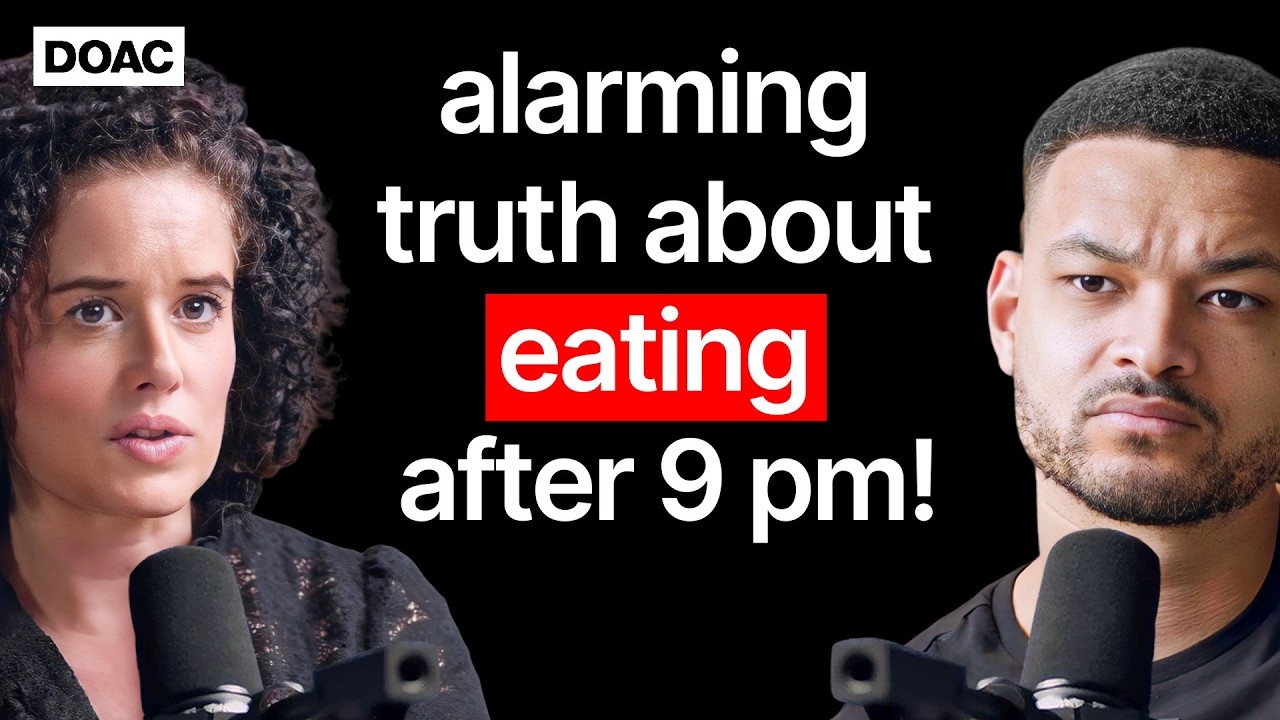
The Diary Of A CEO
Dr. Sarah Berry demonstrates that food physical structure and timing dictate metabolic health more than simple calorie counts, proving seed oils lower cardiovascular risk while late-night eating impairs metabolism.
AI-assisted summary of The Nutritional Scientist: Do Not Eat After 9pm! Link Between Chewing & Belly Fat! — original source. Check the original for full context.
Source published:
Detailed notes
## Background This video was published on January 27, 2025, on YouTube by Steven Bartlett on his channel 'The Diary Of A CEO'. Featuring Dr. Sarah Berry, a Professor in Nutritional Sciences at King's College London and Chief Scientist at ZOE, the episode explores the impact of food structure, processing, chewing, snacking, sleep, and menopausal health on human physiology.
## TL;DR Dr. Sarah Berry challenges common dietary myths and explains how the physical structure of food—the food matrix—radically alters metabolic and satiety responses. She unpacks the science behind eating speed, late-night snacking, social jet lag, seed oils, and menopause, emphasizing that practical, sustainable habits far outweigh rigid dietary perfectionism. Through findings from the PREDICT and ZOE studies, she demonstrates how small lifestyle shifts in sleep, fiber intake, and eating windows yield significant health improvements.
## Atmosphere & style The conversation is warm, deeply engaging, and grounded in accessible scientific rigor, striking a balance between high-level research and relatable human experience. Host Steven Bartlett guides the discussion with curious, probing questions, creating an authentic environment where Dr. Berry busts online health myths with passionate candor and lighthearted humor. The dialogue shifts gracefully from technical physiological mechanisms to personal reflections on stress, caregiving, and life's pressures, making the episode feel intellectually rich yet reassuringly empathetic.
## Key takeaways - [02:04](https://www.youtube.com/watch?v=eOnIWDMNyfE&t=124s) Cardiometabolic health is determined by four interconnected factors: personal biology, food matrix, lifestyle/circadian factors, and behavioral drivers. - [04:52](https://www.youtube.com/watch?v=eOnIWDMNyfE&t=292s) The food matrix profoundly alters satiety and metabolic responses; identical nutrients cause entirely different biological effects depending on structural preparation. - [14:04](https://www.youtube.com/watch?v=eOnIWDMNyfE&t=844s) Slowing down eating speed by 20% leads to an involuntary 15% reduction in daily caloric intake by giving gut satiety signals time to reach the brain. - [19:43](https://www.youtube.com/watch?v=eOnIWDMNyfE&t=1183s) Intact cell structures in whole foods like almonds prevent total caloric absorption, passing 20% to 30% of energy to the gut microbiome. - [29:00](https://www.youtube.com/watch?v=eOnIWDMNyfE&t=1740s) Swapping ultra-processed snacks for whole nuts significantly improves vascular function, equivalent to a 30% reduction in long-term cardiovascular disease risk. - [35:16](https://www.youtube.com/watch?v=eOnIWDMNyfE&t=2116s) Late-night eating after 9:00 PM disrupts metabolic rest and circadian rhythms, leading to increased visceral belly fat, systemic inflammation, and higher cholesterol. - [43:45](https://www.youtube.com/watch?v=eOnIWDMNyfE&t=2625s) Sleep quality directly impacts metabolic health, where a single night of bad sleep impairs post-meal glucose control as much as altering dietary macronutrients. - [56:35](https://www.youtube.com/watch?v=eOnIWDMNyfE&t=3395s) A realistic 10-hour daily eating window (time-restricted feeding) confers metabolic benefits and causes a spontaneous daily caloric reduction without strict restriction. - [01:01:53](https://www.youtube.com/watch?v=eOnIWDMNyfE&t=3713s) Scientific evidence directly contradicts social media claims against seed oils, proving that unsaturated fats in seed oils lower LDL cholesterol and support heart health. - [01:18:45](https://www.youtube.com/watch?v=eOnIWDMNyfE&t=4725s) The health impact of saturated fats depends heavily on the food matrix; fermented dairy like cheese and yogurt does not raise LDL cholesterol, unlike butter or animal fats. - [01:22:36](https://www.youtube.com/watch?v=eOnIWDMNyfE&t=4956s) Dietary cholesterol from foods like eggs has minimal impact on circulating blood cholesterol levels for the vast majority of people. - [01:41:12](https://www.youtube.com/watch?v=eOnIWDMNyfE&t=6072s) Perimenopause and menopause cause major cardiometabolic shifts, including a 25% increase in LDL cholesterol and a fivefold increase in abdominal obesity risk. - [01:51:05](https://www.youtube.com/watch?v=eOnIWDMNyfE&t=6665s) Adopting a high-fiber, plant-diverse Mediterranean diet and increasing soy isoflavones can reduce menopausal symptoms by up to 35%.
## Detailed walkthrough ### [00:00](https://www.youtube.com/watch?v=eOnIWDMNyfE&t=0s) Introduction and Seed Oil Misconceptions
Steven Bartlett introduces the podcast with an initial remark on the widespread public confusion and fear surrounding seed oils, noting how social media claims they cause Alzheimer's or cancer despite lack of evidence. Dr. Sarah Berry, a Professor of Nutritional Sciences at King's College London and Chief Scientist at ZOE, clarifies that her decades of research reveal seed oils are not harmful, but actually beneficial for human health.
The introduction highlights the core themes of the discussion: the importance of the food matrix, how eating speed and timing impact fat accumulation and calorie intake, and how evidence-based nutritional principles can drastically reduce menopausal symptoms. Bartlett takes a brief pause to ask regular listeners to subscribe to the channel as a free way to support the show.
* **Seed Oil Myths:** Claims that seed oils cause Alzheimer's or cancer are unsupported by scientific evidence; they are generally health-beneficial. * **Timing & Metabolism:** Snacking after 9:00 PM is associated with unfavorable health outcomes, including visceral belly fat, even when consuming healthy snacks. * **Eating Speed:** Slowing down eating speed by **20%** reduces total calorie intake by roughly **15%**. * **Menopause Interventions:** Specific dietary principles can reduce menopausal symptoms by approximately **35%**.
---
[02:04](https://www.youtube.com/watch?v=eOnIWDMNyfE&t=124s) Two Decades Studying the Impact of Food on Our Health
Dr. Sarah Berry outlines her 25-year career trajectory, which began with a sharp focus on cardiometabolic health—specifically evaluating how diet influences cardiovascular disease markers, type 2 diabetes risk, cholesterol, blood pressure, and systemic inflammation. Over time, her work evolved to encompass the holistic complexity of human biology, examining how individual physiology interacts with food structure and eating behavior.
Her research relies heavily on randomized controlled clinical trials where participants consume specific diets or foods under strict monitoring. Dr. Berry details the four critical puzzle pieces necessary to understand how nutrition affects an individual:
1. **Who You Are:** Personal biology, including genetics, gut microbiome, age, biological sex, and menopausal status. 2. **What You Eat (Beyond Nutrients):** Moving past basic back-of-pack labels (fat, protein, carbohydrates, fiber) to recognize that a single food contains around **70,000** different chemical compounds wrapped within a physical structure. 3. **How You Eat:** Lifestyle and environmental factors such as sleep quality, circadian disruption or "social jet lag," meal sequencing, acute stress levels, and recent physical activity. 4. **Why You Eat:** Behavioral, social, and emotional drivers, including cultural habits, emotional state, and dining socially with friends.
> "We're now able to collect data at a scale, breadth, depth, and precision that we've never been able to before that's allowing us to put together all of those pieces of the puzzle to start to see a clearer picture."
---
[04:52](https://www.youtube.com/watch?v=eOnIWDMNyfE&t=292s) What Is the Food Matrix and How Does It Affect Our Health?
Dr. Berry defines the **food matrix** as the physical and structural organization of food. She stresses that two distinct foods can possess identical nutrient breakdown labels (equal calories, fats, and carbohydrates) while triggering completely different metabolic and health responses depending on how that food structure is put together.
To illustrate this, she presents the contrast between an **apple, apple puree, and apple juice**. While all three derive from the exact same raw source, altering their physical structure alters how fast nutrients are digested, how fast sugars enter the bloodstream, and how full the consumer feels. Processing techniques—whether manual home preparation or industrial manufacturing—fundamentally reshape this molecular architecture.
---
[07:03](https://www.youtube.com/watch?v=eOnIWDMNyfE&t=423s) Why Do We Need Processed Food?
Addressing the modern trend of demonizing all ultra-processed foods, Dr. Berry brings balance to the debate. While acknowledging that roughly **60%** of total energy intake in modern Western diets comes from processed foods—much of which is low quality—she emphasizes that processing itself is a necessary tool with distinct benefits.
Dr. Berry outlines the historical and practical reasons human society relies on food processing: * **Edibility:** Transforming raw commodities (such as dry uncooked rice grains) into digestible food. * **Safety:** Eliminating dangerous pathogens (e.g., thermal pasteurization of raw milk). * **Shelf-Life & Stability:** Preventing spoilage and minimizing food waste (e.g., freezing vegetables, canning beans). * **Palatability & Convenience:** Improving taste, texture, and ease of preparation for busy lives.
---
[08:15](https://www.youtube.com/watch?v=eOnIWDMNyfE&t=495s) When Is Processed Food Bad?
Industrial processing becomes harmful when it fundamentally degrades the nutritional quality of the food. "Processing gone bad" typically results in products loaded with high levels of saturated fats and salt, stripped of essential fiber and bioactives (such as polyphenols), and rendered artificially energy-dense.
When food is hyper-processed, its physical resistance drops, allowing people to consume hundreds of calories in minutes—far faster than the body's internal neurohormonal signaling can register fullness. Conversely, intelligent processing can actually enhance **bioaccessibility**, making certain beneficial nutrients more easily absorbed by the body.
---
[09:17](https://www.youtube.com/watch?v=eOnIWDMNyfE&t=557s) Comparing Real Foods: Crisps vs. Whole Nuts
To demonstrate the food matrix visually, Bartlett presents several snacks set up in the studio: salted crisps, chocolate, cookies, and a bowl of whole mixed nuts. Dr. Berry points out that while the crisps, chocolate, and cookies lack fiber and essential bioactives, whole nuts present a fascinating contrast.
Nuts are naturally very energy-dense and high in fat and calories. However, because whole nuts retain their original intact plant cell matrix, the human gut processes them completely differently than processed snacks, naturally limiting how many calories are actually absorbed.
---
[11:09](https://www.youtube.com/watch?v=eOnIWDMNyfE&t=669s) How Long Does It Take for My Brain to Realise I’m Eating?
Dr. Berry explains that it takes roughly **10 to 20 minutes** for satiety hormones released by the gut to travel to the brain and signal that enough food has been consumed. Because soft, processed foods require minimal chewing, a person can easily finish an entire tube of crisps or multiple cookies before their brain registers any fullness at all.
While initial sensory signals and early digestive hormones begin at the first bite, the most powerful fullness receptors are located deeper down in the lower gastrointestinal tract. Intact, fibrous whole foods travel further down the digestive tract before being fully broken down, triggering those powerful lower-gut satiety receptors. In contrast, heavily refined foods are rapidly absorbed high up in the upper digestive tract, leaving the individual feeling unsatisfied.
---
[01:11:54](https://www.youtube.com/watch?v=eOnIWDMNyfE&t=4314s) Does the Food Industry Engineer Food to Be Highly Palatable?
Bartlett asks whether food companies intentionally engineer foods so consumers eat faster and fail to feel full. Dr. Berry acknowledges the industry concept of making products **hyper-palatable** by hitting exact ratios of fat, sugar, salt, and carbohydrate textures.
While she disputes the extreme conspiracy view that the food industry actively seeks to poison the public, she admits that overeating is an inevitable byproduct of engineering foods purely for maximum flavor and enjoyment.
---
[14:04](https://www.youtube.com/watch?v=eOnIWDMNyfE&t=844s) The Importance of Eating Slowly
Bartlett admits his girlfriend has nagged him for years to slow down his eating speed, which he previously dismissed as an unfounded spiritual habit. Dr. Berry validates his girlfriend's advice, citing rigorous scientific trials—notably led by Professor Cieran Forde—showing that physical eating rate directly governs metabolic response and total intake.
* **Calorie Reduction via Speed:** Slowing one's eating rate by **20%** leads to an involuntary **15%** reduction in daily calorie intake without conscious restriction. * **ZOE PREDICT Findings:** After controlling for confounding variables, fast eaters in the ZOE PREDICT studies consume on average **120 more calories per day** than slow eaters. * **Clinical Weight Loss:** Intervention trials show that participants instructed to deliberately chew longer and eat slowly lose significantly more weight over several weeks compared to those maintaining their normal fast eating speed.
[16:31](https://www.youtube.com/watch?v=eOnIWDMNyfE&t=991s) Texture, Structure, and the Science of Eating Speed
Dr. Sarah Berry explains that modern food availability differs drastically from the past, particularly in terms of physical texture. Today’s food environment is dominated by heavily processed, soft-textured options that can be consumed up to 50% faster than their unprocessed, harder-textured equivalents. This high rate of consumption often leads to overeating because internal satiety and hunger signals do not have sufficient time to reach the brain before large amounts of food are consumed.
To illustrate how physical structure dictates consumption speed and metabolic response, Dr. Berry cites a landmark 1977 study published in *The Lancet* by K.W. Heaton and G.B. Haber. In this experiment, participants were given either whole apples or an equivalent amount of apple puree containing identical calories, carbohydrates, and fiber. Despite having identical nutrient profiles, subjects drank the puree three to four times faster (a 300% to 400% increase in speed) than they ate the whole apples. Consequently, those who drank the puree felt significantly less full over the subsequent hours.
``` Whole Apple vs. Apple Puree (1977 Haber Study) ┌──────────────────┬────────────────────────────────────────────────────────┐ │ Nutrient Profile │ Identical (calories, fiber, and carbohydrates) │ ├──────────────────┼────────────────────────────────────────────────────────┤ │ Eating Speed │ Puree consumed 300%–400% faster than whole apples │ ├──────────────────┼────────────────────────────────────────────────────────┤ │ Satiety │ Whole apples provided significantly longer fullness │ ├──────────────────┼────────────────────────────────────────────────────────┤ │ Glucose Impact │ Puree caused pronounced 2–4 hour postprandial dip │ └──────────────────┴────────────────────────────────────────────────────────┘ ```
Furthermore, the smooth puree induced a sharp blood sugar drop approximately two to four hours after consumption. Data from the ZOE PREDICT research program shows that individuals who experience these postprandial glucose dips—whom Dr. Berry refers to as "dippers"—suffer increased hunger and consume an average of 180 additional calories at their subsequent meal.
- **Eating Speed Difference:** Soft, processed foods are eaten roughly 50% faster than unprocessed, hard-textured foods. - **Haber Study (1977):** Published in *The Lancet*, proving equal calories of whole apples versus apple puree produced vastly different fullness and metabolic rates. - **Caloric Overhead of Glucose Dips:** Blood sugar "dippers" consume an average of 180 extra calories at their next meal due to rebound hunger.
---
[19:43](https://www.youtube.com/watch?v=eOnIWDMNyfE&t=1183s) The Almond Matrix: How Plant Cell Walls Encapsulate Energy
Dr. Berry highlights her own decade of clinical research using nuts and oats to prove the critical role of the "food matrix." While two foods may have identical nutrition labels on the back of the package, the physical arrangement of their nutrients dictates how much energy the body absorbs. Using almonds as a primary proof-of-concept, she explains that plant cells are tiny—roughly 50 microns across, smaller than a grain of sand—and feature rigid, structural cell walls that encapsulate internal fat stores.
When a person eats whole almonds, chewing (mastication) only ruptures a fraction of these rigid cell walls. Mastication studies show that swallowed nut particles measure between 0.5 mm and 1.0 mm in size. Because each particle contains thousands of intact 50-micron cells, much of the fat remains trapped inside low-accessibility cell walls. Only about 10% of the calories become available in the mouth, and an additional 60% to 70% are absorbed through the stomach and small intestine.
> "When you're swallowing within that what we call a macro particle, you've got thousands of cells. They're intact... so they're what we call very low bioaccessibility."
As a result, 20% to 30% of the total calories in whole almonds are never absorbed by the body; instead, they pass through to the colon. While Dr. Berry jokes about finding intact almond particles when inspecting stool—a reality she notes both as a researcher and as a mother—this unabsorbed material serves two major health functions: it reduces net caloric absorption and feeds the gut microbiome. However, if those same almonds are industrially ground down below 50 microns, the cell walls break, releasing 100% of the fat and making all calories fully bioaccessible.
- **Cell Wall Particle Size:** Almond cells average roughly 50 microns in diameter; chewed nut particles swallowed measure 0.5 mm to 1 mm. - **Caloric Excretion:** 20% to 30% of calories from whole almonds are not absorbed by the human digestive tract and pass into the colon. - **Nutrient Accessibility Trade-off:** Industrial grinding releases 100% of the calorie-dense fat, but it also increases the bioaccessibility of beneficial micronutrients like Vitamin E.
---
[24:00](https://www.youtube.com/watch?v=eOnIWDMNyfE&t=1440s) Processing Oats: Particle Size and Postprandial Glucose Responses
The impact of food processing is further demonstrated in clinical trials examining oat particle size. Dr. Berry’s lab conducted studies where participants consumed breakfasts containing 50 grams of carbohydrates from either large, intact steel-cut style oats or finely ground oats powdered by researchers.
Although both meals supplied identical amounts of fiber and carbohydrates, the finely ground oats produced a dramatically faster gut absorption rate. This structural disruption led to a 50% higher peak postprandial glucose response in the six hours following the meal compared to the intact, large oats.
> "The difference in the metabolic response in that following six hours after having either the large traditional oats or these finely ground oats is enormous... We see about a 50% higher response from the ground oats versus the large oats."
- **Oat Study Protocol:** 50 grams of carbohydrate supplied via large intact oats versus finely ground oat powder. - **Glucose Spike Difference:** Finely ground oats caused a ~50% higher postprandial blood glucose surge over a six-hour period than whole intact oats due to altered absorption kinetics.
---
[26:15](https://www.youtube.com/watch?v=eOnIWDMNyfE&t=1575s) The Fiber Deficit and Artificial Fiber Additives
Turning to fiber, Dr. Berry frames it as one of the few single nutrients consistently shown to reduce risks across major non-communicable diseases, including cardiovascular disease, type 2 diabetes, obesity, and colorectal cancers. Despite these established benefits, the vast majority of people fail to meet basic dietary targets. In both the UK and the US, official guidelines recommend at least 30 grams of dietary fiber daily, yet average consumption lingers around 20 grams, leaving 95% of the population deficient.
``` Daily Fiber Consumption Gap ┌─────────────────────┬────────────────────────────────────────────────────┐ │ Recommended Intake │ ≥ 30 grams / day │ ├─────────────────────┼────────────────────────────────────────────────────┤ │ Average Intake │ ~ 20 grams / day │ ├─────────────────────┼────────────────────────────────────────────────────┤ │ Population Deficit │ 95% of individuals fall short of target │ └─────────────────────┴────────────────────────────────────────────────────┘ ```
Fiber performs distinct functions depending on its physical properties: * **Soluble fiber** modulates cholesterol absorption and stabilizes metabolic rates. * **Insoluble fiber** (such as plant cell walls) acts as bulking material that speeds colonic transit time and supplies fuel for gut microbial fermentation.
Addressing modern commercial trends like fiber-fortified candy bars or functional beverages, Dr. Berry notes that while whole-food fiber bound in its original plant matrix remains superior, isolated or processed fiber added to commercial items is still vastly preferable to consuming no fiber at all.
- **Dietary Target Deficit:** 95% of individuals in the UK and US fail to reach the recommended 30 grams of fiber per day, averaging only 20 grams. - **Mechanisms:** Soluble fiber lowers blood cholesterol; insoluble fiber reduces colonic transit time and acts as a fermentable substrate for gut microbiota.
---
[29:00](https://www.youtube.com/watch?v=eOnIWDMNyfE&t=1740s) Snacking Habits and Cardiovascular Health Improvements
Steven Bartlett and Dr. Sarah Berry explore how small, manageable changes to snacking habits can drive substantial long-term health improvements. Bartlett notes that snacks are often eaten during busy moments when hunger arises unexpectedly between meals, leading to quick, unconsidered decisions. To tackle this, Dr. Berry conducted a six-week randomized controlled trial evaluating the impact of replacing typical snacks with healthier options.
In the UK and US, snacks account for roughly 25% of total daily energy intake, with about 75% of those snack calories coming from ultra-processed, highly refined foods. In her trial, Dr. Berry's team supplied two distinct intervention groups with snacks representing 20% of their daily energy intake over six weeks:
1. **Ultra-processed Control Group:** Custom-formulated muffins designed to match the typical UK/US snack profile—high in saturated fats, refined carbohydrates, and sugar, while low in fiber (mimicking a mix of potato chips, chocolate biscuits, and cake). 2. **Whole Food Intervention Group:** Whole almond nuts supplying 20% of daily energy needs.
``` Six-Week Snack Intervention Outcomes (20% Daily Energy Swap) ├── Control Group: Formulated muffins (high saturated fat/sugar, low fiber) └── Intervention Group: Whole almond nuts └── Result: Significant improvement in Flow-Mediated Dilation (FMD) └── Equivalent to a 30% reduction in long-term Cardiovascular Disease risk ```
At the end of the six-week trial, researchers measured endothelial function using Flow-Mediated Dilation (FMD), an established vascular health marker. Participants who replaced typical snacks with almonds achieved structural improvements in blood vessel elasticity corresponding to a 30% reduction in cardiovascular disease risk.
Dr. Berry highlights that snacking represents an actionable health lever because individuals usually exercise full personal control over their snacks, unlike family dinners or eating out. Transparently, she discloses that the study received funding from the Almond Board of California, while clarifying that the funder had no access to raw data, experimental design input, or pre-publication manuscript control.
- **Snack Caloric Proportion:** Snacks account for 25% of daily energy intake in the UK and US; 75% of these calories derive from low-quality, ultra-processed choices. - **Trial Outcome:** Swapping typical processed snacks for almonds for six weeks yielded an improvement in Flow-Mediated Dilation corresponding to a 30% reduction in cardiovascular disease risk. - **Mediterranean Comparison:** In Mediterranean populations, snacks make up only 14% of total daily energy intake, and 85% of those choices consist of healthy whole foods.
Here is a detailed, faithful walkthrough of this section of the transcript.
---
### [33:14](https://www.youtube.com/watch?v=eOnIWDMNyfE&t=1994s) The Downstream Ripple Effects of Bad Snacking Choices The conversation begins with a comparison of European and UK snacking habits: while only 10% of French people report snacking, British people average 2.5 to 3 snacks per day, translating to six or seven distinct eating events daily. Steven Bartlett notes that choosing a typical high-sugar, refined snack—like a processed muffin—creates a cascading "domino effect." Consuming a refined carbohydrate triggers a glucose roller coaster of spikes and drops, causing metabolic chaos that subsequently distorts mood, energy, and hunger, thereby predisposing a person to make progressively worse food choices and suffer impaired sleep later that night.
Dr. Sarah Berry reassures him that a single poor choice does not ruin a person's entire day, but agrees that initial food choices set off powerful downstream metabolic consequences. Blood sugar dips caused by refined carbohydrates directly drive increased hunger, higher calorie intake, lower energy, reduced alertness, and lower mood. However, she points out that because snacking makes up such a large portion of daily energy intake—with 70% to 75% of snacks consumed in the UK and US being unhelpful—transitioning to healthier snacks can be leveraged as a massive advantage for long-term health.
* In France, only **10%** of people report snacking, compared to the majority of British adults. * In the UK, people average **2.5 to 3 snacks per day**, amounting to **6 to 7 total eating events** daily. * In both the UK and the US, **70% to 75%** of consumed snacks are classified as unhelpful or unhealthy.
---
### [35:16](https://www.youtube.com/watch?v=eOnIWDMNyfE&t=2116s) Grazing, Meal Frequency, and Chrono-Nutrition Dr. Berry explains that despite snacking being widespread, nutrition science historically focused on specific foods rather than general eating patterns. To resolve the debate around whether people should be "grazers" eating six times a day or stick to traditional three-meal structures, ZOE conducted a study tracking 1,000 individuals across various health metrics. The findings revealed that overall eating frequency is not inherently harmful: grazing or eating up to six times a day does not negatively impact health outcomes, provided the foods consumed are nutrient-dense and healthy. During the discussion, Steven playfully moves a tray of cookies and chocolates away from himself to avoid temptation, admitting the smell is testing his self-control.
Dr. Berry highlights that the timing of food intake is just as critical as food quality—a rapidly growing field known as **chrono-nutrition**. The ZOE study revealed that **30% of participants snacked after 9:00 PM**. Snacking late at night was consistently linked to adverse health markers, including increased abdominal adiposity (belly fat), higher systemic inflammation, and unfavorable blood lipid profiles like elevated cholesterol. Crucially, these negative health effects occurred **even when the late-night snacks were healthy foods**. This is explained by circadian biology: every cell in the human body operates on its own internal clock aligned with the light-dark cycle and meal timing. Eating out of sync with these cellular clocks alters nutrient metabolism and disrupts physiological rest.
> "Every cell in our body has its little body clock... and if we're eating out of sink with those clocks... we process the food slightly differently, we metabolize it slightly differently, and it may have a different impact on our health."
---
### [39:05](https://www.youtube.com/watch?v=eOnIWDMNyfE&t=2345s) Why Eating Late Disturbs Metabolism and Triggers Morning Hunger Addressing Steven’s long-held hunch that eating close to bedtime increases belly fat and leaves him feeling groggy, Dr. Berry confirms his intuition. Over the night, the body, metabolism, and gut microbiome require period rest. Interrupting this process by forcing the body to digest late-night food disrupts internal rhythms. She highlights a study from one to two years prior comparing two groups consuming identical daily food and calories within the same timeframe: those who consumed most of their calories earlier in the day woke up feeling less hungry, whereas those who ate the majority of their calories later in the day woke up feeling noticeably hungrier.
This physiological paradox explains why early time-restricted eating (TRE) consistently yields superior health outcomes compared to late-window fasting. Aligning the main eating window with early biological clocks improves weight management, reduces inflammation, and optimizes cholesterol levels far more effectively than late-evening eating schedules.
---
### [41:12](https://www.youtube.com/watch?v=eOnIWDMNyfE&t=2472s) Sleep Deprivation, Hormonal Disruption, and the Slumber Study Steven shares a personal observation: whenever he wakes up unnaturally early around 4:00 AM or 5:00 AM for a flight, he experiences intense, ravenous hunger, whereas on normal days waking at 9:00 AM, he feels no urge to eat until midday or 2:00 PM. Dr. Berry validates this, explaining that sleep duration, sleep efficiency, and sleep midpoint heavily regulate hunger and fullness hormones (such as ghrelin and leptin). Short or disrupted sleep perturbs these hormone levels, driving increased appetite and intense cravings for quick-fix, high-sugar foods.
To illustrate this mechanism, Dr. Berry cites the **Slumber Study** conducted by her colleagues at King's College London. In the study, short sleepers were instructed solely on good sleep hygiene (e.g., removing screens from the bedroom, avoiding late caffeine, alcohol, and physical activity, and keeping the room dark) without receiving any dietary advice whatsoever. The results demonstrated a direct causal link between sleep and dietary choices: participants who successfully extended their sleep duration naturally made healthier food choices, **spontaneously reducing their daily free sugar intake by roughly 10 grams** without being asked.
---
### [43:45](https://www.youtube.com/watch?v=eOnIWDMNyfE&t=2625s) The Four Pillars of Health and the PREDICT Study Insights Reflecting on his career, Steven admits that during his early days as an entrepreneur immersed in "hustle culture," he treated sleep as the first sacrifice in pursuit of productivity. Over the past few years, shifting his mindset to prioritize sleep as the foundation of his day radically improved his mental clarity, gym motivation, work output, and personal relationships. Dr. Berry strongly reinforces this holistic view, stating that health cannot be compartmentalized into isolated buckets. True metabolic health depends on four interconnected pillars: 1. Diet 2. Sleep 3. Stress management 4. Physical activity
Data from ZOE's **PREDICT program**—the world's largest in-depth nutritional research initiative—demonstrated that a single night of poor sleep impairs post-prandial (post-meal) blood glucose responses just as severely as changing the macronutrient composition of a meal. When an individual suffers a bad night's sleep, their blood sugar spike following a carbohydrate-containing breakfast is significantly higher than when they eat the exact same breakfast after a good night's sleep. Sleep deprivation creates a dangerous biological loop: it increases waking hunger, drives cravings for hyper-palatable convenience foods like pastries, and simultaneously impairs the body's ability to clear the resulting glucose spike.
> "Sleep affected metabolic responses as much as the macronutrient content of the meal... If they'd had a bad night sleep, their post-meal glucose response so after breakfast was a lot higher than if they'd had a good night's sleep."
---
### [48:01](https://www.youtube.com/watch?v=eOnIWDMNyfE&t=2881s) Parenting, Grief, and the Reality of Survival Mode When Steven asks how parents or shift workers struggling with unavoidable sleep loss can protect themselves against these downstream metabolic effects, Dr. Berry offers a deeply personal account of her own life. During the first four years of her children’s lives, her kids rarely slept continuously. Shortly after her daughter was born, her father passed away, and she and her sister became full-time carers for her mother, who was battling a degenerative neurological condition. Balancing a demanding career break, caregiving duties, and two non-sleeping toddlers left no bandwidth for optimizing nutrition.
Dr. Berry emphasizes that during periods of extreme life pressure, grief, or sleep deprivation, strict nutritional rules and health optimization must take a backseat to sheer survival. She acknowledges that when individuals are deep in survival mode, health routines inevitably break down, and people should offer themselves grace rather than guilt when life circumstances make ideal health choices impossible.
[49:35](https://www.youtube.com/watch?v=eOnIWDMNyfE&t=2975s) Stress, Mental Health, and How Lifestyle Compromises Food Choices
When facing severe life stressors—such as taking care of a relative whose health is deteriorating daily or managing personal trauma—making healthy food choices often falls to the bottom of a person's priorities. While research consistently highlights that proper nutrition strongly influences mental health and well-being, the immediate reality of emotional strain makes it exceptionally difficult to prioritize diet. Steven points out that while public attention frequently focuses on weight-loss drugs like Ozempic to combat rising obesity rates, society overlooks the fundamental role that stress, anxiety, and demanding modern lifestyles play in driving poor dietary habits.
``` ┌─────────────────────────────────────────┐ │ Stress / Trauma / Sleeplessness │ └────────────────────┬────────────────────┘ │ ▼ ┌─────────────────────────────────────────┐ │ Impaired Decision-Making Capacity │ └────────────────────┬────────────────────┘ │ ▼ ┌─────────────────────────────────────────┐ │ Preference for High-Palatability Foods │ │ (Ultra-processed, hyper-rewarding) │ └────────────────────┬────────────────────┘ │ ▼ ┌─────────────────────────────────────────┐ │ Increased Inflammation & Low Mood │ └─────────────────────────────────────────┘ ```
The consumer demand for ultra-processed foods stems largely from these lifestyle pressures. People naturally reach for quick, comforting options when overwhelmed. Addressing systemic public health challenges requires addressing mindfulness, mental health support, and individual stress levels rather than solely blaming the presence of ultra-processed foods on grocery store shelves.
* **Multi-Level Responsibility:** Improving nutritional health requires shared action across governments, the food industry, individuals, schools, and parents. * **Brain & Palatability:** Foods high in refined fats and sugars trick the brain's reward centers, making them far more alluring than whole foods during times of fatigue or stress. * **Real-Life Late-Night Choices:** Even as a top nutritional scientist, Dr. Sarah Berry admits that late at night when facing tight work deadlines, she frequently opts for crisps, biscuits, or a glass of wine rather than a handful of nuts.
---
[52:44](https://www.youtube.com/watch?v=eOnIWDMNyfE&t=3164s) The Danger of Hyper-Focusing on Dietary Optimization
Despite knowing more about nutrition than almost anyone, Dr. Berry does not get frustrated with herself when she occasionally makes suboptimal food choices. She cautions strongly against the modern trend of extreme health optimization, arguing that hyper-focusing on a "1% gain" takes away the intrinsic pleasure, emotional connection, and social joy that food brings to human culture.
> "If a food is too healthy to be enjoyed, it's just not healthy at all. Food is there to bring us joy, it's to bring us pleasure, it's part of our emotions, it's part of our culture, it's part of our social connections."
Getting the broad foundations of nutrition right accounts for 95% of a person's health outcomes. Attempting to obsessively perfect the remaining 5% often leads to an unsustainable relationship with food that creates unnecessary psychological stress.
* **Core Principles of a Healthy Diet:** Focus on consuming plenty of fruits, vegetables, pulses, and fiber while aiming for dietary variety and minimizing heavy reliance on processed items. * **The 95/5 Rule:** If the nutritional foundations are solid 95% of the time, enjoying occasional treats like chocolate bars carries negligible long-term health consequences.
---
[54:21](https://www.youtube.com/watch?v=eOnIWDMNyfE&t=3261s) Evaluating Popular Diets and Social Media "Nutribollocks"
The nutrition landscape is filled with misleading trends, fad diets, and outright misinformation—a phenomenon Dr. Berry labels "nutribollocks." The contrast between rigorous scientific evidence and the viral claims made across social media is "night and day."
``` ┌────────────────────────────────────────────────────────────────────────┐ │ EVALUATION OF DIET TRENDS │ ├──────────────────────────┬─────────────────────────────────────────────┤ │ Diet / Strategy │ Expert Assessment │ ├──────────────────────────┼─────────────────────────────────────────────┤ │ 30+ Plants per Week │ Great evidence; supports microbiome diversity│ ├──────────────────────────┼─────────────────────────────────────────────┤ │ Severe Calorie Restr. │ Effective for short-term weight loss, but │ │ │ notoriously poor for long-term maintenance │ ├──────────────────────────┼─────────────────────────────────────────────┤ │ Alkaline Diet │ Unscientific; stomach acid immediately │ │ │ neutralizes external pH changes │ ├──────────────────────────┼─────────────────────────────────────────────┤ │ Blood Type Diet │ Lacks plausible physiological theory or │ │ │ robust evidence │ └──────────────────────────┴─────────────────────────────────────────────┘ ```
While certain restrictive interventions show positive results in tightly controlled clinical trials, they frequently fail when applied to real life because they ruin the social pleasure of eating. For instance, strict 6-hour time-restricted feeding protocols (such as eating only between 10:00 AM and 4:00 PM) show dramatic metabolic improvements in lab settings, but prevent people from enjoying family dinners or social outings with friends.
---
[56:35](https://www.youtube.com/watch?v=eOnIWDMNyfE&t=3395s) Real-World Fasting: Results from the ZOE "Big IF" Study
To test whether the benefits of time-restricted eating (TRE) translate to real-life settings without extreme social sacrifice, ZOE conducted the **Big IF (Intermittent Fasting) Study**, involving over 150,000 participants. Instead of asking people to adopt an unsustainable 6-hour eating window, the study asked participants to limit their daily eating to a realistic **10-hour window** (e.g., 10:00 AM to 8:00 PM).
``` CLINICAL TRIALS vs. REAL-WORLD TRE
Strict Clinical TRE ZOE "Big IF" Study ┌──────────────────────┐ ┌──────────────────────┐ │ • 5–6 hour window │ │ • 10-hour window │ │ • Highly artificial │ │ • 150,000 participants│ │ • Social isolation │ │ • Highly sustainable │ └──────────┬───────────┘ └──────────┬───────────┘ │ │ ▼ ▼ Reduces inflammation, Improves energy, mood, blood lipids, weight weight, and blood lipids ```
The study demonstrated that participants found a 10-hour window manageable while maintaining a fulfilling social life. Within two weeks of practicing 10-hour TRE, participants reported noticeable improvements in energy levels, mood, and sleep quality, as well as modest weight loss.
* **Spontaneous Calorie Reduction:** Simply narrowing the daily eating window to 10 hours leads people to unintentionally reduce their caloric intake by an average of **300 calories per day** without explicitly counting calories. * **Is Fasting Just Calorie Restriction?** While the primary driver of weight loss in TRE is this spontaneous reduction in calories, studies controlling for calorie intake prove that time-restricted eating confers *independent metabolic benefits*—including reductions in systemic inflammation and improved blood lipid profiles.
---
[59:39](https://www.youtube.com/watch?v=eOnIWDMNyfE&t=3579s) Consistency in Eating Patterns and the Impact of "Social Jet Lag"
Emerging research highlights the critical importance of keeping daily eating and sleeping schedules consistent. Irregular eating schedules—such as eating three meals one day, six meals the next, and nine meals the following day—disrupt circadian biology and place metabolic strain on the body.
If an individual is accustomed to snacking, they should continue doing so with healthy choices while ensuring their final snack occurs before **9:00 PM**. Non-snackers should not pick up the habit, as introducing irregular eating windows compromises overall schedule consistency.
``` CIRCADIAN MISALIGNMENT
[ Mon – Fri Schedule ] [ Weekend Schedule ] ┌────────────────────┐ ┌────────────────────┐ │ Sleep: 11 PM - 6 AM │ │ Sleep: 2 AM - 10 AM│ │ Meals: 8 AM - 7 PM │ │ Meals: 12 PM-11 PM │ └─────────┬──────────┘ └─────────┬──────────┘ │ │ └───────────────┬───────────────────────┘ │ ▼ ┌───────────────────────┐ │ SOCIAL JET LAG │ │ (>1.5 hr shift) │ └───────────┬───────────┘ │ ▼ ┌───────────────────────┐ │ • Poorer Food Choices │ │ • Higher Inflammation │ │ • Gut Dysbiosis │ └───────────────────────┘ ```
A parallel phenomenon occurs with sleep, known as **social jet lag**. This refers to a shift of more than 1.5 hours in sleep patterns between workdays and weekends (such as staying up late and sleeping in to catch up on rest).
* **Health Consequences of Social Jet Lag:** ZOE PREDICT research shows that individuals experiencing social jet lag make measurably worse dietary choices, exhibit higher levels of systemic inflammation, and display negative alterations in their gut microbiome composition. * **Integrated Health Model:** Diet cannot be evaluated in isolation from sleep consistency, stress, and broader lifestyle habits.
---
[01:01:53](https://www.youtube.com/watch?v=eOnIWDMNyfE&t=3713s) Debunking the Seed Oil Hysteria
Dr. Berry places the modern anti-seed oil movement at the absolute top of her "nutribollocks" list. Prominent public figures—such as Robert F. Kennedy Jr.—have claimed that seed oils are inherently toxic, heavily subsidized, and responsible for widespread chronic diseases and systemic inflammation. RFK Jr. has actively advocated replacing seed oils with beef tallow (dripping) and selling merchandise with slogans like "Make Frying Oil Tallow Again."
Dr. Berry strongly refutes these claims, stating that there is zero credible scientific evidence showing that seed oils are harmful to human health when interpreted correctly.
``` ┌────────────────────────────────────────────────────────────────────────┐ │ THE SEED OIL MISCONCEPTION │ ├───────────────────────────────┬────────────────────────────────────────┤ │ Social Media Narrative │ Rigorous Scientific Evidence │ ├───────────────────────────────┼────────────────────────────────────────┤ │ • "Seed oils are toxic" │ • Cardioprotective properties │ │ • "Causes Alzheimer's/Cancer" │ • Lowers LDL cholesterol │ │ • "Drives systemic inflammation"│ • Rich in essential unsaturated fats │ ├───────────────────────────────┼────────────────────────────────────────┤ │ Root Cause of Misunderstanding: │ │ ~60% of seed oils are consumed within hyper-palatable, highly processed│ │ foods containing excess refined sugars, salt, and calories. │ └───────────────────────────────┴────────────────────────────────────────┘ ```
The primary seed oils consumed in the UK are rapeseed oil (canola oil) and sunflower oil, whereas in the US, the dominant sources are soybean oil, rapeseed oil, and sunflower oil. The viral anti-seed oil claims online rely on sensationalism rather than sound science.
* **Sensationalism vs. Science:** Nuanced, evidence-based science rarely generates viral clicks compared to fear-driven claims that common foods are "toxic." * **Correlation vs. Causation:** Anti-seed oil advocates argue that as seed oil consumption grew over the past 50 years, rates of obesity, cancer, and cardiovascular disease rose alongside it. However, this ignores dramatic shifts toward sedentary lifestyles and higher overall intake of heavily processed foods containing excessive sugar and salt. * **The Real Problem with Processed Foods:** Roughly 60% of the seed oil in modern diets is consumed as an ingredient within ultra-processed junk foods, leading people to confuse the negative health effects of ultra-processed diets with the seed oils themselves.
[01:06:23](https://www.youtube.com/watch?v=eOnIWDMNyfE&t=3983s) The Myth of Seed Oils and How Misinformation Spreads
Dr. Sarah Berry addresses the widespread claims that seed oils cause chronic inflammation, cardiovascular disease, and cancer. She notes that opponents of seed oils often point to linear correlation graphs showing rising cancer rates alongside seed oil intake, but this overlooks the countless other lifestyle and dietary changes over the same time period. On a biochemical level, critics argue that seed oils are rich in omega-6 fatty acids, which they claim shift the body's omega-6 to omega-3 ratio into a pro-inflammatory state. However, Dr. Berry clarifies that what happens in a lab dish or a theoretical biochemical pathway does not translate to human biology. Human bodies possess robust regulatory mechanisms to manage oxidative stress and inflammation. Tightly controlled clinical trials demonstrate that omega-6 fats are actually anti-inflammatory, actively lowering circulating inflammatory markers.
When host Steven Bartlett asks where this anti-seed-oil narrative originated, Dr. Berry explains that it snowballed by feeding into broader anxieties about processed foods, fueled by the cherry-picking of outdated research. A prime example is the Sydney Diet Heart Study from the 1970s, where men with prior cardiac events were instructed to swap saturated fats for seed oils, leading to worse health outcomes. Crucially, seed oils at that time underwent partial hydrogenation, a process that packed them with harmful trans fats. While trans fats certainly raise cholesterol and drive inflammation, modern seed oils are not hydrogenated in this manner.
- Opponents claim omega-6 fatty acids in seed oils drive systemic inflammation, but clinical evidence shows they are actually anti-inflammatory. - The 1970s Sydney Diet Heart Study is frequently cited by anti-seed-oil advocates, but its negative results were caused by trans fats from partial hydrogenation, not the seed oils themselves. - A meta-analysis of 42 randomized controlled trials comparing seed oils to other fats found no evidence of harm; instead, seed oils showed a clear cardiovascular benefit due to their strong cholesterol-lowering properties. - Beef tallow, often promoted as a healthy alternative, is high in saturated fats like palmitic acid, which raise cholesterol and increase cardiovascular risk markers compared to seed oils.
---
[01:12:15](https://www.youtube.com/watch?v=eOnIWDMNyfE&t=4335s) The Challenges of Academic Science vs. Social Media Influence
Reflecting on her work, Dr. Berry expresses deep frustration over how easily "nutribollocks" spreads while rigorous scientific labor goes unnoticed. She describes the grueling nature of conducting randomized controlled trials—sweating "blood and tears" over ethical approvals, participant recruitment, and strict diet management. Unlike drug trials where participants take a pill, nutritional interventions require careful control over what foods are removed and substituted. This contrast between meticulous research and charismatic online claims makes public communication vital. Bartlett agrees, pointing out that public perception is often driven by charismatic speakers rather than credible experts. He shares his personal framework for navigating information, which involves weighing authority and methodology across multiple sources to perform his own "meta-analysis."
Dr. Berry notes that active research scientists are often the smallest voice in the media landscape. Academics are trained to analyze and critique data cautiously, not to market themselves or entertain audiences. They present findings with caveats, explicitly acknowledging that scientific consensus can evolve. In contrast, non-active science influencers speak with absolute certainty, which instills unearned confidence in viewers and draws higher engagement.
> "I will always say to students I'm teaching, 'What I'm telling you now is based on what the evidence shows now. In 10 years' time, I might be totally wrong.'... But as scientists, that's something else we always caveat with, and I think sometimes that's difficult for the general public."
---
[01:18:45](https://www.youtube.com/watch?v=eOnIWDMNyfE&t=4725s) Dairy Myths: Why Cheese and Yogurt Are Different from Butter
Turning to common misconceptions about dairy, Dr. Berry tackles the popular belief that all dairy products are inherently unhealthful. Because saturated fat is generally linked to poor cardiovascular health, and dairy contributes a large share of saturated fat in typical diets, entire product categories are often painted with a broad brush. However, Dr. Berry stresses that dairy is an exceptionally diverse food group; liquid milk, solid cheese, butter, and fermented products affect the body in vastly different ways.
The key lies in the food matrix and fermentation. Fermented dairy items like plain Greek yogurt, kefir, and traditional cheeses undergo structural changes that alter how the body metabolizes their contents. Research, including work from Reading University, demonstrates that moderate consumption of cheese or unsweetened yogurt does not elevate LDL cholesterol despite its high saturated fat content. Conversely, butter lacks this protective matrix structure. Randomized controlled trials show that even when cheese and butter contain identical fat profiles, butter raises cholesterol while cheese does not.
- Fermentation alters the structural food matrix of cheese and yogurt, preventing them from raising blood cholesterol despite their high saturated fat content. - Consuming a few normal portions of cheese or unflavoured yogurt daily does not increase cardiovascular risk factors. - Butter lacks the beneficial food matrix of fermented dairy and actively raises blood cholesterol when compared directly with cheese in clinical trials.
---
[01:21:10](https://www.youtube.com/watch?v=eOnIWDMNyfE&t=4870s) The Truth About Nuts, Weight Control, and Satiety
Dr. Berry also debunks the persistent myth that eating nuts leads to weight gain due to their high caloric density. She explains that total clinical and epidemiological evidence directly contradicts this belief. Studies consistently reveal that habitual nut consumers do not gain weight and often maintain a lower body mass index (BMI). While some of this observational data may reflect broader healthy lifestyle habits—as only about 10% of people in the UK and 7% in the US regularly eat nuts—interventional trials confirm that adding nuts to a diet does not cause weight gain.
Several distinct physiological mechanisms explain why nuts do not drive weight gain:
* **Incomplete Caloric Absorption:** Due to the physical food matrix of whole nuts, between 20% to 30% of the fat remains trapped inside intact cell walls and passes through the digestive tract unabsorbed. * **Inaccurate Labeling:** While a standard serving of nuts might be labeled as 170 calories, the body typically absorbs only around 130 calories. * **Microbiome and Satiety:** Nuts feed beneficial gut microbes, promote fullness (satiety), and blunt post-meal blood sugar spikes, naturally preventing overeating later in the day.
[01:22:36](https://www.youtube.com/watch?v=eOnIWDMNyfE&t=4956s) Cholesterol Demystified: HDL, LDL, and the Egg Myth
Steven Bartlett shares a personal story about a recent blood test where his doctor warned him that his cholesterol—specifically his "bad" cholesterol—was creeping into a territory that might warrant a stern lecture. He asks Dr. Sarah Berry to clarify what cholesterol actually is and whether the "good versus bad" framework is accurate. Dr. Berry explains that cholesterol needs to be viewed through two distinct lenses: the cholesterol we ingest through food, and the cholesterol produced by our own liver. The liver churns out cholesterol and packages it into two main types of "parcels." The surface labeling on these parcels determines where they go in the body and how they affect our health.
``` +-------------------------------------------------------------------------+ | LIVER PRODUCTION | +------------------------------------+------------------------------------+ | v +----------------------------------+ | CHOLESTEROL TYPES | +-----------------+----------------+ | +-----------------------+-----------------------+ | | v v +-----------------------+ +-----------------------+ | LDL ("Bad") Parcel | | HDL ("Good") Parcel | +-----------------------+ +-----------------------+ | - Sent to blood | | - Reverse transport | | vessels | | - Cleans up excess | | - Can build up in | | cholesterol | | inflamed arteries | | - Returns it to liver | | - Leads to | | for disposal | | atherosclerosis | | | +-----------------------+ +-----------------------+ ```
Dr. Berry directly addresses "cholesterol deniers" (noting that Steven has previously hosted one on his show) and strongly asserts that the totality of scientific evidence is unequivocal: elevated circulating LDL cholesterol directly increases the risk of cardiovascular disease and all-cause mortality. However, major public confusion persists regarding dietary cholesterol. Years ago, guidelines restricted foods like eggs out of a mistaken fear that eating cholesterol raises blood cholesterol. For the vast majority of people, consuming one to two eggs a day has virtually no negative impact on circulating LDL levels, though eating ten eggs a day would be concerning.
* **LDL (Low-Density Lipoprotein):** Delivers cholesterol to peripheral tissues and blood vessels. In environments with inflammation or oxidative stress, it contributes to atherosclerosis (arterial furring), elevating heart attack risks. * **HDL (High-Density Lipoprotein):** Facilitates reverse cholesterol transport, removing cholesterol from blood vessel walls and carrying it back to the liver for disposal. * **Dietary Cholesterol vs. Circulating Cholesterol:** Within standard dietary ranges, ingested cholesterol has minimal bearing on circulating blood cholesterol.
---
[01:27:46](https://www.youtube.com/watch?v=eOnIWDMNyfE&t=5266s) Understanding Saturated Fats and the "Instead of What?" Rule
When Steven asks what actually drives elevated blood cholesterol if dietary cholesterol isn't the primary culprit, Dr. Berry targets two main dietary factors: saturated fats and highly refined carbohydrates. Both cause the liver to manufacture more cholesterol while decreasing its ability to clear it from the bloodstream. To explain saturated fat, Dr. Berry provides a quick primer on fat chemistry. Approximately 98% of the fat we eat exists as triglycerides—molecules formed by three fatty acids attached to a glycerol backbone. Just as amino acids build proteins, fatty acids dictate the health profile and melting point of fats.
``` +-------------------------------------------------------+ | TRIGLYCERIDE FAT | +---------------------------+---------------------------+ | +----------------------+----------------------+ | | | v v v +------------------+ +-------------------+ +-------------------+ | Saturated Fats | | Monounsaturated | | Polyunsaturated | +------------------+ +-------------------+ +-------------------+ | - Hard at room | | - Typically liquid| | - Essential fats | | temp (butter, | | - Olive oil, etc. | | - Omega-6/Omega-3 | | animal fat) | | | | - Seed oils, etc. | | - Raises LDL | | | | | +------------------+ +-------------------+ +-------------------+ ```
Dr. Berry dissects a major source of nutritional debate: meta-analyses claiming saturated fat isn't harmful. She explains that evaluating any dietary component requires asking a crucial question: **"Instead of what?"** When researchers examine large-scale dietary substitution studies, the outcomes depend entirely on what replaces the saturated fat:
| Saturated Fat Replaced With: | Impact on Cardiovascular & Overall Health | |:--- |:--- | | **Whole Grain Carbohydrates** | Significant Health Improvement | | **Polyunsaturated or Monounsaturated Fats** | Significant Health Improvement | | **Refined Carbohydrates** | **No Difference** |
She recalls seeing two opposing newspaper headlines written about the exact same meta-analysis roughly 15 years prior. One headline claimed *"Nutrition scientists got it wrong, saturated fats are fine!"* (comparing saturated fat to refined carbs), while a more evidence-based headline read *"Research shows saturated fats are detrimental to health"* (comparing them to unsaturated fats and whole grains). Furthermore, the food matrix matters enormously; cheese and butter share nearly identical fat compositions, yet cheese does not raise LDL cholesterol the way butter does due to its unique matrix structure.
* **Fats to Trim or Limit:** Animal fats high in saturated fatty acids (beef tallow, lard, excessive butter, and fat marbling in meats like salami or steak) alongside tropical oils like palm oil, which consistently raise cholesterol levels. * **Fermented Dairy Exemption:** Cheese and yogurt do not exert the same negative cholesterol-raising effects as butter or meat fats due to their protective food matrix.
---
[01:33:32](https://www.youtube.com/watch?v=eOnIWDMNyfE&t=5612s) Dr. Sarah Berry's 5 Principles for Healthy Eating
Steven challenges Dr. Berry to distill her decades of nutritional research into five practical, foundational principles for eating. When Steven jokingly asks if cookies fit into a pleasure-focused diet, Dr. Berry assures him that health and pleasure are not mutually exclusive.
``` +--------------------------------------------------------------------------+ | DR. SARAH BERRY'S 5 EATING PRINCIPLES | +--------------------------------------------------------------------------+ | 1. PRIORITIZE PLEASURE & SUSTAINABILITY | | Choose eating patterns you enjoy so they remain consistent over time.| +--------------------------------------------------------------------------+ | 2. MIND HOW YOU EAT | | Slow down, chew thoroughly, avoid late-night meals, and stick to a | | 10-12 hour eating window. | +--------------------------------------------------------------------------+ | 3. RETURN TO BASICS | | Focus on a balanced plate packed with fiber, whole grains, fruits, | | and healthy oils (especially olive oil). | +--------------------------------------------------------------------------+ | 4. VIEW NUTRITION HOLISTICALLY | | Recognize that food interacts directly with sleep, stress, and | | physical activity. | +--------------------------------------------------------------------------+ | 5. FOCUS ON ADDITION, NOT RESTRICTION | | Add nutrient-dense foods rather than banning items—nothing is | | strictly off-limits (including occasional cookies). | +--------------------------------------------------------------------------+ ```
Diving deeper into the second principle, Steven brings up a conversation they had before recording, where Dr. Berry offered to analyze the breakdown of nuts if he chewed and spat them out. She explains that chewing impacts health through two distinct mechanisms: mechanically breaking down food and sending satiety signals directly to the brain.
* **Chewing Mechanism:** Research demonstrates that chewing food **40 times versus 15 times** significantly increases post-meal fullness by altering gut-brain signaling and slowing down overall consumption rate. * **King of Oils:** Dr. Berry highlights olive oil as the "king and queen of oils," while clarifying that seed oils containing essential omega-6 fatty acids are also beneficial parts of a basic dietary pattern.
---
[01:37:52](https://www.youtube.com/watch?v=eOnIWDMNyfE&t=5872s) Menopause, Hormones, and Metabolic Health
The conversation shifts to women's health when Dr. Berry casually mentions that she is 48 years old and in the thick of perimenopause, experiencing symptoms like brain fog and memory loss—which 90% of perimenopausal women report. Steven pulls up a chart depicting the hormone fluctuations of the menopause transition. Dr. Berry emphasizes that menopause alters how a woman's body responds to food, sleep, stress, and physical activity, making it a critical health topic that affects half the global population.
``` +--------------------------------------------------------------------------+ | PERIMENOPAUSE HORMONAL ROLLERCOASTER | +--------------------------------------------------------------------------+ | Estrogen & Hormone Levels | | High | /\ /\ /\ | | | / \ / \ /\ / \ | | Med | / \ / \/ \ / \ | | Low |___/______\/________\/______\______________________________ | | +-----------------------------------------------------------> Time | | | <-- Perimenopause Transition Period --> | Post-Menopause | | | | (Wild daily hormonal fluctuations) | (1 yr post-last | | | | | period) | | +--------------------------------------------------------------------------+ ```
Dr. Berry outlines how the perimenopausal period is characterized by wild, day-to-day fluctuations in estrogen and other hormones, creating an unpredictable internal environment. This period of transition lasts for years leading up to menopause—defined clinically as the point exactly one year after a woman's final menstrual period. These hormonal shifts directly alter metabolic health, blood glucose control, lipid processing, and systemic inflammation, reinforcing why diet and lifestyle choices must adapt during this life stage.
[01:39:26](https://www.youtube.com/watch?v=eOnIWDMNyfE&t=5966s) The Hormonal Rollercoaster of Perimenopause and Postmenopause
Estrogen does not simply drift down in a smooth, linear line during perimenopause; it puts women on a wild, chaotic rollercoaster. Hormone levels fluctuate unpredictably until after menopause, when they stabilize at a significantly lower baseline. Because nearly every cell in the human body—from brain cells to blood vessels—contains estrogen receptors, this dramatic shift triggers widespread physiological changes.
The cardiometabolic shift that occurs post-menopause is particularly striking. In PREDICT research conducted by ZOE, pre-menopausal women consistently display healthier cardiovascular risk markers (such as blood pressure, glucose control, and blood lipid levels) compared to men. However, once women hit menopause, that protective gap vanishes: their bad LDL cholesterol jumps by **25%**, blood pressure rises, and fat tissue distribution shifts dramatically. Post-menopausal women are five times more likely to develop abdominal obesity and face a fivefold increase in their risk of heart attacks.
- **5x risk increase:** Women post-menopause face five times higher rates of both heart attacks and abdominal fat deposition. - **25% LDL jump:** Bad cholesterol typically surges by a quarter following the menopausal transition. - **Metabolic excursions:** Post-prandial (after-meal) blood sugar and blood fat spikes become noticeably larger post-menopause.
---
[01:42:29](https://www.youtube.com/watch?v=eOnIWDMNyfE&t=6149s) Symptoms, Workplace Impact, and Misconceptions
The burden of menopausal symptoms is extraordinarily widespread. In a research sample of **70,000 individuals**, ZOE found that **99%** of perimenopausal women experience at least one symptom, and **66%** experience **12 or more** symptoms simultaneously. This heavy burden forces **10%** of women out of the workforce entirely during their perimenopause or post-menopause years.
While the average age of menopause (the complete cessation of menstrual cycles) is 51, the perimenopausal transition typically begins around age 47 and lasts anywhere from **2 to 10 years**. Around 50 distinct symptoms are clinically recognized, ranging from anxiety, memory loss, brain fog, and low libido to altered metabolism and joint stiffness.
``` Popular Perception vs. Research Reality ├── Popular Media Focus: Hot flushes (the most iconic symptom) └── ZOE Research Data: ├── Brain Fog / Anxiety / Memory Loss: ~85% of perimenopausal women └── Hot Flushes: ~40% of perimenopausal women ```
When Steven Bartlett is asked what symptom comes to mind first, he mentions hot flushes, noting that "it seems to be the only time people talk about hot flushes." Dr. Sarah Berry points out the huge gap between public perception and data reality: hot flushes are actually among the least common symptoms, reported by only about **40%** of women, whereas cognitive and mood symptoms like brain fog and anxiety affect around **85%**.
---
[01:45:48](https://www.youtube.com/watch?v=eOnIWDMNyfE&t=6348s) The Danger of "Menowashing" and Exploitative Marketing
Because **45%** of perimenopausal women report that their symptoms are so burdensome they will try almost anything for relief, the market has become ripe for exploitation. Dr. Sarah Berry issues a stern warning against "menowashing"—the commercial trend of taking standard products, slapping the word "meno" on the label, and marking up the price ten-fold. Holding up her cup, she quips that she could take her standard mug of Yorkshire Tea—"a very good cup of tea"—label it "Meno Tea," and charge ten times as much without presenting a shred of scientific evidence.
Recent surveys indicate the sheer desperation of women seeking relief: - **51%** of menopausal women are trying some form of dietary intervention as an alternative to HRT. - **30%** are buying vitamins targeted at menopause. - **30%** are trying herbal remedies.
Steven notes how confusing and isolating this stage of life can feel, explaining that women are often gaslit when traditional health habits stop working: "All the old rules of just hit the gym and eat a bit healthier seem to go out the window because there's something deeper at play in your body... people started thinking they were just going crazy a little bit." Dr. Berry agrees, recalling that growing up, society simply didn't talk about periods or menopause—her mother would mention being hot, but nothing further was discussed. Fortunately, public figures like Davina McCall have helped break the taboo.
---
[01:48:01](https://www.youtube.com/watch?v=eOnIWDMNyfE&t=6481s) The Perfect Storm: Sleep, Libido, and Lifestyle Traps
Perimenopause creates a "perfect storm" where debilitating symptoms collide with deteriorating physical health. Sleep disruptions are often severe; Dr. Berry shares her own personal struggle, comparing her current sleep patterns to the exhausting days of raising newborn infants: "When I get a good night's sleep, Stephen, I feel like Superwoman... I'm getting four or five hours sleep, then I wake up."
This chronic exhaustion triggers a cascade of compounding problems: * **Altered Appetite & Cravings:** Exhaustion scrambles hunger signals, driving post-menopausal women to consume significantly more sugary foods than pre-menopausal women. * **Changing Fat Distribution:** Even if a woman maintains the exact same diet and exercise routine, declining estrogen redirects fat storage straight to the abdomen. * **The Libido Paradox:** While low libido might not be the single most prevalent symptom, ZOE's quality-of-life research shows women rate it as the single most burdensome symptom.
Steven points out the immense strain this puts on relationships, especially in heterosexual marriages where male partners might not comprehend the depth of what is happening. Dr. Berry agrees, noting that when a woman is exhausted, anxious, and uncomfortable in her changing body, sex is often the last thing on her mind: "You want to go to sleep!"
---
[01:51:05](https://www.youtube.com/watch?v=eOnIWDMNyfE&t=6665s) Evidence-Based Solutions: Diet, HRT, and Soy Isoflavones
When asked what actual, science-backed steps women can take, Dr. Berry emphasizes that while Hormone Replacement Therapy (HRT / MHT) is not a universal silver bullet—and some women cannot take it due to cancer contraindications—the evidence supporting its benefits for both symptoms and long-term health markers (like cholesterol and blood pressure) is compelling.
Beyond HRT, dietary improvements offer massive benefits. In a ZOE study tracking women over a **12 to 18 week** period who adopted a high-fiber, plant-diverse, Mediterranean-style eating pattern, participants experienced a **35% reduction in menopausal symptoms**. While Dr. Berry transparently notes that this specific ZOE trial lacked a control arm, randomized controlled trials (RCTs) testing Mediterranean diets have shown a similarly impressive **~30% symptom reduction**.
When it comes to over-the-counter supplements, Dr. Berry clarifies that almost none have solid clinical backing, with one major exception: **soy isoflavones**.
> "Soy isoflavones are a particular chemical that are found in some foods... a chemical that has a structure very similar to estrogen so actually binds to the estrogen receptors in the body."
- **UK/US Intake:** The average Western diet provides only about **1 mg/day** of soy isoflavones. - **Far East Intake:** In countries like China, traditional diets yield around **70 mg/day**, correlating with a noticeably lower prevalence of severe menopausal symptoms. - **Supplementation:** Supplementing with soy isoflavones consistently reduces menopausal symptoms for the majority of women, though it may not eliminate them entirely.
[01:55:42](https://www.youtube.com/watch?v=eOnIWDMNyfE&t=6942s) Lifestyle, Health, and Sponsorship Interstitials
The discussion opens with a brief statistical note on symptom prevalence, observing that individuals who begin with an unhealthy diet, exhibit low physical activity, or smoke tend to report a higher number of symptoms. Dr. Sarah Berry emphasizes the crucial caveat that these findings are based on observational association data rather than proven causality.
Steven Bartlett then segues into an endorsement for ZOE, sharing a personal reflection on how he previously neglected his gut health until hosting Professor Tim Spector and Dr. Sarah Berry on his podcast. Impressed by their expertise, he invested in the company, which now sponsors the show. He outlines how understanding the microbiome transformed his view of gut health as a gateway to overall immunity and mood regulation, while highlighting ZOE's extensive microbiome database, home testing kits, and personalized nutrition programs. Steven wraps up the mid-roll ad read by offering his audience a 10% discount code (`STEVEN10`) at zoe.com.
Following the ZOE endorsement, Steven transitions to a second sponsor read for LinkedIn Jobs, discussing the hiring strategy at his agency, Flight Story. He highlights the critical role of talent acquisition in business success and explains how LinkedIn's data-driven matching algorithm pairs companies with candidates based on unique skill sets and interests beyond strict job descriptions, tapping into a global network of millions of passive job seekers.
- Association data links poorer diet, smoking, and sedentary lifestyle to higher symptom prevalence, though causality is not established. - ZOE operates one of the world's largest microbiome databases to offer personalized, science-backed nutritional insights. - Discount code `STEVEN10` provides listeners 10% off their ZOE membership. - LinkedIn Jobs assists companies by tapping into a vast network of candidates, including over 171 million members who are open to new opportunities weekly despite not actively job hunting.
---
[01:57:48](https://www.youtube.com/watch?v=eOnIWDMNyfE&t=7068s) What Haven't We Talked About? Avoiding Health Extremes
When Steven formally asks what critical topic they have yet to cover, Dr. Berry takes a step back to offer foundational advice on how individuals should approach their health journey. She urges people to find what works for them personally, preserve the joy in eating, and maintain a sharp skepticism toward the overwhelming amount of health misinformation circulating online.
Dr. Berry strongly cautions against falling into the trap of "health optimization" culture, where people undergo extreme, disruptive lifestyle overhauls for marginal gains. She illustrates this with a common real-world example: talking to other mothers at the school gates who are stressed about cutting out entire food groups or following rigid routines because they read online that it might provide a tiny benefit. If a change severely disrupts your life and pleasure for merely a 1% improvement in cholesterol or energy, she argues, it simply isn't worth it.
- Prioritize health changes that offer a substantial, meaningful return on investment relative to the lifestyle disruption required. - Beware of internet-driven "health optimization" trends that trade away daily joy and social ease for trivial health metric shifts. - Personalization and enjoyment must remain central to any long-term sustainable diet or lifestyle modification.
---
[02:00:32](https://www.youtube.com/watch?v=eOnIWDMNyfE&t=7232s) Fixing the Food System and Defense of Industry-Funded Science
Addressing how to improve the broader food landscape, Dr. Berry outlines her vision for a collaborative ecosystem where scientists, policy makers, and the food industry work together rather than operating in hostility. Steven notes that the internet often villainizes the food industry as a monolithic, mustache-twirling boardroom of executives intent on addicting children to ultra-processed foods. While Dr. Berry refrains from commenting on corporate profit motives, she insists that solving public health challenges requires academic expertise to actively engage with food manufacturers to reformulate products.
Dr. Berry voices deep concern over the current "perilous state" of public discourse, where media personalities attack academics who accept industry funding, labeling their research as inherently corrupt or biased. She explains the stark reality of modern academia: government grant funding for nutritional science is notoriously miniscule, requiring researchers to spend endless hours writing grants that are frequently rejected. Without industry partnerships, vital clinical trials to improve food quality simply could not happen. She assures listeners that universities enforce strict governance—funders have no say in trial design, data analysis, or publication—ensuring research independence. Steven agrees, noting that government policy (akin to indoor smoking bans) must lead structural changes, as individual competing food companies face market disincentives to reform alone.
- Public nutrition research suffers from a severe lack of direct government funding, making industry-academic partnerships essential for running robust clinical trials. - Strict university regulations prevent commercial funders from influencing study protocols, data analysis, or published outcomes. - Improving public health requires a multi-pronged approach: early childhood culinary education, healthier school lunches, smart government policy, and industry collaboration.
---
[02:04:41](https://www.youtube.com/watch?v=eOnIWDMNyfE&t=7481s) The Final Question: Perspective, Simplicity, and What Matters
Continuing the podcast's closing tradition, Steven presents a question left by the previous guest without knowing who would answer it: *"What is something that you believe that smart people you care about disagree with?"* Dr. Berry reflects on her belief that life can be deeply simple—centered around good relationships, everyday joy, and not overcomplicating things. She quips that if her gravestone simply reads *"Sarah was a nice person,"* she would consider her life a complete success, even though many ambitious, high-achieving intellectual peers might view that as an insufficient legacy.
She shares the profound origin of this perspective: taking a four-year career break to personally care for her mother at home through a devastating, degenerative neurological condition. Watching her mother lose the ability to speak, eat, and move fundamentally re-anchored her values. It taught her not to "sweat the small stuff" and gave her a deep sense of gratitude. While she is immensely proud of becoming a full Professor—especially as a working-class woman and the first in her family to attend university—she considers those four years of caring for her mother to be her greatest achievement.
Steven expresses deep gratitude for her grounded philosophy and the primary scientific research she brings to the public domain, calling the conversation uniquely inspiring. Dr. Berry closes by expressing how privileged she feels to do what she loves every single day, reminding listeners to cherish the moment and enjoy life as it happens.
- Dr. Berry highlights her career break spent caring for her mother with a degenerative neurological disease as her life's most meaningful achievement, over academic accolades. - Coming from a working-class background where her parents left school at 14, Dr. Berry was the first in her family to attend university. - True success lies in human connection, simple daily joys, and maintaining perspective rather than relentless ambition or ego-driven achievements.
---
[02:10:13](https://www.youtube.com/watch?v=eOnIWDMNyfE&t=7813s) Closing Outro: The 1% Diary
The episode concludes with a promotional sign-off from Steven Bartlett discussing the psychology of habits. He notes that roughly 80% of New Year's resolutions fail by February because people fixate on drastic end goals rather than tiny, consistent actions. Explaining the core philosophy behind the "1% mindset," he announces the re-launch and second drop of *The 1% Diary*—a 90-day journal and community platform designed to build consistency through small daily wins.
- Research indicates ~80% of New Year's resolutions are abandoned by February due to an overemphasis on major outcomes over daily actions. - The *1% Diary* is a 90-day journal paired with an accountability community to foster steady, incremental progress.
## Notable quotes > [02:04](https://www.youtube.com/watch?v=eOnIWDMNyfE&t=124s) We're now able to collect data at a scale, breadth, depth, and precision that we've never been able to before that's allowing us to put together all of those pieces of the puzzle to start to see a clearer picture. — Dr. Sarah Berry
> [19:43](https://www.youtube.com/watch?v=eOnIWDMNyfE&t=1183s) When you're swallowing within that what we call a macro particle, you've got thousands of cells. They're intact... so they're what we call a very low bioaccessibility. — Dr. Sarah Berry
> [24:00](https://www.youtube.com/watch?v=eOnIWDMNyfE&t=1440s) The difference in the metabolic response in that following six hours after having either the large traditional oats or these finely ground oats is enormous... We see about a 50% higher response from the ground oats versus the large oats. — Dr. Sarah Berry
> [35:16](https://www.youtube.com/watch?v=eOnIWDMNyfE&t=2116s) Every cell in our body has its little body clock... and if we're eating out of sink with those clocks... we process the food slightly differently, we metabolize it slightly differently, and it may have a different impact on our health. — Dr. Sarah Berry
> [43:45](https://www.youtube.com/watch?v=eOnIWDMNyfE&t=2625s) Sleep affected metabolic responses as much as the macronutrient content of the meal... If they'd had a bad night sleep, their post-meal glucose response so after breakfast was a lot higher than if they'd had a good night's sleep. — Dr. Sarah Berry
> [52:44](https://www.youtube.com/watch?v=eOnIWDMNyfE&t=3164s) If a food is too healthy to be enjoyed, it's just not healthy at all. Food is there to bring us joy, it's to bring us pleasure, it's part of our emotions, it's part of our culture, it's part of our social connections. — Dr. Sarah Berry
> [01:12:15](https://www.youtube.com/watch?v=eOnIWDMNyfE&t=4335s) I will always say to students I'm teaching, 'What I'm telling you now is based on what the evidence shows now. In 10 years' time, I might be totally wrong.'... But as scientists, that's something else we always caveat with, and I think sometimes that's difficult for the general public. — Dr. Sarah Berry
> [01:45:48](https://www.youtube.com/watch?v=eOnIWDMNyfE&t=6348s) it seems to be the only time people talk about hot flushes. — Steven Bartlett
> [01:45:48](https://www.youtube.com/watch?v=eOnIWDMNyfE&t=6348s) All the old rules of just hit the gym and eat a bit healthier seem to go out the window because there's something deeper at play in your body... people started thinking they were just going crazy a little bit. — Steven Bartlett
> [01:48:01](https://www.youtube.com/watch?v=eOnIWDMNyfE&t=6481s) When I get a good night's sleep, Stephen, I feel like Superwoman... I'm getting four or five hours sleep, then I wake up. — Dr. Sarah Berry
> [01:51:05](https://www.youtube.com/watch?v=eOnIWDMNyfE&t=6665s) Soy isoflavones are a particular chemical that are found in some foods... a chemical that has a structure very similar to estrogen so actually binds to the estrogen receptors in the body. — Dr. Sarah Berry
> [02:04:41](https://www.youtube.com/watch?v=eOnIWDMNyfE&t=7481s) What is something that you believe that smart people you care about disagree with? — Steven Bartlett
## Mentioned Dr. Sarah Berry, Steven Bartlett, King's College London, ZOE, PREDICT program, Professor Cieran Forde, K.W. Heaton, G.B. Haber, The Lancet, Almond Board of California, Slumber Study, Ozempic, Big IF Study, Sydney Diet Heart Study, Robert F. Kennedy Jr., University of Reading, Davina McCall, Professor Tim Spector, Yorkshire Tea, LinkedIn Jobs, Flight Story, The 1% Diary, The 33 Laws Of Business & Life, The Diary Of A CEO Conversation Cards: Second Edition, Shopify
[Source](https://www.youtube.com/watch?v=eOnIWDMNyfE)