Paul Brunson Urges Mandated Premarital Vetting To Fix Marriage System
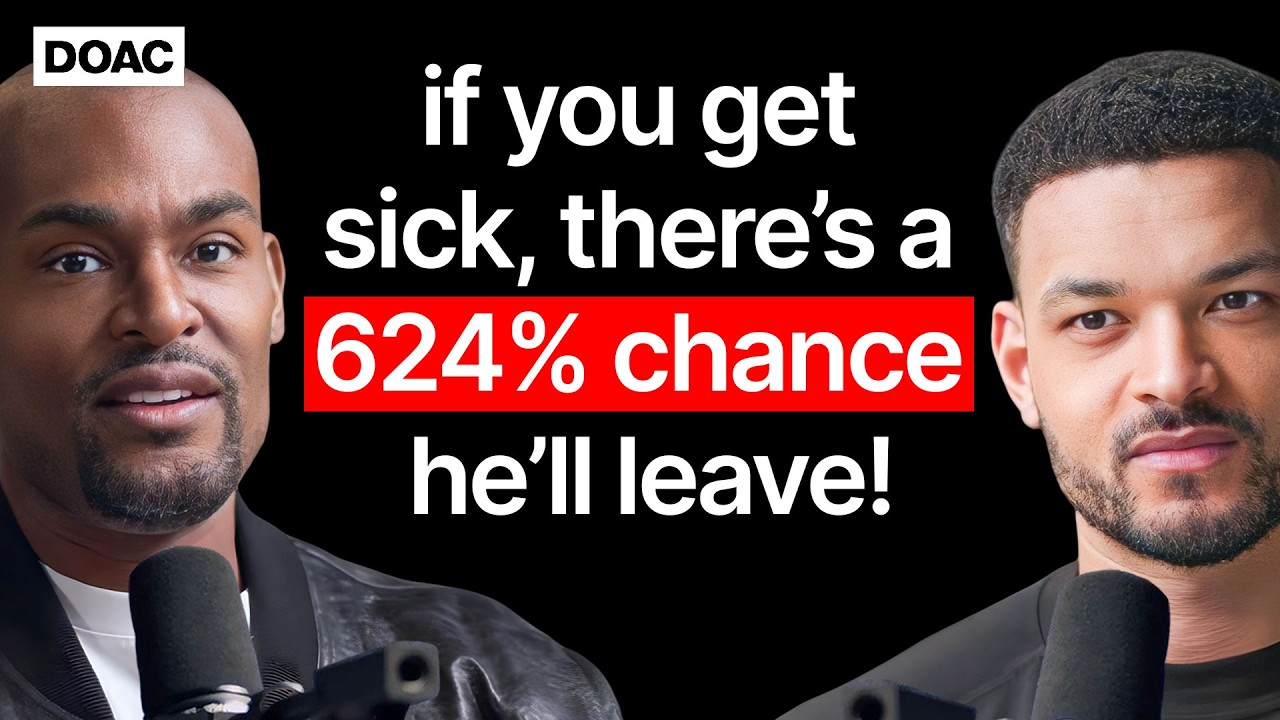
The Diary Of A CEO
Relationship expert Paul Brunson argues that lowering partner expectations, managing perpetual conflict through the ARC method, and rejecting mandatory bed-time resolution are essential to sustaining long-term marital satisfaction.
AI-assisted summary of Paul Brunson: Women Need To Lower Their Standards! If They Have These 3 Traits, Never Let Them Go! — original source. Check the original for full context.
Source published:
Detailed notes
## Background This video was published on YouTube by the channel 'The Diary Of A CEO' on January 30, 2025. Host Steven Bartlett sits down with relationship expert, entrepreneur, and author Paul C. Brunson to discuss modern dating, marital satisfaction, communication, and long-term partnership strategies based on his books and research.
## TL;DR Paul Brunson challenges modern dating myths, explaining why relationship duration is often overvalued compared to deep, ongoing satisfaction. He discusses how societal expectations, infinite choice, low self-esteem, and unmanaged communication gaps damage contemporary partnerships. Through practical frameworks like the ARC Method for apologies and 'taking thoughts to court,' Brunson offers concrete advice on navigating conflict, infidelity, selective disclosure, and emotional vulnerability.
## Atmosphere & style The conversation carries an intimate, highly candid, and intellectually engaging tone, combining grounded psychological insights with relatable personal confessions. Host Steven Bartlett brings reflective, practical vulnerability—frequently sharing his own relationship habits—while Brunson responds with empathetic authority and warm, actionable wisdom. The arc moves smoothly from broad societal critiques to deeply personal childhood memories, creating a compelling blend of expert instruction and authentic human Connection.
## Key takeaways - [35:49](https://www.youtube.com/watch?v=6ikIGGi859w&t=2149s) Men leave terminally ill partners at a rate over 600% higher than women do, highlighting stark gender disparities in relationship support during medical crises. - [35:49](https://www.youtube.com/watch?v=6ikIGGi859w&t=2149s) Relationship satisfaction directly impacts health; heart disease patients with low relationship satisfaction face a 45% mortality rate over two years compared to 11% for those in highly satisfying relationships. - [39:24](https://www.youtube.com/watch?v=6ikIGGi859w&t=2364s) Modern culture overvalues relationship longevity over actual quality, whereas prioritizing daily satisfaction, safety, and respect yields better outcomes. - [46:16](https://www.youtube.com/watch?v=6ikIGGi859w&t=2776s) External attraction while in a relationship is natural and human, and open communication around these feelings can help manage relationship anxiety. - [51:35](https://www.youtube.com/watch?v=6ikIGGi859w&t=3095s) Third-party media like podcasts and TV shows serve as valuable, non-threatening tools for couples to bridge communication gaps and discuss sensitive issues. - [58:34](https://www.youtube.com/watch?v=6ikIGGi859w&t=3514s) To improve relationship stability, the entry barriers to marriage should be higher—requiring premarital vetting—while making exit options frictionless. - [01:03:08](https://www.youtube.com/watch?v=6ikIGGi859w&t=3788s) The phrase 'till death do us part' can foster complacency, whereas understanding that commitment requires active choice enhances long-term success. - [01:48:35](https://www.youtube.com/watch?v=6ikIGGi859w&t=6515s) Selective disclosure, rather than radical transparency, contributes to higher relationship satisfaction by avoiding unnecessary conflict over minor issues. - [02:06:32](https://www.youtube.com/watch?v=6ikIGGi859w&t=7592s) According to Gottman Institute research, 69% of relationship conflicts are perpetual issues that must be managed rather than permanently resolved. - [02:08:38](https://www.youtube.com/watch?v=6ikIGGi859w&t=7718s) Effective apologies require the ARC method: Acknowledging what happened without excuses, showing genuine Remorse, and making a clear Commitment to change. - [02:12:45](https://www.youtube.com/watch?v=6ikIGGi859w&t=7965s) Ignoring a partner's bids for attention creates emotional distance and acts as a form of rejection that demands swift acknowledgment and apology. - [02:18:51](https://www.youtube.com/watch?v=6ikIGGi859w&t=8331s) The advice to 'never go to bed angry' is counterproductive because sleep helps shift processing from the emotional amygdala to the logical prefrontal cortex. - [02:22:12](https://www.youtube.com/watch?v=6ikIGGi859w&t=8532s) Infidelity does not automatically mark the end of a relationship, as roughly 70% of couples undergoing therapy report higher satisfaction afterward. - [02:24:04](https://www.youtube.com/watch?v=6ikIGGi859w&t=8644s) Undisclosed use of adult content or platforms like OnlyFans constitutes modern financial or secret infidelity within a committed partnership.
## Detailed walkthrough ### [00:00](https://www.youtube.com/watch?v=6ikIGGi859w&t=0s) Teaser, Intros, and the Modern Dating Crisis
The conversation begins with a high-stakes premise: relationship expert Paul Brunson asserts that keeping certain secrets from a partner can actually increase relationship satisfaction and lower conflict. When pressed for a concrete example, Brunson hints at a "juicy" illustration—namely, a striking study indicating that men are roughly **624% more likely to separate** if their female partner becomes terminally ill. He explains that this tragic outcome often stems from a pre-existing low level of satisfaction, such as an unfulfilling sex life. This feeds into a broader systemic issue: roughly **80% of relationships today report lower levels of satisfaction** than at almost any point in history, largely because modern society has been fed a series of pervasive lies about finding and keeping love.
Following the opening tease, host Steven Bartlett delivers a brief subscriber call-to-action before formally introducing Paul Brunson. Brunson outlines his background: first and foremost a husband, father, and mentor, but professionally a veteran Matchmaker who co-founded one of the largest matchmaking agencies in the United States starting in **2008**. Over his **17-year career**, Brunson transitioned from matching couples to counseling them through long-term relationship preservation, conducting global research at Tinder, and hosting relationship-focused television shows and podcasts.
- **Terminal Illness & Divorce Gap:** Men are approximately **624% more likely to separate** from a partner who becomes terminally ill compared to women in the same scenario. - **Relationship Dissatisfaction:** An estimated **80% of couples** report lower satisfaction levels today than historically. - **Career Background:** Brunson started professional matchmaking in **2008**, noting there are only roughly **1,000 full-time matchmakers worldwide**.
---
[04:33](https://www.youtube.com/watch?v=6ikIGGi859w&t=273s) The 20/80 Split and the Burden of the "All-in-One" Partner
Reflecting on how love has evolved over his 17 years in the industry, Brunson cites research by Eli Finkel (author of *The All-or-Nothing Marriage*) to illustrate the stark divide in modern relationships. Only **20% of couples** report experiencing higher satisfaction than ever before—driven by unprecedented access to therapy, books, podcasts, and relationship tools. However, the remaining **80% of people** (both in relationships and single) feel more dissatisfied, hopeless, and confused than past generations.
Brunson argues that this widespread discontent stems from placing an impossible burden on a single individual. Historically—whether **30 years, 300 years, or 300,000 years ago** at the dawn of humanity—people relied on an entire village for emotional, financial, and social support. Today, we expect one partner to fulfill every conceivable role: "we want our partner to be our best friend," a "co-CEO or COO" for our life and business, a star parent, and someone who can "take their clothes off and do backflips in the bedroom." Because we demand everything from one person, our likelihood of feeling disappointed is at an all-time high.
---
[07:36](https://www.youtube.com/watch?v=6ikIGGi859w&t=456s) Why Serial Daters Struggle and Petty Dealbreakers
Bartlett notes a common paradox among his friends: people going on **100 dates a year** who still cannot find a long-term partner. He asks whether the issue lies in top-of-funnel exposure or conversion further down the pipeline. Brunson points to attachment styles—categorizing people into **secure**, **anxious**, and **avoidant** types. With roughly **50% to 60% of the population** being securely attached, the remaining balance struggles with anxiety or avoidance. An anxious or avoidant person might meet a partner who checks every box, yet sabotage the match by fixating on trivial flaws.
To illustrate this, Brunson shares a humorous yet telling story from his matchmaking days. When asked to identify the most common superficial reason clients refused to give someone a second date, he reveals that while physical hygiene issues like bad breath (*halitosis*) or long fingernails were frequent, another surprisingly common dealbreaker was seeing someone pull out a **velcro wallet** or wear a tracksuit. Brunson emphasizes that when a dater dismisses a potentially great partner over a tracksuit or long nails, "that is about you"—reflecting individual attachment security and socialization rather than the partner's actual potential for love.
- **Attachment Style Distribution:** Approximately **50% to 60%** of the general population is securely attached, leaving **40% to 50%** across anxious, avoidant, or mixed styles. - **Superficial Dealbreakers:** Common petty reasons clients rejected second dates included halitosis, long fingernails, wearing tracksuits, or owning a velcro wallet.
---
[11:34](https://www.youtube.com/watch?v=6ikIGGi859w&t=694s) The Paradox of Choice and the "Premium Effect"
Bartlett suggests that serial daters inadvertently expand their comparison set: by Date 101, a person compares their new date against the best individual traits of the previous 100 dates (e.g., Date 49's humor, Date 53's wealth, Date 67's physical beauty). Brunson validates this using Barry Schwartz's *Paradox of Choice*, explaining that an abundance of choices reduces post-choice satisfaction because every alternative makes the chosen option feel disposable.
Brunson contrasts this with a personal story about his grandmother, who grew up in "the bush in Jamaica" with only five or six potential suitors. Having fewer options forced higher investment and valuation in her chosen partner. To break out of repetitive dating patterns, Brunson advises people to leverage what he calls the **"Premium Effect"**—stepping outside their usual geographical, cultural, or social sphere to stand out and invite fresh engagement.
He shares an example of a 35-year-old white female friend living in Northern London who was struggling to find a partner. Brunson recommended she attend an art exhibit at the Black Cultural Archives in Brixton. By placing herself in an environment where her demographics made her rare yet where she shared a core value (a passion for art), open-minded individuals leaned in with curiosity. Brunson notes that connecting across new networks—whether through Carol Dweck's concept of an "open mindset" or simple curiosity—opens doors to meaningful romantic and platonic connections that serial daters miss when repeating the same habits.
---
[16:14](https://www.youtube.com/watch?v=6ikIGGi859w&t=974s) Racism and Bias within the Dating Market
Building on the example of cross-cultural spaces, Bartlett raises the topic of racial disparities in dating, pointing to studies showing that ethnic minorities—particularly Asian men and Black women—face disproportionate challenges on dating platforms due to social stereotypes and cultural biases. Brunson candidly agrees, emphasizing that "we exist in a highly racist society" and that romantic preferences do not exist in a vacuum; societal prejudices and media representations directly inform who people find attractive or consider viable as long-term partners.
- **Racial Disparities in Dating:** Research consistently indicates that Black women and Asian men receive lower match rates on major Western dating apps due to systemic racial biases and cultural stereotypes.
[17:51](https://www.youtube.com/watch?v=6ikIGGi859w&t=1071s) Racism and Ignorance in Modern Dating Apps
Paul Brunson addresses the deep-seated racial biases present on digital dating platforms, explaining that when a white man swipes past a Black woman, it is often rooted in pure ignorance rather than an accurate assessment of her value. He notes that people frequently fail to appreciate how incredible, smart, and beautiful someone from a different background can be simply because they lack exposure. To combat this systemic problem, Paul strongly advocates for actively expanding one's social circle, emphasizing that cultivating a diverse set of relationships positively impacts both romantic outcomes and overall life satisfaction.
``` • Lack of exposure and ignorance drive racial bias in app-based dating decisions. • Widening social groups allows people to genuinely appreciate those who are different from them. • Diverse social circles correlate directly with higher quality romantic and personal relationships. ```
---
[18:46](https://www.youtube.com/watch?v=6ikIGGi859w&t=1126s) The Flaws of Modern App-Based Matchmaking vs. Traditional Connections
Steven Bartlett draws a contrast between modern app-based dating and the way older generations formed relationships, using his grandmother's experience in a small Jamaican village as an example. In a close-knit community, people interact repeatedly over time, allowing them to look past minor surface flaws—like a velcro wallet or long fingernails—to discover a person's underlying kindness, generosity, and humor. In contrast, modern digital interfaces force users to judge potential partners on superficial details within seconds. This mechanical design leaves singles feeling an overwhelming sense of dissatisfaction, frustration, and desperation.
> "She gets to learn that he's a kind, generous person and he's got a good sense of humor, so she can look past the velcro wallet and the long fingernails."
---
[20:17](https://www.youtube.com/watch?v=6ikIGGi859w&t=1217s) Why Arranged Marriages Yield Higher Long-Term Satisfaction
When asked about the success of traditional relationship models, Paul points out that arranged marriages have historically been—and continue to be—remarkably successful. Addressing the immediate skepticism regarding potential abuse or dissatisfaction, he notes that these issues exist at similarly high rates in non-arranged marriages. Citing research, he highlights that arranged couples often report equal or higher long-term satisfaction than those in "love marriages."
The structural advantage of an arranged marriage lies in the un-biased evaluation conducted by the extended family. Mothers, fathers, grandparents, and siblings convene to debate whether a prospective spouse is open-minded, resourceful, resilient, and an upstanding human being. Because the individuals getting married are removed from the initial evaluation, they avoid the dangerous traps of immediate infatuation, unaddressed trauma, and poor decision-making. Today, people routinely jump into ill-fitted partnerships without consulting their loved ones, purely because they are blind to red flags.
``` • A 2012 study in the Journal of Comparative Family Studies showed couples in arranged marriages in collectivist cultures reported equal or higher long-term satisfaction than love marriages. • Extended family networks evaluate character traits without the blinding effects of immediate infatuation. • Modern singles frequently "slide" into ill-fitting relationships by relying solely on individual judgment. ```
---
[23:42](https://www.youtube.com/watch?v=6ikIGGi859w&t=1422s) Using 360-Degree Feedback to Find the Right Partner
Paul shares a unique technique he and his wife pioneered in their professional matchmaking agency. Rather than asking a high-achieving male client for a long, unrealistic checklist of 150 desired traits, Paul would set the client aside and interview the people who knew him best—his siblings, co-workers, and even his exes. By gathering this 360-degree consensus, the agency built an accurate profile of who the client actually was and what kind of partner would truly complement him.
Steven strongly resonates with this approach, sharing an anecdote about a close friend who has struggled in relationships for 15 years. Every time his friend enters a new relationship, Steven instantly recognizes that it is a bad fit, whereas he could easily specify the exact age, occupation, and temperament of the woman his friend actually needs. Steven adds that if he were to break up with his own current partner, his best friend would "literally write an executive order to reverse the decision" because outside observers can see compatibility far more clearly. Both agree that giving trusted loved ones a vote in partner selection leads to significantly higher marriage satisfaction.
---
[26:54](https://www.youtube.com/watch?v=6ikIGGi859w&t=1614s) Lowering Unrealistic Expectations of Our Partners
Paul argues that society must confront a major driver of modern marital failure: inflated expectations. Citing relationship expert Eli Finkel's research, he notes that roughly 80% of marriages today exhibit lower satisfaction levels than at almost any point in history. Modern individuals expect a single partner to be everything—a therapist, financial provider, best friend, workout buddy, and life coach. When a partner delivers on nine out of ten demands, the relationship is still deemed a failure because the expectation was set at a perfect ten.
To fix this, Paul advises people to lower their expectations and seek fulfillment across a broader community—friends, colleagues, and interest groups—rather than placing the entire burden on a spouse. Historically, people expected their partner to meet three or four core needs and relied on their wider social network for the rest.
``` • Approximately 80% of modern marriages report lower satisfaction compared to historical benchmarks. • Unrealistic expectations dictate that one partner must fill every emotional, social, and practical role. • High satisfaction requires identifying core partner requirements while fulfilling secondary needs through community. ```
---
[28:47](https://www.youtube.com/watch?v=6ikIGGi859w&t=1727s) The Gottman Principle: Infinite Compatibility and the Burden of Choice
Referencing renowned relationship researchers John and Julie Gottman, Paul shares a profound insight: human beings are fundamentally compatible with almost anyone. If two people were dropped on a desolate island with no other options, they would inevitably build a deep emotional, physical, and sexual bond because they would be forced to make it work. Today, however, the illusion of limitless choices makes people abandon relationships at the first sign of friction rather than putting in the necessary effort.
Steven validates this principle with a personal story from his younger days when he worked in a Manchester call center. Broke and isolated with no social outlets, he fell deeply in love with a co-worker named Rosie sitting right next to him—someone who did not match his hypothetical "type" at all, but close proximity over time created intense romantic attraction.
---
[31:02](https://www.youtube.com/watch?v=6ikIGGi859w&t=1862s) Actionable Steps: Attachment Styles, Boundaries, and Relationship Models
For individuals struggling to find or keep a partner in a hyper-connected world, Paul outlines three essential steps:
1. **Develop Self-Awareness Around Attachment:** Determine whether you have an anxious or avoidant attachment style. Avoidant individuals often set impossibly high bars to keep partners at a distance. Unsecure attachment styles can be shifted toward secure attachment through dedicated self-work, even without an expensive or hard-to-access therapist. 2. **Define Clear Boundaries:** Get grounded on what you want from a relationship so you can assert boundaries early on. Without explicit boundaries, even well-intentioned partners can end up acting like bullies. 3. **Choose Your Relationship Structure:** Recognize that marriage is no longer the sole template. Couples can live apart together, choose not to have children, or structure their lives in hundreds of non-traditional ways, provided both parties are explicit about their preferences from the start.
---
[33:42](https://www.youtube.com/watch?v=6ikIGGi859w&t=2022s) The Shocking Disparity in Separation Rates During Illness
Steven highlights a sobering statistic cited on page 48 of Paul’s book, *Keep Love*, regarding heterosexual couples facing terminal illness:
- When a husband becomes terminally ill and the wife acts as the primary caregiver, the separation/divorce rate is **2.9%**. - When a wife becomes terminally ill and the husband acts as the primary caregiver, the separation/divorce rate jumps to **21%**.
This reveals that men are roughly six times more likely to abandon a sick partner than women are. Paul uses this stark finding to dismantle the myth that romantic love is entirely unconditional. While parental love for a child might be unconditional, adult romantic partnerships carry distinct conditions. When men who abandoned sick wives were interviewed, they frequently admitted they left because they were no longer receiving emotional or physical intimacy from their partner.
``` • Female primary caregivers face a 2.9% spousal abandonment rate during terminal illness. • Male primary caregivers abandon terminally ill spouses at a rate of 21% (a ~64% relative increase in male-initiated separations). • Findings challenge the popular myth of unconditional romantic love between adults. ```
<FollowUp label="Want to explore what Paul Brunson says about anxious vs. avoidant attachment styles?" query="What does Paul Brunson say about anxious vs. avoidant attachment styles and conflict resolution in relationships?"/>
Here is a detailed, faithful walkthrough of the provided transcript segment.
---
[35:49](https://www.youtube.com/watch?v=6ikIGGi859w&t=2149s) Low Satisfaction and the Gender Gap in Terminal Illness
Paul Brunson breaks down why men leave terminally ill partners at a rate over 600% higher than women do. When men leave, standard assumptions often blame the loss of physical intimacy. While a disproportionate amount of weight in relationships is placed on the physical side, including sex, that physical aspect is usually a symptom of a much broader issue: a low underlying level of relationship satisfaction. Satisfaction can be eroded by lack of enjoyable sex, a lack of respect, or a perceived lack of equity. When a partner becomes terminally ill or when infidelity occurs, the low satisfaction that was already present makes a partner far more ready to leave.
Relationship satisfaction does not just determine whether a relationship survives; it directly impacts human longevity. Brunson cites a study conducted by James Coyne involving 200 patients suffering from congenital heart disease. When researchers grouped the patients by their reported level of relationship satisfaction, the two-year survival rates showed a staggering divide: * **High Relationship Satisfaction:** Only **11%** of patients had died after two years. * **Low Relationship Satisfaction:** **45%** of patients had died after two years.
Patients in low-satisfaction relationships were more than three times as likely to die within two years as those in high-satisfaction partnerships.
---
[39:24](https://www.youtube.com/watch?v=6ikIGGi859w&t=2364s) Satisfaction vs. Longevity in Marriage
Brunson emphasizes that modern culture places far too much value on relationship longevity rather than overall satisfaction. In standard interviews, he is frequently asked how many years he has been married, as if his 23-plus years of marriage automatically equal success. He argues that this focus on time is ridiculous and that the focus must shift to how satisfied partners actually are.
When host Steven Bartlett asks Brunson how satisfied he is in his own marriage, Brunson notes his reluctance to answer publicly because people often react with skepticism. However, he swears on his heart and his children that he currently experiences the absolute highest level of satisfaction with his wife and best friend, Jill. That high satisfaction is the product of continuous effort.
- **Daily Relationship Dialogue:** Brunson and Jill spend their time actively discussing relationship dynamics and history. The previous night, they lay in bed debating Clovis I of the Franks and his historical impact on relationships. - **Communication Flow:** These ongoing conversations foster open dialogue, debate, trust, and emotional intimacy, which directly feed into their sex life, parenting, and professional work. - **Key Indicators of High Satisfaction:** 1. *Safety:* Feeling safe enough to express true vulnerability. 2. *Respect:* Avoiding contempt, which John Gottman’s research identified as a 90%+ accurate predictor of divorce. 3. *Optimism:* Feeling hopeful about where the relationship is heading because both partners are actively putting in effort. 4. *Nurturing the Entity:* Actively giving care to the relationship itself as a separate entity rather than focusing solely on self-love.
---
[42:55](https://www.youtube.com/watch?v=6ikIGGi859w&t=2575s) The Importance of Dedicated Relationship Conversations
Bartlett reflects on how his current relationship involves constant discussion about the relationship itself, whereas past relationships treated the topic as an elephant in the room where unmet needs were never addressed. Brunson agrees that making time to discuss the state of a partnership would save countless relationships, but acknowledges that people frequently use being "too busy with life" as a cop-out to avoid prioritizing their partner.
A stark example of this communication failure is the "orgasm gap" in heteronormative relationships.
* **The Orgasm Gap:** Statistics show men orgasm roughly **95%** of the time during sex, while women in committed relationships orgasm roughly **65%** of the time (or slightly higher). * **Lack of Dialogue:** A significant percentage of women never orgasm, and their male partners are completely oblivious because it is never discussed. * **Why Women Stay Silent:** Women often avoid bringing it up to avoid hurting their partner's feelings—especially if years have passed—or due to embarrassment. * **Scripted Sex:** Many couples default to a predictable "script" of two or three routine moves where the man orgasms, the woman does not, and the encounter ends.
---
[46:16](https://www.youtube.com/watch?v=6ikIGGi859w&t=2776s) Normalizing Attraction to Others and "Taking Thoughts to Court"
For couples who are "white belts" at relationship communication and feel awkward opening up after years of silence, Brunson suggests taking small, manageable steps. A foundational step outlined in his book is normalizing the fact that people in committed relationships will inevitably feel attracted to other people.
Brunson candidly admits that he experiences an anxious attachment style and used to struggle intensely with jealousy at the thought of his wife being attracted to anyone else. To work through this, he and Jill used specific strategies to build security:
* **Celebrity Crushes as a Starting Point:** They began discussing celebrities at arm's length to make attraction a safe topic. Jill expressed an overwhelming attraction to Idris Elba ("she will definitely leave me for this man"), which became a running, normalized joke between them. * **Taking Thoughts to Court:** To manage his anxiety, Brunson mentally puts his fearful thoughts on trial: 1. *Identify the Emotion:* Recognizing that his underlying feeling is fear of being left. 2. *Examine the Evidence:* Looking at the facts—they have been together for over 20 years, maintain high relationship satisfaction, and attraction to others is human nature. 3. *Recalibrate:* Reframing the fear until it no longer holds power over him. * **The Running Joke:** This process transformed his insecurity to the point where Brunson now sends Jill a massive bouquet of flowers every anniversary signed "Love, Idris Elba." (Brunson jokes that Jill knows he would leave her for Beyoncé in return). * **Healthy vs. Unhealthy Doubts:** Expressing doubts about the growth of a relationship is healthy and constructive, whereas doubts rooted in unaddressed personal trauma and fear are unhealthy.
---
[51:35](https://www.youtube.com/watch?v=6ikIGGi859w&t=3095s) Bridging the Communication Gap
Bartlett observes that in his experience and audience demographics, women are far more likely than men to actively buy relationship books, seek out growth, and want to deepen their connection. He poses a scenario: what should a woman (e.g., "Lia") do if she wants to discuss unmet needs and break down emotional walls, but knows her partner ("Dave") will just roll his eyes, dismiss her, and turn the football back on?
Brunson and Bartlett joke back and forth about whether the solution is to turn off the television and scream at him or repeatedly share a link to the podcast. Shifting back to practical advice, Brunson outlines how media can serve as a non-threatening bridge:
* **Using Media as a Catalyst:** Lia can send Dave a link to a podcast episode or book and propose listening to or reading it together as a dedicated date night to open up neutral discussion. * **Lessons from *Married at First Sight UK*:** Brunson notes that male fans frequently approach him in public to share that they watch the show with their partners and kids, using the show's conflicts to debate relationships, agree or disagree with the experts, and evaluate their own perspectives. * **The Path to Healing:** Having open dialogue around external media builds **awareness**, which helps develop **skills**, ultimately leading to **healing** within the relationship.
[54:59](https://www.youtube.com/watch?v=6ikIGGi859w&t=3299s) Re-evaluating the Institution of Marriage
Steven Bartlett reflects on societal constructs like marriage, monogamy, and heterosexuality passed down through religion and history, wondering how many of these rules are now invalid. Citing official statistics, he notes that UK marriage rates for opposite-sex couples fell in 2019 to their lowest level since 1862, while US marriage rates have been steadily declining since the early 1970s. Although Steven is not married, he recently asked his partner if she wanted to get married. While it was clear she did, her desire seemed to stem more from wanting the celebration and wedding itself rather than signing a legal contract with the government.
Paul Brunson predicts that as nuclear families—defined as two partners and children functioning as an economic unit—decline, governments will step in with aggressive incentives to drive up marriage and birth rates. He highlights how countries like Singapore, China, and Japan are already taking direct action. Brunson emphasizes that while governments already offer incentives like tax breaks and asset-transfer benefits, people will see even more perks thrown at them to encourage formal unions.
- **UK Marriage Benchmark:** 2019 opposite-sex marriage rates hit the lowest record since 1862. - **US Marriage Trend:** Steady decline in marriage rates since the early 1970s. - **Economic Motives:** Brunson argues governments protect marriage because nuclear families serve as the fundamental economic unit driving society.
[58:34](https://www.youtube.com/watch?v=6ikIGGi859w&t=3514s) Why Marriages Should Be Harder to Enter and Easier to Exit
Steven lays out his deep skepticism toward marriage, admitting he struggles with the core premise of why a legal or religious contract increases the probability of a successful loving union. He details the unnecessary stress of big weddings, pointing to friends who canceled date nights and stripped everyday joy from their lives for two years just to save up for a single, overwhelming day. Comparing rigid marriage contracts to his favorite football club, Manchester United, Steven jokes that long-term contracts leave you stuck with people you can't get rid of: "We've got people on five-year contracts who we just can't get rid of... and now these players have been thrown in the back room."
``` Current Marriage Model: [ Easy Entry ($25 Vegas Drive-Thru) ] ---> [ High Legal Friction / Hard Exit ] Brunson's Ideal Model: [ High Vetting & Counseling Hurdles ] ---> [ Instant / Frictionless Exit ] ```
Paul agrees that the current structure of marriage is completely upside down. Right now, a couple can drive up to a Vegas window, pay $25 to an Elvis impersonator, and instantly be married. Paul argues that marriage should actually require high entry hurdles—such as mandatory premarital coaching, conflict-resolution skill checks, and vetting—to ensure both partners understand the gravity of the commitment. However, if a couple decides to split, exiting should be frictionless and instantaneous: "Drive up, Elvis Presley says it's over, $25... or free!"
- **Prenup and Legal Fears:** Steven notes he doesn't fear financial bankruptcy from his partner, but hates the systemic requirement of battling in court with lawyers just to dissolve a relationship. - **No-Fault Divorce:** Paul acknowledges reforms like the UK's no-fault divorce laws, but stresses that a 6-month delay is still far too cumbersome.
[01:03:08](https://www.youtube.com/watch?v=6ikIGGi859w&t=3788s) Interrogating Commitment Issues and the Myth of "Till Death Do Us Part"
When Paul confronts Steven about his instinctual search for an exit strategy, Steven admits to experiencing real physical anxiety: "I'm getting anxiety as you say it! I'm like, '[Expletive] no, the rest of my life!'" Steven compares committing to one person for life to being forced to pick a single job forever, arguing that such extreme finality paralyzes decision-making and forces people into destructive perfectionism.
Paul validates this concern, calling the religious mandate of "till death do us part" a myth that actually sabotages relationships. When partners view marriage as an inescapable lifetime trap, it fosters complacency and lowers satisfaction—people stop trying, stop communicating, and stop going to the gym because they assume their partner can't leave.
Despite his doubts, Steven acknowledges several proven upsides to a committed long-term union: * **Base Stability:** Provides entrepreneurs and high performers with a secure home life, echoing Sir Alex Ferguson's tactic of picking Manchester United players with stable domestic lives so they stay focused on the training ground. * **Friction Against Discarding:** High exit friction forces couples to pursue therapy and fix problems rather than treating the relationship as disposable. * **Health and Wealth Gains:** Married individuals in productive partnerships financially earn roughly 4% more per year and enjoy greater longevity with lower disease risks.
[01:09:08](https://www.youtube.com/watch?v=6ikIGGi859w&t=4148s) What Truly Predicts Relationship Success
When asked what predicts a successful marriage, Paul defines success as high relationship satisfaction, which directly correlates with individual psychological well-being. Referencing Dr. Carol Ryff's "Six Dimensions of Psychological Well-Being," Paul explains that personal well-being directly dictates union quality. If individuals have a clear vision for their lives and actively pursue it, their heightened self-actualization translates into higher relationship satisfaction.
Paul challenges the widespread belief that shared values are the primary indicator of relationship success. He points out that the obsession with value alignment traces back to religious teachings—specifically the biblical concept of being "equally yoked."
> "Equally yoked comes from oxen... You have one ox here, one ox here, they're tethered together, they're plowing the land. If they're walking lockstep, they can plow the land. If you have one going off this way, one going off this way, you can't plow the land."
While societal tradition claims that partners must be equally yoked in their core values to succeed, Paul argues modern research shows that individual well-being and active investment in the relationship far outweigh basic value alignment.
- **Investment Model Theory:** Cited by Paul to prove that the effort, time, and resources partners invest into relationship preparation and daily maintenance directly dictate their ultimate satisfaction. - **Key Determinant:** Prioritizing a partner who actively maintains their own psychological health and well-being matters more than finding someone with identical background traits.
### [01:11:44](https://www.youtube.com/watch?v=6ikIGGi859w&t=4304s) Rethinking Partner Values and the Three Core Traits Paul Brunson explains how the historical concept of being "equally yoked" was interpreted over centuries by pastors to mean sharing the exact same religious values, accent, or social class. While nine out of ten people surveyed today would state that shared values are everything in a relationship, Brunson argues that values change dramatically over time—what someone values today is vastly different from what they valued ten years ago. Because values are fluid rather than fixed, he advises de-emphasizing the rigid search for a partner who matches every single value and instead focusing on three more reliable traits: well-being (are they actively nurturing their own mental and physical health?), open-mindedness and curiosity (do they lean in and remain adaptable?), and resilience (can they bounce back when times get tough, or do they just lay on their back?).
When Steven Bartlett asks about ambition and how goal-oriented preferences play into this—noting that while many people desire an ambitious partner, not everyone can be highly ambitious—Brunson clarifies that ambition is simply another value set.
- **Historical Roots**: The biblical concept of being "equally yoked" morphed over centuries into rigid societal rules around matching religion, class, and regional accents. - **Survey Statistic**: 9 out of 10 people polled on the street state that shared values are the single most important factor in finding a partner. - **The 3 Non-Negotiable Traits**: 1. **Well-being**: Prioritizing and actively working on personal well-being. 2. **Open-mindedness / Curiosity**: Willingness to learn, stay curious, and lean into growth. 3. **Resilience**: The ability to recover and rebuild when facing adversity together.
---
### [01:13:38](https://www.youtube.com/watch?v=6ikIGGi859w&t=4418s) The Disparity Between Dating Expectations and Market Reality Bartlett brings up the growing systemic divide in modern dating: women are increasingly outperforming men in higher education, yet studies show that the majority of women still seek a partner who earns more than they do and has a higher level of education. This creates an "up and to the right" hypergamous preference in a market where there simply are not enough high-earning, highly educated men to go around. Meanwhile, data suggests the top 10% to 20% of men receive most of the romantic attention, leaving a large bottom percentage of men feeling disenfranchised, lonely, and reliant on outlets like pornography. Brunson pushes back gently on the cynical narrative that 80% of men "suck," urging society to extend more grace to men who are currently navigating an unprecedented loneliness epidemic, confusion, and a lack of support networks.
At the same time, Brunson points out that the cultural narrative pushing women to only accept a six-foot-tall CEO earning over £100,000 or $100,000 a year is equally reductive. He emphasizes that while hypergamy originated from an outdated societal script where women needed a male breadwinner for physical and financial survival, many people in the modern West no longer need a partner purely for lower-rung pragmatic needs. Referring to Maslow's hierarchy of needs, Brunson notes that until the 1960s—a blip in human history—marriage was largely about securing basic physiological and safety needs, whereas modern partners expect relationships to fulfill the top rungs of self-actualization and personal growth.
> "Do we live in a patriarchal society? Absolutely... but do we need to extend more grace to our men? Absolutely we do. Are men lonelier than they ever have been? Absolutely. Are men confused? Absolutely."
- **Educational & Income Mismatch**: Studies show highly educated women still predominantly seek hypergamous pairings (partners with equal or higher education/income), even as female college graduation rates outpace males. - **Male Loneliness Crisis**: Less than 27% of men report having a close friend they consider a true confidant, and 0% feel they have someone they can call at 3:00 a.m. in a crisis. - **Maslow's Hierarchy Shift**: Historically (up until the 1960s), marriage served the bottom rung of Maslow's hierarchy (shelter, food, basic survival); today, individuals select partners for connection, belonging, and top-tier self-actualization.
---
### [01:20:00](https://www.youtube.com/watch?v=6ikIGGi859w&t=4800s) Evolutionary Biology vs. Socialization in Height and Attraction The conversation turns to evolutionary biology and height preferences. Bartlett highlights cross-cultural studies demonstrating strong biological height preferences: roughly 50% of women prefer to date exclusively taller men, whereas only 13% of men strictly prefer shorter women. Research also shows women report the highest relationship satisfaction when their partner is approximately 8 inches (20 cm) taller, while men are most satisfied when their female partner is about 8 centimeters shorter. Brunson acknowledges that while evolutionary wiring and biological signals play a genuine role, societal indoctrination—such as the "Disneyfication" of relationships where the prince is always imposing and protective—heavily skews these perceived needs.
Brunson uses the public relationship of Zendaya and Tom Holland to illustrate his point: while traditional scripts might dictate that a woman wants a noticeably taller partner, self-actualized individuals who mature past external validation focus on genuine connection and personal character instead. Bartlett jokingly counters that "Tom Holland has 30 million in the bank," asserting that high-profile exceptions don't negate the general evolutionary rule. Brunson agrees it remains an exception primarily because the majority of adults suffer from low self-esteem, causing them to rely on societal scripts and public approval to validate their romantic choices.
> "She saw the Disneyfication of relationships... she saw the prince and how large the prince always was in comparison to the princess... then as she became more mature, as she realized that she doesn't need anyone's validation... she was like, 'This Tom Holland guy is hot.'"
- **Height Preference Data**: - Almost **50%** of women prefer dating *only* men taller than themselves, compared to **13%** of men who only prefer shorter partners. - Women report peak satisfaction with a partner who is roughly **8 inches** taller. - Men report peak satisfaction with a height difference of roughly **8 centimeters** (~3 inches). - **The Role of Validation**: Brunson asserts that adults with low-to-mid self-esteem rely heavily on superficial traits (e.g., height, income) to earn external social approval for their partner choices.
---
### [01:24:15](https://www.youtube.com/watch?v=6ikIGGi859w&t=5055s) Biological Triggers, Facial Symmetry, and Self-Esteem Brunson and Bartlett explore the deep-seated evolutionary triggers that silently govern human attraction. Brunson references conversations with Dr. Tara Swart regarding how subtle biological signals operate below conscious awareness—such as men being sub-consciously drawn to ovulation cues, or the human olfactory sense conducting a "sniff test" to avoid mating with genetic mirrors and ensure diverse immune systems. They discuss physical markers like the "golden mean" (women preferring broad shoulders and a narrow waist in men; men preferring a low waist-to-hip ratio in women), which historically signaled physical strength and reproductive fertility.
Bartlett points out that recognizing both evolutionary biases (like being drawn to charismatic "bad boys" or bravado) and toxic societal imagery allows an individual to use their rational prefrontal cortex to make smarter choices. Bringing up facial symmetry as a cross-cultural indicator of attractiveness, Bartlett asks if it holds true scientifically. Brunson agrees that symmetry is widely recognized, but reiterates a foundational law of attraction: an individual's deep attraction to superficial markers is heavily moderated by their own self-esteem. People with low self-esteem depend heavily on public status symbols—whether that is a partner with a perfectly symmetrical face or a specific brand of trending trainers—to feel validated by society.
- **Genetic Diversification & Scent**: Human olfaction acts as an evolutionary filter; being repelled by a partner's natural scent often prevents mating with an individual who is too genetically similar. - **The Golden Ratio**: - Male ideal: Broad shoulders transitioning into a narrow waist (signaling protective capability and strength). - Female ideal: Small waist relative to wider hips (signaling fertility and childbearing potential). - **Facial Symmetry & Status**: Cross-cultural science confirms symmetrical features are universally rated as attractive, but Brunson notes that fixating on these traits is often driven by low self-esteem and a need for external social validation.
Here is a detailed, faithful walkthrough of the transcript segment.
---
[01:29:15](https://www.youtube.com/watch?v=6ikIGGi859w&t=5355s) How Low Self-Esteem Drives Superficial Partner Selection
Paul Brunson explains that when people spot a couple where one partner is traditionally attractive and the other seems mismatched, they often wonder how they got together. In cases where status or income isn't the primary factor, the answer is usually that the attractive partner has high self-esteem and feels zero need for public validation regarding whom they date. Steven Bartlett strongly resonates with this, sharing an exact memory from London of a friend who suffered from historically low self-esteem. Upon starting a new relationship, the friend asked Steven, *"Steve, I really like her, but I'm kind of worried... if I walk into a restaurant with her on my arm, is it going to be a good look?"* Steven was stunned, realizing that selecting a partner based on how they serve as an arm accessory guarantees failure, as it completely ignores long-term compatibility and core essence.
Steven notes that this friend went on to jump from one failed relationship to another, repeatedly driven by insecurity rather than genuine connection. Paul confirms that as a professional matchmaker, he witnessed this dynamic constantly, particularly among wealthy male clients. He describes these men as "late bloomers"—guys who grew up feeling like "ugly ducklings," were introverted or shy, and only found their physical confidence in the gym later in life. Even though passersby now view them as stunning "studs," they internally still feel like insecure teenagers.
- Paul emphasizes that matchmakers cannot simply send clients with low self-esteem straight out on dates, as they will inevitably evaluate potential matches through the wrong lens. - Instead of considering a partner's values or well-being, insecure individuals prioritize superficial questions, such as how the person will look at a company Christmas party. - Paul warns that low self-esteem makes individuals prime targets for toxic personalities, including narcissists, sadists, psychopaths, and Machiavellians, who specifically target vulnerable people to manipulate them. - High self-esteem and personal well-being act as both a protective shield against predatory individuals and a natural magnet for healthy, high-functioning partners.
---
[01:34:17](https://www.youtube.com/watch?v=6ikIGGi859w&t=5657s) Facing the "Biological Clock" and Social Pressure in Your 40s
Steven presents two personal case studies from his own friend circle: a man and a woman approaching their 40s who both struggle with low self-esteem. Feeling pressed for time, the woman is stressed about her biological clock, while the man is overwhelmed by social comparison as all his friends settle down. Both are trying to solve their loneliness by focusing entirely on external fixes—getting blow-drys, dressing up, and frantically speed-dating to secure a partner as quickly as possible. When asked what advice he would give them, Paul states bluntly: *"You haven't even lived half your life yet. You have plenty of time, period."*
Addressing the intense pressure of the biological clock, Paul warns against the tragedy of panic-partnering. He notes that a large percentage of people choose to have a child with just anyone out of fear, only to end up trapped in high-stress, emotionally unsafe co-parenting dynamic with someone they don't even like. This toxic environment creates chronic stress—potentially triggering autoimmune issues in the parent—and leaves children with deep emotional scars. While Paul deeply empathizes with the primal desire to become a parent, he insists that rushing into a poor partnership to beat a clock causes far more damage in the long run.
---
[01:36:46](https://www.youtube.com/watch?v=6ikIGGi859w&t=5806s) Paul Brunson’s Personal Journey with Infertility and IVF
Opening up about his own life, Paul shares that he and his wife, Jill, tried to conceive naturally for years before turning to IVF around 16 years ago, when they were both in their mid-30s. Having married at 25 with a lifelong dream of becoming a father, Paul was heartbroken when years passed without success. The physical and emotional strain was compounded by stress and unhealthiness, culminating in a devastating miscarriage during their initial treatment cycles. Eventually, IVF succeeded, bringing them their two sons, Kingston and Liam.
Paul shines a light on an overlooked dilemma surrounding IVF: what to do with remaining viable embryos. After completing their family, Paul and Jill were left with nine viable embryos. Refusing to destroy them or donate them to research because they view them as lives they created, they have paid monthly storage fees for over 16 years to keep them frozen.
- Paul reflects on the cultural stigma around male fertility, recalling moments at the barber shop where men equated having numerous children with being "the manliest man in the room," making him feel deeply inadequate during his own struggles. - Drawing on investment theory, Paul notes that the immense hardship, time, and emotional investment required to have their sons ultimately made him and Jill cherish their children on an even deeper level. - Steven admits his own fear when receiving password-protected sperm analysis results, acknowledging the terror that bad news might cause a partner to walk away. - Both agree that fertility issues tear countless couples apart, emphasizing why choosing the right, resilient partner upfront is a matter of paramount importance.
---
[01:42:02](https://www.youtube.com/watch?v=6ikIGGi859w&t=6122s) Navigating Unresolvable Relationship Conflict and Mental Health
Paul emphasizes that selecting a life partner is the single most critical decision a person will ever make, as it directly dictates health, family stability, and daily survival. Citing research from John and Julie Gottman, Paul highlights a staggering statistic: **69% of problems in a relationship will never be resolved**. Because these core differences are permanent, success relies heavily on both partners possessing superior conflict management skills—especially before introducing the massive stress of children or buying a home together.
Steven supports this by sharing key statistical findings regarding relationships, mental health, and longevity:
- A study published in *Nature* revealed that unmarried individuals have a **79% higher risk of developing depression** compared to their married counterparts. - Strong romantic connections significantly increase overall physical longevity. - A comprehensive analysis across 43 datasets proved that the quality of one's romantic relationship is the single greatest predictor of overall life satisfaction and happiness.
---
[01:44:30](https://www.youtube.com/watch?v=6ikIGGi859w&t=6270s) Paul's Advice to His 14-Year-Old Son on Finding Love
Steven asks Paul what honest, behind-closed-doors advice he would give his eldest son, Kingston, on how to prepare himself to find and keep a great partner—whether that means hitting the gym, earning money, or reading books. Paul reveals that he is already having these exact conversations with Kingston while they lift weights together on weekends. Surprised by how physically strong his 14-year-old is becoming, Paul tells him that the most important thing a young man can do is surround himself with great people.
Just as in business, Paul explains that building a healthy romantic life requires putting oneself in proximity to couples who enjoy high relationship satisfaction. By observing their habits, communication styles, boundaries, and conflict resolution skills, a young person naturally internalizes what healthy love looks like. Simply surrounding oneself with high-value, happy individuals provides the exact roadmap needed to succeed in modern relationships.
<FollowUp label="Want to explore the next part of the transcript on relationship myths and attachment styles?" query="Continue with the walkthrough for the next segment of the transcript covering relationship myths, desire management, and attachment styles."/>
### [01:46:27](https://www.youtube.com/watch?v=6ikIGGi859w&t=6387s) Sponsor Break: Whoop Steven Bartlett shares a brief promotional message for Whoop, explaining how a guest on the podcast once pointed out that the lack of a screen prevents unnecessary distraction. When he is in meetings or working out at the gym, the device stays quietly in the background continuously tracking data and biometric insights. Listeners are directed to `[join.whoop.com/CEO](https://join.whoop.com/CEO)` to try the product risk-free for 30 days with no commitment.
---
### [01:47:01](https://www.youtube.com/watch?v=6ikIGGi859w&t=6421s) Myth: More Sex Equals a Happier Relationship Steven introduces the topic of relationship myths from Paul C. Brunson's book, *Keep Love: 21 Truths for a Long-Lasting Relationship*, asking whether having more sex directly increases happiness in a relationship. Paul gives a flat "no," explaining that while highly satisfied couples do tend to have a high volume of sex, it is the overall satisfaction that drives the sexual frequency—not the other way around. He highlights a common illusion seen among contestants on *Married at First Sight* who assume their relationship is flawless simply because they are having sex "like rabbits." Paul jokes that "lions have much more sex than rabbits," but more importantly, frequent sex alone reveals nothing about relationship health, and many people—especially older couples—remain deeply happy in low-sex or sexless marriages.
Paul breaks down the fundamental difference between **spontaneous desire** and **responsive desire**. Men across most age groups predominantly experience spontaneous desire, meaning they are ready for sex at almost any time without needing emotional preparation. In contrast, women often require responsive desire, which depends heavily on emotional connection, safety, and a steady accumulation of what Dr. Karen Gurney calls **emotional currency**. Paul compares this currency to a bank account: making a physical demand without prior emotional deposits results in an empty withdrawal.
``` ┌──────────────────────────────────────────┐ │ EMOTIONAL CURRENCY BANK ACCOUNT │ └────────────────────┬─────────────────────┘ │ ┌──────────────────────────┴──────────────────────────┐ ▼ ▼ ┌───────────────────────┐ ┌───────────────────────┐ │ DEPOSITS │ │ WITHDRAWALS │ │ (Emotional Connection) │ (Physical Requests) │ ├───────────────────────┤ ├───────────────────────┤ │ • Thoughtful texts │ │ • Expecting sex │ │ • Expressing gratitude│ │ without emotional │ │ • Date nights & wine │ │ build-up │ │ • 30-second hugs │ │ │ │ • 6-second kisses │ │ • Attempting to draw │ │ │ │ from an empty │ │ │ │ account yields │ │ │ │ nothing. │ └───────────────────────┘ └───────────────────────┘ ```
- **Spontaneous vs. Responsive Desire:** Men frequently experience instant physical readiness ("hard on demand"), whereas women often require a gradual buildup of emotional intimacy. - **Making Emotional Deposits:** Simple, daily non-sexual gestures—such as sending an appreciative text, sharing a wine night, giving a 30-second hug, or sharing a 6-second kiss—build the emotional reservoir needed for physical intimacy. - **Normalizing Non-Sexual Affection:** Couples frequently fear that prolonged hugs or kisses will be misconstrued as an immediate overture for sex, but normalizing affectionate touch without expectations is crucial for long-term desire management.
---
### [01:52:11](https://www.youtube.com/watch?v=6ikIGGi859w&t=6731s) Desire Management and Avoiding the "Everything" Trap Steven asks whether modern individualism pushes partners to expect too much from one another, making a partner act as a counselor, therapist, accountant, and best friend all at once. Paul warns that making a partner your entire world creates an exceptionally high-stakes, fragile environment. If a partner satisfies 99% of your needs, falling short on the remaining 1% still leads to intense disappointment. Furthermore, overloading a partner with every life role stifles novelty and drains the romantic "spice" out of the relationship.
Reflecting on his own marriage, Paul reveals how he once fell into this exact trap with his wife, Jill. They co-founded a matchmaking agency, raised children, and spent virtually every moment together. Over time, Paul withdrew from his own social circles, stopped attending basketball games, and quit watching NFL football on weekends. Because he had no external outlets or confidants, he stopped bringing new perspectives and novelty back into his home. To break this pattern, Paul got involved with a football team in England, providing him with a brand-new social circle, fresh purpose, and personal joy that ultimately revitalized his marriage.
- **The Eight-Battery Analogy:** Relying solely on your partner for emotional fulfillment is like plugging an electrical device into a single outlet; having multiple external sources of joy (friends, hobbies, interests) ensures you remain charged even if one source encounters friction. - **Bringing Novelty Home:** Cultivating personal interests outside the relationship allows partners to bring fresh experiences and energy back into the relationship dynamic.
---
### [01:56:19](https://www.youtube.com/watch?v=6ikIGGi859w&t=6979s) Anxious Attachment Style Going for Avoidant Partners Steven shares that he leans toward an avoidant attachment style while his partner leans more anxious, leading to a dynamic where she pursues quality time while he seeks space and solitary exploration. Paul points out that this pairing is extremely common: anxious individuals naturally gravitate toward avoidants, and avoidants accept anxious partners. Citing the foundational attachment theory research of John Bowlby and Mary Ainsworth (specifically their "Strange Situation" protocol), Paul outlines how early caregiving shapes adult relational behavior:
| Attachment Style | Caregiver Dynamic in Childhood | Adult Behavior in Relationships | |:--- |:--- |:--- | | **Secure** | Caregiver was consistently available and supportive. | Self-assured, comfortable with intimacy and independence. | | **Anxious** | Caregiver was inconsistently available (common in working/immigrant families). | Comfortable in active pursuit; hyper-vigilant; fears abandonment. | | **Avoidant** | Caregiver was unavailable; child was forced to self-soothe. | Self-reliant (common among high-achieving entrepreneurs); fears engulfment; creates distance when close. |
Steven explains his daily practice of **metacognition** (a concept popularized by Dr. Julie Smith), where he catches his avoidant impulses in real time. When his partner makes "bids for attention," instead of feeling annoyed as he used to, he consciously rationalizes: "I love this person, so I'm going to step up and give them what they need." Paul validates that this ongoing mental effort is exhausting, but it is precisely "the work" required to build an earned secure attachment.
- **The Anxious-Avoidant Magnet:** Anxious individuals are comfortable in the active role of "pursuit," while avoidants are comfortable being pursued because it allows them to connect while maintaining control over distance. - **Earned Security:** Moving toward a secure attachment style requires self-awareness, active cognitive reframing, and surrounding oneself with securely attached couples. - **Steven's Personal Note:** Steven clarifies that his ongoing reflection on relationships is not a critique of his partner; he considers her "perfectly imperfect" and firmly believes he will never find anyone better.
---
### [02:02:32](https://www.youtube.com/watch?v=6ikIGGi859w&t=7352s) Selective Disclosure: Should You Keep Secrets from Your Partner? Steven brings up a provocative concept from Paul's book: whether partners should keep secrets from one another. Paul addresses the immediate backlash this idea often receives, introducing the psychological concept of **selective disclosure** versus absolute, unfiltered transparency. Studies comparing couples forced into 100% full transparency (sharing every fleeting thought, annoyance, or anxiety) against couples practicing selective disclosure show that complete transparency often breeds unnecessary conflict and distress.
Paul outlines the specific guidelines that distinguish constructive selective disclosure from harmful dishonesty. Selective disclosure requires a partner to filter what they share based on relevance, emotional readiness, personal boundaries, the long-term health of the relationship, timing, and tone.
- **Guidelines for Selective Disclosure:** - Share information that is directly relevant to the partner or relationship. - Consider the partner's current emotional state and mental bandwidth. - Respect established personal boundaries. - Frame the disclosure with the future and stability of the relationship in mind. - Pay strict attention to appropriate timing and a constructive, empathetic tone.
[02:03:50](https://www.youtube.com/watch?v=6ikIGGi859w&t=7430s) The Case for Selective Disclosure
Paul Brunson clarifies the distinction between keeping destructive secrets and practicing "selective disclosure." In an intriguing experiment comparing couples who practiced complete, radical transparency with those who utilized selective disclosure, the transparent group did not end up in physical violence, but they suffered noticeably worse outcomes. Conversely, the group that practiced selective disclosure reported higher overall relationship satisfaction, lower conflict, and a greater sense of personal autonomy. Brunson argues that total transparency is often counterproductive and that couples need to thoughtfully evaluate the relevance, emotional context, and boundaries of information before blurting it out.
``` ┌───────────────────────────────┐ │ SELECTIVE DISCLOSURE │ │ (Filter for Timing & Context)│ └───────────────┬───────────────┘ │ ┌───────────────┴───────────────┐ │ │ ▼ ▼ ┌───────────────────────────┐ ┌───────────────────────────┐ │ Daily Minor Annoyances│ │ Plautonic Ex Interactions │ │ (e.g., Toothpaste cap off)│ │ (e.g., DM congratulations)│ └───────────────┬───────────┘ └───────────────┬───────────┘ │ │ ▼ ▼ ┌───────────────────────────┐ ┌───────────────────────────┐ │ Hold back during partner's│ │ Skip bringing it up if │ │ high-stress work periods │ │ partner struggles with │ │ │ │ jealousy/security issues │ └───────────────────────────┘ └───────────────────────────┘ ```
To illustrate, Brunson gives two concrete scenarios: * **The Toothpaste Cap:** If your partner habitually leaves the cap off the toothpaste and it annoys you, bringing it up while they are under massive stress with a new work project is bad timing that creates unnecessary friction. * **The Ex's DM:** If an ex-partner sends a purely platonic congratulatory message on social media (e.g., congratulating you on a new book or podcast) and you reply with a simple, polite "Thank you" before archiving it, running home to declare this to a partner who is actively working through jealousy issues serves no constructive purpose.
Steven Bartlett strongly resonates with this, recalling moments when an ex messaged him while he was sitting right next to his girlfriend. He notes the sudden panic of wanting to be honest versus realizing that raising an irrelevant detail would needlessly disrupt a good moment.
- **Selective Disclosure Outcomes:** Higher relationship satisfaction, lower conflict, and greater autonomy compared to 100% radical transparency.
---
[02:06:32](https://www.youtube.com/watch?v=6ikIGGi859w&t=7592s) Conflict Management vs. Resolution and the 99% Rule
The conversation shifts to conflict resolution as the primary predictor of long-term relationship success. Bartlett shares a favorite quote: *"You can predict the long-term health of a relationship by whether each cut heals to 99% or 101%."* He contrasts his past relationships—where conflicts felt like two broken records screaming to win—with his current relationship, where both partners prefer listening over shouting, allowing them to resolve issues constructively.
Brunson notes that he intentionally uses the term "managing" conflict rather than "resolving" it, citing landmark research from the Gottman Institute. According to Gottman's findings, a striking **69% of relationship conflicts are perpetual** and will never be fully resolved; they can only be managed effectively.
``` ┌────────────────────────────────┐ │ APPROACHES TO CONFLICT │ └───────────────┬────────────────┘ │ ┌───────────────────────┴───────────────────────┐ │ │ ▼ ▼ ┌──────────────────────────────┐ ┌──────────────────────────────┐ │ TRYING TO WIN │ │ GAINING UNDERSTANDING │ ├──────────────────────────────┤ ├──────────────────────────────┤ │ • Treats partner as opponent │ │ • Focuses on partner's perspective│ │ • Heightens defensive walls │ │ • De-escalates emotional stress│ │ • Leads to low satisfaction │ │ • Fosters long-term stability │ └──────────────────────────────┘ └──────────────────────────────┘ ```
Brunson highlights two primary mindsets people bring to conflict: 1. **Trying to win the argument:** A guarantee for low relational satisfaction. 2. **Trying to gain understanding:** Asking *why* the partner feels or thinks the way they do, which builds connection.
- **Gottman Research Metric:** 69% of relationship issues are unresolvable perpetual problems that require management rather than complete elimination.
---
[02:08:38](https://www.youtube.com/watch?v=6ikIGGi859w&t=7718s) The Apology Threshold and the ARC Method
Brunson reveals a personal anecdote from writing his book chapter on apologies. When he asked his wife, Jill, how often he apologizes to her, she estimated only once every other month—about six times a year. Brunson was shocked, as research indicates that the most successful, healthy partnerships feature an apology **on average once a week**.
Brunson explains that many men fall into the trap of having a high "apology threshold." For example, if Brunson forgets to take out the trash, he views it as a minor slip-up that doesn't warrant a formal apology. However, to his wife, it feels like a major oversight. To maintain a thriving relationship, partners must learn their significant other's threshold and meet them there rather than imposing their own standard.
To make apologies effective—noting that studies show only 50% of apologies actually work—Brunson created the **ARC Method**:
``` ┌────────────────────────────────┐ │ THE ARC METHOD │ └───────────────┬────────────────┘ │ ┌──────────────────────────────┼──────────────────────────────┐ │ │ │ ▼ ▼ ▼ ┌──────────────┐ ┌──────────────┐ ┌──────────────┐ │ A │ │ R │ │ C │ │ Acknowledge │ │ Remorseful │ │ Commitment │ ├──────────────┤ ├──────────────┤ ├──────────────┤ │ State clearly│ │ Express true │ │ State actionable│ │ what happened│ │ empathy for │ │ steps for future│ │ without excuse│ │ emotional impact│ │ behavior change │ └──────────────┘ └──────────────┘ └──────────────┘ ```
* **A – Acknowledge:** Plainly state what happened (e.g., "I am sorry that I interrupted you"). * **R – Remorseful:** Express genuine remorse for the *emotional impact* caused (e.g., "I apologize that it made you feel undervalued or not listened to"). * **C – Commitment:** Commit to a concrete change in behavior for the future (e.g., "In the future, I will pay closer attention so I don't interrupt").
---
[02:12:45](https://www.youtube.com/watch?v=6ikIGGi859w&t=7965s) Steven's Real-Life Conflict: Bids for Attention and Unintentional Ignorance
Bartlett presents a real-world scenario from five or six weeks prior, where he refused to apologize to his girlfriend during a couples therapy session because he felt an apology would be disingenuous. Bartlett explains that he had been working on a high-stakes project with a tight deadline. He had explicitly briefed his girlfriend in advance, asking her to lower her expectations of his presence during that window.
Despite this preparation, a conflict arose when his girlfriend made three "bids for attention" while he was deep in concentration. Bartlett ignored the third bid, triggering a spiral. Because he believed he had done everything right by pre-framing his unavailability, he felt apologizing would set a standard he couldn't maintain in the future. Surprisingly, their therapist appeared to side with Bartlett, and his partner ended up apologizing instead.
Brunson challenges Bartlett's perspective and walks through what actually went wrong: * **Anxious Attachment Context:** Bartlett's partner has an anxious attachment style and is in the process of evolving toward security, meaning her threshold for needing reassurance during stressful moments is naturally higher. * **Emotional Currency Depletion:** During intense work periods, the "emotional bank account" drops low, causing the anxious partner to check in more frequently for reassurance. * **The Play-by-Play Breakdown:** When Brunson presses for the exact sequence of events, Bartlett admits what happened: on the third bid, while sitting 100 meters away, he looked up, smiled, walked across the room, grabbed his noise-canceling headphones, and put them on without saying a word.
Upon recounting this, Brunson laughs and tells Bartlett: *"You need immediately after this to go apologize... It's worse than I thought!"* Brunson explains that when a partner makes a bid for attention, putting on headphones without affirming them feels like a stark rejection. A quick physical gesture—like a hug or a kiss on the cheek before putting the headphones on—would have affirmed the bid and prevented the conflict entirely.
- **Gottman Concept:** Bids for attention require positive affirmation or turning toward, even when busy.
---
[02:18:51](https://www.youtube.com/watch?v=6ikIGGi859w&t=8331s) Myth-Busting: "Never Go to Bed Angry"
Brunson takes on one of the most widespread relationship myths: the advice that couples should *never* go to bed angry and must resolve every fight before sleeping. Brunson calls this **some of the most disastrous advice possible**.
``` ┌───────────────────────────────────┐ │ FORCING RESOLUTION BEFORE BED │ └─────────────────┬─────────────────┘ │ ┌─────────────────────────┴─────────────────────────┐ │ │ ▼ ▼ ┌─────────────────────────────┐ ┌─────────────────────────────┐ │ ELEVATED PHYSIOLOGY │ │ DEFENSIVE RESPONSES │ ├─────────────────────────────┤ ├─────────────────────────────┤ │ • High cortisol & adrenaline│ │ • Low-quality communication │ │ • Sleep deprivation stress │ │ • Inauthentic appeasement │ └─────────────────────────────┘ └─────────────────────────────┘ │ ▼ ┌───────────────────────────────────┐ │ FALSE HARMONY & DAMAGE │ └───────────────────────────────────┘ ```
When couples force themselves to resolve a heated conflict late at night while highly distressed, they are in a physiological state of fight-or-flight. Forcing a resolution in that state yields the worst possible qualitative responses, leading to insincere appeasement rather than genuine understanding. True relationship harmony does not mean pretending to be okay before sleeping; it means having the emotional maturity to pause, cool down, and address the issue properly when both partners are regulated.
[02:20:36](https://www.youtube.com/watch?v=6ikIGGi859w&t=8436s) Why You Should "Sleep On It" When You're Angry
Paul discusses a profound study on emotional regulation to debunk the common relationship advice that couples should "never go to bed angry." In the study, researchers split participants into two groups and exposed both to distressing, terrible images. The first group was monitored without getting rest, while the second group was allowed to sleep for 8 hours before their reactions were re-evaluated. The results were striking: the sleep-deprived group reported significantly higher levels of distress, whereas those who slept were able to process the images calmly and view them through a regulated lens.
Steven highlights that sleep works wonder for the brain by packing away information, making sense of chaotic input, and regulating hormones. This physical resetting shifts processing away from the hyper-reactive amygdala and back into the logical centers of the brain. Paul concludes that rest is a total "superpower" that people underutilize. Instead of staying up until 3:00 AM forcing a tense fight, the healthiest move is often taking a cooling-off period, going to bed angry, and resolving the conflict with a refreshed mind the next morning.
- **Key Study Result:** Sleep acts as a emotional regulator, drastically decreasing distress responses to traumatic or upsetting stimuli. - **Neurological Shift:** Rest shifts emotional processing from the amygdala to the prefrontal cortex (logic centers).
---
[02:22:12](https://www.youtube.com/watch?v=6ikIGGi859w&t=8532s) Is Cheating the End of a Relationship?
When Steven asks if infidelity automatically means the end of a relationship, Paul answers with an emphatic "no—or at least, it doesn't have to be." Referencing the groundbreaking work of John and Julie Gottman, Paul points out that starting in the 1970s, the Gottmans transformed couples therapy. Prior to their work, therapy between the 1950s and 70s was treated as a last-ditch emergency intervention for doomed relationships. The Gottmans proved that couples can build proactive skill sets at any stage, even when surviving existential crises like cheating.
Paul cites Gottman research showing that roughly 70% of couples who complete their process after infidelity actually end up reporting a *higher* level of relationship satisfaction than they had before the affair. However, the absolute prerequisite is genuine forgiveness and a shared desire to fight for the bond. Paul strongly advises couples experiencing physical or emotional infidelity to see a professional before making drastic decisions.
- **70% Success Rate:** 70% of couples who navigate Gottman-based therapy after infidelity achieve higher relationship satisfaction long-term. - **Therapy Paradigm Shift:** Pre-1970s therapy was a terminal intervention; modern Gottman methodology uses skill-building to repair broken trust.
---
[02:24:04](https://www.youtube.com/watch?v=6ikIGGi859w&t=8644s) Digital Infidelity, OnlyFans, and Pornography
The conversation shifts to modern, digital forms of betrayal like OnlyFans and pornography. Paul clarifies that whether digital media constitutes infidelity depends on disclosure. "If you're out here on OnlyFans or a full pornographic site and you do not disclose to your partner that this is something that you do, that's infidelity. That's cheating." If it is openly discussed and agreed upon within the relationship boundaries, it is not.
Steven brings up statistics showing that roughly 80% of men and 35% of women watch pornography on their own. Furthermore, a quarter of men actively conceal their viewing habits from their partners, while nearly a third of women express concern over their partner's porn use. Paul argues that society's tendency to shame sexual and physical attractions forces people to hide their behavior. To build higher satisfaction, relationships must normalize the reality that human beings experience physical, emotional, and sexual attraction outside their primary partner rather than clinging to an unrealistic script.
- **Pornography Viewing Rates:** ~80% of men and ~35% of women view pornography individually. - **Concealment Statistics:** 25% of men actively hide their porn consumption from their partner. - **Partner Concern:** ~33% of women report feeling concerned about their partner's porn habits.
---
[02:28:56](https://www.youtube.com/watch?v=6ikIGGi859w&t=8936s) Insecurity vs. Healthy Doubts
Steven asks if being overtly jealous—such as constantly texting "Where are you?" or "When are you coming home?"—is ever productive. Paul warns that this level of overt, controlling jealousy is dangerous and directly signals deep personal insecurity. He distinguishes between healthy and unhealthy doubts in a partnership: questioning whether you and your partner are growing together is a healthy query, whereas interrogating a partner out of fear and personal insecurity destroys trust.
Following this discussion, Steven praises Paul's book, *Keep Love: 21 Truths for a Long-Lasting Relationship* (published by Flight Books), describing it as an essential, actionable guide that confronts pervasive social media myths. Steven shares his own realization that while finding a partner feels like the main goal initially, keeping love is where the real, difficult work begins.
> "I, like many people listening, once upon a time thought the game was to find them... that's actually when the work begins." — **Steven Bartlett**
---
[02:30:58](https://www.youtube.com/watch?v=6ikIGGi859w&t=9058s) Discovering Personal Power: The School Bus Story
To wrap up the interview, Steven asks Paul the traditional closing question left by the previous guest: *"What experience did you have around age 10 to 13 where you discovered your own power to get things done without your parents being involved?"* Paul immediately recalls his childhood in Long Island, New York, when his family was one of the first Black families to move into an all-Italian neighborhood.
Paul vividly describes riding the school bus, where he had no friends and was targeted by the bus bully. The bully would taunt him and routinely smash Paul's head into the glass window while exiting, while the bus driver looked on without intervening. Despite the abuse, Paul refused to back down; he would yell back or flip the bully off as he walked away, knowing it meant getting his head smashed in again the next day. Through this isolated trial, Paul realized his core resilience—a defining belief that if he gets pushed down, he will always get back up.
Steven links Paul's perspective to the book *The Courage to Be Disliked*, noting how Paul chose an empowering interpretation of his past trauma. Rather than adopting a victim mindset of "I'm always the one who gets picked on," Paul framed the experience to construct an identity centered on unshakeable resilience.
> "You push me down, I get right back up. Maybe not immediately, but I'm definitely getting back up. And so that was what I learned—and that was without having my parents involved, that was just me." — **Paul C. Brunson**
## Notable quotes > [48:00](https://www.youtube.com/watch?v=6ikIGGi859w&t=2880s) she will definitely leave me for this man — Paul Brunson
> [49:40](https://www.youtube.com/watch?v=6ikIGGi859w&t=2980s) Love, Idris Elba — Paul Brunson
> [01:03:08](https://www.youtube.com/watch?v=6ikIGGi859w&t=3788s) I'm getting anxiety as you say it! I'm like, '[Expletive] no, the rest of my life!' — Steven Bartlett
> [02:06:32](https://www.youtube.com/watch?v=6ikIGGi859w&t=7592s) You can predict the long-term health of a relationship by whether each cut heals to 99% or 101%. — Steven Bartlett
> [02:12:45](https://www.youtube.com/watch?v=6ikIGGi859w&t=7965s) You need immediately after this to go apologize... It's worse than I thought! — Paul C. Brunson
> [02:24:04](https://www.youtube.com/watch?v=6ikIGGi859w&t=8644s) If you're out here on OnlyFans or a full pornographic site and you do not disclose to your partner that this is something that you do, that's infidelity. That's cheating. — Paul C. Brunson
> [02:28:56](https://www.youtube.com/watch?v=6ikIGGi859w&t=8936s) I, like many people listening, once upon a time thought the game was to find them... that's actually when the work begins. — Steven Bartlett
> [02:30:58](https://www.youtube.com/watch?v=6ikIGGi859w&t=9058s) What experience did you have around age 10 to 13 where you discovered your own power to get things done without your parents being involved? — Steven Bartlett
> [02:30:58](https://www.youtube.com/watch?v=6ikIGGi859w&t=9058s) You push me down, I get right back up. Maybe not immediately, but I'm definitely getting back up. And so that was what I learned—and that was without having my parents involved, that was just me. — Paul C. Brunson
## Mentioned Paul Brunson, Steven Bartlett, Jill Brunson, James Coyne, John Gottman, Idris Elba, Beyoncé, Married at First Sight UK, Manchester United, Sir Alex Ferguson, Paul C. Brunson, Gottman Institute, Julie Gottman, Keep Love: 21 Truths for a Long-Lasting Relationship, Flight Books, The Courage to Be Disliked, OnlyFans
[Source](https://www.youtube.com/watch?v=6ikIGGi859w)