Houpert Outlines Non-Verbal Cues and Mindsets to Build Influence
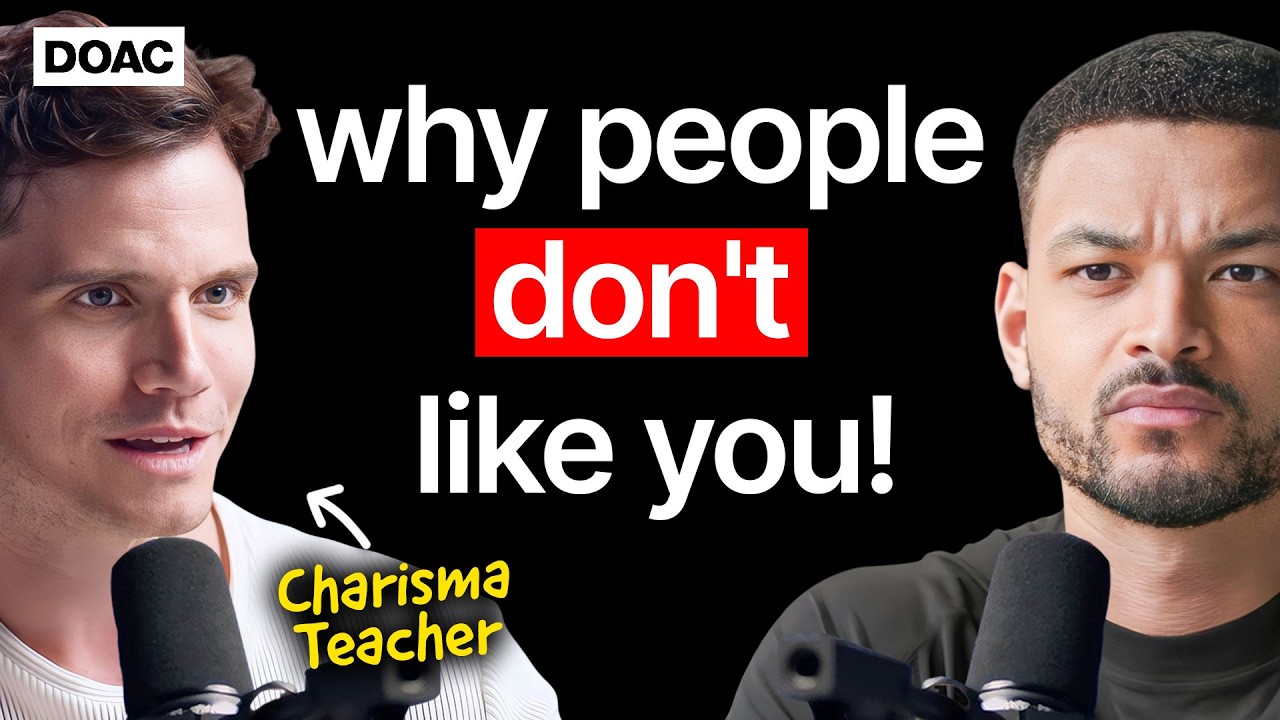
The Charisma Teacher: Psychology Of Why People Don't Like You! People Are Attracted To These Traits! — The Diary Of A CEO

The Diary Of A CEO

Charisma is a learnable skill driven by high-conviction mindsets, deliberate body language, and value-driven communication rather than innate social talent.

AI-assisted summary of The Charisma Teacher: Psychology Of Why People Don't Like You! People Are Attracted To These Traits! — original source. Check the original for full context.

Source published:

Detailed notes

## Background Published on YouTube by The Diary Of A CEO on February 3, 2025, this video features channel host Steven Bartlett interviewing Charlie Houpert, co-founder of Charisma on Command and author of books on social skills. According to the page description, the episode explores the psychology behind why people might not like you, key traits that attract others, and practical strategies to build confidence and charisma.

## TL;DR In this extensive conversation, Charlie Houpert breaks down charisma as a learnable skill built on non-verbal cues, intentional mindsets, and authentic self-expression rather than innate talent. He offers actionable frameworks for mastering first impressions, navigating small talk, handling workplace dynamics, and applying five distinct charismatic archetypes. Houpert also highlights core habits that alienate others, stressing the importance of radical honesty and high conviction over needy convincing. The interview culminates in a deep personal reflection on Houpert's own healing journey, showing how addressing past trauma shifted his drive from perfectionism to genuine self-love.

## Atmosphere & style The dialogue strikes a compelling balance between structured, analytical self-improvement advice and raw emotional vulnerability. Early on, the energy is sharp, energetic, and tactical as Houpert and Bartlett unpack social dynamics, power moves, and behavioral mechanics. Toward the final act, the mood softens into a remarkably quiet, introspective space as Houpert openly shares his experience with childhood trauma and psychedelic integration, giving the episode a deeply earnest and cathartic arc.

## Key takeaways - [06:35](https://www.youtube.com/watch?v=zg4Ta7vXiIM&t=395s) Charisma is not an innate trait reserved for a select few, but a learnable skill set that deeply impacts both internal self-perception and external life success. - [17:32](https://www.youtube.com/watch?v=zg4Ta7vXiIM&t=1052s) First impressions require balancing three core elements in under 60 seconds: Fun (positive energy), Trust (warmth and transparency), and Respect (status and personal boundaries). - [27:55](https://www.youtube.com/watch?v=zg4Ta7vXiIM&t=1675s) Physical movements signal status; 'prey' movements (fast, fidgety, jerky) betray anxiety, whereas 'predator' movements (slow, measured, deliberate) project composure and confidence. - [35:02](https://www.youtube.com/watch?v=zg4Ta7vXiIM&t=2102s) Interactions are collisions of 'storms of beliefs,' where the individual with the highest conviction naturally dictates the reality and tone of the conversation. - [01:01:20](https://www.youtube.com/watch?v=zg4Ta7vXiIM&t=3680s) Holding six charismatic mindsets—including prioritizing character over reputation and recognizing that 'I don't need to convince anyone of anything'—creates grounded self-assurance. - [01:02:34](https://www.youtube.com/watch?v=zg4Ta7vXiIM&t=3754s) Public apologies in modern media environments are frequently weaponized against public figures, leading many leaders to adopt a strategy of doubling down or refusing to apologize. - [01:14:58](https://www.youtube.com/watch?v=zg4Ta7vXiIM&t=4498s) Developing impeccable honesty builds deep self-trust and conviction, whereas telling minor lies conditions the brain to doubt its own authenticity. - [01:17:13](https://www.youtube.com/watch?v=zg4Ta7vXiIM&t=4633s) Replacing needy 'convincing energy' with 'invitational energy' allows individuals to clearly state their path and filter for people who naturally align with their purpose. - [01:25:21](https://www.youtube.com/watch?v=zg4Ta7vXiIM&t=5121s) Charisma functions across five distinct archetypes: High Conviction, Authentic, Funny, Empathetic, and Energetic—with top leaders often combining multiple styles. - [01:32:30](https://www.youtube.com/watch?v=zg4Ta7vXiIM&t=5550s) Charisma acts as a form of 'unspoken nepotism' in professional settings, often opening doors for promotions and raises faster than technical expertise alone. - [01:35:55](https://www.youtube.com/watch?v=zg4Ta7vXiIM&t=5755s) Asking the 'one-year lookback' question in job interviews forces interviewers to visualize your success and clearly define their criteria for hiring. - [01:49:35](https://www.youtube.com/watch?v=zg4Ta7vXiIM&t=6575s) Five main habits instantly alienate others, including needing to win every joke exchange, being over-defensive, and holding back authenticity out of fear of judgment. - [01:55:00](https://www.youtube.com/watch?v=zg4Ta7vXiIM&t=6900s) Mastering pauses instead of using verbal filler words creates a psychological vacuum that commands attention and conveys leadership authority. - [01:59:33](https://www.youtube.com/watch?v=zg4Ta7vXiIM&t=7173s) Inner healing and confronting past trauma allow charisma to shift away from superficial social hacks toward soul-level authenticity and self-love.

## Detailed walkthrough ### [00:00](https://www.youtube.com/watch?v=zg4Ta7vXiIM&t=0s) Introduction and The Impact of Charisma

The episode begins with host Steven Bartlett highlighting a discussion on five subtle habits that instantly alienate others without people realizing it. Guest Charlie Houpert, co-founder of *Charisma on Command*, explains that charisma and confidence are among the most underrated leverage points for personal and professional success. Charisma is defined as the ability to speak with conviction, influence others, and genuinely connect. Houpert points to public figures like Donald Trump, noting how Trump essentially talked his way into the United States presidency to illustrate the sheer power of interpersonal communication.

When asked whether charisma is an innate gift or a trainable skill, Houpert asserts that he is living proof it can be learned. He recalls growing up invisible, avoiding dating and friendships out of fear and emotional self-protection. Houpert candidly opens up about carrying intense feelings of disgust and struggle following an experience of sexual abuse during his youth. To cope, he meticulously studied communication techniques and tips, completely transforming his social baseline over time. Throughout the episode, Houpert and Bartlett promise to detail practical strategies, including:

* **Prey vs. Predator movement**: Key body language nuances vital for initial impressions. * **Traits that build attraction**: Communication styles that draw romantic partners in naturally. * **The 60-Second Trust Act**: Techniques to rapidly establish authority, rapport, and respect. * **6 Charismatic Mindsets**: Core mental frameworks required for long-term personal success.

---

[01:31](https://www.youtube.com/watch?v=zg4Ta7vXiIM&t=91s) The Subscriber Bet and What *Charisma on Command* Does

Bartlett lightheartedly breaks down a friendly wager made with his production team as *The Diary Of A CEO* approaches 10 million YouTube subscribers. The team challenged him to donate $1 to a massive staff celebration fund for every new subscriber gained over 30 days—prompting Bartlett to joke that viewers shouldn't subscribe if they want to spare his bank account.

Transitioning to Houpert's career, Bartlett asks him to summarize the core mission of his work at *Charisma on Command* and *Charisma University*, which have impacted hundreds of millions of viewers and tens of thousands of students. Houpert explains that his primary goal is helping people bridge the gap between how comfortable they feel relaxing at home with close friends and how grounded they remain in high-stakes environments—such as workplaces, dates, or group gatherings.

> "Take all the situations where you're interacting with another person... and take the times that you're feeling that you're not grounded in that sense of confidence that you maybe have when you're sitting at home on the couch... and bring the best version of yourself to those situations."

Houpert notes that while most clients seek out his advice due to an acute social frustration—such as losing a promotion to a less qualified colleague, struggling on dates, or feeling ignored in group dynamics—the ultimate outcome of mastering these skills goes far beyond superficial fixes. He shares a recent story of a waiter who applied these principles; while the waiter initially wanted higher tips, the true breakthrough was overcoming a deep sense of social nihilism and feeling genuinely connected to humanity again.

---

[04:39](https://www.youtube.com/watch?v=zg4Ta7vXiIM&t=279s) How Charisma Shifts Life Trajectories

Bartlett and Houpert explore the profound trajectory shift that charisma creates. Houpert divides the impact of social skills into an internal subjective experience and an external life outcome. Internally, feeling socially disconnected makes it almost impossible to enjoy life, regardless of how much money, fame, or physical fitness a person possesses. Externally, charisma is severely underrated because societal norms teach people that getting good grades, working hard, and following job descriptions are enough. In reality, the missing link is whether people like you, connect with you, and actively want you to succeed.

Houpert shares a personal example from his early corporate career, where he received an off-track promotion over a colleague who was technically a far superior analyst. The decisive factor was simply that Houpert had built a stronger rapport with the company president. Recognizing that interpersonal connection was the single highest-leverage skill in his own life, Houpert dedicated himself entirely to teaching it rather than viewing it as a mere business tactic.

---

[06:35](https://www.youtube.com/watch?v=zg4Ta7vXiIM&t=395s) Is Charisma Learnable?

Addressing the common myth that charisma is an unchangeable personality trait, Houpert shares that he believed this misconception for the first 18 years of his life. As a teenager, he assumed charisma was simply an innate trait reserved for athletic kids who could throw a football well. It was only around age 18 to 20 that he realized modifying his conversational approach drastically altered how others responded to him.

---

[07:15](https://www.youtube.com/watch?v=zg4Ta7vXiIM&t=435s) The Origins of the YouTube Channel

Houpert details how he developed the content for his YouTube channel, which has grown to roughly 6.8 million subscribers. A decade ago, "charisma" was not a heavily searched topic, so Houpert created a unique breakdown format using pop culture and high-profile public interactions as analytical case studies.

His very first analysis broke down the famous 1992 town hall debate between Bill Clinton and George H.W. Bush—specifically the decisive moment when Clinton stepped away from his podium, made direct eye contact with a female audience member, and empathetically asked, "How does this impact you?" Houpert used this breakdown structure across various contexts: * **Real-World Political Debates**: Analyzing public figures, persuasion dynamics, and rhetorical moves. * **Pop Culture & Media**: Deconstructing scripted characters (like Jon Snow in *Game of Thrones*) to illustrate real-world social mechanics. * **High-Stakes Media Interviews**: Analyzing viral cultural moments, such as Jordan Peterson's debate with Kathy Newman, showing how holding ground and pointing out mischaracterizations leads to conversational dominance.

---

[09:37](https://www.youtube.com/watch?v=zg4Ta7vXiIM&t=577s) Shy Beginnings and the "Big Eyes" Experiment

Despite his current public persona, Houpert reveals that his default state remains introverted and reserved. He admits to feeling nervous during the first few minutes of the interview before finding his rhythm.

To illustrate his quiet childhood, Houpert shares that his high school graduating class of 500 voted him "Most Likely to Break Out of His Shell in College." He was known primarily for being invisible, and he failed to break out of that shell throughout his early university years. By age 19, frustrated after years of forming intense, one-sided crushes in his head that vanished due to his social awkwardness, he decided to take radical action during a study abroad program.

Realizing that friends and family often subtly push back against personality changes, studying abroad provided Houpert with a clean slate to run social experiments. He read communication books and systematically tested eye contact and body language strategies—some of which failed hilariously:

* **The "Big Eyes" Experiment**: For an entire week, Houpert walked around holding his eyes wide open to show interest, causing people to recoil in discomfort until a friend finally told him, "Dude, what are you doing with your eyes? Stop!"

Despite the awkward missteps, these consistent experiments yielded massive results. When he returned to campus six months later, peers were stunned by his transformation, noting that he seemed like a completely different, outgoing person who could effortlessly talk to women and lead groups.

---

[12:47](https://www.youtube.com/watch?v=zg4Ta7vXiIM&t=767s) Internal Monologue and Taking Total Responsibility

Looking back on his awkward years, Houpert reflects on his inner monologue. If forced to be honest at the time, he would have described his core feeling as deep shame and a belief that he lacked the right to speak up. He recalls a acquaintance telling him, "Charlie, you're so normal that you're invisible." Houpert adopted invisibility as a self-defense mechanism—blending in kept him safe from being picked on or mocked, but it also prevented him from building meaningful relationships.

A major psychological turning point occurred at age 19 when Houpert adopted a radical personal mindset: **"It's always my fault."**

For nearly a decade, Houpert treated every awkward or failed interaction as his own responsibility, forcing himself to analyze precisely where a conversation broke down—such as losing a person's engagement three minutes in by answering a question about his job in a boring, dry manner. This feedback loop became the ultimate engine for his growth.

[14:58](https://www.youtube.com/watch?v=zg4Ta7vXiIM&t=898s) The Obsession with Social Iteration

Continuing his reflection on his early social transformation, Charlie explains how he and his co-founder turned social interactions into a continuous science experiment. After every social encounter, they would dissect what worked and what went wrong. He would obsessively review the interactions, asking how he could speak about his job or life in a way that felt more exciting and magnetic. This constant cycle of reviewing, brainstorming new approaches, and executing social experiments became a thrilling obsession that fundamentally changed how he navigated the world.

When Steven asks what the fundamental difference was between the shy person who boarded the plane to Costa Rica and the transformed person who returned, Charlie points to a single core trait: a willingness to "stick your neck out." While studying Spanish in Heredia, Costa Rica, Charlie was terrified of making embarrassing mistakes. However, he forced himself to follow a strict personal rule: if he didn't know where a classroom was, he wouldn't sit isolated with a paper map trying to figure it out; he forced himself to ask a human. Whenever he needed a restaurant or a nightlife spot, he sought recommendations from locals. Combined with the warmth of the local culture, this habit expanded his comfort zone and proved that putting yourself out there leads to magical social outcomes.

[16:28](https://www.youtube.com/watch?v=zg4Ta7vXiIM&t=988s) The "One More Sentence" Rule

To help anyone looking to build charisma immediately, Charlie offers his simplest actionable advice: the **"one more sentence"** rule. In any populated area, people engage in dozens of transactional micro-interactions every day—with Uber drivers, cashiers, or people in elevators. Most people default to a brief, scripted exchange (or complete silence). Charlie advises pushing past that baseline by offering just one extra sentence.

For example, when stepping into an elevator, instead of merely asking "What floor?", you ask the floor and then add: "Oh, have you lived in this building for a long time?" This simple addition breaks the transactional script, turns a nameless neighbor into an acquaintance, and creates a compounding effect that expands your social circle over time.

[17:32](https://www.youtube.com/watch?v=zg4Ta7vXiIM&t=1052s) Rethinking First Impressions: The Fun, Trust, Respect Model

Addressing first impressions, Charlie critiques the common self-help advice that "the best way to get people interested in you is to be interested in them." While sincerity and interest create compassion or warm feelings, they do not automatically make people respect you or desire to follow up with you. Status dynamics play a major role: someone can be deeply, genuinely interested in you, yet you might still feel no desire to spend more time with them.

To flip this dynamic and make an outstanding first impression, Charlie highlights three essential qualities that must be communicated—often within 60 seconds—before expressing deep interest in the other person:

* **Fun:** Injecting positive energy and enthusiasm right away. * **Trust:** Demonstrating non-verbal warmth and showing that you aren't trying to covertly "get" something from them. * **Respect:** Establishing yourself as an interesting person with status and boundaries, without resorting to crude name-dropping or self-aggrandizing sales pitches.

[18:41](https://www.youtube.com/watch?v=zg4Ta7vXiIM&t=1121s) Engineering the Conversation: High Energy and Conversational "Crumbs"

To execute the "Fun" component of a first impression, Charlie suggests changing how you answer standard introductory questions. When someone asks "How are you?", the typical automated answer is "Fine" or "Good." Charlie suggests being "better than good"—responding with genuine enthusiasm like "fantastic," "wonderful," or "electric." Rather than faking emotions, the goal is to cultivate authentic excitement and share it openly.

When it comes to establishing "Trust" and "Respect," the trap many people fall into is over-qualifying themselves or giving dead-end answers. Steven relates to this, recalling how when people tell him "God, you've been so busy," he often replies with a simple "Yeah, always"—which effectively kills the conversation. Charlie notes that high-status individuals often get away with brief answers because others already know who they are, but everyday interactions require leaving **conversational "hooks" or "crumbs."**

Instead of giving flat, one-word answers to questions like "Where are you from?", you can engineer the conversation to steer toward topics you actually care about: * **The Flat Answer:** "I'm from Philadelphia." (Leads directly to generic small talk about weather or sports). * **The Multi-Hook Answer:** "I grew up in Philadelphia, but I never really fit in there because a lot of people stay within 20 minutes of where they were born. So I traveled throughout my 20s, and now I live in LA because it's the right place for my business."

By embedding three distinct themes in a single answer—travel, personal identity, and business—you give the other person multiple entry points to choose whatever interests them most, rapidly skipping superficial small talk.

``` ┌──────────────────────────────────────────┐ │ Standard Question: "Where are you from?"│ └────────────────────┬─────────────────────┘ │ ┌──────────────────┴──────────────────┐ ▼ ▼ [ Flat, One-Word Answer ] [ "Crumb-Leaving" Answer ] "I'm from Philadelphia." "Grew up in Philly, traveled in my 20s, │ now in LA for my business." ▼ │ [ Superficial Pathways ] ├───────► Travel Experiences • Weather ├───────► Business / Career • Local sports teams └───────► Life Philosophy ```

[25:59](https://www.youtube.com/watch?v=zg4Ta7vXiIM&t=1559s) Flirting with the World

Charlie introduces another mindset shift: **"flirting with the world."** In everyday transactional settings—such as checking out at a grocery store or riding an elevator—most people operate on literal autopilot. Flirting with the world means dropping literalism in favor of playful, lighthearted banter. For instance, when someone in an elevator asks what floor you're going to, rather than just saying "Floor 3," you might playfully reply, "I don't live here, I'm just casing the joint."

This lighthearted energy breaks people out of their daily trance. Steven notes that he began flirting with the world naturally as his confidence grew in his mid-twenties. Charlie agrees that while self-assurance fuels this habit, forcing yourself to take playful risks in low-stakes moments builds genuine confidence through positive real-world repetitions.

[27:55](https://www.youtube.com/watch?v=zg4Ta7vXiIM&t=1675s) Prey vs. Predator Non-Verbal Cues

When asked about the most important non-verbal cues in first impressions, Charlie contrasts **prey movements** with **predator movements**: * **Prey Movement:** Fast, darting eye movements, high-frequency fidgeting, and jerky hand gestures (hands constantly darting in and out of pockets). These signal anxiety, hyper-vigilance, and low status. * **Predator Movement:** Languid, measured, and calm physical movements. Unhurried gestures signal composure, comfort, and high status without needing to lower your overall energy.

Charlie also highlights a common pitfall at social or networking events: people who feel awkward often look at their phones or scan the room frantically, hoping someone will rescue them. To counter this, Charlie and his co-founder used a strict rule when attending bars or events: *"The most interesting place in this entire bar is the space between our noses."* By fully committing to the person right in front of you—even if you are just admitting how nervous you feel—you project immense social comfort to the rest of the room.

[29:40](https://www.youtube.com/watch?v=zg4Ta7vXiIM&t=1780s) Prey vs. Predator Body Language and High-Status Signals

Charlie points out how changing physical demeanor from "prey" to "predator" completely alters social dynamics. Prey animals constantly scan their surroundings with anxious, darting movements because a lack of vigilance means death. Humans carry this same mammalian and reptilian programming: when someone feels low status or insecure, they exhibit jittery, twitchy movements, keep their head on a swivel, and tuck their limbs in to protect themselves. Conversely, high-status individuals—like a calm business leader sitting back in a chair compared to a nervous intern dropping papers—move slowly and deliberately because they feel safe in their environment.

Another key sign of comfort and status is the willingness to be seen looking at others. Insecure individuals or nervous bar patrons will shift only their eyes while keeping their body rigid, terrified of being caught staring. A truly grounded, comfortable person turns their head, chest, and entire torso directly toward someone without fear. While these are subconscious signals, you can use the physical body to force a mental shift. Rather than trying to mentally debate away anxiety, physically expanding your body, taking up space, and exposing vulnerable areas—like your neck, inner elbows, and palms—creates an immediate feedback loop that grounds you.

* **The Dance Floor Strategy:** Charlie shares that whenever he felt anxious at networking events or bars, he would head to the dance floor to open his arms and dance, physically signaling to his brain that he was completely safe. * **The Downward vs. Upward Spiral:** Steven highlights how an intern on edge who drops papers feels immediate shame, driving them deeper into twitchy, insecure behaviors. Reversing the physical cues creates a positive upward spiral of confidence.

---

[35:02](https://www.youtube.com/watch?v=zg4Ta7vXiIM&t=2102s) The Pre-Performance Ritual and "Storms of Belief"

To step into high-pressure situations like a major speech, job interview, or networking event, physically priming your mind is essential. Charlie references Tony Robbins' pre-stage ritual of pounding his chest while shouting empowering incantations ("I'm here to inspire!"). Charlie used a similar technique before walking into social events, repeating "I love myself" while building physical energy. Because First Impressions form in under thirty seconds, entering a room with total self-approval fundamentally changes how others receive you.

Social interactions can be viewed as two competing "storms of beliefs" colliding. If one person's internal belief is full of self-doubt ("I shouldn't be here, I don't deserve this job"), and the other person is neutral, the stronger conviction wins out—meaning the doubt will define the interaction. Whichever person possesses the higher conviction and grounded belief ultimately dictates the reality and tone of the relationship.

> "You can think of interactions as two people who are storms of beliefs encountering one another... It is the higher conviction belief that often bleeds through in interaction and becomes the one that defines that relationship."

---

[37:02](https://www.youtube.com/watch?v=zg4Ta7vXiIM&t=2222s) Authenticity over "Faking It" and the Legend of "Dragon"

Steven admits to struggling with non-verbal cues when he is exhausted or overwhelmed with a million thoughts, worrying he might accidentally come across as rude or cold to people because he lacks hyper-energetic small talk skills. Charlie reassures him that the deepest connection occurs when someone drops the performance entirely and speaks with raw honesty. Connections aren't forged through forced high energy, but by being the first person to step up and express what is genuine in the moment.

To illustrate how breaking rigid social norms creates instant connection, Charlie shares a story about a networking event he attended with his brother during the early days of *Charisma on Command*. While Charlie was trying hard to be a buttoned-up, super-professional entrepreneur, his brother went up to the registration desk, gave his name as "Dragon," and had "Dragon" printed directly on his nametag. His playful, unexpected willingness to break the rules made him the hit of the entire room, wildly outperforming Charlie's strict professionalism.

``` TYPICAL SOCIAL SPECTRUM Undershooting Overshooting (Playing it safe, <--------------------[X]----> (Coming on too strong, over-calculating) SWEET SPOT trauma dumping) (Authentic Connection) ```

* **Undershooting vs. Overshooting:** Most people live in constant terror of "overshooting" (coming on too strong, trauma dumping, or making a bad joke), yet 99% of their social mistakes are actually *undershooting*—holding back so much that no real connection happens. * **Taking the Risk:** Charlie urges people to deliberately take the risk of overshooting because it is the only way to move out of boring background noise and build real relationships.

---

[41:11](https://www.youtube.com/watch?v=zg4Ta7vXiIM&t=2471s) Talking About Yourself without Being Self-Absorbed

Talking about yourself isn't inherently selfish; the error lies in failing to offer "opt-in points" for the other person. If you talk continuously without pausing, you trap the listener. However, keeping your story to a concise three to five sentences while tossing out distinct "hooks" gives the other person a natural wedge to enter the conversation.

For instance, mentioning that you grew up on the West Coast to surf, met your wife who is close to her family, and moved to the Midwest gives the listener three distinct angles to connect on (surfing, relationships, or geography). You don't even need to ask a direct question—if you put compelling hooks out there, people will naturally jump in with their own related experiences.

---

[43:22](https://www.youtube.com/watch?v=zg4Ta7vXiIM&t=2602s) Escaping Fluffy Small Talk in Everyday Life

Steven brings up a common dilemma: running into casual acquaintances at the gym and getting stuck in meaningless, script-like conversations ("Hey, how are you? Are you living in LA now? How about those fires?"). Charlie walks Steven through a live exercise to transform that exact interaction into something meaningful. Instead of giving autopilot answers, state your actual intent and what you're looking for in life right now.

If you are new to a city and want to build a local network or find cool spots, turn the dull question ("Where are you going to live?") into an invitation: *"Honestly, I'm not sure yet! I'm looking for cool places to check out and building a great network of people out here."* Most people use small talk just to get through an interaction rather than to connect. Failing to risk a real answer means missing out on potential lifelong friends, business partners, or spouses.

[44:41](https://www.youtube.com/watch?v=zg4Ta7vXiIM&t=2681s) The Hidden Costs of Power and "Shining Less Bright"

Steven Bartlett reflects on how tragic it is that so many potential connections fade away simply because neither person takes the risk to say what they are thinking. Asking Charlie Houpert why people default to just "getting through" social interactions—like rushing past someone at the gym—Charlie explains that as status or power grows, people often learn to intentionally "shine less bright."

When you possess status, money, or a large public following, every interaction can unleash an overwhelming flood of attention and requests. Charlie admits that he stopped following his own advice to avoid having to constantly enforce boundaries. He recalls watching an interview of a teenage Justin Bieber on *The Tonight Show Starring Jimmy Fallon*, observing how flat Bieber appeared until he cracked a minor joke that sent the audience into an exaggerated frenzy. To avoid being overwhelmed by this non-stop energy, high-profile or attractive individuals often shut down their natural warmth to avoid the exhausting task of disappointing people or managing unwanted interest.

- Charlie notes that young women often realize early in life that people desire them for superficial reasons rather than genuine connection. - In contrast, Charlie did not experience this dynamic as a young man until his business and public persona began to boom.

[48:10](https://www.youtube.com/watch?v=zg4Ta7vXiIM&t=2890s) Detecting Manipulation and Fake Relationships

Transitioning to the darker side of status, Charlie shares how unprepared he was for the transactional nature of relationships that developed as his platform grew. People entered his life claiming to like him, only for him to realize later that they were attached to his wealth, influence, or the paychecks he provided. When he stepped back from making videos and handed control of payroll over to his co-founder, those superficial relationships instantly dissolved.

This experience forced him to cultivate a sharp sense of discernment. For leaders and business owners, Charlie warns against allowing a single intermediary to act as the sole channel of communication between leadership and the rest of the team. He made this exact mistake in his company, leading to years of miscommunication, distorted feedback, and outright lying from a key manager before the issue was uncovered.

- Single points of contact in an organization allow bad actors to manipulate narratives and make themselves seem indispensable. - Genuine influence is built on delivering direct value, whereas manipulative individuals gain power by controlling information and taking credit for group efforts.

[52:18](https://www.youtube.com/watch?v=zg4Ta7vXiIM&t=3138s) Spotting Narcissists and Uncomfortable Truths

Reflecting on past interactions with manipulative colleagues, Charlie highlights a major warning sign: recurring inner doubt. He and his co-founder often joked that a former employee was lying on his resume, using humor to brush off a valid red flag instead of investigating it directly. Charlie admits he avoided verifying the employee's background out of a misplaced sense of guilt, fearing that double-checking claims would demonstrate a lack of trust.

Despite those painful lessons, Charlie expresses gratitude for the collapse of those early structures. He explains that by age 28 or 29, he had achieved his dream life—financial success, a great relationship, and a thriving business—yet it all broke down because the underlying foundation was unaligned and unsustainable. Steven reframes this breakdown as a "falling together," pointing out that holding an inauthentic life together is inherently exhausting.

> "If you find that there's just a doubt... pay attention to your doubts... in business, if there's doubt, there's no doubt when it comes to hiring and firing."

[55:28](https://www.youtube.com/watch?v=zg4Ta7vXiIM&t=3328s) The "Billion-Dollar Business" You Would Never Sell

Charlie introduces a concept from business mentor Joe Hudson, who redefines a "billion-dollar business" not as a company valued at a billion dollars, but as a venture so personally fulfilling that you would refuse to sell it for a billion dollars. Building a business with the intent to sell often leads to cutting corners or delegating tasks you dislike, whereas building a business you intend to keep forever completely changes your decision-making framework.

Asking Steven how he would run his life and podcast under this framework, Steven outlines what he would immediately eliminate to ensure he could continue host duties for the next 20 years. For Steven, that means refusing to host high-profile guests who guarantee millions of views if he has zero personal interest in their topic.

- Building to keep requires eliminating toxic people immediately, regardless of short-term revenue losses. - Sustainable operations require setting a pace you can maintain for decades rather than burning out for fast metrics. - True innovation happens when creating what you genuinely want to see in the world rather than endlessly trying to appease an audience.

[01:00:05](https://www.youtube.com/watch?v=zg4Ta7vXiIM&t=3605s) Rejecting Superficial Wins for Long-Term Alignment

Steven shares how observing long-term creators like Joe Rogan taught him the value of playing long-term games. Making short-term decisions for temporary spikes in metrics eventually leads to burnout and a loss of personal meaning.

To illustrate this, Steven reveals a recent internal debate regarding a newly uploaded panel format on *The Diary Of A CEO*. After releasing an episode featuring four male guests, executives suggested adding a woman to the next panel purely to avoid negative optics. Steven strongly rejected the idea, arguing that decisions should never be made strictly for appearances, but rather out of genuine intent and authentic alignment.

[01:00:13](https://www.youtube.com/watch?v=zg4Ta7vXiIM&t=3613s) Virtue Signaling vs. Character

Steven Bartlett reflects on a conversation with his 12-person team about podcast panel selection, emphasizing that future choices to increase diversity must be driven strictly by what improves the quality of the conversation for the audience, rather than by external optics. Choosing actions purely for public perception or optics causes a gradual departure from core integrity. True integrity requires ignoring short-term virtue signaling—which shifts constantly, turning today's virtue into tomorrow's cause for cancellation—and remaining anchored to steadfast principles.

Charlie Houpert enthusiastically agrees, linking Steven's principle directly to the second of six charismatic mindsets: **"I care more about my character than my reputation."** He commends Steven for demonstrating genuine leadership. By prioritizing internal character over superficial optics, Steven taught his entire team what truly matters. Furthermore, rather than dismissing feedback outright, Steven listened and integrated it thoughtfully under the condition that changes are made for the right reasons.

---

[01:01:20](https://www.youtube.com/watch?v=zg4Ta7vXiIM&t=3680s) The Six Charismatic Mindsets & The "Elon Musk Salute"

Charlie transitions from physical body language cues to core internal mindsets that dictate genuine presence:

* **1. "No matter what, I will be okay":** Internalizing this phrase calms the nervous system during high-stakes situations—whether driving to an interview, asking someone out, or stepping onto a stage. It shifts focus away from self-preservation and fear (which leads to saying less and killing connection) toward actively engaging and seeking positive outcomes. * **2. "I care more about my character than my reputation":** Focusing on character prevents people from digging in their heels just to avoid looking weak or fixing a mistake solely for PR optics.

``` ┌──────────────────────────────────────────┐ │ SIX CHARISMATIC MINDSETS │ └────────────────────┬─────────────────────┘ │ ┌────────────────────────────────┼────────────────────────────────┐ │ │ │ ┌─────┴──────────────────┐ ┌──────────┴──────────────┐ ┌───────────────┴──────────────┐ │ 1. No Matter What, │ │ 2. Character Over │ │ 3. Impeccable Honesty │ │ I Will Be Okay │ │ Reputation │ │ & Integrity │ └────────────────────────┘ └─────────────────────────┘ └────────────────────────────┘ │ │ │ ┌─────┴──────────────────┐ ┌──────────┴──────────────┐ ┌───────────────┴──────────────┐ │ 4. I Don't Need to │ │ 5. I Proactively Share │ │ 6. Be the First to │ │ Convince Anyone │ │ My Purpose │ │ Humanize the Interaction │ └────────────────────────┘ └─────────────────────────┘ └──────────────────────────────┘ ```

The discussion pivots to public controversies, specifically the media storm surrounding Elon Musk's awkward hand gesture on stage. Both host and guest analyze how public figures navigate mistakes. Steven notes that Musk is an eccentric, inherently awkward individual with a history of bizarre stage antics—such as making strange faces during red-carpet walks—and has no track record of hiding his true thoughts. They discuss how partisan commentary instantly framed the movement as a deliberate Nazi salute rather than typical awkward behavior. Charlie points out that media environments force figures to double down; admitting fault or offering an apology in the court of public opinion often results in career destruction rather than reconciliation.

- **Aziz Ansari Example:** Charlie cites comedian Aziz Ansari's detailed, heartfelt apology following a controversial dating story during the MeToo movement. Despite the situation being a complex, consensual date that went poorly, his sincere apology resulted in his show being canceled and his career severely disrupted, illustrating how mass media weaponizes public apologies.

---

[01:06:13](https://www.youtube.com/watch?v=zg4Ta7vXiIM&t=3973s) Has the Media Made Apologizing the Wrong Thing to Do?

In personal relationships, the ability to say "I'm sorry" and own a mistake is critical for long-term health; without maintenance, relationships erode like unkept bridges. However, modern mass media has fundamentally broken the utility of public apologies. Powerful figures like Donald Trump, Andrew Tate, and Elon Musk have adopted a strict "never apologize, never explain" doctrine, as public apologies are rarely received in good faith and instead invite total destruction.

``` IN PRIVATE RELATIONSHIPS IN MASS MEDIA ┌─────────────────────────────┐ ┌─────────────────────────────┐ │ - Builds trust │ │ - Seen as admission of │ │ - Repairs broken bonds │ VS │ total guilt │ │ - Essential for long-term │ │ - Weaponized by opponents │ │ health │ │ - Leads to cancellation │ └─────────────────────────────┘ └─────────────────────────────┘ ```

Steven and Charlie reflect on the hyper-polarized political landscape, noting how both the political left and right consistently mischaracterize each other. Steven considers himself apolitical—finding valid economic points on the right and valid social points on the left—and expresses frustration that objective truth gets lost in media narratives driven by predictable outrage.

---

[01:08:32](https://www.youtube.com/watch?v=zg4Ta7vXiIM&t=4112s) Is Trump Charismatic?

Analyzing charisma strictly as the ability to influence others and succeed through sheer force of personality, Charlie and Steven examine Donald Trump. Regardless of political agreement, his impact on audiences demonstrates an undeniable, powerful form of charisma—a trait shared by other high-impact speakers like Alexandria Ocasio-Cortez.

Trump possesses a unique psychological dynamic with his audience regarding shame and Teflon-like resilience. Charlie points to Trump's very first 2016 Republican primary debate, where moderator Megyn Kelly confronted him about calling women "fat pigs, dogs, slobs, and disgusting animals." Instead of apologizing or being derailed, Trump immediately quipped, "Only Rosie O'Donnell," causing the audience to erupt in laughter and completely defuse a moment that would have ended a traditional politician's career.

``` CONFRONTATION TRUMP'S RESPONSE RESULT ┌─────────────────────────┐ ┌───────────────────────┐ ┌───────────────────────┐ │ Megyn Kelly lists │ │ Interrupts: │ │ Audience erupts in │ │ derogatory comments ├────────►│ "Only Rosie ├────►│ laughter; attack is │ │ made about women. │ │ O'Donnell." │ │ neutralized. │ └─────────────────────────┘ └───────────────────────┘ └───────────────────────┘ ```

Charlie highlights Trump's dismantling of his political rivals during the 2016 Republican primaries as a masterclass in dominant presence:

* **Refusal to Crack:** When attacked, Trump never adopts a defensive posture. Instead, he doubles down on offense, relentlessly counter-attacking opponents (assigning nicknames like "Low Energy" Jeb Bush and "Lyin' Ted" Cruz). * **Dominating the Pace:** While traditional debate candidates trailed off when interrupted or waited passively for moderators to intervene, Trump dominated conversations and forced rivals off their stride. * **Finishing Sentences:** Charlie shares a fundamental communication rule for shy or less assertive individuals: **Always finish your sentence before letting someone cut you off.** Allowing someone to interject mid-sentence while trailing off signals fragility and invites people to speak over you. Trump completely dictates the physical and verbal pace of interactions, making opponents appear hesitant by comparison.

---

[01:13:29](https://www.youtube.com/watch?v=zg4Ta7vXiIM&t=4409s) Impeccable Honesty and Integrity

Transitioning back to the list of core mindsets, Charlie introduces the third principle: **"I have impeccable honesty and integrity."**

While figures like Trump demonstrate how raw power dynamics and dominant dominance strategies operate, Charlie contrasts this with a deeper, timeless form of charisma. Paragons throughout history—such as Socrates or Jesus—existed beyond transactional influence. Their enduring charisma stemmed from an unwavering commitment to truth, personal integrity, and character, inspiring followers across generations rather than simply winning temporary debates.

[01:14:58](https://www.youtube.com/watch?v=zg4Ta7vXiIM&t=4498s) Impeccable Honesty and Integrity

Charlie Houpert emphasizes that maintaining absolute honesty and high integrity is fundamental to building genuine charisma. When people tell even tiny lies—such as texting a friend "I'm on the way" when they haven't even brushed their teeth yet—they train their subconscious mind to believe "I am untrustworthy." This internal conditioning subtly erodes a person's ability to speak with genuine conviction, as a part of their brain constantly second-guesses whether they are telling the truth.

``` "When you lie sometimes, you hurt your ability to speak with conviction all the time, because there's some part of your brain that is going, 'Am I telling the truth?'" ```

Steven Bartlett relates to this deeply, sharing a story about a long-time friend whom he eventually had to confront. Despite their deep friendship, Steven realized he couldn't fully trust him because he frequently witnessed him telling small lies or knowingly exaggerating details to others. It took Steven nine years to finally bring it up, but Charlie highlights that lovingly pulling a friend aside to address these habits is one of the deepest forms of respect and love, as it addresses the core person underneath their flawed behavior.

* **Consequence of "Harmless" Lies:** Erodes self-trust and diminishes the perceived weight of one's words when speaking to others. * **Friendship Dynamics:** Most social circles consist of friends who celebrate or entertain, but very few people have friends who will lovingly challenge their integrity.

---

[01:17:13](https://www.youtube.com/watch?v=zg4Ta7vXiIM&t=4633s) I Don’t Need to Convince Anyone of Anything

The fourth charismatic mindset centers on replacing the urge to convince with "invitational energy." People often fall into the trap of feeling they *must* convince a specific individual—whether it's getting a date to like them, closing a sales prospect, or recruiting an employee. However, pushing to convince others signals a needy underlying dynamic, conveying that you lack something essential and need them to fill the void, which actively alienates people.

``` "When you get stuck on convincing people, they feel that there's something missing in you that needs something from them... much more important than convincing is filtering." ```

Instead of trying to convince everyone to join your vision, effective charisma relies on filtering: stating your path clearly and inviting others to join if they wish. Charlie points out that if Steven had spent his early career trying to convince his old friend group to become entrepreneurs, he would still be stuck arguing with them today rather than building his businesses and podcast. Adopt a "without you" energy where people are free to opt in or step aside naturally.

* **Short-Term vs. Long-Term Strategy:** Convincing might occasionally yield a quick sale out of desperation, but invitational energy builds sustainable, long-term relationships and brand loyalty. * **Filtering:** Revealing your true direction and allowing the right people to self-select into your orbit.

---

[01:19:50](https://www.youtube.com/watch?v=zg4Ta7vXiIM&t=4790s) I Proactively Share My Purpose

The fifth mindset requires actively sharing what you care about deeply rather than hiding behind superficial topics like the weather or sports. People are naturally drawn to passion and love participating in genuine, ambitious dreams. To illustrate this, Charlie shares a story about the MTV show *The Buried Life*, where four guys set out to accomplish their bucket list items while helping strangers fulfill theirs.

``` "When you are connected to your dream—not the one that's like 'I want to make enough money,' but the one that is 'I want to prove to people that anything is possible'—people like to participate in that." ```

In season two, the group set a goal to play basketball with President Barack Obama. They walked around Washington, D.C., openly sharing their purpose with anyone who would listen. Within three days, their pure enthusiasm landed them in a senator's office. Although an initial scheduled meeting was cancelled due to a schedule conflict, Obama later saw their TV episode airing in the White House, asked his aides why the game hadn't happened, and invited them directly to play basketball at the White House.

* **Real Manifestation:** True manifestation isn't just wishful thinking; it is backing intent with full life force, vocalizing requests, and proactively taking action. * **The Power of Shared Dreams:** People gladly offer help, access, and resources when they feel they are contributing to a meaningful, authentic mission.

---

[01:22:53](https://www.youtube.com/watch?v=zg4Ta7vXiIM&t=4973s) Be the First to Humanise the Interaction

The sixth mindset—and the ultimate essence of leadership—is to "go first" in breaking standard social norms to humanize an environment. Whether in a workplace, a social gathering, or a podcast studio, social interactions often settle into rigid, shallow scripts. Stepping up to crack a playful joke, give a sincere compliment, or share a genuine vulnerability breaks the tension and gives everyone else permission to be authentic.

``` "When you go first in humanizing the interaction, it is the essence of leadership... the room transforms around that." ```

Being willing to show the "chinks in your own armor" eliminates the myth that charisma requires presenting a flawless facade. For example, explicitly voicing internal feelings—such as telling a host, "I felt really nervous on my way over here"—instantly establishes a deep level of rapport and connection that standard polished answers cannot achieve.

* **Humanizing Tactics:** * Cracking lighthearted, observational jokes to lower collective guards. * Offering early, sincere compliments to establish trust and fun. * Expressing personal anxieties or ongoing struggles without resorting to heavy "trauma dumping."

---

[01:25:21](https://www.youtube.com/watch?v=zg4Ta7vXiIM&t=5121s) The Five Archetypes of Charismatic People

Charisma is not a one-size-fits-all persona, and trying to copy someone else's natural style often backfires. Charlie breaks down the five distinct types of charismatic personalities:

1. **High Conviction:** Driven by an absolute, unwavering belief storm that overwhelms doubt in others. Examples include a 19-year-old Conor McGregor declaring he would be world champion, Donald Trump's supreme certainty of winning, or Steve Jobs famously asking Pepsi executive John Sculley: *"Do you want to sell flavored sugar for the rest of your life, or do you want to come with me and change the world?"* 2. **Authentic:** Built on total transparency and radical honesty. Exemplified by figures like Joe Rogan, whose willingness to say exactly what he thinks—even at the risk of damaging relationships—creates deep, long-term trust. 3. **Funny:** Uses humor and levity to reframe situations, constantly bringing non-literal, playful commentary into conversations (e.g., stand-up comedians like Kevin Hart). 4. **Empathetic:** Masters of deep, one-on-one connection who make others feel intensely seen, heard, and validated (paragoned by Oprah Winfrey and modern interviewers). 5. **Energetic:** Captivates rooms through vibrant physical presence, high enthusiasm, and expressive delivery.

* **Pitfalls of High Conviction:** Individuals with extreme conviction often struggle to integrate constructive feedback or adapt when circumstances change. * **Building Unshakable Trust:** The authentic archetype builds reliability because observers know the person isn't operating out of a desire to people-please.

[01:29:08](https://www.youtube.com/watch?v=zg4Ta7vXiIM&t=5348s) Empathetic and Energetic Charisma

The final two charismatic archetypes round out the spectrum: empathetic charisma and energetic charisma. Empathetic individuals possess a rare sincerity that makes others feel deeply seen and safe. They ask questions with a genuine warmth that encourages people to open up about things they rarely share in louder, busier social circles. Even if an empathetic person speaks very little during an interaction, people leave the conversation thinking, "We had a great conversation; we need to do that again."

Energetic charisma, on the other hand, is driven by high enthusiasm and total commitment to the bit. Charlie points to early Will Smith, talk show entrances where guests dance onto Jimmy Fallon's stage, or Jack Black as prime examples. Energetic charismatic individuals might not rely on sharp wit or clever jokes; instead, they elevate the mood by maintaining an energy level two degrees higher than the room expects. Whether it is being the first person on the wedding dance floor or bringing infectious optimism into a room, this style relies on unwavering conviction. If you dance tentatively and look around to see if people approve, the spell breaks; but if you commit fully, people naturally let their guard down and join in.

- **Empathetic Charisma:** Makes others feel safe and understood through sincere listening, leaving a strong impression despite speaking less. - **Energetic Charisma:** Transmits positivity by maintaining an energy level "two degrees higher" than the baseline of the room. - **Commitment to the Bit:** High-energy charisma fails if hesitation creeps in; it succeeds when sustained without looking around for external validation.

---

[01:30:53](https://www.youtube.com/watch?v=zg4Ta7vXiIM&t=5453s) Combining Archetypes and the Power of Obama's Charisma

While people can embody multiple charismatic styles, certain traits naturally sit in opposition. For instance, high conviction and deep empathy rarely coexist in equal measure—Charlie jokes that he would not expect someone like Conor McGregor to "hold space" for him. However, exceptional individuals manage to combine all these dimensions. Steven highlights Barack Obama as a "generational talent" who seamlessly blended high conviction (his iconic "Yes we can" rallying cry), empathy (crying on stage after the Sandy Hook tragedy), authenticity, humor, and high energy.

``` [ Conviction / Dynamic Energy ] ▲ │ ★ Obama (Blends both) │ ◄───────────────────┼───────────────────► [ Assertive / High │ [ Warm / Empathetic / Individualism ] │ Deep Listening ] ▼ ```

This dynamic underscores how heavily societal success relies on interpersonal impact rather than pure meritocracy. While people often like to pretend society operates strictly as a rubric-based meritocracy, high-level politics and leadership functions function largely as popularity contests. People vote for or follow leaders based on how that person makes them feel, whether they feel a sense of trust, and whether they can connect with them even without a one-on-one interaction.

- **Opposing Traits:** Conviction and empathy often pull in opposite directions, making individuals who balance both exceptionally compelling. - **Barack Obama:** Cited as a textbook example of multi-archetype charisma, seamlessly pivoting between resolute conviction and deep emotional empathy. - **The Reality of Selection:** High-level success across politics and business often hinges on emotional resonance and trust over purely technical merit.

---

[01:32:30](https://www.youtube.com/watch?v=zg4Ta7vXiIM&t=5550s) Charisma in the Workplace and "Unspoken Nepotism"

Reflecting on his early career in management consulting, Charlie acknowledges that charisma yielded tangible career advantages, including off-cycle raises and preferential treatment. Though he admits feeling slightly uncomfortable stating it on camera years later, he freely concedes there were better, sharper analysts on his team whom he routinely turned to for help. His rapid career progression was not driven by being the absolute best at technical analysis, but because he built strong, warm relationships with people who liked him and wanted to see him succeed.

Charlie frames this dynamic as a non-familial form of nepotism. Traditional nepotism is simply favoring someone due to a family connection; charismatic influence functions the same way through social connection. When colleagues and superiors genuinely like you and feel invested in your well-being, they open doors for you. Mastering these skills allows individuals at any level—whether an employee in corporate management, a job applicant, or a podcaster—to unlock opportunities that skill alone cannot secure.

- **Consulting Career Example:** Charlie received off-cycle raises and special opportunities not because he was the top technical analyst, but because he built strong personal rapport with key decision-makers. - **Redefining Nepotism:** Charisma operates like "familial connection without the family," where people champion your career simply because they like you and feel connected to you.

---

[01:35:55](https://www.youtube.com/watch?v=zg4Ta7vXiIM&t=5755s) Mastering Job Interviews and Strategic Questions

To leverage charisma for career advancement, job candidates must realize that an interview begins the moment they leave their front door, not when they walk into the board room. Charlie advises using travel time and interactions with Uber drivers, building security guards, and receptionists to warm up vocal cords and build social momentum. Dropping technical cramming 15 to 30 minutes before the meeting allows you to arrive mentally warm, relaxed, and ready to engage naturally. When asked initial pleasantries like "Did you get in all right?", you can offer dynamic responses like, "Yeah, I met Rick at the door, he's awesome!"

When answering interview questions, candidates should frame their experiences as narrative arcs with a clear beginning, middle, and end, using an "up-down-up" structure to build tension and resolution. Preparing three to five core career stories—such as navigating a crisis, making a bold career transition, or solving a complex problem—allows you to answer almost any behavioral question seamlessly.

``` NARRATIVE STRUCTURE FOR INTERVIEW STORIES:

[Setup] ──► [Agitate Problem] ──► [Action Took] ──► [Positive Outcome] (Context) (High Tension) (Resolution) (Value Shown) ```

Furthermore, when the interviewer asks, "Do you have any questions for us?", Charlie shares a powerful strategic question created by his co-founder:

> "Let's say that this interview went really well and a year from now I got the job and you're looking back—what would I have had to have done in order for you to feel like it was a good decision?"

This question forces the interviewer to visualize hiring you while explicitly outlining the exact performance metrics required for success.

- **Interview Warm-Up:** Socialize with drivers, security staff, and receptionists prior to the interview so you are dynamic and conversational from the very first second. - **Story Framework:** Prepare 3–5 flexible core career stories structured with problem agitation, decisive action, and positive resolution. - **The Golden Interview Question:** Asking what success looks like one year in the future gets the employer to mentally picture your success and hand you their evaluation rubric.

---

[01:39:56](https://www.youtube.com/watch?v=zg4Ta7vXiIM&t=5996s) Applying the Golden Question to Sales and Promotions

The principle behind the "one-year lookback" question extends far beyond standard job interviews; it acts as a universal tool for sales, client retention, and speed-running corporate promotions. If an employee wants to secure an accelerated raise, they can approach their manager directly and say, "I'd like to get a raise faster than usual, but I want to make sure it's totally worth it for you. Six or eight months from now, what would I have had to achieve for it to be an absolute no-brainer for you to grant that raise?" This forces management to hand over the explicit playbook for advancement.

Steven notes that this framework applies universally across client-facing industries. A personal trainer can ask a new client on day one, "Six months from now, what will we have accomplished for you to feel completely thrilled with hiring me?" Similarly, marketing agencies can establish clear expectations with clients right at the start of a contract. By defining victory conditions upfront, you eliminate guesswork, demonstrate deep care, and create clear accountability.

- **Accelerated Raises:** Proactively ask management what concrete milestones must be hit over the next 6–8 months to make an early raise an undeniable decision. - **Universal Application:** Works seamlessly for personal trainers, agency founders, and consultants to clarify expectations and guarantee client satisfaction from day one.

---

[01:41:08](https://www.youtube.com/watch?v=zg4Ta7vXiIM&t=6068s) Conviction and Authentic Openings in Dating

Transitioning into romantic attraction, Charlie breaks down what makes men naturally appealing to women, emphasizing that conviction during initial approaches is paramount. In social settings like bars or parties, women evaluate within the first five seconds whether a man believes he has the right to speak to them. Uncharismatic men often misinterpret brief initial hesitation or polite neutrality as rejection and immediately walk away. In contrast, men with strong conviction ride out those first 10 to 15 seconds comfortably, allowing the interaction to warm up into laughter and genuine connection.

Charlie highlights that many men fail in dating because they rely on predictable, boring opening lines that women hear endlessly—such as "Do you come here often?" at a bar or generic platitudes on dating apps. Instead of scripted pickup lines, Charlie recommends using a simple, highly versatile opening line that he relied on for years across countless social settings:

> "Hey, I don't think I've met you yet. I'm Charlie."

This line is powerful because it is entirely true, highly portable, and carries a subtle, unspoken implication: it subtly signals that you are the type of person who already knows most people in the room, establishing instant status without sounding arrogant or fake.

- **The 5-to-15 Second Window:** Do not bail on an approach at the first second of neutral tension; having conviction means staying comfortable while the interaction warms up. - **Ditch Generic Lines:** Avoid cliché questions ("Do you come here often?", "What's your major?") that make interactions feel like a repetitive script. - **The Go-To Opening Line:** "Hey, I don't think I've met you yet. I'm [Name]" project calm confidence, social integration, and effortless authenticity.

[01:43:04](https://www.youtube.com/watch?v=zg4Ta7vXiIM&t=6184s) Standards and the Mechanics of Attraction

Charlie explains that the foundation of engaging with someone starts with basic human attraction—not necessarily romantic or sexual interest, but simply the mutual desire to converse. You can gauge this by noticing if the other person actively fills gaps in the conversation rather than forcing you to carry the entire load, or if they look for the first excuse to leave. Beyond basic engagement, the critical element most men miss is having and communicating clear standards beyond physical appearance. When a man’s only criterion is that a woman is beautiful, it puts her on a pedestal. Having genuine standards—such as seeking someone who is fun, affectionate, or respectful to service staff—shifts the power dynamic to an authentic filtering process, which women appreciate because they want to be valued for who they are as individuals.

Steven asks if people actively test others to see if they hold standards. Charlie agrees, noting that people will subtly test boundaries. Steven shares a common dynamic: if someone shows up 45 minutes late and you simply sit there waiting without addressing it, you signal that you will tolerate anything and inadvertently place yourself in a lower-status position.

* **Basic Attraction Indicators:** A person shows engagement by contributing naturally to the flow of conversation rather than making excuses to leave. * **The Importance of Standards:** Communicating specific preferences (e.g., "I love how affectionate you are" or appreciating someone who will join you on the dance floor) shows you value internal qualities over surface-level beauty. * **Status and Boundaries:** Accepting poor treatment or extreme lateness without boundary-setting signals low self-regard and lower status.

---

[01:46:04](https://www.youtube.com/watch?v=zg4Ta7vXiIM&t=6364s) Power Games, Boundaries, and Filling Your Calendar

Charlie illustrates boundary-setting with a story from the beginning of a multi-year relationship. After repeatedly accommodating her last-minute cancellations, he realized he was violating his own principles. When she canceled a Sunday date an hour before meeting and offered Wednesday as her only free evening, Charlie declined because he already had plans with friends. Despite her initial upset, she called back 15 minutes later and made time to come over that night. Steven parallels this with startup founders pitching investments: when told a decision must be made in three days due to "high demand," declining to be rushed often causes the founder to double back and pursue the investor even harder.

However, both agree that playing artificial games backfires. Charlie emphasizes that you shouldn't just pretend to be busy or play mind games. Instead, the real solution for someone with an empty calendar is to proactively build a full life, whether that means scheduling time with friends, focusing on personal projects, or keeping a dedicated evening for relaxation.

> "Don't play games... Instead, fill your calendar. Build your life outside of this thing. Have other options on the table so it's not a hack, but reality."

---

[01:49:35](https://www.youtube.com/watch?v=zg4Ta7vXiIM&t=6575s) Five Habits That Make People Instantly Dislike You

Steven highlights one of Charlie's most viral video themes: habits that cause immediate public dislike, referencing an analysis Charlie made of actress Brie Larson during her *Avengers: Endgame* promotional press tour. Charlie breaks down two critical social blunders from those interviews:

1. **Needing to Win Every Banter Exchange:** During cast discussions about whose character was stronger, Larson insisted her character would kill Thor, taking a rigid "well, actually" stance. While playful competitiveness works occasionally, constantly needing to score points or top a friend's joke drains the rapport out of an interaction. 2. **Interpreting Ambiguous Comments Negatively:** During a *Wired* autocomplete interview, when faced with the searched query "Does Brie Larson work out?", she responded defensively with, "Is that a personal attack?" without laughing or making it clear she was joking, coming across as hyper-defensive.

Charlie contrasts this behavior with the main character in the show *Ted Lasso*, who consistently interprets ambiguous or slightly hostile remarks charitably and responds with humor and grace.

* **Charitable Interpretation:** Assuming good intent diffuses potential hostility and makes the other person look foolish if they actually were taking a jab. * **Defensiveness Signals Insecurity:** Needing to defend oneself against harmless comments or jokes subcommunicates deep-seated insecurity. * **The "Yes, And" Technique:** A powerful way to handle banter at your own expense is to lean into the joke and exaggerate it further, demonstrating high comfort and confidence.

---

[01:54:10](https://www.youtube.com/watch?v=zg4Ta7vXiIM&t=6850s) Speaking Like a Leader and Mastering the Pause

Addressing how to speak like a leader, Charlie highlights the importance of shifting conversations away from mundane topics like the weather toward shared values, using humor, and stepping away from literal responses. Steven notes that effective speakers often pause deliberate amounts when thinking, whereas less confident speakers rush to fill airtime.

Charlie explains that replacing filler words (*ums*, *ahs*, and crutch phrases) with complete silence creates a powerful psychological vacuum that draws the audience's full attention. Reflecting on his early YouTube career, Charlie admits he used to rush through his script to maintain high audience retention. Over time, he learned that setting up a narrative hook—such as saying, "The craziest thing happened the other day..."—creates anticipation, making a strategic pause feel natural and compelling rather than awkward.

* **The Power of Silence:** Silence acts as a vacuum that commands attention, whereas filler words undermine authority. * **Narrative Hooks:** Establishing mystery in a story creates space for dramatic pauses without losing the listener's interest. * **Self-Observation:** Watching recordings of your own speaking engagements or podcasts is the most effective way to spot hidden verbal crutches and awkward speech habits.

---

[01:56:26](https://www.youtube.com/watch?v=zg4Ta7vXiIM&t=6986s) Body Language and Personal Space

When asked about the role of body language in effective communication, Charlie points out a common mistake: keeping physical presence constrained in a "tiny box." Many speakers keep their elbows pinned tightly to their sides and make small, defensive hand gestures near their chest, or point meekly with a single finger close to their face.

To project confidence and authority, a speaker must fully occupy their own personal space. Lifting the elbows away from the body and making expansive, full-arm gestures naturally captivates an audience. Charlie stresses that commanding presence isn't about invading other people's physical boundaries, but rather about comfortably and completely filling your own space.

* **Elbows Off the Sides:** Keeping elbows glued to the torso signals submissiveness; opening up the arms projects authority. * **Expansive Gesturing:** Using full-arm movements rather than small, constrained hand motions commands visual attention. * **Owning Your Space:** Powerful body language means fully occupying your own personal footprint without encroaching on others.

[01:57:16](https://www.youtube.com/watch?v=zg4Ta7vXiIM&t=7036s) The Fundamentals of Being Confident and Eliminating Superiors

When you take up space completely, your presence becomes exponentially more captivating. Charlie demonstrates the visual difference between gesticulating with the full width of your wingspan—reaching outward to engage different sides of the room—versus keeping your elbows tightly pinned to your sides. Constraining your body projects a subtle level of discomfort, whereas getting your elbows off your torso instantly makes you speak louder, appear more dynamic, and command authority.

Beyond physical gesticulation, Charlie reveals a foundational mindset shift that drastically boosts confidence: realizing that **there are no superiors**. People frequently go into the workplace believing they must treat their boss differently, or walk into a bar feeling they have to treat an attractive woman differently. While social hierarchies and status exist, at the end of the day, you are not dealing with abstract roles, corporate titles, or "avatars of beauty"—you are dealing with human beings. The people that high-status individuals love most and connect with deeply are drawn in by the exact same things that connect you to your close friends: shared passions, joy, and raw humanity, rather than a prim, proper, and polished facade.

Steven reflects on this, connecting it directly back to Charlie's earlier point about "convincing versus inviting." Steven admits that he catches himself constantly trying to convince people of his worth, especially in high-stakes or unfamiliar situations. He jokingly shares how, when landing at US border control, the officers aggressively ask what he does, causing him to immediately default to over-explaining his business credentials rather than just casually saying he is on holiday.

- Taking up physical space by separating your elbows from your sides increases vocal volume and projectable dynamism. - Approaching status through human connection rather than rigid hierarchy eliminates social anxiety.

---

[01:59:33](https://www.youtube.com/watch?v=zg4Ta7vXiIM&t=7173s) The Question in the Diary: Psychedelics and Healing Past Trauma

Transitioning into the podcast’s closing tradition, Steven reads the question left by the previous anonymous guest: *"What is the most important thing you are doing to increase your well-being?"*

Charlie opens up about a deeply personal practice, revealing that for the past couple of years, he has undertaken roughly quarterly psychedelic journeys. This was a massive shift for someone who was entirely straight-laced throughout his twenties and didn't even drink alcohol until age thirty. The honest motivation behind these journeys was a profound desire to reconnect with his heart so that love could be the primary energy he brings into every interaction. The process forced him to confront hidden barriers, deep-seated shame, and personal stories of feeling fundamentally broken.

Invited by Steven to go deeper, Charlie courageously shares a pivotal core memory: being sexually abused around the age of ten. For decades, he carried this memory, but his young mind processed it through the lens of "infinite responsibility"—believing that it must have been his fault, that he must have wanted it, and claiming to himself that it didn't bother him. Through psychedelic integration, he was able to revisit that childhood experience, crack entirely open, and release years of suppressed grief, tears, and pain over the lost soul connection.

> "To break... to just crack entirely and my heart to spill out of my chest in pain and tears and grief for the loss of soul connection... I'm so blessed to have had the chance to reconnect with my soul, and I want so deeply to offer that to other people."

- **Frequency:** Quarterly psychedelic journeys over the last two years. - **Personal Background:** Completely abstained from substances and alcohol until age 30. - **Root Trauma:** Experiencing sexual abuse around age 10 and internalizing a false sense of personal responsibility and shame.

---

[02:03:07](https://www.youtube.com/watch?v=zg4Ta7vXiIM&t=7387s) A Mixture of Emotions: From Self-Disgust to Self-Love

Discussing the complex emotional landscape he now inhabits, Charlie describes feeling an overwhelming mixture of intense love, profound grief for lost time, and deep gratitude. He recalls that prior to this inner work, thinking about his past filled him with revulsion and self-disgust toward his own body and center. Healing allowed him to transition from hyper-perfectionism, approval-seeking, and trying to "rescue" others—all indirect expressions of buried shame—to genuinely loving who he is.

Steven validates the depth of Charlie’s revelation, emphasizing how crucial it is for survivors of trauma to hear this message. Many people who go through sexual abuse struggle with a unique range of guilt and internalized disgust that seems illogical to an outside observer. By articulating this journey, Charlie offers a beacon of hope that processing raw emotional pain leads back to true self-alignment and self-acceptance. Charlie notes that he bought back full control of his business specifically to spread this deeper message—shifting charisma from a tactical set of tricks to the raw, authentic essence of who you are.

- **Emotional Shift:** Evolving from self-disgust, revulsion, and perfectionism to genuine self-love, compassion, and presence. - **Internal Dialogue:** Transitioning from harsh inner criticism to hearing a constant inner voice saying, *"I love you."* - **Business Purpose:** Reframing *Charisma on Command* to focus on soul-level authenticity and self-worth rather than superficial social tactics.

---

[02:08:34](https://www.youtube.com/watch?v=zg4Ta7vXiIM&t=7714s) Words to the Younger Self and Final Remarks

Steven asks Charlie what he, as a grown man, would say back to that ten-year-old boy. Charlie reflects that what he truly needed back then was simply a trusted adult who could sit and wait with him without judgment or blame—someone who would just listen. Because that wasn't available then, Charlie's daily internal practice now is listening to himself deeply, which allows him to move past lingering shame and hear that baseline feeling of unconditional self-love.

Steven expresses immense gratitude for Charlie’s openness, noting how his work over the years has helped millions navigate human relationships, and how this new chapter of emotional depth makes his message infinitely more powerful. The conversation concludes on a warm, humorous note as Charlie jokes about finally bringing tears to the show, teasing Steven about his reputation for emotional podcast moments. Steven then closes the episode with an announcement regarding *The Diary Of A CEO* conversation card deck and a final call to subscribe to the channel.

> "If I could send anything back to myself then, it would just be an adult to listen to me... and today, what I've had to send back internally is that I just listen to myself so much more."

<ElicitationsGroup message="Where would you like to go next?"> <Elicitation label="Summarize Charlie's core mindsets on charisma and confidence" query="Summarize Charlie Houpert's core mindsets and actionable strategies for building charisma and natural confidence based on this podcast interview."/> <Elicitation label="Explore techniques for shifting from 'convincing' to 'inviting' in social settings" query="Explain how to shift from a mindset of 'convincing' people to 'inviting' connection in social and professional interactions."/> </ElicitationsGroup>

## Notable quotes > [01:31](https://www.youtube.com/watch?v=zg4Ta7vXiIM&t=91s) Take all the situations where you're interacting with another person... and take the times that you're feeling that you're not grounded in that sense of confidence that you maybe have when you're sitting at home on the couch... and bring the best version of yourself to those situations. — Charlie Houpert

> [12:47](https://www.youtube.com/watch?v=zg4Ta7vXiIM&t=767s) Charlie, you're so normal that you're invisible. — Acquaintance of Charlie Houpert

> [12:47](https://www.youtube.com/watch?v=zg4Ta7vXiIM&t=767s) It's always my fault. — Charlie Houpert

> [27:55](https://www.youtube.com/watch?v=zg4Ta7vXiIM&t=1675s) The most interesting place in this entire bar is the space between our noses. — Charlie Houpert

> [35:02](https://www.youtube.com/watch?v=zg4Ta7vXiIM&t=2102s) You can think of interactions as two people who are storms of beliefs encountering one another... It is the higher conviction belief that often bleeds through in interaction and becomes the one that defines that relationship. — Charlie Houpert

> [52:18](https://www.youtube.com/watch?v=zg4Ta7vXiIM&t=3138s) If you find that there's just a doubt... pay attention to your doubts... in business, if there's doubt, there's no doubt when it comes to hiring and firing. — Charlie Houpert

> [01:14:58](https://www.youtube.com/watch?v=zg4Ta7vXiIM&t=4498s) When you lie sometimes, you hurt your ability to speak with conviction all the time, because there's some part of your brain that is going, 'Am I telling the truth?' — Charlie Houpert

> [01:17:13](https://www.youtube.com/watch?v=zg4Ta7vXiIM&t=4633s) When you get stuck on convincing people, they feel that there's something missing in you that needs something from them... much more important than convincing is filtering. — Charlie Houpert

> [01:19:50](https://www.youtube.com/watch?v=zg4Ta7vXiIM&t=4790s) When you are connected to your dream—not the one that's like 'I want to make enough money,' but the one that is 'I want to prove to people that anything is possible'—people like to participate in that. — Charlie Houpert

> [01:22:53](https://www.youtube.com/watch?v=zg4Ta7vXiIM&t=4973s) When you go first in humanizing the interaction, it is the essence of leadership... the room transforms around that. — Charlie Houpert

> [01:35:55](https://www.youtube.com/watch?v=zg4Ta7vXiIM&t=5755s) Let's say that this interview went really well and a year from now I got the job and you're looking back—what would I have had to have done in order for you to feel like it was a good decision? — Charlie Houpert

> [01:41:08](https://www.youtube.com/watch?v=zg4Ta7vXiIM&t=6068s) Hey, I don't think I've met you yet. I'm Charlie. — Charlie Houpert

> [01:46:04](https://www.youtube.com/watch?v=zg4Ta7vXiIM&t=6364s) Don't play games... Instead, fill your calendar. Build your life outside of this thing. Have other options on the table so it's not a hack, but reality. — Charlie Houpert

> [01:59:33](https://www.youtube.com/watch?v=zg4Ta7vXiIM&t=7173s) To break... to just crack entirely and my heart to spill out of my chest in pain and tears and grief for the loss of soul connection... I'm so blessed to have had the chance to reconnect with my soul, and I want so deeply to offer that to other people. — Charlie Houpert

> [02:08:34](https://www.youtube.com/watch?v=zg4Ta7vXiIM&t=7714s) If I could send anything back to myself then, it would just be an adult to listen to me... and today, what I've had to send back internally is that I just listen to myself so much more. — Charlie Houpert

## Mentioned Charlie Houpert, Steven Bartlett, Charisma on Command, Charisma University, The Diary Of A CEO, Donald Trump, Bill Clinton, George H.W. Bush, Jon Snow, Game of Thrones, Jordan Peterson, Kathy Newman, Tony Robbins, Justin Bieber, Jimmy Fallon, The Tonight Show Starring Jimmy Fallon, Joe Hudson, Joe Rogan, Elon Musk, Aziz Ansari, Andrew Tate, Alexandria Ocasio-Cortez, Megyn Kelly, Rosie O'Donnell, Jeb Bush, Ted Cruz, Socrates, Jesus, The Buried Life, Barack Obama, MTV, Conor McGregor, Steve Jobs, John Sculley, Pepsi, Kevin Hart, Oprah Winfrey, Will Smith, Jack Black, Uber, Brie Larson, Ted Lasso, Avengers: Endgame, Wired, The Diary Of A CEO Conversation Cards, US border control

[Source](https://www.youtube.com/watch?v=zg4Ta7vXiIM)

中文简报

Houpert解析构建影响力的非语言线索与心态 魅力是一项可习得的技能,由坚定信念的心态、沉稳自如的肢体语言以及注重价值的沟通所驱动,而非源于天生的社交天赋。 在这次深入对话中,Charlie Houpert将魅力剖析为一项建立在非语言线索、专注心态与真实自我表达之上,而非天生特质的可习得技能。他提供了切实可行的框架,用以把握第一印象、驾驭闲聊、应对职场动态,并应用五种不同的魅力原型。Houpert还指出了会疏远他人的核心习惯,强调彻底的坦诚和高度的笃定远胜于匮乏讨好式的说服。访谈最后落脚于Houpert对自己疗愈历程的深刻个人反思,展现了直面过往创伤如何使他的动力从完美主义转变为真正的自爱。 魅力并非少数人专属的天赋特质,而是一套能够深刻影响内在自我认知与外在人生成功的可习得技能。 (6:35) 第一印象需要在60秒内平衡三大核心要素:趣味(积极能量)、信任(温暖与坦诚)以及尊重(地位与个人界限)。 (17:32) 肢体动作昭示着地位;“猎物”式动作(快速、坐立不安、生硬急促)会显露焦虑,而“捕食者”式动作(缓慢、从容、沉着自若)则传递出镇定与自信。 (27:55) 人际互动是“信念风暴”的碰撞,其中信念最坚定的人会自然主导对话的现实语境与基调。 (35:02) 抱持六种魅力心态——包括将人品置于名声之上,以及认识到“我无需向任何人证明任何事”——能建立起扎实沉稳的自信。 (61:20)

Reading summary

Communication educator Charlie Houpert argues that charisma is a learnable discipline governed by subconscious nonverbal cues, disciplined conversational habits, and internal self-trust rather than unchangeable traits. In conversation with Steven Bartlett, Houpert contends that interpersonal magnetism determines career and social outcomes more decisively than technical competence alone. Nonverbal Signals and Physical Composure (27:55) Houpert categorizes body language into reactive 'prey' behaviors and grounded 'predator' movements. Anxious individuals exhibit darting eye contact, rapid fidgeting, and rigid postures that conceal vulnerable areas such as the neck and palms. By contrast, high-status communicators move in a languid, unhurried manner, freely taking up physical space with elbows lifted from the torso and turning their full chest toward conversational partners rather than shifting only their eyes. Vocal delivery reinforces physical presence. Houpert notes that less confident speakers compulsively rush to fill conversational voids with filler words. Mastering deliberate pauses creates a natural psychological vacuum that commands attention, provided the speaker establishes narrative tension or curiosity upfront to sustain the listener's focus. Breaking Scripts with Conversational Hooks (16:28) Everyday transactions often trap people in dull, scripted autopilot. Houpert advocates the 'one more sentence' rule—appending an unexpected question or observation to transactional greetings with cashiers or neighbors—alongside playful, non-literal banter to disrupt social inertia. Rather than responding to greetings with flat one-word answers, communicators should provide multi-angled responses that drop conversational 'crumbs.' Offering three to five concise sentences embedded with varied topics allows listeners to choose how to engage without feeling trapped. Furthermore, Houpert cautions against conversational defensiveness and the compulsion to win every lighthearted exchange, citing media press tours where actors interpreted ambiguous questions as attacks. Adopting charitable interpretations defuses tension and establishes social warmth. Internal Conviction and Core Charismatic Mindsets (61:20) Houpert characterizes social exchanges as colliding 'storms of beliefs,' where the participant holding stronger internal conviction ultimately dictates the emotional tone. He identifies six core mental models that anchor genuine charisma: trusting that one will be fine regardless of the outcome, valuing character over reputation, maintaining absolute honesty, dropping the urge to convince in favor of invitational filtering, proactively voicing one's broader purpose, and being the first person to humanize an interaction through vulnerability. Houpert emphasizes that even minor everyday falsehoods undermine self-trust, teaching the subconscious to doubt its own words and eroding vocal conviction. Similarly, attempting to force consensus signals an underlying neediness that alienates others, whereas clearly stating one's path permits natural alignment. Workplace Leverage, Boundaries, and Explicit Criteria (92:30) In professional contexts, Houpert views charisma as a form of non-familial nepotism. Reflecting on his early management consulting career, he attributes off-cycle promotions and raises to personal rapport with decision-makers rather than superior analytical capability. To accelerate advancement systematically, he advises job candidates and employees to ask a forward-looking question: inquiring exactly what concrete milestones must be achieved over the next six to twelve months for a promotion or contract renewal to be an unquestionable decision. In personal relationships, magnetism requires communicating explicit standards rather than accommodating boundary violations. Withholding blind availability and cultivating a full personal calendar prevents artificial games while demonstrating personal boundaries and self-respect. Psychological Origins and Resolving Internalized Shame (119:33) Beneath tactical communication tools lies an individual's emotional baseline. Houpert reveals that his initial pursuit of communication mechanics arose as a protective response to childhood sexual abuse, which led him to adopt an extreme 'it is always my fault' philosophy to rationalize his powerlessness. While this radical accountability initially fueled his behavioral self-improvement, it also masked deep-seated shame, perfectionism, and self-disgust. Through therapeutic psychedelic integration, Houpert shifted his internal focus from hyper-vigilant technique toward processing repressed grief. He concludes that genuine personal presence is ultimately unsustainable without replacing harsh inner criticism with active self-acceptance and listening. Houpert's framework presents social ease as an outward reflection of emotional processing, moving charisma from manipulative performance into self-aligned presence. However, he acknowledges that achieving visible status introduces a distinct challenge: high-profile individuals often deliberately suppress their warmth to manage boundaries against superficial, transactional relationships.

精炼阅读摘要

Charisma on Command 联合创始人 Charlie Houpert 认为,个人魅力并非不可习得的天赋,而是一套可通过系统刻意练习掌握的高杠杆社交与沟通机制;真正持久的影响力源于内在信念的确立、清晰界限的维护以及深度的自我接纳,而非单纯的机械话术。 身体语言重塑:从猎物姿态到捕食者体态 (27:55) Houpert 指出,人类潜意识中保留着古老的哺乳与爬行动物防御机制,不自信的人在社交场合往往表现出“猎物动作”,包括眼神飘忽不定、肢体频繁抖动、双手不断插兜,以及紧缩四肢以保护脆弱部位。相反,高地位与内心从容的人则展现出“捕食者动作”——肢体舒展、节奏缓慢且从容。在演讲或公共表达中,若将肘部紧贴躯干并使用局促的手势,会传达出顺从与紧张;而主动打开双臂、充分占有属于自己的物理空间,能迅速向受众传递权威感与安全感。 在社交聚会或酒吧等高压力环境中,感到尴尬的人常会低头看手机或频繁张望四周期待被解救,这种反应会暴露社交焦虑。Houpert 提出一项实用法则:将全部注意力锁定在眼前互动者的“鼻尖距离”,全心投入当下交流。此外,与其躲在角落暗自观察,不如大胆将头部、胸膛和整个躯干转向他人,通过主动暴露颈部与手掌等脆弱部位的身体反馈,直接在生理层面逆向调节神经系统,消除社交紧张。 跳出浅层寒暄:对话工程学与战略性停顿 (16:28) 为了打破千篇一律的机械社交脚本,Houpert 提出了“多说一句话”法则。在电梯、便利店或乘车等日常交易型微互动中,在常规问答后顺势补充一句非脚本问题(例如在电梯中询问对方在此居住了多久),能够迅速将陌生人转化为熟人,并通过复利效应扩展社交圈。在回应“近况如何”或“来自哪里”等开放问题时,平庸的单字回答容易扼杀对话,而富有吸引力的做法是在三至五句话中主动嵌入多维度的“会话钩子”(如提及特定爱好、家庭或生活转折),为倾听者提供自然切入的连接点。 在对话博弈层面,许多人容易陷入必须在言语上压倒对方的误区,对模糊评价表现出过激的防御姿态。Houpert 以 Ted Lasso 等案例对比强调,始终假设对方带有善意并用幽默化解尴尬,不仅能保护互动氛围,也能让真正怀揣恶意的人自讨没趣。在公众表达方面,自信的演讲者善于用完全的沉默取代“嗯”、“啊”等填充词,通过叙事悬念制造心理真空,以此吸引受众的专注力并展现从容气场。 信念风暴碰撞:主导互动的六大魅力心态 (61:20) Houpert 将人际互动比作两股“信念风暴”的碰撞,内心确信度更高的一方往往会决定整场关系的基调与现实走向。他系统总结了六大魅力核心心态:第一,“无论发生什么我都不会有事”,借此安抚神经系统并摆脱自我保护带来的封闭;第二,“重视内在品格甚于外部名声”,坚决拒绝为了迎合舆论公关或虚浮的美德标榜而妥协核心原则;第三,“保持无可挑剔的诚实与正直”,Houpert 警告称,即便是“我马上就到”这类的微小谎言,也会在潜意识中削弱对自我的信任,进而破坏公开发言时的坚定底气。 后三项心态则聚焦于外向互动:第四,“无需说服任何人”,抛弃乞求认可的需求感,采用清晰阐明方向并允许他人自由选择的“邀请与筛选机制”;第五,“主动分享真正的人生抱负”,如 MTV 节目《The Buried Life》团队通过无保留地向外界表达诉求最终获得进入白宫的机会,展示出崇高热情对外部资源的天然号召力;第六,“率先打破僵局以赋予互动人性”,勇于在严肃刻板的环境中率先开玩笑、给出诚恳赞美或袒露自身紧张,这种主动示弱往往是确立领导力与快速建立深层信任的关键方式。 职场隐性裙带:一年回溯提问与坚固界限 (92:30) 在职场晋升与商业拓展中,Houpert 认为纯粹的技术能力往往不如人际好感所带来的杠杆作用。他回顾自身在管理咨询公司的经历坦言,自己并非团队中最出色的分析师,但凭借与公司管理层建立的良好人际联结而获得了破格提拔。这种机制被他定义为非血缘层面的“隐性裙带关系”——当决策者在情感上喜欢并支持某人时,商业与职业机会便会自然倾斜。 为了将这种好感转化为切实成果,求职者或希望加速晋升的员工可运用“一年回溯问题”,直接向主管询问:“如果在未来半年或一年内回顾,我需要达成哪些具体指标,才能让这项升职或加薪成为完全无需犹豫的决定?”这种策略直接消除了考核盲区。与此同时,无论在职场还是情感吸引中,设定坚固的标准与界限至关重要。面对他人的随意违约或试探,勇于拒绝而不是无底线妥协,并且通过建立充实的现实生活来支撑底气,能有效确立自身的价值与平等地位。 创伤与心理重塑:从防御技巧到自我接纳 (119:33) 回顾早期的社交探索,Houpert 坦白自己在19岁时确立的“一切都是我的错”的绝对自省理念,虽然驱动了他对社交技巧的科学拆解,但其深层根源却是十岁遭遇性侵害后内化形成的严重耻辱感与自我厌恶。年幼的他当时为了心理自保,选择将创伤归咎于自己,进而发展出过度追求完美、渴望拯救他人以及依靠严密沟通策略来赢取外部认可的防御机制。 随着年龄增长,Houpert 意识到表面事业的成功无法填补内在断裂。近年来,他通过系统的情感整合与深层心理探索,正视了被长期压抑的悲伤、眼泪与躯体厌恶,逐步将严苛的自我批评转化为无条件的自爱与内心倾听。他强调,真正的终极魅力绝不是掩盖自身缺陷的社交技巧面具,而是个体卸下防备、直面内在创伤并达成完整自洽后,所自然流露出的真实生命力与爱意。 本期节目系统拆解了从肢体微动作、会话架构到内在信念的魅力构建路径,指出人际交往的本质受制于心理确信度与深层自我价值。然而,对话中所提倡的“全责自省”与“邀请筛选”法则,主要建立在个体拥有一定话语权与选择弹性的社交语境中;在存在极端权力不对等或强组织依附的现实场景下,该框架的普适边界与执行成本仍有待进一步审视。

Detailed notes — zh

## Background 该视频由 YouTube 知名播客频道 The Diary Of A CEO 于 2025 年 2 月 3 日发布。本期嘉宾为知名社交与自信训练平台 Charisma on Command 的联合创始人查理·霍珀特(Charlie Houpert),节目深入探讨了人们遭人反感背后的心理机制、产生吸引力的核心特质以及重塑个人魅力的实战法则。 ## TL;DR 在长达两小时的深度对谈中,Charlie 结合心理学原理与自身从极度内向害羞到沟通专家的蜕变经历,系统拆解了魅力的底层运作逻辑。他不仅详细剖析了第一印象中的“猎物与捕食者姿态”、逆向设计对话摆脱无效寒暄、60秒建立信任与尊重的实操方法,还系统阐述了六大核心魅力思维模型与五种魅力人格原型。访谈尾声,Charlie 更是勇敢袒露了童年遭遇性侵的创伤记忆以及如何直面深层羞耻感、实现内在和解的过程,深刻揭示出真正的魅力并非外在表演技巧,而是源自接纳自我与生命本质的自然流露。 ## Atmosphere & style 整场对话的基调从前期严密犀利的方法论拆解,层层推进并最终升华至极具震撼力的灵魂告白。主持人 Steven Bartlett 与 Charlie 之间展现出兼具睿智探讨与敏锐共情的互动张力,既有关于商业、政客名场面以及两性动态的机智风趣剖析,也有面对脆弱与过往创伤时眼含泪光的静穆陪伴。聆听过程如同经历一场从外在人际破局到内在精神疗愈的心理洗礼,既有清晰落地的战术解法,又充盈着直击人心的真诚与慈悲。 ## Bulletin - [17:54](https://www.youtube.com/watch?v=zg4Ta7vXiIM&t=1074s) Charlie Houpert 指出,魅力的三大核心基石是趣味、信任与尊重,仅靠“真诚对人表现兴趣”往往会忽略社交地位的动态平衡。 - [27:55](https://www.youtube.com/watch?v=zg4Ta7vXiIM&t=1675s) 非语言沟通中的“猎物型动作”(如眼神闪烁、肢体抽搐)传递焦虑,而“捕食者型动作”(如放缓节奏、展开身体躯干)则向神经系统与他人反向传递高地位与安全感。 - [01:18:07](https://www.youtube.com/watch?v=zg4Ta7vXiIM&t=4687s) 在人际连接与商业中,应当遵循“筛选(Filtering)而非说服(Convincing)”的原则,强行说服会暴露匮乏感,而主动发出邀约才能吸引真正的同频伙伴。 - [01:59:33](https://www.youtube.com/watch?v=zg4Ta7vXiIM&t=7173s) Charlie 首次公开坦露童年遭遇性侵的创伤与后来的疗愈历程,强调深层魅力并非外在表演技巧,而是内在灵魂重聚与接纳本真自我的自然流露。 ## Key takeaways - [06:35](https://www.youtube.com/watch?v=zg4Ta7vXiIM&t=395s) 魅力与社交技能完全可以通过后天系统习得,改变所处环境并持续进行低风险的日常微型实验是打破内向封闭的关键。 - [15:22](https://www.youtube.com/watch?v=zg4Ta7vXiIM&t=922s) “多说一句”法则是提升社交魅力的低门槛行动支点,能在电梯、收银台等日常机械交互中撬动深层人际连接。 - [20:05](https://www.youtube.com/watch?v=zg4Ta7vXiIM&t=1205s) 逆向设计对话:在回答常见寒暄(如“你从哪来”、“你是做什么的”)时主动植入 3 个兴趣切入点(面包屑),彻底摆脱枯燥的无聊闲聊。 - [20:05](https://www.youtube.com/watch?v=zg4Ta7vXiIM&t=1205s) 率先将互动人性化(Go there first):主动打破僵化的职业面具,做第一个讲玩笑、真诚赞美或展现适度脆弱的人,便能掌握互动主导权。 - [28:43](https://www.youtube.com/watch?v=zg4Ta7vXiIM&t=1723s) “前第一印象”与聚焦当下:不要在交流时把对方当作搜寻更优目标的跳板,专注于鼻尖前的方寸空间反而会大幅提升自身吸引力。 - [32:43](https://www.youtube.com/watch?v=zg4Ta7vXiIM&t=1963s) 肉体先于意识:当感到焦虑紧绷时,主动露出颈部、手腕内侧等脆弱部位并展开双肘,能强行向大脑神经系统传递安全信号。 - [38:19](https://www.youtube.com/watch?v=zg4Ta7vXiIM&t=2299s) 绝大多数人在社交中犯下的最大错误是“用力不足”(因害怕越界而沉默),而非“用力过猛”;未能建立连接本身就是最大的错失。 - [45:47](https://www.youtube.com/watch?v=zg4Ta7vXiIM&t=2747s) 地位与吸引力上升后,人们常因回避频繁拒绝他人的内耗而选择“收敛光芒”,这是一种常见的自我保护防御机制。 - [55:28](https://www.youtube.com/watch?v=zg4Ta7vXiIM&t=3328s) “永不出售的十亿美元企业”思维:按照即便出价十亿美元也绝不放弃的长期节奏来经营事业,果断清除消耗型关系并拒绝违心妥协。 - [01:01:13](https://www.youtube.com/watch?v=zg4Ta7vXiIM&t=3673s) 坚守人品胜过维护表面声誉:拒绝为了迎合舆论形象(Optics)而做出虚伪的“道德姿态”,唯有以内在原则为导向才能赢得长远尊重。 - [01:05:20](https://www.youtube.com/watch?v=zg4Ta7vXiIM&t=3920s) 在大众媒体生态中公开道歉往往被视作认罪并招致封杀,而在私人亲密关系中,真诚道歉与承担过失则是维系互信的基石。 - [01:11:56](https://www.youtube.com/watch?v=zg4Ta7vXiIM&t=4316s) 沟通中的“句号法则”:在被对方插话或反驳时,切忌声音逐渐微弱退缩,必须坚定讲完整句话画上句号,展现清晰的边界感。 - [01:14:22](https://www.youtube.com/watch?v=zg4Ta7vXiIM&t=4462s) 日常微小的谎言会在潜意识中形成“我不可信”的负面印记,削弱内在表达的坚定信念感(Conviction)。 - [01:26:15](https://www.youtube.com/watch?v=zg4Ta7vXiIM&t=5175s) 人类魅力包含五大原型(坚定信念型、真实坦荡型、幽默机智型、极致共情型、高能充沛型),不必盲目模仿单一模式,需找到适合自己的维度。 - [01:37:35](https://www.youtube.com/watch?v=zg4Ta7vXiIM&t=5855s) 面试杀手锏提问:“假设一年后你回望,我具体做成了哪些事才会让你确信当初录用我是绝佳决定?”,以终为始提前锁定晋升攻略。 - [01:45:42](https://www.youtube.com/watch?v=zg4Ta7vXiIM&t=6342s) 恋爱与人际边界:拒绝无底线迎合对方的苛刻要求与改期,真实充实自己的个人生活日程,才能自然流露出高价值吸引力。 - [01:51:33](https://www.youtube.com/watch?v=zg4Ta7vXiIM&t=6693s) 面对模棱两可或隐晦冒犯的言论,采用善意解读与即兴喜剧中的“Yes, And”顺势加码技巧,能展现出极强的自信从容。 - [01:54:10](https://www.youtube.com/watch?v=zg4Ta7vXiIM&t=6850s) 像领袖一样表达:用有策略的静默停顿替代“嗯、啊”等口头禅,因为沉默的真空会强力吸引听众的注意力;同时舒展双肘占满自身空间。 - [01:57:49](https://www.youtube.com/watch?v=zg4Ta7vXiIM&t=7069s) 破除阶层焦虑的终极信念:“世上本无上位者,只有具体的人”;直面对方真实的人性需求,而非对职位标签卑躬屈膝。 - [02:08:34](https://www.youtube.com/watch?v=zg4Ta7vXiIM&t=7714s) 疗愈受创伤童年的关键不在于长篇大论的说教,而在于不带任何指责与评判地全然倾听,与深埋的羞耻感和解并重建身心一致性。 ## Detailed walkthrough ### [00:00](https://www.youtube.com/watch?v=zg4Ta7vXiIM&t=0s) 魅力与自信的力量:从被动孤立到重塑人际轨道 在开篇的精彩集锦与对谈引言中,Charlie Houpert 指出生活中存在许多容易被人忽视却极具破坏力的小习惯,这些潜意识里的小动作往往会在一瞬间让别人产生反感。作为沟通与自信训练平台 Charisma on Command 的联合创始人,Charlie 多年来帮助数以百万计的人通过掌握沟通技巧和肢体语言改善人际与职业关系。他强调,魅力与自信往往是世俗成功中被低估的关键要素——那种带着坚定信念表达、影响他人并与人建立深度连接的能力,其力量惊人到甚至能让唐纳德·特朗普一路通过纯粹的话术表达入主白宫成为美国总统。 面对主持人 Steven Bartlett 关于“魅力是否可以后天习得”的提问,Charlie 坦言自己就是活生生的证据。他在成长过程中一度感到自己是“透明人”,无法结交新朋友,建立不起深层连接,更不敢尝试约会,内心深处始终盘踞着一种害怕受到伤害的强烈恐惧。这种恐惧不仅源于自我封闭,更源于童年遭遇性侵犯的创伤经历。这曾让他陷入长期的自我厌恶,并在生活里做出了许多笨拙痛苦的心理代偿。正是为了摆脱这种挣扎,他开始系统性地钻研所有建立自信与人际吸引力的方法,最终彻底蜕变。在本次对话中,他将拆解诸多关键实战模型,包括第一印象中的“猎物型与捕食者型动作”、吸引异性的魅力特质、在 60 秒内建立信任与尊重的行为方式,以及六大极具影响力的魅力思维模型。 ```mermaid flowchart TD accTitle: 魅力与人际连接的内在与外在双重转变 accDescr: 展示从童年创伤与人际回避到通过系统学习掌握魅力技能,最终实现内在意义感与外在影响力的飞跃闭环。 subgraph Trauma["早期困境与心理防御"] A["童年创伤与人际回避"] --> B["自我厌恶与防御性代偿"] B --> C["社交隐形/无法建立深度关系"] end subgraph Mastery["认知重建与技巧习得"] D["肢体语言重塑<br>(猎物 vs 捕食者动作)"] E["60秒信任机制与核心思维"] F["结构化拆解沟通与领导力"] end subgraph Transformation["双重维度的终极转变"] G["内在维度:摆脱虚无主义,获得连接与喜悦"] H["外在维度:职场晋升、领导力与情感吸引"] end C --> Mastery D --> Transformation E --> Transformation F --> Transformation ``` ### [01:31](https://www.youtube.com/watch?v=zg4Ta7vXiIM&t=91s) 破千万订阅的团队对赌与“魅力大学”的真正使命 在正式切入正题前,主持人 Steven Bartlett 分享了一段轻松幽默的幕后插曲:他的节目频道即将迎来 1000 万订阅者的历史性里程碑,幕后团队为此与他立下一场对赌——未来 30 天内每增加一名新订阅者,Steven 就需要自掏腰包向团队的庆祝基金注入 1 美元。Steven 笑着打趣观众“这次我甚至想叫大家先别点订阅,因为这可能会让我大出血”,但随后又真诚呼吁大家借此向多年来在镜头后默默付出的制作团队致敬。 寒暄过后,对话聚焦到 Charlie 的核心事业上。Steven 提问:Charlie 的内容影响了全球数以亿计的观众,其线上课程“魅力大学”(Charisma University)更培训了数以万计的学员,如果用最简练平实的语言来概括,他究竟在为这些人解决什么问题?Charlie 解释道,他的核心工作是帮助人们将自己在最安全、最放松状态下的模样——比如独自与密友或家人窝在沙发上时那种毫无拘束的自信与本真——完全迁移到职场、约会、陌生社交等充满高压挑战的真实场景中。 大多数人最初找上门来,往往带着非常具体且紧迫的现实痛点:有人是因为暗恋某位心仪的女孩却不知所措,频频碰壁;有人则是在职场升职竞争中,眼睁睁看着各方面专业技能都不如自己的人轻松拿下职位。许多男性最大的诉求,莫过于“希望在走进一个房间时,无论是男是女都能瞬间注意到自己并投来尊重的目光”。然而 Charlie 发现,当学员真正学完体系化课程后,他们所反馈的收获往往远远超出了最初功利性的诉求。正如他当天早晨看到的一条学员留言:一名服务员原本只是想通过运用技巧多拿小费,他也确实如愿以偿,但更深刻的改变在于,他原本已经陷入了冷漠的虚无主义,觉得世间万物毫无意义;而通过重新学会与活生生的人建立真实的连接,那种压抑的虚无感开始烟消云散,重新体验到了生而为人的喜悦。 ### [04:39](https://www.youtube.com/watch?v=zg4Ta7vXiIM&t=279s) 成功的隐形引擎:内在连接感与职场外力轨迹 Steven 与 Charlie 展开了关于“魅力究竟对人生轨迹有多大改变”的深度探讨。Charlie 将魅力的影响划分为内在主观体验与外在成就两个层面。在内在体验上,Charlie 认为与世界和他人的连接感几乎决定了一切:“如果你在内心深处感到自己与周围世界是割裂的、孤立的,那么无论你拥有多少金钱,无论你的六块腹肌有多完美,哪怕你享有漫天的赞誉和名气,你也极难真正感到快乐与满足。” 而在外在成就层面,人际交往能力与说服力更是被极度低估的成功杠杆。Charlie 再次以唐纳德·特朗普为例:抛开其政策对错与过往履历不谈,特朗普绝对是一个“凭借说话将自己一路送进白宫的典型”。放眼现实职场,这也是无数人遭遇天花板的根本原因。Charlie 回忆起自己在企业界做分析师的经历:当时团队中有一位同事的专业分析水平明显高于他,但在后来的破格晋升选拔中,拿下晋升机会的却是 Charlie。原因非常简单而现实——Charlie 与公司总裁建立了更紧密、更深层次的信任连接。 社会主流文化长期灌输给普通人一个巨大的神话认知:只要你在学校拿高分、进入职场严格按照岗位职责做事、为人友善诚恳,好运自然会降临。然而 Charlie 指出,这套逻辑遗漏了最核心的一块拼图:“现实是,周围的人是否愿意与你建立连接?他们是否发自内心地喜欢你?他们是否在主观上极度希望你获得成功?”这种人际吸引力与信任度,才是撬动现实资源的最强支点,这也是 Charlie 决定将全副精力投入这一领域的原因。 - **内在连接维度的重要性**:缺乏深层人际连接时,外在的物质财富、身材管理或社会名望均无法填补内心的虚无。 - **职场升迁的核心变量**:技能过硬并不等同于职业晋升,关键往往在于能否与决策层建立坚实的信任纽带并获得情感支持。 - **关于成功的认知误区**:单纯扮演听话、按部就班、礼貌的执行者远远不够,主动促成“他人希望你成功”的气场才是关键。 ### [06:35](https://www.youtube.com/watch?v=zg4Ta7vXiIM&t=395s) 魅力是可以习得的:YouTube 频道的分析方法论与起点 对于大众普遍抱有的“魅力完全是天生特质、无法后天学习”的刻板印象,Charlie 给予了坚决的反驳。在他人生的前 18 年里,他也曾对此深信不疑,甚至简单粗暴地认为“13 岁时的魅力不过就是橄榄球扔得比其他孩子更好、自带某种天生光环”。直到 18 到 20 岁之间,他开始有意识地调整自己切入对话的方式,并惊讶地发现:仅仅改变沟通姿态与交流模式,对方给予的反馈就会产生天翻地覆的剧烈变化。 谈及 YouTube 频道的诞生历程,Charlie 透露他们最初的切入点是极具代表性的名场面解构。频道的首期视频聚焦于 1992 年比尔·克林顿(Bill Clinton)与老布什(George H.W. Bush)的市政厅总统辩论——那场被广泛视为克林顿逆转胜选的历史转折点。在那场辩论中,当一位女性选民提出关于经济和政治的困惑时,克林顿没有站在演讲台后泛泛而谈,而是直接走上前去,直视对方的眼睛温和询问:“这件事情对你个人的生活产生了怎样的影响?”那一瞬间,现场选民能够极其清晰地感受到自己被深深理解并与他产生了情感共鸣。 十年前,“魅力”(Charisma)在互联网上还是一个极其冷门的搜索词。为了让大众接受这些社交与心理学知识,团队巧妙地运用爆款内容作为“诱饵”(Hook): 1. **政治演说与公开辩论**:解构政客如何在突发交锋与公众直面中瞬间拉近距离、掌控气场。 2. **脱口秀与深度访谈**:剖析名人在无台本互动中的幽默感、自嘲策略与临场应变。 3. **虚构影视剧的经典角色**:例如借用《权力的游戏》(Game of Thrones)中琼恩·雪诺(Jon Snow)的场景,分析剧本中的领袖气质如何在现实群体互动中落地复刻。 Charlie 强调,这些影视剧与名人视频只是展示沟通原理的载体与切入点,其中的核心技巧——如何在多人群体互动中破局、如何展现具有权威感的领导力——全是他从真实生活探索中提炼出来的实践经验。这种将高深心理学与生动名场面相结合的方式引发了巨大的反响,推动该频道在全球积累了超过 680 万的庞大订阅群体。 ### [08:50](https://www.youtube.com/watch?v=zg4Ta7vXiIM&t=530s) 视频拆解与“天生魅力者”的假象 主持人史蒂芬·巴特利特(Steven Bartlett)首先提到了 Charlie 在频道中对各种现实与虚构场景的精彩微观剖析。其中最著名的案例之一,就是乔丹·彼得森(Jordan Peterson)与第四台主持人凯茜·纽曼(Cathy Newman)的那场交锋。Charlie 抽丝剥茧地还原了攻防双方的心理战术:纽曼不断试图断章取义、往彼得森嘴里塞话,而彼得森则凭借极度沉稳的立场坚守最终掌控了局面。无论是历史片段、经典影视场景,还是现实中的名场面,Charlie 都能精准拆解出关于人际联结、对话技巧、说服力与领导力的底层运作机制。 史蒂芬随即把话题引向 Charlie 本人。外人看着眼前的 Charlie——英俊、自信、谈吐自如、散发着浑然天成的魅力——很容易误以为他天生就是个社交达人。但史蒂芬指出,事实远非如此。Charlie 笑着承认史蒂芬确实做足了功课,并直言自己的底色其实完全相反。即便在访谈开始的前五六分钟里,他内心深处依然会有些局促与紧张,因为他的“出厂默认设置”始终是害羞、内敛且容易不安的。 ### [09:37](https://www.youtube.com/watch?v=zg4Ta7vXiIM&t=577s) 极度害羞的青年时期与留学转机 Charlie 回忆起自己在高中毕业时的尴尬处境。在那个大约 500 人的年级里,学校会为毕业生评选趣味头衔,而他获得的称号居然是“最有可能在大学破茧而出的人”(Most likely to break out of a shell in college)。他之所以出名,竟然是因为他“从不说话”。大家甚至都不怎么了解他,却一致投票认为他终有一天会向世界展露真实的自己。然而,大学伊始这个预言并未成真,他依然把自己封闭在一个极小的朋友圈里,几乎没有正常的社交和约会。 那种长期的挫败感在 19 岁时达到了顶峰。在以往的日子里,他总是习惯性地暗恋一个女孩长达整整一年,在脑海中擅自构筑两人未来的完整恋爱图景,但现实中却毫无下文。要么是对方毫无兴趣,要么就算对方对他有一丝好感,他也能凭自己笨拙尴尬的表现迅速把对方“劝退”。受够了这种恶性循环的 Charlie 决定在 19 岁出国留学时彻底推翻现状。 他强调,“改变所处环境”是重塑自我最有效的方法之一。留在原本的舒适圈时,身边那些深爱你的亲朋好友往往会在潜意识里抵触你的行为转变,特别是你社交方式的改变。而在陌生的异国他乡,没有人带着既定印象看你,你便拥有了做任何实验的绝对自由。他在那段时间读遍了所有社交类书籍,开始把社交当成实验场: - 练习眼神接触与肢体语言; - 尝试过许多啼笑皆非的“失败实验”——例如有整整一周,他尝试所谓的“大眼睛实验”,走在路上瞪大双眼热情地跟人打招呼:“很高兴认识你!”直到一位好友实在看不下去,当面喝止他:“兄弟,你眼睛到底在搞什么鬼?赶紧停下!” - 持续半年至一年的密集尝试后,当他重返大学校园时,身边的朋友都惊呆了,纷纷惊呼他简直变了个人,不仅开朗自信,甚至能游刃有余地与异性交谈,大家甚至开始反过来向他讨教社交建议。这也促成了他人生重心的根本转变,将人际影响与沟通技巧确立为毕生专注的课题。 ```mermaid flowchart TD accTitle: 社交蜕变的成长闭环 accDescr: 展示从害羞内敛通过环境重置与试错实验实现社交能力进化的过程 subgraph Trap["困境期:既定轨道"] A["害羞与自我封闭<br/>(脑内幻想恋爱但现实尴尬)"] --> B["熟人环境的隐形阻力<br/>(亲友习惯原有人设)"] end subgraph Breakthrough["破局期:环境重置"] B --> C["抽离至新环境<br/>(出国留学 / 摆脱旧标签)"] C --> D["自主微型实验<br/>(眼神接触、试探性对话)"] end subgraph Expansion["蜕变期:正向反馈"] D --> E["复盘与迭代<br/>(修正怪异举动,强化有效行为)"] E --> F["自信建立与社交扩展<br/>(成为他人寻求建议的专家)"] end ``` ### [12:47](https://www.youtube.com/watch?v=zg4Ta7vXiIM&t=767s) 内心独白:“普通到隐形”与“责任全在我”的思维转变 当史蒂芬问及 Charlie 在那段充满尴尬的岁月里究竟经历着怎样的内心独白、如何看待自己时,Charlie 坦言如果当年有人问他,他甚至无法诚实作答,而那个最真实的词其实是“羞耻”(ashamed)。在很长一段时间里,他潜意识里觉得自己根本没有公开发声的权利,坚信别人不会喜欢听自己说话。曾经有个人对他说过一句让他至今难忘的话:“Charlie,你太普通了,普通到近乎隐形。” 这句话在那时并没有刺痛他,反而精准契合了他的内心策略:把自己藏起来、泯然众人,这是一种追求安全的生存机制。隐形确实让他免遭嘲笑和霸凌,但也带来了毁灭性的代价——“什么坏事都没发生,但也意味着什么好事都不会发生。”他无法建立新的人际联结,只能看着别人成群结队地扩展生活圈,而自己在公共场合与私底下始终处于撕裂状态。 年轻时的 Charlie 曾以为那些八面玲珑的人都是“天生具有基因优势的怪胎”(biologically gifted freaks of nature)。直到 18、19 岁,他的世界观才发生了一次关键裂变:**意识到改变的主动权完全在自己手里**。从 19 岁到 28、29 岁,他给自己植入了一个核心信念——“永远是我的责任”(It's always my fault): - 如果某次互动冷场或搞砸了,绝对存在某种我可以调整、可以做得更好的空间; - 这种思维消除了怨天尤人,成为了不断优化的动力引擎。如果一段对话在第三分钟垮掉,他会精确回溯:“刚才在回答关于我无聊工作的问题时,我讲得太枯燥了,所以对方失去了兴致。下一次,我要用一种更生动的方式来描述自己的工作。” - 他与合伙人兼挚友如同着魔一般,对日常的每一次对话进行疯狂复盘与重演,这种不断试错的过程彻底变成了一种令人振奋的探索。 ### [15:22](https://www.youtube.com/watch?v=zg4Ta7vXiIM&t=922s) 改变一生的关键技能:“多说一句”法则 谈到那个坐上飞机出国前的自己与回国后的自己之间最本质的区别,Charlie 认为既不是某种高深的话术,也不是渊博的知识,而是**“豁出去冒险的意愿”(a willingness to stick your neck out)**。 在哥斯达黎加一个名叫埃雷迪亚(Heredia)的小镇上,Charlie 当时连一句西班牙语都不会说。语言障碍本应成为加倍退缩的理由,但他强迫自己立下了一条铁律:如果找不到教室,绝不准一个人拿着纸质地图死磕,必须去向真人开口问路;想找好吃的餐厅或夜生活去处,必须主动向当地人打听。正是这种强行逼自己跨出舒适圈的习惯,加上拉美人民天生的热情与友善,让他一次次体验到“只要你敢迈出一步,奇妙的事情就会发生”。 基于这一转变,Charlie 给所有想要提升个人魅力的人提供了一个门槛极低、但复利极高的行动法则——**“多说一句”(One more sentence)**: - 在现代日常生活中,每个人每天都有无数次微小的社交节点:网约车司机、收银员、或是共乘电梯的邻居。大多数人在这些场景中只有机械化的最低限度交互,甚至连一句“嗨”都懒得说。 - 练习魅力的绝佳起点,就是在常规流程之外多说一句。例如在电梯里,按惯例问完“去几楼?”之后,顺势加上一句:“你在这栋楼住很久了吗?” - 这一句微小的增量,就能让那个原本只是“要去三楼的陌生人”变成一个有具体名字、有故事的邻居。这种细微的连接会不断滚雪球,不知不觉间重塑你的社交边界。 ### [17:32](https://www.youtube.com/watch?v=zg4Ta7vXiIM&t=1052s) 打破第一印象的流行神话 在开启关于第一印象的深度讨论时,Charlie 抛出了一个直击痛点的反常识观点。大众普遍接受并推崇的一条经典社交法则是:想要让别人对你感兴趣,最快的方法就是对别人表现出兴趣(源自经典的卡耐基社交哲学)。 但 Charlie 直言,这正是他过去犯过的最大错误,也是当今市面上绝大多数人都在误导大众的糟糕建议。尽管这种态度本身没有错,但它完全忽略了现实世界中一个残酷却客观存在的维度——**社交地位(status)**。在真实的人际互动中,单方面的讨好与过度提问不仅无法赢得吸引力,反而常常会导致意想不到的社交失衡。 ### [17:54](https://www.youtube.com/watch?v=zg4Ta7vXiIM&t=1074s) 魅力的三大支柱:趣味、信任与尊重 很多时候,人们即使表现得极其真诚、对对方充满兴趣,却依然无法给他人留下良好的第一印象。Charlie Houpert 坦言自己曾处于天平的两端:既当过那个对别人拼命展现出无限兴趣的人,也遇到过别人对自己无比真诚,但自己内心却产生“虽然我感受到了他的善意与同理心,但我真的不想再跟这个人继续交往下去”的尴尬时刻。问题的核心在于,仅有“真诚的兴趣”是不够的。 要在表达对别人的兴趣之前彻底扭转社交动态,只需要在 60 秒内通过行动传递三件事:趣味(Fun)、信任(Trust)和尊重(Respect)。 - **趣味(Fun)**:给对话注入趣味并不一定需要讲复杂的段子,最简单的方式就是重新回答日常中最普遍的寒暄提问——“你好吗?”(How are you?)。绝大多数人的习惯回答是平淡的“挺好”(Fine)或“不错”(Good)。Charlie 强调,回答要“好于不错”(better than good),可以用“绝妙”(fantastic)、“棒极了”(wonderful)、“极其兴奋”(ecstatic)甚至“充满活力”(electric)等更有感染力的词。但他也提醒,早年自己在教授魅力时曾陷入过度“装模作样直到成真”(fake it till you make it)的误区;如今他更主张内心真正调动起这种积极的情绪,并将这份热情传递给对方,互动瞬间就会变得有趣。 - **信任(Trust)**:这很大程度上取决于非语言沟通,如眼神交流、肢体语言和握手的方式。更深层的信任来自于“对方是否觉得你在试图从他身上谋取什么好处”。 - **尊重(Respect)**:许多人在社交中有一种想要证明自己很有价值、值得结交的冲动,但若把握不好尺度,就会滑向疯狂“自夸证明”(over-qualifying)、拉大旗作虎皮(name dropping)或者过度推销自己,而这恰恰会瞬间摧毁别人对你的信任。 ### [20:05](https://www.youtube.com/watch?v=zg4Ta7vXiIM&t=1205s) 逆向设计对话:打破毫无营养的惯性回答 无论走到哪里,社交场上翻来覆去都是那三个固定问题:“你好吗?”、“你从哪儿来?”、“你是做什么的?”(在大学校园里则是“你学什么专业?”)。绝大多数人都有一套下意识的固定套路回答,但这些答案通常糟糕至极,彻底堵死了对话的延伸通道。 ```mermaid flowchart TD accTitle: 逆向设计对话流程图 accDescr: 对比传统封闭式回答与植入钩子的逆向设计回答在对话延伸上的差异 subgraph BAD ["传统惯性回答(死胡同)"] Q1["日常提问<br/>'你从哪儿来?'"] --> A1["单一平淡回答<br/>'我来自费城。'"] A1 --> E1["浅层无聊话题<br/>天气、当地球队、然后对话终结"] end subgraph GOOD ["逆向设计回答(留下诱饵/钩子)"] Q2["日常提问<br/>'你从哪儿来?'"] --> A2["植入多个兴趣钩子<br/>'我来自费城,但20多岁一直在各地旅行,<br/>现在搬到了洛杉矶打理自己的生意...'"] A2 --> H1["钩子 1:旅行经历"] A2 --> H2["钩子 2:商业/创业项目"] A2 --> H3["钩子 3:生活理念与城市"] H1 --> D1["深度共鸣与高质量连接"] H2 --> D1 H3 --> D1 end ``` Steven Bartlett 立刻深有感触地坦白自己的尴尬回答:当别人迎面打招呼说“天哪,你最近忙坏了吧!”时,他的习惯回答通常只是干巴巴的一句“是啊,一直这么忙”,对话瞬间陷入死寂。Charlie 笑着指出,Steven 能这么做是因为他早已有《龙穴》(Dragons' Den)等头衔和巨大名气背书,即使他回答得极其冷淡,别人依然会围着他转;但对于没有这种光环的普通人,或者渴望在社交中建立深度人际连接的人来说,必须学会“逆向设计你真正想聊的对话”(reverse engineer the conversation you want to have)。 Charlie 提出了六大魅力心态之一:“**率先将互动人性化**”(Go there first in humanizing the interaction)。如果周围的人都因为拘谨而像套着职业西装的机械角色,那就主动打破冰冷面具,做第一个讲笑话的人、第一个展现脆弱的人、第一个给予赞美的人。谁敢于迈出这第一步,谁就掌握了这场互动的领导权: - 当被问及“你很忙吧?”时,与其平淡附和,不如率先展现更深层的真实状态,例如:“确实很忙,不过我最近在感情/生活上遇到了一些困惑,目前还没想明白怎么解决……你最近怎么样?” - 如果你只回答浅层的客套话,由于权力地位的不对等,对方往往只会配合你维持表面客套;但只要你先推开门下潜一层,对方就获得了走向深度的“通行证”。 ### [23:08](https://www.youtube.com/watch?v=zg4Ta7vXiIM&t=1388s) 留下对话面包屑:从无聊闲聊到意外的深度连接 为了彻底摆脱令人生厌的无聊闲聊(Small Talk),Charlie 在课程中设计了一套练习表格:挑选出 3 个自己最喜欢聊的核心话题(比如旅行见闻、自己的商业项目、哲学思辨或某项极限运动),然后在日常最常见的问题中悄悄植入“诱饵”或“面包屑”(breadcrumbs)。 举例来说,当别人问“你从哪儿来?”时: - **糟糕的回答**:“我来自费城。”结果对方只能接一句“哦很酷,费城冷不冷?”,随后对话不可避免地滑向枯燥的天气和体育赛事。 - **带有面包屑的高情商回答**:“我是在费城长大的,但我总觉得和那里的生活格格不入。那边大部分人一生都住在出生地车程 20 分钟以内的圈子里。所以我 20 多岁时四处旅行,在很多地方生活过,现在为了自己的生意搬到了洛杉矶。” 这个简短的回答同时留下了三个不同的切入点供对方选择:费城本地文化、20多岁的旅行生活、在洛杉矶开展的商业项目。对方会本能地顺着自己最感兴趣的话题提问(“哇,你做的是什么生意?”或“你当年都去哪里旅行了?”)。这种方法不仅消解了闲聊的消耗感,还能带来意想不到的惊喜——原本以为只是一个无聊的路人,却可能通过这些线索发现彼此志趣相投,最终变成合作伙伴、挚友甚至未来的伴侣。 ### [25:48](https://www.youtube.com/watch?v=zg4Ta7vXiIM&t=1548s) 与世界调情:打破字面直答的死板模式 除了在话题中布设线索,另一种极具魅力的心态是“与整个世界调情”(Flirting with the world)。在真正的恋爱调情中,人们绝不会死板、字面化地逐句回应对方,而是带着一种戏谑、好玩的玩乐心态(playfulness)去互动。 然而在日常生活场景中(比如超市结账或进出电梯),人们往往表现得过于严肃和刻板,完全按字面意义回答问题: - 超市收银员问:“今天还需要别的什么吗?” - 电梯里路人问:“你到几楼?” 大部分人只会机械地回答“三楼”。而所谓“与世界调情”,就是打破这种僵化的字面应答,用一句玩笑话(例如在电梯里故作神秘地回答:“我其实不住这儿,我只是……”)去打破沉闷,给冷漠的日常互动注入生机。 ### [26:33](https://www.youtube.com/watch?v=zg4Ta7vXiIM&t=1593s) 与世界调情:自信的良性循环与电梯法则 查理·霍珀特(Charlie Houpert)指出,日常生活中大多数人都处于一种机械麻木的“自动巡航”状态。当你在交流中引入一点点顽皮、略带调情意味的轻松能量时,无论是面对男性还是女性,对方的防备都会瞬间瓦解,局面会以一种非常有趣且令人兴奋的方式打开。史蒂文·巴特利特(Steven Bartlett)对此深有共鸣,他提到自己现在之所以能更自如地“与世界调情”,是因为随着年龄增长积累了更强的自信心,而在自己18岁到25岁之间,根本不具备这种底气。 查理认为,这种状态确实与自信紧密相连,但它是一个互相促进的闭环结构: - **内心舒适带来玩乐心态**:当你自身感觉良好时,自然会向世界散发这种轻松玩乐的能量。 - **“假装直到成真”(Fake it till you make it)**:在查理早期不自信的阶段,他给自己设定死板的规则来强迫自己行动。比如在电梯里,他会强制规定:“现在我就在电梯里,我必须立刻开口说那句话。” - **积累正向经验样本(Reps)**:通过一次次强行突破并获得良好互动的正反馈,查理逐步打破了“世界是一个我必须咬牙硬撑才能熬过去的险境”这一旧有信念,意识到生活处处都是有趣的可能。 --- ### [27:55](https://www.youtube.com/watch?v=zg4Ta7vXiIM&t=1675s) 猎物与捕食者:非语言肢体语言的底层逻辑 在探讨第一印象时,非语言线索的作用经常被两极化讨论。查理提出了一个极具辨识度的核心观察维度——“猎物动作”(Prey Movement)与“捕食者动作”(Predator Movement)的区别: ```mermaid flowchart TD accTitle: 肢体行为模式对比图 accDescr: 猎物动作与捕食者动作在外在表现与心理状态上的对比 subgraph Prey["猎物模式 (Prey)"] P1["高频抽搐、急促窜动"] --> P2["眼神闪烁、双手频繁插拔口袋"] P2 --> P3["底层信号:极度不安全感、随时提防危险"] end subgraph Predator["捕食者模式 (Predator)"] PR1["舒缓、沉着、从容不迫"] --> PR2["肢体展开、全身朝向目标"] PR2 --> PR3["底层信号:环境安全、掌控感、高社会地位"] end ``` 自然界中的猎物(如麻雀或野兔)动作总是抽搐、急促、机警窜动的,因为它们时刻面临被捕食的灭顶之灾;而狮子等顶端捕食者,行动则沉稳、从容且带有一种树懒般的缓慢感。在人类社交中,一个极度焦虑恐惧的人,眼神会不由自主地乱转,双手频繁地插进口袋又快速抽出来,整个人显得焦躁不安。查理强调,这并不意味着你需要把自己变成一头毫无活力的“昏睡雄狮”,但有意放缓动作节奏、展现从容镇定,能瞬间改善焦虑者的外在气场。 --- ### [28:43](https://www.youtube.com/watch?v=zg4Ta7vXiIM&t=1723s) “前第一印象”:别把他人当跳板,专注于当下 查理提出了一个极具穿透力的概念——“前第一印象”(Pre-First Impression)。许多人在进入社交酒会或商务联谊场合时,低估了周围人对自己隐性状态的直觉捕捉能力: - **“寻找救援”的尴尬气场**:不自信的人站在吧台边,往往一边心不在焉地刷手机,一边满场乱瞟,潜意识里在哀求别人“快来把我从尴尬和孤独中解救出来”。这种“我不拥有快乐,别人才拥有”的匮乏感,旁人不用看正脸就能感知得一清二楚。 - **两米之间的结界法则**:查理分享了当年他和朋友去酒吧社交时制定的铁律——“全酒吧最有趣的地方,就是我们两人鼻尖之间的这片方寸之地”。哪怕对话内容只是坦白承认:“我现在快吓尿了,我好想马上回家”,两个人也必须全情投入彼此。当他人看到你们两个人正自得其乐、全神贯注时,主动上前搭话的几率会大幅飙升。 - **禁止把人当“跳板”(Stepping Stone)**:在社交中切忌在和眼前人交谈时,眼神却越过对方肩膀去搜寻更有吸引力的异性或更能提供工作机会的贵宾。这种心不在焉是社交毒药。无论面对谁,既然展开了互动,就在当下全心投入,之后再体面离开。 --- ### [30:35](https://www.youtube.com/watch?v=zg4Ta7vXiIM&t=1835s) 肢体动作如何投射地位与安全感 史蒂文顺着这个逻辑展开分析:在商业会议室里,地位最高的领导往往大马金刀地向后靠在椅子上,动作沉稳考究;而初来乍到的实习生可能手忙脚乱,拿文件会掉在地上,甚至不小心打翻水杯。查理对此指出,其核心本质在于“安全感”: - **哺乳动物与爬行动物脑的本能警报**:猎物时刻处于被追杀的边缘,如果不随时保持警惕扭动头部,就会丧命。人类对社会地位极其敏感,当个体感到自己在社会阶梯底层时,古老的爬行动物脑会发出“当前环境不安全”的生理信号,导致动作变快、频繁四处张望。 - **“被别人发现你在看他们”的坦然感**:缺乏底气的人如果对周围某人产生兴趣,往往只敢偷偷用眼角余光去瞄,生怕“被对方抓包”,因为他们潜意识觉得“被看到视线会带来麻烦”;相反,自信舒适的人会大大方方转过头,甚至将整个胸膛和躯干正面朝向对方。他们完全不介意被对方发现自己在注视,因为他们的视线不带威胁性、不带恶意,坦坦荡荡。 --- ### [32:43](https://www.youtube.com/watch?v=zg4Ta7vXiIM&t=1963s) 打破负向螺旋:通过身体反馈重塑心理状态 史蒂文敏锐地指出,这种行为模式极易演变成自我实现的恶性循环:紧张的实习生因为慌乱而犯错,犯错加剧了自卑和不安全感,导致身体更加抽搐紧绷,进而引发更多失误。查理确认了这一点,并指出打破该僵局的唯一捷径不是在大脑层面做思想工作,而是**从肉体切入**。 ```mermaid flowchart LR accTitle: 社交心理的双向反馈循环 accDescr: 心理焦虑与身体紧绷的恶性循环,以及通过身体展开实现正向循环的路径 subgraph Downward["恶性循环 (心理主导)"] D1["内在焦虑 / 感到低地位"] --> D2["身体紧缩、动作急促、小动作多"] D2 --> D3["出现笨拙失误 / 气场匮乏"] D3 --> D1 end subgraph Upward["逆转突破 (身体介入)"] U1["主动展开身体 / 暴露脆弱部位"] --> U2["向大脑反向传递安全信号"] U2 --> U3["心理放松、动作从容"] U3 --> U4["高地位行为表现"] end ``` - **利用舞池打破僵局**:查理过去去陌生社交场所感到不适时,第一件事就是冲进舞池。通过在音乐中张开双臂、尽情舞动肢体,向自己的身体下达“我现在很安全、我可以占据空间”的物理指令。 - **暴露生理脆弱点(Vulnerable Spots)**:当人感到受威胁时,本能会缩起脖子、护住血管。反之,如果主动采取开放姿态,大方露出脖子、手腕血管、手肘内侧和掌心,就能反向向大脑神经系统施加积极反馈。查理在录制现场当场调整坐姿展开肢体,坦言:“我整个人立刻感觉踏实接地(grounded)了许多,不用急着迎合主持人或观众去给出完美答案,而是可以从容地掌控节奏。” --- ### [35:02](https://www.youtube.com/watch?v=zg4Ta7vXiIM&t=2102s) 托尼·罗宾斯的登台仪式与身体充能 身体影响心理的力量绝非个案经验。查理提到了世界顶级励志演讲家托尼·罗宾斯(Tony Robbins)标志性的登台前准备动作: - **物理唤醒与咒语宣言(Incantations)**:在走上几万人的舞台或面临重大挑战时刻之前,罗宾斯会在后台用力捶打自己的胸膛,配合粗重的呼吸,高声呼喊具有力量感的宣言,例如:“我是来这里启发众人的!”或者“我深爱我自己,我感觉棒极了!” - **查理的出门充能仪式**:查理透露自己在年轻时去参加社交聚会或上出租车之前,也会在私下里利用这种身体激荡法,一边调动全身的力量,一边不断对着自己高喊:“我爱我自己!我爱我自己!我爱我自己!”通过短时间内剧烈拔高身体的能量水平,彻底冲刷掉内心的退缩与胆怯。 ### [35:37](https://www.youtube.com/watch?v=zg4Ta7vXiIM&t=2137s) 信念风暴与求职面试中的能量较量 人与人之间的深度连结绝非虚妄,它真实存在,并且对一个人的临场状态(how you show up)有着颠覆性的影响。在求职面试等关键场合中,面试官往往在头 30 秒内就会对你形成第一印象。带着“我认可我自己”的内在底气踏入房间,配合传递自信的肢体语言,对方能够立刻捕捉到这种气场。 社交互动本质上是两个“信念风暴”(storms of beliefs)相互碰撞的过程。谁的信念更坚定,谁就会主导这场互动: ```mermaid flowchart TD accTitle: 信念风暴对抗模型 accDescr: 展示互动中双方内在信念的强弱对抗及其产生的结果 subgraph MindsetA ["一方的内心状态"] A1["弱确信度: '我不配得到这份工作 / 你不该跟我聊'"] end subgraph MindsetB ["另一方的内心状态"] B1["中立探究: '我对这人不了解,先看看再说'"] end A1 -->|被中立风暴压制| R1["对方感知犹豫,得出负面结论:确实不配"] subgraph MindsetC ["高确信度心态"] C1["高确信度: '我配得上这里 / 我爱自己 / 搞砸了也没事'"] end C1 -->|高坚定度信念渗透全场| R2["主导互动氛围,赢得认同与尊重"] ``` 在短暂的接触中,往往是确信度更高(higher conviction)的那股信念彻底渗透出来,并在有限的时间与场景下定义整段关系。 ### [36:48](https://www.youtube.com/watch?v=zg4Ta7vXiIM&t=2208s) 社交疲惫与避免“无意冒犯”的真实解法 Steven Bartlett 坦言自己时常在非语言沟通上过度思虑。每天在不同场合会面大量人员,常常处于脑内“开了一百万个网页”(a million tabs open)、身心极度疲惫的状态,但他仍竭力用眼神接触和肢体语言去展现良好状态。他害怕在无意识中显得粗鲁(rude),又不想强行伪装出自己根本没有的高亢能量——比如他的助理 Sophie 走进来总是能保持“24/7 全天候打满鸡血”,但他坦承自己做不到也不愿虚伪表演。 Charlie Houpert 剖析道,“粗鲁”的本质其实是“对眼前这个人毫无兴趣”。在整场播客对话中,两人产生最深连结的时刻,恰恰是某一方“率先迈入真实境地”(went there first),讲出不加粉饰的真心话。当双方都卸下为镜头表演的包袱,呈现真实的人性脆弱时,所谓的粗鲁感就会瞬间烟消云散。 ### [38:19](https://www.youtube.com/watch?v=zg4Ta7vXiIM&t=2299s) 别怕用力过猛:从“神龙代号”看社交犯错的两种形态 面对“率先敞开会不会显得太强势、用力过猛(overshooting)”的担忧,Charlie 分享了他和弟弟早年间参加商务社交活动(networking event)的真实趣事: - 当时 Charlie 的 YouTube 频道还没有做起来,他极其严肃认真地走正规路线,试图用满身“专业范儿”去打动别人,在签到处规规矩矩填写姓名并贴上胸牌。 - 跟着他排队的弟弟毫无行业背景,轮到填写名字时,弟弟直接对前台说:“写‘神龙’(Dragon)。”前台小姐愣住反问,弟弟却笑着打趣:“就写神龙,这绝对超酷。” - 随后挂着“神龙”胸牌的弟弟在会场内大杀四方,大家纷纷主动上前搭话打趣。毫无行业关联的弟弟成为了全场焦点,而规行矩步、真正带着业务前来的 Charlie 反而备受冷落。 大多数人终其一生都在“用力不足”(undershooting)和“用力过猛”(overshooting)之间徘徊。人们总是极度恐惧用力过猛(被视作倾倒情绪垃圾 trauma dump,或在葬礼上开不合时宜的玩笑),但实际上,这类“第一类错误”在普通人一生中屈指可数,绝大多数人却在成千上万次的互动中犯下了“第二类错误”——用力不足。因为害怕打破规则,人们将自己隐匿在安全区内,错失了建立真实关系的可能。 ### [41:04](https://www.youtube.com/watch?v=zg4Ta7vXiIM&t=2464s) 谈论自己的艺术:提供可参与的“对话挂钩” 谈论自己并不等于自私或令人生厌,关键在于你是否为对方留出了“选择切入点”(opt-in points)。 - **错误的自我表达**:不给对方插话的缝隙,像倒垃圾一样连续倾倒自己的整部个人史。 - **高情商的自我表达**:用三到五句话勾勒轮廓,同时埋入几个丰富的“价值挂钩”(hooks)。例如:“我是在西海岸长大的,那里随时能冲浪;后来我遇到了我太太,她特别看重家庭,而我也想做一个顾家的好男人,所以我们现在搬到了内陆生活……” - **连结机制**:这段话自然融入了“西海岸、冲浪、家庭观念、跨州搬迁”等多个维度。对方无需被刻意询问,就能根据自己的共鸣点主动切入对话。 ### [42:33](https://www.youtube.com/watch?v=zg4Ta7vXiIM&t=2553s) 健身房寒暄实战:把日常敷衍变成深度连结 Steven 提到白天在健身房偶遇半熟不熟的朋友,双方陷入了干瘪的程序化问答:“你来洛杉矶啦?准备住哪?”“不知道呢。”“这几天山火你没事吧?”“没事没事。”事后 Steven 觉得索然无味,反思如何才能打破这种浮于表面的废话。 Charlie 现场引导 Steven 进行了一次对话重构: | 对话阶段 | 敷衍模式(只求过关) | 连结模式(表达真实诉求) | |:--- |:--- |:--- | | **对方提问** | “你准备定居在洛杉矶哪个区?” | “你准备定居在洛杉矶哪个区?” | | **真实反应** | “我也说不上来,走一步看一步吧。”(对话立刻冷场终结) | “坦白说我还没定。我初来乍到,很想找个好玩的地方住,想认识些新朋友、拓宽社交圈,你有什么推荐吗?” | Steven 听后大呼:“靠,我当时就该这么说!”(What I should have fucking said!)Charlie 总结道,人们面对社交时习惯于“把话说完敷衍过关”,而不是“真正与人连结”。然而,**未能连结本身就是一种最大的失败**——在茫茫人海中,你本有机会借此遇上未来的挚友、事业合伙人乃至灵魂伴侣,却仅仅因为害怕冒犯而把机会拱手让出。 ### [44:37](https://www.youtube.com/watch?v=zg4Ta7vXiIM&t=2677s) 错失的连接与不敢跨出的“下一句话” 很多人一生中最大的遗憾之一,往往不是遭遇了什么可怕的噩梦,而是眼睁睁看着无数原本可以成为挚友或伴侣的优秀之人与自己擦肩而过。很多时候,彼此之间本可以产生极其深刻的灵魂共鸣,但仅仅因为双方都未曾主动把内心的热情表达出来,99% 的可能性就这样在沉默中消逝。 Steven 敏锐地指出,许多观众内心深处充斥着强烈的孤独感,极度渴望与外界建立连接,但每当面对陌生人时,那道无形的心理屏障便会阻碍他们“多说一句话”或让对话走向更深处。哪怕听了再多社交技巧,他们依然习惯性地退缩回自己的安全壳里。Steven 坦言自己甚至也有类似体会——比如当天在健身房锻炼时,明明有机会开启更有意思的交流,却不知不觉地只想快点应付过去、回到冰冷的杠铃旁边。这种无法打破隔阂的状态,究竟是一种深层的思维定势,还是某种防御性的坏习惯? --- ### [45:47](https://www.youtube.com/watch?v=zg4Ta7vXiIM&t=2747s) “收敛光芒”:面对过度关注与设立界限的防御机制 针对 Steven 的困惑,Charlie 指出,对于拥有一定地位、声望或影响力的人来说,不想深入交流往往源自一种不同的心理机制——通过“收敛自己的光芒”(shine less bright)来避免频繁设立与维护个人界限。当一个人处于相对强势或受欢迎的地位时,外界往往蜂拥而至:想上播客、想打探生活、想进入他们的私人派对圈子。Charlie 坦言自己有时甚至无法遵循自己教导的社交法则:在日常生活中如果告诉对方自己有 YouTube 频道,接踵而来的往往就是“你有多少订阅量?”接着是索要私人电话号码或社交账号。为了彻底规避这种沉重的社交负担,他便会故意把自己描述得很普通(比如简单说一句“我就是个居家办公的”),以此主动降低自己的吸引力。 Charlie 回忆起多年前他在制作人物肢体语言与魅力解析视频时的感悟。当时他计划剖析贾斯汀·比伯(Justin Bieber)。在大家的印象中,比伯曾是个光芒四射、活力充沛的少年;但在比伯 16 至 18 岁做客《吉米·法伦今夜秀》(Jimmy Fallon)的片段中,整个人表现得极其平淡木讷。当比伯随口抛出一个甚至并不好笑的冷笑话时,全场观众却爆发出震耳欲聋的尖叫与掌声。那一刻 Charlie 恍然大悟:当一个人的任何微小举动都会引来海啸般的注意力与能量反馈时,当事人往往会选择在社交中彻底将自己“关闭”。因为如果不关上心门,你就必须不断痛苦地去拒绝别人,对他人说“我不能给你 Instagram”或“我不想留电话”,承受让那些热情扑空的人失望的巨大心理压力。 ```mermaid flowchart TD accTitle: 影响力与社交防御机制流程 accDescr: 展示当个人影响力提升后,为何人们会主动选择收敛光芒以自保。 subgraph StatusPhase ["地位与吸引力上升"] A["个人取得成就 / 名望 / 权力"] --> B["任何微小言行引发过度狂热与索取"] end subgraph BoundaryStress ["界限维护压力"] B --> C["必须不断拒绝索取社交方式或资源"] C --> D["承担让别人失望与产生冲突的心理内耗"] end subgraph DefenseMechanism ["自我保护应对"] D --> E["主动选择'收敛光芒' (Shine Less Bright)"] E --> F["表现平淡、隐藏成就、退回安全区"] end ``` --- ### [47:40](https://www.youtube.com/watch?v=zg4Ta7vXiIM&t=2860s) 从无人问津到拥有地位:警惕功利性关系与操控 Steven 联想到,那些天生外貌极其出众的人,似乎也常常面临这种被外界不断搭讪与索取的困扰。Charlie 对此表示认同,并分析了成长轨迹中的关键差异。年轻女性往往在进入青春期后就早早看透一点:身边围着的大多数人并不是真想了解她们的内心,仅仅是被外表所吸引;然而年轻男性通常很少有这种经历。Charlie 透露自己在 19 岁时几乎没有受到任何社交圈子的欢迎,去夜店连“女士之夜”的门槛都进不去。但那种处境也有一个好处:别人给他的反馈是绝对真实直接的。那时如果有谁愿意和他做朋友,唯一的理由就是单纯享受与他相处,因为从他身上得不到任何世俗利益。 然而,随着事业迅猛爆发、地位与财富迅速积累,Charlie 遭遇了前所未有的心理冲击——他完全没有准备好如何面对人性在权力面前的逢迎与操控。一些曾经他视作真心知己的人,后来被证实仅仅是贪图他能提供的薪水、商业机会或地位光环。当 Charlie 后来选择淡出幕前、减少拍视频,并公开宣布将公司的薪酬与运营管理权彻底移交给联合创始人后,那些原本围绕在他身边的人竟然在极短时间内纷纷撤离。这一现实让他深刻意识到,伴随权力而来的不仅有成功,更有层层伪装的欺骗、无止境的曲意逢迎与赤裸裸的功利交换。 - **年轻时缺乏资本的好处**:社交反馈极其真实,结识的人纯粹是因为喜欢你本身的陪伴。 - **权力积累带来的盲区**:随着社会资本增加,必须建立一套识别“谁是真喜欢我,谁是贪图我附带的资源与地位”的鉴别力。 --- ### [50:19](https://www.youtube.com/watch?v=zg4Ta7vXiIM&t=3019s) 业务中的“信息孤岛”陷阱与管理者对叙事的操控 针对如何辨别真实人际关系与被他人利用,Charlie 结合自身极其惨痛的商业管理教训给出了警示。作为创始人,他曾犯下一个典型的初创企业错误:任用了一名高管,并将其作为自己连接整家公司唯一的“单点接触人”(single point of contact)。 这种架构导致前线业务的所有实际反馈都必须经过该高管的过滤与美化才汇报到 Charlie 耳中;同时 Charlie 的指令也全由该高管二次传达。长达数年时间里,Charlie 失去了与基层员工直接沟通的渠道,没有亲自去问过“大家实际感受如何?这些数据是真的吗?”直到几年后真相才浮出水面:这名高管在汇报中充斥着对事实的篡改、粉饰,甚至是赤裸裸的弥天大谎。Steven 赞同并指出,在任何组织内部,夹在高层与基层之间的中间层管理者天然拥有极大的“叙事操控权”(control narratives)。获取权力通常只有两条途径:一条是通过创造实质价值并让自己变得真正有用;另一条则是像这类人一样,通过操弄局势与信息流通,营造出自己“不可或缺”的假象,在团队项目中坐享其成、抢占最高光的工作成果。 --- ### [52:18](https://www.youtube.com/watch?v=zg4Ta7vXiIM&t=3138s) 自恋型人格与无视直觉的代价:从幻象破碎到重构人生 话题延伸到自恋者(Narcissists)与反社会型人格(Sociopaths)的特征与行为模式。回顾那段经历,Charlie 坦承最大的教训并不是对方隐藏得有多深,而是自己一再忽视了内心的直觉与怀疑。事实上,他和联合创始人在私下曾进行过多达数十次讨论,双方都不止一次嘀咕:“如果查出来他的简历全都是编的,我一点都不会感到意外。”商业世界中有一句至理名言——“对于招人与裁员,只要心存疑虑,那就毫无疑虑(肯定有问题)”(If there's doubt, there's no doubt)。但他当时完全忽视了这个准则,甚至把私下向合伙人抱怨当作了宣泄压力、回避核心冲突的逃避手段。 更深层的原因在于 Charlie 自身的心理盲区——他对于“核实与背景调查”怀有强烈的负罪感。即使手头就有对方上一任雇主的电话,他也不敢打过去核实,因为他害怕这会被视作对下属的“不信任”。他试图单方面扮演一个无条件信任他人、期望以此换取对方也不会伤害自己的“好人”,却彻底忽略了人际关系必须建立在对等与边界之上。Charlie 动情地回顾道,在自己 28、29 岁左右时,他其实已经过上了 18 岁梦寐以求的生活:理想的女友、花不完的财富、人人称羡的自主事业。然而,正是因为这些关于边界、鉴别力与直面现实的核心问题长期被掩盖与忽视,那座看似光鲜的大厦最终彻底瓦解。但他强调,这不是世界将一切夺走,而是自己当时心智能力的坍塌;或者正如 Steven 充满共情所补充的那样——那不是破碎,而是各种真相与教训以一种激烈的方式“拼凑汇聚”(fell together)到了原位,让他迎来了真正的成长。 ### [54:23](https://www.youtube.com/watch?v=zg4Ta7vXiIM&t=3263s) 破碎还是重组:不费力维系的真实人生 查理·霍珀特(Charlie Houpert)与史蒂文·巴特利特(Steven Bartlett)探讨了人生和事业中那些“分崩离析”的时刻。史蒂文指出,人们在被解雇、项目夭折或初次创业失败时,往往会痛心于一切都“崩溃瓦解”(fell apart);然而站在五年后的视角回望,才会意识到那其实是“步入正轨”(fell together)。如果一段关系或一份事业无法让你展现真正契合、真实的自我,那它从一开始就是虚假的,只是一具全凭你竭力勉强支撑的空壳。潜意识里为了维持人际关系与生活表象而感到筋疲力尽,本身就是一种不可持续的状态。 查理对此深表赞同,并将这种感悟延伸到了商业领域。他提到市场上绝大多数创业导师传授的逻辑都是“如何打造一家能够打包卖掉的公司”,这背后隐含的前提是:做生意本身是一件令人痛苦的差事,你并不真正热爱它,只有把它变现脱手、换取大笔财富的那一天你才会快乐。 ```mermaid flowchart TD accTitle: 商业思维范式转变:打包出售 vs 永不出售 accDescr: 对比以出售为目的的短期导向思维与打造终身热爱的十亿美元企业长期思维 subgraph Sell["以打包出售为导向 (Build to Sell)"] S1["将业务视为负担/痛苦"] --> S2["找替身出镜 / 迎合受众"] S2 --> S3["短期指标优先 / 忍受消耗型客户"] S3 --> S4["套现离场(追求摆脱)"] end subgraph Keeper["十亿美元企业范式 (The $1B Keeper)"] K1["就算给十亿美元也绝不卖掉"] --> K2["按能够做50年的节奏前行"] K2 --> K3["零容忍消耗型关系 / 拒赚违心钱"] K3 --> K4["从0到1的颠覆性创造"] end ``` ### [55:28](https://www.youtube.com/watch?v=zg4Ta7vXiIM&t=3328s) 重新定义“十亿美元企业”:你绝不愿卖掉的生意 查理引用了导师乔·哈德森(Joe Hudson)提出的颠覆性观点:如果所谓的“十亿美元企业”,并非指估值达到十亿美元的公司,而是一家“即便别人开出十亿美元现金,你也绝不肯卖掉”的企业呢?这意味着如果卖掉它,你就再也不能从事这件事,因而你宁死也不会接受这笔交易。带着这种视角去思考——“如果今天我就要把这家公司做成我永不出售的十亿美元企业,我会允许自己做什么?又会毫不犹豫地砍掉什么?”这带来了根本性的范式转移。 史蒂文顺着这个逻辑推演道,如果自己要经营一家永不退出的公司,当下的决策将会彻底改变: - **果断清除消耗内耗的人**:立刻辞退那些破坏内心平静的有毒人员,无论这会导致流失多少客户、面临多大的短期净亏损,或者引起多少人不满。 - **设定可持续半世纪的节奏**:彻底抛弃对短期增长数据与指标的盲目崇拜,找到一种可以平稳前行 50 年的步调。 - **专注于真正热爱的创作**:不为盲目迎合受众或付费客户的偏好,而是全心投入自己发自内心热爱的事情。 - **只与互相尊重的伙伴同行**:合作方必须具备同频的善意、好奇心、活力与尊重,哪怕对方带着数百万美元的支票找上门,只要为人恶劣、缺乏底线,也必须坚决拒绝。 查理强调,迎合外界和取悦受众充其量只能带来线性思维的微调;唯有遵循内心真正想让世界看到的价值,才能实现从 0 到 1 的指数级突破,创造出前所未见的新事物。 ### [57:35](https://www.youtube.com/watch?v=zg4Ta7vXiIM&t=3455s) 拒绝表面胜利:史蒂文谈播客决策与抵制“道德姿态” 史蒂文分享了自己在经营《The Diary Of A CEO》时的亲身经历。他常与制作人杰克(Jack)讨论,如果要让这档播客持续做 20 年,今天必须做出哪些牺牲。例如,团队曾递上一份在南美拥有 7000 万粉丝的当红流行歌手的嘉宾申请,所有人都在说:“史蒂文,这期节目一定会创造爆炸性的播放量!”但史蒂文直接拒绝了,因为他对自己完全不感兴趣的南美流行乐毫无热情。如果为了流量妥协,接连几天坐在录影棚里忍受自己不期待的对话,最终必然会陷入耗尽、麻木与意义感丧失的境地。 能够果断放弃这种表面胜利(superficial win),源于史蒂文过去跌过无数次跟头的惨痛教训,也受到乔·罗根(Joe Rogan)等长期主义播客前驱的启发。唯有玩“长线游戏”(long-term games),依靠坚定的原则行事,才能抵御大环境的侵蚀。 随后,史蒂文袒露了一件播客团队内部刚发生不久的真实事件: - **背景与分歧**:在上一期四位男嘉宾探讨世界局势的辩论节目上线次日,内部复盘会上有人提出:“我们应该在嘉宾席里加一位女性,因为现在的全男性阵容在舆论形象(Optics)上看起来不太好。” - **史蒂文的现场表态**:当着团队 12 名成员的面,史蒂文严厉指出:“我们绝不能仅仅为了‘表面好看’(Optics)而去做任何事。未来我们引入女性嘉宾的唯一理由,必须是因为我们由衷相信她的加入会让对话本身变得更加精彩。” - **反思道德虚伪**:史蒂文阐述了一个悖论——很多人误以为迎合外界的舆论形象才叫“坚守道德”,但真正的高正直(high integrity)是彻底无视虚伪的“道德姿态”(virtue signaling),只专注做对对话本质最有益的事。当下被奉为高尚的东西,明天可能就会被全网声讨;盲目追逐潮流只会让人一步步偏离诚信,唯有锚定在内在原则上,才能真正走得长远。 ### [01:01:13](https://www.youtube.com/watch?v=zg4Ta7vXiIM&t=3673s) 魅力者的核心心态:无论如何我都会没事 & 关注人品胜过声誉 查理对史蒂文的表态赞不绝口,指出这正是他总结的“六大魅力心态”(Six Charismatic Mindsets)中的第二条:**“比起外在声誉,我更在乎自身的人品”(I care more about my character than my reputation)**。查理表示,比起肢体语言和表面技巧,这六种深层思维模式才是魅力的本质基石。他在此揭晓了前两项心法: - **心态一:无论如何,我都会没事的(No matter what, I will be okay)** - **心理机制**:无论是在求职面试、向心仪对象搭讪,还是重要发言前,人们往往会给社交场景强行赋予生死攸关的沉重压力(life or death stakes)。在驱车前往录制现场的路上,查理也曾感到紧张焦虑,但他通过在心底反复默念这句话来平复心绪。 - **核心价值**:这句话具有强大的镇静与明晰作用。它能让人跳出“如何自我防卫、如何确保安全”的恐惧回路(因为寻求安全只会让人少说话、少做事,从而抹杀一切建立真诚连接的可能),转而将精力聚焦在自己真正想做、想表达的内容上。 - **心态二:在乎人品胜过声誉(I care more about my character than my reputation)** - **领导力体现**:面对舆论形象的压力,史蒂文没有选择粉饰太平,也没有全盘粗暴拒绝团队的提议,而是向全员展示了何为“以真实本质为先,而非表面做戏”。这种公开展现人品与原则的领导方式,教会了整个团队什么才是真正重要的底线。 ### [01:02:56](https://www.youtube.com/watch?v=zg4Ta7vXiIM&t=3776s) 埃隆·马斯克的手势风波与社交媒体舆论的荒谬 对话切入当下的舆论生态:公众人物一旦犯错,往往陷入“必须承认并弥补”与“咬紧牙关绝不认错”的两难境地。史蒂文提到了埃隆·马斯克(Elon Musk)在公开场合所做的一个被外界炒作成“纳粹敬礼”的手势。查理正准备就此制作一期视频进行拆解。查理指出,马斯克向来是个极其古怪、在台上举止笨拙的人——只要看过他在红毯上跳滑稽舞步、做奇怪鬼脸的视频,就知道这就是他的常态举止,而非带有政治深意的暗号。 从同理心和大局观来看,马斯克生平从来不是一个会把真实想法憋在心里的人;如果他真的有某种极右翼意识形态,他完全没有隐瞒的先例。史蒂文直言自己政治立场中立,但左翼阵营对这一事件可预测的应激反应令人感到虚伪:大家明明知道他只是举止怪异,却非要硬扣上一顶“新纳粹”的帽子。查理对此完全赞同,并指出这恰恰是美国左翼接连在选举中失利的核心原因——他们不去集中火力批评特朗普当天推出的迷因币(meme coin)等真正有争议的实质动作,反而将全部注意力浪费在这种站不住脚的过度引申上。 ```mermaid flowchart TD accTitle: 媒体反应与道歉策略机制 accDescr: 对比个人私下关系与大众媒体生态下道歉的不同结果 subgraph Private["私下人际关系"] P1["发生错误或误会"] --> P2["真诚道歉并澄清意图"] P2 --> P3["修补关系裂痕与维护信任"] end subgraph Media["大众媒体生态"] M1["争议或被误读行为"] --> M2{"应对策略选择"} M2 -- "真诚道歉(如 Aziz Ansari)" --> M3["被视作认罪:事业遭封杀毁灭"] M2 -- "永不道歉/强硬回击(Trump/Tate/Musk)" --> M4["打破羞耻感:凝聚铁杆支持并权力倍增"] end ``` ### [01:05:20](https://www.youtube.com/watch?v=zg4Ta7vXiIM&t=3920s) 媒体生态如何彻底摧毁了“公开道歉”的价值 查理深入剖析了“道歉”在大众媒体时代的悲剧性异化。在私人人际关系中,认错和道歉是维系任何长期关系的基石;如果一个人无法修补过失,人际关系的桥梁就会彻底坍塌。然而,在如今的全球大众媒体面前,公开道歉已经变成了致命的职业自杀毒药。当被问及马斯克是否应该道歉时,查理明确表示“不应该”。马斯克本可以说明“那不是我的本意”,但他反而选择在社交平台 X(原 Twitter)上连发一系列关于二战纳粹词汇的双关冷笑话,硬顶回去。 查理强调,当今权势熏天的人物——唐纳德·特朗普(Donald Trump)、安德鲁·泰特(Andrew Tate)、埃隆·马斯克——全都深谙这一法则:**“绝不道歉,永远永远不要道歉。”** 因为一旦向舆论低头道歉,媒体循环就会将其视为认罪证据并彻底撕碎当事人。喜剧演员阿兹·安萨里(Aziz Ansari)就是最典型的反面教材:在“Me Too”运动期间,因约会体验不佳而遭到女方指责,安萨里发表了极为真诚且深刻的道歉声明,结果招牌剧集被砍、事业瞬间跌入谷底,直到多年后公众才用更理性的视角重新审视。这种现象迫使两极政治陷入了“右翼妖魔化左翼,左翼误读右翼”的无真相泥潭。 - **阿兹·安萨里(Aziz Ansari)案例**:一场双方自愿但体验不适的约会曝光后,安萨里发出诚挚的人性化致歉,却惨遭全网封杀,证明了私德中的良性沟通在现代公共媒体中无法存活。 - **强人策略的收益**:无视媒体批评甚至反向挑衅,虽然激怒反对者,却能牢牢巩固忠实拥趸并放大自身权力。 ### [01:08:32](https://www.youtube.com/watch?v=zg4Ta7vXiIM&t=4112s) 中插广告:LinkedIn 广告营销服务 史蒂文在中插环节介绍了本期播客的赞助商 LinkedIn Ads。作为 40 多家公司的投资人,史蒂文指出所有跨行业企业都面临同一个营销难题:如何精准触达目标受众,避免在无意义的社交平台投放中浪费预算。LinkedIn 汇聚了全球超过 10 亿名职场专业人士,其中包括 1.3 亿名决策者,支持按照职衔、资历、所属行业以及公司营收进行精准投放。目前节目为听众提供 100 美元的营销广告额度。 ### [01:09:28](https://www.youtube.com/watch?v=zg4Ta7vXiIM&t=4168s) 特朗普的魅力解析:免疫羞耻感与辩论台上的统治力 针对“特朗普是否有魅力”的问题,查理给出了毫不犹豫的肯定回答。如果将魅力定义为“凭借纯粹的个性力量去影响他人并取得成功”,那么哪怕完全不认同特朗普的政治主张,也必须承认他是当今最顶尖的魅力大师(同样类型的还有民主党众议员 Alexandria Ocasio-Cortez)。现实中许多见过特朗普的人都反馈,他在线下真人互动中极其风趣讨喜。 查理特别指出,特朗普身上最让反对者发狂但也最独特的特质,是他**与“羞耻感(Shame)”的特殊关系**。普通政客一旦触碰道德红线便会因羞耻感和舆论压力而崩溃,但特朗普仿佛披着特氟龙涂层(Teflon),任何丑闻都无法粘在他身上。查理举了 2015 年特朗普第一次参加共和党初选辩论的经典名场面: - 主持人梅根·凯利(Megyn Kelly)抛出杀手级提问:“你曾称呼你不喜欢的女性为‘肥猪、狗、邋遢鬼和恶心的动物’……” - 面对足以终结任何传统政客生涯的致命指控,特朗普不仅没有慌乱辩解或道歉,反而挑准时机插话接了一句:“只有罗茜·奥唐奈(Rosie O'Donnell)。” - 整个辩论现场瞬间爆发出狂笑与欢呼,梅根·凯利甚至无法继续控场。 查理认为,特朗普最令人叹为观止的政治成就并非击败民主党入主白宫,而是在 2015-2016 年的共和党党内初选中上演的逆袭。当时的党内建制派辩论台和台下观众从一开始全盘敌视他,然而特朗普单枪匹马,在毫无后援的情况下,凭借凶猛的语言节奏与压倒性的气场,逐一摧毁了杰布·布什(Jeb Bush)的“低能量”、泰德·克鲁兹(Ted Cruz)以及马可·卢比奥(Marco Rubio),一寸一寸将整场辩论乃至全美选民收归麾下。这种在敌对环境中反转气场的心理操控力,是沟通心理学中罕见且极具研究价值的现象。 ### [01:11:56](https://www.youtube.com/watch?v=zg4Ta7vXiIM&t=4316s) 特朗普的进攻型魅力与沟通中的“句号法则” 查理·霍珀特(Charlie Houpert)与史蒂芬·巴特利特(Steven Bartlett)回顾了唐纳德·特朗普(Donald Trump)在 2016 年共和党初选辩论中的表现。当时特朗普公开嘲弄特德·克鲁兹(Ted Cruz)为“撒谎的特德(Lyin' Ted)”,这种打破常规、毫不符合传统总统风范的举动引发了巨大轰动。查理分析指出,特朗普身上有一种“从头到尾、绝无裂痕”的绝对自洽感。这类似于脱口秀喜剧演员在舞台上遭遇质问者(heckler)起哄时的心理博弈:如果演员在被指责“你不能讲这个笑话”时产生了一丝动摇或露出破绽,台下的观众就会跟着产生怀疑;但如果演员选择加倍回击(double down)、三倍甚至四倍强硬顶回去,反而能把更多观众带到自己这一边。特朗普的武器库中根本没有“防守”,永远都是全盘“进攻”——面对攻击他从不唯唯诺诺地解释“这不是真的”,而是反咬一口“你应该去看看他背地里干了什么”,随时准备下场肉搏。 人类天性中带有动物本能。在初选面对杰布·布什(Jeb Bush)等人时,特朗普以成年人俯视孩童般的姿态把对手彻底碾压,让对方显得极其孱弱且只能喃喃自语地退缩。查理由此引申出他在魅力教学中传授给内向害羞者的重要沟通原则——**一定要说完句子,打好句号**。如果别人中途试图打断你,绝对不要直接声音渐弱、顺势退让,而要坚持把自己的句子完整讲完,画上句号后再让对方发言。说话被中途切断且声音逐渐微弱,会传递出极强的脆弱与不安全感,甚至变相鼓励对方继续插话压制。在当年的首场辩论中,那些对手不断被特朗普冲撞驱赶,只能寄希望于主持人出面解救,而特朗普通过掌控全场的节奏与语速,将现场变成了一场单方面的“重击比赛(bludgeoning game)”,最终促使观众全部站到了强势者的一边。 - **不妥协的心理优势**:在面临公众攻击或质疑时,任何防御和退缩都会放大外界的不信任,而坚决反击与全盘进攻往往更容易维持权威感。 - **句号法则(Find a period)**:在日常交流中,被插话时不可习惯性地声音渐隐(trail off),必须先完整结束当前句子,以展现确定性与边界感。 --- ### [01:14:22](https://www.youtube.com/watch?v=zg4Ta7vXiIM&t=4462s) 心态三:无懈可击的诚实与正直(Impeccable Honesty and Integrity) 讨论顺势转入查理总结的六大魅力心态之三——“我拥有无懈可击的诚实与正直”。查理坦言,尽管权力在现实社会中的运作并不总是符合诚实道德,但他所追求的深层魅力并非短暂的操纵手段,而是像苏格拉底(Socrates)或耶稣(Jesus)那样能够跨越时代、唤醒他人内心最佳品质的领导力。诚实与正直之所以至关重要,是因为哪怕是微小的谎言,也会对个人的内在力量造成毁灭性侵蚀。例如,当你快要迟到却给朋友发短信说“我已经在路上了”(实际上还在刷牙或收拾),你的潜意识就会受到一次强化训练:“我有时会撒谎,我有时是不可信的”。这种微小的妥协,会在未来彻底削弱你以坚定信念说话的能力,因为大脑深处总会升起疑虑与心虚。 史蒂芬随即分享了切身体会:他曾对一位相处多年的挚友直言,自己无法真正信任对方,因为他经常目睹这位朋友向别人撒谎甚至添油加醋地夸大故事。当旁观者明知真相却看到对方当面编造时,自然会怀疑对方对自己说的话是否也掺杂了水分。查理对史蒂芬能够直面朋友表示由衷佩服,并反思自己早年也曾因害怕冲突而选择保持沉默,但这同样是一种“正直的缺失”。逃避直接对话往往是为了贪图省事,但真正深沉的爱与尊重,是看穿对方不良习惯背后的深层本尊,并坦诚指出问题。在现实生活中,能一起享乐、互相吹捧的朋友比比皆是,但愿意带着善意与尊重私下拉你一把、指出真相的朋友却极其罕见。 ```mermaid flowchart TD accTitle: 诚实对个人信念感与人际信任的影响流程图 accDescr: 展示了微小谎言如何从内在自我怀疑蔓延到外在人际信任破裂的过程。 subgraph Internal ["内在心理机制"] A["日常微小谎言<br/>(如谎称已在路上、夸大故事)"] --> B["潜意识形成负面反馈:<br/>'我是一个不可信、会撒谎的人'"] B --> C["削弱自我信念感<br/>表达时缺乏坚定与底气"] end subgraph External ["外在人际关系"] A --> D["旁人目睹虚假言行<br/>埋下怀疑种子"] D --> E["信任全面受损<br/>他人时刻猜忌你的真伪"] end C & E --> F["深层魅力与影响力崩塌"] ``` - **微小谎言的内耗**:习惯性说谎会从内部瓦解人的表达信念(conviction),让人无法真正理直气壮地站在自己的立场上。 - **真诚对话的高门槛**:指出好友的撒谎恶习极度困难,史蒂芬甚至花费了九年时间才迈出这一步,但这恰恰是最高维度的尊重与友谊建立者(relationship maker)。 --- ### [01:18:07](https://www.youtube.com/watch?v=zg4Ta7vXiIM&t=4687s) 心态四:我不需要说服任何人任何事(Filtering vs. Convincing) 查理提出的第四个核心心态是“我不需要向任何人证明或说服任何事情(I don’t need to convince anyone of anything)”。许多人在社交或商业中容易陷入执念,总觉得“我必须让这个女孩喜欢我”、“我必须拿下这笔销售单”、“我必须拉这个人入职”。然而,强行去说服他人会直接散发出一种匮乏感——对方能敏锐地察觉到你内在缺少某种东西,并试图从他们身上强取。这种过度推销在弱关系或初次接触中极具破坏力和排斥感。 查理强调,“不强求说服”并不意味着在婚姻或亲密关系中不去清晰表达自己的需求,而是指不要执迷不悟、死缠烂打,要学会尊重并接受对方给出的真实答案。**筛选(Filtering)远比说服(Convincing)重要得多**。如果史蒂芬当年试图说服最初朋友圈里的每一个人去当创业者,他至今都还在原地做思想工作,根本不可能建立起商业帝国或顶尖播客。真正充满吸引力的做法是发出“邀请(Invitation)”并做好展示:“我正在朝这个方向前行,谁愿意与我同行?我在售卖这款产品,谁有兴趣购买?”去学习用极具说服力和解决痛点的方式表达,但不去强行塞给任何人。史蒂芬补充道,这在营销文案(marketing copy)中同样是一条绝佳法则:强行灌输只会引发抵触,而筛选并邀请合适的目标受众体验,才是立足长远的高级打法。 - **邀请而非索取(Invitation vs. Convincing)**:说服暴露了自身的匮乏感(needy),而发出清晰的邀请则体现了内在的丰盈与底气。 - **筛选机制的效率**:魅力型领导者通过展示真实方向来筛选同路人,而不是把精力浪费在试图改造那些价值观不合的人身上。 - **长线思维与短线压力的平衡**:虽然短期生存压力(如交房租)会诱发强推行为,但从长远来看,基于筛选建立的商业与人际网络才具备真正的韧性。 ### [01:20:25](https://www.youtube.com/watch?v=zg4Ta7vXiIM&t=4825s) 心态之五:主动分享你的使命与人生追求 一段健康的社交关系,关键在于彻底放下“试图说服对方”的执念,转而采用一种“无论有你没你,我都会继续前行”的邀约姿态(Invitational Energy)。这种姿态赋予他人自由选择加入或退出的空间,从而让交往变得更具可持续性与自发性。在此基础上,第六大魅力心态中的第五条便是“主动分享我的使命”(I proactively share my purpose)。许多人在日常社交中总是陷于毫无营养的客套与闲聊——聊天气、聊球赛,却羞于提及自己真正关切、愿意投入一生的事业。真正具备极高魅力的人,懂得在互动早期就勇敢袒露自己深沉的热情与追寻的目标。 ```mermaid flowchart TD accTitle: 真正显化与假性意念的区别 accDescr: 对比单纯空想与付出生命能量的主动显化路径 subgraph Fake["假性意念 (Wishful Thinking)"] A["仅在大脑中思考积极念头"] --> B["消极等待结果发生"] B --> C["缺乏行动与现实回响"] end subgraph Real["真正显化 (True Manifestation)"] D["锚定真实深层的梦想与使命"] --> E["投入全部生命力主动向外分享"] E --> F["真诚发出支持请求 (Ask for Help)"] F --> G["感染他人并共同促成现实蜕变"] end ``` 查理分享了对他影响极深的早期 MTV 纪实节目《活出个样来》(The Buried Life)的故事。节目中的四个年轻人各自写下了遗愿清单,每集不仅去完成一项自己的愿望,还会在街头随机帮助一个陌生人圆梦。在第二季中,他们列下的终极目标之一是“与奥巴马一起打篮球”。这几个年轻人走遍华盛顿特区的街头,见人就真诚地表达:“我们正在做这个项目,想证明任何人都可以实现梦想,你能帮帮我们吗?”他们手中没有任何可供利益交换的筹码,唯一能提供的是“参与一个宏大梦想的机会”。仅仅三天之内,他们就凭借这种对纯粹使命的热诚,一路敲开了参议员办公室的大门。 尽管第一次安排的会面因为奥巴马临时有事而被迫取消,节目也遗憾播出了未竟之旅,但命运却迎来了戏剧性的转折:某天奥巴马在白宫恰好看到了那期 MTV 节目重播,当即询问身边的助手:“我为什么还没去和这几个年轻人打球?”助手解释说上次因日程冲突未能成行,奥巴马立刻吩咐:“把他们叫到这儿来!”最终,这群青年如愿在白宫与美国总统同场竞技。斯蒂芬随即提问这是否就是人们常说的“显化”(Manifestation)。查理澄清道,真正的显化绝非消极地呆坐着构思美好愿景并等待奇迹降临——那是纯粹的空想;真正的显化像综合格斗选手康纳·麦格雷戈(Conor McGregor)那样,是将自身全部的生命力量倾注于使命之中,主动向世界发出呼吁、寻求援助,并毫无保留地贡献出自己全部的执行力。 - **纯粹梦想的感染力**:人们讨厌被功利地利用,但极度渴望“参与到一个伟大的梦想之中”。真正的激情绝不是“我想赚很多钱”,而是“我想向所有人证明一切皆有可能”。 - **邀约而非绑架**:主动亮明意图并向外界求助,让愿意同行的人自然汇聚,不愿同行的人体面离开。 --- ### [01:23:50](https://www.youtube.com/watch?v=zg4Ta7vXiIM&t=5030s) 心态之六:率先将互动“去机械化”与人性化 第六条魅力心态是“率先将互动人性化”(I go first in humanizing the interaction)。在任何社交场合或团队环境中,往往都存在一层僵硬客套的“社会规范预期”,这种面具往往低于每个人内心的真实渴望。人们表面维持着客套,心底却渴望打破隔阂。具备领导力与个人魅力的人,永远是那个敢于率先撕开假面、将真实人性注入场域的人。 率先人性化互动的核心实践方式涵盖以下几个层面: - **率先破冰调侃**:正如查理在此前提到的“恶龙姓名牌”玩笑,主动展现幽默感与玩乐心态,瞬间就能激活整场聚会的轻松氛围,让其他人也敢于展露风趣。 - **率先真诚赞美**:许多人担心过度夸赞别人会降低自己的社交地位或显得阿谀奉承,但只要前期确立了相互尊重的基础,毫不吝啬地当众表达对他人衣着品味或才华的欣赏,便能迅速拉近心理距离。 - **率先展露脆弱(展现铠甲上的裂痕)**:敢于触碰自己内心未平复的困惑、痛苦或正在经历的挣扎。但这必须与“情绪倾倒”(Trauma Dumping)严格区分开来——展露脆弱必须观察对方是否准备好共情,而不是毫无节制地单向倒垃圾。 - **直面并言明当下的焦虑**:许多人认为魅力就是模仿那些完美无瑕的榜样,却忽视了每个人内心都有自我怀疑的独白。当查理感到紧张时,他会直接在播客开场坦言“我刚进来时其实感到很紧张”;这种不掩饰脆弱的坦荡,反而瞬间击碎了距离感,构筑起难以动摇的情感深度。 --- ### [01:26:15](https://www.youtube.com/watch?v=zg4Ta7vXiIM&t=5175s) 五种截然不同的魅力人格原型 当谈到幽默感与个性时,查理指出大众常常误以为魅力只有一种固定的外貌或举止模式。事实上,人类的魅力可以划分为五种截然不同但各具力量的典型风格: | 魅力原型 | 核心特质 | 代表人物 | 典型表现与利弊分析 | |:--- |:--- |:--- |:--- | | **高信念型 (High Conviction)** | 坚不可摧的确定性与意念风暴 | 康纳·麦格雷戈 (Conor McGregor)、史蒂夫·乔布斯 (Steve Jobs)、唐纳德·特朗普 (Donald Trump) | 散发着压倒性的信念气场。例如19岁满脸痤疮的麦格雷戈毫无动摇地宣称自己必成世界冠军;乔布斯招募百事可乐高管约翰·斯卡利(John Sculley)时质问:“你是想后半辈子继续卖糖水,还是跟我一起改变世界?”<br/>*弊端*:往往难以听取他人反馈,缺乏反思弹性。 | | **真实坦荡型 (Authentic)** | 不迎合讨好、表里如一的透明度 | 乔·罗根 (Joe Rogan) | 绝不为了维护关系而伪装认同,敢于公开展露不同意见,即便做法可能冒犯受众或危及关系也绝不动摇。长期以往会建立起牢不可破的信任感——人们知道他们从不说客套谎言,从而产生极高的心理安全感。 | | **幽默机智型 (Funny)** | 带来轻盈感与非字面思维 | 凯文·哈特 (Kevin Hart) 等顶级喜剧演员 | 当全场都在一本正经地字面交流时,他们能跳脱固有逻辑,用幽默与荒诞化解严肃,赋予社交场合极大的快乐与松弛感。 | | **极致共情型 (Empathetic)** | 深度倾听与情感共振 | 奥普拉·温弗瑞 (Oprah Winfrey)、斯蒂芬·巴特利特 (Steven Bartlett) | 具备照亮他人内心隐秘情感的能力,让人感到自己被无条件理解、注视与接纳。 | | **高能充沛型 (Energetic)** | 旺盛的生命力与情绪感染力 | 激情四射的演说家与活动家 | 依靠高度充沛的生理能量与热忱带动全场氛围,快速点燃群体的积极情绪。 | 查理强调,了解这五种魅力原型能帮助人们停止盲目模仿他人。无论是高确定性的坚定领袖、绝不伪装的真实表达者,还是以温情见长的共情倾听者,找到契合自身特质的维度,才能将魅力的影响力发挥到极致。 ### [01:28:59](https://www.youtube.com/watch?v=zg4Ta7vXiIM&t=5339s) 共情型与活力型:让人感到被看见与拉升氛围的能量 共情型魅力(Empathetic Type)在具备极高亲和力的人身上体现得尤为明显。查理·霍珀特(Charlie Houpert)形容史蒂芬·巴特利特(Steven Bartlett)就像“播客界的奥普拉(Oprah)”,这种极高的评价正是基于共情者在一对一互动中的强大能量。共情型人格最核心的特征是能让对方“感到被看见”(feel seen)。他们会带着由衷的真诚提出问题,营造出一种极其安全的倾听氛围,使对方不知不觉敞开心扉,分享那些在吵闹的大群体中绝不可能透露的心声。现实中每个人都渴望安全地表达自我,因此哪怕共情型的人整场谈话并没说多少话,对方在分别时依然会由衷觉得“我们聊得太棒了,必须尽快再聚”。 相比之下,活力型魅力(Energetic Type)则是最容易主动练习和借鉴的一种类型。查理提到早期刚成名时的威尔·史密斯(Will Smith),或者像许多明星走上吉米·法伦(Jimmy Fallon)的脱口秀舞台时那样一路跳着舞入场,以及像杰克·布莱克(Jack Black)那样浑身是戏的表演者。这种人未必具有多高超的机智与幽默感,甚至不需要讲段子,但他们自带一种将现场情绪拉升两度的能量,从而让周围人发自内心地微笑。 活力型魅力的关键在于“对当下的全力以赴与投入”(commitment to the bit)。就像婚礼派对上第一个冲上舞池跳舞的人,如果你跳到一半因为发现没人跟而尴尬退缩,魅力就会瞬间垮掉;但如果你能坚定不移地维持住这份高于现场平均一两度的热情与积极状态,周围起初还在迟疑观望的人最终都会被同化,因为所有人内心深处都渴望放松、起舞并享受快乐。 --- ### [01:30:53](https://www.youtube.com/watch?v=zg4Ta7vXiIM&t=5453s) 魅力全满贯与奥巴马:为何魅力决定了顶级竞争的胜负 当史蒂芬询问一个人是否能同时集齐坚定信念型(Conviction)、真实型(Authentic)、风趣幽默型(Funny)、活力型(Energetic)和共情型(Empathetic)这五大特质,并将其称为“宇宙大爆炸般的终极奇点”时,查理表示理论上确实存在这样的人,但信念型与共情型往往很难兼得——例如像综合格斗巨星康纳·麦格雷戈(Conor McGregor)那样极度自信强势的人,通常很难去温柔地包容与承载别人的情绪空间。 然而,美国前总统巴拉克·奥巴马(Barack Obama)却是一个罕见的集大成者。他在发表“是的,我们能做到”("Yes we can")的演说时展现出极高的坚定信念;而在桑迪胡克小学枪击案后公开发言落泪时,又流露出极其深沉的共情力。同时,奥巴马幽默风趣、富有真性情且极具号召力,堪称一位“世代难遇的政界奇才”与“魅力怪物”。 回顾历届当选的领导人,查理指出公众往往自欺欺人地认为世界是基于纯粹的客观评分标准与个人才能运转的,但政治与职场在本质上就是一场“人气竞赛”。人们投票和追随,归根结底取决于“这个人让我产生什么样的感觉”、“我在他身边是否感到安心”,以及“我从未与他一对一交谈过,但我是否愿意信任他”。 ```mermaid flowchart TD accTitle: 魅力的五大核心类型及其动态关系 accDescr: 展示魅力模型中信念、共情、活力、幽默与真实的组合与张力 subgraph TensionZone["内在张力维度"] A["坚定信念型 (Conviction)<br/>如:强势决断、极具号召力"] <-->|"天然互斥 / 极难兼容"| B["共情倾听型 (Empathetic)<br/>如:包容空间、让对方感到被看见"] end subgraph CatalystZone["互动催化维度"] C["活力型 (Energetic)<br/>能量高于常态两度、全力投入"] D["幽默型 (Funny)<br/>机智化解尴尬、引人发笑"] E["真实型 (Authentic)<br/>言行一致、不掩饰脆弱"] end A -.-> F["全能型魅力榜样<br/>(如:奥巴马)"] B -.-> F C -.-> F D -.-> F E -.-> F ``` --- ### [01:32:30](https://www.youtube.com/watch?v=zg4Ta7vXiIM&t=5550s) 关系胜于资质:非血缘“裙带关系”的本质 史蒂芬深刻总结道,如果一个人可以通过掌握魅力攀登至社会顶峰并成为自由世界的领袖,那就意味着对于普通职员或创作者而言,才华、客观资历甚至学历都次于“让别人产生何种情绪”的能力。查理对此完全赞同,并坦承了自己在管理咨询行业工作时的亲身经历。 在咨询公司任职期间,查理曾获得过破格的非周期性加薪(off-cycle raises)和特殊优待。他坦率地承认,即便几十年后对着镜头说出这些依然感到有些难为情: - **客观差距**:团队里多的是技术与分析能力远胜于他的分析师,查理自己遇到难题时也常常去请教那些同事。 - **晋升关键**:他之所以能拿到加薪和优待,绝不是因为他是业务能力最顶尖的员工,而是因为他与上级和同事建立了深厚融洽的关系,让大家打心底里喜欢他、希望看到他成功。 - **魅力的本质**:裙带关系(nepotism)不过是基于血缘纽带的偏爱;如果把家庭血缘剥离掉,那种“别人发自内心喜欢你并希望你过得好”的人际偏向,本质上就是由魅力建立起的深度情感连接。 --- ### [01:33:48](https://www.youtube.com/watch?v=zg4Ta7vXiIM&t=5628s) 中场赞助:Bon Charge 与 Zoe 史蒂芬在节目中插播了关于健康与恢复的赞助介绍: - **Bon Charge 红外桑拿毯**:史蒂芬分享自己在 2025 年重点关注体能恢复,目前正处于“60 天 60 场高强度训练”的中途。他在南非家中训练后每晚睡前都会使用这款便携式红外桑拿毯,通过直接加热身体深层而非周围空气来促进循环、缓解肌肉酸痛并改善皮肤状况。听众使用专属折扣码 `DIARY` 可在官网享受 25% 优惠及免运费和一年保修。 - **Zoe 肠道与微生态健康测试**:史蒂芬介绍了自己投资的肠道健康项目 Zoe。该测试包含贴在手臂上的连续血糖监测仪、家庭采血测脂卡、著名的蓝色代谢测试饼干(blue Zoe cookie)以及肠道菌群样本采集工具。用户寄回样本后,Zoe 依托全球领先的微生物数据库生成个性化营养指南。听众使用折扣码 `STEVEN10` 可享受会员资格 10% 优惠。 --- ### [01:35:55](https://www.youtube.com/watch?v=zg4Ta7vXiIM&t=5755s) 面试与职场突围:从出门那一刻开始“社会化预热” 回到职场话题,史蒂芬询问如何将魅力、肢体语言和人际技巧具体运用到求职面试或争取晋升中。查理分享了他长期训练学员的核心法则:“面试绝不是从你走进会议室、坐在拿着你简历的考官对面那一秒才开始的,它从你踏出家门的那一刻就已经启动。” 查理详细拆解了这一套“社交热身”(social warm-up)策略: - **乘车阶段**:如果乘坐网约车去面试,必须主动跟司机聊天,通过交谈活动声带、打开状态,让整个人的语言节奏活跃起来。 - **进入大楼**:经过大厦安检时,主动与保安多说一两句话,例如打趣道:“嗨,你好吗?你每天在这里见到很多新面孔吧……希望这不是你最后一次见到我。”这不仅能破冰,更能立即驱散自身的紧张感。 - **放下专业资料**:进入大楼前 15 到 30 分钟,必须彻底停止复习专业技术资料。查理强调,那些知识此时在脑子里就是在,不在也不可能临时背下来,临阵磨枪只会让人神经紧绷、表情僵硬。 - **候场阶段**:到达楼层后,用同样饱满放松的状态与前台接待人员以及其他候选人互动。 - **进门破冰**:当你最终推门坐到面试官对面时,你绝不是从零起步的冰冷状态,而是已经处于彻底预热、极具亲和力的沟通模式。当面试官客套询问“路上过来还顺利吗”时,你不仅能自然回应,甚至能笑着说:“挺顺利的,我刚才在楼下还碰到了保安里克(Rick),他人真好!”这种在进门前随手打开的“社交标签页”,能瞬间拉近人际距离并化解考场的严肃对峙感。面试随后的核心,则是学会将回答迅速转化为富有吸引力的故事结构。 ### [01:37:35](https://www.youtube.com/watch?v=zg4Ta7vXiIM&t=5855s) 面试中的故事曲线与锁定胜局的“杀手锏”提问 在求职面试中,无论对方提出怎样具体的提问,求职者都可以通过结构化的叙事框架自如应对。面试故事需要具备起承转合,形成“起—落—起”(up-down-up)的起伏曲线。例如当面试官要求“讲讲你职业生涯中遇到的一大挑战”时,提前梳理职业生涯中的三到五个核心转折点(如接手关键项目、跳槽换岗等),并将其反向拆解为包含冲突的故事:先交代工作背景,接着渲染激化矛盾(“当时问题极为严重,没有人能解决”),随后详述自己采取的行动与对策,最终迎来理想的产出与结果。只要在脑海中备好 3 到 5 个能够体现坚韧、勤奋、行业认知与团队协作的核心故事,在面试考察“契合度”(culture fit)时便能游刃有余地套入任何突发问题中。 而在面试尾声,当面试官询问“你还有什么问题要问我们吗?”时,多数人往往会敷衍地问个无关紧要的问题,甚至直接说“没有”,白白错失良机。Charlie Houpert 介绍了他合伙人总结出的一个被证明能极大提高录用率的高效提问: > “假设这次面试非常顺利,一年后我已经入职,此时你回望过去这一年,我具体需要做到哪些事情,才会让你觉得当初录用我是个极其明智的决定?” 这个提问能产生双重心理与策略效益:不仅促使面试官在潜意识中构建出“面试顺利且已录用你”的积极未来图景,还会让对方亲口为你梳理出在岗位上脱颖而出所需的具体指标。这种“以终为始”的策略同样适用于职场加薪谈判(在提前数月沟通时询问:“为了让几个月后的加薪变得毫无悬念、顺理成章,我在此期间必须达成哪些关键成果?”),促使领导主动交出晋升攻略,将主动权牢牢握在自己手中。 ```mermaid flowchart TD accTitle: 逆向推导与面试提问闭环流程 accDescr: 展现从核心故事准备到面试杀手锏提问及晋升应用的完整逻辑路径。 subgraph Stories ["1. 核心叙事准备 (3-5个故事)"] A["设定背景与问题"] --> B["激化矛盾与痛点"] B --> C["执行应对行动并收获成功"] end subgraph Interview ["2. 面试提问杀手锏"] D["设定假想未来: 一年后回顾"] --> E["诱导面试官描绘录用成功画面"] E --> F["获取该岗位卓越表现的精确攻略"] end subgraph Advancement ["3. 职场应用延伸"] F --> G["提前沟通加薪与晋升预期"] G --> H["按图索骥交付成果锁定升职"] end Stories --> Interview Interview --> Advancement ``` - **客户期望管理通用模型**:该提问模式可无缝迁移至各类业务场景,例如健身私教可在首日询问学员“半年后我做到什么能让你感到完全满意”,营销代理公司亦可在合作之初向客户确认“若 12 个月后依然保持愉快合作,我们需要交付怎样的具体成果”。这一举动在接触伊始便能确立负责、重视结果的专业形象。 --- ### [01:41:22](https://www.youtube.com/watch?v=zg4Ta7vXiIM&t=6082s) 约会吸引力法则:破冰台词、信念感与内在筛选标准 谈及男女之间的吸引力心理,Charlie 指出,许多男性在搭讪接近女性时,往往缺乏定力与信念感(conviction)。在最初的 5 到 15 秒内,女性通常处于审视与评估状态,并不一定会立即展现出热情。缺乏信心的男性往往把前几秒的冷静当成拒绝而慌乱撤退,而真正自如的男性则能从容度过最初的观察期,随后谈笑风生。 此外,大量男性习惯使用极其枯燥无趣的陈词滥调(例如在交友软件上只发“嗨”,在酒吧里搭讪只问“你经常来这儿吗?”或“你大学念什么专业?”)。Charlie 分享了自己在社交场合最屡试不爽的一句破冰台词: > “嘿,我想我们应该还没见过,我是 Charlie。”("Hey, I don't think I've met you yet. I'm Charlie.") 这句开场白极为自然通用,而且在潜台词中不着痕迹地传递出一种“我是个在社交场上认识很多人的核心人物”的主场心态("Man about town")。 在建立吸引力方面,Charlie 强调了两个核心层面: 1. **基础的人类互动吸引力(Human Attraction)**:并非直接关乎性吸引或婚姻,而是对方是否愿意与你展开一段有趣的交谈。其衡量标志在于对方是否会在交谈中主动填补冷场、提供新话题,还是全程需要你单方面苦苦支撑。 2. **拥有超越外表的真实筛选标准(Standards Beyond Looks)**:绝大多数年轻男性在择偶时仅以外貌为单一标准,对不礼貌、冷漠或不合拍的行为毫无底线地容忍。然而女性内心渴望因为自身内在个性而被认可与欣赏。当你能真诚表达出对她行为品质的认可(例如“多数人都不敢像你这样跟我去舞池跳舞”、“你身上这种真诚幽默是我在其他人身上很少见到的”),互动中的权力天平就会发生转变。男性不再是将女性奉上神坛的盲目追求者,而是成为一个带有自身底线与偏好的主动筛选者,双方由此回到平等的双向选择状态。 --- ### [01:45:22](https://www.youtube.com/watch?v=zg4Ta7vXiIM&t=6322s) 废物测试(Shit Testing)与个人底线的确立 当女性面对男性时,往往会通过微妙的行为来测试其是否具备真正的核心框架与个人底线。这种在两性互动中常被称为“废物测试”(Shit Test)的行为,通常表现为某种程度的轻微怠慢、冒犯或试探,其目的在于观察对方在遭遇越界时是会毫无原则地讨好退让,还是能守住界限、以从容稳定的姿态维护自身原则。拥有清晰标准与自尊的人不会一味迎合,这种对原则的坚守反而能印证出其自信与可信赖的品质。 ### [01:45:42](https://www.youtube.com/watch?v=zg4Ta7vXiIM&t=6342s) 确立界限:不要为了迎合而随时待命 如果一个人毫无底线地容忍对方迟到(比如对方迟到了 45 分钟而你仍坐在那里苦等),在潜意识里就向对方传递了一个信号:你可以容忍任何对待方式。这不仅会导致对方未来以同样漫不经心的态度对待你,还会让你显得地位低下、缺乏个人价值。 Charlie 分享了自己早年一段长达数年恋情开端时的亲身经历: * 刚认识时,他曾极为迁就对方,女方多次临时取消约会,他都轻描淡写地回应“没关系”,甚至主动调整自己的既定日程去迎合对方。 * 终于有一次,两人原定周日晚上 10 点见面,女方在 9 点打电话称因家人聚会无法赴约,并表示接下来的周一、周二有事,周四、周五要上班,整周“唯一能见面的时间只有周三晚上”。 * 巧合的是,Charlie 当天早些时候刚和朋友约好周三晚上聚会。尽管内心十分纠结,他还是克制住妥协的冲动,平静地回答:“那太遗憾了,我周三已经有安排了,看来这周见不成了。” * 对方瞬间感到意外和焦虑,追问:“什么意思?那我们这周就见不到了?”Charlie 保持温和而坚定的态度:“我也不知道该说什么,但我周三确实没空。”对方挂断电话后,仅仅过了 15 分钟就回电改口:“好吧,我现在就过来找你。” ```mermaid flowchart TD accTitle: 社交互动中的边界与吸引力机制 accDescr: 展示过度迁就与建立坚定界限所导致的不同心理效应与结果 subgraph LowStatus["过度妥协(低地位信号)"] A["对方临时改期/迟到"] --> B["无底线迁就并打乱自身日程"] B --> C["暴露无事可做、地位低下"] C --> D["对方丧失尊重与吸引力"] end subgraph HighStatus["保有界限(高吸引力信号)"] E["对方临时提出苛刻要求"] --> F["平静坚持既定社交安排"] F --> G["传递生活充实、有独立标准"] G --> H["激发对方重视并主动争取时间"] end ``` --- ### [01:47:20](https://www.youtube.com/watch?v=zg4Ta7vXiIM&t=6440s) 充实真实生活,而非沉迷权力心机 Steven 听后深有共鸣,并分享了一个商业投资中的典型心理战: * 很多创业者在向他推销项目时,会营造虚假的紧迫感,声称:“Steven,我们这轮融资还剩最后 100 万英镑额度,因为投资人热情高涨,你必须在 3 天内做决定。” * Steven 曾在圣诞假期对此类项目回复:“别担心,我无法在 3 天内做决定,我需要两周时间与团队沟通并做尽职调查。” * 两周后,Steven 回复表示不感兴趣。结果原本声称“额度被抢破头”的创始人反而卑微地追问:“请问还有任何让您感兴趣的可能吗?”原本制造的稀缺性瞬间土崩瓦解。 Charlie 强调,建立边界的关键在于“真实”,绝不是教人玩弄心理套路: * 如果一个 18 岁的年轻人日程表空空如也,技术上随时都有空,仅仅为了“装作高冷”而故意说谎拒绝,这种伪装毫无意义且令人困惑。 * 真正的解决方案是**在现实中充实自己的生活**:拓展社交圈子、寻找多样化的项目与选择,甚至哪怕把周二晚上定为“雷打不动的看剧与泡澡时间”,也要认真对待自己的时间。 * 当一个人真正拥有充实的生活日程时,不需要假装忙碌,那种从容和自然流露出的稀缺感会自动转化为极高的人格魅力。 --- ### [01:49:35](https://www.youtube.com/watch?v=zg4Ta7vXiIM&t=6575s) 令人瞬间反感的两大约会/社交雷区 回顾 Charisma on Command 频道中关于“让人瞬间反感的人格习惯”的热门视频(以 Brie Larson 当年在《复仇者联盟》及《惊奇队长》宣传期间引发争议的采访为例),Charlie 剖析了两种最具破坏性的社交行为模式: #### 1. 在轻松的玩笑互动中“必须争赢” * 在剧组演员打趣探讨“谁是漫威最强复仇者”时,其他人都在互相调侃(例如称雷神最强),但 Brie Larson 却表现出一种严肃的“好为人师/纠偏心态”("Well, actually" quality),硬拗“我的角色一招就能击杀你们全部,你们都只是肉体凡胎”。 * 偶尔一次或许只是较真,但若在朋友间的所有插科打诨中都试图在言语上压倒对方、抢占道德或能力制高点,就会彻底破坏交流的氛围,让身边的人感到窒息与排斥。 #### 2. 将模棱两可的话语恶意解读(缺乏善意假设) * 在《连线》(Wired)的自动补全搜索采访中,面对问题“Brie Larson 平时健身吗?”,她没有展现幽默,而是以一种极其严肃且防御性的神态质问:“这是对人身攻击吗?”("Is that a personal attack?")随后全无笑容。 * 正确的幽默化解方式通常有两种: 1. 带着笑意反问“这是人身攻击吗?”,明确传递出玩笑信号; 2. 极度夸张地自黑:“这难道是人身攻击?互联网上每个人都觉得我太胖了,大家都在针对我,我正拼命减肥呢!”通过荒谬的夸张让大家明白这只是反讽。 * 当一个人对模糊的中性言论过度敏感、习惯性将其解读为敌意攻击时,不仅暴露了内心的极度不安全感与防御姿态,也会让所有在场者感到尴尬和疏离。 --- ### [01:51:33](https://www.youtube.com/watch?v=zg4Ta7vXiIM&t=6693s) 高情商化解法:善意解读与“是的,而且”(Yes, And) 真正散发魅力的人,在面对模棱两可甚至是隐晦带刺的言论时,往往具备强大的“善意转译”能力: * **《Ted Lasso》(足球教练)的范例**:作为一名赴英执教的美国橄榄球教练,在飞机上遭遇球迷冷嘲热讽“我们英国的足球队糟糕透顶,你这趟注定要以灾难收场”,主角 Ted 却带着真诚的微笑回应:“好在到目前为止我一场还没输过呢!”以优雅、从容和风度彻底化解了潜在的冲突。 * **从防御到反转**: * 在社交中“故意做善意解读”,能让那些试图暗讽你的人显得粗俗无理,同时给那些原本只是社交表达失误的人一个得体的台阶下。 * 拼命用语言防卫自己,本质上是向外界证明“别人的评价能够真正刺痛你”;而真正内心强大的人明白,无须对每个人的看法设立防线(正如特朗普曾用一句“Rosie O'Donnell”轻巧化解辩论中针对其厌女言论的严厉指责)。 * **即兴喜剧中的“Yes, And”技巧**: * 如果有人调侃你内心毫不介意的事情(例如调侃 Steven 最近生意经营不善),与其严肃反驳,不如顺势加码:“天哪老兄,你根本不知道,我这几周头发都要薅光了,所有事情都在分崩离析!” * 这种主动认领玩笑、甚至将包袱越滚越大的从容姿态,能极其有力地传达出“我对自身现状拥有绝对的安全感与自信”。 ### [01:54:10](https://www.youtube.com/watch?v=zg4Ta7vXiIM&t=6850s) 像领袖一样表达:停顿的力量与留白的磁场 主持人提到查理·霍珀特(Charlie Houpert)频道上表现最好的两个视频都是关于“如何像领袖一样说话并赢得尊重”,并询问对于那些自认为口才不好的人,究竟该如何提升口语表达。查理指出,优秀的表达能力包含两个核心要点:一是“非字面化回应”(non-literal responses)的能力,将幽默与趣味引入互动;二是把对话引向“深层价值观”(values)的能力,引导人们聊他们内心真正渴望连接的事物,而不是停留在无聊的天气等表面寒暄上。 此时主持人观察到,查理在思考时非常习惯自然地停顿,而不是像很多人那样用声音去填补空白。查理随即深入阐释了停顿的巨大价值。他强调,如果能把诸如“嗯”、“啊”等语气助词和口头禅替换为“全然的沉默”,表达力会产生质的飞跃。 > “沉默是一个真空,而真空最酷的地方在于,它会强力吸引人们的注意力。” 查理坦言,大多数人严重低估了自己在对话中所拥有的沉默时间。回想自己早期拍视频的经历,查理当时也以为必须像机关枪一样把所有内容极速倾倒出来,以此来维持极高的平均观看时长(AVD)。但他后来领悟到,在讲故事时,真正的高手懂得抓住节奏点(beats)并营造悬念——比如抛出一句“前几天发生了最不可思议的一件事”,随后自然地停顿呼吸。当你在关键节点把听众吸引到椅子边缘时,那段静默会产生巨大的张力。要改掉口头禅,最有效的方法就是录下自己讲故事的过程并反复回看,虽然审视自己的小毛病过程往往令人抓狂,但这正是建立对停顿敏感度的关键。 --- ### [01:56:26](https://www.youtube.com/watch?v=zg4Ta7vXiIM&t=6986s) 肢体语言与空间占有:打开双肘的戏剧张力 针对主持人关于“说话时肢体语言是否重要”的提问,查理给出了坚决肯定的回答。他指出,许多人在表达时习惯将自己困在一个“微小的盒子里”:双手缩在胸前做着局促的画圈摆动,最致命的特征是“双肘紧贴在身体两侧”(elbows pinned to their sides)。 查理现场进行了对比演示: - **受限而微弱的肢体语言**:如果提到后台的某个人,仅仅抬起手指在距离脸部仅六英寸的极小范围内比划,并且手肘紧贴身体,这会直接向外界传递出局促与不适感。 - **开放而自信的肢体语言**:将手肘从身体两侧完全打开,展开整条手臂指向远方,甚至在台上演讲时充分利用整个臂展(wingspan)涵盖房间两侧的观众。 查理强调了其视频中反复探讨的核心法则:“你不需要侵入别人的空间,但你必须将属于你自己的空间完全占满。”当你能够完全填满自身空间时,不仅整个人会变得极具吸引力与舞台张力,胸腔的打开还会自然而然地助你提升音量、让语音语调变得更加丰富动态。 --- ### [01:57:49](https://www.youtube.com/watch?v=zg4Ta7vXiIM&t=7069s) 自信的核心心智:世上没有上位者,只有具体的人 当主持人追问此时此刻观众最渴望了解的关于“自信”的核心秘密是什么时,查理分享了一个能够彻底重塑人生的核心心智模型——**“世上本无上位者”(There are no superiors)**。 人们踏入职场往往认为必须卑躬屈膝地对待老板,走进酒吧便觉得必须小心翼翼地面对绝美女性。诚然,社会存在地位与阶层结构,但查理在亲身经历中顿悟: - 你所面对的不是抽象的“职位标签”,不是冷冰冰的“投资人”,也不是所谓“美丽的化身”,他们归根结底只是具体的人。 - 哪怕是地位再高的人,他们生命中最深爱、最愿意为其付出的人,其连接纽带与你和普通朋友建立连接的纽带毫无二致:都是关乎生活中真正热爱什么、什么能带来快乐与充实,而不是刻意维持那种道貌岸然、滴水不漏的完美假象。 查理正是凭借这种卸下防御的真实心态,在早年的职场中破例获得了周期外的加薪与晋升。敢于展现瑕疵、放弃刻意扮演,就是自信的本质。这与前文提到的“不要试图去说服,而是发出连接的邀请”(invites over convincing)完全契合。主持人对此深有共鸣,并自嘲道,即使是现在,自己在入境美国面对边检警察询问来访目的时,内心那个不安的小男孩依然会跳出来,拼命自证并“说服”对方:“我做播客、我开公司……”而实际上,完全不必用力过猛,一句轻松坦然的“我就是来度假的”便足够从容。 ```mermaid flowchart TD accTitle: 表达与心智转变模型 accDescr: 展示从低效沟通方式向领袖表达与核心自信转变的思维与肢体模型 subgraph Mindset["心智与表达维度"] direction TB subgraph Inferior["局限模式"] A1["高频使用语气填充词<br/>(嗯、啊、抢着说话)"] B1["肢体局促<br/>(双肘贴紧肋部、小动作)"] C1["等级焦虑与试图说服<br/>(将对方视作角色/神化他人)"] end subgraph Superior["领袖模式"] A2["战略性沉默与停顿<br/>(制造张力与注意力真空)"] B2["完全占满自身空间<br/>(展开双肘与完整臂展)"] C2["众生平等与连接邀请<br/>(穿透标签、直面具体的人)"] end end A1 -->|替换为留白| A2 B1 -->|舒展空间| B2 C1 -->|去角色化| C2 ``` --- ### [01:59:33](https://www.youtube.com/watch?v=zg4Ta7vXiIM&t=7173s) 创伤与觉醒:从自我厌弃到与灵魂重连 节目进入了传统的“上一位嘉宾留给下一位嘉宾的未知提问”环节。留给查理的问题是:“为了提升自身福祉,你目前正在做的最重要的一件事是什么?” 查理坦诚回答,在过去几年里,他大约每季度进行一次“致幻剂疗程体验”(psychedelic journeys)。在30岁之前,他是一个极度克制、不喝酒也从不触碰任何致幻药物的人。而进行这项探索的唯一目的,是为了**“重新连接自己的心(connect with my heart)”**,并将其作为进入所有人际互动的原动力。这项探索帮助他直面深埋心底的羞耻感以及那些长期让他误以为自己“残缺不堪、不配完整展现自我”的创伤。 在主持人的引导下,查理勇敢揭开了尘封的童年创伤:他在大约十岁时曾遭遇性侵(sexually abused)。在漫长的岁月里,虽然记忆清晰,但幼小的他却发展出了一种病态的“全权责任感”(infinite responsibility),潜意识里告诉自己:“这是我的错,一定是我想要这样,否则不会发生。”他以此建立起心理防御机制,硬撑着假装自己完全没有受到影响。 而在致幻疗程中,这种坚硬的防御被彻底击碎: - 他的内心彻底敞开,胸膛里倾泻出无尽的痛苦、泪水与哀恸,那是为多年来丢失的“灵魂连接”而流的哀悼之泪。 - 这一深刻的救赎体验,让他得以重新找回属于自己的灵魂,也正是促使他对“魅力”(Charisma)理解发生根本蜕变的根源——**魅力不再是外在操演的技能或手段,而是你生命本质的自然流露**。 谈及当下内心的复杂情感,查理眼含泪光。他表示如今心中充盈着前所未有的爱,脑海中常有一个声音对自己说“我爱你”,这是无比珍贵的恩赐;但与此同时,他也为从前为了证明自己值得被爱而必须拼命“超越自我”的那些空白岁月感到深切的哀伤。过去回首那段经历时,他感受到的全是对自己肉体与存在中心的极度反胃与厌恶(revulsion and disgust);而如今,那份自厌已被深切的自我慈悲(compassion)所取代。他越来越爱真实的自己,也渴望通过讲述自己曾经破碎与失落的真实经历,将这份灵魂重连的力量传递给更多人。 ### [02:05:08](https://www.youtube.com/watch?v=zg4Ta7vXiIM&t=7508s) 疗愈与重聚:从深层羞耻中找回自我 Charlie 动情地谈到了自我找回与重聚的过程。他坦言,当那种感觉重新回归体内时,首先体会到的是一种钻心的痛苦与酸楚——那是长期与真正的自我剥离所带来的剧痛。然而紧随其后的“重聚”,让他每天都在充满感激的祈祷中度过。正因如此,他选择重新买下这份事业,核心使命就是为了将这种找回自我的疗愈体验传递给尽可能多的人。 主持人 Steven Bartlett 表达了由衷的感谢,并指出这番分享具有不可估量的力量。Steven 谈到,遭受童年创伤或性侵(sexual abuse)的人,往往承受着常人难以完全理解的极其复杂的情感体验。一个客观的旁观者可能会困惑:受害者为何会觉得是自己做错了?为何会背负耻辱感(shame)、负罪感(guilt)乃至自我厌恶(disgust)?这种逻辑看似荒谬,却极其真实。因此,Charlie 公开分享这段经历,不仅能让处在相似挣扎中的人们看懂自己的感受,更传递了巨大的希望——无论疗愈过程多么漫长,最终都能抵达身心的一致性(alignment),真正找回自我。 ```mermaid flowchart TD accTitle: 创伤内化与自我和解的心理演变 accDescr: 展示了从早年压抑羞耻、外化代偿行为,到直面创伤痛苦,最终实现倾听与自爱的心理转变流程。 subgraph Defense ["防御与外化阶段"] A["压抑的羞耻与自责<br/>(认为错在自己/自认有罪)"] --> B["外化代偿行为<br/>(完美主义/讨好他人/拯救者情结)"] end subgraph Healing ["直面与疗愈阶段"] B --> C["直面被压抑的痛苦<br/>(直视自我厌恶与极端负面念头)"] C --> D["分离的剧痛<br/>(体会长期剥离自我的痛苦)"] end subgraph Integration ["整合与重聚阶段"] D --> E["自我倾听与接纳<br/>(不带评判地倾听内心的小孩)"] E --> F["真正的自爱与重聚<br/>(达成身心一致性 Alignment)"] end ``` Charlie 进一步解释,过去这种羞耻感被压抑得极深,以至于自己根本察觉不到它的存在。早期被问及感受时虽然提及羞耻,但它当时完全是“横向溢出”的——化身成了极端的完美主义、对他人认可的病态渴求,或者试图去扮演“拯救者”去拯救他人。唯有通过与那种深埋的自我厌恶和过度的责任感进行正面的直面接触,他才得以穿透它、疗愈它。这需要巨大的勇气去坐在自己最恶毒的念头旁——去面对那些“这是你自找的、你想这样、你活该”的声音。这不仅治愈了他自己,也让他深刻理解了人性的脆弱与悲哀:人们往往会将遭遇的不幸内化为自身的缺陷,认定自己早年或晚年遭受的痛苦都是罪有应得。 --- ### [02:08:34](https://www.youtube.com/watch?v=zg4Ta7vXiIM&t=7714s) 给童年自己的话:倾听与无条件的爱 面对 Steven 提出的深刻问题——“如果现在的你能够对当年那个小男孩说一句话,你想对他说什么?”Charlie 陷入了沉思与感动。他坦言,当年的那个小男孩最需要的其实根本不是长篇大论的大道理,而只是需要一个可以信任的成年人,能够静静地坐在他身边,不带任何指责(without blame)地等待,并全心全意地倾听。童年的他从未获得过这样的机会。 因此,如今在精神上能够“送回”给童年自己的,就是学会了深层地倾听自己。只有通过耐心地倾听自己内心的声音,穿越层层防御与羞耻,最终才能听见那句至关重要的告白:“我爱你,你不能被更深地爱了(I love you, you couldn't be loved more)”。这种内心的和解与接纳,是生命给予的极其深厚的祝福。 - **倾听胜过说教**:面对受创伤的孩子或过去的自己,最迫切的需要是提供一个没有评判、没有指责的陪伴空间。 - **内在对话的转变**:疗愈的终极突破在于学会倾听内在的感受,以此消解羞耻,建立坚不可摧的自爱。 --- ### [02:10:49](https://www.youtube.com/watch?v=zg4Ta7vXiIM&t=7849s) 魅力与自我认知的新篇章 Steven 对 Charlie 的贡献致以崇高的敬意。他指出,人际交往和自我认知就像一个由家庭环境、生物本能等多种变量交织而成的“魔方”(Rubik's cube),令人困惑。Charlie 的多年工作帮助无数人看清了“如何成为一个真正有效的人类”,为盲目的潜意识行为点亮了明灯。而如今,Charlie 愿意如此坦诚、毫无防备地公开自己的创伤与疗愈之路,更是展现了非凡的脆弱与勇气,为身处黑暗中的受众带来了被看见、被理解的慰藉。 Steven 强调,Charlie 在经历了短暂停歇(hiatus)后重新回归,整个人展现出了完全不同的精神特质(new essence),展现了从追逐外在技巧到深入内在自爱的蜕变。Charlie 也介绍了其线上实践项目《Charisma University》(魅力大学),说明这是一个为期 30 天的落地训练体系,将播客中难以在瞬间一一列举的行为模式与技巧,转化为日常能够逐步实操落地的动作。访谈在真情流露的泪水与温暖的玩笑中圆满收尾,Charlie 幽默地调侃道:“很高兴我们终于聊到流泪了,Steven,我之前还担心你这档节目的招牌声誉要保不住了呢。” - **Charisma University**:为期 30 天的行为改变实践项目,旨在将沟通技巧与魅力习惯转化为可落地的行动系统。 - **播客对话卡牌与订阅互动**:节目尾声介绍了将每位嘉宾提问制作成实体二维码对话卡牌的《The Conversation Cards》第二版;同时呼吁占 53% 长期收听但尚未点击订阅的听众一键订阅,以支持团队持续挖掘深度对话。 ## Notable quotes > [12:47](https://www.youtube.com/watch?v=zg4Ta7vXiIM&t=767s) Charlie,你太普通了,普通到近乎隐形。 — Charlie Houpert > [04:39](https://www.youtube.com/watch?v=zg4Ta7vXiIM&t=279s) 现实是,周围的人是否愿意与你建立连接?他们是否发自内心地喜欢你?他们是否在主观上极度希望你获得成功? — Charlie Houpert > [01:05:20](https://www.youtube.com/watch?v=zg4Ta7vXiIM&t=3920s) 绝不道歉,永远永远不要道歉。 — Charlie Houpert > [55:28](https://www.youtube.com/watch?v=zg4Ta7vXiIM&t=3328s) 如果今天我就要把这家公司做成我永不出售的十亿美元企业,我会允许自己做什么?又会毫不犹豫地砍掉什么? — Charlie Houpert > [57:35](https://www.youtube.com/watch?v=zg4Ta7vXiIM&t=3455s) 我们绝不能仅仅为了‘表面好看’(Optics)而去做任何事。未来我们引入女性嘉宾的唯一理由,必须是因为我们由衷相信她的加入会让对话本身变得更加精彩。 — Steven Bartlett > [01:37:35](https://www.youtube.com/watch?v=zg4Ta7vXiIM&t=5855s) 假设这次面试非常顺利,一年后我已经入职,此时你回望过去这一年,我具体需要做到哪些事情,才会让你觉得当初录用我是个极其明智的决定? — Charlie Houpert > [01:41:22](https://www.youtube.com/watch?v=zg4Ta7vXiIM&t=6082s) 嘿,我想我们应该还没见过,我是 Charlie。 — Charlie Houpert > [01:54:10](https://www.youtube.com/watch?v=zg4Ta7vXiIM&t=6850s) 沉默是一个真空,而真空最酷的地方在于,它会强力吸引人们的注意力。 — Charlie Houpert > [01:56:26](https://www.youtube.com/watch?v=zg4Ta7vXiIM&t=6986s) 你不需要侵入别人的空间,但你必须将属于你自己的空间完全占满。 — Charlie Houpert > [02:05:14](https://www.youtube.com/watch?v=zg4Ta7vXiIM&t=7514s) 我爱你,你不能被更深地爱了 — Charlie Houpert ## Mentioned Charlie Houpert, Steven Bartlett, Charisma on Command, Charisma University, Donald Trump, Bill Clinton, George H.W. Bush, Jordan Peterson, Cathy Newman, Game of Thrones, Jon Snow, Tony Robbins, Justin Bieber, Joe Hudson, Joe Rogan, Elon Musk, Andrew Tate, Aziz Ansari, Alexandria Ocasio-Cortez, Megyn Kelly, Rosie O'Donnell, Jeb Bush, Ted Cruz, Marco Rubio, The Buried Life, Barack Obama, Conor McGregor, Steve Jobs, John Sculley, Kevin Hart, Oprah Winfrey, Will Smith, Jimmy Fallon, Jack Black, LinkedIn Ads, Bon Charge, Zoe, Brie Larson, Ted Lasso ## Video description Charlie Houpert is the co-founder of the confidence-building online platform, ‘Charisma on Command’. He is the author of books such as, ‘The Anti Pick Up Line: Real Habits To Naturally Attract Stunning Women’ and ‘Charisma On Command: Inspire, Impress, and Energise Everyone You Meet’. 00:00 Intro 02:25 What Is It You Do? 04:39 How Much Can These Skills Change Someone's Life? 06:35 Is It Something You Can Learn? 07:15 Your YouTube Channel 09:37 I Was Shy and Introverted—How I Changed 12:47 What Did You Think of Yourself in the Early Years? 15:22 What Was the Biggest Difference in You? 17:32 First Impressions 21:07 Engineer the Conversation You Want to Have 24:38 How to Get Out of Small Talk 26:05 Flirt With the World 27:55 Prey vs. Predator Movements 35:02 The Confidence Trick Before Speaking to a Big Crowd 37:02 Do We Underestimate the Many Ways We Communicate? 41:11 Is Talking About Yourself a Bad Thing? 43:22 How to Connect With Someone in a Normal Interaction 47:40 How to Identify Real vs. Fake Interactions 50:19 Controlling the Narratives That Reach You 52:18 Narcissists and Sociopaths 55:28 What Billion-Dollar Business Would You Build and Not Sell? 1:01:20 Six Charismatic Mindsets 1:03:16 The "Elon Musk Salute" 1:06:13 Has the Media Made Apologising the Wrong Thing to Do? 1:08:31 Ads 1:08:32 Is Trump Charismatic? 1:13:29 Impeccable Honesty and Integrity 1:17:13 I Don’t Need to Convince Anyone of Anything 1:19:50 I Proactively Share My Purpose 1:22:53 Be the First to Humanise the Interaction 1:25:21 The Different Types of Charismatic People 1:30:30 Obama's Charisma 1:31:34 Why Charisma Is So Important 1:33:47 Ads 1:35:55 How Can I Use These Skills to Get a New Job or Promotion? 1:41:22 What Are Women Attracted To, in Your Opinion? 1:45:22 Are People Testing to See If You Have Standards? 1:49:35 Five Habits That Make People Instantly Dislike You 1:54:10 Speaking Like a Leader 1:55:00 Pausing Instead of Using Filler Words 1:56:26 Does Body Language Matter When I’m Speaking? 1:57:49 The Fundamentals of Being Confident 1:59:33 What’s the Most Important Thing You’re Doing to Improve Your Well-Being? 2:03:07 What Are the Mixture of Emotions You Feel? 2:08:34 Is There Anything You Wish You Could Have Said to That Boy? Follow Charlie: Instagram - https://g2ul0.app.link/sX0XNx4tBQb Charisma on Command - https://g2ul0.app.link/Bo2XEO2tBQb Charisma University - https://bit.ly/CUDOAC Get your hands on the Diary Of A CEO Conversation Cards here: https://appurl.io/iUUJeYn25v Follow me: https://g2ul0.app.link/gnGqL4IsKKb Get access to exclusive Diary of a CEO content: https://www.youtube.com/channel/UCGq-a57w-aPwyi3pW7XLiHw/join Sponsors: Linkedin Ads - https://www.linkedin.com/DIARY Bon Charge - http://boncharge.com/diary?rfsn=8189247.228c0cb with code DIARY for 25% off ZOE - http://joinzoe.com with code STEVEN10 for 10% off [Source](https://www.youtube.com/watch?v=zg4Ta7vXiIM)

Source quotes

[12:47] Charlie Houpert: Charlie,你太普通了,普通到近乎隐形。 [4:39] Charlie Houpert: 现实是,周围的人是否愿意与你建立连接?他们是否发自内心地喜欢你?他们是否在主观上极度希望你获得成功? [65:20] Charlie Houpert: 绝不道歉,永远永远不要道歉。 [55:28] Charlie Houpert: 如果今天我就要把这家公司做成我永不出售的十亿美元企业,我会允许自己做什么?又会毫不犹豫地砍掉什么? [57:35] Steven Bartlett: 我们绝不能仅仅为了‘表面好看’(Optics)而去做任何事。未来我们引入女性嘉宾的唯一理由,必须是因为我们由衷相信她的加入会让对话本身变得更加精彩。 [97:35] Charlie Houpert: 假设这次面试非常顺利,一年后我已经入职,此时你回望过去这一年,我具体需要做到哪些事情,才会让你觉得当初录用我是个极其明智的决定? [101:22] Charlie Houpert: 嘿,我想我们应该还没见过,我是 Charlie。 [114:10] Charlie Houpert: 沉默是一个真空,而真空最酷的地方在于,它会强力吸引人们的注意力。 [116:26] Charlie Houpert: 你不需要侵入别人的空间,但你必须将属于你自己的空间完全占满。 [125:14] Charlie Houpert: 我爱你,你不能被更深地爱了

Source quotes

[1:31] Charlie Houpert: Take all the situations where you're interacting with another person... and take the times that you're feeling that you're not grounded in that sense of confidence that you maybe have when you're sitting at home on the couch... and bring the best version of yourself to those situations. [12:47] Acquaintance of Charlie Houpert: Charlie, you're so normal that you're invisible. [12:47] Charlie Houpert: It's always my fault. [27:55] Charlie Houpert: The most interesting place in this entire bar is the space between our noses. [35:02] Charlie Houpert: You can think of interactions as two people who are storms of beliefs encountering one another... It is the higher conviction belief that often bleeds through in interaction and becomes the one that defines that relationship. [52:18] Charlie Houpert: If you find that there's just a doubt... pay attention to your doubts... in business, if there's doubt, there's no doubt when it comes to hiring and firing. [74:58] Charlie Houpert: When you lie sometimes, you hurt your ability to speak with conviction all the time, because there's some part of your brain that is going, 'Am I telling the truth?' [77:13] Charlie Houpert: When you get stuck on convincing people, they feel that there's something missing in you that needs something from them... much more important than convincing is filtering. [79:50] Charlie Houpert: When you are connected to your dream—not the one that's like 'I want to make enough money,' but the one that is 'I want to prove to people that anything is possible'—people like to participate in that. [82:53] Charlie Houpert: When you go first in humanizing the interaction, it is the essence of leadership... the room transforms around that. [95:55] Charlie Houpert: Let's say that this interview went really well and a year from now I got the job and you're looking back—what would I have had to have done in order for you to feel like it was a good decision? [101:08] Charlie Houpert: Hey, I don't think I've met you yet. I'm Charlie. [106:04] Charlie Houpert: Don't play games... Instead, fill your calendar. Build your life outside of this thing. Have other options on the table so it's not a hack, but reality. [119:33] Charlie Houpert: To break... to just crack entirely and my heart to spill out of my chest in pain and tears and grief for the loss of soul connection... I'm so blessed to have had the chance to reconnect with my soul, and I want so deeply to offer that to other people. [128:34] Charlie Houpert: If I could send anything back to myself then, it would just be an adult to listen to me... and today, what I've had to send back internally is that I just listen to myself so much more.

Original transcript

[0:00] I want to go through these five habits [0:01] that make people instantly dislike you [0:03] yes yes so these are tiny little things [0:06] that a lot of people do without even [0:08] realizing that they're doing this sort [0:09] of stuff first one is oh my God so true [0:13] Charlie hoopert is a leading expert in [0:15] Charisma and confidence his insights and [0:17] practical techniques have helped [0:18] millions of people Master communication [0:20] and body language to thrive in both [0:22] personal and professional relationships [0:24] how important is charisma and confidence [0:26] it's perhaps the most underrated piece [0:27] of success and it's the ability to speak [0:29] with conviction the ability to influence [0:30] someone ability to connect with people I [0:32] mean look at Donald Trump he talked his [0:34] way into the literal presidency of the [0:35] United States of America it's so [0:37] incredibly powerful and is it something [0:38] that you can learn yeah and I'm a [0:40] testament to that because growing up I [0:42] was invisible not making new friends not [0:43] forming connections I wasn't dating [0:45] because there was this fear that I would [0:47] get hurt where did that come from part [0:48] of it to the experiences that I had one [0:51] of them was being sexually abused and I [0:54] felt disgusted with [0:58] myself um [1:01] I was struggling and frustrated with the [1:03] compensations I'd made as a result of it [1:04] and so I learned all the tips and tricks [1:07] to develop confidence and became a [1:09] completely different person and we're [1:11] going to go through all of them amazing [1:12] so there's prey versus Predator movement [1:14] which is tremendously valuable for First [1:16] Impressions and then there's the [1:17] charismatic traits which women are [1:18] attracted to the 60c ACT to establish [1:21] trust and respect and then I have six [1:22] charismatic mindsets for success and [1:24] there's plenty more listen I've got time [1:26] okay so let's break it down [1:31] I have been forced into a bet with my [1:33] team we're about to hit 10 million [1:35] subscribers on YouTube which is our [1:36] biggest Milestone ever thanks to all of [1:38] you and we want to have a massive party [1:40] for the people that have worked on this [1:41] show for years behind the scenes so they [1:43] said to me Steve for every new [1:45] subscriber we get in the next 30 days [1:47] can $1 be given to our celebration fund [1:51] for the entire team and I've agreed to [1:53] the bet so if you want to say thank you [1:55] to the team behind the scenes at di of [1:56] here all you've got to do is hit the [1:58] Subscribe button so actually this is the [2:00] first time I'm going to tell you not to [2:01] subscribe because it might end up [2:04] costing me an [2:07] [Applause] [2:12] [Music] [2:17] awful [2:19] Charlie hundreds and hundreds and [2:21] hundreds and hundreds of millions of [2:23] people have benefited from your work and [2:25] tens of thousands of people have been [2:27] through your University learning about [2:29] something if you had to explain in your [2:31] own words what it is that you're doing [2:33] for those people in a simple way what [2:35] would you how would you say that take [2:38] all the situations where you're [2:39] interacting with another person whether [2:40] it's at your work dating friends and [2:43] groups and take the times that you're [2:46] feeling that you're not grounded in that [2:48] sense of confidence that you maybe have [2:49] when you're sitting at home on the couch [2:51] with your friend or your family and [2:53] bring the best version of yourself to [2:54] those situations I think a lot of people [2:56] also want flowing conversations they [2:58] want to feel like themselves they want [3:00] to be the person that is respected and [3:03] is admired when they walk into a room [3:05] they want other people to notice them [3:07] that's one of the big ones that we hear [3:08] from guys is they want to be the person [3:10] that anytime they enter a room that [3:11] women and men take notice of them it [3:14] usually is an acute thing so a lot of [3:16] people show up because there's a girl [3:18] that they liked and it's not going well [3:20] or something like that or they went out [3:22] for a promotion and somebody that they [3:23] felt was less qualified that them wound [3:25] up getting the job so they come in with [3:27] a very [3:28] acute social situation that they would [3:30] like to change they'd like to get the [3:31] girl they' like to get the job theyd [3:32] like to be the leader in their friend [3:34] group but when people have gone through [3:36] the course what I see is they speak more [3:37] about a a sense of joy in life and [3:40] confidence because I think that if you [3:42] feel disconnected from people there [3:44] actually read a thing this morning that [3:45] some guy said you know I came here and I [3:47] started applying your ideas and I got [3:49] more tips at my job as a waiter which is [3:51] really cool but also I felt as if I'd [3:53] fallen into nihilism like I was just [3:55] things didn't matter anymore and my [3:58] ability to connect with people is [4:00] Shifting that for me I feel more [4:03] connected less nihilistic it's [4:05] interesting because when people hear [4:07] words like phrases like body language [4:09] and Charisma and confidence they sound [4:11] like tips and tricks and stuff but when [4:14] I think about the impact that these [4:15] things have had on my own life when I [4:17] think about even presidential elections [4:20] and how our society is is designed and [4:22] who Rises to the top and who doesn't so [4:25] much of it seems to depend on whether [4:26] you understand naturally or through [4:28] learning the skills how to be [4:31] charismatic confident how to sell how to [4:33] get someone else in some situation to [4:35] believe you to buy into what you have to [4:37] say um so I guess my question to you is [4:40] how important is it like and someone [4:43] that has the skills that you you teach [4:45] people versus someone that doesn't how [4:47] much of a trajectory shift is that going [4:49] to be do you think on their on their [4:52] life to me so there's the external [4:55] question of what is it going to allow [4:56] you to achieve in the world and then [4:57] there there's the internal question of [4:58] what is your subjective experience of [5:00] your life starting with the internal to [5:02] me it's almost everything like you're if [5:05] you feel disconnected from the world it [5:07] is very very hard to feel good no matter [5:09] how much money you have no matter how [5:10] much your six-pack abs are working for [5:12] you like even if you have agulation and [5:15] you have Fame but you feel disconnected [5:17] from the people in your life it is very [5:18] hard to feel good on the external side I [5:21] think it's tremendously underrated and I [5:24] think this is why people didn't see [5:25] Donald Trump coming because does he have [5:28] the best policies does he have the best [5:30] record is he of any of these things he [5:32] is clearly someone who has gotten to [5:33] where he has by talking he talked his [5:36] way into the literal presidency of the [5:38] United States of America and if I look [5:40] just at my own life at people who were [5:42] advancing at work and then when I [5:44] started focusing on this stuff it was [5:46] not the best analyst there was a guy who [5:49] was a better analyst than me and he did [5:51] not get the off trck promotion that I [5:53] got and it was just because I'd made [5:56] closer connections with the president of [5:58] of the company than he had and so I [6:00] think it's wildly underrated I think a [6:02] huge myth that people get is that if you [6:06] get good grades do what is asked of you [6:08] in the job description are generally [6:09] kind and friendly and speak honestly [6:12] that things are just going to work out [6:13] for you but there is a missing piece [6:15] which is do other people connect with [6:17] you and like you and want you to succeed [6:19] and I think it's perhaps the most [6:21] underrated piece of success which is why [6:23] I put all my attention there this wasn't [6:24] like a play at making a lot of money or [6:26] having a big YouTube channel it was the [6:28] highest leverage point that I felt and [6:29] experienced in my own life and is it [6:32] something that you can learn that is [6:35] yeah I said I said there was a big myth [6:36] this is probably the first or second [6:37] biggest myth is that you can't learn it [6:39] and that I believe that for what 18 [6:41] years of my life so the the first [6:43] portion of my life was Charisma is being [6:46] able to throw a football better than the [6:48] other kids right Charisma is just the [6:50] thing that you have at 13 that I [6:52] definitely didn't have and it was only [6:54] around 18 1920 that I realized that the [6:57] way that I approached people in [6:58] conversations [7:00] had a dramatic impact on the responses [7:02] that I got so it is most definitely [7:04] something you can learn I feel like I'm [7:06] a testament to that and you know people [7:08] have gone through the course uh also [7:10] feel that and if someone hasn't seen [7:12] your YouTube channel what is it you're [7:14] doing on that YouTube channel so say [7:16] that you know we've got someone [7:17] listening now and they've never heard of [7:18] your your channel before can you explain [7:21] exactly what you've done on that channel [7:23] how long you've done it for and how many [7:25] situations you've looked at over the [7:26] last decade yeah so basically what I [7:30] would do is I would look at moments it [7:31] started with a Bill Clinton debate that [7:33] was the first video that I ever did and [7:35] there's this debate moment where Bill [7:36] Clinton and George Bush Senior are [7:38] having a town hall so it's them [7:40] communicating directly with people and [7:42] it's known as the moment that Bill [7:43] Clinton won the election and it's him [7:45] going up to this woman and just she asks [7:47] some question about politics or the [7:49] thing and he goes up and he says how [7:51] does this impact you and he looks her [7:52] dead in the eye and you could tell she [7:54] just she's feeling it she's connected [7:56] with him and he gives his answer so it's [7:58] us breaking down those sorts of [8:01] interactions some of them are in [8:03] politics some of them are on talk shows [8:04] and some of them are scripted TV shows [8:06] where I'm just saying hey this is [8:07] obviously a script but it would work in [8:09] real life if you did it like Jon Snow [8:11] did in Game of Thrones or something so [8:13] we use that sort of as the hook because [8:15] you know a lot of people weren't looking [8:17] Charisma was not a topic that anyone was [8:19] interested in 10 years ago so we would [8:21] hook people with Game of Thrones or this [8:23] famous person but the content of it [8:25] would be how to handle a group [8:28] interaction or how to lead more [8:29] effectively and these were things that I [8:31] wasn't necessarily learning from these [8:33] videos but I was learning elsewhere in [8:35] my life and then commenting on what I [8:37] saw in these videos and that really [8:38] connected with our audience and it's [8:40] helped us get I think 6.8 million [8:42] subscribers at this point it's [8:44] incredible and it's actually such an [8:46] unbelievably powerful way to do it by [8:48] showing both real world examples but [8:50] also fictional examples and I was even [8:52] watch watching you break down certain [8:54] interviews that the famous um Jordan [8:56] Peterson interview with Kath Kathy [8:58] Newman Kathy Newman that one's great and [8:59] you break down exactly what's going on [9:02] on kind of both sides and how Jordan [9:04] ultimately ends up winning that argument [9:06] by um kind of holding his position and [9:09] Kathy trying to put words into his mouth [9:10] Etc all of those things but you break it [9:12] down you break down moments from history [9:14] moments that we all know from movies and [9:16] tell us exactly what's going on in terms [9:18] of like human connection conversation [9:20] persuasion leadership influence in those [9:23] situations incredibly fascinating so [9:25] let's talk about you yeah because people [9:27] will look at you now sat here and [9:28] they'll think this is a guy that's [9:29] always had confident you're a good [9:30] looking guy you're someone that is [9:33] clearly a great conversationalist you [9:34] exude Charisma but if we were to wind [9:37] back I know that that's not always been [9:39] the case yeah yeah so take me back you [9:42] did your research uh so I grew up [9:45] extremely shy and still am today in [9:46] introvert I mean you could probably see [9:48] if you flash five or six minutes back to [9:50] the beginning of this interview like I [9:51] started off nervous I feel very [9:53] comfortable now but my default state is [9:55] one of shyness reservedness and [9:57] nervousness and so that was just how I [10:00] was for the long time and when it came [10:02] time to graduate high school they have [10:03] these superlatives that they would give [10:05] out and I had a class of about 500 [10:06] people and my superlative was most [10:09] likely to break out of a shell in [10:10] college so I was well known but I was [10:13] well known for not saying a lot so [10:16] people like didn't know me and then [10:18] voted for me as the person who one day [10:21] would show up and reveal themselves to [10:23] the world I suppose that didn't happen I [10:25] didn't break out of my shell in college [10:27] at all uh I continued to do the same I [10:29] had a small small group of friends I [10:30] wasn't like uh dating or anything like [10:33] that and then it was only when I was [10:36] about 19 years old that I studied abroad [10:38] and had gotten so sick of the experience [10:42] for me at that time in my life of having [10:44] a massive Crush for usually a year [10:47] forming a entire relationship in my head [10:50] that we would one day have and then [10:52] having that not materialize because they [10:55] weren't interested or if they were [10:56] interested I could quickly talk them out [10:58] of being interested just by my general [11:00] awkwardness that had happened so many [11:02] times that I was done with it and [11:04] frustrated so when I went abroad I made [11:06] it a mission to figure out what was [11:08] going on and shift it and it was [11:10] actually very helpful and when people [11:11] ask me how do you begin to change these [11:14] things in yourself shifting your [11:16] environment is so impactful probably the [11:18] one of the most impactful things because [11:19] what you don't realize is that your [11:21] friend and family who love you very much [11:23] tend to not like shifts that you make to [11:26] your habits particularly the way that [11:28] you socialize with other people but when [11:30] I gave myself the freedom of being [11:32] abroad I tried everything you know I [11:34] worked on my eye contact I read every [11:36] book and we just run little personal [11:38] experiments some of which didn't go well [11:40] there was one period of time I remember [11:41] where the experiment was big eyes and so [11:43] I'd like walk around so nice to meet you [11:46] and you immediately you immediately [11:47] recoil your head I swear I did that [11:49] probably for a week until somebody said [11:52] dude what are you doing with your eyes [11:53] stop really yeah he was a good friend um [11:56] I appreciate him for that but it was [11:59] just many experiments and I started them [12:01] while I was studying abroad and I [12:02] continue when I came back but by the [12:03] time that I did come back six months or [12:05] a year later uh the word in the college [12:08] campus was like what happened to you you [12:10] are a completely different person you [12:13] are outgoing and you seem capable of [12:15] talking particularly to women at this [12:17] case and then friends were all of a [12:18] sudden asking me what should I do and so [12:22] that started sort of a second phase of [12:24] my life where this was the primary focus [12:28] day-to-day you know after like eating [12:30] drinking and maybe getting some money in [12:32] order to pay my bills other people how [12:34] to influence them how to interact with [12:36] them how to get better friendships how [12:38] to talk my way into a job you know all [12:40] of those sorts of things became the [12:41] primary focus for me just to spend a [12:44] second going back to how what your sort [12:46] of internal monologue was like through [12:48] the awkward years of your life how did [12:50] you how did you feel and what did you [12:52] think of yourself like if IID asked you [12:55] what do you think of yourself back then [12:57] and you were to answer it honestly what [12:59] would you [13:00] say honestly which I couldn't have done [13:02] but I will tell you um ashamed would [13:05] have been what I would have said and I [13:06] didn't like I didn't know this about [13:09] myself [13:11] but like I didn't have the right to [13:13] speak up like it people wouldn't have [13:15] liked it I had I remember I had one guy [13:16] and it didn't even bother me because I I [13:18] suppose it connected with how I felt but [13:20] he said Charlie you're so normal that [13:22] you're invisible and I think that was by [13:25] Design like blending in became a way to [13:29] be unseen and a way to be safe and I [13:31] wasn't picked on you know like all of [13:34] those things never happen just because I [13:37] was there but not in a way that was [13:38] noticeable the problem with that is yeah [13:40] you're safe you don't get picked on [13:41] nothing happens but also nothing happens [13:43] right you're not making new friends [13:45] you're not forming connections other [13:46] people were forming new groups and [13:48] expanding and I I was not so there was a [13:51] huge disconnect between how I felt in a [13:53] more public setting and how I felt in [13:54] more intimate private settings and did [13:56] you look at some other people who didn't [13:58] seem to have those challenges as I don't [14:02] know biologically gifted yeah freaks of [14:04] nature is that what you thought oh yeah [14:06] totally there was there was clearly it [14:09] didn't the thought that something could [14:11] shift in me to get me to have a [14:14] different response didn't occur until I [14:15] was 18 or 19 years old and I think [14:17] that's a a really important shift for a [14:21] lot of people is where you start [14:22] recognizing that it's on you it's your [14:25] responsibility and the way that I put it [14:27] at the time was it's always my fault so [14:30] what I carried from 19 to say 28 or 29 [14:34] was if this interaction with you and I [14:36] or anyone doesn't go well there's [14:38] something that I could have done [14:39] differently in order to make it go well [14:41] and so that gave me this fuel to [14:43] constantly adjust because I was going [14:45] okay that one didn't go great what could [14:48] I have done where did it break down it [14:49] was three minutes into conversation but [14:51] I felt they sort of dropped off when I [14:53] started answering that question about my [14:55] boring job in a really boring way so let [14:58] me in this next interaction talk about [14:59] my job in a way that is a bit more [15:01] exciting and so I was really spending a [15:04] lot of time obsessively reviewing and [15:06] talking with my co-founder and best [15:07] friend at the time like what happened [15:09] where did it break down what could we [15:11] try differently and then running these [15:12] experiments it was genuinely an [15:14] obsession and a thrilling one at at that [15:17] what was the difference between the the [15:19] guy who went on holiday that day on the [15:22] plane versus the guy that came back in [15:24] terms of skills or knowledge what was [15:26] the actual difference in the person [15:30] a willingness to stick your neck out [15:33] there was the big thing so one of one of [15:35] the primary things that I did when I [15:38] went abroad was ask questions that I [15:42] otherwise would have kept to myself so I [15:44] was in a town a small town of Costa Rica [15:46] called Aradia and I showed up I don't [15:48] speak Spanish right so there's even more [15:52] reason to to oh my gosh I could make a [15:54] mistake and it could go really bad and I [15:55] could be bumbling but I made a rule that [15:59] I was going to ask if I didn't know [16:01] where my classroom was I wasn't going to [16:02] like sit with my piece of paper and then [16:04] try to work it out on the map I was [16:05] going to ask a human and when it came [16:07] time to figure out where there was a [16:08] good restaurant or a good place to go [16:10] out at night I was always going to ask [16:12] someone and thanks to that habit as well [16:14] as the friendliness of Latin [16:17] people that extended my comfort zone and [16:20] gave me a number of experiences of you [16:23] put yourself out there something magical [16:24] happens so that that is the easiest tip [16:28] that I can give is one more sentence so [16:30] when people ask me like what what is [16:31] something that I can do to work on my [16:33] Charisma I would say you have dozens of [16:36] interaction in today if you're in any [16:37] sort of populated era you have an [16:38] interaction with the Uber driver you [16:40] have an interaction with the person [16:41] behind the counter you have an [16:42] interaction with the person who you get [16:44] into an elevator with and there's [16:45] usually a prescribed amount of social [16:47] interaction that you have maybe it's hey [16:49] maybe it's even less than hey the advice [16:51] that I give to people is if you want to [16:52] get started one more sentence one more [16:55] sentence than usual so as you get into [16:57] the elevator and the normal sentence is [16:59] what floor anything in addition to that [17:02] what floor are you in oh have you lived [17:04] in this building for a long time you [17:06] know and all a sudden you get to know [17:08] your neighbors because the person that [17:09] is just the elevator person who you're [17:11] putting them on floor three now has a [17:13] name and every time it sort of uh [17:15] compounds and expands and you get to [17:16] have a wider Social Circle so that's [17:18] just one piece of the things that I [17:20] would work on which is one more sentence [17:21] with people uh but there's there's [17:23] plenty more and I'm happy to dive into [17:25] First Impressions and all that kind of [17:27] stuff okay so first impr [17:29] yeah the big thing that I got wrong and [17:33] I see almost everybody get wrong and [17:34] it's bad Common advice about First [17:36] Impressions is that just the best way to [17:39] get people interested in you is to be [17:41] interested in them and what I found is [17:43] that that is generally true but it [17:45] ignores the the realities of status [17:48] which is I'm sure you experienced this [17:50] with a lot of people come up to you [17:51] they're very interested in you but that [17:53] doesn't mean that they're going to make [17:54] a good first impression on you it means [17:56] that you might have compassion for them [17:57] it might even means that you might feel [17:58] love for them but it does not mean that [18:00] you're going to want to follow up and [18:01] spend time with them probably you've [18:02] experienced I don't want to follow up [18:04] with this person and spend time with [18:05] them even though I see their sincerity [18:07] of their [18:09] interest and I've and I've been on both [18:11] sides of this right I've been the person [18:13] who is so just so interested in you [18:16] there's a few things that if you just do [18:17] this before expressing your interest in [18:19] somebody changes the whole game so fun [18:22] trust [18:24] respect if you and this can take 60 [18:27] seconds or less can communicate that you [18:29] are fun that the person can trust you [18:31] and that there is something to respect [18:33] about you and then you express your [18:35] interest in that person it will [18:36] completely flip the dynamic on its head [18:39] so we can break it down please fun [18:42] there's a ton of ways to handle this [18:43] right you can crack jokes you can do all [18:45] sorts of things but the easiest way to [18:47] add fun to an interaction is you take [18:49] the first question that almost everybody [18:51] asks you which is how are you right [18:53] these are the gimmies that we just say [18:55] fine good how are you oh there's a fire [18:57] whatever and be more enthusiastic than [18:59] fine I would always say be better than [19:01] good so if somebody comes up to you and [19:03] they say how are you doing you can be [19:05] fantastic or wonderful or great or [19:08] ecstatic or electric and there's a whole [19:11] separate conversation about how to make [19:12] this real inside of yourself because I'm [19:14] not asking you to paper over anything I [19:16] think that was a mistake that I made [19:18] early in my Charisma career of just too [19:21] much fake it till you make it but if you [19:23] can genuinely cultivate those feelings [19:24] and share them that level of enthusiasm [19:26] is fun crack a joke you got fun okay [19:29] trust this is a lot of non-verbal stuff [19:32] you know eye contact body language the [19:34] way that you shake someone's hand but it [19:37] also comes down to if the person feels [19:39] like you are trying to get something [19:41] from them and there's a number of things [19:43] that tip us off to this but one of these [19:45] is when you over qualify yourself which [19:48] is in direct competition with this need [19:51] to establish yourself right so there's [19:54] these we we want to establish that we're [19:56] interesting people we have things going [19:57] on that you might want to connect with [19:59] but if we drift over into name dropping [20:01] and selling we're going to alienate the [20:02] trust so the place that I focus most on [20:05] with people is in most inter places that [20:08] I've been how are you where are you from [20:11] what do you do are like three of the [20:13] most basic questions go to a college [20:15] campus it's what's your major we all [20:17] have these and you can think of them now [20:18] if you're in the audience we have these [20:19] things that we hear all the time and we [20:20] probably have habitual answers to them [20:23] yes and these habitual answers are [20:25] usually not great yes M are so bad yeah [20:28] I just remembered mine actually people [20:30] come up to me and they say God you've [20:31] been so busy and then I'll say something [20:33] like yeah [20:34] always and then the conversation's over [20:37] yeah yeah they've got they've got [20:38] nothing to hook into or hook onto there [20:40] so you're able to get away with that and [20:42] one of the things that people do is they [20:43] build a tremendous amount of confidence [20:45] and power and then all of a sudden you [20:46] don't you can drop this to a degree [20:48] because people are still interested [20:49] because they know you from Dragon Den or [20:51] some other things but if you're out [20:53] there and you don't have that yet like I [20:54] didn't when I was 19 and 20 or you just [20:57] want to have more engaging convers ation [20:58] and you want to bring in people that you [21:00] genuinely connect with reverse engineer [21:03] the conversation that you would like to [21:04] have so you could one of I have six [21:07] charismatic mindsets that I think about [21:09] one of them is go there first in [21:10] humanizing the interaction and so this [21:12] can mean if you're in a group of people [21:15] that are all really stiff and nervous [21:17] because they don't know if it's okay [21:18] crack the first joke be vulnerable first [21:20] give the first compliment like lead the [21:22] interaction in the way you want to go [21:24] because that's what everybody wants like [21:25] we don't want to be suits we don't want [21:27] to be roles in a company we want to be [21:30] humans and that stuff is everybody wants [21:32] that and whoever goes first becomes the [21:35] leader okay okay so in your interactions [21:39] you're getting asked are you busy so if [21:41] you could go there first and do the [21:44] thing that you're wanting them to do and [21:46] work that into the answer of how you're [21:48] busy or are you busy that is going to [21:51] lead the conversation the direction you [21:52] want so as a for instance I don't know [21:54] if this is are you busy you know I have [21:56] been but one of the things that I've [21:58] really been struggling with that I [21:59] haven't figured out yet at this point is [22:02] you know I'm having some relationship [22:03] isses I'm having this or that the other [22:04] thing but like sharing the real thing a [22:06] level down beneath the surface level [22:08] stuff that you're tempted to share with [22:10] people is going there first and making [22:12] it okay for them to do it and then you [22:15] say what about you versus they say hey [22:19] uh how's it going you're so busy you're [22:20] say oh yeah man been busy how about you [22:22] they're just going to match you [22:24] especially given your you know your [22:26] power as the the leader of the company [22:28] they they will just match what you do [22:31] but if you go there first you give [22:32] people permission to go deeper so a lot [22:34] of people for instance what they might [22:36] want is they want the thing that they [22:38] care about is they care about their job [22:41] they love what they do and they're [22:42] really interested or maybe they hate [22:43] their job and they care more about their [22:45] free time and their hobbies and the [22:46] extreme sports that they do so in these [22:48] questions of how have you been what do [22:51] you do where are you from I have a [22:53] worksheet in our course that helps [22:55] people walk through what a good answer [22:58] could be that would leave hooks for the [23:00] person that is an extreme sports [23:01] Enthusiast or does you know have an [23:03] interest in that particular Niche that [23:04] they're interested in to hook into but [23:07] if you were to ask me where I'm from and [23:08] let's say that I want to connect with [23:09] you in a number of different ways but [23:11] the thing that I really want you to know [23:13] is that I have an interesting business I [23:15] could say I'm from Philadelphia and [23:17] we're [23:18] done oh cool I've been to Philadelphia [23:20] or no my friend's brother went there is [23:22] it cold in Philadelphia like these this [23:24] is where we're going to go now we're on [23:25] weather and sports which is where most [23:27] conversations go [23:29] but if I say you know I grew up in [23:30] Philadelphia but I never really fit in [23:33] there like a lot of the people in that [23:34] area wind up spending their whole lives [23:36] within 20 minutes of where they were [23:37] born and so I traveled throughout my 20s [23:39] and lived a bunch of places but I now [23:41] live in LA just because it's the right [23:42] place for my business and I end there [23:46] the next question that is coming from [23:48] you is probably oh what's your business [23:51] or where did you travel so if I give you [23:53] a number of different options to hook [23:55] into here you're going to take the one [23:57] that you're most interested in M and so [23:59] what I would try to do in these answers [24:00] with myself and what I advise people to [24:02] do is take the three topics that you [24:04] know you'd love to talk about like you'd [24:05] love to talk about your travels you'd [24:07] love to talk about your business and [24:08] you'd love to talk about philosophy or [24:10] whatever it is and find a way to just [24:12] leave little crumbs in these common [24:15] answers that give the right person the [24:19] invitation to talk to you about that [24:21] thing and this is something that I found [24:23] really like small talk can suck it's [24:25] very draining to sit here and like how [24:27] much more can I say about the WEA or [24:28] local sports team I can't keep doing it [24:31] yeah but when you do these sorts of [24:32] things it uh man it opens up the [24:34] opportunity for connection so much more [24:36] quickly in interaction and I hate small [24:38] talk yeah I really hate it I find it [24:40] really draining I find it so fake and I [24:42] I kind of want to get on to the real [24:44] stuff [24:45] um so you're saying that's how to do it [24:48] to leave sort of crumbs in my response [24:50] that will send us down a more [24:53] interesting pathway and conversation to [24:55] really think through how do I and what [24:57] do I want to connect with people over [24:59] right it's not the weather and it's not [25:00] the local sports team it is in my case I [25:03] want to interact with people that uh are [25:05] interested in the same sort of like [25:07] YouTube space that I'm interested in [25:09] that's one of the things beforehand I [25:10] thought that I knew about people I like [25:12] I could tell who that guy is I know I [25:14] know what kind of life he has but when [25:15] you start leaving these Clues people [25:17] surprise you the like the the types of [25:20] connections that come from people that [25:22] you wouldn't expect [25:24] are I don't know another word other than [25:27] like magical it's it's very special to [25:29] see that the world is full of [25:31] opportunities where once you saw it as I [25:34] already know what's coming from this [25:35] person it's just going to be a boring [25:36] Small Talk conversation and to find that [25:37] that person could be someone that you do [25:39] business with or become very close to or [25:43] winds up being the brother of someone [25:45] that you date is is very exciting to me [25:48] there there's a real mindset shift in [25:50] that like seeing the world differently [25:52] as a set of opportunities versus this [25:54] sort of like fixed thing that you just [25:56] have to navigate yes and also there's a [25:59] a playfulness that can be brought to it [26:01] as well so one of the other things that [26:03] I talk about is flirting with the world [26:05] right so what I mean by this is that [26:07] when you go out and you're flirting you [26:11] tend not to be literal in your answers [26:14] right there's there's a playfulness that [26:15] is engaged you're going to joke with [26:17] that person and what what a lot of [26:19] people do and I'm guilty of this all the [26:20] time is when you're checking out at the [26:22] store you're doing anything you are very [26:24] literal in your answers can I help you [26:26] with anything today can I get one other [26:28] thing what floor are you on as you get [26:29] in the elevator and if instead ofo floor [26:32] three you say I don't live here I'm just [26:33] casing the joint for rubber you know [26:35] it's just like like that little stuff [26:37] that is playful that is what people are [26:39] dying for we're just so many people are [26:41] on autopilot and when you bring that [26:43] playfulness that little flirtatious [26:44] energy to men women alike things open up [26:47] in in a very fun and exciting way does [26:51] that come from confidence because i' [26:53] I've noticed that i' I'd certainly flirt [26:54] with the world more now that I feel like [26:56] I have a greater sense of confidence [26:58] that didn't have when I was 18 to 25 [27:02] yeah I think it's Circle I think it [27:04] absolutely comes from confidence when [27:06] you feel good you bring that playful [27:09] energy to the world and I learned to [27:12] develop confidence by there was a time [27:14] of Faking it till I made it where I [27:16] wasn't comfortable but I had this rule [27:17] in my head I'm in the elevator I have to [27:19] say the thing right now that's what I [27:21] did and then the interaction went well [27:23] and now I'm building these reps of good [27:25] experiences where I'm seeing that my [27:27] belief about the world is this place [27:29] that I just had to make it through is [27:30] not true there's fun opportunities [27:32] everywhere I really want to um make sure [27:35] I've got everything on this first [27:36] impressions Point as well is there [27:38] anything else that I need to be aware of [27:39] you talked about non-verbal cues and I [27:42] mean there's so much information out [27:43] there that says non-verbal cues are [27:45] everything that they maybe nothing do [27:47] you think they matter and what are the [27:49] most important non-verbal cues when it [27:50] comes to making a good first impression [27:53] one one of the ones that I see is prey [27:56] versus Predator [27:59] prey versus Predator movement and prey [28:02] versus Predator gesticulation so if you [28:03] think of an animal that is a prey animal [28:06] like a a little bird or a little rabbit [28:07] they're very like Herky jerky and they [28:10] they Dart and you think of a predator [28:13] you think of a lion or like this like [28:15] sort of languid slow movement now you [28:18] don't have to dial it up to Sleepy lion [28:21] level but one of the things that you see [28:22] with people that feel very afraid is [28:25] that they Dart their eyes are very dirty [28:28] the hand goes in the hand goes out goes [28:30] back into the pockets very quickly a bit [28:32] of slowness to your movements a bit of [28:35] calm especially if you're an anxious [28:37] person can help a lot that doesn't mean [28:39] you need to lower the energy but it just [28:40] means you can slow things down a bit the [28:43] other thing that I find is this is [28:45] almost pre-ir [28:46] impression if you're out at a social [28:49] event right you're at a networking event [28:51] you're at a [28:52] bar I think a lot of people do not [28:55] realize the intuitive sense that others [28:57] have [28:59] for what is going on around them in [29:01] interactions they're not directly in and [29:03] so what will happen and this is [29:04] connected to the pray thing but not [29:05] identical is that people go out to a [29:08] networking event and they feel very [29:09] uncomfortable on their own shoes and so [29:10] they're looking at their phone or [29:11] they're standing by the bar and they're [29:13] sort of looking around for something or [29:15] someone to rescue them from their [29:18] loneliness and when you can shift that [29:21] to I am going to be comfortable where I [29:24] am I'm going to find one person my [29:26] friend and I would go out to the bar and [29:28] the rule that we had was the most [29:29] interesting place in this entire bar is [29:32] the space between our noses right it [29:34] doesn't matter you can say whatever you [29:35] want you could be like I'm terrified [29:36] here I'm so scared I wish I could go [29:38] home right now but we have to engage [29:40] with one another it was remarkable how [29:43] much easier it was to start conversation [29:45] when it was started from a place of [29:47] we're enjoying one another's company and [29:49] being playful and having a good time [29:50] here versus two of us just sort of like [29:53] standing at the bar going like this [29:55] looking around for around attention or [29:57] for so yeah so those are two things one [29:59] pray verse Predator movements and two [30:01] are you exuding this Vibe of I don't [30:03] have it somebody else does that that [30:05] people have a unconscious sense that [30:09] that is happening around them and so [30:12] making it a conscious point to I'm going [30:14] to be cool in my own space when I [30:17] interact with someone I'm not going to [30:18] make them a stepping stone to another [30:20] person that I'm more secretly attracted [30:22] to or has the job that I want I'm with [30:24] this person now and then I can move on [30:27] that had a huge huge impact on the abil [30:29] like First Impressions became easier [30:31] because of the pre first impression mhm [30:35] I mean there's so much I wanted to to [30:36] dig into there on the prey versus [30:37] Predator thing what is it about slow [30:40] movements that make someone appear to be [30:42] higher status cuz cuz as you said it I [30:45] immediately thought of the line and then [30:46] you were talking about some little like [30:48] rodent that's kind of like farting [30:49] around and it's anxious that it's about [30:50] to be eaten and then I thought of the [30:52] line which is kind of just [30:54] slowly moving and then I thought of [30:56] business contexts where you've got the [30:58] leader in the room who is kind of sat [31:00] back in their chair they're doing things [31:02] in a more considered way and maybe the [31:04] intern who's like dropping the paper and [31:06] like yeah like hitting the glass [31:08] accidentally and it's it's so [31:10] interesting because it's so true yeah [31:12] it's safety safety it's safety I mean [31:15] prey animals are hunted and that's what [31:17] you have to be head on a swivel if [31:19] you're a prey animal you want to move [31:20] slow you're dead it's over we're animals [31:24] that are highly attuned to social status [31:26] and so when we feel low on on the totem [31:28] pole we feel less safe and so one of the [31:30] things that the ways that we exhibit [31:32] that is we move more quickly we have our [31:34] head on a swivel we have to be aware of [31:36] everything that is going on we can't [31:38] take our time because we don't at some [31:40] level that mamalian or Reptilian Brain [31:44] is telling us that we are unsafe in this [31:46] environment or at least less safe than [31:48] the leader who feels very slow another [31:50] thing that you'll see in terms of status [31:53] and people who feel are is the ability [31:56] to be seen looking at others and so one [31:59] of the things that happens and this is I [32:01] don't mean uh I can explain how this [32:03] doesn't contradict the point about [32:04] focusing on someone else but when you do [32:07] turn your attention to someone else what [32:08] you'll see the guy at the bar who feels [32:10] uncomfortable or the intern do is [32:11] they'll often look with their eyes but [32:13] not with the rest of their body they're [32:14] they're doing this sort of stuff because [32:16] they're afraid to be seen looking but [32:19] when you take the person who is more [32:21] comfortable they will turn their head [32:23] and know sometimes their chest and their [32:25] whole body towards others to and they [32:28] can be caught looking because they're [32:30] not threatening that other person [32:31] they're not harming them they're not you [32:32] know they're comfortable versus there's [32:35] a fear of if they see me looking I'm in [32:37] trouble right and so these are little I [32:40] wouldn't say that you need to spend all [32:41] your time focusing on these hacks but [32:43] they work both ways so it's one thing to [32:47] notice that but if you actually [32:48] consciously go to the body I think this [32:50] is one of the fastest ways to influence [32:52] how you feel like state in the moment [32:55] instead of doing this and the prey [32:56] darting and the sitting with the hands [32:58] in the pockets right that that creates a [33:00] loop of feeling uncomfortable so one of [33:03] the first things that I would do when I [33:04] was going out to a networking event or a [33:06] bar or anywhere where I felt [33:07] uncomfortable was dance floor because on [33:09] the Dance Floor I can [33:11] go and open up and feel more comfortable [33:15] through my body because I'm signaling to [33:17] my body as I expand my arms and dance [33:19] and wave them that I'm safe right and so [33:22] it's a it's a two-way Loop so if you [33:25] notice yourself at a network event or a [33:27] bar or anywhere where feeling [33:28] uncomfortable and you notice that you're [33:29] doing this and you can say okay I can't [33:31] go to my brain and make these anxiety go [33:33] away up here but I can choose how I hold [33:37] myself this is the Jordan Peterson stand [33:38] up straight right it's there's there's [33:40] this body Loop feedback that we get and [33:42] if you do it by opening up your body [33:44] language revealing your vulnerable spots [33:46] which are the parts that your veins it's [33:48] your neck it's your inner elbow it's [33:49] your hands right standing like this a [33:52] little bit more open that tends and I [33:54] can feel it now I don't know why I [33:55] didn't do it at the beginning I'm a [33:56] little bit Rusty jeez [33:59] I feel immediately more grounded right I [34:01] feel immediately more safe comfortable [34:04] and like I can take my time in this [34:06] interaction rather than having to get [34:07] the answer right for you right for the [34:09] audience like I might have when I was [34:12] going like this it's I was going to say [34:14] before you pointed that out that it's [34:17] really self-fulfilling like the intern [34:19] who's on edge who's dropping the paper [34:21] is then going to make certain behaviors [34:24] which are going to kind of reinforce [34:25] their insecurity and low status which is [34:28] then might be pointed out they might [34:29] notice it themselves which makes them [34:31] feel [ __ ] again which makes them more on [34:33] edge and Twitchy which is going to [34:34] increase the probability that they [34:35] conduct some kind of behavior which is [34:36] and it's this downward spiral where [34:38] you're like you feel stuck at the bottom [34:39] of that and you're saying that by [34:42] influencing the things you've described [34:44] you know moving a bit slower being [34:45] expansive with your body you can start [34:48] to trigger the loop from the other way [34:51] you can start to make yourself feel safe [34:54] if you feel safe you're more likely to [34:55] do the higher value things which make [34:56] you feel safe and you spiral upwards [34:59] potentially yes yeah this is not an [35:01] Insight unique to me Tony Robbins when [35:04] at his events I don't know if you've [35:05] gone they talk about incantations where [35:07] one of the things that he does is prior [35:09] to going on stage and he advises people [35:10] to do this before they have a big moment [35:12] is he will like bang his chest and [35:15] go and his Tony Robin's way and he'll [35:18] have oftentimes a phrase that is like [35:20] I'm here to inspire or like I love [35:23] myself I feel wonderful and I would do [35:25] this before I went out right I would [35:27] before I got in the taxi before I went [35:29] anywhere I would go I love myself I love [35:31] myself I love myself and I would just [35:33] build this physical body energy [35:37] connection and it's real it happens it [35:41] it makes a dramatic impact on how you [35:43] show up because oftentimes you only get [35:45] 30 seconds right it's not a lot of time [35:47] when you're sitting down in that [35:49] interview before the person starts to [35:51] form an opinion about you so going in [35:53] with that that energy that is like look [35:56] I approve of me and I'm going to have [35:57] the body language communication that [35:59] tells you that that's how I feel people [36:01] often pick up on that you can think of [36:04] interactions as two people who are [36:06] storms of beliefs encountering one [36:08] another and if my storm of belief is I'm [36:11] not really sure about this I don't [36:13] really think I deserve this job and you [36:15] probably shouldn't talk to me and your [36:16] storm of belief is I don't know a lot [36:18] about this guy but let's find out I'm [36:20] going to win yeah and you're going to [36:22] pick that up and you're go you know I [36:24] don't think this guy deserves the job [36:25] whatever but if the belief is I deserve [36:28] to be here I love myself I can be [36:31] comfortable I can be human and I'll be [36:32] okay if this doesn't go the way that I'd [36:34] like that's that's what wins out in [36:37] these it's it is the higher conviction [36:39] belief that often bleeds through in [36:41] interaction and becomes the the one that [36:44] defines that relationship at least for [36:46] that limited time in that context it's [36:48] funny because I think about my [36:50] non-verbal cues all the time I meet so [36:53] many people in so many different [36:54] contexts and a lot of the time I'm like [36:57] tired um um I'm my my head has a million [37:00] tabs open so I try and influence like [37:03] how I'm showing up with like my body [37:04] language and eye contact and outside of [37:08] the things we've discussed is there [37:09] anything else that you think I can do to [37:11] try and [37:12] leave I don't want to be rude that's [37:15] what I don't want to be I was going to [37:16] say I want to be warm but there's [37:17] something I want to be myself and I want [37:19] I don't want to be rude accidentally [37:21] rude mhm so you and you worry that you [37:24] might come across rude yeah because [37:29] I don't know you meet people like my my [37:31] assistant Sophie she walked in here now [37:32] hi she's just got like like 247 energy [37:36] and I ain't got that yeah I'm not that [37:38] guy and I'm not going to fake it yeah [37:41] and I've never been good at faking it [37:43] but is there anything else that I could [37:44] accidentally be making people dislike me [37:46] just with small things no I can say the [37:49] areas where I felt most connected to you [37:52] which is I think the opposite of rude [37:53] rude is like I'm not interested in you [37:55] as a person the areas where I felt most [37:57] connected to you is where one of us [38:00] again went there first and like said the [38:03] thing that was real it's the moments [38:06] where you stop neither of us is trying [38:09] to perform at all for the camera and [38:11] there's still a sense of that the [38:12] audience is there but yeah that's that's [38:13] where I feel okay any rudess just no [38:17] gone interesting and and when you say [38:19] that I think about like everyday [38:20] interactions and is there ever a [38:23] situation where like going there first [38:25] is a little bit too strong is what I [38:28] would say so the the thought is the one [38:30] that you have everyone has right it's [38:33] it's no I can't because other if they [38:34] didn't have that thought they would have [38:36] already done it right I will tell you a [38:38] brief story that my brother reminded me [38:40] of today as we were driving in I was [38:41] like I need I need my Charisma stories [38:43] and he said you can tell the one about [38:44] me so your brother he's in the Green [38:46] Room yeah yeah okay we went to a [38:48] networking event and for whatever reason [38:52] that day I was just in this zone of I'm [38:54] going to be a professional because this [38:56] is a networking event and the channel [38:57] wasn't established at this point and he [39:00] came with me and so I'm going in there [39:03] and I'm going through the line I'm [39:05] filling out my card what's your name [39:06] Charlie you know what do you do okay I'm [39:08] getting my my information I put my badge [39:10] on I walk through and he goes behind me [39:12] and they say what's your name he says [39:16] dragon and she says excuse me I said no [39:18] no WR dragon on the card it's gonna be [39:19] great and so he then starts a [39:22] conversation with her and they're like [39:24] just being playful and he puts dragon on [39:26] his chest and I'm going in trying to you [39:28] know impress people with my [39:29] professionalism MH and people were like [39:31] what's up he's like Dragon here and he [39:33] was a hit right he didn't he didn't have [39:35] anything to do with the networking event [39:37] he didn't have anything to do with the [39:39] uh the context of why people were there [39:42] but the interest that he got was so much [39:44] immediately more than I was getting [39:46] being the one that actually had the [39:47] business that was somewhat related to [39:48] the thing and so even I believe that [39:52] these rules on how we should engage are [39:55] um set in stone and what think few [39:58] people have done if you think of your [40:00] entire life you're either hitting it [40:02] perfect unders shooting or overshooting [40:05] everyone's fears of overshooting but [40:07] they spend almost all of their lives [40:09] undershooting overshooting is in being [40:11] too coming on too strong yeah and and [40:13] that it's okay but like there's there's [40:14] type one and type two errors right and [40:16] if there's a perfect Middle Ground of [40:18] like wow like I didn't that was a trauma [40:21] dump on that person would be in [40:22] overshare or like oh I maybe shouldn't [40:24] crack that joke at a funeral would be [40:25] going there first type of a thing M we [40:28] have less than a dozen of those usually [40:31] in our life and we have hundreds and [40:34] thousands of undershooting so what I'm [40:37] encouraging people to do is take the [40:39] risk of the overshoot because you're [40:41] already missing like you're you're under [40:43] what is available to you in terms of the [40:45] potential to create connections and the [40:47] question here is which I think informs [40:49] all of this is is your goal to blend in [40:51] get through and not make a splash or is [40:54] your goal what what is your goal and for [40:56] me it's like I want to connect I want to [40:58] connect with the people that would most [41:00] connect with me and in order to do that [41:02] I have to be willing to be seen okay so [41:04] on the other end of this what are the [41:05] mistakes people make that cause [41:07] disconnection talking about yourself is [41:09] that is that I don't think so what in [41:12] what sense so like if you walk into a [41:14] room and you immediately start talking [41:16] about yourself is that going to be if [41:19] you're over talking good question it's [41:21] it's about do people have opt-in points [41:24] so are you are you stopping giving the [41:27] person a chance to reopt into that line [41:29] of communication so this is again one of [41:31] the things we work on on those initial [41:32] questions is um okay you want to you [41:35] want to share your values early in the [41:36] interaction but am I just going to give [41:38] you my life story right I'm not giving [41:39] someone a chance to opt in but if I make [41:41] it three to five sentences and I say you [41:43] know I grew up uh I grew up on the west [41:46] coast and it was perfect because there [41:47] was surf every there everywhere and then [41:49] uh I met my wife but you know she's [41:52] super close to her family and I just [41:53] wanted to be a family man so now I live [41:55] in the middle uh of the country and [41:57] whatever you give like three hooks that [41:58] people can hook into and you're done [42:01] that's fine but some people don't give a [42:03] chance for anyone to step in and get a [42:06] word in edwise so that's another piece [42:07] that I think and I could also ask them [42:08] right if they surf or something yes [42:10] exactly but also you will see that [42:13] sometimes early in an [42:15] interaction if you [42:18] indicate these points of like people [42:21] people will often comment on what you [42:23] have to say they won't you don't need to [42:24] ask them necessarily like if you give [42:26] that thing that they like [42:27] you often don't have to like they will [42:29] jump in with the thing that connects to [42:31] it so interesting you know throughout [42:33] this conversation you've repeatedly made [42:35] reference to the fact that connection [42:36] happens at a deeper level but also the [42:39] Paradox is that we don't walk around [42:41] offering the deeper level MH [42:45] um which is what I've always figured out [42:47] and like found out on this podcast is [42:48] the deeper the conversation the more I [42:49] feel like connected to the person yeah [42:51] and yeah it's really interesting I was [42:54] just thinking about interactions that [42:55] I've even had today and you know like [42:57] the person that I I spoke to in the gym [42:59] would I have rolled up to them and what [43:00] could I have said to them that would [43:02] would have been God us past the fluffy [43:05] small talk cuz I met someone in the gym [43:06] that I've known for Loosely known yeah [43:09] and it was one of those interactions [43:10] where they hey how are you you're in La [43:12] now hey yeah where are you gonna live [43:14] I'm like I don't know and then like so [43:16] yeah fires did you are you okay yeah [43:18] yeah and I just so so let's do this how [43:22] where are you going to live I I think I [43:23] even probably asked you or everyone's [43:25] asking me because I posted on instagam [43:28] take a person in the gym you don't know [43:30] anything about them and I know context [43:32] it's going to be dependent on what you [43:33] want to learn about them what what types [43:35] of things do you wish you could connect [43:36] over more and I know there's this sense [43:38] of like whatever they want but like you [43:39] clearly care about business you clearly [43:41] care like what opportunities do you want [43:44] to open up for yourself do you want to [43:45] find a surf buddy do you want to find a [43:46] what is [43:47] it yeah so in that particular [43:49] conversation I think because I'm kind of [43:51] new here maybe what I would have been [43:54] interested in is I actually really [43:55] wanted to know something about their [43:57] professional life that I that they told [43:59] me about previously but also I'm like [44:00] looking for friends here yeah cool [44:02] things to do people to see new networks [44:04] amazing you got it so so it's where are [44:08] you going to live be like honestly I'm [44:09] not sure I'm looking for cool places to [44:11] live cool places to go new networks of [44:13] people what I should have [ __ ] said [44:15] that yeah it's and it's so I think it's [44:17] what we mentioned earlier but the thing [44:18] that happens is that people try to get [44:20] through rather than connect and I think [44:22] that informs a lot of the questions that [44:24] people have they say yeah but couldn't [44:25] it go wrong it's like yes it could but [44:27] you have to consider that not connecting [44:29] is also it going wrong like the number [44:31] of chances that you meet to connect with [44:33] your potential spouse potential [44:34] incredible friend I don't want to be uh [44:37] nightmarish or scary for people but like [44:39] the amount of incredible people that [44:41] have walked in and out of all of our [44:43] Lives is saddening right because we [44:47] didn't say the thing and we it's like oh [44:48] my gosh you guys would have connected so [44:50] well if just one of you could have like [44:52] put it out there the thing that you were [44:53] interested in but it just doesn't happen [44:56] 99% of the time time there's a certain [44:58] individual listening right now [45:00] who really wants to connect in fact they [45:03] feel so disconnected and so lonely in [45:05] their life and they're hearing [45:07] everything you say but there's a barrier [45:09] that has always stopped [45:11] them adding one more sentence going [45:14] deeper with the stranger and no matter [45:16] how much they listen to this kind of [45:18] advice they still go through their life [45:19] in this state of kind of getting through [45:22] life not connecting do you have any idea [45:25] a is that true like does that person [45:27] exist and have you met them in your [45:28] audience and be like what is step one to [45:32] starting to break down that barrier [45:33] because I think I even feel a little bit [45:35] as you were speaking I was thinking yeah [45:37] like why didn't I say that in the gym [45:38] today like what is it about me that [45:41] meant that I just tried to get through [45:42] and get back to the [45:44] weights this it's like a bad habit or I [45:47] think there's a number of things in your [45:50] case and I've experience this I I don't [45:51] know if you have this but um when you [45:54] get into a position that is a lovely one [45:56] to be in of relative power right like [45:58] people want to come on the show they [46:00] want to know what you're up to they [46:01] maybe want to go to the parties that [46:02] you're going to one of the ways to not [46:06] to avoid having to constantly set and [46:08] enforce boundaries is to shine less [46:10] bright and so I don't know if you feel [46:13] this but I notice myself not following [46:16] some of my own advice these days and [46:18] when I reflect on why it's because if I [46:20] say that I have a YouTube channel and [46:22] they say how many subscribers and I say [46:24] how many subscribers then they want my [46:26] phone number then then they want my this [46:28] and in order just to circumvent all of [46:31] that uh you know yeah I like work from [46:34] home you know I like I I will shine less [46:36] bright and I realized this uh years ago [46:39] when I was doing breakdowns and I was [46:40] doing all these famous people I'm like [46:42] I'm going to do one of Justin Bieber [46:43] because he was such a bright excited [46:45] young kid and then I looked at him at [46:47] the time he was 16 to 18 he was on Jimmy [46:49] Fallon and he was so flat and I was like [46:51] why is he so flat and then he cracked a [46:54] joke and the audience [46:57] it wasn't even funny it was God and so [47:00] any if if you get to a position where [47:02] any sort of output from you CS in this [47:05] just wave of attention and energy people [47:08] often shut that down which is a sad [47:10] thing and I want to stop doing that and [47:12] people shut themselves down yes they [47:13] shut themselves down because then you [47:15] have to have boundaries and you have to [47:17] tell that person hey I don't give out my [47:19] Instagram or I don't want to trade [47:21] numbers or you have to find a way to [47:23] navigate disappointing other people that [47:26] are interested and going having a deeper [47:28] connection that you don't feel it with [47:30] them does that happen with like [47:31] beautiful people as well cuz I almost [47:33] certainly you know what I me I imagine [47:34] they just get it all the time everywhere [47:36] they're going people are trying to [47:37] connect yeah well and I think you know [47:39] in terms of things to watch out for I [47:41] didn't realize this cuz I do think it's [47:44] not necessarily a good thing but young [47:46] women I think realize this as they hit [47:48] puberty that there's going to be people [47:50] interested in you that don't really want [47:53] to get to know you right they're [47:54] interested in you because you're [47:55] beautiful they're interested in you for [47:56] these other reasons same thing tends not [47:57] to happen with young [47:59] men and so I got to 19 and I wasn't [48:05] wanted in any of the locations that I [48:07] was at right and so there was a lady's [48:10] night but I couldn't get in there was [48:11] like and so people were very honest with [48:13] me I got direct clear feedback about the [48:15] type of people that wanted to connect [48:16] with me and if someone did it was only [48:19] ever because they wanted the pleasure of [48:20] my company there was not there was [48:22] nothing to get from knowing me when [48:25] things started to Boom I was not [48:28] prepared for the ways that people adjust [48:32] and manipulate when they perceive that [48:34] someone has power and so people entered [48:38] my life that I thought liked me and I [48:42] realized later liked my ability to [48:45] provide a paycheck or my ability to do [48:47] this and uh it was very sad for me it [48:51] was really really difficult to [48:52] experience but um as I withdrew and [48:55] stopped making vide [48:58] and uh said you know I'm not running the [49:00] I'm not running this business my [49:01] co-founder is going to take you know [49:03] he's in charge of the paychecks from [49:04] here on out the people that almost [49:07] immediately withdrew from me was I'm [49:09] very grateful to have seen it but was [49:12] unprepared for [49:14] the uh transactional nature that can [49:17] that can happen when when you start to [49:18] accumulate power and I say that because [49:21] if there's aect particularly young men [49:22] but it's true of women as well just be [49:24] aware that as you grow and hopefully [49:29] become more powerful in the world the [49:32] level of uh deception and the level of [49:36] even just in in the lightest like people [49:38] trying to please you and make you happy [49:40] is going to escalate and you're going to [49:42] need to develop a discernment that I [49:45] just never needed when I was in my young [49:48] 20s to understand who's trying to [49:51] manipulate you and get things from you [49:53] and what's real yes to understand this [49:56] the subtle difference between like who [49:57] likes me for me and who likes me for [49:59] these status things that I can am [50:01] connected to or can provide and uh yeah [50:06] I mean is there any such advice you can [50:09] give someone to figure out whether [50:10] they're being used or the relationship [50:14] is authentic and real yeah well I can [50:18] give some not to do that's where I'm at [50:20] today this is Niche but if you're a [50:22] business owner be very careful about [50:25] making a single I I made a single person [50:28] my like point of contact to the business [50:32] and that meant that any feedback that [50:35] came from like the front lines of the [50:36] business was coming up funneled through [50:38] him and spoken to me and any like thing [50:40] that I said to him was then distributed [50:42] to the business and I wasn't doing [50:44] enough direct connecting with people on [50:46] the ground and what happened over a [50:48] course of years is I learned and I [50:50] didn't find this four years is that I [50:52] was being uh a generous word would be [50:55] like there was some fudge of the truth [50:57] and and then there were outright lies be [50:59] very very careful [51:01] about making one person your eyes and [51:05] ears in any aspect of your life but I [51:07] did that in the business and didn't you [51:10] know touch base and connect directly [51:11] with people and say hey is this how are [51:13] you feeling is this true and I and I [51:14] lost those direct connections and it [51:17] wasn't required in a company of my size [51:18] it was just a a foolish novice [51:20] entrepreneur mistake that I'd made [51:22] happen so many times it happens a lot in [51:24] business people listening to this now if [51:25] you've got if you working in a business [51:27] and there's a manager in between you and [51:29] maybe the top of the business managers [51:32] have a tremendous power to control [51:34] narratives narratives yeah everyone [51:37] wants power I would say I think that's a [51:38] fair statement pretty much everyone [51:39] wants power and we can Define whatever [51:41] power means but I guess there's two [51:43] paths to attaining power there's [51:45] delivering value for people and being [51:47] useful and then there's what you [51:50] described there which [51:53] is is manipulating the situation [51:57] so that you're perceived as being [51:59] necessary mhm yeah and it's it's uh [52:01] making sure that your name is on the [52:05] project right there's in a group project [52:07] there's there's always people that are [52:08] doing the majority of the work and [52:10] there's people that are making sure that [52:11] they're presenting the most important [52:13] piece or making sure that their name is [52:14] on the project narcissists sociopaths [52:17] some of some of the videos you've made [52:18] on your channel before speak to this [52:21] type of behavior yes what were the [52:23] things that you missed that are like [52:24] characteristic of narcissist cuz I know [52:27] yeah you've made videos about this [52:29] subject where you analyze other [52:30] interactions with other people but for [52:32] someone who might not be aware of some [52:35] of those subtle cues what kinds of [52:37] things my co-founder and I had several [52:39] conversations about this person where we [52:41] said man and we had these dozens of [52:44] times I wouldn't be shocked to find out [52:46] that he was lying on his job application [52:48] and we would just say that to each other [52:50] and so if you find that there's just a [52:52] doubt that that you don't believe that [52:55] somebody says that they were very [52:57] successful in a thing and just doesn't [52:58] look like it you know there's that [53:00] phrase in in business which is is if [53:02] there's doubt there's no doubt when it [53:03] comes to hiring and firing I didn't [53:06] Follow That So just pay attention to [53:08] your doubts and if you need to write [53:09] them down but it's the voicing of it in [53:12] a weird way was a way of blowing off [53:14] steam and not addressing the core issues [53:16] so that was one thing and then I think [53:18] the last thing is it's this um I felt [53:21] guilty verifying I felt guilty verifying [53:24] his job application I felt guilty going [53:28] to the guy that he said had offered him [53:29] a job whose number I had and saying hey [53:32] wanted to check on this because that [53:34] would have been an indication that I [53:36] didn't trust him and it was my way of [53:38] saying I trust you I know you won't hurt [53:41] me and maybe you can trust me that I [53:42] won't hurt you too never mind that they [53:45] were not [53:46] reciprocal relationships but the reason [53:49] that I'm so interested in these sorts of [53:51] things is [53:53] because I had by the time I was 28 or 29 [53:56] built the life that I dreamed of when I [53:57] was 18 I had the girlfriend that I [53:59] wanted I had more money than I dreamed [54:00] of I had the dream job [54:03] and it fell apart because these core [54:08] things hadn't been addressed and when I [54:10] say fell apart it wasn't like the world [54:11] took it from me it was like my own ey [54:13] fell apart in my ability to sustain them [54:15] or it fell together thank you that's the [54:18] truth no that's the truth man is um I'm [54:21] so grateful for the ways in which it [54:23] broke down and I think there's many [54:26] times in my life and when I've seen [54:29] other people where they get fired or the [54:31] thing doesn't work out or the first [54:32] business fails and you're like oh it [54:33] fell apart and you're right it's uh you [54:36] get five years down the line it's like [54:37] no man that that felt together yeah [54:38] because if it wasn't you being your true [54:41] aligned authentic self whatever that [54:42] means then it wasn't real anyway it was [54:45] something you were holding together and [54:46] it sounded like it was exhausting to [54:48] hold that together yes unconsciously [54:50] life shouldn't be exhausting to hold [54:51] together so if you're if you're [54:52] exhausted holding your life together in [54:54] the relationships of people then it's [54:56] not sustainable and it's not real yeah [54:58] well I'm curious and you're taking [55:00] business on this because I've since [55:01] found business mentors that there's so [55:03] many mentors that are like here's how to [55:04] build your business so that you can sell [55:06] it and the implicit understanding there [55:08] is that this thing is a pain in the butt [55:11] you don't want to have it and you'll be [55:13] happier when you can get rid of it and [55:14] exchange for a lot of money and there's [55:16] a guy Joe Hudson who I've mentioned [55:17] before who talks about you know what if [55:20] a billion dollar business was not a [55:21] business that was valued at a billion [55:23] dollars but it's a business that you [55:25] wouldn't sell for a billion dollar [55:27] the things that you got to do like if [55:29] you had to sell it and you could never [55:30] do that thing again you wouldn't take [55:31] that deal and when you think how would I [55:35] run this business if it had to be my [55:36] billion dollar business today what sort [55:38] of things would I allow myself to do [55:39] what sort of things would I cut out it's [55:42] a total paradigm shift on business what [55:44] an amazing question to ask [55:46] yourself what an amazing question to ask [55:48] yourself so the way that I heard that [55:51] was if I wanted to run this business [55:53] like a business that I would never be [55:55] prepared to sell what the decisions I [55:56] would make today MH okay so you'd get [55:59] rid of the toxic people that are [56:00] destroying your piece irrespective of [56:02] how many clients you might lose or the [56:04] short-term net loss of that or how it [56:06] might disgruntle people um you would [56:09] probably set a pace that you could go at [56:12] for 50 years and you'd probably [56:14] disregard like metrics and growth [56:16] numbers and stuff like that yeah you'd [56:18] focus on doing work that you truly love [56:20] not what the audience want not what the [56:22] clients are paying you for but what you [56:23] truly love and [56:27] you'd work with stakeholders and [56:28] partners that treated you with the the [56:30] respect and the courtesy and the um the [56:35] the same energy love curiosity fun [56:40] that you need to do this for 50 years so [56:43] you like wouldn't work with [ __ ] [56:44] yeah even if they were paying you a lot [56:45] of money you'd say no to a couple of [56:47] million dollars I guess that's my answer [56:49] to that question yeah that's that's [56:52] that's the answer to that question oh is [56:54] it okay right I mean of course it is is [56:56] uh it's the opposite of what you would [56:58] do if you were building to cell which is [57:00] I'm going to you know get someone else [57:02] to be the frontman cuz I don't want to [57:03] do it I'm going to have them do the [57:04] boring thing that I don't like it's yeah [57:06] instead of no no no like why are we [57:07] doing these things that we don't like [57:09] you wouldn't tolerate tolerate there [57:11] would be zero Toler and you may or may [57:14] not wind up with a billion dollars but [57:15] what I have found is as I lean into that [57:17] that's where these leaps and [57:19] breakthroughs are it's linear thinking [57:20] to figure out how to please the audience [57:22] and please other people in most cases [57:24] but there's these exponential leaps that [57:26] you make when you're like what do I want [57:27] to see in the world that's where you go [57:29] from zero to one that's where you make [57:30] the thing that has never been made [57:32] because you want it yeah so it's a hard [57:35] place to get to you've got to have I [57:37] think life failure a few times before [57:38] you kind of figure out what you've [57:39] described there um and I can certainly [57:42] rela in my life to to that so even when [57:44] I think about this podcast I speak to [57:45] Jack I think I had this conversation [57:46] with Jack the other day I was like in [57:48] order for me to do this for like 20 [57:51] years what am I going to need to do [57:53] today what am I going to need to [57:54] sacrifice today to do it for 20 years [57:56] and I can kind of tell you like just a [57:58] Topline thing is when a guest request [58:00] comes on my list and it says they have [58:02] this has happened they have 70 million [58:05] followers and their stories there what [58:07] they've done Etc and it's like this [58:09] Steve we know that this is going to get [58:11] huge numbers but I don't want to sit [58:14] there for two and a half hours and speak [58:15] to this person because I have no [58:17] interest in [ __ ] pop music in the [58:18] South South America I know that the [58:21] long-term decision to do the show for 20 [58:23] years means in that moment I have to say [58:25] no mhm [58:28] because if there's multiple days in a [58:30] row where I show up to this set and I [58:31] sit down and I wasn't looking forward to [58:33] it I'm going to end up where you said [58:35] you ended up which is that feeling of [58:36] like burnt out broken yeah lack of [58:39] meaning what gives you the strength to [58:42] say no to The Superficial win when [58:46] especially when there's like a this [58:48] would be great for you wisdom of [ __ ] [58:51] up so many times in my life when I did [58:53] that burn and also being able to look [58:55] forward at someone like Joe Rogan and [58:57] watch his interviews where he talks [58:58] about this and realizing that this [59:02] principle of if you want to go far you [59:04] have to play like long-term games and [59:07] make long-term decisions and so now [59:09] knowing what a short-term decision is [59:11] versus a long-term decision and actually [59:12] being really aligned with Jack who's who [59:14] runs this show because me and Jack are [59:16] aligned on these things now quite [59:18] intuitively and we've kind of learned [59:20] together we've like made the short-term [59:22] decision going [ __ ] that was a bad idea [59:25] so you kind of [59:26] you kind of build this sort of [59:28] collective wisdom that the right thing [59:29] to do for the long-term health of this [59:32] show is having a set principles and I [59:34] really wish people understood that [59:36] because especially when the show gets [59:37] big there's so much pressure to change [59:39] I've got a good example I wasn't going [59:40] to say this but I think I should [59:41] probably share it because this is the DI [59:42] here and that's we me to be sharing our [59:44] Diaries here on um the last episode we [59:46] uploaded was a debate format with four [59:48] guys on it and we're talking about the [59:50] world and stuff it's the first time [59:51] we've ever done that and I had a meeting [59:54] with some people um the day after that [59:57] episode came out and someone in the room [59:59] was saying oh we should add a woman to [60:02] the panel because the Optics are [60:05] bad and I remember what I said in that [60:07] room I said we should never ever do [60:09] something purely for Optics the reason [60:11] why we should add a woman to the panel [60:12] that we just did and this is something [60:13] we will do in future is because we [60:15] genuinely believe it will make the [60:17] conversation better and I said to them [60:19] and there was 12 of my teammates who [60:20] work on this team in the room I said if [60:22] we ever do stuff for Optics we slowly [60:24] slip away from our integrity and it's [60:26] there's a paradox there because you [60:28] think the high integrity thing to do is [60:31] to like cater to Optics what things look [60:35] like but actually the high integrity [60:36] thing to do is to ignore virtue [60:39] signaling and to do what's best for the [60:41] conversation and I just reiterated in [60:43] that room that like the reason why in [60:44] the future we're going to make these [60:45] panels more diverse is because we [60:47] believe that it's better for the [60:50] audience it's better for the [60:51] conversation that's the only reason [60:52] we'll ever do it and that's a prime [60:54] example of [60:56] learning over time that you've got to [60:58] ignore virtue signaling you've got to [61:00] ignore because these things come and go [61:02] what's virtuous today will be count like [61:04] cancelable tomorrow and you've got to [61:05] stay anchored to a set of principles [61:07] yeah uh yeah we digress no we we do not [61:11] at all that is the second six [61:13] charismatic mindsets that I talk about [61:14] that is the second which is I care more [61:16] about my character than my reputation [61:18] let's do that then what are these six [61:19] charismatic mindsets so we talked a [61:23] little bit about the uh the body [61:24] language and the stuff and really I land [61:26] much more in the the mindsets and the [61:28] ways of being and this is this is to me [61:29] closer to the core first one is no [61:32] matter what I will be okay and I feeling [61:35] nervous on the way to this conversation [61:37] that we're going to have I'm in the car [61:38] getting over here I'm thinking do I need [61:39] to [61:40] prepare no matter what I'll be okay [61:43] right I go in here and this is true in [61:45] any social scenario we can often bring [61:48] life or death Stakes to the interview to [61:50] asking the girl out to whatever it is [61:52] literally just saying the phrase in your [61:54] head yourself no matter what I will be [61:56] okay has this calming clarifying thing [61:58] that helps you focus on what you [61:59] actually want to do and get out of this [62:02] circumstance and helps you stop focusing [62:04] on how do I be safe because how do I be [62:06] safe is how do I do less how do I say [62:08] less and just kill any chance of [62:10] connection right so that's the first one [62:12] second I care more about my character [62:13] than my [62:14] reputation it's very easy for would have [62:17] been like for you in that moment to Oh [62:20] shoot what are people going to think the [62:21] Optics of this are not good the [62:23] leadership that you demonstrated by not [62:26] just disagreeing but by revealing your [62:28] character will pay dividends not just in [62:31] how you guys handle Optics it teaches [62:33] everyone on the team what matters which [62:36] is fundamentally the the character what [62:39] is the case not what looks like it is [62:41] the case and you also were able to bring [62:43] it back and I think this is the thing [62:45] where we're talking about listening to [62:46] criticism is like you didn't just hear [62:48] it and reject it no we're not going to [62:49] have a woman on the podcast it was if we [62:52] do that we do it for the right reasons [62:53] right so I care more about my character [62:56] and also the Optics of oh I screwed up [62:57] now I have to fix it or I screwed up I [62:59] have to dig my heels in I think a lot of [63:00] this is going on right now with Elon [63:02] Musk and and the solute that he did is I [63:05] can't I can't say hey I made a mistake I [63:08] can't say I didn't mean that by it I [63:10] can't do any of that I have to dig in [63:12] because I don't want to be seen to be [63:13] weak or I don't want to be seen to be [63:15] this salute thing though I this is let's [63:19] do it it I'm I'm right in this video [63:22] yeah no so so Elon Musk if you've ever [63:25] seen him on stage M he is a very [63:27] eccentric totally a little bit awkward [63:30] sometimes individual who goes up on [63:31] stage and say it's like and literally [63:33] seen videos where he's [63:35] like and you know you on the red carpet [63:37] I don't know if you saw that it's like [63:39] that red carpet uh walk that he did [63:41] where he starts being going like like [63:43] this yeah he's making weird faces this [63:45] is this is him so I'm not defending him [63:47] at all but if you have a lens of empathy [63:53] and you look at the bigger picture [63:56] and you also say listen this guy has no [63:58] track record of not saying what he [64:01] thinks so if he tells me that that's [64:04] wasn't what he was doing in that moment [64:06] he has no track record of like holding [64:09] his tongue yeah and I I it's funny [64:12] because I I consider myself to be [64:14] apolitical but one of the things that [64:15] really turned me off when I saw the [64:16] commentary around that was the left side [64:18] of politics didn't seem to exert [64:22] any um what's the word [64:27] it was just all the reaction was so [64:28] predictable I watched the video and and [64:30] thought oh no he's just being El on mus [64:32] that's what he does on stage just a bit [64:33] wacky and then the whole like oh no he's [64:35] a Nazi this is a Nazi salute I just [64:37] thought I I find it to be disingenuous [64:39] yeah well there's a ton here politically [64:43] I think this is why the left loses [64:44] elections yeah [64:46] because there's so much winning there's [64:49] so much happening that you could [64:51] critique today Trump launched a meme [64:52] coin you know what I mean like there's [64:54] like you could speak on so many things [64:57] and to put the focus on this is why they [64:59] continue to lose elections in the United [65:00] States of America because I agree with [65:02] you I don't I don't see any reason to [65:04] believe that this is a [65:06] hidden uh reveal of elon's Politics as [65:10] regards the Third Reich at all it's like [65:13] the guy's a weird dude who moves weird [65:15] and he literally afterwards said my [65:16] heart goes out to you and his response [65:19] to it on Twitter which is Complicated by [65:20] the mass media right because there's I'm [65:22] going to make this video too the ability [65:25] to say sorry in personal relationships [65:29] is fundamental and critical and if you [65:31] can't own your mistakes and apologize to [65:33] someone you will erode every [65:35] relationship that you ever have because [65:37] you will make mistakes and if you can't [65:38] repair them they just it's like a bridge [65:40] that never gets any maintenance it [65:42] doesn't work do you think he should have [65:43] said sorry this is the question when [65:45] we're talking about a couple things mass [65:47] media and then I think there's a there's [65:50] a space between sorry and that wasn't my [65:52] intention and instead what he did was [65:55] cuz I I think I think what he should [65:56] have said was that wasn't my intention [65:58] what he said instead was he made a bunch [66:00] of uh puns about like different Nazi [66:03] stuff like random things uh but do I [66:06] think he should say sorry no I don't [66:07] think he should say sorry if he said [66:09] sorry can you imagine the mainstream [66:10] media exactly oh my gosh exactly so this [66:12] is the problem I'm going to make this [66:13] video which is if you look at the most [66:15] this is this is tragic the way that we [66:18] have [66:20] culturally ruined saying sorry like with [66:23] our media because if you look at the [66:25] most powerful men Andrew Tate Donald [66:27] Trump Elon Musk they all got the memo [66:30] never apologize never ever ever it [66:32] doesn't matter what you did never [66:34] apologize and what you get as a result [66:37] more power right it it like because when [66:40] you do say sorry even if it's [66:42] appropriate even if it would have been [66:43] appropriate in a private circumstance to [66:45] do that the outcome in the media Loop if [66:48] you look at um you could take someone [66:51] going back to like Aziz anari who had a [66:53] me too situation where the girl was [66:56] unhappy with how the date went but it [66:58] was all consensual but she felt [66:59] pressured by him and he went on like [67:01] very deep heartfelt [67:03] apology destroyed you know end of his [67:06] show completely over for him years later [67:09] people look back at that story with a [67:10] different cultural lens and [67:13] go that okay I yes you're sorry for that [67:16] of course that makes sense because [67:17] that's that's the appropriate response [67:19] is I'm really sorry I didn't that wasn't [67:20] what I wanted that wasn't my intent I [67:22] didn't want it to go that way um or I [67:24] didn't want you to feel that way as well [67:27] and that human response translated to [67:30] the mass media is so destructive to your [67:33] career which is it's really tragic [67:35] because that's the type of thing that [67:37] you would want to have two people hash [67:39] out and find resolution to themselves [67:41] but doesn't appear to be possible in in [67:45] um Global media today it happens on both [67:48] sides it's the right mischaracterizing [67:50] the left the left mischaracterizing the [67:52] right and I especially through this [67:54] election cycle I just saw over and over [67:56] again because there someone who [67:57] genuinely believes when I'm at home [67:59] alone and I'm watching these videos [68:00] genuinely believes that I'm [68:02] apolitical I find ver I find good things [68:05] on both sides I find things on the left [68:07] that I think that's that's um that's [68:09] that's correct and I find things on the [68:11] right especially as it relates to some [68:12] things around business that I think okay [68:13] that's I think that's the best thing and [68:16] I look at both sides I think objectively [68:18] and I'm saying I think because I never [68:19] really know my own biases and I think [68:21] you're both lying about each other mhm [68:23] and this is the kind of world we've [68:24] gotten into now where [68:26] as you say it's like there's no there's [68:28] almost like there's no hope for truth [68:30] anymore it seems do you own a business [68:32] or do you work in marketing if that's [68:34] you listen up for a valuable opportunity [68:36] from our show sponsor LinkedIn I'm an [68:38] investor in about 40 odd companies and [68:41] while they operate in different [68:42] Industries they all face one challenge [68:44] maybe the most important challenge when [68:46] it comes to marketing getting their [68:47] brand in front of the right audiences we [68:49] can probably all think of times when [68:51] we've been scrolling on social media and [68:52] received an ad that absolutely wasn't [68:54] relevant to us LinkedIn has now grown to [68:56] a network of over a billion [68:58] professionals including 130 million [69:00] decision makers which means you can [69:02] specifically Target your buyers by job [69:04] title seniority industry even company [69:07] Revenue so stop wasting your marketing [69:10] Budget on the wrong audience and start [69:11] targeting the right crowd through [69:13] Linkedin now and because you're part of [69:15] my community LinkedIn is offering you a [69:17] $100 credit for your next campaign head [69:19] to linkedin.com diary to claim yours now [69:22] that's linkedin.com diary and of terms [69:25] and conditions apply and only available [69:28] on LinkedIn ads is Trump charismatic the [69:31] most charismatic yeah [69:34] so if we interpret Charisma as the [69:39] ability to succeed based on force of [69:41] Personality right if that's one view of [69:43] it the ability to influence and succeed [69:45] you have to give it to people that you [69:47] might not agree with and Donald Trump [69:49] absolutely gets that so does Alexandri [69:51] kazio Cortez for the record right these [69:53] people that are not there for their [69:55] technical prowess but are there for [69:57] their ability to speak definitely I [69:59] think when I've what I've heard is that [70:01] he's likable in person like a lot of [70:04] people that meet him like him and he has [70:06] this thing that I haven't totally [70:07] identified that drives the left crazy [70:10] but it needs to be rather than being [70:12] demonized I think it needs I want to [70:13] explore it I want to understand what it [70:15] is [70:16] is he's like very tough to stay mad at [70:20] in the sense that what he did he he's [70:23] repeatedly in his base forgiven for [70:25] things that would have been upsetting to [70:27] them and would be upsetting if any other [70:29] Republican said or did the things that [70:31] he does there is a relationship I think [70:34] that he has with shame and so if you [70:36] look it's like the first debate that he [70:37] ever did boom here comes the question [70:40] you call women fat pigs you know this is [70:44] career Ender right here what are you [70:45] gonna say you've called women you don't [70:47] like fat pigs dogs slobs and disgusting [70:52] animals your Twitter account only [70:56] well the audience erupts and Megan Kelly [70:57] can't get a word and and it was an [71:00] entire campaign of that like Teflon [71:02] nothing sticks to him and [71:05] so you don't I don't you don't have to [71:07] like it for there to be something [71:09] meaningful there and I actually want to [71:10] go back because I think the most [71:11] impressive thing that he's done is not [71:12] win the presidency I think the Democrats [71:15] fielded some less than excellent [71:17] candidates but my God the way he took [71:19] over the Republican primaries was insane [71:22] because if you go back and watch those [71:23] debates which I currently am the first [71:25] time the first time I watched it [71:28] entirely against him he doesn't have an [71:29] audience on his side there is no one [71:31] that is on his side and to watch him go [71:34] down the line take out Jeb take out Ted [71:36] take out Marco and win the entire [71:38] audience Blow by blow is fascinating to [71:42] me you're someone that analyzes this [71:44] yeah so what did you because I've [71:47] watched all of those debates in fact [71:48] I've watched them so many times there's [71:50] Republican debates with like Jeb and his [71:52] weak energy and um I can't remember what [71:56] he was calling Ted Cruz it's like Lion [71:57] Cruz or something lion Ted yeah lion Ted [72:00] I've watched all of those but you watch [72:02] it and you go this is atypical Behavior [72:04] this is not how to be a president what [72:06] is he doing right there I think that is [72:09] the thing he's like he is him through [72:11] and through like there's not a crack in [72:14] him and so many times you this is uh [72:17] when people criticize you or criticize [72:19] anybody one of the things you'll see is [72:22] let's say that there's a comedian and [72:23] they're on stage and somebody's heckling [72:25] say you can't tell that joke that's bad [72:28] if you crack in that moment more of the [72:31] audience say o I don't know if he should [72:32] have said that but when you double down [72:35] and triple down and quadruple down and [72:36] endlessy down you actually take more [72:38] people with you and this guy doesn't [72:40] crack he anytime he's attacked I don't [72:44] think he has defense in his repertoire [72:46] like every time it's offense so whenever [72:49] somebody comes at him he doesn't respond [72:50] he barely responds that's not true he [72:52] goes you should see what he's doing you [72:54] know it's always always offense he's [72:57] willing to brawl in those situations and [72:59] I think you we are animals there is a [73:03] especially in that Republican primary [73:04] with people like Jeb there's a simple [73:06] thing of like oh this guy just owned [73:07] that dude right he just completely made [73:10] him seem like a child who was [73:12] interacting with an adult like as he [73:15] whimpered away or trailed off this is [73:17] something that I teach people is when [73:19] you're speaking just as a matter of [73:22] habit and you can you can break this [73:23] rule once you've established it but if [73:25] if you're a shy person finish your [73:27] sentence before you let someone cut you [73:29] off find a period and then the other [73:31] person can jump in but if you're but if [73:33] we're talking and you jump in at and I [73:36] just s Trail away it's has this sense of [73:40] fragility weakness and it encourages [73:41] people to speak over you if you look [73:43] especially at the first debate the [73:45] people that he was arguing against got [73:47] run off constantly and they wait they [73:49] hoped that the moderator would bring [73:50] them back into the debate and it's not [73:52] ideal that politics works like that but [73:54] it it was [73:55] it was a bludgeoning game it was just [73:57] like he makes these people [74:00] look weak in front of them as he as he [74:03] dictates the pace and what's going to [74:05] happen and he's not listening to anybody [74:07] and the audience starts lining up behind [74:08] him it was yeah I have to go back and [74:11] the video will have much more precise [74:13] moments of this but that is what I've [74:15] seen is just I've started to compile [74:17] things so that was the second that's the [74:20] second of the Charisma we're gonna do [74:22] this number three imp well so I'm glad [74:25] that we're doing it in this order [74:26] because it gets the caveats out of the [74:27] way which is the third one is I have [74:29] impeccable honesty and integrity MH and [74:32] you can see how exactly what we were [74:34] talking about is like well not really [74:36] there's there's ways in which power [74:37] moves not always following honesty and [74:41] integrity but when I think of that [74:42] deeper form of Charisma the kind we like [74:45] Socrates Jesus you know like the the the [74:49] people that are not just charismatic for [74:50] a time but are charismatic forever and [74:51] we look to as Paragons of who we want to [74:53] be and have this leader ship quality [74:55] that is not just transactional but moves [74:58] people to become better versions of [75:01] themselves which is ultimately what I [75:02] aspire to and I suppose I've used [75:04] Charisma in two different terms one is [75:05] can you influence and the other is do [75:07] you awaken the best in people if we're [75:10] using that second term I am honest and I [75:13] have high integrity is fundamental to [75:15] that [75:16] because what I found is that even if you [75:18] tell small lies for instance you're [75:21] running late you text your friend I'm on [75:23] the way not on the way you got to brush [75:25] your teeth you got to get ready um you [75:29] train this learning in yourself that is [75:31] sometimes I lie sometimes I'm not to be [75:33] trusted and when you lie sometimes you [75:35] hurt your ability to speak with [75:37] conviction all the time because there's [75:38] some part of your brain that is going am [75:40] I telling the truth am I saying the the [75:43] real thing because sometimes I don't and [75:45] so it it influences Your Capacity to [75:48] influence with conviction and for people [75:49] to know that you stand by your belief [75:51] what's really interesting um is [75:54] something exactly what you've said I I [75:56] noticed in a friend of mine um and I had [75:59] to say we're really great friends and um [76:02] we've been friends for a long long time [76:03] but I can't trust you because I see you [76:07] telling small lies to other [76:10] people that's so brave of you which [76:13] makes me think that you tell when you [76:14] speak to me I have to figure out what [76:16] the truth [76:17] is and this is a this is a this is [76:19] something which I think ties into point [76:20] three here which is If You observe [76:21] someone willing to tell tiny lies to [76:24] other people even exaggerating stories [76:27] knowingly when you know the truth you [76:29] know that X didn't happen you go oh my [76:32] God maybe the things they tell me as [76:34] well aren't yep true yeah so it erod it [76:36] erods it in all different places one of [76:38] the things that I didn't catch early on [76:40] that you just brought up was I sometimes [76:43] had like there were things that I [76:44] wouldn't say like I wouldn't have that [76:46] conversation with a friend I wouldn't [76:48] bring that to them and that is a lapse [76:51] in Integrity because that's look I have [76:53] this opinion I have this feeling I [76:55] you're someone I care about but I'm not [76:57] going to say it to you because I don't [76:58] want to create friction or I don't want [76:59] to do this I'm not going to lie to you [77:01] about I'm not going to tell you I trust [77:02] you implicitly but I'm just not going to [77:03] bring it up it took me nine years to get [77:05] to that point with this person it's hard [77:07] it's very hard but when you do [77:09] that God the it is such a deep form of [77:12] love it is such a deep form of respect [77:16] and it respects the deepest part of that [77:18] person which is I know that these this [77:21] these are your behaviors but there's a [77:22] you in there that is deeper than these [77:25] habits that you have and I want to speak [77:27] to that person because I want you to [77:28] know that I would like to connect with [77:30] you and I would like to trust you but I [77:31] can't because of this I think that is an [77:33] aspect of friendship that is often [77:35] overlooked which is you've got your [77:36] friends that you have fun with you've [77:37] got your friends that celebrate you you [77:39] know which friends do you have that will [77:42] lovingly pull you aside and tell you [77:44] these sorts of things there are usually [77:46] vanishingly few and when you get them if [77:49] you're someone who watches this show [77:51] probably it's deeply appreciated [77:53] especially when it's done in a loving [77:54] respectful way so when you can be that [77:56] for someone else it's like it's yeah [77:58] it's it's a relationship maker but [78:00] you're right in what you said earlier I [78:02] have to be the one that leads with it [78:04] what's that phrase you used go there [78:06] first that's the six one [78:07] yeah so number four so number four um I [78:11] don't need to convince anyone of [78:14] anything interesting yeah so a lot of [78:17] times we think I need this girl to like [78:20] me I need to make this sale if this [78:21] employee joins the company it's going to [78:23] be great you know I need [78:25] I need this particular individual to [78:27] like [78:28] me all the tips and tricks and mindsets [78:31] and whatever it is that we're talking [78:32] about today I hope you take broadly to [78:34] your life to increase the percentage to [78:37] increase the odds that are something [78:39] good but with any particular individual [78:41] you do not want to drop into convincing [78:43] them you want to live invitation to [78:46] people there's an invitation to connect [78:48] there's an invitation to sell I'm [78:49] willing to go there and tell you more [78:51] about the product I'm willing to share [78:52] more about the things that I care about [78:54] but when you get stuck on convincing [78:57] people they feel that there's something [79:00] missing in you that needs something from [79:03] them right and when you do that [79:06] particularly with loose connections it's [79:07] very alienating now there are times when [79:11] it's this isn't about convincing where [79:12] it's appropriate in a relationship with [79:14] like a husband and a wife to communicate [79:16] clearly your needs this doesn't mean you [79:17] convince them but it means you do state [79:19] what you're wanting and needing in the [79:21] relationship but there is like [79:22] convincing is when you won't drop it [79:24] when you won't put put it down that you [79:25] won't accept someone's answer as it is [79:28] and much more important than convincing [79:30] is filtering and this is you know you [79:32] could have tried to convince everyone in [79:33] your initial friend group that they [79:34] should all be entrepreneurs they should [79:36] all do this and you'd still be there [79:37] today working on getting the next person [79:40] to agree you have no businesses and no [79:41] podcast but when you stop trying to [79:43] convince and you reveal yourself make [79:46] invitations I'm going this way who would [79:48] like to come with me I'm selling this [79:50] product who would like to buy it yes I'm [79:52] going to learn how to talk about it in a [79:53] compelling and interesting way that [79:54] speaks directly to your problems but I'm [79:56] not going to convince you so much more [79:58] powerful this is like a pretty [80:00] incredible sales tip I was thinking [80:02] about even on marketing copy when you're [80:04] trying to sell something if you're [80:05] trying to force it down someone's throat [80:07] versus inviting them if they're the [80:08] right type of person for it to give it a [80:11] try and it's the long game too like the [80:13] short game is I need to make rent this [80:15] month I need to make a sale and we all [80:16] have situations in our life where we [80:18] feel that pressure but if you build your [80:21] business or your relationships from this [80:23] level of I'm not going to [80:25] anybody the sustainability of them is so [80:27] much better CU now you don't have [80:29] relationships that require you to be [80:30] like come on come out tonight you know [80:31] you want to you want to do that you have [80:33] people that opt in when they want to and [80:34] can step aside when they don't and your [80:36] relationships flow much more organically [80:38] when you drop the convincing with a [80:40] without you energy yes people talk about [80:42] that L yes yes Invitational yeah [80:44] invitation energy so the fifth uh is [80:48] that I proactively share my [80:50] purpose and I think this this podcast [80:53] like sets people up to do that in an [80:55] excellent way but this is where I talk [80:58] about early in the interaction there's [80:59] so many times where we just don't talk [81:01] about what we care about we talk about [81:03] the small talk we talk about the weather [81:04] the baseball team making sure that you [81:06] are sharing with people the things that [81:08] you care most deeply about and that [81:10] you're here to do is so powerful so high [81:14] Charisma I I believe High Charisma if [81:17] you think I don't know if you remember [81:18] the show but it was very influential to [81:19] me there were these guys that Buried [81:20] Life a long time ago when MTV used to [81:22] run TV shows and they were guys who had [81:26] this their own bucket list and on every [81:27] episode they would go scratch an item [81:30] off of their bucket list and at the end [81:31] they would help a stranger in the street [81:32] they would say what's an item on your [81:34] bucket list and they would do that with [81:35] them and in their second season one of [81:38] their bucket list items was play [81:39] basketball with Obama and so they walked [81:42] around Washington DC and just said hey [81:45] we we have this thing we're the Buried [81:46] Life we want to play basketball with [81:48] Obama we're trying to prove that you can [81:49] live your dream can you help and they [81:51] just went bang bang bang down the line [81:52] and within like 3 days they're in a [81:54] senator [81:55] office right just from sharing this is [81:58] what I'm doing this is what I care about [81:59] can you help they didn't have anything [82:01] to exchange didn't have anything other [82:03] than the participation in a dream and [82:06] when you are connected to your dream [82:08] like the real one not the one that's [82:09] like I want to make enough money like [82:11] but the one that is oh my God that's [82:13] like I want to prove to people that [82:15] anything is possible and it's real [82:17] people like to participate in that they [82:19] like to give help in order to do that so [82:22] what wound up happening is that the [82:24] Senator reached out they set up a [82:26] meeting and Barack flaked he didn't he [82:29] flaked he didn't show he had something [82:30] come up so they aired the episode and [82:34] they never got to play with him [82:36] except episode airs barack's in the [82:39] white house with MTV on in the [82:41] background and he sees these guys the [82:43] Buried Life talking about how they want [82:45] to play basketball with Obama and he [82:47] contacts his Aid he says why haven't I [82:48] play basketball with these guys yet and [82:50] the same Aid who had hurt he said well [82:51] we had something come up that day we [82:52] couldn't do it he says get them out [82:53] here' and so they went and they played [82:55] basketball at the White House with [82:56] Barack Obama and it came from just [82:59] sharing their purpose with people is [83:01] that what manifestation is I [83:05] think if manifestation is just thinking [83:07] happy thoughts and waiting for them to [83:09] happen that to me is is wishful thinking [83:13] but yeah if it's putting your energy and [83:16] your intent and your request for support [83:19] behind the thing that is most important [83:20] to you like that's that's the reality of [83:23] manifestation [83:25] and I think why a lot of people like [83:27] Conor McGregor you know when they when [83:29] they hit these places they talk about [83:30] the power of manifestation I think are [83:32] often misinterpreted because it's not [83:34] just seeing it or thinking about it it's [83:37] putting your full life force behind it [83:39] reaching out asking for help and [83:41] contributing your part of the pie as [83:44] well I love that yeah I love that it's [83:48] really really important number six [83:50] number six we've said this one before I [83:52] go first in humanizing the interaction [83:54] humanizing the interaction yes which is [83:56] to say whenever you're with a group of [84:00] people there is an expected social Norm [84:04] right and it is usually less than people [84:06] wish that it was it's the thing that you [84:08] described earlier is I wish that my [84:09] employees would get to what's really [84:12] going on and it's the ability to be the [84:15] first one like I told the story about my [84:17] brother to crack the joke about the [84:18] dragon name tag right and that that made [84:21] everybody in the event funnier they now [84:23] they all want to C jokes and they want [84:24] to be playful it's the ability to give a [84:26] compliment first sometimes people are [84:28] afraid that it'll disrupt their status [84:30] if they're too complimentary and we did [84:32] talk about how at the beginning of an [84:34] interaction it's useful to to establish [84:36] fun trust and respect but then feel free [84:38] to pour it on right uh compliments uh [84:42] and then vulnerability right going first [84:45] sharing the vulnerable thing there's a [84:47] fine line of course between trauma [84:49] dumping [84:50] and just outpouring without checking if [84:53] the other person is with you and wanting [84:55] to go there with you but yeah to to dive [84:58] into the thing that is unsettled in you [85:00] or that hurts or that you're working on [85:02] and you're not sure about man we go [85:05] there first it's like the room [85:06] transforms around that it's like [85:08] everyone's like oh me too yeah I'm also [85:12] struggling yeah I also wish we could [85:13] laugh more yeah I also really I love [85:16] that person's sense of style but didn't [85:17] want to be weird and say so so when you [85:19] go first in humanizing the interaction [85:20] it is it is the essence of leadership [85:24] sure sharing your imperfections mhm I [85:26] saw this in one of your videos um that's [85:28] kind of what you're talking about there [85:29] right it's being willing to show The [85:31] Chins in your own armor yes it [85:37] is I think a lot of people like me have [85:40] an idea that Charisma is looking like [85:43] someone else that they admire it is and [85:46] and they don't know that person's [85:47] internal dialogue right they don't know [85:49] all the internal questioning is going [85:50] inside of them and when instead you can [85:54] start with where you are which so people [85:56] will ask me how do I deal with anxiety [85:58] and one of the things that I've said and [85:59] I've done it a handful of times on this [86:00] podcast is speak to it like I felt [86:01] nervous when I was coming in here like [86:03] if the thing comes up inside of you and [86:05] it feels like you can't say it give it a [86:09] risk say it it often creates a depth of [86:12] connection that that you wouldn't be [86:13] anticipating what about humor being [86:15] funny being funny so we haven't talked [86:18] about this but there's um I think about [86:20] charismatic types of people the five [86:23] types that I think of are high [86:25] conviction authentic funny empathetic [86:28] and energetic and so basically High [86:30] conviction are people that they're that [86:32] belief storm that when they encounter [86:34] you they just win that's Conor McGregor [86:36] like he's 19 years old pimple-faced guy [86:39] saying he's going to be a champion of [86:40] the world without a waiver in his eye [86:43] Steve Jobs the story of uh Mike Scully [86:45] who was one of his chief officers who [86:47] came and worked for him I don't know if [86:48] you're familiar with it do you know what [86:49] he said to him what' he say so they're [86:51] having a meeting and scully's not going [86:53] to join and he says do you want to sell [86:57] uh want to sell flavored sugar for the [86:59] rest of your life or do you want to come [87:00] with me and change the world and scoty [87:01] was at Pepsi at the time yeah he was a [87:03] Pepsi and so he says G to yeah and just [87:09] this this belief that I'm going to [87:10] change the world and this solidness [87:12] behind it that's high conviction uh [87:14] Donald Trump is high conviction right [87:17] guy when he loses election isn't lose [87:18] elections right it's a level it's a [87:21] level of certainty that he's goingon to [87:22] win that is just next level so that's [87:24] one type of Charisma um it's incredibly [87:26] powerful there's downsides to it it can [87:29] be difficult to integrate feedback and I [87:31] think you've seen that with like Conor [87:32] McGregor you know it's it's uh when you [87:35] develop High conviction it's also really [87:37] important to have some areas of your [87:39] life where you're able to listen and [87:40] we're able to integrate feedback anyway [87:42] there's the authentic type this is I [87:44] think Trump has a degree of this as well [87:47] this is number two right number two um [87:50] but the way that I'm it's a different [87:52] kind of authenticity I suppose than [87:53] Trump which is [87:55] I trust this person exactly like to say [87:57] what they think in front of me whether I [87:59] like it or I don't and I think Joe Rogan [88:00] got big off the back of this this was [88:02] this was the like if Joe disagrees with [88:05] that guy he's not gonna be rout but he's [88:07] you're G to get you're going to know [88:08] about it right uh he is going to have [88:13] his comedian friend on that he wants to [88:15] have on because he wants to have him on [88:17] and when you do authenticity over a [88:19] period of time it creates just [88:20] unshakable trust like I've seen this [88:22] person do things that could be damaging [88:24] to our relationship and just continue to [88:26] move forward so I know that they're not [88:28] trying to please me with their behavior [88:30] and I can trust the things that they say [88:31] and I can trust the things that they do [88:33] and I can rely on them I feel safe to [88:35] rely on them that's the authentic [88:37] type third type is funny these are these [88:40] are your comedians these people are just [88:41] fun to be around like you hang out with [88:43] them they're cracking jokes the whole [88:45] time they bring a levity everyone else [88:47] is talking literally and they're going [88:48] to bring in something that is just non [88:49] literal so any comedian is going to fit [88:51] this you're Kevin Harts you're you're [88:52] whoever take your pick [88:55] empathetic to me Oprah is the Paragon [88:58] but I think you have you have become the [88:59] Oprah of the podcasting World in many [89:02] wayu that's a massive compliment but [89:05] empathetic people are they do really [89:07] really well oneon-one [89:08] and [89:11] they they help other people to feel seen [89:14] right they ask a question with a [89:16] sincerity that makes the other person [89:17] share the thing that they might not have [89:19] shared in many other groups and we all [89:21] deeply want to feel safe to share [89:24] ourselves but we don't because we're in [89:26] louder groups or all different sorts of [89:27] things so when we get in contact with an [89:29] empathetic person they might not talk [89:32] very much but man do we leave liking [89:35] that person like oh we had a great [89:37] conversation we need to do that again [89:38] interesting uh and then the last one is [89:41] your energetic type this is probably the [89:43] easiest one to add I think of early Will [89:46] Smith I think of the way that people [89:48] walk onto walk onto talk shows where [89:50] they would come onto Jimmy Fallon [89:52] dancing onto the stage or something like [89:55] that this is an individual who may not [89:57] be very witty with their humor but they [90:00] make people smile because the energy [90:02] that they bring to an interaction is [90:03] just like two degrees higher than you [90:05] would expect okay right so it's he [90:07] doesn't need to be like funny haha can [90:10] crack a joke but the guy who's first on [90:11] the dance floor at the wedding is [90:13] like you know committed to the thing [90:16] that's energetic and I think Jack Black [90:19] is someone who has a comat he is funny [90:20] like he can crack a choke but the energy [90:22] that he brings to everything he does is [90:24] what sells it so this comes from [90:26] commitment to the bit right you don't [90:28] like start off dancing like this and [90:29] then look around and realize nobody [90:31] likes it and stop yeah it's if you're if [90:33] you're able to sustain a level of energy [90:35] enthusiasm and positivity that is one or [90:37] two degrees higher than the people in [90:39] the room at first there's like I don't [90:41] know and then they they join in because [90:43] everybody wants to relax and dance and [90:46] feel better or at least to witness [90:47] people doing that and when it's [90:49] committed that's when it really really [90:51] works so when I think about these five [90:53] charisma ypes that you talk about you [90:55] could be several of them and you could [90:56] potentially be all of them yeah so [90:59] someone could be high conviction [91:01] authentic funny energetic and empathetic [91:04] sure and is that like the Holy Grail [91:06] that's like the singularity where [91:08] Universe [91:09] explodes no you're right you could be [91:11] you could be all of these I do find that [91:13] conviction and empathetic tend to move [91:16] in opposites of one another like I [91:18] wouldn't expect Conor McGregor to like [91:19] hold space for me very [91:21] well uh so they they're but that's not [91:24] required right you can have a degree of [91:25] conviction Obama he struck me as being [91:29] high conviction at times yes we can yeah [91:31] and also empathetic when he cried on the [91:33] stage after the Sandy Hook thing I think [91:35] he's a great example of of those moving [91:38] up he's also authentic he's funny yeah [91:40] energetic I guess I mean he was he riled [91:44] people up he I mean he's a generational [91:46] Talent as a politician he's yeah so he's [91:49] he's definitely next level that's the [91:51] other thing I've started to look back at [91:53] some of the president that we've had and [91:55] we've had some Statesmen that have been [91:57] you can have your opinion on them but [91:59] when I look at the people that have won [92:00] they're they're the Charisma candidate [92:02] in a lot of the cases isn't it crazy I [92:04] don't think it's that crazy that's the [92:06] thing we we tend to overlook it and then [92:08] pretend that we live in a world based on [92:11] uh rubric Merit as opposed to this is [92:14] literally a popularity contest how did [92:16] this person make me feel yeah how do I [92:18] feel when I'm around them or how do I [92:19] feel when I witness them on stage do I [92:22] believe that I can trust them without [92:23] ever having had a one toone conversation [92:25] so Obama's he's a Charisma freak he's [92:27] he's incredibly High Charisma what you [92:30] just said there just goes to highlight [92:31] how important these skills are because [92:33] if you can rise to the top of society [92:35] and become the leader of the Free World [92:36] by mastering Charisma yeah like Dave at [92:39] his job or like me as a [92:41] podcaster it just goes to show that like [92:43] talent and Merit and skills and maybe [92:47] even my education are secondary to my [92:49] ability [92:50] to make people feel a certain way I [92:54] think in most I think let me see if this [92:57] is true certainly true in LA to to a [92:59] ridiculous [93:01] level but even in the industry that I [93:03] was in which was [93:05] Consulting I wound up getting off cycle [93:10] raises uh preferential treatment though [93:13] even decades later I feel strange saying [93:15] it on camera and it was like I said [93:18] there was there were better analysts [93:19] than me there were guys that I lik that [93:20] I went to to help me with my work and it [93:23] was not because I was the best analyst [93:25] it was because I had established [93:27] relationships with people that liked me [93:29] and wanted me to do well and it's [93:31] obvious what is nepotism other than [93:33] familial connection right and so if you [93:35] just remove the family from it that's [93:37] Charisma that's this person cares and [93:39] wants me to do well and likes me but [93:42] it's not nepotism it's something else [93:44] it's it's a charismatic connection that [93:46] you have with that person health is a [93:48] huge Focus for me in 2025 and I'm not [93:50] just talking about eating bright and [93:51] exercising I'm talking about my recovery [93:53] too I'm halfway through 60 workouts in [93:56] 60 days and to help my body recover I've [93:59] been using a health Gadget that I've [94:00] shared with you before they're a sponsor [94:02] of this podcast and their product has [94:04] such a huge impact on my recovery I'm [94:06] referring to my bond charge infrared sa [94:09] of blanket these are similar to the [94:11] infrared saers that you see in gyms and [94:12] Spar but the big difference is that it's [94:15] portable I started the year off at my [94:17] home in South Africa so I brought the [94:19] blanket with me and I used it most [94:21] nights before bed when I was training [94:22] hard and it helped help me relax it [94:24] helped my muscles feel less sore and I [94:26] wake up feeling more recovered it works [94:29] by heating up your body directly rather [94:30] than just the air around you to improve [94:33] circulation and reduce stiffness I've [94:35] also noticed that it's had a big impact [94:37] on my skin as well and thankfully Bon [94:39] charg has offered me 25% off for my [94:41] listeners so if you use code diary at [94:44] checkout you'll also get free shipping [94:46] and a yearlong warranty head to bonch [94:49] charge.com [94:51] diary your gut and my gut is the home of [94:54] our digestion and it's also a gateway to [94:56] Better Health but it can be hard to know [94:57] what's going on in there Zoe who [94:59] sponsors this podcast has one of the [95:01] largest microbiome databases on the [95:03] planet and one of the world's most [95:05] advanced at home gut health tests their [95:07] blood sugar sensor which I have in this [95:08] box in front of me goes on your arm so [95:10] you can see how different foods impact [95:12] your blood sugar then there's the at [95:13] home blood sample which is really easy [95:15] and analyzes your body's blood fat and [95:18] of course the [95:20] famous blue Zoe cookie which tests your [95:24] metabolism oh and I can't forget there's [95:26] also a poo sample which is a critical [95:28] step in understanding the health of your [95:29] microbiome and you post it all to Zoe [95:32] and you get your results back which will [95:33] help you to understand your body's [95:34] response to different foods using your [95:36] results Zoe's app will also create a [95:38] personalized nutrition plan for you and [95:40] this is exactly why I invested in the [95:42] business so my question to you is how [95:44] healthy is your gut head to zoe.com to [95:46] order yourkit and find out and because [95:48] you're one of our listeners use code [95:50] Steven 10 for 10% off your membership [95:53] head to zoe.com now how do I use this [95:55] idea of Charisma and body language and [95:58] interpersonal skills to improve my [96:00] prospects in work whether that's in an [96:02] interview setting for a new job or if [96:05] I'm looking for a promotion so the first [96:07] thing that I always thought about with [96:09] interviews and trained people to think [96:10] about was the interview does not start [96:12] when you land in the room with that [96:14] person who is got the piece of paper in [96:17] front of them with your [96:18] resume starts when you leave your house [96:20] if you're taking an Uber you need to [96:22] talk to the Uber driver right right you [96:23] need to get warm you need to get [96:25] comfortable you need to get those vocal [96:26] cords moving you need to be dynamic when [96:29] you enter the building if it's a large [96:30] building and has a security guard one [96:32] more sentence remember hey how's it [96:34] going you see a lot of Fresh Faces in [96:36] here you know yeah hopefully this is not [96:38] the last time you see me that type of a [96:40] thing it just makes you feel a little [96:41] bit more comfortable instead of [96:43] reviewing whatever technical stuff that [96:45] you think you need to know that needs to [96:46] be dropped before the interview that's [96:48] either in there or it's not like 15 to [96:50] 30 minutes in advance then you go [96:52] upstairs there's a secretary same thing [96:55] there's other candidates same thing by [96:57] the time you sit down across from that [96:58] person you're warm you're ready to go [97:01] and you're not starting from zero in [97:03] order to be an engaging human because [97:04] there are going to be those initial [97:05] questions did you get in all right did [97:07] you do this just a little bit a little [97:09] bit extra and it's going to be attuned [97:11] to the situation but it'll come through [97:14] and you've opened a couple of tabs on [97:15] the way here right exactly exactly like [97:18] how'd you get in and be like yeah I read [97:19] I met Rick at the door he's awesome [97:21] right like that's that's GNA help so [97:24] that's the number one thing and then in [97:27] interviews there's a you don't know what [97:28] questions you're going to get asked but [97:31] if you can take what you're going to get [97:32] asked and put it into a story format and [97:35] have a beginning middle and an end that [97:37] has like an up down up sort of curve to [97:40] it and what I mean is that they're going [97:41] to say tell me about something that you [97:42] really struggled with in your career and [97:44] if in advance you have thought through [97:46] your career and you have the three big [97:48] moments that happened to you which is [97:50] you took over this project you quit this [97:52] job and left to this one and you did [97:54] this other thing and then you backwards [97:57] figure out the story of those and so the [97:59] story has this agitating you know it's [98:02] got the you establish that I was working [98:04] at this company and then there was a [98:05] problem and then you agitate the problem [98:07] it was really bad and no one could solve [98:09] it no one could to figure it out and so [98:11] I did X Y and Z and as a result it [98:13] turned out really well and then this [98:15] other thing happened you get three to [98:17] five of those things that you know are [98:19] your core stories you have no idea what [98:21] questions are coming but I promise you [98:22] you're going to slot five things into it [98:24] so you don't need you will not be [98:26] surprised in the moment if there's a [98:29] question that you haven't prepared for [98:30] or heard because probably there's a [98:32] story when it comes this is the fit [98:33] portion of the interview that you can [98:35] just you have your story ready and it [98:37] demonstrates any of the values that you [98:38] think this company wants which is I'm [98:40] tenacious I work hard I know the uh [98:42] industry and I can work well with people [98:44] that's built into your stories um and [98:46] then one tip is that at the end of an [98:48] interview there's always that moment [98:49] where they say do you have any questions [98:51] for us and what I've seen seen sitting [98:53] on the other side of the table is people [98:55] either ask a question they don't really [98:56] have because they feel like they're [98:57] supposed to um or they say no I don't [99:00] have any questions and it's just a [99:02] missed opportunity and so this one I [99:05] have to give credit to my [99:06] co-founder uh he came up with and this [99:08] is one of the things I did not [99:09] anticipate I got the most positive [99:12] responses like I got the job because of [99:13] this question type of a thing and the [99:15] question is okay so let's say that this [99:18] interview went really well and a year [99:21] from now I got the job and you're [99:22] looking back [99:24] what would I have had to have done in [99:26] order for you to feel like it was a good [99:28] decision like what things will I have [99:29] had to have done in that in that role [99:31] and so typically the person goes um I [99:33] like that that's a really good question [99:34] and it does a handful of things one [99:37] you've gotten them to imagine the [99:38] interview going really well and them [99:40] hiring you right and then second they're [99:42] going to lay out for you exactly what [99:45] you need to do in the role to Excel and [99:48] that is something that every boss wants [99:50] it's like I want you interested in [99:51] knowing what I need from you in order to [99:53] do a good job and you can take that same [99:56] principle and you could bring it into [99:57] conversations if you want to get a raise [100:00] sooner than you think you were going to [100:02] to go in and say Hey you know I'd like [100:03] to get a raise you can make it clear I'd [100:05] like to do it faster than usual but I [100:07] want to make sure it's totally worth it [100:09] for you [100:10] so six months from now or eight months [100:12] from now in order for me to get this [100:14] raise what would I have had to have done [100:16] for it to be a no-brainer obvious to you [100:18] that this was valuable and then they [100:21] will go and tell you the things that you [100:22] could do and if it's it's a company that [100:23] says no you can't maybe you don't want [100:24] to work there but they'll just give you [100:26] the Playbook and then do those things [100:29] keep up with that person and you're now [100:31] off track for promotions right you're [100:33] not just doing whatever they say and the [100:36] Bummer is you might have done those [100:38] things anyway but if you don't have that [100:39] conversation in advance they're not [100:40] going to give you a raise in most cases [100:42] so interesting because this could be [100:43] applied to like anybody in any role that [100:46] is selling anything I'm thinking of a [100:47] personal trainer who meets their client [100:48] on the first day and says six months [100:51] from now what would I have done to have [100:52] made you happy or I'm thinking of you [100:54] know marketing Industries agencies [100:56] turning to their clients at the start [100:57] and saying if we're still working [100:59] together in 12 months and you're really [101:00] happy what would I have done yeah and [101:02] they'll lay out exactly how they want to [101:04] be treated and their expectations yes [101:06] yes so you can meet and exceed them yes [101:08] yeah and it shows that you care in that [101:10] in that initial moment you mentioned [101:11] something earlier on which um you said [101:14] uh you were in a South America and you [101:16] thought your life was going to be [101:17] focused on figuring out how to pick up [101:19] women yeah what are women attracted to [101:24] in your opinion I know this is somewhat [101:26] stereotyping and generalized but are [101:28] there anything that as a as a man I [101:30] could uh do to make myself more [101:32] attracted to a woman and vice [101:35] versa when I see men approach women [101:38] particularly in the US every culture is [101:40] different I've lived in a number of [101:41] different places there's that moment [101:42] where they're just sussing out does he [101:44] feel like he has a right to speak to me [101:46] or not and sometimes they're not [101:48] immediately warm and by immediately I [101:50] mean in the first 5 seconds and there's [101:52] a difference between the guys that I've [101:53] seen get more comfortable and they just [101:55] ride that 5 to 10 to 15 seconds out and [101:57] then the women are laughing and the guys [101:59] that take that first initial bit of she [102:01] didn't initially like love everything [102:03] that I said and then they go okay and [102:06] they walk away so conviction is a huge [102:08] huge piece of it I think another big [102:10] element is that a lot of guys come in [102:13] with just man they they have these [102:15] boring habits and I don't think they can [102:17] conceive of what it's like to be a woman [102:18] and get asked the same boring thing 10 [102:21] million times and this is true on dating [102:23] apps and it's true in the bar so on [102:25] dating apps it's pay right or something [102:29] like that in a bar it's do you come here [102:30] often it's what is your major or [102:33] something like that so having any sort [102:36] of initial line that is just not that [102:40] right make it true you don't need to [102:41] tell a fake story but the one that I [102:43] fell back on in so many different social [102:44] circumstances was hey I don't think I've [102:47] met you yet I'm Charlie and the one the [102:50] reason I love this is one it's portable [102:51] it can be a house party it can be a bar [102:52] it can be whatever but unspoken in that [102:55] is that I'm the type of person who knows [102:57] a lot of people here which I didn't say [102:59] that yeah it's true but it comes through [103:02] in that it's like I'm the man that is [103:04] I'm The Man about town like I know [103:05] different people here um so that was [103:07] always just an easy one to have and I [103:09] think to have that in your back pocket [103:11] is very helpful but in terms of what [103:13] they want the first thing is just [103:15] general human attraction and this isn't [103:17] like I want to sleep with you I want to [103:19] marry you it's just do I want to engage [103:20] in conversation with you do you have an [103:22] interesting story [103:23] do am I excusing myself at the first [103:25] minute to go to the bathroom first [103:27] chance I get H is she filling in gaps in [103:31] conversation with her own contributions [103:32] or do you have to carry the entire load [103:34] yourself that's how you know if you have [103:36] that basic human attraction doesn't mean [103:38] that she likes you or wants to be with [103:39] you just means that she's down to [103:40] converse and interact with you the [103:42] second thing that is probably one that [103:44] most guys miss is Do You authentically [103:47] Have and Have you communicated to her [103:48] that you have standards Beyond her being [103:50] beautiful and for most men this is just [103:53] a no this is this is unfortunately if [103:57] they look back on their lives and they [103:59] go okay has there ever been a time where [104:01] I was physically attracted to someone [104:03] and she did something that made me go [104:06] okay I'm not interested anymore whether [104:08] it was be rude to a waiter or unkind or [104:11] cold or just not have fun in the way [104:13] that I would like to have fun which [104:14] doesn't mean she's a bad person just [104:16] mean she's not a match for me so many [104:18] men especially when they're [104:20] younger don't have standards they they [104:23] have that one standard so the weird [104:25] thing about that is it feels like oh [104:27] well if I have a standard I have a [104:28] smaller group of people that are going [104:31] to work with me but actually women want [104:34] to be liked for more than their looks [104:36] people want to be appreciated for their [104:39] inside for who they are as a person and [104:42] if you can't feel and communicate that [104:45] you know oh man like I often go out I [104:46] don't meet people that I have as much [104:47] fun with as you you're so funny or like [104:49] I love how affectionate you are like [104:50] like most people wouldn't come on to the [104:52] dance floor with me we're the only ones [104:53] out here or whatever it is if you can [104:55] communicate to her that you have a [104:57] standard that she is hitting and that is [105:01] making you aware that you're a match for [105:02] her it shifts That Power Balance from [105:05] she's on a pedestal because she's [105:06] beautiful and I'm going to pursue her [105:08] the whole time to genuinely you come in [105:10] and you're actually filtering for these [105:12] things so you will be subconsciously [105:14] wanting to find the person who's going [105:15] to go cut up the dance floor with you or [105:17] trying to find the person that is [105:19] affectionate as opposed to the person [105:20] who is a bit colder is there an element [105:23] this as well where people will [ __ ] test [105:26] you like they will test to see if you [105:28] have standards yes because if men and [105:31] women so I will subtly because I heard [105:35] about this thing called [ __ ] testing [105:36] where like someone will subtly mistreat [105:37] you to see how you react yeah and if you [105:40] react in that moment and you just kind [105:42] of accept it and tolerate it they'll [105:44] therefore treat you in the future in the [105:45] same way but also they they will be less [105:47] attracted to you and viewers lower [105:48] status whereas some you she might show [105:51] up 45 minutes late and if you're still [105:54] sat there [105:55] mhm then that in of itself is showing [105:58] that you'll kind of tolerate anything [105:59] and that she's or he is higher standard [106:02] higher status than you yeah I at the [106:04] beginning of one of my relationships [106:06] that wound up being a multi-year [106:08] relationship but uh we were just sort of [106:10] getting started and I remember we had [106:13] plans to meet on a Sunday night and I [106:15] had been very amenable up until this [106:18] point she' canceled and I said no [106:19] problem you know canel no problem and I [106:22] saw what was happening I'm breaking my [106:24] own rule I'm being I'm moving plans in [106:26] order to make space with her and so we [106:29] have a thing Sunday night it's 900 P [106:31] p.m. we're supposed to meet at 10: she [106:33] calls me and says that sorry I can't [106:35] come I'm with my family and I'm G you [106:37] know I just can't make it also [106:39] unfortunately this week you know I have [106:41] this thing on Monday and this other [106:43] thing Tuesday and then I have work [106:44] Thursday Friday night so the only way [106:45] that I can see you this week is is going [106:47] to be Wednesday night and I had earlier [106:50] that day made plans to go out with my [106:52] friends on Wednesday night and though it [106:54] was a challenge for me I thought about [106:55] this earlier and I said oh that's a [106:58] bummer then I don't think I'm going to [107:00] be able to see you this week she said [107:02] what what do you what do you mean I said [107:04] I I have plans on [107:06] Wednesday well what what then we're not [107:08] going to be able to see each other and [107:09] she starts getting upset and nervous I I [107:12] don't know what to tell you I I just am [107:13] not free on Wednesday okay let me call [107:15] you back and she goes she calls me back [107:17] in 15 minutes okay I'm going to come [107:19] over oh my God that you just reminded me [107:21] of so many investment conversations I've [107:22] had with ERS who pitched me their [107:24] business and email me and go Steve we've [107:26] got a million pounds left in this round [107:27] you can put the million in but we need [107:29] to know in 3 days time because we've got [107:31] so much interest and I remember one over [107:33] the Christmas break where I said don't [107:35] worry about it I can't I can't give you [107:37] an answer in three days I take two weeks [107:39] to speak to my team do some analysis do [107:41] diligence I come back two weeks later [107:43] and I go we're not interested MH is [107:45] there any way you might be interested [107:47] please as I've just a you told me there [107:49] was three days for me to make a decision [107:51] at first then I told you I didn't want [107:52] to do that I took two weeks I came back [107:54] and said no and now you're chasing me [107:56] yeah and it's so interesting how but you [108:00] can't the problem with this as advice is [108:04] it has to be true yes this is don't play [108:08] I mean [108:09] games okay you can at first I understand [108:11] you're 18 you've got nothing on your [108:13] social calendar you technically are [108:15] available every minute of the day to be [108:17] with this girl that you would really [108:18] like to be with the advice is often just [108:21] say no that you can't hang out with she [108:22] does it which I think is very confusing [108:24] instead fill your calendar you like [108:27] start to build your life outside of this [108:29] thing if you're this business get other [108:31] options on the table have other balls in [108:34] the air that are going for you so it's a [108:36] hack but starting to calendar your [108:38] social life which is not something I [108:40] like to be very flexible but when you [108:42] have that it actually makes you much [108:44] more charismatic and I see this all the [108:45] time so there is something to this don't [108:48] play the game you don't need to fake it [108:51] but if you find that this is not working [108:52] in your life start to take steps to fill [108:54] your calendar even if one night is like [108:56] on Tuesdays I watch this TV show and [108:58] then take a luxurious bath after like no [109:01] sorry I can't do it Tuesday and this can [109:03] all get adjusted when you're in a [109:04] relationship and it's ongoing there's a [109:05] give and take that is of course going to [109:07] occur but man yeah there is um there's [109:11] these power games that people play [109:12] there's these these who is more in [109:15] demand and like it or not it has an [109:19] impact I went through some of your best [109:21] performing videos of time on your [109:23] channel and it was interesting that I [109:25] could see kind of themes in them right I [109:27] could see the several of the best [109:29] performing videos had similar themes and [109:30] one of the really prominent themes was [109:35] five habits that make people instantly [109:36] dislike you so that's a video about Brie [109:38] Larson and around the time of the [109:41] Avengers Captain Marvel thing she had a [109:43] string of interviews that were pretty [109:44] alienating to people some of the things [109:46] that she did goodness it [109:49] was having to win every joke exchange [109:53] they're talking about for [109:55] instance who's the most powerful Avenger [109:58] right and they're sort of being playful [109:59] with each other like well Thor is the [110:01] most powerful and she adopts this [110:03] attitude of well actually my character [110:04] would kill yours and there's a well [110:06] actually quality like well actually I [110:08] would been actually I would win actually [110:10] uh your character is just a mere mortal [110:11] and I would win and it is like cute once [110:15] but it becomes frustrating to have [110:17] someone have to win every banter [110:20] exchange between friends and so I think [110:22] people saw that and they saw some of the [110:24] reactions of the cast and so that's one [110:27] is like to have to win every banter [110:30] exchange and have a burn that you come [110:32] out on top of not a good one another one [110:35] that she did is to [110:38] interpret ambiguous Communications [110:41] negatively so for instance in this [110:44] particular video that I did she's on [110:46] that wired autocomplete interview and [110:49] there's one question that is does Bri [110:50] Larson work out and in a way that [110:54] doesn't to at least to Americans like [110:55] clearly communicate sarcasm maybe it's [110:57] different to Brits I don't know you guys [110:59] have a different cultural code she says [111:01] something to the effect of like is that [111:03] a personal attack really yeah and then [111:05] she doesn't laugh and she also so [111:07] there's two options there you could say [111:09] is that a personal attack and then you [111:12] could laugh right or you could say is [111:15] that a personal attack everyone on the [111:17] internet thinks that I'm so fat just [111:18] trying to jump on me I'm trying to lose [111:20] weight like you can you can double and [111:21] triple down until it's clear that you're [111:23] being absurd yeah but she said it once [111:26] and it came through as hyper defensive [111:28] and the thing that I talk about is you [111:29] want to interpret ambiguous [111:31] Communications charitably this is a big [111:33] one this is one of like if You' watched [111:34] the show Ted lasso this is full of this [111:36] people will come up to him and I just [111:38] did a video that had this clip where [111:40] he's on the airplane if you know Ted [111:41] lasso he's an american guy going to [111:43] England and somebody says you know [111:45] you're you're going to uh coach the [111:47] football team the soccer team for us in [111:49] England man they're so bad this is going [111:51] to go horribly you're Legend and then he [111:54] responds well you know I haven't lost [111:55] yet and he's just got this General [111:57] positive demeanor he takes that [111:59] ambiguous communication and responds [112:01] with Grace and charm and doesn't make it [112:03] a [112:04] fight that works so well that purposeful [112:08] misinterpretation of ambiguation early [112:10] on that are maybe not the [112:12] friendliest this often will take people [112:14] that are trying to take Digs at you and [112:15] make them flip and in the case that [112:17] somebody was just a bit socially [112:18] miscalibrated it gives them the [112:20] opportunity to you know not be cast as [112:22] the bad guy in the interaction so that [112:24] was something else that she did wrong [112:25] interesting also if if others are [112:27] watching the interaction and if you have [112:30] a bias towards interpreting the [112:32] communication well yeah the person [112:35] that's was maybe taking a dig at you is [112:37] going to look pretty ridiculous and [112:38] you're going to probably come off [112:39] looking pretty good exactly exactly [112:42] and we when we see people defend [112:46] themselves against [112:49] words with with some exception when [112:51] somebody's like saying that they're [112:52] going to hurt you it [112:54] communicates an insecurity and a [112:56] defensiveness which is like why do you [112:58] need to defend yourself against the [112:59] opinions of another right like the Trump [113:02] thing where he said about only Ros o [113:03] Donald yes yeah it's like I don't need [113:05] to defend myself against this and it [113:07] subc communicates that this is not a big [113:09] deal more than saying that's not a big [113:12] deal you are subc commmun that's not a [113:15] big deal by not defending it and that's [113:17] what we do when we actually feel [113:18] comfortable let's say if somebody were [113:20] to tease something that you're not at [113:21] all in about I don't know what it would [113:23] be maybe your business success or [113:25] something they come in like yeah well [113:26] you know Sten real struggling these days [113:28] you're going to laugh you're going to [113:29] add on to it and sometimes a way through [113:32] this is to tag the joke that's made at [113:34] your expense which is to to add a yes [113:35] and on top of it so if somebody [113:38] ambiguous interpretation is say yeah you [113:39] know Stephen these businesses just [113:41] aren't working really well you be like [113:42] oh my god dude you have no idea I've [113:44] been pulling my hair out with the last [113:45] few weeks just like things are falling [113:47] apart around me you can do that because [113:50] you I'm assuming feel very comfortable [113:52] with with your level of business success [113:54] and when you can again there is a [113:56] difference when you start to sense a [113:58] pattern in somebody that is a different [114:00] route that you want to take but if it's [114:01] just one banter thing that is at your [114:03] expense to double down and make it a [114:05] joke that you're in on is often very [114:07] very [114:08] powerful fascinating I'm going to ask [114:10] you one last question on this [114:13] um one of your best performing videos is [114:17] titled speak like a leader make people [114:21] respect you in fact there was two of [114:23] your top performing videos that were [114:24] about speaking like a leader speaking [114:26] well which is fascinating to me that [114:28] people really want to learn how to speak [114:31] well what advice would you give to [114:32] someone who doesn't feel like they're a [114:34] good oral communicator on how to speak [114:37] like a [114:38] leader the ability to answer non- [114:42] literally and bring in fun and jokes [114:44] into the [114:45] interaction the ability to get to values [114:48] in a conversation which is a lot of the [114:50] stuff that we talked about to [114:53] take people to the thing that they [114:55] actually want to connect over versus the [114:57] weather and all that sort of stuff is [114:59] part of it you don't you you seem to [115:01] take a pause as well when you're [115:02] thinking Some People fill in the gaps a [115:04] little bit yeah generally and I I'm sure [115:07] I've made this mistake but if you can [115:09] replace any filler word um uh any crutch [115:13] word that you have with [115:15] silence silence is a vacuum and the cool [115:18] thing about vacuums is that they pull [115:20] attention to you MH and I think people [115:23] dramatically dramatically underestimate [115:25] the amount of Silence that're they're [115:26] afforded if I look back actually at my [115:28] early videos I dramatically [115:31] underestimated the value of Silence I [115:33] thought that I had to get it all out [115:34] there and be super interesting really [115:35] fast in order to keep that avd really [115:37] really high and I've since seen and [115:40] learned that when you have a story and [115:42] you learn the Beats where you've set up [115:45] the mystery and so there's these these [115:47] lines that you'll say in a story is like [115:48] you know the craziest thing happened the [115:50] other day [115:52] so I'm right like you you are there's [115:55] there's these Hooks and you get an [115:56] intuitive feel for where you've got the [115:59] audience on the edge of their seat and [116:00] especially then to just take a breath or [116:03] have a pause you don't need to think all [116:05] of this out but that becomes second [116:06] nature that's very valuable and it comes [116:09] from the way I've seen people do is when [116:11] you record yourself tell a story and [116:13] just watch back how many ums and us you [116:15] have in it when I watch my own podcasts [116:17] I'm sure you've felt this yeah oh my [116:19] gosh it's [116:20] horrifying yeah you begin to see your [116:23] own little habits come through does body [116:26] language matter when I'm speaking in [116:28] your I think so yeah yeah there's a [116:30] couple things that I tend to teach [116:32] people which is a lot of people form a [116:34] tiny little box for themselves where [116:36] maybe they'll move their hands like this [116:37] and it's they got this thing going on [116:40] people that can't see you just kind of [116:41] waving it like a I'm kind of waving my [116:43] hands in a little circular thing and my [116:44] elbows most importantly are pin to my [116:46] sides if I lift my elbows off my sides [116:49] and I start talking a little bit like [116:50] this and if I was to say you know over [116:52] here and my brother's in The Green Room [116:53] over there and I gesticulate there's two [116:55] ways to gesticulate I can take my finger [116:57] and I can point six inches from my face [116:58] the direction that my brother is or I [117:00] can lift my entire arm and P over there [117:02] point over there the space that you fill [117:07] is one captivating this is something [117:09] that we talk about in a lot of our [117:11] videos which is you don't need to invade [117:13] other people's space you need to fill [117:14] your own completely when you fill your [117:16] space completely it is much more [117:18] captivating so when you're on stage to [117:20] gesticulate with the the full width of [117:22] your wingspan like look I know you guys [117:25] on this side of the room are feeling [117:26] this but over here right versus I know [117:29] you guys on this side of the room think [117:30] that we have to do this but over here it [117:32] just there's a level of discomfort that [117:34] is comes through in it versus get those [117:37] elbows off the sides it makes a huge [117:39] huge difference also helps you speak [117:40] louder makes you more [117:41] Dynamic what's the most important thing [117:43] we haven't talked about that the [117:44] audience are probably screaming to know [117:47] at this exact moment in time when it [117:49] comes to confidence one of the mindsets [117:51] that I see really help [117:54] people is that there are no superiors [117:57] that you go into your workplace and you [117:58] think that you've got to treat your boss [118:00] differently or you go into a bar and you [118:02] think you have to treat the beautiful [118:03] woman differently and yes there is [118:05] status and yes we arrange ourselves in [118:07] sorts of hierarchies [118:09] but when you realize and I as I did in [118:13] my job and this is why I got the raise [118:15] off cycle it's why everything started [118:16] working for me you're not dealing with [118:19] roles you're not dealing with investors [118:21] you're not dealing with avatars of [118:23] beauty you are dealing with people and [118:26] the people that they love the most in [118:27] their life that they would do the most [118:29] for they connect with over the same [118:32] things that you connect with your [118:33] friends over there's different interests [118:36] but the underlying themes of those [118:39] things are the same what they love to do [118:41] for fun what fills them up what brings [118:43] them Joy not looking prim and proper and [118:47] perfect and so like a willingness to [118:49] make that mistake is uh I see is often [118:52] the essence of confidence and when I [118:54] have dropped it and another friend has [118:55] picked it up I see it all the time goes [118:57] back to what you said about convincing [118:59] versus invites don't convince people [119:01] give them invites to connect yeah yeah [119:03] that's a really interesting point that I [119:04] never heard before and I can immediately [119:07] see how I can action that in my own life [119:08] because I do even I find myself like [119:09] convincing people all the time trying to [119:12] convince them especially if they don't [119:13] know I'm like oh I do this I do this I [119:14] do this even like when I land into the [119:16] US they're like border Force are like [119:19] what are you doing here like what do you [119:21] do I'm like [119:23] I got to podcast cool start a [119:27] business brings out that little boy just [119:29] say your holiday I'm here for a [ __ ] [119:30] holiday let me [119:32] through we have a closing tradition on [119:34] this podcast where the last guest leaves [119:35] a question for the next guest without [119:36] knowing who they're leaving it for all [119:38] right and the question that's been left [119:40] for you [119:41] is what is the most important thing you [119:45] are doing to increase your well-being [119:50] a well we have talked about this and [119:53] without opening a can of [119:55] worms I have done roughly [119:59] quarterly psychedelic Journeys for the [120:02] last couple of years and I was someone [120:04] who had never done that before I when I [120:07] was 30 I was the most straight Ed person [120:08] you ever met I didn't drink I didn't do [120:10] any of that why you doing it why am I [120:12] doing it Hest aners only to connect with [120:16] my heart and have that be the primary [120:20] was thing that I bring into every [120:21] interaction [120:22] and it has helped [120:25] me address the barriers to that the [120:28] shame and we didn't go super deep today [120:30] into it but the things that I've alluded [120:32] to in my past [120:33] that uh I thought made me broken [120:37] or Unworthy of showing up fully where [120:41] did that come [120:44] from get [120:49] um the [120:52] belief and I the experiences that I had [120:55] and there were many and it feels late [120:56] the podcast to jump into them though we [120:58] can jump into them if you want to um I'm [121:02] I'm open to it [121:04] uh one of them was being sexually [121:07] abused [121:09] and one of the things that I got from [121:13] psychedelics [121:15] was the ability to go back into that [121:19] experience and realize [121:22] what it [121:24] had what compensations I'd made as a [121:26] result of it because it was always [121:29] something that I remembered I was old [121:30] enough to remember I was probably about [121:32] 10ish [121:35] and but the way that I took it [121:39] was this is my [121:41] fault I did this I must have wanted this [121:44] or else it wouldn't have happened it's [121:45] that infinite responsibility even at a [121:47] young age that that I took which I can [121:49] see is crazy and therefore this doesn't [121:51] bother me I'm not I'm not affected by [121:55] this um and in these experiences to [122:01] break to just crack entirely [122:06] and my heart to spill out of my chest in [122:09] in pain and tears and grief for the [122:15] loss of Soul connection [122:19] that was impacting by that [122:27] experience to uh I'm so blessed to have [122:32] had the chance to reconnect with my soul [122:35] and I want so deeply to offer that to [122:39] other people and perhaps this adds some [122:43] context to the shift and Charisma from [122:46] something that you do [122:48] to the essence of Who You Are and [122:53] that's that's how I want to teach it [122:55] going forward and that's what [122:57] I that's the core gift that I want to [123:00] pass forward to [123:02] others that emotion is still on the [123:04] surface MH because it it cost you [123:08] something that you what what what what [123:10] are the like the mixture of emotions you [123:16] feel today I feel so much love I feel so [123:19] much love like I I hear this voice voice [123:21] in my head say I love [123:23] you like I hear it so much I feel it [123:27] constantly it's such a fuing gift and a [123:32] blessing ah and so much grief for the [123:37] years that I didn't feel that and then I [123:39] had to be more than I was in order [123:45] to come approximate a fraction of that [123:50] um [123:51] so it's [123:54] today ecstatic joy and and uh gratitude [123:58] and when I think back on it it's [124:04] um compassion which is not what I felt [124:07] before I felt revulsion for myself when [124:11] I thought of what had happened to me I [124:12] felt disgusted with me with my [124:17] body with my [124:19] center and um [124:28] I I love being me more and more and uh [124:33] so yeah I think part of the mix is [124:36] the I'm glad you asked because it's what [124:39] I want to give to other people whatever [124:44] I can related to this [124:49] and I think I the only way I can give it [124:51] is by speaking to what I lost for a long [124:54] time as well and [124:57] um I didn't believe in souls [125:01] for my whole life you know there was [125:04] none of that that word was empty to [125:08] me and to have it come back and to First [125:13] feel the ache of it coming back the [125:15] excruciating pain of like oh the [125:18] separation from [125:20] this and then the reunion is just like [125:23] every day I [125:25] uh I like pray and gratitude for that [125:30] so I [125:37] um that's the that's it's why I bought [125:40] the business is is for this to spread [125:45] that to as many people as I can [125:55] thank you yeah it's really a beautiful [125:58] thing that you just shared for for [125:59] because I just know that there's people [126:01] out there [126:02] that are at some stage in that Journey [126:05] you know it's a sexual abuse or [126:07] something that I think from my very sort [126:10] of naive um experience of speaking to [126:13] people that have been through that is a [126:15] very unique complex range of feelings [126:18] and emotions that someone who's not been [126:20] through that [126:22] might struggle to understand because an [126:24] objective Observer says you felt you [126:26] felt you done something wrong yeah you [126:29] carried the shame you carried the guilt [126:32] you carried disgust it doesn't make it [126:35] doesn't appear to make sense so by way [126:37] of you sharing it you're going to enable [126:38] a lot of people who are struggling in a [126:40] similar way to make sense of what [126:42] they're experience but also to offer [126:45] them tremendous hope that at the end of [126:46] that Journey however long that might [126:49] take them they're going to arrive at [126:50] alignment yeah they're going to come [126:52] back to themselves yeah the shame was [126:55] so underneath it was so pushed down I [126:58] wasn't aware of it you know you asked [127:00] earlier what were you feeling back then [127:01] I said shame but I was it came out [127:05] sideways it came way in perfectionism or [127:08] seeking approval or trying to rescue and [127:10] save other people all the things that we [127:11] talked about today it was only through [127:15] direct contact [127:18] with that repressed feeling of [127:20] self-disgust and [127:23] responsibility that I was able to move [127:25] through it and heal it and uh to sit [127:27] with the [127:29] worst thoughts that I had about myself [127:31] which is like you said you did this you [127:34] wanted it you deserve it you you know [127:39] all of that stuff that gets uh sounds so [127:43] freaking strange even to me to say but [127:45] to know that [127:47] that's the common response to something [127:50] like that [127:53] ah man it has helped me understand [127:57] people so much more because I think you [127:59] know I have my own history and my own [128:02] shames but when you see the way that [128:06] people internalize the things that have [128:08] happened to them as if they're [128:12] broken as [128:15] if they deserved the misfortunes of [128:20] particularly their early life and late [128:21] life it's [128:24] uh it's so sad and I can see now how how [128:29] sad it is but you couldn't have [128:29] convinced me [128:32] before is there anything that you wish [128:36] this this grown man in front of me could [128:38] say to that [128:45] boy I wish and this that someone could [128:50] have I just needed someone to sit with [128:53] me someone [128:56] to sit and wait Without Blame there was [129:00] not [129:01] opportunity for an adult to just sit [129:05] that I trusted and just [129:08] listen so if I could send anything back [129:12] to myself then it would just [129:14] be an adult to listen to me and today [129:17] what I've had to send back internally is [129:19] that I just listen to myself I listen to [129:21] myself so much more and it's only [129:23] through listening to myself that I can [129:24] get through all the shame and then [129:26] finally hear that voice of I love you [129:28] like I love you I love you you you [129:32] couldn't be loved [129:39] more thank you thank [129:43] you there's so many reasons why I feel [129:45] so grateful to you I mean [129:47] um your [129:49] work over the years has helped so many [129:52] people make sense of a world that [129:54] appears to be very confusing especially [129:56] as like a young man but even also as a [129:58] young woman um understanding why we're [130:01] struggling in our lives can feel like a [130:04] Rubik's cube of a bunch of different [130:06] factors that we were either given across [130:08] the dining room table from our parents [130:10] or biologically or whatever and you've [130:13] helped us to understand the most [130:14] important thing in the world which is [130:16] humans what it is to be a human how to [130:19] be an effective human in whatever [130:20] context how to to be an uneffective [130:22] human and to really turn the lights on [130:24] to many of the things that we do and [130:25] don't do without knowing it at all and [130:27] all of this gives us a greater chance of [130:29] becoming whoever we want to be and I'm [130:32] also grateful to you because your [130:34] willingness to share your early [130:35] experiences this early abuse that [130:40] happened and to reflect on it and to [130:43] talk to us so openly and honestly about [130:46] the complexities of [130:49] it are going to help so many people who [130:53] are at some stage in that in that [130:54] process to feel seen and heard and to [130:58] also maybe most importantly of all offer [131:00] them hope that they can come to where [131:02] you've arrived at today where you love [131:05] yourself thank you man and you have that [131:07] love in yourself thank you that what a [131:09] gift that's a hell of a [131:12] blessing thank [131:14] you I highly recommend everybody um if [131:17] they want to hear more from you they [131:19] have to go and check out your channel [131:20] I'm going to put it on the screen and [131:21] Link it everywhere because you're on a [131:23] journey and I think people are more [131:25] fascinated now than ever before to [131:27] really follow that journey and [131:29] understand what truly Charisma is what [131:30] loving yourself is what we should be [131:32] aiming at um and I'm I mean having [131:35] spoken to you today I'm so I'm almost [131:38] obsessed [131:39] with your work and what's going to pour [131:41] out of you in this season of your life [131:43] and I'd highly recommend everybody go [131:45] check out the channel it's unbelievable [131:46] you're back you you took a Hiatus yeah [131:49] but you're back and there's a new uh [131:50] there's a a new Essence to you which I [131:53] think is incredible yeah um so please go [131:56] check out Charlie's work please go check [131:57] out his Channel please go check out his [131:58] university I'm going to link all of that [132:00] below um and is there anything else that [132:02] if people want to reach out to you how [132:03] do they do it how do they get more from [132:05] you yeah we have we have a course called [132:07] charism University which is you ask me a [132:09] lot about the tips and quite frankly [132:11] they're not top of mind but they're in [132:14] there you know that's a 30-day program [132:15] for people to go through and start to [132:17] implement these things in a very [132:18] actionable way so if they're curious [132:19] they can check that out um just Google [132:21] Charisma [132:22] University and I think that's it I'm [132:24] happy we finally got to the tears [132:26] Stephen I was worried that your [132:27] reputation would fail [132:31] you thank you thanks man it's been a [132:34] pleasure it really really has been isn't [132:37] this cool every single conversation I [132:39] have here on the dire of a CEO at the [132:41] very end of it you'll know I asked the [132:43] guest to leave a question in the Diary [132:46] of a CEO and what we've done is we've [132:49] turned every single question written the [132:51] Diary of a CEO into these conversation [132:54] cards that you can play at home so [132:56] you've got every guest we've ever had [132:59] their question and on the back of it if [133:02] you scan that QR code you get to watch [133:05] the person who answered that question [133:08] we're finally revealing all of the [133:10] questions and the people that answered [133:13] the question the brand new version two [133:16] updated conversation cards are out right [133:19] now at the conversation card cards.com [133:22] they've sold out twice instantaneously [133:23] so if you are interested in getting hold [133:25] of some limited edition conversation [133:27] cards I really really recommend acting [133:29] quickly this has always blown my mind a [133:31] little bit 53% of you that listen to the [133:34] show regularly haven't yet subscribed to [133:36] the show so could I ask you for a favor [133:38] before we start if you like the show and [133:39] you like what we do here and you want to [133:41] support us the free simple way that you [133:42] can do just that is by hitting the [133:44] Subscribe button and my commitment to [133:46] you is if you do that then I'll do [133:47] everything in my power me and my team to [133:49] make sure that this show is better for [133:50] you every single week we'll listen to [133:52] your feedback we'll find the guests that [133:54] you want me to speak to and we'll [133:56] continue to do what we do thank you so [133:58] much [134:00] [Music] [134:21] oh