Von Hippel Says Autonomy Preference Drives Global Happiness Deficits
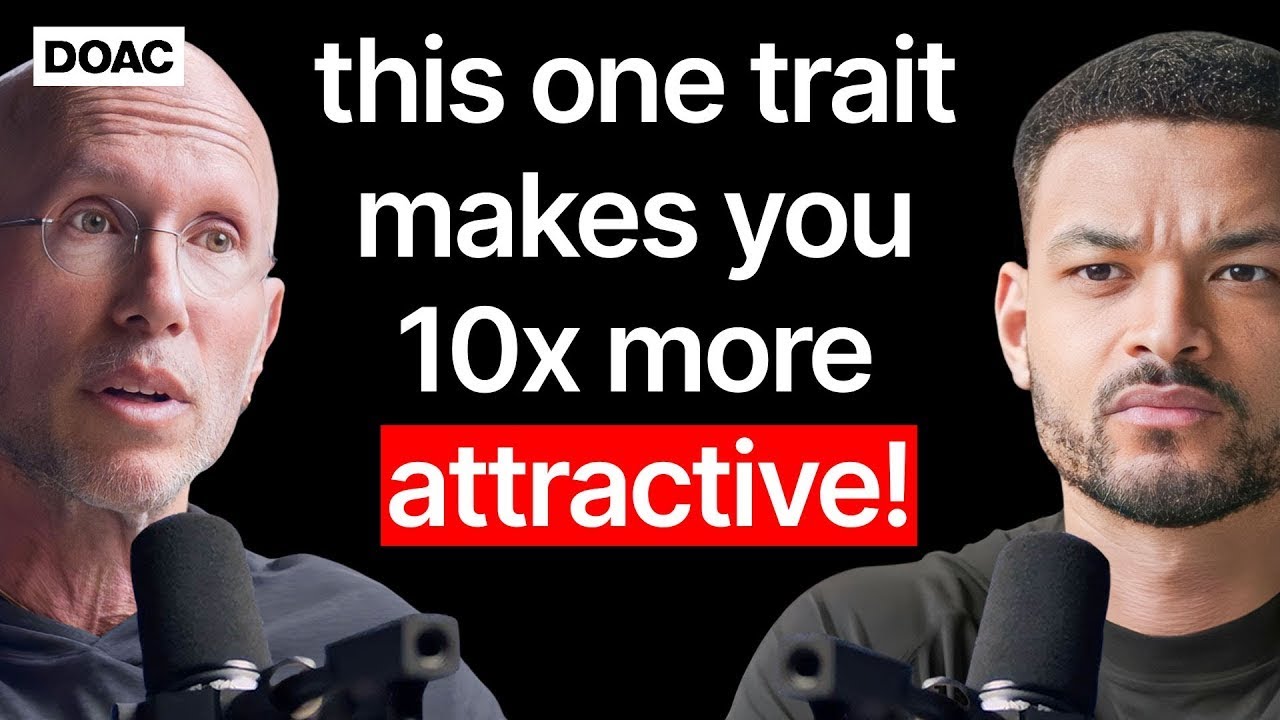
The Diary Of A CEO
Modern humans trigger chronic unhappiness and declining birth rates by prioritizing individual autonomy over evolutionary social connections.
AI-assisted summary of The Sex Psychologist: We're Not Having Enough Sex! Fat Makes You Attractive! Dr Bill Von Hippel — original source. Check the original for full context.
Source published:
Detailed notes
## Background This episode of The Diary Of A CEO, hosted by Steven Bartlett, was published on YouTube on February 17, 2025. The video features social psychologist and evolutionary specialist Dr. Bill von Hippel discussing how evolutionary psychology impacts modern love, success, happiness, falling birth rates, and human connection based on his book 'The Social Paradox'.
## TL;DR Dr. Bill von Hippel explores how evolutionary mechanisms designed for ancestral survival often mismatch with modern urban life, leading to widespread loneliness and shifting dating dynamics. The discussion covers the evolutionary roots of attraction, why humor and kindness rank as superior mate qualities, and how porn and digital dating apps disrupt real-world intimacy. Von Hippel also details the trade-off between personal autonomy and social connection, examining the impact of status, money, neurodivergence, and lifestyle choices like sleep and exercise on human happiness.
## Atmosphere & style The dialogue feels like an intellectually rich, highly engaging intellectual fireside chat between an inquisitive host and an accessible scientist. Dr. von Hippel delivers dry wit, lighthearted candor, and evolutionary clarity to complex human dilemmas, while Bartlett keeps the pace dynamic with probing personal and sociological questions. The tone shifts seamlessly from light banter about dating apps and rock stars to deep, existential reflections on human purpose, societal collapse, and the biological friction of modern living.
## Key takeaways - [00:00](https://www.youtube.com/watch?v=9gk3mNJs2FY&t=0s) Evolutionary psychology reveals that modern human behavior, emotional responses, and social instincts are still governed by mechanisms designed for ancestral survival and reproduction. - [04:40](https://www.youtube.com/watch?v=9gk3mNJs2FY&t=280s) Practicing gratitude works because it mimics ancestral survival mechanisms and aligns with human evolutionary design. - [05:35](https://www.youtube.com/watch?v=9gk3mNJs2FY&t=335s) Modern humans experience widespread unhappiness by over-prioritizing personal autonomy over social connection and community duty. - [09:01](https://www.youtube.com/watch?v=9gk3mNJs2FY&t=541s) Ancestral hunter-gatherer societies, such as the Hadza, report significantly higher happiness levels than modern Westerners due to continuous social interdependence. - [12:45](https://www.youtube.com/watch?v=9gk3mNJs2FY&t=765s) Urban living increases wealth but erodes social connection and neighborly trust, leading to lower reported happiness compared to rural environments. - [17:25](https://www.youtube.com/watch?v=9gk3mNJs2FY&t=1045s) The Easterlin Paradox demonstrates that while higher individual income increases personal status and happiness, societal wealth growth leaves national happiness scores flat over time. - [20:56](https://www.youtube.com/watch?v=9gk3mNJs2FY&t=1256s) Physical size, ambition, earned wealth, and risk-taking serve as honest evolutionary signals of male quality in human sexual selection. - [23:08](https://www.youtube.com/watch?v=9gk3mNJs2FY&t=1388s) Humor and kindness are powerful mate-selection traits, with authentic humor signaling cognitive agility and kindness ensuring long-term partner investment. - [32:17](https://www.youtube.com/watch?v=9gk3mNJs2FY&t=1937s) Female educational attainment exceeding male college graduation rates creates an economic mating mismatch, driving up unpartnered populations. - [39:59](https://www.youtube.com/watch?v=9gk3mNJs2FY&t=2399s) Digital dating apps and pornography access hijack evolutionary reward pathways, contributing to reduced real-world physical intimacy among young adults. - [43:41](https://www.youtube.com/watch?v=9gk3mNJs2FY&t=2621s) Global fertility rates in industrialized nations are dropping below replacement levels, posing long-term risks of economic and demographic decline. - [57:34](https://www.youtube.com/watch?v=9gk3mNJs2FY&t=3454s) ADHD traits likely provided an evolutionary advantage in ancestral hunter-gatherer environments where high energy and hyper-focus were essential for survival. - [01:02:31](https://www.youtube.com/watch?v=9gk3mNJs2FY&t=3751s) Human anxiety stems from the unique cognitive capability to simulate the future and project into uncertainty, which can be mitigated through present-moment mindfulness. - [01:04:08](https://www.youtube.com/watch?v=9gk3mNJs2FY&t=3848s) Regular religious attendance boosts personal happiness primarily by providing forced, structured in-person social connection. - [01:11:00](https://www.youtube.com/watch?v=9gk3mNJs2FY&t=4260s) Human dominance as an apex predator evolved from group planning, pro-social coalitions, and division of labor rather than individual physical force. - [01:19:06](https://www.youtube.com/watch?v=9gk3mNJs2FY&t=4746s) Human testicle size relative to body mass provides evolutionary evidence that humans evolved for pair-bonding alongside extra-pair copulations. - [01:29:56](https://www.youtube.com/watch?v=9gk3mNJs2FY&t=5396s) Spending money on experiences creates long-term well-being and integrated memories, whereas spending on material possessions yields diminishing status returns. - [01:43:48](https://www.youtube.com/watch?v=9gk3mNJs2FY&t=6228s) Exercise acts as a biological amplifier, magnifying both the positive recovery benefits of good habits and the negative strains of unhealthy behaviors like alcohol consumption. - [01:51:13](https://www.youtube.com/watch?v=9gk3mNJs2FY&t=6673s) Building durable social connections requires embedding shared social activities directly into existing daily routines rather than relying on spontaneous willpower.
## Detailed walkthrough ### [00:00](https://www.youtube.com/watch?v=9gk3mNJs2FY&t=0s) Introduction and Evolutionary Biology Overview
Dr. William von Hippel, a world-renowned social psychologist and evolutionary specialist, introduces the fundamental premise of evolutionary psychology: the instincts that enabled human ancestors to survive and reproduce still govern modern human behavior, often in ways people fail to realize. The discussion opens with a stark preview of modern existential shifts—declining global birth rates that could shrink many countries to half their size by 2100, the rising costs and challenges of parenting, and the futuristic concept of robot nannies easing child-rearing burdens so having children becomes an absolute positive.
Addressing the broader state of humanity, von Hippel observes that despite unprecedented modern comforts, people are not getting any happier. Young people are having less sex than they did 20 years ago, and marriage rates continue to plummet. The primary issue is a fundamental mismatch in how humans live: individuals increasingly choose short-term personal preference over deep social connection.
* **Living Alone Trends**: In 1850, only 1 in 100 Americans lived alone; today, that ratio has jumped to 1 in 7. * **Neighborly Interaction**: In the 1970s, about 1 in 3 people regularly gathered with their neighbors, while only 1 in 5 never did; today, those statistics have completely reversed. * **Urban vs. Rural Dynamics**: Over 50% of the world's population now lives in cities. Although urban residents in places like the United States are roughly 25% wealthier than their rural counterparts, people in rural areas consistently report higher levels of happiness.
---
[01:31](https://www.youtube.com/watch?v=9gk3mNJs2FY&t=91s) Channel Milestone and Subscriber Bet
Steven Bartlett pauses the dialogue to share an insider moment with the audience regarding a milestone for *The Diary Of A CEO*. With the YouTube channel rapidly approaching 10 million subscribers—its largest milestone to date—the production team pressed Bartlett into a friendly wager.
To host a massive celebration for the behind-the-scenes staff who have built the show over the years, Bartlett agreed to contribute $1 to the team's party fund for every new subscriber gained over a 30-day window. Laughing, he jokingly cautions viewers that subscribing might end up costing him an "awful" lot of money, while encouraging viewers to hit the subscribe button if they wish to show support for the crew.
---
[02:21](https://www.youtube.com/watch?v=9gk3mNJs2FY&t=141s) What Does Dr. Von Hippel Do?
Dr. von Hippel reflects on spent spending four decades in the laboratory investigating the deep-seated causes of human behavior. Rather than accepting everyday experiences at face value—such as why sharing a nice dinner with friends brings joy—he seeks the evolutionary mechanics behind these emotional reactions.
Evolution uses happiness as a tool to steer species toward behaviors that enhanced survival and reproductive success in ancestral environments. Because evolution operates without foresight, it simply favors organisms whose preferences lead to having more offspring who survive to reproduce.
* **Mechanism of Evolution**: Natural selection relies on individual variability in survival and reproduction rates; heritable traits that boost success become over-represented in the gene pool over generations. * **Species-Typical Traits vs. Individual Variability**: Traits universal to humans (such as having two eyes) represent fixed species-typical design, whereas variations in size, stature, and personality represent adaptive individual differences.
---
[04:40](https://www.youtube.com/watch?v=9gk3mNJs2FY&t=280s) Why Look to Evolution for Answers About Happiness?
To understand modern well-being, von Hippel argues that one must examine why certain behaviors yield emotional rewards. Popular self-help recommendations—such as practicing gratitude—only work because they align with psychological mechanisms designed to benefit ancestral survival or mimic those conditions.
He references biologist Robert Trivers’ concept of a "phenotypic indulgence"—a modern artifact or activity that triggers ancestral reward systems despite no longer offering adaptive value. Video games provide artificial accomplishment and dopamine rushes, while junk food packed with fat, salt, and sugar exploits prehistoric cravings for scarce, calorie-dense resources.
* "Happiness is one of the tools that evolution uses to guide us in the direction that it wants us to go."
---
[05:35](https://www.youtube.com/watch?v=9gk3mNJs2FY&t=335s) What Are We Getting Wrong as a Species?
The central mistake modern humans make is mismanaging the delicate equilibrium between **autonomy** (self-governance and immediate personal gratification) and **connection** (community, shared duty, and social bonds). Western, well-educated, urban, and wealthy populations ("WEIRD" demographics) are particularly vulnerable to over-prioritizing individual desire at the expense of social cohesion.
This hyper-individualism manifests in seemingly small daily choices. Instead of compromising to watch a movie together, two friends might split up to watch their preferred genres separately. Over time, these small decisions accumulate, leading to solitary lifestyles.
* **Declining Cohabitation and Marriage**: Across wealthy Western nations, rates of marriage and overall cohabitation have steadily declined over the last 50 years. * **Solitary Routines**: Even married couples spend less time together as specialized lifestyle choices—such as attending separate, specialized gyms—displace shared experiences.
---
[09:01](https://www.youtube.com/watch?v=9gk3mNJs2FY&t=541s) Were Our Ancestors Happier Than Us?
To illustrate the psychological cost of hyper-autonomy, von Hippel points to research on the Hadza—a hunter-gatherer tribe living in Kenya and Tanzania near the cradle of human evolution. Despite facing extreme hardship, including high child mortality rates and zero food security, over 90% of Hadza surveyed reported feeling happy over the preceding week. By contrast, only about 50% of Westerners report being happy over the same timeframe.
> "Compared to them, I'm a zillionaire, and yet they're probably happier than we are."
Von Hippel recounts visiting a wealthy friend named Stephen who lived in an opulent apartment with private cooks and stunning views. When the friend admitted to being no happier than before, von Hippel initially felt superior, believing he would appreciate such luxury. Years later, while reading Frank Marlowe’s research on the Hadza, von Hippel recognized his own hypocrisy: compared to ancestral hunter-gatherers, average modern citizens enjoy clean water, medicine, temperature control, and stable food supplies, yet continuously fail to derive lasting happiness from these comforts.
* **Child Mortality Contrast**: Historically, 150 years ago, nearly 25% of children died before age five, and childbirth remained highly dangerous for women. * **Social Insurance**: The Hadza maintain deep happiness because their culture demands constant interdependence; community members act as a living insurance policy for one another.
---
[12:45](https://www.youtube.com/watch?v=9gk3mNJs2FY&t=765s) The Price We Pay for Living in Cities
The modern decline in happiness stems from generational shifts toward urban centers and elevated autonomy. Humans began moving into cities roughly 5,000 years ago. By 1960, 1 in 3 people worldwide lived in urban settings; by 2007, that figure crossed 50%.
While cities offer economic opportunities and personal choices, they impose a hidden tax on human connection and emotional well-being. Data comparing large cities (populations over 250,000) to small rural towns (populations under 2,000) reveals that rural residents consistently report higher happiness levels, despite earning significantly less income.
* **Urban Wealth Advantage**: On average, city dwellers in the U.S. earn 25% more wealth than rural residents, yet report lower overall life satisfaction. * **The Cost of Autonomy**: Urban environments incentivize doing whatever one wants, whenever one wants, breaking down the structured social routines that keep people anchored to a tribe.
[14:39](https://www.youtube.com/watch?v=9gk3mNJs2FY&t=879s) The Loneliness Paradox of Modern Cities and Wealth
Dr. Bill von Hippel notes that data show people are significantly happier and report less unhappiness in rural areas compared to urban centers. This presents a striking paradox: for thousands of years, humans have "voted with their feet" by migrating to cities for superior educational, economic, and career opportunities. However, cities are fundamentally optimized for **autonomy**, allowing people to pursue any job or lifestyle, while quietly eroding **social connection**.
The physical proximity of city living does not translate into genuine social bonds. Although city dwellers live "cheek by jowl" with neighbors just feet away, they are far less likely to trust a neighbor with their house keys or report satisfaction with their friendships than people in the country. A similar pattern emerges with wealth and education: as income increases, the time spent with neighbors steadily declines.
Wealth enables individuals to buy independence—outsourcing needs through services like Instacart or delivery apps rather than relying on community. Conversely, lower-income communities foster tight-knit webs of interdependence out of necessity, sharing tools, child care, and pet care. Because human beings evolved to rely on each other continuously, this loss of mutual dependence strips away a primary source of fulfillment.
- **The Price of Cities:** High autonomy and career mobility come at the expense of deep social connection and neighborhood trust. - **The Trust Metric:** Rural residents are more likely to trust neighbors with their house keys than urban dwellers living feet apart. - **Interdependence:** Lower-income communities mirror ancestral social structures by needing and supporting one another daily.
---
[17:25](https://www.youtube.com/watch?v=9gk3mNJs2FY&t=1045s) Money, Status, and the Easterlin Paradox
While individual wealth increases real-time happiness—continuing past previous theoretical caps of $100,000 to well over $600,000 per year—societal wealth tells a different story. Under the **Easterlin Paradox**, as an entire society grows richer, its overall happiness remains completely flat. In real terms, Americans today earn roughly three times what they did in the 1940s, yet national happiness scores have not shifted an inch over the decades.
``` Individual Income vs. Societal Wealth: • Individual Income ↑ ==> Real-time Happiness ↑ (Past $600k/year) • Societal Wealth ↑ ==> Overall Happiness Flat (Easterlin Paradox) ```
This disparity occurs because status is inherently a zero-sum game. Unlike information—which can be shared freely with others at no loss to the giver—status depends entirely on one's position in the local hierarchy. In ancestral hunter-gatherer bands of around 100 people, an individual could easily gain status by being skilled at a specific niche. In the modern world, money has become the easiest, most visible proxy for status, fueling sexual selection and intrasexual competition.
> "If I'm richer than you, I am happier than you, because that's one way that I can be higher in status... Status matters. It's a process of sexual selection whereby both sexes are always trying to get the best partner they can."
---
[20:56](https://www.youtube.com/watch?v=9gk3mNJs2FY&t=1256s) Honest Signals of Quality and How to Be Attractive
From an evolutionary standpoint, dynamic mating competition forces individuals to display **honest signals of quality**—traits that are difficult or costly to fake. In men, risk-taking acts as a primary honest signal. Taking risks demonstrates high skill if successful, or remarkable robustness if the individual bounces back from failure. High-testosterone men take greater risks, which attracts potential mates or signals rivals to back off; once paired up and raising a family, their testosterone levels naturally decline to reduce foolish risk-taking.
Other honest physical and social signals for men include physical size, earned wealth, and ambition. Physical strength and height signal capability, while personal ambition signals a lasting commitment to provide resources over time.
- **Risk-Taking:** Demonstrates exceptional skill or physical robustness; high-testosterone men take risks to enter the mating market, dropping levels once partnered. - **Physical Size & Wealth:** Serve as direct indicators of resource acquisition and protective capacity. - **Ambition:** Signals to a partner that a man will continue working hard to support a family over the long term.
---
[23:08](https://www.youtube.com/watch?v=9gk3mNJs2FY&t=1388s) Humor, Kindness, and Why "Nice Guys" Win
Humor serves as a powerful cognitive honest signal of quality. Authentic humor is not about reciting memorized jokes; it requires an agile mind capable of linking disparate concepts together and "twisting the world 90 degrees." Because genetic expression is concentrated heavily in the human brain, mental agility directly signals underlying genetic quality.
``` Cognitive & Social Traits in Attraction: ┌──────────────┐ ┌──────────────────────────────────────────────┐ │ Humor │ ──>│ Signals mental agility & genetic quality │ └──────────────┘ └──────────────────────────────────────────────┘ ┌──────────────┐ ┌──────────────────────────────────────────────┐ │ Kindness │ ──>│ Guarantees a supportive, reliable partner │ └──────────────┘ └──────────────────────────────────────────────┘ ```
Despite the popular trope that "nice guys finish last," evolutionary history shows the opposite. Kindness frequently trumps other traits once a baseline of competence is met. In hunter-gatherer bands, individuals consistently chose kinder partners over superior hunters when forming daily hunting parties. Although kind individuals can be vulnerable to free-riders in economic terms, their prosocial behavior makes them highly sought-after long-term partners and allies.
> "Kindness ends up trumping everything... Once you cross minimal competence, kindness means you're going to look out for me, and that matters a lot."
---
[25:26](https://www.youtube.com/watch?v=9gk3mNJs2FY&t=1526s) The Evolutionary Basis of Female Attraction
The biological markers of attraction differ significantly between sexes due to contrasting reproductive constraints. Men remain fertile throughout their lives with low physiological cost. Women, however, face strict fertility limits—ancestral females rarely reproduced past age 40—and bear the severe physiological burden of carrying a pregnancy for nine months and nursing.
Consequently, male attraction heavily preferences cues of youth, health, and adequate fat reserves. Body fat was crucial in ancestral environments to sustain a fetus and supply the lipid-dense requirements for infant brain development in utero. While superficial trends shift, core markers like the **waist-to-hip ratio** remain remarkably consistent because of their tight correlation with biological fertility.
- **Waist-to-Hip Ratio:** Historical analyses of media figures (such as *Playboy* models from the 1950s onward) show a stable waist-to-hip ratio despite large shifts in overall weight trends. - **Fat Distribution:** Pre-menopausal fat stored on the hips and thighs directly supports neural development during pregnancy. - **Female Sexual Plasticity:** Women exhibit greater flexibility in physical attraction, focusing heavily on internal traits like ambition, kindness, and resource potential needed for child-rearing.
[28:43](https://www.youtube.com/watch?v=9gk3mNJs2FY&t=1723s) Male Rock Stars, Waitresses, and the Evolutionary Mechanics of Attraction
Dr. Bill von Hippel and Steven Bartlett explore the stark evolutionary asymmetries in how men and women evaluate potential mates. Women possess greater "sexual plasticity," allowing them to fall in love across a wide spectrum of physical types—from hyper-masculine figures to less traditionally athletic men like Bill Gates—provided the partner demonstrates an ability to provide, protect, and offer status. Men, by contrast, are visually wired around specific physical markers of youth and fertility.
This difference creates a profound social dynamic when high wealth or status enters the equation. A wealthy, high-status man (such as a rock star or top executive) routinely dates and marries women from every level of the socio-economic ladder, from high-society elites to minimum-wage waitresses. Conversely, a high-earning, high-status woman rarely chooses a male waiter as a long-term partner. This divergence occurs because women naturally seek indicators of status and dominance, whereas men generally care far less about a prospective female partner's financial standing.
[29:42](https://www.youtube.com/watch?v=9gk3mNJs2FY&t=1782s) The Polygenic Architecture of Homosexuality
Addressing the evolutionary enigma of homosexuality—a trait observed across the animal kingdom but exclusively practiced by a subset of humans—Dr. von Hippel references breakthrough genetic research by his former colleague, Dr. Brendan Zietsch. Complex human behaviors are polygenic, meaning they are influenced by thousands of genetic variants rather than a single "gay gene."
The data reveals a fascinating evolutionary trade-off: heterosexual men who carry a higher polygenic score for same-sex attraction actually have a higher average number of female sexual partners than straight men with lower scores. Up to a certain threshold, carrying these genetic markers enhances male attractiveness to women. Dr. von Hippel speculates this may be because these genes temper extreme, unrefined masculine traits, imparting better personal hygiene, elevated aesthetic sensibilities, and greater emotional attentiveness—qualities associated with being "metrosexual" that women find appealing. From an evolutionary perspective, genetic selection maintains these traits in the gene pool by balancing their sexual appeal against the point where a man becomes exclusively attracted to other men.
- **Key Research Citation:** Polygenic scoring study on same-sex attraction by Dr. Brendan Zietsch, published in the journal *Science*. - **Biological Asymmetry:** Human mitochondrial DNA (passed solely through mothers) reveals greater historical diversity than Y-chromosome DNA (passed solely through fathers), proving that across human history, roughly twice as many women reproduced as men.
[32:17](https://www.youtube.com/watch?v=9gk3mNJs2FY&t=1937s) The Higher Education Mismatch and Unpartnered Men
A massive demographic shift is reshaping the dating landscape: women are earning university degrees at vastly higher rates than men. In the United States, the cohort born around 1963 was the first where women attended college at equal rates to men; today, the student body ratio sits at roughly 60% female to 40% male (three women for every two men on campus).
``` +------------------------------------------------------------------------------------+ | THE EDUCATIONAL MISMATCH | | | | Women graduating college (60%) ---------> Seeking equal/higher educated men | | | | | [MATING GAP] | | v | | Men graduating college (40%) <--------- Fewer options match women's criteria | +------------------------------------------------------------------------------------+ ```
Because women hypergamously prefer partners with equal or greater educational and economic achievements, while men are generally comfortable partnering with someone of lower formal education, this 60/40 divide leaves millions of highly educated women without viable male matches. Dr. von Hippel warns that this trend creates a significant societal risk: uneducated, unpartnered young men with poor economic prospects represent the primary demographic responsible for violent crime, as marriage historically acts as the primary stabilizing and "taming" mechanism for male behavior.
- **College Demographic Stat:** 58%–60% of current university graduates are female, creating a 3:2 female-to-male campus ratio. - **Economic Dating Preferences:** Roughly 70% of women state in surveys that they want a partner who earns the same as or more money than they do.
[35:42](https://www.youtube.com/watch?v=9gk3mNJs2FY&t=2142s) Tinder Statistics and the Asymmetry of Dating Apps
The modern dating app ecosystem starkly mirrors evolutionary mating pressures. Data from platforms like Tinder illustrates that roughly 20% of male profiles receive 80% of all positive right-swipes from women, leaving 80% of men largely invisible. By contrast, approximately 80% of women consistently receive right-swipes, but their dissatisfaction stems from the low quality or unsuitability of the suitors matching with them.
``` MALE SUITORS ON APPS FEMALE SWIPES +------------------------------+ +------------------------------+ | Top 20% (High Status/Fit) | <---------- | 80% of Female Swipes | |------------------------------| |------------------------------| | Bottom 80% (Rarely Swiped) | <---------- | 20% of Female Swipes | +------------------------------+ +------------------------------+ ```
When male users attempt to signal high quality on social media and dating platforms, they rely heavily on explicit markers like luxury cars, physical fitness, and wealth indicators. However, Dr. von Hippel points out that these digital surfaces completely obscure non-visual human virtues—such as deep kindness, reliability, and parental dedication—that make men exceptional long-term life partners.
- **App Disparity:** On Tinder, the top 20% of men command 80% of female interest. - **Historical Parallel:** Historically, men who lacked overt status markers were excluded from mating entirely, reflecting the genetic reality that humanity has twice as many female ancestors as male ancestors.
[39:59](https://www.youtube.com/watch?v=9gk3mNJs2FY&t=2399s) Pornography, "SMILING," and the Decline of Physical Intimacy
Addressing the interplay between digital media and human connection, Dr. von Hippel notes that pornography acts as a biological hijack. Humans evolved in environments devoid of adult media, where sexual stimulation was tied directly to physical courtship. Today's hyper-accessible digital alternatives allow individuals to engage their reward pathways vicariously without leaving their homes.
Dr. von Hippel introduces the tongue-in-cheek acronym **"SMILING"**—*Social Media Induced Laziness In our Social habits*—to describe how online interactions substitute for real-world effort. Instead of braving cold weather, traveling across town, or navigating social anxiety at a gathering, individuals default to digital consumption.
Data highlights a drastic reduction in real-world sexual activity among young adults over the past two decades, coinciding with a surge in pornography usage:
| Metric (18–25 Year Olds) | Circa 2006 | Recent Data (Circa 2024+) | |:--- |:--- |:--- | | **Active Sexual Activity in Past Year** | ~80% | ~65%–70% | | **Pornography Consumption** | Baseline | Tripled |
Rather than facilitating real-world hookups as early tech advocates predicted, dating apps and digital media have fostered a culture where young people at the biological peak of their sexuality are having substantially less sex and consuming far more porn than previous generations.
[43:41](https://www.youtube.com/watch?v=9gk3mNJs2FY&t=2621s) Pornography, Population Collapse, and the Childbearing Dilemma
When people decide to skip going out to social gatherings due to minor friction—like costly public transit or uncertain plans—they often choose to stay home and consume pornography as a substitute for real human interaction. This reliance on "fake substitutes" replaces authentic socializing and raises concerns about broader societal trends, such as plummeting birth rates. However, Dr. Bill von Hippel argues that the global birth rate decline is actually distinct from pornography. Human evolutionary history decoupled sexual desire from reproduction long ago through modern contraception. Unlike animals or human ancestors, modern humans can engage in sex without having children, meaning that sex frequency is completely uncorrelated with family size.
Humans never evolved to specifically "want children"; rather, they evolved to have a drive for sex and a secondary instinct to nurture whatever dependent offspring result from it. When parents experience the birth of a child, a powerful, magnetic bond takes over. Dr. von Hippel shares a personal reflection: despite having adult children and feeling he had no desire for more, having another child left him completely in love with her. However, because modern medicine and contraception have intervened in this natural cycle, global fertility rates in every industrialized, wealthy country have fallen below the replacement rate of 2.1 children per woman. Without immigration, populations in East Asia and Western Europe are shrinking rapidly, leading to outcomes like Japan demolishing unsold homes. Dr. von Hippel predicts that within 50 years, current political debates on immigration will invert into nations competing fiercely to attract immigrants to prevent population collapse.
- **Global Population Peak**: Projections suggest the world population will peak between 2070 and 2090 at around 8 billion and some change before permanently declining. - **Shrinking Nations**: Many countries in East Asia and Western Europe are on track to see their total populations halved by the end of the century. - **Ecotoxicology and Libido**: Dr. von Hippel notes that lower sex drives and falling sperm counts across populations are likely driven by endocrine-disrupting pollutants and plastic hormone mimics rather than purely psychological causes.
---
[48:02](https://www.youtube.com/watch?v=9gk3mNJs2FY&t=2882s) Encouraging Fertility and the Role of AI Nannies
If tasked as a global leader with raising birth rates, Dr. von Hippel notes you cannot simply appeal to a natural desire for children, as that instinct doesn't fundamentally exist in the human psyche. Instead, society must maximize the positives of parenting while eliminating the "drudgery." He references work by Nobel laureate Daniel Kahneman on moment-to-moment happiness versus long-term satisfaction. In real-time tracking, taking care of children ranks around the same low pleasure level as doing dishes or folding laundry—far below watching TV or having sex. Yet, when reflecting on life, parents rate their children as their greatest source of joy because kids provide incredible "peak moments" and a sense of deep meaning that chores can never offer.
``` Moment-to-Moment Joy vs. Life Satisfaction (Kahneman Framework) ┌─────────────────────────────────────────┬─────────────────────────────────────────┐ │ High Moment-to-Moment Pleasure │ High Life-Reflective Satisfaction │ ├─────────────────────────────────────────┼─────────────────────────────────────────┤ │ • Having sex │ • Raising children │ │ • Watching TV │ • Achieving long-term goals │ ├─────────────────────────────────────────┼─────────────────────────────────────────┤ │ Low Moment-to-Moment Pleasure │ Low Life-Reflective Satisfaction │ ├─────────────────────────────────────────┼─────────────────────────────────────────┤ │ • Doing laundry / dishes │ • Watching TV │ │ • Routine parenting drudgery │ • Doing household chores │ └─────────────────────────────────────────┴─────────────────────────────────────────┘ ```
To encourage people to have bigger families, governments need to reduce parental friction, such as high daycare costs and sleep deprivation. Dr. von Hippel suggests that autonomous, humanoid robots (like Tesla's Optimus) could revolutionize child-rearing by taking over midnight feeds and routine care. While Steven Bartlett expresses skepticism—sharing his partner's horror at the thought of a baby mistaking a robot for a parent—Dr. von Hippel points out that humans have always practiced "alloparenting" (communal child-rearing). In hunter-gatherer societies like ancestral tribes, mothers relied heavily on group support while men hunted. A patient, perfectly programmed robot nanny with an encyclopedia of medical knowledge could be a safer, kinder, and superior alternative to underqualified human care when parents need to outsource help.
> "If you're with your kids, you're on average about doing the dishes or doing the laundry—that's how much fun your kids are. But if you ask people what gives you great satisfaction in life... they say, 'Oh, my kids give me enormous joy.'"
---
[54:28](https://www.youtube.com/watch?v=9gk3mNJs2FY&t=3268s) Marriage, Autonomy, and the Trajectory of Long-Term Happiness
Data tracking marital satisfaction over long periods shows a nuanced relationship between marriage and happiness. On average, getting married does not make a person fundamentally happier ten years later; the baseline average change is close to zero. However, tracking individual trajectories reveals distinct paths:
* **Couples Headed for Divorce**: Their happiest year was actually the year *before* their wedding. Their happiness levels began declining even before walking down the aisle. * **Average Lasting Couples**: Their happiest year is the wedding year itself. Their happiness rises slightly for the first few years of marriage before slowly returning to their pre-relationship baseline. * **The Happy Minority**: The luckiest couples experience an increase in happiness every single year for nearly a decade following their marriage.
The reason unmarried individuals score lower on long-term happiness measures isn't the lack of a marriage certificate itself, but a underlying preference for autonomy over connection. People who constantly prioritize independence—choosing to live alone or avoid deep commitments—miss out on the protective benefits of social bonding. Furthermore, general temperament plays a huge role: inherently happier people tend to be happier in their marriages and stay together, whereas individuals who get divorced often exhibited lower baseline happiness long before they even met their partners.
[57:35](https://www.youtube.com/watch?v=9gk3mNJs2FY&t=3455s) Sponsor Break: Shopify
Steven Bartlett shares how his company, Flight Studio (part of Flight Group), uses Shopify to connect with audiences worldwide and launch products seamlessly, such as his conversation cards. He notes that Shopify eliminates traditional online retail pain points for businesses of any size. Listeners are offered a special $1 per month trial period at `[shopify.com/bartlett](https://shopify.com/bartlett)`.
---
[58:34](https://www.youtube.com/watch?v=9gk3mNJs2FY&t=3514s) The Evolutionary Roots of Neurodivergence and ADHD
Dr. Bill von Hippel delves into the origins and mechanisms of neurodivergence and ADHD. Epidemiological data suggests higher rates of neurodivergence in areas with high levels of environmental toxins and pollutants. Because the human brain is inherently a "social organ" requiring complex interconnections, damage or disruption from toxins naturally impacts sociality, likely driving rising autism diagnoses. However, neurodivergent individuals have always played a crucial role in human survival: while most humans solve problems socially by consulting friends rather than innovating independently, neurodivergent individuals are less bound by social networks and are often the ones responsible for humanity's greatest technical inventions.
ADHD presents a different evolutionary trajectory. Highly heritable, ADHD traits were likely invisible or even advantageous in hunter-gatherer societies. A hunter-gatherer ancestor was never forced to sit still and focus on boring tasks; instead, individuals with ADHD possessed abundant energy and hyper-focused easily when genuinely interested, making them excellent hunters. The difficulty of sitting quietly and listening is a distinctly modern demand.
* ADHD is driven by differences in the dorsolateral prefrontal cortex, which limits a person's ability to force attention onto uninteresting tasks. * Non-neurodivergent humans excel at spreading innovations across social networks once a neurodivergent individual invents them.
---
[01:01:08](https://www.youtube.com/watch?v=9gk3mNJs2FY&t=3668s) Technology, AI, and Merging with Machines
Looking toward the future, Dr. von Hippel speculates that modern education and traditional skills like memorizing multiplication tables may become superfluous as artificial intelligence and automation advance. When asked if humans will eventually merge with technology, he considers it highly plausible. Genetic engineering to alter human traits will remain exceptionally difficult because most genes are pleiotropic (a single gene affects multiple traits) and most traits are polygenic (driven by multiple genes), meaning single-gene tweaks inevitably cause unintended side effects.
Instead, technological augmentations offer a more direct solution. Humanity already uses deep brain stimulation—inserting electrodes into specific brain regions—to alleviate treatment-resistant depression, a intervention patients describe as turning a black-and-white world into color. Similar neural modules could allow instant access to knowledge, such as speaking fluent Greek without needing a translation app.
---
[01:02:31](https://www.youtube.com/watch?v=9gk3mNJs2FY&t=3751s) The Evolutionary Purpose of Anxiety and Depression
Addressing the evolutionary purpose of mental health challenges, Dr. von Hippel explains that anxiety is the direct cost of humanity's greatest cognitive gift: the ability to simulate the future. Animals without this capability experience immediate fear in response to threats (such as fleeing a lion) but return to a calm state as soon as the danger passes. Humans, however, project forward in time, realizing that the future holds uncertainty and ultimate mortality.
Dr. von Hippel notes that sexual reproduction constantly introduces genetic variation, where traits that are beneficial in moderation can become problematic in excess.
> "If you could get yourself to be mindful in the moment and set aside the future, your anxiety will disappear because it's all future-based."
---
[01:04:08](https://www.youtube.com/watch?v=9gk3mNJs2FY&t=3848s) Religion, Happiness, and the Power of Sociality
Analyzing data from sources like the General Social Survey, Dr. von Hippel explores why religious participation strongly correlates with elevated happiness. Religion addresses the existential fear of a life without meaning by placing individuals within a grander, enduring framework. Even among non-churchgoers, those who pray report higher happiness levels than those who do not, illustrating the psychological benefits of finding inherent meaning in life.
However, the social aspect of organized religion provides an even greater boost to well-being. Regular churchgoers are roughly twice as likely to report being happy compared to non-attendees. Interestingly, this happiness effect is far more pronounced among wealthy individuals than low-income individuals. Lower-income individuals naturally maintain tight, interdependent social networks out of necessity—frequently borrowing items and relying on neighbors—whereas wealthy individuals tend to isolate themselves. Attending religious services obligates wealthy people to socialize regularly in person, fulfilling a vital evolutionary need.
* Data shows that praying alone increases personal happiness among non-churchgoers by providing a sense of meaning. * Regularly attending religious services doubles the likelihood of reporting high happiness, particularly for higher-income demographics who otherwise lack close community ties.
---
[01:07:15](https://www.youtube.com/watch?v=9gk3mNJs2FY&t=4035s) The Search for Meaning and Human Kindness
When discussing why humans gravitate toward spirituality, horoscopes, and organized religion—especially among young men—Dr. von Hippel references the psychological concept of a "god-shaped hole." He personally views life as fundamentally devoid of intrinsic meaning, stating that the best response is to make the most of our existence by embracing evolutionary drives: connecting with others and practicing kindness.
Referencing Richard Dawkins' *Unweaving the Rainbow*, Dr. von Hippel reflects on the sheer statistical improbability of being born. Out of hundreds of millions of sperm cells produced daily, only a select few ever result in human life. Compared to species with brutal survival strategies—such as Australian kookaburras, whose older chicks use specialized hooked beaks to peck younger siblings to death during droughts—humans evolved a compassionate mechanism: banding closer together, cooperating, and supporting one another through hardship.
[01:11:00](https://www.youtube.com/watch?v=9gk3mNJs2FY&t=4260s) Cooperation, Tribalism, and the Evolution of the Apex Predator
Dr. Bill von Hippel explains that the evolutionary path leading humans to the top of the food chain relied heavily on unique cognitive abilities like the division of labor. Unlike other species—such as tigers, who don't engage in infanticide or cruelty out of inherent malice, but because it is their only biological mechanism to solve specific problems—humans solved evolutionary challenges through cooperation. While early human history certainly featured its share of dark behaviors like infanticide, our primary survival strategy was working together. When our early ancestors first descended from the trees, they were vulnerable prey being eaten by larger predators. Over time, collective coordination flipped the script, turning humans into the planet's apex predator.
This dramatic shift began around one to two million years ago with *Homo erectus*. By banding together, forming strategic plans, and dividing tasks, early humans became a deadly force capable of hunting massive megafauna like mammoths. They developed the unique mental capacity to construct a hypothetical scenario in their minds—such as driving an animal toward a specific trap—and then execute it in reality. However, once humans eliminated other animals as primary threats, a new evolutionary dynamic emerged: the only remaining predator capable of killing a human was another human.
This environment forged intense tribalism. Humans evolved to protect their own in-group fiercely because neighboring groups presented an unpredictable danger. While a neighboring tribe might be peaceful, the existential risk of them being vicious required human groups to be prepared to respond with equal aggression. As von Hippel notes, evolution does not operate on morality or niceness; it operates on survival. Unlike chimpanzees—who exhibit 600 times more aggression within their own group than humans do, while remaining equally hostile toward outside groups—humans evolved to give members of their own tribe the benefit of the doubt while quickly developing tribal hostility toward outsiders. This ancient impulse still manifests in modern geopolitical rivalries and political nationalism.
* **Cognitive Superiority:** Humans succeeded by simulating future scenarios mentally and executing them through group planning and division of labor. * **Prehistoric Hunting:** *Homo erectus* routinely hunted and consumed massive megafauna, such as mammoths, through coordinated group tactics. * **Inter-Group Dynamics:** Chimpanzees are roughly 600 times more aggressive toward members of their own group than humans are, though both species show intense hostility toward external groups.
---
[01:13:19](https://www.youtube.com/watch?v=9gk3mNJs2FY&t=4399s) The Evolutionary Mechanics of Power and Body Language
Transitioning to the topic of power—a subject brought up in relation to author Robert Greene and his book *The 48 Laws of Power*—Dr. von Hippel emphasizes that evolution is strictly amoral. In the animal kingdom, "might makes right," and concept ownership does not exist; if a larger animal can take a kill from a smaller one, it simply does so. Humans are unique in their ability to conceptualize and debate abstract possession ("this is mine"). However, because no single human is physically strong enough to maintain power indefinitely—every individual must sleep, leaving them vulnerable to even the weakest member of the tribe—human power cannot rely on physical dominance alone. True power requires a combination of intimidation and pro-social behavior, such as kindness and building a protective coalition of allies who care about your survival.
When examining body language, animals rely heavily on physical postures because they lack complex speech. Submissive animals shrink their bodies to signal non-aggression, while dominant animals elevate and open their posture to intimidate others. Humans retain some of these deep-seated physical cues, but human power is primarily expressed through social and cultural capability rather than raw physical presence.
The display of power varies dramatically across human cultures. In individualistic societies like the United States, power is often demonstrated overtly through displays of wealth, confidence, and self-promotion ("we're number one"). In contrast, more collectivist cultures frown upon overt displays of dominance. In certain traditional or high-status environments, the most powerful individuals practice extreme modesty or counter-signaling—dressing casually or downplaying their authority—because their underlying status is so secure that they do not need to advertise it.
``` +-----------------------------------------------------------------------------------+ | CULTURAL EXPRESSIONS OF POWER | +------------------------------------+----------------------------------------------+ | Individualistic (e.g., USA) | Modest / Collectivist / High-Status | +------------------------------------+----------------------------------------------+ | • Overt displays of wealth | • Subtle, modest attire | | • Verbal self-promotion & dominance| • Self-effacing behavior & soft-spoken tone | | • Expanding posture & physical presence | • Counter-signaling (status is self-evident) | +------------------------------------+----------------------------------------------+ ```
* **Coalition-Based Power:** Because humans are vulnerable while sleeping, long-term power requires building supportive social networks rather than relying solely on physical force. * **Counter-Signaling:** Ultra-wealthy individuals or billionaires often avoid high-end designer brands like Louis Vuitton because public status displays are designed for middle-tier status competition; top-tier individuals derive status from undeniable real-world influence. * **Universal Cue:** Across nearly all cultures, an individual who appears relaxed and completely comfortable in a given environment is perceived as holding relatively high power.
---
[01:15:18](https://www.youtube.com/watch?v=9gk3mNJs2FY&t=4518s) The Hadza, Autonomy vs. Connection, and Modern Unhappiness
Drawing from research on hunter-gatherer societies such as the Hadza tribe of Tanzania, Dr. von Hippel highlights a central dilemma of human happiness: the trade-off between autonomy and social connection. For our nomadic ancestors, surviving required deep group integration. Individual autonomy was extremely limited because group decisions—such as migrating north or south—were made by consensus. Venturing off alone meant becoming predator food. At the same time, ancestors sought pockets of autonomy to showcase specialized skills (such as becoming the best arrow-maker or storyteller) to make themselves indispensable to the tribe.
In the modern world, this dynamic has been inverted. Thanks to modern infrastructure, humans no longer need tight-knit local communities simply to stay alive. Cities offer unprecedented opportunities for personal autonomy, drawing people in droves. However, when faced with a choice between connection and autonomy, modern humans consistently over-index on autonomy—a phenomenon von Hippel calls a form of "miswanting." Our evolutionary wiring tempts us to pursue personal independence, but abandoning social connection leads to widespread loneliness and depression. Hunter-gatherer tribes like the Hadza avoid this trap by continuously weighing group needs alongside personal desires, maintaining a balanced equilibrium between the two.
> "Every time that we get a choice between connection and autonomy, I fear that we're choosing autonomy. It's a form of miswanting... I think that we're constantly choosing to do our own thing rather than to connect, and that's steadily making us unhappy."
---
[01:17:06](https://www.youtube.com/watch?v=9gk3mNJs2FY&t=4626s) Gender Differences in Connection and Marriage Longevity
Addressing the social bonds between men and women, Dr. von Hippel notes that while both sexes require social connection, women historically evolved a stronger imperative for close interpersonal networks. This stems from the evolutionary necessity of cooperative child-rearing, where mothers relied on female allies for assistance. For men, romantic relationships often represent their primary or sole source of deep emotional intimacy.
This reliance shows up clearly in health and longevity statistics surrounding marriage. While marriage increases lifespan for both sexes, the benefit is slightly higher for men:
``` MARRIAGE LONGEVITY BENEFIT (AT AGE 65+) ====================================== Men: [████████████████████] +2.0 Years Women: [███████████████] +1.5 Years ```
This disparity exists partly because women typically provide more emotional support, social integration, and health oversight for their husbands than vice versa. Having deep connections, children, or grandchildren provides individuals with a tangible reason to live, countering the universal human fear of dying alone.
---
[01:19:06](https://www.youtube.com/watch?v=9gk3mNJs2FY&t=4746s) Monogamy, Cheating, and Testicle Size as Evolutionary Evidence
When discussing human mating systems, Dr. von Hippel references the work of anthropologist Frank Marlowe, a premier ethnographer who lived among the Hadza. Marlowe estimated that only about 20% of Hadza couples stay married for life. Unlike agricultural societies—where marriage developed as an institutionalized financial contract to consolidate land and property—hunter-gatherers do not view marriage as an economic lock-in. When a relationship ceases to function well, partners simply separate and find new mates. Thus, humans evolved primarily as serial monogamists.
Furthermore, evolutionary biology suggests that humans evolved to be serial monogamists who occasionally cheat. Von Hippel explains that sperm competition offers clear physical evidence of a species' historical mating structure:
* **Gorillas:** Live in harems where a single dominant male monopolizes females through physical force. Because rival males cannot mate with his females, there is no sperm competition. Consequently, male gorillas have extremely small testicles relative to their body size, which are held internally. * **Chimpanzees:** Practice a multi-male, multi-female promiscuous mating system where several males mate with a female in rapid succession. To maximize the chances of fathering offspring, male chimps evolved enormous testicles capable of producing massive volumes of ejaculate to physically "wash out" the sperm of rival males. * **Humans:** Human male testicle size falls squarely between gorillas and chimpanzees. If prehistoric humans had been strictly monogamous, males would have evolved tiny gorilla-like testicles. Instead, human testicular size indicates a history where pair-bonding was the norm, but clandestine extra-pair copulations ("sneaking around") occurred frequently enough to drive moderate sperm competition.
> "If we were ancestrally purely monogamous, we'd have little gorilla testicles and we don't... ours are way bigger than theirs, which suggests that we did a little bit of washing out of our own, which suggests we were monogamous, but we're also sneaking around at the same time."
* **Male Evolutionary Drive:** Cheating offered ancestral males an opportunity to pass on genetic material without incurring long-term investment costs. * **Female Evolutionary Constraints:** Because women carry pregnancies for nine months, mating with multiple partners does not increase their total numerical reproductive output the way it can for men.
---
[01:22:26](https://www.youtube.com/watch?v=9gk3mNJs2FY&t=4946s) Time Horizon, Mental Abstraction, and Dog Behavior
Comparing human cognition to other primates, Dr. von Hippel notes that while chimpanzees can communicate immediate needs or threats—such as using sign language to signal danger or demand food—they lack the ability to conceptualize or discuss events separated by space and time. They cannot reflect on what happened yesterday or plan for what will happen far in the future. Complex language evolved alongside *Homo erectus* specifically to bridge these temporal and spatial gaps, allowing humans to discuss abstract concepts, past occurrences, and future strategies.
Host Steven Bartlett draws an analogy to domestic dog behavior: if a dog owner returns home an hour after the dog has an accident on the carpet and scolds the dog, the animal cannot link the punishment to its past action. Modern psychological research shows that discipline is only effective when applied immediately during or right after an unwanted behavior. When a dog hides or looks "guilty" upon an owner's return hours later, it is not experiencing moral guilt over its past action; rather, it has learned a simple contextual association: the physical presence of feces on the floor combined with the owner's arrival equals imminent trouble.
* **Evolution of Complex Speech:** *Homo erectus* was likely the first hominid species capable of thinking about and communicating events separated by time and space. * **Animal Association Limits:** Dogs excel at associative learning (linking immediate triggers to outcomes), but lack the cognitive architecture to process delayed moral consequences for past actions.
[01:24:23](https://www.youtube.com/watch?v=9gk3mNJs2FY&t=5063s) Evolutionary Instincts vs. Future Planning in Animals and Humans
Dr. Bill von Hippel explains the crucial distinction between how animals and humans anticipate the future. While a pet dog might look guilty when standing over a destroyed couch because it anticipates a negative reaction, it lacks the cognitive ability to plan for future events or consider consequences before acting. Even highly intelligent primates like chimpanzees fail to store excess food for later in the day when fed only once every 24 hours. They act purely on present physical needs; once full, they fail to anticipate future hunger and will toss remaining food around rather than saving it for later.
In contrast, animals that do store food—such as squirrels burying nuts—are operating on evolved, innate behaviors rather than calculated future planning. The host, Steven Bartlett, relates this to his dog Pablo, who intuitively buries bones in the couch cushions despite having no experience with food scarcity. Dr. von Hippel illustrates this fixed-action pattern through meerkats, which adapt how they present scorpions to their offspring based strictly on auditory cues rather than logical reasoning. If researchers play audio of a newborn pup, an adult meerkat will kill the scorpion before offering it, even if the actual recipient is a fully capable juvenile; conversely, playing juvenile sounds causes adults to hand live scorpions to defenseless pups.
* **Chimpanzee Feeding Behavior:** Chimps provided with unlimited food in a single daily feeding fail to stash food for later hunger, living entirely in the present moment of felt needs. * **Meerkat Scorpion Training:** * *Infants:* Mothers kill the scorpion completely. * *Older Pups:* Mothers sting off the tail to let them practice hunting. * *Juveniles:* Mothers present live, intact scorpions. * *Audio Experiment:* Playing infant calls causes meerkats to kill scorpions for fully grown juveniles, proving the behavior is triggered by sound cues rather than an understanding of the offspring's actual ability.
---
[01:27:55](https://www.youtube.com/watch?v=9gk3mNJs2FY&t=5275s) Sponsorship Intermissions: WHOOP and PerfectTed
Steven takes a brief pause to discuss two of his personal investments and podcast sponsors: WHOOP and PerfectTed. He highlights WHOOP’s non-invasive, screenless design, sharing that founder Will Ahmed intentionally omitted a screen to prevent unnecessary digital distractions during meetings or workouts while silently tracking health data. Steven then transitions to PerfectTed, explainining his switch to ceremonial-grade Japanese matcha for sustained focus during long recording sessions, emphasizing its smooth, naturally sweet profile compared to bitter alternatives.
* **WHOOP Offer:** Free 30-day risk-free trial available at `[join.whoop.com/CEO](https://join.whoop.com/CEO)`. * **PerfectTed Offer:** 40% discount using code `steven40` at `perfectted.com`, with retail availability across Tesco, Holland & Barrett, Albert Heijn, and Amazon.
---
[01:29:56](https://www.youtube.com/watch?v=9gk3mNJs2FY&t=5396s) The Problem with Money: Experiences vs. Material Possessions
Returning to the conversation, Steven asks Dr. von Hippel to share pivotal evolutionary insights regarding wealth and happiness. Dr. von Hippel notes that money functions as a proxy for social status, which was manageable in small ancestral bands where anyone could realistically be the best arrow maker, storyteller, or hunter. In today's hyper-connected global society, competing in a material status game is unwinnable, as figures like Elon Musk amass resources far beyond standard imagination, and social media constantly exposes people to those with superior possessions.
Dr. von Hippel explains that spending money on material things (like luxury cars or expensive furniture) yields diminishing returns on happiness because they trigger endless status comparisons. Conversely, allocating disposable income toward experiential activities—such as a skiing trip with friends—generates lasting well-being. Experiences become integrated into one's self-identity and offer positive long-term memories, bypassing the destructive nature of material status games.
> "The problem with money is that it's partially a status game... and that status game is impossible to win right because there's just too many humans on the planet... whereas that ski holiday actually becomes part of yourself. It becomes this memory that you think back on and that you're happy when you think about it."
---
[01:32:43](https://www.youtube.com/watch?v=9gk3mNJs2FY&t=5563s) The Keys to Happiness: Family, Connection, and the Autonomy Trap
When pressed by Steven to list the top factors most correlated with living a happy, fulfilling life, Dr. von Hippel highlights two foundational evolutionary pillars:
1. **Family and Shared Rituals:** Humans evolved in tight-knit extended family units. Maintaining constant contact—or creating a chosen proxy family if biological relations are toxic—is critical. Dr. von Hippel stresses the importance of regularly eating together and sharing stories, warning against the modern habit of sitting together silently in front of a television screen. 2. **Prioritizing Connection Over Autonomy:** Sacrificing personal preference to spend time with friends or partners builds essential social bonds. Modern society has seen a sharp decline in time spent together among both married couples and friends.
Steven pushes back candidly, pointing out that driven entrepreneurs and ambitious individuals often sacrifice connection to escape financial hardship or build businesses, fearing that prioritizing social time will cause their ventures to fail. Dr. von Hippel validates this tension, acknowledging that young adults are naturally "autonomy machines." He references high achievers like LeBron James, noting that relentless drive carries an inherent price tag of loneliness.
While Dr. von Hippel encourages young strivers to pursue their ambitions, he warns against the trap of moving goalposts. Just like waiting endlessly for an erratic bus instead of walking, people often tell themselves they will sacrifice social connection for "just one more year" of work, leading to chronic isolation without guaranteed success. To avoid this, he advises establishing strict pre-determined timelines and defining clear criteria for what success actually looks like before starting.
* **Key Daily Practices for Well-Being:** * *Regular Family Interaction:* Daily phone calls or meals shared together. * *Storytelling over Screen Time:* Engaging in active conversation during meals rather than passive TV consumption. * *Balancing Ambition:* Giving up a degree of personal autonomy to engage with social circles, preventing long-term isolation during high-strive career phases. * *Setting Boundaries:* Establishing concrete exit strategies and definitions of success in advance to avoid perpetual burnout.
[01:37:46](https://www.youtube.com/watch?v=9gk3mNJs2FY&t=5866s) Practical Rules for Building Happiness
Continuing his breakdown of practical strategies for a fulfilling life, Dr. Bill von Hippel outlines why setting predetermined financial and temporal boundaries is crucial for high achievers. He cautions entrepreneurs and hard-driving professionals against constantly shifting the goalposts once they enter a project, noting that they should decide in advance how much money they need to make and how much time they are willing to invest without return.
Dr. Von Hippel strongly advises ambitious individuals to get a pet, citing research that shows having a dog or cat significantly boosts happiness. He shares a personal story from his time as a brand-new assistant professor facing a strict "seven-year tenure or get fired" timeline in the American academic system. Knowing he would operate as a non-stop "work machine," he got a dog, knowing the pet wouldn't care about his work stress and would provide unwavering companionship. He muses on how grim it is to imagine a future where people turn to robots for friendship instead.
- **Pre-set Boundaries:** Hard-driving entrepreneurs must establish precise targets for earnings and time investments in advance, because internal biases naturally push the goalposts once committed. - **The Power of Pets:** Pet ownership reliably increases subjective happiness, offering unconditional companionship during intense work phases.
---
[01:38:44](https://www.youtube.com/watch?v=9gk3mNJs2FY&t=5924s) Idle Socializing and Shared Goals
Reflecting on human evolutionary history, Dr. Von Hippel highlights that our hunter-gatherer ancestors engaged in vast amounts of seemingly "pointless sitting around and doing nothing together." In contrast, modern society offers endless entertainment options like streaming television, which displaces spontaneous, unstructured socializing. He contrasts how construction crews 20 years ago would spend lunch breaks chatting and "shooting the [__]," whereas workers today sit in silence scrolling on their phones, resulting in weaker interpersonal bonds and lower job satisfaction. He urges people to remain present during naturally idle moments.
Dr. Von Hippel also notes that lifestyle goals—whether getting fit, learning a foreign language, or taking up painting—are exponentially easier to achieve when pursued alongside someone else. Partnering up leverages social accountability: both individuals push each other to stick with the habit, avoiding the common trap of abandoning solo gym memberships after a few visits while building long-term happiness through social connection.
> "There's a lot of seemingly pointless sitting around and doing nothing together. And the problem with our world today... is that we can always be doing something... and I suspect that what we're giving up when doing that is random chitchat with friends."
---
[01:40:24](https://www.youtube.com/watch?v=9gk3mNJs2FY&t=6024s) Unveiling the Counterintuitive Effects of Exercise
The discussion transitions to Dr. Von Hippel’s work as a contractor and senior scientist on the performance science team at Whoop. Host Steven Bartlett notes his own involvement as an investor and sponsor of the brand. Dr. Von Hippel describes his role as exploring Whoop's massive datasets to uncover how sleep, strain, and recovery interact. He shares early, unpublished findings that point to a surprising phenomenon: exercise acts as a physiological amplifier for other behaviors, magnifying both positive and negative inputs.
To illustrate, Dr. Von Hippel explains that while every alcoholic drink linearly increases resting heart rate (by roughly 1 to 1.5 beats per minute) and lowers heart rate variability (HRV by roughly 3 points) up to 10 drinks, this negative impact is significantly worse on days a person exercises compared to sedentary days. Conversely, positive habits like wearing blue-light blocking glasses or dimming the lights before bed yield a much greater boost to recovery on days with exercise. Except for eating—where post-meal light exercise like a Zone 1 or Zone 2 walk aids fuel processing—Dr. Von Hippel quips that if you plan to have a "naughty day" breaking health rules, you might paradoxically be better off staying sedentary.
- **Amplifier Effect:** Exercise amplifies the biological impact of other choices; positive behaviors boost recovery more, while negative choices inflict worse strain on exercise days. - **Alcohol Metrics:** Whoop data across thousands of users shows every alcoholic drink linearly raises resting heart rate and reduces HRV, with a harsher biological penalty on workout days. - **Post-Meal Walking:** Engaging in light Zone 1 or Zone 2 walking after meals helps the body process fuel rather than store excess calories. - **Within-Person Analysis:** To avoid confounding individual differences, research models compare an individual's biomarkers directly against their own baseline on exercising versus non-exercising days.
---
[01:45:49](https://www.youtube.com/watch?v=9gk3mNJs2FY&t=6349s) Gender Differences in Sleep and Biomarker Strain
When examining human sleep needs, Dr. Von Hippel reveals groundbreaking data regarding sex differences. While common belief suggests everyone requires similar average amounts of sleep, both actigraphy data from hunter-gatherers and vast Whoop datasets demonstrate that men consistently sleep about 20 minutes less per night than women. In large sample sizes, this 20-minute gap is highly statistically significant.
Hot off the press, preliminary Whoop research indicates that men may get more "bang for their buck" per hour of sleep, recovering more efficiently than women. While the physiological mechanisms remain under investigation—such as potential differences in slow-wave sleep amplitude—the data suggests men achieve equivalent recovery in less time. Addressing the earlier alcohol-exercise interaction, Bartlett reads a hypothesis attributing the magnified biomarker strain to combined physiological stressors like increased oxidative stress, liver strain, dehydration, and inflammation. Dr. Von Hippel agrees that hydration and systemic principles play major roles, comparing the search for fundamental scientific truths to Robert Trivers' seminal work on parental investment and mating competition across species.
> "Our data suggests men sleep more impactfully, more effectively than women. That for every hour of sleep that a man gets, he gets a little more bang for the buck on his recovery than women get."
---
[01:49:05](https://www.youtube.com/watch?v=9gk3mNJs2FY&t=6545s) Sleep Hacks, Anxiety, and Circadian Hygiene
Dr. Von Hippel shares actionable findings on optimizing sleep through small, personalized habits. While individual variability is high, reading in bed generally helps people fall asleep faster and stay asleep longer by clearing daytime worries—though for some, engaging novels can have the opposite effect. Other non-pharmacological interventions that show clear, additive benefits across large populations include weighted blankets, blue-light blocking glasses, and dimming evening lights, which collectively yield 15 to 20 additional minutes of deep (slow-wave) and REM sleep.
Finally, Dr. Von Hippel highlights the destructive cycle of sleep anxiety. Survey data shows that worrying about whether one will fall asleep directly degrades subsequent sleep quality, turning subjective anxiety into a self-fulfilling physical issue. To break this feedback loop, he recommends finding cognitive distraction techniques like reading. Regarding dietary habits, he notes that moderate coffee consumption is generally safe—provided caffeine is limited after 2:00 PM for sensitive individuals—and advises restricting food intake primarily to daylight hours to support circadian alignment.
- **Bedtime Interventions:** Habits like using weighted blankets, dimming lights, and wearing blue-light blockers provide additive gains in REM and slow-wave sleep. - **Sleep Worry Loop:** Anticipatory anxiety about falling asleep independently causes poor sleep quality, requiring active psychological short-circuiting. - **Caffeine & Circadian Timing:** Caffeine after 2:00 PM disrupts sleep architecture for many, while aligning eating windows with daylight hours supports optimal circadian health.
[01:51:13](https://www.youtube.com/watch?v=9gk3mNJs2FY&t=6673s) Reconnecting in a Busy World: Practical Habits for Social Connection
Dr. Bill von Hippel transitions to the central thesis of his book, *The Social Paradox: Autonomy, Connection, and Why We Need Both to Find Happiness*. While he argues that modern humans are overly autonomous and desperately need to increase social connection, he acknowledges that telling busy people to "be more social" is a tall order. He recalls a *New York Times* op-ed where a writer decided to reconnect with all his old friends. After a whirlwind of reunions, the writer admitted he couldn't keep it up every week because he simply didn't have the time. Dr. von Hippel highlights this as a crucial lesson: modern lives are vastly different from those of hunter-gatherers, and jamming social activities willy-nilly into packed schedules guarantees failure.
To build sustainable connection, Dr. von Hippel advises taking a "Socratic approach"—knowing your own weaknesses and surrendering decision-making to established routines or environmental cues. First, pair autonomy-driven tasks with social connection by finding ways to do solitary hobbies alongside others. For instance, Dr. von Hippel loves doing *The New York Times* crossword puzzle, and his sister lives in London; rather than adding a brand-new task to their day, they now do the daily puzzle together over the phone. Second, build habit loops so connection requires zero willpower, like tying a quick phone call to an existing daily routine like eating breakfast.
- **The Social Paradox Premise:** Humans crave autonomy, but over-indexing on it leads to isolation. - **The Crossword Strategy:** Dr. von Hippel pairs his individual love for *The New York Times* crossword puzzle with catching up with his sister in London. - **Habit Formation:** Like brushing your teeth right after breakfast, social connection should be linked to daily triggers so it happens automatically without decision fatigue.
[01:53:43](https://www.youtube.com/watch?v=9gk3mNJs2FY&t=6823s) The Closing Question: Saving Humanity Through Perfect Real-Time Justice
Steven introduces the podcast's closing tradition: answering a blind question left by the previous guest. The question asks what single thing Dr. von Hippel would do—if granted ultimate power—to save humanity and make everyone happy. Dr. von Hippel answers that he would institute "perfect real-time justice." He reasons that humanity will always struggle with people being horrible to one another, but if every bad deed carried immediate, guaranteed consequences, harmful behavior would vanish. He clarifies that he doesn't mean divine justice after death, but immediate real-time accountability for actions that cause direct harm to others.
When Steven presses him on the inevitable cost or catch of such a system, Dr. von Hippel admits that no one could get away with anything anymore—joking that even his own habit of speeding would be caught. Furthermore, Steven points out the subjective nature of justice throughout history; standard views on justice shift drastically over centuries. Dr. von Hippel agrees, noting that societal consensus today might look appalling to people a thousand years from now, just as we look back on legal and moral codes from 200 years ago with horror.
- **The Magic Wand Choice:** Perfect, real-time justice where any action causing harm to others results in immediate consequences. - **Personal Admission:** Dr. von Hippel laughingly confesses to speeding regularly because he knows he can get away with it. - **The Historical Caveat:** Definitions of justice evolve over time, meaning today's ideal justice could be seen as barbaric by future generations.
[01:55:38](https://www.youtube.com/watch?v=9gk3mNJs2FY&t=6938s) Conclusion and Final Reflections
Steven praises Dr. von Hippel's work, calling *The Social Paradox* an exceptionally timed follow-up to his previous hit, *The Social Leap*. Steven observes that modern society is drifting away from its evolutionary roots, leading to widespread mental health crises, rising suicide rates, purposelessness, and opioid addiction. He emphasizes that Dr. von Hippel’s book acts as a essential course-correction, helping readers understand the delicate balance between autonomy and connection. Dr. von Hippel expresses his gratitude and excitement for readers to engage with the book's ideas. Steven closes the episode with his traditional request for listeners to subscribe to *The Diary Of A CEO*.
- **Featured Books:** *The Social Leap* and *The Social Paradox: Autonomy, Connection, and Why We Need Both to Find Happiness* by Dr. Bill von Hippel. - **Modern Dilemma:** Society's drift from communal living has driven spikes in loneliness, addiction, and mental health struggles. - **Call to Action:** Steven asks the 53% of regular, unsubscribed viewers to hit the subscribe button to support the show.
## Notable quotes > [04:40](https://www.youtube.com/watch?v=9gk3mNJs2FY&t=280s) Happiness is one of the tools that evolution uses to guide us in the direction that it wants us to go. — Dr. William von Hippel
> [09:01](https://www.youtube.com/watch?v=9gk3mNJs2FY&t=541s) Compared to them, I'm a zillionaire, and yet they're probably happier than we are. — Dr. William von Hippel
> [17:25](https://www.youtube.com/watch?v=9gk3mNJs2FY&t=1045s) If I'm richer than you, I am happier than you, because that's one way that I can be higher in status... Status matters. It's a process of sexual selection whereby both sexes are always trying to get the best partner they can. — Dr. William von Hippel
> [23:08](https://www.youtube.com/watch?v=9gk3mNJs2FY&t=1388s) Kindness ends up trumping everything... Once you cross minimal competence, kindness means you're going to look out for me, and that matters a lot. — Dr. William von Hippel
> [48:02](https://www.youtube.com/watch?v=9gk3mNJs2FY&t=2882s) If you're with your kids, you're on average about doing the dishes or doing the laundry—that's how much fun your kids are. But if you ask people what gives you great satisfaction in life... they say, 'Oh, my kids give me enormous joy.' — Dr. William von Hippel
> [01:02:31](https://www.youtube.com/watch?v=9gk3mNJs2FY&t=3751s) If you could get yourself to be mindful in the moment and set aside the future, your anxiety will disappear because it's all future-based. — Dr. Bill von Hippel
> [01:15:18](https://www.youtube.com/watch?v=9gk3mNJs2FY&t=4518s) Every time that we get a choice between connection and autonomy, I fear that we're choosing autonomy. It's a form of miswanting... I think that we're constantly choosing to do our own thing rather than to connect, and that's steadily making us unhappy. — Dr. Bill von Hippel
> [01:19:06](https://www.youtube.com/watch?v=9gk3mNJs2FY&t=4746s) If we were ancestrally purely monogamous, we'd have little gorilla testicles and we don't... ours are way bigger than theirs, which suggests that we did a little bit of washing out of our own, which suggests we were monogamous, but we're also sneaking around at the same time. — Dr. Bill von Hippel
> [01:29:56](https://www.youtube.com/watch?v=9gk3mNJs2FY&t=5396s) The problem with money is that it's partially a status game... and that status game is impossible to win right because there's just too many humans on the planet... whereas that ski holiday actually becomes part of yourself. It becomes this memory that you think back on and that you're happy when you think about it. — Dr. Bill von Hippel
> [01:38:44](https://www.youtube.com/watch?v=9gk3mNJs2FY&t=5924s) There's a lot of seemingly pointless sitting around and doing nothing together. And the problem with our world today... is that we can always be doing something... and I suspect that what we're giving up when doing that is random chitchat with friends. — Dr. Bill von Hippel
> [01:45:49](https://www.youtube.com/watch?v=9gk3mNJs2FY&t=6349s) Our data suggests men sleep more impactfully, more effectively than women. That for every hour of sleep that a man gets, he gets a little more bang for the buck on his recovery than women get. — Dr. Bill von Hippel
## Mentioned Dr. William von Hippel, Steven Bartlett, The Diary Of A CEO, Robert Trivers, Hadza, Frank Marlowe, Easterlin Paradox, Playboy, Bill Gates, Dr. Brendan Zietsch, Science, Tinder, Daniel Kahneman, Optimus, Tesla, Shopify, Flight Studio, Flight Group, Robert Greene, Richard Dawkins, Will Ahmed, Elon Musk, LeBron James, The 48 Laws of Power, Unweaving the Rainbow, Homo erectus, General Social Survey, WHOOP, PerfectTed, Louis Vuitton, Tesco, Holland & Barrett, Albert Heijn, Amazon, The New York Times, The Social Paradox: Autonomy, Connection, and Why We Need Both to Find Happiness, The Social Leap
[Source](https://www.youtube.com/watch?v=9gk3mNJs2FY)