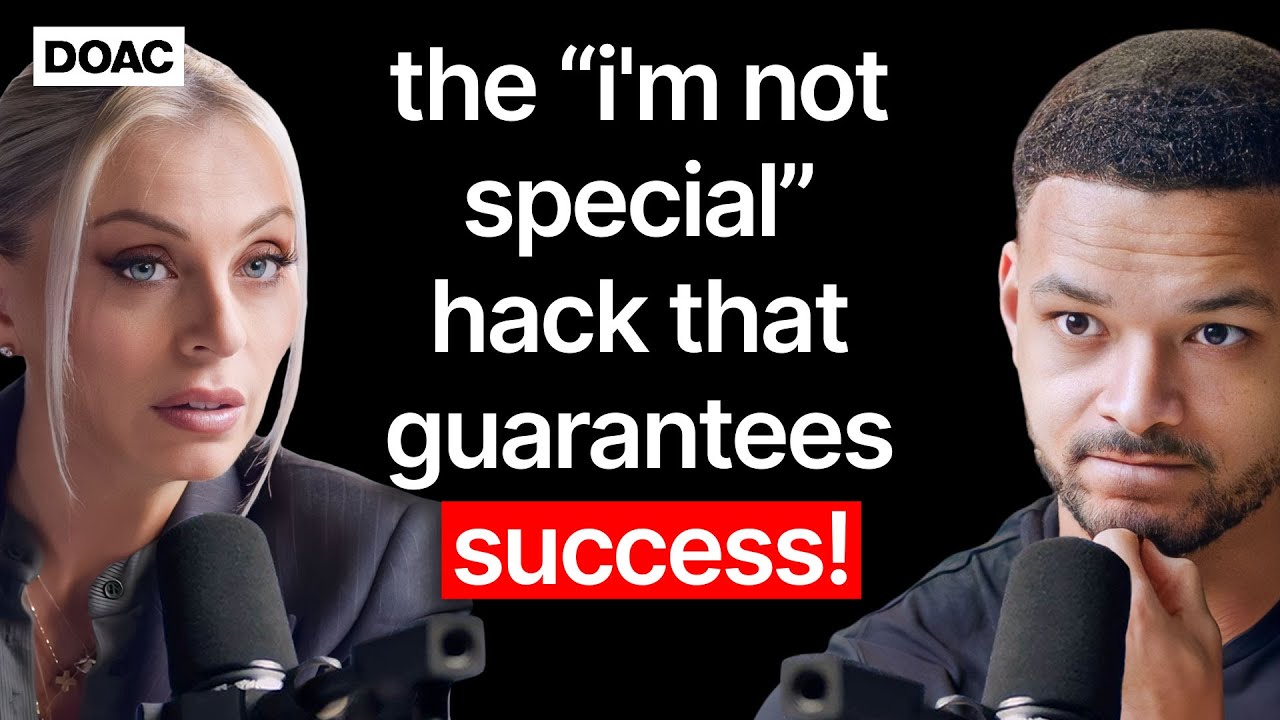
Ex-Secret Agent Poumpouras Links Susceptibility to Offense to Manipulation Risk
The Diary Of A CEO
Former Secret Service Agent Evy Poumpouras argues that emotional reactivity invites external control, making radical self-regulation and strategic restraint essential for personal security and influence.
## Background
This episode of The Diary Of A CEO, hosted by Steven Bartlett and published on YouTube on February 24, 2025, features former Secret Service agent Evy Poumpouras. According to the page description, Poumpouras shares key takeaways from her career protecting world leaders, covering mind reading, lie detection, emotional resilience, and handling dangerous situations.
## TL;DR
Former Secret Service agent Evy Poumpouras outlines practical strategies for building mental resilience, reading human behavior, and overcoming self-sabotage and victimhood mindsets. She dispels common myths around polygraphs and nonverbal communication, emphasizing the critical importance of observing actions over listening to words. Additionally, Poumpouras details the 'Animal Wheel' communication framework (Lion, Mouse, Monkey, T-Rex) to explain how individuals can de-escalate workplace conflict, navigate toxic environments, and handle high-stakes negotiations.
## Atmosphere & style
The conversation is intensely pragmatic, direct, and grounded in real-world crisis experience. Evy Poumpouras speaks with firm authority, personal candor, and zero fluff, balancing dramatic anecdotes from her time in law enforcement with actionable psychological insights. The dynamic between host Steven Bartlett and Poumpouras is highly collaborative and focused, creating a serious yet empowering dialogue about self-control, boundaries, and personal responsibility.
## Key takeaways
- [00:00](https://www.youtube.com/watch?v=7l_0ZcSuRwg&t=0s) Emotional regulation is essential for self-protection; if an individual is easily offended, they become easily manipulated.
- [05:26](https://www.youtube.com/watch?v=7l_0ZcSuRwg&t=326s) Polygraph machines do not detect lies directly; rather, an experienced examiner evaluates physiological responses such as cardiovascular activity, sweat, and respiratory changes.
- [06:50](https://www.youtube.com/watch?v=7l_0ZcSuRwg&t=410s) Social circles heavily dictate personal safety and behavior, as individuals who socialize with bad actors or toxic colleagues face significantly higher risks of victimhood or misbehavior.
- [12:23](https://www.youtube.com/watch?v=7l_0ZcSuRwg&t=743s) Effective behavioral analysis requires observing actions rather than trusting spoken words, because people naturally justify their own actions to themselves.
- [24:18](https://www.youtube.com/watch?v=7l_0ZcSuRwg&t=1458s) Building true self-confidence requires taking full ownership of decisions and resisting the urge to constantly seek approval or over-share plans.
- [43:13](https://www.youtube.com/watch?v=7l_0ZcSuRwg&t=2593s) Managing workplace disrespect or sexism requires strategic restraint and addressing issues grounded in indisputable facts rather than reacting emotionally.
- [01:04:46](https://www.youtube.com/watch?v=7l_0ZcSuRwg&t=3886s) Confronting bullies or difficult authority figures is most effective when done privately, preserving their dignity to prevent defensive reactions.
- [01:09:07](https://www.youtube.com/watch?v=7l_0ZcSuRwg&t=4147s) Predators and bullies systematically target those exhibiting low-confidence 'prey' behaviors, nonverbal posture, and timid walking styles.
- [01:31:33](https://www.youtube.com/watch?v=7l_0ZcSuRwg&t=5493s) Adopting a neutrality mindset helps avoid extreme emotional highs and lows, building psychological stability against external stressors.
- [01:45:46](https://www.youtube.com/watch?v=7l_0ZcSuRwg&t=6346s) Treating trauma as a unique identity trap creates victimhood; recognizing shared human experiences is necessary for genuine resilience.
- [02:14:08](https://www.youtube.com/watch?v=7l_0ZcSuRwg&t=8048s) The 'Animal Wheel' framework categorizes communication styles into Lion, Mouse, Monkey, and T-Rex, emphasizing that behaviors—not static personalities—are what should be analyzed.
- [02:20:10](https://www.youtube.com/watch?v=7l_0ZcSuRwg&t=8410s) De-escalating aggressive individuals requires checking one's ego, adopting strategic silence, and allowing the other party to vent completely before responding.
- [02:27:29](https://www.youtube.com/watch?v=7l_0ZcSuRwg&t=8849s) The 'Good Mouse' communication style is one of the most effective tools in intelligence gathering and negotiation for asking probing questions and gathering critical details.
- [02:30:08](https://www.youtube.com/watch?v=7l_0ZcSuRwg&t=9008s) Salary negotiations and high-stakes workplace discussions should be approached using objective facts and structured agenda-setting rather than subjective feelings.
## Detailed walkthrough
### [00:00](https://www.youtube.com/watch?v=7l_0ZcSuRwg&t=0s) Intro & The Core Mindset of Resilience
Former Secret Service agent turned human behavior expert Evy Poumpouras opens with a stark rule on emotional regulation and vulnerability: *"If I'm easily offended, I'm easily manipulated."* When people are perpetually reactive, her foundational guidance is blunt: *"Rule number one, shut the [ __ ] up."* Earning respect requires self-management, especially when others inevitably attempt to cross or disrespect you.
She outlines her background—protecting U.S. presidents, interrogating dangerous criminals, and serving as a first responder on 9/11 where she witnessed thousands die. To survive such extreme trauma without breaking, one must dismantle the belief that "I am special" or that "nobody knows what I'm going through." Realizing you are not alone is what provides the strength to endure.
```
┌──────────────────────────────────────────┐
│ Core Principle of Mental Strength │
└────────────────────┬─────────────────────┘
│
┌──────────────────────────┴──────────────────────────┐
▼ ▼
┌───────────────────────┐ ┌───────────────────────┐
│ Manage Reactivity │ │ Dismantle Specialness│
│ "Shut up" & control │ │ "You are not alone in │
│ your reactions │ │ your suffering" │
└───────────────────────┘ └───────────────────────┘
```
- **Vulnerability to Manipulation:** High emotional reactivity makes an individual predictable and easy to exploit.
- **9/11 First Responder Experience:** Evy reflects on watching mass tragedy unfold and using collective resilience rather than isolated grief to process the horror.
- **Non-Verbal & Lie Detection Tools:** Posture, hand gesticulations, vocal cues, and subtle behavioral indicators dictate whether someone appears as "prey" or exposes their deceit.
---
[02:02](https://www.youtube.com/watch?v=7l_0ZcSuRwg&t=122s) What Evy Does for People & Launching in Fear
Evy explains that her overriding compass is figuring out how to best serve others. When her book, *Becoming Bulletproof: Protect Yourself, Read People, Influence Situations, Live Fearlessly*, was scheduled to launch, the COVID-19 pandemic had just shut down the world. Her agent, PR team, and publishers unanimously advised her to postpone the release since all traditional media blitzes were canceled.
Evy paused to re-evaluate her core purpose. She realized she wrote the book to help people build resilience and live fearlessly. Given that the entire world was plunged into extreme uncertainty and fear at that exact moment, postponing would violate her principle. Against everyone's advice, she launched the book immediately.
- **Private Feedback:** DMs and messages revealed that readers used the principles to navigate personal crises and escape toxic cycles.
- **Service-First Decision Making:** Choosing purpose over optimal marketing conditions allowed her message to land when people needed it most.
---
[03:54](https://www.youtube.com/watch?v=7l_0ZcSuRwg&t=234s) People Sabotage Themselves & The Reality of Bad Actors
When asked about the underlying struggle of people seeking her guidance, Evy states plainly that the problem is almost always themselves. Humans frequently get in their own way, make poor choices, and then pretend they played no part. Every action or inaction carries a direct consequence.
In Western culture, psychological data indicates a tendency to downplay personal faults while inflating positive attributes. While this protects self-esteem, it ultimately renders people powerless by framing them as perpetual victims of external circumstances. Evy emphasizes that while bad actors undeniably exist and will hurt you in pursuit of their own self-interest, acknowledging this reality gives you situational awareness rather than learned helplessness.
> "In pursuit of their self-interest, people are going to make choices that hurt me. Period, bar none, the end. If you can live with that and understand that, you will be okay."
- **Cause and Effect:** Blaming the world blinds individuals to their own role in creating or tolerating negative outcomes.
- **Acceptance of Human Nature:** Accepting that people will act selfishly prevents shock and enables proactive boundary-setting.
---
[05:26](https://www.youtube.com/watch?v=7l_0ZcSuRwg&t=326s) The Reality of Lie Detection and Polygraphs
Clarifying her time running polygraphs, Evy demystifies how lie detection actually works. The polygraph machine itself is not a magical lie detector that goes "ping" when someone tells a falsehood; rather, the operator is the actual lie detector.
The machine measures changes in the autonomic nervous system when a suspect is asked targeted questions. Sensors track specific physiological responses to see how the body deviates from a baseline.
Polygraph results are inadmissible in court as definitive evidence. Their true utility is gaining information and observing how a subject reacts under judgment of their own actions.
- **Autonomic Nervous System Indicators:**
- **Heart Rate/Blood Pressure:** Tracked via standard blood pressure cuff.
- **Electrodermal Activity:** Plates detect microscopic changes in sweat production invisible to the naked eye.
- **Respiration:** Gauges changes in breathing depth and speed.
- **Countermeasures:** Sensor pads are placed under the subject to detect subtle movements intended to fake baseline readings.
---
[06:50](https://www.youtube.com/watch?v=7l_0ZcSuRwg&t=410s) Building Mental Strength: Look at Your Circle
To transition out of a victim mindset and build an unshakeable foundation, Evy states that step one is evaluating who you surround yourself with. While anyone has the capacity to break free from victimhood, many remain trapped because the social system they helped build and perpetuate holds them in an invisible prison.
The exception to personal accountability applies to young children, who are entirely reliant on caregivers for food, shelter, and safety. However, as adults mature, they must take full responsibility for auditing their environment and identifying who is keeping them stagnant or compromised.
- **Break the System:** Staying stuck is often a function of maintaining relationships that reinforce helplessness.
- **Adult Responsibility:** Once mature, individuals lose the right to blame childhood environments for ongoing poor choices in companionships.
---
[09:20](https://www.youtube.com/watch?v=7l_0ZcSuRwg&t=560s) How Your Associations Impact Your Risk
Even if an individual remains entirely clean and avoids illegal acts, associating with bad actors dramatically increases their personal risk profile. Citing criminological studies, Evy notes that individuals who socialize with criminals are statistically far more likely to be shot or victimized than the general population, regardless of their own behavior.
Your primary companion—especially an intimate partner—has the single greatest influence on your trajectory. Unlike friends who go home at the end of the day, a live-in partner exerts continuous influence over your life environment.
- **Intimate Partner Impact:** A partner either elevates your life or slowly "sinks your ship."
- **Normalizing Toxic Behavior:** Over time, individuals blur identity with behavior, rationalizing red flags (e.g., *"She's just hot-headed, but she did nice things for me"*).
- **External Perspective:** Outside observers can easily spot toxicity because they aren't blinded by emotional attachments.
- **Advice to Listen To:** If people who genuinely love you warn you about a partner, pay attention.
---
[12:23](https://www.youtube.com/watch?v=7l_0ZcSuRwg&t=743s) "Don't Listen to Your Opponent—Look at Them"
Evy highlights an ancient Greek proverb to govern interpersonal relationships: *"Don't listen to your opponent. Look at them. It will tell you everything."* People frequently offer sincere apologies and plausible excuses after causing harm, but their words must be ignored in favor of analyzing their actual actions.
In her post-Secret Service community (*Beyond Bulletproof*), Evy frequently counsels members facing destructive relational dynamics. Often, people do not realize whether they are being dragged down or if they themselves are the "sinker" rationalizing harmful actions.
> "Every single person sold it to themself why they did what they did. We're sellers. I can justify anything to myself if I want to."
- **Actions Over Apologies:** Apologies can be genuine, but continuous patterns of behavior reveal true intent and character.
- **Universal Malleability:** No one knows what people are truly like behind closed doors; under the right pressures or opportunities, almost anyone is capable of compromising their integrity.
- **Absence of Shock:** Recognizing human susceptibility prevents individuals from being blindsided when others act out of self-interest.
[016:11] How Your Environment Shapes You and How to Choose Your People
Steven reflects on the profound impact of environment on human behavior, referencing a study by Michael Housman alongside Harvard University research. These studies demonstrate that sitting next to a toxic colleague at work drastically increases one's probability of engaging in bad practice or facing disciplinary action—ranging from a $25\%$ increase to up to $100\%$ depending on the workplace. Conversely, being surrounded by elevating people who make the world feel malleable can actively rewire your brain's neurons for the better.
```
┌──────────────────────────────────────────────┐
│ Impact of Sitting Next to a Toxic Coworker │
├──────────────────────────────────────────────┤
│ Risk of Bad Practice: +25% to +100% │
│ Risk of Disciplinary Action: Significantly │
│ Increased │
└──────────────────────────────────────────────┘
```
When Evy asks Steven how he personally differentiates between who is good or bad for him, Steven admits that despite being a data-driven framework person in business, he relies purely on "vibes" and intuition. He outlines key career turning points where relying on internal feelings over logic proved life-changing:
* Dropping out of school at 16
* Dropping out of university at 18
* Leaving a thriving business at 20
* Quitting a global company on the brink of a second IPO at 27
In all these instances, there was no solid Plan B, but following that internal feeling was essential to building a fulfilling life.
---
[018:40] Trusting Your Gut Instincts and Overcoming the Fear of Uncertainty
Evy emphasizes that everyone gives off an energy or vibration, but people routinely dismiss their gut instincts because they cannot logically articulate *why* they feel a certain way. She points out that humans effectively have two brains: the one in their head and the one in their gut. Maintaining a steady, resilient life requires trusting your inner signal without letting others talk you out of it.
People often fear trusting their gut because they fear making mistakes or being wrong. This fear stems from a psychological chain reaction:
> "Fearlessly means... despite being afraid, I'm going to try. I'm going to do my best to live in it and embrace it to some degree."
Steven illustrates this downward spiral of beliefs using a recent disagreement with his girlfriend: when he was distracted while scheduling dates during a busy moment, she interpreted his lack of attention as disinterest, which spiraled into feeling unloved.
Evy clarifies that living *fearlessly* does not mean being completely free of fear, but rather taking action in spite of it. She stresses that you never truly fail until you choose to quit. Reflecting on her own life, her Greek immigrant parents pushed her toward 9-to-5 job security out of love and past struggles. When she joined the NYPD, her community laughed at her father Yianni, asking, "Look at Yianni's daughter... look how silly she is," thinking law enforcement was inappropriate for a woman. Remaining true to her own feelings was the only way to avoid living in deep regret.
---
[024:18] How Making Decisions Builds Self-Confidence
To cultivate a stronger intuition, Evy offers a straightforward rule: **stop asking everybody what they think**. When facing monumental, high-stakes decisions, consulting well-meaning friends or family who lack domain-specific expertise only creates noise and unsteadiness.
To build self-trust and confidence, Evy recommends:
1. **Start small:** Take full ownership of everyday choices—such as what to eat, where to go, or where to vacation—without seeking approval or running them by others.
2. **Take the driver's seat:** Stop inviting everyone into your "car" to drive for you, only to get upset when they steer in a direction you dislike.
3. **Embrace decision-making:** In law enforcement, high confidence is built because officers must make fast, independent choices on the street without a supervisor to consult.
Making decisions—even wrong ones—builds self-belief and tactical strategy. However, Evy warns against making decisions in heightened emotional states. When emotions run high, one should step back, quiet down, and wait for clarity. Resilient people accept that they do not need to have all the answers right away to be okay.
---
[028:30] Establishing Boundaries by Eliminating Over-Sharing
When Steven asks how to maintain personal boundaries against unsolicited advice, Evy offers a direct solution: **stop sharing your personal business.** People cannot invade your boundaries or clutter your mind with opinions if you keep your plans to yourself.
Evy shares her personal rule of thumb: when working on a project or business deal, she keeps quiet until the deal is fully finalized. Talking incessantly and over-sharing turns your life into an "open border."
She illustrates this with a story from her community: a grown woman was wildly tossing between career choices because she was tallying the conflicting opinions of her mother, father, and friends. Evy stopped her and pointed out how absurd it is to let outside crowds decide what career you should wake up to every single day.
[31:42](https://www.youtube.com/watch?v=7l_0ZcSuRwg&t=1902s) Building a Trusted Circle and Learning Self-Trust
When faced with tough choices, asking everyone else what to do only proves you do not trust yourself. True self-trust comes from listening to yourself more and seeking external input less. While you are the one who has to get up every morning and live with the consequences, you can gradually surround yourself with a select group of trusted people. Look for individuals whose character you admire, who navigate life with thoughtfulness, and who excel in their endeavors. Building this network takes time as people enter your life in different moments; when you find those precious gems, keep them close so you can call on them when you need to talk things through. At the same time, be willing to push people further out if the relationship stops working.
Ultimately, when you feel paralyzed by uncertainty—whether you feel only 20%, 30%, or 40% confident in various paths—you simply have to make a choice and execute it. There is no perfect choice, and there is no way to predict how things will unfold. Find peace in making a decision, knowing that if it turns out to be wrong, you are never truly stuck. You retain the ability to adapt, acknowledge the mistake, and choose a new direction.
[34:45](https://www.youtube.com/watch?v=7l_0ZcSuRwg&t=2085s) Instrumental Thinking vs. Identity Mindset in High-Stakes Situations
Procrastination often plagues personal lives because, unlike startups or high-stakes environments like the Secret Service where indecision carries immediate consequences, personal life allows you to meander for years without taking action. Moving through crises requires understanding the difference between an instrumental mindset and an identity mindset:
* **Instrumental Mindset:** Task-oriented and non-emotional. You focus strictly on the immediate next steps ($A \rightarrow B \rightarrow C$) to handle the situation. In a crisis, such as a protectee being shot at, training dictates an instrumental sequence: respond to the gunfire, jump in front, cover, shield, and evacuate.
* **Identity Mindset:** Absorbed in the emotion of the situation. You fall into a state of panic or confusion ("I can't believe this is happening"), entering a stagnant purgatory that prevents clear thinking and decisive action.
To build an instrumental mindset, focus on constant action and movement—or *kinesis*. In tactical training, agents are taught to run in zigzags when under fire because a stationary target is easy to hit, whereas shoot scores drop significantly when targets move under high adrenaline. Applying this principle to everyday life means creating momentum whenever you feel stuck, keeping yourself moving forward without getting trapped in stagnant fear.
[38:30](https://www.youtube.com/watch?v=7l_0ZcSuRwg&t=2310s) Breaking Free from Rumination and Emotional Habit Cycles
Movement inherently generates new information, which in turn informs better decisions. When you refuse to move, you become trapped in an "emotional depravity" where you stew in your problems. While it is necessary to feel and grieve, taking a metaphorical "bath" in your misery locks you in stagnation. You do not always need to analyze why something happened or attempt to figure out someone else's motives; immense freedom comes from accepting the situation and focusing strictly on how to step forward.
Continuously re-living past pain and analyzing what you should have said or done activates the exact same brain regions associated with cocaine use, making negative rumination addictively high-inducing. This repetitive cycle often turns victimhood into a deeply ingrained habit. While no one consciously wants to be a victim, people fall into predictable patterns out of fear of the unknown:
| Relationship Power Dynamic | Behavioral Traits | Consequences of the Dynamic |
|:--- |:--- |:--- |
| **High Power (Dominant)** | Controlling, dogmatic, demanding, rigid, sets the agenda. | Escalates in dominance as the other party yields, taking up more space in the relationship. |
| **Low Power (Submissive)** | Avoidant, weak, passive, constantly trying to keep the peace. | Sink deeper into suppression, losing confidence in their own voice and decision-making abilities. |
[43:13](https://www.youtube.com/watch?v=7l_0ZcSuRwg&t=2593s) Navigating Sexism and Choosing Your Battles Wisely
Experiencing institutional sexism or condescension requires strategic emotional management rather than constant confrontation. During a assignment as the assistant detail leader for Barbara Pierce Bush in Tanzania—a high-vulnerability mission involving philanthropic aid work in unsafe areas—an arriving agent mistook the leader for part of the intern staff, offering to show her to the intern room. Rather than getting angry, she calmly corrected him, letting him carry the embarrassment of his own foolish assumption.
> "Choose and fight strategically... Imagine how exhausted you'd be if you fought every buffoon that came your way."
Picking your battles saves valuable time and energy, allowing you to focus on your goals rather than getting derailed by others. A clear example of strategic focus occurred after September 11th, when the Secret Service lost its office at World Trade Center 7 and relocated to Brooklyn:
* **The Assignment:** The Special Agent in Charge (SAC) tasked a female agent with designing the new office space to make it functional and presentable for briefings.
* **The Reaction:** Although other female agents questioned taking on "interior design duty" out of 250 available agents, she chose to own the project completely and execute it flawlessly over several months.
* **The Payoff:** By taking ownership without complaint, she built significant credibility and goodwill with leadership, positioning herself for future opportunities, such as an upcoming competitive polygraph position.
[47:31](https://www.youtube.com/watch?v=7l_0ZcSuRwg&t=2851s) Capitalizing on Unconventional Opportunities in the Secret Service
Evy Poumpouras describes how a rare polygraph position opened up within the Secret Service, with only about 30 such roles existing across the entire country. When the call went out for agents to submit their bids, senior agents immediately put their names forward. Evy initially hesitated, doubting her own ability to get suspects to confess because she assumed interviewees would take one look at her and try to high-five her instead of taking her seriously. Encouraged by a senior polygraph examiner who told her she had nothing to lose, she waited until the final 30 minutes before the deadline to submit her application.
A week later, her boss called her into his office and announced that out of roughly 30 applicants, he had chosen her. He explained his reasoning directly: when he had previously given her the tedious assignment of redesigning and fixing up the office, she executed it exceptionally well without complaining or bitching once. Evy highlights how taking on an unglamorous assignment with a professional, non-complaining attitude ultimately unlocked a high-level career advancement that senior colleagues were passed over for.
- Only ~30 polygraph positions existed nationwide across the entire Secret Service.
- Out of ~30 applicants, Evy was selected because she handled a mundane office assignment without complaining.
- Her willingness to execute low-glamour work quietly built direct trust with her supervisor.
---
[48:29](https://www.youtube.com/watch?v=7l_0ZcSuRwg&t=2909s) Strategic Restraint vs. Emotional Reactivity
Steven Bartlett challenges Evy on the potential tension between maintaining firm personal boundaries and quietly accepting a task that might carry subtle prejudice. He asks whether accepting an interior design assignment—which might have been handed to her simply because she was a woman—runs counter to standing up for oneself. Evy explains that while she could have called out her boss, doing so would have instantly cost her the promotion. Instead, she evaluated the opportunity pragmatically: someone had to complete the task, she possessed a fine arts background from college, and taking the project granted her valuable exposure to senior leadership at headquarters and historic archive materials.
Evy stresses that being easily offended and making knee-jerk, emotionally driven decisions is the fastest way to get manipulated and destroy one's own career path. People often take automatic, reactive steps when insulted, only to regret burning bridges once the emotion passes. True strength lies in self-regulation and intentionality; if you choose to burn a bridge, it should be done clear-headedly with full awareness of the consequences, not because the "monkey inside your brain" took control.
> "If you're doing it cuz you're pissed, now you're being ruled by emotion. And anytime you make choices by emotion, you're going to make bad choices, bar none the end."
- **Emotional Control:** Reactive behavior signals a lack of self-regulation and exposes a person to manipulation.
- **Strategic Decision-Making:** Choose your battles based on long-term outcome rather than short-term ego validation.
- **Calculated Bridge-Burning:** It is acceptable to sever a professional relationship only when decided with a calm, rational mind rather than out of anger.
---
[51:54](https://www.youtube.com/watch?v=7l_0ZcSuRwg&t=3114s) Rule Number One: The Power of Staying Silent
When Steven asks how to train oneself out of emotional reactivity, Evy shares her single most effective habit: learning to shut up. When she feels angry or disrespected, her immediate response is to go quiet rather than react on impulse. She reveals that the very first rule in her framework of engagement is literally "shut the fuck up." She explains that over-talking causes individuals to over-share, solicit unnecessary opinions, confuse themselves, and display vulnerability to opponents.
Evy points out that feeling offended is often a choice, and trying to force everyone to respect you is an exhausting, losing battle. She recalls an early assignment when she was an NYPD officer working alongside a NYPD Queens Narcotics task force on a major case involving child pornography, counterfeit currency, and drugs. As the lead Secret Service agent entering a heavily male-dominated task force office adorned with centerfold calendars, she could immediately sense that the officers did not want her there.
- **Rule #1:** Silence prevents unnecessary exposure, confusion, and impulsive mistakes during tense situations.
- **The Respect Trap:** Demanding respect from everyone is mentally draining and counterproductive.
- **Cultural Friction:** Navigating hostile group dynamics requires assessing whether an environment is worth integrating into or walking away from.
---
[54:45](https://www.youtube.com/watch?v=7l_0ZcSuRwg&t=3285s) Navigating Hostile Work Cultures and Toxic Dynamics
During the joint task force operation, the local officers actively excluded Evy and her team. They withheld crucial tactical details during pre-operation briefings, ignored them during search warrant executions, and even abandoned them at the precinct after making arrests. Recognizing that their lack of communication posed a severe tactical danger to her team's safety, Evy made a calculated decision: she asked her group leader, Carl, never to assign her to that specific task force again, requesting that he send a male agent instead.
When Steven questions whether stepping back was "letting them win," Evy firmly rejects the notion. She emphasizes that you cannot single-handedly overhaul an entire entrenched culture or group mentality. Pushing back blindly against a toxic mob would not have proven anything and would have put lives in danger over an ego battle. Knowing when to fight and when to walk away from a toxic environment is an essential tactical skill.
- **Tactical Risk:** Withholding information in law enforcement operations directly jeopardizes physical safety.
- **Ego vs. Strategy:** Walking away from a corrupt or hostile dynamic is not "losing"; it is preserving time and safety for battles that matter.
- **Cultural Change:** One person cannot force a cultural shift in an established group that refuses to adapt.
---
[57:07](https://www.youtube.com/watch?v=7l_0ZcSuRwg&t=3427s) Handling Disrespect Across Different Personal and Professional Circles
Evy divides relationships into distinct tiers when determining how to handle disrespect. Her husband—who is also a former special agent—and close inner circle fall into the top tier. Because she values the long-term health and integrity of her marriage, she will take the time to address disrespect calmly and directly with her partner. However, for almost everyone else, she simply lets it go, evaluating whether a person is truly worth her limited time and energy.
Steven presents a scenario from his early career in a call center, where a colleague sitting next to him continuously leveled subtle, passive-aggressive digs, criticized his performance, interrupted him, and talked behind his back. He notes how being in a junior position without authority can leave a worker feeling completely powerless against workplace bullying, which later shaped his strict zero-tolerance policy against toxic behavior as a CEO.
- **Relationship Hierarchy:** Prioritize resolving issues with high-value personal relationships while ignoring slights from peripheral acquaintances.
- **Energy Conservation:** Disregarding minor disrespect preserves mental focus for meaningful goals.
- **Systemic Bullying:** Workplace disrespect often leaves junior staff feeling helpless, requiring intervention from leadership.
---
[01:01:13](https://www.youtube.com/watch?v=7l_0ZcSuRwg&t=3673s) Addressing Workplace Misconduct with Tangible Facts
Responding to Steven's call center scenario, Evy details her exact protocol for confronting workplace disrespect. Rather than attacking someone's general attitude or reacting in front of an audience, she waits for a specific moment grounded in tangible, indisputable facts. She pulls the individual aside privately to address the precise behavior directly, removing emotional drama and focusing purely on conduct and boundaries.
She notes that a person's financial situation and career stage heavily influence how they respond to workplace hostility. When an employee is struggling to survive financially, they often feel forced to tolerate mistreatment to keep their job. However, possessing financial security and self-assurance allows individuals to set firm boundaries or walk away from toxic environments without hesitation.
- **Data-Driven Confrontation:** Address workplace disrespect using specific, tangible examples rather than broad emotional complaints.
- **Private Resolution:** Handle confrontations privately to avoid triggering defensive group dynamics or public spectacle.
- **Financial Freedom as Leverage:** Economic stability provides the ultimate boundary, enabling workers to reject hostile work conditions.
<ElicitationsGroup message="Where would you like to go next with this transcript?">
<Elicitation label="Explore Evy's insights on lie detection techniques" query="Summarize Evy Poumpouras's insights and techniques on lie detection from the video."/>
<Elicitation label="Detail strategies for dealing with bullies and predators" query="What specific strategies does Evy share for dealing with bullies and stopping yourself from being targeted by predators?"/>
</ElicitationsGroup>
Here is a detailed, faithful walkthrough based on the transcript provided:
[01:02:42](https://www.youtube.com/watch?v=7l_0ZcSuRwg&t=3762s) Handling Workplace Disrespect Directly and Specificity in Confrontation
Steven recounts a time when he learned through an intermediary that someone had disrespected him behind his back on a project where Steven was not the person in power and could have easily been fired. Choosing to act immediately after hearing about a fresh incident, Steven walked up to the individual in front of a group of people and directly stated that he heard what was said in the hallway and would appreciate it if future comments were made to his face. To Steven's surprise, this large, powerful individual instantly acted like a toddler, denying it, allowing Steven to walk out having completely shut down the behavior. Evy points out that while Steven took a massive risk by adopting a "let it burn" attitude, his strategy succeeded because he spoke clearly, called out a specific time and location, and articulated the exact behavior rather than relying on ambiguous feelings.
Evy notes that vague complaints like "I feel like you treat me this way" allow manipulative people and bullies to easily gaslight you and twist the situation by claiming misinterpretation. Steven reflects on her feedback and admits that while he was articulate and maintained eye contact, a truly composed approach might have been pulling the person aside privately, as Evy would have done.
- **Key detail on effective confrontation**: Clearly state the exact moment, location, and action (e.g., "Out in the hallway just now, you said X, Y, and Z") to prevent gaslighting.
- **Risk tolerance**: Being willing to accept consequences or potential fallout ("let it burn") removes a bully's leverage over you.
---
[01:04:46](https://www.youtube.com/watch?v=7l_0ZcSuRwg&t=3886s) Evy's Stairwell Confrontation with "Jeff"
Evy shares an anecdote from her time in law enforcement to illustrate how bullies operate out of weakness and how to preserve long-term working relationships. She had inherited a case from a former agent named John, who left for the president's detail, leaving some administrative evidence paperwork incomplete. Fast forward to when Evy was transitioning to a new role and handing the case to another agent, her group leader—a peer named Jeff who oversaw her squad—decided to publicly dress her down in front of the entire team over the missing administrative paperwork to show off.
Although furious and wanting to physically react, Evy controlled her anger and waited until later in the day when she was calm. She pulled Jeff into a secure stairwell to address the matter privately, acknowledging her mistake regarding the paperwork while firmly telling him never to disrespect her in public again. By offering him the courtesy of a private conversation, she preserved his dignity while making it crystal clear that a repeat performance would not be tolerated. Jeff immediately backed down, apologized profusely, and never repeated the behavior.
- **Strategic composure**: Waiting until hot emotions cool down allows you to manage the environment rather than engaging in a chaotic public shouting match.
- **Preserving dignity**: Confronting a peer privately avoids backing them into a corner where they feel forced to fight back publicly.
---
[01:09:27](https://www.youtube.com/watch?v=7l_0ZcSuRwg&t=4167s) The True Psychology of Bullies and Criminal Predators
Steven observes that once he stood up to his workplace bully, the bully completely left him alone but redirected that same toxic behavior onto a weaker colleague. That colleague, unwilling to engage in conflict, began suppressing herself and considered quitting a job she loved. Evy connects this to her experiences interviewing criminal suspects, terrorists, and predators. On television, predators are portrayed as terrifying, apex individuals, but in reality, Evy was shocked to find they were often pathetic figures whom she "could eat for lunch."
Predators systematically target those who are easiest to victimize—statistically children, women, and the elderly—because they refuse to engage in fair fights. Bullying and predatory behavior stem from deep inner weakness, insecurity, and a void that the perpetrator attempts to fill by exerting power over someone weaker. Evy emphasizes that people give bullies far too much weight and gravitas when, in truth, they represent weakness all the way through.
- **Victimization hierarchy**: Statistically, predators target children first, followed by women, and then the elderly due to perceived ease of victimization.
- **Motivation of predators**: They target weaker individuals to fill an internal void and make themselves feel powerful because they feel weak inside.
---
[01:12:48](https://www.youtube.com/watch?v=7l_0ZcSuRwg&t=4368s) How to Avoid Being Prey: Professional Boundaries and Body Language
To stop being treated like prey, Evy explains that one must stop acting like prey. In a workplace setting, this means setting clear intentions from day one: maintaining a warm, respectful, and compassionate demeanor without trying to make everyone a personal friend or acting like a doormat. Overextending oneself creates a disproportionate, subservient dynamic where others become accustomed to taking advantage. Keeping the interpersonal "seesaw" balanced and projecting a professional, self-assured presence prevents people from sizing you up as an easy target.
Evy highlights how nonverbal communication and physical posture immediately tell a story to observers. Sitting small at a conference table, hiding your hands, or slumping communicates low self-worth and a desire to be invisible. In contrast, sitting with purpose, keeping your shoulders back, and taking up space signals confidence and control over your environment.
- **Setting work boundaries**: Maintain professionalism rather than striving to be everyone's friend, which prevents subservient role dynamics.
- **Seesaw dynamic**: Keep social interactions balanced so neither party occupies a perpetually dominant position.
---
[01:15:44](https://www.youtube.com/watch?v=7l_0ZcSuRwg&t=4544s) The New York City Walking Study and Nonverbal Cues
Evy cites a famous study conducted in New York City where researchers set up street cameras to record pedestrians walking. The footage was subsequently shown to convicted felons in prison, who were asked to select which pedestrians they would choose as prey. Surprisingly, the felons independently selected the exact same individuals based entirely on their walking style.
The study identified three distinct categories of walking styles:
* **Sloppy and Unaware**: Walking without purpose or attention to surroundings. Selected as **easy prey**.
* **Small and Timid**: Walking hesitantly, looking uncomfortable or afraid. Selected as **easy prey**.
* **Deliberate and Present**: Walking with controlled movements, shoulders back, looking around, and owning their space. **Completely passed over** by the felons.
Evy emphasizes that your posture, movement, and voice continuously project an energy that dictates how the world treats you, making intentional physical presence a crucial tool for personal safety and confidence.
[01:17:20](https://www.youtube.com/watch?v=7l_0ZcSuRwg&t=4640s) The Power of Paralinguistics and Finding Your True Voice
Evy Poumpouras introduces the concept of paralinguistics—the non-verbal vocal cues like tone, pitch, and speed that dictate how a message is received. She demonstrates how switching to a high-pitched, fast, overly accommodating voice instantly signals submissiveness and makes a speaker sound as if they don't believe they deserve to take up space. Conversely, when a person slows down, lowers their pitch to its true baseline, and takes deliberate pauses, they implicitly signal, "I deserve to be here. What I'm saying deserves to be heard." Fast talking often tells an audience that their time is being wasted and that the speaker considers themselves secondary, effectively killing their own credibility before finishing a sentence.
Our voices accumulate the weight of our life experiences. Over time, childhood reprimands—such as directives to "be a good girl," "be a good boy," or "don't talk loud"—mangle our natural vocal pitch into a manufactured voice created to satisfy external expectations. Evy shares a personal realization brought to light by her husband, who pointed out that her voice noticeably shifts to a higher pitch whenever she speaks to her mother. Recognizing that her mother represents an authority figure with a naturally high voice herself, Evy realized how easily people slip into vocal mimicry. She now deliberately avoids using high-pitched "baby talk" with her young daughter, wanting her to grow up hearing a strong, commanding female voice. She notes that children tend to imitate the same-sex parent regardless of which parent they favor emotionally.
* **Impact on Credibility:** Evy explains that when she reports breaking news on television—such as coverage of a mass shooting in New Orleans—she must use an anchored, steady vocal tone. If she delivered catastrophic news in a high-pitched, rushed voice, viewers would immediately doubt her authority, even if the facts were 100% correct.
* **The Core Principle:** How you sound carries significantly more weight and impact than the actual words you speak. Both Evy and Steven recall the awkwardness of listening to early recordings of their own voices and making conscious adjustments to project the presence required of podcast hosts or broadcast analysts.
[01:23:22](https://www.youtube.com/watch?v=7l_0ZcSuRwg&t=5002s) Non-Verbal Illustrators and Lie Detection
Moving from vocal tone to physical presence, Steven points out Evy’s use of slow, deliberate hand gestures that visually illustrate her ideas and reinforce her points. Evy jokes that her expressive hands stem from being Greek and raised in New York, but confirms that in communication science, these gestures are known as "illustrators." Using illustrators makes a speaker far more engaging to watch, commanding space and conveying confidence. Conversely, hiding hands beneath a table or sitting on them during a meeting instantly communicates insecurity, reluctance, or detachment.
Beyond audience engagement, illustrators serve as a major indicator in lie detection and behavioral analysis. When a person naturally uses hand gestures while relaying a story, it usually signals truthfulness because their body is actively reliving the memory. However, a sudden departure from this baseline offers critical intelligence:
* **Spotting the Deviation:** If a normally expressive speaker suddenly tucks their hands away or freezes when asked a specific question—such as shifting from animatedly describing a night out to statically answering who they were with—it reveals a clear behavioral shift.
* **Cognitive Load of Lying:** Deception requires immense cognitive processing. A liar must construct a plausible narrative, evaluate its believability, manage their delivery, and attempt to control the conversation simultaneously. Because the brain is experiencing an "oh shit" moment of mental overload, the body's natural physical movement often shuts down, causing the speaker to go still.
* **The Investigator's Response:** A baseline deviation does not automatically mean someone is lying, but it signals the interviewer to pause, abandon their planned line of questioning, and drill down on that specific detail.
[01:27:57](https://www.youtube.com/watch?v=7l_0ZcSuRwg&t=5277s) Faking Body Language vs. Building Real Micro-Habits
Steven asks whether someone can successfully "fake" confident body language—like adjusting their posture to avoid looking like prey—or if underlying self-esteem issues will inevitably bleed through via hundreds of subtle non-verbal cues. Evy rejects the phrase "fake it till you make it," stating that there is nothing fake about her or anyone else, and that the goal should be becoming a more self-aware version of oneself.
Instead of trying to instantly fix a deep-seated psychological puzzle, Evy advocates for making single, tiny physical adjustments. Taking up space or pulling one's shoulders back breaks the habit of remaining invisible. She recalls how, during her early days in television news, her husband would text her during commercial breaks to stop slouching and sit up straight so viewers would find her credible. Over time, repeatedly reminding herself "shoulders back" built a lasting habit.
> "I don't believe in fake it till you make it... I don't need to be a fake version of myself. But what I can be is a more aware version of myself. And something as simple as just doing one thing... I'm just not going to make myself small."
* **Micro-Habits Over Overhaul:** Lasting confidence comes from mastering one small behavioral shift at a time, celebrating that small victory, and then moving on to the next.
* **Self-Compassion:** Swapping negative self-talk ("I'm not confident") with extreme forced positivity ("I'm fantastic") is counterproductive; the objective is to anchor oneself grounded in the middle.
* **Neutrality Mindset:** Staying steady under pressure relies on a practice known as a "neutrality mindset," a concept Evy references via previous podcast guest Dr. Gabrielle Lyon.
[01:31:33](https://www.youtube.com/watch?v=7l_0ZcSuRwg&t=5493s) The Neutrality Mindset: Staying Baseline Through Highs and Lows
Former Secret Service Agent Evy Poumpouras illustrates the power of emotional stability through a story involving her doctor, Dr. Gabrielle Lyon, who is married to a Navy SEAL. When Dr. Lyon was releasing her own book, she asked Evy if she had been nervous about whether her book would perform well or make bestseller lists. When Evy replied that she never even thought about it, Dr. Lyon burst out laughing, noting how Evy, her husband, and Navy SEALs all operate identically in the middle of the spectrum.
This state of mind is what Evy defines as the **neutrality mindset**. It means avoiding extreme emotional spikes during positive events while refusing to crumble when facing setbacks. Tying happiness to favorable external conditions creates a dangerous dependency: the moment circumstances turn sour, emotional stability plummets along with them. Remaining near a neutral baseline ensures that one's inner state is not dictating by external volatility.
* "We have a neutrality mindset, which means we don't celebrate high highs, but we also don't fall down on low lows. We're always in the middle."
* "If the external world is giving me this thing that I want, I'm happy. But the flip side is that when the external world is going to give me things I don't want, I'm going to be tethered to that, and I'm going to sink down."
* "I don't like to be around people who lose their shit when things break bad... As steady as I am, they will destabilize me."
---
[01:36:17](https://www.youtube.com/watch?v=7l_0ZcSuRwg&t=5777s) Regulating Your Mind and Interrupting Toxic Thoughts
Steven Bartlett challenges this concept by raising a common obstacle: many people feel completely at the mercy of their nervous systems, catastrophizing the moment something goes wrong. Evy rejects the popular narrative that people are powerless victims of external forces. While external events occur, individual self-regulation remains a choice. To break out of negative emotional spirals or over-sensationalized highs, one must physically interrupt their own internal monologue.
Interrupting runaway thoughts can be as simple as telling oneself out loud, "Stop it," or using an intentional phrase like "cancel, cancel." Steven notes that this technique works because it forces a person to detach from their thoughts rather than identifying with them—referencing former guest Mo Gawdat, who named his internal monologue "Becky" to create distance from toxic thinking. Evy explains that this tactic directly mirrors Secret Service tactical training in Beltsville, Maryland. During intense simulated ambushes and explosions, agents are trained to speak actionable steps to themselves—such as *"stop, target, move, shift"*—to clear mental clutter, bypass panic, and maintain forward momentum under pressure.
* **Take Direct Ownership:** Everything starts and ends with self-regulation; reject the victim mentality that external circumstances dictate emotional control.
* **Interrupt the Spiral:** Use explicit vocal commands like "Stop it" or "Cancel, cancel" the moment a catastrophic thought begins.
* **Employ Tactical Acronyms:** Use simple, repeatable step-by-step commands to guide physical or mental actions when overwhelmed by acute stress.
---
[01:42:04](https://www.youtube.com/watch?v=7l_0ZcSuRwg&t=6124s) Developing Thick Skin Through Hardship and Problem-Solving
Steven reflects on the limits of mental techniques alone, pointing out that true resilience requires undergoing real hardship. He shares a harrowing story from his early 20s when his company was hacked at 3:00 a.m. His firm's high-profile global clients received personalized, abusive emails sent from his business partner's account. Navigating that crisis firsthand, alongside moments like staring at a zero-balance bank account right before payroll, provided a level of thick skin that no podcast advice could ever replicate.
Evy agrees completely: there is no shortcut or escape route around life's difficulty, and trying to avoid hardship only makes a person weaker and more fearful. Resiliency is built through active problem-solving during moments of genuine friction. Evy applies this philosophy to parenting her young daughter—allowing her to experience safe levels of frustration, such as crying while trying to climb onto a bed, so she learns to navigate obstacles independently rather than relying on external rescue.
* **Embrace Inevitable Hardship:** Attempting to avoid all stress or failure leads to heightened fear and decreased coping ability.
* **Build Coping Mechanisms Early:** Problem-solving capacity can only grow when actively navigating genuine problems.
* **Allow Safe Frustration:** Fostering resilience in children or trainees requires letting them struggle through manageable challenges rather than intervening prematurely.
<ElicitationsGroup message="To explore more strategies on resilience and communication from Evy Poumpouras:">
<Elicitation label="Explore Evy's insights on workplace bullying" query="What did Secret Agent Evy Poumpouras learn about workplace bullies and how to handle them?"/>
<Elicitation label="Learn about Evy's four communication styles" query="What are the four communication styles Evy Poumpouras discusses in her interview?"/>
</ElicitationsGroup>
[01:45:46](https://www.youtube.com/watch?v=7l_0ZcSuRwg&t=6346s) The Trap of Feeling "Special" and Living Through Trauma
Evy Poumpouras highlights that one of the single biggest obstacles holding people back is the narrative that they are uniquely "special"—specifically that their pain, trauma, and problems are so distinct that nobody else could possibly understand them. She explains that when individuals tell themselves this story, they inadvertently isolate themselves, signaling to their brain that they are completely alone. When offering solutions to people trapped in this headspace, she often gives them tough love by telling them, "I say this with all the love in my heart, you're not that special." Realizing that others share similar struggles brings solace and helps individuals recognize that life's hardships are not happening solely to them.
Reflecting on her experience as a first responder during 9/11, Evy notes that she intentionality avoids using the phrase "survived 9/11." Instead, she prefers saying she "lived through" or "thrived through" it. To her, "survive" carries a weak, negative connotation that implies she barely made it, whereas "lived through" projects power. Despite witnessing thousands of people die and assisting in the grueling search, rescue, and clean-up efforts, she credits her recovery and lack of lasting PTSD to the realization that she wasn't unique or alone in that collective tragedy. Recognizing that everyone around her was suffering enabled her to process the trauma without turning her pain into an isolating, elevated identity.
* Evy's perspective on self-perception: Believing one's trauma is unique leads to intense self-focus, over-analyzing, and hyper-critiquing, which directly correlates with higher rates of anxiety and depression.
* Objective communication: While people may watch podcasts seeking advice, many selectively consume only the details that fit their existing personal narrative.
[01:51:18](https://www.youtube.com/watch?v=7l_0ZcSuRwg&t=6678s) The Addiction to Victimhood and Identity as a Shield
Steven Bartlett brings up the book *The Courage to Be Disliked*, sharing a core insight that spun his perspective: past events do not strictly determine our current lives; rather, people often leverage past trauma to achieve a subconscious goal today. He illustrates this with the example of a 27-year-old living in their mother's basement. While they might claim to want a job, remaining in that position serves a hidden function—it secures continuous sympathy and attention. Over time, that sympathy becomes an addictive, self-destructive status quo that the individual fears losing.
Steven shares a personal story about someone close to him whose entire identity revolves around being a "heroic victim." Within 60 seconds of meeting anyone, this person tells a story about how terribly they were treated and how they managed to overcome it. Although they were genuinely victimized in the past, the original predator is gone, leaving them searching for new predators in every relationship to sustain their narrative—destroying their family, home, and finances in the process. Evy notes that this dynamic closely mirrors psychological phenomena like Munchausen syndrome (or histrionic patterns), where individuals feign illness or victimhood purely for the influx of care and validation.
* *The Courage to Be Disliked* core concept: People utilize past experiences to justify current behaviors and maintain familiar, protective identities.
* Identity protection quote: People will often go to great lengths to destroy things around them—including themselves—before they dare edit their own identity.
* The reality of help: For those attached to victimhood, receiving actual aid or making constructive choices becomes secondary to defending their victim status.
[01:56:08](https://www.youtube.com/watch?v=7l_0ZcSuRwg&t=6968s) Instrumental vs. Identity Mindsets and Leadership Empathy
Evy contrasts the "identity mindset" with the "instrumental mindset." Those operating from an identity mindset are hyper-focused on themselves, remaining stuck in an emotional state of *"I can't believe this is happening to me."* Conversely, those with an instrumental mindset are task-oriented problem solvers who just want to know what steps to take without emotional fluff. She emphasizes that agencies like the U.S. Secret Service operate strictly in an instrumental mode out of necessity—because letting emotional complaints distract from the task can lead to loss of life. When managing someone stuck in an identity mindset, leaders must listen enough to let them offload emotional noise before steering them into an instrumental space.
Addressing how leaders view their teams, Evy cites a Harvard Business Review finding counterintuitively showing that as people rise in organizational leadership and endure more hardships, their empathy often decreases. Having successfully overcome their own challenges, high-level leaders look at struggling employees with the mindset of *"I got through it, so please get it together."* Furthermore, executives carry immense cognitive loads trying to keep the organization afloat, leaving them little bandwidth for individual emotional hand-holding—a dynamic lower-level employees often mistake for coldness rather than instrumental focus.
- **Instrumental Mindset:** Focused on problem-solving, task completion, and practical execution without emotional interference.
- **Identity Mindset:** Centered on personal feelings, self-focus, and emotional processing; highly susceptible to anxiety and over-analysis.
- **Leadership Dynamics:** Higher-ranking managers often display less empathy because they manage broader operational pressures and expect employees to navigate challenges independently.
[02:00:48](https://www.youtube.com/watch?v=7l_0ZcSuRwg&t=7248s) Perfect Ted and Vanta Sponsorships
Steven Bartlett highlights two podcast sponsors that keep his operations running and secure. First, he discusses **Perfect Ted**, a matcha energy brand in which he invested over **1,000,000 pounds**. After switching to matcha as his primary energy source to stay focused through marathon recording sessions, he partnered with their team because of their dedication to sourcing ceremonial-grade matcha directly from Japan. He addresses those who claim they dislike matcha, explaining that unlike cheap alternatives that taste bitter or grassy, Perfect Ted is naturally sweet and smooth. He notes that listeners who buy matcha at spots like Blank Street or Joe & the Juice are likely already consuming Perfect Ted. He offers the code `steven40` for **40% off** at `perfectted.com` and notes availability at Tesco, Holland & Barrett, Albert Heijn in the Netherlands, and Amazon in the US.
Next, Steven transitions to cybersecurity, stressing that maintaining compliance is becoming increasingly critical and complex for both first-time founders and seasoned professionals. He introduces **Vanta**, a platform designed to take the friction out of compliance by automating security proof across more than **35 frameworks**, including **SOC 2** and **ISO 27001**. He notes that centralizing workflows with Vanta allows teams to answer security questionnaires up to **5 times faster**.
- A recent IDC white paper reveals that companies using Vanta save over **$535,000** annually and see the platform pay for itself within **3 months**.
- Viewers can access an exclusive discount of **$1,000 off** by visiting `[vanta.com/steven](https://vanta.com/steven)`.
---
[02:02:51](https://www.youtube.com/watch?v=7l_0ZcSuRwg&t=7371s) People Don't Want to Be Victims Anymore
Returning to the conversation, Steven reveals that the single most replayed clip from their previous interview was Evy discussing the dangers of victimhood. Evy expresses genuine surprise ("Stop, really?") and reflects on why that message resonates so deeply. She believes people are exhausted from staying in a victim mindset because "it's not working out for them." Most people tuning into podcasts like this are actively trying to improve their circumstances, and they recognize that wallowing in victimhood prevents them from living a full, meaningful life. Evy explains her personal guiding philosophy: "if I go tomorrow, am I okay to go?" Living with that awareness forces clarity on whether you're living fully or getting consumed by minor slights.
Evy critiques the modern obsession with constantly seeking external validation, demanding respect, and expecting everyone to like you. If you go through life fighting everyone who disrespected or failed to validate you, you will never accomplish anything meaningful. She underscores that while respect is wonderful when received, nobody is entitled to it, even with a background as a police officer and Secret Service agent: "I can sit and check every single box off... There are still no guarantees you'll give it to me." Furthermore, she calls out the self-absorbed nature of hyper-focusing on charm or forcing people to like you: "Who are you making that about? You." Shifting the focus away from "me, me, me" toward being of service to others instantly lowers anxiety, quiets internal chaos, and creates a far calmer, richer life.
- Demanding universal respect and affection is a setup for frustration, as no amount of good behavior guarantees how others will treat you.
- Pursuing constant charisma and validation is inherently self-centered rather than service-oriented.
- Redirecting attention from personal entitlement to helping others reduces depression and anxiety.
---
[02:07:41](https://www.youtube.com/watch?v=7l_0ZcSuRwg&t=7661s) Should We Make People Like Us?
Steven asks whether we should actively try to make people like us, and Evy responds with an immediate "No," explaining that doing so is inherently fake and a form of manipulation. She uses her presence on the podcast as an example: if she spent the interview worrying about whether Steven liked her or thought she was smart, she would be manipulating the dynamic for her own ego rather than focusing on giving the audience valuable insights. Attempting to constantly charm and manipulate people is a major red flag often associated with narcissistic personality disorder. When observing someone exerting heavy charm, Evy always asks herself: "What is motivating this person?"
```
┌─────────────────────────────────────────────────────────┐
│ Authentic vs. Manipulative │
├───────────────────────────┬─────────────────────────────┤
│ Manipulative Approach │ Genuine Approach │
├───────────────────────────┼─────────────────────────────┤
│ Focuses on "me, me, me" │ Focuses on being of service │
│ Uses tips, tricks & tactics│ Adapts to the environment │
│ Seeks short-term charm │ Builds long-term trust │
└───────────────────────────┴─────────────────────────────┘
```
When Steven brings up authenticity, Evy prefers the term "genuine" because authenticity can sometimes be used as an excuse to ignore others ("I'm going to be me, and whoever likes it, likes it"). Instead, true effectiveness comes from being genuine while remaining adaptable—adjusting how you communicate so the listener actually understands you. She highlights how forward-thinking businesses are shifting away from transactional, short-term sales tactics in favor of building authentic, long-term relationships. People possess an innate ability to sense when someone is using superficial techniques on them, and while parlor tricks might yield short-term results, people will eventually drop you over the long run.
- Trying to force people to like you is a form of self-serving manipulation.
- High levels of performative charm often mask narcissistic motivations.
- Genuine adaptability and building long-term trust beat short-term transactional tactics every time.
---
[02:11:39](https://www.youtube.com/watch?v=7l_0ZcSuRwg&t=7899s) Why Rejection Is the Way to Resilience
Steven notes that while watching Evy’s BBC Maestro course on the art of influence, he was struck by a quote where she tells students, "I wish you as much rejection as possible, because that will increase your self-confidence." He asks who on earth would willingly choose to suffer rejection. Evy explains that embracing rejection is the single best way to build genuine resilience and thicker skin. True influence is not about tricks; it is about cultivating an authentic presence that makes people naturally want to be around, work with, and talk to you.
Building that level of influence requires deep self-understanding and emotional stability, neither of which can be developed without facing pushback and failure. Rather than fearing rejection like everyone else, Evy urges people to "be the deviant" and embrace what terrifies the crowd. The more you voluntarily face rejection, the less power it holds over you, ultimately forging an unshakeable sense of self-confidence.
- True influence comes from authentic presence, not manipulative shortcuts.
- Confidence and resilience are forged by enduring pushback and rejection.
- Facing what terrifies the majority desensitizes you to fear and builds inner strength.
---
[02:14:08](https://www.youtube.com/watch?v=7l_0ZcSuRwg&t=8048s) The Four Communication Styles (The Animal Wheel)
Steven asks Evy to explain the "Animal Wheel," a communication and behavioral framework featured in her course that helps individuals understand their own communication style and decode others. Evy explains that the framework was developed by UK researchers Dr. Laurence Allison and Dr. Emily Allison, who coded thousands of hours of law enforcement and intelligence interview tapes to categorize human behavior into four distinct animal archetypes: Lion, Mouse, Monkey, and T-Rex.
```
[ L I O N ]
(In charge, sets agenda)
│
│
[ T - R E X ] ─────┼───── [ M O U N C E / M O U S E ]
(Conflictual, harsh) │ (Patient, humble, learning)
│
│
[ M O N K E Y ]
(Warm, relational, fun)
```
Evy emphasizes a crucial rule of behavioral analysis: "we don't label people, we label behavior." Because human behavior is fluid, an individual can shift between different animal archetypes depending on the situation and environment.
- **Lion**: In control, authoritative, sets the agenda, and leads the conversation (e.g., a boss running a team meeting).
- **Mouse**: Patient, humble, quiet, eager to learn, and actively seeking guidance or information.
- **Monkey**: Warm, sociable, relational, informal, and focused on building rapport through banter.
- **T-Rex**: Aggressive, opinionated, confrontational, argument-driven, and harsh.
[02:15:45](https://www.youtube.com/watch?v=7l_0ZcSuRwg&t=8145s) The Four Communication Styles: Lion, Monkey, T-Rex, and Mouse
The communication framework Evy Poumpouras outlines uses four distinct animal archetypes: Lion, Monkey, T-Rex, and Mouse. Each style has both a healthy, functional "good" version and a toxic, counterproductive "bad" version. The interaction between these archetypes is dynamic and fluid. While viewers tuning into a podcast often intentionally adopt a humble "Mouse" mindset—staying open, listening, and seeking guidance—every individual shifts styles depending on the social setting and their emotional state.
* **Monkey:** The good version is warm, social, respectful, and engaging—asking "Hi, how are you?" and genuinely connecting with others. The bad version manifests as desperation, pleading, and transactional behavior, such as constantly cornering people with unsolicited pitches ("Hey Steve, I got a great idea, let me pitch you real quick!").
* **T-Rex:** The good version is direct, frank, and forthright, tackling issues head-on without flinching. The bad version is aggressive, sarcastic, punitive, and fighting-ready—attacking people directly or destroying reputations behind their backs through slander and gossip. Evy admits that T-Rex is her natural default style, requiring conscious self-regulation to avoid overstepping.
* **Lion:** The good version represents confident leadership—setting the agenda, guiding the team, and taking clear authority. The bad version is dogmatic, rigid, and demanding, insisting on compliance simply because "I said so."
* **Mouse:** The good version is humble, observant, and genuinely seeking guidance. The bad version is weak, submissive, passive-aggressive, and avoidant, making the person easy target for predators.
---
[02:16:42](https://www.youtube.com/watch?v=7l_0ZcSuRwg&t=8202s) How to Adapt Your Style to Match Your Opponent
Mastering interpersonal communication is not about dominating every room, but about identifying which archetype the other person is displaying and consciously choosing the appropriate counter-response. When two people simultaneously insist on being "Lions," they inevitably clash; both try to talk over each other, and no real communication occurs. If someone is operating as a Lion—leading a meeting or laying out an argument—the most effective counter-position is often the good "Mouse," listening intently and absorbing critical details before responding.
Steven recalls an instance where someone spoke behind his back. Evy points out that the offender was acting as a "bad T-Rex" by launching indirect attacks. Steven’s response—directly addressing the person with "If you have something to say, please say it to me"—was a textbook display of a "good T-Rex": clear, frank, and forthright without resorting to personal insults or cheap shots.
---
[02:20:10](https://www.youtube.com/watch?v=7l_0ZcSuRwg&t=8410s) Managing Conflict: The Coffee Shop Lesson and Ego Control
Evy uses the animal framework to illustrate how to handle explosive, high-conflict scenarios. She shares a case study from a major national coffee chain that sought her counsel after customers frequently flew into rages over incorrect orders. In one extreme case, a manager feared an irate customer was about to physically assault the barista behind the register. Despite the staff fixing the drink and apologizing, the customer remained belligerent.
```
[ Aggressive / Control State ]
Customer: Lion / T-Rex
│
Staff Action: │ "Calm down! We're fixing it!"
▼ (Interruption = Fueling the Flame)
Escalation & Rage
│
Correct Action: │ Go Good "Mouse"
▼ (Let them vent -> Ego out of the way)
De-escalation & Resolution
```
Evy points out that the angry customer was fluctuating between "T-Rex" (aggressive and sarcastic) and "Lion" (attempting to force total control). The store staff inadvertently escalated the conflict by constantly interrupting the customer to tell them to calm down.
> "When you have somebody in that aggressive state, you have to let them go... Interrupting them and telling them 'calm down' only aggravates them more. Let them vent. Let them say what they need to say."
In high-stress situations, de-escalation requires stepping back into a "good Mouse" posture: suppressing the impulse to defend one's ego, remaining calm, and letting the other party vent completely until they have depleted their emotional energy and are finally ready to listen.
- **Check Your Ego:** In Secret Service and police interview rooms, the golden rule is "Check your ego at the door." If you bring your personal pride into an interrogation or negotiation, you have already lost.
- **Strategic Listening:** Remaining quiet while someone vents is not passivity; it is a tactical choice to gain the upper hand once the emotional storm passes.
---
[02:24:14](https://www.youtube.com/watch?v=7l_0ZcSuRwg&t=8654s) De-escalation Under Fire: Police Training and Psychological Fitness
The conversation shifts to law enforcement and the vital importance of emotional composure under severe provocation. Steven notes that untrained or unstable officers often take the bait when suspects turn into aggressive "T-Rexes," responding with excessive force or verbal abuse that ultimately ruins their careers. In contrast, elite officers maintain absolute composure even when facing extreme verbal harassment.
Evy explains that policing structures differ dramatically across regions. In the UK, a unified national police force maintains standardized hiring and training. In the United States, over 17,000 independent law enforcement agencies operate, leading to vast disparities in vetting and training standards.
```
US vs. UK Police Structures
United Kingdom United States
┌──────────────────────┐ ┌──────────────────────┐
│ 1 National Force │ │ 17,000+ Agencies │
│ Standardized Hiring │ │ Varied Standards │
│ Single Command │ │ Patchwork Training │
└──────────────────────┘ └──────────────────────┘
```
When Evy joined the NYPD, candidates were subjected to rigorous psychological evaluations, such as the Minnesota Multiphasic Personality Inventory (MMPI-2), to screen out narcissistic, overly reactive, or unstable personalities. She recalls a vivid lesson from her time in the NYPD Academy when recruits were taken on physical training runs along Manhattan's FDR Drive before 9/11:
> "People are driving by doing 50–60 mph, spitting at you, cursing you, giving you the finger, calling you a pig. The first time it happened, I stopped running, turned around, and started yelling back. My PT instructor grabbed me and said, 'You don't do that. If you're going to do that, this isn't for you. When you go out on the street, people will hate you, and if you can't control yourself, you can't manage this job.'"
That moment taught her a fundamental law of conflict: controlling others always begins with absolute self-control.
---
[02:27:29](https://www.youtube.com/watch?v=7l_0ZcSuRwg&t=8849s) Why the "Good Mouse" Style Prevails in High-Stakes Intelligence
Steven asks whether individuals need to master and adapt all four communication styles to be successful, noting that many people default exclusively to being nice and submissive ("Mouse"). Evy clarifies that while people who remain trapped in the *bad* Mouse quadrant (weak, avoidant, submissive) will struggle to lead and often end up exploited, the *good* Mouse is actually the most powerful tool in communication and intelligence gathering.
Rather than trying to dominate every room as a Lion, taking on the role of a humble "Mouse" allows an operative, negotiator, or leader to remain quiet, observe, and ask probing questions while the other party reveals their motivations, values, and vulnerabilities.
- **Information Advantage:** You learn nothing while speaking; you gain everything while listening.
- **Strategic Silence:** In an interrogation or business negotiation, asking an open-ended question like "Tell me what matters to you most in this partnership" and then staying completely silent forces the other party to lay out their entire position.
- **Adaptability:** Successful interviewers and negotiators seamlessly pivot between styles—using Lion to set clear boundaries, T-Rex to address direct lies, Monkey to build rapport, and Mouse to extract critical intelligence.
<ElicitationsGroup message="Where would you like to go next?">
<Elicitation label="Explore the next part of the transcript" query="Please provide the detailed walkthrough for Part 11 of this transcript."/>
<Elicitation label="Deep dive into de-escalation techniques" query="Can you break down specific tactics for de-escalating angry people using the Lion and Mouse framework?"/>
</ElicitationsGroup>
Here is the detailed, faithful walkthrough covering the final section of the podcast transcript:
[02:30:08](https://www.youtube.com/watch?v=7l_0ZcSuRwg&t=9008s) Adapting Communication Styles and Negotiating a Pay Raise
Steven Bartlett and Evy Poumpouras discuss how different behavioral profiles—represented as animals on a communication framework—interact in leadership and negotiation. Steven points out that he would never appoint someone as a leader if they were purely conflict-averse or lacked a little bit of "lion" in them, calling it irresponsible to put them in a position where they cannot withstand challenge with calm, composed authority. Evy agrees, clarifying that effective leadership and life require a balance of all animal profiles in their healthy forms, knowing precisely when to deploy each one.
When Steven asks how to apply this framework to negotiate a salary raise, Evy stresses that one must enter the conversation prepared with objective facts rather than subjective feelings. Coming in with a list of concrete results—such as deals closed, accounts secured, and total revenue generated—eliminates ambiguity and leaves little room for a supervisor to counter with personal opinion. Evy explains that the employee asking for the raise should assume the "good lion" role: being structured, methodical, in charge of setting the agenda, and allowing the employer to speak and feel heard.
- **The Danger of Subjectivity**: Expressing compensation requests through "I feel" or "I think" invites employers to respond in kind, shutting down the negotiation.
- **Role of the Lion**: Lions lead and set the structure, but a "good lion" listens attentively to the counterparty rather than acting domineering or harsh ("bad lion").
[02:33:05](https://www.youtube.com/watch?v=7l_0ZcSuRwg&t=9185s) Dealing with Difficult Personalities and Conflict Regulation
Steven roleplays a resistant boss who bluntly refuses a raise simply because he prefers to keep the money himself. Evy identifies this selfish, aggressive stance as "bad T-Rex" behavior—characterized by attacking, sarcastic, or domineering tactics. She explains a fundamental rule from behavioral training: while "mouse" and "lion" roles swap because two people cannot be in charge simultaneously, facing a "T-Rex" requires matching them with "good T-Rex" behavior. That means responding directly, frankly, and forthrightly without becoming aggressive or emotional.
In the roleplay, Evy demonstrates how to mirror this directly by stating: *"You're saying you're not going to give me a raise because you want to keep all the money for yourself... I don't know if I can continue to stay here if that's going to be the case."* She emphasizes that addressing difficult behavior directly does not have to be ugly; it is an exercise in emotional self-regulation. Facing tough, aggressive personalities provides valuable practice for building mental resilience and exercising one's own directness muscle.
- **Handling a T-Rex**: Meet aggressive or sarcastic behavior ("bad T-Rex") with clear, assertive, and direct communication ("good T-Rex").
- **Self-Regulation over Reaction**: Avoid getting pulled into bad behavior; control your own response even when you cannot control others.
- **Prevalence of Difficult Personalities**: Evy cites research showing that roughly 1 in every 25 people exhibits traits of antisocial personality disorder (psychopathy or sociopathy) or narcissistic personality disorder, lacking empathy and actively trying to push others around.
[02:35:42](https://www.youtube.com/watch?v=7l_0ZcSuRwg&t=9342s) Evy's Ultimate Legacy and Closing Remarks
Steven introduces the podcast's traditional closing ritual, reading a question left by the previous guest without knowing who would answer it: *"On your deathbed, what do you want your legacy to be?"* Evy reflects thoughtfully, stating that she wants to know she added genuine value to the world rather than taking from it. Beyond leaving a positive impact, her goal is to look back on a life lived to its absolute fullest—not problem-free, but deeply lived—so she can depart with complete peace of mind.
Steven closes the conversation by praising Evy’s BBC Maestro course and her book, *Becoming Bulletproof: Protect Yourself, Read People, Influence Situations, Live Fearlessly*. He commends her rare blend of practical wisdom, frankness, and nuanced perspective, noting that her work consistently helps millions of people navigate real-world human interactions.
- **Evy's Desired Legacy**: To leave the world having contributed more value than she took, living fully and departing at peace.
- **Featured Works**: Evy's book *Becoming Bulletproof* covers topics such as overcoming fear, mental resilience, conflict, influencing people, and reading lies.
> [00:00](https://www.youtube.com/watch?v=7l_0ZcSuRwg&t=0s) Rule number one, shut the [ __ ] up. — Evy Poumpouras
> [03:54](https://www.youtube.com/watch?v=7l_0ZcSuRwg&t=234s) In pursuit of their self-interest, people are going to make choices that hurt me. Period, bar none, the end. If you can live with that and understand that, you will be okay. — Evy Poumpouras
> [12:23](https://www.youtube.com/watch?v=7l_0ZcSuRwg&t=743s) Don't listen to your opponent. Look at them. It will tell you everything. — Evy Poumpouras
> [12:23](https://www.youtube.com/watch?v=7l_0ZcSuRwg&t=743s) Every single person sold it to themself why they did what they did. We're sellers. I can justify anything to myself if I want to. — Evy Poumpouras
> [43:13](https://www.youtube.com/watch?v=7l_0ZcSuRwg&t=2593s) Choose and fight strategically... Imagine how me exhausted you'd be if you fought every buffoon that came your way. — Evy Poumpouras
> [48:29](https://www.youtube.com/watch?v=7l_0ZcSuRwg&t=2909s) If you're doing it cuz you're pissed, now you're being ruled by emotion. And anytime you make choices by emotion, you're going to make bad choices, bar none the end. — Evy Poumpouras
> [01:27:57](https://www.youtube.com/watch?v=7l_0ZcSuRwg&t=5277s) I don't believe in fake it till you make it... I don't need to be a fake version of myself. But what I can be is a more aware version of myself. And something as simple as just doing one thing... I'm just not going to make myself small. — Evy Poumpouras
> [01:31:33](https://www.youtube.com/watch?v=7l_0ZcSuRwg&t=5493s) We have a neutrality mindset, which means we don't celebrate high highs, but we also don't fall down on low lows. We're always in the middle. — Evy Poumpouras
> [34:08](https://www.youtube.com/watch?v=7l_0ZcSuRwg&t=2048s) I wish you as much rejection as possible, because that will increase your self-confidence. — Evy Poumpouras
> [02:14:08](https://www.youtube.com/watch?v=7l_0ZcSuRwg&t=8048s) we don't label people, we label behavior. — Evy Poumpouras
> [02:20:10](https://www.youtube.com/watch?v=7l_0ZcSuRwg&t=8410s) When you have somebody in that aggressive state, you have to let them go... Interrupting them and telling them 'calm down' only aggravates them more. Let them vent. Let them say what they need to say. — Evy Poumpouras
> [02:20:10](https://www.youtube.com/watch?v=7l_0ZcSuRwg&t=8410s) Check your ego at the door.
> [02:24:14](https://www.youtube.com/watch?v=7l_0ZcSuRwg&t=8654s) People are driving by doing 50–60 mph, spitting at you, cursing you, giving you the finger, calling you a pig. The first time it happened, I stopped running, turned around, and started yelling back. My PT instructor grabbed me and said, 'You don't do that. If you're going to do that, this isn't for you. When you go out on the street, people will hate you, and if you can't control yourself, you can't manage this job.' — Evy Poumpouras
## Mentioned
Evy Poumpouras, Steven Bartlett, Becoming Bulletproof: Protect Yourself, Read People, Influence Situations, Live Fearlessly, The Diary Of A CEO, Secret Service, NYPD, World Trade Center 7, Barbara Pierce Bush, Michael Housman, Harvard University, NYPD Queens Narcotics task force, Beyond Bulletproof, Jeff, John, Dr. Gabrielle Lyon, Mo Gawdat, Perfect Ted, Vanta, Harvard Business Review, IDC, BBC Maestro, Dr. Laurence Allison, Dr. Emily Allison, Minnesota Multiphasic Personality Inventory, MMPI-2, FDR Drive
Former Secret Service agent Evy Poumpouras argues that true resilience and personal agency require strict emotional self-regulation, strategic restraint, and an objective assessment of human behavior. Rather than reacting impulsively to slights or relying on external validation, individuals must control their immediate responses, audit their environments, and adapt their communication styles to counter bad actors.
Emotional Regulation and the Neutrality Baseline (0:00)
Poumpouras asserts that high emotional reactivity makes an individual predictable and easy to manipulate, establishing a core operational rule to maintain silence when provoked or insulted. Staying quiet prevents over-sharing, protects vulnerabilities, and circumvents impulsive mistakes driven by anger. Drawing from Secret Service tactical drills—where agents recite concrete operational steps like "stop, target, move, shift" under simulated ambushes—she highlights the necessity of shifting from an emotional "identity mindset" focused on personal grievance into an "instrumental mindset" focused purely on actionable tasks.
To withstand ongoing volatility, Poumpouras advocates for a "neutrality mindset" that avoids extreme emotional highs after success and low despondency after failure. Tying personal well-being to external praise leaves individuals dependent on unpredictable circumstances. Instead of passively succumbing to runaway anxious thoughts or catastrophizing, individuals can consciously break emotional spirals using physical cognitive interruptions, such as vocalizing phrases like "cancel, cancel" to maintain mental equilibrium.
Auditing Social Circles and Rejecting Victimhood (6:50)
Escaping stagnation requires recognizing personal accountability and critically auditing one's associations. While young children depend entirely on caregivers, Poumpouras emphasizes that adults must own their choices and environments. Blaming external factors can foster an addictive cycle of "heroic victimhood"—mirroring histrionic or Munchausen patterns—where individuals subconsciously leverage past trauma to solicit sympathy and attention rather than resolving their current circumstances.
Personal circles directly influence an individual's trajectory and risk profile. Criminological findings indicate that socializing with criminals drastically raises the likelihood of personal victimization regardless of one's own legality. Similarly, research cited by Steven Bartlett from Michael Housman and Harvard University indicates that sitting near a toxic coworker elevates the risk of bad practice by 25% to 100%. Because intimate partners and daily associates exert constant pressure, tolerating toxic behavior or rationalizing repeated red flags inevitably undermines personal judgment and long-term security.
Managing Conflict and Eliminating Prey Behavior (69:27)
Poumpouras notes that criminal predators and workplace bullies consistently target those perceived as easiest to exploit—statistically children, women, and the elderly—driven by internal weakness and insecurity rather than genuine strength. Consequently, avoiding mistreatment requires shedding submissive habits. A New York City walking study confirmed this dynamic: convicted felons shown street camera footage uniformly selected hesitant, sloppy walkers as prime targets, while completely passing over individuals walking deliberately with purposeful posture and awareness of their surroundings.
Handling interpersonal confrontation requires disciplined timing. When a peer publicly dressed her down over paperwork, Poumpouras suppressed immediate rage and addressed the dispute later in a private stairwell—acknowledging her administrative mistake while firmly prohibiting future public disrespect. Choosing private, fact-based confrontation preserves the opponent's dignity while preventing defensive escalation. Similarly, in high-intensity customer service disputes, de-escalation requires adopting a calm listening stance rather than interrupting an angry counterpart, allowing emotional hostility to dissipate before negotiating a resolution.
Behavioral Archetypes and Lie Detection (134:08)
To decode interactions, Poumpouras utilizes the "Animal Wheel" framework developed by UK researchers Dr. Laurence Allison and Dr. Emily Allison. Coding thousands of hours of intelligence interviews, the model categorizes human conduct into four fluid behavioral styles: the Lion (authoritative leader), Mouse (humble listener), Monkey (relational and warm), and T-Rex (direct and aggressive). Each contains constructive and destructive modes. Effective communication requires diagnosing the counterpart's stance and adjusting accordingly—such as countering a dominating "bad T-Rex" with calm, forthright "good T-Rex" clarity, or using a "good Mouse" posture to absorb information when a counterpart insists on being the Lion.
In behavioral analysis and lie detection, non-verbal "illustrators"—such as animated hand gestures—serve as key diagnostic baselines. Because recounting genuine memories naturally engages the body, spontaneous gestures signal truthfulness. A sudden deviation from baseline, such as tucking hands away or freezing upon receiving a question, indicates elevated cognitive load. Fabricating lies, monitoring believability, and managing micro-expressions consume significant mental bandwidth, causing deceptive individuals to involuntarily restrict their natural physical expression.
Poumpouras maintains that resilience cannot be developed through mental theory alone; it demands direct navigation of real-world friction and safe levels of frustration. Lasting self-trust develops by making decisive choices under uncertainty, discarding the need to be universally liked, and focusing energy on contributing tangible value rather than fighting every slight.
## Background
本期内容由 YouTube 播客频道《The Diary Of A CEO》的主持人史蒂芬·巴特利特(Steven Bartlett)于 2025 年 2 月 24 日发布。节目简介指出,本期嘉宾为前美国特勤局特工兼人类行为专家伊维·庞普拉斯(Evy Poumpouras),她结合自己保护全球政要的实战经验,深度分享了识破谎言、应对危险、建立心理韧性以及反制情绪操纵的实用法则。
## TL;DR
庞普拉斯在对谈中直言,人一旦容易被激怒或冒犯,就会轻易沦为他人操纵的玩偶,拿回人生主导权的第一步就是“闭上嘴巴”并彻底掌控情绪。她揭示了测谎的核心在于审讯者对微表情与认知负荷的研判而非机器本身,并指出阻碍个人突破的最大心魔在于沉溺于“我很特殊”的自怜与受害者心态。通过解析纽约罪犯步态实验、副语言权威塑造以及动物轮盘沟通模型,她系统传授了如何划定人际边界、运用“中立心态”化解职场霸凌与攻击,以及在充满不确定性的危机中依靠持续行动(Kinesis)重塑内在力量。
## Atmosphere & style
整场对话凌厉透彻、节奏沉稳,既充满特工实战的冷峻锋芒,又不乏对人性弱点的深切体察。庞普拉斯展现出一种毫不拖泥带水、直击要害的干练气质,与主持人巴特利特抽丝剥茧式的追问形成了张力十足的智性交锋。现场氛围从最初剖析谎言与操纵的紧绷压迫感,逐步过渡到反思苦难、告别自怜的心灵震颤,带给听众一种如冷水浇头般清醒且极具安全感与掌控力的力量。
## Bulletin
- [00:00](https://www.youtube.com/watch?v=7l_0ZcSuRwg&t=0s) 前美国特勤局特工 Evy Poumpouras 指出,容易被激怒的人极易受人操纵,建立心理防御与威严的第一准则是在受刺激时保持沉默并克制情绪反应。
- [01:15:06](https://www.youtube.com/watch?v=7l_0ZcSuRwg&t=4506s) 心理学研究与街头实测显示,服刑罪犯能通过行人的松散或畏缩步态精准锁定容易下手的猎物,而从容掌控空间的步态能直接劝退掠食者。
- [02:32:55](https://www.youtube.com/watch?v=7l_0ZcSuRwg&t=9175s) 人群中约每 25 人就有 1 人具备反社会或自恋型人格倾向,职场与生活中必须接受不良行为者的客观存在,并建立明确的心理与物理边界。
- [02:14:08](https://www.youtube.com/watch?v=7l_0ZcSuRwg&t=8048s) 基于数千小时审讯行为编码的“动物轮盘”模型指出,人际沟通分为狮子、老鼠、猴子、暴龙四种状态,成熟沟通者需根据情境自如切换风格而非机械对抗。
## Key takeaways
- [00:00](https://www.youtube.com/watch?v=7l_0ZcSuRwg&t=0s) 容易被激怒就意味着沦为情绪的傀儡并极易被人操控,重塑个人边界与威严的第一法则是管住嘴(闭嘴)并克制冲动反应。
- [05:16](https://www.youtube.com/watch?v=7l_0ZcSuRwg&t=316s) 测谎仪的核心在于审讯者对当事人认知负荷、微反应与行为基线偏离的研判,设备本身只是收集自主神经系统生理数据的辅助工具。
- [09:20](https://www.youtube.com/watch?v=7l_0ZcSuRwg&t=560s) 身边的不良行为者(尤其是朝夕相处的亲密伴侣)会严重增加个人的受害风险,判断一个人必须看其长期行为而非言辞与道歉。
- [24:18](https://www.youtube.com/watch?v=7l_0ZcSuRwg&t=1458s) 停止到处为人生做“民意调查”,过度向外界倾诉私事会主动撕开边界,真正的自信来源于亲自做决定并承担后果。
- [35:17](https://www.youtube.com/watch?v=7l_0ZcSuRwg&t=2117s) 在危机中要以“工具型思维”代替“身份型思维”,保持动能(Kinesis)持续行动,因为行动本身能产生解决问题所需的新信息。
- [39:56](https://www.youtube.com/watch?v=7l_0ZcSuRwg&t=2396s) 反复回想过去的受辱经历会在大脑中激活与药物成瘾相同的神经区域,过度反刍痛苦会让人深陷“受害者心态”无法自拔。
- [43:13](https://www.youtube.com/watch?v=7l_0ZcSuRwg&t=2593s) 学会战略性挑选战场,不在无关紧要的偏见上消耗精力;将看似不公的杂事做到极致,反而可能转化为稀缺的上升通道。
- [01:01:13](https://www.youtube.com/watch?v=7l_0ZcSuRwg&t=3673s) 反击职场霸凌切忌模糊的情绪宣泄,必须抓取时间、地点确凿的具体事实当面或私下划定边界,霸凌者骨子里多是欺软怕硬的虚张声势。
- [01:15:06](https://www.youtube.com/watch?v=7l_0ZcSuRwg&t=4506s) 肢体语言与副语言决定了外界对你的威信感知:双手放在桌面上、放慢语速、压低声线,能直接击退掠食者的试探并树立专业权威。
- [01:26:34](https://www.youtube.com/watch?v=7l_0ZcSuRwg&t=5194s) 撒谎会带来极高的脑力负荷,当事人往往会出现说明性手势骤减、身体进入微僵直的“冻结”反应,暴露出基线偏离。
- [01:31:25](https://www.youtube.com/watch?v=7l_0ZcSuRwg&t=5485s) 践行“中立心态”,不因顺境而狂喜、不因逆境而崩溃,拒绝将自我价值与外界的评价或结果强行绑定。
- [01:45:33](https://www.youtube.com/watch?v=7l_0ZcSuRwg&t=6333s) 打破“我很特殊”的孤立陷阱,痛苦和创伤是人类普遍共有的经历;意识到自己并不特殊,反而是摆脱自怜和走出创伤的最大解脱。
- [02:07:41](https://www.youtube.com/watch?v=7l_0ZcSuRwg&t=7661s) 刻意讨好他人或渴望被所有人喜欢,其本质是一种自私的隐蔽操纵;真正的连接源于真诚与将注意力转向如何为他人提供服务。
- [02:11:39](https://www.youtube.com/watch?v=7l_0ZcSuRwg&t=7899s) 主动拥抱拒绝是建立心理韧性的唯一捷径,只有在反复的否定中脱敏,才能锻造出不被外部环境轻易击垮的内在内核。
- [02:15:35](https://www.youtube.com/watch?v=7l_0ZcSuRwg&t=8135s) 掌握动物沟通模型(狮子、老鼠、猴子、暴龙):以良性老鼠的状态谦逊倾听搜集底牌,以良性暴龙的直接坦率直面冲突与谈判。
## Detailed walkthrough
### [00:00](https://www.youtube.com/watch?v=7l_0ZcSuRwg&t=0s) 容易被冒犯,就容易被操纵:前特勤局特工的心理防御课
访谈在极其凌厉的心理箴言中拉开序幕:“如果我容易被激怒或冒犯,我就极易受到他人的操纵。”前美国特勤局特工、人类行为专家伊维·庞普拉斯(Evy Poumpouras)指出,如果一个人始终处于对外界刺激不断情绪化反弹的“被动反应”(reactive)状态,那么重塑尊严的第一条准则就是“闭上你的嘴”(shut the fuck up)。要想赢得他人的尊重,首先必须彻底掌控自我情绪。面对生活和职场中不可避免的挑衅、越界与不敬,情报部门专门教授过一套极其实用的应对准则,用以化解人际交往中的恶意行为。
庞普拉斯分享了自己在特勤局高强度服役期间建立强大心理基石的关键领悟——阻碍大多数人前行的最大心魔,恰恰是“自视特殊”(the idea that I'm special)。她以亲历“9·11”恐怖袭击的第一响应人身份坦言,在那场目睹数千人丧生的浩劫中,真正支撑她走出创伤的信念就是明白“自己并不特殊,也绝非孤军作战”。一旦人们深陷在“没人懂得我承受了什么”的自怜怪圈中,就彻底阻断了外界施救的可能。
与此同时,庞普拉斯强调了人们往往忽视的防御武器——身体语言。一项针对服刑罪犯的经典心理学实验显示,仅仅让罪犯观看普通人行走的录像,他们竟能高度一致地挑出谁是容易下手的“猎物”。肢体动作、手势摆放、声线控制和坐姿微调均是自我保护的关键屏障。此外,她还透露了情报人员在审讯中甄别谎言的核心逻辑,也就是特工实战中的“测谎初阶课”。
---
### [01:30](https://www.youtube.com/watch?v=7l_0ZcSuRwg&t=90s) 频道订阅呼吁与内容使命
主持人史蒂芬·巴特利特(Steven Bartlett)在正式切入深度对话前,向观众分享了一组令他吃惊的后台数据:在常态化收听本播客的忠实听众中,竟然有53%的人尚未点击订阅。他借此向听众诚挚发起邀约,希望认可节目质量并希望提供支持的听友通过点击免费的订阅按键助力频道。
巴特利特同时向观众许下承诺:只要听众持续订阅支持,他和团队将竭尽全力不断迭代节目水准,每周倾听社群反馈,深入邀请听众最渴望对话的顶尖嘉宾,持续输出高价值的对谈内容。
---
### [02:02](https://www.youtube.com/watch?v=7l_0ZcSuRwg&t=122s) 《Becoming Bulletproof》:在恐惧笼罩的世界中逆势出击
当被问及写书、创作内容并公开分享经验的核心驱动力时,庞普拉斯坦言自己反复叩问的始终是同一个命题:“我究竟在怎样为他人服务?”这绝非一句空洞的口号,而是贯穿她所有重大抉择的行为准则。她回忆起自己的开山之作《成为防弹之人》(*Becoming Bulletproof*)在筹备出版时经历的惊心动魄时刻。当时新书原定的发行节点恰逢新冠疫情全球大爆发的顶峰,全球陷入封锁停摆,所有预定的媒体宣传巡演和线下宣发通路在一夜之间全面瘫痪。
公关专员、经纪人、出版商无一例外地强烈劝阻她,一致要求推迟新书的发布计划,所有人都告诫她:“千万别在现在出书,赶快撤回计划!”在一片退缩与恐慌的声音中,庞普拉斯选择屏蔽所有外界杂音,沉下心思考创作的初心:“我写这本书是为了帮助人们建立心理韧性、学会无所畏惧地生活;既然此刻整个世界正处于前所未有的极度恐惧之中,遵循这一服务初衷,现在恰恰是最应该推出它的时刻。”最终,她顶住全行业的反对声浪,坚持如期发售。
---
### [03:31](https://www.youtube.com/watch?v=7l_0ZcSuRwg&t=211s) 人们为何总是自我阻碍:因果律与承认自身过错
新书发行后,大量的求助私信涌向庞普拉斯的后台。读者们纷纷倾诉自己在职场、情感和人际关系中陷入泥潭,感谢书籍带来的启发或急切寻求破局指引。然而在剖析这些求助背后的本质症结时,庞普拉斯直言不讳地指出:“问题的核心几乎永远出在当事人自己身上,而不是他们身处的外界环境。”
庞普拉斯深入剖析了自我破坏(self-sabotage)的心理机制:人们往往在言语、举止或不作为中亲手种下恶果,事后却摆出一副“我明明什么都没做”的无辜姿态。任何言行举止乃至“不作为”,都必然引发一系列连锁因果反应。在西方文化背景下,科学研究表明人们习惯于掩盖、淡化自身的缺陷与错误,同时极力美化、夸大自己的优点;这种倾向一旦过度,就会演变为彻底推卸责任的“受害者陷阱”。
```mermaid
flowchart TD
accTitle: 自我破坏与受害者心态循环
accDescr: 展示个体的因果不作为如何导致淡化过错并最终沦为无力受害者的恶性循环
A["发生行动或不作为 (Cause)"] --> B["引发客观连锁后果 (Effect)"]
B --> C["心理防卫:淡化自身过错与选择"]
C --> D["彻底剥夺自我掌控感 (Powerless)"]
D --> E["怨天尤人、陷入受害者心态"]
E -.-> A
```
- 庞普拉斯告诫大众必须认清残酷现实:世上客观存在恶劣分子(bad actors),无论熟识与否,他人为了追逐自身利益做出伤害你的抉择是常态,“理解并接受这一点,你才能真正拥有危机意识”。
---
### [05:16](https://www.youtube.com/watch?v=7l_0ZcSuRwg&t=316s) 测谎的真相:“测谎仪是我,而不是那台机器”
基于多年担任特勤局专职测谎考评员、审讯重罪嫌疑人的丰富实战经验,庞普拉斯揭开了公众对测谎技术最普遍的迷思。大众常以为测谎仪像魔法仪器一样,只要连上电极,机器一响就能判定对方撒谎。但庞普拉斯明确指出:“真正进行测谎的是我这个人,而不是那台冰冷的机器。”设备本身只是辅助收集生理数据的工具,核心在于审讯者对微表情、言辞逻辑与行为反应的综合研判。
多导测谎仪通过一系列预设问题,实时监测受测者自主神经系统(autonomic nervous system)的微弱波动:
- **心率变化**:血压计袖带持续追踪脉搏与血压的异常起伏。
- **皮电反应(Electrodermal Activity)**:肉眼无法察觉的微汗分泌,通过指尖的微电极板精准捕获排汗电导率的微观震荡。
- **呼吸频率**:胸腹呼吸带记录问答间隙呼吸深度与节奏的停顿或骤变。
- **动作传感器**:为了防范受测者试图通过隐蔽的小动作对抗或欺骗测谎仪,座椅和踏板上均布设了压力传感器。
庞普拉斯强调,测谎结果在法律层面上根本无法直接作为法定呈堂证据,它的真正价值在于撬开信息缺口。撒谎者之所以会产生不可自抑的生理反应,是因为“他们在内心深处正在对自己进行审判”,是身体的应激本能在真实地出卖内心。
---
### [06:50](https://www.youtube.com/watch?v=7l_0ZcSuRwg&t=410s) 告别受害者心态:审视并打破困住你的系统环境
针对巴特利特提出的“如何打破受害者惯性、建立如同特工般坚不可摧的心理韧性”这一问题,庞普拉斯给出了极为笃定的破局原点:审视你周围的人际圈子。无论经历过怎样的创伤或处于多么无力的低谷,任何人都具备打破受害者身份的力量,陷入困境并不意味着必须终生被困其中。
庞普拉斯剖析道,一个人长期被禁锢在受害者角色中,根本原因在于其周遭环境构建了一套“无形的监狱系统”,而当事人往往在不自觉中参与了这套系统的搭建与维系。要实现自救,必须果断排查:“我的环境中究竟是谁在把我困在这里?”
- **环境系统**:牢笼通常是由具体的某个人或某些人构成的,如果能精准识别并剥离这些负面能量源,人生就会迎来转机。
- **成年人与儿童的区别**:在面对虐待与创伤时,唯独儿童是真正无可抗拒的纯粹受害者,因为他们依赖抚养者提供衣食住行而生存;但对于成年人而言,随着心智成熟,主动辨析身边谁在消耗你、谁在困住你,是重获生命掌控权的必经之路。
### [09:20](https://www.youtube.com/watch?v=7l_0ZcSuRwg&t=560s) 身边的人如何潜移默化地影响甚至摧毁你
伊维·庞珀拉斯(Evy Poumpouras)指出,许多人在生活中都会遇到所谓的“不良行为者”(bad actor)。这个人可能是你的父母、兄弟姐妹、伴侣或挚友。你或许深爱着他们,但他们所做的选择和行为却会直接波及到你,让你变得极度脆弱。即使从犯罪学研究来看也是如此:大量调查显示,哪怕一个人自身身家清白、从未参与任何违法乱纪的勾当,仅仅因为身处犯罪分子的圈子中,遭遇枪击的概率就会远高于其他普通人群。你本身没有任何过错,但仅仅是“与谁交往”这一项,就足以将你置于受害者的危险境地。
在所有人际关系中,影响最为深远的莫过于亲密伴侣(intimate partner)——无论是丈夫、妻子、男友还是女友。伊维强调,伴侣与普通朋友有着本质区别:朋友聚会结束后各自回家,而伴侣往往与你同住一个屋檐下。这种朝夕相处的极高暴露度意味着,你必须万分审慎,确保对方不会污染你的人生。然而,人们常常陷入情感的迷障:
- **混淆身份与行为**:当伴侣表现恶劣时,人们会为其辩解“她本意不坏,只是脾气急”、“但他之前也为我做过很多好事”,从而在不知不觉中将不良行为常态化(normalize)。
- **旁观者清的盲区**:置身事外时,人们很容易看清别人感情里的红牌警告(red flags),因为没有情绪羁绊;但一旦自己深陷其中,客观判断力就会荡然无存。
- **倾听真正在乎你的人**:如果身边那些真正爱你、关心你的人一致提醒你“这个人不适合你”,务必认真倾听,因为他们看到了你因情感蒙蔽而忽视的事实。
```mermaid
flowchart TD
accTitle: 人际关系对个人安全与生活质量的传导机制
accDescr: 展示身边不良行为者如何通过情感绑架和日常暴露逐步污染个人生活并增加危险概率。
subgraph Circle["人际环境圈"]
A["身边的不良行为者<br/>(伴侣 / 家人 / 朋友)"]
B["高暴露度生活空间<br/>(尤其朝夕相处的同居伴侣)"]
end
subgraph Trap["心理与认知陷阱"]
C["情感羁绊与主观美化<br/>(混淆其身份与不良行为)"]
D["逐渐常态化对方过错<br/>(找借口与自我洗脑)"]
end
subgraph Impact["现实后果"]
E["个人生活被持续污染 / 心理消耗"]
F["潜在风险剧增<br/>(如卷入纠纷、受害者效应)"]
end
A --> B
B --> C
C --> D
D --> E
A --> F
```
---
### [12:23](https://www.youtube.com/watch?v=7l_0ZcSuRwg&t=743s) 别听对手说什么,看他们做什么
斯蒂芬·巴特利特(Steven Bartlett)提出,人们在直觉上往往早已察觉异样,却总会为对方开脱,甚至自我进行精神内耗与心理诱导(gaslighting),反向说服自己“或许对方是为了我好”。伊维对此解释道,关系的崩坏从来不是一夜之间从零飙升到一百的。刚开始接触时,人人都展现出最好的一面;但随着时间推移,对方便会不自觉地露出一些“先导预告”(sneak peeks)。这些不起眼的早期苗头,恰恰是最需要警惕的信号。
伊维引用了一句古希腊谚语:“不要听信你的对手,看着他们,他们的举动会告诉你一切”("Don't listen to your opponent. Look at them. It will tell you everything.")。
- **过滤言辞与道歉**:必须屏蔽对方嘴上编造的借口,甚至要屏蔽那些“对不起”。即便对方伤害了你之后内疚悔恨是真诚的,也无关紧要,关键在于你希望在事情的开端就吸取教训,还是等到结局不可收拾、付出惨痛代价时才被迫清醒。
- **反思自身的角色**:伊维在她创立的拥有800多名成员的“Beyond Bulletproof”社群中观察到,求助者往往被拖后腿的伴侣拖入深渊,但也有人其实自己才是那个不断伤害他人、用私利自我合理化的“不良行为者”。
- **人人都擅长自我推销(Self-justification)**:在特工审讯生涯中,伊维面对过无数犯下重罪与轻罪的嫌疑人,没有一个人不为自己的行径找出一套冠冕堂皇的借口。人们总能把自己包装成环境的受害者,说服自己“好人也会犯错”。
- **人性的脆弱与可塑性**:在特定时机与诱惑面前,任何人都有可能做出不可思议的举动。理解这一点并非持悲观厌世的人性观,而是认清人类极其容易受到外界塑造和操纵。拥有坚定的自我约束力、能明确对诱惑说“不”的人其实是少数。
---
### [16:11](https://www.youtube.com/watch?v=7l_0ZcSuRwg&t=971s) 斯蒂芬的选择法则:直觉、磁场与切断止损的勇气
斯蒂芬结合自身认知补充道,工作环境同样存在巨大的同化效应。哈佛大学学者迈克尔·霍斯曼(Michael Housman)等人的研究表明,如果在职场中坐在有恶劣违规行为的有毒同事(toxic colleague)身旁,自身出现不良行为的概率会激增25%甚至高达100%,被公司处分的可能性成倍上升。反之,若身处能不断托举你、拓展你视野的优秀群体中,大脑神经元甚至都会被重塑。
谈及自己是如何筛选交往对象时,斯蒂芬给出了一个出人意料的答案——“磁场”(Vibes)与“内在直觉”(Intuition):
- **理性数据之外的本能**:斯蒂芬坦言自己在商业领域极度依赖数据科学与系统框架,但唯独在“人”和人生重大转折的选择上,他完全依靠直觉。
- **重大抉择中的身体信号**:回顾人生关键节点——16岁逃学、18岁从大学退学、20岁离开前景良好的第一家公司、27岁在公司遍布全球且即将迎来重大第二次IPO的前夕毅然辞去CEO职位。这些决定在当时的外人看来近乎疯狂,没有任何理智的前额皮质逻辑或财务模型支撑,纯粹是内心升腾起一种“我不想再做这件事了,感觉不对了”的强烈抵触。
- **拥抱不确定性与倾听内心**:外界往往在事后将成功归结为“幸运”或拥有完美的伴侣与事业,但斯蒂芬指出,其核心本质在于敢于倾听内心的声音,并且在毫无退路、“没有备用计划B”(no plan B)的情况下,勇于承受未知并断然做出改变。伊维对此高度共鸣,认为每个人散发的气场都是真实存在的,问题的关键在于人们太常忽视自己身体本能所接收到的直觉信号。
### [19:00](https://www.youtube.com/watch?v=7l_0ZcSuRwg&t=1140s) 倾听直觉与第二个大脑
Evy Poumpouras 谈到,无论是挑选生意合作伙伴,还是仅仅决定去上谁的播客节目,她都极度依赖自己的“直觉氛围”(vibe)。她强调,每一次进入别人的播客或私人领域,本质上都是把自己带入对方的能量场之中,而一切都是相互关联的。人们最常犯的错误,就是总想在理性上为直觉找合理的借口。比如某个人走进来跟你打招呼,虽然对方没有说错任何话、也没做出任何不当举动,但你心底立刻会升起一股强烈的排斥感。在多数情况下,人们会习惯性地压抑并否决这种感觉,甚至反思是不是自己太敏感或太挑剔。
Evy 指出,人类其实拥有两个大脑——一个在头颅里,另一个则是肠道(gut)。这就是为什么人们常说“直觉”(gut instinct)。一个内心沉稳坚定的人,核心特质就是对自我抱有绝对的信任,即坚信自己身体感受到的信号是真实的,而不是任由他人说服自己改变想法。哪怕当时无法用语言解释为什么不适,也要先选择信任它。许多人在吃亏之后回顾往事,往往会发现:“我早就觉察到了,只是当时没听从自己的声音。”
```mermaid
flowchart TD
accTitle: 直觉决策与沉稳心智建立过程
accDescr: 展示从接收身体信号到接纳不确定性以建立内在自信的完整逻辑闭环
subgraph Signals ["直觉信号层"]
A["肠脑直觉产生信号<br/>(身体感知/不适感)"] --> B{"面对直觉的态度"}
B -->|"过度理智化并压抑"| C["被外界观点左右<br/>心志摇摆不定"]
B -->|"无条件信任直觉"| D["果断做出选择"]
end
subgraph Actions ["行动与结果层"]
D --> E{"决策结果"}
E -->|"正确"| F["强化直觉敏锐度"]
E -->|"失误"| G["接纳不确定性<br/>复盘策略并迭代"]
G --> H["自主掌控人生<br/>建立深层自信"]
F --> H
end
```
### [20:48](https://www.youtube.com/watch?v=7l_0ZcSuRwg&t=1248s) 恐惧的链条与“活出无畏”的真谛
谈到人们为什么害怕做错决定时,Evy 和 Steven Bartlett 分析了潜意识中的“灾难化思维链条”。人们对犯错的恐惧,表面上是怕丢脸或在意世人的看法,但沿着思维链条不断往下剖析,其底层逻辑是:“如果我犯了错,大家就会嘲笑我,进而排斥我;我会被逐出部落,落得孤立无援,最后孤零零地死掉。”
Steven 分享了前一天与女友之间发生的真实争执作为印证:当时两人正在规划未来的行程,由于工作繁杂,Steven 在讨论日期时显得有些心不在焉,这让女友十分沮丧。事后 Steven 追问她究竟产生了怎样的情绪,并采用连续追问“为什么”(Why? Why?)的方式层层深挖。最后竟发现,最表层的“看日程心不在焉”,在女友的潜意识链路里最终演变成了“你不在乎我,也就是你根本不爱我”。日常中微小的行为纰漏,往往会顺着潜在的焦虑直接连通到底层的生存或被抛弃危机。
由此两人探讨了“活出无畏”(Living fearlessly)与“彻底没有恐惧”(Fearless)的本质区别:
- **无法真正做到毫无恐惧(Fearless)**:恐惧是人类天然的生理机制,没有人可以完全抹去它。
- **活出无畏(Living fearlessly)**:即使内心害怕,也依然勇于去尝试、去体验并接纳它;只要那是自己渴望的方向,就勇敢去执行。
- **停止才算失败**:在摸索的过程中感到困惑或阶段性受挫很正常,只要你还在前行,就不算失败。只有当你自己决定放弃时,它才成为终点;而且这个决定必须出自你自己的意志,而非出于外部阻力或他人的评价。
Evy 结合自己的成长背景指出,作为第一代移民的子女,父母由于饱经苦难,唯一的执念就是“追求铁饭碗与工作稳定”,整天叮嘱她去谋一份朝九晚五的安全工作。当她选择加入纽约市警察局(NYPD)时,家里彻底崩溃,身边的希腊裔社区甚至把她当成笑话,嘲笑说:“看看扬尼(Yianni,Evy 的父亲)的女儿,居然去当警察,真是荒唐可笑。”然而 Evy 坚定地认为,如果不按自己的内心去活,日后回想起来只会对盲从他人感到极度的愤怒与悔恨。
### [24:18](https://www.youtube.com/watch?v=7l_0ZcSuRwg&t=1458s) 停止到处征求意见:拿回人生的方向盘
针对如何培养敏锐直觉这一问题,Evy 给出的核心准则非常简明扼要:“停止到处征求别人的意见。”她指出,每当自己面临涉及重大后果、痛苦甚至创伤的人生重大抉择时,她绝不会去四处拉票或搞“民意调查”,反而会立刻切断外界杂音,全然内省。除了在专业领域(如向医生咨询医疗专业方案)寻求专门知识之外,绝对不要拿重大人生选择去询问父母、兄弟等至亲好友。至亲虽然出于爱意,但他们充斥着主观恐惧的杂乱意见只会把你像乒乓球一样打来打去,彻底瓦解内心的定力。
Evy 用生动的汽车比喻揭示了绝大多数人的生活困境:
- **交出主驾权**:许多人主动对别人说“你来帮我开这辆车吧”,把他人请上主驾驶座,自己则退居副驾,甚至被挤到后排。
- **事后怨天尤人**:当别人没有把车开往自己想去的地方,或者驾驶方式粗暴时,他们坐在后排愤怒抱怨。
- **拿回方向盘**:如果想要掌控目的地,就必须亲自握紧方向盘。即使开错了路,至少也是自己的选择;为自己的决定买单,才能真正建立起自信。
Evy 指出,这也是她在执法机构中看到的显著特征——执法人员之所以普遍展现出极高的自信心,是因为他们在街头执勤时必须独立且果断地做决定。在危急时刻,身边没有其他人可以让你转头求助“我该怎么办”,你必须自己承担责任并立即行动。自信并非来自“每次都选对”,而是源于“我是自己人生的决策者”。同时,她极力告诫人们在情绪化时绝对不要做任何决定,不要发信息,不要打电话,保持静默并退回内心深处。真正具有心理韧性的人,从不要求自己掌握所有的答案;能够心平气和地坐在不确定性之中,本身就是一种极具威力的心理资本。
### [28:27](https://www.youtube.com/watch?v=7l_0ZcSuRwg&t=1707s) 建立边界:管住嘴,别把隐私公之于众
对话切入到生活中的重大抉择时,Steven 指出,人们在做关键决定时往往会遭遇大量不请自来的建议(unsolicited advice)。哪怕你根本没去征询别人的意见,周围的人也会七嘴八舌地告诉你该怎么做、该如何看待自己。因此,人们必须学会建立坚固的边界,将外部世界的嘈杂挡在门外。
Evy 对此给出了极其直接且直击要害的反驳:“那为什么不停止向所有人倾诉你的私事呢?”她指出,许多人抱怨别人不尊重自己的边界,但事实是他们自己先主动撕开了口子。只要你张嘴吐露,别人就会发表意见。她以自身为例说明,在做一个项目或商业交易时,只要合同没最终敲定,外界绝对不会知道任何风声:
- **避免思绪混乱**:过多的声音会干扰判断,让你听不到自己内心的声音。
- **防止无谓解释**:很多事情在推进中可能会夭折;一旦提前透露又失败了,你还得疲于向所有人解释。
- **守住自身防线**:自己把生活变成“不设防的开放边境”,就怪不得别人随意践踏边界。
```mermaid
flowchart TD
accTitle: 建立个人边界与保密逻辑流程
accDescr: 展现从管住嘴到建立自我信任的心理与行为因果链条
subgraph Boundaries["建立防线"]
A["管住嘴,停止过度分享"] --> B["隔绝外部嘈杂与不请自来的建议"]
end
subgraph InternalClarity["内省与执行"]
B --> C["专注倾听自己内心的真实声音"]
C --> D["项目落地或敲定前保持静默"]
end
subgraph SelfTrust["自我强化"]
D --> E["减少向外征询,建立自我信任"]
end
```
### [30:52](https://www.youtube.com/watch?v=7l_0ZcSuRwg&t=1852s) 停止向外“民调”:信任源于向内倾听
Evy 分享了一个具体的社群案例:一位成年女性在选择职业路径时极度纠结,一会儿说母亲建议如何,一会儿说父亲建议如何,像乒乓球一样在各种意见之间被弹来弹去,最后跑来问 Evy:“你能给我指条路吗?”
Evy 当即制止了她:“停下,不要再到处向人做民调了!你想想自己的做法有多荒谬——这是一份你每天早晨醒来都要爬下床去面对、日复一日亲自去干的工作,你却拿着调查表去问那些根本不用替你上班的人?”
当 Steven 提到对方可能会以“我不确定”、“我只是想听听建议”作为推托时,Evy 一针见血地指出:要想学会信任自己,唯一的方法就是**多听自己的声音,少问别人的意见**。与此同时,筛选身边的核心圈子同样关键。优质的人际圈不需要天天联络,而是在漫长岁月中筛选出品行端正、处事得体、在特定领域值得托付的“珍宝”;若有人不再合适,就必须果断将其移出核心圈。
### [33:39](https://www.youtube.com/watch?v=7l_0ZcSuRwg&t=2019s) 摆脱决策瘫痪:做出选择,承担错误
Steven 剖析了许多人在人生重大决策前的困境:对方案 A 只有 20% 的确定性,对方案 B 只有 30%,对方案 C 只有 40%,剩下的大半全是困惑、拖延和恐惧。面对这种情况,到底该怎么做?
Evy 的回答干脆利落:“做个选择,然后去执行。”世上根本没有完美的选项,也没有人能提前预知结果。她强调,即使选错了也没关系,必须从心理上坦然接纳失误:
- **没有绝对正确的决定**:无法预测未来,空想无益,唯一能破局的是行动。
- **你随时拥有抽身的能力**:做了一个决定并不意味着你一辈子被困死在那里;承认“我选错了”并重新调整,是人生的常态。
- **拖延的代价远高于纠错**:相比商业创业或特勤局行动中不作选择会立即引发现实恶果,个人生活里的犹豫往往会让人浑浑噩噩地荒废 1 年、3 年甚至 5 年。
### [35:17](https://www.youtube.com/watch?v=7l_0ZcSuRwg&t=2117s) 工具型思维与身份型思维:在危机中保持动态
探讨起特勤局(Secret Service)应对极端危机(例如前总统特朗普遭遇枪击)的反应时,Evy 引入了意义建构(sense making)中的两种核心心理模式:
| 心理思维模式 | 核心特征与表现 | 情绪状态 | 产生的后果 |
|:--- |:--- |:--- |:--- |
| **工具型思维 (Instrumental)** | 以任务为绝对导向(Task-oriented)。迅速拆解流程:“发生此事 $\rightarrow$ 第一步反应 $\rightarrow$ 下一步行动”。在枪击事件中即为扑救、掩护、撤离。在商业危机中即为止血、应对。 | 非情绪化,屏蔽干扰,专注于解决眼前问题。 | 迅速采取行动,从危机中破局。 |
| **身份型思维 (Identity)** | 沉溺于自我感受:“天哪,怎会发生这种事?太可怕了,我该怎么办?我真不敢相信自己会落到这步田地。” | 极度情绪化,恐慌、混乱、怨天尤人。 | 陷入什么都不做的“炼狱状态”,失去行动力。 |
Evy 指出,特勤局的训练本质上就是通过持续的“行动、行动、做选择、动起来”来锻造工具型思维。他们被灌输的核心信条是**永远不要静止不动**:
- 面对枪击时,呆立不动必死无疑;特勤人员受训时要保持“Z字形”(zigzag)奔跑,因为击中移动目标极其困难。
- 实弹射击训练本身就伴随高压与同侪竞争(成绩不佳的人甚至无法参与下一次突袭任务),克服恐惧的唯一解法就是保持运动。
- Evy 将这种状态归结为源自希腊语的概念——**Kinesis(运动/动态)**:保持动态,才能在危机中掌握主动权。
### [37:49](https://www.youtube.com/watch?v=7l_0ZcSuRwg&t=2269s) 动能法则:行动带来信息与出路
伊维·庞珀拉斯(Evy Poumpouras)提出了生活中的一条核心准则:“动能(Kinesis),行动。行动。永远保持行动。”无论你感到多么受困,都必须创造势头。这并不意味着压抑悲伤、不准哀悼或否认情感;痛苦是正常的,但绝对不能让自己陷入完全的停滞状态。停滞会导致人被困在原地,甚至对受困感到习惯、舒适,进而滋生出恐惧。哪怕只是做出一丁点儿微小的决定,一个接一个地行动下去,只要处于动态之中,就能够穿越当前的任何困境。
主持人史蒂文·巴特利特(Steven Bartlett)对此深表认同,并分享了他此前采访美国前海豹突击队(Navy SEALs)指挥官乔科·威林克(Jocko Willink)时听到的相似观点:在英国特种空勤团(SAS)或海豹突击队中,当你迷路时,留在原地永远得不到任何新信息。唯有迈步行动——哪怕暂时不知道正确的方向是什么——“移动本身会产生信息,而这些信息随后会为更好的决策提供依据”。如果受困,关键就是进入动态,哪怕仅仅是向某个人寻求联络,只要能推动任何形式的进展即可。
```mermaid
flowchart LR
accTitle: 动能原则与突破困境机制
accDescr: 展示从停滞走向行动并最终产生新信息与决策的逻辑过程
subgraph Trap["停滞陷阱"]
A["遭遇挫折/困境"] --> B["完全停滞不前"]
B --> C["情感沉溺与恐惧"]
end
subgraph Momentum["动能突破"]
D["做出微小决定"] --> E["进入行动状态 (Kinesis)"]
E --> F["产生新信息与反馈"]
F --> G["做出更优决策并破局"]
end
A -.->|"启动行动"| D
```
- **停滞的代价**:长期不动会导致人在情绪的匮乏中反复打转(“我感觉糟透了,怎么会发生这种事”)。
- **痛苦的处理方式**:可以感受痛苦,但“千万不要在痛苦里泡澡”(don't take a bath in it)。
- **放下“为什么”**:不必执着于查清每件事发生的原因或某人为何这么做;放下纠结不仅是一种智慧,更是一种解脱。关注的重点应从“为什么发生”转向“我现在该如何走出来”。
---
### [39:56](https://www.youtube.com/watch?v=7l_0ZcSuRwg&t=2396s) 反复反刍痛苦与多巴胺上瘾
过度分析和反复回想过去的伤害,往往会把人推入更深的折磨之中。伊维指出,当一个人不断在脑海中重演“我当时真该这么做、真该那么说”、不断重温被他人伤害的经历时,大脑被激活的神经区域与吸食可卡因时激活的区域完全相同。这种反刍具有极强的成瘾性:即便所产生的都是极具破坏性的负面情绪,大脑却依旧会沉溺于这种“刺激的高潮”。
面对这种心理陷阱,伊维始终用一个标准审视自己的行为:“我现在做的事,能把我引向我想去的道路吗?”如果不能,就必须学会放手并抽离。虽然感到难过是正常的,但唯有通过持续的行动势头,这种痛苦才会真正减轻。
---
### [40:44](https://www.youtube.com/watch?v=7l_0ZcSuRwg&t=2444s) 受害者心态的习惯化与不平衡关系中的权力动力学
对于受害者心态(victimhood)是否具有成瘾性这一问题,伊维给出了更深层的解析:这其实变成了一种“习惯”。很少有人主观上愿意当受害者,但它会逐渐演变成一种根深蒂固的行为和思维模式。因为害怕改变带来的未知和不确定性,人们往往宁愿一遍又一遍地重复熟悉的状态。
这种机制在高度失衡的人际关系(包括家庭暴力及非暴力的控制型关系,无论男女或同性伴侣之间)中尤为明显:
- **高权力控制方(High Power)**:往往表现得极具支配欲、掌控一切、制定规则,态度强硬且专断。
- **低权力顺从方(Low Power)**:往往退缩、回避、过度顺从,核心动机是“息事宁人”(“我不想引发冲突,不想激怒对方”)。
由于双方无法同时处于高权力状态(否则会产生剧烈冲突),随着顺从方一步步退让与妥协,控制方的权力空间被无限拉大,变得越来越大声、强硬、固执且专横。这种长期的压制会让处于弱势的一方彻底丧失对自身声音与判断力的信任,最终在不知不觉中被困在深渊里。
---
### [43:13](https://www.youtube.com/watch?v=7l_0ZcSuRwg&t=2593s) 特勤局中的性别偏见与“挑选你的战场”
作为当时数量极少的特勤局(Secret Service)女性特工,伊维在职业生涯早期不可避免地面对过制度性与观念上的偏见。史蒂文问及她是否遭遇过别人试图压制她、占便宜或制造权力不平等的境况。伊维证实了这种现象的存在,并分享了保护布什家族时的一个真实案例:
当时乔治·W·布什(George W. Bush)的女儿芭芭拉·皮尔斯·布什(Barbara Pierce Bush)前往坦桑尼亚从事慈善援助工作,途经许多安全风险极高的区域。伊维担任保护小组的副主管(assistant detail leader),负责整个前期的安保简报布置。在酒店会议室里,其他特工尚未抵达,一名从外地抽调来协助任务的男性特工走了进来。他看到伊维后,上下打量一番,脱口说道:“实习生和工作人员的房间在走廊那头,如果你想找,我可以带你过去。”
伊维没有发火,只是平静地回复道:“其实不用,我是这里的副主管。感谢你的加入,你来自哪个办公室?”该特工当场羞愧难当,显得极其愚蠢。
面对这种显而易见的偏见,伊维强调了**“战略性挑选战场”**(pick your battles)的重要性:
- **拒绝无谓的情绪内耗**:如果把生命浪费在与每一个迎面而来的跳梁小丑争吵上,整个人很快就会被彻底榨干。
- **不值得为无知买单**:在上述情境中,生气的回报率为零,对方的假设只会让他自己出丑,而不是伊维。
- **高效利用精力**:分清哪些是必须全力以赴抗争的硬仗,哪些只是无关紧要的杂音;只有把有限的精力聚焦在核心目标上,才能避免陷入停滞。
---
### [45:59](https://www.youtube.com/watch?v=7l_0ZcSuRwg&t=2759s) 9/11 后的室内设计任务:把不公差事做成极致
在 9/11 恐怖袭击发生后,位于世界贸易中心 7 号楼(World Trade Center 7)的特勤局纽约外勤办公室被彻底摧毁。为了尽快恢复运转,特勤局在布鲁克林物色了新的办公地点。新场地必须在外观极其普通、保持低调隐秘的同时,内部结构又能满足特工高强度的办案和简报需求。
当时全办公室有大约 250 名特工,伊维却被主管特工(SAC,Special Agent in Charge)叫进办公室,分配了一项令人错愕的任务:负责整个新办公室的室内空间设计,包括联络总部调配照片与软装,打造出新总部的样貌。
- **面对偏见的应对之道**:在一群外勤特工中被挑选出来做“室内装潢”(伊维戏称这简直就像被拉去录制家装频道节目 HGTV),其他女特工也对此愤愤不平。但伊维选择完全接纳并全力掌控这项任务(“I'm going to own it”)。
- **用执行力说话**:她没有抱怨被边缘化或遭遇刻板印象,而是下定决心:“我要把它做到无可挑剔的极致。”这项工作耗费了她数月时间,最终交出了一个极高质量、功能完备的新办公室。伊维以此展示了如何将看似充满偏见的边缘任务转化为展现自身专业水准的跳板。
### [47:25](https://www.youtube.com/watch?v=7l_0ZcSuRwg&t=2845s) 意外收获:一次不抱怨的杂活换来极其罕见的测谎员职位
在替上司完成重新装修办公室的繁琐任务后不久,那位主管发布了一个内部公开竞聘通知:全特勤局(US Secret Service)只有大约 30 名测谎考评员(Polygraph Examiners),而庞大的纽约办事处仅设 2 个配额。此时罕见地空出了一个席位,通知写着“凡是有意向的人都可以报名”。几乎全办事处的人都递交了申请,包括很多资历比 Evy Poumpouras 深得多的特工。
起初,一位资深的测谎考官过来劝 Evy 提交申请,Evy 当场拒绝,笑着自嘲说:“伙计,绝不可能。没人会对我招供的。那些嫌疑人一看到我,估计只会互相击掌庆祝。我绝不报名。”但对方坚持劝她不要提前设限。最终,在竞聘通道关闭前的最后半小时,Evy 抱着“反正绝不可能选上”的心态扔进了自己的名字。结果仅一周后,那位之前指派她装修办公室的长官把她叫进了办公室。
当时有大约 30 名资深特工竞争该职位,但长官明确告诉 Evy:“我选了你。”当 Evy 困惑地问为什么时,长官坦白道:“我之前把重新设计和修整办公室的活儿交给你,在整个过程中,你没有发过一句牢骚,没有抱怨过半句,而且把事情办得极其漂亮。谢谢你,这个职位是你的了。”
- 职位稀缺性:全美特勤局仅有约 30 名测谎员,纽约分部仅设 2 席。
- 选拔核心逻辑:上司看重的并非资历深浅,而是面对边缘/杂物分配时不发牢骚、高标准交付的执行力与心理成熟度。
---
### [48:29](https://www.youtube.com/watch?v=7l_0ZcSuRwg&t=2909s) 划定边界与策略性忍耐:别让愤怒绑架了你的职业前途
主持人 Steven Bartlett 在此处提出了尖锐的质疑:一方面,职场人需要保护自己的个人边界,不容他人随意欺负或施加性别刻板印象(比如因为是女性就被叫去搞室内设计);另一方面,Evy 倡导的是“不要把别人的偏见变成自己的问题”、“不要抱怨”。这两者是否存在冲突?在当时的情况下,难道守住边界不应该直接当场怼回去、揭露上司的性别歧视吗?
Evy 直率地回应,她当时完全可以当场发飙回绝,但这百分之百意味着她会与罕见的测谎员职位失之交臂。她当时评估了全局:首先,办公室总得有人重新布置;其次,上司选中她,或许是因为她平时的着装品味,或许是因为外貌,也或许单纯因为她是女性,但上司并不知道她大学其实学过美术(Fine Art);最重要的是,她在这个任务中看到了隐藏机会——她借此接触到了特勤局总部平时根本接触不到的高层人员,还能查阅历史档案资料。因此,这并非无底线的退让,而是基于长期利益的战略选择。
```mermaid
flowchart TD
accTitle: 面对职场轻视的两种反应路径
accDescr: 对比受情绪驱使的即时对抗与基于前额叶调控的理性战略选择对职业发展的结果差异。
A["遭遇职场偏见或边缘化杂活"] --> B{"你的底层决策逻辑"}
subgraph 情绪化反应 ["情绪化/即时反弹模式"]
B -- "因愤怒立刻反击" --> C["当场爆发、揭露对抗"]
C --> D["短时间内情绪宣泄"]
D --> E["破坏长期职场关系,错失核心上升机遇"]
end
subgraph 战略化应对 ["自我调节/战略选择模式"]
B -- "清醒评估长远利益" --> F["保持沉默,不发牢骚交付结果"]
F --> G["建立可靠声誉,接触总部人脉资源"]
G --> H["在重大晋升窗口期获得关键权力职位"]
end
```
Evy 强调,在漫长的人生与职业生涯中,别人对你的轻视是无法避免的,关键在于你赋予这种轻视多少权重。如果每一次被怠慢都气急败坏,不仅会严重消耗自身精力,还会彻底削弱工作表现;反之,越不在意无关紧要的冒犯,综合表现就越好。她警示道:“千万不要仅仅因为愤怒而做决定。被愤怒驱使就意味着沦为情绪的奴隶,而在情绪主导下做出的决策,毫无例外全都是糟糕的错误决定。”
---
### [51:37](https://www.youtube.com/watch?v=7l_0ZcSuRwg&t=3097s) 控制内心的猴子:第一法则“闭上你的嘴”
当 Steven 追问如何驯化大脑中冲动易怒的“猴子”、实现从情绪化反应到前额叶皮层(Rational Prefrontal Cortex)理性主导的转变时,Evy 给出了极其简练却极难做到的方法论:**学会彻底闭嘴**。
在她即将出版的新书《交战百则》(100 Rules of Engagement)中,第一条核心法则就是粗暴直接的“闭上你的嘴”(Shut the f*** up)。这不是为了博人眼球,而是她用无数血泪教训换来的生存智慧。人说得越多,暴露的弱点和信息就越多;言多必失不仅会招致外界混淆视听的杂音,还会让自己陷入举棋不定的内耗之中。
Evy 进一步拆解,很多所谓的“被冒犯”其实是主动领受的结果——“除非你允许自己被冒犯,否则没有任何人能真正冒犯到你”。很多人在职场中陷入了“人人必须尊重我”的执念,一旦感觉受怠慢就咽不下气,这种心态在希腊文化(Evy 的族裔背景)中尤为突出,但这会把人彻底累垮。真正的心智成熟,是懂得何时该烧掉桥梁、何时该无视杂音:即使要彻底决裂,也必须是清醒计算后的主动出击,而不是情绪失控下的即兴宣泄。
---
### [53:18](https://www.youtube.com/watch?v=7l_0ZcSuRwg&t=3198s) 致命的任务环境:与纽约市警缉毒队的正面排斥与策略性退出
为了阐明“何时该打、何时该撤”,Evy 讲述了自己特工生涯中最严峻的一次跨部门合作危机。当时她作为特勤局的主管特工(Lead Agent in Charge),带领几名男性特工前往纽约市警察局(NYPD)皇后区缉毒战术工作组(Queens Narcotics Unit)报到。这是一支作风极其硬核的队伍,双方需要联合打击一个涉及儿童色情、制造假钞以及贩毒的犯罪团伙,特勤局因拥有假币与儿童色情侦办的专长而介入。
Evy 一踏入警局办公室,满墙挂着的都是暴露的女性折页画和日历海报,更严峻的是,整支缉毒队对她的到来充满了公开的敌意:
- **关键情报刻意扣留**:在战术简报中故意遗漏核心信息,将现场特工置于未知险境。
- **搜查现场彻底无视**:在执行搜查令时,完全将 Evy 视作空气,跳过正常的战术沟通。
- **逮捕之后金蝉脱壳**:在嫌疑人落网并进行指纹采集的后续阶段,警队人员竟然在没有通知特勤局团队的情况下直接离开了警区,彻底甩包袱。
面对这一系统性的集体排挤,Evy 和她的特勤队员在现场没有当场发作,而是极其专业地完成了逮捕与取证。返回分局后,Evy 直接找到自己的主管 Carl,坚决表明态度:“如果他们再打电话要求协助,别再派我去了。我不想挑起内斗,但我也绝不会硬去霸占一个容不下我的位置。那里的氛围极差,对整个团队也非常危险。派个男特工去吧,我是绝对不会再去了。”
当 Steven 质疑这是否属于“向排挤者低头、让他们赢了”时,Evy 坚决予以否认。她指出,单凭一人之力去强行推翻一整个团队根深蒂固的毒性亚文化是毫无意义的消耗战。退一步并不是认输,而是清晰认知到自己的实力早已通过严苛的选拔得到证明,无需向这群乌合之众证明任何东西;更关键的是,对方在行动中故意隐瞒情报的行为已经对特勤局特工的生命安全构成了实质性威胁,在致命危险面前,战略性撤退才是最高级的战术自律。
### [56:48](https://www.youtube.com/watch?v=7l_0ZcSuRwg&t=3408s) 面对隐性不尊重:依据关系优先级分配精力
当人际关系中出现隐性不尊重(subtly disrespected)且频繁发生时,许多人往往陷入纠结:究竟该据理力争、大声驳斥以压倒对方,还是隐忍不发?针对这一普遍困惑,Evy Poumpouras 指出,处理不尊重的首要原则是建立“关系优先级”(Hierarchy)。对于至关重要的人——例如她的丈夫(同样是一名特勤局特工),因为彼此深爱且看重关系的完整性与健康,当感受到不尊重时,她会选择沟通甚至争论,但目的不是为了争个输赢,而是维系长久良性的联结;即便如此,亲密关系中也需要懂得对细枝末节释怀。
相比之下,工作伙伴或其他泛泛之交在 Evy 的精力天平上则被边缘化。她强调自己的核心评估准则非常实际:“你值得消耗我的时间和精力吗?我很忙,真的有必要停下来去应付你吗?”绝大多数人际摩擦根本不值得投入情绪,直接忽略或放手才是最高效的做法。
- **伴侣关系的决定性影响**:伴侣是人生发展的关键支柱,"They're either going to raise you up or they're going to sink you down."(他们要么托举你,要么拉垮你),因此涉及底线的不尊重必须以非攻击性(non-belligerent)的态度坦诚沟通。
- **精力分配法则**:普通人际关系中的冒犯大多数可以直接过滤,避免在无关紧要的人身上浪费宝贵的注意力。
---
### [59:08](https://www.youtube.com/watch?v=7l_0ZcSuRwg&t=3548s) 呼叫中心往事与职场无权者的困境
Steven Bartlett 分享了自己早年在呼叫中心(Call Center)做电话销售的经历。当时他资历尚浅,邻座的一位女同事长期对他冷嘲热讽、隐性贬低。在那个为生存奔波、连填饱肚子都成问题的阶段,由于缺乏权力和应对工具,这种无休止的贬损让每天上班都变成一种折磨。这段经历深刻塑造了他日后的领导理念——作为创始人兼首席执行官,他认为管理者有责任主动识别并根除组织内部底层的一切霸凌行为,坚决奉行零容忍政策。
为了形象化这种恶意,Steven 现场设想了一个典型的职场霸凌情境:同事阴阳怪气地嘲讽你的出勤(“哟,你第一次准时到啊”)、贬低你的工作成果(“以你的水准来说算不错了”)、在会议中随意打断你、对你提交的工作嗤之以鼻,甚至在背后散布流言,还居高临下地要求“下次搞不定就把电话交给我”。面对这种全方位的精神消耗,职场新人往往因害怕失去饭碗而被迫噤声。
```mermaid
flowchart TD
accTitle: 应对职场隐性不尊重的决策逻辑
accDescr: 展示面对隐性霸凌时,从模糊容忍转向基于具体事实对抗的策略选择。
subgraph Evaluation["权衡阶段"]
A["遭受持续隐性不尊重"] --> B{"是否有生存/财务风险?"}
B -- "生存优先/无筹码" --> C["暂时隐忍,聚焦自身生存与积累"]
B -- "具备承受力/决定止损" --> D["选择反击:准备承担最坏结果"]
end
subgraph Action["反击执行原则"]
D --> E["切忌模糊宣泄:避免'我感觉你针对我'"]
E --> F["抓具体抓当下:挑选有客观事实的瞬间"]
F --> G["清晰陈述:指明具体行为并设立界限"]
end
```
- **Steven 的团队淘汰案例**:曾有一名新员工在入职宣讲环节(了解其兴趣与背景的互动中),刚结束就竖起两根中指拂袖而去,当天便被立即开除;这种早期显露的人格缺陷会迅速演变为未来的恶性破坏。
---
### [01:01:13](https://www.youtube.com/watch?v=7l_0ZcSuRwg&t=3673s) 精准反击:如何撕破职场霸凌者的虚张声势
面对持续的职场挑衅,Evy 给出了极具特工战术思维的化解之道:绝不要泛泛地去清算所有旧账,而要抓住一个“证据确凿的具体瞬间”,将对方拉入单一事实中对质。有效的反击不能建立在模糊的情绪宣泄上(例如“我觉得你总是针对我”或“看起来你瞧不起我”),而必须陈述无可辩驳的客观事实。
Steven 随即补充了一个近期的亲身实例:他在某个合作项目中并非话语权最大的人,甚至随时有被解雇的风险。但他得知某位极具权势的高层在走廊背后中伤他后,当即抓住事发不久的时机,径直走进众人聚集的房间,当面平静而坚定地对该高层说:“我听到了你刚才在走廊说的话。今后如果你对我有什么意见,希望你能当着我的面说,而不是在背后议论。”这句不卑不亢的正面交锋瞬间戳破了对方的强权假象——那位平日不可一世的强势人物在众人注视下瞬间慌乱如幼童,语无伦次地抵赖,自此再未敢造次。
Evy 剖析指出,这个应对案例之所以完美奏效,核心在于三点:
1. **即时与具体**:事件刚发生不久,地点、言行清晰确凿,霸凌者无法狡辩或转移焦点;
2. **情绪克制与清晰表达**:尽管内心极为愤怒,但开口时语调冷静、措辞极具分寸感;
3. **做好承受最坏结果的心理准备**:抱着“大不了鱼死网破(let it burn)”的决绝心态,打破了霸凌者预设的权力压制。
Evy 总结道,霸凌者的本质往往只是虚张声势("They flex. They're not very powerful."),一旦受害者立起清晰坚决的边界,其虚弱的内心便会暴露无遗。随后,Evy 也开始讲述自己在特勤局接管前任特工案子时遭遇的类似办公室政治纠纷。
### [01:05:22](https://www.youtube.com/watch?v=7l_0ZcSuRwg&t=3922s) 楼梯间里的界限设定:私下对质与维护尊严的艺术
伊维(Evy Poumpouras)回忆起自己在特勤局负责一个案件交接时的经历。当时她有一项关于证物管理的行政报表没来得及完成,她本打算协助新接手的特工处理。然而,当时的组长杰夫(Jeff)——在职级上虽是指挥者但本质上仍是同侪(Peer)——竟当着整个行动小组的面公开发难:“你没做这个行政交接,你没把证物归档!你必须负责处理,我不管这案子是不是你中途接手的……”杰夫带着极具羞辱性的口吻在全组人面前借题发挥、炫耀权力。伊维当时内心怒火中烧,“我向你保证,我当时只想伸手掐住他的脖子”,但她硬生生克制住了冲动,选择直接转身离开,先让自己狂暴的情绪冷却下来。
当天晚些时候,待情绪平复后,伊维找到杰夫说:“嘿,杰夫,过来一下,我想和你谈谈。”她把他带进了一处保密楼梯间,平静而坚决地挑明立场。伊维坦然承认了自己的疏漏:“先前你提到的那个案子,你说得百分之百正确。我确实没做完证物的行政报表,我会处理好,并协助新特工完成。”但紧接着,她划出了不可逾越的底线:“但是,如果你以后想对我提意见,绝不要再像今天那样。我现在特意把你拉进楼梯间单独谈,其实给了你比你在大厅里给我更多的尊重。我们本质上是同级的同侪,就算你是组长,也毫无必要用那种方式跟我说话。请拿出我对待你的体面和礼貌来对待我,否则我刚才在里面完全可以当场把你的头拧下来。”
杰夫当场服软,连声道歉:“对不起,你说得对,非常抱歉。”伊维解释,之所以选择这种克制的方式,是因为对方是同组队员,她必须考虑长期合作的关系。如果在大庭广众之下直接撕破脸互骂,双方都会下不来台,场面只会演变成毫无意义且难看的互怼。在伊维看来,掌控局面并不意味着非要通过当众咆哮来彰显力量,能够自主管理好环境与自身情绪、给对方留有一丝尊严的同时精准亮出刺刀,才是真正的掌控力。
### [01:08:03](https://www.youtube.com/watch?v=7l_0ZcSuRwg&t=4083s) 职场霸凌的转移与“拒绝内耗”的代价
斯蒂芬(Steven Bartlett)对伊维的做法深有感触。回想自己过去的类似经历,他意识到自己虽然当时言辞清晰、眼神坚定且没有大吼大叫,但若能像伊维一样提出“请借一步私聊”,不仅能展现出更强大的心理定力,效果也会更好。斯蒂芬特别强调,与这类人对质时必须紧扣具体的事件、时间、地点与原话;这类擅长职场霸凌的人往往也是“煤气灯操纵”(Gaslighting)的高手。如果只是带着模糊的“感觉”或情绪去找他们,他们会立刻反咬一口:“你在说什么?我根本不是那个意思”,轻而易举地颠倒黑白。伊维也认同这一点,同时指出即便处理时内心带着怒火,只要能够清晰表达并敢于为自己的反应负责,就已经做得很好了。
斯蒂芬随后分享了一个关于霸凌行为的核心规律:霸凌者本质上永远在寻找“最薄弱的环节”。在斯蒂芬当面公开硬顶并反击了那位对他冷嘲热讽的人之后,霸凌者意识到斯蒂芬绝非善茬,从此彻底从他身边退开。但令人心酸的是,霸凌者并没有停止恶行,而是将毒手转向了团队中另一位性格温和的女同事。如今,那位女同事天天遭受冷言冷语,甚至痛苦到萌生了辞去自己热爱工作的念头。
- **霸凌者的欺软怕硬**:一旦目标展现出明确的反击能力与底线,霸凌者会立刻将其从攻击名单上划掉,转而去寻找无法反抗的目标。
- **回避冲突的代价**:那位女同事曾亲眼目睹斯蒂芬成功反击,但当斯蒂芬鼓励她如法炮制时,她却以“我不想制造冲突”而退缩,通过不断压抑自己来退让,最终反而将自己逼入绝境。
- **退缩加剧侵害**:当你不断把自己缩得越来越小,霸凌者的气焰就会越窜越高。
```mermaid
flowchart TD
accTitle: 面对霸凌行为的两种应对路径
accDescr: 对比正面界限对质与退缩回避导致的不同结果链条
subgraph DirectResponse ["坚定设立边界 (斯蒂芬/伊维的路径)"]
A["遭遇公开发难或言语挑衅"] --> B["抓取具体事实与行为证据"]
B --> C["私下/正面明确回击并划清底线"]
C --> D["霸凌者意识到踢到铁板并退缩"]
end
subgraph AvoidanceResponse ["回避冲突与自我压抑 (受害同事的路径)"]
E["遭遇隐性贬低或霸凌行为"] --> F["恐惧冲突选择隐忍退让"]
F --> G["自身存在感被极度压缩"]
G --> H["霸凌者气焰升级,最终被迫离职"]
end
```
### [01:10:46](https://www.youtube.com/watch?v=7l_0ZcSuRwg&t=4246s) 审讯室里的真相:霸凌者与捕食者骨子里的软弱
伊维将职场霸凌者的心理机制与她在执法生涯中审讯重罪犯的经验进行了深度关联。在影视剧的渲染中,大众往往认为犯罪捕食者是极其凶狠、强大且具有极高威慑力的“顶级掠食者”,仿佛审讯室里关着的都是吃人不吐骨头的野兽。然而,真实的统计数据和心理现实却截然相反:犯罪中最容易沦为受害者的群体首先是儿童,其次是女性,最后是老人——因为他们是最容易被侵害的弱者。
伊维指出,掠食者从来不渴望公平的较量,他们专门挑软柿子捏。在职业生涯中,伊维曾坐在许多针对儿童犯下骇人罪行的凶犯对面,但每当她打量这些人时,内心的真实声音总是:“就凭你?我一个人就能把你生吞活剥了。”无论是穷凶极恶的罪犯还是恐怖分子,在整个特工生涯的审讯室中,没有任何一个人能真正让她感到心生畏惧。现实中人们往往在脑海中神化了恶人,赋予他们并不存在的威严与力量,但剥开外壳,其内核从头到尾都充斥着彻头彻尾的软弱("Weakness all the way through")。
- **霸凌的病理机制**:霸凌者之所以通过打压他人来获得力量感与优越感,根本原因在于其内心存在巨大的空洞;他们由于自身极度虚弱,才必须通过掠夺和践踏更弱小的人来填补匮乏感。
- **审讯室的真实反差**:大众脑海中虚构的凶悍恶魔,在现实面对专业防线时往往不堪一击,毫无威慑力。
### [01:12:48](https://www.youtube.com/watch?v=7l_0ZcSuRwg&t=4368s) 拒绝成为猎物:从第一天起设立职业边界
面对斯蒂芬提出的核心疑问——“普通人究竟该如何避免沦为捕食者的猎物?”伊维给出的第一法则是:“首先,你必须停止表现得像个猎物(Stop acting like prey)。”
伊维强调,人际相处的基调取决于你从第一天起设立的关系意图。以职场环境为例,最关键的是端正自身定位与界限意识:“我去工作不是为了交朋友的。”伊维进一步拆解了工作中的人际态度:
1. **友善不等于朋友**:你可以表现得亲切有礼、温和、尊重他人且富有同理心,但绝不能把职场同事默认当成掏心掏肺的私人朋友。
2. **拒绝过度讨好**:不要带着讨好型人格走进办公室,把自己表现成任人踩踏的“门垫”(Doormat),更不要毫无底线地过度付出与承担。
3. **保持职业中立**:如果不从一开始确立高度的专业边界,职场关系就会陷入混乱与尴尬——究竟大家是朋友还是上下级?一旦过度付出自己的边界,即便原本善良的人,在缺乏阻力的情况下也可能逐渐越界索取。保持清醒的专业防线,正是击退潜在霸凌者最天然的屏障。
### [01:13:58](https://www.youtube.com/watch?v=7l_0ZcSuRwg&t=4438s) 跷跷板原则:打破讨好与屈从的权力失衡
在人际互动中,一旦一方习惯了低声下气、迎合奉承,对方就会顺理成章地习惯“高人一等”的感觉。人性本就喜欢被伺候、喜欢享受居高临下的优越感。如果一个人在相处中主动把自己放在顺从、伺候人的位置,彼此之间就会立刻形成“我为奴仆、你为主上”的畸形动态。埃维·庞波拉斯(Evy Poumpouras)强调,无论你对与某人的合作或相处感到多么兴奋与崇拜,都绝不能制造这种不平衡的权力落差。
她将人际互动比作跷跷板:两人的位置或许会有轻微的上下浮动,但核心目标必须是努力让板面保持基本平衡。每个人在与人相见的第一秒,都在凭直觉打量对方、评估对方的地位与底线。既然评估不可避免,你就应当主动投射自己希望对方感受到的特质——表现出温暖、开放、落落大方,真诚地说“很高兴来到这里,我们聊聊吧”,但同时在肢体、神态与气场上坚守平等的尊严。
### [01:15:06](https://www.youtube.com/watch?v=7l_0ZcSuRwg&t=4506s) 身体的隐形语言:纽约囚犯实验与掠食者视角
身体语言在潜移默化中向外界述说一个人的内心故事。许多人在会议室里会不由自主地把身体缩成一团、把手藏在桌子底下、紧盯着手机,甚至完全不敢开口提问。这种“把自己缩小”、“试图彻底隐形”的姿势,实质上是在向全场宣告:我不认为自己配把手放在桌面上,我不值得被关注。相反,端正坐姿、肩膀向后展开、将双臂大方摊放在桌上,这种充满目的感(sitting with purpose)的姿态,能瞬间建立起坚定的存在感。
```mermaid
flowchart TD
accTitle: 纽约步态实验与掠食者选择机制
accDescr: 展示三种不同行走步态在重罪犯眼中成为猎物或被规避的评估分类
subgraph Prey["易成为猎物的步态特征"]
A["松散无神型<br/>步履散漫 / 缺乏警觉 / 游离走神"] --> D["成为下手的易受害目标 (Easy Prey)"]
B["蜷缩胆怯型<br/>步伐局促 / 畏畏缩缩 / 紧张不安"] --> D
end
subgraph NonTarget["被犯罪分子规避的步态特征"]
C["从容掌控型<br/>步幅适中 / 目标明确 / 掌控空间 / 环顾四周"] --> E["放弃攻击 (No Target)<br/>掠食者选择绕道远离"]
end
```
多年前在纽约市进行过一项极具启示性的心理学研究:研究人员在纽约街头架设摄像机记录行人的行走姿态,随后将录像带播放给监狱里的重罪犯观看,并向他们提问:“如果要在街头挑选一个人作为抢劫攻击的猎物,你会选谁?”令人震惊的是,所有罪犯几乎不约而同锁定了同一批人。研究归纳出行人的三种步态模式:
- **松散漫不经心型**:步伐散乱、东张西望又不在状态、缺乏明确行动意图与警觉性,罪犯一眼将其视为软柿子。
- **局促胆怯型**:步伐拘谨微小、神情紧张不安、肢体缩手缩脚,同样被全票判定为绝佳攻击目标。
- **坚定从容型**:步幅既不过大张扬也不局促蜷缩,步履适中而充满目的感;行走时眼神保持环视四周、时刻觉知环境并牢牢掌控自己的空间。犯罪分子一致表示绝对不想招惹这类人。
人们无时无刻不在通过身体散发振动与能量场,你的肢体是在向外界宣示你对自我的掌控,还是在泄露内心的涣散与怯懦,决定了你在丛林法则中是成为猎物还是被敬畏者。
### [01:17:18](https://www.youtube.com/watch?v=7l_0ZcSuRwg&t=4638s) 副语言学:找回被规训的声音力量
除了体态,声音的副语言(paralinguistics)同样具有决定性的影响力。庞波拉斯在《Becoming Bulletproof》一书中深入拆解了声音与权威感的关系。很多人在社交中习惯用尖细、欢快且讨好的语调说话(“嗨!我是埃维!太荣幸见到你了!”),这种尖细的声音会瞬间削弱说话者的可信度。
相反,当一个人学会慢下语速、将音调降至真实且低沉有力的声线时,那种稳健而落落大方的从容感,是在用行动告诉听众:“我配坐在这里,我的话值得被听见,而且我有资格占用你们的时间。”现实中常见许多人在会议发言时飞快地抢话:“大家我占用半分钟快速说两句,知道大家都忙我就不耽误时间了……”这种开场白等同于在直白地告诉听众:“别听我的,我要说的话根本不重要,你们比我重要得多,我的观点毫无分量。”这在开口的第一秒就把自己的影响力彻底扼杀。
声音其实是一座记忆的档案馆。成长岁月里,无数外部声音告诫我们“要安静”、“做个乖女孩/乖男孩”、“不要大声喧哗”、“不要招摇”,久而久之,人们原本沉稳真实的声音被扭曲成了外界期望的模样。庞波拉斯分享了一个生活细节:她的丈夫曾提醒她,每次跟母亲通电话时,她的嗓音就会不自觉地变得很高很细。这是因为母亲作为绝对权威,自身说话音调也很高,潜意识的顺从与共鸣让她退回到了幼时的状态。
为了打破这种代际习得性模式,庞波拉斯在养育女儿时,格外注意克制使用叠字、高亢的婴儿语(baby talk)。心理学研究表明,即便孩子在情感上可能偏向异性父母,但在行为和表达方式上往往会深度模仿同性别父母。作为母亲,她希望向女儿传递沉稳自信的掌控感,让女儿明白作为女性不必用尖细、讨好的嗓音向世界说话。
### [01:20:33](https://www.youtube.com/watch?v=7l_0ZcSuRwg&t=4833s) 声音的分量:为什么“你怎么说”远胜于“你说什么”
史蒂芬(Steven Bartlett)向埃维抛出一个假设:如果她一直保持尖细急促、讨好式的说话方式,她的人生轨迹会变成什么样?她还能坐在这个演播厅里吗?庞波拉斯干脆地回答:“我绝不可能去做新闻评论员。谁会去听一个用尖锐嗓门播报‘嗨各位大家好,今天发生了一起恶性枪击案’的人讲话?哪怕说的每一个事实都百分之百正确,听众也绝不会相信你真的懂行。”
权威感的核心在于:说话者是否彻底认同自己所吐出的每一个字。如果你自身不相信、不主导这些话语,听众绝不可能产生信服感。在全美各大新闻频道中,所有资深主播都拥有一副极具定力、如同抛锚般沉稳(anchored)的嗓音。在突发新闻直播中,现场信息瞬息万变、碎片且混乱——例如埃维此前报道新奥尔良枪击案时,必须一边实时接收耳麦与提词器中的零碎情报,一边组织逻辑向全国观众拆解局势。在高度不确定的氛围中,主播必须通过沉稳坚定的语调传递安全感与可信度。
庞波拉斯坦言,声音的影响力远大于字面内容本身。这一真理并非生来就懂,而是她在特工生涯以及随后走向电视荧幕的实战中磨炼出来的。很多人在初次录制节目或播客时,回听自己的声音录音都会感到尴尬不安,从而意识到必须刻意重塑自己的发声状态。作为播客主持人或行业对话者,必须用声线展现出沉稳的平视姿态,以匹配对话嘉宾的分量,向受众证明节目的严谨度与自身的立足资格。
- **赞助商插播信息(Flight Story 招聘与 LinkedIn 数据洞察)**:对话随后切入播客赞助内容。史蒂芬分享了 Flight Story 的招聘哲学,强调企业成败与招聘质量深度挂钩。LinkedIn 拥有强大的招聘数据模型,能打破传统职位描述的局限,根据候选人的特质、底层技能与使命契合度进行精准匹配,覆盖平台每周 1.71 亿非主动求职但具备高潜力的人才库。
### [01:23:19](https://www.youtube.com/watch?v=7l_0ZcSuRwg&t=4999s) 手势动作(Illustrators)在沟通与说谎识别中的秘密
Steven 注意到 Evy 在表达时非常频繁地使用手势,刚才她通过缓慢的手势动作,几乎是在视觉上勾勒并强化她所阐述的观点。这种肢体动作极具说服力,为言语增添了一层强调色彩。相比之下,如果一个人把双手藏在桌子底下,往往会让人觉得他缺乏自信或对所说的话不够确定。这种手势的使用,本质上也是在物理空间中“占据更多空间”的体现。Evy 笑着打趣说这可能是因为自己是希腊裔,生长在纽约,天生自带这种表达习惯,甚至平时还得努力克制自己别比划得太夸张。不过她随即给出了极具实战价值的职场沟通基础建议(101):在开会时,千万不要把手藏起来,不要压在屁股底下,也不要缩进桌子下面。藏起双手会传递出不安全感、不自信以及“我根本不想呆在这里”的消极信号;而把手大方地放在桌面上,则是在向全场宣告“我在这里,我全身心投入”。
在专业非语言沟通中,这些配合言语的手部动作被称为“说明性手势”(Illustrators)。它们具有多重功能:首先,它能让说话者的表达更富吸引力、更有层次感,牢牢抓住听众或观众的注意力;其次,它在测谎和真伪识别中扮演着至关重要的指示器角色。Evy 透露,虽然每个人的肢体语言基线各不相同,但当一个人在自发、真诚地讲述一段真实经历时(比如描述“昨天我和朋友出去吃汉堡,然后去逛了商场”),通常会自然地伴随说明性手势。这是因为当事人的大脑正在重新经历那个事件,身体会同步重演当时的情境,这是言语真诚的典型积极信号。
```mermaid
flowchart TD
accTitle: 手势基线偏离与谎言认知负荷
accDescr: 展示自发陈述时手势自然流畅,与受到质问产生认知过载后手势突然停止并身体僵硬的过程对比。
subgraph Baseline ["自然真实状态(低认知负荷)"]
A["讲述真实回忆<br/>'昨天和朋友吃汉堡'"] --> B["大脑重温经历场景"]
B --> C["伴随说明性手势<br/>(自然流畅流露)"]
end
subgraph Stress ["话题转向与认知激增"]
D["遭遇关键质问<br/>'昨晚你到底和谁去的?'"] --> E["触发隐瞒动机<br/>(Oh Shit 惊慌时刻)"]
E --> F["认知负荷急剧过载<br/>(构思谎言/防露馅)"]
end
subgraph Reaction ["基线偏离(破绽出现)"]
F --> G["手势突然消失收回"]
G --> H["身体进入僵直静止状态"]
H --> I["审讯者捕捉偏离<br/>继续深挖该话题"]
end
C -. 话题转换.-> D
```
- **说明性手势(Illustrators)的作用**:为言语表达提供画面感与强调层级,拉近与倾听者的心理距离,是自然交流与真实回忆的外化体现。
- **基线偏离(Deviation)而非刻板标签**:测谎的核心不是简单判定“把手拿开就是撒谎”,而是观察习惯的变化。如果一个人全程手舞足蹈,但在被问及某个特定问题(如“昨晚你到底跟谁一起吃的饭?”)时,手突然收了回去、放在桌下并含糊其辞,这就构成了基线偏离。
- **深挖异常信号**:一旦捕捉到这种手势突变的信号,专业的审讯者或观察者绝不会轻易跳过话题,而是会紧咬不放,围绕该环节提出更多问题,探寻对方身体僵硬背后的隐情。
---
### [01:26:34](https://www.youtube.com/watch?v=7l_0ZcSuRwg&t=5194s) 说谎带来的高额认知负荷与身体冻结反应
当话题突然从轻松的日常聊天转入隐瞒状态时,人们会从自由流淌的表达瞬间切换到高度精算的算计模式。Evy 指出,说谎是一件极其艰难、极其耗费脑力的差事。当一个人试图撒谎或隐瞒信息时,大脑在瞬间会陷入信息超载(Cognitive Load):他必须高速运转,思考到底要编造什么、该用何种语气说出来才可信、如何尽快把话题岔开,以及如何避免被当场识破。
正因为说谎带来了沉重的脑力负担,大脑的带宽被全部占用去处理语言逻辑和防御机制,分配给肢体动作的能量便被大幅削弱。这也是为什么特工受训时非常注重观察肢体语言的微小偏离:当一个人脑中出现慌乱的“糟糕时刻”("oh shit factor"),他往往会下意识地进入“静止”或“冻结”状态。刚才那个绘声绘色讲汉堡故事的人瞬间僵住、动作骤减,整个身体的表达幅度被压缩,这种由超载认知引发的肢体收缩与动作冻结,正是言语不实最直观的生理破绽。
- **认知负荷(Cognitive Load)压垮肢体**:编造谎言需要调用极高的大脑算力来维持逻辑自洽与表情管理,导致用于自然手势和肢体流动的神经信号被阻断。
- **身体冻结是压力的直接映射**:在面对难以应对的追问时,身体减少动作、停止比划,是人类遭遇威胁与认知过载时的本能应激反应。
---
### [01:27:57](https://www.youtube.com/watch?v=7l_0ZcSuRwg&t=5277s) 拒绝“假装直到成真”:从小微习惯建立真实的自我掌控
Steven 结合之前提到的纽约受害者步态研究提出疑问:如果一个人的走路姿态源于其潜意识、过往经历以及内心对自我的深层认知,那么一个人是否真的能通过“假装”(Fake it)来改变气场?比如听到这套理论后,故意把肩膀向后张开、走出高地位姿态,会不会在面对成百上千个微小的非语言细节时露出破绽,毕竟内心深处的自卑和低价值感依然存在?
Evy 直截了当地表示,她极其反感并完全不认同“假装直到成功”(Fake it till you make it)这种说法。她强调:“无论是对我还是对你,我们身上都没有任何需要去作假的东西,我不必成为一个虚假的自己。”人们真正需要的不是戴上面具,而是成为一个更具**自我觉察(Self-awareness)**的自己。你不需要立刻去解开整个人生心理症结、剖析自己为什么会形成今天的走路姿势,而是去抓住那**一件微小的事情**:告诉自己“我今天不要缩成一团,我要占据属于我的空间,我走路时要把肩膀向后张开”。
```mermaid
flowchart LR
accTitle: 习惯重塑与自我觉察路径
accDescr: 展示从微小的身体姿态调整逐步累积成内在稳态的心理循环过程。
subgraph MicroAction ["微行动(Micro Action)"]
A["单一肢体指令<br/>(如:肩膀后展)"] --> B["阻断'隐形/退缩'惯性"]
end
subgraph HabitFormation ["习惯固化(Habit Loop)"]
B --> C["反复练习形成肌肉记忆"]
C --> D["降低被当作猎物的概率"]
end
subgraph SelfIdentity ["内在稳态(Steadiness)"]
D --> E["自我接纳与温和对待"]
E --> F["不自卑亦不过度自夸<br/>保持居中、稳定的掌控感"]
end
```
Evy 分享了自己的亲身经历:当她刚开始在电视新闻节目中担任评论嘉宾时,非常在意自己的仪态,脑子里必须时刻循环默念“肩膀后展、肩膀后展”。甚至在节目广告间隙,她丈夫还会发来短信无情吐槽:“看在上帝的份上,坐直一点!你看起来糟透了,没人会相信一个驼背的人,别缩着肩膀!”这让她深刻意识到外界感知与自身投影的紧密联系。改变是一场由微小习惯驱动的持久战:攻克一个细小的姿态习惯,固化它,然后再走向下一个。在这个过程中,要对自己保持宽容,既不要沉溺于“我缺乏自信、我很差劲”的自我贬低叙事中,也无需强迫自己进行虚浮的自我打气(比如狂喊“我很棒、我很伟大”),只要平稳地立足当下、保持在中正从容的状态(Steadiness),便能真正找回对自我和局面的绝对掌控。
- **反对伪装,倡导觉察**:拒绝虚假的“伪装成功学”,主张通过对当下的自我察觉,有意识地调整具体行为。
- **单一微习惯切入**:通过一个简单的生理动作(如挺起胸膛、双肩后展、不再自我蜷缩)打破原有的怯懦身体惯性,从而在现实层面降低被猎食者锁定的风险。
- **告别极端叙事**:停止自我苛责与否定,也不搞狂妄的积极暗示,在情绪与自我认知上锚定在中间地带,实现内在真正的坚定与沉稳(Steadiness)。
### [01:31:25](https://www.youtube.com/watch?v=7l_0ZcSuRwg&t=5485s) 中立心态:不以物喜,不以己悲
Evy 提到了一个关键心理概念——“中立心态”(neutrality mindset)。这个词最初引起她的强烈共鸣,源于她的医生兼好友 Gabrielle Lyon 博士(Dr. Gabrielle Lyon,曾做客本播客,其丈夫是一名美国海军海豹突击队队员)。当时 Lyon 博士的新书即将出版,便向已有出书经验的 Evy 请教筹备心得。聊到一半时,Lyon 博士好奇地问 Evy:“当年你的书出版时,你紧张吗?担心过它卖得好不好、能不能登上畅销榜吗?”Evy 平静地回答:“完全没有,我根本没想过这些。”
听到这个回答,Lyon 博士忍不住笑出声来,感慨道:“你们这些人真是一模一样——你、我丈夫,还有那些海豹突击队员,你们永远都处在中间位置(in the middle)。”这正是中立心态的核心特质:既不会因为巨大的顺境而欣喜若狂(no high highs),也不会因为遭遇逆境而彻底崩溃(no low lows)。Evy 解释,对于自己的书,如果大卖,那是因为书写得好、读者喜欢,仅此而已;如果卖得不好,那只是因为没有引起共鸣。她绝不会把自己的喜怒哀乐与外界的反馈死死捆绑在一起。
```mermaid
flowchart TD
accTitle: 中立心态与传统外界反馈驱动模式对比
accDescr: 展示外界驱动导致情绪剧烈震荡,而中立心态能保持内心平稳的对比图
subgraph ExternalDriven["外界反馈驱动模式(溜溜球效应)"]
A1["外界顺境 / 好消息"] --> B1["极度狂喜(High Highs)"]
A2["外界逆境 / 坏消息"] --> B2["彻底崩溃(Low Lows)"]
B1 -.情绪剧烈波动.-> B2
end
subgraph NeutralMindset["中立心态(稳固居中)"]
C1["外界波动(成功或挫折)"] --> D1["保持中立稳定(居中 90-99%)"]
D1 --> E1["自我价值源于内心,不被外部操纵"]
end
```
很多人会质疑:“遇到好事为什么不该狂欢庆祝?”Evy 指出,允许自己适度高兴和把快乐完全寄托于外物是有本质区别的。一旦养成必须靠外界事物来让自己开心的习惯,大脑就会形成依赖:当世界给予顺境时,你才觉得自己快乐;而反过来,当世界给你迎头痛击时,你也会被它拖拽着坠入深渊。为了维持 90% 到 99% 时间内的情绪绝对稳定,就必须主动拒绝这种外界的情绪拉扯。
- 面对好消息时保持克制:Evy 提到即便发生了大好事,她也不会四处大肆宣扬;他人祝贺时礼貌道谢,但绝不把这种认可当成幸福感的来源。
- 避免将自我价值与结果绑定:如果新书惨遭滑铁卢,若按情绪化逻辑就会觉得自己是彻底的失败者;斩断这种联结,才能在不确定性和压力中立于不败之地。
---
### [01:35:09](https://www.youtube.com/watch?v=7l_0ZcSuRwg&t=5709s) 核心社交圈的“情绪稳定性传染”
保持情绪平稳不仅需要内部修炼,还高度依赖身边的微环境。Evy 强调,在遭遇突发变故或局面失控时,她极度排斥和那些“当场抓狂、情绪失控”(lose their shit)的人在一起。即使一个人自身再稳重,如果长期暴露在歇斯底里的人身边,也必然会被拖下水 destabilize 掉。
因此,Evy 在构建自己的核心圈子(inner circle)时有着极其严格的考量:
- **寻找稳健的伴侣**:Evy 的丈夫正是这样一个处变不惊的人。哪怕周围天塌地陷、事情一团糟,丈夫的反应永远是冷静的一句:“行,那我们走吧(All right. Let's go.)。”这种极致的镇定会像传染病一样给身边的人带来正面影响。
- **应对家庭成员的情绪外溢**:Evy 坦言自己的母亲有时极容易受到外界环境的情绪冲击。面对深爱的家人,她无法直接切断联系,因此必须加倍努力在内心建立防火墙,时刻保持警惕,抵消外来情绪波动,确保自己不被拉入“大喜大悲”的过山车中。
---
### [01:36:17](https://www.youtube.com/watch?v=7l_0ZcSuRwg&t=5777s) 夺回掌控权:中断灾难化思维的具体步骤
主持人 Steven 对此深有共鸣。他直言在经商创业的过程中,收件箱里每天都会交替涌入极好或极坏的极端消息;如果情绪跟着每一封邮件起伏,自己早就一命呜呼了。但他也提出许多听众面临的现实困境:普通人总觉得自己的自主神经系统在主导一切,遇到挫折就忍不住陷入“灾难化思维”(catastrophizing),该如何迈出摆脱情绪过山车的第一步?
Evy 直言,现代人太缺乏对自己力量的信任,而外界流行的叙事更是毒药——整天向大众灌输“这不是你的错”、“是环境伤害了你”、“一切都是外部造成的”。这种受害者叙事彻底剥夺了个人的能动性:如果一切都怪外界,你又怎么可能掌控自己的平稳?Evy 强调,人拥有远超自身想象的自我调节能力,**一切事情的起点和终点都在于你自己(It starts and ends with you)**。
要打破这种恶性循环,第一步也是最核心的动作就是**强制打断思维(thought interruption)**:
- **大声对自己喊停**:当意识到脑海中开始泛滥灾难化念头或情绪即将失控时,立刻大声说出“停下(Stop it)”,强行截断思维流,绝不让负面念头完整走完。
- **自我对话与夺回主导权**:Evy 习惯经常和自己对话。当感到理智的声音被焦虑淹没时,她会果断介入:“嘿,打住。我们现在要这么做。”
- **使用指令词“取消、取消”**:Evy 分享了一位朋友的方法——只要脑中冒出消极、破坏性的念头,对方就会大声对自己连说两遍“取消,取消(Cancel, cancel)”,在认知层面主动宣告这一念头作废。
Steven 随即指出,这种自我喊停的底层逻辑在于建立一种深刻的认知解离:**“你并不是你的念头”(You are not your thoughts)**。大多数人痛苦的根源在于误将大脑中蹦出的声音当成真实的自己,当大脑低语“事情全完了、我要被解雇了”时,误以为那是不可违抗的现实;而事实上,大脑就像一个可以对话的对象。Steven 提到作家 Mo Gawdat 曾在节目中分享过类似的绝妙技巧——他甚至给自己的大脑起名叫“贝琪(Becky)”,一旦大脑开始散播焦虑,他就能跳出来像对旁人一样对“贝琪”进行理智干预。
### [01:40:04](https://www.youtube.com/watch?v=7l_0ZcSuRwg&t=6004s) 自我对话与战术引导:如何清理大脑杂念
谈到摆脱有毒念头,Steven 提到有人会给自己的消极思绪起名叫“Becky”,通过对“Becky”说话来将负面情绪与自身剥离。Evy 认为这种自我对话非常高明且极其有效。她回忆起自己在特勤局的实战训练:在极度高压的环境下,教官会教授学员如何化繁为简,例如遵循“第一步、第二步、第三步”,或者背诵记忆缩写口诀(比如“停下、瞄准、移动、换位”等)。
在马里兰州贝尔茨维尔(Beltsville)的特勤局训练中心,教官会模拟炸弹爆炸、伏击等生死攸关的混乱场景。在那种情况下,大脑会因巨大的压力而过载;即便理智上知道这只是演练,但出于不想在同行面前出丑、渴望把任务做好的心理,身体的生理反应往往根本分不清虚实,完全当成了实战。此时,特勤局教官训练学员通过默念甚至大声喊出战术指令来引导行动(“停下、换位、移动、锁定、拔枪”)。这种将动作分解并自我对话的方法,能有效扫清大脑中的混乱与杂质(muck),驱动身体进入一种持续克服问题的“动能”(kinesis)状态。
```mermaid
flowchart LR
accTitle: 压力过载下的战术自我对话流程
accDescr: 展示从高压环境到生理过载,再通过战术口诀打破僵局并恢复行动力的循环机制。
subgraph S1["高压情境"]
A["突发危机 / 演练伏击"] --> B["生理过载与恐慌"]
end
subgraph S2["心理调控"]
B --> C["战术自我对话<br/>'停下、换位、移动'"]
C --> D["扫除大脑杂念"]
end
subgraph S3["执行动能"]
D --> E["持续解决问题 (Kinesis)"]
end
```
### [01:42:04](https://www.youtube.com/watch?v=7l_0ZcSuRwg&t=6124s) 纸上谈兵 vs 亲历苦难:心理韧性无法被口头传授
Steven 对此提出核心质疑:训练中之所以使用真实的爆炸和伏击模拟,是因为学员必须亲身体验那种极端冲击才能建立真正的抗压能力。他认为,仅靠播客里听来的技巧与建议,绝不可能让人做好准备。以他自己的创业经历为例,当他年仅二十三四岁时,公司遭遇黑客入侵,全球所有核心大客户在凌晨三点都收到冒用合伙人邮箱发出的侮辱性邮件;而在面对 500 名员工次日要发工资、账户余额却显示为零且客户群起发难的至暗时刻,任何“保持中立”的鸡汤建议都苍白无力。唯有真正趟过泥潭,人才能练就抵御风浪的厚脸皮与心理承受力。
Evy 对此完全赞同,明确表示苦难“没有任何例外,必须亲自去经历”。越是竭尽全力去逃避磨难,人反而会变得越脆弱、越恐惧。她用防弹背心打比方:防护装备只能保护身体的关键部位,其他区域注定是暴露且脆弱的。作为母亲,她致力于培养女儿解决问题的能力,而不是消除压力本身。当幼小的女儿试图爬上床却爬不上去、急得大哭尖叫时,只要环境安全,Evy 会克制自己不去直接抱她,而是告诉她“去把问题解决掉”,放手让她在挫折中尝试,直到凭借自身力量爬上去。Evy 强调,任何人一生中都无法免除苦难、创伤与悲剧,唯有正视并接纳这一点,人才能真正学会应对。
### [01:45:33](https://www.youtube.com/watch?v=7l_0ZcSuRwg&t=6333s) 破除“我很特殊”的受害者陷阱
Evy 透露,在她出版《Becoming Bulletproof》后指导了数百人,并在此基础上完成了她的第二场 TED 演讲,核心主题是“阻碍人们前进的六大绊脚石”。其中最具杀伤力的一种心理,就是认为“我是特殊的”(I'm special)——坚信自己的痛苦、困境与遭遇是独一无二的,世界上没人能懂自己。这种心态往往成为自我放弃的借口:“正因为我很特殊,这些通用的解决方案对我根本没用。”Evy 指出,这种叙事本质上是把自己推向了孤立无援的绝境。
面对那些深陷自怜、不断找借口拒绝改变的人,Evy 总是带着善意直言相告:“你没那么特别。”意识到自己并不特殊,反而是一种巨大的解脱,因为这意味着你并非独自承受这一切,他人走过的路同样可以拯救你。
- **TED 演讲洞察**:阻碍人们改变的最大障碍之一,是误将自我痛苦视作“绝无仅有”的特殊存在。
- **孤立陷阱**:认为“没人懂我的痛苦”,实质上是给自己打上了“无法被拯救”的孤立标签。
### [01:46:47](https://www.youtube.com/watch?v=7l_0ZcSuRwg&t=6407s) 亲历“9·11”现场:“经历过”而非“幸存者”
谈及集体创伤,Evy 提到了自己作为一线应急响应人员经历“9·11”恐怖袭击的往事。Steven 敏锐地注意到她特意避开“幸存”(survived)一词,追问其背后的原因。Evy 解释称,“幸存”这个词带有一种消极且被动的意味,暗示自己只是“勉强捡回一条命”;而她更倾向于使用“亲身经历过”(lived through)甚至“在逆境中成长”(thrived through),因为这体现了一种积极主动面对生活的力量感。
在“9·11”现场,Evy 亲眼目睹数千人丧生、人们从世贸大厦跳下的惨烈景象,并在随后持续参与了搜救与废墟清理工作。她表示,自己之所以没有被严重的创伤后应激障碍(PTSD)彻底摧毁,正是因为深刻意识到“自己并不特殊”。在巨大的灾难面前,所有人都被裹挟其中,痛苦是普遍的而非针对她个人的。正是这种“我并不孤单”的认知,给予了她穿透毁灭性创伤的心灵力量。
### [01:48:32](https://www.youtube.com/watch?v=7l_0ZcSuRwg&t=6512s) 摆脱“我很特别”的执念与过度自省的陷阱
当一个人认定自己极其“特别”时,所有的痛苦、问题和创伤也会随之被冠以“独一无二”的标签。这种心理暗示会让人陷入深深的孤立——既然痛苦只有自己经历过,便理所当然地认为谁也帮不了自己。Evy 指出,真正帮她度过无数艰难岁月的,反而是“我并没有那么特别”的心态转变。听到别人的故事、看到他人经历的风浪,反而能把人从自我封闭的深坑中拉扯出来。
Steven 敏锐地察觉到 Evy 谈论此事时神情的变化,追问这为什么对她而言如此切身甚至带着一丝隐秘的过往。Evy 坦言,这并非某个具体的故事,而是人性普遍的弱点:人们往往自视如同太阳,以为周遭的一切都在绕着自己旋转。一旦陷入这种自我中心的心智空间,人就会开始不断向内审视,陷入极端的过度剖析、过度评判和挑剔。这种高度自我聚焦的状态不仅无法解决问题,反而会导致更高概率的焦虑和抑郁。她强调,“你没那么特别”并不是指责某人傲慢自大,而是警醒人们:当自我过度放大时,外部真实的世界就会隐退,整个人只剩下与自身困境的死斗。
大多数身陷其中的人根本无法跳脱出来,甚至完全察觉不到自己的偏执。即便别人好心相劝,他们也根本听不进去,甚至会反唇相讥:“你根本不懂我经历了什么。”Evy 与 Steven 探讨这些机制是希望保持客观理性,但现实中很多听众在接收信息时,往往只会选择性摘取能迎合自己预设叙事的部分。
### [01:51:18](https://www.youtube.com/watch?v=7l_0ZcSuRwg&t=6678s) 《被讨厌的勇气》与“英雄式受害者”的角色上瘾
针对人为何紧抓痛苦不放,Steven 分享了他在圣诞假期阅读的经典著作《被讨厌的勇气》(*The Courage to Be Disliked*)。书中青年与哲人辩论的核心观点让他大受震动:决定我们人生的并非过去遭遇了什么创伤,而是我们主动利用过去的经历去达成当下的某种隐秘目的。
Steven 举了一个生动的现实案例:一个 27 岁依然窝在母亲地下室啃老、不愿外出找工作的青年,嘴上可能坚称自己也想找工作,但缩在地下室的状态实际上正在满足他当下的某种潜意识需求。只要维持现状,母亲就会继续端茶送饭、给予无微不至的关注;一旦做出改变,他就会失去外界的同情与焦点。这种“受害者”所带来的同情和关注具有强烈的成瘾性,让人在潜意识层面彻底沉溺于痛苦和折磨之中,即便在长短期来看这极具毁灭性。
Steven 联想到自己生活中一位相识多年的熟人。从外人眼中看,此人的一举一动都在亲手毁掉自己的生活,但深挖其内核便会发现,“扮演一名悲壮克服困难的英雄式受害者”就是其生命的全部意义。此人甚至可以在与陌生人交谈的 60 秒内,迅速将话题引导至自己曾经遭遇了何等不公与残忍对待。客观上说,此人过去确实曾遭受过极其残酷的伤害,但施暴者早已离开,由于潜意识里必须维系“受害人”的叙事,此人便在日常生活中四处搜寻新的“捕食者”,硬生生把周围所有伸出援手的好人也塑造成迫害者,最终亲手葬送了自己的家庭、财务和整个人生。
```mermaid
flowchart TD
accTitle: 受害者认同的成瘾循环
accDescr: 展示从过去创伤到当下寻求同情,最终异化为自我毁灭的恶性闭环流程。
subgraph TraumaOrigin["创伤原点"]
A["过去客观遭遇创伤 / 迫害"]
end
subgraph SecondaryGain["当下的隐秘目的"]
B["利用受害者叙事<br/>获取同情与极度关注"]
C["逃避改变责任与现实挑战"]
end
subgraph PathologyLoop["心理异化与成瘾"]
D["原捕食者已消失<br/>但在现实中主动搜寻'新假想敌'"]
E["将好意与帮助推开<br/>甚至将善意者扭曲为迫害者"]
F["毁灭现实生活与人际关系<br/>完成'英雄式受害者'自我认同"]
end
A --> B
B --> C
C --> D
D --> E
E --> F
F -.-> B
```
- **阿德勒心理学核心洞察**:经历本身并不直接决定生活,而是人们为了当下的某种目的(获得关注、逃避责任)在利用过往的经历。
- **英雄式受害者情结(Heroic Victim)**:即便环境变好,也会主动将生活中的善意者异化为施暴者,以此证明自己受苦的崇高与合理。
### [01:54:34](https://www.youtube.com/watch?v=7l_0ZcSuRwg&t=6874s) 关注成瘾、界限感与“身份认同”的顽固防线
Evy 对此深有共鸣,指出这种行为机制与表演型人格障碍(Histrionic Personality Disorder)或人为性障碍(如代理型孟乔森综合征,假装自己或孩子生病以博取同情)有着异曲同工之妙。当一个人处于受害者或生病状态时,外界会不断投来“你还好吗?”、“你需要什么?”的关切,这种被关注感让人极其舒适且难以割舍;一旦万事顺遂、一切恢复正常,所有聚光灯便会瞬间熄灭。面对这种沉溺于痛苦的人,Evy 最终学会了“臣服与放下”,确立了两条原则:
1. “我并没有那么特别,我算什么人,凭什么去教别人该怎么过日子?”
2. 尊重他人选择自己生存方式的权利,学会“由他去”。
Steven 由此指出,人们往往宁愿摧毁一切甚至毁灭自己,也绝不敢轻易去修改或编辑自己的“身份认同”。他好奇 Evy 本人是否也面临这种风险,毕竟她身上贴着极为鲜明且强大的标签——前特勤局特工、纽约市警局(NYPD)警官、雷厉风行、直言不讳的硬派女性。
### [01:56:05](https://www.youtube.com/watch?v=7l_0ZcSuRwg&t=6965s) “工具型心态”与“身份认同型心态”的沟通密码
Evy 结合自己总结的两种心智模式,进一步拆解了身份认同与情绪困境的机制。在人际交互中,人们主要会处于两种心态之一:
| 心态类型 | 核心关注点 | 行为与语言特征 | 应对与沟通策略 |
|:--- |:--- |:--- |:--- |
| **工具型心态 (Instrumental Mindset)** | 聚焦任务、解决实际问题 | “直接告诉我该做什么、直奔主题”,不夹杂个人情绪或玻璃心。 | 讲求效率、直截了当,提供清晰明确的执行步骤与解决方案。 |
| **身份认同型心态 (Identity Mindset)** | 高度自我聚焦、“我很特别” | 情绪化卡在原地,不断哀叹“为什么这种事会发生在我身上”。过度分析,伴随高焦虑与抑郁。 | 必须意识到对方当前完全无法客观接收外部信息,不可强行讲大道理或推进行动。 |
Evy 指出,当一个人处于“身份认同型心态”时,整件事完全关乎他们自己和自身的受损感受。由于过度沉溺在情绪漩涡中,无论外界说什么,他们的大脑都是封闭的。在沟通或谈判中,精准识破对方所处的心智状态是决定对话能否推进的关键前提。
### [01:57:34](https://www.youtube.com/watch?v=7l_0ZcSuRwg&t=7054s) 工具型思维与身份认同陷阱:为何职位越高同理心反而越低
Evy 深入剖析了两种完全不同的处事模式——“工具型空间”(instrumental space)与“身份认同之地”(identity land)。她指出,如果员工来找她沟通,她会耐心倾听并允许对方宣泄,但最终目的是引导对方走出情绪,进入注重解决问题的工具型状态。像美国特勤局(US Secret Service)这样的高压机构,完全由“工具型”思维主导:没有人想听你抱怨,任务就是把事情做好、把问题解决,因为在保护政要的生死关头,根本没有沉溺于自我情绪的奢侈——“如果你沉溺于此,人就会丧命”。
然而,如果一个人长期将重心放在“身份认同”上,过度渴望被他人理解和关注,就会陷入极度自我的泥潭。“ identity land 偶尔去逛逛还行,但绝不是长期生活的好地方”,因为一旦满脑子都是“我、我、我”,人就会失去基本的工作与处事能力。当防御机制演变成一个人的核心人格时(尤其是在童年靠防御来求生的群体),就会永远停留在身份认同的困局中。
```mermaid
flowchart TD
accTitle: 工具型空间与身份认同思维对比
accDescr: 对比工具型思维与身份认同思维在关注点、沟通表现及对职场影响上的差异
subgraph Mindsets["思维模式对比"]
direction TB
subgraph Inst["工具型空间 (Instrumental)"]
I1["目标导向,关注解决具体问题"]
I2["认知负荷高,直奔结果而非情绪"]
I3["特勤局标准:专注于任务与生存"]
end
subgraph Idt["身份认同模式 (Identity)"]
D1["过度自我聚焦:我、我、我"]
D2["渴求外界理解、认同与情绪共鸣"]
D3["防御机制演变为本能,无法推进事务"]
end
end
Inst -->|"推动结果"| Result["高效运作与前行"]
Idt -->|"消耗能量"| Drain["陷入停滞与受害者心态"]
```
随后,Evy 引用了《哈佛商业评论》(Harvard Business Review)的一项研究,揭示了一个违背直觉的职场残酷真相:一个人经历的苦难越多、在组织中攀升的层级越高,往往展现出的同理心反而越少。这是因为:
- **“我已经挺过来了”的心态**:管理者自己战胜过艰辛,往往会以“我都克服了,你能不能赶紧振作起来(get it together)”的眼光看待下属,觉得眼前的问题根本微不足道。
- **认知负荷过载**:层级越高,所要统筹的人员和事务呈几何倍数增加,领导者根本没有足够的认知带宽去分担每个人的私人情绪。
- **层级视角的错位**:基层的普通员工总觉得“老板是个混蛋,一点同情心都没有”,却意识不到管理者正在竭尽全力“阻止整艘大船沉没”;底层员工责任相对单一,拥有更多时间去渴望情绪关怀与同理心,由此便产生了严重的上下级认知脱节。
---
### [02:00:48](https://www.youtube.com/watch?v=7l_0ZcSuRwg&t=7248s) 播客赞助:PerfectTed 抹茶与 Vanta 安全合规平台
Steven 插播了本期节目的两家赞助商信息:
- **PerfectTed**:Steven 透露自己向这家公司投资了超过 100 万英镑,如今抹茶已成为他在漫长录音工作中最主要的能量来源。他提到很多人不喜欢抹茶是因为低端产品口感苦涩草腥,而 PerfectTed 采用日本原产的仪式级(ceremonial grade)抹茶,口感顺滑、自带天然清甜,许多人常去的 Blank Street 或 Joe & the Juice 都在使用其原料。目前在英国 Tesco、Holland & Barrett、荷兰 Albert Heijn 以及美国亚马逊均有销售,听众可凭优惠码获取 40% 折扣。
- **Vanta**:针对初创创始人到资深专业人士面临的网络安全合规痛点,自动化处理 SOC 2、ISO 27001 等超过 35 个安全框架的繁琐审计,不仅让安全答卷速度提升高达 5 倍,还能帮企业在快速扩张中保持合规。IDC 白皮书数据显示,使用 Vanta 的企业每年平均节省超过 53.5 万美元,且在 3 个月内即可收回投资成本。
---
### [02:02:51](https://www.youtube.com/watch?v=7l_0ZcSuRwg&t=7371s) 摆脱受害者心态:不再做自私的取悦者
Steven 提到,在两人上一次的长谈中,观众重播率最高的片段正是 Evy 剖析“受害者心态之危害”的部分。Evy 对此并不感到意外,因为绝大多数人心里很清楚受害者心态根本解决不了现实问题,大家拼尽全力看节目、学知识,正是为了挣脱这种令人麻木的泥沼——“我尊重这种尝试,大家在心里呐喊:‘我不想再陷在这里了,请帮我逃出去!’”
Evy 分享了自己的生存信条:“如果我明天就离开人世,我现在能安然接受吗?”如果一个人每天都在积极行动、努力践行,生命就是充实完整的;相反,“受害者心态是过上充实人生的最大阻碍”:
- **无休止的内耗对抗**:如果总觉得全世界都在针对你、怠慢你、不尊重你,你把所有精力都花在与全世界撕扯上,怎么可能腾出手去做成任何实质性的事情?
- **打破对“绝对尊重”的执念**:Evy 坦言,哪怕自己做足了礼貌、守时、专业,并逐一打勾所有优秀品质,也不能保证别人一定会回报尊重。“我曾经是警察,当过特勤局特工,我都得不到所有人的尊重。有尊重固然好,但我根本不需要依赖它才能活着,谁规定每个人都必须尊重我、喜欢我?”
- **“追求讨人喜欢”背后的自私实质**:许多人痴迷于学习魅力法则、急于让身边每个人都喜欢自己,但 Evy 一针见血地指出,这种行为的底层逻辑仍然是极端的自我中心——“你想让别人觉得你有魅力,你在意的其实不是对方,依然是‘我、我、我’”。她呼吁人们停止索取自我价值的满足,将视角从自私的“我”转向慷慨的“我们”,去思考如何服务他人、真正为他人提供价值,而不是试图操纵社交手段来伪装真诚。
### [02:06:27](https://www.youtube.com/watch?v=7l_0ZcSuRwg&t=7587s) 摆脱自我中心:从“我必须是最聪明的”到专注服务他人
许多人总陷入一种执念,渴望在任何社交场合都大受欢迎,甚至希望自己成为“全场最聪明的人”。Evy Poumpouras 直言,如果自己在房间里是最聪明的那个人,那麻烦就大了;她宁愿自己是“最笨的一个”,因为只有这样才能向他人学习。现代营销无时无刻不在向大众灌输垃圾信息,告诉人们“你拥有的还不够、你必须变得更多”,这正是导致现代人内心空虚与极度迷茫的根源。Evy 提醒大家:你本身就已经足够了,要学会脚踏实地,停止被外界的噪音牵着鼻子走,做回一个真诚的人。
做真诚的人并不意味着天真盲目。现实中并非每个人都会善待你,当人们追逐个人利益时,背叛与算计在所难免。面对这种人性的阴暗面,完全不必感到震惊或崩溃,只需坦然接受其发生,并保持内心的稳定。生活质量实现飞跃的关键,恰恰在于把关注点从“自我”身上移开,转向“如何为他人提供服务”。当你的世界不再全部围绕着“我、我、我”打转,而是意识到自己与所有人同舟共济时,生活会变得平静安宁,抑郁与焦虑也会随之烟消云散。
### [02:07:41](https://www.youtube.com/watch?v=7l_0ZcSuRwg&t=7661s) 讨好他人即是操纵:为何不要刻意追求被人喜欢
针对 Steven 提出的核心疑问——“我们是否应该努力让别人喜欢我们?”,Evy 斩钉截铁地回答:“不应该。”她解释道,刻意讨好不仅虚伪,其本质更是一种隐蔽的操纵手段。Evy 拿自己做播客访谈举例:如果她走进演播室,满脑子想的都是“我希望 Steven 喜欢我、觉得我聪明、夸我是个好嘉宾、下次再邀请我”,那么她所做的一切到底是在为谁服务?这根本不是在乎 Steven 或这档节目,而纯粹是自私地为了满足她自己的虚荣心。这种试图通过伪装魅力来索取认可的行为,在心理学上甚至是指向自恋型人格障碍(NPD)的严重危险信号。
真正的吸引力是自然流露的,绝不可能靠工业化手段捏造出来。当你坐在别人对面时,应当去探寻对方真正的诉求是什么,而不是用油嘴滑舌或过度的魅力来包装自己。Evy 指出,没人喜欢被糊弄或套路,现代商业世界也正在经历这种范式转移:聪明的企业正逐渐放弃那种急功近利、只追求单次成交的交易型思维(Transactional),转向与客户建立持久、真诚的长期信任关系。即便彼此意见相左,真诚地表达分歧也远胜于虚情假意的迎合;技巧和花招或许能带来短期的甜头,但长期来看,虚伪终究会被人识破并彻底抛弃。
```mermaid
flowchart TD
accTitle: 刻意讨好与真诚连接的心理机制对比
accDescr: 展示了以自我为中心的操纵动机与以服务他人为中心的长期信任构建之间的区别。
subgraph Manipulation ["以自我为中心:操纵与讨好"]
A["动机:希望被喜欢 / 证明自己"] --> B["手段:展现虚假魅力、使用社交技巧"]
B --> C["本质:短期交易行为 / 满足个人自尊"]
C --> D["结果:对方感知虚伪 / 长期关系破裂"]
end
subgraph Authenticity ["以服务为中心:真诚与适应"]
E["动机:专注提供价值 / 解决对方需求"] --> F["手段:倾听、灵活适应对方语境"]
F --> G["本质:构建信任 / 接受合理分歧"]
G --> H["结果:形成深厚稳固的长期合作"]
end
```
### [02:11:39](https://www.youtube.com/watch?v=7l_0ZcSuRwg&t=7899s) 为什么主动拥抱“拒绝”是建立心理韧性的唯一捷径
谈到 Evy 在 BBC Maestro 录制的课程《影响力的艺术》(The Art of Influence)时,Steven 引用了其中一句发人深省的话:“我祝你遭遇尽可能多的拒绝,因为那会增加你的自信。”Steven 感到好奇:在这个人人都害怕被否定的世界里,到底是什么样的“疯子”才会主动选择去经历拒绝?Evy 回应称,唯有真正想要建立强大心理韧性(Resilience)的人,才会选择这条道路。
Evy 明确澄清,影响力的核心绝非教人耍花招去套取利益,而是让你拥有这样一种人格特质——让别人发自内心地渴望与你共处、共事及交流。要获得这种影响力,首要前提是深刻理解自己,而自我认知离不开坚定的内核与抗挫力。大部分人终其一生都在逃避拒绝与被推开的恐惧,但现实是无论你逃到哪里,挫折终究会降临。与其被动挨打,不如反其道而行之,像个“偏离常规的人”一样张开双臂迎接拒绝。经历的否定越多,脱敏程度就越高,应对风浪的底气与从容也就越强。
- 影响力的真谛:不是靠话术控制他人,而是塑造让人愿意主动靠近的个人磁场。
- 自信与抗挫力的来源:必须在一次次真实的被拒绝与反弹中锻造,不存在免受挫折的温室捷径。
### [02:14:08](https://www.youtube.com/watch?v=7l_0ZcSuRwg&t=8048s) 破解沟通风格:Alison 夫妇的四种动物原型轮盘
为了让人们更科学地理解自身与他人的沟通互动,Evy 引入了由英国心理学研究者 Laurence Alison 与 Emily Alison 博士提出的“动物轮盘”(Animal Wheel)行为模型框架。该模型是通过对数千小时的执法机关、情报部门审讯与访谈录像进行深度行为编码后总结提炼而成的。Evy 强调,这一体系的核心原则在于:**“我们标记的是具体的行为,而不是给整个人贴标签。”** 因为人的心理和行为状态是动态流动的,必须根据当下所处的具体情境来观察对应反应。
Alison 夫妇将人类的沟通行为提炼为四种标志性的动物原型,其中率先解析的两种为:
* **狮子(Lion)**:代表处于掌控主导地位的行为风格。狮子型沟通者倾向于设定议程、把控全局、掌控对话节奏。例如团队领导在会议中居高临下主导发言、全员倾听时,其表现出来的正是典型的“狮子”行为。
* **老鼠(Mouse)**:代表谦逊、耐心且以学习吸收为主的行为风格。处于老鼠状态的人通常收敛锋芒,旨在倾听、获取情报与搜集信息,以温和低调的姿态配合互动。
```mermaid
flowchart LR
accTitle: 动物轮盘沟通风格模型概述
accDescr: 展示了源自审讯心理学研究的四种行为沟通风格原型。
subgraph AnimalWheel ["行为风格原型 (Animal Wheel)"]
L["🦁 狮子 (Lion)<br>主导掌控 / 设定议程 / 掌控大局"]
M["🐭 老鼠 (Mouse)<br>耐心倾听 / 搜集信息 / 谦逊求知"]
TK["🐒 猴子 (Monkey)<br>建立联结 / 热情互动"]
TR["🦖 霸王龙 (T-Rex)<br>冲突对抗 / 强硬对峙"]
end
L <--> M
TK <--> TR
```
### [02:15:35](https://www.youtube.com/watch?v=7l_0ZcSuRwg&t=8135s) 四种沟通风格:老鼠、猴子、暴龙与狮子的两面性
伊维·庞普拉斯(Evy Poumpouras)深入拆解了人际互动罗盘中的动物隐喻模型。她指出,老鼠(Mouse)的本质是谦逊、渴望学习并寻求指引。在团队会议中,那些安静坐着、专注汲取知识的成员就是典型的老鼠;而在当下的播客中,她与史蒂芬·巴特利特(Steven Bartlett)在主导对话的“狮子”之间来回切换,屏幕前的观众则处在谦逊求教的“老鼠”状态。这种角色具有极强的流动性。
猴子(Monkey)代表的是社交、热情与人际亲和力。健康的猴子善于寒暄互动,真诚体面;但“坏猴子”则表现为乞求与急迫,比如常常冲到别人面前喊道:“史蒂芬,我有个绝妙的想法,能跟你聊聊吗?能不能让我快速推介一下?”这种状态充满了绝望感和索取欲。
暴龙(T-Rex)则是直接、坦率与直截了当的化身,时刻准备迎接战斗。伊维坦言自己天性偏向暴龙,需要时刻克制修养。暴龙也有健康与病态之分:病态暴龙充满攻击性、讽刺冷嘲和惩罚倾向,甚至在背地里诽谤中伤、造谣生事来摧毁他人的名誉;而健康的暴龙则能保持克制,开诚布公地当面解决冲突。
```mermaid
flowchart TD
accTitle: 人际沟通风格罗盘
accDescr: 展现狮子、老鼠、猴子、暴龙四种动物原型的健康版本与负面版本对照。
subgraph OuterCircle ["外环(负面/失控模式)"]
BL["恶狮:专制独裁、刚愎自用、强加意志"]
BM["恶鼠:盲目顺从、被动软弱、回避逃避"]
BK["恶猴:急功近利、乞讨式推销、过度索取"]
BT["恶暴龙:人身攻击、冷嘲热讽、暗中诽谤"]
end
subgraph InnerCircle ["内环(健康/自控模式)"]
GL["良狮:确立议程、指引团队、统领大局"]
GM["良鼠:虚心求教、专注聆听、汲取新知"]
GK["良猴:真诚社交、体面尊重、热情连结"]
GT["良暴龙:坦率直接、清晰划界、就事论事"]
end
GL <--> GM
GK <--> GT
BL -.-> GL
BM -.-> GM
BK -.-> GK
BT -.-> GT
```
---
### [02:17:08](https://www.youtube.com/watch?v=7l_0ZcSuRwg&t=8228s) 罗盘应对法则:以良制暴与适时“变成老鼠”
掌握这一沟通罗盘的终极目的从来不是支配他人,而是在当下精准识别对方的风格并灵活调适自己的行为。如果双方都想扮演“狮子”,互相抢话压制,沟通必然陷入死局;明智的做法是在对方扮演狮子掌控议程时,主动切换为“老鼠”,耐心聆听并吸收信息。
面对不同动物时有着清晰的应对策略:
- **应对猴子**:以同样热情、体面且尊重的猴子姿态回应;一旦察觉对方滑入“恶猴”模式企图兜售索取,必须守住界限、拉开安全距离。
- **应对暴龙**:不可滑入恶暴龙的刻薄与讽刺,而应以“良性暴龙”的姿态直面问题。正如史蒂芬此前直接找到在背后议论他的人当面说:“我听到了你刚才在外面的言论,如果你有话要说,请当面告诉我。”这就是极佳的正面示范——不任由挑衅滑过去,但在严密的情绪自我调节下保持绝对坦率。
- **应对软弱/逃避者**:若发现自己常年处于逃避冲突的“恶鼠”状态,就需要在生活中主动注入“狮子”的决断力。
---
### [02:19:41](https://www.youtube.com/watch?v=7l_0ZcSuRwg&t=8381s) 把自我留在门外:化解愤怒与冲突的自控力
史蒂芬进一步探讨了罗盘的结构:外环是各动物的原生态或恶性行为,内环则是健康成熟的受控回应。伊维强调,关键在于永远让自己稳在内环,绝不被对方的戾气拉入外环的深渊。
她分享了一家知名跨国连锁咖啡品牌的真实案例:该品牌因顾客频繁被做错饮品后暴怒失控而向伊维求助。曾有顾客在柜台前暴跳如雷、几乎要对收银员动手,哪怕店员重新制作了饮品并不断道歉,对方依然咄咄逼人。从罗盘来看,该顾客正处在暴龙与狮子的交织状态中,试图以攻击性统治全场。店员犯的致命错误,就是不断插话试图强行按压对方的情绪:“先生请冷静,我们已经给您重做了。”这种打断反而火上浇油。
面对这种攻击性爆发,正确的做法是彻底退到“良性老鼠”的观察位,只要人身安全没有受到威胁,就任由对方宣泄完毕。在审讯室里,特工们有一句铁律:“把你的自负留在门外(Check your ego at the door)。”人们之所以极难在冲突中扮演老鼠,是因为内心的脆弱自尊无法承受被怠慢的感受。然而,只有放下小我、克制反唇相讥的冲动,等对方宣泄完情绪壁垒并重新具备倾听意愿时,理性沟通才可能真正展开。
史蒂芬随即联想到警务执法的正反案例:部分素质欠佳的警察在遭遇嫌疑人暴龙式的粗鲁辱骂(如各种污言秽语)时,往往吞下诱饵,反手以暴龙的暴力回击辱骂甚至动粗,最终招致纪律处分;而真正顶尖卓越的警察,即便面对漫天的恶毒人身攻击,依然能够保持绝对的从容与定力,完全不为所动。
### [02:24:15](https://www.youtube.com/watch?v=7l_0ZcSuRwg&t=8655s) 执法者的自我控制:不被情绪操控,才能掌控局面
在执法和高压环境下,保持内心平静与自持是专业素养的核心,但这往往会被个人虚荣与好胜心破坏。英美两国的执法体制存在显著差异:英国拥有统一的国家警察体系,统一招聘标准与领导架构;而美国则分散为多达 17,000 个独立的执法机构,各自为政且训练水平参差不齐。埃维·庞波拉斯(Evy Poumpouras)回忆自己在进入纽约市警察局(NYPD)时,曾接受过类似明尼苏达多项人格测验(MMPI-2)的严格心理评估,旨在筛查应试者是否存在自恋倾向、疑病症或其他潜在的心理异常,以防将情绪不稳定的人放上街头。身为执法者,最致命的弱点就是容易“被激怒”(baited)。执法人员必须随时准备好面对大众的挑衅与荒唐行径,任何一点就着的人根本不配佩戴徽章、身着制服;即便面对恶劣言行,也绝不能放任自己的嘴巴和举止失控。
史蒂芬·巴特利特(Steven Bartlett)补充指出,这种自控力并不等同于被动顺从,而是意味着哪怕你最终决定“把一切烧光”,也是出于清醒的主动战略选择,而非被别人充当“情绪提线木偶”。埃维极为坦率地直言:在现实中,没有人看到警察会感到高兴。与备受爱戴的消防员截然不同,警察出现的地方往往意味着坏事发生——有人被捕,或者即将失去至亲之人。如果一名警察带着“必须受到尊重”的脆弱自尊去执勤,那他选错了职业,因为警察的本职是维护和平。
埃维分享了自己在“9·11”事件之前就读 NYPD 警校时的一段切身经历。当时教官带着新学员沿曼哈顿东区紧邻东河的罗斯福东河快速路(FDR Drive)长跑拉练。周围的车辆以五六十英里的时速呼啸而过,车里的人不断朝他们吐口水、竖中指,大骂他们是“猪”以及各种下流侮辱。当年年轻气盛的埃维头一次遭遇这种敌意,竟怒火中烧地当场停下脚步,转过身朝着过往车辆破口大骂。体能教官立刻上前一把制止了她,严肃警告道:“你不能这么做。如果你控制不住这种反应,这里就不适合你。当你走上街头,人们就是会讨厌你;如果你连自己都管不住,你根本不可能胜任这份工作。”这段经历让她彻底顿悟:控制别人永远始于自我控制,动辄被别人的刺激牵着鼻子走,本身就暴露了自己的心理弱点。
---
### [02:27:29](https://www.youtube.com/watch?v=7l_0ZcSuRwg&t=8849s) 动物沟通模型:老鼠与狮子的动态切换
对话随后转入沟通技巧与行为风格的调适。研究表明,最出色的审讯者和沟通高手不仅能准确摸清对手的沟通风格,更懂得在不同的动物沟通模式之间自如切换。史蒂芬提出疑问:现实生活中充斥着一辈子只表现出“老鼠”(Mouse)特质的人,他们既没有“狮子”(Lion)的果决,也没有“霸王龙”(T-Rex)的攻击性,永远温和客气,完全无法想象他们变得强硬、专横或充满批判性。这种人真的能够在职场和生活中取得成功吗?
埃维直言,如果一个人过度压抑自己,完全缺失狮子的特质,他们确实很难在领导岗位上取得成功。不过,她话锋一转强调:“老鼠”特质本身并非劣势;相反,如果必须在所有风格中选一个作为默认底色,“老鼠才是真正的王者”。老鼠型沟通的核心在于保持谦逊、主动寻求指引。处于该状态时,沟通者会闭上嘴巴、专注倾听并提出高质量的问题,从而掌握大量关键信息:
```mermaid
flowchart TD
accTitle: 动物沟通模式之老鼠风格的双面性
accDescr: 对比老鼠沟通风格的良性特质与恶性特质对个人互动带来的不同影响
subgraph GoodMouse["良性老鼠特质 (Good Mouse)"]
direction TB
G1["保持谦逊,主动寻求指导"]
G2["少说话,多倾听"]
G3["搜集核心信息,洞悉对方价值观"]
end
subgraph BadMouse["恶性老鼠特质 (Bad Mouse)"]
direction TB
B1["过度回避冲突,软弱顺从"]
B2["无限度自我压缩"]
B3["沦为被掠食与被碾压的受害者"]
end
GoodMouse -->|"掌握主动权与心理洞察"| Outcome1["赢得深度信任与情报"]
BadMouse -->|"丧失边界与底线"| Outcome2["任人欺凌与边缘化"]
```
埃维演示道,当她想摸清对方的底细时,绝不会一开始就扮演狮子发号施令,而是会以良性老鼠的状态切入:“告诉我,你在这次合作中最看重什么?请帮我理解什么对你最关键。”随后便彻底闭嘴,让对方尽情宣泄并展示其价值观与真实底牌。然而,老鼠模式存在极具危害的“恶性版本”——表现为软弱、过度顺从、对冲突极度恐惧,为了息事宁人而不断将自己压缩至无形,最终沦为他人踩踏掠夺的受害者。史蒂芬同样认为,完全没有狮子锋芒的人根本不适合被任命为团队领导,因为面对下属不可避免的挑战与质疑时,领导者必须拥有从容不迫、统领全局的狮子气场。成熟的沟通者追求的是全动物谱系的动态平衡,懂得在何时收敛锋芒、在何时拔出爪牙。
---
### [02:31:32](https://www.youtube.com/watch?v=7l_0ZcSuRwg&t=9092s) 职场谈判实战:用事实扮演“良性狮子”
沟通风格的切换在利益博弈中体现得尤为明显。谈及职场薪资谈判时,埃维指出绝不能带着“我认为自己值得加薪”或“我在这儿干了很久,我觉得我该拿更多”这类主观感受去谈判。此类感性诉求极为模糊脆弱,管理者完全可以轻易用一句“但我认为、我感觉你不配”给顶回去。
成功的薪资谈判必须建立在冰冷坚硬的客观事实之上。员工应当像一位有条不紊的“良性狮子”(Good Lion)一样走进办公室:
- 提前做好详尽的数据功课,彻底摆脱“我认为”、“我感觉”等情绪化词汇;
- 明确列出业绩清单,逐条证明商业价值:“我签下了这笔交易,为公司带来了多少利润;我谈成了这个客户,创造了多少营业额;我在过去一年里达成了什么确定指标”;
- 牢牢掌握对话议程,条理清晰、自信从容地陈述诉求,因为发起谈判的人必须具备狮子般的主动权与掌控力。
当史蒂芬现场模拟一个冷酷、直接打断并抛出“不行”拒绝加薪的雇主时,埃维立即指正:这种反应属于典型的“恶性狮子”(Bad Lion)。即便领导者在内心已经下定决心拒绝对方,也必须展现出管理智慧,克制住简单粗暴的冲动,让下属把话讲完、感到自己的努力被充分倾听与尊重,而不是单纯靠权力压制将沟通彻底堵死。
### [02:32:55](https://www.youtube.com/watch?v=7l_0ZcSuRwg&t=9175s) 应对冲突:用“良性霸王龙”反击强硬态度
在职场谈加薪或遭遇拒绝时,沟通风格的匹配至关重要。Steven 扮演了一位拒绝加薪的苛刻老板,并挑衅地提出:“我不想给你加薪,因为考虑这笔钱归谁时,我更想留给自己。”Evy 分析指出,这种带有攻击性和压制意味的表现正是“霸王龙”(T-Rex)风格。依据人际互动的动物轮盘模型,狮子与老鼠之间会根据控制权进行互换(因为同一时间只能有一方掌权),但在面对霸王龙时,唯一的应对方式就是同样以霸王龙形态直面交锋,但必须是“良性霸王龙”。
恶性霸王龙充满讽刺、侮辱与人身攻击(例如辱骂对方是“混蛋”或“白痴”),而良性霸王龙则代表坦率、直接、不卑不亢。面对老板的拒绝,Evy 展示了教科书级的应对口吻:“所以你的意思是,你不打算给我加薪,是因为你想把所有的钱留给自己,而不是分给我。既然如此,我不知道我是否还能继续留在这里工作。我已经在这里工作了 X 年,创造了 X 数量的业绩,因此这将直接影响我留职共事的意愿。”这种对话方式直接而明确地划定界限,毫不退缩,但也绝不陷入恶语相向的泥潭。
```mermaid
flowchart TD
accTitle: 动物轮盘模型沟通应对机制
accDescr: 展示面对不同沟通风格时的匹配与应对策略
subgraph Power["掌控力维度 (Lion & Mouse)"]
L["狮子型 (主导 / 掌控)"] <-->|权柄互换:无法两方同为主导| M["老鼠型 (顺从 / 配合)"]
end
subgraph Conflict["冲突对抗维度 (T-Rex)"]
TR_Bad["恶性霸王龙<br/>(讽刺、攻击、贬低)"] -->|对方施压| TR_Good["良性霸王龙回应<br/>(坦率、直击核心、划定界限)"]
end
```
- **情绪自我调节**:面对挑衅时不能被拽入对方的恶劣情绪圈套,唯一需要守住的是自己的良性状态,而非试图控制对方的反应。
- **脱敏练习心态**:遇到刻薄、强硬的对手是难得的“肌肉训练”,每次遭遇对抗都要在心里默念“我正在练习”,通过直面冲突锻炼内心的笃定。
- **极端人格比例**:根据相关研究统计,人群中约每 25 人就有 1 人存在反社会人格障碍(反社会或精神病态倾向)或自恋型人格障碍(极度缺乏同理心),这意味着在现实生活中必定会遇到试图践踏他人的人,必须做好心理准备。
### [02:35:42](https://www.youtube.com/watch?v=7l_0ZcSuRwg&t=9342s) 临终遗愿与对世界的遗产
按照《CEO日记》(The Diary Of A CEO)的闭幕传统,上一位嘉宾在不知晓后继者身份的情况下留下了一个提问:“在你临终的病榻上,你希望自己留给这个世界的遗产(Legacy)是什么?”面对这一触及生命本质的问题,Evy 沉思良久后给出了极具分量的回答。
Evy 表示,她希望自己在离开这个世界时,是为世界创造了价值、贡献了某些东西,而不是一味索取。同时,她渴望回顾自己的一生时,能确信自己过了一段充实而完整的生活。“好的人生”并不意味着一帆风顺、没有痛苦或波折,而是敢于全情投入、活到了极致。唯有如此,在最后时刻才能平静、释然地离开。
### [02:36:44](https://www.youtube.com/watch?v=7l_0ZcSuRwg&t=9404s) 总结与致谢
Steven 总结并高度评价了 Evy 带来的深远影响,推荐大家学习她在 BBC Maestro 平台上开设的课程,该课程甚至邀请了当年训练她的顶尖专家共同参与。此外,她的著作《成为防弹之人》(Becoming Bulletproof: Protect Yourself, Read People, Influence Situations, Live Fearlessly)将高深的特勤局实战策略与心理学洞察转化得通俗易懂,涵盖了克服恐惧、心智韧性、坚决反击、识破谎言以及掌控影响力的全套法则。
Steven 特别赞赏 Evy 身上罕见的特质:既有一针见血的坦诚与“绝不废话”的利落,又具备体察人性的细腻与适度。她始终倡导“真相往往居于中间”的平衡视角,帮助了千百万人找到立足内心的力量。两人在彼此的致谢中圆满结束了这次对话。
## Notable quotes
> [00:00](https://www.youtube.com/watch?v=7l_0ZcSuRwg&t=0s) 如果我容易被激怒或冒犯,我就极易受到他人的操纵。 — Evy Poumpouras
> [05:16](https://www.youtube.com/watch?v=7l_0ZcSuRwg&t=316s) 真正进行测谎的是我这个人,而不是那台冰冷的机器。 — Evy Poumpouras
> [12:23](https://www.youtube.com/watch?v=7l_0ZcSuRwg&t=743s) Don't listen to your opponent. Look at them. It will tell you everything. — Evy Poumpouras
> [51:37](https://www.youtube.com/watch?v=7l_0ZcSuRwg&t=3097s) 闭上你的嘴(Shut the f*** up)。 — Evy Poumpouras
> [48:29](https://www.youtube.com/watch?v=7l_0ZcSuRwg&t=2909s) 千万不要仅仅因为愤怒而做决定。被愤怒驱使就意味着沦为情绪的奴隶,而在情绪主导下做出的决策,毫无例外全都是糟糕的错误决定。 — Evy Poumpouras
> [01:01:13](https://www.youtube.com/watch?v=7l_0ZcSuRwg&t=3673s) They flex. They're not very powerful. — Evy Poumpouras
> [01:12:48](https://www.youtube.com/watch?v=7l_0ZcSuRwg&t=4368s) 首先,你必须停止表现得像个猎物(Stop acting like prey)。 — Evy Poumpouras
> [01:27:57](https://www.youtube.com/watch?v=7l_0ZcSuRwg&t=5277s) 无论是对我还是对你,我们身上都没有任何需要去作假的东西,我不必成为一个虚假的自己。 — Evy Poumpouras
> [01:36:17](https://www.youtube.com/watch?v=7l_0ZcSuRwg&t=5777s) 一切事情的起点和终点都在于你自己(It starts and ends with you)。 — Evy Poumpouras
> [02:02:51](https://www.youtube.com/watch?v=7l_0ZcSuRwg&t=7371s) 受害者心态是过上充实人生的最大阻碍。 — Evy Poumpouras
> [02:11:39](https://www.youtube.com/watch?v=7l_0ZcSuRwg&t=7899s) 我祝你遭遇尽可能多的拒绝,因为那会增加你的自信。 — Steven Bartlett
> [02:19:41](https://www.youtube.com/watch?v=7l_0ZcSuRwg&t=8381s) 把你的自负留在门外(Check your ego at the door)。 — Evy Poumpouras
## Mentioned
Evy Poumpouras, Steven Bartlett, Becoming Bulletproof, 100 Rules of Engagement, The 33 Laws Of Business & Life, The Diary Of A CEO, United States Secret Service, NYPD, George W. Bush, Barbara Pierce Bush, Michael Housman, Jocko Willink, Dr. Gabrielle Lyon, Mo Gawdat, Laurence Alison, Emily Alison, BBC Maestro, PerfectTed, Vanta, LinkedIn
## Video description
She was trained to read minds, spot lies, and face danger - here’s what former Secret Service Agent Evy Poumpouras learned from protecting the world’s most powerful leaders.
00:00 Intro
02:02 What Is Evy Doing for People?
03:31 What Do People Come to Evy For?
03:54 People Sabotage Themselves
05:26 Lie Detecting
06:50 How Do We Start to Become Mentally Strong?
09:20 The People You Associate With Can Impact You
12:23 Observe Your Opponent, Don't Listen to Them
16:11 How Does Steven Pick People?
22:00 Living Fearlessly
24:18 Making Decisions Will Increase Your Confidence
28:30 How to Stop Others From Controlling Your Life
34:45 Making Decisions
36:50 How to Make Progress in Your Life or Career
40:00 Reliving Your Pains Makes You Feel High
43:13 Sexism in the Secret Service
51:54 How to Make Rational Decisions
56:57 What to Do When People Are Not Treating You Well
01:01:49 Being Bullied in a Work Environment
01:08:03 What I Learned About Bullies as a Secret Agent
01:12:48 How to Stop Being Prey for a Predator
01:20:33 Can Someone's Life Be Determined by the Way They Speak?
01:22:23 Ads
01:23:22 The Importance of Gesticulating With Your Hands
01:27:57 Can You Fake Your Body Language?
01:36:17 What's Step 1 to Becoming That Person When I'm Not?
01:42:04 Do You Have to Go Through Difficult Times to Learn?
01:47:00 The Hack of Knowing You're Not Special or the Only One
02:00:47 Ads
02:02:51 People Don't Want to Be Victims Anymore
02:07:41 Should We Make People Like Us?
02:09:32 The Importance of Being Authentic
02:11:39 Why Rejection Is the Way to Resilience
02:14:08 The Four Communication Styles
02:25:20 Emotion in the Police Workforce
02:27:29 Switching Styles During Interviews
02:35:02 What Do You Want Your Legacy To Be
You can purchase Evy’s book, ‘Becoming Bulletproof: Protect Yourself, Read People, Influence Situations, Live Fearlessly’, here: https://amzn.to/3D43y0O
Evy’s BBC Maestro Course - https://bit.ly/43dx1zZ
Follow Evy:
Instagram - https://bit.ly/4gU6Pxo
Twitter - https://bit.ly/4hJDgzW
Website - https://bit.ly/4hHHQia
Youtube - https://www.youtube.com/@evypoumpourasofficial
My new book! 'The 33 Laws Of Business & Life' is out now - https://g2ul0.app.link/DOACBook
You can purchase the The Diary Of A CEO Conversation Cards: Second Edition, here: https://g2ul0.app.link/f31dsUttKKb
Follow me:
https://g2ul0.app.link/gnGqL4IsKKb
Sponsors:
Linkedin Jobs - https://www.linkedin.com/doac
PerfectTed - https://www.perfectted.com with code STEVEN40 for 40% off
Vanta - https://vanta.com/steven
[Source](https://www.youtube.com/watch?v=7l_0ZcSuRwg)
Source quotes
[0:00] Evy Poumpouras: 如果我容易被激怒或冒犯,我就极易受到他人的操纵。
[5:16] Evy Poumpouras: 真正进行测谎的是我这个人,而不是那台冰冷的机器。
[12:23] Evy Poumpouras: Don't listen to your opponent. Look at them. It will tell you everything.
[51:37] Evy Poumpouras: 闭上你的嘴(Shut the f*** up)。
[48:29] Evy Poumpouras: 千万不要仅仅因为愤怒而做决定。被愤怒驱使就意味着沦为情绪的奴隶,而在情绪主导下做出的决策,毫无例外全都是糟糕的错误决定。
[61:13] Evy Poumpouras: They flex. They're not very powerful.
[72:48] Evy Poumpouras: 首先,你必须停止表现得像个猎物(Stop acting like prey)。
[87:57] Evy Poumpouras: 无论是对我还是对你,我们身上都没有任何需要去作假的东西,我不必成为一个虚假的自己。
[96:17] Evy Poumpouras: 一切事情的起点和终点都在于你自己(It starts and ends with you)。
[122:51] Evy Poumpouras: 受害者心态是过上充实人生的最大阻碍。
[131:39] Steven Bartlett: 我祝你遭遇尽可能多的拒绝,因为那会增加你的自信。
[139:41] Evy Poumpouras: 把你的自负留在门外(Check your ego at the door)。
Source quotes
[0:00] Evy Poumpouras: If I'm easily offended, I'm easily manipulated.
[0:00] Evy Poumpouras: Rule number one, shut the [ __ ] up.
[3:54] Evy Poumpouras: In pursuit of their self-interest, people are going to make choices that hurt me. Period, bar none, the end. If you can live with that and understand that, you will be okay.
[12:23] Evy Poumpouras: Don't listen to your opponent. Look at them. It will tell you everything.
[12:23] Evy Poumpouras: Every single person sold it to themself why they did what they did. We're sellers. I can justify anything to myself if I want to.
[43:13] Evy Poumpouras: Choose and fight strategically... Imagine how me exhausted you'd be if you fought every buffoon that came your way.
[48:29] Evy Poumpouras: If you're doing it cuz you're pissed, now you're being ruled by emotion. And anytime you make choices by emotion, you're going to make bad choices, bar none the end.
[87:57] Evy Poumpouras: I don't believe in fake it till you make it... I don't need to be a fake version of myself. But what I can be is a more aware version of myself. And something as simple as just doing one thing... I'm just not going to make myself small.
[91:33] Evy Poumpouras: We have a neutrality mindset, which means we don't celebrate high highs, but we also don't fall down on low lows. We're always in the middle.
[34:08] Evy Poumpouras: I wish you as much rejection as possible, because that will increase your self-confidence.
[134:08] Evy Poumpouras: we don't label people, we label behavior.
[140:10] Evy Poumpouras: When you have somebody in that aggressive state, you have to let them go... Interrupting them and telling them 'calm down' only aggravates them more. Let them vent. Let them say what they need to say.
[140:10] Check your ego at the door.
[144:14] Evy Poumpouras: People are driving by doing 50–60 mph, spitting at you, cursing you, giving you the finger, calling you a pig. The first time it happened, I stopped running, turned around, and started yelling back. My PT instructor grabbed me and said, 'You don't do that. If you're going to do that, this isn't for you. When you go out on the street, people will hate you, and if you can't control yourself, you can't manage this job.'
Original transcript
[0:00] If I'm easily offended, I'm easily
[0:01] manipulated. So, if you are that person
[0:03] where you are reactive, reactive,
[0:05] reactive,
[0:06] Rule number one,
[0:07] shut the [ __ ] up. Cuz if you're looking
[0:09] to be respected, you need to manage
[0:11] yourself. But, there are times that
[0:12] people are going to cross you and
[0:13] disrespect you.
[0:14] How do you deal with it?
[0:15] So, there was a guide post that's taught
[0:16] to the intelligence communities, and it
[0:18] really, really helps when you're dealing
[0:19] with people. And so, one of the ways you
[0:21] deal with that kind of behavior is
[0:24] Evelyn Farkas, a former Secret Service
[0:26] agent turned human behavior expert. From
[0:27] protecting presidents to interrogating
[0:29] the world's most dangerous men.
[0:30] She now teaches people how to develop
[0:32] mental strength and persuasive
[0:33] communication skills.
[0:34] How did they train you as a Secret
[0:35] Service agent to have that strong mental
[0:38] foundation that you have?
[0:39] There's a lot of things. So, first, one
[0:41] of the biggest things that holds people
[0:42] back is the idea that I'm special.
[0:44] You're not that special. For example, I
[0:45] was one of the first responders at 9/11.
[0:48] I watched thousands of people die. And
[0:49] one of the things that got me through it
[0:51] was understanding I wasn't alone in it.
[0:53] And when you learn that, you can get
[0:54] through anything. When you tell yourself
[0:56] nobody knows what I'm going through,
[0:58] nobody can help you, cuz it's just you
[1:00] going through it. Now, the next thing,
[1:02] what's most important is this tool that
[1:04] we don't pay attention to, our body. And
[1:06] there's this study where they started
[1:07] recording people walking. Then, they
[1:09] played it to convicted felons, and they
[1:10] said to them, "Who would you pick as
[1:12] prey?" They all picked the same people.
[1:14] They were
[1:15] So, there are simple things you can do
[1:17] with your hand, your voice, how you sit,
[1:19] and I will tell you everything. But,
[1:21] also, the other thing that's actually
[1:22] interesting, which you didn't ask, but I
[1:23] will volunteer this information, are the
[1:25] strategies to tell if somebody's being
[1:27] truthful or not. And it's That's lie
[1:28] detection 101.
[1:30] This has always blown my mind a little
[1:31] bit. 53% of you that listen to this show
[1:34] regularly haven't yet subscribed to this
[1:36] show. So, could I ask you for a favor
[1:38] before we start? If you like this show
[1:39] and you like what we do here, and you
[1:40] want to support us, the free, simple way
[1:42] that you can do just that is by hitting
[1:44] the subscribe button. And my commitment
[1:46] to you is if you do that, then I'll do
[1:47] everything in my power, me and my team,
[1:49] to make sure that this show is better
[1:51] for you every single week. We'll listen
[1:52] to your feedback. We'll find the guests
[1:54] that you want me to speak to. And we'll
[1:56] continue to do what we do. Thank you so
[1:58] much.
[2:02] Evy Poumpouras,
[2:03] when you think about the books that
[2:05] you've written,
[2:06] the content you produce, and all that
[2:07] you're fundamentally doing for people,
[2:11] in your own words, how do you summarize
[2:13] or define that? What is it that you
[2:15] think you're doing for people with the
[2:16] content, the books you've written, etc.?
[2:18] It's a great question, and I don't know
[2:20] if I have a clear answer. I think always
[2:24] I think about
[2:26] how am I serving other people?
[2:28] I always go back to that. I remember
[2:31] even when I wrote my book Becoming
[2:32] Bulletproof, actually my book was
[2:34] supposed to launch right at the height
[2:36] of COVID. I mean, it's when the world
[2:38] was shutting down, and
[2:40] I remember I had a PR person, and my
[2:43] agent, and the publishers, everyone's
[2:45] like, "Hey,
[2:47] you know, this COVID thing is happening.
[2:48] All the media tour blitz went away.
[2:52] Why don't we postpone the launch of the
[2:54] book?"
[2:55] And nobody was advising me to launch the
[2:58] book. Nobody. Everyone's like, "Drop
[3:01] Don't do it. Don't do it." And I
[3:03] remember I was like, "All right, I need
[3:04] to kind of tune everybody out." And I I
[3:06] paused, and I I thought to myself,
[3:08] "Why did I write this book? I wrote this
[3:10] book to help people. Okay, so if the
[3:12] goal is to help people make them more
[3:14] resilient,
[3:15] help them live less fearlessly, the
[3:17] world right now is in a state of fear.
[3:20] So, if I follow that principle,
[3:23] then right now I should launch the
[3:24] book."
[3:26] And I remember against everybody's
[3:28] advisement,
[3:30] I launched it.
[3:31] And when you get DMs from people in
[3:33] private messages, what is it the essence
[3:36] of what they're coming to you for?
[3:39] So, I was surprised with my book where
[3:41] people began writing in, "I'm dealing
[3:43] with this problem.
[3:45] Your book helped me find a way out."
[3:49] Or I'm dealing with this. Can you give
[3:51] me guidance on how to deal with it?
[3:54] What is the essence of what they're
[3:55] struggling with?
[3:57] It's always themselves.
[4:00] It's not the It's not the world around
[4:01] you. I get it
[4:03] to some extent, but it's almost always
[4:05] we're the problem.
[4:08] We either sabotage ourselves, we get in
[4:09] the way, we make decisions, or we think,
[4:12] "I didn't do anything." Everything's
[4:13] cause and effect. Anytime you say, do,
[4:16] act, or don't act, it has a consequence
[4:18] or an effect to it. And I think
[4:20] sometimes we're so blasé about it. In
[4:22] the Western world, the science shows
[4:24] that we actually downplay our faults.
[4:27] When we make a mistake, it's not that
[4:29] big of a deal. We downplay our stuff,
[4:31] and we actually lift up our positive
[4:34] attributes.
[4:36] It's okay,
[4:37] but to a point, because when you
[4:38] downplay things, and you downplay your
[4:41] involvement, you downplay your choices,
[4:43] you downplay what role you play
[4:45] in your life,
[4:47] then you can't you really are
[4:49] essentially powerless, and you're
[4:51] you're blaming the world. And I'm not
[4:53] saying that other people can't harm you.
[4:55] They will. They just will. I think if
[4:57] people made peace with the fact that
[4:59] there bad actors out there, some I know,
[5:01] some I don't know, and in pursuit of
[5:03] their self-interest, people are going to
[5:05] make choices that hurt me. Period, bar
[5:07] none, the end.
[5:09] If you can live with that and understand
[5:11] that, you will be okay.
[5:14] Because you just have more awareness. In
[5:16] fact, in the when I did polygraphs, the
[5:18] interview room, after I interviewed so
[5:20] many people, and typically I would
[5:22] interview suspects,
[5:24] um people that we suspected committing a
[5:26] crime. So,
[5:26] Lie detector tests.
[5:27] Lie detector tests.
[5:29] But I was a lie detector.
[5:31] Not the machine. A lot of people think
[5:33] you hook that thing up, "Oh, ping,
[5:35] they're lying." No.
[5:37] Like you sit there, you assess people,
[5:38] you read people. What the polygraph does
[5:42] is it tells you when you ask a series of
[5:45] questions to this person. I hook Steven
[5:47] up, I ask him a series of several
[5:49] questions. I look to see what Steven's
[5:52] autonomic nervous system is doing.
[5:54] Heartbeat. Right? Does that change?
[5:57] Your electrodermal activity, how much
[6:00] you sweat.
[6:01] Your breathing, the way you breathe. So,
[6:03] that's why you have the blood pressure
[6:04] cuff, you have the electrodermal plates,
[6:07] which actually look at sweating. You
[6:08] won't it's imperceptible to you, but the
[6:10] plates will pick up sweating at the
[6:13] sweating activity, the change in
[6:14] breathing. So, if I'm asking you a
[6:16] series of questions, I'm looking at how
[6:19] your body deviates during those
[6:20] questions. Uh you even have sensors cuz
[6:23] sometimes people try to beat the
[6:24] polygraph. And so, there's sensor pads
[6:26] that we have to see if they're doing
[6:28] certain movements or not. I personally
[6:30] don't think you can beat it, but again,
[6:32] the test itself means nothing. You can't
[6:35] take it to court, you can't say, "Judge,
[6:36] they failed their polygraph." That's not
[6:38] what it's there for. It's there to get
[6:41] more information.
[6:43] And look, who are you? If you're lying,
[6:45] who are you really in judgment of?
[6:47] Yourself. That's why your body's
[6:48] reacting.
[6:49] Technically, you talked about how
[6:51] victims stay victims.
[6:53] And
[6:54] this whole idea of becoming a
[6:56] bulletproof person, because regardless
[6:57] of what we do in our lives, bad things
[6:59] are going to happen. We're going to
[7:00] encounter narcissists and people that
[7:02] are looking to take advantage of us.
[7:05] There's a certain mental fortitude that
[7:07] you exude.
[7:09] You you exude a certain type of
[7:12] mental resilience and strength.
[7:16] What is the founda- You know, and I
[7:17] think that's really critical, because
[7:20] if you have that strong
[7:22] internal foundation, then all ev-
[7:26] everything else we're probably going to
[7:27] talk about today becomes much easier and
[7:29] possible. But without that like strong
[7:30] foundation, when the wind blows, the
[7:32] house falls over.
[7:34] So, if we think about step one in
[7:36] building that strong
[7:38] mental fortitude foundation that you
[7:40] have,
[7:41] where does one begin? And especially if
[7:43] we're beginning from a very, very bad
[7:45] place. We're beginning from a place of
[7:46] victimhood. Bad things have happened.
[7:48] We're not the most confident person.
[7:50] It starts with who's around you.
[7:53] That's where it starts. If you have
[7:55] people around you,
[7:56] anybody can break victimhood. Like
[7:59] anybody can. You can. So, I want to put
[8:01] that out there. Just because you're
[8:03] locked in a place doesn't mean you have
[8:04] to stay in there.
[8:05] You can. But usually you're if you're
[8:08] locked in somewhere, it's because the
[8:11] system you have around you
[8:14] that you also helped create and
[8:16] perpetuate to some degree. We're not
[8:18] completely innocent. We play a role.
[8:21] The system that is built around you
[8:23] keeps you.
[8:25] Think of it this way. It keeps you in
[8:26] jail.
[8:28] So, you have to look at your environment
[8:29] and say, "What about my environment is
[8:31] keeping me here?"
[8:33] Usually it's a person
[8:35] or people.
[8:37] Hopefully it's one and you're not
[8:38] dealing with multiple. Now,
[8:40] it can be family.
[8:42] And that's where
[8:43] you know, some with when you deal with
[8:45] children and you deal with certain, you
[8:47] know, crimes and abuse.
[8:49] I I I You know, I always feel like the
[8:51] one population of people that truly have
[8:53] an
[8:54] Like I don't want to say excuse, but you
[8:56] it's really not their fault, our kids.
[8:58] Because they're just so vulnerable and
[9:00] like they rely on you for their their
[9:02] livelihood. They need somebody to feed
[9:04] them, clothe them, take care of them, or
[9:06] they can't survive.
[9:07] However,
[9:09] if as you age, right? As you mature,
[9:12] it's looking at your environment, who's
[9:13] around me and who is keeping me here.
[9:17] Who it And you know what becomes hard?
[9:20] It becomes hard because you'll have a
[9:23] Let's say a I don't
[9:25] I'm going to use this term bad actor in
[9:26] your life. That bad actor can be mom,
[9:28] dad, sibling, brother. It can be
[9:30] anybody. You can love that bad actor.
[9:34] But the choices and the things that that
[9:37] person does impacts you. It makes you
[9:40] more vulnerable. Even if you when you
[9:42] look at Even if you just look at crime
[9:45] um
[9:46] they did They've done a lot of different
[9:48] studies.
[9:49] And what they found is
[9:51] even let's say if I don't commit crime,
[9:54] but I'm around other people who commit
[9:56] crime, I am more likely to be shot than
[9:59] any other population of people. I could
[10:01] not be involved in any nefarious
[10:02] activity at all.
[10:04] I could be clean, but simply because of
[10:06] who I associate with
[10:09] that makes me more vulnerable
[10:11] to being uh to becoming a victim. So,
[10:15] that's what where you start. Who's
[10:16] around you? Now, other really important
[10:19] things
[10:20] whoever you pick for your companion, if
[10:22] you have one
[10:24] it's huge. That companion's either going
[10:26] to raise you up or they're going to sink
[10:28] your ship down.
[10:29] And is that in the real world, best
[10:30] friends, husbands, wives?
[10:32] If we're talking I would say first
[10:34] intimate partner.
[10:35] Whatever that is to you. Husband, wife,
[10:38] boyfriend, girlfriend, whatever that is,
[10:39] companion. That's number one because
[10:41] that's the person Here's the difference
[10:43] between a like a partner and a a friend.
[10:46] Your friend goes home to their home. You
[10:48] go to your home. A companion or partner,
[10:50] you probably live with them. That means
[10:53] you are so overly exposed to that person
[10:57] and you need to make damn well sure that
[11:00] that person is not contaminating your
[11:03] life. You can still love them, but you
[11:06] can step back and look at there's a
[11:08] problem here that this person's stuff is
[11:12] contaminating my life.
[11:14] And it's a hard thing to do for folks
[11:16] because this is why
[11:18] you're with someone it's like, "Okay,
[11:19] I'm with Evie, but you know, Evie is
[11:21] this and Evie is that." And so, you
[11:24] start to blend my identity with my
[11:25] behavior. And then over the time, too,
[11:28] you normalize the things I do if I'm a
[11:30] bad actor. Well, Evie you didn't mean
[11:32] it, she's always hot-headed, you know,
[11:34] she's this, but she did all these nice
[11:35] things for me here. And then what we do
[11:37] is we miss stuff. That's why it's easier
[11:39] for you to look at somebody else's
[11:41] relationship and be like, "Hey, problem
[11:43] here, problem here, problem here."
[11:46] Because you are not tainted
[11:48] by the emotional
[11:50] aspect of
[11:51] being tied to that person. You're able
[11:53] to look at them objectively. This is why
[11:54] by and on it's easy to give other people
[11:56] advice. I can see the red flags and the
[11:59] issues in this person. When you're in
[12:01] it, you can't. It's hard. So,
[12:05] I would also venture to say and
[12:07] people may not like this. If you're with
[12:09] someone and there are people around you
[12:11] that you know legitimately care and love
[12:12] you and they're telling you, "Hey,
[12:15] not the best thing for you."
[12:18] I would say please listen. Because they
[12:20] are seeing something that you might not
[12:22] be seeing.
[12:23] Do you think people just tend to know?
[12:25] Like in their gut they tend to know, but
[12:27] they justify the person's behavior and
[12:30] they almost
[12:31] kind of gaslight themselves
[12:33] to some degree. They say, "Well, maybe
[12:35] not. Maybe that's fine. Maybe they are a
[12:36] friend. Maybe they they're just doing
[12:38] that for my best interest." Whereas
[12:39] really that bad actor is acting in their
[12:41] interests and kind of gaslighting you
[12:44] and then you're gaslighting yourself.
[12:46] I think it's
[12:48] One thing is you don't you don't go from
[12:50] zero to 100 overnight. When you're in a
[12:52] relationship or you're with around
[12:54] people who are like that, it in the
[12:56] beginning you don't see it, right?
[12:58] Everyone's got their best behavior.
[13:00] But over time you'll start to see little
[13:03] like sneak peeks, little previews.
[13:06] And it's those previews you want to pay
[13:08] attention to.
[13:10] We like to give people the benefit of
[13:11] the doubt. We listen to the excuses that
[13:13] they give us. And you know, there's this
[13:15] ancient Greek saying that says, "Don't
[13:17] listen to your opponent. Look at them.
[13:20] It will tell you everything."
[13:22] And when I say, "Look at them." look at
[13:24] what people do.
[13:26] I need you to drum out what they're
[13:27] telling you. I need you to drum out
[13:29] their I am sorry's because they probably
[13:32] are.
[13:33] They've hurt you and they are probably
[13:35] genuinely sorry.
[13:37] That's not the point.
[13:39] The point is
[13:40] when do you want to learn your lesson?
[13:43] In the beginning
[13:44] or at the end?
[13:46] And at the end sometimes it's very,
[13:48] very, very hard. Now, I have a community
[13:51] and I started after I did the book and
[13:53] when people started writing in, I said,
[13:54] you know, let me do this community. I'll
[13:56] call it Beyond Bipolar Proof and whoever
[13:57] signs up
[13:59] and
[14:00] you know, 2 years in it's I have a 800
[14:02] members and we
[14:04] a lot of people come in with different
[14:05] scenarios and they'll come in with
[14:08] and it's almost always
[14:09] the scenario they come in with, if
[14:12] they're something like this, it's
[14:13] somebody that they're tied to
[14:15] that's just sinking them, sinking them.
[14:18] So, and sometimes they're the sinker.
[14:21] And they think it's the other person.
[14:24] So, sometimes you're the bad actor and
[14:26] you don't even realize it. So, you need
[14:28] to figure out two things.
[14:29] Am I the one doing things that's not
[14:32] just hurting myself but other people but
[14:34] I've justified it to myself
[14:37] in pursuit of whatever self-interest I
[14:39] have or am I tied to someone who's
[14:41] pulling me down? I'm going to tell you
[14:43] something, Steven. I sat across people
[14:45] who did a lot of different things. Some
[14:47] serious crimes, some not so serious.
[14:49] Every single person sold it to themself
[14:53] why they did what they did.
[14:56] We're sellers.
[14:57] I can justify anything to myself if I
[15:00] want to.
[15:02] They were turning themselves into, I
[15:03] guess, victims of situations like this.
[15:04] I do that? Well, you know,
[15:06] good people make bad choices. Good
[15:09] people make mistakes. The problem is
[15:11] sometimes the consequences of those
[15:13] mistakes
[15:14] they last.
[15:15] But you can't vouch for anybody
[15:17] cuz you don't know who people are behind
[15:19] closed doors. You don't. And two,
[15:22] anybody is capable of anything at any
[15:24] given moment in time if given the
[15:27] opportunity.
[15:28] If you understand that, you will not be
[15:31] surprised
[15:33] or shocked by anything or anyone.
[15:36] It's not that it's a morbid view of
[15:37] people. It's understanding people are
[15:39] malleable, they're susceptible, some
[15:41] more than others. Some
[15:44] may have a either stronger integrity or
[15:47] more I don't even think it's integrity.
[15:48] It's just a stronger hold on themselves
[15:50] to say yes, I won't do this. No, I won't
[15:52] do this.
[15:53] Um and then some people are a bit more
[15:55] malleable. Like it's easier to get to
[15:58] them. It's either easier to manipulate
[16:00] them. It's easier to mold them to do
[16:02] other things. It's easier to get them to
[16:04] sway in a direction.
[16:06] But if you understand that, then you
[16:08] under you understand human behavior.
[16:11] There's so many things of interest that
[16:12] I remember if we go back to the top of
[16:15] your point around your environment and
[16:16] people having a huge impact on your
[16:18] life. I remember reading a study by a
[16:19] guy called Michael Houseman and another
[16:21] study done done at Harvard University
[16:23] where they showed that even if at work
[16:25] you sit next to someone who is toxic and
[16:27] does like bad practice at work, your
[16:29] chance of doing bad practice yourself
[16:31] radically increases. And in some cases
[16:33] that's by 25% and in other environments
[16:36] that's up to 100%. Your your probability
[16:38] of then getting a disciplinary against
[16:40] you just because you sat next to that
[16:42] person radically increases. And this is
[16:44] I think reinforces the case that your
[16:45] environment is has such a powerful and
[16:47] profound impact on you for better or for
[16:49] worse. And I think the for better part
[16:51] is also worth pausing on.
[16:52] Because if you're sitting with and
[16:53] you're around people that are lifting
[16:55] you and elevating you and making you
[16:57] believe that the world is malleable and
[16:59] you can do anything, as I've experienced
[17:01] in my own life at times,
[17:03] it's crazy that that almost like rewires
[17:05] the neurons in your brain to some
[17:06] degree.
[17:07] How do you pick people?
[17:09] Like how do you differentiate
[17:11] on your own
[17:12] who's good and who's not for you?
[17:14] Do you You
[17:16] This is really interesting question.
[17:18] Vibes.
[17:19] And everything else in my life, I'll
[17:20] tell you data science or this or here's
[17:22] my framework, but there's some things in
[17:24] life which I think your intuition and
[17:26] your vibes, if you've developed the
[17:28] skill of tuning in enough, is the best
[17:31] indicator. And if you think if you look
[17:33] back through my career, at 18 dropping
[17:35] out of university, even at 16 not going
[17:37] to school,
[17:38] 20
[17:39] leaving a business that was going really
[17:41] well, and then at 27 quitting a business
[17:43] that was all over the world and about to
[17:44] do this major second IPO, all this
[17:46] stuff.
[17:48] In all of those moments, the most
[17:49] important thing wasn't my prefrontal
[17:50] cortex, it wasn't logic or facts or
[17:52] figures or the money, it was purely this
[17:54] feeling inside me
[17:56] that I no longer wanted to do this thing
[17:58] because it didn't feel good anymore.
[18:00] And in the moment you look insane, but
[18:01] when you zoom out on a person's life who
[18:03] is driven by that voice inside, like
[18:06] really driven by it, you go, "Oh my god,
[18:08] what a life that they have. Amazing.
[18:09] Look at Look at the girlfriend they have
[18:11] and the place they live and the stuff
[18:12] they have and the job they have. They're
[18:14] so lucky."
[18:15] But I actually think it starts with that
[18:16] like courage to tune in to that voice
[18:19] inside. So that's my answer, it's just
[18:20] pure vibes. People for me, if I just
[18:22] don't feel good, don't want to go.
[18:24] And then
[18:25] careers I've had as CEO, where I go, "I
[18:26] don't like doing this anymore. That's
[18:27] That's me done."
[18:29] And there's another part which is on the
[18:31] other end of that is uncertainty.
[18:34] Because
[18:35] in all those situations, there was
[18:37] really no plan B. There was no good plan
[18:39] B.
[18:40] That's so interesting. So, when you talk
[18:42] about vibes, it's your intuition. It's
[18:44] your instinct. And bar none. And it's
[18:48] when
[18:50] when I'm around people, like anybody
[18:53] around, they give off something.
[18:56] And what we don't do is we don't listen
[18:58] to what we feel. You can still do
[19:00] business or talk to someone, but when
[19:02] you feel that, and I do too, I feel my
[19:04] way,
[19:05] even honestly, even whose podcast I'm
[19:07] going to do.
[19:09] I'm like, "I don't know if I like this
[19:10] vibe." Or I don't know if I like this I
[19:13] just feel it.
[19:14] Mhm.
[19:15] I feel like who do I want to be around
[19:16] and even something like whose podcast do
[19:18] I want to be on?
[19:20] Because it's I'm bringing myself into a
[19:23] space, right?
[19:24] Mhm.
[19:24] That person's space it's like it's all
[19:26] it's all interconnected. So it's like
[19:28] I'm choosing what spaces to go into. And
[19:30] if you're right if it You don't have to
[19:32] articulate it to yourself and that's
[19:34] where we go wrong often because it's
[19:36] like somebody comes in they say hi to
[19:38] you and you immediately you're like I
[19:39] just I don't like this.
[19:41] But they didn't say anything to you.
[19:42] They didn't do anything to you. You
[19:44] can't articulate why and you know what
[19:46] we do we dismiss it.
[19:48] We dismiss it. Oh, it's me. Oh, I
[19:50] shouldn't this No. It's You know what?
[19:53] It's you're you've got two brains,
[19:55] right? This one
[19:57] and the gut. That's why they call it the
[19:59] the your gut instincts. Listen to it
[20:01] always and I think going back to people
[20:04] who are steady you're talking about what
[20:05] makes you steady.
[20:07] I think a big part of what helps make
[20:08] you steady is trusting in yourself.
[20:11] You have to trust in yourself. Like
[20:13] believe in yourself and when I say that
[20:16] I mean trust that what you're feeling
[20:19] is is is true. Like listen to it and not
[20:22] let other people talk you out of things
[20:24] or
[20:26] being able to say I feel this way. I
[20:28] don't know why
[20:30] but I'm going to trust it.
[20:32] And almost if not all the time you look
[20:34] back and it's like I knew better.
[20:36] I felt this.
[20:38] I kind of sensed this. I didn't listen
[20:39] to myself. And if you're wrong, so
[20:42] you're wrong and that goes back to
[20:45] uncertainty. People are afraid to be
[20:47] wrong.
[20:48] Why?
[20:50] Because of what other people might say
[20:52] about me, because how I will look
[20:56] to the world
[20:57] and
[20:59] you know
[21:00] from there from that conclusion you then
[21:01] jump to and then they will reject me and
[21:03] then I'll be alone and then I'll be
[21:04] lonely me I'll die.
[21:06] That's kind of like the logical the
[21:08] downward step. I always find that
[21:10] interesting. I had this conversation
[21:11] with my girlfriend yesterday. Uh which
[21:13] is it's interesting how one belief is
[21:15] actually connected to like a string of
[21:17] downstream beliefs that then go to he
[21:18] doesn't love me.
[21:20] And this is such a random tangent, but
[21:22] me and my girlfriend were like
[21:23] scheduling our calendar for the future
[21:24] that we're going to be apart for a
[21:25] little while. So, um she wanted to like
[21:27] schedule the dates and I was like really
[21:28] busy with something. And so, I wasn't
[21:30] like paying as much attention to the
[21:31] scheduling conversation. And she got a
[21:33] little bit upset. And I find it so
[21:35] interesting cuz the fact that I was half
[21:38] paying attention to the scheduling
[21:39] conversation actually told her that I'm
[21:43] not interested in her, which means I
[21:45] don't love her. And and so, afterwards I
[21:47] turned to her and said, "Can you explain
[21:48] to me like how I made you feel in that
[21:49] situation?" And we I went "Why? Why?"
[21:52] Every time she answered, "Why? Why?" And
[21:53] we got right down there.
[21:55] You don't love me.
[21:56] And it all started with this little
[21:58] thing at the top. And I think the same
[21:59] here where if I
[22:01] do something and it goes wrong,
[22:03] there's like a downstream consequence
[22:04] with the influence of conscious that
[22:05] leads them to think
[22:07] then I'm going to be exiled from the
[22:09] tribe.
[22:10] Do you know what I mean?
[22:12] That's like at the root of it.
[22:14] That's why I think fear, you know, when
[22:16] we you talk so much about fear and
[22:18] becoming fearless.
[22:20] Living fearlessly cuz I don't think you
[22:21] can be fearless.
[22:22] Okay, living fearlessly. What's the
[22:23] distinction?
[22:25] Fearlessly means
[22:27] I see things despite being afraid I'm
[22:30] going to try. I'm going to do my best to
[22:31] like
[22:32] live in it. Right? And embrace it to
[22:34] some degree. Whatever you're afraid of,
[22:37] if it's something you want to do,
[22:39] follow it.
[22:41] And then figure out a way to to do it.
[22:43] But it's okay to be afraid and uncertain
[22:45] during the process. I don't know. When
[22:46] I'm uncertain too, I'm thinking, "All
[22:48] right, I can figure this out."
[22:50] You don't fail until you stop.
[22:52] I I look at it that way. Like even if
[22:54] you're failing incrementally, overall
[22:57] you won't fail until you're just like,
[22:59] "All right, I'm done."
[23:01] And as long as you're done cuz you want
[23:03] to be done,
[23:04] that's cool. But you don't want to be
[23:06] done because
[23:08] you keep failing or you're confused or
[23:11] you're you're you're leaving because
[23:12] somebody other people are telling you
[23:14] shouldn't be doing it.
[23:15] It's just because you decided
[23:18] I don't want to be on this path anymore.
[23:19] I think it's it always has to come back
[23:21] to you.
[23:22] I think I've always been in the school
[23:23] of thought cuz and I love my family,
[23:26] but they were always telling me do this
[23:27] and specially because my parents were
[23:28] immigrant, everything was job security.
[23:31] Get a good job. Get a good job. 9 to 5,
[23:34] get a good job. Don't try to do anything
[23:36] else. You know, cuz they struggled so
[23:38] much. And so when I tried to do things
[23:40] outside of that element, they were
[23:42] afraid, they were confused, they thought
[23:44] I was nuts.
[23:45] Even when I started in the NYPD, they
[23:47] were not they were not happy at all.
[23:49] They're like, what is this? Girls don't
[23:51] do these types of jobs. At at even in my
[23:54] community,
[23:55] uh they they you know, I was laughed at.
[23:58] You know, people kind of were like, oh
[23:59] look at Yianni, who's my dad's name.
[24:00] Look at Yianni's daughter. Look at look
[24:02] how silly she's she is. You know, so
[24:05] this is kind of like those moments where
[24:06] you
[24:08] going back to you just have to do what
[24:10] you feel.
[24:12] Because afterward, you're going to be
[24:13] pissed off as hell
[24:16] because you listened to other people.
[24:18] And on that point of gut instinct, which
[24:20] you mentioned a second ago, is there a
[24:22] way, do you think, to train and develop
[24:25] your gut instinct? Cuz you strike me as
[24:27] someone that has a pretty astute gut
[24:29] instinct that you trust, but
[24:32] some people don't. And what ends up
[24:33] happening is they just end up living in
[24:34] regret that they didn't listen to their
[24:36] gut instinct. And they you know, like
[24:38] they only find out after the fact, after
[24:39] they've been mistreated. So, I'm
[24:41] wondering if there's a way to like
[24:42] cultivate a better relationship with
[24:45] one's intuition and gut instinct.
[24:48] Yeah, stop asking everybody what they
[24:50] think.
[24:51] When I have a really big decision to
[24:53] make,
[24:54] like really big,
[24:56] I don't I don't tally people.
[24:58] In fact, the bigger it is, the bigger
[25:00] the consequences or the bigger the the
[25:03] pain or the trauma, whatever it is, I go
[25:05] in.
[25:06] Because they're going to confuse me.
[25:09] That's what you do. You stop asking
[25:11] people.
[25:12] And if you're going to ask somebody,
[25:15] let's say it's a health decision. You're
[25:17] going to go to a doctor or you're going
[25:19] to go to someone who has specific
[25:21] knowledge about a decision you are
[25:23] trying to make. You're not going to go
[25:25] to mom. You're not going to go to dad.
[25:27] You're not going to go to your brother.
[25:28] You're not going to go to people who
[25:29] don't have that, who although they love
[25:32] you, their opinions are going to send
[25:34] you like a ping pong ball. That's how
[25:36] you become unsteady.
[25:38] And you can start small.
[25:40] You can start small. And when I say
[25:41] start small, I start making decisions
[25:43] without running them by anybody.
[25:46] What to eat, where to go, where to
[25:48] vacation. Just You can start small. It's
[25:51] just allow yourself to be the decision
[25:54] maker. Allow yourself to be in the
[25:55] driver's seat. But what we do is
[25:58] we invite people in the car. We're like,
[26:00] "Hey, yeah, you can drive my car. No
[26:01] problem." They get in the driver's seat.
[26:03] We put him in the driver's seat. Then
[26:05] we're in the passenger's seat or we
[26:06] might even get kicked to the backseat.
[26:08] And then we're all pissed off like, "Why
[26:09] you driving like that? Why are you going
[26:11] that way? That's not really where I want
[26:12] to go." Then drive the car.
[26:15] And stop inviting everybody in to drive
[26:16] it for you and then be pissed off when
[26:18] they don't take it the direction you
[26:20] want to go. If you're going to be pissed
[26:21] off, always be pissed off at yourself.
[26:25] Because it's like, I chose. I chose
[26:27] wrong, but I chose.
[26:29] That is how you build confidence. And
[26:31] you know, going back to law enforcement,
[26:34] cuz I teach it, one of the predominant
[26:37] traits that people in law enforcement
[26:39] have
[26:41] is um
[26:42] they are they have high confidence
[26:45] because of one reason.
[26:48] They are they make decisions.
[26:50] They're good decision makers because
[26:52] when you're out on the street and you're
[26:53] dealing with somebody or situation,
[26:56] there's nobody to look over to and say,
[26:57] "Hey, how should I handle this?"
[27:00] You have to make a choice and you have
[27:02] to go.
[27:04] Making decisions is going to increase
[27:06] your confidence and your ability in
[27:08] yourself, even if they're the wrong
[27:09] decisions. That's not the point.
[27:12] Be a decision maker in your life. That
[27:16] is going to move you forward. That is
[27:18] going to increase your belief in
[27:19] yourself and your trust in yourself. And
[27:21] you're going to get comfortable, too.
[27:23] Huh, I read that wrong. You know what I
[27:25] learned here? I should have read it this
[27:27] way. And so, this is when you bring in
[27:29] the vibes and a little bit of tactical
[27:32] strategy, because you're less emotional.
[27:35] That's another
[27:36] That's another hindrance. When you are
[27:38] emotional,
[27:40] you are a bad decision maker.
[27:43] When you are in a space of emotion, make
[27:45] no decision. Avoid Don't text. Don't
[27:48] call. Don't I always say, just remove
[27:50] yourself and go in. Go quiet. When you
[27:52] can go quiet and be in that stillness of
[27:55] you, it will come to you.
[27:58] Over time. And you know what's another
[27:59] great thing? And when you look at
[28:01] resilient people, they don't have all
[28:03] the answers
[28:05] and they don't need to have all the
[28:06] answers.
[28:08] I don't have all the answers, but I
[28:09] don't need them to be okay.
[28:12] And this is where you embrace that
[28:14] uncertainty. You don't have to have all
[28:15] the answers. And that by itself is
[28:17] powerful. Like, you don't need to figure
[28:19] it out. You don't need to know what to
[28:21] do right away.
[28:23] Leave it.
[28:24] Sit in it.
[28:25] Be in it.
[28:27] Then when it's time, you move through.
[28:30] You're going to end up getting a lot of
[28:31] unsolicited advice, though, you know?
[28:33] This is We all do. We get When we're
[28:35] making trying to make those big life
[28:36] decisions, we'll have someone who We
[28:38] didn't even ask them, but people will be
[28:40] chipping in telling you what to think of
[28:42] yourself. And then there's an element
[28:43] almost, I guess, of being able to
[28:45] develop stronger boundaries in your life
[28:47] so that you can keep the outside world
[28:50] outside.
[28:51] Okay. So, then how about you stop
[28:53] telling everybody your business?
[28:56] Why do they need to know what you're
[28:57] thinking about doing here or there?
[29:00] Why?
[29:02] Because when you open your mouth to
[29:04] share things, you're going to get
[29:06] advice. So, this goes back to you.
[29:09] Do I open my mouth or do I stay quiet?
[29:12] Cuz if I open my mouth and I start
[29:13] talking, people are going to start
[29:15] sharing.
[29:16] And so, when people like, "Oh, they
[29:18] don't respect my boundaries." You're the
[29:19] one who offered it.
[29:21] If you want to create boundaries, you
[29:23] start with them. I don't share. Or like
[29:26] if I'm like for example, I'm working on
[29:27] a project or a deal, nobody knows until
[29:30] my deal is done.
[29:32] Why?
[29:33] I don't know how it's going to go. I
[29:34] don't want other people's opinions. I'll
[29:36] have the opinions of whoever I'm dealing
[29:38] with specifically in a deal, if it's a
[29:40] project, right? I'm going to talk to
[29:42] them, but I don't want other people
[29:44] confusing me.
[29:46] People confuse you. Good intentions, but
[29:48] when you've got too many voices in your
[29:50] head,
[29:52] that's why you can't trust yourself cuz
[29:53] you've got all these other voices, you
[29:54] can't hear your own.
[29:57] So, I know if I share something with
[29:58] someone,
[30:00] they're going to share their thoughts.
[30:02] And maybe I don't want them.
[30:05] I stay I I will tell you I usually stay
[30:07] quiet
[30:08] until I'm ready to reveal something.
[30:11] Also, I'll stay quiet
[30:14] until
[30:15] it's either done,
[30:17] like it's happened because so many times
[30:18] you'll do something and it falls through
[30:20] and it you're like you don't want to
[30:22] have to explain it to other people. It's
[30:23] like, why do I need to put myself in
[30:25] that situation where I'm always talking?
[30:27] I think talking talking talking talking,
[30:30] although
[30:31] I think communication is good, but
[30:32] sometimes it's over sharing
[30:35] and over putting our stuff out there.
[30:37] How are you going to have boundaries
[30:39] when you yourself violate those
[30:40] boundaries? Like you just make yourself
[30:42] like open borders, everybody come in.
[30:45] If you're a bit more methodical with who
[30:48] you share what with and why, I think
[30:50] that that's okay.
[30:52] But when you're like literally like
[30:53] tallying everybody,
[30:56] even if it's like what job to do. Like
[30:58] for example, there's a
[31:00] woman in the the community I have and
[31:02] she's trying to figure out what career
[31:04] to do. And she was kind of like, "My mom
[31:05] says this, my dad says this." Grown
[31:07] woman.
[31:08] And and and it was coming from a genuine
[31:11] I like this, but I don't like that. And
[31:12] she was ping-ponging everywhere. She's
[31:15] like, "Evie, what's
[31:16] You know, can can you can you share
[31:18] something with me?" I was like, "Stop."
[31:21] I was like, "Stop talking to everybody.
[31:22] Why are you tallying everybody to give
[31:24] you advice? I was like, "I want you to
[31:26] think about how insane what you're doing
[31:28] is." You're going to another human being
[31:31] to ask them what job, what career you
[31:34] should do. A job that you're going to
[31:35] wake up every morning to get out of bed
[31:39] to go do day after day after day. And
[31:42] you're tallying and pulling other people
[31:44] who are not going to be doing that.
[31:46] You're going to be doing that on what
[31:47] you should do. Do you see a little bit
[31:49] of the ridiculousness
[31:51] of how you are asking somebody else
[31:54] You're the one who has to get up every
[31:55] morning and go do it.
[31:57] If you say that to her,
[31:59] and you ask her to justify why she's
[32:01] doing that,
[32:02] she might say, "Well, I'm just not sure.
[32:05] I just wanted to hear other people's
[32:06] opinions. I just don't know."
[32:09] You can.
[32:10] She can. You can do that. But if the
[32:13] question is, "How do I learn to trust
[32:15] myself?"
[32:16] You trust yourself more by listening to
[32:18] yourself more
[32:20] and asking other people less.
[32:22] That that that is how you get there.
[32:24] Clearly, she doesn't trust herself
[32:25] there.
[32:26] No. And then maybe just the circle
[32:28] around you is also too, you know, and I
[32:30] don't know if you've been able to do
[32:32] this over the years slowly. I've also
[32:33] accumulated people around me
[32:36] over It takes time
[32:37] where there are trusted people where I
[32:39] can go to for specific things if I need
[32:42] to because I like the way they move
[32:44] through life.
[32:45] Uh
[32:46] I I think that they they handle
[32:48] themselves well. Maybe they do well in
[32:49] business. They're thoughtful. I like
[32:52] their character. And so over time you
[32:54] can also I don't want to say accumulate,
[32:57] but you can kind of start to pull folks
[32:59] like that in. Takes time because people
[33:01] are going to come into your life in
[33:04] in different moments. And when you find
[33:06] those precious gems
[33:08] keep them a a bit close.
[33:10] And then you can start to accumulate a
[33:13] a circle and it's not people you go to
[33:14] every day. It's just people that you can
[33:16] pick up the phone to hey Steven it's
[33:18] Evie.
[33:19] Can I run something by you?
[33:21] Sure Evie, no problem. What do you want
[33:23] to run by me?
[33:26] You can create those too. And at least
[33:28] for me, I've been able over time slowly
[33:30] cuz it's not going to happen overnight.
[33:32] And then sometimes people come into that
[33:34] space and sometimes you say mhm
[33:36] I'm going to push you a little further
[33:37] out. It's not working out anymore.
[33:39] That woman in that example
[33:40] what does she ultimately need to do? Cuz
[33:44] I can imagine in her world she's
[33:46] not certain about any path.
[33:48] So she's got 20% certainty about going
[33:50] in this direction, 30% certainty about
[33:52] going in that direction apparently, and
[33:54] maybe 40% about going in that direction,
[33:57] and then the rest is just a little bit
[33:58] of confusion and procrastination and
[34:01] fear. What does she actually have to do?
[34:03] She just has to make a choice.
[34:06] And do it.
[34:07] Pick one and do it.
[34:08] There's no there's no perfect choice,
[34:09] Evie.
[34:11] But there isn't. There's no there's no
[34:13] there's no way to know how it's going to
[34:14] pan out.
[34:16] There's no way to know. Just choose.
[34:18] Choose something.
[34:20] Choose something.
[34:22] And even if it's wrong, you you know,
[34:23] find peace in like I chose. It was
[34:25] wrong, but you know what? I'm not stuck
[34:27] here. That's the other thing like you
[34:29] know, you're you can change your
[34:30] decisions. Just because you choose
[34:32] something, it doesn't mean you're stuck
[34:34] there. We have the ability to get out.
[34:36] You do. You can find ways to get out and
[34:39] say, "I made a wrong choice."
[34:41] It's okay.
[34:43] You also have to be okay with it.
[34:45] The interesting thing within our
[34:47] personal lives that I think causes such
[34:48] procrastination versus business is in
[34:51] business, especially if you're in a
[34:52] startup, if you don't make a choice, or
[34:54] even like I imagine in the Secret
[34:55] Service, like if you don't make a
[34:56] choice, there is an immediate
[34:57] consequence. Whereas in your life, you
[35:00] can kind of meander for a year, 3 years,
[35:02] 5 years, and just sit and procrastinate.
[35:05] Whereas like in a Secret Service
[35:06] situation, when
[35:07] Trump is being shot at,
[35:10] meandering for 5 years as a Secret
[35:12] Service agent, I imagine isn't possible.
[35:14] So, that is something what will help
[35:17] with that is
[35:18] it's something called it's called
[35:19] instrumental. It's called sense making.
[35:22] It's understanding a person's
[35:23] motivational mindset. An instrumental
[35:25] person in certain jobs can yield more
[35:28] instrumental people. This is where
[35:31] I am doing something where I am task
[35:33] oriented. This just happened, so I have
[35:35] to respond this way. I'm going to do
[35:37] that. I'm going to do this. Like I'm
[35:38] looking at the overall, what is my next
[35:41] step, then my next step, then my next
[35:42] step. When you are instrumental, you are
[35:44] non-emotional.
[35:46] I'm not in the emotion of it. So,
[35:47] although like if you bring up
[35:49] a protectee getting shot, right?
[35:51] Although it can seem emotional, yes it
[35:53] is, but in that moment, at least through
[35:55] training, it's shots being fired,
[35:58] jump in front,
[36:00] cover, shield, evacuate. You run through
[36:02] those things. That's being instrumental.
[36:05] Right?
[36:06] Which is having like a a framework for
[36:07] what to do next.
[36:09] You're you're being tasked.
[36:11] You're task oriented. I'm going to do
[36:13] this. I'm going to do this. I'm going to
[36:14] do this. You have a business decision to
[36:15] make. Let's say something bad's
[36:17] happening in the business. Okay, how do
[36:19] I stop this hemorrhaging? I'm going to
[36:21] do this. I'm going to do this. I'm going
[36:22] to do this.
[36:24] That's instrumental.
[36:26] On the flip side of that is something
[36:28] called identity. When I am identity, I
[36:31] am Oh my god, I can't believe this is
[36:32] happening. This is horrible. I don't
[36:34] know what to do.
[36:35] I'm confused. I'm really upset about
[36:38] this. I can't believe I'm finding myself
[36:40] here. Now I'm in that purgatory space of
[36:43] not doing anything. I'm also emotional.
[36:46] So, I can't think clearly.
[36:48] And I'm not able to make moves.
[36:50] So, how did they train you as a Secret
[36:51] Service agent to be have that
[36:53] instrumental mindset?
[36:54] You do.
[36:55] Action. Action. Everything's action.
[36:58] Make a choice. Make a choice. Make a
[36:59] choice. Move. Go. Go. Go. Do you know
[37:01] what's interesting?
[37:03] Everything was about movement. Don't be
[37:05] still.
[37:06] Even when you're getting shot at,
[37:08] don't be still. They actually teach you
[37:10] to run in zigzags.
[37:12] It's actually really hard to shoot
[37:13] someone.
[37:14] If they're not perfectly still, I mean,
[37:16] we would shoot paper targets. You miss.
[37:19] You're stressed out. You're emotion.
[37:20] You're looking at this guy shooting,
[37:21] that person shooting. Am I shooting like
[37:22] [ __ ] You know, cuz everyone's looking
[37:24] at each other's scores. And you know, if
[37:26] you don't shoot well, they're going to
[37:27] be like, well, I don't want to take you
[37:28] out on the next raid with me. Right? So,
[37:31] you you're you've got that adrenaline
[37:33] rush. It's a hard thing to do. Um but
[37:35] they teach you like, hey, if you're
[37:37] getting shot at, don't sit there like a
[37:38] dummy. Move. Run. And while you're
[37:40] running, run like zigzag.
[37:42] Throw people off. Move. And I And I've
[37:45] taken that premise of always being
[37:47] kinesis. Kinesis is a Greek move.
[37:49] Kinesis, move. Move. Always move.
[37:53] Create momentum, no matter how stuck you
[37:55] feel.
[37:56] And I've I followed this actually in my
[37:58] own just in my own life.
[38:00] Just move. Don't sit still. I'm not
[38:02] saying don't grieve. Don't be sad. Don't
[38:05] feel.
[38:06] It's okay.
[38:08] But don't put yourself in a place where
[38:09] you're completely stagnant.
[38:11] Cuz you That's where you get stuck. And
[38:13] you don't move. And you get comfortable.
[38:15] And you become afraid. If you can just
[38:17] create movement. I'm going to create a
[38:19] little bit of movement. I'm going to
[38:20] make a decision here. And another one,
[38:23] another one. If you can just stay in
[38:25] kinesis,
[38:26] movement, you'll be able to move through
[38:28] whatever it is you're going through.
[38:30] I remember I interviewed Jocko Willink,
[38:32] and he said pretty much a very similar
[38:34] thing to me. He said in
[38:36] the SAS or the the Navy SEALs, when
[38:39] you're lost, you're not going to get any
[38:41] new information if you just stay where
[38:43] you are. So, you have to just move, even
[38:45] if you don't know which direction.
[38:46] Movement generates information, which
[38:49] then can inform a better decision. And
[38:50] you're kind of saying the same thing
[38:51] there, which is if you're stuck, you
[38:52] need to just get into kinesis, make a
[38:55] decision, start moving, and then
[38:57] you'll learn at least something.
[38:59] You'll learn something, even if it means
[39:01] reaching out to someone. It's just do
[39:03] something that's helping you create some
[39:05] type of progress.
[39:07] When when you don't move, when we don't
[39:09] have kinesis,
[39:10] like this is where you get stuck in that
[39:12] emotional depravity of like, I feel
[39:14] horrible, this is happening. Like if you
[39:17] can find ways to move out of your
[39:18] problem, as bad as it feels,
[39:21] don't bathe in it.
[39:22] Like don't take a bath in it.
[39:25] Feel it,
[39:26] but like to a point. And you know what
[39:28] else, too? You also don't have to figure
[39:30] it out.
[39:32] You don't have to figure out why did
[39:33] this happen, or why did this person do
[39:35] it. Sometimes there's nothing to figure
[39:38] out. Sometimes it just is. Sometimes
[39:41] there's brilliance
[39:43] and freedom in just letting go and
[39:44] saying, this happened, I don't know why
[39:46] it happened, and I don't need to know
[39:48] why. But, I can figure out how I need to
[39:51] move forward. Kinesis, how am I going to
[39:53] move out of this? Where do I go to next?
[39:56] There's not Sometimes the more you sit
[39:57] and you analyze the stuff, the more pain
[39:59] you put yourself through. You're
[40:00] re-thinking, you're re-telling, you're
[40:02] re-living.
[40:04] And especially if you're re-living
[40:06] things that somebody else did to you,
[40:09] like the pain and you know, you ever
[40:10] have those moments where you start to
[40:11] re-live, I should have done this, I
[40:12] should have said this. Do you know what
[40:14] actually activates the same part of the
[40:15] brain that's activated when you do
[40:17] cocaine.
[40:19] So, it becomes addictive.
[40:20] Yeah, makes you high. Think about that.
[40:23] As even you though it's negative
[40:24] feelings, you're like, "Yeah, you're
[40:26] having this whole thing happen." And
[40:28] it's like, I always look at I want you
[40:30] know, I always look at is what I'm doing
[40:31] leading me
[40:33] to a to the path I want to go to. If
[40:35] it's not, then I try to relinquish. I'm
[40:37] like, "Listen,
[40:38] it's okay to feel bad, but you will feel
[40:40] less bad if you can keep that momentum
[40:43] going."
[40:44] Being stuck in in that place of
[40:45] victimhood or fear or procrastination,
[40:47] do you think that victimhood is
[40:50] addictive?
[40:52] I think it becomes a habit.
[40:55] I don't think most people want to be
[40:57] there.
[40:59] If you ask anybody, nobody's going to
[41:00] say, "Yeah, I love it."
[41:02] But what happens is it becomes a habit.
[41:05] And it's a pattern of behavior and a
[41:07] pattern and a way of thinking that you
[41:09] become used to.
[41:10] What's the reward in that habit cycle
[41:12] then?
[41:13] I don't know if there's a reward and I
[41:14] don't know if people think about it.
[41:17] They just get stuck.
[41:19] And they repeat the same thing because
[41:22] they're afraid and and uncertain
[41:24] of if they change it, what will happen.
[41:26] You know, you'll see this in um
[41:29] in relationships where
[41:32] you know, and it's not just domestic
[41:33] violence, but but you'll see it in these
[41:35] really imbalanced relationships where
[41:37] you will see one person who's very
[41:38] dominant and one person
[41:40] the dominant person that'll be somebody
[41:41] who's very high power, in control,
[41:44] setting the agenda, but not in a good
[41:46] way. And then you'll see another person
[41:48] who's very low power,
[41:50] weak, submissive, avoidant. The reason
[41:52] why that relationship works is one is
[41:54] here, so the other has to be here.
[41:57] They both can't be high power cuz
[41:58] they'll clash. And so, that's why you
[42:00] when you see a lot of these imbalanced
[42:01] relationships or severely imbalanced
[42:04] when it's domestic violence, and it can
[42:06] be man toward woman, woman toward man,
[42:07] or same sex,
[42:09] you will see that
[42:11] it's one person who's up here
[42:13] high control and then the other person
[42:15] goes submissive, avoidant. This person
[42:17] down here is just trying to keep the
[42:19] peace. I don't want conflict. I don't
[42:21] want to upset them. I don't want to set
[42:23] them off. But what you do
[42:25] is you go deeper and deeper and deeper.
[42:28] And the more you try to keep the peace,
[42:30] the more you're submissive and avoidant
[42:32] and uncertain,
[42:34] what does the other person do? The
[42:36] higher up they go.
[42:37] Because you just help create this
[42:39] imbalance, this further spread of power
[42:41] in the relationship. They become louder,
[42:43] stronger, dogmatic, demanding, rigid.
[42:48] And then but that happens over time. And
[42:50] then you find yourself in this space
[42:51] where like, how did I end up here and
[42:53] this person's here?
[42:55] And then that's one of those examples of
[42:57] where another person keeps you literally
[43:00] suppressed. So how are you going to
[43:01] trust yourself and your voice
[43:04] and make good decisions if you have
[43:06] such a an individual around you? And
[43:08] that's another thing that keeps the a
[43:10] person pushed down and suppressed.
[43:13] As a
[43:15] woman Secret Service agent
[43:17] when you first went into service
[43:20] I imagine there was
[43:22] a sort of institutional
[43:24] sexism. Just thinking about that era,
[43:26] that time, where people would look at
[43:28] you and think, well, that you know, as a
[43:30] woman, there wasn't as many women in the
[43:31] Secret Service. So
[43:34] maybe she's someone that I can
[43:36] push down. Maybe she's someone who I can
[43:38] make the odd comment to. Maybe I could
[43:40] create power power dynamic where I'm
[43:42] above her. Did that ever happen? And if
[43:44] it did happen, how did you deal with it?
[43:46] So that's the like it's the truth is
[43:47] that stuff does happen, right? And it it
[43:50] could happen. I remember
[43:52] Barbara Pierce Bush went to Tanzania.
[43:55] I'm the assistant detail leader.
[43:57] Which means I was like the head person
[43:59] and then my boss from headquarters came,
[44:01] but he wasn't there yet. And we were
[44:03] having a briefing.
[44:05] And you're protecting the Bush family.
[44:06] I was protecting I was the uh assistant
[44:09] detail leader for Barbara Pierce Bush.
[44:11] So George Bush Jr.'s daughter, one of
[44:12] the twins. It's Jenna and Barbara. I had
[44:14] Barbara. So she went there to do like
[44:16] philanthropic work, aid, and we were
[44:19] going to some really like not safe
[44:21] areas, right? A lot of vulnerabilities,
[44:23] a lot of concerns. So I set up the
[44:25] briefing. I'm the person in charge, and
[44:30] and agents are coming from different
[44:32] parts of the country to help supplement
[44:35] some some agents I've never met. So
[44:36] remember one guy walks in
[44:38] and he's like, "Oh, hey, hi." So this is
[44:40] in the hotel room where we're having the
[44:41] briefing, and no one's there yet. It's
[44:43] just him and I. "Hi, you know, how are
[44:45] you?" "Okay." He's like, "Hey, you know,
[44:46] the
[44:47] the intern staff room is down the hall
[44:50] if you want to go, you know, find it. I
[44:51] can show you."
[44:53] So when he saw me, he made an assumption
[44:55] I was staff.
[44:56] Intern, you know, I was part of the
[44:59] the entourage, but not an actual agent.
[45:02] And so I'm like, "Actually, no, I'm I'm
[45:04] I'm the
[45:05] the assistant detail leader here.
[45:07] You know, thank you for joining. What
[45:09] office are you from?"
[45:11] So now, could I be pissed off? Sure. Did
[45:13] he make an assumption based on what he
[45:14] saw? Sure. Those are moments where like
[45:17] I don't care.
[45:19] Really?
[45:20] No.
[45:21] 0%?
[45:22] No. Who looked like a big dummy
[45:23] afterward? He did, not me.
[45:26] It doesn't become annoying, but this is
[45:27] like where you got to be like this is
[45:29] where you have to pick your battles. You
[45:31] can't fight everybody. Oh my god,
[45:33] Stephen, imagine how exhausted you'd be
[45:34] if you fought you fought every buffoon
[45:36] you came your way.
[45:37] Some I mean, some people literally have
[45:39] designed their life to fight buffoons.
[45:41] Right. And I'm busy.
[45:44] I have things to do.
[45:45] Think about how much time and energy
[45:47] they take and waste from you, and that's
[45:49] talk about a life of being stagnant and
[45:50] doing nothing because you're too busy
[45:52] fighting everybody. Choose and fight
[45:54] strategically. So if it's something I
[45:56] need to fight, fight. I'll give you
[45:59] another example.
[46:00] After September 11th,
[46:03] the the US Secret Service field office
[46:05] was in the World Trade Center 7. So,
[46:08] when the towers collapsed, we lost our
[46:09] whole office. So, immediately the Secret
[46:12] Service New York office,
[46:13] they were trying to find a new home. So,
[46:16] they found office space in Brooklyn.
[46:18] And, you know, obviously, in a place
[46:20] like that, like the office space needs
[46:22] to be designed a specific way for like
[46:24] what we're doing. Again, nondescript,
[46:26] nobody needs to know we're there, but
[46:27] you're designing it to look and feel a
[46:29] certain way to get things done.
[46:32] I'm an agent now.
[46:34] I get called into the SAC's office,
[46:37] which is the head boss, and he says,
[46:41] "I need you to design this office for
[46:44] me.
[46:45] Work with headquarters, get us nice
[46:46] photos, make this look like our new
[46:48] home.
[46:49] Um,
[46:50] you know, where we have a lot of
[46:52] briefings here. I'm going to put you in
[46:54] charge
[46:55] of this. Can you do this?"
[46:57] Okay, yes, sir. There's 250 agents in
[47:00] the office.
[47:01] I get pulled for interior design duty.
[47:04] HGTV, here we go. So, I said, "All
[47:07] right, no problem." So, I did. I'm like,
[47:10] "I'm going to do it. I'm going to own
[47:11] it." And, I remember some of the women
[47:12] were like, "Aren't you" I'm like, "No
[47:15] worries."
[47:16] I was like, "I'm going to do the best
[47:17] damn job I can." So, I did. Took me
[47:19] months.
[47:20] I made a nice office. I was done with
[47:22] it.
[47:23] Fast forward.
[47:25] That same boss puts out an open bid. New
[47:28] polygraph position. There's only two
[47:29] polygraph examiners in the New York
[47:31] office, 30 throughout the whole US
[47:33] Secret Service. A spot comes open, which
[47:35] is rare.
[47:36] "Everybody put your name in whoever
[47:37] wants it." Everybody puts their name in.
[47:40] People senior to me put their name in.
[47:42] And then, one of the senior polygraph
[47:44] guys was like, "Why don't you put your
[47:45] name in?" I'm like, "Dude, no way. No
[47:46] one's going to confess to me. They're
[47:48] going to see me, they're going to
[47:48] high-five each other. I'm never putting
[47:50] my name in." He's like, "Put your name
[47:52] in. You don't know." I wait till like
[47:54] the last half hour before they call it a
[47:57] bid closes, and I threw my name in. I'm
[47:59] like, it's not going to happen. Guess
[48:01] what? Week later I get a phone call.
[48:03] Come to my office. Same boss sits me
[48:05] down.
[48:07] He's like, I had X amount of people put
[48:08] in, maybe 30 or so people. He's like, I
[48:11] picked you.
[48:12] And he said, do you know why?
[48:14] I said, no, sir. He's like, I gave you
[48:16] that assignment to design the office and
[48:18] fix it. And at no point did you [ __ ] or
[48:21] complain or say anything to me. And in
[48:23] fact, you did a great job. Thank you.
[48:26] This is your assignment. Put in.
[48:29] I need to understand here, something,
[48:31] which is on one hand, I've got to be
[48:34] protecting my boundaries, right? Don't
[48:35] let people [ __ ] with me.
[48:37] On the other hand,
[48:39] don't make someone's prejudice my
[48:41] problem and don't [ __ ]
[48:44] and complain.
[48:45] Are these
[48:46] mutually exclu- are these like two
[48:48] separate ideas or is it like context
[48:51] dependent? Because you know, if if I'm
[48:53] protecting my boundaries, my boss calls
[48:54] me and tells me that I'm going to be
[48:56] doing the interior design job,
[48:57] potentially because I'm a woman,
[48:59] is not protecting my boundaries in that
[49:01] situation going, [ __ ] you,
[49:03] and calling him out?
[49:04] I could have.
[49:05] I could have, but I assure you I would
[49:07] not have gotten that position. I also
[49:09] knew somebody has to do it. So, he
[49:11] happened to pick me.
[49:12] Maybe he likes my sense of style.
[49:14] Maybe not. Maybe because of
[49:17] the way I look. Maybe because I'm a
[49:18] woman. I don't know. You know what's
[49:20] funny? He didn't know this. I actually
[49:21] studied fine art in college.
[49:23] Hm.
[49:24] So,
[49:25] so I wasn't I wasn't that at fault and
[49:28] and I also looked at, you know what too?
[49:29] I also looked at the opportunity because
[49:32] now I got to work with people in
[49:33] headquarters that I never would have
[49:34] gotten exposed to.
[49:36] And like all the historic archive stuff.
[49:38] So, there was a part of it I was like,
[49:39] oh, this is kind of cool. Now, could I
[49:41] have argued it? I could have.
[49:43] But then, I guess you choose. I chose
[49:46] not to.
[49:47] Long term, it worked out for me. There's
[49:49] also times where
[49:51] I don't know, Steven, like you can't
[49:52] care so hard. People are going to slight
[49:54] you.
[49:56] And like you choose how much you're
[49:57] going to care about how much they
[49:59] slighted you.
[50:01] And I have noticed that the more I care,
[50:05] the more of a detriment it is to me. And
[50:07] the less I care,
[50:09] the better I perform overall. All I'm
[50:12] saying is just
[50:14] choose strategically. Don't choose just
[50:16] cuz you're pissed.
[50:18] Cuz if you're doing it cuz you're
[50:19] pissed,
[50:21] now you're being ruled by emotion. And
[50:23] anytime you make choices by emotion,
[50:24] you're going to make bad choices, bar
[50:27] none the end.
[50:29] For a lot of people, the
[50:30] action they take following a situation
[50:32] like that is so quick and almost like so
[50:35] automatic
[50:36] It's emotion.
[50:37] Yeah, then they just
[50:39] and then they get and they might like
[50:40] relax later and go, "Fucking hell, why
[50:41] did I say that? I've ruined my life."
[50:43] That's why I said it. That's why you're
[50:44] easily manipulated. If you are the
[50:46] person, and please know that I was that
[50:48] person.
[50:50] If if you are that person where you are
[50:52] just reactive, reactive, reactive,
[50:55] you're going to sink your ship
[50:57] completely. It means you're not thinking
[50:58] through things. It means you are just
[51:00] you have no self-regulation. I
[51:02] self-regulate.
[51:04] Don't don't get me wrong. There's times
[51:05] where I'm like, "I'm going to burn this
[51:07] bridge down all the way and I don't
[51:08] care. I'm good with it so long as I am
[51:12] choosing clear-headedly, I'm going to
[51:14] burn this bridge down."
[51:16] But I'm choosing to do it.
[51:19] I'm not doing it reactively.
[51:21] I'm not doing it because I've lost
[51:22] control. I'm doing it cuz I made that
[51:24] choice. I'm going to burn this bridge
[51:26] and this relationship and I'm 100% okay
[51:28] with it. Do it.
[51:30] But make sure you're doing it.
[51:34] Not the monkey inside your brain.
[51:35] Exactly.
[51:37] How do I train the monkey inside my
[51:40] brain over time? Cuz you said you didn't
[51:42] you used to be less regulated, right?
[51:44] You used to make more emotional
[51:45] decisions. And over time you've come to
[51:47] be able to make
[51:48] those very rational
[51:51] like
[51:52] prefrontal cortex
[51:53] decisions.
[51:55] Okay.
[51:56] And vibes.
[51:58] I shut up I started to shut up.
[52:00] I just started to be quiet. When I'm
[52:03] pissed, I go quiet.
[52:05] I don't say anything.
[52:07] Like it when you that I think that's the
[52:09] biggest thing. I learned to be quiet. I
[52:10] just learned to shut my mouth.
[52:12] Not to reveal your upcoming book, but I
[52:13] know that one of the 100 um principles
[52:17] in that book is called
[52:18] 100 rules of engagement. Shut the [ __ ]
[52:20] up. Rule number one.
[52:22] And the reason why is not to be vulgar.
[52:26] It's because
[52:27] it helped me so much.
[52:29] Because
[52:30] the more you talk,
[52:32] just when you talk in general, the more
[52:33] you talk, the more you reveal, the more
[52:35] people know, the more you solicit, the
[52:37] more people share with you, the more you
[52:38] get confused, the more indecisive you
[52:40] are, the more the more the more the
[52:41] more.
[52:43] And when I learned to stop,
[52:44] self-regulate,
[52:46] not to shoot my mouth off because I was
[52:48] offended,
[52:49] you can only get offended, first of all,
[52:51] if you allow yourself to get offended.
[52:53] There are times that people are going to
[52:54] cross you and disrespect you. Yes? Yes.
[52:57] But like
[52:58] how often can you be offended? And also
[53:01] there's times like who cares?
[53:04] Like I don't have to have everybody's
[53:06] respect.
[53:07] That's another exhausting thing.
[53:09] I have that you need to respect me and
[53:11] you need to disrespect me. He
[53:12] disrespected me and I'm Greek. It's a
[53:13] big thing. Like ah.
[53:15] But that that's going to wear you out.
[53:18] Like and you don't need it. There were
[53:19] times where it maybe I worked with
[53:21] people who I could tell I was not
[53:23] wanted. I remember once
[53:25] NYPD and I start off in the NYPD. NYPD
[53:27] Queens Narcotics Unit. Sorry, guys. This
[53:30] is true story.
[53:31] And um
[53:32] I was sent to partner up with Queens
[53:35] Narcotics to take down this guy who was
[53:37] doing child porn
[53:39] and counterfeit money
[53:42] in addition to drugs.
[53:44] So, I get sent to the task force. This
[53:47] is a hardcore task force within the
[53:48] NYPD. I show up with agents.
[53:51] I'm the lead agent in charge.
[53:54] And I show up and they were not happy to
[53:56] see me.
[53:57] Not at all. And I remember walking in
[53:59] I'm I don't know how it is now, I'm sure
[54:00] it's not, but you know, women's
[54:03] calendars
[54:04] centerfolds all over the place. I walked
[54:06] in Personally, I didn't care, but I was
[54:08] just like
[54:09] this is going to be a problem.
[54:11] Not me, them. Them for me.
[54:14] And um
[54:16] I could tell that they didn't want me
[54:17] there. They started leaving information
[54:20] out of briefings. They would ignore me
[54:22] when we were at during the search
[54:24] warrants. Like really tactical things
[54:26] that they were doing that were wrong.
[54:28] And this was a ring of people that we
[54:30] were trying to take down. So, the first
[54:32] time and then plus my team seeing this.
[54:35] So, I don't say anything. My team
[54:36] doesn't say anything. My team's all
[54:37] guys. And thankfully, I had like really
[54:39] respectful agents with me. But these
[54:41] guys are seeing it. They're seeing how
[54:43] they're treating me by proxy them. No
[54:45] one's saying anything. They're
[54:46] disregarding us. Um and the reason why
[54:48] we were asked to be there is because
[54:50] we're experts in counterfeit. We're also
[54:51] experts in child porn.
[54:55] So, we do the arrest. It's done. But
[54:57] then there's a subsequent arrest that
[54:58] happens.
[54:59] And we show up for that. Same thing.
[55:02] Like literally ignoring you like you're
[55:03] not even there. We do the arrest. We do
[55:05] the prints. And at one point they even
[55:06] leave the precinct. And we're like,
[55:08] where did they go? They just completely
[55:10] ditched us.
[55:11] And I I remember going back to my group
[55:14] leader.
[55:15] Uh Carl.
[55:17] And uh I go to Carl. I said, "Hey,
[55:19] listen.
[55:20] If these guys call again cuz there were
[55:21] more arrests." I was like, "Don't send
[55:23] me out there." And he's like, "Why?" I'm
[55:25] like, "It's very clear they don't want
[55:27] me there."
[55:28] I said, "I don't want to fight, but I'm
[55:30] not also going to sit and stand my
[55:32] ground and put myself somewhere I don't
[55:34] want to be. I don't like the way it
[55:36] feels. I don't want to be there. It's
[55:38] bad for the team. Send a dude.
[55:41] Send a dude. Don't send me back out
[55:43] there. I won't go.
[55:44] Is that letting them win though?
[55:46] No.
[55:47] Cuz they'll be at the office with their
[55:48] posters up of these women and they'll be
[55:50] like, "Yeah, we got rid of her."
[55:51] Like yourselves out.
[55:53] I This is also where you choose what
[55:55] circles you want to be in. It was a
[55:57] circle I chose I didn't want to be in.
[56:00] You can't change a mindset and culture
[56:01] of people.
[56:03] Like if That's also Also, think about
[56:04] it. It wasn't one person I was up
[56:06] against. It was the whole group. So, now
[56:08] I'm going to come in and bulldoze my way
[56:10] into this what group mentality. I think
[56:12] this is where I really learned to
[56:14] navigate.
[56:15] And you have to be good at it. Like
[56:17] where to fight, where to walk away from.
[56:19] And I was like, "I don't need to be
[56:20] here. I don't need to prove anything to
[56:22] anybody. I've earned it." And like half
[56:25] of you yahoos couldn't become a special
[56:26] agent if you you know, applied. Like
[56:28] it's a hard thing to become to go from a
[56:30] cop to do that. So, with that, I was
[56:33] like, "No, I don't need to." And it's
[56:34] actually the only time I ever did that.
[56:36] Cuz it was that egregious.
[56:38] It was egregious and I thought it was a
[56:39] danger to me and also danger to the
[56:42] other special agents. Like I felt like I
[56:43] had a responsibility and I'm like, "If
[56:45] I'm working with the Queens Narcotics
[56:47] Narcotics Task Force and they're not
[56:48] communicating, they were withholding
[56:50] information,
[56:51] someone's going to get shot." I was
[56:53] like, "And that's on them, not on me.
[56:55] But I'm also not going to partake."
[56:57] A lot of people will listen to this and
[56:58] they'll relate to the feeling of being
[57:00] subtly disrespected
[57:02] on a recurring basis by individuals in
[57:06] their life, whether it's their romantic
[57:07] partner, whether it's a colleague at
[57:09] work, whether it's someone else that
[57:10] they interact with. And so many people
[57:13] I've I've seen this in some of the
[57:14] questions I get sent in,
[57:16] are keen to understand how to deal with
[57:18] someone that is disrespecting you.
[57:22] You know, cuz
[57:24] I I guess there's a train of thought
[57:25] that would say, when they disrespect
[57:27] you, you kind of argue and engage and
[57:29] try and shout them down and try and win.
[57:31] But if you are being subtly disrespected
[57:33] in your own life by someone,
[57:35] what do you recommend that they do?
[57:37] Okay. Who is it? So, if it's my partner,
[57:40] so I'm married, I have a husband.
[57:42] He's another special agent.
[57:44] If he does something where I feel
[57:46] disrespected because I care so deeply
[57:49] about that relationship and the
[57:51] integrity of that relationship,
[57:53] him,
[57:55] I might argue it. Not to argue, but
[57:57] because I want to keep a good healthy
[57:59] relationship. Now, don't get me wrong,
[58:01] being in a relationship you also let a
[58:02] lot of things go, right? So, it's it's
[58:05] again, what am I willing to let go?
[58:07] What's I don't want to say silly, but
[58:09] what's like really not important? And
[58:11] where, you know, what's like, "Hey, I
[58:13] want to address this with you and this
[58:15] is why." So, for me that takes
[58:17] hierarchy. Who your partner is, I when
[58:19] we talked about that before,
[58:22] bar none, that is really such a crux of
[58:25] how well you're going to do in life.
[58:26] They're either going to raise you up or
[58:28] they're going to sink you down.
[58:30] So, that matters.
[58:31] And I will do my best not to be
[58:34] belligerent when I'm having that
[58:36] discussion, right?
[58:38] Now, everybody else falls to the side
[58:42] for me.
[58:43] Cuz because I understand
[58:45] the value of being with a person and
[58:47] you're with that person 90% of the time
[58:49] and that's an investment in that
[58:51] relationship. But aside from everybody
[58:53] else, mostly everybody else, I can let
[58:56] it go. I always look at, are you worth
[58:59] my time and energy? I'm busy.
[59:03] So, do I need to stop
[59:05] and do I need to address you?
[59:07] Okay, so let's play out a scenario.
[59:09] Okay.
[59:10] And in this scenario, I'm going to make
[59:11] us peers, so we work together, right? We
[59:14] work together in a call center. This is
[59:15] actually something that happened to me
[59:16] when I was in the early sort of phase of
[59:19] my career where I was working in call
[59:20] centers. So, I was like answering phones
[59:22] and doing that kind of thing and selling
[59:24] things on the phone, etc. And I remember
[59:26] being sat next to someone who was like
[59:29] subtly disrespecting me all the time.
[59:30] And at this point in my life, I wasn't
[59:32] in any position of authority to do
[59:34] anything about it. I've actually It's
[59:36] funny cuz that one instance has
[59:37] completely shape shaped my leadership
[59:39] perspective and my
[59:41] real deep belief that I have a
[59:42] responsibility as the founder of the
[59:44] company or CEO
[59:45] to go in search of and clamp out all
[59:48] disrespect in an organization that is
[59:50] happening beneath me because
[59:54] you're often powerless at work to do
[59:56] anything about it. And I felt that I
[59:58] couldn't stop this lady that sat next to
[60:00] me disrespecting me because
[60:02] I wasn't her boss. So, now that I have
[60:05] the responsibility, it's a big thing for
[60:06] me that we don't employ [ __ ] and
[60:07] [ __ ] And there's actually a recent
[60:10] example where someone was in our
[60:11] business for a total of
[60:14] a couple of hours. And actually my
[60:16] previous company, there was a guy that
[60:17] walked in during his initiation. He went
[60:20] like this
[60:21] and walked off. Day one of his job, he
[60:23] put both middle fingers up after his
[60:24] like initiation. We initiation, we
[60:26] basically ask them questions, ask them
[60:27] what they're into, who they are. Put
[60:28] both middle fingers up and walked off.
[60:30] It was the last time anyone saw him in
[60:31] the building. And it because it was a it
[60:33] was a sign of a character issue that
[60:35] would would lead to a further
[60:36] disrespect.
[60:38] So, if I'm sat next to you at work,
[60:40] Effie, we're colleagues.
[60:42] And you will you come in in the morning
[60:44] and I go, "Oh,
[60:47] first time you've been on time." And
[60:48] then you you do some work and I go, "Not
[60:50] bad considering your standard."
[60:52] And then you're in a meeting and you're
[60:54] talking and I just interrupt you.
[60:56] And you submit a piece of work and I and
[61:00] I look at it and I turn my nose up.
[61:03] And you hear me talking [ __ ] about you
[61:05] behind your back when people aren't
[61:06] there, me criticizing your work and how
[61:08] you are and your delivery.
[61:10] How are you going to deal with that
[61:12] situation?
[61:13] So, I would deal with a specific
[61:15] situation, not the whole thing. I would
[61:17] pick a moment where I have tangible
[61:19] facts and I would say, "Can I speak to
[61:21] you for a moment?"
[61:22] so we're in a group. We're all on the
[61:24] calls on in my call center.
[61:25] I'm not going to do in front of other
[61:26] people.
[61:27] Okay, fine. So, this is what happens. I
[61:29] This isn't actually what happened in my
[61:30] Do you do this? I
[61:31] No, no, no, no, no. In fact, me, I
[61:32] didn't do anything. I just wanted the
[61:32] money.
[61:33] I was trying to just survive. Couldn't
[61:35] feed myself. So, I'm not going to open
[61:37] my mouth. But, I'm we're in a call
[61:38] center and I've disrespected you for a
[61:41] while now. And then I turn to you and I
[61:43] go and you you've just come off a call
[61:44] and I go,
[61:45] "You know what? You should have You
[61:46] could have done that better. You didn't
[61:47] close that properly. Every now and you
[61:49] know, uh next time you you do a call and
[61:52] you get stuck like that, just speak to
[61:53] me and I'll take the call off you. Just
[61:55] tell them that your colleague will
[61:56] handle it." And I carry on with my day.
[61:58] What are you going to do in that moment?
[62:00] I'm going to do anything. It also
[62:01] depends because you said I didn't do
[62:02] anything. I was trying to feed myself.
[62:05] And that plays a role like, where are
[62:07] you?
[62:07] Mhm. I think part of it is also is I was
[62:09] very young and I didn't have the tools
[62:12] to address that situation. The problem
[62:14] is the situation made coming to work a
[62:16] misery.
[62:16] Yeah.
[62:17] And this version of myself, irrespective
[62:19] of my financial situation, would have
[62:22] and even today, because even today,
[62:24] okay, I have money, I have security, but
[62:26] I'm still playing at a certain level
[62:28] where there's disrespect potential.
[62:30] Actually, I have a really good example
[62:31] that I could never share of as someone
[62:32] that I work with who's extremely
[62:34] successful. We work on a particular
[62:36] project together
[62:37] and I found out that this was happening
[62:39] and they were basically threatened by me
[62:41] because
[62:42] for a variety of reasons, this this is
[62:43] what I was told by an an intermediary
[62:46] and I chose a moment
[62:48] when I heard that they just disrespected
[62:50] me within a short period of time
[62:53] and I walked in in front of a in front
[62:54] of a group of people
[62:56] and I said to them,
[62:58] I said, "I I heard what you did out
[62:59] there in the hallway when I wasn't there
[63:01] and um in the future, if you want to say
[63:03] something to me, I'd really appreciate
[63:05] it you said it to my face instead of
[63:06] behind my back."
[63:08] And it's and it's crazy what happened.
[63:11] It's crazy what happened. This really
[63:13] big, tough, powerful individual
[63:16] turned into a toddler in front of my
[63:17] eyes. Oh, what? No, I didn't say and I
[63:19] left the room.
[63:21] And then it never happened again.
[63:24] But I I think that that's okay, too.
[63:26] But you also came to that place like
[63:28] is it I think each person has to choose
[63:30] and if you choose to do it, you can do
[63:32] it. Now, the fact that you did in front
[63:34] of people, but what you did that was
[63:36] smart is you were able to speak as upset
[63:40] as you were, you were able to speak and
[63:41] articulate yourself clearly.
[63:43] Yeah.
[63:44] And it had just happened and you were
[63:45] able to say what just specifically
[63:47] happened here.
[63:49] That's the difference cuz sometimes it's
[63:50] like I feel like you treat me this way
[63:52] or I think you did this or it seems like
[63:54] that. Those are very ambiguous. So, if
[63:56] you're going to confront someone like
[63:58] you did,
[63:59] you did it the smart way cuz you picked
[64:01] a specific moment. You said
[64:02] specifically, out in the hallway, you
[64:05] just did this, you said X, Y, and Z. If
[64:08] you want to say something to me, you
[64:09] always feel free to come say it to me.
[64:11] That's why I also think it worked and
[64:13] you're also in a place where you feel
[64:14] like you can do that. I think that
[64:16] that's okay, too, but you also took a
[64:18] risk and you're like uncertainty like
[64:20] I'll burn this down.
[64:22] Yeah, because on that project, I'm not
[64:24] the one that's got the power. I can
[64:25] still be fired from that particular
[64:26] project.
[64:27] Well, you chose. You're like, let it
[64:28] burn.
[64:29] Yeah, cuz I don't I don't want to be
[64:30] anywhere where I'm miserable.
[64:31] Exactly. You made a But you made a
[64:33] choice. You're like, let it burn. So,
[64:34] you you at some point understood like
[64:37] these are there's a consequence here.
[64:39] And it's interesting cuz bullies,
[64:41] they're not
[64:42] they they flex.
[64:44] They're not very powerful.
[64:46] You know, I had Oh, gosh, we're like
[64:48] swapping stories here. I had one
[64:49] scenario where
[64:52] I inherit a case.
[64:54] You know, every John's gone. He went to
[64:56] the president's detail. You are now
[64:58] taking John's case. Okay. So, there were
[65:00] some things that were incomplete in
[65:02] John's case with with regard to
[65:03] evidence. It was admin stuff. The admin
[65:06] paperwork for evidence hadn't been
[65:07] filled out yet. I got the case. I pushed
[65:10] it to the side. I
[65:12] worked on it. I would update it, but I
[65:14] hadn't done the admin thing with it.
[65:16] Fast forward, I'm leaving cuz I just got
[65:18] bumped to a different position. And so
[65:20] the new agent that got it, I'm like,
[65:22] "Hey, here's a case." I said, "There's
[65:24] one thing that I didn't get to do. It's
[65:25] the admin thing for the evidence." I'm
[65:27] like, "I can help you go through it."
[65:28] Blah, blah, blah, blah.
[65:30] Well,
[65:31] uh the group leader I had at the time
[65:33] which was a peer,
[65:36] in front of the whole group, one day is
[65:38] like, "Hey,
[65:39] you didn't do this admin You didn't file
[65:42] the evidence for whatever." Blah, blah,
[65:43] blah, blah, and he's doing this in front
[65:45] of everybody. You know, you need to take
[65:47] care of that, and that's on you. And I
[65:49] don't care that you inherited the case,
[65:51] and blah, blah, blah, blah, blah.
[65:53] So I'm watching this happen, and I
[65:54] assure you all I wanted to do was like
[65:56] reach over and lynch him by the neck,
[65:59] but I didn't. I left. I was pissed.
[66:03] I let it ride, my anger ride.
[66:05] And later that day,
[66:07] I went and I found him after I calmed
[66:09] down.
[66:10] And his name was Jeff. I'm like, "Hey,
[66:12] Jeff, come here. Let me talk to you."
[66:14] And I took him into the stairwell cuz we
[66:16] had these secure stairwells.
[66:18] I said, "Listen,
[66:20] earlier on you brought up this case.
[66:22] You're 100% right. I didn't finish the
[66:25] admin paperwork for the evidence. I will
[66:27] take care of it, and I will help the new
[66:28] agent do it. I said, "However,
[66:31] I think if you ever want to address me,"
[66:32] cuz he was very insulting when he did
[66:34] it. He did it in front of the whole
[66:35] group to flex.
[66:37] I said, "If you ever want to address me,
[66:39] don't ever do it like that again." I go,
[66:41] "Because I'm addressing you, and I'm
[66:43] actually giving you more respect than
[66:44] you showed me in there before by pulling
[66:46] you into this stairwell."
[66:48] I said, "So if you want to address me,
[66:50] feel free to pull me to the side and
[66:52] speak to me. But what you did out there,
[66:54] there's no need. We're peers.
[66:57] And that's it. You may be the group
[66:58] leader, but there's no need to talk to
[67:00] me like that."
[67:02] I go, "Have the decency to address me
[67:03] the way and
[67:05] with the courtesy that I'm giving you,
[67:07] cuz I could have easily tore your head
[67:08] off in there.
[67:09] And he was a PR?
[67:10] He was a PR {slash} group leader. So, we
[67:12] were the same, but he happened to be a
[67:13] group leader, which meant he oversaw me.
[67:16] I said,
[67:17] "So, next time
[67:19] there's not going to be a next time."
[67:21] It was immediately, "I'm sorry. You're
[67:22] right. I'm sorry. I'm sorry." Now, for
[67:24] that scenario, I wanted to have
[67:27] long-term good relationships, because
[67:29] this person was within my squad.
[67:32] And so, that's why I handled it like
[67:33] that. Never happened again. So, I guess
[67:35] like there's different ways to do it.
[67:37] With Jeff, I preserved his dignity,
[67:39] because if I would have shot back, he
[67:41] would have shot back at me. I would have
[67:42] shot back at him. And there's a point to
[67:45] where I'm like, I don't want to look
[67:46] like an I don't want to sit and fight
[67:48] and look stupid.
[67:50] I I want to be in control of like how I
[67:52] manage an environment. And me yelling
[67:54] back or confronting someone sometimes
[67:56] may not be it, especially if I think I
[67:58] can keep myself composed. And in that
[68:00] moment, there was no way I was going to
[68:01] be composed.
[68:03] I think you're right. Now I reflect on
[68:05] the incident that I described to you. I
[68:06] don't actually think I was that
[68:07] composed. I didn't shout. I was very
[68:09] articulate, looked to them in the eyes
[68:11] without breaking eye contact. But
[68:12] actually, if I was really composed, I
[68:14] would have done what you did, which is I
[68:16] would have said,
[68:18] "Please, can I have a private chat with
[68:19] you?" And I actually think it would have
[68:20] been more effective and would have shown
[68:22] more of my sort of fortitude to have
[68:25] that conversation privately. The other
[68:27] thing that you said, which I thought was
[68:28] so important in the context of what
[68:29] we're saying, is you do have to point at
[68:32] a specific incident, because these
[68:33] individuals, they are masters of
[68:35] gaslighting you. So, if you don't have
[68:37] specifics, that just happened in that
[68:39] location, and it made me feel like this,
[68:42] and you said this. If you let it ride
[68:44] and you come to them with vibes, they
[68:46] will so easily twist it.
[68:48] you talking about? What do you mean? No,
[68:50] that's not what I meant. That's why you
[68:52] have to come with very specific stuff.
[68:54] But you know, even if you said you were
[68:56] pissed when you did it, if you were
[68:58] still able to articulate yourself, you
[69:00] were. I think it's okay to own it.
[69:02] Listen, I'm not saying I've always flown
[69:04] like
[69:05] uh up top. Like there's times where I'm
[69:07] like, I shouldn't have done that or said
[69:08] it. But I I also run hot and I know
[69:11] myself. And so, I have to police myself.
[69:14] And and then there's times like we learn
[69:16] our lesson. It's just I think whatever
[69:18] you do, just own it.
[69:20] Whether if it was the wrong thing to do,
[69:22] just say, "I won't do that next time."
[69:25] But I feel like you were okay.
[69:27] You said something a second ago which
[69:28] about bullies, right? And there's this
[69:31] fascinating thing I've come to learn
[69:32] about bullies and people that are like
[69:34] this type of disrespect is they're
[69:36] actually going in search of the weakest
[69:38] link. And the the incredible thing that
[69:40] happened in the scenario that I'm
[69:41] describing is once this individual
[69:43] realized that I would literally call it
[69:45] out and I was I was off the table, they
[69:48] never treated me like that again. But
[69:51] they moved on.
[69:52] They moved on to someone else that I
[69:53] work with.
[69:55] And that person, as we sit here today,
[69:57] is thinking of leaving that environment
[70:00] because of the same person who was
[70:02] making the little sni- slight comments
[70:04] about me is now doing it about them.
[70:08] And I say to this person, I say, "Why
[70:09] don't you just do what I did?" What she
[70:11] cuz she saw me confront. I say to "Why
[70:14] don't you go just do what I did?" And
[70:15] she just says, "I haven't got I
[70:16] I don't I don't want conflict."
[70:18] So, what is she doing actually? She's
[70:20] becoming
[70:21] suppressing herself.
[70:22] Yes.
[70:23] Yeah, and she's going to leave something
[70:25] that she loves doing purely She called
[70:26] me the other day purely because
[70:28] this person's making her feel
[70:31] um a certain way.
[70:33] I think that that's that's okay, too,
[70:34] though. Like she can It reminds me of
[70:37] that narcotic story. It's like she's
[70:38] just like I just don't want to be here
[70:39] anymore.
[70:40] Yeah.
[70:40] But at the same time, too, if she keeps
[70:42] going, when you go small, small, small,
[70:45] they go higher, higher. It's You know,
[70:46] speaking of bullies,
[70:48] I'm going to bring it back to crime.
[70:50] When I started interviewing suspects,
[70:52] right? You watch TV shows and in your
[70:54] head you think these predators, right?
[70:57] are like these like really intimidating,
[70:59] scary predators,
[71:01] the way they behave, and you think like
[71:02] I'm going to get these like savages in
[71:05] the room.
[71:06] Nope.
[71:07] And you know what's interesting? When
[71:08] you look at the populations of people
[71:10] being victimized the most,
[71:12] first it's children,
[71:14] then it's women, and then it's elderly.
[71:17] Why?
[71:19] Because they're the easiest to
[71:21] victimize.
[71:23] So, when you look at predators, they
[71:25] pick easy prey or what they perceive as
[71:27] easy prey. They don't want fair fights.
[71:30] I would sit across people in a room who
[71:32] did like really horrific crimes against
[71:33] kids,
[71:35] and you would look at them and you're
[71:36] like, you? I could eat you for lunch.
[71:40] A lot of times, too, we build up people
[71:42] in our heads, and we think like they're
[71:44] these
[71:45] these like high apex individuals.
[71:47] They're not. They prey on people weaker
[71:50] than themselves, and why? It makes them
[71:52] feel
[71:53] stronger and better, more powerful. Why
[71:55] do you need to do that? Because you feel
[71:57] weak.
[71:58] That's why you do that. That's why you
[72:00] bully. That's why you push.
[72:02] Because because you feel a void, and you
[72:04] look to fill that void by taking from
[72:06] other people, and that's what makes you
[72:08] feel strong. All these predators, I
[72:10] never sat across from anybody,
[72:13] to include terrorists,
[72:14] I never sat across anyone and I was just
[72:16] like, oh, this guy's scary. Never.
[72:19] I'm shocked, actually, as I say it. I
[72:21] have never to this day sat across
[72:23] someone where I'm like, ooh.
[72:26] Not once. Everybody I'd walk in and I'm
[72:28] like, you?
[72:29] In my head, of course, the inside voice.
[72:32] Like, you did this?
[72:33] And so, I guess like bullies, like I
[72:35] think sometimes we
[72:37] unfortunately give them more weight
[72:41] and gravitas
[72:43] than they really are. Weak. Weakness all
[72:46] the way through.
[72:48] With that in mind, how do I stop myself
[72:50] becoming prey to a predator?
[72:52] You stop acting like prey. So, the one
[72:54] thing you're not going to be is It
[72:57] depends who it is. First of all, if it's
[72:59] personal relationships,
[73:02] you have to set
[73:05] the intention of the relationship from
[73:07] the beginning how you want it to go. So,
[73:09] let's do work. Work is an easy one. I'm
[73:11] not there to be your friend. I can be
[73:12] friendly,
[73:14] but I'm not going to be your friend. I'm
[73:15] not there to be super nice to you or
[73:17] super sweet or super kind. Like I can be
[73:20] warm, I can be respectful, I can be
[73:22] compassionate. I can be those things,
[73:24] but I got to bring the right version of
[73:26] me to work environment cuz then I just
[73:27] get
[73:29] Because then I set the tone of like,
[73:31] well, is everybody my friend? Or is
[73:32] everybody my boss? Like, what am I
[73:34] dealing with here? Like, always keep
[73:36] that level of professionalism. Always.
[73:38] And I make I make a point to do it
[73:40] because then it just becomes really
[73:41] awkward if if people are your friends.
[73:43] Like, can you balance a relationship
[73:44] like that? You just got to be really
[73:46] really really really good. But like,
[73:48] don't come in
[73:50] and like literally like make yourself a
[73:52] doormat or like overextend
[73:54] to the point because the more you
[73:56] overextend, even a good person is going
[73:58] to be like, "Oh, that's just how she
[73:59] is." That's how he is.
[74:01] They get used to being like that. And
[74:03] people
[74:04] like being catered to. They like feeling
[74:06] like they're above. And so now you
[74:08] create this role dynamic of I'm
[74:11] subservient and you're here. So, you
[74:13] want to make sure that no matter how
[74:14] excited you are to work with someone or
[74:16] be with someone, that you don't create
[74:18] this disproportionate thing. Like the
[74:20] seesaw. You want to keep the seesaw
[74:22] level. It'll go up and down, but but you
[74:25] want to make sure that you, because you
[74:27] will do it. Everybody assesses
[74:29] everybody. Everybody sizes people up.
[74:32] They do it intuitively. People meet you,
[74:34] they size you up. Oh, he seems like
[74:36] this, she seems like that. She seems
[74:38] like she's going to be this way.
[74:40] Project what you want them to feel. I'm
[74:43] here, I'm warm, I'm open. I'm happy to
[74:46] be here again. Thank you for having me.
[74:48] Um
[74:49] let's talk.
[74:50] But at the same time, you can also think
[74:52] about how you sit, how you carry
[74:54] yourself, your voice, your tone.
[74:57] All these things play alone together. I
[75:00] know people talk about body language. It
[75:01] does play a role in the fact that look,
[75:03] something as simple as
[75:06] when you go to meetings,
[75:08] are you in the meeting and you're like
[75:09] this, you're small, maybe you got your
[75:10] phone out. Right? What am I doing?
[75:13] I'm I'm making myself small. My hands
[75:15] aren't on the table because I don't
[75:16] think I'm worth putting my hands on the
[75:18] table. Right? I want to literally make
[75:21] myself disappear. I'm not going to ask
[75:22] any questions.
[75:24] I'm going to maybe sit like this with my
[75:26] thing here.
[75:27] Right? So, this is telling you a story
[75:29] about me. It is.
[75:31] So, it's a really subtle way to be like
[75:35] why don't I sit with purpose? I'm going
[75:37] to sit like this. I'm going to have my
[75:39] arms out. I'm going to have my shoulders
[75:40] back. Something as simple as just my
[75:42] posture means something. There's a study
[75:44] actually done. New York City, they put
[75:46] up cameras years ago and they started
[75:48] recording people walking in New York
[75:50] City.
[75:51] Then they took the footage and they
[75:53] played it to convicted felons in prison
[75:56] and they said to them, "Who would you
[75:58] pick as prey?"
[76:00] They all picked the same people to prey
[76:05] on.
[76:06] All the same people just by walk.
[76:09] There were three types of walk they
[76:10] found out. One walk was I'm walking, I'm
[76:14] sloppy, I'm not paying attention, I'm
[76:16] just like in my own space. I have really
[76:18] no deliberate purpose in the way I'm
[76:21] moving my body.
[76:22] Target.
[76:23] Easy prey.
[76:25] Other easy prey.
[76:26] My
[76:28] walk is small, I'm more timid.
[76:30] I'm kind of like
[76:32] not comfortable. I'm like paying
[76:33] attention.
[76:35] Easy prey. Those two bar none were
[76:37] picked.
[76:39] You know who they didn't pick?
[76:41] The walk wasn't too sloppy big. It
[76:43] wasn't too small. It was right in the
[76:45] middle.
[76:46] And it's deliberate. I'm in control of
[76:49] my body. I'm looking around.
[76:51] I'm present. I own my space.
[76:54] That person, I want nothing to do with.
[76:57] Those group of people were not picked to
[76:59] be targets. So, we exude vibes, energy,
[77:03] all that stuff. But even this, this tool
[77:06] that we don't pay attention to, our
[77:08] body.
[77:10] Think about how you use it to portray
[77:12] yourself when you're out there. Am I
[77:14] commanding myself, or am I just not
[77:16] paying attention at all? So, even subtle
[77:18] things like that, your voice. It's
[77:20] called paralinguistics. And I wrote
[77:22] about it a lot in Becoming Bulletproof.
[77:24] Your your voice. Do I talk like this?
[77:27] Hi, I'm Evy. So nice to meet you. I'm so
[77:28] glad to be here. Hi, guys. Love it.
[77:31] Right? What kind of guest am I going to
[77:33] be?
[77:35] Right? But when I find my true voice,
[77:37] and I own it,
[77:39] I slow down my speech. I bring down my
[77:41] tone and pitch to my true voice,
[77:44] to at least the most powerful voice, and
[77:46] I'm grounded, and I take my time, and
[77:49] I'm also when I speak and I take my
[77:51] time, I'm letting you know
[77:53] I deserve to be here.
[77:55] What I'm saying deserves to be heard.
[77:57] And I deserve to take time for you to
[77:59] listen to me. As opposed to when I speak
[78:01] really, really fast, because hey guys,
[78:02] look really quick. I don't want to take
[78:03] up anybody's time anymore. I know you're
[78:05] all busy. What I just tell everybody?
[78:07] Don't listen to me. What I'm about to
[78:09] say isn't really relevant, and you're
[78:11] more important, and what I'm about to
[78:13] say really isn't. I just killed it. How
[78:15] many times do people finish meetings
[78:16] like that? Why are you saying that?
[78:19] You just told them don't listen to me.
[78:23] These are subtle things that if we just
[78:25] pay attention to, you don't have to do a
[78:27] lot.
[78:28] You don't have to do a lot. There's no
[78:29] magic pill. There's no secret to this,
[78:32] other than really own yourself, and
[78:34] think about what am I exuding with my
[78:37] energy,
[78:38] with my body, with my voice. Even your
[78:41] voice
[78:43] your voice captures like so many things.
[78:45] Like your voice it's like um
[78:47] you have to think of it like over your
[78:49] your your your time in your life, your
[78:50] voice captures
[78:52] the things you've been through with you
[78:53] were told to be quiet, be a good girl,
[78:55] be a good boy, don't talk loud, don't do
[78:57] this, don't do that. And you have to
[78:59] think like over time this voice has
[79:01] become a bit mangled because other
[79:03] people around you were telling you how
[79:04] to use it.
[79:06] And often we're actually not using our
[79:08] true voice. It's the voice that we've
[79:10] sort of somehow manufactured and created
[79:13] based off of what everybody else told us
[79:15] it should sound like.
[79:17] And so
[79:18] you want to pay attention to that. Like
[79:20] how do I sound? And I even noticed when
[79:22] I my husband pointed this out cuz he's
[79:24] kind of got the same background. He said
[79:27] to me once, he's like, "You ever notice
[79:28] that when you talk to your mom your
[79:30] voice goes high?"
[79:31] And I was like, "It does?" He's like,
[79:32] "Yeah, it does."
[79:34] Cuz she's my mom.
[79:35] She's an authority. And also she has a
[79:38] higher voice cuz she talks with a very
[79:39] high voice.
[79:40] And
[79:42] I'm like, "You're right." And so even
[79:44] with my daughter cuz I have a little
[79:45] one,
[79:46] I try very hard to make sure that I
[79:48] don't do like the baby babbling voice
[79:51] and like the high-pitched voice because
[79:53] I don't want her to grow up
[79:55] thinking that because she's a girl, she
[79:56] has to talk like this all the time. Hi
[79:59] mom.
[80:00] Because I want her to have a strong
[80:01] commanding presence. And where she going
[80:03] to learn that from?
[80:05] Her mom.
[80:06] In fact, even in there are studies done
[80:08] that even in scenarios where a child
[80:10] maybe favor the opposite sex parent,
[80:14] they imitate the same sex parent.
[80:18] So my daughter,
[80:20] whether she likes me or not growing up,
[80:22] will imitate my behavior more so
[80:26] because I'm the one she's learning from.
[80:29] And so I have awareness with that.
[80:33] Do you think your life would have gone
[80:34] differently and you would be sat here
[80:36] now if you spoke differently in the
[80:40] high-pitched, fast way that
[80:42] I wouldn't be doing news. Who's going to
[80:43] listen to anything I say? Hi, everybody.
[80:46] Welcome. Today we had a mass shooting.
[80:49] Do I sound like I know what I'm talking
[80:50] about?
[80:52] I don't. Even if what I'm saying is
[80:54] correct,
[80:56] it's Do I believe in the words that I'm
[80:58] saying? Do I own the words I'm saying?
[81:00] If I don't believe in them and I don't
[81:02] sound like I know what I'm talking
[81:03] about, you won't either. In fact, when
[81:05] you watch any
[81:07] any news anchor, like you will hear like
[81:09] they've got a strong anchored voice.
[81:11] Because even with breaking news, stuff
[81:13] changes all the time.
[81:15] You know, I remember I was covering the
[81:17] recent shooting in New Orleans. It's
[81:19] breaking news. I'm getting information
[81:21] as it's coming in and I'm I'm doing a
[81:23] breakdown the best I can with the
[81:25] information that's coming in. So, but I
[81:27] still have to convey it in a way where
[81:29] people can trust and what I'm saying.
[81:32] But if I don't sound like I believe in
[81:34] what I'm saying, it's not going to land.
[81:37] This the way you sound has more impact
[81:39] than the words you actually say.
[81:42] That's a big thing. I didn't I learned
[81:45] this later on. I learned this
[81:47] as an agent and then even more so when I
[81:51] began doing TV because there were times
[81:53] when I'm like, man, this what I sound
[81:54] like? I don't know if you've ever had
[81:56] that. You ever Maybe when you first
[81:57] started off
[81:58] of course.
[81:58] where you play yourself and you hear
[81:59] yourself and you're just like,
[82:01] ah.
[82:01] Yeah, of course.
[82:03] And then you're like, you know, I need
[82:04] to fix that.
[82:05] I don't need to sound like that. I need
[82:07] to sound a certain way. I'm the host of
[82:08] a podcast. I'm asking these questions.
[82:11] I'm sitting across from these people. I
[82:12] need to match them to some degree.
[82:16] To show that like, please listen to my
[82:18] show. I deserve to be here. I'm giving
[82:20] you good information.
[82:21] I'm credible.
[82:23] We take our time when it comes to hiring
[82:25] at Flight Story because I fundamentally
[82:27] believe the success of a business is
[82:28] directly linked to how good you are at
[82:30] hiring. And better hiring starts with
[82:32] smarter insights. LinkedIn, who's a
[82:34] sponsor of this podcast, has some of the
[82:36] strongest hiring data available to help
[82:38] you identify the best candidates for
[82:39] your business. Their platform will even
[82:42] pair you with those who match what
[82:43] you're looking for, which might lie
[82:45] outside of the job description and more
[82:47] in their unique skills and interests.
[82:50] Because these days hiring isn't just
[82:52] about finding the most qualified person,
[82:54] but also finding the one whose
[82:55] experience, abilities, and interests
[82:57] align with your company's mission. And
[82:59] it goes beyond candidates who are
[83:00] applying for jobs, too. In any given
[83:03] week, 171 million members who aren't
[83:06] actively seeking jobs are open to new
[83:08] opportunities. Find your next great hire
[83:10] on LinkedIn and start today by posting
[83:12] your job for free just by visiting
[83:14] linkedin.com/doac.
[83:19] Your hands, you use your hands a lot as
[83:20] well.
[83:21] Yes, probably cuz I'm Greek.
[83:22] No, but it's it's interesting because
[83:24] it's part of the delivery when you're
[83:26] saying something. A second ago you were
[83:28] going
[83:29] and you were you were doing slow hand
[83:31] movements that are almost illustrating
[83:33] the point you're making. And it is
[83:34] persuasive because it almost is adding
[83:36] another layer of emphasis to what you're
[83:38] saying. Whereas if your hands were just
[83:39] tucked under the table, I actually might
[83:41] think you were less confident or sure in
[83:43] what you're saying. But because you're
[83:44] like, again, it goes to what you were
[83:45] saying, you're taking more space up.
[83:47] So, don't hide your hands. Like just for
[83:49] anybody listening 101, if you're sitting
[83:51] in a meeting, don't do it hide your
[83:52] hands. Don't sit on them. Don't hide
[83:53] them. Just One, it it doesn't look good.
[83:57] It doesn't send a good message. It sends
[83:58] like you're kind of insecure. You don't
[83:59] want to be there. Hands out. I'm here.
[84:02] I'm present. And yes, with the These are
[84:05] called illustrators. When you do this
[84:06] with your hands, it's called
[84:07] illustrators. Now, there's a couple of
[84:10] things with illustrators. One,
[84:12] it can make it more interesting to watch
[84:14] someone speaking when you use an
[84:17] illustrator. It adds more emphasis. You
[84:19] said it. It adds another layer aside
[84:21] from me just sitting still.
[84:23] Right? It engages people and pulls in
[84:25] the viewer a bit more. It's more
[84:27] engaging. That's one. The other thing
[84:29] with illustrators is it can be a
[84:30] cultural
[84:31] cultural thing. I'm Greek, I'm from New
[84:33] York, so I've got massive problem with
[84:35] these things. I actually work very hard
[84:37] to put them away. The other thing that's
[84:38] actually interesting, which you didn't
[84:40] ask, but I will volunteer this
[84:41] information,
[84:42] it's uh another way I would use to tell
[84:46] if somebody's being truthful or not.
[84:48] Again,
[84:49] everybody is different. Everybody's body
[84:51] language is different. But when you're
[84:52] speaking to someone
[84:54] and they use illustrators when they
[84:55] normally talk,
[84:57] typically when we see illustrators, it's
[84:59] truthful.
[85:01] Right? They're telling you a story.
[85:02] Yesterday, yes, you know, I went out
[85:05] with my friends. We went and we had
[85:06] burgers. And then afterward we went to
[85:08] the store. So when you see somebody
[85:10] doing that, it is very likely they are
[85:12] reliving the event and you can see the
[85:14] body reliving it with them. So when you
[85:16] see that, positive sign typically, that
[85:19] they're being truthful. Now, if you're
[85:21] talking to someone who uses illustrators
[85:23] and all of a sudden they do this,
[85:24] They put their hands away.
[85:26] during a certain part of the story. So
[85:27] tell me who you went out and had dinner
[85:29] with, Evie.
[85:31] Oh. Um you know, it was just some people
[85:33] from the office.
[85:35] In that moment,
[85:37] what you going to do say, "Okay, Evie's
[85:39] used illustrators this whole time."
[85:42] I shifted the conversation. I asked her
[85:44] something else. Now her hands went away.
[85:47] Why?
[85:48] That's it.
[85:49] Why?
[85:50] That's lie detection 101. Now, it
[85:52] doesn't mean I am lying because
[85:54] everybody lies different. Everybody's
[85:55] behavior's different. We're not going to
[85:57] put people in a box cuz that's just
[85:58] dumb. However, what you're noticing is a
[86:01] deviation. Whenever Evie tells stories,
[86:03] she uses her hands. And then for
[86:05] whatever reason, I asked a question.
[86:07] That question prompted something in Evie
[86:09] and Evie put her hands away. She did a
[86:11] shift and now you having caught that,
[86:14] you're going to ask me more questions.
[86:15] You're not going to move on to the next
[86:17] topic. You're going to find a way to
[86:18] say, I need to get Evie to talk more
[86:21] about
[86:22] who she went out with last night because
[86:24] clearly something just happened.
[86:26] And it's not because they're they're
[86:27] going from
[86:28] their natural state of flow and whatever
[86:31] to more calculated and they think
[86:33] they're like overthinking.
[86:34] Part of with lying, right? If we're just
[86:36] using lying, or if you ask me something
[86:39] for whatever reason, let's say I don't
[86:40] want to tell you who I had dinner with
[86:41] last night. Right? When I feel that,
[86:45] I'm overwhelmed, I'm inundated. Lying is
[86:47] hard. Lying is hard.
[86:49] You have to think of what you're saying,
[86:51] how am I going to say it? Is it going to
[86:52] be believable? I want to move the topic
[86:54] on. I don't want to get caught cuz who
[86:56] wants to be a liar? Although everybody
[86:58] lies
[86:59] to some degree.
[87:00] Right? So, it's overwhelming. It's
[87:03] actually a heavy cognitive load. That's
[87:06] why
[87:07] you have That's why one of the things
[87:08] like it doesn't mean it's the only
[87:10] thing, but one of the things we were
[87:11] taught to pay attention to body language
[87:14] to people. Um like if you read them
[87:16] well, you'll know what to look for and
[87:17] look for the deviations cuz everybody is
[87:19] uniquely different. But you would look
[87:21] at body language to see what are they
[87:23] doing with their body because lying is
[87:25] hard and usually you want to go still
[87:28] and because you're putting so much of a
[87:29] cognitive load here, all this stuff goes
[87:32] away. So, that free-flowing Evie telling
[87:34] you the story about I went out, I had
[87:35] dinner, I had a burger, it was great
[87:37] goes away the moment you're like, "Well,
[87:38] who'd you go have dinner with, Evie?"
[87:41] And now if in that moment I don't want
[87:42] to tell you,
[87:44] I'm having that oh [ __ ] factor.
[87:46] What am I going to say? How am I going
[87:47] to say it? I'm overloaded and so I stop
[87:50] moving.
[87:51] The body does less in that moment in
[87:54] this specific scenario.
[87:57] A second ago when you were talking about
[87:58] the study in New York where they
[88:00] examined how people walk and tried to
[88:02] figure out
[88:04] who walks like prey.
[88:06] I was I was wondering as you said that,
[88:08] I was thinking, can you fake it? Because
[88:11] presumably how we walk is quite a
[88:13] subconscious thing and it comes from as
[88:14] you said like the things we've been
[88:16] through in our life and who we've come
[88:17] to believe that we are. So,
[88:19] after I heard that, do I just go out on
[88:21] the street and start walking with a bit
[88:23] more
[88:24] status and with my shoulders back, or am
[88:27] I still going to
[88:28] fail at some point? Yeah, this is I
[88:31] think when I remember when I was younger
[88:32] and I started learning about psychology
[88:34] and human behavior and stuff,
[88:36] even though I knew the information,
[88:39] I think there was probably 990 other
[88:41] things that I was getting wrong that
[88:43] were projecting low value or come
[88:45] disrespect me or I actually don't have a
[88:47] high sense of self-esteem that I
[88:49] couldn't see. So, if I can control this
[88:50] one little thing, it doesn't necessarily
[88:52] mean the other 999 things that matter in
[88:54] nonverbal communication are going to be
[88:56] aligned if I'm not truly
[88:59] believing that I'm confident and high
[89:00] value in myself.
[89:02] So, fake it till you make it or
[89:05] do you have to do some inner work?
[89:06] I don't believe in fake it till you make
[89:08] it. And I actually don't like that term.
[89:10] You know why? There's nothing fake about
[89:11] me.
[89:12] Or you.
[89:13] I don't need to be a fake version of
[89:14] myself. But what I can be
[89:17] is
[89:18] a more aware version of myself. And
[89:20] something as simple as just doing one
[89:22] thing,
[89:23] Stephen, just that one thing it's like,
[89:25] you know what? I'm just not going to
[89:27] make myself small. When I walk, I'm
[89:29] going to take up space. That's it.
[89:31] That's all I'm going to do. I'm not
[89:33] there to solve like a whole puzzle about
[89:35] why I am the way I am and why
[89:37] psychologically I walk this way, but I'm
[89:39] going to do one small thing that's going
[89:41] to make one small difference. And it's
[89:44] going to lessen
[89:45] slightly
[89:47] whether somebody decides to prank me or
[89:48] not. That's it. And so, you know what
[89:50] happens? Habit. You're going to break
[89:52] the habit of walking like this and being
[89:54] invisible to could just creating a very
[89:56] simple habit of I just walk with my
[89:58] shoulders back now. Shoulders back,
[90:00] shoulders back when you go down the
[90:01] street. In fact, when I started doing
[90:02] the news,
[90:04] I'd pay attention to my posture and I
[90:05] would sit and do the news with my
[90:07] shoulders back. Like in my head, I'm
[90:08] like shoulders back, shoulders back,
[90:09] shoulders back. Because there were times
[90:11] where I watched myself, or even during
[90:13] commercial break, my husband would send
[90:14] me a text. He's like, "Jesus Christ,
[90:15] he's like, sit up straight. You look
[90:16] terrible."
[90:17] He's like, "No one's going to believe
[90:19] He's like, stop slouching." And I'm
[90:20] like, "Oh, you're right." It's just what
[90:22] am I projecting? So, you there are
[90:24] simple things you can do. So, it's not
[90:27] one big thing we do over time. I It's
[90:29] like and and I follow this, too. It's
[90:31] like over life, it's like one small
[90:33] thing for me to change a habit of
[90:35] something that I do. Just start small,
[90:38] and then conquer that thing,
[90:40] and then move to the next thing, and
[90:42] then move to the next thing. But, at the
[90:44] same time, be be kind to yourself. Like,
[90:47] we can't just beat ourselves up. I'm not
[90:49] this, I'm not that, I'm not confident.
[90:51] Like, that narrative just takes you
[90:53] down, down, down, down. And you can
[90:55] literally I'm also not telling you to be
[90:57] like, "I'm fantastic. I'm great. I'm
[90:58] this." It's just
[91:00] just be here.
[91:02] Just be like somewhere in the middle.
[91:05] You know, and it is speaking of which,
[91:06] it reminds me of
[91:08] and this is kind of something a little
[91:10] bit different, but when we talked about
[91:11] steadiness earlier, like how do you stay
[91:13] steady?
[91:14] And the one thing I also learned about
[91:17] steadiness and just
[91:20] kind of finding that space where you're
[91:22] you're you're in control,
[91:25] it's something called neutrality
[91:26] mindset. Actually, the person who
[91:28] brought it more to my attention, you've
[91:30] had her on, Gabrielle Lyon, Dr.
[91:31] Gabrielle Lyon.
[91:33] She's married to a SEAL. Now, Gabrielle,
[91:35] who's actually my doctor,
[91:36] A Navy SEAL.
[91:37] She's married to a Navy SEAL, Dr. Lyon.
[91:41] When uh her book was coming out, she was
[91:43] asking me all these questions. She's
[91:44] like, "You know, my book's coming out,
[91:47] you know." And she was asking me
[91:48] questions. Smart woman, because I had a
[91:50] book come out, so she's like, "Let me
[91:51] ask Evy, who's had a book come out, her
[91:53] opinion on a couple of things." And at
[91:55] one point, she said to me, "You know,
[91:57] were you nervous about whether it would
[91:58] perform well or not, or how it would
[92:00] do?" And I said, "No."
[92:02] And she's like, "No?" She's like, "You
[92:04] weren't worried it wouldn't make this
[92:05] list or that list?" I was like, "No, I
[92:07] didn't think about it." And she laughed.
[92:09] I said, "Why are you laughing?" She's
[92:11] like, "Cuz you're all the same. You, my
[92:13] husband, all these Navy SEALs."
[92:15] She's like, "You're all in the middle."
[92:19] And what she was talking about is
[92:22] we have a neutrality mindset, which
[92:24] means
[92:25] we don't celebrate high highs,
[92:28] but we also don't fall down on low lows.
[92:31] We're always in the middle. So, going
[92:33] back to my book, if my book did well, it
[92:35] would do well because it was a good book
[92:37] and people liked it.
[92:38] That was it. And if it didn't do well,
[92:40] it didn't resonate. I wasn't tied to the
[92:43] fact that "Oh my god, it's doing great.
[92:45] It's selling." I didn't celebrate that.
[92:48] Now, you would look at like, "Why
[92:49] wouldn't you celebrate a high?" I can,
[92:52] but what I start to do is I cultivate a
[92:53] habit where I'm tied to the external
[92:56] world, and when the external world is
[92:58] giving me this this this thing that I
[93:00] want, I'm happy.
[93:03] But the flip side is
[93:05] that when the external world is going to
[93:07] give me things I don't want,
[93:09] I'm also going to be tethered to that,
[93:11] and I'm going to sink down. But if I'm
[93:13] in the middle, I don't have high highs,
[93:16] I don't have low lows. I'm always
[93:17] somewhere here.
[93:19] Neutrality mindset, which means
[93:21] emotionally, I'm always stable, more
[93:25] than likely, 99 or 90% of the time,
[93:28] whatever.
[93:29] That's neutrality mindset.
[93:31] I don't have high highs, I don't have
[93:33] low lows. Nothing destabilizes me to
[93:35] that point.
[93:37] How do we get there? How did you get
[93:39] there?
[93:39] It's just
[93:40] it's
[93:41] Well,
[93:42] you don't get It sounds terrible, but
[93:45] one, you don't get overly excited when
[93:47] something happens outside. I'm not
[93:48] saying not to celebrate, but I'm also
[93:51] not going to be tethered like I can only
[93:53] be happy now cuz this thing outside of
[93:55] me happened,
[93:56] because now I'm training myself and my
[93:58] mind
[93:59] to be when external things happen, then
[94:02] I can be truly truly happy
[94:04] or when external things happen, I'm
[94:06] going to be truly truly sad.
[94:08] But if when these external things
[94:09] happen, they don't pull me all the way
[94:11] up and they don't pull me all the way
[94:12] down
[94:13] I won't have those highs and lows that
[94:15] other people will have.
[94:17] I can stay here.
[94:19] So I make sure that when something great
[94:21] is happening
[94:23] very small example, I won't go out and
[94:25] tell everybody. I allow it to happen.
[94:28] Right? And then people if people
[94:29] congratulate me or give me good news, I
[94:31] say thank you.
[94:32] You know, but I don't like that to be
[94:34] the source of my happiness.
[94:37] Cuz it comes from here.
[94:39] Because let's say I did my book and it
[94:40] bombed.
[94:42] So what? So now according to that
[94:44] theory, I should what? I should plummet
[94:46] and be like, oh my god, I'm a failure. I
[94:48] wrote a book. It was the only chance I
[94:49] had. It tanked it. Who am I? I'm this.
[94:52] So now my value is tied to what? My
[94:55] emotional state is tied to what? How
[94:57] well or not well my book did. That's the
[95:00] problem.
[95:01] So the more stressful situations you can
[95:03] put in, the more places of uncertainty,
[95:05] the more you can manage these highs and
[95:07] lows the more you're going to live here.
[95:09] And you know what else? Going back to
[95:11] who is in your inner circle.
[95:13] I don't like to be around people who
[95:15] lose their [ __ ] when things break bad.
[95:17] Hm.
[95:18] I don't.
[95:19] As steady as I am, they will destabilize
[95:21] me. They just will.
[95:24] So I do my very best
[95:26] to try to keep a circle of people around
[95:28] me
[95:29] as much as possible of people that I
[95:31] know
[95:32] are steady. So going back to partners, I
[95:34] happen to have a partner a husband who's
[95:36] like that.
[95:38] So something can blow up and he'd be
[95:39] like, all right.
[95:41] Let's go.
[95:43] He's not going to destabilize. So that
[95:45] is infectious on me. Now can we have
[95:47] people around us that are
[95:49] um severely impacted? My mom, love you
[95:51] mom, sorry, but my mom who's like very
[95:54] at times can be emotionally impacted by
[95:56] the outside world, yes. So, I have to
[95:58] work very hard
[95:59] to compensate for that. To not let that
[96:02] impact me where I go high high and low
[96:04] lows.
[96:07] It's just awareness, but it's just it's
[96:10] the external world
[96:11] the external environment cannot be the
[96:13] thing that either brings you up or
[96:15] brings you down.
[96:17] I completely agree. I mean, like
[96:19] obviously running businesses and stuff
[96:20] is a prime example where you're just
[96:21] getting [ __ ] great news or bad news
[96:23] all the time and even try and move
[96:25] emotionally with whatever the news is
[96:26] today in your inbox
[96:28] would just be I'd be like killed over on
[96:30] the floor dead.
[96:32] However,
[96:34] there's so many people that listening
[96:35] that would say, "Evie, I agree,
[96:38] but
[96:39] my nervous system just seems to run the
[96:40] shop.
[96:42] Like I just seem to just get dragged
[96:43] around by good things and bad things and
[96:46] I catastrophize when something bad goes
[96:49] wrong and I just I I I know what you're
[96:51] saying is true, Evie, but like how do I
[96:53] get there? What's like what's step one
[96:55] in becoming that person that isn't swung
[96:58] up and down on the roller coaster of
[96:59] life?"
[97:00] Do you know, like I wish people gave
[97:01] themselves more credit. Like they they
[97:03] think sometimes people are like, "I'm
[97:04] not It's like you are." Like you have so
[97:06] much more authority and regulation of
[97:09] yourself than you realize and I
[97:11] I think sometimes too the narrative out
[97:12] there is like, "Oh, this happened to
[97:14] you, it's not your fault. Oh, that
[97:15] happened to you, it's not your fault. Or
[97:17] this person did this to you, it's not
[97:18] your fault." And so, what happens is the
[97:20] narrative that we hear right now is this
[97:23] external world is fluctuating you. It's
[97:25] not your fault. And so, if it's not my
[97:27] fault, how can I stabilize it? So,
[97:29] that's one thing. So, I'm not saying
[97:31] it's your fault, but I'm saying you have
[97:33] the ability to self-regulate. Please
[97:35] stop listening to everybody else that's
[97:37] telling you it's not your fault, it's
[97:38] out of your hands, it's this, it's that.
[97:40] No, everything always starts and ends
[97:42] with you. If you can just keep that I it
[97:45] start and ends with me, one, you're
[97:47] right there. Two, in those moments when
[97:50] you start to catastrophize or you start
[97:52] to feel yourself go that way, stop.
[97:54] Literally just say out loud to yourself,
[97:55] "Stop it."
[97:56] Stop it. Talk to yourself. Like,
[97:58] interrupt that thought. Just interrupt
[98:01] it. Don't let it finish. Even if you're
[98:03] having a high high with something great
[98:05] happening, I'm not telling you not to be
[98:07] happy, but also don't over
[98:08] sensationalize it. Don't go tell
[98:11] everybody
[98:12] because then you're pulling yourself up,
[98:14] you're being tethered by that, right?
[98:15] I'm trying to What I'm saying is don't
[98:17] be this up-down yo-yo.
[98:20] Cut it. Just be like, "Op. Nope." Like,
[98:22] literally just tell yourself. There's
[98:24] moments where I like I talk to myself
[98:26] all the time. I like I'm I'm my voice.
[98:29] And so, if there's moments where I think
[98:31] my voice is drowning out, I will say,
[98:33] "Hey, no. This is what we're going to do
[98:34] now."
[98:35] Talk yourself through it. It's such a
[98:37] powerful thing to really just stop the
[98:40] thoughts, just stop them, and take
[98:41] ownership, and say, "Stop thinking that.
[98:44] No."
[98:45] There's this
[98:46] person who used to tell me that one of
[98:48] the things that she used to say to
[98:49] herself was cancel, cancel. If it was a
[98:51] negative thought or something bad, she
[98:52] would say to herself, "Cancel, cancel.
[98:54] I'm canceling that thought." Out loud.
[98:57] So, find something
[98:59] that interrupts it. That's where you
[99:01] just start. Like, we're not trying to do
[99:03] the whole feet. We're just trying to to
[99:06] break these habitual patterns. And also,
[99:08] sometimes I quite honestly, this
[99:09] nonsense stuff that we're fed
[99:12] that really keeps us like just
[99:15] It just keeps us from being able to take
[99:16] ownership over ourselves.
[99:18] I think what's really interesting as
[99:19] well in that cancel, cancel example is
[99:21] you're almost talking to someone, and
[99:23] that person is yourself. And as you were
[99:25] saying that, I was thinking, yeah, I
[99:26] think the like the fundamental
[99:28] underlying belief that you demonstrate
[99:31] and that that person's demonstrating is
[99:33] that
[99:34] they are not their thoughts. It's like
[99:36] they're just talking to someone else.
[99:38] Whereas, most of us go through our life
[99:40] thinking that our thoughts are us. So,
[99:42] if my brain starts going, "Oh my god,
[99:43] this is going to go so badly and then
[99:45] it's going to happen like this and then
[99:46] I'm going to lose my job." And you think
[99:47] that's yourself.
[99:49] And you don't think you could have a
[99:49] conversation with that voice. You know
[99:51] what I'm saying?
[99:52] But you can interrupt that voice. Like
[99:54] you have the ability to say stop.
[99:56] I remember speaking to Mo Gawdat on the
[99:57] podcast and he says that he's named his
[100:00] brain Becky so that he can do that. So
[100:03] that he can kind of
[100:04] detach from the thoughts. And so he'll
[100:07] say, "Becky." And have a conversation
[100:08] with Becky.
[100:10] Which I think is kind of smart, now I
[100:11] think about it.
[100:12] It's not bad bad way of detaching from
[100:14] your toxic thoughts.
[100:16] Talking yourself through things is
[100:17] actually good. Even in, you know, going
[100:19] back even in training, when we would put
[100:21] in scenarios, like they would they would
[100:24] simplify things like in some scenarios
[100:26] like, "Hey, step one, this. Step two,
[100:28] this. Step three, this." Or they would
[100:30] create acronyms like
[100:32] you know, I'm going to make one up cuz I
[100:34] can't think of one like stop, target,
[100:36] move, shift.
[100:38] And they would teach you to say that to
[100:39] yourself.
[100:41] As you're as you're in this stressful
[100:42] situation like if they created like they
[100:44] would create scenarios where there would
[100:45] be explosions, attacks. All right, talk
[100:48] yourself. And like literally when you we
[100:50] would do let's say a scenario
[100:52] in Beltsville and we'd do an ambush on
[100:55] they created a a system where we they do
[100:57] ambushes on us. All right, fight
[100:59] yourself out of it. There to because
[101:02] you're so overloaded
[101:04] with the stress of what's happening. Um
[101:07] and even though you know it's training,
[101:08] you don't want to look like you don't
[101:10] want to look bad in front of your peers,
[101:11] you don't want to look like you don't
[101:12] know what you're doing. You want to do a
[101:13] good job. And sometimes even though it's
[101:15] training, the body doesn't know it's
[101:17] training and it thinks it's real life.
[101:19] There's moments.
[101:20] And literally like you'd be in these
[101:22] tactical scenarios and you would talk to
[101:23] yourself in your head. And sometimes you
[101:25] could do it even out loud. Stop, shift,
[101:27] move, target, move, target, take. You
[101:30] know, so I'm giving like a hypothetical
[101:32] example, but
[101:34] this ability to talk yourself through
[101:36] movements is also very powerful thing.
[101:39] It can sh It can stop
[101:42] like this this this mass amount of like
[101:45] the muck in your head and kind of clear
[101:47] it out. So, I I actually learned that in
[101:50] training and they taught us like just
[101:51] tactical
[101:52] uh words, sentences, things to say to
[101:55] ourselves that would just help have us
[101:57] habitually move through problems.
[102:00] Kinesis. Just keep Just keep moving.
[102:02] Keep moving through the problem.
[102:04] There's an element of what you just said
[102:05] there though that raises another
[102:07] question, which is there's a reason why
[102:09] they were doing explosions in training.
[102:11] Because they are trying to
[102:14] fully simulate and put you through
[102:18] the real world examples that you're
[102:19] going to go through so that you develop
[102:21] some resilience. And I was thinking
[102:22] then, you know, we can talk about
[102:24] tactics and tricks and tips to do this
[102:26] all we like, but
[102:28] you've literally had to go through it in
[102:30] order to be able to deal with it. That's
[102:32] like the essence of the training you
[102:33] described. So, is there not an element
[102:35] of this everything we're saying here
[102:36] where
[102:37] unfortunately, you're just going to have
[102:38] to go through some [ __ ] in life to
[102:40] develop the thick skin.
[102:43] Cuz even when I think about my career in
[102:44] business, I think
[102:46] if I'd heard on a podcast someone
[102:48] telling me
[102:49] uh when bad [ __ ] happens, just [ __ ]
[102:52] you know, like stay in the middle.
[102:55] I don't think it would have been enough
[102:56] to prepare me for
[102:59] the reality of the situation when you've
[103:00] got
[103:01] say 500 employees and you got to pay
[103:03] them all tomorrow and you look at the
[103:04] bank and it says zero. And you've got
[103:06] clients emailing you giving you [ __ ] for
[103:08] this or this, whatever. How you How you
[103:10] all When I Our company got hacked in the
[103:12] early days and all of my clients, my
[103:14] biggest clients in the world, biggest
[103:15] brands in the world, all got
[103:16] personalized abusive emails about their
[103:18] appearance at 3:00 a.m. in the morning.
[103:20] That was apparently from my business
[103:22] partner's email and it was apparently
[103:23] meant to go to my peer, but accidentally
[103:24] got sent to them. And waking up on that
[103:26] morning as a 23 24-year-old, there's
[103:29] really no words that can prepare me for
[103:33] that. But because I've been through it,
[103:35] I could go through it again. And I
[103:37] wonder how much of this is actually in
[103:38] life. You're just going to have to go
[103:39] through some difficult [ __ ] cuz you've
[103:40] been through difficult [ __ ]
[103:42] Well, you have to go through it. There
[103:43] There's There's no exception. The harder
[103:45] you work you You're going to work so
[103:48] hard to avoid it, which actually just
[103:49] makes you more afraid and weaker.
[103:52] Words like it's just going to happen and
[103:54] being okay. We mitigate as much as we
[103:56] can through the circle of people, what
[103:58] we choose to do, what we choose to
[104:00] surround ourselves with. We understand
[104:01] that, right? The vest, the bulletproof
[104:03] vest can only cover so much of our body.
[104:05] And then we understand that we are
[104:06] vulnerable in other areas. And you're
[104:08] going to have to go through it. Even as
[104:09] a mom, like one of the things is I want
[104:11] to give my daughter the best tools so
[104:13] that she can problem solve. And it's not
[104:14] just being able to feel the stress,
[104:17] it's being able to when you're dealing
[104:19] with a scenario like that,
[104:20] you can't just sit and be paralyzed by
[104:22] it. You're like, I have to respond to
[104:24] this. And you learn to cope. You learn
[104:26] coping skills and strategies. You're
[104:28] learning to problem solve. The only way
[104:30] you learn to problem solve is when
[104:31] you're dealing with a problem. If
[104:33] everything's problem free, you don't
[104:35] know how to problem solve. So one of the
[104:37] things I make sure with my daughter, and
[104:39] I even though she's still very young, is
[104:41] I will look at moments where she's
[104:43] frustrated. Let's say she's trying to
[104:45] climb onto the bed.
[104:47] I will let her as long as it's safe.
[104:50] I'll let her be frustrated and cry and
[104:51] scream till she gets up on the bed. I've
[104:53] seen her do it. I know she can do it. So
[104:55] I will tell her like I will say, "Work
[104:57] out the problem." There There's
[104:59] incremental things we can do in our
[105:00] lives
[105:02] to allow ourselves to learn how to
[105:04] problem solve. There's no escaping
[105:06] problems for anyone. There's no escaping
[105:08] hardship for anybody. There's no
[105:10] escaping trauma or tragedy for anybody.
[105:13] There just isn't. When you I think when
[105:16] you come to terms with that,
[105:19] like you're okay.
[105:21] But it's when you can't come to terms
[105:22] with it and you think like
[105:24] life's just bad for me. Life's picking
[105:26] on me. My life is hard. My life is this.
[105:28] My life is that. You You know,
[105:31] you're not that special.
[105:33] I just did my second TED Talk and I
[105:35] talked about the six inhibitors that
[105:37] hold us back, hold people back. It was
[105:39] based off of all the mentors I did, like
[105:41] hundreds, like which happened after I
[105:44] wrote my book when people writing in.
[105:46] And one of the biggest things that holds
[105:47] people back is the idea that I'm
[105:49] special.
[105:51] I'm special in that
[105:53] my problems are special, my pain is
[105:55] special. I'm so unique. Nobody knows
[105:56] what I'm going through. So when
[105:58] everything around me, if I'm that
[106:00] special,
[106:01] why I can't figure my stuff out?
[106:03] Because I'm I'm not like everybody else.
[106:06] And when you do that, when you have that
[106:07] narrative,
[106:09] like that
[106:11] you think of yourself in that way,
[106:13] you are telling yourself I'm alone in
[106:15] the world.
[106:17] Cuz I'm special.
[106:18] Nobody can know what I'm going through
[106:19] or struggling with or dealing with.
[106:22] And it's actually kind of
[106:25] when I would talk with people and like
[106:27] you'd give them solutions and
[106:29] they're like, "No, no, no, but that that
[106:30] won't work for me because of this or
[106:32] this and that." It was always like and I
[106:33] would tell them I'm like, "I say this
[106:34] with all the love in my heart, you're
[106:36] not that special."
[106:37] If you if you recognize that, then
[106:39] you're going to realize that you're not
[106:40] alone in this world going through all
[106:42] this stuff. This stuff isn't just
[106:43] happening to you and there's solace. You
[106:45] know, after 9/11,
[106:47] you know, I survived 9/11. I was one of
[106:49] the first responders there. I don't even
[106:50] like to use the word survive. I was
[106:52] there. I lived through it.
[106:55] People ask me, you know, how did you
[106:56] deal with the aftermath because, you
[106:58] know, you're watching thousands of
[106:58] people die, you almost die yourself.
[107:00] So just to pause there because that was
[107:02] an important point for me. Why don't you
[107:03] like to use the word survive?
[107:07] I like lived through.
[107:08] Why?
[107:10] Survive to me has a negative
[107:12] connotation.
[107:14] It's not as powerful. I don't like it.
[107:19] To me, like I I lived through.
[107:21] Survive is
[107:23] this thing happened and I
[107:25] this is how it feels.
[107:26] Mhm.
[107:27] Cuz I I I don't I'm trying to articulate
[107:28] it. Feels like I
[107:30] I survived through it. It's like no, I I
[107:32] thrived through that.
[107:34] I lived through that. I thrived through
[107:35] it.
[107:37] Survive makes me think I barely made it.
[107:39] Which technically I kind of did, but I
[107:41] don't care.
[107:42] But one of the things that helped me get
[107:43] through it when people like, you know,
[107:45] we do this trauma like you're watching
[107:47] truly you're watching I watched thousand
[107:49] like thousands of people died, people
[107:51] jumping.
[107:53] And like you can't do anything. Like you
[107:54] tried. We try I tried.
[107:57] So and then after that we had search,
[107:59] clean up, and rescue efforts.
[108:01] And I will tell you one of the things
[108:03] that got me through it to the point
[108:05] where
[108:05] I barely dealt with any type of real
[108:09] aftermath like PTSD or anything like
[108:12] that. I'm not saying I didn't get
[108:13] anything, but
[108:14] but what helped me through is
[108:16] I wasn't that special. I wasn't alone in
[108:18] it.
[108:20] When you know you're not alone in the
[108:22] world, like you can get through
[108:23] anything.
[108:24] But when you tell yourself
[108:26] that you are that unique and that what
[108:28] is happening to you is just happening to
[108:30] you,
[108:32] then all your pain is special, all your
[108:34] problems are special, your trauma is
[108:36] special.
[108:38] And then nobody can help you cuz it's
[108:40] just you going through it. How alone is
[108:43] that?
[108:44] And it's that mental shift
[108:46] of when you can hear other people's
[108:48] stories or see what other people are
[108:49] going through
[108:51] and then you that helps pull you through
[108:54] your stuff.
[108:55] I will tell you that I'm not that
[108:56] special has got me through so much.
[108:59] I can see it in your face as you talk.
[109:03] And it's making me curious as to why
[109:05] this is so
[109:07] personal.
[109:09] Cuz I'm not special.
[109:10] And I think I don't know. I think it's a
[109:12] detriment when people think that they're
[109:14] that special. I think it takes you down.
[109:16] There's a story here you're not telling
[109:17] me I feel like.
[109:19] I don't think it's a story. We all think
[109:21] we're the sun, right? And everything
[109:24] moves around us. And when you are on
[109:26] that space,
[109:28] when you think you're that special,
[109:30] you self-analyze.
[109:32] You self you go in a lot more.
[109:34] And you would probably say, "Well,
[109:35] that's good, Evie." Is it?
[109:38] Is it really that good for me to sit and
[109:39] analyze everything going on in my life?
[109:42] Or when I over
[109:43] analyze, I over assess.
[109:45] I'm overly critiquing.
[109:48] I'm so focused on myself. Do you know
[109:50] what that actually does? It actually you
[109:51] have higher rates of anxiety and higher
[109:53] rates of depression.
[109:55] Because I am so self-focused. Now, I'm
[109:57] not saying when I say you're not that
[109:59] special, I don't mean that you're
[110:00] arrogant or narcissistic or
[110:01] self-absorbed. I mean that you are so
[110:03] self-focused that the outside world
[110:05] fades, and it's just you and whatever it
[110:08] is you're dealing with.
[110:10] How can you get out of that? That's a
[110:12] very hard head space to get out of.
[110:15] Why do they stay in that space, in your
[110:17] opinion?
[110:18] I don't think that they realize that
[110:20] they're in that space. I they're not
[110:22] listening.
[110:23] Like sometimes you can even talk to
[110:25] people, they're not listening to you.
[110:27] Why don't they want to listen? Like why
[110:28] aren't they listening? I I
[110:31] Because they don't think anything's
[110:32] wrong. Or sometimes they'll look to you
[110:34] and be like, "Oh, you're you're you.
[110:37] Like you don't know what I'm going
[110:38] through." Or you don't realize Here's
[110:40] the thing, you and I talking about stuff
[110:42] from an
[110:43] from a place where we're trying to
[110:45] understand it objectively.
[110:47] We're looking to
[110:49] not live that way.
[110:51] Where we're looking to understand it,
[110:53] and so we can share it with others. But
[110:55] the only people that are going to
[110:56] receive it are the people that watch
[110:58] this podcast and want to.
[111:02] And even then, when they watch this,
[111:04] they're going to pick and choose the
[111:05] parts
[111:09] that work for them, or the parts of this
[111:11] podcast that fit the narrative that they
[111:15] tell themselves.
[111:17] Yes.
[111:18] And I was reading something over
[111:20] Christmas, which is really fun to mine,
[111:21] and I think it's part of why I'm so
[111:23] interested in this subject. It was
[111:25] called The Courage to Be Disliked.
[111:28] And in the opening chapter of the book,
[111:30] it confronts this It's this kid
[111:32] basically arguing with this philosopher.
[111:34] And the kid is saying to the philosopher
[111:35] kind of exactly what we've said.
[111:37] No, I'm a victim of my life, the things
[111:39] that happened to me, my trauma, this is
[111:41] the way that I am, and I don't believe I
[111:43] can change. And the philosopher is
[111:44] making the case to the kid that you can
[111:45] in fact change. And really the like
[111:47] insight, the thing the philosopher ends
[111:49] up saying to this kid, which spun my
[111:51] brain for a while, and it's still
[111:52] spinning my brain a little bit, is this
[111:54] idea that
[111:56] what happened to us doesn't determine
[111:57] our lives,
[111:59] but
[112:00] we use what happened to us
[112:03] to achieve a goal that we have today.
[112:07] Now, to put this into like a practical
[112:09] real example,
[112:12] if I am a kid that is 27 years old, and
[112:15] I'm still in my mom's basement, and I'm
[112:17] not going out there and getting a job,
[112:19] I might say, "Yeah, I want a job." But
[112:22] actually being in my mom's basement
[112:24] is actually serving me in some way. And
[112:26] it might seem to be self-destructive to
[112:29] someone looking in, but
[112:32] my mom's bringing me my food.
[112:34] They finally show me attention. If I
[112:36] change, I lose the sympathy. If I
[112:39] change, I lose the attention. And
[112:41] actually this attention has gotten a
[112:42] little bit addictive. This sympathy,
[112:44] this place of victimhood has gotten a
[112:46] little bit addictive to me in a way that
[112:48] I don't even know, in a way that's
[112:49] actually self-destructive in the near
[112:51] term
[112:53] and the long term, but
[112:56] at some subconscious level, I'm actually
[112:58] like addicted to my pain and suffering.
[113:00] And it is funny cuz when I was So I I
[113:02] read the book, and then I started
[113:03] writing, cuz I like to read things and
[113:05] then try to write them into my own like
[113:06] language, and
[113:07] I started thinking about someone in my
[113:08] own life,
[113:10] and uh
[113:11] it's just I
[113:12] I finally figured out this individual in
[113:14] my life that's been in my life for a
[113:16] long time who, when you look at the
[113:17] actions, you go, "They're ruining their
[113:19] own life." But when you dig deeper into
[113:21] their identity,
[113:22] being a heroic victim
[113:25] is everything to them.
[113:27] And actually, if I this person walked
[113:29] into this room now and introduced
[113:30] themselves, it would take 60 seconds for
[113:33] them to get to a story of how they've
[113:35] been how hard done by and how they've
[113:37] overcome it. But this means that help,
[113:40] aid, good decisions have had to always
[113:42] be secondary to protecting this
[113:44] narrative that they're a victim. And
[113:45] actually, sorry to be on a bit of a rant
[113:47] here, at one point they were a victim.
[113:49] At one point, objectively, they went
[113:50] through some really horrific, horrible
[113:52] things.
[113:54] But the predator's gone now.
[113:56] So now they're looking for a predator.
[113:58] And it's ruined their entire life. It's
[114:00] ruined their home, their family, their
[114:02] financial financials, because even when
[114:04] good things come come by, good people
[114:06] come by, they find a way to make this
[114:09] person a predator, and they find a way
[114:11] to make them the heroic victim.
[114:14] And I so it really shifted my brain
[114:15] about like even my own trauma and the
[114:17] narratives and this hero story I tell
[114:18] about myself. I'm like, "Maybe I'm using
[114:20] what happened to me to serve a
[114:23] a goal I have today of projecting to the
[114:25] world that I am
[114:27] fill in the gap, whatever gives me
[114:29] validation and
[114:31] you know, reinforcement from people. So,
[114:33] anyway.
[114:34] And you know, it reminds me a little bit
[114:36] of um
[114:38] histrionic disorder
[114:40] or um
[114:41] where you pretend you're sick.
[114:45] Uh it's like one of the disorders, you
[114:46] pretend either you're sick
[114:48] or your child is sick.
[114:50] Um because when you do that, you get a
[114:52] lot of attention.
[114:54] And so,
[114:55] if I'm a victim of something or I'm
[114:57] going through something, are you okay?
[114:59] Are you all right? Do you need
[115:00] something?
[115:01] And it does cultivate this attention,
[115:04] whereas every everything's okay,
[115:07] that all that goes away.
[115:09] And so, I I think all of it it's
[115:12] people I think it's so many different
[115:14] things. People get comfortable.
[115:16] They don't want to get out of it. They
[115:17] don't think anything is wrong. It serves
[115:19] them. Nothing's wrong with my life. Who
[115:21] are you to tell me? It's like all these
[115:23] different layers.
[115:24] And and when it's people close to us
[115:26] it's hard. And I just have surrendered
[115:29] that.
[115:32] Two things.
[115:34] Who am I to tell somebody else how to
[115:35] live?
[115:36] So, if they think that that's the way
[115:38] their life needs to be, I do have a
[115:39] little bit I'm not that special. So, who
[115:41] am I to tell you
[115:44] that you should live this way?
[115:45] There's a little bit of or a lot of
[115:47] rather
[115:48] let people live how they want to live.
[115:50] It reminds me of what you were saying
[115:51] earlier about identity. And I was
[115:52] thinking of something I read recently
[115:54] that says what's the effective people
[115:56] would go to great lengths to destroy
[115:58] things including themselves before they
[116:00] dare edit their own identity.
[116:03] There's real element of truth in that.
[116:04] You're talking about identity and
[116:06] instrumental mindsets. And
[116:08] I wonder if there's a real risk to
[116:10] developing an identity cuz you've got an
[116:12] identity now.
[116:13] Secret Service agent, NYPD, strong
[116:17] woman,
[116:18] doesn't take [ __ ] says it how it is.
[116:23] Well, you know, so in the context of
[116:25] identity,
[116:26] the identity mindset if we go back, it's
[116:29] it's that I'm special mindset.
[116:31] I'm in an emotional state, I'm special.
[116:33] That's like identity mindset. That's how
[116:35] you know when you're talking to someone
[116:37] if they're instrumental or identity. If
[116:39] they're instrumental, they're task
[116:40] oriented, they're moving, they're trying
[116:42] to solve problems. If they're identity,
[116:44] they're stuck, they're emotional, I
[116:45] can't believe this, I can't believe this
[116:47] happening to me. So, with that, when you
[116:50] can figure out what mindset somebody is
[116:52] in,
[116:53] then you can talk to them.
[116:56] But you talk to them in the mindset that
[116:57] they're in. If somebody is instrumental,
[117:00] I'm going to know this is a person
[117:01] that's just like, "Tell me what to do.
[117:03] Just get to the point. I just wanted
[117:05] this, this, and this, and this. There's
[117:06] no feelings, there's no stuff involved,
[117:08] there's no emotions." If somebody's
[117:09] identity,
[117:11] right?
[117:12] They are It's about them, it's how it's
[117:14] affecting them. Typically again, when
[117:16] we're very self-focused, uh higher
[117:19] depression, higher anxiety, cuz we're
[117:22] over-analyzing things, we're in an
[117:23] emotional state. So, when someone's
[117:25] there, it's good for you to know because
[117:27] you know in that moment
[117:29] they're not listening to what I'm
[117:30] saying. They are stuck in their space.
[117:32] Now, if I'm looking to progress the
[117:34] conversation, let's say they work for
[117:36] me,
[117:37] I'm going to sit and listen to them,
[117:39] let them offload to a point to get them
[117:42] where I need them to be or to get them
[117:44] to get to
[117:45] um this instruction this instrumental
[117:48] space. Like a an agency like the US
[117:50] Secret Service, it was very
[117:52] instrumental.
[117:53] Nobody wants to hear you complaining,
[117:54] get it done, fix this, do this, because
[117:57] they didn't really have the luxury of
[117:59] being like that, cuz if you were like
[118:01] that, people die.
[118:02] It's just like you got to you got to
[118:03] move on.
[118:05] But if your identity and where it's like
[118:08] you're really wanting other people to
[118:09] understand you, I'm not saying that we
[118:11] don't visit identity land once in a
[118:13] while,
[118:14] but you can it's not a great place to
[118:15] live either.
[118:17] Because you're so self-focused that you
[118:19] can't function. It's
[118:22] it's me, me, me, me, me.
[118:24] But if you can master this, which you
[118:27] can easily do when you talk to people,
[118:29] you'll know that person's instrumental,
[118:31] they just need X, Y, and Z. That
[118:33] person's identity. Your friend is
[118:35] identity.
[118:37] The thing with them is they're identity
[118:39] almost all the time.
[118:41] Yeah.
[118:42] That's when it becomes a problem.
[118:45] And I've got great
[118:47] empathy and sympathy because
[118:52] defense can become someone's
[118:53] personality, especially if at a younger
[118:55] age their defense was their survival.
[118:58] Do you know what's interesting?
[119:00] Um, and the Harvard Business Review did
[119:02] a a a study on this. They wrote about
[119:03] this.
[119:05] Do you know that the more you go
[119:07] through,
[119:09] the less empathy you have?
[119:11] So, you would think, let's say you've
[119:12] been through your hardships,
[119:14] you would think that because you've been
[119:16] through that stuff, you would have more
[119:18] empathy. But, as you rise through the
[119:20] ranks, you actually have less empathy.
[119:23] Because you've been through it, you've
[119:24] overcome it, and you kind of look at
[119:26] people like, "Can you please get it
[119:28] together?"
[119:29] So.
[119:30] Yes. And if you think about it, it makes
[119:33] sense. Because it's like,
[119:35] "Get through this. You I've gotten
[119:37] through this." Whereas, if you're
[119:39] dealing with someone who hasn't gone
[119:40] through it, or is in the lower
[119:43] uh ranks at work,
[119:46] uh
[119:47] they've got more empathy. Cuz also think
[119:48] of it, too, as you're going up in
[119:50] business, you're dealing with so many
[119:52] more people. You don't have the
[119:54] cognitive space or load to deal with
[119:57] everybody's stuff. So, sometimes when
[119:59] people come to me, "My boss, my boss."
[120:01] And my my response is, "Do you know how
[120:02] much your boss is probably juggling?"
[120:04] It's not that they're a jerk. They're
[120:06] instrumental. They're just trying to get
[120:08] stuff done.
[120:09] And you, being where you are, kind of
[120:12] lower in the hierarchy, you're not
[120:13] dealing with as much, trying to juggle
[120:16] as much, and so you're looking for more
[120:18] empathy. You have more space, more time.
[120:20] This person's up here. They're trying to
[120:22] keep that ship from sinking.
[120:24] So, that's where a lot of people
[120:25] sometimes get lost with their
[120:27] supervisors. So, it's interesting, too,
[120:29] because,
[120:30] you know, I even noticed that for
[120:31] myself, I try to have empathy, but
[120:34] there's moments where you're like, "Man,
[120:36] I'm
[120:37] you know, it it can be you want to
[120:40] control it on the inside, but be like,
[120:42] there's times where you're like, "Can we
[120:44] please just get it together?" Like, it's
[120:45] it's not that big of a deal.
[120:48] I've invested more than a million pounds
[120:50] into this company, Perfect Ted, and
[120:51] they're also a sponsor of this podcast.
[120:53] I switched over to using matcha as my
[120:54] dominant energy source, and that's where
[120:57] Perfect Ted comes in. They have the
[120:58] matcha powders, they have the matcha
[121:00] drinks, they have the pods, and all of
[121:02] this keeps me focused throughout a very,
[121:03] very long recording day, no matter
[121:05] what's going on. And their team is
[121:07] obsessed with quality, which is why they
[121:09] source their ceremonial grade matcha
[121:11] from Japan. So, when people say to me
[121:13] that they don't like the taste of
[121:14] matcha, I'm guessing that they haven't
[121:15] tried Perfect Ted. Unlike low-quality
[121:17] matcha that has a bitter, grassy taste,
[121:20] Perfect Ted is smooth and naturally
[121:22] sweet. And without knowing it, you're
[121:23] probably a Perfect Ted customer already
[121:25] if you're getting your matcha at places
[121:27] like Blank Street or Joe & the Juice.
[121:28] But now, you can make it yourself at
[121:30] home. So, give it a try, and we'll see
[121:32] if you still don't like matcha. So,
[121:35] here's what I'm going to do. I'm going
[121:36] to give you 40% off our matcha if you
[121:38] try it today. Head to perfectted.com and
[121:40] use code steven40.
[121:43] Or if you're in a supermarket, you can
[121:44] get it at Tesco's or Holland & Barrett,
[121:46] or in the Netherlands at Albert Heijn.
[121:48] And those of you in the US, you can get
[121:50] it on Amazon.
[121:52] Quick one. I want to talk about
[121:53] something we all need to take seriously,
[121:54] which is cybersecurity. Whether you're a
[121:56] first-time founder facing your very
[121:58] first audit or a seasoned professional
[122:00] who's been through it all, staying
[122:01] compliant is getting more critical than
[122:03] ever, and more complicated, I have to
[122:04] say. And that is where Vanta comes in,
[122:07] who is a sponsor of this podcast. Vanta
[122:09] takes the pain out of security
[122:11] compliance, automating the tedious but
[122:13] essential process of proving your
[122:14] business is secure across over 35
[122:17] frameworks like SOC 2, ISO 27001.
[122:21] Centralize your workflows, answer
[122:23] security questions up to five times
[122:24] faster, and protect your business
[122:26] without losing focus on growth. And this
[122:28] is really a critical part of this. A new
[122:31] IDC white paper found that companies
[122:33] using Vanta save over $535,000
[122:37] a year, and it pays for itself in just 3
[122:40] months. For a limited time, my community
[122:42] gets $1,000 off Vantr at
[122:43] vanta.com/steven.
[122:45] That's v a n t a .com/steven for $1,000
[122:49] off.
[122:51] On our previous conversation, funnily
[122:53] enough, the most replayed moment in the
[122:55] conversation was where you talk about
[122:58] the dangers of victimhood.
[123:00] Stop, really?
[123:02] Yes. Yeah, the most replayed moment.
[123:04] Wow.
[123:06] I was quite surprised.
[123:07] I think people don't I I I think most
[123:09] people don't want to be there anymore.
[123:11] You know, because it's not working out
[123:13] for them.
[123:14] It's not.
[123:15] That's why. I think most people, most
[123:18] people, they're trying really hard.
[123:21] Most people who will watch this podcast
[123:24] or or watch things similar to this,
[123:26] they're really trying hard. And they're
[123:28] trying to to do better. I do believe
[123:31] that. And I think that's why
[123:33] a moment like that, because they're
[123:35] like, "I don't want to be here anymore.
[123:37] Just help me get get the [ __ ] out."
[123:40] You know, I respect that. Because
[123:41] they're trying.
[123:43] Like they're trying really hard as
[123:44] opposed to somebody who's just like,
[123:46] "I'm checked out." And that really
[123:48] speaks to people just saying like, "I
[123:49] know this isn't working. This isn't
[123:51] where I want to live. This isn't where I
[123:53] want to be. And it it it's it's not
[123:55] getting me ahead in life." You know, I
[123:57] always again, I live by this credence of
[123:59] if I go tomorrow, am I okay to go?
[124:02] And if it always set things right for
[124:04] me.
[124:05] If you've lived in a way where you're
[124:07] like, "I've done or tried to do these
[124:09] things,"
[124:11] then you've lived a full life.
[124:14] But being a victim prevents you from
[124:15] being from living a full life.
[124:18] If everyone is hurting you,
[124:20] if everyone's out to get you, if
[124:21] everyone's doing something to you, if
[124:23] everybody is sliding you, if if this
[124:25] person and that person, how are you
[124:26] living a full life if you're fighting
[124:28] everybody or pissed off at everybody
[124:30] because they disrespected you, they're
[124:32] not giving you what you need, they
[124:33] didn't validate this, validate that, how
[124:36] will you ever get anything done? How
[124:38] will you ever be instrumental?
[124:40] It doesn't mean you need to be a CEO or
[124:43] a secret service agent. Doesn't mean you
[124:44] need to be anything like that. It It's
[124:46] whatever your journey is, like how will
[124:48] you ever achieve that
[124:50] if you're so easily distracted by all
[124:52] this nonsense?
[124:55] Who says you have to have respect by
[124:56] everybody? It's nice. I I welcome it.
[125:00] But I'm not always going to get respect.
[125:02] I can sit and check every single box
[125:03] off. I'll be respectful to you. I'll be
[125:05] kind to you. I'll hand my things in on
[125:06] time. I'll show up on time. I'll do all
[125:08] these things. Check all those boxes.
[125:10] There are still no guarantees you'll
[125:11] give it to me. I know. I was a former
[125:13] cop former agent. I don't always get it.
[125:17] I was like, I hope I get it. But I don't
[125:19] need it. But we tell people, you need
[125:21] this. Who says who?
[125:24] Who says I need I need everybody's
[125:25] respect? Who? And who am I to demand it?
[125:28] Who says I need everybody to like me?
[125:30] I don't want people to dislike me. I'm
[125:32] not going to do things to make people
[125:34] dislike me.
[125:35] But I'm also like, I can't navigate my
[125:37] ship like that. And then at the same
[125:39] time, if you stop and think about it,
[125:42] when people like, oh, get everyone to
[125:43] like you. Be charismatic. Pause.
[125:46] Who are you making that about? You.
[125:49] You don't really care about the other
[125:50] person. It's me. I want you to like me.
[125:54] I want you to think I'm charismatic.
[125:56] Comes back to me. Me, me, me, me, me.
[125:59] How about there's a little less me and
[126:00] more of how can I be of service to this
[126:02] person? How can I help this person? How
[126:04] can I be more generous generous others?
[126:06] How can I give more instead of take so
[126:09] that I can feel fulfilled? It's all
[126:12] about me and my fulfillment, my
[126:13] identity.
[126:15] Where am I going? Me, me, me.
[126:17] I think we need a little less of that.
[126:19] And how about us, us, us? How about how
[126:21] can I help other people? How can I be of
[126:23] service? How can I be genuine? And not
[126:25] rig this whole thing. Give me tips so
[126:27] everybody likes me. Give me tips I'm the
[126:29] smartest person in the the the room. If
[126:31] I'm the smartest person in the room,
[126:33] Stephen, I'm I'm in trouble. I want to
[126:35] be the biggest dummy.
[126:36] Like cuz I'm not learning anything from
[126:38] other people. And who might I think I'm
[126:39] all this Why Why would you want that?
[126:42] You know, I you see this marketing stuff
[126:44] come up and we feed people garbage. And
[126:46] then we wonder why everybody's confused,
[126:49] why everybody has a void.
[126:51] Because we're telling them you need
[126:52] more, you need more. You are enough.
[126:56] You are steady, you are good. Stop
[126:58] listening to all that.
[127:01] Be a genuine human being. Try to do the
[127:03] right thing by people. Be careful.
[127:05] Cuz not everyone's out
[127:07] to do the best thing for you cuz people
[127:09] in pursuit of their own self-interest,
[127:11] they will screw you over and that's
[127:13] okay. Just don't be shocked when it
[127:15] happens. It happens.
[127:17] But move through steady
[127:20] and focus on being of service to others.
[127:23] I'm everything. Like bring it back. And
[127:25] it's like stop thinking about you. I
[127:28] promise you you will have a better life.
[127:31] It'll be calmer, it'll be quiet, you'll
[127:32] be less depressed, less anxious, less
[127:35] just because it's not all you.
[127:38] You're in it with everybody else.
[127:41] There's something really interesting I
[127:42] mean, there's so many interesting things
[127:43] you said there. I mean, the
[127:45] two kind of highlight points for me were
[127:48] this idea of
[127:50] play the long game of just trying to
[127:52] serve other people
[127:54] and you'll achieve your objectives
[127:55] versus trying to do the short-term game
[127:56] of maybe being nice to you and caring
[127:58] too much about how you appear, which
[128:01] might help you maybe in the moment, but
[128:03] it's almost a form of long-term
[128:04] sabotage. And I guess this brings me to
[128:06] the question, which is like
[128:08] should we try and make people
[128:11] like us?
[128:11] No.
[128:13] Cuz it's fake.
[128:15] Cuz it's manipulation.
[128:18] That's why I'm Who am I doing it for?
[128:20] If I'm trying to get you to like me, is
[128:21] that who you want? Or do you want the
[128:23] person who's going to come on this
[128:24] podcast and just have a genuine
[128:25] conversation and do her best to give you
[128:29] some valuable information to help
[128:30] people. Who do you want? You want me to
[128:32] be like, I hope Steven likes me. I hope
[128:34] he thinks I'm smart. I hope Steven
[128:36] thinks I'm a good guest. I hope Steven
[128:37] invites me back.
[128:39] Is that what you want? And who did I
[128:41] just make all that about? Do I give a
[128:43] [ __ ] about you and your podcast? No.
[128:45] Clearly, I just care about Evie.
[128:48] That's the problem. Because I'm
[128:50] manipulating you to fulfill myself.
[128:54] That's where it goes wrong.
[128:56] If somebody likes you, it'll be genuine.
[128:59] We don't manufacture it. It's
[129:01] disingenuous.
[129:03] People feel it.
[129:06] I'm trying to be charming and charisma
[129:08] charismatic. First of all, major red
[129:10] flag for narcissistic personality
[129:12] disorder, number one.
[129:13] Really?
[129:13] Sure.
[129:14] A lot of them are.
[129:16] In fact, when you see that, always ask
[129:17] yourself, why is What is motivating this
[129:19] person?
[129:20] I always think like, what is motivating
[129:22] this person? So, if I sit I sit across
[129:24] from you, what's motivating you is you
[129:26] want to do a good podcast. You have
[129:28] millions of people who listen. You want
[129:30] to give them good content. Period, the
[129:31] end.
[129:33] You You seem to be a big fan of being
[129:34] authentic, right?
[129:36] As a person.
[129:37] I just want to be as genuine, and I
[129:39] don't want to be a [ __ ] artist.
[129:41] Nobody wants to be bullshitted. I've
[129:42] experienced it, nobody likes it.
[129:45] And
[129:49] it's not being authentic, it's just
[129:50] being
[129:51] genuine. Because also, like you you
[129:54] can't just walk into a room and be like,
[129:55] I'm going to be me, and whoever likes
[129:56] it, likes it. Like, good luck with that,
[129:58] right? You want to adapt to the
[130:00] environment and to people you you're
[130:02] with and what mindset that they have and
[130:05] talking to them in a way that they
[130:07] understand, not you.
[130:09] So, adapt That's a bit more adaptability
[130:11] and and connecting with people. Even
[130:13] when I talk to businesses, a lot of
[130:15] times, one of the big things is
[130:17] and they're learning this A lot of
[130:19] businesses are moving away from being
[130:20] transactional, making the sale,
[130:23] and just trying to get these short-term
[130:25] goals. And what they're shifting toward,
[130:27] which is smart, is long-term
[130:29] relationships with people.
[130:31] Because if you have a long-term
[130:32] relationship with a client,
[130:34] and they genuinely like you, not because
[130:36] you charmed them or you tricked them,
[130:39] but because they genuinely like you,
[130:42] they're genuinely going to want to stay
[130:43] with you, and they're not going to want
[130:44] to leave and go do business somewhere
[130:46] else.
[130:47] That's why
[130:49] being genuine works. And you can be
[130:51] genuine and disagree with someone, too.
[130:56] That holds better. People
[130:58] People vibe other people quite a bit.
[131:02] And they feel it. And if they feel your
[131:04] nonsense, and they feel like you're
[131:05] tricking them or,
[131:07] you know, using tactics, even when I
[131:10] Sometimes I give keynotes and
[131:12] and I'll tell them, I'm like, "I'm not
[131:14] here to give you tips, tricks, or
[131:15] techniques.
[131:17] I'm not here for that." I was like, "Can
[131:18] I ask you a question? Do you like it
[131:20] when people use techniques on you?"
[131:23] No.
[131:23] Do you like it when people use tricks on
[131:25] you?
[131:26] No. So, why would you do that?
[131:30] And why would you think that's going to
[131:31] take you places?
[131:33] It'll take you somewhere short-term.
[131:35] Long-term,
[131:36] people are going to drop you.
[131:39] I was um watching your BBC Maestro
[131:42] recording, which by the way is
[131:43] fantastic, and I highly recommend
[131:45] anybody who hasn't seen it to go and
[131:46] check it out. Um it's basically like a
[131:49] It takes everything you're saying, and
[131:50] it kind of turns it into a bit of a
[131:51] course.
[131:52] And there was a line you said in it
[131:54] which I thought was quite interesting,
[131:55] which is, "I wish you as much rejection
[131:57] as possible, because that will increase
[131:59] your self-confidence."
[132:02] Are you also saying that in the BBC
[132:03] Maestro piece that confidence is the
[132:05] number one thing you get asked about?
[132:08] I wish you as much rejection as
[132:10] possible.
[132:11] That kind of goes back to what we were
[132:12] saying earlier about how
[132:14] like going through difficult [ __ ] is um
[132:17] the best way to build a thicker skin,
[132:19] but
[132:20] who on earth wants to go through
[132:21] rejection?
[132:23] Who Who on earth What kind of psychopath
[132:24] is going to
[132:26] self-elect to go through rejection?
[132:29] A person who wants to build their
[132:31] resilience.
[132:32] Because when you deal with it So
[132:36] the BBC My Show course is the art of
[132:38] influence, how to influence others. So
[132:40] going back to
[132:42] the ethos of that course was
[132:46] And I And And I say it at the beginning,
[132:47] I'm not here to give you tips, tricks,
[132:49] or techniques.
[132:50] Because that's not going to influence
[132:52] people. We're not trying to trick people
[132:54] or manipulate people to get things out
[132:57] of them, because that's not going to
[132:58] help anybody in the long term. It won't
[132:59] help you in the long term. Influence is
[133:01] having the ability to have people to
[133:04] want to be around us, to have people to
[133:06] want to work with us, to have people who
[133:08] to want to talk to us.
[133:10] That's what influence is, genuine
[133:12] influence, and like how we push that out
[133:14] there.
[133:15] Also,
[133:16] in in the class where I talk about
[133:19] rejection, cuz we split it up into
[133:20] certain parts, and one of the parts was
[133:23] your ability to understand yourself,
[133:25] kind of like
[133:27] you can't influence other people if you
[133:29] don't understand yourself. And so part
[133:31] of that is how resilient are you? How
[133:34] steady are you? And you don't build
[133:36] those things unless you deal with
[133:39] rejection. Unless you deal with people
[133:42] pushing back. Maybe be a psychopath and
[133:45] embrace the things that everybody else
[133:48] is too terrified to embrace. Everyone's
[133:50] so scared of being rejected, so why
[133:52] don't you be the deviant? Don't be like
[133:54] everybody else and be like, "I'm ready
[133:56] for it. I'm good with it." Because the
[133:58] more you deal with it, the better you
[134:00] are at dealing with it. And you're going
[134:01] to get it anyway.
[134:03] On that point of better understanding
[134:04] yourself, the the other thing I found
[134:06] was this thing you talk about, which is
[134:08] the animal wheel, which is a framework
[134:10] that helps people understand themselves
[134:11] by finding out what their communication
[134:13] style is.
[134:14] I'll put this animal wheel on the screen
[134:17] for people that are watching on video.
[134:19] But for people that can't see cuz
[134:20] they're listening on Spotify or Apple or
[134:21] somewhere else, what can you explain to
[134:23] me what this animal wheel is?
[134:25] So that was created by researchers Dr.
[134:27] Lawrence and Emily Allison. They're
[134:29] actually in the UK. And they created a
[134:32] way to break behavior down behavior
[134:36] of people. They actually watched
[134:37] thousands of hours of interview tapes,
[134:40] law enforcement, intelligence, and they
[134:42] were coding people's behavior. So
[134:44] basically they were like, what behavior
[134:45] is this person? So there's two important
[134:47] things. One is we don't label people, we
[134:50] label behavior. You label behavior
[134:53] because people change. People are fluid.
[134:55] For the most part people are fluid. So I
[134:57] need to look at who do I have across
[134:59] from me in this moment. So how they
[135:02] identified behavior of people, they gave
[135:04] they gave them four animal archetypes.
[135:06] Lion,
[135:07] monkey,
[135:09] mouse, T-Rex.
[135:11] Lion is someone who's in charge, setting
[135:13] the agenda, I'm in control. That's lion.
[135:16] When you have your meetings with your
[135:18] team and you're the one talking and your
[135:19] team's sitting listening, you're a lion
[135:22] in that moment. He's in charge, setting
[135:23] the agenda.
[135:25] Mouse
[135:27] is a person who is
[135:30] patient, looking to learn. They're
[135:32] trying to get information. They're
[135:35] eager, they're humble, seeking guidance.
[135:38] It can be the people on your team who
[135:39] are sitting quietly because they're
[135:41] trying to learn. Probably in some sense
[135:43] right now you and I switch back and
[135:45] forth
[135:46] from lion and then our viewers, they're
[135:48] all mouse. They're all here humble
[135:49] seeking guidance. What can I learn?
[135:51] That's that's that, but
[135:53] it's fluid. Now a person who is monkey,
[135:55] monkey is an animal where
[135:58] you're social, you're warm, you're
[136:01] talking to people.
[136:02] Hi, how are you? Good. How are you?
[136:04] That's what that is, right? And then
[136:06] they're probably going to be that back
[136:07] to you, right? Bad monkey, which you
[136:09] probably you probably get a lot is, "Hey
[136:11] Steve, I got a great idea. Can I just
[136:12] share it with you? Hey, let me just
[136:14] pitch you something real quick." That's
[136:16] pleading, that's desperate, like that's
[136:18] really wanting something. Now, the other
[136:20] animal is T-Rex. T-Rex, which is
[136:22] something I tend to lean a little bit
[136:24] more towards, which I work very hard not
[136:26] to be, but that's a person who is
[136:29] direct, frank, and forthright. It's also
[136:31] person who's like sounds just like the
[136:33] animal. You're more ready to fight. Like
[136:35] something happens and you're like,
[136:36] "Let's go."
[136:38] There's a good version of that, there's
[136:39] a bad version of that. All of these have
[136:40] a good and bad version. But that's
[136:42] T-Rex. The key to people is not for you
[136:45] to dominate. The key to people is for
[136:48] you to identify the person in front of
[136:50] you in that moment and then adapt to
[136:53] that behavior. So if I've got, for
[136:55] example,
[136:57] if you're a lion
[136:59] and I'm trying to be lion, we're both
[137:00] competing. Nothing's going to happen.
[137:03] Like you're going to be talking and I'm
[137:04] going to be trying to talk over you.
[137:06] It doesn't work.
[137:08] But
[137:09] if I see, "Okay, right now Steven's
[137:11] lion. He's the one talking. He's guiding
[137:13] the conversation. He's doing this
[137:14] meeting." I'm going to go mouse. I'm
[137:16] going to be humble seeking guidance.
[137:18] "Yes, Steven, I'm listening. I want to
[137:19] learn." So the wheel actually helps you
[137:22] identify who you have in front and then
[137:24] where do you go based on what you have
[137:25] in front? Now, if I'm dealing with
[137:27] someone who's monkey, I go to this
[137:29] event. You're going to this event.
[137:30] People are talking to you.
[137:32] When you have monkey, you also display
[137:34] monkey, which is warm, social,
[137:36] respectful. However, you want to be
[137:37] aware of like when people are the bad
[137:39] version of that, which is they're trying
[137:41] to sell you something, they want
[137:42] something from from you.
[137:44] You maintain that warm, social,
[137:46] respectful, but you realize I've got bad
[137:48] monkey in front of me. I need to keep
[137:49] distance. And T-Rex is if I've got
[137:52] someone who's T-Rex
[137:54] uh
[137:55] it just means being direct, frank, and
[137:56] forthright.
[137:58] But it also teaches you how to deal with
[137:59] another T-Rex.
[138:01] That story you told me earlier, that guy
[138:04] that you checked
[138:05] Mhm.
[138:06] that you had checked, he was being
[138:07] T-Rex. He was attacking you.
[138:10] Behind your back, he's still attacking
[138:11] you cuz you can attack somebody not to
[138:14] their face, but behind their back. You
[138:15] gossip, you slander, you hurt their
[138:17] reputation. That's T-Rex. That's bad
[138:19] T-Rex, by the way. So, you had bad
[138:21] T-Rex.
[138:23] And then you came in.
[138:24] I don't think you were bad T-Rex. You
[138:26] came in as good T-Rex, but you were
[138:27] frank, forthright, and direct. You said,
[138:29] "Hey, I heard about that stuff you just
[138:31] said outside to this person. If you have
[138:34] something to say, please say it to me."
[138:36] You actually did good T-Rex.
[138:38] You addressed them. And what happens is
[138:40] when you have T-Rex,
[138:42] you have to be T-Rex, too.
[138:44] You just can't be bad T-Rex
[138:47] where you're patronizing, sarcastic, and
[138:49] insulting people.
[138:50] But you come in and you be direct,
[138:52] frank, and forthright and you address
[138:53] the person. It's okay to address people.
[138:56] It's okay not to let stuff slide
[138:59] so long as you are regulating your
[139:01] behavior.
[139:02] But the way you do this is these animals
[139:04] help you realize who do I have in front
[139:07] of me. It also helps you realize who am
[139:09] I more. I know when I see this, I'm
[139:11] T-Rex, hands down. I have to work on it.
[139:14] But some people when we talked about
[139:16] people who are very subservient or weak
[139:18] or dismissive or avoidant, for them,
[139:21] they're mouse. Bad mouse.
[139:24] And when you realize like I go mouse a
[139:25] lot, then that tells you, "You know
[139:27] what? I need to be a little bit more
[139:28] lion in my life."
[139:30] So, on this wheel, the reason why it's a
[139:32] wheel is because
[139:34] the behavior that I'm getting is on the
[139:35] outside and the response that I should
[139:37] give them is the thing on the inside.
[139:40] Is that Is that right?
[139:41] There's four animals. Each animal has a
[139:44] good version and a bad version.
[139:47] Good version lion is
[139:49] I'm in charge. I'm setting the agenda.
[139:51] I'm a boss who's really just trying to
[139:53] guide and lead his team.
[139:54] Okay.
[139:55] Bad version of lion, which is outside
[139:57] that outer perimeter.
[139:58] Okay.
[139:59] Dogmatic, demanding, rigid. This is the
[140:01] way I want it. This is the way it's
[140:02] going to be done because I want it like
[140:04] this.
[140:04] So, how do I know
[140:06] using this wheel which response I should
[140:09] give? So,
[140:10] you're telling me that on the outside of
[140:11] the wheel is the bad version of that
[140:13] animal, and on the inside of the wheel
[140:14] is the good version of that animal.
[140:16] How do I find which response to give
[140:19] based on the behavior?
[140:20] So, first you always want to stay in the
[140:23] good wheel. You always want to stay
[140:25] as a good animal. Like, you don't want
[140:27] people to pull you out. And that's where
[140:29] it talks about self-regulation cuz it's
[140:31] very easy for people to pull you into
[140:34] their
[140:35] bad wheel, their bad animal.
[140:36] Okay.
[140:37] And so, that's one one. You should
[140:39] always want to stay in that center part.
[140:41] Okay? So, if I've got
[140:43] It works two ways. If I've got lion in
[140:46] front of me, I have to be mouse. Because
[140:48] the conversation won't work. We'll flip.
[140:50] So, if I've got lion in front of me,
[140:53] you're you're you're you're you're
[140:55] setting the agenda, you're controlling
[140:56] the conversation. I have to allow it to
[140:58] happen to you. Here's why. If I try to
[141:01] talk or cut you off, you're not
[141:03] listening. In fact, it's going to piss
[141:05] you off even more.
[141:06] In fact, wait, there was a
[141:08] a big um
[141:10] beverage company. I won't say which, a
[141:11] coffee company, very well-known one.
[141:13] They came to me and said, "We have a
[141:14] problem with clients.
[141:16] They come in, we give them the wrong
[141:19] version of what they asked for, and they
[141:21] sometimes they lose their mind. They had
[141:22] one client that came in, customer, and
[141:25] he they like the the manager said, "I
[141:26] thought they were going to assault the
[141:28] person behind the register. Um we
[141:31] actually fixed their drink,
[141:33] and they were still just being very
[141:35] belligerent. Now, according to that
[141:36] wheel, that person was T-Rex.
[141:39] T-Rex, so attacking
[141:41] Punitive.
[141:42] Sarcastic.
[141:43] Aggressive. And they would flow back and
[141:44] forth between T-Rex and lion cuz they
[141:46] were trying to control the conversation.
[141:49] They were like, "We fixed the order, we
[141:50] apologized, but it kept escalating. What
[141:53] did I do What did we do wrong? What they
[141:56] did wrong was they kept interrupting
[141:59] and trying to stop the behavior of that
[142:01] person. That person was in this
[142:03] aggressive state, lion {slash} T-Rex,
[142:06] and when you have somebody there
[142:09] you have to let them go.
[142:11] Because by interrupting the person and
[142:13] telling him, "Calm down. We're going to
[142:14] this." What does that do? It aggravates
[142:16] people more. Let me vent. Let me say
[142:18] what I need to say.
[142:19] One of the ways you deal with that kind
[142:21] of behavior is let them go. So long as
[142:24] you're not in danger or someone's trying
[142:26] to hurt you
[142:27] let it go.
[142:29] When they are done
[142:31] then you can talk, but they're not
[142:33] listening to you. That's why the wheel
[142:35] helps cuz if I've got a lion and he's
[142:37] trying to control he's being demand
[142:39] dogmatic trying to control the
[142:41] conversation, then I come in and say,
[142:43] "Hey, look calm down. I got you another
[142:45] drink." I'm not letting you talk. I'm
[142:47] competing with you. It doesn't work.
[142:50] That's why it escalates. Let people go.
[142:52] Be lion Be mouse.
[142:54] It's hard to be mouse cuz people's ego
[142:56] won't let them be mouse.
[142:59] It's hard to sit there and take it, but
[143:00] if you can put your ego to the side,
[143:02] which you should put to the side. In
[143:03] fact, we had a saying in the interview
[143:05] room, "Check your ego at the door."
[143:07] Because if you bring your ego in, you're
[143:09] done.
[143:12] So you want to put yourself aside and be
[143:14] able to manage the behavior.
[143:17] But that requires your your ability to
[143:19] be like, "I know what I'm seeing." And
[143:20] this it always goes back to I don't need
[143:22] to address every little thing because I
[143:24] feel I'm being slighted.
[143:26] I see what I have. I've got a lion in
[143:28] front of me. Let him finish or her.
[143:31] I'm going to be mouse. I'm going to sit
[143:32] and listen. Humble seeking guidance. And
[143:34] then
[143:36] when they're done, now I talk. Because
[143:38] also they're ready to listen, but when
[143:40] you keep interrupting people, they're
[143:42] not ready to hear you.
[143:43] I mean, you see that a lot with um bad
[143:45] cops, right? So they they pull someone
[143:47] to arrest them and the person becomes a
[143:49] T-Rex that they're trying to arrest.
[143:51] They start insulting them and then the
[143:52] the cop ends up getting a disciplinary
[143:55] case because they react like a T-Rex.
[143:58] They take the bait.
[143:59] If the person's calling you a F Y Z,
[144:02] whatever, they then start doing it back
[144:03] and elbowing them and getting
[144:05] aggressive. And then you see these other
[144:06] examples of really exceptional police
[144:08] where they're being verbally insulted
[144:12] and they have total composure.
[144:14] Yeah.
[144:14] And it's like they're
[144:15] unphased.
[144:15] It's cuz they're ego and they really try
[144:17] hard.
[144:18] In the US, in the UK, you have a
[144:20] national police force. That means it's
[144:21] one hiring process, one police
[144:23] commissioner, you know, one one person
[144:25] of authority. In the United States,
[144:27] there's 17,000 police depart- law
[144:28] enforcement entities. They all have
[144:30] their own leader. The problem is their
[144:32] training is different. So, for example,
[144:34] when I went into the NYPD, they gave me
[144:37] a psychology test to take. Uh it's it's
[144:39] something it's something similar if not
[144:42] the MMPI-2, which is the Minnesota
[144:44] Multiphasic Personality Inventory. What
[144:46] they tried to see is what behaviors I
[144:48] have. Am I narcissistic? Am I
[144:51] hypochondriac? What issues are going on
[144:53] within me to avoid scenarios like that.
[144:56] You have to be steady because people are
[144:59] going to pull you into their nonsense.
[145:01] People
[145:02] you can't sit there in law enforcement
[145:05] and be baited. If you get baited, it's a
[145:07] problem. You shouldn't be wearing the
[145:09] uniform, you shouldn't be wearing the
[145:10] badge. I'm not saying you sit need to
[145:12] sit there and be hurt by someone or take
[145:15] physical abuse, but you need to be able
[145:17] to control your mouth and your behavior.
[145:20] Even if your mouth
[145:22] is
[145:23] You said something earlier which I think
[145:25] is important point of nuance here, which
[145:26] is it doesn't mean you have to be
[145:27] passive, it just means that when you as
[145:29] you said, decide to burn it down, you're
[145:32] doing it intentionally, not being
[145:34] controlled by some emotional puppet
[145:35] master.
[145:36] If you're in law enforcement, and I was
[145:38] like nobody was No First of all,
[145:39] nobody's happy to to you. Fireman, fire-
[145:42] they're happy to see them. No one's
[145:44] happy to see law enforcement. I've never
[145:46] been greeted in the interview room or
[145:47] even anywhere out there where they're
[145:48] like, "Hey, special agent. Come on in.
[145:50] So glad you're here." They're not happy
[145:52] to see you because A, somebody's getting
[145:54] arrested. B, something bad happened. C,
[145:57] you're about to arrest somebody that
[145:58] they care about. It's It's It's all bad
[146:00] news. So, you have to go in there
[146:02] understanding that. But, if you're
[146:03] offended, you're looking to be
[146:05] respected, that's that badge is not for
[146:07] that.
[146:08] You're there to be a peacekeeper and you
[146:10] have to manage your behavior. I remember
[146:11] NYPD Academy, we they would take us to
[146:14] the FDR Highway
[146:16] and it would the FDR runs around the
[146:18] East Side of Manhattan by the East
[146:20] River. And sometimes they take us they
[146:22] take you there and we'd go running. And
[146:24] they'd have us run like long distances.
[146:26] People are driving by you doing 50-60
[146:28] mph. When I say they're blowing past
[146:30] you, they're blowing past you. And this
[146:33] was pre-9/11 when I was going through
[146:34] the academy. They're spitting on you or
[146:37] trying to spit on you, cursing you,
[146:39] giving you the finger, calling you a
[146:41] pig, calling you all sorts of names. So,
[146:43] the first time I experienced this, I'm
[146:45] young.
[146:47] We're running and somebody hollered
[146:50] something at us or said something. I
[146:51] actually stopped running and turned
[146:53] around and started yelling back.
[146:56] And my instructor, the PT instructor,
[146:58] the police officer, grabbed me. He's
[146:59] like, "You don't do that."
[147:01] He's like, "This isn't This isn't for
[147:03] you
[147:04] if you're going to do that.
[147:06] You have to manage yourself because when
[147:08] you go out onto the street, people will
[147:10] hate you. And if you can't control
[147:11] yourself, you're not going to be able to
[147:13] manage this."
[147:15] And that was the first time I learned
[147:17] like that is not the way you earn
[147:18] respect. You need to manage yourself.
[147:20] So, controlling other starts with
[147:21] self-control.
[147:22] Yeah.
[147:24] Also, what does that say about me that
[147:26] I'm quick to respond to something like
[147:27] that?
[147:29] In the study you referenced about the
[147:30] animals, I read that the interviewers
[147:33] who are most successful at getting
[147:35] information were able to switch between
[147:37] different communication styles.
[147:39] Interviewers who were most successful
[147:41] understood the suspect's communication
[147:43] style as well as their own. And it made
[147:45] me think, to be successful, do I then
[147:48] need to be able to adopt all of these
[147:50] communication styles context dependent?
[147:52] Because I can think of a lot of a lot of
[147:54] people in my life that basically don't
[147:56] have a lion or a T-Rex in them. They
[147:59] just give mouse everywhere they go. I
[148:00] can think of some people who I could
[148:02] just never imagine a world where they
[148:04] were
[148:05] demanding, dogmatic, rigid, in charge,
[148:08] guiding, leading, frank, forthright,
[148:09] direct, attacking, sarcastic. They are
[148:12] just like, "Nice, nice."
[148:14] Okay. So, when you're dealing with them,
[148:16] you're going to look at
[148:18] if we're going to use the animals.
[148:19] I mean, more how do those people be
[148:21] successful? If I'm If
[148:22] They're not.
[148:22] They're not successful?
[148:24] They're going to have a hard time.
[148:26] Because they've made themselves They've
[148:27] suppressed themselves so much for
[148:30] whatever reason,
[148:31] they're they can't lead. No one
[148:34] They're I'm going to tell you this,
[148:35] there's nothing wrong with mouse.
[148:36] Actually, if you had to default to any
[148:38] one of those animals,
[148:40] mouse would be it. Mouse is king.
[148:42] I love mice. I I think everybody loves
[148:44] mice. They're the most likable people.
[148:47] They are.
[148:47] And monkeys, but
[148:48] They Yes, but mouse is good because
[148:51] you're humble seeking guidance. Um it
[148:54] means that you're saying less, it means
[148:55] you're listening, you're also gathering
[148:57] information. So, if I'm trying to figure
[148:59] Steven out,
[149:00] I'm going to get more information from
[149:02] Steven when I'm not talking. I'm going
[149:05] to ask good questions. Rather than me
[149:07] talking. A lot of people think I need to
[149:09] be lion, in charge, setting the agenda.
[149:11] You can be, and there's times for that.
[149:14] Like, if you're a leader, you need to be
[149:15] lion from time to time. You do. But
[149:17] mouse overall is the one who gets the
[149:20] most. It's the one who gets the most
[149:22] information. So long as you're good
[149:24] mouse. Good mouse is humble, seeking
[149:26] guidance. Steven, tell me what you're
[149:28] looking for in a partnership. Okay. Help
[149:30] me understand what matters to you most.
[149:32] And I shut the [ __ ] up. And I'm going to
[149:34] let Steven show me everything he cares
[149:37] about, his values, his beliefs. I'm
[149:39] going to understand Steven, and I'm
[149:40] going to learn a lot about him so that I
[149:42] can speak more intelligently to Steven
[149:44] about what Steven cares about, not what
[149:46] I care about, but you care about.
[149:50] However,
[149:52] you also don't want to be the bad
[149:54] version of mouse, and that's where
[149:57] it's weak,
[149:58] submissive, avoidant. And this is where
[150:01] you become that, and this is where
[150:03] people prey and victimize you. I can be
[150:06] mouse.
[150:08] I can ask questions, I can learn, but I
[150:10] want to make sure that I don't cross
[150:12] over to the malignant part of that,
[150:14] which is I'm so conflict-averse and so
[150:18] afraid of it that I will make myself
[150:20] completely small to the point where
[150:22] other people will just steamroll me.
[150:24] Can mice be leaders? Cuz I know some
[150:26] mice.
[150:27] And I
[150:29] if I was employing those people, I would
[150:31] absolutely never make
[150:33] someone a leader who hasn't got a little
[150:36] bit of lion in them.
[150:39] It would be irresponsible. It would
[150:40] frankly be irresponsible. I would be
[150:42] unfair on them,
[150:44] because they're going to be challenged
[150:46] by the people that they are leading. And
[150:49] in order for them to withstand those
[150:51] challenges in a calm, composed, as it
[150:53] says on this little wheel, in-charge,
[150:55] guiding, and leading way like a lion
[150:57] does,
[150:58] they're going to need to have a bit of
[150:59] lion in them in them.
[151:01] You want to be all of those animals.
[151:04] You want a balance of all of them.
[151:07] That's what you want to strive for.
[151:09] You want a balance of all those
[151:11] in the good sense, right? The good
[151:13] version of those animals.
[151:15] You But you need to know when am I
[151:16] supposed to be lion? So if I'm a a
[151:19] leader, if I'm a a business person, if
[151:21] I'm if if you have you're you're
[151:23] selecting someone to put in charge of a
[151:25] group, they have to have some lion in
[151:27] them. They can't all be mouse because no
[151:30] one's going to listen.
[151:31] What if I'm negotiating a pay raise?
[151:33] If you're negotiating a pay raise, first
[151:35] of all, you're going to come in with all
[151:37] your homework done. You're not going to
[151:38] come in and go, "I think I deserve a
[151:39] raise. I feel like I deserve a raise.
[151:42] You know, I've been here for a long
[151:43] time." You're going to come in with a
[151:44] list of
[151:46] facts.
[151:47] And you're going to say, "I closed this
[151:48] deal and made this much money. I closed
[151:50] this account with this person and made
[151:51] this much money. I did this in a year. I
[151:53] generated this amount of money. I'm
[151:55] going to list the facts so I can
[151:57] articulate to you why you should give me
[152:00] that raise."
[152:02] That's on you. I think, I feel, I
[152:04] believe, and then your boss can turn
[152:05] around and be like, "Well, I think, I
[152:06] feel, I believe that you shouldn't get
[152:08] one." It's so ambiguous. When you come
[152:10] in with facts, it's a hard thing to
[152:11] fight. Now, when you're going into that
[152:13] meeting, if I'm the one asking for the
[152:16] raise, I'm going to go in as lion. I'm
[152:18] in charge. I'm setting the agenda
[152:19] because I'm the one asking for a raise.
[152:22] So, I'm going to come in with my facts
[152:24] methodical. I'm going to be good lion.
[152:27] Sir, I Steven, uh I just wanted to talk
[152:30] to you. I I I I made a I'm looking to
[152:34] increase my compensation here.
[152:35] No.
[152:37] Well, now you're just bad lion.
[152:40] You want to let the guy Even if it
[152:41] Here's the thing. Let's assume it's no.
[152:43] You're like in your head you're like,
[152:45] "There's no way."
[152:47] You're going to let the person talk.
[152:48] You're going to let the person feel
[152:50] heard. Even if it's like a hard no.
[152:53] Because what's most important is to let
[152:55] them feel like you actually listened.
[152:57] But what if I say no to you? Then what
[152:59] do you do? Who do you become? Do you
[153:00] become mouse? I just said absolutely
[153:02] So, I would say, "Okay." I'd say, "Could
[153:04] you explain to me why?"
[153:05] I don't want to give you a pay raise.
[153:07] Um I I I I think
[153:10] I think I you know, I when I think about
[153:12] who I'd rather have that money, me or
[153:13] you, I think me.
[153:15] Well, so you've got actually T-Rex right
[153:18] there.
[153:20] Well, how do you deal with it?
[153:21] So, if it's T-Rex, if it's a person
[153:23] who's trying to kind of push back and
[153:25] fight you, you have to deal with T-Rex.
[153:28] One of the things that they teach you
[153:29] with the animal wheels, the only time
[153:31] you swap is mouse and lion cuz two
[153:33] people can't be in charge. So, that's
[153:35] the only time. But, when you have T-Rex,
[153:37] one of the things they teach you is you
[153:39] have to deal with T-Rex.
[153:40] So, you have to be the good T-Rex, which
[153:41] is frank or direct.
[153:43] so you said that you prefer the money go
[153:45] to you and not to me.
[153:47] Okay, so bad T-Rex to remind people is
[153:49] attacking, sarcastic, etc. Good T-Rex
[153:51] Yeah, bad T-Rex be bad T-Rex would be
[153:53] like, "Well, you're an idiot. You're
[153:55] ridiculous. Well, you're a jerk."
[153:56] And good T-Rex is frank, forthright, and
[153:58] direct.
[153:59] Yeah, so you're saying you're not going
[154:00] to give me a raise because you want to
[154:02] keep all the money for yourself.
[154:03] Correct.
[154:04] And not for me.
[154:06] Okay. Well, I don't know if I can
[154:08] continue to stay here if that's going to
[154:10] be the case. Right? You can I've been
[154:12] here for X amount of years. I've
[154:13] generated X amount of dollars. And so,
[154:16] that's going to be an issue for me and
[154:18] my ability to stay and work here. I'm
[154:19] being direct, frank, and forthright.
[154:22] Address people. There's no You can
[154:24] address people
[154:26] and it doesn't have to be ugly. Now,
[154:28] again, you can't control their behavior,
[154:30] but you can control yours. So, you just
[154:32] want to make sure that that a person
[154:34] who's behaving like that, that you don't
[154:36] get pulled into that behavior. You just
[154:38] want to stay on the good wheel of it.
[154:40] It's all self-regulation.
[154:42] But, you also don't want to be afraid to
[154:43] deal with people.
[154:45] That's why
[154:47] dealing with rejection and and and tough
[154:49] personalities and hard people, like,
[154:51] it's good practice. Every time somebody
[154:53] like that comes along, I want you to
[154:54] think, "I'm practicing. I'm practicing.
[154:57] I'm practicing." Don't be afraid of it.
[154:59] And then, it also allows you to work on
[155:01] your T-Rex.
[155:03] Because if you have a hard time with it,
[155:05] it allows you to work that muscle.
[155:07] It allows you to learn how to deal with
[155:09] people who get in your face
[155:11] while managing yourself.
[155:13] The You're going to have folks like
[155:15] that. I think it's what I was listening
[155:17] to one researcher, one in every 25
[155:19] people
[155:20] are either going to be a psycho they're
[155:22] going to have antisocial
[155:24] uh personality disorder, which is like
[155:26] psychopath, sociopath type of behavior,
[155:28] or narcissistic personality disorder.
[155:31] One of these extreme behaviors, which
[155:32] lack empathy. One in 25 people, that
[155:35] means one out of every 25 people you
[155:36] meet are going to be trying to slap you
[155:38] around.
[155:39] Buckle up.
[155:42] We have a closing tradition on this
[155:43] podcast, where the last guest leaves a
[155:44] question for the next guest, not knowing
[155:46] who they're going to be leaving it for.
[155:48] And the question that has been left for
[155:50] you
[155:51] in The Diary of a CEO is
[155:54] on your deathbed
[155:57] what do you want your legacy to be?
[156:01] I want
[156:03] to
[156:06] have given something
[156:09] to the world.
[156:11] I want to have added value to the world
[156:14] rather than taking from it.
[156:16] That's what I would like on my deathbed.
[156:20] And I think also
[156:23] I just wanted to have lived a good life.
[156:28] When I say good, I don't mean
[156:29] problem-free or anything like that. I
[156:31] mean just
[156:32] I've lived it to my fullest.
[156:35] And I can I can leave
[156:39] the world with
[156:41] that peace.
[156:44] Everybody needs to go listen to your BBC
[156:46] Maestro course. It's really fantastic.
[156:47] It's um There's There's a lot of a lot
[156:49] of courses on there, but but I think
[156:50] yours stands out for so many reasons.
[156:52] You actually pull in some experts who
[156:54] have trained you on various things in
[156:56] the past to be part of that course. So,
[156:58] I'll link that below, but also this book
[157:00] has been an absolute revelation to so
[157:01] many people. I think in part because
[157:04] it's so
[157:05] unbelievably easy to read for everyone.
[157:08] You don't need to be a super advanced
[157:10] psychologist or a professor like you are
[157:13] to understand all of these strategies
[157:15] and tactics. Um
[157:17] And it has everything. I think if I was
[157:18] in the um
[157:20] contents page, and just to give people a
[157:22] flavor of the subjects that you talk
[157:23] about, it's everything from
[157:26] overcoming fear, mental resilience, if
[157:28] you must fight then fight, things we've
[157:30] talked about today, the the parts about
[157:32] how to influence people, the subjects
[157:34] about everybody lying, all the stuff
[157:35] we've talked about, and so so much more
[157:37] is in this book. So, I recommend if you
[157:38] haven't read it, I know a lot of people
[157:39] have cuz they tag me in it all over the
[157:40] place. Um I highly recommend you read
[157:42] the book Becoming Bulletproof, Life
[157:44] Lessons from a Secret Service Agent.
[157:47] Thank you so much.
[157:48] Thank you for having
[157:48] of wisdom and you um you remind me of so
[157:50] many things that I seem to quickly
[157:52] forget um every time we speak, and
[157:54] you're helping so many people. And the
[157:55] legacy that you aspire to have is most
[157:57] certainly the legacy that you're on
[157:59] course to
[158:00] create by everything that you do, by the
[158:02] millions of people that you served. And
[158:04] there's something about you that's very
[158:05] very special. There's some sort of
[158:06] relatability, there's a wisdom, there's
[158:08] a frankness, and a no bullshit-ness, but
[158:11] then there's also the balance and the
[158:12] nuance and the understanding that the
[158:15] truth is often somewhere in the middle,
[158:16] which I think is incredibly important
[158:17] for people. So, thank you for being who
[158:19] you are and doing all that you do. It's
[158:20] a privilege to speak to you once again.
[158:21] And I hope we speak again in in the
[158:23] future.
[158:23] I appreciate you. Thank you, Stephen.