Jefferson Fisher Outlines Trial Lawyer Methods to Disarm Workplace Hostility
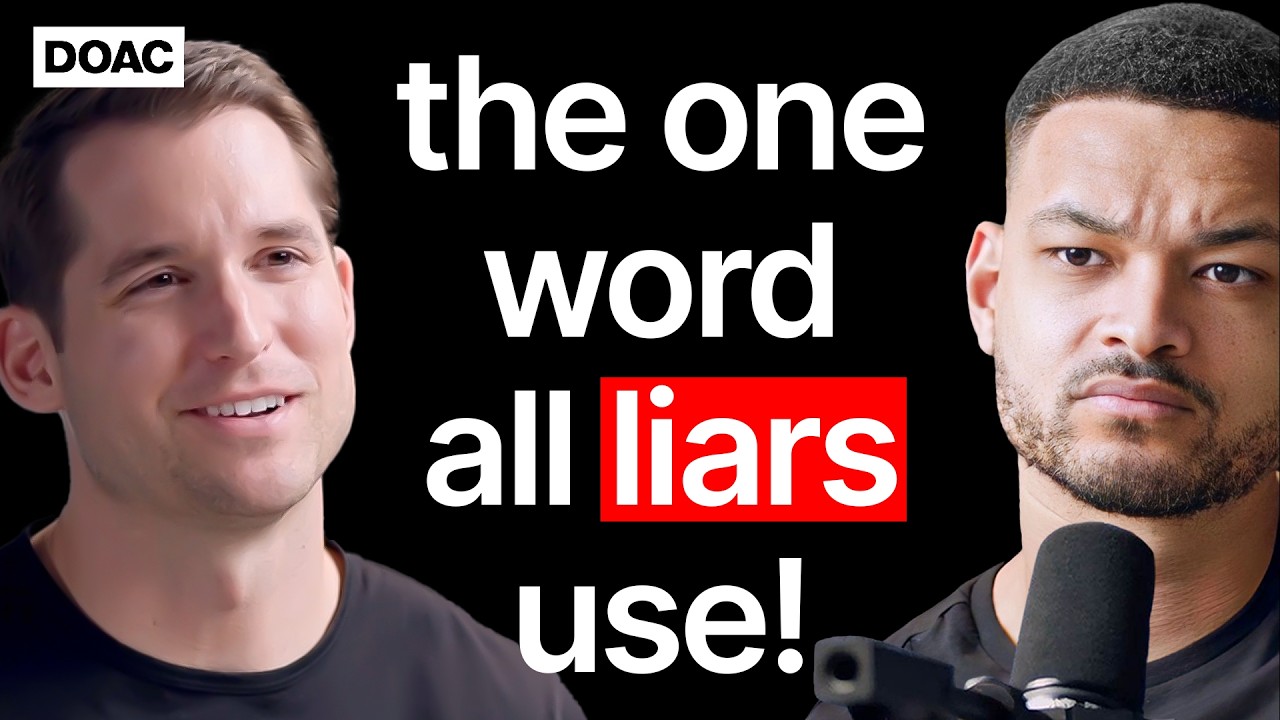
The Diary Of A CEO
Trial attorney Jefferson Fisher asserts that targeted silence and structured questions force aggressive communicators to switch from emotional hostility to logical reasoning.
AI-assisted summary of The Speaking Coach: The One Word All Liars Use! Stop Saying This Word, It's Making You Sound Weak! — original source. Check the original for full context.
Source published:
Detailed notes
## Background This episode of The Diary Of A CEO was published on YouTube on March 17, 2025. In the video, host Steven Bartlett interviews Jefferson Fisher—a trial lawyer, communication expert, and author—about courtroom-tested communication strategies for commanding respect, handling conflict, and navigating everyday conversations.
## TL;DR Jefferson Fisher shares practical advice on mastering communication by modulating speech, utilizing deliberate silence, and setting boundaries against disrespect or dishonesty. He breaks down counterintuitive de-escalation tactics, such as asking rude individuals to repeat themselves or conceding valid points, to diffuse tension and maintain control. The discussion covers the psychological roots of conversational triggers, effective techniques for saying no without excessive apologies, and actionable methods for mastering small talk. Ultimately, Fisher emphasizes that precise, intentional word choices transform personal relationships, parenting, and professional dynamics.
## Atmosphere & style The conversation carries an intimate, contemplative, and highly practical energy, combining Steven Bartlett's reflective hosting style with Jefferson Fisher's calm, authoritative presence. Fisher speaks with the deliberate pacing and vocal control of a seasoned trial attorney, making his actionable insights feel both reassuring and profound. The emotional arc smoothly transitions from sharp, strategic advice on handling conflict and deceit to grounded, heartfelt reflections on identity, parenting, and self-compassion.
## Key takeaways - [49:01](https://www.youtube.com/watch?v=zsuOSDb7gzQ&t=2941s) When people overreact or escalate conflict, they are often projecting deep-seated personal trauma, identity issues, or pre-existing emotional wounds rather than reacting to the present situation. - [52:12](https://www.youtube.com/watch?v=zsuOSDb7gzQ&t=3132s) De-escalate intense emotional reactions by delaying immediate responses and scheduling follow-up conversations focused on mutual understanding. - [58:40](https://www.youtube.com/watch?v=zsuOSDb7gzQ&t=3520s) To disarm direct insults or rudeness without escalating, use 5 to 7 seconds of absolute silence, repeat the phrasing back, or ask intent-clarifying questions like 'Did you mean for that to sound rude?' - [01:05:26](https://www.youtube.com/watch?v=zsuOSDb7gzQ&t=3926s) Withhold emotional validation and reaction from bullies, as responding with pain or defense gives them the dopamine hit and control they seek. - [01:08:44](https://www.youtube.com/watch?v=zsuOSDb7gzQ&t=4124s) Demanding that an aggressor repeat their statement forces their brain to shift processing from the emotional amygdala to the logical prefrontal cortex. - [01:17:18](https://www.youtube.com/watch?v=zsuOSDb7gzQ&t=4638s) Use a 5-to-7-second pause to unmask liars, as truthful people remain patient with silence while liars experience internal anxiety and often overexplain or use extreme language. - [01:30:07](https://www.youtube.com/watch?v=zsuOSDb7gzQ&t=5407s) Modulate your voice, use strategic pauses, and admit minor flaws early on to build credibility and establish yourself as a trustworthy speaker. - [01:36:33](https://www.youtube.com/watch?v=zsuOSDb7gzQ&t=5793s) Conceding valid points early in an argument lowers defensive walls and opens the door for mutual accountability. - [01:40:54](https://www.youtube.com/watch?v=zsuOSDb7gzQ&t=6054s) Master small talk by asking open-ended questions about a person's origin story or future projects rather than closed-ended, interrogation-style questions. - [01:53:09](https://www.youtube.com/watch?v=zsuOSDb7gzQ&t=6789s) When declining invitations, use a direct formula composed of a direct refusal, gratitude, and a sprig of kindness, avoiding misleading excuses or unnecessary apologies. - [02:02:14](https://www.youtube.com/watch?v=zsuOSDb7gzQ&t=7334s) Minimize filler words like 'like', 'um', and 'okay' to improve clarity and maintain precision in formal speech and presentations. - [03:30:00](https://www.youtube.com/watch?v=zsuOSDb7gzQ&t=12600s) Parents can foster healthy communication by creating a safe, non-judgmental environment early so children learn positive conflict resolution styles.
## Detailed walkthrough ### [00:00](https://www.youtube.com/watch?v=zsuOSDb7gzQ&t=0s) Handling Disrespect and the Core Mission
When confronted with someone who is belittling, rude, or disrespectful, human nature instinctively prompts an immediate reaction to throw the insult back and "win" the encounter. Jefferson Fisher outlines a three-step tactical counter-strategy to maintain complete control: first, embrace five to seven seconds of total silence; second, calmly ask the person to repeat what they said, as people frequently back down or retract their words when forced to say them twice; and third, deliver a measured response that cements who holds the power in the room. As a board-certified trial attorney, Fisher approaches conflict resolution with the principle that small shifts in phrasing can fundamentally alter outcomes.
A foundational mistake people make in difficult conversations is striving to "win" the argument. Fixating on winning often costs the speaker the relationship itself—a pyrrhic victory where losing the connection becomes the ultimate prize. Instead, arguments should be viewed as intricate knots to unravel rather than battles to conquer. Simply asking the question, "What am I missing?" serves as one of the most effective tools to de-escalate tension and pivot toward genuine understanding.
- **Three-Step Response to Disrespect:** 1. Maintain 5–7 seconds of silence. 2. Ask the person to repeat what they just said. 3. Respond with controlled, deliberate phrasing that demonstrates self-possession. - **Key Conflict Resolution Shift:** Replace the goal of "winning" an argument with "unraveling" it. - **De-escalation Tool:** Asking "What am I missing?" shifts the dynamic from defensive friction to collaborative inquiry.
---
[02:07](https://www.youtube.com/watch?v=zsuOSDb7gzQ&t=127s) What a Trial Attorney Does and Fifth-Generation Roots
As a trial attorney, Fisher's primary mandate is advocating for clients who have suffered harm that cannot be undone, navigating litigation to secure monetary compensation and restore peace of mind. In a courtroom, two opposing trial attorneys pit their abilities to articulate, persuade, and convince against one another. The exact words chosen by an attorney can spell the difference between a client reclaiming their life or losing everything.
Fisher's expertise is anchored in his upbringing as a fifth-generation trial attorney. While other children were playing after school, young Fisher was being picked up by his father and taken straight to depositions. Sitting quietly in the corner with a yellow legal pad, he doodled while observing real-time legal questioning, cross-examinations, and closing arguments. Growing up surrounded by master storytellers gave him a front-row seat to the psychological levers of human persuasion and conversational dynamics.
- **Definition of Trial Attorney:** A legal advocate who resolves conflicts in court, often seeking monetary compensation for unfixable harms when private resolution fails. - **Background:** Fifth-generation trial attorney who spent childhood afternoons observing depositions and closing arguments from the back of courtrooms.
---
[04:46](https://www.youtube.com/watch?v=zsuOSDb7gzQ&t=286s) Why Communication is an Unfair Advantage
Fisher emphasizes that improving communication is not about vague theory; it is about learning the specific "chords" and "sheet music" of human interaction—the literal words to speak in critical moments. Where someone stands in their life, career, or personal relationships inevitably traces back to how they have handled past conflicts and choices in communication. Achieving a high level of communicative mastery offers a massive leverage point, dictating job interview success, relationship longevity, and the enforcement of personal boundaries.
Steven Bartlett highlights the stark reality of communication as an "unfair advantage," particularly in media and professional landscapes. Exceptional scientists or niche experts often miss out on major platforms like TED Talks or podcasts simply because they lack the ability to articulate their ideas clearly. A person with half the technical skill or experience can outpace far more qualified peers solely through effective delivery. Conversely, poor communication leads to internal frustration, negative self-talk, and cyclical relationship or workplace failures where boundaries cannot be articulated or upheld.
> "Where some people would teach you how to play an instrument, I tell you what chords to play. I give you the sheet music... I can change two sentences, two words, and change your life just by what you decide to say next."
- **The "Unfair Advantage":** Clear articulation often trumps raw talent or technical expertise in career progression and public influence. - **Consequences of Poor Communication:** Persistent self-doubt, repeated relational patterns, and an inability to voice or enforce personal boundaries.
---
[11:21](https://www.youtube.com/watch?v=zsuOSDb7gzQ&t=681s) The Conversational Breath and Power of the Pause
To transform communication habits, one must learn to speak with control. During arguments—even minor disagreements—the body's fight-or-flight response activates, treating differing opinions as personal threats. This triggers impulses to either fight (saying sharp, hurtful words) or take flight (hanging up the phone or slamming doors). To override this physiological reaction and keep the logical brain engaged, Fisher trains clients to let their breath be their very first word.
By utilizing a subtle "conversational breath"—a quiet, double-inhale through the nose followed by an exhale—speakers can instantly calm their nervous system without alerting the other party. Injected before responding, this breath creates a buffer that allows one to remain detached, analytical, and curious about the underlying intent behind an aggressive question. Embracing the resulting pause demonstrates thoughtful consideration rather than emotional reactivity. While silence feels uncomfortable to many, taking a second to breathe and reflect signals that the speaker is composed and in control of the interaction.
- **Fight-or-Flight In Conflicts:** Disagreements trigger defensive bodily responses that lead to hurtful outbursts (fight) or abrupt exit behaviors (flight). - **The "Conversational Breath":** A discrete nasal breathing technique used prior to speaking to maintain access to logical, analytical reasoning. - **The Strategic Pause:** Taking a moment before answering shows consideration, lowers room tension, and establishes calm leadership in chaotic environments.
Here is a detailed, faithful walkthrough of this part of the conversation:
[16:24](https://www.youtube.com/watch?v=zsuOSDb7gzQ&t=984s) Capturing the Room's Calm Energy and the Power of the Pause
Jefferson Fisher describes how certain individuals in a relationship or conversation act as calm anchors. Simply being around them lowers everyone's stress levels, signaling that things are going to be okay because they control the "frequency of the room." Reflecting on their conversation, Steven Bartlett notes two striking observations when Jefferson took a deliberate breath before answering a simple question about his day: first, it built immediate trust because it showed he was actually reflecting rather than giving a canned response, and second, it created intrigue about what he was going to say next. Jefferson highlights that you can spot this in high-stakes job interviews—a candidate who takes a breath before answering feels genuinely thoughtful and engaged, whereas a candidate using rapid-fire responses sounds scripted and desperate.
To illustrate this, Jefferson contrasts two ways an interviewee might answer whether they would bring value to a company: * **Rapid, hesitant response:** "Oh yeah yeah, I mean I think I would... I think I'd bring a lot of value to this company." * **Paused, deliberate response:** *(Takes a breath)* "I'm confident I'd bring a lot of value to this company."
Steven notes that in the second example, you can feel that the speaker "actually checked" internally before speaking, making the listener believe it too. Jefferson explains that whenever he prepares clients for depositions—what lawyers call a "depo"—he instructs them to "let your breath be the first word." Opposing trial attorneys rely on rapid-fire questioning to trap witnesses into stepping over questions or answering hastily out of panic.
Jefferson shares a story about a client named Elizabeth (Miss Carson) whom he prepped by roleplaying as the aggressive opposing counsel. He pressed her hard with questions like: "Miss Carson, come on, I need you to answer this question. That's true, it's fair to say you didn't see that other car, did you?" During prep, her nerves flared because she stopped breathing. But once she learned to take a breath, she responded smoothly under actual cross-examination: *(takes a breath)* "No, that's not fair to say." By holding her ground with a calm pause, she robbed the opposing attorney of leverage and gained complete confidence.
---
[20:37](https://www.youtube.com/watch?v=zsuOSDb7gzQ&t=1237s) Slowing Down Your Words to Demonstrate Full Control
Another core component of speaking with control is deliberately slowing down your speech rate. Talking too fast projects anxiety and forces listeners to work hard to keep up. Jefferson compares fast talking to fast hip-hop music—you might enjoy the beat, but you completely lose the message. To demonstrate how pace alters authority, Jefferson has Steven perform an exercise using the phrase: "I already told you I'm not going to do that."
* **First attempt (fast and loud):** Steven delivers it quickly with exasperation. It sounds reactive, showing only about 5% emotional control. * **Second attempt (slow and neutral):** Steven strips away the disdain and slows down every word. * **Third attempt (even slower):** Steven states, "I already told you I am not going to do that."
Jefferson reacts enthusiastically to the third attempt: "Oh man, that's awesome!" By removing emotional volatility and slowing down, the speaker projects 100% control, signaling to the other person: "They're not moving off their spot."
When Steven asks what type of person struggles with this, Jefferson points to people who lack awareness of their own emotions and triggers. When asked whether low self-esteem and insecurities drive these habits, Jefferson explains that words themselves can override self-esteem issues. People struggling with confidence often fail simply because they do not know how to begin their sentences assertively. Instead of starting directly, they lean on weak, apologetic hedges: * **Weak starter:** "So, you know, maybe like, uh, and I was thinking this—and you can totally tell me if I'm wrong, but..." * **Weak transition word:** "I mean, when you said that, like, it just really upset me."
To fix this, speakers must use words that actively push the sentence forward. For instance, swapping out the filler word "like" for the word "because" immediately changes the structure and impact: "That hurt because when you said that, it hurt me."
---
[24:13](https://www.youtube.com/watch?v=zsuOSDb7gzQ&t=1453s) Say It with Confidence: The Assertive Voice
Jefferson introduces his second major principle: **Say it with confidence**. He clarifies that confidence is not a feeling you conjure up before speaking; rather, "confidence is the outcome." He summarizes his philosophy as: **"Confidence is as assertive does."** Just as you cannot force yourself to feel sad or scared on command without a physical trigger, you cannot simply summon confidence out of thin air—you build it by taking assertive actions and using an assertive voice.
Addressing a diagram from his book *The Next Conversation: Argue Less, Talk More*, Jefferson explains that the assertive voice sits right in the middle ground between respecting yourself and respecting others. ``` [ RESPECT YOURSELF ] │ ( PASSIVE VOICE) │ ┌───────────┴───────────┐ │ ASSERTIVE VOICE │ <-- The Sweet Spot └───────────┬───────────┘ │ ( AGGRESSIVE VOICE) │ [ RESPECT OTHERS ] ``` The assertive voice balances passive speech (putting others above yourself) and aggressive speech (putting yourself above others). Being assertive means being direct and speaking your truth without being rude. Jefferson notes that being direct is actually a form of kindness. For example, framing feedback with, "Steven, I'm going to tell you this because I know you can handle it," is far more empowering than meekly saying, "I don't mean to upset you, but..." Being assertive isn't about being overly nice or pushing people around; it's about making sure you "can't be pushed over."
---
[27:28](https://www.youtube.com/watch?v=zsuOSDb7gzQ&t=1648s) Eliminating Weak Words and the Trap of "Word Vomit"
A primary culprit that undermines an assertive voice is the word **"just."** Jefferson admits that while using "just" in casual conversation is fine, it ruins professional or boundary-setting interactions by making the speaker sound hesitant or apologetic. * **Hesitant:** "Hey, I *just* wanted to check in with you," or "I *just* wanted to touch base." * **Assertive:** "I wanted to check in with you."
Removing "just" creates forward momentum. Jefferson warns that **"the longer your answer, the more questions you're going to get."** Long explanations derail arguments and invite endless follow-ups. A vital rule of communication is learning to "say more with less," because "the more words it takes to tell the truth, the more it sounds like a lie."
Excessive talking—often called "word vomit"—frequently stems from insecurity. In office meetings, insecure people feel compelled to chime in on every topic, play devil's advocate, or drop names ("Oh, I was talking with Steven the other day...") to prove their intelligence or connections. Jefferson highlights a stark contrast between insecurity and true confidence: * **Insecurity is loud:** It feels the urge to say everything to prove it has value. * **Confidence is quiet:** It has nothing to prove.
To illustrate, Jefferson points out that both he and Steven are wearing black shirts. If Steven were to claim Jefferson's shirt is purple, Jefferson wouldn't feel compelled to aggressively argue because he already knows the truth internally. Confident people listen far more than they speak.
---
[30:58](https://www.youtube.com/watch?v=zsuOSDb7gzQ&t=1858s) Setting Boundaries: Giving Manuals Instead of Remote Controls
Steven asks whether people who are easily triggered by petty provocations surrender their power to others. Jefferson agrees, explaining that reacting emotionally is like handing someone the remote control to your feelings and letting them press your buttons. Instead of handing out remote controls, emotionally intelligent people hand out **manuals**.
If someone begins yelling at you, a reactive person says, "You can't yell at me like that!" An assertive person hands them a manual: "I heard you yell at me. If you don't mind, turn to page 72, paragraph 3: *I don't respond to that volume.*" This shifts the dynamic to clearly define what you will and will not tolerate.
When the conversation turns to people-pleasers, Jefferson acknowledges how difficult it is to set boundaries. He offers a succinct perspective: **"You can please people—just make sure that you're one of them."** People-pleasers struggle to say no because they lack the assertive vocal tools to protect themselves. Steven reflects on his own experience starting his first proper business at age 18, navigating complex dynamics when dealing with people twice his age.
[32:59](https://www.youtube.com/watch?v=zsuOSDb7gzQ&t=1979s) Developing an Assertive Voice in High-Stakes Environments
Steven Bartlett reflects on how every interaction acts as a silent test of your conviction, self-worth, and belief in what you are building. Sharing a recent conversation with his barber—a young Black entrepreneur—Steven discusses his own evolution from an 18-year-old to a CEO negotiating with eccentric billionaires who have decades more experience. In those high-pressure settings, survival requires an assertive voice: the ability to look someone in the eye and speak with calm, measured composure without resorting to self-deprecating caveats or defensive excuses.
[34:11](https://www.youtube.com/watch?v=zsuOSDb7gzQ&t=2051s) Stop Over-Apologizing: Shift from Apologies to Gratitude
Jefferson Fisher identifies over-apologizing as a primary trap for people-pleasers, who routinely pepper sentences with "I'm so sorry." People constantly apologize for non-errors, such as taking a brief moment to reply to an email or asking a quick question. Fisher warns that this habit acts like a slow drip, corroding self-esteem and reinforcing the false premise that your worth is tied to minimizing your inconvenience to others.
Instead of default apologies, Fisher advises replacing them with expressions of gratitude. Gratitude reframes the interaction constructively while subtly affirming the other person's positive attributes:
* **Instead of:** "So sorry I'm late" → **Use:** "Thank you for waiting for me." * **Instead of:** "Sorry for the delay in replying" → **Use:** "Thank you for giving me the time to process this." * **Instead of:** "Sorry to bother you with a question" → **Use:** "Thank you for taking a moment to help me."
[35:40](https://www.youtube.com/watch?v=zsuOSDb7gzQ&t=2140s) How Top Leaders and Executives Really Communicate
When Steven asks what the world's most successful leaders, CEOs, and heads of state have in common regarding communication, Fisher highlights conciseness. High-powered leaders do not write verbose emails or long-winded messages. Steven points out that extremely wealthy individuals rarely bother with formal email signatures, pleasantries, or polite sign-offs like "Kind regards"—they treat emails like rapid text messages.
Fisher explains that this directness is rarely intended as an insult. Rather, top leaders do not view briefness as offensive, nor do they seek permission or add timid disclaimers like "Let me know if I'm wrong about this."
[37:08](https://www.youtube.com/watch?v=zsuOSDb7gzQ&t=2228s) The Three-Step Framework for Difficult Conversations
Fisher outlines his third core principle of communication: **Say it to connect.** For many, the prospect of an upcoming difficult conversation triggers intense dread and anxiety days or weeks in advance. Connection does not mean achieving a sentimental, picture-perfect resolution; it simply means delivering a message clearly so the other person understands and acknowledges it. To de-escalate combativeness, Fisher recommends starting with disarming statements like "I'm not asking to change your mind," which immediately lowers the listener's fight-or-flight response.
To execute a difficult conversation successfully, Fisher shares a concrete three-step conversational frame:
1. **State the topic directly:** Clearly identify the issue at hand. 2. **Define the desired outcome:** State exactly how you want the conversation to end and what you expect to walk away with. 3. **Secure their buy-in:** Get the other person's explicit agreement to the frame before proceeding.
> "Stephen, I’d like to talk with you about some comments you made at last Thursday's meeting. I want to walk away from this conversation with the understanding that it's not going to happen again. Does that sound good?"
Once the other person agrees, an "invisible contract" is formed, making them significantly less likely to derail the conversation or back out.
[40:01](https://www.youtube.com/watch?v=zsuOSDb7gzQ&t=2401s) Why You Should Never Try to Win an Argument
The biggest downfall in difficult conversations is expecting them to play out like a scripted scenario rehearsed in your head. The moment the other person departs from your script, panic sets in, and the interaction devolves into a struggle to "win." Fisher asserts that you should never aim to win an argument, because winning the argument almost always means losing the relationship.
Arguments are rarely won on merit; they are usually won by forfeit when one person grows exhausted, hurt, or shuts down. Steven admits to instances in his own relationship where his partner conceded an argument, only for him to feel empty and miserable afterward because he realized he sacrificed true connection and happiness just to be right. Fisher notes that having the last word usually just buys you the first spot in line to apologize.
[44:14](https://www.youtube.com/watch?v=zsuOSDb7gzQ&t=2654s) Viewing Arguments as Knots to Unravel
Instead of treating arguments as a tug-of-war, Fisher advocates viewing them as a shared knot that needs unraveling. The goal is to detach the problem from the person.
* Instead of attacking ("What is wrong with you?"), shift to a joint problem-solving phrase: **"Help me find the knot."** * To uncover critical blind spots, ask the disarming question: **"What am I missing?"** People will readily answer this because it redirects focus from what you are attempting to force onto them to what they are experiencing.
[45:08](https://www.youtube.com/watch?v=zsuOSDb7gzQ&t=2708s) The Two-Glasses Analogy: Creating Space Before Sharing Knowledge
Using two physical glasses of water on the set floor, Fisher demonstrates why direct persuasion often fails. One glass represents your thoughts and knowledge; the other represents the listener's deeply held beliefs, experiences, and worldview accumulated over a lifetime.
When you attempt to pour your opinions directly into someone whose "glass" is already completely full, the information simply overflows and gets rejected. You cannot fill a full glass. To make someone receptive, you must first ask open-ended questions that allow them to pour out their thoughts, creating internal space for new perspectives:
* **Avoid dead-end probing:** Do not start interrogations with an aggressive "Why do you believe that?" * **Use curious exploration:** Ask questions like "How did you come to believe that?", "Where did you learn that?", or "When did that start for you?"
Minds are almost never changed in a single conversation; true persuasion happens across dozens or hundreds of interactions over time as mutual space is created.
[48:18](https://www.youtube.com/watch?v=zsuOSDb7gzQ&t=2898s) The Story of Bobby Lapre: Understanding the Person Behind the Words
To illustrate that you are rarely just talking to the person in front of you, Fisher shares an anecdote from a past legal deposition. He found himself questioning a witness named Bobby Lapre—a "huge mountain of a man" whose presence made Fisher feel physically tiny. From the very beginning of the deposition, Bobby was visibly angry and hostile, reacting with intense agitation even to simple baseline questions like where he was born or where he grew up.
<FollowUp label="Want to hear the rest of the Bobby Lapre story and how Jefferson handled his anger?" query="Tell me the rest of the Bobby Lapre story from the transcript and how Jefferson handled the situation."/>
Here is a detailed, faithful walkthrough of this section of the transcript:
[49:01](https://www.youtube.com/watch?v=zsuOSDb7gzQ&t=2941s) The Aggressive Witness and Unseen Personal Struggles
Jefferson Fisher shares an anecdote from a deposition where a large, hostile witness was growing increasingly angry. When Jefferson offered him a break, the witness exploded, telling him to save the "buddy-buddy stuff" and declaring that lawyers were the absolute worst thing to happen to the government before stating flatly, "I don't trust you as far as I can throw you." Rather than taking the bait or getting defensive, Jefferson pivoted. He asked the man directly what he was struggling with in his personal life. Forced to answer under oath, the witness revealed that he had just been forced to place his mother in a nursing home. As her sole caregiver following his father's death and brother's absence, he had been bombarded for months with legal foreclosures, demand letters, and debt collections that he did not understand. In that room, Jefferson realized he represented the entirety of the legal system that had been tormenting this son. The person sitting across from him was not just an aggressive, mad witness, but a terrified, overwhelmed son. They talked it out, Jefferson helped him, and the deposition ended warmly with a hug.
Jefferson uses this story to illustrate that in everyday life, we constantly encounter micro-moments where the person we see is not the person we are actually talking to. A seemingly rude waitress might be panicking because her shift ran two hours late while her mother is waiting to watch her kids. A colleague who sounds short or aggravated on a call might have spent the entire night arguing through an agonizing divorce. Everyone is fighting a hidden battle and having an internal conversation that you were not invited to. Having the patience to look beyond surface-level hostility and understand the person behind the words completely changes the dynamic.
- People often project deep-seated identity issues, past upbringing, or family beliefs when reacting defensively to being proven wrong. - Changing someone's mind isn't just about correcting a present fact; it often feels like telling them their parents, grandparents, or childhood experiences were wrong. - "Being triggered" is fundamentally scratching at an open, pre-existing wound rather than just reacting to the immediate moment.
---
[52:12](https://www.youtube.com/watch?v=zsuOSDb7gzQ&t=3132s) Historical Triggers and the "Red Mist"
Steven shares a personal story about a close friend during the pandemic. While living together, Steven corrected his friend regarding who was primarily being hospitalized for COVID-19, citing official NHS data. The friend reacted with sudden, disproportionate rage—a phenomenon they refer to in their friend group as the "Red Mist." After discussing it over the course of a year and a half, the friend realized his extreme reaction stemmed from childhood trauma: teachers thought he was stupid, kids bullied him on the playground, he once caught his grandmother texting his mother calling him stupid, and his report cards had written him off. Thirty years later, being corrected on a simple, trivial topic triggered the latent fear of proving those childhood bullies right. Through therapy, the friend eventually learned to recognize the feeling for what it was so it no longer governed his reactions.
Jefferson points out that nearly everyone carries wounds from the playground or high school that shape their adult identity. In a courtroom, when someone ratchets a "level one" conversation straight to a "level ten," it signals a massive disproportionate response driven by an internal narrative. When dealing with someone who is constantly triggered, easily overwhelmed, or quick to gaslight, Jefferson advises against demanding immediate explanations or forcing them to talk. Pushing people to converse on your timeline when their brain is flooded and in a fight-or-flight state only hardens their defenses, causing them to shut down entirely for days.
- To manage a triggered person, create distance and delay your response rather than pressing them in the heat of the moment. - De-escalate the initial conversation simply: "We can drop it, not a problem, we can talk about it later." - Frame the follow-up "next conversation" constructively: "I’d like to talk about what we began discussing on Monday. I'm not trying to solve anything, I just want to understand where you're coming from so I can do better."
---
[58:40](https://www.youtube.com/watch?v=zsuOSDb7gzQ&t=3520s) Handling Disrespect, Insults, and Belittling
Jefferson explains why people are so fascinated by comebacks and dealing with disrespect. While the instinct is to hurl an insult straight back to "win" the argument or land a clever "Zinger" that hits them days later, direct retaliation only escalates the conflict into a petty battle over who will apologize first. Drawing from his manual on dealing with highly combative witnesses in depositions and cross-examinations, Jefferson advocates for a counterintuitive "Be Like Water" approach. The true power lies in demonstrating that the disrespect is entirely non-threatening to you.
He outlines specific tactics depending on the type of attack:
* **For Direct Insults:** If someone flatly insults you (e.g., calling you an idiot), pause for five to seven seconds, calmly repeat their exact phrase back to them ("I'm an idiot, Jefferson?"), and let it sit. This forces the spotlight back onto them to either double down or backpedal with an apology. If they double down, simply offer a calm "Thank you"—signaling thank you for revealing who you are so I know not to spend time with you. * **For Belittling, Condescension, or Passive-Aggression:** When someone makes a backhanded or patronizing comment, implement 5 to 7 seconds of absolute silence. This allows their words to "walk out onto a plank" until they are left hanging alone, giving you time to use deep breathing while letting them sit in the awkwardness of their own statement. * **Questions of Intent:** After the silence, respond with a targeted question starting with "Did you mean...", such as "Did you mean for that to sound rude?" or "Did you say that to hurt me?" Jefferson notes this works exceptionally well in text or email exchanges, as it immediately forces the other person to clarify their intentions and usually results in them backing off.
[01:05:26](https://www.youtube.com/watch?v=zsuOSDb7gzQ&t=3926s) Handling Rude Comments and Retaking Control
When someone says something rude, ugly, or insulting, their underlying motive is to extract an emotional reaction—specifically a hit of dopamine—from you. In their mind, they are unhappy and feel justified only if they can inflict a measure of pain on you to regain a sense of control. Responding with "that hurt" or simply asserting "that was rude" inadvertently gives them the exact validation and control they were seeking. To effectively defend against this behavior, Jefferson Fisher advises acting like a "wet blanket" or a "sogy piece of bread"—becoming entirely unmanipulable so the interaction loses all its thrill for the bully.
To disarm the speaker and strip away their power, you must force them to state their actual intent directly. By asking probing questions such as "Did you mean for that to sound rude?", "Did you say that to hurt me?", or "How did you want me to respond when you said that?", the emotional leverage shifts immediately. Rather than gaining dopamine, the rude individual is forced onto a conversational ledge where they must either admit to malice or stumble over their words while frantically trying to protect their reputation.
- **The Underlying Motive:** Rude comments are driven by a desire for dopamine and control through emotional provocation. - **Defensive Posture:** Becoming emotionally non-reactive ("a wet blanket") signals that bullying behavior will not yield a satisfying result. - **Key Disarming Questions:** - "Did you mean for that to sound rude?" - "Did you say that to hurt me?" - "How did you want me to respond when you said that?" - "I'm surprised you said that out loud."
---
[01:08:35](https://www.youtube.com/watch?v=zsuOSDb7gzQ&t=4115s) Power Dynamics, Standards, and Re-centering the Spotlight
Steven Bartlett raises the role of context and workplace hierarchy, asking whether an intern could realistically use these techniques if a company CEO looks at their work and says, "I mean, I guess that's okay." Fisher acknowledges that power dynamics matter and that choosing your battles is essential. If a high-ranking superior is simply having a bad day, an intern might decide it is wiser to diffuse the situation quietly or offer to do better, rather than forcing a confrontation that could jeopardize their position.
When a response is appropriate, phrases can be adapted to maintain personal dignity without escalating a conflict needlessly. In high-friction environments like legal depositions or heated debates, Fisher utilizes firm boundary-setting statements such as "That's below my standard for response." Alternatively, simply asking "Now, how did you want me to respond to that?" or requesting them to repeat themselves ("I didn't catch that, can you say that again?") forces the speaker into the spotlight, making them confront the ugliness of their own remark.
- **Navigating Hierarchy:** Context dictates whether to challenge rudeness directly or de-escalate smoothly when severe power imbalances exist. - **Setting High Standards:** Using "That's below my standard for response" cleanly dismisses bad-faith arguments without engaging in mudslinging. - **The Repetition Trap:** Asking someone to repeat an insult ("Can you say that again?") makes it nearly impossible for them to deliver the line with the same emotional force.
---
[01:10:24](https://www.youtube.com/watch?v=zsuOSDb7gzQ&t=4224s) Setting Conversational Boundaries: The Case of the Two Sisters
To illustrate the power of asking an aggressor to repeat themselves, Fisher shares an anecdote from a legal dispute involving two older sisters fighting over their late father's company. Fisher represented the level-headed sister, who wanted to honor her father's legacy, while the other sister was volatile and insisted on selling the business. During a tense mediation session, the volatile sister flew into a tirade, culminating in a deeply personal attack on her sister: "I've never loved you, you're dead to me anyway."
Having been prepared by Fisher beforehand, the level-headed client remained composed and quietly replied, "I need you to say that again to me." The aggressive sister completely froze and could not repeat the insult. Fisher explains the underlying neuroscience: the initial lash-out came from an emotional amygdala response, but demanding a repetition forced the sister to engage her logical prefrontal cortex. Once forced to evaluate the statement rationally, the attacker realized how terrible she sounded and backed down entirely.
- **Case Background:** Two sisters in mediation over family business ownership and legacy vs. liquidation. - **The Turning Point:** Confronted with a cruel insult, the client responded: "I need you to say that again to me." - **Neuroscience Mechanism:** Forces the speaker to shift processing from the emotional **amygdala** (impulsive attack) to the **prefrontal cortex** (logical evaluation), rendering the insult ineffective upon second attempt.
---
[01:13:39](https://www.youtube.com/watch?v=zsuOSDb7gzQ&t=4419s) Navigating Personal Relationships and Priming for Difficult Conversations
Steven asks whether these boundary-setting techniques apply only to toxic individuals or if they belong in healthy personal relationships. Fisher clarifies that in loving relationships, calling out passive-aggressiveness with soft checks—such as asking "Did you mean for that to sound short?"—is actually an act of grace. It offers the partner an immediate chance to clarify their tone and correct misunderstandings, which is especially vital over text messages where tone and inflection are frequently misread.
When preparing for important or difficult conversations at work or home, Fisher stresses the importance of emotional state and timing. Engaging in critical discussions while running on empty—such as late at night after a exhausting workday—inevitably leads to failure. Additionally, practicing self-awareness by vocalizing your internal state ("I can tell I'm getting defensive") allows you to claim and externalize the feeling, preventing the emotion from taking over your behavior.
- **Offering Grace in Relationships:** Questions like "Did you mean for that to sound short?" allow partners to clarify intentions without taking unnecessary offense. - **Energy Allocation Rule:** Never attempt a critical, "100%" conversation when you only have "10%" of your energy battery remaining. - **Externalizing Triggers:** Verbalizing your state by saying "I can tell I'm getting defensive" helps you maintain rational control instead of acting impulsively out of emotion.
---
[01:17:18](https://www.youtube.com/watch?v=zsuOSDb7gzQ&t=4638s) The Strategic Use of Silence and Unmasking Liars
Silence is an extraordinary communicative tool because human beings feel an innate pressure to fill empty space. When confronted with disrespect, taking a deliberate pause allows your analytical brain to keep emotional flooding at bay while forcing the aggressor to replay their own words internally. Often, people will backpedal or edit their statements during a prolonged pause simply because the quiet makes their bad behavior glaringly obvious.
In legal litigation and depositions, silence is the ultimate weapon against dishonesty. When a person lies, arguing with them provides a narrative surface for them to manipulate and bounce off of. However, maintaining five to seven seconds of unwavering silence before calmly repeating their answer creates overwhelming psychological pressure. The liar begins holding a panicked internal dialogue, rapidly doubting themselves, and frequently ends up exposing their own deceit or attempting to modify their story.
- **The Function of Pauses:** Pauses are not the absence of communication; changing a response delay from 1 second to 7 seconds fundamentally alters the meaning of an interaction. - **Dismantling Liars:** Arguing with a liar validates their premise; holding prolonged silence forces them to negotiate with their own anxiety. - **Resetting the Narrative:** Pairing a 5 to 7 second pause with statements like "I want to come back to this conversation in a bit" leaves dishonest speakers scrambling to repair their credibility.
[01:21:12](https://www.youtube.com/watch?v=zsuOSDb7gzQ&t=4872s) Catching Liars with Pauses and Extreme Language
When you slow down a conversation and get quiet, liars become intensely uncomfortable. They want you engaged in dialogue because they need constant feedback and certainty that you are buying their story. If you pause and quietly say, "I'm thinking... I'm just thinking," a liar will start filling the silence by having the conversation in their head out loud. They will scramble to tweak their narrative, offering defensive questions like, "I mean, where do you think I was?" or "Why are you asking me this?" In contrast, truthful people have all the patience in the world. A person telling the truth knows that no matter how long you think or what evidence you uncover—such as checking bank statements—their story will hold up, so they feel no pressure to oversell or force agreement.
Jefferson Fisher highlights two immediate warning signs of lying: speed and extreme language. When someone gives an instant, unthinking answer and uses extreme terms like "never" or "always"—such as claiming, "I *never* text when I drive"—they are usually being untruthful. In everyday life, almost everyone has sent a text while driving at some point. When you reflect that extreme claim back to them by repeating "never" after a five-second pause, the liar often panics and starts walking back their statement, shifting to, "Well, I mean, sometimes... but hardly ever."
- **The Power of Silence:** Pauses remove a liar's control and force them to negotiate with their own internal anxiety. - **The Truthful Persona:** Truth-tellers remain calm during long pauses because they know time and evidence are on their side. - **Extreme Terms:** Overuse of words like "never" or "always" signals exaggeration or deception. - **De-escalation Option:** When a liar backs into a corner, giving them a graceful "out" allows the conversation to move forward constructively without forcing a hostile breakdown.
---
[01:26:38](https://www.youtube.com/watch?v=zsuOSDb7gzQ&t=5198s) Courtroom Secrets: What Body Language Teaches Us About Trust
In a courtroom setting, body language speaks much louder than spoken testimony. Jefferson Fisher explains that trial attorneys operate in an environment where twelve jurors, the judge, court reporters, paralegals, and spectators are constantly scrutinizing every movement. Expert attorneys maintain an almost emotionless demeanor when bad news or damaging witness testimony emerges. Instead of flinching or reacting, they calmly keep writing or sit back, signaling to the jury that nothing has gone wrong. Unskilled attorneys, on the other hand, react visibly by throwing their hands up or slumping, which instantly signals to the jury that a major blow has been dealt to their case.
Excessive courtroom objections create a similar negative impression. When an attorney repeatedly shouts, "Objection, your honor!", jurors naturally assume the lawyer is trying to hide damaging evidence from them. Skilled attorneys object sparingly—perhaps once or twice—framing the objection calmly as an effort to keep the proceedings fair and educational. Every subtle physical cue shapes the jury's verdict, sometimes in unexpected ways. Fisher recalls a case where a jury took a disliking to an attorney simply because he was sweating profusely in a hot room; the jurors interpreted his sweat as nervous anxiety born out of a lack of belief in his own case.
- **Non-Verbal Control:** Jurors read emotional reactions from attorneys as indicators of whether evidence helps or hurts a case. - **The Danger of Over-Objecting:** Frequent objections make a legal team look like they are hiding the truth from the decision-makers. - **Post-Trial Juror Debriefs:** Attorneys are permitted to speak with jurors after a trial ends, often revealing that minor physical details mattered far more to them than elaborate legal arguments.
---
[01:30:07](https://www.youtube.com/watch?v=zsuOSDb7gzQ&t=5407s) Using Vulnerability to Win Arguments and Build Trust
While high-profile trials like the O.J. Simpson case or the Johnny Depp trial attract massive media attention due to celebrity drama, true mastery of courtroom communication comes down to voice dynamics, storytelling, and strategic vulnerability. Fisher reflects on watching an experienced trial attorney represent an elderly janitor in an accident case. The attorney mastered vocal range—raising his voice high at key emotional beats and dropping it low during moments of quiet sincerity—while smiling at the jury and letting his words hang in the air until the room hung on his every word.
The most counterintuitive yet powerful persuasion technique is embracing imperfection. If two opposing attorneys address the exact same jury, the one claiming 100% perfection and zero fault will quickly lose credibility because people know nobody is perfect. Conversely, the attorney who acknowledges early on that their client made mistakes—focusing instead on what is reasonable and fair—instantly establishes themselves as a reliable truth-teller. Once you build a reputation as a truth-teller with a judge or an audience, that trust stays with you across future interactions.
Steven Bartlett shares a parallel example from his background running a marketing agency. When pitching to CEOs of billion-dollar companies alongside his team, Bartlett found that if he openly criticized or pointed out a weakness in his own team's pitch, it immediately won over the client. Demonstrating total honesty by saying, "I don't love idea three," proved to the client that Bartlett was looking out for their best interests rather than just trying to close a sale.
- **Vocal Range:** Effective communicators modulate pitch, pacing, and pauses to pull listeners into their narrative. - **The Strategic Advantage of Flaws:** Admitting minor mistakes or weaknesses builds instant trust, making the core argument far more believable. - **Establishing the "Truth-Teller" Status:** In law and business alike, prioritizing radical honesty over a fake show of perfection guarantees long-term authority.
Here is a detailed, faithful walkthrough of the transcript segment.
---
[01:36:33](https://www.youtube.com/watch?v=zsuOSDb7gzQ&t=5793s) The Long Game of Admitting Flaws and Disarming Conflict
Steven Bartlett reflects on how pointing out the flaws in his own business ideas built tremendous long-term trust with investors and partners. By openly stating when an idea was mediocre or outright terrible, he earned credibility so that when he championed a winning idea, people believed him implicitly. Jefferson Fisher agrees, emphasizing that this strategy of honesty is a counterintuitive "long game." He translates this directly to trial advocacy: when defending a client, a lawyer gains immense leverage with the jury by conceding fair points—such as admitting the opposing party deserves some compensation—rather than stubbornly arguing they do not deserve a single penny.
Jefferson explains that this exact principle applies to everyday personal relationships. When someone stands rigidly on principle during a fight, insisting they did nothing wrong and could not have communicated better, it generates defensive energy. Conversely, leading with extreme vulnerability by saying, "I could have said that better" or "I could have done better," acts as a magic phrase. It immediately lowers the other person's defenses, typically prompting them to mirror the sentiment and admit their own shortcomings.
- **Conceding to Gain Trust:** Admitting fair points (e.g., agreeing an opponent deserves some compensation rather than zero) makes a speaker vastly more persuasive to juries and conversational partners alike. - **The Disarming Power of "I Could Have Done Better":** Leading conflict resolution with this phrase disrupts defensive dynamics and invites mutual accountability.
---
[01:38:27](https://www.youtube.com/watch?v=zsuOSDb7gzQ&t=5907s) Handling People You Dislike and Denying Them an Enemy
When Steven asks how to deal with people one simply does not like, Jefferson delivers a straightforward rule: treat them as if they like you, and as if you like them. Acknowledging that body language can easily betray internal irritation, Jefferson outlines three key guardrails to manage these interactions smoothly:
1. **Limit Contact Duration:** Restrict interaction time to brief windows (two to three minutes) whenever possible. 2. **Be Mindful of Onlookers:** Remember the classic adage that if you argue with a fool, onlookers cannot tell the difference. Being rude to someone—even if they deserve it based on past actions—causes third parties to judge your integrity rather than the other person's bad behavior. 3. **Deny Them an Enemy:** Hostile or difficult people actively look for an opponent to justify their own bad behavior. By killing them with kindness or maintaining a calm, objective, neutral tone, you deprive them of a villain and leave their bad behavior exposed.
- **The Objective Approach:** If someone asks for the time, instead of giving a snide remark ("You'd know if you wore a watch"), simply answer neutrally and move on. - **Preserving Integrity:** Retaliating or making passive-aggressive comments only lowers your own integrity and validates the other person's dislike.
---
[01:40:54](https://www.youtube.com/watch?v=zsuOSDb7gzQ&t=6054s) Mastering Small Talk and Using Conversational Goals
Addressing the widespread hatred of small talk, Jefferson explains that master communicators avoid closed-ended questions that elicit one-word "yes" or "no" answers—a tactic reserved strictly for courtroom cross-examinations. Instead, they use direct-examination tactics by asking open-ended questions beginning with *how*, *what*, *when*, or *where* to invite storytelling. Furthermore, every interaction benefits from setting a clear "conversational goal"—a intended direction for where the interaction should end—which prevents the subtle anxiety caused by ambiguous communication (such as receiving a cryptic "We need to talk" text).
To make small talk engaging, Jefferson recommends two specific conversational strategies referenced in his book (around pages 40 to 46):
- **Focus on the Origin Story:** Ask people how they arrived at their present moment (e.g., "How did you get into what you're doing today?"). People love recounting their personal journeys, whereas asking "What did you do this weekend?" yields dry, flat responses. - **Focus on Future Excitement:** Instead of dwelling on the past—which people often find mundane—ask about upcoming events they are looking forward to (e.g., "What are you excited about coming up?").
- **Goal-Setting in Small Talk:** Set a low-friction goal focused on curiosity, such as asking three open-ended questions to genuinely understand the other person.
---
[01:44:28](https://www.youtube.com/watch?v=zsuOSDb7gzQ&t=6268s) Leadership Lessons from Abraham Lincoln's "Team of Rivals"
When Steven asks if there is a historical trial attorney Jefferson particularly admires, Jefferson enthusiastically identifies as an "Abraham Lincoln nerd." He highlights Lincoln's remarkable ability to draw people into his circle in an unaggressive, unassuming manner. After winning the Republican nomination as a relative no-name against prominent party front-runners—such as William H. Seward, George B. McClellan, and Edwin Stanton—Lincoln surprisingly invited those very rivals into his presidential cabinet. Jefferson compares this to a modern president inviting all of their fiercest campaign critics to serve in their top leadership positions.
Referencing Doris Kearns Goodwin's book *Team of Rivals*, Jefferson notes how Lincoln navigated intense rivalries and internal sabotage through high emotional intelligence and storytelling. Men who initially despised Lincoln and deemed him unqualified ended up weeping at his funeral, utterly devoted to him. Jefferson emphasizes the profound lesson here: sometimes the best way to handle enemies is to bring them closer and seek to understand them.
- **Political Magnanimity:** Lincoln formed his cabinet from his direct political rivals who had publicly criticized his qualifications. - **Emotional Intelligence in Action:** When a cabinet member attempted to cause trouble through the press, Lincoln chose not to confront him aggressively, but brought him closer and assigned him important responsibilities to make him feel valued.
---
[01:47:15](https://www.youtube.com/watch?v=zsuOSDb7gzQ&t=6435s) The Power of the Tongue and Spiritual Wisdom
Steven suggests that these communication philosophies align closely with spiritual and religious concepts regarding forgiveness, taking the high ground, and avoiding an "eye for an eye" mentality. Jefferson agrees, quoting the biblical proverb from the Book of James: "Be quick to listen, slow to speak." He stresses that controlling the tongue is fundamentally about controlling one's character and essence, as what comes out of a person's mouth directly shapes their reputation, relationships, and direction in life.
Jefferson asserts that true kindness cannot exist without using kind words, noting that when someone claims they dislike a person, they usually mean they dislike the words that person chooses to speak. Investing time in choosing better words produces tangible returns: greater personal peace, self-control, and confidence—benefits that cannot simply be purchased on Amazon.
- **Verbal Identity:** "What you say is who you are." A person's character is judged by their spoken choices. - **The Rewards of Mindful Speech:** Deliberately improving daily communication yields internal peace and personal confidence.
---
[01:49:03](https://www.youtube.com/watch?v=zsuOSDb7gzQ&t=6543s) The Realistic Journey of Communication Improvement
Steven asks how a person can realistically transition from being an ineffective communicator to a "10 out of 10 master communicator," especially when real-life triggers—like an angry spouse or a difficult coworker—cause them to slip back into old habits. Jefferson clarifies that learning communication skills is non-linear. Rather than trying to overhaul everything at once, individuals should identify a single rule or concept that resonates with them and focus disciplined effort on that isolated habit.
He suggests targeting specific, manageable habits, such as eliminating unnecessary adverbs and filler words ("essentially," "basically," "literally," "just," "so," "very") from written and spoken communication, or curbing the urge to over-apologize. By making tiny, deliberate adjustments—even just focusing on improving the very next sentence—a person steadily builds mastery over time.
- **Targeted Practice:** Focus on fixing one bad habit at a time rather than trying to transform all verbal habits simultaneously. - **Eliminating Fluff:** Practice catching and stripping out unnecessary qualifier words in emails and daily speech.
[01:51:26](https://www.youtube.com/watch?v=zsuOSDb7gzQ&t=6686s) Sponsor Intermission: Vivo Barefoot and Perfect Ted
The show breaks briefly for sponsor messages. Host Steven Bartlett reflects on his experience dealing with foot pain, specifically plantar fasciitis. After being told that minimalist footwear could restore natural foot movement and build strength, he began wearing Vivo Barefoot shoes. He cites research from the University of Liverpool demonstrating that wearing Vivo Barefoot footwear for six months can increase foot strength by up to 60%.
Bartlett then highlights Perfect Ted matcha, noting that consumers no longer have to visit cafes to get a high-quality matcha latte. Perfect Ted offers ceremonial-grade matcha sourced directly from Japan, formulated to be smooth and naturally sweet without the bitter, grassy taste often associated with lower-grade matcha.
- **Vivo Barefoot Offer**: Use code `DOAC20` at vivobarefoot.com for 20% off. - **Perfect Ted Availability**: Available in the UK at Tesco, Sainsbury's, Holland & Barrett, and Waitrose; in the Netherlands at Albert Heijn; in the US on Amazon; and directly online at perfectted.com. - **Perfect Ted Discount**: Code `STEVEN40` provides 40% off a first order online.
---
[01:53:09](https://www.youtube.com/watch?v=zsuOSDb7gzQ&t=6789s) Rule #2 and Boundaries: Learning How to Say "No"
Transitioning back to the interview, Bartlett brings up the final section of Rule #2 from Jefferson Fisher's book, *The Next Conversation: Argue Less, Talk More*, which focuses on setting boundaries. Bartlett references a chart from the book and asks Fisher to explain what it illustrates about declining invitations—such as a request to grab a cup of coffee.
Fisher breaks down the psychological burden of failing to give a direct "no." When faced with an invitation you do not want to accept, replying with an indecisive "maybe" or "I'll let you know" forces the request to occupy mental space rent-free for days. Fisher sets up a scenario where two coworkers are not close personal friends: one asks the other out for coffee, and instead of declining upfront, the other procrastinates out of fear of offending them. This indecision drains emotional energy. When Bartlett asks if making up a fake excuse (like a nonexistent meeting) works, Fisher warns against it: untruthful excuses run the risk of being exposed and lack sincerity. "You owe it to yourself to be a truth teller," Fisher emphasizes.
- **The Root Cause**: People-pleasing drives the fear of disappointing others or being disliked. - **The "But" Trap**: Starting with praise and inserting "but" (e.g., "I'd love to, *but* I'm busy") causes the word "but" to erase the warmth of the opening compliment.
---
[01:56:38](https://www.youtube.com/watch?v=zsuOSDb7gzQ&t=6998s) The Proper Structure for Declining an Offer
Fisher outlines the exact formula for declining an invitation gracefully without causing offense or trapping yourself in an awkward justification loop. Instead of leading with enthusiasm and softening it with a "but," Fisher advises flipping the script: start directly with the "no," follow it with gratitude, and end with a touch of kindness.
``` [Direct Refusal] + [Gratitude] + [Sprig of Kindness] ```
For instance, if someone invites you to dinner while you are visiting a city, the correct response is: *"I can't. Thank you so much for inviting me. I'd love to see you next time, and I hope you have a great time—I've heard that restaurant is awesome!"*
Bartlett shares a personal example from a recent trip to Austin, Texas, where acquaintances texted him to meet up. His internal reality was that his calendar was crammed with podcast recordings, administrative tasks, emails, gym time, and personal time with his partner. He struggled with how to communicate that grabbing coffee was simply not a high priority. Fisher reiterates that you do not need to give a lengthy justification or excuse: giving excuses triggers anxiety because your brain endlessly searches for an excuse "worthy enough."
- **The Gold Standard Refusal**: *"I can't make it work this go-around. Thank you so much for thinking of me! Hope it's a wonderful time."* - **The "Middle East" Real-Life Example**: Bartlett shares an unread email regarding a London dinner invitation. Since he will actually be in the Middle East, Fisher approves using that factual context, provided he avoids unnecessary self-deprecation: *"I can't make it on this occasion because I'm in the Middle East, but thank you for the invitation! If this pops up again, please let me know."* - **Eliminate Apologies**: Stop saying "I'm terribly sorry" or "unfortunately" when you haven't done anything wrong. Save apologies for actual mistakes. - **Phrasing Power**: Saying "I can't make it work" signals that you have existing commitments without making the other person feel unvalued.
---
[01:57:55](https://www.youtube.com/watch?v=zsuOSDb7gzQ&t=7075s) Radical Candor vs. Polite Deception
Bartlett reflects on reading *The Courage to Be Disliked* over New Year's and trying to practice radical honesty. He recounts an instance in a bar where the owner came over to chat. Bartlett's friend attempted to invent a white lie ("We've got somewhere to get to") to wrap up the conversation. Bartlett intervened with direct honesty: *"We want to leave in 10 minutes, so if they can get here before then, I'm more than happy to sign the books."* Bartlett notes how much better and more authentic he felt when he stopped relying on polite falsehoods.
Fisher agrees, emphasizing that directness frees both parties from the exhausting cycles of lingering follow-up emails and polite hesitation.
---
[02:02:14](https://www.youtube.com/watch?v=zsuOSDb7gzQ&t=7334s) Verbal Fillers and Speech Clarity
Bartlett pulls up a graphic detailing common verbal fillers—words like "like," "um," "ah," and "okay." He notes that whenever a podcast guest overuses filler words, viewers fill the comment section with complaints. Bartlett asks whether anyone striving to be an impactful communicator must completely eliminate filler words from their vocabulary.
Fisher distinguishes between formal public speaking and everyday casual conversation. On a stage or during a structured presentation, filler words should be minimized. However, in casual dialogue, filler words are entirely natural; people who speak with zero filler words have typically undergone intense media training.
Fisher illustrates a common habit among junior trial attorneys during witness cross-examinations: 1. The attorney asks: *"Do you see the red car?"* 2. The witness answers: *"Yes."* 3. The attorney reflexively adds: *"Okay."*
Because court reporters transcribe every spoken word, the official trial record becomes littered with repeated "okay" entries. Senior partners often hand these transcripts back to junior attorneys specifically so they can audit their own filler word habits. While using "like" or "um" isn't inherently evil, cluttering sentences with padding weakens the precision and authority of your message.
---
[02:04:50](https://www.youtube.com/watch?v=zsuOSDb7gzQ&t=7490s) The Ripple Effect of Your Words
Bartlett asks Fisher to identify the single most vital lesson regarding his work and communication that they have not yet covered. Fisher emphasizes that every word a person chooses to speak creates a far-reaching ripple effect.
Words influence how colleagues perceive your career trajectory, how you raise your children, and how those children ultimately speak to their own kids. To illustrate the long-term impact of words, Fisher shares a childhood memory from when he was eight years old. After getting thick eyeglasses, a classmate called him "Four Eyes." While that insult would be laughable to him as an adult, at eight years old it crushed him, making him feel as though something was fundamentally wrong with him.
- **Lasting Impact**: People do not forget what was said to them in high school, law school, or childhood. - **Power in Simplicity**: The simplest words often carry the greatest weight—whether delivered by a loved one, a classmate on a playground, or a cashier across a register.
[02:06:29](https://www.youtube.com/watch?v=zsuOSDb7gzQ&t=7589s) Raising the Next Generation: Communicating with Kids
The way we treat others in conversation has a massive ripple effect, extending far beyond the immediate interaction. How you talk to someone can directly influence how they treat their loved ones when they go home; a bad interaction can easily put someone in a terrible mood that they pass along to others. Recognizing that words truly have the power to change everything, Steven Bartlett shifts the conversation to family life, asking Jefferson Fisher—a father of two children, aged seven and five—how he navigates communication under his own roof. Fisher admits he thinks about this constantly. Like any parent, he wants to raise wonderful human beings, making him highly conscious of his phrasing because children soak up every word.
Fisher emphasizes that the single best thing a new parent can do is establish a safe space for their kids. One of the most terrifying thoughts for any parent is the realization that their teenager might one day refuse to come to them in a time of need, choosing instead to handle high school struggles destructively or turn to outside sources. This distance is often the result of an early pattern where a parent inadvertently makes their child afraid to approach them by putting them down or overreacting. Arguments and conflicts are ultimately windows into another person’s internal struggles, and children are no exception. Fisher suggests opening the door with inviting phrases that validate their vulnerability.
- **Recommended Phrases for Parents:** "Thank you for coming to me with this. I acknowledge you could have talked to someone else, but I'm glad you talked to me." - **The Cycle of Conflict:** Children default to the conflict styles they witness. Many people end up in toxic relationships where a partner demands shouting matches, believing that "I don't feel like you care unless we're yelling." This toxic expectation simply stems from what they grew up seeing as the default.
[02:09:14](https://www.youtube.com/watch?v=zsuOSDb7gzQ&t=7754s) The Power of "The Next Conversation"
When asked what he hopes readers will take away from his book, *The Next Conversation: Argue Less, Talk More*, Fisher explains that he wants people to recognize that mastering their words is entirely within reach. He aims to banish the persistent sense of hopelessness felt by chronic people-pleasers or those who constantly walk away from interactions wishing they knew what to say. By simply being intentional about what you choose to say next, anyone can learn to talk more and argue less, fulfilling Fisher's philosophy that "all the world needs is one better conversation at a time."
Steven Bartlett strongly endorses the book, praising its highly accessible, relatable tone and its inclusion of clear visual illustrations and graphs. Unlike dense academic texts that require a PhD to parse, Fisher’s book translates his high-stakes experience as a trial lawyer into practical tools for the everyday person. Bartlett notes that with over 12 million followers online, Fisher clearly understands how to resonate with a massive audience, making this a vital resource for anyone who feels disempowered, manipulated by difficult people, or simply lacks confidence in their communication.
[02:11:05](https://www.youtube.com/watch?v=zsuOSDb7gzQ&t=7865s) A Message to a 16-Year-Old Self
Following the closing tradition of *The Diary Of A CEO*, Bartlett presents Fisher with a question left blindly by the previous guest: "If you could go back in time 20 years and get a message from yourself today, what would that message be?" Doing the math back to when he was 16 years old, Fisher reflects quietly before offering a heartwarming answer. He would tell his teenage self, "You're doing a good job," followed by a gentle reminder to stop constantly chasing what is next and to find genuine happiness in the present moment.
As the oldest child and a self-described "old soul," Fisher explains that he grew up very quickly and didn't allow himself to experience the carefree freedom of childhood. He shouldered immense independence and responsibility from an early age; by 16, he was driving his siblings to school, running through spelling words with his youngest brother, and dropping him off at first grade. While he loved helping and shares a wonderful relationship with his parents, that intense drive carried over into college, causing him to say no to incredible experiences just to remain a "straight arrow."
- **Healing Through Parenting:** Fisher sees his younger self reflected clearly in his seven-year-old son. Talking to his son provides a beautiful, retroactive healing experience where he can offer the grace he never gave himself, such as telling him after a coach-pitch baseball game, "Hey look, if you strike out, I love you just the same, you're good, don't worry about it."
[02:14:06](https://www.youtube.com/watch?v=zsuOSDb7gzQ&t=8046s) The Cost of an Untrained Tongue
As the episode draws to a close, Fisher invites listeners to connect with him on social media under his name or visit his website, jeffersonfisher.com. Bartlett thanks him deeply for providing a guiding light to those who feel trapped in the dark without the right communication tools. He reiterates that having immense talent, skill, and potential is an unfair competitive disadvantage if it remains trapped behind an untrained tongue or mind. This breakdown in basic conversational and conflict-resolution skills is particularly prevalent among younger generations who have spent their lives communicating behind digital screens rather than building real-world interpersonal muscles.
- **Where to Find Jefferson:** Search for "Jefferson Fisher" across major social media platforms (such as Instagram) or visit his official book page. - **The Diary of a CEO Conversation Cards:** Bartlett highlights his own deck of 51 conversation cards, split across three levels (The Warm-up, The Open-up, and The Deep Level), designed to help couples, colleagues, or daters bypass superficial small talk and forge meaningful connections. - **A Request to the Audience:** Bartlett shares a striking metric—53% of regular listeners are not yet subscribed to the channel. He asks viewers to hit the subscribe button as a free way to support the platform, promising that his team will continually use audience feedback to bring on the world's best guests.
## Notable quotes > [49:01](https://www.youtube.com/watch?v=zsuOSDb7gzQ&t=2941s) I don't trust you as far as I can throw you. — Bobby Lapre
> [58:40](https://www.youtube.com/watch?v=zsuOSDb7gzQ&t=3520s) Did you mean for that to sound rude? — Jefferson Fisher
> [58:40](https://www.youtube.com/watch?v=zsuOSDb7gzQ&t=3520s) Did you say that to hurt me? — Jefferson Fisher
> [01:08:35](https://www.youtube.com/watch?v=zsuOSDb7gzQ&t=4115s) How did you want me to respond when you said that? — Jefferson Fisher
> [01:08:35](https://www.youtube.com/watch?v=zsuOSDb7gzQ&t=4115s) That's below my standard for response. — Jefferson Fisher
> [01:13:39](https://www.youtube.com/watch?v=zsuOSDb7gzQ&t=4419s) Did you mean for that to sound short? — Jefferson Fisher
> [01:13:39](https://www.youtube.com/watch?v=zsuOSDb7gzQ&t=4419s) I can tell I'm getting defensive — Jefferson Fisher
> [01:36:33](https://www.youtube.com/watch?v=zsuOSDb7gzQ&t=5793s) I could have done better — Jefferson Fisher
> [01:40:54](https://www.youtube.com/watch?v=zsuOSDb7gzQ&t=6054s) How did you get into what you're doing today? — Jefferson Fisher
> [01:47:15](https://www.youtube.com/watch?v=zsuOSDb7gzQ&t=6435s) Be quick to listen, slow to speak.
> [01:53:09](https://www.youtube.com/watch?v=zsuOSDb7gzQ&t=6789s) You owe it to yourself to be a truth teller — Jefferson Fisher
> [01:56:38](https://www.youtube.com/watch?v=zsuOSDb7gzQ&t=6998s) I can't make it work this go-around. Thank you so much for thinking of me! Hope it's a wonderful time. — Jefferson Fisher
> [02:09:14](https://www.youtube.com/watch?v=zsuOSDb7gzQ&t=7754s) all the world needs is one better conversation at a time. — Jefferson Fisher
> [02:11:05](https://www.youtube.com/watch?v=zsuOSDb7gzQ&t=7865s) You're doing a good job — Jefferson Fisher
## Mentioned Jefferson Fisher, Steven Bartlett, Bobby Lapre, NHS, O.J. Simpson, Johnny Depp, Abraham Lincoln, William H. Seward, George B. McClellan, Edwin Stanton, Doris Kearns Goodwin, The Next Conversation: Argue Less, Talk More, Team of Rivals, The Courage to Be Disliked, Book of James, Vivo Barefoot, Perfect Ted, University of Liverpool, Amazon, Tesco, Sainsbury's, Holland & Barrett, Waitrose, Albert Heijn, The Diary Of A CEO, The Diary of a CEO Conversation Cards, Instagram, jeffersonfisher.com
[Source](https://www.youtube.com/watch?v=zsuOSDb7gzQ)