## Background
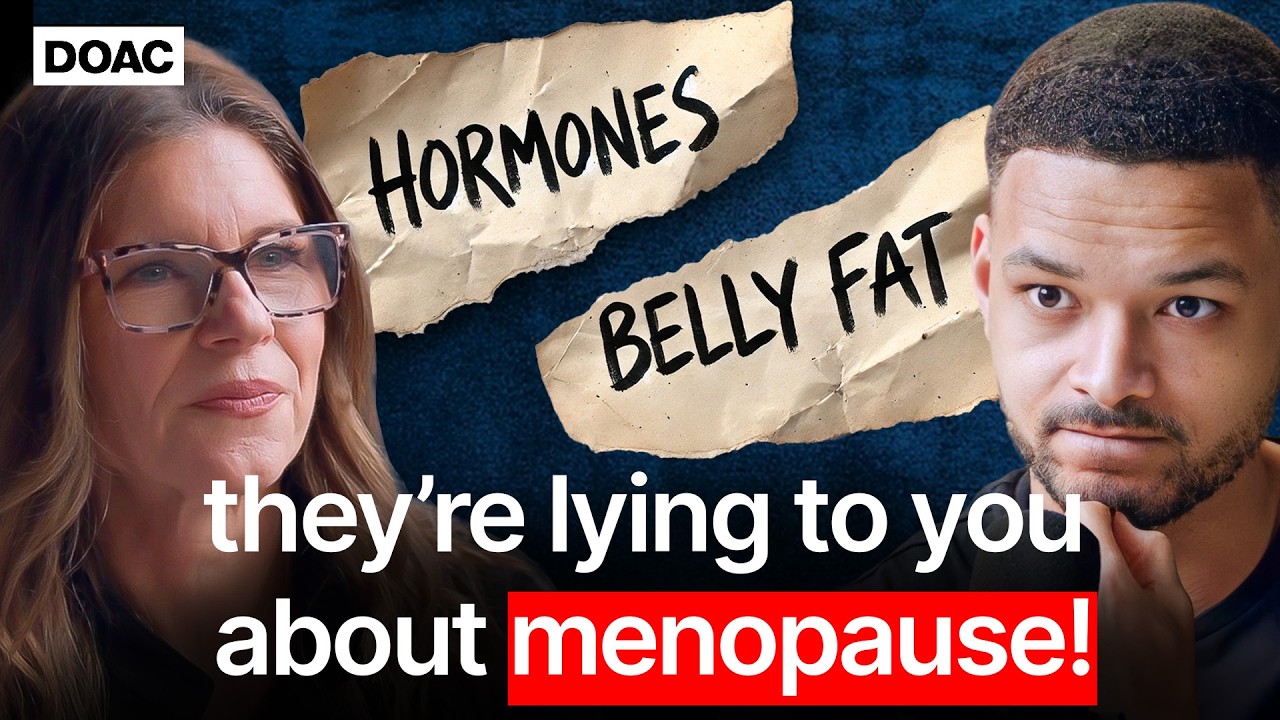
Published by The Diary Of A CEO on YouTube on March 27, 2025, this video features host Steven Bartlett interviewing Dr. Sara Szal (formerly Gottfried), a Harvard-trained medical doctor, scientist, and bestselling author. According to the page description, the episode explores the root hormone connections behind belly fat, stress, burnout, and metabolic health, alongside discussions on weight loss medications like Ozempic and Semaglutide.
## TL;DR
Dr. Sara Szal critiques conventional, patriarchal medicine and advocates for precision medicine that targets the root causes of systemic health issues. She outlines how cortisol acts as a biological dictator, explaining how stress, trauma, and nutrient deficiencies drive weight gain, brain shrinkage, and hormonal dysregulation. The discussion covers practical strategies for optimizing testosterone, estrogen, gut health, and sleep, while addressing the unique biological and societal stress burdens faced by women. Additionally, Dr. Szal offers intimate personal reflections on her own health crisis, trauma recovery, and midlife divorce.
## Atmosphere & style
The interview strikes a balance between rigorous medical science and deeply personal, vulnerable narrative. Dr. Szal speaks with clinical authority and empathetic candidness, creating a supportive, conversational dynamic with host Steven Bartlett. The tone shifts seamlessly from analytical breakdowns of biomarkers and metabolic pathways to evocative reflections on trauma, intimacy, and the lifting of midlife 'hormonal veils'.
## Key takeaways
- [03:46](https://www.youtube.com/watch?v=0GQozcTPyO0&t=226s) Dr. Sara Szal advocates for precision medicine over conventional medicine, shifting from treating population averages with pharmaceuticals to personalized, root-cause interventions based on genetics and real-time metrics.
- [21:38](https://www.youtube.com/watch?v=0GQozcTPyO0&t=1298s) Chronically high cortisol acts as a biological dictator, promoting belly fat, suppressing testosterone, increasing inflammation, and causing total brain volume shrinkage in women.
- [14:32](https://www.youtube.com/watch?v=0GQozcTPyO0&t=872s) Unresolved adverse childhood experiences (ACEs) and stress directly impact physical health, significantly elevating the risk of developing chronic autoimmune, metabolic, and psychiatric conditions.
- [25:23](https://www.youtube.com/watch?v=0GQozcTPyO0&t=1523s) Widespread dietary deficiencies in fiber and essential nutrients, combined with systemic exposure to environmental endocrine disruptors, disrupt hormonal balance and gut microbiome health.
- [39:28](https://www.youtube.com/watch?v=0GQozcTPyO0&t=2368s) Testosterone plays a critical role in both men and women, while declining estrogen levels in women after age 40 accelerate muscle loss, visceral fat gain, and physical aging.
- [01:02:33](https://www.youtube.com/watch?v=0GQozcTPyO0&t=3753s) Metabolic flexibility through strategic low-carbohydrate or ketogenic diets and intermittent fasting can drive weight loss, though women require distinct protocols due to heightened sensitivity to thyroid and stress disruption.
- [01:15:34](https://www.youtube.com/watch?v=0GQozcTPyO0&t=4534s) Hormone replacement and perimenopause management remain widely undertreated, while long-term reliance on hormonal birth control can carry adverse metabolic and inflammatory side effects.
- [01:27:07](https://www.youtube.com/watch?v=0GQozcTPyO0&t=5227s) Midlife hormonal transitions lower the 'hormonal veil' of accommodation, frequently compelling women to address long-standing relational dynamics or seek life changes.
- [01:29:37](https://www.youtube.com/watch?v=0GQozcTPyO0&t=5377s) Women bear a disproportionate burden of stress, thyroid dysregulation, and autoimmune conditions due to underlying biological sex differences paired with societal expectations.
- [01:45:02](https://www.youtube.com/watch?v=0GQozcTPyO0&t=6302s) Prioritizing circadian health, high heart rate variability (HRV), and 7.5 to 8.5 hours of sleep is foundational for cellular repair, mood stability, and metabolic regulation.
## Detailed walkthrough
### [00:00](https://www.youtube.com/watch?v=0GQozcTPyO0&t=0s) Intro & The Hidden Epidemic of Hormone Imbalance
Three-quarters of women do not receive the perimenopause and menopause treatment they deserve, leading to a cascade of unexplained physical and emotional changes. Women frequently find themselves asking why they can no longer manage stress, why belly fat suddenly appears despite using their usual techniques, or why they would rather mop the floor than have sex with their partner. There are over 100 symptoms associated with this transition that most women remain unaware of, yet many of these symptoms are entirely avoidable.
Hormones function like text messages sent throughout the body to maintain optimal operation, but when they fall out of balance, the body suffers. Out of more than 40,000 patients tested and treated by Dr. Sara Szal, roughly 90% presented with cortisol dysregulation. Chronically elevated cortisol causes severe systemic effects: it promotes stubborn belly fat, shrinks brain volume in women (a phenomenon not observed in men), elevates the risk of depression, and directly suppresses testosterone production.
* 75% of women lack adequate treatment during perimenopause and menopause.
* Over 100 distinct symptoms are associated with hormonal transitions.
* 90% of 40,000 patient cases showed measurable cortisol imbalances.
* Elevated cortisol causes brain shrinkage specifically in women, alongside increased belly fat and suppressed testosterone.
* High Adverse Childhood Experiences (ACE) scores (1 or higher) directly correlate with an increased risk for 45 chronic diseases.
---
[02:05](https://www.youtube.com/watch?v=0GQozcTPyO0&t=125s) What Dr. Sara Szal Does & The Philosophy of Healing
Dr. Sara Szal describes her formal role as an academic physician, researcher, teacher, and clinical provider. However, outside of institutional definitions, she considers herself a "healer" working with professional athletes, top corporate executives, and everyday patients. Reclaiming the term, she rejects the traditional, patriarchal medical paradigm where a doctor "fixes" a passive patient.
Instead, Dr. Szal views healing as a collaborative process that activates an individual’s innate capacity to self-repair. Her role is to identify and remove the physiological and psychological obstacles preventing a patient from feeling fully alive and functioning at their absolute best.
> "I don't heal people... that's a patriarchal way of thinking about it. What I do is I work with someone who's got the capacity to heal and we work to be in the service of that."
---
[03:38](https://www.youtube.com/watch?v=0GQozcTPyO0&t=218s) Medical Background and Bioengineering Training
Dr. Szal’s academic foundation began in bioengineering through the joint Harvard-MIT Health Sciences and Technology (HST) program, which specifically trains physician-scientists to bridge laboratory research and clinical medicine. From the beginning of her career, she sought to merge rigorous modern bioengineering with ancient medical systems, such as Ayurveda and Traditional Chinese Medicine.
After completing a residency in Obstetrics and Gynecology and working as a surgeon, she expanded her primary care practice to include men's health, which she has focused on for over 15 years. Her background in bioengineering established a comfort with big data, personalized metrics, and iterative optimization.
---
[05:18](https://www.youtube.com/watch?v=0GQozcTPyO0&t=318s) The Three Pillars of Patient Care
Reflecting on her direct clinical care of roughly 40,000 individuals, Dr. Szal outlines three core pillars that drive her patient interventions:
1. **Hormone Balancing:** Hormones serve as the primary entry point for health optimization. Addressing cortisol fluctuations—whether elevated, depleted, or swinging wildly throughout the day—is crucial for protecting mitochondrial function and energy levels. She prioritizes non-pharmaceutical lifestyle interventions, emphasizing breathwork as one of the most underutilized therapeutic tools in medicine.
2. **Precision Nutrition:** Moving beyond generic dietary advice, nutrition must be tailored to an individual’s genomic blueprint, baseline biomarkers, and specific lifestyle goals—whether they are an elite athlete, a busy entrepreneur, or a 42-year-old woman navigating perimenopause.
3. **Early Prevention & Metabolic Health:** Modern medicine often ignores the space between baseline health and overt disease. Dr. Szal targets the intermediate "pre-disease" states (such as pre-diabetes) through lifestyle modifications to reverse pathobiology before permanent organ damage occurs.
---
[08:06](https://www.youtube.com/watch?v=0GQozcTPyO0&t=486s) What Is Precision Medicine?
Conventional medicine often operates under an "imprecision" model, relying on population averages derived from randomized controlled trials. For example, standard protocols may require treating 100 to 200 high-cholesterol patients with statins for a single individual to derive a preventative benefit against a heart attack.
Precision medicine flips this paradigm by analyzing an individual's unique genomic data, real-time biomarkers, and wearable tracking metrics. It treats the patient as an "$N$-of-1" experiment—where the individual serves as their own control to identify hyper-personalized therapies.
> "With mainstream medicine... we have to treat about 100 to 200 people for one person to benefit. So that I would define as imprecision medicine."
---
[09:40](https://www.youtube.com/watch?v=0GQozcTPyO0&t=580s) What’s Wrong with Conventional Medicine?
Conventional medicine is fundamentally structured around "medicine for the average" and is dictated by pharmaceutical financial models rather than health creation. Although lifestyle interventions can prevent up to 70% of cardiovascular disease—the leading global killer—the medical industry disproportionately invests in profitable pharmaceuticals, such as statins and GLP-1 agonists, due to the lack of profit motives in lifestyle medicine.
Furthermore, mainstream medicine perpetuates a double standard regarding hormone testing. Doctors routinely dismiss patient requests for routine hormone panels under the pretense that hormones fluctuate too wildly to be informative. Yet, if that same patient turns 34 and struggles to conceive, clinics immediately order comprehensive panels for thyroid, cortisol, estrogen, progesterone, and follicle-stimulating hormone (FSH).
* Lifestyle medicine can prevent up to 70% of cardiovascular disease.
* Pharmaceutical trials define standard-of-care guidelines based on population averages rather than individual optimization.
* Hormone panels are often gatekept until fertility issues arise, demonstrating an institutional double standard.
---
[12:25](https://www.youtube.com/watch?v=0GQozcTPyO0&t=745s) Personal Trauma and the Pathway to Medicine
Dr. Szal’s trajectory toward medicine was shaped by childhood adversity. Following her parents' divorce when she was one year old, she developed hyper-vigilant "helper" coping mechanisms—tuning into the emotional states of adults around her to maintain personal safety. This psychological conditioning is common among healthcare professionals, who frequently channel early relational trauma into caretaking professions.
On the validated Adverse Childhood Experiences (ACE) questionnaire—a 10-point scale assessing childhood trauma, abuse, neglect, and household dysfunction—Dr. Szal scores a 6 out of 10. Landmark research from the 1990s demonstrates that middle-aged adults scoring 1 or higher on the ACE scale face a dramatically elevated risk for 45 distinct chronic diseases.
---
[14:32](https://www.youtube.com/watch?v=0GQozcTPyO0&t=872s) How Trauma Manifests as Physical Disease
Trauma is not merely the event that occurred in the past, but the biological pattern that remains embedded in the nervous, immune, and endocrine systems. Unresolved developmental trauma manifests physically through distinct biological pathways:
* **Immune System:** Heightened systemic inflammation, histamine intolerance, multiple food sensitivities, and a higher incidence of autoimmune diseases where the body attacks its own tissues.
* **Nervous System:** Dysregulation expressing as generalized anxiety disorder, major depressive disorder, or post-traumatic stress disorder (PTSD).
* **Endocrine System:** Chronic dysregulation of the hypothalamic-pituitary-adrenal (HPA) axis, leading to abnormal cortisol production curves.
---
[16:06](https://www.youtube.com/watch?v=0GQozcTPyO0&t=966s) Dr. Szal’s Personal Health Crisis and Diagnosis
In her early 30s, despite being a practicing physician, Dr. Szal experienced severe health decline, including clinical depression, severe premenstrual syndrome (PMS), and stubborn post-partum weight retention following the birth of her first child at age 32.
When she sought care from her doctor, she was offered standard conventional fixes: a prescription for Prozac (an SSRI), oral contraceptive pills for her "hormonal" mood swings, and advice to "exercise more and eat less."
Unsatisfied with this superficial response, Dr. Szal ran her own blood panels. The results revealed severe metabolic and endocrine dysfunction that had gone completely undetected:
* **Elevated Cortisol:** Her morning cortisol measured at 30 mcg/dL—two to three times the optimal reference range of 10–15 mcg/dL.
* **Metabolic Dysregulation:** Her fasting glucose and insulin levels placed her firmly in the pre-diabetic range during her early 30s.
* **Autonomic Dysregulation:** Wearable data revealed severely depressed heart rate variability (HRV), signaling chronic sympathetic overdrive ("fight-or-flight") and a suppressed parasympathetic state.
This personal health crisis exposed a critical blind spot in medical education: standard medical training covers extreme endocrine pathologies (such as Cushing's disease or Addison's disease) but leaves doctors unprepared to identify or treat the widespread functional hormonal dysfunctions affecting millions of individuals living in the middle.
<FollowUp label="Want to explore how to test and fix high cortisol levels?" query="How do you properly test for cortisol dysregulation, and what are the most effective lifestyle strategies to fix high cortisol?"/>
[19:39](https://www.youtube.com/watch?v=0GQozcTPyO0&t=1179s) Medical Education Blindspots: The 30-Minute Nutrition Problem
Dr. Sara Szal discusses how conventional medical training completely misses the mark when it comes to lifestyle medicine. After identifying an issue with elevated cortisol or erratic blood sugar, "step one" is simply building awareness—a state of understanding that most primary care physicians are never trained to evaluate. Dr. Sara points out the paradox of her own Ivy League training, noting that while she was taught at Harvard that lifestyle intervention is the primary cure for pre-diabetes and metabolic dysfunction, her curriculum offered zero practical instruction on *how* to implement those lifestyle shifts. Instead, doctors are trained exclusively to write prescriptions for medications like metformin.
```
"I was taught at Harvard that if you have blood sugar problems... the treatment is lifestyle... And yet, I wasn't taught how to help my patients do any of those things... I had 30 minutes on nutrition."
```
When Steven Bartlett expresses shock at this revelation, Dr. Sara confirms that across her entire medical education, she received a mere 30 minutes of nutrition education—and roughly the same minimal amount of time on perimenopause and menopause. This glaring gap explains why the conventional healthcare system fails to prevent chronic disease. She outlines her 3-step framework for real healing:
1. **Awareness:** Uncovering baseline hormonal and metabolic markers.
2. **Scientific Evidence:** Examining population-level research to understand underlying mechanisms.
3. **N-of-1 Experiments:** Running personalized, individual trials on oneself while tracking objective biological measurements.
- **Medical School Curriculum Gap:** ~30 minutes total spent on nutrition; ~30 minutes total spent on perimenopause/menopause.
- **Primary Pharmacological Fallback:** Prescribing drugs like metformin rather than guiding patients through dietary or behavioral changes.
---
[21:38](https://www.youtube.com/watch?v=0GQozcTPyO0&t=1298s) Cortisol as a Biological Dictator and Brain Shrinkage in Midlife
When people think of high cortisol, the immediate, naive response is often to suggest taking a vacation. However, Dr. Sara explains that returning from a holiday rarely resolves systemic cortisol dysregulation because the body can get stuck in a fixed, altered pattern of production. She clarifies that while hormones like estrogen, progesterone, and testosterone are important, they do not operate in a democracy. Cortisol acts as a biological "dictator." While a person can survive without sex hormones, cortisol is essential to life alongside insulin, directly governing immune function, blood glucose regulation, and the overall stress response.
```
"Cortisol is more like a dictator... You need cortisol to live, whereas you could live without testosterone, estrogen, progesterone... It's not quite as simple as thinking your way out of a high cortisol."
```
The physiological dangers of chronic, unmanaged high cortisol are severe and widespread:
* **Mental Health & Depression:** Approximately 50% of people with clinical depression present with high cortisol, leading some psychiatrists to monitor it as a risk marker for suicide.
* **Visceral/Belly Fat Storage:** Fat cells in the abdomen contain a higher concentration of cortisol receptors, meaning elevated stress hormones actively stimulate and grow belly fat.
* **Brain Shrinkage in Midlife Women:** Studies led by researchers at the University of Texas at San Antonio and Dr. Lisa Mosconi at Cornell demonstrate that women with high cortisol in their 40s suffer from measurable shrinkage of total brain volume—a phenomenon not observed in men. High cortisol impairs the brain's ability to utilize glucose for fuel, causing profound mental fatigue, brain fog, and an inability to multitask.
- **Trauma & PTSD Connection:** Severe stress or trauma causes an initial spike in cortisol. However, individuals suffering from chronic post-traumatic stress disorder (PTSD) often burn out their stress response systems, dropping into a chronically **low cortisol state**.
---
[25:23](https://www.youtube.com/watch?v=0GQozcTPyO0&t=1523s) Endocrine Disruptors, Modern Dysregulation, and the Attention Economy
Addressing the ambient factors ruining human hormone balance, Dr. Sara highlights environmental toxins known as endocrine disruptors. There are over 700 recognized compounds in everyday products that mimic or sabotage natural hormones. These include Bisphenol A (BPA) found in plastic container linings and water bottles, parabens embedded in cosmetics, lotions, and skincare, as well as flame retardants found in household fabrics. Women face an elevated exposure burden due to higher daily usage of commercial beauty and personal care items.
Beyond chemical exposure, Dr. Sara reports seeing an unprecedented "hum of dysregulation" across her patient base and their wearable data (e.g., plummeting Heart Rate Variability and abnormal salivary cortisol curves). She attributes this widespread nervous system overload to a combination of post-pandemic distress, political friction, and hyper-addictive digital technology. Steven notes that modern social media algorithms explicitly compete for human attention by feeding users distressing, outrage-inducing content. In this high-stakes "attention economy," the ultimate collateral damage is the human nervous system.
If Dr. Sara were to overhaul Steven's daily routine to protect his hormones, her immediate environmental and metabolic interventions would include:
* **Home Audit:** Replacing plastic containers, removing toxic skincare products, and installing high-grade air filters.
* **Stress Calibration:** Auditing workloads to find the optimal "eustress" range—enough pressure to drive productivity without causing physiological harm.
* **Nutritional Baseline:** Monitoring protein intake, checking Vitamin D levels, and tracking real-time responses using a Continuous Glucose Monitor (CGM).
---
[29:57](https://www.youtube.com/watch?v=0GQozcTPyO0&t=1797s) Blood Sugar, ATP, and Common Biomarker Deficiencies
When questioned whether sugar is the ultimate enemy, Dr. Sara argues that sugar itself is not inherently evil; rather, the issue lies in *how* we consume it—in excess and as an emotional coping strategy for unhealed trauma or adverse childhood experiences (ACEs). Tracking glucose via CGMs offers immediate behavioral feedback. Blood sugar stability serves as a direct window into mitochondrial health and the efficiency of cellular energy production in the form of adenosine triphosphate (ATP), the vital compound that powers every cellular action and morning wakefulness.
```
"Sugar is not the enemy. I think the enemy is the way that we eat it to excess, the way that we use it to change our emotional state."
```
When evaluating blood panels across the general population, Dr. Sara observes several widespread nutritional deficiencies and metabolic warning signs:
```
+------------------------+------------------------------------+---------------------------------------------------+
| Biomarker | Standard/Deficient Prevalence | Clinical Impact & Optimal Target |
+------------------------+------------------------------------+---------------------------------------------------+
| Vitamin D | 70% - 80% of people deficient | Essential for 400+ bodily functions; maintains |
| | | tight junctions in the gut to prevent leaky gut. |
+------------------------+------------------------------------+---------------------------------------------------+
| Homocysteine | Commonly elevated above 10-14 | Indicator of heart-specific inflammation and |
| | | poor methylation. Optimal range: 5 to 7. |
+------------------------+------------------------------------+---------------------------------------------------+
| Fasting Glucose / A1C | Frequently in pre-diabetic range | Signals poor glucose clearance; driven by muscle |
| | (e.g., Fasting Glucose > 100 mg/dL)| mass loss and sedentary routines. |
+------------------------+------------------------------------+---------------------------------------------------+
```
Dr. Sara shares an illustrative case study of a 52-year-old Chief Financial Officer she treated earlier that week. Despite identifying strongly with his past identity as a high-school and college football player, he was barely exercising—lifting weights once a week and swimming for 30 minutes once a week. His fasting glucose was elevated at 102 mg/dL, his cholesterol was climbing, and his homocysteine stood at a high 14.7 due to poor methylation and a B-vitamin deficit. By connecting his current metabolic crisis back to his deep-seated identity as an athlete, she was able to motivate him to increase his strength training and clear surplus circulating glucose before it progressed to full-blown disease.
---
[36:16](https://www.youtube.com/watch?v=0GQozcTPyO0&t=2176s) Fixing Cortisol: Top-Down vs. Bottom-Up Strategies
Dr. Sara reveals that in her specialized clinical practice, roughly **90% of tested patients present with cortisol dysregulation**. This includes elite professional athletes (such as NBA basketball players), who endure intense travel schedules, frequent time-zone shifts, and constant physical stress loads. Across the general population, she estimates that between **30% and 50% of people suffer from imbalanced cortisol levels**.
To regulate a dysregulated cortisol curve, Dr. Sara uses two distinct clinical approaches:
1. **Top-Down Approach (Cognitive):** Utilizing the prefrontal cortex to reinterpret stressors, reframe negative thought patterns, and alter emotional reactivity.
2. **Bottom-Up Approach (Somatic/Sensory):** Engaging the physical body and senses directly to signal safety to the nervous system and turn off the physiological alarm system.
* **Resonance Breathing:** Inhaling for 5 seconds and exhaling for 7 seconds (6 total breaths per minute) for 10 to 20 minutes daily. This balances the sympathetic ("fight-or-flight") and parasympathetic ("rest-and-digest") branches of the autonomic nervous system.
* **Rhythmic Movement:** Engaging in walking, hiking, or dancing. High-intensity running can sometimes backfire by spiking cortisol further in already overtaxed individuals.
* **Targeted Supplementation:** Utilizing specialized botanicals and adaptogens—such as Phosphatidylserine, Ashwagandha, and clinical formulas like "Cortisol Manager"—to suppress night-time cortisol surges and restore deep sleep.
[39:28](https://www.youtube.com/watch?v=0GQozcTPyO0&t=2368s) Natural Cortisol Regulation and the Difficulty of Behavior Change
The discussion opens with targeted supplement strategies for managing cortisol, particularly in high-stress situations such as traveling after competitive sports games. Dr. Sara Gottfried highlights **cortisol manager** formulations containing **ashwagandha** and **phosphatidylserine**, which work synergistically to bring down elevated stress hormone levels. Steven Bartlett mentions **rhodiola**, which Dr. Gottfried confirms is an effective adaptogenic herb that lowers cortisol while simultaneously sharpening mental focus. While she favors starting athletes on cortisol manager due to its robust data, rhodiola remains a staple option. She typically advises taking these supplements either first thing in the morning or right before sleep to ensure consistency.
The conversation shifts to the psychological hurdle of lasting behavioral change, especially around times of year when people set resolutions only to fail repeatedly. Dr. Gottfried contends that changing human behavior is arguably "the hardest thing that we do as humans." Unresolved adverse childhood experiences frequently etch deep, stubborn behavioral patterns. However, real transformation occurs when the pain of staying the same becomes high enough to outweigh the comfort of bad habits—such as reaching for a couple of shots of tequila to unwind. Continuous feedback devices like continuous glucose monitors (CGMs) create accountability through the Hawthorne effect, as patients know their clinical data is actively being monitored.
- **Cortisol Manager**: Combines ashwagandha and phosphatidylserine to reduce cortisol; preferred timing is morning or bedtime.
- **Rhodiola**: An adaptogenic herb that lowers stress levels and improves cognitive focus.
- **Behavioral Drivers**: Change occurs when the pain of remaining static exceeds the difficulty of changing, or through external accountability like CGMs.
---
[41:42](https://www.youtube.com/watch?v=0GQozcTPyO0&t=2502s) Pain as a Catalyst for Change, Boundaries, and Avoiding Codependency
Steven explores whether intervening to shield loved ones from consequences actually prevents them from hitting the necessary "rock bottom" required for self-motivated growth. Dr. Gottfried acknowledges the delicate boundary separating supportive motivation from codependency and enabling. Over decades of clinical practice, she realized that breaking through a patient’s denial—whether regarding excessive drinking or unhealthy dynamics—is not a practitioner's or friend's job. While she presents clear scientific facts on how alcohol harms both male and female brains and breaches the gut barrier to cause leaky gut, the individual must ultimately dismantle their own denial.
For friends and family, the true responsibility lies in establishing clean personal boundaries and deciding what behaviors they are willing to tolerate within a relationship. Interventions serve as a formal avenue to express concern and offer alternative pathways, but genuine healing requires mutual consent rather than forced help. Steven reflects on his own experience over the past 15 years, observing that stepping back and removing his financial or practical crutches allowed friends to experience temporary stumbles but ultimately construct resilient, self-directed lives. Dr. Gottfried describes this approach as holding up a "clean mirror" in a loving yet firm manner.
> "If someone has denial about what they're doing and how it's affecting their relationships, their health, their ability to work... it's not my job to break through their denial. They have to do that."
---
[45:56](https://www.youtube.com/watch?v=0GQozcTPyO0&t=2756s) Testosterone Dynamics in Men and Women
Addressing male hormone tracking, Dr. Gottfried recommends obtaining a baseline biomarker assessment early in adulthood, even though testosterone levels typically do not drop significantly until around age 40. Extreme stress and environmental conditions can cause rapid drops even in high-performing individuals; for instance, NBA players competing inside the Florida bubble during the pandemic experienced plummeting testosterone levels due to isolation, restriction from family, and lack of routine outlets.
Contrary to popular belief, testosterone is actually the most abundant hormone in the female body by concentration—far outstripping estrogen and progesterone. Normal total testosterone ranges differ drastically between sexes:
* **Women**: Typically range between **15 and 70 ng/dL**.
* **Men**: Healthy target ranges sit between **500 and 1,000 ng/dL** (though broad medical norms span 300 to 1,000 ng/dL).
```
Male vs. Female Normal Testosterone Ranges (ng/dL)
Low testosterone manifests differently depending on biological sex:
* **Men**: Signs include abdominal visceral fat, gynecomastia (breast tissue development), mood swings, irritability, depression, cardiovascular changes, erectile dysfunction, and decreased libido.
* **Women**: Low levels lead to fatigue, reduced sex drive, hair loss, and an inability to build muscle despite resistance training. Higher testosterone in women correlates with greater comfort taking financial risks, higher agency, and increased self-confidence.
* **High Female Levels (PCOS)**: Elevated testosterone in women points to Polycystic Ovary Syndrome (PCOS), bringing symptoms like acne, hirsutism (unwanted hair growth on the chin or chest), infertility, mitochondrial dysfunction, a dysregulated stress response, and insulin resistance in roughly **70%** of cases.
---
[50:16](https://www.youtube.com/watch?v=0GQozcTPyO0&t=3016s) Regulating Testosterone, PCOS, and Ketogenic Diets
To rebalance testosterone without immediate pharmaceutical or exogenous hormone intervention, Dr. Gottfried points to cortisol management as the critical first step. Cortisol and testosterone maintain an inverse relationship; elevated cortisol naturally suppresses testosterone synthesis. However, for women suffering from PCOS with abnormally high testosterone, nutritional intervention yields dramatic results: adopting a low-carbohydrate diet can significantly lower elevated testosterone levels in as few as **7 days**.
When Steven mentions his own ketogenic diet, Dr. Gottfried clarifies that low carbohydrate intake does not suppress testosterone in healthy men the way it lowers pathologically high levels in PCOS. While a keto diet effectively drops insulin levels and supports metabolic health, it requires targeted monitoring over time. Staying in strict ketosis for longer than 4 weeks can trigger thyroid dysfunction, heighten systemic inflammation in non-responders, or cause a **10% increase** in LDL cholesterol.
---
[52:30](https://www.youtube.com/watch?v=0GQozcTPyO0&t=3150s) Estrogen's Role, Aging, and Muscle Retention
Estrogen plays vital roles in both male and female physiology, though its dynamic range is far broader in women. Female estrogen drops drastically during two main life stages: postpartum (immediately after delivering the baby and placenta) and perimenopause/menopause. Low estrogen triggers systemic issues across the body, such as frozen shoulder (due to unactivated estrogen receptors in joint tissues), diminished mood, accelerated skin aging through lost collagen, and loss of joint lubrication. In men, lower but stable estrogen levels are necessary to preserve bone density without causing feminizing side effects.
After age 40, shifting hormones cause women's cells to become increasingly resistant to insulin. As a result, the average woman loses approximately **5 pounds of muscle** and gains **5 pounds of fat** every decade past 40, accompanied by a shift in fat distribution from the breasts, hips, and buttocks to the abdomen.
```
Female Body Composition Shift (Per Decade After Age 40)
┌──────────────────────────────────────────────────┐
│ Muscle Loss: -5 lbs │
│ Fat Gain: +5 lbs (Shifted to Abdomen) │
└──────────────────────────────────────────────────┘
```
Dr. Gottfried emphasizes that this shift is not inevitable. While **73% to 75% of women** currently fail to receive adequate perimenopause and menopause treatment, proper intervention—including hormone replacement therapy (estrogen, progesterone, testosterone), heavy weightlifting, and cardiovascular training—can reverse these trends. Managing blood sugar by using resistance exercise to properly dispose of glucose and maintain muscle mass serves as the ultimate anchor for long-term metabolic vitality.
- **Postpartum & Menopause Preview**: Postpartum estrogen crashes mirror future perimenopausal transitions, providing early diagnostic insight into a woman's estrogen sensitivity.
- **Muscle-to-Fat Ratio**: Women lose ~5 lbs of muscle and gain ~5 lbs of visceral fat per decade after 40 without intervention.
- **Treatment Gap**: 73% to 75% of women are denied or not offered proper menopausal hormone therapy and lifestyle support.
[58:44](https://www.youtube.com/watch?v=0GQozcTPyO0&t=3524s) The Critical Role of Dietary Fiber and the Gut Microbiome
Dr. Sara Szal emphasizes that modern populations are severely fiber-deficient. While the average American consumes around 14 grams of fiber daily, optimal health requires roughly 30 to 40 grams, whereas paleolithic ancestors consumed 50 to 100 grams per day. Fiber is essential for blood sugar stabilization, and microbiome research indicates that individuals should aim to consume 25 to 35 different species of fruits and vegetables weekly to keep gut microbes healthy and diverse.
The gut microbiome plays a controlling role in hormone regulation—particularly estrogen and potentially testosterone. Specific gut bacteria produce enzymes that uncouple conjugated estrogen scheduled for excretion, allowing it to recirculate through the body. Dr. Sara compares this process to "bad karma." In men, excess recirculating estrogen increases the risk of metabolic dysfunction and prostate cancer, while in women it raises the risk of breast and endometrial cancers. Feeding gut microbes their preferred food—fiber—helps maintain proper hormonal clearance.
- **Fiber Intake Comparisons:** Average American = ~14g/day; Optimal intake = 30–40g/day; Paleolithic ancestors = 50–100g/day.
- **Dietary Target:** Eat 25–35 different species of fruits and vegetables per week.
- **High-Fiber Cruciferous Foods:** Broccoli, Brussels sprouts, cauliflower, cabbage, and kohlrabi.
---
[01:01:33](https://www.youtube.com/watch?v=0GQozcTPyO0&t=3693s) Dr. Sara’s Personal Nutrition, Continuous Glucose Monitoring, and Detox Pathways
Describing herself as a "sensualist" who loves the taste, smell, and visual appeal of food, Dr. Sara openly shares her personal history with disordered eating, including teenage anorexia and bulimia throughout her 20s and 30s. Today, she maintains a healthy, neutral relationship with food, informed by wearing a continuous glucose monitor (CGM) almost continuously for seven years.
Her standard daily diet starts with fresh eggs (scrambled or lightly boiled) paired with greens or leftover vegetables. She consumes half a pound to a pound of vegetables daily, incorporating salads, dinner sides, and protein smoothies packed with vegetables. Because genomic and biomarker testing revealed that she has "sluggish detox pathways" and produces insufficient glutathione (a primary antioxidant), she heavily prioritizes cruciferous vegetables and broccoli sprouts to support detoxification.
- **Daily Vegetable Target:** 0.5 to 1 pound per day.
- **Glutathione Deficiency:** Addressed via heavy intake of cruciferous vegetables and broccoli sprouts.
- **CGM Tracking:** Worn almost continuously for seven years to personalize metabolic choices.
---
[01:03:22](https://www.youtube.com/watch?v=0GQozcTPyO0&t=3802s) The Ketogenic Diet: Sex Differences and Hormonal Trade-Offs
Addressing the "keto paradox," Dr. Sara notes that men generally thrive on the ketogenic diet much better than women. Approximately 45% of women on a classic ketogenic diet experience menstrual irregularities or thyroid dysfunction. Women also take significantly longer to enter ketosis—typically requiring 18 to 20 hours of fasting compared to 14 to 16 hours for men—likely due to evolutionary pressures protecting female fertility.
Much of the scientific literature on classic keto stems from strict clinical protocols (10 to 20 grams of net carbs daily) used to treat seizure disorders. Rather than extreme restriction, Dr. Sara advises individuals to determine their personal "carb threshold." This allows one to reap benefits like lowered insulin, improved metabolic function, and high phytonutrient intake without triggering adverse side effects.
- **Fasting Time to Ketosis:** Men = 14–16 hours; Women = 18–20 hours.
- **Adverse Effects in Women:** ~45% experience thyroid dysfunction or menstrual irregularities on strict keto.
- **Side Effects of Strict Keto:** Elevated cortisol, reduced serotonin levels (leading to sleep disruptions), and potential declines in athletic performance.
- **Athletic Carb-Loading Strategy:** Cyclists and endurance athletes on keto often reintroduce carbohydrates two weeks prior to a race to restore glycogen stores.
---
[01:07:29](https://www.youtube.com/watch?v=0GQozcTPyO0&t=4049s) Strategies for Effective Weight Loss, Fasting, and Ketone Signaling
When addressing stubborn body fat and weight loss, Dr. Sara notes that ketones provide superior satiety compared to basic calorie-restriction diets, preventing the urge to constantly check the refrigerator. Combining intermittent fasting with a ketogenic diet accelerates ketosis and improves insulin sensitivity.
Ketones serve as crucial signaling molecules with inherent anti-inflammatory properties. Dr. Sara compares the human body to a hybrid car that seamlessly switches between burning gas (glucose) and electricity (ketones). While human genomes evolved to flip in and out of ketosis based on food availability, constant food abundance prevents most modern humans from ever entering ketosis. However, long-term adherence to keto should always be monitored through comprehensive biomarker profiling.
> "The normal way that your genome developed was to flip in and out of ketosis based on the food supply. And now that food is abundant, most people are not going into ketosis."
- **Metabolic Flexibility:** Switching between glucose and ketones supports mitochondrial health, insulin regulation, and inflammation reduction.
- **Individual Variability:** Fasting and keto activate beneficial stress pathways in some, but induce high cortisol and stress in others.
---
[01:11:26](https://www.youtube.com/watch?v=0GQozcTPyO0&t=4286s) The Perimenopause Knowledge Gap and Ovarian Aging
Dr. Sara highlights perimenopause as the single topic female patients are most obsessed with today. Typically beginning between ages 35 and 45, perimenopause marks the period when ovarian egg supply depletes and egg mitochondria decline in function. Beyond simple fluctuations in estrogen, progesterone, and testosterone, perimenopause impacts the entire metabolic, immune, and central nervous systems, often triggering autoimmune conditions.
Despite over 100 documented symptoms—ranging from mood swings, insomnia, and night sweats to painful intercourse, loss of libido, and sudden belly fat—women face a massive medical knowledge and treatment gap. Doctors frequently dismiss symptomatic women in their early 40s as "too young."
- **Typical Onset:** Ages 35 to 45.
- **Premature Ovarian Insufficiency:** Menopause occurring before age 40.
- **Early Menopause:** Final menstrual period occurring between ages 40 and 45, often signaled by a follicle-stimulating hormone (FSH) level of 25 to 30.
- **Clinical Needs:** Early tracking via blood samples to map symptoms directly to ovarian, immune, and metabolic markers.
---
[01:15:34](https://www.youtube.com/watch?v=0GQozcTPyO0&t=4534s) Unnecessary Suffering, Hormone Therapy, and the Risks of Birth Control
Many symptoms associated with menopause are entirely avoidable when lifestyle medicine and bioidentical hormone therapies are initiated early in the transition. Unfortunately, conventional physicians often dismiss symptoms as inevitable signs of aging or inappropriately prescribe oral contraceptives.
Dr. Sara argues that birth control pills are severely overused and prescribed without full informed consent. Oral contraceptives increase systemic inflammation by two- to three-fold, significantly elevate the risk of autoimmune conditions like Crohn's disease, reduce hormonal control flexibility, lower free testosterone, and shrink key physiological structures over time.
- **Inflammatory Marker Surge:** Birth control pills elevate systemic inflammation 2x to 3x.
- **Autoimmune Risk:** Strong association with increased risk of Crohn's disease.
- **Impact on Testosterone:** Suppresses free testosterone levels in women.
[01:16:52](https://www.youtube.com/watch?v=0GQozcTPyO0&t=4612s) Birth Control Alternatives and "Whole Body Yes"
Dr. Sara Szal discusses how the birth control pill can shrink the clitoris by up to 20%, noting that if this detail were included in informed consent forms, far fewer women would choose to take it. While the pill offered women reproductive control—a route Dr. Szal took herself starting at age 16—she emphasizes that teenagers and young women are rarely informed of its hidden costs. Instead of altering a woman’s "hormonal intelligence," she strongly advocates for non-hormonal or localized contraceptive methods, such as IUDs, condoms, or barrier methods.
Turning to her personal life, Dr. Szal reflects on her divorce after 22 years together and 20 years of marriage. After her two daughters went off to college, she realized their shared time as a couple had run its course. Her subsequent spiritual work focused on evaluating the second half of her life, refining her mission, and learning to give a "whole body yes" to opportunities. Mentored by Diana Chapman (who adapted the concept from therapist Katie Hendricks), Dr. Szal explains that a "whole body yes" moves beyond cognitive, intellectual agreement ("that sounds like a good opportunity") to an intuitive check-in with the gut and heart to verify if something is truly worth her time and energy.
* The birth control pill can shrink clitoral volume by up to 20%.
* Dr. Szal was in a relationship for 22 years and married for 20 years before divorcing.
* The "whole body yes" framework relies on alignment across cognitive, gut, and heart signals rather than pure rationalization.
---
[01:20:01](https://www.youtube.com/watch?v=0GQozcTPyO0&t=4801s) Navigating Marriage, Trauma Bonds, and Divorce
Reflecting on why a 20-year marriage breaks down, Dr. Szal explains that she and her ex-husband struggled with high-conflict, highly charged topics. Fights resulted in "partial repair"—enough to manage household duties and parent their children, but lacking true resolution or emotional attunement. This dynamic left her feeling fundamentally unseen and lonely, despite living in close proximity. She acknowledges that their bond was partly a "trauma bond," where their respective unhealed wounds intersected, keeping them together far longer than was healthy and constantly triggering dysregulation in her nervous system.
Despite spending roughly 10 of their 20 married years in couples therapy—where they successfully learned "I" statements, non-blaming language, and taking cooling-off walks—the core emotional loneliness persisted. Dr. Szal eventually chose solitude over remaining in a marriage that compromised her inner peace. She is currently in a deeply attuned relationship with a partner she has known for over 30 years, having met when they were medical interns together at UCSF.
> "There was a way that I felt alone and lonely inside of the relationship. And I decided—I think a fair number of women decide this—I was better off alone than to continue in the marriage."
---
[01:24:15](https://www.youtube.com/watch?v=0GQozcTPyO0&t=5055s) Psychedelic-Assisted Therapy and Upstream Healing
When asked what might have salvaged her marriage upstream, Dr. Szal highlights psychedelic-assisted therapy as one of the most effective tools for resolving deeply embedded trauma. Five years prior, she began exploring psychedelic-assisted therapy to clear her own "trauma signature" in the hope that her ex-husband would eventually join her in a shared journey to quiet emotional noise and reconnect to love. However, he was unopen to using psychedelics.
While acknowledging that alternative routes like breathwork, near-death experiences, flow states, or peak experiences can also induce healing states of consciousness, she notes that they were simply unable to access that joint state of repair.
---
[01:27:07](https://www.youtube.com/watch?v=0GQozcTPyO0&t=5227s) Menopause, the "Hormonal Veil," and the U-Bend of Happiness
Addressing why divorce rates spike around midlife, Dr. Szal refers to insights from menopause experts like Dr. Lisa Mosconi. During reproductive years, fluctuating levels of estrogen, progesterone, and testosterone condition women to accommodate, compromise, and roll with the punches. As perimenopause and menopause set in, this "hormonal veil" lifts. Women stop accommodating, begin asserting their true needs, and candidly reassess the state of their relationships, frequently prompting divorces.
```
Reproductive Years (Estrogen/Progesterone) ➔ High Accommodation & Compromise
Perimenopause / Menopause ➔ "Hormonal Veil" Lifts ➔ Direct Truth-Telling & Rising Divorce Rates
```
Despite the upheaval, psychological well-being recovers significantly during this decade. Citing the "U-Bend" of happiness research (popularized in outlets like *The Economist*), Dr. Szal points out that adult well-being peaks in the 20s and early 30s, dips steadily through the 30s and 40s, and experiences a pronounced upward rebound around age 50.
* **The U-Bend Curve:** Well-being drops during the 30s and 40s due to career, family, and relational pressures, but sharply rebounds around age 50.
* **The "Hormonal Veil":** Premenopausal hormonal profiles foster flexibility and accommodation; dropping hormone levels during menopause remove this filter, pushing women to address long-standing dissatisfaction.
---
[01:29:37](https://www.youtube.com/watch?v=0GQozcTPyO0&t=5377s) Closing the Women's Health and Gender Gap
Steven Bartlett opens the floor to Dr. Szal to frame the most urgent question facing women's medicine. Dr. Szal states that the core issue is: *How do we systemically support women and close the widening women's health gap?* Over her 30-year medical career, this gap has worsened rather than improved.
She separates the issue into two distinct root causes:
1. **Sex Differences:** Biological factors tied to the XX chromosome vs. XY chromosome and major life-cycle transitions (pregnancy, postpartum, perimenopause, menopause).
2. **Gender Differences:** Socially constructed dynamics, including unequal distribution of emotional labor, systemic power imbalances, higher stress levels, and disproportionate exposure to trauma.
She notes that these combined forces create severe statistical health disparities for women compared to men:
* **Depression:** $2\times$ higher rate in women.
* **PTSD:** $2\times$ higher rate in women.
* **Insomnia:** $2\times$ higher rate in women.
* **Autoimmune Diseases:** $4\times$ higher rate in women.
* **Thyroid Dysfunction:** $9\times$ higher rate in women.
Dr. Szal emphasizes that while female biology cannot be rewritten, society *can* alter the constructed gender disparities, power imbalances, and structural pressures that make being female a chronic health hazard.
---
[01:33:05](https://www.youtube.com/watch?v=0GQozcTPyO0&t=5585s) Nervous System Disruption, Stress, and Trauma Disparities
Dr. Szal explains that modern culture creates a persistent autonomic imbalance in women. Ideally, the nervous system maintains a fluid ~50/50 balance between the **sympathetic nervous system** ("fight, flight, or freeze") and the **parasympathetic nervous system** ("rest and digest, stay and play"). Due to societal expectations and structural inequities, women experience disproportionate sympathetic activation, leaving them chronically stuck in fight-or-flight mode.
Annual stress surveys in the US consistently show that women report roughly 10% more stress than men. Dr. Szal attributes this elevation not to biological weakness, but to structural power dynamics, patriarchy, and higher rates of early-life trauma (Adverse Childhood Experiences / ACE scores). Women encounter trauma earlier in life and face exponentially higher rates of interpersonal violence—including being 14 times more likely than men to experience sexual assault or rape. When asked if men and women react differently at a biomarker level (such as cortisol) when placed in identical high-stress environments, Dr. Szal references researcher Elaine Aron’s work on Highly Sensitive Persons (HSP), noting that baseline sensory sensitivity is roughly equal between sexes, though cultural context heavily alters the burden carried.
* **Nervous System Ideal State:** A balanced ~50/50 distribution between sympathetic and parasympathetic activation.
* **Stress Differential:** Women report ~10% higher stress levels than men on annual US population metrics.
* **Trauma Disparity:** Women experience ~10% higher ACE (trauma) scores, encounter trauma at younger ages, and are 14 times more likely to survive sexual assault.
[01:36:11](https://www.youtube.com/watch?v=0GQozcTPyO0&t=5771s) Autoimmune Diseases and Gender Differences
The conversation turns to the stark gender disparity in autoimmune conditions. Dr. Sara Szal confirms that women suffer from autoimmune diseases at a rate four times higher—a 400% increase—compared to men. When Steven Bartlett asks for examples, Dr. Sara notes that out of approximately 100 known autoimmune conditions, common examples include rheumatoid arthritis, multiple sclerosis, type 1 diabetes, psoriasis, and Hashimoto's thyroiditis, which stands as the primary cause of low thyroid function.
```
┌─────────────────────────────────────────┐
│ 4x (400%) Higher Autoimmune Risk │
│ in Women │
└────────────────────┬────────────────────┘
│
┌──────────────────────────┴──────────────────────────┐
▼ ▼
┌───────────────────────────────┐ ┌───────────────────────────────┐
│ Biological Drivers │ │ Gender Drivers │
├───────────────────────────────┤ ├───────────────────────────────┤
│ • Sex hormone differences │ │ • Inability to say "no" │
│ • Double X chromosome presence│ │ • Habitual overfunctioning │
│ • Higher immune reactivity │ │ • Prioritizing others over │
│ • Heightened vaccine response │ │ self-care since childhood │
└───────────────────────────────┘ └───────────────────────────────┘
```
The underlying causes for this four-fold difference involve a blend of biological sex differences and socially constructed gender roles. Biologically, women possess two X chromosomes, distinct hormonal profiles, and immune systems that are generally more reactive (demonstrated by stronger antibody responses to vaccines). On the gender side, societal conditioning plays a massive role: women are often raised to "give until they drop," overfunction, and constantly care for others at the expense of their own well-being.
- **Autoimmune prevalence:** Women represent roughly 80% of all autoimmune cases, displaying a 4x (400%) higher rate than men across ~100 distinct conditions.
- **Key autoimmune conditions mentioned:** Hashimoto's thyroiditis, rheumatoid arthritis, multiple sclerosis, type 1 diabetes, and psoriasis.
---
[01:37:57](https://www.youtube.com/watch?v=0GQozcTPyO0&t=5877s) Shifting Gender Roles, Late Motherhood, and Cancer Risk
Steven raises a broader cultural debate regarding how shifting societal roles have transformed human health over recent decades. He outlines a web of interconnected modern phenomena: the introduction of the contraceptive pill leading to more women entering the workforce, declining birth rates, lower frequency of sex, earlier onset of female puberty, men committing suicide at higher rates, and women having fewer children significantly later in life.
Steven references a recent chart showing a flat trendline for cancer rates in men alongside a sharp increase in women, noting research attributing this female cancer rise to delayed childbearing. Dr. Sara validates this mechanism specifically regarding breast cancer. The timing of a woman's first pregnancy directly governs her lifetime estrogen exposure. Pregnancy combined with extended breastfeeding (e.g., a year and nine months total) provides a prolonged break from the monthly surges of estrogen accompanying regular menstrual cycles. Delaying motherhood increases continuous estrogen exposure, thereby elevating breast cancer risk.
> "The ideal age I was taught when I went through my training for having a baby is 24. And I don't have a single friend who's had a baby in their 20s."
---
[01:40:03](https://www.youtube.com/watch?v=0GQozcTPyO0&t=6003s) Sexual Health, Polarity, and Relationship Dynamics
Dr. Sara agrees that modern society has misaligned cultural habits with human biology. She points to an ongoing "epidemic of sexless marriage" and highlights the profound health consequences of losing touch with sexual pleasure. Sexual climax acts as one of the body's most rapid regulators for the nervous system, immediately dropping an individual into a parasympathetic state.
Addressing relationship dynamics, Dr. Sara discusses the loss of "polarity"—the dynamic interplay of complementary energies—between partners. While acknowledging these dynamics exist across all sexual orientations, she focuses on heterosexual relationships, sharing candidly from her own life in her 50s. She observes that many high-achieving, professional women who experience heavy responsibilities daily often desire a shift in power dynamics in the bedroom, frequently preferring a "weave of domination" over plain vanilla sex.
> "I like to be more dominant. That turns me on. And I like to vary it because I'll get bored. Especially if you're in a long relationship, you got to find some way to spice it up."
Steven lightheartedly admits that maintaining physical and intellectual attraction requires deliberate effort, sharing that he treats staying attractive for his partner like a contractual commitment and buys items online to keep sexual experiences novel. Dr. Sara confirms that her previous marriage ended in part because the sexual spark and eroticism completely fizzled out, emphasizing that for her, losing erotic connection "felt like a death."
---
[01:45:56](https://www.youtube.com/watch?v=0GQozcTPyO0&t=6356s) Male vs. Female Sexual Response Cycles
When Steven asks how couples can rescue a dying sex life, Dr. Sara emphasizes that sexual dysfunction is never an isolated individual issue, but rather a "couple's issue." She contrasts male and female sexual response models to explain why partners so often misinterpret each other:
Dr. Sara references ground-breaking research from Dr. Rosemary Basson at the University of British Columbia, which disproved the classic linear model for women. While men often use sex as a primary vehicle to *create* emotional closeness, women generally require emotional closeness *first* before becoming sexually receptive. Everyday actions that build trust—such as reliably sharing domestic duties or asking thoughtful questions—directly impact female sexual desire.
---
[01:49:02](https://www.youtube.com/watch?v=0GQozcTPyO0&t=6542s) Deep Connection and the Impact of Sleep on Hormones
Steven agrees that deep engagement and quality time are essential for establishing emotional intimacy, pointing to the *Diary Of A CEO Conversation Cards* sitting on the desk. He notes how Level 3 cards—featuring probing questions left by prior podcast guests—help unlock deeper vulnerabilities in relationships.
Dr. Sara shifts to another critical pillar of hormonal regulation: sleep, describing it as "as close to a panacea as we have." She challenges the common belief among high-performing executives that they can thrive on minimal sleep, pointing out that only about 2% of the global population carries the genetic short-sleep variant.
- **Short-sleep genetics:** Only ~2% of people carry the gene allowing full cognitive and physiological function on short sleep; the remaining 98% require 7.5 to 8.5 hours.
- **Immediate hormonal fallout:** A single night of sleep deprivation spikes both insulin and cortisol within 24 hours, driving intense carbohydrate cravings and dysregulating appetite.
- **Biometric tracking parameters:** Key metrics to track via wearables include deep sleep, REM sleep, nighttime interruptions, snoring, respiratory rate, and Heart Rate Variability (HRV).
---
[01:51:39](https://www.youtube.com/watch?v=0GQozcTPyO0&t=6699s) Heart Rate Variability (HRV) and Daily Health Rituals
Steven shares a personal observation from his health tracking: being in ketosis noticeably lowers his Heart Rate Variability (HRV), which he finds concerning. Dr. Sara confirms that restrictive diets can sometimes suppress HRV, though she emphasizes evaluating multiple lifestyle factors simultaneously, such as using temperature-regulated mattresses (like Eight Sleep) to optimize recovery.
When Steven asks how to improve low HRV, Dr. Sara identifies alcohol as one of the single biggest HRV destroyers, noting its toxic effects suppress heart rate variability for 7 to 9 days after consumption. Steven recalls that seeing this sharp drop on his Whoop strap was the exact moment he decided to quit alcohol entirely.
Closing the episode with the podcast's signature tradition, Steven reads a question left in the diary by the previous guest: *"What do you do every day to make a better brain and better world?"*
Dr. Sara shares her morning routine at her home on the ocean in Marin County: stepping outside immediately upon waking, gazing out at the water, and tracing her eyes along the horizon to catch morning sunlight. She notes that early morning photon exposure directly recalibrates circadian rhythms, boosts daytime alertness, and optimizes nighttime melatonin production.
<ElicitationsGroup message="Explore related topics from this discussion:">
<Elicitation label="Summarize Dr. Sara's advice on optimizing HRV and sleep" query="What are Dr. Sara Szal's specific recommendations for improving Heart Rate Variability (HRV) and optimizing sleep quality?"/>
<Elicitation label="Explain the connection between trauma, cortisol, and autoimmune disease" query="How does past trauma manifest physically as autoimmune disease and cortisol dysregulation according to Dr. Sara Szal?"/>
</ElicitationsGroup>
[01:54:26](https://www.youtube.com/watch?v=0GQozcTPyO0&t=6866s) Morning Sun Exposure and Nervous System Regulation
Dr. Sara Szal shares her daily non-negotiable routine for hormonal and brain health: getting natural morning sunlight. While common wellness advice often suggests that 5 to 10 minutes of morning sun exposure is sufficient, Dr. Szal points out that a closer look at the data reveals greater benefits beginning around 30 minutes. In fact, health outcomes continue to improve with up to two and a half hours of natural light exposure.
To regulate her nervous system and brain every day, Dr. Szal spends time outdoors in the morning tracing the horizon with her eyes and taking in nature. She emphasizes that reconnecting with nature remains one of the most effective ways to ground the body and regulate health naturally.
* **Sunlight Duration:** Minimum noticeable benefits start around 30 minutes, with optimal improvements observed up to 2.5 hours.
* **Daily Practice:** Tracing the horizon and looking at nature serves as a powerful nervous system regulation habit.
---
[01:55:09](https://www.youtube.com/watch?v=0GQozcTPyO0&t=6909s) Closing Recommendations and Dr. Sara's Work
Steven Bartlett expresses his gratitude to Dr. Sara Szal for her intriguing insights and extensive work in helping tens of thousands of people. He highlights three of her prominent books present on set: *The Autoimmune Cure: Healing the Trauma and Other Triggers That Have Turned Your Body Against You* (featuring a recommendation on the back from past podcast guest Dr. Paul Conti), *The Hormone Cure*, and *Women, Food, and Hormones*.
Dr. Szal directs listeners to her website, `saraszalmd.com`, and introduces her new podcast titled *Treated with Dr. Sara*.
* **Featured Books:** *The Autoimmune Cure*, *The Hormone Cure*, and *Women, Food, and Hormones*.
* **Podcast & Website:** *Treated with Dr. Sara*, available via `saraszalmd.com`.
---
[01:56:27](https://www.youtube.com/watch?v=0GQozcTPyO0&t=6987s) The Diary of a CEO Conversation Cards and Subscriber Call to Action
Steven introduces a special segment highlighting *The Diary Of A CEO* Conversation Cards, which feature questions left behind by previous guests—ranked from level one icebreakers to level three deep connection prompts. Each card includes a QR code allowing users to watch the original guest answer the question in real time.
Closing out the episode, Steven notes a striking metric: 53% of regular listeners to the podcast have not yet subscribed. He asks viewers for a quick favor to hit the subscribe button, promising in return to continuously act on feedback, bring on highly requested guests, and elevate the show's quality week after week.
* **Conversation Cards:** Interactive decks featuring guest questions rated level 1–3, complete with video QR codes, available at `thediary.com`.
* **Audience Metric:** 53% of regular podcast viewers are not currently subscribed.
## Notable quotes
> [02:05](https://www.youtube.com/watch?v=0GQozcTPyO0&t=125s) I don't heal people... that's a patriarchal way of thinking about it. What I do is I work with someone who's got the capacity to heal and we work to be in the service of that. — Dr. Sara Szal
> [08:06](https://www.youtube.com/watch?v=0GQozcTPyO0&t=486s) With mainstream medicine... we have to treat about 100 to 200 people for one person to benefit. So that I would define as imprecision medicine. — Dr. Sara Szal
> [19:39](https://www.youtube.com/watch?v=0GQozcTPyO0&t=1179s) I was taught at Harvard that if you have blood sugar problems... the treatment is lifestyle... And yet, I wasn't taught how to help my patients do any of those things... I had 30 minutes on nutrition. — Dr. Sara Szal
> [21:38](https://www.youtube.com/watch?v=0GQozcTPyO0&t=1298s) Cortisol is more like a dictator... You need cortisol to live, whereas you could live without testosterone, estrogen, progesterone... It's not quite as simple as thinking your way out of a high cortisol. — Dr. Sara Szal
> [29:57](https://www.youtube.com/watch?v=0GQozcTPyO0&t=1797s) Sugar is not the enemy. I think the enemy is the way that we eat it to excess, the way that we use it to change our emotional state. — Dr. Sara Szal
> [41:42](https://www.youtube.com/watch?v=0GQozcTPyO0&t=2502s) If someone has denial about what they're doing and how it's affecting their relationships, their health, their ability to work... it's not my job to break through their denial. They have to do that. — Dr. Sara Szal
> [01:07:29](https://www.youtube.com/watch?v=0GQozcTPyO0&t=4049s) The normal way that your genome developed was to flip in and out of ketosis based on the food supply. And now that food is abundant, most people are not going into ketosis. — Dr. Sara Szal
> [01:20:01](https://www.youtube.com/watch?v=0GQozcTPyO0&t=4801s) There was a way that I felt alone and lonely inside of the relationship. And I decided—I think a fair number of women decide this—I was better off alone than to continue in the marriage. — Dr. Sara Szal
> [01:36:11](https://www.youtube.com/watch?v=0GQozcTPyO0&t=5771s) The ideal age I was taught when I went through my training for having a baby is 24. And I don't have a single friend who's had a baby in their 20s. — Dr. Sara Szal
> [01:38:03](https://www.youtube.com/watch?v=0GQozcTPyO0&t=5883s) I like to be more dominant. That turns me on. And I like to vary it because I'll get bored. Especially if you're in a long relationship, you got to find some way to spice it up. — Dr. Sara Szal
> [01:47:39](https://www.youtube.com/watch?v=0GQozcTPyO0&t=6459s) What do you do every day to make a better brain and better world? — Steven Bartlett
## Mentioned
Dr. Sara Szal, Steven Bartlett, The Diary Of A CEO, Harvard University, MIT, Prozac, Metformin, Ashwagandha, Phosphatidylserine, Rhodiola, Cortisol Manager, Diana Chapman, Katie Hendricks, UCSF, Dr. Lisa Mosconi, The Economist, Elaine Aron, Masters and Johnson, Rosemary Basson, University of British Columbia, Eight Sleep, Whoop, Dr. Paul Conti, The Autoimmune Cure, The Hormone Cure, Women, Food, and Hormones, Treated with Dr. Sara
Sara Szal 博士:慢性压力与创伤是女性健康危机的关键根源
未化解的创伤导致皮质醇长期居高不下,进而引发女性大脑萎缩、代谢失调及严重激素失衡。
Sara Szal 博士对传统的父权制医学模式提出批评,倡导针对系统性健康问题根源的精准医学。她阐述了皮质醇如何扮演“生物独裁者”的角色,并解释了压力、创伤和营养缺乏如何诱发体重增加、脑萎缩和激素失调。讨论内容涵盖优化睾酮、雌激素、肠道健康与睡眠的实用策略,同时深入探讨了女性所承受的独特生理与社会压力负担。此外,Szal 博士还真诚分享了自身面临健康危机、创伤康复以及中年离婚的亲身经历与感悟。
Sara Szal 博士主张以精准医学替代传统医学,从依赖药物治疗群体平均表征,转向基于基因和实时健康指标的个性化病因干预。 (3:46)
长期偏高的皮质醇如同“生物独裁者”,不仅会促进腹部脂肪堆积、抑制睾酮水平、加剧炎症,还会导致女性全脑容积萎缩。 (21:38)
未化解的童年不良经历(ACEs)与持续压力会直接损害身体健康,大幅增加患上慢性自身免疫性疾病、代谢紊乱及精神疾患的风险。 (14:32)
膳食纤维与必需营养素的普遍匮乏,加之长期暴露于环境中的内分泌干扰物,严重破坏了体内的激素平衡与肠道菌群健康。 (25:23)
睾酮对男性和女性均具有关键作用,而女性在40岁后雌激素水平的下降会显著加速肌肉流失、内脏脂肪堆积以及身体机能衰老。 (39:28)
Reading summary
Dr. Sara Szal argues that pervasive hormone imbalances—primarily driven by chronic cortisol dysregulation, developmental trauma, and medical education gaps—cause systemic metabolic and cognitive decline, leaving women especially underserved by conventional pharmaceutical models.
Cortisol as an Endocrine Driver of Disease (21:38)
Dr. Szal describes cortisol as an essential biological "dictator" governing glucose metabolism, immune function, and stress response alongside insulin. In her clinical experience with roughly 40,000 patients, approximately 90% showed cortisol dysregulation, while she estimates general population prevalence between 30% and 50%. Chronically elevated cortisol expands visceral abdominal fat, suppresses testosterone production, and correlates with depression, with elevated levels found in about 50% of clinically depressed patients. Furthermore, citing neuroimaging studies from the University of Texas and Cornell, Szal reports that midlife women with elevated cortisol experience measurable total brain volume shrinkage and glucose hypometabolism—deficits not observed in men.
To rebalance the stress axis, Szal pairs cognitive reframing with somatic bottom-up practices. These include resonance breathing at six breaths per minute (inhaling five seconds, exhaling seven) for 10 to 20 minutes daily, gentle rhythmic movement, and adaptogenic supplements like ashwagandha, phosphatidylserine, and rhodiola to dampen night-time cortisol surges.
Trauma, Autonomic Imbalance, and Autoimmune Disparities (93:05)
Dr. Szal links chronic endocrine and immune dysfunction directly to unresolved developmental trauma, noting that adults scoring 1 or higher on the 10-point Adverse Childhood Experiences (ACE) scale face heightened risk for 45 chronic diseases. Trauma embeds biologically in the nervous, immune, and endocrine systems, driving chronic sympathetic overdrive. Szal argues that women bear a disproportionate burden due to societal and structural inequities: annual US surveys show women report roughly 10% more stress than men, endure trauma earlier in life, and face a 14-fold higher risk of sexual assault.
These systemic pressures translate into stark biological disparities. Women represent approximately 80% of autoimmune cases, suffering from conditions like Hashimoto's thyroiditis, multiple sclerosis, and rheumatoid arthritis at four times the rate of men. Szal also notes that women experience twice the rates of depression, PTSD, and insomnia, alongside ninefold higher thyroid dysfunction, driven by reactive XX-chromosome biology compounded by cultural conditioning toward chronic overfunctioning and caretaking.
Conventional Training Gaps and Perimenopause Care (19:39)
Conventional medicine, Dr. Szal contends, relies on an "imprecision" model prioritizing pharmaceutical averages over individual prevention. While lifestyle changes can prevent up to 70% of cardiovascular disease, medical education trains physicians primarily to prescribe drugs rather than guide behavioral interventions. Szal highlights that her own Harvard training provided merely 30 minutes on nutrition and 30 minutes on perimenopause, leaving practitioners ill-prepared to address subclinical metabolic or hormonal decline before overt disease develops.
This institutional blind spot leaves an estimated 73% to 75% of perimenopausal women without adequate care. Although perimenopause typically begins between ages 35 and 45 and features over 100 documented symptoms linked to ovarian and mitochondrial aging, physicians routinely dismiss early complaints. Szal also cautions against reflexively prescribing oral contraceptives to manage hormonal fluctuations, stating that birth control pills elevate systemic inflammation two- to three-fold, increase autoimmune risks like Crohn's disease, suppress free testosterone, and can reduce clitoral volume by up to 20% without adequate informed consent.
Metabolic Precision, Body Composition, and Circadian Rhythms (52:30)
To prevent metabolic disease, Szal advocates for personalized "N-of-1" tracking using continuous glucose monitors and wearable biometrics. After age 40, rising cellular insulin resistance causes the average woman to lose 5 pounds of muscle and gain 5 pounds of visceral fat per decade without targeted intervention. Szal advises counteracting this shift through heavy resistance training to dispose of glucose, eating 30 to 40 grams of daily fiber—well above the 14-gram American average—and consuming 25 to 35 plant species weekly to foster gut microbes that eliminate recirculating estrogens.
Szal emphasizes that dietary interventions require sex-specific calibration. While ketogenic diets rapidly lower pathologically high testosterone in women with polycystic ovary syndrome (PCOS), strict keto causes thyroid dysfunction or menstrual disruptions in roughly 45% of healthy women, who require 18 to 20 hours to enter ketosis compared to 14 to 16 hours for men. Finally, Szal views circadian hygiene as foundational: a single night of poor sleep spikes next-day insulin and cortisol, while alcohol suppresses heart rate variability (HRV) for 7 to 9 days. Conversely, obtaining 30 minutes to 2.5 hours of morning sunlight helps synchronize circadian rhythms and regulate autonomic tone.
While Dr. Szal outlines precision tracking, somatic regulation, and targeted nutrition as viable alternatives to standard pharmaceutical management, her model relies heavily on continuous personal biomarker monitoring and individual readiness to address root psychological trauma. It remains unresolved how conventional healthcare systems, constrained by brief appointments and standard-of-care insurance frameworks, can deliver such resource-intensive functional protocols at a population scale.
## Background
本期内容由知名播客频道《The Diary Of A CEO》(主持人 Steven Bartlett)于 2025 年 3 月 27 日发布在 YouTube 平台上。视频简介指出,哈佛医学院培养的资深医生、科学家兼畅销书作者萨拉·扎尔博士(Dr. Sara Szal)受邀做客,深入剖析顽固腹部脂肪、慢性压力与倦怠背后的荷尔蒙失衡根源,并探讨生活方式干预与精准医疗对身心健康的重塑之道。
## TL;DR
扎尔博士结合自身早年经历与接诊四万名患者的丰富临床经验,系统阐述了皮质醇、睾酮及雌激素等核心激素对代谢健康、大脑神经与脂肪分布的决定性影响。她直指现代传统医疗在生活方式、营养学及围绝经期照护上的严重脱节与盲区,强调利用动态血糖监测(CGM)、高纤维膳食、抗阻力量训练与共振呼吸等非药物手段重塑内分泌稳态。访谈还进一步穿透到童年不良经历(ACE)、深层身心创伤对免疫系统的生理侵蚀,并探讨了亲密关系中的情感修复、性张力极性以及50岁后女性幸福感反弹的生命智慧。
## Atmosphere & style
整场对话在严密扎实的循证医学探讨与深沉袒露的个人生命叙事之间自由流转,兼具理性的敏锐与感性的温度。Steven 以极具同理心且直击要害的提问层层推进,扎尔博士则毫无保留地拆解自己的求医挫败、亲身创伤乃至长达二十年婚姻解体的心路历程,使专业医学讨论摆脱了枯燥说教。对谈氛围真诚、坦荡且极富疗愈感,让听众不仅能获得硬核的生化生理机制认知,更能深刻感受到直面身心真相与重获自决力量的从容与释怀。
## Bulletin
- [00:00](https://www.youtube.com/watch?v=0GQozcTPyO0&t=0s) 临床数据显示多达 73%–75% 的围绝经期及绝经期女性未能获得针对性医疗支持,且受检人群中约 90% 存在皮质醇失衡,长期高皮质醇不仅加速腹部脂肪堆积,更会从 40 岁起特异性缩减女性脑容量。
- [12:25](https://www.youtube.com/watch?v=0GQozcTPyO0&t=745s) 童年不良经历(ACE)评分与成年后 45 种慢性病风险密切相关;未被化解的身心创伤会转化为免疫系统紊乱、神经失调与皮质醇轴崩溃,导致女性自身免疫病与甲状腺障碍发病率成倍攀升。
- [18:29](https://www.youtube.com/watch?v=0GQozcTPyO0&t=1109s) 传统临床教育在营养学与围绝经期领域的培训均仅约 30 分钟,粗放医疗往往依赖降糖药或他汀类药物覆盖群体,而精准医学倡导通过连续血糖监测(CGM)与 N=1 实验早期阻击 70% 的慢病演变。
- [01:03:22](https://www.youtube.com/watch?v=0GQozcTPyO0&t=3802s) 生酮饮食与断食对两性存在巨大生理差异:男性断食 14–16 小时即可产生酮体,而女性因进化保护机制需 18–20 小时以上,严格生酮易引发 45% 的女性月经紊乱及甲状腺机能迟缓。
## Key takeaways
- [08:06](https://www.youtube.com/watch?v=0GQozcTPyO0&t=486s) 主流医学往往依赖大规模 RCT 群体均值与无差别处方(如他汀类药物通常治疗 100–200 人仅 1 人实质受益),精准医学则借助基因组数据与 N=1 动态实验打破均值神话。
- [21:34](https://www.youtube.com/watch?v=0GQozcTPyO0&t=1294s) 皮质醇在人体内分泌网络中扮演“独裁者”角色,其不仅直接主导血糖与应激轴,居高不下时还会持续抑制睾酮等性激素合成,并在腹部脂肪细胞聚集诱发顽固肚腩。
- [23:41](https://www.youtube.com/watch?v=0GQozcTPyO0&t=1421s) 德克萨斯大学等研究显示,长期高皮质醇会导致女性总脑容量物理性萎缩并降低大脑葡萄糖利用效能,该损伤从 40 岁左右即开始显现,且男性并未表现出同等萎缩。
- [25:23](https://www.youtube.com/watch?v=0GQozcTPyO0&t=1523s) 日常接触的 700 多种内分泌干扰物(如双酚 A、对羟基苯甲酸酯)与注意力经济算法对情绪的激化,使现代人普遍陷入交感神经过度亢进的慢性失调状态。
- [31:18](https://www.youtube.com/watch?v=0GQozcTPyO0&t=1878s) 大多数人体内携带 5 到 7 个基因组漏洞,70%–80% 人群严重缺乏维生素 D;针对甲基化障碍等代谢缺陷,需通过定制活性甲基化 B 族等靶向营养素早期干预。
- [37:45](https://www.youtube.com/watch?v=0GQozcTPyO0&t=2265s) 重塑皮质醇需兼顾“自上而下”的前额叶认知调节与“自下而上”的躯体感官干预,采用吸气 5 秒呼气 7 秒的共振呼吸法及南非醉茄、红景天等适应原能快速平抑交感应激。
- [47:05](https://www.youtube.com/watch?v=0GQozcTPyO0&t=2825s) 睾酮是女性体内含量最丰富的激素,深刻影响自信与冒险精神;多囊卵巢综合征(PCOS)患者通过严格低碳水饮食,在短短 7 天内即可大幅降低游离睾酮。
- [54:47](https://www.youtube.com/watch?v=0GQozcTPyO0&t=3287s) 40 岁后女性由于胰岛素抵抗与雌激素衰退,每十年平均增加 5 磅脂肪并流失 5 磅肌肉,大重量抗阻训练通过撕裂重塑肌纤维成为外周清除葡萄糖的最强代谢引擎。
- [59:09](https://www.youtube.com/watch?v=0GQozcTPyO0&t=3549s) 肠道菌群失调会产生特定酶类使结合态雌激素解离并重新吸收蓄积,增加乳腺癌与前列腺癌风险;每日摄入 30–40 克膳食纤维与十字花科蔬菜能有效切断此恶性循环。
- [01:05:30](https://www.youtube.com/watch?v=0GQozcTPyO0&t=3930s) 严苛的生酮饮食会抑制活性甲状腺素 T3 转化、代偿性推高皮质醇,并因阻碍胰岛素介导色氨酸入脑而导致血清素骤降与深睡眠缺失。
- [01:11:26](https://www.youtube.com/watch?v=0GQozcTPyO0&t=4286s) 围绝经期多在 35–45 岁启动并涉及超百种全身症状,传统滥用口服避孕药会推高系统性炎症与克罗恩病风险,应基于知情同意及早引入精准荷尔蒙替代疗法(HRT)。
- [01:27:07](https://www.youtube.com/watch?v=0GQozcTPyO0&t=5227s) 步入围绝经期后女性的“荷尔蒙面纱”被彻底揭开,不再盲目妥协迁就;跨过 50 岁门槛后,心理健康与主观幸福感将遵循“U 型曲线”迎来强劲反弹。
- [01:32:17](https://www.youtube.com/watch?v=0GQozcTPyO0&t=5537s) 女性自身免疫病为男性 4 倍、甲状腺障碍达 9 倍,这不仅源于 X 染色体与激素的生物学差异,更由社会结构强加的过度承担、讨好型人格及不成比例的创伤暴露所致。
- [01:45:56](https://www.youtube.com/watch?v=0GQozcTPyO0&t=6356s) 两性性反应机制存在根本分歧:男性多遵循生理唤起到高潮的线性模型,而女性则依赖以情感安全感、家务分担为前提的巴森循环响应模型。
- [01:51:39](https://www.youtube.com/watch?v=0GQozcTPyO0&t=6699s) 睡眠是内分泌平衡的核心万灵丹;单次饮酒对心率变异性(HRV)的自主神经抑制会长达 7–9 天,而清晨 30 分钟至 2.5 小时的自然晨光暴露是大脑生物节律的天然锚点。
## Detailed walkthrough
### [00:00](https://www.youtube.com/watch?v=0GQozcTPyO0&t=0s) 激素失衡、围绝经期与被忽视的慢性信号
在现代医学中,女性面临的围绝经期(Perimenopause)和绝经期健康需求长期未得到妥善对待。多达 73% 至 75% 的女性未曾获得应有的治疗与支持。大量女性在日常生活中陷入困惑:为什么自己再也无法像过去那样从容应对压力?为什么原本平坦的腹部突然堆积起顽固的脂肪,而以往屡试不爽的减脂手段全数失效?为什么性欲骤降,甚至“宁愿去拖地也不想和丈夫同房”?更严峻的是,绝经期相关的症状多达上百种,但绝大多数女性对此浑然不知。哈佛医学院培养的医生、科学家与激素专家萨拉·扎尔博士(Dr. Sara Szal)指出,绝大多数绝经期症状实际上是完全可以避免的。
人体内的激素宛如细胞间互相发送的“即时通讯短信”,协调着整体机能的平衡运转。然而现实中绝大多数人的激素系统早已偏离正轨。在扎尔博士接诊和测试过的 4 万名患者中,约 90% 都存在皮质醇(Cortisol)失衡的问题。过量的皮质醇不仅会加速腹部脂肪堆积、诱发抑郁情绪,更在神经生物学层面表现出性别差异——它会缩减女性的大脑体积,而男性则不会出现该效应;与此同时,长期高皮质醇还会直接抑制睾酮(Testosterone)的合成,从而引发一系列连锁健康损伤。
早期童年创伤与长期的激素紊乱存在极为深层的生物学关联。临床上常采用不良童年经历评估量表(ACE Test)来量化创伤程度。研究表明,ACE 分数只要达到 1 分或更高,罹患 45 种不同慢性疾病的风险就会大幅攀升。扎尔博士透露,她本人的 ACE 分数高达 6 分(满分 10 分)。但创伤并非不可逆的终身判决,这些隐藏在躯体深处的印记,完全可以通过不依赖药物的生活方式医学(Lifestyle Medicine)实现真正的自我疗愈。
- **围绝经期未诊治率**:高达 73%–75% 的女性未能获得针对围绝经期与绝经期的规范化照护。
- **皮质醇异常比例**:在 40,000 名临床样本中,约 90% 存在皮质醇分泌紊乱(过高、过低或节律颠倒)。
- **ACE 创伤风险阈值**:ACE 评分 ≥ 1 分即显著增加 45 种慢性疾病的发病率。
---
### [02:05](https://www.youtube.com/watch?v=0GQozcTPyO0&t=125s) 从名校学者到“疗愈者”:激活人体内生机能
谈及自己的职业身份时,扎尔博士区分了官方身份与精神实质。官方层面上,她是活跃于学术界的科研人员、大学教师以及资深临床医生;但在更本质的层面上,她将自己定义为一名“疗愈者”(Healer)。在当今医学语境中,“疗愈者”一词常常被泛化甚至带有神秘色彩,但扎尔博士给出了极其明确且接地气的定义:疗愈并非医生单向赋予患者某种他们所欠缺的东西,传统的“医生居高临下治好病人”观念本质上是一种父权制思维模式。
扎尔博士的职责是连接并唤醒每个人与生俱来的自愈能力,清除阻碍机体自我修复的障碍,使患者恢复生命力,实现“全然鲜活”(Fully alive)。她的服务对象跨越极大的社会阶层,既包括顶尖职业运动员、商界高管,也包括数以万计面临亚健康困扰的普通大众。
```mermaid
flowchart LR
accTitle: 医疗理念对比
accDescr: 对比传统父权制医学观念与精细化疗愈理念的差异
subgraph S1["传统父权制医疗观念"]
A["医生处于权威支配地位"] --> B["将外在手段单向强加于患者"]
end
subgraph S2["系统化疗愈理念"]
C["尊重人体先天自愈机能"] --> D["排查并移除机体修复障碍"] --> E["实现生命机能最佳状态"]
end
```
---
### [03:38](https://www.youtube.com/watch?v=0GQozcTPyO0&t=218s) 交叉学科训练背景:工程思维融合传统医学智慧
扎尔博士的学术轨迹建立在严谨的复合学科基础之上。她最初接受的是生物工程学(Bioengineering)训练,随后进入了顶尖的哈佛-麻省理工健康科学与技术联合项目(Harvard-MIT Health Sciences and Technology Program, HST)。该项目专为培养能够推动医学前沿突破的“医生科学家”(Physician-Scientist)而设。
在接受严苛的西方现代主流医学训练的同时,她始终对古老文明的传统疗愈体系保持深厚兴趣。无论是源自印度的阿育吠陀(Ayurveda),还是拥有数千年历史的中医学(Traditional Chinese Medicine),她都试图发掘这些传统智慧背后的生理机制,并将其有机整合入主流现代临床实践中。完成妇产科住院医师规范化培训并成为一名外科医生后,她又投身于全科初级保健(Primary Care),并在过去 15 年间将诊疗范围拓展至男性健康领域。
工程学背景赋予了她独特的大数据敏锐度与系统分析能力。在她眼中,人体是一套复杂的动态数据网络。通过对多维度生物数据的精确建模与调优,无论是提升专业运动员的竞技水准、保障顶级访谈的高阶认知表现,还是改善日常生活品质,都能找到明确的生化调节路径。
---
### [05:18](https://www.youtube.com/watch?v=0GQozcTPyO0&t=318s) 四万人临床沉淀:激素调控、个性化营养与早期预防
在扎尔博士接诊治疗过的约 4 万名个案中,她的临床干预核心可以系统归纳为三大核心支柱:
1. **激素系统重塑(Hormone Optimization)**:激素是大多数求诊者步入健康干预的“核心门户”。绝大多数人的能量匮乏与线粒体功能受损,源头都在于皮质醇异常——或日间过度分泌、或夜间无法回落、甚至在单日之内呈现大起大落的极度混乱。调理激素的首要手段绝非直接开具处方药,而是依托生活方式医学,其中呼吸练习(Breathwork)被她视为现代医学体系中最被严重低估的生理调节工具。
2. **基因级个性化营养(Precision Nutrition)**:这绝非传统营养师推荐的千篇一律的普适食谱,而是深度整合个体基因特征与生活目标的定制方案。无论是需要极高决策耐力的高管、征战赛场的职业篮球运动员,还是正在经历激素波动的 42 岁围绝经期女性,食物都应作为特定生化信号进行针对性干预。
3. **疾病前期的主动阻击(Early Prevention)**:预防在商业化医疗中往往难以推行,因为健康个体缺乏主动投资预防的动力。但人体健康是一个连续谱系,通常会经历“健康态 → 疾病前期(如前驱糖尿病) → 确诊疾病(如 2 型糖尿病)”的发展过程。扎尔博士致力于在疾病潜伏的早期阶段利用生活方式全面阻断并逆转病程,并将代谢健康(Metabolic Health)视为日常生命活力的终极底座。
---
### [08:06](https://www.youtube.com/watch?v=0GQozcTPyO0&t=486s) 突破常规医疗局限:从“群体均值”走向精准医疗与 N=1 实验
在担任费城马库斯综合健康研究所(Marcus Institute of Integrative Health)精准医学主任期间,扎尔博士深刻反思了现代主流医学的结构性弊端,直言传统医疗体系已经“陷入破损状态”,尤其在应对糖尿病、自身免疫性疾病等复杂慢性病时频频失灵。
主流医学本质上是一种“粗放医疗”(Imprecision Medicine),其临床路径依赖于针对泛化人群的大规模随机对照试验(RCT)。然而,以使用他汀类药物(Statins)降低胆固醇以预防心血管疾病为例,临床上往往需要对 100 到 200 名患者进行无差别用药干预,最终仅有 1 人能获得实质性的心血管获益。
```mermaid
flowchart TD
accTitle: 常规医学与精准医学范式对比
accDescr: 展示常规医学依赖群体均值与精准医学基于N=1实验的路径分歧
subgraph Conventional["常规粗放医学范式"]
A1["群体RCT试验样本"] --> B1["制定均值标准指南"]
B1 --> C1["无差别处方干预 (如广泛使用他汀)"]
C1 --> D1["获益率极低 (需治疗100-200人仅1人受益)"]
end
subgraph Precision["精准医学范式"]
A2["多组学测序与连续体征追踪"] --> B2["构建个体化数据模型"]
B2 --> C2["开展 N=1 自体对照干预实验"]
C2 --> D2["精准逆转早期慢性病变"]
end
```
相对而言,精准医学(Precision Medicine)打破了“均值神话”。它深入个体的基因组图谱、连续动态生物标志物及可穿戴设备数据,将患者自身作为实验对象与对照组,开展高度个性化的“N=1 实验”。
传统体系之所以对可预防 70% 慢性病的生活方式干预置若罔闻,根源在于利润驱动机制的扭曲——非药物的生活方式改造难以带来巨额专利收益,促使资本与研发长期偏向新型降糖与减重药物(如 GLP-1 受体激动剂)。针对主持人关于“大众普遍认为体内激素极难自主感知和测量”的困惑,扎尔博士强调,血液生物标志物检测早已能够为评估体内激素的精密运转提供清晰、可量化的客观依据。
- **他汀类药物效益比**:在常规心血管一级预防中,通常需要治疗 100 至 200 人才能使 1 人真正获益。
- **慢病预防潜力**:全球约 70% 的常见慢性疾病完全可以通过生活方式医学早期预防与逆转。
### [11:43](https://www.youtube.com/watch?v=0GQozcTPyO0&t=703s) 主流医学对激素检测的“双重标准”
在传统主流医学中,医生们往往接受过一种根深蒂固的观念培训:激素的水平在日常生活中波动太大,因此“根本不值得常规检测”。然而,Dr. Sara Szal 指出这背后存在着极其荒谬的双重标准。如果是一位 34 岁、正面临受孕困难的女性走进诊室,医生们便会毫不犹豫地为她安排全套激素检测——从甲状腺素、皮质醇、睾酮、雌激素、孕酮,一直查到促卵泡激素(FSH)等各种调节激素。
面对主持人的共鸣,Dr. Sara 犀利地反问:为什么在备孕困难的语境下,检测激素就变得科学可靠,而在平时面对普通疲惫、发胖或情绪障碍时,就被轻描淡写地斥为“波动太大不可靠”?这种矛盾揭示了传统医疗在激素健康认知上的脱节与盲区。
```mermaid
flowchart TD
accTitle: 主流医学在激素检测上的双重标准对比
accDescr: 对比了常规患者与备孕女性在传统医疗体系下遭遇的不同激素检测对待
subgraph Conventional["常规就医场景"]
A["患者抱怨疲劳/肥胖/情绪问题"] --> B["医生认为激素波动过大<br/>断言检测无意义且不可靠"]
B --> C["对症开抗抑郁药或避孕药"]
end
subgraph Fertility["备孕困难场景(34岁女性)"]
D["患者面临不孕/难孕困扰"] --> E["全套激素精密测定<br/>甲状腺/皮质醇/睾酮/雌孕激素/FSH"]
E --> F["激素数据被视为精准诊疗依据"]
end
```
---
### [12:25](https://www.youtube.com/watch?v=0GQozcTPyO0&t=745s) 童年创伤(ACE)与踏入医学的内在动机
当被问及为何走上这条医学道路、童年究竟经历了什么时,Dr. Sara 坦白自己是在相当程度的“创伤”中长大的。她对创伤的核心理解是:“创伤并不完全在于外界具体对你做了什么,而在于这些遭遇如何深嵌并固化在你身体的系统之中。”
Dr. Sara 的父母在她仅约一岁时便离异。为了在这个环境中生存并建立安全感,她从小就扮演起“照料者/帮助者(Helper)”的角色。她很小就敏锐地察觉到,只要自己全神贯注地照料别人、顺应他人的情绪与能量、协助他人达成目标,自己就是安全的。这种内在心理防御机制,最终自然而然地引导她走向了医学——正如许多医护人员一样,他们之所以选择治病救人,底层往往带着未被疗愈的童年创伤影子。
在衡量创伤严重程度时,Dr. Sara 引用了 1990 年代建立并经过权威验证的“童年不良经历(Adverse Childhood Experiences,简称 ACE)问卷”:
- ACE 涵盖 10 个维度,包括父母离异、情感忽视、身体虐待、情感虐待以及家庭成员存在药物滥用等。
- Dr. Sara 自己的 ACE 得分高达 6 分(满分 10 分)。
- 人群分布中,大约 40% 的男性和 30% 的女性得分为 0 分。
- 研究证实,对于 40 至 65 岁的中年人群,只要 ACE 得分达到 1 分或更高,其日后罹患 45 种不同慢性疾病的风险就会显著激增。
---
### [14:32](https://www.youtube.com/watch?v=0GQozcTPyO0&t=872s) 童年创伤如何在成年后的肉体中“活下来”
若不主动进行身心干预,童年的创伤便会以病理形式持续“寄生”在成年后的身体中。Dr. Sara 将创伤对生理机能的侵蚀归纳为三大主要途径:
* **免疫系统紊乱**:表现为过敏反应激增、组胺过载、严重的食物不耐受,乃至免疫系统攻击自身组织的自身免疫性疾病。
* **神经系统失调**:表现为长期的交感神经超负荷,陷入焦虑、抑郁、创伤后应激障碍(PTSD)等心理与精神疾病。
* **内分泌系统崩溃**:表现为长期的皮质醇节律异常及一系列连锁的激素系统紊乱。
如果不去正视并解开童年创伤的结,机体便会长期处于防卫与应激状态,从而直接诱发慢性疾病。
---
### [16:06](https://www.youtube.com/watch?v=0GQozcTPyO0&t=966s) 亲身遭遇:一位哈佛女医生的求医耻辱与自我觉醒
直到 30 多岁生完第一个孩子后,创伤留下的身体痕迹才彻底在 Dr. Sara 身上爆发。那时 32 岁的她深陷产后抑郁与经前期综合征(PMS),且无论如何努力都减不掉产后堆积的腹部脂肪。
作为一名拥有哈佛医学背景的专业医生,她像普通病人一样去寻求主治医生的帮助,结果遭遇了传统主流医学极其典型的敷衍式“三件套”处置:
1. **抗抑郁药(Prozac/百忧解)**:用于压制情绪低落;
2. **避孕药**:因为医生觉得她“听起来激素失调”;
3. **少吃多动**:把她无法减掉的体重轻描淡写地归结为热量摄入问题。
Dr. Sara 感到极度的不甘与荒谬:“我觉得这根本不对劲。”走出诊室后,她立即给自己开具了全面的血液激素检查单。化验结果令她大吃一惊:
* **皮质醇严重超标**:健康人清晨的血浆皮质醇正常最优范围在 10 至 15 μg/dL,下午在 6 至 10 μg/dL 之间,而她的数值竟然高达惊人的 30 μg/dL,整整是正常范围的三倍之多。
* **空腹血糖与胰岛素异常**:在 30 出头的年纪,她已不知不觉滑入了“糖尿病前期(Pre-diabetes)”,而此前没有任何常规医生为她排查过这一隐患。
* **极低的心率变异性(HRV)**:可穿戴设备监测显示,她的搏动间期差异极低,反映出交感神经(战斗、逃跑、冻结、讨好模式)长期霸占主导,负责自我修复与平静的副交感神经系统几乎瘫痪。
---
### [18:29](https://www.youtube.com/watch?v=0GQozcTPyO0&t=1109s) 现代医学教育的致命盲区:30分钟的营养学
这一遭遇让 Dr. Sara 迎来了职业生涯中最大的一次顿悟。她虽然接受了全美顶尖的医学精英培训,却悲哀地发现传统体制从未教过她如何应对亚健康状态下的皮质醇紊乱。
医学教科书只热衷于讲授两极化的极端内分泌病变:要么是皮质醇畸高的库欣综合征(Cushing's disease),要么是肾上腺皮质功能减退的阿狄森氏病(Addison's disease,即美国前总统肯尼迪曾患的疾病)。对于生活在这两大极端之间、饱受慢性皮质醇失衡折磨的庞大亚健康人群,传统医学缺乏任何精细化的干预工具。
更讽刺的是,哈佛医学院教导学生应对糖尿病前期和代谢疾病的“一线最佳疗法”本就是生活方式干预(改善膳食、增加运动、压力管理),但在实际课程中:
* 整个医学院阶段,**关于营养学的培训加起来只有区区 30 分钟**;
* 关于围绝经期与绝经期的教学时长,也同样只有 **30 分钟** 左右;
* 医生们只被训练如何开具二甲双胍(Metformin)等降糖药物,根本不懂如何指导患者落实生活方式医学。
由此,Dr. Sara 确立了自己逆转健康、指导患者的“三步疗愈法”:
1. **觉察(Awareness)**:通过客观指标精准看清身体深层的病理数据;
2. **科学文献挖掘(What the Science Tells Us)**:跳出陈旧教条,从群体研究中提炼底层生理机制;
3. **“N of 1”个体实验(N-of-1 Experiments)**:把前沿循证方案应用在自己身体上,小步迭代并追踪数据反馈。
---
### [21:34](https://www.youtube.com/watch?v=0GQozcTPyO0&t=1294s) 激素世界的“独裁者”:为什么放假治不好皮质醇问题?
许多人常有一种极其天真的设想:既然皮质醇代表压力,那只要去海岛度个假、放松一下,皮质醇不就降下来了吗?Dr. Sara 坦言自己年轻时也曾这样认为,可每次度假归来,体内失调的皮质醇节律依然原封不动。
```mermaid
flowchart TD
accTitle: 皮质醇作为体内独裁激素的层级与影响
accDescr: 展示皮质醇在人体激素体系中的核心独裁地位及其失衡带来的严重生理后果
Cortisol["独裁者:皮质醇 (Cortisol)<br/>生死攸关/不可或缺"]
subgraph Subordinate["非绝对生死必需激素"]
E["雌激素 (Estrogen)"]
P["孕酮 (Progesterone)"]
T["睾酮 (Testosterone)"]
end
subgraph Impacts["皮质醇长期居高不下的机体危害"]
I1["腹部内脏脂肪堆积<br/>(腹部脂肪细胞富集大量皮质醇受体)"]
I2["情绪抑郁与精神崩溃<br/>(约50%抑郁症患者伴随皮质醇偏高,亦为自杀风险标志物)"]
I3["血糖调控与免疫屏障紊乱"]
end
Cortisol -.->|压制/主导| Subordinate
Cortisol --> Impacts
```
Dr. Sara 形象地解释道,人体内的激素网络绝非风平浪静的“民主制度”,各种激素并不享有同等地位:
* 人即使缺乏睾酮、雌激素或孕酮,依然可以存活;
* 但人体离开胰岛素或皮质醇就无法维系生命。特别是在失衡状态下,**皮质醇就像一个霸道的“独裁者”**,掌控着机体的免疫应答、血糖代谢和压力应激轴。
当身体长期卡在持续过量分泌(或后期分泌衰竭)的恶性循环中时,光靠“想开点”或逃避现实的度假根本无法复位这一神经内分泌回路。长期高皮质醇的生理杀伤力极为惊人:
* **抑郁症与自杀倾向**:约 50% 的抑郁症患者体内存在显著的皮质醇畸高,部分精神科医生甚至将其作为评估自杀风险的生物学标记物。
* **腹部顽固脂肪堆积**:人体腹部区域的脂肪细胞具有极高密度的皮质醇受体。一旦皮质醇长期超标,身体便会源源不断地向腹部下达囤积脂肪的化学指令,导致顽固的“压力型肚腩”怎么节食都难以消除。
### [23:41](https://www.youtube.com/watch?v=0GQozcTPyO0&t=1421s) 皮质醇对女性大脑的蚕食与创伤印记
皮质醇不仅会悄无声息地堆积腹部脂肪,其对大脑结构的物理性破坏更加触目惊心。Dr. Sara 援引德克萨斯大学圣安东尼奥分校(University of Texas in San Antonio)以及康奈尔大学(Cornell)Lisa Moscone 博士的研究指出:高皮质醇水平会导致女性总脑容量萎缩,而这种萎缩并非老年时期的专利,而是从 40 岁左右的中年阶段就已经开始,更令人警惕的是,这种高皮质醇引起的脑萎缩主要发生在女性身上,男性中并未观察到同等现象。随着脑体积受损,大脑利用葡萄糖作为燃料的能力大幅下降,直接表现在行为与精力上——整个人感到极度疲惫、脑力迟钝(slow brain energy)、思维混沌(brain fog),无法同时兼顾多项任务。
```mermaid
flowchart TD
accTitle: 慢性创伤与皮质醇变化轨迹
accDescr: 展示从童年创伤或毒性压力,经过长期高皮质醇警报,最终演变为耗竭型低皮质醇与PTSD的病理进程。
subgraph Phase1["创伤与早期警报"]
A["毒性压力 / 童年创伤 (ACEs)"] --> B["下丘脑-垂体-肾上腺轴过度激活"]
B --> C["皮质醇长期居高不下 (Alarm State)"]
end
subgraph Phase2["代偿衰竭与神经损伤"]
C --> D["脑组织结构受损<br/>(40岁起脑容量物理萎缩)"]
C --> E["葡萄糖代谢障碍<br/>(脑雾、慢性疲劳)"]
C --> F["肾上腺皮质代偿衰竭<br/>(Burnout)"]
F --> G["创伤后应激障碍 (PTSD)<br/>持续性低皮质醇状态"]
end
```
这种激素紊乱与个人经历的心理创伤有着密不可分的神经生物学映射。面对毒性压力(toxic stress)或严重创伤,身体最初的警报反应是皮质醇急剧飙升;然而,对于那些遭受严重创伤并发展为创伤后应激障碍(PTSD)的个体,长期的过载使得生理系统最终无法维持运转,皮质醇水平会从早期的居高不下彻底跌落,陷入耗竭型的“低皮质醇状态”(low cortisol state)。
### [25:23](https://www.youtube.com/watch?v=0GQozcTPyO0&t=1523s) 现代生活的失调风暴:内分泌干扰物与注意力经济
当 Steven 问及现代人普遍存在的激素紊乱根源时,他下意识认为雌激素与孕酮主要是女性该关心的指标。Dr. Sara 当即纠正了这一误区:虽然男性的睾酮水平约为女性的 10 倍,但雌激素对于男性的骨骼强度至关重要,而孕酮则深度参与男性的睡眠调节。无论是男性还是女性,整个内分泌网络都休戚与共。当前破坏人类激素平衡的首要元凶,正是无处不在的环境毒素与内分泌干扰物(EDCs)。目前已知的内分泌干扰物超过 700 种,涵盖罐头内衬及塑料容器中的双酚 A(BPA)、保湿霜与化妆品中的对羟基苯甲酸酯(parabens),以及日常接触的阻燃剂等,女性由于使用更多护肤品,暴露风险尤为严重。
更深层的危机则来自于数字时代对神经系统的掠夺。Dr. Sara 坦言,在她整个执业生涯中,从未见过现代人像现在这样普遍处于“失调状态”(dysregulation)的低鸣之中。这不仅是后疫情时期的余波或政治变迁的心理投射,更是数字化浪潮与注意力经济带来的生理重构。Steven 深刻剖析了算法平台的内生逻辑——社交媒体算法为了争夺用户注意力,利用高度成瘾的机制精准推送最能挑动神经元焦虑与失调的内容。算法战争的惨重代价,就是现代人的自主神经系统始终处于超负荷运转,而这种神经失调直接反映在 Dr. Sara 患者的可穿戴设备数据、心率变异性(HRV)暴跌以及皮质醇检测的异常曲线上。
- **环境中常见内分泌干扰物**:双酚 A(BPA,塑料瓶与罐头内壁涂层)、对羟基苯甲酸酯(Parabens,防腐剂,多见于女性护肤品与彩妆)、阻燃剂(家具及织物)。
- **数字生态的神经代价**:AI 与短视频算法将激化注意力与情绪刺激作为商业指标,导致人类自主神经系统长期处于慢性交感激活与失调状态。
### [28:36](https://www.youtube.com/watch?v=0GQozcTPyO0&t=1716s) 连续血糖监测仪:重塑代谢与行为的终极镜子
若要全方位介入并优化一个高净值或高压力人群的内分泌系统,Dr. Sara 的精准调控路径覆盖了物理环境与代谢监控。从排查生活中的毒素开始:更换无毒护肤品、选用天然清洁剂、评估室内空气质量并加装空气净化器;随后评估应激耐受度,寻找既能保持顶尖执行力又不至于产生生理代价的“应激甜区”;最终落脚于营养结构——蛋白质摄入、碳水化合物配比,以及利用动态科技工具监测代谢。
在所有健康干预手段中,Dr. Sara 最为推崇连续血糖监测仪(Continuous Glucose Monitor, CGM)。这枚佩戴在手臂上的小贴片能够将体内实时血糖曲线无缝同步至手机,提供即时反馈。Dr. Sara 赞叹道:"在我见过的所有工具中,没有任何东西能像连续血糖监测仪那样深刻改变一个人的行为。" 面对 Steven 关于“糖分是否是公敌”的疑问,Dr. Sara 给出了冷静的剖析:糖本身并不是敌人,真正的敌人是人们**过量进食糖分的方式**,以及**借助糖来逃避痛苦、操控情绪状态的病理行为**。特别是有过不良童年经历(ACEs)的人群,更容易通过无节制的糖分摄入来代偿心理缺失,诱发饮食失调。血糖指标绝非单纯的能量数字,它直接反映了细胞线粒体的运作效能与三磷酸腺苷(ATP)的合成水平,决定了人体从清晨醒来那一刻起,细胞是否拥有充沛的能量燃料。
### [31:18](https://www.youtube.com/watch?v=0GQozcTPyO0&t=1878s) 精准医学视角:基因短板、营养缺陷与52岁高管的代谢隐患
优化激素平衡绝不能盲目补充营养素,而必须穿透底层基因组学。Dr. Sara 指出,绝大多数人体内都携带 5 到 7 个先天的基因组漏洞(genomic vulnerabilities),精准医疗的核心就是针对这些缺陷进行定向“打补丁”。例如她自身的维生素 D 受体基因存在缺陷,即使规律晒太阳也无法有效转运,必须依靠大剂量活性维生素 D 补充剂来维持血清基准;而许多长期处于重压之下的男性,其 B 族维生素的代谢障碍通常要到 40 岁左右才集中暴发。
在临床化验中,最普遍的营养缺失是**维生素 D**,大约 70% 到 80% 的人严重缺乏。Dr. Sara 强调,维生素 D 在体内承担着超过 400 种生物学功能,其中极为关键的一项就是维护肠道屏障黏膜的紧密连接(tight junctions),防止肠漏综合征的发生。为了展示常规体检的局限性,Dr. Sara 分享了本周二接诊的一位 52 岁美国东部知名企业首席财务官(CFO)的真实案例:
| 评估指标 | 临床实测数据 | 理想健康参考区间 | 临床意义与机制解析 |
|:--- |:--- |:--- |:--- |
| **空腹血糖 (Fasting Glucose)** | 102 mg/dL | < 100 mg/dL (理想 < 90) | 已步入糖尿病前期(Pre-diabetes),既往常规体检医生从未向其发出预警。 |
| **同型半胱氨酸 (Homocysteine)** | 14.7 µmol/L | 5.0 - 7.0 µmol/L | 心脏与血管特异性炎症标志物超标两倍以上,提示体内甲基化代谢(Methylation)障碍,无法有效调控基因表达。 |
| **睾酮与皮质醇** | 处于良好基准 | 相应年龄正常高限 | 神经内分泌轴尚未崩溃,为代谢干预保留了窗口期。 |
| **运动与葡萄糖处置** | 每周仅举重1次、游泳30分钟 | 保持高骨骼肌消耗与抗阻训练 | 心理认同仍停留在高中和大学橄榄球运动员时期,但实际肌肉利用葡萄糖的能力严重衰退。 |
针对这位 CFO,常规西医因其尚未达到明确的降压或降糖药物指征而放任不管,Dr. Sara 则通过分子层面识别出其缺乏能够跨越甲基化障碍的**甲基化 B 族维生素**(methylated B vitamins),为其开具了定制补充方案;同时打破他停留在年轻时代的“运动员虚妄身份”,重建规律运动以重新激活外周骨骼肌对葡萄糖的转运清除机制,在疾病全面爆发前调转了这艘代谢危机的大船。
### [35:26](https://www.youtube.com/watch?v=0GQozcTPyO0&t=2126s) 糖化血红蛋白与代谢危机:假期借口背后的真相
接续上一段关于那位前运动员企业高管的案例,萨拉·扎尔医生(Dr. Sara Szal)指出,促使他采取行动的关键,在于重新唤醒并强化他作为“运动员”的自我认同,赶在身体彻底失控之前化解这场初期的代谢危机。当人体摄入过量葡萄糖而无法充分消耗利用时,身体就不得不将其转化为脂肪储存起来,从而引发全身性的慢性炎症。
面对亮起红灯的生理指标,该名高管试图轻描淡写地寻找借口:“听着,这只是因为刚过完圣诞假期,我吃了太多磅蛋糕,又喝了不少鸡尾酒,也许这就是问题所在。”然而,扎尔医生通过检测他的糖化血红蛋白(HbA1c)戳破了这一侥幸心理。糖化血红蛋白反映的是过去整整三个月的平均血糖状态,数据明确证实他的代谢异常早在圣诞假期之前就已经存在。因此,当务之急是立即让他通过规律运动重新调动肌肉与代谢机能。
---
### [36:16](https://www.youtube.com/watch?v=0GQozcTPyO0&t=2176s) 皮质醇为何是荷尔蒙平衡的核心:运动员与普通人群的压力负荷
史蒂文·巴特利特(Steven Bartlett)将话题引回内分泌系统,希望深入探讨被扎尔医生视作“首要且最关键”的荷尔蒙——皮质醇(Cortisol)。扎尔医生曾多次强调,在调理任何荷尔蒙紊乱之前,必须先将皮质醇恢复平衡。史蒂文随即询问,普通人若想平衡皮质醇还需要了解什么,以及全社会究竟有多大比例的人正遭受皮质醇失调的困扰。
扎尔医生坦言,目前缺乏整体人口普查级别的精确分子与分母数据,且前来她诊所求诊的患者本身就属于皮质醇异常的高发富集群体。在接受她检测的就诊人群中,约有高达 90% 的人存在皮质醇失调问题。这不仅限于疲惫的白领,甚至包括大量职业运动员。以美国职业篮球(NBA)球员为例,频繁的空中客场飞行、背靠背的高强度赛程,使得哪怕处于二十多岁或三十岁黄金体能期的精英运动员,其承受的皮质醇与压力负荷也早已远远超出常人负荷。若推及普通大众群体,她保守推断约有 30% 至 50% 的人口处于皮质醇分泌紊乱的亚健康状态。
---
### [37:45](https://www.youtube.com/watch?v=0GQozcTPyO0&t=2265s) 调节皮质醇的“自上而下”与“自下而上”方案:共振呼吸与靶向补剂
针对皮质醇水平飙升的状况,扎尔医生提出了一套整合神经科学与身体感官的干预框架:既包含“自上而下”(Top-down)的认知调节,也包含“自下而上”(Bottom-up)的躯体调控。
```mermaid
flowchart TD
accTitle: 皮质醇双向调节机制
accDescr: 展现大脑认知与身体感官两条路径共同调控皮质醇水平与神经系统平衡的流程结构
subgraph TopDown["自上而下(认知调控)"]
PFC["前额叶皮层干预"] --> Reappraise["重塑认知与意义感"]
end
subgraph BottomUp["自下而上(躯体与感官)"]
Breath["共振呼吸法(5秒吸/7秒呼)"]
Rhythm["节律性运动(散步/徒步/舞蹈)"]
Breath --> ParaBalance["平衡自主神经(交感 vs 副交感)"]
Rhythm --> Calming["向中枢神经传递安全感信号"]
end
subgraph Supplements["靶向适应原补剂"]
CM["Cortisol Manager(南非醉茄 + 磷脂酰丝氨酸)"]
RD["红景天(Rhodiola Rosea)"]
end
TopDown --> Homeostasis["恢复下丘脑-垂体-肾上腺(HPA)轴平衡"]
BottomUp --> Homeostasis
Supplements --> Homeostasis
```
- **认知与感官结合**:自上而下的方法依靠前额叶皮层(Prefrontal Cortex)的认知重塑;自下而上的方法则是调动身体感官来创造生理安全感,重置体内频繁被拉响的压力警报。这包括呼吸训练、冥想,以及散步、徒步或节奏性舞蹈等韵律运动。
- **运动类型的权衡**:跑步需要非常谨慎,因为长跑对一部分人而言本身就是一种引发交感神经兴奋的应激源,反而可能推高皮质醇。
- **共振呼吸法(Resonance Breathing)**:建议采用“吸气 5 秒、呼气 7 秒”的节奏,将呼吸频率稳定在每分钟 6 次左右,每次持续 10 到 20 分钟。这种呼吸节奏能有效调节副交感神经与交感神经之间的动态张力。
- **适应原与专业补剂**:
- **Cortisol Manager 复合补剂**:核心成分包含南非醉茄(Ashwagandha)与磷脂酰丝氨酸(Phosphatidylserine),临床试验证明能有效抑制过激的皮质醇。扎尔医生常用其帮助那些刚打完客场比赛、深夜坐飞机返回费城的职业运动员快速平复交感神经。
- **红景天(Rhodiola Rosea)**:史蒂文主动提及自己关注的一种植物适应原。扎尔医生证实,红景天不仅能降低异常升高的皮质醇,还能提升大脑专注力。她通常建议运动员在早晨醒来或临睡前规律服用,因白天繁忙的行程往往难以保证服药顺应性。
---
### [40:25](https://www.youtube.com/watch?v=0GQozcTPyO0&t=2425s) 行为改变的心理机制:痛苦阈值、霍桑效应与打破否认
史蒂文提出一个现实的困惑:面对这些生活方式上的建议,要促使人们做出改变究竟有多难?正值辞旧迎新之际,许多人立下改变的宏愿,却年复一年在同一处摔倒并陷入自我怀疑。
扎尔医生明确回应:“行为改变是人类所面对的最艰难的事情。”许多早期经历,尤其是童年不良经历(Adverse Childhood Experiences, ACEs),往往在神经层面塑造了极难打破的行为回路。促成改变的核心驱动力往往在于“维持现状带来的痛苦”是否已经超越了临界值——当不改变所产生的痛苦足够巨大时,人们才会有动力拒绝那杯屡屡摧毁自己节制意志的龙舌兰酒。
此外,引入外部反馈工具带来的“霍桑效应”(Hawthorne Effect,即意识到自己正在被观察而改变行为模式)具有极佳的干预价值。例如,佩戴动态血糖监测仪(CGM)后,患者知道扎尔医生随时在后台监测他们的每一道血糖曲线,这种知觉就像有人在身边时刻注视,促使他们做出理性的进食选择。
---
### [41:42](https://www.youtube.com/watch?v=0GQozcTPyO0&t=2502s) 真正的支持还是有害的纵容?在边界与共依存之间“举起明镜”
随后两人探讨了人际关系中一个极其微妙而沉重的命题:当我们试图帮助身边陷入困境的亲友时,会不会因为过度干预和“托举”,反而剥夺了他们跌入人生谷底(Rock Bottom)体验自省痛苦的机会,最终好心办了坏事?
扎尔医生对此深有共鸣。她指出,真诚鼓励与病态的纵容(Enabling)、共依存(Codependency)之间往往只有一线之隔。作为一名医生,她历经多年行医才悟出一条真理:当一个人对自身行为给健康、家庭或事业带来的破坏(例如酗酒、与酒精纠缠不清的病态依赖)处于完全否认(Denial)的状态时,“打破他们的否认绝不是他人的工作,必须由他们自己完成”。医生可以拿出所有冰冷的数据与科学事实,清晰说明酒精对女性大脑、男性大脑的实质损伤,解释酒精如何破坏肠道屏障诱发肠漏综合征(Leaky Gut),但绝无法强行唤醒一个装睡的人。
史蒂文分享了自己过去十五年来的切身体悟:随着个人能力的增长,在面对朋友的挣扎时,最初总忍不住直接提供资金或生活上的“拐杖”来为对方包办。但后来他发现,自己为朋友做过最有效的事,恰恰是拿掉那根拐杖,坦诚而清晰地告知对方真相,平静地守在一旁,看着对方摔跟头、跌进沟里,再凭借自身的力量一步步爬出来走向新生。扎尔医生赞同道,这正是以爱为出发点向对方“举起一面干净清澈的明镜”,它与盲目借钱或无休止的溺爱有着本质区别——爱是设定自己的边界、直陈所见并尊重对方自主寻求改变的意愿,而不是替他人承担生命应有的课题。
---
### [45:56](https://www.youtube.com/watch?v=0GQozcTPyO0&t=2756s) 男性何时应监测睾酮?NBA“泡泡园区”引发的荷尔蒙断崖
对话重新切回男性荷尔蒙议题。史蒂文提及之前那位被评估的高管睾酮水平依然保持完好,便询问男性究竟应当从什么年龄开始关注并监测自己的睾酮?是否必须等到四五十岁才需要提上日程?
扎尔医生的建议是:**应当在当下就进行基线生物标志物检测(Baseline Biomarker Assessment)**。虽然男性体内的睾酮通常在 40 岁左右才开始呈现自然生理性下滑,但在特定外部压力与环境诱因下,睾酮水平可能会突发性骤降。
扎尔医生举出了一个极具代表性的临床案例:在 2020 年新冠疫情期间,NBA 为了复赛在佛罗里达州奥兰多设立了严格封闭的隔离比赛区(即“NBA 泡泡园区”)。这些平素睾酮水平极高、身处体能巅峰的顶级球星,在长期与家人隔离、被困在酒店特定空间且行程极度单调闭塞的环境下,其体内睾酮水平竟罕见地出现了断崖式下跌,清晰证明了极端环境与心理隔离对内分泌轴造成的即时打击。
### [47:05](https://www.youtube.com/watch?v=0GQozcTPyO0&t=2825s) 女性体内最丰富的激素:睾酮在男女两性中的基准与失衡信号
很多人普遍认为睾酮纯粹是“雄性激素”,但萨拉·扎尔(Dr. Sara Szal)指出事实恰恰相反:睾酮实际上是女性体内含量最丰富的激素,其浓度甚至高于雌激素和孕酮,女性身体对它有着极度敏锐的感受力。虽然男性的睾酮总量大约是女性的十倍,但两性对睾酮的依赖程度不相上下。在正常生理指标中,女性的睾酮浓度通常在 15 至 70 ng/dL 之间,而男性则在 300 至 1000 ng/dL 左右(扎尔医生更倾向于让成年男性维持在 500 至 1000 ng/dL 的理想区间)。
```mermaid
flowchart TD
accTitle: 睾酮水平对两性身心健康的影响
accDescr: 展示睾酮过低与过高在男性和女性身上引发的不同生理与心理表现。
subgraph Male["男性低睾酮表现"]
M1["身体构型变化: 腹部脂肪堆积、男性乳房发育 (Gynecomastia)"]
M2["心理与情绪: 情绪多变、易怒、抑郁倾向"]
M3["生理与血管机能: 性欲减退、勃起功能障碍、心血管改变"]
end
subgraph FemaleLow["女性低睾酮表现"]
F1["基础机能: 持续疲劳、脱发、健身增肌无响应"]
F2["行为与心理: 缺乏自信与能动性、冒险意愿下降、性欲减退"]
end
```
当男性睾酮不足时,最明显的身体警讯就是顽固的“腹部脂肪”以及男性乳房发育症(Gynecomastia),同时伴随着情绪低落、暴躁易怒、心血管健康下降、勃起功能障碍与性欲骤降。而女性若缺乏睾酮,同样会出现顽固性疲劳、性欲断崖式下跌、去健身房举铁却毫无线条与力量反馈、甚至脱发脱发等问题。扎尔医生提到一项针对商学院 MBA 女研究生的研究:睾酮水平较高的女性对“财务风险”的承受能力明显更强。睾酮是男女两性共享的“生命活力之源”(hormone of vitality),它深刻绑定着一个人的自信心、自我效能与内在驱动力。
- **女性参考范围**:通常在 15–70 ng/dL。
- **男性参考范围**:医学常规在 300–1000 ng/dL,功能医学优化目标通常建议维持在 500–1000 ng/dL。
- **核心功能**:除了性欲与肌肉生长,睾酮在神经系统层面直接影响两性的冒险决策、进取心及心理韧性。
---
### [49:14](https://www.youtube.com/watch?v=0GQozcTPyO0&t=2954s) 雄激素过多与 PCOS:通过饮食与压力管理调节睾酮
当女性体内的睾酮过高时,最典型的病症是多囊卵巢综合征(PCOS),这也是目前育龄期女性中最普遍的荷尔蒙失衡疾病。睾酮过高不仅会导致排卵障碍与不孕,还会诱发雄激素过多体征(如痤疮以及在下巴、双乳之间等非理想区域异常生长的体毛)。更为严重的是,约 70% 的 PCOS 患者伴随严重的胰岛素抵抗,同时在其细胞内常观察到线粒体功能受损和应激调节中枢失控。
谈及如何在不依赖外源注射的情况下自然调节睾酮,扎尔医生强调必须先从皮质醇入手。皮质醇与体内其他激素存在紧密的相互制约机制:当长期处于重压之下导致皮质醇激增时,睾酮的分泌必然受到抑制。面对史蒂文(Steven Bartlett)关于“女性 PCOS 睾酮过高是否应刻意增加皮质醇来对抗”的追问,扎尔医生果断予以纠正,并指出饮食才是扭转 PCOS 的最核心杠杆:
- **7 天低碳见效**:PCOS 患者只要切换至低碳水化合物饮食,短短 7 天内就能显著降低游离睾酮水平,迅速打破代谢恶性循环。
- **生酮饮食的性别差异**:针对史蒂文提出的“健康男性采用生酮饮食是否会导致睾酮暴跌”的问题,扎尔医生解释该结论不能跨性别直接套用。生酮饮食能降低胰岛素水平并改善代谢灵活性,但也潜藏其他隐患:
- **甲状腺功能**:长期超低碳水可能抑制甲状腺轴,引起甲状腺机能迟缓。
- **心血管标志物波动**:部分人群(高反应者)在生酮状态下低密度脂蛋白(LDL,“坏胆固醇”)会出现 10% 甚至更大幅度的异常攀升。
- **临床监测建议**:连续采用严格生酮饮食超过 4 周者,必须通过抽血化验密切监测血脂、甲状腺与体内慢性炎症指标。
---
### [52:30](https://www.youtube.com/watch?v=0GQozcTPyO0&t=3150s) 全身性的指挥官:雌激素的作用机制与断崖式下跌的危机
雌激素并非女性独有,男性同样需要适量的雌激素来维系骨骼矿物质密度与代谢机能,只不过男性体内雌激素的动态调节范围更加狭窄。然而对女性而言,雌激素几乎掌控着从神经、代谢到骨骼软组织的每一个角落,全身各处都遍布着雌激素受体。女性一生中会经历两次剧烈的雌激素低谷期:第一次是**产后阶段**(胎儿与胎盘娩出瞬间,体内原本如天文数字般的雌激素在几小时内暴跌至近乎于零,带来的严重产后抑郁、情绪断崖与深度疲劳,恰恰是多年后更年期荷尔蒙风暴的“提前预演”);第二次则是**围绝经期与绝经期**。
在女性体内,雌激素承担着数百种精密生理任务:它是关节的天然润滑剂。许多进入围绝经期的女性经常被诊断出“冻结肩”(肩周炎),扎尔医生生动地形容其根本原因在于雌激素受体没有得到足够的雌激素分子,受体与激素之间缺乏了那场至关重要的“分子性爱”(molecular sex)。此外,雌激素还支配着脂肪的女性化分布(乳房与髋臀形态)、神经情绪的稳定性,并且是皮肤真皮层合成胶原蛋白的核心信号。一旦雌激素匮乏,胶原蛋白断崖式减少,皮肤便会以肉眼可见的速度加速松弛和衰老。
---
### [54:47](https://www.youtube.com/watch?v=0GQozcTPyO0&t=3287s) 40 岁之后的脂肪重构:绝经期困境、肌肉流失与葡萄糖代谢
女性跨入 40 岁门槛后,体内机能将迎来严峻转折:细胞逐渐对胰岛素失去敏锐度,胰岛素抵抗悄然形成。在没有外力干预的情况下,40 岁以上的女性每隔十年平均会**增加约 5 磅脂肪,同时净流失约 5 磅肌肉**。更让许多女性痛苦的是脂肪分布的重构——雌激素的衰退剥夺了脂肪在乳房、臀部及髋部的储存倾向,多余的热量转而疯狂向腹部聚拢,形成顽固的向心性肥胖(内脏脂肪)。
```mermaid
flowchart LR
accTitle: 40岁女性身体成分逆转机制
accDescr: 展现40岁女性通过荷尔蒙调控、力量训练与葡萄糖代谢打破脂肪重构的闭环。
subgraph AgingCrisis["40岁自然衰退轨迹"]
A["胰岛素抵抗增加"] --> B["每10年增5磅脂肪 / 减5磅肌肉"]
B --> C["体脂重构: 臀胸脂肪减少, 腹部内脏脂肪堆积"]
end
subgraph SolutionIntervention["主动干预逆转通道"]
D["基线血液检测 (Baseline Testing)"] --> E["精准荷尔蒙疗法 (HRT)"]
E --> F["大重量力量训练 (Heavy Lifting)"]
F --> G["优化葡萄糖清除率 (Disposing Glucose)"]
end
```
扎尔医生斩钉截铁地表示,这种体型衰退绝非不可逆转的宿命,女性完全拥有主动权:
1. **建立健康基线(Baseline Testing)**:及早检测甲状腺、皮质醇、睾酮及代谢指标,当跨入中年感觉状态滑坡时,医生才能拥有对比的“黄金标准”,帮助患者恢复至巅峰状态的生化环境。
2. **填补更年期医疗断层**:扎尔医生痛心指出,目前医学界有 **73% 至 75% 的围绝经期和绝经期女性未能获得应得的专业治疗**,大部分医生甚至不会主动为其提供精准荷尔蒙替代疗法(HRT,涵盖雌激素、微粉化孕酮和睾酮)。
3. **“正确代谢/清除葡萄糖”(Disposing of Glucose Properly)**:人体摄入热量与运动消耗是一个输入输出方程式。扎尔医生分享了自己 30 多岁时空腹血糖一度飙至糖尿病前期的惨痛教训,强调必须建立大量消耗葡萄糖的能力。而大重量力量训练(Heavy weightlifting)通过撕裂并重塑骨骼肌纤维,是清除血液游离葡萄糖、改善全身胰岛素敏感度最强大的代谢引擎。
---
### [58:02](https://www.youtube.com/watch?v=0GQozcTPyO0&t=3482s) 中场插播:赤足行走与足部力量重建
随着关于身体机能训练的讨论,史蒂文插入了本期节目的赞助信息。他回溯了此前哈佛大学演化生物学教授丹尼尔·利伯曼(Dr. Daniel Lieberman)做客节目时的洞察:现代带有厚重缓震气垫的跑鞋虽然舒适,却剥夺了双脚原本的自然力学反馈,导致足部核心肌群退化,进而引发足底筋膜炎、膝盖磨损与下背部疼痛。史蒂文坦言自己曾饱受足底筋膜炎折磨,双脚长期刺痛,后来正是利伯曼教授的建议让他开始换上 Vivo Barefoot 极简赤足鞋,依靠利物浦大学等机构的研究背书,逐步重建足弓与足底天然的肌肉支撑力。
### [59:09](https://www.youtube.com/watch?v=0GQozcTPyO0&t=3549s) 膳食纤维的危机与肠道菌群的激素调控网络
现代人的膳食结构普遍面临严重的纤维缺口。萨拉·绍尔博士(Dr. Sara Szal)指出,普通美国人每天摄入的膳食纤维仅在 14 克左右,而维持人体健康所需的基线摄入量应达到 30 到 40 克;相比之下,旧石器时代的祖先每日摄入量高达 50 到 100 克。膳食纤维不仅是平稳血糖和促进蛋白质代谢的关键载体,更是维持肠道微生物菌群繁衍的“终极燃料”。为了充分滋养肠道菌群的多样性,肠道微生物学研究建议人们每周应摄入大约 25 到 35 种不同种类的蔬菜和水果。
肠道微生物菌群在人体的内分泌稳态中扮演着至关重要的调控中枢角色。萨拉博士深入解析了肠道菌群与雌激素(以及潜在的睾酮)之间的双向调节机制:在健康的生理状态下,人体产生雌激素,利用完毕后会通过排便或排尿将其代谢排出体外。然而,如果肠道菌群失调,肠道内的特定细菌就会产生相关酶类,重新激活雌激素并促使其进入肠肝循环。萨拉博士形象地将这种现象比作“像不良业力一样不断循环”(recirculating the estrogen like bad karma)。
当雌激素被异常重吸收并在体内蓄积时,在男性体内会显著增加代谢功能障碍和前列腺癌的风险;在女性体内,则会直接诱发乳腺癌和子宫内膜癌的高发风险。而打破这一恶性循环的核心解药,正是喂饱肠道微生物所必需的高纤维食物,尤其是富含有机硫化物的十字花科蔬菜,如西兰花、抱子甘蓝、菜花、卷心菜和苤蓝。
```mermaid
flowchart TD
accTitle: 肠道菌群与雌激素代谢循环机制
accDescr: 展示雌激素在正常代谢排除与肠道菌群失调重吸收两条通路下的生理后果。
subgraph 正常代谢通路
A["肝脏代谢结合雌激素"] --> B["排入肠道准备代谢"]
B --> C["随粪便/尿液正常排出"]
end
subgraph 异常再循环通路
B -. "缺乏纤维 / 菌群失调".-> D["肠道特定细菌酶解"]
D --> E["雌激素解离并被肠道重新吸收"]
E --> F["体内游离雌激素蓄积"]
F --> G["男性:代谢异常与前列腺癌风险上升"]
F --> H["女性:乳腺癌与子宫内膜癌风险上升"]
end
```
- **纤维摄入数据对比**:现代美国人平均约 14 克/天,建议推荐量为 30–40 克/天,远古旧石器时代先祖达 50–100 克/天。
- **植物多样性指标**:建议每周摄入 25–35 种不同种类的蔬果,以维持菌群生态丰富度。
- **关键高纤维食物**:西兰花(Broccoli)、抱子甘蓝(Brussels sprouts)、菜花(Cauliflower)、卷心菜(Cabbage)、苤蓝(Kohlrabi)。
---
### [01:01:33](https://www.youtube.com/watch?v=0GQozcTPyO0&t=3693s) 萨拉博士的日常饮食法:与食物和解与精准排毒
谈及自己的日常生活方式,萨拉博士坦诚自己本质上是一个“感官主义者”(sensualist)——极度热爱食物的香气、味道和视觉美感。但这种健康的饮食心态并非一蹴而就:她在青少年时期曾患有严重的神经性厌食症,并在整个 20 岁和 30 岁阶段饱受神经性暴食症的折磨。如今,她终于与食物建立了中立而平和的关系。在过去的整整七年里,她几乎全天候佩戴连续血糖监测仪(CGM),借助客观生物数据极其深入地掌握了最契合自身体质的膳食结构。
在日常进食结构上,萨拉博士的早餐通常以优质蛋白质与绿色蔬菜开始。她偏爱新鲜的鸡蛋(炒蛋或轻微水煮),并搭配羽衣甘蓝等绿叶蔬菜或前一晚剩下的熟蔬菜。她每天严格保证摄入半磅到一磅(约 220–450 克)的蔬菜,并将其分配在全天的沙拉、晚餐配菜以及混合了蛋白粉的高纤果蔬昔(smoothie)中。
深入的基因组学检测和生物标志物筛查还揭示出她自身的生理短板:她的肝脏排毒通路天生较为迟缓。萨拉博士体内无法自主合成足够的谷胱甘肽(Glutathione,人体核心抗氧化与解毒剂)。因此,她有意识地通过大量进食十字花科蔬菜——特别是富含萝卜硫素的西兰花芽苗菜(broccoli sprouts)——来激活内源性解毒机制,弥补先天的基因短板。
---
### [01:03:22](https://www.youtube.com/watch?v=0GQozcTPyO0&t=3802s) 生酮悖论:为什么女性更难适应生酮饮食?
在讨论流行饮食趋势时,史蒂芬提及萨拉博士著作中专门有一章名为《生酮悖论》(The Keto Paradox)。萨拉博士指出,生酮饮食对男女两性的身体反馈存在截然不同的生理差异:男性往往能轻松适应生酮饮食并取得优良指标,但女性在践行严格生酮时却极易出现严重的内分泌紊乱。临床数据显示,在采用经典生酮饮食的女性中,大约有 45% 的人会出现月经不调以及甲状腺功能减退。
这种男女差异深植于人类的进化生物学机制。女性的内分泌中枢对能量匮乏和碳水化合物的缺失极具敏感性:
- **进入酮症的时间差**:普通男性在断食 14 到 16 个小时后体内即可开始产生酮体;而女性通常需要断食 18 到 20 个小时甚至更久,才能勉强进入酮症状态。
- **生殖进化的保护屏障**:从进化角度来看,女性身体承担繁衍任务,当感知到能量来源剧变时,机体会产生巨大的生理压力以阻止进入饥饿酮症状态,进而通过关闭生殖轴(停经或月经紊乱)来保全生存。
萨拉博士强调,医学上关于经典生酮饮食的大量文献样本,主要来源于极度严格控制碳水(每日碳水化合物摄入量被压制在 10 到 20 克以内)的癫痫病患群体,这些数据无法生搬硬套给大众。普通人特别是女性不必走极端,完全可以通过动态测试寻找属于自己的“碳水耐受阈值”(carb threshold)。通过在保持轻度生酮与摄入足量蔬果植物营养素之间找到平衡,既能收获胰岛素敏感度提升和代谢改善的红利,又能规避荷尔蒙反噬。
---
### [01:05:30](https://www.youtube.com/watch?v=0GQozcTPyO0&t=3930s) 生酮饮食的隐性代价:甲状腺、皮质醇与睡眠障碍
萨拉博士详细梳理了严苛限制碳水可能引发的三大负面健康代偿:
1. **甲状腺功能受抑**:活性甲状腺激素(T3)的转化依赖适量的碳水化合物,碳水严重匮乏会导致机体代谢率被动下调。
2. **皮质醇压力激增**:将碳水化合物压制过低,身体会将其解读为饥荒信号,从而代偿性地分泌皮质醇来动员肝糖原,导致慢性皮质醇升高。
3. **血清素与睡眠崩塌**:色氨酸进入大脑合成神经递质五羟色胺(血清素)依赖胰岛素的微弱刺激。碳水断绝会导致血清素水平骤降。许多人刚开始生酮时误以为“精神亢奋,每晚只睡六七个小时就够了”,但萨拉博士警告,这种表象背后本质是血清素匮乏导致的深度睡眠缺失,长此以往将带来神经系统的深层疲劳与耗竭。
针对史蒂芬提出“是否适合长期(如坚持一年以上)生酮”的疑问,萨拉博士给出了严谨的医学建议:如果生酮超过数周,必须定期监测多项血液生物标志物与分子图谱,以判断身体智能是否真正兼容。此外,生酮对高强度运动表现(如跑步刷 5 公里个人记录)存在明显的抑制效应。职业耐力运动员(如自行车手)即使在备赛期利用生酮减轻体重提高功重比,也会在关键比赛前两周重新引入碳水化合物以完全填满肌糖原储备。
---
### [01:07:29](https://www.youtube.com/watch?v=0GQozcTPyO0&t=4049s) 科学减重与断食:从饱腹感机制到胰岛素调控
谈及大众最渴望解决的顽固腹部脂肪与减重问题,萨拉博士对“减肥”这一话题持审慎而富有同理心的态度,直言盲目减肥和身材羞辱(body shaming)往往带来严重的心理创伤。但单从生理机制剖析,她认可生酮饮食在减脂初期的独特优势——其核心不在于忍饥挨饿,而在于**酮体天然的强大饱腹感效应**。
在传统的热量赤字控制法中,人们往往整日饥肠辘辘,心力交瘁地“站在打开的冰箱门前发愁下一次进食的时间”。而生酮产生的酮体分子能够直接作用于神经中枢增强满足感与饱腹感(satiety),使人在不自觉减少摄入的同时不会遭受饥饿折磨。
针对减去顽固内脏脂肪和腹部脂肪,最关键的靶点是彻底调控体内的**胰岛素水平**。萨拉博士主张将**间歇性断食(Intermittent Fasting)**与生酮策略协同结合:
- 断食不仅能够有效压低胰岛素水平、修复线粒体、恢复激素平衡,还能激活有益的自噬机制(autophagy)。
- 断食与低碳水生酮相结合,能够帮助机体更快速地过渡并启动酮症代谢,从而大幅降低从高碳水切换到健康代谢模式时的行为阻力与生理痛苦。
### [01:09:42](https://www.youtube.com/watch?v=0GQozcTPyO0&t=4182s) 断食与代谢灵活性:生酮不仅是能量切换,更是抗炎信号
在断食与生酮饮食的实际应用中,个体差异极其显著。Dr. Sara Szal 指出,有一部分人的身体非常适应断食,断食既不会引起他们皮质醇的异常飙升,也不会激活机体的剧烈应激反应;但对另一部分人而言,无论是严格的生酮饮食还是间歇性断食,都会给神经与内分泌系统带来巨大的压力负荷。因此,饮食优化的核心在于审视并感知自身对食物的真实生理反馈——明确哪种模式能让自己处于精力最充沛的状态、在哪个营养区间认知功能达到最佳、哪种饮食干预能够有效消除脑雾或过敏等慢性症状。
从能量代谢的角度来看,人体宛如一辆精密的“混合动力汽车”:它既能燃烧“汽油”(葡萄糖),也能在必要时切换为“电力”驱动模式,即消耗体内产生的“酮体”(Ketones)。酮体绝不仅仅是一种带来饱腹感、抑制饥饿中枢的简单信号分子,它更在人体内部承担着强大的抗炎与表观遗传调控功能。人类的基因组在漫长的进化历程中演化出了根据食物丰歉状态在糖酵解与生酮状态之间自如切换的能力;然而在当今食物极大过剩的环境下,绝大多数现代人终其一生都无法进入一次自发性酮症状态。重新培养这种在糖和脂肪供能之间自由切换的“代谢灵活性”(Metabolic Flexibility),对长期内分泌健康具有极高价值,但长期甚至长达一整年维持严格生酮是否合适,仍必须严格依据个人的生化指标和临床表型来审慎评估。
```mermaid
flowchart TD
accTitle: 身体代谢双轨模型与酮体作用
accDescr: 解释身体在葡萄糖供能与生酮供能之间的混动切换以及酮体的生理角色
subgraph DualFuelSystem["双轨代谢机制(混合动力车模型)"]
G["燃油模式:葡萄糖供能<br/>(现代高频进食常态)"]
K["电力模式:酮体供能<br/>(断食/生酮状态唤醒)"]
end
subgraph KetoneBenefits["酮体的关键生理信号功能"]
S["食欲调控:强效饱腹感分子"]
A["抗炎调控:下调全身炎症通路"]
M["基因适应:唤醒古老代谢灵活性"]
end
K --> S
K --> A
K --> M
```
---
### [01:11:26](https://www.youtube.com/watch?v=0GQozcTPyO0&t=4286s) 围绝经期的真相:女性健康中被忽视的百种症状与代谢风暴
谈及当今大众对激素健康关注点的演变,Dr. Sara 直言,目前女性最为迫切、最受关注也最为困惑的焦点正是“围绝经期”(Perimenopause)。针对这一医学名词,许多人普遍存在认知盲区,甚至不清楚它何时开始。围绝经期通常在女性 35 岁至 45 岁之间悄然拉开序幕,其生物学本质是卵巢内储备的成熟卵泡逐渐耗竭,卵子内部线粒体的供能与修复效率大不如前,伴随卵巢自然衰老,全身激素环境发生剧烈波动。
公众乃至很多临床医生往往狭隘地将围绝经期仅仅视为雌激素、孕激素或睾酮的“妇科波动”,但 Dr. Sara 强调,围绝经期的本质是一场席卷全身的系统性风暴。它深度波及了人体的大脑葡萄糖代谢模式、全身代谢系统以及免疫系统,这一时期也正是女性爆发各种自身免疫性疾病(Autoimmune Diseases)的高危窗口。围绝经期伴随的潜在临床症状超过 100 种,然而主流医学对这一阶段的漠视令人扼腕。Dr. Sara 分享了自己身边令人抓狂的真实事例:她的图书经纪人与出版商均为 40 岁出头的女性,当她们遭遇情绪剧烈波动、顽固性失眠以及夜间潮热盗汗等典型围绝经期表型,前去向主治医生求助并询问“这是不是围绝经期”时,医生却轻描淡写地回应:“不可能,你还太年轻了。”
这种严重的医学科研鸿沟、临床认知鸿沟与干预缺位,导致无数女性无法获得及时的医疗支持。在现实生活中,女性往往被以下一系列骤然爆发的痛苦问题所困扰:
- “为什么我的情绪和神经系统突然如此失调,再也无法像过去那样承受压力?”
- “为什么我对亲密关系毫无欲望,甚至觉得‘宁愿去擦地板也不想和丈夫同房’?”
- “为什么正常的性生活会突然变得干涩且伴随疼痛?”
- “为什么腹部脂肪在毫无预警的情况下疯狂囤积,而过去屡试不爽的所有减重手段全部失灵?”
针对早发性衰竭,Dr. Sara 指出,临床上她见过在 40 岁前就彻底绝经的“卵巢早衰”(Premature Ovarian Insufficiency, POI),在她数十年的职业生涯中接诊过约 50 例这样的罕见个案;而更多见的是在 40 到 45 岁之间停经、或促卵泡生成素(FSH)飙升至 25 到 30 以上的“早期绝经”(Early Menopause)。在这一极其动态的生理转换期中,雌激素呈现过山车式的疯狂振荡,孕激素断崖式暴跌,唯有通过精细的血液生化指标监测,结合患者主诉的全身症状,将卵巢退化与免疫系统、代谢网络的变化拼图完整还原,才能给女性提供根本性的干预方案。
---
### [01:15:34](https://www.youtube.com/watch?v=0GQozcTPyO0&t=4534s) 绝经期症状并非不可避免:反思避孕药滥用与真正的知情同意
许多人误以为更年期综合征是女性步入衰老过程中“必须硬抗过去”的宿命,但 Dr. Sara 斩钉截铁地表示,大部分围绝经期与绝经期的折磨其实完全可以避免。关键在于打破传统医生“你老了,这就是自然规律”的消极态度,尽早结合精准的激素替代疗法(HRT)与生活方式医学展开早期干预。
面对围绝经期的月经紊乱与激素波动,传统医疗往往草率地给女性开具口服复方避孕药,Dr. Sara 认为这绝非解决更年期转化的良策。当被主持人问及对避孕药的整体看法时,Dr. Sara 直言不讳:虽然避孕药在帮助女性避免某些严重妇科手术时确有临床价值,但在现代社会它已被严重滥用。更严峻的问题在于,绝大多数女性在服用避孕药时从未获得过真正的“充分知情同意”(Informed Consent)。
医疗机构几乎从未告知女性避孕药背后沉重的生理代价:
- **系统性炎症飙升**:口服避孕药可使机体内部的系统性炎症指标提高 2 至 3 倍;
- **自身免疫风险剧增**:显著推高罹患自身免疫性肠病(尤其是克罗恩病,Crohn's Disease)的风险;
- **神经内分泌韧性丧失**:削弱下丘脑-垂体-卵巢轴(HPO 轴)固有的弹性与自适应能力;
- **睾酮剥夺与生理构造改变**:急剧拉低体内的游离睾酮(Free Testosterone)水平,甚至可能导致女性阴蒂组织出现高达 20% 的萎缩。
Dr. Sara 坦言,自己 16 岁时也曾服用避孕药,当时单纯将其视为女性掌控生育权的女权主义里程碑;但如今,女性必须清醒地看到其对内分泌自主性造成的隐性损伤。对于仅仅需要避孕的群体,她更主张选择宫内节育器(IUD)、避孕套或其他物理屏障手段,以最大限度保护女性天然的“激素智慧”(Hormonal Intelligence)。
---
### [01:17:50](https://www.youtube.com/watch?v=0GQozcTPyO0&t=4670s) 人生下半场的觉醒:从 20 年婚姻的终结走向“全身心的赞同”
当主持人 Steven Bartlett 将话题切入私人状态、关切地询问“你现在过得怎么样”时,对话的基调转入深沉且极具共鸣的生命叙事。Dr. Sara 坦然透露,自己在两年前经历了一场婚姻解体。当两个女儿相继离家进入大学、家庭步入“空巢”阶段后,她清晰地意识到,自己与前夫携手走过的岁月已经完成了它的历史使命。他们曾共同倾注心血建立了一个美好的家庭,但在生命的这一节点,彼此之间已经不再契合。
面对这段长达 22 年的伴侣关系(其中 20 年为合法婚姻)的落幕,Dr. Sara 将其转化为自身灵性探索与向内觉察的重要契机。她将精力聚焦于人生的下半场:厘清自己未来的终极使命,重新审视自我支撑的方式,并坚决奉行一种全新的决策哲学——“全身心的赞同”(Whole Body Yes)。
这一理念由她的导师 Diana Chapman 传授,其思想源头可追溯至著名心理治疗师 Katie Hendricks。“全身心的赞同”旨在彻底打破纯粹基于大脑认知的功利性决策逻辑:
- **摒弃单一的大脑计算**:不再因为某件事“听起来是个好机会”、“看起来理所应当”就盲目答应;
- **多维度身心对齐**:在面临任何决定与邀约时,必须与自己的全身体感对齐,倾听心脏的共鸣与肠道直觉的反馈;
- **价值与激情的检验**:扪心自问这件事能否真正为世界带来改变?是否值得自己投入珍贵的精力和时间?能否让自己清晨从床上兴奋地一跃而起?
正如 Dr. Sara 所言,随着人生阅历的沉淀与岁月的增长,对待生命中每一次机遇与承诺的方式,已经与年轻时有了质的升华。
---
### [01:20:00](https://www.youtube.com/watch?v=0GQozcTPyO0&t=4800s) 亲密关系裂痕:不彻底的情感修复与难以言说的隐痛
在谈及“相守长达二十余年后,究竟是如何确认这段婚姻已经无法继续”的深层困惑时,Dr. Sara 与 Steven 展开了深入剖析。她坦言,导致婚姻走向终结的核心阻碍之一,是夫妻双方在面对高冲突、高情感负荷的议题时,完全丧失了深度沟通与有效穿透的能力。
在长期的生活互动中,每当矛盾爆发或发生激烈争吵,两人之间始终只能达成某种“不完全修复”(Partial Repair):
- 这种修复仅停留在维持表面的功能运转,让彼此能够继续平稳共处、照看孩子、料理琐碎的家务杂务;
- 然而,争吵中产生的核心创伤与隐痛从未被真正清理与释怀;
- 在日复一日的妥协中,内心的脆弱从未获得真正的倾听、理解与被“看见”(Seen)。
正是这种缺乏彻底闭环的情感修复,让隐秘的隔阂在 20 年的时光中不断发酵与侵蚀,最终使两个人在看似正常运转的家庭表象之下,渐行渐远。
### [01:21:02](https://www.youtube.com/watch?v=0GQozcTPyO0&t=4862s) 婚姻中的失调与创伤纽带
谈及亲密关系,Sara 分享了自己极具个人色彩的心路历程。她提到自己目前正处在一份充满默契与同频的关系中,对方是她认识超过30年的老友,两人曾是加利福尼亚大学旧金山分校(UCSF)的住院实习医生(interns)。然而回顾长达20年的前一段婚姻,她虽然对曾经共同创造的生活与家庭心怀感激,但也清醒地认识到两人之间存在一种“创伤纽带”(trauma bond)。前夫的创伤与她的创伤相互交织、碰撞,使他们在那段关系中苦苦坚持了太久,甚至超过了本该放手的时间。
Sara 坦言,长期的互动在前夫与她之间引发了生理层面的失调(disregulation)。这种问题并非单方面的过错,感情双方都有责任,但现实是他们始终无法真正融合(gel together)。即便在长达20年的婚姻中,他们有大约10年的时间都在接受伴侣治疗(couples therapy),问题依然悬而未决。虽然心理治疗教会了他们许多沟通技巧——比如使用“我感觉……”的陈述句(I-statements)、学会坦诚感受而不去指责对方、在讨论艰难话题时一同散步——但在内心深处,她依然感到一种侵入骨髓的孤独。最终,Sara 做出了许多女性同样会做出的决定:独自生活远好过在一段充满孤独感的婚姻中勉强维系。
针对主持人 Steven 提出的疑问——这种孤独是否源于伴侣工作忙碌或物理距离疏远,Sara 明确澄清,孤独绝非距离(proximity)所致。障碍的核心在于他们无法顺畅地表达爱、感受爱并接纳爱。那些未被解决的创伤横亘其间,阻断了情感流动,直到她耗尽所有力气,再也无法继续尝试下去。
- **创伤纽带(Trauma Bond)**:双方过往的未愈创伤彼此勾连,形成痛苦但难以割舍的恶性循环。
- **治疗的局限性**:学习沟通技巧(如“我”陈述句、非指责沟通、散步交谈)改善了争吵方式,但未触及底层情感阻滞。
- **身体失调警讯**:关系中的不良互动直接反映为躯体层面的长期应激与失调。
---
### [01:24:15](https://www.youtube.com/watch?v=0GQozcTPyO0&t=5055s) 创伤疗愈的探索与迷幻药辅助治疗
当被问及如果能够更早干预、逆流而上(upstream),是否有机会挽救这段婚姻时,Sara 坦言,在她见过的所有疗愈方式中,效果最为显著的是迷幻药辅助治疗(psychedelic-assisted therapy)。这种疗法能让人以客观、超脱的视角审视自己的人生经历与生命故事,从而瓦解深嵌在神经系统和身体机能中的创伤印记。
Sara 透露,自己在约五年前开始尝试迷幻药辅助治疗,初衷正是为了挽救这段婚姻。她原本希望自己先迈出第一步,消除自己体内的创伤印记(trauma signature),随后能与丈夫一同进行迷幻医学治疗,调低外界喧嚣与心智杂音的音量,重新找回彼此最初的爱意。然而前夫对此并不接受,也不愿意尝试迷幻药。Sara 强调自己并不怪前夫,毕竟人们有权拒绝,且进入这种疗愈意识状态(healing states of consciousness)还有呼吸法(breathwork)、濒死体验、高峰体验或心流状态等替代路径;遗憾的是,他们两人终究未能共同跨入那个疗愈的维度。
```mermaid
flowchart TD
accTitle: 创伤化解与意识疗愈路径
accDescr: 展示以迷幻药辅助治疗及替代疗法化解身心创伤印记的路径机制。
subgraph Problem["深层创伤机制"]
A["未愈创伤经历"] --> B["身体创伤印记<br/>(Trauma Signature)"]
B --> C["情感隔阂与神经失调"]
end
subgraph Modalities["创伤化解方式"]
D["迷幻药辅助治疗<br/>(客观看待人生叙事)"]
E["替代疗法<br/>(呼吸法 / 心流 / 高峰体验)"]
end
subgraph Outcome["疗愈与重塑"]
F["降低心智噪音"]
G["重建爱的感知与身心联结"]
end
C --> D
C --> E
D --> F
E --> F
F --> G
```
---
### [01:27:07](https://www.youtube.com/watch?v=0GQozcTPyO0&t=5227s) 更年期与“荷尔蒙面纱”的掀开
谈话转向女性生命阶段的重大转折。Steven 提到更年期专家 Lisa 曾指出,女性步入围绝经期和绝经期时,往往对自身诉求拥有前所未有的清晰认知,而这一时期的离婚率也显著攀升。Sara 明确证实了这一现象,并分享了一位导师对该机制的生动比喻。
在育龄期(绝经前期),女性体内的雌激素、孕激素和睾酮水平每天都在剧烈变动。这种激素波动驱使女性在生物学层面更倾向于“迁就他人”(accommodate)、随遇而安、在矛盾中妥协以维持大局。然而,随着步入围绝经期和绝经期,这种妥协柔韧度骤然下降。导师将其形容为**“荷尔蒙面纱被彻底揭开”**(the hormonal veil is lifted)——女性不再一味委曲求全,而是开始直面内心真实的声音,有生以来第一次坦诚表达对婚姻的真实感受、评判生活中的得失。当迁就的生理底色褪去,未解决的根本矛盾浮出水面,离婚率的激增也就不可避免。
- **育龄期生理妥协**:波动的三大性激素促使女性承担妥协与调和角色。
- **面纱剥离效应**:激素下降使隐忍机制消失,女性转向真实的自我表达。
- **关系重构或终结**:长期压抑的不满在围绝经期/绝经期迎来集中爆发与清算。
---
### [01:28:28](https://www.youtube.com/watch?v=0GQozcTPyO0&t=5308s) 人生幸福感“U型曲线”
随着女性在50岁左右直面真相、完成转变,她们的整体幸福感是上升还是下降?Sara 给出了坚定的肯定回答,并引用了著名的成人心理健康**“U型曲线”(The U-Bend)**研究。
研究显示,成年人的心理健康水平在20多岁和30岁出头时处于峰值,随后步入漫长的下滑谷底。Sara 开玩笑地对刚满32岁的 Steven 说“很遗憾把这个坏消息告诉你”。然而,当年龄跨过50岁门槛时,心理健康和主观幸福感会出现显著的强力反弹。Sara 回忆当年在《经济学人》(The Economist)上读到这篇研究时的释怀——那种被证实感让她明白,30多岁和40多岁经历的沉重与挣扎并不是个体的失败,而是普遍规律。步入50岁之后,女性往往摆脱了激素面纱与外界枷锁,重获高度的心理安宁与幸福。
| 年龄阶段 | 心理健康 / 幸福感状态 | 典型特征与生理背景 |
|:--- |:--- |:--- |
| **20岁 - 30岁初** | 峰值高位 | 活力充沛,未来可能性丰富,探索阶段 |
| **30岁中 - 40岁底** | 谷底下行(U型槽) | 育儿、事业、关系、激素起伏与多重压力交织 |
| **50岁及以上** | 强力反弹攀升 | 荷尔蒙面纱揭开,自我认同清晰,边界感与坦荡重塑 |
---
### [01:29:37](https://www.youtube.com/watch?v=0GQozcTPyO0&t=5377s) 破解“女性健康鸿沟”:生理差异与社会构建
节目收到无数女性听众关于激素、更年期和慢性健康困扰的反馈,她们普遍反映在就医或寻找资讯时,常常被医生轻描淡写地打发,体验到被“煤气灯操纵”(gaslit)的挫败。Steven 由此将提问权完全交予 Sara:“以你的全部研究来看,我最应该向你问出的核心问题是什么?”
Sara 掷地有声地指出,最关键的问题在于:**“我们该如何更好地支持女性?”**。无论在制度体系还是医疗层面,尤其借助 Steven 巨大的公众影响力,大家必须合力去弥合在过去30年中不仅未缩小、反而持续恶化的“女性健康鸿沟”(women's health gap)。
Sara 深入剖析指出,这一健康鸿沟根植于两大维度:
1. **生物学层面的性别差异(Sex Differences)**:源于两条X染色体与男性XY染色体的基因差异、复杂的性激素网络,以及女性一生必须经历的产后、孕期、围绝经期与绝经期等剧烈生理周期。
2. **社会建构的性别角色差异(Gender Differences)**:社会强加给女性不成比例的“情绪劳动”(emotional labor)、更高的日常生活压力感知,以及遭遇更多创伤的现实——这导致女性的不良童年经历评分(ACE score)普遍高于男性。
这种生物与社会压力的双重叠加,直接导致女性在自身免疫性疾病等各类慢性身心疾患的发病率上,呈现出高达男性两倍甚至更高的严峻态势。
### [01:32:17](https://www.youtube.com/watch?v=0GQozcTPyO0&t=5537s) 女性健康的系统性危机:神经系统失衡与结构性压力
在探讨两性健康的差异时,Dr. Sara Szal 列举了一组触目惊心的数据:女性的抑郁症发病率是男性的两倍,创伤后应激障碍(PTSD)是两倍,失眠发病率同样是两倍;而在自身免疫性疾病方面,女性的发病率是男性的整整四倍;甲状腺功能障碍更是达到了惊人的九倍。Sara 指出,这些惊人的数字背后,固然有一部分映射着两性的生理性别差异(sex differences),但更多的是源于社会性别差异(gender differences)所带来的困境——女性长期缺乏足够的支持系统,在平衡工作与家庭的撕扯中备受煎熬,承受着远超男性的身心压力。我们固然无法改变生物学基因,但必须改变这种由社会文化建构出来、甚至让“身为女性成为一种健康隐患”的不良机制。
```mermaid
flowchart TD
accTitle: 社会性别结构与女性健康负荷机制
accDescr: 展示社会权力失衡与文化期待如何推高女性交感神经激活,最终引发多种高发病症。
subgraph S1["结构与文化根源"]
A["父权制与权力失衡"]
B["社会化照料期待<br/>(过度承担/难以拒绝)"]
end
subgraph S2["生理与神经响应"]
C["早年创伤暴露增加<br/>(ACE评分更高)"]
D["自主神经失衡<br/>(交感神经亢进 / 副交感不足)"]
end
subgraph S3["健康危机终局"]
E["抑郁、PTSD、失眠翻倍"]
F["自身免疫疾病 (4倍) 与甲状腺功能障碍 (9倍)"]
end
A --> C
B --> D
C --> D
D --> E
D --> F
```
当 Steven 询问这种社会建构究竟如何具体伤害女性时,Sara 深入分析了神经系统的运作机制。人体神经系统依赖交感神经系统(负责“战或逃或冻结”,即 fight, flight, freeze)与副交感神经系统(负责“休息与消化、进食与繁衍、放松与玩耍”,即 rest and digest, stay and play)之间的流动平衡,两者的理想状态应是各占一半的 50/50 动态平衡。副交感状态才是身体细胞与组织修复再生的温床,然而现代文化环境逼迫女性长期处于过度亢进的交感神经状态。根据美国长期的年度压力调查报告,女性平均承受的压力水平比男性高出约 10%。
Sara 进一步强调,这绝非单纯因为“女性更容易在调查中倾诉压力”或存在某种进化基因缺陷,而是由更深层的权力结构失衡、父权制以及权力压迫造成的。以不良童年经历(ACE 创伤评分)为例,女性不仅整体创伤经历比男性多出约 10%,而且经历创伤的年龄明显早于男性,更遭受了极高比例的性暴力——女性遭受强奸的可能性是男性的整整 14 倍。这种社会文化长期默许的侵害行为若不彻底终结,女性的慢性应激与神经损伤就无法逆转。
- **女性高发病症倍数**:抑郁症(2倍)、PTSD(2倍)、失眠(2倍)、自身免疫疾病(4倍/400%)、甲状腺功能障碍(9倍)。
- **创伤与暴力差异**:女性创伤经历高出约 10%,经历创伤阶段更早,遭受强奸风险是男性的 14 倍。
- **神经系统理想分布**:交感神经与副交感神经应保持约 50/50 的流动平衡,而女性普遍因社会压力过度滞留于交感神经。
---
### [01:35:38](https://www.youtube.com/watch?v=0GQozcTPyO0&t=5738s) 敏感度迷思与自身免疫疾病的 4 倍谜团
对话随之转向一个常被热议的议题:女性在生理上是否天生比男性更加脆弱或敏感?Steven 提出假设:若将一男一女置于完全相同的应激环境下,女性体内的皮质醇等生物标志物是否会飙升得更高?Sara 对此持谨慎态度。她提到研究“高敏感人群”(Highly Sensitive Person)的学者 Elaine Aron 的工作成果,指出天生的高敏感特质在男女两性中的分布比例其实基本持平,并没有绝对证据表明女性天生在生理机制上对应激更加敏感。
然而,在病理现实面前,女性在自身免疫疾病上的易感性却是不争的事实。医学界已知存在约 100 种自身免疫性疾病,涵盖类风湿性关节炎、多发性硬化症、1 型糖尿病、银屑病以及导致甲状腺功能减退的最主要元凶——桥本氏甲状腺炎(Hashimoto's thyroiditis)。女性在这些疾病中的罹患风险高出男性 400%。
对于这一悬殊差异,Sara 解释目前科学界仍在全力探究,普遍认为是生物性别与社会性别双重作用的交织结果:
1. **生物学因素**:两性性激素水平的根本不同、女性拥有两条 X 染色体(许多免疫相关基因位于 X 染色体上),以及女性免疫系统原本就展现出比男性更强的抗原反应活性(例如女性接种疫苗后的免疫应答通常比男性更为强烈)。
2. **社会性别心理因素**:女性在成长过程中被社会化规训出“讨好型人格”——难以说“不”、过度承担家庭与他人责任(overfunctioning)、倾尽所有直至精疲力竭,习惯性地以牺牲自我身心健康为代价来照料身边的每一个人。这种持续的心理压抑与内源性耗竭,直接诱发或加剧了免疫系统对自身组织的攻击。
---
### [01:37:57](https://www.youtube.com/watch?v=0GQozcTPyO0&t=5877s) 现代生活方式转型:迟育与癌症风险的关联
Steven 进一步将话题拓展到近代数十年女性角色剧变所引发的连锁反应。他指出,随着口服避孕药的发明和普及,西方女性职场参与度大幅提高,但与此同时也伴随着低生育率、无性化趋势加剧、男性自杀率上升、女孩青春期初潮提前以及生育年龄急剧推迟。Steven 提到他刚看到的一份癌症趋势图表:在男性总体癌症发病曲线保持相对平缓的同时,女性各类癌症的发病率却呈现出显著上升的态势,其中一项流行病学假说便将矛头指向了“推迟生育”。
Sara 从生殖内分泌学角度证实了这种关联,尤其是在乳腺癌领域。影响女性乳腺癌风险的核心机制之一是终生雌激素的暴露累积量(cumulative estrogen exposure)。在传统的繁衍模式下,女性若在年轻时怀孕并进行为期一年的母乳喂养,这大约一年零九个月的时间里体内处于无排卵或低雌激素波动状态,有效阻断了周期性高雌激素对乳腺上皮组织的反复刺激。而现代女性生育年龄大幅后延甚至终身不育,导致其在数十年间月经周期不间断循环,体内暴露在活性雌激素中的总时长大幅延长。Sara 感慨,当年她在医学院受训时,教材上写明的女性初育理想年龄是 24 岁;然而放眼她如今的社交圈与职业圈,“连一个在 20 多岁生孩子的女性朋友都找不到了”。
---
### [01:40:03](https://www.youtube.com/watch?v=0GQozcTPyO0&t=6003s) 亲密关系中的“极性”(Polarity)与卧室权力游戏
在谈及当代男女角色的错位时,Sara 坦言人类在某些生物本能与激素节律上确实走入了误区。她提起 Steven 播客往期嘉宾探讨过的“性寿命”(sex span——即维持性活跃并能从性中获得满足的年限),并痛心于当下社会普遍存在的“无性婚姻大流行”(epidemic of sexless marriage)。许多人忽略了性愉悦对神经系统具有非凡的调节功能:性高潮是帮助人体迅速卸下防备、直接坠入副交感神经系统的最强大解药之一。
```mermaid
flowchart LR
accTitle: 性极性与神经调节逻辑
accDescr: 展示两性关系中的极性互动与愉悦感如何驱动副交感神经激活,实现减压与深度放松。
subgraph A["日常职场状态"]
W["高度脑力 / 掌控决策 / 交感神经紧绷"]
end
subgraph B["亲密关系互动"]
P["建立极性 (Polarity)<br/>(主动探索权力角色动态)"]
O["性高潮与身心愉悦"]
end
subgraph C["神经系统获益"]
R["重置自主神经<br/>进入副交感 (Rest & Play)"]
end
W --> P
P --> O
O --> R
```
但在现代职场与平等叙事下,男女之间的“张力极性”(polarity)正在被严重稀释。Sara 强调,无论是在异性恋还是同性恋伴侣中,极性都是需要双方刻意经营和创造的动力源泉。面对 Steven 关于“异性恋中究竟丢失了何种极性”的提问,已年过五十的 Sara 毫不避讳地分享了极具个人化且大胆的洞见:“我现在 50 多岁,正享受着人生中最棒的性生活和最强烈的性高潮,而这很大程度上得益于我关系中充沛的极性。”
Sara 进一步剖析道,很多在职场上独当一面、雷厉风行的高阶职业女性,虽然平时也能接受平淡温和的传统常规性爱(vanilla sex),但在内心深处,她们往往极度渴望在床榻之间引入“支配与顺从”(domination / power dynamic)的张力编织。这种在两性角色中对权力(Power)的沉浸式博弈,为那些在日间必须时刻紧绷神经、掌控全场的女性提供了一个彻底释放自我或体验不同维度掌控的出口,能带来极高的性心理满足感。当被反问个人喜好时,Steven 幽默地借用“冰激凌口味”打比方,笑称每个人都有自己钟爱的口味,而他个人就绝不喜欢平淡无奇的“香草味”,在亲密关系中自己也更倾向于扮演更具主导性(dominant)的一方,唯有保持多变与动态,才能防止关系陷入无趣与倦怠。
### [01:43:32](https://www.youtube.com/watch?v=0GQozcTPyO0&t=6212s) 长期亲密关系中的性张力与“维持吸引力”的约定
史蒂文(Steven Bartlett)坦言,身处长期关系中,必须刻意且努力地寻找新鲜感来为性生活“添砖加瓦”。他透露自己飞抵洛杉矶之前,就已经在网上订购了各类物品送到住处,并戏称规划并维持充满趣味的性生活宛如一份“兼职工作”。如果不去主动经营,其代价就是激情彻底消退并变得单调乏味。除了借助物品制造新意,史蒂文还会利用工作日程刻意拉开物理距离——两周不见后再聚首,这种聚散的节奏自然拉满了新鲜感。此外,他坚持每天去健身房锻炼,并跟伴侣达成了一种“无形契约”:双方都有责任在智力与形体上保持对彼此的吸引力。
萨拉·萨尔博士(Dr. Sara Szal)对这种高度专注且具有主动性的态度深表赞同。她透露,自己上一段婚姻的破裂很大程度上也是因为性生活彻底熄火。萨尔博士表示自己是一个性欲望与感官体验极其丰富的人,色性与情欲(eroticism)在她生命中至关重要;当这部分在婚姻中彻底边缘化乃至消失时,她体会到的是一种“如同生命枯萎般的窒息与死亡感”。即便她曾竭尽全力试图去唤醒和维系,最终仍无力回天。许多听众在面对日渐凋零、奄奄一息的性生活时也常抱有类似的痛苦,究竟该如何破局成为了亲密关系的核心议题。
### [01:45:56](https://www.youtube.com/watch?v=0GQozcTPyO0&t=6356s) 男女性反应差异:线性渴望与“情绪连接”循环模型
针对亲密关系中性冷淡与性功能失调的困境,萨尔博士指出这绝非单方面的过错,而是一个需要双方共同面对的“伴侣整体议题”。男女在生物学底层的性反应机制上存在着根本性差异。过去医学界普遍沿用马斯特斯与约翰逊(Masters and Johnson)的线性性反应模型:从欲望唤起到勃起、充血等生理改变,再经历平台期,最后达到高潮与射精。这一模式更贴合男性较为直接单纯的生理路径。
然而,大不列颠哥伦比亚大学(University of British Columbia)的罗斯玛丽·巴森(Rosemary Basson)教授在大约十五至二十年前提出了截然不同的女性性反应“循环模型”。对大多数女性而言,性唤起并非凭空产生,而是建立在“情感连接”(emotional connection)的前提之上——只有在感知到被爱、被理解与安全感后,身心才会开启对性接触的接纳度。这种差异往往会导致两性关系的死结:男性通常需要通过“发生性关系”来建立和确认情绪连接,而女性则必须先感受到“情绪连接”才愿意开启性生活。
```mermaid
flowchart LR
accTitle: 两性性反应与情感驱动机制对比
accDescr: 对比男性以性行为促成情感连接的线性模式,与女性以情感连接为前提的循环反应模式。
subgraph Male["男性模式(偏向马斯特斯与约翰逊线性模型)"]
M1["生理欲望唤起"] --> M2["性行为与高潮"]
M2 --> M3["建立/确认情绪连接"]
end
subgraph Female["女性模式(巴森循环反应模型)"]
F1["日常情感连接与关怀<br/>(如分担家务、深层沟通)"] --> F2["产生接纳意愿与性唤起"]
F2 --> F3["亲密性体验"]
F3 --> F4["加深情感信任循环"]
F4 --> F1
end
```
萨尔博士特别强调,男性的“课后作业”在于理解究竟是什么细节在构筑伴侣的安全感与情感连接。很多男性意识不到,诸如“过去一周你主动清空了多少次洗碗机”这类琐碎的家庭分工,直接关乎女性是否能卸下心理防线。正是由于在前段婚姻中这种深层的情感连接长期匮乏且无法重建,才最终导致了身体与心灵的双重疏离。
- **男性常见认知误区**:认为性是产生亲密的起点,忽视了日常琐事分担(如家务)对女性心理松弛度的巨大影响。
- **巴森循环模型核心**:女性的性渴望多为“响应性渴望”(responsive desire),依赖于信任、情感联结与无压力的前置互动。
### [01:49:02](https://www.youtube.com/watch?v=0GQozcTPyO0&t=6542s) 对话卡牌与睡眠:荷尔蒙平衡的“万灵丹”
当被问及如何让伴侣感受到深层情绪连接时,史蒂文分享了他的秘诀:高质量的专属陪伴、直击内心的深度提问,以及他在播客节目中推出的“对话卡牌”(Conversation Cards)。这些卡牌源自历届播客嘉宾在日记本中为下一位来宾留下的私密提问,尤其是“第三层级”(Level 3)的卡牌,专门直击灵魂深处的脆弱面,萨尔博士也兴致勃勃地称自己就是不折不扣的“第三层级爱好者”。
随后,萨尔博士指出在荷尔蒙调控领域中最常被忽视却至关重要的基石——睡眠。她将优质睡眠誉为“医学界最接近万灵丹(panacea)的存在”。尽管许多企业高管自欺欺人地认为自己是“每天只需睡四五个小时的特殊体质”,但临床基因数据显示,全人类中真正携带短睡眠基因(short sleep gene)的比例仅有约 2%,绝大多数人必须保证 7 到 8.5 小时的睡眠才能维持正常机能。
不良睡眠对内分泌的摧毁几乎在 24 小时内就会显现:
- **单次熬夜的荷尔蒙多米诺骨牌**:仅仅一晚糟糕的睡眠,次日早晨的皮质醇与空腹胰岛素水平便会显著飙升。
- **食欲调控失衡**:引发更强烈的饥饿感,大脑会不可遏制地渴望摄入精制碳水化合物与高糖食物。
- **可穿戴设备的监测价值**:利用智能设备追踪深睡眠(Deep Sleep)、快速眼动期(REM)、夜间微觉醒次数、呼吸率及心率变异性(HRV),是评估身体是否真正修复的重要客观依据。
### [01:51:39](https://www.youtube.com/watch?v=0GQozcTPyO0&t=6699s) 破解心率变异性(HRV):酒精破坏与自然疗愈法
在深入探讨睡眠监测指标时,史蒂文提到自己在践行生酮饮食期间,发现自身的心率变异性(HRV)出现了令人担忧的下降,并询问萨尔博士在生酮或严苛限食人群中是否常见该现象。萨尔博士表示确实可能存在这种代谢压力反应,但也建议结合卧具温度(如 Eight Sleep 智能温控床垫对 HRV 的改善作用)等多变量综合分析。
针对现代人普遍追求提高 HRV 这一自主神经系统健康金指标的诉求,萨尔博士给出了极其明确的干预优先级:
- **果断戒断酒精**:饮酒对 HRV 的负面打击绝不仅仅局限于宿醉当晚,其抑制神经自主调节的负效应通常会持续长达 7 至 9 天。史蒂文深有同感地表示,正是当初佩戴 Whoop 手环后亲眼看到酒精对 HRV 的灾难性暴跌,促使他下定决心彻底戒酒。
- **赤足接地气(Grounding)**:置身于大自然中,光脚浸入海水、溪流或踩在沙滩上,能够迅速平抑交感神经兴奋,显著拉升 HRV。萨尔博士分享称,哥斯达黎加充沛的自然生机曾让她的 HRV 暴涨两至三倍。
- **微剂量致幻真菌(Microdosing Mushrooms)**:在部分临床探索与个人实践中,微剂量的天然真菌成分同样展现出显著提升自主神经适应力与拉高 HRV 的潜力。
### [01:53:30](https://www.youtube.com/watch?v=0GQozcTPyO0&t=6810s) 闭幕传统发问:如何日复一日雕琢更强的大脑与更美好的世界?
在节目的终章传统环节,史蒂文翻开了上一位匿名前辈嘉宾留下的手写提问:“你每天会做些什么,来塑造一个更健全的大脑并创造一个更美好的世界?”
萨尔博士深情地回忆了自己在加州马林县(Marin County)海滨家中的清晨仪式。每天清晨醒来,她所做的第一件事就是走到户外,面朝大海,让视线沿着水天相接的地平线缓缓延展描摹。她表示,自己起初对“清晨晨光”的科研数据也抱有审慎怀疑的态度,但深入钻研证据后发现,早晨接收自然光照射对于重置视交叉上核的昼夜节律(circadian rhythm)、优化深层睡眠架构以及调控夜间褪黑素合成具有无可替代的神奇生理价值,这也是她滋养大脑与身心的每日锚点。
### [01:54:26](https://www.youtube.com/watch?v=0GQozcTPyO0&t=6866s) 晨光暴露与大自然的神经调节作用
关于晨间光照对情绪与体内激素分泌的调节,Dr. Sara Szal 指出,外界常有一种说法认为清晨只需要晒 5 到 10 分钟太阳就足够了。然而在她深入研究相关科研数据后发现,身体需要更长时间的自然光照才能发挥显著功效:大约在接触晨光 30 分钟左右,积极的健康改善才开始显现;而随着暴露时间延长至两个半小时以内,某些身心指标甚至会持续获得改善。
因此,Sara 将接触晨光列为了自己每日必做的核心生活习惯。她每天都会走到户外沐浴晨光、极目远眺地平线,让自己完全沉浸在自然景观中。她强调,大自然本身就是调节大脑神经与神经系统平衡的最佳途径,这种视觉上的辽阔感与自然光刺激能够直接帮助她的大脑保持稳定与专注。
- 晨光益处的时间阈值:光照的有益效应通常在 30 分钟左右开始显现,持续延长至最长 2.5 小时内,相关身心改善效果仍会继续递增。
- 日常调节核心:"大自然是最好的调节剂(Nature is the best way to regulate)",通过远眺地平线和接触自然光来调节大脑与神经节律。
---
### [01:55:09](https://www.youtube.com/watch?v=0GQozcTPyO0&t=6909s) 著作推荐与《Treated with Dr. Sara》播客
Steven 对 Dr. Sara 多年来的研究工作与患者诊疗表达了由衷的敬佩与感谢,认为她以极其深刻的方式切实改变了成千上万人的生活。现场摆放着 Sara 撰写的代表性著作,Steven 特别向听众推荐了这本聚焦身心创伤与免疫反应的新作《自身免疫疗法:治愈让身体攻击自身的创伤与其他诱因》(*The Autoimmune Cure: Healing the Trauma and Other Triggers That Have Turned Your Body Against You*),并提到曾做客本播客的精神科专家 Paul Conti 博士也在该书封底留下了高度推荐语。
此外,现场还展示了 Sara 的另外两本畅销经典:探讨通过自然方式重获激素平衡、改善睡眠与性欲并重焕活力的《荷尔蒙重置疗法》(*The Hormone Cure*),以及提供四周科学减重与激素平衡方案的《女性、食物与荷尔蒙》(*Women, Food, and Hormones*)。当被问及未来如何持续获取她的最新医学见解时,Sara 介绍了她全新推出的播客节目《Treated with Dr. Sara》,听众可以通过她的官方个人网站 saraszalmd.com 获取节目及更多相关资讯。
- 现场提及的核心著作:
- 《The Autoimmune Cure》(新书,探讨创伤与自身免疫,由 Dr. Paul Conti 撰写背书推荐)
- 《The Hormone Cure》(解析平衡恢复、睡眠、性欲与充沛精力)
- 《Women, Food, and Hormones》(针对女性的 4 周饮食与荷尔蒙平衡指南)
- 官方渠道:官方网站为 saraszalmd.com(姓氏拼写为 S-Z-A-L),新播客定名为《Treated with Dr. Sara》。
---
### [01:56:27](https://www.youtube.com/watch?v=0GQozcTPyO0&t=6987s) 对话卡牌与栏目结语订阅呼吁
节目的尾声,Steven 分享了节目组推出的“CEO日记对话卡牌”(Conversation Cards)的幕后设计。这套卡牌在发售后经历了多次售罄与补货,被广泛应用于职场同事、亲朋好友之间的破冰交流,甚至被许多观众用作深度的每日日记提示词。卡牌中的问题均源自每一期做客节目的顶尖嘉宾留在日记本里的亲笔提问。
Steven 将这些问题按探讨深度划分为 1 到 3 个等级:1 级属于轻松破冰的入门问题,而 3 级则是直击心灵、旨在建立极深情感联结的深刻探讨。每张卡牌背面均印有专属 QR 码,玩家用手机扫码即可直接观看当期嘉宾亲自作答该问题的即时视频片段。随后,Steven 面对镜头向观众提出了一个小小的请求:后台数据显示,常态化收听本播客的受众中仍有 53% 尚未点击订阅;他恳请喜爱本节目的观众顺手按下免费的订阅按钮,并承诺团队将以此为动力,持续倾听观众反馈,邀请大家最想见到的重量级嘉宾,不断提升节目品质。
- 对话卡牌特色:
- 题目来源于往期重磅嘉宾在日记中为下一位客人留下的真实提问。
- 问题按深度分为 1 至 3 级(Level 1 为破冰,Level 3 促进深度情感联结)。
- 背部集成 QR 码功能,扫码可即时观看对应嘉宾回答该问题的真实原片视频,购买渠道为 thediary.com。
- 播客收听数据:多达 53% 的常态化听众尚未关注/订阅频道,主持人号召大家点击订阅以支持独立深度访谈的持续产出。
## Notable quotes
> [12:25](https://www.youtube.com/watch?v=0GQozcTPyO0&t=745s) 创伤并不完全在于外界具体对你做了什么,而在于这些遭遇如何深嵌并固化在你身体的系统之中。 — Dr. Sara Szal
> [28:36](https://www.youtube.com/watch?v=0GQozcTPyO0&t=1716s) 在我见过的所有工具中,没有任何东西能像连续血糖监测仪那样深刻改变一个人的行为。 — Dr. Sara Szal
> [28:36](https://www.youtube.com/watch?v=0GQozcTPyO0&t=1716s) 糖本身并不是敌人,真正的敌人是人们过量进食糖分的方式,以及借助糖来逃避痛苦、操控情绪状态的病理行为。 — Dr. Sara Szal
> [40:25](https://www.youtube.com/watch?v=0GQozcTPyO0&t=2425s) 行为改变是人类所面对的最艰难的事情。 — Dr. Sara Szal
> [41:42](https://www.youtube.com/watch?v=0GQozcTPyO0&t=2502s) 打破他们的否认绝不是他人的工作,必须由他们自己完成。 — Dr. Sara Szal
> [01:27:07](https://www.youtube.com/watch?v=0GQozcTPyO0&t=5227s) 荷尔蒙面纱被彻底揭开。 — Dr. Sara Szal
> [01:29:37](https://www.youtube.com/watch?v=0GQozcTPyO0&t=5377s) 我们该如何更好地支持女性? — Dr. Sara Szal
> [01:40:03](https://www.youtube.com/watch?v=0GQozcTPyO0&t=6003s) 我现在 50 多岁,正享受着人生中最棒的性生活和最强烈的性高潮,而这很大程度上得益于我关系中充沛的极性。 — Dr. Sara Szal
> [01:54:26](https://www.youtube.com/watch?v=0GQozcTPyO0&t=6866s) 大自然是最好的调节剂。 — Dr. Sara Szal
## Mentioned
Dr. Sara Szal, Steven Bartlett, The Diary Of A CEO, The Autoimmune Cure: Healing the Trauma and Other Triggers That Have Turned Your Body Against You, The Hormone Cure, Women, Food, and Hormones, Treated with Dr. Sara, Harvard-MIT Health Sciences and Technology Program (HST), Marcus Institute of Integrative Health, University of Texas in San Antonio, Cornell University, Lisa Moscone, Diana Chapman, Katie Hendricks, Lisa, Elaine Aron, Daniel Lieberman, Rosemary Basson, Masters and Johnson, Paul Conti, Whoop, Eight Sleep, Vivo Barefoot, ZOE, NBA
## Video description
Is your belly fat, stress, or burnout actually a hormone issue? Dr. Sara Szal reveals the hidden hormone connection and how to fix it for good. Ozempic, Semaglutide!
Dr. Sara Szal (previously Gottfried) is a Harvard-trained medical doctor, scientist and researcher, with 30 years of experience. She is also the author of 4 bestselling books such as, ‘The Autoimmune Cure: Healing the Trauma and Other Triggers That Have Turned Your Body Against You’.
00:00 Intro
02:05 What Do You Do?
03:38 Background and Training
05:18 Helping 40,000 People: What Sara Has Done
08:06 What Is Precision Medicine?
09:40 What’s Wrong with Conventional Medicine?
12:25 Why Sara Chose This Career
14:32 Importance of Healing from Past Trauma
16:06 How Trauma Manifests into Health Conditions
20:05 Lack of Nutrition and Lifestyle Education in Medical Courses
21:34 Cortisol and Stress
24:45 Is There a Link Between Cortisol and Trauma?
25:23 Daily Habits That Disrupt Hormones
28:36 What Can People Do to Optimise Their Health?
29:57 Is Sugar the Enemy?
31:18 Supplements for Hormonal Balance
32:14 Common Nutritional Deficiencies
36:16 How to Regulate Cortisol Levels
40:25 Is It Easy to Get Someone to Change?
41:42 Can Forcing Change Cause Harm?
43:47 How to Support Someone Breaking Bad Habits
45:56 When Should Men Start Monitoring Testosterone?
47:20 Testosterone in Women
47:53 Signs of Low Testosterone in Men
48:23 Symptoms of Low Testosterone in Women
49:14 Symptoms of High Testosterone in Women
50:16 How to Regulate Testosterone Levels
52:30 Why Estrogen Matters for Both Genders
59:09 Importance of Fibre in the Diet
59:59 Role of the Microbiome in Hormone Regulation
1:01:20 Fibre-Rich Foods
1:01:33 Sara’s Preferred Diet
1:03:22 The Ketogenic Diet
1:05:30 Side Effects of the Keto Diet
1:06:05 Can You Stay on Keto Long-Term?
1:07:29 Strategies for Effective Weight Loss
1:08:33 Fasting
1:11:26 What Is Perimenopause and When Does It Begin?
1:15:34 Can Menopause Symptoms Be Avoided?
1:16:09 Birth Control
1:16:59 Who Is Birth Control For?
1:17:50 How Is Sara Doing Today?
1:18:28 Sara’s Spiritual State
1:18:57 Whole Body Yes
1:20:01 How to Know If a Marriage No Longer Works
1:24:15 Sara’s Divorce: Could It Have Been Saved?
1:27:07 Are Women in Menopause More Likely to Divorce?
1:28:28 Do Happiness Levels Rise in Your 50s?
1:29:37 Supporting Women Better
1:33:05 Gender Roles and Their Impact on Women
1:34:26 Why Are Women More Stressed Than Men?
1:35:38 Are Women More Emotionally Sensitive Than Men?
1:36:13 Why Women Are More Prone to Autoimmune Diseases
1:38:40 Does Late Motherhood Raise Cancer Risk?
1:41:11 What Is Polarity in Heterosexual Relationships?
1:45:19 How to Prevent Sexual Attraction from Fading
1:49:02 Emotional Connection with Conversation Cards
1:49:57 Impact of Sleep on Hormonal Balance
1:51:39 Heart Rate Variability (HRV)
1:52:18 How to Increase HRV Effectively
Follow Dr. Sara:
Instagram - https://g2ul0.app.link/eJThWwn62Rb
Website - https://g2ul0.app.link/6kAPJDr62Rb
Podcast - https://g2ul0.app.link/NRL9His1cSb
Free 'ACE' quiz - https://g2ul0.app.link/tzyN1dj1cSb
You can purchase Dr Sara’s book, ‘The Autoimmune Cure: Healing the Trauma and Other Triggers That Have Turned Your Body Against You’, here: https://amzn.to/427Gmap
Get your hands on the Diary Of A CEO Conversation Cards here: https://bit.ly/conversationcards-youtube
Research doc: https://stevenbartlett.com/wp-content/uploads/2025/03/DOAC-Sarah-Szal-Independent-Research-further-reading.pdf
Sign up to receive email updates about Diary Of A CEO here: https://bit.ly/diary-of-a-ceo-yt
Ready to think like a CEO? Gain access to the 100 CEOs newsletter here: https://bit.ly/100-ceos-newsletter
Follow me:
https://g2ul0.app.link/gnGqL4IsKKb
Sponsors:
Vivobarefoot - https://vivobarefoot.com/DOAC with code DOAC20 for 20% off
ZOE - http://joinzoe.com with code STEVEN10 for 10% off
[Source](https://www.youtube.com/watch?v=0GQozcTPyO0)
Source quotes
[12:25] Dr. Sara Szal: 创伤并不完全在于外界具体对你做了什么,而在于这些遭遇如何深嵌并固化在你身体的系统之中。
[28:36] Dr. Sara Szal: 在我见过的所有工具中,没有任何东西能像连续血糖监测仪那样深刻改变一个人的行为。
[28:36] Dr. Sara Szal: 糖本身并不是敌人,真正的敌人是人们过量进食糖分的方式,以及借助糖来逃避痛苦、操控情绪状态的病理行为。
[40:25] Dr. Sara Szal: 行为改变是人类所面对的最艰难的事情。
[41:42] Dr. Sara Szal: 打破他们的否认绝不是他人的工作,必须由他们自己完成。
[87:07] Dr. Sara Szal: 荷尔蒙面纱被彻底揭开。
[89:37] Dr. Sara Szal: 我们该如何更好地支持女性?
[100:03] Dr. Sara Szal: 我现在 50 多岁,正享受着人生中最棒的性生活和最强烈的性高潮,而这很大程度上得益于我关系中充沛的极性。
[114:26] Dr. Sara Szal: 大自然是最好的调节剂。
Source quotes
[2:05] Dr. Sara Szal: I don't heal people... that's a patriarchal way of thinking about it. What I do is I work with someone who's got the capacity to heal and we work to be in the service of that.
[8:06] Dr. Sara Szal: With mainstream medicine... we have to treat about 100 to 200 people for one person to benefit. So that I would define as imprecision medicine.
[19:39] Dr. Sara Szal: I was taught at Harvard that if you have blood sugar problems... the treatment is lifestyle... And yet, I wasn't taught how to help my patients do any of those things... I had 30 minutes on nutrition.
[21:38] Dr. Sara Szal: Cortisol is more like a dictator... You need cortisol to live, whereas you could live without testosterone, estrogen, progesterone... It's not quite as simple as thinking your way out of a high cortisol.
[29:57] Dr. Sara Szal: Sugar is not the enemy. I think the enemy is the way that we eat it to excess, the way that we use it to change our emotional state.
[41:42] Dr. Sara Szal: If someone has denial about what they're doing and how it's affecting their relationships, their health, their ability to work... it's not my job to break through their denial. They have to do that.
[67:29] Dr. Sara Szal: The normal way that your genome developed was to flip in and out of ketosis based on the food supply. And now that food is abundant, most people are not going into ketosis.
[80:01] Dr. Sara Szal: There was a way that I felt alone and lonely inside of the relationship. And I decided—I think a fair number of women decide this—I was better off alone than to continue in the marriage.
[96:11] Dr. Sara Szal: The ideal age I was taught when I went through my training for having a baby is 24. And I don't have a single friend who's had a baby in their 20s.
[98:03] Dr. Sara Szal: I like to be more dominant. That turns me on. And I like to vary it because I'll get bored. Especially if you're in a long relationship, you got to find some way to spice it up.
[107:39] Steven Bartlett: What do you do every day to make a better brain and better world?
Original transcript
[0:00] 3 to 75% of women do not get the
[0:03] treatment for pmenopause and menopause
[0:05] that they deserve. And women are asking,
[0:07] why is it that I can't manage stress the
[0:09] way I once did? Why do I have this belly
[0:10] fat that appeared out of nowhere and my
[0:12] usual techniques for how to deal with
[0:14] that aren't working? Why would I rather
[0:16] mop the floor than have sex with my
[0:17] husband? But there's more than 100 plus
[0:19] symptoms that women aren't aware of. But
[0:21] you believe many of the symptoms of
[0:23] menopause are avoidable. Yes. And let's
[0:26] get into that. Dr. Sarasal is the
[0:28] Harvard trained physician and hormone
[0:30] expert who's unlocking the science and
[0:32] simple tricks behind feeling your best
[0:34] no matter your age. Most people have
[0:37] imbalanced hormones. Think of them as
[0:39] text messages that your body sends to
[0:41] keep everything functioning optimally.
[0:42] But for example, out of the 40,000
[0:44] people I've tested and treated, around
[0:46] 90% of them have a problem with their
[0:48] cortisol hormones. And if my body's
[0:49] making too much cortisol, what is the
[0:51] harm? It's associated with more belly
[0:52] fat. We know that it shrinks the brain
[0:54] in women but not men. It's associated
[0:57] with depression, but also if you're
[0:58] someone who's making a lot of cortisol,
[1:00] you're going to make less testosterone,
[1:03] and that leads to a whole host of
[1:04] serious problems. And what about trauma?
[1:06] Does that impact your hormones? Oh, yes.
[1:08] And one of the ways to measure trauma is
[1:10] the ACE test. It's a validated
[1:12] questionnaire, and they found that
[1:14] people who had one or higher ACE scores
[1:16] had a greater risk of 45 different
[1:18] chronic diseases. And my score is 6 out
[1:21] of 10. But those ACEs are living on in
[1:23] your body. And you went on a journey to
[1:25] heal yourself. Yes. With lifestyle
[1:27] medicine, not a pharmaceutical. Tell me
[1:30] about that journey.
[1:33] This has always blown my mind a little
[1:34] bit. 53% of you that listen to this show
[1:37] regularly haven't yet subscribed to the
[1:39] show. So, could I ask you for a favor
[1:41] before we start? If you like the show
[1:42] and you like what we do here and you
[1:43] want to support us, the free simple way
[1:45] that you can do just that is by hitting
[1:47] the subscribe button. And my commitment
[1:48] to you is if you do that then I'll do
[1:50] everything in my power, me and my team,
[1:52] to make sure that this show is better
[1:53] for you every single week. We'll listen
[1:55] to your feedback. We'll find the guests
[1:57] that you want me to speak to and we'll
[1:59] continue to do what we do. Thank you so
[2:04] much. Dr. Sarah Zal, what is it that you
[2:08] do for people? I'm a
[2:11] physician, so I work in academic
[2:13] medicine. I do research for people. I
[2:16] teach and I take care of patients. So
[2:20] that's the official BBC answer. And the
[2:23] unofficial answer is I'm a healer. And
[2:26] what does that mean, a healer? Because
[2:28] that's a broad term. So that could mean
[2:30] many things.
[2:32] It means that my
[2:35] task is to connect to your innate
[2:38] healing
[2:39] capacity and to work with you to
[2:42] activate it. And who do you do that for?
[2:44] So I do it for professional athletes,
[2:48] executives
[2:50] and everyday people. And when you say
[2:54] healing, if someone came to you and they
[2:56] said, "How do you heal people?" What
[2:59] would your answer be? My answer is I
[3:02] don't heal people. That's
[3:06] uh to me that's a patriarchal way of
[3:09] thinking about it.
[3:10] What I do is I work with someone who's
[3:14] got the capacity to heal and we work to
[3:17] be in the service of that. So it's not
[3:21] me providing something that they don't
[3:23] have already. It's more understanding
[3:26] what some of the obstacles might be to
[3:28] their own healing. Understanding what
[3:31] would allow them to be the best version
[3:34] of themselves to feel fully alive. And
[3:37] what was your training? So can you talk
[3:40] me through your sort of academic
[3:41] journey?
[3:43] Sure. So my training is as a
[3:46] bioengineer. I did the Harvard MIT
[3:49] program which is designed to train
[3:52] physician scientists.
[3:54] So the um ethos of this particular
[3:59] program was to train the future
[4:03] researchers and um academic
[4:06] physicians so that we could move the
[4:09] field forward. And all along I was
[4:13] really interested in how do you bring
[4:16] the best of conventional medicine
[4:18] together with more ancient ways of
[4:21] thinking about the body? things like aya
[4:25] from India or uh traditional Chinese
[4:28] medicine. How do we take these wisdom
[4:30] traditions and use that to inform
[4:33] mainstream medicine? So that's the type
[4:35] of care that I learned how to do. I
[4:38] became a
[4:39] surgeon. I did primary care after I
[4:42] finished a residency in obstetrics and
[4:45] gynecology. But I also realized pretty
[4:47] early on that I wanted to take care of
[4:49] men, too. So I've done that for about
[4:52] the past 15 years and I would say that
[4:57] that training in bioengineering and a
[5:00] comfort with big data and with um
[5:04] optimizing data sets to improve whatever
[5:07] the goal is like performance or having
[5:10] the most the best conversations you can
[5:12] have on a
[5:14] podcast. That's what gets me excited.
[5:18] How many people do you think you've
[5:19] treated or seen or worked with directly
[5:21] in your career? Probably about 40,000.
[5:28] And and if you had to try and summarize
[5:30] maybe the top three or five things that
[5:32] you're doing for
[5:33] them, what would you say? Well, number
[5:36] one would be
[5:38] hormones. Hormones are the portal that
[5:40] most people start with me. Um, it's a
[5:43] way of thinking
[5:45] about what drives what you're interested
[5:49] in. Most people have imbalanced
[5:52] hormones. I haven't detected that you do
[5:54] yet, but most people have an issue, say,
[5:58] with cortisol, either making too much of
[6:00] it or too little or even both within the
[6:02] same day. And it affects energy. It
[6:05] affects mitochondria.
[6:09] So I would say the number one thing I
[6:12] help people with is their hormones.
[6:13] Getting their hormones back into
[6:15] balance. Starting first with lifestyle
[6:17] medicine, not a pharmaceutical. So that
[6:20] includes breath work, which I think is
[6:22] one of the most
[6:23] underutilized tools that we have in
[6:27] health. Number two would
[6:30] be nutrition, but taken to the next
[6:34] level. not what you might think of that
[6:36] a nutritionist would advise you, but
[6:39] what specifically is the ideal food plan
[6:42] for you for your goals. So whether
[6:45] you're a entrepreneur and podcaster, an
[6:49] investor, or you're a professional
[6:52] basketball player, or you're a woman in
[6:55] pmenopause at age 42, what's the optimal
[6:58] nutrition for you? And we can measure
[7:01] that and we can look at the interaction
[7:03] of your
[7:04] genetics together with what you're
[7:07] eating to see how we could personalize
[7:12] that. Number three I would say
[7:18] is
[7:20] prevention. And prevention has been a
[7:23] hard thing to sell. It's um you know a
[7:27] lot of people just don't want to invest
[7:30] in prevention and yet I take care of
[7:34] people who are in this continuum from a
[7:38] state of health often to a state of pre-
[7:40] disease like pre-diabetes as an example
[7:44] and if they don't do something about it
[7:45] they then move on to diabetes. So I like
[7:49] to intervene there as early as possible
[7:51] to reverse
[7:53] disease and most of that is
[7:56] lifestyle. So those are the things that
[7:58] I tend to work with. I do a lot of
[8:00] metabolic health because it's so
[8:03] critical for the energy that you feel
[8:05] each day. You have a very diverse
[8:08] experience as a doctor/healer.
[8:13] feels like you've really had a lot of
[8:16] sort of reference points in your career
[8:17] that you've drawn upon and ultimately
[8:19] you became the director of precision
[8:22] medicine at the Marcus Institute in
[8:24] Philadelphia. That's correct. Precision
[8:27] medicine, that term. How does that
[8:30] differ from conventional medicine?
[8:34] It's quite different. So, conventional
[8:37] mainstream modern
[8:39] medicine I believe is broken. I feel
[8:43] like there are so many people who are
[8:44] failed by our current medical system,
[8:47] especially people with chronic disease,
[8:49] things like diabetes, autoimmune
[8:51] disease. So
[8:54] with mainstream medicine, generally what
[8:58] happens is that you develop a condition,
[9:01] say a high cholesterol, and you get
[9:03] treated with a pharmaceutical, say a
[9:05] statin. And what we know is that we have
[9:09] to treat about 100 to 200 people for one
[9:13] person to benefit. So that I would
[9:15] define as imprecision medicine. Whereas
[9:19] precision medicine is where we
[9:21] understand you as an individual. We look
[9:24] at your genomic blueprint. We look at
[9:26] your biomarkers. We look at your
[9:28] wearables data to
[9:31] determine NF1 experiments where you
[9:33] serve as your own control and figure out
[9:36] what's going to be the most effective
[9:37] for you depending on what your goals
[9:38] are. NF1 you mean where that individual
[9:42] is the study, they are the experiment.
[9:44] That's correct. You're not looking at
[9:45] broad sample sizes. What is wrong with
[9:47] conventional medicine? You use the term
[9:49] that it's broken. What is wrong about
[9:51] that approach?
[9:53] There's a few things that are wrong. One
[9:56] is
[9:57] that it has become medicine for the
[10:02] average. And when you look at scientific
[10:05] evidence and you rank order it, what's
[10:09] considered the highest form of evidence
[10:11] is the randomized trial. But the
[10:13] randomized trial is mostly around using
[10:16] a pharmaceutical. So, in the example I
[10:19] just gave, using a statin to help
[10:22] someone with their cholesterol, maybe
[10:24] help prevent a heart attack, the number
[10:26] one
[10:28] killer. The problem is we then based on
[10:32] randomized trials come up with medicine
[10:35] for the
[10:36] average. And it's not
[10:39] about optimal health. It's not even
[10:42] centered around health. It's centered
[10:45] around, okay, heart disease, number one
[10:47] killer. How do we help people prevent
[10:49] it? Oh, lifestyle medicine prevents 70%
[10:52] of it. Well, we're not going to do that
[10:54] because we can't make money off of it.
[10:56] There's no profit motive. So, we're
[10:58] going to focus instead on these
[10:59] pharmaceuticals. Oh, GLP1s. That sounds
[11:02] like a good idea. Let's try that and
[11:04] solve problems with GLP1s.
[11:07] So to me, there's many layers to why the
[11:10] health care system is broken, but one
[11:13] key area is that 70% of the diseases
[11:17] we're facing right now are utterly
[11:19] preventable with lifestyle medicine.
[11:21] 70%.
[11:23] You used the word hormone balance
[11:25] earlier on. Um, and you said that that's
[11:26] the portal in which people often find
[11:28] you. I really don't know much about
[11:30] hormones and it's not necessarily
[11:32] something that the average person thinks
[11:35] that they can do much about I think
[11:36] because it's not easy to measure our
[11:38] hormones is it? Well, you can measure it
[11:40] in the blood. So, it's it's not that
[11:43] hard to measure hormones but I think
[11:45] there's there's a way that in mainstream
[11:48] medicine we're taught to tell people
[11:51] that their hormones vary too much and so
[11:53] it's not worth measuring. Yeah, that's
[11:56] what I've heard before. It's what you've
[11:58] heard. But then if you're a woman who's
[12:01] 34 and you're trying to get pregnant and
[12:04] you're having trouble in that situation,
[12:07] we'll measure every single hormone.
[12:09] We'll look at thyroid, cortisol,
[12:10] testosterone, estrogen, progesterone,
[12:13] the control hormones like follical
[12:14] stimulating hormone. And
[12:17] yet somehow in that situation, testing
[12:20] is more reliable, but it's not in this
[12:22] other situation. That doesn't make
[12:24] sense. That's double standard. Why did
[12:26] you choose this career? What What is it
[12:29] about you, your childhood, your life
[12:31] that sent you down this road? I would
[12:33] say it was growing up with a fair amount
[12:37] of trauma.
[12:39] And you know the what I've learned about
[12:42] trauma is it's less about what actually
[12:44] happened to you. It's the way that it
[12:46] became embedded in the system of your
[12:48] body. So for me, my parents got divorced
[12:51] when I was really young. I grew up in a
[12:53] way that I became a helper. And I
[12:55] realized that by being
[12:58] um someone who was really looking out
[13:01] for others and tuning into their energy
[13:05] and helping them achieve their goals
[13:08] that kept me really safe. And so there's
[13:11] a way that
[13:12] that it was very resonant for me to
[13:15] discover medicine.
[13:19] And one of the things we know about
[13:20] people who go into medicine is
[13:22] that people tend to have a fair amount
[13:25] of trauma that leads to becoming a
[13:29] helper in this way. What was that
[13:32] trauma?
[13:34] So there's a lot of different ways to
[13:36] measure trauma. One of the ways that I
[13:38] find helpful is something called the
[13:39] adverse childhood
[13:41] experiences. So ACE for short. I think
[13:45] I've got it here. Oh, do you? It's a
[13:47] questionnaire. So my score is six out of
[13:49] 10. So childhood divorce, my parents got
[13:53] divorced when I was about a year old.
[13:54] That's one out of the six. Other things
[13:57] are abuse, neglect,
[14:00] um emotional abuse, physical abuse,
[14:03] having a parent with a substance use
[14:05] disorder. So things that you know it's
[14:08] not a complete list but it's a validated
[14:11] questionnaire that was used in the
[14:14] 1990s and found among people who are
[14:16] middle-aged you're not quite yet
[14:18] middle-aged but for people who are
[14:20] middle-aged 40 to 65 they found that
[14:23] people who had higher A scores one or
[14:26] higher they then had a greater risk of
[14:28] 45 different chronic diseases.
[14:32] How important is it for us to understand
[14:34] our early upbringing and our trauma if
[14:36] we are to heal as adults? Because you
[14:38] said there that if you score high on
[14:40] this ACE score, this trauma score, this
[14:43] childhood trauma system sort of
[14:45] questionnaire, then as an adult, you're
[14:47] more likely to get a variety of
[14:48] different diseases. So, do we need to
[14:51] heal our bodies in some way to avoid
[14:54] getting some of those diseases? Yes. And
[14:57] that's the critical question.
[15:00] So if you know that you have an elevated
[15:02] A score and there's a lot of people who
[15:04] have a score of zero about 40% of men
[15:08] about 30% of
[15:09] women and what we know is that if you've
[15:12] got this greater risk for 45 different
[15:15] chronic conditions there's a way that
[15:18] those ACEs are living on in your
[15:21] body unless you're addressing them. And
[15:25] it's the living on in your body that we
[15:27] want to pay attention to. So for some
[15:29] people it's their immune system and it
[15:32] leads to more allergies, more histamine
[15:37] overload, more um food intolerances,
[15:41] maybe
[15:42] autoimmunity where their immune system
[15:45] is attacking their own tissues, maybe
[15:47] autoimmune disease. There are other
[15:49] people who have more nervous system
[15:52] dysregulation. Maybe they've got anxiety
[15:55] or depression or post-traumatic stress
[15:58] disorder, mental health issues. And for
[16:01] other people, it could be more
[16:03] endocrine. They've got chronic cortisol
[16:05] problems, which is hormones. Yes.
[16:09] How did that manifest in your physical
[16:11] health? So, I didn't start to detect
[16:14] this until my 30s. But what I found was
[16:20] that I
[16:22] had
[16:24] depression. I had premenstrual
[16:28] syndrome. I had my first baby when I was
[16:31] 32 and I couldn't lose the baby weight.
[16:34] And as all of this was happening, and
[16:36] I'm a physician, I went to my doctor for
[16:39] help. And he suggested that I go on
[16:43] Prozac for the depression and the mood
[16:46] issues, which is an anti-depressant
[16:47] pill, a selective serotonin reuptake
[16:49] inhibitor, that I go on the birth
[16:51] control pill because I sounded hormonal,
[16:54] and that I start exercising more and
[16:56] eating less. So that was his treatment
[16:59] and that's typical mainstream medicine
[17:01] treatment. But I wasn't satisfied with
[17:04] that. I felt like that doesn't seem
[17:07] right. And I left his office and went to
[17:09] the lab, ordered my own hormone panel
[17:13] and found that my cortisol was three
[17:14] times what it should have been. So
[17:17] there's the optimal range for cortisol
[17:19] in the blood. It's about 10 to 15 in the
[17:22] morning, 6:00 to 10 in the afternoon.
[17:24] And mine was 30.
[17:28] I also looked at my fasting glucose and
[17:31] insulin and I had pre-diabetes in my
[17:35] 30s. I had no idea. No one was checking
[17:37] for this. So, I'm answering your
[17:39] question about how these ACEs showed up
[17:42] in my body. We know that adverse
[17:45] childhood experiences linked to blood
[17:47] sugar problems and a greater risk of
[17:49] pre-diabetes and diabetes, which I had.
[17:52] We know that they linked to chronic
[17:56] stress and cortisol problems, high
[17:58] perceived stress, whether the stress is
[18:00] there or
[18:01] not. It also led to as I started using
[18:06] wearables, low heart rate variability,
[18:09] the time between each of my heartbeats.
[18:12] And that's a measure of the sympathetic
[18:14] nervous system, fight, flight, freeze,
[18:15] fawn, versus the parasympathetic nervous
[18:18] system, which is where healing occurs.
[18:21] And you went on a journey to heal
[18:23] yourself. Yes. Tell me about that
[18:25] journey.
[18:29] So in my
[18:31] 30s, this is a huge epiphany for me
[18:34] because I realized that I wasn't
[18:36] trained. I wasn't
[18:38] educated, even though I had an
[18:40] outstanding education, I wasn't trained
[18:43] to help with
[18:45] this. No one taught me about cortisol
[18:48] problems and how to manage that. I mean,
[18:50] I was taught about the extremes of
[18:53] Cushing disease- which is really high
[18:55] cortisol levels and Addison's disease,
[18:58] which JFK had, and it's when your
[19:01] adrenals in your back above your kidneys
[19:04] don't make cortisol. So, I was taught
[19:06] about the extremes, but I wasn't taught
[19:07] about all the people who kind of live in
[19:10] the middle with problems with their
[19:12] cortisol. So this is when I started to
[19:15] take the scientific literature and apply
[19:19] it to my
[19:21] situation because I wanted to feel
[19:23] better. I felt old before my time and I
[19:27] had a lot of belly fat and I was on this
[19:30] path of aging at an accelerated clip. So
[19:33] I did it to help myself but then I also
[19:36] wanted to help my patients and it felt
[19:38] like I needed to go deeper and
[19:39] understand what can we do to treat the
[19:43] trauma and also to treat the more uh
[19:47] proximal measurements that we're making
[19:49] like with cortisol with heart rate
[19:51] variability with blood sugar.
[19:55] So what was step one for you?
[19:58] Step one was awareness. Okay. And I had
[20:01] no idea. These are not things that most
[20:03] doctors are checking for. It's pretty
[20:05] crazy that you're a doctor, but you
[20:08] don't know this part of
[20:11] health. I mean, how are you going to
[20:13] help anybody if you don't fully
[20:15] understand health from a more sort of
[20:17] holistic perspective? That's a critical
[20:19] point. So, I was taught at Harvard that
[20:24] if you have blood sugar problems, if
[20:26] you've got pre-diabetes and
[20:27] diabetes, the treatment is lifestyle.
[20:31] It's the most effective to change the
[20:33] food that you're eating, to increase
[20:35] your exercise, to um manage your stress
[20:40] in a different way. And yet, I wasn't
[20:42] taught how to help my patients do any of
[20:44] those things. I was taught how to
[20:46] prescribe a medication for it like
[20:48] metformin or some other treatment but I
[20:52] wasn't taught how to do lifestyle
[20:53] medicine. I had 30 minutes on
[20:55] nutrition. So yes, it is pretty crazy.
[20:58] They gave you 30 minutes on nutrition.
[21:01] Yes. During which training? This is
[21:04] medical school and I got about the same
[21:07] amount on pmenopause and menopause.
[21:10] Really? I mean that explains a lot. Yes,
[21:13] it does about the medical system. So
[21:15] step one was awareness. What was step
[21:17] two? Step two
[21:19] was what does the science tell
[21:22] us? And if we take what the science
[21:25] tells us, usually applied to a
[21:27] population, that then sets us up for
[21:30] step three, which is end of one
[21:33] experiments, trying things on yourself
[21:36] and then measuring. That's right. When
[21:38] we think of cortisol, which was the
[21:41] first sort of marker that you saw was
[21:44] elevated, we think of stress. So, we
[21:46] think we get cortisol if we're stressed.
[21:48] So, my brain, my my very naive brain
[21:50] said, "Well, you just need to be less
[21:52] stressed,
[21:54] Sarah. So, you should just go on holiday
[21:56] and then your cortisol will come down."
[21:59] I used to think that, too. And then I
[22:00] would come back from the holiday and I
[22:02] would still have cortisol problems.
[22:07] So stress is part of it, but cortisol is
[22:10] really interesting. These hormones that
[22:12] we're talking about, estrogen,
[22:14] progesterone,
[22:15] testosterone, cortisol, insulin, it's
[22:18] not a democracy. Like they don't have
[22:21] equal footing. Cortisol is more like a
[22:24] dictator, especially if it's out of
[22:26] whack. So you need cortisol to live.
[22:29] Whereas you could live without
[22:30] testosterone, estrogen, progesterone.
[22:33] can't live without insulin. But cortisol
[22:36] is critical in terms of helping you with
[22:38] your immune system, helping you with
[22:40] your blood sugar, and just managing the
[22:44] stress response. So, it's not quite as
[22:47] simple as thinking your way out of a
[22:50] high cortisol or a low cortisol. And
[22:53] there are ways that your body can become
[22:56] stuck in a particular pattern of making
[23:00] too much cortisol or making not enough
[23:03] cortisol.
[23:05] And if my body's making too much
[23:06] cortisol and my levels are too high,
[23:08] what is the what is the harm? The harm
[23:12] is it's associated with
[23:15] depression. It's about 50% of people
[23:18] with high cortisol. 50% of people with
[23:21] depression have high cortisol. It's used
[23:24] by some
[23:25] psychiatrists as a suicide
[23:28] marker. It's associated with more belly
[23:31] fat. And so the fat receptors, the fat
[23:36] cells in your belly have increased
[23:38] receptors for cortisol. So it's a way of
[23:41] growing your belly fat. We know that it
[23:44] shrinks the brain in women, but not men.
[23:48] starting in midlife, starting in your
[23:50] 40s. It's not an old age thing. And this
[23:53] has been shown a couple of different
[23:54] ways. There was a study from the
[23:56] University of Texas in San Antonio
[23:59] showing that women in their 40s with
[24:01] high cortisol have a shrinkage of total
[24:03] brain volume. And then Lisa Moscone at
[24:07] Cornell also just showed in a study
[24:09] looking at men and women that women with
[24:11] high cortisol also have shrinkage of
[24:14] their total brain volume. and they start
[24:17] to have a difficult time using glucose
[24:20] as fuel in their brain,
[24:23] which is going to result in what kind of
[24:26] behaviors? Well, it makes you tired. It
[24:29] gives you slow brain
[24:31] energy. And I can tell for the most part
[24:33] you don't have that. But if you do have
[24:35] it, there's a way that you kind of your
[24:38] brain slows down. You feel foggy. You're
[24:40] not able to multitask and kind of keep
[24:43] up keep up with everything. Is there a
[24:45] link between cortisol and uh trauma? Oh
[24:48] yes.
[24:50] What is that link? So for people who
[24:54] experience toxic stress or trauma, what
[24:58] typically happens is cortisol goes up.
[25:01] That's part of the alarm. Yeah. The
[25:03] body's stress response. What we know is
[25:06] that for people who've got more serious
[25:08] exposure to trauma and they have
[25:10] post-traumatic stress
[25:12] disorder, those people have probably
[25:15] gone through a period of high cortisol
[25:17] and now they can't keep up anymore and
[25:20] they are in a low cortisol state.
[25:23] What are the things in in the world at
[25:26] the moment that are messing up our
[25:27] hormones? because the subject matter of
[25:29] hormones has become increasingly popular
[25:31] and I know that there's hormones like
[25:32] cortisol which we've talked about um
[25:34] testosterone, estrogen, progesterone, um
[25:37] insulin, glucose. What are the what are
[25:40] the big things that are like messing up
[25:41] our hormones at the moment if if I
[25:44] because I want to make sure my hormones
[25:45] are in check. Um so I'm a guy. I'm sure
[25:49] that there's you know some of these
[25:50] hormones are more like things like
[25:52] estrogen have I think more pertinent to
[25:54] women but No, it's important for men
[25:56] too. Oh really? So estrogen and
[25:58] progesterone are incredibly important
[26:00] for men and it's, you know, it's
[26:03] involved in uh bone
[26:05] strength. Progesterone is involved in
[26:08] sleep in men. So the levels are lower in
[26:12] men and your testosterone is about 10
[26:14] times higher. But in women and men,
[26:18] they're all
[26:19] important. So what's messing with our
[26:21] hormones? I would
[26:23] say toxin
[26:26] exposure. So there's endocrine
[26:28] disruptors. There's more than 700 known
[26:31] endocrine disruptors. Things like
[26:33] bisphenol A um like the plastic lining
[26:37] that you see in cans or in uh plastic
[26:41] containers, water containers. There's um
[26:45] skin care products which women are
[26:47] exposed to more things like moisturizer
[26:50] and makeup and other things that contain
[26:53] um endocrine disruptors like parabens
[26:56] and
[26:58] um there's flame retardants that we get
[27:01] exposed to. So there's a whole class of
[27:03] endocrine
[27:05] disruptors and
[27:07] then it feels right now like we are more
[27:11] disregulated than I've ever
[27:13] seen. And I'm not
[27:16] sure what the cause is. I don't know if
[27:19] it's the
[27:20] post-pandemic experience or part of what
[27:23] we're experiencing in the United States
[27:26] with the change in leadership.
[27:29] It just feels like there's this hum of
[27:32] dysregulation that I haven't seen over
[27:35] my career.
[27:37] Are you noticing that? Are you seeing
[27:39] that in your patients? And I see it in
[27:40] my patients. I see it in their wearable
[27:44] data. I see it in heart rate
[27:48] variability. I see it in the cortisol
[27:50] levels that I'm measuring.
[27:53] You asked if I'm noticing that. I mean,
[27:55] the more digital the world has become, I
[27:56] think I've seen more dysregulation, and
[27:58] we're obviously moving further in that
[28:00] direction at rapid speed, especially
[28:01] with things like AI now and
[28:04] um algorithms getting more smart and
[28:06] addictive. Yes. So, I I see that. Also,
[28:10] there's just been a change
[28:11] in I think the algorithms, the social
[28:14] media algorithms will compete with
[28:15] themselves to to see who can hold you
[28:16] the most. And to do that, they have to
[28:18] kind of grab your attention. and the
[28:20] easiest ways to grab your attention is
[28:21] by showing you things that are probably
[28:24] disregulating. Yes, it's an attention
[28:27] economy and the cost in that fight for
[28:31] attention is that often the nervous
[28:34] system becomes more disregulated.
[28:37] So, if you had to come into my life and
[28:39] you had to optimize my life to make sure
[28:41] that all my hormones were in check, you
[28:44] would get rid of plastics and and toxins
[28:47] from my everyday life, my bathroom, um,
[28:50] etc. I'd look at your skin care. I'd
[28:53] look at your cleaning products. I'd look
[28:57] at your air
[28:58] quality. I'd probably install a couple
[29:00] of air filters if you don't have that.
[29:03] I'd want to know about your stress
[29:05] because you're someone who performs at
[29:08] such a high level and I would assume
[29:11] that you found the right level of stress
[29:15] where it's not so little that you're not
[29:16] productive but it's not to excess to the
[29:19] point that there's a cost to it
[29:21] physiologically.
[29:23] Yeah. And then and I'd want to look at
[29:25] your food. I'd want to know how much
[29:28] protein you're consuming. Are you
[29:30] getting the right amount of
[29:31] carbohydrates? Seems like you are. Are
[29:34] you utilizing those well? What's going
[29:37] on with the continuous glucose monitor?
[29:39] How are your nutrients? What's your
[29:41] vitamin D? Things like that. You're a
[29:44] big fan of continuous glucose monitors,
[29:45] aren't you? I am. I think it gives
[29:48] real-time feedback, immediate feedback
[29:50] on the food that you're eating. I've
[29:52] seen nothing else change behavior like a
[29:55] continuous glucose monitor. And for
[29:57] anybody that doesn't know, it's the
[29:58] little patch you put on your arm and it
[30:00] tells you your blood sugar levels in
[30:02] real time straight to your
[30:04] phone.
[30:06] Sugar, is sugar the
[30:09] enemy? I don't think sugar is the enemy.
[30:11] I think the enemy
[30:13] is the way that we eat it to access, the
[30:16] way that we use it to change our
[30:19] emotional state.
[30:21] And we know people who have adverse
[30:23] childhood experiences, they're more
[30:25] likely to have disordered eating.
[30:27] They're more likely to have problems
[30:29] modulating the amount of sugar they
[30:32] consume. When you're treating patients,
[30:34] do you focus heavily on their blood
[30:37] sugar levels? I do because I think it's
[30:40] an important indicator of the way the
[30:43] biochemistry of the body, the metabolism
[30:45] is working. It tells me about their
[30:47] mitochondria. It tells me about the way
[30:50] that they're producing
[30:51] energy ATP by ATP. This compound, this
[30:56] um this measure of energy that you
[31:00] produce inside of all of your cells,
[31:02] which is called ATP. ATP.
[31:05] And that ATP then drives what? It drives
[31:09] our everything we do. ATP is fuel. So,
[31:13] it allows you to feel like you're fully
[31:15] energized, especially when you wake up
[31:17] in the morning. And are there any
[31:19] supplements that I should be taking if
[31:21] I'm trying to optimize my hormonal
[31:22] balance? Well, I'd have to look at your
[31:25] total picture, but most of us
[31:28] inherit somewhere around 5 to
[31:31] seven genomic
[31:34] um vulnerabilities and often we want to
[31:37] work around those. So for instance, for
[31:40] me, my vitamin D receptor sucks. It just
[31:44] doesn't work very well. So I have to
[31:46] take increased levels of vitamin D to
[31:49] keep the um kind of the baseline amount
[31:52] of vitamin D in my system normal. So we
[31:55] would want to look for those. We'd look
[31:57] at your genomics to
[31:59] see what's your relationship to B
[32:02] vitamins. With the stress that you
[32:04] manage, do you have a a deficit with B
[32:07] vitamins? For a lot of men, it doesn't
[32:09] show up until around age 40. So, this is
[32:12] a good time for you to do a baseline.
[32:14] When you look at people's biomarkers and
[32:17] their blood samples, what are the things
[32:20] that you like typically always see that
[32:22] are deficient? Because I'm sure there's
[32:24] things from a social level that we're
[32:26] just all kind of getting wrong.
[32:29] Vitamin D is common. So, somewhere
[32:31] around 70 to 80% of people don't have
[32:33] enough vitamin D. And one of the things
[32:36] that I think is so important to realize
[32:37] about vitamin D is that it's got 400
[32:39] jobs in the body. One of them is keeping
[32:42] your boundary in your gut intact. So
[32:47] keeping tight junctions working so that
[32:49] you don't have leaky gut. So vitamin D
[32:53] is a common one. I had an executive that
[32:55] I took care of on Tuesday and he had a
[32:58] fasting glucose of
[33:01] 102, which is in the pre-diabetes range.
[33:05] No doctor has pointed this out to him
[33:07] before. He had uh his cholesterol was
[33:11] starting to climb. His blood pressure
[33:14] was borderline, not high enough to
[33:16] require a medication,
[33:19] but at the point where we want to turn
[33:21] that ship around before he needs a
[33:23] medication. He had a level of
[33:26] inflammation in his
[33:27] body that was causing aches and pains
[33:32] and
[33:34] um kind of like this silent condition
[33:37] that um wasn't working well for him. So
[33:42] there's a couple ways to measure that.
[33:44] For him, his homocyine was elevated. It
[33:46] was
[33:47] 14.7. And that's a that's one that's
[33:49] really easy to measure in a basic panel.
[33:52] What we want with homoyine, which is um
[33:55] heart specific inflammation, we want
[33:58] that to be 5 to 7. And when it's
[34:00] elevated, that tells us that often part
[34:04] of the biochemistry in the body, your
[34:06] methylation is not working well.
[34:08] Methylation is just where you add a
[34:10] carbon and three hydrogens to a
[34:13] molecule. And it's a way that we turn
[34:16] uh genes on and off. And so in this
[34:19] person's case, he wasn't getting enough
[34:22] B vitamins, methylated B vitamins. So we
[34:26] started him on a supplement to help him
[34:27] with that. So that's a common one. His
[34:30] testosterone was good, so didn't have to
[34:32] address that. This guy was about 52.
[34:37] Um, his cortisol was good. He was the
[34:40] chief financial officer of a company
[34:42] back east. Well, he had a number of
[34:44] things on his genomics that we needed to
[34:46] pay attention to. What was interesting
[34:49] about this guy, Steve, is that he was an
[34:53] athlete. He played football in high
[34:56] school and college. He had this identity
[35:00] as an athlete, but when he came to see
[35:02] me at age 52, he was barely exercising.
[35:07] He would lift weights maybe once a week.
[35:10] He would go swimming for about 30
[35:12] minutes once a week. And so he wasn't
[35:17] leveraging disposal of glucose the way
[35:20] that he could be, the way that he used
[35:22] to when he was in his 20s. So a big part
[35:26] of understanding what made him tick was
[35:29] to reaffirm this identity as an athlete
[35:32] and to use that to address this
[35:36] metabolic crisis that was starting to
[35:38] happen in his body before it was too
[35:40] late
[35:42] cuz he's got too much glucose and he's
[35:44] not doing enough with it. That's right.
[35:46] So his body is having to store it and
[35:48] getting inflamed.
[35:50] and he said, "You know, listen, it's
[35:52] been the Christmas holidays. I had a lot
[35:55] of pound cake. I had some cocktails. You
[35:58] know, maybe that's part of the problem."
[36:00] But we had measured his hemoglobin A1C,
[36:04] which is a threemon summary of what's
[36:07] happening with your glucoses. And the
[36:09] problem predated Christmas. So, we
[36:12] needed to get them into action around
[36:15] exercise. Getting back to hormones, I
[36:18] really want to um close off on this
[36:20] subject of cortisol because I know that
[36:22] that's such a important hormone. I've
[36:24] heard you say before that you believe
[36:26] that uh cortisol is the most critical
[36:28] hormone to get into balance. You want to
[36:31] focus on cortisol really first and
[36:33] foremost. So, someone like me, is there
[36:36] anything else I need to know to get my
[36:38] hor my cortisol levels in balance? And
[36:41] also, what percentage of the population
[36:43] do you think have their cortisol out of
[36:45] whack?
[36:47] H so we don't have data on the numerator
[36:51] or the
[36:52] denominator and my patient population is
[36:58] enriched with people who've got cortisol
[37:00] problems. So out of all of the people I
[37:03] test, somewhere around 90% of them have
[37:06] a problem with their cortisol. And that
[37:08] includes professional
[37:10] athletes because at least in the US like
[37:13] basketball
[37:15] players, they travel a ton. They play
[37:18] backto-back games. They've got a
[37:20] cortisol load, a stress load that is
[37:23] pretty high even for someone in their
[37:26] 20s or 30s who's used to high
[37:29] performance. So the number is high. If I
[37:34] had to look at the general
[37:36] population, it would be a total
[37:38] speculation. I would say somewhere
[37:41] around 30 to
[37:43] 50%. And what do you do about that? If
[37:45] you're an athlete and you've got
[37:46] elevated cortisol levels,
[37:49] I think there's a number of different
[37:52] things. There's the top down approach,
[37:55] which is cognitive kind of like what is
[37:57] my prefrontal cortex? How can I leverage
[38:00] that to work with this? And then there's
[38:02] more of a bottomup approach which is
[38:05] using your senses to create safety and
[38:09] to change the cortisol signal kind of
[38:11] the alarm in the way that it goes off in
[38:13] the body. So breath work is really
[38:16] important for that. Meditation
[38:19] um different forms of
[38:21] movement dancing you know rhythmic
[38:24] movements walking hiking.
[38:28] Running's a little tricky because um
[38:30] that can be a stress response and it can
[38:32] raise
[38:33] cortisol. Um so I would say for a
[38:38] professional
[38:40] athlete, what I usually recommend is um
[38:45] meditation, regular meditation, and
[38:48] finding what's a really good fit for
[38:50] them. Because, you know, for some
[38:52] people,
[38:54] mindfulness-based stress reduction is a
[38:56] good fit, but that doesn't fit for
[38:58] everyone. Other people like resonance
[39:00] breathing, like a 5-second inhale,
[39:02] 7-second
[39:04] exhale, six breaths per minute. Doing
[39:07] that for 10 to 20 minutes. That can
[39:09] really help to create balance between
[39:11] the parasympathetic nervous system and
[39:13] the sympathetic nervous
[39:15] system. For some of my athletes, it's a
[39:18] supplement. So if they've got high
[39:21] cortisol, one of the things I often do
[39:23] is to give them cortisol manager, which
[39:25] is a supplement that includes
[39:28] ashwagandha and phosphatidal serereine.
[39:31] And it's been shown to lower cortisol
[39:33] levels. So if they're traveling and they
[39:35] have to take a plane back to
[39:37] Philadelphia after an away game,
[39:40] cortisol manager can help them manage
[39:42] the cortisol. I found a supplement
[39:45] called I can't pronounce the name
[39:46] properly, but riol. Oh, rodeiola.
[39:50] Rodeiola. Yes. Rodeiola is an
[39:52] adaptogen. So, it's a it's an herbal
[39:56] therapy that's been shown to help with
[39:58] cortisol. Lowers cortisol. Yes. And I
[40:01] was reading that it increases your focus
[40:03] potentially. Yes, it does. Do you
[40:05] prescribe that to athletes? I do. So,
[40:08] generally what I try to do with most of
[40:10] my athletes is have them take a
[40:12] supplement either first thing in the
[40:14] morning or before they go to bed. It's
[40:15] harder to do it during the day. And so I
[40:18] tend to start with cortisol manager
[40:20] because I think it's got the best data,
[40:22] but rdea is also a good choice and I
[40:24] have prescribed that. Is it easy for
[40:26] people to change in this regard to get
[40:29] them to make a set of different
[40:31] decisions? I think we're at a time of
[40:32] year where a lot of people are thinking
[40:33] about changes and a lot of people are
[40:36] failing repetitively every year at the
[40:39] changes they say they want to make. Is
[40:42] it easy to get someone to change? I
[40:46] would say behavior change is the hardest
[40:48] thing that we do as humans. I think
[40:51] there are ways that
[40:53] uh adverse childhood experiences tend to
[40:57] set a pattern that's very hard to break.
[41:00] But I see people change their behavior
[41:03] all the time. And I think part of it
[41:06] depends
[41:08] on what's the pain of staying the same.
[41:11] if it's high enough to motivate you and
[41:14] to help you, you know, not take the shot
[41:17] or two of tequila that has been your
[41:20] downfall in the past. If um you have
[41:25] something that keeps you accountable and
[41:27] has like the Hawthorne effect, like a
[41:30] continuous glucose monitor, I think that
[41:31] can also be very helpful as if someone
[41:34] was watching you because my patients
[41:37] with their continuous glucose data, I am
[41:39] watching them. I'm scanning them.
[41:43] But does doesn't that mean that in order
[41:46] to change, some people just need a bit
[41:47] more pain?
[41:49] I would say people have a different
[41:51] level of pain that motivates change.
[41:54] Have you ever seen a situation? We were
[41:56] talking about this a couple of couple of
[41:57] weeks ago where when you're trying to
[41:59] help someone, you actually end up
[42:01] propping them up and because you're
[42:04] intervening to stop them experiencing
[42:06] the pain that they might otherwise, you
[42:09] end up harming them because you're
[42:11] preventing them from going to that place
[42:13] where, you know, they call rock bottom
[42:16] where self-motivated change would occur.
[42:20] It's a good question. I think there's
[42:22] there's a fine line
[42:25] between motivating and also speaking
[42:28] your truth about what you're willing to
[42:30] tolerate, say in your partner or a
[42:32] friend or family
[42:34] member, and also enabling or
[42:39] [Music]
[42:41] um being
[42:43] codependent. And so you have to try to
[42:46] find that line. I mean, one of the
[42:47] things I found over my career, and it
[42:49] took me a while to learn this, is that
[42:52] if someone has denial about what they're
[42:55] doing and how it's affecting their
[42:58] relationships, their health, their
[43:00] ability to work, say, drinking too much,
[43:03] having a sticky relationship with
[43:06] alcohol, it's not my job to break
[43:08] through their denial. They have to do
[43:11] that. That's their work. Now, I can
[43:15] say alcohol has no health benefits.
[43:18] Here's what it does. Here's what it does
[43:20] to the female brain. Here's what it does
[43:22] to the male brain. Here's what it does
[43:24] to um break the boundary in your gut and
[43:28] cause leaky gut. Here's all of the
[43:31] unoured effects of it. But it's not my
[43:34] job to break through their denial. They
[43:36] have to do that.
[43:38] And that's very hard especially if you
[43:40] have a family member or a a friend or a
[43:44] partner who is doing things that are
[43:46] harming themselves. So what do you
[43:48] consider your job to be if you are a
[43:50] friend or a family member?
[43:53] Your job is to determine what your
[43:56] boundaries are, what you're willing to
[43:57] tolerate to stay in relationship.
[44:01] And that's, you know, that's where
[44:03] interventions play a role, where you
[44:07] confront the person and
[44:10] say, "I'm really worried about you.
[44:13] Here's what I'm witnessing. I really
[44:15] feel like you need to approach this in a
[44:18] different way. Are you willing?" But
[44:20] it's a consenting process. You don't do
[44:23] it for them.
[44:27] What's your experience?
[44:29] Well, I just I just have so many, you
[44:31] know, because these days I can help
[44:32] people a much more than I could 10 years
[44:34] ago, whether it's financially or in
[44:36] other ways. And so, it's often tempting
[44:39] when someone in my life is struggling in
[44:41] some way to just intervene with some
[44:43] kind of crutch. Yes. And I've actually
[44:46] seen over the last like 15 years that
[44:49] the best things that I've ever done for
[44:50] some of my friends wasn't an
[44:52] intervention. It wasn't paying for
[44:54] something for them or taking care of
[44:55] something for them. It was being honest
[44:58] with them and
[44:59] then being there as they figured it out
[45:02] themselves. And often it was actually
[45:04] removing my crutch which meant that they
[45:07] would fall a little bit and then climb
[45:10] themselves out of the ditch to a very
[45:13] good life. So, I just always think about
[45:15] that that a lot of us through love or
[45:17] through the fact that we can often end
[45:20] up propping people up in our lives and
[45:21] we're actually doing them a disservice
[45:22] because we're kind of inhibiting their
[45:24] own natural growth journey. I agree with
[45:27] that. And I would I would also say that
[45:30] what you just described is holding a
[45:34] mirror to someone in a way that is very
[45:40] loving but also clear. It's a clean
[45:44] mirror and it's very different than just
[45:48] loaning them the money. Yeah. And then
[45:50] being there for them as they stumble and
[45:52] struggle and try to make things
[45:55] different. You you talked earlier on
[45:57] about the executive that you checked um
[46:00] recently. You said his testosterone
[46:02] levels were intact. Yes.
[46:05] At what age should I be thinking about
[46:08] my testosterone levels or should I be
[46:09] thinking about them all the time? cuz I
[46:10] kind of see it as something that I need
[46:12] to worry about when I'm when I get a
[46:13] little bit older into my 40s and 50s.
[46:16] It tends not to decline until about age
[46:19] 40, but I would say do a baseline now.
[46:22] Okay, so a baseline biomarker assessment
[46:24] would be
[46:25] worthwhile. And you know, one of the
[46:28] things we found during the pandemic was
[46:31] that um the National Basketball
[46:34] Association was playing in a bubble.
[46:36] They were playing in Florida and the
[46:39] players cut off from their families and
[46:41] kind of stuck in Florida for a period of
[46:45] time. They had low testosterone levels
[46:48] and these guys normally have pretty high
[46:50] testosterone levels.
[46:52] So, there can be specific situations
[46:55] that can affect your testosterone level.
[46:58] What was it that was affecting those?
[46:59] Part of it was just
[47:02] being in a hotel, in a bubble, unable to
[47:05] leave, cut off from their community,
[47:08] their family, their friends, their usual
[47:12] ways of blowing off steam. I imagine
[47:15] they're they didn't measure their
[47:16] cortisol, but I imagine it was probably
[47:18] higher than normal. And women have
[47:20] testosterone, too, but you said, I think
[47:23] earlier, that men just have 10 times
[47:24] more testosterone. Men have more, but
[47:27] it's the most abundant hormone in the
[47:29] female body. Women are exquisitly
[47:31] sensitive to it. It's the most abundant
[47:34] hormone. Yes. Higher concentration than
[47:37] estrogen or progesterone. About 15 to 70
[47:40] nanogs in a woman. That's what I read on
[47:43] WebMD. Yes, that's that's a pretty good
[47:45] level. And in men, 300 a,000 nanogs.
[47:50] Yes. I like to see it somewhere around
[47:52] 500 to a,000. And what would be
[47:55] a sign that I had low testosterone if
[47:58] I'm a man?
[48:01] Belly fat.
[48:03] Gynecomastia. What's that? That's when
[48:05] you have breast development. Okay. mood
[48:08] changes, mood swings, uh irritability,
[48:14] uh
[48:16] depression, cardiovascular changes,
[48:19] erectile dysfunction, decreased libido.
[48:23] What about in a woman? So, if a woman
[48:25] has low testosterone, what are the
[48:27] symptoms we see in a woman? They're
[48:30] similar. So, um both sexes have fatigue.
[48:34] That's very common. Decreased libido.
[48:37] They might be working out at the gym and
[48:39] not seeing a response. They might have
[48:41] some hair
[48:42] loss. And testosterone in women has a
[48:46] few unique features. Like one of the
[48:48] things we've seen looking at MBA
[48:50] students, students who are getting a
[48:52] masters in business administration is
[48:54] that the women with higher testosterone
[48:57] tend to be more comfortable with
[48:58] financial
[49:00] risk. I believe it also tracks with
[49:03] confidence and agency. We have less hard
[49:06] data on that. But those are some of the
[49:08] things that I see. It's a hormone of
[49:10] vitality in both men and women. So if a
[49:12] woman is low testosterone, she might be
[49:14] less confident, have less motivation,
[49:17] less agency, less willing to take risks,
[49:20] less sex drive. What if she has high tes
[49:22] testosterone levels? Too high. So high
[49:25] testosterone tends to track with
[49:28] polycystic ovary syndrome. It's the most
[49:31] common hormone imbalance that women
[49:33] have. It leads to
[49:35] infertility. Um it leads to increased
[49:38] hair growth in places that you don't
[49:40] want it. So that can include like your
[49:42] chin and between your
[49:44] breasts. It can lead to
[49:47] um insulin resistance in some but not
[49:51] all but somewhere around 70% of people
[49:53] with PCOS have insulin
[49:55] resistance. So it leads to symptoms of
[49:59] excess androgen, acne, heretism.
[50:03] It also is associated with problems with
[50:06] the
[50:07] mitochondria. It's also linked to
[50:11] disregulated stress
[50:13] response. That's something we see with
[50:15] people with PCOS. So, if I'm a man or a
[50:17] woman and I want to get my testosterone
[50:19] levels in order and I don't want to
[50:22] inject myself with testosterone, are
[50:24] there natural ways, easy ways for me to
[50:27] get my testosterone balanced?
[50:29] It depends on how off it is. First place
[50:32] to start is your cortisol because
[50:35] cortisol has this
[50:39] um interdependent relationship with
[50:42] other hormones. So if you're someone
[50:44] who's making a lot of cortisol, you're
[50:46] going to make less testosterone. So
[50:49] someone who's got a high level of
[50:50] stress, like I was talking about the NBA
[50:52] players in the bubble, maybe their
[50:55] stress was high and their cortisol was
[50:57] high and that was why their testosterone
[50:58] was lower.
[51:01] So then if I'm a woman with polycystic
[51:03] ovary syndrome and my testosterone is
[51:06] high, doesn't that mean I want to
[51:07] increase my
[51:09] cortisol? No. In that
[51:12] situation, what we know is that food is
[51:14] probably the most important factor with
[51:16] someone with PCOS. And inside of 7 days,
[51:20] by eating a lower carbohydrate diet, you
[51:23] can change your testosterone level. So
[51:25] you can lower it significantly within
[51:28] seven days. within seven days. So,
[51:31] exercise. I'm currently eating like a
[51:34] ketogenic diet, so my carbohydrate level
[51:36] is extremely low. Does that mean my
[51:38] testosterone levels are going to be low?
[51:41] Not necessarily, because you're not
[51:42] someone with PCOS. So, it's not quite
[51:45] translatable across sex and gender. But
[51:49] for you, with a ketogenic diet, what we
[51:52] typically see is that insulin levels are
[51:55] lower. So, it does seem to help with
[51:56] metabolic health.
[51:59] It can cause some thyroid dysfunction.
[52:01] So, it's worth tracking thyroid. We know
[52:04] that people on a ketogenic diet
[52:07] sometimes have increased inflammation.
[52:10] There are some people who are super
[52:11] responders and they just do super well
[52:13] with ketogenic diet, but some people
[52:15] have about a 10% change in their LDL,
[52:20] their so-called um bad lipoprotein. So,
[52:24] if you stay on it for more than four
[52:25] weeks, I generally recommend that you
[52:27] look at some biomarkers.
[52:30] Let's talk about estrogen then because I
[52:32] I was under the impression that um only
[52:35] women had estrogen, but you're telling
[52:36] me that it's an important hormone for
[52:38] men as well. It is. Why is it so
[52:40] important for for both sexes? What does
[52:43] it do? Well, I would say it's more
[52:45] important for women because it regulates
[52:48] the entire female body.
[52:51] So we have estrogen receptors throughout
[52:54] our body. Um when women there's two
[52:58] different life stages where estrogen is
[53:01] low. The first is
[53:03] postpartum. So if you give birth to a
[53:05] baby, you go from skyhigh estrogen
[53:07] levels down to almost nothing when you
[53:09] deliver your baby and you deliver your
[53:11] placenta. And so for a lot of women when
[53:14] they're
[53:15] postpartum, maybe they've got mood
[53:17] issues,
[53:19] um they've got fatigue that is more than
[53:22] just the sleep
[53:24] deprivation. This can be a preview of
[53:26] coming attractions in pmenopause and
[53:29] menopause. So it's a window of
[53:31] opportunity that can tell you about the
[53:33] way estrogen works in your body. So for
[53:36] the female body, estrogen has hundreds
[53:39] of jobs. It keeps her joints lubricated.
[53:41] We know that frozen shoulder is a really
[53:44] common uh diagnosis in women who are in
[53:47] pmenopause and menopause because the
[53:49] estrogen receptors just aren't getting
[53:51] the estrogen. They're not having
[53:52] molecular sex between the estrogen and
[53:54] the estrogen
[53:56] receptor. So estrogen is really critical
[53:59] in women. It regulates mood
[54:03] um breast development, development of
[54:07] hips. It's a lubricant for your joints.
[54:12] Um, it's also really critical for your
[54:15] skin. When estrogen goes down, you make
[54:18] less collagen and that's why women
[54:20] notice that their skin ages. And in men,
[54:24] it's a little bit different. The dynamic
[54:25] range is more narrow. And what we
[54:28] generally want with men is for you to
[54:30] have enough
[54:32] estrogen to serve some of these bodily
[54:36] functions like with keeping your bones
[54:39] strong um but not too much.
[54:44] Does it have a role in weight
[54:47] distribution in my body? So where are
[54:50] the fat stores and stuff? So in men I
[54:53] don't know. I don't know the answer to
[54:55] that. I'll have to look it up and get
[54:56] back to you. But in women, yes,
[54:58] absolutely. So, one of the things that
[55:00] happens for women over the age of 40 is
[55:04] that they typically become insulin
[55:07] resistant. Their cells become numb to
[55:09] insulin. And what we know is that they
[55:13] gain about five pounds of fat and they
[55:15] lose about 5 pounds of muscle every
[55:18] decade after age 40. So there's this
[55:21] redistribution of fat to your point
[55:24] where they they deposit less at their
[55:29] breasts in their hips and their buttocks
[55:31] and more at their
[55:32] abdomen. Does that happen in
[55:36] men? I think there's some version of it
[55:38] in men, but I just would have to confirm
[55:40] that.
[55:42] And is that inevitable?
[55:45] No, no, no. You have a choice.
[55:49] So for women, I think what's important
[55:53] is
[55:54] to
[55:55] understand what what are your estrogen
[55:58] levels that are associated with your
[56:00] best function. And that's why I think
[56:02] baseline testing can be so helpful to
[56:04] know where your thyroid is right now,
[56:05] your cortisol, your testosterone,
[56:08] um to know where you are with your
[56:10] metabolic health, so that when you're in
[56:12] your 40s, you can look back and say,
[56:14] "Okay, I was in a state of optimization.
[56:17] I want to go back to something similar
[56:19] to
[56:20] that. So for women, what I would say
[56:23] is right now 73 to 75% of women do not
[56:29] get the treatment for pmenopause and
[56:31] menopause that they deserve. They're not
[56:34] being offered for instance hormone
[56:36] therapy and that has to change. But
[56:39] hormone therapy can help to reverse this
[56:42] so that you are more likely to
[56:47] um not have some of these body
[56:50] composition changes as you get
[56:52] older. And it's not just hormone
[56:54] therapy. I would say it's beyond hormone
[56:56] therapy. It's estrogen, progesterone,
[56:58] testosterone, but it's also heavy
[57:02] weightlifting. It's cardiovascular
[57:04] fitness. It's disposing of the glucose
[57:06] properly. eating the right foods,
[57:10] disposing of the glucose properly. Yes.
[57:12] What do you mean by that? So, if you're,
[57:15] you know, like when I was in my 30s, my
[57:18] fasting glucose was very high. It was in
[57:21] the pre-diabetes range. And so, I needed
[57:24] to change the way that I
[57:26] was burning through glucose, like using
[57:29] it with exercise.
[57:33] So disposing, it's like an input output
[57:36] equation where you're inputting with
[57:39] your food and you're outputting with
[57:41] your exercise and you want to get a good
[57:43] match between the two and muscle
[57:46] resistance training, strength training
[57:48] is the optimal way to dispose of
[57:50] glucose, right? I think it's a critical
[57:52] way. I mean, what we know with strength
[57:54] training is it builds muscle and so the
[57:57] more muscle mass that you have generally
[57:59] the better your metabolism.
[58:02] This one change has transformed how my
[58:05] team and I move, train, and think about
[58:06] our bodies. When Dr. Daniel Lieberman
[58:09] came on the diio, he explained how
[58:11] modern shoes with their cushioning and
[58:13] support are making our feet weaker and
[58:15] less capable of doing what nature
[58:16] intended them to do. We've lost the
[58:18] natural strength and mobility in our
[58:20] feet. And this is leading to issues like
[58:22] back pain and knee pain. I'd already
[58:25] purchased a pair of Viva barefoot shoes.
[58:27] So I showed them to Daniel Lieberman and
[58:29] he told me that they were exactly the
[58:31] type of shoe that would help me restore
[58:33] natural foot movement and rebuild my
[58:34] strength. But I think it was
[58:35] planttoicitis that I had where suddenly
[58:37] my feet started hurting all the time.
[58:38] And after that I decided to start
[58:40] strengthening my own foot by using the
[58:41] Vivo Barefoots. And research from
[58:43] Liverpool University has backed this up.
[58:44] They've shown that wearing Vivo Barefoot
[58:46] shoes for 6 months can increase foot
[58:49] strength by up to 60%.
[58:51] Visit
[58:53] vivobarefoot.com/doac and use code
[58:56] dac20 for 20% off. That's a
[59:01] vivobarefoot.com/dac. Use code
[59:03] DOAC20. A strong body starts with strong
[59:07] feet. What role is fiber playing in all
[59:10] of this? Because a lot of people are
[59:11] talking about fiber at the moment and
[59:12] saying that we're fiber deficient. Oh,
[59:15] we are for sure. I mean, the average
[59:17] American gets somewhere around 14 grams
[59:20] of fiber a day. And we're meant to have
[59:22] about 30 to 35 40 grams a day. Our
[59:26] paleolithic ancestors got even more than
[59:28] that, 50 to 100 grams a day. So, we are
[59:32] not getting enough fiber. It's critical
[59:34] for blood sugar stabilization. So, is
[59:37] protein intake. But getting fiber from
[59:40] real
[59:41] food, you know, eating sufficient
[59:43] vegetables. We know from the microbiome
[59:46] studies that you want about 25 to 35
[59:50] different species of fruits and
[59:53] vegetables in a week to be able to feed
[59:56] your microbiome.
[59:58] And what role is the microbiome playing
[60:01] in my hormone function? It's playing a
[60:03] huge role. So your microbiome is one of
[60:07] the control functions for estrogen
[60:10] levels and maybe testosterone
[60:13] levels. So there's a birectional
[60:16] relationship, Steve,
[60:19] where there are three bacteria in the
[60:22] gut that can um take estrogen and make
[60:28] it keep recirculating.
[60:30] So, you're meant to produce estrogen and
[60:34] then use it and then either poop or pee
[60:37] it out. But what happens with some
[60:39] people if they've got these bacteria is
[60:42] they keep recirculating the estrogen
[60:45] like bad karma. And so those people tend
[60:48] to have higher estrogen levels. It tends
[60:51] to be associated in men with this
[60:53] greater risk of um metabolic
[60:56] dysfunction, prostate cancer and in
[60:59] women it's associated with more breast
[61:01] cancer and endometrial cancer.
[61:04] And that a lot of that starts and is
[61:06] caused by the gut microbiome. Yes. And
[61:08] the microbiome, their favorite food is
[61:11] fiber. So the way that you keep your
[61:14] microbiome, your microbes happy and
[61:17] healthy is to feed them a fair amount of
[61:20] fiber. What What kind of foods have high
[61:22] fiber? Is it like broccoli and stuff?
[61:24] Yes. So broccoli, Brussels sprouts,
[61:29] cauliflower,
[61:30] cabbage, kabi.
[61:33] What do you
[61:34] eat and like how do you live? So I'm a
[61:38] sensualist. So I love food. I love the
[61:41] taste of food. I love the smell of food.
[61:43] I love the look of food. I had a history
[61:46] of disordered eating. I had anorexia as
[61:48] a teenager and bulimia through my 20s
[61:51] and
[61:52] 30s. But now I have a more neutral
[61:56] relationship with food. I have worn a
[61:59] continuous glucose monitor almost
[62:01] continuously for the past seven years.
[62:04] And so I know a lot about the foods that
[62:05] serve me the best. So, usually for
[62:09] breakfast, I love eggs. And
[62:13] so, I eat fresh eggs, usually scrambled
[62:17] or um lightly
[62:19] boiled. I like to have that with greens
[62:22] or some other leftover vegetable from
[62:24] the night
[62:26] before. I eat a lot of vegetables. I aim
[62:29] for somewhere around a half pound to a
[62:31] pound a day. So that's divided between
[62:35] um salads, the vegetables I have at
[62:38] dinner, um a smoothie. I put vegetables
[62:42] in smoothies along with a protein
[62:43] powder. I eat a lot of cruciferous
[62:46] vegetables. I have sluggish detox
[62:49] pathways. I know that genomically and I
[62:51] know it from my biomarker testing. What
[62:52] does that mean? Means
[62:55] that maybe it's related to my
[62:57] sensitivity. I've got my I don't make
[63:01] sufficient glutathione, which is um one
[63:04] of the ways that you detoxify. It's an
[63:06] antioxidant in your body. And
[63:09] so
[63:11] I like to to close that gap by making
[63:15] sure that I'm getting
[63:17] sufficient cruciferous vegetables. I eat
[63:20] a lot of broccoli sprouts. What do you
[63:22] think of the keto diet? I'm a fan of the
[63:25] ketogenic diet because in your book
[63:27] there's this chapter called the keto
[63:28] paradox. Yes.
[63:31] What are your thoughts on keto? Well,
[63:33] what I find with keto is that men tend
[63:36] to do better on it than women. And what
[63:39] I found with women is that maybe related
[63:42] to hormones and their sensitivity, they
[63:45] have more thyroid dysfunction. They have
[63:47] more menstrual irregularity. Somewhere
[63:49] around 45% of women that are on a
[63:51] classic ketogenic diet. So women tend to
[63:54] have more issues with the ketogenic diet
[63:57] takes them longer to get into ketosis
[63:59] than it does a man. Even if you the
[64:02] average man if they fast for somewhere
[64:05] around 14 to 16 hours they start to
[64:08] produce ketones and for women it takes
[64:11] longer takes more like 18 to 20 hours.
[64:15] So probably that's related to fertility
[64:18] and evolutionarily there's some pressure
[64:21] for us to not go into a ketogenic state,
[64:24] but it makes it harder for women to get
[64:26] into ketosis and stay in ketosis. Is
[64:29] there a danger to women doing ketosis?
[64:31] Because you said me um their periods are
[64:33] going to become irregular. Not
[64:35] necessarily. I think depending on how
[64:37] you do it, you know, a lot of the data
[64:39] that we have on the ketogenic diet is in
[64:41] populations that don't apply to you or
[64:43] me because the bulk of the data that we
[64:46] have is in people with seizure
[64:49] disorders. So, they're different. It's a
[64:51] different population and they're also on
[64:54] a form of the ketogenic diet that is
[64:57] very strict. You know, no more than 10
[65:01] to 20 grams of carbohydrates day. So, I
[65:04] think you can play with your
[65:06] carbohydrates and find out what your
[65:08] carb threshold is so that you can remain
[65:11] in ketosis, get the benefits of all the
[65:13] phytonutrients that you can get from
[65:16] vegetables and play both sides so that
[65:20] you get the health benefits, you get the
[65:22] metabolic function improvement, you get
[65:25] the uh lowering of insulin without some
[65:29] of the side effects. What are the side
[65:31] effects? The main ones that I see are
[65:33] the thyroid dysfunction. Yeah.
[65:36] Uh sometimes there's a a rise in
[65:38] cortisol in people who are really
[65:40] limiting their carbohydrates. And then
[65:42] it can also affect serotonin so that
[65:45] people don't sleep as well on a
[65:47] ketogenic diet. Now, some people love
[65:49] that. They go on a ketogenic diet and
[65:50] they're like, "Oh, I only need to sleep
[65:53] six or seven hours a night." But over
[65:56] time, if you need more and it's the
[65:58] serotonin that is at the root of why
[66:01] you're not sleeping as well, that can
[66:04] cause a problem. Is there anything else
[66:06] that the keto ketogenic diet might be
[66:08] doing to my hormones, like my
[66:10] testosterone or my other hormones that
[66:12] is worth noting? Because I'm super, you
[66:14] know, I'm wondering whether to stay on
[66:16] the ketogenic diet for a long period of
[66:18] time. I typically do it for a couple of
[66:19] weeks a year, but I'm I'm wondering if
[66:21] this is something that I could do for
[66:23] like a year or maybe longer. So, I think
[66:26] if you stay on it for more than a few
[66:28] weeks, you want to check your biomarkers
[66:30] and you just want to make sure that it
[66:31] agrees with the intelligence of your
[66:34] body. So, do some molecular profiling
[66:36] and see if it's a good fit. Have you
[66:38] seen people that stay on it for years
[66:39] and have biomarkers? Yes. Okay.
[66:43] And I think what's important to
[66:46] understand is that exercise performance
[66:50] some sometimes can be adversely affected
[66:53] by the ketogenic diet. And that might be
[66:56] an interesting experiment for you to do
[66:58] like with your running and your 5K time.
[67:01] What a lot of athletes do is if they
[67:05] want to experiment with a ketogenic
[67:07] diet, say they're a cyclist and they're
[67:08] trying to get their weight down so that
[67:10] their um power is up, what what they
[67:14] tend to do before a race is they add
[67:17] carbs back two weeks before the race so
[67:20] that they're they're filling their
[67:22] glycogen stores. And so that that's
[67:25] another piece that you may want to be
[67:26] tracking is your exercise performance.
[67:29] If I'm trying to lose weight, is there
[67:32] an optimal approach to take? Because the
[67:34] ketogenic diet has been the fastest way
[67:36] I've I've ever discovered of losing
[67:38] weight quickly. But if you're a man or
[67:40] woman trying to lose weight,
[67:41] specifically like that annoying weight,
[67:43] the belly fats, those kinds of things.
[67:45] If someone comes to you and says that,
[67:46] what what do you say to them?
[67:49] What I like about the ketogenic diet for
[67:52] weight loss, and I'm really careful
[67:53] about weight loss because it's
[67:55] problematic. It's problematic. And I
[67:58] think body shaming is a big problem. And
[68:00] so I'm really careful about this. But
[68:03] when it comes to a ketogenic diet, what
[68:04] I like about it is that ketones are
[68:08] really satisfying. So they increase your
[68:11] satiety and I think it's much more
[68:14] effective than trying to limit your
[68:18] calories and be in a calorie deficit.
[68:21] So, with a ketogenic diet, usually you
[68:23] do a calorie deficit, but you're
[68:25] producing ketones, which are making you
[68:28] feel more satisfied, so you're not
[68:29] standing in front of the refrigerator
[68:31] wondering when the next time is that you
[68:33] can eat.
[68:34] Mhm. And what about
[68:37] fasting? You know, there's been a lot of
[68:39] talk about autophagy and doing these
[68:40] kind of long fasts to heal the body.
[68:42] What's your perspective on that? I think
[68:45] there's a time and a place for fasting.
[68:46] I think these ways of activating some of
[68:49] the benevolent um pathways in the body
[68:52] can be very good for you. So it can be
[68:54] good for mitochondria. It can be good
[68:57] for uh your hormone balance. It can help
[69:00] you with insulin as an example. So you
[69:02] asked about someone who was wanting to
[69:05] lose weight and also wanting to address
[69:07] belly fat. I would say that's a
[69:09] situation where you really want to pay
[69:10] attention to insulin. So fasting can get
[69:13] you that. So can a ketogenic diet. Often
[69:17] we combine the two because you can
[69:20] induce
[69:22] ketosis faster by doing intermittent
[69:25] fasting together with a ketogenic diet.
[69:29] Is the ketogenic diet like a form of
[69:31] fasting?
[69:33] You could think of it that way. I mean I
[69:35] would I would say it allows you to fast
[69:37] and it makes the behavior change easier.
[69:41] [Music]
[69:42] Um, you know, the thing about fasting is
[69:46] there are some people who are really
[69:48] good at it and it doesn't raise their
[69:50] cortisol. It doesn't induce a stress
[69:52] response. And then there are other
[69:53] people who get very stressed with a
[69:57] ketogenic diet or with fasting. And so
[69:59] part of it is is trying to get a sense
[70:02] of your own
[70:04] response to the food that you're eating
[70:07] to see, okay, what suits me the best?
[70:09] How do I feel the best? Where is my
[70:12] cognitive function at an optimal level?
[70:15] What helps me with brain fog? What helps
[70:17] me with allergies or whatever whatever
[70:20] symptoms you're tracking? You know, one
[70:22] of the things we know with ketones,
[70:25] which are produced, you know, your body,
[70:27] as you well know, is this. It's like a
[70:31] hybrid car that can flip between burning
[70:35] gas, which is like glucose in this
[70:37] analogy, or electric, which in this
[70:41] analogy is ketones. The thing about
[70:44] ketones is they're they not they're not
[70:46] just a satiety molecule that makes you
[70:49] feel satisfied. They also have
[70:53] anti-inflammatory aspects inside of the
[70:55] body. So, they're an important signaling
[70:57] pathway. There's a reason why your body
[70:59] produces ketones. Now, do you want to do
[71:02] that for a
[71:04] year? We'd have to see. We'd have to
[71:06] look at your biomarkers. You know, the
[71:08] the normal way that your genome
[71:11] developed was to flip in and out of
[71:14] ketosis based on the food supply. And
[71:17] now that food is abundant, most people
[71:20] are not going into ketosis. Been able
[71:22] but being able to switch back and forth
[71:24] can be very healthy for you. when people
[71:27] come to you and they're asking questions
[71:28] about hormones these days, you must have
[71:30] seen in your career a shift in interest
[71:33] um on the subject of hormones, but but
[71:36] also a certain a certain area of
[71:39] hormonal health that people have a
[71:41] greater obsession
[71:43] with. Of all the sub the subjects we've
[71:45] talked about today relating to hormones,
[71:48] what is it that people are most
[71:49] interested in right now?
[71:52] I would say for women it's permenopause.
[71:58] And for anyone that doesn't know what
[71:59] permenopause is, when does that begin
[72:02] and what is it? Typically begins between
[72:05] 35 and 45 for women. And it's the age at
[72:09] which your
[72:11] ovaries start to run out of ripe eggs.
[72:14] And the mitochondria in your eggs are
[72:16] not working the way that they once did.
[72:18] And so your ovaries are aging and that
[72:21] leads to changes in your hormone levels.
[72:24] So a lot of people think of pmenopause
[72:26] is mostly being a hormonal situation. A
[72:29] change in estrogen, progesterone, maybe
[72:32] testosterone. And what I think it's
[72:34] important to realize is it's much
[72:36] broader than that. It's your metabolic
[72:38] system. It's the way that your brain is
[72:41] responding to glucose. It's your immune
[72:44] system. It's a time when more women have
[72:47] the experience of autoimmunity and
[72:49] autoimmune
[72:50] disease. So per menopause is this
[72:53] incredibly dynamic time. There's more
[72:55] than 100 plus symptoms that women
[72:57] experience and it makes me crazy. I was
[73:00] just talking to my agent and my
[73:02] publisher a couple weeks ago. They're
[73:05] both women in their early 40s and they
[73:08] were having symptoms, you know, some of
[73:09] those hundred symptoms that are uh
[73:12] characteristic of pmenopause. They went
[73:15] to their doctor and said, "I've got
[73:16] these mood swings. I'm having trouble
[73:19] sleeping. Having some night sweats. Is
[73:22] this
[73:23] pmenopause?" And the doctor said, "No,
[73:25] you're too young." So, there's a
[73:28] knowledge gap. There's a research gap
[73:29] and a knowledge gap and a huge treatment
[73:32] gap for women who are in
[73:34] pmenopause. Most women are not getting
[73:36] the treatment that they
[73:38] need. So, what are they asking about?
[73:41] out there asking
[73:42] about why do I feel so disregulated? Why
[73:46] is it that I can't manage stress the way
[73:48] I once did? Why would I rather mop the
[73:51] floor than have sex with my husband? Why
[73:54] is sex painful all of a sudden? Why do I
[73:58] have this belly fat that appeared out of
[74:01] nowhere and my usual techniques for how
[74:03] to deal with that aren't working? Those
[74:06] are some of the questions that they ask
[74:07] which map to your hormones. And what is
[74:10] the youngest you've ever seen someone
[74:11] enter permenopause?
[74:13] Well, I see women who have premature
[74:16] ovarian
[74:17] insufficiency, which is when you go
[74:20] through menopause before age
[74:22] 40. So, I've seen a fair amount of that.
[74:25] You know,
[74:26] probably 50 patients over the course of
[74:29] my career. It's relatively rare. And
[74:31] then I see women who have early
[74:33] menopause, which is when they stop
[74:35] having their periods or they have an FSH
[74:38] level of 25 to 30. And FA, what's FSH?
[74:42] Follical stimulating hormone. It's one
[74:44] of the control hormones for your
[74:46] estrogen and progesterone in the body.
[74:48] So if that occurs, they have their final
[74:51] menstrual period between 40 and 45.
[74:54] That's considered early menopause.
[74:57] So there's this really dynamic time
[74:59] where your hormones are wildly
[75:01] fluctuating, especially estrogen.
[75:04] Progesterone is declining and women have
[75:07] this increase in the symptoms that they
[75:11] experience and no one is really tracking
[75:14] it carefully. That's what needs to
[75:16] change.
[75:18] tracking it through their blood samples,
[75:20] blood samples
[75:22] and connecting their symptoms to what is
[75:25] happening in their ovaries, in their
[75:28] immune system, in their metabolic system
[75:30] and putting it together for them and
[75:32] offering them options. You believe that
[75:36] many of the symptoms of menopause are
[75:39] avoidable? Yes. Yes. And by that I mean
[75:43] using hormone therapy and using
[75:46] lifestyle medicine as early as possible
[75:49] to manage that transition. Because when
[75:51] a woman goes to a doctor now, that
[75:53] doctor might say, "Well, you're you're
[75:55] getting older. This is what happens." Or
[75:57] they might just completely miss it.
[75:58] That's
[76:00] right. Or they might get started on a
[76:02] birth control pill. That's used a lot
[76:05] for women who are in menopause. And I
[76:07] don't think that's the right solution.
[76:09] What do you think of birth control
[76:10] pills?
[76:12] I think if they help you avoid
[76:15] surgery, they can be beneficial, but I
[76:18] think they're way overused in our
[76:21] culture. And most people who agree to a
[76:24] birth control pill don't receive full
[76:26] informed consent. They're not told that
[76:30] it'll raise the inflammation in your
[76:32] body by two to threefold. It increases
[76:34] your risk of autoimmune disease,
[76:37] especially Crohn's disease.
[76:39] It makes your control system for your
[76:42] hormones less
[76:45] flexible. It can rob you of
[76:47] testosterone. It can lower your free
[76:50] testosterone. It can shrink your
[76:52] clitoris by up to 20%. I feel like if
[76:55] that was part of the informed consent,
[76:57] very few people would sign up for it.
[77:00] But who is the birth control pill for
[77:03] then? You know, I used to think that it
[77:05] was a feminist invention, that it was a
[77:07] way
[77:08] of putting your fertility in your hands.
[77:12] And I went on the birth control pill
[77:14] when I was 16. But I feel like there are
[77:18] some costs to it that um a lot of
[77:23] teenagers and women in their 20s and 30s
[77:25] aren't aware of. And for me, I feel like
[77:29] that awareness is really critical. So,
[77:31] who's it for? I would say it's a simple
[77:34] entree into
[77:36] contraception, but I would much rather
[77:39] people use things like an IUD or condoms
[77:44] or some other barrier method that
[77:46] doesn't mess with their hormonal
[77:49] intelligence.
[77:50] How are you doing?
[77:52] Oh, quite good. Quite good. I love that
[77:58] question. I went through a divorce two
[78:01] years ago. And I feel like, you know, I
[78:04] my I have two daughters. They both went
[78:06] off to college and were out of the
[78:09] house. And I realized
[78:11] that my time with my now
[78:16] ex-husband had run its course and we
[78:20] came together to create this beautiful
[78:22] family, but we were no longer a good fit
[78:24] for each other. So, a big part of my
[78:27] spiritual work has been coming to terms
[78:29] with that and
[78:34] um and really getting clear about okay
[78:39] for the second half of my life, what is
[78:41] it that I
[78:42] want? What is my mission? How do I
[78:46] support that? How do I only give a whole
[78:49] body
[78:51] yes to um the things that I say yes to?
[78:56] How do I whole body? Yes. What does that
[78:58] mean? Whole body. Yes. So, this is
[79:00] something I learned
[79:01] from one of my mentors, Diana
[79:04] Chapman. Um, she learned it from, I
[79:07] believe, Katie
[79:09] Hendricks, who's a therapist. The idea
[79:13] is that instead of saying yes to things
[79:16] that you're
[79:17] offered purely from a cognitive place,
[79:20] that sounds like a good idea. Sounds
[79:22] like a good opportunity. Let me do it.
[79:24] Instead, you check up check in with your
[79:26] whole body. You check in with your
[79:28] heart. You check in with your your gut.
[79:31] Does this really make a difference in
[79:33] the world? Is this something that's
[79:35] going to make
[79:36] me jump out of bed in the morning? Is
[79:39] this something that is worth the time
[79:41] and the
[79:43] effort? I'm a little older than you and
[79:45] so I hold these opportunities a little
[79:48] bit differently than I did in the past.
[79:51] How long were you married for? How long
[79:52] were you in a relationship with your
[79:54] partner? We were together for about 22
[79:57] years and married for 20.
[80:00] How does one know that it's not right
[80:02] anymore after 20 odd years?
[80:07] Well, I would love to riff on this with
[80:09] you. Okay. So I can tell you
[80:12] that part of the challenge in my
[80:16] marriage was that
[80:20] um we had difficulty talking about
[80:23] difficult topics. So highly charged
[80:27] topics were tough for us to be able to
[80:30] navigate. When we had a conflict or a
[80:33] fight, we didn't repair very well. There
[80:37] was a partial repair where you would
[80:41] feel good enough to keep functioning and
[80:43] take care of the kids and do your
[80:44] householder stuff, but you didn't really
[80:47] feel seen or like you cleaned up the
[80:50] pain that was
[80:53] there. There was a way
[80:56] that I didn't feel fully understood or
[80:59] seen. And not that I require that from
[81:02] my partner, but I I felt
[81:05] like there was a
[81:09] misatunement. And I'm in a relationship
[81:12] now where I have those things that I'm
[81:14] talking about. And it's someone that I
[81:17] have known for 30 plus years. We were
[81:19] interns together at UCSF.
[81:23] And I realize now
[81:25] that, you know, I came together with my
[81:28] ex-husband and I really am so blessed by
[81:32] the life that we had and um the family
[81:35] that we had,
[81:38] but we also had a trauma bond. There was
[81:41] a way that his trauma kind of
[81:43] intersected with my trauma and we hung
[81:46] in there for a very long
[81:49] time, probably longer than we should
[81:51] have.
[81:53] So, how do you
[81:55] know? I don't know, Stephen. I just can
[81:58] tell you
[81:59] that there was a way
[82:01] that our
[82:05] interactions was creating
[82:08] disregulation in my body. And I'm not
[82:10] blaming him. I, you know, it's a two
[82:14] there's two sides of the street. But
[82:16] there was a way that we just we didn't
[82:19] quite gel together.
[82:22] And is that not something that can be
[82:23] prepared through communication and
[82:25] therapy or sitting down and I mean you
[82:28] would hope so, but we spent about 10
[82:30] years out of the 20 years of marriage in
[82:32] couples
[82:34] therapy and it didn't really resolve
[82:38] some of these conflicts.
[82:44] We got better at eye statements. We got
[82:46] better at saying what we were feeling
[82:49] and not blaming. We got better at
[82:54] um going for a walk when we were talking
[82:56] about something
[82:58] difficult. But there was still a way
[83:01] that I felt alone and lonely inside of
[83:05] the
[83:07] relationship. And I decided I think a
[83:10] fair number of women decide this. I
[83:11] decided I was better off alone than to
[83:14] continue in the marriage. When people
[83:17] hear that that weren't in your
[83:18] situation, they might think, okay, so
[83:20] maybe he was preoccupied with something
[83:23] else or he was he worked away. When you
[83:28] say the word lonely, these are the kind
[83:29] of things we think. We think of
[83:31] proximity. But you're saying it I'm
[83:34] guessing it wasn't proximity.
[83:36] It wasn't proximity. I think it
[83:39] was there was a way that we had a hard
[83:44] time expressing love and feeling and
[83:47] receiving
[83:48] love. There was an
[83:50] obstacle and some of it was trauma. And
[83:54] the good news is there's a lot you can
[83:55] do to resolve trauma.
[84:01] But there was a way that
[84:04] I I got to the point where I couldn't
[84:08] try any longer. I tried for a lot of
[84:11] years and I just couldn't keep trying.
[84:15] When you look back, is there something
[84:17] that could have been done further
[84:20] upstream to prevent you getting to this
[84:23] place in your view? Yeah, it's such a
[84:27] it's a great question. You know, one of
[84:28] the things that I've seen that has
[84:30] helped to resolve trauma better than
[84:33] anything
[84:34] else
[84:35] is psychedelic assisted
[84:39] therapy. It's a way of looking at your
[84:41] story, a way of looking at the facts of
[84:43] your life with
[84:46] um more
[84:48] objectivity and it's a way of resolving
[84:50] the way that trauma becomes embedded in
[84:53] your system.
[84:54] And so I started doing psychedelic
[84:57] assisted therapy about five years ago
[85:00] with the hope that it would help me with
[85:03] my
[85:04] marriage. And what I had hoped over time
[85:07] is that I would do my part to resolve
[85:11] the trauma signature in my own body and
[85:14] that maybe we would do psychedelic
[85:17] medicine together as a way of
[85:19] reconnecting to the love that we felt
[85:21] for each other and you know kind of get
[85:24] the noise, turn down the volume on the
[85:28] noise and we weren't able to do that. He
[85:32] wasn't willing to he wasn't willing. he
[85:34] wasn't open to psychedelics
[85:38] and not everyone is. I'm not blaming him
[85:40] for that. Um, and I think there's other
[85:42] ways to create healing states of
[85:44] consciousness. You know, breath work can
[85:46] do it. Um, a near-death experience, peak
[85:50] experiences can do it, flow states,
[85:52] there's lots of different ways to create
[85:54] these healing states of consciousness,
[85:56] but we weren't able to get into that
[85:59] healing state together.
[86:01] Just for a second, I want to talk about
[86:02] a company I've invested in and who
[86:04] sponsored this podcast called Zoey. Like
[86:07] me, many of you are big on tracking your
[86:09] fitness and your sleep. But how many of
[86:11] you understand how your body handles
[86:12] food? Metabolic fitness is all about
[86:15] understanding your metabolism's response
[86:17] to food. And we all react differently.
[86:19] So Zoe created a test to help you
[86:21] understand how your body responds. And
[86:23] it starts with their famous test
[86:24] cookies, which are identical test meals
[86:27] with the same sugar, fat, and calorie
[86:29] content of the average meal. and
[86:31] therefore acts as a metabolic challenge.
[86:33] You also wear a continuous glucose
[86:35] monitor that tests your blood sugar
[86:36] levels. I've done this test and it left
[86:38] me wondering how my metabolic fitness
[86:40] compared to others like me. And my
[86:42] results revealed everything. So, if
[86:44] you'd like to learn about your body's
[86:46] response to food, head over to zoey.com
[86:48] to order your test kit now. And if you
[86:50] want a discount, use code steen 10 at
[86:53] checkout for 10% off your membership. As
[86:55] a Zoe member, you'll get an athome test
[86:57] kit and personalized nutrition program
[86:59] to help you make smarter food choices
[87:01] that support your health. That's
[87:02] zoie.com with code Steven 10. One of the
[87:06] things I've been told by one of the
[87:08] menopause experts that you mentioned
[87:09] earlier, Lisa, was that when women get
[87:13] to menopausal a menopausal age, when
[87:16] they're in menopause, they often have
[87:19] greater clarity in what they want in
[87:21] their life. That's what she said to me.
[87:23] and she said that she we see divorce
[87:27] rates increase during this period of
[87:29] life. Is that true? It is true. It is
[87:33] true. Yeah. The way it was explained to
[87:35] me by one of my mentors was that when
[87:39] you're in your reproductive years, so
[87:42] premenopause, you've got a different
[87:44] level of estrogen, progesterone, and
[87:46] testosterone every day. And it makes you
[87:49] accommodate, makes you kind of roll with
[87:51] the punches.
[87:53] And it sets up this level of
[87:56] flexibility that starts to disappear
[87:59] when you go through pmenopause and
[88:01] menopause. And so the way my mentor
[88:04] described it was that the hormonal veil
[88:08] is lifted and you start to speak your
[88:11] truth and not
[88:13] accommodate. You speak your truth maybe
[88:16] for the first time about the state of
[88:18] your marriage, about the things that
[88:19] you're happy about, the things that
[88:20] you're not happy about, and it does lead
[88:23] to an increased rate of divorce.
[88:28] What about your happiness levels? Does
[88:29] it increase your happiness levels? I
[88:31] think it does. There's this really
[88:33] interesting study that um is called the
[88:36] UBend, and it looks at psychological
[88:39] well-being for adults.
[88:42] It's highest in your 20s and the very
[88:45] start of your 30s and then there's this
[88:48] U shape where your psychological
[88:50] well-being goes down. I know you're 32,
[88:52] so I'm a little sorry to break the news
[88:53] to you. And then it goes back up right
[88:56] around 50. So psychological well-being
[88:59] goes up again. And when I first heard
[89:02] about this Ubend, I remember reading an
[89:04] article in The Economist about it. It
[89:08] was so validating because it made me
[89:10] feel like,
[89:12] oh, things are really hard. Makes sense
[89:15] to me that we see this through your 30s
[89:18] and 40s and then it starts to have this
[89:20] uptick again. And I think there are ways
[89:22] to improve your psychological well-being
[89:24] so that you're not stuck in the Ubend.
[89:26] But happiness, yes, I would say
[89:30] happiness, psychological
[89:32] well-being is high again in your 50s.
[89:37] I know that there's so many women that
[89:39] listen to this show. Um, and I get so
[89:41] many messages when we have conversations
[89:42] about women's health, hormonal issues,
[89:45] menopause, because women for a long
[89:48] period of time haven't feel like haven't
[89:50] felt like they've been heard and
[89:51] understood. Um, they often feel like
[89:53] they're being gaslit a little bit maybe
[89:54] by their doctors or by some of the
[89:56] information out there. So, this is quite
[89:59] atypical of me, but you know women
[90:02] better than I do, and you know what
[90:03] women are concerned about in all seasons
[90:05] of their life, what they're worried
[90:06] about, what they're confused about. So,
[90:09] I want to just open the floor to you and
[90:11] ask you based on all of the work that
[90:13] you've done. You know, you've done work
[90:15] on um women's hormones, diets,
[90:19] lifestyle, sex drives, reclaiming their
[90:22] balance, sleep, healthy weight for both
[90:24] men and women, but I'm asking
[90:26] specifically for women here. So with all
[90:28] of that in mind, what is the question
[90:30] that I should be asking you?
[90:34] How do we do a better
[90:37] job supporting women?
[90:40] How do we do a better job supporting
[90:41] women? Yes. How do we do it
[90:43] systemically? How do we do it in terms
[90:46] of health care for women? But I would
[90:50] say in particular for you with the
[90:53] platform that you
[90:55] have, the women's health gap that we're
[90:59] facing right now, which has only gotten
[91:01] worse over the 30 years of my career. I
[91:04] think to ask, how do we help women
[91:08] rise? How do we make systemic changes so
[91:12] that we don't have this women's health
[91:14] gap? Let's close the gap. How do we do
[91:16] that together?
[91:18] I have a question for you.
[91:23] Can you guess what the question is? I
[91:25] have an idea. Go on then.
[91:29] So, the women's health gap, I believe,
[91:32] is rooted in two things. Sex
[91:35] differences, you know, having two X
[91:37] chromosomes versus XY in men. hormonal
[91:41] differences, these life cycle cycle
[91:44] changes that women go through like
[91:46] postpartum, pregnancy, pmenopause,
[91:49] menopause.
[91:51] But then there's also gender differences
[91:54] which are socially
[91:56] constructed. And that includes women
[91:59] having more than their share of
[92:00] emotional labor, women having more
[92:04] stress than men, experiencing more
[92:06] stress, women having more trauma, so
[92:09] they have higher A scores than men. And
[92:13] it's led to, if we just look at the
[92:16] statistics, double the rate of
[92:17] depression, double the rate of PTSD,
[92:20] post-traumatic stress disorder, double
[92:22] the rate of insomnia, four times the
[92:24] rate of autoimmune disease, nine times
[92:26] the rate of thyroid dysfunction. So
[92:29] there's sex differences that map to
[92:32] those outcomes, but then there's these
[92:34] gender
[92:35] differences in the way that women don't
[92:38] feel supported, the way that they feel
[92:41] conflicted in trying to create work life
[92:44] balance, the way that they experience
[92:47] more
[92:48] stress. That's what we need to address.
[92:51] We can't change the biology, but we can
[92:54] change the gender differences. we can
[92:57] change the socially constructed
[93:00] differences that lead to it being a
[93:03] health hazard to be female.
[93:05] Okay. So, tell me about that then. What
[93:07] is it about the socially constructed
[93:10] narrative of what it is to be a man and
[93:11] a woman that
[93:13] is causing unfavorable outcomes for
[93:16] women? There's a lot of things. So I
[93:20] would
[93:21] say what we know if you look
[93:26] at the nervous system, we know that
[93:30] women tend to have more um imbalance
[93:35] between the sympathetic nervous system
[93:36] and the parasympathetic nervous system.
[93:38] What's that? So the sympathetic nervous
[93:40] system is fight, flight, freeze.
[93:43] The parasympathetic nervous system is
[93:46] rest and digest, feed and breathe. So
[93:49] stay and play is relax, chill, play.
[93:51] Relax, chill. That's where the healing
[93:54] happens. And we're not meant to hang out
[93:56] in one or the other. We're meant to have
[93:58] this fluid balance between the two.
[94:01] Ideally, like a 50/50 split. And so
[94:04] women tend
[94:06] to in dealing with our culture have more
[94:09] sympathetic
[94:10] activation. And so finding ways to
[94:13] address that more stress, more stress.
[94:17] So at least in the US, we do these
[94:19] annual stress reports and we find that
[94:22] on average women have about 10% more
[94:24] stress than men.
[94:27] Why is that just because they're more
[94:31] likely to report it or is there a
[94:33] biological or evolutionary reason why
[94:35] they're more stressed? I don't think
[94:38] it's biological. I think it's related
[94:42] to power imbalances. I think it's
[94:45] related to
[94:46] patriarchy. I think it's related to
[94:50] power
[94:51] over. So for instance with these A
[94:54] scores, the trauma scores, the trauma
[94:56] scores, we know that women experience
[94:59] more trauma than men, about 10% more,
[95:01] similar to stress. And they also
[95:05] experience trauma at an earlier age
[95:08] compared to men. They have much more
[95:10] sexual violence. They're 14 times more
[95:13] likely to be raped than a man. So there
[95:16] are ways that our culture has allowed
[95:19] women to be
[95:22] violated and that has to end. How do we
[95:26] do that? I don't know. This is where we
[95:28] need to riff and figure out how do the
[95:31] systems change so that there's a more
[95:34] equal distribution of power.
[95:37] Are women more
[95:40] sensitive? So if you put a man and a
[95:43] woman or a boy and a girl in the same
[95:46] stressful environment, would they have
[95:48] different
[95:50] biological markers like biomarkers?
[95:53] Would you see higher levels of cortisol
[95:55] in the woman or higher cortisol levels
[95:57] in the man? I don't know the answer to
[95:59] that. My sense is from the work of
[96:03] Elaine Erin, who's done the work on this
[96:05] profile of high sensitivity, that it's
[96:08] about equal in men and women, but I
[96:09] don't know that for sure. I'd have to
[96:11] fact check that. Do you see higher rates
[96:14] of autoimmune diseases in women or men?
[96:17] Women.
[96:19] Forex. Forex. Yes. 400% more autoimmune
[96:22] diseases and women. Yes. And what are
[96:25] these autoimmune diseases? What's an
[96:27] example of one? So, there's about 100
[96:29] autoimmune diseases. It includes things
[96:31] like rheumatoid arthritis, multiple
[96:34] sclerosis, type 1 diabetes, Hashimoto's
[96:37] thyroiditis, which is the leading cause
[96:39] of low thyroid function,
[96:42] uh
[96:44] psoriasis, there's a long list. And why
[96:47] are women getting these autoimmune
[96:49] diseases 400% more than men? We don't
[96:52] know. So the speculation is that it's
[96:55] related to both biological differences,
[96:59] sex differences as well as gender
[97:01] differences. So the biological
[97:03] differences include the difference in
[97:06] the levels of hormones, the X
[97:10] chromosome. Women have more for instance
[97:13] vaccine response compared to men. our
[97:15] immune system is more
[97:19] um reactive in some ways than the immune
[97:23] system of men. But then there's also
[97:25] these gender differences, these socially
[97:27] constructed differences like women who
[97:30] have a hard time saying no. Women who
[97:33] give until they drop, who
[97:34] overfunction, who are trained when they
[97:37] go through their childhood
[97:40] to take care of others at the expense of
[97:43] their own self-care.
[97:45] And so how these interact and lead to a
[97:49] four-fold increased risk in women, we
[97:51] don't entirely know, but definitely we
[97:55] see four times the rate in women. What's
[97:57] your view? There's a big debate that's
[97:59] always raging on about gender roles in
[98:02] society and there's obviously been a big
[98:05] shift over the last couple of decades in
[98:06] I think actually in part caused by the
[98:08] introduction of the contraceptive pill
[98:10] which has meant that women are working
[98:12] more I think in the western world and
[98:14] these numbers might be wrong there's
[98:16] less babies being born men and women are
[98:18] having less sex with each other men are
[98:20] killing themselves more often
[98:23] women are having coming into puberty
[98:25] earlier I believe or is it later it's
[98:27] earlier
[98:28] and then having ch less children and
[98:31] significantly later. Funnily, I saw a
[98:34] graph yesterday which showed the rise in
[98:36] breast cancer amongst women. And
[98:38] actually, I think it was actually no, it
[98:40] was the rise in all cancers amongst
[98:42] women versus men. And the men graph was
[98:45] pretty flat, but there was this
[98:46] significant rise in women getting more
[98:48] and more forms of cancer. And I was
[98:50] looking through some of the research as
[98:53] to why that would happen. And one of
[98:55] them, one of the points of research said
[98:57] that because women are having children
[99:00] later that this is in causing a rise in
[99:03] cancer.
[99:05] Does that make sense? Well, that has
[99:07] been studied with for instance breast
[99:10] cancer. Okay. So, we know you know
[99:12] there's a lot of different factors that
[99:14] can increase a woman's risk of breast
[99:16] cancer. One of them is the age at which
[99:20] you have your first baby. And so the way
[99:22] that we think of this is that it's
[99:24] related to estrogen exposure. So women
[99:27] who get pregnant and maybe they
[99:30] breastfeed for a year, that's often a
[99:33] period of time like a year and 9 months
[99:35] where they're not exposed to as much
[99:38] estrogen than they would be if they were
[99:40] menstruating during that time. And so
[99:43] having babies later seems to be
[99:45] associated with a greater risk of breast
[99:47] cancer. The ideal age I was taught when
[99:50] I went through my training for having a
[99:51] baby is
[99:52] 24. And I don't have a single friend
[99:55] who's had a baby in their 20s. Is there
[99:58] something we're getting wrong with
[99:59] gender roles when you think about our
[100:00] biology and our hormones? I really love
[100:03] the the questions. I mean, they're
[100:05] thought experiments. So, yes, I do think
[100:07] there's something we're getting wrong.
[100:09] You had a guest recently who was talking
[100:11] about sex span. Oh, yeah. in the period
[100:13] of time that you're sexually active and
[100:16] satisfied with sex. And I I do feel like
[100:19] we've got an epidemic of sexless
[100:22] marriage. People who are not having as
[100:24] much sex, who don't realize how
[100:26] important pleasure is, especially for
[100:28] the nervous system and for regulation.
[100:31] Orgasm is one of the most effective
[100:33] strategies for creating nervous system
[100:36] regulation, for dropping into your
[100:38] parasympathetic nervous system, for
[100:39] dropping into your parasympathetic. And
[100:41] what we know is that
[100:43] um you know with with gender roles and
[100:48] with what's happened with
[100:51] work, we've lost some of the polarity
[100:54] between
[100:56] um men and women. I mean, I imagine you
[100:59] also have listeners who are gay men or
[101:03] uh lesbian couples. So, I want to be
[101:05] mindful of being inclusive here. But I
[101:07] think we've lost a lot of polarity.
[101:11] And polarity exists in all kinds of
[101:13] relationships as well, doesn't it? To
[101:14] some degree, it does, but sometimes you
[101:16] have to work at it. Sometimes you have
[101:18] to create the polarity. When you say
[101:20] polarity, if we're talking about
[101:21] heterosexual relationships, what is the
[101:23] polarity that you think we've lost? I
[101:26] would say right now in my 50s, I'm
[101:28] having the best sex of my life, the best
[101:31] orgasms of my life, and there's a lot of
[101:34] polarity in my relationship. And I've
[101:37] learned that
[101:39] um this is pretty controversial and
[101:41] edgy, so I'm I'm just gonna say it
[101:43] anyway. I feel like for women who
[101:46] are professionals who work really hard,
[101:51] there are some ways that polarity can be
[101:54] really helpful in the
[101:56] bedroom. And here I'm talking about um
[102:00] gender roles and you know understanding
[102:03] sort of what what is satisfying for you
[102:06] sexually and asking for it in your
[102:11] relationship. A lot of the professional
[102:13] women that I
[102:15] know, they enjoy vanilla sex, but they
[102:18] also
[102:22] like a weave of domination.
[102:25] to be dominated or to dominate both. I
[102:29] mean, it's a personal preference, but I
[102:31] think there's a way that it's a way of
[102:34] playing with power that I think can
[102:39] be sexually very
[102:42] satisfying. What do you think? Do you
[102:45] think it's important in sexual
[102:48] relationships to have polarity to have
[102:51] um to have like the feminine and
[102:54] masculine
[102:55] attributes or do you think you both just
[102:58] come to a sexual connection equals and
[103:01] that's how it should always be? I think
[103:03] probably the answer is that everybody
[103:06] has their own favorite flavor of ice
[103:09] cream. And I can only speak to my
[103:12] favorite flavor of ice cream, which is I
[103:16] like I don't like vanilla Mhm. ice
[103:19] cream. It's not my favorite flavor. And
[103:22] I think I do like to be more dominant.
[103:27] That turns me on. Mhm. And I like to
[103:30] vary it cuz I'll get bored. Especially
[103:32] if you're in a long relationship, you
[103:34] got to [ __ ] find some way to spice it
[103:35] up. So, yes, you do. I'm buying all
[103:37] kinds of stuff off the internet to try
[103:38] and, you know, keep it novel and new.
[103:42] Okay. Now, things are getting
[103:43] interesting. Oh, really? Yes. Well, I
[103:45] honestly I've landed here in LA and
[103:47] before I even landed, I ordered loads of
[103:48] stuff just to be at the house when I got
[103:49] here. Fantastic.
[103:52] It's probably because my team are
[103:54] listening, but I [ __ ] No, but I do
[103:57] because I'm like I have I have to I like
[104:00] try and plan sex to be interesting. Yes.
[104:02] Which is it's like a part-time job. It
[104:05] is. What's the alternative? The
[104:07] alternative is it just fizzles out and
[104:09] gets boring and then it's the same. And
[104:11] um but also I think I play with distance
[104:14] because of the way my schedule is. So I
[104:16] don't see my partner for a couple of
[104:17] weeks and then we see each other and
[104:18] then we go away again. And so it kind of
[104:21] keeps it a little bit more novel and
[104:22] stuff and interesting. I try and make
[104:24] sure that I stay attractive. Part of I
[104:27] told her I said part of the reason I go
[104:28] to the gym every day is because we
[104:31] signed a contract. Mhm. Not a real
[104:34] contract, but we signed a contract when
[104:35] we met each other that we'd stay
[104:36] attractive and that's intellectually
[104:38] attractive, that's physically
[104:38] attractive, it's whatever. So, so yeah,
[104:41] I think a lot about it. That's
[104:44] fantastic. It's a good strategy. And I
[104:47] appreciate how you are being very
[104:50] intentional about your sex life. Is this
[104:54] in part why you knew the old
[104:55] relationship wasn't working? Yes.
[104:58] Just fizzled. It fizzled. And I'm a very
[105:03] sexual
[105:04] person. Eroticism really matters to me.
[105:08] And to not have that be front and
[105:11] center felt like a death.
[105:15] And you tried to revive, keep alive.
[105:18] Yes.
[105:20] People can relate. I know this because I
[105:23] see much of the feedback I get on the
[105:25] episodes where we talk about sex. People
[105:27] often are
[105:28] struggling with a dying, whimpering sex
[105:34] life. Again, I ask
[105:37] you, is there anything that can be done?
[105:40] Is it
[105:42] prevention? Is that is that the key
[105:44] here? Or is it about making sure you're
[105:47] in a relationship with someone who's
[105:48] sexually open-minded?
[105:51] And I also I guess the third question
[105:52] here would be was it ever good?
[105:56] So let me feel a way into answering your
[105:58] questions. I feel like
[106:01] there's there's some sex differences
[106:03] too. Um biological differences
[106:07] between
[106:08] what the male sexual response and the
[106:11] female sexual response and that needs to
[106:14] be understood. I feel like when you have
[106:18] sexual dysfunction in a relationship,
[106:20] it's a couple's issue. It's never one
[106:22] person or the other. It's it's a
[106:24] couple's issue that you want to address
[106:26] as a
[106:27] couple. What we know is that men are a
[106:31] little simpler. there tends to be desire
[106:36] um you know uh this physiological change
[106:39] that occurs in terms of blood flow and
[106:43] an erection and and then there's a um
[106:47] plateau phase and then orgasm
[106:51] ejaculation we can talk about separating
[106:53] ejaculation from orgasm in a minute but
[106:56] in women it's more complicated so that
[106:59] was the masters and Johnson way of
[107:01] thinking about the the sexual response.
[107:03] Master St. Johnson Masterson and Johnson
[107:06] and now we know sorry Masterson Johnson
[107:09] they were sexyologists that published
[107:11] this particular model. Yeah. And it
[107:14] wasn't until maybe 15 20 years ago that
[107:17] Rosemary Basson at the University of
[107:19] British Columbia found that women have a
[107:21] different response. It's more circular
[107:24] and it has to do
[107:26] with feeling
[107:29] um emotionally
[107:32] connected in order to be
[107:36] receptive to having sex with their
[107:39] partner. Whereas men in some ways do the
[107:42] opposite. And I'm curious if this is
[107:44] true for you. They need to have sex in
[107:47] order to feel emotionally connected.
[107:49] Women actually need the emotional
[107:50] connection first to be
[107:54] receptive to sexuality. And so this
[107:57] leads to a lot of disconnect and it
[108:00] includes things like how many times in
[108:03] the past week did you empty the
[108:04] dishwasher? There are things that create
[108:06] emotional connection that a lot of men
[108:09] don't
[108:10] realize. And then for women, they often
[108:14] don't feel
[108:16] um like they they the sexual
[108:22] response will not happen unless they
[108:24] feel emotionally
[108:26] connected. And this was part of the
[108:28] problem in my own marriage was that I
[108:30] didn't feel that emotional connection. I
[108:32] tried really
[108:34] hard to establish that emotional
[108:37] connection, but I didn't have it.
[108:41] I have it now. Is it related to the
[108:43] newness of my relationship?
[108:45] Maybe. And knowing that, knowing about
[108:48] the emotional
[108:51] connection in some ways changes your
[108:55] homework as a man. Do you know what
[108:58] makes your girlfriend feel emotionally
[109:00] connected?
[109:02] Quality time. Deep questions. Yes.
[109:07] Um, the conversation cards. Oh, yes.
[109:12] Tell me about that. Well, we sell these
[109:14] conversation cards on this show. You can
[109:16] check in the uh description below if you
[109:18] want to buy them. But basically, at the
[109:20] end of the conversations on this
[109:21] podcast, the guests write a question in
[109:23] this diary in front of me for the next
[109:25] guest. And then these all become Yeah,
[109:29] thanks. These all become conversation
[109:31] cards. Unlock deeper levels of
[109:34] connection. Open up to open up. Level
[109:36] three is the the more deep questions. So
[109:39] Oh, I like it. Um this I'm probably a
[109:41] level three person. You're a level three
[109:44] person, I would imagine. You strike me
[109:45] as a level three person. You really do.
[109:48] But those kinds of things. So like deep
[109:50] um deep questions and spending time and
[109:52] then that's it. Can I see some of those
[109:54] level threes? Yeah, here are all your
[109:55] level threes. What is the most important
[109:58] thing we haven't talked about that we
[109:59] should have talked
[110:00] about? Is there anything else?
[110:04] Sleep is something we didn't talk about
[110:07] when we think about the impact sleep has
[110:08] on our hormonal
[110:10] balance. Is it important? My gosh. Sleep
[110:13] is as close to a panacea as we have.
[110:16] When you say panacea, you mean like the
[110:18] holy grail? It is the holy grail. It is
[110:20] so critical for functioning. You know
[110:23] what I see taking care of a lot of
[110:24] executives is that they think that
[110:27] they're the exception that they don't
[110:29] need 78.5 hours of sleep every night.
[110:33] But only about 2% of the population has
[110:35] the short sleep gene. The rest of us
[110:38] need
[110:39] to optimize our sleep to the best of our
[110:43] ability. So what we know is that it
[110:46] affects your hormones inside of 24
[110:49] hours. One bad night of sleep raises
[110:51] your insulin, raises your cortisol the
[110:54] next day, makes you more hungry, makes
[110:57] you more likely to crave carbohydrates.
[111:01] So, just like you can create a negative
[111:03] cycle, you can create a positive cycle
[111:05] by optimizing your sleep. I'm a big fan
[111:08] of wearables
[111:10] because especially if you wake up in the
[111:12] morning and you don't feel flush with
[111:15] sleep and fully restored and fully
[111:17] recovered, you want to understand the
[111:19] metrics. How much deep sleep did you
[111:21] get? How much REM sleep? How many
[111:24] interruptions did you have? Did you
[111:26] snore? What was your heart rate
[111:28] variability? was what was your
[111:30] respiratory rate? So, I feel like sleep
[111:34] is one of those lifestyle factors that
[111:37] we need to optimize.
[111:39] On my ketogenic diet, I noticed that my
[111:42] heart rate variability seems to go
[111:43] lower, which is scary. Do you see that a
[111:47] lot when people do kind of these kind of
[111:48] more restrictive diets and they're in
[111:49] ketosis? There can be. I mean, I would
[111:52] look at some of the other variables as
[111:54] well. And one of the things I really
[111:55] like is they eat sleep. Have you used
[111:58] that at all? Yeah, I have. Um, the
[112:01] mattress. Did it help you with HRV?
[112:05] I believe it did. Um, I I don't have the
[112:09] I had the results at the time, but I was
[112:10] sleeping really really good on it. Um, I
[112:12] still use my Whoop, which hashtag ad. I
[112:14] still use my Whoop for um my HRV. Mhm.
[112:18] What are the things that you aim at when
[112:20] someone comes to you with low HIV? A lot
[112:21] of people want to improve their HIV. We
[112:24] kind of see it as this holy metric now.
[112:26] Sure. Well, I start with alcohol. So, we
[112:29] know alcohol makes your HV decline, not
[112:32] just for one night, but somewhere around
[112:35] seven to nine nights. That's why I quit
[112:36] alcohol. Yes. My h it just killed my the
[112:39] first time I put my whoop on and I saw
[112:40] the impact it had on my HRV. I thought
[112:43] I'm not doing that again. And that's
[112:45] exactly the kind of behavior change that
[112:47] I get excited about. So when you see the
[112:49] metrics and you see the reflection of,
[112:51] oh my gosh, my physiology is so much
[112:53] better off of alcohol and there's better
[112:56] choices than alcohol, you want to make
[112:59] that swap and the behavior change
[113:02] sticks. So I
[113:05] like I like grounding. So I find when I
[113:08] get in the ocean, when I get in streams
[113:10] with bare feet, when I walk on the sand,
[113:13] that improves my HRV. The country that
[113:16] seems to improve my HRV the most is
[113:18] Costa Rica. There's something about the
[113:20] aliveness there. My HRV doubles to
[113:22] triples really. Micro doing mushrooms
[113:25] also raises my
[113:27] HRV quite significantly.
[113:30] We have a closing tradition on this
[113:31] podcast, like I said, where the last
[113:33] guest leaves a question for the next
[113:34] guest, not knowing who they're leaving
[113:36] it for. And the question left for you
[113:39] is, what do you do every
[113:41] day to make a better brain and better
[113:46] world?
[113:48] M what I do every
[113:51] day when I'm home in Marin County is I
[113:56] go outside when I wake up in the morning
[113:59] and I look at the I live on the ocean
[114:03] and I look at the horizon like I trace
[114:07] my eyes along the
[114:09] horizon and I just was looking at the
[114:12] data on morning sun because I didn't
[114:15] quite believe it like It supposedly it
[114:18] helps you with your circadian rhythm. It
[114:20] helps you with sleeping better. It helps
[114:23] you with melatonin
[114:26] production. It helps you with mood. It's
[114:28] got all of these benefits. And some
[114:29] people say you only need five or 10
[114:31] minutes of morning sun. That's
[114:33] sufficient. And so I started looking at
[114:35] the data and you actually need more than
[114:37] that. like you start to see a benefit
[114:40] around 30 minutes, but you need um you
[114:44] still keep improving some of these
[114:47] outcomes with longer like up to two and
[114:50] a half hours. So the thing I do every
[114:52] day is I get morning
[114:55] light and I trace the horizon and I look
[114:58] at nature and I remind myself that
[115:02] nature is the best way to
[115:05] regulate. that helps my brain.
[115:09] Sarah, thank you. Thank you so much for
[115:11] doing the work that you do. You're an
[115:12] incredibly intriguing person in many
[115:14] respects and you're clearly helping so
[115:16] many people in so many wonderfully
[115:17] important ways. Um, I highly recommend
[115:20] everybody go and check out the books
[115:21] that I have in front of me. There's I
[115:22] mean there's there's quite a few of
[115:23] them. I think there's six in total. I've
[115:25] got three here. The autoimmune cure,
[115:28] healing the traumas and other triggers
[115:30] that have turned your body against you
[115:32] is the book that I'm going to um highly
[115:34] recommend. I think this is the the new
[115:35] one and I've interviewed Paul Conte who
[115:37] writes the um recommendation for the the
[115:40] book on back of this. I've also got
[115:42] another book here called The Hormone
[115:43] Cure which is all about reclaiming
[115:46] balance, sleep and sex drive,
[115:48] maintaining a healthy weight, feeling
[115:49] focused, vital and energized naturally
[115:51] and one of the books that I was
[115:52] referencing as we were going which is
[115:54] Women Food and Hormones a four-week plan
[115:56] to achieve hormonal balance lose weight
[115:58] and feel like yourself again. If people
[116:00] want to know more from you, they want to
[116:02] hear you. You have a new podcast right?
[116:04] Yes. Where do we go to listen to your
[116:06] podcast? My website is
[116:09] sarahzalmd.com and the podcast is called
[116:12] Treated with Dr. Sarah. That's Sarah Zal
[116:15] spelled S Z A L. That's right. And the
[116:19] podcast is called Treated with Dr.
[116:22] Sarah. Thank you so much. Thank you so
[116:24] much, Stephen.
[116:27] We launched these conversation cards and
[116:28] they sold out. And we launched them
[116:29] again and they sold out again. We
[116:30] launched them again and they sold out
[116:32] again because people love playing these
[116:33] with colleagues at work, with friends at
[116:35] home, and also with family. And we've
[116:37] also got a big audience that use them as
[116:39] journal prompts. Every single time a
[116:41] guest comes on the diary of a CEO, they
[116:43] leave a question for the next guest in
[116:45] the diary. And I've sat here with some
[116:47] of the most incredible people in the
[116:48] world. And they've left all of these
[116:50] questions in the diary. And I've ranked
[116:52] them from one to three in terms of the
[116:54] depth. One being a starter question. And
[116:57] level three, if you look on the back
[116:59] here, this is a level three, becomes a
[117:01] much deeper question that builds even
[117:03] more connection. If you turn the cards
[117:05] over and you scan that QR code, you can
[117:09] see who answered the card and watch the
[117:11] video of them answering it in real time.
[117:13] So, if you would like to get your hands
[117:15] on some of these conversation cards, go
[117:16] to the diary.com or look at the link in
[117:19] the description below. This has always
[117:21] blown my mind a little bit. 53% of you
[117:23] that listen to this show regularly
[117:25] haven't yet subscribed to the show. So,
[117:27] could I ask you for a favor? If you like
[117:29] the show and you like what we do here
[117:30] and you want to support us, the free
[117:31] simple way that you can do just that is
[117:33] by hitting the subscribe button. And my
[117:35] commitment to you is if you do that,
[117:36] then I'll do everything in my power, me
[117:38] and my team, to make sure that this show
[117:40] is better for you every single week.
[117:41] We'll listen to your feedback. We'll
[117:43] find the guests that you want me to
[117:44] speak to and we'll continue to do what
[117:46] we do. Thank you so much.
[117:50] [Music]
[117:59] Oh, hey.
[118:08] [Music]