## Background
Published by The Diary Of A CEO on YouTube on April 10, 2025, this video features behavioral researcher Vanessa Van Edwards returning to discuss the science-backed secrets of communication, dating, and charisma. According to the page description, the episode explores real-life dating experiments, common mistakes that cause people to be disliked, personality traits, and body language cues that dramatically impact likeability.
## TL;DR
In this extensive conversation, Vanessa Van Edwards breaks down the subtle nonverbal cues, microexpressions, and conversational strategies that build charisma and deeper human connections. She discusses practical methods for navigating first impressions, Zoom calls, networking events, and romantic dates while highlighting how the Big Five personality traits influence relationships and longevity. Through real-world dating experiments and behavioral research, the discussion illustrates how small shifts—such as showing hands, breaking social scripts, and avoiding 'dreamkilling'—can transform social interactions. Ultimately, Van Edwards emphasizes that charismatic communication is a learnable skill that hinges on expressing genuine warmth, competence, and mutual appreciation.
## Atmosphere & style
The episode is engaging, pragmatic, and highly conversational, striking a natural balance between behavioral science and intimate self-reflection. Steven Bartlett and Vanessa Van Edwards share a candid, high-energy dynamic filled with playful teasing, vulnerability, and mutual curiosity. The tone shifts effortlessly from tactical, lighthearted advice on dating and social awkwardness to deep, reflective explorations of loneliness, control, and emotional self-protection.
## Key takeaways
- [02:40](https://www.youtube.com/watch?v=ldizQkuWpDE&t=160s) Communication skills are not entirely genetic; charisma and nonverbal cues can be systematically learned and improved, regardless of baseline awkwardness.
- [08:18](https://www.youtube.com/watch?v=ldizQkuWpDE&t=498s) First impressions form in milliseconds—often before speaking—and can accurately reveal major personality traits, while behaviors like looking down at a phone convey an evolutionary posture of defeat.
- [14:18](https://www.youtube.com/watch?v=ldizQkuWpDE&t=858s) Incorporate nonverbal cues of warmth and competence, such as visible hands, open postures, head tilts, and genuine facial expressions, to build immediate trust and oxytocin release.
- [21:27](https://www.youtube.com/watch?v=ldizQkuWpDE&t=1287s) Break conversational scripts with unexpected greetings and utilize a 'Story Toolbox' to avoid predictable dead ends and foster engaging interactions.
- [23:19](https://www.youtube.com/watch?v=ldizQkuWpDE&t=1399s) Master communicators trigger positive neurochemical responses—dopamine, serotonin, and testosterone—by offering micro wins, finding common ground, and avoiding conversational 'dream killing'.
- [49:35](https://www.youtube.com/watch?v=ldizQkuWpDE&t=2975s) Avoid the trap of glorifying busyness or hidden dating paralysis, as rigid routines and overchoice from dating apps undermine authentic human connections.
- [55:32](https://www.youtube.com/watch?v=ldizQkuWpDE&t=3332s) To break out of social ruts and reduce digital dependency, challenges like a 30-day mirror fast or a social media blackout can force real-world seeking of oxytocin and dopamine.
- [01:01:59](https://www.youtube.com/watch?v=ldizQkuWpDE&t=3719s) Effective leaders frame their roles around purpose and embed conversational hooks, using explanation-driven words like 'because' to significantly boost trust and compliance.
- [01:09:20](https://www.youtube.com/watch?v=ldizQkuWpDE&t=4160s) Withholding expressions of liking is a primary contributor to modern loneliness; actively signaling appreciation and warmly engaging humor deepens romantic and social bonds.
- [01:20:36](https://www.youtube.com/watch?v=ldizQkuWpDE&t=4836s) Universal microexpressions—such as fear, disgust, anger, genuine joy, sadness, surprise, and contempt—reveal true underlying emotions that words often conceal.
- [01:35:23](https://www.youtube.com/watch?v=ldizQkuWpDE&t=5723s) The Big Five personality model (Openness, Conscientiousness, Extraversion, Agreeableness, Neuroticism) explains fundamental behavioral dynamics, health outcomes, and relational compatibility.
- [01:54:23](https://www.youtube.com/watch?v=ldizQkuWpDE&t=6863s) Distinct personality configurations predict long-term lifestyle outcomes, such as high conscientiousness extending longevity and the combination of low openness, low extraversion, and low conscientiousness predicting lifelong singlehood.
## Detailed walkthrough
### [00:00](https://www.youtube.com/watch?v=ldizQkuWpDE&t=0s) Real-World Dating Experiments and Intro
Host Steven Bartlett and behavioral expert Vanessa Van Edwards kick off the conversation discussing a recent real-world matchmaking experiment they conducted together. Vanessa explains her frustration with observing first dates while coaching female participants via earpiece: despite a female participant admitting she was physically attracted to a man who had been handed to her "on a silver platter," she still hesitated to see him again. Vanessa warns that such missed connections contribute directly to societal loneliness and a modern "baby crisis," preventing people from building relationships that foster long-term health and happiness.
Steven formally welcomes back Vanessa Van Edwards, author and founder of Science of People, who has taught over 400,000 students to decode human behavior, universal body language, and nonverbal cues. Steven asks his audience to subscribe to *The Diary Of A CEO*, committing to improving the show every week in return. Reconnecting with Steven, Vanessa shares how grateful she feels for the supportive feedback and insightful questions from listeners since her previous appearance.
* **Matchmaking Experiment**: Vanessa pre-coached a gentleman and live-coached female participants through earpieces during first dates.
* **Student Base**: Over 400,000 enrolled students and millions of total viewers across courses and books.
[02:40](https://www.youtube.com/watch?v=ldizQkuWpDE&t=160s) Can Charisma and Communication Be Learned?
Addressing her background, Vanessa labels herself a "recovering awkward person" who dedicated her career to understanding human connection to help smart people communicate their ideas across face-to-face, video, Slack, email, and phone interactions. Steven asks whether mastering communication can truly transform a person's trajectory or if people are simply set in their ways genetically. Vanessa asserts that strong communication skills are pivotal—they unlock career promotions, higher pay, deeper friendships, romantic partners, and even enhanced longevity through meaningful social bonds.
Vanessa explains that while a tiny fraction of the population seems naturally charismatic "right out the womb," most charismatic leaders systematically learn nonverbal cues and vocal patterns over time. She reflects candidly on her own past "brand of awkwardness," which was not robotic or withdrawn, but rather overeager, overcommunicating, telling unfunny stories, attempting to look overly impressive, and bringing intense "Labrador energy" or "golden retriever energy" that routinely overwhelmed people.
> "If I can learn it, anyone can learn it. I promise." — Vanessa Van Edwards
[04:53](https://www.youtube.com/watch?v=ldizQkuWpDE&t=293s) Core Friendship Values and Making Friends
Steven highlights a recurring struggle among his audience: despite living in crowded cities or being surrounded by hundreds of people at the gym, many adults simply do not know how to approach others or transition casual acquaintances into real friends. Vanessa breaks down the necessity of defining "core friendship values" to filter and level up friendships. She outlines her own three non-negotiables:
* **Respect**: Punctuality and honoring each other's time.
* **Self-Honesty**: A refusal to engage in self-deception or stay in toxic dynamics while denying reality.
* **Depth**: A preference for meaningful, vulnerable conversations over surface-level chit-chat (e.g., asking how a marriage is *really* doing).
To discover core friendship values, Vanessa advises people to reflect on what consistently frustrates them about past or current friendships that fizzled out. Steven shares that one of his core requirements in friends is **personal responsibility**—the fundamental belief that one controls their own outcomes, which serves as the direct antithesis of a victim mindset. Vanessa reinforces that clients and students ultimately seek master communication skills because it empowers them to ask directly for what they want—whether in business or romance—and actually achieve it.
[08:18](https://www.youtube.com/watch?v=ldizQkuWpDE&t=498s) First Impressions and the Phone Defeat Posture
Steven transitions to first impressions, emphasizing how frequently they occur in daily life and business. Vanessa reveals that research demonstrates human first impressions are remarkably accurate—aligning roughly 76% of the time with actual personality traits, including openness, agreeableness, extroversion, and conscientiousness (with neuroticism being the hardest trait to spot right away). Because initial judgments take root so quickly, making a negative first impression requires immense effort to overcome later.
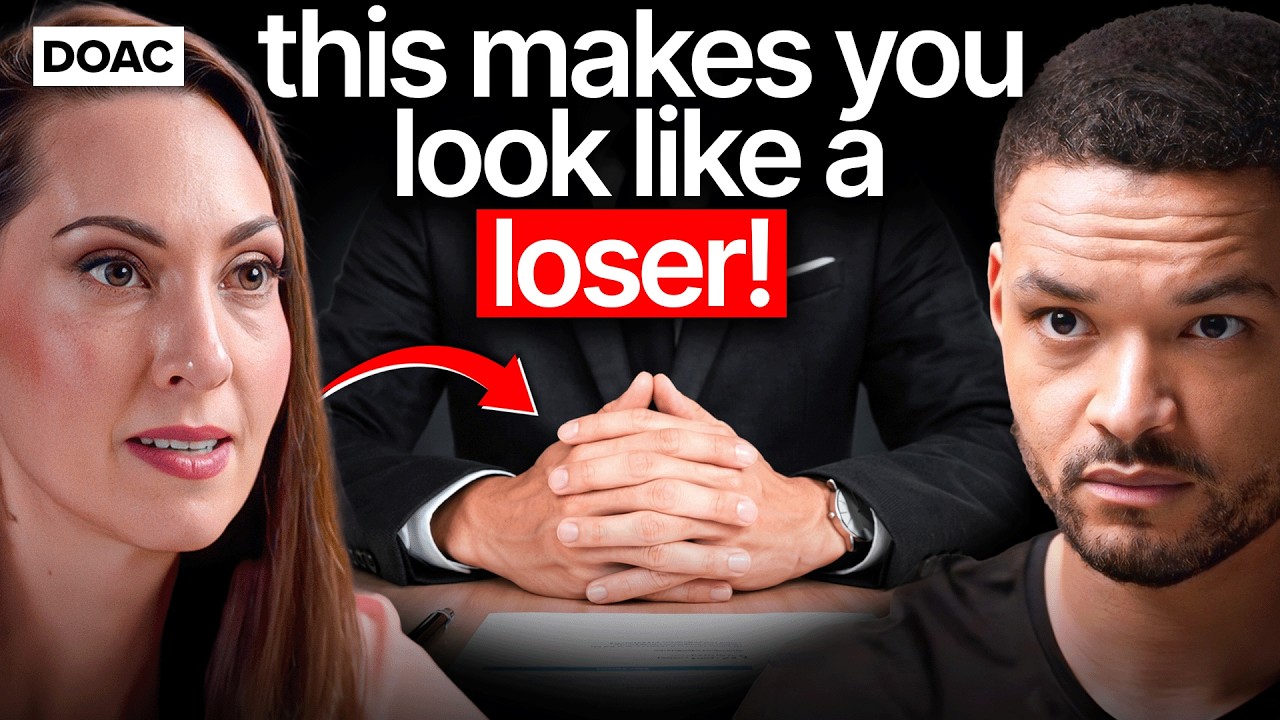
Vanessa identifies the single biggest mistake people make during a first impression: looking down at a phone, tablet, or notepad while saying hello. Tucking the chin to the chest and holding the arms tight to the body mimics the universal posture of defeat. Waiting for a date or job interview while staring down at a device makes someone look like a "loser" in terms of evolutionary winning vs. losing signals. Furthermore, introverts often incorrectly assume a first impression begins when speaking starts; in reality, it begins the exact millisecond someone sets eyes on you across a room or on a profile photo.
* **First Impression Accuracy**: Studies show judgments made in seconds align 76% accurately with a person's actual Big Five personality traits.
* **Universal Defeat Posture**: Characterized by a tucked chin, raised shoulders close to earlobes, and arms clamped tight to the sides.
[10:24](https://www.youtube.com/watch?v=ldizQkuWpDE&t=624s) Decoding Profile Pictures and Cues
Moving to digital first impressions, Vanessa notes that research (including studies by researchers like Simine Vazire) shows humans form a judgment within 100 milliseconds of viewing a profile picture. Because different photos of the exact same individual produce completely different evaluations, people possess direct control over how they are perceived by selecting photos with deliberate body language and cues.
Vanessa demonstrates this on camera with the "face platter" gesture—resting her chin in both open hands. She explains that resting one's face on open hands creates a warm, feminine, highly approachable impression, whereas posing with a structured, hand-under-chin posture yields a crisp, professional, highly competent impression. By dialing specific nonverbal cues up or down like a thermostat, individuals can intentionally modulate their trust, warmth, and authority across LinkedIn, dating apps, corporate websites, or email avatars.
[12:11](https://www.youtube.com/watch?v=ldizQkuWpDE&t=731s) Photo Analysis: Warmth vs. Competence
Steven displays a series of profile photos for Vanessa to analyze live on air:
* **Woman in Glasses and Sweater**: Tilted head resting on her hand, wearing glasses, a watch, minimal smile, and a sweater draped over her shoulders. Vanessa points out that the head tilt signals warmth, engagement, and a nurturing vibe (suggesting a therapist or coach), while the watch, glasses, and lack of a full grin send strong cues of competence, intelligence, and structure.
* **Man with Authentic Smile**: Direct eye contact, no visible hands, slight chin tilt down, forehead forward, and an authentic smile activating the zygomaticus major cheek muscles. Vanessa rates this photo as extremely warm, likable, and approachable, though she notes that if he were a doctor or professor needing serious authority, the photo might tilt *too* heavily toward warmth at the expense of competence cues.
[14:18](https://www.youtube.com/watch?v=ldizQkuWpDE&t=858s) Profile Picture Cues and Photo Dynamics
Adding subtle physical cues to a photo can dramatically alter how you are perceived. Demonstrating a head tilt or showing your hands creates warmth and vulnerability, while capturing dynamic movement—like walking or letting wind blow through your hair—injects an engaging, lively energy into an image. Conversely, if your goal is to project competence and authority—especially in industries where you might be underestimated or frequently interrupted—it is often wiser to avoid smiling. Van Edwards notes that she intentionally refrains from smiling on her book covers to ensure she is taken seriously, balancing her naturally expressive personality with a strong command of professionalism.
When evaluating specific profile photos, polarising elements—or "ornaments"—can serve as effective filters. A dating profile picture featuring a man with a cat draped around his neck works brilliantly because it immediately attracts cat lovers while weeding out those who dislike them. Selecting distinct visual indicators helps individuals "find their people."
* Wearing polarizing accessories (like a cowboy hat in Austin, Texas) acts as an intentional filter to attract compatible matches.
* Dark sunglasses in profile photos create a psychological barrier because visual contact triggers connection mechanisms.
* Research shows that seeing someone's unshielded eyes and upper cheek muscles allows viewers to produce oxytocin—the chemical of trust and connection—even through a screen lens.
[15:28](https://www.youtube.com/watch?v=ldizQkuWpDE&t=928s) Real-Life Warmth Signals and Physical Cues
While sunglasses hinder connection in digital photographs, their impact in live interactions is more dynamic. Removing your glasses when speaking to someone directly communicates intense presence and active listening. Small physical gestures—such as unbuttoning a jacket, rolling up your sleeves, or rubbing your hands together—function as universal signalers that convey, "Let's dive into this." Leaders often roll up their sleeves right as they pivot to the core of a message, and rubbing hands together serves as a clear physical sign of enthusiasm and anticipation that helps warm up a room.
* Removing eyewear or rolling up sleeves signals deep engagement and a readiness to collaborate.
* Rubbing hands together acts as a universal "get ready" cue that builds collective excitement before sharing good news.
[16:54](https://www.youtube.com/watch?v=ldizQkuWpDE&t=1014s) Making a Bad First Impression: The "Triple Threat"
Making a poor first impression usually stems from signaling low confidence or avoidance. Common pitfalls include taking up as little space as possible—pressing your arms tightly against your torso and hunching your shoulders toward your ears—hiding your hands in pockets or beneath tables, and avoiding eye contact. When hands are hidden, people instinctively struggle to read intent, whereas displaying visible hands builds immediate psychological safety.
```
[ BAD FIRST IMPRESSION ] [ "TRIPLE THREAT" GOOD ]
┌──────────────────────────────────┐ ┌──────────────────────────────────┐
│ • Hunching / taking minimal space│ │ • Broad, open body posture │
│ • Hidden hands (in pockets/table)│ │ • Fully visible, active hands │
│ • Avoidant gaze / looking away │ │ • Direct 60-70% eye contact │
└──────────────────────────────────┘ └──────────────────────────────────┘
```
To establish trust instantly, master communicators rely on the "triple threat" of physical presence: maintaining an open and expansive body, keeping hands clearly visible, and establishing direct eye contact within the first few seconds. This combination triggers a chemical rush of oxytocin in others, enhancing trust and making them significantly more open to deep, honest communication.
* Hiding hands prevents others from determining your intent, creating subconscious mistrust.
* Artificial oxytocin nasal spray studies reveal that increased oxytocin directly drives people to share more, open up, and connect faster.
* The "triple threat" of a solid first impression consists of broad posture, visible hands, and direct eye contact.
[17:57](https://www.youtube.com/watch?v=ldizQkuWpDE&t=1077s) Seating Orientation and the 60% Eye Contact Rule
Physical positioning plays a critical role in establishing rapport during meetings or podcast recordings. Sitting directly across from someone rather than at an awkward angle establishes immediate alignment and signals that you are fully on the same page. When it comes to eye contact, aim for the Western cultural sweet spot of 60% to 70%. Eye contact that is maintained 100% of the time feels unnatural, aggressive, and rehearsed, whereas breaking eye contact periodically signals that you are actively processing thoughts and formulating authentic responses.
Highly competent communicators time their gaze strategically: they look away while gathering complex thoughts, then lock eyes precisely at the end of a sentence to seal their point. This dynamic gives their delivery an unscripted, thoughtful quality, avoiding the robotic feel often seen in overly rehearsed presentations like pitches on *Shark Tank* or *Dragons' Den*.
* Direct physical facing creates spatial alignment, whereas angled seating creates friction.
* Western cultures respond best to 60–70% eye contact; higher levels feel scripted, while lower levels can signal disinterest.
* Powerful communicators lock eye contact right as they deliver the conclusion of a point to seal their message with conviction.
[21:27](https://www.youtube.com/watch?v=ldizQkuWpDE&t=1287s) Breaking the Script in Everyday Greetings
Standard social scripts like "How are you?" almost always lead to dead-end loops where both participants autopilot through "Good, how are you?" replies. Breaking this pattern requires conversational courage. Answering routine questions with unexpected humor, context, or scale ratings instantly wakes up the brain of the listener and sets a distinct, memorable tone.
* Respond to "How are you?" with a number rating, such as "A solid 7 out of 10."
* Share brief, relatable context about your day, like "Just fighting my inbox, but feeling great."
* Use self-deprecating humor when caught off-guard, such as "Better on the inside than the outside."
* Replace dull greetings like "How are you?" with proactive, positive questions like "What's good?" or "Have you been looking forward to anything fun lately?"
[23:19](https://www.youtube.com/watch?v=ldizQkuWpDE&t=1399s) Master Communicators and the "Chemical Cocktail"
Master communicators act as chemical gifters who leave people feeling physically and emotionally elevated after an interaction. Instead of burdening others with routine or draining topics, they deliberately design conversations to release a "chemical cocktail" of positive neurochemicals:
Instead of asking broad questions like "What's front of mind?"—which often prompts stressful work answers—asking what someone is looking forward to triggers an immediate surge of excitement and positive energy.
[25:33](https://www.youtube.com/watch?v=ldizQkuWpDE&t=1533s) Thread Theory and "Me Too" Moments
Under "Thread Theory," everyday conversation is viewed as throwing out invisible narrative threads. When two people discover a shared interest, belief, or experience, a thread is caught and pulled, weaving a stronger bond between them. Capturing these "Me Too" moments produces a surge of serotonin, making the other person feel validated, accepted, and safe enough to drop their guard.
```
[ PERSON A ] [ PERSON B ]
"I just got a new car!" ══════ Thread ══════> "Me too! I love that model!"
<── Serotonin Boost ──
```
When someone shares a personal detail, immediately recognizing and validating the commonality builds rapport without derailing the conversation. Finding shared ground shifts the dynamic from a transactional exchange into a meaningful connection.
* Thread Theory views every shared interest or experience as a conversational tether that builds mutual liking.
* "Me Too" moments release serotonin, granting people internal permission to be their authentic selves.
* Cultural styles influence these moments: while Americans express rapid enthusiasm, British communicators tend to be more reserved, requiring subtle adaptations to keep connections natural.
[26:52](https://www.youtube.com/watch?v=ldizQkuWpDE&t=1612s) Crafting Strong Second Impressions
While a first impression opens the door, a second impression cements the relationship for the long term. The primary underlying anxiety people hold in social situations is wondering, "Was I memorable?" or "Did I leave a good impression?" You can instantly alleviate this anxiety during a second meeting or follow-up interaction by clearly showing how much that person has been on your mind.
Expressing warm, unequivocal enthusiasm whenever someone reaches out—whether through a text, call, or secondary meeting—validates their presence and deepens the bond. Utilizing affirming language sets a foundation of belonging that turns casual acquaintances into lasting relationships.
* Reassure people that they left a positive impact by saying things like, "I've been looking forward to this lunch all week."
* Validate unexpected texts or calls with immediate warmth: "I'm so glad you reached out! I was just thinking of you."
* Consistently affirming that the other person is welcome releases serotonin and fulfills their deep need for social safety and belonging.
[28:10](https://www.youtube.com/watch?v=ldizQkuWpDE&t=1690s) Online First Impressions and the "Red Apple" Effect
Addressing online interactions on dating apps, Vanessa Van Edwards highlights research showing that standard greetings like "hi," "hello," or "how are you?" perform poorly. Instead, opening with a distinct, unusual word or phrase—such as "Howdy," "Aloha," "What's good?" or even "Bingo!"—helps someone stand out in an inbox flooded with noise.
To explain why this works, she shares an anecdote from her time as a camp counselor. When she served a basket filled with green apples and just one red apple, every single child immediately fought over the lone red apple, even though they admitted it tasted no different. In communication, master communicators act as the "red apple": they fit in, yet remain just distinct enough to trigger the "pique effect" and spark curiosity.
* **Dating App Openers:** Avoid standard greetings ("hi", "hello", "hey", "what's up", "how are you").
* **The "Red Apple" Principle:** Standing out slightly without acting bizarre piques interest in both romantic and business contexts.
---
[30:17](https://www.youtube.com/watch?v=ldizQkuWpDE&t=1817s) Virtual First Impressions on Zoom
When navigating professional environments on Zoom or Google Hangouts, Vanessa strongly advises turning the camera on—even if briefly at the start of a meeting—to dramatically elevate how others perceive you. She warns against being "accidentally negative" by fussing with tech while on camera (e.g., repeating "Can you see me? Can you hear me?"). First impressions happen the second the video turns on, not when speech begins.
To optimize a virtual presence, she recommends positioning the camera at least 3 feet away from your nose, angling your body toward the lens, waving or greeting warmly, and arriving with a pre-planned anecdote or question to bypass awkward silence.
```
Camera On ──> Maintain 3ft Distance ──> Angle Body ──> Warm Wave/Greeting ──> Launch Pre-planned Anecdote
```
* **Measuring Distance:** Place the camera roughly 3 feet away to avoid awkward close-ups.
* **Eye Contact Split:** Target 50% eye contact on the camera lens and 50% on the speaker's face on screen.
* **Oxytocin Transmission:** Research demonstrates that virtual eye contact can still trigger oxytocin release in the brain.
* **Backgrounds:** Avoid blurred or fake digital backdrops; human eyes detect green-screen artifacts and register them as inauthentic. Instead, display authentic "conversation cues" (e.g., books or art).
* **Kevin Hart Example:** Actor Kevin Hart's Zoom background featured portraits of classic comedians, including one with an open palm—a classic non-verbal warmth cue.
---
[32:08](https://www.youtube.com/watch?v=ldizQkuWpDE&t=1928s) The "Story Toolbox" and Conversation Dynamics
Because 80% to 90% of casual conversations stall out on predictable topics—weather, traffic, and hometowns—Vanessa introduces the concept of a "Story Toolbox." She challenges listeners to keep a dedicated note on their phone filled with engaging facts, trivia, or brief stories tied to these universal topics.
> "When you're known for asking better questions, people actually come into the conversation more excited with better expectations to interact with you."
For example, when someone asks where you are from, offering an intriguing tidbit (such as mentioning a town is "supposedly where Banksy is from") opens up rich conversational threads. Similarly, knowing local nuances—like how drivers in Los Angeles uniquely refer to freeways as "the 101" or "the 5"—can turn dull small talk about traffic into an engaging debate.
* **Core Topics to Prep:** Weather, traffic, hometown, and current learning projects.
* **Question Prompt:** Consistently asking friends or contacts "What are you learning?" or "What's good?" sets an elevated, engaging expectation for every interaction.
---
[37:16](https://www.youtube.com/watch?v=ldizQkuWpDE&t=2236s) Live Dating Experiments: Warmth and "Dreamkilling"
Moving to real-world applications, Vanessa discusses a dating experiment conducted at a bar in Austin, Texas. She wire-tapped and coached date participants via earpieces to observe real-time communication dynamics. The biggest issue observed was participants hiding their true feelings. In one instance, a female participant named Ashley acted cold and distant while asking rigid, fact-based questions, yet privately admitted to being extremely physically attracted to her date.
During another date setup, Vanessa pushed a male participant to move beyond surface-level "chitchat" to find actual depth, challenging him with casual yet deep questions like, "What's the goal you're working on?" or "Do you think you're going to be in Austin forever?"
```
Surface Question: "Where are you from in Austin?"
│
▼
Script-Breaking Question: "What are your favorite secret spots or most underrated restaurants in Austin?"
```
She highlights a common conversational trap called **"dreamkilling"**—shutting down a partner's topic with a blunt negative answer without offering anything back. When asked about her favorite local spots, Ashley simply replied, *"To be honest, I don't go out very much."* Vanessa notes that completely shutting down a topic drains momentum and signals disinterest; a better response adds playfulness (e.g., mentioning loving stay-at-home nights in pajamas while remaining open to going out for the right occasion).
* **Breaking the Script:** Replace bland small talk with evocative questions about favorite hidden spots or underrated experiences.
* **The Power of "Cheersing":** Initiating a simple toast immediately breaks physical stiffness, injects warmth, and visibly shifts the date's emotional tone.
[42:17](https://www.youtube.com/watch?v=ldizQkuWpDE&t=2537s) Avoiding Conversational Dead Ends and "Dream Killing"
Reviewing footage from a real-life blind date experiment set up for her research, Vanessa Van Edwards analyzes the interaction between a female participant and her date, Kendrick. Although the female participant was genuinely physically attracted to Kendrick, her ultra-stiff, closed body language and guarded responses signaled total disinterest—giving off an "I can't wait to leave" vibe. Vanessa explains that this reflects a broader dating crisis: people are often afraid to show warmth or admit that they like someone, underestimating how closed off they appear to others.
When Kendrick asked how long she had lived in Austin, she simply answered, "Two years," creating an awkward pause with zero follow-up. Vanessa flags this as a classic "conversational dead end." Unless someone is desperate for filler, asking closed questions that yield brief numerical answers stalls momentum. To keep conversations engaging—whether on a date or in a professional context—speakers must avoid "dream killing" by adding an extra hook or personal insight:
* **Conversational Drivers vs. Passengers:** A healthy dynamic needs a mix of drivers (asking questions) and passengers (responding), but passengers must still provide substance to keep the conversation flowing.
* **The Power of Word Choice:** Injecting primed words like *love*, *excitement*, *good*, and *looking forward* actively generates positive emotional states in the listener.
* **Corporate Application:** Naming a calendar invite a "Collaboration Meeting" or routinely addressing colleagues as "team" actively primes people for higher trust and cooperative behavior.
> "We are having a baby crisis because we're afraid to show that we like someone... We think we're being obvious, but we are not being obvious."
---
[44:23](https://www.youtube.com/watch?v=ldizQkuWpDE&t=2663s) Micro Wins, Thread Theory, and Physical Attraction Cues
To rescue a flagging interaction, Vanessa highlights the concept of giving the other person a "micro win"—a small moment designed to hit them with dopamine and serotonin to boost their confidence. In the experiment, when conversation stalled around their hometowns, Kendrick was encouraged to let her guess his age, giving her an easy win that shifted her into driving the interaction.
Soon after, the date hit a major turning point through "Thread Theory" when both participants realized they were Aries with birthdays only days apart (March 29th and April 1st). This shared connection instantly transformed their posture and demeanor:
* **Attraction Cues for Women:** When a woman is physically attracted to someone, nonverbal signals typically include self-touch—touching her hair, her lips, or the side of her face—as well as opening up her posture to occupy more physical space.
* **Vocal Fry and Closed Posture:** Guarded, closed-off body language physically constricts the lungs and vocal cords, leading to "vocal fry"—a raspy, low-power tone that is subconscious, non-authoritative, and generally unattractive.
* **The Impact of Shared Threads:** Finding a "Me Too" moment drastically accelerates mutual comfort, causing people to physically relax, laugh naturally, and open up their vocal tone.
> "When you use words like love and excitement and good and looking forward, you actually create those feelings. On a date, you want to be using the words that you're trying to create."
---
[49:35](https://www.youtube.com/watch?v=ldizQkuWpDE&t=2975s) The Busyness Trap and the "Too Much Jam" Dilemma
Despite the date ending with mutual interest, the female participant nearly sabotaged the connection by claiming she was "too busy" to meet up again before a 30-day trip to Europe. Vanessa expresses immense frustration with this behavior, observing how modern culture glorifies busyness—over-indexing on rigid morning routines, daily workouts, and endless self-care rituals—at the direct expense of meaningful human connection.
Steven Bartlett compares this phenomenon to the famous "Jam Study," where offering 20 choices of jam led to fewer sales than offering just three because consumers experienced choice paralysis:
* **Dating App Overchoice:** Unlimited options on dating apps trick people into treating potential partners as disposable, leaving them perpetually searching for a hypothetical better match.
* **Checklist Rigidity:** Fixating on strict criteria (e.g., career status, height, income) blinds people to genuine physical and emotional chemistry right in front of them.
* **Desensitization to Excellence:** Constant exposure to hyper-curated, highly attractive people on social media raises baseline expectations, leaving individuals numb to real-life beauty, humor, and kindness.
> "Busyness is not a mark of success. Busyness is going to prevent you from finding your person... We have to stop saying we're too busy to connect with good people."
---
[55:32](https://www.youtube.com/watch?v=ldizQkuWpDE&t=3332s) Breaking Out of a Rut: The 30-Day Challenges
To break out of social burn-out, loneliness, or emotional numbness, Vanessa proposes two transformative challenges designed to reset a person's social baseline:
* **The No-Mirror Challenge (30 Days):** Avoid looking into mirrors or checks of physical appearance for 30 days while maintaining a normal work and social life. Eliminating constant self-scrutiny reveals that people care far less about flawless looks than expected, cultivating deep personal confidence and exposing genuine relationships.
* **The Online / Social Media Blackout:** Disconnect entirely from digital sources of instant dopamine. Forcing yourself to seek connection in real-world environments—such as hotel bars, local cafes, or public spaces—restores natural curiosity and drives spontaneous, meaningful interactions with new people.
> "If you don't have any dopamine from your phone, you have to go get dopamine and oxytocin from in-person relationships."
[57:09](https://www.youtube.com/watch?v=ldizQkuWpDE&t=3429s) Screen Time, Dopamine, and the Urge for Control
Steven reflects on a conversation he had recently about how screen time impacts social energy and behavior. He notes how young men who spend hours playing video games get a constant sense of accomplishment and dopamine hits—like winning a new sword or earning coins—which fuels an "insult culture." Relating this to his own life as a self-described workaholic who spends up to 12 hours a day staring at screens, Steven ponders whether draining his dopamine reserves on devices leaves him with zero energy or motivation to go out, network, and talk to people in person.
Vanessa agrees, emphasizing that switching from outputting energy into a machine to entering a dynamic, back-and-forth social conversation is an intense, jarring shift. She challenges Steven on his underlying motives, suggesting that remaining behind a screen allows him to stay entirely in control—scrolling, clicking, or closing a video whenever he pleases. In contrast, real-world social interaction requires sitting through unpredictable moments, listening attentively, and relinquishing control. When Vanessa directly asks Steven if he considers himself a "control freak," he initially deflects before admitting that while his personal life functions more democratically, he is undeniably a control freak in his business life—a fact playfully confirmed by his producer Jack off-camera.
- **The Screen-to-Social Friction:** Transitioning from passive screen output to real-time human interaction creates friction because screens provide controllable dopamine without social risk.
- **Goal-Oriented Networking:** To make uncomfortable networking events manageable, Vanessa sets concrete micro-goals before attending (e.g., testing a specific conversation prompt for her next book, practicing new jokes, or seeking a specific piece of business inspiration).
[01:01:59](https://www.youtube.com/watch?v=ldizQkuWpDE&t=3719s) How Great Leaders Communicate and Present Their Work
Shifting the discussion toward leadership and professional communication, Steven asks what sets exceptional communicators apart when introducing themselves or leading a team. Vanessa explains that many leaders fall into the trap of being either too vague or overly intellectual when explaining what they do. Stating "I run a tech company" acts as a conversational "dream killer" because it gives the listener no clear entry point or hook to ask a follow-up question. Instead, effective leaders frame their work around purpose: *"I am a [role] who helps [target audience]."*
To illustrate how everyday professionals blunder through this question, Vanessa analyzes a clip from her real-life dating experiment featuring a participant named Tim. Tim is a technical, highly competent software engineer who came across as exceptionally warm and kind during his speed date, despite lacking romantic chemistry with his partner. Before the date, Vanessa coached Tim on how to transform his standard "What do you do?" response into an engaging conversation starter.
```
Standard Response: "I'm a software engineer." (Conversational Dead End)
│
▼
Reframed Hook: "I'm a software engineer—the best part of my job is playing
with code all day, but also hanging out with my team."
(Gives multiple entry points to continue)
```
- **Creating "Hooks":** Master communicators always embed hooks—details about their passion, team, or specific mission—into routine answers so others can naturally pivot to a follow-up question.
- **The Pitfalls of Self-Deprecation:** During the date, Tim referred to himself as a "code monkey," which instantly backfired. Vanessa notes that self-deprecating labels like "code monkey" or "podcast monkey" make work sound like involuntary, painful labor and lower one's status in the listener's eyes.
- **The "Side Hustle" Alternative:** If someone's day job is fundamentally dry, Vanessa suggests pivoting to an engaging side hustle or hobby (e.g., "I'm a media CEO, but in my free time I love gardening") to offer a human connection point.
[01:09:20](https://www.youtube.com/watch?v=ldizQkuWpDE&t=4160s) The Power of "Because" and Identifying Mutual Attraction
Vanessa emphasizes that effective leadership relies on giving people clear reasons behind actions or requests. She references a classic behavioral psychology experiment involving a line of people waiting to use a library photocopier. In the study, individuals who tried to cut the line by simply asking, *"Can I make copies?"* were frequently rejected. However, when individuals added a reason—even a redundant or trivial one, such as *"Can I make copies, because I have to make some copies?"*—the compliance rate jumped dramatically.
This psychological quirk demonstrates that the word "because" triggers automatic agreement by signaling a underlying "why." For leaders and job seekers alike, explicitly stating *who* you help and *why* you do what you do allows others to easily buy into your vision.
The conversation turns to the subtle signals of attraction, with Steven asking how dating partners can tell if the other person is actually interested in them. Vanessa laments that the modern loneliness epidemic is largely caused by people withholding their true feelings and expressions of liking.
> "The number one thing that is causing loneliness is we are withholding our liking both with friends and in romance."
- **The Copier Study Takeaway:** Using the word "because" satisfies the brain's baseline requirement for a rationale, making people significantly more cooperative.
- **Expressing Warmth vs. Intent:** Tim exemplified how to treat a date with respect and warmth even without romantic interest, though withholding clear signals of romantic attraction leaves both parties guessing.
[01:11:18](https://www.youtube.com/watch?v=ldizQkuWpDE&t=4278s) How to Signal and Detect Liking in Relationships and Meetings
Vanessa Van Edwards points out a startling reality: in her observational dating experiments, 0% of participants showed any obvious signs of liking the person they were with. This raises a fundamental dilemma about human connection: how are people meant to build friendships or find romantic partners if everyone withholds their true positive feelings? Vanessa argues that people should go out of their way to actively amplify and express their appreciation. Verbally, this can be achieved using direct, affirming "magic phrases." Rather than holding back a positive thought, simply state the feeling aloud—such as saying, *"This is so much fun,"* or *"Being with you is always so interesting."*
When Vanessa met Kendrick, the first speed-dater in her experiment, she directly validated him by telling him he was genuinely funny, but noted that humor can sometimes be a double-edged sword that makes deeper conversation harder. Kendrick immediately opened up because his positive trait was recognized. Steven reflects on a meeting he conducted the previous week, realizing that if he had opened the conversation by explicitly sharing a genuine compliment, it would have instantly put the other person at ease. Expressing appreciation boosts the other person's neurochemicals—like serotonin—and triggers reciprocity, because people naturally like those who visibly like them. Beyond verbal affirmations, non-verbal cues such as warm vocalizations ("Mmm," "Ooh"), triple nods, head tilts, and leaning forward clearly signal engagement.
* **Verbal Affirmation Strategy:** Name the specific quality you admire in real time (*"You're a great conversationalist"*).
* **Anticipation Signals:** Expressing excitement prior to an interaction (*"I was looking forward to this all day"*) sets a warm tone immediately.
* **Reciprocity Principle:** Demonstrating obvious liking directly increases your own personal likeability.
---
[01:13:11](https://www.youtube.com/watch?v=ldizQkuWpDE&t=4391s) The Power of Being an Easy Laugher
A well-known trend in dating preferences shows that while women typically list humor as their top requirement in a partner, men are far less concerned with whether a woman tells jokes; instead, men favor partners who laugh at *their* jokes. For men, developing a sense of humor is a worthwhile endeavor, but women do not need to feel pressured to act as the primary comedian. Being an "easy laugher" is one of the most flattering, magnetic qualities anyone can cultivate.
When laughter flows freely, it removes the awkward friction caused by withholding amusement or offering a flat, dry acknowledge like, *"Oh, that's funny."* A believable, hearty laugh serves as an immediate, non-verbal green light that says, "I like you and I enjoy your company."
---
[01:14:19](https://www.youtube.com/watch?v=ldizQkuWpDE&t=4459s) How to Be Funny (Even If You're Not a Joke-Teller)
For individuals who do not consider themselves naturally witty, humor remains entirely accessible through alternative social roles. In any conversation, the primary joke-teller acts as the "driver," but every driver needs a great "passenger." Being an exceptional passenger means enthusiastically hyping up the driver's humor—laughing heartily or even lightheartedly slapping the table when a joke lands.
Another strategy is becoming a "curator of humor." People who consistently share the best comedic clips, GIFs, or memes become positively associated with that humor, even if they never write a single joke themselves. Steven shares an example of a friend who sends poor memes that fail to land, contrasting it with another friend, Ashley, who sends perfectly timed, hilarious GIFs. While comedy requires experimentation, anyone can improve by enrolling in an improv class or studying how successful comedians structure their timing.
* **The "Rule of Three" Comedy Structure:** List two ordinary items followed by an unexpected, absurd third item (e.g., *"Texas is the land of tacos, cowboy hats, and hot girls"*).
* **Running Jokes:** Adopting a simple, reliable bit—such as playfully answering when someone calls out a partner's pet name—builds lighthearted familiarity.
* **Target Keynote Cadence:** Aiming for roughly one laugh every minute during speeches or interviews keeps the audience's brains open and receptive to learning.
---
[01:16:57](https://www.youtube.com/watch?v=ldizQkuWpDE&t=4617s) Physical Touch and Flavor-Based Humor
Physical touch can function as a strong indicator of rapport and interest, but it must feel natural. An awkward or forced touch can instantly create discomfort. While Vanessa enthusiastically uses high-fives to celebrate shared moments, Steven points out that cultural differences play a role—in a British professional setting, high-fiving colleagues in a business meeting might come across as bizarre.
Vanessa emphasizes that everyone possesses a distinct personal "flavor" or communication style. Self-deprecating humor tends to work naturally for highly anxious or neurotic personality types, making them relatable and endearing. In contrast, highly confident, low-neuroticism individuals are better suited to joking about external situations rather than putting themselves down.
* **Channeling Role Models:** Research demonstrates that when speakers silently "channel" a charismatic figure like Steve Jobs before stepping on stage, their non-verbal presence changes automatically.
* **Performance Improvements from Channeling:** Speakers who mentally channeled Steve Jobs naturally varied their vocal tone, used dynamic hand gestures, spent nearly double the time on stage, and reported enjoying the experience significantly more.
---
[01:20:36](https://www.youtube.com/watch?v=ldizQkuWpDE&t=4836s) Universal Microexpressions: Reading Fear
Vanessa's fascination with body language began through studying microexpressions—brief, involuntary facial expressions that reveal true underlying emotions. People who grew up around volatile individuals or narcissists often misinterpret neutral facial expressions as negative or hostile, triggering social anxiety. However, research into universal microexpressions reveals that humans across all cultures, races, and genders express core emotions using identical facial movements.
The microexpression for fear evolved as an innate survival mechanism: when facing danger, the mouth drops open to maximize oxygen intake for running or screaming, while the eyelids and eyebrows pull upward to broaden the field of vision. In professional or social environments, subtle fear expressions often surface when someone experiences confusion or anxiety. Spotting the exposed upper whites of a person's eyes (sclera) serves as a signal to pause, check in, and clarify information before moving forward.
---
[01:23:24](https://www.youtube.com/watch?v=ldizQkuWpDE&t=5004s) Uncovering Disgust and Hidden Lies
The microexpression for disgust evolved to block unpleasant smells or tastes, characterized by a crinkled nose and a slightly raised upper lip that exposes the upper teeth. Beyond physical unpleasantness, this expression is frequently triggered by moral aversion or psychological discomfort, such as telling a lie.
Because lying often makes individuals feel internally clean or ethically compromised, people frequently display a brief microexpression of disgust while delivering a false statement. Observing secret disgust when asking preference-based questions indicates underlying discomfort or insincerity, offering a clear signal to reassure the individual and de-escalate potential tension.
* **Physical Mechanics of Disgust:** Wrinkled nose bridge, pulled-up upper lip, and visible top teeth.
* **Deception Marker:** A brief flash of disgust during a statement often signifies that the speaker feels uncomfortable with what they are saying.
* **Intervention Strategy:** When catching a flash of disgust, offering permission or alignment (*"Hey, I'm on your side"*) helps diffuse hidden hesitation.
Here is a detailed, faithful walkthrough of the provided transcript section.
---
[01:24:45](https://www.youtube.com/watch?v=ldizQkuWpDE&t=5085s) Reading Disgust and the Mechanics of Anger
Vanessa Van Edwards and Steven Bartlett discuss how physical microexpressions reveal true internal states, beginning with a brief reflection on disgust. Steven notes how he sometimes catches himself unintentionally making a subtle disgust face when asked to do something he secretly wants to avoid—like going to a specific restaurant. Instead of realizing it, the reaction slips out as a slight sneer or grimace, giving away his genuine preference. Vanessa emphasizes that in healthy relationships, people should be able to grant each other full permission to tell the truth without pretense, avoiding unnecessary social obligations altogether.
The conversation transitions into anger. Scientifically, computer-generated face research reveals that the expression of anger is designed by evolution to make an individual look physically stronger and more menacing right before a fight. The expression serves as a territorial display.
* **Physical components of anger:** Tensing the eyelids, hardening the lips, pinching the shoulders, and jutting out the chin (a classic "what's up?" territorial gesture before a confrontation).
* **The feedback effect:** Holding an anger facial expression actually triggers the brain to begin feeling angry and defensive.
* **Corporate environments:** Full-blown rage is rare in workplace settings, but a subtle chin jut often slips out during heated meetings or video calls, signaling that someone has just been triggered.
* **Defensive vs. Offensive tactics:** When angry, people naturally default to attacking ("It's your fault") or defending ("It's not my fault"). To disengage this reaction immediately, leaders should pivot to establishing shared goals and mutual understanding.
[01:27:05](https://www.youtube.com/watch?v=ldizQkuWpDE&t=5225s) Authentic Happiness, Fake Smiles, and the Botox Feedback Loop
Moving on to positive microexpressions, Vanessa explains that genuine happiness cannot be faked with the mouth alone. Authentic joy—known as a Duchenne smile—requires activation of the upper cheek muscles, which pulls the cheeks upward and crinkles the outer corners of the eyes. Steven jokes about his ongoing struggle to project a natural smile on command, but Vanessa reassures him that his genuine laugh activates those upper cheek muscles automatically.
She highlights the danger of fake smiles in business, particularly in sales. When a prospect smiles politely with just their lower face while claiming to love a product, they do not actually like it, meaning the sales representative has not finished building rapport.
Vanessa then dives into the fascinating physiological impact of Botox on human emotion. Under the facial feedback hypothesis, expressing an emotion physically sends signal feedback to the brain to actually experience that feeling.
* **Smiling and Botox:** Individuals who receive Botox injections around their eyes and upper cheeks to smooth out smile wrinkles report feeling less overall happiness because they can no longer physically form a genuine smile.
* **Anger management applications:** Conversely, injecting Botox into the glabellar lines between the eyebrows prevents the face from frowning in anger, which has actually been used clinically in anger management to reduce emotional volatility.
[01:28:49](https://www.youtube.com/watch?v=ldizQkuWpDE&t=5329s) Sadness as an Evolutionary Cry for Help
Sadness is described as the most emotionally contagious and difficult expression to fake. The physical mechanics involve pulling the corners of the mouth down into a distinct frown, slightly puffing out the lower lip, drooping the eyelids, and pinching the eyebrows together. While attempting to demonstrate the sad face on camera, Steven ends up yawning and tearing up, which Vanessa explains is completely normal because those facial muscles tap directly into the same physiological lacrimal system.
From an evolutionary perspective, human babies naturally pout their lower lip to trigger an empathetic caretaking instinct in adults. When adults display that downward frown, it serves as a nonverbal call for help or comfort.
In professional environments, spotting sadness requires a thoughtful response. Jumping straight into probing personal questions (e.g., asking about someone's ongoing divorce) can backfire. Instead, offering empathy, direct help, or simple space—such as offering to reschedule a meeting—is often the best path forward. If an expression is ambiguous, Vanessa recommends naming a potential emotion to let the person correct it. For instance, asking, "Are you upset?" often prompts the person to clarify, "No, I'm not upset, I'm angry," instantly bringing clarity to the interaction.
[01:31:03](https://www.youtube.com/watch?v=ldizQkuWpDE&t=5463s) Surprise vs. Fear and Microexpression Manipulation
Surprise is the longest-lasting microexpression because human evolution favored broadcasting unexpected events broad and wide to others. The expression involves widening the eyes and opening the mouth. Crucially, surprise itself is neutral; the key diagnostic value lies in distinguishing surprise from fear.
* **Surprise vs. Fear in information gathering:** In a workplace setting, asking an employee about an unscheduled email blast will yield pure surprise if they genuinely had no prior knowledge, whereas a flash of fear indicates they knew about it and feel exposed.
* **Child behavioral cues:** Children and teenagers are notoriously bad at masking fear when caught off guard (e.g., when asked who took a missing phone).
* **Nodding and nonverbal direction:** Children heavily look for nonverbal cues from adults to make choices. Parents can subtlely associate negative cues (like a micro-expression of disgust) with an option to guide a child toward selecting the preferred alternative.
[01:32:33](https://www.youtube.com/watch?v=ldizQkuWpDE&t=5553s) Contempt: The Single Most Dangerous Expression
Vanessa identifies contempt—defined as scorn, disdain, pessimism, and a feeling of superiority—as the absolute most destructive emotion in relationships. Physically, contempt is expressed through a unilateral, one-sided mouth raise or smirk.
* **The Gottman Institute finding:** Renowned relationship expert Dr. John Gottman analyzed silent videos of married couples and determined he could predict divorce with 93.6% accuracy over a 30-year period based primarily on the presence of contempt.
* **Why it destroys relationships:** Contempt signals that one partner believes they are fundamentally superior to the other, destroying the foundation of an equal partnership. If left unaddressed, it festers into deep disrespect and hatred.
* **Eye rolls vs. Smirks:** While an eye roll can sometimes be playfulness or light exasperation depending on the context, a unilateral smirk almost always indicates genuine contempt.
* **Remedying contempt:** Words and talking alone rarely repair long-term contempt once it sets in. The primary way to rebuild lost respect is through shared adrenaline-pumping or novel experiences—such as a challenging trip or couples' retreat—which flood the brain with oxytocin and reset chemical bonds.
[01:35:23](https://www.youtube.com/watch?v=ldizQkuWpDE&t=5723s) Can You Change Your Personality? The Big Five (OCEAN) Model
The conversation shifts to a foundational question: can individuals actually alter their core personalities, or are people permanently bound by trauma, upbringing, and genetics? Vanessa explains that while personality is relatively stable, meaningful change is possible within realistic boundaries.
Personality is scientifically measured using the Big Five factor model, represented by the acronym **OCEAN**: **O**penness, **C**onscientiousness, **E**xtraversion, **A**greeableness, and **N**euroticism. Every human falls on a spectrum of high, medium, or low for each of these traits.
* **Heritability factor:** Research indicates that personality traits are roughly 42% to 57% heritable. This genetic foundation means someone cannot completely invert their core biology (e.g., a naturally low-neurotic person will not suddenly become extremely neurotic).
* **Degree of control:** Humans possess roughly 30% to 40% flexibility to intentionally shift their traits up or down the spectrum (e.g., moving from low to medium, or high to medium) through conscious effort.
Vanessa details the first trait, **Openness**, which measures curiosity, creativity, and a willingness to try new experiences:
* **High Openness:** Extremely curious individuals who thrive on novelty, meeting new people, and exploring new environments. They possess a variation of the **DRD4 gene**, which triggers a large dopamine spike when encountering novel stimuli, making some high-openness individuals natural thrill-seekers.
* **Low Openness:** Individuals who prioritize routine, habit, and tradition. Because they receive smaller dopamine rewards from novel experiences, they prefer familiar setups over travel or drastic lifestyle changes.
<ElicitationsGroup message="To explore these personality dynamics further:">
<Elicitation label="Break down the remaining four OCEAN personality traits" query="Break down the remaining Big Five personality traits from the transcript: Conscientiousness, Extraversion, Agreeableness, and Neuroticism."/>
<Elicitation label="Explain how to apply body language cues in professional environments" query="Summarize Vanessa Van Edwards' specific advice on applying nonverbal cues, microexpressions, and rapport building in workplace settings."/>
</ElicitationsGroup>
Here is a detailed, faithful walkthrough covering Part 8 of the transcript.
---
[01:38:20](https://www.youtube.com/watch?v=ldizQkuWpDE&t=5900s) Personality Tests and Dating Compatibility
Vanessa van Edwards emphasizes that there are no "wrong" personality traits because human diversity serves distinct evolutionary purposes. People high in openness are driven to explore and test new boundaries, whereas low-openness individuals preserve traditions, rituals, and order. When navigating modern dating, Vanessa strongly advises requiring a potential partner to complete a personality assessment before committing. She provides a free personality test on her website and advocates that everyone should know their own profile as well as those of their close friends and romantic partners.
When evaluating romantic compatibility, large mismatches in openness present immediate friction. A high-openness individual—who craves spontaneity, novel experiences, and constant change—will inevitably clash with a low-openness partner who prefers routine, staying home, and visiting the same familiar spots.
- **The Restaurant Test:** A simple practical test to judge openness is asking someone what they order for lunch. High-openness people constantly seek out new restaurants and order the daily special; low-openness individuals return to the exact same waiter, sit at the same table, and order the same dish, refusing to "risk it for the biscuit."
- **Leader Dynamics:** Strong leaders and entrepreneurs typically score high in openness, driven by high dopamine levels to take calculated risks on new ideas. However, high-openness leaders frequently suffer from "shiny object syndrome," frustrating their teams by constantly pivoting toward new ventures before finishing prior tasks.
---
[01:40:36](https://www.youtube.com/watch?v=ldizQkuWpDE&t=6036s) Hiring for Personality and the Value of Conscientiousness
In organizational building, leaders must avoid the corporate trap of hiring candidates who mirror their own exact personality profile. When managers hire identical traits, entire teams end up sharing the exact same blind spots, such as high vision combined with zero follow-through. A high-openness leader requires low-openness, highly detail-oriented counterbalances to keep operations grounded; for instance, a Chief Financial Officer should virtually never be a high-openness individual.
This dynamic leads directly into the trait of conscientiousness—an individual's fundamental approach to structure, detail, and order. Vanessa identifies herself as extremely high in conscientiousness, deriving genuine joy from color-coded calendars, file folders, Post-it notes, alphabetizing, and purses with fifteen distinct compartments. Steven admits to being medium in conscientiousness: while he demands excellence and micro-level quality control in his finished work, he relies on a team to execute granular administrative logistics rather than maintaining personal hyper-organization.
- **Financial Stability:** Research demonstrates that couples where both partners score low in conscientiousness suffer significantly higher rates of financial instability and martial strain.
- **Predicting Behavior:** Highly conscientious people are notoriously punctual and become deeply upset by lateness. During the dating scenario with Ashley and Kendrick, Ashley mentioned maintaining a detailed spreadsheet tracking her exact daily time usage—a classic indicator of extreme conscientiousness.
- **Improving Habits:** Low-conscientiousness individuals frequently purchase self-help and habits books to consciously dial up their structural discipline, using systems to compensate for their natural baseline.
---
[01:43:10](https://www.youtube.com/watch?v=ldizQkuWpDE&t=6190s) Neurodivergence, Eye Contact, and Extraversion
The discussion shifts to how Big Five personality framework trends intersect with neurodivergence. While active research is ongoing regarding the precise statistical correlations between ADHD or autism and traits like conscientiousness or openness, neurological differences radically alter interpersonal dynamics. For example, neurodivergent individuals often experience a fundamentally different physiological response to direct eye contact. Because processing thoughts while maintaining direct eye contact can cause cognitive overload or sensory distraction, breaking eye contact is often a necessary tool for them to think clearly during deep conversations.
Moving to extraversion, Vanessa calls it the "cool kid" of personality traits, though she finds ambiverts far more compelling than pure introverts or extroverts. Most people are ambiverts who sit along a spectrum:
- **Introverts:** Recharge their internal battery strictly through solitude.
- **Extroverts:** Derive energy directly from social stimulation and crowd interaction.
- **Ambiverts:** Can actively dial up high extroverted energy when required, but demand extensive downtime afterward to recover.
Vanessa shares that she is an ambivert leaning toward introversion who slept eleven hours in preparation for this intensive interview. Off-camera at home, she describes herself as even "sillier and weirder," dressing up in dinosaur costumes, staging plays, and singing the *Frozen* soundtrack with her daughters because her comfort level is absolute.
---
[01:45:26](https://www.youtube.com/watch?v=ldizQkuWpDE&t=6326s) Matching Extraversion in Business and Relationships
Dating a partner with a severe extraversion mismatch creates continuous friction: an extreme extrovert requiring constant social engagements will exhaust an introvert who wants to stay home. In business, matching personality traits to specific operational roles is equally vital.
- **Role Placement:** Roles like cold-call sales or high-volume networking mandate high extraversion. Conversely, operational roles requiring deep focus and strict precision are hindered by high extraversion. Vanessa recalls having to let go of an employee who spent far too much time social chitchatting when the job called for silent, high-conscientiousness execution.
- **Leadership Research:** Studies indicate that high extroverts naturally make strong corporate leaders because forming new external relationships comes effortlessly. Steven, who scores in the middle tier for extraversion, notes that while dialing up extraversion by 30% to 40% might expand his business networking, doing so requires tremendous personal energy costs.
---
[01:47:35](https://www.youtube.com/watch?v=ldizQkuWpDE&t=6455s) Agreeableness: Team Dynamics, Boundaries, and Skepticism
Agreeableness measures an individual's orientation toward teamwork, harmony, and consensus. Highly agreeable people possess a deep-seated drive to be liked, making them prone to people-pleasing and severe boundary issues.
On a professional team, highly agreeable individuals present a hidden vulnerability: they default to saying "yes" to every request out of fear of conflict, leading to severe overcommitment and missed deadlines. In strategic business discussions, leaders cannot get honest, critical feedback from highly agreeable employees, as they simply parrot what they believe the leader wants to hear. Socially, highly agreeable friends frequently agree to plans they have no intention of keeping, ultimately canceling at the last minute because they were too afraid to say "no" initially.
Conversely, low-agreeable people default to "no." They are naturally skeptical, prioritize truth over harmony, and care little about being liked:
- **Dream Killers vs. Filters:** Low-agreeable people constantly challenge ideas, fact-check claims in real time, and act as "dream killers." However, this skepticism is invaluable when vetting investments or testing business strategies.
- **Leadership Traits:** Top leaders and executives are disproportionately low in agreeableness because the role requires making unpopular decisions, enforcing hard boundaries, and enduring public disapproval. Vanessa notes that she purposefully runs new ideas past her husband—who is low in agreeableness—specifically because his harsh critique stress-tests her concepts.
---
[01:49:41](https://www.youtube.com/watch?v=ldizQkuWpDE&t=6581s) Neuroticism, Serotonin Chemistry, and Gender Differences
Vanessa tackles her favorite trait, neuroticism, which measures how an individual processes worry, threat, and negative emotions. High neurotics view worrying not as a flaw, but as a deliberate "investment in failure prevention."
The physiological driver behind high neuroticism is genetic: high neurotics frequently carry the short form of the serotonin transporter gene, causing their bodies to synthesize and release serotonin—the calming neurotransmitter—much more slowly. When an unexpected stressor occurs (such as an unsettling email), a high neurotic experiences a rapid spike in cortisol and adrenaline, but their delayed serotonin response leaves them trapped in a heightened physiological state of distress far longer than a low neurotic. Low neurotics, who possess greater baseline emotional stability, naturally default to saying "it'll all work out" because their brain chemistry genuinely dampens negative events faster.
- **Relationship Balance:** A high-neurotic paired with a low-neurotic forms a balanced pair, provided the low-neurotic recognizes that the high-neurotic cannot simply "turn off" their worry through willpower.
- **Gender Variations:** Cross-cultural psychological research shows statistically significant population-level gender differences across Big Five traits. On average, women score higher in neuroticism (worry processing) and agreeableness (people-pleasing/harmony). Conversely, men tend to score lower in neuroticism, lower in agreeableness, and higher in baseline extraversion.
```
"High neurotics believe that worrying is an investment in failure prevention."
— Vanessa van Edwards
```
[01:51:54](https://www.youtube.com/watch?v=ldizQkuWpDE&t=6714s) Spotting a Narcissist via Personality Metrics
The conversation shifts to how one might identify a narcissist using the Big Five personality test available on Vanessa Van Edwards's website. Vanessa explains that while narcissists generally trend higher in extraversion because they constantly crave the social feedback that feeds their narcissism, this does not mean all extroverts are narcissists. Instead, the clearer indicators lie in other traits: narcissists are typically low in agreeableness, driven by an inflated self-belief that leaves them indifferent to whether others agree with them. They also tend to score remarkably low in neuroticism because they simply do not worry. They move through life believing that everyone likes them and that they are entirely flawless.
Crucially, Vanessa emphasizes that spotting a narcissist is less about their baseline scores and more about how they relate to those scores. When discussing personality metrics, a healthy individual reflects on when a trait serves them and when it does not. A narcissist, however, will view their entire profile as perfect, refusing to acknowledge mistakes or compromise. Steven notes that this absolute lack of self-critique or willingness to compromise serves as a major red flag.
* **Extraversion:** Typically high; narcissists crave the company of others to fuel their ego.
* **Agreeableness:** Typically low; they harbor an internal conviction that they are superior and do not need external consensus.
* **Neuroticism:** Typically low; they possess an unbothered attitude, assuming everyone naturally likes them.
* **The Compromise Test:** A narcissist will fundamentally refuse to compromise or acknowledge any downside to their personality traits.
[01:54:23](https://www.youtube.com/watch?v=ldizQkuWpDE&t=6863s) Personality Traits and Longevity
Vanessa highlights scientific research correlating specific personality traits with human longevity. When asked to guess which trait leads to a longer lifespan, Steven correctly guesses high conscientiousness, noting that highly conscientious individuals take fewer reckless risks. Vanessa agrees, pointing out that conscientious people excel at maintaining healthy habits—such as exercising, brushing their teeth, and strictly taking prescribed medications. Steven then successfully guesses the second-highest correlation: high extraversion. Extroverts live longer because they naturally build and invest in robust support systems, yielding a steady physiological dose of oxytocin and serotonin that fosters a deep sense of belonging and safety.
Conversely, Vanessa reveals that individuals high in neuroticism have the shortest average lifespans, essentially "worrying themselves to death" through chronic stress, anxiety, and depression. Speaking from personal experience as a high neurotic, Vanessa explains that her body processes serotonin much more slowly. She gives the example of a near-miss car accident: while a low-neurotic person produces serotonin rapidly and calms down immediately, her own biological response acts like a "slow, faltering car," leaving her jittery and visibly shaken for the rest of the day.
* **Longest Lifespans:** High conscientiousness (excellent health habits) and high extraversion (strong social support networks).
* **Shortest Lifespans:** High neuroticism; driven by chronic stress and slower biological recovery from negative experiences.
* **Social Connections as Insurance:** Strong friendships act as physiological "stress insurance," buffering the body against the raw damage of negative events.
[01:56:47](https://www.youtube.com/watch?v=ldizQkuWpDE&t=7007s) Extroversion, Immunity, and the Lifelong Single Trifecta
Steven brings up a 2015 study demonstrating that extroverts exhibit stronger immune responses than introverts, a finding Vanessa finds entirely logical. Extroverts benefit from two distinct mechanisms: they physically expose themselves to more people—thereby accumulating a wider array of antibodies—and they experience genuine happiness during social interactions. For an introvert forced into prolonged socializing, stress triggers spikes in cortisol and adrenaline; for an extrovert, the same scenario triggers a rush of energy and dopamine that actively strengthens the body.
The pair then dissect the specific "trifecta" of traits that reliably predicts lifelong singles. Individuals who remain single long-term typically score low in openness (meaning they dislike trying new places, foods, or experiences), low in extraversion (they do not draw energy from people), and low in conscientiousness (they lack the organizational follow-through to maintain dating habits). Vanessa shares how she coaches her low-extrovert, lifelong-single students to stop forcing themselves into standard social scenes. Instead, she instructs them to anchor themselves in an activity they genuinely love—like knitting, book clubs, hiking, or extreme sports. By focusing entirely on getting energy from the hobby rather than the people, social connection becomes an effortless, low-pressure side effect.
[01:59:38](https://www.youtube.com/watch?v=ldizQkuWpDE&t=7178s) Handshakes, Hidden Senses, and the Reality of "Vibes"
When Steven asks if it is necessary to actively diagnose someone's personality type upon meeting them, Vanessa reveals that humans already do this instinctively through a simple handshake. To demonstrate, they roleplay a first-meeting handshake, prompting Vanessa to note that extroverts consistently offer a firmer grip and more energetic "pumps." She details a fascinating, bizarre study where researchers filmed people after a handshake; within sixty seconds of the interaction, almost every participant subtly touched their face or nose, accompanied by an involuntary increase in nasal dilation. Biologically, humans are quite literally smelling each other's hands to glean chemical data about their personality.
Vanessa confesses that she is incredibly sensitive to this phenomenon, stating that if she shakes hands with a nervous person, the chemical signal can instantly trigger her own anxiety. Steven heavily validates this, stating that "the vibe is real" and recounting a recent team outing where he was forced to go to an uncomfortable venue. Looking at photos later, his internal misery and terror were completely unmaskable. They agree that attempting to fake comfort is entirely futile, and Vanessa urges people to rigorously protect their energy by choosing environments where they naturally thrive. Steven adds that hosting his podcast has proven to him that within three to five seconds of meeting a guest, he can feel their baseline energy and know instantly if the vibe is aligned or off.
[02:03:16](https://www.youtube.com/watch?v=ldizQkuWpDE&t=7396s) The Closing Question: The Burden of Modern Authorship
Adhering to the podcast's closing tradition, Steven asks Vanessa a question left behind by the previous, anonymous guest: "What are you doing on a daily basis to improve the life of someone else? And how can you serve others better?"
The question prompts a raw, deeply honest response from Vanessa. She admits that when she set out to be a writer in 2007, social media did not exist, and an author's life consisted simply of writing books and embarking on occasional book tours. Visibly uncomfortable with the modern landscape, she confesses, "To be totally honest with you, I did not know I was signing up for this... If you had told me that being a writer would mean sharing videos of my home and my personal life every day, I probably wouldn't have done it." She expresses an intense dislike for current marketing demands, particularly the excruciating task of boiling complex behavioral science down into catchy, 60-second social media hooks. Despite her aversion to the medium, she forces herself to post videos daily, reframing the grueling process not as a personal preference, but as an act of service to ensure her deeply researched books actually reach the people who need them. Steven closes the segment by deeply commending her, calling her an "extremely rare force" in her field.
[02:05:47](https://www.youtube.com/watch?v=ldizQkuWpDE&t=7547s) The Impact of Their Last Episode and Final Remarks
Steven Bartlett and Vanessa Van Edwards reflect on the massive, overwhelming success of her previous appearance on *The Diary Of A CEO*. Steven expresses his awe at the response, noting that he needed to rewatch it to take notes on the sheer volume of valuable insights. Vanessa describes the experience as suddenly finding "8 million new best friends"—a community of self-proclaimed "recovering awkward" learners who are actively trying to figure out connection and human interaction. Steven reveals that the video racked up around 8 million views, not counting the audio downloads, which made it the most downloaded audio episode in the podcast's history, adding an estimated 6 to 7 million additional listeners.
Vanessa shares how this tidal wave of love re-energized her mission, filling her with a renewed urgency to be as helpful as possible to people struggling to connect. Steven commends her for being a unique voice who balances deep wisdom and articulation with a willingness to challenge people in the best way possible. He praises her for owning her own "weirdness," describing her authenticity as endearing, admirable, and a genuine force for positive change. Vanessa expresses her heartfelt gratitude to Steven and the audience, noting that countless people have stopped her in streets and gyms, or flooded her inbox, to thank her for the insights.
- **Video Views:** The previous interview reached approximately 8 million video views.
- **Audio Milestone:** It became the most downloaded audio episode in *The Diary Of A CEO* history, bringing in an estimated additional 6–7 million listeners.
- **Audience Impact:** The episode attracted millions of first-time listeners to the show.
---
[02:07:48](https://www.youtube.com/watch?v=ldizQkuWpDE&t=7668s) The Diary Of A CEO Conversation Cards
Closing out the show, Steven highlights the importance of asking the right questions to initiate meaningful, vulnerable, or difficult conversations. He introduces the second edition of *The Diary Of A CEO Conversation Cards*, a physical card deck built directly from the tradition of the show where every guest leaves a handwritten question in the diary for the next guest.
The deck features 51 questions carefully categorized across three levels of depth—Warm-Up, Open-Up, and Deep—allowing users to set the tone and intensity of the discussion. Each card lists the question and the guest who wrote it on one side, alongside a scannable QR code on the back that links directly to the video of the subsequent guest answering it. Steven notes that people use these cards across a wide range of settings, from professional boardrooms and first dates to late-night personal reflection, and directs listeners to find them in the episode description or at `thediary.com`.
- **Card Count & Levels:** Features 51 guest-written questions organized into three distinct tiers: *Warm-Up*, *Open-Up*, and *Deep*.
- **Interactive Feature:** Includes a QR code on each card that links directly to video footage of the guest answering that specific question.
- **Usage Contexts:** Designed for work boardrooms, dating scenarios, late-night solo reflection, and social gatherings.
## Notable quotes
> [02:40](https://www.youtube.com/watch?v=ldizQkuWpDE&t=160s) If I can learn it, anyone can learn it. I promise. — Vanessa Van Edwards
> [32:08](https://www.youtube.com/watch?v=ldizQkuWpDE&t=1928s) When you're known for asking better questions, people actually come into the conversation more excited with better expectations to interact with you. — Vanessa Van Edwards
> [42:17](https://www.youtube.com/watch?v=ldizQkuWpDE&t=2537s) We are having a baby crisis because we're afraid to show that we like someone... We think we're being obvious, but we are not being obvious. — Vanessa Van Edwards
> [44:23](https://www.youtube.com/watch?v=ldizQkuWpDE&t=2663s) When you use words like love and excitement and good and looking forward, you actually create those feelings. On a date, you want to be using the words that you're trying to create. — Vanessa Van Edwards
> [49:35](https://www.youtube.com/watch?v=ldizQkuWpDE&t=2975s) Busyness is not a mark of success. Busyness is going to prevent you from finding your person... We have to stop saying we're too busy to connect with good people. — Vanessa Van Edwards
> [55:32](https://www.youtube.com/watch?v=ldizQkuWpDE&t=3332s) If you don't have any dopamine from your phone, you have to go get dopamine and oxytocin from in-person relationships. — Vanessa Van Edwards
> [01:09:20](https://www.youtube.com/watch?v=ldizQkuWpDE&t=4160s) The number one thing that is causing loneliness is we are withholding our liking both with friends and in romance. — Vanessa Van Edwards
> [01:49:41](https://www.youtube.com/watch?v=ldizQkuWpDE&t=6581s) High neurotics believe that worrying is an investment in failure prevention. — Vanessa van Edwards
> [02:03:16](https://www.youtube.com/watch?v=ldizQkuWpDE&t=7396s) To be totally honest with you, I did not know I was signing up for this... If you had told me that being a writer would mean sharing videos of my home and my personal life every day, I probably wouldn't have done it. — Vanessa van Edwards
## Mentioned
Ashley, Banksy, Big Five, Cues: Master the Secret Language of Charismatic Communication, DRD4 gene, Dr. John Gottman, Dragons' Den, Google Hangouts, Jack, Kevin Hart, Kendrick, LinkedIn, Science of People, Shark Tank, Slack, Steve Jobs, Steven Bartlett, The Diary Of A CEO, The Diary Of A CEO Conversation Cards, The Gottman Institute, Tim, Vanessa Van Edwards, Simine Vazire, Zoom
Behavioral researcher Vanessa Van Edwards argues that interpersonal rapport, professional authority, and romantic attraction are largely governed by learnable nonverbal signals and intentional conversational framing rather than fixed innate traits.
Nonverbal Signals in Initial Encounters (8:18)
First impressions form almost instantaneously, with research indicating that human evaluations of Big Five traits align roughly 76% of the time within seconds, and digital profile evaluations occur in under 100 milliseconds. Van Edwards notes that individuals frequently undermine themselves by adopting postures of defeat, such as hunching the shoulders, tucking the chin, and looking down at phones or notes. Hiding hands in pockets or beneath tables similarly prevents others from gauging intent, triggering subconscious hesitation. Conversely, she advises adopting a physical presence characterized by open posture, visible hands, and maintaining eye contact between 60% and 70% of the time, noting that constant 100% eye contact feels unnatural and aggressive while periodic gaze breaks signify active cognitive processing.
In digital and virtual contexts, deliberate framing alters perception. Van Edwards explains that showcasing open hands, head tilts, and dynamic movement conveys warmth, whereas neutral facial expressions and composed framing project competence and authority. On virtual platforms like Zoom, placing the camera three feet away, positioning the lens at eye level, and avoiding artificial digital backdrops preserves visual authenticity and supports neurochemical connection.
Conversational Architecture and Chemical Rewards (23:19)
Standard social interactions frequently stall due to automated scripts like 'How are you?' which yield predictable, disengaged replies. Van Edwards advocates acting as a communicator who stimulates positive neurochemicals—specifically dopamine through forward-looking excitement, testosterone by validating competency, and serotonin via shared belonging. By asking questions about what someone is eagerly anticipating or sharing specific, unexpected answers, speakers wake up the listener's brain and establish memorable interactions.
Conversational continuity also depends on avoiding 'dead ends.' In social and dating contexts, answering inquiries with simple facts without adding descriptive hooks shuts down conversational momentum. Drawing on behavioral research, such as the classic photocopier study where compliance rose significantly when requests included the word 'because,' Van Edwards emphasizes providing a clear underlying rationale or personal hook. In romantic dynamics, actively expressing approval through verbal affirmations and genuine laughter breaks cycles of mutual hesitation, whereas withholding positive feedback perpetuates social disconnection.
Microexpressions as Indicators of Hidden Emotion (80:36)
Universal microexpressions offer brief, involuntary insight into underlying mental states across cultures. Fear manifests through raised eyebrows, widened eyes exposing the sclera, and a slightly open mouth to maximize oxygen intake, often indicating sudden anxiety or confusion in professional settings. Disgust is marked by a wrinkled nose and a raised upper lip exposing the top teeth, an evolutionary defense against foul tastes that also surfaces during moral aversion or when delivering untruthful statements. Anger displays via hardened lips, tense eyelids, and a jutted chin, physically triggering defensive responses in both the speaker and listener.
Among facial expressions, Van Edwards identifies contempt—characterized by a unilateral smirk or one-sided mouth raise—as the most destructive interpersonal signal. Citing research from Dr. John Gottman showing that contempt predicted divorce with 93.6% accuracy over three decades, she notes that it reflects perceived superiority and deeply erodes respect. Unlike routine friction, contempt cannot easily be resolved through dialogue alone; rebuilding trust typically requires novel, adrenaline-inducing shared experiences to physiologically reset relational bonds.
Big Five Personalities and Health Outcomes (95:23)
Human personality is measured via the Big Five framework (Openness, Conscientiousness, Extraversion, Agreeableness, and Neuroticism). Research suggests that while traits are roughly 42% to 57% heritable, individuals possess roughly 30% to 40% flexibility to modulate their natural baselines. In corporate environments, managers who hire identical personality types risk compounding functional blind spots; high-openness visionaries require the grounding of high-conscientiousness, detail-oriented colleagues to maintain operational execution, while teams dominated by highly agreeable employees struggle with boundary setting and conflict avoidance.
Personality profiles also correlate with measurable health and relationship outcomes. Research links high conscientiousness and high extraversion to extended longevity, driven respectively by rigorous preventive health habits and strong social support systems that foster oxytocin and serotonin. In contrast, individuals high in neuroticism face shorter lifespans due to chronic physiological stress. In dating, a persistent pattern of low openness, low extraversion, and low conscientiousness frequently predicts lifelong singlehood, prompting Van Edwards to suggest low-extrovert individuals anchor their socializing in dedicated hobbies rather than high-pressure social venues.
While body language cues and conversational structures can be learned to enhance trust and rapport, personality remains anchored by significant genetic heritability. Attempting to entirely fabricate comfort in ill-fitting social environments often produces involuntary physical leaks, indicating that adapting one's habits works best when aligned with genuine individual energy.
## Background
本期内容由知名播客频道《The Diary Of A CEO》于 2025 年 4 月 10 日发布在 YouTube 平台。节目简介指出,人际沟通与身体语言专家凡妮莎·范·爱德华兹(Vanessa Van Edwards)重磅回归,首次结合真实的奥斯汀盲盒相亲实验,系统揭秘让人产生好感与吸引力的科学沟通法则,探讨导致长期单身的小错误、毁掉第一印象的致命习惯,以及如何通过微表情与性格特质洞察他人内心。
## TL;DR
节目围绕人际连接的科学展开,剖析了现代人因过度依赖数字设备、严苛择偶清单与“忙碌陷阱”而陷入的孤独困局。Vanessa 深入拆解了如何通过避免溃败体态、展示双手及“句尾定锚”的眼神接触来塑造卓越的第一与第二印象,并传授了调配多巴胺、血清素与睾酮“神经化学鸡尾酒”的对话技巧。两人还详细解读了包括恐惧、厌恶、愤怒及最具杀伤力的轻蔑在内的核心微表情识别方法,并结合大五人格模型说明基因与后天塑造的边界,指导人们如何在恋爱与职场中精准破冰、建立深度信任与高质量关系。
## Atmosphere & style
整场对话兼具严谨的科学实证与极具戏剧张力的现场拆解,既有心理学与演化生物学的高密度干货,又穿插着奥斯汀相亲实测带来的生动笑料。Steven 与 Vanessa 之间展现出充满默契、既互相调侃又针锋相对的高能量互动,尤其是 Vanessa 犀利指认 Steven 为“商业控制狂”的片段极具交锋张力。收听过程不仅如同经历了一堂生动的人类行为解码大师课,更自始至终洋溢着一种毫无掩饰的真诚自省与温暖疗愈感。
## Bulletin
- [08:38](https://www.youtube.com/watch?v=ldizQkuWpDE&t=518s) 第一印象仅凭初次相遇的最初几秒即可形成,外界对个体外向性、宜人性等特质的判断准确率高达 76%,而低头刷手机所呈现的下巴紧贴胸口、耸肩姿态会无意中投射出缺乏自信的通用溃败信号。
- [10:24](https://www.youtube.com/watch?v=ldizQkuWpDE&t=624s) 认知神经科学研究表明大脑在浏览头像的 100 毫秒内即可产生判断,墨镜会遮挡眼周微表情并阻断催产素分泌,而外露双手、头部倾斜与真实微笑能显著调节亲和力与称职度。
- [01:35:23](https://www.youtube.com/watch?v=ldizQkuWpDE&t=5723s) 大五人格(Big Five)的遗传度大约在 42% 到 57% 之间,人类仍保留 30% 至 40% 的后天微调空间;其中神经质程度直接受 5-羟色胺转运体基因与血清素分泌速度调控。
- [01:32:35](https://www.youtube.com/watch?v=ldizQkuWpDE&t=5555s) 单侧嘴角抬起的冷笑是蔑视的典型微表情,约翰·戈特曼博士证实该信号能以 93.6% 的准确率预测婚姻解体,且无法单靠谈话解决,必须借助激发催产素或肾上腺素的共同体验来修复。
## Key takeaways
- [05:10](https://www.youtube.com/watch?v=ldizQkuWpDE&t=310s) 打破浅层社交需确立核心友谊价值观,围绕“尊重、对自己诚实、深度”以及拒绝受害者心态的个人责任感进行交往筛选。
- [17:06](https://www.youtube.com/watch?v=ldizQkuWpDE&t=1026s) 初次见面应规避肢体蜷缩、隐藏双手与回避视线的“三重杀手”,采用展开体态、展示双手及维持 60% 至 70% 视线接触率的黄金法则。
- [21:27](https://www.youtube.com/watch?v=ldizQkuWpDE&t=1287s) 摆脱机械化寒暄需勇于打破脚本,通过量化打分法、抛出挣扎场景或询问“今天有什么好事发生”来激活对话动力。
- [23:19](https://www.youtube.com/watch?v=ldizQkuWpDE&t=1399s) 顶级沟通者如同调制神经化学鸡尾酒:以期待话题提供多巴胺,以真诚认可提供睾酮,以全盘接纳的安全感提供血清素。
- [25:10](https://www.youtube.com/watch?v=ldizQkuWpDE&t=1510s) 线索理论强调在交流中捕捉并顺应“我也是时刻”,在后续联络中主动证明把对方放在心上以巩固第二印象与归属感。
- [28:11](https://www.youtube.com/watch?v=ldizQkuWpDE&t=1691s) 运用“红苹果”峰值效应打造与众不同的开场白,并在手机备忘录中建立储备天气、交通与家乡轶事的“故事工具箱”。
- [35:07](https://www.youtube.com/watch?v=ldizQkuWpDE&t=2107s) 视频会议中应展示真实物理背景作为话题挂钩,运用 50/50 视线法则(一半看镜头、一半看屏幕)有效激发催产素连接。
- [40:45](https://www.youtube.com/watch?v=ldizQkuWpDE&t=2445s) 避免在交谈中充当直接终结话题的“梦想扼杀者”,良性沟通需在“司机”(主导提问)与“乘客”(热情接话延展细节)间默契流转。
- [51:11](https://www.youtube.com/watch?v=ldizQkuWpDE&t=3071s) 现代约会深受“果酱实验”的选择过载困扰,严苛的择偶清单与过度自律的习惯仪式往往演变成回避真实情感连接的防御机制。
- [01:02:14](https://www.youtube.com/watch?v=ldizQkuWpDE&t=3734s) 介绍职业切忌使用“码农”等自我贬低的死胡同标签,应套用“我是……,专门帮助……的人”公式并提供延展对话的钩子。
- [01:09:20](https://www.youtube.com/watch?v=ldizQkuWpDE&t=4160s) 心理学中的“Because 效应”证明给出理由能显著提升配合意愿,领导者与表达者更应阐明真实的使命与初衷(Why)。
- [01:11:01](https://www.youtube.com/watch?v=ldizQkuWpDE&t=4261s) 现代人普遍习惯隐藏喜爱之情,成为容易被逗笑的积极捧场者并适度展现肢体好感,是激活好感互惠的最有效途径。
- [01:18:10](https://www.youtube.com/watch?v=ldizQkuWpDE&t=4690s) 幽默可后天习得,利用“三段式法则”(两项正常加一项突兀打破预期)以及在关键时刻内心代入魅力榜样,能瞬间改善非语言气场。
- [01:20:36](https://www.youtube.com/watch?v=ldizQkuWpDE&t=4836s) 微表情是跨文化的本能信号:恐惧表现为瞪大双眼露出上方眼白,厌恶表现为鼻子上皱并露齿,下巴前探则预示潜在的愤怒与防御。
- [01:27:02](https://www.youtube.com/watch?v=ldizQkuWpDE&t=5222s) 面部反馈假说指出肌肉运动会反向调节情绪体验,阻断笑纹的肉毒杆菌会削弱幸福感,而针对眉间的注射可辅助愤怒管理。
- [01:37:07](https://www.youtube.com/watch?v=ldizQkuWpDE&t=5827s) 高开放性受 DRD4 多巴胺受体驱动追求新鲜体验,高尽责性能显著降低家庭财务风险,而高宜人性员工易陷入讨好型过度承诺。
- [01:54:25](https://www.youtube.com/watch?v=ldizQkuWpDE&t=6865s) 高尽责性与高外向性组合的人群最具长寿优势,而高神经质者因血清素平复迟缓常年承受慢性压力,对预期寿命构成负面冲击。
- [01:57:22](https://www.youtube.com/watch?v=ldizQkuWpDE&t=7042s) “终身单身者”常呈现低开放、低外向、低尽责的三重组合,可通过每周在固定时间地点参与特定活动,将人际结识转化为热爱活动的副产品。
## Detailed walkthrough
### [00:00](https://www.youtube.com/watch?v=ldizQkuWpDE&t=0s) 盲盒约会实验与错失的人际连接
节目开场抛出了一个令人扼腕的现实场景。Steven 透露,就在录制前一天,他的团队与 Vanessa Van Edwards 共同策划了一场真实的“红娘相亲实验”。Vanessa 提前为一位男士做了沟通辅导,并在相亲现场通过隐形耳麦对参与的女嘉宾进行实时语音指导。然而,约会的走向让在场所有人大为震惊,甚至令 Vanessa 当场抓狂:“姑娘,我们简直是把这个优质男生用银盘子端到你面前了!”那位女生明明对男生表现出了明显的生理吸引力,但当被问及愿不愿意再次见面时,她却轻描淡写地回了一句反问:“真的假的?”这种漫不经心直接堵死了后续的可能。Vanessa 激动地直言,正是这种无效互动与挑剔态度,导致了当下的“少子化危机”,人们正在亲手摧毁本可以带来健康、幸福与长寿的深度连接。
面对“我们能否改变自身”的根本疑问,Vanessa 指出科学早已给出了明确答案:地球上的每个人都拥有五大性格特质(Big Five),并在高、中、低的光谱区间分布,这些特质有 42% 到 57% 是受基因遗传决定的。以神经质(Neuroticism)为例,高神经质人群(包括 Vanessa 本人)体内的血清素分泌速度更慢、总量更少,而血清素正是让人感到平静的关键神经递质,这意味着同一间屋子里,他们所承受的负面情绪体验远高于常人,且完全根植于生理机制。然而,基因并非宿命,人类仍有 30% 到 40% 的可塑改变空间。无论是想要更好的伴侣关系、加薪晋升还是拓展挚友圈,任何人都可以通过后天练习掌握关键线索,包括破译人类无意识展现的 7 种通用微表情、识破谎言、纠正第一印象中的致命误区,最终成为沟通大师。
- 五大性格特质(Big Five)的遗传度大约在 42% 至 57% 之间。
- 高神经质个体由于血清素生成速度较慢、总量较低,更容易体验到焦虑与负面情绪。
- 每个人仍拥有 30% 到 40% 的后天改变与行为塑造空间。
- Vanessa 迄今已帮助超过 40 万名学员破解人类行为密码。
---
### [01:42](https://www.youtube.com/watch?v=ldizQkuWpDE&t=102s) 53% 沉默听众与节目的双向契约
在正式切入深度对话之前,Steven 坦陈了一个一直令他感到不可思议的数据:在长期定期收听本节目的听众中,竟然有 53% 的人尚未点击订阅。他借此向听众提出了一个真诚的请求——如果认可节目的内容与团队的付出,点击订阅就是一种零成本却极具分量的支持方式。作为交换与承诺,Steven 保证他和团队将竭尽全力持续提升每周的内容水准,虚心倾听每一条用户反馈,竭力邀请听众最期盼的重磅嘉宾,用更优质的对话回馈大家。
---
### [02:14](https://www.youtube.com/watch?v=ldizQkuWpDE&t=134s) “康复中的社交尴尬者”与魅力的后天法则
再次回到节目的 Vanessa 对听众上一期的热烈反响表达了由衷的感激。当 Steven 请她向新听众重新介绍自己的身份时,Vanessa 给出了一个极具自嘲意味却精准的标签——一名“正在康复中的社交尴尬者”(recovering awkward person)。她的使命正是帮助那些极度聪慧却在社交中屡屡碰壁的人,学会如何将内心的智慧清晰地传递给外部世界。她强调,沟通绝不仅限于面对面的交谈,而是渗透在 Slack 消息、文本简讯、电子邮件、电话语音以及视频画面的每一个毛孔中,“你无时无刻不在进行沟通,即便你自己毫无察觉,而这恰恰是常人忽视的隐形机遇”。
谈及沟通与第一印象能否彻底颠覆一个人的人生轨迹,Vanessa 的语气坚定而决绝:“它能为你赢来你想要的一切。”无论是觅得灵魂伴侣、谈成商业合作、构建坚实的社会支持系统,甚至是延长寿命,沟通能力都是最底层的基石。针对“魅力是否纯属天赋”的质疑,她承认确实极少数人一出生就自带光环,举手投足和挑眉微笑都充满感染力,但绝大多数极具号召力的领袖,其魅力都是后天习得的——他们在实践中逐步摸索出哪种非语言信号能让人舒心微笑、哪种声线力量能促使听众身体前倾全神贯注。
为了证明这一点,Vanessa 坦白了自己过去的社交窘境:她曾经毫无路人缘,几乎没有知心朋友。她指出,尴尬并不局限于呆板木讷、如同机器人般言语怪异的刻板印象;她自己的尴尬属于另一种极端——“金毛寻回犬或拉布拉多精力”(Labrador energy)。过去她极度渴望被他人接纳,总试图在人前表现得聪明博学,讲着并不好笑的冷笑话,过度表达、语速过快,在肢体上甚至夸张地吐舌头、毫无边界感地向对方凑近。这种用力过猛的迎合与过度热情,反而让对方感到压迫与不适,下意识地想要后退拉开距离。
---
### [05:10](https://www.youtube.com/watch?v=ldizQkuWpDE&t=310s) 现代人的孤独困境与三大核心友谊价值观
Steven 分享了一个耐人寻味的社会现象:大量身处高密度大都市的听众给他写信或在街头拦住他倾诉,他们当下最痛切的烦恼竟然是“不知道该如何交到朋友”。即便置身于周围有 300 多号人的健身房里,大家也丧失了走上前说一句“你好”并作自我介绍的能力。Vanessa 解释道,许多人并不缺少点头之交或泛泛的“熟人”(acquaintances),彼此知道对方的工作,却完全不知道如何将关系升级。要打破这种浅层循环,每个人都必须确立自己的“核心友谊价值观”(Core Friendship Values)。
Vanessa 剖析了维系自身深度社交的三大铁律:
1. **尊重(Respect)**:具体表现为绝不迟到、恪守时间约定,尊重彼此的精力与安排。
2. **对自己诚实(Self-honesty)**:比起单纯对他人诚实,她更看重对方是否具备直面自身的勇气。她曾不得不终结多段看似有希望的友谊,就是因为那些朋友长年陷在糟糕的生活或关系里却疯狂自欺欺人,当她指出“他对你真的很差”时,对方仍盲目否认,这种无法自洽的自我蒙蔽让她难以忍受。
3. **深度(Depth)**:她无法忍受浮于表面的客套闲聊,她需要直奔核心,“我想知道你的婚姻到底怎么样,是‘真正’的现状”,只要察觉到对方在深层情感上有遮掩或退缩,友谊便无法成立。
```mermaid
flowchart TD
accTitle: 核心友谊价值观筛选流程
accDescr: 展现从浅层社交障碍到通过明确价值观筛选深度友谊的逻辑链路。
subgraph Problem["浅层社交痛点"]
A["都市孤独 / 健身房冷漠"] --> B["大量泛泛之交<br/>无法破冰与升级"]
end
subgraph Diagnosis["反思与定位"]
B --> C["排查抓狂特质与失败关系"]
C --> D["确立核心友谊价值观"]
end
subgraph CoreValues["三大基石与底线"]
D --> V1["尊重<br/>(守时 / 珍惜时间)"]
D --> V2["自诚<br/>(拒绝自欺欺人)"]
D --> V3["深度<br/>(切入真实内心)"]
end
subgraph Growth["进阶共鸣"]
V1 & V2 & V3 --> E["个人责任感<br/>(拒绝受害者心态,寻找人生主角)"]
end
```
针对如何厘清个人的友谊价值观,Vanessa 给出了实操建议:回顾过往所有让你抓狂的朋友特质,审视那些明明具备潜力却最终无疾而终的关系,找出阻碍连接的断点;同时体会究竟何种相处方式能让自己感到被治愈、放松且能做回真实的自己。Steven 随即补充,他的核心准则之一是“个人责任感”(Personal responsibility)——一种坚信自己能掌控人生与结果的底层信念。他无法与长期陷入“受害者心态”(victimhood)的人深交,社交圈里需要的必须是敢于担当人生命运的“英雄”。
在探讨了友谊的内核后,话题转向了技巧的落地。Vanessa 透露,在过去十年里,仅她统计到的正式学员就超过 40 万人,间接受益者达数百万之众。而这些来自各行各业的人,其最底层的渴求高度一致:成为“沟通大师”(Master Communicator),从而能够清晰、坚定地提出自身诉求并如愿达成目标。无论是想要理想的伴侣还是敲定商业协议,卓越的沟通都是唯一的通道。紧接着,两人正式拉开探讨的序幕,直击人际交往的第一道门槛——第一印象的塑造。
- 提炼核心友谊价值观的方法:梳理失败交友经历中的“痛点”,并标记让自己感到安心与真实的正面特质。
- 深度交往的门槛:摆脱“受害者叙事”,寻找具备自省能力(Self-honesty)与个人责任感的同行者。
- 沟通训练的核心目的:具备明确表达需求并促成结果达成的能力(Ask for what you want and get it)。
### [08:38](https://www.youtube.com/watch?v=ldizQkuWpDE&t=518s) 第一印象的准确性与“低头族”的溃败姿态
人们在初次见面时形成的第一印象不仅极难动摇,而且准确得惊人。研究表明,仅凭最初几秒的接触,人们对他人性格特质的判断准确率就高达 76%,包括外向性、宜人性、开放性以及尽责性。在五大性格特质中,唯独神经质(情绪不稳定性)最难被一眼看穿,因为人们往往能将其隐藏得很深。既然第一印象具有持久的烙印效应,一旦搞砸就极其难以挽回;然而绝大多数人却在不经意间犯下了毁掉第一印象的第一大错误——低头看手机、iPad、电脑或笔记本。
当你低头盯紧屏幕时,身体会本能地呈现出“通用溃败姿态”(Universal defeat posture):下巴紧贴胸口、双肩紧缩贴近耳垂、双臂紧贴躯干两侧。凡妮莎·范·爱德华兹(Vanessa Van Edwards)直言不讳地指出:“每次低头看手机,你都在无意中让自己看起来像个失败者(loser)。”在现实中,人们在求职面试的等候室里、或在餐厅等待相亲对象时,往往都在低头刷手机,从而让对方在推门而入的瞬间就接收到了极其糟糕的视觉信号。许多内向者错误地以为第一印象始于自己“开口说话的那一刻”,但事实恰恰相反——第一印象始于对方“第一眼看到你的那一瞬间”。
- **76% 准确率**:陌生人仅凭初次相遇的最初几秒,就能高度准确地推断出你的外向性、宜人性、开放性和尽责性等核心性格特质。
- **神经质(Neuroticism)**:最难被初次印象捕捉的特质,因为绝大多数人都会主动掩饰自己的焦虑与脆弱。
- **通用溃败姿态**:下巴向内收紧贴胸、耸肩缩颈、手臂夹紧。这种肢体语言在潜意识层面直接向外界投射出缺乏自信与失败退缩的信号。
---
### [10:24](https://www.youtube.com/watch?v=ldizQkuWpDE&t=624s) 掌控数字化第一印象:100毫秒的头像博弈
第一印象的战场如今已大规模转移到线上,头像(Profile Picture)的影响力甚至超越了线下面对面接触。认知神经科学研究证实,大脑在看到一张头像后的短短 100 毫秒(0.1秒)内,就会闪电般形成对该个体的整体印象与评判。人类的直觉高度敏锐,能在瞬间扫视面部表情、身体姿态、服饰质感及随身配饰。
心理学家西敏·瓦齐尔(Simine Vazier)等人的数字化印象研究表明,同一名受访者使用不同的照片,在外界眼中会呈现出截然不同的性格特征与社会评价。这意味着人们完全拥有“掌控自我第一印象的主动权”——只需通过调整身体语言微线索(Cues),就能引导他人产生预期的评价。凡妮莎用自己的照片举例:如果她摆出“托腮献脸”(Face platter,双手托住下巴呈捧花托盘状),会传递出一种极为温暖、柔美、亲切甚至偏向女性化的气质;但若换成利落笔挺的专业姿态,传递出的则是精明干练的高称职度(Competence)。这种线索的差异直接决定了你在领英、约会软件、企业官网甚至工作邮件头像中被对待的方式。
```mermaid
flowchart TD
accTitle: Profile Picture Cues and Impressions
accDescr: A flowchart showing how different nonverbal cues in profile pictures alter perceptions of warmth versus competence.
subgraph VisualCues ["视觉线索选择 (Cues Selection)"]
A["托腮捧脸 (Face Platter) / 歪头倾斜"]
B["正身直立 / 佩戴手表眼镜 / 严肃表情"]
end
subgraph PsychologicalImpression ["认知心理反馈 (Perception)"]
C["亲和力 (Warmth) 与包容度提升<br/>适合疗愈、咨询、社交场景"]
D["称职度 (Competence) 与威权感提升<br/>适合专业决策、领导力展现"]
end
A --> C
B --> D
```
---
### [12:11](https://www.youtube.com/watch?v=ldizQkuWpDE&t=731s) 案例拆解:温度与称职度的“恒温器法则”
通过对几组典型照片的实景分析,凡妮莎展示了如何通过微调线索来调节“社交恒温器”上的温度(亲和力)与称职度(专业度):
在第一张女性照片中,女士将头偏向一侧、脸颊轻靠在手上。头部倾斜(Head tilt)在全人类文化中都是倾听、专注和温度的通用信号;配合略带关切的神态,让人瞬间产生想要倾诉心事的冲动。与此同时,她手腕上的精致手表、眼镜以及未露出明显露齿笑的神态,又为其注入了高称职度的理性色彩,头顶搭在肩上的保守针织衫更增添了稳重感。这使得她看起来像是一位极具专业资历的心理治疗师或心理分析家,完美平衡了亲和与威信。研究还表明,女性佩戴眼镜并化得体的妆容,会显著提升他人对其专业称职度的评价。
第二张男性照片则展现了一位将前额微倾、下巴略收且毫无手势辅助的男士。他露出了教科书级的真实微笑(Duchenne smile),颧大肌(Zygomaticus major)深度调动,眼角堆砌出真诚的笑纹,与镜头保持直接眼神接触。这种笑容极具感染力且亲和爆棚,但凡妮莎指出,这对于需要确立权威的医生或大学教授而言“温度略微偏高”,反而可能削弱让人托付重大难关时的威严感。
- **社交恒温器理论(Thermostat of Impressions)**:你可以像调温器一样,通过添加线索精准调节信赖度与权威感。
- **提升温度与亲和(Warmth)的线索**:头部倾斜(Head tilt)、展示双手、引入动态感(如行走抓拍或摄影风效)。
- **提升称职度与威严(Competence)的线索**:直视前方、收敛露齿大笑、佩戴手表与眼镜。凡妮莎提到自己出书时,封面特意选择不露笑脸,就是为了压制自己平日过于爱笑的特质,换取读者在专业内容上的严肃对待。
---
### [14:58](https://www.youtube.com/watch?v=ldizQkuWpDE&t=898s) 筛选受众的配饰与墨镜引发的“催产素阻断”
配饰不仅是审美的表达,更是筛选志同道合者的强大工具。凡妮莎评价了一张脖子上缠绕着活猫的男性约会头像:“我太喜欢这张照片了!”因为对于爱猫人士而言,这具有致命的吸引力;而讨厌猫的人则会立即划走。通过带有明确个人特质的饰品或道具来“主动让人筛选”,能极快锁定同频受众——就像她的丈夫在得州奥斯汀戴牛仔帽会显得契合且受欢迎,但若换到伦敦街头则可能格格不入。
相反,墨镜则是头像中绝对的“大忌”。人类神经系统即使隔着屏幕也能产生促进联结感的化学物质——催产素(Oxytocin)。一旦眼睛被墨镜遮挡,大脑接收不到目光交汇的电波,也看不清眼眶周围颧大肌的活动细节,潜意识就会筑起一道警惕的屏障:“我对这个人一无所知。”墨镜切断了情感共鸣的通路,使人显得疏离与防备。
- **眼镜与挽袖的心理动作**:在现实互动中,如果有人交谈时主动摘下眼镜以看清对方,或者领导者在讲话切入正题时挽起衣袖(Roll up sleeves),都会释放出“我要全神贯注投入其中、咱们动真格的”积极参与信号。
- **双手搓热动作(Hand Rubbing)**:双掌快速前后摩擦是全人类通用的“做好准备(Get ready)”线索。当团队开会宣布振奋人心的项目前做这个动作,能瞬间调动全场的期待感。
- **反思第一印象的误区**:在深入探讨如何留下卓越的第一印象之前,凡妮莎与史蒂文达成共识,最先需要避开的,正是那些在初次见面时低头看设备等直接扼杀互动可能的致命肢体动作。
### [17:06](https://www.youtube.com/watch?v=ldizQkuWpDE&t=1026s) 糟糕第一印象的“三重杀手”:肢体缩紧、隐匿双手与回避视线
在社交与职场互动中,破坏第一印象最致命的行为往往源于无意识的防御姿态。凡妮莎·范·爱德华兹(Vanessa Van Edwards)总结了极具破坏性的肢体表现:首先是尽可能缩减自己所占的空间,例如手臂紧贴躯干毫无空隙、双肩紧绷耸起几乎贴到耳垂;其次是隐藏双手,无论是将手插进口袋、压在桌下还是隐藏在镜头之外,都会引发本能的戒备,因为人类演化出通过观察双手来判断对方意图与危险性的本能;最后则是眼神回避,错失初次见面几秒钟内建立催产素(oxytocin)连接的机会。研究表明,甚至给实验对象喷射催产素鼻喷雾,他们就会立即展现出更多敞开、分享与信任的倾向。
想要扭转这种负面印象,就必须掌握所谓的“三重威胁”(the triple threat)——展开舒展挺拔的体态、展示清晰可见的双手,以及在初次对视时给予直接专注的目光接触。
```mermaid
flowchart TD
accTitle: 肢体语言与初次印象对比
accDescr: 对比破坏第一印象的缩微信号与建立信任的三重威胁姿态。
subgraph BAD["破坏第一印象的隐蔽信号"]
B1["身体蜷缩:手臂贴紧身躯/耸肩"]
B2["隐藏双手:插兜/藏于桌下"]
B3["回避视线:阻断催产素分泌"]
end
subgraph GOOD["建立信任的‘三重威胁’法则"]
G1["展开体态:自信且舒展的空间占有"]
G2["双手外露:坦诚展示意图与动作"]
G3["眼神对齐:建立化学级别的初始信任"]
end
```
### [17:57](https://www.youtube.com/watch?v=ldizQkuWpDE&t=1077s) 坐姿对齐与眼神接触法则:60%黄金比例与“句尾定锚”
面对长期坐在桌前访谈或主持会议的场景,斯蒂芬·巴特利特(Steven Bartlett)坦言自己长期存在一种未曾公开过的焦虑:在数百小时的访谈中,他必须一边倾听嘉宾,一边在脑海中飞速检索背景资料、阅读笔记、速记要点并构思剪辑思路。在多任务并行的巨大脑力负荷下,他极为担心自己的神情会被对方误判为心不在焉或冷漠。
凡妮莎对此给出了具体的环境与行为校准方案:
* **面对面对齐坐姿**:斯蒂芬的工作室让两人正面对视,而非许多播客常用的 V 型对角斜坐,这奠定了无障碍连接的基础。在常规办公室中,直接把椅子调整为正对来访者,能瞬间传递“我们处于同一战线”的心理暗示。
* **60%至70%的视线接触率**:在西方文化背景下,60%到70%的注视比例是激发催产素的最佳“甜区”(在部分东亚文化中该比例可能更低)。完全不必追求 100% 全程盯视,过高的注视不仅令人发毛,更显得像是在背诵台词。
* **展现真实的思考过程**:人在进行复杂的逻辑加工或心算时,生理上是无法直视对方眼睛的。当你移开目光寻找词句、归纳提问时,恰恰向对方展现了“真实的高认知能力”与深思熟虑;相反,在《创智赢家》(Shark Tank)或《龙穴之创业投资》(Dragon's Den)等节目中,表现不佳的演讲者往往因为死记硬背而死盯着评委,流露出令人不适的机械感与低胜任力。
* **“句尾定锚”原则**:在表达观点、组织语言的过程中可以望向别处,但真正展现领导力与气场的时刻,是在“讲完最后一句话的刹那,将目光重新锁定在对方眼睛上”,以此为自己的论点盖上笃定的印章。
### [21:27](https://www.youtube.com/watch?v=ldizQkuWpDE&t=1287s) 打破对话脚本:用意外感唤醒社交惯性
告别机械式的寒暄是拉近关系的另一把利器。日常生活中,人们极易陷入“你好吗?”“挺好,你呢?”“我也挺好”的自动化死循环。凡妮莎向所有人发起挑战:必须在对方询问“最近怎么样”(How are you?)时,鼓起勇气打破既定脚本,注入幽默或个性化的真实细节。
凡妮莎建议,与其敷衍回答“挺忙的但还行”,不如采取以下几种方式激活对话:
* **打分法**:直接抛出一个具体的数字,例如“如果满分是10分的话,我今天大概是7分”,这种出其不意的量化回答能瞬间打破对方的走神状态并引来会心一笑。
* **抛出当前的挣扎场景**:给出真实的日常生活切片,比如“整整一天都在跟收件箱里的未读邮件搏斗,但心态依然是满分 10 分”。
* **幽默自嘲**:若感觉自己状态不佳或外形凌乱,不妨直言“内心状态远比外在皮囊看起来要好得多”。
* **从提问端破局**:在主动发起交流时,坚决摒弃泛滥的“你好吗”,换成“今天有什么好事发生吗?”(What's good?)或者“今天过得有什么亮点吗?”。这种微小的措辞转向,会迫使对方在脑海中检索积极体验,彻底重塑整场对话的基调与走向。
### [23:19](https://www.youtube.com/watch?v=ldizQkuWpDE&t=1399s) 顶级沟通者发明的“神经化学鸡尾酒”
斯蒂芬分享了自己惯用的开场破冰提问:“你目前脑海中最优先思考的是什么事情?”(What's front of mind for you at the moment?)。凡妮莎指出,这个提问虽然能搜集到信息,但嘉宾往往会下意识倒出工作压力、负面困扰或正在疲于奔命的项目(如赶书稿巡回签售)。相比之下,更上乘的提问应当是:“你最近在期待着什么好事吗?”(What have you been looking forward to?)。
凡妮莎阐述了顶尖沟通大师的核心秘诀——他们践行“离开别人时,要让他们比遇见你之前更好”的原则,在交谈中充当“神经化学递质的馈赠者”,亲手为交谈对象调制一杯由三大神经化学物质调配的“鸡尾酒”:
* **多巴胺(Dopamine)**:代表兴奋感、驱动力与能量。通过具有前瞻性、激发期待的正面话题点燃对方的神经系统。
* **睾酮(Testosterone)**:男女体内皆有,代表胜任感、力量感与被认可感。真诚赞美对方的专业能力与智慧(“你做这个真的太拿手了”),让对方离开对话时觉得自己强大而聪明。
* **血清素(Serotonin)**:带来平静、接纳与无可动摇的归属感。通过传递“你在我面前可以完全卸下面具做自己、我全盘接纳真实的你”的气场,创造深度心理安全区。凡妮莎透露,很多人初次见面就忍不住对自己“倾倒心事”(verbal vomit),正是因为她源源不断散发出的血清素信号让人感到了无条件的接纳。
### [25:10](https://www.youtube.com/watch?v=ldizQkuWpDE&t=1510s) 线索理论与“我也是”时刻
在日常交流中,如果彼此只是客套应对,双方都会感到无聊乏味。Vanessa 指出,只要在对话中抛出一些令人期待的话题——比如询问对方“最近有什么好玩的新鲜事吗”或“接下来有什么让人期待的计划”——本质上都是在向对方赠送多巴胺(Dopamine)。紧接着,沟通者需要抓住每一个能够引发共鸣的契机,她称之为“我也是时刻”(Me-too moment)。
为此,Vanessa 提出了著名的“线索理论”(Thread Theory):人与人在交谈时,就像是在彼此之间抛出无形的线索。一旦发现共同点,就等于有人抛出了一条线,另一个人抓住并顺着这根线往下拉,从而挖掘出对方更多的内心想法。彼此之间搭建的线索越多,好感度就越高,关系也会越发亲密。从神经生物学角度看,当一个人说“我喜欢某件事物”,而另一个人惊喜地回应“什么?我也超喜欢这个!”时,大脑会分泌血清素(Serotonin),带来平静、归属感以及“我可以在这个人面前做真实的自己”的安全感。
```mermaid
flowchart TD
accTitle: 线索理论沟通机制
accDescr: 展示线索理论如何通过抛出共同点并给予认同来建立血清素连接与归属感。
subgraph S1["抛出线索"]
A["分享话题或兴趣<br/>(例如:'我最近刚买了 Cybertruck')"]
end
subgraph S2["抓住并回应"]
B["引发'我也是'时刻<br/>(共鸣回应,不抢风头)"]
end
subgraph S3["神经化学奖励"]
C["促进血清素(Serotonin)分泌"]
D["建立安全感、归属感与深度连接"]
end
A --> B
B --> C
C --> D
```
针对这一点,Steven 提出质疑:如果一个人刚兴奋地表示“我刚买了一辆 Cybertruck”,另一个人立刻插嘴说“我也刚买了一辆 Cybertruck”,这难道不会让人觉得是在把谈话焦点抢回到自己身上、甚至是在炫耀吗?两人随即当场模拟了对话场景:
- Vanessa 示范说:“我刚买了一辆 Cybertruck。”
- Steven 顺势用一种傲慢冷淡的语气答道:“哦对啊,欢迎加入俱乐部(Join the club)。”
- Steven 随后笑着解释,由于自己是英国人,英国人在表达上通常非常矜持克制(Demure),根本不可能像美国人那样外放和夸张;如果一个英国人真说出这种话,场面会显得极其怪异。Vanessa 调侃道,她反而很喜欢那种古怪的人。
---
### [26:52](https://www.youtube.com/watch?v=ldizQkuWpDE&t=1612s) 打造“第二印象”:强化安全感与归属感
当话题从“第一印象”推进到“第二印象”——即如何在后续交往中巩固并维系一段长久关系时,Vanessa 强调了消除对方内心疑虑的重要性。每个人在社交中最深层的担忧其实只有两点:“我给别人留下好印象了吗?我是个让人难忘的人吗?”
因此,在第二次接触或后续联络中,最关键的一步是向对方证明**你一直把他放在心上**:
- 如果是线下赴约,见面时第一句话就要消除对方的顾虑,例如真诚地告诉对方:“我上次和您聊得太开心了,我这几天一直很期待今天的午餐。”
- 如果是线上接到电话或短信,无论对方何时联系,都要传递出极大的热情:“天哪,你打电话过来真是太好了!”或是“收到你的短信真开心,我刚才正想着你呢!”
- 这种及时的肯定和欢迎态度,向对方传达了一个强烈的信号——“你联系我/你赴约是无比正确的选择”,能瞬间激发对方大脑中的血清素分泌,让对方感到彻底的安全与放松。
---
### [28:11](https://www.youtube.com/watch?v=ldizQkuWpDE&t=1691s) 破除套路:成为那颗与众不同的“红苹果”
在线上社交与交友软件(Dating apps)中,千篇一律的打招呼方式往往会被直接忽视。相关研究表明,如果在开场白中选用一些独特新颖的词汇或短语,效果要远远好于干瘪的“Hi”、“Hello”或“How are you”。
- 与其发平淡无奇的问候,不如根据不同情境用更有个性的词汇开场,比如“Howdy”(哪怕不在德州也可以用)、“Aloha”、“Shalom”或“What's good”。
- Steven 开玩笑尝试用“Hey”,被 Vanessa 立即否决,直言这完全违背了研究的初衷;随后 Steven 又抛出“Bingo! I'm in your inbox.”(宾果!我进你的收件箱了),Vanessa 欣然表示这完全可行,因为它足够与众不同。
为了阐明这一点,Vanessa 分享了自己年轻时做夏令营辅导员(Camp counselor)的真实经历:
- 休息时间她负责给营员们带水果,篮子里通常要么全是红苹果,要么全是青苹果。
- 某一次,篮子里装满了一整筐青苹果,但里面恰好混入了一颗红苹果。结果,每一个小营员都争先恐后地想要拿到那颗唯一的红苹果。
- 当 Vanessa 问孩子们是否真的觉得红苹果更好吃时,他们坦白回答:“并不是,我只是想要那一颗,因为它是唯一的。”
- 这就是著名的**“峰值效应”(Peak effect)**:优秀的沟通者就像那筐青苹果里的“红苹果”——他们依然是苹果,没有脱离群体变成奇怪的橙子,但在细节上却带有一点点独特性。正是这点细微的差异,瞬间激起了对方的好奇心,在商业营销与人际交往中百试不爽。
---
### [30:17](https://www.youtube.com/watch?v=ldizQkuWpDE&t=1817s) 视频会议的第一印象与“故事工具箱”法则
随着远程办公的普及,大量人际交往转移到了 Zoom 或 Google Hangouts 等线上会议平台。Vanessa 提出了几条至关重要的视频社交准则:
1. **务必打开摄像头**:虽然背靠背的连轴会议让人疲惫,但即使只在会议刚开始的头几秒打开摄像头,人们对你的专业度与亲和力的评价也会发生翻天覆地的变化。
2. **警惕“隐形负面印象”**:很多人的线上第一印象毁在开场调整设备的慌乱中。一边拨弄头发、调整屏幕,一边嘴里念叨“你能看见我吗?能听见我说话吗?……哦,嗨!”——事实上,第一印象在摄像头亮起的那一微秒就已经成型,而不是在你正式开口说话时。
3. **肢体与距离细节**:开启摄像头瞬间先挥手致意;将摄像头与面部的距离至少保持在 3 英尺(约 0.9 米)以上(Vanessa 会特意用卷尺测量以防靠得太近);身体正对镜头。
4. **拒绝尴尬寒暄,准备好开场轶事**:在线下偶遇时,人们可以聊路况或周围环境,但在 Zoom 上往往沦为极度尴尬的“你那边天气好吗?”式的对话。顶级沟通者在上线前就准备好了具体的故事或轶事。例如刚连上线就微笑着说:“早上好!天哪,我刚刚在奥斯汀发现了全城最好吃的早餐塔可(Breakfast taco),你平时吃早餐塔可吗?”瞬间就激活了谈话场面。
为了彻底摆脱枯燥乏味的对话,Vanessa 建议每个人在手机备忘录里建立一个**“故事工具箱”(Story Toolbox)**。在日常闲聊中,有三个话题几乎不可避免:
- **天气(Weather)**
- **交通(Traffic)**
- **你来自哪里(Where you're from)**
针对这三个万年不变的话题,每个人都应提前储备至少一个趣闻、冷知识或小故事:
- **籍贯与家乡**:不要只说“我来自洛杉矶”就没了下文。曾有一位英国人向 Vanessa 介绍自己来自利物浦(Liverpool),但他紧接着补充了一句:“顺便提一句,据说这里是神秘涂鸦艺术家班克西(Banksy)的老家。”这立刻引发了一场关于 Banksy 真实身份的热烈讨论,对方甚至笑称 Banksy 当年可能就读于自己的高中。
- **交通状况**:Vanessa 甚至专门读过一本关于交通的书来搜集谈资。例如在洛杉矶,人们指代高速公路时习惯加上定冠词“The”(如 The 101、The 5、The 10),这是全球独一无二的语言习惯。当别人抱怨堵车时,她会顺势切入这个有趣的语言现象,将原本令人沮丧的抱怨转变成一场妙趣横生的探讨。通过在手机中不断记录并轮换这些“谈话润滑剂”,沟通者随时都能为对话注入活力与深度。
### [34:00](https://www.youtube.com/watch?v=ldizQkuWpDE&t=2040s) 故事工具箱与建立个人提问标签
日常社交中大约 80% 到 90% 的寒暄都是千篇一律的机械化内容,比如反复询问“最近怎么样?”、“你在哪里?”、“天气如何?”或是聊聊交通路况。Vanessa Van Edwards 指出,为了避免让自己和对方陷入无聊,她会不断扩充并轮换自己的“故事工具箱”(Story Toolbox),定期更新里面的趣味冷知识和轶事。Steven Bartlett 随即提出疑问:万一你在不同的视频会议中碰到了同一个人,而你不小心讲了完全相同的段子或故事,场面难道不会很尴尬吗?
Vanessa 幽默地回应道,如果是经常打交道的熟人,对方反而会形成一种良性预期,知道她总会提出一些别出心裁的问题。她以一位好友为例:那位朋友每次见面都会真诚地问她“你最近在学些什么新东西?”,这种习惯促使她每次赴约前都会提前主动复盘自己的成长与收获。因此,当一个人因为提出更有深度、更有趣的问题而被大家所熟知时,别人在与他互动时也会带着更高的期待和兴奋感。就算真的撞车,被对方打趣“这事你上次说过了”,也可以大方顺着台阶接上一句“天哪,对,我差点忘了你是俄亥俄州人呢!”,反而能把尴尬化解为加深记忆的契机。
- **常规对话陷阱**:八九成的日常交谈充斥着天气、路况等毫无营养的“废话模式”。
- **提问塑造期待**:成为一个以“提好问题”出名的人,对方会提前准备更有深度的分享(例如“你最近在学什么?”)。
- **打破尴尬的从容态度**:即使重复讲了同一个故事,也可以顺势调侃并强化彼此间的特定记忆点。
---
### [35:07](https://www.youtube.com/watch?v=ldizQkuWpDE&t=2107s) 视频会议中的背景布置:真实度与话题线索
谈到 Zoom 等远程视频通话的背景时,Vanessa 明确表示自己非常反感虚化背景或虚拟壁纸。尽管在疫情期间哈佛商学院曾针对此现象进行过相关研究,但从人类的感知本能来看,虚拟背景往往会带来极大的干扰。人类的大脑面对抠像边缘和绿幕瑕疵时,会立刻本能地警觉“这里有些东西不对劲”,从而在潜意识里认为屏幕对面的人不够真诚、有所隐藏。
相比之下,Vanessa 强烈建议展示真实的物理背景,并将其打造成视觉上的“对话线索”(Conversation Cues)。例如,Steven 身后摆满书籍的书架就是极佳的破冰载体,来访者一眼就能看到 Peter Attia 的《生命守则》(*Outlive*)或是 Vanessa 自己的著作,并自然开启高质量的交谈:“你也读了那本《Outlive》吗?你最大的收获是什么?”。此外,她提到曾注意到喜剧演员凯文·哈特(Kevin Hart)在 Zoom 连线时,身后挂满了自己崇拜的喜剧巨星海报,其中一位演员的手部动作正好定格在举手打招呼的姿态,无意间展示了人类最具亲和力与信任感的非语言线索——张开的手掌。
```mermaid
flowchart TD
accTitle: 视频背景对心理信任感的影响
accDescr: 对比虚拟/虚化背景与真实物体背景在沟通中激发的不同心理反应机制。
subgraph Negative ["虚拟背景(消极反馈)"]
A["绿幕/虚化背景边缘伪影"] --> B["潜意识触发防备心理"]
B --> C["被视作'不真诚 / 有所隐瞒'"]
end
subgraph Positive ["真实背景线索(积极反馈)"]
D["真实书架 / 艺术画作 / 标志物"] --> E["提供天然的对话切入点"]
E --> F["展现露出手掌等温暖肢体线索"]
F --> G["迅速拉近心理距离并建立信任"]
end
```
---
### [36:29](https://www.youtube.com/watch?v=ldizQkuWpDE&t=2189s) Zoom 视线接触的 50/50 法则与催产素效应
在视频连线中,究竟应该盯着摄像头还是看着屏幕上对方的脸孔,始终是一个让人纠结的技术细节。Vanessa 建议尽量从物理上缩短摄像头与对方头像窗口之间的距离。许多人常犯的低级错误是将显示屏置于一侧,导致他们全程斜着身子、从肩膀上方斜睨摄像头,这种角度会彻底破坏真诚感。最理想的摆位是将对方的视窗拖拽到屏幕顶端正中央,紧挨着物理摄像头的位置。
在眼神交流的时间分配上,Vanessa 提出了著名的“五五开原则”:
- **50% 的时间注视镜头**:给对方传达出“我正在直视你的眼睛、我对你毫无保留”的坚定信号;
- **50% 的时间注视对方的脸部**:实时捕捉对方的面部微表情和情绪反馈。
科学研究表明,即便隔着冰冷的电子屏幕,只要维持这种高质量的模拟眼神接触,大脑依然能够被触发并分泌催产素(Oxytocin)。虽然双方都知道隔着网络,但潜意识依然会产生一种“他正在专注地倾听我”的安全感。
---
### [37:16](https://www.youtube.com/watch?v=ldizQkuWpDE&t=2236s) 奥斯汀相亲实测:为何人们习惯在约会中隐藏吸引力
为了实地检验非语言沟通技巧,节目团队在得克萨斯州奥斯汀的一家酒吧里安排了两对真实初次约会的男女,并让 Vanessa 担任远程导师。其中一方佩戴了微型隐形耳机,由 Vanessa 实时耳语传授破冰话术与肢体动作。令 Vanessa 极其震惊的是,在这场实验中,除了其中一人外,几乎所有人都极力隐藏自己的真实感受。
以女嘉宾 Ashley 为例,她在私下采访中明确表示自己对男方“有着极强烈的肉体吸引力”,但在实际互动中,她的神态和言辞却异常冰冷,全身散发着拒人于千里之外的防御姿态。如果不是戴着耳机,谁也无法从表面看出她内心的躁动。与此同时,男嘉宾虽然性格开朗、擅长社交,但在被要求开启深层对话时却瞬间变得坐立难安。Vanessa 指出,很多讨人喜欢的男性往往很难建立深度的亲密关系,因为他们太擅长泛泛的客套社交(Chitchat),以至于把浮于表面的闲聊当成了躲避袒露脆弱的防御机制。
- **打破常规的相亲开场白**:不要问乏味的“你从哪里来?”,而是问“奥斯汀你最喜欢的隐秘小馆是哪家?”、“你觉得本地最被低估的餐厅是什么?”。
- **关于未来的巧妙问法**:“你打算在奥斯汀定居一辈子吗?”,这是探寻对方五年人生规划的一种非常自然、不显唐突的高情商替代问法。
---
### [40:45](https://www.youtube.com/watch?v=ldizQkuWpDE&t=2445s) 聊天中的“梦想扼杀者”与碰杯的升温魔力
在实录画面中,男方试图开启话题,询问 Ashley:“你平时在这附近最喜欢去什么地方逛逛?”Ashley 却冷若冰霜地回答了一句:“说实话,我平时不太出门。”随后全场陷入窒息般的沉默。Steven 看到这里直接指出,换作是自己听到这种毫无延展性的回应,必然会默认女方对自己毫无兴趣。
Vanessa 将这种毁灭对话的行为定义为“沟通中的梦想扼杀者”(Dream Killing)。当对方试图抛出橄榄枝,而你仅仅用一句冷硬的“我不做这个”、“我不喜欢那个”直接堵死话题,没有任何补充与回旋余地时,就会彻底扼杀对方的热情和魅力。如果确实不爱出门,更高级的回应应当带有温度与俏皮感:“其实我平时更喜欢穿着睡衣窝在沙发上看 Netflix,不过如果是遇到对的场合和对的人,我也挺能玩得开的。”
```mermaid
flowchart LR
accTitle: 应对封闭式提问的不同表达路径
accDescr: 展现“梦想扼杀”与“趣味转折”在对话中所带来的截然相反的情感结果。
Q["提问:你平时喜欢去哪逛?"] --> A1["梦想扼杀式回应:<br/>'说实话,我平时不太出门。'<br/>(话题直接终结,传递冷漠信号)"]
Q --> A2["高情商转折回应:<br/>'我超爱宅家看剧,不过遇到对的人,<br/>我也随时能出门狂欢!'"]
A2 --> R["保留真实自我 + 释放可接近的信号"]
```
在女方陷入冷场、结结巴巴表示自己平时只爱“健身、户外活动”时,Vanessa 敏锐地抓住了桌上端来的饮品,通过耳机火速下令:“立刻跟他碰杯!”男方顺势端起水杯相碰。这种极具仪式感的小动作(Cheersing)如同一剂社交催化剂,瞬间打破了身体上的紧绷与疏离,让原本冰冷尴尬的约会气氛立刻回暖。
### [42:17](https://www.youtube.com/watch?v=ldizQkuWpDE&t=2537s) 耳机里的秘密指导与死胡同式对话
凡妮莎·范·爱德华兹(Vanessa Van Edwards)向史蒂文·巴特利特(Steven Bartlett)复盘了一场真实的约会实验。男主角肯德里克(Kendrick)对此完全不知情——凡妮莎全程戴着麦克风,在女生的隐形耳机里实时指导。然而现场的女嘉宾极其僵硬,史蒂文直言她散发出的气场完全是“恨不得马上离开这里”。凡妮莎叹道,令人难以置信的是女方其实对肯德里克极有好感,这种巨大的反差正是当今“生育与脱单危机”的缩影:人们总以为自己的心意很明显,但外在表现却彻底暴露了冷淡与退缩,根本不敢展露一丝对对方的喜爱。凡妮莎只能在耳机里拼命催促她:“跟他碰杯!说你喜欢什么!问问他的家庭!”
现场对话随即撞上了典型的“社交死胡同”。肯德里克努力开启话题,随口问了一句:“你来奥斯汀多久了?”女生面无表情地回答:“两年。”随后陷入一片尴尬的死寂。凡妮莎强调,除非后续紧跟开放式追问,否则在约会中千万不要抛出这种“数字型问题”,这几乎百分之百会导致对话冷场。女生既没有反问“你呢”,也没有借题发挥,完全没有传接对话球的意识。史蒂文感叹肯德里克一直在吃力地控场,而女生只像面墙一样把球生硬地弹回去。
- **数字型提问陷阱**:诸如“你呆了几年”、“你多大了”等纯数据提问,极易导致单字回答与对话中断,属于典型的沟通死胡同。
- **误读的信号**:许多单身人士在约会中由于过度紧张而显得冷漠防备,导致对方误以为遭到嫌弃,良缘往往就此断送。
---
### [43:56](https://www.youtube.com/watch?v=ldizQkuWpDE&t=2636s) 对话中的“司机”与“乘客”:主导与接话的艺术
针对这场尴尬的互动,凡妮莎分享了她最新的沟通研究模型——对话中的“司机(Drivers)”与“乘客(Passengers)”。高情商的沟通并不需要两个人都争抢方向盘、争先恐后地抛出问题,那反而会造成压迫感;但如果你选择当一名“乘客”,你必须是一个合格的乘客。当对方问到在奥斯汀呆了几年时,女生哪怕加上半句主观感受也能救活对话:“两年了,但这短短两年里我觉得奥斯汀变化好大,你在这里住得久吗,有没有这种感觉?”通过追加细节,就能避免让对话沦为干瘪的查户口。
```mermaid
flowchart TD
accTitle: 对话中的司机与乘客模型
accDescr: 展示主导者与配合者如何良性互动以及死胡同对话的对比
subgraph 失败模式["死胡同模式 (糟糕的乘客)"]
A["司机提问: '你来奥斯汀多久了?'"] --> B["乘客单字终结: '两年。' (沉默)"]
B --> C["对话熄火,气氛尴尬冰冻"]
end
subgraph 理想模式["流动模式 (优质的乘客)"]
D["司机提问: '你来奥斯汀多久了?'"] --> E["乘客接话 + 延展细节 + 抛回话题"]
E --> F["'两年了,但感觉变化好大!你呆得久,有这感觉吗?'"]
F --> G["多巴胺与共鸣激发,对话持续升温"]
end
```
为了打破女生的被动防御,凡妮莎在耳机里实施了“微小胜利(Micro Win)”策略。当肯德里克提到自己来自俄亥俄州阿克伦(Akron),并让女生猜他的年龄时,现场气氛眼看又要陷入僵局。凡妮莎在耳机里直接给女生喂答案:“猜他30岁!”凡妮莎解释道,沟通的本质是在大脑中赠予多巴胺、血清素和睾酮的化学鸡尾酒。肯德里克快满31岁了,女生一猜“30岁”,不仅猜中了区间,还给了男方极大的心理愉悦,同时为女生赢取了一次“猜对”的成就感,促使她从被动的防御姿态转向主动掌舵。
- **司机与乘客分工**:健康的交流需要两者的默契平衡,乘客切忌用单字扼杀对方抛出的线索。
- **微小胜利(Micro Wins)**:在谈话中适时为对方或自己创造微小的肯定与正确感,能迅速打破焦虑,释放多巴胺并提振对话信心。
---
### [45:10](https://www.youtube.com/watch?v=ldizQkuWpDE&t=2710s) “我也是”时刻与释放吸引力信号的肢体语言
微小胜利迅速带来了转机。两人随后发现彼此都是白羊座(肯德里克生日是3月29日,女生是4月1日),瞬间触发了线索理论中的“我也是(Me Too)时刻”。原本紧绷的气氛骤然松弛,两人不约而同地笑出声来,身体也肉眼可见地放松下来。但凡妮莎指出,女生的整体体态仍然过于封闭——她把身体蜷缩得很紧,占据极小的空间,呈现出一种“溃败式”的防卫肢体语言。
凡妮莎详细剖析了女性在约会中传递好感与吸引力的非语言线索:
- **自我触碰(Self-touch Gestures)**:轻轻撩拨头发、触碰嘴唇或轻抚脸颊,这些微动作都在潜意识中传达“我对你产生了好感与身体吸引”。
- **扩大肢体空间**:舒展肩膀,打开胸口,而不是抱紧双臂或蜷缩在座位角落。
- **语言启动效应(Priming Cues)**:多使用带有正向情绪色彩的词汇。凡妮莎在耳机里不断引导她说“我超爱(I love)跳舞”,因为在对话中频繁使用“爱”、“喜欢”、“兴奋”等词汇,能在双方大脑中具象化这些感受。
凡妮莎补充道,这种语言启动不仅适用于约会,在职场中同样强大。就像心理学实验中将同一个博弈游戏命名为“华尔街游戏”或“社区游戏”会导致完全不同的背叛与合作结果一样,如果你希望开一个富有团队协作精神的会议,就直接在日历上标注为“协作会议”,并在开场频繁使用“我们团队”;语言会直接预设人们的潜意识行为模式。
---
### [48:01](https://www.youtube.com/watch?v=ldizQkuWpDE&t=2881s) 压迫声线与“我很忙”的借口:现代人的连接危机
随着对话继续,女生的嗓音开始出现明显的“气泡音/声带摩擦音(Vocal Fry)”。凡妮莎分析,由于女生坐姿极度闭锁,横膈膜受压,声带无法获得充足的气息支撑,从而滑向了疲塌、低沉的气泡音,这在听觉上会大幅削弱一个人的吸引力。紧接着,肯德里克主动发起邀约:“如果你不忙的话,我们可以去喝一杯,或者等你过完生日之后。”由于女方没有立即给出热情反馈,男生的语气也显得有些退缩和犹豫。而女生随后的回应更是让凡妮莎抓狂——她以接下来要去欧洲旅行30天、行程还没订完为由,委婉地推脱了:“我真的很忙。”
约会结束后,凡妮莎感到非常生气并质问女生:你觉得他有吸引力吗?女生回答有;你喜欢他吗?喜欢;玩得开心吗?开心;那为什么不愿再见面?女生依然回答:“我最近太忙了。”凡妮莎对此深感痛心与愤怒:
- **忙碌不是成功的勋章**:“忙碌”如今被错误地当成了地位或成功的标志,但它实际上正成为阻碍人们找到伴侣的最大毒药。
- **自我关照对人际连接的挤压**:现代人把大把时间奉献给护肤打卡、健身训练和无休止的工作,却口口声声说自己“太忙”而抽不出时间去维系深层的人际关系。
- **重置人生优先级**:能让人获得持久健康、幸福与长寿的终极要素是高质量的人际连接。在遇到合适、优秀的人时,必须敢于放下所谓的忙碌借口去拥抱连接。
史蒂文感慨道,如果放在一百年前的村庄里,这两个互相吸引的人早就结婚生子了;但在当今社会,如果没有外力介入,他们走出这间屋子就将永远相忘于江湖。好在当录音设备关闭后,凡妮莎一把推着女生鼓励道:“快去找他,拿下他!”两人最终在酒吧里热聊了一个多小时,并肩走进了夜色之中。
### [51:11](https://www.youtube.com/watch?v=ldizQkuWpDE&t=3071s) 果酱实验与约会中的“选择过载”
对话在轻松欢快的玩笑中展开,两人打趣要帮撮合的情侣主持婚礼、期待他们生宝宝。随后史蒂文·巴特利特(Steven Bartlett)将话题引向深层思考:现代人在亲密关系中面临的最大困境之一,恰恰是“选项过载”(too many options)。凡妮莎·范·爱德华兹(Vanessa Van Edwards)随即提到了著名的“果酱实验”(The Jam Study)——当展台上摆放多达 20 种果酱时,顾客往往因为眼花缭乱而一种都不买;反之,若只提供 3 种选择,购买率却大幅上升。
这种现象在当下约会市场中屡见不鲜。史蒂文分享了几天前发生在自己办公室的一场争论:一位全职从事商务人脉拓展(networking)的朋友向他抱怨“自己需要认识更多男生”。史蒂文当时震惊于这种认知偏差——这位朋友日常工作就是与形形色色的人结识,其人际网络极其庞大,大到哪怕现在要找一位“拉斯维加斯的整骨医生”,她都能立刻联系上人。史蒂文直言,她的问题绝非人脉不够,而是“手里的果酱太多了”(Too much jam),过多的选择反而导致了决策瘫痪。
```mermaid
flowchart TD
accTitle: 果酱实验与现代约会选择困境
accDescr: 展示过多选项如何导致决策瘫痪并演变成事务性约会模式
subgraph ChoiceParadox["选择悖论 (果酱效应)"]
A["选项泛滥<br/>(社交软件海量匹配 / 认识无数人)"] --> B["认知过载与评估瘫痪"]
B --> C["无法做出承诺<br/>(总觉得下一个会更好)"]
end
subgraph RigidMindset["防御与评估机制"]
C --> D["死守严苛清单<br/>(Checklist)"]
D --> E["事务化冰冷交谈<br/>(查户口式问答)"]
E --> F["错失真实的情感连结<br/>(Emotional Connection)"]
end
```
---
### [52:12](https://www.youtube.com/watch?v=ldizQkuWpDE&t=3132s) 自我关怀的僵化与“择偶清单”陷阱
凡妮莎指出,除了选项过多,当代人还陷入了另一种“伪自律”的僵化(rigidity)。大家开始过度沉迷于早间惯例(morning routine)、晚间习惯、各种生活仪式以及所谓的“自我关怀”(self-care)。在十年前的社交媒体上,甚至还没有“自我关怀”这个词。如今,许多人(尤其是女性)常以严苛的习惯为借口拒绝社交:“我不能去约会,因为我必须完成早间惯例”、“我没法参加活动,因为我要去健身打卡”。人们本末倒置地将人际连结排在生活的最末位,却忽视了科学早已证明的铁律:**真正关乎健康与长寿的核心,恰恰是高质量的人际关系**。人在与他人真实互动、开怀大笑时分泌的有益化学物质和内啡肽,是任何独处仪式都无法替代的。
不仅如此,单身群体心中的“择偶清单”(Checklists)正演变为巨大的情感绊脚石。现代人约会了上百次仍声称找不到合适对象,而回退一百年,普通人一生认识的人都不足百个,却往往能缔结美满的婚姻。凡妮莎以自己与丈夫的结合为例说明,两人在纸面背景上截然不同,她当初也并未设定条条框框,但彼此间深刻的化学反应促成了良缘。
一旦抱着清单不放,人就会对眼前的真实连结视若无睹。史蒂文提到的那位女性朋友便是一个典型例子:她仅凭感觉断定约会对象“不够有事业心”,而“事业心”恰恰排在她择偶清单的顶端;然而荒谬的是,两人整场约会根本没聊过具体工作,男方的实际职业她一无所知。当约会沦为对清单条目的机械核对——“做什么工作?打勾”、“老家在哪?打勾”、“想不想要小孩?打勾”——人与人之间的交流就退化成了毫无温情的事务性交易(transactional)。再叠加现代人“我很忙所以我也很成功”的忙碌陷阱(busyness trap),寻找真爱的道路便越走越窄。
---
### [54:23](https://www.youtube.com/watch?v=ldizQkuWpDE&t=3263s) 审美通胀下的麻木,与破局的“两项极限挑战”
当史蒂文询问频繁约会是否让人变得越发冷漠与好奇心全无时,凡妮莎纠正道,这种状态更准确地说是一种“麻木”(numbness)。在社交媒体与修图算法的浸泡下,大众的审美阈值被无限拉高。如今打开 Instagram,满屏都是精致无瑕的面孔和八块腹肌,这在以往现实生活中极为罕见。极度拔高的基准线,令现代人对现实中的美貌、幽默与善良彻底钝化。对方人生中最精彩的一面、最好笑的段子早已在社交主页展示过,现实碰面时,任何表现都显得平淡无奇,让人觉得“不过如此”。
针对陷入精神倦怠(funk)、疲惫不堪或感到深刻孤独的人群,凡妮莎给出了两个打破麻木的极高难度挑战:
- **30 天不照镜子挑战(The No Mirror Challenge)**:连续整整一个月不看任何镜子或反光物体。在此期间必须维持所有正常生活轨迹——照常开会、出门工作、参与社交。这意味着参与者无法化妆、无法精心打理发型,必须以最原始素颜的状态面对世界。凡妮莎亲身实践过这项挑战,并发现这会带来颠覆性的心理转变:你第一次深刻意识到,即便容貌不够完美,他人依然会由衷地喜欢你。这不仅能极大地重塑自信,还能精准筛选出谁才是生命中接纳真实的挚友。
- **断网与社交媒体封锁挑战(Social Media / Online Blackout Challenge)**:彻底切断手机屏幕所投喂的廉价多巴胺,迫使自己只能从线下的真人交往中获取多巴胺和催产素(oxytocin)。凡妮莎回忆早年因公出差的岁月,那时酒店房间既没有智能手机也没有 iPad,面对无所事事的房间,唯一的选择就是捧起一本书,或者下楼去酒店酒吧、走到城市的街道上闲逛。在那段完全不依赖数字设备的岁月里,她反而结识了人生中最多的朋友。
---
### [57:09](https://www.youtube.com/watch?v=ldizQkuWpDE&t=3429s) 屏幕多巴胺反噬,与录音棚里的“控制狂”对峙
史蒂文由此联想到网络上的“非自愿单身文化”(incel culture)。许多年轻男性整日沉溺于电子游戏中,通过击杀怪物、赢取虚拟宝剑与金币来汲取即时的多巴胺与成就感。史蒂文反思自身的工作狂状态:每天对着屏幕高强度工作 12 小时,耗尽了心力,等到需要线下出门社交或拓展人脉时,感受便如坠地狱。凡妮莎分析,电脑屏幕要求的是单向的高能“输出”(output),而真实社交是双向流动、不断互动的“反馈”(feedback),大脑在两种状态间剧烈切换会产生强烈的脱节与不适感;若手机屏幕已能轻而易举提供多巴胺,大脑自然缺乏承担线下社交风险的动力。
更深层的原因在于对“掌控感”(Control)的依恋。凡妮莎犀利地指出,史蒂文抗拒日常随意社交的真正原因是他骨子里极其渴望控制:
> “在社交媒体上,你拥有绝对的控制权。你决定何时滑动、点击哪里;讨厌某人时,直接划掉视频即可。但在真实交谈中,如果我不喜欢你的回答,我不能把你直接关掉,我调不了你的音量,也不能双击给你点赞,我必须老老实实坐在这里听你讲完。”
凡妮莎直言,即便在当前的访谈桌前,占据主导地位的依然是史蒂文——虽然凡妮莎在滔滔不绝,但只要史蒂文愿意,他随时可以打断并把控方向。凡妮莎笑称自己其实满脑子有一千个问题想反问史蒂文,并当场抛出质问:“你难道不认为自己是个控制狂(control freak)吗?”
面对突如其来的心理剖析,史蒂文起初试图将话题引开,随后坦承在日常生活或私下领域或许讲求民主,但在商业和工作环境中,自己确实是个无可救药的控制狂。现场幕后团队的制作人杰克(Jack)更是在镜头外忍不住大笑,当场坐实了史蒂文“控制狂”的标签,为现场增添了极为真实生动的交锋张力。
### [01:00:04](https://www.youtube.com/watch?v=ldizQkuWpDE&t=3604s) 破除社交活动的无聊:给社交设定一个清晰目标
许多人之所以对社交活动心存抗拒,根本原因在于走进那种场合就必须放弃控制权,随时可能被迫卷入一段极其枯燥或尴尬的对话中。Steven 坦言自己非常反感参加各种所谓的“社交破冰活动”(Networking Events),觉得那种场合让人非常煎熬。Vanessa 对此深有同感,她表示自己同样不喜欢纯粹为了应酬而办的社交酒会,但她总结出了一条行之有效的破局方法:在步入会场前,给自己设定一个非常具体的“微小任务”。例如,由于她当时正在为下一本书收集案例,她就会在赴会前对自己说:“今晚我要尝试抛出一个全新设计的问题,观察大家的反应”,或者“今晚我要练练两句新构思的幽默段子”,亦或是“我想寻找某种特定的商业灵感”。一旦赋予社交一个清晰的目的,原本被动的社交应酬就会转变成一场主动探索的实验,原本令人抗拒的场合也会随之变得容易承受得多。
随后 Steven 提到了本期节目的赞助品牌 Zoe。作为该公司的早期投资者,Steven 谈到许多人热衷于追踪日常健身数据与睡眠状态,却往往忽视了身体对食物的代谢反应。每个人的代谢机制截然不同,为此 Zoe 设计了一套科学测试,通过由标准糖分、脂肪和卡路里构成的测试饼干模拟日常饮食挑战,并配合连续血糖监测仪(CGM),帮助用户精准看清自身进食后的血糖波动与代谢表现,进而提供量身定制的日常营养指导。
- **社交破冰策略**:摆脱被动应酬的焦虑感,每次参加活动前给自己设定一个具体的实验目标(如测试一个新提问、练习一个幽默包袱或寻找特定领域的案例)。
- **个性化代谢健康测试**:通过标准化测试餐与 CGM(连续血糖监测仪)评估个体代谢差异,避免盲目跟风通用的饮食建议。
---
### [01:02:14](https://www.youtube.com/watch?v=ldizQkuWpDE&t=3734s) 卓越领导者的沟通公式:“我是帮助……的……”
当话题转回商业领导力时,Steven 请教 Vanessa:如果一名企业领导者希望在人际沟通中展现更强的感染力和有效性,究竟该如何提升?Vanessa 兴奋地表示这是她最钟爱的主题。她指出,许多领导者在结识新朋友或拓展人脉时,经常在回答“你是做什么的?”(What do you do?)这个最基础的问题上栽跟头。大部分人的回答往往陷入两个极端:要么过于书卷气、晦涩难懂,要么过于空洞抽象。例如,许多科技创业者随口便说:“哦,我经营一家科技公司。”这种干瘪的回答在对话中堪称“梦想杀手”(Dream killer),因为听者完全无法从中找到接话的支点,对话随即陷入死胡同。
Vanessa 提出,卓越领导者的核心回答公式应该是:“我是……,专门帮助……的人”(I am a [role] who helps [target])。例如,与其毫无生趣地说自己开了家科技公司,不如清晰有力地表述为:“我经营一家科技公司,我们专门帮助热爱烹饪的新手厨师实现梦想。”这种句式不仅交代了职位属性,更赋予了业务以服务对象和现实意义,瞬间为倾听者铺设出大量可以自然切入的对话线索。
```mermaid
flowchart TD
accTitle: 职业介绍表达方式对比
accDescr: 对比传统封闭式职业介绍与带有挂钩的高效介绍方式
subgraph Bad["传统死胡同式回答"]
A["简单报出头衔<br/>'我经营一家科技公司' / '我是程序员'"] --> B["信息过于空洞抽象"]
B --> C["对方缺乏专业背景,无从接话<br/>导致对话陷入死寂"]
end
subgraph Good["卓越沟通者公式(提供挂钩)"]
D["身份 + 核心价值 + 情感切入点<br/>'我们做技术,专门帮新手厨师实现梦想'"] --> E["提供清晰的情感与故事支点(Hooks)"]
E --> F["引发倾听者好奇追问<br/>自然推动深度交流"]
end
```
---
### [01:02:50](https://www.youtube.com/watch?v=ldizQkuWpDE&t=3770s) 相亲实测案例:程序员 Tim 与“对话挂钩”(Hooks)的艺术
为了生动印证沟通细节的影响力,Vanessa 让 Steven 查看此前速配约会实测中的一段录像。视频的主角是一名名叫 Tim 的男嘉宾。Vanessa 直言自己非常喜欢 Tim,甚至形容他就是那种典型的“自己人”:技术功底扎实,待人极为善良温和,深深热爱着自己的工作。在四位参与速配约会的男士中,Tim 是唯一一个整场对话始终展现出充沛“亲和力”(Warmth)的人。Vanessa 甚至一度以为 Tim 对女方动了心,但事后询问时 Tim 却坦承自己对女嘉宾并无身体吸引层面的心动。Vanessa 对此极为赞赏,因为即使没有恋爱层面的好感,Tim 依然全程保持了极高的风度、友善与尊重;他唯一的短板就是有些紧张拘谨,“如果能在他原本饱满的亲和力之上,把自信心(Confidence)稍微往上调高几个刻度,他绝对能立刻吸引到属于他的另一半。”
现场辅导的片段真实记录了技术精英在社交中的常见盲区。当 Vanessa 询问 Tim 打算如何向约会对象介绍自己的职业时,Tim 脱口而出:“我是个码农(Code monkey),或者说是软件工程师。”Vanessa 当场打断他,直言这在对话中属于典型的“死胡同”(Conversational dead end)。除非对方碰巧也是程序员,否则根本不知道接下来该聊什么。当 Tim 试图补充说自己主要负责“后端架构”(Backend stuff)时,Vanessa 再次叫停,表示这种纯技术词汇只会让外行人更加一头雾水。
Vanessa 当场引导 Tim 挖掘对话的“挂钩”(Hooks):
> “你不能只是说‘我是软件工程师’,然后冷场转折去问对方‘你喜欢艺术吗?’这中间必须有自然的过渡。”
当 Tim 提到自己已经从业五六年、而且非常喜欢自己的团队时,Vanessa 立即捕捉到了这个闪光点。她为 Tim 重新设计了一套兼具专业与人情味的表达:“我是一名软件工程师。我这份工作最棒的地方,除了整天能跟代码打交道,更重要的是能跟一群很棒的团队伙伴在一起共事。”如此一来,对方不仅能从“玩代码”切入,也能自然承接关于“团队氛围”与“工作日常”的话题。此外,Vanessa 还肯定了 Tim 良好的非语言沟通:双手自然置于桌面可见区域、眼神交流专注,并叮嘱他如果约会中感到紧张,“只要一起笑出来就好”。
- **对话挂钩(Hook)法则**:回答基础问题时,务必主动附带 1-2 个能够激发对方好奇心或产生共鸣的生活细节,绝不能只扔出一个孤立的职业名词。
- **肢体语言加分项**:保持双手在视线内可见(Visible hands)、维持真诚的眼神接触,并在感到拘谨时运用共享的笑声(Mutual laughing)化解尴尬。
---
### [01:06:05](https://www.youtube.com/watch?v=ldizQkuWpDE&t=3965s) “码农”标签的陷阱与如何应对常客问题
随后两人回看了约会的实际执行片段。对话一开始,女嘉宾介绍自己是“AI 顾问并兼做科技内容创作者”,随后反问 Tim 的职业。Tim 依然习惯性地脱口而出:“我是一只码农(Code monkey)……呃,软件工程师。”女嘉宾听到“码农”一词后,下意识地皱眉脱口而出:“天啊,可别这么说(Oh, no)……我以前也当过六七年的码农,我以为我很喜欢,后来才发现我根本受不了它,完完全全不开心。”这一反应让对话开场瞬间蒙上了一层尴尬与否定的阴影。
Steven 与 Vanessa 对此展开了深刻复盘。Steven 强烈指出,任何人都不应该用带有贬低性质的标签去自我定义。把自己的职业戏称为“猴子”,听上去就像是一个违背自身意愿、毫无自主权的苦工奴隶。Steven 幽默地打比方道:“如果我一上来就介绍自己是个‘播客猴子’(Podcast monkey),大家绝对不会觉得我很厉害或替我高兴,只会觉得莫名其妙。”这种自嘲不仅毫无幽默感可言,反而显得卑微而痛苦,女嘉宾听到后本能的抗拒反应便足以说明问题。
Vanessa 进一步总结,无论是商界领袖还是普通职场人,必须深刻意识到社交场合中“常规必答题”的重要性。就像参加《龙穴》(*Dragons' Den*)或《创智赢家》(*Shark Tank*)等商业创投节目的创业者一样,你明知道有些核心问题(如“你是做什么的”、“你为什么创业”)对方一定会问,就绝不能临场随意敷衍。高手都会提前做好准备,在手机便签中建立属于自己的“故事工具箱”(Story toolbox),针对那些必然会被问及的高频话题储备生动的故事与细节。只有将可预见的问题回答得层次分明、引人入胜,才能在商务谈判与人际交往中真正掌握主动权。
- **严禁贬低性自嘲**:切忌在初次见面时使用诸如“码农”等自我矮化的职业称谓,这种词汇会向倾听者传递出被动、苦涩且缺乏价值感的消极心理暗示。
- **储备“故事工具箱”**:针对社交与商务场景中必然会被问及的高频核心问题,提前打磨好具有画面感、包含转折与情感细节的回答支点。
### [01:08:33](https://www.youtube.com/watch?v=ldizQkuWpDE&t=4113s) 如何巧妙介绍自己的职业:故事与副业的“对话钩子”
当被问及“你是做什么的?”时,很多人往往给出干瘪的职务标签,或者陷入晦涩夸张的比喻。Steven 以“我是某家媒体公司的 CEO”为例,询问如何才能给出一个精彩的回答。Vanessa 指出,回答的第一原则是“清晰直接”,切忌使用奇怪云里雾里的比喻修饰,但在报出身份后,必须紧跟具体的细节与故事。例如:“我是媒体公司的 CEO,我们合作了许多不可思议的客户……”紧接着就可以主动分享:“比如我们近期合作过最有趣的一个客户是谁、做过最特别的项目是什么”。
如果日常工作本身相对枯燥,Vanessa 建议将切入点转向副业、爱好或闲暇生活,给对方抛出易于接话的“钩子”(Hooks):“我是媒体公司的 CEO,不过业余时间我其实是个园艺迷。”这样听众立刻就能顺理成章地接话,选择探讨媒体行业或者询问园艺趣事。无论是讲述自己服务的有趣客户,还是抛出个人热爱的事物,关键都是为对方提供展开深度交流的入口。
---
### [01:09:20](https://www.youtube.com/watch?v=ldizQkuWpDE&t=4160s) 领导力中的“Because”效应与找准自己的“Why”
谈到引导与说服他人时,Steven 提到 Vanessa 曾强调过领导者善用“因为”(Because)这一词汇的重要性。Vanessa 解释,人类天生需要理由;只要有一个原因,哪怕听起来微不足道甚至荒唐,人们也会更愿意配合行动。她引用了一项经典的图书馆排队复印实验:当实验人员直接试图插队并询问“不好意思,我能先复印吗?”时,几乎毫无悬念地遭到拒绝,排队者会直接反驳“不行,大家都排着队要复印呢”。然而,当实验者稍微加上一个理由——“不好意思,我能先复印吗?因为我真的很需要复印这个文件”——尽管这个理由纯属同义反复,插队的成功率却大幅攀升。
这项研究揭示的核心在于:给出“因为”,即便只是一个简单的因由,也能调动他人的配合意愿。不过,Vanessa 强调这种技巧不应流于套路,而是要找到自己真实的“Why”(核心使命与初衷),并在沟通中向他人讲清楚“自己究竟在帮助谁”:
- **拒绝模糊标签**:比如作为咨询顾问或人生教练,不要只简单宣称“我是一名人生教练”;
- **表达清晰价值**:更有效的说法是“我是一名人生教练,我专门帮助那些希望彻底掌控自身饮食营养的女性”;
- **建立认同连接**:当听众听到你明确的理由与服务对象时,才会产生“如果他们有坚定的信念,我就可以买单认同”的心理反馈。
```mermaid
flowchart TD
accTitle: 沟通中给出原因的说服力转化路径
accDescr: 展示从无理由的请求到给出明确使命(Why)的情感认同路径
subgraph DirectAsk["传统直白表达"]
A["提出请求 / 抛出空洞头衔<br/>'能让我先复印吗?' / '我是个咨询师'"] --> B["引发防御心理或注意力缺失<br/>'排队去' / 毫无记忆点"]
end
subgraph AddReason["心理学'Because'机制"]
C["附加理由词'因为'<br/>即便仅是表面原因"] --> D["顺从度显著上升<br/>激发本能的配合逻辑"]
end
subgraph MissionWhy["进阶:传递核心使命(The Why)"]
E["阐明服务的对象与初衷<br/>'我帮助想要掌控营养的女性'"] --> F["建立深度情感共鸣<br/>他人愿意为你的使命买单"]
end
DirectAsk -.-> AddReason
AddReason -.-> MissionWhy
```
---
### [01:11:01](https://www.youtube.com/watch?v=ldizQkuWpDE&t=4261s) 表达喜好:打破孤独的解药与好感互惠法则
Steven 提出一个困惑:在此前的实验约会中,两人究竟该如何察觉对方是否对自己有吸引力?Vanessa 情绪非常饱满地直言,这正是她致力于研究沟通的原因所在——**造成现代人广泛孤独的头号罪魁祸首,就是我们在社交与恋爱中习惯性地“隐藏喜爱之情”**。在先前的约会实验观察中,0% 的参与者展现出了明显的喜欢或欣赏之意。Vanessa 感叹道,如果我们每个人都把好感深藏心底,“我们还怎么结婚生子?如果不确认别人是否喜欢自己,我们还怎么交朋友?”
Vanessa 极力倡导人们在相处中要主动、大声地表达与放大自己的喜欢。无论是语言还是非语言层面,都有极为立竿见影的技巧:
* **口头赞赏与情绪具象化**:不要吝啬将心里的积极评价说出口。如果觉得对方有趣、迷人,就直接在当下讲出来:“天哪,跟你待在一起真的太好玩了”、“你总是这么有深度”。Vanessa 提到在实验中第一位男嘉宾 Kendrick 表现得非常幽默,她便在前期互动中当面告诉他“你真的很幽默”,对方瞬间感到被认可。
* **提前表达期待**:主动向对方传达重视感,例如“我刚才还在想你呢”、“我今天一整天都在期待晚上的这场见面”。
* **非语言的好感信号**:对于男性与多数交谈者来说,倾听时的声音反馈(如“嗯”、“哦”等发声词)、三重点头(Triple nod)、微微歪头(Head tilt)以及身体前倾(Lean)都是极其强烈的吸引力信号。
* **好感互惠(Liking Reciprocity)**:人类天生喜欢那些“喜欢自己的人”。主动表达好感不仅会给予对方血清素刺激,同时也会极大地提升自己在对方眼中的亲和力与吸引力。
接着,两人探讨了幽默在男女吸引力中的微妙差异。一项有趣的研究显示,女性通常将“幽默感”列为对男性最重要的择偶特质;而男性往往并不那么在乎女性本身是否擅长讲笑话,他们更在乎的是**“女性是否愿意为他们的笑话而笑”**。因此,做一名“容易被逗笑的人”(Easy laugher),随时准备给出笑声,不仅是极具魅力和赞美意味的举动,更是告诉对方“我喜欢你”最快的方式。
---
### [01:14:19](https://www.youtube.com/watch?v=ldizQkuWpDE&t=4459s) 如果自己不幽默怎么办:成为金牌乘客与幽默策展人
面对许多自认“天生没有幽默细胞”的人,Steven 提问是否有可能通过后天努力变得幽默。Vanessa 提出了一个形象的隐喻:在对话中,擅长抛梗、讲段子的人如同“司机”(Driver),而司机永远需要有人坐在“副驾驶/乘客位”(Passenger)为他们喝彩。如果你不是那个天生擅长讲笑话的人,就去成为“史上最棒的乘客”——全心投入地捧场大笑,甚至激动得拍桌子(Table bangers)。Vanessa 直言,那些在她讲完笑话后用力拍桌大笑的朋友能带给她巨大的满足感,“他们不需要幽默,因为我很乐意去负责输出幽默,他们只需负责做个热情的捧场者”。
另一种策略是成为**“幽默策展人”(Curator of funny)**。即便你一句笑话都不会讲,只要能搜集并分享全网最棒的 GIF 动图、搞笑短片或迷因(Meme),你在他人眼中依然会被赋予“有趣”的标签。这种正面印象会自然转移到你身上。
两人随即就好友发表情包的日常展开了幽默的互动互损:
- Steven 吐槽自己有一个绝不能提名字的朋友,在群聊里发的表情包总是极其尴尬、毫无笑点,每次发出来群里只能敷衍地回个大拇指;而另一位朋友 Ashley 发的动图则每次都精准戳中笑点。
- Vanessa 笑着反问,那个总是发烂梗的朋友难道不也同样逗笑了大家、让人觉得十分可爱吗?
- Steven 认真回应道:“虽然我爱他,但他真的该好好提升一下选表情包的眼光了;如果没有确信搞笑的把握,就不要冒这个险。”
---
### [01:16:09](https://www.youtube.com/watch?v=ldizQkuWpDE&t=4569s) 幽默感能否后天习得:即兴课程与解构喜剧机制
针对 Steven 提出的“幽默感是否能通过后天习得”,Vanessa 给出了完全肯定的答案,并表示她自己当下的幽默感就是逐步学习总结出来的。她给出的核心建议包括:
* **参加即兴表演培训(Improv Class)**:幽默的很大一部分本质在于“勇于尝试不同的话梗,并观察它们是否能引发共鸣”。即兴喜剧课能为普通人提供一个安全的试错场域,让人适应在公众面前抖包袱并建立即兴接话的直觉。
* **拆解并模仿有趣的人**:有意识地去观察身边那些极具幽默感的人是如何组织语言、掌控停顿与铺垫笑点的。
* **借用成熟的固定梗(Running Gags)**:幽默可以靠复用现成的幽默桥段。Vanessa 举例说,家里有一位朋友每次去她家做客,只要听到 Vanessa 亲昵地叫丈夫“宝贝”(Babe)时,这位朋友就会立即条件反射般地插科打诨回应,把这个固定的情境变成大家心领神会的持续笑料。
### [01:16:46](https://www.youtube.com/watch?v=ldizQkuWpDE&t=4606s) 肢体触碰与属于自己的幽默“风味”
探讨完对话中的笑点重复使用后,史蒂文紧接着问起肢体触碰是否也是一种表达好感的线索。凡妮莎给予了肯定回答,但她同时警示大家必须格外谨慎:如果肢体接触显得虚假或尴尬,就会彻底沦为灾难,给人留下极其糟糕的印象。凡妮莎本人非常喜欢“击掌”(high five),例如在双方达成共鸣或取得微小胜利时高呼“太棒了”并顺势击掌。然而史蒂文对此感到难以置信,他直言自己绝对无法自然地跟人击掌:“我不知道这是不是英国人的文化差异,但如果我在会议里突然开始跟别人击掌,大家肯定会觉得我脑子有毛病。”凡妮莎笑着分析道,每个人在他人心目中都有一个行为模型,人们很清楚史蒂文的热情上限和幽默风格,击掌显然超出了他的个人安全气泡;但团队里的杰米玛(Jemima)就能毫无违和感地击掌。
凡妮莎借此指出,幽默和互动方式必须契合个人的独特“风味”(flavor)。史蒂文的风格更偏向英式冷幽默(dry sense of humor),而不是美式的大幅肢体互动。她引用了一项关于“忧虑者与非忧虑者”(即高神经质者与低神经质者)幽默方式的研究:
- **高神经质者(常担忧、敏感)**:擅长并习惯于进行自嘲式幽默(self-deprecating jokes),外界对这种真实的自我调侃接受度极高且很受人喜欢。
- **低神经质者(自信、不易焦虑)**:几乎从不拿自己开涮,他们的幽默大多指向外部事物或客观环境。
凡妮莎建议,每个人都应该寻找与自己特质相符的幽默榜样去观察学习,而不是生搬硬套不适合自己的互动模版。
---
### [01:18:10](https://www.youtube.com/watch?v=ldizQkuWpDE&t=4690s) 幽默技巧与“角色代入”效应
谈到如何学习幽默,凡妮莎分享了自己的研究与练习方法。她经常观看像吉米·坎摩尔(Jimmy Kimmel)这样的脱口秀节目,并专门拆解那些“每30到60秒就能引发一次笑声”的采访片段,分析嘉宾是如何抖包袱的。凡妮莎给很多企业做大型主题演讲,她给自己设定的标准是“平均每分钟引发一次笑声”,因为笑声不仅代表风趣,更在神经生理上帮助大脑打开接受新信息的大门。
在拆解过程中,她发现了一个非常实用且易操作的幽默公式——**“三段式法则”(Rule of Three)**:即在列举前两项正常事物后,在第三项突然抛出一个反常或离谱的内容。例如:“德克萨斯州棒极了,那里盛产塔克卷、牛仔帽,还有火辣的姑娘。”这种打破预期的不对称结构几乎每次都能逗乐听众。她建议史蒂文可以找一个聪明风趣的英国绅士作为学习对象,直接吸收适合英式调性的幽默素材。
不仅如此,凡妮莎还分享了一项关于演讲魅力的实验:
- 研究人员让非专业演讲者上台进行极具挑战性的1分钟即兴演讲。
- 随后,研究人员要求他们在第二轮登台前,在脑海中默默“代入史蒂夫·乔布斯(Steve Jobs)”,模仿乔布斯的气场,但不要告诉任何人自己在模仿。
- 结果令人震惊:仅仅通过心理上的角色代入,演讲者在台上的表现瞬间脱胎换骨。他们的肢体手势更加丰富自然,声音抑扬顿挫,自信心显著提升,在台上停留的时间几乎翻了一倍,且自身也更加享受演讲过程。
这表明,即便一个人自认不幽默、缺乏魅力,只要在关键时刻“借用”心目中最具魅力或最风趣的榜样光环,非语言和声音线索就会潜移默化地发生质的跃迁。
```mermaid
flowchart TD
accTitle: 幽默公式与角色代入效应流程图
accDescr: 展现三段式幽默机制与角色代入对非语言行为的提升路径
subgraph HumorMechanism["幽默技巧:三段式法则"]
A["正常项 1"] --> B["正常项 2"]
B --> C["怪异 / 突兀项 3"]
C --> D["打破大脑预期,引发笑声"]
end
subgraph PersonaChanneling["心理机制:角色代入效应"]
E["设定魅力榜样\n(如:史蒂夫·乔布斯)"] --> F["内心隐秘代入与模仿"]
F --> G["肢体与非语言线索全面改变\n(手势丰富、语调多变、停留更久)"]
end
```
---
### [01:20:36](https://www.youtube.com/watch?v=ldizQkuWpDE&t=4836s) 识破内心真相:微表情与“恐惧”的信号
当史蒂文引出“微表情”(microexpressions)的话题时,凡妮莎瞬间被点燃,直呼这是带她走上人际沟通研究之路的初心。凡妮莎回忆,自己在二十来岁时之所以极度社恐笨拙,是因为她总把别人的“中性表情”误读为负面反馈——误以为所有人都在讨厌自己或冲自己发火,结果陷入越慌张越笨拙的恶性循环。后来她发现,人类有七种核心微表情是跨越文化、种族和性别的普遍本能反应,掌握它们彻底改变了她的人生。
凡妮莎首先详细拆解了**“恐惧”(Fear)**这一微表情:
- **生理动作与演化渊源**:面对恐惧时,双眼瞬间睁大,上眼睑向上收缩露出眼睛上方的眼白(upper whites of the eyes),眉毛高高挑起,嘴巴张开吸气。从原始人时代起,遇到猛兽时张大嘴巴是为了瞬间吸入更多氧气以供战斗或逃跑,同时方便大声呼救;瞪大双眼则是为了在视网膜中尽可能容纳更多周围环境的信息。“这是人类为了自保能做出的最安全、视野最开阔的表情。”
- **商业与社交场合中的识别**:在商业展示或沟通中,恐惧往往表现为“困惑或不安”。当凡妮莎在台上演讲时,如果看到台下听众突然闪过这种挑眉瞪眼、微张嘴巴的惊惧神情,她就能立刻敏锐察觉到听众卡在了某处、对刚才的内容产生困惑或抗拒。此时最顶级的沟通策略就是立刻踩刹车并主动化解:“这部分听起来还清晰吗?要不要我倒回去重新解释一遍?”通过捕捉露出上方眼白的细微瞬间,即可在误解或抵触情绪滋生前完成安抚。
---
### [01:23:24](https://www.youtube.com/watch?v=ldizQkuWpDE&t=5004s) 识破“厌恶”:谎言与真实喜恶的面部线索
凡妮莎介绍的第二种关键微表情是**“厌恶”(Disgust)**。这是一个极度负面的情绪反应,其典型面部特征是鼻子向上皱起、上唇提起并露出上排牙齿:
- **演化防御机制**:该动作在生理上的初衷是为了阻断鼻腔呼吸通道,防止人类吸入恶臭毒气或吃下腐败变质的食物。
- **心理层面的延伸与测谎应用**:除了感官上的难闻难吃,当人们听到或看到极其反感的事物时,也会下意识浮现出完全一样的厌恶表情。凡妮莎在其谎言识别研究中发现,撒谎会从心理上让说谎者觉得自己“肮脏”(lying makes people feel dirty)。因此,人们在被迫掩饰真实想法时,常常会在话音未落的瞬间闪过厌恶微表情。例如,当被问及“你觉得新来的那个人怎么样?”时,对方嘴上说着“啊挺好的,很不错”,但鼻子上皱、牙齿露出的微表情却出卖了内心的真实反感。
凡妮莎指出,在提问涉及个人喜好或偏好的问题时,厌恶表情是预测行为最有力的指标。一旦察觉对方脸上闪过厌恶,意味着对方正处于极为消极的心理状态中,此时绝不能步步紧逼,而应当主动为对方提供安全感并给予诚实表达的许可,例如温和地挑明:“嘿,我们是一伙的,有什么顾虑大可以直接告诉我。”
### [01:24:45](https://www.youtube.com/watch?v=ldizQkuWpDE&t=5085s) 厌恶表情的日常流露与愤怒的面部机制
在讨论厌恶表情的收尾阶段,史蒂芬坦言自己在不想做某事时经常会不自觉流露出这种表情。例如有人问他“你想去这家餐厅吗?”,他嘴上可能在犹豫,但脸上早已无意识地做出了微弱的厌恶反应,瞬间出卖了内心的真实想法。凡妮莎指出,人们往往意识不到自己在做这个动作,看似是在“思考琢磨”,实则身体语言已经透露了抗拒。她强调,健康的关系应该允许彼此坦诚相待,大可直接说“没关系,我们不必非去吃这顿饭”。
紧接着,两人转向了愤怒(Anger)的表情机制。计算机生成面孔的研究表明,当人类做出愤怒的核心面部动作时,整张脸会显得更加强壮有力。从进化心理学的角度来看,这种机制非常合理——在进入打斗或冲突之前,展现出身体上的强悍能起到震慑作用。愤怒的具体微表情特征包括:
- 下眼睑紧绷(眼部收紧,以便在战斗前获得更清晰集中的视线);
- 嘴唇紧闭硬化,嘴角紧绷;
- 下巴向前突出(Chin Jut)。
凡妮莎让史蒂芬现场模仿这一动作:紧绷嘴唇、浮现垂直唇纹并向前探出下巴。史蒂芬一开始有些困惑,但在凡妮莎的指导下完成了动作。凡妮莎解释道,这种下巴前突的动作就像是在挑衅“你想怎样?”,是一种极具领地意识的威慑姿态。奇妙的是,只要刻意保持这个表情几秒钟,内心就会不由自主地升起愤怒和防御感。
```mermaid
flowchart TD
accTitle: 愤怒表情的生理特征与职场应对
accDescr: 展示愤怒的进化面部特征、职场表现及降温化解策略
subgraph FaceMechanisms ["愤怒的面部解剖特征 (进化震慑)"]
A["眼睑紧绷<br/>视线更聚焦锐利"]
B["嘴唇紧闭硬化<br/>出现垂直纹路"]
C["下巴向前突出<br/>展示领地与力量感"]
end
subgraph WorkplaceReactions ["职场两极化反应"]
D["攻击进攻<br/>'全是你的错'"]
E["退缩防御<br/>'这不关我的事'"]
end
subgraph Deescalation ["化解策略"]
F["强调共同目标与共识<br/>'我们其实处于同一战线'"]
end
FaceMechanisms --> WorkplaceReactions
WorkplaceReactions --> Deescalation
```
在商务和职场环境中,人们很少会爆发完整的愤怒表情,但“下巴前突”却极为常见。在会议或团队连线中,如果某人突然探出下巴,往往意味着刚才的某句话惹恼了对方。人在愤怒时通常走向两个极端:要么主动攻击(“这不是我的错,是你的错”),要么极度防御。为了彻底化解对抗,凡妮莎建议一旦察觉到愤怒迹象,必须立刻拉回共同立场,明确表达“我们其实处于同一战线”,用共同利益和目标让对方卸下防备。
---
### [01:27:02](https://www.youtube.com/watch?v=ldizQkuWpDE&t=5222s) 真实快乐与肉毒杆菌的面部反馈假说
随后话题转向了积极情绪——快乐(Happiness)。凡妮莎解释,唯一无法伪造的真正快乐表情(即杜氏微笑),必须牵动面部上方的苹果肌和眼轮匝肌,让笑意一路蔓延到上脸颊。史蒂芬打趣说自己上次录制后一直在努力练习微笑,但成效不佳;凡妮莎安慰道,当他刚才由衷大笑时,这些肌肉自然而然就动起来了。
在销售与谈判场景中,凡妮莎特别注重识别假笑。如果客户嘴上说着“我太喜欢这个方案了”,但面颊上方肌肉毫无动静,就说明对方并未真正认可,“销售流程根本没有结束”,销售人员必须继续建立信任与融洽关系。因此,观察的关键不在于嘴角的弯度,而在于面部上方是否存在真正的快乐痕迹。
凡妮莎借此引出了肉毒杆菌(Botox)对人类心理机制的奇妙影响:
- **面部反馈假说(Facial Feedback Hypothesis)**:情绪与肌肉运动是双向奔赴的,做出某种表情不仅能表达情绪,还会反向激发该情绪。
- **阻断快乐**:如果在笑纹处注射肉毒杆菌导致眼眶周肌肉麻痹,个体将无法做出真正的灿烂笑容,其内心体验到的幸福感也会随之显著降低。
- **愤怒管理的新应用**:反之,如果在导致愤怒表情的眉间肌肉注射肉毒杆菌,由于无法做出怒目横眉的动作,当事人体验到的愤怒也会减轻。临床上甚至已经开始尝试用肉毒杆菌来辅助进行愤怒管理,降低暴躁个体的易怒倾向。
---
### [01:28:49](https://www.youtube.com/watch?v=ldizQkuWpDE&t=5329s) 悲伤的传染性、进化意义与沟通校准术
悲伤(Sadness)是人类所有面部表情中最具传染性、也是最难伪装的一种。制作悲伤表情的步骤包括:嘴角向下撇成倒扣的弧线、下唇微微向外撅起、双眼微眯且眼睑自然下垂。史蒂芬在跟着模仿时忍不住打了个哈欠并眼泛泪光,凡妮莎笑着指出,悲伤表情系统与泪腺和打哈欠神经系统共用通路,做出合格的悲伤表情往往会直接诱发打哈欠或泛泪。
从进化生物学来看,婴儿在渴望获得照料时就会撅起下唇。成年人对这一表情几乎毫无抵抗力,本能地会产生“我必须保护你、帮助你”的抚育反应。因此,悲伤是一种向群体求救的进化信号。
在职场中看到同事嘴角下撇、流露悲伤时,凡妮莎强调必须谨慎处理,核心原则是提供“同理心、同情心或个人空间”:
- 不要盲目刨根问底,强行让对方在办公室谈论离婚或家庭变故;
- 可以委婉提出:“如果现在不适合开会,我们可以改期,不必勉强现在完成”;
- 给予空间有时是最大的体贴。
针对很多人在解读情绪时的不确定感,凡妮莎分享了一个高级沟通技巧:**故意抛出一个情绪词汇让对方来纠正**。如果你看不透对方的心思,直接说“你是不是很不高兴(upset)?”。人们几乎总会本能地反驳并说出真正的状态——“我不是不高兴,我是很生气!”。虽然这个技巧有时会让对方的情绪稍有波动,但它能以极快的速度打破猜忌,直奔核心事实,让双方在同一认知频率上展开对话。
---
### [01:31:03](https://www.youtube.com/watch?v=ldizQkuWpDE&t=5463s) 惊恐之别与微动作引导术
在探讨微表情的尾声,凡妮莎拆解了惊讶(Surprise)以及它与恐惧(Fear)的关键区别。惊讶是持续时间最长的微表情,进化上需要让远处的同伴也能一眼看清,因此面部五官会尽可能向外扩张放大。惊讶本身是中性的,不代表好或坏,其最重要的诊断价值在于区分“惊讶”与“恐惧”。
举例来说,当询问员工“你知道周一发给全员的那封邮件吗?”:
- **真实惊讶**(眉毛扬起、眼睛瞪大)意味着对方确实毫不知情;
- **恐惧反应**(眼部紧绷、嘴唇后扯)则说明对方知情,甚至可能背后有鬼。
这种区分在与孩子或青少年沟通时尤为有效,因为年轻人拙于掩饰面部微反应。
最后,凡妮莎分享了一个利用肢体语言引导儿童与伴侣做出选择的心理技巧——**暗示性微动作(Cue Association)**。在文化语境中,上下点头代表认可,左右摇头代表否定。当家长给孩子提供选项时,只要把积极的点头线索绑定在希望孩子选的那个选项上,孩子往往就会顺着这一提示做出决定。例如在拿出两件衣服询问“你想穿这件还是那件”时,在某一件上自然地流露出厌恶的微表情,孩子就会理所当然地选择另一件。这种巧妙关联线索的方式,在引导他人做出同等权重的决策时屡试不爽。
### [01:32:35](https://www.youtube.com/watch?v=ldizQkuWpDE&t=5555s) 蔑视:关系破裂的最危险信号
轻蔑(Contempt)是一种融合了嘲弄、鄙视与悲观情绪的状态。它最本质、最危险的特征在于它传达出一种“优越感”——当一个人感到轻蔑时,他们打心底里觉得自己比你更优秀、懂得多、想得更通透。在婚姻关系中,轻蔑具有毁灭性的杀伤力。著名婚姻专家约翰·戈特曼博士(Dr. John Gottman)在其长年研究中发现,仅仅通过观察夫妻间无声的互动录像,就能以高达 93.6% 的准确率预测这对夫妻是否会在 30 年内离婚。而核心预测指标,正是其中一方是否对另一方显露出轻蔑。
在微表情中,轻蔑最可靠、最标准的体现就是“单侧嘴角向上扬起”(one-sided mouth raise),即嗤笑或冷笑(smirk)。如果这种表情没有被及时察觉并妥善处理,它就会在关系中持续发酵并溃烂,最终演变成彻底的尊重缺失乃至憎恨。戈特曼博士密切关注这一信号,因为一旦伴侣一方对另一方抱有轻蔑,就说明双方的关系已经不再平等。面对 Steven 提出的“翻白眼(eye roll)是否也是轻蔑的表现”,Vanessa 解释道,翻白眼很多时候可能只是觉得对方在犯傻、开玩笑,并不必然代表优越感;然而轻蔑在任何语境下都是负面的。
正因如此,Vanessa 强调了两个实用原则:首先,在拍摄个人头像或职业照时,切记绝对不要露出不对称的微笑,避免无意识地传递出傲慢或轻蔑;其次,一旦发现对方对自己露出了轻蔑表情,就必须立刻警惕并着手修复信任。虽然此时你无法确定对方轻蔑的具体根源——可能是针对你、针对这段关系,甚至是其自身的自我轻蔑(self-contempt)——但必须立即通过真诚沟通去探寻对方的想法与困惑,防止负面情绪进一步蔓延。
当 Steven 询问这种日积月累的轻蔑是否还有挽回余地时,Vanessa 直言光靠“坐下来多聊聊”往往无济于事,唯一的解决之道是创造“共同的体验”(shared experience)。通过一起经历一些能激发出催产素(oxytocin)或肾上腺素(adrenaline)的新鲜事物——哪怕是带有一点点惊险刺激、让两人都微感恐惧的挑战——能在生理与神经递质层面上重新建立化学联结。这也正是为什么很多陷入僵局的夫妻在经历一次共同的静修(retreat)或旅行后能够重置关系;唯有通过行动重塑共同体验,才能重新赢回彼此的尊重。
- **戈特曼博士的数据指标**:仅凭观察夫妻互动的无声视频,依据是否出现轻蔑表情,戈特曼能以 93.6% 的惊人准确率预测其未来 30 年内是否离婚。
- **微表情特征**:轻蔑的核心面部标识是单侧嘴角抬起(冷笑/嗤笑)。
- **修复机制**:仅靠语言交谈难以消除根深蒂固的优越感与不尊重,必须依赖能刺激多巴胺、肾上腺素和催产素的共同体验来从底层重塑联结。
---
### [01:35:23](https://www.youtube.com/watch?v=ldizQkuWpDE&t=5723s) 人格能否改变:大五人格与 40% 的塑造空间
很多渴望改变的人心底都会有一个根本性的疑问:人的性格到底是由童年创伤、家庭环境和基因彻底锁死,还是具备后天重塑的可能?针对 Steven 提出的“人到底能不能改变性格”,Vanessa 给出了严谨的科学解答:性格确实可以改变,但并非无限度的大幅度跳跃。
现代心理学将人格结构归纳为“大五人格模型”(Big Five),通常简称为 OCEAN:
1. **开放性(Openness)**
2. **尽责性(Conscientiousness)**
3. **外倾性(Extraversion)**
4. **宜人性(Agreeableness)**
5. **神经质(Neuroticism)**
地球上的每个人在这五个维度上都有自己的位置,表现为高、中、低不同的连续谱。科学研究表明,大五人格具有相当强的遗传性,其遗传度约在 42% 到 57% 之间。这意味着大约有一半是由基因天生决定的,但同时也留出了可观的弹性调整空间。如果一个人在某项特质上处于极低水平(例如神经质得分极低,天生就不容易焦虑),他不太可能通过后天努力直接变成一个极高神经质的人;然而,他完全有可能有意识地将这一特质微调到中等水平。反之亦然,极高神经质的人也可以通过调节将其降至中等。综合来看,人类在性格、思维模式和目标塑造上,大概拥有 30% 到 40% 的自主改变与成长空间。
---
### [01:37:07](https://www.youtube.com/watch?v=ldizQkuWpDE&t=5827s) 开放性特质:基因、多巴胺与冒险精神
Vanessa 展开深入剖析了五大特质中的第一项——开放性(Openness)。开放性衡量的是一个人的好奇心程度、对全新体验的接受度以及创造力。高开放性的人永远对未知充满探索欲,这也解释了为什么 Steven 乐于在播客中不断邀请各行各业的新面孔展开对话。而低开放性的人则相反,他们极为推崇习惯、传统与日常规律,喜欢一切都保持原样,不爱旅行,也不喜欢涉足未知领域。
这种巨大差异在神经生物学上有深刻的根源。研究发现,极高开放性的人往往携带特定形式的 DRD4 多巴胺受体基因。当他们经历新鲜事物时,大脑会释放格外大量的多巴胺。这也正是为什么极高开放性的人通常是“肾上腺素成瘾者”,他们乐此不疲地追求新体验,正是为了追逐那份强烈的神经递质快感;而低开放性的人在面对新事物时获得的多巴胺激励极低,自然会觉得“既然现在的安排完美无缺,何必折腾去旅行”。Vanessa 特别指出,人格并无优劣对错之分,人类社会需要人格多样性:高开放性者充当开拓者去探索未知,而低开放性者则守护着社会的传统与仪式。
```mermaid
flowchart TD
accTitle: Openness Trait Biological and Behavioral Flow
accDescr: Diagram illustrating the biological mechanisms and behavioral divergences between High and Low Openness personalities.
subgraph BioBasis["生物学与神经机制"]
A["开放性特质差异"] --> B{"DRD4 基因变体与受体机制"}
B -- "高开放性" --> C["新体验触发海量多巴胺释放"]
B -- "低开放性" --> D["新体验获得极少多巴胺奖赏"]
end
subgraph BehaviorPattern["日常行为与决策分化"]
C --> E["追求新鲜感与冒险<br/>(永远点招牌特餐、热爱旅行)"]
D --> F["恪守习惯、日常与传统<br/>(固定餐厅、固定菜单、不愿冒险)"]
end
subgraph SocietalRole["社会与团队角色"]
E --> G["开拓者 / 创新型创业者<br/>(易陷入'闪亮物体综合征')"]
F --> H["守护者 / 稳健执行者<br/>(如精准严谨的 CFO)"]
end
```
---
### [01:38:43](https://www.youtube.com/watch?v=ldizQkuWpDE&t=5923s) 开放性的实际应用:择偶匹配与职场制衡
在现实生活与伴侣选择中,开放性的匹配度至关重要。Vanessa 坦言,如果自己现在去约会,她一定会让约会对象测一测人格测试,看双方是否契合,因为极高开放性与极低开放性的人生活在一起将充满摩擦。要快速识别一个人的开放性高低,其实不需要长篇大论,只需问一个简单的日常问题:“你午饭通常吃什么?”
- **高开放性者**:往往两眼放光地说“我最爱尝试新餐馆了!”,走进店里也总是毫不犹豫地选择厨师特选或当季新品。
- **低开放性者**:倾向于去同一家熟悉的餐馆,找同一个服务员,点一成不变的标准餐,绝不去碰什么新品特餐,心想“何必冒这个险”。
如果在每一顿饭的琐碎选择上都存在截然相反的期待,长此以往夫妻关系必然面临持续的摩擦与消耗。
在商业组织与职场领导力中,开放性同样扮演着双刃剑的角色。优秀的商业领袖和创业者通常拥有很高的开放性,愿意为追求突破而承担风险(“risk it for the biscuit”)。然而,高开放性领袖致命的盲点在于容易患上“闪亮物体综合征”(Shiny Object Syndrome)——他们永远在追逐层出不穷的新鲜点子,频繁切换目标,这常常让下属和团队苦不堪言。
当 Steven 问及“创业组建团队时,我是该找跟我开放性一致的人,还是找互补的人”时,Vanessa 明确指出必须寻找“制衡力量”(Counterbalance)。虽然与思维模式迥异的人共事可能会带来摩擦与沮丧感,但他们是拉住领袖天马行空冲动的关键缰绳。例如,一家公司的首席财务官(CFO)绝对不能是一个高开放性的人,而必须是严谨、稳健且厌恶不确定性的角色。很多企业在招聘中最大的误区就是管理者倾向于招聘跟自己性格完全一样的人,结果导致整个团队患上同一种思维短板。
### [01:41:01](https://www.youtube.com/watch?v=ldizQkuWpDE&t=6061s) 尽责性:细节控的优势与婚姻财务风险
凡妮莎将“尽责性”(Conscientiousness)定义为一个人对待细节与条理的态度。属于高尽责性的人天然热爱整理,凡妮莎坦言自己就是典型代表:她迷恋按字母顺序排列物品、喜欢颜色标记分类、逛办公用品店会感到由衷的快乐,连包包都必须带15个独立隔层。听到这里,史蒂芬忍不住插话说“你已经彻底把我聊丢了”。史蒂芬在测试中属于中等尽责性,他解释称自己虽然对工作成品的品质和细节极度苛求,但绝不会像凡妮莎那样对日常琐事做强迫症式的归纳;他更习惯让专业团队去啃繁重的调研或后期剪辑等细节。凡妮莎甚至为自己的家庭制作了彩码日程表,但全家其实只有她一个人看。
凡妮莎指出,极具成就的人往往尽责性偏高。统计研究表明,如果夫妻双方的尽责性都很低,家庭陷入财务危机的概率会大幅攀升。高尽责性在职场、商业运营和婚姻理财中都是极具实用价值的特质;至于低尽责性的人,则可以通过日常工具、自律训练或阅读习惯类畅销书来后天强化——这恰恰是市面上关于习惯养成的书籍长盛不衰的原因。在盲盒约会实验中,女嘉宾阿什莉(Ashley)对男嘉宾肯德里克(Kendrick)提到自己专门用电子表格记录每天的时间分配,瞬间让肯德里克惊呼“哇,电子表格”。凡妮莎表示,这种细节能立即暴露一个人的尽责性水准:高尽责性的人永远不会迟到,但如果你迟到了,他们会极其恼火。掌握伴侣和团队成员的尽责度,能大幅提高对他人行为的预判能力。
- **高尽责性特征**:热衷色彩标记、文件归档、时间表管理,严守时间底线,对秩序混乱极度不耐受。
- **婚姻与财务表现**:两位低尽责性伴侣结合往往伴随更高的财务破产与债务风险,而一方具有高尽责性能起到关键平衡作用。
- **习惯养成机制**:尽责性较低的人可以通过外部机制(日程工具、微习惯指南)有意识地提升组织力。
---
### [01:43:10](https://www.youtube.com/watch?v=ldizQkuWpDE&t=6190s) 神经多样性与性格特质及眼神接触的关联
史蒂芬由此引申出一个疑问:这种对细节和条理的迟钝或过载,是否与神经多样性(如注意力缺陷多动障碍 ADHD)密切相关?凡妮莎对此给出了肯定答复,并透露学术界目前正在深入探讨神经多样性与大五人格中尽责性、开放性等特质的对应关系。
凡妮莎特别提醒,在人际沟通领域,神经多样性人群对非语言信号的生理机制完全不同。例如,虽然普通社交中经常强调“保持眼神接触”能建立信任,但对许多神经多样性个体来说,直接对视会引发极大的认知负担。当他们在社交互动中努力倾听并处理复杂信息时,持续的眼神接触反而会变成强烈的干扰源,让他们难以集中思考。因此,理解这些神经与化学层面的差异,对于避免误判他人的社交态度至关重要。
---
### [01:43:53](https://www.youtube.com/watch?v=ldizQkuWpDE&t=6233s) 外向性与双向性格:社交能量、家庭状态与职场匹配
谈及外向性(Extroversion),凡妮莎笑称这是大众认知中最瞩目的“酷小孩特质”,但比起两极分化的纯外向者与内向者,介于两者之间的“双向性格者”(Ambiverts)其实占绝大多数,也更具探讨价值。内向者靠独处汲取能量,外向者靠与人相处充电,而双向性格者虽然可以在特定场合展现出强大的外向社交气场,随后却必须经历漫长的“充电期”。凡妮莎自认是偏向内向的双向性格者,为了应对本次长达数小时的高强度对谈,她前一晚整整睡了11个小时,靠平躺放空来提前储备精力。
史蒂芬好奇凡妮莎在镜头之外、私底下是什么状态,并问如果让她的丈夫模仿她会是什么样。凡妮莎大笑着承认私下的自己“更怪、更夸张”:在家里她是个彻底放飞的搞怪妈妈,会套上恐龙装陪女儿玩,编排滑稽舞蹈,甚至能独自一人从头到尾演完整部《冰雪奇缘》(Frozen)的原声剧目。面对史蒂芬打趣追问“我们要做多少期节目你才肯在现场演《冰雪奇缘》”,凡妮莎幽默回应“至少要做十亿期”。
```mermaid
flowchart TD
accTitle: 社交能量与职场匹配模型
accDescr: 展示内向、双向、外向性格在能量获取及职场岗位上的差异与适配关系。
subgraph EnergySource["性格能量获取方式"]
direction TB
E["外向者 (Extrovert)"] -->|依靠人群交流| ChargeE["迅速充电"]
I["内向者 (Introvert)"] -->|依靠独处放空| ChargeI["迅速充电"]
A["双向性格者 (Ambivert)"] -->|可调动外向状态| DrainA["消耗巨大,需长时睡眠/独处恢复"]
end
subgraph RoleFit["职场岗位匹配"]
direction TB
E --> FitSales["销售拓展 / 商务破冰 / 社交网络"]
I --> FitDeepWork["深度技术 / 高尽责执行 / 纯事务推进"]
Mismatch["岗位性格错配"] --> Warning["如高闲聊需求员工置于紧凑独立团队,导致内耗辞退"]
end
```
凡妮莎指出,外向性的落差在恋爱和职场中都是潜在的引爆点:
- **恋爱冲突**:在实验约会中,男方表示自己是“超级外向者”,女方却直言“我几乎不出门”,这种社交节奏的错配往往是日后关系紧张的根源。
- **团队招聘**:不同岗位需要匹配不同的人格。销售岗由于需要大量冷启动拜访(cold call)和商务应酬,极度内向的人会做得异常痛苦;相反,某些需要极高专注度和尽责性的岗位,若招进一个喜欢四处闲聊的外向者,反而会拖垮团队效率。凡妮莎分享了自己曾因一名员工过于渴望在办公时闲聊而不得不将其解雇的经历。
- **领导力与调适上限**:研究显示最优秀的领袖通常外向度偏高。史蒂芬提到自己外向性处于三星中的两星(中等),并推测如果自己更外向,拓展人脉也许会更容易、企业可能会更成功。凡妮莎回应称,性格特质确实可以后天向上微调约30%至40%,但这种刻意拔高会消耗极其昂贵的心理能量,每个人都必须权衡这是否值得。
---
### [01:47:35](https://www.youtube.com/watch?v=ldizQkuWpDE&t=6455s) 宜人性:讨好型人格的职场隐患与低宜人性的价值
凡妮莎将“宜人性”(Agreeableness)形容为最难拿捏的特质,它反映的是个体在团队协作与人际关系中的应对策略。高宜人性的人核心诉求是“让所有人都喜欢自己”,其日常反应就是对所有要求一概说“好”:
- **职场与团队隐患**:高宜人性员工深陷讨好型倾向,个人界限模糊,哪怕手里堆满任务也不敢拒绝新需求。结果往往是过度承诺(overcommit)后无法兑现。
- **决策反馈缺失**:史蒂芬深刻共鸣,指出在需要探寻最佳商业解决方案时,高宜人性的人几乎提供不了任何有效帮助——他们要么顺着你的话说,要么专挑你爱听的讲,绝不可能给出坦率的批评与真实反馈。
- **财务与关键岗位禁区**:史蒂芬断言“绝不能招一个高宜人性的人当 CFO(首席财务官)”,因为财务把关需要坚守原则与严格说“不”。
- **社交失信怪圈**:凡妮莎提到与高宜人性的朋友相处常令人抓狂,比如两周前约演唱会他们会热情答应,但临近开场总会临时放鸽子;他们内心深处其实不想去,却因为害怕冲突而不敢当面拒绝。
相比之下,低宜人性的人在面临提议时默认倾向于说“不”。他们天生带着批判与怀疑视角,绝不会为了表面上的一团和气而妥协,在商业把关与风险控制中往往扮演着不可替代的角色。
### [01:49:03](https://www.youtube.com/watch?v=ldizQkuWpDE&t=6543s) 宜人性与神经质:担忧背后的生理机制
Vanessa 解释了低宜人性(Low Agreeableness)人群的典型特质:他们在沟通中倾向于默认说“不”,往往容易扮演“梦想扼杀者”(dream killers)的角色。如果在商业提案或演示中遇到他们,他们常常会直接泼冷水:“不,这绝对行不通。”此外,如果在交谈中有人当场用手机 Google 事实核查你说的每一句话,那他们很大概率属于低宜人性。然而,低宜人性并非坏事,关键在于如何利用他们的特质。优秀的领导者往往宜人性较低,因为领导者无法对所有事情妥协说“好”,他们必须敢于拒绝并承受被他人怨恨的压力。Vanessa 提到自己的丈夫宜人性就较低,当自己需要打磨想法并做好迎接严厉审视的准备时,她就会主动找丈夫寻求最挑剔的反馈。
随后,Vanessa 深入探讨了她最关注的大五人格特质——神经质(Neuroticism),即一个人面对“担忧”的机制:
- **高神经质者**(如 Vanessa 本人):坚信“担忧是对预防失败的一种投资”(worrying is an investment in failure prevention),通过过度担忧来建立自我保护壁垒。
- **低神经质者**(情绪极度稳定):面对问题时常说“别担心,船到桥头自然直”(It'll all work out)。这种坦然并非单纯的心态差异,而是底层生化机制的不同。
```mermaid
flowchart TD
accTitle: 神经质与负面刺激的生化反应对比
accDescr: 对比高神经质者与低神经质者在遇到突发负面事件时的体内神经化学物质分泌与恢复路径。
subgraph HighN["高神经质人群 (携带短等位基因)"]
A1["遭遇负面事件\n(如收到恶劣邮件/险遇车祸)"] --> B1["肾上腺素与皮质醇激增\n产生急性担忧"]
B1 --> C1["血清素分泌缓慢且不足\n平复机制迟钝"]
C1 --> D1["全天陷入神经质与惊悸\n负面情绪持续时间极长"]
end
subgraph LowN["低神经质人群 (情绪稳定型)"]
A2["遭遇相同事件"] --> B2["短暂唤醒"]
B2 --> C2["血清素迅速充分分泌\n快速安抚神经系统"]
C2 --> D2["情绪迅速恢复稳定:\n'没出事就等于没事'"]
end
```
研究表明,高神经质者往往携带 5-羟色胺转运体基因(serotonin transporter gene)的短等位基因。血清素(Serotonin)负责让人感到平静与安全,而高神经质者分泌血清素的速度更慢、量更少。一旦收到一封令人不安的邮件,高神经质者的肾上腺素和皮质醇迅速飙升,但平复情绪的血清素迟迟无法跟上,导致其在生化层面上承受负面情绪的时间显著长于他人。在两性差异上,研究显示女性在统计学上的神经质和宜人性通常高于男性,更容易陷入担忧并倾向于讨好他人(people pleasing);而男性通常神经质较低、更不易讨好他人,且在外倾性(Extraversion)上普遍偏高。
---
### [01:52:31](https://www.youtube.com/watch?v=ldizQkuWpDE&t=6751s) 如何识别人格测试中的“自恋者”?
Steven 提出了一个耐人寻味的情境:如果怀疑坐在身边的人是自恋者(Narcissist),让他们去做 Vanessa 的人格测试,能从分数中直接看出来吗?Vanessa 分析道,自恋者在测试分数上往往呈现出某些统计趋势,但关键不在于分数本身,而在于他们**如何面对自己的分数**:
- **自恋者的潜在人格倾向**:通常偏高外倾(喜欢成为人群焦点以喂养自恋),偏低宜人性(极度自负,不需要他人认同),偏低神经质(极少自我怀疑与担忧,自认人人爱戴)。
- **核心辨识标志——妥协与自我反思的能力**:了解人格特质后最关键的步骤是判断双方能否“优化还是妥协”(optimize or compromise)。自恋者绝不会妥协。当被问及“你神经质极低、从不担忧,这何时对你有利,何时又伤害了你”时,普通人会反思不足,而自恋者会宣称自己的人格无可挑剔:“我不焦虑说明我很强大,我的宜人性正合适,我的尽责性毫无瑕疵,我从来没有做错过任何事。”自恋者认为自己的所有性格维度都是完美的,这种缺乏自我纠偏与反思的傲慢才是真正的危险信号(red flag)。
---
### [01:54:25](https://www.youtube.com/watch?v=ldizQkuWpDE&t=6865s) 人格特质与寿命长短:为什么外向者更健康?
谈及人格与预期寿命(longevity)的科学研究,Vanessa 与 Steven 探讨了不同性格特质对生存年限的深远影响:
- **最长寿的特质组合**:
1. **高尽责性(High Conscientiousness)**:生活极有规律,严格保持运动、按时刷牙、遵医嘱服药,极少采取鲁莽高风险行为。
2. **高外倾性(High Extraversion)**:拥有庞大且坚固的社会支持系统。在互动中持续获得催产素(Oxytocin)与血清素的滋养,拥有强烈的归属感,遭遇危机时懂得主动求助。
- **寿命最短的特质**:**高神经质者**。由于长期承受慢性压力、焦虑与抑郁,高神经质者“几乎是把自己活活担忧致死”(worry ourselves to death)。以遭遇险些发生车祸的险情为例,低神经质者的血清素迅速介入抚平惊吓,转头即恢复常态;而高神经质者由于血清素系统响应迟缓,一整天都会处于坐立不安的惊悸状态。Vanessa 坦言自己正通过强化外向社交以构建支持系统,同时刻意抑制无谓的担忧,因为“过度担忧根本不是预防失败的投资,真正的韧性才是”。
- **外倾性与免疫力关联**:Steven 援引了一项 2015 年针对外向者血液检测的科学研究,证实外向者拥有比内向者更强的免疫反应。Vanessa 指出其背后的双重机制:一是高外向者社交广泛,频繁接触多样化的人群环境,无形中暴露于更多抗原而锻炼了免疫系统;二是外向者在人群中能汲取能量、体会快乐,而内向者被迫长时间处于高压社交时,皮质醇与肾上腺素飙升,长期的高压荷尔蒙反过来削弱了免疫系统的抵御能力。
### [01:57:22](https://www.youtube.com/watch?v=ldizQkuWpDE&t=7042s) 社交连接与“终身单身者”的性格特质
多巴胺能够激发人们的动力,让人感觉更好、更强壮。Steven 提到,几年前曾读到过相关研究:稳固的社交连接就像是抵御压力的“绝缘体”(insulator of stress);相反,如果一个人处于孤独之中并经历压力,在生理层面感受到的痛苦会更加严重。Vanessa 对此深表赞同,将深厚的友谊投资形容为“压力保险”(stress insurance),这也是她不断强调维系友谊重要性的原因。
随后,Vanessa 谈及心理学界对“终身单身者”(lifelong singles)的预测模型。这类人群通常呈现出一种特殊的人格特质“三重组合”(trifecta):
1. **低开放性(Low Openness)**:排斥尝试新鲜事物、不去陌生地点、不愿探索新餐馆,因此极少主动出门结识新面孔;
2. **低外向性(Low Extraversion)**:无法从与人相处中获取能量,社交反而是能量消耗;
3. **低尽责性(Low Conscientiousness)**:缺乏长远规划和执行力,难以坚持将建立人际关系的行动养成习惯。
对于具备这种性格组合的人,Vanessa 强调这并非他们的过错,往往源于天生基因与神经机制的设定。她指导这类学员时提出了一套切实可行的“活动代偿法”:既然无法从“人”身上获得能量,就转而从“活动本身”汲取多巴胺——无论是编织、阅读、徒步还是极限运动。去参加这类专属活动,让结识新朋友成为专注热爱的“副产品”。为了克服低开放性,他们无需频繁变换环境,只需每周在固定的时间去固定的地点参与活动,将行动固化为仪式,自然而然就能在舒适圈中遇到气味相投的同类。
```mermaid
flowchart TD
accTitle: 终身单身者的特质死局与破局之道
accDescr: 展示低开放性、低外向性、低尽责性如何导致社交困境,以及通过活动代偿的破局方案。
subgraph Obstacle ["性格困境:终身单身的特质特化"]
A["低开放性<br/>不愿去新环境/尝试新事物"] --- B["低外向性<br/>无法从人际互动中汲取能量"]
B --- C["低尽责性<br/>缺乏执行力与社交规划习惯"]
end
subgraph Strategy ["破局方案:活动代偿路径"]
D["锚定高多巴胺活动<br/>阅读 / 徒步 / 极客运动"] --> E["从活动本身获取能量<br/>而非强求从社交中吸能"]
E --> F["固定时间与地点的仪式化习惯<br/>降低对高开放性的要求"]
F --> G["社交成为副产品<br/>自然结识同频人群"]
end
Obstacle -.-> Strategy
```
---
### [01:59:41](https://www.youtube.com/watch?v=ldizQkuWpDE&t=7181s) 握手里的潜意识信息与气味嗅探
Steven 询问初次见面时是否有必要立刻弄清对方的性格类型。Vanessa 解释说,初次见面时不必刻意做心理分析,但人类的潜意识其实极度敏锐,许多人格特质在“一次握手”之间就已经展露无遗。两人现场模拟了初次相遇的握手场景:Steven 下意识地伸出手并用另一只手覆在上面,Vanessa 随即指出,外向者往往握手更加有力、接触面更大、摇晃次数更多,握手的力度与时长正是大脑快速评估他人性格的重要线索。
Vanessa 还分享了一项极其耐人寻味的行为学实验:研究人员录下人们握手后的隐蔽画面,发现几乎所有人在握手后的一分钟之内,都会下意识地触摸自己的鼻子或面部,其鼻腔扩张程度会显著上升。这意味着人类在握手后,本能地在“闻自己的手”——通过这种原始方式嗅探并评估对方留下的化学信号与情绪状态。Vanessa 直言,每当她与一个极度紧张的人握手后,自己闻到手上的气息甚至也会被诱发焦虑,因为人类无意识中一直在读取对方的化学分泌物。
- **握手信号**:握手的力度(firmness)、持续时长(length)与摆动频率(pumps)直接映射外向性与自信度。
- **嗅觉潜意识**:握手后的摸脸、摸鼻行为本质上是生物学层面的气味嗅探,人类通过信息素感知对方的生理与情绪状态。
---
### [02:01:38](https://www.youtube.com/watch?v=ldizQkuWpDE&t=7298s) 直觉气场(Vibe)与环境能量的匹配
两人深入探讨了人际交往中玄妙却真实的“气场”(Vibe)。Vanessa 极力告诫大家:绝对不要勉强自己去那些让你感到不自在的场合,因为不适感根本无法掩盖,周围的人会瞬间捕捉到这种紧绷气场。Steven 对此深有感触,坦白自己前几天被团队拉去了一个他极度抗拒的社交场合,结果“全程度秒如年、无比讨厌”,事后看现场照片才发现自己满脸写着恐惧与痛苦。Vanessa 点出,与其费尽心机去伪装,不如学会“能量筛选”(energy curation),主动拒绝不适合自己的环境。
Steven 结合主持数百期播客的经历谈到,他每次从准备室走出来,在与嘉宾见面的短短 3 到 5 秒内,就能本能地感知到两人之间是契合放松,还是存在某种“不对劲”(something off)。Vanessa 郑重表示,这种直觉非常真实且精准,是微表情、外貌轮廓、握手触感以及信息素共同催化的结果。无论是在约会、团队面试还是商业合作中,一旦察觉到直觉上的排斥感,就必须坚决相信这种直觉,它往往从未失手。
---
### [02:03:31](https://www.youtube.com/watch?v=ldizQkuWpDE&t=7411s) 压轴提问:创作者在镜头背后的妥协与服务
按照节目惯例,Steven 念出了上一位未透露姓名的嘉宾留给 Vanessa 的神秘提问:“你每天都在做些什么来改善他人的生活?你如何能更好地为他人服务?”
听到这个问题,Vanessa 陷入了深刻的沉思与真情流露。她坦言自己骨子里从始至终都是一名纯粹的“作家”。她在 2007 年开启写作生涯时,社交媒体尚未兴起,作家的使命就是安安静静写书,至多偶尔参加为期三个月的签售巡回。然而时代巨变,作家角色的宣发布局发生了天翻地覆的扭曲——从最初的 20%、30% 逐步攀升,如今甚至变成了“6 个月埋头写作,余生全在搞营销”。
Vanessa 坦承,如果早知道当作家意味着每天必须把自己的家庭和私人生活拍成短视频公之于众,她当初很可能根本不会选择这条路。她由衷厌恶将极其复杂的沟通心理学体系强行压缩成 60 秒的短视频切片和抓眼球的噱头框架。但她清醒地意识到,若想让人们阅读自己的书籍、汲取科学沟通的力量,日复一日地在社交媒体发布视频是无法逃避的代价。她每天早起录制故事与动态,绝非出于个人喜好,而是将其视为一种纯粹的“服务”——忍受营销的琐碎,换取真正有价值的思想能够触达并治愈大众。Steven 由衷赞叹,称 Vanessa 是当今这一传播领域中极为罕见且真诚的领军者。
### [02:05:45](https://www.youtube.com/watch?v=ldizQkuWpDE&t=7545s) 节目反响与“尴尬同盟”:当非凡的连接重塑使命
史蒂文与凡妮莎回顾了她此前做客节目所引发的轰动反响。史蒂文坦言,每次与凡妮莎录制完对话,自己离开时总觉得必须立刻重新看一遍并做满笔记,因为其中包含的全新概念实在太有价值;而全世界观众对那期节目的热烈回响更是令人难以置信。凡妮莎动情地表示,那次经历让她感觉自己像是一下子结识了“800万个新闺蜜”。史蒂文补充指出,视频点击量突破了800万次,而音频端更是创下了节目开播以来的历史最高下载纪录,意味着至少还有六七百万听众通过声音收听了这期内容。
凡妮莎感慨道,这种反响让她真正找到了属于自己的同类人群。她仿佛遇到了800万个和自己一样“正在康复中的社交尴尬者”——大家都在努力寻找连接的路径、试图搞懂社交的底层逻辑,且都保有一颗渴望学习的心。面对如潮水般涌来的爱与支持,凡妮莎的整个事业被彻底重新注入了活力,她下定决心要更加竭尽所能去帮助每一个渴望沟通的人。史蒂文由衷赞叹大众对这类社交知识的极度渴求,并真挚地感谢凡妮莎为节目带来了数以百万计的全新受众。他高度评价凡妮莎身上罕见的特质:她不仅兼具智慧与清晰的表达力,善于提出启发性的挑战,更重要的是她毫不掩饰自己的“怪异”并全然接纳真实的自我,这种坦荡对无数挣扎于做真实自我的人而言是一股强大的榜样力量。凡妮莎也代表那些在街头、健身房拦住她表达感谢与分享节目的无数观众,向史蒂文表达了谢意。
- **全网传播量**:上一期节目视频观看量突破800万次,音频收听量达600万至700万次,一举成为《The Diary Of A CEO》历史下载量最高的音频单集。
- **情感共鸣定位**:受众被凡妮莎亲切地称为“正在康复中的社交尴尬者”(recovering awkward people),展现出对科学人际交往方法的巨大渴求。
- **真诚特质**:史蒂文赞扬凡妮莎完全接纳自我特质(“own your weirdness”),将看似笨拙的小怪癖转化为温暖、具亲和力且促成改变的正向力量。
---
### [02:07:46](https://www.youtube.com/watch?v=ldizQkuWpDE&t=7666s) 开启深层对话的工具:CEO日记对话卡牌
在对谈尾声,史蒂文介绍了帮助人们突破社交阻碍的实用工具——《CEO日记》对话卡牌(Conversation Cards)。他指出,生活中最艰难的对话往往正是人们刻意回避的那些,但如果能拥有一个恰到好处的问题作为开端,局面便会截然不同。节目中每一位到访的嘉宾都会在日记本中亲笔写下一个专属问题,专门用于向下一位做客的嘉宾发起挑战、拉近距离并引导深层交流。这套卡牌正是由这些精选问题汇编而成。
这套卡牌的设计兼具互动性与层级深度:卡牌正面印有具体的问题以及提出该问题的嘉宾姓名;背面附有专属二维码,扫描后即可直接观看下一位嘉宾在节目现场回答该问题的真实视频切片。整套卡盘共有51道精心设计的问题,被划分为三个难度进阶阶段,赋予使用者完全自主掌控谈话深度的自由:
```mermaid
flowchart LR
accTitle: 对话卡牌三阶进阶体系
accDescr: 包含热身层、敞开层与深层三个维度的渐进式沟通模型
A["热身层<br/>Warm-up Level"] --> B["敞开层<br/>Open-up Level"]
B --> C["深度层<br/>Deep Level"]
```
- **三大沟通阶梯**:
- **热身层(Warm-up level)**:用于打破坚冰、轻松起步的破冰式发问。
- **敞开层(Open up level)**:触及内心世界、建立信任与情绪流动的过渡问题。
- **深度层(Deep level)**:触及人生核心议题、价值观与脆弱面的高阶深谈。
- **适用场景极为多元**:从企业董事会的商务破冰、情侣深夜卧室谈心,到初次约会的深度了解,甚至个人独处时的自我反思皆可灵活运用。卡牌可在官方平台 thediary.com 获得。
## Notable quotes
> [00:00](https://www.youtube.com/watch?v=ldizQkuWpDE&t=0s) 姑娘,我们简直是把这个优质男生用银盘子端到你面前了! — Vanessa Van Edwards
> [08:38](https://www.youtube.com/watch?v=ldizQkuWpDE&t=518s) 每次低头看手机,你都在无意中让自己看起来像个失败者(loser)。 — Vanessa Van Edwards
> [23:19](https://www.youtube.com/watch?v=ldizQkuWpDE&t=1399s) 离开别人时,要让他们比遇见你之前更好。 — Vanessa Van Edwards
> [57:09](https://www.youtube.com/watch?v=ldizQkuWpDE&t=3429s) 在社交媒体上,你拥有绝对的控制权。你决定何时滑动、点击哪里;讨厌某人时,直接划掉视频即可。但在真实交谈中,如果我不喜欢你的回答,我不能把你直接关掉,我调不了你的音量,也不能双击给你点赞,我必须老老实实坐在这里听你讲完。 — Vanessa Van Edwards
> [57:09](https://www.youtube.com/watch?v=ldizQkuWpDE&t=3429s) 你难道不认为自己是个控制狂(control freak)吗? — Vanessa Van Edwards
> [01:06:05](https://www.youtube.com/watch?v=ldizQkuWpDE&t=3965s) 如果我一上来就介绍自己是个‘播客猴子’(Podcast monkey),大家绝对不会觉得我很厉害或替我高兴,只会觉得莫名其妙。 — Steven Bartlett
> [01:11:01](https://www.youtube.com/watch?v=ldizQkuWpDE&t=4261s) 造成现代人广泛孤独的头号罪魁祸首,就是我们在社交与恋爱中习惯性地“隐藏喜爱之情”。 — Vanessa Van Edwards
> [01:38:43](https://www.youtube.com/watch?v=ldizQkuWpDE&t=5923s) 你午饭通常吃什么? — Vanessa Van Edwards
> [01:49:03](https://www.youtube.com/watch?v=ldizQkuWpDE&t=6543s) 担忧是对预防失败的一种投资。 — Vanessa Van Edwards
> [01:54:25](https://www.youtube.com/watch?v=ldizQkuWpDE&t=6865s) 过度担忧根本不是预防失败的投资,真正的韧性才是。 — Vanessa Van Edwards
> [02:03:31](https://www.youtube.com/watch?v=ldizQkuWpDE&t=7411s) 6 个月埋头写作,余生全在搞营销。 — Vanessa Van Edwards
## Mentioned
Steven Bartlett, Vanessa Van Edwards, The Diary Of A CEO, Slack, Simine Vazier, LinkedIn, Zoom, Google Hangouts, Peter Attia, Outlive, Kevin Hart, Shark Tank, Dragon's Den, Banksy, Netflix, Kendrick, Ashley, Tim, Zoe, Jimmy Kimmel, Steve Jobs, John Gottman, Jemima, Jack, Frozen
## Video description
Can you make someone like you in seconds? Vanessa Van Edwards returns with the science-backed secrets of dating and likeability - tested in real-life dating scenarios for the very first time.
In this conversation, Vanessa and Steven discuss topics such as, the small mistake that makes people dislike you, the real reason you’re still single, the one habit that will keep you lonely forever, and the facial expression that increases your likeability by 80%.
00:00 Intro
03:02 How Important Is It to Master the Skill of Communication?
03:33 Are We Set in Our Ways? Is Charisma Genetic?
04:18 Different Types of Awkwardness in People
04:53 How to Make Friends – The 3 Core Friendship Values
06:37 How Do You Figure Out Your Core Friendship Values?
07:34 How Many People Has Vanessa Taught These Skills? And What Do They Want?
08:18 First Impressions
10:24 Profile Pictures
12:11 Profile Picture Examples
14:10 Add Cues for a Better First Impression
15:28 How Sunglasses Block Connection
16:21 More Good Cues for First Impressions
16:54 How Do I Make a Really Bad First Impression?
18:30 What We Need to Signal to Express Warmth
21:27 Breaking the Script
23:19 Master Communicators and the "Chemical Cocktail"
25:33 Thread Theory
26:12 How to Stop Feeling Like You're Making the Conversation About Yourself
26:33 British vs. American Expression Styles
26:52 Second Impressions
28:11 Online First Impressions
29:11 Be the Red Apple
30:17 How to Make an Impression on Zoom
32:08 The Story Toolbox
35:07 How Important Is Background on Zoom?
36:29 Where to Look on Zoom Calls
37:16 Date Experiments
39:45 Adding Depth to Conversations
40:45 Dream Killing in Conversation
41:47 Cheersing
43:09 Drivers and Passengers in Conversation
44:23 Micro Wins
45:05 Body Language That Indicates Attraction
49:35 Why Busyness Is Not a Mark of Success
51:16 The Jam Study – Too Many Choices
52:12 Prioritizing Self-Care Over Connection
53:08 Dating Checklists
54:23 Do We Get More Numb the More We Date?
55:32 Two Challenges If You're in a Funk or Feeling Lonely
58:26 Steve Being a Control Freak
01:00:14 Networking Events
01:00:55 Ads
01:01:59 How Do Great Leaders Communicate?
01:02:50 Date 2 – Giving People Hooks in Conversation
01:07:02 How to Present Your Job to Someone
01:09:20 Using the Word "Because" as a Leader
01:11:01 How Do We Know If Someone Likes Us?
01:14:20 What If You're Not a Funny Person?
01:16:09 Can You Learn to Be Funny?
01:16:57 Touch
01:18:10 Hacks for Being Funny
01:19:36 Channeling Other People
01:20:36 Microexpressions
01:21:37 Reading Fear in People's Faces
01:23:24 Seeing Disgust in People's Faces
01:25:09 How to Tell If Someone Is Angry Without Them Saying It
01:27:05 How to Tell When Someone Is Truly Happy
01:28:49 How to Tell If Someone Is Sad Even If They Don’t Say It
01:31:03 How to Tell If Someone Is Surprised
01:32:33 How to Tell If Someone Has Contempt Toward You
01:35:23 Can and Should We Change Our Personalities?
01:37:20 Steve's Personality Traits
01:38:49 Making Your New Partner Take a Personality Test
01:41:20 Conscientious People
01:43:27 How It All Links With Neurodivergence
01:44:11 Extroversion
01:47:51 Agreeableness
01:49:57 Neuroticism
01:51:53 Ads
01:52:47 How to Spot a Narcissist
01:54:40 Longevity and Personality Traits
01:57:05 Do Extroverts Have Better Immunity?
01:58:04 Personality Traits of Lifelong Singles
01:59:57 Should We Know Other People's Personality Types When We Meet Them?
02:01:38 Feeling Like the Vibe Is Off
02:03:31 What Are You Doing to Serve Others
Follow Vanessa:
Instagram - https://g2ul0.app.link/4i5lvOnaqSb
Website - https://g2ul0.app.link/6KQtfyqaqSb
You can find out more about Vanessa’s personality test, here: https://g2ul0.app.link/SnXJL6ntqSb
You can purchase Vanessa’s book, ‘Cues: Master the Secret Language of Charismatic Communication’, here: https://g2ul0.app.link/L0YqrVvaqSb
You can purchase the The Diary Of A CEO Conversation Cards: Second Edition, here: https://g2ul0.app.link/f31dsUttKKb
Sign up to receive email updates about Diary Of A CEO here: https://bit.ly/diary-of-a-ceo-yt
Ready to think like a CEO? Gain access to the 100 CEOs newsletter here: https://bit.ly/100-ceos-newsletter
Follow me:
https://g2ul0.app.link/gnGqL4IsKKb
Sponsors:
Linkedin Jobs - https://www.linkedin.com/doac
ZOE - http://joinzoe.com with code STEVEN10 for 10% off"
[Source](https://www.youtube.com/watch?v=ldizQkuWpDE)
Source quotes
[0:00] Vanessa Van Edwards: 姑娘,我们简直是把这个优质男生用银盘子端到你面前了!
[8:38] Vanessa Van Edwards: 每次低头看手机,你都在无意中让自己看起来像个失败者(loser)。
[23:19] Vanessa Van Edwards: 离开别人时,要让他们比遇见你之前更好。
[57:09] Vanessa Van Edwards: 在社交媒体上,你拥有绝对的控制权。你决定何时滑动、点击哪里;讨厌某人时,直接划掉视频即可。但在真实交谈中,如果我不喜欢你的回答,我不能把你直接关掉,我调不了你的音量,也不能双击给你点赞,我必须老老实实坐在这里听你讲完。
[57:09] Vanessa Van Edwards: 你难道不认为自己是个控制狂(control freak)吗?
[66:05] Steven Bartlett: 如果我一上来就介绍自己是个‘播客猴子’(Podcast monkey),大家绝对不会觉得我很厉害或替我高兴,只会觉得莫名其妙。
[71:01] Vanessa Van Edwards: 造成现代人广泛孤独的头号罪魁祸首,就是我们在社交与恋爱中习惯性地“隐藏喜爱之情”。
[98:43] Vanessa Van Edwards: 你午饭通常吃什么?
[109:03] Vanessa Van Edwards: 担忧是对预防失败的一种投资。
[114:25] Vanessa Van Edwards: 过度担忧根本不是预防失败的投资,真正的韧性才是。
[123:31] Vanessa Van Edwards: 6 个月埋头写作,余生全在搞营销。
Source quotes
[2:40] Vanessa Van Edwards: If I can learn it, anyone can learn it. I promise.
[32:08] Vanessa Van Edwards: When you're known for asking better questions, people actually come into the conversation more excited with better expectations to interact with you.
[42:17] Vanessa Van Edwards: We are having a baby crisis because we're afraid to show that we like someone... We think we're being obvious, but we are not being obvious.
[44:23] Vanessa Van Edwards: When you use words like love and excitement and good and looking forward, you actually create those feelings. On a date, you want to be using the words that you're trying to create.
[49:35] Vanessa Van Edwards: Busyness is not a mark of success. Busyness is going to prevent you from finding your person... We have to stop saying we're too busy to connect with good people.
[55:32] Vanessa Van Edwards: If you don't have any dopamine from your phone, you have to go get dopamine and oxytocin from in-person relationships.
[69:20] Vanessa Van Edwards: The number one thing that is causing loneliness is we are withholding our liking both with friends and in romance.
[109:41] Vanessa van Edwards: High neurotics believe that worrying is an investment in failure prevention.
[123:16] Vanessa van Edwards: To be totally honest with you, I did not know I was signing up for this... If you had told me that being a writer would mean sharing videos of my home and my personal life every day, I probably wouldn't have done it.
Original transcript
[0:00] A lot of people do this on dates and it
[0:02] drives me crazy. Look, watch this.
[0:04] Vanessa, yesterday you and my team did
[0:06] some matchmaking. Yes. Okay, so we had
[0:09] the very first date and I pre- coached a
[0:10] gentleman and I was coaching the girls
[0:12] via an earpiece and I was shocked by
[0:14] these
[0:15] dates. Please don't do
[0:18] that. This is why we're having a baby
[0:20] crisis.
[0:22] I got angry after this date. Why? I was
[0:25] like, girl, we handed this guy to you on
[0:27] a silver platter. She was physically
[0:28] attracted to him and I asked her, "Would
[0:30] you like to go out with him again?" And
[0:31] she said to me, "Really?" Yeah. Yeah.
[0:34] And now we are missing opportunities for
[0:35] connection, the thing that's going to
[0:37] make us healthy, happy, and live a long
[0:39] time. Vanessa Van Edwards has helped
[0:40] over 400,000 students crack the code on
[0:43] human behavior, decoding universal body
[0:45] language, and sharing sciencebacked
[0:47] secrets for better dates, smoother
[0:49] conversations, and bigger career wins.
[0:51] Vanessa Van Edwards, welcome back. The
[0:54] first place I want to start is, can we
[0:56] change who we are? They've actually
[0:57] researched this and every person on
[0:59] planet Earth has these five personality
[1:01] traits and they fall on a spectrum high,
[1:03] medium or low and they're somewhere
[1:05] between 42 to 57% heritable for example
[1:08] neuroticism which is how you worry and
[1:09] high neurotics like me produce less
[1:12] serotonin more slowly. Serotonin makes
[1:14] us feel calm and so like I am having far
[1:16] more negative experiences than the same
[1:18] person in the room and that's genetic.
[1:19] But there is 30 to 40% potential for
[1:22] change. You want a better relationship,
[1:23] you want a raise, you want a promotion,
[1:25] you want more friends. The good news is
[1:27] anyone can learn these cues and
[1:28] techniques such as decoding the seven
[1:30] universal micro expressions we all do
[1:32] unconsciously. How to spot a liar, the
[1:34] number one mistake people make in a
[1:36] first impression and how to become a
[1:38] master communicator. Can I teach them to
[1:40] you, please? Let's start
[1:42] with This has always blown my mind a
[1:45] little bit. 53% of you that listen to
[1:47] this show regularly haven't yet
[1:49] subscribed to the show. So, could I ask
[1:51] you for a favor before we start? If you
[1:52] like the show and you like what we do
[1:53] here and you want to support us, the
[1:55] free simple way that you can do just
[1:56] that is by hitting the subscribe button.
[1:58] And my commitment to you is if you do
[2:00] that, then I'll do everything in my
[2:01] power, me and my team, to make sure that
[2:03] this show is better for you every single
[2:05] week. We'll listen to your feedback.
[2:07] We'll find the guests that you want me
[2:08] to speak to, and we'll continue to do
[2:10] what we do. Thank you so
[2:14] much. Vanessa Van Edwards, welcome back.
[2:17] Thank you for having me back. How you
[2:19] been? Oh my gosh, your folks are so
[2:21] kind. Can I just say since the last
[2:25] interview, the incredible people have
[2:28] reached out and just been supportive and
[2:30] kind. They ask amazing questions and so
[2:32] I'm just so grateful. So, I've been
[2:34] really good. Just in case anybody
[2:35] doesn't know who you are and what you
[2:36] do, you're going to have to take me
[2:38] back. What is it you do and who are you?
[2:40] I'm a recovering awkward person and I
[2:42] help other awkward folks learn how to
[2:44] communicate. I have books and courses
[2:46] and I love helping very very smart
[2:48] people share their ideas better.
[2:49] Communicate online and in person. Oh,
[2:52] all of it. All of it. Slack, text,
[2:54] email, online, in person, on the phone.
[2:55] We can talk about vocal power, video
[2:57] power. You are communicating all the
[2:59] time even if you don't realize it. And I
[3:00] that's that's the hidden opportunity.
[3:02] How important is it like how pivotal is
[3:04] it and can it be for someone's life if
[3:06] they master the skill of communication,
[3:09] first impressions, and all of the things
[3:10] that you educate us on so articulately?
[3:13] It will get you everything you want. You
[3:15] want a better relationship, you want a
[3:17] soulmate, you want a raise, you want a
[3:19] promotion, you want a business, you want
[3:20] more friends, you want a support system,
[3:23] it will even get you longevity. That's
[3:24] how strong I feel about it. If you have
[3:26] incredible relationships and you're able
[3:27] to communicate your ideas so people like
[3:29] you and they listen, your life changes.
[3:33] But is it is it not genetic? You know,
[3:36] like are are we set in our ways? Look,
[3:39] there are certain people born out the
[3:40] womb charismatic. Great hand gestures,
[3:42] great eyebrows right out the womb. There
[3:44] are those very unique people, but most
[3:47] of us learn charisma. Most really,
[3:49] really charismatic leaders, they've
[3:51] learned, ah, this non-verbal cue gets
[3:53] people to smile. Oh, this vocal power
[3:56] people pay attention and lean in. And
[3:58] they've accidentally or purposefully
[4:00] learned how to hone their charisma. And
[4:01] the good news is, I think anyone can
[4:03] learn it. Anyone, no matter how awkward
[4:04] you are, believe me, I'm proof. You can
[4:06] learn it. You're proof. I'm recovering
[4:08] awkward person. I was so awkward. I have
[4:11] I had a really hard time communicating
[4:12] with people. I was not wellliked. I was
[4:14] had very few friends. If I can learn it,
[4:17] anyone can learn it. I promise. It's
[4:19] almost impossible to believe that you
[4:20] were an awkward person. I promise. I You
[4:23] know, also awkwardness dresses up in
[4:25] different ways, right? So, I think most
[4:27] people when they think of awkward, they
[4:28] think of that stereotypical robotic
[4:30] unreadable saying weird things. That was
[4:32] not my brand of awkward. My brand of
[4:34] awkward was trying to be impressive when
[4:36] I clearly wasn't. Telling funny stories
[4:38] that were not funny, talking too much.
[4:41] Shocker, right? It was saying the wrong
[4:44] things and overcommunicating. I also had
[4:46] that Labrador energy, you know, like
[4:48] that golden retriever energy where I'm
[4:50] like,
[4:51] do you know what I mean? She just stuck
[4:52] her tongue out. I'm like super into
[4:54] people. And that was awkward because
[4:56] people would be like, "Back up. It's
[4:59] okay." And that was awkward because it
[5:00] created I I was so overeager. I so
[5:03] wanted people to like me that I feel
[5:05] like, you know, I was leaning into
[5:06] everyone all the time and that created
[5:09] awkwardness for people because I was
[5:10] trying so hard. Write into the show or
[5:12] speak to me in the street and it's so
[5:14] surprising that the thing even if they
[5:15] live in these, you know, densely
[5:16] populated cities, the sort of most
[5:19] pressing issue on their mind is I don't
[5:20] know how to make a friend. And it's
[5:21] funny because sometimes they start to be
[5:23] in a gym and it's like there's 300
[5:24] people surrounding us right now and not
[5:26] knowing how to walk up and say hello or
[5:28] introduce yourself. Yeah. But a lot of
[5:31] us I think have casual friends. We have
[5:33] like you know acquaintances, people they
[5:36] know what we do but then we don't know
[5:37] how to level up. Like I believe that
[5:39] everyone should have core friendship
[5:41] values. Mine are for me personally
[5:45] respect meaning they don't show up late.
[5:48] They respect my time. Self honesty. I
[5:50] actually like honesty but I prefer self
[5:52] honesty in a friend. I had friendships
[5:54] that didn't work for a long time because
[5:56] they lied to themselves about things.
[5:59] And I am not a liar. So I would be like,
[6:00] "But he's terrible to you." And they'd
[6:02] be like, "What? No, he's not."
[6:04] Selfdeception doesn't work for me.
[6:06] That's a core friendship value. Cannot
[6:08] do it. Do you know what I'm saying? Self
[6:09] honesty. Self honesty specifically. Um,
[6:13] and the last one is depth. So once I
[6:15] started going deep, I realized I need
[6:17] that. I cannot have a surface level
[6:18] friend. Like I want to know how is your
[6:21] marriage, but how is it really? Like I
[6:23] want to go really really deep. And if I
[6:25] sense that there's any kind of
[6:26] hesitation there, we're not going to be
[6:28] friends. So, I think it's important to
[6:30] think about, yes, hobbies, great, like
[6:33] you want to do activities with these
[6:34] people, but what are your core
[6:36] friendship values? And how do I figure
[6:37] out what my core friendship values are?
[6:40] Okay. Think about all the things that
[6:42] drive you crazy about your current
[6:45] friends. Okay. Okay. Yeah. Think about
[6:49] friendships that didn't work out, that
[6:50] had a lot of potential, but like they
[6:52] you just they fizzled. you never quite
[6:55] had a good time with them or friends
[6:56] that you get together with them all the
[6:58] time but they still they still wouldn't
[7:00] be a best friend. Why?
[7:02] Okay. Yeah. Like what what is blocking
[7:05] what is missing there and it could be on
[7:07] either side, right? It's like not all
[7:08] just up to them. So think about what
[7:10] drives you crazy and then like what
[7:12] makes you feel healed, what makes you
[7:13] feel good, what makes you feel calm,
[7:14] what makes you feel like yourself.
[7:15] Personal responsibility is a big one for
[7:17] me. I think give me an example of that.
[7:19] Just like it's it's a deep belief that
[7:21] you are in control of your life and you
[7:23] are control of your outcomes because
[7:25] then it's like almost the antithesis of
[7:27] victimhood. Totally. And you don't want
[7:29] to be dealing with a friend who's um
[7:31] chronically engaged in like victimhood,
[7:32] you know. So that was you want heroes.
[7:34] And how many people have you taught the
[7:35] skill of better communication and better
[7:39] connections to in the last decade? Oh my
[7:42] gosh. Well, at least 400,000 students
[7:44] who I can count, but millions more.
[7:46] Millions. 100,000 students. Yes. And
[7:49] it's it's actually probably way more
[7:51] than that, but that's just what we can
[7:52] count. And what is like the essence of
[7:54] what they're trying to get? Cuz
[7:55] obviously a skill is a path to something
[7:57] that they want. What is the thing that
[7:59] they want? They want to be master
[8:01] communicators. Why? They want to be able
[8:04] to ask for what they want and get it. If
[8:06] you are a master communicator, no matter
[8:08] what you want, again, if it's a partner
[8:10] or a business deal, you can get it if
[8:12] you can communicate. Well, can you make
[8:13] me a master communicator? For sure.
[8:15] Let's do it then. Let's do it. The first
[8:18] place I want to start is with first
[8:19] impressions. Yeah. And how one can make
[8:22] a great first impression because first
[8:24] impressions are like I make them all day
[8:26] every day. When I meet people on the
[8:27] podcast, in business, in in the street,
[8:30] at the gym, someone might listen to the
[8:31] show, they come up to me. So, I'm
[8:33] constantly trying to think about how to
[8:34] make a better first impression because
[8:36] from the work that I've read of yours,
[8:38] they really matter, right? They really
[8:39] matter. They really our first
[8:41] impressions are actually very accurate.
[8:43] They they find 76% accurate with our
[8:45] personality traits. In other words,
[8:46] people can accurately guess after a
[8:48] first impression how extroverted you
[8:49] are, how agreeable, how neurotic.
[8:51] Actually, neurotic is the hardest one to
[8:52] guess. We can hide that really well.
[8:54] Openness and conscientiousness. We're
[8:56] pretty good at guessing that. Like, I
[8:57] could guess that based on just the first
[8:58] few seconds of interaction, which means
[9:00] they're lasting. So, if you've made a
[9:03] bad first impression, it's hard to
[9:05] recover. I I hate to be the bearer bad
[9:08] news. We can work on it, but nailing
[9:10] that first impression will set you up
[9:12] for a lifetime of success with that
[9:13] person. So, it's very important that we
[9:15] don't throw them away. And this is the
[9:16] number one mistake people make in a
[9:18] first impression. They do it like
[9:21] this. Oh, hi. Nice to meet you. Looking
[9:24] down at their phone or their iPad or
[9:26] their computer or their notepad or their
[9:28] book. When we are looking down, it looks
[9:31] very much like the universal defeat
[9:33] posture. Universal defeat is when we
[9:35] tuck our chin to our chest. We usually
[9:37] have our very little space between our
[9:39] shoulders and our earlobes. We have our
[9:41] arms close to our sides. This Yeah.
[9:43] Don't you feel kind of horrible? You
[9:45] look horrible. Oh, thank you.
[9:49] When you check your phone, every time
[9:51] you check your phone, you accidentally
[9:52] look like a loser. And I mean that
[9:54] literally in terms of losing and
[9:56] winning. So, in a first impression,
[9:58] you're waiting in the waiting room for a
[9:59] big job interview. You're waiting for
[10:00] your date for possibly your perfect
[10:02] person. And what are you doing? Checking
[10:05] your phone. So, I'm I'm sat there
[10:06] looking like a loser. Yeah. That first
[10:08] impression that happens in the first few
[10:10] seconds of seeing you. And this is
[10:11] another mistake introverts make. They
[10:12] think their first impression happens
[10:14] starts the moment they start talking.
[10:16] No, your first impression happens the
[10:18] moment someone first sees you. That's
[10:20] when they walk into a room, open the
[10:22] door, walk into a restaurant, or look at
[10:23] your profile picture. Profile pictures
[10:26] are even more important. They've found
[10:27] that people make a first impression of
[10:29] you within the first 100 milliseconds of
[10:31] looking at your profile picture. That's
[10:33] so fast that you barely even realize you
[10:35] saw a picture. But we are so attuned to
[10:37] look at someone's facial expressions,
[10:39] their body posture, what's visible, our
[10:42] clothing, our ornaments. And what's
[10:43] fascinating about this research is they
[10:46] found that different pictures of the
[10:48] same person can give different first
[10:50] impressions, which means we are in
[10:53] control of our first impressions. If
[10:55] different pictures of the same person,
[10:56] like if you have five different pictures
[10:58] of yourself and you put them up all
[11:00] different LinkedIn profiles, you people
[11:02] are going to make different judgments of
[11:03] you, which means you can control the
[11:04] kind of judgment you want to make by
[11:06] picking the right picture, but also
[11:07] having the right body language when
[11:08] someone first sees you. Someone did a
[11:10] study on that. Yeah, I think Simin
[11:11] Vazier, I think, did this study. Yeah,
[11:13] don't quote me, but I I believe Simin
[11:15] Vazier does a lot on digital first
[11:16] impressions. And what's incredible is
[11:19] that small tweaks to your cues can have
[11:23] a massive impact on your impression. So,
[11:25] for example, I've played around with
[11:26] this on mine where I'll have my hand in
[11:28] my picture. Like, there's a big
[11:30] difference. If you were to see me like
[11:31] this with my my face on my hand, it's
[11:33] called a face platter. Okay? So, for
[11:35] anyone that can't see you, you've got
[11:38] both of your hands out and your chin
[11:40] resting in the middle of it. It's called
[11:41] a face platter, right? Think of like my
[11:42] face on a platter for anyone who's
[11:43] listening. This is a very different
[11:46] impression than this. Like same face,
[11:49] face platter, warm, almost feminine,
[11:51] kind of girly versus this. Very
[11:54] professional, very competent. Just that
[11:55] one difference. So all these cues are
[11:58] changing, especially if you're h for
[11:59] impression happening on dating profile
[12:01] apps on LinkedIn, in your email, like a
[12:04] little picture in email, your website.
[12:06] It is changing the way people treat you
[12:07] and think of you. Okay. So let me show
[12:09] you some profile photos. I would love to
[12:11] see. And you tell me what they're
[12:13] giving. All right. Okay. What is this
[12:15] giving? Okay, so she's leaning her head
[12:18] to one side with her cheek on her hand.
[12:21] First, immediately a head tilt. Head
[12:23] head tilt is a universal sign of
[12:24] engagement and warmth. She's giving me
[12:26] nurturing vibes. Doesn't Don't you want
[12:27] to tell her all your problems? Like I
[12:29] would guess she's a therapist or a life
[12:30] coach. She has a watch on, which is a
[12:32] good ornament for competence. So, she's
[12:34] probably a therapist or maybe a
[12:35] psychoanalyst. Probably has a degree.
[12:37] She also wears glasses. We like women in
[12:39] glasses and makeup for very competent.
[12:41] That actually ups our competence factor.
[12:43] By the way, this is just the research,
[12:44] not my opinion. And she has a a sweater
[12:47] tied around her uh top, and that's very
[12:50] conservative. So, I would say warm and
[12:51] nurturing. Could be a grandmother likely
[12:53] in a self health profession.
[12:56] Correct.
[12:59] So, some cues there we can learn from is
[13:01] we want to balance out the friendliness,
[13:04] the the warmth, the approachability with
[13:05] the with the take me seriously. So, you
[13:07] take her seriously because of her watch
[13:09] and her glasses and her lack of a smile.
[13:11] Those are all cues of competence. We
[13:14] like that. We also like those cues of
[13:16] warmth. Head tilt, hand on face, and a
[13:19] soft smile. So in that way, it's a
[13:21] perfect bl balance or blend. What about
[13:24] this guy profile photo? Okay. So we are
[13:27] seeing a gentleman with uh no hands. So
[13:29] we see no hand gestures, just his face.
[13:31] He's also tilting his chin down and his
[13:33] forehead is forward. Um you also see a
[13:35] genuine smile. The best thing about this
[13:36] picture is he's doing an authentic smile
[13:38] because you can see those cheek muscles
[13:40] are activated. Uh, zepper upper
[13:42] zygomaticus. Terrible at saying that,
[13:44] but these muscles are activated. So,
[13:46] very likable. Oh, yeah. I like that.
[13:48] Good job. Yes. I love this smile. Um, so
[13:50] we love that authentic smile. So, he's
[13:52] very warm and approachable. He's also
[13:53] making eye contact with the camera.
[13:55] Slight head tilt. I would actually say
[13:56] this is very warm, almost too warm. If
[13:58] he is a doctor or a professor or someone
[14:00] who needs to be taken
[14:02] seriously, I don't know if I'd go to him
[14:04] with my problems. It's a lot of warmth
[14:06] for that photo. And by the way, I want
[14:08] to make this as helpful for folks at
[14:09] home. So, think of your impression like
[14:12] a thermostat. You can dial up your trust
[14:14] and your approachability by adding cues.
[14:16] So, if you want to add warmth or trust
[14:18] or liability, you can add a head tilt.
[14:20] You can show your hands. Movement is
[14:23] also one. So, sometimes you'll see
[14:24] people who are like leaning their head
[14:25] over to the side or even in the process
[14:27] of a walk. That's why all those
[14:28] photographers use wind. Oh, yeah. Yeah.
[14:32] It actually adds like this weird element
[14:34] of warmth if you want to dial up um
[14:37] competence power. If you want to be
[14:38] taken seriously, especially if you're in
[14:40] a career where you've been challenged or
[14:42] interrupted or not taken seriously or
[14:44] underestimated, you really want to dial
[14:46] up competence in your profile picture.
[14:48] Like the cover of my books, I am not
[14:50] smiling. And that is because I'm a quite
[14:52] a smiley person and I want people to
[14:54] take me seriously. So, I made a choice
[14:55] to not smile on my covers. What about
[14:58] this chap? All right. This is a dating
[15:00] app profile photo. Look, I love it.
[15:02] Okay, this guy has a cat around his
[15:04] neck. And you know what? I love it. Why?
[15:07] Because if you love cats, you're going
[15:09] to love this guy. If you hate cats,
[15:12] you're going to swipe. We want to make
[15:14] people not like us with the ornaments we
[15:16] choose, right? Like, I love when my
[15:18] husband wears a cowboy hat because
[15:20] certain people are going to love it.
[15:21] Certain people aren't going to like it.
[15:22] He's going to find his people. We're in
[15:23] Austin, Texas, so it would be weird if
[15:25] he like wore it in London or something
[15:26] like that. D, what' you think? Okay, so
[15:30] I do not like sunglasses in photos at
[15:32] all. And the reason for this is because
[15:34] research shows that we can produce
[15:36] oxytocin, which is the chemical of
[15:37] connection even through a lens. When you
[15:40] can't see someone's eyes, it puts a
[15:42] little barrier in our head of like, I
[15:44] don't know. I don't know about this
[15:46] person. That's chemically your body
[15:47] being like, I cannot see her eyes. So,
[15:49] I'm a hard no on sunglasses. This is
[15:51] like she's very distant from me. Even
[15:52] though she has a beautiful smile, I
[15:53] can't see the upper cheek muscles and I
[15:55] can't see her eyes. is does that apply
[15:57] to real life too? The sunglasses point.
[15:59] Like does it disconnect us from people?
[16:01] You know, I haven't seen research on
[16:02] that. I've only seen research on
[16:04] sunglasses in photos. So, I'm going to
[16:05] say in person I think it's okay. But I
[16:07] will say like have you ever been with
[16:09] someone and they like take off their
[16:12] glasses to see you better? Has that ever
[16:14] happened to you? Yes. It feels good.
[16:16] Yeah. Like they can if you want to show
[16:18] someone, I'm going to really listen to
[16:20] you. Take off your glasses or roll up
[16:22] your sleeves. So there's also we know
[16:24] this is a cue is like let's get into it.
[16:26] I often see like leaders when they're
[16:28] getting into the get into it part of
[16:29] their speech they roll up their sleeves.
[16:31] Another one that I like is this one
[16:33] rubbing your hands together. Okay. So
[16:35] this is a universal get ready cube. If
[16:37] you are about to share something really
[16:39] really good to your team. You want to go
[16:40] like this guys. I got something good
[16:43] today.
[16:46] You would like it. You would like it if
[16:48] we were in a team meeting. Yeah. Okay.
[16:50] Right. You got because it's a universal
[16:51] cue of warming up. So, going back then
[16:54] to first
[16:55] impressions, how do I make a really bad
[16:57] first impression? A really bad first
[16:59] impression. Yeah. So, we'll do the bad
[17:00] first, then we'll do the good. You said
[17:02] one of the the worst things one can do
[17:04] is to walk up on their phone, on a
[17:06] device, etc. Okay. So, bad is taking up
[17:08] as little space as possible. Yeah.
[17:09] Right. No space between our arms and our
[17:11] torso, no space between our shoulders
[17:13] and our earlobes. Um, the second thing
[17:15] is hidden hands. So, hands in pockets,
[17:18] hand to the table, hands not in shot. We
[17:20] like to see hands, especially right
[17:21] away. It makes us feel intention, right?
[17:23] We like know what's going to happen. So,
[17:24] I'm like, "Hi, good to see you." I put
[17:27] my hands, a lot of my hands are in my
[17:28] profile pictures. That's a bad one is
[17:31] hidden hands. And the last one is
[17:32] avoidant gaze. We really do like to make
[17:35] eye contact within the first few seconds
[17:36] of meeting someone. It makes us feel
[17:38] like someone's avoiding that oxytocin.
[17:40] It gives us a chemical burst of trust.
[17:42] They've even, you know, had people do
[17:44] nose sprays full of oxytocin and it
[17:45] immediately makes them share more, open
[17:47] more, connect more. Yeah. So, we want
[17:49] direct eye contact, visible hands, and a
[17:52] broad body. What about I call the triple
[17:54] threat, by the way. The triple threat.
[17:56] That's the triple threat. What about
[17:57] when sat at a table like this? Because I
[17:58] I sit here for hundreds and hundreds of
[18:01] hours listening to people. Yeah. And I
[18:02] am I've never said this before, but I'm
[18:04] always really quite conscious about my
[18:05] body language because I don't want to
[18:07] signal the wrong thing, but because I'm
[18:08] thinking about so many things at once.
[18:10] I'm like doing research while someone's
[18:12] talking. I'm reading my notes. I'm
[18:14] writing sometimes. I'm jotting something
[18:15] down and I'm thinking about the next
[18:17] thing I'm thinking about the edit.
[18:18] There's a lot going on in my head. Um I
[18:21] never want them to misconstrue it as
[18:22] like a reflection on them. Mhm. So, what
[18:26] would you re how would you recommend
[18:27] that I conduct myself whether it's as a
[18:30] podcaster or in a meeting when you're
[18:31] with a client or whatever to signal that
[18:34] I'm warm and competent and all the good
[18:37] stuff. Okay. So, first easiest one is
[18:39] you're always angled towards me. I'm so
[18:41] grateful that you don't have us angled
[18:43] at a V. So many podcasts I do are like
[18:46] that and it is very hard to connect with
[18:48] someone when they're like that. So,
[18:49] you're already laying the groundwork of
[18:51] of of being aligned in your office right
[18:53] now. If you work at an office, move your
[18:55] chairs so they're not at an angle
[18:57] towards you that they're right at you.
[18:59] That's already going to set you up for
[19:00] success because I know we're on the same
[19:01] page even if you're looking at something
[19:02] else. Then you want to think about 60%
[19:05] eye contact. It's very specific. In
[19:07] Western cultures, they find that the
[19:09] ideal the sweet spot for oxytocin is 60
[19:11] 70 to 70%. Some East Asian cultures,
[19:14] it's less eye contact. So that's okay.
[19:16] But if you can hit that 60%. That's not
[19:18] 100%. Especially when I'm making an
[19:21] important point. Like you'll often be
[19:22] doing nose and you'll look up at me when
[19:24] I'm making an important point. That's
[19:25] all I need to know I got this. Keep
[19:27] going. And then really powerful people
[19:29] make eye contact at the end of their
[19:31] point. So you could be talking like
[19:33] this, explaining this, remembering
[19:35] something, but let me tell you, at the
[19:36] very end of my point, that's when it
[19:38] matters.
[19:40] Interesting. And I think you actually do
[19:42] that pretty naturally. I don't know if
[19:43] you realize you're doing it, but if
[19:44] you're in a meeting or pres presenting
[19:46] or you're an interviewer, that's
[19:48] actually what matters more is that at
[19:49] the end of your sentence, you're sealing
[19:51] it with that eye contact. Yeah. Cuz I
[19:53] look, I'm doing it now. I look away
[19:54] because I I'm struggling with my ideas,
[19:57] trying to articulate them, and then once
[19:58] I've got it, I come back to you and make
[19:59] the point like that. Yes. And that
[20:00] actually is good. It shows me that
[20:02] you're processing. We know as humans
[20:05] that I cannot do complex math problems
[20:07] while making eye contact. Yeah. We can't
[20:09] do it. And so actually it makes you look
[20:11] very thoughtful and pensive for the 40%
[20:14] you're not looking at me when you're
[20:15] gathering that actually leaders do that
[20:17] because they're showing I'm
[20:19] authentically coming up with the answer.
[20:21] It would be very weird if you were
[20:22] delivering 100% with 100% eye contact
[20:25] because I would feel like it was
[20:26] scripted. Yeah. That's one of the
[20:27] reasons why I think um presenters make
[20:29] this problem and I whenever I watch like
[20:31] Shark Tank or Dragon's Den, a big
[20:33] mistake they make is they're so
[20:35] rehearsed they don't break eye contact
[20:37] and it gives you sort of a robotic
[20:39] feeling. So if you're practicing a
[20:41] presentation, you actually want to have
[20:43] a little bit of like adlib in there. You
[20:45] want to be processing around because it
[20:47] shows you're authentically grabbing the
[20:48] information and that shows competence,
[20:50] right? Highly competent people, they
[20:52] don't need a script because they know
[20:53] their stuff so well that they can just
[20:55] grab it out for you. They can think on
[20:56] the spot. Low competent people are
[20:59] memorized. That is why like the TED
[21:01] talks that we like the best, the
[21:02] pictures we like the best, they're
[21:04] basically having a really smart
[21:05] conversation with you and you like it.
[21:07] So I like that you're gathering away
[21:09] from me that you're thinking of a
[21:10] question. The worst interviews I have
[21:12] are where someone is just beating me
[21:14] with questions and not thinking about
[21:15] it, you know. Yeah. Yeah. Yeah. Yeah.
[21:18] Okay. So gestures, eye contact, um it's
[21:22] okay to make only 60% eye contact.
[21:23] That's the triple threat. The other
[21:25] thing in a first impression that I
[21:26] really like is breaking the script,
[21:29] right? I think in a first impression,
[21:31] it's okay to be like, "Hey, good
[21:32] morning." But when we do the how are
[21:34] you? Good. How are you? Good. How are
[21:36] you? Good. How are you? And you get like
[21:37] that horrible like loop. I'm going to
[21:40] challenge everyone to try to break the
[21:41] script with how are you? So, when
[21:44] someone asks how are you, don't say
[21:46] good. Don't say busy but good. Try to
[21:48] answer with like a little bit of humor.
[21:51] Okay? If you can. Now, I'm not funny.
[21:53] So, we should take this advice with a
[21:54] grain of salt. You are funny, but I'm
[21:56] not that funny. But there's a couple
[21:58] things you can do. So, one is you could
[21:59] answer with a number. So, like you
[22:02] laughed. I didn't even do it yet. You
[22:03] already laughed, right? Seven. Most
[22:06] people say seven. I was going to say
[22:08] seven. Oh, really? Right. So, if you're
[22:09] like someone's like, "How are you?" And
[22:10] you're like, "Seven on the 10 scale,
[22:12] right?" Like it just it breaks the
[22:14] script a little bit. I also love when
[22:16] you say um what you're wrestling with.
[22:18] So, I might be like, "Just been fighting
[22:20] my inbox all day, but a good 10 out of
[22:22] 10." Like, sometimes good to give like a
[22:25] little bit of context of like what
[22:26] you've been dealing with for the day. Or
[22:28] if you know that you look a mess, you
[22:29] can be like, "Better on the inside than
[22:31] the outside." Better on the inside than
[22:33] the outside. Okay. Right. Like something
[22:35] that just gets people thinking a little
[22:37] bit. It kind of breaks the script. And
[22:38] it makes for a very nice first
[22:40] impression. So, first impressions, make
[22:42] sure the conversation doesn't hit a dead
[22:43] end essentially. And and and break the
[22:45] script. Yeah. Break the script. Break
[22:47] the script. So, like I'd rather you take
[22:48] a little bit of a risk and have some
[22:49] conversational courage to not do the
[22:51] script, right? Because then you're going
[22:53] to make a way better first impression.
[22:55] And that also means not asking how are
[22:57] you, but instead being like, what's
[22:58] good? So, like when I start a
[23:00] conversation, like anytime, I try never
[23:03] to ask how are you? I try to say what's
[23:04] good? Anything good today? It's a very
[23:07] subtle subtle change on that and it it
[23:11] makes people think for a second in a
[23:13] good way. They're like, oh yeah, what's
[23:15] good? And it totally changes the nature
[23:17] of the conversation. I've I do this here
[23:20] sometimes. So when a guest comes in, the
[23:22] question that I always ask pretty much
[23:23] everyone that sits down is like, "What's
[23:24] front of mind for you at the moment?" Is
[23:26] that a good one? I like that one a lot.
[23:28] I would prefer Okay. What have you been
[23:30] looking forward to? Are you looking
[23:31] forward to anything in your life?
[23:32] Because is that because it's positive?
[23:34] Yeah. It's juicing excitement. So like
[23:36] our I think our job if you want to
[23:38] really be a master communicator is you
[23:40] are gifting good chemicals. You know
[23:42] that phrase like leave people better
[23:44] than you found them. Yeah. I take that
[23:46] quite literally. I think master
[23:48] communicators are literally gifting
[23:50] beautiful chemicals to the other person.
[23:52] They're making people feel super full of
[23:54] dopamine. Dopamine is like very
[23:56] simplified excitement, motivation,
[23:59] energy. They're gifting testosterone.
[24:01] You feel capable. You feel smart. Wow,
[24:03] you're good at what you do, right? And
[24:04] you leave feeling like like I'm so good.
[24:06] This is for men and women. You're
[24:08] gifting
[24:08] serotonin, calm, belonging. You got
[24:12] this. You can be yourself with me. I
[24:14] give you permission to be yourself. I
[24:16] love you for who you are. Like I think
[24:17] one of the reasons why people often
[24:19] verbal vomit on me. Like they tell me
[24:20] everything about their lives. I think
[24:22] it's because I'm I'm like trying to gift
[24:24] them serotonin. I want them to feel that
[24:26] like they can be absolutely themselves
[24:28] and I accept them for exactly who they
[24:30] are. So serotonin, dopamine, and
[24:32] testosterone. If we can gift those out,
[24:33] I call it like the chemical cocktail.
[24:35] Like that's the cocktail I want to give
[24:37] to everyone in my conversation. And
[24:38] that's what master communicators are
[24:39] doing. And how would I give you all
[24:41] those things? Okay. So, you break the
[24:43] script by just waking me up, right?
[24:44] Like, this is going to be different.
[24:45] Then you ask, "What have you been
[24:46] looking forward to?" Like, if you ask me
[24:48] what's been front of mind, I'm going to
[24:50] probably give you a negative answer to
[24:51] be quite honest with you. Have you do
[24:53] you usually get negative answers to that
[24:54] question? Negative or neutral or it's
[24:58] typically something workrelated. So,
[25:00] they'll say, "My book tour, I'm trying
[25:02] to get this published." Blah blah blah.
[25:04] Yeah. And you're bored, aren't you? Uh,
[25:05] it's somewhat interesting to me cuz I
[25:07] write it down and then I'll talk to them
[25:09] about it. But I mean, if it was a social
[25:10] conversation, it wouldn't be
[25:12] interesting. Yeah. And I would argue
[25:13] like you would be more engaged if you
[25:15] got an exciting answer even in this
[25:17] setting. So you're bored, they're bored.
[25:20] So one, if you're like looking forward
[25:22] to anything, got any fun plans coming
[25:23] up? Those are all like gifting little
[25:26] bits of dopamine. Then capitalizing on
[25:30] any moment that I call it a meto moment.
[25:32] I have this theory. It's called thread
[25:34] theory. And it's this idea that in
[25:36] conversation we are throwing threads at
[25:39] each other. So like if we have a shared
[25:41] thing, I have thrown a thread, you get
[25:43] it, and you pull it. And it's like
[25:44] you're trying to get even more out of
[25:45] me. The more threads there are between
[25:47] you and me, the more we like each other
[25:48] and the closer we get. Me too moments
[25:51] create serotonin. When I say I like X
[25:54] and you're like, what? I like X, too.
[25:56] We're like
[25:58] like chemically. And that makes me feel
[26:00] serotonin. It makes me feel calm,
[26:02] belonging. I can be myself. So anytime
[26:04] in a conversation that someone says
[26:06] anything that you agree with or you feel
[26:07] like I have that too, you want to
[26:09] capitalize and be like thread me too.
[26:12] How do you stop it feeling like you're
[26:14] making it about yourself though because
[26:16] if you said to me you've got a cyber
[26:18] truck outside. If if if you walked in
[26:21] and said, "Oh, I've got a just bought a
[26:22] cyber truck." And I go, "I've just
[26:23] bought a cybert truck." Okay. So there's
[26:25] a big difference between how you said it
[26:26] and how I said it. Okay. So I say, "I
[26:28] just got a cybert truck." "Oh yeah, join
[26:29] the club." That's what you want me to
[26:31] say? Yeah. I wouldn't say it like that
[26:34] though. There is a difference here
[26:35] because I'm British and British people
[26:36] are very like we're very like you know
[26:38] what I mean? You're so demure. Is that
[26:40] what it is? We're just very Oh yeah,
[26:42] join the club. Could you imagine? I
[26:44] would have liked it. You would freak out
[26:46] that you're saying that you would like
[26:47] it because it's so weird. Not because I
[26:49] like weird people. Is there anything
[26:51] else in the first impressions bucket
[26:53] before we move on to second impressions?
[26:56] And what I mean by that is really like
[26:57] how do I then cement and invest in that
[27:01] relationship so I can keep it. Mhm.
[27:03] Okay. So, if you've made a good first
[27:05] impression, you are set up for success.
[27:07] It's great. If you're making a second
[27:09] impression because you weren't sure how
[27:11] the last one went, right, or you want to
[27:13] kind of build on it further. Your best
[27:16] bet is to show them how much they were
[27:18] on your mind. Everyone's number one
[27:21] worry in this world is, did I leave an
[27:22] impression? Am I memorable? That's what
[27:24] we want to know. So, the very first
[27:26] thing you want to assure them is, h, I
[27:28] loved our last meeting. I've been
[27:29] looking so forward to this lunch. Right?
[27:33] So, can you assure them that you're so
[27:36] happy to see them, talk to them, hear
[27:37] from them, say anything on the phone? Oh
[27:39] my gosh, I'm so glad you
[27:40] called. Like that warmth of you were
[27:44] right to call, you were right to text,
[27:46] you were right to show up, right? Like
[27:48] if someone texts me, I of course like
[27:50] not if I'm texting one all day long, but
[27:51] if someone texts me and I'm like, "Oh my
[27:53] gosh, I'm so glad you texted." I will
[27:55] literally say that. I was just thinking
[27:56] of you, right? Like, "Oh, I'm so glad
[27:59] you reached out. I always love our
[28:00] conversations. Like that immediate
[28:02] you're good here is serotonin. That
[28:05] that's that belonging feeling of like
[28:07] you're already safe. You're letting
[28:08] someone be themselves right off the bat.
[28:10] What about online first impressions? Is
[28:12] there anything that I need to think
[28:13] about if I'm on because so much of our
[28:14] lives runs on Zoom or Google Hangouts
[28:16] now. So yes. Okay. So first, can we talk
[28:18] about just um like dating apps first of
[28:21] all? Okay. So they've actually done
[28:23] research on this. You are better off
[28:25] opening with a unique word or phrase
[28:29] than just hi, hello, how are you? So
[28:31] like howdy if you're in Texas, even if
[28:33] you're not in Texas, howdy,
[28:36] aloha, what's good? Anything that's not
[28:39] that hi or hello is a little bit
[28:41] different. It's going to make you stand
[28:42] out. So if you can Hey. Nope.
[28:46] You're defeating the spirit of the study
[28:48] here. Okay. Okay. So like not a hey, not
[28:51] a hi, not a what's up, not a how are
[28:52] you. Okay. But like, can you have like a
[28:54] like like a signature phrase or like uh
[28:57] bingo? I would take it. You would take
[28:59] it. Bingo. I'm in your
[29:02] inbox. They they study this and they
[29:04] found that we're there's so much noise.
[29:07] There's so much noise that if you can be
[29:09] the red apple. So, this is a story when
[29:11] I was I used to be a camp counselor when
[29:13] I was younger. That's how I made money.
[29:15] And I noticed this phenomenon during
[29:18] break where I would bring always a
[29:20] basket of fruit for break. And usually
[29:22] it was all red apples or all green
[29:24] apples. And I noticed if I had a basket
[29:27] of green apples and one red apple, every
[29:30] single camper had to have that red
[29:32] apple. But I would ask them, "Do you
[29:35] like the red apple better?" And they'd
[29:36] be like, "No, I just want that one cuz
[29:37] it's the only one." And I've never
[29:40] forgotten that in that I think that
[29:41] really special people, master
[29:43] communicators are the red apple. They're
[29:45] not oranges. They're still fitting in
[29:47] with everyone, but they're just like a
[29:48] little bit different. And that's I think
[29:50] how it should be both in business and
[29:52] also in romance is can you be a red
[29:54] apple? Well, you're still the same.
[29:55] You're not like wacko crazy, but you're
[29:57] like a little different than everyone
[29:58] else. So like a bingo or a howdy or an
[30:01] aloha or a shalom or whatever it is. I
[30:04] think that it makes you stand out just
[30:06] enough where you have that kind of peak
[30:08] effect. The peak effect is like you piqu
[30:10] someone's curiosity a little bit and
[30:12] that that really works. That's why
[30:13] marketing campaigns that are a little
[30:15] different, they always work better. And
[30:17] what about then on Zoom and other sort
[30:19] of business professional environments?
[30:21] Okay, so in Zoom in professional
[30:23] environments, please turn your camera
[30:25] on. Yeah, please turn your camera on.
[30:28] This sounds obvious, but more and more
[30:31] people are turning their camera off,
[30:32] especially if you have backto-back
[30:33] meetings, but if you can have your
[30:35] camera on just for the first few
[30:36] seconds, it is a gamecher for people's
[30:39] perception of you. So one is make sure
[30:42] that you are not accidentally negative.
[30:44] Here's how this happens.
[30:46] Can you see me? Can you hear me? Oh. Oh,
[30:50] hi. A lot of Zoom impressions happen
[30:53] where someone is caught off guard or
[30:55] they're in the middle of like, can you
[30:56] see me? Can you hear me? And they're
[30:57] fixing themselves and then they make a
[30:58] first impression. No, your first
[30:59] impression already happened. It happened
[31:01] the moment your camera turned on.
[31:03] Remember, your first impression on video
[31:05] happens the moment someone first sees
[31:06] you, not when you start talking. So,
[31:09] your first impression is usually, "Hey,
[31:11] morning." So, you raised your hand
[31:13] there. I always I always give a wave or
[31:15] a hi. I make sure my camera is at least
[31:17] 3 ft away from my nose. Like I literally
[31:19] have measuring tape to make sure I'm not
[31:20] too close. I make sure that my body is
[31:22] angled towards the camera. And then
[31:24] usually I have a question ready. And
[31:26] here's why. In person it's so much
[31:29] easier to make conversation especially
[31:30] around context or like oh you know how
[31:32] was it getting here? I loved your cybert
[31:34] truck. Very hard on Zoom. And so what
[31:36] happens is you get on you go hi. Hi.
[31:41] whether good where you are. It's like
[31:44] it's so awkward. Be ready. Be ready with
[31:47] an anecdote or a question. I like an
[31:50] anecdote. So, if you've done anything
[31:52] good, interesting, seen anything good or
[31:54] interesting, I want you to be ready to
[31:55] share it. It sounds like this. Hey,
[31:58] morning. Oh my gosh, I just discovered
[32:01] the best breakfast taco in Austin. Best
[32:03] breakfast taco in Austin. Have you ever
[32:05] had a breakfast taco? Whatever. But like
[32:08] I was ready to go with that anecdote. I
[32:10] think that that's how we should
[32:11] pre-start all of our video calls is like
[32:12] some small anecdote or story and that
[32:15] also helps in conversation like I
[32:17] believe everyone should have a story
[32:18] toolbox. So in conversation there are
[32:21] certain topics that will always come up.
[32:23] Weather, traffic, and where you're from.
[32:27] So here's my challenge. This is what
[32:28] master communicators do. Whenever those
[32:30] three topics come up, I want you to have
[32:32] one story about each of them. It could
[32:34] be a trivia. It could be a story. It
[32:35] could be a fact that you're ready to go
[32:37] to shift the conversation away from
[32:39] boring weather to something really
[32:40] interesting. When someone asks, "Where
[32:42] are you from?" you should say, "Oh, I'm
[32:45] from Los Angeles. Interesting fact,
[32:47] interesting story." That little
[32:50] interesting story. Like someone the
[32:51] other day said to me, "Oh, I'm from this
[32:53] place in maybe Liverpool." Liverpool.
[32:56] And he said, "Oh, it's where Banksiey's
[32:57] from." And I was like, "Oh." And we had
[32:59] a whole conversation about Banksy. And I
[33:02] was like, "That was it." He said where
[33:04] he was from, but instead of being
[33:05] Liverpool, I'd be like, "Cool. Never
[33:07] been there." He was like, "Liverpool?
[33:08] It's supposedly where Bangsy from?" I
[33:10] was like, "Really? But don't we do we
[33:12] even know who Banksy is?" And he's like,
[33:13] "Well, we don't know, but he could have
[33:14] been in my high school." We had a whole
[33:16] fun conversation about Banksy. And I
[33:18] asked him afterwards, I was like, "Do
[33:19] you always share that comment?" He's
[33:21] like, "Yeah, because it creates the most
[33:22] interesting conversation." So, when you
[33:25] say where you're from, have an
[33:26] interesting fact or interesting story.
[33:28] Um, I read a book about traffic
[33:30] literally to have interesting stories
[33:31] about traffic. Like for example, in Los
[33:33] Angeles, everyone says the 101, the
[33:36] five, the 10. That's the only place in
[33:39] the world where we say that. So
[33:40] sometimes I'll even like someone will be
[33:41] like, "Oh, traffic." And I'll be like,
[33:42] "Oh, so are you athe person? Do you say
[33:46] 'the'? And we get in a whole
[33:47] conversation about." So like I have
[33:49] little things that create a little bit
[33:52] of juice and I'm always rotating them
[33:53] out. So in your phone, create a note
[33:55] called story toolbox and have the topics
[33:57] that typically come up in your
[33:58] conversation and start saving little
[34:00] stories for them. It is the same stuff.
[34:02] It's like 80 90% of the time it's the
[34:04] same stuff. It's the same questions. How
[34:06] are you? Where are you? How's the
[34:07] weather? Traffic. I'm constantly adding
[34:09] to that story toolbox and I'm rotating
[34:10] out my facts and trivia cuz I get bored.
[34:13] What if you like stumble across the same
[34:14] person twice and you don't realize
[34:15] you've hit them with the same story?
[34:16] Because if you if we do I don't talk to
[34:18] the same people again. Just
[34:21] if we did a couple of Zoom calls and you
[34:23] kept coming on going, "Are you a that
[34:25] person?" Or I'd go, "Wait a minute."
[34:27] Like, no. If we were doing regular Zoom
[34:29] calls, you would know that I'm probably
[34:30] going to ask you what's good and you'd
[34:31] probably be pre-thinking about what's
[34:32] good in your life. Like I have a friend
[34:35] who always asks, "What are you
[34:36] learning?" And whenever I go hang out
[34:38] with him, I make sure I'm learning
[34:40] something. Like it actually preps me in
[34:41] a good way. So you would know me for
[34:43] certain questions. And that would I
[34:45] think my my experience is when you're
[34:48] known for asking better questions,
[34:50] people actually come into the
[34:51] conversation more excited with better
[34:53] expectations to interact with you. So
[34:55] like be known for it. Like fine, be
[34:56] known for the traffic trivia. Or like
[34:58] worse comes to worse. Someone says, "Oh
[35:00] yeah, the the thing. We talked about
[35:01] that last time." And I'll be like, "Oh
[35:02] my gosh, yes." And then I forgot you're
[35:04] from Ohio.
[35:06] Great. I remember you. How important is
[35:08] the background on your Zoom videos?
[35:10] Yeah, pretty important. I also um have a
[35:13] thing against like blurred out fake
[35:16] backgrounds. I don't like when people
[35:18] use a fake background. I think there was
[35:20] actually some Harvard business research
[35:21] on this, but it was during uh COVID, so
[35:23] it kind of changes, you know, the the
[35:25] research. But as a human, we get very
[35:28] distracted by fake backgrounds. So,
[35:30] please think twice about blurring out
[35:32] your background or putting a fake
[35:33] background around you, like, you know,
[35:34] one of those backdrops. The the the eye,
[35:37] it's like a green screen. You know, when
[35:38] you see on a green screen, your eye is
[35:39] like something is not right. people will
[35:41] perceive you as more inauthentic. I
[35:43] would much rather you have conversation
[35:45] cues behind you, right? Like you have
[35:46] the most wonderful bookshelf of cues and
[35:48] captivate up there, right? Like my
[35:50] books, which I love. Um, and you rotate
[35:52] those books out. So, as I'm talking, if
[35:54] I wanted to make conversation with you,
[35:55] I could be like, "Oh my gosh, yes, Peter
[35:57] Aia's book outlive so good. Did you like
[35:59] it? What was your biggest takeaway from
[36:00] that?" Like, it gives me gifts of
[36:03] conversation. I also noticed like one
[36:05] time I was looking at Kevin Hart. He was
[36:07] on a Zoom call and his background was
[36:10] all of his favorite comedians behind him
[36:13] and it was like a great conversation
[36:14] starter and he even had um uh one of the
[36:17] comedians behind him was like holding up
[36:18] his hand like this like literally in a
[36:20] permanent hello and I was like oh my
[36:21] gosh like Kevin Hart doesn't even
[36:22] realize he's doing the best non-verbal
[36:24] cue there is which is palms like we love
[36:27] a palm and what about looking at the
[36:29] camera versus looking at the face of the
[36:33] person so I try to make them as close as
[36:35] possible so like just physically
[36:37] speaking, if you can try to make your
[36:38] camera and your and the person as close
[36:40] as possible, it's going to help you be
[36:42] more authentic, right? So, like my my
[36:44] screen is not over here. I see some
[36:45] people will have the mistake of they're
[36:47] like, you know, they're off to the side
[36:48] as and like kind of looking over their
[36:50] shoulder at the camera. Please don't do
[36:52] that. So, I have mine even like up
[36:54] propped up. So, like your face would be
[36:56] very close to the top of the camera. If
[36:58] you can get 50% eye contact with them
[37:00] and 50% eye contact with the camera, I'd
[37:02] be very happy. Research does show that
[37:03] we can get oxytocin through a screen.
[37:05] Really? Yeah. Yeah, even though it's not
[37:08] real, our brain is still sort of, oh,
[37:10] yeah, they're they're looking at me,
[37:11] they're talking to me, they're not
[37:12] hiding anything. So, 50/50 if you could
[37:14] do it. Now, we were talking a second ago
[37:16] about first impressions, um, then second
[37:18] impressions, but also dating profile
[37:20] photos yesterday or the day before. My
[37:23] team here took you to a bar in Austin,
[37:26] Texas, and you met two different couples
[37:28] that were going on a first date, and
[37:30] your job was to coach them both so they
[37:32] had success on that date. And on that
[37:35] first date, one member of the couple had
[37:37] an earpiece in so you could speak to
[37:39] them directly and give them advice on
[37:40] what they should do. We're going to play
[37:41] some videos for anyone that's um able to
[37:43] watch, but you give me the context and
[37:44] what what happened and what you
[37:45] observed. I was shocked by these dates.
[37:49] I was shocked because every single
[37:52] person except one hid their true
[37:54] feelings and that did not serve them. So
[37:57] we had the very first date and they were
[37:59] very well matched by the way. Like I
[38:00] liked both of them. What was shocking
[38:02] about this date though is the female
[38:05] Ashley, I could not tell if she liked
[38:08] him. I literally had no idea. And I was
[38:10] in her ear. So I was whispering in her
[38:11] ear things to say and to ask. I was
[38:14] giving her all the warmth cuz she looked
[38:17] very cold. You would never have known
[38:20] she was into this guy. You would not
[38:21] have known. She said, "Oh yeah, I'm
[38:22] really physically attracted to him."
[38:24] Like what? You didn't act attracted at
[38:27] all. And her questions were all very
[38:31] factbased. What I wanted her to do is
[38:33] bring in more warmth so we can watch it
[38:34] if you want. Let's watch. See, are you
[38:38] ready to meet your lady?
[38:40] Are you ready? Yeah. Okay. So, what is
[38:42] going to be your opening line? This is
[38:43] the We got to prepare a conversation
[38:45] starters because we can't do a how are
[38:46] you, a how are you? We can't do that.
[38:49] What if I started with a who are you?
[38:51] Okay, that breaks the scripts. I like
[38:52] it. That I mean, yeah, that's like what
[38:54] the Can I give you another one though?
[38:55] Can you consider uh what's been good?
[38:57] And remember this could also the same
[38:59] tip if you were to see someone in a
[39:00] grocery store, someone in the park. It's
[39:01] like what's the opener when you it's
[39:03] cold, right? So like I I don't like a
[39:05] how are you? I don't like a what's up
[39:06] dog. Yeah. Weather's great, right? No.
[39:08] No. No. I know. No, no. So like like
[39:11] what's what's been good or like what
[39:12] feels good to you? If you see something
[39:13] you like about her, feel free to
[39:15] authentically compliment. If Oh god.
[39:17] Right. If you're like, "Oh my gosh, you
[39:20] look beautiful." You know, like that's a
[39:22] good one. So I think you can ask like
[39:23] what what's the goal you're working on?
[39:24] Like cash still a little good. Because
[39:26] then they'll say, I mean, know what do
[39:27] you think you're going to be in Austin
[39:28] forever? That's a very casual way of
[39:30] being like, what's your five-year plan?
[39:32] My goal is a little bit of depth. I know
[39:34] I know you can make friends with anyone,
[39:35] but I want you to see if there's like an
[39:36] actual connection there. Okay. Okay. And
[39:38] then to see if it's if you want a
[39:40] connection with her, I want you to ask
[39:41] her out at the end of the date. Yeah.
[39:43] So, what did you observe there when you
[39:45] watch it back? Okay. So, do you see he
[39:46] got nervous? Yeah. his body langu. Oh,
[39:49] because I knew it's easy for him to make
[39:51] friends with anyone. And very likable
[39:53] men sometimes have a have really a hard
[39:54] time getting serious relationships
[39:56] because they're so likable. They can
[39:57] make friends with everyone. They get
[39:58] confused about where the where the depth
[40:00] is. Is that a bit of a defense mechanism
[40:03] as well? It's a defense mechanism. It's
[40:05] also what he's good at. We want to do
[40:06] what we're good at, which is, you know,
[40:09] making a chitchat. And a lot of people
[40:11] do this on dates. They'll be like,
[40:12] "Where are you from in Austin?" No,
[40:14] that's the wrong question. What you ask
[40:15] is, "What are your favorite secret spots
[40:17] in Austin? What do you love about
[40:19] Austin? What are the most underrated
[40:21] restaurants in Austin?" That is breaking
[40:23] the script. And that happened to them on
[40:25] the stage. There was a good five or 10
[40:26] minutes of boring fluff because they
[40:28] were on that. And I was like, "Get to
[40:29] the deeper questions." So, when you're
[40:31] asking these questions to prepare ahead
[40:33] of time, what's the most underrated
[40:35] thing? What's your favorite thing that
[40:36] would have been better? But he got very
[40:37] nervous when I started. I challenged him
[40:39] on depth. So, the next video is them
[40:41] meeting. M feel free to pause it if
[40:43] there's anything pertinent or anything
[40:44] interesting you want to show me. What's
[40:46] your favorite spot to go to around here
[40:48] then? Um to be honest, I don't go out
[40:51] very much. Okay, nice. What do you do? I
[40:55] Okay, she If someone said that to me,
[40:58] I'd assume they weren't interested in
[40:59] me. Exactly right. Okay, so this is
[41:03] called dreamkilling in conversation.
[41:05] When someone asks you a question and you
[41:08] shut it down by saying, "I don't do
[41:09] that. I don't like that. I don't want
[41:11] that with nothing else left. Like she
[41:14] just stopped. I don't to be honest, I
[41:15] don't really go out that much. And he
[41:17] said to me afterwards, that's the thing
[41:18] I'm most nervous about is that she sort
[41:19] of shut that down. So when you don't
[41:23] like something, don't dreamkill the
[41:25] conversation. A better way to answer
[41:26] that would be, you know what, I do love
[41:29] to be in my jam jams at home on the
[41:31] couch watching Netflix, but for the
[41:33] right occasion, I can get out and party
[41:34] sometimes. Mhm. That would have been a
[41:36] better way to answer that question
[41:38] because it's a little bit playful and
[41:39] it's not totally dreamkilling his
[41:41] charisma. And watch this. She's going to
[41:42] act like she's not interested at all,
[41:43] but she's actually very attracted to
[41:45] him. She said that to me.
[41:47] Work a lot. Okay. Tell him something you
[41:50] love. Tell him something you love. What
[41:52] do I love? Um, what do I what do I love?
[41:54] What I love to do? Uh, work out, be
[41:57] outside. Um, be active. Yeah, these are
[42:01] waters. Okay. Yeah. I was like, I don't
[42:03] know what this is. you would, you know,
[42:05] if you would like one. Always, always do
[42:07] a cheers. Cheers, Stephen. Cheers.
[42:10] Cheers. Cheers. What does that do? Okay.
[42:12] Cheers. Mhm.
[42:15] It immediately warmed her up. She was
[42:17] very, very stiff in this. And I was
[42:20] like, I said to her in her ear, by the
[42:21] way, he did not know. Kendrick, poor
[42:23] Kendrick, he still doesn't know that I
[42:24] was. He We never told him. I never told
[42:26] him. Okay. Surprise. Um, he didn't know
[42:30] that I was in her ear whispering. She
[42:31] was so stiff. I said, "Tell him what you
[42:33] love." because I was trying to get her
[42:34] to show any kind of warmth or excitement
[42:36] at all because she was so stiff and then
[42:39] she still she was like, "What do I love?
[42:40] I work out." I just can't believe that
[42:43] she actually liked him. Yes. Because
[42:45] everything about her is giving I can't
[42:48] wait to leave. This is why we're having
[42:49] a baby crisis. Is because we're afraid
[42:52] to show that we like someone. She was
[42:54] physically attracted to him and into
[42:56] him. You would never know it. I was the
[42:58] one saying, "Cheers him. Say what you
[43:01] love. ask him about his family. And so I
[43:03] think that this is a crisis because we
[43:05] think we're being obvious but we are not
[43:07] being obvious. Yeah. I don't know. I
[43:10] know. I was just sitting here like this
[43:12] is a Tuesday which is crazy. How long
[43:15] have you been in Austin? Two years.
[43:18] Okay. What? No. That's great,
[43:21] right? Like like that's why that didn't
[43:24] work. You just heard it. That's why I
[43:25] don't want you to do on a date. It's a
[43:26] conversational dead end. No numbers
[43:29] questions. Unless you are absolutely
[43:30] desperate for conversation, you're
[43:31] willing to ask a follow-up. But it was
[43:33] like, "How about you?" Horrible. How
[43:36] long you been in Austin? She went, "Four
[43:37] years." And then there was a gap. She
[43:39] had no intent at all of asking a
[43:41] follow-up question. Right. No. No intent
[43:42] at all asking a follow-up question. And
[43:44] he didn't know what to do with it. It's
[43:45] funny cuz when I watched this, I think
[43:47] he really likes her because he's leading
[43:49] the conversation and she's just hitting
[43:51] the ball back. That's right. But
[43:53] actually, she was very into it. She just
[43:54] didn't know how to hit the ball back.
[43:56] Right. So, if you're going to be in
[43:58] conversation, you want to be a master
[43:59] communicator. By the way, there are
[44:00] drivers and passengers in conversation.
[44:02] This is what I'm researching right now.
[44:03] You actually don't want all drivers,
[44:05] right? Like, you don't want two people
[44:06] asking all the questions, but you have
[44:07] to be a good passenger. But, she should
[44:09] have said two years, but actually, I
[44:11] feel like Austin has changed so much in
[44:13] the last two years. Have you noticed
[44:15] that? Have you been here for a long
[44:16] time? Like, she should have added one
[44:18] more thing to not dream kill. Uh, like
[44:21] three years. Okay. Yeah. I'm from Ohio.
[44:24] Okay. Like the Akran area. Okay. So, ask
[44:27] him what do you love about Ohio? Do you
[44:28] love Do you miss Ohio? No. No, not
[44:31] really. I mean, I'll go back. My whole
[44:32] family's there, right? Can I ask how old
[44:34] you are? Uh, guess. Oh, okay. Guess 30.
[44:38] Um, 30. Yeah. Why did you say guess 30?
[44:41] Okay. So, I was giving her a micro win.
[44:45] So, she remember we're trying to gift
[44:47] dopamine, serotonin, and testosterone.
[44:49] Very simplified. It was not going great,
[44:52] right? I was watching and this is like,
[44:53] oh my god, we're talking about Acron
[44:54] Ohio. we're in trouble now, right? So,
[44:56] he tried with her. So, I knew if she
[44:59] guessed right, it would like make her
[45:00] feel good. And I needed her to feel
[45:02] good. So, she would start driving. She
[45:04] would start driving the conversation.
[45:05] So, that's why I made I told I knew his
[45:06] age. I'll be 31 in like a week. But,
[45:08] okay. I know you're not supposed to Oh,
[45:10] wait. Your birth So, you're an Aries?
[45:12] Yeah, I'm an Aries, too. Me, too.
[45:14] Moment. They set this up on purpose.
[45:18] They literally did. Yeah. Wait, so what
[45:20] day is your birthday? April 1st. Okay.
[45:22] Oh, I'm March 29th. What are you Are you
[45:24] serious? Yeah. I think that's my
[45:26] mother's birthday. What's her body
[45:27] language giving here? Very closed. Yeah.
[45:30] And in I never done this before. I
[45:32] wanted to say to her, "Open up. Laugh
[45:35] more. Touch your lips. Touch your hair."
[45:37] There's a lot of things that women can
[45:39] do to show I am feeling physically
[45:40] attracted to you. But I was like, like I
[45:43] wasn't sure she was physically
[45:44] attracted. So here I am thinking, is she
[45:47] physically attracted? If she wanted to
[45:49] show him I'm into you, she could have
[45:51] touched her hair. She could have touched
[45:53] her lips. She could have touched the
[45:55] side of her face. All of those are
[45:56] gestures of like self-touch that show
[45:59] interest, but she didn't show any of
[46:01] that. She also was see how tight, see
[46:03] how little space she's taking up.
[46:05] Defeated body language, let's say. So,
[46:07] very, very closed off. We are going to
[46:09] be in trouble if we can't show that we
[46:10] like someone. I also want you to notice
[46:13] as soon as they had the me too moment,
[46:14] the thread theory, they both warmed up.
[46:16] Yeah, they did. Yeah. Like once we get a
[46:18] me too moment, it's like so much faster
[46:20] to laugh more. She actually like
[46:21] literally physically relaxed cuz we I
[46:24] love dancing and they like always have a
[46:26] DJ. It's more like clubby. You love
[46:28] dancing. Say I love dancing. I love
[46:30] dancing. Yeah, I love throwing ass.
[46:32] That's what I She was going to let that
[46:33] go, but I was trying to give her a
[46:35] thread. I love dancing. And also I'm
[46:37] trying to get her to say love. So a lot
[46:39] of the questions I like, what do you
[46:40] love about Ohio? Do you love dancing?
[46:42] Like when you use more words like that,
[46:45] you're actually queuing for that. I
[46:47] think we talked about last time that
[46:48] when you use like when they had people
[46:50] split up into Wall Street and community,
[46:52] people who were told they were playing
[46:53] the community game actually acted in a
[46:55] more communal way. When you use words
[46:57] like love and excitement and good and
[46:59] looking forward, you actually create
[47:01] those feelings. So on a date, you want
[47:03] to be using the words that you're trying
[47:04] to create, especially because she
[47:06] actually felt something. She liked him a
[47:08] lot. But even beyond a date, right, in a
[47:10] professional context. Yes. So that then
[47:12] it would be like uh let's have some wins
[47:14] like what's good, right? You're trying
[47:15] to have efficiency and productivity and
[47:17] trust and collaboration. If you want to
[47:19] have a collaborative meeting, literally
[47:21] in your calendar, call it collaboration
[47:23] meeting. If you want to say hi team,
[47:26] every time you say team, you're priming
[47:28] for team. Mhm. Right. So those words
[47:30] really matter. I'm I'm kind of like like
[47:33] a early bed kind of person. Yeah. No, I
[47:36] love that. I I'm not
[47:39] I like I could like every night or just
[47:42] like the weekends. I'm extremely
[47:44] extroverted, so it's like, okay,
[47:45] absolutely, let's go. And then it's like
[47:47] I'm so tired. Yeah. Um I'm extroverted
[47:51] and introverted. Like once I'm out, like
[47:53] I'm not I'm probably not going home.
[47:55] Yeah. But then it's like I also love my
[47:59] like alone time. I'm learning. Okay. So,
[48:01] do you hear she's using vocal fry? When
[48:03] you use closed body language, it affects
[48:04] your voice. So I vocal fry is when
[48:07] you're like, I love going out and I kind
[48:09] of love Right. So, she's starting to go
[48:11] into a little bit of vocal fry here,
[48:12] which is not attractive. We do not like
[48:14] vocal fry. Why is she doing that? I
[48:15] think she's doing it because she's so
[48:17] closed. It's very hard to get good vocal
[48:18] power when you're that closed, right?
[48:20] So, you can hear it here. Wake up and
[48:23] it's next week. Yeah. Yes. Who did that?
[48:27] But then it's like I also love my like
[48:30] alone kind. I'm learning to love it
[48:32] more. Yeah. We could still go get a
[48:34] drink if you wanted if you're not busy.
[48:36] Or go another day after your birthday.
[48:39] Okay. If you're interested, we can do
[48:40] that after my birthday. Yeah. Can I ask
[48:42] you a question on that? He seemed to
[48:45] bottle it there. He He said, "We can go
[48:47] get a drink if you want to. If you're
[48:48] interested or we can go, but I I it's
[48:53] cuz she didn't immediately be like,
[48:54] "Yeah, no." I got a little angry after
[48:57] this date. Uh basically, tell me you'd
[49:00] love to go out. Just like
[49:02] No, I would love to go out when I get
[49:04] back. So, yeah. Yeah. Let's make it
[49:07] happen.
[49:07] That's in about 45 days cuz you're going
[49:11] to Europe. Yeah, for 30 days. Maybe
[49:13] something sooner. Are you leaving uh
[49:15] like right on your birthday? No, I'm
[49:17] leaving on the 21st, but that's in 10
[49:20] days. And I haven't finished booking the
[49:22] whole entire trip. Yeah, I know how to
[49:24] run those numbers. Yeah, she rejected
[49:27] him. I was real mad after the date
[49:31] because I asked her, "Are you attracted
[49:33] to him?" "Yes." "Did you like him?"
[49:35] "Yes." Did you have fun? Yes. Would you
[49:38] like to go out with him again? I'm real
[49:40] busy. I was like, girl, we handed this
[49:44] guy to you on a silver platter. He's
[49:46] fun. You're attracted to him, and you're
[49:48] too busy. Busyiness is not a mark of
[49:51] success. Busyiness is going to prevent
[49:53] you from finding your person. And this
[49:55] is a problem we have. We're so busy with
[49:57] our self-care rituals and our workouts
[49:59] and our work that we are missing
[50:01] opportunities for connection. And
[50:03] connection is the thing that's going to
[50:05] make us healthy, happy, and live a long
[50:06] time. We have to stop saying we're too
[50:08] busy to connect with good people. Was
[50:10] she actually too busy? Like, or is she
[50:12] scared or something? Cuz I just don't
[50:14] understand that. I literally think she
[50:16] thought she was too busy. And I was
[50:18] like, get your priorities straight. And
[50:20] so this is not even if you're looking
[50:22] for your person. I also see this with
[50:23] friendships. Friends where we we put our
[50:26] friendships last. But actually, if we
[50:28] were having a hard moment or a health
[50:29] crisis, who do you want? your support
[50:31] system and your friends. We have to
[50:33] start prioritizing the connections in
[50:35] our life, especially with good people.
[50:37] And so I it made me angry because I
[50:39] thought this could be a great person for
[50:41] you. Do you know what's really wild is
[50:44] had they met in a village 100 years ago,
[50:46] they'd been married, married babies,
[50:48] married. But I guarantee if you hadn't
[50:50] intervened in this situation, and this
[50:52] wasn't if you weren't sort of coercing
[50:54] them to like to hang around with each
[50:55] other, they'd never see each other
[50:56] again. Yeah. And I said to after after
[50:58] the mics were off, I was like, "Go get
[51:00] him, girl. Go get him." And they did.
[51:03] And they sat in the bar and they chatted
[51:04] for the entire hour and they walked out
[51:07] together. Yeah. They left together. By
[51:09] the way, let's get some DAO babies.
[51:11] Let's get some babies. I will be an
[51:13] officient at the wedding. We can do it
[51:15] together. I imagine Imagine if they But
[51:18] it's so I've been thinking about this a
[51:20] lot lately. We were talking about it as
[51:21] a team. I was saying one of the issues I
[51:22] think people have these days is we just
[51:24] have too many options, too many choices.
[51:26] Yeah. So, jam choices. Do you know the
[51:28] jamster though? Yeah. Yeah. You have
[51:29] two, you have, you know, 20 jams on a
[51:31] table. Yeah. People will pick none
[51:33] because there's too many. When there's
[51:34] only three, people buy more. Yeah. Very
[51:36] simple. And this is going on in dating
[51:38] at the moment. Do you know what it was?
[51:39] A friend of mine, um, we were having a
[51:41] debate actually in the room over there a
[51:43] couple of days ago. And they were saying
[51:45] to me, I just need to meet more guys.
[51:47] And I'm sat there thinking, your actual
[51:49] job is networking. Like, you get paid to
[51:52] meet people. You know more people than
[51:54] anyone I know. I could say right now I
[51:56] could say to this person, I need
[51:59] a chiropractor in Las Vegas and this
[52:02] person would should go I know the guy.
[52:04] Oh wow. So I was saying like the issue
[52:07] might be that you know you have too many
[52:09] options. Too much jam. Too much jam.
[52:12] Okay. So too many choices is one. But I
[52:14] also think like we are so accidentally
[52:17] we become so obsessed with our morning
[52:18] routine, our evening routine, our
[52:21] rituals, our self-care. Selfcare wasn't
[52:23] even a thing that we talked about when I
[52:24] was on social media 10 years ago. So
[52:26] what happens is I see rigidity. There's
[52:28] a new rigidity happening for both men
[52:30] and women, but a lot of women too where,
[52:32] oh, I can't go on that date because I
[52:35] have to do my morning routine. I can't
[52:38] do that thing because I have to get my
[52:40] workout in. And I think that we are
[52:42] putting our connections in last place.
[52:44] When actually, if we want to know what's
[52:46] really good for our health and our
[52:47] longevity, it's our relationships. We
[52:50] get the most of the good chemicals of
[52:52] the good h happy laughs and the
[52:54] endorphins when with other people and we
[52:55] keep putting it last. You must meet
[52:57] people though that they've been on like
[52:58] a 100 dates and they they tell you that
[53:01] they just can't find the person and you
[53:03] go 100 dates like 100 years ago you
[53:05] wouldn't even know 100 people. Yeah. And
[53:07] you'd be happily married. Yes. Yes. I
[53:09] also think our checklists are getting in
[53:11] the way. Checklist. So many single
[53:13] people I know they'll tell me they have
[53:14] a list. They have a list of things that
[53:16] they really want. I when I met my
[53:19] husband, I did not have a list, but
[53:22] there was just a connection there. And
[53:24] even though we're very different on
[53:25] paper, it just worked. And so I think
[53:28] that when people have a checklist, it
[53:30] actually blinds them to seeing a
[53:33] connection right in front of their face.
[53:35] Yeah. And she said to me, I don't know
[53:37] if this is on camera or not, so
[53:38] hopefully it's okay if I share it, but
[53:39] she's like, you know, I just I don't
[53:40] know if he's as career oriented as I
[53:42] was. Like that's really important to me.
[53:44] And I knew that was on her list. On her
[53:46] list, on her internal list, career is
[53:48] right up top. Now, they didn't even talk
[53:50] about career. So, I said, "Well, do you
[53:52] did you even know what he does?" Well,
[53:53] no. So, she was judging him based on his
[53:56] personality. That's it. And it didn't
[53:59] check the list. And so, what can happen
[54:00] on these dates is they become very
[54:02] conversationally transactional. What do
[54:04] you do? Check. Where are you from? Don't
[54:07] know. Check. So, you're trying to get
[54:08] You want kids? Mhm. So this these
[54:11] checklists I think are creating a lot of
[54:13] rigidity and then you add in the
[54:15] busyiness the busyiness trap which is
[54:18] I'm so successful I'm so busy busy is
[54:20] not a mark of success. Do you think
[54:22] there's also an element that we've got
[54:23] more and more ambivalent with if we the
[54:26] more and more we date the more it
[54:27] becomes transactional the more we show
[54:29] up with without passion or interest or
[54:32] curiosity.
[54:34] I I don't know if that's ambivalence. I
[54:37] think that is
[54:38] um numbness.
[54:41] Like people have gotten really
[54:43] attractive. I don't know if you've
[54:45] noticed this. Yeah, they have. My
[54:46] goodness, people are so pretty. Like I'm
[54:49] on Instagram and I'm like, "How does
[54:50] everyone look so good?" Like I I didn't
[54:53] really know anyone with an eight pack
[54:55] when I went to school. Like did you like
[54:58] No. No. Cuz that wasn't really a thing.
[55:00] I'm like old, right? Like I No, no one
[55:02] had that. There was no social media. So
[55:03] like people had like, you know, normal
[55:06] looks. Now people are extremely
[55:09] attractive. And so I think that the bar
[55:11] has gone up so that we're all like numb
[55:12] to how beautiful people are, how funny
[55:15] people are, how kind people are because
[55:17] we've been on a thousand dates or the
[55:19] funniest best thing they ever did is on
[55:21] their Instagram and we saw it. So
[55:23] anything else is like h
[55:26] seen it
[55:27] like nothing is impressive
[55:29] anymore. Like I there's two challenges I
[55:32] recommend for people who are in like
[55:33] kind of a funk. Like if you're in like a
[55:36] you're burnt out or you're feeling
[55:38] lonely or you're like things are not
[55:39] working, there's two challenges you
[55:41] could consider. The first one is really
[55:44] hard and it's the no mirror challenge.
[55:47] It's you go 30 days without looking in a
[55:50] mirror. Something really crazy happens
[55:52] when you cannot see yourself and see how
[55:54] good you look and see what you look
[55:56] like. And it's especially powerful for
[55:57] women. I did it for 30 days. Um and I
[56:00] went, you have to do all your normal
[56:01] things. You have to go to meetings. You
[56:03] have to go out but without looking in a
[56:05] mirror which means you usually you don't
[56:06] wear makeup, you know, you don't do your
[56:08] hair, you kind of just go out as you
[56:10] are. First you realize that people still
[56:12] like you even if you don't look perfect.
[56:15] So no mirror challenge can give you a
[56:16] lot of confidence and also can show you
[56:18] where your true relationships, your true
[56:20] friends are. The second challenge is a
[56:22] social media or an online blackout
[56:25] challenge which is if you don't have any
[56:28] dopamine from your phone, you have to go
[56:30] get dopamine oxytocin from inerson
[56:32] relationships. So if you have a blackout
[56:34] where you cannot go on any social media
[56:36] or have any kind of interactions on your
[56:38] phone and you have to go out in person,
[56:40] you actually do. Like I remember when I
[56:42] used to travel for work and I'd get to a
[56:44] city and there was nothing to do. Like
[56:47] there was no phone in my hotel. I did
[56:48] not have an iPad. You could read a book
[56:51] or you could try to go out. And that's
[56:53] what I would do. I would like get to a
[56:54] city and I'd be like, "Well, I have
[56:55] nothing to do in the hotel room." There
[56:56] was literally nothing to do. I had my
[56:59] book or I could go to the hotel bar or I
[57:01] could go walk around the city. And I met
[57:03] more people in that time of my life than
[57:05] I do now, even though I'm connected to
[57:08] more people than ever. I was just
[57:09] thinking then about something someone
[57:11] said to me a couple of days ago, which
[57:12] links to what you're saying. Someone
[57:13] said to me
[57:15] that much of the cause of the insult
[57:19] culture is these young men spend lots of
[57:22] time playing video games and the video
[57:24] games gives them the sense of
[57:25] accomplishment, the sense of building.
[57:26] It also gives them the like dopamine hit
[57:28] when you like win a sword or some coins
[57:29] or something. And so I was just also
[57:32] thinking about that in the context of
[57:33] being like a workaholic. Like if I'm
[57:35] working all day every day on a screen
[57:37] and I'm constant, which is what I do,
[57:39] when it comes to like going out and
[57:41] meeting people and networking, for me
[57:43] it's like hell. And I'm wondering if
[57:45] there's a link there. I'm like maybe if
[57:46] I wasn't on the screen all for like 12
[57:48] hours a day, I'd have more dopamine left
[57:50] over to go speak to somebody. Dopamine.
[57:53] And also the energy flip wouldn't be so
[57:56] massive. The energy that you're using on
[57:58] your computer is very much output,
[58:01] right? like you're you're putting your
[58:02] energy into your machine to create
[58:03] content of some kind. When you go out,
[58:06] it's a feedback. It's back and forth.
[58:08] Yeah. Go having your brain switch from
[58:11] one to the next is very jarring. And if
[58:14] you already get dopamine from your
[58:15] screen, why what's the motivation for
[58:17] going out in person? There's only
[58:18] downside. My computer has never
[58:20] energized me, but these conversations
[58:22] always do. Mhm. Yeah. Why would you go
[58:23] out? You're already having the best
[58:25] conversations you can do, and you're in
[58:26] control. And look, I don't know. Just
[58:28] saying. I think you like control. Do you
[58:31] think I like control? In what context do
[58:34] you think I like control in? The reason
[58:35] I I bring up the control thing is if you
[58:38] are on social media, you are in complete
[58:40] control. You decide how often you
[58:42] scroll. You decide where you click. You
[58:44] decide when you're done with someone,
[58:45] you just exit their video. Well, you
[58:46] know, in conversation, if I don't like
[58:47] your answer, I can't go off.
[58:51] I can't turn your volume down. I can't
[58:53] double click on your like. I actually
[58:55] have to sit and listen to you. And I
[58:57] think that, you know, if you're in
[58:58] control of your conversations and even
[59:00] like at this table, you are in control.
[59:02] Like I'm talking a lot, but like you
[59:04] could interrupt me anytime you want and
[59:05] I will answer whatever question you ask
[59:07] me. And so I wonder, don't be mad at me.
[59:11] If in like real conversation, like I
[59:14] could ask you anything that I want. Like
[59:16] right now I have a thousand questions
[59:18] for you, but I'm trying to not ask them.
[59:20] Ask me the questions. Well, I asked you
[59:22] the one about control, but you didn't
[59:24] really answer. You attached it back to
[59:26] me.
[59:28] You don't think you're a control freak?
[59:31] Probably. Okay, thank you. Yeah,
[59:33] probably. It's all context dependent
[59:35] because when you said control freak, I
[59:36] was like, well, I don't have any control
[59:37] in that part of my life. That's like a
[59:38] democracy. But typically in in business,
[59:40] I think that I'm a control freak. Yeah.
[59:43] If you ask my team, they'd say, "Yeah,
[59:44] he's a control freak." So, I would
[59:46] control freak. Am I? He's laughing.
[59:50] He was already laughing about it.
[59:54] Thank you, Jack. You're welcome. So, I'm
[59:56] not a control freak. This is this is No,
[59:59] I am. Yeah. So, I think look, I don't
[60:01] know. But my guess would be why you
[60:03] don't want to go, you know, out with
[60:04] people is because you have to give up
[60:06] control and you you you have to be in a
[60:08] conversation where you might be asked
[60:09] something that might be boring or you
[60:11] don't like it. And like why? Why? I do
[60:13] struggle. I really struggle with like um
[60:15] going to like networking events and
[60:17] stuff. I really struggle with that
[60:19] stuff. I don't love a networking event,
[60:22] but I've found that if I have a very
[60:24] specific goal, yeah, it's better. So,
[60:27] like for example, if I like I'm
[60:30] researching my next book. I'm looking
[60:31] for conversational case studies. So, if
[60:34] I am going to the event and I'm like,
[60:35] okay, tonight I'm going to try a new
[60:38] question and see how it goes. You know,
[60:40] I'm then I'm like, okay, I have a
[60:42] purpose. Or if I'm like, I'm going to
[60:44] practice some new jokes. or if I'm like
[60:46] I'm looking from a a new you know
[60:48] business inspiration like that helps me.
[60:50] So I think no one really likes
[60:51] networking events but if you have a goal
[60:52] it makes it a little bit better. Just
[60:54] for a second I want to talk about a
[60:55] company I've invested in and who
[60:57] sponsors this podcast called Zoe. Like
[60:59] me many of you are big on tracking your
[61:01] fitness and your sleep. But how many of
[61:03] you understand how your body handles
[61:05] food? Metabolic fitness is all about
[61:07] understanding your metabolism's response
[61:09] to food. And we all react differently.
[61:11] So Zoe created a test to help you
[61:13] understand how your body responds. And
[61:15] it starts with their famous test
[61:17] cookies, which are identical test meals
[61:19] with the same sugar, fat, and calorie
[61:21] content of the average meal, and
[61:23] therefore acts as a metabolic challenge.
[61:26] You also wear a continuous glucose
[61:28] monitor that tests your blood sugar
[61:29] levels. I've done this test, and it left
[61:31] me wondering how my metabolic fitness
[61:32] compared to others like me, and my
[61:34] results revealed everything. So, if
[61:37] you'd like to learn about your body's
[61:38] response to food, head over to zoey.com
[61:41] to order your test kit now. And if you
[61:43] want a discount, use code steen10 at
[61:45] checkout for 10% off your membership. As
[61:48] a Zoey member, you'll get an athome test
[61:50] kit and personalized nutrition program
[61:52] to help you make smarter food choices
[61:53] that support your health. That's zoe.com
[61:56] with code
[61:57] steen10. We're talking about business
[61:59] there. If I want to communicate more
[62:01] effectively as a leader in business, are
[62:04] there any ways that I can become a
[62:06] little bit
[62:07] more I guess there's different types of
[62:09] leaders that struggle with different
[62:10] things, but how do great leaders
[62:12] communicate? What do they do? Well, oh,
[62:14] this is my favorite
[62:15] topic. As a leader, especially if you're
[62:18] trying to get meet people and new
[62:20] people, especially your what do you do
[62:23] needs to be I am a who
[62:26] helps. A lot of leaders struggle with
[62:29] building the right connections and so
[62:31] they'll be very either like intellectual
[62:33] with their answer. So like or very
[62:35] vague. So like I've heard business
[62:37] leaders say, "Oh, you know, um I run a
[62:39] tech
[62:40] company." That that is a dream killer
[62:42] for a conversation. People don't know
[62:43] what to do with that. So what you're
[62:45] better off saying is, "I have a tech
[62:46] company and we help aspiring cooks." So
[62:50] this kind of actually pulls us to
[62:51] another conversation you had in our fake
[62:54] date scenario. Yeah. If you click on the
[62:56] first link there with the with the
[62:59] gentleman whose name is Tim. Tim. Oh
[63:02] yeah, Tim. I found it really fascinating
[63:04] watching you help Tim introduce his
[63:07] profession. I love Tim. So Tim is my
[63:09] person. Okay. Tim is my person. Like he
[63:11] he Let me tell you about Tim. So Tim is
[63:14] a code monkey/software engineer which
[63:16] we'll watch that video in a second. He
[63:17] is highly technical. He's very kind. He
[63:20] loves what he does. And on the date, he
[63:23] was actually the only person of the four
[63:25] speed daters who showed warmth the
[63:28] entire time. And I didn't know. I even
[63:31] said to Jack, I was like, "I think he's
[63:32] into her." And I asked him afterwards. I
[63:34] said, "Are you into her?" And he said,
[63:36] "No." And I was very impressed with him
[63:38] because he still showed warmth,
[63:41] congeniality, and kindness even though
[63:44] he wasn't physically into her. And I was
[63:46] like, "This is magic."
[63:48] I also think that Tim came across as a
[63:51] little bit nervous and a little bit
[63:52] awkward and I was like, "Oo, Tim, if we
[63:55] could just dial up your confidence and
[63:56] add that to your warmth, you are going
[63:58] to find your person." And so, I love
[64:00] Tim. We can watch his interaction. The
[64:03] first clip of Tim there, I thought was
[64:05] fascinating. That one there. Okay.
[64:07] You're going to have a great date.
[64:09] First, I can I help you out with some
[64:11] some advice? Yeah. Okay. So, ignore the
[64:14] cameras completely. Okay. Um, you're
[64:15] making great eye contact, which I love.
[64:17] Um, she's probably going to ask you,
[64:19] "What do you do?" Okay. What is your
[64:21] answer to that question? I am a code
[64:24] monkey or a software engineer. Okay,
[64:27] cool. So, anytime I meet a software
[64:29] engineer, it's a good answer, but it's a
[64:31] conversational dead end. Yeah. Because
[64:32] unless I'm a software engineer, I don't
[64:34] know what to say. So, I'm like, so what
[64:36] I want you to do is actually create a
[64:37] hook. So, you're going to say, um, so
[64:39] what kind of coding do you do? Uh, I do
[64:42] a lot of backend stuff. That's probably
[64:44] too much. Nope. Don't even know what
[64:46] that is. You have to think of a hook to
[64:48] give me so that you don't have this.
[64:50] What do you do? Software engineer. What
[64:53] do you do? Teacher, cuz we have to have
[64:55] a We can't You can't say I'm a software
[64:57] engineer. Do you like art? We can't do
[64:59] that, right? How long have you been
[65:00] doing it? How about that? I've been
[65:01] doing it for five to six years and been
[65:04] loving my team so far. So Oh, do you
[65:06] lead a team? Uh, I hope to one day, but
[65:09] not right now. But you love your team.
[65:10] Okay. So I think that that could be your
[65:11] hook. So, I think you could say like I'm
[65:13] a code monkey aka software engineer. Um,
[65:15] the best part of my job is playing with
[65:17] code all day, but also like hanging out
[65:19] with my team. Yes. Then you're giving me
[65:20] a lot of hooks that I can then say next.
[65:23] Any body language questions for me. Your
[65:24] body language looks great. You're making
[65:25] eye contact. I love your visible hands.
[65:27] You already watched my Stephen
[65:28] interview. Oh, sometimes. Okay. Okay.
[65:31] Perfect. So, I think it's great. Mutual
[65:33] laughing is really good, too. So, like
[65:34] that's great. If you're ever nervous,
[65:36] just just laugh. Okay. It's gonna go
[65:37] really well. Okay. You got this. Okay.
[65:41] So this is exactly what happens with
[65:43] highly competent folks is they have an
[65:45] answer to the question that's just the
[65:46] answer. That's not how good conversation
[65:49] works. Master communicators make it very
[65:51] easy for people to ask a follow-up
[65:52] question or to get hooked in. So
[65:54] whatever your answer is as a leader. You
[65:57] want to give people enough hook to be
[65:59] able to be like, "Oh, I want to know
[66:01] more about that." Software engineer
[66:03] didn't do that for Tim. Now her response
[66:05] to this question is
[66:06] terrible. Terrible. Did you see what
[66:08] happened in the date? No. Oh my
[66:10] goodness. So, uh, what do you do?
[66:12] Cheers. Cheers to you as well.
[66:16] Um, I am an AI consultant and I make
[66:19] tech content. Oh, okay. Yes. In the tech
[66:23] space. In the tech space. Yes. Awesome.
[66:25] What about you? I am a code monkey or
[66:29] code monkey? Yeah. Oh, no. No. Software
[66:32] engineer. No. I love my job. Tell them
[66:34] something good. Okay.
[66:38] Yeah, we love code monkeys. Yeah. No. Uh
[66:42] I used to be a code monkey. No way.
[66:44] Yeah. You used to um for like six years,
[66:46] seven maybe. Yeah. Did you like it? Um I
[66:51] did, but I Okay. I thought I liked it
[66:54] and then I realized I didn't. No way.
[66:57] Yeah. It was like one of those things
[66:58] where after it's over you're like, "Wait
[67:00] a second. I wasn't that happy." Do you I
[67:03] have to say I don't think he should call
[67:04] himself a code monkey. Yeah. Yeah, it's
[67:05] a bit it's demeaning. Yeah. And also
[67:08] people people don't know what it is
[67:09] really. Like I didn't even really know
[67:10] what it was. I was like what? But it
[67:12] sounds kind of you her reaction was
[67:13] telling. She went oh no I know. And so
[67:16] so so she says oh no. So first of all I
[67:19] said to her afterwards why did you do
[67:21] that? If you disagree with someone, you
[67:23] can disagree with them but then give
[67:24] them something else. So she was
[67:25] basically like oh no. And then he's like
[67:27] yeah I love what I do.
[67:30] Yeah. But I think he has responsibility
[67:32] there because he shouldn't describe
[67:33] himself as a code a monkey anything.
[67:35] Yeah. The minute you you sound like you
[67:38] are
[67:38] a like
[67:40] a involuntary like slave to something
[67:44] against your will. Totally. If I said I
[67:46] was a podcast monkey, you wouldn't think
[67:48] you wouldn't think, "Oh, amazing. I'm so
[67:50] happy for you." Would you? No. I'd be
[67:52] like weird. Exactly. It's the word
[67:54] monkey that they're adding makes it seem
[67:56] painful. I I think you're right. He He
[67:58] came up with a better answer. And this
[67:59] is like this is the takeaway for leaders
[68:01] is what question are you asked all the
[68:03] time? I know people in business are
[68:05] asked the same questions all the time
[68:06] either networking or in their business
[68:08] pitches. I always think this when I
[68:10] watch Dragons Den or Shark Tank is like
[68:12] you were you knew this question was
[68:14] coming. You want to have a really really
[68:16] good answer. And so making sure that
[68:18] you're ready for the answer and the more
[68:19] stories you can use the better, right?
[68:21] Like that's why I'm like I want you to
[68:22] start that note in your phone of all the
[68:23] stories of all the different topics that
[68:24] come up is it's so important to have
[68:26] good answers with those questions that
[68:27] you know are coming your way. What's a
[68:29] great answer then? Give me an example of
[68:31] a great answer. So if I'm the CEO of a
[68:33] media company, what's a great answer? If
[68:35] someone says, "What do you do?" Yeah.
[68:37] I'm the CEO of a media company. So you
[68:38] want to start with clarity. So what is
[68:41] it exactly you do? I I don't like people
[68:42] who have like these crazy weird metaphor
[68:44] metaphors for like Right. Right. So tell
[68:46] them what you I'm a CEO of a media
[68:48] company and uh you know we work with
[68:50] amazing clients like so tell me who's
[68:53] the best client you worked for the most
[68:55] interesting client you worked for what's
[68:56] the most interesting project you worked
[68:57] for like tell me that story or tell me
[69:00] how you moonlight so if your job is
[69:02] boring be like oh you know I'm a CEO of
[69:04] a media company but um I garden on my
[69:07] free time like like give me the the side
[69:09] hustle so I can say oh what kind of
[69:11] media or tell me about the gardening so
[69:14] give an interesting story about who it
[69:16] is you work for or give me a side hustle
[69:18] that's really interesting or a passion.
[69:20] And I heard you say that using the word
[69:22] because as a leader is important to
[69:25] getting people to come with you. Humans
[69:27] need reasons. When there is a reason,
[69:30] even if it's a silly reason, it helps us
[69:32] feel more motivated. So, it's a very,
[69:34] very silly study that was done that
[69:35] looked at this where they had people go
[69:37] up to a copy machine in a library and
[69:40] ask, "Can I make copies?" Now, everyone
[69:43] who's in the line for the copy machine
[69:44] has to make copies. Mhm. They found that
[69:46] people who went up to the line to to cut
[69:48] the line and said, "Um, excuse me. Can I
[69:50] make some copies?" They got rejected.
[69:52] They were like, "No, dude. Get in the
[69:53] back of line. We're all making copies."
[69:55] But if someone said, "Excuse me, can I
[69:58] make copies? I really have to copy
[69:59] this." Like, with a reason, people were
[70:02] more likely let them cut. Even though it
[70:03] was exactly the same thing as the first
[70:05] thing. The point of the study was to
[70:06] show that if you have a because, even if
[70:08] it's a silly because, people are more
[70:10] likely to do things for you. Now, I
[70:12] don't love this idea, but I think the
[70:13] important point for us is you want to
[70:16] know your why. That's why I said tell
[70:19] people who you help. So, if you're a CEO
[70:21] of a media company, who you help is your
[70:24] most interesting client. Or if you're a
[70:26] life coach, don't just say, I'm a life
[70:28] coach or I'm a a consultant. I'm a life
[70:32] coach. I help women who really want to
[70:34] get their nutrition under control. Then
[70:36] I know who you work for. That's your
[70:37] why. And that gives someone a reason. or
[70:40] you know, I'd really love to work with
[70:42] you. I think that I could really really
[70:44] change your nutritional outlook and put
[70:45] you in more control of your of your
[70:47] nutrition. That because even though it's
[70:49] implied, even though I already heard it,
[70:51] it hooks someone in to go, "Ah, if they
[70:53] have a why, I can buy into that why."
[70:55] Mhm. And I don't think he did a very
[70:56] good job on that. However, he was very
[70:58] warm with her even though he wasn't into
[71:00] it. I thought that was very respectful.
[71:01] How are either of them supposed to know
[71:03] if the other person is attracted to
[71:04] them?
[71:05] Exactly. This is why I'm doing what I'm
[71:08] doing. The number one thing that is
[71:10] causing loneliness is we are withholding
[71:13] our liking both with friends and in
[71:15] romance. With all of these daters, none
[71:18] of them, 0% showed any kind of obvious
[71:22] liking. How are we going to have babies?
[71:24] How are we going to have marriages if
[71:26] we're withholding our liking? How are we
[71:28] going to have friends if we don't know
[71:29] if someone likes us? I think we should
[71:31] be going around showing, amplifying our
[71:33] likes to people that we're with. So, how
[71:35] do I signal that I like someone? and how
[71:37] do I know if they like me? Okay, so
[71:40] verbally I think it's very easy, right?
[71:42] You can be very direct and be like, "Oh
[71:43] my gosh, this is so much fun." So like
[71:45] my magic phrases, right? If someone is
[71:47] interesting, funny, likable, fun, say in
[71:51] that moment, h this is so fun. This is
[71:54] so interesting. Being with you is always
[71:56] so interesting. So that's one way you
[71:58] can do it is affirming the adjective
[72:01] that you're already feeling and saying
[72:02] it out loud, right? Like I think that
[72:04] Kendrick was very funny. And I actually
[72:06] said to him in our like pre-in I was
[72:08] like, "Oh, you're really funny. That
[72:10] must be a double-edged sword." He was
[72:12] the first guy. The first guy. Yeah. I
[72:14] said, "You're really funny." And that
[72:15] made him feel really good. I was like,
[72:16] "Oh, yeah. Yeah, I am." And I was like,
[72:18] "I think that's good, but also probably
[72:20] it's harder to get depth." He's like,
[72:21] "Yes, that's true." So if someone is
[72:23] funny, interesting, delightful, a good
[72:25] conversationalist, tell them. That's the
[72:27] first thing is like don't withhold that.
[72:28] We don't tell people, do we? Never. We
[72:30] don't tell people. Just thinking about a
[72:31] meeting I had last week and I was
[72:33] thinking God if id started that meeting
[72:34] just by telling the person what I
[72:36] thought of them really positive thing it
[72:38] would have completely probably made them
[72:41] feel good. Yes. Goes back to your point
[72:42] about giving them serotonin or and it
[72:44] makes you more likable. Like we like
[72:47] people who like us. So the more obvious
[72:49] you are with your liking actually just
[72:51] makes you more likable. So affirming
[72:53] them, making sure that they know that
[72:55] you were thinking of them. So like I was
[72:56] just thinking of you. I was so looking
[72:57] forward to this. I was looking forward
[72:58] to this all day. And then non-verbal
[73:00] liking. So for men, vocalizations. H oh,
[73:05] we love those. We love a triple nod. We
[73:07] love a head tilt. We love a lean. All of
[73:10] those. Yeah.
[73:11] Seem, oh, you know, I there was
[73:13] something funny that I read recently,
[73:15] which is
[73:17] women list humor as a number one trait
[73:20] they want in a man. Men don't care as
[73:23] much about humor in a woman. They want a
[73:25] woman who laughs at their
[73:27] jokes. Of course, I thought this was so
[73:31] good and so helpful that that for a man,
[73:34] yes, it's good if you can work on being
[73:35] funny because women do like it. But if
[73:37] you're a woman, you actually don't have
[73:39] to be that funny. You just have to be
[73:40] willing to laugh. And that brings me
[73:42] back to liking. Being an easy laugher,
[73:46] like being ready to laugh is one of the
[73:48] most likable complimentary things you
[73:50] can do for someone else.
[73:52] If that was good, thank you. I like,
[73:57] was this real or not real? We like it. I
[74:01] like it. You couldn't even tell. Well,
[74:04] that's a very believable laugh. It was
[74:06] good. There's sometimes people will like
[74:07] withhold their laughing or like they'll
[74:09] be like, "Oh, that's funny." Right? So,
[74:12] being an easy laugher is also like the
[74:13] fastest way to tell someone, "I like
[74:15] you." When we laugh, we are absolutely
[74:16] showing we like someone. So, non-verbal
[74:18] and verbal liking is like very What if
[74:19] you're not funny? Because a lot of
[74:21] people, we've sort of categorize
[74:22] ourselves as being a funny person or a
[74:24] not funny person. So, is there a way if
[74:26] you're not funny to be funny?
[74:29] Yes. And it's being the best passenger
[74:32] ever. If you're not a joke teller, the
[74:35] joke teller is the driver, right? In a
[74:36] conversation. They're telling funny
[74:38] stories. They're telling funny
[74:39] anecdotes. They're very funny. They're
[74:40] driving. Well, drivers need passengers
[74:44] to laugh at their jokes. So, you are
[74:46] going to be the best passenger ever.
[74:48] You're going to laugh at the joke.
[74:49] You're going to bang on the table. I
[74:50] love table bangers. You know, I have
[74:52] people in my life who are not very
[74:53] funny, but they love to bang on the
[74:55] table when I tell a funny joke and that
[74:56] makes me feel so good. They don't need
[74:57] to be funny. I'm happy to try. Right?
[75:00] So, if you're not funny, just be very
[75:02] good at hyping up other funny people.
[75:05] You also could be a curator of funny.
[75:07] You find the best funny gifts. You find
[75:09] the best funny clips. You share the best
[75:11] funny posts. Like, you don't have to be
[75:13] funny to be a curator of funny. Like, I
[75:15] have a friend who's not that funny, but
[75:17] he has the best clips and memes that he
[75:19] sends me. And so I think of him as funny
[75:21] even though he's never told a joke. He's
[75:23] just passing on other people's funny
[75:24] totally. But it it it's associated with
[75:26] him. But that does make him funny cuz he
[75:28] knows how to select funny. Cuz I've got
[75:30] a friend who sends like the worst gifts
[75:34] like they're never funny ones. But
[75:35] doesn't it make you laugh?
[75:37] Gifts. What do I mean? The gifts are so
[75:41] sad. I've got one friend. My friend
[75:43] Ashley sends five gifts. But I got this
[75:44] other friend who I can't name. Yeah.
[75:46] Please don't name them. No. Just in case
[75:47] everyone's listening. He literally sends
[75:48] not funny gifts. We've all got a friend
[75:50] that sends like the bad meme and you
[75:52] there's like they drop it in the chat
[75:53] and everyone's like thumbs up, you know?
[75:56] But like, doesn't it make you kind of
[75:57] laugh? Don't you love them for it? I
[76:00] love them, but I think could they
[76:02] improve their meme game? Yeah. Like I I
[76:05] wouldn't take the
[76:06] risk. I had hit me fire emojis in a long
[76:09] time. I wouldn't be without conviction.
[76:11] Okay. I If that was them, if that was
[76:13] me, if I'm like I'm not that funny, I
[76:14] can learn to be funny. Do you think you
[76:16] can learn to be funny? I I think I have.
[76:18] Like I think I I've learned to be a
[76:20] little bit funny with like my sense of
[76:21] humor. I think um take an improv class.
[76:24] Like really really take an improv class.
[76:25] A lot of humor is just trying things and
[76:27] seeing if they land. So if you're not
[76:30] funny and you want to be and like
[76:31] something good to work on, take an
[76:33] improv class and work on being funny on
[76:35] stage. I also think you can study funny
[76:37] people and see how they make their
[76:38] jokes. Like and you can have the same
[76:40] jokes. For example, I have a friend who
[76:42] whenever he's over at our house and I
[76:44] say, "Babe," to my husband, he goes,
[76:46] "Yes." And it's always funny. It's
[76:48] always funny. It's the only joke he
[76:50] really makes, but I love it. And so, I
[76:52] think that you can also have like sort
[76:54] of jokes that you figured out that you
[76:55] just use over and over again. And touch,
[76:57] is that a cue of interest? Yes, I love
[77:00] touch, but you have to be a little bit
[77:02] careful with it because if you do it
[77:03] inauthentically or awkwardly, it's like
[77:05] a total fail and looks terribly,
[77:08] horribly wrong. I love a high five. Like
[77:10] I love like, "Oh my gosh, that was
[77:11] great." Yes. Oh my gosh, we're both into
[77:13] that. Like I love like you're making you
[77:17] can pull off high fives. What? Like I
[77:21] don't know whether this is a British
[77:22] thing or not, but if I started
[77:23] high-fiving people in in meetings,
[77:26] people would think I was very strange.
[77:28] No, I think people would like it. No, I
[77:30] think I think it's I think people have
[77:32] like a model of you. Okay. I think they
[77:34] understand like the upper limits of your
[77:36] enthusiasm when you're excited, who you
[77:38] know, your playfulness. I think
[77:40] high-fiving it's outside your bubble.
[77:42] Jamaima, do you know Jamaima out there?
[77:44] She could high five. She'd get away with
[77:45] it because that's like I think I have
[77:46] high five Jamaima. There you go. Yeah.
[77:48] Okay. So, all right. Find your thing.
[77:50] You have a flavor. Yeah. Right. Everyone
[77:51] has a flavor. Your flavor is not
[77:53] high-fiving, but it's probably something
[77:55] else like a dry sense of humor. In fact,
[77:57] they they did a study where they looked
[77:58] at worriers and not worriers, like
[78:00] neurotics and non neurotics. Neurotics
[78:02] are known for making self-deprecating
[78:04] jokes, and we like it about them. Like,
[78:06] they're constantly making fun of
[78:07] themselves, and we like it. Whereas low
[78:09] neurotics, people who are not warriors,
[78:10] who are like really confident, they love
[78:12] to make jokes about other things but
[78:14] never about themselves. So like everyone
[78:15] has like their flavor and that's good.
[78:17] You got to find it. And you should study
[78:19] people who are like you, right? Like
[78:20] there has to be like I love to watch um
[78:22] like uh those talk shows like you know
[78:25] Jimmy Kimmel or whatever. And I pay
[78:27] attention to the interviews that have
[78:29] more than one laugh every 30 seconds. So
[78:31] my goal in a keynote like I give a lot
[78:33] of keynotes for organizations. I try to
[78:35] have a laugh every minute if I can. I
[78:38] think that if you have a laugh every
[78:39] minute, you're considered funny and that
[78:41] actually opens up the brain to more
[78:42] learning. So on interviews, I pay
[78:44] attention to who are the interviews,
[78:47] what are the interviews where they're
[78:48] getting a laugh every 30 seconds, 30 to
[78:49] 60 seconds. And I'm paying attention to
[78:51] how are they doing it? And that is how
[78:53] I've learned to be funny. Like for
[78:55] example, like a really easy one for for
[78:56] humor I've learned is like if you have
[78:58] like one, two, three things and the
[79:00] third thing is weird, people almost
[79:01] always laugh. So, if you're like, "Oh,
[79:04] you know, Texas is great. What's the
[79:06] land of uh tacos, cowboy hats, and hot
[79:10] girls?" Like, if you make the third
[79:12] thing a weird one, people kind of like,
[79:13] "Ha." Like, they think it's funny. And
[79:15] so, like, if you have like you can begin
[79:17] to play with those things if you learn.
[79:18] But, I've noticed that as a pattern just
[79:19] like anecdotally by watching people. So,
[79:22] I think you could find someone who's
[79:23] like you. Like, you should find a a
[79:25] British smart guy. Who's a British smart
[79:28] guy who's funny?
[79:30] Jack. Jack's smart. Okay. D and just
[79:32] like see what kind of jokes they're
[79:33] making. I bet you those jokes will work
[79:35] for you too. They do. Yeah. Yeah. I like
[79:37] steal jokes from British Mafia for sure.
[79:38] So like that works. I also think there
[79:40] was a study that was done about like
[79:41] charisma and we're talking about master
[79:43] communicators especially leaders. I work
[79:45] with a lot of leaders and what I tell
[79:46] them is you can actually channel your
[79:48] role model that will completely change
[79:50] your body language. They asked
[79:52] presenters to present on stage a little
[79:54] one minute presentation which by the way
[79:56] very hard to do if you're not a
[79:57] presenter. So they had have them give a
[79:59] little presentation on stage and they
[80:01] took them off and they said, "Okay, now
[80:03] we want you to channel Steve Jobs and
[80:05] give another presentation." Now don't
[80:06] tell anyone what you're doing, but just
[80:08] in your mind just just channel him. When
[80:10] they got on stage, they were more
[80:12] charismatic. They used more vocal
[80:13] variety. They used more hand gestures.
[80:14] They were more confident. They spent
[80:16] almost double the amount of time on
[80:17] stage and they liked it more simply by
[80:20] channeling Steve Jobs. So, I share this
[80:22] because I think you don't necessarily
[80:24] have to be funny or charismatic on your
[80:26] own, but if you're channeling the most
[80:28] funny person you know or the most
[80:30] charismatic person you know, it can
[80:32] transform your vocal and non-verbal cues
[80:34] to be more like that person. Micro
[80:36] expressions. Yes. Okay. I feel like when
[80:39] I ask you a question, every question is
[80:40] your favorite question. I have some that
[80:42] are not my favorites, but you haven't
[80:43] asked them yet. Okay, good. Okay, good.
[80:44] This is what got me into into this work
[80:46] was actually micro expressions. So there
[80:49] are many people, especially if you have
[80:52] um narcissists in your life, who
[80:55] misinterpret neutral expressions as
[80:58] negative. So one of the problems I had
[81:00] early on that caused me to be awkward is
[81:02] I thought everyone hated me. I thought
[81:03] everyone was angry at me. So I would
[81:05] misinterpret the expression. I would
[81:06] think they hate me, which made me even
[81:08] more awkward. It was a very bad cycle.
[81:10] So what one of the first things I
[81:12] discovered with this work where I was
[81:13] like, why doesn't everyone know this? I
[81:15] was 20 years old and I stumbled upon
[81:17] this idea that some of our expressions
[81:20] are universal that across cultures and
[81:22] genders and races we make the same
[81:24] facial expressions for the same
[81:25] emotions. Now there's some some
[81:27] controversy about microp expressions and
[81:29] how universal they are but there are
[81:31] seven that we've found have a lot of
[81:34] universal applications and I would love
[81:35] to teach you those seven please. Okay,
[81:38] let's actually start with fear. So fear
[81:41] is a universal response and when we make
[81:43] this face it helps keep us safe. It's
[81:45] when we widen our eyes so our eyelids
[81:47] our upper whites show we raise our
[81:49] eyebrows up and we usually open our
[81:50] mouth like that. The reason we make this
[81:53] face innately is because if we see a
[81:56] tiger like back from caveman days our
[81:58] mouth opens takes in oxygen and opens in
[82:02] case we have to yell for help or run for
[82:04] our lives. Our eyebrows and our eyelids
[82:07] lift up so we can take up as as take in
[82:09] as much of the space as possible. The
[82:11] safest face I can make as a human is
[82:13] this
[82:14] one. Right? I can say anything. I can
[82:16] take in oxygen. I can see as much as
[82:18] possible. That is why we make that
[82:19] expression expression when we feel fear.
[82:22] When we see it and you see it a lot in
[82:25] business environments, you are spotting
[82:27] oh I just tapped into a little bit of
[82:30] nervousness and it typically happens
[82:32] around confusion. So, I will sometimes
[82:34] be giving a presentation and I'll notice
[82:36] someone will
[82:37] go and I know I just said something that
[82:39] they didn't like or they made them
[82:41] nervous or that makes them feel a little
[82:42] bit afraid and I can say, "This makes
[82:44] sense. Are we all good? Let me rewind
[82:46] and reexlain that again." So, I spot the
[82:49] fear and I immediately address it. So,
[82:50] what you want to look for is those upper
[82:51] whites of someone's eyes. That's how you
[82:53] know that someone just triggered you
[82:54] triggered a little bit of nervousness in
[82:55] them. When you say upper whites of
[82:57] someone's eyes, what you what you mean?
[82:59] I literally mean the upper whites up
[83:00] here. So, not lower. Like when I'm
[83:02] afraid, my eyes peel up so you can see
[83:04] the upper whites of my eyes. It's very
[83:06] unnatural to do that, right? Like you
[83:08] would never do that normally. We do that
[83:10] when we're actually feeling afraid. Now
[83:12] I I tend to raise my eyebrows up to show
[83:14] like a punctuation, but this is like
[83:16] it's a much bigger expression. Yeah. So
[83:18] when you see it, make sure that you
[83:20] immediately address it so you calm that
[83:22] fear. Okay. So fear is the first one.
[83:25] The second one that I want to talk about
[83:26] is disgust. So disgust is a very
[83:29] negative emotion. We make it when we
[83:31] don't like something. So, it's when we
[83:33] crinkle our nose up and flash the upper
[83:35] whites of our
[83:36] teeth. Yeah, it's a space. We do it to
[83:39] inhibit our nasal passages, like when we
[83:42] smell something bad or taste something
[83:43] bad. But, interestingly, we also do this
[83:46] when we don't like something we hear or
[83:49] see. I I see this a lot with lie
[83:52] detection. So, we do a lot of lie
[83:53] detection research and I've noticed
[83:55] lying makes people feel dirty. We do not
[83:58] like to lie. And so people will often
[84:01] lie as they'll make the disgust
[84:03] expression as they're lying. So I'll
[84:04] say, you know, so what do you think of
[84:05] the new guy? Oh, yeah. Yeah, you know,
[84:08] he's pretty good. And they hold this
[84:11] expression up. Look for secret disgust.
[84:14] If you ask someone a preference-based
[84:16] question, if they are lying, they will
[84:18] often show disgust because they're
[84:20] literally disgusted with themselves for
[84:22] having to make that distinction. So it's
[84:25] an inhibitor. And you always want to
[84:26] look up here. We don't do that
[84:27] naturally, right? We don't do that
[84:28] naturally at all. So, that's a really
[84:30] good one to look out for. Also, you can
[84:32] predict behavior better with disgust,
[84:34] right? So, if you ask someone a question
[84:36] and they go,
[84:38] um, you know that they're not in a good
[84:40] headsp space. That's when you
[84:42] immediately want to give permission.
[84:43] Hey, look, I'm on your side. I'd rather
[84:45] just know what you really think. I have
[84:48] prevented lies. Yeah. By giving someone
[84:50] full permission to just tell me the
[84:52] truth. Yeah. I think I'm I pull that
[84:54] sometimes when I don't want to do
[84:55] something. So, someone might say, "Do
[84:56] you want to go to this restaurant?" I
[84:57] go,
[84:58] Yeah. And you don't even realize you're
[85:01] doing it because we make it
[85:02] accidentally. It looks like a mulling
[85:03] but actually I've given away that I
[85:05] actually don't want to go. And why not
[85:07] be in relationships where we can say,
[85:08] "Hey, look, we're good. We don't have to
[85:10] go to dinner." Yeah. Like I'd much
[85:12] rather say that. Okay, that's disgust.
[85:13] Anger is a really interesting one. So
[85:15] anger, they did computerenerated faces
[85:17] and they found that when you make the
[85:19] components of anger, it makes your face
[85:21] look stronger. People perceive you as
[85:23] stronger. So the reason we make this
[85:25] from an evolutionary perspective is
[85:27] because when we are angry it makes us
[85:28] look physically strong which makes sense
[85:30] before we get into a fight. So anger is
[85:32] when we usually uh tense our lids, we
[85:35] pinch our shoulders together and we
[85:36] harden our lips and we often jut our jaw
[85:39] out. So jut your jaw at mem like before
[85:42] a fight people often will be like what's
[85:44] up? What's up? They jut their jaw out
[85:46] because it makes you look stronger. It's
[85:47] a way of like showing territorial
[85:49] gestures. And we also tense our lips and
[85:52] tense our eyes. This makes us see
[85:53] better. So, right before a fight. No,
[85:56] you look confused. Okay. I'm sorry. I'm
[85:57] trying to Okay. So, so, um, harden your
[86:01] lips. Yeah. I thought I had a heart on
[86:03] my legs. Oh, you actually did it
[86:04] perfectly just a second ago. Yeah. Yeah.
[86:06] Yeah. And then, um, you see those
[86:07] vertical lines appear and then tut your
[86:10] chin out at me. Yeah. That's like, what
[86:12] are you doing? I don't like this. And if
[86:14] you hold that expression, you'll begin
[86:15] to feel angry and defensive. Isn't that
[86:18] weird? Yeah. So, it makes you look
[86:19] strong. That's why we make that face. I
[86:21] always look out for in the business
[86:23] environment. You don't often see that
[86:24] full anger, right? But you will often
[86:26] see a chin jut. So if I'm like in a
[86:28] meeting or I'm a team call and I'm
[86:30] looking and someone goes,
[86:33] "Yeah, I know that I've just made them a
[86:35] little bit angry." Typically in anger,
[86:37] people do two things. They go on the
[86:40] offensive or the defensive. I want to
[86:43] prevent either. So when someone's angry,
[86:44] they go, "It's not my fault, it's your
[86:46] fault." Offensive. Or they go on the
[86:48] defensive. Not my fault. I don't want
[86:50] that. Right? So they'll often attack or
[86:52] they get very defensive and I want to
[86:53] disengage that completely. So I'll say
[86:55] hey look we are on the same page. If you
[86:57] see someone in anger you want to
[86:58] immediately go into shared mutual
[87:00] understanding mutual goals. Mhm. Okay.
[87:02] So that's anger. Let's talk about a good
[87:04] one which is happiness. So happiness
[87:06] we've talked about before which is the
[87:08] only true expression of happiness is
[87:09] when the happiness reaches all the way
[87:10] up into our upper cheek muscles all the
[87:12] way up here.
[87:15] I know I've tried so hard with the
[87:16] smiling thing since we last met but it's
[87:18] really not going well for me. I know.
[87:20] But when you are happy, like when you
[87:21] laughed earlier authentically, it does
[87:23] it automatically. It already does it. So
[87:25] it's this upper cheek muscles. When we
[87:26] reach those upper cheek muscles, don't
[87:28] fake smile. I'd rather you real smile.
[87:30] That looks good. Does it actually? Yeah.
[87:31] Yeah, that was good. That looks good.
[87:33] Oh, yes. I like it. I'm always on the
[87:35] lookout for fake smiles, right? Like
[87:37] especially in in the work setting is if
[87:39] someone especially in sales, I do a lot
[87:41] of sales trainings. If someone's like,
[87:42] "Oh yeah, I I love this, but they don't
[87:44] love it. You're not done selling." Like
[87:46] keep building rapport. So you're looking
[87:48] for the absence of real happiness.
[87:50] That's what you really want. And that's
[87:50] really You said it's about this section.
[87:52] Yeah. This section of your face. So this
[87:54] should go up and the eyes all the way
[87:55] up. Yes. And you remember anyone can
[87:58] fake smile. It's all in your upper cheek
[88:00] muscles. All in your upper cheek
[88:02] muscles. Okay. Here. Yeah. Like
[88:05] that. That's it. That's why you have to
[88:08] be careful with Botox because um there's
[88:11] a lot of I could talk a lot about Botox
[88:12] if you want to, but when people um Botox
[88:14] their smile wrinkles, they actually feel
[88:16] less happy. So there's a feedback
[88:18] hypothesis of when you show an emotion,
[88:22] you actually begin to feel the emotion.
[88:24] So people who have Botox their smile
[88:26] wrinkles can't make a true happy face
[88:29] and actually feel less happy. It's also
[88:31] the same with negative emotions. So if
[88:33] you Botox your anger, you'll actually
[88:35] feel less angry. They've started to use
[88:37] it for anger management is if you botox
[88:39] your anger muscles, you actually are
[88:41] less volatile. So there's all kinds of
[88:43] things that happen with our face when we
[88:44] begin to change it. Damn. Okay, so
[88:48] that's anger. Um, sadness. Yeah, sadness
[88:51] is the most contagious of all the
[88:52] expressions. So, sadness is the hardest
[88:55] one to fake. It's It's really hard to
[88:57] do. So, the first thing is you pull your
[88:58] mouth down into a frown and then you
[89:01] puff out your lower lip. Mhm. And then
[89:03] you pinch your eyes together and kind of
[89:05] droop your lids. Mhm. Uh-oh. Made you
[89:07] yawn. You know what's funny is if you
[89:09] make a sadness expression, it will
[89:11] either make you yawn or cry. Oh, your
[89:13] eyes watering. Yeah, it worked. I think
[89:15] the yawn made the eyes water. But it's
[89:16] all but it's all part of the same
[89:17] system. Oh, right. Isn't that crazy? So
[89:19] funny. Yeah. Isn't that weird how that
[89:21] happens? So, you know you've made a good
[89:22] facial expression or a good sadness
[89:23] expression when you actually begin to
[89:24] tear up. Mhm. They found that when
[89:27] babies want attention, they pout out
[89:28] their lower lip because we find it quite
[89:31] cute, right? Like when babies do that,
[89:32] we're like, "Oh, we need to we need to
[89:34] help you." So, it's actually
[89:35] evolutionary that when we do that, it
[89:37] actually is a way that we get help. So,
[89:38] when I see that that downward frown,
[89:41] he'll pull their mouth into a downward
[89:43] frown. I know that something is going on
[89:45] for them. And I'm careful with this at
[89:47] work especially. It's empathy,
[89:50] compassion, or space. Like if someone's
[89:53] going through something at work, you
[89:55] don't always want to be like, "Well,
[89:57] tell me about your divorce. Go ahead and
[89:58] tell me about that." No, you might want
[89:59] to be like, "Look, if this is not a good
[90:01] time for a meeting, we can reschedule.
[90:04] We don't have to do this right now." So,
[90:05] I think that space is sometimes the best
[90:07] thing. Or can I help? But it's hard to
[90:09] tell the difference. It's hard to tell.
[90:11] So I guess you you've just got to ask.
[90:13] Yeah. And I think like that's the the
[90:15] mistake that people make when coding
[90:16] emotions is they think that they have to
[90:18] rely completely on their own reading.
[90:20] No. If you see an expression you don't
[90:22] know what it means, be like, "Hey, all
[90:24] good. Are you good? You want to tell me
[90:27] anything?" Like asking for clarity, no
[90:29] matter what the emotion is, whether it's
[90:31] good or bad, is always good. A little
[90:32] trick I also use, if you want to calm
[90:35] someone down and you're not sure what's
[90:37] bothering them, name an emotion you
[90:40] think it is and have them correct you.
[90:42] So, I will often use the word upset
[90:44] because people will almost always
[90:45] correct you. So, I'll say, "Are you
[90:46] upset?" "No, I'm not upset. I'm angry."
[90:49] "Oh, good. Now, we're at least on the
[90:50] same page. I know that you're angry."
[90:52] Interesting. And that really works well.
[90:53] Sometimes that winds people up a little
[90:56] bit. Yeah. But at least you hit the
[90:57] truth. True. It does start the
[90:58] conversation. Yes. And it gets you to
[90:59] the truth of like, what are they
[91:00] actually feeling? Okay, we did those
[91:01] ones. Um, contempt. Contempt and
[91:04] surprise, I believe, are last. So, we'll
[91:06] do contempt last. Surprise is a very
[91:08] easy one. It's actually the longest of
[91:09] the micro expressions because we want to
[91:11] see it from far away.
[91:12] So, right, we just like go as wide as
[91:15] possible. Um, surprise is not positive
[91:16] or negative. The most important thing
[91:18] about surprise is the difference between
[91:19] surprise and fear. Here's why. If I say
[91:22] to you, did you know about that email
[91:24] that was going to be sent out on Monday
[91:25] to the whole team? Surprise, I had no
[91:28] idea.
[91:29] versus fear I didn't know. So surprise
[91:33] versus fear is very important when
[91:34] you're trying to gauge um does someone
[91:36] know something or not know something. It
[91:38] works really well with kids and
[91:39] teenagers too because they're bad at
[91:41] hiding it, right? They're really bad at
[91:42] hiding it. And so like if you're like
[91:44] did did you did you take my
[91:46] phone? Probably not. Or probably did,
[91:50] right? Like you know another I think did
[91:51] I tell you my favorite one with kids is
[91:52] also nodding. Nodding cues work really
[91:54] well with kids and partners. if you
[91:56] didn't hear it from me. Where if we when
[91:58] we nod yes in this culture it means yes.
[92:01] When you nod no it means no
[92:03] horizontally. With a kid you can often
[92:05] be like do you want to go to the
[92:07] playground or do you want to stay here?
[92:10] Often times they will pick the one that
[92:11] you associated with positive cues
[92:13] because they are reading your cues to
[92:15] figure out what the better choice is. So
[92:16] oftent times with my kids I'll be like
[92:19] do you want to wear this shirt or do you
[92:21] want to wear that shirt? and I'll show
[92:23] discuss and they're like well this one
[92:24] obviously. So you can also associate
[92:27] cues if you want to encourage someone to
[92:29] make a choice if you know that both
[92:30] choices are the same with kids it works
[92:32] really well. Okay the last one is
[92:35] contempt.
[92:36] Contempt is scorn, disdain, pessimism.
[92:41] It's a mark of superiority and that's
[92:43] why it's so dangerous. When someone
[92:45] feels contemptuous, they're often
[92:47] feeling better than you or they know
[92:49] better than you or they think better
[92:51] than you. In marriages, it's
[92:53] particularly damaging. Dr. John Gottman
[92:56] found that when he observes silent
[93:00] videos of a couple, he can predict with
[93:04] 93.6% accuracy if that couple will get
[93:06] divorced within 30 years. If one member
[93:09] of the couple shows contempt towards the
[93:10] other, that basically if you're in a
[93:13] relationship and someone is contemptuous
[93:15] of the other person, they show a
[93:16] one-sided mouth raise. Contempt is a
[93:18] one-sided mouth raise or a smirk. Yeah.
[93:21] Mhm. If they show that, it means they
[93:23] feel better than that person. And if
[93:25] that is not addressed, it fers and it
[93:27] grows into disrespect and hatred. So
[93:29] Gottman looks for contempt because he
[93:32] knows if someone in the couple feels
[93:34] contemptuous of the other person, they
[93:35] feel better than that person. And that
[93:37] is not an equal marriage. Is that the
[93:39] only way that it comes out? The the
[93:42] smirk is the most reliable way that
[93:43] contempt can come out. Okay. Measurably,
[93:45] right? Like what about the eye roll? You
[93:47] know, an eye roll can be sort of silly,
[93:50] but like I could like contempt no matter
[93:53] the context is not good, right? Like if
[93:56] someone is like, I don't think so. You
[93:59] know, they feel better than that's never
[94:00] a good thing. And I roll, you could be
[94:01] like, ugh, you're being so silly, right?
[94:04] So like contempt is the one expression
[94:06] where one, you don't want to
[94:08] accidentally show it in your profile
[94:09] picture, so never show an an
[94:11] asymmetrical smile. And two, if someone
[94:14] is showing you contempt, you have some
[94:16] rapport building to work on. Now, you
[94:18] don't know what that contempt is. It
[94:19] could be about you, could be about the
[94:20] relationship. It even could be about
[94:22] self-contempt, right? But you want to
[94:24] immediately be like, "What is going on?
[94:27] What are you feeling? What's going
[94:28] through your mind? What questions do you
[94:29] have for me to make sure you're
[94:30] addressing whatever the reason for that
[94:32] contempt is so it doesn't fester?" It
[94:34] builds though, doesn't it, with
[94:35] relationships. Is there do you think
[94:37] there's any turning back when you've bu
[94:39] because people will think about the
[94:40] people they know in their lives and
[94:41] there'll be some relationships where
[94:42] they've kind of built up contempt over
[94:44] time. So the minute you see this person
[94:46] again, you're already kind of on edge.
[94:48] You're probably already smirking, eye
[94:50] rolling, whatever. The only way the only
[94:52] way is shared experience. Talking more
[94:54] usually doesn't get it. like you can
[94:56] talk more, but if you have shared
[94:58] experiences where you're building
[95:00] oxytocin or you're building adrenaline,
[95:02] you're doing something new together that
[95:03] scares you both a little bit, it creates
[95:05] all kinds of chemical connections and
[95:07] bonds. I think that's why sometimes when
[95:08] people go on like a couple's retreat or
[95:10] a big couple's uh trip, it resets them.
[95:13] It really resets them chemically. If you
[95:16] are showing contempt, you might
[95:17] disrespect that person. You have to go
[95:20] into shared activities where you can
[95:21] build respect back.
[95:23] Can we change? Can we I guess this is a
[95:26] question that a lot of people well like
[95:29] it's quite foundational to learning from
[95:31] you and listening to you is this like
[95:33] deep belief that we can change who we
[95:35] are because so many of us think that
[95:36] we're kind of stuck in our personalities
[95:40] and that they are rigid and that they
[95:41] come from our trauma, our childhood, our
[95:43] genetics. But as it relates to like my
[95:45] personality, I guess what is my what is
[95:47] a personality and can I change my
[95:50] personality? Should I change my
[95:52] personality? you can kind of change your
[95:55] personality. That's probably not the
[95:57] answer that you want, but they've
[95:59] actually researched this and when you
[96:01] look at personality, it's composed of
[96:03] five main traits known as ocean.
[96:05] Openness, conscientiousness,
[96:08] extraversion, agreeableness, and
[96:10] neuroticism. Every person on the planet
[96:12] Earth has these five traits and they
[96:14] fall on a spectrum high, medium or low.
[96:17] These traits are somewhat heritable,
[96:20] somewhat genetic. So there is a portion
[96:22] of our gen genetics we cannot change.
[96:24] For example, personality traits are
[96:25] somewhere between 42 to 57% heritable.
[96:29] Meaning some of it is just literally our
[96:30] genes expressing themselves. But that
[96:32] still gives us quite a bit of wiggle
[96:34] room. What I like to focus on is if you
[96:36] are low on the spectrum and let's say
[96:38] neuroticism, which is how you worry, you
[96:41] cannot become low. You cannot become
[96:44] highly neurotic. It's too big of a it's
[96:45] too big of a swing. But you could
[96:47] probably dial up to medium if you wanted
[96:49] to. or if you were high you could
[96:50] probably dial down to medium. So you
[96:52] have let's say 30 to 40% potential for
[96:55] change. So if you want to change your
[96:57] mindset, your goals, your personality,
[96:59] you have about 30 to 40% I think freedom
[97:03] to grow or change in a way that you want
[97:04] to if you're purposeful. Can you give me
[97:07] the definition of those five? Yes. Okay.
[97:09] So openness. Openness is how curious you
[97:13] are, how open to new experiences you
[97:14] are, how creative you are. I think it's
[97:16] why you're willing to have new people in
[97:18] this setting is you like having new
[97:20] questions. You're highly open people are
[97:22] extremely curious. Okay. The opposite is
[97:26] low open. Low open folks love habit,
[97:30] tradition, routine. Jack, just said I
[97:32] was a control freak though. Yeah.
[97:34] Control is not about openness. Okay.
[97:36] Right. Like you're willing to move
[97:38] around the world. You're willing to meet
[97:39] a lot of new people. Low open people
[97:41] want to everything to be the same. They
[97:44] don't want to travel. They don't want to
[97:45] experience new things. And the reason
[97:47] for this is actually they found that
[97:49] highly open people have a certain form
[97:51] of gene called DRD4, which means that
[97:53] when they experience something new, they
[97:55] get an extra load of dopamine. That is
[97:58] why extremely high open people are
[97:59] adrenaline junkies. They seek really new
[98:03] experiences all the time because they
[98:05] want that dopamine hit. They actually
[98:07] get more dopamine when they try new
[98:08] things. Low open people have less
[98:10] dopamine for new experiences. So they're
[98:12] like, "Why would I go travel when I have
[98:14] my perfect setup right here?" They are.
[98:17] I think what's really important about
[98:18] personality is there is no bad, there's
[98:20] no wrong. We want diversity of
[98:23] personality because our high opens, they
[98:25] explore. They're the ones trying all the
[98:28] new things. Our low opens honor our
[98:30] traditions and our rituals. So in terms
[98:32] of finding a partner, very important. If
[98:37] I were dating right now, I would
[98:38] probably make the dator take a
[98:40] personality test so we could see if
[98:41] we're
[98:43] matched. I would literally I put up this
[98:45] test for free. So, I have a personality
[98:47] test. It is up for free. I think every
[98:50] single person should take it. Know your
[98:52] own personality and also know your best
[98:54] friend's personality, your partner
[98:55] personality. What would you be looking
[98:56] for? Okay. So, I know what ma what
[98:59] matches really well together. A high
[99:01] open and a low open are going to have
[99:02] trouble. Okay. So someone who is
[99:04] spontaneous, wants to try new things,
[99:07] new experiences versus someone who just
[99:09] wants to sit at home and do the same old
[99:10] things, go to the same restaurant. Yes.
[99:12] So let's talk about this very
[99:13] practically. I know very quickly. So
[99:15] yes, you can have hopefully have people
[99:17] take the test and then look at the
[99:18] results. Like you should actually
[99:19] screenshot it and look. If you're not
[99:21] sure, ask someone, "What do you usually
[99:23] do for
[99:24] lunch?" A high open will be like, "H, I
[99:27] love trying new places. The new thing,
[99:29] they always order the special every
[99:31] time." A low open person wants to go to
[99:33] the same restaurant with the same
[99:34] waiter, order the same meal and they
[99:35] would never try the special why risk
[99:38] it. Very different approaches to the
[99:40] same thing. So in a relationship every
[99:43] single meal they're going to have a
[99:44] problem. Like it's really easy if you
[99:46] have the same level of approach to new
[99:48] experiences. Entrepreneurs as a leader
[99:51] leaders very good leaders are typically
[99:53] higher in openness. So it tracks for you
[99:56] that you're high and open because you're
[99:57] willing to try new things. You're
[99:58] willing to risk it for the biscuit.
[100:00] You're willing to say, "Okay, I'm going
[100:01] to risk this new idea to see if it's
[100:02] going to work." I love risking it for
[100:03] the biscuit. I know. And that's because
[100:05] you're driven towards more high
[100:06] dopamine. However, high open
[100:09] entrepreneurs have shiny object syndrome
[100:12] where they are constantly chasing new
[100:13] ideas. No. And it doesn't always work.
[100:16] No, not me. Okay. I'm joking. Of course,
[100:20] you do it right. You don't. Yes.
[100:21] Exactly. And that can be very
[100:23] distracting. So, if you are working with
[100:25] a high open leader, you are probably
[100:27] extremely frustrated. They keep wanting
[100:29] to try new projects. Do you think if I'm
[100:31] building a company, I should look for
[100:33] people that are equal in openness to me
[100:35] or should I look for counterbalances?
[100:36] That's it. Okay. But god, they're going
[100:38] to frustrate me. They are going to
[100:39] frustrate you, but they're going to keep
[100:40] you in check. True. Right. Like you
[100:42] should never have your C CFO as a high
[100:45] open person. True. That's true. That's
[100:47] so interesting. So true. So like the
[100:49] best people like diversity of hiring is
[100:51] so important in personality. The mistake
[100:53] I see in corporate because I do
[100:55] personality trainings for corporate is
[100:56] managers hire their same personality and
[100:59] they're all having the same problems.
[101:01] They can never have followrough. And
[101:03] that brings me to conscientiousness.
[101:04] Yeah. Conscientiousness is where I think
[101:07] opposites attract. This is where I think
[101:09] that works. Conscientiousness is your
[101:11] approach to detail. So it's high
[101:14] conscious people love like I'm high
[101:16] conscientious. I love alphabetizing. I
[101:19] love color
[101:20] coding. Office supplies make me so
[101:24] happy. I love Post-it notes and files. I
[101:27] like purses with 15 different
[101:29] compartments.
[101:31] Am I losing you? Yeah, you've lost me.
[101:33] Okay, I've lost you. Yeah, cuz you're
[101:34] medium open. I mean, sorry. You're
[101:36] medium conscientious. I mean, all the
[101:37] things you just described, I'm
[101:39] absolutely none of those things, right?
[101:40] Cuz you're medium. But I like detail in
[101:42] work. Like, I like work to be great and
[101:45] like us to care about details, but I'm
[101:46] not like organized in the way that you
[101:48] described. Right. And also, you're not
[101:49] doing all the details. No. Right. You
[101:51] have a team doing the really difficult
[101:53] details of the research or the editing
[101:55] because you can do it, but you're not
[101:57] super super conscientious. I'm super
[101:59] super high conscientious. So, I love the
[102:01] details. I have a color-coded calendar
[102:02] for my family, for example. I'm the only
[102:04] one who looks at it. I wish I was more
[102:05] like that. So, highly successful people
[102:08] typically are more conscientious. And
[102:10] this is what we have to remember is
[102:12] they've studied this. Two low
[102:14] conscientious people in a marriage have
[102:16] more financial problems. Yes.
[102:18] So unfortunately, this is one where high
[102:21] conscientiousness can help you a lot in
[102:24] marriage, with finances, in business.
[102:26] But medium is okay. So if you're low,
[102:28] you can work on dialing up your
[102:30] conscientiousnesses with tools, with
[102:32] training, with habits books. That's why
[102:34] habits books are always on the
[102:35] bestseller list. It's because all the
[102:36] low conscientious and medium conscious
[102:38] people of the world know, oo, if I want
[102:40] to be successful, I just have to get
[102:41] more habits. By the way, on the first
[102:43] date with Ashley and Kendrick, Ashley
[102:46] said that she had a spreadsheet for how
[102:48] she spends her days. And he was like,
[102:51] "Whoa, a spreadsheet." And she showed in
[102:54] that answer that she was super high
[102:55] conscientious. That is really good to
[102:57] know in a new relationship is someone's
[102:59] high or low conscientious. A high
[103:00] conscientious person, they will never be
[103:02] late, but they get very mad if you're
[103:03] late. So, it's really good to know the
[103:05] conscientiousness of your team and of
[103:07] your partner so you can better predict
[103:09] their behavior. Is there an element of
[103:10] neurode divergence here as well? Because
[103:12] I'm thinking if someone has ADHD or Yes,
[103:14] I think that they're actively studying
[103:16] this now. I think neurode divergence,
[103:19] neurodiversity, there is personality
[103:21] trends with that. I don't know exactly
[103:23] what they are yet, but I know that
[103:24] they're looking at how does the neurode
[103:26] divergent community deal with
[103:27] conscientiousness or openness. I know
[103:29] that also, for example, neurode
[103:31] divergent folks have a different
[103:32] chemical response to even eye contact.
[103:34] So like I talk about eye contact a lot,
[103:36] but I have to be very aware for my
[103:37] neurode diverent community. Eye contact
[103:38] is harder for them and that is because
[103:40] when they're connecting they want to be
[103:42] processing and thinking. So it's much
[103:43] harder, more distracting for them if
[103:45] they're making eye contact. So there's a
[103:47] lot of ways in which they are having a
[103:49] different response to um an interaction
[103:52] or a
[103:53] connection. Okay, extraversion. So this
[103:55] is the one that this is the cool kid. I
[103:56] call it the cool kid of personality is
[103:58] that everyone talks about extroverts and
[103:59] introverts but actually ambberverts are
[104:02] much more interesting to me and most
[104:04] people are ambberverts. They fall
[104:05] somewhere in between extrovert and
[104:06] introvert. Introverts get energy from
[104:09] being alone. Extroverts get energy from
[104:11] being with others. Ambiverts can dial up
[104:14] into extroverted energy, but they need a
[104:16] lot of recharge time. Like I slept like
[104:17] 11 hours last night in preparation for
[104:19] this interview, right? Like I knew that
[104:21] it was going to be a lot of intense like
[104:23] interaction time. So I wanted like a lot
[104:25] of flat laying in bed time because I'm
[104:27] ambervert leaning towards introvert. I
[104:30] get energy from the right people, but I
[104:32] can't do a lot of socializing. Are you
[104:34] like this off camera? Like if I asked
[104:36] your husband what you're like when if I
[104:37] said to your husband, "Do an impression
[104:39] of Vanessa." Show me what that
[104:41] impression would look like. Vanessa at
[104:42] home. It would be this but weirder. Like
[104:44] I'm like I'm like a weird person at
[104:46] home. It would be totally like this but
[104:48] but bigger. Cuz at home I'm really
[104:49] comfortable. Like I'm a silly mom. Like
[104:51] with my girls like I'm dressing like a
[104:53] dinosaur. I'm doing dance routines. Like
[104:55] I'm very silly at home. He would
[104:57] probably say bigger if you were to ask
[104:59] him. Bigger. Yeah. Like more animated
[105:01] than more animated. Oh my gosh. Do you
[105:04] think I'm that animated? I thought you
[105:05] were pretty animated. Oh my gosh. I'm
[105:07] even more animated probably at home.
[105:09] Really? Yeah, cuz I'm even more
[105:11] comfortable. Okay. I'm putting on plays
[105:13] with my girls. Like I'll I'll do the
[105:14] whole Frozen soundtrack. I wouldn't do
[105:16] that for you here, but at home I would.
[105:18] How many episodes we got to do before
[105:19] you do the Frozen soundtrack? A billion.
[105:22] Okay. A million. No one will be with us
[105:24] if we do a billion episodes. Okay. So
[105:26] extraversion is important. Now this
[105:27] happened on the date as well is he said,
[105:29] "I'm a super extrovert." and she said,
[105:31] "Oh, I don't go out that much." This can
[105:33] also be an issue in a relationship. If
[105:35] someone is super extroverted, they need
[105:37] lots of people time versus someone who
[105:39] is very introverted. They don't want the
[105:41] people time. That is constant tension in
[105:43] a relationship. You also have roles in a
[105:46] company where I'll notice that people
[105:49] will hire for a role where the role
[105:52] requires extroverting. For example, if
[105:55] you're in sales, you cannot be
[105:57] introverted. It's very hard to be
[105:58] introverted because you're having a cold
[106:00] call. you'll have him to smoo and build
[106:01] rapport. You have to enjoy those
[106:02] networking events. So, it's important to
[106:04] factor in what is the ideal personality
[106:07] for this role. So, for example, I have
[106:09] roles in my company where I actually
[106:11] don't want an extrovert. Like, I don't
[106:13] want to chitchat. I don't want you
[106:15] socializing. Like, I want you to be
[106:17] super high conscientious and really
[106:19] direct. I I we've we've had this where
[106:22] I've had a role where I had to let
[106:24] someone go because she wanted to chat
[106:26] too
[106:28] much. And I was like, I can't I can't
[106:32] chat. I don't I don't have capacity to
[106:34] chat. I just like let's let's work right
[106:36] side by side, but don't talk to me. Kind
[106:39] of not really. Do you know what I mean?
[106:40] You know what I mean? Where like I I
[106:42] knew that our team wasn't extroverted
[106:44] enough for her. And so you want to
[106:47] really be careful about hiring a role
[106:48] for your personality. So, extroverts.
[106:50] Okay. Interesting. Oh, by the way, um
[106:51] the best leaders are high extroverts.
[106:54] They found this. High extroverts.
[106:57] Yeah. What am I? Two stars out of three.
[107:00] Middle. Middle. Makes sense. Like I
[107:03] think that if you were out sch smoozing
[107:05] more, it might help your business, but
[107:06] might not. Might be distracting to you.
[107:09] But that's what the research says. I
[107:11] think if I was more extroverted, I'd be
[107:12] a better better leader. I think my
[107:14] business would be more successful cuz I
[107:16] think it' be you'd be find it easier to
[107:17] form new relationships and you know and
[107:19] we could dial that up for you but you
[107:21] couldn't completely change right like we
[107:22] could dial up your extraversion but it
[107:24] would take a lot of energy that's the
[107:25] thing is we have we can change anything
[107:26] we want but you probably can only change
[107:28] it 30 to 40% it's going to take a lot of
[107:30] energy and the question is like do you
[107:32] want to do that okay agreeableness
[107:35] agreeableness is the hardest one to get
[107:37] agreeableness is your approach to
[107:40] teamwork highly agreeable people want
[107:43] everyone to like them and typically say
[107:45] yes to everything. They're agreeable. So
[107:47] the problem with agreeable people on a
[107:49] team is you ask them for something and
[107:50] they're like, "Oh, sure. Yes. Yeah, I
[107:52] know these people." But they shouldn't
[107:54] say yes. Yeah. And that is because they
[107:56] so want to be liked and they they so
[107:58] struggle with people pleasing and
[108:00] boundaries. They don't have enough um
[108:02] value in their own boundaries. They'll
[108:04] say yes to anything, but then they can't
[108:05] really do it. You have to be careful
[108:07] with a highly agreeable person because
[108:08] they often overcommit. Yeah. I tend to
[108:11] find someone that's very agreeable. They
[108:14] especially in the context of business
[108:16] where you're trying to figure out what
[108:17] the correct answer is. So you have a
[108:19] problem and you're trying to pass out
[108:20] what the correct answer is. You never
[108:21] end up going to them because they will
[108:24] say either what they think you want to
[108:26] hear or they'll just take whatever your
[108:27] idea was. You never get good feedback
[108:29] from an agreeable person. Exactly. You
[108:31] never get honesty. Yes. Because they
[108:32] they can't. I have trouble with highly
[108:34] agreeable people as friends. And that's
[108:36] because they'll often I'll be like,
[108:38] "Hey, do you want to go to this concert
[108:39] in two weeks?" Oh yeah. And they cancel
[108:41] me last minute always. Yeah. Cuz in
[108:44] their minds like maybe but probably not.
[108:47] But they're afraid to tell me. You don't
[108:48] want your CFO to be agreeable. No. Now
[108:52] let's talk about low agreeableness. Low
[108:54] agreeableness. Those folks default to
[108:56] no. They are highly skeptical. They
[108:59] don't usually want they will not do
[109:01] something for getting along. And because
[109:03] they default to no, they typically can
[109:06] be dream killers. Yeah. So if you're in
[109:08] a pitch or a presentation, they're like,
[109:09] "Nah, it never work. No, it'll never
[109:12] work." Or you know you're with a highly
[109:14] a low agreeable person if they Google
[109:16] fact check everything you say. Mhm. Now
[109:18] you have to know when to leverage them,
[109:20] right? Like I know when to leverage my
[109:21] low agreeable people. I know when I want
[109:22] to go to them. Like my husband can be
[109:24] very low agreeable. In fact, leaders are
[109:26] often low agreeable because they can't
[109:29] say yes to everything. They have to be
[109:30] willing to say no. They have to willing
[109:31] to have people be angry at them. So, I
[109:33] know when I go to my husband for an
[109:34] idea, I have to be ready. Ready for the
[109:37] dream killing because he's going to be
[109:38] hard on me and that's good. The last
[109:41] one, my favorite neuroticism.
[109:44] Neuroticism is how you approach worry.
[109:47] So, you're medium. A high neurotic is a
[109:50] worrier. This is me. High neurotics
[109:54] believe that worrying is an investment
[109:57] in failure prevention. Yeah. We worry to
[110:00] protect ourselves. And here's what's
[110:02] really important to know. Low neurotics
[110:04] are very emotionally stable. They
[110:06] usually don't worry. They say things
[110:07] like, "Don't worry about it." or "It'll
[110:09] all work
[110:10] out." They do that because they actually
[110:13] have a different chemical response to
[110:15] negative events. What they found is that
[110:17] high neurotics, like me, we carry the
[110:19] short form of the serotonin transporter
[110:22] gene. Serotonin makes us feel calm. It
[110:25] makes us feel like everything's going to
[110:26] be okay. High neurotics, we produce less
[110:29] serotonin more slowly. So if something
[110:32] bad happens to me, let's say I get a bad
[110:33] email, my adrenaline shoots up, my
[110:35] cortisol shoots up, I begin to worry, my
[110:38] body is slow to respond with the
[110:40] serotonin that will say, "It's okay.
[110:42] It'll be okay." So I literally have a
[110:45] negative response for longer. That is
[110:47] why we worry. High neurotics chemically
[110:50] feel things worse than lonerics. So in a
[110:54] relationship, lonerics are like, "Why
[110:56] are you worrying about this? You can't
[110:57] do anything about it anyway." And the
[110:59] hierotic is like because if it happens
[111:01] it will feel very bad and my serotonin
[111:03] hasn't kicked in yet. So my husband is
[111:05] low neurotic. I'm high neurotic. This is
[111:07] a great match. Is there a gender
[111:10] stereotype here? Yes. So women are
[111:13] typically higher in eroticism and higher
[111:15] in agreeableness. So they've actually
[111:16] studied the difference between genders.
[111:18] Women are higher in neuroticism and
[111:20] agreeableness than men. Men are also
[111:22] typically higher in extraversion. So
[111:23] women are typically higher in worrying.
[111:25] Yes. And yes, people and people
[111:28] pleasing. Yes. And men are typically
[111:30] lower in worrying and less likely to
[111:31] care about pe people pleasing and more
[111:33] extroverted by by nature. Typically, we
[111:35] take our time when it comes to hiring at
[111:37] Flight Story because I fundamentally
[111:39] believe the success of a business is
[111:40] directly linked to how good you are at
[111:42] hiring. And better hiring starts with
[111:44] smarter insights. LinkedIn, who's a
[111:46] sponsor of this podcast, has some of the
[111:48] strongest hiring data available to help
[111:50] you identify the best candidates for
[111:51] your business. Their platform will even
[111:54] pair you with those who match what
[111:55] you're looking for, which might lie
[111:57] outside of the job description and more
[111:59] in their unique skills and interests.
[112:02] Because these days, hiring isn't just
[112:04] about finding the most qualified person,
[112:06] but also finding the one whose
[112:07] experience, abilities, and interests
[112:08] align with your company's mission. And
[112:10] it goes beyond candidates who are
[112:12] applying for jobs, too. In any given
[112:15] week, 171 million members who aren't
[112:18] actively seeking jobs are open to new
[112:20] opportunities. Find your next great hire
[112:22] on LinkedIn and start today by posting
[112:24] your job for free just by visiting
[112:29] linkedin.com/dac. So if I'm sat
[112:31] listening to this conversation right now
[112:32] and I'm sat next to somebody and I'm
[112:34] like I think they might be a narcissist.
[112:37] Oh no. And I I'll turn to them now. So
[112:40] if you're sat next to someone you
[112:41] think's a narcissist, just turn to them
[112:42] and say, "Hey, we should do this
[112:44] personality test on Vanessa's website.
[112:46] What what score on the personality test
[112:49] would I be looking for to spot a
[112:50] narcissist? Oh goodness. So narcissists
[112:53] tend to be uh higher in extroversion.
[112:55] They typically love to be around people
[112:57] because it feeds their narcissism.
[112:59] Again, that does not mean that all
[113:01] extroverts are
[113:03] narcissists. I don't know about
[113:04] conscientiousness. I don't know if that
[113:06] correlates. Typically, narcissists are
[113:08] lower in agreeableness because they
[113:10] believe in themselves so much that they
[113:11] don't they're like, I don't need people
[113:13] to agree with me. I'm totally great by
[113:14] myself. Typically, they are lower in
[113:16] neuroticism because they don't worry.
[113:18] They're like, "Everyone likes me. I'm so
[113:20] great. Why should I be worried?" And I
[113:22] don't know about openness. So, luckily,
[113:25] whatever their answer is, you don't have
[113:27] to be too worried, but you do want to
[113:29] have a conversation that goes like
[113:31] this. I see that you're really low in
[113:34] neuroticism, which means you don't worry
[113:35] about things. When has that served you
[113:38] and when has that not served you? The
[113:40] most important thing about personality
[113:42] is first analyzing yourself. knowing
[113:45] where you fall. Second is analyzing
[113:47] someone else. How do they fit with you?
[113:48] And the last step is do you optimize or
[113:51] compromise. A narcissist will not
[113:54] compromise with you. So you'll find out
[113:56] if they're a narcissist. If as you talk
[113:58] about the compromises, they won't.
[114:01] When they talk about how they're
[114:02] neurotic, they never had a problem with
[114:04] it. Oh, their agreeableness, it's always
[114:06] been great. Oh, their extraversion,
[114:08] they're perfect. Their
[114:09] conscientiousness, they do everything
[114:10] right. They've never made a mistake.
[114:11] Their openness, their way is the better
[114:13] way. A narcissist typically believes
[114:15] their personality traits are perfect
[114:18] typically. So, it's actually not their
[114:20] score, it's how they relate to the
[114:22] score. Interesting. That should be a red
[114:24] flag. And you said at the start of the
[114:25] conversation, certain personality traits
[114:27] correlate with longevity. Yes, they've
[114:29] studied this. So, you want to guess
[114:31] which personality traits last the live
[114:33] the longest? Well, I'd say if you're
[114:36] high conscientious, then you're going to
[114:38] live pretty long because you're not
[114:39] going to take many risks. You're not
[114:40] going to [ __ ] up. But there's a close
[114:41] second. Health. Um, so high conscious
[114:43] people are very good at habits,
[114:44] exercising, brushing teeth, taking their
[114:46] medication, and there's one more that
[114:48] correlates to longevity. I'm going to
[114:50] say high extroverts because you make
[114:53] more friends. That's it. You have a
[114:55] partner. That's it. So, if you are a
[114:57] high extrovert, you have a support
[114:58] system. You invest in your support
[114:59] system and you're getting a constant
[115:02] dose of oxytocin and serotonin, which
[115:03] makes you feel so good, which makes you
[115:05] feel belonging, which means you seek out
[115:06] people when you needed help. So, who
[115:08] want advice? Extroverts live longer.
[115:10] Yeah. Extroverts and high conscious
[115:13] people live longer. You want to know who
[115:14] lives the shortest? Can you guess? You
[115:18] tell me. The people who live the
[115:20] shortest, who have the lowest lifespan
[115:21] are high neurotics. We worry ourselves
[115:23] to death. We have more chronic stress,
[115:26] more anxiety, and more depression. So,
[115:28] neurotics have a an issue. And this is
[115:31] me. We have a problem with our
[115:33] serotonin, right? Serotonin is very
[115:35] complicated. There's doing a lot of
[115:36] research on this. If I don't produce as
[115:39] much serotonin and I produce it more
[115:41] slowly, I am having far more negative
[115:44] experiences than the same person in the
[115:45] room. Like if I'm in a car and we almost
[115:47] get in a car accident and I'm the high
[115:49] neurotic that affects me all day long.
[115:53] I'm like jittery and jumpy all day and
[115:55] people earlier like what are you talking
[115:56] about? We didn't even get in an
[115:57] accident. It's cuz their serotonin
[115:59] kicked in right away began producing.
[116:00] They're like, "Oh, we're good." Whereas
[116:02] mine is like a slow faltering car. It's
[116:05] like I know people like that. I feel
[116:07] sorry for them. Exactly. And they don't
[116:09] live as long. So I am working very very
[116:12] hard in my life to one dial up my
[116:14] extraversion to have a really strong
[116:16] support system because I know that
[116:17] supports me both mentally and longevity
[116:20] wise. But I'm also working on how to
[116:22] curb my neuroticism to dial down my
[116:24] worry to know that it's not an
[116:26] investment in worry prevention. Worrying
[116:28] more does not prevent bad things from
[116:30] happening but having resilience does.
[116:32] What about optimism and pessimism? You
[116:34] know, optimism is not a part of the
[116:36] personality spectrum. However, high
[116:39] neurotics tend to be more pessimistic.
[116:42] Okay? Right? So, the more you worry, the
[116:44] more you think bad things will happen.
[116:47] Did you read hear about that study a
[116:49] study in 2015 um where they looked at
[116:51] the blood test results of extroverts
[116:53] found that they had stronger immune
[116:54] responses than introverts? It doesn't
[116:57] make doesn't that make so much sense?
[116:59] So, extroverts, there's a lot of things
[117:00] happening for extroverts. one is they're
[117:02] exposing themselves to lots of different
[117:04] immune systems. So, they're getting more
[117:06] antibodies by exposing themselves to
[117:07] lots of different immune systems. But
[117:09] two, when they're with people, they're
[117:11] happier. If you're an introvert and
[117:13] you're with someone and you're unhappy
[117:14] and stressed, your cortisol is up, your
[117:17] adrenaline is up, you're not having as
[117:19] good of a time. Whereas, an extrovert is
[117:20] getting all this energy, getting all
[117:22] this dopamine, which is fueling them,
[117:23] which is making them feel better, which
[117:25] makes them stronger. I was reading about
[117:27] something a couple years ago as well
[117:28] that showed um that if you have stronger
[117:31] social connections, it's like an
[117:32] insulator of stress. Yes. So then if
[117:34] you're lonely and you experience stress,
[117:36] you physiologically feel it worse. It's
[117:38] stress insurance. Yeah. Like investing
[117:41] in your friendships, the reason why I
[117:42] talk about it so much, it is stress
[117:44] insurance. And by the way, lifelong
[117:46] singles, they can predict lifelong
[117:48] singles. So lifelong singles typically
[117:52] low in openness, which means they don't
[117:55] want to try new things. They don't want
[117:56] to go to new places. They don't want to
[117:57] go to new restaurants. They won't go out
[117:59] and meet new people because they're low
[118:00] in openness. Low in extraversion, so
[118:03] they don't get energy from being around
[118:04] people. And they're low in
[118:05] conscientiousness. They can't even plan
[118:07] it. That is a trifecta of you're going
[118:10] to have a hard time meeting your
[118:11] friends, meeting your people because you
[118:14] don't get energy from people. You're not
[118:15] open to meeting new people. And you
[118:17] cannot have follow-through with trying
[118:18] to get the habit to get those new
[118:20] people. This episode is really important
[118:23] for those people because it means a
[118:25] you're not alone. There's other people
[118:27] who have this. Two, it could be your
[118:28] genetics at work, right? I think that
[118:30] sometimes people get like down on
[118:32] themselves for it. I'm like, look, like
[118:33] it could be how you're wired. You're not
[118:36] set up right to be getting energy from
[118:38] people. Okay, we have to work on that.
[118:41] That means we have to find the right
[118:42] people in the right situation. So if I
[118:43] have that person, I have a lot of
[118:44] lifelong singles who are my students. I
[118:47] say, "Okay, we can do this. We can do
[118:49] this." Okay, you don't get energy from
[118:50] people. You're a low extrovert. Where do
[118:52] you get energy? Knitting, okay, books,
[118:56] great. Hiking, great. Extreme sports,
[118:58] great. That's where I want you to hang
[119:01] out. I want you to get energy from the
[119:02] activity, not the people. So that way,
[119:05] you're getting all this good stuff from
[119:06] the activity. Meeting people becomes a
[119:08] side effect. And it's easier to be
[119:10] extroverted, to fight with that
[119:11] extroversion because you're like, "Oh,
[119:12] they're doing the same activity." And
[119:14] you don't even have to be high open
[119:16] because if you love that extreme sport,
[119:17] go to the same place every week at the
[119:19] same time, but do it all over the city.
[119:22] Mhm. That way, the first time is going
[119:24] to be hard, but it's a ritual. It's a
[119:26] habit. And then whoever is coming in
[119:27] new, that's your that's your app. That's
[119:30] your people. So, there's ways to do
[119:32] this. You just have to invest a little
[119:33] bit in it. I I I truly believe that
[119:36] lifelong singles can find their person.
[119:38] They just have to be looking in the
[119:39] right ways. Is it important for me to
[119:41] know someone else's personality type
[119:43] when I meet them? When you first meet
[119:45] them, you don't have to know their
[119:46] personality right away. However, they
[119:49] found that you can tell many of the
[119:51] personality traits from a
[119:53] handshake. From a handshake. So, like if
[119:55] we if we handshake I'm I'm like
[119:57] overthinking it now. Like he like didn't
[120:00] shake my hand. I was like overthinking
[120:01] it cuz I was going to do What are you
[120:03] going to do? Don't do anything crazy.
[120:04] Okay. Okay. Like pretend that we just
[120:06] met. Okay. Just pretend. Pretend. Oh,
[120:08] it's so good to meet you. Okay, so
[120:11] extroverts shake firmer. I usually do
[120:13] this as well. So, sometimes I do this.
[120:15] Very good. And that's typically a mark
[120:16] of extraversion. So, like that speaks to
[120:18] like a little bit higher on the scale.
[120:20] We tell from handshake of the firmness,
[120:23] of the length, of the amount of pumps
[120:25] that happen. All of those things are
[120:27] informing that sort of like uh our
[120:29] brains like like figuring out someone's
[120:31] personality. So, you can actually pay
[120:32] attention to what your instinct is. It's
[120:34] probably right. They've even found um
[120:36] the weirdest, this is like the weirdest.
[120:39] They did a study where they observed
[120:40] people shaking hands and they filmed
[120:42] them and found that in that minute after
[120:45] shaking hands, almost everyone touched
[120:46] their nose or their face and they found
[120:49] that their nasal dilation increased.
[120:52] Meaning when we shake someone's hand,
[120:53] we're kind of smelling their
[120:55] hand like I smell you. It's so weird.
[120:58] It's so weird. But that's what we're
[121:00] doing. It's cuz we're stressing out
[121:03] something about their personality.
[121:04] There's a lot I think under the surface
[121:05] that we don't even realize is happening.
[121:07] Like I swear that when I shake a nervous
[121:10] person's hand and I smell my hand, I get
[121:11] a little bit nervous. Really? Yes. Like
[121:13] I don't like to be around nervous people
[121:14] because they like trigger my own
[121:15] nervousness. Yeah. Weirdest weirdest
[121:17] thing ever. That's a really interesting
[121:19] thing. Like you get a vibe off people
[121:20] when you meet them. The vibe is real.
[121:22] Yeah. It's so real, isn't it? That's
[121:24] that first impression. That vibe is so
[121:25] real. Yes. That's why I encourage people
[121:27] to not go to places where they're
[121:29] uncomfortable because people will pick
[121:30] up on that vibe. Like go places where
[121:32] you thrive. like go to the go to the
[121:34] activities, do the things that you
[121:35] actually like because that's going to
[121:37] come across. It's going to affect your
[121:38] vibe. This is so true. I I did something
[121:40] the other night actually with the team.
[121:42] Do you remember that thing we did the
[121:43] other night? I probably shouldn't say
[121:44] it, but I went to a place which I'm like
[121:45] really uncomfortable in. Oh, why'd you
[121:47] do that? Because I They told me I had to
[121:49] go. Yeah. But you didn't like it. I
[121:52] hated every minute of it. Right. I Your
[121:53] vibe was for sure off. And I looked at
[121:55] myself in the photos after. I was like,
[121:56] "Fucking hell, you're having a terrible
[121:58] time. Like you really don't want to be.
[122:00] You cannot hide it. It's like my little
[122:02] thing was like I was like you like
[122:03] terrified. You were probably like really
[122:05] afraid. So, I think that like energy
[122:07] curation is important here. Yeah, it's
[122:08] so important. You can't fake it very
[122:10] easily, can you? When you and I don't
[122:11] think we should try to fake it, right?
[122:13] Like I would much rather you set
[122:14] yourself up for success and say no to
[122:15] the things that don't work for you. And
[122:17] there's one way that I kind of
[122:18] understand what I think about a person
[122:20] is is my vibe because it's so
[122:21] interesting doing this podcast. I've met
[122:22] hundreds and hundreds and hundreds and
[122:24] hundreds of people and within the first
[122:27] five seconds I can feel them. Yes. And I
[122:31] don't know how to explain it other than
[122:33] it's almost because I sit in my little
[122:34] room doing my research and then I'll
[122:35] come out, I walk around the corner and
[122:37] within like 3 to 5 seconds I know
[122:41] whether we're good to go and we're ready
[122:44] and we're calm and we're or if there's
[122:46] something off. Yes. Yeah. Yeah. That is
[122:49] real. There's something off. That is
[122:50] real. So when you feel that anywhere on
[122:54] a date, with someone you're hiring, on a
[122:57] team, you should trust that feeling
[122:59] because it is something that we cannot
[123:00] we have not explained with science yet.
[123:02] It's pherommones. It's the shape of your
[123:04] face. It's the feeling of your hand and
[123:06] mine. It's there is something happening
[123:08] chemically, physically, and you should
[123:11] trust it. Like, have you ever been led
[123:13] astray from that? We have a closing
[123:15] tradition, as you know, on this podcast
[123:16] where the last guest leaves a question
[123:18] for the next, not knowing who they're
[123:19] leaving it for. And the question that's
[123:21] been left for you
[123:22] is, what are you doing on a daily basis
[123:26] to improve the life of someone else? And
[123:30] how can you serve others better?
[123:36] This is weird. Of course, of course it
[123:39] is.
[123:40] Um, I knew I wanted to write books. I
[123:44] actually think of myself as a writer.
[123:45] Like I want to be I wanted to be a
[123:47] writer. I've always wanted to be a
[123:48] writer. When I started to be a writer in
[123:51] 2007, social media did not exist. Your
[123:55] job as a writer back then was to write
[123:58] books. And maybe if you were lucky, you
[124:00] had a three-month book tour. To be
[124:02] totally honest with you, I did not know
[124:04] I was signing up for
[124:05] this. I did. I did not. If you had told
[124:09] me that being a writer would
[124:12] mean sharing videos of my home and my
[124:15] personal
[124:16] life every day, I probably wouldn't have
[124:19] done it. I don't love that part of my
[124:22] job to be honest with you. And so, um, I
[124:25] know though that I have to share on
[124:27] video every day, every day, right, to be
[124:31] able to get people to read my books.
[124:32] Which part of it don't you like? All of
[124:34] it. I mean, all of it. Which part do you
[124:37] hate the most? Um, trying to synthesize
[124:40] something very complicated into 60
[124:43] seconds. I don't like it. I think
[124:46] communication is very complex, but I
[124:48] know it's essential to boil down a tip
[124:51] into a hook and then a framework and I
[124:54] don't love that. And so um when my
[124:57] career started to change like I was
[124:59] writing books and then it was like oh
[125:01] it's you know 20% of your job is
[125:03] marketing now 30% of your job is
[125:04] marketing now 50% of your job is
[125:06] marketing now writing books is six
[125:09] months of writing and the rest of your
[125:11] life is marketing.
[125:14] I did not sign up for that. So um I get
[125:17] up every day and I post videos on my
[125:19] stories and on my social media and I do
[125:22] that to serve. I do not do that because
[125:24] I like it and if I could skip it I would
[125:27] but I can't. It's how I'm able to write
[125:28] books and so that is how I serve.
[125:32] Vanessa, you are um you are an extremely
[125:36] rare force in this art form. Thank you.
[125:39] You really are. It's I I loved it's so
[125:42] funny on the podcast when I love having
[125:43] I love the conversation I have with
[125:45] somebody and I walk away with it feeling
[125:47] like I need to watch it back again and
[125:48] take notes because there's so many new
[125:50] concepts that that feel so valuable to
[125:52] me. But then to see the way that the
[125:53] world reacted to you, oh my gosh, it was
[125:55] incredible. It was like unbelievable. It
[125:57] was insane. I feel like I met like 8
[126:00] million new best friends. That's kind of
[126:03] what it felt like. I mean, as of now, I
[126:04] think the the video is like 8 million. I
[126:06] don't even That doesn't even count
[126:07] audio. It's the most downloaded audio
[126:09] episode we've ever had of all time. So,
[126:11] it means that's probably another six or
[126:13] six or seven million people or
[126:14] something. And it it really did feel
[126:16] like I found my people. Like I felt like
[126:20] literally it was like finding 8 million
[126:21] new friends where I fel I met 8 million
[126:25] recovering awkward trying to connect
[126:27] trying to figure it out people who are
[126:29] like learners and we were just flooded
[126:32] with love and it re-energized everything
[126:35] that I do cuz I was like I have got to
[126:37] help everyone like I have got to be more
[126:39] helpful and so like it was just such a
[126:41] gift like thank you for giving me the
[126:43] space and asking the questions because I
[126:45] just have met the most amazing
[126:47] You deserve it. Oh, it's a special gift.
[126:49] Thanks. It's blown my mind how desperate
[126:52] and hungry people are for this
[126:54] information. Yes. Vanessa, thank you so
[126:56] much for being here again. I really
[126:57] appreciate you and thank you for the you
[126:59] had a profound impact on our show. You
[127:00] brought millions of new people to our
[127:02] show that had never listened before. So,
[127:04] we owe you tremendously and thank you
[127:05] for what you're doing. You're a very
[127:06] unique person. You're you have all the
[127:08] right balance of like wisdom,
[127:10] articulation. You're challenging but in
[127:11] the in the best possible way. So, and
[127:14] you're weird and you know you are and
[127:15] you you you own it, which makes it um
[127:18] admirable, endearing, and uh a force for
[127:21] for change cuz so many other people out
[127:22] there are struggling to step into their
[127:25] own sort of weird authenticelves.
[127:26] Vanessa, thank you so much for being so
[127:28] generous with your time. It's wonderful
[127:29] to see you again. Thank you. Thank you
[127:30] for the from the gazillions of people
[127:32] that stopped me in the streets and in
[127:34] the gyms and everywhere I went and sent
[127:35] me messages and just like overwhelmed me
[127:38] with this like wave of appreciation
[127:40] because of that episode and shared it
[127:42] with their friends like crazy. Thank you
[127:43] on behalf of all of them too. Please
[127:45] keep doing what you're doing. Okay.
[127:46] Yeah, I will. Thank you. The hardest
[127:48] conversations are often the ones we
[127:49] avoid. But what if you had the right
[127:51] question to start them with? Every
[127:53] single guest on the diary of a co has
[127:55] left behind a question in this diary.
[127:58] And it's a question designed to
[127:59] challenge, to connect, and to go deeper
[128:01] with the next guest. And these are all
[128:03] the questions that I have here in my
[128:05] hand. On one side, you've got the
[128:07] question that was asked, the name of the
[128:10] person who wrote it. And on the other
[128:11] side, if you scan that, you can watch
[128:14] the person who came after who answered
[128:16] it. 51 questions split across three
[128:18] different levels. The warm-up level, the
[128:20] open up level, and the deep level. So,
[128:23] you decide how deep the conversation
[128:24] goes. And people play these conversation
[128:26] cards in boardrooms at work, in
[128:28] bedrooms, alone at night, and on first
[128:31] dates, and everywhere in between. I'll
[128:33] put a link to the conversation cards in
[128:35] the description below, and you can get
[128:36] yours at the diary.com.
[128:40] [Music]
[128:52] Wow. Wow.