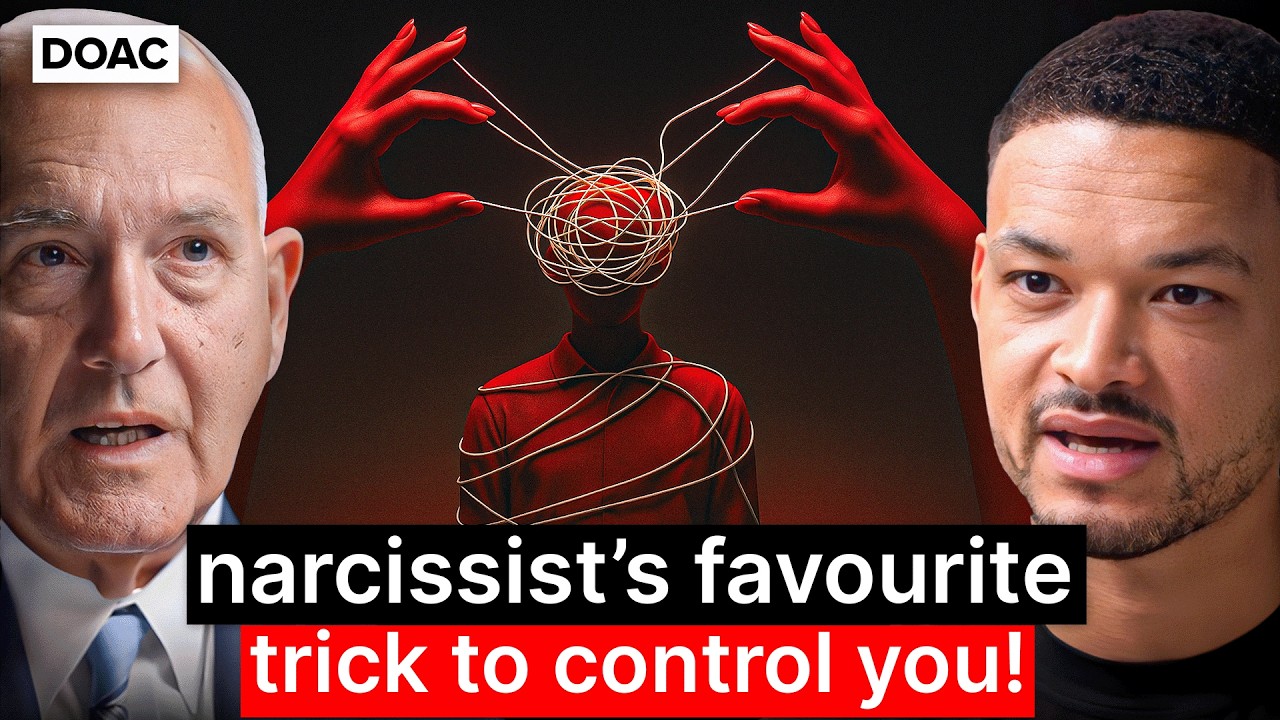
Former FBI Agent Joe Navarro Decodes Secrets of Nonverbal Influence
The Diary Of A CEO
Mastering nonverbal communication and controlling physical variables allows individuals to establish authority, detect deception, and build psychological comfort in high-stakes interactions.
## Background
Published on YouTube by The Diary Of A CEO on April 21, 2025, this video features former FBI agent Joe Navarro discussing nonverbal communication, negotiation strategies, and lie detection. According to the page description, Navarro shares insights gained from 25 years in counterintelligence on how to decode body language, command respect, and avoid psychological manipulation.
## TL;DR
In this wide-ranging conversation, former FBI behavioral analyst Joe Navarro explains how nonverbal cues, vocal cadence, and spatial dynamics shape human interaction. He shares real spy cases—including how an off-hand reaction to a name or how someone carries flowers exposed foreign operatives—to demonstrate the power of micro-behaviors. Beyond espionage, Navarro offers actionable tactics for negotiations, leadership, and reading body language, such as spotting distress, managing room control, and recognizing toxic or narcissistic traits. Ultimately, he frames body language mastery not as a trick for dominance, but as a tool to establish psychological comfort and authentic connection.
## Atmosphere & style
The interaction between Steven Bartlett and Joe Navarro feels intimate, intensely focused, and intellectually engaging. Navarro speaks with the calm, authoritative gravitas of a seasoned investigator, blending detailed analytical breakdowns with compelling real-world spy anecdotes. The mood shifts seamlessly from tense espionage disclosures to empathetic discussions about human vulnerability and resilience, leaving the listener with a sense of profound insight into human nature.
## Key takeaways
- [02:01](https://www.youtube.com/watch?v=ZuiIvevLg40&t=121s) Subconscious human nonverbal behaviors stem from evolutionary survival heuristics, such as holding breath or covering the mouth to avoid predators.
- [29:02](https://www.youtube.com/watch?v=ZuiIvevLg40&t=1742s) First impressions are formed in under 3 milliseconds, operating on nonverbal decoding for rapid evaluation.
- [44:01](https://www.youtube.com/watch?v=ZuiIvevLg40&t=2641s) Facial movements like glabella furrowing (eyebrow knitting), lip compression, and suprasternal notch touching reveal subconscious stress, confusion, or insecurity.
- [45:54](https://www.youtube.com/watch?v=ZuiIvevLg40&t=2754s) Facial touching sends immediate pacifying signals to the brain via the trigeminal and facial nerves to reduce internal stress.
- [07:01](https://www.youtube.com/watch?v=ZuiIvevLg40&t=421s) Dominating and controlling time during interactions grants psychological leverage and authority in negotiations.
- [01:04:44](https://www.youtube.com/watch?v=ZuiIvevLg40&t=3884s) Holding an expressionless 'still face' is instinctively perceived as an unnerving threat, whereas active facial responses build warmth and trust.
- [01:06:56](https://www.youtube.com/watch?v=ZuiIvevLg40&t=4016s) Positioning, open-hand gesturing, and adopting a host role create powerful psychological archetypes that influence counterparty receptivity.
- [01:27:28](https://www.youtube.com/watch?v=ZuiIvevLg40&t=5248s) Confidence is a trainable skill developed through micro-competencies, domain preparation, and controlled nonverbal presence.
- [01:31:45](https://www.youtube.com/watch?v=ZuiIvevLg40&t=5505s) A lower downward vocal cadence conveys unassailable command, whereas high-pitched upspeak betrays weakness.
- [01:58:10](https://www.youtube.com/watch?v=ZuiIvevLg40&t=7090s) Providing psychological comfort is the central goal of successful human interactions, leadership, and negotiation.
- [02:02:23](https://www.youtube.com/watch?v=ZuiIvevLg40&t=7343s) Malignant narcissists overvalue themselves, devalue others, lack self-reflection, and require strict boundaries or time limits to manage.
- [03:17:35](https://www.youtube.com/watch?v=ZuiIvevLg40&t=11855s) Combining pathological narcissism, clinical paranoia, and psychopathy forms the dangerous Dark Triad profile.
## Detailed walkthrough
### [00:00](https://www.youtube.com/watch?v=ZuiIvevLg40&t=0s) Introduction and the Hidden Psychology of Human Behavior
Former FBI agent Joe Navarro, who spent 25 years in the Bureau catching spies and decoding nonverbal communication, highlights how understanding human behavior provides a tremendous life advantage. He explains how facial expressions and subtle physical shifts reveal hidden emotions during interactions. For example, people naturally knit their eyebrows together when they fail to understand a concept, or tighten their lips as blood recedes from them the moment they hear something undesirable. Furthermore, when individuals experience self-doubt or insecurity, specific nonverbal behaviors immediately surface. Learning to recognize and interpret these cues allows anyone to take command of high-stakes situations, negotiate more effectively, and build trust seamlessly.
Addressing the nature of confidence, Navarro emphasizes that it is not strictly an innate trait, but a skill that can be systematically trained. The FBI actively teaches strategies for projecting assurance, including specific high-power hand gestures frequently utilized by prominent figures like Elon Musk. He notes that the simplest starting point to building genuine confidence begins with conscious physical awareness and nonverbal conditioning.
- **Face and Lip Cues:** Eyebrow knitting signifies confusion; lip compression and blanching signal disapproval or disagreement.
- **Confidence Conditioning:** Confidence can be trained like a muscle using tested behavioral and nonverbal techniques.
---
[02:01](https://www.youtube.com/watch?v=ZuiIvevLg40&t=121s) 25 Years in the FBI – What I Learned About Human Behavior
When asked to summarize his life and career in a single word, Navarro answers without hesitation: *"Teaching."* Although he joined law enforcement in 1978 and entered the FBI in 1984—where he spent decades investigating major crimes and chasing foreign operatives—his core passion has always been educating others. He finds immense fulfillment when people grasp the biological and evolutionary underpinnings behind subconscious human actions.
Navarro explains that many automatic human reactions stem from primitive evolutionary shortcuts known as *heuristics*. In ancient times, when early humans encountered predators like lions and tigers, they developed instant survival reflexes:
> "This is far back where we were surrounded by lions and tigers, and we learned to cover our mouths so as not to broadcast our breath so that they couldn't see where we were or find us."
Similarly, when exposed to sudden loud noises or immediate threats, the brain commands the body to freeze. Those who panicked and ran 300,000 years ago were caught and bitten, whereas those who froze, inhaled deeply, and covered their mouths successfully avoided detection by predators that relied on scent and movement.
---
[04:16](https://www.youtube.com/watch?v=ZuiIvevLg40&t=256s) The Most Valuable Thing I Give People
Reflecting on his second career as an author, speaker, and global educator, Navarro identifies *knowledge* as the most valuable asset he passes on to others—specifically insights gained through rare, extreme life experiences that ordinary people never undergo. Growing up as a poor Cuban refugee in Miami, Navarro spent much of his childhood isolated among elderly neighbors, scavenging through garbage bins for discarded reading materials to satisfy his intense curiosity.
Navarro channels the hard-earned lessons from his childhood and his FBI career—where he directly interrogated terrorists, spies, and bazooka-wielding enemies—to make everyday life easier for others. By mastering nonverbal analysis, people can read rooms and individuals with lightning speed rather than agonizing over mixed signals or wondering if someone is "taking the piss." Instead of analyzing facial features in isolation, a trained observer evaluates the forehead, eyes, lips, posture, and hand gestures simultaneously to draw immediate, accurate inferences.
- **Background:** Cuban refugee who developed a lifelong passion for learning by collecting discarded reading material from Miami trash bins.
- **Operational Experience:** Interrogated high-profile national security threats, terrorists, and foreign spies.
- **Advantage of Speed:** Holistic nonverbal assessment provides a major edge in daily interactions and negotiations by enabling immediate perceptual clarity.
---
[07:01](https://www.youtube.com/watch?v=ZuiIvevLg40&t=421s) Apply This Knowledge & You'll Never Be Manipulated Again
Navarro details how applying nonverbal principles transforms personal self-mastery, family dynamics, and professional negotiations. Self-awareness begins by recognizing physiological stress triggers—such as a tightening chest or a nervous stomach—before emotional reactions overflow. In interpersonal settings, minor adjustments yield massive differences. For instance, standing directly in front of a child with a rigid stance comes across like an aggressive drill instructor, provoking defensiveness. Conversely, angling one's body slightly further away and gently tilting the head instantly signals safety and openness.
This head-tilt technique is equally powerful in professional environments. Research demonstrates that tilting one's head during a brief interaction demonstrably increases total "face time" and receptivity from others, as it communicates a relaxed, non-threatening posture without a hidden agenda. Furthermore, Navarro categorizes time itself as a potent nonverbal tool:
> "Whoever dominates and controls time controls. And so even if I change the delivery of my message to slow things down, you're already taking charge in that negotiation."
Navarro stresses that human behavior centers around basic biological needs, desires, preferences, and, above all, unstated fears. While business partners or counter-parties rarely admit fear aloud—preferring polished corporate phrases like "we need to perform due diligence"—the underlying brain mechanism is processing raw fear, which skilled observers can easily identify and address.
- **Communication Dynamics:** Angling the torso and tilting the head reduces perceived aggression and increases interpersonal receptivity and contact time.
- **Time as a Nonverbal Weapon:** Slowing speech cadence and pacing dominates time, granting control over high-stakes negotiations.
- **Unspoken Fear:** Corporate hedging and stalling behaviors are root-level brain responses to underlying fear and uncertainty.
---
[10:58](https://www.youtube.com/watch?v=ZuiIvevLg40&t=658s) My FBI Career
Over a 30-year law enforcement career—including 25 years in the FBI—Navarro served primarily in counterintelligence. However, agents in the Bureau frequently wear multiple hats. In addition to hunting foreign operatives, Navarro was an FBI operational pilot flying aerial surveillance, a SWAT team commander who collaborated closely with elite international units, and a core member of the FBI's specialized behavioral program.
- **Service Span:** 30 years in law enforcement; 25 years as a special agent in the FBI.
- **Operational Roles:** Counterintelligence investigator, FBI pilot, SWAT team commander, and behavioral analyst.
---
[11:47](https://www.youtube.com/watch?v=ZuiIvevLg40&t=707s) Inside the FBI's Secret Behavioral Program
In the late 1980s (around 1989–1990), the FBI created a highly covert program designed to apply behavioral science to active national security threats. Rather than performing post-mortem analyses on deceased criminals, this initiative focused on using real-time human behavior to identify, track, and catch living spies and terrorists, as well as breaking down their psychological defenses during interrogations.
Navarro was one of only six agents selected out of a 12,000-agent bureau to pioneer this newly established behavioral analysis unit. Although the program was originally designated as strictly classified, its existence was accidentally leaked to the public. The unit’s primary directive was analyzing top-tier national security threats and deploying specialized psychological and nonverbal strategies to dismantle hostile espionage networks.
---
[14:47](https://www.youtube.com/watch?v=ZuiIvevLg40&t=887s) How I Caught Real Spies
Explaining the reality of modern espionage, Navarro dispels Hollywood myths like James Bond jumping off buildings. In truth, nation-states deploy hostile intelligence officers who frequently operate under diplomatic cover or pose as international students, researchers, scientists, and business executives. Their objective is exfiltrating military blueprints, cutting-edge scientific research, strategic intentions, or crucial commercial intelligence, such as global agricultural yields. Counterintelligence agents work tirelessly to uncover these covert operatives.
Navarro details one of the most significant espionage cases in U.S. history involving U.S. Army veteran Roderick James Ramsey. In 1989, Navarro was assigned to interview Ramsey merely as a potential witness regarding missing military documents in Germany. Ramsey had served alongside Clyde Lee Conrad, a master sergeant under investigation by the German *Bundeskriminalamt* (BKA). During a casual interview at Ramsey's home, Navarro brought up Conrad's name while Ramsey was holding a lit cigarette:
> "There's no reason why he should react to that. It's just a name, but when I mentioned the name, his cigarette shook. And I knew enough about human behaviors to know that that physiological change had to be caused by something significant."
Navarro applied the scientific method by steering the conversation to neutral topics for 20 minutes before subtly reintroducing the name; once again, the cigarette trembled noticeably. This involuntarily physical cue exposed Ramsey not as a passive witness, but as a core co-conspirator. Navarro's persistence convinced his superiors to pursue a deep 10-year investigation that resulted in the arrest of seven individuals involved in an espionage ring.
Ramsey and Conrad had elevated treason to an industrial scale, abandoning traditional 35mm cameras to videotape thousands of classified documents. Their actions resulted in the worst U.S. military security breach of the era, compromising Western Europe's defense by leaking U.S. nuclear "go codes"—the actual physical card mechanisms and authentication protocols required to authorize tactical nuclear strikes.
- **Hostile Intelligence Covers:** Spies rarely act like cinematic action heroes; they typically operate as diplomats, students, academics, or corporate executives.
- **The Ramsey Case (1989):** An involuntary cigarette tremor exposed a massive internal traitor ring selling military secrets to the Soviet Union via Hungarian intelligence.
- **Devastating Impact:** The spy ring compromised U.S. nuclear permissive action links (PAL) and nuclear go-code protocols in Cold War-era Germany.
Here is the detailed, faithful walkthrough of the provided transcript section:
### [20:26](https://www.youtube.com/watch?v=ZuiIvevLg40&t=1226s) The Devastating Impact of Espionage and the "Flower Bouquet" Spy
Joe Navarro explains the mechanics of a high-level sabotage schema, describing how a spy does not necessarily need to betray their nation out of ideological hatred; sometimes a bribe of $100,000 is enough to get someone to swap out a critical component or alter code in a system. When operating at the top of a pyramid-like structure, replacing a genuine part with a compromised or fake one paralyzes every system beneath it.
Reflecting on the real-world consequences of such cases, Navarro confirms that the spy who was caught shaking while lighting a cigarette received a 33-year prison sentence. Navarro stresses that this single espionage ring put all of Western Europe and the United States in grave jeopardy. During the trial, a testifying general explicitly stated that had open hostilities broken out at the time, the defeat of the Western world would have been assured within three days due to the extent of the damage inflicted.
Navarro then transitions to a famous case where a foreign spy—specifically an "illegal," which in espionage parlance refers to a deep-cover operative who moves to a country, assumes a completely fake identity, and pretends to be a lifelong native—was caught because of a subtle behavioral clue. Armed with a tip-off from a foreign partner agency, Navarro’s six-person FBI team was reviewing surveillance footage that happened to be recorded on Valentine's Day. The suspect was captured entering and exiting a flower shop.
The moment the man stepped out, Navarro immediately announced to his colleagues, "Definitely, he's not an American." When his baffled team asked how he could possibly know, Navarro pointed out the direction the man was holding his flowers: Americans naturally carry a bouquet pointing upward, whereas Eastern Europeans habitually hold a bouquet pointing upside down. Armed with this realization, Navarro conducted a "presumptive" approach, stopping the man on the street, identifying himself as FBI, and asking, "Do you want to know how we know?"
The suspect took the bait by asking "Go on" rather than telling him to go away. When Navarro told him it was the way he carried the flowers, the spy’s chin dropped and his eyelids grew heavy as his mind raced back through years of meticulous practice—his flawless, Midwestern-accented English and carefully constructed cover—realizing a tiny, subconscious habit had betrayed him. After a hours-long conversation, the man confessed. He explained that as an illegal, his primary mission was not day-to-day spying, but to act as a sleeper agent ready to report on train munitions traffic or detonate hidden caches of explosives during wartime.
- The spy caught in the sabotage plot received a 33-year prison sentence.
- A general testified that the espionage damage would have caused the defeat of the West within 3 days if hostilities began.
- Navarro's FBI team consisted of six agents who analyzed the surveillance footage.
- The surveillance video was filmed on Valentine's Day.
- Americans carry flower bouquets upright; Eastern Europeans carry bouquets upside down.
- The flipped spy was not prosecuted for espionage because he had not committed an active spy crime yet, only immigration violations, but he provided invaluable intelligence.
---
### [26:28](https://www.youtube.com/watch?v=ZuiIvevLg40&t=1588s) How Many Spies Are Hiding Among Us?
When asked about the prevalence of foreign spies living among the general public, Navarro breaks down the figures by distinguishing between official diplomatic intelligence officers and covert "illegals." In traditional diplomatic missions, hostile intelligence officers routinely make up a significant portion of embassy personnel; historically, as much as 85% of the Soviet Union's embassy staff were actively conducting espionage, whereas typical baseline figures sit around 3%. Regarding illegals, Navarro estimates that there are likely at least two dozen operating in the United Kingdom, around a dozen in France, and a vast constellation scattered across the United States due to its massive size spanning five time zones.
Responding to popular theories regarding thousands of Chinese military or intelligence operatives crossing the U.S. southern border under the guise of illegal immigration, Navarro remains skeptical, noting that "big claims require big evidence." In his extensive experience, Chinese intelligence agencies overwhelmingly prefer using university students and scientists.
Navarro recalls observing Chinese researchers in the early 1980s and 1990s who were given modest meal allowances of around $150, but were provided thousands of dollars exclusively for photocopying materials in academic libraries. In the FBI, such glaring discrepancies were considered obvious clues. It is far more efficient and effective for foreign powers to send operatives legitimately as engineering or science students than to sneak them across borders.
- Hostile intelligence officers comprised up to 85% of Soviet embassy staff during peak periods.
- Estimated number of deep-cover "illegals": at least 24 in the UK, roughly 12 in France, and a much higher number across the 5 U.S. time zones.
- Approximately 80,000 Chinese students reside in the U.S. at any given time.
- Chinese intelligence strategy historically heavily funded academic photocopying over basic living stipends.
---
### [29:02](https://www.youtube.com/watch?v=ZuiIvevLg40&t=1742s) The Science of Nonverbal Communication and "Thin Slice" First Impressions
Addressing the ongoing debate over whether body language is a reliable science or merely subject to cultural misinterpretation, Navarro argues that nonverbal communication is deeply fundamental to human biology. Because human beings are born without the ability to speak, infants and parents must rely entirely on nonverbal cues to communicate discomfort, colic, or basic needs. Navarro dismisses claims that body language is useless as "junk" science, explaining that nonverbal cues evolved specifically as a survival mechanism to evaluate our environment and detect potential predators.
Evolution does not require absolute perfection; rather, it operates on "approximation for success," where being accurate 75% to 80% of the time is more than enough to keep an organism alive. In nonverbal analysis, behavior is analyzed through "valence": positively valenced behaviors display comfort, alacrity, gravity-defying movements, and open gestures, while negatively valenced behaviors display restraint, lip-tightening, facial touching (pacifying behaviors), and furrowing of the glabella (the smooth area between the eyebrows).
Navarro highlights the groundbreaking research of the late Dr. Nalini Ambady at Harvard University regarding "thin slice" assessments. Her studies demonstrated that human beings make remarkably accurate judgments about others from exposures as brief as 3 milliseconds—a window of time faster than an eye blink. In classic experiments, subjects who observed a teacher for just a few seconds by opening and closing a classroom door rated that teacher's warmth, empathy, and competence with the exact same accuracy as students who sat in that teacher's class for an entire semester.
Navarro reflects on how drastically our understanding of first impressions has changed: in 1971, experts believed it took 20 minutes to form an impression, which dropped to 15 minutes, then 4 minutes in the 1980s, down to the modern scientific reality of mere milliseconds.
- Nonverbal decoding functions on an evolutionary "approximation for success" standard (75%–80% accuracy).
- Glabella furrowing and lip tightening indicate negative valence/discomfort.
- Dr. Nalini Ambady's Harvard research established the concept of "thin slice" assessments.
- First impressions are subconsciously formed within 3 milliseconds, faster than a single eyelid blink.
- Brief 3-millisecond observations yield impression ratings identical to semester-long exposures.
---
### [35:51](https://www.youtube.com/watch?v=ZuiIvevLg40&t=2151s) The Power of Human Synchrony and Mirroring
Navarro reveals that human adaptation begins even before birth. Research on infant crying demonstrates that a baby in utero listens to the cadence, speech patterns, and noises of the mother, learning to mirror its native language so that a German baby's cry has a distinctly different tonal lilt than a French baby's cry. This innate biological drive to adapt and synchronize with dominant external signals is hardwired for social harmony and survival. In interpersonal relationships and business negotiations, "synchrony equals harmony."
Building on the early 1960s psychological research of Carl Rogers, Navarro details how nonverbal mirroring creates an immediate psychological bond. When meeting someone at a distance, echoing their eyebrow arches, hand waves, and vocal greetings signals alignment; doing the opposite creates instant discomfort and dissonance. Synchrony is maintained through subtle alignment of dress code, posture, leaning in, and matching hand gestures.
However, Navarro warns against mechanical or exaggerated mimicking, which reads as a childish game. True synchrony is about tone and grounded interaction: if an opponent or terrorist is yelling, a negotiator cannot be completely stoic, but must ground the interaction until both parties are speaking at the same pace and using the exact same vocabulary. For example, if an interviewee refers to their "family," the interviewer should use the word "family" rather than imposing terms like "wife and kids" or complex corporate jargon, which signals a failure to listen.
Ultimately, Navarro refutes the traditional myth that negotiators should suppress all emotion. Because the brain's amygdala evolved to treat negative emotions as immediate threats to survival, negative signals will always rise to prominence. Effective communication requires managing and aligning with those emotional states rather than attempting to eliminate them.
- Studies show unborn babies adapt to their mother's native tongue, resulting in distinct native "lilts" in infant cries (e.g., German vs. French infants).
- Synchrony techniques trace back to Carl Rogers' foundational psychological work in the early 1960s.
- Mirroring vocabulary (e.g., using "family" if they say "family") builds psychological receptivity.
- The amygdala prioritizes negative emotional stimuli above all else to ensure survival.
[41:58](https://www.youtube.com/watch?v=ZuiIvevLg40&t=2518s) Evolution, Storytelling, and Managing Emotional Brain Hijacks
When people enter a business meeting or negotiation, they often carry a buildup of negative experiences from their commute and arrival. Someone might have struggled to find the location, had trouble parking, sat through a receptionist who took seven minutes to offer a lukewarm greeting, navigated security, and squeezed into a crowded elevator.
Expecting a person to jump straight into a productive meeting under those conditions goes against human evolution. Humans evolved to deconflict and dissipate stress first—which is historically where storytelling and mythical archetypes came from. Sharing experiences of struggle and overcoming obstacles allows the brain to process tension.
When people get into arguments, they frequently think of the perfect comeback 30 minutes too late. This occurs because the emotional brain temporarily hijacks neural activity, limiting clear analytical thinking.
* **Managing Stress Before Business:** To get the best out of a business meeting or relationship, you must allow time for people to vent and discharge accrued negativity before diving into transactional details.
* **The Glabella and Eyebrow Knitting:** The area between the eyes is called the glabella. Furrowing or "knitting" the eyebrows over the glabella indicates doubt, disagreement, or a lack of understanding.
* **Innate Discomfort Signals:** Babies as young as four days old display glabella furrowing. Newborns as young as 47 seconds old will furrow their chin and face when a bright light is shone at them, presenting the exact same physical expression seen in a 47-year-old adult hearing news they dislike.
---
[45:54](https://www.youtube.com/watch?v=ZuiIvevLg40&t=2754s) The Science of Facial Touching and Eye Covering
Facial touching, such as covering or rubbing the eyes, has long been associated with receiving bad news or feeling overwhelmed. While earlier theories treated this strictly as a visual blocking mechanism, human anatomy offers a biological explanation rooted in nerve pathways.
The fifth cranial nerve (trigeminal nerve) and seventh cranial nerve (facial nerve) innervate the forehead, eyelids, and face. Because these nerves have a very short physical distance to the brain, applying physical pressure to the face sends immediate calming signals to relieve stress.
"We could massage our feet and achieve the same, but it's very far away."
* **Paleo Circuits and Hardwired Responses:** In a 1974 study observing children, blind children who had never seen light or other people immediately covered their eyes upon hearing bad news. This confirms that eye-covering is a hardwired "paleo circuit" in human DNA rather than a learned visual behavior.
* **Positive vs. Negative Pacifying:** Facial touching isn't exclusively negative; people touch their faces or play with their hair when relaxed, reading, or enjoying a moment.
* **Escalation Under Stress:** Under high stress—such as an unfavorable number thrown out during a negotiation—gentle facial touching escalates to aggressive scratching or massaging as the brain demands stronger stimulation to maintain homeostasis.
---
[49:31](https://www.youtube.com/watch?v=ZuiIvevLg40&t=2971s) Lips, Jaw Movements, and the Suprasternal Notch
The lips function as an emotional seismograph for the body. When a person feels confident and comfortable, the lips remain full and rich in color. The moment stress or disagreement arises, blood drains from the lips, making them look narrow, tight, or compressed.
People under stress frequently bite, pluck, or compress their lips. Similarly, shifting the jaw sideways places mechanical pressure on the temporomandibular joint (TMJ), which helps soothe the brain during disagreement.
The suprasternal notch—the deep indentation at the base of the neck—is the most physically vulnerable point on the human body, serving as the conduit for air, food, blood flow, and nerve signals.
* **Neck Touching as Weakness:** When experiencing fear, insecurity, or lack of confidence, individuals naturally protect or touch their neck. Women often touch or cover the suprasternal notch directly or clutch their jewelry, while men tend to massage or grab the neck more robustly.
* **Negotiation Pitfall:** Touching or massaging the neck or pulling at a collar to ventilate during a negotiation communicates vulnerability and signals to the other side that their pressure tactics are working.
* **Evolutionary Survival Shortcuts:** Neck covering, mouth covering, and freezing in place are evolutionary defense mechanisms hardwired into the brain to protect against large feline predators that target the throat.
* **Head-Holding Response:** Placing hands on top of the head during shocking events (such as viewing hurricane damage or witnessing an accident) stems from the same ancient survival heuristics.
---
[55:39](https://www.youtube.com/watch?v=ZuiIvevLg40&t=3339s) FBI Negotiation Principles and Controlling Time
Negotiation is effective communication with a purpose. During an FBI career, convincing a suspect or witness to speak and place themselves in legal jeopardy relies entirely on negotiation principles rather than force.
A foundational lesson from veteran FBI agents is that interviewing isn't primarily about securing an immediate confession; it is about maximizing "face time." Keeping a person talking in the room for hours—sometimes up to 12 hours in complex cases—eventually reveals all the necessary information.
When an aggressive negotiator or opponent attempts to dominate a meeting—such as walking in, refusing to say hello, slamming files on the table, and demanding immediate bottom-line numbers—rising to their aggression is a mistake.
```
Aggressive Opponent Tactics ──> Slamming files, demanding fast numbers
Winning Counter-Strategy ──> Control time ──> Slow down the cadence ──> Use visual aids
```
* **Time Control:** Whoever controls the time and cadence of the interaction controls the negotiation.
* **De-escalating Aggression:** When faced with an aggressive bully, deliberately slow the pace down. Use visual tools—such as writing points down on a board or paper step-by-step—to force the conversation into a controlled, equal exchange.
* **Evaluating Bully Dynamics:** If an opposing party remains consistently toxic, evaluate whether they are the sole available source and determine how much physical and mental strain your team is willing to tolerate before altering your exposure strategy.
---
<ElicitationsGroup message="Explore more FBI behavioral insights and negotiation tactics from Joe Navarro:">
<Elicitation label="Subtle posture and walk moves that command authority" query="What subtle moves in walking, posture, and height give you total control and authority when entering a room according to Joe Navarro?"/>
<Elicitation label="How to spot a narcissist using behavioral cues" query="How do you spot a narcissist and distinguish them from healthy self-belief using body language according to Joe Navarro?"/>
<Elicitation label="Hand gestures, handshakes, and eye contact rules" query="What are Joe Navarro's rules for hand gestures, trust-building eye contact, and handshakes that command respect?"/>
</ElicitationsGroup>
Here is a detailed, faithful walkthrough of the transcript section.
[01:01:56](https://www.youtube.com/watch?v=ZuiIvevLg40&t=3716s) Preparation, Purpose, and Positioning in Negotiations
Joe Navarro and host Steven Bartlett break down how to handle high-stakes negotiations, particularly when facing toxic or aggressive personalities. Navarro explains that when dealing with difficult counterparties, you cannot allow them to dictate the pace or feel like they are completely in control. Instead, teams must utilize subtle tactics to derail the opponent's agenda. If an opponent intends to enter a room and throw rapid-fire demands, a negotiation team must have thoroughly rehearsed strategies to counter and adjust to those moves.
```
EFFECTIVE NEGOTIATION PREPARATION
┌───────────────────────┐ ┌───────────────────────┐ ┌───────────────────────┐
│ Define Specific Roles │ ──► │ Plan Room & Seating │ ──► │ Active Non-Verbals │
│ Goal, Attorney, Lead │ │ Entry order, height │ │ Nodding, head tilts │
└───────────────────────┘ └───────────────────────┘ └───────────────────────┘
```
Steven emphasizes a central takeaway from Navarro’s teaching: the critical necessity of writing down the exact goal of a negotiation before stepping into the room. Without a written objective, negotiators risk getting swept up in emotional momentum and losing track of what they are actually fighting for. Navarro agrees, noting that effective negotiation is fundamentally purpose-driven communication. Every team member in the room—from the Chief Financial Officer to in-house legal counsel—must have a precise, predefined role rather than sitting passively.
- **Role-based alignment:** Team members should visibly support whoever is speaking on their side. Research confirms that actively looking at your own team's speaker while they present points amplifies the gravity and impact of their statements to the room.
- **The Power of Steepling:** The gesture of touching fingers together to form a spire ("steepling") is the single most powerful hand gesture to convey supreme confidence. Celebrated figures such as former German Chancellor Angela Merkel, Elon Musk, and Steve Jobs frequently utilized steepling. Navarro advises reserving this gesture specifically for moments where you need to deliver maximum emphasis.
---
[01:04:44](https://www.youtube.com/watch?v=ZuiIvevLg40&t=3884s) The Psychology of the "Still Face" and Unconscious Threat Signals
Navarro warns against sitting entirely still or expressionless during meetings, citing psychological research known as the "still face experiments." When a person holds a completely neutral, rigid face, the human brain instinctively perceives it as an unnerving threat. Holding a still face makes a person appear less trustworthy, less empathetic, and insignificant. Bartlett observes that an unreadable face is disconcerting because you cannot gauge what the person is thinking; even an openly unhappy expression is easier to process because it can be categorized.
> "The worst thing you can do is sit at a meeting and hold a still face. You're perceived as a threat. You're perceived as less trustworthy. You're perceived as insignificant."
The original still-face experiments were conducted with infants. A mother would interact, smile, and look away normally, keeping the baby calm; however, when the mother turned back and held a frozen, completely expressionless face, the baby would quickly become distressed, throwing fits and crying uncontrollably. When researchers replicated the experiment with adults, they observed identical psychological reactions. To maintain trust and warmth—especially on virtual calls—individuals should actively nod, tilt their heads, and use dynamic facial expressions rather than remaining frozen.
---
[01:06:56](https://www.youtube.com/watch?v=ZuiIvevLg40&t=4016s) Strategic Room Control, Etiquette, and the Parent-Child Dynamic
Navarro shares how he meticulously planned every FBI interview down to the smallest detail to ensure he held psychological leverage. In high-level interactions, where an adversary or corporate counterpart might hold greater scale, leverage, or resources, detailed environmental planning restores balance. Navarro controlled who entered the room first, where everyone sat, who was offered water or tea, and precisely when breaks occurred.
```
THE SUBTLE DOMINANCE MATRIX
Aggressive / Low-Trust Gestures Commanding / High-Trust Gestures
─────────────────────────────────── ────────────────────────────────────
• Pointing with an index finger • Guiding with an open, vertical palm
• Slouching or lower seating • Sitting 1–2 inches higher
• Motionless "still face" • Dynamic facial responses & nodding
• Unplanned, reactive breaks • Dictating break timings & hospitality
```
- **Open-Handed Gestures:** Never point at someone with an index finger, as it feels accusatory and aggressive. Instead, use a full open hand held in a vertical position to direct attention or command the room cleanly.
- **The Archetype of Dominance:** By acting as a gracious host—offering tea, coffee, or seating—you subtly assume the psychological archetype of a parent figure. Because you control the provisions and environment, the counterparty unconsciously slips into a receptive role.
To illustrate how rapidly individuals submit to parent-child dynamics, Navarro points to the famous 1973 bank robbery in Stockholm, Sweden, which birthed the term "Stockholm Syndrome." Within hours of being taken hostage, the victims began actively defending their captors. The bank robbers had inadvertently assumed the protective archetype of parents, causing the hostages to instinctively regress into subservient children. Bartlett points out that this exact psychological mechanism explains domestic abuse dynamics, where a victim paradoxically defends an abusive partner who acts as the sole provider or dominant authority figure.
---
[01:10:53](https://www.youtube.com/watch?v=ZuiIvevLg40&t=4253s) Real Spy Stories: Interrogating Rod Ramsay
Navarro details how he applied these exact behavioral control principles when interviewing Rod Ramsay, an American soldier involved in a massive espionage ring that sold NATO war plans to the Soviet Union. To establish control without resorting to hostility, Navarro always arrived at the meeting location first, held Ramsay outside the room for a moment, and stepped inside under the guise of "checking if the room was safe." This simple move immediately established who was in command of the space.
Navarro conducted 37 separate interviews with Ramsay, primarily inside hotel rooms around the Orlando, Florida area. Before Ramsay arrived for each session, Navarro and his partner, Special Agent Terry Moody, deliberately reconfigured the room's furniture.
> "He always sat on the couch, which somehow about that much was shaved from the couch so that it always sat a little lower. And so he was always literally slightly looking up to us."
Navarro maintained dominance by making sure his chair sat one to two inches higher than Ramsay's seat. Additionally, Navarro strictly controlled the timing of conversation breaks. Even when Ramsay urgently wanted a cigarette break, Navarro would gently pause him, saying, *"Hang on a second, because what you just said was really interesting,"* before choosing the moment to grant the break. Over time, Ramsay relinquished his aggressive posture and surrendered control of the interaction—to the point that despite keeping his attorney's phone number in his pocket at all times, he never made the call.
---
[01:14:54](https://www.youtube.com/watch?v=ZuiIvevLg40&t=4494s) The Height Dividend, High IQ, and Malignant Narcissism
The conversation shifts to the subconscious power of physical height. Bartlett notes that digital meetings on platforms like Zoom often obscure height dynamics, leading people to inadvertently set their cameras too low (looking down into the lens) or too high (looking up), both of which are suboptimal for establishing authority. Navarro explains that just as there is a scientifically documented **"beauty dividend"**—where attractive individuals earn approximately 8% more per year throughout their careers—there is an equally potent **"height dividend."**
- **Height Statistics in Corporate Leadership:** Men who are 6'2" make up roughly 3% of the general male population in the United States. However, among Fortune 500 companies, 6'2" men represent **39% of all CEOs**.
- **Subconscious Authority:** Height does not correlate with intelligence, but human biology subconsciously attributes authority and capability to taller individuals.
Navarro explains why taking away Ramsay's physical leverage was vital: Ramsay was extraordinarily dangerous intellect-wise. Ramsay possessed the second-highest IQ ever recorded by the U.S. Army since World War II, had perfect photographic recall, and could speak fluently on topics ranging from quantum physics to military tactics. He had compromised top-secret NATO war plans and nuclear release codes ("go codes"), measuring the stolen secrets by weight rather than page count.
Navarro compares dealing with extreme intellects to handling **malignant narcissists**. While malignant narcissists represent about 2% of the general population, they make up nearly 20% of corporate CEOs. Characterized by overvaluing themselves while systematically devaluing everyone around them, malignant narcissists demand tactical precision: you must establish absolute equality and psychological control, or they will completely overrun the interaction.
<FollowUp label="Want me to break down the specific nonverbal cues for spotting deception?" query="Yes, break down the specific nonverbal cues Joe Navarro uses to spot deception and lying."/>
[01:20:11](https://www.youtube.com/watch?v=ZuiIvevLg40&t=4811s) Posture, Spatial Territory, and Reading the room
When discussing posture, Joe Navarro emphasizes that displaying confidence goes beyond physically standing up straight—it starts directly in the brain with calm breathing. Posture and spatial territory work together to communicate control, composure, and emotional self-regulation. Navarro recalls an event in Valencia where an attendee asked him how he managed not to look nervous before stepping on stage; he admitted that he *was* nervous, but he actively controlled his posture and demeanor because "you don't want to look like a nervous FBI agent." The same rule applies to high-stakes negotiations: professionals must project calm confidence without appearing needy, desperate, or completely indifferent.
Navarro also points out that modern leaders must account for neurodiversity when observing posture and behavior. Many highly successful businesspeople fall on the autism spectrum, such as a colleague with Asperger's syndrome who exhibits involuntary jerking movements or avoids eye contact. Rather than misinterpreting these traits as deception or weakness, a skilled observer establishes a person's baseline "normal" behavior. In recruitment and due diligence, observing how candidates hold themselves reveals deeper truths than resumes or spreadsheets can.
Steven Bartlett shares an example from a recent boardroom interview for a senior role. One candidate sat back calmly and owned the physical space of the chair, whereas another leaned forward anxiously. Because the relaxed candidate signaled that they had options and high self-worth, Bartlett felt naturally more inclined to hire them. Navarro validates this observation, explaining that while nervousness is natural, observing how people handle space and pressure is a vital assessment tool.
- **The Problem-Solving Interview Test:** Rather than asking standard skill-based questions (e.g., software proficiency), ask candidates: *"Give me a list of the problems you have solved."*
- **Identifying True Solvers:** The person who genuinely solved a problem describes it with rich, emotional detail and physical "gravity-defying" cues (arching eyebrows, brightened eyes, elevated posture). In contrast, someone who merely watched a team solve it retells the story flatly, lacking the emotional resonance attached to overcoming the challenge.
- **The Observation Test:** Navarro advises companies to ask candidates: *"How good are you at observing people, events, and opportunities?"* A truly perceptive leader notices office dynamics, employee morale, and cultural friction the moment they walk into a room, rather than relying solely on financial ledgers.
[01:27:28](https://www.youtube.com/watch?v=ZuiIvevLg40&t=5248s) How Confidence Is Built and Trained
Contrary to the belief that confidence is an innate trait, Navarro asserts that confidence can be systematically trained and built from scratch. Arriving in the United States as a refugee from Cuba with nothing, Navarro lacked confidence when the FBI invited him to apply at age 23—a time when he felt he was "barely learning how to shave." Through structured training, his confidence was methodically cultivated.
Navarro dismisses the cliché advice of "just go in and be confident" as unhelpful nonsense. Physiology and mindset must learn confidence incrementally by mastering one specific thing at a time. Whether it is a small daily task like making a bed or stacking papers better than anyone else, mastering a single micro-domain creates a physiological anchor. Once an individual achieves genuine competence in one area, that confidence naturally expands to two, three, and eventually broader domains.
The fastest shortcut to real confidence in a professional setting is absolute domain preparation. Navarro makes it a strict personal rule never to enter a meeting without being thoroughly well-read on the subject. When nervous or inexperienced individuals know their subject inside and out, their physical posture transforms—they shift from a guarded, defensive posture ("elbows in, mousey-looking") into a posture of open authority.
- **The Military Model:** Institutions like the British Military transform 17- to 19-year-olds into confident figures not through lectures, but by guiding them through physical and mental challenges—such as distance running and rope climbing—where felt accomplishment produces tangible self-efficacy.
- **Micro-Competencies:** Focus on mastering small, discrete skills (e.g., a specific sport element like shooting a three-pointer, or deep technical knowledge) to serve as building blocks for general self-assurance.
[01:31:45](https://www.youtube.com/watch?v=ZuiIvevLg40&t=5505s) Vocal Command, Lower Pitches, and the Power of "No"
A person's voice can easily betray internal insecurity or project unshakeable authority. A confident person does not talk fast or at a high pitch. Navarro reflects on his very first arrest in the FBI, when he yelled, *"Stop! This is the FBI!"* in a high-pitched voice. His senior colleagues pulled him aside afterward and told him that no suspect would freeze for a voice like that, instructing him to develop a lower, downward "command voice."
To project authority, vocal pitch must drop at the end of a statement rather than rising like a question (upspeak). Statements of refusal or boundary-setting—especially the word "no"—should always be delivered with a lower, dropping pitch. Saying "no" in a high-pitched or frantic manner sounds defensive, whereas a lowered, deliberate pitch makes the word feel like a complete, unassailable sentence.
For ten consecutive years, Navarro taught this vocal technique at Harvard University alongside his colleague Brian Hall (who encouraged him to write his book *Louder Than Words*). During one class of 76 students, Navarro had the entire room chanting the word "no" in progressively lower octaves. When Hall stepped back into the room, he joked that Navarro was running a cult. Navarro explained that future executives must learn how to say "no" firmly and calmly so that their decisions carry immediate weight.
[01:34:06](https://www.youtube.com/watch?v=ZuiIvevLg40&t=5646s) Speaking in Cadence and the Physics of Hand Gestures
One of the most potent tools of high-status communication is cadence—slowing down speech, inserting rhythmic pauses, and allowing listeners time to digest both the information and the emotion behind it. Powerful historic leaders like Winston Churchill and Martin Luther King Jr. mastered cadence to command attention. Had King rushed through his *"I have a dream"* speech, or had Churchill rattled off *"We shall fight on the beaches"* without deliberate pauses, their words would have lost their historical gravity.
In executive settings or high-stakes negotiations, cadence creates authority because "who controls time controls the room." Delivering a firm statement like, *"This is our offer. It is not final, but for the moment, it is our best offer,"* with measured pauses forces the opposing side to pay attention to every word and respect the boundary being set.
Nonverbal hand gestures must also complement cadence. Because human hands evolved to be highly visible and expressive even in low light, the brain naturally scans them to assess intent and emotion.
- **Finger Spreading (High Confidence):** Widely spread fingers signal deep conviction, authority, and emotional investment (e.g., spreading fingers across the chest when saying "I care about this" amplifies sincerity).
- **Finger Adduction & Thumb Tucking (Fear/Insecurity):** When individuals feel threatened or insecure during negotiations, their fingers press tightly together and their thumbs tuck inward—a human equivalent to a dog pulling its ears back.
- **Hand Visibility:** Hiding hands or making tight, restricted gestures signals internal tension, whereas open, expressive hands build trust and project dominance.
[01:38:36](https://www.youtube.com/watch?v=ZuiIvevLg40&t=5916s) Eye Contact, Gaze Behavior, and Instant Rapport Building
Joe Navarro explains that managing gaze behavior is critical during high-stakes interactions like negotiations. Effective communicators intentionally look away when processing thoughts, examples, or complex ideas rather than maintaining an unnatural, intimidating stare. Eye contact should instead be used purposefully to emphasize points or discreetly check in with a partner to gauge shared opinions—such as giving a quick, knowing glance during a conversation to subtly signal what one is thinking.
```
┌──────────────────────────┐
│ APPROACH SPEED & │
│ PROSOCIAL BEHAVIOR │
└─────────────┬────────────┘
│
┌──────────────────────────┴──────────────────────────┐
▼ ▼
┌──────────────────────────┐ ┌──────────────────────────┐
│ CARE & IMPORTANCE │ │ MIRRORED ELEVATION │
│ Fast, direct approach │ │ Stand & sit at the │
│ signals high value & │ │ same time to maintain │
│ prosocial intent. │ │ status symmetry. │
└──────────────────────────┘ └──────────────────────────┘
```
When Steven Bartlett asks Navarro to analyze video footage of their initial greeting in the studio to see how it could be improved, Navarro provides a live nonverbal breakdown:
* **Arms Akimbo stance:** Steven initially waited with his hands on his hips ("arms akimbo"), which conveys a dominant, "I'm in charge" posture suitable for hosting in his own domain.
* **Prosocial approach:** Steven immediately walked around the table to greet Navarro. Moving quickly toward someone signals that they matter. Navarro notes that even 11-month-old infants recognize "prosocial acts" based on how fast someone moves toward them to offer help.
* **Greeting etiquette:** Steven offered a charming compliment regarding Navarro's suit ("the FBI uniform"), which set a warm tone.
* **Seating synchrony:** Steven sat down while Navarro was still standing, briefly leaving Navarro towering over him. In negotiations, letting someone loom over you while seated is "contraindicated" (a major mistake). To maintain balanced power dynamics, both parties should remain standing until they sit down simultaneously.
[01:42:45](https://www.youtube.com/watch?v=ZuiIvevLg40&t=6165s) Note-Taking vs. Active Observation and the Biology of Touch
Discussing workplace habits, Steven shares that he uses an iPad during meetings to jot down ideas so he doesn't interrupt or forget his thoughts. While Steven notes that writing can demonstrate care, Navarro warns that constant note-taking undermines real-time observation, which is far more critical in human interactions.
* **Therapist note-taking trap:** Many modern therapists type notes on laptops during sessions because they lack administrative staff. Surveys of clients show that this creates a cold, transactional environment where clients feel unheard.
* **Observation primacy:** Continuous writing breaks facial interaction and visual connection. If crucial technical details (such as the *suprasternal notch*) are mentioned, write them down briefly, but quickly return to active visual monitoring.
* **Human evolutionary needs:** Humans evolved for direct eye contact, physical greeting, play wrestling, and touch. Suppressing natural touch—such as banning hugs in schools—clashes with human biology, which relies on physical connection and facial interaction for psychological well-being.
[01:45:51](https://www.youtube.com/watch?v=ZuiIvevLg40&t=6351s) Handshake Mechanics and Reading Toxic Executive Behavior
Navarro breaks down the physical mechanics of a respectful, authoritative handshake and explains how to avoid making others feel uncomfortable:
* **Finger placement:** Keep fingers angled downward. Extended fingers press against the inner wrist—an erogenous, highly sensitive zone with exposed veins—making the interaction feel intrusive and awkward.
* **Pressure and force:** Apply equal, moderate pressure. Avoid aggressive moves like "Donald Trumping" (pulling the other person's arm), violent jerking, overly tight squeezing, or playing physical "jujitsu." Squeezing hard often causes intense physical pain to older individuals or those with arthritis.
* **Cupping and arm touching:** Double-handed "cupping" should be reserved for close acquaintances, as most people dislike having their hand completely engulfed by a stranger. To show extra warmth, shake with one hand and briefly touch the person's upper arm.
Navarro then reviews a video clip of an executive exhibiting nonverbal signs of extreme internal stress and poor leadership:
* **Pacifying behaviors:** The executive covers his neck, crimps the left side of his face, massages his forehead, blinks rapidly (eyelid flutter), and releases a heavy cathartic exhale.
* **Leadership signaling:** These behaviors are classic pacifying gestures indicating deep psychological discomfort and insecurity. While expected from subordinates, high-level leaders—such as military generals—train themselves never to exhibit these signals in public.
[01:49:10](https://www.youtube.com/watch?v=ZuiIvevLg40&t=6550s) The Core Pillars of Exceptional People: Self-Mastery and Observation
Navarro transitions into discussing the defining traits of exceptional individuals, emphasizing that excellence is a set of deliberate habits rather than an innate gift:
> "Self-mastery... You can create your own apprenticeship program and you can learn to master a skill, or a knowledge, or an athletic move. What have they accomplished? They have accomplished something that nobody can take from them."
* **Self-Mastery:** Exceptional figures throughout history—from Alexander the Great (tutored by Aristotle) to Thomas Edison (who held over 1,300 patents despite leaving school at age six)—pursued knowledge relentless on their own initiative. Navarro shares his own childhood poverty, recalling how he scavenged trash cans for discarded books and magazines to teach himself. Self-mastery requires self-direction, such as reading two books a week to consume 1,000 books per decade without external deadlines.
* **Curiosity and practical synthesis:** Leonardo da Vinci studied water eddies out of sheer curiosity, which directly enabled him to paint the intricate hair details of the *Mona Lisa*. True self-mastery lies in absorbing lessons from family, mentors, and the world, then applying them purposefully without trying to reinvent the wheel.
* **Active Observation:** Most people navigate life completely oblivious to their immediate surroundings. Navarro recounts observing a family at the airport where every member stared silently at their smartphones, completely detached from one another.
* **Invention through observation:** In World War II, a Swiss hiker inspected the annoying plant seeds ("stickers" or burrs) clinging to his socks under a microscope. Noticing their microscopic hooks, he invented Velcro. Countless people had seen burrs before, but only an observant mind turned that observation into a groundbreaking invention. Navarro advises executives to hire keen observers who can spot subtle, emerging organizational risks before they escalate.
* **Nonverbal Communication:** Words are frequently overvalued compared to nonverbal cues. At a funeral, eloquent speeches rarely offer as much comfort as silently putting an arm around a grieving friend. Nonverbal communication remains the primary language across all human cultures for expressing empathy, care, and genuine emotion.
---
- **Key Historical Examples:** Alexander the Great was taught by Aristotle (who was taught by Plato, who was taught by Socrates); Thomas Edison held 1,300 patents despite dropping out of formal education at age six.
- **Reading Velocity Goal:** Reading 2 books per week yields ~100 books a year, totaling ~1,000 books per decade.
- **Biomimicry Example:** Swiss engineer George de Mestral invented Velcro after examining burrs attached to his clothing under a microscope following a mountain hike in the 1940s.
Here is a detailed, faithful walkthrough of the provided transcript segment:
[01:56:25](https://www.youtube.com/watch?v=ZuiIvevLg40&t=6985s) Action Beats Knowledge: Why Movement Signals Caring
Joe Navarro emphasizes that taking action is essential when interacting with others. The worst way to communicate that you do not care about someone is to take your time. He shares the example of walking up to a retail counter for help, only for the employee to lazily move to the back room and slowly drag their feet coming back. That sluggish behavior effectively shouts, "I don't care." Navarro argues that managers should never hire people who cannot "move at the speed of light," because human beings inherently equate quick movement with genuine caring.
If an employee has a legitimate physical limitation—such as recovering from hip replacement surgery—Navarro advises them to front it immediately by explaining the situation so the customer understands. People easily forgive physical limitations, but they do not forgive a lack of care demonstrated through slow action. As Navarro notes in his book *Be Exceptional*, doing something prosocial or beneficial immediately is what separates exceptional people from the rest.
[01:58:10](https://www.youtube.com/watch?v=ZuiIvevLg40&t=7090s) Psychological Comfort: The Ultimate Human Need
Navarro reveals that psychological comfort is the single most powerful strength humans possess. Through decades of studying people, he has learned that humans do not seek perfection; they seek psychological comfort, and "whoever provides that is the soonest winner." He references how Steve Jobs revolutionized computing by recognizing this principle. Early computers were ugly boxes kept behind counters in uninviting stores, and people were so intimidated by them that workers would occasionally sneak in at night to cut the power cords. Jobs placed Apple computers on lab-style tables in bright, accessible stores, removing the fear and taking Apple's market share from 4% to dominant industry heights through sheer psychological comfort.
In a negotiation context, the goal is always to create enough psychological comfort that the other party can live with the outcome and report back to their board that they achieved the best possible deal. Navarro points out that creating psychological comfort begins at the physical and environment level before reaching the cognitive level:
* **Initial Hospitality:** Offering a visitor options like water, tea, or coffee immediately lowers their guard.
* **Environmental Controls:** Soft lighting and quiet rooms reduce physical strain and stress.
* **Storytelling & Active Listening:** Allowing someone to fully explain their side during a financial disagreement (e.g., negotiating a salary offer between $3,000 and $6,000) provides cognitive comfort.
* **Incremental Solutions:** If a full budget request cannot be met immediately, offering a three-month review tied to performance gives the other party a path to comfort.
* **Avoiding Harshness:** Indifference, harshness, and ignoring personal preferences create immediate psychological discomfort.
[02:02:23](https://www.youtube.com/watch?v=ZuiIvevLg40&t=7343s) How to Deal with Malignant Narcissists
Navarro discusses his 2009 book *Narcissists Among Us* (and his book *Dangerous Personalities*), noting that while clinical narcissists make up roughly 2% of the general population, up to 22% of corporate CEOs display narcissistic traits. A true malignant narcissist is not merely someone who likes looking in the mirror or applying cologne; they overvalue themselves while actively devaluing others. They demand total loyalty while offering none, expect complete transparency while constantly lying, and remain completely indifferent to other people's suffering.
When dealing with a narcissistic boss or partner, Navarro warns that "the arc of the trajectory does not favor you." Toxic individuals eventually victimize those around them physically, mentally, emotionally, physiologically, or financially. Because narcissists possess severe character flaws and lack all capacity for self-reflection, they cannot be cured or changed. Navarro’s core advice for handling them includes:
* **Recognize the Traits:** Use diagnostic checklists (such as the 125-item checklist in *Dangerous Personalities*) to confirm if you are dealing with a high-trait narcissist.
* **Set a Hard Time Limit:** If you must work for a narcissistic executive, decide on a strict exit timeframe (e.g., six months or one year) rather than staying indefinitely.
* **Protect Your Health:** Proximity to toxic leadership exacts a heavy physical toll because "the body keeps the score."
* **Do Not Try to Win:** You cannot win or earn loyalty from someone who views themselves as infallible. The only true solution is to escape the relationship as quickly as possible.
[02:07:09](https://www.youtube.com/watch?v=ZuiIvevLg40&t=7629s) The "Lethal" Trifecta: Narcissism, Paranoia, and Psychopathy
When asked why possessing multiple dark personality traits is exceptionally dangerous, Navarro explains that individuals can combine pathological narcissism with paranoid and psychopathic traits. He highlights Adolf Hitler as a historical example who embodied all three:
* **Pathological Narcissism:** An extreme overvaluation of oneself and a belief that "I'm the person that can make us great again."
* **Clinical Paranoia:** Extreme rigidity in thinking paired with deep, irrational suspicion of specific groups (e.g., Hitler's irrational hatred and fear of Jewish people and the Roma).
* **Psychopathy:** Defined by researcher Robert Hare as a total lack of remorse, empathy, or conscience, allowing a person to commit atrocities while sleeping peacefully at night.
Navarro contrasts true narcissism with healthy self-belief. Modern culture has grown significantly more narcissistic since the 1950s due to social media platforms like TikTok, reflected in linguistic shifts where language has moved away from collective terms like "we" and "ours" to self-centered terms like "me" and "I." When evaluating leaders in organizations or politics, Navarro urges people to assess whether a leader values individuals or systematically devalues others.
[02:10:34](https://www.youtube.com/watch?v=ZuiIvevLg40&t=7834s) A Life in Federal Law Enforcement: Trauma, Hope, and Human Connection
Reflecting on his decades hunting spies, interviewing suspects, and investigating violent crimes, Navarro shares how his FBI career shaped him as a human being. He expresses gratitude that he experienced trauma "piecemeal"—from his first homicide investigation to a fellow officer's suicide—rather than all at once, which would have caused a total mental breakdown. Through it all, he realized that the vast majority of people he interacted with were kind, innocent witnesses and victims, such as impoverished cotton farmers in Arizona who worked hard and possessed good hearts.
Navarro opens up about the severe emotional weight that law enforcement officers carry. He reveals the ongoing pain he feels over a young girl who was abducted by a serial killer while he was on duty at Brigham Young University, as well as the haunting memory of the first person he saw killed in Cuba.
Navarro explains the biological mechanisms behind trauma and why post-traumatic stress cannot simply be cured with a pill:
* **The Hippocampi:** The brain contains two hippocampi that store and retain negative experiences to protect human survival (such as ensuring you never touch a hot stove twice).
* **Enduring Memories:** Negative and traumatic events are biologically retained in memory for at least a decade, and often for a lifetime.
* **Sensory Triggers:** Violent crime scenes leave overwhelming smells that cannot be washed out, forcing forensic examiners and agents to burn their clothes.
Despite carrying these painful memories, Navarro stays optimistic by mentoring eager young people and executives. He draws inspiration from resilient individuals, including a blind woman in Brazil who lost her sight at age six, raised 12 surviving children, and mastered intricate needlework entirely by touch. Focusing on the quiet kindness of everyday people gives him continued hope in humanity.
[02:15:35](https://www.youtube.com/watch?v=ZuiIvevLg40&t=8135s) FBI Career Highlights & Transitioning Away
Joe Navarro reflects on the key moments of his time in law enforcement, pointing out that graduating from the FBI Academy was one of the happiest days of his life. He shares the striking statistics behind getting accepted, emphasizing just how competitive the process truly is.
Equally significant, however, was the day he finally left the Bureau. After achieving everything he wanted to within law enforcement, he felt ready to pursue new endeavors like writing books and continuing to teach—goals that were difficult to fully commit to while actively serving as an agent.
* **FBI Selection Statistics:** Out of approximately 27,000 applicants competing at any given time, the FBI accepts only about 220 candidates per year.
* **Post-FBI Endeavors:** Navarro transitioned out of active duty to focus on teaching and writing, having authored 14 published books with his 15th scheduled for release.
---
[02:17:39](https://www.youtube.com/watch?v=ZuiIvevLg40&t=8259s) The Importance of Human Connection
When asked what single overarching truth bridges all of his work on communication and body language, Navarro explains that every person is ultimately in the "people business." Regardless of whether someone writes software code or leads a company, success relies on connecting effectively with others and creating psychological comfort.
He praises the interview questions for repeatedly driving home this theme. Through nonverbal cues, people constantly signal messages like *"I trust you,"* *"I value you,"* and *"I care about you."* Building and sustaining those long-term human connections is the most valuable lesson he can impart.
> "We are all in the people business... What's the importance of connecting properly? And then how do we maintain those connections?"
---
[02:19:09](https://www.youtube.com/watch?v=ZuiIvevLg40&t=8349s) Closing Question: Why People Find Joe Approachable
In accordance with the podcast's tradition, Bartlett reads a question left by the previous guest without knowing who it was for: *"What do people say that they like about you?"* Navarro responds immediately, stating that people constantly tell him how approachable and average he looks in person compared to the stern FBI agent stereotype they expect.
Navarro takes conscious effort to maintain that accessibility across all walks of life, ensuring he treats every single individual with equal warmth and respect.
* **Universal Accessibility:** Whether speaking to a student or a security guard, Navarro strives to remain grounded and open.
* **Navarro's Digital Footprint:** In addition to his book series, including *Be Exceptional*, he manages a video platform accessible through `seenavarro.com` to educate the public on nonverbal communication.
---
[02:20:09](https://www.youtube.com/watch?v=ZuiIvevLg40&t=8409s) The Impact of Human Connection in a Digital World
Bartlett and Navarro discuss how living behind screens in a digital-first era has made genuine human connection somewhat of a lost art. Because communication no longer feels as natural to younger generations, people are hungry to understand nonverbals, anthropology, and how to express themselves without being misunderstood.
Navarro concludes by offering Bartlett a heartfelt perspective on the impact of his podcast, noting that educating others creates a ripple effect that changes lives in ways one might only realize decades later.
> "10 years on, 20 years on... somebody will write to you and say something you said or your example affected me and it changed my life."
## Notable quotes
> [02:01](https://www.youtube.com/watch?v=ZuiIvevLg40&t=121s) This is far back where we were surrounded by lions and tigers, and we learned to cover our mouths so as not to broadcast our breath so that they couldn't see where we were or find us. — Joe Navarro
> [07:01](https://www.youtube.com/watch?v=ZuiIvevLg40&t=421s) Whoever dominates and controls time controls. And so even if I change the delivery of my message to slow things down, you're already taking charge in that negotiation. — Joe Navarro
> [14:47](https://www.youtube.com/watch?v=ZuiIvevLg40&t=887s) There's no reason why he should react to that. It's just a name, but when I mentioned the name, his cigarette shook. And I knew enough about human behaviors to know that that physiological change had to be caused by something significant. — Joe Navarro
> [45:54](https://www.youtube.com/watch?v=ZuiIvevLg40&t=2754s) We could massage our feet and achieve the same, but it's very far away. — Joe Navarro
> [01:04:44](https://www.youtube.com/watch?v=ZuiIvevLg40&t=3884s) The worst thing you can do is sit at a meeting and hold a still face. You're perceived as a threat. You're perceived as less trustworthy. You're perceived as insignificant. — Joe Navarro
> [01:10:53](https://www.youtube.com/watch?v=ZuiIvevLg40&t=4253s) He always sat on the couch, which somehow about that much was shaved from the couch so that it always sat a little lower. And so he was always literally slightly looking up to us. — Joe Navarro
> [01:20:11](https://www.youtube.com/watch?v=ZuiIvevLg40&t=4811s) Give me a list of the problems you have solved. — Joe Navarro
> [01:20:11](https://www.youtube.com/watch?v=ZuiIvevLg40&t=4811s) How good are you at observing people, events, and opportunities? — Joe Navarro
> [01:31:45](https://www.youtube.com/watch?v=ZuiIvevLg40&t=5505s) Stop! This is the FBI! — Joe Navarro
> [01:34:06](https://www.youtube.com/watch?v=ZuiIvevLg40&t=5646s) This is our offer. It is not final, but for the moment, it is our best offer — Joe Navarro
> [01:49:10](https://www.youtube.com/watch?v=ZuiIvevLg40&t=6550s) Self-mastery... You can create your own apprenticeship program and you can learn to master a skill, or a knowledge, or an athletic move. What have they accomplished? They have accomplished something that nobody can take from them. — Joe Navarro
> [02:17:39](https://www.youtube.com/watch?v=ZuiIvevLg40&t=8259s) We are all in the people business... What's the importance of connecting properly? And then how do we maintain those connections? — Joe Navarro
> [02:19:09](https://www.youtube.com/watch?v=ZuiIvevLg40&t=8349s) What do people say that they like about you? — Steven Bartlett
> [02:20:09](https://www.youtube.com/watch?v=ZuiIvevLg40&t=8409s) 10 years on, 20 years on... somebody will write to you and say something you said or your example affected me and it changed my life. — Joe Navarro
## Mentioned
Joe Navarro, Steven Bartlett, FBI, Roderick James Ramsey, Clyde Lee Conrad, Bundeskriminalamt (BKA), Harvard University, Dr. Nalini Ambady, Carl Rogers, Elon Musk, Angela Merkel, Rod Ramsay, Terry Moody, U.S. Army, NATO, Brian Hall, Winston Churchill, Martin Luther King Jr., Alexander the Great, Aristotle, Plato, Socrates, Thomas Edison, Leonardo da Vinci, George de Mestral, Velcro, Apple, Steve Jobs, Donald Trump, Adolf Hitler, Robert Hare, TikTok, Brigham Young University, Be Exceptional, seenavarro.com
Former FBI counterintelligence agent Joe Navarro argues that decoding subconscious nonverbal cues, controlling environmental dynamics, and prioritizing psychological comfort provide decisive advantages in high-stakes negotiations and interpersonal protection. Drawing from 25 years of behavioral profiling, he asserts that human actions are governed by ancient survival heuristics rather than pure logic.
Biological Roots of Nonverbal Stress Signals (45:54)
Navarro explains that subconscious body language originates from evolutionary survival mechanisms designed to evade predators. For example, humans instinctively freeze, cover their mouths, or compress their lips under duress. Facial touching functions as a physiological pacifier: applying pressure across the forehead and eyes stimulates the fifth (trigeminal) and seventh (facial) cranial nerves, delivering immediate calming signals via short pathways directly to the brain. In contrast to relaxed touching, severe distress causes aggressive facial scratching or massaging as the brain demands stronger stimulation to maintain homeostasis.
Similarly, negative emotional shifts produce unmistakable physical reactions. Doubt, disagreement, and confusion manifest as glabella furrowing between the eyebrows—a reaction observed even in newborns—while stress causes blood to recede from the lips. In high-pressure settings, individuals unconsciously protect or touch the suprasternal notch at the base of the neck, defending the body's most vulnerable conduit. Navarro notes that Dr. Nalini Ambady’s research on thin-slice assessments proves that humans evaluate these cues in as little as three milliseconds, relying on biological approximations that remain accurate 75% to 80% of the time.
Tactical Environmental Framing and Time Control (66:56)
In high-stakes interactions, Navarro emphasizes that physical space and conversational pacing dictate psychological authority. When interrogating former U.S. Army veteran and spy Rod Ramsay across 37 sessions, Navarro systematically established control by arriving first, inspecting the room, shaving inches off the suspect's couch so Ramsay had to look upward, and delaying requested cigarette breaks to maintain conversational leverage.
Navarro advises negotiators never to match an aggressive adversary's speed or hostility. Instead, taking charge requires slowing down the cadence, controlling break schedules, and using visual boards to anchor the discussion. Environmental hospitality—such as offering water, tea, or seating—subtly establishes a commanding parental archetype while placing counterparties into a receptive posture. Navarro also cautions against rigid, expressionless "still faces," citing developmental experiments showing that emotional immobility triggers distress, suspicion, and hostility in observers.
Projecting Authority via Voice, Posture, and Cadence (91:45)
According to Navarro, confidence is not purely an innate trait but a conditioned skill developed through meticulous domain preparation and deliberate physical conditioning. To project unshakeable authority, speakers must lower their vocal pitch, particularly when issuing refusals. Delivering the word "no" with a downward inflection establishes an unassailable boundary, whereas upward inflections sound defensive and uncertain. Historical leaders like Winston Churchill and Martin Luther King Jr. commanded audiences by deploying measured pauses and rhythmic cadence, exploiting the principle that whoever controls time controls the room.
Physical posture and hand movements further telegraph internal state. Spreading fingers conveys conviction and emotional investment, while pressing fingers together or tucking thumbs reflects insecurity. Physical height also exerts an unspoken influence: while men standing 6'2" make up roughly 3% of the U.S. male population, they occupy 39% of Fortune 500 CEO positions. For those lacking height advantages, Navarro stresses adopting grounded, open posture and calm breathing to eliminate signals of anxiety.
Identifying and Defending Against Malignant Narcissism (122:23)
Navarro warns that pathological narcissists represent dangerous interpersonal threats who cannot be rehabilitated or reformed through loyalty. While clinical narcissism occurs in approximately 2% of the general population, Navarro notes that up to 22% of corporate chief executives exhibit narcissistic tendencies. A malignant narcissist systematically overvalues themselves while actively devaluing others, demanding absolute obedience while providing neither transparency nor empathy.
The danger escalates drastically when narcissism merges into a lethal trifecta with clinical paranoia and psychopathy—defined by researcher Robert Hare as a total absence of conscience and remorse. Because prolonged proximity to narcissistic abuse produces severe physiological and mental deterioration, Navarro advises against attempting to appease or outmaneuver them. Instead, individuals must diagnose these behaviors early using structured checklists, establish an inflexible timeline to exit within six to twelve months, and strictly limit emotional engagement.
Prioritizing Psychological Comfort and Swift Action (118:10)
Navarro argues that the most potent competitive advantage in human relations is providing psychological comfort. People inherently prioritize ease and emotional reassurance over absolute perfection. In business, Steve Jobs demonstrated this dynamic by removing technical intimidation—shifting Apple computers from back counters to open, lab-style retail tables with soft lighting, which expanded market share by reducing customer anxiety.
Building rapport also depends on nonverbal synchrony, such as subtly mirroring conversational pacing and vocabulary without robotic imitation. Crucially, Navarro asserts that rapid movement is universally interpreted as a demonstration of care. Sluggishness communicates contempt or indifference, whereas moving promptly to greet someone or resolve a problem fosters immediate trust. During face-to-face interactions, maintaining active visual engagement and observing real-time physical cues must take precedence over mechanical note-taking.
While Navarro provides actionable behavioral frameworks drawn from counterintelligence and behavioral science, his analysis relies heavily on observational heuristics and clinical typologies rather than universally predictive formulas. Consequently, observers must evaluate behavioral clusters within an individual's specific baseline, recognizing that factors such as neurodiversity, trauma, and cultural variation can mimic or alter standard stress indicators.
[2:01] Joe Navarro: This is far back where we were surrounded by lions and tigers, and we learned to cover our mouths so as not to broadcast our breath so that they couldn't see where we were or find us.
[7:01] Joe Navarro: Whoever dominates and controls time controls. And so even if I change the delivery of my message to slow things down, you're already taking charge in that negotiation.
[14:47] Joe Navarro: There's no reason why he should react to that. It's just a name, but when I mentioned the name, his cigarette shook. And I knew enough about human behaviors to know that that physiological change had to be caused by something significant.
[45:54] Joe Navarro: We could massage our feet and achieve the same, but it's very far away.
[64:44] Joe Navarro: The worst thing you can do is sit at a meeting and hold a still face. You're perceived as a threat. You're perceived as less trustworthy. You're perceived as insignificant.
[70:53] Joe Navarro: He always sat on the couch, which somehow about that much was shaved from the couch so that it always sat a little lower. And so he was always literally slightly looking up to us.
[80:11] Joe Navarro: Give me a list of the problems you have solved.
[80:11] Joe Navarro: How good are you at observing people, events, and opportunities?
[91:45] Joe Navarro: Stop! This is the FBI!
[94:06] Joe Navarro: This is our offer. It is not final, but for the moment, it is our best offer
[109:10] Joe Navarro: Self-mastery... You can create your own apprenticeship program and you can learn to master a skill, or a knowledge, or an athletic move. What have they accomplished? They have accomplished something that nobody can take from them.
[137:39] Joe Navarro: We are all in the people business... What's the importance of connecting properly? And then how do we maintain those connections?
[139:09] Steven Bartlett: What do people say that they like about you?
[140:09] Joe Navarro: 10 years on, 20 years on... somebody will write to you and say something you said or your example affected me and it changed my life.
Original transcript
[0:00] I was in the FBI for 25 years. I have
[0:03] sat with spies and enemies of this
[0:05] country and I learned a lot about human
[0:07] behaviors. Imagine being able to read
[0:10] other people and circumstances faster.
[0:12] It gives you a tremendous advantage in
[0:14] your life. I want to hear everything.
[0:17] So, one of the first things I teach is
[0:19] Joe Navarro is a former FBI agent turned
[0:21] world-renowned body language expert.
[0:23] He helps people decode body language to
[0:25] improve communication, trust, and
[0:27] influence. One of the things that I
[0:29] found in negotiations is we as humans
[0:32] communicate quite a lot with our faces.
[0:34] For instance, we push this together when
[0:36] we don't understand something. And then
[0:38] the minute we hear something we don't
[0:40] like, blood actually begins to leave the
[0:42] lips and then we begin to tighten them.
[0:44] Another behavior is that when there's
[0:46] lack of confidence, insecurities, people
[0:49] immediately
[0:50] So, once we understand these behaviors,
[0:53] you can take command of any situation.
[0:56] Confidence, is this something that
[0:57] you're born with or do you think
[0:58] confidence can be trained? It can
[1:00] absolutely be trained. So, the FBI
[1:03] actually teach confidence and there's a
[1:05] lot of strategies. One of them is the
[1:07] most powerful gesture that we can use
[1:09] and you see Musk do this a lot. But,
[1:11] what I tell people is that the easiest
[1:14] way to learn confidence is to
[1:17] Joe, we actually videoed my interaction
[1:19] with you when I met you. And I've got
[1:20] the video here.
[1:23] So, one of the things you immediately
[1:24] did was Don't do that. It's a no-no.
[1:29] This is a way to blow my mind a little
[1:30] bit. 53% of you that listen to this show
[1:33] regularly haven't yet subscribed to this
[1:35] show. So, could I ask you for a favor
[1:37] before we start? If you like this show
[1:39] and you like what we do here and you
[1:40] want to support us, the free simple way
[1:41] that you can do just that is by hitting
[1:43] the subscribe button. And my commitment
[1:45] to you is if you do that, then I'll do
[1:46] everything in my power, me and my team,
[1:48] to make sure that this show is better
[1:50] for you every single week. We'll listen
[1:52] to your feedback, we'll find the guests
[1:53] that you want me to speak to, and we'll
[1:55] continue to do what we do. Thank you so
[1:57] much.
[2:01] Joe,
[2:02] zooming out, if someone asked you in the
[2:04] street
[2:05] and they wanted a two-sentence answer,
[2:09] who are you and what have you spent your
[2:11] life doing?
[2:12] How would you answer that question?
[2:15] With one word,
[2:17] teaching.
[2:18] I think I've spent my whole life
[2:20] teaching, even
[2:22] even when I was in the FBI,
[2:25] uh starting in 1984,
[2:28] a lot of my job was obviously being an
[2:30] FBI agent, investigating crimes, uh
[2:34] chasing after spies, and so forth.
[2:36] But, uh
[2:38] you know, I hired on in 1978, but as
[2:40] early as '84, I was already teaching.
[2:43] And um
[2:44] I love it when when people get it and
[2:47] they they see a behavior, they
[2:49] understand the
[2:52] um underpinnings, the foundation of why
[2:54] we do certain things.
[2:56] I'll give you an example. Sometimes
[2:58] you'll come to a horrible uh scene and
[3:01] uh people immediately
[3:03] gasp, they take in air, and then they
[3:05] cover their their their mouths, or
[3:08] there's one point uh difference on the
[3:10] scoreboard, and people are like this,
[3:12] and they don't understand. This is
[3:14] This is far back where we were
[3:16] surrounded by lions and tigers, and we
[3:19] learned to cover our mouths so as not to
[3:22] broadcast our breath
[3:24] so that they couldn't see where we were
[3:26] or find us.
[3:28] And uh and so the human body has a a few
[3:32] shortcuts.
[3:33] I should say the human brain.
[3:35] They're called heuristics. And so one of
[3:38] them is to freeze.
[3:40] Uh so when we hear a loud sound or we
[3:42] see a predator or a dog, we we we
[3:45] freeze.
[3:46] Obviously, whoever ran
[3:48] 300,000 years ago uh was bitten.
[3:53] Um and so we have these shortcuts and uh
[3:56] and it's always fascinating to me to
[3:58] share
[4:00] why we have these behaviors and why we
[4:02] And you realize he just inhaled, so you
[4:05] can hold your breath, and then we cover
[4:06] our breath so we don't broadcast for the
[4:09] the predators to to smell us.
[4:12] You spend your time writing books. You
[4:13] spend your time teaching in various
[4:15] different contexts these days, whether
[4:16] it's on stage or in other environments
[4:18] on the internet.
[4:21] What is it that you're
[4:24] giving people?
[4:27] That's a profound question that I don't
[4:30] think I've been asked.
[4:32] I think the simplest answer is
[4:34] knowledge.
[4:35] Knowledge that perhaps they didn't have
[4:37] time to acquire. I
[4:41] uh I grew up very poor.
[4:43] I was a refugee from Cuba and um
[4:46] and I lived in an area of Miami which
[4:49] was um mostly elderly people. So I was
[4:53] by myself a lot, so I would go through
[4:55] uh garbage bins collecting things uh to
[4:58] read. It's that knowledge uh that that I
[5:01] was fortunate enough to acquire, the
[5:04] love of uh of reading.
[5:07] And uh I run into a lot of people who
[5:09] haven't had that benefit. Maybe they
[5:11] don't have a love of of reading and of
[5:14] learning. I see myself as, okay, I have
[5:17] this knowledge. I I I have sat with
[5:21] terrorists, spies, bazooka-yielding
[5:25] enemies of this country.
[5:28] And other people never had that
[5:29] opportunity. And I learned a lot uh from
[5:33] that and from my reading. So, why not
[5:36] share it? Make their life uh a little
[5:39] easier. When you say make their life a
[5:41] little easier, if I am to receive your
[5:42] knowledge, how would my life be better?
[5:45] How would I be more productive?
[5:48] That's a great question. Imagine being
[5:50] able to uh perceive
[5:53] uh things way ahead of time because you
[5:57] can read other people and circumstances
[6:00] faster.
[6:02] Most people see a behavior and have to
[6:04] sit there and wonder, are they upset
[6:07] with me? Are they uh as the Brits would
[6:09] say, my wife is a a Brit, are they
[6:11] taking the piss or something? Just uh
[6:14] any number of of things.
[6:16] But imagine being able to look at
[6:19] something and decipher it infinitely
[6:22] faster so that you can devote yourself
[6:25] to to other things.
[6:27] Where most of us break down the the face
[6:30] into the forehead, the eyes, the ears,
[6:32] and so forth, and uh but imagine being
[6:34] able to assess the whole face, the
[6:36] shoulders, the hands, everything all at
[6:38] once,
[6:40] and draw inferences from that
[6:42] information.
[6:44] It gives you a a tremendous advantage,
[6:47] and also
[6:49] in negotiations, being able to read
[6:51] others, and uh at the same time, we
[6:54] forget that others are reading us, and
[6:57] what is the perception that we want to
[7:00] uh convey?
[7:01] And if I
[7:02] were to attain all of the knowledge that
[7:04] you have to offer, and I were to
[7:06] implement it,
[7:07] what areas of my life do you believe
[7:09] would improve?
[7:11] Uh first, within yourself. Uh for
[7:14] instance, being able to assess yourself.
[7:17] So, if if
[7:18] if let's say you you have uh anger
[7:21] issues and and so forth, or you you're
[7:23] quick to trigger.
[7:25] Well, how how do I deal with that? Well,
[7:26] first, you assess, you know, uh what is
[7:29] going on.
[7:30] Your stomach gets upset, chest tightens,
[7:33] your emotions uh get up. So, what do I
[7:35] do then? Most people aren't taught that.
[7:38] Uh so, there's part of that, there's how
[7:40] to communicate, for instance uh more
[7:43] effectively with your children. A simple
[7:45] thing that for instance and nobody
[7:48] teaches this well, I do
[7:51] is
[7:52] that you know, if you stand in front of
[7:54] your child like a drill instructor with
[7:57] your neck stiff, you're going to get a
[7:59] very different reaction than if you
[8:02] stand at an angle
[8:04] slightly further away from the child and
[8:07] tilt your head
[8:09] that the communication you will
[8:10] experience with that child is so much
[8:13] different just by tilting your head than
[8:15] if you are
[8:17] standing directly in front of them that
[8:20] you can enhance communication and then
[8:22] you say, well, what application is that
[8:25] for real life?
[8:26] Well,
[8:28] you can actually change the amount of
[8:31] face time you get from somebody else.
[8:34] Let's say you only had 2 minutes and you
[8:36] want to stretch that. By just tilting
[8:38] your head we've demonstrably shown that
[8:41] you can change the amount of face time
[8:44] that somebody's willing to give to you
[8:46] just because
[8:48] we show that we're relaxed and that
[8:52] we're not coming at you with an agenda
[8:54] that we're willing to
[8:56] to listen.
[8:57] It can be transformative
[9:00] if you apply that knowledge. Now, some
[9:02] people look at knowledge and they don't
[9:04] do much with it, but you can you can use
[9:07] it at home, you can use it at work, you
[9:09] can use it in in negotiations. For
[9:12] instance, one of the things that I teach
[9:14] is is the the value of time.
[9:17] And time is actually can be used as a
[9:19] nonverbal. So, when I talk about
[9:22] nonverbals, I'm really talking about
[9:24] anything that communicates but isn't not
[9:26] a word.
[9:27] Well,
[9:29] you can use time as a nonverbal to say
[9:31] I'm in charge. Whoever dominates and
[9:34] controls time controls.
[9:37] And so even if I change the delivery of
[9:40] my message to slow things down,
[9:43] you're already taking charge in that
[9:46] negotiation.
[9:49] It's a beautiful thing to to to witness
[9:52] when you execute it properly. So there
[9:56] are a lot of applications
[9:58] and you know and obviously like like you
[10:01] you you basically study human behavior.
[10:04] You are business person but you're
[10:06] actually really in in the people
[10:08] business and
[10:10] once we understand the the the needs and
[10:14] some are biological, the wants, the
[10:16] desires,
[10:19] the preferences,
[10:21] uh the preferences of others. How do
[10:23] they like that information delivered?
[10:26] How do they like their coffee? All of
[10:28] that. But then what do they fear?
[10:32] Most people don't tell you I have fears.
[10:35] They say, "Well, you know, I'm concerned
[10:37] about that or that I don't know if
[10:38] that's a good investment or
[10:40] we'll have to do some due diligence."
[10:42] Well, that's the the brain only
[10:44] recognizes fear.
[10:46] And so once you understand that, it
[10:49] gives you such amplitude
[10:52] to
[10:53] to then pursue whatever it is that
[10:56] you're interested in in doing more
[10:58] effectively. And
[11:00] your career. Yeah. So you've been in you
[11:03] were an FBI agent for more than 30
[11:06] years?
[11:07] Well, I was in law enforcement for 30
[11:09] years. I was in the FBI for 25 years
[11:14] principally working in the area of
[11:16] counterintelligence, but you know, in
[11:18] the FBI you never wear one hat.
[11:21] Um I was also a pilot, so I flew
[11:24] surveillance. I was a SWAT team
[11:26] commander, so I uh did SWAT stuff.
[11:29] And actually worked with the uh
[11:32] from uh from London.
[11:34] And then I was in the um behavioral
[11:37] analysis program. So, we use that skill
[11:41] set to uh
[11:44] to work on uh catching spies.
[11:47] What is the behavioral analysis program?
[11:49] In the '89-'90, the FBI developed a very
[11:53] secret program to analyze not uh
[11:58] people that were dead, but actually
[12:01] how do we use human behavior to catch
[12:05] spies, to catch terrorists? And then
[12:08] once we catch them,
[12:10] how do we get into their heads? How do
[12:12] we get them to tell us what what they're
[12:14] up to?
[12:15] What their purpose is and and uh and so
[12:18] forth. So, we created this uh this
[12:20] program.
[12:22] Uh I, along with five other agents out
[12:25] of 12,000, were selected from the FBI
[12:30] to uh to become the uh part of this new
[12:33] behavioral analysis program, which was
[12:35] supposed to be classified, except it it
[12:37] was accidentally leaked.
[12:40] And our job was to uh look at the
[12:43] threats, national security threats, and
[12:45] then see how we can um use our knowledge
[12:48] of human behavior to then uh attack
[12:51] that. So, when you say you much of your
[12:53] work was to catch spies, Right.
[12:56] most of us have only ever heard of spies
[12:58] from watching James Bond and other
[12:59] things like that. So, we don't actually
[13:01] understand the sort of reality of spies.
[13:05] So, if I just play completely dumb for a
[13:06] second, other countries send people into
[13:11] other countries like the United States
[13:13] or the UK or Australia, Canada Right.
[13:15] to do what?
[13:17] So, every nation-state has uh has
[13:20] interests. A lot of it is obtained
[13:22] through diplomacy. A lot of it is now uh
[13:25] obtained through what we call espionage.
[13:28] So, it's nothing like television and the
[13:31] movies.
[13:32] Uh, some nations, especially hostile
[13:34] nations, send what we call hostile
[13:37] intelligence officers, usually
[13:39] masquerading as a diplomat, but often
[13:42] masquerading as students or scientists
[13:45] or
[13:46] businessmen.
[13:48] And their job is to acquire knowledge in
[13:51] in specific areas, military knowledge,
[13:54] science and research,
[13:57] intentions and plans, military
[13:59] intentions and plans. Or they may have
[14:01] interest in, for instance, what is going
[14:03] to be the wheat production in Argentina
[14:06] this year because it may affect the
[14:08] price of grain across the world. So,
[14:12] there's commercial espionage that that
[14:15] that goes on.
[14:17] And so, every nation defends itself by
[14:20] trying to identify, well, who is here
[14:24] trying to spy.
[14:26] So, that's what we do. That's That is
[14:29] That's counterintelligence. That's
[14:31] espionage, and it's nothing like the
[14:33] movies. We don't
[14:36] We don't We don't jump from buildings
[14:38] and
[14:39] Although we do that sometimes, but
[14:41] it's it's not as
[14:43] as glamorous as as the James Bond stuff.
[14:46] So, have you caught spies
[14:48] before? I have. I've arrested spies,
[14:50] multiple spies. Yeah. Give me the the
[14:53] most interesting example of a spy that
[14:55] you identified and caught. And what were
[14:57] they here doing and which country did
[14:58] they come from? Well, as it turns out,
[15:01] it was an American because we also have
[15:03] what we call turncoats.
[15:05] So, in the case of Roderick James
[15:08] Ramsey,
[15:09] he was an an individual who, in 1989, I
[15:13] was asked to go interview
[15:16] because we thought he was a witness um,
[15:20] something that had happened in Germany.
[15:22] He had a former army sergeant uh, had
[15:26] been kicked out of the army.
[15:28] The military wanted to find out if he
[15:32] knew anything about some missing
[15:34] documents, if he had seen anything.
[15:37] During my interview of him, which again,
[15:41] I thought he was a witness, he was
[15:44] smoking a cigarette at his house
[15:47] and I I just mentioned uh, an
[15:50] individual's name that had been at that
[15:52] base, but who had been under
[15:54] investigation
[15:55] by German authorities. In fact, by the
[15:59] Bundeskriminalamt, which is the
[16:01] equivalent of the FBI.
[16:04] There's no reason why he should react to
[16:06] that. It's just a name, but when I
[16:08] mentioned the name, his cigarette shook.
[16:12] And
[16:14] and I knew enough about human behaviors
[16:16] to know that that physiological change
[16:19] had to be caused by something
[16:20] significant. Why would a name affect
[16:23] him?
[16:24] And and so, scientific method, talked to
[16:28] him for 20 more minutes about something
[16:30] else, and then I mentioned that name
[16:31] again. And sure enough, his cigarette
[16:34] shook again. And at that point, I was
[16:37] convinced that there was something
[16:38] nefarious there. As it turns out, the
[16:40] Germans arrested Conrad.
[16:42] Conrad was the Clyde Conrad, that was
[16:45] the name of the the person that had been
[16:48] under suspicion.
[16:50] Our the guy that I was interviewing, Rod
[16:52] Ramsey, was was not. And so, I left that
[16:56] interview, and then
[16:58] I persuaded my supervisors to continue
[17:01] to talk to Rod Ramsey, and that led to
[17:05] a 10-year investigation and the arrest
[17:08] of
[17:09] three, four, five, six, seven additional
[17:12] individuals. So, that Rod Rodrick Ramsey
[17:15] guy with the shaking cigarette was a he
[17:17] was spying on America?
[17:19] What that he was doing, and that's a
[17:21] good question. And forgive me for not
[17:23] explaining. While he was in the army, he
[17:25] and Clyde Lee Conrad were
[17:28] were stealing military secrets. From
[17:32] from the US Army. They were They were
[17:33] taking US Army secrets and then selling
[17:37] it to the Soviet Union through the
[17:41] Hungarian Intelligence Service. So, he
[17:43] was a traitor of the United
[17:44] So, he was a traitor.
[17:46] And that is often the biggest problem
[17:49] for any nation-state is the traitors
[17:52] from
[17:53] from from within.
[17:55] And they had elevated espionage to an
[17:58] industrial level. I mean, to to the
[18:00] point where they actually no longer even
[18:03] use 35-mm cameras to photograph the
[18:06] documents.
[18:07] They were actually videotaping them.
[18:10] So, that they could expedite the
[18:12] thousands of pages. It was the most
[18:15] damaging
[18:17] espionage case in the history of the
[18:19] United States
[18:22] because
[18:23] they had compromised the United States
[18:26] nuclear go codes in Germany.
[18:31] And that left all of Western Europe
[18:35] exposed.
[18:37] Nuclear go codes?
[18:39] Yes. What is that?
[18:41] All of our nuclear
[18:44] assets around the world
[18:47] are controlled by two things.
[18:50] There is a what's called a permissive
[18:52] action link, which is like a last-minute
[18:56] safety
[18:57] lock on each device.
[19:00] And then there is the
[19:04] uh go code that says there is authority
[19:09] to use this weapon.
[19:12] And
[19:14] was able to steal
[19:18] the actual nuclear go code. It's a
[19:22] it's a card. It's made out of a special
[19:24] material which I cannot describe. It's
[19:26] made out of special
[19:29] metals and plastics and other things.
[19:32] And
[19:33] the inherent danger in what they did was
[19:37] that
[19:39] not that they could initiate a launch.
[19:42] That can only be initiated at the
[19:44] national command authority level.
[19:48] But if this were compromised and given
[19:52] to, let's say, the Russians
[19:54] at the time the Soviet Union, this is
[19:57] before 1989.
[20:01] Then a foreign a foreign hostile
[20:03] intelligence service could take that
[20:06] and replicate it.
[20:09] But put the wrong numbers in there.
[20:12] And by putting the wrong numbers in
[20:14] there,
[20:16] if it's in a
[20:17] in if it's in a pyramid structure and
[20:20] it's put high enough,
[20:22] right? Let's let's say you control the
[20:26] all of the East Coast.
[20:28] Maybe you don't want to spy for for
[20:30] Russia, but for $100,000,
[20:33] let's say you were willing to slip this
[20:35] in there and take the one that's there
[20:37] out. Mhm.
[20:39] Okay. So, maybe that helps your
[20:41] conscience in in some way. Then you
[20:43] basically, if it's a pyramid sort of
[20:47] schema, you can paralyze everything
[20:50] below that.
[20:51] Okay. So, someone could have
[20:53] changed the codes, put a fake one in,
[20:55] which meant that it wouldn't work
[20:56] anymore. That
[20:57] at the highest level, then nothing would
[20:59] work. If you if you had it access at the
[21:02] highest level.
[21:04] Did they go to jail?
[21:06] Oh, yes. Yeah. So, The shaking cigarette
[21:08] guy went to jail. 33 years.
[21:11] Let me just finish it by saying this.
[21:15] This was this case put of all of Western
[21:17] Europe in danger as well as the United
[21:20] States.
[21:21] The general who testified in this case
[21:24] said that had hostilities broken out,
[21:27] the defeat of the West would have been
[21:30] assured
[21:32] within 3 days. That's how devastating
[21:35] this was.
[21:39] Yeah, let that sink in.
[21:41] Those are his words. The defeat of the
[21:43] West would have been assured
[21:47] because of the damage these individuals
[21:49] had done.
[21:53] Not all cases are as significant in
[21:55] terms of catching spies. I was reading
[21:56] about another one where where you caught
[21:58] a man because of the way he held some
[22:00] flowers.
[22:02] Yeah, the you know, a lot of times it's
[22:05] it's just based on
[22:07] on on the behavior, you know, you you
[22:10] see how how often somebody looks at
[22:12] their watch, right? But maybe when
[22:15] they're operational, they look at their
[22:16] watch more often.
[22:19] And they filmed this guy who we thought
[22:22] was what we call an illegal and in in
[22:26] the parlance of espionage, an illegal is
[22:28] someone who magically appears in the
[22:31] United States and pretends to be an
[22:34] American and has always been an American
[22:36] like the series The Americans. But we
[22:39] had some clues from one of our sister
[22:42] services from another country and said
[22:44] we think this individual may be someone
[22:48] who you need to look at that is
[22:50] pretending to be an American.
[22:52] We're looking at the the the we bring
[22:54] the the whole team together, all six of
[22:56] us, and we're looking at the at the
[22:58] movie and you know,
[23:00] and it was filmed just serendipitously.
[23:04] It was filmed
[23:06] on Valentine's Day. And so we see him
[23:09] entering a flower shop and leaving the
[23:11] flower shop.
[23:13] When he exited, I said,
[23:15] "Definitely, he's not an American."
[23:18] And everybody looked at me like,
[23:21] "Excuse me?"
[23:22] I said, "He's not from here."
[23:25] And he said, "How?"
[23:28] And he says, "Look how he's carrying the
[23:30] the bouquet. Americans carry the bouquet
[23:33] bouquet up.
[23:35] Eastern Europeans carry it bouquet
[23:37] down."
[23:40] And and continued to carry it that way.
[23:44] So I I did what's called a presumptive.
[23:46] So we stopped him one day and and I
[23:48] said, "You know, I'm with the FBI." And
[23:51] um
[23:53] and I said, "Do you want to know how we
[23:54] know?"
[23:57] And that was the the the first trigger I
[24:00] was looking for to see how he reacts to
[24:02] it.
[24:03] And he fell for it.
[24:06] And he said, "Go on." Most people would
[24:08] say, "Get out of here. Go away."
[24:12] And
[24:14] and I said, "It was how you carried the
[24:15] flowers."
[24:17] His chin came down. His eyelids
[24:21] went heavy.
[24:23] As he was evaluating
[24:25] everything he had done. You know, they
[24:27] he had practiced everything. His his
[24:30] English was immaculate. You know, he
[24:32] sounded like a Midwesterner and all
[24:35] that.
[24:36] After a a few hours of having a nice
[24:40] really a a nice chat, he agreed to work
[24:43] with us and admitted everything. What
[24:45] did he admit?
[24:47] That he had been sent here by a foreign
[24:49] government. That his job as as an
[24:53] illegal was to uh be in the United
[24:56] States,
[24:57] uh act as an American, and uh most
[25:00] people don't understand, well, why would
[25:02] a country, a nation-state, spend so much
[25:05] money training these people to be like
[25:07] an American?
[25:08] And what they don't understand is their
[25:10] purpose here is for when hostilities
[25:13] break out. They can report on, for
[25:16] instance, uh train traffic.
[25:19] What trains are carrying munitions, what
[25:21] airports are being used for what
[25:24] purposes. Um many times, as he later
[25:29] told us, they're giving caches of
[25:33] explosives
[25:34] so that they can then blow up certain
[25:37] things that no missile would be able to
[25:40] uh uh to do. So, uh that's their role in
[25:43] in in hiding in America. It's not to
[25:46] commit espionage, it's to be here in uh
[25:50] in case hostilities break out.
[25:52] So, you flipped him to working with the
[25:54] FBI. Correct. And does that mean he
[25:57] doesn't get punished?
[25:59] Well, it uh he doesn't get punished
[26:02] because he didn't commit any crime other
[26:04] than immigration uh violation, but what
[26:08] he was able to reveal to us was
[26:12] nothing short of breathtaking.
[26:15] Which nation was this? I cannot say.
[26:17] Mhm.
[26:19] But, obviously, they would have to have
[26:20] enough money and enough interest
[26:23] to uh carry out an operation like this.
[26:27] If you had to hazard a guess, how many
[26:29] people that live amongst us have been
[26:32] sent from a foreign nation and are
[26:33] spies?
[26:37] How many do you think it is?
[26:39] Well, let's let's define that. You know,
[26:43] if if if they're if they're hostile
[26:45] intelligence officers,
[26:47] um it can be anywhere from uh 3% of the
[26:52] diplomatic staff to as many as at one
[26:55] time the Soviet Union
[26:57] 85%
[26:59] of their staff were
[27:02] were conducting espionage.
[27:04] Um, I think numbers so you have those.
[27:07] Now, if you're referring to like how
[27:09] many illegals, I would say at at least
[27:12] you would have at least two two dozen in
[27:15] the UK,
[27:17] uh, maybe a dozen in France and
[27:21] you know, you would have a whole host a
[27:23] constellation of them in the United
[27:25] States be simply because we span five
[27:28] time zones.
[27:29] I believe the UK only spans one.
[27:32] I think I asked this in part because I
[27:33] was I was reading something that said
[27:35] much of the the um, illegal immigrants
[27:38] had come across the southern border of
[27:40] the United States. Many of them were
[27:42] were Chinese. And there was an article
[27:44] about questioning whether that was
[27:47] potentially an an intentional act
[27:50] to get illegal Chinese, um,
[27:52] people into the United States
[27:55] for some future purpose. Yeah.
[27:58] You know, big claims require big
[28:00] evidence and I haven't seen that. In my
[28:02] experience
[28:03] the Chinese intelligence service, uh,
[28:06] prefers to use students and scientists.
[28:09] We have approximately 80,000 Chinese
[28:12] students here at any one time.
[28:14] Um, I know that for instance in the
[28:19] early '80s and early '90s
[28:22] they would be given allowances. It
[28:25] always impressed me that they were given
[28:27] small allowances for meals, but large
[28:29] allowances for, uh, photocopying in the
[28:32] library.
[28:34] Uh, we call that a clue in the FBI.
[28:37] So, they'd be given like $150
[28:41] for eating, but they would be given
[28:43] thousands of dollars so that they could
[28:45] copy as much they could from uh, the
[28:48] libraries.
[28:50] It is much easier for them for any
[28:53] nation to send people here as students
[28:56] and for instance go into engineering or
[28:59] uh
[29:00] uh any of those things.
[29:02] Only some subject of body language.
[29:06] It's it's highly contested because some
[29:08] people say body language does give us
[29:10] clues. Some people say it doesn't give
[29:11] us clues because there's cultural
[29:13] differences.
[29:15] Is body language important?
[29:18] Well, let me address what you just
[29:20] asked. Well, number one, body language
[29:22] is is is supremely important because we
[29:25] we are born
[29:27] without the capacity to talk.
[29:30] And so we have to read
[29:33] the baby in front of us. To argue that
[29:37] body language A doesn't matter or it's
[29:40] subject to interpretation,
[29:42] I would argue that uh that would be a
[29:46] minuscule
[29:48] sentiment around the world amongst
[29:50] people who really have studied this. And
[29:52] I'll and I'll say why.
[29:54] So a baby is born without the capacity
[29:57] to to speak, but the mother quickly
[30:00] learns through nonverbals
[30:03] whether that child is colicky, whether
[30:07] or not that child needs just to be
[30:10] reassured,
[30:12] uh whether they're cold or hot, and so
[30:15] forth. There's a lot of junk out there.
[30:19] And that is probably the cleanest word
[30:21] that I can use about body language that
[30:25] this means that or whatever.
[30:28] But we're exquisitely prepared to
[30:31] communicate at any time
[30:33] whether or not we're comfortable or
[30:35] uncomfortable, whether we're confident
[30:38] or not understanding. We had to evolve
[30:42] that
[30:44] precisely because we were always
[30:46] surrounded by predators. For instance,
[30:49] uh Steven, when you have doubts or you
[30:51] want follow-up to questions that I ask,
[30:54] you use your eyes exquisitely. You
[30:57] furrow your glabella, one eye rises, the
[30:59] other one lowers it.
[31:01] You're an easy read. And so, I follow it
[31:04] up with information. I You didn't have
[31:05] to teach me that.
[31:08] Now, what I would argue is, am I seeing
[31:11] a constraint? Am I seeing um contempt or
[31:15] disdain? Well, that's a silly argument.
[31:18] We didn't evolve to have perfect
[31:21] answers.
[31:23] Evolution is about approximation for
[31:26] success.
[31:28] In other words,
[31:30] if I can be accurate 75 to 80% of the
[31:33] time, that's actually good enough.
[31:36] It's good enough. And so, you know, what
[31:40] I teach is, do you see comfort or
[31:42] discomfort? Psychological, physical, and
[31:45] so forth.
[31:46] Do I see as in psychology we say, um is
[31:49] it positively valenced or negatively
[31:52] valenced?
[31:54] Balance. You see? You're furrowing your
[31:56] glabella. What What does it valence
[31:59] mean? Valence really means it's balanced
[32:02] uh or how much electricity goes this way
[32:05] or this way. Is it What's the valence of
[32:07] it? It's just
[32:09] valenced, what does that mean?
[32:10] Positively valenced, you're going to see
[32:12] gravity-defying behaviors. You're going
[32:15] to see emphasis. You're going to see uh
[32:19] a lot of humor and alacrity and broad
[32:22] gestures and so forth. If it's
[32:23] negatively valenced,
[32:26] it's, you know, restraint. You're going
[32:28] to see the
[32:30] uh the furrowing of the glabella. You're
[32:32] going to see the
[32:33] tightening, the the
[32:36] of the the lips. You're going to see a
[32:37] lot of facial touching. You know, I
[32:40] don't know, right? All all all these uh
[32:42] pacifiers.
[32:44] And so, I would argue that uh stop
[32:47] looking for uh
[32:49] uh perfection. In fact, Dr. Ambady at
[32:52] Harvard, unfortunately, she passed away.
[32:56] She found that we as humans are going to
[33:00] be accurate 75%
[33:03] of the time
[33:04] in our assessment of each other.
[33:08] That's an extraordinary number. Her
[33:10] research is is ample. You can look up
[33:13] her research. It's it's uh it was all
[33:15] done on the the auspices of looking for
[33:18] what she called thin slice assessments.
[33:22] Thin slice assessments, all of your
[33:25] viewers should know because it it it
[33:28] showed us that from as little as 3
[33:33] milliseconds,
[33:34] we actually get a pretty good assessment
[33:37] of each other. And we're right 75% of
[33:40] the time with 3 milliseconds. Yes. So,
[33:42] they did several experiments.
[33:45] They had people go in
[33:48] and watch a teacher, for instance, by
[33:51] just opening the door to the classroom,
[33:53] watching her for a few seconds, and
[33:55] closing the door. They rated that
[33:58] teacher the same as people who had sat
[34:01] in that classroom all semester long.
[34:05] In terms of
[34:07] Are they a nice teacher? Are they a warm
[34:09] teacher? Are they uh an an empathetic
[34:12] teacher? Are they a competent teacher?
[34:14] And so forth.
[34:16] It's as you rub your face
[34:18] because there's a lot of incredulity
[34:21] there.
[34:22] You have to appreciate this experiment
[34:25] was done over and over and over in many
[34:28] areas. I was thinking as you said, it,
[34:30] thinking, "Fucking hell, like, I was
[34:32] thinking, um,
[34:34] if someone reads you that quickly,
[34:36] I was thinking about how easy it is to
[34:38] leave a bad first impression. Yeah.
[34:41] Well, you know, when I started in
[34:44] studying body language, which was
[34:46] formally in 19, uh, '71,
[34:50] had no appreciation for, uh, for school
[34:53] work. So, I created my own,
[34:56] uh, study program. So, when I started
[34:59] taking a look at at language in 1971,
[35:03] I remember people saying, you know, the
[35:05] first 20 minutes are the most important
[35:08] for making an impression. Then, years
[35:11] later, was 15 minutes. By the 1980s,
[35:15] somebody had, uh, said, well, it's the
[35:17] first 4 minutes.
[35:19] Time out.
[35:22] That's ancient information.
[35:24] We now know that that assessment is made
[35:27] in the first 3 milliseconds. That's
[35:31] faster than your blink rate. And you can
[35:34] begin to do things, uh, poorly and
[35:38] badly,
[35:40] and begin to negatively affect others
[35:44] in that amount of of time, because your
[35:46] subconscious is assessing others, uh,
[35:49] more quickly.
[35:51] And by the way, I didn't mention this,
[35:53] we are, even before we're born, we are
[35:57] assessing the world around us to the
[36:00] point that for survival purposes, a baby
[36:04] in utero begins to assess the world
[36:08] around
[36:09] by the amount of noises and by the
[36:12] cadence and manner of speech of the
[36:15] mother.
[36:16] So, that when that baby is born, and you
[36:19] can look up the research,
[36:23] the baby will be born,
[36:25] uh, uh, mirroring the native tongue so
[36:29] that as researchers found
[36:31] a baby with a German mother will cry
[36:35] differently, the lilt, lilt, the lilt of
[36:39] that baby will be different than a
[36:42] French baby.
[36:43] What does that tell us? That we already
[36:46] programmed
[36:48] to adapt to
[36:51] that which dominates so that we can fit
[36:54] better. And this goes right from from
[36:56] that to business because synchrony is
[37:00] harmony. The The The faster we can
[37:03] synchronize
[37:05] the faster we can harmonize. And so we
[37:08] are pre-programmed. So if your viewers
[37:11] are interested in that they they can
[37:12] look at the the research that's been
[37:15] done on the lilt of crying babies.
[37:19] How does one synchronize?
[37:21] So if if synchrony equals harmony Yeah.
[37:24] I if we synchronize with each other then
[37:27] we're going to be harmonious in business
[37:28] or in life or whatever. Right. How do I
[37:30] synchronize with somebody when I meet
[37:32] them?
[37:33] The first thing is at a distance.
[37:36] Um, if I saw you walking down the
[37:38] hallway
[37:39] and and you say, "Hey Joe." You know,
[37:41] and I "Steve, how are you?" Right?
[37:44] I'm mirroring you. You know, this goes
[37:46] back to the work of Carl Rogers in the
[37:49] early 1960s.
[37:51] And he found that synchrony
[37:54] puts us in sort of locks us in into this
[37:59] binding psychological binding of where
[38:02] you greet with your hand and arch your
[38:04] eyebrows. Hey, well, that sends powerful
[38:07] messages. So if I do it, can you imagine
[38:10] if you greeted me like this and I went,
[38:12] "Yeah, how you doing?" Yeah. It It's
[38:15] like we're totally out of out of
[38:17] harmony. We're totally out of synchrony.
[38:19] So um, we begin with uh with the
[38:23] non-verbals. We begin for instance with
[38:26] the clothing. You know, if you go to a
[38:28] meeting, you know, we would probably
[38:31] dress the same way or approximate
[38:34] each other. Um, we would probably have
[38:37] this Look at us right now with our hand
[38:39] gestures. We're literally mirroring each
[38:41] other's hand gestures to the point where
[38:44] our thumbs are precisely
[38:46] uh the same way. Why? Because we're
[38:48] comfortable with each other. We would
[38:50] lean in if we are
[38:53] in in in good synchrony. Our speech
[38:56] pattern
[38:57] uh would would synchronize.
[39:00] And um and to the point where you can
[39:03] actually work with individuals to calm
[39:06] them down or to see things your way or
[39:09] to appreciate, let's say in
[39:10] negotiations,
[39:12] to begin to be more receptive. People
[39:16] are more receptive if they can mirror
[39:19] your uh behaviors.
[39:22] So, people are more receptive if they
[39:24] can mirror your behavior. So, if I
[39:27] let you mirror my behavior, then you're
[39:29] going to be more receptive to what I
[39:31] have to say. Is that what you're saying?
[39:34] In general, we cannot be mimicking each
[39:37] other like it's a game. Mhm. Yeah, yeah.
[39:40] It becomes ridiculous.
[39:42] But,
[39:43] there's no way we can negotiate if
[39:45] you're screaming and I'm stoic.
[39:49] Yeah. It it just it doesn't happen. For
[39:51] instance, you and I probably
[39:54] are doing a pretty good job of just
[39:57] mirroring each other in the in the in
[40:00] the conversation. We are likely more
[40:02] likely to be successful,
[40:04] have more face time, and achieve more if
[40:07] we can talk to each other this way
[40:09] than if all of a sudden I decide to sit
[40:14] sideways,
[40:15] kick my feet up, and lean on my and my
[40:19] and my elbow.
[40:21] That gesture alone, even though it's a
[40:23] comfort display,
[40:25] doesn't put us in synchrony. And
[40:27] everything that I have ever found was
[40:31] even when I was talking to terrorists,
[40:34] even when talking to terrorists who
[40:36] absolutely hated me, hated a lot of
[40:38] other things,
[40:41] if I could just get them grounded to the
[40:43] point where we are talking
[40:47] basically the same way
[40:50] and using the same words.
[40:53] If they say my family, don't say wife
[40:56] and kids.
[40:58] Use family. Don't use terms of art. You
[41:01] know, if they say, "Well, what's the
[41:03] price?" Don't come back and say, "Well,
[41:05] the the the the
[41:07] the the points on this are That's not
[41:09] what they asked." That's a great way to
[41:11] demonstrate that you're not uh
[41:14] that you're not uh listening. And And
[41:16] the other thing I I always emphasize
[41:19] is that for years people said, "Well,
[41:23] try to reduce everything that's
[41:25] emotional
[41:26] uh so that it doesn't interfere."
[41:30] That's not how we evolved.
[41:32] That is absolutely not how we evolved.
[41:34] We evolved to deal with emotions because
[41:38] emotions keep us alive.
[41:40] When our amygdala
[41:43] uh senses a threat, it is there to uh
[41:46] deal with it. And anything negative
[41:50] rises to prominence.
[41:52] Uh that's one of the first things I
[41:54] teach.
[41:55] Uh if if it's really negative, it's it
[41:58] rises to prominence. We assess for it
[42:00] first. We deal with that first. And
[42:03] often in business, what we see is, you
[42:06] know, somebody had a hard time uh
[42:08] finding your location. They had a hard
[42:10] time parking.
[42:12] Then they had to go to the your
[42:14] receptionist who was on the phone and
[42:17] took about 7 minutes to even say good
[42:19] morning. And when they did, they did it
[42:21] with no alacrity.
[42:23] Then they have to go through security.
[42:25] Then they have to take the elevator
[42:28] that's crowded and then finally get to
[42:30] your office and
[42:33] you want them to jump right into the
[42:35] meeting without all that negativity that
[42:39] has been accrued.
[42:42] That's not how humans evolved.
[42:45] That is absolutely not how our species
[42:47] evolved. Our species evolved
[42:50] to deconflict that, to diminish that by
[42:55] first dealing with that. That's where
[42:58] storytelling in part came from, where we
[43:00] came and said, you know, I chased it. I
[43:03] was able to attack me, then I attacked
[43:06] back and you know, and then we we go
[43:08] through that whole storytelling which
[43:10] has mythical proportions and mythical
[43:13] aspects as archetypes. And if you
[43:16] subscribe to Jungian psychology,
[43:19] one of the arguments that I always use
[43:21] is this. How many of you have been in an
[43:23] argument
[43:25] and then 30 minutes later, you remember
[43:28] all the clever lines you should have
[43:30] said.
[43:31] We all have. And that's because the
[43:34] emotional brain hijacks neural activity.
[43:38] If you want the best out of people, if
[43:40] you want the best out of a relationship,
[43:42] vent that. Get that out.
[43:45] Give it time.
[43:47] Okay? And yes, you're going to have to
[43:49] invest that time
[43:51] and then move forward so that you can
[43:55] deal with the the the the transactional,
[43:57] the business and the and so forth.
[44:01] You have you referenced a few times
[44:02] different types of body language that
[44:05] I've exhibited that help you understand
[44:07] what I'm thinking going through. Um Yes.
[44:09] I think you second to go you referenced
[44:10] a glabella.
[44:12] And this brings me to something I read
[44:14] in your work about eyebrow knitting.
[44:16] Yeah. What is eyebrow knitting?
[44:18] So, this little area
[44:21] uh between your eyes is called the
[44:23] glabella. And the glabella is great
[44:26] because at
[44:28] at about well, we I've seen it in babies
[44:31] as early as
[44:33] three or four days, but uh very early on
[44:36] we begin to furrow. In other words, we
[44:39] push this together
[44:41] when we have doubts or we don't like
[44:44] something or we don't understand
[44:45] something. So, we we furrow the
[44:48] glabella. Uh some people call it uh
[44:51] eyebrow knitting because we are we have
[44:53] nicer eyebrows nowadays, not bushy like
[44:56] the old days.
[44:57] They don't come together like they used
[45:00] to.
[45:01] Um so, we uh
[45:03] a lot of those expressions of I don't
[45:07] understand, we we use with the squinted
[45:10] eyes um the the furrowed glabella. You
[45:14] know, sometimes we'll we'll touch our
[45:17] face or or scratch our face. Babies at
[45:21] 47 seconds, which I have directly
[45:24] observed,
[45:25] uh if you shine a light at a newborn
[45:28] baby, it will
[45:29] furrow
[45:31] the chin
[45:33] that they don't like it. And uh in my
[45:36] presentations, I have a
[45:38] matching one of a 47-year-old man and a
[45:41] 47-second-old baby both doing the same
[45:44] thing when they hear things they don't
[45:46] they don't like. So, we we begin to
[45:49] communicate quite a lot uh actually with
[45:52] with our faces.
[45:53] What about eyelid touching?
[45:56] Yeah. So, for a long time, including in
[45:59] some of my writing, um the theory was a
[46:02] lot of people cover their eyes, touch
[46:05] their eyes when they hear bad news. And
[46:07] you said, "Hey Joe, can you help me move
[46:10] this weekend?" Oh jeez, Steve.
[46:13] Right? You You see a lot of that.
[46:16] And I started to think about that
[46:20] about five or six years ago. And so I
[46:23] took some classes in anatomy, human
[46:25] anatomy. And I'm I'm pretty much
[46:28] convinced now
[46:30] that a lot of the facial touching,
[46:33] including the you know, touching of the
[46:35] eyes and so forth, has to do with the
[46:38] innervation of the fifth cranial nerve
[46:41] and the seventh cranial nerve. Now,
[46:44] some of your viewers may find this
[46:46] interesting. That nerve, which goes to
[46:49] our forehead and actually goes into our
[46:52] eyelids and so forth, and the seventh,
[46:55] which is the facial,
[46:57] is very short in distance to that part
[47:00] of the brain where it is received. And
[47:02] so I think,
[47:04] you know, I postulated, I wrote for
[47:06] Psychology Today that a lot of the
[47:08] reasons why we touch our face and why
[47:11] we
[47:12] touch our eyes, oh no,
[47:16] is because that pressure
[47:18] immediately goes to the brain and helps
[47:23] to relieve stress. And because the nerve
[47:25] is so short, right? We could massage our
[47:27] feet and achieve the same, but it's very
[47:29] far away.
[47:31] So I think a lot of facial touching,
[47:32] including eye touching, we do
[47:35] because of of its ability to Anytime
[47:39] there's stress, we pacify ourselves. And
[47:42] And by the way, it's very interesting.
[47:44] 1974,
[47:45] I was bored at the university. So there
[47:49] was a lab where you could actually watch
[47:51] children and study them at play. And
[47:53] they had some children there that were
[47:54] born blind. So they had never seen.
[47:57] And I was just blow uh blown away the
[47:59] first time I I saw a blind child who had
[48:03] never seen, heard some news that was not
[48:06] very good, and immediately covered their
[48:08] eyes, having never seen. And that's when
[48:11] I realized, okay, we are 2.4 million
[48:15] years old. This is uh hardwired in our
[48:18] DNA. This is part of our paleo circuits,
[48:21] as uh Dr. David Givens later taught me.
[48:25] And it has to do with how it feels. And
[48:27] that's why we touch our faces so much.
[48:29] So, it's typically
[48:30] a negative emotion and a form of
[48:32] self-soothing for that negative emotion.
[48:35] I think that's a good synopsis, but also
[48:37] keep in mind how often we touch our
[48:39] faces when we're having a nice time.
[48:41] Like when I'm reading, I find myself
[48:43] turning pages uh cuz I read very fast. I
[48:46] turn with my left hand, but I pacify or
[48:49] soothe myself by touching my my, you
[48:52] know, an appendage of a pose. Women will
[48:55] play with their hair.
[48:57] All day long our brain is asking us to
[49:00] do things to contribute uh to that. But,
[49:05] when there's something stressful, then,
[49:07] for instance, we go from like in
[49:09] negotiations, when somebody throws a
[49:11] number we don't like, we'll go from
[49:13] touching our face to scratching our face
[49:16] because the brain is saying, "Hey,
[49:18] do something more powerful that will
[49:21] keep me in what we call homeo- uh
[49:24] stasis." So, um to answer your question,
[49:27] yes, but it also applies to when we're
[49:29] really enjoying a moment. What about our
[49:32] lips? You talked a second ago about like
[49:33] pursed lips and stuff. What kind of
[49:35] clues did did the lips give away?
[49:36] Yeah, so for me, the lips are the
[49:40] um
[49:41] the seismograph. The The lips are like
[49:43] the emotional seismograph of the body.
[49:46] When we are
[49:49] comfortable and confident, our lips are
[49:52] full of blood, their color changes. The
[49:55] minute we hear something we don't like,
[49:58] blood actually begins to leave the lips
[50:00] and they become narrower
[50:02] and then we begin to tighten them.
[50:05] You know, if somebody says something I
[50:06] don't like, I might go hmm,
[50:09] right?
[50:10] Or we begin to bite the lip because
[50:14] we're stressed or we pluck it,
[50:17] pull on it, do all all sorts of of
[50:20] things to to soothe it. But the lips get
[50:22] very show a
[50:24] a lot of nervous emotion
[50:27] when we're under stress. So they're
[50:29] they're very much as is the jaw. Like
[50:32] for instance, if you said something I
[50:34] might not agree with,
[50:36] my I probably shift my jaw because it
[50:39] when you shift your jaw, it puts
[50:41] pressure on the TMJ
[50:43] and that alone says to the brain,
[50:46] go somewhere else.
[50:48] Don't don't uh
[50:50] uh you know, don't struggle too much
[50:51] with that. So, um we're always doing
[50:53] something physical to counter anything
[50:56] that the brain might be undergoing.
[51:00] Tell me about the suprasternal notch.
[51:02] So, the suprasternal notch, um it has
[51:06] other names. Uh you could call it the
[51:08] little neck dimple.
[51:10] Uh this little area right at the bottom
[51:13] of your your throat. It's a a deep uh
[51:16] indentation.
[51:18] This is the most vulnerable part of the
[51:21] human body. All air, food, nutrients,
[51:25] blood, electricity,
[51:27] oxygen, everything goes through there.
[51:30] And what happens is and one of the
[51:32] things that I found was that there was
[51:34] nothing in the literature in 1975,
[51:37] '76. I'm looking and I'm noticing that
[51:41] when people are nervous, they
[51:42] immediately cover their neck. They touch
[51:45] their neck, you know, in the literature,
[51:47] you hear about, "Oh, she um you know,
[51:49] clutched her pearls." Right?
[51:53] Rubbing that men tend to do it more
[51:55] robustly because of testosterone, women
[51:58] tend to more directly touch the
[52:01] supersternal notch.
[52:03] And what I found is when there's lack of
[52:06] confidence, insecurities, fear,
[52:08] apprehensions, or concerns that people
[52:10] will go, "Oh my god. Did you see that?"
[52:14] Right? Oh, it's gone. It's back.
[52:16] And you know, why is it all directed at
[52:20] this little area of the neck? And why do
[52:22] men clutch their necks and massage their
[52:25] necks when they're It's the worst thing
[52:27] you can do in negotiations, by the way,
[52:29] is touch your neck because what you're
[52:31] transmitting is weakness.
[52:34] Somebody who's confident is never
[52:36] touches the neck. You just don't. You
[52:39] don't go anywhere near the neck. And you
[52:41] don't ventilate because you're what
[52:43] you're saying is you're you're getting
[52:45] to me. Ventilating behaviors. Wait, so
[52:48] when you say ventilate, you mean giving
[52:50] yourself Yeah. So it could be
[52:52] So to ventilating behaviors Okay. are
[52:55] behaviors of weakness because your body
[52:58] temperature has changed 1/250 of a
[53:01] second. And what you're revealing is
[53:03] something negative is getting to you. So
[53:05] you
[53:06] you don't do that. But here's the
[53:08] behavior, the neck touching, neck
[53:10] covering, covering of the supersternal
[53:12] notch. And there's another behavior You
[53:15] know, earlier we talked about we were
[53:16] surrounded by predators.
[53:19] And one of the behaviors we did was to
[53:21] cover our mouths or hold still when we
[53:24] hear a noise. The third behavior is to
[53:27] cover the neck.
[53:29] To cover the neck because
[53:31] large felines always go for the neck.
[53:35] And so
[53:37] the brain didn't doesn't have a closet
[53:39] full of ties.
[53:42] It has about four choices.
[53:45] And those four behaviors
[53:48] are exquisite.
[53:50] It's proven over time that if we cover
[53:52] our mouth, cover the neck, don't move,
[53:56] they work pretty well. So, we don't have
[53:58] to choose a lot of colors. And the other
[54:00] thing sometimes you'll see people do is
[54:03] when um you see this at here in Florida
[54:07] and we certainly saw it in November
[54:09] after the hurricane, people come to see
[54:11] their house and they cover their their
[54:12] head, hands are up here.
[54:15] Oh my god, you know, why why why do we
[54:17] do that? Again, large felids.
[54:22] These are shortcuts. This is heuristics
[54:24] that have prevailed. They say, "Oh, no,
[54:28] right?"
[54:30] And you and and you say, "Well, we're no
[54:32] longer surrounded by them." Well, go to
[54:34] India. There were 238
[54:37] attacks last year.
[54:40] It is in our DNA. It is performed
[54:43] out of necessity to to to keep us alive.
[54:46] So, we have these um
[54:48] these reactions, but um so, I look at
[54:50] the I certainly I look at the at the
[54:53] lips and the
[54:55] and the neck as as good places for
[54:57] information.
[54:59] I was thinking then about why yeah, you
[55:00] hold your head, but you also hold your
[55:02] head when you see something that's
[55:03] fallen over.
[55:04] So, if like you've seen like a building
[55:06] falling down in an earthquake, you
[55:07] immediately I the other day, it was an
[55:09] old car and it was and it was parked at
[55:12] an angle on a road that was at an angle
[55:15] and they forgot to set the the brake.
[55:17] And I'm watching it slowly slide. I'm
[55:20] like
[55:21] and I found myself I teach this stuff
[55:24] with my hands up here.
[55:26] And unfortunately, it was across the
[55:28] street and I couldn't get to it fast
[55:30] enough and it didn't do any damage, but
[55:33] but you realize these uh, these
[55:35] shortcuts
[55:36] are with us for a purpose. Much of the
[55:40] work you do as an FBI agent is some form
[55:42] of negotiation and you spend a lot of
[55:44] time teaching people how to be good
[55:46] negotiators as well. You mentioned
[55:48] negotiation a second ago.
[55:50] I'm a business person. I do lots of
[55:52] negotiations whether it's with clients
[55:54] or suppliers or interviews. You know,
[55:56] I'm interviewing people all the time
[55:57] which I consider to be a negotiation.
[55:59] How do I improve my negotiation skills?
[56:01] What are the things I should be thinking
[56:02] about as I go into the negotiation?
[56:05] Well,
[56:06] uh, you know, they warned me. You ask
[56:08] profound questions.
[56:10] Um,
[56:11] and you're right. In in the FBI, I mean,
[56:13] when you're trying to convince someone
[56:16] to tell us the truth and put themselves
[56:19] in jeopardy, that is nothing but
[56:22] negotiations. You may look at it as
[56:25] interviewing,
[56:26] but like you said, even a conversation,
[56:30] you know, I look at negotiations in the
[56:32] same way that I look at interviewing.
[56:35] It's in in in the simplest form, it's
[56:39] effective communication with a purpose.
[56:45] So, you say, "Well, that's highly
[56:47] simplistic. I've never heard that."
[56:48] Well, think of it.
[56:50] Well, what is the purpose? Okay, well,
[56:52] we'll get to that in a minute. Either
[56:54] you have something I need or want or
[56:56] that, but there has to be communication
[57:00] and there has to be an understanding of
[57:02] of what I mean and what I intend and and
[57:07] so forth. So, for me, it's a reminder
[57:10] when I first came into the FBI,
[57:13] an old-timer said to me,
[57:15] "Interviewing isn't about the
[57:17] confession." And I looked at him like,
[57:19] "What?
[57:20] What do you mean?
[57:22] Excuse me? What do you mean not about
[57:24] the confession?" He says, "You'll get
[57:25] the confession.
[57:27] Interviewing is about face time.
[57:31] If you can get people to talk to you for
[57:34] 2 hours, 3 hours, 4 hours,
[57:37] in one case I I interviewed an
[57:39] individual for for 12 hours.
[57:42] We you know
[57:45] they'll tell you everything you need to
[57:46] know, but you got to keep them in the
[57:48] room.
[57:49] And so I always view negotiations of
[57:52] number one is how do I communicate with
[57:55] you in a way that you'll want to talk to
[57:58] me
[57:59] for however long it takes to get to that
[58:03] purpose
[58:05] which is the transaction. Now, you know,
[58:08] if if I'm evaluating you to for your
[58:11] services or if I'm negotiating for for
[58:15] for prices, you know, I want to hear
[58:18] what you have to say and I want to lay
[58:20] out
[58:21] what um I'm interested in achieving
[58:25] and then reconciling or working around
[58:28] whatever discrepancies or issues
[58:32] that there may be.
[58:35] I think when we look at negotiations
[58:39] that way, we can say, "Well, that means
[58:42] I got to do a lot of stuff up front."
[58:45] Which is who am I communicating with?
[58:47] Who am I going to negotiate with? What's
[58:49] the negotiating style? Are they stoic?
[58:52] Do they come in? Are they Do they throw
[58:54] things down? I mean, I've I've been I've
[58:56] been in negotiations where opposing
[58:59] counsel came in and literally walked
[59:01] into the room, didn't even say good
[59:03] morning, just threw the things down and
[59:05] said, "I want to hear the numbers."
[59:08] Okay,
[59:10] then how do we begin to deal with that?
[59:14] Because someone that comes in and is
[59:17] aggressive and so forth, you've got to
[59:19] deal with.
[59:20] What do you do? Do you rise to their
[59:21] aggression or do you try to bring them
[59:22] down to your position? Great question.
[59:26] The worst thing you can do is rise rise
[59:29] to that. You begin to dominate them
[59:32] by taking control of time.
[59:36] Whoever controls time controls.
[59:41] And so they come in, they throw the
[59:43] things down. So usually, you know, we
[59:47] start with Well, good morning to you,
[59:50] too.
[59:51] Uh yeah, yeah, let's let's let's cut to
[59:54] the chase.
[59:58] And then the whole team I'm working with
[60:00] knows we're going to slow things down.
[60:03] We are not going to be working at that
[60:05] pace. Because if you work at that pace,
[60:08] they're taking control.
[60:10] And so we slow things down.
[60:13] And there's several strategies. You can
[60:16] become All of a sudden, you can become
[60:18] very visual.
[60:19] And say, all right, we're going to, you
[60:21] know,
[60:22] write this down, and we're going to put
[60:25] this here. We're going to put, you know,
[60:27] and then this is this is the difference
[60:29] of, you know, there's a lot of
[60:30] strategies. But the first thing is we've
[60:34] got to get that person to understand
[60:37] that we negotiate, hopefully, as equals.
[60:43] But if the perception is always
[60:46] that that person is negotiating as the
[60:50] bully
[60:51] or is always in charge, you're never
[60:54] going to have equity. Now,
[60:57] I've had a lot of clients that that have
[60:59] said, "Hey, you know, I've tried all
[61:00] your strategies, and you know, this this
[61:03] guy I'm dealing with is is just he's
[61:06] crass. He's just a bully. He comes in
[61:09] and he stuff like and I and So, one of
[61:11] the questions I always ask is is he the
[61:14] only source? Is Is he or she the only
[61:17] source? Number one. And number two is
[61:21] how long are you willing to tolerate
[61:24] this person?
[61:26] Because we failed to to look at that. He
[61:28] gives you headaches. You don't sleep
[61:30] well every time you go to this thinking
[61:32] of one client in particular. You come
[61:34] away with a nervous stomach. He get and
[61:37] you know
[61:39] how long are you willing to tolerate
[61:40] that? If you're willing to tolerate it
[61:42] then you know, he's not going to change
[61:44] his style.
[61:46] Then you come in and we we change uh our
[61:50] exposure.
[61:51] So we're not going to expose all of our
[61:53] staff to that kind of negativity.
[61:56] Uh we send in our best person and say
[61:58] look here are the numbers and we work
[62:00] with that.
[62:01] But there are ways to to to to dealing
[62:04] with the with the very toxic
[62:07] uh but we don't allow them to get away
[62:09] with everything nor think that they're
[62:11] in charge and we do it in in in subtle
[62:13] ways and we uh sort of derail their
[62:17] agenda. Maybe their agenda based on past
[62:21] meetings was to come in and just throw
[62:24] these things at us very quickly.
[62:28] Then we have to adjust to that. So there
[62:31] has to be rehearsed strategies for for
[62:34] dealing with that. One of the things
[62:36] your work made me think about is how
[62:38] important it is
[62:40] to literally like write down the goal of
[62:43] my negotiation before I go into the
[62:44] negotiation or else you might get swept
[62:46] up in the emotion of it and the the sort
[62:48] of heat of the moment the moment.
[62:50] Yeah, you you wouldn't be the first one
[62:52] to find yourself in a meeting
[62:54] negotiating and all of a sudden you're
[62:56] you know, it's like what are what are we
[62:59] actually negotiating for?
[63:01] And um
[63:03] and so that's why I like the the
[63:04] simplicity of um effective communication
[63:08] with a purpose as a form of negotiations
[63:11] but to also understand what is my role.
[63:15] What is my role and what is my purpose
[63:18] in being there?
[63:20] Because many times we go into
[63:21] negotiations and the chief financial
[63:23] officer is there. Ding.
[63:26] Uh sometimes we go in there and you
[63:28] know, your first assistant is always uh
[63:31] there also, but you also have uh
[63:34] in-office counsel that is in attendance.
[63:37] What's their role?
[63:39] And what is my role? You know, something
[63:41] so simple as what are you going to do?
[63:44] Look straight ahead the whole time?
[63:47] Your you know, your attorney is
[63:49] speaking?
[63:50] Or are you going to look at him? Well,
[63:52] we know from the research that by
[63:55] looking at uh the person who's actually
[63:57] talking on your side actually
[64:00] potentiates the gravity of what he's
[64:02] saying. That uh at the most emphatic
[64:06] points at when that attorney uh makes,
[64:09] um and you did this earlier, you want to
[64:11] steeple because steeple is the most
[64:14] powerful gesture that we have to convey
[64:17] confidence. Steepling is in this sort of
[64:19] hand Is this is is this? Former German
[64:22] Chancellor Angela Merkel did this a lot.
[64:24] You see uh Musk do this a lot. You see
[64:28] uh Steve Jobs used to a lot of pictures
[64:30] of Steve Jobs doing that. But, you know,
[64:33] you reserve that for that point in time
[64:36] when you want to emphasize.
[64:39] And so, the worst thing you can do is
[64:41] just to sit there uh dormant. And in
[64:44] fact, we have research and it's called
[64:47] the still face experiments. And that is
[64:49] that the worst thing you can do is sit
[64:51] at a meeting and hold a still face.
[64:55] You're perceived as a threat. You're
[64:58] perceived as less trustworthy. You're
[65:01] perceived as insignificant.
[65:03] Corner of your mouth are down. Eye roll
[65:05] to the to the right, Steven. That's how
[65:08] you're perceived.
[65:11] And that's and that's what happens. Uh
[65:13] the experiments, which were done first
[65:15] with babies,
[65:17] found that if you take a baby, and it's
[65:19] called the still face experiments, if
[65:21] you take a baby
[65:22] and uh you look away and look back and
[65:25] uh and smile, the baby's content. You
[65:27] can do that several times, but on the
[65:29] last one, you turn around and you hold
[65:31] very still.
[65:33] The babies become
[65:35] incontrollable. They They They have
[65:38] fits. They're really troubled by that.
[65:41] So, the experimenters said, "Well, yeah,
[65:43] but what age does that
[65:45] uh leave us?" So, they decided to do it
[65:47] with adults.
[65:49] Adults do the same thing. If you and I
[65:52] are talking and we're exchanging faces,
[65:55] the worst thing I can do is then sit
[65:57] there
[65:59] It is unnerving.
[66:00] You find it disconcerting. Yeah. And
[66:03] what the brain perceives is a threat.
[66:06] And you lose trustworthiness. Because
[66:09] you can't read what this person's
[66:11] thinking either way. I'd rather you be
[66:12] up unhappy, then at least I can put that
[66:14] in a box. Yeah, well, that's one way to
[66:16] to look at it. I'm not sure that anybody
[66:18] knows the the precise reason for it, but
[66:22] what we do understand is that the still
[66:25] face, which if you're in a virtual call,
[66:29] you want to nod, you want to tilt your
[66:31] head, you want to make uh different
[66:33] gestures, but the the worst thing you
[66:35] can do is hold still. And then in
[66:37] negotiations, when you're talking to the
[66:40] team and saying, "Look, when we're going
[66:42] in there, you know, I don't want anybody
[66:44] to just sit there. I want expressions uh
[66:46] and I and when someone is speaking, you
[66:49] know, you're looking at them uh in the
[66:51] same way that the other side would do.
[66:54] But you have to plan. Now, the other
[66:56] thing I find with negotiators,
[66:58] uh one thing I did in the FBI is I
[67:01] always planned my interviews in
[67:03] exquisite detail.
[67:05] Who would enter the room
[67:08] first? Who would say what? Where I would
[67:11] sit? Who gets offered water and when?
[67:14] Because I need to be in control.
[67:18] Who's going to say what?
[67:20] These are things people don't think
[67:22] about, but at the levels
[67:25] with the people that I deal with, you
[67:27] have to have a certain amount of
[67:29] advantage.
[67:31] You have to have a certain amount of
[67:33] psychological leverage to say, "Look,
[67:36] you may be the world's largest
[67:38] manufacturer of this, and I'm just
[67:41] starting out,
[67:43] but I am not down here."
[67:48] And so, I would appreciate if you would
[67:51] begin to value me.
[67:53] And I do that by doing certain things in
[67:56] the manner that I walk in. Who walks in
[67:59] first? Where do I sit?
[68:02] What gestures do I use to point, right?
[68:05] So, you never use your finger, you
[68:07] always use the full hand in the vertical
[68:10] position.
[68:11] You take command of the situation, and
[68:15] it looks aesthetically pleasing. Oh,
[68:17] isn't it nice?
[68:19] He's offering me something to drink, or
[68:22] the assistant or someone says, "What
[68:25] would you Would you like some tea? How
[68:27] would you like it?" and so forth. And
[68:29] what we're actually witnessing is the
[68:32] transformation
[68:33] of I You have now
[68:37] become the dominant person by becoming
[68:40] the archetypal the father or mother
[68:43] figure.
[68:44] Because you're offering something.
[68:45] Because you're offering it, and you're
[68:47] in control of of of the food and and the
[68:50] brain. You know, people often wondered,
[68:52] "Well, why You know, why was it in
[68:54] Stockholm, Sweden, back in the '70s that
[68:57] the Stockholm Syndrome took hold so fast
[68:59] with those bank robbers,
[69:01] where they had such an effect on their
[69:04] victims that within hours the the the
[69:09] victims were defending the the bank
[69:11] robbers. It was very simple.
[69:14] They became the father figure
[69:16] and the hostages became the children.
[69:19] So, I actually didn't know that story.
[69:20] What happened was there was a bank
[69:22] robbery and in Stockholm and the bank
[69:26] robbers went in, held the the the
[69:29] victims hostage. Eventually, they were
[69:32] rescued, but what they found was that in
[69:35] a in a matter of hours, the victims were
[69:38] rising to the defense of the criminals.
[69:42] And it became known as the Stockholm
[69:45] syndrome. And what it showed us was the
[69:50] robbers became the archetype of the
[69:52] parent and the hostages became the
[69:56] children and in an instant, they became
[69:59] sub subservient. Is that what happens in
[70:02] domestic abuse cases as well?
[70:03] Yes.
[70:04] You nailed it. You nailed it
[70:06] beautifully. Yeah.
[70:08] You're the the first person to get that
[70:11] right away. And and that's why you often
[70:14] see this in domestic abuse cases and you
[70:17] say, "How can she She just got beat up.
[70:19] How can she defend him?" Usually the the
[70:23] case and you realize, "Oh my god, we
[70:26] have a like a Stockholm syndrome where
[70:28] he's the provider. He's the only one
[70:30] working or this or that." But, you know,
[70:33] getting back to negotiations, I think
[70:35] it's it's one of those things that I
[70:38] insist that if you go into negotiations
[70:41] that you be treated at least as an
[70:43] equal.
[70:45] And that the minute people start to look
[70:47] down on you,
[70:49] it makes for a very difficult
[70:51] conversation. So, when you think about
[70:54] walking into the room and all these
[70:55] where you sit,
[70:57] If you're walking into the room to
[70:59] interview a terrorist, Right. are you
[71:02] trying to walk into the room first, or
[71:03] are you trying to walk into the room
[71:04] last? Do you send your team in to walk
[71:06] in first, then you show up last?
[71:08] And what what are you thinking about
[71:10] seating positions?
[71:11] Right. So, one of the things that I
[71:14] always insisted is I would walk into the
[71:17] room first.
[71:20] So, they would already be in there. No,
[71:21] no, no. I We would We would walk to the
[71:24] room with them. with them, and then I
[71:27] would just make them wait there a
[71:28] minute. I'd open it, I'd take a look,
[71:30] and I'd say, "Oops, just want to make
[71:32] sure the room is safe and there's nobody
[71:34] in here. You know, I've walked into
[71:36] people before."
[71:38] That begins to establish my dominance.
[71:41] And then I would say,
[71:43] "Why don't you take a a seat right
[71:47] there."
[71:48] You know, people ask me, "Well, why you
[71:51] know,
[71:51] why are you being so nice to these
[71:54] these criminals?" Well, first of all,
[71:56] I go back to what that old-timer said. I
[71:59] want face time. I don't care what it
[72:01] takes to get face time.
[72:03] But I also want to be in charge.
[72:06] And if by being nice to him and pointing
[72:09] to the nice chair there achieves that,
[72:13] then
[72:15] so much for me. And then I always try to
[72:17] sit in a in a way that
[72:20] I sit higher. Now, in the case of
[72:23] Ramsey, we'd literally get the room
[72:25] ahead of time and we would change the
[72:27] the the furniture so that I always sat
[72:30] about an inch to 2 inches higher than he
[72:33] did. He never noticed that. Ramsey was
[72:36] the the guy whose cigarette was
[72:38] quivering. was quivering. In the end, we
[72:40] ended up doing 37 interviews. They were
[72:45] all done in hotel rooms, mostly in the
[72:48] Orlando area.
[72:49] And we would go in ahead of time
[72:52] and uh we would just uh arrange the
[72:55] furniture or bring in furniture, but I
[72:57] always sat higher than him. He never
[72:59] understood that. He always sat on the
[73:00] couch, which um somehow uh
[73:05] about an about that much was shaved from
[73:08] the couch so that it always sat um
[73:11] a little lower. And so um he was always
[73:15] literally slightly looking up to us.
[73:19] And then we controlled when we would
[73:21] take breaks. And I I you know and I was
[73:23] always attentive and I would say, you
[73:26] know, would you like something to drink
[73:27] now? I said, well,
[73:30] this is such a good subject. Why don't
[73:31] we take the break now?
[73:33] And you you have the drink now and then
[73:36] we'll
[73:37] so we can uh continue. What he didn't
[73:40] realize was that um I was establishing
[73:45] uh control over him
[73:48] by sort of dictating uh it's it's it it
[73:51] would be no, you know, I'm sure your
[73:53] listeners might be saying, boy, that's
[73:55] manipulative. Yeah, but in in the
[73:57] transactional phase, it's no different
[73:59] than you you saying to your crew, I need
[74:02] to take a break right now and go to the
[74:04] restroom. Okay, take a break. I don't I
[74:06] don't think that much of it. But over
[74:09] time, what happens is he begins to
[74:13] relinquish
[74:14] a lot of that forcefulness
[74:17] that he'd love to exhibit. He'd love to
[74:21] be in charge, but I'm not permitting it.
[74:24] And sometimes he he he would say, well,
[74:27] I could use a smoke break right now. And
[74:29] I'd say,
[74:30] hang on a second cuz what you just said
[74:32] was really interesting. And my partner,
[74:36] Mrs. Terry Moody, I I I loved her. She
[74:38] was a great partner. She looked at me
[74:40] like, really? You're going to push it
[74:42] that much further? Mhm. But
[74:45] it worked uh to the point where
[74:48] um I mean, here's a guy who had his
[74:50] attorney's phone number on him at all
[74:52] times, and he never used that.
[74:55] You mentioned the height of the chaz.
[74:58] What what does height matter in this
[75:00] context? Cuz I was thinking as well
[75:02] about Zoom, and the interesting thing
[75:04] about now about Zoom, and we talked
[75:06] about this before we started recording,
[75:07] and the fact that most of our
[75:08] conversations are happening happening
[75:09] digitally now, is we don't often think
[75:11] about height. And I I'm sometimes on a
[75:15] call uh with one of my colleagues or
[75:18] partners, and I'll often ask them before
[75:20] the client or
[75:22] whoever we're doing business with joins
[75:23] the call to adjust the height because
[75:25] they are like they're like looking down
[75:27] into the lens, or they're looking up
[75:29] into the lens, which I think is also
[75:31] suboptimal. Good term, suboptimal.
[75:33] There's a lot to be said about height,
[75:36] just as there is a beauty dividend,
[75:39] right? So, the beauty dividend, and you
[75:41] can look this up, the beauty dividend,
[75:44] well researched, basically says you're
[75:47] going to earn 8% per year
[75:50] the rest of your life just if you are
[75:54] good-looking. That's the beauty
[75:56] dividend. You can go online and look at
[75:58] all the studies and the statistics that
[76:00] go with it. There's also a height
[76:02] dividend, and it is universal.
[76:05] If you look at Americans that are 6 ft 2
[76:08] in, so a little taller than me, accounts
[76:11] for about 3% of the population.
[76:16] Unless you go to the Fortune 500
[76:19] companies, and then they account for 39%
[76:24] of all CEOs at 6'2.
[76:28] Whoa.
[76:30] That, my friend, is an order of
[76:34] increase.
[76:36] And you say, are taller people smarter?
[76:40] Uh no.
[76:42] No, it has to do with the benefit of of
[76:46] being tall.
[76:48] There is a dividend, and so we tend to
[76:52] see that across the world. Do a dividend
[76:56] for anyone that doesn't know basically
[76:57] means a like a benefit or a reward. One
[77:00] could think of it as.
[77:00] An advantage. You you have an advantage.
[77:04] So with Ramsey, what was the the
[77:05] dividend by you making your character
[77:07] just an inch taller? What were you
[77:08] doing, Tim? You're taking away his power
[77:10] a little bit? Making you more powerful?
[77:12] I had to because he had all the cards.
[77:16] He was the spy.
[77:18] He had all the evidence
[77:20] in his head or in his possession or the
[77:23] Russians had it. The Russians weren't
[77:25] going to give it to us. They're the
[77:27] enemy.
[77:28] They said, "Too bad, mates. We've got
[77:30] all your secrets." They had so many
[77:31] secrets that they measured it in weight,
[77:33] not just in pages. The other problem I
[77:36] was dealing with was is his IQ.
[77:41] He had the second highest IQ in the that
[77:44] the army ever recorded since World War
[77:46] II.
[77:48] He could talk on any subject, quantum
[77:50] physics to whatever. When you have a
[77:53] superior intellect,
[77:56] in his case, which was true, or you're
[77:59] dealing with someone, let's say, who is
[78:02] malignant narcissist. So, they account
[78:05] for about 2% of the population, but
[78:07] about 20% of CEOs.
[78:11] So, your mental your malignant
[78:12] narcissist who overvalues themselves
[78:17] and tends to devalue others. And in my
[78:20] case with him, he had narcissistic
[78:22] traits, which I could I could deal with,
[78:25] but his superior intellect
[78:28] was breathtaking, and he had perfect
[78:31] recall.
[78:33] Uh, so in a way it was frightening
[78:34] because all he had to do was transport
[78:37] himself to another country and he could
[78:40] sell all the secrets that he had
[78:42] memorized. So, I had to play a a certain
[78:45] role, but I also couldn't let him take
[78:48] charge of the investigation and not one
[78:51] that had put
[78:53] England, Germany,
[78:55] all of Western Europe in jeopardy, as
[78:59] well as Canada and the United States. I
[79:01] could not afford the United States
[79:03] government couldn't afford
[79:05] to have him be flippant with the
[79:09] knowledge that that he knew, especially
[79:12] once we knew that he had compromised the
[79:14] nuclear go codes. Do you mind if I pause
[79:17] this conversation for a moment? I want
[79:18] to talk about our show's sponsor today,
[79:20] which is Shopify. I've always believed
[79:22] that the biggest cost in business isn't
[79:24] failure, it's the time you waste trying
[79:26] to make decisions. Time spent
[79:27] hesitating, overthinking, or waiting for
[79:29] the right moment. When I started my
[79:31] first company at 20 years old, I had no
[79:33] experience and no money. What I did have
[79:36] was an idea and the willingness to move
[79:38] fast, and that made all the difference.
[79:40] If you've been thinking about starting
[79:41] your own business, Shopify makes this
[79:43] entire process so much easier. With
[79:46] thousands of customizable templates, you
[79:48] don't need coding or design skills, you
[79:50] just need a willingness to start.
[79:51] Shopify connects all your sales channels
[79:53] from your website to social media, and
[79:55] it handles the back-end payments,
[79:56] shipping, and taxes, too. So, that you
[79:58] can stay focused on moving forward and
[80:00] growing your business. If you're ready
[80:02] to start, visit shopify.com/bartlett
[80:05] and sign up for a £1 per month trial
[80:07] period. That's shopify.com/bartlett.
[80:11] What about posture?
[80:12] Because that's kind of one way to make
[80:14] yourself taller. Yeah.
[80:16] Um are there any clues in someone's
[80:18] posture and how important is sort of
[80:21] playing with our posture to create a
[80:22] different impression?
[80:24] Yeah, absolutely. Not just Not just
[80:26] posture, but uh territory. So, I look at
[80:30] posture
[80:32] as you know, when we when we look
[80:34] confident, shoulders back, our
[80:37] breathing. To me, posture starts with
[80:40] the brain, how calm we are in our
[80:42] breathing.
[80:44] I was again in Valencia at this at this
[80:47] event and a lady came up to me and she
[80:49] says, "You're getting ready to go on the
[80:52] stage. How can you not be nervous?" And
[80:54] I said, "Well, I am nervous.
[80:56] I'm just hiding it.
[80:58] I'm acting like
[81:00] uh I'm I'm in control, but I've I've
[81:02] learned to do that because you don't
[81:04] want to look like a nervous FBI agent.
[81:07] Trust me. You want to look cool, calm,
[81:09] and and collected. In negotiations,
[81:13] um you don't want to
[81:15] look needy. You don't want to look
[81:19] desperate. Um and at the same time,
[81:23] you don't want to come across as
[81:28] you're indifferent. And sometimes,
[81:31] that demeanor, that posture, those
[81:33] gestures, the the totality of it has a
[81:36] lot of meaning. Now, you have to keep in
[81:38] mind, a lot of successful businessmen
[81:40] I'm running into are actually on the
[81:42] spectrum, right? So, the autism
[81:44] spectrum. And so, they don't make as
[81:47] much eye contact. They may have
[81:49] behaviors that are irregular. I have one
[81:52] I deal with who has Asperger's, and so
[81:55] he
[81:55] sometimes jerks. And so, there's a lot
[81:58] of uh discomfort I find from others in
[82:01] reading him. I don't have any problem. I
[82:03] just see it, okay, this is his
[82:05] uh normal behaviors and we get it
[82:07] around. But, you can tell a lot
[82:10] about a person when you've invested in
[82:14] things. You're doing your due diligence
[82:15] and you're talking to people.
[82:18] Yeah, you can look at the numbers all
[82:20] day long, but you're also are looking at
[82:23] the non-verbals and saying, you know, uh
[82:27] are they communicating confidence or are
[82:29] they communicating desire or need or
[82:34] or any kind of frailty? I I was just
[82:37] reflecting on a few of the interviews
[82:38] I've had recently. We've been
[82:39] interviewing for one particular very
[82:40] very senior role. And there were two
[82:42] final stage candidates and I was just
[82:44] reflecting as you were saying how one of
[82:46] the final stage candidates was extremely
[82:49] calm and sat back in their chair and the
[82:51] other one was very much leaning forward.
[82:53] And upon reflection, the second
[82:55] candidate wanted the job a lot more, but
[82:57] the first candidate was probably more
[83:00] experienced, more confident, and had
[83:02] higher self-worth. And their ability to
[83:04] be so relaxed in that environment and
[83:07] kind of own the chair in in my boardroom
[83:11] was actually
[83:12] it actually made me kind of want them
[83:15] more
[83:16] because they were signaling to me that
[83:17] they had lots of options.
[83:19] They weren't intimidated. They weren't
[83:21] scared. They weren't nervous about this
[83:22] opportunity. You know,
[83:24] that's an interesting observation,
[83:26] Stephen. And it's and it's a
[83:28] very good that you observed the the
[83:31] discrepancy. One of the things that I
[83:33] look for is what is their role going to
[83:36] be.
[83:38] I I don't mind that somebody is nervous.
[83:41] Um I myself early on
[83:45] coming from a humble background was
[83:47] often nervous.
[83:50] I tend to focus on the things that most
[83:54] organizations
[83:57] don't put into their plan to look for.
[84:01] One of them is problem-solving.
[84:05] Give me a list of the problems you have
[84:07] solved.
[84:09] Most quite most people when they hire,
[84:12] they never ask that question.
[84:14] They tell, you know, I can do Excel. I I
[84:17] know Microsoft. I That's great.
[84:20] Please tell me what problems you have
[84:22] solved
[84:23] at at at your last job.
[84:27] And and you know, how efficiently did
[84:29] you do it? How do you know if they
[84:31] solved the problem or they were on a
[84:32] team where someone else solved the
[84:34] problem? Because one of the things that
[84:37] I said, you know, look for is is how
[84:39] many instances they tell and how they
[84:43] describe it because here's what's
[84:45] interesting. The person who solves the
[84:47] problem
[84:49] goes into the detail and feels the
[84:52] emotion of the person that's telling the
[84:55] story
[84:57] only conveys it, but doesn't know the
[85:00] emotion that is attached to solving it.
[85:03] Mhm.
[85:03] So when you when that little child
[85:06] finally figures out how to, you know,
[85:09] you give them a trick lock where
[85:12] wood things have to go this way or this
[85:15] way and then the little thing opens.
[85:17] When they come back and tell you that,
[85:19] you see the gravity defying behavior,
[85:21] the arching of the eyebrows, the bright
[85:23] eyes and say, "And I solved it. I solved
[85:26] it. I got in there." Yeah, right?
[85:28] The problem the person that's just
[85:30] telling you this story doesn't know the
[85:32] emotion that goes with it. Mhm. The
[85:34] other thing that, you know, I I I look
[85:38] for is and
[85:40] they may be nervous or whatever, is how
[85:43] good are are they at observing.
[85:47] This is the one question that
[85:50] um
[85:51] has uh actually saved a lot of companies
[85:55] when I say, "Make sure that from now on
[85:57] you ask, how good are you observing?"
[86:00] And they'll say, "Well, observing what?"
[86:02] Everything that matters.
[86:04] People,
[86:05] events, opportunities.
[86:08] Right? If you come to me and say, "Well,
[86:10] I can code this." Okay, that's great.
[86:13] But in the position that you're going to
[86:15] be in, you're going to be managing
[86:17] people. How good are you at observing
[86:20] people?
[86:21] The great thing about companies that
[86:24] that
[86:25] seek this is All right, so when you go
[86:28] and you business you're you're going to
[86:30] see your subsidiary,
[86:32] what do you what are you looking for?
[86:34] What are you observing? Well, I want to
[86:36] look at the books and
[86:38] How about the attitude of the people?
[86:40] Are people content? Are they happy? Or
[86:43] do they all look like they're
[86:44] constipated? I
[86:46] been into companies that the minute I
[86:47] walk in, I go, "Oh, jeez, you got
[86:49] management problems here." And the guy
[86:51] goes,
[86:52] "Oh, did somebody tell you?"
[86:54] I I I said, "Well, you know, I'd have to
[86:56] be clinically stupid not to recognize
[86:58] that all these people are walking around
[87:00] with their heads hung low,
[87:02] that they make no eye contact, nobody
[87:04] they pass each other in the subway, and
[87:06] they don't talk to each other. You got
[87:08] management issues here."
[87:11] And it you know, and it's like they
[87:14] hired for this skill,
[87:18] but is that really what you need when
[87:20] you actually need somebody that is a
[87:23] great
[87:24] observer? What about confidence? Is this
[87:27] something that you're born with? Or do
[87:28] you think confidence can be trained into
[87:31] somebody?
[87:32] I think confidence can absolutely be
[87:35] trained. Coming from Cuba, where we lost
[87:37] everything, arriving as a refugee,
[87:40] having nothing, and then all of a sudden
[87:43] uh the FBI asked me to become I didn't
[87:46] apply to the FBI. The FBI actually came
[87:49] to me and asked me to apply. And then
[87:51] all of a sudden, I said, "Are
[87:53] Are you guys serious?"
[87:55] It's like, yeah, I'm 23 years old, you
[87:58] know, I'm barely learning how to shave.
[88:02] And with no confidence whatsoever, and
[88:05] they teach you to be confident.
[88:09] You can teach confidence. And what I
[88:12] tell people is the easiest way to learn
[88:16] confidence is to be confident about one
[88:21] thing.
[88:23] I don't care if it's you stack papers
[88:27] better than anybody else.
[88:30] I don't care if it's the way you make
[88:33] your
[88:34] your bed. Any small thing.
[88:40] Show me that you're confident. Show me
[88:42] that that's better than anybody else's.
[88:45] And the minute you can be confident
[88:48] about one thing,
[88:50] now you can be confident about two
[88:53] things. And then you can be confident
[88:56] about three things. This nonsense that I
[88:58] often see people say, "Well, just come
[89:00] in and be confident." Uh I think that's
[89:03] nonsense. I think you have to learn and
[89:06] your your physiology has to learn to be
[89:09] confident about one thing.
[89:12] You know, with me, I was confident in
[89:15] playing football. Okay? I was fast. I
[89:18] could do certain things. I was confident
[89:20] about that. I I knew that in basketball,
[89:24] I could shoot a three-pointer. Okay.
[89:27] Confident about that.
[89:29] But not confident about a a a host of
[89:32] other things. To be in a room full of
[89:35] executives,
[89:37] I remember when I had no confidence.
[89:40] So, how do I work on that? You You
[89:43] cannot, unless you're a world-class
[89:45] actor, you cannot walk into a place and
[89:48] all of a sudden pretend you're you're
[89:51] confident. I tell people, learn to be
[89:54] confident about one thing. And sometimes
[89:56] it's knowledge.
[89:58] I always There is no meeting I go into
[90:03] that I am not well-read on that subject.
[90:07] If you want to achieve confidence, know
[90:10] everything that you can about a
[90:12] particular subject and that gives you so
[90:14] much great confidence. And I've seen
[90:16] young people come right out of college
[90:18] and they're sitting there, you know,
[90:20] their their their their elbows are in,
[90:22] their they're almost mouse-y looking,
[90:25] they're nervous, they're looking about
[90:27] constantly, they don't know where to
[90:28] look.
[90:30] And you know, and I and I tell them
[90:34] know your subject. Know your subject
[90:36] because the minute they begin to talk
[90:38] about that, they begin to flower and and
[90:42] and change. So So it's competence in a
[90:44] particular area or vertical creates
[90:47] confidence, which then
[90:49] kind of permeates.
[90:51] Yes, and and that's what the mili in the
[90:53] you know, the military, they like the
[90:56] British military, that's what they they
[90:57] take young people 17, 18, 19 years old
[91:02] and they say, you know, we're going to
[91:04] change you into a warrior. Well, how's
[91:06] that? By running, by by getting you to
[91:10] climb up that rope, by doing any number
[91:14] of things where you come can come away
[91:16] and feel that confidence. You talked in
[91:19] a video that I watched for Wyatt about
[91:22] a variety of different ways we can
[91:24] exhibit and be more confidence and show
[91:25] confidence. One of them is really
[91:27] looking at the leaders in your life who
[91:28] are confident and trying to sort of
[91:31] replicate some of those confident
[91:32] behaviors. Right. Um the other one was
[91:36] about your voice. Use a deeper voice and
[91:38] do not rise at the end of the sentence
[91:40] as if it's a question. Right. So let me
[91:43] talk about those.
[91:45] Don't try to reinvent what's successful.
[91:50] A confident person doesn't have to talk
[91:53] fast and doesn't talk high.
[91:55] Right? I remember the first arrest I
[91:57] made and I said, "Stop! This is the
[91:59] FBI." My voice was Nobody was going to
[92:01] stop. Nobody.
[92:03] Nobody.
[92:04] And the guys that were with me said,
[92:06] "Joe, you got to work on your voice. You
[92:08] have to have a command voice." Well, a
[92:10] command voice is down. Like
[92:13] Like, "Stop right there."
[92:15] I'll give you an example. You talk to
[92:17] most executives and you say
[92:20] "No, that's not acceptable." It's too
[92:23] high.
[92:24] No is always said down.
[92:27] No.
[92:28] Are we Are we going to
[92:29] No.
[92:31] That sounds like a complete sentence.
[92:35] Do you get You get them to practice
[92:36] saying no? Absolutely. I I did it at a
[92:39] you know, for 10 years every every
[92:42] February, the guy that
[92:44] Brian Hall who encouraged me to write my
[92:47] one of my books called Louder Than Words
[92:50] invited me to go to Harvard and I I'll
[92:52] never forget I had a a complete Harvard
[92:55] class. I think there was 76 students and
[92:58] and I had them all saying the word no.
[93:01] No. No. Going down lower. He had stepped
[93:05] out of the room for to to take a call.
[93:08] When he came back, he he he he thought I
[93:10] had a cult going
[93:11] on. I said, "No, Brian. I just I'm
[93:14] teaching them the right way
[93:16] because these are going to be future
[93:18] executives. That you don't say no no no
[93:20] no.
[93:21] No.
[93:22] No.
[93:24] Now, that sounds like a complete
[93:25] sentence. No. No.
[93:28] That's not how it's going to work. And
[93:30] and it's always lower. So, we work on
[93:32] the words more importantly
[93:35] uh we work on the on the gestures, how
[93:37] much territory you occupy because the
[93:40] territory that you occupy, if you're
[93:42] here
[93:43] Sort of like shriveled and tight.
[93:45] You're shriveled. Uh you want to You
[93:47] don't want to be excessive. You don't
[93:49] want to look like a clown, but you you
[93:52] you want to have the the space that
[93:54] you're entitled to. And then, I think
[93:56] it's very important to learn to speak in
[93:59] cadence.
[94:00] When you speak in cadence, and I do it,
[94:03] is people listen,
[94:06] they have time to process what you're
[94:08] saying, but they can also attach the
[94:11] emotion that goes with it. Who spoke in
[94:14] cadence?
[94:16] Churchill.
[94:17] Um Martin Luther King. I have a dream
[94:21] that one day
[94:24] this nation will rise up
[94:28] and LIVE OUT THE TRUE meaning of its
[94:30] creed.
[94:32] We hold these truths to be self-evident
[94:35] that all men are created equal.
[94:38] Powerful.
[94:40] Can you imagine if he stood up there
[94:41] saying, "I have one dream that one day
[94:42] my
[94:43] It's like who would listen to that?"
[94:46] But he was a preacher,
[94:47] and he knew how to command an audience.
[94:49] And when Churchill said, "We will fight
[94:51] them in the air. We will fight them
[94:54] beaches.
[94:55] We shall fight on the landing grounds.
[94:58] We shall fight in the fields and in the
[95:00] streets. We shall fight in the hills.
[95:04] We shall never surrender.
[95:06] The cadence is
[95:09] uh not just seductive, it is powerful.
[95:13] And a lot of executives don't know how
[95:15] to use it. They just I I I've been to
[95:18] presentations where
[95:22] people just let go. They're not even
[95:24] listening to what's being said.
[95:27] And yet, somebody begins to talk to them
[95:30] in cadence and says,
[95:32] "This is our offer.
[95:34] It is not final,
[95:36] but for the moment, it is our best
[95:38] offer."
[95:40] Now, you're paying attention.
[95:43] You're paying attention not just to what
[95:44] I said, but the emotion behind it.
[95:47] That's a lot better to say, "Well, this
[95:50] is not our last offer, but uh you know,
[95:52] we
[95:53] Mhm.
[95:54] There's a real authority when you slow
[95:56] things down just that little bit and
[95:57] provide the gaps.
[95:58] Which goes back to what I said, who
[96:00] controls time
[96:02] controls.
[96:07] You're establishing control over the
[96:10] theater of the negotiations.
[96:12] They don't teach that.
[96:14] Your hand gestures, as well. You've got
[96:16] very
[96:18] complementary hand gestures to what
[96:20] you're saying. Even as you're speaking
[96:21] to me, you just went, "Who controls
[96:23] time?" controls.
[96:25] controls. And And so, it's I'm wondering
[96:27] how I have
[96:28] And my fingers are spread out,
[96:31] establishing how much
[96:33] we care about something. When we fear,
[96:35] our fingers come together. When we fear
[96:37] a lot, our thumbs tuck in. I've I've
[96:40] seen people in negotiations give up a
[96:42] lot of information because all of a
[96:43] sudden, they they're tucked their thumbs
[96:45] in. I said, "Okay, they're scared." I'm
[96:47] Because dogs tuck their ears in, humans
[96:50] tuck their
[96:52] the the hands, no matter how dark you
[96:55] are,
[96:57] your hands, the palm of the hands, are
[96:59] very visible.
[97:02] That evolved with us
[97:04] because they're expressive.
[97:07] So, even in low light, we can use our
[97:10] hands
[97:12] to communicate.
[97:13] The more confident we are, the further
[97:16] our fingers are.
[97:18] I care. Imagine if I said, "I care about
[97:21] you." versus "I care about you."
[97:24] It's a big difference. So, in the first
[97:26] example, you kind of had your fingers
[97:27] together. In the second, you spread them
[97:29] out.
[97:29] This.
[97:31] I care about this.
[97:33] And so, they potentiate the message.
[97:37] Um and the human brain evolved also to
[97:40] look for the hands
[97:42] because the hands, number one, can be
[97:45] used as a weapon, but number two, they
[97:49] are also emblematic of the emotions that
[97:53] that we feel. And eye contact. Yes.
[97:57] Lots been said about eye contact and the
[97:58] importance of it. What should I
[98:00] understand about eye contact confidence?
[98:02] Eye contact in some ways is I mean, we
[98:06] could spend
[98:07] about 40 minutes on it because and I as
[98:10] a teacher I can tell you because you
[98:12] want to have good eye contact. For
[98:14] instance, if you're dealing with a
[98:15] woman, you don't want it to go, you
[98:18] know, normal eye contact is here. You
[98:20] don't want it going down to here to the
[98:22] breasts. Okay, so you must stay looking
[98:24] at the face, right?
[98:25] So, you want to keep it in in the face,
[98:28] but you also don't want to intimidate
[98:31] unless you want to intimidate.
[98:33] So, you have to employ things like eye
[98:36] gaze behavior. You have to employ things
[98:39] such as looking away. Now, you and I
[98:41] both look away as we're thinking about
[98:43] examples and
[98:45] and and different things. You can use
[98:47] eye contact for emphasizing.
[98:52] Look how often we use eye contact or our
[98:56] eyes to communicate opinions.
[98:59] Maybe with your partner, you said, "What
[99:01] do you think?" And and immediately
[99:03] they'll look
[99:04] he or she may may look at your partner,
[99:06] not yours specifically, but somebody you
[99:09] live with and they go
[99:11] So, with our eyes, with our eyes, we
[99:14] often give our opinions.
[99:16] So, in negotiations, it's
[99:19] it it's an important area. One of the
[99:21] things I think a lot about is about
[99:24] rapport building very very quickly. You
[99:26] know, someone that does this podcast a
[99:28] lot,
[99:29] I
[99:30] I sometimes overthink it a little bit,
[99:31] especially when I'm meeting people like
[99:32] you because I'm like, "Oh my god, this
[99:33] guy's going to be reading everything
[99:34] about me." And da da da da da
[99:36] Yes. So, so sometimes I'm like I think I
[99:39] overthink it when I meet someone like
[99:40] you, a body language expert, someone
[99:41] who's good at behavioral science. Um I
[99:43] want to talk about rapport building. We
[99:44] actually videoed
[99:46] our interaction today. So, when when I
[99:49] walked in, and I've got the video here.
[99:51] Let me have a look at this. See if
[99:52] there's a We'll put it on the screen for
[99:53] anyone that's watching. But, I just want
[99:55] you to analyze my interaction with you
[99:57] when I met you, and tell me how it could
[99:59] have been better. All right. Hello, Joe.
[100:01] So, first of all, you were waiting for
[100:03] me with arms akimbo, which is I'm in
[100:06] charge, I'm the big guy, and so your
[100:08] arms were here. Yeah, I got it. Okay.
[100:11] All right. But, you know
[100:12] I I actually do remember that. I
[100:13] remember thinking, "Get your hands off
[100:14] your hips." NO, NO, NO. BUT, but
[100:17] but it's fine. This is your domain. I
[100:19] expect this from you in your domain.
[100:23] But, one of the things you immediately
[100:24] did was you immediately went around the
[100:28] table, and you went forward to shake my
[100:31] hand, right? So, one of the things that
[100:34] I say is how much people matter to us is
[100:38] determined by how fast we act.
[100:41] Okay.
[100:42] So, the fact that you actually went from
[100:44] there to here, and you did it
[100:47] immediately, it demonstrates that you
[100:50] care.
[100:51] As early as 11 months, a baby will
[100:54] recognize
[100:56] individuals or even inanimate objects
[100:59] that care just based on how quickly they
[101:02] move.
[101:03] Towards them, or Towards them to do
[101:06] something for them. Okay. It's called a
[101:08] prosocial act, and babies as young as 11
[101:12] months recognize that. So, this is
[101:13] something that I It doesn't surprise me
[101:16] because you've been successful. It You
[101:19] know, they they Success is for me is
[101:22] measured on how well people get along
[101:24] with others.
[101:26] Um thank you for the weight. Appreciate
[101:28] it. Thank you. You're very, very smart.
[101:30] You look like someone who uh
[101:31] who worked in the FBI. I It's the FBI
[101:34] uniform.
[101:36] This is the Well, uh will I be miked or
[101:38] is it just this?
[101:39] Just that one. Just Just that one.
[101:41] Perfect. Okay.
[101:43] You said something charming about how I
[101:46] I I was dressed, which I uh appreciated.
[101:49] Uh this is always a good reminder to me
[101:52] of how old I look now. And
[101:55] uh and
[101:56] uh the only note that I would I would
[101:59] add is I would have remained standing a
[102:03] little longer. Okay. And then make sure
[102:07] that, you know, as I'm sitting, then you
[102:11] sit at the same time. Okay, so I invite
[102:13] you to sit and sit with you. I At the
[102:15] same At the same time, rather than allow
[102:18] me to all Now, if you can see in that
[102:21] instance, I'm actually still over you
[102:25] while you're already uh seated. That is
[102:28] In negotiations,
[102:29] that would be, as we say,
[102:32] contraindicated.
[102:33] What does that mean? It is It's a no-no.
[102:36] It's a big word It's a big word for it,
[102:39] Steve. Don't do that.
[102:41] Okay.
[102:42] What about taking notes? This is
[102:44] something that I've started doing
[102:45] actually in the last 6 months when I'm
[102:46] in meetings in my company's in the UK.
[102:49] Um
[102:50] is I have an iPad now. Yep. And when
[102:53] someone's speaking, it actually helps me
[102:55] because of the way that I think and
[102:56] process and learn. And it helps me also
[102:58] to not be listening to speak. I.e., if
[103:01] they say something, and I immediately
[103:03] have an idea that I'm worried I'm going
[103:04] to lose. Instead of
[103:06] You know, that kind of behavior, I can
[103:08] write down what I'm about to say. And it
[103:10] gives me more time to listen. But But
[103:11] one of the things I noticed in your work
[103:13] is you say that
[103:14] in terms of showing someone you care,
[103:16] taking notes is a really effective way
[103:18] to do that.
[103:19] Well, what I What I would say to you is
[103:22] what I would tell the therapist. One of
[103:24] the biggest mistakes therapists have
[103:26] started making is they sit there, and
[103:29] because a lot of them are earning a lot
[103:32] less money and they don't have a
[103:33] secretarial pool like they used to,
[103:36] they now type
[103:39] their observations
[103:42] as they're talking to their client. I
[103:44] think that's a big mistake and from my
[103:47] the studies that my company did in
[103:49] surveying
[103:51] not the therapist but their clients, the
[103:54] ones that were willing to talk,
[103:56] it's terrible. What I try to emphasize
[103:59] is
[104:01] um
[104:02] have material in front of you
[104:05] and if there's a particular note, uh
[104:08] write a little something or if you have
[104:10] somebody with you that's uh going to be
[104:12] the the note taker.
[104:15] I don't want to miss anything. If you're
[104:18] writing, you're not observing and
[104:20] observing is actually more important
[104:22] than writing. Now if you started talking
[104:25] and mentioned if you had mentioned the
[104:27] uh suprasternal notch, I I might have
[104:30] Okay, is that super or supra-sternal
[104:33] notch? Okay, that's worthy note. And
[104:36] then I come back and revisit. But if I'm
[104:38] writing all the time,
[104:41] I you know, I I have young people tell
[104:44] me, "Well, you're just an old-timer.
[104:46] This is how we've grown up."
[104:48] I can tell you that from an evolutionary
[104:51] standpoint, we cannot outdo our DNA.
[104:56] We just cannot simply For instance,
[104:59] schools come in and say, you know,
[105:01] "Well, you can't hug the students
[105:02] anymore."
[105:03] Okay.
[105:05] Don't expect
[105:07] that you know, what you know, why do we
[105:09] have depressed students? Why do we I
[105:12] There's a any number of things, but I
[105:13] can tell you this, we evolved to hug, to
[105:17] touch, to greet each other, you know,
[105:20] your best mate, all that stuff. When we
[105:22] used to wrestle with our buddies, right?
[105:25] That that play that play wrestling, uh
[105:28] all that is is is covert touching.
[105:33] It's because our species needs it.
[105:36] Humans need to touch. There's certain
[105:39] things that humans need and one of them
[105:41] is this facial interactions. When you're
[105:44] focused on writing,
[105:46] you're actually taking away from that.
[105:50] How do you think about handshakes then?
[105:52] Because handshakes are how we kind of
[105:53] touch strangers in a socially acceptable
[105:55] way. Is there a good way to handshake?
[105:57] There is.
[105:58] Um
[105:59] and and there's bad ones. So, I always
[106:01] say when you shake hands, the fingers
[106:03] are down, right? A lot of people put
[106:06] their finger up and so when they shake
[106:09] hand Let's see if we can reach each
[106:10] other. And so, when they go like this,
[106:13] now you have their finger in this erog-
[106:16] This is an erogenous area of your body.
[106:18] This is what you kiss. The veins.
[106:21] Yeah, well, the the the inside of the
[106:22] wrist
[106:24] is an erogenous area. And so, now you
[106:26] have this man's finger here and it's and
[106:28] it's just weird. So, the fingers are low
[106:30] and the pressure is applied equally.
[106:34] So, you don't Don't try to Donald Trump
[106:36] it this way.
[106:37] Yeah, don't don't do a Donald Trump
[106:39] handshake or don't don't jerk the hand,
[106:42] don't squeeze it too tight, don't play
[106:46] jujitsu.
[106:48] People my age have arthritis.
[106:50] I'm never impressed. I've had, you know,
[106:53] men come in and they're big and burly
[106:55] and they squeeze my hand and it's like,
[106:57] are you serious? What about the cupping
[106:59] where they they cup with you?
[107:00] cupping of the hand is okay with really
[107:03] people you know.
[107:05] But, most people don't like to have
[107:08] their hands engulfed. If you want to
[107:10] touch somebody else's hand, so you shake
[107:12] the hand and then you touch the upper
[107:15] arm and the all of that.
[107:17] For anybody that likes matcha, for
[107:19] anybody that likes lattes, one of my
[107:21] companies has just launched canned
[107:23] matcha lattes. Now, speaking with the
[107:24] founder Marissa, and she said that
[107:26] creating this product has been no easy
[107:29] feat. They tried launching in 2021, but
[107:31] as is often the case in business, the
[107:33] development process turned out to be
[107:35] extremely complex. So, they've spent the
[107:37] last 4 years testing and refining every
[107:40] single detail to create this, which is a
[107:42] perfect Ted matcha vanilla latte and a
[107:45] perfect Ted matcha strawberry latte. So,
[107:48] what we have here in these cans is
[107:50] barista matcha straight from the can,
[107:52] and it tastes like it's just been made
[107:54] from your favorite cafe. Naturally sweet
[107:57] and naturally creamy in a can. And the
[107:59] reason why I've invested in this company
[108:01] and I drink matcha is because matcha as
[108:02] an energy source gives me lasting energy
[108:04] without the big crashes that I get from
[108:06] other products. Grab their
[108:07] ready-to-drink canned matcha lattes at
[108:09] Waitrose, Tesco's, and Holland & Barrett
[108:11] and perfectted.com, where you can use
[108:13] code Steven40 for 40% off your first
[108:15] order.
[108:18] I've got another video for you here.
[108:20] So, he starts out with an arm down, but
[108:23] he's he's touching his neck, covering
[108:25] his neck. He's crimping the left side of
[108:28] his face, and he's massaging his
[108:31] forehead and his neck. So, I mean, we
[108:33] look at it and we say, "Okay, these are
[108:35] all emblematic of psychological
[108:37] discomfort." Now, why that is,
[108:41] uh we see his blink or eyelid flutter.
[108:45] Uh he's touching his face.
[108:47] Why is that? I I don't know. It's not uh
[108:50] now he there's a cathartic exhale. Looks
[108:53] like he's reading one of my books. What
[108:55] I would tell you is is these are all the
[108:57] behaviors you wouldn't want from a
[108:58] leader. You would certainly you see that
[109:01] from a follower, but not a leader.
[109:03] You'll never see a general do any of
[109:05] that. Certainly not in the US Army or
[109:08] the the
[109:10] the British Army.
[109:11] All the behaviors that he's doing, which
[109:14] are pacifyings or indicators of uh some
[109:18] sort of psychological discomfort are
[109:20] also all the behaviors that we equate
[109:23] with lack of confidence.
[109:26] Leaders are often exceptional and you
[109:29] say that exceptional individuals are
[109:31] made not born and that's a good thing
[109:33] because that puts this level of
[109:34] excellence within reach of you and me
[109:38] and you've identified several traits
[109:40] that make someone an exceptional person.
[109:42] Yeah. Um one of those is self-mastery.
[109:45] Self-mastery whether it was Alexander
[109:49] the Great who sought the the learnings
[109:52] of let's see Socrates taught Plato who
[109:56] taught Aristotle who
[109:58] Alexander. So Aristotle taught Alexander
[110:01] the Great and he pursued the knowledge.
[110:04] Thomas Edison one of the greatest
[110:05] inventors in America 1300 patents.
[110:10] Left school at age six sought the
[110:13] knowledge. I mean as humble as I came
[110:15] from we were so poor I literally had to
[110:18] go to garbage cans to steal books and
[110:21] magazines to to to learn. You can create
[110:24] your own apprenticeship program
[110:27] and you can learn to master a skill or a
[110:31] knowledge or an athletic move whatever.
[110:34] Someone who is self-mastered
[110:37] what have they accomplished?
[110:39] They have accomplished something that
[110:41] nobody can take from them.
[110:44] Nobody can take that from me. What is
[110:46] it? All that knowledge all that skill
[110:49] all that experience
[110:52] nobody can can take from me. Why is the
[110:54] word self in there?
[110:56] Self-mastery.
[110:58] Because so much of it nobody you know we
[111:02] were talking earlier and I said I I try
[111:04] to read two books a week so that way I
[111:07] can have read about a thousand books
[111:10] every decade. Nobody's telling me to do
[111:13] that. And so it's self
[111:15] Uh
[111:16] why? Because I wanted to know. Because,
[111:19] you know, why did why did uh Leonardo da
[111:21] Vinci want to know the
[111:23] eddies, water eddies in the water, or
[111:26] the length of a woodpecker's tongue? Who
[111:29] cares? It doesn't matter.
[111:32] It was self-imposed,
[111:34] and we
[111:36] we in this world are the beneficiaries
[111:38] of Leonardo da Vinci's interest in water
[111:42] eddies, which then helped him to draw
[111:45] hair
[111:46] of the Mona Lisa.
[111:48] We're the beneficiaries of that. I think
[111:52] self-mastery
[111:54] is more important than uh I think what a
[111:57] university can teach you. It can a
[111:59] university can teach you how to think,
[112:03] but it doesn't teach you mastery.
[112:06] So, is this cuz I'm I'm hearing like
[112:09] obviously learning in the pursuit of
[112:10] knowledge, and then there's this other
[112:11] part of self-mastery, which feels like
[112:14] self-awareness,
[112:16] being aware of oneself, like Well, I
[112:18] think you're an example of of of
[112:20] self-mastery. There there it's the only
[112:23] word around the
[112:25] in the universe uh of languages that
[112:28] encapsulates
[112:30] being able to
[112:32] take what is available
[112:36] and making it a part of your life. And
[112:39] so, whether it was my grandmother
[112:41] teaching me how to
[112:43] talk to people, or my mother, or my
[112:45] father, my mother showing me how to
[112:47] actually shake hands, my sister showing
[112:49] me how to how to dance.
[112:51] This is all part of self-mastery.
[112:55] Now, I could have rejected all of that,
[112:57] and a lot of people do. A lot of people
[112:59] reject science, or reject Oh, I I don't
[113:02] want to learn how to dance. I don't want
[113:03] to learn to do that. Okay, that's your
[113:07] option, but there's there's an exquisite
[113:10] elegance in being able to look at the
[113:14] world around you
[113:16] and learn from it, which you have done,
[113:18] and say, "I'm going to put that to work.
[113:20] Why should I re- reinvent what other
[113:23] people have experienced? I'm going to
[113:25] adopt that which I like and prefer, and
[113:28] then I'm going to put it to good use."
[113:31] The second one is observation, which I
[113:32] think we've talked about. Ob-
[113:34] observation, you know,
[113:37] I the the great example is
[113:39] a parent who can observe the the
[113:42] immediate needs of children and and and
[113:45] so forth, and I see people now that
[113:48] they're so I was at the airport
[113:50] yesterday coming here, and there was a
[113:53] family that the whole time they were
[113:55] waiting not once talked to each other,
[113:58] nor were they aware of what the others
[114:01] were doing.
[114:02] I find that difficult because when my
[114:05] daughter was growing up, I never took my
[114:08] eyes off of her. I see people on their
[114:10] devices as this whole family was.
[114:13] And they're missing out on a lot of
[114:17] things, a lot of in- in- information.
[114:20] The great inventions are made through
[114:22] observation. Velcro, do you know the
[114:25] story of Velcro?
[114:26] No. In the middle of World War II, a
[114:29] Swiss guy goes up in the mountains and
[114:32] comes back hiking, right? And he looks
[114:35] at his socks and it says, "Man, these
[114:37] chiggers, these little uh Is it a plant?
[114:41] Yeah, it's just uh the little seedlings
[114:43] that they they give off that stick to
[114:44] things. We Here in America, we call them
[114:46] stickers. Um
[114:49] There's all sorts of names. And he looks
[114:51] at it under a microscope and he notices
[114:53] that they they don't just stick out,
[114:55] they're actually curved. And and in
[114:57] curving, they get stuck on everything.
[115:00] So he says,
[115:03] "I'll just invent this." Now, what's
[115:05] interesting, we talk about observation,
[115:07] is he had seen this
[115:10] one time. How many millions of people
[115:13] had seen it?
[115:15] But it's the observer
[115:17] that can can capitalize on that. And
[115:20] that's why I tell executives, when you
[115:21] hire, hire good observers, cuz they're
[115:24] going to save you. They're the ones that
[115:27] are going to say, "Hey, I'm seeing some
[115:28] trends here that are bad." So,
[115:31] observation is is key. And then we
[115:33] transition right into the next one is
[115:36] most people think communication is just
[115:39] about words. And
[115:42] communication is principally, most
[115:45] effectively, and most influential are
[115:48] nonverbal.
[115:49] Across every culture.
[115:52] And the the misconception that words
[115:57] triumph over uh
[116:00] nonverbals. Go to a funeral.
[116:04] Go to a funeral and see how word how
[116:07] well words work versus putting your arm
[116:09] around somebody and let them sob on your
[116:11] shoulder.
[116:13] It's the primary means by which we
[116:15] communicate. It's the primary means by
[116:17] which we show we care, and it's the
[116:19] primary means by which we show empathy.
[116:23] The fourth one is action in it. For me,
[116:25] it really links to both the second
[116:27] point, which is observation, but also to
[116:29] your story about Velcro, because there
[116:30] must have been many people that thought,
[116:33] "Oh my god, that thing's sticking to
[116:34] me." And they did nothing. Maybe even
[116:36] they Maybe even some people who thought,
[116:37] "Oh, that could be useful." But then the
[116:40] the hard part often is doing something
[116:42] about it.
[116:43] Is doing It is doing something, as I
[116:46] talk in the book of the exceptional, do
[116:48] something that is prosocial or
[116:51] beneficial, but don't wait.
[116:54] Right? The the the the worst thing we
[116:56] can do,
[116:58] if you want to let people know that you
[116:59] don't care, take your time. And this
[117:02] happens all the time. You you go to a
[117:04] counter, you walk up to a counter, and
[117:06] say, "Hey, you know, I'd I'd love some
[117:09] help with this, you know." And then they
[117:11] just
[117:12] "Well, I don't know.
[117:15] Let me check in the back." And they take
[117:18] their time walking to the back, and then
[117:21] they take time walking back.
[117:24] You might as well be shouting, "I don't
[117:26] care."
[117:27] What I tell managers is, that's your
[117:29] responsibility. Why did you hire someone
[117:33] who can't move at the speed of light?
[117:37] Because movement is equated with caring.
[117:40] So, if that's their attitude, you might
[117:43] as well have a sign that says, "I don't
[117:45] care."
[117:46] Now, you could say, "Well, you know,
[117:47] maybe they have a mobility problem."
[117:50] Fine, front it.
[117:52] I'd say, "You know what? It's going to
[117:54] take me a minute because I just had my
[117:56] hip replaced, but I'm going to address
[117:58] it right now."
[118:01] We We We can forgive.
[118:04] But when we when we don't show we care
[118:07] by action,
[118:09] that is so immediate.
[118:10] And the fifth one is psychological
[118:13] comfort, and you write in the book that
[118:14] this is the most powerful strength
[118:16] humans possess.
[118:17] Absolutely.
[118:20] What's interesting about humans in the
[118:22] years that I've studied them is that
[118:25] humans don't seek perfection.
[118:28] The the baby doesn't care if it's
[118:31] sucking its own thumb or the or the the
[118:35] twin sister's thumb. They
[118:37] interchangeable is I Humans don't seek
[118:40] perfection. What we seek is
[118:42] psychological comfort. And whoever
[118:44] provides that is the soonest winner.
[118:48] It is as simple as that. If you can um
[118:52] you're too young, but I remember when
[118:55] computers came out and they were in ugly
[118:58] boxes and they were in ugly stores and
[119:03] they were behind the counter and they
[119:06] were ugly.
[119:07] Steve Jobs comes around and says, "No,
[119:11] we're going to put them on these lab
[119:13] tables like we have
[119:15] and we're going to make them accessible
[119:17] so this mysterious device that is such a
[119:22] ugly word that you forget that people
[119:25] hated computers so much. They used to
[119:27] come in at night and cut the cords.
[119:29] That's how scared people were of of
[119:33] computing.
[119:34] And he went from 4% shares of the
[119:38] computer market to whatever it is now,
[119:40] 67 or what whatever the number is. Why?
[119:45] Psychological comfort.
[119:47] And I tell this to businessman when
[119:50] you're negotiating, what you're
[119:51] negotiating for is can you create enough
[119:54] psychological comfort
[119:57] that the other person can live with
[119:59] that.
[120:00] So that I can feel, "Okay, maybe I
[120:04] didn't get everything I wanted, but for
[120:07] this period in time I can live with
[120:09] that." Psychological comfort. I can go
[120:12] back to the board and report that this
[120:15] was the best that I can do and so forth.
[120:18] Aim for psychological comfort. And how
[120:20] does one go about creating psychological
[120:22] comfort in in any context?
[120:26] You started it today. You welcomed me in
[120:29] and then you said, "What would you like
[120:31] to drink? Would you like some water?
[120:33] Would you like some tea? Would you like
[120:35] some coffee?"
[120:36] That begins the process of psychological
[120:39] comfort. We're in a quiet environment.
[120:43] Less noise, more psychological comfort.
[120:47] Less lighting, it doesn't hurt the eyes.
[120:50] Anything that starts at a biological,
[120:54] physical,
[120:55] physiological, and then cognitive level.
[120:59] So, psychological comfort. We're
[121:02] negotiating. So, you want to offer
[121:04] 3,000, I think I'm worth 6,000.
[121:08] So, how do we achieve that? Well, I'm
[121:12] going to let you tell me your side of
[121:14] why you
[121:16] You can only provide 3,000, and I'm
[121:18] going to provide you my side. Okay.
[121:22] The fact that we actually get to tell
[121:25] our story
[121:27] begins the process of psychological
[121:29] comfort. Now, in the end, I may have to
[121:33] abide by that because there's only so
[121:36] much money.
[121:38] And if it's not in the budget, it it's
[121:40] not in the budget. But, there may be
[121:42] some things that you can add to say,
[121:45] "Look, this is all we have at this time,
[121:48] but we're going to re-evaluate this in 3
[121:51] months,
[121:52] and if we can then, depending on
[121:55] earnings, get you another $500 a month,
[121:58] we will do it then."
[122:00] We do it incrementally, but always
[122:03] thinking about what provides
[122:05] psychological comfort.
[122:08] Being harsh, being indignant, not being
[122:13] attentive to needs, wants, desires, and
[122:17] even preferences creates psychological
[122:20] discomfort.
[122:21] In um
[122:22] in
[122:23] in 2009, you wrote a book called
[122:25] Narcissists Among Us. Yes. And you
[122:28] earlier when you said that roughly 2% of
[122:30] people are narcissists, but then 25% of
[122:32] CEOs are
[122:33] 22%, as high as 22% of CEOs have
[122:37] narcissistic traits, yes. Okay. And if
[122:41] someone's dealing with a narcissist,
[122:42] what do they have to
[122:45] do in order to manage that situation?
[122:48] Because according to those numbers,
[122:49] roughly like 98% of people Yeah. um
[122:52] aren't narcissists, but probably will
[122:54] deal with them in their lifetime. And
[122:55] then, you know, Yeah. a significant
[122:56] amount of people work with them.
[122:57] Yeah. Even though they account for 2% of
[123:01] the population,
[123:03] we will work with or for somebody like
[123:07] that. So, what we have to keep in mind
[123:10] Well, what do we mean by narcissist?
[123:11] We're not talking about the person that
[123:13] looks in the mirror and likes to uh
[123:15] splash on cologne and comb their hair.
[123:18] This is a person that overvalues
[123:20] themselves,
[123:22] but has to devalue others. This is the
[123:25] person who um only thinks about
[123:28] themselves and doesn't care of what uh
[123:31] suffering or what's going on through
[123:33] your life.
[123:34] Wants you to be loyal, but is not loyal
[123:37] to you. Is disinterested in your
[123:41] personal affairs, but wants you to be
[123:43] interested in theirs.
[123:46] There is your malignant narcissist. Oh,
[123:49] and by the way, they inherently tell
[123:53] lies, but expect you to tell the the
[123:55] truth to them. Now, the effect is Well,
[123:59] if if they're only 2% of the population,
[124:02] but we see them in a lot of
[124:04] corporations, we're going to work for
[124:06] them, then,
[124:08] you know, how do we get along? Well,
[124:09] first is recognizing that they're going
[124:12] to devalue us. Now, sometimes they
[124:15] devalue you by not inviting you to
[124:17] meetings or sharing information, but
[124:19] many times it's by the way they treat
[124:22] you, yelling at you, uh being
[124:24] disparaging. I mean, I have some things
[124:26] that are horrific.
[124:28] So, what do we do when we have people
[124:30] like that? Number one is recognize what
[124:33] you're dealing with. And that's why I
[124:34] wrote be a the um dangerous
[124:37] personalities because um I have these
[124:40] robust checklists in there which have
[124:43] been tested many times so you can see oh
[124:46] wow out of 125 things this person is has
[124:50] 75 of these traits
[124:53] you've you've got a problem but now
[124:55] here's the thing
[124:57] when we live with somebody like this
[125:00] let's say you you you know they can be
[125:02] very charming
[125:03] but then they turn on you
[125:05] and they become who they really are
[125:08] then
[125:09] how do you how do you deal with that?
[125:11] What I can tell you is that the arc of
[125:15] the trajectory does not favor you that
[125:19] these individuals are so caustic they're
[125:21] so toxic that eventually
[125:24] they will victimize you physically
[125:27] mentally emotionally
[125:29] physiologically
[125:31] or financially
[125:32] you'll be victimized the question then
[125:35] is and I tell this to a lot of
[125:37] executives who work for these
[125:39] individuals who they're bullied and the
[125:41] stuff is how long are you willing to
[125:43] tolerate it? if you can set a number and
[125:46] say six months or a year okay
[125:48] but then do something because you will
[125:51] pay a price you know there's a great
[125:52] book called the body keeps the score the
[125:56] body will definitely keeps the score you
[125:58] will pay a price for being in the
[126:01] proximity of a toxic individual and if
[126:04] you become that person's chew toy
[126:07] you will suffer
[126:09] immensely
[126:11] and so I say you know there's no pill to
[126:15] cure them there is nothing you can do to
[126:17] make them like you expect no loyalty
[126:21] try to get out as soon as you can and
[126:22] that's the only advice that you know
[126:25] obviously I'm not a clinician
[126:27] but I think most clinicians if they're
[126:28] honest will say you got to get out of
[126:30] there It's this is not tolerable. So,
[126:34] don't try and win
[126:36] in any respect. Don't try and
[126:39] I don't think you can win. First of all,
[126:40] these individuals are severely flawed of
[126:43] character. They have no introspection.
[126:45] They see themselves as perfect. They
[126:48] don't see any imperfection in in in
[126:51] themselves.
[126:52] And so, because they're flawed of
[126:55] character, you cannot expect normal
[126:59] behaviors from them. And so, why expose
[127:02] yourself to them?
[127:05] They're they will be like that all their
[127:07] lives.
[127:09] Is there a particular chapter to why you
[127:10] say um
[127:12] one is bad, two is terrible, three is
[127:14] lethal?
[127:16] Oh,
[127:17] you know, people I get this question all
[127:19] the time. Well, can you have multiple
[127:21] traits? Yes.
[127:23] You can have you can be pathologically
[127:26] narcissistic. So, you overvalue
[127:29] yourself.
[127:31] And you can also have traits of the
[127:35] paranoid personality.
[127:37] Where that
[127:40] um you are very rigid in your thinking
[127:44] and you're always suspicious of
[127:46] everybody's intentions. In history, you
[127:49] look at Hitler. Hitler was
[127:52] pathologically he was a malignant
[127:54] narcissist. He was clinically paranoid.
[127:58] Who did he fear?
[127:59] Minorities, the the the Roma, the what
[128:03] was then called the Gypsies, and of
[128:04] course
[128:05] the Jewish people. That's that is
[128:07] clinical paranoia.
[128:10] And he was a psychopath. Okay, let's
[128:13] just lay that out there.
[128:15] What is psychopathy? Psychopathy is
[128:18] where you have no remorse, no empathy,
[128:20] no conscience. You can do whatever you
[128:23] want and you sleep well at night. There.
[128:26] That's your Robert Hare, the researcher
[128:29] is the best one that defines uh
[128:31] psychopathy.
[128:33] Hitler had it all. Is there a thin line
[128:35] probably there between like narcissism
[128:37] and self-belief? Because when you're
[128:39] describing narcissism, you're talking
[128:40] about like over-importance, like really
[128:42] believing in one's important, and it
[128:43] sounds somewhat like someone who is
[128:45] extremely self-believing.
[128:47] Well, narcissism, by the way,
[128:49] narcissism, which has been studied since
[128:51] the 1950s, we now have a narcissistic
[128:54] society that we we never did before. We
[128:57] see it in the way we talk about
[128:59] ourselves more than anything. We get on
[129:01] TikTok and other forms and we espouse
[129:04] all sorts of things and uh so we're way
[129:07] more narcissistic now than in the 1950s.
[129:10] They look at even the words we use. Now
[129:12] we use the word me and I more than we
[129:15] did in the 1950s. We used to say we and
[129:18] ours. Now we say me and I and
[129:21] the true uh narcissist
[129:24] um has a belief system that is so
[129:27] corrupt.
[129:28] Um they're truly flawed of character and
[129:31] they not only have the traits of
[129:33] narcissism
[129:35] but they truly believe how they see
[129:38] themselves as infallible, as I only have
[129:42] the answers. I'm the person that can
[129:44] make uh us great again. And I know what
[129:46] you're going to ask me next.
[129:48] No, I'm not going to ask you that.
[129:51] Thank you, but if the traits fit Yeah.
[129:53] then it you know what I tell people is
[129:55] as you
[129:56] whether you're going into an
[129:57] organization or if you're looking at
[129:59] who's leading your country,
[130:02] ask yourself, do they have these traits?
[130:06] And if they have the the the traits,
[130:08] then it's not a difficult equation.
[130:10] Psychology is and especially when it
[130:13] comes to people flawed of character is
[130:15] not that difficult. Is do I want to work
[130:17] for somebody that values me
[130:19] or someone that devalues others? And you
[130:22] start with that. In all these decades of
[130:24] you doing all these incredible things,
[130:26] hunting terrorists, spies, aerial
[130:28] surveillance, working in partnership
[130:30] with the SAS, interviewing people,
[130:32] chasing down terrorists,
[130:34] how has it changed you as a human being?
[130:36] How has it shifted your perception of
[130:38] human behavior and
[130:39] what it is to be a human and meaning and
[130:41] all of these bigger questions of life?
[130:44] I've never been asked that question. So,
[130:46] thank you for asking a most profound
[130:50] question.
[130:53] I guess the best answer is that I
[130:56] learned it piecemeal, and I'm glad I
[130:59] learned piecemeal.
[131:01] And by that I mean that my first
[131:03] homicide was just a regular homicide
[131:06] that I responded to. My first suicide
[131:08] was which was a police officer was
[131:11] uh
[131:12] you know, it was in increments.
[131:15] I think if I had been presented with
[131:17] everything that I had been presented
[131:19] with all at once, I think I would have
[131:21] had a mental breakdown. I'm glad that it
[131:23] was episodic, that I was able to learn
[131:26] from each. And what I have learned is
[131:30] number one,
[131:32] that who were most of the people that I
[131:35] talked to? The majority were witnesses
[131:38] or victims.
[131:41] And these were nice people. They were
[131:43] kind people. Some of the nicest people
[131:46] were these poor farmers out in Arizona.
[131:48] They grow cotton. They They don't earn
[131:51] very much.
[131:52] They're good people.
[131:54] You learn that everything you're doing
[131:56] in law enforcement is really for them.
[131:59] Um you know, later on when I got into
[132:03] counterespionage or now you're dealing
[132:05] with nation states and the equities of
[132:07] different nations. And yeah, each
[132:09] country has their own priorities. But
[132:12] you realize that when you're dealing
[132:14] with uh extremists, and they have their
[132:18] own belief system, and there's nothing
[132:20] really you can do to change them. But,
[132:23] we also have our belief systems, and you
[132:25] have to realize, "Okay,
[132:29] I can't fix all the problems."
[132:32] As a law enforcement agent, I can only
[132:36] attend to that which I can help or
[132:40] resolve or so forth. I couldn't find all
[132:44] the suspects
[132:46] that either raped
[132:48] or killed or bombed.
[132:52] I was at Brigham Young University when
[132:54] she was a girl was abducted by
[132:59] a serial killer.
[133:02] And to this day, I am in pain that I was
[133:05] on duty that night when she was
[133:07] abducted.
[133:10] I still feel it.
[133:12] And these things, they weigh on you.
[133:16] But, I'm also
[133:19] uh very
[133:20] you know, when I get with students, I
[133:22] mentor people, I mentor a lot of
[133:24] executives, but I also mentor young
[133:26] people who are curious.
[133:29] And I see the eagerness in which they
[133:32] pursue life and knowledge, and that
[133:35] gives me great hope. Why are you still
[133:37] in pain about being on duty that night?
[133:40] Because you can't get it out of you. I
[133:42] can't get the smell
[133:45] of
[133:48] Sometimes you go to a crime scene, and
[133:49] the smell is so bad that you can't wash
[133:52] the smell away. You have to burn your
[133:54] clothes.
[133:56] Uh forensic examiners know this.
[133:59] There's just some things that you can,
[134:01] you know, the the first person I saw
[134:04] uh killed was in Cuba.
[134:07] And you just can't There's
[134:11] you know,
[134:12] biologically you have the hippocampi.
[134:15] You have two of them and that retains
[134:17] everything negative you ever experience.
[134:20] That's why you can't take a pill for
[134:21] post-traumatic stress because the
[134:24] hippocampi make sure that the first time
[134:26] you burn yourself
[134:28] touching that stove doesn't occur again.
[134:31] So, all things negative are retained
[134:34] sometimes forever, but usually around a
[134:36] decade.
[134:37] But, I'm also lightened by the fact
[134:41] that people still pursue good things.
[134:46] You know, I hear from people who work
[134:48] with dogs or who work with the
[134:50] handicapped with no expectation
[134:54] of of any reward. And I think most
[134:56] people have a a good heart, a kind
[134:58] heart. And so, I tried to focus
[135:01] on those people that I met which gave me
[135:06] the examples for
[135:09] uh be exceptional. That woman in Brazil
[135:12] who at the age of six was became blind,
[135:16] she went on to have 12 children.
[135:18] She had more, but only 12 survived and
[135:20] who could still do needlework blind by
[135:24] feeling.
[135:25] I will never forget that experience
[135:27] either. To sit in her presence was
[135:32] a a a bestowed pleasure upon me to
[135:35] understand a woman who has who could
[135:38] sense people moving in and around her
[135:41] just by how the hairs on her hand moved
[135:45] as they interacted with with the with
[135:48] the the space around her. It was a great
[135:51] experience. So,
[135:53] What day of your career are you most
[135:55] proud of or were you most happy?
[135:59] Oh, wow.
[136:01] Well, I was uh
[136:03] I'll tell you. I was
[136:04] I was really happy when I graduated from
[136:08] the FBI Academy. Imagine at any time at
[136:12] any one time there's 27,000
[136:15] applicants to the FBI and they will only
[136:19] accept 220 maybe or so a year.
[136:23] Um so I was I was elated. I was also
[136:29] very happy
[136:31] the day I
[136:33] left the FBI. Because at that point I
[136:36] had done it all and I wanted to do other
[136:39] things. I wanted to write which is very
[136:43] difficult to do when you're in the
[136:45] Bureau and I wanted to continue
[136:47] teaching.
[136:49] Yeah, so I think those two events were
[136:52] when it comes to career was
[136:55] good times in my life.
[136:56] So my audience are very much people that
[136:59] want to learn
[137:01] that love stories that want to change
[137:02] their life and improve their life so
[137:03] that they can achieve the objectives
[137:04] they have. So you've written a lot of
[137:07] books. I think it's what 15 in total?
[137:09] Well, 14 published the 15th comes out
[137:12] next year. So my my last question then
[137:15] is
[137:16] of everything in the
[137:18] 14 pending 15 books that you've written
[137:21] and everything you've learned, what is
[137:23] the most important
[137:25] thing that I didn't ask you about
[137:29] that would be helpful to somebody who's
[137:30] looking to improve their life, their
[137:31] communication skills, their body
[137:33] language, to be more effective in
[137:34] achieving their goals that I should have
[137:36] asked you about?
[137:39] Well, I
[137:41] hate to ruin this for you, but I think
[137:43] you asked really in however many minutes
[137:47] or hours we've been doing this
[137:50] a lot of great questions.
[137:52] And I think in your questions the the
[137:55] essence is what is the importance of
[137:58] connecting? You you your audience
[138:01] is are all in the people business.
[138:05] I mean, unless they're working as a they
[138:07] write code,
[138:09] but even they we're all in the people
[138:11] business. And the the
[138:13] what your questions really circled
[138:15] around is what's the importance of
[138:18] connecting? What's the importance of
[138:21] connecting properly? And then how do we
[138:23] make maintain those connections? And we
[138:26] we've talked about this. The importance
[138:29] of non-verbals to communicate, I trust
[138:32] you, I value you, I care about you, and
[138:36] all that. But then creating that
[138:37] psychological comfort that allows us to
[138:41] then have this long time together that
[138:45] relationships are are are invaluable. I
[138:49] think that's the greatest lesson. Every
[138:51] time I go anywhere, I say, "We are in
[138:53] the people business." And I think you
[138:56] are exemplary
[138:58] um in demonstrating what what you can
[139:01] achieve if only you have that.
[139:07] That's a great compliment.
[139:09] Thank you so much. We have a closing
[139:10] tradition where the last guest leaves a
[139:12] question for the next guest not knowing
[139:13] who they're leaving it for.
[139:15] And the question that's been left for
[139:16] you is
[139:22] Hmm, interesting.
[139:25] What do people say
[139:27] that they like about you?
[139:30] I think that one is easy. And it's easy
[139:33] because I hear it so often, and they
[139:36] say, "You're so approachable." I think
[139:38] they see pictures of me, you know, where
[139:41] I'm looking sternly, or they think an
[139:43] FBI agent, and and wherever I go around
[139:47] the world, they say,
[139:49] "Well, you look so average. You look
[139:51] approachable." And I've always tried to
[139:54] make myself approachable.
[139:56] Um whether you're a
[139:58] a student, whether you are the security
[140:01] guard, or whatever, I am always
[140:04] accessible. I'm always approachable, and
[140:07] uh and I treat everybody the same.
[140:09] Joe, thank you. Um, it's a really
[140:11] interesting time that we're living in.
[140:12] We talked about it a bit before we
[140:13] started rolling. Um,
[140:16] we're more digital than ever before.
[140:17] We're living behind screens, and
[140:20] connection is somewhat of a lost art.
[140:22] Yeah. And that's why people are so, I
[140:24] think in part, so keen to learn more
[140:25] about how to connect better, how to not
[140:27] be misunderstood, um and how to
[140:30] communicate how they truly feel, because
[140:31] it's not something that now comes
[140:33] naturally to this digital-from-birth
[140:34] generation. Right. And that's something
[140:36] that I think your work does so
[140:38] profoundly. It kind of brings us back to
[140:39] what it is to be human, that that
[140:41] through line of anthropology and
[140:42] understanding our evolution and where it
[140:44] all came from, as well as the reinforce
[140:45] of everything that you say, and um it's
[140:48] incredibly important. And it's in so
[140:49] incredibly resonant. I've seen it across
[140:51] the videos that you've you've been in in
[140:53] the interviews that you've done, and
[140:55] they're just so unbelievably resonant,
[140:56] and that's because people are so thirsty
[140:58] for this information, and many of the
[141:00] problems I think we often find in our
[141:01] lives stem from
[141:03] um being ineffective at communicating to
[141:06] someone else how we feel and what we
[141:07] truly think. And maybe because we
[141:09] haven't learned, but also maybe we're
[141:10] learning another behavior. And maybe
[141:12] we're becoming more individualistic and
[141:13] more withdrawn and more um
[141:16] trapped behind screens. So, I really
[141:17] applaud you for the work that you're
[141:18] doing, and I highly recommend people go
[141:20] and read these books. There's a lot of
[141:21] them, but um
[141:22] I'm going to link them all below, and
[141:24] with a little synopsis so you can decide
[141:26] which one best suits you. I read
[141:28] a few of them. One of my favorites is
[141:29] the Be Exceptional one. It's so
[141:31] accessible, but they're all very good at
[141:33] different things, depending on what it
[141:34] is you're looking for in your life,
[141:35] whether it's body language, whether you
[141:36] just you're the type of person that
[141:38] wants to hear more about um hunting
[141:40] terrorists or understanding psychopaths
[141:42] or um generally more things about the
[141:45] FBI and the life that you've lived. So,
[141:47] I'll link them all below.
[141:50] Is there anything we've missed?
[141:52] Well, my wife would tell me uh
[141:55] please be nice and say that
[141:58] if they can mention my I now have a
[142:01] YouTube channel to address a a lot of
[142:04] these things. Just go to jonavarro.net
[142:08] and
[142:09] there's a link there to my my YouTube
[142:11] channel which you would think I would
[142:13] know, but uh We'll link it below. Right.
[142:16] I I don't know, but um I want to thank
[142:19] you for what you do.
[142:21] You're going to realize one day, as I
[142:24] realized, that you're helping to change
[142:27] lives even though that wasn't your
[142:29] intention. Your intention was probably
[142:32] to educate.
[142:33] But
[142:35] 10 years on, 20 years on, or as I
[142:38] recently found from 40 years on,
[142:41] somebody will write to you and said
[142:44] something you said or your example
[142:48] affected me and it changed my life and
[142:51] you'll go, "Wow, I
[142:53] never thought about that."
[142:56] And that's what you've done and you'll
[142:58] realize it one day.
[143:01] Thank you.
[143:03] I mean, that's what you're doing, too.
[143:04] Joe, thank you for being so generous
[143:05] with your time. I really really
[143:06] appreciate it. It's been an honor to to
[143:07] to meet you and I'm excited to finish
[143:09] the rest of your books and to explore
[143:11] more on your YouTube channel, which
[143:11] we'll link below. You also do lots of
[143:13] speaking. You work a lot with companies
[143:15] and organizations and if people want to
[143:17] reach you, they should go to your
[143:18] website and send you an email there.
[143:20] Absolutely. Just just through the
[143:22] website and we'll we'll attend to it and
[143:25] I'm happy to share that knowledge
[143:27] journey with whoever's interested.
[143:31] I'm going to let you in to a little bit
[143:33] of a secret. You're probably going to
[143:34] think me and my team are a little bit
[143:35] weird, but I can still remember to this
[143:37] day when Jemima from my team posted on
[143:38] Slack that she changed the scent in this
[143:41] studio and right after she posted it,
[143:43] the entire office clapped in our Slack
[143:45] channel. And this might sound crazy, but
[143:47] at The Diary of a CEO, this is the type
[143:48] of 1% improvement we make on our show.
[143:50] And that is why the show is the way it
[143:52] is. By understanding the power of
[143:54] compounding 1% you can absolutely change
[143:58] your outcomes in your life. It isn't
[143:59] about drastic transformations or quick
[144:01] wins. It's about the small, consistent
[144:05] actions that have a lasting change on
[144:07] your outcomes. So, 2 years ago, we
[144:09] started the process of creating this
[144:10] beautiful diary, and it's truly
[144:12] beautiful. Inside there's lots of
[144:13] pictures, lots of interactive
[144:17] elements. And the purpose of this diary
[144:19] is to help you identify, stay focused
[144:22] on, develop consistency with the 1% that
[144:25] will ultimately change your life. So, if
[144:27] you want one for yourself or for a
[144:28] friend or for a colleague or for your
[144:30] team, then head to the diary.com right
[144:32] now. I'll link it below.
[144:34] This has always blown my mind a little
[144:36] bit. 53% of you that listen to this show
[144:38] regularly haven't yet subscribed to this
[144:41] show. So, could I ask you for a favor?
[144:42] If you like the show and you like what
[144:44] we do here and you want to support us,
[144:45] the free, simple way that you can do
[144:46] just that is by hitting the subscribe
[144:48] button. And my commitment to you is if
[144:50] you do that, then I'll do everything in
[144:52] my power, me and my team, to make sure
[144:53] that this show is better for you every
[144:55] single week. We'll listen to your
[144:56] feedback, we'll find the guest that you
[144:58] want me to speak to, and we'll continue
[145:00] to do what we do. Thank you so much.