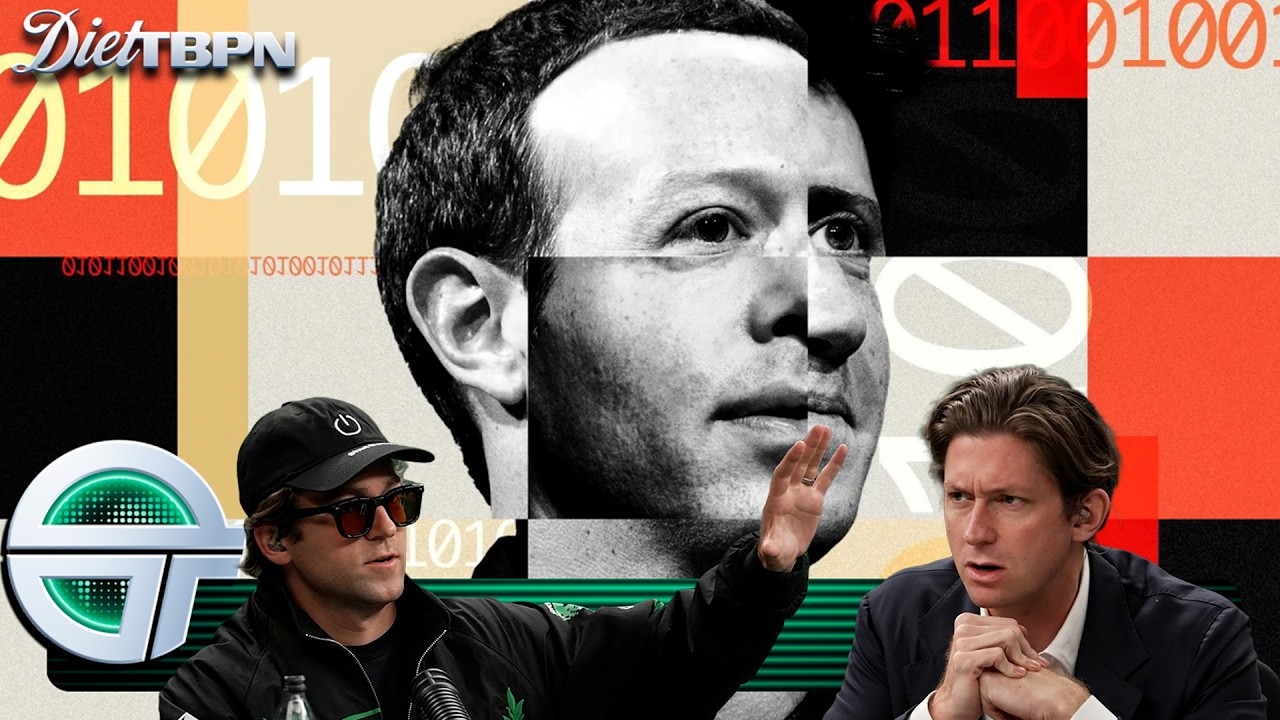
FCC Bans Foreign Humanoids as China Claims 85% Market Share
TBPN
The U.S. risks falling permanently behind in physical automation without a national champion backed by massive capital to build a sovereign robotics supply chain from scratch.
## Background
This video was published by the channel TBPN on YouTube on July 30, 2026. The page description indicates that this is 'Diet TBPN', a 30-minute distilled version of a daily live tech talk show hosted by John Coogan and Jordi Hays that covers the day's biggest tech and business news.
## TL;DR
The episode covers the geopolitical implications of the U.S. Federal Communications Commission's ban on new Chinese humanoid and quadruped robots, contrasting China's market dominance with the nascent American robotics supply chain. The hosts discuss Mark Zuckerberg's Wall Street Journal op-ed advocating for AI abundance over safety-gated centralization, alongside ongoing industry debates regarding Anthropic's safety concerns and API model distillation. Finally, they dive into eBay's surreal $56 million civil harassment settlement with the founders of EcommerceBytes, recent Federal Reserve interest rate friction, and public-versus-private AI market divergence.
## Atmosphere & style
The overall tone of the show is fast-paced, analytical, and heavily peppered with Silicon Valley tech-insider banter and humor. The hosts, John and Jordi, share a dynamic that blends serious macroeconomic and geopolitical analysis with casual jokes, such as proposing their own joke 'podcast ban' or imagining a 'Bots and Bids' marketplace for banned humanoids. The narrative style flows seamlessly from heavy regulatory topics to bizarre corporate crime scandals, offering an energetic, sharp, and engaging listening experience that captures the cultural zeitgeist of the tech industry.
## Key takeaways
- [00:01](https://www.youtube.com/watch?v=I5fY3FWFZVY&t=1s) The U.S. FCC banned imports of foreign-made humanoid and quadruped robots, citing supply chain security.
- [00:01](https://www.youtube.com/watch?v=I5fY3FWFZVY&t=1s) China dominates global humanoid robotics, controlling ~85% of the market and shipping ~10,000 units via Unitree and Agibot in 2025 compared to a few hundred from Tesla and Figure.
- [07:00](https://www.youtube.com/watch?v=I5fY3FWFZVY&t=420s) The lack of domestic robotics component supply chains forces U.S. hardware firms to build sovereign manufacturing from scratch.
- [13:13](https://www.youtube.com/watch?v=I5fY3FWFZVY&t=793s) Mark Zuckerberg authored a Wall Street Journal op-ed advocating for AI acceleration and open abundance, directly countering safety-focused pause advocates.
- [16:09](https://www.youtube.com/watch?v=I5fY3FWFZVY&t=969s) Anthropic clarified its safety stance, highlighting risks like AI model distillation, cybersecurity vulnerabilities, and authoritarian misuse.
- [16:09](https://www.youtube.com/watch?v=I5fY3FWFZVY&t=969s) Aggressive anti-distillation enforcement by frontier AI labs risks locking early-stage startups out of top-tier AI access while favoring tech giants.
- [20:27](https://www.youtube.com/watch?v=I5fY3FWFZVY&t=1227s) Facebook Marketplace sellers are utilizing AI 'glow ups' and gold aura image edits to significantly increase buyer interest and flipping margins.
- [20:27](https://www.youtube.com/watch?v=I5fY3FWFZVY&t=1227s) eBay settled a civil harassment lawsuit for $56 million after former executives orchestrated a campaign of intimidation against EcommerceBytes journalists.
- [25:51](https://www.youtube.com/watch?v=I5fY3FWFZVY&t=1551s) The Federal Reserve held interest rates steady under Chairman Kevin Warsh, but a three-vote hawkish dissent triggered an 1,100-point Dow selloff.
- [25:51](https://www.youtube.com/watch?v=I5fY3FWFZVY&t=1551s) Private AI lab revenues are experiencing record growth despite public semiconductor stock declines driven by ultra-high market expectations.
- [25:51](https://www.youtube.com/watch?v=I5fY3FWFZVY&t=1551s) HBO Max introduced vertical, scrollable short-form video clips inside its app to adapt to changing short-attention media consumption habits.
## Detailed walkthrough
### [00:01](https://www.youtube.com/watch?v=I5fY3FWFZVY&t=1s) U.S. Federal Government Bans Chinese Humanoid and Quadruped Robots
The U.S. Federal Communications Commission (FCC) announced new restrictions banning imports of foreign-made humanoid and quadruped "robot dog" models. FCC Chair Brendan Carr stated that the aggressive regulatory move is designed to "secure America's critical supply chains," while Chinese officials immediately condemned the action as state protectionism. The hosts joke about whether the U.S. is just trying to protect small children from getting accidentally kicked or "spinning back-fisted" by glitching humanoids—referencing a viral video of an autonomous robot knocking down a child—before pivoting to the serious geopolitical reality behind the decision.
China currently holds a commanding lead in the global robotics sector. In 2025, roughly 15,000 humanoid robots were shipped worldwide, with Chinese manufacturers Unitree and Agibot delivering around 5,000 units each. By comparison, leading American competitors such as Tesla and Figure shipped only a few hundred units combined. China controls roughly 85% of the overall global humanoid robotics market, along with deep control over core component supply chains. The hosts highlight that, unlike foreign large language models (LLMs) where U.S. enterprises actively push back against bans to preserve cheap inference costs, the U.S. humanoid robotics market is so nascent that there is no massive coalition of American businesses lobbying against these bans.
- **Global Shipments (2025):** ~15,000 total humanoids shipped worldwide; Unitree and Agibot shipped ~5,000 each.
- **U.S. Market Share:** American companies (Tesla Optimus, Figure) shipped only a few hundred units each; China controls ~85% of the global humanoid robotics market.
- **Regulatory Framework:** FCC Chair Brendan Carr cited supply chain security under statutory authority.
- **Geopolitical Backdrop:** Bans take effect ahead of a scheduled September meeting between Chinese President Xi Jinping and U.S. President Donald Trump.
[00:07](https://www.youtube.com/watch?v=I5fY3FWFZVY&t=7s) U.S. Robotics Strategy and Elon Musk’s Long-Term Vision for Optimus
Discussing whether these trade bans will accelerate domestic production, the hosts evaluate the fragile state of American robotics. While companies like Tesla and Figure have raised billions of dollars, the U.S. market faces a critical hurdle: discovering genuinely profitable commercial use cases in factory, home, and workplace settings. Sourcing hardware components remains tricky; while autonomous driving leader Waymo sources most physical components from China while assembling in the U.S. and running domestic software, pure-play robotics companies must build an entire sovereign supply chain from scratch. On e-commerce platforms like Walmart, consumer-facing models like the Unitree G1 have gone completely out of stock following the announcement, sparking banter that banned units will end up listed on auction platforms like Bring a Trailer or a specialized "Bots and Bids."
The hosts reflect on Elon Musk's long-form interview with *The Economist*. Beyond the viral clips of Musk trading jabs with the press, he articulated a bold, comprehensive vision for Tesla's Optimus program. The hosts argue that while Musk's software ventures like xAI and Grok compete in an already crowded space against hyperscalers like OpenAI, Anthropic, Google, and Meta, his hardware endeavors (SpaceX, Tesla EVs, and Optimus) require a unique "hammer of capital and will." Without a national champion willing to spend billions to force a domestic supply chain into existence, the U.S. risks falling permanently behind in physical automation.
- **Consumer Availability:** Unitree G1 humanoids were previously available on Walmart for tens of thousands of dollars before going out of stock.
- **Supply Chain Parallel:** Waymo sources parts internationally but maintains cybersecurity posture by assembling vehicles in the U.S. and controlling the entire software stack.
- **Debate on Regulatory Authority:** Policy experts Dean Ball and Will Manitis clashed online over whether explicit statutory bans (via FCC supply chain authorities) differ from soft-law pressure, and whether federal protectionism warrants nationalizing private robotics firms.
[00:13](https://www.youtube.com/watch?v=I5fY3FWFZVY&t=13s) Mark Zuckerberg’s WSJ Op-Ed and the AI Abundance Debate
Switching to artificial intelligence policy, Meta CEO Mark Zuckerberg authored an op-ed in *The Wall Street Journal* asserting that the United States must aggressively accelerate AI development rather than slow it down. Zuckerberg took direct aim at "doom, fear-based marketing" coming from rival AI labs. He expressed confusion over tech founders who claim AI poses existential risks yet continue racing to build it, writing: *"The notion that AI is so dangerous that the only safe path is an extreme concentration of power seems dangerous."* He emphasized that historically, relying on absolute power to benevolently manage technology has never led to safer outcomes, arguing instead that AI will foster widespread prosperity and abundance shared by everyone.
Zuckerberg's techno-optimist stance stands in stark contrast to an open letter signed by employees across major AI labs—including OpenAI, Anthropic, Google, and some Meta researchers—calling for a coordinated, mutual pause on AI advancement. The hosts poke fun at Silicon Valley's obsession with regulatory open letters, leading host John Coogan to joke that TBPN should publish its own open letter calling for a "complete and total podcast ban" with a multi-year federal approval process for new RSS feeds to stop competitors from distilling their media format.
- **Op-Ed Theme:** Mark Zuckerberg advocates for AI acceleration and open abundance while criticizing centralized power concentration and "doomer" narratives.
- **Industry Divergence:** An open letter signed by researchers across OpenAI, Anthropic, Google, and Meta advocates slowing down development, directly opposing Zuckerberg's stance.
- **Host Banter:** A joke proposal for a Chinese edition of TBPN to cover the foreign tech landscape direct-to-consumer.
[016:09] Dwarkesh's Observations on China and the Debate Over AI Model Distillation
John Coogan and Jordi Hays reflect on an observation made by Dwarkesh Patel during his trip to China. Dwarkesh noticed that China lacks a "Joe Rogan" figure—a larger-than-life, yapping political and cultural commentator who talks about everything under the sun. While political restrictions and cultural differences explain this absence, the hosts note that the global demand for that style of commentary is massive, with Joe Rogan clips serving as a barometer for the American psyche.
The conversation then shifts to the ongoing debate surrounding Anthropic's open letter on AI safety. Anthropic clarified that they are not advocating for a total ban on open-source AI, but they remain deeply concerned about model distillation, cybersecurity vulnerabilities, and authoritarian misuse. Modern Venture Partner Chadderton at Benchmark publicly questioned Anthropic's stance, arguing that for a trillion-dollar company with vast resources, distillation attacks at scale should be straightforward to detect and stop. The only real trade-off, he noted, would be forfeiting the associated API revenue by aggressively banning suspicious accounts.
The hosts acknowledge that detecting distillation is exceptionally complex. Attackers obfuscate their activity using VPNs, routing queries through third-party wrapper applications, or utilizing public prompts and outputs shared on platforms like GitHub (such as Matt Schumer's release of a game built with Claude 3.5 Opus). Jordi points out that if frontier labs follow Chadderton's advice to strictly guard against distillation, the unintended consequence is that models become far more gated. This leaves smaller startups unable to access top-tier "mythos level" frontier intelligence, allowing tech giants like Microsoft and Apple to dominate.
* **China's Media Landscape:** Dwarkesh Patel observed that China has no equivalent to Joe Rogan due to political and cultural factors, despite immense potential demand.
* **Anthropic's Stance:** Clarified their open-source position, highlighting primary risks around distillation, cybersecurity, and authoritarian deployment.
* **Chadderton's Critique:** Benchmark partner argued that distillation on public APIs should be detectable by AI systems, and companies should sacrifice API revenue to ban offending accounts.
* **Distillation Evasion Techniques:** Attackers leverage VPNs, API wrappers, and public prompt-output pairings (e.g., Matt Schumer's Opus-generated game on GitHub) to train smaller models undetected.
* **Startup Disadvantage:** Strict API access restrictions designed to prevent distillation ultimately lock early-stage startups out of frontier intelligence while tech giants maintain access.
Turning to internet culture and e-commerce news, the hosts discuss a emerging trend on Facebook Marketplace where sellers edit a glowing "gold aura" onto listing images. Emulating rare item drops in video games, this visual pop—alongside AI-generated images of attractive salespersons—attracts significantly more buyer attention. They joke about sending their producer Tyler on a "paperclip trading challenge," buying unoptimized, undervalued listings, giving them an AI "glow up," and flipping them for higher margins in classic Gary Vaynerchuk hustle fashion.
```
[Unoptimized Listing] ──► [AI "Glow Up" / Gold Aura] ──► [Resold for High Margin]
```
The tone turns surreal as they break down a massive legal settlement involving eBay. eBay agreed to pay $56 million to settle a civil lawsuit brought by David and Ina Steiner, a couple who ran the e-commerce news blog *EcommerceBytes*. After the blog published critical coverage of eBay in 2019, eBay executive leadership launched a campaign of intimidation against them. The harassment included sending boxes of live cockroaches, a bloody pig's head mask, a funeral wreath, and a book on surviving the loss of a spouse to their home, alongside posting online ads inviting strangers to their house for sex and mailing adult magazines to their neighbors in the husband's name.
The campaign escalated to physical stalking and vandalism when eBay security employees traveled to Massachusetts to follow the couple. Text messages revealed that former CEO Devin Wenig instructed executives that it was time to "crush" and "take her down." The federal criminal investigation resulted in seven eBay employees receiving prison sentences between 1 and 5 years, and eBay paying a $3 million criminal penalty in 2023. Under the final civil settlement, the Steiners will receive $48 million, $6 million will go to charitable organizations, and Wenig will personally pay $1 million to a free speech charity in Ina Steiner's name.
* **Facebook Marketplace Aura:** Sellers are adding glowing gold borders and AI-generated models to item photos to increase click-through rates and flip items for higher profits.
* **EcommerceBytes Blog:** David and Ina Steiner were targeted by eBay corporate leadership starting in 2019 after publishing critical coverage of the platform.
* **Disturbing Harassment Deliveries:** Threatening packages sent to the Steiners included live cockroaches, a pig's head mask, a funeral wreath, spousal bereavement books, and Craigslist posts soliciting sex at their residence.
* **Criminal Convictions:** Seven former eBay employees were sentenced to 1–5 years in prison following a 2020 federal criminal case.
* **$56 Million Settlement Breakdown:** $48 million directly to the Steiners, $6 million to charities, and a $1 million personal payment from former CEO Devin Wenig to a free speech charity.
---
[025:51] Fed Rate Standoff, AI Financial Disconnect, and Short-Form TV Media
In macroeconomic news, the Federal Reserve held interest rates steady during its July meeting under Chairman Kevin Warsh. However, a noticeable internal rift emerged as three officials voted in favor of a rate hike due to persistent inflation driven by spiking global energy and oil prices. The hawkish split caused the Dow Jones Industrial Average to plunge 1,100 points as investors panicked over potential future rate increases.
```
┌───────────────────────────────┐ ┌───────────────────────────────┐
│ Private AI Startup Sector │ │ Public AI Semi Stocks │
├───────────────────────────────┤ ├───────────────────────────────┤
│ Record revenue growth over │ VS. │ Plummeting stock prices │
│ the last 6 weeks │ │ despite high earnings │
└───────────────────────────────┘ └───────────────────────────────┘
```
Despite public market volatility, venture capitalist Gavin Baker highlighted a massive disconnect between private AI metrics and public stock performance. Quoting Dwarkesh Patel's bullish forecast on AI lab revenues reaching trillions, Baker noted that private AI leaders—including OpenAI, Anthropic, xAI (Grok), Cursor, and open-source ecosystems—have experienced their strongest six weeks of growth on record. Meanwhile, public semiconductor stocks like SK Hynix fell 10% despite posting a 500%+ surge in quarterly operating profit ($6.4 billion), demonstrating that public markets are pricing chipmaker expectations to absolute perfection.
Finally, the hosts touch on HBO Max launching "HBO Max Shorts," a feature serving vertical, scrollable clips of iconic TV moments directly within their app to capture audience attention already spent on TikTok and Instagram Reels. Referencing High Yield Harry's commentary on society becoming "too cooked to watch a full TV episode," they laugh at the irony that classic clips from Mike Judge's *Silicon Valley* will now be consumed as bite-sized short-form content.
* **Fed Rate Decision:** The Fed kept rates unchanged under Chairman Kevin Warsh, but a 3-vote dissent for a rate hike sparked an 1,100-point drop in the Dow.
* **Private vs. Public AI Divergence:** Private AI firms (OpenAI, Anthropic, Grok, Cursor) logged record 6-week revenue gains while public chip stocks pulled back due to inflated market expectations.
* **SK Hynix Earnings:** The memory chip manufacturer recorded over 500% profit growth ($6.4 billion profit) but saw its stock drop 10% post-earnings.
* **HBO Max Shorts:** Warner Bros. Discovery is rolling out vertical video feeds featuring legendary HBO show moments to compete with social media platforms.
<ElicitationsGroup message="Explore related topics from this transcript:">
<Elicitation label="Deep dive into the eBay harassment criminal case" query="Provide a detailed breakdown of the 2019 eBay harassment scandal, including key corporate figures involved, federal charges, and legal outcomes."/>
<Elicitation label="Analyze current AI market divergence" query="Explain why public semiconductor stocks are falling despite record AI earnings while private AI lab revenues continue to surge."/>
</ElicitationsGroup>
> [07:00](https://www.youtube.com/watch?v=I5fY3FWFZVY&t=420s) hammer of capital and will
> [13:13](https://www.youtube.com/watch?v=I5fY3FWFZVY&t=793s) doom, fear-based marketing — Mark Zuckerberg
> [13:13](https://www.youtube.com/watch?v=I5fY3FWFZVY&t=793s) The notion that AI is so dangerous that the only safe path is an extreme concentration of power seems dangerous. — Mark Zuckerberg
> [13:13](https://www.youtube.com/watch?v=I5fY3FWFZVY&t=793s) complete and total podcast ban — John Coogan
> [16:09](https://www.youtube.com/watch?v=I5fY3FWFZVY&t=969s) Joe Rogan — Dwarkesh Patel
> [20:27](https://www.youtube.com/watch?v=I5fY3FWFZVY&t=1227s) crush — Devin Wenig
> [20:27](https://www.youtube.com/watch?v=I5fY3FWFZVY&t=1227s) take her down — Devin Wenig
> [25:51](https://www.youtube.com/watch?v=I5fY3FWFZVY&t=1551s) too cooked to watch a full TV episode — High Yield Harry
## Mentioned
U.S. Federal Communications Commission, FCC, Brendan Carr, Unitree, Agibot, Tesla, Optimus, Figure, Xi Jinping, Donald Trump, Waymo, Walmart, Unitree G1, Bring a Trailer, Bots and Bids, The Economist, Elon Musk, xAI, Grok, OpenAI, Anthropic, Google, Meta, SpaceX, Dean Ball, Will Manitis, Mark Zuckerberg, The Wall Street Journal, TBPN, John Coogan, Jordi Hays, Dwarkesh Patel, Joe Rogan, Benchmark, Chadderton, Matt Schumer, Claude 3.5 Opus, GitHub, Microsoft, Apple, Facebook Marketplace, Tyler, Gary Vaynerchuk, eBay, David Steiner, Ina Steiner, EcommerceBytes, Craigslist, Devin Wenig, Federal Reserve, Kevin Warsh, Dow Jones Industrial Average, Gavin Baker, Cursor, SK Hynix, HBO Max, HBO Max Shorts, TikTok, Instagram Reels, High Yield Harry, Mike Judge, Silicon Valley
TBPN explores rising technological protectionism and legal flashpoints across the tech sector, highlighted by an FCC ban on Chinese humanoid robots and eBay's $56 million harassment settlement.
U.S. Bans Chinese Robotics Amid Supply Chain Vulnerabilities (0:01)
The U.S. Federal Communications Commission (FCC), led by Chair Brendan Carr, issued import bans on foreign-made humanoid and quadruped robots under statutory supply chain authorities, prompting condemnation from Chinese officials. The policy move precedes a scheduled September meeting between U.S. President Donald Trump and Chinese President Xi Jinping. China presently dominates the sector, controlling roughly 85% of the global humanoid robotics market and shipping around 10,000 units in 2025 across suppliers Unitree and Agibot alone, compared to a few hundred units combined from American manufacturers like Tesla and Figure.
Domestic Hardware Hurdles and Elon Musk's Optimus Vision
Unlike American software ventures that leverage existing infrastructure, domestic robotics builders face the challenge of establishing a sovereign component supply chain from scratch. While autonomous driving companies such as Waymo import physical components from China and assemble them in the U.S. under domestic software controls, pure-play robotics lacks an established industrial base. In an interview with The Economist, Elon Musk positioned Tesla's Optimus program as an intensive deployment of capital and engineering willpower, suggesting that heavy capital investment is required to establish domestic automation capabilities and prevent reliance on foreign hardware.
Philosophical Rifts Over AI Acceleration and Model Distillation
In a Wall Street Journal op-ed, Meta CEO Mark Zuckerberg advocated for rapid AI development, criticizing rival labs for fear-based messaging and warning that centralizing AI control under the guise of safety poses severe risks. Conversely, an open letter signed by researchers across OpenAI, Anthropic, Google, and Meta called for coordinated pauses in advancement. Concurrently, Anthropic highlighted vulnerabilities in model distillation, prompting Benchmark partner Chadderton to argue that labs should detect API exploitation and ban offending accounts. However, observers warn that excessively strict anti-distillation barriers could lock early-stage startups out of frontier intelligence while leaving tech giants unaffected.
eBay Settles Landmark Executive Harassment Lawsuit for $56M
eBay agreed to a $56 million civil settlement with David and Ina Steiner, publishers of the EcommerceBytes newsletter who were subjected to an intimidation campaign orchestrated by company executives in 2019. The harassment campaign included stalking, posting fake online ads soliciting strangers to their home, and mailing disturbing items including live cockroaches, a bloody pig's head mask, and a funeral wreath following critical coverage. The civil outcome follows a 2020 federal criminal case that sentenced seven former eBay employees to between 1 and 5 years in prison, alongside a $3 million criminal penalty paid by eBay in 2023. The settlement awards $48 million directly to the Steiners, $6 million to charities, and includes a $1 million personal payment from former CEO Devin Wenig to a free speech charity.
Macro Disconnect Between Private AI Growth and Public Equities
Macroeconomic instability flared after the Federal Reserve held rates steady under Chairman Kevin Warsh, though a three-vote dissent favoring rate increases triggered an 1,100-point decline in the Dow Jones Industrial Average. Despite the broader market volatility, venture investor Gavin Baker noted a stark divergence between private AI lab performance and public technology stocks. While private operators like OpenAI, Anthropic, xAI, and Cursor saw their strongest six-week revenue gains to date, public semiconductor manufacturers faced steep sell-offs; SK Hynix fell 10% despite generating $6.4 billion in quarterly operating profit—a surge of over 500%—reflecting extreme valuation expectations in public markets.
Across industrial robotics, frontier AI development, and public markets, U.S. technology strategy is caught between geopolitical isolationism and commercial execution, while the legal fallout at eBay underlines the severe liabilities of unconstrained corporate misconduct.
精炼阅读摘要
节目探讨了美国在硬件制造与人工智能领域的战略焦虑与监管博弈,涉及联邦通信委员会对中国机器人施加的进口禁令、科技界围绕AI提速与模型蒸馏安全的分歧、eBay公司因系统性恐吓媒体人达成的巨额民事和解,以及美联储加息分歧下AI一级与二级市场的估值背离。
机器人禁令与中美硬件供应链差距 (0:01)
美国联邦通信委员会(FCC)主席布伦丹·卡尔(Brendan Carr)宣布,基于维护关键供应链安全的法定权力,禁止进口外国制造的人形及四足机器人,中国官方随即指责此举为国家保护主义。数据显示,2025年全球人形机器人出货总量约为15,000台,其中中国厂商宇树科技(Unitree)与智元机器人(Agibot)各自出货约5,000台,中国整体控制了全球约85%的人形机器人市场及底层零部件供应链;相比之下,特斯拉(Optimus)与Figure等美国本土代表企业的出货量合计仅有数百台。该禁令生效之际,恰逢中美两国领导人计划于9月举行会晤的地缘政治敏感期。
节目主持团队分析指出,不同于美国企业因依赖廉价外国大语言模型推理成本而积极抵制禁令,美国人形机器人产业尚处于探索盈利性商业场景的起步阶段,尚未形成规模化游说阻力。尽管自动驾驶巨头Waymo采取了“海外采购硬件部件、本土组装并运行自主软件”的折中模式,但纯人形机器人研发企业面临从零构建本土主权供应链的艰难挑战。针对埃隆·马斯克(Elon Musk)在《经济学人》访谈中规划的Optimus蓝图,节目认为硬件制造需要巨大的资本意志,若缺乏国家冠军级别的主体投入数十亿美元拉动本土供应链,美国在实体自动化领域将面临长期落后的风险。
人工智能提速愿景与模型蒸馏安全分歧 (0:13)
在AI技术路径上,Meta首席执行官马克·扎克伯格(Mark Zuckerberg)在《华尔街日报》撰文,呼吁美国全力加速AI发展,并公开抨击部分竞争对手实验室制造“存在性威胁”恐惧。扎克伯格认为,寄希望于将权力高度集中在少数机构手中以实现安全管控是危险的历史倒退,AI应当通过广泛分发来促进普遍繁荣。与此相对,来自OpenAI、Anthropic、谷歌及Meta部分研究人员的公开信则主张协同暂停前沿AI推进,形成了鲜明的对抗格局。
与此同时,Anthropic针对其开源监管立场作出澄清,强调其主要关切在于模型蒸馏(distillation)、网络安全威胁以及威权主体的滥用风险。风险投资机构Benchmark合伙人切德顿(Chadderton)对此提出质疑,主张万亿级技术公司完全有能力通过算法识别并拦截公开API上的蒸馏攻击,其真正顾虑仅是封禁违规账户所导致的API收入损失。节目主持团队则指出,攻击者通常借助VPN、API封装层以及GitHub公开Prompt与数据对低成本微调模型,检测难度极高;若头部实验室因此过度收紧API访问权限,反而会导致缺乏资本的小型初创公司被隔绝在前沿智能之外,进一步巩固科技巨头的生态壁垒。
平台营销乱象与eBay高管恐吓案和解
在互联网与电商领域,Facebook Marketplace近期出现利用图像编辑为商品添加“金色光晕”(Gold Aura)并结合AI生成模特的视觉营销风潮,卖家借此模拟游戏稀有装备的稀缺感,以提升浏览转化率并赚取更高转售溢价。与此同时,一桩涉及头部电商平台的严重企业骚扰丑闻达成了司法和解,eBay同意支付5600万美元以平息电商博客《EcommerceBytes》运营者大卫与伊娜·斯坦纳(David and Ina Steiner)夫妇提起的民事诉讼。
该案源于2019年斯坦纳夫妇发表批评eBay的报道后,eBay高管及安全团队策划了长达数月的跨州恐吓行动,包括寄送活蟑螂、沾血猪头面具、葬礼花圈与丧偶指导书籍,在分类广告网发布针对其住址的虚假招嫖信息,以及派员赴受害者住所实地跟踪。证据显示,时任CEO德文·维尼格(Devin Wenig)曾指示下属对其进行打击打击。该案此前已导致7名前员工获刑1至5年,公司亦在2023年缴纳300万美元刑事罚款。根据最终和解方案,斯坦纳夫妇将获得4800万美元赔偿,600万美元捐予慈善机构,维尼格本人须以伊娜·斯坦纳名义向言论自由机构捐赠100万美元。
宏观利率博弈与AI一级二级市场背离
在宏观经济方面,美联储在主席凯文·沃什(Kevin Warsh)主持的7月会议上虽维持基准利率不变,但内部出现显著鹰派分歧,有3名官员因全球能源与原油价格反弹带来的通胀黏性投票支持加息,引发道琼斯指数单日下跌1100点。然而,二级市场受宏观紧缩情绪压制的同时,投资家加文·贝克(Gavin Baker)指出AI产业内部正上演一二级市场的剧烈分化。
贝克观察到,尽管存储芯片龙头SK海力士单季度录得超过500%的营业利润增长(达64亿美元),但由于二级市场对硬件供应链的业绩预期已被推向极致,其财报公布后股价反而重挫10%。与公开市场的严苛审视相反,OpenAI、Anthropic、xAI(Grok)、Cursor等未上市前沿企业与开源生态在过去六周内迎来了创纪录的营收增长。此外,华纳兄弟探索旗下HBO Max推出类似社交平台的垂直短视频流“HBO Max Shorts”,将经典剧集拆解为短视频内容,显示出传统流媒体在受众注意力被碎片化侵蚀后的防御性转型。
本期节目凸显了美国在硬件制造与实体自主方面的结构性短板:尽管政策层面试图以国家安全为由阻断中国在人形机器人领域的规模优势,但美国本土面临着供应链匮乏与商业化落地迟缓的双重制约。同时,围绕前沿AI的安全监管、开源准入及二级市场估值预期的多重分歧,表明技术繁荣背后的商业转化与宏观环境之间仍存在显著张力。
Detailed notes — zh
## Background
该视频由科技播客频道 TBPN(由 John Coogan 与 Jordi Hays 主持)于 2026 年 8 月 3 日发布在 YouTube 平台。本期内容为 30 分钟精炼版“Diet TBPN”,根据节目简介,该节目被《纽约时报》誉为“硅谷的新宠”,致力于盘点当日最重磅的科技资讯、政策风向与行业热点。
## TL;DR
节目核心聚焦于美国联邦通信委员会(FCC)针对外国制造人形机器人颁布的新进口禁令,深度解析了中国凭借宇树与智元占据全球约 85% 市场份额的压倒性优势,以及美国缺乏硬件制造生态与落地场景的深层焦虑。随后,主播们探讨了马克·扎克伯格在《华尔街日报》专栏中对 AI 末日论的严厉批判与全面加速呼吁,并剖析了 Anthropic 面临的模型蒸馏防守困境。节目最后回顾了 eBay 高管因寄送活蟑螂和猪头面具骚扰独立博主而达成的 5600 万美元天价和解案,并对比了宏观市场动荡与非上市 AI 公司营收爆发之间的巨大认知脱节。
## Atmosphere & style
整期对谈洋溢着硅谷内行特有的敏锐、幽默与辛辣讽刺,节奏紧凑且充满互动火花。两位主持人在严肃的地缘政治供应链分析与荒诞的网络热梗之间游刃有余地切换,从调侃“机器人飞拳打小孩”到戏谑畅想“中国领导人做客乔·罗根秀”,处处透着轻松戏谑的极客底色。而在面对 eBay 匪夷所思的恶意骚扰案与注意力碎片化的竖屏时代时,两人的犀利吐槽直击痛点,让整场节目在专业商业洞察与解构荒诞现实的欢快氛围中达成平衡。
## Bulletin
- [00:01](https://www.youtube.com/watch?v=I5fY3FWFZVY&t=1s) 美国联邦通信委员会(FCC)宣布对外国制造的人形及四足机器人实施进口禁令,旨在确保关键供应链安全;而目前中国控制着全球约 85% 的人形机器人市场份额与底层供应链。
- [13:01](https://www.youtube.com/watch?v=I5fY3FWFZVY&t=781s) Meta CEO 马克·扎克伯格在《华尔街日报》撰文呼吁全面加速 AI 研发并反对“末日论”,强调历史证明技术的中心化控制从未带来真正安全,与呼吁暂停前沿模型的同行形成鲜明分歧。
- [21:43](https://www.youtube.com/watch?v=I5fY3FWFZVY&t=1303s) eBay 针对电商博主 Steiner 夫妇长达数年的报复与恐吓丑闻达成 5600 万美元天价民事和解,涉案前员工此前已被刑事判刑,前 CEO 个人也需支付 100 万美元慈善款项。
- [25:51](https://www.youtube.com/watch?v=I5fY3FWFZVY&t=1551s) 一级市场非上市 AI 企业与闭源/开源生态过去数周迎来历史性业务爆发,但受美联储内部加息分歧与市场高预期影响,二级市场半导体及科技股出现明显认知脱节与剧烈震荡。
## Key takeaways
- [00:01](https://www.youtube.com/watch?v=I5fY3FWFZVY&t=1s) 美国 FCC 针对外国人形及四足机器人发布进口限制,官方理由为防范联网设备渗透关键基础设施,但背后折射出严峻的地缘政治与供应链博弈。
- [01:18](https://www.youtube.com/watch?v=I5fY3FWFZVY&t=78s) 2025 年全球人形机器人总出货约 15,000 台,宇树科技与智元机器人各交付约 5,000 台,而美国头部厂商特斯拉 Optimus 与 Figure 出货仅各数百台,中国占据约 85% 市场份额。
- [01:18](https://www.youtube.com/watch?v=I5fY3FWFZVY&t=78s) 人形机器人产业仍处于极早期,缺乏类似大语言模型领域的商业游说联盟来抗议监管禁令,导致禁令迅速通过且几乎未遭遇本土阻力。
- [03:17](https://www.youtube.com/watch?v=I5fY3FWFZVY&t=197s) 面对深度嵌入的全球供应链,Waymo 模式(硬件与底盘海外采购、整车本土组装、软件控制栈完全自主)或成为未来机器人安全防线的务实样本。
- [05:07](https://www.youtube.com/watch?v=I5fY3FWFZVY&t=307s) 人形机器人当前核心瓶颈在于缺乏能跑通商业变现的实际落地场景,单方面构筑本土保护高墙难以解决应用短缺,且无助于海外公海市场的正面交锋。
- [07:12](https://www.youtube.com/watch?v=I5fY3FWFZVY&t=432s) 相较于拥有充分冗余生态的软件大模型,美国在实体制造业与机器人硬件供应链上严重缺位,特斯拉 Optimus 成为了极少数具备承载国家级意志潜力的项目。
- [10:41](https://www.youtube.com/watch?v=I5fY3FWFZVY&t=641s) 智库学者 Dean Ball 与投资人 Will Manidis 就机器人进口壁垒及企业国有化展开辩论,暴露出政策保护、法定监管程序与补贴特权之间的界限争议。
- [13:01](https://www.youtube.com/watch?v=I5fY3FWFZVY&t=781s) 扎克伯格公开发文批判 AI 领域的基于恐惧营销与极端监管论调,坚持技术充裕论路线,主张开放创新胜过权力过度集中。
- [17:01](https://www.youtube.com/watch?v=I5fY3FWFZVY&t=1021s) 前沿模型实验室面临模型知识蒸馏(Distillation)与技术扩散的两难困境,多层代理与开源提示词使得网络追踪犹如大海捞针,而过度收紧权限又会加剧巨头对智能的垄断。
- [21:43](https://www.youtube.com/watch?v=I5fY3FWFZVY&t=1303s) eBay 因内部团队对批评其业务的独立博主夫妇寄送活蟑螂、猪头面具并进行线下骚扰,最终达成 5600 万美元天价民事和解,引发严重的芭芭拉·史翠珊效应。
- [25:51](https://www.youtube.com/watch?v=I5fY3FWFZVY&t=1551s) 公开资本市场与一线 AI 创业生态存在严重预期脱节:尽管 SK 海力士等硬件巨头利润创纪录、一线未上市 AI 业务爆发,但二级市场依然因宏观加息预期与超高预期提前计入而暴跌。
- [28:14](https://www.youtube.com/watch?v=I5fY3FWFZVY&t=1694s) HBO Max 推出抓取经典高光片段的竖屏短视频流功能,反映出主流流媒体为迎合用户碎片化注意力而向短视频形态妥协的行业现实。
## Detailed walkthrough
### [00:01](https://www.youtube.com/watch?v=I5fY3FWFZVY&t=1s) FCC 颁布进口禁令与“保护小孩”的戏谑开场
美国政府正式对外国制造的人形机器人以及四足机器人(即大众熟知的机器狗)颁布了新的进口禁令。节目开场,主持人打趣地提到风险投资机构 General Catalyst 可能会对此欢欣鼓舞,因为坊间一直调侃他们是“反机器狗”阵营,而有些平台的 VC 则极力支持机器狗。抛开风投圈的站队不谈,一旦这些硬件上升到地缘政治层面,讨论的性质便完全不同了。美国联邦通信委员会(FCC)宣布对这些设备的新版本实施严格限制,FCC 主席布伦丹·卡尔(Brendan Carr)明确表示,此举旨在“确保美国关键供应链的安全”。
面对美方的限制,中国方面迅速谴责这是典型的贸易保护主义。对此,主持人们在演播室里半开玩笑地接梗:“所谓‘保护主义’,难道是为了保护小孩子们不被机器人的铁拳打中脸吗?”他们随即在演播室寻找并调侃起网络上广为流传的人形机器人失误翻车视频——画面里机器人失控踢到小孩,甚至还有一个转身挥出“回旋后手拳”击中小孩的残酷又滑稽的场面。“看到那种画面,你真的会觉得‘行吧,我赞成来点保护’,”主持人笑着吐槽这纯属操作疏忽,“如果禁令是为了防止小孩子挨揍,那确实符合大众利益,但显然这不是禁令出台的真正原因。”
### [01:18](https://www.youtube.com/watch?v=I5fY3FWFZVY&t=78s) 85% 市场垄断与美中人形机器人出货量巨大差距
调侃归调侃,禁令背后隐藏着极其严峻的产业现实:中国企业已经在人形机器人赛道确立了绝对领先优势。数据显示,在 2025 年全球出货的约 15,000 台人形机器人中,仅中国的宇树科技(Unitree)与智元机器人(AgiBot)两家公司,各自的交付量就突破了 5,000 台。反观美国本土的人形机器人企业,包括明星公司特斯拉(Tesla)和 Figure,各自的出货量撑死只有几百台。行业测算表明,中国目前控制着全球人形机器人市场约 85% 的份额,并在更底层的核心供应链环节拥有压倒性的掌控力。据美联社(Associated Press)报道,这项限制措施势必为原本就脆弱的美中关系火上浇油,特别是考虑到两国元首即将在 9 月举行关键会晤。
```mermaid
flowchart TD
accTitle: 2025年全球人形机器人出货格局对比
accDescr: 对比中国领头企业与美国领头企业在2025年的出货量差距及市场份额
subgraph China["中国阵营 (~85% 全球份额)"]
U["宇树科技 (Unitree)<br/>~5,000 台"]
A["智元机器人 (AgiBot)<br/>~5,000 台"]
end
subgraph US["美国阵营"]
T["特斯拉 (Tesla Optimus)<br/>仅数百台"]
F["Figure AI<br/>仅数百台"]
end
subgraph Market["2025 全球总出货量: 约 15,000 台"]
U --- Market
A --- Market
T --- Market
F --- Market
end
```
FCC 给出的封杀理由是防范连网外国设备可能渗透至美国关键基础设施的安全隐患。但主持人指出,这起禁令最具戏剧性的一点在于:人形机器人产业尚处于极为早期的“萌芽阶段”,以至于美国本土根本没有形成任何企业同盟站出来抗议。如果是针对中国的大语言模型(LLM),很多美国公司会极力反抗,直言“采用中国模型能直接将我的推理成本砍掉 80%”,而且各大云服务商也在通过部署这些开源大模型大赚特赚;但在机器人领域,目前还没有哪家美国传统制造企业会哭诉“我的生产线建在宇树机器人之上,没有它我就造不出汽车、做不了生意”。因此,在没有庞大既得利益联盟游说阻挠的情况下,监管禁令得以迅速落下。
- 2025 年全球人形机器人总出货量:约 15,000 台
- 宇树科技与智元机器人单家交付量:各自约 5,000 台
- 特斯拉与 Figure 等美国头部企业交付量:各自仅数百台
- 中国占据全球人形机器人市场份额:约 85%,并深度掌控底层供应链
### [03:17](https://www.youtube.com/watch?v=I5fY3FWFZVY&t=197s) 技术的安全红线:从华为、大疆到 Waymo 模式
虽然禁令表面上迎合了保护本土产业的情绪,甚至有人怀疑华盛顿背后有美国本土机器人创业公司的游说推手,但主持人坦言,从国家安全直觉出发,“谁也不希望看到一亿台非美国或非西方盟友制造的人形机器人在大街上到处乱跑”。然而,技术管制的边界到底应该划在哪里,却成了难以回答的难题。从过去对大疆(DJI)无人机的封锁,到对各类中国安防监控摄像头的下架,美国对外国技术的戒心由来已久。
> “我们在华为的 5G 基站上划清了红线,但今天你依然可以从市场上买到中国制造的家用 Wi-Fi 路由器。”
现实中充斥着复杂的中间地带:现代机器人身上的执行器、电机以及来自宁德时代(CATL)等中国巨头的动力电池,早已嵌入全球各个角落。主持人特别提到了 Alphabet 旗下自动驾驶公司 Waymo 的应对方案,并认为这代表了当下最务实的技术安全分水岭:Waymo 正在研发的新一代无人出租车,其底盘与零部件几乎全部从中国采购,但整车组装放在美国本土完成,同时核心的自动驾驶控制系统与所有软件栈均由 Google 及 Waymo 自主开发。通过将硬件彻底拆解测试并剥离软件控制权,Waymo 得以维持美国要求的网络安全防线,这种“硬件外包+软件自主”的混合模式或许是未来机器人产业在夹缝中生存的参考模板。
### [05:07](https://www.youtube.com/watch?v=I5fY3FWFZVY&t=307s) 落地场景荒漠、沃尔玛售罄与全球竞争现实
这种针对中国硬件的单方面围堵,是否真能倒逼美国人形机器人行业加速崛起?主持人们对此持怀疑态度。尽管马斯克在特斯拉投入了数十亿美元,Figure 也完成了天价融资,但全行业面临的首要瓶颈根本不是海外倾销,而是“缺乏真正能够盈利的实际落地场景”。无论是在家庭生活、日常工作场所还是严苛的工厂流水线中,机器人研发者们至今未能证明这些机器具备不可替代的商业价值。如果找不到刚需应用场景,光靠资本注入并不能解决核心问题。
而在禁令落地之前,中国机器人正以惊人的性价比渗透美国科研圈。此前普通买家甚至可以直接在沃尔玛(Walmart)官网上订购宇树科技的 G1 人形机器人,售价仅为数万美元,对于各大研究实验室而言门槛极低。主持人现场查询发现,沃尔玛页面上的宇树产品已全部显示为缺货状态,不知是政策发布后官方连夜下架,还是被抢购一空。他们半开玩笑地建议,说不定很快就会有人在汽车拍卖网站 Cars & Bids 或 Bring a Trailer 上倒卖“最后绝版、已被封杀的宇树 G1”,甚至可以专门做一个炒作机器人的平台“Bots & Bids”。
更深层的危机在于海外市场的白热化竞争。即便美国筑起高墙保护本土市场,当特斯拉的 Optimus 人形机器人未来走出国门、与宇树科技在德国或欧洲工厂争取工业大单时,双方将面临正面交锋。这与如今全球电动汽车市场的格局如出一辙:即便比亚迪(BYD)无法进入美国,特斯拉依然可以在中国生产销售,但双方在全球其他公海市场展开的是硬碰硬的综合实力决战。美国若完全切断对竞争对手产品的前沿评测与基准对比,长期来看只会削弱自身的竞争力。
### [07:12](https://www.youtube.com/watch?v=I5fY3FWFZVY&t=432s) 马斯克的愿景与美国机器人产业的脆弱性
谈及美国机器人产业的自救,主持人们将目光聚焦到了埃隆·马斯克身上。马斯克此前接受了《经济学人》(The Economist)长达一个多小时的深度专访。尽管社交网络上的舆论大多被马斯克回怼媒体的激烈交锋片段(被网民戏称为“情绪失控崩溃/crash out”)所占据,但专访中真正震撼且富有实质性的内容,其实是他对特斯拉 Optimus 人形机器人项目的宏大愿景。
主持人深感马斯克必须将核心精力聚焦在机器人业务上。虽然马斯克对旗下人工智能公司 xAI 和 Grok 抱有极高热情,甚至在商业文件中将企业级软件市场描绘为规模高达 22 万亿美元的黄金赛道,但在科技版图里,纯粹的软件大模型远没有火箭和电动车那样具有不可替代的历史感。回顾过去,如果当年没有马斯克孤注一掷凭借非凡意志硬生生砸出 SpaceX,美国今天可能连一家能与国家力量抗衡的现代商业火箭公司都没有;同样,尽管通用汽车早期曾尝试过 EV1,但如果不是特斯拉的横空出世,美国的电动汽车技术至少要倒退十年。
当前的美国人形机器人产业恰恰处于这种命悬一线的脆弱节点上:
- **大语言模型生态冗余充足**:即使 Grok 停止训练、xAI 明天彻底关停,美国依然拥有 OpenAI、Anthropic、Meta、Google 等一大批资金充沛的科技巨头在全力冲刺,用户丝毫不愁没有先进的模型来回答问题或编写代码。
- **机器人实体制造业严重缺位**:实体机器人不仅需要庞大的资本作为“重锤”,更需要凭借强大的意志力去深耕繁复且沉重的物理供应链。如果马斯克不全力将特斯拉的制造底蕴推向 Optimus,全美甚至找不出第二家能够挑起大梁的“国家级领头羊企业”。
面对中国在硬件制造端的惊人产能与迭代速度,主持人们总结道,美国如果无法在本土建立起制造数十亿台机器人的完整工业体系,那么单凭一纸行政禁令,根本无法消除在这个未来决定性产业中彻底边缘化的生存焦虑。
### [09:52](https://www.youtube.com/watch?v=I5fY3FWFZVY&t=592s) 畅想中国领导人访美的“播客巡回”之旅
在讨论即将到来的中美高层会晤时,主播们聊起中国领导人预计于 9 月访美并与美国总统唐纳德·特朗普(Donald Trump)会面的日程。两人开玩笑畅想:如果领导人访美时不只进行常规政治会晤,而是顺道开启一场横扫 50 档播客的“播客巡回之旅(Podcast Tour)”,那场面一定会相当震撼。
他们随即罗列出最适合的播客节目清单:
- 去 Chris Williamson 的《Modern Wisdom》深入剖析思维方式与人生哲学;
- 去《Hot Ones》一边吃变态辣鸡翅一边接受灵魂拷问;
- 当然绝对少不了全球顶级顶流播客《The Joe Rogan Experience》(乔·罗根秀),作为巡回的压轴大戏;
- 甚至还可以去《Nelk Boys》的节目,毕竟他们早有采访争议性国家领导人和政客的先例。
### [10:41](https://www.youtube.com/watch?v=I5fY3FWFZVY&t=641s) 机器人禁令与国家化之争:Dean Ball 对线 Will Manidis
主播将话题转向社交媒体上一场火药味十足的政策辩论。智库学者 Dean Ball 在 X 平台公开隔空质问投资人兼创始人 Will Manidis:上周硅谷科技领袖们还在为使用中国大语言模型(LLM)而群情激愤,那么当美国政府决定全面禁止从所有外国进口先进机器人时,这些人是否会表达同等的愤怒?Dean 甚至讽刺地发问:Manidis 是不是也该写篇雄文,主张美国机器人公司既然享受了这种政策保护,就必须被“收归国有”?
Will Manidis 迅速反击,称 Dean 根本没搞清楚两者的法律与制度本质区别:联邦通信委员会(FCC)依据明确的法定授权公开发布行业规则,配有正当的豁免申请流程和司法复审渠道;这与监管机构为了保护特定雇主的私利而搞法外耳语行动(extra-legal whisper campaign)有着天壤之别。Manidis 明确表示,机器人公司无需被国有化,除非它们也开始要求抢占公共基础设施、要求联邦政府为其债务兜底,并索求一个受到垄断保护的市场以便自称“国家机构”——“真到了那一天,请再把我的文章寄给他们”。Dean Ball 则回怼这一辩解是在诡辩,若直接依供应链风险等法定权力禁止中国模型,难道就不算导致实验室国有化?将他的客观分析曲解为暗中使坏纯粹是出于恶意的恶意推论(bad faith)。
```mermaid
flowchart TD
accTitle: 机器人禁令与国有化争论逻辑
accDescr: 展示 Dean Ball 与 Will Manidis 就进口禁令与企业国有化展开的争辩逻辑对比
subgraph DeanBall["Dean Ball 的质疑"]
A["美国全面禁止进口外国先进机器人"] --> B["硅谷领袖是否会同等愤怒?"]
B --> C["机器人公司享受政策壁垒<br>是否也应被收归国有?"]
end
subgraph WillManidis["Will Manidis 的反驳"]
D["FCC 正式法定程序与司法复审"] -.->|"本质不同"| E["法外耳语游说与利益输送"]
F["国有化先决条件"] --> G["要求联邦债务兜底<br>抢占公共基础设施<br>索求排他性垄断市场"]
end
```
主播们结合行业现状分析指出,无论政策监管如何变动,Figure、1X 以及 Sunday Robotics 等具身智能公司的发展势头依然强劲。目前这些顶级团队早已完成了数亿美元乃至数十亿美元的融资。当下的首要任务是将这笔钱落到实处,加速具身智能在商业场景中的实际部署,随后才能开启下一轮呈数量级跃升的巨额融资。资本从不是这行真正的瓶颈,他们已经顺利度过了“仅靠概念和情绪(vibe rounds)”拿钱的初始阶段。
### [13:01](https://www.youtube.com/watch?v=I5fY3FWFZVY&t=781s) 扎克伯格《华尔街日报》专栏:呼吁加速 AI,向末日论开火
Meta 首席执行官马克·扎克伯格(Mark Zuckerberg)在《华尔街日报》(Wall Street Journal)发表了一篇付费专栏文章,旗帜鲜明地主张美国应当全面加速人工智能研发,而非加以限制,强调“AI 的未来属于全人类”。扎克伯格在文中直接把矛头对准了业界盛行的“末日论”和基于恐惧的营销手段。
他写道:令人意外的是,许多正在研发 AI 的从业者言论中却充斥着末日论调。如果有人真诚相信 AI 会消灭人类大部分工作并彻底剥夺人类的意义,他们为何还要拼命奔向那样的未来?扎克伯格严词批判了那种“因为 AI 极其危险,所以唯一安全的路径是权力极度集中”的论调,指出纵观人类历史,寄希望于某个绝对掌权者在获得启蒙后大发慈悲庇护全人类,从未带来过安全和积极的结果。人类每次面对技术剧变都伴随着恐慌,但每一次最终都走向了更大范围的繁荣、健康与自由。主播们感叹扎克伯格彻底站稳了“技术充裕论(abundance-pilled)”阵营,霸气向同行下战书:“如果你觉得 AI 这么糟,那就别干了,放开手让我来做(Let me cook)。”
- 该专栏与同期 OpenAI、Anthropic、Google 甚至部分 Meta 员工联合签署的“暂停或放缓前沿模型研发倡议信”形成鲜明对立。
- 播客嘉宾 John Palmer 打趣道,TBPN 播客的模型被全行业抄袭蒸馏了,TBPN 应该也发一封公开信抵制蒸馏;主播顺着玩笑宣称要呼吁联邦对发放新 RSS 播客源实施长达数年的审批流程。
- 主播们聊到中国的内容生态:中国目前缺乏像 Joe Rogan 那样能够超脱特定圈层、纵论政治与生活百态的全民级超级嘴替(larger-than-life yapper),这种文化与政治土壤的差异十分耐人寻味。
### [17:01](https://www.youtube.com/watch?v=I5fY3FWFZVY&t=1021s) 抵制模型“蒸馏”争议:大厂防得住小偷吗?
话题随后延伸到 Anthropic 对开源模型立场的澄清上。Anthropic 表示自己并不支持全面封杀开源模型,但对模型知识蒸馏(distillation)、网络安全威胁以及独裁政权滥用 AI 深感忧虑。针对这一声明,Benchmark 投资合伙人 Chetan Puttagunta 公开发文质疑:一家估值数千亿美元、资源极其丰富的大模型巨头,高调宣扬要严厉打击模型蒸馏,逻辑上令人费解。
Chetan 认为,如果是大规模的系统性蒸馏攻击,在工程监测上理应容易被识别和捕捉;唯一的代价不过是大模型公司需要狠心放弃这部分关联的 API 营收,建立极度严格的内部风控——只要监测到疑似蒸馏行为,就立刻封禁 API 账号。然而主播们探讨指出,技术层面的现实要复杂得多:
- 蒸馏攻击通常不会使用单一账号硬刚,而是分散在无数账号、大量 VPN 节点背后,短时间内爆发式请求大量 Prompt 并提取 Token;
- 许多蒸馏请求并不直接走大模型官方 API,而是通过各种套壳服务(Wrappers)和第三方供应商进行多层混淆与中继转发;
- 试图在浩瀚如海的日常合法流量中通过算法把蒸馏行为揪出来,无异于在“人类有史以来最大的草垛里找一根针”。
### [19:06](https://www.youtube.com/watch?v=I5fY3FWFZVY&t=1146s) 模型蒸馏的困境与前沿智能的开放争议
在开源与模型蒸馏(distillation)的讨论中,Matt Shumer 最近在 GitHub 上开源了一个由 Claude 3.5 Sonnet / Opus 5 构建的游戏及其完整 Prompt,这种公开提示词与完整输出的行为成为了直接的蒸馏素材。即便只是单个数据点或一小包 Token,大量用户在网络上分享 Prompt 与输出结果,使得其他开发者能够直接用其进行训练,且在技术上几乎无法追查其数据来源。
这一现象引发了关于前沿模型开放策略的深层矛盾。如果 Anthropic 等前沿实验室为了防止模型被恶意蒸馏而听取建议、收紧访问权限,就会导致模型变得更加封闭。对于小初创公司来说,这带来了极大的挫败感——它们无法进入“Mythos”等级、拿不到“Project Glasswing”等特权项目的访问权限,也没有企业级客户的资源,结果只能眼睁睁看着微软(Microsoft)或苹果(Apple)等巨头垄断最前沿的智能(Frontier Intelligence)。前沿智能究竟应该广泛普及,还是为了防范打地鼠式的模型蒸馏而筑起高墙,成为了整个生态系统中最棘手的难题。
```mermaid
flowchart TD
accTitle: 模型分发与蒸馏对抗的死循环
accDescr: 展示了开放模型与防止蒸馏之间存在的结构性矛盾
subgraph OpenPhase ["开放与扩散"]
A["开放前沿模型访问"] --> B["用户公开发布 Prompt 与模型输出"]
B --> C["第三方拿数据进行模型蒸馏"]
end
subgraph RestrictPhase ["封闭与垄断"]
C --> D["实验室为防蒸馏收紧访问权限"]
D --> E["特权门槛提高<br>(仅大企业/头部巨头可访问)"]
E --> F["小型初创团队被边缘化"]
F -.->|"生态抗议要求普及"| A
end
```
### [20:27](https://www.youtube.com/watch?v=I5fY3FWFZVY&t=1227s) Facebook Marketplace 上的“金色光环”带货玄学
随着 AI 图像编辑的普及,Facebook Marketplace 上出现了一种新趋势:卖家会在二手商品图片上加上一层“金色光环(Gold Aura)”。比如一张标价仅 25 美元的普通旧桌子,加上金光特效后,视觉上立刻变得像游戏里的稀有掉落物(rare drop),让人忍不住想点进去看。这种视觉刺激确实能大幅提升点击率,类似此前有人用 AI 生成的美女销售形象放在商品图旁来招揽买家。
主播们调侃这完全是一场典型的“GaryVee 式倒买倒卖套路(GaryVee-esque hustle)”:专门寻找那些未经过优化的低价二手房物,买下来后用 AI 工具给图片做全方位的精致美化(glow up),再以更高价格挂牌转售来赚取差价。他们甚至开玩笑提议让团队成员 Tyler 来发起一场类似网红 Ryan Trahan 的“曲别针换房(trade a paperclip challenge)”升级挑战。
### [21:43](https://www.youtube.com/watch?v=I5fY3FWFZVY&t=1303s) eBay“蟑螂骚扰案”达成 5600 万美元天价和解
科技界爆出一则令人震惊的诉讼和解案:eBay 因卷入针对一对夫妇长达数年的报复与骚扰行动,最终达成了总计 5600 万美元的和解协议。受害夫妇 David 和 Ina Steiner 在马萨诸塞州运营着电商行业独立博客 *EcommerceBytes*,长期对 eBay 进行批评性报道。令人匪夷所思的是,一家大型上市公司的高管团队竟然因为几篇行业批评文章而彻底失控,对他们展开了恶意的人身毁灭与恐吓。
法庭文件显示,eBay 前首席执行官 Devin Wenig 曾在内部给下属发短信要求“踩扁这对夫妇(crush the Steiners)”并“搞垮她(take her down)”。2019 年夏天,针对 Steiner 夫妇的骚扰全面升级,甚至发展到直接向其住所邮寄令人作呕且充满死亡威胁的包裹,其中包括:
- 一整盒活蟑螂
- 一个血淋淋的猪头面具
- 葬礼花圈
- 一本名为《丧偶生存指南》(surviving spousal bereavement)的书籍
- 以丈夫的名义向邻居家中寄送成人色情杂志
- 在网上冒充这对夫妇发布帖子,邀请陌生人前往其住宅发生性行为
- eBay 员工甚至直接驱车前往马萨诸塞州,对他们的住宅进行破坏,并跟踪骚扰他们
这起荒诞又恐怖的恶性事件最终导致了刑事处罚与民事巨额赔偿:
- 2020 年,7 名涉案 eBay 员工面临刑事指控,最终被判处 1 至 5 年不等的监禁。
- 涉案员工在 2019 年 9 月被全部开除,eBay 随后更换了高管层。
- eBay 于 2023 年在刑事指控中认罪,并支付了 300 万美元罚款。
- 在 2026 年达成的最新民事和解中,Steiner 夫妇将直接获得 4800 万美元赔偿金;eBay 还将向慈善组织捐赠 600 万美元;前 CEO Devin Wenig 个人须向一家言论自由慈善机构以夫妇的名义支付 100 万美元。
主播们直呼这起事件是“终极的芭芭拉·史翠珊效应(Streisand effect)”——如果不是因为 eBay 高层做出这些匪夷所思的疯狂犯罪举动,普通人根本不会听说 *EcommerceBytes* 这个小众博客。
### [25:51](https://www.youtube.com/watch?v=I5fY3FWFZVY&t=1551s) 美联储决议引发市场巨震与 AI 繁荣背后的认知脱节
宏观经济方面,美联储在 7 月决议中决定维持利率不变,但在新任主席 Kevin Warsh 上任两个月后,内部出现分歧,已有 3 位官员投票支持加息。在原油价格飙升带来的通胀压力下,市场担忧未来将启动加息周期,导致道琼斯指数暴跌 1100 点。
与公开市场的焦虑形成鲜明对比的是,科技投资人 Gavin Baker 转发并评论了 Dwarkesh Patel 关于“前沿实验室收入很快将达到数万亿美元”的观点。Gavin Baker 表示,虽然他不认为算力租赁价格会无限期上涨,但他本周在硅谷真切感受到了当下的时代精神(zeitgeist):
- 如果公开市场的投资者能看到 OpenAI、Anthropic、Grok、Cursor 以及开源模型生态过去 6 周的真实数据,股市的交易逻辑恐怕会完全不同。无论是闭源巨头还是开源社区,全线业务都在爆发式增长,并没有出现零和博弈的替代局面。
- 知名评论者指出目前市场上存在显著脱节:“所有一级市场的非上市 AI 公司迎来了历史最强的 6 周,而二级市场的零售 AI 半导体股票却经历了最糟糕的 6 周。”
- 这种脱节在芯片巨头 SK 海力士(SK Hynix)的财报中表现得淋漓尽致:尽管其季度利润飙升超过 500%、达 640 亿美元且创下历史新高,但由于市场早已将“完美预期”计入股价,财报发布后股价依然大跌 10%。
### [28:14](https://www.youtube.com/watch?v=I5fY3FWFZVY&t=1694s) 垃圾时间娱乐:HBO Max 推出竖屏短视频功能
面对现代人注意力碎片化的现状,流媒体平台 HBO Max 正式推出了“HBO Max Shorts”移动端竖屏短视频流,专为那些“注意力甚至撑不完一整集电视剧”的用户设计。该功能抓取 HBO 影视库中的经典名场面和高光片段,以类似 TikTok 和 Instagram 的竖屏信息流方式呈现。
主播们感叹如今的社交网络早已有海量电影电视剧的高能剪辑在病毒式传播,流媒体巨头亲自下场做切片也是势在必行;但这也不免让人联想到好莱坞知名制片人 Jeffrey Katzenberg 当年折戟沉沙的短视频平台 Quibi。这一现象就像是电影《蠢蛋进化论》(Idiocracy)里的场景成真,整个社会的注意力被严重“烧焦”。最具讽刺意味的是,HBO 经典神剧《硅谷》(Silicon Valley)正是出自该电影导演 Mike Judge 之手,如今连《硅谷》的高清剧情也得被切成短短几秒的竖屏片段在手机屏幕上被手指快速滑过。
## Notable quotes
> [00:01](https://www.youtube.com/watch?v=I5fY3FWFZVY&t=1s) 确保美国关键供应链的安全 — 布伦丹·卡尔
> [00:01](https://www.youtube.com/watch?v=I5fY3FWFZVY&t=1s) 如果禁令是为了防止小孩子挨揍,那确实符合大众利益,但显然这不是禁令出台的真正原因。
> [01:18](https://www.youtube.com/watch?v=I5fY3FWFZVY&t=78s) 采用中国模型能直接将我的推理成本砍掉 80%
> [01:18](https://www.youtube.com/watch?v=I5fY3FWFZVY&t=78s) 我的生产线建在宇树机器人之上,没有它我就造不出汽车、做不了生意
> [03:17](https://www.youtube.com/watch?v=I5fY3FWFZVY&t=197s) 我们在华为的 5G 基站上划清了红线,但今天你依然可以从市场上买到中国制造的家用 Wi-Fi 路由器。
> [03:17](https://www.youtube.com/watch?v=I5fY3FWFZVY&t=197s) 谁也不希望看到一亿台非美国或非西方盟友制造的人形机器人在大街上到处乱跑
> [10:41](https://www.youtube.com/watch?v=I5fY3FWFZVY&t=641s) 真到了那一天,请再把我的文章寄给他们 — Will Manidis
> [13:01](https://www.youtube.com/watch?v=I5fY3FWFZVY&t=781s) AI 的未来属于全人类 — 马克·扎克伯格
> [13:01](https://www.youtube.com/watch?v=I5fY3FWFZVY&t=781s) 如果你觉得 AI 这么糟,那就别干了,放开手让我来做(Let me cook)。
> [17:01](https://www.youtube.com/watch?v=I5fY3FWFZVY&t=1021s) 人类有史以来最大的草垛里找一根针
> [21:43](https://www.youtube.com/watch?v=I5fY3FWFZVY&t=1303s) 踩扁这对夫妇(crush the Steiners) — Devin Wenig
> [25:51](https://www.youtube.com/watch?v=I5fY3FWFZVY&t=1551s) 所有一级市场的非上市 AI 公司迎来了历史最强的 6 周,而二级市场的零售 AI 半导体股票却经历了最糟糕的 6 周。
## Mentioned
John Coogan, Jordi Hays, FCC(美国联邦通信委员会), 布伦丹·卡尔(Brendan Carr), 宇树科技(Unitree), 智元机器人(AgiBot), 特斯拉(Tesla), Optimus, Figure AI, Waymo, 大疆(DJI), 华为(Huawei), 宁德时代(CATL), 沃尔玛(Walmart), 埃隆·马斯克(Elon Musk), xAI, Grok, OpenAI, Anthropic, Dean Ball, Will Manidis, 1X, Sunday Robotics, 马克·扎克伯格(Mark Zuckerberg), Meta, 《华尔街日报》(Wall Street Journal), Chetan Puttagunta, Benchmark, Matt Shumer, Claude 3.5 Sonnet / Opus 5, Facebook Marketplace, eBay, Devin Wenig, David 和 Ina Steiner, EcommerceBytes, Kevin Warsh, Gavin Baker, Dwarkesh Patel, SK海力士(SK Hynix), HBO Max, 《硅谷》(Silicon Valley), Mike Judge
## Video description
Sign up for TBPN’s daily newsletter at TBPN.com
Diet TBPN delivers the best of today’s TBPN episode in 30 minutes. TBPN is a live tech talk show hosted by John Coogan and Jordi Hays, streaming weekdays 11–2 PT on X and YouTube, with each episode posted to podcast platforms right after.
Described by The New York Times as “Silicon Valley’s newest obsession,” the show has recently featured Mark Zuckerberg, Sam Altman, Mark Cuban, and Satya Nadella.
TBPN is made possible by:
Ramp - https://ramp.com
Public - https://public.com
Cisco - https://www.cisco.com
Console - https://www.console.com
CrowdStrike - https://www.crowdstrike.com
Figma - https://www.figma.com
MongoDB - https://www.mongodb.com
NYSE - https://www.nyse.com
Railway - https://railway.com
Shopify - https://www.shopify.com/
Follow TBPN:
https://TBPN.com
https://x.com/tbpn
https://open.spotify.com/show/2L6WMqY3GUPCGBD0dX6p00?si=674252d53acf4231
https://podcasts.apple.com/us/podcast/technology-brothers/id1772360235
https://www.youtube.com/@TBPNLive
[Source](https://www.youtube.com/watch?v=I5fY3FWFZVY)
Source quotes
[0:01] 布伦丹·卡尔: 确保美国关键供应链的安全
[0:01] 如果禁令是为了防止小孩子挨揍,那确实符合大众利益,但显然这不是禁令出台的真正原因。
[1:18] 采用中国模型能直接将我的推理成本砍掉 80%
[1:18] 我的生产线建在宇树机器人之上,没有它我就造不出汽车、做不了生意
[3:17] 我们在华为的 5G 基站上划清了红线,但今天你依然可以从市场上买到中国制造的家用 Wi-Fi 路由器。
[3:17] 谁也不希望看到一亿台非美国或非西方盟友制造的人形机器人在大街上到处乱跑
[10:41] Will Manidis: 真到了那一天,请再把我的文章寄给他们
[13:01] 马克·扎克伯格: AI 的未来属于全人类
[13:01] 如果你觉得 AI 这么糟,那就别干了,放开手让我来做(Let me cook)。
[17:01] 人类有史以来最大的草垛里找一根针
[21:43] Devin Wenig: 踩扁这对夫妇(crush the Steiners)
[25:51] 所有一级市场的非上市 AI 公司迎来了历史最强的 6 周,而二级市场的零售 AI 半导体股票却经历了最糟糕的 6 周。
Source quotes
[0:01] Brendan Carr: secure America's critical supply chains
[7:00] hammer of capital and will
[13:13] Mark Zuckerberg: doom, fear-based marketing
[13:13] Mark Zuckerberg: The notion that AI is so dangerous that the only safe path is an extreme concentration of power seems dangerous.
[13:13] John Coogan: complete and total podcast ban
[16:09] Dwarkesh Patel: Joe Rogan
[16:09] mythos level
[20:27] paperclip trading challenge
[20:27] Devin Wenig: crush
[20:27] Devin Wenig: take her down
[25:51] High Yield Harry: too cooked to watch a full TV episode
Original transcript
[0:01] The US government has banned Chinese
[0:04] humanoid robots. The US is banning new
[0:06] imports of foreignade humanoid robots.
[0:08] Quadriped robots. Robot dogs. You might
[0:11] know them by uh very controversial based
[0:14] on We got to get General Catalyst to
[0:16] weigh in on this because aren't they
[0:17] anti-root dog? Wasn't that the whole
[0:19] thing on the video? Maybe I'm
[0:20] misremembering. That's right. So, they
[0:22] must be celebrating.
[0:22] >> Some platform VCs are pro.
[0:25] >> Yes.
[0:25] >> Robot dogs.
[0:27] >> I Everyone should be pro- robot dog.
[0:28] Anyway, uh it's there's nothing wrong
[0:31] with a robot down unless it's a
[0:32] geopolitical discussion and then there's
[0:34] another another layer to the debate. Uh
[0:37] so the Federal Communication
[0:39] Commission's FCC today uh announced some
[0:43] restrictions and these apply to new
[0:45] versions of those products. FCC chair
[0:47] Brendan Carr said the move is intended
[0:49] to quote secure America's critical
[0:52] supply chains. China meanwhile has
[0:54] condemned the decision as protectionism.
[0:58] Is that because they're protecting the
[1:00] like the small children from getting
[1:01] smacked in the face by the humanoid
[1:02] robots?
[1:04] >> It is protecting.
[1:05] >> I know. I know that video I think that
[1:07] you're referring to.
[1:08] >> Yeah. Brutal.
[1:09] >> It's absolutely brutal. We should try to
[1:10] pull it up. Try to find the humanoid
[1:12] kicking a child, please.
[1:15] >> Sounds wrong, but I just want to get at
[1:16] the truth.
[1:17] >> Yes.
[1:18] >> I just want the truth. The move comes as
[1:20] Chinese companies have established a
[1:22] commanding lead in humanoid robot
[1:24] robotics. Of the roughly 15,000 humanoid
[1:28] robots shipped worldwide in 2025,
[1:30] China's Unitry and uh Agibbot, AGIbot,
[1:35] I'm not sure how you pronounce that.
[1:36] Each delivered.
[1:37] >> Okay, we have the video of the robot
[1:38] kicking the child.
[1:40] >> Brutal. There's another one where he's
[1:42] spinning around and gives him sort of
[1:43] like a spinning back fist. But that is
[1:45] crazy. And
[1:46] >> that is
[1:47] >> seeing that you're kind of like, "Yeah,
[1:48] I I'm up for some protection."
[1:51] >> Negligence.
[1:52] >> If it's going to if it's going to
[1:54] protect children, I think it's maybe in
[1:56] the best interest. No, that's not why
[1:57] this is happening, of course. So, uh
[2:00] 5,000 units were delivered from uh from
[2:04] uh each Unit and Aubot. Uh by
[2:06] comparison, US companies including Tesla
[2:08] and Figure shipped only a few hundred
[2:11] robots each, if that. China is also
[2:13] estimated to control about 85% of the
[2:15] global humanoid robotics market and also
[2:18] a ton of the deep supply chain.
[2:19] Obviously, according to the the
[2:21] Associated Press, the restrictions are
[2:23] expected to add new tension to USChina
[2:25] relations ahead of a planned September
[2:27] meeting between Chinese President
[2:29] Cinping and US President Donald Trump.
[2:32] Uh the FCC argues the measures are
[2:35] necessary to reduce potential risks po
[2:37] posed by connected foreignade devices
[2:39] that could become part of critical
[2:41] American infrastructure. What's
[2:44] interesting here is that we're seeing a
[2:46] ban on a Chinese technology that is so
[2:49] nent that you don't have a coalition of
[2:52] companies that are saying whoa whoa whoa
[2:55] I've deployed my business is built on
[2:57] top of unitry. I know there's
[2:59] geopolitical considerations, but I can't
[3:02] make the cars that I make without them.
[3:04] I can't run my business without them.
[3:06] And so, this is going to hurt me. No
[3:08] one's really stepping up in the same way
[3:10] that they are with Chinese LLMs, which a
[3:13] lot of companies are like, "No, I'm
[3:14] actually going to cut my inference cost
[3:15] by 80% if I can."
[3:17] >> And you have all of the the various
[3:19] cloud businesses that are already making
[3:22] money
[3:22] >> making money from them. Exactly.
[3:24] >> Yeah. I'm I'm saw a bunch of people that
[3:26] were sort of
[3:28] >> saying that they didn't like this, that
[3:30] it was, you know, protectionists and
[3:32] >> and uh that there must have been some
[3:35] American humanoid or robotics companies
[3:37] that were pushing lobbying for this in
[3:39] DC. Maybe there were, but I personally
[3:43] don't want a hundred million
[3:46] humanoid robots in this country running
[3:49] around that are not made by a US company
[3:52] >> or at least a western ally.
[3:54] >> Yeah. Where because there's been the DJI
[3:57] ban, there's been various surveillance
[3:59] uh tools that are banned, but there's
[4:01] still so many different uh pieces of
[4:04] technology from come that come from all
[4:06] over the world. Um, I wonder where
[4:08] people would like to draw the line
[4:10] generally on technology, like is it okay
[4:14] if the Wi-Fi router is made
[4:16] international?
[4:17] >> We drew the line on Huawei.
[4:19] >> Yeah, on Huawei on the 5G tower
[4:21] specifically, but most you can still get
[4:22] a router that you know, a Wi-Fi router
[4:25] for your house that comes from China.
[4:27] Um, and you have to imagine that many of
[4:29] the actuators, the motors, the
[4:30] batteries, CL cattle, that company ships
[4:34] batteries for all sorts of stuff. the
[4:36] the the Google Whimo approach I think is
[4:38] probably the correct like finding the
[4:40] line. So Whimo is sourcing like almost
[4:43] all the parts for the new Whimos from
[4:45] China but they are building them I
[4:47] believe in the United States and all of
[4:49] the software is from Google or Alphabet
[4:51] or Whimo and so you have to imagine that
[4:54] they're able to tear all these pieces
[4:55] down and sort of maintain their own
[4:58] cyber security posture which is really
[4:59] what this is all about but uh it is
[5:02] interesting. Do you think this actually
[5:04] accelerates the American humanoid
[5:06] market?
[5:07] >> I mean, these companies have already
[5:08] raised a lot of money. Elon's putting
[5:11] billions into it. Yeah.
[5:12] >> Figures managed to raise billions. Uh, I
[5:16] think that the first thing that we need
[5:17] is profitable use cases for humanoids.
[5:20] Uh and so I think there's a lot of work
[5:23] that the industry needs to do to make
[5:25] these to make these products like
[5:27] genuinely valuable in the home, in
[5:29] workplaces, in factory settings, all
[5:31] these things.
[5:32] >> Uh I think that's a bigger problem. I
[5:34] think if you uh it does feel inevitable
[5:37] at this point just because there's so
[5:39] much money going into it, so many smart
[5:41] people dedicating all their time to it.
[5:43] It feels inevitable. Maybe it speeds it
[5:45] up a little bit. It just felt like we
[5:47] were going to end up in a situation
[5:48] where they would just continue to dump
[5:50] humanoids
[5:51] >> onto our, you know, you could buy, you
[5:54] probably still can buy robot on Walmart.
[5:57] >> I was asking Tyler about this because
[5:59] you used to be able to buy a unit G1, I
[6:02] believe, one of the robots on Walmart,
[6:04] which was sort of crazy. And the price
[6:06] was accessible. I mean, it was still
[6:07] tens of thousands of dollars, but it was
[6:08] something that a research lab could buy
[6:10] pretty easily. I wonder if there will be
[6:12] other ways for companies to to get
[6:14] access to uh this test these products at
[6:17] least for benchmarking because they will
[6:19] be competing internationally like even
[6:21] in a world where you know Tesla gets to
[6:24] the frontier of humanoid robots with
[6:26] Optimus and then they're going up
[6:28] against um an a uh a unitry yeah for uh
[6:34] a deployment in Germany like BYD right
[6:37] by and Tesla compete internationally
[6:39] even though Tesla's Tesla's can still be
[6:41] sold in China but not vice versa. Um but
[6:45] uh internationally there needs to be a
[6:46] lot of like what are the capabilities so
[6:48] you can actually sell against your
[6:49] competitor. Yeah. Uh even if you're
[6:51] >> so far everything Uni Tree I'm seeing on
[6:53] Walmart is out of stock. So I don't know
[6:55] if they just marked it out of stock when
[6:57] this went live or they had just sold
[6:59] out.
[7:00] >> Probably spike if they hit cars and bids
[7:03] or bring a trailer. I think you throw a
[7:05] unitry G1 last edition final edition
[7:08] banned camp. He's making bots and bids.
[7:10] >> Bots and bids. That might be it. I was
[7:13] listening to to Elon Musk on uh The
[7:16] Economist. He sat down with the
[7:17] Economist for a long form interview.
[7:19] There were there was a clip that went
[7:21] sort of viral for some some sharp jabs
[7:24] back and forth about the media and and
[7:26] how the public perceives the media. But
[7:28] the much more interesting substance was
[7:30] about his vision.
[7:31] >> You're describing the crash out.
[7:33] >> Yes, it was it was described as a crash
[7:35] out. But that seemed like a very small
[7:38] section of what was actually interesting
[7:39] about the more than an hour they talked.
[7:42] uh one was um I mean he talks about
[7:45] humanoid robots and uh he paints a very
[7:48] clear vision for the Optimus program and
[7:51] it made me really hope that there's a
[7:54] lot of focus there because that feels
[7:56] like an industry where like he obviously
[7:59] has a very strong philosophy around XAI
[8:02] and Grock and you saw it in the SpaceX X
[8:05] S1 where the market for enterprise
[8:08] software was like 22 trillion or
[8:10] something like that and So the there is
[8:13] some value there. It might make sense
[8:14] from a business perspective, but it was
[8:17] less inspiring than rockets, less
[8:20] inspiring than self-driving electric
[8:22] cars because you as you go back, you
[8:24] think about SpaceX. And you think if he
[8:27] hadn't worked on that, probably wouldn't
[8:29] have a rocket company in America. And
[8:32] same thing with the electric cars. Like,
[8:34] yeah, GM had the EV1. There were a
[8:36] couple other companies that were sort of
[8:38] like testing things, but we'd probably
[8:41] be 10 years behind if he hadn't sort of
[8:43] like sheer force of willed that into
[8:45] existence. And it feels the same for
[8:47] humanoid robots where if he can really
[8:50] go and push that extremely hard and
[8:52] marshall all the capital and do all the
[8:54] difficult things to build the supply
[8:55] chain, make it happen, make it work, you
[8:58] you can get to a place where there is a
[9:00] national champion in America. But if if
[9:03] Grock stopped training and there were no
[9:06] more XAI LLMs, like there would still be
[9:09] a massive competition between OpenAI,
[9:11] Anthropic, Meta, Google, like there's
[9:14] plenty of really well-funded
[9:16] hyperscalers and leading labs that are
[9:18] going to provide that service of like
[9:21] ask a question and get an answer or fire
[9:24] off a prompt and get some code back. um
[9:26] that that that the the the American
[9:29] humanoid robotics industry feels much
[9:32] more fragile in the sense that if you
[9:34] don't have this massive hammer of
[9:36] capital and will coming to bear, you
[9:39] could just wind up with it never
[9:41] happening, which I worry about.
[9:42] >> Yeah. And America needs to figure out
[9:44] how to make billions of robots
[9:47] >> itself. I do wonder how this is going to
[9:50] play into all the other discussions that
[9:52] are going to happen at that US visit by
[9:56] Chinese leader Xinping. He's scheduled
[9:58] to meet with US President Donald Trump
[10:00] in September. Um I'm I'm interested to
[10:03] see are they going to be this?
[10:06] >> Can you see if we can possibly get him
[10:08] on the show?
[10:09] >> What if X was just like, "Yeah, I'm
[10:11] meeting with the president, but I'm also
[10:12] going on a 50 podcast tour while I'm
[10:16] here."
[10:16] >> Get him on Yeah, there's a bunch of good
[10:19] shows he could he could do. Uh, he
[10:22] should do
[10:22] >> Modern Wisdom. I want to understand his
[10:24] mindset.
[10:25] >> Would be great. I'd love him. I'd love
[10:26] to see him on Hot Ones.
[10:28] >> Joe Rogan, of course. I mean, he's a
[10:30] >> no-brainer. That should be kind of the
[10:32] the last show.
[10:33] >> But Neelk would be like the obvious
[10:35] choice.
[10:35] >> Yeah.
[10:36] >> A lot of world leaders. They have a
[10:37] history of
[10:37] >> world leaders have been on there. That's
[10:39] true.
[10:39] >> Controversial world leaders.
[10:41] >> That's true. Why not Cing? Dean Ball's
[10:43] going back and forth with Will Manitis.
[10:45] Uh Dean says, "Do we think the Silicon
[10:48] Valley leaders who were so up in arms
[10:49] about using Chinese LLMs last week will
[10:52] be similarly outraged about the US
[10:54] government's decision to ban import of
[10:57] all advanced robotics from all foreign
[11:00] countries? Is Manitis going to write an
[11:02] essay about how the US robot companies
[11:04] need to be nationalized in exchange for
[11:07] this policy favor?" Will says, "You're
[11:09] welcome to tag me if you want a take.
[11:11] What's your take?" He does ask him for
[11:13] it. And Will says, "Dean seems to not
[11:15] understand that the FCC is issuing a
[11:17] published rule under statutory authority
[11:19] with a waiver process and judicial
[11:21] review is different than a thinly veiled
[11:23] suggestion that regulators carry out an
[11:25] extra legal whisper campaign to protect
[11:27] the interests of his employer. The
[11:29] robotics companies need not be
[11:32] nationalized until they also ask for
[11:34] public infrastructure preeemption,
[11:35] federal backs stop of their debt, and a
[11:37] swip swept market just so they can call
[11:39] themselves national institutions. When
[11:40] they do, send them my essay." And Dean
[11:42] Ball says, "So wait, if the US straight
[11:44] up banned Chinese LMS using explicit
[11:46] statutory authorities, eg supply chain
[11:48] risk, that wouldn't necessitate lab
[11:50] nationalization, but doing it through
[11:52] soft law would what uh your instance uh
[11:56] that my analytic prediction was a thinly
[11:58] veiled suggestion continues to be bad
[12:00] faith." I do wonder uh I do wonder if
[12:03] we'll just see more, you know, figure
[12:06] shows up in those secondary demand
[12:07] tables. I wonder if this is bullish for
[12:09] that. I don't know. I I Oneax just seems
[12:12] to be on a good path. Sunday Robotics
[12:14] just seems to be on a good path. We've
[12:16] talked to a lot of other companies where
[12:18] the the regulatory and competitive
[12:20] landscape has always it hasn't seemed
[12:22] like it's a driver of financings, right?
[12:25] It's not like, oh, you're waiting for
[12:26] approval or you're waiting for some some
[12:28] rule to break. It's like, yeah, at some
[12:31] point in the future, America's going to
[12:32] want an indigenous like, you know,
[12:34] robotic supply chain. Yeah, the
[12:36] compelling teams have raised anywhere
[12:38] from hund00 million to billions of
[12:40] dollars
[12:41] >> and now they need to effectively deploy
[12:43] that and get
[12:45] >> commercial use cases starting to ramp
[12:47] and then I expect them to be able to
[12:49] raise an order of magnitude more capital
[12:51] each. Right. So I don't again I I don't
[12:53] think capital is really a constraint
[12:55] here. Um but I think they've raised
[12:57] their sort of like they've raised their
[12:59] like vibe rounds let's say.
[13:01] >> Yeah. Yeah. Uh Mark Zuckerberg is in the
[13:04] Wall Street Journal. uh paywalled. You
[13:06] gotta pay to read what Mark has to say,
[13:09] but he penned an op-ed and he says the
[13:12] US should should accelerate AI
[13:14] development, not restrict it. He says
[13:16] the the AI future is for everyone.
[13:19] There's some interesting quotes in here.
[13:20] He's taking shots. He's taking shots at
[13:22] doom, fear-based marketing. Uh he says
[13:25] it is surprising that the discourse from
[13:28] many of those who are developing art
[13:30] artificial intelligence is so filled
[13:33] with doom. I don't understand why anyone
[13:36] who believes that AI will eliminate most
[13:38] jobs and much of humanity's relevance
[13:41] would rush to build that future. The
[13:43] only the notion that AI is so dangerous
[13:46] that the only safe path is an extreme
[13:48] con concentration of power seems
[13:51] dangerous. Historically, hoping that an
[13:53] absolute power will benevolently provide
[13:55] for humanity if sufficiently
[13:57] enlightened.
[13:58] >> Is he talking about machines of love and
[13:59] grace?
[14:00] >> I think so. something like that hasn't
[14:02] led to safer positive outcomes. Humanity
[14:04] has witnessed many transformative
[14:06] advances. Each time there is fear that
[14:08] people will be left behind, but each
[14:09] time humanity has come out with more
[14:12] people sharing greater prosperity,
[14:15] health and freedom. We believe this will
[14:17] be true with AI as well and the
[14:19] abundance of the future can be shared by
[14:22] everyone. He's abundance build. Um and
[14:25] so I think it's good to sort of reset,
[14:27] you know, where he is. He's been he's
[14:29] been he's talked about AI a bunch, but
[14:32] it's never been like right on the cusp.
[14:34] But he's just like throwing his hat
[14:36] firmly in this camp of, you know, he's
[14:39] he's he's obviously playing an AI, but
[14:41] has a particularly positive vision. Um,
[14:44] and he's sort of throwing down the
[14:45] gauntlet. If you think if you think AI
[14:48] is so bad, then stop working and let me
[14:51] let me work on it.
[14:52] >> Let me cook.
[14:52] >> I don't know. Um but uh not too much uh
[14:57] like chatter around this. Um it did
[14:59] stand in in opposition. You know, he's
[15:02] saying you the United States should
[15:03] accelerate AI development. At the same
[15:05] time, there's this open letter from a
[15:06] bunch of lab employees saying like, hey,
[15:08] maybe we should do a mutual pause. Maybe
[15:09] we should all slow down. And uh I I
[15:13] think even some meta researchers signed
[15:15] that as well. But there's like a wide
[15:17] group from OpenAI, Anthropic, a bunch of
[15:19] other firms, Google uh that all signed.
[15:22] Uh John Palmer of course uh ever the
[15:25] TBPN promoter says TBPN must publish an
[15:28] open letter against distillation after
[15:30] their model was distilled by every
[15:31] competitor in the industry. And I said
[15:33] I'm advocating for a complete and total
[15:35] podcast ban multif federal year
[15:38] multi-year federal approval process for
[15:40] new RSS feeds to get issued. Uh uh he
[15:45] says better hurry up and write that open
[15:46] letter before Chinese Technology Network
[15:48] launches. I think a Chinese TBPN would
[15:50] actually be electric. I think that'd be
[15:52] amazing.
[15:53] >> Love to watch.
[15:54] >> I would love that. Uh, you know, just
[15:56] wildly different. They just don't do the
[15:58] going direct thing over there the same
[16:00] way. You know, there was like the
[16:01] deepseek investor meeting four hours
[16:03] that was like leaked. That's not the
[16:05] same as actually sitting down with
[16:07] someone that has a particular point of
[16:09] view.
[16:09] >> Sitting down with a stack of 200 posts.
[16:13] Yeah.
[16:13] >> And just chitchatting for
[16:14] >> I don't know. Maybe it does exist. But
[16:16] uh when Dwarvesh went to China,
[16:19] it was such a funny observation. He had
[16:21] a bunch of observations, but the one
[16:22] that really stuck out to me was he was
[16:24] like I asked everyone and I and it is
[16:27] clear China does not have a Joe Rogan.
[16:29] Like they don't have someone who is like
[16:31] a larger than-l life yapper political
[16:35] commentator just like a guy who talks
[16:37] about everything including politics. Uh,
[16:40] and there's a political reasons for
[16:41] that, but it's also maybe cultural and
[16:42] it's just interesting because the demand
[16:44] for that would be electric. I feel like
[16:47] you have to uh you have to imagine that
[16:49] like Joe Rogan clips make them make
[16:50] their way around the world and are sort
[16:52] of like a barometer for where the
[16:53] American psyche is at in a certain in a
[16:56] certain way like a certain group of of
[16:58] Americans um feel that way. There's this
[17:01] other post uh that's sort of interesting
[17:03] to see where the anthropic back and
[17:05] forth on the open letter goes. is
[17:07] obviously anthropic uh clarified their
[17:09] stance on open source not advocating for
[17:11] a complete and total ban but they're
[17:14] very worried about distillation they're
[17:15] very worried about cyber security and
[17:17] they're very worried about authoritarian
[17:20] uses of AI all good points uh Chattton
[17:23] over at Benchmark says very publicly
[17:26] claiming there needs to be a crackdown
[17:27] on distillation is puzzling it's a 1
[17:30] trillion dollar company with incredible
[17:31] resources and the distillation attacks
[17:33] at the scale they describe would seem
[17:35] easy to detect act. I don't know how
[17:37] easy they are to detect. I think the
[17:39] people, you know, harness up a whole
[17:41] bunch of different VPNs and stuff, but
[17:43] at the same time, it's like it's an AI
[17:44] company. Put AI on the job. Maybe you
[17:46] should be able to detect it. So, we'll
[17:48] take his point AI to be able to find a
[17:52] needle in the biggest hay stack of all
[17:53] time.
[17:54] >> Yeah. The Yeah,
[17:55] >> the world's largest hay stack.
[17:56] >> The final benchmark. But he says the
[17:58] only cost would be giving up the
[18:00] associated API revenue. So you should
[18:02] have a very aggressive um a very
[18:05] aggressive internal policy around if
[18:07] you're suspected of a distillation
[18:09] attack, you're kicked off the API. Of
[18:11] course, in a very short amount of time,
[18:13] you can fire off a lot of prompts and
[18:14] get a lot of tokens and you can do that
[18:16] a lot around across across a lot of
[18:19] different accounts. Uh what do you think
[18:20] about this?
[18:21] >> Yeah, I mean um detecting distillation
[18:23] seems like a very hard problem. I think
[18:25] if it was trivial that they would have
[18:26] just done it. Yeah.
[18:27] >> And also seems like it's not that big of
[18:29] a like percentage of their revenue. Like
[18:30] I'd be surprised if if like distillation
[18:32] attacks accounted for a large amount of
[18:34] of like
[18:35] >> Yeah, I don't I don't think it I don't
[18:36] think it's meaningful. Also, so it does
[18:38] it does feel like it's hard um because a
[18:42] lot of it doesn't actually go through
[18:43] the direct API necessarily like it goes
[18:46] through a a company that is vending a
[18:49] service and then someone is prompting
[18:51] that service and so you're further
[18:53] obfuscating it like there are a number
[18:55] of different sort of rappers that
[18:57] effectively wrap various frontier APIs
[19:00] and uh and if you're getting hit in a
[19:04] bunch of different you're blending all
[19:05] of that together you're looking at open
[19:06] source stuff. There's also just people
[19:08] that will like this just happened with
[19:11] uh uh was it Matt Schumer? He he
[19:13] basically uploaded to GitHub a game that
[19:15] he made with Opus 5 along with the
[19:17] prompt. And so you you can sort of
[19:19] distill on that like it's only one data
[19:21] point or you know, you know, a small bag
[19:24] of tokens, but there's a lot of people
[19:25] that will share a prompt and the actual
[19:27] output. And so you can train on that and
[19:30] there's no way to detect that you found
[19:31] that. What's interesting here is that
[19:33] the knock-on effect of Chattton's point
[19:35] is that if Anthropic takes Chattton's
[19:38] advice, you wind up giving out the model
[19:41] less frequently and being more closed
[19:43] about it, which was something three
[19:45] months ago. Everyone in the ecosystem
[19:48] was like this is annoying like I'm a
[19:49] small startup. I can't get into the
[19:52] mythos tier. I can't get access to
[19:54] project glasswing. I'm not an enterprise
[19:56] level uh you know customer but I still
[20:00] so I just don't get Frontier
[20:01] Intelligence and I just get steamrolled
[20:03] by you know Microsoft who has access to
[20:05] it or Apple who has access to it or
[20:07] whatever. Um and so this the whole idea
[20:10] of like if I if if a if a amazing
[20:13] intelligence and amazing model is made
[20:15] should it be widely available that's
[20:17] actually at odds with distillation
[20:19] because you have to hunt those bad
[20:20] actors down and you play this
[20:22] whack-a-ole. So I don't know it is it is
[20:24] tricky. We'll see. We'll see where it
[20:25] goes. We'll see where it goes. Anyway,
[20:27] >> apparently over on Facebook Marketplace,
[20:29] people are adding a a sort of gold aura
[20:32] to their listings. Would this make more
[20:35] likely to buy John?
[20:37] >> It does look like a rare drop.
[20:39] >> Yes. And for only $25 picking up this
[20:43] table with that level of aura, it's
[20:46] certainly tempting.
[20:47] >> I It does make me like it more. I think
[20:50] it actually works. I've seen people do
[20:51] this where they add they'll add like a
[20:53] woman to it as like the salesperson
[20:55] basically with AI and that draws more
[20:57] attention on Facebook Marketplace. I
[21:00] don't know if I've ever bought anything
[21:01] on Facebook Marketplace, but maybe uh
[21:04] maybe we should try and have Tyler do
[21:06] like a trade a trade a paperclip
[21:10] challenge. Have you ever seen these?
[21:12] Ryan Treyan and
[21:13] >> Tyler would be exceptional at that kind
[21:15] of thing.
[21:15] >> You think you could you think you could
[21:16] trade up from something on your desk?
[21:18] >> I think this would definitely help it.
[21:19] >> Yeah. Yeah, giving it.
[21:20] >> So basically, you have to look for the
[21:22] most unoptimized listings that are
[21:24] undervalued and then tr and then once
[21:27] you buy them, give them the ultimate
[21:29] glow up on uh on on with AI images, put
[21:34] them back up for a higher price in
[21:37] increase your margin, start printing.
[21:39] This is a very Garyveesque hustle for
[21:41] sure. Um
[21:43] >> pretty incredible story. eBay pays
[21:46] couple $56 million for its role in
[21:51] cockroach harassment campaign.
[21:53] >> That is a crazy headline.
[21:54] >> The couple received threatening
[21:56] deliveries including funeral wreaths
[21:58] after criticizing the e-commerce
[22:00] retailer in a blog. So this couple David
[22:04] and Ena Steiner were harassed it sounds
[22:07] like for years for critic criticizing
[22:09] eBay. Who knew that criticizing eBay
[22:13] could get you uh in this much trouble?
[22:17] Of course, it's eBay that ended up
[22:19] getting in trouble. Um but uh
[22:22] >> so they had an online e-commerce blog
[22:24] called E-commerce Bites, and they
[22:25] criticized eBay uh on that. And then
[22:28] back in 2019, so this has been going on
[22:30] for like seven years. There's a whole
[22:32] new executive team in in in place now,
[22:34] but there were actually criminal charges
[22:36] in 2020. Seven employees of the company
[22:38] were sentenced to prison terms ranging
[22:40] between 1 and 5 years.
[22:42] >> And so what were they doing? Uh eBay
[22:45] leadership apparently mailed a series of
[22:47] threatening deliveries to the Steiner's
[22:49] home in 2019.
[22:51] >> That's crazy.
[22:53] >> Including a box of live cockroaches, a
[22:56] bloody pig's head mask. I don't even
[22:58] know what that is. mask.
[23:00] >> Is this a real pig head that's been
[23:02] turned into a mask or is it hopefully
[23:04] just a a sort of a Hollywood remake of
[23:07] that uh in a funeral wreath? The
[23:09] Steiners also accuse executives of
[23:11] online harassment, including online
[23:13] posts inviting strangers to their house
[23:16] for sex.
[23:18] >> Also
[23:19] >> absolutely insane. who like in what in
[23:23] what world is is a company is a public
[23:26] company like eBay just getting some
[23:30] criticism which all companies do
[23:33] takes it this personally that you're
[23:35] going to try to ruin the lives of two
[23:37] people that are already in your in your
[23:39] industry
[23:40] >> was the impact of e-commerce bites blogs
[23:43] showing up in your quarterly reports
[23:45] like was it actually
[23:46] >> eBay pleaded guilty in 2023 in a
[23:49] criminal case over harassment and paid a
[23:50] $3 million p penalty. Following criminal
[23:53] charges in 2020, seven employees of the
[23:56] companies were sentenced to prison terms
[23:58] ranging from 1 to 5 years.
[24:00] >> It's absolutely brutal. According to
[24:02] court documents, eBay executives grew
[24:04] increasingly upset by the Steiner's
[24:06] critical coverage of the company in
[24:08] early 2019, leading then executive
[24:12] >> Devin Wenig to test to text another
[24:14] executive that it was time to crush the
[24:17] Steiners and take her down, referring to
[24:21] Ena. That summer, harassment against the
[24:23] Steiners escalated from threatening
[24:25] messages to delivering items to their
[24:27] home, which also included a book about
[24:29] surviving spousal ber.
[24:31] >> So, that's like sort of a death threat,
[24:32] I guess. Yeah.
[24:33] >> Right.
[24:34] >> What's
[24:35] >> uh also sending uh adult magazines to
[24:39] neighbors homes in the husband's name.
[24:42] So, just like completely trying to
[24:44] destroy this couple's life and and uh
[24:47] marriage. eBay employees also traveled
[24:50] to Massachusetts to vandalize the
[24:52] Steiner's home and stalk them around
[24:55] their hometown. All the employees
[24:58] involved in the harassment were fired in
[25:00] September 2019. eBay said uh
[25:04] the lawsuit was actually started in 2021
[25:07] under the settlement. So we have a we
[25:09] have a good ending here. I think it's a
[25:12] fair ending. Under the settlement, the
[25:14] couple will receive 48 million in
[25:16] compensation from eBay and former
[25:18] employees. eBay will also pay six
[25:20] million to char charitable organizations
[25:22] and Weneg will pay 1 million to a free
[25:25] speech charity in Steiner's name.
[25:28] >> This is like the ultimate striand
[25:30] effect. I never would have heard about
[25:31] e-commerce bites or their criticism of
[25:33] eBay if they hadn't done all this. What
[25:36] a mess.
[25:37] >> E-commerce bites. I'm I'm looking up
[25:39] exactly what they said because eBay is
[25:43] in my opinion just the most said it and
[25:45] forget it company that's just had the
[25:47] same service for 20 years basically.
[25:49] >> Well, but now we're going to get to the
[25:51] bottom of it. Big news out of the Fed.
[25:53] Uh the Fed holds rate steady, but three
[25:56] officials voted for a rate increase. The
[25:58] rate has been unchanged in in this July
[26:01] meeting. Uh the split shows pressure
[26:03] building inside the central bank to act
[26:06] on inflation two months after chairman
[26:08] Kevin Walsh took over and the Dow skids
[26:12] 1,100 points as investors worry about
[26:15] Fed next steps. They're thinking that
[26:17] there might be a rate hike in the uh in
[26:20] reaction to inflation of course uh
[26:22] somewhat driven by energy prices, oil
[26:24] prices. Oil is spiking again and so lots
[26:27] of tricky news for the uh global economy
[26:30] but fortunately the economy chugs on and
[26:33] the economy is strong. So
[26:35] >> I believe in it.
[26:36] >> I believe in it too. Never never black
[26:38] pill. Dares Patel certainly not black
[26:41] pilling. Gavin Baker uh quote tweeted
[26:43] Dwar's uh po post that predicted uh lab
[26:47] revenues in the trillions very shortly.
[26:50] Uh Gavin Baker says, "I see a a series
[26:52] of fairly wild thoughts from Dwarkcash.
[26:55] I thought I was bullish, but even I am
[26:58] not assuming that the price to rent
[27:00] compute continues to go up. I will say
[27:02] that I am in Silicon Valley this week
[27:03] and Darwash is capturing the zeitgeist.
[27:05] Netnet public markets would probably be
[27:08] trading differently if they saw the
[27:10] OpenAI, Anthropic, Grock, Cursor, and
[27:13] Open source numbers over the last six
[27:15] weeks because everything is growing.
[27:17] even in you you there's so much horse
[27:20] race around oh open source is going to
[27:21] come and grow and it's like well
[27:23] sometimes open source comes and grows
[27:24] and everything else grows too and that's
[27:26] what we've seen uh throughout the whole
[27:28] deepseek saga when the lab revenues grew
[27:29] a ton even though open source was big uh
[27:31] >> yeah there's a comment here that I think
[27:33] is on the nose
[27:34] >> J capital says timeline is very
[27:36] interesting all private AI companies
[27:37] have their best six weeks while retail
[27:39] AI semis have their worst six weeks
[27:42] >> very very interesting
[27:43] >> so disconnect there
[27:44] >> yeah I mean one of them uh uh skhinex uh
[27:47] $64 billion in quarterly profit. It was
[27:50] a disappointment for chip investors in
[27:52] SKH fell 10% despite record results
[27:55] powered by the AI boom. The the the
[27:58] profit increase was incredible. I think
[28:01] they uh the they they grew profit over
[28:05] 500% something like that. Uh and still
[28:08] the stock traded down because
[28:10] expectations are so high everything's
[28:11] priced to perfection. Uh, in other news,
[28:14] HBO Max is launching HBO Max shorts for
[28:17] those who don't have the attention span
[28:19] to watch an episode of TV. Uh, it's a
[28:22] mobile feature designed for users to
[28:24] watch iconic and memorial scenes from
[28:26] the HBO library in a vertical and
[28:28] scrollable feed. This is already
[28:29] happening on Instagram and Tik Tok. Uh,
[28:31] you see a lot of movie clips, just great
[28:33] moments, and it actually is great
[28:35] content. So, I can understand why
[28:36] they're trying to own a piece of that.
[28:38] You got to get the Jeffrey Katzenberg
[28:40] apology formulated.
[28:42] >> For sure. Yeah, for sure. Uh but yeah,
[28:45] high yield Harry captures it pretty
[28:46] well. Watching society become too cooked
[28:49] even to watch TV episode. And this is
[28:52] from Idiocracy, Mike Judge's uh one of
[28:54] his best works, the creator of SI HBO
[28:57] Silicon Valley actually, who will now be
[28:59] available in short form because you will
[29:01] be able to watch short clips from uh
[29:04] from HBO Silicon Valley on HBO Max
[29:08] shorts and sign up for our newsletter at
[29:10] tbpn.com.
[29:12] We'll see you tomorrow.
[29:14] >> We love you.
[29:14] >> Goodbye.
[29:16] >> That's the outro. Goodbye.