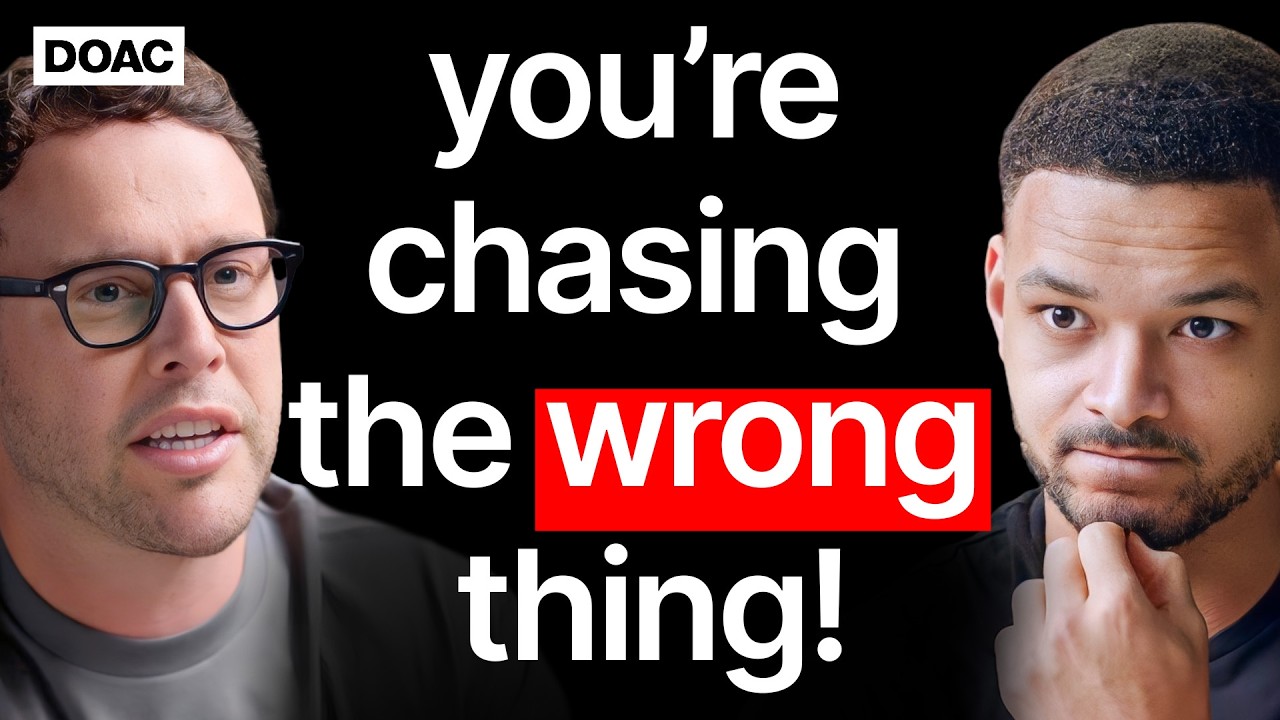
Scooter Braun Recounts Industry Exit, $1.1B HYBE Deal, and Taylor Swift Feud
The Diary Of A CEO
Scooter Braun reveals that the relentless pursuit of music industry clout drove him to a severe personal crisis, concluding that true success required abandoning his public persona and stepping away from music management.
## Background
Published by The Diary Of A CEO with host Steven Bartlett on YouTube on June 9, 2025, this episode features an unfiltered conversation with music executive Scooter Braun. According to the page description, Braun reveals the raw truth behind his public persona, addressing how he lost himself while building a billion-dollar music empire, the guilt he carries for young artists, his divorce, and his journey to confront his deepest fears.
## TL;DR
Scooter Braun reflects on his 23-year career in music management, detailing his early hustle in Atlanta nightlife, discovering Justin Bieber, and building SB Projects and Ithaca Holdings. He opens up about the immense pressure and fear of inadequacy that drove him to create a hyper-driven "Scooter" persona, which ultimately detached him from his true self and contributed to deep personal struggles, including suicidal thoughts and a painful divorce. Following the $1.1 billion sale of Ithaca Holdings to HYBE and high-profile industry disputes like the Taylor Swift master catalog controversy, Braun explains his decision to retire from management to focus on fatherhood, spiritual growth, and personal healing.
## Atmosphere & style
The conversation is deeply vulnerable, reflective, and emotionally grounded, shifting seamlessly between high-stakes music industry anecdotes and intimate psychological confessions. Braun moves from the confident drive of a seasoned mogul to a quiet, candid self-reckoning, speaking openly about his internal darkness, guilt, and imposter syndrome. The dynamic with host Steven Bartlett feels peer-like and earnest, evolving into moments of mutual mentorship where Braun directly challenges Bartlett to confront his own workaholism and underlying fears.
## Key takeaways
- [00:00](https://www.youtube.com/watch?v=j4z25zj6bmE&t=0s) Scooter Braun created his aggressive 'Scooter' persona to mask his inner insecurities and fear of not being 'enough', which ultimately led to deep burnout and suicidal thoughts at the peak of his career.
- [02:30](https://www.youtube.com/watch?v=j4z25zj6bmE&t=150s) Scooter's relentless drive was deeply rooted in his family background as descendants of Holocaust survivors, creating an urgent pressure to prove he was worthy of his privilege.
- [07:46](https://www.youtube.com/watch?v=j4z25zj6bmE&t=466s) A pivotal moment in Scooter's youth occurred when his father warned him that his natural charm and 'gift of the gab' could turn him into a liar in his own heart if used without integrity.
- [15:11](https://www.youtube.com/watch?v=j4z25zj6bmE&t=911s) Scooter built his career on relationship-building, work ethic, and avoiding desperate sales pitches, dropping out of Emory University after a dean told him his chances of succeeding without a degree were 'one in a billion'.
- [27:54](https://www.youtube.com/watch?v=j4z25zj6bmE&t=1674s) Scooter carries significant guilt regarding the young artists he managed, acknowledging that fame distorts the human psyche and that he lacked the psychological tools early on to support their mental health properly.
- [44:31](https://www.youtube.com/watch?v=j4z25zj6bmE&t=2671s) Scooter retired from music management after 23 years to prioritize his personal life, drawing comfort from Berry Gordy's wisdom that a management career never ends the way one wants, but that doesn't lessen its value.
- [54:37](https://www.youtube.com/watch?v=j4z25zj6bmE&t=3277s) The public fallout over the Taylor Swift master catalog controversy taught Scooter to surrender the illusion of control and detach his self-worth from public praise or criticism.
- [01:01:56](https://www.youtube.com/watch?v=j4z25zj6bmE&t=3716s) The breakdown of his marriage and losing daily contact with his children led Scooter to a dark personal crisis in 2020, which ultimately forced him to drop his performative mask and seek deep emotional healing.
- [01:14:26](https://www.youtube.com/watch?v=j4z25zj6bmE&t=4466s) Scooter directly challenged podcast host Steven Bartlett to stop rationalizing his intense overworking and prioritize inner self-work and meaningful personal relationships.
- [01:20:54](https://www.youtube.com/watch?v=j4z25zj6bmE&t=4854s) Studying Kabbalah and spiritual texts shifted Scooter's perspective toward a custodian mindset, viewing wealth as something to be shared and re-invested into others.
- [01:27:15](https://www.youtube.com/watch?v=j4z25zj6bmE&t=5235s) Cold-calling leaders on the Billboard 30 Under 30 list led Scooter to become an early investor in Spotify, where he has held his shares for nearly 18 years while crediting founder Daniel Ek with saving the music industry.
- [01:47:13](https://www.youtube.com/watch?v=j4z25zj6bmE&t=6433s) When selling Ithaca Holdings to HYBE for $1.1 billion, Scooter distributed tens of millions of dollars of his own equity directly among 264 employees and artists.
- [01:50:59](https://www.youtube.com/watch?v=j4z25zj6bmE&t=6659s) In a closing discussion on overcoming fear, Scooter revealed that fear of failure and comparing himself to his author brother had long held him back from writing his own book.
## Detailed walkthrough
### [00:00](https://www.youtube.com/watch?v=j4z25zj6bmE&t=0s) Introduction and the Mask of "Scooter"
The conversation opens with Steven Bartlett expressing a desire to uncover the full truth behind the major question marks in Scooter Braun's life. Scooter admits to feeling nervous, acknowledging that at age 40, after engaging in intense therapy, he began confronting the deep-seated guilt he carries regarding the young artists he managed. Reflecting on their shared drive, he explains that everyone was moving at breakneck speed, desperate for success. However, that motivation was secretly fueled by an overwhelming fear of not being "enough."
To navigate the industry and prove himself beyond his privileged upbringing, he created the character and persona of "Scooter"—a mask that allowed him to "fake it till he made it." While the rest of the world saw someone crushing it at the absolute top of the entertainment industry, the real person behind the mask, Scott, was drowning in darkness and reaching a breaking point where he felt suicidal.
* **On the driving force of fear:** "At this age, I feel a lot of guilt because I worked with so many young artists and we were all kids moving so fast and we all wanted to succeed so bad. And it wasn't until I was 40 years old doing some intense therapy that I realized I was so driven by the fear that I wouldn't be enough."
* **On the mask versus reality:** "I created this character, Scooter, because I didn't think Scott could achieve these things. That mask made me absolutely relentless... The whole world thought I was crushing it. But I had built this mask so big. I didn't realize how far away I'd gotten from Scott."
---
[02:30](https://www.youtube.com/watch?v=j4z25zj6bmE&t=150s) What Drives You?
Steven asks Scooter to examine the origin of the "dog" in him—the chip on his shoulder that pushed him relentlessly from a young age. Scooter explains that for a long time, he thought "Scooter" was the driver, but eventually realized it was Scott trying to process complex feelings of shame and privilege. As a first-generation American whose father was a Hungarian refugee, whose mother lost her father at age 11, and whose grandparents survived the Holocaust, Scott felt an urgent need to prove he was worthy of the opportunities and privilege he was born with.
His dad reinforced this every night before bed, telling Scooter and his brother, "Hey, boys, you're different. You're special. I hold you to a higher standard." To illustrate how his mindset has evolved, Scooter recalls a baseball analogy he gave on a *Complex* podcast roughly a decade prior: standing at home plate against Cy Young winner CC Sabathia in Yankee Stadium, ignoring the booing crowd while relentlessly swinging until hitting a home run. Scooter used to believe the crowd represented external naysayers, but he now realizes the crowd screaming at you to leave the plate is actually inside your own head.
* **Family roots:** Scooter's father escaped Hungary as a refugee, his mother was raised in the Catskill Mountains under financial strain after her father died early, and his grandparents were Holocaust survivors.
* **Reframing the baseball analogy:** Scooter notes that true success and self-worth come from learning to shut out the internal voice telling you "you're not enough," rather than ignoring the outside world.
---
[07:46](https://www.youtube.com/watch?v=j4z25zj6bmE&t=466s) Your Dad
Scooter speaks about his father, Ervin Braun, a tough but deeply loving man who was raised by Holocaust survivors to prepare for a world that could strip everything away. Being the oldest child, Scooter faced strict expectations. He recalls a turning point when he was around 14 years old and got caught telling a white lie. Instead of delivering a severe punishment, his father sat him down for a frank conversation.
Ervin told Scooter that he had the "gift of the gab" and could easily talk his way out of anything. He warned Scooter that while his charm might allow him to be successful even if he lied, he would ultimately know in his own heart that he was a liar. Overwhelmed by shame and the weight of his father's words, Scooter promised him that he would be a man of integrity instead.
* **On his father's lesson in integrity:** "You're so good at it. You might be successful, but you're going to be a liar. And I'll know you're a liar, and you'll know you're a liar. So, do that with what you want."
---
[09:40](https://www.youtube.com/watch?v=j4z25zj6bmE&t=580s) Your First Business
Scooter's entrepreneurial career began during his college years in Atlanta. His very first venture was selling fake IDs—an operation he started because he thought his friend had a poor business plan, offering to handle marketing while his friend handled production. He quickly shut down the operation after his partner violated a key rule by staying in contact with buyers, raising the risk of getting caught.
Redirecting his energy, Scooter walked up to a local nightclub owner and asked for a cut of the revenue if he could bring a crowd the following week. This launched his career as a prominent Atlanta party promoter. His success stemmed from being a non-threatening, committed boyfriend who loved to dance, playing sports across diverse friend groups, and offering music that crossed racial divides.
* **Breaking night life segregation:** At the time, Atlanta night clubs were heavily segregated (hip-hop at Black clubs, techno at white clubs). Scooter threw parties blending hip-hop and rock, attracting diverse crowds.
* **Meeting key figures:** At his early parties, actor Jason Weaver noticed the mixed crowd and introduced Scooter to Alex Gidewon at the Velvet Room. Alex taught Scooter the mechanics of door cuts and bar revenue.
* **Reinvesting earnings:** Scooter poured the money made from his Thursday college parties into networking on Tuesday nights at Alex's club, meeting future collaborators like Jermaine Dupri and Ludacris.
---
[12:07](https://www.youtube.com/watch?v=j4z25zj6bmE&t=727s) You’re Very Good at Forming Relationships
Steven observes that Scooter possesses a rare ability to cultivate deep, lasting, and loyal relationships with key figures throughout his career. Scooter attributes this to showing genuine respect to elders, honoring people who helped him, and relying on his work ethic rather than chasing people with desperate sales pitches. He aimed to let his results speak for themselves so that leaders would approach him naturally.
He explains that even as his access and influence grew, he consciously avoided doing business with many close friends out of an underlying insecurity—he never wanted anyone to view him as a "user" or feel that he was begging for opportunities.
* **On building organic connections:** "Let your work be the reason they want to meet you... I never wanted anyone to feel like I needed them. I never wanted to feel like a user."
---
[14:16](https://www.youtube.com/watch?v=j4z25zj6bmE&t=856s) What Did Everyone See in You at an Early Age?
Reflecting on why industry figures like Jermaine Dupri and his own father placed massive bets on him when he was still an inexperienced teenager without a track record, Scooter humorously answers: "My ignorance." He explains that because no one had told him he did not belong in those rooms, he moved forward without self-imposed limits.
After Jermaine Dupri invited him to work at So So Def, Scooter began juggling major responsibilities—traveling constantly, promoting events, and working with acts like Anthony Hamilton, YoungBloodZ, and preparing for Usher's project. As a result, his college grade point average plummeted from above a 3.0 to under a 2.0, placing him on academic probation. When university staff called him in to ask if he was dealing with abuse or drug addiction, Scooter explained that he was simply an entrepreneur building a record label alongside Jermaine Dupri.
* **Early roster exposure:** By age 19 or 20, while still in college, Scooter was actively working on campaigns and projects involving major artists under So So Def.
[15:11](https://www.youtube.com/watch?v=j4z25zj6bmE&t=911s) Confronting the Emory Dean and Dropping Out
Scooter Braun recounts the moment he decided to drop out of Emory University after a tense meeting with a school dean. Having pitched his ambitious entrepreneurial plans, Braun felt confident when the dean brought up Robert Woodruff, the legendary leader of Coca-Cola and a major benefactor of Emory. Braun assumed the dean understood his ambition and was on his side. However, the mood quickly shifted when the dean told Braun that Emory was going to "stop all the nonsense," emphasizing that he needed to focus on getting his degree because the odds of becoming another Woodruff without one were "one in a billion." The moment those words were spoken, Braun made up his mind to drop out.
Host Steven Bartlett reacts to the story, sharing his own deep disdain for "dream busters." Braun pushes back, taking a more nuanced approach grounded in Marcus Aurelius's concept of *amor fati*—the love of one's fate, where one must embrace both pain and success equally. While he acknowledges the instinct to despise doubt, Braun admits that the chip on his shoulder was a crucial catalyst. He reflects on how different forms of motivation drive him, including curiosity, his children, and deep self-reflection, while acknowledging that spite or doubt from "haters" can still serve as potent fuel when channeled correctly.
- Braun dropped out of Emory University immediately after a dean told him his chances of succeeding without a degree were "one in a billion."
- Braun references Marcus Aurelius's concept of *amor fati* to explain why he feels grateful for the doubters who fueled his journey.
- Braun highlights author Robert Greene's philosophy on embracing one's dark side to use doubt and opposition constructively.
[18:21](https://www.youtube.com/watch?v=j4z25zj6bmE&t=1101s) Founding SB Projects and Early Artist Signings
After leaving So So Def—where founder Jermaine Dupri had made him the youngest Vice President of Music at just 20 years old—Braun launched SB Projects at age 24. He set out with a specific strategy to sign three distinct types of acts. His vision for the first type was a white hip-hop artist who could speak to the college and fraternity demographic while maintaining genuine credibility in the rap world, inspired by the massive success of Eminem. This led Braun to message Asher Roth on MySpace and convince him to drop out of college and move to Atlanta. Braun candidly attributes his ability to make such bold moves to pure "ignorance" and a complete absence of limiting beliefs, combined with an intense fear of failing and being exposed as a fraud.
- Braun became the youngest Vice President of Music at So So Def under Jermaine Dupri when he was 20 years old.
- SB Projects was established around the time Braun was 24 years old.
- Asher Roth was the first artist signed under Braun's new strategy, recruited directly via MySpace to move to Atlanta, Georgia.
- Braun's initial master plan was to sign three specific categories of acts; he successfully signed two (Asher Roth and Justin Bieber) but never found the third.
[21:21](https://www.youtube.com/watch?v=j4z25zj6bmE&t=1281s) Discovering Justin Bieber and Building His Career
Braun recalls discovering a 13-year-old Justin Bieber on YouTube while watching a clip of him singing Ne-Yo's "So Sick." Captivated by Bieber's vocal tone, soul, charisma, and competitive athletic drive, Braun embarked on an intense 24-hour hunt. He analyzed the background of the church in the video, tracked down regional Canadian school boards, and navigated the fact that Bieber's mother, Pattie Mallette, had a different surname. Within hours, Braun contacted Mallette, speaking with her for an hour and a half and convincing her to bring Bieber on their very first airplane flight to Atlanta. At the time, Bieber was excited simply to discover a mini-fridge in his hotel room.
Despite widespread skepticism from the music industry—where standard consensus at the time dictated that internet creators could not transition into legitimate recording stars—Braun took Bieber's audience from 60,000 views to 60 million. Braun acknowledges the immense trust Bieber and his mother placed in a 25-year-old manager, expressing immense pride in what they achieved together. Addressing their current relationship, Braun explains that while it is no longer as close as it once was due to natural dynamics and Bieber's desire to forge his own path as a man, Braun transitioned out of music management two and a half years prior and remains a supportive "cheerleader" for Bieber, Ariana Grande, Tori Kelly, and all his former clients.
- Braun discovered 13-year-old Justin Bieber singing Ne-Yo's "So Sick" on YouTube.
- To locate Bieber, Braun searched Canadian church records and school board regions due to differing surnames between Bieber and his mother, Pattie Mallette.
- Braun drove Bieber's YouTube view count from 60,000 to over 60 million, breaking industry norms about digital-first talent.
- Braun officially stepped down from music management two and a half years prior to the interview.
[26:19](https://www.youtube.com/watch?v=j4z25zj6bmE&t=1579s) The Common Thread of Great Artists and the First Three to Five Years
When asked what unites all world-class performers, Braun answers with a single word: "pain." He believes that for an artist to convey raw emotion capable of touching millions globally, they must deeply understand human suffering and joy, tapping into those experiences alongside their natural gifts. However, natural talent alone is insufficient without relentless hard work, particularly during the early stages of a career.
Braun emphasizes that the first three to five years of any venture—whether breaking a new musical artist, starting a company, or even building a long-term personal relationship—are the absolute most critical. During this initial window, an individual or business must put in maximum effort to cut through the noise, outwork the competition, and establish a permanent foundation.
- Braun cites deep emotional pain and lived experience as the primary unifying trait among world-class musical artists.
- He states that the first 3 to 5 years of any business, artistic career, or relationship dictate its long-term success and foundation.
[27:54](https://www.youtube.com/watch?v=j4z25zj6bmE&t=1674s) The Pressures of Fame, Childhood Stardom, and Guilt
Reflecting on the dark side of early fame, Braun addresses the extreme turbulence young stars experience, drawing parallels between Justin Bieber's public struggles and the tragic death of One Direction member Liam Payne. Braun admits to carrying deep personal guilt regarding the young talent he managed. In his late twenties and early thirties, before undertaking his own therapy, Braun failed to fully grasp the heavy emotional baggage, family dynamics, and public scrutiny his young artists were forced to carry.
Braun shares two major realizations about the psychological toll of stardom. First, he asserts that human beings are fundamentally built to serve rather than to be worshiped; having thousands of people chant one's name distorts the psyche and destabilizes mental well-being. Second, he highlights the stark contrast between performing in front of 100,000 screaming fans and the sudden, isolated drop-off back in a silent hotel room—a extreme surge and crash of dopamine that frequently fuels addiction. Recalling his early meeting with the members of One Direction in his backyard when they first arrived in Los Angeles, Braun notes how unpredictable life's "cocktail" can be for child stars whose brains are far from fully developed.
> "Human beings are not made to be worshiped. I think we're made to serve. And I think that when we worship human beings, it changes something within us."
- Braun expresses guilt for not having the psychological awareness in his 20s and 30s to properly support the mental health of his young artists.
- He recalls hosting One Direction at his Los Angeles home during their first visit to the US before their global rise.
- The conversation touches on the biological vulnerability of young stars, noting that the human brain and its dopamine receptors continue developing until at least age 25.
Here is a detailed, faithful walkthrough of this part of the conversation:
[32:25](https://www.youtube.com/watch?v=j4z25zj6bmE&t=1945s) Regrets, Tour Life, and Finding Dopamine Within
Looking back on his two decades as a high-powered manager, Braun expresses pride in the care and dedication he and his team brought to their artists, while acknowledging he wishes he had known then what he knows now. If he could do it over, he would have placed a therapist on the road for every tour and forced everyone to slow down and do that critical hourly self-work. They were all young kids moving at extreme speeds, driven by a deep desire to succeed, experience the excitement, and make young fans' dreams come true by bringing them down from the upper decks to the front row. They were thrilled to guide Justin Bieber and Ariana Grande to their first major milestones while the world cheered them on.
However, Braun admits he did not realize back then that he needed to look inward for his dopamine hits rather than seeking external validation. When Bieber eventually told Braun he wanted to go it alone and handle his own career, Braun did not feel hurt. By that point, the writing was on the wall; Braun had known for a couple of years that he wanted to explore other career paths and discover who he was outside of management, and the two were communicating openly about the transition.
- Braun notes that he would never rank a "top 10" list of his clients, as a good manager knows better than to rank artists.
- Among the artists he managed over the years: Justin Bieber, Ariana Grande, Kanye West, Black Eyed Peas, Zac Brown Band, Dan + Shay, Carly Rae Jepsen, Martin Garrix, Demi Lovato, and Tori Kelly.
- He recalls signing Martin Garrix after hearing the track *Animals* while Garrix was at Club Med with his parents.
- He shares memorable moments: watching Tori Kelly perform in a coffee shop before walking the Grammy stage, and seeing Demi Lovato perform the national anthem at the Super Bowl years after she showed him a tweet where she had predicted she would do it.
[36:27](https://www.youtube.com/watch?v=j4z25zj6bmE&t=2187s) "Dog Years," Undeserved Public Perception, and Surrendering Control
Braun reflects on a life-changing encounter with investor Charlie Munger. While everyone else asked Munger business questions, Braun asked about life. Munger was so intrigued that he set Braun up with a statistician friend, who explained that people in Braun's world live in "dog years" because they are actively embedded in so many other people's life stories simultaneously.
The biggest lesson Braun took from his career is that at one point he received immense praise, and the next moment he received overwhelming hate—and neither was fully deserved. The people praising him didn't know him, and the people hating him didn't know him either. He quotes Tom Hanks' famous mantra, "This too shall pass," noting that both extreme success and severe hardship are temporary.
When host Steven Bartlett asks what one anchors in when everything is transient, Braun points to his three children as his primary anchor. For those without children, Braun emphasizes that the self-work is essential because "your anchor's you." Approaching his 40s altered his entire outlook:
- **From Manifestation to Participation:** He moved away from the youthful mindset of trying to control and manifest every outcome, leaning instead toward surrender (referencing Michael Singer's *The Surrender Experiment*).
- **The Game Analogy:** Braun views life as a game where he can participate fully, like Steph Curry or LeBron James, who influence the game at the highest level but cannot ultimately control the final outcome.
- **Embracing the Unknown:** He has come to terms with being misunderstood in the public eye and looks forward to future love and adventure, knowing that even if pain comes, there is a reason for it.
[39:58](https://www.youtube.com/watch?v=j4z25zj6bmE&t=2398s) The Story of Spencer Lee and Navigating Addiction
Braun opens up about an artist named Spencer Lee, calling him "maybe the most talented artist I ever signed." Brought to him by his friend Freddy, Spencer was managed internally alongside Dave Appleton. When Spencer began struggling with severe addiction, Braun's team put him into rehab. After rehab, Spencer wrote a deeply personal song about addiction called *River Water*.
Despite forming The Spencer Lee Band, funding his launch, and receiving incredible feedback from festival crowds about Spencer's insane vocal talent, Spencer relapsed and tragically died of an overdose. Braun learned of his death when Spencer's grandmother called to thank Braun for trying to save him. Braun admits he was wrong in believing that getting the records right, touring, and leaving rehab would be enough to save him. He expresses a desire to gain permission from Spencer's family to release his unreleased tracks and donate all the proceeds to addiction recovery causes.
Braun shares that when managing someone dealing with addiction, he attended Al-Anon meetings (a support group for families and loved ones of addicts). There, he learned key principles for dealing with addiction:
- Addiction is not an attempt to self-destruct, but often a desperate attempt to survive.
- Loved ones must realize that the addiction is not their fault, and they must love the person where they are at.
- Supportive friends and family must act as a "rock" and a constant home that doesn't move, while acknowledging that if someone beats addiction, they deserve 100% of the credit themselves—which is why Braun takes no credit for helping Justin Bieber through his past struggles.
[44:31](https://www.youtube.com/watch?v=j4z25zj6bmE&t=2671s) Quitting Management and Berry Gordy's Wisdom
Addressing his public Instagram announcement that he was quitting music management after 23 years, Braun explains that a specific female artist informing him she wanted to go her own way served as a final catalyst, though he prefers not to name her due to legalities. He had actually made the decision to step away a year prior, but corporate and legal obligations required him to wait. He ultimately posted the 10-slide message to hold himself publicly accountable so he would never go back.
Waking up and posting the message caused him to collapse emotionally, realizing that his entire adult life since age 19—being on call 24/7 without ever experiencing a normal weekend—was over. He closed his retirement statement with a story told to him years prior by Motown Records founder Berry Gordy.
Gordy had shared that during the *Motown 25* TV special (where Michael Jackson debuted the Moonwalk), he initially didn't want to attend because Jackson and Diana Ross had left Motown for CBS Records, and people were framing Gordy as the "bad guy" who stole their publishing. His family forced him to attend in the balcony, and as the night went on, Gordy realized that "little Berry from Detroit" would have been blown away. Gordy told Braun: *"Young man, it will never end the way you want it to, but it doesn't mean it didn't happen."*
Braun notes that his own management career ended abruptly rather than with a giant, celebratory concert featuring all his artists as he had once envisioned. Some artists understood his departure and others didn't, but he remains deeply grateful for the experience, concluding that while betrayal was felt on both sides over the years, no one can take away what they built together.
[49:23](https://www.youtube.com/watch?v=j4z25zj6bmE&t=2963s) Management, Betrayal, and the Decision to Move On
Reflecting on his two decades managing the world’s biggest music stars, Scooter Braun describes the inherent heartbreak of artist management. Citing a famous line from David Geffen’s documentary—that management is like moving a mountain to where the client asked, only for them to claim it was always supposed to be there—Braun acknowledges that these high-stakes, interdependent relationships naturally end in painful misunderstandings. While he admits to feeling betrayed numerous times, he strives to maintain empathy. He realizes that when artists act out or turn on him, it usually stems from their own deep pain, and he accepts that he may have unwittingly played a role in those dynamics.
Looking back two and a half years after stepping down from active management, Braun maintains complete conviction in his decision. For 23 years, he admits he was terrified to discover who he was without his identity as a high-powered manager. Ultimately, he reached a threshold where he realized he had to walk away voluntarily or face another hard lesson from life. He views his departure as a necessary transition that also allowed his long-time artists the room to "spread their wings" on their own terms.
[51:31](https://www.youtube.com/watch?v=j4z25zj6bmE&t=3091s) Selling Ithaca Holdings for $1.1 Billion and Shifting Mindsets
When Steven Bartlett brings up the sale of Braun's company, Ithaca Holdings, to South Korean entertainment powerhouse HYBE for $1.1 billion, Braun confirms the figure—as a public transaction—though he prefers not to dwell on financial metrics. Turning 40 right around the time of the deal, he found himself with vast wealth and freed from a job demanding seven days a week. Unlike many high achievers who panic when confronted with open calendar space and loss of control, Braun approached the moment with absolute surrender, shifting his mindset from a competitive drive to a curious and creative focus.
Braun explains that a competitive mindset is inherently finite—it demands a winner, a loser, and a definitive conclusion, leaving an empty "what next?" once achieved. In contrast, operating from curiosity and creativity offers infinite possibilities with no end point. He references an interview with Jeff Bezos, echoing the sentiment that one of the worst mistakes an entrepreneur can make is failing to think big enough. Armed with this new perspective, Braun embraced thinking bigger, prioritizing deep relationships, joy, and self-discovery over raw achievement.
- **Transaction Details:** Ithaca Holdings was sold to HYBE in a deal valued at $1.1 billion around the time Braun turned 40.
- **Mental Shift:** Transitioning from a *competitive mind* (finite, outcome-driven) to a *curious and creative mind* (infinite, growth-focused).
[54:37](https://www.youtube.com/watch?v=j4z25zj6bmE&t=3277s) The Taylor Swift Catalog Controversy and the Gift of Unfairness
Addressing the intense media storm surrounding his acquisition of Big Machine Label Group and Taylor Swift's public reaction, Braun recounts his initial, naive expectations. Having met Swift three or four times over the years—including a warm interaction at a private party—he assumed they respected each other. Although he recognized she was unhappy with his management of Kanye West and Justin Bieber, his "arrogance" led him to believe that once the deal closed, they would sit down, talk, and work through it together. Instead, immediately after the press release, Swift posted a viral Tumblr statement condemning the deal, leaving him completely shocked.
```
"All the praise I had received up until that moment was not deserved, and all the hate I got after that moment was not deserved, because none of these people knew me."
```
Looking back five to six years later, Braun frames the global public backlash as a profound gift. Up to that point, he had tied his self-worth to public praise. Experiencing global criticism taught him that public hatred and public acclaim are equally hollow because neither comes from people who actually know him. Furthermore, navigating an experience that felt deeply unfair broke his illusion of control. When life feels fair, people feel justified and move on; when an event feels completely unfair and impossible to fix, it forces radical self-examination and forces one to surrender control over public perception and legacy.
[01:00:18](https://www.youtube.com/watch?v=j4z25zj6bmE&t=3618s) Navigating the Backlash and the Catalog Sale
Describing his initial reaction during the peak of the public feud, Braun admits he had not yet done the inner spiritual work. He was operating in high resistance, desperately trying to analyze and solve an unfixable situation. While he could not repair the personal relationship, he navigated the business side by arranging the sale of the Big Machine masters catalog to Shamrock Holdings. He notes that in the streaming era, re-recorded albums actually bring renewed visibility and a streaming boost to both original and new catalogs, creating a scenario where everyone wins.
Braun confirms that documentary evidence now proves he repeatedly offered Swift the chance to buy her masters during that process, but she declined. After completing the sale to Shamrock, he washed his hands of the ordeal. Yet, because he used his strategic wits to maneuver out of the jam rather than addressing his internal flaws, he feels the universe sent him a far heavier disruption to break through his ego: the breakdown of his marriage and losing daily contact with his children.
- **Catalog Dynamics:** Re-recordings generate renewed interest that financially lifts the streaming numbers of original master catalogs alongside the new versions.
- **Offer of Sale:** Braun reiterates that documentary records confirm Swift was offered the opportunity to purchase her masters multiple times before the catalog was sold to Shamrock Holdings.
[01:01:56](https://www.youtube.com/watch?v=j4z25zj6bmE&t=3716s) The Marriage Breakdown, Suicidal Thoughts, and Choosing Healing
While public attacks failed to break his internal defenses, the collapse of his marriage and the reality of seeing his children only 50% of the time "rocked and woke" Braun up completely. He recalls a dark night in October 2020: while the outside world saw a mogul at the absolute top of his game—managing record-breaking rollouts for artists like Ariana Grande and Justin Bieber—he experienced a 20-minute period of suicidal thoughts. Overwhelmed by the fear of losing his daily life with his kids and failing to maintain his self-imposed "perfect" image, he felt that if he couldn't be perfect, he didn't want to be here.
Scared by those unprecedented thoughts, Braun confided in a close friend the next morning on a video shoot set. His friend immediately urged him to attend the Hoffman Process—an intensive, seven-day retreat without phones or email focused on processing childhood patterns. When a last-minute cancellation opened a spot for October 24th—the exact week Ariana Grande was releasing her *Positions* album (misstated in the conversation as *Dangerous Woman*), his busiest work week of the year—Braun broke out laughing in the parking lot. He realized that after a lifetime of choosing his career, "Scooter," and his clients over himself, he had to choose his own sanity and healing instead.
```
"Six years ago, I was the biggest manager and had the perfect marriage... and there was no negative press about me ever. Six years later, I'm divorced, I don't manage anymore, I've had negative press, and I couldn't be happier."
```
The period following the retreat was painful as he navigated a high-profile divorce and stepped back from management. However, Braun emphasizes that he has not experienced depression since. Embracing *amor fati*—the love of one's fate—he now finds deeper happiness as an attentive father and genuine friend, fully liberated from the need for external approval or an artificial image of perfection.
<ElicitationsGroup message="Explore more from this interview:">
<Elicitation label="Summarize Scooter Braun's principles on managing talent" query="Summarize Scooter Braun's core principles and insights on managing high-profile artists from his Diary of a CEO interview."/>
<Elicitation label="Explain the Hoffman Process mentioned by Scooter Braun" query="Explain what the Hoffman Process is, including its structure, goals, and how Scooter Braun described its impact on his life."/>
<Elicitation label="Detail the timeline of Scooter Braun's career transitions" query="Provide a chronological timeline of Scooter Braun's major career milestones, acquisitions, and retirement from management based on the transcript."/>
</ElicitationsGroup>
Here is a detailed, faithful walkthrough of this section of the interview:
[01:05:35](https://www.youtube.com/watch?v=j4z25zj6bmE&t=3935s) Dropping the Armor and Being Human
Scooter Braun reflects on reaching a dark breaking point where he didn't necessarily want to die, but desperately needed "the noise" in his head to stop—the constant fear, disappointment, and overwhelming feeling of impending failure. Throughout his entire career, Scooter had always managed to navigate out of set-backs and steer toward success, treating failures merely as temporary pit stops. However, after losing touch with his true inner self (what he discovered at the Hoffman Institute as "Scott"), his performative persona of "Scooter" had grown so huge that he felt entirely disconnected from who he actually was.
A turning point came when key industry figures and lifelong friends saw him finally break down. Scooter shares a funny conversation with Live Nation CEO Michael Rapino, whom he considers one of the most impressive and empowering leaders in entertainment. Following Scooter’s public divorce and the fallout surrounding the Big Machine situation, Rapino bluntly admitted: *"I like you a lot more now 'cause you seem human."* Rapino confessed that previously he didn't think Scooter was real and thought he was "full of shit" because nobody could be that perfect. It was only after going through genuine rock-bottom moments, pain, and scares that Scooter actually began looking inward and discovering who he was.
- **Key Figure Mentioned:** Michael Rapino (CEO of Live Nation).
- **The Turning Point:** Reaching rock bottom forced Scooter to abandon the "invincible" mask and become human to those around him.
---
[01:07:11](https://www.youtube.com/watch?v=j4z25zj6bmE&t=4031s) The Friends Who Picked Him Up
When Scooter finally did the emotional work at age 40, his childhood best friends since age 11—specifically Mike and Vuk—delivered a eye-opening realization. They told him: *"We've known you since you were 11 and this is the most we've ever known you."* Scooter explains that even around his closest friends, he had spent his whole life presenting a performative mask of who he thought they needed him to be—someone cool, tough, and perfect. When everything fell apart and Scooter openly shared his childhood experiences and vulnerabilities, he became "one of the boys" for the first time in his life. His real friends never cared about his career achievements; in fact, the high-flying success had only caused them to lose touch.
Scooter becomes visibly emotional as he expresses deep gratitude to Mike and Vuk for picking him up at a time when he couldn't even look his own brothers in the eye out of sheer shame. He admits he used to hold back from letting his friends all the way in because he secretly thought, *"Well, maybe I'm smarter, maybe I need to be perfect."* Seeing Scooter get choked up, Steven Bartlett shares the names of his own core group of friends—Michael, Ash, Dom, Anthony, Oliver, and Paul—who serve as his constant anchor through every up and down. Steven notes that his friends "rip" him constantly in group texts, yet regularly send sudden, heartfelt messages saying, *"Hey brother, I love you."*
- **Childhood Friends Mentioned (Scooter):** Mike and Vuk (friends since age 11/12).
- **Core Group Mentioned (Steven):** Michael, Ash, Dom, Anthony, Oliver, and Paul.
- **Quote on True Connection:** *"I spent so much time trying to impress people who didn't want to love me instead of realizing how many people already did."*
- **Steven's Reflection:** Steven admits feeling embarrassed by how few "units of energy" he invests into his core friends compared to the massive energy he spends on his external audience, despite knowing those true friends would be there regardless.
---
[01:11:17](https://www.youtube.com/watch?v=j4z25zj6bmE&t=4277s) Confronting Childhood Trauma and the Breakdown of Marriage
Steven shifts the conversation to Scooter’s personal life, expressing naive confusion over how Scooter’s marriage fell apart given that family meant everything to him—pointing out that Scooter even got a tattoo reading "Family" at age 18. Scooter responds candidly: *"Childhood trauma is a hell of a thing, man."* Scooter explains that for years he downplayed his own issues because both of his parents were present and loved him, unlike friends whose parents struggled with severe alcoholism. Coming from an immigrant family, Scooter believed they were "strong" and that his problems weren't real trauma. He now realizes that trauma is a universal human experience, and minimizing one's own trauma prevents the necessary self-work.
Scooter emphasizes that in a relationship ending, both partners play a role. Quoting comedian Chris Rock—*"Relationships are actually quite easy... You ever try to pick up a couch with two people? No problem. Pick up a couch by yourself"*—Scooter explains that he and his ex-wife were trying to lift the "couch" at different times. Although their romantic relationship ended in heartbreak, he views them as great co-parents brought together to bring three incredible children into the world. He acknowledges that his underlying drive to overwork wasn't about the relationship itself, but was rooted in a deep-seated core lie: *"I'm not enough,"* and the fear that people wouldn't love him unless he constantly achieved.
- **First Tattoo:** Scooter got a tattoo saying "Family" at age 18.
- **Children:** Scooter and his ex-wife had 3 kids in 5 years.
- **Key Realization:** Downplaying personal trauma because others "had it worse" delays essential self-healing.
- **Chris Rock Analogy:** Lifting a couch is easy with two people, but impossible when only one person is lifting at a time.
---
[01:14:26](https://www.youtube.com/watch?v=j4z25zj6bmE&t=4466s) A Direct Intervention for Steven
Recognizing Steven’s subtle smiles and nods, Scooter turns the tables and starts grilling Steven about his own relationship. Steven admits he has been with his partner for 6 years and frequently uses work and future milestones as excuses to delay prioritizing his personal life. Steven confesses that internally he has rationalized the intense hustle by telling himself: *"This season of life up until I'm 35, I'm going to go for it."* Scooter cuts through the rationalization, pointing out that Steven's partner is likely looking at him thinking she wants to be able to trust him before having children.
```
┌────────────────────────────────────────────────────────────────────────┐
│ SCOOTER'S BILLION-DOLLAR LESSON │
├────────────────────────────────────────────────────────────────────────┤
│ │
│ "If someone you loved was sick and you had $1,000,000,000, │
│ how much would you spend to save them?" │
│ │
│ ➔ "A billion dollars." │
│ │
│ "Is she healthy? Does she love you? Is she here with you right now? │
│ EVERYTHING YOU ARE WORKING TO ACHIEVE... YOU ALREADY HAVE IT." │
│ │
└────────────────────────────────────────────────────────────────────────┘
```
Scooter shares a profound thought exercise a mentor once gave him: If someone you loved were sick and you had a billion dollars, you would spend all $1 billion to save them. Therefore, if your partner is healthy and loves you right now, you already possess what that billion dollars is meant to secure. When Steven asks for direct, practical advice to avoid future regret, Scooter gives him tough love:
1. **Stop making excuses:** *"Turn the cameras off and go do some self-work. Stop being nudged... Stop being, with all due respect, a p***y."*
2. **Prioritize immediate action:** Take 1–2 weeks out of the year right now for deep personal work; waiting for age 35 or 40 is a trap.
3. **Take solo couple vacations:** Go on trips together without kids or friends—a critical practice Scooter and his ex-wife neglected during their busy years having three kids.
---
[01:19:28](https://www.youtube.com/watch?v=j4z25zj6bmE&t=4768s) Life, Transitions, and 'Many Lives, Many Masters'
Scooter concludes the segment by sharing his philosophy on life's lessons, asserting that everything happens exactly when it is supposed to. He recommends the book *Many Lives, Many Masters* by Dr. Brian Weiss, the former head of psychiatry at the University of Miami. The book details Dr. Weiss’s experience with a traumatized patient who, under hypnotic regression, unexpectedly began detailing vivid past lives containing historical facts the patient could not have known.
Reading Dr. Weiss's work completely transformed Scooter’s perspective on life, growth, and death. He views existence as an ongoing school where people are put on Earth to learn specific spiritual lessons; if a lesson isn't mastered, you return until you figure it out. Scooter jokes that given how much learning he still has to do and what a "mess" he is every day, he won't be leaving the planet anytime soon.
- **Book Recommendation:** *Many Lives, Many Masters* by Dr. Brian Weiss.
- **Core takeaway:** Life is a continuous learning process meant for personal growth, transitions, and deeper self-awareness.
<ElicitationsGroup message="Where would you like to go next with this transcript analysis?">
<Elicitation label="Summarize Part 6" query="Please provide a detailed, faithful walkthrough for Part 6 of this transcript."/>
<Elicitation label="Highlight key quotes from Part 5" query="Can you list the most memorable verbatim quotes from Part 5 of the transcript along with their context?"/>
</ElicitationsGroup>
Here is a detailed and faithful walkthrough of the provided transcript segment.
---
[01:20:54](https://www.youtube.com/watch?v=j4z25zj6bmE&t=4854s) Kabbalah, Reincarnation, and Life as a Custodian
Scooter reflects on a conversation about Jewish beliefs, noting how a friend once insisted that Jewish people do not believe in reincarnation. However, upon studying Kabbalah about a year prior, Scooter discovered that Kabbalistic teachings actually incorporate reincarnation in a manner strikingly similar to other spiritual frameworks. This realization shifted his perspective, making him view Judeo-Christian spiritual traditions in a broader, more interconnected light. Scooter confirms that he now personally believes in reincarnation, largely influenced by his reading and his ongoing Kabbalah studies.
He highlights a central Kabbalistic principle that has profoundly impacted his relationship with material possessions and achievement: the concept of being a "custodian." In this view, nothing truly belongs to the individual; instead, everything is held in trust from God (*Hashem*). Kabbalah teaches that while one should give 10% to charity, they should generally not give more than 20%, because if God entrusted someone with wealth or resources, He expects them to manage those resources for a specific purpose. Conversely, if those material things are taken away, one should remain equally joyful because they were never truly theirs in the first place. Adopting this custodian mindset allows Scooter to participate fully in life without becoming overly attached to outcomes or possessions.
* **Kabbalah Charitable Benchmark:** Giving 10% to charity as a standard, capping at 20% to honor the responsibility of holding assets for a divine purpose.
* **Core Philosophy:** Viewing oneself as a custodian of health, wealth, and opportunity rather than an absolute owner.
---
[01:22:08](https://www.youtube.com/watch?v=j4z25zj6bmE&t=4928s) The Ongoing Process of Self-Work and Life's Waves
When Steven observes that Scooter possesses deep insight yet still acknowledges having more to learn, Scooter emphasizes that personal growth is an endless, evolving process rather than a fixed destination. He candidly shares that he still experiences moments where he feels misunderstood, unloved, or caught between defending himself too much or not enough. Furthermore, doing visible self-work creates a secondary pressure: the fear of being seen as "failing" at that very work. Scooter describes the entire journey as a continuous surrender to the human experience, knowing that life will constantly deliver new situations—whether public praise or renewed public ridicule—that force him to practice what he has learned.
Using a ocean analogy, Scooter explains that doing inner work does not stop the turbulent waves of life from coming; rather, it equips a person with the swimming skills required to navigate through them differently. When asked if he wishes the waves would stop coming altogether, Scooter passionately responds, "Hell no. That's life."
---
[01:23:32](https://www.youtube.com/watch?v=j4z25zj6bmE&t=5012s) The Poem *Ithaca* and Naming His Holding Company
Scooter clears up a common misconception about the name of his holding company, Ithaca. While many assume it was named after Ithaca, New York, it was actually inspired by C.P. Cavafy's famous poem *Ithaca*. Scooter recounts meeting music mogul David Geffen for the first time at age 30. During their very first meal together, Scooter asked Geffen when, after achieving such an extraordinary career, he finally felt like it was "enough." Geffen looked at him and explained that life does not work that way—it is a series of ups and downs. Geffen then handed Scooter Cavafy's poem to read.
The message of *Ithaca* deeply moved Scooter: as a traveler journeys to the island of Ithaca, they encounter scholars, gather wisdom, and gather extraordinary experiences. If they finally arrive and find Ithaca poor, Ithaca has not fooled them—because the island gave them the marvelous journey in the first place. Inspired by this philosophy, Scooter named his holding company Ithaca, embracing the principle that the value lies entirely in the journey rather than reaching a final endpoint.
* **Key Encounter:** Scooter met David Geffen at age 30 and asked him when his achievements felt like "enough."
* **Poetic Origin:** C.P. Cavafy's *Ithaca* provided the naming inspiration for Scooter's holding company, Ithaca Holdings.
---
[01:26:59](https://www.youtube.com/watch?v=j4z25zj6bmE&t=5219s) Calling the Billboard 30 Under 30 List to Build Community
Steven shares a story told to him directly by Spotify founder Daniel Ek in his Los Angeles office. Years ago, when Ek appeared on a 30 Under 30 list as a young entrepreneur in Stockholm, Sweden, he received a cold call completely out of the blue from Scooter Braun. Scooter had taken it upon himself to systematically phone every single person featured on the Billboard 30 Under 30 list just to introduce himself.
Scooter explains his exact motivation behind those calls: early in his career, whenever he met highly accomplished industry veterans, he noticed their real influence stemmed from long-standing relationships with peers they had known for 20 or 30 years. Realizing that true power resides in community rather than trying to gain access to exclusive, pre-established clubs, a 27-year-old Scooter resolved to build relationships with his own peers so they could grow and support one another from the ground up.
* **Age at the Time:** Scooter was 27 years old when he cold-called the entire Billboard 30 Under 30 list.
* **Philosophical Motivation:** Building peer community early rather than relying solely on top-down industry gatekeepers.
---
[01:28:35](https://www.youtube.com/watch?v=j4z25zj6bmE&t=5315s) Investing Early in Spotify and How Daniel Ek Saved the Music Business
That cold call to Stockholm directly led to Scooter becoming an early investor in Spotify. When Scooter first reached out, Spotify was an unfamiliar startup operating strictly out of Sweden. Impressed by the concept, Scooter pushed to invest immediately, though Ek initially declined. After further meetings—including walking around London with Shaquille O'Neal and connecting with advisor D.A. Wallach—Scooter secured a significant early stake in the company. Scooter reveals that in roughly 18 years, he has never sold a single share of his Spotify stock, maintaining absolute faith in both the platform and Daniel Ek.
Addressing common criticisms of streaming royalties, Scooter forcefully argues that Daniel Ek saved the music industry. Prior to Spotify, the narrative across major labels was that the business was dying and the glory days of the 1980s and 1990s were gone forever. Ek provided a legal, scalable model that restored financial value to master recordings and publishing catalogs, driving valuations to unprecedented heights. Beyond reviving revenue for major labels, independent companies, and artists, Spotify unified the global music community. Steven echoes this sentiment, praising Ek's humility and intelligence, while highlighting Spotify's recent decision to pay video podcasters a share of membership subscription fees.
* **Investment Longevity:** Scooter has held his original Spotify investment for roughly 18 years without selling a single share.
* **Key Figure Mentioned:** D.A. Wallach, who was advising Spotify during its early expansion phase.
* **Early Connection:** When Daniel Ek first visited the United States after their phone call, Scooter played him in ping pong eight times, cementing their friendship.
---
[01:32:25](https://www.youtube.com/watch?v=j4z25zj6bmE&t=5545s) The Next Chapter: Fatherhood, Love, and the AI Revolution
Looking ahead to the next decade, Scooter emphasizes that his absolute highest priority is being a present, devoted father to his children before they turn 18 and leave home. Beyond fatherhood, he expresses excitement about exploring what love and romantic relationships look like in his next chapter, as well as stepping into new industries as a "rookie."
Scooter views the rapid rise of Artificial Intelligence as being in the middle of an industrial revolution and a cold war simultaneously. While acknowledging that such massive shifts induce fear, he believes AI will make society drastically more productive. Drawing a parallel to the COVID-19 pandemic—when national park visits surged because people had time—Scooter predicts that increased productivity from AI will give humans more time to seek out real-world experiences, human connection, and raw artistic expression. He argues that societies are ultimately measured by productivity rather than mere wealth, making this era both scary and exceptionally exciting.
* **Parenting Target:** Prioritizing his remaining time with his children before they reach age 18.
* **Perspective on AI:** Views AI as an engine for productivity that will ultimately increase human demand for authentic experiences and human error.
---
[01:34:43](https://www.youtube.com/watch?v=j4z25zj6bmE&t=5683s) Turning the Tables: Scooter Questions Steven on Success and Fear
Scooter turns the conversation around, questioning Steven about his own motivations and definition of success. Referencing an earlier off-camera conversation where Steven mentioned staying up all night learning to code with AI to stay ahead on the technological frontier, Scooter asks Steven what fear he is running from and what he truly hopes to achieve by being first.
Steven candidly admits that his drive stems from a deep-seated fear of losing relevance. At 32 years old, Steven notes that he built his career by riding initial technological waves—starting his first business in social media, followed later by founding Thirdweb (valued at $160 million) on the web3 and blockchain frontier. Having always operated at the cutting edge, Steven fears being left behind as the next paradigm shift unfolds.
* **Steven's Age Mentioned:** 32 years old.
* **Steven's Business Venture:** Thirdweb, a blockchain/web3 company valued at $160 million.
[01:35:43](https://www.youtube.com/watch?v=j4z25zj6bmE&t=5743s) AI, Control, and What Success Really Looks Like
Steven opens up about his own anxieties regarding the rise of AI, feeling like a massive wave is approaching where he must decide whether to jump on a surfboard or risk facing an existential threat of the unknown. Scooter uses this to explore Steven's deeper relationship with control, asking if he ever swims out in the ocean. Steven admits he will go in, but only with a floatation vest on because he cannot swim. Scooter notes how telling this is: the ocean represents a place where one has zero control, which many high-achieving people secretly fear. Scooter reflects on how he himself avoided deep-ocean swimming for years because he couldn't see what was coming or control the outcome.
Scooter directly pushes Steven on his relentless drive at age 32. He acknowledges Steven’s immense success, risk-taking, and ability to defy the odds, but asks what success actually looks like when Steven looks back on his life at 90 years old. Steven instantly mentions his future children and his relationship with his partner, going so far as to say he would sacrifice his own life for his partner or family in an instant. Scooter points out the glaring paradox: Steven’s ultimate non-negotiable values at 90 are deeply relational and already within reach, yet he spends vast amounts of energy staying terrified by AI, building businesses, and chasing targets just to feel "worthy" of experiencing those personal moments. Scooter urges him to realize that building should be pure fun, not a terrifying quest for self-validation.
- **Ocean Metaphor:** Scooter connects Steven's fear of the unknown (like AI) to his reluctance to swim in open ocean waters without total control.
- **Ultimate Priority Test:** Steven reveals he would press a hypothetical button to end his own life if it meant saving his partner, demonstrating where his core priorities actually lie.
- **Fun vs. Terror:** Scooter advises Steven that building companies or exploring AI should feel like playing in his childhood bedroom, rather than an existential battle to prove his worth.
---
[01:40:17](https://www.youtube.com/watch?v=j4z25zj6bmE&t=6017s) Harmonizing Life and Rediscovering the Joy of Building
Steven asks how someone can fix that imbalance—whether one can truly turn off the cameras while still pursuing high-level ambition. Scooter rejects the idea of rigid "work-life balance," recalling advice inspired by Jeff Bezos: it is not about balancing competing priorities against each other, but about *harmonizing* them. Rather than compartmentalizing, Steven should bring his partner into every aspect of his journey, including his fears and the ups and downs of his career. Scooter urges Steven to investigate why he remains so afraid to simply turn off the cameras and step away from constant output.
When Steven asks how to shift from fear-driven competition into genuine curiosity, Scooter highlights the story of Steven as a young boy in his bedroom—turning his bunk bed into a salon one week or taking apart his brother's radio the next. That kid was not competing with anyone; he was building out of pure curiosity and joy. Scooter notes that high achievers often weaponize their passion, turning a source of play into a pressure cooker out of fear that they will be judged as failures if they do not "crush it" publicly.
- **Harmonization over Balance:** Scooter references Jeff Bezos's concept of harmonizing life rather than trying to balance opposing forces.
- **The Childhood Bedroom:** Steven reminisces about turning his childhood bunk bed into a makeshift salon and selling dismantled radio parts just for the excitement of creating.
- **Root of Competition:** Scooter observes that competitiveness is healthy when anchored in joy, but destructive when driven by the belief "I am not enough."
---
[01:42:49](https://www.youtube.com/watch?v=j4z25zj6bmE&t=6169s) Mutual Guidance and the Struggle with Fraud Syndrome
Scooter turns the tables on Steven, asking what the podcast host thinks Scooter should be doing next in his own life. Steven takes a moment to express deep admiration, stating that Scooter’s willingness to sit down, display raw vulnerability, and talk openly about his marriage, mistakes, and mental health is some of the most vital work he can do. By sharing these lessons from the top of the mountain, Scooter allows younger entrepreneurs—including Steven himself—to learn without having to burn out or hit rock bottom first. Steven shares a personal observation from the previous day, noting how Scooter immediately hung up a phone call with him the moment his child asked for a pencil, admiring how present Scooter was as a father.
Scooter smiles warmly at the compliment, but candidly confesses his internal battle: even as Steven speaks, Scooter feels the habitual itch to build something new just to "show them" and prove his value again. He admits that deep down, a voice whispers that he isn't worthy of giving advice, making him feel like a fraud. Yet, Scooter shares that at 32, Steven is far ahead of where Scooter was at the same age in terms of asking deep, self-reflective questions.
- **Fatherhood First:** Steven recalls being impressed when Scooter paused their phone call within 10 seconds to give his full attention to his child.
- **Imposter Feelings:** Scooter confesses that even after a career of massive achievement, he still battles thoughts of feeling like a fraud or worrying that people will judge him as arrogant.
- **Age Comparison:** Scooter praises Steven for engaging in profound self-inquiry at 32, a stage where Scooter himself was merely running on adrenaline.
---
[01:47:13](https://www.youtube.com/watch?v=j4z25zj6bmE&t=6433s) Unsung Philanthropy and the Lesson of the Overflowing Glass
As the conversation draws to a close, Steven takes a moment to acknowledge Scooter's extensive, often unpublicized philanthropic work. He highlights Scooter's efforts following the Ariana Grande concert bombing in Manchester—a city Steven considers his hometown—and notes the long list of foundations Scooter quietly supports without boasting on social media. Scooter explains that his approach to giving stems from his mother and his Jewish faith, specifically the principle of *Tzedakah* (charity). Early in his career, his mother made him promise that every business he created would have a built-in give-back component, a mission managed alongside Shauna Nep through their family foundation.
Scooter shares a timeless lesson from his late grandfather: *"If your glass is filling with water and you're one of the lucky people in this world that God continues to pour water into your glass, well, you better start pouring it into other people's glasses. Otherwise, it's just going to spill and make a mess."* Steven echoes this spirit of generosity, mentioning how when Scooter sold Ithaca Holdings to HYBE, he distributed tens of millions of dollars of his own equity directly to his employees and artists—an act of quiet generosity that demonstrated his true motives.
- **Tzedakah & Family Promise:** Scooter's commitment to philanthropy was instilled by his mother, ensuring every business venture carries an explicit giving component.
- **Shauna Nep:** Mentioned as the head of the family foundation who helps direct their charitable efforts and support unsung community heroes.
- **Grandfather's Wisdom:** The core philosophy that an overflowing cup must be poured into others' glasses to prevent a mess.
- **HYBE Acquisition Shared Wealth:** Upon selling his business to HYBE, Scooter shared tens of millions of dollars in stock and equity payouts with his team and roster of artists.
Here is the detailed walkthrough of the transcript section:
[01:50:23](https://www.youtube.com/watch?v=j4z25zj6bmE&t=6623s) The Tradition of the Closing Question
Steven reflects on Scooter Braun's generosity, pointing out how sharing his wealth with 264 employees and artists provides a clear picture of who he truly is at his core. Transitioning to the show's closing ritual, Steven explains that the previous guest always leaves a question for the next, without knowing who will receive it. Scooter jokes about feeling nervous upon hearing this, noting how funny it is that people get anxious after answering questions all day.
Steven then reads the question aloud: "If you could do one thing that fear of failure has kept you from doing, what would it be and why has it kept you from doing it?"
[01:50:59](https://www.youtube.com/watch?v=j4z25zj6bmE&t=6659s) Confronting the Fear of Writing a Book
Scooter pauses to reflect on the question, initially considering answers like apologizing to someone, though he notes he has already spent the last couple of years doing that work. He realizes that for certain remaining issues, "it takes two" and it may simply not be the season for it. Admitting he feels a slight fear even saying it out loud, Scooter reveals that he has always wanted to write a book.
He shares that his brother, Adam Braun, wrote a New York Times bestseller titled *The Promise of a Pencil*, which led Scooter to internalize the belief that "that's Adam's thing." Additionally, because his mind and self-development work change every week, Scooter has struggled with self-doubt, telling himself, "you're really not going to write a great book if you do." This internal narrative has consistently held him back from sitting down to write.
Steven reacts with genuine awe, sharing that during the silence before Scooter spoke, he was internally praying Scooter would say he wanted to write a book. While Scooter laughingly clarifies, "Well, I didn't say I was going to write it. I said fear's been holding me back," Steven encourages him, hoping that turning off the camera will give him the final push he needs. Expressing deep appreciation for Scooter's wisdom and self-articulation, Steven notes that Scooter has arrived at a perfect stage of life to share his story, and both express mutual gratitude as they look forward to a growing friendship.
- **Mentioned Book:** *The Promise of a Pencil* by Adam Braun (Scooter's brother).
- **Core Obstacle:** Fear of not writing a "great book" and feeling that authorship belonged to his brother.
[01:52:55](https://www.youtube.com/watch?v=j4z25zj6bmE&t=6775s) Closing Announcements and DOAC Circle
The episode transitions to Steven's closing announcement for *The Diary Of A CEO* private community. He invites the first 10,000 listeners to join "DOAC Circle," an inner circle providing exclusive, behind-the-scenes access. He highlights that members will get unreleased clips, unreleased full episodes, behind-the-scenes guest conversations, and direct access to his iPad preparation briefs, along with the ability to influence future guest bookings and show topics via `doaccircle.com`.
## Notable quotes
> [00:00](https://www.youtube.com/watch?v=j4z25zj6bmE&t=0s) At this age, I feel a lot of guilt because I worked with so many young artists and we were all kids moving so fast and we all wanted to succeed so bad. And it wasn't until I was 40 years old doing some intense therapy that I realized I was so driven by the fear that I wouldn't be enough. — Scooter Braun
> [00:00](https://www.youtube.com/watch?v=j4z25zj6bmE&t=0s) I created this character, Scooter, because I didn't think Scott could achieve these things. That mask made me absolutely relentless... The whole world thought I was crushing it. But I had built this mask so big. I didn't realize how far away I'd gotten from Scott. — Scooter Braun
> [07:46](https://www.youtube.com/watch?v=j4z25zj6bmE&t=466s) You're so good at it. You might be successful, but you're going to be a liar. And I'll know you're a liar, and you'll know you're a liar. So, do that with what you want. — Ervin Braun
> [12:07](https://www.youtube.com/watch?v=j4z25zj6bmE&t=727s) Let your work be the reason they want to meet you... I never wanted anyone to feel like I needed them. I never wanted to feel like a user. — Scooter Braun
> [27:54](https://www.youtube.com/watch?v=j4z25zj6bmE&t=1674s) Human beings are not made to be worshiped. I think we're made to serve. And I think that when we worship human beings, it changes something within us. — Scooter Braun
> [44:31](https://www.youtube.com/watch?v=j4z25zj6bmE&t=2671s) Young man, it will never end the way you want it to, but it doesn't mean it didn't happen. — Berry Gordy
> [54:37](https://www.youtube.com/watch?v=j4z25zj6bmE&t=3277s) All the praise I had received up until that moment was not deserved, and all the hate I got after that moment was not deserved, because none of these people knew me. — Scooter Braun
> [01:05:35](https://www.youtube.com/watch?v=j4z25zj6bmE&t=3935s) Six years ago, I was the biggest manager and had the perfect marriage... and there was no negative press about me ever. Six years later, I'm divorced, I don't manage anymore, I've had negative press, and I couldn't be happier. — Scooter Braun
> [01:05:35](https://www.youtube.com/watch?v=j4z25zj6bmE&t=3935s) I like you a lot more now 'cause you seem human. — Michael Rapino
> [01:07:11](https://www.youtube.com/watch?v=j4z25zj6bmE&t=4031s) We've known you since you were 11 and this is the most we've ever known you. — Mike / Vuk
> [01:07:11](https://www.youtube.com/watch?v=j4z25zj6bmE&t=4031s) I spent so much time trying to impress people who didn't want to love me instead of realizing how many people already did. — Scooter Braun
> [01:11:17](https://www.youtube.com/watch?v=j4z25zj6bmE&t=4277s) Childhood trauma is a hell of a thing, man. — Scooter Braun
> [01:14:26](https://www.youtube.com/watch?v=j4z25zj6bmE&t=4466s) Turn the cameras off and go do some self-work. Stop being nudged... Stop being, with all due respect, a p***y. — Scooter Braun
> [01:47:13](https://www.youtube.com/watch?v=j4z25zj6bmE&t=6433s) If your glass is filling with water and you're one of the lucky people in this world that God continues to pour water into your glass, well, you better start pouring it into other people's glasses. Otherwise, it's just going to spill and make a mess. — Scooter Braun's Grandfather
> [01:50:59](https://www.youtube.com/watch?v=j4z25zj6bmE&t=6659s) Well, I didn't say I was going to write it. I said fear's been holding me back — Scooter Braun
## Mentioned
Scooter Braun, Scott Braun, Steven Bartlett, Ervin Braun, Jermaine Dupri, Ludacris, Jason Weaver, Alex Gidewon, Robert Woodruff, Marcus Aurelius, Robert Greene, Asher Roth, Justin Bieber, Pattie Mallette, Ne-Yo, Ariana Grande, Tori Kelly, Liam Payne, One Direction, Kanye West, Black Eyed Peas, Zac Brown Band, Dan + Shay, Carly Rae Jepsen, Martin Garrix, Demi Lovato, Charlie Munger, Tom Hanks, Steph Curry, LeBron James, Michael Singer, Spencer Lee, Dave Appleton, The Spencer Lee Band, Berry Gordy, Michael Jackson, Diana Ross, David Geffen, Jeff Bezos, Taylor Swift, Emory University, So So Def, SB Projects, Velvet Room, Ithaca Holdings, HYBE, Big Machine Label Group, Shamrock Holdings, Al-Anon, Spotify, MySpace, YouTube, The Diary Of A CEO, River Water, Michael Rapino, Live Nation, Hoffman Institute, Hoffman Process, Chris Rock, Dr. Brian Weiss, C.P. Cavafy, Daniel Ek, Shaquille O'Neal, D.A. Wallach, Thirdweb, Shauna Nep, Adam Braun, The Promise of a Pencil, DOAC Circle
Former music mogul Scooter Braun argues that his relentless professional drive was largely fueled by childhood trauma and a performative persona, until personal collapse and therapy led him to abandon active talent management in favor of presence, surrender, and self-work.
The Fabricated Persona and Childhood Motivation (0:00)
Braun explains that he created the aggressive, confident mask of 'Scooter' because he doubted whether his true self, Scott, was capable of achieving his ambitions. Originating from a family of Hungarian refugees and Holocaust survivors, he felt constant pressure to prove himself worthy of his privilege, which instilled an intense fear of not being 'enough.' His father also placed heavy emphasis on integrity after catching him in a white lie as a teenager, warning him that charm could make him successful while still leaving him a liar inside.
Early Entrepreneurship and the Cost of Fame (9:40)
Braun attributes his rapid climb—from promoting mixed-genre parties in segregated Atlanta clubs to becoming vice president of music at So So Def at age 20 and later discovering Justin Bieber—largely to youthful 'ignorance' that lacked limiting beliefs. However, managing stars through extreme heights exposed him to the psychological hazards of stardom, which he views as fundamentally toxic because humans are built to serve rather than be worshiped. The dramatic crash from stadium crowds to isolated hotel rooms fueled destructive patterns, including the fatal overdose of his artist Spencer Lee, which taught Braun that loved ones must accept their limits in trying to cure addiction.
Catalog Fallouts and Surrendering Control (54:37)
Reflecting on the public controversy following his acquisition of Big Machine Label Group, Braun admits he arrogantly assumed he and Taylor Swift could simply resolve tension over business dealings. Instead, facing global vitriol forced him to recognize that neither public praise nor public hate is deserved, as both come from strangers. Although he sold the master recordings to Shamrock Holdings—and maintains that documentation shows Swift was offered the chance to buy them—he regards the breakdown of his marriage and subsequent suicidal thoughts in October 2020 as the true catalyst that pierced his ego, prompting him to attend the week-long Hoffman Process retreat rather than prioritize album rollouts.
Exiting Management for Harmonization and Service (49:23)
Following the sale of Ithaca Holdings to HYBE for $1.1 billion, Braun retired from active management after 23 years, influenced by Berry Gordy's advice that careers rarely end neatly. Influenced by Kabbalah and the concept of life custody, Braun distributed tens of millions in equity to 264 employees and artists, embracing the mindset that wealth is merely held in trust to help others. In an extended exchange with host Steven Bartlett, Braun urges high achievers to abandon the illusion of work-life compartmentalization in favor of 'harmonizing' family and career, noting that the non-negotiables people work for are often already within reach.
Braun maintains that personal growth is an ongoing, turbulent process rather than a static arrival, acknowledging that even after substantial inner work, he continues to battle feelings of imposter syndrome and the habitual impulse to validate himself through new ventures.
Detailed notes — zh
## Background
本视频于2025年6月9日发布在 YouTube 的《The Diary Of A CEO》频道,由主持人 Steven Bartlett 主持。节目简介表明,曾一手捧红贾斯汀·比伯(Justin Bieber)等超级巨星的音乐大亨斯库特·布劳恩(Scooter Braun),在没有任何预设问题的无滤镜对话中,揭示了自己建立十亿美元娱乐帝国背后失去自我的真相,讲述他戴着“Scooter”面具狂奔20年后直面内心恐惧、卸下防备回归真实自我“Scott”的心路历程。
## TL;DR
Scooter Braun 坦露自己在原生家庭特权愧疚与不配得感的驱使下,虚构出强硬的“Scooter”面具去拼抢商业成功,却在登顶后长期深陷冒充者综合征与严重抑郁。随着经历泰勒·斯威夫特(Taylor Swift)版权风波的全网舆论围剿、婚姻破碎以及失去一半陪伴孩子时间的沉重打击,他在2020年经历至暗心理危机后通过霍夫曼疗程完成自我救赎,重拾真实的童年自我 Scott。他不仅深刻反省了早年将年轻艺人推上风口浪尖所背负的愧疚感,并详述了以11亿美元出售公司并彻底告别23年一线经纪人职业的决断。在对话后半程,他更反客为主质问主持人 Steven Bartlett 面对 AI 浪潮的深层恐惧,倡导摒弃工作与生活的零和对立,以“融通”心态与生命“托管人”视角去拥抱未知与真爱。
## Atmosphere & style
整场对话剥离了名利场的光鲜与公关辞令,呈现出一种近乎残酷的坦诚、深沉内省与灵魂赤裸的张力。随着 Scooter 毫无保留地剖白抑郁自杀念头、婚姻崩溃与商业背叛,对话超越了常规的商业访谈,并在后半段戏剧性地演变为两人之间的“双向心理诊断”,充满了一针见血的直觉碰撞。整期节目宛如一场温柔而沉重的心灵重击,在揭开行业残酷真相的同时,洋溢着历经万劫后接纳脆弱、向内和解的澄澈与释然。
## Bulletin
- [02:30](https://www.youtube.com/watch?v=j4z25zj6bmE&t=150s) Scooter Braun 详述了自己构建“Scooter”强硬面具的心理根源,坦言其早期的极致狼性驱动源自大屠杀幸存者后代对特权环境的不配得感,直至 40 岁通过霍夫曼疗程直面童年创伤后才真正卸下面具回归本我 Scott。
- [52:34](https://www.youtube.com/watch?v=j4z25zj6bmE&t=3154s) 在以 11 亿美元将 Ithaca Holdings 出售给韩国娱乐巨头 HYBE 并在后续正式告别 23 年音乐经纪人生涯后,Scooter 将数千万美元的股权与资金分配给旗下 264 名员工及并肩作战的合作艺人。
- [54:37](https://www.youtube.com/watch?v=j4z25zj6bmE&t=3277s) 针对泰勒·斯威夫特(Taylor Swift)版权收购风波,Scooter 承认当年的天真与自大导致了沟通错位,但强调这场全球网络暴力打破了其对外界赞誉的虚妄依赖,促使他确立了“臣服并积极参与”的生活哲学。
- [32:46](https://www.youtube.com/watch?v=j4z25zj6bmE&t=1966s) 反思年少成名所伴随的心理危机与药物成瘾悲剧(如 Spencer Lee 及 Liam Payne),Scooter 建议巡演团队应常驻专业心理治疗师,并指出成瘾往往是逃避痛苦的代偿手段,身边人应当如 Al-Anon 原则般成为静止守候的避风港。
## Key takeaways
- [02:30](https://www.youtube.com/watch?v=j4z25zj6bmE&t=150s) 早期的极致进取心并非源自真正的自信,而是源于大屠杀幸存者后代的特权愧疚感与极度害怕平庸的冒充者综合征。
- [04:44](https://www.youtube.com/watch?v=j4z25zj6bmE&t=284s) 重读经典的“棒球击球手”隐喻:球场看台上发出嘘声的千万观众并非外界反对者,而是自己脑海中不断贬低自我的内在怀疑。
- [12:07](https://www.youtube.com/watch?v=j4z25zj6bmE&t=727s) 建立人脉网络的最高境界是“让作品替你引荐”,坚守自尊与互惠,绝不将自己置于低姿态乞求机会的卑微境地。
- [15:50](https://www.youtube.com/watch?v=j4z25zj6bmE&t=950s) 质疑者与“梦想粉碎者”不必被视为纯粹的负能量,斯多葛哲学中的“命运之爱(Amor Fati)”能够将贬低与怀疑转化为跨越阶层的强大动能。
- [26:19](https://www.youtube.com/watch?v=j4z25zj6bmE&t=1579s) 人类的心智构造生来无法承受被当成神一样顶礼膜拜;演艺界巨星往往需要从深刻的痛苦中汲取情感共鸣作为表演的养料。
- [37:04](https://www.youtube.com/watch?v=j4z25zj6bmE&t=2224s) 公众的掌声与谩骂本质上皆是受之有愧的虚妄幻象,因为外界看客与网络舆论根本不了解真实的当事人。
- [46:34](https://www.youtube.com/watch?v=j4z25zj6bmE&t=2794s) 借鉴摩城唱片创始人 Berry Gordy 的智慧:职业旅程的结局几乎永远无法如你所愿,但这绝不意味着彼此并肩创造的辉煌从未发生过。
- [52:34](https://www.youtube.com/watch?v=j4z25zj6bmE&t=3154s) 竞争心智(追求有限输赢)容易在登顶后带来空虚与迷茫,而好奇与创造心智则将生命视作没有终点的无限游戏。
- [01:01:41](https://www.youtube.com/watch?v=j4z25zj6bmE&t=3701s) 外部商业手段能够解决版权交易与财务危机,却无法挽救亲密关系破裂与失去 50% 陪伴孩子时间的心灵震荡。
- [01:05:20](https://www.youtube.com/watch?v=j4z25zj6bmE&t=3920s) 在事业巅峰时卸下坚不可摧的完美面具,敢于袒露脆弱,反而能与至交好友建立真正牢固且真实的深度联结。
- [01:11:17](https://www.youtube.com/watch?v=j4z25zj6bmE&t=4277s) 维持亲密关系的“抬沙发”理论:协作需要同步同频;当双方长期错开节奏各自独自硬扛时,家庭关系必然走向崩解。
- [01:19:28](https://www.youtube.com/watch?v=j4z25zj6bmE&t=4768s) 借由卡巴拉哲学重塑财富观:人只是世间万物与财富的“临时托管人”,获得与失去时皆应抱持喜悦,将溢出的水杯主动倾注于他人。
- [01:26:56](https://www.youtube.com/watch?v=j4z25zj6bmE&t=5216s) 27岁时主动给《Billboard》同龄精英榜单所有人致电,源于领悟到“真正的力量在于同辈社区”,早期携手成长的同胞情谊远胜于晚期社交。
- [01:28:35](https://www.youtube.com/watch?v=j4z25zj6bmE&t=5315s) 长期持有 Spotify 近18年未卖一股,坚信流媒体从实体盗版崩盘中拯救了音乐工业,并重塑了版权资产的长期倍数估值。
- [01:37:02](https://www.youtube.com/watch?v=j4z25zj6bmE&t=5822s) 在 AI 浪潮前应警惕由错失恐惧(FOMO)驱动的狂热追逐,将竞争焦虑回归至如孩童般纯粹好玩的创造初心。
- [01:40:18](https://www.youtube.com/watch?v=j4z25zj6bmE&t=6018s) 杰夫·贝佐斯的“融通”哲学:拒绝把事业与家庭置于对立天平的两端求平衡,而是将伴侣深度融入生活与事业的每一个角落共同经历风浪。
- [01:44:22](https://www.youtube.com/watch?v=j4z25zj6bmE&t=6262s) 即便攀登至商业顶峰,许多精英仍会深陷“通过下一场成功证明配得感”的自欺循环,而人生终极珍视的爱与关系往往当下早已握在手中。
## Detailed walkthrough
### [00:00](https://www.youtube.com/watch?v=j4z25zj6bmE&t=0s) 引言与内心独白:面具背后的真相
对话由主持人 Steven Bartlett 的提问展开:在 Scooter Braun 那些令人瞩目的巨大成就背后,存在着许多巨大的问号,他希望能揭开全部的真相。Scooter 坦言面对这样的追问让自己感到紧张。作为音乐行业幕后极具颠覆性的推手,Scooter 亲手打造了横跨全球的娱乐帝国,但他当场透露了一段从未公开表达过的心声:回顾过往,他内心其实背负着沉重的愧疚感。当年与他合作的许多艺人(包括 Justin Bieber 等)都极其年轻,大家全是一群跑得飞快的孩子,极度渴望成功;直到自己 40 岁接受高强度的心理治疗时,他才真正意识到,那股驱动自己前行的力量,本质上是对“自己不够好”的极度恐惧。
童年时期的成长环境让他产生了一种迫切想要证明自己的执念——证明自己的价值远不止于与生俱来的优越家境。为了实现目标,他虚构出了一个名叫“Scooter”的人格面具,因为他不相信原本的自己(Scott)能够达成那些宏伟的目标。这副面具让他变得冷酷决绝、奉行“装到成真”(fake it till you make it)的法则,甚至当年在毫无资历的情况下,就敢说服贾斯汀·比伯和他的母亲坐上人生中第一架飞机前来与他见面。他形容比伯一家当时押注的其实就是他的“无知与莽撞”。然而,当他在巅峰期取得举世瞩目的成功、外界都以为他所向披靡时,他却发现这具面具已经膨胀到将真正的 Scott 完全隔绝。在事业巅峰时,他甚至一度陷入极度抑郁与想要自杀的黑暗境地,崩溃痛哭,因为他意识到自己耗费了太多精力去取悦那些并不爱他的人,却忽略了身边早已深爱着他的人。
```mermaid
flowchart TD
accTitle: 假面与真实自我的割裂机制
accDescr: 展示Scott如何因为内心不足感创造Scooter面具并最终走向精神危机的过程
subgraph Origin["内心根源与原生驱动"]
A["原生家庭背景与特权愧疚感"] --> B["深层信念:Scott不够好、不配拥有"]
end
subgraph Persona["构建面具:Scooter"]
B --> C["创造'Scooter'强硬人格面具"]
C --> D["不顾一切的狼性驱动<br/>('Fake it till you make it')"]
D --> E["取得极端的商业成功与行业地位"]
end
subgraph Crisis["割裂与精神崩溃"]
E --> F["外界掌声与内部空虚断层"]
F --> G["严重心理危机:自杀倾向与极度抑郁"]
G --> H["40岁深度疗愈:卸下面具,接纳真正的Scott"]
end
```
### [02:30](https://www.youtube.com/watch?v=j4z25zj6bmE&t=150s) 核心驱动力:从 Scooter 的面具回到 Scott
当 Steven Bartlett 将话题聚焦在最核心的问题——“到底是什么在驱动着你?为什么年纪轻轻骨子里就有那种不服输的凶狠劲(chip on your shoulder)”时,Scooter 纠正了主持人的称谓。他指出,直到步入成年乃至 40 岁通过深度心理治疗后,他才重新爱上自己的本名“Scott”,并看清了驱动自己的真正内核不是外在的 Scooter,而是内心深处的那个 Scott。
这种驱动力在很大程度上源于一种“身负特权的羞耻感”(shame of privilege)。他的父亲是来自匈牙利的难民;母亲在 11 岁时丧父,由外祖母在卡茨基尔山区(Catskill Mountains)艰难拉扯抚养成人;祖父母更是大屠杀的幸存者(Holocaust survivors)。作为在美国出生的第一代人,Scott 拥有优渥的成长环境,但这反而让他背负上了强烈的自证心理——必须证明自己的价值配得上这份优渥,必须做出超出家族特权的卓越成就。虽然没有人强加要求,但成长过程中父亲每天睡前都会对他们兄弟俩重复一句话:“孩子们,你们与众不同,你们很特别,我对你们有更高的标准。”这种无形的期许深深烙印在他心中,使得对失败的恐惧、对辜负父母期望的恐惧,成为了他日后不断往前狂奔的引擎。
- 驱动力本质:并非源于自信,而是源自大屠杀幸存者后代对自身优渥生活的不配得感(Imposter syndrome 与特权羞耻)。
- 每日睡前烙印:父亲 Irvin 每晚坚持对兄弟俩进行“高标准”训话,将对平庸与失败的恐惧深植其心智。
### [04:44](https://www.youtube.com/watch?v=j4z25zj6bmE&t=284s) 重新解读“棒球击球手”隐喻:真正的看客是你自己
Scooter 回忆起大约 10 年前他在 Complex 与主持人 Noah 录制播客时曾分享过的一个著名棒球隐喻,如今他对其有了颠覆性的认知升级。在当年的故事里,他假设赛扬奖(Cy Young Award)得主 CC Sabathia 站在洋基体育场(Yankee Stadium)中央,向全世界开放挑战:任何人只要击出一记全垒打,就能获得巨额奖金,且击球次数不限。全球无数人排着漫长的长队赶来纽约参赛。Scooter 曾说,真正能成功的人,是那些走上本垒板挥棒落空后,绝不肯离开击球区的人——即便身后数以百万计排队的人群开始愤怒狂嘘,骂他自私、指责他不配占着位置,他依然顶着全场的倒彩一次又一次挥棒,直到最终轰出全垒打赢得满堂喝彩。
然而在经历了人生的巨大变故与向内审视后,Scooter 发现自己当年完全理解错了“看客”的含义:
1. 曾经的误区:过去他以为看客代表外在环境中的反对者、看衰者(naysayers)以及外界的非议与阻力。
2. 如今的领悟:球场里排队等待并不断发出嘘声的千百万人,其实全是他自己内心的化身。
3. 成功的终极考验:外界的噪音固然存在,但最致命的杂音来自脑海深处——那个时刻尖叫着对你说“你不够好、你不属于这里”的内在怀疑。真正的韧性与幸福,不在于屏蔽外部世界,而在于即便面对内心深处最强烈的冒充者综合征与自我贬低,依然能够站在打击区内,坚守阵地继续挥棒。
### [07:46](https://www.youtube.com/watch?v=j4z25zj6bmE&t=466s) 严厉的家教与“说谎者”的震撼教育
话题转回 Scooter 的童年成长环境与他的父亲 Irvin Braun。Steven 提到 Irvin 听起来是一个极其严苛且强硬的人。Scooter 解释道,父亲是由两位从灭顶之灾中幸存下来的大屠杀经历者抚养长大的,那种养育方式天然带着一种防御性——他们是在为随时可能被剥夺一切的残酷世界培养孩子。虽然充满爱意,但父亲对身为长子的 Scott 极其严厉。
Scooter 分享了 14 岁时发生的一件具有里程碑意义的往事。平时如果他犯错或撒了善意的小谎(white lie),父亲通常会实施严厉的体罚。但那一次,父亲没有动手,而是将他叫到身旁心平气和地对他说:“你拥有极佳的口才(gift of gab),你擅长靠一张嘴摆脱任何困境。以前我常告诉你,说谎的人不会成功;但我现在要告诉你实话——你太擅长这套了,你完全可能靠着它功成名就,但你终究会成为一个骗子。我知道你是个骗子,你自己心里也清楚你是个骗子。要怎么做,你自己选。”这番没有拳脚却直刺道德底线的话语,让当时年少的 Scott 感受到了前所未有的羞愧与震撼,也彻底撼动了他对诚信与自我认同的理解。
### [09:13](https://www.youtube.com/watch?v=j4z25zj6bmE&t=553s) 父亲的“严厉之爱”与大学做假证的短暂经历
在回顾自己的人生底色时,Scooter Braun 谈到了父亲给予他的深刻烙印。父亲曾告诫他要做一个有诚信、行事堂堂正正的人,这种“严厉之爱(tough love)”让他早早明白:世界上获胜的方式有很多种,但你必须清楚自己究竟想怎样赢——必须用正当的方式去赢。
进入大学后,Scooter 的商业头脑迅速显露,不过他的第一门“生意”竟然是售卖假学生证(fake IDs)。当时他有个朋友在倒卖假证,但 Scooter 觉得对方的商业规划极其业余,于是提出合作方案:“我负责营销推广,你负责制作生产。”然而,这项生意并没有维持多久。Scooter 定下了一条铁律——绝对不与买过假证的客户保持后续联系,以防节外生枝。当合伙人破坏了这一规矩后,出于对被捕风险的警惕,Scooter 毫不犹豫地立刻关停了业务。
### [10:07](https://www.youtube.com/watch?v=j4z25zj6bmE&t=607s) 亚特兰大夜生活风云:从打破种族隔阂到掌握派对经济学
离开假证生意后,Scooter 偶然走过一家夜总会,直接向老板发问:“如果我下周能给这里拉来一大批客人,你能分我多少钱?”这成了他在亚特兰大派对推广事业的起点。复盘当年的成功时,他将优势归结为几点:首先,他当时有一个感情非常稳定的高中女友,因此对大一女生没有任何非分之想和威胁感;其次,他长相讨喜而且极具舞蹈细胞,是个绝佳的玩伴;再者,他热爱体育,结交了大量不同校队的朋友;最重要的是,他踩中了天时地利。
彼时亚特兰大的夜生活存在着严重的种族隔阂——黑人群体只去放嘻哈音乐的夜店,白人群体则聚集在放铁克诺(Techno)电子乐的场所。但来自北方的 Scooter 既喜欢嘻哈也喜欢摇滚,他在自己组织的大学派对上打破常规,将这两种音乐混杂播放,意外吸引了各族裔聚集的狂欢人群。
曾经在迈克尔·杰克逊传记电影中饰演少年杰克逊的演员杰森·韦弗(Jason Weaver)慕名而来,被现场黑白融洽的景象深深震撼,随即对他说:“想看看城市的另一半人是怎么生活的吗?”周二晚上,杰森将 Scooter 带到了亚特兰大极负盛名的夜店 Velvet Room。夜店老板亚历克斯·吉德旺(Alex Gidewon)看到队伍里这个年轻的白人小子,当即拍板让他进门,并亲自向他倾授门票收益与吧台酒水分成的商业底层逻辑。此后,Scooter 形成了一套滚雪球般的商业闭环:将周四大学派对上赚到的所有收益,在周二全部花在亚历克斯的高端夜店里,用于结识说唱歌手、歌手和各路名流,在这个圈子里边学边干、“假装成功直到真正成功(fake it till you make it)”,也正是由此结识了杰梅因·杜普里(Jermaine Dupri)和卢达克里斯(Ludacris)等人。
```mermaid
flowchart TD
accTitle: 派对经济学与人脉飞轮
accDescr: 展示 Scooter Braun 在亚特兰大通过大学派对与高端夜店形成的资金与人脉正向循环
subgraph CampusParties ["周四:校园基础盘"]
A["打造混音派对<br>(打破嘻哈与摇滚种族隔阂)"] --> B["获取门票与酒水分成现金流"]
end
subgraph VelvetRoom ["周二:高端夜店社交场"]
C["重金投入 Alex Gidewon 的夜店消费"] --> D["结识音乐圈顶级人脉<br>(Jermaine Dupri / Ludacris)"]
end
B --> C
D --> E["拓展号召力,引流回自己的派对"]
E --> A
```
### [12:07](https://www.youtube.com/watch?v=j4z25zj6bmE&t=727s) 建立关系的核心哲学:让作品替你引荐,绝不乞求
当主持人 Steven Bartlett 问及为何许多年轻人在偶遇贵人时无法转化成深层关系,而 Scooter 却能建立起持久且忠诚的人脉网络时,Scooter 分享了自己的两点为人原则:
* **尊重前辈与知恩图报**:他成长于一个强调长幼有序的家庭,19 岁初入行时,他始终对给予自己机会的前辈抱有崇高敬意,且永远铭记谁在一路上拉过自己一把。
* **让作品替你说话(Let your work be the reason they want to meet you)**:他从不会死皮赖脸地凑上去求别人“给我一个机会”。他从未主动找过 Jermaine Dupri 谋求 So So Def 唱片的工作,而是杜普里耳闻了他在派对策划上的统治力后主动找到他,对他说:“你的潜力远不止办派对,为什么不来为我工作?”
* **坚守自尊与不卑不亢**:随着年龄增长,Scooter 结交了极多从未有过商业往来的挚友。他坦言自己内心深处有一种不安全感——极度抗拒被人当成“索取者(user)”或感到自己必须依赖他人。他骨子里绝不希望将自己置于向任何人乞求施舍的卑微境地。
### [14:16](https://www.youtube.com/watch?v=j4z25zj6bmE&t=856s) 埃默里大学院长的“当头一棒”与愤而退学
在受到 Jermaine Dupri 的赏识后,Scooter 深度介入了顶级音乐制作与艺人宣发,操盘 Usher 的专辑宣发、与 YoungBloodZ 以及 Anthony Hamilton 密切合作,同时还要兼顾全美各地的差旅与派对业务。当时年仅 19、20 岁的他,大学 GPA 从原本出色的 3 点几断崖式跌落至 1 点几,埃默里大学(Emory University)因此向他发出了留校察看通知。
在教务处,院长安置他坐下,关切地询问他是不是染上了毒瘾或是遭遇了家庭虐待。Scooter 激动地辩解道:“不,不,我是个创业者!我在搭建自己的事业,我想建立一家唱片厂牌,我现在正为 Jermaine Dupri 工作!”
院长听完静静地看着他,问他是否知道罗伯特·伍德拉夫(Robert Woodruff)的故事。听到这是可口可乐的前掌舵人、埃默里大学最大捐资者后,Scooter 兴奋不已,以为院长完全理解并支持他的商业雄心。然而下一秒,院长的面色陡然冷酷下来:
> “你知道我们现在要做什么,对吧?我们要停止这一切胡闹。你要把所有心思收回学业上,去拿一个学位——因为如果没有埃默里大学的学位,你成为下一个罗伯特·伍德拉夫的概率只有十亿分之一。”
这句话瞬间浇灭了 Scooter 的所有幻想。就在院长说完这句话的当场,Scooter 彻底下定决心,直接办理了退学。
### [15:50](https://www.youtube.com/watch?v=j4z25zj6bmE&t=950s) 拥抱“梦想粉碎者”:质疑与仇恨为何能成为前进的燃料
当 Steven 表明自己极其厌恶那种扼杀年轻一代抱负的“梦想粉碎者(dream busters)”时,Scooter 却给出了完全相反的深刻视角。他引用了自己身上的拉丁语纹身 *“Amor Fati”*(命运之爱,源自马可·奥勒留与斯多葛哲学):一个人必须热爱悲伤如同热爱喜悦,热爱痛苦如同热爱成功。如果当年没有那位院长的傲慢贬低,他年轻的心中绝不会燃起那股势必要证明对方错误的狠劲(chip on his shoulder)。
针对“靠黑粉和质疑驱动是否健康”的讨论,Scooter 结合畅销书作家罗伯特·格林(Robert Greene)关于“接纳内在阴暗面”的理论进行了剖析:
* **警惕单一驱动**:如果一个人纯粹只被仇恨和黑粉驱动,那绝对是不健康且危险的。
* **诚实接纳复合成长动力**:如今的他,好奇心、对孩子的爱、内省与冥想所带来的平静,是引领他生活的主要罗盘。
* **不要为借力质疑而感到羞耻**:但他强调没必要在任何人面前伪装成完全超然物外的“禅宗大师”。来自轻视者的怀疑和黑粉的攻击,在某些关键时刻就是一个人跨越阻碍所迫切需要的强大燃料;只要不被其吞噬,全盘接纳并将其转化为前进的动能,便能借力打破人生的壁垒。
### [18:15](https://www.youtube.com/watch?v=j4z25zj6bmE&t=1095s) 创立 SB Projects 与签约设想
在离开杰梅因·杜普里(Jermaine Dupri)的 So So Def 唱片公司后,斯库特·布劳恩(Scooter Braun)年仅 24 岁便自立门户创立了 SB Projects。当时他在心里构想了要签下的三种不同定位的艺人:第一种是大学说唱歌手,阿什·罗斯(Asher Roth)完美契合了这个画像;第二种是兼具灵性与魅力的年轻天才,也就是后来的贾斯汀·比伯(Justin Bieber);而第三种类型的艺人,他直言自己至今从未找到。
谈及签约 Asher Roth 的初衷,Scooter 解释道,当时埃米纳姆(Eminem)已是传奇巨星,而他在大学里观察到许多兄弟会里的年轻人酷爱嘻哈音乐,却没有任何一位说唱歌手能够真正为他们的大学生活发声。因此,他迫切想要发掘一个既能唱出大学生活细节、又在嘻哈音乐领域具备足够硬核实力的年轻音乐人。
```mermaid
flowchart TD
accTitle: SB Projects 艺人战略蓝图
accDescr: 展示 Scooter Braun 在 24 岁创立公司时设想的三种签约艺人类型及其最终落地结果。
subgraph Plan["Scooter Braun 创立 SB Projects 时的三艺人规划"]
T1["类型一:大学校园嘻哈歌手"]
T2["类型二:极具天赋魅力的流行新星"]
T3["类型三:未定型设想"]
end
subgraph Outcome["实际落地艺人"]
A1["Asher Roth\n契合兄弟会与大学文化\n具嘻哈公信力"]
A2["Justin Bieber\n加拿大发掘的声乐奇才\n全球超级巨星"]
A3["未能寻得匹配者\n计划留白"]
end
T1 --> A1
T2 --> A2
T3 --> A3
```
### [19:11](https://www.youtube.com/watch?v=j4z25zj6bmE&t=1151s) “为什么不能是我?”:盲目自信与对平庸的恐惧
当主持人史蒂文·巴特利特(Steven Bartlett)问他为何当时敢坚信自己能发掘巨星时,Scooter 毫不犹豫地回答:“无知(Ignorance)。”他坦言在进入每个全新领域时,心里总有一股“为什么不能是我”(why not me?)的冲动。虽然 20 岁就当上了 So So Def 的副总裁、在业内拥有一定信誉,但让 Asher Roth 退学搬到亚特兰大,或是跨国将年幼的 Justin Bieber 及其母亲带上飞机,以 24、25 岁的资历来看,完全是近乎疯狂的举动。
面对 Steven 指出的“缺乏限制性信念”,Scooter 剖析了自己当年更深层次的心理机制。他坦白如果是在过去,自己一定会包装成“对愿景有着极度坚定的信念”,但事实并非如此单纯——他的内核同样被“害怕自己不够好、害怕被拆穿”的恐惧所驱动。既然已经站上了这个舞台,就绝对不能失败,否则所有人都会发现自己根本不配待在这里。正是在恐惧与兴奋的激烈交织中,他彻底放手一搏。他由此告诫年轻人:
> “趁年轻没有孩子、能忍饥挨饿的时候,一定要彻底放手一搏。父母希望你选一条最轻松的路,是因为他们不想看你受苦;但年轻的时候,恰恰是你该去吃苦受挫的时候。”
### [21:21](https://www.youtube.com/watch?v=j4z25zj6bmE&t=1281s) 发掘贾斯汀·比伯:24 小时内的疯狂搜寻
25 岁那年,Scooter 偶然在网络上看到了 13 岁的贾斯汀·比伯的视频。比伯母亲发布了他在教堂的一系列翻唱片段,其中翻唱尼欧(Ne-Yo)《So Sick》的视频彻底击中了 Scooter。凭着敏锐的直觉,他认准比伯就是自己苦寻已久的那块璞玉,并在 24 小时内展开了一场疯狂的人肉搜索:通过比伯唱歌背景里的教堂,顺藤摸瓜查询周边的商户,由于比伯母亲姓马莱特(Mallette)而比伯姓氏不同,Scooter 甚至直接给加拿大当地各个学区的教育局打电话,硬是把比伯一家找了出来。
当时大众对网络造星充满偏见。Scooter 带着比伯在 YouTube 上从 6 万播放量一路狂飙到 6000 万,让其成为早期互联网上最受关注的面孔之一,然而主流音乐界依然冷嘲热讽,坚称“网络红人绝不可能转型成正规音乐人”。但 Scooter 从一开始就看中了比伯的三个底层特质:无可挑剔的音色(tone)、深入人心的灵魂感染力(soul)以及天生的超强舞台魅力(charisma)。此外,比伯身上还带着运动员式的争胜好胜心。当晚 Scooter 与比伯母亲通了整整一个半小时电话,最终说服他们坐上了人生中第一趟飞机飞抵亚特兰大;比伯走进酒店房间时,甚至对房间里有一个小冰箱感到兴奋不已。
- 发现比伯时:Scooter Braun 年仅 25 岁,Justin Bieber 仅 13 岁。
- 关键启蒙视频:比伯在教堂翻唱 Ne-Yo 的热门单曲《So Sick》。
- 早期数据突破:通过 YouTube 将播放量从 6 万运作放大至 6000 万,打破了当时传统唱片业对于互联网受众的偏见。
- 母亲 Pattie Mallette 后来评价:“Scooter 从第一天起就彻底信任 Justin,他为我们押上了一切。”
### [24:42](https://www.youtube.com/watch?v=j4z25zj6bmE&t=1482s) 与比伯关系的演变与管理生涯的退幕
谈及如今与贾斯汀·比伯的关系,Scooter 坦率承认“已经大不如前”,但他对此抱持着理解与释然的态度。两人携手走过了极其漫长的岁月,共同铸就了登峰造极的成功,但一个男人成长到某个阶段,必然会渴望向世界证明“靠自己也能立足”,脱离原有的庇护独自闯荡。早在两年半之前,Scooter 便已正式卸下经纪人的重担,如今他更像是一个退至场边的纯粹拉拉队员,默默为比伯以及当年团队的所有人加油。
Scooter 特别提到音乐圈内一种常见却令人作呕的心理:部分经纪人在艺人离开后,背地里甚至巴不得艺人一败涂地,仿佛艺人单飞后的辉煌会贬损经纪人过去的功绩。对此他完全无法苟同:
> “我曾经共事过的每一个艺人,我之所以相信他们,是因为他们本身就足够优秀。如果离开了我,他们依然能持续闪闪发光,那才是对我当年眼光最好的证明。”
他谈到无论是看到比伯继续前行,还是目睹爱莉安娜·格兰德(Ariana Grande)在电影《魔法坏女巫》(Wicked)中大放异彩,亦或是托丽·凯利(Tori Kelly)的不断突破,能见证他们独自撑起一片天,他都由衷地感到自豪。
### [26:19](https://www.youtube.com/watch?v=j4z25zj6bmE&t=1579s) 顶级艺人的共性:痛苦作为情绪的养分
当探讨世界级超级巨星是否有某种共通品质时,Scooter 给出了一个字:“痛苦(Pain)。”他认为要想通过表演和歌声触及全球数以亿计听众的心灵深处,创作者本身必须具备极其深邃的情感理解力。卓越的表演者能够从自身的不同经历中提取养料——有时源自纯粹的喜悦,但更多时候源自深不见底的痛苦与创伤。
除了天赋与情感共鸣,刻苦努力同样是不可或缺的基础,尤其是在职业生涯最初的 3 到 5 年。在这段残酷的起步期,无数才华横溢的人都争相渴望被外界看到,唯有付出超乎常人的极致努力,才能从庞大的噪声中彻底突围。Scooter 强调这不仅适用于流行音乐或影视文娱,在他参与投资和建设的任何行业,前 3 到 5 年的基础夯实都直接决定了未来的天花板。
### [27:54](https://www.youtube.com/watch?v=j4z25zj6bmE&t=1674s) 年少成名的隐痛与成年经纪人的愧疚
随着话题的深入,Steven 提到了比伯在成名路上的种种摇摆与失控波折,并不禁联想到自己刚刚不幸离世的好友——One Direction 前成员利亚姆·佩恩(Liam Payne)。Liam 同样在极其年幼时被卷入全球巨星的聚光灯风暴中,随后深陷成瘾问题和内心创伤,最终酿成令人心碎的悲剧。面对“为什么年少成名的童星身上会频繁上演悲剧”这一沉重发问,Scooter 的情绪骤然转向内省与低落。
步入当下的人生阶段,Scooter 坦言面对这个问题,自己内心充斥着强烈的内疚(guilt)。他曾亲手把一个又一个懵懂的年轻孩子推向世界舞台的最中心,但彼时的自己全速狂奔,从未停下脚步审视这一切对年轻心智的摧残,这种长年未曾消解的责任感与愧疚感,成为了他如今反思过去时最为沉痛的心结。
### [29:00](https://www.youtube.com/watch?v=j4z25zj6bmE&t=1740s) 人类生来不适于被崇拜:年轻成名的心理风暴与创伤
在回首自己二三十岁管理年轻艺人的经历时,Scooter Braun 坦言,当时的自己完全没有开始审视自我,更没有接受过心理治疗。在 25 岁、27 岁甚至 30 岁那段时期,他根本无法真正理解这些年轻孩子来自多么迥异且复杂的原生家庭背景,承受着童年创伤,又在那么小的年纪就要暴露在全世界面前被审视和评判。他深刻领悟到了两件事:首先,人类生来不是为了被顶礼膜拜的,而是为了去付出与服务的。当一个人被大众当成神一样崇拜时,其内在认知会被彻底扭曲,因为人的心理机制根本无法承受这种待遇;能够穿越在万人呼喊自己名字的狂热童年,走到今天拥有健康的家庭与人际关系,虽然仍需面对人生的挣扎,但能活出真实的常人生活,这本身就是艺人们强大韧性的证明。
另一方面,Scooter Braun 意识到顺境并不能解决一切,逆境在人生中至关重要。虽然我们不能只谈心理健康而否定逆境的磨砺价值,但他现在深刻明白了及时进行心理疏导、为艺人提供巡演团队之外的倾诉渠道有多么关键。他回忆起 One Direction 刚刚起步、首次前往美国洛杉矶时,成员 Niall Horan 联系了他,整个乐队都来到他的后院聚会。那时他见到了充满朝气、拥有美妙歌喉的 Liam Payne。然而,每个少年后来都走上了截然不同的人生轨迹,各自经历着坚守与悲剧。面对年轻艺人,你永远无法预料人生的各种化学成分会调制出一杯怎样的“鸡尾酒”。
主持人和 Scooter Braun 探讨了成名对大脑机能的摧毁性影响:神经科学家和成瘾专家指出,人类的大脑直到 25 岁才完全发育成熟,多巴胺受体仍在不断塑造中。主持人提到,Liam Payne 曾向他倾诉过那种极端割裂的日常:在迪拜面对十多万狂热的观众,身体瞬间涌入巨大的肾上腺素和多巴胺;但当演出结束,车辆立刻将他送回酒店,门一锁,狭小的房间里只剩下他独自面对迷你吧台的酒精;第二天又是同样的循环——舞台、保姆车、酒店房间。失去舞台的瞬间,大脑就会疯狂渴望那种多巴胺的刺激。
```mermaid
flowchart TD
accTitle: 舞台多巴胺与孤独的极端循环
accDescr: 展示舞台上的万人狂热与演出后酒店孤立状态之间的剧烈心理落差
subgraph Stage["聚光灯下:极度过载"]
A["100,000+ 观众齐声呐喊"] --> B["肾上腺素与多巴胺狂飙"]
end
subgraph Transition["急速撤离"]
B --> C["保姆车迅速转运"]
end
subgraph Isolation["深渊孤寂:成瘾与空虚"]
C --> D["反锁的酒店房间"]
D --> E["独自面对迷你吧台寻求代偿"]
end
E -->|"次日循环"| A
```
---
### [32:46](https://www.youtube.com/watch?v=j4z25zj6bmE&t=1966s) 如果能够重来:巡演随行心理医生与内在的多巴胺
回顾那些倾注了全部心血、团队竭力呵护艺人的岁月,Scooter Braun 虽深感自豪,但他也坦承自己常常会“希望当年的自己能明白如今明白的道理”。当被问及如果能够重来,他会做出哪些改变时,他毫不犹豫地表示:他一定会聘请一位常驻巡演团队的心理治疗师,服务于团队里的所有人。
他会要求整个团队放慢节奏,强制每个人停下手头飞速运转的工作,雷打不动地坐下来完成那一小时的心理咨询。回想当年,所有人不过是一群年轻气盛的孩子,步伐迈得太快,极度渴望成功与刺激——他们热衷于帮孩子们圆梦,把山顶看台的粉丝带到第一排,竭尽全力帮 Justin Bieber 拿下冠军单曲,帮 Ariana Grande 创造行业奇迹。全世界都在为他们欢呼雀跃,夸赞他们参与了一项多么不可思议的事业。但当时的他根本不懂得一个朴素的真理:真正的多巴胺与满足感应该向内探求,而非向外索取。未能及早领悟并与身边的艺人分享这一点,成了他心中的一大遗憾。
---
### [33:49](https://www.youtube.com/watch?v=j4z25zj6bmE&t=2029s) 告别 Justin Bieber 与见证传奇:以“犬年”丈量的人生体量
谈及 Justin Bieber 最终决定单飞独立发展时,Scooter Braun 表示自己在那个节点并未感到难过或受伤。因为在那之前的两三年里,他内心早已清楚自己想要追寻新的人生方向,渴望探索不同职业的可能性,两人之间一直保持着充分的沟通,这一局面的发生早已是“昭然若揭的必然趋势”。
面对主持人关于他合作艺人阵容的惊叹,Scooter Braun 拒绝给出所谓的“前十排名”,直言优秀经纪人绝不会给艺人排座次,但他感慨自己有幸陪伴了无数顶级音乐人的成长历程:
- **签约发掘传奇**:从乡村跨界的 Zac Brown Band,到流行巨星 Black Eyed Peas、Justin Bieber、Ariana Grande、Kanye West 与 Carly Rae Jepsen。
- **神曲背后的敏锐**:当年 Martin Garrix 凭借电音热单《Animals》崭露头角时,他们顺藤摸瓜联系对方,趁 Martin Garrix 还在 Club Med 度假村陪父母度假时便果断将其签下。
- **跨越领域的蜕变**:从在小咖啡馆看 Tori Kelly 弹唱到注视她走上格莱美领奖台;见证乡村天团 Dan + Shay 的崛起;以及 Demi Lovato 翻出多年前的推文对他说想在超级碗唱国歌,最终他亲眼见证她在超级碗赛场上一展歌喉。
Scooter Braun 提到自己小时候听过的一句话:“不要只去读故事,要努力成为故事的一部分,努力活成一个故事本身。”主持人感叹,单是陪伴 Justin Bieber 一人所经历的广阔世界,就足以抵得上普通人好几辈子的丰富阅历。Scooter Braun 由此分享了一个趣闻:多年前他有幸受邀面见传奇投资人 Charlie Munger(查理·芒格)。现场所有人都在向芒格讨教商业投资问题,唯独 Scooter 问了一个关于人生哲学的问题。会后芒格的助手找到他,表示芒格非常欣赏他的问题,并特意引荐他结识了一位才华横溢的统计学家商人。对方见到 Scooter 时兴奋地表示,像 Scooter 这样参与并交织进如此多传奇故事的人生,是按照“犬年”(Dog Years,即以数倍于常人的速率与密度)来计算生命厚度的。
---
### [37:04](https://www.youtube.com/watch?v=j4z25zj6bmE&t=2224s) 赞誉与谩骂皆是虚妄:学会接受被误解,交出控制权
在体验了大起大落的人生过山车后,Scooter Braun 总结出自己最核心的领悟:他曾在一夜之间被捧上神坛、收获海量赞美,却又在始料未及的瞬间坠入深渊、遭遇全网铺天盖地的恶评与仇恨。而如今站在风暴彼岸的他彻底看清:这两者其实都是毫无根据、受之有愧的。
> “那些赞美我的人根本不认识我,那些憎恨我的人同样根本不认识我。”
他借用了 Tom Hanks 在演员圆桌座谈上常说的一句至理名言——“这一切都会过去”(This too shall pass):当你觉得自己无所不能、如日中天时,这一切终会过去;当你深陷泥淖、觉得人生艰难至极时,这一切同样终会过去。既然名利与评价如此无常,一个人究竟该把精神锚定在何处?Scooter 明确指出,如果拥有孩子,孩子就是最强大的锚(他拥有三个孩子);而如果尚未成家,那么唯一的锚定物就必须是内在的自我,这正是每个人必须深入进行自我探索与心灵修行的原因。
Scooter Braun 坦言自己现在已经达到了一种坦然平静的境界:他充分预期未来自己仍会被公众曲解。生活在聚光灯下,故事会被人编造、事实会被歪曲,某些人的怨恨会以各种方式发泄在他身上,但他已经不再为此焦虑。经历过无数非议之后,他明白这些波折最终只会清空旧的执念,为新的人生腾出空间。如今支撑他的根本信念是:**承认自己无法掌控结果,但他仍在竭尽全力参与这场精彩绝伦的人生大戏。** 就像篮球场上的 Stephen Curry 或 LeBron James,即便身处竞技巅峰也无法完全掌控比赛走向,他们能做的唯有施加自己的最大影响力。人生的前半场充满年轻人的狂妄执念,总觉得靠“显化法则”与个人意志就能掌控一切;而一旦跨过 40 岁的大关,经历命运的重击与洗礼,人生的下半场才算真正拉开序幕。
### [39:10](https://www.youtube.com/watch?v=j4z25zj6bmE&t=2350s) 《清醒的引导》与人生游戏的平衡
谈到生活态度的转变,Scooter Braun 提到了迈克尔·辛格(Michael Singer)及其著作《臣服实验》(*The Surrender Experiment*)。过去他曾极端地认为自己必须彻底“臣服”、放下一切,但后来他意识到其中存在一种精妙的平衡:人生就像是一场不可思议的游戏,你身处其中、全情参与,把你所能贡献的一切带到牌桌上;你虽然无法完全掌控这场游戏的结果,但或许可以学着去享受过程本身。“我站在这里,我在参与其中,这本身就已经很酷了。”
这种心境成为了他如今内心的锚点。他坦言自己过去总以为能规划好未来,如今却完全不知道未来五到十年会是什么样子,因为生活可以在一瞬间彻底翻覆。尽管对未来未知生活中的痛苦并无期待,但他知道痛苦若来临必有其意义;与此同时,他依然对未来的爱情与冒险充满期待。
---
### [39:58](https://www.youtube.com/watch?v=j4z25zj6bmE&t=2398s) 斯宾塞·李(Spencer Lee)的悲剧:才华与成瘾的博弈
当 Steven Bartlett 问及是否有过看走眼、彻底误判的艺人时,Scooter Braun 毫不犹豫地提到了斯宾塞·李(Spencer Lee),并称他“可能是我签过的所有艺人中最有才华的一位”。斯宾塞是由朋友弗雷迪(Freddy)引荐给他的,随后公司与斯宾塞签约,并由戴夫·阿普尔顿(Dave Appleton)负责日常经纪。然而,戴夫很快致电 Scooter,透露斯宾塞有着严重的药物成瘾问题,团队正在极力应对。
团队随即出资将斯宾塞送入戒毒所接受康复治疗。在此期间,斯宾塞写下了极其震撼心灵的歌曲《River Water》,歌词直面他与毒瘾的搏斗:
> "River Water... Send away my worries, please... River, take me down... Show me the dreams that I never found..."(河水啊,请带走我的忧愁……河水啊,带我向下漂流,指引我去看那些我从未寻得的梦想……)
康复出院后,团队满心以为他已摆脱毒瘾,便迅速组建了“斯宾塞·李乐队”(Spencer Lee Band),资助拍摄音乐录影带、包揽所有前期开销,并将他推向各大音乐节。外界反响极其热烈,各方电话纷纷涌来,赞叹这位拥有惊人天籁嗓音的罕见奇才。
然而好景不长,斯宾塞再次复吸,并在去年因用药过量不幸离世。斯宾塞最亲近的外婆在噩耗传来后亲自给 Scooter 打电话,感谢团队当年为拯救他所做的一切尝试。Scooter 痛心地承认,自己当初完全判断错了——他曾天真地以为,只要音乐制作精良、把歌发出去、安排他上路巡演、从戒毒所走出来,一切就会好起来。直到今天,Scooter 仍渴望能获得家属许可,将斯宾塞那些未面世的绝美母带公之于众,并将所有版税收益捐赠给帮助成瘾者的慈善机构,但现实情况却复杂得多。
---
### [42:57](https://www.youtube.com/watch?v=j4z25zj6bmE&t=2577s) 成瘾机制与阿诺家庭支持组(Al-Anon)的领悟
针对斯宾塞的经历,Steven Bartlett 分享了自己前一周在纽约采访全球顶尖成瘾专家的见解:旁观者往往会觉得成瘾者不可理喻,认为他们是在“自取灭亡”,但对于经历过的人来说,成瘾往往不是为了自我毁灭,而是为了逃避某些无法承受的痛苦,反倒成了成瘾者试图苟活下去的“最后挣扎”。
Scooter Braun 极其赞同这一观点。他回忆起过去在帮助旗下艺人对抗毒瘾时,一位深受他尊敬的人建议他去参加阿诺家庭支持组(Al-Anon,专为酗酒与药物成瘾者家属设立的支持互助组织)。Scooter 参加了两次会议,从中获得了巨大的认知启迪:
```mermaid
flowchart TD
accTitle: 成瘾支持的核心认知框架
accDescr: 展示从 Al-Anon 互助会中提炼出的三项支持成瘾者的核心原则以及成败责任的归属
subgraph Mindset["Al-Anon 核心认知"]
A["明白这绝非你的过错<br/>(放下拯救者情结)"]
B["接纳对方的现状<br/>(Love them where they're at)"]
C["成为一座不可动摇的磐石<br/>(家是固定的避风港)"]
end
subgraph Outcome["责任与荣誉归属"]
D{"最终能否战胜成瘾?"}
E["完全取决于成瘾者自身的抉择<br/>所有赞誉均归于他们自己"]
F["身边人的角色:<br/>无论结局如何,始终守候在原地"]
end
Mindset --> D
D --> E
D --> F
```
- **这不是你的错**:身边人的成瘾问题并非因你而起,不要将其揽在自己身上,要学会接纳并爱他们当下的状态。
- **做一座静止的磐石(Be a rock)**:与会者告诉他,家是不会到处游移的,家是一个永恒不变的地方,让漂泊的人随时可以回来。
- **功劳全归战胜者自己**:如果成瘾者最终克服了心魔,完全是因为他们自己做出了抉择,所有的掌声与赞誉都应归他们独享;作为支持者,能做到的极致就是成为那个无论何时都在原地守候的港湾。
当 Steven 提及当年贾斯汀·比伯(Justin Bieber)陷入人生低谷、外界纷纷呼吁 Scooter 放弃并解约比伯、而 Scooter 却选择不离不弃时,Scooter 谦虚地表示,比伯能走出泥潭是他自己的伟大胜利,自己不配居功。
---
### [44:31](https://www.youtube.com/watch?v=j4z25zj6bmE&t=2671s) 告别23年经纪生涯:一则长达10页的告白
谈到结束长达23年的音乐经纪生涯,Scooter 详述了在社交媒体 Instagram 上发布震惊行业“退休声明”的幕后真相。外界猜测其催化剂是一位知名核心艺人决定另寻他途,Scooter 证实确有此事,出于法律条款他无法透露姓名,但他坦言自己极其尊重对方的决定,且类似对话他也与其他艺人进行过。
事实上,他在公开发文的一年前就已经私下做出了退出经纪行业的决定,但由于掌管着庞大的跨国娱乐企业,涉及繁杂的法律程序和公司交割,团队必须等待一切法律手续完备才能正式公布。当身边人质疑为何时隔一年还要特地发文时,Scooter 认为这不仅是为了给自己一个交代,更是为了通过公开声明形成自我监督,断绝日后重蹈覆辙的退路。
- **情绪的决堤**:声明长达十张图片,文字饱含深情。发出那篇帖子的清晨,Scooter 瘫坐在地、失声痛哭,因为从19岁起就构成了他整个人生的一切,在这一刻彻底落幕。
- **何为正常成年人生活**:整整23年里,他几乎不知道正常成年人的生活是什么模样——7×24小时随时待命、手机永远响个不停、没有任何一个完整的周末。如今终于能够停下来,去体会“有周末的成年生活”,这让他感到既不可思议又格外新奇。
---
### [46:34](https://www.youtube.com/watch?v=j4z25zj6bmE&t=2794s) 贝里·戈迪(Berry Gordy)的启示:结局从不会如你所愿
在告别声明的结尾,Scooter 引用了摩城唱片(Motown Records)创始人贝里·戈迪(Berry Gordy)的一段话。在多年前的一次晚宴上,年轻的 Scooter 有幸被安排坐在这位传奇人物身旁。贝里·戈迪曾一手改写了美国流行音乐史——在他之前,黑人音乐家创作的经典杰作往往会被白人歌手轻易翻唱掠夺,而贝里打破了这种剥削,建立了摩城音乐帝国。
晚宴上,贝里·戈迪向 Scooter 讲述了1983年举世瞩目的“摩城25周年庆典”(Motown 25,迈克尔·杰克逊首次表演太空步、戴安娜·罗斯压轴的标志性盛典)背后不为人知的秘密:
| 历史事件 | 摩城25周年庆典(Motown 25: Yesterday, Today, Forever) |
|:--- |:--- |
| **幕后矛盾** | 迈克尔·杰克逊与戴安娜·罗斯此前均已离开摩城转投 CBS 唱片;舆论普遍指责贝里·戈迪霸占艺人的版权收益,将他塑造成忘恩负义的反派角色。 |
| **贝里的心境** | 贝里心中充满怨怼与愤怒,极度抗拒出席,但最终在家人的强迫下不得不坐到了二楼包厢。 |
| **顿悟时刻** | 看着台上的戴安娜·罗斯与大放异彩的迈克尔·杰克逊,贝里突然意识到:当年底特律那个一无所有的小男孩贝里,若知道未来会有如此辉煌的场面,一定会欣喜若狂。 |
| **留赠格言** | **"Young man, it will never end the way you want it to, but it doesn't mean it didn't happen."**(年轻人,事情的结局永远不会如你所愿,但这绝不意味着它从未发生过。) |
这番话成了 Scooter 人生后半段最重要的精神支柱。除非你是扬基队的德瑞克·基特(Derek Jeter)或是足坛的梅西(Lionel Messi),能在万人瞩目的巅峰荣耀隐退,否则对于绝大多数人而言,旅程的终点永远不可能尽如人意。
Scooter 坦言,自己曾幻想过退役的最佳方式是在一场盛大的全明星告别演唱会上,所有由他发掘培养的艺人同台登场,共同庆祝彼此携手缔造的奇迹。然而现实却十分仓促而残酷:有人想走,有人想留,矛盾交织,戛然而止。当被问及是否曾感到被背叛时,Scooter 坦承“当然感受过”,但他随即释怀地补充道:这种背叛感往往是双向的,他在感受到被背叛的同时,对方或许也曾有过同样的体会。然而正如贝里·戈迪所说,即便谢幕并不完美,那些并肩作战所创造的历史谁也无法抹杀——“它真真切切地发生过,这就已经足够酷了。”
### [49:23](https://www.youtube.com/watch?v=j4z25zj6bmE&t=2963s) 经纪人关系的残酷真相:背叛、共情与离开
音乐行业与艺人管理往往充斥着令人心碎的时刻。Scooter Braun 引用了大卫·格芬(David Geffen)纪录片中的一句话来形容这种职业的无奈:“管理工作就像别人要求你‘把那座山移到这边来’,等你历尽千辛万苦移过去,他们却说‘它本来就该在那儿’。”艺人与经纪人之间是一种高度相互依存的关系,在彼此的世界中,每个人都是自己故事里的绝对主角,也都对这段合作关系的结局抱有先入为主的预设。
在服务型行业里打拼,Scooter 承认自己经历过上百次背叛感和数不清的误解。但他现在的处世哲学是“各扫门前雪”(stay on your side of the street),专注于自己的生活。面对伤害,他选择给予共情:如果有人伤害了自己,对方内心必然也承受着某种痛苦;即使自己并未察觉,他也可能在其中扮演了推波助澜的角色。
在做出退出艺人经纪业务的决定两年半后(公开发布声明大约一年半后),Scooter 对当年的决定有了更坚定的信念。他强调自己并非“放弃”(quit),而是“功成身退”(retired)并走向人生的下一个阶段:
- **迟来的告别**:他在行业里坚守了 23 年,迟迟不肯离开是因为内心恐惧——他太害怕脱离了“金牌经纪人”这层身份后,不知道自己究竟是谁。
- **成长的必然**:他意识到如果当时不主动放手,生活迟早会用更严厉的方式逼他吸取教训。
- **放飞彼此**:离开不仅是他找回自我的必经之路,也是让他合作过的顶尖艺人们展翅高飞、开拓自己事业的契机。
---
### [51:31](https://www.youtube.com/watch?v=j4z25zj6bmE&t=3091s) 商业中场广告:LinkedIn 广告投放
节目主持人 Steven Bartlett 分享了 B2B 营销人员常犯的一个错误——盲目追求曝光量而非精准质量。向错误的大众制造噪音不仅毫无转化,而且代价高昂。他建议通过 LinkedIn 平台直接触达具备决策权的高管,并提供专属优惠码(linkedin.com/diary 可领取 100 美元广告抵扣额度),利用职位、行业和公司规模实现精准营销。
---
### [52:34](https://www.youtube.com/watch?v=j4z25zj6bmE&t=3154s) 11亿美元卖掉公司:从“竞争心态”跃升至“好奇与创造”
Scooter Braun 在年近 40 岁时,以 11 亿美元的估值将自己的公司(Ithaca Holdings)出售给韩国娱乐巨头 HYBE。对于很多人而言,账户里躺着巨额财富、不再需要一周七天连轴转地扑在工作上,这种突如其来的空闲与不确定性往往会带来巨大的虚无与恐惧。
然而 Scooter 表示,当时他整个人已经处于一种彻底“臣服”(surrender)的状态。他没有将这笔交易看作是一项丰功伟绩或单纯的金钱累积,而是将其视为一个全新的人生提问:“你接下来要怎么做?是继续试图掌控一切,还是全心参与其中?”由此,他的心智模式发生了一场根本性转变:
```mermaid
flowchart LR
accTitle: 心智模式转变对比
accDescr: 展示从竞争心智到好奇创造心智的认知跃迁过程
subgraph Finite["竞争心智(Competitive Mind)"]
A["聚焦对抗与输赢"] --> B["追求有限终局"]
B --> C["目标达成后的空虚迷茫"]
end
subgraph Infinite["好奇与创造心智(Curious & Creative Mind)"]
D["探索无限可能性"] --> E["持续构建与创造"]
E --> F["打破认知天花板、活在当下"]
end
Finite -->|认知跃迁与臣服| Infinite
```
- **竞争心智(Competitive Mind)**:本质是有限的游戏,始终追逐输赢与终局,一旦达成目标,便会陷入“接下来又该怎样”的茫然。
- **好奇与创造心智(Curious & Creative Mind)**:没有终点,生命变成了一场无限的构建。
- **敢于大胆想象**:他深受杰夫·贝佐斯(Jeff Bezos)访谈的启发——创业者最大的诅咒之一就是“想得不够大”。人生仅此一回,应当敢想、敢玩、深爱亲友、尽情欢笑与流泪,并在每一天中更深地认识真正的自我。
---
### [54:37](https://www.youtube.com/watch?v=j4z25zj6bmE&t=3277s) 泰勒·斯威夫特风波真相与痛苦带来的觉醒
在出售公司之前,Scooter 卷入了震动整个流行乐坛的泰勒·斯威夫特(Taylor Swift)版权收购风波。Scooter 坦陈,当初收购大机器唱片(Big Machine Label Group)时,自己天真且自大(arrogance)地以为能与旗下所有艺人愉快合作。
他和 Taylor Swift 这一生总共只见过三四次面。早年间两人的互动十分融洽,她甚至邀请他参加过私人派对。然而在那之后,Scooter 先后接手管理了与 Taylor 发生过公开摩擦的 Kanye West 和 Justin Bieber。Scooter 心中隐约察觉到 Taylor 可能会因这些艺人而对他心存芥蒂,但他傲慢地设想:一旦收购消息公布,他们坐下来当面沟通,她就会明白他的为人,进而携手合作。
收购消息公布当天,Scooter 正在兴奋地逐一给旗下艺人们打电话:
- 他刚与托马斯·雷特(Thomas Rhett)通完电话,对方非常激动;
- 他正准备联系佛乔航线(Florida Georgia Line);
- 他致电大机器唱片老板斯科特·波切塔(Scott Borchetta),索要 Taylor Swift 的联系电话,希望能坦诚沟通;
- 紧接着,Taylor Swift 在 Tumblr 上发布了长篇控诉信,指责这是剥夺其心血的霸凌行径。舆论瞬间引爆,Scooter 陷入了极度的震惊与错愕中。
时隔五六年回望,Scooter 认定生命中的一切遭遇都是一份“礼物”。这场风波将他推上了全球舆论的风口浪尖,让他尝到了顶级网络暴力的滋味,甚至全家遭到了安全威胁,家庭和婚姻也承受了极大的压力。
然而正是这段极度痛苦的经历,赋予了他最宝贵的觉醒:
- **同理心的建立**:过去艺人遭受公众抨击时,他总是随口安慰“我懂你”,但直到亲身经历全球级别的网络围剿,他才真正理解身处风暴中心的痛苦。
- **破除外界投射**:他深刻领悟到,“在那个时刻之前我所收获的所有赞美,都不是我应得的;而在那个时刻之后我所遭受的所有仇恨,也同样不是我应得的。”因为那些网络看客、甚至是只见过他三面的 Taylor,根本就不了解真实的他。
- **面对深层不公的反思**:当事情发展显得公正时,人往往觉得理所当然;唯有面对“极度不公且无法辩解修复”的局面时,一个人才会真正退后一步审视全貌,反省自己在其中扮演的微小角色,并决定自己未来究竟想成为一个怎样的人。
针对 Steven Bartlett 提到调查团队发现“实际商业交易真相与互联网舆论之间存在巨大脱节”,Scooter 释然地表示,双方在缺乏直接沟通的情况下,误解会被无限放大。他早已放下了仇恨,“痛苦的礼物就是觉醒”(The gift of pain was awareness)。这段经历让他拥有了世上罕有人能体会的特殊视角,并彻底重塑了他的人生观。
### [59:07](https://www.youtube.com/watch?v=j4z25zj6bmE&t=3547s) 臣服与参与:从全盘掌控到放手释怀
Scooter Braun 坦言,自己曾长期陷入一种误区,认为自身的所有价值都源于外界的赞美,以至于他所做的一切都是为了满足并维系这种崇高形象。然而,当不可控且看似极不公平的风暴降临,他才猛然意识到,无论是宇宙还是上帝都在对他大声喝斥:“醒醒吧,你根本无法掌控一切,你决定不了自己的历史遗产(legacy),你唯一能决定的,只有自己每天要做怎样的人、如何看待自己,以及如何对待真正爱你和身边真实接触的人。”对他而言,顿悟的核心不仅在于“臣服”(surrender),更是“臣服并积极参与”(surrender and participate),纯粹地去享受生命的过程。他甚至为此在身上纹了刺青,提醒自己不必在意外界每一个人对他的愤怒与指责,而是要把精力放在自己真正的亲人、朋友与家庭身上,并对所有人抱以善意的祝福。
当被主持人问及,若当时装上监控化身墙上的飞蝇观察他整整七天会看到什么时,Scooter 承认,那时的自己还没有真正去面对内心的深层问题,表现出来的是本能的抗拒、挣扎,并试图凭借商业手腕去解决问题。尽管他无法修复那段本就不存在的个人关系,但在财务和商业维度上,他迅速找到了出路——将大机器唱片(Big Machine)的母带版权出售。他分析指出,在流媒体时代,重录版本只会像提振新专辑一样同时带动旧曲目的播放,双方本可双赢。如今已有充分确凿的证据表明,他在此过程中曾多次向对方提出转售方案,但在遭到拒绝后,他选择将其出售给第三方并彻底抽身。
- **心态转变**:不再执着于取悦外界所有人,将注意力收束回核心家庭、挚友与当下生活。
- **商业脱身**:对 Big Machine 版权资产的处理证明了他极高的商业运筹能力,但也让他意识到自己只是用商业手腕化解了表层危机,并未触及心灵。
```mermaid
flowchart TD
accTitle: Scooter Braun 心理与生活轨迹的剧变
accDescr: 展示 Scooter Braun 从外部危机、自我反思、经历婚姻破裂危机到通过霍夫曼疗程彻底蜕变的心路历程。
subgraph Phase1["外部警示与手腕应对"]
A["外部舆论危机与母带争议"] --> B["商业操作化解危机<br/>(出售版权全身而退)"]
B --> C["自满:误以为人生仍能像下棋般掌控"]
end
subgraph Phase2["终极震荡:婚姻与家庭危机"]
C --> D["婚姻走向破裂<br/>失去50%陪伴孩子的时光"]
D --> E["完美人设崩塌<br/>2020年10月产生20分钟极度绝望念头"]
end
subgraph Phase3["直面本我:放下伪装"]
E --> F["参加霍夫曼疗程 (Hoffman Process)<br/>寻回童年真实的 Scott"]
F --> G["摘下 Scooter 坚硬面具<br/>拥抱脆弱、真实与深层连接"]
end
```
---
### [01:01:41](https://www.youtube.com/watch?v=j4z25zj6bmE&t=3701s) 宇宙的终极警钟:婚姻破碎与失去孩子的震荡
回顾那段经历,Scooter 认为宇宙最初只是向他鸣响了警笛,就像向泰坦尼克号警示前方的冰山一样,但他却凭借精明的头脑找到了逃生门,没有真正吸取教训、面对自己。于是,宇宙给出了更沉重的打击——他的婚姻破裂。外部世界的风雨从未真正击倒过他,无论棋局多么复杂,他总能找到应对之策;然而,当不得不面对失去妻子、以及在 50% 的时间里无法陪伴孩子这一残酷现实时,他的整个世界被彻底震碎了。这种无法逆转的家庭离散,真正将他从全能掌控的幻觉中摇醒。
- **棋局与现实的反差**:商业战场上的运筹帷幄无法挽救亲密关系,家庭与孩子的离散成为无法被“公关”或“交易”解决的真正软肋。
- **失去 50% 陪伴时间**:对一个渴望成为模范父亲的人来说,与孩子们分离是击溃其坚固心防的关键事件。
---
### [01:02:28](https://www.youtube.com/watch?v=j4z25zj6bmE&t=3748s) 2020年10月的至暗时刻与霍夫曼疗程
真正的危机在 2020 年 10 月爆发。当时外界看来,Scooter 正处于事业的最顶峰——Ariana Grande 和 Justin Bieber 的事业如日中天,团队势如破竹。然而在私底下,他的婚姻正在分崩离析。就在那时,他经历了长达 20 分钟的自杀念头。他脑海中不断回响着:如果婚姻失败、无法一直陪伴孩子、无法维持向全世界展示的“完美形象”,那他宁愿不再留在这个世界上。20 分钟后,他猛然惊醒:“那到底是什么鬼念头?那绝不是我,我绝不会抛下我的孩子。”
次日清晨,在一段音乐录影带(MV)的拍摄现场,他接到朋友的问候电话,并毫无保留地袒露了前一晚的绝望。朋友立刻拉上另一位友人回电,严肃建议他必须立刻参加“霍夫曼疗程”(Hoffman Process)——一个为期一周、断绝手机与邮件、深入剖析童年创伤以了解自我的密集闭门心理疗程。刚好 10 月 24 日出现了一个空缺名额,而那一周恰恰赶上 Ariana Grande 密集发行《Dangerous Woman》相关工作、属于他一年中最繁忙的黄金工作周。在片场停车场里,当协调人员询问他是否要改期时,Scooter 忍不住大笑起来,随即坚定地拒绝:“不,我一辈子都在追逐名利、选择事业、选择‘Scooter’这个光鲜角色;我已经站在了行业巅峰,昨晚我却想结束生命。一切必须改变了。”他毅然放下工作,奔向疗愈。
- **霍夫曼疗程(Hoffman Process)**:为期 7 天的高强度心理探索,完全隔绝手机和外部沟通,深挖童年创伤,重塑自我认知。
- **放下事业巅峰的包袱**:在顶级艺人发片的最关键节点,选择暂别名利场去拯救濒临崩溃的灵魂。
---
### [01:05:20](https://www.youtube.com/watch?v=j4z25zj6bmE&t=3920s) 卸下面具:在脆弱中回归真正的“Scott”
离开疗程后,真正的生活硬仗才刚刚开始。他经历了痛苦的离婚诉讼和各方波折,但他再也没有陷入抑郁。回首六年前,他是无所不能的顶级经纪人,拥有外界称羡的“完美婚姻”,点石成金且全无负面报道;而六年后,他离了婚、退出了音乐经纪一线、饱受过负面舆论的洗礼,却由衷地感到“从未如此快乐”。他领悟到了哲理中的“爱命运”(*Amor Fati*),将发生的一切视作生命的馈赠。正如他所剖析的那样,那一夜想要死去的并非他本人,他只是极度渴望脑海中关于失败、恐惧和失望的噪音能够停息,他厌倦了那个坚不可摧的“Scooter”面具,迫切想找回内心那个纯真、真实的童年自我——Scott。
这种卸下防备的真实,也彻底改变了他与周围人的关系。Live Nation 的首席执行官 Michael Rapino 在事后直截了当地对他说:“我现在更喜欢你了,因为你看起来终于像个人了。以前我觉得你太假、太能吹了(full of shit),没有人能活得那样滴水不漏。”更重要的是,Scooter 与 11 岁便相识的两个挚友 Mike 和 Vuk 建立了前所未有的深度连接。当 40 岁的 Scooter 带着满身伤痕向发小坦白童年的秘密与痛苦时,朋友们感叹:“我们从 11 岁就认识你,直到现在才算真正认识了你。”曾经他以为必须坚强、优秀、扮演保护者才能赢得兄弟情谊,直到他打破金身展示脆弱,才发现朋友们根本不在乎世俗的成就,而是一直深爱着剥离光环后的那个真正的 Scott。
- **Michael Rapino 的锐评**:Live Nation CEO 坦言过去的他完美得不近人情,直到历经丑闻与婚变,才展现出有血有肉的人性魅力。
- **重构男子气概与友情**:从前认为成为“哥们儿”必须表现得坚不可摧、很酷很强大;最终明白真正的友谊建立在敢于示弱与展露脆弱之上。
### [01:08:44](https://www.youtube.com/watch?v=j4z25zj6bmE&t=4124s) 跌入谷底才看清的朋友:他们在乎的是 Scott 而非 Scooter
在陷入最艰难的灰暗时刻、甚至因深深的羞耻感而无法直视自己亲兄弟的双眼时,是身边的至交好友把 Scooter Braun 重新拉了起来。Scooter 坦言,自己以前从未真正觉得自己是“哥们圈里的一员”——他虽有朋友,却始终无法完全向他们敞开心扉,内心总横亘着一种无形的防备与自负:“也许我比他们聪明”、“也许我必须维持完美无缺的形象”。直到人生彻底跌入谷底,他才恍然惊醒,原来那些预设的条条框框全是自己臆想出来的荒唐杂念。这些兄弟一直都在,而且他们奔赴而来的对象从来不是光芒万丈的行业巨擘“Scooter”,而仅仅是那个脆弱真实的“Scott”。
看到对面的 Steven 动容,Scooter 让他也说说自己生活中最重要的朋友,并报出了自己那帮兄弟的名字:Michael、Ash、Dom、Anthony 和 Oliver。Scooter 感慨道,这群人是他人生中的恒量,无论巅峰低谷、起起伏伏,他们始终如一,而且对娱乐圈的名利八卦连看都不看一眼。如果外人看到他们的聊天群记录,甚至会误以为他们彼此仇视——他们互相挖苦、毫不留情地讽刺对方,但字里行间却饱含深爱。最动人的是,日常中随时会冒出毫无由来的暖心关怀,比如好友 Paul 突然打来电话,仅仅为了说一句:“兄弟,我爱你,就想打个电话告诉你这一点,我真的很感激你。”
这番经历让 Scooter 产生了一种刺痛而深刻的反思:在这一切破灭之前,自己把难以计数的生命与精力,全耗费在试图给那些根本不愿爱自己的人留下深刻印象上,却盲目无视了身边早已深爱自己的人。这番话让 Steven 感到无地自容,Steven 承认,如果问自己无论人生发生什么都绝不会离开的人是谁,他能立刻叫出名字;但一旦反思自己给这些真正珍贵的挚友投入了多少精力,那种敷衍与匮乏让他深感羞愧,而最让人心酸的是,即便被忽视,那些人依然会毫无怨言地留在原地。
- **核心挚友名单**:Michael、Ash、Dom、Anthony、Oliver,以及随时致电表达爱意的 Paul。
- **人际精力的错配**:将海量心力浪费在讨好外界冷漠的观众,而非回馈无条件接纳自己的身边人。
```mermaid
flowchart TD
accTitle: 关系认知转变模型
accDescr: 展示从向外讨好到向内珍惜真挚友谊的认知蜕变过程
subgraph 虚妄的外求状态
A["戴上面具 Scooter"] --> B["向外耗费精力:讨好不爱自己的人"]
B --> C["自我防卫:维持全能完美、无法袒露脆弱"]
end
subgraph 触底后的觉醒
D["人生跌入谷底 / 虚假地基坍塌"] --> E["至交兄弟无条件接纳:守候真实的他 Scott"]
E --> F["认知反转:向内珍惜无条件爱自己的身边人"]
end
C --> D
```
---
### [01:11:17](https://www.youtube.com/watch?v=j4z25zj6bmE&t=4277s) 破碎的完美表象与“抬沙发”理论
面对 Steven 的困惑——既然 Scooter 18 岁时就将象征“未来家庭”的图案纹在身上,家庭一直是他最执着的梦想,为何非要等到危机临头才懂得珍惜?Scooter 纠正道,自己从未不在乎,而是“童年创伤”的破坏力超乎想象。在很长一段时间里,Scooter 根本不承认自己有心理创伤,因为身边的朋友经历过父母酗酒或更严重的家庭破碎,而自己的父母健全且关爱自己,加之出身于坚韧的移民家庭,他总习惯向下贬低自己的痛感,觉得“这点事根本不算真正的伤痛”。但他最终领悟到,创伤是人类经验的共性,唯有停止拿自己的创伤与他人比惨、正视自己的伤口,人才能开启真正的自我救赎;因为在任何关系里,你永远无法替对方做功,能修整的只有你自己。
Scooter 直言,过去他之所以固执地拒绝改变,是因为他曾狂妄地认为自己的生活已经“完美无瑕”。谈到与前妻的离婚,Scooter 充满敬重地强调,感情的裂痕永远是双向作用的结果,绝非单方面的过错,他们终生都是彼此的家人。他引用喜剧演员 Chris Rock 极具智慧的隐喻:“维持亲密关系其实很简单。两个人一起抬一张沙发,轻而易举;但如果你试过一个人独自去扛一张笨重的沙发,那几乎不可能。”他们的问题恰恰在于,在漫长的岁月里,双方总是在不同的时间点独自去扛那张沙发,步调始终无法同频。
尽管婚姻破裂令人心碎,但 Scooter 坚信他们来到彼此生命中自有天意:不仅共同孕育了三个不可思议的孩子,更磨合成了极具默契的共同育儿伙伴(co-parents),并借由痛苦的磨砺成为了更好的人。Scooter 甚至半开玩笑地表示,未来的另一半将会非常幸运,因为现在的他是一个远比从前成熟、健全的版本。
- **纹身象征**:18 岁时文上的第一个纹身就是关于未来的家庭,家庭愿景早在成年之初就已扎根。
- **创伤的误区**:否认和矮化个人心理创伤,误以为来自完整家庭或移民家庭就“理应足够坚强”。
- **抬沙发隐喻**:亲密关系需要双向协作;当两个人错开节拍、分别在不同时间独自扛负重担时,崩塌便在所难免。
---
### [01:14:26](https://www.youtube.com/watch?v=j4z25zj6bmE&t=4466s) 现场审问:野心背后的自欺与“十亿美金”盲区
当 Steven 试图探讨如何辨识那些导致破裂的“前期危险信号”时,Scooter 瞬间看穿了 Steven 的微表情,指出最致命的信号就是自我合理化:“如果我现在不放下一切扑在工作上,整个事业就会毁于一旦。”Scooter 当场将采访变为角色互换的犀利追问,直戳 Steven 的感情现实。Steven 承认自己与伴侣恋爱六年,内心深处一直用各种逻辑借口合理化自己的缺席——甚至在心底默默盘算“趁着现在还没有孩子,35 岁之前我要不顾一切地拼命冲刺”。Scooter 毫不客气地当面点破:“你知道她看着你的时候在想什么吗?她在想,我究竟能不能信任你,放心地和你生儿育女。”
为了打破这种高智商精英的自欺闭环,Scooter 讲述了一个多年前智者向他提出的思维实验:假如你深爱的人罹患重病,而你手握十亿美元,为了拯救她,你会花掉多少?答案毫无疑问是全部的十个亿。智者随即反问:那么她现在健康吗?她现在爱你吗?她现在正陪在你的身边吗?如果答案是肯定的,那么你拼死拼活所追求的一切极致价值,其实此刻早已完全握在手中。
Scooter 看着连连称是的 Steven 坦言,聪明人都能在逻辑上轻易理解这个道理,但走出版棚后依然会重蹈覆辙,因为驱动这种病态追逐的,根本不是眼前的亲密关系本身,而是潜藏在灵魂深处未解的创伤与谎言——即“我不够好”、“如果我不做出惊天动地的成就,别人就不会真正爱我”。回望破裂前的生活,Scooter 形容过去的自己就像是在“闭着眼睛开车”,虽然年少成名、四面赞誉让他误以为自己很幸福,但直到生活原本虚浮的基座轰然坍塌,他才惊恐地发现地基之下空无一物。经历了这一切摧毁与重建,他绝不会为了安稳而倒流回从前虚假的幻梦,因为如今的他,终于真正清醒了过来。
- **事业狂的经典借口**:“我不做这件事一切都会垮掉”、“对方不理解我背负的压力”、“35 岁前必须全身心投入工作”。
- **十亿美元寓言**:为了至亲健康可以毫不犹豫倾尽十亿,而现实中眼前拥有的健康与爱人,本身就等同于这笔无价的终极财富。
- **深层核心病灶**:潜意识中对自我价值的极度匮乏,误将“外界认可与成就”等同于“被爱的唯一资格”。
### [01:18:06](https://www.youtube.com/watch?v=j4z25zj6bmE&t=4686s) 给 Steven 的忠告:停止拖延,正视内心与伴侣关系
当谈到如何面对生活与感情中的警报信号时,Scooter Braun 直截了当地给 Steven Bartlett 提了两条极具穿透力的建议。第一点,他严肃地劝告 Steven “关掉摄像机,真正去做一些内在探索与自我修行(self-work)”。他直言不要再等别人推着走,更不要找借口推脱,比如总想着“等我到了35岁、36岁或40岁”、“等我实现了某个商业目标”才去面对内心。每年拿出一到两周的时间全心投入个人成长与心理疏导并不会耽误事业,反而会让人更强大。Scooter 一针见血地指出,很多时候关系中出现的问题,根源并不在于两个人之间,而在于每个人自身未解决的创伤与议题;伴侣双方都需要各自去处理自己的课题,并看对方是否愿意共同成长。
第二点建议则是关于婚姻与家庭的相处之道:一定要坚持两个人单独去度假。Scooter 反思了自己的过往经历,坦言他在婚姻中犯过的一个深刻错误就是忽略了二人独处。他和前妻在短短五年内接连生了三个孩子,生活的节奏极其匆忙;虽然他们经常带着孩子全家出行,或者和成群的朋友一起度假,却唯独忘记了属于夫妻两个人的专属假期。不过,Scooter 同时也强调要学会顺其自然,相信“该发生的总会发生”。他与前妻在各自的旅程中认清自我、发现真相的时间节点,恰恰就是命运注定该发生的时刻。
- **内在修行的必要性**:一年抽出 1 至 2 周进行彻底的自我清理与心理疗愈,不会拖垮生活,只会让人变得更坚韧。
- **伴侣关系的盲区**:孩子出生后切忌丢掉二人世界,避免让琐碎的育儿与群体社交完全取代夫妻之间的深度连接。
---
### [01:19:28](https://www.youtube.com/watch?v=j4z25zj6bmE&t=4768s) 《前世今生》与卡巴拉哲学:生命的“托管人”视角
Scooter 向 Steven 强烈推荐了精神病学家布莱恩·魏斯(Brian Weiss)的经典著作《前世今生》(*Many Lives, Many Masters*)。他生动地讲述了书中的背景故事:魏斯曾是迈阿密大学心理学系主任,原本是一位极其讲求科学与实证的学院派学者。当时医院推荐了一位深受严重心理创伤困扰的护士给他,在常规治疗无效后,魏斯决定采用催眠年龄回溯疗法(hypnotic regression)。原本以为回溯到0至6岁阶段就能找到创伤源头,然而患者催眠后病情反而加重。困惑之下,魏斯再次进行深度催眠,病人竟然进入了前世记忆。起初魏斯坚信这纯属无稽之谈,但随着催眠多次深入,病人详尽描述了多个前世细节,甚至涉及许多她个人受教育背景绝不可能掌握的专业历史冷知识。这位患者彻底颠覆了魏斯的行医理念与世界观,促使他写下了这部轰动世界的作品。
读完这本书以及后来深入研习犹太神秘主义“卡巴拉”(Kabbalah)之后,Scooter 对死亡与生命产生了全然不同的体悟。他开始坚信轮回转世的观念,认为人来到人世间就是为了学习未竟的课题;如果这一世没学懂,离开后还会再次归来继续学习,生命是一个不断过渡、演化且永无止境的旅程。Scooter 幽默地自嘲道,如果魏斯的理论是对的,那自己这辈子肯定还要活很久,因为他觉得自己身上“一团糟”,还有太多的课题需要去参透。
```mermaid
flowchart TD
accTitle: 卡巴拉哲学中的生命与财富托管逻辑
accDescr: 展示从至高造物主赋予事物到人类作为托管人履行职责并在失去时保持喜悦的闭环逻辑。
subgraph Source["神性源头"]
A["造物主 / 神 (Hashem)"]
end
subgraph Role["人类身份认知"]
B["托管人角色 (Custodian)<br/>世间万物皆非私人所有"]
end
subgraph Action["处世准则"]
C["慈善奉献<br/>捐赠不少于10%,不超过20%"]
D["面对得失心态<br/>若被收回,坦然且喜悦面对"]
end
A --> B
B --> C
B --> D
```
谈及宗教文化时,Scooter 透露了一个有趣的细节:当他把这本书分享给母亲时,母亲早就读过;而当他告诉父亲时,父亲最初断然反驳称“犹太人从不相信转世轮回”。但当 Scooter 在大约一年前开始系统学习卡巴拉时,惊讶地发现卡巴拉教义中对转世的描述与魏斯书中女患者所讲的如出一辙,原来犹太-基督教传统深处早已存在这套哲学。卡巴拉带给他最核心的认知是“托管人”(custodian)概念:
- **万物非私有**:世上的金钱、名誉与物质财富没有一样真正属于自己,人仅仅是暂时代为保管的托管人。
- **奉献的边界**:教义规定应当将收入的10%捐给慈善,但上限通常不超过20%;神赋予你财富,是委托你保管以实现某种使命。
- **看淡剥离**:如果神选择在某一天将一切收回,人应当像获得时一样充满喜悦,因为那些东西本就不属于你,你只是参与并体验了这场人间游戏。
---
### [01:22:08](https://www.youtube.com/watch?v=j4z25zj6bmE&t=4928s) 面对起伏的生活浪潮与“伊萨卡”的真正意义
当 Steven 问 Scooter,既然已经做了如此大量的内心功课、甚至被身边的朋友视为可以寻求人生指南的导师,是否依然会遭遇心理起伏时,Scooter 毫不犹豫地承认自己“每天都还在学习,依然有很多盲区”。他坦言自己有时仍会陷入忍不住为自己辩护、或者在该反击时反而保持沉默的纠结中;在某些脆弱时刻,他依然会感到被误解或缺乏被爱。甚至在做了大量心理修行后,还会产生新的心理负担——害怕被外界视为一个“修行失败的人”。但 Scooter 意识到,完全接纳这些矛盾与脆弱,正是臣服于人性体验的一部分。
Scooter 打了一个生动的比方:做内在修行并不是为了让生活的风浪彻底消失,而是让你学会如何在汹涌的波涛中自如游泳。当明天突遭公众嘲讽或意外赞誉时,掌握的技能会帮助你穿透风浪,而不是被巨浪打翻。当被问及“是否希望生活永远风平浪静”时,Scooter 坚决回答:“见鬼去吧,绝不!没有风浪那还叫什么生活。”
紧接着,Scooter 分享了他旗下控股公司“Ithaca”(伊萨卡)名字背后的动人渊源:
| 维度 | 详细内容 |
|:--- |:--- |
| **外界常见误解** | 许多人以为取名源自纽约州的伊萨卡市(Ithaca, New York)。 |
| **真实灵感来源** | 源自希腊著名诗人康斯坦丁·卡瓦菲斯(C.P. Cavafy)的传世诗篇《伊萨卡》(*Ithaca*)。 |
| **缘起契机** | Scooter 在30岁时首次与传奇娱乐大亨大卫·格芬(David Geffen)共进晚餐,当面请教对方历经辉煌后“何时才会觉得所拥有的一切已经足够”。格芬当时直言人生的起伏永无止境,并把这首诗送给了他。 |
| **诗歌核心哲理** | 诗中讲述航行前往希腊岛屿伊萨卡的故事。沿途你将目睹壮丽奇观、结识贤能智者、收获无上智慧;当你历经千辛万苦终于抵达伊萨卡,即便发现她贫瘠落后,伊萨卡也并未欺骗你——因为真正的意义从来不在于那个终点,而在于波澜壮阔的整个旅程。 |
Scooter 由此感悟,如果人生的所有游戏过早走向既定的结局,生命便索然无味了。正因如此,他坦然面对一切未知,坦言:“让生活的浪潮继续涌过来吧。”
---
### [01:24:52](https://www.youtube.com/watch?v=j4z25zj6bmE&t=5092s) 播客赞助与特别挑战项目
在访谈间歇,主持人 Steven Bartlett 介绍了本期节目的赞助品牌及特别活动:
- **Bon Charge 红光治疗面罩与桑拿毯**:Steven 分享了自己、伴侣及妹妹对抗顽固皮肤问题的困扰,介绍了红光疗法(Red Light Therapy)对改善肤色、减少疤痕、淡化皱纹与瑕疵、刺激皮肤浅层胶原蛋白生成的科学功效。品牌提供全球配送、便捷退换与一年保修,使用优惠码 `DIARY` 可在官网享 75 折优惠。
- **Stan Store 与 10 万美元挑战赛**:Steven 讲述了自己重仓投资 Stan Store 的初衷——某天深夜一点,他看到女友为了搭建个人生意的独立网店而焦头烂额。他随即联络了 Stan Store 创始人 John。该平台为内容创作者提供高度集成的个人主页(link in bio)系统,一站式解决数字产品、在线课程、咨询服务及会员订阅的销售与交付,无缝集成支付、预约及 Shopify 渠道。为了鼓励创作者利用该工具变现,Steven 宣布正式启动“Stan 挑战赛”,并将向胜出的创作者发放高达 100,000 美元的现金大奖。
### [01:26:56](https://www.youtube.com/watch?v=j4z25zj6bmE&t=5216s) 27岁的“疯狂”举动:拨通榜单上所有同龄人的电话
Steven Bartlett 提起前不久他在洛杉矶拜访 Spotify 创始人 Daniel Ek 时听到的趣事。当时 Daniel 特意把 Steven 拉到一旁,兴致勃勃地爆料了一段往事:早年 Daniel 还在瑞典斯德哥尔摩打拼、刚入选《Billboard》“30位30岁以下精英”(30 Under 30)榜单时,突然接到了一个素昧平生的越洋电话,电话那头正是青年时期的 Scooter Braun。原来,当年年仅 27 岁的 Scooter 做出了一个不可思议的决定——把整个榜单上的每一个人全部打一遍电话,只为做个自我介绍。
Scooter 解释了这套异于常人的社交逻辑。在早年打拼时,他每次向那些功成名就的行业大佬请教,询问他们为何能手眼通天、一通电话就能搞定棘手资源时,大佬们总会轻描淡写地回答:“那个人啊,我二十三十年前就认识他了。”大佬们的真正力量,源自于年轻微末时建立的漫长、深厚、彼此见证的同袍情谊,而不是功成名就后在某个高级私人俱乐部里的点头之交。这让年轻的 Scooter 顿悟:“真正的力量在于社区(Community),我必须认识与我同辈的这群人。”比起盲目仰望那些早已站在巅峰的长辈,他更渴望与同代人一同成长、彼此扶持。
```mermaid
flowchart TD
accTitle: Scooter Braun 的同辈网络构建逻辑
accDescr: 对比传统仰仗权威的人脉模式与基于早期同辈共同成长的社区力量模式。
subgraph Traditional["传统大佬模式:仰仗既得利益者"]
A["寻求外部大佬庇护"] --> B["受限于他人人脉"]
B --> C["晚期被动社交 / 俱乐部关系"]
end
subgraph PeerCommunity["Scooter Braun 的破局策略"]
D["锁定同代潜力人才<br/>(主动拨打 30 Under 30)"] --> E["在起跑线上建立纯粹连接<br/>(早期共同成长、互助)"]
E --> F["构筑横向紧密社区<br/>(20-30年的坚实壁垒)"]
end
```
### [01:28:35](https://www.youtube.com/watch?v=j4z25zj6bmE&t=5315s) 早期投资Spotify:Daniel Ek如何力挽狂澜拯救音乐产业
正是那一通冒失的电话,让 Scooter 意外成为了 Spotify 极早期的投资人。当时 Spotify 还只是一家偏安瑞典本土、名不见经传的初创公司。Scooter 初见 Daniel 后便敏锐察觉到其潜力,迫切想要投资,但最初并未成行。随后他在伦敦见到了好友 Shakil Khan(Shaq),又在顾问 Dave Wallack 的引荐下,最终成功敲定投资,在人生早期押下了这笔重注。Scooter 骄傲地透露,这份对 Daniel 和 Spotify 的坚定信仰让他持股至今近 18 年,未曾卖过任何一股。
面对外界对流媒体压低单曲分成、分成机制不公的指责,Scooter 极力为 Daniel 辩护,直言外界根本不懂整个音乐产业的运作逻辑。在 Spotify 问世前,整个行业一片哀鸿遍野,老一辈高管对新人说的最多一句话就是:“孩子,你错过了80和90年代,实体唱片在崩盘,这个行业彻底要完蛋了。”是 Daniel 凭借非凡的勇气与远见“拯救了音乐行业”。流媒体让音乐作品得以长期传播、持续变现,促使音乐版权与母带估值达到了历史前所未有的倍数,不仅让三大唱片公司与独立音乐人重新收获巨额营收,更在物理空间上拉近了全球乐迷。
Steven 对此深表赞同,盛赞 Daniel 是个不可思议地谦逊、聪慧而善良的人。作为一名从非硅谷的斯德哥尔摩杀出重围的创业者,Daniel 将 Spotify 打造成了全球流媒体巨头,甚至成为最出色的播客平台。Steven 补充道,近期 Spotify 开始在播客领域尝试前所未有的创举——直接将付费会员费切出一部分分成给发布视频播客的创作者,而苹果等竞争对手至今一毛不拔。这种大刀阔斧的扶持直接让许多播客从业者得以辞去全职工作安心创作。Scooter 回忆起当年 Daniel 初次踏上美国土地时,两人一口气连打了八局乒乓球的情景,感叹这位当年的球友用勤奋与智慧改变了整个行业无数人的命运。
- **长期持股**:Scooter 投资 Spotify 至今将近 18 年,从未出售过任何一股股票。
- **跨界扶持**:Spotify 率先落实向视频播客创作者开放会员费分成的商业模式,打破了平台仅靠广告变现的固有局限。
### [01:32:25](https://www.youtube.com/watch?v=j4z25zj6bmE&t=5545s) 卸下光环后的下一章:做合格的父亲与重回“新手”心态
当 Steven 问及该称呼他为“Scooter”还是本名“Scott”时,他从容坦言现在的自己对这两个身份都感到骄傲,Steven 随后选择称呼他为更为本真的“Scott”。谈及未来十年的规划,Scott 明确表示,衡量成功的唯一绝对标准是“做孩子的好父亲”。在他看来,孩子 18 岁成年后就会展翅高飞,自己全心陪伴的核心窗口期仅剩十年,将孩子们永远放在第一位是不可妥协的底线。
在家庭之外,Scott 对人生下半场充满了探索欲。在情感上,他渴望探索健康的关系与爱情的新模样;在事业上,他渴望褪去大佬光环,“再次成为一名新手(be a rookie again)”,一头扎进未知领域。他将眼下的人工智能浪潮比作“一场同时爆发的工业革命与冷战”,充满机遇与激荡。Scott 坚信:
- **生产力飞跃**:历史衡量社会进步的标准从来不是纸面财富,而是整体生产力的高低;AI 将让人类社会迈入生产力极其富余的巅峰。
- **体验与品味的溢价**:机器越高效,人类对独特品味、真实体验乃至“带有瑕疵的人性表达(human error)”的渴望就越强烈。正如疫情期间国家公园与户外出行迎来爆发一样,AI 节约出的时间最终会流向真实世界的感官体验。
### [01:34:43](https://www.youtube.com/watch?v=j4z25zj6bmE&t=5683s) 反客为主的灵魂拷问:你通宵追逐AI究竟是在逃避什么?
当话题聊到对前沿技术的态度时,Steven 坦言自己对 AI 的态度是全情投入去折腾、去学习,甚至常常熬通宵用 AI 编写代码、摸透各类工具,唯恐错过风口。听到这里,Scott 敏锐地打断了对话,反客为主地向 Steven 抛出了一记触及灵魂的质问:“我能问问你究竟如何定义成功吗?你为什么这么害怕错过?如果你真正掌握了 AI、争到了第一名,你内心深处究竟渴望发生什么?”
这一突如其来的追问击中了 Steven 的软肋。Steven 停顿后坦白承认,自己疯狂投入技术的表象下,实际上是在“逃避内心的恐惧”。现年 32 岁的 Steven 回顾自己的人生,一直都在风口浪尖上求生:第一家社交媒体公司乘着移动互联网的浪潮顺风而起,彻底改变了他的命运并赋予他极高的社会存在感;随后在区块链风口中创立估值 1.6 亿美元的 thirdweb。他始终习惯用站在技术最前沿的掌控感,来防御内心深处对被时代抛弃的深深焦虑。
### [01:35:42](https://www.youtube.com/watch?v=j4z25zj6bmE&t=5742s) 冲向未知:海浪、失控感与90岁时真正想要的事物
斯蒂芬·巴特利特(Steven Bartlett)坦言自己面对当前的技术变革浪潮有着强烈的存在主义焦虑。当人工智能(AI)如巨浪般席卷而来时,他觉得自己就像站在冲浪板上,必须决定是否迎浪而上;如果错过了这道浪、没有身处其中构建事业,他就会对未知的未来感到极度恐惧和不安。听到这里,斯库特·布劳恩(Scooter Braun)忽然打断他,提出了一个看似无关的问题:“你会在大海里游泳吗?”斯蒂芬坦承自己水性并不好,下海必须穿救生背心,但确实会走进深水区。斯库特随即点破这个隐喻:大海是一个人类绝对无法掌控的地方,水下隐藏着什么完全未知,许多极度追求掌控感的人甚至不敢踏足其中。
斯库特指出,斯蒂芬身上存在一种迷人的矛盾:一方面,斯蒂芬反复谈到对失控的抗拒与不安;但另一方面,年仅32岁的他却是个极其狂热的冒险家,不断打破常规去探索未知领域。斯库特直言,斯蒂芬似乎没有意识到自己身上蕴含的这种勇气,反而常常把冒险归结为恐惧和迫不得已。于是,斯库特向斯蒂芬抛出了一个直击灵魂的问题:“你一直在冲浪板上不停地追逐风浪,但对你而言,成功究竟是什么样子的?想象你已经90岁了,坐在摇椅上回望这一生,有哪些东西是如果缺失了,你会感到抱憾终生、生无可恋的?”
斯蒂芬思索后坦诚地回答,到那时真正不可或缺的,绝不是外在的事业,而是自己的孩子以及与伴侣的关系。为了说明这种深刻的联结,斯蒂芬分享了一个极端却极其清晰的心理假想:“桌上如果有一个按钮,按下去要么杀死我自己,要么杀死我的伴侣,我会毫不犹豫地选择按下杀死自己的按钮。”这份对伴侣、侄女、兄弟及家人的爱,让他看清了生命中最无法割舍的内核。然而斯库特听后立刻犀利地反问:“那你刚才为什么没有提到任何关于 AI 的成就?为什么没提那些你觉得非做不可的宏图伟业?”
```mermaid
flowchart TD
accTitle: 追求掌控与生命核心的认知落差
accDescr: 展示斯蒂芬在职业焦虑与终极人生追求之间的内心矛盾
subgraph FearDriven["恐惧驱动的行为表象"]
A["面对 AI 浪潮的错失恐惧<br/>(FOMO / 存在主义焦虑)"] --> B["对未知的失控感产生抗拒"]
B --> C["不断投入竞争与构建<br/>试图证明自己的配得感"]
end
subgraph TrueCore["90岁回望的核心价值"]
D["与伴侣的亲密关系"]
E["未来的孩子与家庭"]
F["对至亲毫无保留的爱与牺牲"]
end
FearDriven -. "斯库特的灵魂质问:为何回避已拥有的美好?".-> TrueCore
```
---
### [01:38:28](https://www.youtube.com/watch?v=j4z25zj6bmE&t=5908s) 从“证明配得”到“纯粹好玩”:告别恐惧驱动的构建
面对斯库特的追问,斯蒂芬解释称,之所以迷恋创业与探索,是因为那种“略带恐惧、被某件事完全占据心智”的过程极具吸引力。从童年起,他就展现出超乎常人的好奇心与折腾劲儿——在自己的卧室里把双层床当成柜台做买卖,这周开“美发沙龙”,下周拆解哥哥的收音机倒卖零件。对他而言,构建本身就是最大的乐趣。然而斯库特一针见血地指出了斯蒂芬的盲区:当被问到90岁的生命终点时,斯蒂芬最珍视的全部是当下唾手可得的人际关系与爱,但在现实生活中,斯蒂芬却花费了大量时间在逃避这些亲密连接,反而在外在的成就上拼命狂奔,仿佛必须先在商业上取得成功,才“配得上”去享受那份爱。
斯库特结合自身的惨痛教训劝诫斯蒂芬:这种“我不够好、我不配”的心态,正是许多野心勃勃之人痛苦的根源。斯库特直言:“作为一个曾经深陷完全相同泥潭的人,我想告诉你:你90岁时最想拥有的东西,其实你现在就已经得到了。小时候在房间里的折腾,或者如今利用 AI 进行构建,本该只是单纯的好玩(fun),而不应再是令人窒息的恐惧。真正的恐惧,是在你90岁回首往事时,发现自己弄丢了最渴望的东西。”斯库特表示,正是意识到这一点,才促成了他人生真正的觉醒。
---
### [01:40:18](https://www.youtube.com/watch?v=j4z25zj6bmE&t=6018s) 不谈平衡,谈融通:杰夫·贝佐斯的“和谐”哲学
斯蒂芬深有感触地追问,对于那些同样深陷这种追逐循环的人来说,具体该如何平衡工作与生活?斯库特直言自己非常厌恶“平衡(Balance)”这个词,并转述了亚马逊创始人杰夫·贝佐斯(Jeff Bezos)曾分享给他的深刻见解:“不要追求平衡,要去融通与和谐(Harmonize)。”斯库特解释道,平衡意味着要把你所深爱的事物放在天平的两端互相对立和称重,但生活不该是零和博弈:
> “你喜欢在房间里折腾构建,喜欢学习新知识并打造新事物,你也深爱着你的伴侣,希望有朝一日和她组建家庭。这不是在它们之间做平衡,而是把它们融合在一起。让她走入你事业的每一个角落,让她分担你面对这些风浪时的恐惧,把生活的方方面面紧密结合起来,共同经历其中的起起伏伏。”
斯库特鼓励斯蒂芬回归初心。当年那个在双层床边拆收音机的男孩,心中根本没有任何竞争对手,只是沉浸在创造的纯粹快乐中,那才是一个人处于巅峰状态的模样。然而在成长过程中,源于恐惧和自我怀疑,人们开始被聚光灯绑架,以为“如果做不到极致碾压别人,我就算不上优秀”。斯库特提醒,只有摆脱外在竞争视角的束缚,重新找回最初纯粹的好奇心,工作才不会沦为吞噬生命的梦魇。
- **杰夫·贝佐斯的融通观**:拒绝将热爱的事物置于对立面强求“工作与生活平衡”,主张通过深度融合与信息共享达到“融通(Harmonize)”。
- **创造力的两个维度**:源于恐惧与配得感焦虑的竞争状态, vs. 源于纯粹好奇心与探索欲的儿童般构建状态。
---
### [01:42:44](https://www.youtube.com/watch?v=j4z25zj6bmE&t=6164s) 登顶者的回望:斯蒂芬眼中的斯库特与为人父的细节
在这番深刻的心灵碰撞后,斯库特谦虚地表示自己并非高高在上的导师,也同样在摸索人生的答案。他将话语权交还给斯蒂芬,询问斯蒂芬基于对他过往经历的研究,认为自己接下来应该走向何方。斯蒂芬毫不犹豫地指出,斯库特在本次访谈中所展现的坦诚、脆弱与洞察力,就是他目前所能做的最有价值的工作。
斯蒂芬动情地解释道,这个世界上极少有人能真正攀登到商业和名望的最高峰;更罕见的是,有人登上顶峰后,愿意转过身来,朝着山谷下的人大声呼喊,毫无保留地揭示顶峰的真相,讲述关于婚姻的破碎、商业的残酷、心理健康的崩溃以及曾经犯下的过错。这种真诚的经验分享,能够让很多像曾经的自己一样的年轻人避免碰得头破血流,不用非得跌入人生的至暗深渊才学到教训。
除了宏大的事业反思,斯蒂芬还分享了一个打动他内心的微小细节:就在录制前一天的电话沟通中,斯库特的几个孩子走进了房间,其中一个孩子喊着要一根铅笔。当时正与斯蒂芬通话的斯库特没有丝毫犹豫或不耐烦,立刻对斯蒂芬说“我得先处理一下”,随即挂断电话,全心全意地陪伴孩子、回应孩子的需求,并在短短十秒钟后给斯蒂芬回拨过来。在斯蒂芬看来,这种能够随时放下工作、全身心投入家庭当下的举动,恰恰证明了斯库特在人生新阶段中所发生的深刻转变。
### [01:44:22](https://www.youtube.com/watch?v=j4z25zj6bmE&t=6262s) 摆脱“再次证明自己”的怪圈与冒名顶替感
斯库特·布劳恩(Scooter Braun)坦言,当史蒂芬·巴特利特(Steven Bartlett)赞叹他当天的深度分享时,他内心深处产生了一种奇妙的自省与微笑。他意识到,每当自己离开孩子独自一人时,脑海中浮现的旧习依然是:“我接下来该打造什么新事业来证明自己的价值?”哪怕功成名就,内心最底层的声音依然在叫嚣:“如果我能再成功一次,我就能证明给他们看,这一次我就会真正快乐了。”尽管创造新事物确实能带来乐趣,但那股驱动力往往源于一种“不配得感”。他坦白道,自己在给出人生建议时常会感到自己像个“骗子”(fraud)——“我是谁啊,凭什么对别人指手画脚?”甚至当面对夸奖时,他第一反应甚至不敢大方道谢,生怕外界又会评价他“傲慢”。
剥除这些纷乱的心魔后,斯库特厘清了自己内心真正渴望的生活状态:去创造新的事物、重新坠入爱河、全身心地陪伴孩子们成长,并且能够发自智慧去给予他人建议,同时虚心接受他人的启发。他十分真诚地赞赏史蒂芬,直言史蒂芬在 32 岁时的清醒与认知深度,远远超过了当年的自己。他在 32 岁时虽然斩获了巨大的世俗成功,却从未像史蒂芬这样拷问内心、自我审视。他鼓励史蒂芬继续坚持现在的道路:“那个曾经在自己房间里摸索构建的孩子,如今正在许多人的房间与心智中激荡回响,这真的令人赞叹。”
### [01:46:54](https://www.youtube.com/watch?v=j4z25zj6bmE&t=6414s) 灵魂对谈与博茨瓦纳少年的碰撞
史蒂芬感慨这次对话就像是“最温柔的一记重拳”(the nicest punch in the face),彻底触动了他。他回忆起两人在录制前的私下通话,就深知这次公开访谈必将成为自己人生的一个转折点。作为一个来自博茨瓦纳(Botswana)的普通孩子,能够与斯库特这样的人物面对面平视交流,并从他的跌宕人生中汲取教训,进而通过节目让无数面临同样心智困境与内心挣扎的听众受益,这正是他做播客的初衷与最大的幸运。
斯库特随即打断了史蒂芬的自谦,强调学习是完全相互的:“这个来自博茨瓦纳的孩子,今天同样也给来自卡斯基(Cos Cob)的孩子上了一课。”斯库特透露,自己本身就是《The Diary Of A CEO》的忠实听众,曾通过这档节目获得了许多个人层面的成长与领悟,因此他来到这里绝非单向输出,而是怀着敬意与求知欲而来的平视交流。
### [01:48:24](https://www.youtube.com/watch?v=j4z25zj6bmE&t=6504s) 隐藏在聚光灯下的慈善与杯中水哲学
史蒂芬将话题转向了公众极少了解的另一面——斯库特庞大而沉默的慈善事业。在曼彻斯特体育场恐怖袭击发生后,斯库特迅速协助爱莉安娜·格兰德(Ariana Grande)组织了震撼全球的“One Love Manchester”全明星义演并进行巨额捐助(史蒂芬更注意到斯库特手臂上的曼彻斯特工蜂纹身);除此之外,他还支持了数不胜数的慈善基金会,却从未将这些善举当作公关宣传的工具在社交平台上大肆炫耀。
斯库特解释道,这种奉献精神深深扎根于家庭传统与犹太文化中的“Tzedakah”(慈善施予与公义):
- **母亲的嘱托与全业务公益**:早在大学创业初期,母亲就告诫他必须履行“Tzedakah”。因此,斯库特旗下的所有商业版图都强制配备了回馈社会的公益机制,并由肖娜·内普(Shauna Nep)专门统筹家族基金会的捐赠运作。
- **祖父的“水杯哲学”**:祖父临终前留给他一句影响一生的教诲:“如果你的水杯正在不断蓄满,而你恰好是世界上被上天持续倒水的少数幸运儿之一,那么你最好立刻开始把水倒进别人的杯子里;否则,水只会溢出来弄得一团糟。”
- **向员工与艺人分享财富**:在以超过 10 亿美元将公司出售给 HYBE 时,斯库特并未独揽巨资,而是拿出高达数千万美元的股权与资金,无私分给了旗下的 264 名员工以及多年并肩作战的合作艺人们。
```mermaid
flowchart TD
accTitle: 斯库特的财富与回馈流动图
accDescr: 展示斯库特从祖父的水杯哲学、商业收益到向员工与社会回馈的闭环流动过程
subgraph Mindset ["精神内核:Tzedakah 文化与家庭传承"]
A["母亲的教诲:商业必须融入慈善"]
B["祖父的倒水隐喻:水满则必须倾注于他人之杯"]
end
subgraph Wealth ["商业成果与聚集"]
C["娱乐商业帝国建立与出售 (HYBE 收购案)"]
end
subgraph Action ["价值分配与回馈社会"]
D["回馈团队:向 264 名员工及艺人分发数千万美元"]
E["社会回馈:家族基金会 (Shauna Nep) 与曼彻斯特等灾后援助"]
end
Mindset --> C
C --> Action
```
### [01:50:32](https://www.youtube.com/watch?v=j4z25zj6bmE&t=6632s) 压轴之问:因恐惧失败而未写的那本书
在节目的经典压轴环节,史蒂芬拿出了上一位嘉宾留给未名后继者的卡片提问:“如果你能做一件因害怕失败而一直未能着手的事,那会是什么?又是什么一直阻碍了你?”
听到这个问题,斯库特陷入了罕见的深思。他坦言,起初自己可能会想到去向某人道歉,但近两年他已经主动与生命中的许多人达成了和解;有些未能释怀的事,他也明白那需要双方的准备,时机未到强求不来。随后,他鼓起勇气说出了那个埋藏在心底、甚至害怕大声讲出来的梦想——**“写一本书”**。
史蒂芬听到这个回答后激动得浑身起鸡皮疙瘩。他坦言,就在斯库特沉默思考的几秒钟里,自己内心正强烈地祈祷着:“我向上帝发誓,我当时脑子里唯一想的就是‘希望他说写一本书’!”
斯库特苦笑着剖析了自己写作道路上的心魔:
- **兄弟成就的心理阴影**:他的兄弟亚当·布劳恩(Adam Braun)曾撰写畅销书《一枝铅笔的承诺》(*The Promise of a Pencil*)并荣登《纽约时报》畅销榜,斯库特一直下意识觉得“写作是亚当的专属领域”。
- **对思想定力不足的怀疑**:他总觉得自己内心探索与个人修行的观点每周都在迭代演变,深层的不安全感不断向他低语:“就算你动笔了,你也写不出一本伟大的书。”
面对史蒂芬的当场鼓励与催促,斯库特笑着表示,或许关掉摄像机后史蒂芬的这番推动,真会成为促使他落笔成书的关键契机。在真诚的拥抱与互相致敬中,这场触及灵魂的漫长对话圆满落下帷幕。随后,节目切入了史蒂芬关于 DOAC 私密圈子社群的推广介绍。
### [01:53:12](https://www.youtube.com/watch?v=j4z25zj6bmE&t=6792s) 独家会员社群 DOAC Circle 与幕后内容招募
在本期访谈尾声,主持人史蒂文·巴特利特(Steven Bartlett)向听众推介了节目的专属私密社群“DOAC Circle”。他透露,加入该社群的成员将获得大量公开渠道从未曝光的重磅独家资源,包括他在录制播客时写在 iPad 上的实时笔记、从未对外发布的精简片段、与到访嘉宾在镜头之外的幕后私密对话,甚至包括那些被彻底雪藏、从未正式上线的完整访谈剧集等极其丰富的延伸内容。
史蒂文特别强调,DOAC Circle 不仅仅是一个内容获取平台,更是一个直接与他本人沟通的桥梁。社群成员享有与他直接互动的特权,能够亲自向制作团队提出关于节目的发展建议、推荐期望受访的嘉宾人选,以及指定希望听到深入探讨的议题类型。为了保持该私密核心社群的高质量与紧密连接,团队目前仅限前 10,000 名加入的用户进入,随后将暂时关闭准入通道。史蒂文呼吁感兴趣的听众尽快点击简介中的链接或访问 doaccircle.com 锁定专属席位。
- **独家幕后资源**:包含史蒂文录音时的随手笔记(iPad 备忘录)、未公开花絮片段、与嘉宾的幕后交流实录,以及数期从未面世的完整访谈。
- **直通主持人的互动权**:成员可直接向史蒂文建言献策,共同决定未来邀请的嘉宾名单与访谈主题方向。
- **限额准入机制**:首期仅面向前 10,000 名用户开放注册,名额满后即关闭通道,可通过 doaccircle.com 或视频下方简介链接申请加入。
## Notable quotes
> [07:46](https://www.youtube.com/watch?v=j4z25zj6bmE&t=466s) 你拥有极佳的口才,你擅长靠一张嘴摆脱任何困境。以前我常告诉你,说谎的人不会成功;但我现在要告诉你实话——你太擅长这套了,你完全可能靠着它功成名就,但你终究会成为一个骗子。我知道你是个骗子,你自己心里也清楚你是个骗子。要怎么做,你自己选。 — Irvin Braun
> [14:16](https://www.youtube.com/watch?v=j4z25zj6bmE&t=856s) 你知道我们现在要做什么,对吧?我们要停止这一切胡闹。你要把所有心思收回学业上,去拿一个学位——因为如果没有埃默里大学的学位,你成为下一个罗伯特·伍德拉夫的概率只有十亿分之一。 — 埃默里大学院长
> [19:11](https://www.youtube.com/watch?v=j4z25zj6bmE&t=1151s) 趁年轻没有孩子、能忍饥挨饿的时候,一定要彻底放手一搏。父母希望你选一条最轻松的路,是因为他们不想看你受苦;但年轻的时候,恰恰是你该去吃苦受挫的时候。 — Scooter Braun
> [24:42](https://www.youtube.com/watch?v=j4z25zj6bmE&t=1482s) 我曾经共事过的每一个艺人,我之所以相信他们,是因为他们本身就足够优秀。如果离开了我,他们依然能持续闪闪发光,那才是对我当年眼光最好的证明。 — Scooter Braun
> [37:04](https://www.youtube.com/watch?v=j4z25zj6bmE&t=2224s) 那些赞美我的人根本不认识我,那些憎恨我的人同样根本不认识我。 — Scooter Braun
> [46:34](https://www.youtube.com/watch?v=j4z25zj6bmE&t=2794s) 年轻人,事情的结局永远不会如你所愿,但这绝不意味着它从未发生过。 — Berry Gordy
> [49:23](https://www.youtube.com/watch?v=j4z25zj6bmE&t=2963s) 管理工作就像别人要求你‘把那座山移到这边来’,等你历尽千辛万苦移过去,他们却说‘它本来就该在那儿’。 — David Geffen
> [01:05:20](https://www.youtube.com/watch?v=j4z25zj6bmE&t=3920s) 我现在更喜欢你了,因为你看起来终于像个人了。以前我觉得你太假、太能吹了,没有人能活得那样滴水不漏。 — Michael Rapino
> [01:11:17](https://www.youtube.com/watch?v=j4z25zj6bmE&t=4277s) 维持亲密关系其实很简单。两个人一起抬一张沙发,轻而易举;但如果你试过一个人独自去扛一张笨重的沙发,那几乎不可能。 — Chris Rock
> [01:40:18](https://www.youtube.com/watch?v=j4z25zj6bmE&t=6018s) 不要追求平衡,要去融通与和谐(Harmonize)。 — Jeff Bezos
> [01:40:18](https://www.youtube.com/watch?v=j4z25zj6bmE&t=6018s) 你喜欢在房间里折腾构建,喜欢学习新知识并打造新事物,你也深爱着你的伴侣,希望有朝一日和她组建家庭。这不是在它们之间做平衡,而是把它们融合在一起。让她走入你事业的每一个角落,让她分担你面对这些风浪时的恐惧,把生活的方方面面紧密结合起来,共同经历其中的起起伏伏。 — Scooter Braun
> [01:48:24](https://www.youtube.com/watch?v=j4z25zj6bmE&t=6504s) 如果你的水杯正在不断蓄满,而你恰好是世界上被上天持续倒水的少数幸运儿之一,那么你最好立刻开始把水倒进别人的杯子里;否则,水只会溢出来弄得一团糟。 — Scooter Braun 祖父
## Mentioned
Scooter Braun, Steven Bartlett, Justin Bieber, Ariana Grande, Kanye West, Taylor Swift, Demi Lovato, J Balvin, Asher Roth, Spencer Lee, Liam Payne, Niall Horan, One Direction, Martin Garrix, Tori Kelly, Zac Brown Band, Black Eyed Peas, Carly Rae Jepsen, Dan + Shay, Jermaine Dupri, So So Def, Ludacris, Usher, Alex Gidewon, Jason Weaver, Robert Woodruff, Emory University, Charlie Munger, Berry Gordy, Motown Records, David Geffen, Michael Rapino, Live Nation, Big Machine Label Group, Scott Borchetta, HYBE, SB Projects, Ithaca Holdings, Hoffman Process, Al-Anon, Brian Weiss, 《前世今生》, Daniel Ek, Spotify, Jeff Bezos, Chris Rock, Adam Braun, Shauna Nep, Stan Store, Bon Charge, thirdweb, DOAC Circle
## Video description
What happens when you build a billion-dollar music empire, but lose yourself along the way? Music mogul Scooter Braun reveals the raw truth behind his mask.
Scooter Braun is a renowned music executive, entrepreneur, and manager behind the careers of global stars like Justin Bieber, Ariana Grande, Kanye West, Taylor Swift, Demi Lovato, J Balvin and more He is CEO of HYBE America and founder of SB Projects, a dynamic entertainment and media company.
In this conversation, Scooter shares:
◽️ The mask he wore as “Scooter” and the journey back to being Scott
◽️ Why he carries guilt for every young artist he managed
◽️ How 20 years of running finally led him to confront his deepest fears
◽️ Why he felt like a complete fraud even at the top
◽️ The reason why his divorce saved his life
No conditions. No pre-approved questions. Just an unfiltered conversation about everything.
—
⏱ Timestamps:
00:00 Intro
02:30 What Drives You?
07:46 Your Dad
09:40 Your First Business
12:07 You’re Very Good at Forming Relationships
14:16 What Did Everyone See in You at an Early Age?
15:50 People Trying to Stop Your Dreams
18:29 Signing Your First Acts
21:21 Discovering Justin Bieber
24:36 What’s Your Relationship With Justin Bieber Now?
26:19 What Do Highly Successful Artists Have in Common?
27:54 Why Are There So Many Tragedies Around Famous People?
33:49 Did It Hurt Parting Ways With Justin Bieber?
34:14 The Artists You’ve Worked With
37:04 The Praise and Hate I Received Were Both Misunderstood
39:57 An Artist You Were Wrong About
44:31 Quitting Music Management
51:31 Ads
52:34 Selling Your Company for $1.1 Billion
54:37 How Pivotal Was the Incident With Taylor Swift?
57:41 Contending With an Unfair World
1:00:18 If I Had Seen You Then, What Would I Have Seen?
1:01:56 Your Divorce
1:07:11 Friends Being There for Me
1:11:17 Why My Marriage Fell Apart
1:22:08 The Work You Do on Yourself
1:24:52 Ads (Part 2)
1:26:59 The Power of Building Connections
1:28:35 Spotify Saving the Music Industry
1:32:25 What’s Next for Scott?
1:34:43 What Is Steve Trying to Achieve?
1:40:17 What Should We Do if We’re Always Chasing Something?
1:50:38 If You Could Do Anything Without Fear of Failure, What Would You Do?
Follow Scooter:
Instagram - https://bit.ly/45Ihx8k
Twitter - https://bit.ly/3SZHKYJ
Facebook - https://bit.ly/43JalX2
The Diary Of A CEO:
Join DOAC circle here -https://doaccircle.com/
The 1% Diary is back - limited time only:
https://bit.ly/3YFbJbt
The Diary Of A CEO Conversation Cards (Second Edition):
https://g2ul0.app.link/f31dsUttKKb
Get email updates - https://bit.ly/diary-of-a-ceo-yt
Follow Steven - https://g2ul0.app.link/gnGqL4IsKKb
Sponsors:
Linkedin Ads - https://www.linkedin.com/DIARY
Stan Store - Visit https://link.stan.store/joinstanchallenge to join the challenge!
Bon Charge - http://boncharge.com/diary?rfsn=8189247.228c0cb with code DIARY for 25% off
[Source](https://www.youtube.com/watch?v=j4z25zj6bmE)
[0:00] Scooter Braun: At this age, I feel a lot of guilt because I worked with so many young artists and we were all kids moving so fast and we all wanted to succeed so bad. And it wasn't until I was 40 years old doing some intense therapy that I realized I was so driven by the fear that I wouldn't be enough.
[0:00] Scooter Braun: I created this character, Scooter, because I didn't think Scott could achieve these things. That mask made me absolutely relentless... The whole world thought I was crushing it. But I had built this mask so big. I didn't realize how far away I'd gotten from Scott.
[7:46] Ervin Braun: You're so good at it. You might be successful, but you're going to be a liar. And I'll know you're a liar, and you'll know you're a liar. So, do that with what you want.
[12:07] Scooter Braun: Let your work be the reason they want to meet you... I never wanted anyone to feel like I needed them. I never wanted to feel like a user.
[27:54] Scooter Braun: Human beings are not made to be worshiped. I think we're made to serve. And I think that when we worship human beings, it changes something within us.
[44:31] Berry Gordy: Young man, it will never end the way you want it to, but it doesn't mean it didn't happen.
[54:37] Scooter Braun: All the praise I had received up until that moment was not deserved, and all the hate I got after that moment was not deserved, because none of these people knew me.
[65:35] Scooter Braun: Six years ago, I was the biggest manager and had the perfect marriage... and there was no negative press about me ever. Six years later, I'm divorced, I don't manage anymore, I've had negative press, and I couldn't be happier.
[65:35] Michael Rapino: I like you a lot more now 'cause you seem human.
[67:11] Mike / Vuk: We've known you since you were 11 and this is the most we've ever known you.
[67:11] Scooter Braun: I spent so much time trying to impress people who didn't want to love me instead of realizing how many people already did.
[71:17] Scooter Braun: Childhood trauma is a hell of a thing, man.
[74:26] Scooter Braun: Turn the cameras off and go do some self-work. Stop being nudged... Stop being, with all due respect, a p***y.
[107:13] Scooter Braun's Grandfather: If your glass is filling with water and you're one of the lucky people in this world that God continues to pour water into your glass, well, you better start pouring it into other people's glasses. Otherwise, it's just going to spill and make a mess.
[110:59] Scooter Braun: Well, I didn't say I was going to write it. I said fear's been holding me back
Original transcript
[0:00] There's parts of your life where there's
[0:01] these big question marks that I'm hoping
[0:03] you can answer for me. Okay. But I want
[0:05] the full truth. Now I'm nervous. Scooter
[0:09] Braun is the man behind some of the
[0:10] biggest stars in the music industry. And
[0:12] he built one of the most disruptive
[0:14] entertainment empires on the planet.
[0:16] I've never really said this out loud
[0:18] until right now. At this age, I feel a
[0:20] lot of guilt because I worked with so
[0:23] many young artists and we were all kids
[0:26] moving so fast and we all wanted to
[0:28] succeed so bad. And it wasn't until I
[0:30] was 40 years old doing some intense
[0:31] therapy that I realized I was so driven
[0:34] by the fear that I wouldn't be enough.
[0:36] So, let's go back. As a kid growing up,
[0:38] I wanted to prove that I could be more
[0:40] than the privilege I was born with. And
[0:42] I created this character, Scooter,
[0:44] because I didn't think Scott could
[0:45] achieve these things. That mask made me
[0:47] absolutely relentless faking it till I
[0:49] make it. Like, I had no right convincing
[0:51] Justin and his mom to be on the first
[0:53] plane they had ever been on and meet me.
[0:54] So, what were they betting on? My
[0:56] ignorance. But it was also realizing
[0:59] that so much of insecurity drives us and
[1:01] makes us great. Like now that I'm here,
[1:03] I can't fail because then everyone will
[1:04] see that I shouldn't be here. So let's
[1:06] go for it. And then had such extreme
[1:08] success. The whole world thought I was
[1:10] crushing it. But I had built this mask
[1:12] so big. I didn't realize how far away
[1:14] I'd gotten from the sky. So here I am
[1:17] the top of my game. I wanted to kill
[1:19] myself. I went to a very dark place and
[1:23] I broke down crying because I spent so
[1:26] much time trying to impress people who
[1:28] didn't love me instead of realizing how
[1:31] many people already
[1:33] did. And I was so desperate to do the
[1:37] thing I had never done before. What was
[1:42] that? This has always blown my mind a
[1:44] little bit. 53% of you that listen to
[1:47] this show regularly haven't yet
[1:48] subscribed to the show. So, could I ask
[1:50] you for a favor before we start? If you
[1:52] like the show and you like what we do
[1:53] here and you want to support us, the
[1:54] free simple way that you can do just
[1:56] that is by hitting the subscribe button.
[1:58] And my commitment to you is if you do
[1:59] that, then I'll do everything in my
[2:01] power, me and my team, to make sure that
[2:03] this show is better for you every single
[2:04] week. We'll listen to your feedback.
[2:06] We'll find the guests that you want me
[2:08] to speak to, and we'll continue to do
[2:09] what we do. Thank you so much.
[2:16] Scooter, when I look at your life and I
[2:19] look at the things you've
[2:21] achieved, so much of it makes sense. But
[2:23] then there's this these other parts of
[2:25] your life where there's these big
[2:26] question marks that I'm hoping you can
[2:28] answer for me. And maybe the earliest
[2:29] question mark that remains in my head is
[2:33] what it is that drives you? Because from
[2:36] an exceedingly young age, there was this
[2:38] dog in you. there was something for me
[2:41] when I was going through the research.
[2:42] It looked like a chip on your shoulder
[2:44] or something to prove to someone. And so
[2:47] that's really where I wanted to start. I
[2:48] want to understand your earliest context
[2:50] so I can understand the cauldron that
[2:52] scooter was shaped in and the way that
[2:55] that made the boy turned to a man. Big
[2:57] question, but that's the um the starter
[3:00] right burning question in my head. You
[3:02] know, it's funny because you started by
[3:04] asking Scooter, "What drives you?"
[3:08] And it took me a long time to figure out
[3:10] as an adult that it was actually Scott,
[3:12] my real name, that was the real driver.
[3:15] And I I really created this guy scooter
[3:19] when I was an adult because I didn't
[3:21] think Scott could achieve these things.
[3:23] So I almost like created a mask. And it
[3:26] wasn't until I was 40 years old doing
[3:28] some intense therapy that I fell in love
[3:29] with my name again and
[3:31] realized the answer to your question,
[3:34] which is part of it was shame of
[3:38] why with my family's
[3:41] background am I getting all this
[3:44] privilege? My father's a refugee from
[3:47] Hungary. My mother, her dad died when
[3:49] she was 11, you know, and her mother
[3:51] struggled to to raise them with family
[3:53] help in the Catskill Mountains. My
[3:55] grandparents were Holocaust survivors.
[3:57] And here I am, first generation, born in
[4:00] America, and I wanted to prove that I
[4:04] could be more than the privilege I was
[4:06] born with. And I so I had that chip on
[4:08] my shoulder. I wanted to prove my value.
[4:10] I wanted to prove I was worthy of this.
[4:12] Who's told you you had to?
[4:14] No one. I think, you know, as a kid
[4:16] growing up, I read it that way because,
[4:20] you know, you're hearing the stories of
[4:21] the Holocaust and my dad every night
[4:23] before he put me and my brother to bed
[4:24] would say, "Hey, boys, you're different.
[4:26] You're special. I hold you to a higher
[4:28] standard." Every night before we went to
[4:31] bed and we started to really believe him
[4:33] of like, we need to hold ourselves to
[4:35] this higher standard. We need to do
[4:37] more. The idea of failing, the idea of
[4:40] looking at my parents and and not
[4:42] achieving it, that's what drove me. And
[4:44] and years ago, I was on a podcast,
[4:46] probably 10 years ago. I was doing a
[4:48] podcast with Complex with this guy,
[4:50] Noah. I watched it. Do you remember the
[4:53] baseball analogy? I literally wrote it
[4:55] down in my notes. Well, I will tell it
[4:57] again, but I will tell you on your
[4:58] podcast, the difference I hold today.
[5:00] Okay. They asked me what it takes to be
[5:03] successful. And I made up this analogy
[5:06] with baseball. And I said, "Imagine Sai
[5:09] Young award winner CC Svathia at the
[5:11] height of his career is in the middle of
[5:13] Yankee Stadium and they invite everyone
[5:14] to come hit a home run and they say you
[5:18] get as many at bats as you want and
[5:20] whoever hits the home run wins like the,
[5:22] you know, billion dollars, million
[5:24] dollars, whatever it is." And you can
[5:26] imagine everyone flies in from all
[5:28] around the world. People are fulfilling
[5:29] for New York City. The line is crazy.
[5:31] And I said, "The person who's successful
[5:33] is not only the person who finally gets
[5:34] up to the plate and swings and misses,
[5:38] but stays at the plate." And now people
[5:39] are saying, "Are you kidding me? There's
[5:41] lines of millions of people waiting for
[5:43] their turn and you're going to stay
[5:44] there? You're going to stay there and
[5:46] swing again and they swing again. And
[5:48] then everyone's booing and they swing
[5:50] again and they literally keep swinging
[5:52] as everyone is booing them and booing
[5:53] them and booing them for hours. They're
[5:55] the most selfish person in the world.
[5:56] You don't deserve to be here. Get off
[5:57] that plate. This is not." And then they
[5:59] finally hit that homer and everyone
[6:01] cheers cuz oh my god they did it. And I
[6:03] said that years ago and it wasn't until
[6:06] recently that I realized there's one
[6:08] difference in the story. I never
[6:11] understood who the crowd was. I always
[6:13] thought the crowd was being able to shut
[6:14] out the outside noise. I always thought
[6:16] the crowd was the naysayers and all the
[6:18] people in your life who will tell you
[6:20] you're never going to achieve anything.
[6:21] And that's part of it. But the crowd,
[6:24] all those people waiting in line is
[6:26] actually you. That's what I never
[6:28] realized till now. That that's the
[6:30] difference. I always thought when people
[6:33] asked me, "What drove you?" I thought it
[6:35] was all the outside noise. I thought it
[6:37] was the fear of failure, the fear of
[6:39] letting them down, all these different
[6:41] things. And it wasn't until recently
[6:43] when I hit some hardships as an adult
[6:45] and really had to look inward that I
[6:46] realized everyone's got the same crowd
[6:49] and everyone has their own issues and
[6:51] everyone has their own stuff. And what
[6:53] actually brings you to success and
[6:55] self-worth and happiness is actually
[6:57] understanding how to stand at that plate
[6:59] and shut out the noise that's here. Not
[7:03] the millions of people around. The
[7:04] millions of people are in your head
[7:05] screaming at you telling you you're not
[7:06] enough. The deep deep lie from the most
[7:08] confident people have it. So I'm glad I
[7:12] get to finally publicly say the
[7:14] difference because I've had it wrong all
[7:15] these years.
[7:17] And in that analogy, you talk about how
[7:20] most people come up to the plate, they
[7:22] swing once, they leave, they hear the
[7:23] boo, they leave, they go back to their
[7:25] sofa or wherever they're coming from,
[7:26] some or or they swing two, three times,
[7:28] everyone's telling they're selfish, and
[7:29] they get, you know, oh my god. And
[7:32] they're embarrassed and they leave. Mhm.
[7:33] It takes a lot for someone to stand
[7:35] there in the middle of the noise, shut
[7:37] out the noise, and understand the
[7:39] opportunity was given to me. I deserve
[7:40] this. I'm going to keep swinging. Going
[7:43] back to your early context, Scott. Yeah.
[7:46] your dad, Irvin. Yeah. He sounds like
[7:49] quite a tough guy. I was reading about
[7:51] some of the things he was saying to you
[7:52] when you were a kid and I was like,
[7:53] "Dad, Jesus." Like when he called you a
[7:55] liar. Yeah. That day and told you about
[7:57] living with integrity, etc. My dad grew
[8:00] up tough and it was almost like when
[8:03] you're being raised by two people who
[8:04] live through what they live through,
[8:06] they were raising him for a world that
[8:08] took everything away from them. They
[8:10] were so loving, but they still raised
[8:12] him that way. And then he was so loving,
[8:15] but he still raised us really tough. And
[8:17] I was the firstborn son, so I'm the
[8:19] oldest of all our kid, all the kids. So
[8:20] he was very tough on me. You're
[8:22] referencing this time when I was I was
[8:24] probably
[8:25] 14. And he uh he caught me in like a
[8:30] white
[8:30] lie. And usually he would punish me. And
[8:33] his punishments could be severe, but
[8:36] this time he just said, "Hey, come here.
[8:37] I want to talk to you." It's not going
[8:39] to be a punishment this time. I just
[8:41] want you to know you got the gift for
[8:43] Gab. You could talk your way out of
[8:45] anything. And in life, I used to tell
[8:47] you, if you lie, you're not going to be
[8:49] successful. I want to tell you the
[8:50] truth. You're so good at it. You might
[8:52] be successful, but you're going to be a
[8:54] liar. And I'll know you're a liar, and
[8:57] you'll know you're a liar. So, do that
[8:59] with what you want. And I was so beaten
[9:01] down and ashamed because it wasn't like
[9:03] raining down fists on me. It was just
[9:05] like the guy I admired so much called me
[9:07] a liar. And I walked away. I was messed
[9:10] up. And I went back to him and I said,
[9:11] "Dad, I want you to know I'm I'm not
[9:13] going to lie. I'm going to be a man of
[9:15] integrity. I'm Yeah, I could do that,
[9:17] but I understand this opportunity what
[9:19] you're saying." And he just looked at
[9:21] me. He said, "Okay, good." And he walked
[9:23] away. And it was one of the best lessons
[9:25] ever, you know,
[9:27] cuz he was right. Like you you can win
[9:31] certain ways, but you're going to know
[9:33] how do you how do you want to win? You
[9:34] want to do it the right way. And um and
[9:37] that that tough love, I'm appreciative
[9:40] of it. You go to college. I went to
[9:42] college. You went to college. Um you
[9:45] started a business at college doing
[9:46] events. Yeah. Well, I I started selling
[9:48] fake IDs. That's what I started first.
[9:50] Yeah. Yeah. I sold fake IDs cuz my
[9:52] friend sold fake IDs and I thought he
[9:53] had a bad business plan. So I was like,
[9:55] I'll market them, you make them. Um and
[9:58] and quickly uh he broke my golden rule
[10:02] of not keeping in touch with people we
[10:04] sold to. So, I stopped immediately
[10:06] because I didn't want to get caught. And
[10:07] um I walked by a nightclub and said,
[10:10] "How much would you give me if I brought
[10:12] people here the next week?" And that was
[10:14] the beginning of my Atlanta party
[10:15] promotion days. Why did that succeed?
[10:18] What is it about you as you look back in
[10:20] hindsight, your skill set, your ability
[10:22] that made your party promotion days so
[10:24] successful, which eventually sort of
[10:26] parlayed into music? But a combination
[10:28] of things. I think one, uh I wasn't a
[10:31] threat to the freshman girls. I had a
[10:33] high school sweetheart at the time. I
[10:35] was very committed to her. I was a
[10:37] decently cute kid and I could dance.
[10:39] Okay. So, I was a good person to go out
[10:40] with and have fun. So, uh that was one
[10:43] thing. Number two, I was playing sports.
[10:44] So, I had a lot of friends in different,
[10:46] you know, teams and different arenas.
[10:48] And three, I was in the right place at
[10:49] the right time. You know, I uh that
[10:52] first party I threw was successful. And
[10:54] at that first party, I was approached by
[10:57] a guy named Jason Weaver. He's an actor
[10:59] and he was in this old Michael Jackson
[11:00] movie I used to watch as a kid where he
[11:02] played young Michael. And he came in and
[11:04] he said, "This is crazy." Cuz Atlanta at
[11:06] that time was very segregated in the
[11:07] club scene. So it was like if you were
[11:10] black, you went to a party that, you
[11:12] know, a club that played hip-hop and if
[11:13] you were white, you went to a club they
[11:14] played techno. But I didn't grow up in
[11:17] the South and I wanted to listen to
[11:19] hip-hop and rock and roll. And we played
[11:21] that. And when Jason came in, he was so
[11:23] fascinated to see a mixed crowd
[11:26] listening to hip-hop that he was like,
[11:27] "You want to see how the other half
[11:29] lives?" And Jason brought me to a club
[11:31] called Velvet Room on Tuesday nights in
[11:33] Atlanta, Georgia. It was ran by a guy
[11:35] named Alex Giddawan. Alex was so
[11:37] fascinated to see me in the line. He
[11:39] said, "You know, let this kid in here."
[11:41] And Alex taught me how to promote. He
[11:43] taught me what the value of the door
[11:44] actually was, what I should be getting
[11:46] from the bar. And I would start moving
[11:48] my parties. And I would spend all my
[11:49] money that I made on Thursday nights at
[11:51] the college party on Alex's Tuesday
[11:53] night meeting people, meeting rappers,
[11:55] meeting singers, meeting different
[11:57] people, faking it till I make it and
[12:00] getting people to come back and forth
[12:01] between my parties. And that's how I
[12:03] started. That's how I met Germaine.
[12:04] That's how I met Luda. That's we all
[12:05] kind of came up together.
[12:08] Relationships. Why did he give you a
[12:10] foot up? So many people are early in
[12:11] their careers and they're having these
[12:13] chance encounters, but those those
[12:14] aren't converting into a relationship.
[12:16] And when I look at your life, there's
[12:18] people you meet along the way who end up
[12:20] being really, really pivotal. And it
[12:22] appears to me as an objective observer
[12:24] that you have an ability to form good
[12:27] relationships, loyal, lasting
[12:28] relationships with
[12:30] people. One, I think it's important to
[12:32] pay people respect. You know, I came
[12:35] from a household where you respect your
[12:36] elders. And when I was coming up, I was
[12:39] 19. So, I was very respectful of the
[12:41] people that giving me an opportunity.
[12:43] And I never forgot who helped me along
[12:45] the way. I think the other thing that
[12:48] was a big part of my philosophy was let
[12:51] your work be the reason they want to
[12:52] meet you. I didn't want to be that kid
[12:55] who was going, "Hey, give me an
[12:57] opportunity." And by the way, sometimes
[12:59] that works. But I wanted them to see
[13:01] what I was doing and then say, "Come
[13:03] over here." I didn't approach Germaine
[13:05] Dri to work at So Deaf. Germaine heard
[13:09] about me in my parties and he met me and
[13:11] he said, "You have more potential than
[13:13] parties. Why don't you come work for
[13:14] me?" I didn't approach, you know,
[13:17] Ludicrous who was coming up as a rapper
[13:18] and say, "Let me do that." I didn't a
[13:20] lot of people in my life. I I never
[13:22] really approached them. And then even as
[13:24] my life changed and I got older, I made
[13:26] a lot of relationships and I have a lot
[13:27] of relationships now that I've never
[13:28] done business with. And people go,
[13:30] "Well, you have that. Why don't you?"
[13:32] And it was because I never wanted anyone
[13:34] to
[13:36] feel probably my insecurities. I never
[13:39] wanted anyone to feel like I needed
[13:40] them. I never wanted to feel like a
[13:42] user. It was like my own insecurities of
[13:44] how they might see me. Mhm. But I think
[13:46] on top of that, I
[13:49] just it was that same old thing of never
[13:51] wanting to be in a position where you're
[13:54] begging somebody for something. I called
[13:57] Jermaine and we spoke to him and I
[13:59] listened to the recording again just
[14:00] before you arrived. But what Jermaine
[14:02] said in that voice recording is also
[14:04] pretty similar to what your dad said,
[14:06] which is they both saw something in you.
[14:08] You're this young kid who doesn't have
[14:10] an extensive track record of decades of
[14:12] work, but they're all betting on you in
[14:14] some way. As you look back on your life,
[14:17] what were they betting on? Cuz they all
[14:20] seem pretty sure that you had something.
[14:23] My ignorance. Ignorance. I think I think
[14:26] uh I No one told me I shouldn't be
[14:28] there.
[14:31] And he offered you a job for working at
[14:33] his company which meant you had to drop
[14:34] out of college. I didn't have to drop
[14:36] out of college. I did because um I went
[14:39] to work for Germaine and now I'm
[14:41] traveling all the time. I'm still
[14:42] throwing parties, you know, we're
[14:44] gearing up for Usher's album. We're
[14:45] doing this, we're doing that. I'm
[14:46] working with the Young Bloodoods,
[14:47] Anthony Hamilton. Like it's and I'm 19,
[14:50] 20 years old. And my grade point average
[14:53] went from a 3 point something to a 1
[14:55] point something. And they brought me in
[14:58] on academic probation. And they said,
[15:01] um, you know, what's going on with you?
[15:03] Is there a drug problem? Are you being
[15:04] abused? And I said, "No, no, no, no. I'm
[15:07] an entrepreneur. I'm building this. I
[15:08] want to build a record label. I'm
[15:09] working for Jermaine Dupria." You know,
[15:11] and this guy's looking at me like I'm
[15:12] insane. And he's, this dean looks at me
[15:15] at Emery and he says, "Uh, do you know
[15:17] the story of Robert Woodruff?" And I
[15:19] said, "You know Robert Woodruff?" He
[15:21] goes, "Yeah, the founder of Coca-Cola,
[15:22] the Woodruff Center, the largest
[15:24] endowment in Emery." and he tells me
[15:25] this amazing story of this entrepreneur
[15:28] who created Coca-Cola who is the largest
[15:31] endowment at our university. And I'm so
[15:34] hyped. I'm like, "This guy gets me. He
[15:36] gets me. He's going to help me. I'm
[15:38] going to be at the school." And just
[15:40] when my hopes are really high, he looks
[15:42] at me, he goes, "You know what we're
[15:43] going to do, right? Cuz we're going to
[15:44] stop all the nonsense. You're going to
[15:45] focus on school. You're going to get a
[15:47] degree because the chance of you being
[15:49] like Robert Woodruff without an Emory
[15:50] degree is like one in a billion."
[15:53] And the moment he said it, that's when I
[15:54] dropped out of school. What did your
[15:56] father say? Before you ask me about my
[15:58] father, I want to ask you a question.
[16:00] Okay. You made a face and you paused.
[16:02] Yeah. Because you have your own story of
[16:05] something happening like this. I just
[16:08] have a a bias. I just have a real hate
[16:10] for dream busters. Yet, every great
[16:12] story we have of success, people tell of
[16:15] that pivotal moment, whether it be this
[16:17] dean or Michael Jordan being cut by his
[16:20] coach, the varsity coach when he was
[16:21] younger. Yeah. We all talk about the
[16:24] dream buster as a catalyst to our
[16:26] success. And you know, in life, I've I
[16:29] kind of feel like everything even, you
[16:30] know, it's like I have this tattoo amor
[16:32] fati, you know, from Marcus Aurelius.
[16:34] It's the a concept love of one's fate in
[16:36] Latin. And it's this concept that you
[16:38] have to love the sorrow as much as you
[16:41] love the joy. You have to love the pain
[16:42] as much as you love the success. You
[16:44] know, it's if it wasn't for that, Dean,
[16:46] I wouldn't have had that chip on my
[16:47] shoulder in that moment. I would just
[16:49] push you on the fact that like you hate
[16:50] these dream busters, but I am so
[16:52] grateful for them. I'm I'm grateful for
[16:54] the dream busters. However, and this is
[16:56] actually something I was talking to my
[16:57] friends about in our group chat this
[16:59] morning. Is it okay in your view to be
[17:02] driven by haters?
[17:05] It's so funny because if you're only
[17:07] driven by haters, no. But I think that
[17:10] everything plays its role at the time.
[17:12] Like um Robert Green Mhm. he talks about
[17:16] this idea of embracing your dark side.
[17:19] And I think that there's truth in that.
[17:22] Like you know, if if you continue to
[17:24] fight something that's naturally inside
[17:26] of you, you're going to really struggle
[17:28] with it. If you can accept that's part
[17:29] of you can use it as fuel and you can
[17:31] move right through it. So yes, there are
[17:33] things that drive me. My curiosity is a
[17:35] big driver for for where I go. My
[17:38] children now are a big driver for where
[17:40] I go and how I live my life. The people
[17:41] I love, the joy that I find, the
[17:43] introspective voice that now I can go to
[17:46] when I'm meditating or, you know,
[17:48] working you on
[17:50] myself, but doubt from someone who
[17:52] dislikes me or doubt from a hater. I can
[17:56] pretend like I'm zen as much as I want.
[17:58] But if I'm being really honest with
[18:00] myself sometimes that's the fuel that I
[18:03] need. So I think if it's if it's solely
[18:06] one thing it's not healthy. But I think
[18:09] if you can admit you get fuel and
[18:12] different influences from different
[18:13] places and don't try and be ashamed of
[18:15] the one that doesn't fit in your
[18:17] narrative of how evolved you are. Yeah.
[18:19] You know then it's okay.
[18:21] You established SB Projects I believe
[18:24] after leaving Germaine when you were 24
[18:27] 25 years old. 24. And I read that you'd
[18:31] kind of have had this plan to sign three
[18:33] different types of acts. Yeah. First one
[18:36] Asher Roth who's a very famous rapper.
[18:38] Yeah. I wanted to sign three types of
[18:39] acts and Asher fit the mold for one,
[18:41] Justin for the other, and the other one
[18:42] I never found. So Asher, for people that
[18:46] don't know, is a very successful rapper.
[18:48] Um, what was the mold you were trying to
[18:49] fit? Eminem was a very big rappers, one
[18:52] of the biggest rappers of all time. And
[18:55] I was in college and I'm watching all
[18:57] like these at the time these frat guys,
[19:00] but they loved hip-hop. And I don't
[19:02] think they had anyone who spoke to their
[19:04] life. So I wanted a kid who could speak
[19:06] to college life who had the skills to be
[19:09] credible within the world of hip-hop.
[19:11] Why did you think you could find talent?
[19:14] What did you believe? Ignorance.
[19:15] Ignorance. Okay. I'm telling you, every
[19:17] aspect of my life, if we talked about
[19:19] every little thing that I've been in,
[19:20] you said earlier, I've been in all these
[19:22] different things and probably your
[19:23] listeners have no idea what the hell I
[19:24] am. So, they're like, what is he talking
[19:25] about? But every time I put myself in
[19:29] that next
[19:30] arena, it's this why not me. I had no
[19:33] right contacting Asher on MySpace. I
[19:36] mean, at that point, I could say, okay,
[19:37] I came from so deaf. I was the youngest
[19:39] vice president music because of Germaine
[19:41] when I was at SOFE. I was 20 years old.
[19:43] So, I had the right, you know, some
[19:44] credibility other people didn't have. I
[19:46] definitely could do that. But to tell
[19:48] him to drop out of college and move down
[19:50] to Atlanta, Georgia for be the first
[19:52] artist on my record label to, you know,
[19:55] find Justin in Canada and convince his
[19:57] mom and him to be on the first plane
[19:58] they had ever been on to come down to
[20:00] Atlanta and meet me. I mean, it it was I
[20:03] was 25 years old, 24 years old. Like,
[20:05] these are I was insane. Like, you know,
[20:09] so interesting. When we talk about
[20:10] belief, we we ask if you know Scooter,
[20:13] did you have belief? But in your case,
[20:15] you had the lack of limiting beliefs,
[20:17] which shows up the same as having there
[20:19] was just like nothing. It wasn't even
[20:21] because I was so driven by also the fear
[20:23] that I wouldn't be enough. That back
[20:26] then I would have lied. I would have
[20:27] said, "Oh, I had such a deep belief in
[20:29] my in my conviction that I could do
[20:32] it." It was partially that, but it was
[20:35] also why not me? and no one told me I
[20:39] can't be here. And also now that I'm
[20:41] here, I can't fail because then everyone
[20:42] will see that I shouldn't be here. And
[20:45] so it was this this fear, excitement,
[20:48] fear, excitement, conviction. That's why
[20:51] I always tell people when I meet them as
[20:53] young people, I'm like, "You don't have
[20:54] kids. You can starve a little bit. Your
[20:57] parents want you to go the easiest route
[20:58] because they don't want to see you
[20:59] suffer, but now is the time when you
[21:01] should be suffering. If you want to go
[21:04] for it, now's the time when you don't
[21:06] have anyone to support where you can
[21:08] really really go for it because later on
[21:11] in life, you got to think about other
[21:12] people. And back then, 19 years old to
[21:18] 24, I'm Let's go for it.
[21:21] And the second artist that you signed,
[21:25] it's called Justin Bieber. Who's Justin
[21:28] Bieber? Justin Bieber. You were 26 years
[21:32] old when you came across Justin. 25. 25.
[21:34] And he was 12. 13. 13. Damn.
[21:39] You discovered Justin by watching a a
[21:42] Soick video by Yeah. Well, I saw a bunch
[21:44] of videos from his church his mom had
[21:46] posted and the one that moved me the
[21:48] most was So Sick by
[21:51] [Music]
[21:57] [Music]
[22:01] Neil and
[22:03] I
[22:05] sense you walked out the door. It's the
[22:09] only way I hear your voice anymore. You
[22:13] must have been asked this a gazillion
[22:15] times, but the the actions you then took
[22:18] based on seeing a kid on on a video are
[22:21] bizarre.
[22:25] Yeah, they are bizarre. Yeah, I like
[22:27] Googled uh the background of of the
[22:30] church to look up the businesses and
[22:33] then called the regions of Canada school
[22:36] boards to figure out where he was cuz
[22:38] his mom had a different name than him
[22:40] cuz her name was Mlette, his was Bieber.
[22:42] So, I went a little crazy to find him
[22:44] within 24 hours. Once I saw him, I kind
[22:46] of knew in person or No, I knew when I
[22:49] saw online, I was like, "This is the kid
[22:50] I've been looking for." And I I felt the
[22:53] same way about Asher. I mean, I
[22:54] relentlessly kind of pursued both of
[22:56] them. I had a clear vision to like what
[22:59] I could do and what he was capable of.
[23:01] And it was funny cuz no one believed me.
[23:03] I mean, even after we met and we did the
[23:05] deal and we started working together,
[23:07] literally no one believed me. And
[23:08] YouTube was not a big thing back then.
[23:10] So when I took him from 60,000 views and
[23:13] we took him to like 60 million, now he's
[23:15] like one of the biggest YouTubers in the
[23:17] world and everyone's like, "Yeah,
[23:18] youtubers don't turn into musicians,
[23:19] though." What were the first principles
[23:21] that you saw in him? Like what were the
[23:23] Cuz I when I think about having those
[23:25] moments where my intuition just says yes
[23:26] to something. Tone. Okay.
[23:29] Charisma. Um it was
[23:32] like he had incredible tone and he had
[23:35] soul and he had charisma. He was doing
[23:37] like there was one where there was an
[23:38] instrumental and he was like jumping
[23:40] around and I just believed in him
[23:42] instantly and then when I met him he had
[23:44] even more charisma. He was funny and I
[23:47] was like all right this kid let's go.
[23:49] And he was an athlete so he was
[23:50] competitive. He was a very special
[23:53] special talent and very unique
[23:55] individual and uh those were special
[23:58] times. And you flew in to meet him and
[24:01] his mother? No, they flew to me. Oh,
[24:03] okay. I talked to her for like an hour
[24:05] and a half that night and uh first plane
[24:07] ride they ever went on and I remember he
[24:09] was so excited that there was a fridge
[24:11] inside his hotel room.
[24:14] His mother
[24:15] said, "Speaking of you, Scooter really
[24:17] believed in Justin from day one. He put
[24:19] everything on the line for
[24:23] us." And and they put it on the line for
[24:25] me, too. You know, they believed in a
[24:28] 25year-old kid. and uh we were able to
[24:33] achieve some amazing things and I'm very
[24:37] proud of what we achieved and always
[24:39] rooting for him.
[24:42] How's your relationship with Justin now?
[24:45] Um not the same that it was. I think you
[24:48] know these things go eb and flows. I
[24:49] think there comes a point where I
[24:53] understand he probably wants to go on
[24:55] and and show that he can do it. I mean,
[24:58] we we worked together for so long and we
[25:00] had such extreme
[25:02] success and I think you get to a point
[25:04] as a as a man where you want to show the
[25:07] world you can do it on your own and uh I
[25:10] completely respect that and I think at
[25:13] this point that's what he's doing and
[25:17] myself and and everyone from the old
[25:19] team is rooting for him. But I stopped
[25:21] managing two and a half years ago and
[25:23] now I'm I'm a cheerleader from the side
[25:26] and you know I I want everyone that I
[25:29] worked with to do well. I think
[25:30] sometimes when you walk away from
[25:31] management I've heard managers which I
[25:33] never understood they'd be like deep
[25:35] down when behind closed doors they don't
[25:36] want to see them do as well without them
[25:38] is almost like you know them succeeding
[25:41] is is tarnishing your legacy. Mhm.
[25:46] Every artist that I worked with, I
[25:48] believed in them because they were
[25:49] great. And if they continue to be
[25:53] great, I think that's the best testimony
[25:56] to that belief. So to see Justin move
[26:00] forward and succeed, to see Ariana, you
[26:02] know, with what's happened with Wicked
[26:04] in this past year, um to see Tori Kelly,
[26:09] you know, to see everybody that I've
[26:11] ever had a chance to work with, to see
[26:13] them go on and do great things on their
[26:16] own, it's awesome.
[26:19] Is there anything that these individuals
[26:20] have in common at all? These people that
[26:23] pain. Pain. Yeah, I think it's pain.
[26:27] Personally, I think
[26:29] um to be able to convey emotions on the
[26:32] level that it touches people around the
[26:34] world, you have to understand emotions.
[26:37] And I think um I think great
[26:41] artists, great performers are able to
[26:44] draw from different places. And
[26:46] sometimes it's joy and sometimes it's
[26:48] pain. Um and sometimes it's just a
[26:50] natural god-given gift.
[26:53] How important is hard work? Oh, it's
[26:56] very important. I think especially in
[26:58] the beginning. In the beginning, you're
[27:01] stepping into a pool where everyone
[27:03] talented wants to be seen and you have
[27:07] to work incredibly
[27:09] hard to break out of the noise. So, and
[27:13] by the way, I don't think that's
[27:14] particular to artists or music or film
[27:16] or TV or anything I've done with
[27:18] entertainment. I think that's every
[27:20] business I've ever been a part of. The
[27:23] first three to five years of any
[27:25] business I've ever built in any arena or
[27:28] worked with anyone who's ever achieved
[27:29] anything great, those first three to
[27:31] five years are the most important.
[27:33] Sounds like something I said to my
[27:34] girlfriend.
[27:36] [Music]
[27:37] Um, it sounds like, you know, same thing
[27:40] with relationship. Maybe put in the
[27:41] foundation those first three to five
[27:42] years and really be there together. I I
[27:44] really believe that. I
[27:46] think you put in that time in the
[27:48] beginning and you can break through the
[27:50] noise and set a foundation for
[27:51] everything else.
[27:54] When I think about Justin's career, he
[27:55] he had a a wobble um where he was
[27:58] involved in lots of sort
[28:00] of uh you know, it looked like he was
[28:03] going through a bit of difficulty. And I
[28:05] reflect on one of my friends, Liam
[28:07] Payne, and who was on this podcast and
[28:10] who's sadly passed away now, but he also
[28:13] around the same age was thrown into the
[28:15] public eye at a very young age. He
[28:16] joined One Direction, went on the crazy
[28:19] crazy wild roller coaster ride that is
[28:21] One Direction. And he admitted on the
[28:23] podcast that he struggled, he struggled
[28:24] with addiction. He struggled with lots
[28:25] of pain that he was dealing with. And
[28:27] his story has is a an inspiring one
[28:30] ultimately, but also a tragic one in
[28:32] many
[28:33] respects. Why does this happen to so
[28:35] many young artists, childhood stars?
[28:46] You know, when you ask me this
[28:49] question, at this age, I feel a lot of
[28:51] guilt. Um, I feel a lot of guilt because
[28:54] I worked with so many young artists and
[28:57] like I told you, I hadn't taken the time
[29:00] to look at myself or
[29:02] um do the therapy myself until I was
[29:05] older.
[29:07] So I didn't understand at 25 years old,
[29:10] at 27 years old, at 30 years
[29:13] old
[29:15] that they each were coming from very
[29:17] unique backgrounds of their own stuff
[29:20] with their own families and their own
[29:22] childhoods and growing up this way and
[29:25] being seen by the whole world and being
[29:27] judged by the whole world at a very
[29:29] young age. And I think it's two things.
[29:31] I think one, human beings are not made
[29:33] to be worshiped. I think we're made to
[29:35] serve. And I think that when we worship
[29:39] human beings, it changes something
[29:41] within us. It it messes us up a little
[29:43] bit because that's not what we're built
[29:45] for. And I think that can be very
[29:47] confusing. And I think being able to
[29:50] transcend the childhood of, you know,
[29:52] people cheering your name and and
[29:54] everything else at that level and get to
[29:57] the place where the artists I've worked
[29:58] with are where they are in healthy
[30:00] relationships and and with their
[30:02] families and and still working through
[30:04] stuff, but like having a human
[30:05] experience, I think it's a testament to
[30:07] their strength. So, I think that's part
[30:09] of it. I just think the nature of of
[30:11] being on that stage, you know, that
[30:13] young and people chanting your name and
[30:15] I didn't realize that till, you know, I
[30:17] got older. The other side of it is I
[30:20] never understood even without me. I
[30:22] didn't have that childhood yet. I
[30:25] broke. And what I think also is
[30:28] important is um I don't think we
[30:31] can push everything. I think adversity
[30:33] is important. We can't just talk about
[30:35] mental health and say adversity
[30:36] shouldn't exist. But I do think I
[30:39] understand the importance now
[30:41] of of really putting in the time to make
[30:44] sure mental health is addressed and that
[30:46] we have an outlet to speak to someone
[30:48] outside of the crew. Um, and there's a
[30:53] lot of things that I learned within
[30:54] myself that I wish I knew back
[30:56] then. I met those One Direction kids
[30:59] when they started. They came to LA and
[31:01] actually the whole group cuz Nyall
[31:03] reached out to me. They came to my house
[31:05] to hang out in the backyard when they
[31:06] were first starting before they really
[31:08] blew up, like their first US visit to
[31:10] LA. And I met Liam back
[31:13] then. And I met the excited young kid
[31:15] with the with the
[31:17] voice. Yet each one of them has had a
[31:20] different experience. Each one of them
[31:22] has had a
[31:24] different story of perseverance and
[31:27] tragedy. Um, and that's the thing. It's
[31:31] like with kids like you just never know
[31:33] what the cocktail is going to make of
[31:35] life. Um, and I
[31:38] think I think you know that idea of
[31:42] we're not made to be woripped. That can
[31:44] play funny things on the mind.
[31:47] The brain isn't even developed until
[31:49] you're 25, they tell me. So I don't even
[31:51] know if mine's developed at 43. But I've
[31:54] sat here with so many neuroscientists
[31:55] that have said that to me and it and
[31:57] also addiction scientists that say the
[31:59] brain is still learning and building it
[32:00] sort of like dopamine receptors and
[32:02] stuff. So Liam was telling me that he he
[32:04] was up on stage in front of 100 odd
[32:06] thousand people in
[32:07] Dubai. Huge adrenaline rush, huge surge
[32:09] of dopamine. Then they drive him back to
[32:11] his hotel and he was like they lock the
[32:12] door and it's just me in there with the
[32:14] mini bar and then the the next day it's
[32:16] the exact same thing. Stage, car, hotel
[32:19] and without the stage you were looking
[32:21] for that dopamine hit. Yeah. No, it's
[32:23] it's
[32:25] uh like I said, it's I'm very proud
[32:30] of the job that we did and how much we
[32:33] cared and how much the team cared for
[32:35] all the years that we did
[32:37] it. But it doesn't mean I don't look
[32:39] back and wish that I knew what I know
[32:41] now. How would you have been different?
[32:46] I think I would have had a therapist on
[32:48] the road for all of us.
[32:51] like you know I think that's the biggest
[32:53] difference. I think I would have slowed
[32:54] down all of us. I think I made would
[32:56] have made every single one of us stop
[32:58] and do that hour, you know, because we
[33:02] were all kids and we were all moving so
[33:05] fast and we all wanted to succeed so bad
[33:08] and we all
[33:09] wanted the excitement and we wanted to
[33:11] make kids dreams come true and bring
[33:14] them down from the upper decks to put
[33:15] them in the front row and, you know, to
[33:17] help Justin get that number one and, you
[33:19] know, to help Ariana do this and we all
[33:22] wanted it and we we're excited and we
[33:24] were doing something that was so unique
[33:26] and everyone in the world was so excited
[33:27] for us, you know, oh my gosh, you guys
[33:29] are a part of this. This is so
[33:32] cool. I didn't
[33:36] know I didn't know to go inward for the
[33:39] dopamine
[33:41] hit. And I wish I would have known that
[33:45] and been able to share it back then.
[33:49] when Justin ultimately said that he
[33:51] wanted to kind of go it alone and do it
[33:52] himself. Does that hurt? No, not at that
[33:56] point I think I was also at that point,
[33:59] you know, at at that point it had been a
[34:02] couple years where I knew I wanted to do
[34:03] something else and I I wanted to find
[34:06] out who I was. I wanted to experiment
[34:09] with, you know, a different career and
[34:11] we were both communicating enough with
[34:13] each other. Everyone the writing was on
[34:14] the wall. How many clients Oh god, that
[34:17] we would know a lot. Cuz when I was
[34:19] doing my research, I was like, "No,
[34:20] surely not." Karly Ray Jeepson and then
[34:23] um Martin
[34:25] Garrick's Kanye.
[34:28] Yeah. Can you give me the top 10 off the
[34:30] top of your head that you worked? I
[34:32] would never say a top 10. A good manager
[34:34] knows how to do that, but I got I got to
[34:35] work with a lot of incredible artists a
[34:37] long time. I mean, from Zack Brown band
[34:41] to Black IPs to Justin to Ariana to, you
[34:44] know, Martin Garrick's we signed um
[34:46] while he was at Club Med with his
[34:48] parents. We contacted him because he had
[34:49] the song Animals and we heard it. Um to
[34:53] Dan and Sheay to I mean just to so many
[34:56] over the years. It was pretty incredible
[34:58] to be a part and so close to so many
[35:01] incredible stories, you know, and to
[35:04] see, you know, going to a coffee shop to
[35:06] see Tory Kelly sing to seeing her walk
[35:08] on a Grammy stage. It just I got to see
[35:11] really incredible moments in people's
[35:14] lives to you know Demi telling me I want
[35:17] to sing the national anthem at the Super
[35:19] Bowl you know and showing me a tweet
[35:21] that she wrote this years ago to seeing
[35:23] her actually perform you know you know
[35:26] uh at the Super Bowl you know so
[35:30] it's it's just been a really cool
[35:32] experience but I got to see it in so
[35:33] many different arenas and and you're
[35:35] only there for a flash right you have
[35:37] this little tiny small moment here a
[35:38] little tiny small moment
[35:40] But to get to witness so many different
[35:42] rides, it's a really cool thing. And I
[35:45] remember as a kid, I heard this great
[35:47] saying, don't just read stories, try to
[35:49] be a part of them. Try to be a story.
[35:51] And I think I've always tried to take
[35:53] that into my life. Crazy. Crazy. Why? I
[35:55] was I was there was a second ago when
[35:57] you were talking and I was just I
[35:59] stepped into your body for a second and
[36:01] I ran the highlight reel of your life
[36:03] just as Justin's um sort of manager and
[36:08] I was thinking God like the places you
[36:10] must have been and the things you must
[36:12] have seen just as his manager let alone
[36:15] working with all of these other great
[36:16] artists. It's not just a lifetime of
[36:18] experience. It's multiple
[36:20] lifetimes of fortune to get to even see
[36:23] those things. I met a guy years ago and
[36:27] um I'll name drop here. So I I got
[36:30] invited to meet Charlie Munger. Oh yeah.
[36:32] The investor. Yeah. And everyone was
[36:34] asking him questions about business and
[36:37] I asked him a question about life. And
[36:39] afterwards his guy contacted me. He
[36:41] goes, "Charlie liked your question. He
[36:42] wants you to meet this other guy that he
[36:44] really likes who's a brilliant
[36:45] businessman. And I meet this other
[36:47] gentleman and he tells me he's a
[36:49] statistician by trade. And the reason
[36:50] he's excited to meet me is cuz people in
[36:53] my world who are part of so many
[36:55] different stories live in dog
[36:57] ears because they get to be a part of
[36:59] kind of so many other people's things.
[37:01] Yeah. Um but it's uh it's a unique
[37:05] thing. But I told you
[37:06] it the biggest lesson I learned from all
[37:09] of
[37:10] it is that at one point in my life I
[37:14] received so much praise and then the
[37:17] next
[37:19] moment without me expecting it I
[37:22] received so much
[37:23] hate.
[37:25] And on the other side of all these
[37:27] experiences I've come to learn that both
[37:29] were not deserved.
[37:31] The people who were praising me did not
[37:33] know me and the people who hated me did
[37:36] not know me. And it's like one of my
[37:38] favorite uh I saw Tom Hanks say this on
[37:40] like an actor's table one time. He goes,
[37:42] "This too shall pass." You remember
[37:44] that? Yeah. Yeah. It's so great. He's
[37:45] like, "You think you're killing it? This
[37:47] too shall pass." He's like, "You think
[37:48] it's going to be hard? This too shall
[37:50] pass." Like it's true. So what do you
[37:52] anchor in then if so much is transient
[37:56] at this point in life generally? What
[37:58] what does one anchor in? If everything
[37:59] is transient, if you know this two, you
[38:01] don't have kids yet. I have a major
[38:03] anchor and three kids. Major anchor.
[38:05] What if you don't have kids? If you
[38:08] don't have kids, that's when you should
[38:09] definitely do the selfwork cuz your
[38:10] anchor's you. And and the truth is I've
[38:13] really gotten to a beautiful place of I
[38:15] fully expect to be misunderstood in the
[38:18] future. I expect tomorrow something can
[38:20] happen where especially because my life
[38:23] has been somewhat in the public eye. You
[38:25] get misunderstood all the time. People
[38:27] make up stories. They twist things.
[38:29] Someone's hurt. It comes out this way,
[38:31] that way. I could get pulled into this
[38:32] stuff. It's happened to me already. And
[38:34] so, I've come to terms with that. What
[38:35] I've realized is being on the other side
[38:37] of it already happening to me. All it
[38:39] does is end up making room for something
[38:41] else. So, for me, what anchors me
[38:45] is I no longer think I'm in control, but
[38:48] I think I'm participating in one hell of
[38:49] a game. I can't control the outcome. I'm
[38:52] Steph Curry and LeBron could be at the
[38:54] height of their game, but even they
[38:55] can't control the game. they can
[38:57] influence it. And so that for me it was
[39:00] like the first half of my life was I'm
[39:02] manifesting. I'm manifesting. I'm doing
[39:04] this that youthful energy. And then you
[39:07] turn 40 and this stuff happens and you
[39:09] start the other half of your life.
[39:10] You're like, you know, Michael Singer, I
[39:11] need to surrender. You know, you had
[39:13] their surrender experiment, you know,
[39:14] like everything surrender. And then I
[39:16] realized there's a balance. There's this
[39:18] balance
[39:19] of I'm participating in an incredible
[39:22] game and I can bring what I bring to the
[39:25] table and I'm not going to be able to
[39:26] control this game, but maybe I should
[39:28] start enjoying the game a little bit.
[39:30] I'm out here. I'm participating. That's
[39:33] pretty freaking cool. And I
[39:35] think that is what anchors me at this
[39:38] point that I have no idea what the next
[39:41] 5 to 10 years of my life are going to
[39:42] look like. I used to think I did. Now I
[39:45] know it can change like that. And I
[39:48] think I'm excited for love in the
[39:50] future. I'm excited for adventure. I'm
[39:53] not looking forward to the pain, but I
[39:55] know if it comes, there's a reason for
[39:57] it.
[39:58] So, tell me about a an artist that you
[40:01] believed in. You don't have to name
[40:03] them, of course, but an artist you
[40:04] believed in you were wrong about
[40:05] something you really just your first
[40:07] principles were off. And in hindsight, I
[40:10] had an
[40:11] artist who
[40:13] was honestly maybe the most talented
[40:16] artist I ever signed. His name was
[40:18] Spencer Lee.
[40:21] And Spencer Lee got brought to me by a
[40:24] buddy of mine named Freddy. Uh, and we
[40:28] did a deal for Spencer and Dave
[40:30] Appleton, who I told you about, my buddy
[40:31] was trying to handle in management. And
[40:33] Dave started calling me saying, "Hey,
[40:34] there's some real addiction issues here
[40:36] and we're really struggling." And we put
[40:38] him into rehab. And then he wrote one of
[40:41] the most incredible songs, River
[40:43] Water. River
[40:52] Water. Send away my worries, please.
[40:59] [Music]
[41:04] River, take me
[41:08] down. Show me the dreams that I never
[41:14] [Music]
[41:21] found about addiction. And when he got
[41:26] out, we thought, okay, he's going to be
[41:27] clean and everything great. We made this
[41:28] video and we started getting going. We
[41:30] made the Spencer Lee Band and we started
[41:32] putting him out there like paying for
[41:34] everything to kind of get it going and
[41:36] he started doing festivals and we
[41:37] started getting phone calls of like,
[41:38] hey, people are coming to see this
[41:41] insane talent with this voice
[41:44] and he went uh back to drugs and
[41:49] um he overdosed last year and uh he's no
[41:54] longer with us. And we got the news cuz
[41:56] his grandmother, who's the sweetest, she
[41:58] called to say thank you for trying and
[42:00] everything else. And that was the love
[42:02] of her life and she lost him. And
[42:06] um that one I got wrong
[42:10] because I thought, you know, maybe if we
[42:13] get the records right, if we get the
[42:14] music, if he gets on the road, you know,
[42:16] he gets out of rehab, like, you know,
[42:18] this would be enough. It's one of the
[42:20] biggest tragedies cuz I I can't tell you
[42:23] how good he was. I mean, he just a
[42:26] special special talent. You listen to
[42:28] this guy's records. Sometimes I always
[42:30] say I want to like reach out to his
[42:31] family and be like, let's just release
[42:32] the records like the ones that I have
[42:35] that the world's never
[42:36] heard and I, you know, I all the money
[42:40] should go to, you know, a cause, you
[42:42] know, to help people in a similar
[42:43] situation. I wish we could do that. I'd
[42:45] love to get permission to do that. Um
[42:48] cuz he was one of the most special
[42:49] talents I ever came across. They don't
[42:51] want to release the records.
[42:53] It's complicated.
[42:57] Last week I was in New York interviewing
[42:59] one of the world's leading addiction
[43:00] experts. And if for anyone that hasn't
[43:04] been through addiction, it's a very
[43:06] confusing thing to observe. Because as
[43:08] an onlooker, you just go just stop that.
[43:10] You're self-destructing. But if you've
[43:12] had friends that have dealt with
[43:13] addiction, you realize that it's not an
[43:15] attempt to self-destruct. It's like an
[43:16] attempt to
[43:19] Yeah. Yeah, it's like it's maybe the
[43:20] last attempt to do the opposite to
[43:22] survive to survive from something. When
[43:24] I was dealing with addiction with
[43:26] someone I managed, um someone I really
[43:29] respect told me about Alenon, uh Alanon
[43:33] is for a support. It's like AA but for
[43:35] the families and they recommend I go and
[43:38] I went to two Alanon meetings and it was
[43:40] very helpful at the time and one of the
[43:41] things I learned there was one this
[43:44] concept of it is not your fault. you
[43:47] this is not about you that you have to
[43:48] love them where they're at. You can you
[43:50] know but the biggest thing I really
[43:51] learned was be a rock you know like this
[43:54] person said to
[43:55] me home doesn't move around home is a
[43:58] constant place that someone can come
[44:00] back to. If someone beats addiction it
[44:02] is because of them. You know they've
[44:05] made that choice and they deserve the
[44:07] credit. But if you want to be helpful
[44:09] this person said just try to be a
[44:10] constant place. They know that no matter
[44:12] what at the end they can come back and
[44:14] they and you'll be waiting.
[44:15] Understanding your story, you stuck
[44:17] around with Justin when he went through
[44:18] his his difficult times and people were
[44:20] calling for you to drop him and
[44:22] to maybe move on. Yeah, I think it was
[44:25] an interesting time. But like I said, if
[44:27] someone beats that, they deserve the
[44:28] credit. So I don't I don't deserve any
[44:30] credit in that. He does. You ended up
[44:32] posting that post on your Instagram
[44:34] which sent a ton of headlines around the
[44:36] world saying that you were quitting
[44:38] music management. 23 years after 23
[44:42] years. There was a little bit of a
[44:43] question mark though because I think you
[44:46] referenced in something you'd posted
[44:47] that part of your inspiration or a
[44:50] catalyst was a particular
[44:51] artist had decided that they wanted to
[44:54] go their own way. Yeah. Who was that? I
[44:57] prefer not to say like there's a bunch
[44:59] of legal stuff around that everything
[45:00] else but uh she
[45:02] uh she informed me and I respected the
[45:05] hell out of it that she was she felt
[45:06] that way and uh but I had had that
[45:09] conversation with others too and and
[45:13] um I wrote I mean I wrote it all in 23
[45:16] years. The reason I posted that at the
[45:17] time was I had already made the decision
[45:19] a year prior but I'd never talked about
[45:21] it. And you know, when you're running a
[45:24] big company, there's all these, you
[45:25] know, legal things. And we had to wait
[45:27] till everything was in order and then I
[45:29] could say it. And um and they were like,
[45:31] "Well, you've already been out of it for
[45:33] a year. Why say it now?" And I just felt
[45:34] I need to say it for me, but I also need
[45:37] to say it so I hold myself accountable
[45:39] not to ever go back. Okay. And I, you
[45:42] know, it was way too long. It was like
[45:43] 10 slides on Instagram. No, it was
[45:46] incredible. But it was uh I appreciate
[45:48] you saying that, but it was from the
[45:49] heart. And I remember waking up, posting
[45:52] it, and then just like falling down
[45:56] because I was like, "Oh my god, like
[45:58] this thing I've been doing since I was
[45:59] 19 is now over." And what I wrote in
[46:02] there is the truth. My entire adult
[46:04] life, that's all I had known. So not
[46:07] being in that situation, I didn't know
[46:10] what a normal adult life was like. I
[46:12] didn't know you could have a weekend.
[46:14] Like I didn't know, you know, like
[46:17] that's what it was. I was on call all
[46:18] the time for 23 years. And it wasn't
[46:21] one, it was a lot. And um finding out
[46:24] what a normal adult life was like was
[46:26] pretty wild to me and also really
[46:28] interesting. But I don't I had some of
[46:30] the most incredible memories and I'm
[46:32] very grateful. But if you remember, do
[46:34] you remember the Barry Gordy quote at
[46:35] the end? No, I don't. Barry Gordy is the
[46:39] founder of Mottown Records. Barry Gordy
[46:41] is a kid from Detroit. Michael Jackson's
[46:43] theater play. Barry Gordy. Correct. Yes.
[46:46] So before Barry Gordy, black musicians
[46:49] would make incredible music and a white
[46:51] person could come along and just cover
[46:52] it and make it
[46:54] theirs. And Barry Gordy took that back
[46:58] and gave us Mottown Records and changed
[47:00] the entire music industry. And I was at
[47:02] a dinner and Barry Gordy was placed next
[47:05] to me and I was just like freaking out.
[47:07] Barry Gordy sit next to me and we start
[47:11] talking and this is years
[47:13] before he said, "I'm going to tell you a
[47:16] story and you're going to need it one
[47:17] day." And boy was he
[47:20] right. And he said, "You know, do you
[47:23] know what the Mottown 25 was?" And I
[47:24] said, "Absolutely. It was the first time
[47:26] Michael Jackson did the Moonwalk, Diana
[47:27] Ross." And he's like, "Oh, you really
[47:29] are a Mottown fan." I was like, "Yeah."
[47:30] And he said, "Well, do you know I didn't
[47:32] want to go?" I said, "What?" He goes,
[47:33] "Yeah, I didn't want to go." At the
[47:35] time, Michael had left for CBS records.
[47:37] Diana had left for CBS records and
[47:39] everyone was saying that I took their
[47:40] publishing and I was like the bad guy
[47:43] for all these people that I had
[47:44] supported and lifted and like I was so
[47:47] angry and I didn't want to go. I said,
[47:50] "What changed?" He goes, "My family made
[47:51] me go." And I said, "Yeah, cuz I
[47:52] remember you were in the balcony and I
[47:53] kept cutting to you." And he goes, "You
[47:55] know, the first I get there and Diana
[47:57] Ross is hosting. Michael's going to
[47:58] perform. He's the biggest thing in the
[48:00] world. I'm I'm mad." But as the night
[48:03] went on, I suddenly realized little
[48:05] Barry from Detroit would have lost his
[48:07] mind knowing this was coming. He said,
[48:09] "Young man, it will never end the way
[48:12] you want it to, but it doesn't mean it
[48:13] didn't
[48:15] happen." And I didn't know how much I
[48:17] needed that in the years to come. You
[48:20] can plan it. You can try and control it
[48:22] as much as you want, but Barry God was
[48:24] right. It will never end the way you
[48:25] wanted unless you're Derek Jeter on the
[48:28] Yankees, but or you know, you're messy.
[48:31] But um but most of us it's not going to
[48:34] end the way we wanted. However, it
[48:36] happened and how cool is that? Like how
[48:40] cool is that that like we get to do this
[48:42] and get to have this life and I thought
[48:45] that's the way I wanted to end 23 years
[48:47] because the me stopping managing and
[48:50] ending managing and it didn't end the
[48:53] way I necessarily wanted. I would have
[48:55] wanted a giant concert where all the
[48:56] artists come out, we celebrate
[48:58] everything we did together. and ended
[49:00] pretty abruptly of like, "Oh, this is
[49:02] it." And some want to leave and some
[49:04] want to stay and yeah, I'm done. I don't
[49:06] want to do this
[49:07] anymore. And some people understood it
[49:10] and other people didn't. But it happened
[49:13] and no one could ever take that away.
[49:15] Did you ever feel betrayed? Oh, of
[49:17] course. But I'm sure that goes both
[49:20] ways. Like as much as I felt betrayed,
[49:23] like music business can be
[49:24] heartbreaking. Management can be
[49:26] heartbreaking. If you watch David
[49:27] Geffin's documentary, he says uh
[49:30] management is like move the mountain
[49:32] over here and they say it was supposed
[49:33] to be there, you know, but like but at
[49:36] the same time it must be heartbreaking
[49:38] the other way. It's such an
[49:40] interdependent relationship and it's
[49:43] such I don't I you know the people
[49:46] always say stay on your side of the
[49:47] street. I try to do that. It's easier
[49:49] for me to move on with my life and be
[49:51] happy by staying on my side of the
[49:52] street. So yeah, I've definitely felt
[49:54] betrayed a hundred times. I've
[49:56] definitely felt misunderstood so many
[49:58] times, but I also try to give empathy of
[50:02] if someone is doing this to me, they
[50:04] must be hurting for some reason. And
[50:05] maybe I did play a role in it, even if I
[50:07] don't know I did, you know.
[50:11] So, do you feel betrayed? Yes.
[50:14] Especially in a job of service. Yeah.
[50:17] But yeah, you're right. We all do have a
[50:19] preconception of how how the run will
[50:22] end. Man, we're all the protagonists in
[50:23] our own story.
[50:30] Now that there's been some space between
[50:32] that decision. Yeah. 2 and a half years.
[50:34] 2 and 1/2 years since that decision.
[50:35] Wow. 2 and 1/2 years. Wow. It feels like
[50:37] it was 6 months ago. Well, it was 2 and
[50:39] 1/2 years for me. Okay. It's been
[50:41] probably a year and a half since I
[50:42] probably posted that. Okay. You've had
[50:44] some space since that decision. Correct
[50:46] decision? Yeah. Oh, yeah. Even high
[50:48] conviction now that it was the right
[50:49] thing. Yeah. And like I said, it
[50:51] happened. In hindsight, it was what it
[50:53] was supposed to be at the time it was
[50:54] supposed to be. I think the reason why I
[50:55] wrote 23 years and why I quit I wouldn't
[50:58] say I quit when I retired and stopped
[51:00] doing that when I moved on. How about
[51:02] that? When I moved on to something else
[51:04] was because what exactly what I wrote it
[51:07] was I was too afraid to find out who I
[51:10] was without it for so long that I
[51:11] probably should have left earlier. But I
[51:14] finally got to a point where I realized
[51:16] either you do it now or something you're
[51:19] going to have to learn the hard way
[51:20] again, you know? So, it was time
[51:23] and it was time for some of the most
[51:26] amazing artists that I worked with to
[51:28] also spread their wings and do their own
[51:29] thing. I think B2B marketeers keep
[51:32] making this mistake. They're chasing
[51:34] volume instead of quality. And when you
[51:37] try to be seen by more people instead of
[51:39] the right people, all you're doing is
[51:40] making noise. But that noise rarely
[51:42] shifts the needle. And it's often quite
[51:44] expensive. And I know as there was a
[51:47] time in my career where I kept making
[51:48] this mistake that many of you will be
[51:50] making it too. Eventually I started
[51:52] posting ads on our show sponsors
[51:54] platform LinkedIn. And that's when
[51:55] things started to change. I put that
[51:57] change down to a few critical things.
[51:59] One of them being that LinkedIn was then
[52:01] and still is today the platform where
[52:03] decision makers go to not only to think
[52:05] and learn but also to buy. And when you
[52:07] market your business there, you're
[52:09] putting it right in front of people who
[52:10] actually have the power to say yes. and
[52:13] you can target them by job title,
[52:15] industry, and company size. It's simply
[52:17] a sharper way to spend your marketing
[52:18] budget. And if you haven't tried it, how
[52:21] about this? Give LinkedIn ads a try, and
[52:23] I'm going to give you a $100 ad credit
[52:25] to get you started. If you visit
[52:28] linkedin.com/dary, you can claim that
[52:30] right now. That's
[52:33] linkedin.com/diary. You sold your
[52:35] company for $1.1 billion. That's what I
[52:37] read.
[52:38] You can't confirm or deny, but that's
[52:40] publicly traded, so I can confirm, but I
[52:42] don't like talking about it. Okay. You
[52:43] sold your company for $1.1 billion,
[52:45] which I don't think people realize. It's
[52:46] a [ __ ] lot of money.
[52:48] Um, at 39 years old, roughly, I was
[52:52] about to turn 40. You talk about laying
[52:55] on the beach. Yeah. With your belly out.
[52:57] Yeah. I mean with a significant amount
[53:00] of money in your bank account without
[53:01] the
[53:03] same job that's sort of demanding your
[53:06] time seven days a
[53:07] week. A lot of people are scared of
[53:09] that. Lot not not the money but the gap,
[53:13] the uncertainty, the space.
[53:16] Honestly, the timing of when it happened
[53:18] for
[53:22] me, I was in such a place, like I said,
[53:24] of surrender that I really wasn't
[53:27] looking at it as like achievement or
[53:30] money or something like that. I more
[53:32] looked at it as what are you going to do
[53:34] now? Are you going to try and control?
[53:36] Are you going to participate? Like I
[53:37] told you earlier and I started to just
[53:39] be curious for the first time instead of
[53:41] I love this idea of a competitive mind
[53:43] versus cur a curious and creative mind.
[53:46] Mhm. A competitive mind is what I had
[53:48] and it is where I was of there's always
[53:51] something finite when you're
[53:52] competitive. You know, it's going to
[53:53] finish. There's going to be an outcome
[53:55] and then what? But when you're operating
[53:58] from a curious and creative mind,
[54:00] there's no
[54:01] end. You can just continue to create.
[54:04] You continue to build. And I want I want
[54:05] to be in that place in my life now of
[54:08] what how big can I think? I saw this
[54:10] Jeff Bezos interview the other day and
[54:12] he just said one of the biggest curses
[54:14] of an entrepreneur is not thinking big
[54:16] enough, you know, and I think, you know,
[54:19] think big. You know, you only get one
[54:23] ride around this thing. Think big, have
[54:25] fun, love your friends, love your
[54:27] family, dance, laugh, cry, you know, do
[54:32] all the things and get to know yourself
[54:36] more and more every single day.
[54:38] Just before that time, we have this
[54:40] whole Taylor Swift incident. What
[54:42] happened?
[54:45] Is this the moment you're talking about
[54:46] where you received Bad Press? Oh, Bad
[54:49] Press. Yeah. Yeah. That was That's the
[54:50] When I bought Big Machine, I thought I
[54:53] was going to work with all the artists
[54:56] on Big Machine. I thought it was going
[54:58] to be like an exciting thing. I knew
[55:00] that Taylor, she and I had only met
[55:03] three times, I think, in my life, three
[55:05] or four times. And one of the times it
[55:07] was years earlier. It was really a great
[55:10] engagement. She invited me to private
[55:11] party and we we we respected each other.
[55:13] We had a great engagement. In between
[55:15] that time since I'd seen her last, I
[55:17] started managing Kanye West. I managed
[55:18] Justin Bieber. I knew she didn't get
[55:20] along with them. I had a feeling, this
[55:23] is where my arrogance came in. I had a
[55:25] feeling she probably didn't like me
[55:26] because I managed them, but I thought
[55:28] that once this announcement happened,
[55:30] she would talk to me, see who I am, and
[55:32] we would work together.
[55:34] and the announcement came out and I'm
[55:36] calling Scott Borchetta and saying,
[55:38] "Hey, send me her number. I'm I just
[55:40] talked to Thomas Rhett and he's excited
[55:41] and I just talked to, you know, uh,
[55:44] this, you know, this person and they're
[55:45] excited and I'm calling, you know,
[55:47] Florida Georgia line next and oh, and
[55:50] then this Tumblr comes out and it says
[55:51] all this stuff and I was just like
[55:53] shocked."
[55:55] Um,
[55:58] and it's it's been five, six years. I
[56:00] don't need to go back into it, but what
[56:02] I can tell you is everything in life is
[56:05] a gift. Having that experience allows me
[56:09] to have empathy for the people I worked
[56:11] with who I would always say, "Yeah, I
[56:12] understand." But I never knew what it
[56:14] was like to be on the global stage like
[56:15] that. I never knew what criticism like
[56:17] that felt like. And like I told you, the
[56:20] biggest gift that I got from that was
[56:22] understanding that all the praise I had
[56:23] received up until that
[56:26] moment was not deserved. And all the
[56:29] hate I got after that moment was not
[56:32] deserved because none of these people
[56:34] knew me. Yeah. She didn't know me. This
[56:37] person didn't know me. This person who
[56:39] met me three times, they didn't know me.
[56:41] I can show respect for all of them cuz I
[56:43] don't know them. So, I can love them
[56:45] where they're at. But the gift of
[56:51] pain was awareness.
[56:56] And the other part I was going through
[56:58] very something very personal shortly
[56:59] after I was going through the divorce,
[57:00] my marriage and all these different
[57:02] things. And it just felt like one after
[57:05] another. But I look back at those didn't
[57:08] things didn't happen. I I really think
[57:09] they're all gifts cuz when when
[57:10] something's fair, you don't respect it.
[57:14] When something happens to you that you
[57:16] feel is fair, you're just like, "Oh, I I
[57:18] I deserve that." And you move on. You
[57:20] feel justified because you saw it
[57:22] coming. When something happens to you
[57:24] that feels deeply unfair and you can't
[57:27] fix
[57:29] it, then you really got to look at
[57:31] everything and realize the role you
[57:34] played in this or maybe this or that or
[57:36] who do you want to be or how
[57:39] so I'm grateful. But how does one
[57:41] contend with an unfair world? And I use
[57:43] the word unfair as well because, you
[57:45] know, we've got investigative re
[57:47] researchers here who looked through
[57:49] everything relating to that particular
[57:51] deal. And then we also looked at what's
[57:53] written on the internet. And there's
[57:54] this great disparity between what
[57:56] actually happened and what people say
[57:57] happened. Yeah. And there's actually I
[57:59] think there's a documentary out there
[58:00] which goes into it in great detail which
[58:01] Andrew Schultz was talking talking about
[58:03] on a podcast which I saw. So I looked at
[58:05] that documentary as well. I mean look,
[58:07] I'm grateful for a couple things. One,
[58:08] my kids were really young when it
[58:09] happened, so they didn't feel it as
[58:11] much. Yeah. It was very hard at the
[58:13] time. It was hard on the marriage. It
[58:14] was hard on our family. You also
[58:17] threats. Yeah. But I also don't know
[58:18] what was being said on the other side,
[58:20] you know, cuz I never got to have the
[58:22] conversation, you know. So, I think when
[58:24] people aren't communicating and refusing
[58:26] to communicate, a lot of things can get
[58:28] misconstrued and you, you know, I don't
[58:30] want to hold any hatred or like I we
[58:32] everyone moves on, you know. So, yes, I
[58:35] appreciate you saying that. I appreciate
[58:36] you actually doing the research, but for
[58:41] me, I choose to see it as a gift. I
[58:45] choose to see it as being able to have a
[58:47] perspective that very few people in the
[58:50] world have knowing what that's like, of
[58:54] feeling that on a global level. Pain.
[58:57] Yeah. And also just what does that mean
[59:00] in reality when you It just felt unfair.
[59:02] It felt like and but so much but of
[59:05] course of course it happened to me right
[59:07] of course because here I was thinking my
[59:10] value was from all this praise you know
[59:13] and I and everything was me making sure
[59:16] that I was living up to it and then this
[59:19] happens and it's unfair and I can't
[59:20] control it and of course the universe
[59:21] was like screaming at me like God's
[59:23] screaming at me like hey wake up you're
[59:25] not in control you can't navigate all of
[59:29] this you don't get to decide what your
[59:31] legacy is and you you just get to decide
[59:34] who you are on a daily basis and who you
[59:36] choose to see in yourself and how you
[59:38] treat the people that love you and the
[59:40] people you can actually interact with.
[59:42] Surrender,
[59:44] but surrender and participate, you know,
[59:46] that's the big thing for me. It's more
[59:48] than just surrender. It's surrender and
[59:49] participate and just enjoy the ride.
[59:52] That's why I got the tattoo. You know,
[59:54] it
[59:58] was I can't worry about everyone's niece
[60:02] being mad at
[60:03] me, you know, like, you know, it it's
[60:07] what I got to do is is show up for my
[60:09] niece, you know, and I got to show up
[60:11] for my friends and my family. And I wish
[60:14] everyone involved across the board,
[60:16] whether I know them or not, nothing but
[60:18] good wishes. When I say specifically
[60:20] that pain, people don't like think about
[60:22] how many people on earth have
[60:23] experienced such a thing. And if you if
[60:26] I could be a fly on the wall that is
[60:28] actually just has CCTV for eyes and I
[60:31] was watching you at that moment in time
[60:33] just for seven days I got to watch
[60:35] Scooter, what would I have seen?
[60:38] Like I said, at that point I hadn't
[60:39] really done the work. Okay. Um, so
[60:41] resistance, resistance, trying to
[60:44] navigate it, trying to understand it,
[60:46] trying to um figure out how to fix it.
[60:50] And then I couldn't, but then I did
[60:53] financially like I couldn't fix the
[60:55] relationship that I didn't have, but
[60:58] then I was able to figure out, okay, you
[60:59] know
[61:00] what, we will sell it. You know, in a in
[61:05] a world of streaming, re-records will
[61:08] only help the old catalog as much as
[61:09] they help the new catalog. both will get
[61:11] a bump. I presented that I showed you
[61:13] know how everyone can be a winner here
[61:15] and I was able to sell the catalog and I
[61:19] don't want to go into too much detail
[61:20] but I but I offered it. It's now come
[61:22] out very factually that I did offer it.
[61:24] There's evidence of that multiple times
[61:27] in that process. They said no. I sold to
[61:30] someone else and I washed my hands of it
[61:31] and moved
[61:33] on. And I actually sometimes look back
[61:35] to that and I go the universe was trying
[61:36] to teach me something and I navigated
[61:39] out of it. I found a way
[61:41] out. So then the universe went, "Oh man,
[61:44] we tried to tried to give you a warning
[61:46] sign. We tried to like you're you're
[61:48] sailing by in the Titanic and we're
[61:50] waving like iceberg."
[61:52] And then the universe said, "Okay, you
[61:54] really didn't pay attention and you
[61:55] still aren't doing the work.
[61:58] Marriage." Cuz that one got me. That one
[62:02] got me to pay attention. Losing my kids
[62:04] 50% of the time, that one changed
[62:08] everything.
[62:09] and the
[62:11] world that still couldn't move me. I was
[62:15] still able to figure out the
[62:18] chessboard, but my kids and my
[62:22] marriage, that one rocked me and woke me
[62:26] up. What's really crazy is when I told
[62:28] you I did this Hoffman
[62:30] process, I won't tell you the process
[62:32] because you're not supposed to, but I
[62:33] can tell you at the end of the week, can
[62:35] you give it context for anyone that
[62:36] doesn't know the the Hoffman process is
[62:38] is one week, no phone, no email,
[62:41] um, intense work on your early childhood
[62:44] to understand why you are the way you
[62:46] are and give you tools to go out in the
[62:48] world and understand yourself. The
[62:51] reason I
[62:52] went October of 2020, my marriage was
[62:55] falling apart. The whole world thought I
[62:57] was crushing it. Ariana's crushing it.
[63:00] This Justin's cr all these people like
[63:01] we're on
[63:03] fire.
[63:05] And I had a suicidal thought for 20
[63:08] minutes where I was like, if my marriage
[63:10] is going to fall apart, I'm not going to
[63:11] be with my kids all the time. I can't
[63:13] control this. I'm not going to be this
[63:15] perfect image that I've presented to the
[63:17] world. And if I can't be this perfect
[63:20] image, I don't want to be here. And it
[63:22] went to a very dark place. And after 20
[63:24] minutes, I said, "What the hell was
[63:25] that? That's not me. I would never leave
[63:27] my kids. I don't want to like leave
[63:28] anybody. Like, what was that? And the
[63:30] next morning, I was on the set of a
[63:33] video shoot. And a friend of mine called
[63:37] and he said, you know, what's going on
[63:38] with you? And I told him I told him
[63:41] about that night before. He called me
[63:42] back with another friend and they said,
[63:43] you need to go to Hoffman. We did it. It
[63:45] changed our life. They told me that they
[63:48] could get me in in two weeks cuz there
[63:49] was a cancellation October 24th and that
[63:52] was the release of Ariana Grande's
[63:54] Dangerous Woman album. It was the
[63:55] busiest week of the year for me at work.
[63:58] And I started laughing in the parking
[64:00] lot of this video shoot. And she goes,
[64:02] "Do you want us to pick another week?" I
[64:03] said, "No." I said, "I've spent my whole
[64:06] life pursuing these things, doing this,
[64:08] choosing this, choosing scooter,
[64:11] choosing that life, choosing the
[64:12] clients, and I'm the top of my game.
[64:16] Yet, I wanted to kill myself last night.
[64:18] Something's got to change." And I chose
[64:22] to go to that place instead.
[64:24] And the hard stuff actually came after I
[64:26] got out of Hoffman. You know, I ended up
[64:28] going through a divorce. I ended up
[64:30] going through all this different stuff.
[64:32] But I never was depressed again. And the
[64:35] most interesting thing that happened on
[64:37] the other side of it is six years ago, I
[64:41] was biggest manager and the perfect
[64:43] marriage and you know, everything I
[64:45] touch turned to gold and there was no
[64:47] negative press about me ever. Six years
[64:50] later, I'm divorced. I don't manage
[64:52] anymore. I've had negative press and I
[64:55] couldn't be
[64:57] happier. It doesn't mean it doesn't eb
[64:59] and flow, but I get to be the dad I've
[65:02] always wanted to be and the friend I've
[65:04] always wanted to be. And it doesn't mean
[65:05] that things aren't going to go, you
[65:06] know, be hard and I'm going to say
[65:08] suffer more things and go through them,
[65:10] but I'm in a place that I understand a
[65:12] morati. It's like everything is a gift
[65:15] and I'm being super long- winded, but
[65:18] that's the story. that phone call the
[65:21] day after that to your friends. Yeah.
[65:24] Did you tell him the truth on the phone?
[65:26] The full truth? Yeah, I did. And what
[65:28] was that full truth that I had the night
[65:31] before thought about, you know, just
[65:34] shutting it all off. It wasn't even an
[65:35] idea that I wanted to die. I just wanted
[65:37] the noise in my head to go away. I
[65:39] wanted the failure, the disappointment,
[65:41] the fear. I was going to fail in my
[65:44] mind. I couldn't control it. I'd always
[65:46] been able to navigate out of failure and
[65:49] head towards success. A pit stop. But I
[65:52] had left what I found at Hoffman. I told
[65:54] you is my name, the inner child, the
[65:56] Scott. I had built this mask so big. I
[66:00] wanted to feel like me again. And I
[66:02] didn't realize how far away I'd gotten
[66:04] from that. Building up this armor,
[66:06] building up the mask. You know, I I want
[66:10] to tell you something funny. I usually
[66:11] don't say names in these things, but I
[66:12] want to give him credit cuz I think it's
[66:13] hilarious. Michael Rapino is the CEO of
[66:16] Live Nation. He's an amazing guy. I
[66:18] think he's one of the most impressive
[66:20] people in the entire entertainment
[66:22] industry because he wields so much
[66:24] power, but he also empowers other people
[66:27] so
[66:28] well. And after the divorce, after, you
[66:33] know, the big machine and and stuff that
[66:35] happened with that, all these different
[66:37] things. And you know what Michael told
[66:38] me? He goes, "I like you a lot more now
[66:39] cuz you seem human."
[66:43] you know, and he told me, he was like,
[66:44] "Before," he's like, "Nobody goes on
[66:46] like it's like this." He's like, you
[66:47] know, I just didn't, he goes, he goes,
[66:49] "I didn't think you were real. I thought
[66:50] you were full of shit." And he was
[66:53] right. I mean, it I didn't know myself
[66:55] cuz I had no reason to do so. And it
[66:57] wasn't until I had some real hardships
[66:59] and real pain and real scares and real
[67:02] rock bottom moments that I started
[67:04] looking at myself and started figuring
[67:07] out who I was. And then everyone got to
[67:10] know me. my best friends since I was 11
[67:12] years old. They're the people I hang out
[67:13] with the most. Um, two of them live out
[67:17] here, Mike and V. And I hang out with
[67:20] them all the time. And people who know
[67:21] me, they know these guys because they've
[67:23] been my friends since we were 12 years
[67:25] old, 11 years old. And Mike and Vuke
[67:29] told me at 40 years old when I was doing
[67:31] this work, "We've known you since you
[67:33] were 11 and this is the most we've ever
[67:36] known you."
[67:38] And I'm not surprised or insulted
[67:40] because they say you haven't changed but
[67:42] we didn't know you because I was always
[67:46] even to them
[67:48] presenting what I thought they needed me
[67:50] to be
[67:51] perfect and then I broke and then I said
[67:54] this happened and this happened when I
[67:56] was a kid. This was going on and this
[67:57] was and they were like we love you and I
[68:02] really became one of the boys for the
[68:03] first time in my life. I became one of
[68:05] the boys because the boys became
[68:08] vulnerable. I thought it was the
[68:09] opposite my whole life. I thought you
[68:11] had to be cool. You had to be tough to
[68:12] be one of the boys. And it was funny
[68:14] because they didn't all the
[68:16] achievements. Not only did they not give
[68:18] a [ __ ] about I probably lost touch with
[68:20] them more so. And when everything fell
[68:23] apart, they were the ones that were
[68:25] there, the ones who knew Scott, the ones
[68:27] who didn't care about any of it. And
[68:30] I've never really even said that out
[68:31] loud to this extent until right now. And
[68:34] I'm actually glad I get to say on here
[68:36] both their names because
[68:39] they
[68:44] damn they picked me up and in a really
[68:48] really tough time and a time where I
[68:50] couldn't even look at my own brothers
[68:51] cuz I was too
[68:52] ashamed and
[68:55] um and I never felt like one of the
[68:58] guys. Like I felt like I had those
[68:59] friends, but I just couldn't let them
[69:00] all the way in because I felt, well,
[69:02] maybe I'm smarter, maybe I'm this, maybe
[69:03] I need to be perfect. And it wasn't
[69:08] until I really hit rock bottom that I
[69:11] realized that they always had my back
[69:13] and I'd made all these stupid ideas in
[69:15] my head
[69:16] and they
[69:18] were they were there and they weren't
[69:22] there for Scooter, you know, they were
[69:25] there for Scott. And I see you getting a
[69:26] little emotional too because you
[69:28] probably have the same type of friends.
[69:30] So I'll I did it so you can do it too.
[69:32] What are their names? Well,
[69:34] Michael, Ash,
[69:37] Dom, Anthony, and Oliver. But they are
[69:41] they're the constant. They're the
[69:43] they're there through everything. The
[69:44] up, the down, the up, the down, the up,
[69:47] the down again. And they don't give a
[69:48] crap about any of this [ __ ] about
[69:50] anything. In fact, if your friends are
[69:51] like mine, they're brutal about this
[69:53] stuff.
[69:55] My friends rip me. Like if people saw
[69:59] the text messages between us, they would
[70:01] think we hate each other. Um, but we
[70:04] love each other deeply. And and the best
[70:06] part about the messages is the random,
[70:09] "Hey guys, I love you." You know? I It
[70:11] happens all the time. I'll get a phone
[70:13] call, I'll pick up, I'll just see Paul.
[70:14] Hey brother, I love you. Just want to
[70:16] call and tell you. I'm really grateful.
[70:18] Like I have so many different people I
[70:20] can name. And what was really
[70:22] interesting
[70:23] is before all this happened, I don't
[70:26] know if you can relate to this,
[70:28] but I spent so much
[70:31] time trying to impress people who didn't
[70:34] want to love
[70:36] me instead of realizing how many people
[70:40] already did.
[70:43] I was just thinking what a great shame
[70:44] it is that the amount of units of energy
[70:46] we exert on as you said like the
[70:48] external like the audience whereas when
[70:51] you ask me who would be there for me
[70:52] irrespective of what was going on in my
[70:54] life I can name them and then I ask
[70:56] myself how much energy and effort am I
[70:58] putting into these relationships and I'm
[71:00] embarrassed about how much energy and
[71:01] effort I'm putting into these
[71:02] relationships I'm like embarrassed by
[71:05] it and they'll still be there. Yeah.
[71:07] They don't care. Yeah. Yeah. And and
[71:09] that's the best part because when you do
[71:10] start putting your energy it becomes
[71:11] even more fun.
[71:17] It's really it's really um it's really
[71:19] difficult for me to understand and this
[71:21] is my naivity. The part that's difficult
[71:22] for me to understand is you family meant
[71:25] so much to you. Didn't don't you have a
[71:27] tattoo that says family?
[71:29] First one I was 18. You got a tattoo at
[71:31] 18 about your future family. Correct. So
[71:34] family has been this like dream and
[71:37] ambition of yours. Mhm.
[71:39] So, it's surprising to me as someone who
[71:41] was naive in this
[71:43] context that some it had to be
[71:45] threatened for you to care enough to No,
[71:48] I cared. I just uh childhood trauma is a
[71:51] hell of a thing, man. Yeah. It's um and
[71:54] we all have it. That was the thing. The
[71:55] reason I didn't think I had it is
[71:57] because I had friends who, you know, had
[71:59] parents who were alcoholics. I had
[72:01] friends who had parents who this. So, I
[72:02] always thought, you know, both my
[72:04] parents are here. They love me. Like,
[72:06] the stuff I dealt with, that's not real.
[72:08] you know, I come from an immigrant
[72:09] family. Like, we can deal with this.
[72:12] Like, we're strong. You know, that's not
[72:14] real. And what I realized
[72:15] is everyone has trauma. That's the human
[72:18] experience. And the faster we value our
[72:21] own trauma and stop trying to downplay
[72:24] it because we don't think it equals
[72:26] someone else's, the more we can work on
[72:28] ourselves. Because all you get to do is
[72:30] work on yourself. You don't get to work
[72:32] on the other person. Yeah. Like, you can
[72:33] really only work on yourself. You can
[72:35] help the other person, but the work
[72:37] that's only here.
[72:39] And I think that I saw my life as
[72:43] perfect. So why change anything?
[72:48] And that's why you're smiling.
[72:50] Stop calling me out. Yeah, you're
[72:52] smiling. So true because you see your
[72:53] life as perfect and screaming at you.
[72:55] She's screaming at you and trying to and
[72:57] you can't see it. She's not screaming
[72:59] just yet. She is in her own way
[73:02] increasingly expressing to me and Yeah.
[73:04] in her own way that there
[73:06] is an issue. And I I'm going to be
[73:09] completely honest because this is why I
[73:11] started this podcast was the diary of a
[73:12] CEO. So this is what would be written in
[73:13] my
[73:14] diary. The alarm is getting louder and
[73:18] I'm still in a a state where I think
[73:21] I've got a a lot of time before the
[73:23] alarm is so loud that I can't fix it. I
[73:25] got you. I see you, buddy. Trust me. I
[73:27] see. And here's the funny thing. I don't
[73:29] want to go into detail cuz I have a lot
[73:30] of respect. We're family forever.
[73:33] It goes both ways. It's not like there
[73:35] was one thing happen. It both people
[73:37] have to play a role in where we got to.
[73:40] You know, things happen on, you know,
[73:42] both ways.
[73:44] However, Chris Rock says something
[73:46] really special. He goes, "Relationships
[73:49] are actually quite easy. You know, you
[73:51] ever try to pick up a couch with two
[73:53] people? No problem. Pick up a couch by
[73:56] yourself." And that was the thing. We we
[73:58] both went to pick up the couch at
[73:59] different times.
[74:02] And we were made to be amazing
[74:04] co-parents. We were made to come into
[74:06] each other's lives to help each other be
[74:07] better in different ways through the
[74:09] heartbreak of our relationship ending.
[74:11] And we were we were brought together to
[74:13] make three incredible
[74:16] souls. And now whoever gets me next is
[74:19] in for a
[74:21] treat cuz I'm a better version than I
[74:24] was before.
[74:26] And in hindsight, what are those warning
[74:27] signs for someone like me who might be
[74:30] the choices that you make that you
[74:33] justify? Oh, I got to do this because,
[74:35] you know, if I don't do this one, it
[74:38] could all fall apart. No, it isn't. Oh,
[74:39] God. You know, I if I don't if I don't
[74:43] stop everything I'm doing and choose
[74:44] this, it could all fall apart. Or, yeah,
[74:47] okay, you're saying this to me, but you
[74:49] don't really mean it because you don't
[74:51] understand what I'm going through
[74:52] because I'm in this grind. And I'm in
[74:53] this hunt that you no one can understand
[74:55] cuz only I can achieve this. You're
[74:58] smiling cuz you live it. Can I ask you
[75:01] some questions? Sure.
[75:04] How long have you guys been together? Uh
[75:06] 6 years now.
[75:08] And why are you smiling so big? Cuz how
[75:11] many times have you made those choices?
[75:12] I know. I just justified [ __ ] And
[75:14] there's always going to I know logically
[75:15] there's always going to be something
[75:16] else. There's always there's never going
[75:18] to be a perfect time. So, I know
[75:20] logically that I have to pick imperfect
[75:22] moments. And do you guys want kids? Yes.
[75:25] Do you use that as an excuse? Well, the
[75:27] kids aren't here yet, so I need to grind
[75:29] now.
[75:34] I've I've I've certainly thought it as a
[75:37] way to justify to myself to
[75:38] self-rationalize. I don't think I've
[75:39] ever said that to her, but I have said
[75:41] to her I've said internally. Yeah, I've
[75:43] said it to myself internally. I've said
[75:44] to myself like this season of life up
[75:46] until I'm 35, I'm going to go for it.
[75:48] And then if I'm good. And then you know
[75:51] she's looking at you thinking, I want to
[75:53] be able to trust you to have children.
[75:55] Yeah. Yeah.
[75:57] Listen, a long time ago, someone really
[76:00] smart ran this little exercise with
[76:03] me and I wish I would have paid better
[76:05] attention to it other than just thinking
[76:07] it was a cool saying to like use in the
[76:09] office. He
[76:12] said, "If I told you someone you loved
[76:15] was sick and you had a billion dollars,
[76:17] how much of it would you spend to save
[76:19] them?"
[76:21] A billion dollars. Yeah. Correct. And he
[76:23] says, "Is your loved one, is she
[76:27] healthy? Does she love you? Is she here
[76:29] with you right now? Everything you're
[76:32] working to
[76:33] achieve with that perspective, you
[76:35] already have it." Yeah. And they said it
[76:37] to me, and it sounds great, and I'm
[76:38] seeing it on your face. You're a smart
[76:39] guy. It's logical. You're like, "Yeah, I
[76:41] get it." And then you're going to go
[76:42] repeat the same stuff because that's
[76:44] what we do. And what I realized when I
[76:47] went and did this work was it's not
[76:49] going to change between you and her or
[76:51] me and my ex. You know, that wasn't what
[76:54] it was about. It was actually something
[76:56] deeper deeper underlying that had
[76:58] nothing to do with the current
[77:00] relationship. It had to do with that lie
[77:02] that I'm not enough. That this person
[77:04] actually doesn't really love me unless I
[77:07] do this. Were you happy before the
[77:10] marriage fell apart? I think so. But I
[77:13] also didn't know who I was. I think I
[77:15] was happy because everyone in the world
[77:17] told me I was doing great and I thought
[77:20] that that was enough. And I I feel like
[77:22] looking back now, I feel like I was
[77:24] asleep at the wheel. I feel like I
[77:26] didn't know myself at the time and but I
[77:29] had so much success at such a young age.
[77:31] So everyone was telling me I was doing
[77:32] great. So I just chose to believe them.
[77:34] And it wasn't until I, you know, the
[77:37] foundation broke and there was nothing
[77:38] underneath it that I was like, "Oh [ __ ]
[77:40] I'm actually not happy." And I never
[77:42] knew. And it's like, I wouldn't go back
[77:45] to that before all the crap in a million
[77:49] years. I want to stay here cuz now I'm
[77:51] like, I'm I'm awake. What is the um the
[77:53] practical advice you would give me?
[77:55] Because you can identify where I'm at in
[77:57] your own story. So, what is the
[77:59] practical advice you'd give me now to
[78:02] avoid myself getting into a situation
[78:04] where one day I have regret because I
[78:06] didn't listen to the alarm? Couple
[78:08] things. Okay. Number one, turn the
[78:10] cameras off and go do some selfwork.
[78:12] Stop being nudged. Just go do it. Stop
[78:15] being, with all due respect, a [ __ ]
[78:17] Okay. I appreciate it. And um and my
[78:20] group chat. Yeah. Yeah. I mean, it it's
[78:22] just there's no good time in the future.
[78:25] There's no when I get to 35, when I get
[78:27] to 36, when I get to 40, there's when I
[78:29] achieve
[78:30] this. Go do it. One to two weeks out of
[78:33] the year will not kill you. It will only
[78:35] make you stronger because what you're
[78:37] dealing with with what you're telling me
[78:39] has nothing to do with the two of you.
[78:40] It has more to do with your stuff. And
[78:41] she has to go do her stuff. You have to
[78:43] see if she wants to go do the same thing
[78:46] and and work on herself in the same way
[78:48] cuz it's a constant thing. The second
[78:49] thing is go on vacations together and
[78:52] when the kids come, go on vacate. That's
[78:54] something I think we we forgot to do. We
[78:56] did the vacations with the kids. We did
[78:58] the vacations with friends, but we
[78:59] didn't do vacations together because we
[79:00] were so we had three kids in 5 years.
[79:02] Yeah. And I think um you know that's
[79:05] something I think about. But then also
[79:07] just trust that like if it's supposed to
[79:09] be, it's supposed to be. My journey was
[79:11] supposed to be exactly the way it was.
[79:13] Even the when I found out things and she
[79:15] found out
[79:17] like about ourselves, it was exactly
[79:20] when we were supposed to find out. So, I
[79:22] just I'm a firm believer, you know,
[79:25] you're here to learn exactly what you're
[79:27] supposed to learn. Have you read Many
[79:28] Lives, Many Masters? No. By Brian Weiss.
[79:30] No.
[79:32] Easy, quick read on a weekend, you'll
[79:33] enjoy the hell of it. Um Brian Weiss was
[79:36] the head of psychology at University of
[79:38] Miami and he was recommended a nurse
[79:41] from the hospital. Would he see her? And
[79:43] he saw her and she had deep trauma and
[79:45] couldn't figure it out. So, he goes,
[79:46] "We're going to do hypnotic
[79:48] regression." She does hypnotic
[79:49] regression. She goes into something from
[79:51] like age 0 to six that she couldn't
[79:52] remember. Very traumatizing. He's like,
[79:54] "Oh, this will make a difference." She
[79:55] comes back the next week. It's even
[79:57] worse. That makes no sense to him. He
[79:59] does hypnotic regression again and she
[80:00] goes into a past life. He calls
[80:02] [ __ ] He does another hypnotic
[80:05] regression. She goes into another past
[80:06] life and he realizes her educational
[80:08] background could not know the things
[80:10] that she's saying that he's looking up.
[80:12] So, what happens is he just writes a
[80:14] book about this patient and how she
[80:16] changed his entire practice. And what
[80:19] was really interesting about it
[80:21] is it made me look at death differently
[80:24] and life differently. We're here to
[80:25] learn and then if we don't figure it
[80:28] out, we leave and we come back again.
[80:29] And if we learn that one, we come back
[80:31] and it's transitions and but it's never
[80:33] it's not ending. It's all about coming
[80:36] here to learn. But I feel like I have so
[80:38] much to learn and at least I know that
[80:40] and I'm such a mess and I'm figuring it
[80:42] out every single day that if Brian
[80:44] Weiss's book is right, I'm not going
[80:46] anywhere for a while.
[80:48] But it's a really amazing way to look.
[80:50] And what was interesting is when I told
[80:52] my mom had read it, when I told my dad,
[80:54] he actually goes, "Well, you know, we're
[80:56] Jews. We don't believe in
[80:56] reincarnation." And when I started
[80:58] studying Cabala, I realized that
[81:01] actually Cabala teaches reincarnation
[81:03] almost the exact same way this woman was
[81:05] describing it, which means
[81:07] Judeo-Christians actually believe in
[81:09] reincarnation, but many of us don't know
[81:11] it. Um, and it was just a really
[81:13] interesting way of looking at life. Do
[81:15] you believe in reincarnation? I do. You
[81:17] do? Yeah, I do. Especially reading this
[81:19] book and then studying Cabala. And I
[81:21] started studying Cabala about a year
[81:22] ago. Um, I like some of the principles
[81:26] I've learned from Cabala about this idea
[81:29] of being a
[81:31] custodian, that nothing is actually
[81:35] ours, but we're custodians. You know,
[81:38] that um, God, Hashem is what they say in
[81:40] Cabala. But um this idea that we're
[81:43] supposed to give 10% to charity but no
[81:45] more than 20, you know, because the
[81:48] belief if God is giving you this, he's
[81:50] asking you to hold on to it because he
[81:51] has a purpose for you. But if he chooses
[81:53] to take it away, you should be just as
[81:55] joyful because it was never yours in the
[81:57] first place. You are a custodian. And I
[81:59] think that's a really great way of
[82:01] looking at materials, looking at life,
[82:03] and understanding, like I said,
[82:04] participating. And I'm getting to play
[82:06] in this game. But you have your moments,
[82:09] right?
[82:10] Yeah. Still today because you're someone
[82:12] that's done so much work. So it's it's
[82:14] interesting speaking to you because
[82:16] you're someone that I would seek advice
[82:18] on in everything in my life, but you
[82:21] still have work left to do. You said
[82:22] there I still have things left to learn.
[82:25] Well, I think I have a lot of things
[82:26] left to learn. I find
[82:28] myself sometimes needing to defend
[82:30] myself, sometimes not defending myself
[82:32] when I should. I feel like sometimes I
[82:36] feel misunderstood or not loved. And you
[82:38] I I've you know had that moment and then
[82:40] even on the other side there's times
[82:42] where you feel like oh you're doing all
[82:43] this work and people see you as someone
[82:44] who's done the work and then you don't
[82:46] want to be seen as someone who's failing
[82:48] at that work and the truth is that's all
[82:51] part of the process. It's like a
[82:52] constant surrender to your your human
[82:55] experience. The work for me
[82:58] is life is going to throw the things you
[83:01] need at you. So, like I said, tomorrow
[83:03] something could happen that, you know,
[83:04] I'm being ridiculed again and I'm having
[83:06] to learn again, you know, or a praise
[83:08] could come and I'm having to learn how
[83:10] to handle that. Like, I don't know what
[83:11] tomorrow is going to bring. It's always
[83:12] a new experiment. But it's almost as if
[83:15] like when you're doing this work, people
[83:16] call it, it's as you're swimming in the
[83:19] waves and now you have the skills to get
[83:21] through the wave. The waves still come,
[83:24] but you're just going through them
[83:26] differently. Do you wish they wouldn't
[83:27] come? Hell no. That's life. You know, I
[83:31] I
[83:32] asked you said I'd accompany Ithaca.
[83:36] Do you know where it comes from? No. So,
[83:40] some people think they're like, "Oh,
[83:41] Ithaca, New York." No. It comes from a
[83:43] poem by Kafi. Um, I asked David Geffen
[83:48] uh years
[83:49] ago with his extraordinary life and
[83:51] career. When did he feel like it was
[83:55] like
[83:56] enough? I was 30 years old when I met
[83:58] him. And I asked him that question. the
[84:00] first meal we ever had. And he looked at
[84:03] me and he said, "That's not how life
[84:05] works. It goes up and down this." He
[84:07] goes, "I want you to read a poem." And
[84:09] he gives me Ithaca by
[84:11] Kafi.
[84:12] And I named my holding company. I had SB
[84:16] projects, but then when I did the
[84:16] holding company and started doing other
[84:18] things, too. I named it after this poem
[84:20] because I was so moved by it. And the
[84:21] concept of the poem of Ithaca is you're
[84:24] on the way to the island of Ithaca in
[84:25] the Greek islands. And along the way,
[84:27] you're going to see so many different
[84:29] things and you're going to meet scholars
[84:31] and you're going to, you know, learn
[84:32] wisdom and all these different things.
[84:34] And when you find Ithaca, finally, if
[84:35] you find her poor, she did not fool you
[84:38] because it was never about the
[84:40] destination. Always about the journey.
[84:43] And I think right now, if there if I get
[84:46] to this end game with you, like that's
[84:49] no fun. Then it's over. So like, keep
[84:51] the waves coming. Bad skin. I've had it
[84:54] and I'm sure many of you listening have
[84:56] had it too or maybe you have it right
[84:59] now. I know how draining it can be,
[85:01] especially if you're in a job where
[85:02] you're presenting often like I am. So,
[85:05] let me tell you about something that's
[85:06] helped both my partner and me and my
[85:08] sister, which is red light therapy. I
[85:10] only got into this a couple of years
[85:11] ago, but I wish I'd known a little bit
[85:13] sooner. I've been using our show
[85:15] sponsors Bon Chargers infrared sauna
[85:17] blanket for a while now, but I just got
[85:19] hold of their red light therapy mask as
[85:21] well. Red light has been proven to have
[85:23] so many benefits for the body. Like any
[85:25] area of your skin that's exposed will
[85:27] see a reduction in scarring, wrinkles,
[85:29] and even blemishes. It also helps with
[85:32] complexion. It boosts collagen, and it
[85:34] does that by targeting the upper layers
[85:35] of your skin. And Bon Charge ships
[85:37] worldwide with easy returns and a
[85:39] year-long warranty on all of their
[85:41] products. So, if you'd like to try it
[85:43] yourself, head over to
[85:44] boncharge.com/diary and use code diary
[85:47] for 25% off any product sitewide. Just
[85:50] make sure you order through this link,
[85:53] bondcharge.com/diary with code diary. I
[85:56] made the biggest investment I've ever
[85:58] made in a company because of my
[86:00] girlfriend. I came home one night and my
[86:02] lovely girlfriend was up at 1:00 a.m. in
[86:04] the morning pulling her hair out as she
[86:06] tried to piece together her own online
[86:09] store for her business. And in that
[86:12] moment, I remembered an email I'd had
[86:13] from a guy called John, the founder of
[86:16] Stanto, our new sponsor and a company
[86:18] I've invested incredibly heavily in. And
[86:20] Stanto helps creators to sell digital
[86:22] products, courses, coaching, and
[86:24] memberships all through a simple
[86:26] customizable link in bio system. And it
[86:28] handles everything, payments, bookings,
[86:30] emails, community engagement, and even
[86:32] links with Shopify. And I believe in it
[86:34] so much that I'm going to launch a Stan
[86:38] challenge. And as part of this
[86:40] challenge, I'm going to give away
[86:42] $100,000 to one of you. If you want to
[86:44] take part in this challenge, if you want
[86:45] to monetize the knowledge that you have,
[86:47] visit steven
[86:50] bartlet.stan.store to sign up, and
[86:51] you'll also get an extended 30-day free
[86:54] trial of Stanto if you use that link.
[86:56] Your next move could quite frankly
[86:58] change everything. I I told Daniel E
[87:01] that I was interviewing you a couple of
[87:03] months ago and he sat me down in his LA
[87:07] office and was like, I've got to tell
[87:08] you a story about that Scooter Bron guy.
[87:10] I've got to tell you something. He said
[87:12] that when he made the Forbes under 30
[87:14] list when he was a young man in I think
[87:16] Stockholm, Sweden, he said he randomly
[87:18] got a phone call out of the blue from
[87:20] you and you had decided to call
[87:23] everybody on the Forbes 30 under 30
[87:25] billboard. Oh, the billboard. It was
[87:27] Billboard 30 under 30. I thought it was
[87:28] foot Forbes and you decided to call all
[87:30] every single person on the list just to
[87:32] introduce yourself. Yeah. I when I heard
[87:35] that I thought [ __ ] wow.
[87:38] You don't want to know why? Why? Cuz
[87:40] every single time I met someone very
[87:42] accomplished and
[87:44] successful and they wanted to help me,
[87:48] they'd say, "Well, who are you trying to
[87:49] reach?" And they'd say, "Oh my gosh,
[87:50] I've known them for 20 years, 30 years."
[87:53] And they would pick up the phone call.
[87:54] And their power was in relationship that
[87:58] was
[87:59] expansive and and long and they knew
[88:02] each other from the beginning, not that
[88:04] they had met some powerful club at the
[88:06] end. And what I realized
[88:09] was the real power is in
[88:12] community and I wanted to know my peers.
[88:16] I wanted to grow with them that we
[88:18] didn't need to go and find someone who
[88:20] already had it. We needed to support
[88:22] each other. How old were you when you
[88:23] did that? 27. So you were 27 and you
[88:25] called everybody on that list. Yeah.
[88:30] Such a cool thing to do. So many people
[88:32] are now going to go do that, but it's
[88:34] such a cool thing to do. By the way, I
[88:37] am an early investor in Spotify because
[88:39] of that phone call. He was just I'm sure
[88:42] he told you this. He was just a company
[88:43] in Sweden. He didn't tell me this part.
[88:45] Oh, yeah. He was just When I called him,
[88:47] he was, you know, they were talking
[88:49] about this new thing, Spotify, but it
[88:50] was in Sweden. And we met and I tried to
[88:55] get in right away after we met cuz I was
[88:57] like what is this and he didn't let me
[88:59] in at first and then you know I went and
[89:00] met Shaq you know. Oh Shaq good friend
[89:02] of mine. I met Shaq in London. We walked
[89:04] around and then Da Wallik was like
[89:06] advising them and um I ended up getting
[89:09] to be a significant you know investor at
[89:11] that point in my life in this you know
[89:14] new young company Spotify and I have not
[89:16] sold a share in probably 18 years. You
[89:19] haven't sold a [ __ ]
[89:21] No, I'm a firm believer in that company
[89:23] and I'm a firm believer in Daniel. And I
[89:26] and I think listen, I hear all the time
[89:29] where people are like, "Oh, look, you
[89:30] know, this is so unfair." Daniel Ek with
[89:34] his bravery and his
[89:35] foresight saved the music industry. He
[89:38] gave value to our industry again. He
[89:41] found a way to make us go from going in
[89:44] one direction to the most successful
[89:46] we've ever been. And I don't think
[89:49] people realize that and give him enough
[89:51] credit for what he did. People don't
[89:53] understand the machine. They just think,
[89:54] well, record sales went away and now
[89:56] we've got this streaming fee and it's
[89:58] lower. So, what is the context we're
[90:00] missing there? What did he what did that
[90:01] company do? It gave value to our
[90:04] business. It gave, you know, uh,
[90:07] multiples on publishing and masters that
[90:09] we had never seen before because now
[90:11] everyone's music can be heard and heard
[90:13] for a long time. You know, at the time
[90:15] Daniel came along, all I would hear
[90:17] going in the music business is, "Man,
[90:18] you missed the 80s and 90s. Sorry, kid.
[90:21] You know, this business is going down."
[90:24] You know, and Daniel with streaming made
[90:27] it so that, you know, these these major
[90:29] labels and these independent companies
[90:31] and, you know, these artists are able to
[90:33] do things they've never been able to do
[90:35] before. One on bringing that amount of
[90:37] revenue to our business, but two, also
[90:40] bringing our global community together.
[90:43] And uh and that was Daniel's foresight
[90:45] and his vision and his uh I mean he
[90:50] didn't have any relationships. He didn't
[90:51] know the major labels. Crazy, isn't it?
[90:53] You know, he he he saved the music
[90:56] industry. And I think now that you know
[90:59] he's the biggest thing in the music
[91:01] industry. It's easy to point at him as
[91:02] like the big bad. Oh, and yes, he's
[91:05] always trying to innovate and change,
[91:06] but he has brought more money back into
[91:08] our industry than we ever thought would
[91:10] be there. and um and I'm grateful to him
[91:13] and I think he he saved a lot of
[91:16] careers. I also would like to add a
[91:19] couple of words to that just to say what
[91:21] an unbelievably humble, smart, kind
[91:25] human being he is. It's an impossible
[91:27] story for it for to do what he did out
[91:29] of Stockholm as well, not Silicon
[91:30] Valley, and for it to be the dominant
[91:32] platform and still to be the best
[91:34] platform even as a podcast. It's my
[91:35] favorite platform by far. and they've
[91:37] just decided in the last 2 to 3 months,
[91:39] which is actually why I was over at
[91:41] Spotify's office to meet him, that
[91:43] they're going to start paying podcasters
[91:44] revenue that we've never been paid
[91:45] before. They're going to cut us in on
[91:47] the Spotify membership fee, which means
[91:49] that again, it's going to fuel this
[91:51] whole industry. Apple aren't paying us
[91:52] anything, but Spotify have decided to
[91:54] pay podcasters who upload on video,
[91:56] which is going to mean that people can
[91:58] quit their jobs and and focus. Daniel's
[92:00] a very innovative guy
[92:02] and I remember him as the kid I called
[92:06] on that list and who when he came to the
[92:08] United States a couple weeks later
[92:10] played me in ping pong eight times, you
[92:12] know, and that's how we became friends.
[92:14] And um he's incredibly humble,
[92:18] incredibly smart, incredibly
[92:19] hardworking, and he has changed a lot of
[92:23] people's lives.
[92:25] What's next for you, Scooter? Should I
[92:27] call you Scott or Scooter? Either one.
[92:29] And I'm proud of both now. Okay. I'm
[92:30] going to call you Scott. Okay. What's
[92:33] what is next in if we sit here in 10
[92:36] years time? Do you have any idea what
[92:38] that chapter looked like or do you have
[92:40] any idea what would have had to have
[92:42] happened for you to consider it a
[92:43] success?
[92:45] The only thing I want to make sure is
[92:47] that you know I stay I want to be the
[92:50] father to my children, right? That I
[92:51] that I want to be that I continue that
[92:53] that's the thing like that's the one
[92:54] consistent thing. I want to make sure
[92:56] that I put them first, that they are my
[92:57] priority because I get them until
[92:59] they're 18 and then, you know, they're
[93:01] going to be like, "Dad, we're out."
[93:02] Yeah. Um, and I'm still going to
[93:04] obviously look forward to the next
[93:05] chapter. But, um, I got 10 years of
[93:08] that. I think something I'm excited
[93:10] about the next chapter is like, what
[93:11] does love look like? What does
[93:13] relationship look like? Um, and then I'm
[93:16] excited to be a rookie again and try new
[93:18] things and get into industries cuz I I
[93:20] said to you before we started
[93:22] taping, you know, you asked me about AI
[93:25] and I said, I feel like we're in the
[93:27] beginning of an industrial revolution
[93:28] and a cold war at the same time, but
[93:31] there's just so much opportunity because
[93:33] things are shifting and things are
[93:34] moving and we're becoming a more
[93:36] productive society because like you,
[93:39] I've gotten to see some of the things
[93:40] that are coming on the technology side
[93:42] and it's mind-blowing what's coming and
[93:45] it's mind-blowing what's already
[93:46] happening that people a lot of people
[93:48] don't even realize and the innovation is
[93:51] going to get faster and faster and
[93:54] faster and I think the one thing that
[93:56] will never go away is humans want for
[93:59] taste for human error for
[94:02] experiences you know if anything during
[94:04] co we saw national parks explode people
[94:07] had time for experiences I think AI is
[94:10] going to make us more productive we're
[94:11] going to have more time for experiences
[94:13] and I'm excited for And I'm excited for
[94:14] what that world looks like. And I think
[94:16] there will always be growing pains when
[94:17] there's change. But on the other side,
[94:20] societies have always been measured by
[94:22] productivity, not by wealth. How
[94:24] productive is that society? We're about
[94:26] to be the most productive society we've
[94:28] ever been. It's quite it is quite scary,
[94:30] but it's also extremely exciting. And I
[94:32] think I think both responses are quite
[94:33] natural. I think excitement is often
[94:35] present where fear is. And um I the
[94:38] choice that I'm personally just making
[94:40] is to lean in and to mess around and to
[94:42] learn. When we spoke earlier, you were
[94:44] telling me that you'll stay up all night
[94:45] long like learning how to code with AI
[94:48] and you're trying to understand all the
[94:50] AI tools that are in front of us so you
[94:51] can kind of be first because you feel
[94:53] like, you know, you weren't at the right
[94:55] place in the.com boom and you want to
[94:57] make sure that you're in there.
[94:59] Can I ask you what you consider success?
[95:03] Is it you don't want to miss out? Like
[95:06] what what is the success? Why do you
[95:08] feel like you want to not miss out? What
[95:10] do you want to be first to? If you if
[95:12] you achieve something on the other side
[95:13] because you actually master AI and you
[95:15] are one of the first, what are you
[95:17] hoping happens? So, I think I'm trying
[95:19] I'm running from a fear and the fear
[95:23] is I'm 32 now and I've I've been playing
[95:28] at the frontier my whole life. So like
[95:30] my first business was in social media. I
[95:32] rode that wave into sure. It changed my
[95:34] life. I was relevant. It made me feel
[95:36] great. I built on on that frontier as
[95:37] the wave came into shore. Then the
[95:39] blockchain came around. started a
[95:40] company called Third Webb, valued $160
[95:42] million. Amazing. I was on the frontier.
[95:43] Then this AI thing comes along and it
[95:45] feels like the wave is coming in and I'm
[95:47] I've got a surfboard and I've got to
[95:50] decide whether I want to take this wave
[95:51] or not. And if I I feel like if I miss
[95:52] the wave, if I'm not involved, if I'm
[95:55] not building there,
[95:57] then it's quite existential. It's like
[96:01] then I don't know what can happen. And I
[96:04] don't like that. I don't like the
[96:06] unknown. And it goes back to many things
[96:09] we talked about, but I Do you ever swim
[96:10] in the ocean?
[96:12] Yes. I'm not the best swimmer in the
[96:14] world. I'm saying But you'll go in the
[96:16] ocean. Yeah. Not just in the beach. Will
[96:18] you go out in the ocean and get in the
[96:20] water? If I have my floating vest on cuz
[96:22] I can't I can't swim. Which is
[96:23] interesting though. You'll get in
[96:24] though. Yeah. Yeah.
[96:26] 100%. I have a a top I wear to go in.
[96:28] No, I understand that. But I I find that
[96:30] interesting only because the ocean is a
[96:32] place where you have absolutely no
[96:33] control. Mhm. You know, it's the ocean
[96:36] can do what we want. You don't know
[96:37] what's in there. You know, a lot of
[96:39] people like I see when they want
[96:40] control. I realized there were years
[96:42] that I kind of just didn't swim in the
[96:43] ocean. I swim on the beach, but I didn't
[96:46] really want to go into the ocean because
[96:47] I didn't have control out there, you
[96:50] know? I didn't know what was in there. I
[96:51] didn't know what could get me. I didn't
[96:52] like I couldn't see it coming. I
[96:54] couldn't control the outcome. And you
[96:56] talk a lot about this like the need for
[96:57] control that makes you feel
[96:59] uncomfortable. But you are also a very
[97:02] big risk taker. I mean, you're 32 years
[97:04] old. You've achieved all this. You're
[97:07] pushing yourself to find out more.
[97:08] You're defying all the odds. You got the
[97:10] kid from home who's still talking crap
[97:12] because, you know, look at everything
[97:14] you're doing. And and I I guess I'm I'm
[97:16] intrigued
[97:17] because one, you don't give yourself the
[97:20] credit of how much you go into the
[97:21] unknown. It's almost like you do it out
[97:24] of fear and necessity, but I'm really
[97:27] pushing you on like what does success
[97:29] look like for you? Because you're on the
[97:32] surfboard. You keep surfing. I'm trying
[97:33] to figure out like where where is what
[97:35] is success to you? Is
[97:37] it you're you're 90 years old and you're
[97:41] looking back at your life. What are the
[97:43] things that you could not live without?
[97:44] You'd be disappointed if they weren't
[97:46] there.
[97:48] I imagine it's going to be my kids. I
[97:50] imagine it's going to be my relationship
[97:51] with my partner. I think that's the
[97:54] going back to this sounds like a crazy
[97:56] thing to say, but if there was a button
[97:57] on the table and I had to press it to
[97:58] kill myself or my partner, I'd press it
[98:00] to kill myself. And that was a really
[98:01] clarifying thought for me because I was
[98:03] like, I would literally take my I'd give
[98:04] my life to save this person, this other
[98:06] human being, my nieces, my brother, um
[98:10] my fam, my f my my family.
[98:16] I'm confused because you haven't named
[98:18] all the achievements of AI. Hello.
[98:21] Hello. You haven't named, you know, all
[98:23] the things that you think you need to
[98:24] do. You know, the um Ithaca. Yeah. Part
[98:28] of what I think makes the journey
[98:30] exciting is being like slightly
[98:32] terrified and having something that
[98:33] consumes you and that challenges you and
[98:35] that scares you a little bit and and
[98:37] building and experimenting and leaning
[98:39] in. Like when I was a kid in my bedroom,
[98:41] I'd turn my bunk bed into a business.
[98:43] It'd be a salon one week and then the
[98:45] next week I'd be dismantling my
[98:48] brother's radio and trying to sell the
[98:50] parts and like so I've always been
[98:52] extremely curious, extremely
[98:54] experimental. I've always tried to build
[98:56] things. So I think that's my fun, but I
[98:59] also I these days the more I've done
[99:01] this podcast, the more I've learned to
[99:02] like question myself, question what I'm
[99:05] saying. Listen, I think you're an
[99:07] incredibly intriguing guy. That's why I
[99:08] wanted to meet you. And and I love how
[99:11] much you push yourself and you question
[99:12] things. But I find it very interesting
[99:14] that when I asked you about your 90s and
[99:16] when you look back, you name things that
[99:20] are very attainable to you cuz you found
[99:22] someone that loves you and you love
[99:23] them. Yeah. And then when we're talking
[99:26] throughout this entire
[99:29] conversation, it seems that when you
[99:31] actually open about your personal life,
[99:33] you spend a lot of your time avoiding
[99:36] that thing.
[99:38] and focusing on all these others that
[99:40] make you feel worthy to experience that
[99:42] thing. And I I guess like what I'm just
[99:46] trying to say to you, for as smart a guy
[99:47] as you are, this is coming from someone
[99:50] who literally suffered from the same
[99:51] thing.
[99:54] The thing that you want the most at 90,
[99:57] you got
[99:59] true. The building in your room and the
[100:01] building with AI should be just fun. H
[100:06] it shouldn't be terrifying anymore. It
[100:08] should be fun because the terrifying
[100:09] thing is turning 90 and not having the
[100:11] thing you really
[100:13] want. That's when I woke
[100:16] up.
[100:18] And so what does that mean for me? And
[100:21] what what for anyone that can resonate
[100:22] with that? What does that mean that they
[100:24] should do? I know you said like turn off
[100:25] the cameras and but can you do both? I
[100:28] don't know. I think everyone's journey
[100:30] is different. I think everyone
[100:31] experiences things in a different way.
[100:33] Some people are able to, like you talked
[100:34] about with addiction, some people are
[100:35] able to say just stop and other people
[100:38] can't. And other people have to go
[100:39] through a different process to get
[100:41] there. So I'm trying to understand the
[100:42] balance though. Like how do I know if
[100:44] I've got the balance right in that? I
[100:45] hate that word because uh someone I
[100:47] really admired said to me, harmonize,
[100:49] you know. Um so how do I know if Jeff
[100:51] Bezos was the one who said it? He was
[100:53] like, don't balance things, harmonize.
[100:55] Why why weigh things that you love
[100:57] against each other? You love building in
[100:59] your room. You love learning things and
[101:02] building things. You love that. You love
[101:05] your partner and you want to build a
[101:07] family with her one day. It's not about
[101:09] balance. It's about putting them
[101:12] together. Bring her into every aspect of
[101:14] it. Bring her into the fears that you
[101:16] have with this. Bring her into, you
[101:18] know, that's what I I you know, I didn't
[101:20] know that. You know, it's it's bring
[101:21] every aspect of your life together and
[101:24] share and let them be with the up and
[101:26] downs and you do do the up and downs and
[101:28] kind of go across the board. And then
[101:30] also, like I said, do the work to find
[101:31] out why you ask all these questions, but
[101:34] still with all the nudging that's
[101:36] happened, do the work to find out why
[101:38] you're so afraid to actually turn off
[101:39] the camera and just do it. So, are you
[101:42] saying then to get out of like
[101:44] competition and get into that curiosity
[101:46] that you described? You said about these
[101:47] two states that you can invest in. Look,
[101:49] I I think being competitive is always a
[101:52] beautiful thing if used in the right
[101:54] way. I love that. But I will say to you,
[101:57] when you talk to me about where the AI
[101:59] staying up at night, we're building your
[102:01] company came from, it was a kid building
[102:04] in his room. Mhm. That kid wasn't
[102:06] competing with anyone. He was having fun
[102:09] in his room. He was
[102:12] building. That's when you're at your
[102:14] best. It's when you're actually just
[102:17] building for the joy of building. And I
[102:19] think along the way, based on our fears,
[102:21] based on the I'm not enough, based on
[102:22] all these different things, we start to
[102:24] take that thing that brought us joy and
[102:26] we start to think if I don't crush it
[102:28] now that people are watching me do it,
[102:31] I'm not good at it.
[102:33] And you're asking me for like this
[102:36] question is almost if it's like advice.
[102:38] I'm trying to figure it out the same
[102:39] time you are. Yeah. You know, so I guess
[102:44] I'll pose it back to you. You've done
[102:46] research. Do you know a little bit about
[102:48] my
[102:49] life? What would you say to me? What
[102:51] should I be doing next? What do you
[102:52] think I should be nudged to
[103:00] do? I think what you're what you've done
[103:03] today is some of the most valuable work
[103:06] that you can do. And what I say today, I
[103:09] mean, is as you've sat here and the
[103:11] vulnerability that you've expressed, the
[103:13] honesty, the nuance to certain points, I
[103:16] think it's one of the most important
[103:17] things you can do because many of us
[103:19] don't get to climb up to the top of the
[103:20] mountain top and see what's up there.
[103:23] And you're choosing to go up there and
[103:25] then shout back down about your
[103:26] marriage, about business, about your
[103:29] mental health, and everything in between
[103:30] about mistakes you've made, injustices,
[103:32] all these kinds of things. probably one
[103:33] of the most powerful things you can do
[103:35] because as you you've identified
[103:37] there'll be a couple of kids, maybe me
[103:38] being one, who will not have to be
[103:41] burnt, not have to hit the rock bottom
[103:43] to learn the lesson. And there's
[103:45] actually very few people I do this for a
[103:46] living. There's very few people that
[103:48] have both that experience and the
[103:50] ability to articulate it in a way that
[103:52] is resonant in terms of this next season
[103:55] of your
[103:56] life. I mean, you're doing so much well.
[103:59] Like it was so nice actually hearing you
[104:01] on the phone to your kids yesterday when
[104:03] they came over and it was like dad I
[104:04] want a pencil or whatever he was saying
[104:06] and you were like Stephen you said to me
[104:07] I've got a you hung up the phone and you
[104:09] you addressed your kid you called me
[104:10] back in 10 seconds and I thought there
[104:11] was something really special and telling
[104:13] that you were willing to end a phone
[104:15] call with someone and put the phone away
[104:17] and immediately be present with your
[104:19] child to have a conversation with him to
[104:21] have a conversation then call me back
[104:22] straight away most people don't do that
[104:23] so I thought okay he's really this
[104:24] really means a lot to him in this season
[104:27] you know when when you just said me what
[104:30] I did here today. Yeah,
[104:32] I smiled cuz I was being really honest
[104:34] with myself and I really appreciated you
[104:36] saying that. But I also smiled cuz I was
[104:38] being honest with myself of how funny it
[104:40] is that when I leave
[104:43] here, all I've been doing lately when
[104:46] I'm away from my kids is thinking of
[104:48] what do I build
[104:50] next so I can show my value. I'm going
[104:53] back to that old habit because I'm
[104:54] excited to build something else. But
[104:55] when I'm being really deep honest with
[104:57] myself, really going deep, it comes from
[105:00] this place of well, if I can do it
[105:02] again, then I'll show them.
[105:06] This time will be the one that I'm happy
[105:08] about. This time, like it's that same
[105:11] old thing that comes every single time.
[105:12] And I still want to build something
[105:13] because I get joy out of that. But same
[105:16] while I'm giving you this advice, when
[105:18] you said that to me, I went, "Oh
[105:19] man, he's right. This is the most
[105:23] valuable thing I could probably do." But
[105:25] the reason I don't do it is because deep
[105:27] down I feel not worthy of it. I feel
[105:31] like who am I to tell anybody anything?
[105:34] You know, all of us, we feel like a
[105:36] fraud when we're giving any kind of
[105:37] advice. And that creeps up in me. And I
[105:41] I get to this very if I'm being very
[105:43] vulnerable, it gets to this place of I
[105:46] don't even want to say, "Oh, thank you
[105:47] for saying that." at first because I'm
[105:50] like, "Well, if someone's watching,
[105:51] they'll be like this arrogant guy or you
[105:53] get all the voices coming back in your
[105:55] head." But the truth
[105:59] is, I want to go and build something
[106:02] next. I want to fall in love again. I
[106:05] want to be present for my children.
[106:09] And I want to be someone who can give
[106:10] advice from a place of wisdom and be
[106:14] proud that I give it but also receive it
[106:16] because I've learned just as much
[106:17] talking to you. And what I will tell you
[106:19] is you are way ahead of the game at 32
[106:23] compared to where I was. Thank you. And
[106:25] I had a lot of success at 32, but I
[106:28] wasn't asking these questions and I
[106:30] wasn't pushing myself the way you did.
[106:31] And I think it is an incredibly cool
[106:34] thing that this is what you get to do as
[106:36] a career cuz I think you get to help a
[106:38] lot of people.
[106:40] Um, and don't ever lose sight of the
[106:43] fact that the kid who was building in
[106:45] his room is now building in a lot of
[106:48] other people's rooms and it's really
[106:50] impressive. Thank you. That means an
[106:52] awful lot coming from you.
[106:54] I've been extremely excited by this
[106:55] conversation and I've been telling
[106:56] everybody in our team because of the
[106:58] conversations we have on the phone and I
[107:01] knew that if those conversations are any
[107:04] reflection of the conversation we'd have
[107:05] on my show it would be really pivotal
[107:07] for me and it has been. It's been the
[107:08] nicest punch in the face.
[107:10] [Laughter]
[107:13] Me too. Right. You know, people have
[107:16] probably wonder
[107:18] why
[107:19] I say all this stuff in public, but um
[107:24] what an unbelievable opportunity it is
[107:26] to meet someone like you and get to get
[107:27] to learn from you genuinely to get to
[107:29] learn from you. Like what an
[107:30] unbelievablely crazy thing from this kid
[107:32] from Botswana to get to meet someone
[107:34] like you and learn from you to the point
[107:37] that my life has a chance of being
[107:39] better than I've spoken to you. and then
[107:41] to get to share that with people who I
[107:42] know are struggling with the same [ __ ]
[107:44] who are contending with the same
[107:45] battles. So that is why I I make the
[107:47] decision to have these conversations in
[107:48] the way that I do. And um by the way, I
[107:51] just want just cuz I struggle with
[107:53] giving myself credit. I wanted to say
[107:54] this to
[107:56] you, the kid from Basana is teaching me
[108:00] as well. The kid from Cascap, you know,
[108:03] it's
[108:05] uh as much as like that's an incredible
[108:09] thing, I wanted to come on here because
[108:11] I've listened to your podcast before and
[108:13] I've been one of those listeners who
[108:15] grew and learned from it. So, thank you
[108:17] honestly and continue to give yourself
[108:20] the credit you deserve and continue to
[108:22] ask the questions. I do want to blow a
[108:24] little bit of smoke up your ass for
[108:26] something else that you've done because
[108:27] I don't think people have the all of
[108:30] this information, but when I looked at
[108:32] the breadth of philanthropic work that
[108:34] you've done, whether it's the support
[108:35] you gave to Manchester, which is the
[108:37] city that I consider my my hometown
[108:40] after the um Ariana attack. Ah, oh my
[108:42] god, you got a B on your arm. But all
[108:46] these other foundations, the list of
[108:48] philanthropic work that you've done is
[108:49] so long that I that I would have to we'd
[108:52] have to do another podcast just to go
[108:54] through all of these things. And you
[108:55] don't talk about it publicly. I don't
[108:56] see you posting about it all the time.
[108:58] So for me, that's always indicated that
[108:59] you're doing it for the right reasons,
[109:01] but it's incredible. So thank you for
[109:03] doing that as well. And you deserve
[109:04] credit that you never you never get for
[109:06] doing all of these things. And this
[109:08] inspired me as well because sometimes I
[109:10] think as entrepreneurs we can fall into
[109:12] the trap of thinking we we cut down the
[109:14] forest then donate to the bees. You
[109:16] know, my mom is the reason um she as I
[109:20] started building in college, she said,
[109:21] "Just promise me, you know, you'll do
[109:23] Sedaka, which is charity within our our
[109:26] culture to give back." And I basically
[109:30] said, "Every aspect of my business will
[109:32] have a give back component." And Shauna
[109:34] Neep, who runs our family foundation,
[109:35] like our job is to make the money, her
[109:37] job is to help me give it away. And um
[109:39] and sometimes it's with money, sometimes
[109:41] it's with effort. But I've met so many
[109:43] incredible heroes, unsung heroes in all
[109:45] this work. Um, people who really
[109:47] dedicate full-time their lives to this.
[109:49] And I really always I always say um my
[109:52] grandfather before he passed, he said,
[109:53] "If your glass is filling with water and
[109:56] you're one of the lucky people in this
[109:57] world that God continues to pour water
[110:00] into your glass, well, you better start
[110:02] pouring it into other people's glasses.
[110:04] Otherwise, it's just going to spill and
[110:05] make a mess." And I never forgot that.
[110:08] But even when you sold Hib, there was
[110:10] this tremendous amount of money that you
[110:12] turned around and gave to all the
[110:14] employees, which a lot of people don't
[110:15] know about. And you also gave money to
[110:18] several of your artists. And from what
[110:20] I've researched, tens of millions were
[110:21] given to your artists as well. And you
[110:22] could have kept all that money to
[110:23] yourself. So when I hear that someone's
[110:25] gone around and given that much money to
[110:26] 264 of their employees and artists that
[110:28] have worked with them, you kind of get a
[110:30] picture of who the guy is. We have a
[110:32] closing tradition on this podcast where
[110:33] the last guest leaves a question for the
[110:35] next guest, not knowing who they're
[110:36] going to be leaving it for. And the
[110:38] question that has been left for you is
[110:43] now I'm nervous. Why do people always
[110:45] get nervous? It's like a lot of
[110:47] questions all day. The question left for
[110:50] you is if you could do one thing that
[110:54] fear of failure has kept you from doing,
[110:56] what would it be and why has it kept you
[110:59] from doing it? Man, if I could do one
[111:02] thing, that's a really great question.
[111:06] [Music]
[111:12] Um, you know, at first I was thinking it
[111:15] would be like, oh, say sorry to somebody
[111:16] or this that, but I feel like I've
[111:17] gotten to do that with people in my life
[111:19] for the last couple years for things
[111:20] that like I wanted to kind of talk
[111:22] about. And some things you realize like
[111:24] it's just not the season for that. You
[111:26] know, it takes
[111:27] two. And I felt myself, it was almost
[111:30] the fear of saying this out loud. Um,
[111:33] write write a book. Oh, thank God. Yeah.
[111:37] I I've always uh I think it's it's my
[111:41] brother wrote a book, a really great one
[111:42] called The Promise of a Pencil, and it
[111:44] was a New York Times bestseller, and I
[111:46] was always like, "That's Adam's thing."
[111:48] And I've always wanted to write, but I
[111:49] always feel like my mind and, you know,
[111:51] the things I'm working on in myself, all
[111:53] these things, they change like every
[111:54] week. And I've always felt like deep
[111:56] down like, "Oh, yeah, you should write a
[111:58] book, but like you're really not going
[111:59] to write a great book if you do." And I
[112:02] think it's always held me back from
[112:03] actually just sitting down and doing it.
[112:04] I got goosebumps then because as in that
[112:06] silence for some bizarre reason I swear
[112:09] on my mother's I I was thinking I hope
[112:11] he says he's going to write a book. I
[112:14] swear to you that's what went through my
[112:15] mind. I went I hope he says he's going
[112:16] to write a book. That's why I went thank
[112:18] God. Well I didn't say I was going to
[112:19] write it. I said fear's been holding me
[112:21] back. But maybe maybe you'll turn off
[112:22] the camera and go in your nudge and this
[112:24] will be the nudge for me. Okay. Well, we
[112:26] hope you do, Scooter, because um I've
[112:29] been so shocked and blown away by your
[112:32] wisdom and your ability to articulate
[112:34] things and the stage of life that you've
[112:35] you've arrived at is for me as an
[112:37] objective observer just the perfect
[112:39] moment. I appreciate that and uh we'll
[112:42] keep doing the work together and this is
[112:44] the beginning of a great friendship and
[112:46] I'm really honored to be here and really
[112:48] happy for all your success. Thank you.
[112:50] The feeling is mutual. Thank you,
[112:51] brother. Thank you so much. Thank you.
[112:55] Make sure you keep what I'm about to say
[112:56] to yourself. I'm inviting 10,000 of you
[112:59] to come even deeper into the diary of a
[113:01] CEO. Welcome to my inner circle. This is
[113:04] a brand new private community that I'm
[113:06] launching to the world. We have so many
[113:08] incredible things that happen that you
[113:10] are never shown. We have the briefs that
[113:12] are on my iPad when I'm recording the
[113:14] conversation. We have clips we've never
[113:16] released. We have behindthe-scenes
[113:17] conversations with the guests and also
[113:19] the episodes that we've never ever
[113:21] released. and so much more. In the
[113:24] circle, you'll have direct access to me.
[113:26] You can tell us what you want this show
[113:27] to be, who you want us to interview, and
[113:29] the types of conversations you would
[113:31] love us to have. But remember, for now,
[113:33] we're only inviting the first 10,000
[113:35] people that join before it closes. So,
[113:38] if you want to join our private close
[113:39] community, head to the link in the
[113:40] description below or go to
[113:44] daccircle.com. I will speak to you
[113:47] then. Heat. Heat. N.
[113:50] [Music]
[114:07] [Music]