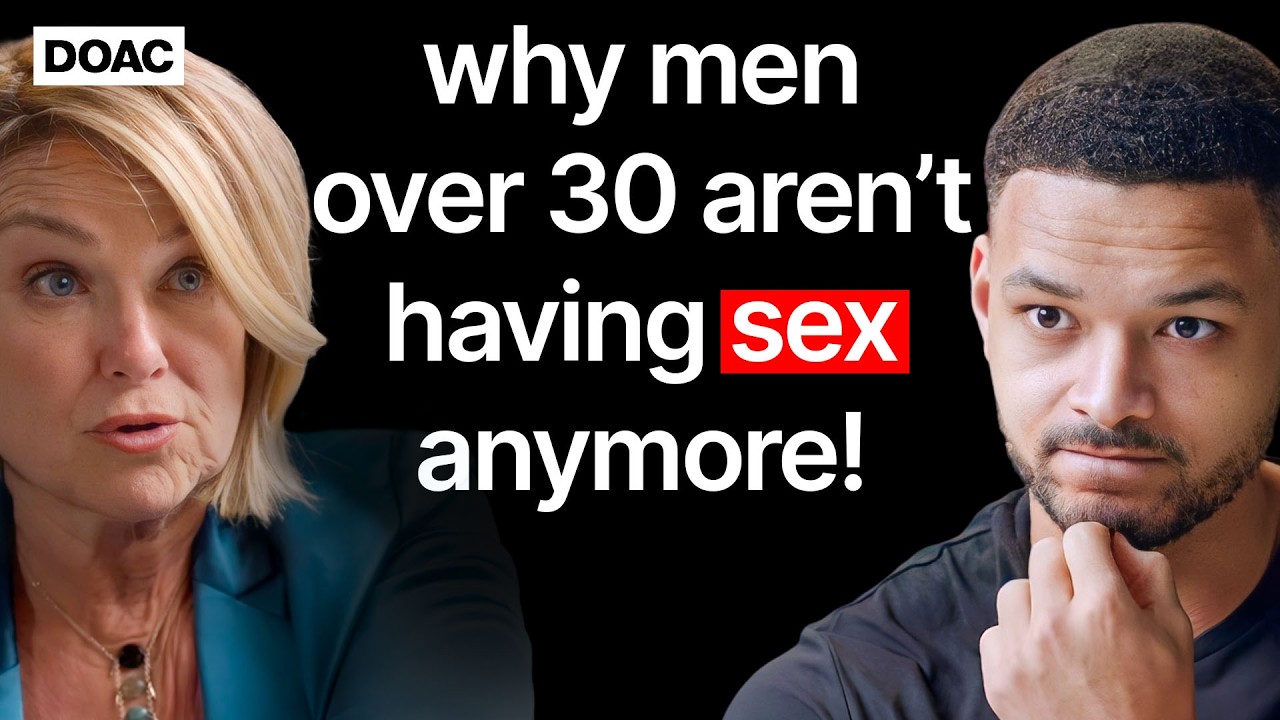
Psychotherapist Esther Perel Traces Intimacy Crisis to Digital Atrophy
The Diary Of A CEO
Hyper-connectivity and algorithmic convenience cause social skills to atrophy, leaving young people trapped in low-effort digital loops that degrade real-world relationships and sexual desire.
## Background
Published on June 12, 2025, on YouTube by Steven Bartlett on his channel The Diary Of A CEO, this episode features psychotherapist Esther Perel. According to the page description, the discussion uncovers hidden truths behind modern dating, loneliness, the decline in sex and intimacy, and strategies to revive deep human connection.
## TL;DR
Psychotherapist Esther Perel joins host Steven Bartlett to analyze the root causes of the modern intimacy crisis, highlighting social atrophy, algorithmic perfectionism, and digital distraction as major drivers of romantic disconnect. The conversation explores the sharp decline in partnered sex among young adults, debunks common myths surrounding monogamy and female sexual desire, and addresses issues of infidelity and changing gender dynamics. Perel critiques hyper-individualistic self-love trends, emphasizing that genuine fulfillment and resilience stem from real-world human connection and relational presence.
## Atmosphere & style
The conversation carries an intimate, emotionally grounded, and intellectually stimulating tone, blending clinical wisdom with raw personal vulnerability. Steven Bartlett acts as an open, curious interlocutor—frequently bringing forward candid questions from his personal friend group and examining his own relationship habits—while Esther Perel offers articulate, perceptive, and authoritative insights. The dynamic shifts naturally between deep psychological analysis and warm, actionable warmth, culminating in live, authentic moments of reflection and connection on set.
## Key takeaways
- [02:14](https://www.youtube.com/watch?v=QCaFWrT0j-g&t=134s) Esther Perel, psychotherapist and relationship expert, warns of severe social atrophy as modern culture redesigns human communication and relies on screen interactions over real-world practice.
- [04:04](https://www.youtube.com/watch?v=QCaFWrT0j-g&t=244s) Relying exclusively on dating apps creates a self-defeating loop of low effort, uninspired messaging, poor matches, and eventual burnout.
- [06:58](https://www.youtube.com/watch?v=QCaFWrT0j-g&t=418s) Rejection is an essential relational feature and developmental skill that dating apps try to bypass, contributing to a lack of adaptability in real life.
- [10:07](https://www.youtube.com/watch?v=QCaFWrT0j-g&t=607s) Dating apps have shifted from tools for broadening social circles into platforms for emotional capitalism, commodification, and low-energy flirting.
- [12:46](https://www.youtube.com/watch?v=QCaFWrT0j-g&t=766s) Algorithmic perfection and frictionless digital services warp people's expectations, leading them to expect human partners to be just as frictionless as AI.
- [14:15](https://www.youtube.com/watch?v=QCaFWrT0j-g&t=855s) The transition from traditional relationship models based on duty and obligation to modern models based on choice offers freedom, but can cause isolation, self-doubt, and confusion.
- [15:42](https://www.youtube.com/watch?v=QCaFWrT0j-g&t=942s) Loneliness and emotional isolation among men are cultural and social developments rather than intrinsic biological traits.
- [17:02](https://www.youtube.com/watch?v=QCaFWrT0j-g&t=1022s) A severe 'sexual recession' is affecting young adults, driven by social atrophy, hyper-connectivity, and an influx of young men presenting with erectile dysfunction due to over-reliance on pornography.
- [20:02](https://www.youtube.com/watch?v=QCaFWrT0j-g&t=1202s) Digital distraction introduces 'ambiguous loss' into relationships, where partners are physically present but emotionally absent due to constant screen use.
- [24:12](https://www.youtube.com/watch?v=QCaFWrT0j-g&t=1452s) Cultivating 'clean time' and strict boundaries between work and personal life resets emotional connection and releases oxytocin.
- [28:38](https://www.youtube.com/watch?v=QCaFWrT0j-g&t=1718s) Confessing past infidelity merely to clear one's own guilty conscience can be an act of cruelty that destroys a partner's sense of shared history.
- [33:20](https://www.youtube.com/watch?v=QCaFWrT0j-g&t=2000s) Research demonstrates that women often grow bored with monogamy faster than men when routine sexual activity lacks emotional depth, novelty, and playfulness.
- [48:00](https://www.youtube.com/watch?v=QCaFWrT0j-g&t=2880s) Modern culture's hyper-focus on self-love and self-optimization can degenerate into self-absorption, whereas genuine psychological health stems from relational connection.
- [52:35](https://www.youtube.com/watch?v=QCaFWrT0j-g&t=3155s) Self-awareness develops in relation to others, and connecting on a fundamental human level helps bridge the gaps created by modern gender wars.
- [58:35](https://www.youtube.com/watch?v=QCaFWrT0j-g&t=3515s) True confidence is holding oneself in high regard while acknowledging flaws, built incrementally through life experience and trial.
- [01:02:00](https://www.youtube.com/watch?v=QCaFWrT0j-g&t=3720s) The primary factor in developing psychological resilience is having at least one person who unconditionally believes in you.
- [01:02:41](https://www.youtube.com/watch?v=QCaFWrT0j-g&t=3761s) Trauma is the experience of a terrifying event in the absence of an empathic witness; healing requires validation and acknowledgment.
- [01:13:55](https://www.youtube.com/watch?v=QCaFWrT0j-g&t=4435s) Reversing global social atrophy requires daily micro-moments of human warmth, talking to strangers, group singing, and learning constructive conflict resolution.
- [01:16:53](https://www.youtube.com/watch?v=QCaFWrT0j-g&t=4613s) The core pillars of relational health—trust, belonging, recognition, and collective resilience—apply equally to romantic partnerships and organizational workplaces.
## Detailed walkthrough
### [00:00](https://www.youtube.com/watch?v=QCaFWrT0j-g&t=0s) Intro & The Friend Group Questions
The conversation opens with Steven Bartlett sharing a personal experiment: he messaged his closest friends asking for the raw, unspoken questions they would never dare say out loud. The responses revealed deep-seated anxieties around modern relationships and intimacy:
* *"How can I be satisfied with just one sexual partner?"*
* *"I have a secret partner—should I tell them?"*
* *"I no longer find my partner attractive, but I don't know how to tell her."*
Renowned psychotherapist Esther Perel steps into the studio, ready to tackle these heavy questions. Steven highlights her 40-year career helping millions of people with brutally honest, relatable insights. Perel warns that our current culture is experiencing a severe loss of essential social skills because people are pursuing connections beyond the human world—relying on pornography instead of partner sex, getting trapped in algorithmic perfection, and enduring the burnout of dating apps.
---
[02:14](https://www.youtube.com/watch?v=QCaFWrT0j-g&t=134s) Esther’s Main Concern: Social Atrophy
When asked what concerns her most about modern dating, mating, and human connection, Perel identifies a unique historical shift where society is completely redesigning how humans communicate. Her biggest concern is **social atrophy**—the physical loss of social skills when connection "muscles" go unused and numb.
Unlike a sport where walking away simply means you stop playing, human beings are social creatures wired for connection. She stresses that humans live longer due to meaningful social bonds, not because of biohacking. As opportunities to practice everyday interactions diminish, people are left feeling profoundly dissatisfied with their options for connection.
---
[04:04](https://www.youtube.com/watch?v=QCaFWrT0j-g&t=244s) Is Online Dating the Only Option?
Addressing the overwhelming anger and fury directed at dating apps, Perel challenges the narrative that apps are the *only* way to meet a partner. She urges people to step outside and create real-world opportunities—walk the dog, join a bike group, go for a run, or simply offer to buy a coffee for the stranger standing next to them in line.
Perel views dating apps as a tool rather than a total replacement for real life. To illustrate the lost art of spontaneous conversation, she shares an anecdote from a recent three-hour flight where, because the Wi-Fi was down, she engaged in a rich, spontaneous conversation with two strangers. All three agreed that had Wi-Fi been available, they would have exchanged barely five minutes of pleasantries before retreating into their screens.
When individuals rely solely on apps, they fall into a self-defeating loop:
1. **Low Effort:** Burned-out users swipe mindlessly and respond with minimal effort.
2. **Poor Outcomes:** Uninspired messaging yields no matches or meaningful responses.
3. **Frustration & Withdrawal:** Blaming the app, users take a six-month hiatus, only to return and repeat the cycle without ever exploring real-world situations.
---
[06:58](https://www.youtube.com/watch?v=QCaFWrT0j-g&t=418s) The Value of Rejection & The 2-Million Swipe Story
Perel explains that original dating apps were designed to gamify interaction so people could avoid putting themselves out there and facing rejection. However, she argues that **rejection is a vital feature of relationships**—learning to live with people who say "no" is an essential developmental skill.
To illustrate the extremity of app dependence, Steven shares the viral story of a man who tracked his Tinder usage over nearly six years:
* **Total Swipes:** 2,058,000
* **Matches:** 2,000
* **Chats:** 1,200
* **Actual Dates:** 1
Looking at the man's profile picture—which featured him holding up a giant fish—Perel notes with humor that holding a massive fish might not be the most effective hook for women.
When Steven asks what advice this man needs, Perel states she wouldn't focus on his app strategy at all; she would examine his life *off* the app. Spending five to six years swiping two million times shows a rigid inability to adapt. "If you're trying to park in a space that you can't get in," she asks, "at some point, don't you go look for another space?"
- **Timeframe on App:** Just over 5 years (almost 6 years)
- **Conversion Rate:** 2,058,000 swipes resulting in just 1 single date
---
[10:07](https://www.youtube.com/watch?v=QCaFWrT0j-g&t=607s) Emotional Capitalism and the App Misery
Perel critiques the shift from apps being tools that broaden one's social circle to engines of **emotional capitalism** and commodification. Users shop for partners, attempt to maximize their odds, and treat others disposable.
The primary source of misery on dating apps isn't just failing to meet someone; it is the cruel behavior enabled by semi-anonymity. People ghost, make promises and disappear, or silently "close shop" without basic courtesy, leaving others feeling bitter, angry, and full of self-doubt.
---
[11:11](https://www.youtube.com/watch?v=QCaFWrT0j-g&t=671s) Paradox of Choice vs. Low-Energy Flirting
Responding to Steven's point about how infinite choices feel like an overwhelming restaurant menu in Thailand—making every choice feel less special—Perel agrees that users face a constant paradox of choice and intense FOMO. However, she points out that despite these choices, people put almost no creative energy into reaching out.
Comparing human effort unfavorably to nature, Perel jokes that "even a peacock is more creative than us" when trying to attract a mate. She calls out the typical, low-energy messages dominating dating apps:
* *"Hey, what's up?"*
* *"Want to hang?"*
* *"I'm watching. I'm chilling."*
Perel advises people to break out of this demoralized cycle by showing genuine curiosity and life. Instead of dry check-ins, ask engaging questions like, *"I saw something in your picture—if we went to listen to music, what's the first band we'd go see?"*
Beyond dating apps, society is surrounded by algorithmic perfections, predictive technologies, and frictionless, on-demand services. This creates warped, sycophantic expectations that people bring into human relationships, expecting partners to be just as frictionless and responsive as an AI.
Addressing the plight of men on apps, Perel notes that stories like the two-million-swipe guy often become victim narratives about how "men don't get answered." She cautions against drawing broad conclusions without context, noting that these accounts rarely mention how many times the man himself ignored others or failed to offer an inviting interaction.
---
[14:15](https://www.youtube.com/watch?v=QCaFWrT0j-g&t=855s) Shifting Masculinity, Duty, and Freedom
Steven brings up the changing landscape for men, noting that suicide is a leading killer for men over 45 and that shifting gender roles have left many men feeling a lack of purpose. As women achieve greater financial independence, traditional male provider roles are less defined than they were 50 or 100 years ago.
Perel explains masculinity by contrasting historical relationship models:
* **Past Model (Duty & Obligation):** Relationships were centered on duty, loyalty, and community. Fulfillment came from meeting obligations to one's family and collective. (This remains the prevailing model in much of the world).
* **Modern Model (Option & Choice):** Western culture shifted to individual choice. While this grants unprecedented personal freedom, it leaves people with zero clarity, causing them to feel more isolated, confused, and filled with self-doubt than ever before.
---
[15:42](https://www.youtube.com/watch?v=QCaFWrT0j-g&t=942s) Loneliness Is a Cultural Phenomenon
Reflecting on her 40 years of clinical practice, Perel addresses the pervasive crisis of loneliness, particularly among men and boys. She strongly refutes the idea that loneliness is inherent or biological to men, pointing out historical examples: in the 19th century, men gathered, hunted, hiked, and conversed together constantly.
Furthermore, young boys up to ages four and seven are naturally highly emotional and articulate. Therefore, the emotional isolation and social withdrawal seen in adult men today are purely cultural and social developments rather than intrinsic biological traits.
---
[16:51](https://www.youtube.com/watch?v=QCaFWrT0j-g&t=1011s) The Sex Recession: Why Young Men Are Having Less Sex
Steven introduces a startling statistic regarding intimacy trends: **1 in 3 men under the age of 30 in the US reported having no sex in the past year**—a rate that has tripled since 2008. Millennials and Gen Z are having significantly less sex than previous generations, setting the stage for a deeper discussion on modern intimacy.
- **Data Point:** 1 in 3 US men under 30 had no sex in the past year (triple the rate recorded in 2008).
[17:07](https://www.youtube.com/watch?v=QCaFWrT0j-g&t=1027s) The Sexual Recession and Social Atrophy
Steven Bartlett opens by reciting striking statistics about the modern decline in intimacy: younger generations are having significantly less sex than any previous generation on record, despite widespread access to dating apps. In Japan, over 40% of young adults are virgins, with many expressing zero interest in sex. Furthermore, married couples across both the UK and the US report a steady decrease in sexual frequency since the early 2000s. Esther Perel points out that she wrote about this exact trajectory twenty years ago in her book *Mating in Captivity*. She explains that to have sex with a partner, one must first possess the capacity to approach them; thus, the broader "sexual recession" is directly linked to a systemic social atrophy.
Perel highlights that adolescents—particularly in the US—are increasingly hanging out exclusively in broad group settings rather than engaging in the one-on-one romantic pair bonding that historically helped teenagers develop relational and sexual maturity. In the past, sex was part of an evolving relational narrative; today, young adults often reach adulthood viewing potential romantic partners as an intimidating, unknown continent to conquer. This disconnect is exacerbated by a lack of basic cross-gender friendships that used to help people understand one another. Consequently, partnered sex has plummeted, while solo sexual activity, masturbation, and porn consumption have filled the vacuum. Perel notes a telling clinical trend: the vast majority of men currently seeking sex therapy for erectile dysfunction are not older men recovering from prostate issues, but young men in their 20s who have trained their physiological responses solely on pornography rather than real-world interpersonal attunement.
- **Japan Virginity Metric:** Over 40% of young adults in Japan are virgins, with a high proportion expressing total disinterest in sex.
- **Marital Sex Trends:** A steady decline in sexual frequency among married couples in the US and UK has been documented since the early 2000s.
- **Clinical Shift:** Sex therapists are seeing an unprecedented surge of 20-something men presenting with erectile dysfunction due to over-reliance on solo masturbation and porn.
[20:02](https://www.youtube.com/watch?v=QCaFWrT0j-g&t=1202s) Digital Distraction and "Ambiguous Loss" in Relationships
The discussion shifts to how hyper-connectivity and constant device usage destroy the fabric of romantic intimacy. Perel emphasizes that social isolation leads people to confuse virtual contacts with real friends: someone might have a thousand followers or digital contacts, yet have no one to pick up a prescription, check on them when ill, or feed their cat. When Steven asks why this social isolation hurts sex within an existing marriage, Perel points out that screens create a state of chronic distraction at home. Couples spend up to nine hours staring at screens at work, only to return home exhausted and scroll on their phones while watching TV side-by-side, barely acknowledging each other.
Perel labels this modern dynamic "ambiguous loss"—a term originally coined by psychologist Pauline Boss to describe the experience of family members caring for loved ones with Alzheimer's or dementia, or families of missing persons. In a modern relationship context, ambiguous loss occurs when a partner is physically sitting right beside you, but emotionally and psychologically absent in another digital universe. This creates profound relational friction because the non-scrolling partner feels completely disconnected, leading to chronic subtextual arguments over minor issues.
> "Ambiguous loss is when I'm actually with somebody, but I don't feel the closeness, the intimacy, the connection from actually being with that person. I don't know if you're here or not here."
[24:12](https://www.youtube.com/watch?v=QCaFWrT0j-g&t=1452s) Reconnecting Across Boundaries: Boundaries, Clean Time, and Delineation
Steven shares a personal vulnerability regarding his own relationship with his partner. He notices that whenever they reunite after he has been away filming—such as shooting *Dragons' Den* in Manchester—they routinely experience friction for the first day or two. He enters the home with his mind racing from work demands, trying to multitask, while his partner seeks genuine connection and ends up feeling ambiguous loss. Perel validates this struggle, noting that when professional, personal, and romantic roles collapse into the same physical space simultaneously, it creates mental indigestion and elevated stress for everyone involved.
To counter this, Perel strongly advocates for creating strict "demarcation" or "delineation" of time and space. She advises scheduling clean, uninterrupted time—even if it is just thirty minutes or an hour—where screens are put away and work calls are paused. She stresses that doing this is not merely a sacrifice for one's partner; stepping out of work mode to fully drop into a shared space releases oxytocin, reduces headaches, and provides a level of physiological well-being that no health supplement can match.
- **Context Switching:** Merging the roles of founder, boss, podcaster, and romantic partner into a single moment produces psychological confusion and friction.
- **The Power of Clean Time:** Intentionally carving out device-free, present interaction acts as a vital reset button for emotional and physical intimacy.
[27:52](https://www.youtube.com/watch?v=QCaFWrT0j-g&t=1672s) Unpacking Friend Questions: Infidelity, Guilt, and Attraction
Steven reads a series of raw, anonymous questions submitted by a group chat of ten of his closest male friends. The first dilemma addresses a friend who committed past infidelity, feels immense guilt, and wonders whether he should confess to his partner. Perel offers a nuanced counter to modern culture's obsession with absolute transparency: confessing simply to unburden a guilty conscience can often be an act of cruelty rather than care. Confession destroys the partner's narrative and shared history of the relationship just so the unfaithful partner can feel "clean." Instead, Perel advises the individual to face their responsibility, deal with their guilt internally, and honor their partner by investing fully in making the relationship extraordinary without dumping their "dirt" onto them.
The conversation then turns to another friend's query about losing attraction to a long-term partner whom he still loves. Perel explains that attraction is not a static, mechanical switch that turns on automatically; it is a fluid element of a broader narrative and context. People cannot expect to watch TV for hours, scroll endlessly on phones, ignore interaction, and then magically feel intense sexual attraction. Furthermore, Perel clarifies that a physical shutdown or loss of desire often stems from buried resentment, unaddressed emotional hurt, or body-held anger following past relationship conflicts.
- **Ethics of Confession:** Radical transparency regarding past infidelity can sometimes be a self-serving attempt to clear one's own guilt at the expense of devastating the partner.
- **Dynamic Nature of Attraction:** Attraction relies heavily on meaningful interaction, emotional generosity, and freedom from unaddressed resentments rather than purely physical aesthetics.
[33:20](https://www.youtube.com/watch?v=QCaFWrT0j-g&t=2000s) Monogamy, Boredom, and Female Desire
Addressing a third query from Steven's friend regarding how anyone can stay satisfied with just one sexual partner long-term, Perel delivers a counterintuitive truth that surprises Steven: women actually get bored with monogamy much faster than men. While men often assume their female partners have simply lost interest in sex altogether, the reality is usually that women have lost interest in the *specific type of routine sex* being offered.
Perel argues that for women to maintain sexual desire over long periods, the sex itself must remain novel, engaging, and worth wanting. Historically, societal double standards around infidelity kept women in marriages despite boredom. Therefore, staying sexually satisfied in a long-term monogamous relationship requires both partners to actively cultivate erotic surprise, playfulness, and emotional depth rather than relying on habit or assuming monogamy operates on autopilot.
> "Women get bored with monogamy much sooner than men... In order to want sex, it needs to be sex that is worth wanting. For women to remain interested, it needs to be interesting."
[34:47](https://www.youtube.com/watch?v=QCaFWrT0j-g&t=2087s) Complacency and Taking Responsibility for Sparking Eroticism
Esther Perel and Steven Bartlett unpack the dilemma of a viewer who feels frustrated by long-term monogamy after 25 years of marriage. Perel emphasizes that while many individuals experience natural curiosity or fantasies about other partners, opting to stay in a monogamous relationship requires a conscious shift in focus. Instead of harboring resentment over unmet desires or complaining about a lack of variety, partners must actively invest energy into enriching their shared intimate life. She points out that complacency, laziness, and the "same old same old" routine are self-defeating habits that kill eroticism.
Perel highlights that true intimacy requires bringing creativity, curiosity, and playfulness home rather than leaving only emotional "leftovers" after work. When people complain about feeling bored or dissatisfied with their single partner, they are often failing to take personal accountability for cultivating vibrancy in their own relationship. She notes that the desire for eroticism—defined as a vital life force rather than just physical sex—must be nurtured intentionally, demanding active participation rather than passive expectation.
- Staying in a long-term monogamous relationship requires accepting trade-offs rather than expecting "the best of all worlds" without effort.
- "Eroticism" in long-term relationships is about cultivating aliveness, playfulness, and imagination, not simply increasing sexual frequency.
- People frequently bring their best creative energy and focus to their professional lives while returning home with empty emotional reserves.
---
[40:47](https://www.youtube.com/watch?v=QCaFWrT0j-g&t=2447s) Re-framing Female Monogamy and Rekindling Dead Intimacy
Addressing common gender stereotypes, Perel challenges the pervasive myth that men naturally crave novelty while women are innately content with monogamy. She asserts that research and clinical practice show women often grow bored with monogamy faster than men when it lacks emotional depth, novelty, and imagination. While men can remain content with routine physical sex, women frequently require richer emotional and sensory engagement—risqué play, heightened connection, and attentiveness—to stay fully engaged over decades.
```
┌────────────────────────────────────────────────────────┐
│ Gender & Monogamy Dynamics │
└───────────────────────────┬────────────────────────────┘
│
┌─────────────────────────┴─────────────────────────┐
│ │
▼ ▼
┌─────────────────────────────────┐ ┌─────────────────────────────────┐
│ Traditional View │ │ Perel's Insight │
├─────────────────────────────────┤ ├─────────────────────────────────┤
│ • Men crave novelty & variety │ │ • Women bore faster with routine│
│ • Women naturally seek stability│ │ • Women require richer engagement│
│ • Low sex = female low libido │ │ • Men adapt better to routine │
└─────────────────────────────────┘ └─────────────────────────────────┘
```
When Steven shares a follow-up text from his friend admitting that the intimacy in his marriage "died so long ago" that it feels unrevivable, Perel dictates a script for an authentic conversation. She advises against defensive arguments or surface-level complaints, suggesting instead a vulnerable, written or spoken invitation. Describing sexual desire as undergoing "intermittent eclipses"—like the moon that disappears only to return—she encourages partners to acknowledge past complacency and invite each other to re-engage in bringing back the spark.
- Monogamy often breaks down when sex becomes a routine task rather than a shared experience of deep connection and play.
- Re-igniting a "dead" intimate connection requires admitting mutual contribution to the gap without assigning defensive blame.
- Desire naturally fluctuates in long-term relationships; an eclipse of intimacy is not necessarily a permanent end.
Steven Bartlett shares a personal story regarding his decision to invest heavily in Stan Store after seeing his girlfriend struggle late at night trying to build an e-commerce website for her business. He highlights how the platform simplifies digital product sales, courses, and coaching through a unified link-in-bio interface that integrates payments, bookings, and email marketing.
- **Stan Store Challenge:** Steven announces a $100,000 challenge for creators leveraging the platform to monetize their expertise.
- Special offer provided via `stephenbartlett.stan.store` featuring an extended 30-day free trial.
---
[45:40](https://www.youtube.com/watch?v=QCaFWrT0j-g&t=2740s) Why Modern Intimacy Is Failing Beyond the Bedroom
Perel forcefully refutes the idea that people today simply "don't like sex" as much as previous generations. Having authored books on desire decades prior, she argues that the fundamental dynamics of human desire remain unchanged, but the environment surrounding modern couples has deteriorated. Modern partners are hyper-distracted, multitasking, and living with fragmented attention, leaving little space for genuine human presence.
The breakdown of sex in long-term relationships is rarely a isolated issue of physical technique; it is the direct consequence of an uninteresting shared life. When couples stop laughing, kissing, looking at each other, or engaging in meaningful dialogue, expecting intense physical passion in bed becomes unrealistic. Perel draws a direct parallel to workplace dynamics: just as employee performance is a downstream result of culture and engagement, sexual intimacy is downstream of relational quality and daily connection.
> "Their life is less interesting. The sex is the consequence of seven other things before. God, they haven't said anything interesting to each other, they haven't laughed, they haven't kissed each other... and suddenly the sex needs to be all hot and passionate on what freaking basis?"
- Fragmented attention and constant multitasking drain the presence needed for sexual attraction.
- Sexual intimacy serves as a mirror for the daily quality of communication, affection, and mutual interest between partners.
- High engagement and presence are prerequisites for quality performance, both in personal relationships and professional environments.
---
[48:00](https://www.youtube.com/watch?v=QCaFWrT0j-g&t=2880s) The Toxic Over-Index on Self-Love and Hyper-Individualism
Critiquing modern self-help culture, Perel challenges the popular premise that individuals must fully "work on themselves" or achieve total self-love before being capable of a healthy relationship. She argues that the contemporary obsession with self-care, self-optimization, and hyper-individualism has gone overboard, degenerating into consumerism and self-absorption. While personal self-awareness is valuable, treating self-relation as the ultimate destination rather than a stepping stone leads to isolation.
Perel emphasizes that human well-being, longevity, and happiness are fundamentally rooted in relational connection to others and engagement with external causes. Focusing inward through constant "navel-gazing" often fuels anxiety and unhappiness. True psychological health comes from balance—relating healthily to oneself in order to actively contribute to, connect with, and care for the world outside.
```
┌────────────────────────────────────────────────────────┐
│ Self-Focus vs. Relational Well-Being │
└───────────────────────────┬────────────────────────────┘
│
┌─────────────────────────┴─────────────────────────┐
│ │
▼ ▼
┌─────────────────────────────────┐ ┌─────────────────────────────────┐
│ Hyper-Individualism Myth │ │ Relational Reality │
├─────────────────────────────────┤ ├─────────────────────────────────┤
│ • Must fix self before loving │ │ • Healing happens in connection │
│ • Self-care is the final goal │ │ • Self-relation is a stepping │
│ • Focus entirely on optimization│ │ stone to outer connection │
│ • Inward focus builds happiness │ • Giving to others boosts health │
└─────────────────────────────────┘ └─────────────────────────────────┘
```
- Modern culture overemphasizes self-love and self-fulfillment at the expense of community and relational responsibility.
- Acts of service, simple social connections, and altruism chemically elevate oxytocin and relieve depressive feelings.
- The ultimate goal of psychotherapy is not merely self-satisfaction, but removing internal obstacles to forming meaningful bonds with others.
---
[51:04](https://www.youtube.com/watch?v=QCaFWrT0j-g&t=3064s) Changing Gender Dynamics and the Fragility of Masculinity
The conversation pivots to changing socio-economic roles and their impact on romantic dynamics. Steven brings up the friction created when women earn more than their male partners, citing discussions with scholars like Richard Reeves on the changing state of men and boys. Perel observes that terms like "emasculation" exist exclusively in the context of masculinity, reflecting how male identity has historically been constructed as something fragile that must constantly be proved and defended.
When women achieve economic independence and leadership, traditional masculine frameworks anchored solely in financial provision are challenged. Perel notes that this shift requires men to redefine their value within relationships beyond the legacy model of being the sole breadwinner, moving toward deeper emotional presence and shared partnership.
- Masculinity has historically operated as an identity that feels required to continuously prove itself through status and provision.
- Shifting economic realities require both men and women to unlearn traditional gender scripts regarding breadwinning and authority.
Here is a detailed, faithful walkthrough of the provided transcript section.
[52:35](https://www.youtube.com/watch?v=QCaFWrT0j-g&t=3155s) Moving Beyond the "Gender Wars" to Reclaim Shared Humanity
Esther Perel addresses the polarizing discourse currently dividing men and women. She directly rejects participating in a dialogue that pits the genders against each other—one where women speak of men as "useless" and men respond with bitterness. Historically, men have always struggled with powerful women, women have long desired partners who are both powerful and nurturing, and fathers have frequently shown deep tenderness. Turning the conversation into a gender war fails to offer a fair rendering of masculinity, fathers, brothers, husbands, or wives. Around the world, millions of men work day and night to provide for and save their families, showing dedication that goes far beyond their paychecks. Women have out-earned men in various industries for a long time, and non-traditional family structures—such as gay couples—have expanded our understanding of parenting. It is time to move past rigid binaries.
Steven Bartlett suggests that relating to others starts with self-awareness and asks Esther to clarify how one discovers themselves. Esther explains that self-awareness does not develop in isolation; rather, "it is in the presence of another that we discover ourselves." Steven resonates with this, noting that his own identity is intimately tied to how he relates to his partner—whether opening doors, carrying bags, or solving problems logically. He raises the fundamental question facing many modern men: if a man does not know what his role is, how can he relate to others?
To bridge this divide, Esther shares a powerful exercise from her relationship retreats (such as one she hosts in Greece). She places all men (or those identifying as men) inside a "fishbowl" while women sit around them and listen without judgment, opinions, or interruption for up to two hours. The men speak openly about their challenges, frustrations, hopes, losses, self-doubt, shame, and "shadows."
> "Things become softer and people start to weep in front of total strangers and you realize humanity is bigger than gender... connecting on the human level to me supersedes some of these gender wars."
- **Key Takeaways from the Fishbowl Exercise:**
- Participants realize how much their own projections and assumptions stand in the way of real understanding.
- Listeners experience the rare gift of receiving someone else's raw vulnerability.
- The process transforms rigid judgment into empathy, proving that beneath gender constructs lies a shared, fundamental humanity.
- Esther notes that while she cannot control social media algorithms when participants return home, creating these transformative, deeper connections makes her genuinely hopeful.
---
[58:35](https://www.youtube.com/watch?v=QCaFWrT0j-g&t=3515s) Redefining Confidence and Navigating Personal Failure
The conversation shifts to personal confidence and its role in healthy relationships. Quoting her colleague and friend Terry Real, Esther defines true confidence: "Confidence is when you are able to see yourself as a flawed person and still hold yourself in high regard." It is not about certainty, being right, or possessing absolute knowledge; it is the willingness to try, make mistakes, be wrong, and try again without self-loathing.
When Steven asks if there is a way to accelerate the process of building confidence, Esther flatly rejects the idea of shortcuts, noting that trying to fast-track confidence at a young age often manifests as arrogance. Confidence is domain-specific and built incrementally over time through life experience and maturity. In her 20s and 30s, Esther reveals she would obsess over a single mistake for three weeks; today, that obsessiveness lasts only three hours, or at most three days for severe errors.
```
Confidence Evolution (Esther's Experience):
• 20s & 30s: Obsessed over a mistake for up to 3 weeks
• Present: Processes a mistake in 3 hours (3 days for severe errors)
```
Steven raises a fundamental psychological mystery: why do two people experience the exact same adverse circumstances, yet one emerges resilient while the other is crushed and broken? Esther agrees this is one of the ultimate questions in therapy. However, research highlights one decisive factor that consistently separates those who build resilience from those who crumble:
- **The Primary Resiliency Factor:** Having at least one person who unconditionally believed in them—a teacher, coach, neighbor, or mentor—who refused to give up on them even when they were failing. (This person is often outside the family, as the core adversity frequently originates within the home).
---
[01:02:41](https://www.youtube.com/watch?v=QCaFWrT0j-g&t=3761s) Meaning-Making, Trauma, and the Empathic Witness
Steven shares a story told to him by neuroscientist Dr. Lisa Feldman Barrett about a young woman who grew up with an abusive, aggressive uncle. Despite the abuse, the girl functioned well in school and slept fine for years. However, years later, while watching an episode of *The Oprah Winfrey Show* about domestic violence featuring weeping survivors, the young woman suddenly began manifesting severe, debilitating symptoms of trauma—sleep disruption, academic decline, and profound distress. Steven asks whether trauma and emotional distress can be "contagious" when society or media provides a framing narrative for past experiences.
Esther explains that humans are inherently "meaning-making machines." If individuals do not assign personal meaning to an experience, they adopt the collective cultural framing of their era. Every society develops its own diagnostic vocabulary to explain internal distress:
| Era / Culture | Cultural Interpretation of Distress |
|:--- |:--- |
| **19th Century** | Hysteria |
| **Indigenous / Traditional Cultures** | Unhappy ancestors, spirits knocking at the door, unmourned dead |
| **Modern Society** | Anxiety, burnout, stress, "therapy speak," TikTok diagnoses |
Distinguishing between behavior and identity, Esther cautions against conflating what we do with who we are. She illustrates the complexity of identity using the example of JFK Airport border control lines:
- **The Tourist:** May have lived in the U.S. for years, but internal self-definition lacks external legal recognition.
- **The American Passport Holder:** May have lived abroad their whole life, holding external legal status without internal alignment.
- **The Resident Alien:** Possesses long-term physical presence while formally designated as a guest.
Reframing the story of the woman watching Oprah, Esther offers a deeper therapeutic explanation for her sudden reaction. Trauma is rarely just the raw event itself; trauma is the experience of a terrifying event *in the absence of an empathic witness*.
When the woman watched Oprah Winfrey respond to victims with deep empathy, validation, and sorrow, Oprah acted as the ultimate "empathic witness." Before a person can assign meaning to trauma, the experience must first be recognized and acknowledged. The true tragedy in many abusive situations is not only the harm inflicted, but the complete lack of acknowledgment that it ever happened. Watching the show provided the safe resonance needed for the woman's suppressed pain to finally surface and be acknowledged.
Here is a detailed, faithful walkthrough of the transcript segment.
---
[01:10:15](https://www.youtube.com/watch?v=QCaFWrT0j-g&t=4215s) Experiencing Emotion in a Safe Container and Esther’s First Oprah Appearance
Continuing their discussion around emotional release, Esther offers an alternative interpretation of why someone might break down unexpectedly. When a person feels safe enough in an environment—such as sitting across from an empathic witness—they are finally given permission to let down their guard. Esther explains that in order to finally admit something or experience long-held pain, you must feel held within a secure container.
Steven reflects on how powerful this environment is, noting that when an audience and a host like Oprah provide collective empathy, it gives people an implicit label and permission to feel feelings they had previously suppressed. Esther mentions that Oprah no longer uses a studio audience, but recalls her own first appearance on *The Oprah Winfrey Show* back in 1987. As a young woman at the time, Esther found the intensity of the studio audience and the sheer scale of the experience to be overwhelming and mind-boggling.
Steven pauses the conversation for two brief sponsor messages:
* **Ekster Wallets:** Steven admits that due to his personality, he frequently loses things—including his wallet and multiple passports overseas. He highlights Ekster wallets, which feature recycled aluminum construction, RFID/digital theft protection, quick card-access buttons, and integration with Apple’s *Find My* technology. He offers listeners a 10% discount, free shipping, and a 100-day trial using code `Steven` at `ekster.com`.
* **LinkedIn Ads:** Steven discusses a common B2B marketing mistake: chasing lead volume over audience quality. He shares how switching to LinkedIn Ads transformed his approach because the platform targets key corporate decision-makers by job title, industry, and company size. He offers viewers a $100 ad credit at `[linkedin.com/diary](https://linkedin.com/diary)`.
---
[01:13:55](https://www.youtube.com/watch?v=QCaFWrT0j-g&t=4435s) Radical Steps for Social Connection: Strangers, Singing, and Conflict
Steven asks Esther a hypothetical question: if she were made "president of the world" and tasked with reversing global social atrophy through drastic measures, what three steps would she take? Esther pushes back on grand, top-down decrees, arguing that life is lived in the small details, not sweeping laws. Rather than passing legislation, she outlines three cultural shifts needed to restore human connection:
1. **Talk to Strangers:** Esther shares a recent experience in a town where every passerby said "hello" and made friendly small talk on the street. Reclaiming basic, everyday warmth and conversing with people around us breaks down isolation.
2. **Sing Together:** Anyone who can make people laugh or sing together in modern society is "doing holy work." Singing in a group creates a shared collective resonance that fosters empathy, playfulness, kindness, and compassion.
3. **Teach People How to Have Constructive Conflict:** Referencing the psychological research of Howard Markman, Esther explains that most couple arguments are rarely about the surface topic being debated. Instead, people fight over three core underlying issues:
* **Power and Control:** Who gets to decide, and whose priorities matter most?
* **Trust, Care, and Closeness:** Can I lean on you? Do you have my back? Will you show up for me?
* **Respect and Recognition:** Do you value me? Do I matter to you?
---
[01:16:53](https://www.youtube.com/watch?v=QCaFWrT0j-g&t=4613s) Translating Relational Dynamics to the Workplace & *Where Should We Begin? At Work*
Steven asks if these core relational dynamics apply equally to professional settings. Esther confirms that they do, explaining her recent advisory work with companies like Culture Amp. By combining her clinical psychotherapy expertise with Culture Amp's massive people-analytics datasets (spanning over 1.5 billion survey data points), they identified four key relational pillars that sustain workplace culture:
* **Trust:** Defined by Rachel Botsman as "an active engagement with the unknown." It is the willingness to rely on colleagues and managers, trusting that they will not betray you, take credit for your work, or place their interests ahead of yours.
* **Belonging:** The mutual relationship between an individual and an organization, where the group helps define the individual's identity and values their unique contributions.
* **Recognition:** Ensuring employees feel seen and respected for their achievements, rather than just meeting mechanical productivity targets.
* **Collective Resilience:** The ability of a group—rather than an isolated individual—to adapt flexibly and creatively to rapid systemic shifts. Esther emphasizes that relational health in business is no longer just a "soft skill," but the new bottom line.
To facilitate these workplace connections, Esther created a corporate version of her conversational card game (*Where Should We Begin? At Work*). She created this specialized edition because businesses loved her original game but had to manually filter out the "pink triangle" sex questions to make it safe for work.
---
[01:21:51](https://www.youtube.com/watch?v=QCaFWrT0j-g&t=4911s) Adapting to AI & The Tradition of the Diary Question
Steven expresses deep gratitude for Esther's intuitive insight into human nature, admitting that she has a rare ability to see through people and bring healing to complex emotional problems. He then poses the traditional closing question left in the diary by the previous guest: *"How are you going to adapt to a world of AI and robots?"*
Esther shares that just an hour before the interview, she used AI in a brainstorming session with her team to explore bold collaboration ideas between herself and Culture Amp. She stresses that AI is an incredible tool when used *by* people to foster human communication, but hopes humanity does not let AI shape us into an unrecognizable species. "I kind of like the ones we've been—imperfect creatures, unpredictable," she reflects.
Steven notes that he plans to use Esther’s new card game at the start of his weekly team meetings to break the ice and build rapport—especially in remote Zoom environments where team attention often drifts.
---
[01:24:46](https://www.youtube.com/watch?v=QCaFWrT0j-g&t=5086s) The Micro-Moments of Intimacy: A Real-Time Text Message
Reflecting on their earlier discussion about "ambiguous loss" and emotional absence, Steven candidly reveals how Esther's words struck a chord. He recalls a past girlfriend telling him, "Even if you're sitting next to me, I feel like you're a million miles away." Esther reminds him that having someone who desires your full attention and affection is a profound privilege, not a burden.
She asks Steven how often he sends his partner simple, sweet text messages throughout the day just to say he is thinking of her. Admitting he rarely does, Steven pulls out his phone right on set and sends his girlfriend a loving text. Within seconds, she responds with a heart emoji and calls him "sweetheart."
Esther smiles and closes with a central philosophy of her work: *"Life is lived in the details. It's all these small things."* Small, authentic gestures put vital energy back into a relationship.
```
+-----------------------------------------------------------------------------------+
| KEY RELATIONAL PILLARS AT WORK |
+---------------------+-------------------------------------------------------------+
| Pillar | Workplace Application |
+---------------------+-------------------------------------------------------------+
| Trust | Active engagement with the unknown; relying on team members |
| Belonging | Feeling part of a collective; mutual value and identity |
| Recognition | Feeling respected and valued beyond mere performance metrics |
| Collective Resilience| Adaptability and creative problem-solving as a unified group|
+---------------------+-------------------------------------------------------------+
```
<ElicitationsGroup message="Explore related relationship and communication insights:">
<Elicitation label="Explore Esther Perel's framework on infidelity and trust" query="Summarize Esther Perel's key principles on addressing infidelity and rebuilding trust in long-term relationships from 'The State of Affairs'."/>
<Elicitation label="Learn techniques for resolving conflict in relationships" query="What are Howard Markman's principles of conflict resolution and how do they apply to personal and professional relationships?"/>
</ElicitationsGroup>
Here is the detailed walkthrough of the transcript section:
[01:27:12](https://www.youtube.com/watch?v=QCaFWrT0j-g&t=5232s) Conversation Cards and Channel Outro
Steven Bartlett wraps up the episode by highlighting his official conversation cards, which are designed to facilitate connection at various depths of intimacy—from casual topics to deep, vulnerable discussions. He explains that users have total control over how deep the dialogue goes, making the cards versatile enough to be played in corporate boardrooms, bedrooms, alone at night, or on first dates. A link to purchase the cards is provided in the video description and via standard retail outlets.
Switching gears to address the channel's audience, Steven shares a stat that continually blows his mind: 53% of regular listeners have not yet subscribed to the podcast. He makes a direct, personal plea to those viewers, asking for a simple, free favor to hit the subscribe button in support of the show. In return, he commits his team to working tirelessly to improve the show every single week, promising to actively listen to listener feedback and secure the exact guests the audience wants to see.
- **Conversation Cards URL:** Available in the video description and at standard retail outlets.
- **Audience Metric:** 53% of regular viewers/listeners are unsubscribed.
- **Host Commitment:** Steven pledges to continuously refine content quality and invite requested guests in exchange for audience subscriptions.
## Notable quotes
> [06:58](https://www.youtube.com/watch?v=QCaFWrT0j-g&t=418s) If you're trying to park in a space that you can't get in, at some point, don't you go look for another space? — Esther Perel
> [11:11](https://www.youtube.com/watch?v=QCaFWrT0j-g&t=671s) even a peacock is more creative than us — Esther Perel
> [20:02](https://www.youtube.com/watch?v=QCaFWrT0j-g&t=1202s) Ambiguous loss is when I'm actually with somebody, but I don't feel the closeness, the intimacy, the connection from actually being with that person. I don't know if you're here or not here. — Esther Perel
> [33:20](https://www.youtube.com/watch?v=QCaFWrT0j-g&t=2000s) Women get bored with monogamy much sooner than men... In order to want sex, it needs to be sex that is worth wanting. For women to remain interested, it needs to be interesting. — Esther Perel
> [45:40](https://www.youtube.com/watch?v=QCaFWrT0j-g&t=2740s) Their life is less interesting. The sex is the consequence of seven other things before. God, they haven't said anything interesting to each other, they haven't laughed, they haven't kissed each other... and suddenly the sex needs to be all hot and passionate on what freaking basis? — Esther Perel
> [52:35](https://www.youtube.com/watch?v=QCaFWrT0j-g&t=3155s) Things become softer and people start to weep in front of total strangers and you realize humanity is bigger than gender... connecting on the human level to me supersedes some of these gender wars. — Esther Perel
> [58:35](https://www.youtube.com/watch?v=QCaFWrT0j-g&t=3515s) Confidence is when you are able to see yourself as a flawed person and still hold yourself in high regard. — Terry Real (quoted by Esther Perel)
> [52:35](https://www.youtube.com/watch?v=QCaFWrT0j-g&t=3155s) it is in the presence of another that we discover ourselves. — Esther Perel
> [01:24:46](https://www.youtube.com/watch?v=QCaFWrT0j-g&t=5086s) Life is lived in the details. It's all these small things. — Esther Perel
## Mentioned
Esther Perel, Steven Bartlett, The Diary Of A CEO, The State of Affairs, Mating in Captivity, Pauline Boss, Dragons' Den, Richard Reeves, Terry Real, Dr. Lisa Feldman Barrett, The Oprah Winfrey Show, Howard Markman, Culture Amp, Rachel Botsman, Where Should We Begin? At Work, Stan Store, Ekster, LinkedIn Ads, Tinder, TikTok, Apple Find My, Culture Amp
Psychotherapist Esther Perel argues that modern society is experiencing severe social atrophy and a sexual recession, driven by hyper-individualism, digital distraction, and the commodification of relationships rather than an intrinsic loss of human desire.
Social Atrophy and the Dating App Dilemma (2:14)
Perel identifies social atrophy—the loss of relational skills through disuse—as her primary concern in contemporary mating. As people substitute spontaneous, real-world interactions with dating apps, connection is increasingly treated as an exercise in emotional capitalism, where semi-anonymity encourages ghosting, disposability, and minimal creative effort. Steven Bartlett cites the case of a man who swiped 2,058,000 times over nearly six years to secure a single date, which Perel views as a rigid inability to adapt rather than just a flawed digital strategy. Furthermore, algorithmic environments foster expectations of frictionless interactions, leaving individuals unequipped to handle rejection, which Perel regards as an essential developmental skill.
The Sexual Recession and Digital Disconnection (16:51)
The widespread decline in intimacy, termed a sexual recession, manifests in demographic shifts: Bartlett notes that one in three U.S. men under 30 reported having no sex in the prior year (a tripling since 2008), over 40% of young adults in Japan are virgins, and marital sexual frequency across the UK and US has steadily fallen since the early 2000s. Perel attributes this drop to adolescent isolation, a lack of cross-gender friendships, and an over-reliance on pornography and masturbation, which clinicians increasingly see as the root of erectile dysfunction in men in their 20s. Within domestic partnerships, hyper-connectivity generates 'ambiguous loss'—a state where partners are physically proximate but psychologically absent while absorbed in screens, triggering chronic friction and emotional distance.
Cultivating Long-Term Eroticism and Female Desire (33:20)
Challenging common gender stereotypes, Perel asserts that women in long-term relationships often grow bored of monogamy faster than men when routine supplants emotional resonance and playfulness. She argues that eroticism is not merely physical sex but a vital life force that requires active investment, creative imagination, and deliberate novelty. Rekindling a stagnant sexual connection requires partners to accept personal accountability rather than relying on complaints or passive expectation. She advises partners to carve out strict, device-free 'clean time' and boundary delineation, noting that sexual intimacy is downstream of everyday engagement, affection, and mutual curiosity.
Reframing Masculinity, Resilience, and Conflict (48:00)
Perel critiques the cultural shift toward hyper-individualism and an overemphasis on self-love, stating that human resilience and well-being are intrinsically relational and fostered through external connection. Addressing shifting gender roles, she observes that masculinity has historically been conditioned as a status requiring continual defense, leading to feelings of aimlessness as traditional provider roles evolve. To counter polarization, she advocates moving beyond 'gender wars' through empathetic listening and shared vulnerability. Additionally, referencing psychologist Howard Markman, Perel notes that constructive conflict resolution requires recognizing the three core issues underlying interpersonal disputes: power and control; trust, care, and closeness; and respect and recognition.
Perel emphasizes that human connection cannot be automated or legislated from the top down; rather, it relies on preserving relational health through daily micro-gestures, conversational engagement with strangers, and learning to navigate the imperfections of human partnership alongside emerging technologies.
## Background
本节目由知名播客频道《The Diary Of A CEO》(主持人 Steven Bartlett)于 2025 年 6 月 12 日在 YouTube 平台发布。节目简介指出,享誉全球的亲密关系心理学家埃丝特·佩瑞尔(Esther Perel)在访谈中揭示了当代约会危机、普遍孤独感以及性与亲密关系断崖式衰退背后的隐秘真相,并深入剖析了男性角色困境、童年创伤、真实人际连接以及维系婚姻生命力的关键法则。
## TL;DR
佩瑞尔指出,现代社会的性生活锐减与亲密关系危机并非性本身变乏味,而是源于严重的“社交萎缩”以及日常生活失去生机;约会软件与屏幕依赖将人际互动商品化,使伴侣同处一室却陷入“模糊丧失”的情感隔离。针对出轨坦白、吸引力消退及单一配偶制疲劳等隐秘困惑,她强调吸引力是动态创造的产物,拒绝以“坦白”转嫁内疚,并主张将最好的精力带回家以重塑情欲生命力。佩瑞尔同时批判了泛滥的极端自爱文化,指出心理韧性必须在真实关系中淬炼,呼吁人们通过面对面交流、学会良性冲突以及在家庭与职场中建立共情见证来对抗时代的孤独危机。
## Atmosphere & style
访谈呈现出一种兼具临床解剖般锐利穿透力与深切人文关怀的对话场域。佩瑞尔的谈吐机智果断、直击痛点,毫不客气地戳破流行心理学中的自欺与借口;主持人巴特利特则以诚恳自省的姿态,代替无数深陷迷茫的普通人袒露脆弱与困惑。现场既有直面人性幽暗与科技异化的激烈思辨,又有即兴指导破冰书信、现场发送温情短信的细腻治愈瞬间,让听众在经历当头棒喝般的认知冲击后,沉淀出直面生活细节的勇气与温暖。
## Bulletin
- [17:02](https://www.youtube.com/watch?v=QCaFWrT0j-g&t=1022s) 现代社会正经历普遍的“社交萎缩”,年轻群体将亲密探索外包给色情与屏幕,导致30岁以下男性无性比例大幅上升,性治疗门诊中勃起功能障碍(ED)患者的主力已从老年人转变为二十出头的年轻男性。
- [10:05](https://www.youtube.com/watch?v=QCaFWrT0j-g&t=605s) 约会软件将亲密关系商品化并营造无摩擦幻觉,使人陷入“选择悖论”与错失恐惧(FOMO),削弱了现实中的调情技巧与承受拒绝的核心心理能力。
- [45:40](https://www.youtube.com/watch?v=QCaFWrT0j-g&t=2740s) 长期关系中的性欲消退并非性本身变得无聊,而是共同生活的日常互动丧失了生机;伴侣长期沉迷屏幕在同室中制造出形同阿兹海默症的“模糊丧失”感。
- [48:00](https://www.youtube.com/watch?v=QCaFWrT0j-g&t=2880s) 过度内耗的“自爱文化”与极端个人主义正在阻碍真实联结,自我认知无法靠关门自省实现,幸福与心理韧性本质上取决于人际关系的质量以及向外的关怀。
## Key takeaways
- [02:14](https://www.youtube.com/watch?v=QCaFWrT0j-g&t=134s) 人类正在经历全方位的“社交萎缩”(social atrophy),面对面互动技能的荒废直接威胁着个体的心理健康与生存质量。
- [06:58](https://www.youtube.com/watch?v=QCaFWrT0j-g&t=418s) 约会软件的游戏化机制让人逃避面对面的拒绝,但承受“被拒绝”恰恰是建立健康亲密关系必不可少的情感韧性功课。
- [10:05](https://www.youtube.com/watch?v=QCaFWrT0j-g&t=605s) 现代约会陷入“情感资本主义”陷阱:半匿名机制助长了无礼冷暴力(ghosting),海量选择并未带来幸福,反而加剧了枯燥调情与受害者叙事。
- [15:42](https://www.youtube.com/watch?v=QCaFWrT0j-g&t=942s) 当代男性的孤独并非天生生理使然,而是支持性男性社群瓦解、传统义务模型转向原子化自由后的文化病症。
- [17:02](https://www.youtube.com/watch?v=QCaFWrT0j-g&t=1022s) 性萧条源于青春期一对一情感练兵场的消失与异性友谊断层,过度依赖单向色情刺激破坏了与真人伴侣的调谐(attunement)能力。
- [22:25](https://www.youtube.com/watch?v=QCaFWrT0j-g&t=1345s) 同处一室却各自盯屏会诱发“模糊丧失”(Ambiguous Loss),伴侣肉体在场而心理缺席的疏离感是摧毁日常吸引力与爆发隐性争吵的元凶。
- [24:12](https://www.youtube.com/watch?v=QCaFWrT0j-g&t=1452s) 伴侣间应建立时空边界划定不被打扰的“纯净时间”,多任务并行会导致角色混乱与关系的情感消化不良。
- [27:52](https://www.youtube.com/watch?v=QCaFWrT0j-g&t=1672s) 以清洗自身良心、减轻愧疚为目的出轨坦白往往是残忍且自私的,是在粗暴剥夺伴侣对过去人生叙事的解释权。
- [31:15](https://www.youtube.com/watch?v=QCaFWrT0j-g&t=1875s) 吸引力是动态情境与互动的产物而非静态开关,身体的闭合承载着未化解的愤怒,单纯在认知层面谈开无法真正唤醒欲望。
- [33:20](https://www.youtube.com/watch?v=QCaFWrT0j-g&t=2000s) 在长期排他性关系中,女性往往比男性更容易对一夫一妻制感到厌倦;维持女性欲望需要具有情欲生命力与值得渴望的互动体验。
- [39:06](https://www.youtube.com/watch?v=QCaFWrT0j-g&t=2346s) 伴侣不应陷入“缺乏新鲜感”的受害者抱怨姿态,而应审视自己是否将最好创造力留给工作、只将疲惫的残羹冷炙带回家中。
- [42:10](https://www.youtube.com/watch?v=QCaFWrT0j-g&t=2530s) 欲望如同月相会遭遇暂时月蚀但完全可以重新升起,面对长年无性冷淡期,伴侣需通过承认回避、坦露脆弱来发起重连邀请。
- [48:00](https://www.youtube.com/watch?v=QCaFWrT0j-g&t=2880s) 泛滥的自爱与自我优化文化正在让现代人陷入自恋式的孤芳自赏,与自我相处只是桥梁,真正赋予生命意义的是与他人及广阔世界的深度联结。
- [51:04](https://www.youtube.com/watch?v=QCaFWrT0j-g&t=3064s) “去男性化”概念在女性语汇中缺乏对等词,暴露出传统男性气概本身的脆弱性;将两性关系简化为对立网络叙事遮蔽了普通家庭中真切的付出与承担。
- [58:56](https://www.youtube.com/watch?v=QCaFWrT0j-g&t=3536s) 自信并非无所不知,而是看清自己身怀瑕疵后依然对自己怀有高度敬意;强行追求速成自信只会催生傲慢。
- [01:08:34](https://www.youtube.com/watch?v=QCaFWrT0j-g&t=4114s) 创伤的本质往往不在于事件本身,而在于缺乏“共情见证者”;痛苦需要安全的情感容器进行确认与托举,才能真正被直面与愈合。
- [01:15:18](https://www.youtube.com/watch?v=QCaFWrT0j-g&t=4518s) 人际或伴侣间表面琐碎的争吵,深层本质几乎全部围绕权力与控制、关怀与亲密、尊重与认可这三大核心诉求展开。
- [01:16:53](https://www.youtube.com/watch?v=QCaFWrT0j-g&t=4613s) 人际关系技能不再是职场软实力而是全新的硬性底线,依托信任、归属感、认可与集体韧性才能打造高绩效与高心理安全感团队。
## Detailed walkthrough
### [00:00](https://www.youtube.com/watch?v=QCaFWrT0j-g&t=0s) 开场:关于伴侣、吸引力与性关系的私密困惑
节目开场,主持人 Steven Bartlett 提到自己曾向身边最亲近的朋友发信息,询问他们内心深处“绝对不会大声说出口”的真实问题。朋友们发来的问题赤裸而直接:“我怎么可能只对一个性伴侣保持满足?”“我背叛了伴侣,我到底该不该向对方坦白?”“我发现自己对伴侣不再有性吸引力了,但我完全不知道该怎么跟她说。”
Esther Perel 是全球知名的关系心理学家与畅销书作家,过去40年里一直以其尖锐透彻、直击痛点的洞察帮助了数百万人。面对现代人亲密关系中的诸多危机,她直言:“人们的性生活越来越少,难道是因为性爱本身变无聊了吗?不,是因为他们共同的生活变得无趣了。”现代人正面临社交技能的全面萎缩,越来越多的人不再追求人与人之间的真实连接,而是转向屏幕与虚拟世界:“人们不再有伴侣间的性爱,他们靠色情片来获得满足。”加上算法营造的完美幻象,让人们对真实关系抱有扭曲的期待,而约会软件更是带来了无尽的疲惫与挫败。
Steven 在正式开篇前插播了一条频道呼吁:后台数据显示,经常收听节目的听众中竟然有 53% 尚未点击订阅。他真诚地希望支持节目的听众能顺手点击订阅,并承诺团队会根据观众反馈持续提升内容质量、邀请更多重磅嘉宾。
---
### [02:14](https://www.youtube.com/watch?v=QCaFWrT0j-g&t=134s) 现代人的社交萎缩:我们正在丧失人际连接的本能
Steven 询问 Esther,在她研究、著述和观察了这么多年的人类求偶、约会与连接之后,眼下最让她感到担忧的事情是什么。
Esther 表示,当前我们正处于一个历史性的独特节点:人类正在全方位重构自己的沟通模式、建立联系的方式以及回答人生重大议题的途径。在亲密关系领域,她最担忧的是“社交萎缩”(social atrophy)。所谓萎缩,就像长期不用的肌肉会变麻木、退化一样;社交萎缩指的是人们正在彻底丧失与人交谈和互动的技能。
Steven 追问失去这种偶遇和连接能力会带来什么代价。Esther 回答道:
- 人类本质上是社会性动物,神经系统生来就渴望连接。
- 现代人寿命的延长,关键在于人际关系的维系,而不是因为人们掌握了高超的“生物黑客”(biohacking)技术。
- 人际连接对生存是生死攸关的,但现代人练习人际互动的机会却越来越少。这就像从事体育运动,如果几年都不上场打球,这项技能就会从生活中彻底消失;但人不能脱离连接而独立生存。
---
### [04:04](https://www.youtube.com/watch?v=QCaFWrT0j-g&t=244s) 走出屏幕:约会软件的死循环与现实偶遇的契机
针对当下许多年轻人对约会软件怨声载道、抱怨约会软件成了结识新人的唯一途径这一现象,Esther 给出了直接甚至略带反讽的建议:走出门去,遛狗、跑步、加入骑行社团,“去过真实的生活”(go do life)。
Esther 强调,相遇的场景是靠自己创造出来的,而不是被动等待系统分发。比如在咖啡店排队点单时,主动询问身边的人能否为对方买一杯咖啡,这种微小的举动本身就在发出建立关联的邀请。约会软件本质上只是一种工具,不能让它彻底取代丰富多彩的现实场景。
```mermaid
flowchart TD
accTitle: 约会软件的倦怠死循环
accDescr: 展示用户在约会软件中因疲惫、敷衍输入、低匹配率而退缩,并在数月后重回软件的死循环过程。
subgraph AppLoop["约会软件倦怠怪圈"]
A["打开约会软件不停滑动"] --> B["身心疲惫,敷衍互动"]
B --> C["缺乏走心投入,无人回应匹配"]
C --> D["感到挫败与愤怒,指责平台"]
D --> E["怒卸软件,宣布退网闭关数月"]
E --> F["孤独难耐,渴望结识新人"]
F --> A
end
```
Esther 分享了自己前一天乘飞机的经历:由于机上没有 Wi-Fi,她与邻座的两位陌生人热络地聊了整整 3 个小时。飞机降落那一刻,大家不约而同感慨:“如果刚才有 Wi-Fi,我们顶多客套 5 分钟,甚至一句话都不会说。”技术的无处不在剥夺了这类即兴交谈的契机,导致现在在柜台前跟邻座搭话反而被当作“怪人”。
---
### [06:58](https://www.youtube.com/watch?v=QCaFWrT0j-g&t=418s) 拒绝的价值与“滑动200万次只换来一次约会”的残酷现实
谈及面对面社交,Steven 提出质疑:如果在飞机上有 Wi-Fi,旁人大概率不愿搭理,那试图搭话的人岂不是马上会遭遇社交拒绝?
Esther 敏锐地指出,约会软件被游戏化(gamification)设计的初衷,表面上看正是为了让人免受当面遭拒的尴尬。然而,学会面对拒绝恰恰是亲密关系中最核心的能力之一——“学会承受他人对我们说‘不’,是人生至关重要的功课。”
随后,Steven 援引了一则在网络上引发轰动的真实案例:一名男性网友统计了自己在 Tinder 上近六年的数据:
- **滑动次数**:累计滑动超过 205.8 万次
- **成功匹配**:仅获得约 2,000 个匹配(匹配率低于 0.1%)
- **发起聊天**:转化为 1,200 次对话
- **线下约会**:最终只达成了 1 次真实约会
屏幕上展示了该男子的资料照片,其中一张经典特写是他两手抓着一条巨大的鱼展示战利品。Steven 苦笑调侃道:“大多数女性大概对抱着大鱼的照片不太感冒。”
针对这种现象,Esther 直言,如果这个男子坐进她的咨询室,她绝不会去指导他如何优化个人主页或调整滑卡技巧,而是会问他:“你在屏幕之外的生活里都在干什么?”在近六年的漫长时间里机械式地滑动屏幕,本身就是一种顽固而僵化的执念。面对永远停不进去的车位,正常人早该换个地方停车,而不是死磕到底。
Steven 补充道,约会软件的机制极为严酷:极少数顶层男性卷走了绝大多数关注,而大量女性虽然收到海量右滑,却也仅停留在虚拟的“被选中”状态,难以转化为健康的真实关系。亲密关系的建立,正被这种失衡的数字算法彻底扭曲。
### [10:05](https://www.youtube.com/watch?v=QCaFWrT0j-g&t=605s) 情感资本主义:约会软件如何从“拓展圈子”沦为“商品化”
埃丝特·佩瑞尔(Esther Perel)直言,现代人必须认真讨论所谓的“情感资本主义”(Emotional Capitalism)。在约会软件的机制下,人们的心态就像去商场购物一样,总想着货比三家、把自己的选择机会最大化。然而,配对软件最初诞生的美好初衷,本是为了打破生活圈的界限,让人结识现实中绝不可能相遇的人。但如今,它却彻底沦为一种人际关系的商品化。
在半匿名的庇护下,现代人对待彼此的态度极其恶劣——毫无顾忌地断崖式冷暴力(ghosting)、随口许诺后人间蒸发。人们甚至不需要体面地说一句“我不想再和你见面了”,而是直接像关掉商铺卷帘门一样退出对话。佩瑞尔指出,真正让人感到痛苦绝望的,并不是“没有遇到合适的人”,而是这种半匿名环境助长的不尊重与冷漠;当一个人连最基本的体面和礼貌都无需遵守时,遭受这种对待的人就会陷入苦涩、愤怒以及强烈的自我怀疑之中。
---
### [11:11](https://www.youtube.com/watch?v=QCaFWrT0j-g&t=671s) 选择的悖论与毫无生气的调情
史蒂文·巴特利特(Steven Bartlett)打了个生动的比方:在约会软件或 Instagram 上找对象,就像去泰国等亚洲国家的餐厅,拿到一本厚到夸张的菜单,上面声称可以做任何你想吃的菜。这不仅让人难以下咽地纠结于该选什么,而且一旦做出选择,你立刻会意识到自己放弃了菜单上的成千上万种其他可能。伴侣变得不再稀缺、不再特别,海量选项反而让人陷入了深不见底的错失恐惧(FOMO)。
佩瑞尔对此表示赞同,但她指出更严重的问题在于人际交往技能的严重退化。佩瑞尔经常在咨询中阅读来访者的真实聊天记录,她忍不住感叹:“连孔雀开屏求偶都比我们有创意得多!”大多数人发出的开场白极其乏味:
- “嘿,在干嘛?”(Hey, what's up?)
- “想出来呆着吗?”(Want to hang?)
- “我在看剧,正在放松。”(I'm watching. I'm chilling.)
面对这些毫无生气的互动,佩瑞尔尖锐反问:“这种话能让你身体里产生哪怕一丝能量吗?”她强调,吸引和调情的核心在于“展现好奇心”。哪怕只是一句:“我在你照片里看到了某样东西,如果我们要一起去听音乐会,第一场会去听哪个乐队?”都能向对方传达出你是一个有血有肉、充满活力与探索欲的活人,而不是一具冰冷的打字机器。
---
### [13:03](https://www.youtube.com/watch?v=QCaFWrT0j-g&t=783s) 算法带来的无摩擦幻觉与“受害者叙事”
现代人之所以在受挫后迅速变得冷漠、倦怠,很大程度上是因为生活被算法的完美预测与即时满足包围。佩瑞尔分析道,我们在日常生活中习惯了算法预测、即时送达、全天候待命且“毫无摩擦”的服务体验。久而久之,这种被机器伺候出来的无摩擦预期被生搬硬套到了亲密关系中,甚至潜意识里期待真人伴侣也能像谄媚顺从的 AI 一样提供毫无阻力的完美反馈。
当现实中的真人表现出摩擦、犹豫或拒绝时,习惯了算法顺从的人便脆弱不堪。佩瑞尔提醒大家,必须区分“被拒绝”(rejection)与“单纯的不合适/未接受”(refusal)。很多在网络上大倒苦水抱怨“软件根本没用”、“男性在上面根本得不到回复”的人,往往只沉溺在自己的单向受害者叙事里,却从来不提自己其实也无视过多少人、缺乏怎样的社交前置情境。在脱离具体互动细节的情况下,这种控诉往往只是推卸自身社交能力的退化。
```mermaid
flowchart TD
accTitle: 现代人际互动从算法依赖到社交萎缩的演变逻辑
accDescr: 展示了从算法便利、亲密关系预期扭曲到现实社交挫败的恶性循环机制。
subgraph TechContext ["技术与消费逻辑"]
A["算法完美预测与即时满足"] --> B["追求无摩擦体验与绝对顺从"]
end
subgraph RelationalImpact ["人际认知变形"]
B --> C["对真人关系产生扭曲期待"]
C --> D["丧失调情技巧与好奇心<br/>(言语乏味/孔雀都比人有创意)"]
end
subgraph Crisis ["关系危机"]
D --> E["遭遇现实摩擦与拒绝"]
E --> F["陷入受害者叙事与社交倦怠"]
F --> G["退回自慰/色情/机器虚拟互动"]
G --> C
end
```
---
### [14:15](https://www.youtube.com/watch?v=QCaFWrT0j-g&t=855s) 责任与自由的置换:现代男性的角色迷失
巴特利特提出,随着性别角色的巨大转变,男性的生存危机日益凸显——45岁以上男性最大的死因往往是自杀。在男女经济地位日益平等的今天,传统定义中男性的角色和使命感正迅速模糊。佩瑞尔回应称,理解当代男性的困境,必须放在人类亲密关系演化的大背景下来看:
- **传统关系模型**:以责任、义务、忠诚和宗族社群为核心。个人的幸福并不来源于“自我实现”,而来源于履行了自己对家庭和集体的责任与使命。
- **现代西方模型**:彻底从“责任与义务”转向了“选项与个人自由”。
佩瑞尔指出,现代人享有前所未有的自由,却也付出了失去确定性的代价:“我们从未如此自由,但也从未如此孤独、迷茫并充满自我怀疑。”
---
### [15:42](https://www.youtube.com/watch?v=QCaFWrT0j-g&t=942s) 孤独并非男性天性,而是文化病症
从事40年亲密关系咨询的佩瑞尔严正指出,当代男性与男孩严重的孤独危机绝不是生物基因决定的。在19世纪甚至更早,男性共同打猎、徒步、在酒吧聚会、围坐畅谈,拥有极度紧密的同性纽带。而且发展心理学表明,小男孩在4岁甚至7岁之前,情感极其丰富、表达能力也非常敏锐。
现代男性的封闭与孤独,是一场彻头彻尾的“文化现象与社会产物”。社会对传统男性社群支持系统的瓦解,切断了男性之间自然流淌的情感沟通通道,硬生生将男性推向了原子化的孤岛。
---
### [17:02](https://www.youtube.com/watch?v=QCaFWrT0j-g&t=1022s) “性萧条”真相:社交萎缩与性功能障碍年轻化
针对巴特利特列出的一连串惊人数据——美国30岁以下男性一年内无性生活的比例较2008年暴涨三倍;千禧一代与Z世代成为有记录以来性生活最少的一代;日本超过40%的年轻男女是处子;英美已婚夫妇性频次持续下滑——佩瑞尔表示,她早在2006年出版的《危险关系》(Mating in Captivity)中就预警了这一现象。当时就有年轻人对她说:“我宁愿要一个 MBA 学位的安全感,也不要一段关系的安全感。”
佩瑞尔指出,性萧条的根本元凶是**社交萎缩(social atrophy)**:
1. **青春期情感练兵场的消失**:过去的青少年在伴侣关系的尝试与磕碰中成长,性是故事发展的一个篇章。而现在的年轻人长期缩在群体或虚拟网络中,缺乏一对一的情感探索,异性成了他们眼中有待征服的“陌生未知大陆”。
2. **缺乏异性友谊的桥梁**:许多年轻男性完全没有纯粹的女性朋友,失去了解女性心理和日常相处的基础参照系。
3. **“伴侣性爱”与“孤立自慰”的割裂**:年轻人并不是没有性冲动,而是将性宣泄完全外包给了色情片和自慰,缺乏与真人建立物理联结的能力。
这一退化直接导致了临床门诊的荒诞剧变:如今因勃起功能障碍(ED)前来寻求性治疗的患者主力,已经从过去因前列腺问题就医的老年男性,全面转变为二十岁出头的年轻小伙。佩瑞尔解释道,与真人伴侣维持勃起需要心理的共鸣、节奏的同步调谐(attunement),而长期沉迷于色情片与独自手淫的年轻人,身体只认得孤立的生理自我刺激,一旦面对活生生的人便彻底失灵。
佩瑞尔总结道,现代人混淆了“网络好友(friends)”与真正的“友谊(friendship)”:你或许在社交网络上拥有一千个关注者,但在现实生活里,可能连一个能帮你喂猫的真实朋友都找不到。这种全方位的社交脱节,最终以最冰冷的方式投射在年轻人的床上。
### [20:41](https://www.youtube.com/watch?v=QCaFWrT0j-g&t=1241s) 社交纽带的断裂与无性危机
埃丝特·佩雷尔(Esther Perel)与史蒂芬·巴特利特(Steven Bartlett)探讨了现代人深层信任的瓦解。信任的本质建立在非常具体的生活细节上:“谁能帮你给猫喂食?谁能在你生病时去药房取药?谁会开车去机场接你?如果你恰好不在,谁会替你去探望你牵挂的人?又有谁会在你最脆弱时挺身而出?”这些看似琐碎的提问构成了人际信任的基石,关乎“我能否依靠你”、“你是否能成为我的后盾”。然而现实是,无论是在英国还是美国,社会连接都在全面衰退,能够倾诉心声的人越来越少。
当史蒂芬追问这种普遍的社会孤立如何直接扼杀伴侣间的性生活时,埃丝特一针见血地指出:许多人根本连性伴侣都没有。《英国医学杂志》(British Medical Journal)等机构的研究数据表明,30岁以下的年轻男性普遍缺乏伴侣性爱,而已婚夫妇的性生活频率自互联网普及以来也呈现出持续下滑的趋势。这种现象在现代日常生活中随处可见:一个人白天面对长达9个小时的屏幕,下班回家原本希望能彻底关掉屏幕,却因筋疲力尽只能瘫在沙发上看电视;看电视的同时手中还在机械地刷手机,而身旁坐着的伴侣也在做着一模一样的事情。当其中一人漫不经心地抛出一句话,另一人头也不抬地敷衍一句“嗯哼”,眼神毫无接触。在这样麻木疲惫的互动中,伴侣之间失去性冲动变得顺理成章。
- **核心疑问**:生病取药、机场接送、照看至亲——现代人在危急关头能拨通的紧急联络人数量急剧缩水。
- **数据趋势**:自互联网时代以来,英美两国的已婚夫妇性生活频率持续稳定下降;30岁以下年轻男性的伴侣性行为锐减。
---
### [22:25](https://www.youtube.com/watch?v=QCaFWrT0j-g&t=1345s) 屏幕背后的“模糊丧失”与隐性争吵
埃丝特借用心理学家保琳·博斯(Pauline Boss)提出的“模糊丧失”(Ambiguous Loss)概念,精准拆解了这种虽然同处一室却形同陌路的心理窒息感。在传统心理学中,模糊丧失通常指两种极端处境:一种是至亲患上阿尔茨海默病或失智症,肉体完好地坐在你面前,但其情感和心理心智早已消失殆尽;另一种则是亲人被派往前线作战、失踪或是遭遇流产,肉体虽然缺席,但在内心深处的情感印记却无处不在。这两种状态都会让人陷入巨大的困惑——“他们到底是在,还是不在?我应该彻底告别,还是继续紧抓不放?”
如今,这种残酷的心理体验正在智能手机的屏幕前被日常化地上演。当你和伴侣坐在一起,对方却面无表情(still face)地盯着屏幕,对你的重要谈话只报以敷衍的咕哝,你感受到的正是这种模糊丧失——“我和你坐在一起,却感受不到一丝亲密或连接;你人在我面前,心却漂浮在另一个无法触及的世界”。许多家庭中看似因“马桶圈没有放下”而爆发的争吵,其冰山之下的暗礁正是这种被冷落的隐痛。
```mermaid
flowchart TD
accTitle: 模糊丧失的双向机制
accDescr: 展示保琳·博斯提出的两种模糊丧失情形,以及现代智能手机如何投射出同等的情感抽离。
subgraph BOS["传统心理学定义:模糊丧失 (Pauline Boss)"]
A["身体在场,心理缺席<br/>(如阿尔茨海默病、失智症)"]
B["身体缺席,心理在场<br/>(如战地失踪、流产、未归)"]
end
subgraph MODERN["现代日常生活的镜像"]
C["屏幕时代的低头族:<br/>伴侣肉体同处一室,心智沉浸于手机虚拟世界"]
end
A --> C
B --> C
C --> D["伴侣产生困惑与孤立:<br/>'你到底在不在?' -> 演变为日常争吵与性欲消退"]
```
---
### [24:12](https://www.youtube.com/watch?v=QCaFWrT0j-g&t=1452s) 角色混乱与划定“纯净时间”
史蒂芬深有感触地分享了自己的亲身经历:他与伴侣在各自出差或长时间分开后重聚的前一两天,往往极易出现矛盾。以他在曼彻斯特录制商业真人秀《Dragons' Den》为例,他常常连续三四天从早到晚高强度拍摄,一收工就直接赶回伴侣身边。此时,整个团队的待办事项、审批文件排山倒海般涌来,他的大脑还在数千里之外高速运转,而伴侣则期待着热切的情感连接。史蒂芬试图多任务并行(multitask),结果既没能当好称职的管理者,也没能当好一个全身心投入的男友。
埃丝特指出,这种将所有社会角色在同一瞬间坍塌压缩进同一空间的状态,就像是一场剧烈的“精神消化不良”。她强烈建议伴侣之间必须进行清晰的时间划界(demarcation / delineation),划定不被打扰的“纯净时间”(clean time):
> “关掉手机,告诉所有人一小时后再找你,这一个小时内你什么都不会错过。真正全身心地沉入与伴侣的相处中,你所获得的能量、催产素以及幸福感,远比你吞下的任何营养补充剂都有效得多。”
人类作为高度依赖时空坐标的社会性生物,就像去健身房需要换上运动服、去餐厅赴宴需要仪式感一样,在家中与伴侣的相处同样需要明确的角色切换与边界。哪怕只有干净纯粹的半小时,也足以颠覆两人之间的互动质量。
- **情境案例**:史蒂芬录制《Dragons' Den》结束后多任务并发,导致伴侣期待受挫并触发“模糊丧失”的防御机制。
- **应对心法**:拒绝角色的混杂重叠,建立神圣的时空边界(demarcation),以完全的“在场”换取高质量的催产素与亲密滋养。
---
### [27:52](https://www.youtube.com/watch?v=QCaFWrT0j-g&t=1672s) 朋友的秘密提问:出轨坦白与性吸引力迷思
在访谈前,史蒂芬在一个由十位最亲密男性朋友组成的群聊中征集了他们最想问埃丝特的问题。这些在台面上难以启齿的困惑包括:
1. “如何才能对单一性伴侣保持长久满足?”
2. “我过去曾对伴侣不忠,一直心怀愧疚,我到底应不应该向她坦白?”
3. “我爱我的伴侣,但我不再觉得她有性吸引力了,我该如何向她开口?”
埃丝特直接挑中了关于“出轨与负罪感”的这道难题。作为长期深入研究不忠现象并著有《The State of Affairs》(情事探讨)的专家,佩雷尔给出了一个发人深省且打破常规的视角:在这个过度鼓吹“绝对透明”的时代,纯粹为了清洗自己的良心、减轻个人内疚感而向伴侣吐露陈年旧账,本质上可能是一种极其残忍自私的行径。
> “诚实有时是极度的关怀,但有时却是一种巨大的残酷。它净化了你,却摧毁了另一个人。”
每段亲密关系都有其赖以生存的共同叙事与基本假设。当你突然宣布“几年前我做过某件事”,你实际上是在粗暴地剥夺对方对自己过往人生叙事的解释权。埃丝特建议:如果你心怀负罪感,那就作为一个成年人去正视它、承受它,用切实的责任感在往后的日子里加倍用心经营这段关系,以此作为弥补;而不是打着“坦诚”的旗号,把自己内心的污秽与痛苦一股脑倾倒在无辜的伴侣身上,让对方来为你的良心解脱买单。随后,谈及第三个关于“性吸引力消退”的困惑,埃丝特反问道:伴侣之间的性吸引力绝不仅仅是“看对方一眼”那么简单,它往往折射出更深层的关注度与心理动态。
### [31:15](https://www.youtube.com/watch?v=QCaFWrT0j-g&t=1875s) 吸引力是情境与互动的产物,而非静止的开关
Esther Perel 深入剖析了吸引力(attraction)的本质,指出吸引力并非随时待命、一触即发的机械反应,而是一种高度流动、时来时去的状态。当伴侣之间发生摩擦甚至心生怨怼时,吸引力自然会跌入低谷;相反,当看到伴侣对他人展现出由衷的善良与温柔时,心中便会油然而生一种想要跑过去拥抱、依偎对方的冲动——这种情感拉扯同样也是吸引力的一部分。吸引力永远根植于一段故事、一个特定的情境之中,绝非单纯的“想跟某人发生性关系”。
许多人对两性相处抱有一种不切实际的幻想:坐在沙发上看三小时 Netflix,再低头刷两小时手机,然后转过头来期待自己能立刻对身旁的伴侣产生强烈的性冲动并惊呼“你真迷人”。Perel 直言这种想法完全脱离现实。吸引力(attraction)与互动(interaction)在词源上紧密相连,若两人之间毫无真正的互动与连接,吸引力便无从谈起。当吸引力消退时,现代人往往倾向于寻找“闪亮的新目标”(new shiny object)来替代眼前人,误以为换个人就能重获激情。
不仅忽视彼此会扼杀吸引力,疏于自我照顾(neglect themselves)同样会削弱一个人的魅力。Perel 分享了近期活动中的一个案例:一位女性表示自己在伴侣关系中受过创伤,虽然两人事后“把一切都谈开了、沟通透彻了”,但她发现自己对伴侣彻底丧失了欲望。Perel 对此解释道:“你们或许在认知层面讨论完了,但你的身体已经闭合。身体替你承载了愤怒、伤害与委屈,身体拒绝敞开,这意味着事情根本没有真正过去。”
```mermaid
flowchart TD
accTitle: 亲密关系中吸引力的循环机制
accDescr: 展示了互动与身体状态如何共同决定吸引力的高低,以及替代幻想与深度投入的分野。
subgraph Interaction["互动与情境"]
A["日常互动与共同投入"] -->|激发情感共鸣| B["流动性吸引力"]
C["刷手机 / 零互动 / 彼此疏忽"] -->|切断连接| D["身体防御闭合 / 欲望熄灭"]
end
subgraph Reaction["面对吸引力丧失的抉择"]
D --> E["归咎于伴侣 / 追逐外部新目标"]
D --> F["正视创伤 / 注入创造力与活力"]
F --> A
end
```
### [33:20](https://www.youtube.com/watch?v=QCaFWrT0j-g&t=2000s) 单一伴侣的困局:女性其实更容易对一夫一妻制感到厌倦
主持人 Steven 提出了许多男性好友常私下向他吐露的隐秘困惑:在一个漫长的岁月里,人究竟如何才能对同一个伴侣长期保持忠诚与性满足?Perel 给出了一个令大多数男性深感意外的事实——**在一段长期排他性关系中,女性往往比男性更容易对一夫一妻制(monogamy)感到厌倦**。
男性常常误以为“女人天生对性不感兴趣”,但 Perel 一针见血地指出,事实根本不是女性不想要性,而是“她对摆在眼前的那种性不感兴趣”。对女性而言,若要维持对性的欲望,这种性必须是“值得去渴望的”(sex that is worth wanting);要让女性保持兴趣,整个过程就必须真正有趣。历史上和世界各地的文化由于存在严苛的不忠双重标准,女性在家庭之外的行为受到极大压制,才造成了女性天然安于单一配偶的假象。
针对 Steven 提到那位已经相伴 25 年、既想体验其他伴侣又害怕失去妻子的男性好友,Perel 给出了直接的现实剖析:
- **现实的二选一与取舍**:如果你想要开放关系,而伴侣明确表示无法接受并会选择离开,你就必须接受现实的权衡取舍(trade-offs)。人生无法占尽所有好处。
- **审视自身的怠惰**:如果必须留在排他性关系中,就必须自问——你们是不是多年来一直在重复毫无新意、机械乏味的同一套模式?如果日复一日毫无变化,任何一方丧失吸引力和兴趣都再正常不过。
- **幻想的多样性并非男性专利**:不要以为妻子脑海中从未幻想过他人。伴侣双方都在各自保守着内心的秘密与幻想,唯一的区别仅在于是否愿意承担打破契约的现实代价。
### [36:51](https://www.youtube.com/watch?v=QCaFWrT0j-g&t=2211s) 拒绝被动抱怨:为亲密关系注入生命力与责任感
Steven 总结道,许多人之所以痛苦,是因为他们既想要长相厮守的安全感,又想要外部新鲜感,却绝不愿为选择承担任何代价。Perel 完全赞同这一点。这就像抱怨家里的饭菜索然无味,解决办法绝不是坐在桌前无休止地抱怨,而是亲自去买菜、钻研食谱,把家里的晚餐做得丰盛可口。
亲密关系的真正核心不在于机械性地增加性生活的次数,而在于**培养关系中的情欲生命力(eroticism as aliveness)**。Perel 在长期的咨询实践中发现,人们在关系里普遍存在严重的怠惰与自满(laziness and complacency)——他们日复一日地提供残羹冷炙,随后又自怨自艾。Perel 坦言,看到这种自欺欺人、推卸责任的模式,她不会感到恼怒,反而会报以理解的微笑:“我笑我们竟然如此擅长对自己撒谎,笑我们总是把过错推给别人仿佛自己毫无责任,笑我们明明想要某些东西却拒绝承担争取的责任。”这也正是她后来将咨询领域从单纯的情感关系拓展至职场人际的原因,因为这种逃避主体责任的心理机制在各类人际交往中普遍存在。
### [39:06](https://www.youtube.com/watch?v=QCaFWrT0j-g&t=2346s) 给“约翰”的隔空喊话:把最好的自己带回家
为了给那位化名为“约翰”(John)的迷茫朋友提供切实的指引,Perel 直接对着镜头进行了一次即兴干预(ad hoc intervention):
“约翰,对单一伴侣之外的世界产生好奇心是人类的常态,想拥有其他伴侣的人不在少数。但在你的婚姻中,开放关系并不是一个可行的选项。既然你深深在乎你的伴侣和这段长达 25 年的感情,那么真正的问题在于:**你究竟做了什么来为你们的关系注入活力(energize your relationship)?**
你有没有把好奇心、想象力、玩乐心态以及情欲生命力带进你们的关系?还是说,你把最饱满的精力、创造力与热情全部奉献给了工作,带回家的却只有疲惫不堪的残羹冷炙?
如果你愿意像对待事业那样,把创造力与专注投入到伴侣身上,你们之间的情欲连接极有可能会变得前所未有的充实。这并不意味着你此后就再也不会对外界产生幻想,但它能彻底将你从‘我好无聊、我不满足、我想要多样性’的受害者抱怨姿态中解救出来。此外,千万别自恋地以为全天下只有你一个人渴望新鲜感——你的伴侣同样可能有过对多元性的幻想,只是她选择不承担破坏关系的代价而已。”
在谈话的尾声,Perel 再次强调,女性之所以显得“性冷淡”,往往是因为她们在关系中需要更多的催化剂才能维持投入。这不仅仅是狭隘的“情感交流”,更是需要想象力、适度的冒险感(risque)、深层的同频连接以及真切的关注。如果不去耕耘这些土壤,只把性当成例行公事的任务,女性自然会选择彻底关上这扇大门。
### [42:10](https://www.youtube.com/watch?v=QCaFWrT0j-g&t=2530s) 破局冷淡期:埃丝特写给伴侣的“月蚀之信”
斯蒂芬向埃丝特转达了好友约翰(John)发来的真实反馈。在听完埃丝特前面对无性与逃避的剖析后,约翰坦诚承认:“她说得完全没错。我们关系中的亲密感早已死透了,而且死了太久,以至于我内心深处觉得自己再也没有能力去重新唤醒它。我们已经太习惯这种‘情感断电’的相处模式了。”面对这种许多长期伴侣都会陷入的绝望死局,埃丝特当场为约翰示范了一段真诚、不带防御且直击心灵的破冰沟通范本。她建议约翰不要在日常琐碎中随口提及,而是以书信或深情对话的形式,先承认自己的逃避与责任。
埃丝特借用了一个优美而充满希望的比喻来解构欲望的消长:“欲望就像月亮,会经历断断续续的月蚀。它会隐没消失,但它同样能够重新升起。”她指导约翰向妻子坦白,自己不想继续维持仅仅“搭伙过日子”的室友状态,而是渴望重新点燃两人之间的光芒与火花。这一番极具共情力的话语让斯蒂芬由衷赞叹太美了,生动诠释了如何打破长年冷战中的僵局与羞耻感。
```mermaid
flowchart TD
accTitle: 重塑长期亲密关系的沟通阶梯
accDescr: 展示埃丝特建议的从打破防御到发出重新联结邀请的四步路径
subgraph Step1["坦承与卸除防御"]
A["承认回避与隔阂<br/>'我意识到这是我们共同造成的空洞'"]
end
subgraph Step2["袒露脆弱与想念"]
B["表达真实思念<br/>'虽然尴尬,但我真的很想念你,想念我们'"]
end
subgraph Step3["重构欲望的本质"]
C["月蚀隐喻<br/>'欲望如月相隐没,但随时可以重现'"]
end
subgraph Step4["发起共同行动邀约"]
D["邀请彼此重新投入<br/>'我准备好承担我的部分,你愿意吗?'"]
end
A --> B
B --> C
C --> D
```
- **埃丝特为约翰量身定制的破冰独白**:“斯蒂芬之前问我有没有问题想请教埃丝特,我一开始只是随口抛出那个疑问。但听到她的回答后,我才意识到,这是横亘在我们之间一个更大的空洞,是我们共同纵容它形成的,我对此也负有责任。我不愿就此作罢,因此决定坐下来给你写这封信,写下我的心里话——因为每当面对面坐着时,我们要么绕开这个话题,要么陷入防御。某些东西在很久以前就死去了,面对它让我感到笨拙与尴尬,但我真的很想念它,我想念你,我想念曾经的我们。我想知道你是否愿意重新与我靠近,一起找回火花。欲望会经历间歇性的月蚀,它像月亮一样隐去,但完全可以再度升起。仅靠彼此并排搭伙过日子,对我们俩来说都是不够的。我已经准备好尽我的力量,你愿意和我一起吗?”
---
### [45:40](https://www.youtube.com/watch?v=QCaFWrT0j-g&t=2740s) 并非性变乏味,而是你们共同的生活失去了生机
话题随后转向现代人对性生活态度的普遍变迁。斯蒂芬发问:埃丝特在日常咨询中,是否也越来越多地听到伴侣们声称自己“不再喜欢性爱”?埃丝特的回答干脆利落:并没有比过去更多。二十年前她写关于欲望困境的书籍时,这类抱怨就已经司空见惯。真正发生根本性恶化的是注意力的碎片化——如今人们在一起的时间越来越少,即便共处一室也是心不在焉、半推半就,时刻在处理多任务。没有高质量的倾听、眼神和情感联结,欲望根本无从生发。
```mermaid
flowchart LR
accTitle: 性生活质量的深层因果链
accDescr: 对比错误归因与埃丝特提出的生活底色决定性吸引力的因果层级
subgraph Wrong["表象归因(错误视角)"]
W1["性技巧或性吸引力不足"] -.-> W2["性生活索然无味"]
end
subgraph Deep["真实因果链(埃丝特的底层逻辑)"]
D1["日常生活乏味<br/>缺乏交谈/大笑/对视/轻抚"] --> D2["日常情感脱节与碎片化"]
D2 --> D3["彼此在生命中失去存在感"]
D3 --> D4["长期性欲望自然熄灭"]
end
```
当斯蒂芬进一步追问“难道不是性爱本身变得越来越无趣了吗”时,埃丝特情绪激动地纠正道:“无趣的不是性,是他们共同度过的生活!”她直言,性爱是一连串生活细节层层累加后的最终结果。很多伴侣整天甚至整周都没对彼此说过一句有趣的话,不曾相视大笑,没有亲吻,没有深情注视,几乎没有任何肢体碰触,却荒唐地妄想一进卧室就能瞬间燃起干柴烈火,这在逻辑上根本说不通。长期关系中的性爱机制绝非“我看你一眼就欲火焚身”那么简单,它依赖于两人的日常对话、互动温度以及对方在你生命中的真实分量。
- **职场与亲密关系的类比**:埃丝特指出,这与现代职场的逻辑如出一辙。如果员工敬业度极低,企业凭什么指望他们突然展现出高水平的绩效?“绩效取决于投入度,投入度取决于团队文化,而文化又取决于共事者之间的关系质量。亲密关系亦完全如此。”
- **激辩中的情绪张力**:面对埃丝特的极度严肃与慷慨激昂,斯蒂芬笑着打趣道,上次两人用这种语调交谈时,他甚至忍不住问她“你为什么对我大吼大叫”,引出了现场关于深层问题直言不讳的真实张力。
---
### [48:00](https://www.youtube.com/watch?v=QCaFWrT0j-g&t=2880s) 审视“自爱文化”:过度自我关注正在摧毁真实联结
斯蒂芬抛出了流行心理学中最受推崇的经典信条:一个人在与他人建立良好关系之前,难道不应该先把自己与自己的关系打理好吗?埃丝特毫不客气地打断并否定了这一假设,明确指出“这个前提本身就是不准确的”。她疾呼当今社会必须开始反思泛滥成灾的极端个人主义,以及无休止的“自我为中心”思潮——自爱、自我关怀、自我实现、自我意识,一切都以“自我”为前缀。大众普遍预设只要把自我层面的所有需求都伺候好了,就有能力去爱他人,但现实是这种自爱文化已经彻底走火入魔,退化为消费主义的饲料。
埃丝特强调,人类幸福、长寿和生命意义的真正根基,在于我们同他人以及外界建立的联结,而不仅仅是与自身的关系。神经科学与心理学都证明,给予他人、感知到自己对他人生命产生积极影响,本身就会从神经化学层面改善心理状态(例如提升催产素分泌)。而如今,过度向内凝视反而将人们推向了抑郁与空虚。
- **健身房里的荒诞孤独**:埃丝特以健身房为例描摹现代都市图景——每个人都高度沉浸在对自我的优化与雕刻中,疯狂撸铁、佩戴耳机,但在同一个物理空间里却没有任何人与他人产生互动;锻炼结束后,很多人回到空无一人的公寓,这种自我雕刻根本没有服务于任何真正等待他们的人。
- **自我关怀的终极边界**:“与自己相处从来不是终极目标,它仅仅通向更高阶目标的步骤与桥梁。真正的目标是与他人建立联结,是参与超越自身之外的广阔世界。”
- **反思过度内耗与向内凝视**:埃丝特反思道,现代人之所以如此痛苦沮丧,很大程度上就是因为眼光永远锁死在自己身上。世界上还有大自然、政治、气候、艺术、创造力和处于贫困中的人群,有无数值得关注的大千世界,而人们却在忙于“黑客式破解自我”、“极致优化自我”和自恋式的孤芳自赏。作为治疗师,她帮助个体的目的是扫清阻碍他们“与他人联结”的绊脚石,而不是让他们关起门来孤立地自我感觉良好。
---
### [51:04](https://www.youtube.com/watch?v=QCaFWrT0j-g&t=3064s) 成功女性与男性的“去男性化”焦虑
斯蒂芬将话题引向性别角色逆转带来的现实碰撞:伴随女性在职场与经济地位上的巨大成功,是否越来越多的男性在亲密关系中感到被“去男性化”(emasculated)?女性是否也会因为男性不再是经济支柱而感到幻灭与沮丧?斯蒂芬提及一项数据——大约70%的女性依然期望男性承担主要的养家责任,尽管社会舆论大肆鼓吹五五开或性别平等。他还以研究男性议题的理查德·里夫斯(Richard Reeves,曾任全职奶爸的学者)为例,指出即便是自诩女权主义者的家庭中,一旦男性失去养家地位,也难免遭遇伴侣的微词;他身边的许多成功女性朋友也常常感叹,自己找不到伴侣是因为男人们被她们的成功吓退并感到尊严受损。
埃丝特直接从语言和文化的深层结构切入破解这一迷思。她敏锐地指出,“去男性化”(Emasculation)在女性语汇中甚至根本没有对应的对等词(不存在所谓的“去女性化”概念)。这恰恰暴露了“男性气概”在本质上从来都是一种脆弱、需要不断向外界证明才能立足的身份认同。如果男性身份本身足够稳固扎实,它根本不需要靠压过伴侣一头或承担单一的养家角色来维持其存在的价值。
### [52:35](https://www.youtube.com/watch?v=QCaFWrT0j-g&t=3155s) 拒绝两性对立的叙事陷阱:人性中的付出与承担
埃丝特·佩瑞尔(Esther Perel)直言,当前社会舆论正在将男女两性推向极端的对立状态,这让她感到深深的疲惫与不适。在网络与公众话语中,两性似乎都在积累对彼此的怨恨:女性群体痛斥男性的“无用”与软弱,而男性群体则充斥着愤怒的反击。埃丝特明确拒绝参与这种充满敌意的争论,因为在她看来,这种叙事根本脱离了现实。历史上,男性面对有权势的女性感到受挫不是新鲜事,女性既渴望伴侣有担当又渴望其温柔体贴同样自古皆有。
现实世界中,无数父亲和丈夫每日每夜辛勤工作,拼尽全力守护家庭、妻子与孩子,男性的价值绝不仅由其收入多少来衡量。即便当下一部分女性的收入开始超越男性,这也是各行各业长期演变的一部分,甚至同性伴侣也早已向社会展示了养育与家庭分工的多元可能性。将整个男性群体或男子气概(Masculinity)矮化为网络段子里的“失败者”(Loser),既不公正,也遮蔽了现实生活中大量负责任、充满关怀的普通男性与女性。
- 词汇隐喻的不对称:在社会文化语境中,用于贬低男性的“窝囊废/失败者”(Loser)一词极具杀伤力,但在女性词汇库中并不存在完全对等的侮辱性词汇。
- 超越经济指标的承担:埃丝特强调,世上有大量底层和工薪阶层男性,无论薪资高低,他们对家庭的奉献与守护同样构成了坚韧的男子气概。
### [54:40](https://www.youtube.com/watch?v=QCaFWrT0j-g&t=3280s) 在关系中看清自我:“鱼缸”练习与人性的共鸣
针对史蒂文关于“建立良好关系是否始于自我认知”的提问,埃丝特给出了极富心理学洞察的阐释:人不可能关起门来独自获得深刻的自我认知。自我认知永远是在与他人的互动、碰撞与联结中被照亮的——唯有在“另一个人”在场时,我们才能看清自己。史蒂文坦言这道出了许多男性的困惑:很多男性的身份认同历来建立在他们为他人所扮演的角色上,比如帮伴侣开门、拎包、以理性的逻辑解决现实问题;一旦这种传统定位发生动摇,男性便会迷失在“何为男人”的身份危机中。
```mermaid
flowchart TD
accTitle: 在关系互动中发现自我与人性的路径
accDescr: 展示从孤独孤立走向双向联结、通过袒露脆弱超越性别标签的心理成长路径。
subgraph 传统孤立模式
A["孤立的自我反思<br/>试图凭空建立认同"] --> B["角色受阻产生迷茫<br/>陷入性别对立与愤怒"]
end
subgraph 关系镜像模式
C["在他人面前袒露<br/>鱼缸练习中的脆弱曝光"] --> D["无评判的倾听<br/>消除投射与假定"]
D --> E["深刻的人性共鸣<br/>意识到人性高于性别"]
end
B -.->|转向真实联结| C
```
为了打破性别固化与对立,埃丝特在希腊等地举办的关系工作坊中设计了名为“鱼缸”(Fishbowl)的体验环节:所有男性(或认同为男性的人)坐入中央圆圈内,女性则围坐四周保持绝对安静,不予评判、不给建议,仅仅作为倾听者。在这两小时里,男人们开始卸下铠甲,倾诉内心的沮丧、恐惧、自我怀疑、深层羞耻以及对未来的渴望与绝望。当这些素昧平生的男人在众人面前落泪时,原本固化的偏见和投射瞬间瓦解。那一刻所有人都会深刻体悟到:在充满不确定性的时代,超越性别标签的人性本真(Humanity)才是化解撕裂的根本。
### [57:43](https://www.youtube.com/watch?v=QCaFWrT0j-g&t=3463s) 行动孕育希望:关系的质量决定生活的质量
史蒂文提出疑问:当这些参与者离开温暖的避风港,重新回到被算法操纵、充斥争吵的现实世界时,这种改变真的能持久吗?埃丝特坦率地回应,她并不沉迷于盲目的乐观,她的希望来源于切实的行动:“当我感到无能为力或处于被动时,我无法抱有希望;但只要我能有所贡献、能创造真正特别的场域,我就会充满希望。”她亲眼见证了人与人之间深层联结所迸发的生命力,这种力量在家庭与职场中同样生效。
埃丝特重申了她常年挂在嘴边的核心格言:“你人际关系的质量,将决定你生活的质量。”(The quality of your relationships will determine the quality of your lives.)面对冷冰冰的人口学危机和恋爱低迷统计数据,与其陷入分析瘫痪,不如投身于具体的行动中,帮助人们重建社交自信与真实沟通。
### [58:56](https://www.youtube.com/watch?v=QCaFWrT0j-g&t=3536s) 自信的真谛:接纳不完美与傲慢的区别
当探讨到社交自信时,埃丝特引用了好友、著名心理学家特里·真实(Terry Real)的定义:“自信,是当你能够看清自己是一个充满瑕疵的人,却依然对自己怀有高度的尊重与敬意。”(Confidence is when you are able to see yourself as a flawed person and still hold yourself in high regard.)自信从来不等于无所不知或百分之百的笃定,相反,它意味着接纳自己的局限性。
面对史蒂文“能否加速获取自信”的设问,埃丝特果断泼了冷水,直言强行提速往往催生的不是自信,而是“傲慢”(Arrogance)。自信需要生活阅历与心理成熟度的层层叠加:
- 年轻时的心态变迁:埃丝特分享,二十多岁和三十岁出头时,犯下一个错误可能会让她寝食难安整整三周;而如今历经世事,自我纠结的时间缩短到三小时,极严重的情况也不过三天。
- 自信的情境性:自信并非全盘通用的光环。埃丝特幽默地表示,自己在心理专业领域极具信心,但绝对不能信任她带路或按时抵达,因为她是个无可救药的路痴。
- 试错的底气:真正的自信并非永远正确,而是明知自己可能会搞砸、可能一无所知,但依然愿意承担风险并再次尝试。
### [01:01:01](https://www.youtube.com/watch?v=QCaFWrT0j-g&t=3661s) 同样遭遇下的两种命运:那个始终相信你的人
史蒂文抛出了一个深具哲学意味的疑问:面对完全相同的家庭创伤与逆境,为什么有的人将其锻造为坚韧与蓬勃向上的驱动力,而另一个人却被彻底压垮、寸步难行?这中间是否存在某种感知现实的“滤镜”?埃丝特承认,这是所有心理治疗师面对的最大谜题之一,同样的命运齿轮为何在不同个体身上碾压出截然相反的轨迹,至今没有标准答案。
然而,埃丝特指出在大量逆风翻盘的个案中存在一个压倒性的共同因素:在他们的人生旅程中,至少曾有**一个人**坚定不移地相信他们。这个人往往不是带来伤害的家庭成员,而是一位教练、一位小学老师,或者隔壁的邻居——一个在他们自我放弃、把生活搞得一团糟时,依然没有放手、选择看见其潜力的引路人。这种无条件的信任,往往是托举起崩塌人生的关键支点。
- 逆境心理分化:同一事件对一人而言是韧性(Resilience)的来源,对另一人而言却是难以逾越的精神重创。
- 关键支持者效应:创伤往往发端于核心家庭内部,因此那个在关键时刻提供救赎力量的“相信者”,通常来自家庭以外的社会支持系统。
### [01:03:12](https://www.youtube.com/watch?v=QCaFWrT0j-g&t=3792s) 创伤具有传染性吗?我们如何赋予痛苦意义
Steven 提出了一个引人深思的案例:一位年轻女性在看到电视上其他女性谈论自身创伤之前,完全没有表现出任何创伤症状;然而在看完奥普拉·温弗瑞(Oprah Winfrey)的节目后,她突然开始失眠、学业效率低下,整个人明显陷入创伤状态。Steven 由此发问:创伤是否具有某种“传染性”?我们是否是在他人告知某种经历意味着什么之后,才反过来赋予自己经历相同的意义?就像当下流行的“焦虑文化”一样,Steven 坦言,如果自己生活在一个根本不知道“焦虑”(anxiety)这个词存在的环境中,可能根本不会觉得自己有焦虑症,正是这种文化标签促使人们去对号入座。
Esther Perel 赞同人类本质上就是“制造意义的机器”(meaning-making machines)。如果一个人不主动为经历赋予个人维度的意义,集体文化和社会就会替他赋予意义:
- 在当代西方社会,这种内在的不适被称为“焦虑”、“压力”或“倦怠”;
- 在其他传统社会中,同样的感受可能被解释为“祖先不悦”、“有亡灵在敲你的门”、“死者未得到体面哀悼”或“有人受到了贬损”;
- 19 世纪的人们常用“歇斯底里”(hysteria)来定义心理困扰,而如今这个词已被现代心理健康术语取代。
不同时代与文化拥有各自的流行词汇与治疗黑话(therapy speak)。痛苦和不适的本质从未改变,改变的只是每一个时代用来解释它的叙事框架。
```mermaid
flowchart TD
accTitle: 创伤与不适的文化意义建构流程
accDescr: 展示个体内在不适如何通过不同文化与时代的叙事框架被赋予不同解释
A["个体内在的不适与病痛 (Ill-ease / Disease)"] --> B{"意义赋予系统 (Meaning Attribution)"}
subgraph S1 ["现代西方心理学叙事"]
B --> C1["焦虑 (Anxiety)"]
B --> C2["压力与倦怠 (Burnout)"]
B --> C3["心理创伤 (Trauma)"]
end
subgraph S2 ["传统与灵性文化叙事"]
B --> D1["祖先不悦 (Unhappy Ancestors)"]
B --> D2["亡灵敲门 / 缺乏哀悼"]
B --> D3["精神受到贬损"]
end
subgraph S3 ["历史医学叙事"]
B --> E1["19世纪:歇斯底里 (Hysteria)"]
end
```
---
### [01:06:13](https://www.youtube.com/watch?v=QCaFWrT0j-g&t=3973s) 身份认同与行为的区别:肯尼迪机场的三道队伍
谈及身份认同(identity)时,Steven 提出:一个人的自我认知是否就决定了他是谁?例如大脑作为一个预测机器(Lisa Feldman Barrett 提出的观点),如果一个人给自己贴上“总是迟到”的标签,他预测自己会迟到,这种行为就会固化为他的身份。Esther 随即纠正道:“绝不要把身份与行为混为一谈(Don't confuse identity with behavior)。”行为是预测,但身份远比行为复杂得多。
Esther 进一步解释,身份并非完全由内部决定,而是由“内在自我认知”与“外部他人凝视”共同构成的双向通道。她以纽约肯尼迪国际机场(JFK)海关的三道队伍做了一个生动的隐喻:
- **游客通道**:这个人可能已经在美国生活了许多年,内在早已认同这里的生活,但因为没有相应的文件,外部制度并不承认他的身份;
- **美国护照持有者通道**:这个人可能一辈子都生活在海外,只是碰巧出生在美国,拥有合法的外部纸质认可,但其内在认同却完全不匹配;
- **合法居留外国人通道(Resident Alien)**:在这个国家居住了很久,却始终被视作某种“常驻客人”。
这个场景深刻揭示了身份认同的核心矛盾:我们是谁,永远处于“我们如何看待自己”与“外部世界如何定义并承认我们”的动态张力之中。
---
### [01:08:34](https://www.youtube.com/watch?v=QCaFWrT0j-g&t=4114s) 创伤的本质:缺乏“共情见证者”的痛苦
回到最初那个年轻女孩因看电视而诱发创伤的案例,Esther 给出了一个极具穿透力的临床解读:创伤往往不是事件本身,而是“在没有共情见证者(empathic witness)的情况下经历该事件”。
很多时候,造成最大创伤的不是伤害本身,而是现实被否认——没有人承认它曾经发生过,没有人在场给予回应。那位女孩在看《奥普拉秀》时,看到的不仅仅是嘉宾讲述的故事,更是奥普拉以其独特的共情能力倾听、回应、赋予经历价值并肯定她们的悲痛与毁灭感。奥普拉在当时充当了终极的共情见证者:
- 在形成意义之前,创伤首先需要被**确认与承认(acknowledgement)**;
- 只有当人感到环境足够安全、有人能承载自己的痛苦时,压抑已久的情绪才会决堤;
- 看到屏幕上那种被接纳、被托举(held)的安全容器,女孩内在的阀门被打开,才终于允许自己哭泣并承认曾经遭受的伤害。
这种宣泄虽然在短期内表现为失眠和功能受损,但它是走向直面痛苦的必经阶段。随后 Esther 回忆起自己早在 1987 年第一次登上《奥普拉秀》演播厅的场景,对于当年的年轻女性而言,那种现场观众与主持人交织而成的共情力量极其震撼。
---
### [01:11:54](https://www.youtube.com/watch?v=QCaFWrT0j-g&t=4314s) 赞助商赞助插播:Ekster 智能钱包与 LinkedIn 广告投放
Steven 在节目的赞助段落中分享了自己日常生活中的一个尴尬缺点:丢三落四。他曾丢失过多本护照和多个钱包,以至于现在身边常备两本护照。在海外丢失钱包尤其麻烦,驾照、信用卡全部需要补办。
- **Ekster 钱包**:采用超薄设计与可回收铝材制成,具有防数字盗刷功能,并与苹果的 Find My 技术合作。用户只需在手机 App 中触发声响即可快速定位钱包位置,单键按压即可弹出卡片。节目提供了优惠码 `Steven`,享受 10% 折扣、免费配送及 100 天试用期。
- **LinkedIn 广告**:Steven 指出 B2B 市场营销人员常犯的一个错误是盲目追求曝光数量而非受众质量,导致花费高昂却只是在制造噪音。他以自身职业经历为例,强调在 LinkedIn 上投放精准广告才能真正打动决策者、推动业务增长。
### [01:13:17](https://www.youtube.com/watch?v=QCaFWrT0j-g&t=4397s) 商业赞助与设问:若成为“世界总统”,如何拯救人际关系衰退?
在节目中段插播的 LinkedIn Ads 赞助环节中,主持人史蒂文·巴特利特(Steven Bartlett)指出,LinkedIn 不仅是决策者获取知识的阵地,更是他们做采购决策的平台。通过精准定向职位头衔、行业和公司规模,营销资金能获得更高效的转化。随后,史蒂文向埃斯特·佩瑞尔(Esther Perel)抛出了一个颇具戏剧性的思想实验:“如果任命你为整个世界的总统,你的首要任务是阻止人际关系的社会性萎缩(social atrophy)和情感疏离,你必须在全球推行三项举措——哪怕采取强制删除手机等极端手段,你会怎么做?”
佩瑞尔直接否定了“删除手机”这种自上而下的极端禁令。她强调,生活真正发生的地方在于琐碎的微小细节,而非宏大叙事。她分享了自己最近的一次出行经历:走进一个地方时,街上的每个人都自然地微笑着打招呼,“你好”、“祝你有美好的一天”、“这看起来真棒”。这种充满温度的日常互动让她猛然意识到,现代人已经有多久没有置身于这种彼此关照的环境中了。当史蒂文打趣追问是否要立法强制人们打招呼时,佩瑞尔明确表示:“这绝不能靠法律来规制,它不是立法,而是一种文化转向,是一门艺术,需要我们重拾世界许多地方依然保留的传统习惯——与陌生人搭话。”
### [01:15:18](https://www.youtube.com/watch?v=QCaFWrT0j-g&t=4518s) 修复人际连接的三大良方:合唱、陌生人交流与学会冲突
面对社会连接的瓦解,佩瑞尔开出的三道处方不求庞大,却直指人心。除了与陌生人建立微小连接之外,第二件事是促成人们共同欢笑或共同歌唱。佩瑞尔动情地表示:“在今天这个时代,任何能够让人们一起笑出来、或者聚在一起唱歌的人,都是在做神圣的工作(doing holy work)。”当人群共同放声歌唱时,会瞬间激发出一种集体的身心共振(collective resonance),这种共鸣极其富有共情力、善意与玩乐天性,能唤醒人性中最温柔的部分。
```mermaid
flowchart TD
accTitle: 三个层面的核心冲突要素
accDescr: 展示伴侣或团队在发生表面争吵时,底层真正争夺的三种情感诉求
subgraph ConflictRoots["争吵背后的底层诉求 (Howard Markman 理论)"]
A["权力与控制<br/>(Power & Control)"] --- A1["谁来做决定?<br/>谁的优先级更高?"]
B["信任、关怀与亲密<br/>(Trust & Closeness)"] --- B1["我能依靠你吗?<br/>你会为我挺身而出吗?"]
C["尊重与认可<br/>(Respect & Recognition)"] --- C1["你重视我吗?<br/>我的存在有意义吗?"]
end
```
第三项举措则是教会人们“如何正确地面对冲突”。佩瑞尔结合心理学家霍华德·马尔克曼(Howard Markman)的研究指出,伴侣或人际之间的大多数争吵,表面上的导火索往往只是幌子,真正争夺的无非是以下三件事:
- **权力与控制(Power and Control)**:到底谁说了算?谁的诉求和优先级更重要?
- **关怀与亲近(Care and Closeness / Trust)**:在关键时刻你是否会站在我这边?我是否可以毫无保留地依靠你?你是否会在我需要时出现?
- **尊重与认可(Respect and Recognition)**:你是否看重我的价值?我所做的一切对你来说是否重要?
### [01:16:53](https://www.youtube.com/watch?v=QCaFWrT0j-g&t=4613s) 职场中的情感连结:从亲密关系到“工作安全”卡牌
史蒂文敏锐地捕捉到这三点与职场动力的重合,佩瑞尔对此高度认同。她近年来担任包括 Culture Amp 在内的多家机构顾问,将数十年临床心理学经验与海量组织行为学数据相融合。Culture Amp 拥有超过 15 亿条员工体验调查数据点,使得佩瑞尔的直觉洞察得到了扎实的数据科学印证。佩瑞尔笑谈,此前许多企业极度渴求将她设计的对话卡牌游戏引入团队建设,但每次都不得不尴尬地把印有“粉色三角”的性话题卡牌抽掉,以确保“符合职场安全规范(Safe for Work)”。
为此,他们专门研发了面向职场的版本(《Where Should We Begin? At Work》),并提炼出维系职场人际质量的四大支柱:
- **信任(Trust)**:佩瑞尔援引蕾切尔·博茨曼(Rachel Botsman)的定义,强调信任不是“我确切知道”,而是一种“对未知的积极拥抱(active engagement with the unknown)”与信心之跃(leap of faith)。在职场中,这意味着相信团队与管理者不会背刺自己、不会抢夺功劳、不会把个人利益凌驾于团队之上。
- **归属感(Belonging)**:员工与组织之间形成双向奔赴的互惠性(mutuality)。员工通过组织认同自我身份,组织也接纳员工独特的个人贡献。
- **认可与尊重(Recognition)**:员工即使达成了所有 KPI 和生产力目标,若付出被视作理所当然、无人看见,内心的情感账户依然是空虚的。
- **集体韧性(Collective Resilience)**:佩瑞尔最为看重的特质。韧性绝非仅仅储存于个体内部以对抗逆境的孤立品质,而是一个群体在面对时代剧变时,能否以创造性、弹性和自适应的方式共同应对。佩瑞尔直言:“关系技能在今天早已不再是所谓的‘软实力’,它正在成为衡量组织生存能力的全新硬性底线(the new bottom line)。”
### [01:21:07](https://www.youtube.com/watch?v=QCaFWrT0j-g&t=4867s) 嘉宾寄语与终极追问:在 AI 与机器人的浪潮中保持人性
谈及佩瑞尔对人性敏锐至极的透视力,史蒂文坦承自己初见她时甚至觉得她像个“外星人”,能轻易看穿旁人所有脆弱与掩饰的模式,让人既坐立难安又心怀感激。随后,史蒂文带来了播客标志性的环节——由上一位匿名嘉宾留给佩瑞尔的问题:“在这个充斥着人工智能和机器人的世界里,你将如何适应?”
佩瑞尔回答得务实而从容。她透露就在录制前一个小时的会议中,团队还在利用 AI 开展头脑风暴,探索佩瑞尔与 Culture Amp 之间大胆的合作可能,AI 给出了极其惊艳的创意构想。佩瑞尔指出,人与 AI 的协同才是关键——正因为有人类的介入与引导,AI 的输出才具备实际意义;而人类则借此拓展了思维边界。
佩瑞尔警惕的是技术反客为主的危险:“只要我把 AI 当作促进沟通、激发灵感的工具,我就是在主动塑造它,而不是被它反向驯化,把我们重塑成某种无法想象的物种。”面对技术至上主义者对“新人类”的狂热追求,佩瑞尔坚定地为不完美的血肉之躯辩护:她深爱人类固有的脆弱、笨拙、不完美与不可预测性,而正是这种复杂幽微的人性特质,构成了她毕生探索与治愈工作的精神内核。史蒂文最后表示,自己计划在每周团队工作开始前使用佩瑞尔的职场卡牌,以便在面对繁重复杂的任务前,先在员工之间建立起真实的温度与连接。
### [01:23:58](https://www.youtube.com/watch?v=QCaFWrT0j-g&t=5038s) 职场会议中的微仪式感与注意力重构
埃丝特·佩瑞尔(Esther Perel)与史蒂芬·巴特利特(Steven Bartlett)探讨了如何将深度对话机制融入各类工作场景中。无论是在新投资项目的团队对接、员工入职培训,还是在公司团建外展(offsite)中,卡牌互动都能发挥奇效。埃丝特特别强调了全员每周例会(all-hands meeting)这一关键场景:在会议开场时建立一个小仪式,让每位成员依次抽取一张卡牌分享一段真实的个人故事。她指出,尤其是在远程办公环境下,几乎所有人都领教过视频会议中那种涣散漫散的注意力——只要观察屏幕上与会者的眼神轨迹,就会发现大家往往在一心五用、同时处理手头的多项杂务。
当有人开始通过卡牌倾诉具体的真实故事时,全场的能量场会在瞬间发生质的扭转。听众的兴趣被真正点燃,涣散的视线被拉回到人际连接的核心,原本沉闷机械的例会由此建立起深度的群体共鸣。这种在周例会伊始用几张卡牌开启沟通的方式,不仅能打破团队疏离感,更是重塑职场专注力与心理安全感的绝佳微习惯。
---
### [01:24:46](https://www.youtube.com/watch?v=QCaFWrT0j-g&t=5086s) 漫不经心的疏离感与日常细微的爱意表达
史蒂芬由衷地向埃丝特致谢,坦言她的洞见如同一记温和而精准的当头棒喝。他特别提到埃丝特在访谈前半段关于阿兹海默症及“模棱两可的丧失”(ambiguous loss)的剖析,这深深刺痛了他内心深处的愧疚感。史蒂芬回忆起前女友曾对他说过的一句话:“哪怕你就坐在我身边,我也觉得你离我有一百万英里远。”他反思道,让伴侣产生这种近在咫尺却远在天边的感觉是极其残忍的。有人渴望你的注意力、期待你的拥抱与注视、全心全意地在乎你,这本身是一种非凡的特权与莫大的幸运;而人在心不在、沉浸于自身世界的漫不经心,则是对这种珍贵特权的轻慢与践踏。
埃丝特顺势切入伴侣日常的微观互动,反问史蒂芬:“你在日常工作的一整天里,会给对方发几次微不足道却饱含爱意的小问候(sweet nothings)?”史蒂芬略带羞愧地承认自己虽然心里时刻惦记着伴侣,却极少付诸言语表达。埃丝特指出:“生活就是由这些微小细节构成的(Life is lived in the details)。”滋养一段亲密关系并不需要惊天动地的宏大叙事,真正的活力恰恰来源于真实流露的琐碎点滴。在埃丝特的现场鼓励下,史蒂芬当即掏出手机给现任女友发了一条爱意短信;几秒钟后,屏幕亮起,伴侣迅速回复了一张带着爱心的小脸表情和一句亲昵的“Sweetheart(亲爱的)”,温情瞬间在演播室弥漫开来。
---
### [01:26:38](https://www.youtube.com/watch?v=QCaFWrT0j-g&t=5198s) 《CEO日记》对话卡牌与主播结语
史蒂芬在节目收尾阶段谈到了沟通的困境:人际交往中最艰难的对话,往往也是我们最习惯逃避的对话,而一个切中要害的问题正是打破沉默的最佳破冰工具。在《CEO日记》(The Diary Of A CEO)的节目录制传统中,每一位作客的重磅嘉宾都会在这本具象化的日记中亲笔写下一个留给下一位嘉宾的问题,用以挑战思维、促进共鸣并挖掘深度真相。基于这一珍贵积淀,节目组开发了包含51道问题的对话卡牌,旨在帮助人们在不同场合开展有意义的倾听与表达。
```mermaid
flowchart TD
accTitle: 51道深度对话卡牌的进阶结构
accDescr: 展示从热身、敞开到深度的三阶递进卡牌互动模式,支持扫描反面二维码观看嘉宾原版视频解答。
subgraph CardStructure["51道对话卡牌体系"]
L1["破冰热身层<br/>(Warm-up Level)"]
L2["袒露心扉层<br/>(Open up Level)"]
L3["灵魂深探层<br/>(Deep Level)"]
L1 --> L2
L2 --> L3
end
subgraph InteractiveAction["互动机制"]
Front["正面:嘉宾留下的挑战问题与署名"]
Back["背面:扫描专属二维码观看下位嘉宾的原版回答"]
end
CardStructure -.-> InteractiveAction
```
- **卡牌分层结构**:整套51道核心问题被严谨划分为“破冰热身(Warm-up)”、“袒露心扉(Open up)”和“灵魂深探(Deep)”三个递进梯度,使用者可根据彼此熟稔程度与接纳阈值自主掌控对话的深度。
- **多维互动体验**:卡牌正面印有该问题的提出者签名与提问内容;反面附带可扫描的专属二维码,扫码即可直接观看下一位嘉宾在节目中作出的真实解答视频。
- **跨场景应用场景**:这套卡牌已被广泛运用于商业会议室的破冰破局、家庭卧室内的伴侣夜话、深夜独处时的自我拷问,以及初次约会时的快速了解。
- **听众订阅呼吁**:史蒂芬分享了一组令他深感触动的数据——长期稳定收听《CEO日记》的观众中,高达53%的人尚未点击订阅频道。他真诚呼吁喜爱内容的听众点击订阅按钮,并郑重承诺团队将倾听反馈、持续搜寻顶尖访谈嘉宾,全力以赴为观众打磨高品质的内容体验。
## Notable quotes
> [00:00](https://www.youtube.com/watch?v=QCaFWrT0j-g&t=0s) 人们的性生活越来越少,难道是因为性爱本身变无聊了吗?不,是因为他们共同的生活变得无趣了。 — Esther Perel
> [06:58](https://www.youtube.com/watch?v=QCaFWrT0j-g&t=418s) 学会承受他人对我们说‘不’,是人生至关重要的功课。 — Esther Perel
> [14:15](https://www.youtube.com/watch?v=QCaFWrT0j-g&t=855s) 我们从未如此自由,但也从未如此孤独、迷茫并充满自我怀疑。 — Esther Perel
> [22:25](https://www.youtube.com/watch?v=QCaFWrT0j-g&t=1345s) 我和你坐在一起,却感受不到一丝亲密或连接;你人在我面前,心却漂浮在另一个无法触及的世界。 — Esther Perel
> [27:52](https://www.youtube.com/watch?v=QCaFWrT0j-g&t=1672s) 诚实有时是极度的关怀,但有时却是一种巨大的残酷。它净化了你,却摧毁了另一个人。 — Esther Perel
> [42:10](https://www.youtube.com/watch?v=QCaFWrT0j-g&t=2530s) 欲望就像月亮,会经历断断续续的月蚀。它会隐没消失,但它同样能够重新升起。 — Esther Perel
> [45:40](https://www.youtube.com/watch?v=QCaFWrT0j-g&t=2740s) 无趣的不是性,是他们共同度过的生活! — Esther Perel
> [48:00](https://www.youtube.com/watch?v=QCaFWrT0j-g&t=2880s) 与自己相处从来不是终极目标,它仅仅通向更高阶目标的步骤与桥梁。真正的目标是与他人建立联结,是参与超越自身之外的广阔世界。 — Esther Perel
> [57:43](https://www.youtube.com/watch?v=QCaFWrT0j-g&t=3463s) 你人际关系的质量,将决定你生活的质量。 — Esther Perel
> [58:56](https://www.youtube.com/watch?v=QCaFWrT0j-g&t=3536s) 自信,是当你能够看清自己是一个充满瑕疵的人,却依然对自己怀有高度的尊重与敬意。 — Terry Real
> [01:15:18](https://www.youtube.com/watch?v=QCaFWrT0j-g&t=4518s) 在今天这个时代,任何能够让人们一起笑出来、或者聚在一起唱歌的人,都是在做神圣的工作。 — Esther Perel
> [01:16:53](https://www.youtube.com/watch?v=QCaFWrT0j-g&t=4613s) 关系技能在今天早已不再是所谓的‘软实力’,它正在成为衡量组织生存能力的全新硬性底线。 — Esther Perel
> [01:24:46](https://www.youtube.com/watch?v=QCaFWrT0j-g&t=5086s) 哪怕你就坐在我身边,我也觉得你离我有一百万英里远。 — Steven Bartlett
> [01:24:46](https://www.youtube.com/watch?v=QCaFWrT0j-g&t=5086s) 生活就是由这些微小细节构成的。 — Esther Perel
## Mentioned
Esther Perel, Steven Bartlett, The Diary Of A CEO, Tinder, Mating in Captivity, The State of Affairs, British Medical Journal, Pauline Boss, Dragons' Den, Netflix, Richard Reeves, Terry Real, Oprah Winfrey, Lisa Feldman Barrett, Ekster, LinkedIn Ads, Howard Markman, Culture Amp, Rachel Botsman, Where Should We Begin? At Work
## Video description
Swipe left, feel empty, and wonder why? Esther Perel reveals the hidden truths behind the dating crisis, loneliness, and the shocking decline in sex and intimacy.
Esther Perel is a world-renowned psychotherapist and relationship expert, widely recognised as one of today’s most insightful and original voices on modern relationships. She is the bestselling author of books such as, ‘The State of Affairs’.
She explains:
◽️ Why MEN Over 30 Aren’t Having Sex Anymore.
◽️ The SEX GAME that could Save Your Relationship.
◽️ How CHILDHOOD TRAUMA is Secretly Sabotaging Your Marriage.
◽️ Why Investing in AUTHENTIC CONNECTION is the key to a Fulfilling Life.
◽️ The ONE RED FLAG that Predicts Divorce.
00:00 Intro
02:14 Esther’s Main Concern About Human Connection
03:07 What’s the Consequence of Losing Social Skills?
04:04 Is Online Dating the Only Choice Nowadays?
06:58 The Value of Rejection
07:36 Rejection from the Apps
08:33 What to Do If Dating Apps Don’t Work for You
11:11 Is Too Much Choice Making Dating Harder?
12:46 How to Cope with Online Dating Burnout
14:15 The Changing Role of Masculinity and Its Impact on Society
15:42 Loneliness Today
17:02 Why Do People Have Less Sex Nowadays?
20:02 Importance of Deep Connection in Relationships
21:35 How Phone Use Affects Connection and Sexual Attraction
27:52 Questions from Steven’s Friends
28:38 Is It Always a Good Idea to Admit to Infidelity?
31:01 Attraction with a Partner
33:20 Is Long-Term Faithfulness in a Relationship Possible?
36:51 Importance of Taking Accountability
39:06 How People Are Energizing Their Relationships
42:44 How to Revive Intimacy When Gone for So Long
44:37 Ads
45:40 Do People Enjoy Sex Less Than Before?
48:00 Do I Have to Work on Myself Before I Can Have a Good Relationship?
49:34 Has the Culture of Self-Love Gone Too Far?
51:04 Are Men Emasculated by the Success of Women?
58:53 What Is Social Confidence?
1:02:41 What Gives a Traumatic Experience Meaning?
1:13:54 Would You Delete Mobile Phones to Help Connection?
1:16:53 Can Social Connection Principles Apply to a Workplace?
1:21:51 How Are You Going to Adapt to a World of AI and Robots?
Follow Esther:
Facebook - https://bit.ly/3Tl5AOt
LinkedIn - https://bit.ly/400GUyx
YouTube - https://bit.ly/44d5sa6
Instagram - https://bit.ly/4l2Et6S
Website - https://bit.ly/4kTR8ca
Podcast - https://bit.ly/3HCfnNv
You can purchase Esther’s new 100 question game, ‘Where Should We Begin? At Work’, here: https://bit.ly/4kF0F7h
You can purchase Esther’s book ‘The State of Affairs’, here: https://amzn.to/4l0KaSv
The Diary Of A CEO:
Join DOAC circle here -https://doaccircle.com/
Get email updates: https://bit.ly/diary-of-a-ceo-yt
Follow Steven: https://g2ul0.app.link/gnGqL4IsKKb
Get your hands on the Diary Of A CEO Conversation Cards here: https://bit.ly/conversationcards-youtube
Research document: https://stevenbartlett.com/wp-content/uploads/2025/06/DOAC-Esther-Perel-Independent-Research-further-reading.pdf
Sponsors:
Stan Store - Visit https://link.stan.store/joinstanchallenge to join the challenge!
Ekster - http://partner.ekster.com/DOAC with code STEVEN
Linkedin Ads - https://www.linkedin.com/DIARY
#EstherPerel #DatingCrisis #ModernLove #RelationshipAdvice
[Source](https://www.youtube.com/watch?v=QCaFWrT0j-g)
[6:58] Esther Perel: If you're trying to park in a space that you can't get in, at some point, don't you go look for another space?
[11:11] Esther Perel: even a peacock is more creative than us
[20:02] Esther Perel: Ambiguous loss is when I'm actually with somebody, but I don't feel the closeness, the intimacy, the connection from actually being with that person. I don't know if you're here or not here.
[33:20] Esther Perel: Women get bored with monogamy much sooner than men... In order to want sex, it needs to be sex that is worth wanting. For women to remain interested, it needs to be interesting.
[45:40] Esther Perel: Their life is less interesting. The sex is the consequence of seven other things before. God, they haven't said anything interesting to each other, they haven't laughed, they haven't kissed each other... and suddenly the sex needs to be all hot and passionate on what freaking basis?
[52:35] Esther Perel: Things become softer and people start to weep in front of total strangers and you realize humanity is bigger than gender... connecting on the human level to me supersedes some of these gender wars.
[58:35] Terry Real (quoted by Esther Perel): Confidence is when you are able to see yourself as a flawed person and still hold yourself in high regard.
[52:35] Esther Perel: it is in the presence of another that we discover ourselves.
[84:46] Esther Perel: Life is lived in the details. It's all these small things.
Original transcript
[0:00] So, I messaged my closest friends. Can
[0:02] you tell me what question you have that
[0:04] you wouldn't ever say out loud? Give me
[0:06] a few. How can I be satisfied with just
[0:09] one sexual partner? I have my partner.
[0:12] Should I tell them? I no longer find my
[0:14] partner attractive, but I don't know how
[0:16] to tell her. We have a lot to talk
[0:18] about. You going to record me today?
[0:20] Okay. All right. Here's what I would
[0:22] suggest. Esther PL is regarded as one of
[0:25] the most sought after relationship
[0:26] therapists in the world. For the past 40
[0:28] years, she's been helping millions of
[0:30] people with her brutally honest and
[0:31] wildly relatable insights. People are
[0:34] having less sex. Why is the sex getting
[0:36] less interesting? No, their life with
[0:38] each other is less interesting. And what
[0:40] concerns me at this moment, it's the
[0:42] loss of social skills, but they are
[0:44] vital to us. And we have less and less
[0:47] opportunities to practice because we are
[0:49] pursuing connection beyond the human
[0:51] world. People don't have partner sex,
[0:53] they have sex on porn. We also are
[0:56] surrounded by algorithmic perfections
[0:58] and that's creating warped expectations
[1:01] that we bring to our relationships and
[1:03] then there's the misery of the dating
[1:05] app. Have you heard this story of the
[1:07] guy who swiped 2 million times to get
[1:10] one date? Oh god. It appears that you
[1:13] have many options but you'll swipe swipe
[1:15] swipe and you're going to get frustrated
[1:17] because you don't get matched with
[1:18] anybody. But don't make the app become
[1:20] the replacement where you can actually
[1:22] go outside, meet people, and also deal
[1:25] with rejection because it's a major
[1:27] feature to develop relationships. But
[1:30] we've never been more free, but we've
[1:31] never been more alone and more filled
[1:33] with self-doubt. So, tell me how to fix
[1:35] it in order to have a great
[1:36] relationship. There's a ton of really
[1:38] important things. The first thing this
[1:42] This has always blown my mind a little
[1:44] bit. 53% of you that listen to the show
[1:47] regularly haven't yet subscribed to the
[1:49] show. So, could I ask you for a favor
[1:51] before we start? If you like the show
[1:52] and you like what we do here and you
[1:53] want to support us, the free simple way
[1:55] that you can do just that is by hitting
[1:56] the subscribe button. And my commitment
[1:58] to you is if you do that, then I'll do
[2:00] everything in my power, me and my team,
[2:02] to make sure that this show is better
[2:03] for you every single week. We'll listen
[2:05] to your feedback. We'll find the guests
[2:07] that you want me to speak to and we'll
[2:09] continue to do what we do. Thank you so
[2:10] much.
[2:11] [Music]
[2:14] Esther, with all that you know and with
[2:16] all that you study and with all that you
[2:18] research and write about and think
[2:19] about,
[2:21] what is it that concerns you most? What
[2:23] is front of mind for you when you think
[2:24] about mating and dating and human
[2:28] connection?
[2:29] What concerns me most
[2:32] I think is the fact that uh there is a
[2:35] unique moment in history at this moment
[2:38] where we are redesigning our
[2:41] communication our way ways of connecting
[2:45] our ways of answering the big questions
[2:48] but specifically in the realm of
[2:50] relationships it's social atrophy I
[2:54] think we are losing social skills and
[2:57] the word atrophy for anyone that doesn't
[2:59] know is atrophy is when you don't use
[3:01] muscles they go numb. Social atrophy is
[3:04] when you no longer know how to speak to
[3:06] people. And what is the cost of that? If
[3:09] we do lose that social ability to to
[3:12] connect and to have happen stance, what
[3:15] price do we pay? Why does life get
[3:17] harder? And how does it get harder?
[3:18] Because we are social creatures. We are
[3:22] wired for connection.
[3:24] If we we live longer because we are
[3:27] connected. We don't live longer because
[3:28] we are master biohackers.
[3:31] We need those connections. They are just
[3:33] literally vital to us. So, um it's not
[3:37] that we have replaced this, you know,
[3:39] and and our skills are still honed in.
[3:42] We don't we have less and less
[3:44] opportunities to practice.
[3:47] If you do sports and you don't practice
[3:50] your sport, you wouldn't be asking me
[3:52] what is the price. You would know that
[3:54] if you don't play and it's been years of
[3:56] not playing, then that thing is out of
[3:58] your life. Done. But you can do other
[4:00] things, whereas you can't live without
[4:03] connection. So many people are really
[4:06] dissatisfied with the choices they have
[4:09] for connection. Now, I'm sure we're all
[4:11] to blame, but when I when I scroll
[4:12] through my my feed on social media, one
[4:14] of the things I've seen lately, I saw it
[4:15] just before you arrived and also a
[4:17] couple of days ago, was people so angry
[4:20] at dating apps. Mhm. And I've got
[4:22] friends close to me who are furious that
[4:25] their only apparent option to meet
[4:27] someone these days. Go outside, go walk
[4:31] your dog, go run, go with a bike group,
[4:34] go to a go do life and you will meet
[4:38] people. I mean, you create situations.
[4:41] It's not, you know, where are the
[4:43] available situations? Where are the the
[4:45] options for meeting people? You create
[4:47] options. You know, you're at a you're at
[4:49] a coffee shop, you're ordering a coffee,
[4:52] ask the person next to you if you can
[4:53] offer them one. Can do something that
[4:56] actually invites relatedness.
[4:59] And I know the anger at the app. I get
[5:02] that, you know. I I'm actually quite
[5:05] connected to to to this whole world of
[5:07] dating apps. But I think that it's a
[5:11] tool. Use it but don't make it become
[5:15] the replacement for the multitudes of
[5:18] situations.
[5:19] Yesterday I sat on a plane. I spoke for
[5:22] 3 hours with two people just because
[5:24] there was no Wi-Fi.
[5:26] It was just an amazing conversation and
[5:29] and all of us at the moment we landed
[5:32] said to each other, "Wow, if we had had
[5:35] Wi-Fi, we wouldn't have talked to each
[5:37] other one bit or five minutes and then
[5:40] be done with this." It's all these
[5:42] situations that we don't take advantage
[5:44] of. We used where we used to always talk
[5:48] to people. And I think if you just rely
[5:52] on the app, you will go through a loop.
[5:55] You'll go on it. You'll swipe, swipe,
[5:58] swipe. You'll respond with the least
[6:00] amount of effort possible because you've
[6:02] so burned out already from doing this
[6:05] that you don't really want to give much
[6:06] of yourself. If you don't give much of
[6:08] yourself, you're not going to get the
[6:09] kind of responses that you want. Then
[6:11] you're going to get frustrated because
[6:12] you don't get matched with anybody. But
[6:14] you don't look at your own laziness that
[6:16] is not particularly invited for someone
[6:18] to actually want to match with you. And
[6:20] then you say now I'm tired of this. So
[6:21] now you get off the app for 6 months.
[6:23] You take a break. You say I'm done with
[6:25] the apps. And then six months later you
[6:27] say I don't want to meet someone. And
[6:29] what do you do? You go back on the app
[6:30] instead of thinking of the multitudes of
[6:33] situations where you can actually meet
[6:36] people. And it's become so weird to talk
[6:38] to somebody. you know, you can sit next
[6:40] to someone and at the at the counter and
[6:43] it's like you're a weirdo if you start
[6:45] talking to me instead of, you know, why
[6:47] not? Cuz even in the situation of your
[6:50] plane ride, if there had been Wi-Fi,
[6:52] those people wouldn't have wanted to
[6:53] talk to you. So really, regardless of
[6:54] your attempt, you would have been met
[6:56] with, you know, rejection to some
[7:00] degree, social rejection.
[7:02] Maybe, maybe. But you know, the original
[7:04] app, if you really want to understand
[7:07] the gamification of that, it was really
[7:10] done as a way to not have to put
[7:12] yourself out and have to deal with
[7:14] rejection. But do you rejection is a
[7:18] major feature of relationships. Learning
[7:21] to live with people who say no to us
[7:24] is essential. Have you heard this story
[7:27] of the guy who tracked his Tinder
[7:30] swipes? And the story is that he swiped
[7:33] two million times to get one date. And
[7:36] you can kind of see this is him here.
[7:39] This is the image of the of the swipe.
[7:41] So it says this guy swiped 2 million
[7:46] 58,000 times. He got 2,000 matches from
[7:50] that. Mhm. Which turned into 1,200 chats
[7:54] which turned into one date.
[7:57] Such a system is failing a huge
[7:59] percentage of people. This is the chap
[8:02] on WhatsApp on Tinder, I believe it was.
[8:05] This is Here he is. I'll put him on the
[8:06] screen so everyone can see. Mhm. And you
[8:08] can kind of see the the photos that he
[8:10] he led with on his dating profile. He
[8:13] probably shouldn't be holding a massive
[8:14] fish. I'm not sure many women are into
[8:15] that, but Oh, he's got the fish picture.
[8:18] Yes. Yes. For people like him, what's
[8:20] the honest advice that someone like him
[8:22] needs? Because you know clearly dating
[8:24] apps aren't going to work for him which
[8:25] is a lot of us from what I read. But how
[8:27] many hours he should also have put on
[8:28] the amount of hours that he Oh it does
[8:30] have that. So has the hours too. So has
[8:32] the amount of time he's been a member of
[8:34] the apps just over five years almost six
[8:36] years. Yes. I mean the first thing if if
[8:40] you sat in my office and you told me
[8:42] this I would not spend my time
[8:44] discussing what you're doing on the app.
[8:46] I would discuss what you're doing off
[8:47] the app. And if you ever are even off
[8:49] the app,
[8:51] I mean, have you the amount of hours of
[8:54] swiping that you've done, obviously this
[8:57] is not yielding anything. Why are you
[8:59] continuing? 5 years is an enormous
[9:01] amount of time in your life. I feel sad
[9:04] for you. You know, have you tried any
[9:07] other ways? Have you have you been with
[9:10] with your friends? Do you have friends?
[9:12] Have your friends introduced you to
[9:13] people? Have you gone to places where
[9:16] you are more likely to meet people? I
[9:18] don't know what you're interested in,
[9:19] but if your fishing is one of those
[9:21] things, you know, maybe even at the fish
[9:23] market you could meet, but I mean more
[9:25] of it isn't going to give you more of
[9:27] it. It's just going to make you more
[9:29] frustrated. So, if you were sat there,
[9:31] there's a rigidity to this. It's like,
[9:34] what are you trying to prove? You know,
[9:37] go try something else. If you're trying
[9:39] to park in a space that you can't get
[9:42] in, at some point, don't you go look for
[9:44] another space? Is there an element of
[9:46] this where, you know, from what I heard
[9:48] from dating apps, there's only a small
[9:50] percentage of men that could basically
[9:51] get all the opportunity if I I'll put
[9:54] the numbers on the screen, but yeah, I
[9:56] know the holes. Yes. And a large
[9:58] proportion of women get lots of
[9:59] opportunity because lots of men swipe
[10:01] for But opportunity for what to be
[10:03] swiped does that mean? There's and then
[10:05] what the main thing is can we have a
[10:07] conversation about emotional capitalism
[10:10] you know I go I try I I I try to get the
[10:13] best I try to shop you know I try to to
[10:17] maximize my chances but fundamentally
[10:21] the app originally was broadening your
[10:24] circle. It gave you the opportunity to
[10:26] meet people that you would otherwise not
[10:28] meet. There was something very beautiful
[10:30] about that. From that it became a
[10:32] commodification. People treat each other
[10:35] like [ __ ] People ghost each other left
[10:38] and right. People tell each other things
[10:41] and then disappear. People don't have to
[10:44] say, "I'm not interested in seeing you
[10:46] again." They just close the shop. And
[10:49] the misery is not because they haven't
[10:51] met someone. The misery is the treatment
[10:53] that this kind of semi anonymity enables
[10:57] you. You don't have to be polite
[10:59] anymore. You don't have to treat people
[11:01] with minimum decency.
[11:03] And that's what hurts people. That that
[11:05] makes people bitter, angry, doubting
[11:08] themselves. A lot of things like that.
[11:11] It's part of the challenge that I have
[11:13] so many apparent options. Now, as
[11:16] someone on these dating apps, it's kind
[11:17] of like going to a when you go to like
[11:18] Asia or Thailand and you get the menu
[11:20] and the menu is so big, they'll like
[11:22] make anything you want. So, you find it
[11:24] hard to choose. And also any choice you
[11:26] make, you realize that it's come at the
[11:28] cost of so many other things you could
[11:29] have had. So it's less special, it's
[11:31] less scarce. And in a world of Instagram
[11:33] and dating apps, it appears that I have
[11:35] 100,000 options. Yes, it appears that
[11:37] you have many options. And it appears
[11:40] that you have a paradox of choice. And
[11:41] it appears that you constantly are
[11:43] dealing with the FOMO of what else is
[11:44] around the corner. But the interesting
[11:46] thing is when I work with people, I
[11:49] spend a lot of time reading reading what
[11:51] they actually post. Even a peacock is
[11:54] more creative than us, you know, in how
[11:56] they attract people, in what you say, in
[11:58] what, hey, what's up?
[12:01] want to hang.
[12:03] Is that giving you any energy in your
[12:05] body? Okay. I mean, this is half the the
[12:08] messages.
[12:10] I'm watching. I'm chilling. Okay. Well,
[12:13] keep chilling. It's like where is the
[12:16] energy? Where, you know, there's
[12:17] something about called flirting,
[12:19] attracting someone, showing an interest,
[12:22] etc., etc., etc. What's a better thing
[12:24] for us to say? Oh, man. You know, show
[12:28] interest. I saw something in your
[12:30] picture. Uh, I'm wondering, you know, if
[12:32] we went to listen to music, what's the
[12:34] first band we would go to listen to?
[12:36] Something that says you are a person
[12:38] with life, with interest, with
[12:40] curiosity. Show curiosity. It's probably
[12:42] the first thing that you do when you are
[12:44] drawn to somebody. I guess if I've been
[12:47] rejected so much, as you said, I've been
[12:49] kind of demoralized. The energy has been
[12:50] taken out of me. So now it's just become
[12:52] this sort of cycle of just well then
[12:54] don't do it then go then do something
[12:56] else for a while. Don't stay in that
[12:59] pattern. It's it's it's really
[13:01] depleting. But the thing about the
[13:03] choice is that we also are living
[13:06] surrounded by algorithmic perfections
[13:08] and predictive technologies that are
[13:11] trying to deliver us always, you know,
[13:13] on demand delivery of our everyday life
[13:16] always on without any friction and that
[13:20] is creating warped expectations that we
[13:23] bring to our relationships. That very
[13:25] same expectation for perfection and
[13:28] forcopantic
[13:29] responses, you know. So the more we are
[13:33] interacting with AIS and the more we are
[13:36] re receiving a different kind of
[13:38] response, the more challenging it will
[13:40] be for us to actually deal with real
[13:42] people and and to face what you call
[13:45] rejection. Not every refusal is a
[13:47] rejection. I mean this guy didn't write
[13:50] how many times he wasn't interested. He
[13:53] only tells you what's happening to him.
[13:54] He gives you the victim story. It's a
[13:57] statement of this thing doesn't work for
[14:00] me and men don't get answered on the app
[14:02] and you get this whole plight but
[14:05] there's no context. I can't give you a
[14:08] and I don't think anybody should
[14:09] actually respond to this without knowing
[14:13] all these other details. Is there an
[14:15] issue when you mentioned men there is
[14:17] there an issue that gender roles have
[14:18] shifted and when we think about the
[14:20] plight of men they are you know this I
[14:25] think the single biggest killer of men
[14:26] over the age of 45 is themselves and the
[14:28] gender roles um have shifted so much
[14:30] that often men have less purpose
[14:32] feelings of purpose and worth now than
[14:34] they used to have. Women and men have
[14:36] got gotten closer to a point of
[14:38] financial equality. they've gotten
[14:40] closer um than the past which now kind
[14:44] of also means that the role of a man if
[14:47] we think historically is less clear than
[14:49] the role of a man maybe 50 100 years
[14:52] ago. To understand masculinity you have
[14:54] to understand the broader spectrum of
[14:56] relationships.
[14:57] So relationships used to be about duty
[15:00] and obligation, loyalty and community.
[15:04] And happiness came not from what you do
[15:06] for yourself, but happiness came from
[15:08] having fulfilled your role and your
[15:10] mission and your obligation to the
[15:11] people that you owe to your family
[15:14] primarily. That model is still the
[15:16] prevailing model in most parts of the
[15:18] world. We shifted that model from duty
[15:21] and obligation to option and choice. And
[15:24] so now we have zero clarity and a lot of
[15:26] freedom. And we've never been more free,
[15:28] but we've never been more alone and more
[15:30] confused and more filled with
[15:32] self-doubt. How how long have you been
[15:34] working with
[15:36] men and women in a relationship love
[15:40] connection? 40 years. So what have you
[15:43] seen change in the conversation around
[15:46] men and masculinity? Like what are the
[15:48] different problems that men are talking
[15:49] about in when they speak to you that
[15:51] they weren't speaking about when you
[15:52] started your career? I mean you can
[15:54] start with the subject of loneliness.
[15:57] Loneliness, which is a a a general
[16:00] societal issue at this point, is
[16:02] definitely a major affliction, even more
[16:04] so for boys and men. Okay? Loneliness
[16:08] was not a the story of men in the 19th
[16:11] century. Men hunted together, men hiked
[16:15] together, men gathered together, men
[16:17] went to the bar together. Men had
[16:18] conversations with other men. Men meant
[16:21] met, you know. So the there is nothing
[16:25] inherent about men that sets them up for
[16:29] more loneliness and isolation.
[16:32] That is really important to understand.
[16:35] Men, boys till the age of four and then
[16:38] till the age of seven are highly
[16:40] emotional. They can articulate. They can
[16:42] so these are cultural phenomenons. These
[16:46] are social developments. This is not
[16:49] biological. This is not intrinsic to
[16:51] men. One shift that's taken place which
[16:54] I'm keen to get your perspective on is
[16:57] relates to sex. One in three men under
[17:00] 30 in the US reported no sex in the past
[17:02] year. That's triple the rate from 2008.
[17:06] Millennials and Gen Z's are having less
[17:07] sex than any generation since records
[17:09] began despite more access to the dating
[17:11] apps we talked about. Yeah. In Japan
[17:13] over 40% of young adults are virgins and
[17:16] they say many say that they have no
[17:17] interest in sex. Mhm. And lastly,
[17:19] married couples in the UK and the United
[17:21] States report a steady decline in sexual
[17:24] frequency since the early 2000s. Yeah, I
[17:26] wrote about that in Mating in Captivity
[17:28] that came out in 2006. That's 20 years
[17:31] ago. Yes. Because in order to have sex
[17:34] with a female partner, if that's the man
[17:36] you're talking about, you need to be
[17:37] able to approach her. And so social
[17:39] atrophy is directly connected to what is
[17:42] often called the sexual recession.
[17:46] I mean I in in mating 20 years ago I
[17:49] have an entire chapter where someone
[17:51] basically says to me I'd rather have the
[17:53] security of an MBA than of a
[17:55] relationship.
[17:56] Okay. And at that point already you
[17:59] began to see that adolescence in the
[18:01] United States it's not everywhere in the
[18:03] world but certainly in the US and where
[18:05] more and more going in groups and having
[18:09] less and less pair bonding and less and
[18:11] less romantic relationships that
[18:14] accompany you through your adolescence
[18:15] that develop with you and you basically
[18:18] develop sex as part of a plot and not as
[18:21] something that at some point your
[18:22] hormones force you to do. But a story, a
[18:26] story, a relationship is a story. And
[18:28] then at suddenly you arrive at a certain
[18:30] age and now you're looking at this other
[18:31] person with whom you want to have sex
[18:33] and it's like this unknown continent
[18:35] that you have to conquer. But but you've
[18:38] never spoken with those people. You have
[18:40] very little female friends who are just
[18:42] friends who help you understand what
[18:45] happens with your girlfriend. You know,
[18:47] there's an entire social map that has
[18:49] dissipated. So the sex is the last thing
[18:53] on the list of all these disconnects
[18:56] that then of course lead you to have
[18:57] this kind of statistic and that means
[19:00] with partners they have plenty of sex
[19:02] maybe with themselves and others other
[19:04] other
[19:06] but it's partnered sex here that is that
[19:08] is involved right they have sex on porn
[19:10] they have sex
[19:12] they don't have partner sex you know do
[19:16] you understand when I say to you this is
[19:19] a you can add that to your statistics
[19:20] too that the majority of men who come to
[19:24] sex therapy today for erectile
[19:25] dysfunctions are young men in their 20s,
[19:29] not old men after prostate issues.
[19:32] Really? Yes. Why? Because they spend an
[19:35] enormous amount of time with themselves
[19:39] watching porn and masturbating. Yes.
[19:41] Because in order to be able to maintain
[19:44] erections with a partner, it's an it's
[19:46] an it's an attunement, right? It's a
[19:47] resonance. It's grooving together. But
[19:51] if you've always just been by yourself,
[19:53] then you only know how to kind of be
[19:55] connected to your own physiological
[19:58] responses. I've worried about this
[20:00] before. I've worried that if I watch
[20:02] pornography that I will like desensitize
[20:06] myself to the real thing. Depends how
[20:08] much, depends if what else is there in
[20:10] your life. I mean, it's not an all or
[20:12] nothing thing. But what I'm saying is
[20:15] social atrophy. The the the gradual
[20:19] disconnect of the multiple touch points
[20:22] between people leads to then the
[20:25] challenges that are also sexual leads to
[20:28] the kind of social isolation leads to
[20:31] people confusing friends and friendship.
[20:34] So they can have a thousand virtual
[20:35] friends but no one to feed their cat.
[20:38] You know it's it's it's all para no one
[20:41] to feed their cat. Yeah. Who would pick
[20:43] up a prescription at the pharmacy? who
[20:45] may pick me up at the airport,
[20:47] who will go check on on someone I care
[20:50] about if I happen to not be there. Yes.
[20:52] Who shows up for me? Because it's
[20:54] foundational to trust. Who can I lean
[20:56] on? Do you have my back? Can I rely on
[20:59] you?
[21:00] So do you think the partnered sex is in
[21:04] decline because because they're still
[21:06] having sex but they're doing it on their
[21:07] own now with in part sex is in decline
[21:10] because social connection is in decline
[21:12] because people have less friends because
[21:15] people the statistics on who you call to
[21:17] when you are in trouble are really
[21:20] terrible. People have no one to confide
[21:23] in. So what how does that impact my sex
[21:25] with my partner? Well, you you won't
[21:27] have a partner usually. What this
[21:29] statistic says is that there is no
[21:30] partner. Young men the age of 30 don't
[21:33] have sex with partners. This one here
[21:36] from the British Medical Journal says
[21:37] that married couples in the UK and US
[21:39] report a steady decline in sexual
[21:41] frequency. Yes. Since basically the
[21:43] internet. Yeah. So here's how this
[21:44] works. How much time do you spend in
[21:47] front of a screen during the day? Nine
[21:49] hours. All right. And then you sometimes
[21:51] think now I'm going to go home and I'm
[21:53] finally can close the screens. Yeah. But
[21:55] then you're so tired that all you can do
[21:57] is watch TV. Yeah. And then while you
[22:00] watch TV, you're also scrolling on your
[22:02] phone. Yeah. And then while you're
[22:04] watching TV and scrolling on your phone,
[22:05] there may be somebody sitting next to
[22:07] you that does the exact same thing.
[22:09] Yeah. All right. And then somebody may
[22:11] even say something to the other person
[22:13] who goes, "Uh-huh."
[22:15] Doesn't look at them. Uh-huh.
[22:17] Very interesting. And you really wonder
[22:20] why people are having less sex.
[22:25] It is. It's hard. It's hard. I'm going
[22:27] to say it is hard. Right. So, people are
[22:29] experiencing at that moment what I've
[22:32] come to call ambiguous loss.
[22:36] Ambiguous loss is when I'm actually with
[22:39] somebody, but I don't feel the
[22:43] closeness, the intimacy, the connection
[22:45] from actually being with that person. I
[22:47] don't know if you're here or not here.
[22:50] Ambiguous loss is actually a term that
[22:53] was developed by Pauline Bos, a
[22:54] psychologist who talked about it when
[22:56] you have a person who has Alzheimer or
[22:58] dementia and they are actually
[23:01] physically in front of you but they are
[23:02] emotionally or psychologically gone or
[23:06] people who are deployed or have
[23:07] disappeared or miscarriage where people
[23:10] are no longer physically there but they
[23:12] are emotionally very very present inside
[23:14] of you. In both cases you don't know are
[23:16] they here or are they not. Do I say
[23:19] goodbye or do I hold on? When I am doing
[23:23] this looking at your phone and I have
[23:25] like the a still face and I'm barely
[23:29] responding to you who said something
[23:30] that may be quite important. You don't
[23:33] know are you here but you're not
[23:35] present.
[23:37] I'm with you, but I'm not experiencing
[23:39] any of the things that one experiences
[23:41] from the closeness of being with you,
[23:43] like Alzheimer, dementia, physically
[23:45] there, but psychologically elsewhere.
[23:48] Because it's not just that you're not
[23:49] here, it's that you're in another world.
[23:52] You're gone somewhere. You may be
[23:54] talking to who knows.
[23:56] And I guess this is the from reading
[23:58] your work, this is the crux of many an
[24:00] argument. The argument might sound like,
[24:03] oh, you didn't put the toilet seat down,
[24:04] but it's actually linked to
[24:07] something else, something deeper under
[24:09] the surface.
[24:12] I I just see it, you know, specifically
[24:14] when me and my partner have been away
[24:16] from each other for a long time and then
[24:17] we come back together. I always know
[24:19] we're going to argue for the first like
[24:20] one or two days. It's not even going to
[24:22] be an argument. It's going to be
[24:25] there's going to be a problem. And the
[24:26] problem is usually around expectations,
[24:28] which is I come in and my head is still
[24:30] d like I'm still a million miles away,
[24:32] maybe on a different frequency, thinking
[24:33] about lots of things. And I think she
[24:35] comes into that space expecting
[24:37] connection and I let her down. And we've
[24:40] tried to like call it out and say,
[24:42] "Listen, when we come back together,
[24:43] let's just, you know, both make an
[24:45] effort in that direction." But, um,
[24:47] going back to your point of ambiguous
[24:48] loss, it's like it's almost like she's
[24:50] trying to test if I'm
[24:53] connected to her. And I sometimes don't
[24:56] do a good job of that because of how I
[24:58] come into that space. Like for example,
[25:00] right now I'm filming Dragon STEM, which
[25:02] is a TV show in Manchester. And so I
[25:04] film three or four days a week, morning
[25:06] till night. The minute I get off from
[25:09] it, I'm back with her. So you can
[25:11] imagine everything hits me at once.
[25:15] Do you what I'm saying? Yes. Like all of
[25:17] my team, all the to-do list, everything.
[25:18] Steve, we need you to sign this off all
[25:20] at once, but then I'm back in front of
[25:21] her. Mhm. So she's experiencing that
[25:23] ambiguous loss. And the expectation was
[25:26] that we haven't seen each other for a
[25:27] while. So this is, you know, so the
[25:31] question is, can you carve out a half an
[25:35] hour that's clean? An hour that's clean
[25:39] that connects. Yeah. But don't do that
[25:42] just for her. You have to imagine that
[25:45] when you do what you do and it all is
[25:48] bleeding into each other and all your
[25:49] roles collapse into the same space that
[25:53] it actually is doing something for you.
[25:55] to you, not for you, to you. And that to
[25:59] to actually close the phone,
[26:03] tell people to call you in an hour, you
[26:06] won't miss a thing. And to actually drop
[26:08] in
[26:10] is going to give you a level of energy,
[26:13] of oxytocin, of well-being that is way
[26:17] more important or as important as every
[26:19] supplement you may be swallowing.
[26:22] Yeah. Cuz you're It's true. I think it's
[26:24] not just for her. Yeah, I am excited to
[26:26] see her and I am excited to connect in
[26:27] here. I just You said it wrong. You said
[26:29] it correctly. Like I just multi I try
[26:30] and multitask and I I let everything
[26:32] down. Yes. The boss, the podcaster, the
[26:35] this, the that and the boyfriend is all
[26:37] in the same thing. Um it's an
[26:40] indigestion. So you're a fan of
[26:42] scheduling clean time to do things. Oh
[26:44] yeah. Oh yeah. It's you can call it
[26:47] scheduling, you can call it demarcation,
[26:49] you can call it delineation. We are
[26:51] social creatures who really orient
[26:54] ourselves in time and in space. When
[26:56] everything happens to us at the same
[26:58] time, we get headaches. They not always
[27:01] experienced as headaches, but in fact,
[27:03] we get a confusion inside. We're not
[27:05] here, we're not here, we're not here,
[27:06] we're not here, it's just okay. So, you
[27:09] can call that scheduling or you can call
[27:11] it that, you know, when you go to place
[27:13] when you go to the gym, you basically
[27:15] put on certain clothes, you prepare
[27:17] yourself for that. It's an activity that
[27:19] comes with a role that comes with a set
[27:21] of things that comes with a delineation
[27:23] of time that makes you go to a certain
[27:25] space
[27:26] where you're going to go do that thing
[27:28] and we this happens when you go out at
[27:30] night this when you go out for dinner
[27:32] when you the same thing is for home.
[27:35] It's a if you are going to spend the
[27:37] moment with her, however short it is, if
[27:39] it's clean and present, not just kind of
[27:44] semi there, ambiguously present, it will
[27:48] change a lot of things for you, for her,
[27:51] and for the two of you. Before we sat
[27:53] down today, I messaged a group of 10 of
[27:57] my closest friends. I put them all in a
[27:58] group chat, and I told them I was going
[28:00] to be speaking to you today. So I said
[28:01] to them, "Can you tell me what question
[28:04] you have for Esther Pel?" These are all
[28:06] my 10 of my best friends that you
[28:09] wouldn't ever say out loud. How can I be
[28:13] satisfied with just one sexual partner?
[28:16] I have been unfaithful with my partner
[28:18] in the past
[28:21] and I feel guilty about it. Should I
[28:23] tell them?
[28:25] I no longer find my partner attractive,
[28:28] but I don't know how to tell her. I love
[28:31] her but I don't find her attractive.
[28:35] Those are probably the most interesting
[28:36] ones.
[28:38] I think the one that I would probably uh
[28:41] address is also uh about the infidelity
[28:46] and about your guilt. That's that and
[28:48] also to this person read state of
[28:50] affairs because I spent many years
[28:53] writing this book about infidelity and
[28:55] trying to offer a very nuanced
[28:58] perspective on this very subject. But
[29:00] here's the thing
[29:02] to tell somebody something just because
[29:05] you don't have a clean conscience and
[29:06] you feel guilty isn't always the kind
[29:08] thing to do.
[29:11] Ask yourself what will happen to your
[29:13] partner or to your relationship for that
[29:15] matter if you speak about this now
[29:20] and who you doing it for. I think
[29:22] honesty sometimes is extremely caring
[29:24] and at other times can be very cruel.
[29:28] It cleanses you and it destroys another
[29:30] person.
[29:34] deal with your responsibility and deal
[29:36] with your guilt and face the
[29:38] consequences of your behavior and treat
[29:40] your partner with all the good things
[29:43] that actually say I now am willing to
[29:46] really invest in here and and make up
[29:49] for what I did without having to destroy
[29:52] the narrative of the relationship
[29:54] because everybody has a story about
[29:56] their relationship. Everybody has a set
[29:58] of shared assumptions about their
[30:00] relationship. And you are going to come
[30:02] in and just say, "Last year or two years
[30:05] ago or five years ago, I did X, Y, and
[30:07] Z." And from that moment on, you rob the
[30:10] other person of their narrative.
[30:14] You may think you did something that was
[30:16] honest, and sometimes that is the case.
[30:19] But many times you actually create an
[30:23] enormous amount of hurt. If you feel
[30:25] guilty, it's not bad. Deal with your
[30:28] guilt. Face it. Take your responsibility
[30:32] and make your relationship the best
[30:33] relationship you can. And honor your
[30:35] partner in that way. Don't honor them by
[30:38] putting your dirt onto them. That is a
[30:42] different way of saying and that is not
[30:44] for everyone. But I think that it is an
[30:46] important perspective to include here
[30:48] because we live in this era where
[30:50] transparency supposedly is the the best
[30:53] model for everything. And people dish
[30:55] stuff out on other people that destroys
[30:58] them
[31:00] in the name of and when you're no longer
[31:03] attracted to your person, you know, ask
[31:05] yourself what is that about? You know,
[31:07] is it are you paying attention? are you?
[31:11] Um I think people often just think that
[31:13] attraction is something like I look at
[31:15] you and I should just instantly have a
[31:19] response,
[31:21] you know. Um and sometimes it's also
[31:25] because I haven't really taken a good
[31:27] look and sometimes it's because what I'm
[31:30] looking at isn't necessarily anymore
[31:32] what draws me in. And sometime it's it's
[31:35] not, you know, attraction is a very fle
[31:37] fluid thing. It comes and go. When I'm
[31:39] angry at you, I'm not nearly as
[31:40] attracted to you as when I'm looking at
[31:42] you being so kind to someone and I say,
[31:44] "What a great person you are and I just
[31:46] want to come and and I run over and I
[31:48] want to hug you and I want to hold you."
[31:50] That's attraction, too, right? We're not
[31:52] just talking about the attraction to
[31:54] have sex with somebody. Attraction is is
[31:57] in a in a is part of a story. It's part
[31:59] of a context. You know, if you think
[32:01] that you're just going to watch Netflix
[32:03] for three hours, scroll on your phone
[32:05] for another two, and then turn around
[32:06] and say, "Oh, you're so attractive and
[32:09] I'm so turned on by you." We you're
[32:11] you're off. You're off. This is not the
[32:13] way that it works. And then it's easy to
[32:17] replace the person and to just think
[32:19] you're, you know, new shiny object. We
[32:21] will be very attracted again. But
[32:25] attraction is a part of an interaction
[32:28] that these two words have the have the
[32:29] same ethmological root if there is zero
[32:32] interaction. Now if you have a partner
[32:34] who neglects themselves, a partner who
[32:37] you know there's lots of things that
[32:39] people also do that diminishes them.
[32:42] There was a woman in a in in a
[32:46] an event I just did and you know there
[32:49] had been some hurt in the relationship
[32:51] and so she said I'm no longer attracted
[32:53] which is not the same as I have no
[32:55] desire. Basically she had no desire
[32:59] and she said but I've worked we've
[33:00] talked everything out. We've discussed
[33:02] it. I said yeah you may have discussed
[33:04] it but your body shut down. Your body
[33:06] carries the anger. Your body carries the
[33:08] hurt. Your body carries the feelings.
[33:10] and your body doesn't want to open. So
[33:12] obviously it's not over,
[33:15] you know. So that's too is attraction.
[33:18] It is one of the most popular things
[33:21] that men whisper to me in silence, which
[33:23] is they can't seem to get their and
[33:26] listen, I'm saying men because my the
[33:28] majority of my good friends that would
[33:29] whisper to me are men. So it might be
[33:31] the case for women too. I just can't
[33:32] speak to that. is that they are unsure
[33:36] how they could possibly be faithful for
[33:39] a prolonged period of time
[33:42] um and have one partner for a prolonged
[33:44] period of time. I think that you would
[33:45] be an interesting thing to tell your men
[33:48] friends.
[33:50] Women get bored with monogamy much
[33:52] sooner than men.
[33:54] Really? Yes. That's not what men think.
[33:58] No. men think she's not interested in
[33:59] sex
[34:01] and what they should probably replace it
[34:03] with is that she's not interested in the
[34:05] sex she's can she's going to have
[34:08] in order to want sex it needs to be sex
[34:10] that is worth wanting
[34:12] for women to remain interested it needs
[34:15] to be interesting
[34:18] and so the fact that women don't
[34:20] necessarily experience the same
[34:22] liberties at least historically and
[34:25] culturally all over the world that men
[34:27] do. So they remain in their homes and
[34:32] they are not as unfaithful because
[34:34] there's been a double standard around
[34:36] infidelity forever everywhere in the
[34:38] world. For this particular friend of
[34:41] mine, where is that message? What what
[34:43] should I say to him when he says, "How
[34:45] can you be satisfied with one sexual
[34:47] partner?" That's literally just so you
[34:49] know that I'm not just I believe you.
[34:51] But some people at home might think that
[34:53] it's like me as a proxy of um but but
[34:56] maybe you're not. Maybe you're not.
[34:58] Maybe you want to have more partners.
[35:01] Maybe you want your partner to have
[35:02] other partners, too. That's not always
[35:04] so the case, right? He doesn't want to
[35:06] lose her. That's right. They've been
[35:08] together I think 25 years. So, you know,
[35:12] it won't you may have sometimes
[35:14] frustrations if you there's a few
[35:17] options, right? You either say we have a
[35:19] relationship that can welcome other
[35:21] people. We're not exclusive. But she's
[35:23] going to leave then
[35:25] because she doesn't want that. Okay. So
[35:27] then the next thing is as best as you
[35:30] can make it as interesting and as fun
[35:32] and as pleasurable as it can be. And my
[35:35] first question to you is have you been
[35:37] doing the same old for god knows how
[35:39] many years? And with that in mind I
[35:42] wouldn't be surprised that you're not
[35:43] that attracted or that she's not that
[35:45] interested for that matter.
[35:47] So if you want to be satisfied or more
[35:50] satisfied,
[35:52] I mean you have a dialogue you know and
[35:54] the more satisfied means
[35:57] bring more of yourself and and and make
[36:00] this experience more erotic, more
[36:02] pleasurable, more playful, more
[36:05] fulfilling.
[36:07] You may remain frustrated and you may
[36:09] say I would love to have other people
[36:11] and for that matter maybe your partner
[36:13] wants would would want it too but that's
[36:15] not the kind of relationship that she
[36:16] wants. That doesn't mean she hasn't
[36:18] thought about other people and it
[36:20] certainly wouldn't mean that if she
[36:21] fantasizes she fantasizes about you. So
[36:25] everybody is keeping their secrets here
[36:28] you know. Um, and then the next thing
[36:30] is, are you putting more emphasis on the
[36:32] fact that you're not as satisfied having
[36:35] one sexual partner, or are you putting
[36:37] more focus on the fact that you're going
[36:39] to make this sexual experience with your
[36:41] partner as pleasurable and rich as can
[36:44] be? If you find yourself more on the
[36:45] complaining side, then you're going to
[36:47] be constantly more unsatis dissatisfied.
[36:51] I think much of it is actually he and
[36:54] many others want the best of all worlds.
[36:56] And in life, we're not willing to accept
[36:57] trade-offs. Yeah. So, and you're saying
[37:00] you're saying make a decision. If you
[37:01] want that life, then be honest about
[37:04] that life. If you don't want that life,
[37:05] then
[37:06] invest in that thing to make it better.
[37:08] Yeah. That's the other alternative. Be
[37:10] bored with the food you eat. Go buy
[37:12] other food and and and and cook at home
[37:14] and make it more rich and more
[37:16] interesting. If you don't want to have
[37:17] the same dinner every night in the
[37:19] house, the question is what are people
[37:21] doing to make their relationships more
[37:23] vibrant, more erotic, more alive? I mean
[37:26] this is really you by the way it's not
[37:29] about having more sex. You can have more
[37:31] sex and and not feel much. It's about
[37:33] making it more alive and vibrant. That
[37:36] is what much of my work is about is
[37:38] cultivating the eroticism and the
[37:39] aliveness in relationships
[37:42] on the on the personal front. And you
[37:44] ask people what do you do to make it
[37:46] rich and interesting and and you find
[37:50] the laziness, the complacency, the
[37:53] constant same old same old and then the
[37:56] complaint about it and then you say that
[37:58] is that is really self-defeating. Are
[38:01] you frustrated with people as No, I
[38:03] smile at it. I I I I just I I smile at
[38:08] the the way that we can lie to
[38:10] ourselves.
[38:11] I smile at the way we can complain about
[38:14] others and as if that we have no
[38:17] implication. I smile at the way we don't
[38:19] want to take responsibility for actually
[38:21] getting the things that we really want.
[38:23] You must see the same patterns over and
[38:25] over again. those ones I do not all but
[38:27] this kind of pattern which is actually
[38:30] why I've expanded to from only working
[38:33] in the romantic sphere to working also
[38:37] in the workplace because relationships
[38:38] are richer than just this and I think
[38:43] that this friend I would have a five
[38:46] minute conversation with him and I would
[38:49] ask him these very questions
[38:53] I would ask the partner also those very
[38:55] questions
[38:57] and I would have a few ideas. It's not
[39:00] uber complicated. You going to record me
[39:03] to him? No, I'm just Okay.
[39:07] What would you say to him? What's his
[39:08] name? I I should call it name. Let's
[39:10] call him John. John.
[39:14] So, yes, John. It's we are we are not
[39:18] necessarily uh curious only about one
[39:21] partner. Many people would like to have
[39:23] other partners. in the context of your
[39:26] relationship that is not an option for
[39:28] you as I understand. So if that is the
[39:31] situation and you really deeply care
[39:34] about your partner and your relationship
[39:36] with her, then the next question is
[39:40] what do you do to energize your
[39:42] relationship to bring playfulness,
[39:45] curiosity, imagination,
[39:48] eroticism as in life force, as in
[39:50] aliveness, not as in sex to your
[39:53] relationship? Are you bringing the
[39:56] leftovers home and the best of yourself
[39:58] goes to work or are you also bringing
[40:01] your creativity, your energy, your
[40:03] curiosity to your relationship? My sense
[40:06] is that if you do that, there is a good
[40:09] chance that you will actually have a
[40:11] more satisfying erotic connection with
[40:13] your partner. That doesn't mean you
[40:15] won't have interest, curiosity,
[40:16] fantasies about others, but it will free
[40:19] you from this position in which you just
[40:22] kind of say, "I'm bored. I'm not
[40:25] satisfied. I would like a little more
[40:28] diversity." And all of that. And just
[40:30] for you, do not imagine that you're the
[40:33] only one in your relationship who thinks
[40:35] this way and wants this. It's just that
[40:38] you may have a partner who doesn't want
[40:40] the consequences of it. That doesn't
[40:42] mean she wouldn't fantasize about the
[40:45] plurality herself.
[40:47] I'm going to send that. Um, please
[40:50] listen
[40:53] to the ad hoc intervention.
[40:56] Yeah. Just need a honest response. Have
[41:00] you ever done that
[41:05] on your podcast? And Pel said, "Women
[41:09] are often more quickly bored with
[41:13] monogamy than men." And that is the
[41:15] secret that people do not understand.
[41:18] That means that in order for her to
[41:19] remain engaged, it has to remain more
[41:22] engaging and interesting and fun and
[41:24] pleasurable. And if it's just to get it
[41:27] done and just to do it for the sake of
[41:29] doing it, then she really can often
[41:31] spare it. And while men are much more
[41:34] able to remain actually contrary to what
[41:37] he describes to remain interested that
[41:39] doesn't mean they don't want others as
[41:41] well but they can remain more interested
[41:43] in their partner without having to
[41:46] change it like that. And it is
[41:48] interpreted as women are less interested
[41:50] in sex rather than women need more in
[41:54] order to remain interested. They need
[41:56] more of the emotional stuff. Not
[41:58] necessarily. Not only they need more
[42:00] imagination, more risque, more
[42:02] connection, more attention, more of a
[42:04] lot of whatever is hurt thing. Right.
[42:07] Okay. It's it's one of the the most
[42:10] important things I learned actually that
[42:12] that kind of turned it around for me
[42:15] because once you begin to look at it
[42:16] like that, it it plays with this classic
[42:19] gender division. Men want, women
[42:22] doesn't. It's boring. It's it's like it
[42:24] becomes true just because we say it all
[42:26] the time, but that doesn't mean it is.
[42:29] This is true for a lot of these gendered
[42:30] things. Um, so my friend replied and the
[42:34] essence of what they said, yes, he said,
[42:37] "She's right. Full stop. The intimacy in
[42:39] our relationship has died and it died so
[42:41] long ago that I think part of me doesn't
[42:42] feel like I can revive it anymore. We're
[42:45] so used to the relationship being off."
[42:47] Okay, put the put the mic on. Okay.
[42:51] Yep. All right, John, here's what I
[42:54] would suggest. Um, I think that you can
[42:58] just simply say I, you know, Steve
[43:00] approached me and asked me if I had a
[43:03] question for Estelle and I just threw
[43:05] out this thing. At first I was just kind
[43:07] of flippant about it. I just thought
[43:10] what do you do when you you know but in
[43:12] fact when she answered I realized you
[43:15] know that this is a bigger thing between
[43:17] us and this is an emptiness and a gap
[43:19] that we allowed to create and that I
[43:22] have contributed to and I don't just
[43:24] want to leave it at that. So I thought
[43:26] I'm going to sit down and actually write
[43:28] to you. I want to just write some of my
[43:31] thoughts because uh I think when we sit
[43:34] we avoid the subject, we circle around
[43:37] it or I avoid it or I'm defensive about
[43:40] it or anyway whatever it is that I've
[43:42] done. I don't know you enough, John, to
[43:43] know the details of that. And then you
[43:46] just really say, you know, something
[43:48] died a long time ago and I feel awkward
[43:50] about it, but I miss it and I miss you
[43:52] and I miss us. And I would like to know
[43:54] if you are willing to re-engage with me
[43:58] and for us to rekindle. It's desire goes
[44:01] through intermittent eclipses. It's like
[44:03] the moon. It disappears, but it can
[44:05] reappear. And I would love to invite you
[44:08] to re-engage with me to bring back the
[44:11] light, the spark inside of us because we
[44:15] can do it. We are more than just this.
[44:17] And because just living side by side, I
[44:20] don't think is going to be enough for
[44:21] either of us. And I'm prepared to do my
[44:24] part. Would you be willing to do yours?
[44:29] That was beautiful.
[44:31] That was beautiful. And then let's see
[44:33] if it still answers us before we end.
[44:37] I made the biggest investment I've ever
[44:39] made in a company because of my
[44:41] girlfriend. I came home one night and my
[44:43] lovely girlfriend was up at 1:00 a.m. in
[44:45] the morning pulling her hair out as she
[44:47] tried to piece together her own online
[44:50] store for her business. And in that
[44:52] moment, I remembered an email I'd had
[44:54] from a guy called John, the founder of
[44:57] Standstore, our new sponsor and a
[44:59] company I've invested incredibly heavily
[45:01] in. And Standtore helps creators to sell
[45:03] digital products, courses, coaching, and
[45:05] memberships all through a simple
[45:07] customizable link in bio system. And it
[45:09] handles everything, payments, bookings,
[45:11] emails, community engagement, and even
[45:13] links with Shopify. And I believe in it
[45:16] so much that I'm going to launch a Stan
[45:19] challenge. And as part of this
[45:21] challenge, I'm going to give away
[45:23] $100,000 to one of you. If you want to
[45:25] take part in this challenge, if you want
[45:26] to monetize the knowledge that you have,
[45:28] visit stephenbartlet.stan
[45:30] stan.store to sign up and you'll also
[45:33] get an extended 30-day free trial of
[45:35] Stan Store if you use that link. Your
[45:37] next move could quite frankly change
[45:39] everything. Are you hearing a lot of
[45:41] couples in your practice increasingly
[45:44] say either member of the couple that
[45:46] they don't like having sex?
[45:50] Not more than before. I wrote a book 20
[45:52] years ago that was all about the dilemas
[45:54] of desire. You've always heard it. I
[45:56] always heard it. No, I don't think that
[45:58] there are fundamental changes around
[45:59] that. I think the changes are the fact
[46:01] that people are spending less for time
[46:04] together where they are actually
[46:05] attentive to each other. They're half
[46:08] there. Their attention is fragmented.
[46:11] They're multitasking all the time. The
[46:14] that's what is changing. And if you have
[46:17] less connection, less attention, less
[46:19] intimacy, less in why do you think that
[46:22] people are suddenly going to be turned
[46:23] on? But is the sex getting less
[46:25] interesting? No. Their life with each
[46:27] other is less interesting.
[46:31] And this the last time when I spoke to
[46:33] you like this, you told me why you
[46:34] shouting at me.
[46:38] Their life is less interesting. The sex
[46:41] is the is the consequence of of seven
[46:44] other things before. God, they haven't
[46:46] said anything interesting to each other.
[46:48] They haven't laughed. They haven't
[46:49] kissed each other. They haven't looked
[46:50] at each other. They haven't barely
[46:52] touched each other. And suddenly the
[46:53] text the sex needs to be you know all
[46:55] hot and and and and passionate on what
[46:58] freaking basis.
[47:00] Their life is not interesting.
[47:02] Their communication, their interaction,
[47:05] their conversations, their attention to
[47:07] each other, the fact that they matter,
[47:09] the fact that their presence means
[47:11] something in each other's lives, that's
[47:13] what is all connected to long-term sex.
[47:15] Long-term sex doesn't come just for
[47:17] because you I look at you and I'm and
[47:19] I'm all hot.
[47:21] it it it's a different mechanism.
[47:25] So you're asking a question that happens
[47:28] here and I am telling you if all of this
[47:31] is rather boring and uh unengaged.
[47:37] It's like at work you know I'm doing a
[47:39] lot of this stuff around work now. It's
[47:40] like if the engagement is low on what
[47:44] basis do we think people are going to
[47:45] perform?
[47:47] The performance is here, but the
[47:49] performance is a response to the
[47:51] engagement, which is a response to the
[47:52] culture, which is a response to the
[47:54] quality of the relationships between the
[47:56] people who work together. It's the same
[47:57] in the personal realm.
[48:01] What element of responsibility do I have
[48:04] in making sure that my relationship with
[48:06] myself is great in order to have a great
[48:10] relationship with someone else? Cuz a
[48:12] lot of people like to blame. I think the
[48:13] premise is inaccurate. Okay, fix my
[48:16] premise. The premise is that it it's
[48:19] time for us to begin to question the
[48:21] intense level of individualism
[48:25] and self
[48:27] thinking, self-love, self-care,
[48:29] self-fululfillment, self-awareness. It's
[48:31] all about the self in front. And the
[48:33] presumption is that if all those levels
[48:35] of the self have been attended to, we
[48:37] will be better able to attend to other
[48:39] people. So, what do you think about this
[48:40] culture of self-care and self-love? And
[48:42] I think it's gone overboard.
[48:45] I think it's it's a distortion.
[48:48] I think it feeds consumerism. I think
[48:51] that there's a lot of elements of it
[48:53] that are highly important. But we have
[48:55] completely lost the fact that what
[48:58] actually is at the root of well-being,
[49:01] happiness, longevity, meaning is in our
[49:05] relationships and our connections with
[49:07] others as well as with ourselves. When
[49:10] you give to others, you will depressed.
[49:13] When you are when you feel like you make
[49:14] a difference in other people's life, it
[49:16] makes you feel better chemically too. If
[49:19] you go on the street and you make some
[49:20] you give compliments to people and you
[49:22] tell them that they look really great or
[49:24] this this beautiful what they're wearing
[49:26] and you've made a smile on someone's
[49:28] face, your oxytocin levels go up too.
[49:31] Doing for others makes us feel better
[49:33] about ourselves as well. Not all the
[49:36] time and not every circumstance but that
[49:38] voluntary connecting and and and being
[49:41] engaged with other people whereas being
[49:43] engaged with oneself. Have you seen at
[49:45] the gym how people are super engaged
[49:47] with themselves lifting and but nobody's
[49:49] interacting with anybody.
[49:53] And many of these people go home and
[49:54] there's nobody there. Huh? It's not like
[49:56] they're doing this for someone that
[49:57] that's waiting for them. Relating to
[50:00] yourself is not a goal in and of itself.
[50:02] It is a step to something, but it's not
[50:05] in and of itself an achievement. The
[50:08] goal is relating to others.
[50:11] The goal is is yes, is having meaningful
[50:14] relationships, meaningful connections
[50:16] with other people and other causes that
[50:18] are beyond yourself. Part of why we are
[50:21] so miserable and so unhappy and so is
[50:24] because we are so constantly focused on
[50:26] ourselves.
[50:28] There's a world, there's nature, there's
[50:30] politics, there's climate, there's
[50:32] people, there's poverty, there is a ton
[50:34] of things to be interested in. There's
[50:36] art, there's creativity, there's a lot
[50:38] of things that are beyond us that is
[50:41] beyond maximizing and optimizing and
[50:43] hacking and focusing on myself and naval
[50:46] gazing.
[50:48] And I am a therapist and I work with
[50:50] individuals who I am helping to have a
[50:53] better relationship with themselves and
[50:55] deal with what stands in the way to
[50:57] relate to others not what stands in the
[51:00] way to feel good about me period. With
[51:04] gender roles reversing, have you seen
[51:06] men get increasingly emasculated by the
[51:08] success of women in your practice? And
[51:11] have you seen also the woman get sort of
[51:14] frustrated with the man because he's now
[51:17] not the bread winner? There was this
[51:18] stat I saw that said again rough numbers
[51:21] 70% of women expect the man to be the
[51:23] bread bread winner. But then there's
[51:26] this bigger social narrative that
[51:27] actually no 50/50 or you know equality
[51:29] is the case. Um and I was sat here with
[51:31] a guy who runs runs the men and boys
[51:34] clinic. I think it's called the men and
[51:36] boys institute or something. Richard
[51:38] Reeves. Mhm. and Richard Reeves was a
[51:41] stay-at-home dad and then his partner,
[51:45] you know, and doing all of this work
[51:46] about men in equality that, you know, a
[51:49] self-proclaimed feminist, I believe, and
[51:51] then his wife turned around to him one
[51:52] day and was like,
[51:55] you know, and I've heard this quite a
[51:57] lot. I've heard from my successful
[51:59] female friends that part of the reason
[52:02] they think they can't find a man is that
[52:03] men feel emasculated by their success.
[52:07] And on the counterpoint, I'm wondering
[52:09] if it goes the other way. Can I take
[52:10] this a little differently? Sure, please.
[52:12] Whatever. Emasculation is a word that
[52:15] doesn't exist in the feminine.
[52:18] It's always been a masculine concern.
[52:22] Which is part of why I said to you that
[52:24] masculinity is an identity that
[52:26] constantly has to prove itself. Mhm. If
[52:29] it was so solid, it wouldn't have to
[52:32] constantly have to show you that it
[52:35] really is serious and it's it's the real
[52:38] thing. There is, you know, those things
[52:40] do not translate on the feminine side.
[52:42] The word loser doesn't exist in the
[52:44] feminine either.
[52:46] And this is historical. This is not new.
[52:49] That men have had the challenge with
[52:51] powerful women is not new. that women
[52:53] have wanted men to be both powerful and
[52:57] nurturing is not new. That fathers have
[53:01] often been as tender toward their I
[53:03] think that there's a the for me the the
[53:07] the engagement with some of your
[53:09] question is that it plays into a whole
[53:12] discourse about men and women that at
[53:15] this point somehow puts them completely
[53:17] apart.
[53:19] each one kind of more and more angry at
[53:22] the other side. And I don't really want
[53:23] to participate in that. The women are
[53:25] talking about the useless this and the
[53:27] men are talking about the [ __ ] that
[53:29] and I don't find that helpful. People I
[53:33] don't think it's true.
[53:35] I think there are fathers and men all
[53:38] over the world doing everything they can
[53:40] to save their family, their wives, their
[53:42] you know it has nothing to do just with
[53:44] how much they earn. The world is filled
[53:46] with people who want to give a better
[53:48] life to their family and to their
[53:50] children. Men who work day and night in
[53:53] order to provide. And I think that to
[53:56] turn this conversation into that section
[54:00] that in that we are referring to is
[54:03] true. It exists but it is not a fair
[54:05] rendering of men, of masculinity, of
[54:08] fathers, of brothers, of husbands
[54:12] and of wives.
[54:14] um that there is a group of women who
[54:16] are out earning the men. Yes, women have
[54:18] out earned men for a long time in all
[54:20] kinds of industries, not just at the
[54:22] higher levels. Um that men have stay
[54:26] have not been home as primary parents. I
[54:30] think gay couples have shown us a whole
[54:32] new range. It's like it's time to kind
[54:34] of move on a little bit. Do you know
[54:36] when you say that we need to know how to
[54:38] relate to each other? And I think you
[54:40] said that it starts with being aware of
[54:42] ourselves.
[54:44] Is that roughly what you said that it
[54:46] starts with having a sort of a
[54:47] self-awareness of yourself? I think that
[54:50] the it's a constant combination because
[54:53] what I'm saying is that in order to have
[54:55] self-awareness, you need to understand
[54:58] your connection with others. Your
[55:00] self-awareness is not developed here
[55:03] alone by myself. You get to know
[55:05] yourself through your relationships with
[55:08] people. It is in the presence of another
[55:10] that we discover ourselves. And this is
[55:13] in part why I'm asking these questions
[55:14] because I think for a lot of men, we've
[55:16] understood who we are by how we relate
[55:18] and the role we play for others
[55:20] historically. So like I kind of
[55:21] understand much of who I am when you see
[55:24] me with my partner. Yeah. Because I will
[55:26] grab the door. I will grab the bags. I
[55:28] will help solve problems in a more
[55:30] logical like I'm a very like tell me how
[55:32] to fix it. And you understand the I
[55:35] understand myself by being how I relate
[55:38] to her. taking care of her is part of my
[55:42] identity to me. So in in such a world, I
[55:45] think the question becomes like what is
[55:47] it to be what is it to be a man? And if
[55:49] I don't know what that is, I find it
[55:50] harder to relate to others. One of the
[55:54] things I love to do, but that's not on a
[55:56] societal level. That's me in my work.
[55:58] when I do retreats, relationship
[56:00] retreats like we have one that I'm going
[56:04] to do in in October in Greece and and I
[56:07] have I do fishbowls and I put all the
[56:10] men in a fishbowl or all those who
[56:12] identify as men for that matter and I
[56:15] have the women just listen the people
[56:17] around
[56:19] and for an hour they or more or two they
[56:21] talk about everything you just brought
[56:24] up their challenges, their frustrations,
[56:26] their hopes, their aspirations, their
[56:28] loss. loses their self-doubt, their
[56:30] shame, their shadows,
[56:32] and people listen without judgment,
[56:35] without opinions, just receive the the
[56:39] gift of having somebody be willing to
[56:41] expose themselves like that. It's
[56:44] extremely moving. It's very beautiful
[56:46] and you learn a ton. And you learn how
[56:50] much of your projections are, you know,
[56:52] standing in the way. how much you you
[56:54] you make assumptions without really
[56:56] knowing how hard it is to truly listen.
[57:00] That's when it becomes to me beautiful,
[57:04] worthwhile and and things change. Things
[57:06] become softer and people start to weep
[57:09] in front of total strangers and you
[57:11] realize humanity is bigger than gender.
[57:16] Gender is important, super important,
[57:18] but there is another layer that is just
[57:20] our humanity. And at this moment in our
[57:23] society where there's tons of
[57:25] uncertainties that connecting on the
[57:27] human level to me supersedes some of
[57:30] these gender wars. There's lots of it. I
[57:33] don't and and I leave it to others to
[57:35] comment on that. But my work is to
[57:38] create alternative conversations, better
[57:41] conversations. Are you hopeful?
[57:43] Honestly, in those moments I'm very
[57:45] hopeful. But are you hopeful when they
[57:47] leave the retreat and they go back onto
[57:49] the algorithms? I hope that some of them
[57:53] will do that and some of them will
[57:55] actually experience a profound change
[57:58] you know but in the moment I feel like I
[58:01] can do something I'm hopeful when I can
[58:03] do something when I can contribute when
[58:06] I can create something that's really
[58:07] special that's you know I'm not hopeful
[58:10] when I'm helpless when I'm passive so in
[58:14] those moments I am hopeful because
[58:16] something really beautiful is happening
[58:20] you know when people connect at a deeper
[58:22] level it is very very meaningful be it
[58:25] at work or be it at home I mean it it's
[58:29] anywhere at this point where I can
[58:30] create these connections people I mean
[58:33] it's sentence that I take with me all
[58:35] over the all the time it's the quality
[58:37] of your relationships will determine the
[58:39] quality of your lives and my work is
[58:42] about helping you have better
[58:44] relationships be more confident be more
[58:47] connected I I I can analyze a lot of
[58:50] these statistics but I don't know what
[58:52] to do with it. Be more confident. Yes.
[58:56] What is confidence in that regard?
[58:58] Confidence is when you are able to see
[59:00] yourself as a flawed person and still
[59:03] hold yourself in high regard.
[59:07] That's from my friend Terry Real. But it
[59:10] is a great definition of confidence.
[59:13] It's not when I when I know when I'm
[59:15] sure. It's none of that. It's actually
[59:16] when I see myself as flawed
[59:20] but I still hold myself in high regard
[59:23] that means I'm confident. And is there
[59:26] is there work one can do to get to such
[59:28] a place? Yes, of course. Work and life
[59:30] experience and maturity. But for a lot
[59:33] of people their work and life experience
[59:36] knocks them down to make them think
[59:37] they're just a thought they're just a
[59:39] flawed person.
[59:41] That's what I thought when I was in my
[59:43] 20s and 30s too. And if I made a
[59:44] mistake, I could obsess about it for 3
[59:46] weeks. Now it's 3 hours, sometimes 3
[59:50] days if it's really bad. But you know,
[59:52] you do you you learn to accept you make
[59:55] mistakes and life goes on and you try
[59:57] again. So there's no shortcut to No, no,
[60:01] no, no. Is there anything that builds on
[60:03] itself? The nice thing about it is that
[60:05] it builds on itself.
[60:08] It adds layer by layer, step by step. Is
[60:11] there anything one can do to accelerate
[60:13] that process? Why?
[60:15] So that we can become more confident
[60:17] quicker. No, that's called arrogance.
[60:21] When a when a when a 22 year old, you
[60:24] know, sometimes it's arrogant. I mean
[60:25] there listen, there are things you can
[60:27] feel confident about very early on and
[60:30] and you've tried them. And then there's
[60:31] other things. It's also not I am
[60:34] confident. I'm confident about certain
[60:35] things. You can trust me on some things.
[60:38] You should not trust me to get you to a
[60:40] certain place. neither on time, neither
[60:42] without getting lost. So I have zero
[60:45] confidence in that area, but I'm quite
[60:48] confident in some of the things that I
[60:49] do. And confidence doesn't mean that I
[60:51] know or that I'm right.
[60:54] It's that I'm prepared to do things and
[60:56] be mistaken and not know and try again.
[61:00] Two different people can go through the
[61:02] same experience and one of their
[61:04] confidence can build and the other one
[61:06] can lose confidence. Yes, that is the
[61:08] biggest mystery question. Why two people
[61:13] with the same story? For one, it becomes
[61:16] what brings their resilience and what
[61:19] gives them the drive and what makes them
[61:23] be people that are engaged with life and
[61:26] the world. And for the other person,
[61:28] it's what broke them. It's what crushed
[61:30] them. It's what that makes it so
[61:32] impossible for them to actually put one
[61:34] foot in front of the other. And if you
[61:37] can ever tell me why this and versus
[61:39] that, you know, why this person to it is
[61:42] one of the great mystery questions for
[61:44] any therapist for that matter in
[61:46] general. Why the same circumstances
[61:49] build the strength of one and become the
[61:52] weakness of the other. There's clearly
[61:54] some kind of a pair of sunglasses in
[61:56] between what happened and how I
[61:58] perceived it or something. There must be
[62:00] some I you know there's a lots of things
[62:02] but what we do know is that for many
[62:05] people who have major adverse
[62:08] circumstances but manage to turn use
[62:11] them and turn them and and really make a
[62:13] beautiful life for themselves. It
[62:15] usually there was one defining factor
[62:18] that differentiates them from everybody
[62:21] else who had similar circumstances is
[62:23] that they had somebody who believed in
[62:24] them.
[62:26] a coach, a teacher, a neighbor, not
[62:29] necessarily a family member actually
[62:32] because the adversity is often in the
[62:34] family. So, somebody who believed in you
[62:38] when you didn't believe in yourself and
[62:40] didn't give up even when you were
[62:41] [ __ ] up. I had um a lady called Dr.
[62:44] Lisa Feldman on the podcast recently
[62:46] who's a neuroscientist and one of the
[62:48] things she said to me has really stayed
[62:50] with me and I think about it a lot and I
[62:51] talk about it a lot which is um she said
[62:54] to me she told me the story of a young
[62:56] lady who grew up and had some uh an
[62:58] aggressive uncle who would like beat her
[63:01] and this young lady she was good in
[63:02] school she slept well everything was
[63:04] fine and then many years later this
[63:06] young lady was watching Oprah Winfreyy's
[63:08] show and it was about domestic abuse and
[63:11] there was women on there crying and
[63:12] talking about their trauma and all those
[63:14] things and essentially this young lady
[63:17] suddenly started to experience the
[63:19] symptoms of trauma. Mhm. Unproductive in
[63:21] education, couldn't sleep as well and
[63:24] visibly traumatized. The trauma hadn't
[63:26] appeared hadn't there was wasn't
[63:28] symptomatic up until she watched this
[63:31] show with Oprah. And it made me think
[63:34] that is there a possibility that some of
[63:36] our trauma not all of it but some of it
[63:38] is
[63:40] like contagious i.e. We give meaning to
[63:42] it when someone tells us the meaning of
[63:44] what happened to us
[63:48] like are we giving meaning to the things
[63:49] that happened to us and it goes to what
[63:51] we were saying here about you can go
[63:52] through the same two thing but interpret
[63:54] it differently do we inherit the meaning
[63:56] externally from somewhere you know it's
[63:59] interesting because I think about this a
[64:01] lot with things like anxiety I'm like it
[64:04] feels like you know I know the world has
[64:05] changed and we're less connected but it
[64:07] does feel like
[64:09] had I not known that anxiety existed, I
[64:12] probably I'm unsure whether I I would
[64:14] have personally experienced it. I think
[64:17] that the anxiety culture actually kind
[64:19] of made me anxious. It made me label the
[64:21] feeling. And I'm just wondering if you
[64:23] have a perspective on this idea that we
[64:24] like give meaning to
[64:28] our experience and then that yes of
[64:31] course all the time we give meaning to
[64:35] everything. We are meaning making
[64:38] machines and if you don't do an
[64:40] individual meaning attribution you get a
[64:42] collective cultural social attribution.
[64:46] In our society we may call it anxiety.
[64:48] In another society we may call it the
[64:50] ancestors are unhappy.
[64:54] Somebody is a spirit is knocking at your
[64:56] door. Somebody has not been properly
[64:58] mourned. Somebody is being um degraded.
[65:03] So, so there's every every ill ease,
[65:06] every disease
[65:08] has a story, has a meaning, has an
[65:11] attribution.
[65:13] The words change.
[65:16] That's on a cultural level. I think it's
[65:18] very important to not just individualize
[65:20] these things and think I give meaning.
[65:22] You we give the meaning that our culture
[65:24] has taught us to give. You've learn you.
[65:27] So, you've kind of become you're part of
[65:29] the anxiety generation. So you put you
[65:31] give words of anxiety, stress, burnout.
[65:35] There's a whole lingo that is that
[65:37] didn't exist 40 years ago by the way. I
[65:39] mean those words existed but they were
[65:42] not nearly in the vernacular of the
[65:43] moment. They were not part of the
[65:44] therapy speak of dour you know they were
[65:47] not on Tik Tok. So there were other
[65:50] words that were people used and you know
[65:53] every century has certain names.
[65:56] Hysteria we don't hear much about
[65:58] hysteria these days. That was a 19th
[66:00] century thing. It's mental health now,
[66:02] you know. So, we changed the words, but
[66:06] we still are trying to give meaning to
[66:08] our
[66:10] ill ease. I guess this is a question of
[66:13] identity as well, which is who do I
[66:14] think I am? And who I think I am will
[66:17] probably become who I am, at least as it
[66:21] relates to relating to people. No, no.
[66:24] Who do you think you are is part of who
[66:26] you are and how other people see you is
[66:30] also a part of who you are. We are
[66:32] constantly looking at ourselves from the
[66:34] inside and from the outside.
[66:37] We do not exist without the inter in
[66:40] integration of also the gaze from the
[66:43] outside in. And it's a two-way street
[66:46] all the time. So if I think I'm a late
[66:48] person, you said, you know, get there on
[66:50] time. Um, then I'm likely to be late
[66:55] off more because I can I've identified
[66:57] with that becomes part of my character.
[66:59] It starts to become how I predict my
[67:01] future. And Lisa Filmore was saying to
[67:03] me that the brain is this prediction
[67:04] machine. So it's like predicting um what
[67:07] to what it will do next based on the
[67:09] past. So my identity is like a
[67:11] prediction of what I'll become. And you
[67:13] know, same I think of this maybe the
[67:14] same in relationships. Your behavior may
[67:17] be a prediction but that doesn't mean
[67:19] your identity.
[67:21] Don't confuse identity with behavior.
[67:23] It's it's it's they are connected but
[67:26] your identity is a lot more than your
[67:27] behavior.
[67:31] You know at GFK there are three lines at
[67:34] the airport. Yeah. One is for the
[67:36] tourist, one is for the American
[67:39] passport holder and one is for the
[67:41] resident alien.
[67:43] The tourist may have been living in the
[67:46] states for years, but they don't have
[67:49] the papers. So the internal definition
[67:52] is not recognized by the external. The
[67:55] American, you may have been living your
[67:57] whole life abroad, but you were born in
[67:58] the US. So you have the papers, you have
[68:00] the external recognition, but the
[68:03] internal one doesn't match. And then the
[68:05] resident alien is the one who has been
[68:07] there a long time but doesn't have the
[68:10] is a guest of some sort right um and I
[68:14] find that a fascinating moment to
[68:16] understand identity when you stand there
[68:19] what is internal what is external what
[68:22] is seen from other how others recognize
[68:24] you and think and how others define who
[68:27] you are and how you define who you are
[68:29] and these these are conversations
[68:32] that the question that you're asking
[68:34] about trauma is a whole it's a different
[68:36] question because
[68:40] the trauma is not the event itself.
[68:43] The trauma is often in the experience of
[68:45] the event without an empathic witness
[68:48] without in it. Yes. Without what makes
[68:50] an event traumatic is often the fact
[68:53] that you experience something without an
[68:54] emphatic witness.
[68:58] Well, it's not the fact that the the the
[69:00] you it's not the event itself. And so
[69:04] what happens is she sees this Oprah show
[69:06] and it's not just that she sees the
[69:08] women tell their stories but she sees
[69:11] Oprah with her unique kind of empathy
[69:16] respond to the women and give value to
[69:19] their experience and acknowledge it and
[69:22] express the sadness that comes with it
[69:24] and the devastation that they may have
[69:27] experienced. And she she is the
[69:30] consumate empathic witness who gives not
[69:34] just meaning to your story but because
[69:36] before you can give meaning you even
[69:38] have to acknowledge it. Mhm. You have to
[69:41] recognize that it even happened. And in
[69:43] many of those situations it's the lack
[69:45] of acknowledgement that is the most
[69:47] traumatic. Not the thing itself
[69:50] or not only the thing itself the fact
[69:52] that nobody even admits that this took
[69:54] place. So as she's watching this
[69:58] empathic resonance in front of her,
[70:01] something opens inside of her that
[70:03] allows her to finally
[70:05] recogn cry, you know, her do her own
[70:08] acknowledgement and realize what was
[70:10] done to her.
[70:13] That's a different way of interpret and
[70:15] I have no idea if that is true. But just
[70:17] to give you another reading of what may
[70:19] have happened to this woman. Mhm. And
[70:21] for a while she will not sleep. And for
[70:23] a while she because suddenly
[70:26] in order to finally come to admit
[70:28] something you need to feel safe to let
[70:31] it happen. And when you watch the opera
[70:33] show with those women this is I just did
[70:36] the opera. So I I had the people and I
[70:39] see how she it's it's an amazing moment
[70:42] of being held and experiencing a
[70:45] container that allows you to experience
[70:48] the pain that you've been holding in.
[70:52] interesting.
[70:55] I I was it's a very interesting um
[70:58] alternative perspective especially this
[71:00] idea of this the empathic witness and
[71:02] the minute you see empathy shown to your
[71:04] experience um in such a way yeah maybe
[71:08] you have permission to feel in a way
[71:10] that you didn't get to feel but also in
[71:12] that environment I imagine there was a
[71:13] studio audience and they were providing
[71:15] empathy and there was Oprah and they
[71:16] were providing empathy and then you had
[71:18] someone she could relate to who in that
[71:20] scenario was
[71:23] being held and had a label like an
[71:26] implicit label attached to their
[71:27] experience. But she does it without
[71:29] audience now. And um it's it's I think
[71:33] it was a long time ago. So when she used
[71:35] to have her show many decades ago, I was
[71:38] my first time on the opera show in ' 87.
[71:40] 87 with a studio audience. Yeah. How was
[71:44] it? It wasn't
[71:47] a very powerful experience for a woman,
[71:49] a young woman as I was back then. It was
[71:51] just like what? Yeah. This is quite
[71:54] embarrassing for me to admit. But if you
[71:56] know me well, there's something that you
[71:58] know about me which is a function of my
[72:00] personality and that is that I lose
[72:02] everything. I've lost my wallet. I've
[72:03] lost multiple passports. I now actually
[72:05] have two passports because there's a
[72:07] high probability of me losing one. And
[72:08] when you lose your wallet overseas, as I
[72:10] have many times, it's a particular
[72:12] inconvenience because you also lose your
[72:13] driving license and your credit cards
[72:14] and those kinds of things. And that's
[72:16] why I'm so happy that our show sponsor
[72:18] Extra have invented this thing I have in
[72:20] my hand. They have partnered with
[72:21] Apple's Find My Technology. So, all I
[72:24] have to do is open their app and play a
[72:26] noise and it will tell me where my
[72:28] wallet is. Extra wallets are slim.
[72:31] They're made of recycled aluminium and
[72:32] they block various types of digital
[72:35] theft. And with one click, your cards
[72:37] can pop up and are ready to go. So, if
[72:40] this sounds like the kind of thing you
[72:41] or a friend needs, visit extra.com. You
[72:44] can use code Steven and you'll get 10%
[72:46] off plus free shipping and a 100day
[72:49] trial. That's extra.com and use code
[72:51] Steven at checkout. I think B2B
[72:53] marketeers keep making this mistake.
[72:55] They're chasing volume instead of
[72:57] quality. And when you try to be seen by
[73:00] more people instead of the right people,
[73:01] all you're doing is making noise. But
[73:03] that noise rarely shifts the needle and
[73:05] it's often quite expensive. And I know
[73:08] as there was a time in my career where I
[73:09] kept making this mistake that many of
[73:11] you will be making it too. Eventually, I
[73:13] started posting ads on our show sponsors
[73:15] platform, LinkedIn. And that's when
[73:17] things started to change. I put that
[73:19] change down to a few critical things.
[73:21] One of them being that LinkedIn was then
[73:23] and still is today the platform where
[73:25] decision makers go to not only to think
[73:27] and learn but also to buy. And when you
[73:29] market your business there, you're
[73:30] putting it right in front of people who
[73:32] actually have the power to say yes. And
[73:34] you can target them by job title,
[73:36] industry, and company size. It's simply
[73:38] a sharper way to spend your marketing
[73:40] budget. And if you haven't tried it, how
[73:42] about this? Give LinkedIn ads a try. and
[73:45] I'm going to give you a $100 ad credit
[73:47] to get you started. If you visit
[73:49] linkedin.com/diary,
[73:51] you can claim that right now. That's
[73:53] linkedin.com/diary.
[73:55] So, if I made you president of the
[73:57] entire world and your job was to prevent
[73:59] the the social atrophy, this decay of
[74:01] social connections and relationships and
[74:03] you had to take three steps on a global
[74:05] basis to they can be drastic steps. You
[74:08] can delete mobile phones. Oh god. They
[74:12] can be any drastic step you want to
[74:13] take. I think that things are lived in
[74:15] the details, not in the big things.
[74:17] Okay? You know, where was I recently? I
[74:21] went to a place and I remember making
[74:23] the comment. Everybody says hello.
[74:28] People said hello. People were friendly
[74:32] when you when you went into a place,
[74:34] when you were on the street, when you
[74:35] went it was like I said, "Oh my god, I
[74:38] have I I have not been in a place." It
[74:41] felt small enough but it wasn't small
[74:43] where people kept saying hello have a
[74:46] nice day this looks very good you know
[74:49] so it's that basic you make it a law you
[74:53] have to say no I don't legislate these
[74:56] things at all I think it's more of a of
[75:00] a it's a cultural shift it's a it's a
[75:03] return to to to practices that still are
[75:06] prevalent in many other parts of the
[75:08] world talking to strangers Yes. Talking
[75:10] to strangers. Okay. So, you're going to
[75:12] make it illegal. It's an incredible
[75:13] thing to talk to strangers. Um, so
[75:16] Esteel makes it illegal not to talk to
[75:18] strangers during illegal. No. No. I said
[75:20] don't bring the law into it. It's much
[75:23] more art than law. Anybody who these
[75:26] days can make people laugh or sing
[75:28] together is doing holy work.
[75:32] So go sing with people or go because
[75:36] when you sing together you create you
[75:38] create a collective resonance. You you
[75:41] actually are bringing that resonance
[75:44] that it is very empathic. It's very
[75:47] kind. It's compassionate. It's caring.
[75:50] It's playful. It brings out a whole set
[75:53] of other things in people.
[75:56] And the third thing would be teach
[75:58] people how to have conflict. You asked
[76:00] me before when when when when you argue
[76:03] with your with your partner. I think I
[76:06] think that the the majority of our
[76:08] arguments are about three basic things.
[76:11] And this is based on on Howard Markman's
[76:13] work, but you know, it's not the issue
[76:16] you're fighting about.
[76:18] Actually, what you can often ask is what
[76:20] is it that you're fighting for? And what
[76:23] people fight for when they argue
[76:25] whatever thing they're having a spat
[76:27] about. They fight for power and control.
[76:31] Who makes the decision? And whose
[76:34] priorities matter most? They fight for
[76:38] trust, for care and closeness. Can I
[76:40] trust you? Do you have my back? Can I
[76:42] lean on you? Can I rely on you? Will you
[76:45] show up for me? And they fight for
[76:47] respect and recognition. Do you value
[76:49] me? Do I matter? And does this all
[76:52] translate to work? You've you've now
[76:54] started doing a lot more work with
[76:55] businesses and companies around sort of
[76:57] their working culture and connection and
[76:59] relationships in the workplace. All of
[77:01] those things you just listed there, are
[77:03] they also the reasons why our
[77:05] relationships are successful or
[77:06] unsuccessful in a work environment?
[77:07] Absolutely. So I actually have been
[77:11] working with corporations and in the
[77:13] business world for quite a while um and
[77:15] have been talking in and speaking in for
[77:18] with corporations and companies. What is
[77:21] new is that I I became an advisor to a
[77:23] number of companies in particular in
[77:25] this case with culture amp and and the
[77:29] reason that became such a wonderful
[77:31] collaboration is because I brought my
[77:32] clinical expertise and they're bringing
[77:35] massive amounts of data science people
[77:39] science 1.5 billion experience survey
[77:41] points. I mean it's just like so it's
[77:44] not no longer just my intuitive sense.
[77:46] It's backed. It's
[77:49] And we created this card game because my
[77:53] original card game, people wanted the
[77:56] corporate was demanding for it, but
[77:58] every time they had to take out the
[78:00] cards with the pink triangles, which
[78:02] were the sex questions in order to make
[78:04] it work safe,
[78:07] safe for work. So I said, "Okay, let's
[78:10] create a game just for the workplace
[78:12] that will create meaningful
[78:14] relationships at work." And what's
[78:17] fascinating is that what the research
[78:19] showed is that there are four major
[78:21] relational pillars that actually sustain
[78:26] this quality of relationships in the
[78:28] workplace and they are directly
[78:30] connected to these three things that I
[78:33] said we fight for. So one was trust, one
[78:37] was belonging. Okay. So on trust, how do
[78:39] I know what what is trust in specific
[78:42] terms? What does that mean? Trust is a
[78:44] leap of faith.
[78:46] Trust is a sense that that is really
[78:50] it's an active engagement with the
[78:51] unknown says Rachel Butsman. It's like
[78:55] trust is not I know for sure. Trust is I
[78:58] don't know for sure and I'm willing to
[79:02] believe it. And that's the definition of
[79:05] the word trust. And in a work context,
[79:07] what does that mean? It means that I can
[79:09] rely on you. Yeah. On my team. Yeah. On
[79:12] my manager.
[79:14] um that you uh you have my back. Yeah.
[79:18] That you're not going to betray me.
[79:20] You're not going to put your interests
[79:22] ahead of mine. You are not going to take
[79:25] credit where the when it's not yours. Um
[79:28] that you care about me and that we are
[79:31] part of something together. So trust
[79:34] then connects directly to a sense of
[79:36] belonging that we are part of a group of
[79:40] a company and in and I get a certain
[79:43] sense of who I am by virtue of my sense
[79:46] of connection to this group and the
[79:48] group defines me and gets my
[79:50] contribution. So it's a mutual
[79:53] experience. Mutuality is essential to
[79:56] living organisms be it in nature or in
[79:58] social ecological systems. And there is
[80:02] recognition means that there is respect
[80:04] that I feel valued that I feel that my
[80:07] that I contribute and that it is
[80:09] recognized. This is essential because I
[80:11] could achieve and perform and meet the
[80:13] productivity goals and all of that but
[80:15] if nobody pays attention to it, it
[80:17] doesn't really meet the need. But the
[80:20] biggest one is the collective
[80:21] resilience. To me, that's the one that
[80:23] really stands out because
[80:28] resilience isn't an individual matter
[80:30] only. It's not just a set of traits that
[80:33] exists inside of you and that you need
[80:35] to tap into in order to face adversity
[80:39] and all of that. Resilience is how we at
[80:42] this point in particular are able to
[80:45] respond creatively and adaptively and
[80:47] flexibly to all the changes that are
[80:49] happening. The workplace is in massive
[80:52] flux, massive flux. And from a
[80:55] relational point of view, it's huge. And
[80:58] it is basically at this point becoming
[81:01] no longer just a soft skills. It's
[81:03] becoming the new bottom line. Basically,
[81:07] Esther, thank you so much. Thank you so
[81:09] much for the work that you do. I I when
[81:11] I've met you the first time, I was
[81:12] convinced that you're in fact an alien
[81:14] from another planet because you have an
[81:17] ability to understand situations.
[81:19] um at a deeper, more intuitive level
[81:21] than anyone I've ever met. Specifically
[81:23] as it relates to just like the human
[81:24] condition and the way that we are, the
[81:26] excuses to make the patterns of a human
[81:27] and it really like shocked me. You were
[81:30] able to see through me in a way that I
[81:32] did not like,
[81:35] but I appreciate it. Um and it's really
[81:37] remarkable. There's very few people I've
[81:39] ever met that are like that that have
[81:41] that ability. It's a really really
[81:43] special thing. Um, and it's been the
[81:46] cause of so much healed and cured and
[81:49] fixed problems for so many of us. We
[81:52] have a tradition on this podcast where
[81:53] the last guest leaves a question for the
[81:54] next guest, not knowing who they leave
[81:55] it for. The question left for you is,
[81:58] how are you going to adapt to a world of
[82:01] AI and robots?
[82:09] I am going to uh
[82:13] use AI as a tool as I just did an hour
[82:18] before I came here. I was in a meeting
[82:20] and we were generating ideas and uh and
[82:25] one of us asked the AI uh exactly this
[82:30] uh what would you see is the next step
[82:32] in the collaboration between what would
[82:35] be bold collaborations between Estelle
[82:37] Purel and Culture AMP the very company
[82:40] that with whom I created the cards and
[82:42] the AI gave us incredible ideas but it
[82:46] was both we had AI and we had the
[82:48] people. The people could use the AI, the
[82:51] AI became way more relevant because it
[82:53] had the people. So, as long as I can use
[82:56] it as a tool
[82:59] um to foster the communication and to
[83:03] generate ideas and between me and
[83:06] others, I think that um
[83:10] I am still shaping it and it is helping
[83:14] me. I would hope that it doesn't just
[83:17] begin to shape me or us all and make us
[83:21] into a species that none of us can yet
[83:24] imagine.
[83:26] Some people are very much looking
[83:27] forward to that new species. I kind of
[83:29] like the ones we've been.
[83:32] We imperfect creatures. We're
[83:34] unpredictable.
[83:36] But there is something fascinating about
[83:38] human beings that has been the core of
[83:41] my work. Thank you. Again, I'll link the
[83:43] cards below for everyone to go and get a
[83:45] pair. I think I'm I think I'm going to
[83:47] use them in at the very start of the
[83:49] week with my teams. So, just to kind of
[83:52] create a bit of a space where we can
[83:55] connect with each other before we get
[83:56] into more difficult work, but also
[83:58] there's other sort of work environments
[83:59] when I have new investments and stuff
[84:01] like that. It's really, you can do it
[84:03] one-on-one, you can do it on boarding,
[84:05] you can do it offsite, but there is
[84:07] something about the weekly meeting, all
[84:09] hands on deck kind of meeting where we
[84:11] do a card, one person each and I can
[84:15] tell you and especially when it's
[84:17] remote, which you are not. Yeah. But
[84:19] there everybody knows the the the
[84:23] lackluster attention that you can get in
[84:25] a Zoom meeting with everybody doing five
[84:28] other things at the same time. You just
[84:29] need to track the eyes.
[84:31] But once people start to tell stories
[84:33] like this, people get the others are
[84:36] interested and are listening. It changes
[84:38] the whole dynamic. So, uh it's a
[84:41] beautiful ritual to have your weekly
[84:44] start with a few cards. Um Esther, thank
[84:46] you so much for all that you do. So, so
[84:48] wonderful to see you. I feel like you
[84:49] you help correct me and uh in an
[84:52] important way and you do it with such
[84:54] what was one of them today when you were
[84:57] talking about the dementia and the
[84:58] Alzheimer's and that ambiguous loss I
[85:02] felt I felt that because I think
[85:05] sometimes
[85:07] sometimes I um I create that impression
[85:09] and my one of my ex-girlfriends said
[85:11] that to me she said even if you're
[85:13] sitting next to me I feel like you're a
[85:14] million miles away and I remember
[85:16] thinking it's such a horrible way to
[85:17] make someone feel you know and my
[85:18] girlfriend. It's what a wonderful thing
[85:20] it is for someone to want your attention
[85:21] and to want you to hug them and to want
[85:23] you to care about them and to look at
[85:25] them. What a wonderful privilege that is
[85:27] and to like insult that privilege by
[85:30] being a million miles away. I just
[85:31] thought this horrible thing it is that
[85:33] you know how often during the day do you
[85:36] send just a little sweet nothing? I know
[85:39] I need to do that more. I don't know. Do
[85:41] you know how much it changes a person's
[85:45] Yeah. just to say that you're thinking
[85:46] about them as well because I do think
[85:47] about them but I just don't I don't you
[85:50] know so you're saying it to me. Yeah.
[85:53] Yeah. Exactly. I need to say it to her.
[85:54] I'm going to say I'm going to tell her
[85:55] now Esther. Okay.
[85:58] Life is lived in the details. It's all
[86:01] these small things.
[86:04] It's not it's like when you ask about
[86:06] the changing of the world. I I don't
[86:08] think in these big things. And this, you
[86:11] know, when it's done authentically,
[86:15] it's not big and it
[86:20] Yeah. Okay. Okay. That puts energy into
[86:24] a relationship. She said, "Oh, with a
[86:26] little heart face." She said,
[86:28] "Sweetheart."
[86:30] And she's typing.
[86:32] Okay, you got it. No, I don't.
[86:38] The hardest conversations are often the
[86:40] ones we avoid. But what if you had the
[86:42] right question to start them with? Every
[86:45] single guest on the diary of a co has
[86:46] left behind a question in this diary.
[86:49] And it's a question designed to
[86:51] challenge, to connect, and to go deeper
[86:53] with the next guest. And these are all
[86:54] the questions that I have here in my
[86:56] hand. On one side, you've got the
[86:59] question that was asked, the name of the
[87:01] person who wrote it, and on the other
[87:02] side, if you scan that, you can watch
[87:05] the person who came after who answered
[87:08] it. 51 questions split across three
[87:10] different levels. The warm-up level, the
[87:12] open up level, and the deep level. So,
[87:14] you decide how deep the conversation
[87:16] goes. And people play these conversation
[87:18] cards in boardrooms at work, in
[87:20] bedrooms, alone at night, and on first
[87:22] dates, and everywhere in between. I'll
[87:25] put a link to the conversation cards in
[87:26] the description below and you can get
[87:28] yours at the diary.com.
[87:30] This has always blown my mind a little
[87:31] bit. 53% of you that listen to the show
[87:34] regularly haven't yet subscribed to the
[87:36] show. So, could I ask you for a favor?
[87:38] If you like the show and you like what
[87:39] we do here and you want to support us,
[87:41] the free simple way that you can do just
[87:42] that is by hitting the subscribe button.
[87:44] And my commitment to you is if you do
[87:46] that, then I'll do everything in my
[87:47] power, me and my team, to make sure that
[87:49] this show is better for you every single
[87:51] week. We'll listen to your feedback.
[87:53] We'll find the guest that you want me to
[87:54] speak to and we'll continue to do what
[87:56] we do. Thank you so much.
[88:00] [Music]
[88:17] [Music]