## Background
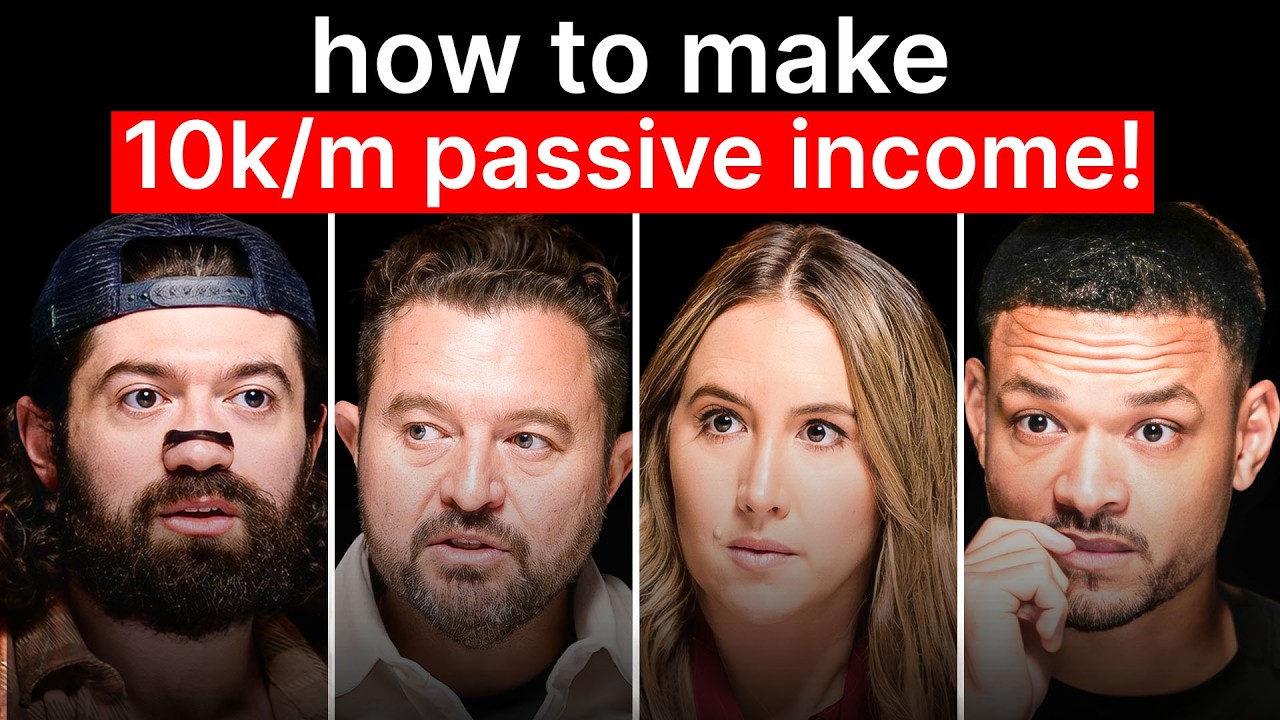
This episode of The Diary Of A CEO podcast, hosted by Steven Bartlett and published on YouTube on August 7, 2025, features business strategists Alex Hormozi, Codie Sanchez, and Daniel Priestley. The video breakdown outlines an offer playbook to scale from $1,000 to $100,000 in 90 days, covering business stress-testing, premium pricing, content leverage, and hiring strategies.
## TL;DR
The panel explores fast-money strategies, emphasizing that building active earning leverage through high-value skills outperforms seeking passive income early on. They unpack frameworks like Codie Sanchez's MOAT strategy for vetting business ideas, Alex Hormozi's sales and pricing models to scale profit, and Daniel Priestley's social pitching structures. Across the discussion, the guests detail how targeting affluent niches, utilizing visual proof, and mastering financial leverage allow entrepreneurs to generate cash flow quickly and scale sustainably.
## Atmosphere & style
The conversation carries an intense, high-energy, and tactical vibe, driven by three seasoned operators eager to tear down common financial myths. The dynamic between Bartlett and his guests is highly collaborative yet direct, blending punchy anecdotes with actionable business playbooks. It feels like an insider masterclass—candid, authoritative, and focused entirely on practical, high-stakes execution.
## Key takeaways
- [00:00](https://www.youtube.com/watch?v=hVlAOIUA71Y&t=0s) The fastest zero-capital paths to wealth are the Apprentice Route (working directly under elite performers) and the Direct Action Route, which rapidly teaches fundamental sales skills like using strategic silence after a pitch.
- [02:29](https://www.youtube.com/watch?v=hVlAOIUA71Y&t=149s) The MOAT Strategy evaluates business ideas on Margin, Operations, Advantage, and TAM to determine whether an idea should be funded, fixed, or abandoned.
- [10:47](https://www.youtube.com/watch?v=hVlAOIUA71Y&t=647s) Businesses can instantly increase margins and contract values by shifting focus away from high-friction, price-sensitive clients toward high-status or high-risk institutional clients.
- [16:01](https://www.youtube.com/watch?v=hVlAOIUA71Y&t=961s) Close rates serve as a core pricing benchmark: an 80% conversion rate indicates severe underpricing, while doubling or tripling prices can drastically reduce operating friction without hurting overall profit.
- [34:38](https://www.youtube.com/watch?v=hVlAOIUA71Y&t=2078s) Founders starting with minimal capital ($10k-$25k) should avoid chasing passive income and instead focus strictly on increasing active earning leverage through skill acquisition and partnerships.
- [51:17](https://www.youtube.com/watch?v=hVlAOIUA71Y&t=3077s) Building content backed by solid intellectual property or real-world achievements creates powerful positioning, and stand-out creators win through rare outcomes or massive informational effort.
- [01:04:42](https://www.youtube.com/watch?v=hVlAOIUA71Y&t=3882s) The SPCL framework (Status, Power, Credibility, Liking) defines true influence, where raw authenticity and clear values act as a filter to attract hyper-aligned, high-value buyers.
- [01:37:40](https://www.youtube.com/watch?v=hVlAOIUA71Y&t=5860s) Controlling vocal cadence, using lower-grade reading copy, and maintaining a full 8-second pause after asking for a sale can increase closing rates by 30%.
- [01:44:16](https://www.youtube.com/watch?v=hVlAOIUA71Y&t=6256s) Reframing service offerings around specific, high-stakes outcomes rather than generic roles allows entrepreneurs to shift from low-status 'worker bees' to high-value 'Key Persons of Influence'.
- [01:51:58](https://www.youtube.com/watch?v=hVlAOIUA71Y&t=6718s) Deploying diagnostic assessments, video sales letters with visual proof, and intentional conversion friction builds high status and improves customer show rates and overall cash collection.
- [02:02:06](https://www.youtube.com/watch?v=hVlAOIUA71Y&t=7326s) Starting a business with $100,000 without prior experience creates a dangerous runway trap; beginners are safer acquiring proven systems, partnering, or offering zero-risk revenue-share services.
- [02:05:55](https://www.youtube.com/watch?v=hVlAOIUA71Y&t=7555s) Multi-billion dollar scaling relies on financial engineering, strategic debt, acquisition arbitrage, and achieving client-financed acquisition metrics where immediate profits cover customer acquisition costs.
## Detailed walkthrough
### [00:00](https://www.youtube.com/watch?v=hVlAOIUA71Y&t=0s) Intro and the $100M Offer Blueprint
Host Steven Bartlett kicks off the masterclass with a high-stakes premise: three boxes containing $1,000, $10,000, and $100,000. He introduces his guests—Alex Hormozi, Codie Sanchez, and Daniel Priestley—as the "Avengers of entrepreneurship on the internet." The challenge before them is to detail precisely how they would use those respective cash reserves to build scalable, highly profitable businesses from total scratch.
```
┌─────────────────────────────────────────┐
│ TWO PATHS TO QUICK WEALTH │
└────────────────────┬────────────────────┘
│
┌──────────────────────────┴──────────────────────────┐
▼ ▼
┌───────────────────────┐ ┌───────────────────────┐
│ PATH 1: APPRENTICE│ │ PATH 2: DO IT YOURSELF│
├───────────────────────┤ ├───────────────────────┤
│ • Work for the best │ │ • High risk, highest │
│ entrepreneurs │ │ reward │
│ • Example: Kim K. │ │ • Learn the meta-game │
│ assisting Paris H. │ │ of business fast │
└───────────────────────┘ └───────────────────────┘
```
The panel outlines two fundamental paths to generating wealth when starting with zero capital:
1. **The Apprentice Route:** Find an elite entrepreneur and work for them. Codie Sanchez references how Kim Kardashian served as Paris Hilton's assistant, learning the exact playbook for celebrity and influence before launching her own empire.
2. **The Direct Action Route:** High risk, highest reward. Start building immediately. Alex Hormozi points out that on your first venture, you learn the "meta-game" of business even more than the specific mechanics of the offer itself—such as subtle sales psychology tricks like waiting 8 seconds after making an offer to increase closing rates by 30%.
---
[02:29](https://www.youtube.com/watch?v=hVlAOIUA71Y&t=149s) How to Stress Test Your Business Idea: The MOAT Framework
Codie Sanchez breaks down a core framework adapted directly from private equity to stress test whether an idea is an investable, profitable business or a disguised trap. Known as the **MOAT Strategy**, it evaluates four vital metrics on a 1-to-10 scale:
* **M — Margin:** A healthy business needs at least a **15% net margin** (pure profit taken home), not just top-line revenue.
* **O — Operations:** Can the business scale independently of your personal labor? Codie distinguishes between owning a business and merely owning a self-employed job. For example, an actor who must constantly speak directly to a camera is trading time for money.
* **A — Advantage:** What unfair advantage do you possess? All arbitrage opportunities close eventually. Advantages include distribution (social media audience), unique logistics, or 10+ years of deep industry expertise.
* **T — TAM (Total Addressable Market):** Is the market large enough to support your target income? Not everyone needs to chase a billion-dollar total addressable market; a local community fruit stand might offer the exact target income an individual desires.
| MOAT Score Range | Category | Action Plan |
|:--- |:--- |:--- |
| **31 – 40 Points** | **Fund It** | High-conviction, scalable business model ready for capital. |
| **20 – 30 Points** | **Fix It** | Viable idea with operational flaws or tight margins requiring adjustment. |
| **Under 20 Points** | **Flee It** | High-risk, low-reward business model; walk away. |
Daniel Priestley emphasizes that with AI disrupting every industry, every entrepreneur should assume their current business model is on borrowed time. When evaluating new opportunities, he looks for three elements centered around the founder's personal case study:
1. **Measurable Pain:** Does the product or service solve a problem where clients pay to move a specific metric?
2. **Purchasing Power:** Are you targeting people with disposable income? Daniel notes that roughly **60% of disposable income sits in the top 10% of the market**. Selling to the remaining 90% forces you to compete with giants like Amazon and McDonald's.
3. **True Passion (Willingness to Suffer):** Passion isn't just about joy; it's defined as a willingness to suffer, endure delayed gratification, and push through difficult times.
Alex Hormozi adds the **Pain, Passion, Profession** filter for first-time founders, noting that transitioning from an employee to a self-employed contractor in your existing profession removes market risk.
> "A lot of businesses and entrepreneurs are very bad at allocating resources. They have full-time employees working at 20% effort to keep their paycheck... You could do the same work for half the price, do it for five clients, make three times as much, and do it on your own time." — *Alex Hormozi*
---
[10:47](https://www.youtube.com/watch?v=hVlAOIUA71Y&t=647s) Selling to the Rich: Are Your Prices Too Low?
The discussion shifts to how value creation and pricing dynamics change dramatically depending on *who* you serve. Alex Hormozi shares an example from conversion rate optimization (CRO):
* **Small Business Client:** Adding 10% in top-line growth to a $1,000,000 e-commerce store creates **$100,000** in new value.
* **Enterprise Client:** Adding 10% in top-line growth to a $100,000,000 e-commerce store creates **$10,000,000** in new value for the exact same amount of work.
Steven Bartlett reflects on his early career running a social media agency. When working with fast-fashion brands, driving sales generated tens of thousands in returns. However, when he took a contract with a biotech firm going public in the psychedelics space, his work helped position the company for a **$3.2 billion NASDAQ listing**, earning his contract millions in return.
Daniel Priestley illustrates this value shift through the story of an occupational health and safety consultant:
* **Office Setting:** The consultant charged **$2,000/day** ($20,000 per 10-day audit) inspecting standard office environments.
* **High-Risk Manufacturing:** Daniel advised him to target extreme industrial environments featuring lasers, sub-zero temperatures, and hazardous materials.
* **The Result:** Within one year, the consultant repositioned his brand, raising his day rate to **$20,000/day** and pushing typical contract sizes to **$400,000**.
Daniel also points out geographic arbitrage in media: a YouTube video produced in the UK earns half the AdSense revenue per view compared to the exact same video distributed to a US-based audience. Similarly, standard copywriters earning $30,000–$50,000 in general corporate roles can command **$250,000 salaries** when writing specialized content for high-stakes biotech firms.
- **Market Placement Impact:** The value of a skill is capped by the leverage and capital of the client receiving it.
- **Overcoming Fear:** Beginner founders often sell to friends or low-budget clients out of comfort, forcing them into a brutal volume game rather than a high-margin value game.
[13:19](https://www.youtube.com/watch?v=hVlAOIUA71Y&t=799s) Flipping the Script: Selling to the Rich to Save Your Business
Codie Sanchez breaks down why trying to sell cheap services to everyone is a fast track to burnout and low cash reserves. She shares a case study of a home inspection company that was roughly 45 days away from running out of money. The business model itself was completely valid, but the owner was competing on price at the bottom of the market, taking on massive risk for minimal margins.
By making one simple pivot—adding the word "luxury" in front of the business name and advertising to high-end clients—the business saved itself without increasing volume or hiring more staff. Changing the target demographic instantly increased the company's margins by 45%. Codie notes the famous adage about client management: a $50 client demands the world and complains constantly, while a $50,000 client asks where to send the wire. Furthermore, wealthy clients are often self-made entrepreneurs who see their younger selves in ambitious, hard-working service providers and are far more forgiving.
* **Service-to-Tech Pipeline:** Most successful businesses start by trading time for money in a service business, productizing that service so others can run it, and eventually scaling it into software/technology to maximize margins.
* **Marginal Efficiency:** Technology is simply "process at scale."
* **The $50 vs. $50,000 Client Rule:** Lower-tier clients tend to be high-friction and low-margin, whereas affluent clients buy based on convenience and value.
---
[16:01](https://www.youtube.com/watch?v=hVlAOIUA71Y&t=961s) The Science of Pricing: Closing Rates and Value Metrics
Alex Hormozi addresses the common psychological trap where new entrepreneurs sell out of their own wallets—assuming that because they are broke, their prospects must be broke too. He provides a tactical benchmark for pricing based on sales close rates. If a business is closing 80% of its leads, it is severely underpriced and likely sitting on a $2\times$ or $3\times$ price increase.
Alex recalls tripling prices at a gym he used to own, shifting from large group classes to semi-private sessions. He lost one-third of his client base, but retaining two-thirds of the clients at $3\times$ the price resulted in double the revenue and cut operating costs by two-thirds—exponentially increasing overall profit.
> "Go as high as you can without cracking a smile." — *Dan Kennedy (quoted by Alex Hormozi)*
Codie introduces the concept of **Value Metrics**, explaining that prices should scale based on three variables:
1. **Usage:** How frequently the client uses the product or service.
2. **Users:** How many seats or team members utilize it.
3. **Value:** The quantifiable return or financial impact delivered to the client.
To illustrate this, Codie uses **Typeform** as an example. She started using the tool individually for $50 a month. Once her team began running tens of thousands of survey responses through it, her bill scaled to over $1,000 a month for the exact same tool. Because Typeform scaled its pricing with her usage without incurring a high cost of goods sold (COGS), they achieved typical SaaS margins of around 80%.
---
[20:23](https://www.youtube.com/watch?v=hVlAOIUA71Y&t=1223s) Target the 9%: The Affluent Niche Strategy
Daniel Priestley outlines a structural model for customer segmentation and capital allocation across target audiences:
* **Top 1% (15% of total budget):** They shop on pedigree, legacy, awards, and trusted relationships. They want established, top-tier vendors.
* **Middle 9% (45% of total budget):** The "affluent niche." They shop on passion, following energetic leaders with unique perspectives, educational content, or community offerings.
* **Bottom 90% (40% of total budget combined):** They shop strictly on price and hunt for discounts.
Daniel argues that small businesses should target the **9% niche**. This segment is willing to pay premium prices based on passion and value, and as their own businesses grow, they eventually cross over into the top 1%, bringing their service providers along via trusted introductions. Steven Bartlett echoes this, recalling how when his agency serviced clients with $10,000 budgets, the clients called constantly because that money was do-or-die. When they signed enterprise accounts like Uber, Coca-Cola, and Samsung, the budgets were massive, decision-making was faster, and maintenance required far fewer units of effort.
---
[22:20](https://www.youtube.com/watch?v=hVlAOIUA71Y&t=1340s) Developing Pricing Confidence and Out-Prepping the Competition
The panel discusses how to cultivate the confidence required to pitch high-dollar offers without faltering. Alex notes that real confidence isn't about faking it; it stems from doing so much volume that you become desensitized and bored of the process.
Daniel adds that confidence also springs from an **abundance of options**. If a campaign generates 1,000 leads for 10 spots, the entrepreneur naturally projects a "with or without you" energy, which makes high prices much easier to deliver with authority.
Codie addresses the issue of "mental masturbation" in modern entrepreneurship—where founders consume endless podcasts and content without executing. She advocates for extreme preparation over raw volume when pitching high-value clients or securing roles:
> "Nobody preps for anything anymore to the degree that you need to execute... In a world of super curious, uninterested, not-that-deep obsession, if you can show obsession and competence, you can beat people who have been doing it for 20 years." — *Codie Sanchez*
Rather than sending mass cold emails or asking for permission to submit a proposal, Codie advises candidates and vendors to complete the entire strategy document, video pitch, or job scope upfront. Demonstrating deep preparation makes it nearly impossible for high-status buyers or employers to say no.
[26:51](https://www.youtube.com/watch?v=hVlAOIUA71Y&t=1611s) Pitching High-Status Individuals and the "Proof Story"
```
[ HIGH SIGNAL MEDIUM ]
│
│ ★ Top-Right Quadrant:
│ High-Resonance Message
│ + High-Signal Channel
│ (e.g., Personalized Video
│ sent via Physical Mail)
│
[ LOW EMOTIONAL RESONANCE ] ────────────┼──────────── [ HIGH EMOTIONAL RESONANCE ]
│
│
│ Low-Signal Channel:
│ Generic DMs in
│ Saturated Inboxes
│
[ LOW SIGNAL MEDIUM ]
```
Steven Bartlett outlines his framework for breaking through noise when pitching high-status individuals or pitching for jobs. Using the example of hiring his head of happiness, Harry—who submitted a tailored seven-minute video through an unsaturated, physical medium—Bartlett conceptualizes a four-quadrant matrix based on **message emotional resonance** and **medium signal strength**. Most people send low-effort DMs into crowded inboxes (low resonance, low signal), whereas utilizing underappreciated channels like snail mail or physical packages bypasses gatekeepers and guarantees attention.
Daniel Priestley cautions against pitching internet celebrities with millions of followers, as their inbox traffic is overwhelmingly saturated. Instead, he advises targeting successful entrepreneurs with smaller followings (10,000 to 20,000) who receive far fewer pitches. To grab their attention, Priestley outlines a four-part "proof story" pitch formula:
1. **The Action:** State a specific high-value action ("I worked with a famous YouTuber...").
2. **The Result:** Share the exact outcome achieved ("...and built a spin-out business that generated $10,000,000 in its first six months").
3. **The Role:** Clarify your exact responsibility ("I project-managed the entire operation").
4. **The Value Exchange:** Offer to walk them through the exact process step-by-step.
Alternatively, Priestley recommends taking the pitch into the public domain by publishing the breakdown as a public video or post on LinkedIn, X, or Instagram, tagging the target, and having a network of friends comment on it. Because the post is public, the target feels compelled to look at it to see what is being said about them. Alex Hormozi and Codie Sanchez note that this strategy doubles as public content and promotion, effectively serving as a high-converting lead magnet.
- **Fame vs. Wealth:** Codie Sanchez advises focusing on non-famous, ultra-wealthy individuals rather than internet celebrities: "Don't confuse famous with rich... You can't eat fame. Fame is not lasting."
- **The Local Multi-Millionaire:** Sanchez points out that the richest person in a local community often owns a boring, unsexy business (such as a sprinkler head company) and is far more accessible than an online influencer.
- **The Exaggeration Trap:** Sanchez and Hormozi warn against falsely claiming credit for a public figure's success. The business community is tight-knit, and inflated claims destroy credibility quickly.
- **The Unsung Heroes:** Bartlett notes that the highest-performing contributors often avoid personal branding entirely, contrasting those who build a personal brand after a brief three-month stint with quiet operators who actually drive the results.
> "The people that gave me my first leg up in the world of business were no one. They didn't have followers... They were probably at the $50 million level in terms of net worth, and they were delighted to have an email from me tickling their ego." — **Daniel Priestley**
---
[34:38](https://www.youtube.com/watch?v=hVlAOIUA71Y&t=2078s) Active Income, Leverage, and the Myth of Passive Income
| Concept | Definition | Primary Application / Strategy |
|:--- |:--- |:--- |
| **Active Income** | Income generated directly through labor and active business operations. | Primary focus for early-stage entrepreneurs; offers the highest immediate rate of return on effort. |
| **Skill & Tool Leverage** | Increasing hourly output or skill level to multiply earning capacity. | Upgrading from manual tools to powered equipment (e.g., shovel to snowblower) or acquiring specialized certifications (e.g., phlebotomy). |
| **Traditional Assets** | Equity, real estate, stores of value, art, wine, watches. | Best suited for preserving capital and outpacing inflation once significant wealth is built. |
| **Performance Assets** | Replicable digital units: Intellectual Property, Media, Code, and Data. | Highly scalable assets built with minimal capital (e.g., books, SaaS, email newsletters, media channels). |
Alex Hormozi deconstructs the popular obsession with passive income, framing it as a continuum rather than a binary state. For anyone starting out with less than $10,000 to $25,000 in capital, chasing passive income is a mistake because they lack the capital needed to generate meaningful returns. Instead, their highest return on capital comes from reinvesting every dollar into increasing their **active earning capacity** through skills and leverage.
Hormozi illustrates skill leverage using the example of a snow shoveler: an individual shoveling driveways by hand might earn a modest hourly rate, but saving up to buy a power snowblower triples their hourly throughput and earning power. Similarly, an unskilled worker taking a short certification course to become a phlebotomist can double or triple their hourly wage from $12–$15 to $25+ per hour within weeks. Reinvesting in personal skills or equipment yields far higher returns than early financial market investments.
Daniel Priestley redefines passive income as **asset income**, emphasizing that income always follows assets. He breaks assets into two distinct categories:
- **Traditional Assets:** Real estate, stocks, art, and high-end collectibles. These require substantial upfront capital and are designed to preserve wealth and hedge against inflation, making them poor vehicles for generating primary wealth.
- **Performance Assets:** Intellectual property (IP), media, code, and data. These assets are built rather than bought—such as writing a book, coding a software platform, or building a 1,000-person email newsletter.
Sanchez adds a perspective on the phrase itself, noting that "passive income" is fundamentally a term originating from the tax code, where passive capital gains and distributions are taxed at lower rates than active earned income. She argues that the financial services industry heavily marketed the concept of passive income to convince individuals to hand over their capital for management fees.
- **Capital Allocation Example:** Hormozi shares that after exiting a business, he spent $2,000,000 per year creating content. While it yielded zero initial financial return, it ultimately produced the highest return on capital of any investment he made by building an audience asset.
- **Accessibility of Modern Assets:** Priestley notes that creating performance assets previously required massive infrastructure, whereas today anyone with a smartphone and a laptop can generate IP, code, media, and structured data.
> "I would rather think for the person who's starting out not like 'how do I make this passive,' I would say 'how do I get more leverage on my active?'" — **Alex Hormozi**
### [40:25](https://www.youtube.com/watch?v=hVlAOIUA71Y&t=2425s) The Myth of Passive Income
The discussion opens with Codie Sanchez critiquing traditional financial systems—including mutual funds, real estate, and private equity firms—that charge fees like "2 and 20" under the guise of professional asset management. She emphasizes that while these passive vehicles are useful for protecting capital, beating inflation, and offering diversification, they rarely make anyone wealthy. The real wealth goes to those earning active income by running the funds or operating the underlying companies. In her view, the concept of "passive income" has been weaponized by the wealthy class to aggregate assets from the public.
Steven Bartlett notes that passive income remains a massive clickbait draw for younger generations fixated on shortcuts like Forex trading. Codie explains that when people are told to "invest in yourself," they often react with confusion or skepticism, assuming it is just a pitch to buy books or courses. However, she stresses that no third-party asset will ever deliver the return on investment that a person can achieve by upgrading their own capabilities.
- Traditional asset managers charge "2 and 20" (2% management fee, 20% performance fee) to manage funds.
- Passive investing offers downside protection and inflation hedging, but active execution is what generates true wealth.
---
### [42:18](https://www.youtube.com/watch?v=hVlAOIUA71Y&t=2538s) Starting Over: Skills over Capital
When Steven asks how they would invest in themselves if starting from scratch in 2025 without money or an audience, Alex Hormozi shares his playbook. Having built from zero once and rebuilt after losing everything twice, Alex followed a clear sequence: learn advertising to capture attention, then approach existing business owners with an offer to bring them customers for free delivery.
Alex illustrates this with his early gym model and chiropractor examples. He would ask business owners how much they required for a service (e.g., $20 per session or letting him keep the upfront revenue), package that offer, run targeted ads (such as Facebook ads), and keep 100% of the margin above customer acquisition costs. By taking zero delivery responsibility, all net proceeds after ad spend were pure profit. When restarting the third time, this exact strategy allowed him to generate $100,000 in his very first month.
- **Alex's $100k Rebuild Process:**
1. Learn core promotion skills (paid ads, outreach, content, or affiliate distribution).
2. Partner with existing businesses that have excess capacity.
3. Price the service to capture a high spread while leaving service delivery to the partner.
- **Example:** Securing a deal where a gym or chiropractor gets the long-term customer while the marketer retains the initial 6-week payment or upfront package cost.
- **Fast Capital Generation:** Alex highlights driving for Uber to earn an initial $1,000, allocating that $1,000 into paid ads to generate $30,000, and scaling that balance up to $100,000.
---
### [45:56](https://www.youtube.com/watch?v=hVlAOIUA71Y&t=2756s) Skill Stacking and Choosing Your Path
Alex explains that building a quick $100,000 relies on "fast money skills" that carry zero capital risk and no ongoing operational commitments, giving an entrepreneur ultimate flexibility. However, scaling to an eight-figure business requires "stacking skills" and transitioning to scalable business vehicles.
Codie introduces two fundamental paths for making money quickly without initial capital:
1. **Direct Promotion (B2C):** Leveraging sales skills or paid advertising to reach the masses (Alex's core strength).
2. **Partnerships & Employment (B2B):** Aligning with existing high-performing founders or companies to move faster with less volume risk (Codie's approach).
Recalling her exit from investment banking, Codie shares that she was risk-averse and terrified of starting a business from scratch despite her golden handcuffs. Instead, she partnered with a firm needing capital, raised funds from her network, and negotiated equity and upside participation. She highlights Sheryl Sandberg as an example of someone who accumulated immense wealth solely through high-level partnerships and employment rather than founding her own firm.
> "The fastest way to make $100,000 is not the fastest way to make $10 million, but I might make $10 million faster if I started with $100,000." — **Alex Hormozi**
---
### [48:40](https://www.youtube.com/watch?v=hVlAOIUA71Y&t=2920s) Leveraging Network, Reputation, and Mentorship
Daniel Priestley outlines the three key leverage points for any individual: **knowledge, network, and reputation**. He points out that young, ambitious entrepreneurs possess a unique "superpower" when it comes to networking. Major institutions like private banks, accounting firms (e.g., Ernst & Young or KPMG), and corporate events frequently host rich investors and experts, and they will gladly invite ambitious young founders into their rooms for free.
Daniel cautions against making isolated decisions about what knowledge to pursue. Instead, founders should seek guidance from high-level mentors who can spot industry shifts—noting that while paid ads were optimal years ago, studying AI application might be the highest-leverage skill today. He points to Kim Kardashian's early career as an example of strategic positioning: before building her brand, she served as Paris Hilton’s assistant to learn the playbook of fame firsthand through an informal apprenticeship.
- **The Leverage Triad:** Knowledge, Network, Reputation.
- **Networking Hack:** Leverage youth and ambition to gain entry into corporate events hosted by tier-one accounting firms and private wealth institutions.
- **Apprenticeship Model:** Working directly under established leaders to absorb high-value playbooks before stepping out independently.
---
### [51:17](https://www.youtube.com/watch?v=hVlAOIUA71Y&t=3077s) Content Creation and Intellectual Property
Steven pivots the conversation toward content creation, calling it one of the most underappreciated skills for refining clarity, articulation, and sales pitch delivery. Alex agrees that social media still commands unprecedented attention and offers endless demand for high-quality content, rewarding creators who put in the reps.
Daniel nuances the point, arguing that content performs best when backed by concrete **Intellectual Property (IP)** or a compelling personal hook. He observes how top creators hit immediate traction due to distinct positioning and past track records:
- Alex Hormozi launched with: "I've sold my company for $40 million and I've got nothing to sell you."
- Codie Sanchez positioned herself as leaving Goldman Sachs to build wealth through unsexy businesses like laundromats.
- Daniel Priestley leveraged his track record of building seven startups that scaled from $0 to $1 million in 12 months.
Steven adds that non-traditional creators also win by synthesizing high-value ideas or distinct perspectives, citing figures like George Mack, James Clear, Jay Shetty ("monk wisdom for the modern world"), and Ali Abdaal ("I quit being a doctor to be a YouTuber"). Daniel concludes that while unique IP provides a major advantage, navigating content creation today requires cut-through messaging to stand out against the rising tide of AI-generated content.
[53:50](https://www.youtube.com/watch?v=hVlAOIUA71Y&t=3230s) Proof, Effort, and the "1% Trick" to Stand Out in AI Content
The group opens with a warning about the sheer volume of AI-generated content flooding social feeds, comparing it to an impenetrable fog. To survive and cut through the noise, creators must have a hook grounded in real-world proof. Alex Hormozi argues that anyone embarking on content creation must first make a clear distinction: **Are you an entertainer or an educator?** AI will quickly gain immense leverage in entertainment, but it struggles in education because an AI avatar cannot claim to have built or sold a real business—it lacks real-world proof.
```
┌─────────────────────────────────────────┐
│ HOW TO BUILD AN EDUCATIONAL AUDIENCE │
└────────────────────┬────────────────────┘
│
┌─────────────┴─────────────┐
▼ ▼
1% THROUGH ACHIEVEMENT 1% THROUGH VOLUME
• Elite credentials • Massive effort
• Huge deal outcomes • High repetition
• Single compelling stat • Curated fast-tracks
```
Alex outlines two distinct pathways to join the top 1% of content creators and gain immediate credibility:
* **1% Through Achievement:** Having an ultra-rare real-world milestone (e.g., selling a company, quitting Goldman Sachs, or achieving an extreme result).
* **1% Through Effort (Volume):** Demonstrating extreme effort that saves others time (e.g., reading 200 dog-eared books in a year or going on 100 speed dates and summarizing the lessons).
Alex shares an example from Skool (the online community platform he invests in). The winner of their 90-day "Skool Games" challenge scaled his business to over **$300,000 per month**. His journey started just 16 months prior by making one YouTube video a day detailing simple AI automations he built for local small businesses (charging **$1,500–$2,500/month**). He then monetized that attention by creating a paid community at **$300–$400/month** showing others how to build those exact tools.
[56:31](https://www.youtube.com/watch?v=hVlAOIUA71Y&t=3391s) Monetizing Content: Expertise vs. Experience & The Drake/Rihanna Paradox
Codie Sanchez shifts the dynamic from high-level *expertise* to relatable *experience*. You don't need a billion-dollar portfolio or a Wall Street background to go viral—you can document a raw, ongoing journey as a beginner (citing creator Ryan Trahan as a prime example of documenting trials and failures).
However, Codie draws a critical distinction between purely holding attention and generating **intent to buy**:
> "Porn sites, OnlyFans, the Kardashians—that's a lot of attention, but the intent to buy is going to be low... You have to ask yourself: once I have that attention, where do I actually have some sort of expertise or value that I can trade in order for people to have an intent to buy?"
Codie illustrates this using the comparison between **Rihanna** and **Drake**:
* **Rihanna:** Leveraged her massive celebrity attention directly into **Fenty Beauty**, converting brand reach into a high-intent physical product line that made her a billionaire.
* **Drake:** Has comparable (or greater) streaming numbers, culture reach, and total views, yet his estimated net worth is roughly **1/6th to 1/8th** of Rihanna's because he has not monetized viewer intent at the same operational scale.
---
[58:58](https://www.youtube.com/watch?v=hVlAOIUA71Y&t=3538s) The B2B Content Opportunity: Becoming the Content Partner for $50M Businesses
Daniel Priestley emphasizes that building a high-end content machine requires serious capital. He discloses spending **$40,000 to $50,000 per month** in retainers just for his own content team—an investment that only works because he has backend businesses to capture the revenue.
For entrepreneurs starting without capital, Daniel highlights a massive, overlooked opportunity: **project managing content for established $50M+ business owners** who have stories, cash flow, and back-end monetization, but lack the time or digital native skill to build an online media brand.
* **The Case Study of Martin:** A video producer named Martin approached Daniel when Daniel had five books and seven companies, but only a few thousand followers and ~10,000 monthly views.
* **The Deal:** Martin promised to project manage Daniel into millions of views a month by showing up at his house just once a month for a single full day of filming, handling all editing and distribution.
* **The Outcome:** The partnership transformed Daniel’s personal reach and forged a close relationship where Daniel is now backing Martin's new AI startup as an investor.
---
[01:01:33](https://www.youtube.com/watch?v=hVlAOIUA71Y&t=3693s) Sponsor Breakdown: Stan Store
Steven Bartlett introduces a brief sponsor spot for **Stan Store**, an all-in-one platform designed for creators, coaches, and entrepreneurs to turn personal knowledge into a digital business with one click.
* **Key Metrics:** Over **$300 million** has been earned by creators using the platform.
* **Core Features:** Facilitates direct sales of digital products, 1-on-1 coaching, and recurring membership communities without requiring coding experience; integrates directly with existing Shopify setups.
---
[01:01:46](https://www.youtube.com/watch?v=hVlAOIUA71Y&t=3706s) The Reality of Online Visibility: Cringe, Social Friction, and Dark Moments
Steven prompts the panel on where they would start today if they were stripped of their wealth and starting from zero in the age of AI. Codie addresses the social psychological hurdles that stop people from creating content in the first place.
Codie reflects on the early days of building her digital presence:
1. **The "Cringe" Threshold:** When established, successful professionals start posting short-form videos, peers frequently laugh at them or accuse them of being fake ("If you've actually had success, why are you on TikTok all day?").
2. **The Arbitrage of Being Known:** Overcoming the social friction unlocks immense value. High-status access (e.g., getting a direct response from Steven Bartlett or Alex Hormozi) stems directly from online presence and visibility.
3. **The Dark Side of Hate:** Codie reveals being in a private mastergroup with 50+ of the world's top content creators. During a recent discussion, nearly every top creator admitted to experiencing severe mental distress and "fight-or-flight" episodes triggered by mass internet hate campaigns.
4. **The Reality Check:** Embrace the initial embarrassment because "embarrassment is the price of entry," and online outrage passes quickly because audiences move on.
---
[01:04:42](https://www.youtube.com/watch?v=hVlAOIUA71Y&t=3882s) The 4-Part Formula for High-Converting Influence (SPCL Framework)
Alex Hormozi breaks down why massive view counts do not automatically equal influence. He references short-form creators with **50M+ followers** who suffer through failed product launches because their audience consumes them purely for idle entertainment without taking their advice.
Alex defines influence as **increasing the likelihood that someone complies with a request or solicitation**, and breaks down the four core drivers using the **SPCL** framework:
1. **Status ($S$):** Derived from controlling a scarce resource in a specific environment. *Example:* A bartender possesses immense status inside a crowded bar because they control the limited alcohol behind the counter, but that status evaporates the second they step onto the sidewalk.
2. **Power / Say-Do Correspondence ($P$):** Giving explicit instructions that yield immediate positive real-world outcomes for the follower. *Example:* **Martha Stewart** built her self-made billionaire empire by providing clear baking recipes. When followers followed her exact steps, they baked incredible cakes, earned praise from their families, and gained status themselves—making them eager to buy her next recommended product.
3. **Credibility ($C$):** Concrete proof of past real-world results and tangible track records.
4. **Liking ($L$):** Affinity, relatability, and personal connection built over repeated positive interactions.
[01:06:48](https://www.youtube.com/watch?v=hVlAOIUA71Y&t=4008s) The 4 Ls of Persuasion: Status, Power, Credibility, and Likeness
Alex Hormozi breaks down his core framework for converting content viewers into high-value clients using the four elements of persuasion: Status, Power, Credibility, and Likeness (which he refers to collectively as SPC + Likeness). A single statement can hit multiple categories simultaneously; for example, stating, "I sold a company for $46.2 million," instantly establishes status (money) and credibility (proof of results). However, power is only created when actionable advice is given—such as telling someone to apply urgency, scarcity, and a solid guarantee to their offer via a value equation—and the follower gets real financial results. That success creates power, making the follower much more likely to comply with future requests.
The fourth additive layer is Likeness—whether the creator shares similar physical or psychographic traits and core values with the audience. When a creator combines all four elements, their conversion potential skyrockets. This explains why educators often command far smaller overall audiences than mainstream entertainers yet generate significantly higher revenue; entertainers must typically rely on brand sponsorships, whereas educators convert followers into direct buyers. If an entertainer like Rihanna shifts into her domain of credibility (beauty) and gives actionable guidance (power), she seamlessly bridges entertainment and high-converting commerce.
* **Targeting via Content:** Algorithms and modern AI target content based on topic rather than rigid manual demographics. An audience of 40,000 highly targeted fishermen for a bait-and-tackle drop-shipping business is far more profitable than a million general viewers watching basic philosophy videos.
* **Persuasion Formula:** Content built for maximum conversion requires demonstrating concrete proof of success, providing actionable instructions that produce real results, and reflecting the audience's core identity.
---
[01:10:04](https://www.youtube.com/watch?v=hVlAOIUA71Y&t=4204s) Value-Based Alignment and Standing for Concrete Principles
The group transitions into discussing how creators can foster deep likeness even when they do not share physical traits with their audience. Codie Sanchez points out that likeness is heavily rooted in shared values, moral compass, and ethics. Using Donald Trump as an example, she notes that despite his background as a suit-wearing East Coast billionaire, millions of working-class voters relate to him because they perceive a shared moral compass and value system.
Codie highlights that very few modern business creators are willing to take public stances that risk harming their short-term commercial interests. She reveals a personal rule she shares with her partner, Chris: they intentionally avoid keeping close friends who have never publicly taken a stand against their own self-interest, as taking real risks demonstrates genuine moral fiber.
* **The Ownership Philosophy:** Daniel Priestley mentions being heavily drawn to Codie's content where she challenged the "own nothing and be happy" narrative, advocating strongly for individual business and asset ownership.
* **The "Hot Dog" Sales Myth:** Codie rejects popular Instagram sales tactics built on superficial triggers (like giving someone a hot dog to leverage reciprocity into a car sale), arguing instead that true sales happen by capturing people at an existing trigger moment when they are already predisposed to buy.
---
[01:12:51](https://www.youtube.com/watch?v=hVlAOIUA71Y&t=4371s) Deep Relationships and Mission-Driven Content Creation
Daniel Priestley emphasizes that content creation should serve a clear mission rather than a desire for fame. Naturally a private person who keeps his family and children off social media, Daniel views public content as a necessity for scaling relationships, attracting top-tier talent, and building trust. In a post-AI world, he argues that the real competitive advantage lies in developing deep relationships through long-form content that communicates one's origin story, vision, and core values.
Steven Bartlett adds to this thesis, noting that the depth of a parasocial relationship dictates the ultimate equity value of a content brand. He shares an anecdote from playing in a charity match at Old Trafford (Soccer Aid), where an 18-year-old European live streamer was greeted by 70,000 cheering fans. Despite having a smaller overall audience than conventional celebrities or podcasters, the streamer commanded unparalleled loyalty simply because he spent 7 to 8 raw hours a day hanging out and watching TV live with 100,000 concurrent viewers.
* **Depth vs. Virality:** Steven contrasts his early short-form Facebook Watch videos—which garnered tens of millions of views but left zero long-term impression on viewers—with his podcast. Even when his podcast only had 1,000 downloads, listeners formed immediate, memorable connections in real life.
* **Behind-the-Scenes Resonance:** During a live tour in Australia, roughly 50% of the audience approached Steven specifically to talk about *Behind The Diary*—his lower-viewed, behind-the-scenes channel—proving that intimacy drives fanaticism over sheer view counts.
---
[01:17:03](https://www.youtube.com/watch?v=hVlAOIUA71Y&t=4623s) Authenticity, Rawness, and the Marketing Affinity Loop
When Steven asks if the panel is adapting their own content strategies toward deeper formats, Codie Sanchez argues that along with depth, *rawness* is the critical factor in building trust today. In an era dominated by AI generation, heavy editing, and hyper-polishing, overproduced content actually signals insincerity. She points out how video trends on Instagram have shifted away from heavy B-roll and third-party overlays, favoring raw, unedited footage of someone walking and talking directly to the camera.
```
┌────────────────────────────────────────────────────────┐
│ THE MARKETING AFFINITY LOOP │
└────────────────────────────────────────────────────────┘
│
1. AWARENESS ──► Getting seen by new audiences
│
2. CONSIDERATION ─► Following and testing content
│
3. ACTION ──► Making an initial purchase
│
4. ADVOCACY ──► Writing reviews & testimonials
│
5. LOYALTY ──► Repeat buying & word-of-mouth
```
Codie illustrates this dynamic through her team's "Marketing Affinity Loop" framework, which maps out the journey from initial top-of-funnel reach down to long-term fan retention. Over-editing creates a barrier to trust, whereas raw, unedited communication allows audiences to move seamlessly through each stage of the loop.
* **The Affinity Loop Progression:** Audience relationships evolve predictably through five distinct phases: Awareness $\rightarrow$ Consideration $\rightarrow$ Action $\rightarrow$ Advocacy $\rightarrow$ Loyalty.
* **Unfiltered Formats:** Codie compares polished mainstream media to long-form, unedited formats (like 60 Minutes versus Joe Rogan), noting that audiences increasingly migrate toward zero-cut conversations because they feel authentic and unmanipulated.
[01:19:09](https://www.youtube.com/watch?v=hVlAOIUA71Y&t=4749s) Beyond Awareness: Customer Loyalty and Boundaries
Codie Sanchez breaks down the classic customer funnel—moving from awareness to consideration, purchase, advocacy, and ultimate loyalty. She emphasizes that while many creators stop at building awareness, the true holy grail of business is driving advocacy and loyalty so that existing customers naturally recruit new ones. Today, her team actively tracks how shared content leads to deeper conversions via specific tracking links. However, she stresses the necessity of setting personal boundaries around content creation. Rather than live-streaming every aspect of her life, she believes audiences should live their own lives rather than just watching hers.
Codie and her partner Chris maintain a strict rule regarding what they reveal online. Despite frequent pushes from her team to post content of Chris shirtless because it performs exceptionally well on social media, Chris insists on keeping certain parts of their personal life sacrosanct. Daniel Priestley echoes this mindset regarding his children, noting that he refuses to broadcast them on social media, allowing them to decide if and how they want to build a public profile when they are older.
Daniel focuses on building depth through long-form books and intimate offline experiences. For four consecutive years, he has taken 80 clients on an annual ski trip, and he is preparing to take 30 clients to Necker Island for a week with Sir Richard Branson. He asserts that combining online reach with high-touch, offline experiences builds lifelong friendships and creates diehard brand loyalists.
- **The Customer Funnel Progression:** Awareness $\rightarrow$ Consideration $\rightarrow$ Purchase $\rightarrow$ Advocacy $\rightarrow$ Loyalty.
- **Content Tracking:** Uses UTM tracking links to measure how shared video content leads directly to sales.
- **Daniel's High-Touch Client Trips:** 80 clients taken on an annual ski trip; 30 clients taken to Necker Island to spend a week with Sir Richard Branson.
---
[01:21:41](https://www.youtube.com/watch?v=hVlAOIUA71Y&t=4901s) The Spectrum of Authenticity and the Role of Freedom
Alex Hormozi introduces a framework examining authenticity across the continuum of SPCL (Story, Proof, Credibility, Likeness). He explains that the massive influence of live-streamers stems from high "likeness" and perceived authenticity because unfiltered, real-time broadcasts leave very little room to distort reality.
Alex defines authenticity as "how you act when you have no risk of punishment"—or more simply, how you act when you are entirely alone. The discrepancy between your private behavior and public behavior dictates your actual authenticity score. Because established entrepreneurs possess significant financial security and social capital, their risk of punishment is lower, granting them the freedom to express themselves without fear of losing their livelihoods. Alex argues that happiness is strongly correlated with these degrees of freedom, famously embodied by the concept of "fuck you money."
Codie notes that someone like Elon Musk is undeniably authentic under this definition; regardless of whether people agree with him, no one feels he is hiding his true thoughts. She recommends inoculating oneself against cancel culture by occasionally voicing strongly held, non-mainstream opinions online. This process acts like a vaccine: it pushes away people who dislike you while increasing trust among your true core audience, who tire of overly polished, politically correct creators.
- **Definition of Authenticity:** How an individual behaves when there is zero risk of punishment, or how they act when completely alone.
- **The "Vaccine" Strategy for Creators:** Regularly sharing strong, authentic opinions filters out unaligned audience members while deepening trust with the remaining base.
---
[01:25:14](https://www.youtube.com/watch?v=hVlAOIUA71Y&t=5114s) Pitching Frameworks: Daniel's Social and Scheduled Pitch Playbooks
Steven Bartlett shifts the discussion toward pitching frameworks, asking the panel how they structure their ideas. Daniel Priestley views entrepreneurship as a "journey of a thousand pitches," where pitches are the mechanism for bringing ideas into reality. An average pitch yields nothing after a thousand attempts, whereas a great pitch can yield $\$10\text{M}$ to $\$100\text{M}$, top-tier talent, and thousands of customers.
Daniel outlines his structured pitching approaches:
1. **The Social Pitch (Name, Same, Fame, Pain, Aim, Game):** Designed for quick, 30-second interactions where attention spans are short. You state your name, what you are similar to ("same"), what makes you unique ("fame"), the problem you address ("pain"), what you are targeting ("aim"), and the broader vision ("game").
2. **The Scheduled Pitch (CAPSTONE):** A structured format for formal meetings covering **C**larity, **A**uthority, **P**roblem, **S**olution, **T**raction (or Why), **O**pportunity, **N**ext steps, and an **E**motional ending.
- **Daniel's Pitching Principle:** Entrepreneurship is a continuous series of pitches; your pitch framing shapes the opportunities that come back to you.
- **Social Pitch Framework:** Name $\rightarrow$ Same $\rightarrow$ Fame $\rightarrow$ Pain $\rightarrow$ Aim $\rightarrow$ Game.
- **CAPSTONE Framework:** Clarity $\rightarrow$ Authority $\rightarrow$ Problem $\rightarrow$ Solution $\rightarrow$ Traction $\rightarrow$ Opportunity $\rightarrow$ Next steps $\rightarrow$ Emotional ending.
---
[01:28:03](https://www.youtube.com/watch?v=hVlAOIUA71Y&t=5283s) Codie's Midas Touch and Alex's Proof-First Selling
Codie Sanchez presents her **Midas Touch** framework for raising capital without using personal money, which relies on having at least one of four core pillars:
1. **Profit:** Demonstrating existing cash flow relative to the capital requested.
2. **Growth:** Showing rapid user or revenue expansion (citing examples like Replit).
3. **History (Proof):** Possessing a proven track record of starting or selling a business in the past.
4. **Story:** Crafting a compelling narrative about the future vision when starting from scratch with no track record, profit, or growth.
Alex Hormozi emphasizes that in sales, "proof will always beat promise." He humorously notes that a speaker could get on stage, say nothing, click through 60 minutes of client testimonials, put up a final slide with a purchase link, and still close a significant percentage of the room. The closer a testimonial matches the prospect's exact demographic and situation, the higher the conversion rate.
Because proof drives conversions, Alex advises new business owners to take on 5 to 10 clients for free. This establishes initial testimonials and allows the founder to refine their offer, enabling them to charge 10 times more on their 11th client. Finally, Alex introduces the **CLOSER** framework for appointment-based selling, starting with **C**larifying why the prospect is on the call.
- **The Midas Touch Pillars:** Profit, Growth, History, or Story.
- **Proof vs. Promise:** Authentic testimonials and demonstrations consistently outperform verbal claims.
- **The Free Client Strategy:** Serve 5–10 initial clients at no cost to gather testimonials and refine the delivery before charging premium prices.
- **The CLOSER Framework (Part 1):** **C**larify why the prospect is there based on their prior actions.
***
<ElicitationsGroup message="What would you like to do next?">
<Elicitation label="Generate a full breakdown of Alex Hormozi's CLOSER framework" query="Generate a full breakdown of Alex Hormozi's CLOSER framework" query_intent="CLICKABLE_SUGGESTION" />
<Elicitation label="Compare Codie Sanchez's Midas Touch with traditional VC fundraising criteria" query="Compare Codie Sanchez's Midas Touch with traditional VC fundraising criteria" query_intent="CLICKABLE_SUGGESTION" />
<Elicitation label="Draft a pitch using Daniel Priestley's 30-second Social Pitch framework" query="Draft a pitch using Daniel Priestley's 30-second Social Pitch framework" query_intent="CLICKABLE_SUGGESTION" />
</ElicitationsGroup>
[01:32:03](https://www.youtube.com/watch?v=hVlAOIUA71Y&t=5523s) The CLOSER Framework and the Art of Listening
Alex Hormozi breaks down the mechanics of effective sales by outlining the **CLOSER** framework—a step-by-step structure designed to guide prospects through a sales conversation. The process begins with **C (Clarify)**, where you ask the prospect why they showed up, clicked an ad, or answered the phone. The ideal salesperson asks questions rather than pitching endlessly, because prospects naturally believe what comes out of their own mouths far more than anything a seller tells them. Steven Bartlett draws a parallel to interviews he has conducted with former CIA spies: rather than using complex manipulation tactics, spies spend six to eight weeks sitting in the back of a taxi just listening to an Iranian driver talk. By letting the driver unload, the spy learns critical leverage—such as a child's health issue—that can later be used to turn them against their country. People inherently crave an outlet to talk, and listening unlocks massive influence.
Moving through the acronym, **L (Label)** involves labeling the exact problem the prospect is facing to gain their explicit confirmation. **O (Overview)** examines past experiences and pain points by asking what they have already tried. Alex notes that motivation is the exact opposite of deprivation; a person who hasn’t eaten in an hour is mildly motivated, but someone who hasn’t eaten in two days is fiercely driven to find food. By uncovering and highlighting their state of deprivation, the seller builds urgency. Next comes **S (Sell)**, which means pitching the "vacation" (the desired outcome) using three core pillars. Alex advises keeping it strictly to three points using 30-second soundbites or simple analogies—such as *fitness, nutrition, and accountability* in gym sales, or *unique, timely, and exclusive* for mortgage leads—and spending no more than 90 seconds on this part. Finally, **E (Explain)** addresses lingering concerns if they hesitate, and **R (Reinforce)** validates their decision right after they buy to eliminate buyer's remorse and transition them smoothly to onboarding.
- **CLOSER Acronym Breakdown:**
- **C - Clarify:** Ask why they took the call or walked in; clarify their motivation.
- **L - Label:** Name the specific problem and get their agreement.
- **O - Overview:** Ask about past failed attempts to uncover and heighten their state of deprivation.
- **S - Sell:** Deliver a 90-second overview of the solution built around 3 simple pillars using analogies.
- **E - Explain:** Resolve remaining objections if the prospect hesitates.
- **R - Reinforce:** Reaffirm their decision post-purchase and hand them off to operations/onboarding.
- "The perfect salesman says nothing and only asks questions because there's nothing to disagree with."
- "Fundamentally, they're going to believe way more of what they say than what you say. So you want them to say it, not you."
- "Motivation is the equal opposite of deprivation. The more deprived someone is of something, the more motivated they are to solve it."
Steven Bartlett transitions into sponsor messages, starting with **SimpliSafe**. He recounts a devastating break-in at *The Diary Of A CEO* studio a few years ago where intruders stole cameras and critical hard drives. Although the studio had security at the time, the alarms only triggered once the burglars were already inside. SimpliSafe's Active Guard Outdoor Protection changes this by utilizing live monitoring agents who detect suspicious activity outside the building, allowing them to activate spotlights or trigger alarms before a break-in occurs. Steven offers US listeners 50% off a new system with a professional monitoring plan, plus a free first month, at `[simplysafe.com/doac](https://simplysafe.com/doac)`.
Next, Steven shares his personal investment story with **Ketone-IQ**, a company in which he has recently invested millions to become a co-owner. Following a strict low-carb, low-sugar diet to maintain ketosis, Steven noticed profound mental clarity and energy. After discussing ketosis on the podcast, Ketone-IQ sent sample shot bottles to his London headquarters. Experiencing a dramatic improvement in his articulation, focus, workout endurance, and daily energy stability, Steven reached out to the founders to buy into the company. He invites listeners to try the product at `[ketone.com/steven](https://ketone.com/steven)` for 30% off subscription orders plus a free gift on their second shipment.
- **SimpliSafe Promotion:** 50% off new systems with professional monitoring plans plus the first month free at `[simplysafe.com/doac](https://simplysafe.com/doac)`.
- **Ketone-IQ Promotion:** 30% off subscription orders and a free gift with the second shipment at `[ketone.com/steven](https://ketone.com/steven)`.
[01:37:40](https://www.youtube.com/watch?v=hVlAOIUA71Y&t=5860s) Vocal Control, Pauses, and Reading Levels in Sales
Steven turns the conversation to body language and non-verbal cues, noting that popular estimates claim 60% to 80% of communication is non-verbal. He highlights Alex's relaxed, "with-or-without-you" posture, which subtly reinforces authority. Alex explains that while in-person sales force you to manage every physical variable, much of modern selling occurs over the phone or Zoom where visual body language is reduced. Instead, vocal mechanics become the primary lever. Alex identifies five key controllable factors of speech: speed, cadence, enunciation, volume, and pauses. The first three create a consistent "persuasive tone" set at roughly 150 to 170 words per minute to maximize listener comprehension.
When training sales teams, Alex focuses heavily on controlling just two variables: when to pause and when to raise the voice. Massive meta-analyses of sales calls show two consistent findings: salespeople who speak less close more deals, and salespeople who embrace silence after asking for the sale close significantly more. Specifically, waiting a full 8 seconds of silence after delivering the closing question boosts close rates by 30%. Sales reps often break the silence out of nervous anxiety, effectively selling themselves out of a deal. Furthermore, Alex points out that keeping sales language simple is vital because over 50% of adults in the US read below a sixth-grade level. Dropping website copy to a third-grade reading level drastically improves conversions without alienating smart, uneducated high-performers.
- **The 5 Vocal Variables:** Speed, cadence, enunciation, volume, and pauses.
- **Ideal Speaking Speed:** 150 to 170 words per minute for optimal comprehension.
- **The 8-Second Rule:** Pausing for 8 full seconds after asking for the sale increases close rates by **30%**.
- **Pause Types:** Short pauses draw immediate attention; long pauses solicit a response from the other person.
- **US Literacy Context:** Over 50% of the US adult population reads below a sixth-grade level; lowering marketing copy to a third-grade level maximizes reach and conversion.
- "If you wait 8 seconds after you ask someone to buy, you close 30% more sales."
[01:42:36](https://www.youtube.com/watch?v=hVlAOIUA71Y&t=6156s) Status Signaling and Identity in Pitching
Steven reflects on how slow, deliberate speech conveys immense authority, recalling an early mentor whose quiet, unhurried cadence held whole rooms spellbound compared to an overly fast-talking colleague. Daniel Priestley builds on this, stating that buyers instantly and automatically evaluate a person's status level within seconds of meeting them. Whether someone presents themselves as a "newbie," a "worker bee," or a "key person of influence" dictates how their offer is received. Shifting this underlying self-identity naturally alters posture, tone, and authority, transforming the pitch entirely.
To illustrate the contrast between a worker bee and a key person of influence, Daniel shares an anecdote about a woman he advised. When initially asked what she did for a living, she shrank her body posture and gave a classic worker bee response: *"I'm a financial planner. I can help anyone with their financial planning. If anyone wants to talk about their wills or any of those sorts of things, then that's what I can help people with."* Her timid posture and generic pitch instantly positioned her as a low-status commodity, limiting her ability to attract high-value clients.
- **Three Status Tiers in Business:**
1. **Newbie:** Uncertain, seeking validation, highly anxious.
2. **Worker Bee:** Task-oriented, commodity provider, passive posture.
3. **Key Person of Influence:** High-status authority, deliberate delivery, confident posture.
- Automatic status evaluation occurs within the first few seconds of an interaction and cannot be switched off by the listener.
[01:44:16](https://www.youtube.com/watch?v=hVlAOIUA71Y&t=6256s) Reframing Your Offer into High-Status Value
Daniel Priestley shares a story about a financial planner who transformed her business simply by changing how she framed her experience. Initially, she was earning a modest rate, but after digging into her recent work, Daniel discovered a powerful story: she had recently spent a month in the countryside working with a farming family across three generations—the grandparents, children, and grandchildren—to establish alignment and prevent their family farm from being sold off to private equity. Daniel coached her to reframe her sales pitch entirely around this core expertise.
When she stood in front of an audience and announced, *"For the last 20 years, I've been working with rural families who own farms and I help them with their financial planning and I secure their family farm for the next two generations,"* her physical posture immediately shifted into that of a "Key Person of Influence." The perception in the room transformed dramatically; while the audience initially estimated her standard day rate at $500, they re-estimated her value at $10,000 per day following the revised pitch.
* **Key Insight:** Elevating status is not about inventing credentials, but highlighting the specific, high-stakes outcome you deliver.
---
[01:45:20](https://www.youtube.com/watch?v=hVlAOIUA71Y&t=6320s) Studies on Appearance, Dress, and Earnings
Codie Sanchez brings up research examining how personal appearance directly impacts earning potential. Citing three separate studies conducted by institutions including Harvard, Stanford, and Oxford or Cambridge, she notes that women who consistently wore makeup to work earned 20% to 40% more money than equally attractive women who did not. While Codie admits she hasn't historically been big on makeup, she emphasizes that these findings point to the immediate, sub-conscious judgments humans make.
```
+------------------+-----------------------------+-----------------------+
| Demographic | Professional Style | Increase in Earnings |
+------------------+-----------------------------+-----------------------+
| Women | Suits / Blouses | 2x (vs. baseline) |
| Men | Suits | 15% - 18% |
| Women (Makeup) | Professional Business Makeup| 20% - 40% |
+------------------+-----------------------------+-----------------------+
```
Codie highlights that dressing professionally yields substantial returns relative to the minimal effort required. Women who dress in professional attire (such as blouses or suits) make up to two times more than those who do not, whereas men wearing suits see a 15% to 18% increase in earnings. Alex Hormozi quips about his own signature lumberjack/tank-top style, noting he leaves 20% on the table. Alex explains that once high status and proof are already established, ultra-wealthy individuals often send "inverse signals of wealth" by dressing down—because a suit merely proves you have $500, whereas extreme success allows you to ignore standard dress codes entirely.
* **Appearance Leverage:** Presenting oneself professionally takes very little training compared to vocal or technical skills, yet immediately triggers positive psychological status attribution.
* **Inverse Status Signalling:** High earners can break visual norms only after baseline authority and proof are unquestioned.
---
[01:47:36](https://www.youtube.com/watch?v=hVlAOIUA71Y&t=6456s) Visual Proof and "Show, Don't Tell" Sales Enablement
To increase sales conversions across portfolio companies, Codie enforces a strict policy: *"Show, don't tell."* Audiences are increasingly skeptical of verbal claims, such as citing decades in business or thousands of online reviews. For instance, in home services like landscaping, telling a homeowner about expertise is far less effective than using an iPad or phone to show before-and-after photos of neighboring properties or pulling up a specific Trustpilot review on the spot.
Daniel Priestley and Steven Bartlett highlight how modern technology accelerates this visual proof. Using generative AI tools like ChatGPT on-site, a salesperson can take a photo of a prospect's unkempt yard and instantly render a visual of what their specific house will look like fully landscaped. Because roughly 70% of the human brain is dedicated to visual processing, seeing the result creates an immediate transfer of trust.
* **The Physical Brochure:** Daniel encourages entrepreneurs to design physical brochures—even in 2025—because the process forces vague thoughts out of the founder's head and into an easily tangible document.
---
[01:50:39](https://www.youtube.com/watch?v=hVlAOIUA71Y&t=6639s) The 5-P Video Sales Letter (VSL) Framework
Alex Hormozi breaks down how implementing a strategic Video Sales Letter (VSL) can quickly boost sales by 20% to 40%. The structure relies on walking the prospect through a clear visual roadmap that directly addresses their hesitation.
1. **Promise:** State the explicit outcome being offered.
2. **Pain:** Identify the core problem being solved.
3. **Proof:** Show direct, local, or highly relevant evidence of success.
4. **Plan:** Outline the clear steps of how the solution is delivered.
5. **Picture:** Give a vivid visual depiction of the end state.
After demonstrating the five P's, the VSL directly tackles the prospect's biggest objections and ends with an incentivized call to action (e.g., *"Text this keyword if you watched this video to unlock an extra 5% off"*). This confirms to the sales rep that the lead is informed and fully primed before entering a conversation.
---
[01:51:58](https://www.youtube.com/watch?v=hVlAOIUA71Y&t=6718s) The "Pitch the Assessment" Strategy & Adding Strategic Friction
Daniel Priestley reveals his top sales-closing mechanism: pitching an assessment rather than pitching the final product. Much like a doctor who conducts blood tests and X-rays before diagnosing, a business owner should position the next step as a diagnostic evaluation to determine whether the client is even a fit.
This ties directly into consumer psychology. Steven Bartlett references a psychological study where a focus group requiring a preliminary survey to join was rated as far more valuable by participants than one with open entry. Alex Hormozi confirms this through conversion rate optimization (CRO) testing, explaining that adding "good friction"—hurdles that filter out unqualified prospects—consistently increases show rates, close rates, and total cash collected.
* **Strategic Friction Examples:**
* **Luxury Brands:** Louis Vuitton and Hermès maintain long waiting lists and employ door guards, turning entry into an exclusive privilege.
* **Automotive:** Ferrari requires buyers to pass through an evaluation list and bans customers who attempt to flip their cars.
* **Result of Good Friction:** Higher cost per lead or cost per call, but vastly higher conversion rates and final revenue.
---
[01:53:39](https://www.youtube.com/watch?v=hVlAOIUA71Y&t=6819s) The Suitcase Challenge: Scaling $1,000 to a Business
Steven Bartlett introduces three suitcases containing three distinct cash amounts: $1,000, $10,000, and $100,000. Each guest must draw a suitcase and explain how they would use that exact amount of starting capital to build a scalable business from scratch today.
Alex Hormozi opens the $1,000 suitcase. He states that he would leave the $1,000 untouched in his pocket and spend his time watching free YouTube tutorials on integrating AI tools into small businesses. Once proficient, he would target established small businesses to execute low-friction email reactivation campaigns.
```
[Target Small Business (10+ yrs old)]
│
├─► Untapped Contact List (8k–20k cold leads)
│
└─► Offer: Zero upfront fee / Revenue-share on converted sales
```
Alex explains that local businesses sitting on years of cold customer lists rarely market to them effectively. By offering to write and run AI-assisted email campaigns for zero upfront cost in exchange for a percentage of generated sales, he creates a risk-free, high-converting deal. As for the actual $1,000 cash? Alex jokes he would use it to buy his wife Leila a gift to keep her happy while he executes the campaign.
Codie Sanchez then opens the $10,000 suitcase. She outlines her strategy: rather than going after cash-strapped Main Street businesses, she would use the $10,000 as leverage to target high-ticket, institutional buyers like private equity firms who can pay top-dollar for specialized solutions.
[01:57:04](https://www.youtube.com/watch?v=hVlAOIUA71Y&t=7024s) Leveraging Private Equity and Deal Sourcing for Massive Upside
Codie outlines her strategy for taking a starting capital base—even $10,000—and turning it into multi-million dollar returns by partnering with private equity (PE) firms. Private equity involves using private capital to buy and grow businesses, usually targeting founders right at the point where they are burnt out and looking to exit. Because $10,000 alone isn't enough capital to hit the big numbers, the true differentiator lies in finding leverage through existing networks and understanding rich buyer psychology.
She recommends reaching out directly to local PE firm General Partners (GPs)—accessible via AI research rather than trying to pitch mega-funds like KKR, Carlyle, or Cerberus—to ask for their specific "deal box" and investment thesis. By door-knocking and sourcing off-market businesses that fit these criteria, a deal-sourcer can charge PE firms either a percentage of the deal or a flat fee. While established institutional players command 3% to 5% sourcing fees, a beginner can easily ask for $10,000 per closed deal on profitable businesses doing over $1,000,000 in revenue. This strategy not only generates immediate capital but also serves as an intensive masterclass in buying cash-flowing businesses that have already cleared the "valley of death"—the startup phase where most companies fail without making a profit.
Once proof of deal-sourcing capability is established, GPs will throw offers at you. You can pitch them to back your own firm, invest in your vehicle, or hire you at a lucrative salary. The panel emphasizes that leverage comes from tapping into existing networks and selling either a business or its products for upside. As Alex notes, mainstream business owners without immediate cash are usually very generous with money they haven't made yet. While completing a full private equity acquisition in 30 days is difficult, securing local brick-and-mortar opportunities can take as little as 48 hours when you offer zero-risk, high-upside deals where you handle all the heavy lifting.
- **Major PE Firms Mentioned:** KKR, Carlyle, Cerberus.
- **Key Concepts:** Deal box, investment thesis, General Partners (GPs), deal sourcing fees, debt/equity structures.
- **Sourcing Fee Benchmarks:** 3%–5% standard institutional fee; $10,000 flat fee per qualified deal for beginners sourcing $1M+ revenue profitable businesses.
- **Core Principle:** "They're usually very, very generous with money they don't have yet."
---
[02:02:06](https://www.youtube.com/watch?v=hVlAOIUA71Y&t=7326s) The $100,000 Trap and the Power of Franchising Knowledge
Daniel addresses the hypothetical scenario of starting with $100,000, warning that it is actually a "dangerous amount of money" and a worst-case scenario for inexperienced founders. Unlike starting with $1,000 where you know you have no money, $100,000 tricks beginners into thinking they have runway, leading them to blow through cash rapidly without the necessary knowledge, network, or reputation. Giving an amateur $100,000 to launch a business is like putting an untrained driver inside a Formula One car—they will crash it almost immediately.
To solve the lack of reputation and expertise, Daniel pitches a "debt-for-equity" sweat-equity deal directly to established figures like Codie. He proposes investing the $100,000 into one of her backburner ideas for a 10% debt-for-equity stake, alongside 10% sweat equity for running operations, while Codie retains 80%. Under this structure, the initial $100,000 is repaid out of future profits before any buyout or market exit where the founder takes their 20% equity share. This allows an aspiring entrepreneur to tap into world-class infrastructure—such as a proven CFO, head of marketing, and investor network—with minimal time required from the mentor.
Codie highlights that this approach mirrors a high-performing franchise model (like ResiBrands). In a franchise, a buyer pays $75,000 not because they know how to clean windows or run an organization, but to buy access to a proven playbook and lower their probability of failure. With 90% of startups failing in the early stages, "stealing other people's homework" by buying into established systems, mentorship, and brand equity dramatically increases the odds of long-term financial success.
- **Formula One Analogy:** Giving an inexperienced person $100k is like giving them an F1 car; without skill and systems, they will crash it before getting started.
- **Proposed Deal Structure:** $100,000 debt-for-equity for 10% + 10% sweat equity = 20% equity for the operator, 80% for the mentor/brand owner.
- **Franchise Example:** ResiBrands ($75,000 entry point to leverage proven business systems instead of starting from scratch).
- **Startup Reality Check:** 90% of traditional startups fail because they never make a profit; buying into systems eliminates early-stage operational risk.
---
[02:05:55](https://www.youtube.com/watch?v=hVlAOIUA71Y&t=7555s) Undervalued Games in Business: Brand, Distribution, and Financial Engineering
Steven prompts the panel to share the single most undervalued aspect of entrepreneurship and wealth creation that most people fail to appreciate. Alex immediately points to **brand and distribution**, arguing that despite massive, widely publicized success stories, the ability to build an owned audience that complies with requests remains wildly undervalued relative to the cost of building it.
Codie builds on this by sharing insights from her conversations with the former president of MrBeast. In their experience, third-party companies consistently fail to grasp the raw power of distribution upfront. Deal terms often require performance milestones because traditional business owners cannot comprehend how fast a massive, loyal audience can drive sales. However, Codie stresses that distribution must match the business model: online leverage does not help localized, offline assets like laundromats or car washes.
Beyond distribution, Codie identifies **financial engineering** as the ultimate game that most entrepreneurs fail to understand. Every single multi-billion dollar company in history has grown by acquiring other companies. For a 16-year-old or beginner, financial engineering simply means understanding how to source and deploy other people's money safely—utilizing SBA loans, bank lines of credit, and strategic debt. Cash flow keeps a business alive during tough times, and the most well-funded player typically wins by buying out competitors. Unlike creative branding or grit, financial engineering is not magic; it is a standardized, repeatable system that has historically been gatekept by Wall Street.
- **Undervalued Asset #1: Brand & Distribution:** Building an owned media audience generates unmatched business leverage, as demonstrated by mega-creator case studies like Prime, Lunchly, and Huda Beauty.
- **Undervalued Asset #2: Financial Engineering:** Understanding capital structures, bank credit lines, and SBA loans to acquire competitors and scale cash flow.
- **Core Truth:** "There is not a billion-dollar company that exists that hasn't bought other companies. It doesn't exist."
Here is a detailed and faithful walkthrough of the provided transcript segment.
---
[02:09:41](https://www.youtube.com/watch?v=hVlAOIUA71Y&t=7781s) Playing "Money Games": Arbitrage, Leverage, and the Three Levels of Financial Literacy
Daniel Priestley recalls spending time at his company's German office, where he observed an individual who completely flipped his perspective on hard work. While Daniel was working tirelessly pitching clients and building the business, this individual openly admitted, "I don't want to do any hard work. I just want to do deals." He spent his days playing "money games"—utilizing leverage and arbitrage to raise capital against an asset, overvaluing that asset, and then purchasing multiple cheaper assets with that value. He made immense wealth while working minimal hours because he truly understood how the ultra-rich manipulate money to create more money. Daniel notes that the Forbes 100 list is composed entirely of people practicing financial arbitrage in one form or another.
When asked if someone must work in finance to learn these skills, Daniel clarifies that being directly in business is the best business school. He outlines a three-tiered approach to mastering business finances:
* **Level 1: Profit & Loss Mastery.** Understand and track your P&L statement. Daniel points out that most entrepreneurs fail to maintain an up-to-date P&L, recalling an instance where he invested in a $60 million a year company whose owner didn't even have a current P&L.
* **Level 2: Financing & Banking Relationships.** Understand where your capital comes from by actively talking to bankers. Explain your business model to see if they understand it and how much capital they are willing to lend you.
* **Level 3: Getting in the Room.** Surround yourself with people who do deals daily. Being in the room with high-level dealmakers normalizes their "everyday" transactions as your future benchmark.
Steven Bartlett adds an anecdote from his time between companies during the pandemic, when he invested in a massive psychedelics firm while working out of a London billionaire's apartment. He watched this billionaire prepare for an IPO—one of ten he completed that year—simply by making phone calls to wealthy individuals, offering them pre-IPO access at valuations everyone knew would 10x. Steven realized that rich people build wealth through access, arbitrage, and capitalizing on valuation multiples. Daniel adds that while this information used to be hidden behind closed doors before the internet, it is now widely accessible via podcasts and AI like ChatGPT.
---
[02:12:54](https://www.youtube.com/watch?v=hVlAOIUA71Y&t=7974s) The Banana Principle: Supply, Demand, and Value Creation
Daniel introduces "the banana principle"—a foundational lesson from Economics 101 that most people fail to grasp in practice. If you have 10 bananas and 100 people want one, high demand and constrained supply drive up prices and profitability. Conversely, if you have 10 bananas and only one person wants one, you are forced to drop prices and operate at a loss. Daniel emphasizes that business profitability relies entirely on creating supply-and-demand tension.
To illustrate, Daniel compares Google Maps to Google Ads. Google spent roughly $500 million launching satellites and creating Google Maps, yet they give it away for free because the digital supply is infinite. On the other hand, Google Ads commands high prices because the ad space on any given search query is strictly limited. Daniel shares an example of a client who runs first-aid training and literally saves children's lives. When she asked why she couldn't charge higher prices despite doing deeply valuable work, Daniel explained that market compensation isn't based on how good or noble you are; it is determined entirely by whether you can constrain supply and manufacture excess demand.
---
[02:14:31](https://www.youtube.com/watch?v=hVlAOIUA71Y&t=8071s) Delegating to Exceptional People and the Power of "Future Money"
Steven shares that his immediate answer to scaling a business is **hiring**. He recalls a conversation in New York with Sir Richard Branson, who admitted that while running one of the largest corporate groups in Europe, his CFO had to pull him aside and use crayons to draw fish in a net on paper to explain what "net profit" meant. Branson explained that as a dyslexic thinker, he was forced early on to rely on delegation and find exceptional people to execute tasks. Steven emphasizes that maximum business returns come from finding extraordinary talent, aligning them with a great culture, and giving them strategic direction.
Daniel agrees, adding that top-tier talent wants to join leaders who create massive demand for roles. Steven then reflects on his own start at age 18—broke, dropped out of university, and shoplifting food in Manchester. Despite having no track record, profit, or cash, he persuaded a successful 36-year-old entrepreneur named Chris to pause his own business and partner with him to build a social network in exchange for 30% equity. Steven calls this trading in "future money," pointing out that every young founder possesses future money if their pitch and story are compelling enough to recruit people smarter than themselves.
---
[02:16:40](https://www.youtube.com/watch?v=hVlAOIUA71Y&t=8200s) Culture Test, Alex Hormozi's Money Model, and Closing Remarks
Steven announces a tool he created called **Culture Test** (`culturetest.com`). Recognizing that a single bad hire can destroy a company, the tool generates personalized culture surveys to score potential hires on how well they align with a founder's core mission. Steven notes that testing over 40,000 applicants through this system has been a complete game-changer for his organization.
Steven then asks Alex Hormozi about the single money model in his book, *$100M Money Models*, that has added the most to his net worth. Alex explains that the book centers on **Client-Financed Acquisition**—structuring your offers so that customers fund your expansion. Because roughly 80% of businesses fail due to cash flow issues, solving cash flow eliminates the primary driver of business failure.
* **The Client-Financed Acquisition Equation:** A $100M money model occurs when a customer pays you twice what it costs to acquire and serve them within their first 30 days.
* **Formula:** $\text{30-Day Gross Profit} \ge 2 \times (\text{CAC} + \text{COGS})$
* When this metric is achieved, every customer funds the acquisition of the next customer, removing capital as a growth bottleneck and allowing the business to scale seamlessly without external funding.
Steven wraps up the episode by thanking Alex, Codie Sanchez, and Daniel for sharing their complementary playbooks and frameworks. He recommends Codie's book, *Main Street Millionaire*, and Daniel's book, *Oversubscribed*, while encouraging viewers to follow their content online. Finally, Steven closes with a direct appeal to his listeners, noting that 53% of regular viewers are not yet subscribed to *The Diary Of A CEO*, asking them to hit the subscribe button to support the show's continued improvement.
## Notable quotes
> [10:01](https://www.youtube.com/watch?v=hVlAOIUA71Y&t=601s) A lot of businesses and entrepreneurs are very bad at allocating resources. They have full-time employees working at 20% effort to keep their paycheck... You could do the same work for half the price, do it for five clients, make three times as much, and do it on your own time. — Alex Hormozi
> [18:30](https://www.youtube.com/watch?v=hVlAOIUA71Y&t=1110s) Go as high as you can without cracking a smile. — Dan Kennedy
> [25:20](https://www.youtube.com/watch?v=hVlAOIUA71Y&t=1520s) Nobody preps for anything anymore to the degree that you need to execute... In a world of super curious, uninterested, not-that-deep obsession, if you can show obsession and competence, you can beat people who have been doing it for 20 years. — Codie Sanchez
> [32:20](https://www.youtube.com/watch?v=hVlAOIUA71Y&t=1940s) Don't confuse famous with rich... You can't eat fame. Fame is not lasting. — Codie Sanchez
> [34:00](https://www.youtube.com/watch?v=hVlAOIUA71Y&t=2040s) The people that gave me my first leg up in the world of business were no one. They didn't have followers... They were probably at the $50 million level in terms of net worth, and they were delighted to have an email from me tickling their ego. — Daniel Priestley
> [40:00](https://www.youtube.com/watch?v=hVlAOIUA71Y&t=2400s) I would rather think for the person who's starting out not like 'how do I make this passive,' I would say 'how do I get more leverage on my active?' — Alex Hormozi
> [47:40](https://www.youtube.com/watch?v=hVlAOIUA71Y&t=2860s) The fastest way to make $100,000 is not the fastest way to make $10 million, but I might make $10 million faster if I started with $100,000. — Alex Hormozi
> Porn sites, OnlyFans, the Kardashians—that's a lot of attention, but the intent to buy is going to be low... You have to ask yourself: once I have that attention, where do I actually have some sort of expertise or value that I can trade in order for people to have an intent to buy? — Codie Sanchez
> [01:32:03](https://www.youtube.com/watch?v=hVlAOIUA71Y&t=5523s) The perfect salesman says nothing and only asks questions because there's nothing to disagree with. — Alex Hormozi
> [01:32:03](https://www.youtube.com/watch?v=hVlAOIUA71Y&t=5523s) Motivation is the equal opposite of deprivation. The more deprived someone is of something, the more motivated they are to solve it. — Alex Hormozi
> [01:37:40](https://www.youtube.com/watch?v=hVlAOIUA71Y&t=5860s) If you wait 8 seconds after you ask someone to buy, you close 30% more sales. — Alex Hormozi
> [01:44:16](https://www.youtube.com/watch?v=hVlAOIUA71Y&t=6256s) For the last 20 years, I've been working with rural families who own farms and I help them with their financial planning and I secure their family farm for the next two generations — Daniel Priestley
> [01:57:04](https://www.youtube.com/watch?v=hVlAOIUA71Y&t=7024s) They're usually very, very generous with money they don't have yet. — Alex Hormozi
> [02:05:55](https://www.youtube.com/watch?v=hVlAOIUA71Y&t=7555s) There is not a billion-dollar company that exists that hasn't bought other companies. It doesn't exist. — Codie Sanchez
## Mentioned
Steven Bartlett, Alex Hormozi, Codie Sanchez, Daniel Priestley, Kim Kardashian, Paris Hilton, Typeform, Uber, Coca-Cola, Samsung, Dan Kennedy, Goldman Sachs, Sheryl Sandberg, Ernst & Young, KPMG, George Mack, James Clear, Jay Shetty, Ali Abdaal, Skool, Ryan Trahan, Rihanna, Drake, Fenty Beauty, Martin, Stan Store, Shopify, Martha Stewart, Donald Trump, Chris, Soccer Aid, Old Trafford, Joe Rogan, Sir Richard Branson, Necker Island, Elon Musk, SimpliSafe, Ketone-IQ, Harvard, Stanford, Oxford, Cambridge, Trustpilot, ChatGPT, KKR, Carlyle, Cerberus, ResiBrands, MrBeast, Prime, Lunchly, Huda Beauty, Forbes 100, Google Maps, Google Ads, Culture Test, $100M Money Models, Main Street Millionaire, Oversubscribed, The Diary Of A CEO
Entrepreneurs Alex Hormozi, Codie Sanchez, and Daniel Priestley argue that building scalable wealth from scratch requires maximizing active skill leverage, targeting affluent customer segments, and structuring cash-positive acquisition models rather than pursuing passive investments or premature capitalization.
Dismantling Passive Income Through Skill Leverage (34:38)
Hormozi and Sanchez reject the popular pursuit of passive income for early-stage entrepreneurs, asserting that individuals starting with less than $10,000 to $25,000 lack the capital base required to earn meaningful returns from conventional financial vehicles. Sanchez notes that while traditional asset managers extract fees such as 2% management and 20% performance cuts, primary wealth generation remains concentrated among active operators. For novice operators, both argue that the highest immediate return comes from reinvesting capital and labor into personal earning capacity and leverage.
To generate capital quickly without taking on balance-sheet liability, Hormozi advocates acquiring direct promotion skills—such as paid advertising or outreach—and partnering with existing businesses that hold excess capacity. Under this arrangement, the marketer captures upfront margin while leaving fulfillment to the established operator. Sanchez similarly presents two zero-capital avenues: consumer sales promotion or aligning directly with proven founders through equity and project execution, citing Sheryl Sandberg's career as an example of accumulating substantial wealth via operational partnership rather than founding an independent entity.
Pricing Power and the Affluent Niche Strategy (10:47)
Priestley outlines an audience allocation model where the top 1% buy on heritage and pedigree (commanding 15% of total spend), the middle 9% buy on passion and perspective (representing 45% of spend), and the bottom 90% buy strictly on low price (representing 40% of spend). He advises small businesses to bypass the price-sensitive bottom tier and focus on the 9% "affluent niche," who are willing to pay for value and can introduce service providers into enterprise markets as their own operations expand.
Targeting high-status or institutional buyers fundamentally alters economic returns for identical labor. Hormozi notes that creating a 10% lift for a $100 million enterprise generates $10 million in value, compared to $100,000 for a $1 million firm. Sanchez illustrates this leverage through a home inspection business that increased its net margins by 45% simply by repositioning as a "luxury" brand without expanding head count. Both Sanchez and Bartlett emphasize that low-budget clients typically require heavy operational overhead and carry high churn friction, whereas well-funded clients make faster decisions and manage vendor relationships with greater operational tolerance.
Proof-Driven Persuasion and Diagnostic Friction (88:03)
In customer acquisition, the panel prioritizes verified performance over speculative claims. Hormozi introduces his SPCL framework (Status, Power, Credibility, Likeness), stating that influence increases when recommendations produce measurable client results. Within sales conversations, he advises using the CLOSER methodology, maintaining simple sixth-grade language, and enforcing an eight-second silence immediately following the closing question—a practice meta-analyses link to a 30% increase in close rates by eliminating nervous self-negotiation.
Priestley and Sanchez recommend introducing strategic friction into the intake funnel rather than making access frictionless. Priestley advises pitching a diagnostic assessment rather than the underlying product, comparing this approach to luxury automakers and medical specialists who evaluate prospects before offering service. This dynamic positions the business as an authority while filtering out low-conviction leads. Sanchez reinforces this by mandating visual evidence—such as instantaneous AI-rendered property mockups or on-site client reviews—arguing that visual proof eliminates buyer skepticism far faster than spoken credentials.
Deploying Seed Capital and Structuring Cash Flow (113:39)
When addressing hypothetical starting capital allocations, the contributors warn against common funding pitfalls. For a $1,000 balance, Hormozi recommends preserving the cash entirely and leveraging free educational resources to learn AI-assisted email reactivation, targeting local businesses that maintain neglected customer databases in exchange for revenue-share agreements. For a $10,000 balance, Sanchez proposes operating as an off-market deal finder for regional private equity sponsors, charging $10,000 finder fees per closed acquisition to build deal-structuring expertise with zero personal equity exposure.
Priestley cautions that possessing $100,000 is often a trap for inexperienced founders because it creates an illusion of runway, leading to rapid cash depletion. Instead of launching independently, he advises investing the sum as sweat and debt equity into an established operator's backburner concept, securing a minority stake while leveraging their existing executive, marketing, and legal infrastructure. Hormozi adds that long-term viability requires "Client-Financed Acquisition," where 30-day gross profit exceeds twice the combined customer acquisition and fulfillment costs (30-Day Gross Profit ≥ 2 × [CAC + COGS]), ensuring incoming revenue continuously funds further customer acquisition.
The panel's playbooks converge on leveraging existing distribution, high-value positioning, and cash-positive unit economics to build businesses without debt. However, these models assume that early-stage founders possess the emotional endurance to overcome initial social friction, navigate unpaid initial proof engagements, and effectively execute rigorous operational outreach.
## Background
本期内容由知名播客《CEO日记》(The Diary Of A CEO)的主持人史蒂芬·巴特利特(Steven Bartlett)于 2025 年 8 月 7 日发布在 YouTube 平台。页面简介显示,本期节目集结了互联网商业领域的顶尖创业导师亚历克斯·霍尔莫齐(Alex Hormozi)、科迪·桑切斯(Codie Sanchez)与丹尼尔·普里斯特利(Daniel Priestley),共同拆解如何在 90 天内从 1,000 美元本金起步赚取首个 100,000 美元的实战赚钱蓝图,涵盖过亿商业模式、无聊生意收购定价以及高效招聘法则。
## TL;DR
节目围绕零资本起步与商业跃迁展开,三位嘉宾系统拆解了检验商业构想的 MOAT 与痛点评估模型,并直指走量低价陷阱,主张面向高净值客群提供高客单价服务。对话深入剖析了 CLOSER 与 CAPSTONE 等实战推介与成交框架、视频销售信(VSL)架构、8 秒静默促成法以及破除被动收入迷思的资产构建法。针对 1,000 至 100,000 美元不同起步资金挑战,嘉宾们给出了 AI 工作流唤醒休眠客户、私募股权项目搜寻及借力合伙等具体路径,并揭示了利用客户资助型获客(CFA)与金融杠杆实现企业指数级增长的核心闭环。
## Atmosphere & style
整场对谈节奏紧凑、干货极其密集,散发着硅谷与华尔街顶级操盘手面对面实战复盘的高维气场。史蒂芬·巴特利特充当了敏锐而严谨的拆局者,三位导师则各展所长——霍尔莫齐的犀利务实、桑切斯的冷峻金融视角与普里斯特利的系统化战略思维交相辉映,没有任何虚浮的心灵鸡汤。收听过程如同置身一场顶尖创业者的闭门私董会,在层层击碎认知偏见的同时,带给听众一种顿悟后的强烈实操渴望与商业清醒感。
## Bulletin
- [02:07](https://www.youtube.com/watch?v=hVlAOIUA71Y&t=127s) 商业构想应通过 MOAT 模型(利润率、可规模化运营、不对称优势与目标市场规模)进行压力测试,总分 40 分中低于 20 分应果断放弃,高于 30 分方可大举投入。
- [16:04](https://www.youtube.com/watch?v=hVlAOIUA71Y&t=964s) 提价是拯救业务最快的方式,健康定价基准应保持约 70% 的被拒绝率;若成单率高达 80%,说明价格严重过低,应直接翻倍甚至提价 3 倍。
- [01:57:19](https://www.youtube.com/watch?v=hVlAOIUA71Y&t=7039s) 白手起家面对 1,000 至 10,000 美元低资本启动时,最佳策略是利用零边际成本的技能撬动存量商家的休眠客户或寻找并购交易,采用纯效果分成模式实现 48 小时极速造血。
- [02:17:25](https://www.youtube.com/watch?v=hVlAOIUA71Y&t=8245s) 客户资助型获客(CFA)模型指出,只要前 30 天客户毛利润大于等于获客成本与履约成本总和的两倍,初创企业即可在无需外部融资的情况下实现无限自驱扩张。
## Key takeaways
- [07:09](https://www.youtube.com/watch?v=hVlAOIUA71Y&t=429s) 新手创业应从‘痛苦、热情与职业’三角中的既有职业切入,利用雇主已验证的需求转型为兼职顾问,仅需解决前端获客即可快速放大 3 倍收益。
- [09:01](https://www.youtube.com/watch?v=hVlAOIUA71Y&t=541s) 向高净值富人提供服务具备显著的股票市场放大效应:同样 10% 的转化率提升,在大体量企业端创造的经济价值和分成收益相较小商户可高出百倍。
- [13:03](https://www.youtube.com/watch?v=hVlAOIUA71Y&t=783s) 摆脱低端走量陷阱的关键是将服务客群向高端迁移,高客单价客户交付维护心力显著低于过度苛求的小客户,并能有效拉动 45% 以上的高净利率。
- [22:20](https://www.youtube.com/watch?v=hVlAOIUA71Y&t=1340s) 真正的销售自信不靠虚张声势,而是建立在海量拨打电话脱敏所形成的钝感力,以及手中掌握海量销售线索所带来的充裕选择权之上。
- [24:31](https://www.youtube.com/watch?v=hVlAOIUA71Y&t=1471s) 拒绝低效的‘思想自慰’与盲投,集中精力深度调研少数高价值目标企业并直接交付完整落地执行方案,利用硬核成果证明故事击穿平庸竞争。
- [34:39](https://www.youtube.com/watch?v=hVlAOIUA71Y&t=2079s) 警惕被动收入陷阱,资本低于 25,000 美元的新人必须优先专注给主动劳动加上杠杆(设备、技能、内容),而非追求躺平微利的金融理财。
- [51:18](https://www.youtube.com/watch?v=hVlAOIUA71Y&t=3078s) 内容是 AI 时代最强的受众过滤器,泛娱乐播放量不等于商业变现力;唯有具备卓越成就或极致工作量的硬核交付,才能转化为高净值购买意愿。
- [01:14:31](https://www.youtube.com/watch?v=hVlAOIUA71Y&t=4471s) 后 AI 时代受众对过度剪辑的精致包装产生审美疲劳,长音频、长视频对话的粗粝感与真实的价值观袒露更能沉淀长效准社交资产。
- [01:25:14](https://www.youtube.com/watch?v=hVlAOIUA71Y&t=5114s) 卓越的推介遵循严格框架:社交推介采用 30 秒六步法,商务路演遵循 CAPSTONE 结构,以此精准调动注意力并传达商业价值。
- [01:30:01](https://www.youtube.com/watch?v=hVlAOIUA71Y&t=5401s) 新创客切忌在缺乏背书时强行收取微薄费用,先免费服务 5 至 10 位标杆客户换取硬核成果证据,第 11 位客户即可收取 10 倍溢价。
- [01:31:42](https://www.youtube.com/watch?v=hVlAOIUA71Y&t=5502s) CLOSER 谈单法强调倾听重于说教,方案需提炼为 3 个支柱并在 90 秒内讲完;在报价后保持沉默等待至少 8 秒,成交率可提升 30%。
- [02:01:53](https://www.youtube.com/watch?v=hVlAOIUA71Y&t=7313s) 100,000 美元对于初学者往往是亏光的危险陷阱,更明智的打法是将其转化为资本与劳力杠杆,以小比例持股形式依附成熟头部操盘手与其资源生态。
- [02:05:55](https://www.youtube.com/watch?v=hVlAOIUA71Y&t=7555s) 商业终极财富来自于品牌分销护城河与金融运作工程,通过现金流并购‘无聊实业’及财务杠杆套利是百亿级企业做大的底层数学逻辑。
## Detailed walkthrough
### [00:00](https://www.youtube.com/watch?v=hVlAOIUA71Y&t=0s) 互联网创业“复仇者联盟”的百万大师课引言
斯蒂芬·巴特利特(Steven Bartlett)以一个生动的挑战开场:桌上放着三个盒子,分别装有 1,000 美元、10,000 美元和 100,000 美元。面对坐在对面的三位重磅嘉宾——亚历克斯·霍莫齐(Alex Hormozi)、科迪·桑切斯(Codie Sanchez)与丹尼尔·普里斯特利(Daniel Priestley),斯蒂芬将他们戏称为“互联网创业界的复仇者联盟(Avengers of entrepreneurship on the internet)”,并请他们分别基于这三笔启动资金,给出从零打造可规模化商业帝国的实战蓝图。
对谈在快节奏的干货碰撞中拉开帷幕。嘉宾们指出,身无分文却想快速赚钱只有两条路:第一条是“找到最优秀的创业者并为他们打工,竭尽所能偷师学艺”。丹尼尔对此深表赞同,并举例金·卡戴珊(Kim Kardashian)早年曾是帕丽斯·希尔顿(Paris Hilton)的助理,正是通过近距离观察名媛的运作法则,掌握了如何成名的剧本,随后将其推向极致;第二条则是风险极高但回报也最高的道路——亲自单干。在初创期,创业者学到的往往更多是“商业运作底层的游戏规则”,而非生意本身的技术细节。
引言部分还密集抛出了一系列反直觉的商业心法与核心议题:
- **销售成交心理学**:在向客户提出报价要求购买后,销售人员若能保持沉默“等待 8 秒钟”,成交率可直接提升 30%。
- **女性商业溢价**:相关实证研究表明,女性如果在职场或销售中化妆,其收入和吸金能力会出现显著提升。
- **流量与影响力的鸿沟**:许多坐拥 5,000 万以上粉丝的 TikTok 顶流创作者在推销产品时遭遇滑铁卢,因为单纯的播放量绝不等于影响力,打造真正可变现的影响力必须依赖底层四大支柱。
- **全套实战框架**:涵盖融资模型、路演框架、客单价与转化率提升 20% 至 40% 的销售策略,以及评估企业能否赚钱的底层护城河法则。
---
### [02:07](https://www.youtube.com/watch?v=hVlAOIUA71Y&t=127s) 私募股权评估模型:检验商业构想的 MOAT 策略
当普通人坐在家中冒出一个商业点子,如何判断它究竟是一个能赚大钱的良机,还是一个注定失败的陷阱?科迪·桑切斯给出了来自私募股权(Private Equity)领域的系统检验工具——**MOAT(护城河)评估策略**。该模型从四大维度对项目进行全方位压力测试:
```mermaid
flowchart TD
accTitle: MOAT 评估框架与评分决策
accDescr: 展示 MOAT 策略四个维度及对应的最终得分决策路径
subgraph MOAT 维度
M["M - 净利润率 (Margin)<br/>≥15% 净利润才具备造血能力"]
O["O - 运营可规模化 (Operations)<br/>摆脱单纯用时间换金钱的自雇陷阱"]
A["A - 不对称优势 (Advantage)<br/>流量分发、供应链或行业认知壁垒"]
T["T - 目标市场规模 (TAM)<br/>真实需求匹配个人追求的目标收益"]
end
Score["每项按 1-10 分打分<br/>总分最高 40 分"]
M --> Score
O --> Score
A --> Score
T --> Score
Decision1["总分 > 30 分<br/><b>果断投资 (Fund it)</b>"]
Decision2["总分 20 - 30 分<br/><b>修正模型 (Fix it)</b>"]
Decision3["总分 < 20 分<br/><b>果断放弃 (Flee it)</b>"]
Score -->|优质模型| Decision1
Score -->|存在缺陷| Decision2
Score -->|模式硬伤| Decision3
```
- **M(Margin,利润率)**:企业不能仅仅产生流水,必须真正带来现金流落袋。一个合格健康的业务,通常净利润率(Net Margin)至少要达到 15%。
- **O(Operations,运营模式)**:考察业务能否随着时间推移实现规模化扩张。核心区别在于“你拥有一家企业,还是仅仅拥有一份自雇工作”。例如在没有 AI 的情况下,一名演员只能靠自己不断在镜头前表演来换取收入,本身体力与时间被完全锁定,这只是换了皮的高级雇员(Self-employed),无法跃迁为真正的 CEO。
- **A(Advantage,不对称优势)**:随着市场竞争加剧,所有的套利窗口终将关闭。如果缺乏独特的非对称优势,企业难以长久生存。这种优势可以是社交媒体带来的流量分发特权(如通过一条视频瞬间触达 2,000 人,而竞争对手还在挨家挨户敲门拜访 20 户人家)、独门物流网络,或是深耕行业 10 年积累的行业认知壁垒。
- **T(TAM,目标市场规模)**:回到具体的市场容量问题,市场上是否有足够多的买家愿意为之买单,以支撑起预期的收入目标。科迪强调,并非所有人都必须追求数千亿或万亿美元级的独角兽神话;追求万亿规模的过程往往伴随着巨大的痛苦。哪怕只是在社区经营一家水果摊,只要市场容量契合个人的收益预期即可,关键在于创业前必须借助现代公开数据把账算清楚。
在实操评分机制中,每个维度按 1 到 10 分评级,满分为 40 分:
- **总分 30 分以上(Fund it)**:商业模型极为扎实,具备高度投资价值,应当果断下注。
- **总分在 20 至 30 分之间(Fix it)**:模型中存在明显短板或运营瑕疵,需要优化修补后方可推进。
- **总分低于 20 分(Flee it)**:先天存在严重模式硬伤,创业者应果断放弃,避免陷入泥潭。
---
### [04:41](https://www.youtube.com/watch?v=hVlAOIUA71Y&t=281s) AI 颠覆时代的新审视:案例、有钱客群与“受难意愿”
丹尼尔·普里斯特利从宏观趋势切入,提醒所有人:不仅仅是寻找新项目的新手,当今世界上每一个已经拥有成熟业务的企业家,都必须清醒地意识到自己的生意“正处于借来的倒计时之中(on borrowed time)”。AI 正在全方位重构一切商业范式,但也正因这种颠覆,每个人都有了重新思考赛道选择或业务转型的绝佳契机。
在丹尼尔看来,脱离创业者本身去孤立评估商业点子是毫无意义的。对科迪来说极具潜力的机会,放在他身上可能就是一场灾难。优秀的业务永远建立在创业者自身的成功案例之上。他提出了评估项目的三个递进指标:
1. **解决能够量化的痛点(Pain)**:该点子是否直击客户的核心痛点?人们掏钱的根本动力是“改变某项指标(move a metric)”。只要你的方案能根据过去的案例,通过清晰的数据指标将客户从痛苦中解脱出来,价值就立竿见影。
2. **目标群体是否具有购买力(Purchasing Power)**:在整个社会财富分布中,**前 10% 的人群掌握了大约 60% 的可支配收入**。大众消费市场(Bottom 90%)早已被亚马逊(Amazon)、麦当劳(McDonald's)等超级巨头全方位垄断并极度饱和。初创企业想要破局,必须瞄准企业主、企业高管或拥有财富积累的人群,向真正掏得出预算的高净值客群售卖解决方案。
3. **创始人的激情与受难意愿(Passion & Willingness to Suffer)**:丹尼尔将“激情”重构为一个反常识的定义——激情绝非单纯的快乐或兴奋,而是**为之受难的意愿(willingness to suffer)**与延迟满足的能力。如果一个客观的第三方观察你的行为方式,能够确认你面对极端困难与逆境时依然愿意咬牙坚持推进,这种构想才算具备了执行底气。斯蒂芬随即形容这种考验本质上就是“成年人的棉花糖实验(adult marshmallow test)”。
---
### [07:09](https://www.youtube.com/watch?v=hVlAOIUA71Y&t=429s) 创业起步捷径:痛苦、热情与职业技能的变现路径
亚历克斯·霍莫齐结合科迪的投资人视角与丹尼尔的创业心法,针对“第一次创业的新手”提出了极为接地气的**“痛苦、热情与职业(Pain, Passion, Profession)”**三角切入法:
- **从痛苦出发(Pain)**:源于创始人亲身经历并克服过的难关。例如曾患有进食障碍并成功康复、家里孩子对各种食物严重过敏而摸索出独特的营养餐打包法,或是自制改造车载保冷箱让食材保鲜期延长一倍的经验。
- **从热情出发(Passion)**:源于长期沉浸、不计成本钻研的深度爱好。
- **从已有职业出发(Profession)**:这是最容易实现盈利的自我雇佣与创业路径。创业者无需承担未知的市场风险——不需要去怀疑会计、文案或运营技能是否在市场上还有需求,因为现有的雇主已经在为此买单。
亚历克斯指出,当前全球远程办公与兼职零工的深度互联,为个体转型提供了前所未有的窗口。个人可以非常轻松地从全职雇员起步,转向提供兼职(Fractional)或微型咨询服务。现实中绝大多数企业与创始人虽然精通某些业务,但在许多细分运营环节上极度不擅长,这正是技能变现的广阔蓝海。
### [08:06](https://www.youtube.com/watch?v=hVlAOIUA71Y&t=486s) 从全职雇员到独立创业:跳过交付难题,攻克前端销售
在职场环境中,资源配置往往存在巨大的低效空间。大公司里普遍存在大量所谓的“全职员工”,实际上只拿出了 20% 的精力在工作,日常产出仅仅刚好保住饭碗,远未达到全力以赴的状态。这就为潜在创业者创造了切入点:如果你能以市面全职薪水一半的价格为雇主提供同等质量的工作,雇主往往欣然接受;更妙的是,如果你能把这套能力同时复制并提供给 5 家不同的客户,不仅能自主掌控时间,收入还能直接飙升至原先的 3 倍。
这种基于自身职业背景的转型是迈向创业的绝佳路径。在“痛点(pain)、热情(passion)、职业(profession)”这三个创业切入维度中,后端履约其实都已经被解决:
- 职业转型者本身就精通日常工作业务;
- 解决过自身痛点的人已经摸清了解决方案;
- 热爱某项事物的人早已投入海量时间做足了研究。
创业新人唯一需要攻克的是“前端”能力——也就是如何推广和销售。本质上就是主动接触人群,询问对方是否需要你的产品或服务,并说服对方付钱交换。
```mermaid
flowchart LR
accTitle: 职业技能向创业变现的转化路径
accDescr: 展示全职技能如何保留履约优势,通过补充前端销售能力,并向高价值市场溢价跃迁。
subgraph S1["现有优势(后端交付)"]
A["日常本职工作"] --> B["精通业务履约交付"]
end
subgraph S2["需补齐能力(前端获客)"]
C["主动触达客户"] --> D["成交变现"]
end
subgraph S3["放大变现倍数"]
E["卖给高价值客户"] --> F["承接风险溢价"]
end
B --> C
D --> E
```
### [09:01](https://www.youtube.com/watch?v=hVlAOIUA71Y&t=541s) 卖给富人:相同技能在不同杠杆下的百倍价值差异
在决定能赚多少钱时,商业策略的核心在于“把东西卖给有钱人”。向富人收费不仅能定出高昂的价格,整个交易体验也会轻松很多。Alex Hormozi 拿自己旗下的转化率优化(CRO)公司举例:
- 若服务一家年营收 100 万美元的电商公司,帮助其提升 10% 的销售额,创造的增量价值仅为 10 万美元;
- 若将完全相同的技术、付出完全相同的努力,应用到一家年营收 1 亿美元的电商巨头身上,提升 10% 就能凭空创造 1,000 万美元的新增价值。
同一项技能所创造的价值差距高达整整 100 倍。决定个人最终收益的核心公式由三部分组成:**你创造的总价值**、**你能从中分得一杯羹的谈判能力**(取决于技能的不可替代性;如果遍地都是能卖几百万货的普通销售,谈判筹码就会骤降),以及作为全局乘数的**你愿意承担的风险大小**。
### [10:03](https://www.youtube.com/watch?v=hVlAOIUA71Y&t=603s) 技能交易的“股票市场”效应与溢价环境
与其说是单纯“卖给富人”,更准确的说法是“将技能卖给能从中获取最高回报的人”。不同平台与行业对同一技能的价值定价差异,宛如不同证券交易所对同一资产的估值悬殊:
- **快时尚与生物科技的云泥之别**:Steven Bartlett 回顾自己的职业早期,当时为快时尚服装品牌做社交媒体营销,拼命卖出大量裙子,最终拿到手的纯回报只有几万美元;后来他转战至迷幻药领域的生物科技公司,恰逢社交媒体推动“散户炒作概念股(Meme Stock)”热潮,只要能调动散户关注,股价波动带来的潜在市值往往高达数十亿美元。最终该生物科技公司在纳斯达克成功上市,估值达到 32 亿美元。作为唯一的营销关键人员,他短短 6 个月的合同就获得了数百万美元的丰厚报酬。在客户看来,因为自己赚到了数十亿美元,支付这几百万甚至像是占了便宜。
- **高危工作场所的安全合规咨询**:Daniel Priestley 分享了一个劳动安全健康(OHS)顾问的案例。这名顾问过去在普通办公室做安全排查,每天收费 2,000 美元,完成一个约 10 天的项目能收 2 万美元。当被问及“你工作过最危险的场所是什么”时,他提到那些涉及工业激光、超低温、沸腾物料乃至熔岩般极端高温的重工业制造工厂。Daniel 建议他专注包装这套极端场景下的安全解决能力,并向全球市场发起专项推广。短短一年内,该顾问的日费从 2,000 美元暴涨至 20,000 美元,单笔业务合同金额直接跃升至 40 万美元。
- **内容受众与不同市场的地域溢价**:以 YouTube 播客创作者为例,同一期节目、耗费相同工时,美国观众贡献的千次播放收益(RPM)普遍是英国的两倍;在传统广告行业,英国普通文案的年薪在 3 万至 5 万美元之间,而在高杠杆的生物科技行业,能够撰写专业行业内容的文案年薪可以高达 25 万美元——同样的写作技能,薪资足足相差 5 倍。
### [13:03](https://www.youtube.com/watch?v=hVlAOIUA71Y&t=783s) 摆脱低端走量陷阱:高端房屋检测的翻盘案例
Codie Sanchez 指出,许多初出茅庐的创业者天然害怕接触富人,因为自身圈子不在富人层级,本能地选择向熟人或身边的朋友低价推销。然而,低价路线意味着必须玩“走量(Volume Game)”的残酷游戏,要让成百上千的人同时掏钱极其艰难,反而搞定少数几个高净值客户要容易得多。
Codie 曾接触过一家濒临破产的房屋检测公司,创始人承受着巨大精神压力,账面现金仅够维持大约 45 天。房屋检测属于非常成熟、现金流稳定且常被私募股权基金(PE)打包收购的刚需行业,商业模式本身没有任何缺陷。问题的根源全在**客户群定位与定价策略**:
- 创始人试图以低价通吃全城普通业主,导致广告投放无法形成垂直差异化,直接与行业大牌巨头正面肉搏;
- 目标客户自身预算极度拮据,使得每单检测仅能收取几百美元,利润空间微薄。
团队为其制定的核心改造极其简单:直接在公司名称和所有广告文案前加上“奢华(Luxury)”前缀(从普通的“圣地亚哥房屋检测”改为“圣地亚哥奢华房屋检测”)。
这一微小调整带来了戏剧性的扭转:
- 既没有增加订单量,也没有扩招员工,服务技术亦未发生变化;
- 仅仅因为筛选了富人客户,单栋豪宅的检测费用直接暴增至数千美元;
- 公司利润率当场飙升 45%,在不靠盲目走量的情况下彻底摆脱现金流危机。
商业领域有一句经典格言:“一个只付 50 美元的客户,会恨不得把天上所有的要求全提一遍;而一个付 50,000 美元的客户,转头就只会问你一句‘电汇发票发哪儿了?’”。
此外,白手起家的年轻创业者面对富人客户拥有天然优势:十有八九的富人也是靠经商致富,他们在年轻肯干的后辈身上能看到自己当年的影子,因而在初期服务沟通中展现出极高的宽容度;相反,那些手头拮据、在为生活底线挣扎的普通客户,每一分钱都会锱铢必较。这也是绝大多数企业演进的最佳路径:**先做点对点的服务型业务(以时间换金钱) $\rightarrow$ 进而将服务产品化(沉淀流程让团队去执行) $\rightarrow$ 最终升级为软件与技术平台(SaaS)**,在核心业务逻辑不变的前提下,一步步将利润率推向极致。
### [16:04](https://www.youtube.com/watch?v=hVlAOIUA71Y&t=964s) 摆脱“穷人钱包思维”:70% 的拒绝率才是合理定价的标志
技术在商业中的本质就是“规模化的流程”(process at scale),初创阶段看起来令人望而生畏的技术门槛,实际上只是十年创业经验与缺乏经验之间的认知鸿沟。Alex Hormozi 随即切入创业初期最致命的定价误区:许多新手在定价时,往往是在“用自己的钱包去替客户做决定”(sell out of your own wallet)。因为创业者自己囊中羞涩、卡里没钱,便理所当然地默认所有人也都没钱。由于对被拒绝怀有巨大的恐惧,初创者会习惯性地持续降价,直到终于听到对方说“Yes”为止。
然而,Alex 给出了一个颠覆常人认知的健康定价基准:当你向潜在客户报价时,如果有大约 70% 的人拒绝你(10 个人中有 7 个人说“No”),才说明你的定价处于真正合理的区间。Alex 细致地拆解了成交率与定价空间之间的量化关系:
```mermaid
flowchart TD
accTitle: 成交转化率与价格调整空间对照表
accDescr: 根据成单率判断定价是否过低并进行对应提价的阶梯图
A["成单率: 80%"] -->|"严重贱卖"| B["价格直接翻倍或涨至 3 倍 (2x-3x)"]
C["成单率: 60%"] -->|"显著偏低"| D["可立即提价 1.5x 到 2x"]
E["成单率: 40% - 50%"] -->|"偏低"| F["具备 50% 的提价空间"]
G["成单率: 30% - 35%"] -->|"健康区间"| H["定价合理 (听到更多 No 属正常现象)"]
I["成单率: 20% 以下"] -->|"销售缺陷"| J["定价未必有问题,需磨练销售技巧"]
```
Alex 强调,很多初创者一听到拒绝就慌神,但商业的现实规律恰恰相反:你必须听到比“Yes”多得多的“No”,才能证明自己的服务或产品没有被严重贱卖。
### [17:22](https://www.youtube.com/watch?v=hVlAOIUA71Y&t=1042s) 健身房涨价三倍的启示与“只要不笑场”的定价法则
为了说明定价对利润的戏剧性放大作用,Alex 分享了自己早年经营健身房的真实经历。当时他决定做出一次激进的跃迁——将原本的大团体课(large group)彻底升级为半私教小班(semi-private),并直接将订阅制会费上调为原来的 3 倍。在实施提价前,他为所有老会员提供了新服务级别的免费试用。这次涨价立竿见影地导致了三分之一的会员流失,但留下的三分之二会员支付了整整 3 倍的价格。最终的结果令人震惊:总收入翻了一整倍(2x revenue),服务成本直降了三分之二,净利润更是迎来了爆发式的指数级飞跃。
对于一家净利润率原本只有 10% 到 15% 的普通企业而言,价格若能翻倍,带来的绝不仅仅是利润翻倍,而是利润暴增 6 到 7 倍的杠杆效应。谈到如何突破提价时的心理障碍,Alex 援引了传奇营销大师 Dan Kennedy 的经典名言:
> “把价格开到你能承受的最高极限——只要你自己报出那个数字时别笑场就行。”("Go as high as you can without cracking a smile.")
涨价的实际操作其实简单得不可思议:你在销售时做着和过去完全一样的事情,唯独在即将报出最终数字的那一秒,在数字后面加上一个“0”,然后神色如常地继续沟通。如果在销售过程中从未遭遇任何客户的价格质疑与推阻,这唯一的解释就是:你卖得实在太便宜了。
### [18:40](https://www.youtube.com/watch?v=hVlAOIUA71Y&t=1120s) 商业救命稻草:价值指标与 SaaS 的高毛利秘密
Codie Sanchez 指出,对于真正严肃渴望发财的创业者而言,定价是一门最令人兴奋的救命学问,而外行人却往往觉得它枯燥乏味。许多创业者早期都有一个道德误区,认为给所有客户报统一的价格才算公正道德。但现代商业的精髓在于“价值指标”(Value Metrics),即价格的制定应当与客户获得的价值形成动态映射。Codie 将价值指标归纳为三个核心维度:
- **使用量(Usage)**:客户是否高频、海量地消耗这项服务?使用量越大,收费就该越高。
- **用户数(Users)**:是否有大量团队成员代表该客户同时在使用该系统?席位越多,付费层级越高。
- **产生价值(Value)**:该服务是否直接帮客户赚取了巨额财富,或提供了可量化的超额回报?
Steven Bartlett 随即以自己使用表单工具 Typeform 的经历作为佐证:最初他个人使用时,每月仅支付 50 美元;后来公司在上面跑了成千上万份问卷,并将整个团队都拉了进去,现在每月需支付超过 1,000 美元。从底层来看,软件工具没有任何变化,但因为客户的使用强度与席位激增,厂商从这单一客户身上赚取的年费就实现了数十倍的增长,而边际交付成本几乎没有任何增加。这正是 SaaS 软件公司能够保持 80% 惊人毛利率的核心秘密。如果一家公司永远对所有用户一刀切地按月收取 90 美元,就等于白白扔掉了高净值客群极高付费意愿的巨大超额利润。
### [20:20](https://www.youtube.com/watch?v=hVlAOIUA71Y&t=1220s) 客户分层金字塔:为什么 9% 的“富裕细分市场”是最佳突破口
Daniel Priestley 提出了一个清晰的“客户细分金字塔模型”(Pyramid of Customer Segmentation),将市场上的购买力和人群划分为三大阵营:
| 客群分类 | 人数占比 | 预算份额占比 | 购买动机与评估标准 | 单客价值测算示例 |
|:--- |:--- |:--- |:--- |:--- |
| **顶层客群 (Top 1%)** | 1% | 15% 市场预算 | **看重血统与信任(Pedigree & Trust)**:只与行业内最顶级、获过大奖、历史悠久的公司合作,极度依赖圈层人脉。 | 1 个人支付 $15,000 |
| **富裕细分市场 (9%)** | 9% | 45% 市场预算 | **看重热情与内容(Passion & Insight)**:乐于追随拥有独特新见解、打造专属社群、兼具教育与娱乐价值的新锐领袖。 | 9 个人各支付 $5,000 |
| **底层大众客群 (90%)** | 90% | 40% 市场预算 | **死抠价格(Price Sensitive)**:预算死板且极其有限,只在价格维度上进行货比三家,毫无溢价接受度。 | 90 个人各支付 $445 |
Daniel 明确指出,对于绝大多数中小型初创企业而言,**那 9% 的富裕细分市场才是最佳的切入领地**。顶层 1% 的客户很难在没有背书和顶级人脉的情况下被拿下;底层 90% 的价格敏感型客户不仅利润薄,还最耗费精力。而处于这 9% 的客户群体不仅拥有充沛的支付意愿,而且他们本身就在向 1% 阶层跃升的轨道上。中小企业可以陪伴这一批客户共同成长,并在他们成功跻身顶级圈层后,借助其口碑和推荐顺理成章地打开 1% 核心圈层的大门。
### [21:36](https://www.youtube.com/watch?v=hVlAOIUA71Y&t=1296s) 大客户与小客户的反差:预算越大,维护成本反而越低
Steven Bartlett 回顾了自己创办社交媒体营销机构时的亲身经历,印证了大客户与小客户在服务体验上的荒谬反差。公司初创期,他合作的都是总预算只有 1 万美元的初创公司创始人。因为那 1 万美元是创始人掏空自己钱包凑出来的“救命钱”,关系到身家性命,他们会一天打无数通电话连环夺命催问,极难伺候。
然而,当公司后来签约了像 Uber、可口可乐(Coca-Cola)和三星(Samsung)这样的超大型跨国巨头时,预算虽然高达数百万美元,沟通反而变得极其顺畅:
- 跨国巨头对接的决策人不会频繁夺命连环 call,邮件和方案往往极快完成审批签字;
- 会议节奏专业明快,对细枝末节毫不纠缠;
- 在客户服务(Client Services)领域存在一个普遍的反常定律:**客户预算越大,将其维护在满意状态所耗费的心力单元,往往等同于甚至显著少于那些自掏腰包 5,000 美元的小客户。**
### [22:20](https://www.youtube.com/watch?v=hVlAOIUA71Y&t=1340s) 自信不是装出来的:用海量重复脱敏情绪反应
Alex 分析指出,面对大客户的从容与高定价的勇气,往往是随着创业者的财富积累而自然获得的。当年自己一贫如洗时,为了下个月能交房租,他也不得不低声下气廉价抛售;而如今即便下半辈子完全不工作也衣食无忧,这种强大的心理底气(leverage)在谈判中是不怒自威的,对方也能清晰地感知到。高净值人士拥有极其敏锐的嗅觉,他们能从举手投足中辨认出你是否是“同道中人”("Okay, this guy's a player.")。
当 Steven 提问:对于一个心里其实毫无底气的新手,究竟该如何建立并展现这种自信?Alex 直截了当地否定了“靠伪装演出来”(fake it)的流行建议,指出自信的本质唯有**靠海量的工作量来超越自我(outwork yourself)**:
- 去疯狂刷执行量,打成百上千次销售电话、见无数客户,直到你对整个过程感到彻底无聊、麻木,甚至厌烦;
- 当巨大的重复量彻底驯化并消除掉了你对该行动的情绪反应(train out your emotional response)时,你就真正战胜了紧张;
- 所谓消除紧张感,唯一的药方就是做到足够的次数,直到情绪的波动彻底消失。
Daniel Priestley 随即附和并补充,商业中的自信本质上分两种:第一种正是来自海量重复(repetition)。在最开始的 30 次尝试中,你所需要的根本不是轻车熟路的自信,而是纯粹硬顶着恐惧去做的勇气(takes courage)。只要熬过前 30 次的恐惧试炼,真正的自发自信就会在千锤百炼中生根发芽。
### [23:56](https://www.youtube.com/watch?v=hVlAOIUA71Y&t=1436s) 自信的两种源泉与“无所谓”能量
在商业与销售中,自信往往不是凭空产生的。一种自信建立在动作的重复与积累之上——每完成大约 30 次行动的打磨,跨过初期的恐惧,就会获得一次小幅度的“自信升级”。而另一种更为强大的自信,则来源于“选择的充裕度”(Abundance of Options)。
这种状态被形容为一种“有没有你我都能成”(with or without you)的气场。以获客为例,如果你发起了一场潜在客户开发活动,目标只是签约 10 位客户,结果却引来了 1000 个销售线索,你的心理天平会瞬间倾斜。此时你面对任何一个单一客户,内心都极度坦然:“我拥有 1000 个线索,无论你买不买,我都铁定能拿下这 10 单。”这种由于供需悬殊所带来的充裕感,会直接转化为从容不迫的议价底气。
### [24:31](https://www.youtube.com/watch?v=hVlAOIUA71Y&t=1471s) 告别“思想自慰”:用极致准备击穿平庸竞争
当下的创业圈存在一个普遍怪状:许多人实际付出的行动比以往任何时候都要少,却误以为自己做了很多事。这种现象被直言不讳地定义为“思想自慰”(Mental Masturbation)——无数人整日陷入空想、焦虑、琢磨与担忧,刷遍了教学视频,把所有资料消费了一遍,实质上却什么行动也没落地,只能在评论区里互相打趣“继续看视频,别忘了点赞和订阅”。
在争取机会或求职时,常见的“以量取胜”建议往往让人们盲目投递 15,000 份简历,但更聪明的策略是把投递 15,000 家的精力,集中倾注在 5 个精选目标上,并对这 5 个目标做到“极致痴迷”。即便你在某个领域(例如刷墙刷油漆)没有一万小时的实操经验,只要打开 AI 工具(如 Perplexity),深入调研:一个房屋油漆工程的平均成本是多少?最常见的施工问题有哪些?行业里客单价最高的人是谁?如何向上增销?并将这些数据整合为一份详尽的执行方案,你就能瞬间挤进前 1% 的竞争者行列。
绝大多数求职者和销售人员的通病是只会发私信问:“我能给您录个测试视频吗?如果满意能录用我吗?”或者“我能为您做一次销售演示吗?”正确的做法是:**不要提问,直接动手**。把视频录好,把整套备战方案与战略分析文档直接做出来,递到对方面前。当整个市场充斥着浅尝辄止、毫无深度的浮躁之人时,“极致的专注与执着”(Obsession)和“扎实的专业能力”(Competence)成了最为稀缺的品质。仅仅展现出这两点,就足以击败那些入行 20 年却连基本沟通和前期准备都做不好的老手。
```mermaid
flowchart TD
accTitle: 极致准备与粗放求职的对比策略
accDescr: 展示了传统海投模式与深度调研模式在投入和产出上的巨大差异
subgraph Spray["低效海投模式(量大而浅)"]
A["群发 15,000 份通用简历/私信"] --> B["浅层提问:'能给我个机会试试吗?'"]
B --> C["高拒绝率 / 被淹没在垃圾邮件箱"]
end
subgraph Obsess["极致穿透模式(少而精深)"]
D["精选 5 个高价值目标"] --> E["利用 AI 工具进行深度数据与痛点调研"]
E --> F["直接交付:完整策略文档 + 定制展示视频"]
F --> G["展示稀缺的'痴迷度'与'专业度',难以被拒绝"]
end
```
### [26:56](https://www.youtube.com/watch?v=hVlAOIUA71Y&t=1616s) 触达高层的破局框架:高共鸣内容与低饱和媒介
在商业开拓中,如何让自己的信息穿透大人物的防线,取决于两个核心维度:**信息本身的共鸣深度**与**媒介渠道的信号纯度**。
以 Flight Story 公司录用新任“幸福感负责人”(Head of Happiness)Harry 的经历为例,对方不仅制作了一段长达 7 分钟的深度定制视频,更关键的是,她没有把视频塞进那些早已饱和的私信收件箱,而是通过竞争极小、少有人用的低噪音渠道寄送。现实中绝大多数人都在向行业领袖发送“有空缺职位吗?”这种既缺乏情感共鸣又高度低效的垃圾私信。将高共鸣的内容(如精心策划的深度视频)与未被污染的冷门渠道(例如直接寄送纸质实体信件或包裹)相结合,才能真正形成穿透力。在这个人人偷懒、连邮局都懒得跑的数字时代,传统的实体邮寄反倒成了极具杀伤力的蓝海载体。
- **低共鸣 × 高饱和媒介**:在 Instagram 或 LinkedIn 盲目群发“招人吗?”,99.9% 沦为背景噪音。
- **高共鸣 × 低饱和媒介**:跳过层层把关的助理,通过物理邮寄、深度定制方案等高摩擦力渠道直达决策者。
### [28:12](https://www.youtube.com/watch?v=hVlAOIUA71Y&t=1692s) 击穿防线的利器:“成果证明故事”与公开引流法
对于想要链接高阶资源的人来说,盲目去联系拥有数百万粉丝的顶级大网红往往是徒劳的。普通人很难想象数百万粉丝账号每天在后台要吞吐多么恐怖的信息洪流。相反,那些只有 1 万到 2 万粉丝的优秀企业家,每年可能才收到 1000 封邮件,他们才是极佳的目标。
要成功打动他们,需要运用“**成果证明故事**”(Proof Story)框架:
1. **突出特殊经历**:“我最近与某位特定类型的标杆客户达成了一项特殊合作”;
2. **给出具象成果**:“我们联手孵化了一家极具退出价值的新业务,在头 6 个月内创造了 1000 万美元的营收,整个项目完全由我负责管理落地”;
3. **抛出无害钩子**:“我可以把这套全流程拆解一步步讲给你听,你想了解我们具体是怎么做到的吗?”
另一种极为有效的打法是“公域借势法”。在 LinkedIn、X 或 Instagram 上公开发布一条分析视频或帖子,标题直接写上“关于某某的一点改进建议”,并叫上 5 到 8 位朋友迅速在评论区造势互动。被提及的当事人看到自己被公开标记、且评论区异常活跃时,出于对潜在危机公关或舆情的好奇与警惕(“这人是谁?不会是在喷我吧?”),必然会点进去查看。当对方点开发现内容不仅全无恶意,反而是极其专业、客观且极具建设性的业务拆解与背书时,这种出其不意的惊喜感会瞬间转化为主动联系的动力:“这内容太棒了,请务必发私信聊聊。”
### [30:30](https://www.youtube.com/watch?v=hVlAOIUA71Y&t=1830s) 别把“出名”和“有钱”混为一谈:寻找隐形富豪
年轻人在拓展人脉和做生意时最容易犯的错误,就是将“知名度”(Fame)与“真正的财富”(Wealth)混为一谈。
网络上的网红名人们虽然看似光鲜,但在真实商业世界中,远多得是财富量级远超聚光灯下的名人、却完全不为人所知的“隐形富豪”。名气既不能当饭吃,也极难长久维系,除了极少数名字可能被历史记录,绝大多数网络红人都会以超乎预料的速度被遗忘。年轻创业者真正该做的是对“搞钱”本身保持执着,而不是挤破脑袋去钻名人的私信收件箱。
现实中真正拥有大量闲置资本、随时愿意为优质服务买单的富豪,往往极其低调。可能你街角大宅子里住着的那位老头,只是做喷灌龙头(Sprinkler Head)起家的普通实业家。如果你走上前去敲开他的门,真诚地请教他当年是如何发家的,并主动提出能否为他提供某项专业服务,他大概率会欣然接受并给你机会。回顾起步阶段,真正带来决定性转折与原始资本支持的,从来不是网上呼风唤雨的顶流,而是那些卖掉企业后在摩纳哥深居简出、拥有大约 5000 万美元净资产的低调商人。这类企业家平日里鲜有人打扰,面对一封认真研读过他们思想博客、谦逊真诚且极具针对性的拜访邮件,他们的自尊心会得到极大的满足,也会毫不吝啬地为后辈提供巨大的提携与回报。
### [32:26](https://www.youtube.com/watch?v=hVlAOIUA71Y&t=1946s) 价值先行:将引流品双重利用为社交内容
在探讨如何接触高地位人士时,嘉宾们分享了一种极具实操性的策略:与其直接发冷门私信(cold DM)去推销自己,不如主动针对目标对象制作一份高水准的拆解或优化方案,发布在公开平台上并艾特对方。许多行业大佬的私信往往被淹没,但当一份优质内容在公开网络引起关注后,大佬团队的成员甚至身边的朋友就会看到它,并将链接私下转发:“嘿,不知道你看到这个没有?” 这样一来,对话通道便自然而然地打开了,因为大佬们通常会认真回复自己团队成员的信息。
这种策略的精妙之处在于“一鱼多吃”(multiple bites of the apple)。你为潜在客户免费制作的深度“引流品”(lead magnet),在公开发布后同时化作了高质量的社交媒体内容和自我宣传。即使目标大客户最终没有找你,其他看到这份拆解方案的同行或潜在客户也可能被你的专业度折服,主动找上门来询问:“我也很喜欢他的内容,觉得你这份拆解做得太棒了。请问你接商业外包服务吗?” 这让前期的无偿投入获得了复合曝光的巨大收益。
```mermaid
flowchart TD
accTitle: Lead Magnet Dual-Use Flowchart
accDescr: A flowchart illustrating how public teardown content simultaneously reaches target VIPs via their team and converts public onlookers into paying clients.
subgraph Creation["第一阶段:创造价值"]
A["针对目标大佬制作深度业务拆解"] --> B["公开发布在社交平台并艾特对方"]
end
subgraph DirectRoute["通道一:渗透核心圈层"]
B --> C["目标大佬的团队成员/朋友看到内容"]
C --> D["团队成员内推转发给目标大佬"]
D --> E["大佬打开信息并正面回应"]
end
subgraph IndirectRoute["通道二:公开内容长尾转化"]
B --> F["公开受众/潜在客户发现高水准内容"]
F --> G["被专业度折服,主动询问付费外包"]
end
```
- **双重价值转化**:做一次交付型拆解方案,既能当敲门砖,又能作为个人能力的公开背书作品。
- **借力核心圈**:大人物通常不看垃圾私信,但一定会看核心团队成员的转发。
---
### [33:16](https://www.youtube.com/watch?v=hVlAOIUA71Y&t=1996s) 浮夸功劳的代价与隐形功臣的“反向定律”
然而,公开借用大人物名气营销必须建立在真实过硬的技术实力之上,否则极易自毁声誉。Codie Sanchez 和 Alex Hormozi 忍不住互相吐槽起行业里的荒谬现象:网络上总充斥着浮夸的简历和自吹自擂,比如有人会私信 Codie 说“Alex Hormozi 现有的商业帝国都是我一手搭建的,我能来为你工作吗?”,转头又有同一批人发邮件给 Alex 声称“Codie 所有的成绩都是我做出来的”。两位创始人互相对账时经常哭笑不得:“天哪,我甚至完全不记得这个人曾在我的公司上过班。”
Steven Bartlett 随即展开了一个关于职场与创业的深刻洞察:**真正对事业带来最大净影响的核心人物,往往最没有时间满世界吹嘘自己做了一切**。Steven 以自己播客团队的元老 Jack 为例,Jack 从播客第一集起就在一线摸爬滚打,是整个团队在商业与内容成功上最关键的幕后功臣,但他反而是最少利用个人 IP “榨取商业红利”的人。相反,行业里往往存在着惊人的“反向相关定律”——那些仅在外围工作了三个月、甚至连核心圈都没摸着的人,却最热衷于跑到台上去大肆兜售个人品牌、宣称全盘成功都是自己的功劳。
- **圈子很小**:年轻时为了生存可以拼尽全力甚至做一些事后看来很尴尬(cringe)的推销,但切记高端商业圈子极小,谎言和浮夸经历一戳即破。
- **功臣反向定律**:在战壕中扎实解决问题的人忙于创造价值,而在聚光灯下过度认领功劳的人往往浅尝辄止。
---
### [34:39](https://www.youtube.com/watch?v=hVlAOIUA71Y&t=2079s) 破除“被动收入”迷思:聚焦主动收入与时间杠杆
随着话题转入大众极为痴迷的“被动收入”(Passive Income),Alex Hormozi 一针见血地指出,大众之所以对这个词趋之若鹜,是因为它兜售了商业中最诱人的完美 Offer——“零付出,拿巨额回报”。但在 Alex 看来,被动收入与主动收入根本不是非黑即白的二元对立,而是一个连续谱系(continuum)。对于刚起步的创业者或资本低于 1 万至 2.5 万美元的新人来说, Alex 建议直接忽略“被动收入”,因为缺乏足够本金所产生的微薄被动收益毫无实质意义。
几乎所有白手起家的顶级富豪,都是先通过高强度的“主动收入”积累了海量现金流;只有当把资金重新投入主营业务已经无法获得更高回报时,他们才会考虑被动投资以分散风险。对于新手而言,投资自己、获取更强的时间杠杆才是真正的致富底层逻辑:
| 阶段 / 方式 | 典型案例 | 运作逻辑与杠杆效应 |
|:--- |:--- |:--- |
| **设备杠杆(资本性支出)** | 铲雪工升级为扫雪机 | 刚开始手铲只能一小时清理一条车道;用积蓄购买一台扫雪机后,一小时能清理三条车道。虽然采购当周现金流骤减,但随后主动收入立刻翻三倍。 |
| **技能杠杆(人力资本)** | 考取放血师执照(Phlebotomist) | 在美国考取抽血执照仅需几周学习和极低学费,时薪即可达到 25 美元左右。只要不在极端高物价地区,短短几周内就能让个人的基础赚钱能力翻倍乃至翻三倍。 |
| **内容杠杆(长期复利)** | Alex 年投数百万美元做内容 | 在卖掉上家公司后,Alex 每年花费约 200 万美元制作内容。在初期几年投资回报近乎为零,且属于 100% 亲力亲为的主动投入,但长期看构成了极其惊人的资本回报率。 |
- **杠杆第一,被动靠后**:起步阶段的核心命题不是“我怎样能不工作就收钱”,而是“我怎样给我的主动工作加上杠杆(More leverage on my active)”。
- **资金去向**:手头资本不足 25,000 美元时,把每一分钱投入到两件事上:获取高附加值的新技能,或者购买能让现有技能产出翻倍的生产工具。
---
### [37:48](https://www.youtube.com/watch?v=hVlAOIUA71Y&t=2268s) 传统资产 vs 表现型资产(Performance Assets)
Daniel Priestley 随后提出了一个更为精准的重构框架:与其谈论虚无缥缈的被动收入,不如谈论**“资产性收入”**(Asset Income)——因为所有所谓的被动收入背后,本质上都有一个资产在支撑,正如出租房屋带来租金、拥有版权带来版税,“收入永远跟随着资产(Income follows assets)”。Daniel 区分了两种资产形态:
1. **传统资产**:如房地产、艺术品、名酒、名表等。这些通常是价值储藏工具或抗通胀的保值标的,非常适合已经坐拥财富、希望资金安全着陆的人,但对于白手起家想赚到第一桶金的人来说,传统资产是最糟糕的工具。
2. **表现型资产(Performance Assets)**:核心涵盖**知识产权(IP)、媒体影响力(Media)、代码(Code)与数据(Data)**。这类资产的独特之处在于“你不需要花巨资去买,而是可以亲手去造”。
在当下的时代,任何人只要拥有一台笔记本电脑和一部智能手机,就可以从零开始创造表现型资产:写一本书沉淀为 IP;搭建一个 SaaS 软件出租给海量用户;或者沉淀一份拥有 1000 人的精准客户数据库,通过每周群发一封 Newsletter 维系高黏性信任纽带。
对话的最后,Codie Sanchez 指出了关于被动收入的“阴谋论”真相:在底层现实中,“被动收入”本质上是一个来源于税法的词汇,由于被动收入通常享有更优越的税率优惠,资本阶层借此少交税;但消费市场上却滋生了一个庞大的产业,专门利用普通人渴望躺平暴富的心理编织谎言。
### [40:20](https://www.youtube.com/watch?v=hVlAOIUA71Y&t=2420s) 被动收入的神话与华尔街的“财富游戏”
科迪·桑切斯(Codie Sanchez)一针见血地揭露了整个传统金融体系长期向公众兜售的谎言:几十年来,共同基金、投资管理、房地产和私募股权(PE)行业不断向大众灌输一种观念——“我们比你更擅长管理你的钱”。他们以行业专家的姿态自居,向投资者收取“二八分成”(2% 管理费加 20% 业绩提成),声称只要把钱交给专业人士打理,就能跑赢通货膨胀。然而,这种依靠长期投资被动资产的做法,最多只能抵御通胀、在下行周期中保护资金安全或实现分散配置,但它“永远不会让你真正富有”。
桑切斯直言,你不可能靠买别人的共同基金或躺在别人的私募股权基金里暴富。真正在这些游戏里赚得盆满钵满的,永远是那些创造“主动收入”(Active Income)的人——是那些亲自操盘私募股权基金、经营被投企业、运作实体地产项目的管理者。荒谬的是,当今社会却形成了一种偏见,仿佛成为华尔街精英、靠被动投资理财才显得高级,而学习如何脚踏实地经营企业、赚取主动收入反而被贬低了。桑切斯指出,从很多角度来看,所谓的“被动收入”概念,实际上是富人阶层用来吸聚平民财富资产的一种手段。
史蒂芬·巴特利特(Steven Bartlett)补充道,这也正是年轻一代对“被动收入”极度狂热的原因,整个互联网充斥着以此为诱饵的点击陷阱(Clickbait),例如炒外汇(Forex trading)等噱头。桑切斯认为这背后的心理更为复杂:当亚历克斯·霍尔莫齐(Alex Hormozi)或她自己提出“投资你自己”时,大众往往觉得困惑甚至反感,心想“这到底是什么意思?你是不是又要卖课、卖书收割我?”但冷酷的事实是:你把钱投在任何别人的资产上,其投资回报率(ROI)永远都无法与投资在自己身上相提并论。
---
### [42:18](https://www.youtube.com/watch?v=hVlAOIUA71Y&t=2538s) 亚历克斯·霍尔莫齐的破产自救术:零资本获客与利差套利
当被问及“如果今天在 2025 年重新开始,没有现有技能,也没有任何受众和声誉,你会如何投资自己”时,霍尔莫齐分享了他三次跌入谷底后完全一致的翻盘打法。他坦言自己经历过一次从零白手起见,以及两次彻底倾家荡产、失去一切;三次面临既无声誉又无资金的绝境,他都执行了同一套极简盈利闭环:
```mermaid
flowchart LR
accTitle: 霍尔莫齐的零资本获客套利闭环
accDescr: 学习广告技能,与现有线下商家谈判零交付成本合作,利用预收款覆盖广告费赚取纯利差。
subgraph Step1["技能获取"]
A["掌握广告推广技能<br/>(内容/付费投流/外联)"]
end
subgraph Step2["资源整合"]
B["锁定线下存量商家<br/>(健身房/正骨诊所)"]
C["谈判零交付协议<br/>(前6周收入全归推广者)"]
end
subgraph Step3["变现与扩张"]
D["付费投流获取精准线索"]
E["高价成交流量<br/>利润 = 现金收入 - 获客成本"]
end
A --> B --> C --> D --> E
```
这套打法的核心在于广告推广与服务交付的解耦套利:
1. **掌握广告技能**:首要任务是学会“如何让别人知道你手头的产品”,弄懂付费投流、内容制作或冷启动外联。
2. **寻找存量商家谈判**:直接找到现有实体店老板(例如正骨诊所或健身房)。霍尔莫齐以健身房为例,他曾对健身房老板说:“如果我能为你招揽会员,你最低接受多少钱?”对方表示只要能带来客户,前期的钱都可以给霍尔莫齐,他们只想免费拿到后续留存的长期会员。于是双方敲定:新客户前 6 周支付的全部费用归霍尔莫齐所有,后续产生的留存消费全部归健身房。
3. **跑通套利获利**:利用 Facebook 广告等渠道精准打广告并向该健身房导流转化。由于商家承担了 100% 的交付义务,霍尔莫齐的基础交付成本为零,公式极其简单纯粹:**实收现金 - 获客成本(CAC)= 纯利润**。
霍尔莫齐透露,在第三次破产清零后,他正是靠这种无交付负担的套利模式,在急需用钱的第一个月就斩获了 10 万美元现金。他补充道,比如去正骨诊所问:“如果我给你带 100 个人,你做 10 次理疗最低收多少?”对方可能开价每次 20 美元,而霍尔莫齐能以 200 美元包装卖出,中间高达 90% 的利差全部落袋,自己无需承担任何履约负担,唯一的职责就是推广与成交。
---
### [44:43](https://www.youtube.com/watch?v=hVlAOIUA71Y&t=2683s) 技能叠加与“快钱技能”:从 0 到 1 亿的阶梯演进
霍尔莫齐强调,从一无所有到赚取 1 亿美元,关键不在于固守同一个商业载体,而在于“技能叠加”(Skill Stacking)。许多人常犯的错误是以为赚到 10 万美元的途径必须能直接放大到 1000 万美元,但事实并非如此:
- 赚 10 万美元最快的方式,往往不是赚 1000 万美元最快的方式;
- 但是,拥有 10 万美元本金后,赚 1000 万美元的速度会成倍加快。
在身无分文时,最理性的选择是做零资本消耗、全凭纯技能驱动的事情。霍尔莫齐举例说,如果在启动时甚至连投放广告的 1000 美元本金都没有,他完全可以先去开 Uber 赚到这 1000 美元,接着把这 1000 美元全部砸进广告里撬动 3 万美元利润,再把收益复投做大到 10 万美元。
这种过渡性业务的最大优势在于它们本质上不是沉重的实体公司,推广者没有持续交付的枷锁,也没有重度资产捆绑,想抽身时随时可以走人,拥有极高的战略灵活性。优秀的创业者在身处困境时,往往都会调动这种平时不会常态化使用的“快钱技能”(Fast money skills),以此快速汇聚启动资金,完成向更高级商业阶段的跳跃。
---
### [45:56](https://www.youtube.com/watch?v=hVlAOIUA71Y&t=2756s) 桑切斯谈两类创富路径:大众推广 VS 深度合伙
针对霍尔莫齐的路径,桑切斯提出了另一维度的思考。她指出,每个人都必须找到属于自己的“不对称竞争优势”(Unfair Advantage)。霍尔莫齐擅长的是面向大众的付费投流与规模化推广(B2C 路径),而对于不擅长投流或缺乏海量公域号召力的人,还有另一条同样强劲的路线——“合伙与 B2B 联盟”(Partnerships),也就是“抓大客、抓少数、打快战”(Fewer, Bigger, Faster)。
桑切斯将零本金起步的创富方式拆解为两种主要路径:
| 创富路径 | 核心模式与特征 | 适用优势与案例 |
|:--- |:--- |:--- |
| **路径一:合伙 / 高管雇佣**<br/>(低风险,中高回报) | 寻找自己日常能接触到的顶级创业者或商业操盘手,为其全职效力。通过不断学习核心业务逻辑创造增量,随能力提升持续争取更高薪酬、利润分成或股权绑定。 | **雪莉·桑德伯格(Sheryl Sandberg)**:从未自己创立过企业,仅通过作为核心合伙人与高管为他人打工,就跻身全球顶尖富豪行列。<br/>**桑切斯自身经历**:离开投行时手握“金手铐”却身心俱疲,对从零起步创业极为恐惧,因此选择帮需要融资的公司对接资金资源,以此换取公司股权与合伙人地位。 |
| **路径二:独立创业 / 大规模推广**<br/>(高风险,极高回报) | 自行开发或包装产品/服务,通过广告投流、裂变、内容营销或销售漏斗,持续直接面向终端大众(B2C)进行规模化获客与变现。 | **亚历克斯·霍尔莫齐模式**:擅长利用高杠杆广告获客,直接面向海量消费者建立销售闭环,赚取极高利润率但必须直面市场竞争与获客波动。 |
桑切斯回忆起自己当初离开投资银行和资产管理领域的灰暗期:虽然年收入极高,但每天工作难以计数的极长时间,背负着沉重的“金手铐”(Golden Handcuffs)。当时她没有惊艳的商业点子,天生又极度厌恶风险,完全不敢像霍尔莫齐那样白手起家创办公司。于是她打出了自己的合伙人手牌——找到一家急需融资的公司,提出由她牵线引荐投资人,条件是在公司中谈判换取一部分股权与注资收益分成,以合伙人身份直接切入运作。她总结道,赚大钱并不一定非要从零注册一家属于自己的小公司,撬动高价值合伙关系往往是普通人更快突围的杠杆。
### [48:25](https://www.youtube.com/watch?v=hVlAOIUA71Y&t=2905s) 放大个人资源的黄金三角:知识、人脉与声誉
个人能够调动的资源总量,本质上是知识(Knowledge)、人脉(Network)和声誉(Reputation)三者的乘数效应。多数人在起步阶段往往深陷“知识焦虑”,盲目担忧自己懂的不够多,却忽略了自己过去三到五年里其实做成过许多有价值的事。只因为他们从未公开发布过动态、从未在 LinkedIn 上系统性梳理过成果,使得本该转化为个人声誉的资本长期处于闲置状态。
年轻人往往忽视了自己在搭建人脉上的隐形“超能力”。如果一个初出茅庐的年轻人主动联系那些服务资产 300 万美元以上客户的私人银行,表达自己渴望成为创业者并申请参与其主办的创业家沙龙,主办方通常非常乐意带年轻人入场;同样地,像安永(Ernst & Young)或毕马威(KPMG)这样的大型会计师事务所每周都会在办公楼内举办各类汇聚行业专家与高净值人士的高端活动。年轻人只要主动发邮件询问是否能列席或订阅活动通知,往往就能拿到入场券。
在技能与知识的选择上,仅凭个人闭门造车往往难以看清方向,必须借助更高层级人士的眼界。就像多年前 Alex Hormozi 专注于广告投放是踩中了时代红利,而当下更应该将精力投入人工智能(AI)。真正的捷径是借助声誉与人脉接触到行业顶层的人,直接向他们请教“当前最急需、最具价值的技能是什么”。正如商业巨头往往脱胎于巨人的肩膀:在金·卡戴珊(Kim Kardashian)成为商业传奇之前,她曾长期担任帕丽斯·希尔顿(Paris Hilton)的助理,通过这场深度的学徒期掌握了名气运作的底层底层代码,随后将其升级放大。
- **三维资源模型**:知识、人脉与声誉构成个人资本的支柱,绝大多数人欠缺的并非过往经历,而是将经历公开并转化为声誉的动作。
- **年轻红利**:以渴望学习的抱负为由敲门,顶级私人银行与四大会计师事务所的高端闭门活动往往对年轻人极具包容度。
- **学徒思维**:通过依附大平台或为高阶导师效力(如卡戴珊给希尔顿做助理),借顶层视角指引自己学习当下最稀缺的技能。
---
### [51:18](https://www.youtube.com/watch?v=hVlAOIUA71Y&t=3078s) 内容创作:被低估的核心能力与“AI 迷雾”
在探讨个人投资最具杠杆率的技能时,内容创作往往成为被忽视的“房间里的大象”。制作内容不仅能沉淀受众与获取客户,更是倒逼思考、锤炼表达与提升销售沟通的最强利器——高强度的内容输出能让人在面对高净值投资者时变得更加专注、精准且极具说服力。当下的社媒生态中,公众注意力依然高度集中,对优质内容的需求只增不减。只要持续输出并经历必要的刻意练习,任何人都能逐步积累受众并完成商业变现。
优质内容爆发的前提是拥有独属于自己的“知识产权”(IP)或核心切入点(Hook):
- **Alex Hormozi**:“我以 4,000 万美元卖掉了我的公司,我现在不卖你任何东西,只是来告诉你我是怎么做到的。”
- **Codie Sanchez**:“我辞去了高盛(Goldman Sachs)的工作,转而通过收购投币洗衣店赚了更多的钱。”
- **Daniel Priestley**:“我曾创办过 7 家在成立前 12 个月内营收从零破百万美元的初创公司。”
- **Ali Abdaal**:“我辞去了全职医生的工作,成了一名全职 YouTuber。”
- **Jay Shetty**:“将古老的僧侣智慧带入现代世界。”
然而,当前的创作环境已发生剧变。AI 生成内容的爆发宛如机场跑道上漫天涌来的大雾:已经腾空飞行的头部创作者能够轻松在云端维持航行,但对于仍停留在地面上的新手而言,起飞变得异常艰难。如果没有穿透迷雾的极强钩子与独特壁垒,新发的内容极易被海量的 AI 垃圾信息彻底淹没。
---
### [54:11](https://www.youtube.com/watch?v=hVlAOIUA71Y&t=3251s) 顶尖教育内容的底层逻辑:极度成就与海量工作
做内容必须在第一天就想清楚定位:究竟是做“娱乐者”(Entertainer)还是做“教育者”(Educator)。AI 生成工具在娱乐领域拥有巨大的生产力杠杆,但在严肃教育领域却存在致命缺陷——AI 无法提供真实世界中的“事实证据”(Proof)。AI 虚拟人无法宣称自己真实卖出过数千万美元的公司,因为它们从未在物理世界中创造过结果。
制作商业与教育内容最万无一失的公式极其质朴:“去做轰轰烈烈的大事,然后把你做成的大事讲出来”("Do epic shit, and then talk about the epic shit you did.")。在 Skool 社区挑战赛中,一位在 16 个月前才启动 YouTube 频道的创作者,在 90 天内就做到了月入超过 30 万美元。他的打法正是这一公式的绝佳范例:他深入研究各种 AI 工具,以每月 1,500 至 2,500 美元的服务费帮助本地小型企业落地自动化流程,为其节省时间和成本;随后他保持每天更新一条视频,事无巨细地拆解为这些企业搭建的自动化系统,最终顺理成章地推出每月 300 至 400 美元的付费社群,教学员复制这套自动化技术。
```mermaid
flowchart TD
accTitle: 内容可信度的双通道构建逻辑
accDescr: 展示成为顶尖1%内容创作者的两种路径:通过卓越成就或通过海量付出的工作量。
subgraph S1["构建信誉通道 (Proof)"]
A["1% 卓越成就<br/>(1% Achievement)"]
B["1% 极致工作量<br/>(1% Effort / Volume)"]
end
subgraph S2["底层心理驱动"]
C["权威背书效应<br/>(离开高盛 / 4000万退出)"]
D["为受众省去时间成本<br/>(读200本书 / 测100次相亲)"]
end
subgraph S3["商业化飞轮"]
E["高穿透力内容输出"]
F["受众信任与高额变现"]
end
A --> C
B --> D
C --> E
D --> E
E --> F
```
打造信誉与穿透力不仅依赖于世俗定义的成功,普通人可以通过两种完全不同的路径跻身前 1%:
1. **1% 的成就(1% Achievement)**:具备极度稀缺的成就壁垒,例如 20 多岁从高盛离职创业,或成功完成数千万美元的企业退出。
2. **1% 的工作量(1% Effort / Volume of Work)**:通过极其庞大的执行体量制造稀缺性。例如“我去年读完了 200 本书,书角全部折起,以下是我提炼出的核心认知”;或者“我参加了 100 次极速相亲,总结出了这套规律”。大众天生渴望在时间上占便宜,即便创作者起点普通,这种超乎寻常的付出也能直接转化为巨大的吸引力。
### [56:18](https://www.youtube.com/watch?v=hVlAOIUA71Y&t=3378s) 事实胜于承诺:专业经验与普通经历的爆款逻辑
Alex 与 Codie 围绕内容创作的底层支撑展开对话。Alex 总结道,在创作过程中总有可以学到的新东西,听众会对此产生兴趣,并围绕你形成受众群体;只要重复足够多次,终会做出有价值的成果并固化为长久资产,因为在任何时候,“证据永远胜过承诺”(Proof always beats promise)。
Codie 接过话茬指出,任何人在互联网上都能通过两种路径走红:一种是“专业经验”(Expertise),另一种则是纯粹的“日常经历/体验”(Experience)。大众往往过度迷恋专业经验——比如在华尔街的高盛(Goldman Sachs)任职、掌管数十亿美元资产管理规模(AUM)的基金、或是连续创办过 7 家创业公司。这些固然了不起,但绝非普通人的常态。普通人完全可以从另一个“E”切入,即记录自己“经历的过程”。你甚至可以直接对观众坦白:“其实我一事无成,大学辍学,整天游手好闲,什么都没琢磨明白;但在接下来的一年里,我打算挑战赚到 100 万美元。”
```mermaid
flowchart TD
accTitle: 两种爆款内容创作路径与商业化差异
accDescr: 对比专业经验与日常经历在获取流量与商业变现意愿上的核心区别
subgraph ExpertisePath["路径一:专业经验 (Expertise)"]
A["深厚背景与成绩<br/>(高盛背景/数亿AUM/连续创业)"] --> B["专业干货与权威输出"]
B --> C["高注意力 + 高购买意愿<br/>(Attention + Intent to Buy)"]
end
subgraph ExperiencePath["路径二:日常经历 (Experience)"]
D["从零起步的真实过程<br/>(如挑战从零赚100万)"] --> E["记录尝试与失败<br/>(如 Ryan Trahan 模式)"]
E --> F["高泛流量但缺乏变现载体<br/>(High Attention, Low Intent)"]
end
C --> G["高商业价值与后端承接"]
F -.->|"需补充专业壁垒或商业载体"| G
```
Codie 以居住在德州奥斯汀的知名 YouTuber Ryan Trahan 为例:Ryan 的内容核心就是“我正在尝试这些新事物,可能会彻底搞砸,我也不知道结果,大家一起跟着看吧”。这种纯粹的尝试过程本身就是有力的“证据”。
但 Codie 强调,纯粹依靠“经历”也存在严重隐患:
- **专业经验的优势**:带来流量(Attention)的同时,自带极强的“购买意愿”(Intent to buy)。
- **纯粹经历的困境**:虽然能博得海量眼球,但你没有沉淀出可交易的高价值壁垒,受众根本没有向你买单的意愿。
---
### [57:37](https://www.youtube.com/watch?v=hVlAOIUA71Y&t=3457s) 流量陷阱与商业变现:从 Rihanna 与 Drake 的身家差距谈起
Codie 剖析了流量的本质差异。全网流量最高、注意力最集中的领域往往是 OnlyFans、卡戴珊家族(The Kardashians)以及各大色情网站(Porn sites),但随着时间推移,用户在这些平台上产生大额交易或高客单商业购买的意向普遍极低。因此,创作者在获取流量前必须思考两个关键问题:
1. 自己究竟是因为什么而吸引到了这批注意力?
2. 吸引到流量之后,自己拥有什么独特的专业知识或价值可以进行交换,从而激发用户的“购买意愿”?
为了形象地说明这一点,Codie 对比了两位乐坛顶级巨星:Rihanna 和 Drake。
- **Rihanna**:不仅是超级巨星,更凭借旗下美妆品牌 Fenty Beauty 成功跨入亿万富豪(Billionaire)俱乐部。
- **Drake**:拥有海量的单曲收视率、热门金曲和庞大播放量,在流量指标上甚至不输甚至超越 Rihanna,但其净资产仅有 Rihanna 的六分之一到八分之一左右。
差距的核心在于,Drake 拥有巨量的泛注意力,却未能将其有效转化为强劲的“购买意愿”;而如果以银行账户余额和个人净资产作为计分板,Rihanna 在商业意图变现能力上无疑形成了降维打击。Codie 直言,当下太多创作者完全沉溺于浏览量(Views)、点赞数(Likes)和关注量(Subscribers),却从未认真盘算过如何在流量之上完成变现;互联网上没有谁能够永远处于聚光灯中心,趁着还在舞台中央时,必须搭建好转化漏斗。
---
### [58:58](https://www.youtube.com/watch?v=hVlAOIUA71Y&t=3538s) 5万美元月预算的后端逻辑与传统企业的操盘代运营机会
Daniel Priestley 对 Codie 的观点表示强烈认同。他指出,那些在网络上迅速爆红的头部创作者,背后一定有完善的商业后端在承接变现。内容制作本身是一件极其烧钱的事:
- Daniel 透露,自己单是支付给处理内容剪辑与运营团队的月度固定顾问费(Retainers),每个月就要花掉 40,000 到 50,000 美元。
- 正因为他拥有多元的成熟业务能够承接转化,这笔支出才具备高投资回报率;若普通人没有后端变现闭环,盲目砸钱搞内容根本无法持续竞争。
对于没有现成业务的人,Daniel 给出了一个极具潜力的切入路径:**为拥有丰富商业经验却无暇顾及内容的传统企业家担任“内容项目操盘手”(Project Manager)**。
当今年营业额 5,000 万美元的传统企业主不在少数,对他们而言,通过个人 IP 和内容帝国来带动业务是一个完全陌生的话题。他们正犹豫着想涉足网络,手里有绝佳的创业故事、强大的盈利后端和充裕的预算,唯一缺少的是一个帮他们全盘落地执行的人。
Daniel 分享了自身的真实经历:几年前一位名叫 Martin 的年轻人找到他,直言不讳地说:“Daniel,我真不敢相信你写了 5 本书,旗下经营着 7 家公司,有这么多硬核内容,全网却只有几千个粉丝,每个月才区区 1 万次浏览量。”当时 Daniel 回复自己忙于打理公司,根本抽不出时间。Martin 随即主动请缨:“我来做你的项目操盘手,帮你做到每月数百万播放量。我每个月去你家拍摄一天,剩下的剪辑、切片和全平台分发由我全包。”如今两人建立了深厚的信任关系,Martin 最近筹备做一家 AI 初创公司,Daniel 决定直接出资投资他。
---
### [01:00:52](https://www.youtube.com/watch?v=hVlAOIUA71Y&t=3652s) 赞助插播:知识变现平台 Stan Store
主持人 Steven Bartlett 插播赞助商信息:
- **平台介绍**:Stan Store(Steven 本人联合参股的知识变现平台),旨在帮助每个人将拥有的知识、技能或经验一键转化为线上商业业务。
- **核心功能**:支持销售数字产品(Digital products)、一对一咨询辅导(Coaching)、付费社群(Communities),无需任何代码经验,并支持与现有的 Shopify 店铺无缝关联。
- **运营数据与案例**:平台上的创作者、教练与创业者已累计赚取超过 3 亿美元。Steven 的女友及团队成员均在使用该工具,目前提供 30 天免费试用。
---
### [01:01:46](https://www.youtube.com/watch?v=hVlAOIUA71Y&t=3706s) AI 时代的流量格局重构与做内容的“尴尬期”
插播结束后,Steven Bartlett 向全场抛出一个重磅议题:
> 如果今天一切归零、从零起步,面对 AI 的爆发与各大平台的格局演进,你们会选择从哪里开始?是每天在 LinkedIn 上发帖、在 TikTok 上做短视频、在 YouTube 做长视频,还是做 Newsletter(邮件通讯)?
Steven 进一步阐述,在 AI 技术普及后,印度孟买的一个普通小孩用 ChatGPT 几秒钟就能生成精美的海报或短视频,制作内容的边际成本已无限趋近于零。在内容泛滥的时代,未来的商业价值究竟会沉淀到何处?大家各自保留、尚未公开的未来内容核心假设究竟是什么?
Codie 率先接话,并反问全场一个关于心态的现实问题。她回忆道,当自己最初开始做网络内容时,身边几乎所有的朋友和专业圈内人都觉得这“极其尴尬且做作”(Really cringe)。那些严肃精英们往往嘲弄:“如果你在现实中真有你所说的那么成功,你怎么可能会这么愚蠢地整天泡在网上拍 TikTok?你要是真干过那些大事,根本不会去干这种事。”
Codie 直言,这些人完全忽视了 21 世纪最核心的硬通货是“注意力”(Attention)——注意力既可以通过真金白银买广告获取,也可以通过优质原生内容免费捕获。创作者必须经历从**“尴尬(Cringe)→ 内容(Content)→ 转化(Conversion)”**的心态跨越。
Alex 和 Steven 纷纷附和表示,自己最初上网做内容时同样被身边的朋友大肆嘲笑,甚至到现在依然有人冷嘲热讽。Codie 指出,这是每个人从圈子过渡到破圈必须经历的“脱落期/蜕皮期”(The shedding period)。许多自视甚高的严肃人士至今仍未意识到“建立知名度”背后蕴含着巨大的商业套利空间(Arbitrage opportunity)——哪怕不在意播放数字,仅仅是在网络上拥有一席之地,当给 Steven 或 Alex 发私信时,对方会愿意立刻回复,这就已经构成了不可替代的个人杠杆。
### [01:04:21](https://www.youtube.com/watch?v=hVlAOIUA71Y&t=3861s) 内容创作的阵痛与“兴趣媒体”时代的流量陷阱
面对网络创作的至暗时刻,几乎每个曝光在聚光灯下的人都会经历被陌生人围攻、陷入战斗或逃跑反应(fight-or-flight)的心理煎熬。然而,正如现场所感慨的那样,“尴尬就是入场的门票”("embarrassment is the price of entry")。每个人都必须穿越这道心理关卡才能到达彼岸,毕竟互联网的记忆极为短暂,观众很快就会遗忘,唯有全力以赴("go full bore into it")才能杀出重围。
当下整个社交平台生态正在发生本质剧变:从传统的“社交媒体”(Social Media)全面转向“兴趣媒体”(Interest Media)。这种底层转变重新定义了“娱乐”(Entertainment)与“教育”(Education)的分野。许多在 TikTok 上坐拥超过 5000 万粉丝的顶级娱乐网红,连续操盘 13 次商业发布却全部以惨败告终;反观一些受众极小的小众创作者,只要号召粉丝去尝试某个方案,转化率却高得惊人。原因在于娱乐博主拥有海量播放,却毫无“影响力”——没有任何人会因为严肃的人生建议或购买决策去听从他们的指引。
---
### [01:05:38](https://www.youtube.com/watch?v=hVlAOIUA71Y&t=3938s) 影响力的 SPCL 四维法则:从 Status 到 Likeness
真正的“影响力”本质上是提高对方顺从你的请求或推介(comply with a solicitation)的概率。为了系统化拆解这种能力,Alex Hormozi 提出了构建影响力的四大支柱,简称为 **SPCL 模型**:
```mermaid
flowchart TD
accTitle: SPCL 影响力转化框架
accDescr: 解释 Status、Power、Credibility 和 Likeness 四个维度如何层层叠加并最终带来超高商业转化率。
subgraph Core["SPCL 影响力的四大支柱"]
S["地位 (Status)<br/>掌控稀缺资源"]
P["权力 (Power)<br/>言行一致获得正反馈"]
C["可信度 (Credibility)<br/>过往成功的硬核证据"]
L["相似认同 (Likeness)<br/>外貌特征与心理价值观共鸣"]
end
subgraph Outcome["商业变现结果"]
Conversion["极高转化率与听从意愿<br/>小受众撬动大商业价值"]
end
S --> Conversion
P --> Conversion
C --> Conversion
L --> Conversion
```
- **S - 地位(Status)**:源于对稀缺资源的掌控。如同酒吧里的调酒师,身后摆满了稀缺的酒水,在吧台范围内他就拥有绝对的话语权和地位;可一旦脱下工服走上大街,便无人多看一眼。在内容生态中,展示对稀缺资源(如巨额资本、稀缺机会)的控制力即可赋予创作者即时地位。
- **P - 权力(Power)**:核心在于“言行一致的正反馈”(Say-do correspondence)。如果受众听从了你的明确指令,随后获得了极佳的正向反馈,他们未来服从你请求的概率就会飙升。Martha Stewart 能够成为首位白手起家的女性亿万富翁,关键就在于无数人按照她的食谱烤出了惊艳的蛋糕或千层面,从而获得了亲友的盛赞并赢得了地位;当她下一次发出购买指令时,受众会毫不犹豫地掏出钱包。
- **C - 可信度(Credibility)**:即硬核证据(Proof)。比如公布自己曾以 4620 万美元出售公司的战绩,这不仅展示了财富带来的地位,更证明了所用商业方法确实有效。但此时还不具备“权力”,只有当你传授价值公式、加入紧迫感、稀缺性与担保机制,而受众照做确实赚到更多钱时,“权力”才真正闭环。
- **L - 相似认同(Likeness)**:受众是否觉得你“像我”?这不仅体现在外貌身材等物理特征上,更深植于心理画像(psychographics)与价值观的契合。当两个创作者同时具备地位、权力和可信度时,受众必然会选择那个与自己更相似的人。
---
### [01:07:49](https://www.youtube.com/watch?v=hVlAOIUA71Y&t=4069s) 为什么教育者比娱乐者更能赚钱:精准定向与受众价值
正因为影响力的构成逻辑不同,教育类创作者虽然观众规模通常远小于娱乐明星,却能赚取高出几个数量级的商业利润。纯娱乐型网红的变现路径极其单一且低效,几乎完全受制于品牌广告赞助。娱乐明星唯有将自身特质与 SPCL 结合才能完成商业变现——例如 Rihanna 本身具备极致美貌,她在美妆领域拥有天然的可信度;通过发布化妆教程赋予受众能够变美的“权力”,观众亲测有效后,Fenty Beauty 的商业帝国才得以顺理成章地爆发。
许多刚入局的创作者极度痴迷于“播放量”,但在算法进化到如今的兴趣媒体时代,纯粹的泛流量毫无意义:
- 如果想做一家渔具鱼饵(Bait and Tackle)的跨境电商,发布哲学沉思类视频可能轻松斩获数百万播放,但爱看哲学的受众几乎不会下单购买渔网和假饵。
- 过去的付费投放需要人工勾选 42 岁、男性等人口统计学标签,而现代平台的 AI 算法能精准理解视频内容并分发给对应人群,**内容本身就是最强的受众过滤器**。
- 拥有一批看似庞大但泛化的泛娱乐受众,其商业变现效率远不如一个仅有 4 万人、但全部由高频消费钓具的钓鱼爱好者组成的垂直私域。
---
### [01:10:03](https://www.youtube.com/watch?v=hVlAOIUA71Y&t=4203s) 心理画像与道德韧性:如何让受众在你身上看到自己
探讨如何让受众在创作者身上“看到自己”时,Codie Sanchez 指出,真正的相似性早已超越了表象的生理特征,核心在于**价值观与道德罗盘的共振**。
以唐纳德·特朗普(Donald Trump)为例,他常年西装革履,是标准的美国东海岸老钱富豪形象,物理特征与他在铁锈带或农牧区的底层支持者大相径庭。然而,支持者依然对他抱有极其强烈的认同,正是因为他们坚信他拥有与自己相同的道德准则与价值主张。当前绝大多数商业内容创作者在这方面表现得过于懦弱,不敢在镜头前明确表态。
Codie 分享了她与丈夫 Chris 之间一条极其严苛的社交铁律:他们绝不与“未曾公开做过可能损害自身利益之事”的人建立深度友谊。商业社会与真实世界充满残酷考量,一个人只有在明知可能承受商业或舆论代价的前提下,依然敢于为了原则挺身而出,才算真正证明了其骨子里的“道德韧性”(moral fiber)。对创作者而言,勇于站稳立场、亮出底线,恰恰是建立不可替代之深度影响力的终极捷径。
### [01:11:32](https://www.youtube.com/watch?v=hVlAOIUA71Y&t=4292s) 价值观对齐与销售真相:不要硬推,去寻找本就有需求的人
对话围绕算法机制的演变展开。如今的推荐算法不仅转向基于兴趣的分发,更是深度转向了“基于价值观”。用户群围绕着特定的思维方式与价值观逐渐形成了各自的信息茧房。Daniel Priestley 提到,在 Codie Sanchez 的所有内容中,最打动他的是关于“所有权(ownership)”的哲学探讨。当时 Codie 站在庞大的观众群面前,直接抨击了某种“想让你一无所有还要傻乐(own nothing and be happy)”的社会思潮,旗帜鲜明地主张人们必须拥有自己的企业与资产。Daniel 赞赏她敢于公开发表具有争议立场的态度,这种内容并非干瘪的“手把手教你如何创业”,而是在展现说话者真实的人格与底色。
针对这种共鸣,Codie 分享了她一贯奉行的核心销售哲学:“你其实根本不需要向任何人强行推销任何东西,你所要做的,只是找到那些本就倾向于想要你所卖之物的人。”她对社交媒体上泛滥的玄学销售技巧嗤之以鼻——那些所谓的销售大师总在教人“如何套路逼单”、“如何利用互惠原理给客户一根热狗,对方就会因为吃了热狗买下一辆车”。Codie 辛辣地吐槽道,现实中从来没人会因为一根热狗去买车,这种套路纯粹是 Instagram 上的噱头。商业的本质其实极其质朴:在潜在客户产生需求的“触发时刻(trigger moment)”精准出现在他们面前,然后提供他们所需的产品。
### [01:12:51](https://www.youtube.com/watch?v=hVlAOIUA71Y&t=4371s) 后 AI 时代的长期使命:用长内容建立规模化深度关系
Daniel Priestley 深入剖析了自己创作内容的底层动机。他坦言自己天性偏向保护隐私,极其抗拒抛头露面,网络上几乎看不到他晒家人或孩子的私生活内容。他之所以愿意站在聚光灯下,唯一的理由就是与自身的“使命(mission)”保持一致。当一个人在世界上怀揣着宏大的愿景并试图去实现时,必然需要更多的人相信这份使命、参与其中,也需要吸引顶尖的人才加入团队,而这些人才往往在应聘前就会先在网上全方位审视创始人的理念。
在 Daniel 看来,内容创作本质上是在规模化地建立人际关系,就像人们在现实中结识新朋友并逐渐深入了解一样。特别是在 AI 技术重构的世界里,大势所趋绝非追求浮于表面的曝光,而是借助长音频、长视频等长内容形态,与海量受众建立极其深厚的信任纽带。创作者在长内容中坦诚地分享自己的身世背景(origin story)、愿景、核心价值观以及人生使命,才能在喧嚣嘈杂的数字噪音中脱颖而出,让受众发自内心地认同并主动倾听。
```mermaid
flowchart TD
accTitle: 深度内容建立信任与规模化关系的转化链路
accDescr: 展现从使命与价值观出发,通过长内容建立深度准社交关系,最终实现人才吸纳与商业价值的完整路径。
subgraph Core ["底层根基"]
A["明确使命与价值观<br/>(Mission & Values)"]
B["真实身世与愿景<br/>(Origin Story & Vision)"]
end
subgraph Medium ["传递载体"]
C["长内容形态<br/>(Long-form Content)"]
D["实时与未经修饰<br/>(Rawness & Depth)"]
end
subgraph Impact ["规模化效应"]
E["高粘性准社交关系<br/>(Parasocial Equity)"]
F["顶尖人才与核心客户转化<br/>(Talent & Buyers)"]
end
Core --> Medium
Medium --> Impact
```
### [01:14:00](https://www.youtube.com/watch?v=hVlAOIUA71Y&t=4440s) 准社交关系的力量:为什么流媒体主播比传统明星更具号召力
Steven Bartlett 提出了自己在 AI 时代的独特论断:当今世界拥有最高忠诚度与最高互动度的群体,其实不是播客主(尽管播客主已经能卖光全球体育场巡演门票),而是游戏及生活流媒体主播(Streamers)。准社交关系(parasocial relationship)的深度,正是决定这种情感连接资产价值(equity value)的核心所在。Steven 回忆起自己在曼联老特拉福德球场参加“足球援助(Soccer Aid)”慈善赛时的震撼经历:当时他遇到一位在欧洲极具影响力的 18 岁年轻主播,便好奇地向对方请教日常工作状态。
这位年轻人描绘的日常极其简单:早上起床,打开摄像头坐在那里,一看就是整整 8 个小时;大部分时间其实什么都不干,只是陪着观众一起看电视。然而,就是这样看似毫无内容的直播,同时在线观看人数却高达 10 万人。主播解释道,现代社会中许多人内心无比孤独,他们只是想有人陪伴。随后在容纳 7 万名观众的球场里,当现场广播念出每个出场名人的名字时,观众席爆发出的欢呼声浪,完全与博主陪伴粉丝的“有效小时数”成正比。即使场上有身价不菲的富豪或家喻户晓的传统影视演员,全场最震撼的欢呼依然毫无争议地属于这位每天陪伴粉丝 7 到 8 小时的主播。
Steven 结合自身的成长轨迹进一步论证了“深度”这一指标的重要性:
- **短视频的遗忘曲线**:他早年制作过许多 Facebook Watch 爆款视频,单条动辄数千万播放量,却没有任何人能在现实中记住他,也从未有人在街上走过来对他说“我爱你做的两分钟哲学鸡汤视频”。
- **长音频的留存价值**:后来他启动了自己的播客,最初一期节目哪怕仅有 1000 次下载,在街上偶遇听众时的反馈却仿佛自己成了奥普拉·温弗瑞(Oprah Winfrey)。人类大脑负责短期记忆的部分早已被铺天盖地的短视频冲刷殆尽,唯有沉下心花费数小时甚至数百小时建立的深层联结,才能沉淀为无可替代的心智资产。
- **副频道的意外热度**:在他的巡演(如澳大利亚巡回活动)中,约有 50% 的粉丝找他聊主播客,而另有 50% 的粉丝竟然全在兴奋地谈论他的幕后频道“Behind The Diary”,尽管该频道的播放量远低于主频道,但这种展现个人真实状态的幕后内容却击穿了受众的情感防线。
### [01:17:03](https://www.youtube.com/watch?v=hVlAOIUA71Y&t=4623s) 告别过度制作:AI 时代受众对“粗粝感”与真实性的渴求
面对 Steven 关于长内容深度的发问,Codie Sanchez 指出,除了“深度”,当代内容生态中更具杀伤力的是“粗粝感(rawness)”。随着 AI 技术的爆发,网络上一切视听画面都可以被逼真地合成、再造与过度制作,导致大众对屏幕上看到的一切产生了普遍的信任危机。正因如此,直播或未经雕琢的长对话才显得尤为珍贵——它百分之百是在实时发生且不加掩饰的,受众借此获得了久违的确定感与信任感。过度包装、充斥着精美滤镜与花哨特效的成片,反而会迅速削弱受众的信任基石。
Codie 和 Steven 幽默地自我调侃,虽然他们各自坐拥四五十人的庞大制作团队,但行业演进的客观趋势不容忽视。例如大约一年前,Instagram 上极其盛行堆砌大量第三方 B-roll 画面、动效贴片和花哨素材的短视频,但如今这一套已经严重失效。视频中第三方素材堆积得越多、制作越显得用力过猛,转化效果反而越差;相反,创作者只是随意举着手机边走边聊的质朴镜头,数据和互动反而遥遥领先。这种现象就像《60分钟》(60 Minutes)精剪电视节目与《乔·罗根体验》(Joe Rogan Experience)几小时不切镜头、漫无边际的长聊之间的鲜明对比:没有花哨剪辑(no cuts),受众才能感知到不掺假的真实。
随后,Codie 引入了她团队内部推行的核心商业逻辑——“营销亲和力循环(Marketing Affinity Loop)”,该模型展示了用户从冷启动认知到终极忠诚的渐进转化过程:
| 转化阶段 | 核心用户心理与行为表征 | 关键驱动因素 |
|:--- |:--- |:--- |
| **认知阶段 (Awareness)** | 受众开始注意到创作者的存在,扩大曝光面 | 算法分发与核心观点展示 |
| **考量阶段 (Consideration)** | “我可能喜欢这个人”,随手点击关注并持续观察 | 价值观共鸣与专业内容输出 |
| **购买行动 (Purchase / Action)** | 建立充足好感,认可其专业度,决定为其产品或服务付费 | 触发时刻的需求契合与基础信任 |
| **拥护倡导 (Advocacy)** | 主动为品牌发声,撰写好评、背书并提供客户证言(Testimonials) | 交付价值超出预期,情感深度加固 |
| **终极忠诚 (Loyalty)** | 成为狂热捍卫者,主动向周围圈子转介绍(Referral)与长期复购 | 极高黏性的准社交关系与信任护城河 |
### [01:19:04](https://www.youtube.com/watch?v=hVlAOIUA71Y&t=4744s) 从认知到忠诚:深度信任与个人边界
商业漏斗的演进是一个逐级递减的过程:从最初的认知(Awareness)到考量(Consideration)、购买(Purchase),再到拥护(Advocacy)与忠诚(Loyalty)。科迪·桑切斯(Codie Sanchez)指出,绝大多数人仅仅止步于认知阶段;只有极少数人能引导客户走向购买;能促使客户主动留下好评、成为品牌拥护者的人更为罕见;而真正能让客户自发推荐朋友的,更是凤毛麟角。然而,商业的“圣杯”恰恰在于让既有客户不断向外界称赞你。现阶段,单纯的产品变现已不再是科迪最核心的考量,尽管她坦言“我热爱金钱,也希望继续赚钱”,但她真正看重的是受众的忠诚度以及他们向他人转介绍的意愿。如今她的团队甚至通过定制的 UTM 追踪链接来精确量化视频的分享次数,并跟踪这些分享最终转化为深度互动或购买的具体路径。
与此同时,科迪强调内容创作者必须守住个人边界。她无法接受全天候无死角直播自己的全部生活,因为受众应当去过好自己的现实生活,而不是一味隔着屏幕旁观。科迪与丈夫克里斯(Chris)也设定了明确的红线:严格限制在社交平台上曝光个人感情生活。尽管团队曾打趣建议“干脆每天把克里斯光膀子的照片发上网,互联网绝对爱看”,但克里斯坚决拒绝,认为必须保留一些不可侵犯的隐私领域。在追求流量与商业胜利的过程中,每个人都必须清晰决定自己究竟愿意在这条兔子洞里走多深。
```mermaid
flowchart LR
accTitle: 客户信任深度转化漏斗
accDescr: 展示从认知到忠诚的五阶段演进模型
subgraph Funnel["客户信任深度路径"]
A["认知 Awareness"] --> B["考量 Consideration"]
B --> C["购买 Purchase"]
C --> D["拥护 Advocacy"]
D --> E["忠诚与转介绍 Loyalty"]
end
```
### [01:20:37](https://www.youtube.com/watch?v=hVlAOIUA71Y&t=4837s) 线下深度链接:出海、滑雪与真诚体验
丹尼尔·普里斯利(Daniel Priestley)同样在保护家庭隐私方面坚持严格界限。他从未在社交平台上展示自己的孩子,而是把是否建立公众形象的选择权完全留给孩子们自己。在内容与关系的构建上,丹尼尔偏爱那些能够产生极高深度的方式,其中之一便是撰写书籍,因为每一位完整阅读一本书的读者都能与作者建立深度的思想连接。
另一种建立深度信任的核心手段则是线下实体体验。在过去的四年里,丹尼尔每年都会组织约 80 位高净值客户一起去雪山滑雪。共同经历这种纯粹的快乐所建立起的忠诚度与纽带极其深厚。眼下,他正准备带领 30 位核心客户前往理查德·布兰森爵士(Sir Richard Branson)的内克尔岛(Necker Island)共度一周。在丹尼尔看来,与这 30 个人进行高密度的同频共处,足以缔结一生的挚友情谊。无论是滑雪、出海还是包岛度假,在线下找出那些最核心、最狂热的核心群体(Die-hard fans)并共同体验有趣的事物,是将线上影响力沉淀为终极人际资产的关键。
### [01:21:41](https://www.youtube.com/watch?v=hVlAOIUA71Y&t=4901s) 真实性的本质:惩罚风险与自由度
亚历克斯·霍尔莫齐(Alex Hormozi)在白板上画出了一幅连续统一体模型,深入拆解了影响力与真实性(Authenticity)的内在机制。在他看来,地位(Status)、证据/可信度(Credibility)与喜爱度(Likeness)都是连续变化的变量。以可信度为例,仅仅口头宣称“我卖过一家公司”是一层可信度;如果伴随权威公关报道,可信度就会成倍放大;如果是受众从身边的第三方口中听闻,可信度又会进一步跃升。网络主播之所以拥有惊人的号召力甚至能号召粉丝坐满整个体育场,核心在于极高的喜爱度与近乎透明的真实感——由于他们长期处于镜头之下,几乎没有修饰或扭曲的空间,“所见即所得”。
对于“真实性”的定义,亚历克斯提出了一个深刻的衡量标准:**真实性,本质上就是一个人在“毫无受罚风险”时展现出来的行为方式**。换句话说,就是当一个人独处、身旁空无一人时的言行。一个人独处时的行为与他在公众面前的表现之间的差距,直接决定了他的真实性得分。然而普通人很难彻底做到这一点,因为他们始终面临被解雇、被孤立的现实惩罚。从这个意义上说,创业者所追求的“去你的钱”(Fuck-you money),核心诉求就是摆脱惩罚风险,争取更高的自由度。
科迪补充道,在互联网环境中接种“免死疫苗”的绝佳方式,就是定期大声说出一些符合自己真实信念但未必符合政治正确(PC)的观点。这就像给个人品牌接种疫苗:讨厌你的人会主动离开,而真正认同你的人反而会因为你的坦率而加倍信任你。那些谨小慎微、生怕冒犯任何受众的“完美”创作者,往往最容易失去大众的信任。
- **真实性公式**:真实性得分取决于个人在独处状态(无惩罚风险)与公共场合(有社会惩罚风险)下的行为差距。
- **自由度与幸福感**:亚历克斯认为,一个人的幸福程度与其享有的自由度(Degrees of freedom)呈现出极高的正相关。
- **舆论脱敏疫苗**:通过偶尔公开发表坚定但有争议的真实见解,筛选出高纯度的核心受众,避免陷入讨好型人格的内容陷阱。
### [01:25:14](https://www.youtube.com/watch?v=hVlAOIUA71Y&t=5114s) 创业是一千次推销的旅程:丹尼尔的推销框架
史蒂文·巴特利特(Steven Bartlett)将话题引向商业中最核心的通用技能——项目推介与销售话术(Pitching)。丹尼尔·普里斯利指出,**创业本质上就是一场由一千次推介组成的旅程(The journey of a thousand pitches)**。创业者正是通过一次又一次的推介,将原本不存在的产品、团队和商业现实“推销”到现实世界中来。
丹尼尔强调,平庸的推介与卓越的推介在回报上有着天壤之别:
- **平庸推介的代价**:完成了一千次推介,最终两手空空,一无所获。
- **卓越推介的回报**:完成一千次推介,换来的是 1000 万至 1 亿美元的商业帝国、一支梦幻般的团队和成千上万的忠实客户。
不仅如此,推介本身具有不可关闭的自证预言属性——“你所推介什么,就会得到什么”。如果你整天向外界宣扬“经济形势太糟糕了”,你吸引来的对话便全都是哀鸿遍野;而如果你持续对外传达“我看到了无数巨大的新机遇”,就会自然吸引到同样发现机遇的优秀人才与合作伙伴。
为了在不同场合高效传递信息,丹尼尔建立了一套严密的三级推介框架:社交推介(Social Pitching)、预约推介(Scheduled Pitching)以及销售推介(Sales Pitching)。其中,社交推介适用于社交媒体或人际社交场景,其核心在于抓住听众失去耐心前最初的 30 秒黄金时间,避免陷入冗长晦涩的解释,其操作骨架由六个押韵的关键词串联而成:**Name(名字)、Same(同类参照)、Fame(高光亮点)、Pain(痛点需求)、Aim(目标愿景)、Game(行动玩法)**。
### [01:27:03](https://www.youtube.com/watch?v=hVlAOIUA71Y&t=5223s) 社交电梯演讲与正式推介的 CAPSTONE 框架
Daniel Priestley 继续梳理他在即兴沟通与商业推介中的方法论。在轻松的社交场合中,他喜欢采用押韵且易记的提问逻辑来向他人介绍自己或项目:明确你的名字(Name)、你与对方已知事物的相似点(Same)、让你声名远播或与众不同的独特性(Famous / Different)、解决的核心痛点(Pain),以及眼下追求的更宏大目标(Bigger game)。这种结构由于朗朗上口,让人在任何临场社交环境下都能脱口而出。
针对正式的商务路演与演讲(scheduled pitches),Daniel 则始终依靠名为 **CAPSTONE** 的结构化模型。它由首字母缩写构成:
- **C**larity(清晰的开场背景)
- **A**uthority(建立专业威信与公信力)
- **P**roblem(剖析核心痛点)
- **S**olution(提出对应的解决方案)
- **T**raction or Why(业务牵引力、增长数据或根本原因)
- **O**pportunity(市场契机与未来空间)
- **N**ext steps(清晰的后续执行步骤)
- **E**motional ending(引发共鸣的情感收尾)
Daniel 坦言,CAPSTONE 或许不是世上唯一的完美模型,但拥有一套明确框架的意义在于:你绝不会在现场语无伦次地凭空瞎掰。他指出,在座的三位企业家本质上都是“框架式思维者”(framework thinkers),这也是众多卓越创业者的通性,以此反问 Codie Sanchez 与 Alex Hormozi 是否也有各自的推介体系。
---
### [01:28:03](https://www.youtube.com/watch?v=hVlAOIUA71Y&t=5283s) 迈达斯之触:Codie Sanchez 的风险投资融资法则
Codie Sanchez 笑称自己其实具有“智力上的惰性”(intellectually lazy),而框架正是弥补记忆不足的最佳工具,正如小时候学校教大家通过唱歌来记住各州名称一样。在风投领域摸爬滚打多年的她,总结了一套无需动用自己分毫资金、便能向陌生人筹集巨额资本的“迈达斯之触”(The Midas Touch)融资框架。她认为创业者只要具备以下四张底牌中的任意一张,便足以融到资金:
```mermaid
flowchart TD
accTitle: Codie Sanchez 的四维融资法则
accDescr: 展示创业者在不同发展阶段可用于融资的四种核心优势:利润、增长、过往履历与故事。
subgraph HardData["硬实力支撑"]
P["1. 利润 (Profit)<br/>手头已有造血盈利,融资金额与利润匹配即可"]
G["2. 增长 (Growth)<br/>如 Replit 等高增长 AI 公司,以爆发式扩张吸金"]
end
subgraph TrackAndStory["声誉与愿景"]
H["3. 履历 (History / Proof)<br/>曾卖掉过公司或成功操盘,凭过往战绩融资"]
S["4. 故事 (Story)<br/>一无所有时的杀手锏:愿景、共赢与改变世界"]
end
S -->|积累战果| H
H -->|打造业务| P
P -->|规模扩张| G
```
Codie 强调,创业初期一无所有时,所有人都是从讲好一个诱人的“故事”起步;随着经历丰富,故事蜕变为履历(历史证明),进而学会获取利润,最终依靠利润撬动规模化增长。只要在这四个要素上层层累积,任何创业者都绝不会为资金发愁。
- **利润(Profit)**:最直接的通行证。只要业务已经在装真金白银进钱包,且融资金额与利润规模相匹配,资本唾手可得。
- **增长(Growth)**:即便暂时没有利润,但若具备极具爆发力的用户或业务增长(例如当红的 AI 平台 Replit),资本同样趋之若鹜。
- **履历(History)**:哪怕当下既无利润也无爆炸性增长,只要曾经成功创立并出售过企业,仅凭“我过去做成过”这一背书就能完成募资。
- **故事(Story)**:若前三者皆无、人生资历尚浅,就必须打造一个震撼的叙事——向投资人描绘打造行业下一个领头羊的图景,达成“你赚钱、我赚钱、一起改变世界”的愿景。
---
### [01:30:01](https://www.youtube.com/watch?v=hVlAOIUA71Y&t=5401s) 证据胜于承诺:免费换取客户背书的底层逻辑
谈到推介与成交,Alex Hormozi 抛出了他的绝对准则:"证据永远碾压承诺"(proof will always beat promise)。他夸张而生动地形容:一个销售人员哪怕走上舞台后一句话不说,连续 60 分钟单调地翻阅真实客户证言(testimonials)幻灯片,并在最后一页只写上一句“买单请走这边”,现场也绝对能成单。
客户证言之所以产生如此巨大的转化威力,是因为潜在客户会在他人身上寻找自我的投影。当他们看到与自己境况相似的人获得了成功,就会坚信自己采取同样行动也能拿到相同结果。Alex 分享道,在早年投放广告时他们就发现,在黑人消费市场使用黑人客户的背书页面转化率奇高,白人市场亦然;同时,现场动态演示(live demonstration)的感染力永远远高于苍白空洞的产品描述。
基于此,Alex 给新创业者的核心忠告是:**前期先免费服务 5 到 10 个客户**。其核心意图并非施舍,而是为了搜集硬核的信任背书(Proof)。“在没有证据时强行收费,你只能收一点点可怜的碎银子;而手握 10 个成功案例后,第 11 个客户你就能收 10 倍的价格。”他还不忘幽默补刀:新手起步时往往业务水平还很差,免费提供服务反而对双方都好,因为你从客户案例中获取的长远价值远超对方。
---
### [01:31:42](https://www.youtube.com/watch?v=hVlAOIUA71Y&t=5502s) CLOSER 成交心法:像中情局特工一样倾听与挖掘匮乏感
在销售谈单与预约面谈中,Alex 实践并教授了一套名为 **CLOSER** 的高转化成交框架。他强调,平庸的销售试图用滔滔不绝的说辞轰炸客户,而顶级销售几乎不陈述观点,只负责提问——“因为提问让人无法反驳,且客户永远更相信从自己嘴里说出来的话”。
```mermaid
flowchart LR
accTitle: CLOSER 销售前三步转化路径
accDescr: 说明 CLOSER 框架中 Clarify、Label 与 Overview 的逻辑递进关系。
C["C: Clarify 厘清原因<br/>探寻客户为何赴约/停下倾听"] --> L["L: Label 贴标签锁定痛点<br/>定义并确认核心困扰"]
L --> O["O: Overview 追溯既往痛苦<br/>盘点过往尝试,放大匮乏感与挫败感"]
O --> S["S: Sell the Vacation<br/>描绘美好愿景,精炼三点解法"]
```
这一理念引发了主理人 Steven Bartlett 的强烈共鸣。Steven 透露自己曾采访过多位前中情局(CIA)特工,原本以为特工策反线人依靠的是高超心理战术,结果对方表示核心策略极其朴素:坐在伊朗出租车司机的后座上整整听对方倒苦水六到八周,直到掌握其儿子患病的痛点以备后续策反。“只要你闭嘴倾听,人们会迫不及待地把心里的压力全盘倾倒出来。”
Alex 随即拆解了 CLOSER 框架的前半部分逻辑:
- **C(Clarify why they’re there - 澄清来意)**:无论对方是点赞、留资还是拨通电话,促使他们花时间在此必有缘由。倾听并引导他们亲口说出“为什么找你”。
- **L(Label the problem - 贴标签锚定问题)**:归纳并确认痛点,例如:“听起来你是因为遇到了这个问题才联系我们,对吗?”获得对方的首肯与共识。
- **O(Overview past pain / experiences - 盘点既往痛苦)**:深挖对方过去尝试过哪些解决方案为何通通失效。Alex 阐释了核心心理学机制:“动力是匮乏的等量反面”(motivation is the equal opposite of deprivation)。一个人一小时没吃东西并无所谓,但如果两天未进食、三天没睡觉,寻求解决的动机将达到极致。销售必须让客户清晰意识到当下的匮乏与受挫。
- **S(Sell the vacation - 销售彼岸的美好愿景)**:在充分唤醒痛苦后,提出解决方案。Alex 强调,此时描绘未来的落脚点务必克制,**严格保持在 3 点以内**,因为超过三点普通人的大脑根本无法负荷与记忆。
### [01:34:07](https://www.youtube.com/watch?v=hVlAOIUA71Y&t=5647s) 销售陈述中的“三点法则”与成交后的决策强化
在销售陈述的核心环节,信息输出必须极度克制。Alex Hormozi 指出,任何方案都可以被归纳提炼为三个核心支撑点——如果有五个点就向上合并归纳(chunk up),如果只有两个点就向下拆解细化(chunk down)。例如在健身领域,三个支柱就是“训练、营养、问责跟进”;在销售房贷获客线索时,则是“线索独特、交付及时、具有排他性或资质合格”。陈述这三点时切忌陷入冗长的产品细节堆砌,而是用一句简短生动的比喻把每一点说透,每个点耗时不超过 30 秒,整个陈述阶段必须死死卡在 90 秒以内。许多销售人员将大量时间浪费在推销产品本身,但事实上,对话中谈论客户本人的时间越多,客户的购买意愿才越强烈。
阐述完三个核心点后,销售应立刻切入促成动作,发出直接明了的行动号召,如“准备好开启了吗?”或“周一能正式进场吗?”紧随其后的“E”代表消除疑虑与异议解释(Explain),妥善化解客户的担忧;而“R”则代表强化决策(Reinforce)。Alex 强调,强化决策是他后来在培训大量销售人员时补充的关键步骤。很多初级销售在拿到客户信用卡刷卡成功后便觉得大功告成,甚至表现出“钱已到手,你与我无关”的抽离感,这极易引发买家悔意。正确的做法是立即对客户的选择给予高度肯定:“这是一个绝佳的决定,我马上把你介绍给交付负责人 Polly,她会带你完成所有入职流程。”随后 Polly 也会跟进确认,再次强调销售顾问的专业度并迅速做好衔接,让客户在交款后获得满满的安全感。
- **三点提炼法**:无论多复杂的方案均锁定为 3 个支柱,每个支柱仅配 1 句类比解释,陈述总时长控制在 90 秒内。
- **异议化解与决策强化**:解释客户顾虑(Explain)达成交易后,必须立刻落地强化步骤(Reinforce),杜绝买家悔意(Buyer's Remorse)。
```mermaid
flowchart LR
accTitle: Sales Pitch to Close Flow
accDescr: The 90-second three-point pitch leading into objection handling and decision reinforcement.
subgraph Pitch["90 秒核心推介"]
P1["提炼 3 个核心点<br/>(每点 30 秒类比)"]
CTA["发起号召<br/>(Ready to start?)"]
P1 --> CTA
end
subgraph Close["促成与交付落地"]
E["E: 消除疑虑<br/>(Explain concerns)"]
R["R: 强化决策<br/>(Reinforce & Hand-off)"]
CTA --> E
E --> R
end
```
---
### [01:35:24](https://www.youtube.com/watch?v=hVlAOIUA71Y&t=5724s) 赞助支持:SimpliSafe 与 Ketone-IQ
Steven Bartlett 在节目中插播了两个品牌赞助故事。首先是智能安防品牌 SimpliSafe。Steven 回忆了几年前《The Diary Of A CEO》伦敦演播室遭遇的一起严重盗窃案,窃贼破门而入卷走了所有摄像机及多块至关重要的核心硬盘。当时工作室虽然配备了传统安保系统,但那种系统只有在入侵者彻底破门进入室内后才会触发警报。这也促使团队全面升级安防,最终选择了 SimpliSafe。其 Active Guard 室外主动防护功能能在可疑人员出现在建筑外围时立即向业主及专业监控中心发出预警,安保人员可远程拉响警报或开启泛光射灯,在入侵发生前就将来者劝退。
随后,Steven 分享了他重金投资并成为联合创始人的脑能补剂品牌 Ketone-IQ。Steven 长期坚持极低碳水、超低糖的饮食结构,使身体自主产生酮体以维持高度专注与平稳情绪。在播客中提及这一生活方式后,Ketone-IQ 的产品被寄送到了他在伦敦的总部门口。试用后,这些即开即饮的酮类补剂对其语言表达流畅度、工作专注力、高强度训练表现以及全天抗疲劳状态带来了立竿见影的提升,Steven 随即主动联系创始人完成数百万美元注资,成为该公司的共同所有者。
- **SimpliSafe**:拥有 Active Guard 户外主动监测预警功能,支持监控代理远程干预;针对美国听众提供专业监控套餐五折特惠及首月免费试用。
- **Ketone-IQ**:可饮用酮体补剂,旨在提升脑力专注、耐力表现并抑制午后精神崩溃;订购提供 30% 折扣及次月发货赠品。
---
### [01:37:40](https://www.youtube.com/watch?v=hVlAOIUA71Y&t=5860s) 销售中的发声控制:静默的力量与 8 秒成交法则
针对 Steven Bartlett 提出的“肢体语言占据 60% 至 80% 沟通影响力”以及“少说反而显得更有信念”的观点,Alex Hormozi 结合当代销售场景给出了全新解读。如今绝大部分销售发生于电话或 Zoom 会议中,传统的肢体语言大多受限;不过面对面销售依然是最佳的练兵场,因为线下必须对所有变量做到绝对把控。在远程或语音销售中,Alex 将声音表达提炼为五项基本要素:语速、节奏、咬字发音、音量以及停顿。
在这五项中,Alex 将语速(通常保持在每分钟 150 到 170 单词,保证受众大脑能轻松解析)、清晰咬字以及合适音量归类为“说服性基准音调(Persuasive Tone)”。这三者在全过程中应保持恒定,其唯一目标是最大化理解度(Comprehension),让客户毫不费力地听清并吸收每一句话。而真正需要销售人员主动调控的杠杆只有两个:**利用停顿(Pauses)拉满注意力**,以及**在关键节点提高声调**。
Alex 指出,多项针对销售人员的大规模元分析(Meta-analyses)揭示了两个反直觉的定律:第一,说得越少的销售,成交率越高;第二,顶级销售极其懂得在何时彻底闭嘴——尤其是在发出成交邀请(Ask for the sale)之后。数据显示,销售在问出“准备好开始了吗?”之后,**如果能保持完全沉默等待至少 8 秒钟,成单率将直接飙升 30%**。绝大多数普通销售之所以频繁丢单,是因为他们极度恐惧空气突然安静的尴尬感,在客户还没来得及在脑海中自我说服前就急忙插话,生生打断了成交契机。
- **声音控制的五大变量**:语速、节奏、发音咬字、音量、停顿。
- **说服性基准语速**:维持在 150~170 词/分钟,配合清晰咬字,确保信息理解零门槛。
- **8 秒黄金沉默法则**:提出成交请求后静默等待客户回应达 8 秒,成交转化率可提升 30%。
- **语义重音案例**:以英文经典句子 "I didn't say he hit his wife" 为例,重音与停顿落在不同单词上会产生截然不同的含义;但对实战销售而言,只需掌握“何时闭嘴”与“何时提声”即可。
- **AI 语音广告的启示**:目前越来越多的高转化广告开始全面采用 AI 配音,其转化率之所以超过真人,核心就在于其字正腔圆的咬字、恒定的音量与极高的可理解度。
### [01:41:38](https://www.youtube.com/watch?v=hVlAOIUA71Y&t=6098s) 降维沟通与停顿的谈判力量
在商务沟通与文案撰写中,降低理解门槛是达成交易的核心基石。Alex Hormozi 指出,网站文案应该保持在小学三年级以下的阅读理解水平,因为在美国有高达 50% 的成年人阅读能力无法超过六年级水平。如果文案写得过于晦涩,就等于在一开始便主动切断了半数潜在客户的市场。Alex Hormozi 澄清,这并不代表这部分人缺乏商业智慧,他认识多位高中辍学却极度成功的创业家,尽管他们几乎不会拼写自己的名字,却具备极高的商业智商;未受过高等学术教育与缺乏智慧完全是两码事。
当人们进入高压的销售沟通场景时,极易激发神经系统本能的“战斗、逃跑或惊慌”(Fight, Flight, Freak out)反应。肾上腺素的激增会驱使销售人员不自觉地加快语速、提高音量,甚至频繁打断潜在客户,而这些表现恰恰是促成关单的大忌。克服这种生理冲动的关键在于学会在对话中从容地使用“停顿”:
- **短暂停顿(Short Pause)**:能够瞬间抓回对方的注意力,给关键信息留出被大脑吸收消化的空间。
- **长暂停顿(Long Pause)**:能够给对方施加心理期待,促使对方开口填补沉默,从而引导客户吐露更多真实需求与疑虑。
Steven Bartlett 对此深表赞同,认为能够在交谈中自如停顿的人天然会散发出更高的个人价值感。他回忆起自己早年的一位导师,语速极其缓慢沉稳,每次开口时整个房间的人都会立刻安静下来并全神贯注;而他在纽约分公司的一名员工则语速飞快、表现急躁,二者所产生的威信与影响力形成了鲜明反差。
```mermaid
flowchart TD
accTitle: 销售沟通中的停顿机制
accDescr: 展示销售压力下的错误本能反应与采用停顿策略后的正向心理反馈机制
subgraph StressResponse["本能应激反应(低成交流程)"]
A["销售面对成交压力"] --> B["肾上腺素激增"]
B --> C["语速过快 / 频繁打断"]
C --> D["丧失高地位感与客户信任"]
end
subgraph PauseStrategy["刻意停顿策略(高成交流程)"]
E["掌握对话节奏"] --> F["短暂停顿:聚焦客户注意力"]
E --> G["长暂停顿:促使客户开口回应"]
F --> H["确立高价值感与成交主导权"]
G --> H
end
```
---
### [01:43:12](https://www.youtube.com/watch?v=hVlAOIUA71Y&t=6192s) 从普通打工人到关键影响力人物的话术转变
Daniel Priestley 指出,人们在初次见面的几秒钟之内,潜意识就会不可逆地评估对方相对于自己的社会地位等级。在商业展示中,一个人究竟是表现得像一个“新手菜鸟”、一个普通的“工蜂型打工人(Worker Bee)”,还是一个“关键影响力人物(Key Person of Influence)”,直接决定了其身体语言的呈现以及他人对其价值的判定。许多人仅凭重构自我定位与推介话术,就能彻底改变商业回报。
Daniel Priestley 分享了一个真实的咨询案例:一名女财务规划师最初在介绍自己时神态拘谨,使用的是非常标准且平庸的打工人口吻:“我是个财务规划师,我可以帮任何人做财务规划,如果有人想聊遗嘱或类似的事情,我都能帮上忙。” 这种泛化且卑微的表达让听众觉得她的工作门槛极低。
Daniel 随后询问她:“你职业生涯中是否做过真正具有深远变革意义的特别项目?” 她才提到自己上个月前往乡村的一处农场,帮助农场主、其子女以及孙辈三代人化解了遗产传承上的严重分歧;原本这个家族农场即将被迫出售给私募基金,但她成功帮助全家人达成一致,保住了家族资产。她能够胜任这件事,正是因为自己过去是个城市女孩,后来嫁给了一位乡村男士,深谙两者之间的沟通壁垒。Daniel 立即指导她以“关键影响力人物”的身份重塑推介词:
> “过去20年里,我一直专注于服务拥有农场的乡村家庭,为他们提供财务规划,确保他们的家族农场能够稳固传承两代人。”
话术调整之后,她的身体语言瞬间昂首挺胸,气场完全转变为行业权威。Daniel 现场向观众提问:在第一种自我介绍下,大家认为她的日薪是多少?观众回答是 500 美元;而在第二种推介词下,观众一致评估她的日费率高达 10,000 美元。这种二十倍的价值感知飞跃,完全取决于是否将自己定义为解决特定重大议题的核心专家。
---
### [01:45:20](https://www.youtube.com/watch?v=hVlAOIUA71Y&t=6320s) 职场外貌经济学:妆容与着装的心理溢价
Codie Sanchez 探讨了如何借助人类先入为主的认知心理学来最大化个人收入。多项分别由哈佛大学、斯坦福大学以及牛津或剑桥大学开展的独立研究显示,在排除天生外貌吸引力差异的前提下,在职场中保持稳定化妆习惯的女性,收入比不化妆的女性高出 20% 至 40%。这一现象反映出人们在初次接触时对“专业准备度”与“形象管理”所产生的本能价值溢价。
在着装层面,类似的心理效应同样非常显著:
- **女性着装溢价**:女性在职场中若注重专业着装(例如搭配剪裁得体的职业套装或衬衫),其带来的潜在收益增长可达到男性的两倍。
- **男性西装溢价**:普通男性在穿上专业西装后,平均能够获得 15% 至 18% 的收入溢价。
现场众人随即打趣 Alex Hormozi 标志性的背心与伐木工风格衬衫装扮。Alex 自嘲道:“我这身行头相当于直接把桌面上 20% 的收益拱手让人了。” Codie 解释说,Alex Hormozi 处于一种极端反差的社会地位信号之中——他已经赚取了极其巨额的财富,以至于他根本不需要通过华丽服饰来证明自己,故意穿无袖老头衫反而构成了顶级成功人士独有的“反向凡尔赛(Counter-signaling)”。但对于绝大多数普通创业者而言,调整声音节奏需要长时间的训练,而通过改变职业着装和外在形象来利用心理学提升商业议价能力,是成本最低、见效最快的杠杆手段。
---
### [01:47:36](https://www.youtube.com/watch?v=hVlAOIUA71Y&t=6456s) 销售铁律“展示而非空谈”与视觉化说服
在销售实操中,Codie Sanchez 为旗下所有被投企业制定了一条不容违背的铁律:“只展示,莫空谈(Show, don't tell)”。在信息高度饱和的时代,客户对听到的口头承诺本能地抱有极高怀疑,空头支票无法建立深层信任。
以其控股的家庭服务与园艺绿化公司(Landscaping)为例:
- **传统低效话术**:销售员对房主滔滔不绝地解释要如何清理草坪、工程耗时、服务定价,并口头吹嘘公司已经成立 42 年、在 Trustpilot 上拥有上千条好评。这种自吹自擂极易引发客户的心理防线。
- **视觉赋能的高效打法**:销售员随身携带 iPad 或手机,直接向客户展示实景图片:“我可以给您看看我们为您街角邻居家修剪完的效果吗?” 随后当场调出屏幕上的高精度完工对比照;当提到用户口碑时,直接打开 Trustpilot 页面展示最新的客户真实评价。
这种方法无需销售人员具备超凡的话术技巧,只需依靠销售赋能(Sales Enablement)工具即可让成交流程的转化率翻倍。Codie 强调,人类大脑有高达 70% 的神经中枢专门用于视觉信息处理,视觉呈现能够实现极高信号强度的“信任转移(Trust Transfer)”。
Steven Bartlett 与 Daniel Priestley 进一步指出,现代 AI 工具更是将这种视觉说服推向了全新高度:销售人员可以在客户家门口当场用手机拍摄当前杂草丛生的庭院,输入 ChatGPT 或生成式 AI 图像工具中,几秒钟内就能生成一张该庭院经过彻底园艺改造后的超高清渲染图,直接展示给客户看:“这就是您家草坪完工后的样子。” 客户一旦亲眼目睹了理想结果的视觉实体,其心理所有权便已被唤醒,成交自然水到渠成。
### [01:49:17](https://www.youtube.com/watch?v=hVlAOIUA71Y&t=6557s) 实体宣传册与隐性地位符号
讨论首先从实体宣传册的价值切入:即便在数字化时代,制作一本实体企业手册依然有着无可替代的意义。将脑海中抽象的业务构想具象化落实在纸面上,不仅能理顺创业者自己的商业逻辑,还能提供一个团队与客户共同审视业务的全景文档。随后,话题自然延伸至销售场景中的“地位信号”(Status Signaling)。Daniel 指出,当一个人缺乏声誉与信用资产时,最微小的细节都会被放大评估。以女性化妆为例,低调干练的职业商务妆容与过度夸张的艳俗妆容,会引发客户截然不同的心理投射;前者传递出专业素养与高社会地位,客户会不自觉地按照对待高层人士的礼遇来回应。
男性穿着西装同样遵循这一心理机制,一套昂贵的西装向外界宣告此人拥有一定的经济资本,从而在心理评估中获得 15% 至 18% 的溢价印象。然而,地位游戏的规则因层级而异。Codie 指出,如果一个人拥有远高于外在服饰的声誉背书,西装就变得可有可无——西装可能仅仅意味着你掏得出 500 美元。正因如此,真正的顶级富豪往往刻意回避 Louis Vuitton 这类印满大 Logo 的奢侈品,因为在超级富豪的地位博弈中,刻意炫耀浮夸符号反而是一种代表财富底蕴不足的“反向财富信号”。
- **实体宣传册的工具价值**:强制创业者理清头脑中的商业模型,并将价值主张转化为直观可见的落地文档。
- **外观细节的地位暗示**:职业端庄的妆容与得体的西装,在缺乏声誉背书的前提下能提供强有力的首因效应加成。
- **反向信号理论**:在不同的社会资本圈层中,炫耀性奢侈消费会成为缺乏深厚底蕴的逆向信号。
---
### [01:50:39](https://www.youtube.com/watch?v=hVlAOIUA71Y&t=6639s) 信任证明与高转化视频销售信(VSL)架构
在销售转化链条中,“信任凭证”(Proof)始终占据着统治地位。Trustpilot 上的好评是一种初级凭证,但若能提供客户身边同行的成功案例,这种物理与心理上的临近性就能产生高维度的说服力。针对缺乏结构化销售漏斗的企业,仅仅增加一个精心打造的视频销售信(Video Sales Letter, VSL),往往就能在不改动其他环节的情况下,直接拉动 20% 至 40% 甚至更高的销售增长。
高效的 VSL 遵循一套清晰的“P 系列”认知递进逻辑:从直击核心的承诺开始,逐步过渡到痛点唤醒、凭证展示与执行计划。为了确保潜在客户真正看完全片,可以在片尾设置一个极具巧思的互动机制:要求观众发送特定关键词以解锁额外 5% 的专属折扣。这不仅赋予了客户看完全片的动力,也为销售团队提供了最确凿的“客户已充分预热”信号。
```mermaid
flowchart TD
accTitle: VSL Framework Flow
accDescr: The standard structural phases of a high-converting Video Sales Letter
subgraph Phase1 ["前置认知建立"]
A["Promise 明确业务承诺"] --> B["Pain 剖析目标痛点"]
B --> C["Proof 出示确凿凭证"]
end
subgraph Phase2 ["方案与蓝图"]
C --> D["Plan 阐述解决方案"]
D --> E["Picture 描绘愿景全貌"]
end
subgraph Phase3 ["促成与验证"]
E --> F["Objections 击碎核心异议"]
F --> G["CTA & Keyword 验证观看行为"]
end
```
- **Promise(业务承诺)**:开篇直接明示企业到底能为客户带来何种具体价值。
- **Pain(痛点唤醒)**:精准剖析客户当下正在经历的具体痛苦与业务瓶颈。
- **Proof(能力凭证)**:展示过往同类客户的成功战绩与落地数据,消除信任壁垒。
- **Plan & Picture(方案蓝图)**:梳理后续步骤并勾勒合作后的清晰愿景。
- **异议瓦解与互动埋点**:逐一击破客户心中最核心的抗拒理由,并利用关键词返利确认客户完成了内容消费。
---
### [01:52:01](https://www.youtube.com/watch?v=hVlAOIUA71Y&t=6721s) 诊断式销售法与“准入门槛”心理学
Daniel 提出了一种被其多次用来规模化扩张企业的终极成交策略——“评估销售法”(Pitch the Assessment)。销售人员不应急于宣称自己能够解决问题,而是要向客户表明:“我目前并不知道能否帮到你,但只要我们共同完成这 40 道问题的专业评估,就能明确判断双方是否匹配。”这种模式完美复刻了专业医生的接诊逻辑——医生绝不会在进门时直接推销药物,而是先要求病人接受验血和 X 光检查。这种不急于促成的姿态,彻底消解了买卖之间的防备心理。
从认知心理学来看,“准入门槛”会显著提升事物在人们心中的主观价值。一项经典研究显示,两组参与无聊社群实验的受试者中,被强制要求填写调研问卷才能进入的那一组,对社群价值的评价远高于未经门槛直接进入的小组。Alex 补充道,在所有的转化率优化(CRO)A/B 测试中,增加“良性阻力”(Good Friction)几乎是一条无往不利的铁律。尽管良性阻力会导致获客成本、单次呼叫成本上升,但由于它筛选掉了低质量客群,最终的到场率、成单率以及实际收缴的现金总量都会大幅飙升。这种逻辑在顶级奢侈品与超跑销售中尤为明显:从门店外的排队安保,到爱马仕需要配货考核、法拉利需要背景资质审核与禁止短期倒卖协议,人为制造的稀缺与准入门槛构建了绝对的品牌溢价。
- **医生式诊断定位**:以“先做体检与评估”代替直接推销,建立中立客观的专家权威形象。
- **良性阻力(Good Friction)**:淘汰低意向用户,提高线索纯度;虽然单线索成本上升,但最终现金回报显著提高。
- **稀缺性与特权感机制**:限制获取资格会激发人类的厌恶损失心理,迫使买家为获得准入资格付出更高对价。
---
### [01:54:39](https://www.youtube.com/watch?v=hVlAOIUA71Y&t=6879s) 百万美金挑战:1,000 美元与 10,000 美元的冷启动蓝图
现场随后进入了一个极具实战意义的互动环节:Steven 搬出了三个分别装有 1,000 美元、10,000 美元和 100,000 美元现金的提箱,要求嘉宾随机抽取,并阐述如果今天带着这笔启动资金从零开始,他们会如何构建一家具备可扩展性的盈利企业。
Alex 抽中了 1,000 美元的提箱。他坦言自己根本不需要花费这 1,000 美元做业务投资,而是会直接将钱放进口袋,甚至去给妻子 Leila 买件礼物以维持生计。在业务操作上,他会借助 YouTube 上的免费视频,迅速钻研如何将 AI 工具深度集成到中小企业的工作流程中,核心主攻“休眠客户邮件列表激活”(Email List Reactivation)。因为对于经营了五到十年的传统实体企业而言,他们往往沉淀了数千名成交客户及上万条潜在销售线索,但从未进行过系统的二次营销。Alex 会向老板提出一个不可抗拒的零风险方案:“由我撰写并发送邮件,所有内容由你审核;你无需提前支付任何费用,只需按后续激活产生的实际销售额给我分成。”这种纯佣金模式在过往已被验证具备极高的转化效率。
轮到 Codie 抽取时,她拿到了 10,000 美元的手提箱。与 Alex 面向主街小型企业不同,Codie 的冷启动打法是将目光锁定在拥有最高支付能力的买家群体——私募股权投资机构(PE Firms)。她解释道,传统主街小微企业往往面临严重的现金流压力,并且受限于经营规模,很难从单一销售线索中榨取足够高的商业价值。
- **Alex 的 1,000 美元破局策略**:
- **知识获取**:零成本利用公共视频平台学习 AI 在中小企业工作流中的落地方法。
- **核心切入点**:瞄准传统企业闲置的客户数据库,实施邮件列表激活战役。
- **价值主张与报价模型**:纯效果付费(Pure Performance-Based),零预付款,按增量销售抽成,降低客户决策阻力。
- **Codie 的 10,000 美元策略定位**:
- **客户分层思维**:主动避开现金流紧张的小型实体商户,寻找市场上支付能力最强的机构买家(如私募股权机构),最大化单次交付的商业价值。
### [01:56:56](https://www.youtube.com/watch?v=hVlAOIUA71Y&t=7016s) 私募股权(PE)与项目搜寻:Codie 如何用 10,000 美元撬动巨额财富
在探讨如何从零起步投资建立业务时,Codie Sanchez 指出,Alex Hormozi 倾向于寻找或打造一家完美的公司来变现,而她自己的专长在于商业合作(Partnerships),因此她会直接寻找那些最擅长榨取最大价值的机构——私募股权公司(Private Equity,简称 PE)。面对主持人关于“什么是私募股权公司”的提问,Codie 用通俗的语言解释道:这无非是指机构使用自己的资本(非公开市场募集的资金)去收购实体企业;像 KKR、凯雷集团(Carlyle)和博龙资产管理(Cerberus)就是全球顶级的代表。这类机构的运作模式,正是在创业者筋疲力尽、濒临极限的时刻将公司买下,随后通过专业运作实现巨额增长。
Codie 强调,在这一阶段,手中的启动资金到底是 1,000 美元还是 10,000 美元根本无关紧要。即便拥有 10,000 美元(Alex 设定金额的 10 倍),它依然远远不足以直接砸出数百万美元的生意。真正的决胜点在于“选择何种商业模式”以及“向谁出售价值”。PE 机构始终处于不断收购企业的状态,这为普通人提供了赚取“项目搜寻费”(Deal Sourcing Fee)的绝佳切入点:
```mermaid
flowchart TD
accTitle: 私募股权项目搜寻变现路径
accDescr: 展示从寻找本地PE到敲门获客并赚取搜寻费或合伙机会的完整闭环
subgraph Step1["第一阶段:锁定买方画像"]
A["利用 AI 工具检索本地小型 PE 机构"] --> B["联系普通合伙人 (GP)"]
B --> C["明确其投资标准 (Deal Box / Thesis)"]
end
subgraph Step2["第二阶段:线下扫街搜寻"]
C --> D["实地敲门拜访符合条件的目标企业"]
D --> E["锁定具有出售意向且盈利的创始人"]
end
subgraph Step3["第三阶段:交付与高阶杠杆"]
E --> F["促成 PE 收购交易"]
F --> G["赚取 $10k 固定佣金或 3%~5% 分成"]
G --> H["高阶杠杆:被 PE 聘用或由其注资操盘独立基金"]
end
```
- **寻找本地 PE**:新手无法直接接触博龙或凯雷等巨头,但可以用 AI 检索本地正在收购特定业务的小型 PE,主动联络其普通合伙人(GP),摸清其投资标的筛选标准(Deal Box / Investment Thesis)。
- **实地扫街敲门**:掌握需求后,直接拜访本地年营收超 100 万美元且盈利的目标企业,寻找萌生退意的创始人。
- **获取佣金与经验**:促成交易后,PE 会支付固定费用(新手单笔可谈 10,000 美元)或 3%~5% 的抽成。在此过程中,你同步学到了商业世界杠杆率最高的硬技能——资产交易(Dealmaking),并完全跳过了企业初创期九死一生的“死亡之谷”(Valley of Death)。
- **终极跃升**:一旦证明自己具备“找项目”这一 PE 领域最稀缺的能力,GP 可能会出资数百万支持你成立独立并购基金,或者开出数十万美元年薪招募你加入,从而实现跨越式阶层跃迁。
---
### [02:00:39](https://www.youtube.com/watch?v=hVlAOIUA71Y&t=7239s) 商业逻辑的共性:时间约束、无风险分成与存量杠杆
主持人 Steven 调侃道,不管是拿 1,000 还是 10,000 美元,大家可能都只是拿这笔钱去付房租生活而已。Alex 和 Codie 均对此表示认同,并指出两人策略的底层逻辑高度一致——真正的杠杆都源于“借力现存的网络与资产”。无论你是将企业本身当作产品去卖(Codie 的收购逻辑),还是去帮实体门店分销其产品(Alex 的佣金逻辑),核心都在于做推广销售,并从未来的增量收益中抽成。正如 Alex 所总结的:“传统实体店通常缺现金,但如果你说‘我帮你赚到钱后再付我分成’,他们往往对还没到手的钱极其慷慨。”
两人特别指出,具体打法完全受限于“时间”与“资金”的初始约束条件:
- **30 天极限生存**:要在 30 天内完成一单 PE 收购难度极大;但若面向街头实体店,提出“零风险、你不出钱、活全我干、赚到增量再对半分”的绝对诱人 Offer(No-risk easy offer),通常 48 小时内就能促成合作并迅速回笼现金。
- **长周期(如 1 年)**:若有充足时间,则可以从容布局并购、合伙人机制等高天花板路线。
---
### [02:01:53](https://www.youtube.com/watch?v=hVlAOIUA71Y&t=7313s) 100,000 美元的致命陷阱与借力顶级 IP 的合伙方案
轮到 Daniel Priestley 面对拥有 100,000 美元起步资金的假设时,众人调侃他是不是准备全投进标普 500 指数。Daniel 直言:“10 万美元其实是一个极度危险的金额。”当人只有 1,000 美元时,清楚自己身无分文;有 10,000 美元时,可能请个保洁、雇个助理,做点小事;而一旦手里有 100,000 美元,人们就会产生“自己很有钱”的错觉。如果没有专业能力,这笔钱蒸发的速度会快到让人眩晕,就像把一辆 F1 赛车交给普通人,“如果不被撞毁,甚至连打着火都做不到”。
面对自己缺乏行业认知、人脉网络和行业声誉的现实,Daniel 提出了一个将 10 万美元用作敲门砖、借力巨头势能的经典架构:
| 合作要素 | 资源出资与权益分配 | 核心机制与战略意图 |
|:--- |:--- |:--- |
| **资金注入** | 注入 100,000 美元(债转股方式,换取 10% 股权) | 资金作为运营底气,未来公司盈利后优先全额偿还给 Daniel |
| **劳力出资** | 贡献全力执行(Sweat Equity,换取 10% 股权) | Daniel 承担全部日常繁重运营,自身累计占股 20% |
| **IP 与赋能方** | Codie Sanchez 持有 80% 控股权 | 采用 Codie 的点子、背书其声誉,仅需 Codie 每月投入 1 小时指点 |
| **团队协同** | 对接成熟中后台支持 | 直接接入 Codie 现成的 CFO、营销总监及富豪投资人圈子 |
| **退出通道** | 优先回购或整体出售 | 资金收回后,Codie 可溢价收购 Daniel 的 20% 股权,或共同卖掉变现 |
Daniel 强调,这种打法本质上是极其诚实地承认自身短板:“我承认自己不懂行,没有声誉和知识,只有这 10 万美元和孤注一掷的创业渴望。”而对于拥有顶流影响力的 Codie 而言,因为是自己的商业构想且占有 80% 绝对大头,她只需每月花一小时发几封邮件、引荐关键资源,就能激活一家极具潜力的资产。当公司产生丰厚价值时,Daniel 既拿回了本金,又沉淀了顶级商业经验,并在牌桌上锁定了一个最优质的保底买家。
### [02:04:10](https://www.youtube.com/watch?v=hVlAOIUA71Y&t=7450s) 知识、人脉与加盟模式的本质
Daniel Priestley 与 Alex Hormozi 深入探讨了合作背后的底层价值逻辑。在推进并购或商业合作时,表面上看似乎是资金的流动,但 Daniel 指出,真正的核心资产在于“认知、人脉网络与声誉”(knowledge, network, and reputation),金钱反而是最容易让人转移视线的障眼法(red herring)。进入这类交易的真正收获,是能够身处 Codie Sanchez 这类顶尖操盘手的辐射范围之内,借势她的技能与声誉,从而在交易结束时全面提升自身的行业层级。
Codie 随后将这种合作机制与“特许经营/加盟模式”(Franchise Model)进行了类比。她坦言自己过去曾对加盟模式抱有偏见,因为她属于“难以被雇佣且讨厌被发号施令”的典型创业者性格。然而,当找到优质项目时,加盟其实是一套极其精妙的商业逻辑。例如投资者带着 75,000 美元来到 Codie 旗下的 Resibrands,即使对擦窗或企业运营一无所知,但平台拥有已被反复验证的成功案例库(Proof)。加盟者支付初始费用并永久让渡一部分股权,本质上买下的正是向成熟操盘手“学习的权利”,从而将自己从 90% 创业初期的失败深渊中拉出来。正所谓“抄别人的成熟作业不仅真实有效,而且极具价值”。
```mermaid
flowchart TD
accTitle: 加盟模式与能力杠杆机制
accDescr: 展示新手创业者如何通过付费购买成熟体系、人脉与品牌,来降低失败率并实现能力跃升。
subgraph Input["初始投入"]
A["资本投入<br/>(例如 $75,000)"]
B["让渡部分永久收益/股权"]
end
subgraph Leverage["借势成熟平台 (如 Resibrands)"]
C["经验证的 SOP 与案例库"]
D["创始人声誉与人脉网络"]
E["抗风险与运营指导"]
end
subgraph Output["业务成果"]
F["避开 90% 的初创失败陷阱"]
G["获得持续现金流与技能升级"]
end
Input --> Leverage
Leverage --> Output
```
---
### [02:05:55](https://www.youtube.com/watch?v=hVlAOIUA71Y&t=7555s) 创业者最严重低估的两个基本面:品牌流量与资本运作
Steven Bartlett 抛出了一个核心提问:在商业、财富创造与金融体系的整体“游戏”中,究竟哪一个基本游戏规则被绝大多数创业者严重低估,而台上的顶尖操盘手却赋予了不成比例的高权重?
Alex Hormozi 率先回应,他认为即便是今天,“品牌与分销渠道”(Brand and Distribution)的价值依然被绝大多数人极度低估。他指出,搭建自有渠道的成本与该渠道能释放的终极价值之间存在着巨大的鸿沟,像 Prime 能量饮料、Lunchly 以及 Huda Beauty 等品牌能够迅速从零跃升到数十亿美元体量就是铁证。所谓渠道,本质上就是“你所拥有的、且对你的请求拥有极高履约意愿的高粘性受众”,也就是真正的品牌护城河。
Codie Sanchez 完全赞同这一点,并分享了她与旗下公司总裁(前 MrBeast 团队总裁)的一段共识对话:很多传统商业对手根本无法在前期理解顶尖创作者渠道所具备的毁灭性转化能力,以至于他们在谈合作时常常被迫加入后期的业绩对赌里程碑来证明实力。Codie 坦承自己早期投资洗衣店、洗车场等本地传统门店时,就发现这些生意无法承接全国性大流量,杠杆效应严重错配。
随后,Codie 指出第二个也是更致命的盲区——“资本运作 / 金融工程”(Financial Engineering)。她直言,福布斯富豪榜上那些非继承、非单纯依靠早期押注第三方公司的顶级富豪,无一例外是通过长年累月地收购并持有企业走向巅峰的,甚至可以说“世界上不存在任何一家不靠并购做大的百亿美元企业”。对于普通创业者而言,所谓的金融工程并不神秘,本质是学会合法运用“他人的钱”(Other People's Money, OPM):
- **SBA 贷款与商业信贷**:绝大多数优质中小型企业是通过政府支持的中小企业管理局(SBA)贷款收购的,而常规信贷额度则是维系企业抗风险能力的现金血液。
- **资本护城河与并购胜率**:在商业战场上,拥有最充沛低成本资金的一方往往能在现金流枯竭前完成突围,并以极低成本直接买断竞争对手。
- **可复现的算术模型**:相比于全凭灵感与运气的创意打造,金融工程是一套底层规则固定、高度模块化且可复制的数字逻辑,只是长期以来被华尔街牢牢守门垄断。
---
### [02:09:31](https://www.youtube.com/watch?v=hVlAOIUA71Y&t=7771s) 告别体力苦干:金融套利与三层财务进阶
Steven Bartlett 讲述了自己在 23、24 岁时经历的一次认知启蒙。当时一家德国投资机构收购了他公司的大部分股权,他在德国办公室遇到了一位合伙人。Steven 自己没日没夜地做业务、见客户、加班到睡眠严重不足,而对方整天神态自若,甚至公开直言:“我不想做任何苦力劳动,我只想做交易(deals)。”当对方阐述所谓的“金钱游戏”时,Steven 才恍然大悟:对方的核心手段是通过资产做抵押融资,利用杠杆放大资产估值,再用高估值资产去折价收购更便宜的资产,以此进行大规模的金融套利(Financial Arbitrage)。
针对如何学习这门不靠苦力、用资本杠杆赚钱的技能,Codie 明确表示并不需要专门跑去投行工作,并拆解了创业者掌握金融运作的三层进阶路径:
- **第一层:透彻理解损益表(P&L)**。绝大多数普通创业者甚至拿不出一份准确、实时的损益表。Codie 提到他们曾尽调过一家年营收高达 6,000 万美元的企业,其创始人手里居然连一份最新更新的 P&L 都没有。
- **第二层:掌握资金来源与银行沟通机制**。主动与银行家沟通对话,搞清楚金融机构为什么愿意或不愿意借钱给你,理解他们在评估你的业务时究竟在考量哪些风控指标,看清自身业务在资方眼中的真实信用额度。
- **第三层:打破信息差,进入高阶圈层**。学习的终极捷径是直接置身于“把你的终极梦想视作平常周二”的人群之中。想要学会做大型并购与资本交易,唯一的途径就是走进那些日常都在推演并购与交易的操盘手圈子。
Steven 随后回忆起自己在离开上一家公司后,在疫情期间深度参与一家大型迷幻药医药公司的投资经历。当时他住在伦敦一位亿万富豪的公寓里居家办公,亲眼目睹了顶级资本家在面对极端市场机遇时,是如何跳过琐碎的日常执行、直接利用金融结构进行财富杠杆放大的全过程。
### [02:11:52](https://www.youtube.com/watch?v=hVlAOIUA71Y&t=7912s) 富人的游戏:套利、信息平权与“香蕉法则”
对话延续了对财富创造底层逻辑的探讨。嘉宾回忆起自己曾经在一位一年能运作 10 家公司 IPO 的操盘手厨房里工作的经历:那位操盘手整天所做的事情,无非是给手里握着大量资金的巨富们打电话,让他们在公司正式上市前以极具优势的估值拿到份额,而所有人都心知肚明这笔投资上市后必然会实现 10 倍增值(10x)。正是这一幕让他彻底看清:“富人赚钱的方式本质上就是拥有某种渠道准入或套利空间(Arbitrage),通过调配资金来吃下估值乘数的红利,这就是财富游戏的本质。”与过去信息极度闭塞的年代不同,如今哪怕接触不到顶层圈子,普通人也能通过播客或 ChatGPT 获取前沿认知。
```mermaid
flowchart LR
accTitle: 商业利润的核心逻辑
accDescr: 展示受限供给与过剩需求如何产生利润,以及无限供给导致免费的对比
subgraph ProfitEngine ["超额利润模型"]
A["人为限制供给\n(Constrained Supply)"] --> C["制造供需张力\n(Supply-Demand Tension)"]
B["制造过剩需求\n(Excess Demand)"] --> C
C --> D["高定价与丰厚利润\n(Google Ads / 稀缺资源)"]
end
subgraph ZeroProfit ["无利润模型"]
E["无限供给\n(Infinite Supply)"] --> F["无法捕获溢价\n(Google Maps 免费开放)"]
end
```
谈及商业的底层法则,Daniel Priestley 用经济学第一课中的“香蕉”打了个通俗的比方:如果你手上有 10 根香蕉,而市场上只有 1 个人想吃,你就必须降价甩卖并承担亏损;但如果有 100 个人争抢这 10 根香蕉,你就能坐拥高价与暴利。商业的本质永远是“受限的供给与过剩的需求”(Constrained supply and excess demand)。
- **Google Maps 与 Google Ads 的反差**:谷歌投入 5 亿美元发射卫星打造 Google Maps,但因为边际分发成本为零、能够向全球无限供给,所以只能免费提供;而 Google Ads 搜索结果中的广告展示位极其有限,在供给强约束下价格自然水涨船高。
- **好人无法变现的痛点**:Daniel 提到自己有一位从事急救培训的客户,虽能切实挽救儿童生命、社会价值极高,却始终无法提高客单价。原因在于商业市场从不为崇高买单,若不能人为制造供给稀缺并激发超额需求,就无法形成利润张力。
### [02:14:31](https://www.youtube.com/watch?v=hVlAOIUA71Y&t=8071s) 极度赋能的招聘艺术:用未来的钱与故事吸引顶尖人才
Steven Bartlett 指出,在他看来决定商业成败最核心的杠杆其实是“招聘”(Hiring)。他分享了理查德·布兰森(Richard Branson)在纽约与他长谈时的趣事:布兰森作为欧洲最大商业集团之一的掌舵人,曾被 CFO 叫出会议室私下询问,布兰森坦言自己连什么是净利润(Net profit)都搞不清楚;于是 CFO 找来蜡笔和白纸,在画了大海的纸上画了几条装在渔网里的鱼,对他说:“理查德,网里的鱼就是你的净利润。”布兰森借此告诉 Steven,身为有阅读障碍的思考者,他从小就不得不依靠寻找顶尖人才来代为执行,“如果你是个出神入化的授权大师(Masterful delegator),你根本不需要什么都懂。”商业中绝大多数的回报,仅仅来自于找到极少数卓越的人才,用强大的组织文化凝聚他们,并为他们指引战略方向。
为了回应“卓越人才是如何被吸引而来”的疑问,Steven 讲述了自己 18 岁时的创业往事:
- 当时他大学退学、身无分文、与父母断绝联系,甚至在曼彻斯特的超市偷冷冻披萨糊口。
- 他成功说服了一位名叫 Chris、年龄是他两倍且自身企业经营非常成功的老手关停原有业务,加入自己共同搭建一个社交网络平台。
- 在没有任何启动资金的情况下,Steven 给了 Chris 公司 30% 的股权作为交换。
- 他强调,年轻创业者哪怕眼下没有现金,也坐拥“未来的钱”(Future money,即股权与未来收益),而能够将这笔未来的钱折现招揽顶尖人才的唯一武器,就是一个极具感染力的故事。
随后 Steven 提到了他最新推出的团队评估工具 CultureTest(culturetest.com)。他直言,任何一次糟糕的招聘都足以毁掉整家企业;该系统通过针对团队核心使命的定制化测试,已完成对约 4 万人的文化契合度测试与红旗预警筛选。
### [02:17:25](https://www.youtube.com/watch?v=hVlAOIUA71Y&t=8245s) 客户资助型获客:Alex Hormozi 的破局现金流模型
针对 Steven 提出的“在新书《100M Money Models》中哪种模式为你贡献了最多净资产”的问题,Alex Hormozi 明确指出其核心理念是“客户资助型获客”(Client-Financed Acquisition, CFA),即如何让老客户的付款直接为接下来的规模扩张提供资金,实现自我造血。
```mermaid
flowchart LR
accTitle: 客户资助型获客核心公式
accDescr: 展示前30天毛利润如何覆盖两倍的获客成本加交付成本,实现现金流无约束增长
A["单个客户前30天毛利\n(30-Day Gross Profit)"] -->|要求大于或等于| B["2 × (CAC + COGS)"]
B --> C["沉淀充裕现金流\n(Surplus Cash Flow)"]
C --> D["资助下一批客户获客\n(Fund Next Acquisition)"]
D --> E["彻底打破现金增长瓶颈"]
```
Alex 深入拆解了企业倒闭与现金流断裂的深层关系:
- 约 80% 的企业破产归咎于现金流枯竭或账面资金不足,剩下的 20% 主要是创始人主动放弃;因此只要不轻言放弃,企业面临的生死线就是现金流管理。
- **亿级变现模型的核心数学公式**:确保单个客户在**前 30 天内带来的毛利润**,必须超过**两倍的获客成本(CAC)加上商品销售成本(COGS)**,即:
$$\text{30-Day Gross Profit} \ge 2 \times (\text{CAC} + \text{COGS})$$
- 当这一模型跑通时,获取的每一个客户不仅能迅速收回全部获客与交付支出,还能直接资助下一位客户的获取成本。
- 在这种机制下,尽管企业依然可能面临供应链短缺或招聘瓶颈,但“资金”将不再是制约增长的阻碍,创始人便能以自身承载能力的极限速度疯狂自驱式扩张。这也正是 Alex 旗下所有从未引入外部融资的企业能够保持极速扩张的底层密码。
在对话尾声,Steven 向在场的 Codie Sanchez、Alex Hormozi 和 Daniel Priestley 表达了由衷的敬意,感谢三位在各自领域拥有极高声誉与独特策略的领军人物齐聚一堂,为渴望提升生命维度的受众输出极具指导意义的底层认知。
### [02:19:36](https://www.youtube.com/watch?v=hVlAOIUA71Y&t=8376s) 嘉宾力作推荐与商业内容生态:从“无聊生意”到商业模式重塑
圆桌对谈进入尾声,主持人史蒂芬·巴特利特(Steven Bartlett)由衷感慨三位嘉宾在商业认知上的高度重合与协同效应具有极其震撼的力量。他向所有观众重点推荐了科迪·桑切斯(Codie Sanchez)的著作《主街百万富翁:如何通过收购普通企业创造非凡财富》(*Main Street Millionaire: How to Make Extraordinary Wealth Buying Ordinary Businesses*)。史蒂芬强调,科迪是这一商业理念的开拓者,真正将“收购传统实体企业”这套过去不为人知或门槛森严的策略大众化。以往绝大多数人根本不认为普通人也能买下实体生意,而现在史蒂芬身边已有大量朋友在科迪框架的指导下,开始积极投身于收购“无聊生意”(boring businesses),以此建立属于自己的财富管道。
随后,史蒂芬高度赞扬了丹尼尔·普里斯特利(Daniel Priestley)的经典之作《超额认购:如何让客户排队与你做生意》(*Oversubscribed: How to Get People Lining Up to Do Business with You*),称这是自己在丹尼尔众多商业力作中最青睐的一本。史蒂芬提到,尽管丹尼尔刚开始涉足 YouTube 平台、还在摸索起步阶段,但科迪与亚历克斯·霍尔莫齐(Alex Hormozi)早已在内容领域持续输出极具实操价值的高质量内容。史蒂芬特别夸赞了亚历克斯最新推出的一档视频栏目形式——坐在创业者身旁手把手为对方“重新梳理并重构商业模式”;而科迪则长久以来输出着既极具娱乐性又富含干货的优质内容,手把手教大众如何依托简单企业起步。史蒂芬真诚呼吁观众关注三位嘉宾的社交媒体与频道,直言他们正是自己在商业内容领域最钦佩的行家里手。
- **科迪·桑切斯**:代表作《Main Street Millionaire》,开创并普及了收购洗车店、自助洗衣房等“普通/无聊企业”实现财富积累的实操框架。
- **丹尼尔·普里斯特利**:核心推荐书目《Oversubscribed》,深度剖析如何通过供求失衡制造品牌势能、让客户争相排队购买。
- **亚历克斯·霍尔莫齐**:打造面对面现场重构与诊断企业商业模式(business redesign)的实战型视频栏目,提供高颗粒度的可执行打法。
```mermaid
flowchart TD
accTitle: 嘉宾核心商业赋能体系
accDescr: 展示三位嘉宾的核心商业作品与内容输出方向
subgraph Experts["三位商业导师的核心内容与赋能方向"]
CS["科迪·桑切斯 (Codie Sanchez)<br/>• 专著《Main Street Millionaire》<br/>• 核心打法:收购现金流充沛的'无聊生意'"]
DP["丹尼尔·普里斯特利 (Daniel Priestley)<br/>• 专著《Oversubscribed》<br/>• 核心打法:制造超额认购与排队势能"]
AH["亚历克斯·霍尔莫齐 (Alex Hormozi)<br/>• 栏目实践:面对面诊断重构商业模式<br/>• 核心打法:1亿美元Offer与变现模式设计"]
end
CS --> Target["为创业者赋能:从0到10万美元与规模化变现"]
DP --> Target
AH --> Target
```
---
### [02:20:52](https://www.youtube.com/watch?v=hVlAOIUA71Y&t=8452s) 结语与订阅呼吁:以观众反馈持续驱动内容迭代
在节目的最后,史蒂芬面对镜头向长期受众分享了一个令他颇感意外的数据洞察:“有一件事始终让我感到难以置信——在本节目的常客听众中,竟然有高达 53% 的人至今还没有点击订阅。”
史蒂芬借此向观众发起诚恳的呼吁:如果大家喜爱《CEO日记》(The Diary Of A CEO)的深度对谈与制作,支持节目最简单、也是完全免费的方式,就是顺手点击订阅按钮。史蒂芬向受众郑重承诺,只要大家给予这份订阅支持,他和他的整个幕后制作团队必将竭尽全力,确保每一周的节目品质都在持续进化与超越。团队将深入倾听观众的每一条反馈,去邀请观众最渴望对话的顶尖嘉宾,并在高价值长音频与商业对谈的道路上坚守初心、持续深耕。
- **核心留存数据**:节目拥有极高的长期复听率,但其中仍有 53% 的常规受众处于未订阅状态。
- **制作承诺**:以点击订阅为契约,制作团队承诺每周迭代内容水准,并基于社区反馈定制邀约重磅嘉宾。
## Notable quotes
> [17:22](https://www.youtube.com/watch?v=hVlAOIUA71Y&t=1042s) Go as high as you can without cracking a smile. — Dan Kennedy
> [54:11](https://www.youtube.com/watch?v=hVlAOIUA71Y&t=3251s) Do epic shit, and then talk about the epic shit you did. — Alex Hormozi
> [01:04:21](https://www.youtube.com/watch?v=hVlAOIUA71Y&t=3861s) embarrassment is the price of entry
> [01:11:32](https://www.youtube.com/watch?v=hVlAOIUA71Y&t=4292s) 你其实根本不需要向任何人强行推销任何东西,你所要做的,只是找到那些本就倾向于想要你所卖之物的人。 — Codie Sanchez
> [01:21:41](https://www.youtube.com/watch?v=hVlAOIUA71Y&t=4901s) 真实性,本质上就是一个人在“毫无受罚风险”时展现出来的行为方式。 — Alex Hormozi
> [01:25:14](https://www.youtube.com/watch?v=hVlAOIUA71Y&t=5114s) 创业本质上就是一场由一千次推介组成的旅程 — Daniel Priestley
> [01:30:01](https://www.youtube.com/watch?v=hVlAOIUA71Y&t=5401s) 证据永远碾压承诺 — Alex Hormozi
> [01:30:01](https://www.youtube.com/watch?v=hVlAOIUA71Y&t=5401s) 在没有证据时强行收费,你只能收一点点可怜的碎银子;而手握 10 个成功案例后,第 11 个客户你就能收 10 倍的价格。 — Alex Hormozi
> [01:31:42](https://www.youtube.com/watch?v=hVlAOIUA71Y&t=5502s) 动力是匮乏的等量反面 — Alex Hormozi
> [01:47:36](https://www.youtube.com/watch?v=hVlAOIUA71Y&t=6456s) 只展示,莫空谈 — Codie Sanchez
> [02:01:53](https://www.youtube.com/watch?v=hVlAOIUA71Y&t=7313s) 10 万美元其实是一个极度危险的金额。 — Daniel Priestley
> [02:05:55](https://www.youtube.com/watch?v=hVlAOIUA71Y&t=7555s) 世界上不存在任何一家不靠并购做大的百亿美元企业 — Codie Sanchez
> [02:14:31](https://www.youtube.com/watch?v=hVlAOIUA71Y&t=8071s) 理查德,网里的鱼就是你的净利润。 — Steven Bartlett
> [02:20:52](https://www.youtube.com/watch?v=hVlAOIUA71Y&t=8452s) 有一件事始终让我感到难以置信——在本节目的常客听众中,竟然有高达 53% 的人至今还没有点击订阅。 — 史蒂芬·巴特利特
## Mentioned
Steven Bartlett, Alex Hormozi, Codie Sanchez, Daniel Priestley, Kim Kardashian, Paris Hilton, Dan Kennedy, Sheryl Sandberg, Ali Abdaal, Jay Shetty, Ryan Trahan, Rihanna, Drake, Martha Stewart, Donald Trump, Oprah Winfrey, Richard Branson, MrBeast, Amazon, McDonald's, Uber, Coca-Cola, Samsung, Goldman Sachs, Ernst & Young, KPMG, Perplexity, Typeform, Shopify, Stan Store, Skool, Fenty Beauty, Flight Story, Replit, SimpliSafe, Ketone-IQ, Trustpilot, ChatGPT, KKR, Carlyle, Cerberus, Resibrands, Prime, Lunchly, Huda Beauty, Google Maps, Google Ads, CultureTest, $100M Money Models, Main Street Millionaire, Oversubscribed, Behind The Diary, The Diary Of A CEO, 60 Minutes, Joe Rogan Experience
## Video description
Alex Hormozi, Codie Sanchez & Daniel Priestley reveal the $1k→$100k offer blueprint.
What if your first $100k is 90 days away? Three of the internet’s most-copied money makers share their exact playbooks: offers that print $20k/mo passive, pricing tricks from $100M+ deals, and the hiring hack that doubles profit.
what you’ll learn
• the 3-step “$100M offer” formula (works with $1k start-up cash)
• flip any skill into a $10k/mo micro-business
• rich-buyer psychology: how Codie prices boring businesses
• the trait every 9-figure founder shares (science-backed)
• hiring A-players that 2× revenue in 6 months
00:00 Intro
02:29 How to Stress Test Your Business Idea
10:47 Selling to the Rich: Are Your Prices Too Low?
16:01 How Pricing Can Save Your Business
22:20 How to Be Confident with Your Prices and Value
27:40 Closing Deals and Communicating with High-Status Individuals
35:17 How to Make Passive Income
43:02 Stacking Skills and Multiplying Your Income
52:01 Is Producing Content Undervalued?
57:12 Going Viral Online and Monetizing It
01:01:33 Ads
01:02:30 Secrets About Content Creation
01:05:27 How to Create Influence
01:14:42 Why the Depth of Your Message Matters More Than the Numbers
01:25:58 The Best Framework to Pitch Ideas
01:36:07 Ads
01:38:24 The Importance of Body Language in Sales and Pitches
01:46:06 Harvard Study Reveals What Makes Women Sell More
01:55:23 How to Invest Your Money to Build a Business
02:06:39 What Most Entrepreneurs Don’t Know
You can follow Codie, Alex, and Daniel, here:
Codie:
▪️ Instagram - https://bit.ly/4om6aK6
▪️ YouTube - https://bit.ly/4fqsSwO
▪️ X - https://bit.ly/3HcQick
▪️ ‘BigDeal’ Podcast - https://bit.ly/3H018T3
▪️ You can purchase Codie’s book, ‘Main Street Millionaire: How to Make Extraordinary Wealth Buying Ordinary Businesses’, here: https://amzn.to/40RM4gR
Alex:
▪️ Instagram - https://bit.ly/4frlQHZ
▪️ YouTube - https://bit.ly/3UjUgCS
▪️ X - https://bit.ly/4m3fe54
▪️ Alex Hormozi's newest book, ‘$100M Money Models’, launches at a live virtual event Saturday August 16th. You can register free, here: https://bit.ly/4m594BG
Daniel:
▪️ Instagram - https://bit.ly/4ldmKsY
▪️ X - https://bit.ly/4lWW54O
▪️ Website - https://bit.ly/41uNUEu
▪️ You can purchase Daniel’s book, ‘Scorecard Marketing: The four-step playbook for getting better leads and bigger profits’, here: https://amzn.to/3IWKfcv
The Diary Of A CEO:
▪️ Join DOAC circle here - https://doaccircle.com/
▪️ Buy The Diary Of A CEO book here - https://smarturl.it/DOACbook
▪️ The 1% Diary is back - limited time only: https://bit.ly/3YFbJbt
▪️ The Diary Of A CEO Conversation Cards (Second Edition): https://g2ul0.app.link/f31dsUttKKb
▪️ Get email updates - https://bit.ly/diary-of-a-ceo-yt
▪️ Follow Steven - https://g2ul0.app.link/gnGqL4IsKKb
▪️ The Culture Test - https://culturetest.com/
Sponsors:
Stan Store - https://stevenbartlett.stan.store/
SimpliSafe - https://simplisafe.com/doac to claim 50% off a new system with a professional monitoring plan and get your first month free.
KetoneIQ - Visit https://ketone.com/STEVEN for 30% off your subscription order
[Source](https://www.youtube.com/watch?v=hVlAOIUA71Y)
Source quotes
[17:22] Dan Kennedy: Go as high as you can without cracking a smile.
[54:11] Alex Hormozi: Do epic shit, and then talk about the epic shit you did.
[64:21] embarrassment is the price of entry
[71:32] Codie Sanchez: 你其实根本不需要向任何人强行推销任何东西,你所要做的,只是找到那些本就倾向于想要你所卖之物的人。
[81:41] Alex Hormozi: 真实性,本质上就是一个人在“毫无受罚风险”时展现出来的行为方式。
[85:14] Daniel Priestley: 创业本质上就是一场由一千次推介组成的旅程
[90:01] Alex Hormozi: 证据永远碾压承诺
[90:01] Alex Hormozi: 在没有证据时强行收费,你只能收一点点可怜的碎银子;而手握 10 个成功案例后,第 11 个客户你就能收 10 倍的价格。
[91:42] Alex Hormozi: 动力是匮乏的等量反面
[107:36] Codie Sanchez: 只展示,莫空谈
[121:53] Daniel Priestley: 10 万美元其实是一个极度危险的金额。
[125:55] Codie Sanchez: 世界上不存在任何一家不靠并购做大的百亿美元企业
[134:31] Steven Bartlett: 理查德,网里的鱼就是你的净利润。
[140:52] 史蒂芬·巴特利特: 有一件事始终让我感到难以置信——在本节目的常客听众中,竟然有高达 53% 的人至今还没有点击订阅。
Source quotes
[10:01] Alex Hormozi: A lot of businesses and entrepreneurs are very bad at allocating resources. They have full-time employees working at 20% effort to keep their paycheck... You could do the same work for half the price, do it for five clients, make three times as much, and do it on your own time.
[18:30] Dan Kennedy: Go as high as you can without cracking a smile.
[25:20] Codie Sanchez: Nobody preps for anything anymore to the degree that you need to execute... In a world of super curious, uninterested, not-that-deep obsession, if you can show obsession and competence, you can beat people who have been doing it for 20 years.
[32:20] Codie Sanchez: Don't confuse famous with rich... You can't eat fame. Fame is not lasting.
[34:00] Daniel Priestley: The people that gave me my first leg up in the world of business were no one. They didn't have followers... They were probably at the $50 million level in terms of net worth, and they were delighted to have an email from me tickling their ego.
[40:00] Alex Hormozi: I would rather think for the person who's starting out not like 'how do I make this passive,' I would say 'how do I get more leverage on my active?'
[47:40] Alex Hormozi: The fastest way to make $100,000 is not the fastest way to make $10 million, but I might make $10 million faster if I started with $100,000.
Codie Sanchez: Porn sites, OnlyFans, the Kardashians—that's a lot of attention, but the intent to buy is going to be low... You have to ask yourself: once I have that attention, where do I actually have some sort of expertise or value that I can trade in order for people to have an intent to buy?
[92:03] Alex Hormozi: The perfect salesman says nothing and only asks questions because there's nothing to disagree with.
[92:03] Alex Hormozi: Motivation is the equal opposite of deprivation. The more deprived someone is of something, the more motivated they are to solve it.
[97:40] Alex Hormozi: If you wait 8 seconds after you ask someone to buy, you close 30% more sales.
[104:16] Daniel Priestley: For the last 20 years, I've been working with rural families who own farms and I help them with their financial planning and I secure their family farm for the next two generations
[107:36] Codie Sanchez: Show, don't tell.
[117:04] Alex Hormozi: They're usually very, very generous with money they don't have yet.
[125:55] Codie Sanchez: There is not a billion-dollar company that exists that hasn't bought other companies. It doesn't exist.
Original transcript
[0:00] I've got three boxes here. One of them
[0:02] contains $1,000. One of them contains
[0:04] $10,000. And one of them contains
[0:05] $100,000. And you three are the avengers
[0:08] of entrepreneurship on the internet. So,
[0:10] you're going to tell me what you would
[0:11] do with that amount of money to build a
[0:13] scalable business.
[0:14] >> So, do I get to give the money? Is that
[0:15] how this works?
[0:17] >> Okay. So, I would three highly
[0:20] successful entrepreneurs with three very
[0:22] different perspectives. This is the
[0:24] ultimate master class in creating and
[0:26] scaling your businesses to make
[0:27] millions. There's two paths to making
[0:30] money quickly if you don't have any. And
[0:31] the first path is go find the best
[0:33] entrepreneur and go work for them. Learn
[0:35] as much as you can.
[0:36] >> Totally agree. Like Kim Kardashian was
[0:37] Harris Hilton's assistant and she
[0:39] learned the playbook for being famous.
[0:41] And then she took it to a new level.
[0:42] >> And then the second way is high risk but
[0:44] highest reward. Go do it yourself.
[0:46] >> And the first business that you start,
[0:48] you're going to be learning the game of
[0:49] business even more than you're learning
[0:50] the business that you're doing. Things
[0:52] like if you wait 8 seconds after you ask
[0:53] someone to buy, you close 30% more
[0:55] sales. And there are actual studies now
[0:57] that show that if I'm a woman, you make
[0:59] more money if you do one thing. You wear
[1:02] makeup, which is wild.
[1:03] >> And what about making content?
[1:05] >> Building a content empire that builds
[1:07] your business. This is brand new to a
[1:09] lot of people. And so a lot of creators
[1:10] online don't think about how do I
[1:12] monetize on top of this,
[1:13] >> right? And I can name some Tik Tokers
[1:14] with 50 plus million followers that have
[1:16] had failed launches because they have
[1:18] views but they have zero influence. And
[1:20] in order to create influence, there's
[1:22] four things. So number one is
[1:24] >> okay so let's go on to simple actionable
[1:26] frameworks.
[1:26] >> So I have a framework in order to raise
[1:28] money.
[1:28] >> I have a framework for pitching
[1:30] >> and I have one that can increase sales
[1:31] by 20 to 40%.
[1:32] >> And then if you want to know if your
[1:33] business is going to make you money or
[1:35] not we use the moat strategy
[1:37] >> and there's a lot more. So let's go
[1:38] through all of this.
[1:42] [Music]
[1:44] Daniel, Cody, Alex, I feel like I have
[1:49] waited a long time to have this
[1:50] conversation with you three because in
[1:51] my mind, you three are the avengers of
[1:54] entrepreneurship on the internet. And
[1:57] for very different reasons, you do very
[1:58] different things. You have very
[1:59] different perspectives. You run very
[2:01] different businesses. But for those
[2:02] people that are sat at home and they
[2:03] have an idea and they're mulling whether
[2:05] that is the idea worth pursuing, is
[2:07] there a framework for knowing if it's a
[2:08] good idea or a bad idea? What we use
[2:11] that comes from private equity. If you
[2:12] want to know if your business is going
[2:13] to make you money or not or investable
[2:15] or not, we use the MOAT strategy which
[2:18] is basically M stands for margin. So you
[2:20] want a business that actually makes you
[2:22] money, doesn't just generate revenue.
[2:23] And so a good business typically has at
[2:25] least 15% net margin. So that's the
[2:27] money you put in your your pocket,
[2:29] right?
[2:29] >> So that's profit.
[2:30] >> Yeah. Yeah.
[2:30] >> Exactly. And then uh the O stands for
[2:33] operations. So operations being can this
[2:35] thing actually scale over time or will I
[2:37] really have a job, not a business? And
[2:39] what's the difference there?
[2:40] >> The difference between the two is if you
[2:42] have a job, not a business, that might
[2:43] be for instance without AI, if my entire
[2:46] business was just me talking
[2:47] continuously to camera and I'm an actor,
[2:49] it's really hard to turn acting to a
[2:52] business, right?
[2:52] >> You're trading time,
[2:54] >> right? You're still an employee. You're
[2:55] just self-employed as opposed to a
[2:57] business owner. And there's a real
[2:58] difference between a CEO and a
[2:59] self-employed person. And then the A
[3:02] stands for advantage, which is, do I
[3:04] have an unfair advantage in my business?
[3:05] I think over time all arbitrage windows
[3:08] close. So, if you don't have some sort
[3:09] of advantage, it's hard to stay in
[3:11] business over a long time. An advantage
[3:12] might be I have distribution because I
[3:14] have social media, so I can get more
[3:16] eyeballs. I can figure out how to talk
[3:17] to 2,000 people quickly because I can do
[3:20] it via video as opposed to knocking on
[3:21] 20 doors. H or it could be logistics or
[3:24] it could be uh 10 years of experience in
[3:27] an industry. And then the T stands for
[3:29] TAM, total addressable market, which
[3:31] goes back to the doggy teeth issue,
[3:33] which is, you know, is this a real
[3:35] market that enough people are interested
[3:37] in that I can build a business that is
[3:39] big enough for me? And, you know, to
[3:41] Alex's point, I don't think everybody
[3:42] should try to play the trillion or
[3:44] billion dollar uh game. In fact, I think
[3:47] it can be quite miserable to to strive
[3:49] for billions. And so the the total
[3:52] addressable market for your local fruit
[3:54] stand in your community may be a perfect
[3:56] amount of income for you, but let's
[3:58] actually know what amount of income is
[3:59] reasonable for you. And the cool thing
[4:01] about entrepreneurship in like today's
[4:03] age, the data is available everywhere.
[4:06] >> And so in private equity, you would take
[4:08] this model like that. So you'd go moat,
[4:10] you would I take them and for each one,
[4:12] I rank them one to 10 and businesses. So
[4:15] margin, operations, advantage, total
[4:17] addressable market. each one of them. A
[4:19] 10 is perfect. A one is the worst you
[4:22] could have. And businesses that are
[4:25] better than 30 across all four, well,
[4:27] that's a fund it. That's a fundable
[4:29] business model. Businesses that are less
[4:31] than 30 but more than 20, that's a fix
[4:33] it. You've got some problems in the
[4:35] model. And businesses that are less than
[4:36] 20, that's a flee it. This is probably
[4:39] not right for you and a hard business to
[4:40] do.
[4:41] >> I think it's not just the people who are
[4:43] looking for a new opportunity or people
[4:45] who don't currently have a business. I
[4:46] personally think at the moment every
[4:48] single person on the planet who has a
[4:49] business should assume that their
[4:51] business is on borrowed time because AI
[4:54] is going to disrupt everything and in
[4:56] that disruption everyone has the
[4:57] opportunity to rethink whether they want
[4:59] a different opportunity or whether they
[5:00] want to pivot. It's the perfect time. I
[5:02] look at simple things when I'm thinking
[5:04] about is it a good opportunity. I think
[5:06] every good business is built upon
[5:08] somebody's case study. So when I look at
[5:11] not just businesses as a thing on their
[5:13] own, I think businesses as a thing on
[5:14] their own have to be taken in
[5:16] consideration with who's the
[5:17] entrepreneur. So your entre like
[5:19] something that's a great opportunity for
[5:21] Cody may be just a disaster for me and
[5:23] like and likewise.
[5:24] >> So I'm looking at the background of the
[5:26] entrepreneur. Do you have a case study
[5:28] to leverage? Do you have knowledge? Do
[5:30] you have a network? Do you have
[5:31] resources? Have you got a reputation in
[5:33] something? Because those are the things
[5:35] that we can then leverage. And then I'm
[5:37] just going to have a look at three
[5:38] little things. I'm going to say this
[5:40] idea that you've got going forward.
[5:42] Does this address someone's pain? Right?
[5:45] Is there some sort of problem that this
[5:47] solves? And that to we could measure
[5:49] that, right? Because people pay to move
[5:50] a metric. They love to move some sort of
[5:52] a number. So, is there a pain that we
[5:54] can measure and can I take people out of
[5:55] that pain based on my story?
[5:58] >> The next thing is does that type of
[6:00] person who I'm going to solve that for,
[6:01] do they have money to spend? Because
[6:04] ultimately 60% of all the money is in
[6:06] the top 10%. So the top 10% have about
[6:09] 60% of the available disposable income.
[6:12] So groups that t tend to have money is
[6:15] business owners, executives, people
[6:18] who've got accumulated wealth. Um you
[6:21] know, so you're looking at like some
[6:22] sort of indication that you're selling
[6:23] to a group of people who have money.
[6:25] Underneath that top 10%, Amazon's
[6:27] already got them, McDonald's has already
[6:29] got them. Like that's a saturated part
[6:31] of the market. You looking for that top
[6:32] 10% who've got disposable income. And
[6:35] then the final part is passion. Like are
[6:38] you passionate about this? And my
[6:39] definition of passion is a willingness
[6:42] to suffer. So it's not do you get joy
[6:44] from it, not are you super happy from
[6:45] it. It's are you willing to suffer for
[6:47] this? Are you willing to have delayed
[6:49] gratification um would an objective
[6:52] third party who looks at your behavior,
[6:54] who looks at the way that you show up in
[6:55] the world, would they agree that you
[6:57] seem to be willing to push through
[6:59] difficult times in order to have this?
[7:01] So those are some of the conversations
[7:02] I'd have with anyone. And not just
[7:04] people who are starting out, people who
[7:05] have already got a hundred million
[7:06] dollar business.
[7:06] >> It's like the adult marshmallow test
[7:08] basically.
[7:09] >> Yeah. I think Cody had a had a great
[7:11] framework in terms of thinking about
[7:12] this from an investing perspective for
[7:14] the people who are considering starting
[7:15] their first business. I like the pain
[7:17] passion profession angle of like
[7:19] typically it'll be something that comes
[7:20] from a personal pain that you overcame
[7:21] whether it's you had an eating disorder
[7:23] or you have kids who have allergies and
[7:26] you figured out how to pack lunches or
[7:27] you figured out how to store stuff for
[7:28] twice as long because of some unique
[7:30] thing that that you retrofitted a cooler
[7:32] with. whatever some passion which is
[7:33] just like a hobby that's that's you're
[7:35] deeply interested in or it's a
[7:37] profession so something that you already
[7:38] currently do like in a way this is I
[7:40] think one of the easiest self-
[7:41] entrepreneur you know self-employment
[7:42] path is just going from employed to
[7:44] self-employed doing the same thing that
[7:46] somebody already pays you for
[7:47] >> so like you don't need to worry about
[7:48] like market risk of like I wonder if if
[7:51] accounting is still going to be desired
[7:52] by other people like right now because
[7:54] everyone's so interconnected like remote
[7:56] work and being able to be fractional
[7:58] like many people can start kind of mini
[8:00] consulting businesses doing, you know,
[8:02] because a lot of businesses and
[8:04] entrepreneurs are very um bad at
[8:06] allocating resources. And so they have a
[8:07] lot of quote full-time employees that
[8:09] are working 20% of their effort and
[8:11] still keep, you know, keeping their
[8:12] paycheck and at the end of the day like
[8:13] they do enough to keep their job, but
[8:15] not so much that they are nearly at
[8:17] their full discretionary effort. And so
[8:19] all of a sudden you think, okay, well, I
[8:20] could probably do the same work for half
[8:22] the price and the entrepreneur be
[8:23] willing to pay it, but I could do that
[8:25] same work for half the price for five
[8:26] times the people and make three times as
[8:28] much and do it on my own time. And so
[8:29] that becomes I think a great like foray
[8:31] into entrepreneurship. Now what do you
[8:32] have to learn there? It's like well you
[8:34] already have delivery down because you
[8:35] already do the job. You just have to
[8:36] learn how to promote. It's just like how
[8:37] do you reach out to people and ask them
[8:38] if they want what you have and then get
[8:40] them to trade you money for it. Um but
[8:41] that like at least takes half of it out
[8:43] of the equation. And almost all three of
[8:44] those pain, passion, profession, you
[8:46] already have kind of the back end. Like
[8:47] you have the pain, you figured out the
[8:49] thing. Uh the passion, you've already
[8:50] spent all this time loving this thing.
[8:52] So you've already done a lot of the the
[8:53] work and research. And so really you
[8:54] just need to learn the front end which
[8:56] is like how do I promote and how do I
[8:57] sell, right? how to get someone to give
[8:58] me money for it. And then in terms of um
[9:01] how much money you make, I think Dana
[9:02] had a great perspective of like, you
[9:03] know, sell the rich, like they're the
[9:04] ones who have the money. And if you uh
[9:06] sell rich people, you get to sell at
[9:08] rich people prices, which is more fun.
[9:10] Uh and so I mean, I'll give you a simple
[9:13] example. Um I have a CRO company that
[9:15] that we do a conversion rate
[9:17] optimization across our sites and our
[9:18] portfolio. And so if that company go
[9:21] works with an e-commerce business and
[9:22] they, you know, add 10% to, you know,
[9:24] topline and goes from 1 million to 1.1
[9:26] million, they make $100,000 of value. If
[9:28] they work with an e-commerce business
[9:29] that's doing $100 million a year and
[9:30] they do the same exact work and they add
[9:32] 10%, they add $10 million a year. So
[9:35] it's a hundred hundred times more in
[9:36] terms of value that's being created. And
[9:38] so fundamentally, you have the value
[9:39] they create, your ability to negotiate a
[9:41] slice of that pie, how unique that is.
[9:43] As in, for example, I could have plenty
[9:45] of sales guys are like, "Hey, Alex, I
[9:46] could sell millions of dollars of stuff
[9:48] for I'm like, "Yeah, but so could every
[9:49] other salesperson." So, you have
[9:51] significantly less uh you know,
[9:53] negotiating power even if you have the
[9:55] negotiating skill just because many
[9:56] other people can do it, right? And then
[9:58] the third the the final component is
[9:59] risk. And that's the one that I would
[10:01] multiply everything by, which is how
[10:02] much risk you take on.
[10:03] >> People often say this idea of selling to
[10:05] the rich, but as you explained it there,
[10:06] what what it actually sounded more like
[10:08] is sell to the person who's going to
[10:10] yield the most returns from your skill.
[10:13] >> And I I reflect on this because I spent
[10:14] the first half of my career doing social
[10:15] media marketing. Yeah. I think I said
[10:17] this when we sat down that I used to
[10:20] work with fast fashion companies or
[10:21] fashion and the net return
[10:26] >> of me selling them all dresses was tens
[10:28] of thousands. I then left that business
[10:30] and spent two years working in
[10:32] psychedelics in the biotech industry
[10:34] where if this was around the g the meme
[10:36] stock thing where if they could
[10:37] galvanize people on social media to care
[10:39] about their stock the upside the swing
[10:41] was billions of dollars. I was the only
[10:44] employee in this biotech firm that ended
[10:46] up listing on the NASDAQ for $3.2
[10:49] billion. And so their remuneration to me
[10:52] for the six months contract was many
[10:55] many many many many millions.
[10:57] >> Yeah.
[10:58] >> Because they they made billions.
[11:00] >> So for me they they thought they were
[11:01] ripping me off.
[11:02] >> Yeah.
[11:02] >> And and I think about funnily enough
[11:04] when you put the same company on
[11:05] different stock markets
[11:07] >> the the company is worth wildly
[11:09] different. And I think the same about
[11:10] our skills where think about the stock
[11:13] market where you're trading your skills.
[11:15] >> I've got a I got a small example of that
[11:17] really small example. There was a guy
[11:18] who we worked with who was an
[11:20] occupational health and safety uh
[11:22] consultant and inside the workplace in a
[11:25] typical office he would charge a couple
[11:26] of grand a day
[11:27] >> uh to go in and it was about 10 days so
[11:29] about 20 grand to do an occupational
[11:31] health and safety. And I asked him the
[11:32] question, "What is the most dangerous
[11:35] workplace you've ever worked in?" And he
[11:36] says, "Well, there's this type of
[11:38] manufacturing that has lasers, freezing
[11:40] stuff, boiling stuff, lava, you know,
[11:42] the sharks, you know, the whole thing,
[11:44] right? Whatever it is, and not actual
[11:46] sharks, but you get the idea." And I
[11:49] said, "Do you know how to solve the
[11:50] problems of that workplace?" And he
[11:52] says, "Yeah, I absolutely know how to
[11:54] fix those problems." I said, "Why don't
[11:56] you position yourself and why don't you
[11:58] run a campaign that you're one of the
[12:00] best in the world for that and that
[12:01] you're actually going to just run a
[12:03] campaign around that?" Um, within a year
[12:06] his day rate had gone to 20,000 a day
[12:08] from 2,000 a day and a typical
[12:10] engagement had gone up to 400 grand.
[12:12] >> Mhm.
[12:13] >> Mainly because he went from, you know,
[12:16] the same skill set, but he applied it to
[12:18] a a much, you know, more valuable
[12:20] environment. Podcasting is somewhat
[12:22] similar, you know, because if I podcast
[12:24] in the UK, the amount of money I get per
[12:27] view from YouTube is half versus if I do
[12:30] the same activity, the same amount of
[12:33] effort, the same amount of hours in the
[12:35] United States, the platforms pay me
[12:37] double for the same amount of views. And
[12:38] I think many of us are like trying to
[12:40] get a pay rise from our boss or
[12:41] whatever, but actually thinking about
[12:43] are you trading your skills on the
[12:44] highest return market is a great way. We
[12:47] I used to hire writers at my old company
[12:49] and those writers would be paid you know
[12:51] 30 $40 $50,000 whatever it was in the UK
[12:54] when when I was working in biotech and
[12:55] we were looking for someone that could
[12:56] write about biotech it was a quarter of
[12:59] a million the salary it was five times
[13:00] more for the same fundamental skill of
[13:02] writing.
[13:03] >> I think that I think that a lot of times
[13:05] when you're starting out as a brand new
[13:06] entrepreneur it's scarier to sell to
[13:08] rich people. You're like I don't know
[13:10] rich people. I'm not a rich person. I'm
[13:11] going to sell to my friends. That is
[13:12] very normal. That's the people that you
[13:14] have the closest proximity to. But the
[13:16] problem is is that means you have to
[13:18] play the volume game. And the volume
[13:19] game is actually really hard. It's hard
[13:21] to get a lot of people to buy your
[13:22] thing. Incredibly difficult. It's
[13:24] actually much easier to get a few rich
[13:26] people to buy your thing. And so, you
[13:28] know, we had this home inspection
[13:30] company and I didn't know it at the
[13:31] time, but
[13:32] >> he was telling me they were having like
[13:34] major cash issues in their business. And
[13:36] uh and I could kind of tell because when
[13:38] an entrepreneur is under stress, like
[13:39] you can sort of see it, you know, it's a
[13:41] it's a a visual thing, too. and he was
[13:43] about 45 days away from uh running out
[13:45] of cash. And when I was sitting down and
[13:47] talking to him, I was trying to
[13:48] understand his business. Home inspection
[13:49] has been around forever. It's a
[13:51] normalized business. This business
[13:52] works. It functions. It has good
[13:54] margins. It's a rollup for private
[13:55] equity. The business model is not the
[13:57] issue. So, what was the issue? The issue
[13:59] was their clients and their pricing. So,
[14:02] he was trying to be the home inspector
[14:04] for everyone at a lower price point. And
[14:07] what does that mean? It means it was
[14:08] actually really hard for him to
[14:09] advertise because he wasn't niching
[14:11] down. He was competing with all of the
[14:12] major players and he had very little
[14:15] margin because he was competing for
[14:18] people who couldn't afford very much in
[14:20] their home inspection costs. We made one
[14:22] change which is we just said in front of
[14:24] his business name and in all of his ads
[14:26] luxury home inspections instead of just
[14:29] San, you know, San Diego home
[14:30] inspections or whatever city he was in
[14:32] previously. And that one change
[14:34] increased his margins by 45% and they
[14:37] saved his business. He didn't do more
[14:39] volume. He didn't hire more people. He
[14:41] didn't get smarter. He didn't get
[14:42] better. He just sold to rich people
[14:45] instead. And because that increased the
[14:47] surface area that he was covering, so
[14:49] each house was like, I don't know,
[14:50] thousands of dollars instead of a couple
[14:52] hundred bucks to inspect, his business
[14:54] was saved forever. And so I I think
[14:56] protecting your profit is so crucial
[14:59] when you start a business. And nobody
[15:01] tells you that because it feels safer to
[15:03] sell things cheaply to people who don't
[15:05] have very much money. But there's that
[15:07] old adage which is, you know, try to
[15:10] work with a $50 client and they will
[15:11] say, "I need everything under the sun
[15:12] for this $50 I'm going to give you." And
[15:14] then go to a $50,000 client and they'll
[15:16] say, "Why are scent?" And so, you know,
[15:19] so
[15:19] >> in the beginning, go for the $50,000.
[15:22] And the last thing I'll say on that is
[15:23] also when you're a young gun
[15:24] entrepreneur, a lot of times people who
[15:27] have money, they got there through
[15:28] business nine times out of 10. They see
[15:30] themselves in you as a young hard
[15:32] worker. You can often get away with
[15:34] things when you are young working for
[15:36] somebody who is rich and sees themselves
[15:37] in you, especially in service businesses
[15:40] that you just can't at volume when
[15:42] you're selling to people that really
[15:43] need that last dollar. And so I think
[15:45] that's why most businesses go
[15:47] servicebased business. You trade your
[15:49] time for money in some sort of way. Then
[15:51] you productize the service. So now you
[15:53] make the service so other people can run
[15:55] it too. And then finally you turn it in
[15:57] technology software as a service. you
[15:59] increase your margin at every single one
[16:00] or your profit at every single one, but
[16:02] they're the same business. You're just
[16:04] smarter. You're you're a higher level
[16:06] entrepreneur when you're able to create
[16:08] tech around it. And but really all tech
[16:10] is is process at scale. And so it sounds
[16:13] scary when you're just starting out, but
[16:15] it it's it's really just the difference
[16:17] between 10 years in entrepreneurship and
[16:18] learning and not
[16:20] >> I think when you um when you're starting
[16:21] out, you a lot of times you sell out of
[16:23] your own wallet to to Cody's point. So,
[16:25] it's like you have no dollars in your
[16:26] wallet, so you assume everyone else has
[16:27] no dollars in their wallets either.
[16:29] >> And you're so afraid of getting
[16:31] rejection that you continue to lower the
[16:32] price until you get here. You hear
[16:33] people say yes. But just as like a
[16:36] benchmark for people who are starting
[16:37] out is that like usually you're
[16:38] appropriately priced when seven out of
[16:40] 10 people are saying no. Um that's like
[16:43] about the appropriate price. So if you
[16:44] have like if I you know see a business
[16:46] and they're doing 80% close rates as in
[16:48] like 80% of uh the people they talk to
[16:49] say yes, they usually have a double or
[16:51] triple in pricing just sitting there. If
[16:53] they're at like 60% close rates, they
[16:55] usually have a one and a half to 2x
[16:57] price increase that's sitting there. If
[16:58] they're at, you know, 40 to 50, they've
[17:00] got a 50% price raise in there. And if
[17:02] they're right at that, you know, 30-ish
[17:03] 35%, then they're usually appropriately
[17:05] priced. And if they're at 20, they just
[17:07] need to learn how to sell better. But
[17:09] and so, but fundamentally, I say this
[17:11] because usually, you know, in the
[17:12] beginning of entrepreneurship, you're so
[17:13] afraid of hearing no. Um, but the
[17:17] reality of it is that you need to be
[17:18] hearing no more than you hear yes to
[17:20] know that you're being appropriately
[17:21] priced
[17:22] >> because you like I way back in the day I
[17:25] had a gym. Um, and I had I can't
[17:27] remember how many members it was, but uh
[17:29] I I said that's it. And I decided to
[17:31] triple my prices, which is a pretty big
[17:33] move. Uh, we have a recurring membership
[17:35] base. And so I gave everyone a trial of
[17:37] the new level of service I wanted to
[17:38] give. I wanted to go from large group to
[17:39] semi-private. And um, I tripled the
[17:42] price alongside that. and I lost
[17:43] one-third of my customers. Um, but I had
[17:45] twothirds of the people at three times
[17:47] the price. And so I made um two times
[17:50] the revenue and I cut my costs by
[17:52] twothirds.
[17:53] >> And so I made a lot more money.
[17:56] >> And it was probably better for your
[17:57] clients as well. More exclusive
[17:59] experience.
[17:59] >> 100%. And it was like right as I was
[18:01] beginning to learn how like pricing uh
[18:03] worked with profit in a business. And so
[18:05] it and by doing that tripling in price,
[18:07] it didn't like triple my profit. It did
[18:09] way more than that. And so like when you
[18:11] have a 10% or 15% margin business, like
[18:13] Cody saying, if you actually can pull
[18:15] off a double in your pricing, it'd be a
[18:16] 6x or 7x increase in profits.
[18:19] >> So there's a lot more sensitivity to
[18:21] that price number. What's interesting is
[18:22] that it's really just like, you know, a
[18:24] lot of like, how do I raise my price?
[18:25] It's like you do the exact same thing
[18:26] you normally do and then right when
[18:28] you're about to say the number, you just
[18:29] add a zero and then and then you just
[18:31] act the same. Dan Kenny had this great
[18:33] quote. He said, um, go as high as you
[18:35] can without cracking a smile. Uh, and I
[18:37] think that's usually a pretty a pretty
[18:38] decent place to start. Yeah. And if
[18:40] nobody is giving you push back on
[18:41] pricing, that means you're too cheap
[18:43] immediately. Like I mean value metrics I
[18:45] think are so un listen the thing is like
[18:47] if you're a serious business person, you
[18:49] want to make more money, pricing is
[18:50] going to be really interesting to you.
[18:52] If you're not a serious person wanting
[18:53] to make a lot of money, pricing seems
[18:55] like such a boring conversation. This
[18:57] will never go viral on the internet
[18:58] except for people who actually are in
[19:00] the game of business and they understand
[19:02] that pricing save saves businesses. And
[19:05] the the thing that I learned that I
[19:07] thought was like wrong at first, and I'd
[19:09] be curious if you guys were the same. I
[19:10] thought it was wrong to charge different
[19:12] people different prices. I was like,
[19:13] "No, no, everybody gets the same price.
[19:15] That's the right way to do business."
[19:17] And then I realized there's something
[19:18] called value metrics, which is basically
[19:20] your prices should be a representative
[19:22] of three things. Usage, so does somebody
[19:25] use this service a ton? Then you should
[19:27] charge them more. Do they have a lot of
[19:28] users? Do lots of people use it on their
[19:31] behalf. Or then finally, uh, value. How
[19:34] much value do they derive from it? Do
[19:35] they make a ton of money? Um, you know,
[19:37] can they have some sort of quantifiable
[19:39] return? And if you're charging everybody
[19:41] 90 bucks a month for whatever your
[19:43] service is, you are wasting a ton of
[19:45] money from a segment of your clients
[19:47] that would pay you way more.
[19:48] >> Like Typeform is a good example. I I
[19:50] started using Type Form, started using
[19:52] it myself. They charge me $50 a month.
[19:55] Then I started running tens of thousands
[19:57] of surveys through there and I put my
[19:58] whole team on there. Now I'm paying
[19:59] $1,000 a month. It's the same [ __ ]
[20:02] tool.
[20:02] >> Yes, it is. But I'm using it way more
[20:04] and I've got more of my team using my
[20:05] account as well. So they're charging me
[20:07] a thousand just over $1,000 a month
[20:08] >> and they only had to acquire you which
[20:10] is amazing. So from acquiring one person
[20:13] and you're like you know your cost of
[20:14] good or their cost of goods don't
[20:16] escalate at the same rate at all. So
[20:18] that's how these SAS companies get this
[20:19] 80% margins.
[20:20] >> That's it. When you look at uh this this
[20:23] little pyramid of customer segmentation,
[20:25] you get 1% of people who have 15% of the
[20:28] budget, 9% of people have 45% of the
[20:30] budget. 90% of people combined 40%.
[20:33] Right? So when you actually break that
[20:35] down, you have one person willing to pay
[20:38] 15 grand, you have nine people willing
[20:40] to pay 5 grand each, and you have 90
[20:42] people willing to pay 445 each. So you
[20:46] are almost always better off going I
[20:49] think the best place for most small
[20:50] businesses to go is that 9%. And the
[20:52] reason is the top 1% typically shop on
[20:55] pedigree. They want to work with the
[20:57] best businesses out there. They want to
[20:58] win work with the ones who have won
[21:00] awards and the ones that have been
[21:01] around for a long time.
[21:02] >> Relationships
[21:02] >> and and through trusted relationships.
[21:05] >> The 90% they shop on price. They have a
[21:07] fixed price and they only want to shop
[21:09] on that price. The 9% shop on passion.
[21:12] They want to follow someone who's an
[21:14] interesting uh who has an interesting
[21:15] new take on things who's putting
[21:17] together a group who's done some
[21:18] education or entertainment around it. So
[21:20] the this 9% I would call that the
[21:22] affluent niche. And that affluent niche
[21:25] is really good place to start. And that
[21:26] 9% are the ones that are closest to
[21:28] moving into the 1%. So you can grow with
[21:30] a client over time, which we saw a lot.
[21:32] >> You could help get them up to the 1% and
[21:33] then then they'll take you and introduce
[21:35] you to all the others.
[21:36] >> This was one of the really fascinating
[21:37] things for me when I was running a
[21:38] marketing business, which is I think you
[21:40] you referenced this Cody, which is when
[21:42] I started the company, I was working
[21:43] with founders who had a 10K budget and
[21:45] the amount of times they would call me
[21:47] because of that 10k budget because that
[21:49] was do or die for them. And then when we
[21:51] signed Uber and Coca-Cola and Samsung,
[21:55] the budgets are massive and they they
[21:58] call me less.
[21:59] >> They sign things off quicker.
[22:01] >> The meetings are easier, life is easier.
[22:03] And that's just one of these sort of
[22:05] interesting phenomenons with um with
[22:07] client services, I guess, and service
[22:08] businesses generally is the bigger the
[22:10] budget, it typically it requires the
[22:13] same or less units of effort to keep
[22:14] them happy than someone whose life is on
[22:17] the line because it's their five grand
[22:18] out of their own pocket.
[22:20] I think part of that you earn too as an
[22:22] entrepreneur. I think I mean I'll speak
[22:24] for myself. I uh you start out selling
[22:27] way too cheap.
[22:28] >> Um because you also need the money
[22:30] because as much as it's like a nice it's
[22:31] very comfortable for me to say like yeah
[22:33] you need to add a zero to your price
[22:34] tag. If I don't get paid for the rest of
[22:36] my life it doesn't matter.
[22:38] >> And so I have a lot of leverage and
[22:40] people can feel that. That's really
[22:41] interesting,
[22:42] >> right? Whereas I mean this is also like
[22:44] if you behave as if, right? If I behave
[22:47] as if I have a significant amount of
[22:48] money, then I tend to attract people who
[22:50] are going or basically somebody else who
[22:51] also has a lot of money will recognize
[22:52] that behavior and say, "Okay, this guy's
[22:54] a player." And so then they'll be more
[22:55] willing to do business with me. Now,
[22:56] it's tougher when you don't have that
[22:58] and you present that way, right? Which
[23:00] is so I think that a lot of this kind of
[23:02] does become earned because like either
[23:04] you're faking it, which is not my not my
[23:05] recommendation, or you just do a decent
[23:07] amount of volume and you realize you're
[23:08] like, "You know what? can't charge $99 a
[23:10] month for this. It doesn't make sense
[23:11] for me. And then you have a different
[23:12] level of confidence going into this
[23:14] where you just look at someone, you're
[23:14] like, I just can't do it for that price.
[23:16] >> That's the word confidence, isn't it?
[23:17] >> Yeah. Well, that's how I how
[23:20] >> does one build that confidence or
[23:22] portray that confidence when really they
[23:24] don't believe it themselves.
[23:25] >> You outwork yourself, right? You do you
[23:27] do so much volume that um you get bored
[23:29] of it. Like when you can basically train
[23:31] out your your affective response or your
[23:33] emotional response to a given activity,
[23:35] then at that point I would say like you
[23:36] are ready. And so whenever I hear
[23:38] someone, he's like, "How do you get rid
[23:38] of nerves?" I was like, "You're just not
[23:40] you haven't done it enough times like
[23:41] until you're bored and you hate it."
[23:43] >> At that point, I'm like, "Okay, now
[23:44] you're ready."
[23:45] >> Is that what like self-belief is to you?
[23:48] >> To me, yeah.
[23:49] >> There's two two types of confidence.
[23:51] There's a confidence that comes from
[23:52] repetition. And I think it takes courage
[23:54] the first 30 times and then you get a
[23:56] little bit of confidence and then it
[23:57] takes courage and then you get
[23:58] confidence. But I think it's like 30
[24:00] block little blocks of 30 repetitions
[24:02] and then you get rewarded with a little
[24:04] bit of confidence upgrade. That's one
[24:06] type of confidence. There's another type
[24:07] of confidence which is an abundance of
[24:09] options. So, let's say you run a lead
[24:13] generation campaign and you want to get
[24:15] 10 clients and you're hoping to sign up
[24:17] 10 clients and a thousand people
[24:18] respond. You end up with this with or
[24:20] without you energy. And the with or
[24:21] without you energy is I'm going to be
[24:23] fine with or without you. I'm going to
[24:24] definitely make my 10 sales. I've got a
[24:26] thousand leads. I've got 10 sales I can
[24:28] make. So, therefore, it's out of
[24:30] balance. Mhm.
[24:31] >> I I go back and forth on this because
[24:33] the good thing about today actually is I
[24:36] think people do less than ever but think
[24:39] that they do more than ever in
[24:40] entrepreneurship. And so we have a lot
[24:42] of mental masturbation that goes on.
[24:43] I've thought about this a lot. I've
[24:45] really pondered it. I've wondered about
[24:47] this. I've worried about it, etc. Right?
[24:49] I've watched all these videos. I've
[24:50] consumed all this stuff, but I've
[24:51] actually done nothing.
[24:52] >> Keep watching the videos.
[24:55] >> Like and subscribe.
[24:58] But you know I if if if I if you take
[25:02] the quantity advice then what you do
[25:05] when you try to go get a job let's say
[25:06] whether it's it's a job uh that that you
[25:09] have in your business or you're trying
[25:10] to get an actual job then you just go
[25:11] and you apply to 15,000 of them. I
[25:13] actually think you'd be much better off
[25:15] by applying to five and doing as much
[25:18] work as it would take to reach out to
[25:20] 15,000 to obsess on those five. And so
[25:23] even if you haven't done 10,000 hours of
[25:25] painting uh somebody's house, if you go
[25:28] and sit down and you sit down with uh
[25:29] AI, get in front of Perplexity and you
[25:31] write down, okay, what is the average
[25:33] painting job cost? What are the problems
[25:34] that come up with painting jobs? Uh who
[25:36] are who is the most expensive? Um how do
[25:38] I upsell them? And you put together a
[25:40] package that is like here is everything
[25:42] that you think you need to know
[25:44] data-wise on this job that I want. Like
[25:46] you will be the 1%. Nobody preps for
[25:49] anything anymore to the degree that you
[25:51] need to execute. And so I don't think
[25:53] you always have to do the job if you do
[25:55] the preparation to show that you care
[25:57] about the job. And just think about it
[25:59] like how many times have we all had
[26:00] people reach out to us and they're like,
[26:02] I want to come work for you or I want to
[26:04] come get this job and they're like, hey,
[26:06] can I send you a video of XYZ and if I
[26:09] do it then then you'll hire me or can I
[26:11] do a sales pitch for you? You know what
[26:14] you should actually do? Make the video.
[26:16] Make the video. Put together an entire
[26:18] prep document. Put together a strategy
[26:20] document on why I should hire you. And
[26:22] make it so that it is almost impossible
[26:24] for somebody to say no to you because it
[26:26] shows how obsessed you are in a world of
[26:28] super curious, uninterested, not that
[26:30] deep obsession. And I've hired God, I
[26:33] probably hired 15, 20 people solely
[26:35] because obsession is rare and competence
[26:38] is rare. And if you can show those two
[26:40] things, you can be people who have been
[26:42] doing it for 20 years. Because I know
[26:44] many painters. We we own one of the
[26:45] bigger painting franchises in the
[26:47] country and I know very many painters
[26:49] that have all the experience but they
[26:51] don't know how to properly communicate
[26:53] it and show the preparation that they've
[26:55] already done.
[26:56] >> Let's talk about that because that's a a
[26:57] function of really sales. I guess that's
[27:00] sales that's marketing. Um, I was
[27:02] mulling the other day because I've I've
[27:03] just hired someone called Harry who's
[27:04] our new head of happiness in our in
[27:06] Flight Story. And she and she didn't
[27:08] just make a seven-minute video. She also
[27:11] sent the video via unsaturated, less
[27:14] noisy channels. And it made me think
[27:15] about this framework of the resonance of
[27:18] the message and the high signalness of
[27:22] the medium
[27:23] >> because as you all know, you're getting
[27:25] DMs from people that say, "Any jobs
[27:27] going?" that's like low emotional
[27:30] resonance and a terrible medium. So I
[27:32] think of it as like this four sort of um
[27:35] square quadrant where in the top right
[27:36] of the quadrant you have message the
[27:38] 7-inute video but then figuring out how
[27:40] to get it round back past the PAS not
[27:43] into the saturated inboxes maybe into
[27:45] the post. I think post is so like
[27:47] unbelievably unappreciated as a medium
[27:50] in a world of like laziness where nobody
[27:52] wants to like go to the post box. you
[27:54] you're all on the receiving ends of
[27:55] thousands of DMs and messages a month
[27:57] and sometimes some of them get through.
[28:00] Sometimes some of them result in someone
[28:02] being offered a job or you investing in
[28:04] their company. So if I'm listening at
[28:05] home and I'm thinking, okay, I've got
[28:06] four people here who get thousands of
[28:08] DMs. What is the secret that penetrates
[28:10] your your fortresses?
[28:12] >> I would be careful reaching out to
[28:14] people who get who have millions of
[28:15] followers because it's hard for you if
[28:17] you've never had millions of followers
[28:19] um or even hundreds of thousands of
[28:20] followers. It's it would blow most
[28:22] people's minds just how much traffic is
[28:26] moving on in the background on any given
[28:28] day. There are plenty of people who have
[28:30] 10,000 followers or 20,000 followers or
[28:32] they've got a very successful business.
[28:34] They don't get a,000 emails a day. They
[28:36] get maybe a thousand emails a year. So
[28:39] there's a there's something that you can
[28:40] reach out with which is called a proof
[28:41] story which you mentioned. And the
[28:43] format that I like to use is I did
[28:45] something special. I recently worked
[28:47] with a extremely famous uh YouTuber
[28:51] >> um who has over 22 million followers
[28:54] >> and we were able to spin out a new
[28:56] business
[28:57] >> um which became very very successful and
[29:00] exitable
[29:01] >> um and that business uh got you know 10
[29:05] million worth of revenue in the first
[29:06] six months uh and I project managed the
[29:08] whole thing and I can explain exactly
[29:10] how we did that step by step. So that
[29:11] the format is I did something special
[29:13] with a certain type of person. We got a
[29:16] great result. Here's what the result was
[29:17] and here's how I can explain it step by
[29:19] step.
[29:19] >> And what's in that for me or am I making
[29:21] the the link?
[29:21] >> So I'm reaching out to you with my proof
[29:23] story. Yeah.
[29:24] >> So I'm telling you this is this is what
[29:25] I've done
[29:26] >> and are you asking me for something?
[29:27] >> I'm saying would you like to know how we
[29:28] did it step by step? Now the other way
[29:30] we can do this that works pretty well is
[29:33] to do this in the public domain. So, for
[29:35] example, you could reach out by actually
[29:37] posting a video or a or a post on
[29:39] LinkedIn or on Instagram or um or on uh
[29:43] X. And what you can do is have five,
[29:46] six, seven, eight friends who then jump
[29:48] in and start commenting on it. Now, for
[29:50] me personally, if you've tagged me in
[29:52] something in the public domain and
[29:53] people are now commenting it, so that
[29:55] the the the the thing might be I've got
[29:57] a little bit of advice for Daniel
[29:59] Priestley
[30:00] >> and I go, oo, what's going on here?
[30:02] Right? And then I see that there's a
[30:03] public video and I see several people
[30:05] commenting on it. And then I look at the
[30:07] video and it's a proof story and it's
[30:09] really complimentary. I really like your
[30:10] stuff and here's what here's going and
[30:12] here's the here's my proof story. And by
[30:14] the way, Daniel, I'd love to get in
[30:15] touch. Drop me a DM. I'm I'm going to
[30:18] check that out because it's in the
[30:19] public domain
[30:20] >> because
[30:21] >> well because it could be negative. It
[30:22] could be
[30:25] >> like I don't know.
[30:27] >> I want to know what the heck's what
[30:28] what's being said there, right? I I
[30:30] think the real thing is don't confuse
[30:32] famous with rich. Like you guys
[30:35] shouldn't care about us and reaching out
[30:37] to us. There are people that are richer
[30:39] than all of us even though we all have
[30:41] some means as far as I understand. There
[30:43] are people that are way richer than us
[30:44] that nobody knows that nobody's reaching
[30:47] out to that want to give you their
[30:49] money. And so I think a lot of people
[30:50] spend time focusing on fame as opposed
[30:52] to rich. And when you're young, who
[30:54] cares? Like you can't eat fame. Fame is
[30:56] not lasting. We will all be totally
[30:59] irrelevant probably sooner than we even
[31:01] want to
[31:01] >> speak for some
[31:04] >> like and subscribe.
[31:06] >> Alex will be remembered in 500.
[31:08] >> So like it, you know, for young people,
[31:11] I do think sometimes uh because we get
[31:13] DMs, we think that it's important, but
[31:15] if you're watching this, you should
[31:16] really be obsessed with just making
[31:18] money and then you can be sitting at a
[31:19] table like this and not worry about, you
[31:22] know, slipping into our DMs. I mean, the
[31:23] richest guy that you know probably
[31:25] started a sprinkler head company, lives
[31:27] down your street in a big house, and if
[31:28] you went and asked knocked on his door
[31:30] and asked him how he made it, and if you
[31:32] could do a service for him, he would
[31:33] probably let you.
[31:35] >> So true.
[31:35] >> I wouldn't mess around with famous
[31:37] people.
[31:37] >> The people that gave me my first leg up
[31:39] in the world of business were no one.
[31:41] They didn't have followers.
[31:42] >> They were some guy who had built a
[31:44] business similar in the city and was now
[31:45] living out in Monaco, living an isolated
[31:47] life. It was someone who'd sold some
[31:48] kind of company was running uh you know
[31:50] some kind of marketing business but and
[31:52] they were at that level. They were
[31:53] probably at the $50 million level in
[31:56] terms of net worth and they were
[31:57] delighted to have an email from me
[31:58] tickling their ego
[32:00] >> of course
[32:00] >> and saying that I was reading their blog
[32:02] etc.
[32:03] >> Yeah.
[32:03] >> It's very exhausting to do the very deep
[32:05] level of work that you do in order to
[32:06] get a high level client and then have no
[32:08] response. Right. That can be that can be
[32:10] really you know extinguishing from a
[32:11] behavior perspective. But if you do that
[32:13] work for, you know, Steven Bartlett and
[32:16] then you make the post and you say,
[32:18] "Hey, this is this like I'm a XYZ, you
[32:20] know, whatever designer and I've worked
[32:21] with these types of clients and let me
[32:23] just show you my breakdown of what I
[32:24] would do. I think his stuff's awesome.
[32:26] This is just some stuff I would do." And
[32:28] then I tag you, then I'll probably like
[32:31] things is enough people will see that
[32:33] that you'll get it sent to you from
[32:34] somebody else who you will answer the
[32:36] response from messenger messaging type
[32:37] perspective. like somebody whose DMs you
[32:39] will open will be like, "Hey, I don't
[32:40] know if you saw this
[32:41] >> team member."
[32:41] >> Right. Exactly. Um and you do respond to
[32:44] them.
[32:44] >> I do. Yeah.
[32:46] >> And so all of a sudden it's like that's
[32:47] actually how you can get in, but you
[32:48] also get all the free exposure of the
[32:50] work that you're doing. And then another
[32:51] person who might not be you and it might
[32:53] be me and saying, "Hey, I like Stephen
[32:55] stuff too and I thought this was a
[32:56] pretty good breakdown. Um hey, do you
[32:58] have services?" Uh you know, in exchange
[33:00] for money.
[33:02] >> Yeah. I'm I'm nab that [ __ ] Um, and so
[33:04] and so yeah, I actually actually really
[33:06] like that perspective because it doubles
[33:08] it allows the work that you do for your
[33:09] lead magnets to basically double as
[33:11] content and so doubles as promotion. And
[33:13] so you get you kind of get multiple
[33:14] bites of the app, which I think is
[33:15] really uh good.
[33:16] >> And I think if you do do it though, be
[33:18] sure you're good because
[33:20] >> because you know the truth of this
[33:22] happens all the time with you and I. I
[33:24] mean there we go back and forth because
[33:26] people will say online like, I built
[33:28] everything that Alex Formoszi owns. Can
[33:30] I come work for you, Cody? Yeah, you
[33:31] know, I received those emails, too. I
[33:34] built
[33:35] >> He'll have this. He has the same people.
[33:37] You know, I built everything Cody has.
[33:38] How? And then, you know, kind of
[33:40] funnily, I'll be like, "God, I don't
[33:42] remember that person ever working for
[33:43] me." Like, did
[33:45] >> did this actually happen? And so, I do
[33:47] think this is just a little listen, you
[33:49] got to hustle when you're young. You got
[33:50] to do things you're going to cringe
[33:51] about later. I am so on board for all of
[33:53] that. But also remember that the world
[33:55] is small, especially with people. pause
[33:57] on that cuz I think this is an important
[33:58] point is all the people that have had
[34:00] the biggest net impact on my success, my
[34:02] career in my team, they don't they don't
[34:04] seem to have time to be telling the
[34:06] world that they did everything.
[34:08] >> Yeah.
[34:08] >> I mean, Jack is a good example. Jack is
[34:10] Jack was here from episode one of the
[34:11] podcast, but Jack in my view is doing
[34:14] the like least personal branding,
[34:17] milking the cow, and he's in my view
[34:20] arguably the most responsible
[34:21] >> Yeah.
[34:21] >> for all of this stuff. And there's
[34:23] almost this inverse correlation between
[34:24] someone that works for you for three
[34:25] months and then builds a personal brand
[34:27] off the back of that
[34:28] >> and is on stage claiming, you know, the
[34:30] success versus the people in the in the
[34:32] trenches
[34:33] >> in the circle. Yeah,
[34:34] >> it's a it's a bit of a side point, but
[34:35] um one of the things people are so
[34:37] fascinated by is this idea of passive
[34:38] income.
[34:39] >> And I think I think they're fascinated
[34:41] by it because it's a promise of big
[34:43] returns for no work. And that's you talk
[34:46] about offers a lot. That's like the
[34:48] perfect offer.
[34:49] >> Yeah.
[34:51] What what's your what's your thoughts on
[34:52] passive income, Alex, and is it
[34:54] something we should be aspiring for?
[34:56] >> So, um, first I think it'd be helpful
[34:58] for everyone to even define in terms of
[35:01] how to think about passive income versus
[35:02] active income. So, one is that people
[35:04] often discuss it in binary terms,
[35:06] passive versus actum, when it's really
[35:07] more of a continuum of how passive is it
[35:09] versus how active is it? And that way it
[35:11] becomes way less black and white. When I
[35:13] think about passive versus active, um,
[35:15] when people are starting out, I
[35:16] generally just discard it entirely
[35:18] because they typically don't have
[35:19] sufficient capital in order to actually
[35:21] make meaningful passive income and they
[35:22] would get significantly higher returns
[35:24] on increasing their active income. And
[35:25] virtually every extremely rich person
[35:27] who self-made as my asterisk generally
[35:29] has gigantic active income and only
[35:31] begins to look at passive when they have
[35:33] so much money from reinvesting in their
[35:34] higher return things, which is what got
[35:36] them this very large active income that
[35:38] they're like, where else should I put
[35:39] it? And then at that point it's really a
[35:41] question of diversification which is
[35:42] like how much more do I not want to
[35:43] double down on the main thing and that's
[35:45] a completely personal question and I
[35:46] don't there is no in my opinion there's
[35:48] no right answer to that um of because
[35:50] that's a fundamental like how much risk
[35:51] do I want to take um which I see is
[35:53] entirely personal but I'll give you a
[35:55] very a real example of like an
[35:57] investment I made you know 5 years ago
[35:59] which was um we did ex exited the
[36:02] business um and I had more time on my
[36:04] hands and I was like okay well why don't
[36:07] I just start spending you a couple
[36:09] million bucks a year on making content.
[36:12] Now, that had basically zero return in
[36:14] that time period, but if I were to look
[36:16] at the return on capital for that, you
[36:17] know, $2 million a year I did for the
[36:19] first few years compared to today was
[36:20] probably the highest return capital that
[36:22] I made. But is that was that a passive?
[36:24] No, it's definitely not passive. It was
[36:25] 100% active in from an investing
[36:27] perspective. And so, this is when people
[36:28] are like, what do you mean by investing
[36:29] yourself? I mean that right like you're
[36:31] investing in either the skills that
[36:32] you're acquiring the businesses that
[36:34] that you have and a very simple
[36:36] investment a lot of times uh can get you
[36:38] ideally leverage on your time and so I
[36:41] would rather think for the person who's
[36:42] starting out not like how do I make this
[36:44] passive I would say how do I get more
[36:45] leverage on my active and so like I
[36:48] could start by shoveling snow in the
[36:50] beginning and then once I save up enough
[36:51] of my shekels then I'll buy a snow
[36:53] blower and all of a sudden I can go from
[36:54] doing you know one driveway an hour to
[36:57] doing three driveways an hour and then
[36:58] boom I tripled my income. Now, for that
[37:00] one week that my cash flow is down
[37:01] because I had to buy the equipment, I'll
[37:02] I'll have made less money, but then I'll
[37:04] very quickly recoup it. Now, to the same
[37:06] degree, that's in a capital expense from
[37:07] an equipment perspective, but you can do
[37:09] the same thing from a skills perspective
[37:10] of I give a classic example of a
[37:12] phabotamist as somebody who draws blood.
[37:14] Um, in the US, I think they make
[37:16] somewhere in the neighbor of like $25 an
[37:17] hour or something like that. It doesn't
[37:18] take very long in order to become a
[37:19] phabotamist and it doesn't take a lot of
[37:21] money. And so, you know, a couple weeks
[37:22] you do the studies, you get your cert,
[37:23] and then all of a sudden you take
[37:24] minimum wage and as long as you're not
[37:26] in San Francisco, you will have double
[37:27] or tripled your earning capacity in just
[37:29] a very short period of time. And so,
[37:30] that's a very good return on capital.
[37:32] And so, that's where I think about the
[37:34] best investments for people who are
[37:35] starting out who have call it sub
[37:37] $10,000, sub maybe $25,000. It's like I
[37:39] put all my money into how I get more
[37:41] leverage on my active, which is either
[37:42] going to be more skills or or more
[37:44] actual physical equipment in order to
[37:45] get returns on the skills I already
[37:47] have.
[37:48] >> Interesting. more leverage on my time.
[37:52] >> I I personally like the idea of asset
[37:54] income versus passive income. So if you
[37:56] actually look at what's really going on
[37:57] with passive income, it's that there is
[37:59] a an asset and that asset is in some way
[38:02] generating income. So for example, you
[38:04] own a house and you get rental income or
[38:06] you write a book and you've got
[38:07] intellectual property and that
[38:08] intellectual property generates a
[38:09] royalty income. So first there's an
[38:11] asset. Income follows assets. So the
[38:13] first thing you need is an asset and
[38:15] then you get the yield from the asset.
[38:18] And there's traditional assets which are
[38:21] very very good if you've already made
[38:22] money or you already have money and you
[38:24] want to park it somewhere and you want
[38:25] to stay ahead of inflation.
[38:27] >> Traditional assets are terrible for
[38:29] trying to make money.
[38:29] >> Give me an example of a traditional
[38:31] asset in this definition.
[38:32] >> Um I think of something like art, wine
[38:34] and watches as more like a speculation
[38:36] but or or perhaps a store of value. But
[38:39] then there's something else which is
[38:41] called a performance asset. And a
[38:43] performance asset is typically
[38:45] intellectual property, media, code, or
[38:47] data. And when you have these
[38:49] performance assets, if you can build
[38:51] these, these are ones you don't have to
[38:53] buy, you build them. So, for example,
[38:54] you could write a book, and now you've
[38:56] got intellectual property. You could
[38:58] build a system like a a SAS platform.
[39:00] Uh, and now that SAS platform is in some
[39:03] way an asset, and you can rent that out
[39:05] to to more people. uh you could build a
[39:08] database of a thousand people and build
[39:10] a relationship with those thousand
[39:11] people and then every time you write one
[39:12] email it goes out to a thousand people
[39:14] and they've got a little newsletter. So
[39:16] that's a performance asset. So typically
[39:18] when you look at um the people around
[39:20] this table we're actually got we we're
[39:22] very lucky to have a lot of performance
[39:24] assets big followings uh lots of media
[39:27] and content um books that we've written.
[39:30] So these are kind of like the
[39:31] performance assets that anyone can
[39:32] create. It used to be until very very
[39:35] recently that you just couldn't build
[39:38] assets like you couldn't. It was very
[39:40] very difficult. But we live in this
[39:42] magical moment where almost anyone with
[39:45] a phone and a laptop can start creating
[39:48] performance assets with intellectual
[39:50] property, media, data, and code. And uh
[39:52] and then you can basically start the
[39:54] process of building those assets and and
[39:56] then those assets produce more income.
[39:58] >> Here's my conspiracy theory about
[39:59] passive income. And uh I think that
[40:04] passive income, it's a tax code, right?
[40:05] It is a real thing. It exists. You pay
[40:07] less money to the government if you have
[40:09] passive income than active income. Like
[40:11] that's where the word comes from. But I
[40:13] think the reason that it's been so
[40:14] idealized is because there's an entire
[40:17] industry where people have told all of
[40:20] us for decades that they are better at
[40:22] managing our money than we are. That's
[40:25] the mutual fund industry, that's the
[40:26] investment industry, that's the real
[40:27] estate industry, that's the private
[40:29] equity industry. and they have said we
[40:31] are uh professionals and thus we will
[40:33] charge you 2 and 20. We'll charge you uh
[40:35] an investment fee on top of your assets
[40:37] for you to give us the professionals
[40:39] your money to beat inflation over time.
[40:42] The problem is is that to your point
[40:45] they will never make you wealthy.
[40:46] Investing overtime in those assets are
[40:48] are great for beating inflation or
[40:50] making sure you have downside protection
[40:52] for your cash over time in order to
[40:54] allow it to grow and have
[40:55] diversification. But they're very bad if
[40:57] you want to get rich. If you want to get
[40:58] rich, you're not going to get rich in
[41:00] mutual funds and sitting it in somebody
[41:02] else's private equity fund. The people
[41:04] who get rich off those things, they do
[41:06] the active income. They're the ones who
[41:08] are running the private equity fund.
[41:10] They're the ones that are running the
[41:11] private equity companies and they're the
[41:12] ones that are running the real estate.
[41:14] And so there's this fascinating world we
[41:17] live in actually where people think that
[41:18] it is better and more sophisticated to
[41:22] not teach you how to become capable of
[41:25] running your own business and creating
[41:26] active income, but that instead uh
[41:29] you're more sophisticated if you're on
[41:31] Wall Street. And and so I think that
[41:33] passive income was actually in a lot of
[41:34] ways a way for the wealthy class to gain
[41:37] a lot of our assets.
[41:39] >> But people click it. And this is why
[41:41] there's a generation of younger people
[41:42] as well that are obsessed with trying to
[41:44] figure out how to make passive income.
[41:46] It's it's it's clickbait, isn't it?
[41:48] >> I think it's forex trading,
[41:49] >> but I think it's almost deeper than
[41:51] that. I think it is actually that um it
[41:53] sounds, you know, if Alex says this, I
[41:56] say it too, but like invest in yourself.
[41:58] People are like, "What does that mean?
[41:59] What do of course I'm trying to but how
[42:00] do I invest in myself? That's hard. I
[42:02] don't know exactly how to do it. What
[42:04] are you trying to sell me courses or
[42:06] tell me to buy your books or whatever?"
[42:07] And that's the the reaction. But the
[42:10] truth of the matter is is that you will
[42:12] never be able to have the return on
[42:14] investment in somebody else's asset that
[42:16] you will in yourself. You just won't.
[42:18] >> Okay. So, let's go on to that then.
[42:19] Investing in yourself.
[42:22] If you were starting out in your career
[42:23] today without the skills that you have,
[42:25] without the audience that you have, and
[42:27] you had to choose how to invest in
[42:29] yourself, what is that investment you
[42:31] would make in yourself today in 2025?
[42:35] >> I'm going to give two answers. So um so
[42:38] I started at zero once and then I've
[42:40] lost everything twice. And so I have the
[42:42] I have done that three times now. Um
[42:44] starting from zero without a reputation
[42:46] um or money. And so um what I did in all
[42:49] three times was the same thing which was
[42:51] the first thing I did was I learned how
[42:53] to advertise which is how to let people
[42:54] know about the stuff I have. The second
[42:56] thing I did was that I went to people
[42:58] who had an existing business and I said,
[43:00] "Hey, for as little as little money as
[43:02] possible, what would you do to fulfill
[43:04] your existing services
[43:07] and then when someone uh I would then
[43:09] use the advertising that I had, so at
[43:10] the time it was Facebook ads. Um, I
[43:12] would run ads and then I would sell
[43:14] those leads into that business based on
[43:16] the pre-determined price. And so let's
[43:18] say it's a a chiropractor or for me it
[43:20] was a gym. So I went to a gym owner. I
[43:22] said, "What would you, you know, take
[43:23] for a member?" And they said, you know,
[43:26] we would actually take them for if you
[43:27] can just bring them, you can keep the
[43:28] money. We just want the customer for
[43:30] free. And so I said, okay, well, the
[43:32] first six weeks of the time that they
[43:33] spend money with you is mine, and then
[43:35] after that, they're all yours. And they
[43:36] said, "That's fair." And so then I just
[43:38] spent money and I sold into someone
[43:39] else's business, and I kept everything
[43:41] above the spread, which since the basis
[43:43] was zero, I kept all of the money, and I
[43:45] had zero cost of delivery. So literally,
[43:47] it was just cash collected minus CAC,
[43:49] all of that was profit. And so when I
[43:52] started over from zero the third time,
[43:55] um I was able to make $100,000 in the
[43:57] first month when I needed it
[43:58] >> because you had that skill of
[43:59] advertising.
[44:00] >> And so when we say like invest in
[44:02] yourself, it's just a it's a it's a very
[44:04] uh amorphous term, but fundamentally you
[44:06] have to learn the the the skills of
[44:08] generating money. And so you're going to
[44:10] have to have some level of promotion.
[44:11] You have to let people know about your
[44:12] stuff, which is either be through
[44:13] content, through paid ads, through
[44:14] outreach, right? Or it's going to be
[44:16] through affiliates. So somebody already
[44:17] has an audience you negotiate some sort
[44:18] of thing with. Honestly, so many
[44:20] businesses, like you can go to a
[44:21] chiropractor and say, "Hey, you know,
[44:23] how little will you do 10 sessions for?"
[44:24] And you'd be amazed if I say, "Hey, I
[44:26] can bring you a hundred people. How
[44:27] little can you do 10 sessions for?" They
[44:28] might say 20 bucks a session. Now, I
[44:30] might sell it for 200, but that's on me.
[44:32] >> And I make my 90% spread. I don't have
[44:33] to do anything. I just have to promote
[44:35] and sell. And so, that is an example of
[44:37] something that like I have done and did
[44:39] do each of the times when I needed to
[44:41] make money in the beginning when I had
[44:42] nothing.
[44:43] >> What skill that you currently have?
[44:45] >> Yeah. would get you back to being a
[44:47] hund00 million entrepreneur.
[44:50] >> So, it's a really good question. I think
[44:52] it's actually stacking skills. So, a lot
[44:55] of a lot of times like when this
[44:56] question gets asked um basically the
[44:58] assumption is that you have to stay in
[44:59] the same vehicle. And so, like the
[45:01] fastest way to make $100,000 is not the
[45:03] fastest way to make $10 million, but I
[45:05] might make $10 million faster if I
[45:07] started with $100,000. And so, if I have
[45:09] zero, then I'm going to do something
[45:11] that costs zero capital and is pure
[45:12] skill, which is exactly what what that
[45:14] was. right now to make let's say to
[45:16] actually start running those ads I might
[45:17] need $1,000. And so it's like I might
[45:19] drive Uber for a,000 bucks, get my
[45:21] thousand, then spend the,000 on ads to
[45:23] make my 30,000 and during that process I
[45:26] can reinvest that to get the hundred.
[45:27] Okay, great. Now I've got the hundred.
[45:28] Now with the hundred I can flip that
[45:30] into and the key of each of those is
[45:31] that none of those are really businesses
[45:33] per se and that like I can just walk
[45:34] away from them whenever. I don't have
[45:36] ongoing delivery or ongoing commitments
[45:38] and so that gives you a lot of
[45:40] flexibility. And I mean, I think there
[45:42] are a lot of entrepreneurs, at least the
[45:43] ones that I know, um, have have had
[45:45] these moments where they needed to
[45:47] generate a lot of capital in a short
[45:48] period of time and have a few kind of
[45:50] like fast money skills that they don't
[45:52] flex normally because there's there's
[45:54] caps to them, right? What
[45:56] >> I think is cool about entrepreneurship,
[45:57] too, is we can all do it. You have to
[45:59] find your unfair advantage. One of your
[46:00] unfair advantages is you're very good at
[46:02] paid promotion and getting to the
[46:04] masses, right? That was never really my
[46:07] unfair advantage. I think there's two
[46:08] different ways you could do this. One
[46:10] would be promotion. So, are you an
[46:11] incredible salesperson to go direct to a
[46:13] ton of people? The other way is
[46:15] partnerships. And I think you can think
[46:16] of these different ways. Promotion could
[46:18] be BTOC often, which is like going
[46:20] direct to consumer. Um, often
[46:22] partnerships is B2B, going to a few big
[46:25] people. Um, I think of partnerships as
[46:27] employment, which is a very fast way
[46:29] often to make money, too. Like Jack
[46:31] might make way more millions with you
[46:32] than he does individually. And so, my
[46:34] background when I didn't have any cash,
[46:36] I didn't know how to go to people
[46:38] directly. I didn't know how to do paid
[46:40] ads. I wasn't sure how to do promotion,
[46:42] which is a volume game that you have to
[46:44] be good at. So, I went towards
[46:45] partnerships. I said, I can get to
[46:47] fewer, bigger, faster. I can't get to
[46:49] many fast. And so, I think there's like
[46:52] two paths to making money quickly if you
[46:55] don't have any. And and the first path
[46:56] has less risk, but perhaps midsize
[46:59] returns. And that is go find the best
[47:01] entrepreneur, founder, business builder
[47:03] you can find who you can still get to on
[47:06] a daily basis in some way and go work
[47:08] for them. Learn as much as you can, earn
[47:10] as much as you can. As you learn more,
[47:12] ask for more continuously over time.
[47:14] This is how I mean Cheryl Sandberg is
[47:16] one of the richest people in the world
[47:17] and she's never had her own business,
[47:18] right? She's only worked for other
[47:19] people and she's doing just fine. So I
[47:21] think that's the first way and that
[47:22] would be what I would call partnerships
[47:23] or employment. And then the second way
[47:25] is to go do it yourself, right? which is
[47:28] high risk but probably highest reward.
[47:30] And in that instance, you have to go and
[47:32] figure out how to get people to buy your
[47:33] things continuously over over time. But
[47:36] like when I didn't have money in the
[47:37] beginning, um you know, I had just I had
[47:40] gotten out of finance. I didn't want to
[47:41] work for somebody else again. I was
[47:43] pretty miserable. I had worked for a
[47:45] billion hours for people in investment
[47:46] banking and asset management. And uh I
[47:49] had massive gold in handcuffs. Like I
[47:51] made a lot of money. And um I had no
[47:53] brilliant idea. I didn't have a business
[47:55] idea. I had no idea what to do next and
[47:57] I'm pretty riskaverse actually. I was
[47:58] like way too scared to go do do what you
[48:01] guys all did which is start businesses
[48:02] from scratch. And so instead I partnered
[48:05] up. I went to another company that
[48:07] needed to raise capital and get a few
[48:09] investments in it. And I went to them
[48:10] and said, "I can raise money from a few
[48:12] of these people that I know. If I do
[48:14] that, can I negotiate a little bit of
[48:15] equity in the company? Can I negotiate
[48:17] upside return for the money and dollars
[48:20] that I bring in? And I want to I want to
[48:22] be a partner in the company." And so you
[48:24] don't always have to start your own
[48:25] thing. If you can negotiate with
[48:27] partnerships, I think sometimes you can
[48:28] skip to the front of the line if you're
[48:30] not a great natural salesperson, you
[48:33] know, or marketer. And so you really
[48:34] just need to decide which one. And
[48:36] neither of them are better than any
[48:38] others. They're just better for you.
[48:40] >> The amount of resources you have access
[48:42] to is a factor of knowledge, network,
[48:43] and reputation. So you're at all times
[48:47] you're trying to build your knowledge.
[48:48] You're trying to build your network.
[48:49] You're trying to build your reputation.
[48:51] A lot of people are worried about the
[48:53] knowledge, but they've probably done
[48:54] interesting things already in their
[48:56] history. They probably if they looked
[48:57] over the last 3, four, five years, they
[48:59] could say, "Actually, I've done all
[49:00] sorts of things, but I've never told
[49:01] anyone about that, right? I've never
[49:03] actually explain to I've never posted on
[49:04] LinkedIn. I've never posted an update
[49:06] telling people what I've done. So
[49:08] therefore, I've actually got things that
[49:09] could build a reputation, but I've never
[49:11] leveraged that reputation." If you're a
[49:14] young person, especially, network is
[49:16] actually you've got a superpower with
[49:17] network. And I'll tell you why. Because
[49:20] if you go to a private bank that
[49:22] normally banks people with 3 million,
[49:24] but you say, "I want to be an
[49:25] entrepreneur. I want to come to some of
[49:26] your entrepreneur events that you host,
[49:28] they'll bring you along cuz you're
[49:29] you're an ambitious young person." If
[49:31] you go to a large accounting firm and
[49:33] say, "Do you ever host big events? Could
[49:34] I attend some? Can I jump on a
[49:36] newsletter that lets people know about
[49:38] the events?" They'll invite you along.
[49:39] And I'm talking about like Ernston Young
[49:41] and KPMG. Every single week, they've got
[49:43] some thing that they're doing in their
[49:45] offices. They've got experts, they've
[49:47] got rich people, they got all that sort
[49:49] of stuff happening there and they'll
[49:50] invite you along. So, you've got this
[49:53] ability to build your network, you got
[49:54] this ability to leverage uh your
[49:56] reputation. I actually don't think that
[50:00] you can make good decisions about the
[50:02] knowledge on your own. I think you need
[50:04] someone who's at the higher level to
[50:06] tell you this is the skills you should
[50:08] go for. These are the things you should
[50:10] do. So, for example, at the time that
[50:11] Alex did ads, it was a great time for
[50:14] doing ads. But now fast forward to
[50:16] today, it's probably better to study AI
[50:18] and and to bring that to the table. So
[50:21] sometimes those rep sometimes those
[50:23] things change. So let's say you figure
[50:25] out what is your reputation? What can
[50:26] you talk about when you're in front of
[50:28] people, you go networking, you go to a
[50:30] few of these events, you outreach, you
[50:32] get yourself in front of some people,
[50:33] and you actually ask the question, what
[50:35] kind of skills do I need? What what sort
[50:36] of um I need to build my skills? I need
[50:38] to build my knowledge. What do you think
[50:39] would be a valuable thing uh to do?
[50:41] because people who are at that next
[50:43] level up, they're they're noticing what
[50:45] they what they need. Uh they're noticing
[50:47] what's hot, what's not. Um so they're
[50:49] going to be able to teach you or or
[50:51] guide you. And and um to Cody's point,
[50:54] you know, you you want to have a mentor
[50:55] in your life. You want to have someone
[50:56] who's who's been there, done it. You
[50:58] want to, you know, partner with a bigger
[51:00] organization and get some of those.
[51:02] Before Kim Kardashian was Kim
[51:04] Kardashian, she was Paris Hilton's uh
[51:06] assistant and she learned the playbook
[51:09] for being famous for being famous. and
[51:10] then she took it to a new level. Took it
[51:12] to a new level. So she she uh she did an
[51:15] apprenticeship and then she applied the
[51:16] apprenticeship.
[51:17] >> One of the things that all of us have in
[51:19] common is we make content and it's
[51:23] almost a bit of an elephant in the room
[51:24] that no one's no one's really doubled
[51:26] down on when I asked what what you guys
[51:27] think is the most sort of like
[51:28] undervalued skill or the best place to
[51:29] invest in yourself. I was actually
[51:30] expecting you all to say start making
[51:32] content for a variety of reasons. Not
[51:34] just because you want to build an
[51:35] audience so you have more customers, but
[51:37] actually
[51:38] >> and I can see it on all of you. It's
[51:39] helped you to think better.
[51:41] >> It's helped you to communicate better.
[51:42] It's helped you to sell better. When you
[51:44] get that chance to sit down with that
[51:45] investor or that rich person, you said a
[51:47] second ago, you said earlier that if I'd
[51:49] sat old Alex here, one of the big
[51:51] differences is this one's much more
[51:53] focused, concise, articulate. So, I'm
[51:56] wondering what you guys think of that
[51:57] content as a undervalued,
[51:59] underappreciated skill in the world
[52:00] we're heading in.
[52:01] >> If I'm starting to today rather than
[52:03] when I had, you know, zero, there's
[52:05] still a huge amount of attention that
[52:06] sits on social media, if not more. And
[52:09] there's even more demand for content now
[52:12] than there was. And so you can supply
[52:14] that and get compensated for it. And
[52:15] you'll have to do repetitions for a
[52:17] period of time until eventually you get
[52:18] good. And then you can develop an
[52:19] audience and then you obviously can sell
[52:20] things to them.
[52:21] >> I think um content content's a little
[52:24] bit of an interesting one because
[52:26] content works when you've got
[52:27] intellectual property to leverage. So I
[52:29] remember Alex popped onto my screen the
[52:31] first time and he says, "I've sold my
[52:33] company for $40 million and I've got
[52:35] nothing to sell you. I'm just going to
[52:36] tell you how I did it." Cody's the same.
[52:37] She's like, uh, you know, I, uh, I was
[52:40] working at Goldman Sachs, but then I
[52:42] left Goldman Sachs to earn more money
[52:44] through laundromats. I'm like, that's
[52:46] interesting. That's fascinating. Right.
[52:48] So, I'm going to watch that content
[52:49] because there's some interesting
[52:50] intellectual property there. Um, my
[52:52] channel took off when I started talking
[52:53] about I've done seven startups that went
[52:55] zero to a million in the first 12
[52:57] months. So, it's that ability to have
[53:00] some intellectual property that people
[53:01] are going to want to get to. I can think
[53:04] of a bunch of examples of creators that
[53:06] hadn't done anything but their ideas
[53:09] were the value. So if you think of
[53:11] someone like George Mack or even James
[53:12] CLA or lots of other of these sort of
[53:15] like J Shetty online writers who
[53:18] >> J Shetty had a great one which was uh
[53:20] I've got monk wisdom for the modern
[53:22] world
[53:22] >> and we've got Ali Abdal I left the I
[53:25] quit being a doctor to be a YouTuber. M
[53:28] >> so there's these little hooks that work
[53:30] and
[53:30] >> does everyone have a you don't have to
[53:32] have sold a business for tens of
[53:33] millions or made millions
[53:35] >> from I think there's some intellectual
[53:36] property that you've got but bear in
[53:38] mind that there was a different time
[53:40] where you could just burst onto the
[53:41] scene and we now have AI generated
[53:44] content so if you imagine like airplanes
[53:46] and they're at the airport and the fog
[53:48] rolls in and if you're on the ground
[53:50] it's very hard to take off but if you're
[53:52] already up in the air it's very easy to
[53:53] stay up in the air and it's kind of like
[53:55] the AI content that's coming in is is
[53:57] that fog Right? There's just going to be
[53:59] thousands of AI generated content pieces
[54:02] just flooding onto everyone's feed. And
[54:04] if you don't have a really good hook,
[54:06] you're just not going to drown out that
[54:08] noise.
[54:08] >> You guys must all be thinking about
[54:09] this.
[54:10] >> I have I have so much I'm all right. All
[54:12] right. So So
[54:14] one thing I think everyone has to decide
[54:15] on if they're going to start making
[54:16] content is am I an entertainer or am I
[54:17] an educator? Right. Right off the bat.
[54:19] And so I think AI content for sure will
[54:20] have tremendous leverage on
[54:22] entertainment more so than education
[54:24] because the big underlying thing that
[54:25] Daniel's hitting at is that you have to
[54:27] have proof, right? Like like an AI
[54:29] avatar cannot come in and say I sold my
[54:31] company for free. They can't. They
[54:32] didn't do anything because they don't
[54:33] exist in the real world. Which is why in
[54:35] my opinion like the absolute foolproof
[54:37] method for making educational content is
[54:39] dop Epic [ __ ] and then talk about the
[54:40] epic [ __ ] you did. Period. And so like I
[54:42] um so yes I'm in you know I'm in LA.
[54:44] Yesterday we also um we had the school
[54:46] games winners come out schools platform
[54:48] that hosts online communities and the
[54:49] winner of the last school games. So 90
[54:51] days he got to like 300 and something
[54:53] thousand a month from a YouTube uh
[54:55] channel that he started 16 months ago.
[54:56] So he started 16 months ago making
[54:58] videos about AI. Now what was his
[55:00] interesting thing? So he was just always
[55:02] into AI learned about the tools and then
[55:05] he started helping small businesses for
[55:07] like $1,500 $2,500 a month where he
[55:09] would just help them implement these
[55:10] automations that would save them money
[55:11] and time. And then people were like well
[55:12] how did you do that? And so he just
[55:14] basically would just explain each of the
[55:15] automations that he made for each of
[55:17] these businesses on his channel. And he
[55:18] made one video a day explaining one of
[55:19] the automations. And then he said, "If
[55:22] you want I have a group that's whatever
[55:23] $300, $400 a month that shows you how to
[55:25] build the same automations." To your
[55:27] point about the education is like you
[55:28] just need some proof. And it doesn't
[55:31] like you don't have to like the bigger
[55:32] the proof you have the wider basically
[55:34] the wider TAM you'll be able to reach
[55:36] because more people be I'll just put the
[55:38] words impressed. if you just are in your
[55:40] 20s and to be fair, you just quit
[55:42] Goldman Sachs. It's like that is enough
[55:44] of a thing that because that's it's a 1%
[55:46] type deal, right? But you can also you
[55:48] can 1% through achievement. But the
[55:50] other side that I think people widely
[55:52] underestimate is you can 1% through
[55:53] volume of work. So if I said I read 200
[55:56] books last year,
[55:58] >> let me show you the 200. They're all
[56:00] dog, you know, dogeared. Let me tell you
[56:02] what I learned. Like I'd be like, well
[56:03] shoot. Because I think everybody wants a
[56:05] bargain on time, right? Like I went on a
[56:06] 100 speed dates. this is what I learned.
[56:09] It's like, well, I don't want to go on
[56:11] 100 dates, but like anyone can do that.
[56:12] So, it's either 1% achievement or 1%
[56:14] effort, but this one you can do. And
[56:16] even if you have zero outcome, there's
[56:18] still stuff that you'll learn. And then
[56:19] that will people find interesting that
[56:21] you can build an audience around. And if
[56:22] you do that enough times, eventually you
[56:24] do achieve something that is
[56:25] interesting. And then that kind of
[56:26] becomes permanent. But at the end of the
[56:27] day, like proof always beats promise. I
[56:28] >> I also think anybody can go viral online
[56:31] with one of two things. We've talked a
[56:33] lot about experience. So if you do have
[56:34] experience, if you built a billion
[56:36] dollar and assets under management
[56:37] business, gone to Goldman, built seven
[56:40] startups, that's incredible. That's not
[56:42] normal. That's totally fine. But that
[56:43] means that you could just have the
[56:46] everyday other e of starting the
[56:49] experience. I think we we obsess on
[56:51] expertise. Expertise is the way to make
[56:53] content online and make millions. But
[56:55] what about just the experience? You
[56:56] could say, "Actually, I've done nothing.
[56:58] I'm a college dropout. I've [ __ ]
[56:59] around a lot. I don't have much figured
[57:01] out, but over the next year, I'm gonna
[57:02] try to make a million dollars. And you
[57:04] can go just as viral, if not more. I
[57:06] mean, a good example would be like Ryan
[57:07] Tran, who who I love, who's in Austin,
[57:10] Texas, too. And Ryan is just like, I'm
[57:11] trying stuff, and this might fail and I
[57:13] have no idea, and you guys can come
[57:14] along. The proof could actually be you
[57:17] just trying a thing and it not working
[57:19] one way or the other. And so I think the
[57:21] only problem with this type which is
[57:23] experience as opposed to expertise is
[57:25] that with expertise you have attention
[57:27] and intention aka intent to buy whereas
[57:30] if you're just experiencing thing you
[57:32] might have attention but what are you
[57:33] going to sell because you don't have
[57:35] like a value derived from it where's
[57:37] your intent I mean if you think about
[57:39] who are the biggest creators online
[57:42] only fans the Kardashians you know what
[57:44] are the biggest websites online porn
[57:46] sites that's a lot of attention but the
[57:49] intent to buy is going to be low for any
[57:51] of those over time at large. And so I
[57:54] think you have to ask yourself, okay, if
[57:55] I get a ton of attention, let's make
[57:57] sure I'm really thoughtful on what I get
[57:58] attention for. And then let's think
[58:00] about once I have that attention, where
[58:02] do I actually have some sort of
[58:03] expertise or value that I can trade in
[58:05] order for people to have an intent to
[58:07] buy? And I think about it like this.
[58:09] Rihanna, huge star, right? Big
[58:12] celebrity, billionaire now because of
[58:14] Fenty Beauty. Drake, giant celebrity,
[58:17] arguably more views, more hits than
[58:19] Rihanna, worth one, one six, 1/8 what
[58:22] Rihanna is worth. Why? Because he has
[58:24] ton of sub attention, but he hasn't
[58:26] actually done much to get intent to buy
[58:28] from him. And so Rihanna's just
[58:31] categorically better, if we define
[58:33] better as bank account and scoreboard on
[58:37] uh net worth, than Drake is at
[58:39] monetizing their intention. And so, um,
[58:42] I think that a lot of creators online
[58:45] think too much about views, likes,
[58:47] subscribes, and don't think very much
[58:49] about how do I monetize on top of this
[58:51] because nobody stays relevant forever
[58:53] online. And so, I think while you're in
[58:55] the spotlight, you do have to think
[58:56] about how you going to convert that
[58:57] funnel in some way.
[58:58] >> That's a really great point. A lot of
[59:00] the people you see blowing up online,
[59:01] they do have a backend that monetizes it
[59:04] because to your point, it costs money.
[59:06] you know, I probably spend 40 50,000 a
[59:08] month just on retainers of people who
[59:11] are working on that stuff and
[59:13] >> content.
[59:14] >> Yeah. Content related stuff and you know
[59:17] because I have businesses that can
[59:18] monetize that then it it worth doing but
[59:20] it's hard to compete with that if you
[59:22] don't have a back end. The the other
[59:24] option is to work with someone who does
[59:26] have a business and they do have
[59:28] experience. they do have something to
[59:30] talk about, but they're busy and they
[59:31] need someone to project manage this
[59:33] because one thing that's happened is
[59:35] that to the traditional business owner,
[59:37] this personal brand thing and this
[59:40] building a content empire uh that builds
[59:42] your business, this is brand new to a
[59:44] lot of people. So, there are plenty of
[59:46] people who've got a $50 million a year
[59:47] business and they're going, "Oh, should
[59:49] I show up online at all? Maybe I
[59:52] should." and they're just starting to
[59:54] tiptoe into the water and they've got a
[59:56] story, they've got a back-end business,
[59:57] they can monetize it, they can allocate
[59:59] budget to it, you could be the person
[60:00] who does that and you'd be, if you did
[60:02] do that, you would be one of the very
[60:04] special people in their life. Um, I had
[60:06] a guy come to me a couple of years ago
[60:08] and said, "Daniel, I just cannot believe
[60:10] you've written five books at the time.
[60:13] You've got seven different companies.
[60:15] You've got all this stuff going on and
[60:16] you've got a few thousand followers and
[60:19] I've had a look online. You get like
[60:21] 10,000 views a month." And I'm like,
[60:23] "Yeah, but I'm busy. I'm running my
[60:25] businesses." And he came to me and said,
[60:27] "I will project manage you into the
[60:29] millions per month." And he just
[60:30] literally picked this up, a guy called
[60:32] Martin, right? And he just said, "I I'm
[60:33] going to do this and I'm going to turn
[60:35] up at your house, do a day of filming
[60:36] every month. I'm going to edit it. I'm
[60:38] going to chop it all up. I'm going to do
[60:39] all this stuff and I'll project manage
[60:42] the whole thing." Now, the two of us are
[60:44] very uh close now. We've got a good
[60:45] relationship. And he's now got an idea
[60:47] for an AI startup, and I'm going to back
[60:49] that. Every single one of you watching
[60:52] this right now has something to offer,
[60:53] whether it's knowledge or skills or
[60:54] experience. And that means you have
[60:56] value. Stands, the platform I co-own,
[60:59] who are one of the sponsors of this
[61:00] podcast, turns your knowledge into a
[61:02] business through one single click. You
[61:05] can sell digital products, coaching,
[61:06] communities, and you don't need any
[61:08] coding experience either, just the drive
[61:10] to start. This is a business I really
[61:13] believe in. And already $300 million has
[61:16] been earned by creators, coaches, and
[61:17] entrepreneurs just like you have the
[61:19] potential to be on Stan's store. These
[61:20] are people who didn't wait, who heard me
[61:22] saying things like this, and instead of
[61:24] procrastinating, started building, then
[61:25] launched something and now they're
[61:27] getting paid to do it. Stan is
[61:29] incredibly simple and incredibly easy.
[61:30] And you can link it with a Shopify store
[61:32] that you're already using if you want
[61:33] to. I'm on it and so is my girlfriend
[61:35] and many of my team. So, if you want to
[61:37] join, start by launching your own
[61:38] business with a free 30-day trial. Visit
[61:41] stephvenbartlet.stan. stan.store and get
[61:44] yours set up within minutes.
[61:46] >> If you guys were starting from zero
[61:47] today
[61:48] >> with AI in the picture and all of these
[61:50] platforms and the way things are going,
[61:52] I I spent I've spent a lot of time
[61:54] thinking about the next big opportunity
[61:56] in content and I think about the next
[61:57] big platform. Where would you be
[62:00] starting today based on who you guys are
[62:03] and the skills that you have and the
[62:05] things you're interested in is probably
[62:06] a better way of saying it. Would you be
[62:08] on LinkedIn posting once a day? Would
[62:09] you be on Tik Tok making videos? Would
[62:11] you be on YouTube starting a channel?
[62:13] Would you start a newsletter?
[62:15] And with AI in the picture, I think it
[62:16] changes the answer because content is
[62:19] going to become very easy to make. So
[62:21] where does the value acrew to? Like
[62:23] where does the value move to in a world
[62:25] where every kid a kid in Mumbai could
[62:27] make uh a real or a quote picture now
[62:30] with Chat Gyt? So where is the value
[62:32] going to acrew and how are you going to
[62:34] milk that cow? How are you going to
[62:36] capitalize? Like what is the one thesis
[62:38] you have about the future of content
[62:39] that you haven't told anybody yet? Tell
[62:42] me.
[62:44] >> Well,
[62:44] >> I'll tell you mine. I'll tell you mine.
[62:45] >> I want to ask a question too for
[62:47] everybody at the end of I'll give you my
[62:48] my quick thing. One, I will say like um
[62:50] and I'd be curious if you all agree.
[62:52] When I first started making content, um
[62:55] most people that I knew thought it was
[62:56] really cringe. Actually, they're like uh
[62:58] why would you make content? If you've
[62:59] actually had any success that you
[63:01] supposed to have had, why would you be
[63:03] so idiotic as to be on the internet
[63:05] making content, it can't be true that
[63:07] you've done these things if you're
[63:09] making Tik Toks all day? And um and I
[63:11] think they totally miss the boat that
[63:13] like the 21st century concern uh
[63:15] currency is attention and attention
[63:17] could be bought with ads or attention
[63:19] could be bought in a different way but
[63:21] through organic content creation. And so
[63:23] you go like cringe to content to
[63:25] conversion. And actually, I think all of
[63:27] us would probably agree it was a pretty
[63:28] good play, but like I'm sure Did you
[63:30] guys all get laughed at when you first
[63:31] got on the internet?
[63:32] >> Of course.
[63:32] >> Yeah. Right.
[63:33] >> Never.
[63:35] >> Like still get laughed at now.
[63:36] >> I still get I still get laughed at. So
[63:39] like I just want to prepare. If you get
[63:40] online, be prepared. People will think
[63:41] you're idiotic and
[63:42] >> and your friends the shedding period
[63:45] where you transition to
[63:46] >> 100%. And and people who are serious for
[63:49] whatever reason have not figured out
[63:51] that there is a huge arbitrage
[63:52] opportunity with being known. Even if
[63:55] even if you don't care about the views
[63:56] and all I have as something that's a
[63:58] differentiator is that if I ping Stephen
[64:00] you'll respond to me because I am
[64:03] somehow I have some prefence online.
[64:04] Same with Alex, you know, right with all
[64:06] of us. And so one I just want to say
[64:07] that up front because it will suck. You
[64:09] know, I'm in these creator groups and at
[64:11] some point it just happened yesterday.
[64:13] I'm in a group with like some of the
[64:14] biggest creators in the world and uh all
[64:16] of them were listening. I mean maybe 50
[64:18] responses of a moment where um everybody
[64:21] hated them on the internet. it was super
[64:23] dark. You know, they couldn't stop
[64:25] watching and reading the comments and
[64:27] they felt like there was like a fight
[64:29] orflight situation from a bunch of
[64:30] strangers. And so, I think it's worth
[64:32] just saying content can have a little
[64:34] bit of a downside and you got to like
[64:35] protect against that, but like also go
[64:38] full [ __ ] bore into it because who
[64:39] cares? Uh, you'll be forgotten anyways.
[64:42] And, um,
[64:43] >> embarrassment is the price of entry as
[64:44] they say.
[64:45] >> Yeah.
[64:45] >> And we've all all faced that and had to
[64:47] go through that to get to the other
[64:48] side. Now, I want your content secret.
[64:50] We talk about social media and I think
[64:52] um there's been a lot of talk about it
[64:54] shifting really more towards interest
[64:55] media rather than social media. Right.
[64:56] So I think this is extremely important
[64:58] because what what Cody was referencing
[65:00] earlier is again entertainment versus ed
[65:03] education. And so Rihanna and Drake I
[65:05] see both as entertainers. Now what's
[65:08] interesting is that where do they have
[65:09] influence? So she used the word intent
[65:11] but fundamentally I say like how do we
[65:13] increase the likelihood that someone
[65:14] complies with a request or complies with
[65:16] a solicitation. Right? Right? If I tell
[65:17] you to do something one, I mean, we've
[65:19] all seen some creators who have tiny
[65:20] audiences, but if they say, "Hey, go do
[65:21] this thing." You know, they have 100%,
[65:23] not really 100, but they have a huge
[65:24] conversion on a very small audience. And
[65:25] then other people, you know, I can name
[65:27] some Tik Tockers right now that have,
[65:28] you know, 50 plus million uh followers
[65:30] that have had 13 failed launches because
[65:33] they have views, but they have zero
[65:35] influence. No one listens to them for
[65:37] their advice.
[65:38] >> And so, um, in order to create
[65:41] influence, there's four things. So,
[65:42] number one is, and so I just remember
[65:44] SPCL, right? So, you have status. So
[65:46] somebody who controls scarce resources.
[65:48] So a bartender at a bar, there's alcohol
[65:50] behind them. It's a scarce resource. In
[65:51] the bar, they have status. When they
[65:52] walk outside of the bar, no one cares
[65:53] about them. But in the bar, they have
[65:55] status, right? So that get so they give
[65:56] influence. The second is power. And so
[65:59] power is basically um say do
[66:02] correspondence, meaning if I tell you to
[66:04] do something, follow these instructions,
[66:05] and a good thing happens, then you I
[66:07] I'll increase the likelihood that you
[66:08] comply with requests in the future. And
[66:10] so like for example, Martha Stewart uh
[66:13] was the first self-made female
[66:14] billionaire. And I think there's there's
[66:15] a huge amount of reasons for that. And
[66:16] one of the biggest ones is that she
[66:18] literally gave people recipes and they
[66:20] followed their recipes and they had a
[66:22] good thing happen. And then people told
[66:23] them they were great and this cake was
[66:25] great and this lasagna was amazing.
[66:27] Their family, their friends, they got
[66:28] they also got status. So a massive good
[66:30] thing happened after following explicit
[66:31] directions. And so then when she said
[66:33] follow my next directions and by this
[66:34] thing, people said okay the last 10
[66:36] times I did it, it worked. I'll do this
[66:38] too. And so that's why she had so much
[66:40] influence. The next is credibility,
[66:42] which is do you have proof? Right? Now,
[66:45] all of these can um happen at the same
[66:47] time or separately. So, I'm trying to
[66:48] give more isolated examples for each of
[66:49] them, but like one thing can check
[66:51] multiple boxes. So, if I say, "Hey, I
[66:52] sold a company for $46.2 million." I
[66:54] have money, which is where the status
[66:55] comes from, but I also have credibility
[66:57] that the stuff that I do works. I
[66:59] wouldn't have power yet though until I
[67:01] say, "Hey, if you take what you're
[67:03] currently doing and then add a bonus,
[67:05] urgency, scarcity, a guarantee, you
[67:06] know, think about a value equation, all
[67:08] of a sudden you can sell it for way more
[67:10] money." And then you followed those
[67:11] instructions and then you do make more
[67:12] money. Then you're like now I'll be more
[67:15] likely to comply with this person's
[67:16] requests in the future. And so then that
[67:17] person gains influence. And then the the
[67:19] fourth L is likeness, right? Do they
[67:21] look like me, right? Do they act like
[67:22] me? Which is both, you know, physical
[67:24] but also psychographic. Like do they
[67:25] have they share the same values as me?
[67:26] Are they similar? And so if I have two
[67:28] people that both have SPC, so they have
[67:30] status, they have power, they have
[67:31] credibility, and then one of them just
[67:33] also looks like me, I'm more likely to
[67:34] listen to that person. So each of these
[67:35] are additives. So if you have all four,
[67:36] you'll be more influential, right? And
[67:38] so, um, lading this back up to
[67:40] conversion, we think, okay, well, if I'm
[67:42] going to make content with the purpose
[67:44] of conversion, then I want to make stuff
[67:46] that demonstrates these four things,
[67:48] right? And so, that is why educators
[67:49] typically have significantly smaller
[67:50] audiences, but can usually
[67:52] >> generate a lot more money than
[67:54] entertainers can. And entertainers
[67:55] typically can monetize almost
[67:57] exclusively through sponsorships as the
[67:58] most efficient means or vehicle. Now,
[68:00] where does an entertainer have
[68:02] influence? Rihanna is beautiful and so
[68:07] she does have credibility in terms of
[68:10] beauty. She does have um and then
[68:13] especially if she starts making content
[68:14] around that stuff, she takes her
[68:16] entertainment audience but she's talking
[68:17] about something she has credibility to
[68:18] and then she can add power to that
[68:20] because people start following what she
[68:21] does, right? And then they start looking
[68:22] a good way and then they say, you know
[68:23] what, she really does know what she's
[68:24] talking about here. And then all of a
[68:26] sudden when she does point people to,
[68:27] you know, to to a thing that that that
[68:29] they can buy, then they're more likely
[68:30] to do so. And so it's it's it's how do
[68:33] we merge those two things together? And
[68:34] then when we're making the content, and
[68:36] I think a lot of people we're starting
[68:37] out are very obsessed with views, which
[68:38] I would strongly recommend, especially
[68:39] in this interest media time, that it's
[68:41] it's so irrelevant. And what I mean by
[68:43] that is if we think, all right, I want
[68:46] to I want to start a a bait and tackle
[68:48] drop shipping business, whatever, right?
[68:50] You for for fishermen. Well, if I just
[68:52] start making videos on philosophy, I
[68:55] might get way more views than I do if I
[68:57] make, you know, videos on bait and
[68:59] tackle stuff. But the likelihood that
[69:01] the people who are watching philosophy
[69:02] also want bait and tackle is very low.
[69:05] And because the content is now the
[69:06] targeting for social, like if if
[69:08] anyone's run ads before, you have to
[69:09] select, okay, I think I want 42 year
[69:11] olds and I want, you know, men and I
[69:12] want, you know, whatever, right, as you
[69:13] go through it. But the thing is is that
[69:15] the algorithms are so good and the AI is
[69:16] so good at understanding what the
[69:17] content is about. And they also know
[69:19] what type of people consume this type of
[69:20] content, they just do the targeting for
[69:22] you. And so if you want to reach a
[69:24] certain type of person, you just only
[69:25] make content that that certain type of
[69:26] person wants to consume. It's actually
[69:27] easier now than it was before. And so
[69:29] you can have a 40,000 person audience,
[69:31] but that 40,000 person audience might be
[69:32] made up entirely of fishermen who buy
[69:35] tackle, which I'll bet you you'll crush.
[69:37] >> And so, um, that is how I kind of see
[69:40] the the the quote future of of media at
[69:42] least, um, is that if you want to have
[69:44] maximum persuasion or conversion power,
[69:47] we want to make content that is
[69:48] explicitly for a specific audience. And
[69:51] we want to demonstrate the proof that
[69:52] we've done, right? We want to have
[69:54] things that they want. We want to give
[69:55] them instructions that they follow that
[69:56] good things will happen for them. and we
[69:58] want to look like them. And if you do
[69:59] that, you have somebody who's gonna make
[70:00] a lot of money from an audience.
[70:02] >> That last point is super interesting as
[70:04] well. How do I make myself look more
[70:05] like my audience? And I think
[70:07] relatability
[70:08] >> and humanizing yourself is one of the
[70:11] great ways to do that.
[70:13] >> I think it's a very fair point. I mean,
[70:15] I also think it's not just physical
[70:17] traits. So, you know, let's say that you
[70:20] don't look like the audience that you
[70:23] want physically. what are the values
[70:25] that that audience has that you can have
[70:27] them see themselves in you and and you
[70:29] know it's kind of like whether or not
[70:32] you like the guy who cares but let's say
[70:34] you know Trump for instance really looks
[70:36] not a lot like his audience
[70:38] predominantly you know in suits and ties
[70:40] constantly sort of a blueblood
[70:43] billionaire from the east coast how does
[70:45] he associate with this group of people
[70:46] when really he doesn't look like them on
[70:48] average well it's because they believe
[70:50] that he has a similar moral compass to
[70:51] them they believe that he has similar
[70:52] ethics to them. And so I don't think
[70:55] that creators have leaned into this
[70:56] enough. And I don't mean to become
[70:58] clickbaity or political or or divisive
[71:00] or anything like that. I mean that it is
[71:02] rare to see people in business h take a
[71:05] stance that could hurt their business
[71:07] values, for instance. And Chris and I
[71:09] have a rule which is we don't have close
[71:11] friends that haven't done something
[71:12] publicly that could be against their
[71:14] best interests. I I just don't want
[71:16] friends that don't have that that
[71:17] haven't done that because I think that
[71:20] the world is really hard and I want to
[71:22] see if somebody's going to have like
[71:23] moral fiber before I become quite close
[71:25] with them.
[71:26] >> Super interesting.
[71:27] >> Yeah. And so I I think you could do that
[71:29] as somebody who is a content creator
[71:32] today like be value aligned with your
[71:34] users and show that and um also to the
[71:38] point about the algorithm becoming about
[71:40] interest based. It's also becoming value
[71:41] based. We're seeing echo chambers emerge
[71:43] around ways of thinking, right?
[71:45] >> Well, I the content that I saw of you
[71:47] that most interested me was when you
[71:49] were talking about um how important
[71:52] ownership is and you were talking about
[71:54] just the philosophy of ownership and you
[71:56] said there's a group of people who want
[71:57] you to own nothing and be happy about it
[71:59] >> and I was like I really resonate with
[72:01] that. I want people to own their
[72:03] businesses and I want them to own their
[72:04] stuff. And I liked the fact that you
[72:06] were standing in front of a huge
[72:07] audience taking that position and
[72:09] everyone knew that it was a little bit
[72:10] of a a position to take and it wasn't
[72:13] specifically content about how to build
[72:15] a business, but you were sharing
[72:16] something about yourself.
[72:16] >> I have a belief you don't actually ever
[72:18] sell anybody anything. You only find
[72:19] those who are already predisposed to
[72:21] want the thing that you are selling.
[72:23] >> And if you believe that, then I think
[72:24] your business gets easier too, easier to
[72:26] target people. That's why I never kind
[72:28] of got off on that content. You know,
[72:29] it's really big online on sales where
[72:30] it's like here's how you close them, you
[72:32] know, here's how you do this. Here's how
[72:34] you you switch them and you give them a
[72:35] hot dog and then they buy the car
[72:37] because you gave them the hot dog
[72:38] because of reciprocity and you're like,
[72:40] "Huh, I've never bought a car because
[72:41] somebody gave me a hot dog." But
[72:42] apparently this is what works on
[72:44] Instagram. And so I don't think that's
[72:46] actually true. I think you just find
[72:48] people at a trigger moment that they
[72:49] want something and then you give it to
[72:50] them.
[72:51] >> Mhm. Regarding content, for me
[72:52] personally,
[72:54] I find that the only reason I'm going to
[72:56] create content is if it's in alignment
[72:58] to a mission that I've got. So I don't
[72:59] actually want to create content. I don't
[73:01] want to be out there naturally. I would
[73:02] much rather be a way more private
[73:05] person. Um, and you won't you won't find
[73:08] a lot of stuff about my family or my my
[73:10] kids, my you know, very rarely do I post
[73:12] anything like any of that sort of stuff.
[73:14] But for me, I do it in alignment with
[73:16] the mission. I really believe that if
[73:18] you're on a mission, you've got
[73:19] something you want to achieve in the
[73:20] world, you're going to need other people
[73:21] to believe in it. You're going to need
[73:22] other people to get involved. Um, you're
[73:24] going to want to hire talented people.
[73:25] Those talented people are going to want
[73:26] to, you know, see you online first. And
[73:29] it's all about the building
[73:30] relationships at scale. And content is
[73:32] just people discovering someone new like
[73:35] you would a friend and then getting to
[73:37] know someone. And I think the big play
[73:38] in a postAI world is having really deep
[73:41] relationships with a lot of people using
[73:44] long form content
[73:45] >> uh where you share who you are, what
[73:47] you're about, what's your mission,
[73:48] what's your origin story, what's your
[73:50] vision,
[73:50] >> um what are your values and people then
[73:53] say in a very noisy world I will pay
[73:56] attention to what Steven says.
[73:58] >> I agree. And so to give my answer to
[74:00] this question, my thesis here in the
[74:02] world of AI is actually that if you look
[74:06] at who has the most loyal engaged fan
[74:08] bases, it's not necessarily podcasters.
[74:11] We're doing pretty well, but it's not
[74:12] podcasters. Podcasters can sell out
[74:14] arenas and when they go on tour, they
[74:16] can sell out globally. Streamers.
[74:19] >> And it's I think it's because of this
[74:21] the depth of the parasocial relationship
[74:23] is the the equity value of the
[74:25] connection. And I was sat with a
[74:26] streamer who's 18 years old, massive in
[74:28] Europe. And we were on we're playing at
[74:30] Old Trafford for the for the soccer aid.
[74:32] And I got just got to sit down with him.
[74:34] So I was like, "Explain to me what you
[74:35] do." He goes, "So I wake up in the
[74:36] morning." I go, "Then what?" He goes, "I
[74:37] sit there." And I go, "For how long?" He
[74:39] goes, "Eight hours." And I go, "What do
[74:40] you do?" He goes, "Like nothing." And I
[74:42] go, "How many people tune in?" He's
[74:43] like, "100,000." I'm like, "Concurrently
[74:45] 100,000 people sit there with you." He
[74:47] goes, "Yeah, people are quite lonely. I
[74:48] sit there and what we do is we watch TV
[74:50] together." Now the So when when we got
[74:53] to the the stadium, 70,000 people in the
[74:56] stadium, we're playing soccer. The
[74:58] stadium when they announced your name,
[75:00] the size of the cheer correlates to the
[75:03] amount of hours you spend with your
[75:05] audience. The streamers are the
[75:06] celebrities.
[75:07] >> The podcasters sometimes come in, but
[75:09] the the actors almost, you know, but the
[75:12] but the streamers own the stadium. When
[75:14] you play Soccer Aid, it doesn't matter
[75:16] how much money you've got or how big
[75:17] your following is, the streamers are the
[75:18] ones. the streamers have this particular
[75:20] streamer has less of an audience than
[75:21] me, but he sits with them for 7 to 8
[75:23] hours a day,
[75:24] >> deep connection.
[75:25] >> So, if we think about depth as the as
[75:27] the metric that you you can you can
[75:28] exchange on, especially if you have
[75:30] authority in a niche and you're
[75:31] educating, as Alex was saying,
[75:33] >> that's why I think a lot about my behind
[75:35] thes scenes channel. I think it's when
[75:37] we go on tour, it's so funny. We we do
[75:38] we did a tour in Australia and
[75:40] remarkably I'd say about 50% of people
[75:42] were talking to me about Dario and then
[75:44] 50% of people were talking to me about
[75:45] behind the diary which is the behind the
[75:47] scenes channel where you get to know me
[75:48] a bit better
[75:49] >> and that that channel has a fraction of
[75:52] the viewership and actually that same
[75:54] thesis is the reason I started
[75:56] podcasting. I was doing Facebook watch
[75:58] videos. They were getting tens of
[75:59] millions of views, which by the way, no
[76:00] one remembers because no one remembered
[76:02] any of them. And no one came up to me in
[76:05] the street and said, "I love that
[76:06] two-minute viral philosophical video you
[76:08] made about motivational fluff." No one
[76:10] ever said that. Then I started this
[76:11] podcast and it got a thousand downloads.
[76:13] And it felt like I was like Oprah
[76:14] Winfrey. Like people were coming up to
[76:16] me and I was like, "Oh, there's this
[76:17] interesting correlation between like the
[76:18] depth of the medium and the resonance
[76:20] and the memorability and therefore the
[76:22] value." So just pursue depth as much as
[76:25] you can. the strength of the parasocial
[76:27] relationship
[76:27] >> part of the brain that has short-term
[76:30] memory. We've driven a truck through
[76:31] that.
[76:32] >> You know, we've now got just hundreds of
[76:34] things a day that hit that. But then
[76:36] there's this other part of the brain
[76:37] where I've spent seven hours with
[76:39] someone and if that's the depth.
[76:41] >> Are you guys thinking about that?
[76:43] >> Because you guys, you all make content
[76:45] which is educational but is less
[76:47] personal. And I mean you you two
[76:50] podcast, Alex and Cody, you both
[76:51] podcast. You don't podcast yourself.
[76:53] >> I'm a guest.
[76:54] >> You're a guest.
[76:56] but you don't like run your own podcast.
[76:58] So, are you thinking about a deeper
[76:59] format for for yourselves? What are you
[77:02] thinking about?
[77:03] >> Yeah. Well, there's two things I want to
[77:04] talk about there. One, I think it's it's
[77:06] depth, but I would also wonder if it's
[77:08] not rawness like in an era in which we
[77:12] cannot trust what we see anymore because
[77:14] of AI and anything can be recreated,
[77:16] reproduced, and overproduced.
[77:18] Increasingly, a stream is interesting
[77:20] because it is raw. it is it is for a
[77:23] thous% whatever is happening on there is
[77:25] happening in real time and thus we can
[77:26] actually trust it and so I think as I
[77:30] mean we've all seen it content has
[77:31] gotten so produced and overdone and that
[77:35] actually I think decreases trust because
[77:37] we can't tell if something is real or
[77:40] not because it's been edited and
[77:41] filtered and overlaid
[77:43] >> we say with our 40 person teams yeah
[77:45] great
[77:46] >> but it's true but think about think
[77:48] about the content even like this is like
[77:50] sort of tact practical, but um maybe a
[77:52] year ago, the big content uh change in
[77:56] video on Instagram was that you had a
[77:58] lot of um B-roll and images overlaid on
[78:01] top of videos. And I don't know if you
[78:02] guys have noted, but that doesn't work
[78:03] very well anymore. Actually, the more
[78:05] that you have third-party assets in your
[78:08] video and it's been overdone, the less
[78:09] the video works,
[78:10] >> the more you're just walking along with
[78:11] your handout,
[78:12] >> right? Because it's it's more real. So,
[78:14] I think it might actually be like depth
[78:17] and rawness.
[78:18] >> Rawness. Yeah. Authenticity, I guess.
[78:20] >> Yeah. [ __ ] hate that word, but yes.
[78:21] >> Yeah. It's like 60 minutes versus Joe
[78:23] Rogan, you know? 60 minutes is like just
[78:25] it's just
[78:26] >> no cuts.
[78:26] >> No cuts. Yeah. Yeah.
[78:27] >> And then when it comes to am I thinking
[78:29] about this for our channel? Yeah. I
[78:30] mean, I think about it. We we have
[78:32] something that we teach everybody which
[78:33] is like the marketing affinity loop. And
[78:35] and basically it goes like this. I'll
[78:37] show the graph so you can see it, but
[78:39] you start with awareness, right? And
[78:41] that awareness is what we're all talking
[78:42] about. How do we get more people to just
[78:43] see us? And then we go to consideration.
[78:46] Okay, I maybe I like this person. Maybe
[78:47] I'll follow them. I'll give them a quick
[78:49] follow. And then we go, well, I actually
[78:51] I like them. I follow them. And I might
[78:52] buy something from them. Okay, that's
[78:54] interesting. And then I might not only
[78:57] buy something from them, but advocate
[78:58] for them. Write a testimonial, a review,
[79:00] something like that. And then finally, I
[79:02] might be loyal to them. Aka, I'll refer
[79:04] a friend. I'll sign up for their
[79:06] year-long program. I'll buy again and
[79:08] again. And so, we go from awareness to
[79:09] consideration to purchase to advocacy to
[79:12] loyalty. And like, if you can get most
[79:15] people stop at awareness. Very few
[79:17] people can get somebody to go from
[79:18] awareness to purchase. Even fewer people
[79:21] can get them to advocate for them, leave
[79:23] a review, and the very very fewest refer
[79:25] a friend. And so like the holy grail of
[79:27] business is always have your clients
[79:30] tell other people nice things about you.
[79:31] And so I think in content, what I think
[79:33] about is I don't always care that people
[79:36] buy things from me at this point. Like I
[79:38] I love money, don't get me wrong. I want
[79:39] to keep making it, but I actually really
[79:41] care that they're loyal and they tell
[79:43] other people about what we're doing. And
[79:45] that is something we now measure for
[79:46] videos. We can actually now measure with
[79:48] like a little UTM link how many of all
[79:50] of our videos get shared and how many of
[79:53] those shares actually go to a a purchase
[79:55] or something that goes a little bit
[79:56] deeper. And so I I am thinking about
[79:58] that. But then I think you also have to
[80:00] decide what's your personal line is. So
[80:02] for me, I can't imagine wanting to
[80:05] stream all of my life continuously
[80:07] because I'm not sure that's good for the
[80:08] audience actually. I think they should
[80:10] live not watch. So it's like I just have
[80:13] a line that like I kind of don't want to
[80:15] cross.
[80:16] >> Yeah.
[80:16] >> And Chris and I actually have a rule
[80:18] too. We only post so much about our
[80:20] relationship. We actually because it
[80:21] always does well. So the team's like
[80:23] just full send Chris shirtless nipples
[80:26] every day. The internet loves it. And
[80:29] and and Chris has been really good about
[80:30] saying no, we have to keep some things
[80:32] sacraant. And so I think you have to
[80:34] decide how deep you want to go down the
[80:35] rabbit hole in order to win.
[80:37] >> Yeah. I've I've been the same with my
[80:38] kids. it's their decision as to whether
[80:40] they want to build a profile and how
[80:41] they want to build it. So you won't, you
[80:42] know, I won't put them in that position.
[80:45] The depth that I'm loving is writing
[80:47] books because someone who reads a book
[80:50] like you really get to go deep with a
[80:53] book. Um, and also live experiences. So
[80:56] every year for the last four years, I've
[80:57] taken about 80 of my clients to the uh
[80:59] to the snow and we go skiing. and those
[81:02] 80 clients who if if someone has gone on
[81:05] my ski trip, the level of loyalty and
[81:08] depth because we've shared fund
[81:09] together, I'm about to take 30 clients
[81:11] to Neker Island and spend a week with uh
[81:14] Sir Richard. And I' I'm convinced that
[81:17] just doing that with 30 people will
[81:19] build, you know, lifelong like
[81:22] friendships. So this idea that like
[81:25] there, you know, that you do stuff in
[81:27] the online and offline world, you know,
[81:29] that you actually figure out who are the
[81:31] people who are at the core group, those
[81:33] real uh dieh hard fans, and then let's
[81:35] do something together and and and do fun
[81:37] stuff together. Go skiing, go to
[81:39] islands, go sailing, that sort of stuff.
[81:41] >> Alex, I see you wrote uh it looked like
[81:43] you drew the universe or something.
[81:46] >> Oh, I was thinking about um again, it
[81:48] was we're just talking about like
[81:49] authenticity. Um, and so with each with
[81:52] each of like SPCL, right, all of them
[81:54] exist in a continuum, right? And so I
[81:56] can say credibility. I could say, "Hey,
[81:57] I sold a company." But I if you see a PR
[81:59] article, that will increase the
[82:00] credibility. If you were uh somebody you
[82:02] heard about it from somebody else,
[82:03] that'll increase the credibility of that
[82:04] specific credibility driven event.
[82:06] Likeness is the same thing. And so I
[82:08] think um like the connection between
[82:09] streamers and having huge influences
[82:11] that they have tremendous likeness and
[82:13] that because they are quote authentic
[82:15] and that there's very few there's
[82:17] there's very little ability to distort
[82:19] you have basically when you what you see
[82:21] is what you get. And so if you're the
[82:22] type of person who likes that particular
[82:24] streamer then you'll have super strong
[82:26] you know affinity towards them and
[82:27] you'll be likely to you know comply with
[82:29] their requests like show up to a stadium
[82:30] so that you can support me. Um but you
[82:33] know even authenticity is again a term
[82:34] it's like how do you define authenticity
[82:36] right which I see is how you how you act
[82:38] when you have no risk of punishment and
[82:41] so
[82:43] different way of saying this is like how
[82:44] do you act when you're alone when no one
[82:45] else is around and so I see the
[82:47] discrepancy between how you behave when
[82:48] you're alone and how you behave in
[82:50] public as basically your authenticity
[82:52] you know score right the question is or
[82:54] the problem is that no one really knows
[82:55] how you behave when you're alone and so
[82:57] >> unless you're
[82:59] unless you're like streaming all the
[83:00] time
[83:01] >> right yeah and So,
[83:02] >> so you're saying authenticity is that
[83:04] there's not a difference between how you
[83:06] act when there's when there's no risk of
[83:08] punishment and how you act normally. Is
[83:09] that okay? Got it.
[83:10] >> Right. And I think that also being like
[83:13] very candid for all of us is like they
[83:16] were like sure we have audiences that
[83:18] can punish us with their comments I
[83:20] guess but our like we've all built
[83:24] enough of call it a fortress if you will
[83:26] of currency network relationships etc
[83:29] that like even even within our companies
[83:31] like if you go into the room like I can
[83:32] be really authentic in my company
[83:34] because no one can fire me right like my
[83:36] risk of punishment is low is is lower
[83:38] than saying employees is and So, it's a
[83:41] a relatively I'd never use this word,
[83:42] but it's a relatively privileged, you
[83:44] know, um position to be in to to be more
[83:47] authentic because no one can really
[83:48] punish you. And I think this is kind of
[83:49] the the essence of the like [ __ ] you
[83:51] money that people want to get to, which
[83:52] is like I just want to be me, but I
[83:54] can't be me because I have this risk of
[83:55] punishment.
[83:56] >> And so, um since degrees of freedom
[83:58] basically, um I think your happiness is
[84:00] is very correlated with your degrees of
[84:02] freedom.
[84:02] >> So, Elon's authentic.
[84:06] >> I mean, I don't think anyone would argue
[84:07] that he's not authentic. They might not
[84:09] agree with him, but I don't think they
[84:10] think that he's he's trying to pull one.
[84:12] >> I do think that when like if you're
[84:14] going to go online, one of the ways to
[84:16] inoculate yourself against being
[84:18] cancelled or to inoculate yourself
[84:19] against caring so much is to do
[84:21] ridiculous things every so often that
[84:23] are super authentic to who you are out
[84:26] loud because then what happens is the
[84:28] people that hate you, they leave. Uh and
[84:30] the people that like you kind of like
[84:31] you a little bit more or trust you a
[84:32] little bit more for it. So I think um
[84:35] you know one of the things that that I
[84:36] do not really on purpose but it it is
[84:39] just like it's like getting a vaccine.
[84:41] You go out on the internet and you say
[84:43] something that you know other people are
[84:44] not going to like but you believe
[84:46] strongly in. And when you do that kind
[84:48] of consistently over time I also think
[84:50] that increases your trust because we've
[84:52] all met like other creators that you're
[84:54] like
[84:55] >> ah man like you're just never going to
[84:57] say anything that's not PC. Like I can
[85:00] think of two in my head where I'm like
[85:02] they're never going to say anything and
[85:03] if it could hurt their audience, they're
[85:05] not going to say it. And that just
[85:07] decreases my trust level. And I think
[85:08] the audience is really smart. People are
[85:10] smart. And so um I think you should
[85:12] inoculate yourself more often.
[85:14] >> Before we move on to a little game that
[85:16] I've prepared for us here, um I you're
[85:18] all very good at pitching and you all
[85:20] have your own frameworks for pitching.
[85:21] >> So I wanted to to pause on that for a
[85:23] second. What is Daniel? What is your
[85:25] framework for pitching a business or an
[85:27] idea? There there's two things to start
[85:29] with which I believe that
[85:30] entrepreneurship is the journey of a
[85:32] thousand pitches. That basically what we
[85:34] do as entrepreneurs is we pitch stuff
[85:36] into existence. Um and the penalty for
[85:39] an average pitch is that you do a
[85:41] thousand pitches and you get nothing to
[85:43] show for it at the end of it. And the
[85:45] payoff for a great pitch is that you do
[85:47] a thousand pitches and you end up with
[85:48] 10 to$100 million. You end up with an
[85:50] amazing team of people and lots of
[85:52] customers and everything everything's
[85:53] great. I think treat entrepreneurship as
[85:56] the journey of a thousand pitches and
[85:58] also treat pitching as
[86:01] this magical thing where you get what
[86:04] you pitch for and you can't switch it
[86:06] off. So for example, if you say the
[86:09] economy is bad, the economy is bad, the
[86:11] economy is bad, as if by magic the
[86:13] economy is going to be bad. Uh if you
[86:15] say I'm seeing lots of opportunities
[86:16] right now, I'm seeing lots of
[86:18] opportunities right now. You you start
[86:20] conversations where people go, oh I I've
[86:22] seen an opportunity as well. So,
[86:23] whatever you're out there talking about,
[86:25] you tend to bring those conversations to
[86:26] the surface and then it's a
[86:28] self-fulfilling loop. With that said,
[86:32] you have to have a framework for
[86:33] pitching. If you're going to do a good
[86:34] pitch, it's got to be a framework. I've
[86:36] got social pitching framework, scheduled
[86:39] pitching framework, and sales pitching
[86:40] framework. So, social pitch, name, same,
[86:44] fame, pain, aim, game.
[86:46] >> What's a social pitch?
[86:47] >> Social pitch is on social media.
[86:49] >> Yeah. or um in a social situation, it's
[86:53] basically a situation where you've got
[86:54] about 30 seconds before someone thinks
[86:56] that you're being uh too obtuse.
[86:59] >> Okay?
[86:59] >> Right? So, you've got about 30 seconds
[87:01] of people's attention, and you're going
[87:03] to say, "What is your name? What are you
[87:04] the same as that they already
[87:05] understand? What makes you famous or
[87:07] different? Uh what are you aiming for
[87:09] right now? What's your bigger game? Or
[87:11] what pain do you solve? What are you
[87:12] aiming for? What's your bigger game?"
[87:13] So, there's a few things you can put in
[87:14] there and it rhymes so you can remember
[87:16] it in a in a social situation. scheduled
[87:19] pitches, I always do something called
[87:22] capstone. And it's clarity, authority,
[87:25] problem, solution, traction, or the why,
[87:27] either way, opportunity, next steps, and
[87:31] an emotional ending. Right? So, that
[87:34] spells out capstone. Now, is that the
[87:37] best pitching framework? Maybe, maybe
[87:38] not. Maybe there's better frameworks.
[87:40] But the point is is that you've got a
[87:42] framework that you're not just winging
[87:43] it. You're not just, you know, randomly
[87:46] spewing words. you've actually gone
[87:48] through the process of thinking through
[87:49] your pitch uh in a framework approach.
[87:51] One thing that's really fascinating is
[87:53] the three of us have a framework for
[87:54] everything like we we're just like very
[87:57] framework thinkers and I've noticed that
[87:58] with a lot of entrepreneurs. Um do you
[88:00] guys have pitching frameworks? Be
[88:02] shocked if you didn't.
[88:03] >> Yeah, I do. I mean I think I'm like lazy
[88:05] intellectually and frameworks help you
[88:07] remember things and so if you don't have
[88:08] very good memory then it's just easy to
[88:11] put it in something that can make sure
[88:13] that you remember it. It's why when we
[88:14] were in school, you know, they used to
[88:16] make us sing songs about how to remember
[88:18] the varian states. If if if I wanted to
[88:20] raise a bunch of money from other people
[88:22] that didn't know me and I wanted to
[88:24] never have a problem raising money
[88:26] again, I didn't want to use any of my
[88:27] money ever, I would use what I learned
[88:30] in venture capital, which is the
[88:31] mightest touch. And and basically, I
[88:34] think you need one of these four in
[88:36] order to raise money. You don't have to
[88:38] have all four, but if you do, that makes
[88:40] it really, really easy. The easiest one
[88:42] is profit, right? If you have a business
[88:43] right now that's making money profit in
[88:45] your pocket, you can raise capital. You
[88:47] can raise money from people as long as
[88:50] that amount that you're raising is
[88:51] reasonable to the amount of profit. If
[88:53] you don't have any profit, but you have
[88:55] growth, let's say like Replet, we were
[88:57] talking about a big AI company, great.
[88:59] You can raise a bunch of money if you
[89:00] got growth, too. The third thing, if you
[89:03] don't have either one of those, you
[89:04] don't have profit, you don't have
[89:05] growth, but you have a history. I've
[89:07] sold a company before. I've built this
[89:09] before. you can raise purely on the fact
[89:11] that you've done this before. And if you
[89:13] haven't done any of those three, you've
[89:14] done nothing in life, then you need a
[89:16] really good story. And the story is
[89:17] something that you can often raise money
[89:19] off of. So I believe that we are going
[89:21] to create the next XYZ. And if we do
[89:23] this thing, then you will all make
[89:24] money, I will make money, and we will
[89:26] change the world together. And so I call
[89:28] it the touch because I think people who
[89:30] accum if you can accumulate this over
[89:32] your life, it's not that hard, right? So
[89:34] eventually at some point you'll have a a
[89:36] history which is your proof. Then you
[89:38] can craft a story. You'll get better at
[89:40] it as you continue to grow. You will
[89:42] learn how to get profit in some way. And
[89:44] because you've driven profit before,
[89:46] you'll know how to get growth. So I
[89:47] think like almost any entrepreneur over
[89:50] time, if you focus on those four things,
[89:52] can raise money. And you start with only
[89:54] the story when you have nothing.
[89:57] >> Alex, I have a lot of pitching.
[90:00] >> Yeah.
[90:01] >> Um I I I'll say first and foremost like
[90:03] if you're trying to sell anyone
[90:04] anything, um proof will always be
[90:06] promised. And I can say that, you know,
[90:07] a thousand times in a row. Like you
[90:08] could literally say nothing, get on
[90:10] stage and then just hit next on
[90:12] testimonials for 60 minutes and you will
[90:14] close a percent. Like literally the last
[90:16] slide just says like go over there to go
[90:18] buy something and you could say nothing
[90:19] and you will you will sell.
[90:21] >> Why?
[90:22] >> Because I think um proof acts as a as a
[90:24] as a an an approximation of something
[90:27] that would happen uh for the prospect.
[90:29] And so like the only reason that like
[90:30] that proof works is that they think, oh,
[90:32] some element of this is like me. And so
[90:34] if I do the same thing that this person
[90:36] did, and the closer the proof is to the
[90:38] prospect, the more compelling it is for
[90:40] that specific prospect, which is like
[90:42] when we used to um, you know, run ads
[90:44] for different markets, we'd go into
[90:45] like, you know, an entirely black market
[90:46] and surprise surprise, if we had black
[90:48] testimonials, the pages would convert
[90:49] better than if we had white testimonials
[90:50] and then flip-flop in the other
[90:52] direction, too. And so, right, and so we
[90:54] want to show as many different types of
[90:55] proof as we possibly can. And obviously,
[90:57] not all proof is created equal. You can
[90:58] have live proof versus recorded proof.
[91:00] You can have a demonstration of
[91:01] something that like us using the thing
[91:03] is going to be more compelling uh than
[91:05] than than not using and just describing
[91:07] it, right? If I have a um like and so
[91:09] there's there's a bunch of things on
[91:10] proof. But that's just like big thing
[91:12] number one. And so that's why for me if
[91:13] somebody's going to sell something, I
[91:15] recommend most people just get five or
[91:16] 10 clients for free up front with the
[91:19] primary purpose of getting proof because
[91:20] you're going to make more money on the
[91:21] proof than you will have trying to, you
[91:23] know, just get the the tiny amount that
[91:25] you can charge with absolutely no proof.
[91:27] Mhm.
[91:27] >> So, it's like, don't do that. Just get
[91:29] 10 and on your 11th, you'll be able to
[91:30] charge 10 times more because you'll be
[91:32] able to say, "Hey, look at the 10 people
[91:33] that I helped." And realistically,
[91:34] you'll get more out of that than they
[91:35] will because you probably suck.
[91:37] >> Yeah.
[91:38] >> So, so it's probably for everyone's best
[91:40] interest that you don't charge anything.
[91:42] Um, but from an actual like closing
[91:44] perspective, and I'll talk about this
[91:45] from a from appointments, I think to use
[91:46] uh Daniel's language, I've taught the
[91:48] closer framework for a very long time.
[91:49] Um, which is C L O S E R. Uh, and so C
[91:52] is clarify why they're there, which is,
[91:54] and typically anybody who's going to be
[91:55] in that appointment has taken some
[91:57] action. So whether that's they
[91:58] responded, you know, to a post, they
[92:00] commented, they liked, they actually, I
[92:02] mean, if someone's already set an
[92:03] appointment or they walked in the door,
[92:04] like there's always some like why'd you
[92:06] pick up the phone? Like there's always
[92:07] some reason like, "Why'd you give me 5
[92:09] seconds?" There's always something
[92:10] they've done that you could say, "Hey,
[92:11] so tell me why, right?" And so then
[92:12] you're you're you're clarifying why
[92:13] they're there, why they're still
[92:14] listening. So you listen to them because
[92:17] we often think about sales as me just
[92:19] hitting you with [ __ ]
[92:20] >> So the perfect salesman says nothing and
[92:22] only ask questions
[92:23] >> because there's nothing to disagree
[92:24] with.
[92:27] >> And fundamentally they're going to
[92:28] believe way more of what they say than
[92:29] what you say. So you want them to say
[92:30] it, not you. And so you clarify whether
[92:33] they're there. See,
[92:34] >> it reminds me of spies. I've interviewed
[92:35] a couple of CIA spies now and every
[92:37] single one of them, I was expecting some
[92:38] like incredible technique or whatever.
[92:40] They all say, "No, we just spend six to
[92:42] eight weeks in the back of the cab
[92:43] listening to the Iranian taxi driver to
[92:45] figure out what that his son has a
[92:48] health issue that we can then leverage
[92:50] later to get him to turn against his
[92:52] country." For the first eight weeks,
[92:53] you're just listening to him offload.
[92:55] And they're like, "It's crazy how people
[92:56] will just offload if you let them.
[92:58] Everyone wants to talk."
[92:59] >> Oh, 100%. So, one is, you know, clarify
[93:02] where they're l is label them with a
[93:03] problem that you can solve. So it's like
[93:05] okay so it sounds like you're here you
[93:06] respond to my ad you DM me thing or you
[93:08] you whatever it because of this reason
[93:10] is that right? Right. So you get
[93:11] confirmation on the problem uh which is
[93:13] L. Then you O which is overview past
[93:15] experiences or past pain. So it's like
[93:16] what have you done so far to try and
[93:17] solve this? And this is important
[93:18] because uh motivation is the equal
[93:20] opposite of deprivation. So the more
[93:21] deprive someone is of something the more
[93:23] motivated they are to solve it. And so
[93:24] like if you haven't eaten in an hour
[93:26] you're probably not that motivated. If
[93:26] you haven't eaten in two days you're
[93:27] very motivated. If you haven't slept in,
[93:29] you know a day or you're normal
[93:31] motivated. I guess that was a bad one.
[93:33] But if you haven't slept in 3 days,
[93:34] you'll be incredibly motivated to sleep.
[93:36] And so we want to find we want to find
[93:38] what they're deprived of and then try to
[93:40] increase that deprivation uh in the
[93:42] conversation. Basically, uh make them
[93:43] more aware of the deprivation, the
[93:45] things that they don't have, right? Then
[93:47] once we have, you know, enough
[93:48] deprivation that it's very clear it's
[93:50] like, okay, this is this is what why
[93:52] you're here. This is you agreed with
[93:53] this is the problem that you want to
[93:54] solve. You've tried all these things and
[93:56] it hasn't worked for you. I can imagine
[93:58] how frustrating that would be. Um S,
[94:00] which is then you sell, right? you sell
[94:01] the vacation, which typically is just
[94:02] three points. Um I I usually keep it to
[94:05] three cuz most people can't remember
[94:06] more than that anyways. And the three
[94:07] points are usually you can always find
[94:09] three. And if you need two, you can
[94:11] chunk up if you've got five. And if
[94:12] you've got, you know, two chunk down as
[94:14] in like break into smaller pieces. But
[94:15] like when I was in the fitness world, it
[94:16] was fitness, nutrition, accountability.
[94:18] If when I was selling, you know,
[94:19] mortgage leads, it's like you want the
[94:20] leads to be unique, you want them to be
[94:21] timely, and you want them to be
[94:22] exclusive, right? And so like or
[94:24] qualified. And so it's like there's
[94:25] always three things that you can usually
[94:26] triangulate. But when you say the three
[94:28] points, you don't then feature, you
[94:30] know, Jarble about the the points. You
[94:32] then just usually put like a one
[94:34] sentence analogy of of what that thing
[94:36] is. So, it's kind of like this. And so,
[94:38] these are like little 30 secondond sound
[94:40] bites to make the three points. That
[94:41] should never last longer than 90 seconds
[94:43] cuz um most people waste all this time
[94:45] on the selling part and that doesn't
[94:47] really matter because the more we can
[94:48] talk about them, the more they're going
[94:49] to want to buy. Um and then E, like at
[94:52] the end of that, you say, "Cool, ready
[94:52] to get started, ready to rock and roll,
[94:54] ready to start on Monday, whatever it
[94:55] is." And then E, E and R around what
[94:57] happens if they say no, right? You
[94:58] explain it with their concerns. E, and
[95:00] then R is you reinforce the decision.
[95:02] And so R was actually something I added
[95:03] much later when I was teaching, you
[95:05] know, many sales people because um after
[95:06] they would like explain away and then
[95:08] close, they would just like see you
[95:09] later. I got the credit card. It's like
[95:11] you're dead to me. Um but the R is like
[95:13] no, no, like reinforce the decision like
[95:15] I think it's a great decision. I'm going
[95:16] to introduce you to Polly. Paulie's
[95:17] going to get you onboarded. And then
[95:18] Polly also continues the R and being
[95:20] like you know Jack definitely helped you
[95:22] out. Let me let's get you all squared
[95:23] away.
[95:24] There's no safe like Simply Safe, the
[95:26] sponsor of today's episode. A few years
[95:28] ago, someone broke into the Diary of a
[95:29] SEO studio and stole all of our cameras
[95:31] and a few key hard drives, and it was
[95:33] devastating and one that led us on a
[95:35] quest to figure out how we could secure
[95:37] our building. And through this, we
[95:39] discovered Simply Safe. Interestingly,
[95:41] we did have security at the time, but
[95:42] the type that we had only triggered an
[95:44] alarm once intruders were inside the
[95:46] building. What I like about Simply Safe
[95:48] is their active guard outdoor protection
[95:51] notifies you and their live monitoring
[95:54] agents when suspicious characters are
[95:56] outside, but it also means that guards
[95:58] can trigger alarms or turn on spotlights
[96:00] to deter someone from entering your
[96:02] building. If we had had Simply Safe, we
[96:04] would have known earlier that intruders
[96:06] were trying to get in. So maybe this is
[96:07] your reminder to make sure your home and
[96:09] workplace is secure. Simplysafe is
[96:11] offering my listeners in the United
[96:12] States an exclusive discount of 50% off
[96:14] their new Simplysafe security system
[96:16] when you sign up by visiting
[96:18] simplysafe.com/doac
[96:21] to claim 50% off your new system with a
[96:23] professional monitoring plan and get
[96:25] your first month free. That's
[96:27] simplysafe.com/doac.
[96:29] There's no safe like Simply Safe.
[96:33] I've just invested millions into this
[96:35] and become a co-owner of the company.
[96:37] It's a company called Ketone IQ. And the
[96:39] story is quite interesting. I started
[96:41] talking about ketosis on this podcast
[96:43] and the fact that I'm very low carb,
[96:44] very, very low sugar, and my body
[96:46] produces ketones which have made me
[96:48] incredibly focused, have improved my
[96:50] endurance, have improved my mood, and
[96:52] have made me more capable at doing what
[96:54] I do here. And because I was talking
[96:55] about it on the podcast, a couple of
[96:57] weeks later, these showed up on my desk
[96:59] in my HQ in London, these little shots.
[97:01] And oh my god, the impact this had on my
[97:05] ability to articulate myself, on my
[97:08] focus, on my workouts, on my mood, on
[97:11] stopping me crashing throughout the day
[97:13] was so profound that I reached out to
[97:15] the founders of the company and now I'm
[97:17] a co-owner of this business. I highly,
[97:19] highly recommend you look into this. I
[97:21] highly recommend you look at the science
[97:22] behind the product. If you want to try
[97:24] it for yourself, visit
[97:25] ketone.com/stephven
[97:27] for 30% off your subscription order. And
[97:29] you'll also get a free gift with your
[97:31] second shipment. That's
[97:32] ketone.com/stephven.
[97:35] And I'm so honored that once again, a
[97:37] company I own can sponsor my podcast. A
[97:40] lot of people say that 70 60 80% of our
[97:43] communication is body language. Do you
[97:45] think much about that, Alex? You have a
[97:47] with or without you energy body
[97:49] language. It's a casual It's a very
[97:52] casual body language, which in fact
[97:54] reinforces your authority in a way. So
[97:56] do you think about if people are right
[97:58] that 60 or 70% of our communication is
[98:00] the things we don't say. Do you think
[98:01] about training people on how to hold
[98:03] themselves, how to be you kind of
[98:05] alluded to something there which I think
[98:06] people don't think about which is
[98:07] actually the less you say sometimes the
[98:09] higher conviction and the more I believe
[98:10] you.
[98:11] >> Yeah.
[98:11] >> And some people can oversell because
[98:14] >> Yeah. So, I'll So, I'll because I think
[98:17] getting So, I'll just There's so many
[98:19] variables here, but I'll just try and
[98:20] focus on the ones that um a lot of
[98:21] people sell over the phone and even via
[98:23] Zoom, it's harder to see body language
[98:25] as well, which nowadays I think a lot of
[98:26] selling happens in those two
[98:27] environments, even more than in person,
[98:29] even though that's where I came from,
[98:30] which I actually think is the best place
[98:32] to learn because you have to control
[98:33] every variable. And then you have far
[98:35] more leeway on the phone or on Zoom than
[98:37] you do in person.
[98:38] >> And so, to that extent, um there's
[98:41] basically five things you can control
[98:42] about how you talk. And so you have your
[98:43] speed of talking, like how t how fast
[98:45] you talk. You have your cadence. You
[98:47] have your um basically your um your
[98:50] annunciation, like do I pronounce every
[98:52] letter in the words that I'm saying? You
[98:54] have the volume that you speak at
[98:56] because if I talk too low like you on a
[98:58] phone, it doesn't really matter because
[98:59] they're just going to increase the
[99:00] volume. But if I lower what I'm saying
[99:02] right now, it sounds more important in
[99:04] person. It's more important to volume is
[99:05] more important in person. And so those
[99:07] first three I consider there's kind of a
[99:09] persuasive tone which all three are
[99:11] constant. And the only point of those is
[99:13] to maximize comprehension. It's just
[99:15] that they can hear you, that they can
[99:17] understand what you're saying because
[99:18] you're talking in a speed that they can
[99:20] understand. Like I'm somebody who talks
[99:21] fast and I have to I have to pull back
[99:24] how fast I talk when I'm in like a
[99:26] selling situation. There's only two that
[99:28] you that I teach sales people to try and
[99:30] actively control, which is going to be
[99:32] pauses
[99:35] to draw attention
[99:37] and when do I raise my voice.
[99:40] And the reason that those are the only
[99:41] two things you really need to teach a
[99:42] salesperson outside of the persuasive
[99:44] tone, which is that that you're going to
[99:45] talk at a certain speed, which usually
[99:47] about 150 to 170 words a minute, because
[99:49] that's the amount of speed that most
[99:50] people can understand. You're going to
[99:51] enunciate the words, which is going to
[99:53] force you to actually speak at that
[99:54] speed.
[99:55] >> Um, and you're going to talk loud enough
[99:57] they can understand you. This sounds
[99:59] very simple, right? Like this sounds
[100:00] like so simple, like I can't believe
[100:02] people don't do this. Except they don't
[100:04] and they don't close. And so the only
[100:06] things that you have to teach a
[100:07] salesperson and these are so important.
[100:09] Like there's been three independent
[100:11] studies that are like massive
[100:12] metaanalyses of sales people,
[100:15] the sales people who one speak less
[100:16] close more. And number two, the sales
[100:18] people who know when to shut up most
[100:20] importantly after you ask for the sale,
[100:22] like if you wait 8 seconds after you ask
[100:24] someone to buy, you close 30% more sales
[100:26] >> if you wait 8 seconds.
[100:27] >> Yeah. So you ready to start?
[100:33] >> Okay. So
[100:34] >> Mhm. And so people they'll like they'll
[100:37] close themselves but the sales people
[100:39] are so afraid of that silence that they
[100:41] then jump back in. It's like you had the
[100:43] sale just shut up. And so I used to talk
[100:46] about how emphasis was super important.
[100:49] And so like a very easy example to
[100:50] demonstrate this in terms of
[100:51] communication is that if I say I didn't
[100:54] say he hit his wife. I didn't say he hit
[100:56] his wife. I didn't say he hit his wife.
[100:58] I didn't say hit his wife. Those all
[101:00] mean very different things. But
[101:02] fundamentally it's just cuz I change
[101:03] where I pause. Right. Mhm.
[101:04] >> What word? So, I'm emphasizing a
[101:05] different word. And so, I used to talk
[101:07] about emphasis a lot, but I've I've
[101:08] trained more and more and more and more
[101:09] sales people over time. I just say, when
[101:11] do you shut up and when do you raise
[101:12] your voice? That's it. The rest of this
[101:14] we we speak in the exact same tone. And
[101:16] the reason that I feel very confident
[101:18] about this is that AI is doing
[101:19] increasingly good job at ads. If I don't
[101:21] know if you you've noticed this, but
[101:22] like a lot of ads are just being voiced
[101:24] over AI and they convert higher because
[101:25] people can understand them.
[101:27] >> I think a huge part of it is just they
[101:28] can comprehend it. they can actually
[101:30] hear all the words and it's set in a
[101:32] tone that's loud enough and there's
[101:33] annunciation and they actually get it
[101:35] cuz most like it's like one of the
[101:37] easiest ways you can improve copy on a
[101:38] website is just get it below third grade
[101:40] reading level like 50% of people can't
[101:42] read above sixth grade
[101:45] >> in the US
[101:46] >> it's crazy
[101:46] >> so you're you're alienating 50% of the
[101:49] market now you might think oh well those
[101:50] are the idiots no I know plenty of
[101:51] people I mean like I've got two friends
[101:53] who dropped out of high school and are
[101:54] super super successful entrepreneurs
[101:57] barely can write their names and they
[101:58] like they make fun of it, but like
[101:59] they're smart. They just didn't weren't
[102:00] educated. Those are different things,
[102:02] right? And so I say this to say like if
[102:04] if you're if you're in these selling
[102:06] situations and you're like because what
[102:07] happens is you get nervous, right? You
[102:08] get this fight, flight, freak out, the
[102:10] ones that Daniel was saying earlier. And
[102:11] so your adrenaline kicks up and so you
[102:12] want to talk faster, you want to talk
[102:13] louder, uh you interrupt the other
[102:15] person. And all those things are
[102:16] antithetical to closing. And so just
[102:19] teaching someone to be okay with pauses
[102:23] can increase the likelihood that people
[102:24] pay attention to the words that they
[102:26] say. Because all we do is we draw
[102:28] attention when we pause. You have short
[102:30] pauses that draw attention. And then you
[102:31] have long pauses that solicit response.
[102:33] If I pause long enough, what do people
[102:35] do? They talk.
[102:36] >> And I just think of someone as being
[102:37] higher value if they if they're taking
[102:40] pauses. Mhm.
[102:41] >> Um, one of my one of my great mentors
[102:42] early in my career, he
[102:45] there's something about the way that he
[102:46] spoke, he was incredibly slow with the
[102:51] way he sp he was like that. And the
[102:52] minute he started speaking when when my
[102:54] company were over there and having these
[102:55] men mentorship sessions with him,
[102:57] everybody would stop and just like was
[102:58] fixated on him. And then I remember this
[103:00] girl who worked in my New York office,
[103:01] he was
[103:04] >> opposite.
[103:04] >> And it's just it's just the use of your
[103:06] this instrument. Yeah.
[103:07] >> Um, do you think much about that? Do you
[103:09] think much about how you present
[103:10] yourself? Do you think much about your
[103:11] body language?
[103:12] >> I think it it's natural. I think more
[103:15] important is the distinction between are
[103:18] you coming across as a newbie? Are you
[103:20] coming across as a standard worker be or
[103:22] are you coming across as high status,
[103:24] key person of influence level? And each
[103:27] one of those has body language
[103:28] associated. It has different ways of
[103:30] presenting yourself. But it's a
[103:32] self-identity thing. And if you can
[103:33] shift that selfidentity, you can
[103:36] naturally become more of a key person of
[103:38] influence. When we meet someone, we
[103:39] within a few seconds, we evaluate their
[103:41] status level relative to us. And you
[103:43] can't switch it off. And there's plenty
[103:44] of evidence to say that like
[103:45] unfortunately, you just do it
[103:47] automatically. I've seen people
[103:50] completely change their life by just
[103:52] simply changing the way that they pitch
[103:54] from a a newbie worker B to a key person
[103:56] of influence. I can think of an example.
[103:58] There's this woman who I asked her,
[104:00] "What do you do?" And she said, "I'm a
[104:01] financial planner. I can help anyone
[104:03] with their financial planning. If anyone
[104:05] wants to talk about their wills or any
[104:06] of those sorts of things, then that's
[104:07] what I can help people with, right? And
[104:09] it sounds workery. And her her body
[104:12] language was kind of like this.
[104:15] >> Uh I asked her a question. I said, "When
[104:16] did you do something special that was
[104:19] really transformational, something
[104:21] something important?" She said, "Last
[104:22] month, I went out to the countryside. I
[104:24] worked on a farm and I worked with the
[104:25] owner of the farm and their kids and
[104:27] their grandkids to get alignment between
[104:29] the three generations. the farm was
[104:31] going to be sold off to private equity
[104:33] and instead I helped them to get
[104:34] alignment as to how they're going to
[104:36] keep the family farm. And I said, "How
[104:38] did you do that?" And she said, "Well, I
[104:39] used to be a city girl and then I
[104:40] married a country boy and I I learned
[104:42] how to do it." I got her to change her
[104:44] pitch and I said, "Pitch yourself as a
[104:47] key person of influence at that." So she
[104:49] stood up in front of the group and she
[104:50] said, "For the last 20 years, I've been
[104:52] working with rural families who own
[104:54] farms and I help them with their
[104:56] financial planning and I secure their
[104:58] family farm for the next two
[104:59] generations."
[105:01] >> And her body language just went like
[105:04] like key person of influence and
[105:05] everyone just responded differently. And
[105:07] when I asked the audience, in the first
[105:09] instance, what do you think her day rate
[105:11] was? Everyone said $500. I said, in the
[105:13] second instance, what do you think she
[105:14] charges per day? 10 grand. And it was
[105:16] just the ability to pitch yourself as
[105:18] that key person of influence in the
[105:20] room.
[105:20] >> You know what's fascinating is there are
[105:22] actual studies now that show for women
[105:23] in particular that you make more money
[105:26] if you do one thing which is you wear
[105:28] makeup which is wild. So they did
[105:30] there's three studies that have been
[105:32] done totally different groups one by
[105:33] Harvard one by Stanford and I can't
[105:34] remember it was either Oxford or
[105:36] Cambridge and the studies showed that
[105:38] women who there was no attractiveness
[105:41] differential between them but one wore
[105:44] makeup consistently uh at work and one
[105:46] didn't. They made anywhere from 20 to
[105:48] 40% more money inside of this study.
[105:50] What I thought was really interesting
[105:52] about that, because I'm not really
[105:53] historically a makeup girl, although
[105:54] being fully face painted for this, is
[105:57] that that actually makes sense in a lot
[105:58] of ways because we do have this initial
[106:00] reaction that we always have uh with
[106:01] people. You know, we judge somebody like
[106:03] you talked about almost immediately. And
[106:05] so when I saw that study, I thought,
[106:06] well, first of all, that's interesting.
[106:08] You don't have to be smarter, better
[106:10] looking uh or anything else, and you can
[106:12] make more money just by the way you
[106:13] present yourself. And so I thought
[106:15] thought, well, what about the way that
[106:16] you dress? Is is that also the same? And
[106:18] there are studies that back this as well
[106:20] that in fact you can make more money as
[106:22] a man for dressing one way and as a
[106:24] woman and women are interesting because
[106:28] you are not the norm.
[106:30] >> What am I missing?
[106:30] >> You got the lumberjack.
[106:31] >> I've got 20% sitting on the table right
[106:33] now.
[106:35] >> But what's fascinating is, you know, I
[106:37] like things where you don't have to you
[106:40] don't have to be better than anybody
[106:42] else. You can just use human psychology
[106:43] to make more money. And so if I'm a
[106:46] woman, I know that the way that I dress,
[106:48] so when I pay attention to my dress and
[106:50] dress professionally, whatever that
[106:51] means in this instance, in the study
[106:52] that I saw, it was like, you know, what
[106:54] what I would have on a blouse, a suit,
[106:56] something like that, women make two
[106:58] times more than men when they dress when
[107:00] they dress better. Men, it actually is
[107:01] less important. Still more important
[107:03] though, if you dress professionally in a
[107:05] suit and you don't have all the other
[107:06] proof and things you have, you have this
[107:08] sort of interesting thing that's like a
[107:09] you have sort of um diametric
[107:12] opposition. I make a lot of money and
[107:14] yet I care so little about money that I
[107:16] dress in a wife theater. Yeah. Exactly.
[107:18] And so and so men make somewhere between
[107:20] 15 and 18% more when they dress in
[107:22] suits. So I think there's a a real um
[107:25] argument to be made for if you're going
[107:27] to pay attention to the way your voice
[107:28] sounds. That takes some training.
[107:30] Doesn't take much training to change the
[107:32] way that you look professionally and and
[107:34] how you dress. And the only other thing
[107:36] that I would talk about on sales and
[107:38] pitching is we tell all of our company
[107:40] people. Um the line is show don't tell.
[107:42] We increasingly do not believe the
[107:44] things that were heard. So like think
[107:45] about a sales pitch that goes like this.
[107:47] Um you know uh we for instance have a
[107:51] lot of home service companies. So these
[107:52] home service companies are selling a
[107:55] homeowner on let's say landscaping. And
[107:57] so I'm going to come and we're going to
[107:59] clean up your lawn and here's what we're
[108:01] going to do and this is how much it's
[108:02] going to charge. I'm going to charge and
[108:03] this is how long it's going to take. And
[108:05] you can tell the client that we're an
[108:08] expert at this. I've been in business
[108:09] for 42 years. We have, you know, 1,000
[108:12] reviews on Trustpilot, etc. Or you could
[108:14] do something that'll double your
[108:16] conversion, which is simply bring a
[108:18] phone or an iPad with you and say, "Can
[108:20] I show you what we did for your
[108:21] neighbors down the street?" And just
[108:23] show them the image of it. Just go, "We
[108:25] do have a thousand Trust Pilot views. I
[108:27] don't right here. We could see what the
[108:28] last one said. Click on it. Show them
[108:30] the Trust Pilot review." You don't have
[108:32] to train that. And I really like my
[108:34] salespeople to not have to become
[108:36] experts but to be enabled by what's
[108:38] called sales enablement or technology
[108:40] just to show because we are a visual
[108:42] species. And so wherever possible if you
[108:45] want to increase your conversions I tell
[108:47] my team you are not allowed to close a
[108:50] sale without showing something.
[108:51] >> Some visuals
[108:52] >> you have to have a visual because it's
[108:54] just a trust transfer and a higher
[108:56] signal. What's wild now is that in that
[108:58] same business, you could take a photo
[109:01] >> just right there in chat GBT say do the
[109:02] landscape gardening and then show them
[109:04] this is your house. Exactly.
[109:06] >> Fully landscaped. People are vis 70% of
[109:08] the brain is visual processing.
[109:10] >> Exactly. And then you believe it and
[109:12] then you've already seen it happen.
[109:14] >> I work with a lot of entrepreneurs and I
[109:15] get them to create a brochure
[109:17] >> like a physical brochure for their
[109:19] business and people are like what on
[109:21] earth am I creating a brochure for in
[109:22] 2025? I because the the act of creating
[109:25] a brochure gets what's in your head, out
[109:28] of your head, and into a document we can
[109:29] all explore. And I I still think a
[109:32] brochure is actually one of the coolest
[109:34] things that an entrepreneur can do as an
[109:36] activity to really just solidify what
[109:39] they do.
[109:40] >> I saw you scribbling again, Daniel.
[109:41] >> Oh, I have lots of things, but yeah. No,
[109:43] I was thinking about like uh makeup
[109:45] versus suits and whatnot. And so, you
[109:46] know, one it's like if you have if you
[109:48] have zero status, you have no credit,
[109:50] like SPCL like we went through, then
[109:52] it's like, well, then what are the
[109:53] smallest versions of that that you can
[109:54] demonstrate? And so, I would also bet
[109:56] that if the girls did makeup like hooker
[109:57] makeup and then you also do like
[109:58] professional makeup, I'll bet you
[109:59] there's a very different outcome that
[110:01] happens because if you have like
[110:03] understated business makeup, then that
[110:04] probably signals a certain level of
[110:05] status and they will treat you like
[110:07] other people that they have treated in
[110:08] the past because that associates with
[110:09] the status people had. Same thing with a
[110:11] man in a suit. Like literally fancy
[110:13] pants, right? Um, it's like this guy's
[110:15] got fancy pants, therefore he is must be
[110:17] 15 18% better on average. Now, to to to
[110:20] comment on on on Cody's point earlier,
[110:21] it's like I have other statusinducing
[110:24] points that are superior to a suit and
[110:25] so I don't need one,
[110:26] >> right? So, like how how do I get away
[110:28] with that? It's like, yeah, like having
[110:30] a suit only means that you have $500,
[110:31] right?
[110:32] >> But billionaires don't wear Louis
[110:33] Vuitton because in the status game
[110:36] they're playing that would be an inverse
[110:37] signal of wealth.
[110:38] >> Exactly. Yeah. Who you're trying to And
[110:39] then um to Cody's point about proof,
[110:41] like proof is always number one, right?
[110:42] And so like
[110:44] trust pilot reviews is a kind of proof.
[110:47] Somebody down the street is a closer
[110:49] approximation which is a higher form of
[110:52] proof. And so proof is always going to
[110:53] be number one what you can lead with.
[110:55] You can almost immediately in any sales
[110:57] process if they don't have one of these
[110:59] just implement a video sales letter and
[111:01] increase sales by 20 to 40% with like
[111:03] really doing nothing else. Um sometimes
[111:05] more. And so that typically is like,
[111:08] okay, what's the what's the promise that
[111:11] we're gonna, you know, what do we do?
[111:12] What's the pain that we're solving? What
[111:14] is the uh plan or sorry, what is the
[111:17] proof that we have that we can solve it?
[111:19] And then what is the plan for the rest
[111:20] of this video? And then typically after
[111:22] you have you've demonstrated each of
[111:23] those P's, you then say great picture
[111:25] number five. Uh which then gives you
[111:27] kind of the visual road map. And then
[111:28] after that, I typically like to have
[111:30] people just respond to the all of the
[111:33] biggest objections that people have
[111:34] around whatever the specific service is
[111:37] um as the main points of the video. And
[111:39] then after that, you just make your call
[111:40] to action or you just reinforce the
[111:42] appointment. Say, "Hey, like if you like
[111:43] this video, text me this keyword. That
[111:44] way, I know you watched it and we'll
[111:45] give you an extra 5% on whatever." And
[111:47] that way the salesperson knows the
[111:48] person watched it. Um and it gives them
[111:50] incentive to do so. So it's like, "Hey,
[111:52] if you watch the video, you get 5%."
[111:53] It's like, "Oh [ __ ] that's amazing." Um
[111:54] but then that way they know that they
[111:56] actually watched it. The one other thing
[111:58] that I've found that is the most
[111:59] powerful sales closer
[112:01] >> is to pitch the assessment. And to pitch
[112:04] the assessment is, I don't know if I can
[112:06] help you, but if we answer these 40
[112:08] questions and we go through this
[112:09] assessment, then we'll figure out
[112:12] whether we can help you or not. So, it's
[112:14] kind of like if you went to the doctor
[112:16] and said, I don't know whether you need
[112:17] anything, but we'll put you through a
[112:18] blood test and and an X-ray and then
[112:21] we'll see. So one of the biggest way I
[112:24] I've scaled multiple companies where you
[112:26] pitch the assessment. You just you don't
[112:28] tell people whether you can can or can't
[112:30] help them. You just simply say the next
[112:32] step is to take an assessment and when
[112:33] we do the assessment it will tell us
[112:35] whether I can help you or not. And it's
[112:36] one of the best sales closing
[112:38] techniques.
[112:38] >> There's a lot of psychology around that.
[112:39] They did that the study where they had
[112:41] the boring focus group and they had one
[112:43] group of people who were allowed
[112:44] straight into the boring f community
[112:46] group and then they had the other group
[112:48] of people who had to take a survey to
[112:49] get in and the group of people that took
[112:51] the survey to get into the boring
[112:53] community group all said that it was
[112:55] great in there.
[112:56] >> So much better.
[112:56] >> And there's something about how friction
[112:58] upon entry makes you value the thing
[113:00] more
[113:00] >> bazillion%. Like I can't I cannot I c I
[113:05] can't emphasize this more. Like in every
[113:07] single CRO split test that we increase
[113:09] friction or increase the quality of
[113:10] leads, we make more money.
[113:12] >> CRO split test.
[113:13] >> So conversion optimization test that
[113:14] you'd run across a a landing page or
[113:16] funnel or sales sales motion. Um like
[113:19] when you add more friction and it's good
[113:21] friction ideally, meaning you're not
[113:23] getting out bad people, you're getting
[113:25] sorry, getting out good people, which is
[113:26] bad friction. You want good friction
[113:28] which gets out bad people.
[113:29] >> Yeah. um you will typically always
[113:32] increase the cost per action. So your
[113:34] lead cost will go up, your cost per call
[113:36] will go up, but your show rates will go
[113:38] up and your close rates will go up and
[113:39] your cash collected will go up.
[113:40] >> And it seems counterintuitive to apply
[113:42] friction to a process, but
[113:44] >> and I can almost promise that like it I
[113:47] I have so few examples where it didn't
[113:49] work that I almost believe that it's law
[113:51] at this point. And I think it's law
[113:52] because it's so counterintuitive because
[113:54] it's scary to add friction because you
[113:56] know that you're actively decreasing
[113:58] your lead flow and increasing your cost
[114:00] per lead. You're decreasing your calls,
[114:01] you're increasing your cost per call.
[114:02] Like that is frightening for just about
[114:04] every business, which is usually why it
[114:05] works.
[114:06] >> At the Louis Vuitton store, they put a
[114:08] security guard to keep you out and then
[114:10] it pushes the prices up.
[114:11] >> Yeah. Like they they after co none of
[114:13] them stopped doing because they're like,
[114:14] "Oh, wow. We made more sales during CO
[114:16] because we had people wait in line and
[114:18] showed scarcity."
[114:19] >> It's like, isn't it? You don't even get
[114:20] to pick the bag you get and you have to
[114:22] join a waiting list. Then they interview
[114:23] you to buy the bag
[114:25] >> and then they decide whether they should
[114:27] let you have
[114:28] >> what do you bring to the table.
[114:30] >> That's how Ferrari works. You're not
[114:31] allowed to buy Ferraris unless you go
[114:33] through this list. And if you're ever so
[114:34] shown to to flip them or sell them,
[114:36] you'll never buy another Ferrari again.
[114:38] So
[114:39] >> I've got three boxes here and these
[114:42] three suitcases contain different
[114:44] amounts of money. One of them contains
[114:47] $1,000. one of them contains $10,000 and
[114:49] one of them contains $100,000. You're
[114:51] going to pick a suitcase and you're
[114:54] going to tell me what you would do with
[114:55] that amount of money if you were
[114:56] starting with that amount of money today
[114:58] to build a scalable business.
[115:01] >> So,
[115:02] >> do we keep the money?
[115:04] >> He wants to buy a watch.
[115:06] >> I'm like, I'm feeling 100,000.
[115:09] >> All right. What do we got?
[115:12] >> Oh, I have $1,000.
[115:15] >> So, do I get to keep the money? Is that
[115:16] how this works?
[115:17] >> Yeah, you can keep it. It smells smells
[115:19] like money. Okay, so I have $1,000. So I
[115:21] would um take the $1,000, put it in my
[115:24] pocket, do nothing with it, and I would
[115:25] watch YouTube videos on AI integration
[115:27] into small businesses. And then I would
[115:29] go to small businesses, and once I had a
[115:31] specific integration that I would do,
[115:33] which I would probably bet would be
[115:35] around likely email list activation
[115:38] because that's typically like fastest,
[115:39] easiest money that most business owners
[115:41] have, is their contact list. They've
[115:43] got, you know, they've been in business
[115:44] 10 years. They've got, you know, 8,000
[115:46] customers they've sold over that whole
[115:47] time period and maybe a list of, you
[115:49] know, call it 20,000 leads that they've
[115:51] had. They never email them ever. If they
[115:53] do, it's just like, here's our random
[115:54] discount that we send once a quarter for
[115:56] Christmas or whatever. And I would say,
[115:57] hey, um, I will email those people and I
[116:00] will uh get everything approved by you
[116:02] and don't pay me anything. Just pay me a
[116:03] percentage of the sales that we generate
[116:05] afterwards. How's that sound? And that
[116:07] offer tends to do well. And I know that
[116:09] because I've done it. So, that's what I
[116:11] would do. in the thousand dollars, I
[116:12] would, you know, go buy Leila something
[116:14] for a little bit of time so that she can
[116:16] stay with me until uh I make the money
[116:18] for my my email reactivation campaign.
[116:22] >> See what I get?
[116:27] I got the 10K.
[116:28] >> Ah,
[116:29] >> all right. We're going around the circle
[116:30] here. Um, I like it.
[116:34] I would find the person who would buy
[116:36] what I was selling for the highest
[116:38] dollar amount humanly possible, which
[116:40] means I would probably go to private
[116:43] equity companies. So, Alex gave me the
[116:45] idea for Main Street. I I know that Main
[116:47] Street businesses are like often cash
[116:49] crunched, right? They don't have a lot
[116:50] of money and they often cannot extract
[116:53] enough value from a lead that I need
[116:56] them to. So, Alex would need to find the
[116:58] perfect company to do that and there's
[117:00] lots of them or he would build his own
[117:01] which would be great. I think in my
[117:02] specific instance, I want to go to the
[117:04] people who are already good at
[117:05] extracting the most value humanly
[117:06] possible. So, I'd probably try to go to
[117:08] a private equity firm. And I would
[117:10] >> What's a private equity firm?
[117:11] >> It's basically a fancy way for saying
[117:13] that people use their own money to buy
[117:14] businesses as opposed to public equity
[117:16] where people use the stock markets
[117:18] dollars to buy businesses. And so,
[117:20] examples would be like u you know KKR,
[117:23] Carile, uh Cberus are some of the
[117:26] biggest in the world.
[117:26] >> So, they go around buying people's
[117:28] businesses with their own money.
[117:29] >> That's right. Yeah. Yeah. they find
[117:30] entrepreneurs right about the point
[117:31] where they cannot take it anymore and
[117:33] they buy those businesses and then they
[117:35] they grow them hugely and and and again
[117:37] because I'm better at partnerships I
[117:39] would want to go to them and I would
[117:40] want to say and it really what's
[117:41] interesting is I bet all of us are going
[117:43] to be really similar the money actually
[117:45] doesn't matter and so even though I have
[117:48] $10,000 10x what Alex has it doesn't
[117:51] actually matter because what I would do
[117:52] still $10,000 is not enough for me to
[117:55] make a couple million which is what I
[117:56] would want to do with this so what
[117:58] actually is the differentiator what is
[118:00] the business model I choose? Who do I go
[118:02] to sell it to so that I can get the most
[118:04] value out of it? And with these PE
[118:06] companies, what I would do is I would go
[118:08] to them and they're buying companies all
[118:09] the time. And so there's two ways to
[118:12] sell to a PE company and I'd see which
[118:13] ones I could get them to sign up for. On
[118:15] one hand, there's something called a
[118:16] deal sourcing fee, which is if you can
[118:18] find companies that are in the niche
[118:20] that PE companies want to buy, they will
[118:22] pay you for sourcing the company. Um,
[118:24] and I know this because I pay deals
[118:26] fees. And so I would go to private local
[118:29] private equity companies. You're not
[118:30] going to be able to get to Cberus or the
[118:31] big guys. So I would go to the ones in
[118:32] my local neighborhood that you could
[118:34] find by searching on AI to say local
[118:36] private equity companies buying these
[118:38] types of companies. I would reach out to
[118:40] the GPS. Those are the general partners
[118:41] of the company, the guys who run it. And
[118:43] I would say what type of companies are
[118:45] you actively purchasing right now?
[118:46] What's your investment thesis and
[118:47] dealbox? And if I could get them to
[118:49] respond to me, great. If not, I'd
[118:51] search, what do private equity companies
[118:53] typically want to buy? what what is the
[118:54] deal box or investment thesis of a
[118:56] private equity company? I would find
[118:58] that dealbox and then I'd play the game
[118:59] of doornocking. I'd go to a bunch of
[119:01] these businesses and try to find
[119:02] companies that wanted to sell and then
[119:04] when they tell me they want to sell and
[119:06] I have a buyer, which is the private
[119:07] equity uh company, the private equity
[119:10] company will pay me either a percentage
[119:11] of the sale or a flat fee for sourcing
[119:13] it.
[119:13] >> What might that look like in terms of a
[119:15] percentage and dollar number? Yeah, I
[119:17] mean, if you're like a a
[119:18] non-institutional player doing this, I
[119:21] think you would go to them and say, "Can
[119:22] I get like 10k for every company that I
[119:24] source you that's over a million dollars
[119:25] in revenue that's profitable and within
[119:27] your dealbox?" They'd probably say yes.
[119:29] The normal sourcing fee is somewhere
[119:30] between 3 and 5%. But you're not going
[119:32] to get that when you're brand new. So,
[119:34] but I like the idea of making 10K on one
[119:37] deal to start. Then, what else am I
[119:38] learning while I'm doing this? I'm also
[119:40] learning simultaneously how do you buy
[119:42] businesses? What type of businesses? How
[119:44] do you find businesses for sale? I think
[119:45] this is the highest leverage activity I
[119:47] know how to do. Like I just I know more
[119:50] how to buy a business that's already
[119:51] making money and make it make more money
[119:53] with a higher degree of certainty
[119:54] because if it's already profitable, it
[119:56] gets out of the valley of death, which
[119:57] is where a company starts and never
[120:00] actually makes any profit. And so I
[120:02] would start there and then what would I
[120:04] do for that? Well, the second that they
[120:05] see that I'm good at sourcing deals,
[120:06] there's going to be they're going to be
[120:07] throwing offers at me. But what I might
[120:09] do instead is go to those GPS and say,
[120:11] "Hey, I'm pretty good at doing the
[120:13] hardest part of private equity, which is
[120:14] finding the deals. Why don't you guys
[120:16] back me for me to find the deals for
[120:18] you?" Maybe they'll invest in my company
[120:20] for me to then run a private equity
[120:22] firm. Or maybe they'll say, "Come work
[120:23] for me, and then I can make a couple
[120:24] hundred,000. I can learn what I think is
[120:26] the best uh skill out there to learn,
[120:28] which is dealm. And I can use my
[120:30] leverage, which is knowing what a
[120:32] company's worth and how to buy it using
[120:34] other people's money in order to
[120:36] increase uh my earnings. And that's
[120:39] >> interesting. You'd both use the money
[120:40] for personal things, probably just pay
[120:41] your rent or take your
[120:42] >> doesn't make a difference at that level.
[120:44] And I mean,
[120:45] >> no,
[120:45] >> even the hundred is close to I mean,
[120:47] it's more than 10 in one, but
[120:49] >> yeah. And and this is just one idea. I
[120:52] think there's so many things you could
[120:53] do with one and
[120:54] >> but they're all very similar in their
[120:55] fundamentals
[120:56] >> where you go to find some like the
[120:57] leverage comes from going tapping into
[120:59] existing networks. You find an existing
[121:01] business and either you're selling the
[121:02] business as the product or you're
[121:03] selling the product of that business.
[121:05] Right. Exactly. So you're selling either
[121:07] way and all of it is promotion. You're
[121:09] selling and you're trying to get a
[121:11] percentage of upside. I'm getting a
[121:12] percentage of because like to Cody's
[121:14] point, a lot of mainstream businesses
[121:15] don't have money and you're like, "Cool,
[121:16] pay me on money that I make you and
[121:18] they're usually very very generous with
[121:20] money they don't have yet."
[121:22] >> Um, same same for, you know, a deal that
[121:24] we haven't made yet, I'll give you, you
[121:26] know, a fee for those things. Again, it
[121:27] depends on the timeline. If I have 30
[121:28] days, then like
[121:30] >> getting a deal done in 30 days will be
[121:32] tough.
[121:32] >> Um, but like getting a brick and mortar,
[121:35] it's like probably do that in 48 hours
[121:36] to get somebody to say yes to free money
[121:38] for like no risk and I do all the work.
[121:40] It's an easy offer. So again, I think it
[121:42] dep that's where like the constraints of
[121:43] the initial prompt is like how much
[121:45] money and how much time. If it's a year,
[121:47] it's like all of this changes. If it's
[121:49] 30 days and I have nothing, it's like
[121:50] well then we want to generate as much
[121:51] cash as we can in little time as
[121:52] possible with no risk.
[121:53] >> Yeah.
[121:53] >> Daniel's about to invest in the S&P 500.
[121:57] >> Right. Because
[121:57] >> he's like, I take your your $10,000 and
[121:59] I raise you. Yeah.
[122:00] >> So I have 100,000.
[122:03] >> So
[122:04] >> he's leaving with it.
[122:06] >> This this is a dangerous amount of
[122:08] money.
[122:08] >> Yeah. This is the worst case scenario
[122:11] for most people because if you have a
[122:13] thousand, you know, you don't have
[122:14] money. If you have 10,000, okay, you
[122:17] might get a cleaner, you might get an
[122:19] assistant, you might do a few little
[122:20] things with it. The danger of a h
[122:22] 100,000 is you can kid yourself into
[122:24] thinking that you've got money. And it
[122:25] will make your head spin how fast you
[122:27] can blow through $100,000 if if you
[122:30] don't know what you're doing. If you
[122:31] give me a Formula One car and ask, "What
[122:34] am I gonna do with it?" I'm gonna crash
[122:36] it, right? if I can get it even started
[122:38] in the first place. So, I've got to come
[122:39] up with something that the first problem
[122:41] that I have is I don't have the
[122:43] knowledge. I don't have the network. I
[122:44] don't have the reputation. So, here's
[122:46] what I'm going to do. I'm going to
[122:47] leverage Cody's. I'm going to go to Cody
[122:49] and I'm going to say, "Cody, can I do a
[122:50] deal with you? I would like to start a
[122:53] business. I know you've got lots of
[122:54] ideas that you just don't have time for.
[122:56] I'm going to invest $100,000 as debt for
[122:58] equity for 10%. So, I'm going to put 100
[123:01] grand in and that'll come out of the
[123:02] business at some point, but debt for
[123:03] equity on 10%. and I'm going to do sweat
[123:05] equity for 10% and you keep 80%. And
[123:09] it's your idea and it's your network and
[123:11] it's your reputation, but I'll be the
[123:13] person who's heavily invested in this.
[123:16] And the only condition is that as the
[123:18] business becomes profitable, we can
[123:19] repay the 100 grand. Um, and then once
[123:22] it's repaid the 100 grand, either you
[123:24] buy it or we can sell the business.
[123:26] Now, what I'm doing there is I'm
[123:28] basically acknowledging I don't know
[123:29] what I'm doing. I'm acknowledging I
[123:31] don't have the reputation. I don't have
[123:32] the knowledge. um all I have is this 100
[123:34] grand and I have a very strong desire or
[123:37] will to be an entrepreneur. Now, what's
[123:38] going to happen is that probably with an
[123:40] hour of Cody's time per month, she's
[123:43] going to be able to say, "Here's the
[123:44] idea. Here's here's my CFO. Talk to my
[123:46] CFO. Here's my head of marketing. Talk
[123:48] to my head of marketing. Here's my
[123:50] friend who's actually got even more
[123:51] money and wants to invest." And she's
[123:53] just going to like fire off a few emails
[123:55] and she's going to love the idea because
[123:57] it's her idea. And I'm going to I'm
[123:59] going to work hard, right? And what's
[124:01] cool is that when the time comes that
[124:03] that business becomes valuable, I've got
[124:05] one buyer on the table. Cody's either
[124:07] going to say, "Hey, look, I'll buy you
[124:08] out because it's only 20% and now I own
[124:10] the whole thing." Uh, or we go to market
[124:13] and Cody will know someone who can buy
[124:14] the business and I get 20% of the exit.
[124:17] So, but the key here is that just that
[124:20] acknowledgement that the it's really
[124:22] it's the knowledge, the network, and the
[124:23] reputation that is the valuable bit. And
[124:25] the money is a bit of a red herring.
[124:27] >> And you're going to get Cody's skills
[124:28] because you're going to be in her
[124:29] proximity. you're going to get a little
[124:30] bit of her reputation
[124:31] >> at the end of that deal. I will then
[124:33] have knowledge. I'll then have
[124:36] reputation. I'll then have uh all of
[124:39] those things will have leveled up for
[124:40] me.
[124:40] >> You know what else is interesting too?
[124:42] It's really what you're proposing is is
[124:44] something that I used to not like and
[124:46] since have think and since think that
[124:48] when you find the right ones, it's it's
[124:50] really fascinating which it's a
[124:51] franchise model. You're essentially
[124:53] saying which is what you do when you
[124:54] come to a franchise. If you come to
[124:55] Resibrands, you go, "Okay, I have
[124:57] $75,000. I don't know anything about
[124:59] window cleaning. I don't know anything
[125:01] about running a business. But I do know
[125:03] that you know how to do it. And I know
[125:05] that you have all these case studies,
[125:06] aka proof of other people just like me
[125:09] that have done it. So, I'm actually
[125:10] going to pay you for this business for
[125:13] the right for you to take a percentage
[125:15] of my ownership forever in perpetuity.
[125:17] Um, but I will teach you how to or you
[125:19] will teach me how to run the business.
[125:20] And so I think that's actually I I think
[125:24] I used to think that franchises weren't
[125:25] good for entrepreneurs because I am
[125:27] relatively unemployable and I don't like
[125:29] to be told what to do. But for people
[125:31] that have never run a business before
[125:34] like what you're saying is like I'm
[125:35] paying you for the right to learn
[125:37] because you have a proven system that if
[125:39] I use it over time I have a lower
[125:41] likelihood of failure because we know
[125:44] the truth which is 90% of startups fail.
[125:46] >> Most startups never make any money. you
[125:48] pay for the right to maybe potentially
[125:50] one day make money. And so I do think
[125:52] stealing other people's homework is is
[125:54] real and valuable. I
[125:55] >> I wanted to ask you all a question which
[125:57] I have an answer to. So I assumed you
[125:59] would but maybe you don't, which is what
[126:01] is the one thing about entrepreneurship,
[126:03] wealth creation, finance that you think
[126:07] most people undervalue that you you put
[126:11] a a disproportionate amount of weight
[126:13] on. So like for me, I can think of a
[126:14] game in business. I think of business as
[126:16] a set of games we're playing. I can
[126:17] think of a particular game in business
[126:19] that I don't think other entrepreneurs
[126:20] understand the value of and I'm
[126:22] wondering if you all have an answer to
[126:24] that as well. Is there one game in this
[126:26] game of business, one fundamental game
[126:28] that you think most entrepreneurs
[126:29] listening now don't appreciate and they
[126:31] should from the entrepreneurs you've
[126:32] worked and invested in and being one
[126:34] yourself?
[126:35] >> Well, I think I'll say one that everyone
[126:36] here at the table will agree with. But I
[126:37] think that brand and distribution is
[126:39] still wildly undervalued. M
[126:41] >> I mean I think that's the reason that
[126:42] all of us decided to get into it is
[126:44] because you just I mean at least I saw
[126:45] just the wild discrepancy between cost
[126:48] of of building brand and building
[126:50] distribution versus the value of that
[126:52] distribution and you know the the primes
[126:55] the lunches the you know some of these
[126:57] in insane zero to many billion dollar
[127:00] case studies uh term huda beauty proper
[127:03] proper uh whatever it is for yeah like
[127:05] there's there's so many examples at this
[127:07] point that it's almost trite um I still
[127:09] think it's undervalued distribution,
[127:11] which is building an audience that you
[127:13] own
[127:13] >> that has a high likelihood of of
[127:15] complying with requests,
[127:16] >> aka brand.
[127:18] >> Yeah. I mean, well, I think that's a
[127:20] very good one. And and the reason that
[127:22] we know that it's so undervalued is
[127:24] we're all offered things all the time
[127:26] that do not I mean, I remember talking
[127:28] to my president of my company, and I was
[127:30] the former president of Mr. Beast. It
[127:32] was interesting is he said like every
[127:34] deal we looked at,
[127:36] >> we almost regretted doing it. Like we
[127:38] couldn't I think you and I talked about
[127:39] this. We we we couldn't do a deal that
[127:41] the other party fully understood the
[127:43] power of our distribution upfront. We
[127:45] almost had to like prove it, put in a
[127:47] bunch of milestones on a later date
[127:48] because the deal is so good. And I found
[127:50] the same thing in the deals that I did.
[127:51] Like we've talked about like I mean I
[127:53] did a bunch of deals early on where I
[127:55] bought businesses and they couldn't
[127:57] benefit from distribution. All my
[127:58] laundromats, my car washes, like it
[128:00] doesn't matter that I have a big
[128:01] audience online and so the leverage
[128:03] wasn't there for me. So I think um I
[128:06] think distribution and brand are huge.
[128:08] Uh the secondary thing that I do not
[128:10] think most entrepreneurs understand is
[128:13] financial engineering. The richest
[128:15] people in the world are rich if if they
[128:17] didn't get it from daddy and mommy and
[128:19] they didn't get it from uh investing in
[128:22] third party companies. They got it from
[128:25] um they got it from owning companies and
[128:27] buying them over time. Like every
[128:29] billion there is not a billion dollar
[128:30] company that exists that hasn't bought
[128:32] other companies. It doesn't exist. When
[128:34] you say financial engineering, how do
[128:35] you simplify that for someone that's 16
[128:37] years old?
[128:38] >> Man, understanding how to get other
[128:40] people's money, to say it really simply,
[128:42] like how to get other people's money,
[128:43] which sounds a little scammy, except
[128:45] it's not. You know, most businesses are
[128:47] bought with the SBA loans, loans from
[128:50] the government that allow you to buy a
[128:51] business. Businesses need lines of
[128:53] credit. That's just money from the bank
[128:55] for future state. So, like if you
[128:57] actually understood how money and
[128:58] finance works in your business, it's
[129:00] harder to die because cash flow is what
[129:03] keeps your company alive. And also, it's
[129:05] easier to buy your competitors because
[129:07] whoever is most funded wins typically.
[129:10] >> Um, and so I think
[129:11] >> I think more entrepreneurs need to
[129:13] obsess on the thing that uh isn't the
[129:16] magic. Like the magic is coming up with
[129:18] an idea, having the grit, doing the
[129:20] brand, doing the distribution. That
[129:21] stuff's actually really really hard.
[129:23] financial engineering is is modelable.
[129:26] It's just it's the same every single
[129:29] time. It's just been gatekept by by Wall
[129:31] Street
[129:31] >> money games. I I had this I had such an
[129:33] epiphany moment when I was like 20 23 24
[129:36] years old when my um a German group had
[129:40] basically bought the majority of my
[129:41] company out and I got to spend a lot of
[129:42] time because we now had this German
[129:43] office. So, I was there a lot and I just
[129:45] observed this one individual who I shan
[129:47] and I I I'm there building this business
[129:49] and pitching to clients and doing all
[129:50] this hard work and I met him and he
[129:52] says, "I don't want to do any hard work.
[129:53] I just want to do deals."
[129:55] >> And I was like, "Tell me more." And I
[129:56] lent in. I'm like, "What do you mean
[129:57] deals?" Cuz I'm like, "I'm not sleeping
[129:59] here." And this guy looks like he's
[130:01] sleeping like tremendous amounts of
[130:02] hours. And he was like, "I just want to
[130:04] play money games.
[130:05] >> I want to be in the middle of the
[130:06] transaction of the deal and taking
[130:08] some." But then he's also when he says
[130:09] money games is like leverage and
[130:13] arbitrage
[130:14] >> raising money against an asset,
[130:16] overvaluing that asset and buying lots
[130:18] of cheaper assets with the value of the
[130:20] expensive asset.
[130:21] >> And he made a lot of money doing exactly
[130:23] that and almost never working cuz he
[130:25] understood exactly what you're saying is
[130:27] that really really rich people
[130:28] understand money games.
[130:30] >> Just how to use money leverage to make
[130:33] more money.
[130:34] >> Look at the Forbes 100 list. It's all
[130:35] comprised of people who do financial
[130:37] arbitrage in one way or another.
[130:38] >> How do I go learn that skill? Do I have
[130:40] to go work in finance?
[130:41] >> No, you don't have to work in finance.
[130:42] But I mean, the best business school is
[130:44] always be in business. So, get into
[130:45] business and then obsess on one like I
[130:47] think it's like tiered. Bottom level is
[130:49] like understand a P&L. Most
[130:51] entrepreneurs don't have a profit and
[130:52] loss statement. They don't actually
[130:54] track their profit and loss statement. I
[130:56] mean, we invested at a $60 million a
[130:58] year year business. The guy didn't have
[131:00] an up-to-date profit and loss statement.
[131:01] It's incredibly common. I'm sure you see
[131:03] it. you look at a bunch of businesses
[131:05] too. Second level after a profit and
[131:07] loss statement is do I understand where
[131:09] my financing is coming from? All you
[131:10] need to do to understand that is talk to
[131:12] your bankers like do you have a bank
[131:15] that will lend you money? Understand
[131:16] why. Uh explain to them what you do and
[131:20] see if they understand it and how much
[131:21] money they'll give you. And then the
[131:23] third level of the game is go and talk.
[131:25] Every like learning that needs to be
[131:27] done is just getting in the room with
[131:28] other people who have their Tuesdays are
[131:30] like your dream days. So I think you
[131:33] know you want to get in a room with a
[131:34] bunch of people who are doing deals.
[131:35] That's how you do more deals.
[131:37] >> When I um I told you earlier we were
[131:38] talking about psychedelics before we
[131:39] started recording.
[131:40] >> Yeah.
[131:40] >> Um when I left my last company I had
[131:42] that year and a half where I invested in
[131:43] this massive psychedelics company and it
[131:45] was the pandemic. So we're working from
[131:47] everyone was working from home. I was
[131:49] working from the billionaire's apartment
[131:50] in London. And I got to see in the
[131:52] leadup to the IPO he did 10 IPOs a year.
[131:55] So I got to sit in his kitchen and he we
[131:56] used to work over there and I just got
[131:58] to see what was going on. And all he was
[132:00] doing was making phone calls to people
[132:02] with lots and lots of money and he was
[132:04] giving them access to the IPO before it
[132:06] IPOed at a valuation which we all knew
[132:09] was going to 10x. And I just thought, oh
[132:11] my god, like this is how rich people
[132:12] make money. They have some kind of
[132:14] access or arbitrage and they move money
[132:16] around to capitalize on on these
[132:18] multiples. And I thought, [ __ ] hell,
[132:20] like that's
[132:21] >> that's the game.
[132:21] >> Get around billionaires. I know it's a
[132:23] crazy thing, but you started a podcast.
[132:26] >> I've done a podcast. Well,
[132:28] >> I'm slightly older than you guys. Like,
[132:31] I remember before the internet, before
[132:33] YouTube, before all of this sort of
[132:35] stuff. There was no access to the this
[132:37] information. You couldn't get this
[132:38] information. And now you can you can
[132:40] listen to podcasts. You can chat to chat
[132:42] GBT. You don't even have to get in the
[132:44] room and like it's it's all on the
[132:46] internet. And it blows my mind because I
[132:48] remember a time before that. I I love
[132:50] what you said. I totally agree with what
[132:52] you said. I'm going to go with um the
[132:54] one game that most people don't
[132:55] understand is bananas.
[132:58] That's the end of the podcast.
[133:01] >> In lesson one of every economics class,
[133:03] they say if you've got 10 bananas and a
[133:05] 100 people want a banana, you're going
[133:07] to have high prices and profit. Demand
[133:09] outstrips supply. If you've got 10
[133:11] bananas and only one person wants
[133:12] banana, you're going to drop the price
[133:14] of those bananas and you're going to
[133:15] make a loss and your business is going
[133:16] to go badly. And what most people do not
[133:18] understand is that the whole game
[133:21] relates to constrained supply and excess
[133:23] demand. And if you can't constrain the
[133:25] supply and create excess demand, you
[133:27] won't get a profit. You can take
[133:29] something like Google Maps, which
[133:31] probably costs 500 million to set up and
[133:33] and launch satellites and everything,
[133:34] they have to give it away for free
[133:36] because they have infinite supply. They
[133:39] have they can supply everyone on the
[133:40] planet with Google Maps. So, because
[133:42] there's infinite supply, they just give
[133:44] it away for free. But Google Ads,
[133:47] there's a limited number of people who
[133:48] can advertise on every search. So
[133:51] because that's limited, the the price
[133:53] goes up. So I have a client who saves
[133:56] lives and they do first aid training and
[133:58] they're an amazing person and they
[134:00] literally save children's lives and all
[134:02] this sort of stuff. And she's telling
[134:03] me, you know, why aren't I able to
[134:05] trade, you know, charge more money? I'm
[134:07] literally saving lives. I'm a really
[134:08] good person and I'm very valuable. I say
[134:11] because the whole game, no one that
[134:13] that's not the game. The game is demand
[134:14] outstrip supply. So you need to
[134:17] constrain the supply of something and
[134:18] you need to manufacture excess demand
[134:21] and unfortunately as as much as you
[134:24] might be the most amazing human being if
[134:27] you can't manufacture demand and supply
[134:28] tension you can't make a profit.
[134:31] >> I was hoping and thinking someone might
[134:33] say hiring
[134:35] >> because for me my answer is hiring.
[134:37] That's the first thing I go to. I
[134:38] remember Richard Branson sitting me down
[134:39] when we spoke in New York and saying
[134:40] listen I built one of the biggest groups
[134:42] in Europe and my CFO had pulled me out
[134:44] of the room and said I don't know what
[134:46] net profit is and he says my CFO got
[134:48] crayons and a piece of paper and drew
[134:50] fishes in a net in an ocean and said
[134:52] Richard that's your net profit and then
[134:53] they walked back in the room and he was
[134:54] at the time running one of the biggest
[134:55] groups in Europe.
[134:57] When he said that to me, I was like,
[134:58] "Wow." He was like, "You don't really
[134:59] need to know much if you're a really
[135:00] masterful delegator."
[135:02] >> And he said I was a dyslexic thinker.
[135:03] So, I was always forced from the very
[135:05] beginning to just find someone to do it.
[135:07] That was exceptional. And actually, the
[135:09] further I've gone in my career, the more
[135:10] just like you figure out like
[135:12] >> the game, this game, that it's actually
[135:13] just a couple of fundamental things that
[135:15] sway the outcomes. Like most of the
[135:17] returns come from like a couple of
[135:18] things. In business, I've just come to
[135:20] learn the further I've got that my
[135:22] returns come from truly exceptional
[135:24] people, binding them with a culture and
[135:26] then setting them the sort of strategy
[135:27] or more technical things that
[135:29] >> I would agree with that. And the reason
[135:32] you can find such amazing talented
[135:34] people and so could Richard Branson is
[135:36] because first he could create excess
[135:38] demand for that role and then you could
[135:41] choose from that list.
[135:42] >> So I go back to when I was 18. I was 18,
[135:44] broke, drop out of university, parents
[135:46] aren't speaking to me, shoplifting food.
[135:48] I managed to get a guy called Chris who
[135:50] was running a business to
[135:53] um stop his business. He was he was
[135:55] double my age and successful to stop his
[135:58] business and to decide to come and build
[136:00] a social network with a kid who was
[136:01] stealing Chicago town pizzas in
[136:02] Manchester who had never built a
[136:04] technology company before in exch I
[136:06] didn't pay him in exchange for 30% of
[136:08] the company. And this goes back to this
[136:10] whole thing about offers. My pitch, my
[136:12] offer at that time, I was trading in
[136:14] future money, equity, and he believed in
[136:16] the value of the future money. So I say
[136:18] to kids all the time, actually, you
[136:19] don't need to be in my position now.
[136:21] You've all got future money. And the
[136:23] future money is determined by how good
[136:24] your pitch is. Yeah.
[136:25] >> Your sell is.
[136:26] >> But I think that goes back to that like
[136:27] how I talk about pitching for money.
[136:29] That's your mightest touch. You didn't
[136:30] have profit.
[136:31] >> You didn't have growth. You didn't have
[136:33] a track record. What did you have? An
[136:34] incredible [ __ ] story. Yeah. So if
[136:36] you got nothing else but a story, then
[136:38] you can hire people much smarter.
[136:39] >> Exactly.
[136:40] >> This actually brings me to a point that
[136:42] I haven't told the world about yet. I've
[136:44] just built something called culture
[136:46] test. You can find it at culture
[136:47] test.com. Essentially, the thinking is
[136:50] that one bad hire, as I'm sure all of my
[136:52] guests here will agree, can ruin your
[136:55] business. It can ruin your idea. So,
[136:56] culture test helps you figure out and
[136:58] spot red flags and people you're
[137:01] thinking of working with or currently do
[137:02] work with by making a personalized
[137:05] culture test survey and it scores that
[137:07] person in terms of how aligned they are
[137:09] to you and your mission. It has been a
[137:12] gamecher for my business. We've culture
[137:13] tested about 40,000 people. I just wish
[137:18] I was doing this before. Check it out.
[137:20] Cultureest.com. Make your own culture
[137:22] test. Use it and thank me later. Alex,
[137:25] you you've got this book about to drop
[137:27] called 100 million money models. What is
[137:30] the one money model in this book that's
[137:32] added the most to your net worth?
[137:35] >> So, it's more the concept. So, like each
[137:37] of the the so offers had the value
[137:38] equation which is kind of the core
[137:39] concept that the book was built around.
[137:41] Uh the lead's book was about the core
[137:42] four um the ways to promote anything.
[137:45] And so, $100 million money models is
[137:47] about client finance acquisition which
[137:49] is fundamentally how you get customers
[137:50] to fund your own expansion. And so Cody
[137:54] said this earlier, but depending on the
[137:55] source, it's roughly like 80% of
[137:57] businesses fail because of uh poor cash
[137:59] flow or they they just don't have enough
[138:00] money, right? And the other 20 is
[138:01] probably just people just give up. And
[138:03] so as long as you don't give up, the
[138:04] reason you go to business is you just
[138:05] don't have cash flow. And so that book
[138:08] solves cash flow, which is why the sub
[138:09] headline is how to make money, which is
[138:11] pretty pretty on the nose. But
[138:12] fundamentally like each of the examples
[138:14] that I had in my business um and I
[138:16] define that within client fun
[138:18] acquisition as I define it when you have
[138:19] like a $100 million money model is that
[138:21] you're able to get a customer to pay you
[138:24] twice as much as you spend on them in
[138:26] the first 30 days. And by doing that the
[138:29] the more specific equation would be that
[138:31] your 30-day gross profit from a customer
[138:34] exceeds two times CAC plus COGS meaning
[138:36] CAC is in cost of car customer plus cost
[138:38] uh COGS which is cost of goods sold. So,
[138:40] how much does it cost me to get them?
[138:42] How much does it cost me to deliver
[138:43] them? Times two. If I can get that from
[138:45] one person, then for the rest of my
[138:47] expansion, all the customers finance the
[138:49] acquisition of the next customer and
[138:51] then cash flow is no longer a constraint
[138:52] of the business. You'll still have
[138:53] constraints, you'll still have supply
[138:54] constraints, you still have hiring
[138:55] constraints, you'll still have other
[138:56] constraints, but cash won't be one of
[138:57] them. And so, as a result, you can grow
[138:59] B pretty much as fast as you can handle.
[139:01] And so, that is how I've grown all the
[139:03] companies that I've started without
[139:04] funding and been able to grow very fast
[139:06] in each of them um is with that core
[139:09] concept.
[139:11] Thank you. Thank you for uh choosing to
[139:13] be here today. And I invited you here
[139:14] because you're the three people that
[139:16] guide me, that I listen to, that I think
[139:17] have the most credible, important
[139:20] information that can guide my audience.
[139:22] And I know who they are. They're people
[139:23] that want to improve their lives in some
[139:24] subjective medium to that the northstar
[139:27] that they have. And you all represent
[139:28] different perspectives and also
[139:29] different strategies. But there's so
[139:31] much so many overlaps that I think
[139:33] actually getting three people like you
[139:34] around the table to understand where we
[139:36] overlap and where you think the same is
[139:38] incredibly powerful. Um, I highly
[139:40] recommend everybody goes and reads Cody
[139:42] Sanchez's book, Main Street Millionaire,
[139:44] >> how to make extraordinary wealth buying
[139:46] ordinary businesses, which is really
[139:48] what, you know, one of the things Cody
[139:49] has pioneered the idea of um, and made
[139:52] accessible to the masses because most
[139:53] people didn't think you could do that.
[139:54] So many of my friends are now buying
[139:56] boring businesses, as Cody says, because
[139:58] Cody has laid out a framework to do that
[140:00] and to create wealth in this book. And
[140:01] my favorite book of Daniel, if I was
[140:02] over subscribed, how to get people
[140:04] lining up to do business with you. And
[140:05] there's so many that I could have chose
[140:06] from, but also you all have YouTube
[140:08] channels and your YouTube channels are
[140:09] amazing. So, I'd ask my audience, I'm
[140:11] going to link them all below, to go and
[140:12] check out your YouTube channels. Um,
[140:14] Daniel, you're just starting out on
[140:15] YouTube. You're getting you're getting
[140:16] your your feet wet in YouTube.
[140:19] >> But, but Cody and Alex have been making
[140:21] so much incredible actionable content. I
[140:24] love one of your new your new formats
[140:26] where you sit with someone and you sort
[140:28] of redesign their business with them.
[140:30] and Cody's been making some of the most
[140:32] entertaining and informative content on
[140:33] on how to get going with with simple um
[140:37] companies and businesses for the longest
[140:38] time. So, please go check out their
[140:39] their work and go follow them on social
[140:41] media. These are the people that I
[140:43] admire the most in this space. And if
[140:45] you like what we do here on the
[140:46] Darvisio, you're going to love what they
[140:47] do. So, thank you so much everybody for
[140:49] being here, for being so generous with
[140:50] your time and hopefully we'll do this
[140:51] again sometime soon.
[140:52] >> This has always blown my mind a little
[140:54] bit. 53% of you that listen to this show
[140:57] regularly haven't yet subscribed to the
[140:59] show. So, could I ask you for a favor
[141:01] before we start? If you like the show
[141:02] and you like what we do here and you
[141:03] want to support us, the free simple way
[141:05] that you can do just that is by hitting
[141:06] the subscribe button. And my commitment
[141:08] to you is if you do that, then I'll do
[141:10] everything in my power, me and my team,
[141:12] to make sure that this show is better
[141:13] for you every single week. We'll listen
[141:15] to your feedback. We'll find the guests
[141:17] that you want me to speak to and we'll
[141:18] continue to do what we do. Thank you so
[141:20] much.
[141:22] [Music]