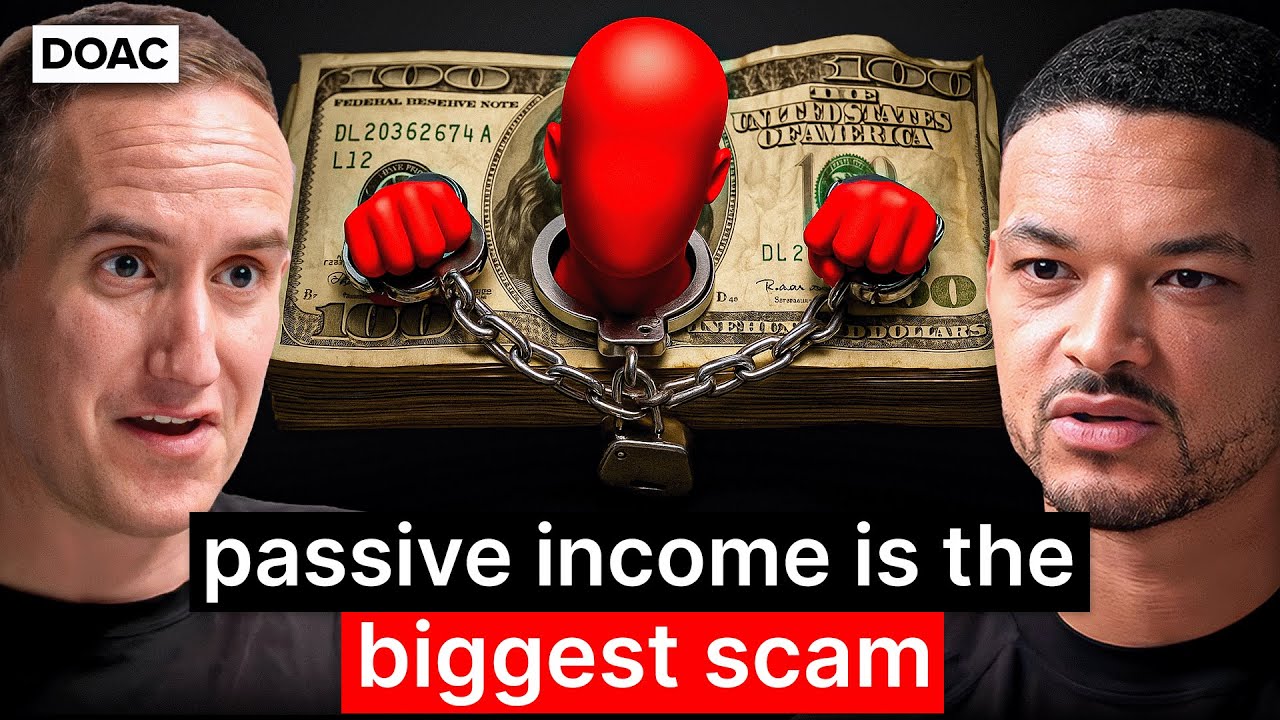
## Background
This episode of The Diary Of A CEO, hosted by Steven Bartlett and published on YouTube on October 6, 2025, features personal finance expert and bestselling author Morgan Housel. According to the page description, the discussion explores lessons from Warren Buffett and Elon Musk, money trauma, financial habits, and the psychology behind saving, spending, and true happiness.
## TL;DR
Finance author Morgan Housel and host Steven Bartlett break down the psychological mechanisms behind money, status, and happiness, arguing that true wealth is defined by independence and purpose rather than material display. They examine how neurobiological drivers like dopamine keep people striving on an endless treadmill of wanting more, while unpacking common financial illusions such as passive income, early retirement, and social comparison. Through personal anecdotes, psychological research, and societal reflections, the conversation emphasizes that managing internal expectations and practicing empathy toward one's future self are the keys to durable contentment.
## Atmosphere & style
The conversation carries an introspective, candid, and deeply reflective tone that balances analytical financial insights with existential vulnerability. Steven Bartlett and Morgan Housel engage in an intimate, peer-to-peer dialogue marked by genuine intellectual curiosity, gentle humor, and unvarnished personal admissions about workaholism, money trauma, and lifestyle choices. The mood shifts fluidly between sharp economic critiques and poignant, grounded reflections on human relationships, making the recording feel like an earnest, high-level fireside chat about what it truly means to live a good life.
## Key takeaways
- [00:00](https://www.youtube.com/watch?v=jFlnRBO8mcg&t=0s) Personal finance literature heavily focuses on saving and investing, but neglects how to spend money meaningfully, leading many consumer spending decisions to be driven by social signaling and validation rather than true utility.
- [07:02](https://www.youtube.com/watch?v=jFlnRBO8mcg&t=422s) Material displays of wealth often act as a fallback lever when internal substance or wisdom is lacking, whereas relative wealth comparison drives a continuous arms race of discontent.
- [17:01](https://www.youtube.com/watch?v=jFlnRBO8mcg&t=1021s) Hoarding money through savings addiction can be just as destructive as compulsive overspending, as money controls the individual in both extreme scenarios.
- [18:49](https://www.youtube.com/watch?v=jFlnRBO8mcg&t=1129s) Money acts as an amplifier of pre-existing personality traits and leverage for independence rather than a direct fix for underlying unhappiness.
- [24:16](https://www.youtube.com/watch?v=jFlnRBO8mcg&t=1456s) The durable formula for financial contentment is Independence + Purpose, where saving money is reframed as purchasing future autonomy.
- [40:41](https://www.youtube.com/watch?v=jFlnRBO8mcg&t=2441s) Dopamine functions as the neurotransmitter of wanting and pursuit rather than ultimate satisfaction, fueling a chemical impulse to constantly strive for more.
- [55:25](https://www.youtube.com/watch?v=jFlnRBO8mcg&t=3325s) The passive income narrative—especially through rental properties—is largely a myth, as true wealth building requires either sacrificing more effort or wanting less.
- [57:54](https://www.youtube.com/watch?v=jFlnRBO8mcg&t=3474s) Understanding complex macroeconomics is unnecessary for personal financial success; emotional discipline, managing expectations, and simple consistent savings matter significantly more.
- [01:08:43](https://www.youtube.com/watch?v=jFlnRBO8mcg&t=4123s) Economic systems fracture when a large segment of the population feels left behind, a dynamic further amplified by social media algorithms that prioritize rage and political animosity.
- [01:26:32](https://www.youtube.com/watch?v=jFlnRBO8mcg&t=5192s) Rational financial decisions often fail because they ignore human emotion; choosing reasonable options that provide peace of mind and better sleep is a superior approach.
- [01:28:09](https://www.youtube.com/watch?v=jFlnRBO8mcg&t=5289s) Evaluating choices through a regret minimization framework acts as an act of empathy toward one's future self.
- [01:52:04](https://www.youtube.com/watch?v=jFlnRBO8mcg&t=6724s) Children absorb money habits and attachment styles by observing how parents spend and value money rather than from direct lectures.
- [01:56:04](https://www.youtube.com/watch?v=jFlnRBO8mcg&t=6964s) Happiness occurs when reality meets or exceeds expectations, making internal expectation management the most effective lever for financial and mental contentment.
## Detailed walkthrough
### [00:00](https://www.youtube.com/watch?v=jFlnRBO8mcg&t=0s) Rethinking Spending, Status, and the Lies We Tell Ourselves
Host Steven Bartlett introduces Morgan Housel, legendary financial writer and partner at Collaborative Fund, by pointing out a striking void in personal finance literature: while everyone obsesses over investing and saving, almost no one teaches people *how* to spend. Housel notes that after writing about finance for two decades, he realized he had never articulated his own spending philosophy. Despite tens of thousands of books on wealth creation, spending is routinely ignored under the naive assumption that "more is better, fancier is better." In reality, the correlation between spending and happiness is complex and deeply psychological. Spending is often a "psychological itch" to scratch—a way of sending signals to others or seeking validation.
Housel shares a thought experiment to distinguish between pure utility and social status: if you lived on a deserted island with your family and no one could see how you lived, how would you spend your money? Stripped of an audience, people naturally abandon status symbols like Lamborghinis or mega-mansions in favor of utility and serenity—a pickup truck or a modest house with a peaceful view.
- Housel is the bestselling author of *The Psychology of Money* and *The Art of Spending Money*.
- Most consumer spending is driven by social signaling—to show others or oneself what they have overcome—rather than pure intrinsic utility.
---
[07:02](https://www.youtube.com/watch?v=jFlnRBO8mcg&t=422s) The Traps of Status Games and Insecurity
When asked whether chasing status symbols—such as buying a Rolex—is inherently wrong, Housel emphasizes that it depends on your motivations and stage of life. Reflecting on his own late teens and early twenties, Housel admits he felt a strong desire to show off materially because he felt he had nothing else to offer—no wisdom, intelligence, or deep life experience. Material items become a fallback lever to demand attention when internal substance is lacking. Over time, as he developed more to offer his family, friends, and career, his desire to show off materially diminished significantly.
Housel cites a favorite quote from Warren Buffett: "Success in life is when the people who you want to love you do love you." The key is recognizing *who* you actually want love from. Many people reflexively assume "everyone," driving them to display wealth so strangers will gawk. However, as comedian Jimmy Carr observed: in your 20s you worry about what people think of you, in your 30s you claim you don't care, and in your 40s you realize no one was ever thinking about you in the first place—they were too busy worrying about themselves.
- **Jimmy Carr's Perspective:** People spend their lives overestimating how much others are paying attention to them.
- When you realize that the people whose love you truly care about don't judge you by your car or clothes, the urge for luxury status spending fades.
---
[09:35](https://www.youtube.com/watch?v=jFlnRBO8mcg&t=575s) Relative Wealth and Outlier Success Traps
Addressing the evolutionary basis for material competition, Housel notes that human satisfaction is fundamentally relative: "It doesn't matter how well I'm doing, it matters how well I'm doing relative to you." In an era of material abundance, this relative competition has reached an unprecedented "arms race" due to two modern factors:
1. **Social Media:** Constant visibility into the curated, luxurious lifestyles of others globally.
2. **Globalized Markets:** The internet allows individuals to scale businesses globally, making extreme wealth creation more possible than ever, which inflates societal baselines for success.
A young person's definition of wealth today is often a billionaire with a private jet, whereas 80 years ago it was a modest three-bedroom house, a single car, and a happy family. However, Housel warns that copying outlier figures like Elon Musk, Jeff Bezos, or Mark Zuckerberg requires taking their *entire* life package—not just their net worth. Extreme professional success usually requires sacrificing health, peace of mind, and personal relationships.
- **Divorce Statistic:** Across the top 10 richest men in the world, there are a cumulative 13 divorces.
- Outlier success frequently stems from single-minded obsession that damages marriages, parenting, and personal well-being.
Here is a detailed, faithful walkthrough of the provided transcript section.
[13:59](https://www.youtube.com/watch?v=jFlnRBO8mcg&t=839s) The Reality of High-Level Trade-offs
Steven Bartlett recalls a conversation with a 24- or 25-year-old woman who was comparing herself to him and expressing frustration that she was not yet a millionaire. Steven challenged her by asking whether she would actually be willing to make the precise trade he made to reach that level of wealth. He detailed his early struggles: between the ages of 18 and 20, he was deeply lonely, working in call centers, and completely cut off from his parents with no family contact. He was reduced to shoplifting to feed himself and living off a massive industrial tub of powdered oats given to him by his brother, which he had to mix with water—a moment captured in a photo from his first TED Talk.
When Steven asked her if she would trade her life to be a millionaire at 24 if it meant enduring that level of isolation, shoplifting, working night shifts, and drinking powdered oats, she immediately refused. Steven emphasizes that people often envy an outcome while completely ignoring the necessary path required to achieve it. This perspective taught him to analyze life through the lens of trade-offs, whether considering medications like Ozempic, building a successful podcast, or pursuing career success. He references his team, who had just worked morning-to-night every single day, including weekends, for 14 straight days during their shoot in New York. To underline this point, Steven highlights a favorite quote from comedian Jimmy Carr: *"Everyone is jealous of what you've got. Nobody's jealous of how you got it."*
* **Steven's Early Struggles:** Cut off from family between ages 18 and 20; worked night shifts in call centers; shoplifted to eat; lived on powdered oats mixed with water.
* **The New York Shoot:** Steven's podcast team worked 14 consecutive days from morning to night, including weekends, to produce the show.
* **Jimmy Carr Quote:** *"Everyone is jealous of what you've got. Nobody's jealous of how you got it."*
---
[15:48](https://www.youtube.com/watch?v=jFlnRBO8mcg&t=948s) The Reverse Obituary Exercise
Morgan Housel introduces a reflective exercise he writes about in his book called the "reverse obituary." Although it sounds somewhat morbid, the exercise involves writing down what you actually want your obituary to say at the end of your life. For Morgan, he wants to be remembered as a good father, a good husband, a good friend, a helpful member of his community, and a solid worker. He notes that under no circumstances would anyone want their obituary to list their annual income, the square footage of their house, how many vacations they took, or the horsepower of their car.
The exercise serves as a powerful reality check because it immediately strips away consumerist distractions and forces a person to focus on what truly matters. When people spend their days obsessing over earning a higher income, buying a larger house, upgrading to a faster car, or acquiring the latest luxury watch, they lose sight of the fact that none of those things will matter at the end of their lives. What ultimately matters is whether you were honest, funny, a good friend, a supportive spouse, and a great parent.
* **Key Desired Obituary Attributes:** Being a good spouse, a dedicated parent, an honest friend, a helpful community member, and a hard worker.
* **Irrelevant Metrics at Life's End:** Income level, home size, luxury watches, car horsepower, and vacation frequency.
---
[17:01](https://www.youtube.com/watch?v=jFlnRBO8mcg&t=1021s) The Danger of Savings Addiction
Steven shifts the discussion to spending habits and how money-related trauma can manifest not just as compulsive spending, but as a "savings addiction" where people hoard capital and refuse to spend anything. Morgan agrees that hoarding money is just as destructive as overspending because both stem from the exact same root problem: money is controlling the person rather than serving as a tool. Money ought to be a tool used to build a happier, more content life, but when it dictates a person's behavior, it acts like a puppeteer controlling a marionette doll.
Financial advisers frequently report that one of their most difficult challenges is dealing with clients who saved diligently for 40 years, maxed out their 401(k)s, and reached age 70 with ample wealth, yet physically cannot bring themselves to spend money on travel or golf. Because their entire identity for four decades was built on being a "saver" whose net worth increases every month, they are unable to shift gears into decumulation. Their money dictates how they live, what they like, and what they aspire to, making hoarding just as dangerous to personal happiness as uncontrolled teenage spending.
* **The Saver's Dilemma:** Financial advisers report 70-year-old clients who maxed out 401(k)s for 40 years but remain psychologically incapable of spending their savings on leisure or travel.
* **The Core Issue:** Both compulsive spending and obsessive hoarding represent money controlling identity rather than serving as a tool for personal well-being.
---
[18:49](https://www.youtube.com/watch?v=jFlnRBO8mcg&t=1129s) Can Money Buy Happiness?
Addressing Steven's question on whether money can make a person happy, Morgan explains that while the short answer is yes, it comes with a crucial asterisk. Economists and academic researchers spent decades debating the link between wealth and happiness, but recent research has provided clearer nuance. Money acts primarily as an amplifier or leverage for an existing personality rather than a cure for deep-seated emotional issues.
If a person is inherently anxious, depressed, or unhappy, acquiring more money will do very little to improve their underlying mental state beyond minor adjustments around the margins. However, if a person is naturally joyful, content, and happy, having more money will provide a better life by offering security and opportunities. Morgan compares this to power in politics: gaining power doesn't transform a person's fundamental nature; it simply leverages who they already were.
To illustrate this, Morgan contrasts two distinct life scenarios:
1. **The Miserable Millionaire:** An individual who lives in a massive mansion with a Ferrari in the driveway, but is overweight, hates their job, is recently divorced, addicted to alcohol, and estranged from their children. Despite the luxury, their daily reality is miserable.
2. **The Content Middle-Class Family:** An individual who lives in a modest house, drives a 10-year-old Honda Civic, but loves their job, enjoys great relationships with co-workers and their spouse, has children who admire them, and hosts weekly Friday night barbecues with friends.
Morgan points out that it would be "psychotic" to choose the miserable life in the mansion over the content life in the modest home if the actual goal is to live a good life.
* **The Academic Verdict:** Money amplifies pre-existing emotional states rather than altering core happiness.
* **The Wealth Spectrum Comparison:** A luxury mansion with a Ferrari cannot offset loneliness, divorce, job hatred, and poor health; whereas a modest home and a 10-year-old Honda Civic can coincide with a deeply fulfilling life rich in strong relationships.
---
[21:41](https://www.youtube.com/watch?v=jFlnRBO8mcg&t=1301s) Empty Mansions vs. Shared Moments
Steven shares a recent personal experience that reinforced this exact lesson. He flew to Cape Town alone to stay in a large house he owns there—a property he had previously only visited with his family, girlfriend, or friends. Waking up and walking through the sprawling, empty house by himself triggered a deep existential realization: the entire purpose of a large physical space is to fill it with loved ones. He realized he would far rather be in a tiny studio apartment by himself than alone in a massive house, noting that an empty luxury house can actually induce depression.
Morgan connects this to a story from his own life when he took his family on vacation to Maui, his favorite place in the world. While building sandcastles on the beach with his kids in the sun, he felt he was experiencing a "10 out of 10" life moment. However, he quickly realized that playing with Legos on the living room floor with his kids back home was easily a "9 out of 10." The location itself wasn't the driver of happiness; the true value came from uninterrupted quality time with the people he loved. People don't necessarily love the logistical strain or jet lag of travel—they love being freed from work stresses and daily distractions.
Morgan concludes that a large house only adds to happiness to the extent that it makes hosting friends and family easier. He reinforces this with a classic 10-to-15-year-old *New York Times* article about Julia Roberts. In a single week, Roberts won an Academy Award and simultaneously discovered her husband was cheating on her. The columnist posed a pop quiz asking if she had a good week; while outsiders saw a glamorous actress in a dress receiving the highest award in her field, her actual internal reality made it one of the worst weeks of her life.
* **Steven's Cape Town Realization:** Staying alone in his large Cape Town home made him realize he would prefer a studio apartment over an empty mansion, as large spaces require shared connection to feel meaningful.
* **The Lego Baseline:** Building sandcastles in Maui rated a 10/10 for Morgan, but playing Legos on the living room floor at home rated a 9/10 because uninterrupted quality time with his children was the true source of joy.
* **Julia Roberts Example:** Winning an Academy Award while learning of a spouse's infidelity proves that external achievements cannot substitute for internal or relational well-being.
---
[24:16](https://www.youtube.com/watch?v=jFlnRBO8mcg&t=1456s) The Formula for a Good Life: Independence + Purpose
Morgan quotes page 23 of his book, *The Art of Spending Money*: *"Show off the inside of your house, not the outside."* The inside of a home is what actual friends and family experience, whereas the outside is merely displayed to strangers. Steven asks how someone can step out of the societal "matrix" of endless status games and competitive consumerism.
While Morgan stresses that there is no universal rulebook for spending, he offers his core formula for living a good life: **Independence + Purpose**.
1. **Independence:** Having the ability to do what you want, when you want, with whom you want.
2. **Purpose:** Having a drive for something higher than yourself, whether that is family, career, community, or religion.
Morgan redefines saving not as a passive act of hoarding, but as literally *purchasing independence*. Every single dollar saved buys a piece of future autonomy and control. Independence exists on a spectrum—a person with $100 saved has a tiny bit more buffer against job loss than someone with zero; $1,000 or $10,000 grants progressively more flexibility for rent, food, and career choices. Viewing savings as buying freedom changes one's relationship with money.
Regarding purpose, Morgan shares that his primary purpose right now is being a great father. While parenting brings anxiety, sleepless nights, and worry, he notes that most parents find no greater joy than watching their children thrive. When Steven points out that raising children requires trading away some personal independence, Morgan agrees, explaining that he willingly sacrifices internal independence for a higher purpose.
* **Book Quote (p. 23):** *"Show off the inside of your house, not the outside."*
* **The Life Formula:** $\text{A Good Life} = \text{Independence} + \text{Purpose}$
* **Savings Definition:** Saving money should be viewed as buying units of future personal independence and autonomy rather than mere accumulation.
---
<ElicitationsGroup message="Where would you like to go next with this transcript?">
<Elicitation label="Summarize the next transcript section" query="Please provide a detailed walkthrough of the next transcript section."/>
<Elicitation label="Analyze Morgan Housel's spending philosophies" query="What are the key financial and psychological spending principles introduced by Morgan Housel in this transcript?"/>
</ElicitationsGroup>
[27:46](https://www.youtube.com/watch?v=jFlnRBO8mcg&t=1666s) The Dark Side of Independence and the Power of Choice
The conversation shifts to the nuances of loyalty, independence, and human fulfillment. Loyalty is deeply satisfying when given to people or entities that actually deserve it—like family—but entirely toxic when directed at a job, company, or political affiliation that does not respect you. While popular culture heavily promotes absolute self-reliance, standing on one's own two feet, and "being your own boss," total independence can lead to profound isolation. Picture someone living alone in a glass box in Dubai or isolated in Montana with no family, no pets, no church, and no obligations—they may have ultimate freedom, but they lack purpose.
True fulfillment comes from choosing who you want to be dependent on, rather than being forced into unwanted dependency. Being trapped in a soul-crushing job to pay exorbitant rent on an unwanted apartment is a form of involuntary dependency. Conversely, choosing to be dependent on a spouse and children provides purpose and grounds a person. Independence is not about severing all ties to humanity; it is the freedom to choose your obligations and decide who deserves your devotion.
* Loyalty to deserving people (like family) is deeply fulfilling; loyalty to an uncaring employer or ideology is dangerous and damaging.
* Absolute independence without obligations often results in a lack of purpose and deep unhappiness.
* True financial and personal independence provides the agency to choose whom you rely on and who relies on you.
---
[30:20](https://www.youtube.com/watch?v=jFlnRBO8mcg&t=1820s) How Much Savings Do You Really Need?
When considering how much money to save, a practical baseline for a medium level of independence is having **six months of living expenses** put aside. While this may feel daunting—especially for an 18-year-old or someone just starting out—it provides a crucial safety margin. For most of human history, when a crisis hit, people were simply not okay; six months of savings allows you to take a breath and navigate life's inevitable setbacks without falling into financial trauma.
The real power of an emergency cushion is the flexibility it affords during career transitions. If you lose your job without any savings, you are forced to accept the very first offer that comes along—even if it means working in a location you hate, doing work you despise, with people you dislike. Having a financial buffer grants you the time and leverage to seek out a role that actually fits your goals and values.
* A **six-month emergency fund** serves as a realistic target for achieving functional financial independence.
* Savings function as a tool for flexibility, preventing you from accepting terrible jobs out of immediate desperation.
* Every dollar saved buys back a piece of your future ownership; every dollar of debt hands control of your future over to someone else.
---
[32:18](https://www.youtube.com/watch?v=jFlnRBO8mcg&t=1938s) Jealousy, Social Comparison, and Regional Benchmarks
Jealousy heavily dictates financial decisions and perceptions of success. A striking statistical phenomenon illustrates this: when someone wins the lottery, the probability of their immediate neighbors going bankrupt significantly increases. Watching a neighbor buy a vacation home, drive a new luxury car, or send their kids to elite private schools alters a person's baseline for what constitutes a "normal" life. Driven by envy and a sense of unfairness, neighbors often make reckless financial choices to match that inflated standard.
```
┌─────────────────────────────────────┐
│ Neighbor Wins the Lottery │
└──────────────────┬──────────────────┘
│
▼
┌─────────────────────────────────────┐
│ Visible Spending: New Car, Vacation │
│ Home, Private Schooling │
└──────────────────┬──────────────────┘
│
▼
┌─────────────────────────────────────┐
│ Neighbors Shift Baseline: "I need │
│ that to have a good life too" │
└──────────────────┬──────────────────┘
│
▼
┌─────────────────────────────────────┐
│ Reckless Spending & Debt Expansion │
└──────────────────┬──────────────────┘
│
▼
┌─────────────────────────────────────┐
│ Higher Rates of Neighbor Bankruptcy │
└─────────────────────────────────────┘
```
Environment plays a massive role in setting these expectations. Growing up in Lake Tahoe, California, during the 1990s and early 2000s—before the influx of Silicon Valley tech money—success was defined simply as owning a two-bedroom house and a beat-up pickup truck. Because the bar was modest, local residents were generally happier and content with their lives. Moving to Los Angeles for college presented a stark contrast, where the standard of success was elevated to mansions, Lamborghinis, and Roll-Royces, making contentment far harder to reach.
* **Lottery Bankruptcy Effect:** A neighbor winning the lottery raises the financial distress and bankruptcy risk of nearby households due to keeping-up-with-the-Joneses spending.
* Social circles set the implicit baseline for baseline expectations of wealth, making it critical to choose your environment carefully.
* Wealth expectations in Lake Tahoe (a pickup truck and modest home) yielded higher happiness than the hyper-competitive luxury environment of Los Angeles.
---
[34:38](https://www.youtube.com/watch?v=jFlnRBO8mcg&t=2078s) The Spectrum of Financial Independence
Financial independence is not a binary choice where you either work or never have to work again; it operates on a continuous spectrum. People often dismiss saving modest amounts—like **$100 a month** or **$1,200 a year**—assuming it is too small to make a difference. However, every bit saved buys incremental independence. A small cushion transforms a sudden job loss or an unexpected car breakdown from an overwhelming catastrophe into a manageable inconvenience.
```
[ Homelessness / Panhandling ]
│
▼
[ Complete Dependence on a Single Hated Job ]
│
▼
[ Reliance on Employment, but with Options to Switch Jobs ]
│
▼
[ 6-Month Emergency Cushion (Can handle crises gracefully) ]
│
▼
[ Full Autonomy (Ability to pause work, switch industries, travel) ]
│
▼
[ Complete Financial Freedom (Retirement / FIRE) ]
```
Starting from the bottom—homelessness and complete reliance on strangers—the spectrum moves upward to relying entirely on a job you hate. Higher up, an individual gains job mobility, followed by having enough emergency savings to weather a crisis without losing sleep. Near the top, you gain the freedom to take months off, switch careers, or move anywhere. The absolute top of the spectrum—never needing to work again—is an ideal that many only reach in their **70s** through retirement savings and Social Security, but achieving a middle tier of security is realistic for almost everyone.
> "Every dollar that you save is a piece of your future that you own, that you control, that is yours. The flip side of that is like every dollar of debt that you have is a piece of your future that somebody else controls." — **Morgan Housel**
---
[38:45](https://www.youtube.com/watch?v=jFlnRBO8mcg&t=2325s) The Formula for Financial Contentment
The core formula for feeling wealthy is simple yet frequently overlooked: **Wealth = What You Have − What You Want**. Society constantly pushes people to increase what they *have*, completely ignoring the power of controlling what they *want*. A striking example of this was a late grandmother-in-law who lived comfortably for 30 years on just **$1,700 to $1,800 a month** from Social Security. Despite having very little income, she was completely content because she desired nothing more, finding her joy in gardening, walking, watching sunsets, and spending time with loved ones.
```
┌────────────────────────────────────────┐
│ WEALTH = WHAT YOU HAVE - WHAT YOU WANT │
└────────────────────────────────────────┘
High Income + Sky-High Desires vs. Modest Income + Low Desires
─────────────────────────────── ─────────────────────────────
• Earns $1M/year • Earns $1,800/month
• Wants $2M/year • Desires simple living
• Result: Perpetual Deficit • Result: Complete Contentment
```
Many billionaires with **$1 billion** are financially miserable because they are fixated on getting **$2 billion**, making them far less content than someone with modest means and low expectations. People often confuse *happiness*—a fleeting, 30-second burst of emotion like laughing at a joke—with *contentment*, which is a durable, lasting state of mind where you simply feel "I'm good; I don't need anything more." Daydreaming about a larger mansion is rarely about the house itself; it is a desire for the underlying feeling of finally being content with what you own.
* **The Formula:** Feeling wealthy is determined by subtracting what you want from what you have.
* Happiness is a short-lived emotion lasting seconds or minutes; contentment is a durable, sustainable financial goal.
* A low-income individual with modest desires often achieves far greater financial contentment than a billionaire chasing another billion.
---
[40:41](https://www.youtube.com/watch?v=jFlnRBO8mcg&t=2441s) Dopamine and the Neurobiology of Wanting
The psychological struggle with money is deeply tied to brain chemistry, specifically the neurotransmitter **dopamine**. As highlighted by expert Dr. Anna Lembke, dopamine is commonly misunderstood as the molecule of pleasure or happiness, but it is actually the chemical of **wanting**, driving motivation, pursuit, and the urge to acquire more.
A famous scientific study demonstrates the absolute power of dopamine: when researchers removed dopamine receptors from a rat's brain, the rat was placed just two inches away from food and starved to death. It retained the physical capability to eat, but completely lost the drive to reach out and consume the meal. This neurobiological reality proves that financial ambition and the endless desire for more are not problems you can solve cleanly on a spreadsheet; they are deeply ingrained chemical impulses that dictate human behavior.
* **Dopamine Function:** Operates as the driver of pursuit and wanting, rather than the signal of satisfaction or pleasure.
* **The Rat Study:** A rat deprived of dopamine starved to death mere inches from food due to a total absence of motivation.
* Managing financial satisfaction requires understanding that human biology is wired to pursue more, making conscious contentment a psychological battle rather than a math problem.
[41:44](https://www.youtube.com/watch?v=jFlnRBO8mcg&t=2504s) Diagnosing the "Want More" Impulse and the Power of Dopamine
Morgan Housel notes that his mother-in-law, who possessed a remarkable level of contentment, grew up during the Great Depression without social media, which naturally kept her expectations low. While some people are inherently wired for contentment, Housel emphasizes a key parallel from psychiatry: often, diagnosing a mental illness (such as ADHD) provides more relief than the treatment itself because it stops you from constantly asking, *"Why am I having these thoughts?"*
The same principle applies to financial desires and material consumption. Simply understanding *why* you are driven to buy things—and recognizing that it will not deliver lasting happiness—is half the battle. Housel confesses that even as a personal finance expert, he experiences daily urges to upgrade his life, whether it is buying a newer car or a larger house. The difference now is his ability to pause and remind himself of what actually brings joy:
* Spending quality time with his children
* Nurturing a strong relationship with his wife
* Maintaining physical health
* Laughing and having fun with close friends
He cautions that our brain's dopamine pathways constantly lie to us, whispering that getting more will finally satisfy us. Dopamine thrives on the gap between where you are and where you want to be. When that gap closes, people fall victim to the **arrival fallacy**—the mistaken belief that reaching a specific milestone will bring permanent fulfillment, only to discover another metaphorical mountain peak waiting right above it.
> "Dopamine tells me you should want more and more and more... You never get over it, but I think once you've diagnosed the problem, it becomes easier at just spotting that emotion and realizing that it's telling you a story that's probably not true."
---
[43:20](https://www.youtube.com/watch?v=jFlnRBO8mcg&t=2600s) Harnessing Addictive Personalities for Productivity
Steven Bartlett asks whether it is possible to redirect a dopamine addiction away from destructive spending toward something more productive, reflecting on how he pivoted his own youthful spending habits into building businesses and podcasting. Housel agrees, suggesting that almost everyone is addicted to something. The key differentiator for highly successful individuals is their ability to harness that natural intensity into productive endeavors.
Housel shares personal stories to illustrate how deeply embedded these predispositions are:
* **His Wife:** Completely indifferent to cars or financial markets, but intensely passionate about gardening.
* **A Close Friend:** Replaced a cycle of alcoholism, gambling, and overeating with an obsession for marathons and health and fitness.
* **Housel Himself:** Shares that at three years old, while other kids counted seashells or rocks, he sat on the floor counting pennies. Money has fascinated him his entire life, leading directly to his 20-year writing career.
The conversation turns to housing and lifestyle inflation. Housel shares a humorous anecdote about moving into a home he and his wife loved, only for his brother-in-law to visit and joke, *"You're only going to live here for two years before you want to buy a bigger house."* Though Housel laughed it off, he admits the underlying psychological mechanism is real. In contrast, Housel notes that parenting is one area immune to the arrival fallacy; parents rarely look at their children wishing for "one more," but instead look back nostalgically, wishing they had cherished earlier childhood phases even more.
---
[48:13](https://www.youtube.com/watch?v=jFlnRBO8mcg&t=2893s) The Ambition Paradox: Individual Peace vs. Societal Progress
Bartlett wrestles with a core philosophical dilemma: Eastern philosophy and monks teach that eliminating desire is the key to happiness, yet his lived experience shows that striving for ambitious goals alongside a dedicated team brings immense joy. He describes living in a dual mindset—setting bold targets like building the world's biggest podcast to stay driven, while simultaneously accepting that achieving the goal will not fundamentally change his life or make him happier.
Housel validates this paradox and frames it as the fundamental engine of human society:
* **The Fuel of Progress:** Society advances because people wake up unfulfilled and demand more. If everyone woke up completely satisfied, technological innovation, medical breakthroughs, and economic growth would stall instantly.
* **The Driven Tycoons:** Figures like Bill Gates, Jeff Bezos, Elon Musk, and Mark Zuckerberg—though often psychologically restless or tortured—created world-changing technology precisely because having billions of dollars was never "enough" for them.
* **The Individual Balance:** While society benefits from collective discontent, individuals must learn to contextualize their drives so ambition does not consume their personal well-being.
Housel compares managing material desires to managing a healthy diet: you can commit to eating well while still admitting that ice cream and Oreos taste great. When asked to picture the happiest person in the world, Housel describes an ordinary middle-class family living in a modest three-bedroom home with a five-year-old car, who possess an amazing marriage, strong friendships, and good health. On their deathbeds at age 95, that family will look back with deep gratitude. When Bartlett asks if someone like him could force themselves to be like that, Housel candidly replies, *"No."* He believes baseline temperament is largely pre-wired at conception, meaning the goal is not to rewrite our nature, but to better frame our impulses.
---
[54:01](https://www.youtube.com/watch?v=jFlnRBO8mcg&t=3241s) Early Retirement Traps and the Passive Income Myth
Turning to practical financial strategies, Housel addresses the common obsession with early retirement (such as the FIRE movement). He warns that people who hustle aggressively to retire in their early thirties often experience severe boredom within six months. True well-being requires a formula of **Independence + Purpose**. When people step away from their careers prematurely, they gain independence but shed their purpose—only to realize their friends are still working and unavailable for mid-week golf. Consequently, many end up returning to work.
The conversation then shifts to the widespread obsession with "passive income." Bartlett notes how frequently friends reach out looking for passive income streams to clear debts. Housel dispels this as a modern myth, pointing out that popular examples like real estate rentals are far from passive.
> "This term passive income has become completely overused... If you think owning a rental property is passive income, you've never owned a rental property."
[55:25](https://www.youtube.com/watch?v=jFlnRBO8mcg&t=3325s) The Myth of Passive Income: Sacrifice More vs. Want Less
Morgan Housel firmly dispels the myth of "passive income," taking direct aim at real estate as a primary example. Owning rental property is far from passive; it is a relentless, full-time job involving an endless series of broken toilets, leaky roofs, and delinquent tenants. He outlines an ironclad, two-part formula for building wealth: you must either **sacrifice more** or **want less**. There is no magical third path.
When Steven asks what "sacrificing more" truly entails, Morgan describes the grueling reality of taking on higher-stress jobs, waking up early, doing unpleasant labor, and sacrificing precious time with your family. The alternative is learning to want less. The desire for passive income—or chasing quick speculative wins like crypto—is simply people looking for an easy shortcut. He compares this to physical health: the true secret to fitness is either sacrificing more (lifting weights and running until it hurts) or wanting less (accepting an imperfect body). Shortcuts like weight-loss medications (e.g., Ozempic) exist, but the fundamental formula remains unchanged.
[57:54](https://www.youtube.com/watch?v=jFlnRBO8mcg&t=3474s) Do You Need to Understand Macroeconomics?
Steven questions whether the average person needs a deep grasp of macroeconomic concepts—such as interest rates, tariffs, or Federal Reserve policies—to successfully manage their personal spending and build wealth. Morgan clarifies that macro knowledge is unnecessary for personal financial success. Throughout history, individuals with zero formal financial education or media consumption have built substantial fortunes simply by mastering their emotions, working hard, and saving consistently.
Morgan compares this to physical health: you do not need a PhD in cellular biology or an understanding of cell division to get into great shape. In fact, acquiring surface-level financial knowledge can backfire by inflating a person's confidence far faster than their actual skill. Reading a single article about the Federal Reserve or Reddit trading threads often tricks beginners into day-trading crypto or betting their net worth on obscure companies. Basic economic awareness is valuable for being an informed citizen and voter, but it is not a prerequisite for financial capability.
- **The Toyota-to-Porsche Bell Curve**: Steven shares that his wealthiest friend knows the absolute least about finance, investing, or crypto. Morgan references a famous meme illustrating net worth: lower-income individuals drive Toyotas, middle-income individuals buy flashy status symbols like Porsches or BMWs to perform wealth, and truly wealthy individuals return to driving simple Toyotas.
- **The Index Fund Paradox**: Both complete beginners and seasoned Wall Street veterans heavily favor simple index funds (like the S&P 500). It is the intermediate investor—armed with just enough information to be dangerous—who attempts to beat the market with complex, risky strategies.
- **The Optimal Intelligence Level**: Financial success requires an optimal level of intelligence: smart enough to understand the power of compound interest and index funds, but not so smart that those basic, boring strategies bore you into pulling risky levers.
[01:04:49](https://www.youtube.com/watch?v=jFlnRBO8mcg&t=3889s) Economic Reality vs. Individual Perception
The conversation shifts to broader global dynamics and social divisions. Examining a chart on monthly wage growth over a 25-year span, Morgan clarifies a common mathematical misconception: as long as wage growth remains above zero, wages are rising, even if the rate of growth slows down. Statistically, the median American family's inflation-adjusted wages have grown over the last quarter-century.
However, individual perception often sharply contradicts macro statistics. Even if average real wages increase, specific costs—such as college tuition, housing, rent, and childcare—have inflated dramatically while commodities like televisions have gotten cheaper. A statistic representing an "average family" fails to capture individual financial pressures. Furthermore, as societal standards of living rise, people's baseline expectations shift upward, making moderate progress feel like standing still.
- **Wage Dynamics Across Brackets**: While the rich have indisputably gotten richer, the lower-income brackets are generally treading water rather than getting absolute poorer. In fact, for two to three years immediately following the COVID-19 pandemic, low-wage workers experienced the highest percentage wage growth.
- **Relative Deprivation**: When the top economic tier gains wealth rapidly, "treading water" psychologically feels like falling behind, stoking widespread frustration.
[01:08:43](https://www.youtube.com/watch?v=jFlnRBO8mcg&t=4123s) Wealth Inequality and Social Fragmentation
Steven points to rising social unrest, mentioning anti-immigration protests in the UK and escalating online hostility toward minorities in the US. He asks how widening wealth inequality connects to these cultural flashpoints. Morgan frames the issue through the lens of history: the single most dangerous dynamic in any society occurs when roughly a third of the population wakes up every morning believing, "This system isn't working for me." Once a critical mass feels entirely disenfranchised by the status quo, social cohesion begins to fracture from within.
[01:09:28](https://www.youtube.com/watch?v=jFlnRBO8mcg&t=4168s) Wealth Inequality and the Rise of Social Media Awareness
Morgan Housel reflects on his principles as a capitalist and advocate for free markets, emphasizing that while people should have the opportunity to build great wealth, a dangerous threshold exists. When society reaches a point where a large portion of the population wakes up feeling that the economic system is fundamentally rigged against them, stability begins to fracture. Both speakers note that Western society is either currently at that tipping point or precariously close to it.
```
┌─────────────────────────────────────────┐
│ Extreme Wealth / Economic Polarization │
└────────────────────┬────────────────────┘
│
▼
┌─────────────────────────────────────────┐
│ Loss of Faith in Economic System │
└────────────────────┬────────────────────┘
│
▼
┌─────────────────────────────────────────┐
│ Social Media Amplifies Hostility │
└─────────────────────────────────────────┘
```
The discussion transitions to how social media intensifies these divisions compared to historical eras. Housel points out that extremist or hateful views have always existed—such as when Martin Luther King Jr. was assassinated—but historical information channels like single local newspapers or evening news broadcasts contained those voices. Today, digital platforms amplify extreme fringe reactions directly to everyone's feeds. Consequently, society feels vastly more divided and pessimistic, not necessarily because human nature has changed, but because visibility into extreme viewpoints has increased exponentially.
- Historical media structures like single local newspapers naturally filtered out extreme fringe opinions from the mainstream.
- Social media makes extreme, hateful, or celebratory reactions 100 times more visible than in past decades.
---
[01:10:38](https://www.youtube.com/watch?v=jFlnRBO8mcg&t=4238s) Dehumanization, "Road Rage" Dynamics, and the Charlie Kirk Shooting
Recording just one day after political commentator Charlie Kirk was shot and killed, Steven Bartlett and Morgan Housel examine the rapid dehumanization occurring across political lines. Both sides of the aisle frequently reduce opponents to animals, "Nazis," or faceless groups rather than viewing them as individual human beings. Housel explains the psychological reality that while 99.9% of people could never bring themselves to kill another human being face-to-face, they are entirely capable of doing harm once the victim is stripped of their humanity and reduced to an abstract group tag like "them" or "they."
Housel illustrates this point through the everyday experience of road rage. When driving, an individual responds with intense fury to another vehicle because there is no face visible—only a metal shell. He shares a personal anecdote where he accidentally cut someone off while pulling into a gas station. When the angry driver pulled up and Housel immediately stepped out, held up his hands, and offered a sincere face-to-face apology, the hostility evaporated instantly into an almost warm, unifying moment. Social media, Housel argues, effectively turns all of human life into a continuous state of road rage.
Bartlett and Housel reflect on Charlie Kirk's public career, noting that regardless of political agreements or disagreements, Kirk stood out for physically going onto college campuses and into debate halls like the Oxford Union to engage directly with critics. By replacing internet "road rage" with direct, face-to-face conversations where he listened to opposing viewpoints without interrupting, he modeled a respectful dialogue that is largely missing from modern political culture.
- Human psychology permits violence and intense hostility primarily after a target has been stripped of individual humanity.
- An estimated 99.9% of people are incapable of killing another person when forced to look them directly in the eye.
- Face-to-face interactions consistently de-escalate tension because they restore mutual human recognition.
---
[01:18:52](https://www.youtube.com/watch?v=jFlnRBO8mcg&t=4732s) Historical Cycles, Echo Chambers, and Optimism for the Future
Steven Bartlett outlines how modern algorithmic business models actively incentivize division. Because social platforms profit from time spent on screen, algorithms deliberately prioritize content that triggers the amygdala—evoking fear, outrage, and tribal conflict. Bartlett points out that the total number of social platforms with over 20 million active users has surged by 50% in recent years, fragmenting discourse into increasingly radicalized echo chambers. Furthermore, Pew Research data reveals a massive surge in political animosity in the United States over the last few decades.
Despite these grim metrics, Housel adopts a historically grounded, optimistic perspective rooted in generational cycles. He highlights that throughout history, people consistently fail to recognize macro bottoms while living through them:
* **1930s Great Depression:** Expecting the unprecedented middle-class prosperity of the 1950s felt preposterous to anyone living through economic collapse.
* **1960s–1970s Crisis:** Following the assassinations of John F. Kennedy, Martin Luther King Jr., and Robert F. Kennedy, alongside the Watergate scandal, predicting the political stability and economic trust of the 1980s and 1990s seemed absurd.
Housel contends that current record-low trust in institutions and record-high polarization likely signal a generational bottom from which society will eventually recover. When asked how society will navigate algorithmic manipulation, Housel suggests that younger generations—who grew up surrounded by digital feeds—will prove far less gullible than older generations like Baby Boomers. Having observed internet rabbit holes firsthand, younger demographics are better equipped to recognize online hostility as an artificial distortion rather than a accurate reflection of reality.
- In 1994, only 20% of Americans held a "very unfavorable" view of the opposing political party.
- By 2022, Pew Research indicated that negative views rose to 72% among Republicans and 63% among Democrats.
- Platforms with over 20 million active users have increased by 50% recently, exacerbating media fragmentation.
- Historical precedents demonstrate that periods of extreme societal divide (1930s, late 1960s) regularly precursor long-term recoveries.
<ElicitationsGroup message="To explore more concepts from this transcript segment:">
<Elicitation label="Examine Morgan Housel's insights on financial psychology and saving" query="What are Morgan Housel's core principles on saving, spending, and the psychology of money discussed in this interview?"/>
</ElicitationsGroup>
[01:23:05](https://www.youtube.com/watch?v=jFlnRBO8mcg&t=4985s) The Illusion of Social Media and Navigating Macro Economic Risks
Addressing the aftermath of a high-profile public violence incident, the conversation turns to what creators and public figures with large platforms should do to navigate societal division. Morgan Housel argues that the first step is recognizing the inherent nature of social media platforms. They are engineered by the brightest minds of a generation to capture attention not by serving truth, but by provoking maximum anxiety, outrage, and intense emotional reactions. Furthermore, content creators curate their posts as performances, sharing polished excerpts rather than authentic reality. Treating social media as an accurate reflection of the world distorts perception and breeds panic.
When looking at the trajectory of the Western and US economies, Morgan expresses long-term optimism alongside realistic expectations of short-term volatility. Economic growth and market expansion do not happen despite chaos, but precisely because society constantly adapts to solve problems. Over a 30-year horizon, advancements in medicine and technology will guarantee a higher material standard of living for the next generation. However, that upward trajectory will inevitably be punctuated by periods of suffering and crisis.
When asked about current macro threats—such as AI disruption, demographic decline, tariffs, or political shifts—Morgan points out that the greatest economic risks are almost never the ones currently being discussed. Historically, the events that cause the most severe economic damage are completely unforeseen "black swans" that arrive without warning and catch the world off guard.
- **Social Media Dynamics:** Platforms prioritize outrage and anxiety-inducing content over neutral or accurate information to maximize user engagement.
- **Unforeseen Black Swan Events:** Devastating historical disruptions—such as Pearl Harbor, the Great Depression, September 11, and the COVID-19 pandemic—were not on mainstream radars before they hit.
- **Economic Outlook:** Long-term material progress is highly likely over a 30-year span, but it is guaranteed to be a bumpy ride filled with short-term turbulence.
---
[01:26:32](https://www.youtube.com/watch?v=jFlnRBO8mcg&t=5192s) Reasonable vs. Rational: Money as a Life Tool
Reflecting on his bestseller *The Psychology of Money*, Morgan identifies "Reasonable vs. Rational" as his favorite concept. Purely rational decision-making treats human beings like mathematical formulas or cold financial spreadsheets. In reality, human emotions, unique family circumstances, and individual psychological quirks make strict rationality impractical. Aiming to be merely *reasonable* grants people permission to make choices that might look suboptimal on paper but bring them peace of mind and emotional stability.
Money is fundamentally a tool meant to improve daily life, improve sleep quality, and foster personal happiness. If a financial choice calms your anxiety—even if it defies standard mathematical optimization—it serves its true purpose. Financial choices should be tailored to individual temperaments rather than forced into an artificial, spreadsheets-only standard of perfection.
> "Don't pretend like you are purely rational and you're a spreadsheet... As long as your financial decisions are merely reasonable, that's good."
---
[01:28:09](https://www.youtube.com/watch?v=jFlnRBO8mcg&t=5289s) Regret Minimization and Empathy for Your Future Self
Turning to concepts from his book *The Art of Spending Money*, Morgan highlights Jeff Bezos’s "regret minimization framework" as a core mental model for evaluating choices. Bezos conceptualized looking back on his life from his deathbed at 90 years old, determining that he would never regret trying to launch Amazon and failing, but would deeply regret never trying at all. Living a good life is less about minimizing risk and more about minimizing end-of-life regret.
The primary challenge with this framework is that humans struggle to visualize their future selves. Steven shares a brain-imaging study demonstrating that when individuals think about themselves ten years in the future, the brain lights up in the exact same region as when thinking about a complete stranger. This neural disconnect makes long-term planning difficult. Emphasizing this point, Morgan references a favorite quote from comedian Jerry Seinfeld: "Self-control is empathy with your future self." Developing financial discipline and making sacrifices today is ultimately an act of compassion for the person you will become a decade down the road.
- **Regret Minimization:** The foundational goal of a well-lived life is minimizing deathbed regrets rather than completely eliminating short-term risks.
- **Neurological Disconnect:** MRI scans show that people process thoughts about their future self using the same neural pathways reserved for strangers, making long-term planning counterintuitive.
- **Self-Control Definition:** Maintaining discipline today represents an act of empathy and respect for one's future self.
The host takes a brief break to introduce two podcast sponsors offering solutions for modern businesses and tech creators.
- **Vanta:** Provides AI-driven compliance automation for startups needing to meet enterprise security standards (like SOC 2) quickly, offering a discount at `[vanta.com/ceo](https://vanta.com/ceo)`.
- **Replit:** An AI-powered development platform that allows users to turn ideas into functional apps, survey tools, or websites without prior coding knowledge, using the promo code `steven` for 50% off the Replit Core plan.
---
[01:33:50](https://www.youtube.com/watch?v=jFlnRBO8mcg&t=5630s) The Value of Novelty and Finding Your Unique Path
Discussing the chapter "Try Something New," Morgan and Steven explore why time seems to accelerate as people get older. During childhood, nearly every experience is novel, which causes memory formation to dense-pack time and make seasons like summer vacation feel endless. In adulthood, routine sets in—the same daily commute, familiar work tasks, and static environments—causing years to blur together. Actively trying new experiences introduces novelty back into life, stretching out our perception of time and rediscovering a sense of wonder.
Trying new things is also essential because personal preferences are rarely intuitive. There is no universal spending formula; people must experiment across different categories to discover what genuinely brings them satisfaction. Morgan shares a personal realization with his wife: despite popular culture framing travel as the ultimate luxury, they realized they didn't enjoy frequent trips while raising young kids. In fact, after reviewing their summer schedule, they confessed to each other that the single best part of their recent vacations was returning home.
Recognizing these personal truths requires self-awareness. Misery often arises when people blindly chase a lifestyle that looks appealing on someone else, but completely mismatches their own values and personality.
- **Perception of Time:** Children experience time more slowly because of continuous novelty, whereas adult routines cause years to pass in a flash.
- **Trial and Error Spending:** Discovering personal happiness requires experimenting with different spending habits rather than blindly accepting societal definitions of luxury.
- **Personalized Lifestyle:** Chasing another person's ideal lifestyle—such as forcing constant travel when you prefer being home—leads to unnecessary financial strain and discontentment.
[01:36:47](https://www.youtube.com/watch?v=jFlnRBO8mcg&t=5807s) The Myth of a One-Size-Fits-All Work Ethic
Morgan Housel and Steven Bartlett discuss how people mistakenly project their personal values and lifestyle choices onto others. It is an act of psychological immaturity to assume that because a specific work ethic or lifestyle brought you happiness—or failed to—it must apply to everyone else. This dynamic plays out constantly on platforms like LinkedIn, where one group denounces relentless hustle as "toxic," while another labels anyone not sacrificing everything as "lazy." Both sides fall into the trap of believing everyone operates under the exact same desires and capacities.
Seeing others work frantically while you take a lighter approach can hold an uncomfortable mirror up to your own life, making you feel as though you are "not enough." Conversely, looking at someone else's public success often fuels envy because people rarely advertise the bad parts or hidden trade-offs of their lives. While using someone’s success as motivation can be constructive, slipping into the mindset that "if only I had what they had, I would be happier" is a treacherous path.
- Extreme ambition—like that of Jeff Bezos or Elon Musk—might suit them perfectly, but forcing it on someone else would drive them completely crazy.
- Social media profiles show only advertised highlights, hiding the private struggles, strain, and trade-offs that people choose not to disclose out of self-preservation or fear of judgment.
[01:39:33](https://www.youtube.com/watch?v=jFlnRBO8mcg&t=5973s) Behind the Scenes: Producer Jack on Steven's Chaotic Life
To illustrate the stark reality behind perceived success, Steven turns to his longtime podcast producer, Jack, who has worked on the show since its YouTube inception. Steven asks Jack directly whether he would ever want his life. Without a second of hesitation, Jack responds, "Absolutely not." Jack points out that the sheer volume of people bidding for Steven's attention on a daily basis is mind-blowing, adding that having such an intense magnifying glass over every move would be overwhelming.
Jack paints a vivid picture of the relentless demands on Steven's calendar, recalling times when Steven literally had to schedule his lunch breaks—only to still miss them. Even a quick trip to the bathroom turns into a gauntlet of team members firing urgent executive decisions at him in the hallway. Steven admits that just moments before, during a brief break, he had to decide in four seconds whether to lock in a major podcast guest for the evening or cancel a four-hour meeting in New York City with a major investor, knowing full well the decision directly impacted his planned date night with his girlfriend, Mel.
- Jack notes that he often sees "the worst" of Steven under high pressure, taking it as a compliment that Steven feels comfortable enough to drop the mask around him.
- Steven reveals his daily schedule is so micro-managed and engineered that he does not even pick his own meals: "I walk out here and it's there and I go, 'Okay, well, I'm having broccoli today.'"
- Jack reflects on how Steven's life lacks the simple "messiness of life," which often contains its own quiet beauty and happiness.
[01:41:14](https://www.youtube.com/watch?v=jFlnRBO8mcg&t=6074s) Happy vs. Content: Chasing the Next Goal
When Steven asks Jack if he thinks he is truly happy, Jack draws a crucial distinction: "I think you're happy, but I don't think you're content." Jack explains that Steven is fundamentally a businessman wired to scale and build, constantly chasing the next milestone even when he could easily coast on the podcast's massive success. Jack points out the personal toll this constant drive takes, including reducing the time Steven gets to spend with his girlfriend.
Steven agrees with the assessment, explaining that his definition of happiness is largely the absence of unhappiness and misery. Morgan adds that for someone wired like Steven, stepping away from the hustle entirely would be devastating. It is less about whether the endless workload generates pure joy, and more about the fact that "not doing this would make you miserable." Morgan expresses gratitude that people like Steven exist because society benefits from the massive output born from their personal trade-offs.
- Jack shares how Steven will frequently pitch brand-new ventures on top of his current workload, leaving Jack wondering why he voluntarily absorbs the extra toll.
- Morgan notes that while many people view high-stress entrepreneurship as a sacrifice, for hyper-ambitious individuals, idleness would lead to severe anxiety and depression.
[01:45:40](https://www.youtube.com/watch?v=jFlnRBO8mcg&t=6340s) Regrets of the Elderly and the Reality of Daily Happiness
Morgan brings up a study by gerontologist Karl Pillemer, who interviewed over a thousand elderly Americans between the ages of 90 and 100 for his book *30 Lessons for Living*. When asked for the secret to a good life, not a single person regretted not making more money or failing to choose a higher-paying career. Instead, virtually every single person expressed a desire to have been nicer to people, more helpful to friends, and present with their families.
This perspective resonates deeply with Steven, who admits to constantly swinging between states of intense gratitude and an unfulfilled urge to build. He recounts doing *The Tonight Show Starring Jimmy Fallon* in New York and feeling overwhelmed with joy and appreciation, only to shift back into building mode the next morning. He recalls an intimate moment from the previous night: after working on an Instagram post announcing his Fallon appearance, he looked over at his sleeping girlfriend and was hit by the sudden realization, "I am going to regret not spooning her and cuddling her while I have the chance." He immediately put his phone down to embrace her, especially shaken by the recent news of the Charlie Kirk shooting.
- Karl Pillemer’s survey of 1,000 elders aged 90–100 found zero respondents who wished they had accumulated more wealth or worked longer hours.
- Morgan emphasizes that "happiness is always a five-minute emotion," making self-awareness of these fleeting states crucial to avoiding lifelong regret.
[01:47:45](https://www.youtube.com/watch?v=jFlnRBO8mcg&t=6465s) The 10% Happier Rule and the "If Nobody Was Watching" Test
Morgan references Dan Harris’s book *10% Happier*, noting that while practices like meditation or financial wealth cannot fix your entire life, making you 10% or 20% happier is still a substantial win. Money has hard limitations; true long-term fulfillment must come from purpose, health, family, and relationships. Understanding what wealth *cannot* do provides an immense sense of relief and prevents financial pursuits from becoming a burden.
When Steven questions whether he should feel guilty about his relentless drive and lack of internal contentment, Morgan reassures him that this drive is rooted in evolutionary competition. Humans are wired to compete so they aren't left behind. To help untangle internal drive from external pressure, Morgan poses a diagnostic question: "If nobody was watching, what would you want to do?" Asking whether you would still record the podcast or buy the same size house if no one could see it helps separate genuine personal fulfillment from the urge to win the attention of others.
- Wealth can reasonably improve overall life satisfaction by roughly 10% to 30%, but expecting it to solve core psychological needs leads to deep disillusionment.
- The ultimate test for evaluating whether a ambition is authentic or status-driven comes down to whether you would still pursue it if no one else were around to witness it.
[01:50:04](https://www.youtube.com/watch?v=jFlnRBO8mcg&t=6604s) The Dynamics of Social Signaling and True Contentment
The conversation opens with a discussion on how life choices, particularly high-stakes decisions like selecting an elite university, buying a specific home, or choosing between an Apple Watch and a luxury timepiece, are driven by a dual motivation: intrinsic value and social signaling. Morgan Housel emphasizes that social signaling should not be casually dismissed as superficial, because it serves functional purposes in human dynamics. Obtaining a college degree, for instance, signals to prospective employers that an individual possesses the discipline to show up consistently and execute tasks over a four-year period. Proper signaling helps people attract the right peers, career opportunities, and romantic partners through how they groom, dress, and present themselves. However, a sharp boundary exists between healthy social signaling and toxic status-seeking—such as acquiring an inconvenient, high-maintenance car purely to capture the fleeting gaze of strangers on the street.
```
+--------------------------+-----------------------------------------------------------+
| Type of Signaling | Primary Objective & Characteristics |
+--------------------------+-----------------------------------------------------------+
| Functional / Positive | • Attracts aligned peers, spouses, and employers |
| | • Demonstrates reliability and discipline (e.g., degree) |
| | • Reflects genuine identity and self-care |
+--------------------------+-----------------------------------------------------------+
| Status-Driven / Harmful | • Seeks validation from anonymous strangers |
| | • Involves high friction and low personal utility |
| | • Driven by insecurity rather than alignment |
+--------------------------+-----------------------------------------------------------+
```
Shifting to lifestyle choices, the speakers challenge the binary judgment often surrounding work habits. A workaholic and a person working one day a week can both experience genuine happiness, though observers on either extreme struggle to understand the other. Steven Bartlett brings up his podcast producer, Jack, asking whether Jack perceives him as a fulfilled individual or as a tortured corporate worker who lacks joy. Ultimately, both speakers conclude that what people truly crave is not high-intensity happiness, but baseline contentment—the tranquil state of being able to say, "I'm good. I'm all set."
- Social signaling serves a pragmatic function in mate selection and professional networking.
- A college degree acts primarily as a behavioral reliability signal rather than pure skill acquisition.
- Contentment represents the true underlying goal that people mistakenly pursue through endless status games.
---
[01:52:04](https://www.youtube.com/watch?v=jFlnRBO8mcg&t=6724s) Parenting, Money Attachment Styles, and the Myth of Life Formulas
When asked about crucial topics covered in his book *The Art of Spending Money* that deserve deeper exploration, Morgan highlights the intricate relationship between money and parenting. Parents frequently overwork themselves to provide financial advantages for their children, yet children absorb monetary habits vicariously by watching their parents' behavior rather than listening to formal lectures on budgeting or investing. Kids observe how their parents spend, save, deal with financial stress, and judge others' material wealth, forming their lifelong money philosophies from these silent observations.
> "You cannot lecture values into them. They're just going to watch how you spend, what you value, how you save, how you judge other people... and they're going to form a philosophy of money based off of that."
Steven connects this to psychological attachment styles—anxious, avoidant, and secure—noting that money acted like a silent "third parent" in his childhood home. He developed an avoidant attachment style to money because early experiences taught him that money was the root of household arguments, embarrassment, and stress, recalling how he used to hope traffic lights would change so he could be dropped off far from his school gates to hide his family's dilapidated car. Morgan points out that young people often rely on luxury displays (like being dropped off in a Cadillac Escalade) when they lack other avenues for social validation, whereas children who excel in humor, academics, or sports earn respect regardless of their family's vehicle.
Turning to practical guidance, Morgan reiterates the core theme across his books: there is no universal formula for a successful life or financial plan. While readers and listeners constantly seek direct instructions, the absence of a fixed playbook is liberating. Real financial freedom comes from realizing that people are far too self-absorbed in their own lives to spend time judging yours, leaving you free to construct a personalized path.
- Children adopt money behaviors primarily through passive observation rather than explicit instruction.
- Childhood financial anxiety can instill a lifelong avoidant or insecure attachment style toward wealth.
- Status symbols matter most to individuals who feel they have few intrinsic qualities (humor, talent, skill) to offer.
- The lack of a universal blueprint for success is an opportunity to design a life free from external expectations.
---
[01:56:04](https://www.youtube.com/watch?v=jFlnRBO8mcg&t=6964s) Managing Expectations: The Quiet Car Effect and Gratitude
The discussion transitions to the underlying mechanics of spending and personal satisfaction, framing money primarily as a tool for achieving happiness. Referencing insights from author Mo Gawdat, Steven notes that happiness can be simplified into a basic framework: happiness occurs when real-world experiences meet or exceed expectations. Unhappiness inevitably arises when reality falls short of expectations, whether in fine dining, personal relationships, or career milestones.
Morgan illustrates this dynamic using Amtrak's "quiet car" policy on the New York to Washington, D.C. route. Passengers enter the quiet car expecting absolute silence, rendering them hyper-sensitive and easily angered by the slightest noise. Ironically, passengers in the standard train cars are far calmer because they expect noise and chaos. High expectations actively amplify irritation, whereas expectations managed with intention create emotional resilience.
```
EXPECTATION GAP
High Expectations +--------------------+ Low / Managed Expectations
-------------------> | REALITY vs EXPECT | <---------------------------
Smallest disruption +--------------------+ Major disruptions handled
causes high friction with calm and patience
```
> "Your expectations are a debt that has to be repaid."
Because external factors like stock market fluctuations and macroeconomic shifts remain entirely outside personal control, managing internal expectations becomes the primary lever for maintaining mental stability. Gratitude serves as the active practice of recognizing that past expectations are currently being fulfilled. Steven shares a moment of reflection from his appearance on *The Tonight Show Starring Jimmy Fallon*, noting how stepping back to look at the broader trajectory of his life fills him with overwhelming gratitude—even if daily operational pressures temporary obscure that perspective.
- Happiness occurs when reality meets or exceeds internal expectations.
- The Amtrak "quiet car" phenomenon demonstrates how high expectations turn minor disruptions into major sources of unhappiness.
- Internal expectations represent one of the few financial and emotional variables fully within an individual's control.
- Broadening your perspective allows you to appreciate basic modern privileges, such as routine access to antibiotics, that past generations lacked.
---
[01:59:16](https://www.youtube.com/watch?v=jFlnRBO8mcg&t=7156s) The Moving Goalpost and the "Humble Bubble"
Morgan and Steven address the persistent psychological trap of moving goalposts across all wealth tiers. Research shows that regardless of net worth—whether an individual possesses $10,000 or $20 million—people consistently believe that having two to three times their current assets would make them feel secure and content. This expectation gap creates an endless treadmill of self-inflicted dissatisfaction.
Steven shares how learning that a close friend earns double his annual income triggered an immediate, instinctual thought: *"If I had that, everything would be great."* Morgan admits to experiencing similar reactions himself, noting that moving into a nicer neighborhood instantly exposes a person to even larger homes and wealthier peers, altering their baseline comparison group.
To combat this endless cycle, Morgan introduces the concept of living in a **"humble bubble."** The goal is not to isolate oneself from empathy or real-world awareness, but to strictly constrain one's lifestyle expectations to what exists beneath one's own roof—family health, a strong marriage, and well-adjusted children. The moment expectations breach the perimeter of the home to compare against neighbors or colleagues, financial decision-making spins out of control. The ultimate test of personal autonomy remains the classic reflection: *If nobody was watching, how would I actually choose to live?*
- People at virtually every income tier report needing roughly 2x to 3x their current net worth to feel financially secure.
- Upgrading your living situation automatically shifts your social circle, resetting your comparison baseline to a higher standard.
- The "humble bubble" strategy isolates personal goals to domestic priorities rather than neighborhood status rivalries.
- Evaluating choices through the lens of zero external observers helps strip away artificial, status-driven consumption.
---
<ElicitationsGroup message="Where would you like to explore next?">
<Elicitation label="Explore the final part of this interview" query="Provide a detailed walkthrough of part 10 of this transcript."/>
<Elicitation label="Deep dive into Morgan Housel's spending rules" query="What are Morgan Housel's core principles and framework for spending money wisely based on his book 'The Art of Spending Money'?"/>
</ElicitationsGroup>
[02:02:45](https://www.youtube.com/watch?v=jFlnRBO8mcg&t=7365s) Success, Enjoyment, and Doing What You Love
The conversation touches on how financial success and revenue can grant true independence. Steven reflects on his own career trajectory, admitting that early on, his goal was to achieve enough success to make enough money so he wouldn't have to work in that career anymore. However, he points out the inherent paradox in that mindset: he genuinely loves podcasting, just as Morgan loves writing. Thus, achieving greater success isn't about chasing an endpoint to quit, but rather ensuring the freedom to keep doing the work they actually enjoy.
---
[02:03:15](https://www.youtube.com/watch?v=jFlnRBO8mcg&t=7395s) Do You Have Major Regrets in Life?
Following the show's closing tradition, Steven reads a question left by the previous guest asking if Morgan has any major regrets in life. Morgan shares that while he has no massive regrets, he does occasionally ponder parallel paths—specifically regarding family size. Having two children with his wife, they have decided they are done having kids. Yet, given how much profound meaning and purpose his children have brought to his life, he sometimes wonders what life would have looked like had they chosen to have three, four, or five kids.
He reflects on how once a life chapter is closed, it's natural to reflect on the alternative realities, though he notes that parenting requires immense youthful energy—making the idea of having a newborn in one's fifties or sixties unappealing. Ultimately, he feels deeply content with his family and views it not as a painful regret, but as a quiet curiosity about the infinite potential paths a life can take.
- Morgan and his wife have two children and have officially closed the chapter on having more.
- He notes that while he can't imagine having zero or just one child, he occasionally contemplates what a path with four or five kids would have felt like.
- He rejects the idea of freezing embryos to keep options open, emphasizing that raising young children requires the energy of a 25- or 30-year-old.
---
[02:05:09](https://www.youtube.com/watch?v=jFlnRBO8mcg&t=7509s) Concluding Remarks and "The Art of Spending Money"
Steven closes the conversation with high praise for Morgan, calling him his favorite author of all time. He highlights Morgan's unique ability to convey profound financial and psychological truths through deeply engaging storytelling rather than dry frameworks or stats. Steven notes that Morgan's previous bestseller, *The Psychology of Money*, completely changed his own financial life after his brother recommended it, and he places his new book, *The Art of Spending Money*, on the exact same pedestal.
Steven emphasizes that while the new book focuses on spending, it is fundamentally a guide to human happiness, regret, and decision-making. By using vivid stories that emotionally stick in the amygdala, Morgan inspires actual behavioral change rather than just theoretical understanding. The episode wraps up as Steven encourages listeners to check out *The Art of Spending Money*, releasing on October 7th, and thanks Morgan for another insightful conversation.
- *The Psychology of Money* was recommended to Steven by his brother and remains one of the bestselling books in its category.
- Morgan's book *The Art of Spending Money* releases on October 7th.
- Steven highlights that stories—rather than raw data or abstract frameworks—are what truly penetrate the brain's amygdala to drive long-term behavioral change.
## Notable quotes
> [07:02](https://www.youtube.com/watch?v=jFlnRBO8mcg&t=422s) Success in life is when the people who you want to love you do love you. — Warren Buffett
> [13:59](https://www.youtube.com/watch?v=jFlnRBO8mcg&t=839s) Everyone is jealous of what you've got. Nobody's jealous of how you got it. — Jimmy Carr
> [24:16](https://www.youtube.com/watch?v=jFlnRBO8mcg&t=1456s) Show off the inside of your house, not the outside. — Morgan Housel
> [34:38](https://www.youtube.com/watch?v=jFlnRBO8mcg&t=2078s) Every dollar that you save is a piece of your future that you own, that you control, that is yours. The flip side of that is like every dollar of debt that you have is a piece of your future that somebody else controls. — Morgan Housel
> [41:44](https://www.youtube.com/watch?v=jFlnRBO8mcg&t=2504s) Dopamine tells me you should want more and more and more... You never get over it, but I think once you've diagnosed the problem, it becomes easier at just spotting that emotion and realizing that it's telling you a story that's probably not true. — Morgan Housel
> [54:01](https://www.youtube.com/watch?v=jFlnRBO8mcg&t=3241s) This term passive income has become completely overused... If you think owning a rental property is passive income, you've never owned a rental property. — Morgan Housel
> [01:26:32](https://www.youtube.com/watch?v=jFlnRBO8mcg&t=5192s) Don't pretend like you are purely rational and you're a spreadsheet... As long as your financial decisions are merely reasonable, that's good. — Morgan Housel
> [01:28:09](https://www.youtube.com/watch?v=jFlnRBO8mcg&t=5289s) Self-control is empathy with your future self. — Jerry Seinfeld
> [01:41:14](https://www.youtube.com/watch?v=jFlnRBO8mcg&t=6074s) I think you're happy, but I don't think you're content. — Jack
> [01:45:40](https://www.youtube.com/watch?v=jFlnRBO8mcg&t=6340s) happiness is always a five-minute emotion — Morgan Housel
> [01:52:04](https://www.youtube.com/watch?v=jFlnRBO8mcg&t=6724s) You cannot lecture values into them. They're just going to watch how you spend, what you value, how you save, how you judge other people... and they're going to form a philosophy of money based off of that. — Morgan Housel
> [01:56:04](https://www.youtube.com/watch?v=jFlnRBO8mcg&t=6964s) Your expectations are a debt that has to be repaid. — Morgan Housel
## Mentioned
Morgan Housel, Steven Bartlett, Collaborative Fund, The Wall Street Journal, The Psychology of Money, The Art of Spending Money, Warren Buffett, Jimmy Carr, Elon Musk, Jeff Bezos, Mark Zuckerberg, Ozempic, Julia Roberts, Social Security, Anna Lembke, Bill Gates, Charlie Kirk, Martin Luther King Jr., John F. Kennedy, Robert F. Kennedy, Jerry Seinfeld, Karl Pillemer, Jimmy Fallon, Jack, Mel, 30 Lessons for Living, FIRE movement, Toyota, Porsche, BMW, S&P 500, Federal Reserve, Vanta, Replit, LinkedIn, Pew Research, Oxford Union, The Tonight Show Starring Jimmy Fallon, Amazon, Dan Harris, Mo Gawdat, 10% Happier, Apple Watch, Cadillac Escalade, Amtrak
Author Morgan Housel argues that durable financial contentment comes from managing expectations and buying personal autonomy rather than accumulating status symbols or chasing passive income. In dialogue with Steven Bartlett, he frames money as an emotional amplifier whose ultimate utility is securing independence and purpose rather than perpetual consumption.
The Social Signaling Trap and Relative Wealth (0:00)
Personal spending is heavily dictated by social signaling and relative comparison rather than intrinsic utility. Housel observes that people instinctively drop luxury demands when stripped of an audience, as illustrated by imagining life on an uninhabited island. Modern exposure to globalized markets and social media creates an artificial arms race where success is constantly benchmarked against extreme outliers. Housel cautions that emulating billionaires like Elon Musk or Jeff Bezos requires accepting their entire lifestyle package, noting that the top 10 richest men in the world share a cumulative 13 divorces.
Comparison also triggers destructive financial decisions locally. Housel notes that when an individual wins the lottery, bankruptcy rates among immediate neighbors rise as peers spend recklessly to match an inflated standard of living. Bartlett and Housel distinguish between functional signaling—such as obtaining a degree to prove reliability—and toxic status-seeking driven by insecurity. True life satisfaction depends on Warren Buffett’s principle that success is having the people you care about love you, rather than impressing strangers who are too preoccupied with themselves to notice.
Independence, Purpose, and the Limits of Accumulation (17:01)
Housel proposes that a fulfilling life relies on the formula of Independence plus Purpose. Saving money should not be viewed as deprivation or hoarding, but as purchasing autonomy on a continuous spectrum. Setting aside even small amounts grants options, while an emergency fund of six months' living expenses protects workers from having to accept exploitative or ill-fitting jobs out of desperation. Conversely, absolute independence without social obligations often leads to profound isolation; true fulfillment lies in voluntarily choosing which people and responsibilities to depend on.
At the same time, compulsive saving can mirror compulsive spending when money begins to dictate behavior. Financial advisers frequently encounter clients who reached age 70 with substantial 401(k) balances but remain psychologically incapable of spending on leisure because their entire identity was anchored to accumulation. Money acts merely as a tool to improve daily peace of mind and leverage an existing disposition; it cannot resolve underlying anxiety or emotional distress.
The Neurobiology of Wanting and the Passive Income Myth (38:45)
Contentment is governed by the equation 'Wealth = What You Have − What You Want.' Drawing on neurobiology, Housel highlights that dopamine drives pursuit and anticipation rather than lasting satisfaction, which leaves ambitious individuals vulnerable to the arrival fallacy once a target is reached. Bartlett and Housel contrast fleeting happiness with enduring contentment, citing studies of rats deprived of dopamine that starved inches away from food due to a total lack of drive. Society advances because collective dissatisfaction fuels technological innovation, but individuals must moderate personal desire to prevent perpetual discontent.
Housel also challenges modern wealth shortcuts, characterizing widespread claims of 'passive income' as largely illusory. Managing rental properties, for instance, requires ongoing labor involving maintenance and tenant disputes. Sustainable wealth creation adheres to an unavoidable trade-off: an individual must either sacrifice more through stressful labor and long hours, or choose to want less. Speculative pursuits like cryptocurrency or day trading often provide false confidence without replacing fundamental discipline.
Managing Expectations and Regret Minimization
Because satisfaction is defined by experience exceeding expectations, unmanaged expectations function as debts that eventually come due. Housel points to the 'quiet car' dynamic on passenger trains: commuters in designated silent cars become infuriated by minor noises because their baseline expectation is absolute quiet, whereas passengers in standard cars remain calm despite chaotic surroundings. Research demonstrates that across every economic tier—from $10,000 to $20 million—people routinely assume having two to three times their current assets will finally bring security, continually shifting their goalposts.
To counter this endless cycle, Housel advocates the regret minimization framework and Jerry Seinfeld's adage that self-control represents empathy for your future self. In Karl Pillemer's study surveying over 1,000 elderly Americans aged 90 to 100, not a single respondent regretted not earning more money or working more hours; instead, their primary concerns centered on being kinder, helpful to friends, and present with family. Recognizing that spending decisions should be merely reasonable rather than strictly mathematically optimal allows individuals to tailor financial habits toward long-term peace of mind.
The conversation concludes that financial literacy relies far more on emotional control and personal trade-offs than on macroeconomic mastery. A remaining unresolved tension is balancing the individual psychological need to manage expectations and want less against the relentless societal ambition that drives broader economic and technological progress.
精炼阅读摘要
作家兼投资人 Morgan Housel 指出,个人财务的核心不在于高超的投资算术或追逐虚幻的被动收入,而在于理解金钱背后的心理机制;长久的富足取决于有效管理期望、脱离社会地位竞赛,并将储蓄作为换取个人独立与生活意义的工具。
消费心理与社会地位陷阱 (0:00)
Housel 认为,现代财务讨论长期聚焦于财富创造,却忽视了消费心理学。大众消费往往并非源于纯粹的功能需求,而是一种寻求外界认可的“心理发痒”。在荒岛思想实验中,一旦剥离了公众的目光,人们便会自然放弃跑车和豪宅等炫耀性资产,转而追求皮卡或风景宜人的居所。年轻人往往因缺乏内在阅历而依赖昂贵消费获取关注,但随着自我价值的建立,这种炫耀冲动会逐渐消退。
理性的消费应当聚焦于内在体验而非外在审视。Housel 引用 Warren Buffett 的观点指出,人生的成功在于得到你希望其爱你的人的爱,而这些人绝不会以座驾或衣着来评价你。喜剧演员 Jimmy Carr 同样观察到,人们在二十岁担忧他人的眼光,三十岁声称不在乎,直到四十岁才顿悟他人根本无暇关注自己。与其在房屋外观上向陌生人炫耀,不如投资于住宅内部,服务于亲友和自身的真实体验。
满足感公式与期望管理 (38:45)
Housel 提出了财富满足感的核心公式:“财富 = 拥有之物 − 想要之物”。社会文化普遍鼓励个体无休止地扩充“拥有之物”,却忽略了克制“想要之物”在决定幸福感上的关键作用。依据精神病学专家 Anna Lembke 的研究,多巴胺在神经生理学中代表对未知的追逐与渴望,而非满足本身。实验显示,剥离多巴胺受体的大鼠即便靠近食物也会饿死;如果不加审视,达成财富目标后只会陷入“到达谬误”(arrival fallacy)的新一轮渴求。
金钱本质上是个人性格与心理状态的放大器,而非解决情感创伤的解药。面对未受约束的欲望,身家十亿美元的富豪在心理上可能比依靠每月1700至1800美元社保金生活的老人更加匮乏。如同 Amtrak 火车“安静车厢”中乘客对轻微杂音极度敏感一样,过高的期望实质上是一笔必须偿还的债务。统计显示,无论持有1万美元还是2000万美元,人们总倾向于认为翻倍才能带来安心;唯有主动划定“谦逊边界”,才能阻断不断推高的不满足感。
储蓄本质与被动收入神话 (24:16)
Housel 主张将储蓄重新定义为“购买未来的独立自主”,每一美元结余都是在赎回个人未来的控制权。储备6个月的生活应急金能提供重要的职业弹性,防止劳动者在失业危机中被迫接受恶劣的工作。然而,储蓄也存在异化风险,部分70岁的退休人士因长达40年习惯了资产数字递增,在心理上丧失了将财富用于休闲的消费能力;这种“储蓄成瘾”与非理性挥霍一样,本质上都是沦为金钱的傀儡。
针对流行文化推崇的“被动收入”,Housel 强调这是一个现代神话。以出租房产为例,这绝非被动收益,而是涉及修缮管道、补漏及追讨租金的繁重工作。积累财富只有两条铁律:要么牺牲更多(承受高压劳动、早起工作并削减陪伴家庭的时间),要么降低物质欲望。人生的幸福公式在于“独立 + 目标”,若为了绝对的独立而切断一切家庭与社会纽带,虽然免除了受制于人的状态,却会因失去生活寄托而陷入虚无与孤独。
极端成功代价与后悔最小化 (9:35)
人类的满足感具有强烈的相对性特征。数据显示,某人中彩票后,其紧邻邻居的破产概率会显著攀升,因为邻里的炫耀性消费抬高了周遭的生活基准。针对公众对超级富豪的盲目崇拜,Housel 提醒必须审视其完整的人生套餐而非孤立的资产净值:全球前十位富豪累计经历了13次离婚,离群值的商业成功往往来自单维度的极端执念,通常以牺牲健康、心智安宁与家庭关系为代价。
在评估重大人生选择时,应当运用 Jeff Bezos 的“后悔最小化框架”,并在当下践行 Jerry Seinfeld 所言的“自律即是对未来自己的共情”。脑部扫描显示,人类在思考十年后的自我时,神经活跃区域与思考陌生人完全一致,导致长远规划极为艰难。老年学专家 Karl Pillemer 对上千位90至100岁老人的调研表明,没有一位长者后悔没有挣到更多金钱或选择更高薪的工作,人们离世前的遗憾全部集中在未曾更友善地待人、未曾帮助朋友,以及未能充分陪伴家人。
访谈揭示出宏观社会往往依赖个体的永不满足来驱动经济与科技发展,但个体若无法给自身野心设定边界,便会被竞争焦虑所吞噬。真正的财务智慧不在于复杂的宏观经济预测或绝对理性的数字优化,而在于做出适合个人性格、能换取良好睡眠与内心平静的“合理”决策。金钱的最高价值,终究是换取自主选择义务与陪伴家人的自由。
Detailed notes — zh
## Background
该视频由 YouTube 频道 The Diary Of A CEO 于 2025 年 10 月 6 日发布。节目邀请了全球个人理财专家、《金钱心理学》与《花钱的艺术》畅销书作者摩根·豪泽尔(Morgan Housel),深入探讨了被动收入的神话、金钱创伤与极度节俭综合征、消费与幸福感的真实关系,以及极端财富背后的残酷代价与生活哲学。
## TL;DR
摩根·豪泽尔与主持人史蒂文·巴特利特展开深度对谈,剖析了大众在储蓄与消费上的心理误区。豪泽尔直言被动收入是个谎言,并指出人们过度消费往往源于社会攀比与内在匮乏,而病态囤积储蓄同样是被金钱绑架的心理成瘾。对谈结合神经科学、多巴胺机制与“荒岛测试”,揭示了金钱只是幸福的放大器而非解药,真正的美好生活源自“独立性加上目标感”。两人还探讨了贫富差距、社交媒体带来的算法焦虑、为人父母的心态转变,以及如何在“谦逊气泡”中管理预期、过好属于自己的不攀比人生。
## Atmosphere & style
整场对话兼具哲理深度与真诚温度,既有严肃尖锐的认知颠覆,也有推心置腹的人生自省。主持人史蒂文毫无保留地分享自身创业与高压生活的撕裂感,甚至拉上现场制作人即兴互剖内心,而豪泽尔则以温和从容的叙事大师风范娓娓道来。两位顶尖对谈者在名利追求与平凡温情之间反复拉锯审视,时而为犀利的幽默会心大笑,时而为临终长者的真实遗憾沉思默然,给听众带来一种卸下焦虑、直抵内心的透彻与宁静感。
## Bulletin
- [55:40](https://www.youtube.com/watch?v=jFlnRBO8mcg&t=3340s) 畅销书《金钱心理学》作者摩根·豪泽尔直言“被动收入是个骗局”,财富积累的真实路径只有两条:做出更多牺牲以换取本金,或者主动降低自身物欲。
- [11:49](https://www.youtube.com/watch?v=jFlnRBO8mcg&t=709s) 全球财富前十位的超级富豪累计经历了13次离婚,表面光鲜的顶峰成功往往伴随着健康透支与家庭破裂,生活从来不提供“单选樱桃”,而是必须全盘打包承受的代价。
- [30:20](https://www.youtube.com/watch?v=jFlnRBO8mcg&t=1820s) 真正的财务独立并非“彻底不用工作”的二元对立,而是一个连续光谱;建议将6个月的生活开销作为应急基准线,以此换取拒绝糟糕工作与不妥协的选择权。
- [38:06](https://www.youtube.com/watch?v=jFlnRBO8mcg&t=2286s) 财富感知遵循“拥有减去想要”的公式,且社会普遍存在“无论拥有多少都觉得再翻2至3倍才幸福”的怪圈;面对无休止的攀比,应建立只关注屋顶之内家庭与健康的“谦逊气泡”。
## Key takeaways
- [04:31](https://www.youtube.com/watch?v=jFlnRBO8mcg&t=271s) 荒岛测试揭示消费本质:如果剥离所有外界目光与社会评价,绝大多数人对豪车豪宅的追求会瞬间转向实用价值与内心安宁。
- [07:02](https://www.youtube.com/watch?v=jFlnRBO8mcg&t=422s) 年轻阶段热衷于炫耀名表与超跑,往往是由于内在价值(智慧、深度情感与专业能力)匮乏而产生的物质代偿心理。
- [11:49](https://www.youtube.com/watch?v=jFlnRBO8mcg&t=709s) 崇拜必须与渴望解耦:不能只挑选富豪光鲜的财富橱窗,而忽视其背后伴随的婚姻破裂、家庭疏离与巨大心理风暴等残酷代价。
- [15:46](https://www.youtube.com/watch?v=jFlnRBO8mcg&t=946s) 通过撰写“反向讣告”审视人生:临终前真正被铭记的是家庭、友谊与品行,没有任何人会在讣告中罗列年收入或房屋面积。
- [16:45](https://www.youtube.com/watch?v=jFlnRBO8mcg&t=1005s) 一毛不拔的“储蓄成瘾”与挥霍无度本质相同,都是让金钱从生活的杠杆工具反噬为操控身份认同的主人。
- [19:08](https://www.youtube.com/watch?v=jFlnRBO8mcg&t=1148s) 金钱不是快乐的灵丹妙药,而是放大器:它无法消除原生的焦虑与抑郁,但能为原本心态健康的人提供更多生活自由度。
- [24:58](https://www.youtube.com/watch?v=jFlnRBO8mcg&t=1498s) 美好人生的底层公式是“独立性加上目标感”,二者缺一不可;只追求无羁绊的绝对自由容易陷入虚无与孤独。
- [34:25](https://www.youtube.com/watch?v=jFlnRBO8mcg&t=2065s) 财务独立是一个连续光谱,存下的每一美元都是在购买未来时间的自主权,而借下的每一笔债务都是出卖未来的控制权。
- [40:41](https://www.youtube.com/watch?v=jFlnRBO8mcg&t=2441s) 多巴胺的本质是驱动“渴求更多”而非赋予满足感;认清这一神经生物学机制能帮助个体识破物欲的虚假叙事与“抵达谬误”。
- [55:40](https://www.youtube.com/watch?v=jFlnRBO8mcg&t=3340s) 被动收入的神话在现实中并不存在,像出租物业收租本质上是高强度的全职劳动,财富积累必须依赖牺牲或克制欲望。
- [58:15](https://www.youtube.com/watch?v=jFlnRBO8mcg&t=3495s) 普通人做好个人理财并不需要精通宏观经济学与美联储政策,一知半解的宏观知识反而更容易滋生盲目的过度自信。
- [01:00:13](https://www.youtube.com/watch?v=jFlnRBO8mcg&t=3613s) 财富认知呈现钟形曲线:初学者追求实用,中等阶层热衷于豪车与超额收益,而顶级行家最终重回实用主义与低成本指数基金。
- [01:06:35](https://www.youtube.com/watch?v=jFlnRBO8mcg&t=3995s) 社会贫富差距与刚性生活成本飙升导致底层群体陷入“原地踏步”,进而催生普遍的系统性绝望感与社会极化裂痕。
- [01:12:30](https://www.youtube.com/watch?v=jFlnRBO8mcg&t=4350s) 社交媒体商业模式通过刺激杏仁核放大焦虑与敌意,将现实人际关系转变为缺乏人情味、互相非人化攻击的“路怒症”。
- [01:26:32](https://www.youtube.com/watch?v=jFlnRBO8mcg&t=5192s) 投资理财应追求“合情合理”而非绝对理性,允许符合自身性格与安全感的决策存在,金钱的最终目的是让人睡个好觉。
- [01:33:50](https://www.youtube.com/watch?v=jFlnRBO8mcg&t=5630s) 年长后主观时间流逝变快源于日常重复与缺乏新奇刺激,在消费中主动尝试新事物有助于探索出真正适合自己的独特生活方式。
- [01:45:39](https://www.youtube.com/watch?v=jFlnRBO8mcg&t=6339s) 临终老人访谈证实,没有人在生命终点后悔当年没有赚更多钱,所有人追悔的都是未曾善待他人与缺乏对家人的陪伴。
- [01:51:55](https://www.youtube.com/watch?v=jFlnRBO8mcg&t=6715s) 父母对金钱的态度与消费行为会成为孩子的潜意识模板,形成深刻影响其一生的特定“金钱依恋模式”。
- [02:01:19](https://www.youtube.com/watch?v=jFlnRBO8mcg&t=7279s) 幸福并不存在放之四海而皆准的万能公式,构建只聚焦于自身健康、伴侣与家庭的“谦逊气泡”才能摆脱永无止境的地位比较。
## Detailed walkthrough
### [00:00](https://www.youtube.com/watch?v=jFlnRBO8mcg&t=0s) 被动收入的神话与花钱的心理悖论
在节目的开篇序幕中,理财畅销书作家摩根·豪泽尔(Morgan Housel)抛出了一个颠覆常识的论断:“被动收入(Passive Income)纯粹是个骗局,它根本不存在。”在现代社会中,人们普遍存在一种心理假设:只要拥有更多财富、开更好的车、换更大的房子,生活中的所有不幸与烦恼便会烟消云散。然而,研究并撰写投资理财长达二十年的豪泽尔指出,消费水平与幸福感之间的关联极其复杂,远非“越有钱越快乐”这么简单。许多人之所以盲目消费,本质上是在试图抓挠内心的“心理瘙痒”(psychological itch)。
消费不仅是物质享受,更是无休止的社会比较。人生往往被当成一场零和竞赛,重点往往不在于自己过得有多好,而在于“我是否比你过得更好”,而物质财富恰恰是这种比较最直观的具象化载体。主持人史蒂文·巴特利特(Steven Bartlett)补充了一个耐人寻味的统计现象:当一个人买彩票中了大奖,他隔壁邻居破产的概率会显著上升。豪泽尔对此深表赞同,并告诫大众必须警惕自己的社交圈子,因为身边的圈子会无形中锚定你对成功与幸福的基准线。此外,极端节俭、一毛不拔的人同样处于病态之中,豪泽尔将其称之为“创伤后贫穷综合征”(Post-Traumatic Broke Syndrome)。过度炫耀劳力士与因童年贫困而形成病态储蓄,本质上都是心理上瘾,剥夺了人们通过合理花钱获取幸福的自由。在进入正题前,主持人史蒂文也向常客听众发起倡议,希望大家随手点击订阅,共同陪伴播客频道的成长。
---
### [02:10](https://www.youtube.com/watch?v=jFlnRBO8mcg&t=130s) 为什么市面上有成千上万本教你赚钱的书,却没人教你如何花钱?
对话正式开启时,主持人史蒂文提出了一个直击灵魂的问题:作为全球销量数千万册的顶级财经作家,摩根·豪泽尔完全可以自由挑选任何热门题材写作,为什么偏偏要耗费数年心血去写一本名为《花钱的艺术》(The Art of Spending Money)的书?毕竟整个商业世界都在教人如何储蓄、如何做复利投资,几乎从未有人严肃探讨过“花钱”的智慧。
豪泽尔坦诚地分享了自己的心路历程。过去二十年里,他可以条理清晰地向读者阐述自己如何配置资产、为什么储蓄以及如何做长期投资,但如果五年前有人问他:“摩根,你个人的花钱哲学是什么?”他很可能会哑口无言。市场上充斥着数以万计关于“如何变富”、“如何晋升职场”、“如何通过投资钱生钱”的指南,然而探讨“如何消费”的书籍却凤毛麟角。人们直觉上普遍认为这个问题不需要讨论——“越多越好,越贵越好,花钱谁不会?”但当深入观察高净值群体时就会发现,物质积累到一定程度后,消费带来的满足感往往不升反降,甚至让人陷入极度的精神空虚。豪泽尔开始反思自己过往人生中的嫉妒与攀比:为什么曾对他人的物质财富眼红?什么样的开销带来了持久的快乐,什么样的消费在狂欢后只留下一片死寂?他意识到,这本书的本质其实是“花钱的心理学”,它解剖的是人类潜意识中的贪婪、虚荣、阶层攀爬欲望,以及试图给他人留下深刻印象的心理游戏。
---
### [04:31](https://www.youtube.com/watch?v=jFlnRBO8mcg&t=271s) 荒岛测试:剥离社会地位展示后,消费还剩下什么?
对于想要理顺自己与金钱关系的普通人而言,理解花钱的艺术到底能带来什么实际改变?豪泽尔认为,金钱虽然不是人生的全部,家人、健康与挚友显然更为珍贵,但金钱却是一面无与伦比的“透视镜”。只要仔细观察一个人如何赚取、储蓄与挥霍金钱,他的内心世界便一览无余——他的不安全感、他的野心抱负、他的自信程度,以及他衡量他人的尺度,全都写在账单上。
为了说明消费背后复杂的信号机制,豪泽尔提出了一个著名的思想实验——“荒岛测试”(Deserted Island Test):
```mermaid
flowchart TD
accTitle: 荒岛测试决策逻辑
accDescr: 对比在社会审视与孤立荒岛环境下消费决策的剧烈变化。
subgraph Society["身处现代社会(充满他人注视)"]
S1["社会攀比与炫耀欲望"] --> S2["追求地位象征 (Status)"]
S2 --> S3["购买超级跑车 / 奢华豪宅 / 昂贵珠宝"]
end
subgraph Island["荒岛实验环境(仅自己与家人)"]
I1["彻底剥离外界目光与评价"] --> I2["专注实用与内在体验 (Utility)"]
I2 --> I3["选择实用皮卡 / 视野开阔宁静的居所"]
end
```
如果把你和家人放在一个无人的世外孤岛上,没有任何外界目光能窥视你的生活,没人看得到你的衣服、首饰、豪宅或名车,你还会怎么生活?豪泽尔表示,绝大多数人在这一刻都会瞬间从“地位象征”(Status)急剧转向“实用价值”(Utility)。你绝不会想要一辆底盘低矮又脆弱的兰博基尼,而会想要一辆结实耐操的皮卡车;你也不会追求富丽堂皇、仅供客人赞叹的巨大豪宅,而只会想要一栋视野开阔、能带来内心平静与安宁的小屋。我们日常消费的大部分溢价,并非为了满足自身的真实体验,而是为了向他人或自己发出某种证明自身成就的信号。
---
### [07:02](https://www.youtube.com/watch?v=jFlnRBO8mcg&t=422s) 追求地位没有错,但炫耀往往源于内心的空虚
面对追求实用与追求地位的冲突,史蒂文追问道:“追求地位本身有错吗?买一块劳力士腕表难不成是一种罪过?”豪泽尔给出了极其明确且宽容的否定回答。他认为,追求社会地位是人类的天性,在人生的特定阶段追逐名牌奢侈品完全无可厚非,关键在于你为何而买,以及这种欲望是否已经绑架了你的人格。
豪泽尔毫无保留地剖析了自己年轻时的心理阴暗面。他在十八九岁以及二十岁出头时,也曾狂热地渴望通过外在物质来证明自己。回首往事,他清醒地意识到那是因为当时自己“一无所有”——既缺乏生活智慧,也没有过人智商,甚至不懂得如何真诚地去爱一个人。在面对朋友、伴侣和家庭时,他拿不出任何有内在价值的东西来赢得尊重,于是,购买豪车等外在装饰品便成了获取关注与认可的唯一杠杆。二十年后,当他能够凭借自己的智慧、爱与专业为家人、朋友及读者提供真正的价值时,那种通过物质炫耀来证明自己的欲望便自然而然地大幅消退。正如豪泽尔在结尾引用的沃伦·巴菲特(Warren Buffett)箴言:“人生的终极成功,在于你想让他们爱你的人真正爱你。”如果能获得至亲至爱之人发自内心的尊重与爱意,昂贵的外在装饰品便不再具有不可替代的魔力。
- **核心洞见提炼**:
- **物质代偿心理**:人们炫耀豪车名表的狂热期,往往对应着自身内在价值储备(智慧、情感连接能力、专业资本)最为匮乏的阶段。
- **巴菲特的成功法则**:衡量生活成功的终极标准,不是拥有多少外在崇拜者,而是你所真正在意并渴望得到其爱意的人,是否真正深爱着你。
### [08:14](https://www.youtube.com/watch?v=jFlnRBO8mcg&t=494s) 没人像你那样在乎你:聚光灯效应与年龄的真相
许多人追求豪车、名牌服装和昂贵珠宝,本能反应是“希望每个人都喜欢我、崇拜我”。当开着豪车行驶在路上时,人们总幻想路人会驻足感叹:“看那个人,太了不起了,我真羡慕并尊敬他。”但 Morgan Housel 指出,事实几乎从来不是这样:根本没有人像你关注自己那样关注你。路人不会在意你的车、衣服或房子,他们都在忙着为自己焦虑。
Steven Bartlett 提到英国著名喜剧演员吉米·卡尔(Jimmy Carr),Morgan 对其评价极高,并分享了卡尔前几周说过的一句发人深省的名言:“20多岁时,人们总在担心别人怎么看自己;30多岁时,你说‘我才不在乎任何人怎么看我’;到了40多岁,你终于意识到真相——自始至终根本没有人在关注你,大家都在忙着为自己发愁。”虽然这并非绝对,偶有路人投来目光甚至评头论足,但关注程度远低于人们内心的投射。因此,Morgan 提出了那个核心思想实验:“如果没有任何人看着你,你会如何生活?”现实中几乎没人会评判你的日常消费,真正爱你和敬佩你的极少数人,看重的也绝非你开什么车或穿什么衣物。
---
### [09:34](https://www.youtube.com/watch?v=jFlnRBO8mcg&t=574s) 进化的军备竞赛:财富标准的通胀与社交媒体
从进化心理学角度看,生活本质上是一场相对竞争。一个人过得好不好,不在于其实际水平,而在于“相对于你过得如何”;房子的真正炫耀价值不在于平米数,而在于“我的房子必须比你的更大”。财富并没有所谓的绝对标准,不存在“拥有 X 万美元你就富有了”的界限,一切皆因比较而生。
现代社会物质极大丰裕,绝大多数人都有庇护所、汽车与衣物,因此对“更大、更好”的物质追求演变成了一场极端升级的军备竞赛。如今这场竞赛比以往任何时候都更加激烈,主要源于两大驱动力:
1. **社交媒体的放大效应**:人们能实时、直观地窥见全球各地他人的豪宅、超跑、高端穿搭和奢华度假,而在 15 年前这种全天候的跨阶层比较根本不存在。
2. **互联网对受众和注意力的民主化普及**:虽然能赚大钱的人依然是极少数,但极度富有的天花板被无限拉高。一百年前商人的客户群局限于本地小镇;如今借助互联网,任何商人的潜在客户群都是全球数十亿人。
这种格局引发了全社会的“渴望下渗”(trickle-down aspiration)。80 年前,人们对“富有”的定义不过是一栋三居室的普通房屋、一辆车以及一个幸福美满的家庭;而今天的年轻人受超级富豪网络展演的影响,对“富有”的认知已被拔高到必须拥有私人飞机、私人岛屿的多亿万富翁水准。生活期望的急剧膨胀,导致消费军备竞赛被推向了前所未有的不可承受之高度。
---
### [11:49](https://www.youtube.com/watch?v=jFlnRBO8mcg&t=709s) 崇拜与渴望解耦:超级成功的残酷代价
针对这种期望膨胀,Steven Bartlett 提出,想要过好这一生,必须学会一项核心技能:**将你的“崇拜”(admiration)与你的“渴望”(aspiration)剥离**。许多年轻人看着成功人士,直呼“长大后我也要成为他”,但他们看到的不过是橱窗里的精美陈列。
以埃隆·马斯克(Elon Musk)为例,无数人盲目崇拜他,但马斯克自己曾指着脑袋直言:“你以为你想成为我,但你其实不想,我脑子里刮着一场龙卷风。”那些极端的商业与财富神话之所以能成真,是因为他们将生命中的每一分每一秒都倾注在事业上,而这几乎总是以牺牲一切为代价——健康受损、人际关系破裂、夫妻反目、亲子疏远。
```mermaid
flowchart TD
accTitle: 成功的光鲜表象与全貌代价
accDescr: 对比他人展现出的橱窗表象与全盘接纳所需承受的残酷代价
subgraph Window["被崇拜的橱窗表象(无法单选)"]
A["顶峰财富与光环"]
B["豪车、豪宅、私人飞机"]
end
subgraph Reality["必须全盘承受的代价"]
C["极度透支的身体健康"]
D["破裂的婚姻(前10大富豪累计13次离婚)"]
E["疏离的家庭与亲子关系"]
F["日夜不息的巨大心理风暴"]
end
Window -.->|"现实中捆绑打包"| Reality
```
Morgan 在书中特别指出了一组惊人事实:**全球前十大富豪累计经历了 13 次离婚**。虽然样本有限,但这群被年轻男性视为偶像的超级富豪(如埃隆·马斯克、杰夫·贝佐斯等),其人生若从全局全貌去审视,绝非表面看上去那么令人艳羡。人们总是妄想摘樱桃:“我想要他的豪宅、她的跑车、他的事业和另一个人的身材”,但现实人生只提供“全盘套餐”(package deal)。一旦必须接纳对方生活的全貌,你就会发现他们的人生或许并不比你强,甚至只是稍好一点点,其代价却难以承受。
- 全球财富前十位的富豪累计发生过 13 次离婚,直观展现了极端事业成功对私人生活的毁灭性侵蚀。
- 人们无法在他人的人生中单独拼凑闪光点,必须打包接纳对方的全部现实与牺牲。
---
### [13:46](https://www.youtube.com/watch?v=jFlnRBO8mcg&t=826s) 想要我的结果,就要承受我的代价
Steven 分享了自己前一周在纽约拍摄商业宣传片时的真实经历。一位负责拍摄 TikTok 的年轻女孩坐下来采访他,询问他是几岁成为百万富翁的。当听到 Steven 回答“大约 24、25 岁”时,女孩失落地感叹:“天啊,我现在就 24、25 岁,可我还不是百万富翁。”
Steven 随即反问她:“你愿意接受我当年的交易吗?”他向女孩讲述了自己 18 到 20 岁时的真实惨状:
- 在呼叫中心没日没夜地上夜班,极度孤独;
- 与父母彻底断联,得不到任何家庭支持;
- 18、19 岁时为了填饱肚子甚至不得不去商店行窃偷食物;
- 哥哥送了一大包工业用燕麦粉,他只能把粉末兑冷水喝来充饥(第一次 TED 演讲中还展示过当时喝燕麦粉糊的照片)。
Steven 追问:“孤独、家庭决裂、喝面粉水度日、偷窃度日、在多个呼叫中心打通宵夜班……换来 24 岁成为百万富翁,这笔交易你做吗?”女孩毫不犹豫地回答:“绝对不换。”Steven 直言,如果你想要某人的结果,就必须走完他所经历的泥泞之路,一切都由**代价与权衡(trade-offs)**构成。
这种权衡无处不在——无论是使用类似司美格鲁肽(Ozempic)等药物,还是经营一档成功的播客。Steven 举例,制作团队为了纽约的节目录制,连续 14 天包括周末从早到晚连轴转。正如吉米·卡尔的另一句金句所言:“**每个人都嫉妒你拥有的一切,但没人会嫉妒你获得这一切的经历。**”
---
### [15:46](https://www.youtube.com/watch?v=jFlnRBO8mcg&t=946s) 死亡视角下的清醒:写一份“反向讣告”
为了打破盲目追求金钱与地位的迷局,Morgan 在书中提倡了一项名为“反向讣告”(Reverse Obituary)的思维练习:认真写下你希望在自己未来的讣告上读到什么内容。
虽然这个练习带有一丝死亡的沉重,但能让人瞬间看清内心真正渴望的到底是什么。Morgan 坦言,就他个人而言,他希望讣告上写着:“Morgan 是一位好父亲、一位好丈夫、一位好朋友,他真诚回馈了社区,是一位优秀的劳动者。”
绝对不可能出现在讣告中的内容包括:
- 他的年收入到底是多少;
- 他的房子面积有多大;
- 他一生去过多少次豪华度假;
- 他的汽车有多少匹马力。
Morgan 指出,人们在日常生活中日复一日地焦虑奔波,脑子里充斥着“我今年必须赚更多钱”、“我得买更大的房子”这类冲动。但一旦站在生命终点的视角,把这些物欲写进讣告会显得极其荒谬可笑。反向讣告的作用正在于唤醒这份清醒,让人们迅速摆脱盲目的物质军备竞赛,回归生命中真正有价值的追求。
### [16:45](https://www.youtube.com/watch?v=jFlnRBO8mcg&t=1005s) 储蓄成瘾与被金钱操控的木偶
人们往往陷入对物质的无尽追求中——换更大的房子、买更新的车、追逐最新上市的名表。然而到了生命终点,这些外在光环根本无足轻重。真正有意义的,是你是否是一个合格的伴侣、称职的父母、诚实的员工、忠诚的朋友,以及你是否幽默风趣;这些才是最终会被写进讣告里的东西。
由此延伸出的一个深层问题是:由过去的金钱创伤(Money Trauma)所引发的极端行为,不仅会导致病态挥霍,也可能催生出极端的“储蓄成瘾”(Savings Addiction)。许多人一辈子都在囤积资本、分文不花。Morgan Housel 认为,挥霍无度与一毛不拔在本质上一样糟糕,因为两者的核心完全一致——你的身心正被金钱牢牢掌控。金钱本应是帮助一个人成为更好、更幸福、更知足的自我的“工具”,但当它开始操纵你的性格时,就与任何其他成瘾症无异,逼迫你去做违背本心的事情。
许多财务顾问常遇到一个令人扼腕的典型困境:有些客户遵照所有财务建议苦行般攒钱 40 年,顶格存满 401(k) 退休账户;到了 70 岁,他们坐拥巨额积蓄,完全有能力去周游世界、挥杆打高尔夫,但他们就是做不到花一分钱。他们已经把“我是一个储蓄者”深深烙印成了自我认同——每个月看着净资产数字攀升才心安,根本无法切换心态。在这些案例中,金钱全盘接管了他们的身份认同,指挥着他们的喜好、抱负与生活,如同提线木偶般操控着他们的整个人生。
```mermaid
flowchart TD
accTitle: 极端金钱行为的控制循环
accDescr: 展示挥霍成瘾与储蓄成瘾如何殊途同归,剥夺金钱作为工具的属性并反向控制人生。
subgraph Origin["根源:心理创伤与被动认同"]
T["过往金钱创伤 / 匮乏感"]
end
subgraph Extremes["两种极端的表现形式"]
S1["报复性消费与盲目挥霍"]
S2["储蓄成瘾与资本囤积 (如70岁仍无法消费)"]
end
subgraph Core["本质结果"]
M["金钱沦为提线木偶的主人<br/>(失去工具属性,反噬身份认同)"]
end
T --> S1
T --> S2
S1 --> M
S2 --> M
```
- 财务顾问常见痛点:按规矩储蓄 40 年、顶格存缴 401(k) 的退休老人,到 70 岁时因心理障碍根本无法把钱花在旅游和爱好上。
- 金钱的健康定义:一种帮助自我成长、提升幸福感的外部杠杆和工具,而非绑架性格与行为模式的瘾头。
---
### [19:08](https://www.youtube.com/watch?v=jFlnRBO8mcg&t=1148s) 金钱能否买来幸福?作为“放大器”的财富
探讨建立理性消费框架前,必须先厘清经济学界争论数十年的经典命题:“金钱到底能不能买来幸福?”近二三十年的学术研究逐渐拼凑出了一个关键的限定注脚(Asterisk):金钱并不会改变一个人的底色,它只是一个“放大器”(Leverage)。
学术界长久以来的冲突在于,部分研究表明金钱与幸福感强相关,另一部分则得出完全相反的结论。实际的规律是:如果你原本就是一个内心焦虑、抑郁、不快乐的人,更多的财富在边际之外几乎帮不上你什么忙;但如果你本就是一个开朗、容易知足、经常大笑的人,更多的钱确实能极大地改善你的生活品质。这就像政治舞台上的权力一样,权力并不会创造新人格,它只会成倍放大一个人原有的秉性。金钱绝非包治百病的灵丹妙药。
Morgan Housel 设想了两种极端对比:一个人住在豪宅里,车道上停着法拉利,但他身体肥胖、深受抑郁与酗酒折磨、刚经历了离婚、孩子甚至不愿和他说话,每天早上醒来都在诅咒自己的工作;另一个人开着开了 10 年的本田思域(Honda Civic),住在非常普通的中产居所,但他热爱工作与同事、夫妻恩爱、孩子崇拜他、每个周五晚上都会邀请朋友来家里吃烤肉。后者虽然物质平平但衣食无忧。如果人生的终极目标是过上好生活,选择成为豪宅里痛苦的人,无异于一种“心理变态”的选择。
- 经济学定论:金钱无法治愈原本的悲伤与抑郁,但能为本身心态健康的人提供更广阔的自由度与生活杠杆。
- 豪宅与思域的比喻:物质极度奢华却伴随破裂家庭与酗酒的人,其生活质量远低于物质普通但人际关系充实、家庭和睦的中产家庭。
---
### [21:42](https://www.youtube.com/watch?v=jFlnRBO8mcg&t=1302s) 空荡的豪宅与毛伊岛沙堡:消费的真正价值
关于大房子是否让人快乐,Steven Bartlett 分享了切身经历:他在开普敦买了一座非常巨大的豪宅,前几次去都有家人、女友或朋友相伴;最近一次他独自飞往开普敦,当清晨醒来独自穿过那座空旷无比的巨宅时,一种强烈的存在主义虚无感与悲凉涌上心头。他不禁感叹,如果豪宅里没有人,它只会让人更加抑郁,独处时甚至宁愿待在单间公寓(Studio apartment)里。
Morgan 极为赞同,并分享了自己带家人去夏威夷毛伊岛(Maui)度假的经历。他在海滩上陪孩子们堆沙堡、沐浴阳光,觉得那是人生“10 分满分”的巅峰时刻;但随即他意识到,如果坐在家里的客厅地板上陪孩子们拼乐高积木,体验感也能达到“9 分”。人们热爱度假旅行,往往不是因为喜欢坐长途飞机、倒时差或挤在狭小的酒店房间,而是贪恋那段能够完全远离工作压力、无休止杂务的“不被打扰的纯粹时间”。大房子能让人快乐的唯一前提,是它提供了一个更舒适的空间来款待你爱的人,因为最终带来幸福的是朋友和家人,而不是冰冷的建筑结构本身。
Morgan 借用了一篇刊载于《纽约时报》的评论文章作为注脚:某一周朱莉娅·罗伯茨(Julia Roberts)身上发生了两件大事——第一件是她斩获了奥斯卡最佳女主角(Academy Award),第二件是她撞破了丈夫的婚外情。专栏作家提问:“请问,朱莉娅·罗伯茨这周过得好吗?”在外人看来,她身着华服站在领奖台上享受职业生涯的无上荣光;但若看清全貌,那或许是她人生中最糟糕的一周。这印证了 Morgan 在新书第 23 页写下的一句名言:“向人展示房子的内部,而非外表”(Show off the inside of your house, not the outside),因为只有你真正珍视的家人和朋友,才会走进房子的内部。
- Steven 的开普敦豪宅感悟:独守空荡的巨宅比待在小公寓里更令人感到孤独抑郁,奢华空间的唯一意义在于容纳亲友。
- 堆沙堡与拼乐高:毛伊岛海滩堆沙堡(10 分)与自家地板拼乐高(9 分)的微弱分差,证明消费的核心在于“不受打扰的陪伴质量”,而非昂贵的目的地。
- 走出母体(Matrix)的困惑:现代人深陷于炫耀性消费和地位博弈(Status Game)的泥潭中,人们急需一套跳出系统设定的实用花钱框架。
### [24:58](https://www.youtube.com/watch?v=jFlnRBO8mcg&t=1498s) 美好人生的公式:独立性加上人生目标
摩根·豪泽尔(Morgan Housel)指出,如果一定要给“美好的人生”总结一个公式——这个公式的适用范围远超金钱本身——那便是:“独立性加上目标”(Independence plus purpose)。一个人若想获得真正的幸福,首先必须拥有独立性,也就是有能力“在自己想做的时候、与自己想同行的人一起、做自己真正想做的事”;其次,内心必须拥有高于自我的某种目标或追求。这种目标可以是家庭、朋友、职业抱负,亦或是宗教信仰。若缺少这两者,很难想象谁能过得幸福。如果一个人的生活与日程全由他人摆布,被迫去上不喜欢的班、忍受折磨人的漫长通勤、在不情愿的时刻做着违心的事情,幸福便无从谈起;而若缺乏支撑前行的目标感,日子同样会陷入空虚。
正因如此,豪泽尔认为金钱最值得购买的东西正是“独立性”。他坦言自己从不把存钱单纯看作克制欲望的储蓄,而是将其视为“购买独立性”。听起来或许有些奇特,但他最庞大的一笔开销正是储蓄,因为他把存下的每一块钱都看作让自己比过去更独立一分的小小筹码——那是自己买下并握在手中的一部分未来。面对那些觉得自己绝不可能实现所谓“财务自由”的人,豪泽尔强调,独立性并非非黑即白的开关,而是一个连续的光谱。银行账户里哪怕只有 100 美元,一旦突然失业,也能为你支付房租或购买生活用品提供些许缓冲;若是 1,000 美元或 10,000 美元,你拥有的自由度就会成倍递增。
在人生的另一半公式“目标”上,豪泽尔分享了自己目前的重心:成为一名好父亲。他希望这能成为自己最终的核心身份认同。绝大多数父母都会承认,看着自己的孩子茁壮成长,能带来无可比拟的喜悦与意义感。尽管养育孩子不可避免地伴随着焦虑、失眠与心碎的隐忧,但在他结识的所有父母中,几乎没有人会觉得世上有任何事情的重要性能够凌驾于为人父母之上。
- **美好生活公式**:美好人生 = 独立性(掌控日程与选择权) + 目标(超越个体内在的意义感)。
- **储蓄的新定义**:储蓄不是单纯不消费,而是“购买独立性与未来的控制权”。
- **独立性光谱**:财务独立不是全有或全无,从 100 美元到 10,000 美元,每存下一笔钱都在拓宽生存的弹性与底气。
### [27:38](https://www.youtube.com/watch?v=jFlnRBO8mcg&t=1658s) 忠诚的代价与选择依附的自由
史蒂文·巴特利特(Steven Bartlett)随即提出疑问:选择成为父亲、将重心放在孩子身上,难道不是主动牺牲了自身的独立性吗?豪泽尔给出了肯定的回答,但他区分了被动的束缚与主动的牺牲。他放弃的是部分内在的自由,但他渴望为孩子做出牺牲。“把忠诚献给配得上这份忠诚的人,是一件无比美妙的事;而把忠诚献给不值得的人,则是一场灾难。”如果你为一个根本不尊重你的公司卖命效忠,那种处境极其糟糕;但将忠诚给予理应获得它的人,却能带来深层的充实感。面对巴特利特打趣提问“孩子们是如何赢得这份忠诚的”,豪泽尔笑着回答:“仅仅因为他们是我的孩子就足够了。”
巴特利特接着探讨了当下文化中对“绝对独立与自由”的盲目崇拜。当代社会充斥着“做自己的老板”、“完全独立自主”的宣导,但人类本质上是高度依赖集体联结的生物——朋友共聚一堂的快乐远胜于独守空房,亲人间也彼此依附。然而社会叙事却在大肆倡导摆脱一切依靠。吊诡的是,现实中那些看起来最独立的人,往往也是最痛苦的人:比如独自隐居在蒙大拿州深山荒野,或是孤身在迪拜的玻璃大厦里靠笔记本电脑做自由职业,没有家庭、没有宠物、没有社交与信仰的羁绊。豪泽尔一语道破:这些人虽然看似拥有了绝对的自由,却彻底丢失了公式中的另一半——“目标”。
豪泽尔进一步阐明,没有人能够真正做到百分之百的独立。他深切地依恋并依赖着妻子和孩子,但这种“相互依赖”是他主动行使自由意志的结果——是他自主选择了伴侣、决定了组建家庭。真正的独立并不是切断与整个世界的联系,既不依靠任何人也不被任何人需要;那样的绝对独立只会让人陷入无意义的虚无。独立的真谛,在于摆脱那些违背意愿的被动绑架(如被迫留在一份讨厌的工作中、支付无法承受的高昂房租),并拥有选择“自己愿意依附于谁”的权利。
```mermaid
flowchart TD
accTitle: 独立性与目标的平衡关系
accDescr: 展示被动依赖、虚无独立与良性依附在独立性和目标两个维度下的状态对比。
subgraph Trap["极端误区"]
A["被动受困\n(零独立性,无目标)\n· 被迫忍受恶劣工作\n· 为不值得的对象效忠"]
B["虚无自由\n(过度追求独立,无目标)\n· 避世独居/切断联结\n· 极度孤独且缺乏意义感"]
end
subgraph Ideal["理想状态:美好人生"]
C["良性依附\n(独立性 + 崇高目标)\n· 拥有掌控选择的底气\n· 主动为家庭/志业建立深层联结"]
end
A -->|"储蓄与积累选择权"| C
B -->|"寻找超越自我的意义"| C
```
### [30:20](https://www.youtube.com/watch?v=jFlnRBO8mcg&t=1820s) 6个月应急储备:换取从容呼吸的筹码
回到储蓄的话题,巴特利特询问普通人到底至少应该存下多少钱。豪泽尔从概率学和职业现实的角度给出了务实的量化建议:在一个人漫长的一生中,遭遇失业并且整整 6 个月找不到新工作的概率其实相当高。尽管思考这种倒霉事令人不适,但它在现实中屡见不鲜。因此,豪泽尔认为能够维持 6 个月生活开销的储蓄,是一个人迈向中等独立水平的重要基准线。
豪泽尔坦承,对于刚满 18 岁或是刚步入社会的年轻人而言,存够 6 个月的应急开销无疑是一项艰巨的任务,需要长期的自律与积累。然而,一旦跨过这个门槛,你将体会到大多数人一生都未曾体验过的如释重负——你终于能够彻底“松一口气”。历史上大多数普通人面对突发变故时,往往只能任由生活陷入毁灭性创伤;而有了这笔储备,即便厄运降临,你也知道自己依然能够安然度过。
拥有 6 个月储备最核心的价值,在于赋予了你“拒绝平庸与糟糕条件的选择权”。如果手里身无分文,一旦遭遇解雇,为了生存你将被迫接受视野范围内的第一份工作,哪怕那是你厌恶的岗位、糟糕的工作地点,面对的是难以相处的同事;而拥有这笔资金带来的缓冲时间,你就可以从容挑选真正心仪、人际关系更融洽、更适合自己长期发展的优质工作。这种在逆境中不被环境绑架的灵活性,正是储蓄最纯粹的意义。
- **失业缓冲法则**:建议至少储备相当于 6 个月开销的应急资金。
- **选择权的实质**:应急储蓄不仅是防范风险,更避免了“为了生计被迫接受第一份烂工作”的妥协困境。
### [32:17](https://www.youtube.com/watch?v=jFlnRBO8mcg&t=1937s) 邻居中彩票与攀比破产的心理陷阱
在谈及新书中关于“嫉妒”(Jealousy)的探讨时,巴特利特分享了一个极具讽刺意味的统计数据:当一个人中了彩票大奖后,其紧邻的邻居申请破产的概率会显著上升。豪泽尔对此表示深以为然,并深入剖析了这一现象背后的社会心理机制。
当邻居一夜暴富,买下度假别墅、换上崭新的豪车、将孩子送入昂贵的私立学校时,近在咫尺的旁观者往往会产生强烈的心理失衡:“他们拥有的这些,我也必须拥有;他们能过上这种生活而我没有,这太不公平了。”在这种扭曲的心态驱使下,邻居往往会盲目做出极其鲁莽的财务决策,不惜借贷甚至透支未来去强行跟进奢靡的生活方式。豪泽尔深刻指出,人类对于“正常生活”和“成功”的标准,绝大部分源自对周围人群的观察与锚定。一旦身边的参照物拔高了消费层级,我们对美好生活的定义就会迅速被带偏。为此,他给出了极其警醒的忠告:一定要格外审慎地选择自己的社交圈子,因为你结交的人,终将成为你定义自身生活标准的潜意识锚点。
### [33:21](https://www.youtube.com/watch?v=jFlnRBO8mcg&t=2001s) 成功基准与社交参照:塔霍湖与洛杉矶的对比
摩根·豪瑟(Morgan Housel)指出,人们对成功和幸福的基准线往往受到身边环境和追随目标的极大影响,因此在选择与谁为伍、向谁看齐时必须格外谨慎。他以自己的亲身经历为例:他成长于加利福尼亚州的塔霍湖(Lake Tahoe),在 20 世纪 90 年代和 2000 年代初,硅谷的科技新贵尚未涌入那里,当地还是一片未经资本热钱洗礼的山林小镇,房价极其便宜,大多数居民手头都不宽裕。后来,他前往洛杉矶读大学,立刻置身于一个截然不同的世界——那里充斥着巨额财富、极高的社会期望,街道上随处可见兰博基尼和劳斯莱斯。
对比两地的生活,豪瑟观察到一个耐人寻味的现象:塔霍湖的人们普遍比洛杉矶的人更快乐。原因在于两地对“成功”的定义存在天壤之别。在当年的塔霍湖,只要拥有一栋两居室的小木屋和一辆皮卡车,人们就会打心底里觉得自己“已经达标、很成功了”;而在洛杉矶,成功的门槛直接被锚定为豪宅与宾利。当环境设定的基准线较低时,人们更容易获得满足感并对自己说“我过得挺好”;一旦身处高攀比环境中,人们便会不由自主地将自我评价锚定在他人的奢华生活上。
### [34:25](https://www.youtube.com/watch?v=jFlnRBO8mcg&t=2065s) 财务独立不是全或无:独立的光谱
谈及演播室中展示的财务图表,主持人史蒂芬·巴特利特(Steven Bartlett)请豪瑟详细解析“财务独立光谱”(The Spectrum of Financial Independence)的概念与实用价值。豪瑟分享了一个老朋友的故事:一二十年前,这位朋友曾对他说,自己从来不存钱,因为觉得每个月省下 100 美元根本毫无意义,无法带来任何实质改变,索性全花掉算了。豪瑟当时强烈反对这一观点——每月存 100 美元,一年就是 1,200 美元,这 1,200 美元意味着你比过去拥有了多出整整 1,200 美元的独立与自由。当生活发生变故,遭遇失业或车辆抛锚时,这笔钱将发挥无可替代的缓冲作用。
豪瑟强调,财务独立绝非“要么必须工作,要么彻底不用工作”的二元对立,而是一个连续的光谱。许多人之所以放弃储蓄,正是误以为如果无法实现“永远不工作”,财务独立就毫无意义。豪瑟提出了一个核心金钱观:你存下的每一美元,都是你未来时间中由自己掌控的一份所有权;相反,“你欠下的每一美元债务,都是你未来被他人掌控的一段时间”。他在二十出头、收入微薄且内心缺乏职业安全感时就坚持储蓄,正是因为每攒下 20 或 50 美元,都能让他感到多了一份不用在危机面前惊慌失措的安全气垫。
### [36:43](https://www.youtube.com/watch?v=jFlnRBO8mcg&t=2203s) 财务独立阶梯:从露宿街头到完全自主
豪瑟将财务独立自下而上划分为清晰的若干发展阶段。光谱的最底层是流落街头、沿街乞讨,完全依赖陌生人的施舍维生;往上一级,是受困于一份讨厌的工作,完全仰仗老板鼻息和单薄薪水勉强糊口;再上一级,虽然依旧依赖工资生活,但个人拥有可选择的职业技能,具备跳槽或换环境的能力;再向上递进,则是既热爱现有工作,又有一定的应急储蓄,即便意外丢掉饭碗也无需恐慌。
```mermaid
flowchart TD
accTitle: 财务独立的光谱阶梯
accDescr: 展示从生存依赖到完全财务自主的六个发展阶段
subgraph HighEnd["自由阶段"]
L6["终极自由:无需工作 / 每天做想做的事"]
L5["自主生活:居住自由 / 转行尝试 / 长期休假"]
end
subgraph MidEnd["稳健阶段"]
L4["稳定自足:热爱工作 / 拥有应急缓冲储蓄"]
L3["拥有选择:依赖薪水但具备跳槽与求职机会"]
end
subgraph LowEnd["被动阶段"]
L2["受困职场:极度依赖讨厌的工作与单一薪水"]
L1["生存危机:流落街头 / 完全仰赖外界施舍"]
end
L1 --> L2 --> L3 --> L4 --> L5 --> L6
```
随着储蓄与能力的累积,人可以迈入更高层级的自由:能够自由挑选居住地、切换行业、随时停薪休假两个月去旅行;直至光谱的顶端——实现彻底的财务自由,每天清晨醒来都能完全按自己的意愿安排生活。豪瑟指出,顶层状态对大多数普通人而言往往要到七十多岁退休、领到社保养老金并配以个人积蓄时才能实现。然而,一个更具普适性、完全可达成的理想财务目标是:**拥有足够的缓冲资金,确保在突发失业、汽车损坏或房屋屋顶漏雨需要大修时,依然能睡个安稳觉。**
- **底层生存状态**:无家可归、流落街头,完全依赖外界施舍。
- **职业受困状态**:被困在不喜欢的岗位上,失去工作即失去生活来源。
- **具备流动性**:仍需工作谋生,但在就业市场中有议价空间与跳槽机会。
- **心理安全线**:工作顺利且手握储备金,面对意外开支无需焦虑失眠。
- **生活掌控阶段**:可自主选择居住城市、工作方式,能承担数月休假旅行的成本。
- **完全财务独立**:无需为生计出卖时间,日常行动全凭个人意愿驱动。
### [38:06](https://www.youtube.com/watch?v=jFlnRBO8mcg&t=2286s) 财富的终极公式:拥有的减去想要的
面对当下青年群体中盛行的 FIRE 运动(Financial Independence, Retire Early,财务独立、提早退休),巴特利特询问如何才能尽快实现财务自由。豪瑟直截了当地指出,无论是追求财务自由的开端还是终局,最核心的法则始终是同一个减法公式:
$$\text{财富感} = \text{你拥有的} - \text{你想要的}$$
人们往往只盯着公式的前半部分(拼命增加收入和资产),却忽略了后半部分(抑制无限膨胀的欲望)。豪瑟举了自己已故岳祖母的例子:这位老人去世前三十年间,每个月仅靠 1,700 至 1,800 美元的社会保障金生活。在外界看来,这笔钱少得可怜、堪称贫困,但老人却过得无比富足。她打理花园、散步、观鸟、赏日出日落、与亲友欢谈,在平淡日常中找到了全部快乐。倘若有人问她每月仅拿 1,700 美元是否会感到不幸,她只会觉得荒谬反问:“难道拥有更多钱,日落会变得更美吗?难道钱变多了,散步会变得更惬意吗?”豪瑟认为,在财务与心境上,岳祖母比许多坐拥十亿却急切渴求二十亿、四十亿美元的富豪要快乐得多。
豪瑟进一步辨析,“快乐”(Happiness)或许并非人类真正追求的终极状态,因为快乐是一种转瞬即逝的情绪,就像听到好笑的笑话后大笑三十秒便烟消云散;人类真正向往的持久心理状态是“知足”(Contentment)——一种从容宣布“我已经够了,不再需要更多”的笃定。当人们幻想住进豪华庄园时,脑海中真正渴望的并不是那座冰冷的豪宅,而是幻想自己在豪宅中终于能够“感到心满意足”的那种安宁。
### [40:41](https://www.youtube.com/watch?v=jFlnRBO8mcg&t=2441s) 多巴胺的陷阱:“渴望更多”的神经化学机制
巴特利特顺势引出了神经生物学视角,提及他此前对知名精神病学家、《多巴胺国度》(*Dopamine Nation*)作者安娜·兰布克医生(Dr. Anna Lembke)的专访。兰布克医生指出,大众普遍将多巴胺误解为带来快乐与满足的“幸福荷尔蒙”,但科学表明,多巴胺本质上是驱动人类去“渴求更多”(Wanting)与展开行动的神经递质,它负责激发追逐目标的动机,而非赋予满足感。
巴特利特援引了一项震撼的神经学动物实验:研究人员去除了大白鼠大脑中的多巴胺受体,使其完全无法利用多巴胺。结果令人震惊——哪怕实验人员把食物推到离大鼠嘴唇仅有 2 英寸(约 5 厘米)的位置,大鼠依然活活饿死,因为它彻底丧失了驱动自己“伸手索取”的内在动机。
豪瑟对这一机制深表认同,并指出许多金钱与消费问题根本无法依靠电子表格上的数学公式或理性规划来解决,因为人的底层决策受制于大脑内的神经化学物质。面对同样的客观物质条件,有的人天生受多巴胺驱动而陷入永不停歇的匮乏感,而像他岳祖母那样的人,则能在极少的需求中达到平衡。财务自由的难点往往不在于理财技术的欠缺,而在于人类如何与自身大脑中那股“想要更多”的生物本能和平共处。
### [41:43](https://www.youtube.com/watch?v=jFlnRBO8mcg&t=2503s) 心理诊断效应:认清多巴胺与欲望的谎言
摩根·豪泽尔(Morgan Housel)谈到,有些人生来就具备极高的知足感,比如他经历过大萧条时期的长辈,因成长于物质极其匮乏的年代,天然就降低了对物质的期待,且未曾受过社交媒体的攀比侵蚀。但在现代社会,多数人脑内的神经回路并非如此。豪泽尔在此借用了精神病学的一个核心观点:**对某种心理机制的确诊,往往比治疗本身更为关键**。比如一个人被确诊为注意力缺陷多动障碍(ADHD)时,单是“明白自己为何会产生这些杂乱念头”本身,就足以让他放下自我怀疑与内耗。对待金钱与物欲也是同样的道理——要彻底掐断欲望谈何容易,但只要你清楚欲望背后的机制,看穿它就像任何成瘾症一样只会让人越陷越深,心理状态就会发生根本性的扭转。
豪泽尔坦承,即便是作为畅销财务作家的自己,也从未对物欲免疫,甚至“每天都会产生这样的冲动”:路过一辆豪车会心动,看房时会想着换一栋更大的住宅。但他如今能迅速按下暂停键,平静地提醒自己:“这不会让你更快乐,你以前试过,那根本不管用。”他清醒地反思,真正能源源不断带来幸福的,唯有陪伴孩子成长、维持健康的夫妻关系、保持身体活力,以及与志同道合的朋友开怀大笑。多巴胺总在一旁蛊惑说“你需要更多、更多”,但一旦看破了这个神经系统的恶作剧,就能在冲动升起的第一时间识别出它虚构的谎言。
* **精神确诊效应**:看清欲望产生的生物学本能,能大幅削弱人们盲目追逐物质时产生的挫败感与自我怀疑。
* **豪泽尔的日常对抗**:即便深谙金钱心理学,每天面对更大的房子、更好的车依然会涌现本能冲动,关键在于具备“迅速识别虚假多巴胺故事”的自省机制。
* **不可替代的快乐支柱**:身体健康、家庭与夫妻维系、与好友共处并大笑,其带来的幸福感远胜于任何外在物质消费。
---
### [43:20](https://www.youtube.com/watch?v=jFlnRBO8mcg&t=2600s) 转移成瘾机制:将多巴胺导向生产力
史蒂文·巴特利特(Steven Bartlett)顺着成瘾的思路提出探讨:既然欲望与多巴胺机制深度绑定,那人是否可以通过“成瘾转移”,将挥霍无度的冲动替换为某种具有高生产力的目标?史蒂文回想起自己18岁时惨不忍睹的非理性消费问题,怀疑自己后来的转变并非戒掉了多巴胺,而是将多巴胺的来源成功转移到了创业、做播客、写书和努力成为一个优秀的父亲上。豪泽尔十分赞同这一观察,直言“几乎每个人毫无例外都会对某些事物上瘾”,顶尖成功者往往并非克制了成瘾本能,而是将这股偏执转化到了能够产生实际价值的事业之中。
```mermaid
flowchart LR
accTitle: 欲望与多巴胺成瘾的流转模式
accDescr: 展示从无休止的物质消费成瘾向健康高生产力成瘾的转移路径
subgraph 毁灭性成瘾循环
A["物质刺激 / 虚荣消费"] --> B["短暂快感"]
B --> C["边际效应递减 / 空虚"]
C --> A
end
subgraph 生产性转化路径
D["认知觉察与确诊"] --> E["目标替代与转移"]
E --> F["事业 / 创作 / 深度爱好"]
F --> G["长期持久满足与现实成果"]
end
```
豪泽尔分享了身边生动的例子:他的妻子对豪车、投资或昂贵消费毫无兴趣,却对园艺到了痴迷的地步;而他自己则从小展现出对金钱的特殊执念。他的母亲曾回忆,他在三岁还分不清概念时,就喜欢一个人坐在地上数硬币,既不数贝壳,也不数卡片或石子,唯独对数钱情有独钟。豪泽尔二十年来持续思考和撰写与金钱相关的议题,并非单纯为了发财,而是将其当成了终身的兴趣与探索母题。史蒂文也补充道,他有一位密友曾深陷酗酒、赌博、暴食的严重成瘾泥潭,最终却将整套人格特质彻底转移到了马拉松与健身塑形上,实现了人生的重构。
* **极致专注的驱动力**:很多商业与领域的卓越者,本质上是将原生的高成瘾性人格引导至生产力与商业构建领域。
* **三岁数硬币的轶事**:豪泽尔回忆童年对硬币计数的执着,说明某些兴趣与性格倾向在极早阶段就已成型,需要的是良性引导而非粗暴压抑。
* **成瘾链条的替换**:史蒂文的朋友从酗酒、嗜赌、暴食一路替换为对马拉松和极致健康的狂热,印证了“成瘾转移”在现实中的可行性。
---
### [45:59](https://www.youtube.com/watch?v=jFlnRBO8mcg&t=2759s) 抵达谬误:换了大房子后永远有下一座山
豪泽尔进一步剖析了金钱成瘾的典型陷阱:“只要我再得到下一次满足,我就会彻底知足。”但现实往往是“永远不够”。为了形象说明这点,他讲述了自己买房后的幽默遭遇:大约一年前他和妻子买下了一套极具吸引力的理想大房子,一家人沉浸在对新生活的美好憧憬中。然而前几天他的内弟(妹夫)来做客,开门见山打趣道:“看着吧,你们在这儿最多住两年,就会想换一栋更大的。”豪泽尔当场大笑,尽管他嘴上坚信自己会在这里长住,但内心不得不承认内弟道破了人性的真相——你很快会对当下拥有的美好习以为常,随后视线便会本能地投向远方那栋更大更豪华的建筑。
这就是心理学上著名的**“抵达谬误”(Arrival Fallacy)**:人们总幻想“一旦我达到某个终点,我就能获得永久的幸福”,但真正登顶之后,视线里只会出现更高的山峰。有趣的是,豪泽尔敏锐地指出,抚养孩子的过程恰恰不存在抵达谬误。从来没有任何父母会觉得“只要我再生一个孩子,我的人生就彻底圆满了”;相反,为人父母体验到的是反向的时间流逝——人们不会死盯着未来的某个指标,而是频繁回望过去,感慨“孩子长得太快了,我真怀念他们幼小的时光”,懊悔自己在那个阶段没有更全心地投入和珍惜。
* **新居的边际递减**:曾经梦寐以求的大房子在入住后会迅速被大脑适应并“平淡化”,多巴胺随即被更高阶的新目标调动。
* **抵达谬误(Arrival Fallacy)**:将幸福押注在特定目标(存款数字、特定房产、职位)的实现上,目标达成瞬间即是满足感崩塌的起点。
* **育儿体验与物欲的对照**:陪伴孩子不存在“达成目标”的终点线,其幸福感建立在对当下的体验与对过往岁月的珍惜上。
---
### [48:13](https://www.youtube.com/watch?v=jFlnRBO8mcg&t=2893s) 僧侣的无欲无求与世俗的奋斗旅程
史蒂文将话题引向了个人财务自由与幸福哲学的矛盾冲突:一方面,许多灵修与僧侣哲学极力推崇“幸福源于毫无执念、减少欲望、拥抱当下”;但另一方面,在世俗的真实体验中,与团队并肩为了某个目标拼搏奋斗的过程,往往是人类最直接、最深刻的快乐源泉。大家常说“旅程本身比终点更美好”,那么既然追求奋斗能带来幸福,为何还要像僧侣一样压制欲望、克制雄心?
豪泽尔辨析了其中的微妙分野:**发自内心地享受“做事的过程”,与被“渴求尚未得到的事物”所奴役,有着本质的区别**。他以史蒂文做播客为例指出,史蒂文每天走进录音棚,核心动力并非寄托于“如果未来播客做到某天花板规模我才快乐”,而是单纯热爱今天、昨天与明天的创作与对话本身。面对豪泽尔的这一推断,史蒂文直率地承认:“说实话,这两者的界限比想象的更模糊,它更像是一种复杂的混合体——即便你热衷于过程,心头那座驱动全队向前的远大目标,依然扮演着不可或缺的角色。”
* **僧侣无欲 vs. 世俗奋斗**:压制欲望虽然避免了失望,但人类由进化赋予的生命力往往在“与他人共同为目标奋斗”的旅程中被唤醒。
* **过程导向与终点执念的区别**:健康的心态源于对当下活动本身的深度享受,而非把所有的自我价值捆绑在尚未实现的外部指标上。
* **目标与过程的双重驱动**:史蒂文承认真实的人性往往是混合的——既要有对当下打磨的热爱,也离不开前方清晰宏大的愿景作为牵引。
### [49:41](https://www.youtube.com/watch?v=jFlnRBO8mcg&t=2981s) 目标的悖论:社会进步的引擎与个体的无尽焦虑
史蒂文(Steven Bartlett)坦言自己生活在一种奇特的内在割裂中:他会为播客团队设定宏大的 KPI,比如“成为全球第一的播客”,以此来激发团队的追赶欲望、兴奋感与专注度;但与此同时,他又彻底清醒地知道,这个目标本身根本无关紧要。就算真的达成了目标,生活也不会发生任何改变——“我能得到什么?一件更好的黑色 T 恤吗?”对此,摩根·豪瑟(Morgan Housel)指出,这正是推动整个人类文明前行的核心悖论。如果不是整个人类历史上几乎所有人每天早晨醒来都在心里默念“这还不够,我还要更多”,世界上就不会有发达的科技、庞大的商业帝国与先进的医疗体系。“不够”与“渴望更多”正是人类进步的燃料。如果全人类都满足于现状并认为自己应有尽有,社会的演进将在当天戛然而止,甚至不可逆转地滑向衰退。
豪瑟强调,社会的整体繁荣在很大程度上建立在极度富有者的心理折磨之上。像比尔·盖茨(Bill Gates)、杰夫·贝佐斯(Jeff Bezos)、埃隆·马斯克(Elon Musk)和马克·扎克伯格(Mark Zuckerberg)这样的人,哪怕已经坐拥上千亿美元的财富,依然无法停下脚步,每天早晨醒来仍觉得“这不够,我需要做出更好的科技”。社会作为一个整体,虽然享受到了他们带来的巨大红利,却也必然伴随着普遍的焦虑与不安。而在个人层面上,明智的做法是看清这场游戏并在自身生活中建立清晰的边界:想要更多的财富、更高的职业成就或卖出更多的书是极其正常的欲望,但必须清醒地认识到,如果缺乏金钱之上的崇高意义,这些数字毫无价值。
这种欲望的动态平衡就如同保持健康的饮食:人们理智上知道该吃健康食品,但也绝不会假装自己不想吃奥利奥(Oreos)和冰激凌;豪瑟坦言自己也永远无法免俗,依然会渴望住上更好的房子。关键并不在于完全抹杀这些本能冲动,而在于学会识别内心那个声音,明白它何时在对自己撒谎,何时给出的叙事并不完整。
```mermaid
flowchart TD
accTitle: 欲望的双重效应
accDescr: 展示个体的永不满足如何驱动社会整体进步,以及个体在其中所面对的心理处境。
subgraph Society["社会宏观层面:文明的燃料"]
A["普遍心态:永远觉得不够,渴望更多"] --> B["顶尖企业家心理驱动<br/>(Musk, Gates, Bezos)"]
B --> C["技术突破、先进医疗与商业繁荣"]
end
subgraph Individual["个人微观层面:认清预期游戏"]
D["永恒的物质与地位欲望"] --> E["认知觉察:看清内心叙事的谎言"]
E --> F["追求金钱之外的崇高人生意义"]
end
C -.->|社会红利| D
```
---
### [52:39](https://www.youtube.com/watch?v=jFlnRBO8mcg&t=3159s) 世界上最幸福的人与基因决定的性格底色
如果一定要描绘这世界上最幸福的人是什么模样,豪瑟给出的画像并非富豪名流,而是一个看似平平无奇的中产阶级家庭:他们住在一栋三居室的普通房子里,开着一辆开了五年的旧车;但他们拥有美满无比的婚姻、一大群真挚的朋友以及健康的身体。从各项外部经济指标来看,他们都是最普通不过的普通人,但在生命终点、到了 95 岁躺在病床上回首往事时,他们能由衷地感叹:“那真是一段美好的时光。”
听到这里,史蒂文忍不住提出了一个略显突兀的问题:“我能把自己变成那样的人吗?”豪瑟给出了极其干脆且直白的回答:“不能。”豪瑟认为,在先天基因与后天环境(nature vs. nurture)的博弈中,我们大多数的信念、追求和心理感受在受精卵形成的刹那便已尘埃落定。某些人的神经回路生来就与众不同,比如埃隆·马斯克的大脑构造就与常人完全不同。人类很难彻底重构自己的天性,但至少可以为这些感受提供更好的认知语境:即使无法压抑内心的野心与渴望,至少可以讲一个更完整、客观的故事,清醒地预判这些追求究竟能否真正带来幸福。
---
### [54:12](https://www.youtube.com/watch?v=jFlnRBO8mcg&t=3252s) 提前退休的幻象与被神化的“被动收入”
针对许多人热衷的“提前退休”(FIRE)潮流,豪瑟指出了一个残酷的现实:无数年轻人立志在 32 岁赚够钱退休,认为届时人生就会美满如意;然而许多人真正熬到 32 岁退休后,仅仅过了六个月就陷入了无聊至极的状态。他们猛然意识到,真正让人获得幸福感的是“使命感与目标感”(purpose)。许多人的使命感恰恰根植于他们的职业生涯中;更现实的是,当你周二下午闲下来想去打高尔夫时,你的所有朋友都在忙着上班,根本无人相伴。最终,极高比例的提前退休者不得不选择重返职场。幸福的公式是“独立性(Independence)+ 目标感(Purpose)”,如果只获得了财务独立而丢失了人生目标,整个公式依然无法成立。
随后史蒂文提到,自己最近收到一位背负债务的朋友发来的私信,对方称只要搞定某种“被动收入”(passive income),财务问题就能迎刃而解。“被动收入”这一词汇如今已被严重滥用与神化。豪瑟对此直接予以戳穿:
- **出租房产的谎言**:很多人以为买几套房子收租就是躺赚的被动收入,但只要你真正持有过出租物业就会明白,这绝不“被动”——它意味着无休止地上门修马桶、修补漏水的屋顶,以及催讨拖欠房租的租客,本质上完全是一份全职工作。
- **获取财富的唯一铁律**:想要变得更富有,世上只有两条路,不存在所谓轻松的被动收入:
1. **做出更多牺牲(Sacrifice more)**:承担压力更大、有诸多弊端的工作,忍受早起通勤,做自己不想做的事,牺牲陪伴孩子的时间;哪怕是将钱存入年利率 3% 的储蓄账户,前期也必须通过牺牲与延迟满足才能积攒下本金。
2. **降低自身欲望(Want less)**:管理并克制自己的消费与物质索求。
豪瑟将财富与健康进行了精准的类比:所有人都在打听“该买哪种加密货币能暴富”,正如人们在健康领域总想寻找某种神奇药水一样;但健康的秘密从来都是残酷而无趣的——要么做出牺牲(去跑步、忍受健身房举铁的肌肉酸痛),要么降低欲望(坦然接纳自己不够完美的身材)。
---
### [57:15](https://www.youtube.com/watch?v=jFlnRBO8mcg&t=3435s) 中场赞助与招聘法则:卓越团队的人才飞轮
节目进入赞助环节,史蒂文分享了企业运营与人才招聘的底层逻辑。他指出,一家公司的成败往往不取决于产品本身或战略蓝图,而在于其内部的人才构成。正如“公司”(Company)一词的本质含义就是“一群人的集合”,全球最顶尖的商业组织几乎都是由顶级的“A 类员工”(A players)建立起来的。招聘的秘诀在于人才的良性循环:一旦团队引入了一位 A 类人才,他们自然会去吸引并招募更多顶尖的 A 类人才,形成强大的正向飞轮;而最大的难点恰恰在于锁定最初的几位核心骨干。
- 史蒂文透露自己的核心团队成员大多是通过本期播客赞助商 LinkedIn 招募而来。
- 数据表明,在 LinkedIn 上付费推广职位,其获取的合格候选人数量是普通免费发布职位的 3 倍。
- 雇主可通过专属链接 `linkedin.com/doac` 免费发布职位以寻找匹配自身文化与技能要求的顶尖人才。
### [58:15](https://www.youtube.com/watch?v=jFlnRBO8mcg&t=3495s) 普通人是否需要懂宏观经济才能理财?
Steven 向 Morgan 抛出一个很多人心中的疑问:在决定自己的花钱习惯、如何储蓄以及如何致富时,我们到底有多大必要去弄懂全球局势和宏观经济?政治评论员和新闻头条整天充斥着“美联储”(Federal Reserve)、“利率”(interest rates)和“关税”(tariffs)等宏观词汇,普通人如果不懂这些,真的会对个人和家庭财务产生实质影响吗?
Morgan 的回答十分干脆:完全没有必要。他在自己的著作中记录过很多毫无金融教育背景、从未受过专业训练、不读《华尔街日报》,甚至连美联储运作机制都说不清楚的人,但他们牢牢掌控着自己的心理与情绪,勤奋工作、踏实存钱并进行稳健投资,最终积累了惊人的财富。Morgan 用健康打了个生动的比方:想要保持好身材,你不需要拥有生物学博士学位,也不需要弄明白细胞分裂的具体机制;经济与个人财务也是同理。
更危险的是,过早接触过多的宏观资讯往往会适得其反。许多人一旦开始翻阅《华尔街日报》或学习了一点点金融皮毛,增长的往往不是能力,而是盲目的自负——“这极大地放大了你的自信,而非你的技能”("It increases your confidence more than your skill")。他们会误以为自己懂了美联储运作,就该立刻去日内交易加密货币。Morgan 强调,了解美联储与关税对于成为一名合格的知情选民和公民是有意义的,但这绝不等同于具备了个人理财的真本事。
- **健康类比**:维持身体健康靠的是管住嘴、迈开腿的基础习惯,不需要掌握微观细胞生物学;个人理财的核心也是情绪管理与储蓄习惯,而非宏观经济预测。
- **过度自信陷阱**:一知半解的宏观金融知识,最容易让人误以为自己掌握了预测市场的先机,从而引发高风险投机。
---
### [01:00:13](https://www.youtube.com/watch?v=jFlnRBO8mcg&t=3613s) 财富与投资的“钟形曲线”悖论:从丰田到保时捷,再重回丰田
听到这里,Steven 分享了身边的真实案例:在他最好的五六个朋友中,最富有、手头现金最多的一位,恰恰是对金融、投资和加密货币了解最少的人。Morgan 随即提到了互联网上流传甚广的智商/财富钟形曲线模因(Meme):净资产较低的人开丰田(Toyota);处在中间阶层的人开保时捷(Porsche)、宝马(BMW)或梅赛德斯(Mercedes);而真正处在金字塔顶端、身价极高的人,往往又开回了普通的丰田。
```mermaid
flowchart LR
accTitle: 财富认知与消费工具的回归
accDescr: 展示从低净资产到中等阶层再到极高净资产在工具选择上的循环回归过程。
subgraph Low["起步阶段 / 初学者"]
A["低净资产 / 基础认知"] --> B["追求实用工具<br/>(开丰田 / 买指数基金)"]
end
subgraph Mid["中间阶段 / 过度自信"]
C["中等资产 / 略懂皮毛"] --> D["追求地位象征与超额回报<br/>(买豪车 / 频繁炒币做波段)"]
end
subgraph High["终极阶段 / 顶级认知"]
E["极高净资产 / 顶级行家"] --> F["回归本质与效用<br/>(重回丰田 / 坚守指数基金与复利)"]
end
B --> C
D --> E
```
两人深入探讨了这一现象背后的心理动因。中间层的人往往渴望通过豪车和豪宅向外界证明自己的成功;然而随着财富达到一定境界,顶级富豪会顿悟:昂贵的豪车和大房子根本无法带来预期的内在满足,地位游戏毫无意义,于是心甘情愿“回归实用主义”("back to utility")。此外,超级富豪往往已经通过所创立的伟大事业、个人智慧或深厚情谊赢得了社会的敬仰,不再需要靠一辆炫酷的车来博取他人的目光。
在投资领域,这一规律同样完美契合:
- **两端的重合**:毫无经验的初学者最适合买入标普500指数基金(S&P 500),而历经风浪的华尔街老将最终也选择持有被动指数基金。
- **中间的躁动**:唯独夹在中间、懂得一点皮毛的人,在 Reddit 等论坛看了一点交易技巧,就自命不凡地押上全部身家试图战胜市场。
- **智力的甜蜜点**:Morgan 提出,投资存在一个“最佳智力水平”——你必须足够聪明以理解复利与指数基金的基础逻辑,但又不能聪明到觉得这些基础法则“太无聊”。一旦自视过高觉得无趣,就会去追求极其复杂的杠杆或套利工具,最终落入血本无归的陷阱。
---
### [01:04:10](https://www.youtube.com/watch?v=jFlnRBO8mcg&t=3850s) 宏观数据与个体感受的脱节:为什么工资在涨,人人却在焦虑?
对话转向当下世界令人不安的社会撕裂与经济现实。Steven 提出,当前社会似乎陷入了前所未有的阶层分化与不平等,他指向面前展示的一张长达25年的“月度工资增长率”(Monthly Wage Growth)走势图,直觉上认为数据似乎在走低。
Morgan 迅速指出了读图的常见误区:图表呈现的是“增长率”而非“工资绝对值”,哪怕年增长率只有2%,也意味着薪资在上一年的基数上持续扩张。从纯统计学角度来看,过去25年间,美国中位数家庭(Median family)在剔除通胀因素后的实际薪资确实是有所提升的,整体物质生活、医疗水平和技术条件都优于2000年。
然而,Morgan 一针见血地指出,若去询问当下的中位数普通家庭,几乎所有人都会强烈反驳“生活变好了”这一结论,这种心理脱节源于多重真实存在的客观压力:
- **期望值的持续水涨船高**:过去25年间,社会整体物质与消费水平的升级大幅推高了人们对“及格生活”的心理预期,水涨船高的欲望抵消了薪资增长的幸福感。
- **宏观均值掩盖了真实的个体开销**:统计数据是一个没有血肉的抽象数字,而每个家庭的支出结构大相径庭。即便电视机、电子产品的价格随工业效率大幅下降,但支撑普通家庭命脉的刚性支出——如**大学学费(College tuition)**、**房屋租金与购房成本(Rent and housing)**——其涨幅远超薪资增长。
- **经济学家与大众的认知鸿沟**:许多经济学家喜欢居高临下地宣称“统计学上大家明明更富了”,却彻底忽视了个体在现实生活中的真实焦虑与开销重压。Morgan 强调,大众的不满绝非一句轻飘飘的“缺乏感恩心”,而有着扎扎实实的现实根源。
### [01:06:35](https://www.youtube.com/watch?v=jFlnRBO8mcg&t=3995s) 财富不平等:穷人是在变穷,还是在“原地踏步”?
过去 25 年间,宏观经济虽然伴随波动,但整体始终保持正向增长。然而,关于“富人是否愈加富有,而穷人是否愈加贫困”这一核心议题,情况则要复杂得多。在统计层面上看,穷人并没有绝对变穷,甚至在特定时期——例如新冠疫情爆发后的两三年内——最低收入阶层的工资以百分比衡量时反而取得了最高的增幅。但随着这种脉冲式增长逐渐消退,当前的整体格局转变为:富人的确越来越富,而底层大众大多数时候只是在勉力“原地踏步”(treading water)。
然而,当社会中的某一个群体正在以惊人的速度积累财富时,“原地踏步”在心理感受上无异于“急速坠落”。更重要的是,宏观平均数据往往掩盖了个体面对的真实开支痛点。即使按通胀调整后的平均工资持平,一旦具体到租金飙升、子女高昂的大学学费或是漫长通勤所需的油费等微观支出时,普通人日常生活里的窒息感会与光鲜的宏观统计数据形成极大的反差。
- **阶段性增长现象**:在过去 20 至 30 年的大部分时间里,贫富差距的拉大毋庸置疑;但在过去十年(尤其是疫情后的两到三年)中,低收入阶层曾经历过一段按百分比计算工资增长最快的短暂窗口期。
- **心理感受与相对剥夺**:当他人财富急速膨胀时,即便自身收入持平,个体也会产生强烈的相对贫困感与坠落感。
- **刚性生活成本冲击**:房租上涨、高等教育开支及日常通勤燃油开销,导致底层民众在微观层面承受着远超宏观通胀统计的压力。
---
### [01:08:43](https://www.youtube.com/watch?v=jFlnRBO8mcg&t=4123s) 社会撕裂的临界点:当三分之一的人认为“这套体系不再奏效”
贫富差距的持续拉大,正在成为撕裂西方社会的最根本驱动力之一。英国街头爆发针对难民偷渡船及多元文化社会的抗议乃至骚乱边缘,社交媒体 X(原 Twitter)上充斥着对移民群体的抨击与敌意。尽管经济学逻辑明确指出,西方世界若没有移民补充就将面临灾难性的人口衰退与 GDP 骤降,但公众层面的反移民情绪却已愈演愈烈。
从历史维度来审视各个文明与社会,必须极力避免的一个崩塌临界点,就是当全社会大约有三分之一的人每天早晨醒来,心底产生一种“这套体系对我行不通”(this isn't working for me)的绝望念头。即便作为自由市场与资本主义的坚定支持者,也必须承认:不能放任财富集中到让大批民众彻底心灰意冷并喊出“去他的,反正我也没希望了”的境地。如今,全球许多地区已经处在或极其接近这一危险的悬崖边缘,而社交媒体则将这种绝望与对立放大了成百上千倍。
```mermaid
flowchart TD
accTitle: 财富不平等导致社会崩塌的传导机制
accDescr: 展示了从财富差距扩大到大众产生系统性无力感,再被社交媒体放大最终引发社会动荡的路径。
subgraph 经济与心理根源
A["财富差距持续扩大"] --> B["生活成本压力剧增"]
B --> C["底层大众陷入原地踏步"]
C --> D["产生相对剥夺感:'体系对我无效'"]
end
subgraph 放大与撕裂
D --> E["社交媒体算法推荐与极端言论"]
E --> F["寻找替罪羊:反移民与身份对立"]
F --> G["社会撕裂与骚乱边缘"]
end
```
---
### [01:10:00](https://www.youtube.com/watch?v=jFlnRBO8mcg&t=4200s) 刺杀事件的余波与社交媒体时代的极端认知
对立加剧在极端事件中体现得淋漓尽致。对谈前一日发生了针对保守派评论员查理·柯克(Charlie Kirk)的枪击刺杀事件,社交网络上随处可见为这场谋杀公开庆祝的言论。回顾历史,马丁·路德·金(Martin Luther King Jr.)当年遇刺时,同样存在为其死亡欢呼的人,但由于缺乏互联网媒介,那些极端仇恨言论只局限在极少数私密圈子里,绝大多数普通人根本接触不到。
在传统媒体时代,公众通常依赖一份报纸或一档晚间新闻节目获取信息,社会因此显得更加稳定、受控且观点高度统一。而今天,社交媒体让每一个阴暗极端的角落都暴露在所有人眼前。现代社会并非比过去在思想上更为极端或分裂——过去几十年来同样的偏狭与仇恨一直存在——不同之处在于,现代算法让这些负面情绪获得了前所未有的可见性与传播烈度。
- **信息媒介的变迁**:以往的媒体生态对极端情绪具有天然的“遏制壁垒”,如今的去中心化信息流则打破了缓冲带,强制所有人直面最极端的噪音。
- **认知错觉**:公众感知到的“分裂加剧”在很大程度上是信息能见度提高带来的错觉,历史上的思想裂痕从未消失,只是过去被传统传播渠道遮蔽。
---
### [01:11:09](https://www.youtube.com/watch?v=jFlnRBO8mcg&t=4269s) 算法机器对人性的剥离:从“他们”到非人化
社交网络最危险的能力,在于它以历史上未曾有过的速度对异见者进行“非人化”(dehumanize)。政治谱系的两端如今都在用“牲口”、“禽兽”等非人化的词汇辱骂对方,左翼指责对方是纳粹,右翼则基于肤色或行为将对手归为野兽。在近期美国列车上发生的恶性谋杀案中,公众在痛斥凶手罪行的同时,迅速将其个人行为上升至整个群体,把一整类人都贴上“非人”的标签。
人类历史一再证明:99.9% 的正常人无法亲手杀害另一个活生生的人类,但一旦把对方从具体的“人”抽象为“非人”的冷冰冰代词“他们”(they / them),道德底线就会被彻底击穿。丧失具体名字与面孔的群体化定义,为极端的仇恨和暴力撕开了豁口。
---
### [01:12:30](https://www.youtube.com/watch?v=jFlnRBO8mcg&t=4350s) 路怒症隐喻:当全社会在屏幕背后失去人性连接
这种非人化机制在微观层面上最生动的体现就是日常的“路怒症”(road rage)。隔着挡风玻璃时,人们看到的只是一辆冰冷的铁壳车,而不是车里的活人,因而极易爆发出日常生活中绝对不会当面展露的滔天怒火与侮辱性手势。
曾经历过类似场景的人都会深有感触:在一次加油站意外变道别车后,对方愤怒鸣笛并竖起中指;但当两人下车、面对面走近时,主动举起双手道歉说一句“我真的不是故意的,非常抱歉”,原本剑拔弩张的气氛便在瞬间消融,甚至化解为一个彼此祝福、差点拥抱的温暖时刻。一旦目光相对、找回对方的“人情味”(humanity),仇恨便失去了依托。
> "社交媒体把我们整个人生都变成了一场路怒症。"
> ("Social media has turned all of life into road rage.")
绝大多数现实中政治立场不同的人,如果能面对面围坐在一起喝一杯,完全可以求同存异、友好相处。然而社交媒体的数字化遮蔽,让现代人时刻处在隔着挡风玻璃狂按喇叭的应激状态中。即便如史蒂文·巴特利特(Steven Bartlett)这样在播客中接触各色极左、极右嘉宾的主持人,也坦言在桌前面对面交流时,彼此完全能够融洽相处。查理·柯克生前备受争议,但许多人公认的一点是,他至少敢于走到反对者聚集的大学校园,走出网络上的虚拟攻击,把隔空的“路怒”拉回到面对面坦诚辩论的现实场域中。
### [01:14:56](https://www.youtube.com/watch?v=jFlnRBO8mcg&t=4496s) 面对面辩论的价值与政治极化的反思
史蒂芬·巴特利特(Steven Bartlett)与摩根·豪瑟尔(Morgan Housel)探讨了查理·柯克(Charlie Kirk)枪击事件引发的社会震撼。摩根指出,过去二十四小时内,无论政治立场偏向哪一方,人们都深感震惊与痛心,因为查理·柯克是极少数真正践行面对面交流的人之一。即便人们强烈反对他的某些观点,他也始终愿意坐下来与对方平视沟通、凝聚对话。
史蒂芬对此深表认同,并直言即便自己完全不赞同对方的某些立场,那些分歧也根本不是关键所在。他强调,没有人愿意生活在一个所有人思想完全一致的世界里;若身边的每个人都与自己观点相同,思想就不会有进步,认知也不会有深化。查理·柯克令人瞩目的地方在于他的行动方式——他不是躲在办公室里于社交媒体上发帖指责,而是亲自前往牛津大学(Oxford University)等正式辩论殿堂,直面持相反立场的群体,耐心聆听发言且不随意打断。摩根补充道,当前政治语境中最匮乏的正是这种“我知道你不同意我,但我们坐下来理性、尊重地谈谈”的态度。当今许多媒体为了追逐流量,习惯于把复杂世界简化为非黑即白的二元对立,迎合受众待在舒适区里的偏好,却彻底扼杀了生活应有的微妙与复杂性。
- **辩论与成长**:接触并包容持不同意见的人,是智识发展与认知进步的根本前提。
- **媒体的二元陷阱**:政治媒体往往将复杂现实包装成简单的是非黑白,因为极端冲突的内容在商业上更容易吸引眼球。
---
### [01:16:39](https://www.youtube.com/watch?v=jFlnRBO8mcg&t=4599s) 暴力、算法与社会分裂的顶点
史蒂芬回忆起自己前一天看到枪击现场视频时的心理创伤与沉重感。他表示自己虽未曾谋面查理·柯克,甚至此前节目组曾探讨过是否邀请其做客,当时大家还打趣说柯克辩才极高,辩论起来能让人招架不住。然而,看到这样一位年轻的公众人物、一个家庭的父亲,因公开表达观点并在公共场合接受挑战,竟在直播镜头下遭遇当众处决,这种极端暴力令人窒息。未来他的孩子们甚至可能在网络上反复看到父亲遇害的惨烈画面。史蒂芬指出,这无疑映射出当前社会的严重病态,而枪支泛滥更是加剧了悲剧的发生——在枪支管控严格的英国,类似的冲突可能仅限于投掷石块,不至于演变成致命处决。
这一事件被视为当下社会分裂走向极端的象征性时刻。随着社交平台格局的变化与各自分化,用户正被严重割裂。史蒂芬援引数据指出,如今活跃用户超过 2000 万的社交网络平台数量已创下历史新高,近期增幅高达 50%。这些平台的商业变现逻辑本质上依赖于用户停留时长,为了锁住注意力,算法被设计成不断刺激用户的杏仁核(amygdala),持续推送制造恐惧、愤怒和对抗的内容,从而拉高互动率与分享量。这种由商业模型驱动的分裂,让许多人对社会能否重回正轨感到迷茫。
```mermaid
flowchart TD
accTitle: 社交媒体算法与极端情绪循环
accDescr: 展示社交平台商业模式如何通过刺激杏仁核引发愤怒与社会撕裂。
subgraph Business["商业驱动模式"]
A["最大化用户在线时长"] --> B["获取更多广告收益"]
end
subgraph Algorithm["算法分发机制"]
B --> C["针对性推送极端内容"]
C --> D["刺激大脑杏仁核"]
end
subgraph Impact["心理与社会影响"]
D --> E["激发恐惧、愤怒与对抗情绪"]
E --> F["加剧群体分裂与极化"]
F --> A
end
```
---
### [01:18:42](https://www.youtube.com/watch?v=jFlnRBO8mcg&t=4722s) 历史周期的“代际底部”与走出低谷的希望
面对日益加剧的对立,摩根表达了一种审慎的乐观主义。他澄清这并非绝对的预测,而是一种基于历史规律的希望:周期具有强大的自我修正力量。人们在身处深渊时往往会低估周期的威力,认定恶劣现状将无休止延续。摩根希望十五或二十年后,回望 2020 年代时,人们会发现这正是政治分裂的“代际底部”(generational bottom),社会正是从这一最低谷开始触底反弹、逐步好转。
为了佐证这一观点,摩根列举了美国历史上的两个重大历史节点:
1. **1930年代的大萧条**:如果在大萧条时期向人们预言 1950 年代将迎来人类历史上最繁荣、中产阶级最富足的黄金期,当时的人必定会认为这是天方夜谭。
2. **1960与1970年代的动荡危机**:在经历了肯尼迪总统(JFK)、马丁·路德·金(MLK)、罗伯特·肯尼迪(RFK)相继遇刺,以及理查德·尼克松(Richard Nixon)因水门事件面临弹劾并被迫辞职后,若有人宣称 1980 和 1990 年代将迎来政治稳定以及对政府的高信任度,在当时听来同样荒谬绝伦。
摩根坦言,目前无法断言政治底部是已经出现,还是仍需十年才会到来。但历史往往如此:只有当分裂走向极端、民怨沸腾、人们终于忍无可忍站出来喊出“够了,我们不能再这样下去了”时,钟摆才会向中间回摆。在当下这个信任度垫底、极化程度见顶的时刻,未来二三十年出现反转与改善完全符合历史的周期演进。
---
### [01:20:53](https://www.youtube.com/watch?v=jFlnRBO8mcg&t=4853s) 数据下的极端极化与新一代的免疫力
史蒂芬表示,从经济层面理解历史周期相对容易,但当下由社交媒体驱动的沟通介质让摆脱分裂变得格外困难。他分享了皮尤研究中心(Pew Research Center)的调查数据:
- 在 **1994年**,仅有 **20%** 的美国人对对立党派持“极度反感”(very unfavorable)的态度;
- 到了 **2022年**,该数据在共和党人中已飙升至 **72%**,在民主党人中也达到了 **63%**。
这种撕裂在美、英及欧洲多国都愈发严峻。伴随社交平台和有线新闻的推波助澜,信息茧房被无限强化,对立情绪愈发尖锐。随着人工智能技术(AI)的介入,算法识别并利用人类心理弱点的能力更强,这让走出极化困局显得更加艰难。
面对史蒂芬对 AI 和算法深化撕裂的担忧,摩根给出了一个直觉性观察:年轻一代很可能会成为刺破信息茧房的主力。他认为,当前在社交媒体上最容易轻信谣言、被算法误导的反而是年长的“婴儿潮一代”(boomers),许多极化情绪也是由此蔓延开来。相反,从小沉浸在互联网环境中的年轻一代,对算法套路、虚假信息和脱离现实的极端兔子洞有着更天然的敏感度和鉴别力。经历数字泡沫最久的一代人,往往最能认清其潜在危害,这种群体免疫力或许正是社会走出社交媒体回音室的关键契机。随后,史蒂芬提及摩根撰写的畅销书《一如既往》(*Same as Ever*),引出对历史长河中恒常不变法则的进一步探讨。
### [01:23:00](https://www.youtube.com/watch?v=jFlnRBO8mcg&t=4980s) 社交媒体的表演本性与焦虑制造机
Steven Bartlett 提出了一个颇为沉重且切中当下现实的问题:面对公众事件(如 Charlie Kirk 遇害及随之而来的巨大舆论波澜),像他们这样每天接触大量受众的公众人物,究竟该做些什么来提供帮助?
Morgan Housel 认为,首先必须认清关于社交媒体的两大核心本质:
```mermaid
flowchart TD
accTitle: 社交媒体的双重现实扭曲
accDescr: 展示社交媒体算法如何通过焦虑机制扭曲现实,以及用户自身的表演本性
subgraph 平台算法机制
A["全球顶尖工程师打造算法"] --> B["目标:挑动最大焦虑与反应"]
B --> C["推送最吸引眼球而非最真实的内容"]
end
subgraph 用户行为模式
D["用户并非真实随性表达"] --> E["经过精心策划的公开表演"]
E --> C
end
C --> F["大众错误将社交平台视作真实世界的投射"]
```
- **算法旨在激发极端情绪而非传递真相**:现代最聪明的工程师齐聚在 Facebook、Google、TikTok 等巨头,精心设计的算法目标并非推送最优质或最准确的资讯,而是要引发最大的错失恐惧(FOMO)、制造最强烈的焦虑,激发出用户内心最剧烈、最极端的反应。
- **社交媒体本质上是一场公开表演**:即便排除算法因素,人们在平台上发布的也不是脑海里的随机想法,而是一种经过精心修剪的“表演”。每个人都在刻意呈现自认为最有趣、最吸引人的那一面。
- **大众极易错把假象当现实**:虽然嘴上都明白社交媒体不等于真实生活,但人们一旦打开 Twitter、Facebook 或 Instagram,潜意识里仍会把它当成观察世界的“真实窗口”。事实上,展现在眼前的不过是一群人的表演秀,经由全球顶尖大脑编排,专门用来刺激人的焦虑神经。
---
### [01:24:37](https://www.youtube.com/watch?v=jFlnRBO8mcg&t=5077s) 宏观经济的长期乐观与不可预测的“真正风险”
当被问及对西方经济及美国经济的前景是否乐观时,Morgan Housel 表达了长远看好与对短期混乱保持现实的平衡态度。他认为长期经济与股市之所以能够实现增长,恰恰是因为短期存在不可避免的混乱与挫折。
- **30 年周期的坚定乐观**:Housel 坚信未来 30 年后代的生活条件会远胜当下,他们将享有更先进的医疗、更前沿的科技,甚至是飞行汽车。
- **前进道路上的必然阵痛**:长期增长与短期痛苦并不互斥。通往繁荣的道路注定会伴随接二连三的挫折、苦难与混乱。
- **真正摧毁一切的往往是未知风险**:针对当下人们津津乐道的人工智能(AI)、出生率下滑、关税壁垒或特朗普经济学(Trump economics)等潜在危机,Housel 指出,人类历史上破坏力最大的风险永远是“完全不在讨论范围内的突发事件”。
- 像 COVID-19 疫情、九一一袭击事件(9/11)、大萧条以及珍珠港事件,发生前都没有人能真正预判并严加防范。
- 未来十年最严重的经济危机,绝不会是今天报纸或播客中反复推演的话题,而是一记完全出乎意料的冷箭。
---
### [01:26:32](https://www.youtube.com/watch?v=jFlnRBO8mcg&t=5192s) 《金钱心理学》核心:做“合情合理”的人,而非冰冷的“理性机器”
在谈及全球销量近千万册的畅销书《金钱心理学》(*The Psychology of Money*)时,Housel 分享了自己最钟爱的一个核心篇章——“合理(Reasonable)胜过完全理性(Rational)”。
- **别活成一张电子表格**:许多人误以为每一笔财务决策都必须做到绝对理性、严丝合缝,但人不是冷酷的算法。每个人都有弱点、情绪波动、家庭状况以及独特的人生追求。
- **给自己的“小怪癖”松绑**:只要财务决策在个人情境下“合情合理”,即便它在数学或逻辑上不够完美,也完全成立。很多读者向他反馈,这一观点让他们如释重负,不必再为某些看似不理性但符合自身性格的用钱习惯感到自责。
- **金钱是通往更好生活的工具**:理财绝不是把所有数据完美拼凑在 Excel 里的算术游戏。金钱的真正价值在于让人晚上睡得更安稳、让家庭过上更幸福的生活。适合自己的选择,在别人眼里或许不可理喻,但这毫无问题。
---
### [01:27:57](https://www.youtube.com/watch?v=jFlnRBO8mcg&t=5277s) 贝索斯的“后悔最小化框架”与未来的陌生自己
承接《花钱的艺术》(*The Art of Spending Money*)中关于明确人生目标的话题,两人深入剖析了如何确立人生的底层锚点。大多数人从未真正坐下来厘清自己到底想要什么,而明确这一点的关键在于审视“后悔”。
- **杰夫·贝索斯(Jeff Bezos)的后悔最小化框架**:贝索斯在决定创立亚马逊(Amazon)时,将自己想象成 90 岁临终时的老人。对他而言,最高目标是离开人世时尽可能少留遗憾。如果创业失败,他不会后悔尝试过;但如果连试都不试,他一定会抱憾终身。
- **难以察觉的漫长复利与临终遗言**:人们往往难以预见未来的遗憾,因为坏习惯(如不良饮食、疏远朋友)带来的负面效应是极其缓慢地复利累积的。Housel 提到曾听闻有人在临终前留下的最后一句话是“浪费了太多时间”("so much wasted time"),他认为人生最大的悲哀莫过于走到尽头时,满脑子都是未竟之事、未善待的人和不敢承担的风险。
- **大脑中的“未来自己”如同陌生人**:Bartlett 补充了一项脑部功能性磁共振成像(fMRI)研究:
- 当受试者思考“现在的自己”时,特定大脑区域会被激活;
- 但当受试者思考“某个名人”或是“十年后的自己”时,激活的却是完全不同的另一个大脑区域。
- 这意味着从神经科学角度来看,人们在潜意识里把“未来的自己”视作一个毫不相干的陌生人。那些能够忍受长年艰苦训练的运动员、拼搏拿下博士学位的专家或打造出优秀企业的 CEO,核心能力正是跨越了这种认知隔阂,真正把十年后的自己当作现实来对待。对话随后自然引向了喜剧演员 Jerry Seinfeld 关于自控力的深刻见解。
### [01:31:06](https://www.youtube.com/watch?v=jFlnRBO8mcg&t=5466s) 对未来的自己抱有同理心与为人父母的长远视角
摩根·豪瑟与史蒂文探讨了一种深刻的心理机制:对未来的自己抱有同理心(Empathy with your future self)。豪瑟指出,无论是选择今天做某件事,还是克制自己不做某件事,本质上都是出于对未来自我的尊重与关爱。当你意识到十年后依然会有一个“未来的史蒂文”存在时,你在当下所做的每一个决定,其实都是带着对那个十年后自己的慈悲心与同理心。
史蒂文随即补充道,抚养孩子在这方面会带来极大的助力,因为孩子为你提供了一个必须去考量的具象未来。孩子是注定会比父母活得更久的存在,父母本能地想要传授他们知识与观念,促使他们成长为能够独立面对世界的人。这种天职让父母在潜意识里跳出了自我的狭隘寿命,习惯性地以超越个体生命的跨度来规划和思考未来。
---
### [01:31:43](https://www.youtube.com/watch?v=jFlnRBO8mcg&t=5503s) 创业合规与 AI Agent 革命(赞助商插播:Vanta 与 Replit)
史蒂文插入了本期节目的赞助信息。首先是针对初创企业的安全与合规平台 Vanta。创业公司向来充斥着混乱、极速与生存竞争,而 AI 技术的普及更是将这种节奏推到了极致,许多早期公司比以往任何时候都更早接触到企业级大单。然而,伴随这些订单而来的是严格的监管与合规门槛(例如复杂的 SOC 2 认证),多数初创团队根本无暇应对。一旦安全资质不过关,百万交易可能瞬间泡汤。Vanta 通过 AI 与自动化系统,帮助企业在几天内达到买家的安全预期,并持续监控合规状态,消除交易阻碍。
随后,史蒂文重点介绍了 AI 开发平台 Replit。史蒂文坦言,自己在创业生涯中最大的遗憾之一就是从未学会编写代码,而 AI 智能体(AI Agents)的到来彻底颠覆了软件开发的逻辑。如今只要具备想法,无论是一个全新的待办清单应用、调研表单、个人主页还是技术工具,用户只需在 Replit 中用自然语言输入需求,系统便能调用 AI 智能体在数分钟内自动完成构建,并支持一键集成支付、数据库与用户登录系统。史蒂文不仅是该工具的日常使用者,同时也是该公司的投资人。
---
### [01:33:50](https://www.youtube.com/watch?v=jFlnRBO8mcg&t=5630s) 为什么年纪越大时间越快?在金钱消费中“尝试新事物”
豪瑟在其新书中专门撰写了一个章节名为《尝试新事物》(Try something new)。史蒂文提到,随着年龄增长,大多数人都会陷入例行公事(Routine)的日常泥潭中;奇怪的是,人越衰老似乎越依赖规律的例行日程,但直觉又告诉每个人,日复一日的重复只会让生活变得乏味无趣、缺乏自发性、丧失惊喜与敬畏感。
豪瑟对此做出了精辟的解释:为什么十岁那年的暑假漫长得仿佛永无止境,而人到中年后,一个夏天仿佛三秒钟就转瞬即逝?心理学上关于时间感知加速的核心理论之一正是“新奇感”(Novelty)。童年时期的每一天都在经历未曾见过的世界,生活是一连串由初体验构成的链条;而成年人往往日复一日沿着同一条路线通勤,做着同一份工作,住在同一个房子里,日子在模糊中彼此重叠,不知不觉十年便悄然溜走。豪瑟强调,尝试新事物之所以在消费哲学中至关重要,是因为你根本无法单凭直觉预判自己真正享受什么。
很多人预设金钱的终极价值就是环游世界或豪掷千金购买昂贵红酒,但豪瑟坦言自己对这两者都毫无兴趣,反而愿意把钱花在别人可能根本无法理解的领域。豪瑟还分享了他与妻子近期的一个真实顿悟:他们过去也认为“赚钱就是为了去旅行”,但直到最近盘点暑期行程、发现面前还排着两趟旅行时,两人才疲惫地面面相觑。他们突然意识到,对于带着年幼孩子、且平日因工作频繁出差的家庭而言,最近几次旅行中最让他们感到快乐的瞬间,居然是“拖着行李走进家门的那一刻”。承认“自己现阶段其实并不喜欢频繁度假”虽然违背了社会推崇的消费风尚,但这恰恰是探索自我真实偏好的必然过程。
```mermaid
flowchart TD
accTitle: 新奇感与时间感知的心理模型
accDescr: 对比儿童时期与成年时期的体验链条,说明为何规律日常会加速主观时间的流逝。
subgraph ChildMode ["童年感知模式"]
A["每日大量初体验"] --> B["极高的新奇感链条"]
B --> C["记忆切片密集丰富"]
C --> D["主观时间:漫长且充实"]
end
subgraph AdultMode ["成年常规模式"]
E["固定路线与重复工作"] --> F["极度缺乏新鲜刺激"]
F --> G["日子重叠融为一体"]
G --> H["主观时间:飞速流逝、十载一瞬"]
end
```
---
### [01:36:22](https://www.youtube.com/watch?v=jFlnRBO8mcg&t=5782s) 警惕“错置的生活方式”与社交媒体上的认知傲慢
豪瑟指出,许多人在金钱和人生规划上误入歧途,核心原因在于“盲目追求一种适合别人、却完全不适合自己的生活方式”。人们很容易看到某个人拼命工作、住着豪宅、享受某种特定的生活且显得十分光鲜,便理所当然地认为自己照搬也能获得幸福;然而一旦真正去实践,却只感到身心俱疲与空虚。如果普通人强行去背负杰夫·贝佐斯(Jeff Bezos)或埃隆·马斯克(Elon Musk)那种级别的野心与工作强度,大概率会把自己彻底逼疯。
两人深入剖析了当今职场舆论中普遍存在的心理不成熟现象:
- **将个人喜好普遍化**:“我喜欢这种生活,所以所有人也都必须这样做,否则你就是懒惰”;
- **将个人挫败绝对化**:“这种工作方式在我身上行不通,所以这种模式完全是有毒的(Toxic)”。
史蒂文指出,LinkedIn 等职业社交平台上长年爆发的“工作与生活平衡”(Work-life balance)论战,本质上就是这两拨人的互不理解。当一个人看到别人疯狂奋斗而自己选择安逸时,对方的存在就像一面镜子,暗中刺痛了自己内心“我不够好”的匮乏感;反之,奋斗狂则用指责他人懒惰来巩固自身牺牲的正当性。
豪瑟总结道,人们极易陷入嫉妒与盲从,是因为所有人能看到的都只是对方精心挑选并展示出来的“广告橱窗”。出于自我保护或社会竞争的本能,没有人会主动把生活中糟糕、破败、痛苦的那一面公之于众。每个人都在隐瞒阴暗面,因此单凭别人展示出来的局部去推断对方全貌,并哀叹“要是能过上他们的生活该多好”,纯粹是一种由信息不对称催生的认知幻觉。
### [01:39:18](https://www.youtube.com/watch?v=jFlnRBO8mcg&t=5958s) 制作人 Jack 的坦白:为什么我绝不想要 Steven 的生活
在探讨“羡慕他人生活往往是危险陷阱”的话题时,Steven 将目光转向了演播室里的节目制作人 Jack。Jack 从节目创立之初就一直陪伴在他身边,对 Steven 的商业版图、日常工作强度以及背后所付出的巨大代价了如指掌。Steven 突击向 Jack 抛出一个问题:“Jack,你会想要过我这样的生活吗?”Jack 几乎没有任何犹豫,脱口而出:“绝对不想(Absolutely not)。”现场随即爆发出一阵笑声。
Jack 坦言,自己根本无法想象置身于 Steven 的世界之中。每天有无数的人和事务在疯狂争夺 Steven 的注意力,这种高压令人瞠目结舌。虽然播客占据了 Steven 极大的精力,但事实上 Jack 每周都很难抽空和他说上几句话,这足以反衬出 Steven 的日程表到底满到了何种程度。更令 Jack 望而却步的是那种无时无刻不在聚光灯下的感觉——全世界的目光都在审视你,所有人对你都有评价。不仅如此,因为经营着多家公司,Steven 甚至不得不时刻维持一种“表演状态”。Jack 笑着提到,或许正是因为 Steven 在自己面前完全卸下防备、暴露最疲惫的一面,才让自己感到备受信任;他清楚记得 Steven 甚至忙到连吃午饭都需要提前排进日程表。Steven 苦笑着附和道:“我现在依然会把午餐排进日程,虽然往往根本没时间去吃。”Jack 还补充了一个细节:Steven 哪怕只是从演播室起身去趟洗手间,走廊里都会有人围上来追问紧急问题。
```mermaid
flowchart TD
accTitle: 高光背后的代价
accDescr: 展示公众对成功的向往与实际生活高压之间的巨大反差
subgraph Surface["光鲜的外在表象"]
A["庞大的商业帝国与播客影响力"]
B["生活全面被团队高度优化与代理"]
end
subgraph Reality["真实的日常代价"]
C["注意力全天候被极限争夺与切割"]
D["甚至连午餐与洗手间间隙都塞满决策"]
E["无处不在的公众审视与情感陪伴的压缩"]
end
Surface --> Reality
```
---
### [01:41:13](https://www.youtube.com/watch?v=jFlnRBO8mcg&t=6073s) “快乐”与“知足”的界限:极致效率与生活杂质的对立
面对 Jack 的坦诚,Steven 紧接着追问了第二个关键问题:“那么,你认为我的生活快乐吗?”Jack 给出了一个耐人寻味的评价:“我认为你是快乐的,但我觉得你并不‘知足’(I think you're happy, but I don't think you're content)。”当被要求进一步解释时,Jack 指出,Steven 永远在不知疲倦地追逐下一座山峰。以《CEO 日记》的体量,Steven 本可以只做好这档播客便收获巨大成功,并且他在录制播客时显然非常享受。然而,即便如此,Steven 依然会冷不丁地跑来跟 Jack 提议“我们应该再开一个新的 YouTube 频道”。在 Jack 看来,Steven 骨子里是个纯粹的商业构建者,本能地渴望扩张与规模化,但这种停不下来的驱动力也给他的个人生活造成了沉重负担,比如不得不一再缩减与伴侣 Mel 相聚的时间。
当被问及“是否对 Steven 生活中的某些部分心生向往”时,Jack 提到了这种极致的生活配置:Steven 身边有人全权负责叫车、订机票,甚至打理一切琐碎繁复的行政事务,Steven 甚至自嘲连吃什么都不用自己选,走出演播室桌上摆着西兰花就吃西兰花。然而,Jack 深刻地意识到,人生的许多真正乐趣往往恰恰藏在那些“略带混乱的烟火气”(the little messiness of life)之中。正如此前 Morgan Housel 所描述的那种平淡家庭:他们或许没有吞吐天下的宏图大志,却过得无比幸福。虽然表面上免去琐事令人羡慕,但完全剔除了烟火气的人生,也同时失去了平凡生活里最原始动人的美感。
---
### [01:43:30](https://www.youtube.com/watch?v=jFlnRBO8mcg&t=6210s) 停不下来的驱动力:痛苦的不是忙碌,而是停下脚步
Steven 随即向听众透露了刚刚中场休息时发生的一幕,作为自己日常运转的一个鲜活缩影:就在他起身去洗手间的短短几分钟内,两名团队成员同时冲上来递交两件极为棘手的冲突事项——一位重磅嘉宾突然提出想要今晚录制播客,但这直接撞期了 Steven 原定当晚在纽约与一位重要投资人长达 4 小时的关键会面。团队在走廊里当面要求他:“你必须在 4 秒钟内做出决定,是接纳这位重磅嘉宾,还是取消与投资人的重要会议?”Steven 看了看手机,仅仅花了 2.5 秒就做出了行政决断:安排嘉宾录制。而这个决定的另一层连锁反应,是他不得不再次压缩甚至牺牲与女友原定的约会之夜。
Steven 坦言,自己之所以认为自己是快乐的,是因为他并没有体会到“不快乐”。对此,Morgan Housel 一语道破了顶级奋斗者的心理底层逻辑:
- **无法承受停顿**:如果强行让 Steven 明天关掉公司、停掉播客去彻底退休,Steven 绝不会感到放松,反而会陷入剧烈的焦虑与抑郁之中。
- **重新定义快乐**:对于这类人而言,问题根本不在于“做这些事能不能让我快乐”,真正的答案是——“如果不做这些事,我会痛苦不堪(not doing this would make you miserable)”。
- **全社会的受益者**:Morgan 感叹,正是因为有 Steven 这样清晨醒来永远觉得“这还不够”的人愿意做出巨大的个人牺牲,公众才能享受到如此优质的内容与商业成果。但 Morgan 同样强调,如果一个人在怀揣野心、全力奔跑的同时,无法适时停下脚步回头看看自己已经拥有的东西并心怀感激,那么他将永远无法过上真正美好的生活。
---
### [01:45:39](https://www.youtube.com/watch?v=jFlnRBO8mcg&t=6339s) 临终遗嘱中的真正遗憾:名利之争还是陪伴身边的人
为了阐明野心与幸福的终极关系,Morgan Housel 引用了老年学家卡尔·佩勒默(Karl Pillemer)在经典著作《30 Lessons for Living》中的调研成果。佩勒默深入访谈了上千位年龄在 90 到 100 岁之间的美国老人,向这些走过漫长岁月长河的长者请教人生的真谛:
- **金钱的零遗愿**:在整整一千名受访老人中,“没有一个人在回首往事时说‘我希望自己当年赚了更多的钱’”,也“没有一个人说‘我真希望当年选了一个薪水更高的行业’”。
- **普遍共识的追悔**:几乎每一位老人都毫无例外地表示:“我真希望我当年对人能更友善一些,我真希望我当年多帮帮身边的朋友,我真希望我能花更多时间陪伴我的家人。”
这番话深深触动了 Steven。他坦言自己时常在两种心理状态之间剧烈摆荡:前一天晚上他刚参加完纽约的《吉米·法伦今夜秀》(Jimmy Fallon Show),团队齐聚,清晨醒来时听着喜爱的音乐,内心充满无与伦比的感恩与喜悦;然而仅仅过了几小时,他便又迅速切回到了那种饥渴、不知足的商业战斗状态——“建造、建造、再建造”。Steven 动情地回忆道,昨晚深夜他正准备发 Instagram 宣布自己登上 Fallon 秀的喜讯,转头看见躺在身旁的女友已经沉沉睡去。那一瞬间,播客中无数长辈的告诫涌上心头,让他内心猛然一颤:自己未来老去时真正会懊悔的,绝不是少发了一条动态,而是没有趁着当下紧紧拥抱并依偎着身边深爱的人。
### [01:47:20](https://www.youtube.com/watch?v=jFlnRBO8mcg&t=6440s) 觉察内心的摇摆与金钱的“10%法则”
在谈及前不久发生的枪击悲剧与受害者家庭时,Steven 分享了一段深刻触动他的私人时刻。当时看到新闻画面的震撼让他猛然警醒,看着身旁的伴侣,他脑海中浮现出的唯一念头是:“如果生命在这一刻发生意外,我唯一会后悔的事情,就是刚才没有好好抱抱她。”于是他立刻放下手机紧紧拥抱了对方。Steven 坦言自己其实是个状态极其摇摆的人,内心在“疯狂奋斗”与“渴望回归当下、陪伴亲人”之间高频切换,有时是按天甚至按小时、按分钟在两种截然相反的心境中剧烈摆动。
Morgan 认为,仅仅是“能够觉察到这两种状态的存在”,并且看穿这些心境在特定时刻编造的虚假叙事,就已经让 Steven 走在了绝大多数人的前面。Morgan 借用了一本关于冥想的畅销书《幸福感提升10%》(*10% Happier*)来阐释金钱的作用:冥想并不能彻底颠覆一个人的人生,但如果它能让你多获得 10% 的幸福,那本身就已经非常美妙;金钱同样如此。财富不可能一劳永逸地将你重塑为一个更好、彻底快乐的人,它大概率只能为你带来 10%、20% 甚至 30% 的幸福增量。
真正能够决定人生底色与长久幸福的,永远是金钱买不到的东西——人生的目标感(purpose)、知心挚友、家庭温情、身体健康以及成熟的生命哲学。Morgan 强调,看清金钱的局限性并不会让人悲观,反而是一种巨大的解脱;当你不再对财富寄托不切实际的救赎幻觉时,你才能把注意力收回到那些真正能滋养生命的基石之上。
---
### [01:48:44](https://www.youtube.com/watch?v=jFlnRBO8mcg&t=6524s) 永无止境的追逐、进化竞争与“无人注视”之问
Steven 提出了一个长期困扰自己的内心冲突:在这个充斥着心灵导师与僧侣倡导“放下欲望方得解脱”的时代,自己却始终无法遏制内心想要不断追逐、创造与扩张的野心,这种“永不满足”甚至让他偶尔产生道德上的负罪感。Morgan 对此给出了坚定的否定,指出这绝不是某种性格缺陷,而是人类数百万年进化的底层出厂设置。这种驱动力本质上源于生存与社会竞争:促使企业家和创作者不断奔跑的,往往并不是多做一家公司或多做几期节目的纯粹渴望,而是对落后于竞争对手、或一旦退缩就会被他人取代的深层焦虑。
为了帮助人们理清野心背后的真实动机,Morgan 提出了一个极其尖锐的思维实验:“如果没有任何人在看,你还会做这件事吗?”
- 如果没有观众注视,你是否还会充满激情地坐在这里做播客访谈?
- 如果世界上没有任何人能看到你的住所,你还会去买现在这么大的豪宅吗?
```mermaid
flowchart TD
accTitle: 欲望来源与动机拆解
accDescr: 展示追逐动机是源于内在热爱还是外部地位竞争的决策分流图。
subgraph Mindset["动机审视:如果无人注视?"]
Q["我的追逐与消费动机"] --> A["内在热爱与满足<br/>(即使无人知晓仍愿意做)"]
Q --> B["社会竞争与地位信号<br/>(获取他人关注与认可)"]
end
A --> Outcome["真实满足感与幸福"]
B --> Signal["信号博弈:分清良性与恶性消耗"]
```
Steven 坦言,如果每个人对自己完全坦诚,生命中大多数重大决定(无论是买大房子、买名表还是选大学)的答案其实都是“两者兼有”——既有内在喜好,也有外部眼光。
---
### [01:50:20](https://www.youtube.com/watch?v=jFlnRBO8mcg&t=6620s) 信号传递的边界与“工作狂”的幸福真相
关于外部眼光,Morgan 澄清道,人们不必全盘否定“信号传递”(Signaling)的社会价值。在现实世界中,信号扮演着至关重要的筛选机制:你选择上哈佛大学,核心价值往往不仅是课本知识,更是向潜在雇主发出“我能连续四年保持自律并给出优异答案”的高价值信号;得体的衣着、干净的发型也是为了在社交与恋爱市场中吸引志同道合的伙伴,这些都属于“良性信号传递”。
相反,“恶性信号传递”则是一种纯粹的内耗——比如为了让路人投来羡慕的目光,不惜贷款买一辆操控极其痛苦、自己私下里极度厌恶驾驶的豪车。
谈到这里,Steven 与 Morgan 探讨了外界对“工作狂”与“闲适生活”的巨大误解:
- **片面认知的盲区**:大众舆论往往非黑即白,认为拼命工作的人一定深陷痛苦、没有生活;而每周只工作一天的人才能享受真正的清福。
- **真实的个体差异**:一个热爱事业的工作狂完全可以在高强度忙碌中感到充实与快乐;相反,一个无所事事的人也可能在空虚中备受煎熬。
- **Steven 的自省案例**:Steven 提到自己之所以会在私下问制作人 Jack“你觉得我快乐吗?”,就是因为他想跳出刻板偏见去确认自己的状态——如果自己走出录影棚后整天愁眉苦脸、毫无笑容,那确实是病态的苦役;但事实证明,全力投入事业本身带给他的正是深度的自洽。
- **核心诉求是满足而非狂喜**:Morgan 总结道,人类追求所谓的“快乐”(Happiness)往往容易走入歧途,因为快乐是一种高波动的情绪;人们真正追求的终极状态其实是“满足与心安”(Contentment)——那是一种能够坦然对自己说出“我很好,我所拥有的已经完全足够”的笃定境地。
---
### [01:51:55](https://www.youtube.com/watch?v=jFlnRBO8mcg&t=6715s) 金钱与孩子:言传不如身教与“金钱依恋模式”
当 Steven 问及新书中那些常被忽略却至关重要的议题时,Morgan 指出,“金钱与子女教育”是全书中最触及人性的章节之一。绝大多数为人父母者倾尽心血努力赚钱,本能地希望用积累的财富为孩子铺就一条无忧无虑的平坦坦途,然而这种善意常常剥夺了孩子自主探索与试错的机会。更关键的是,金钱观从来不是靠说教建立的:
- **无法灌输的价值观**:你无法通过让孩子坐在书桌前,严肃地上一堂“如何做预算、储蓄和投资”的理论课来教会他们财商。
- **身教胜于言传**:孩子是天生的观察者,他们通过观察父母如何花钱、在什么事物上感到自豪、在财务受挫时如何反应,以及如何评价他人财富,潜移默化地塑造出自己一生的金钱哲学。
这一观点引发了 Steven 强烈的个人共鸣,他借用成人恋爱心理学中的“依恋理论”(Attachment Styles:焦虑型、回避型、安全型)提出了一个深刻隐喻:每个人与金钱之间都存在着特定的“金钱依恋模式”。
| 维度 | 童年经历映射 | 对成年后金钱观的影响 |
|:--- |:--- |:--- |
| **金钱角色** | 金钱在家庭中仿佛是“第三位父母”,家庭中绝大多数争吵与眼泪皆因它而起。 | 形成“回避型金钱依恋”,将金钱下意识视作家庭痛苦与不稳定的根源。 |
| **匮乏羞耻** | 坐着破旧家车去上学时,默默祈祷红绿灯变色,好让父母在远离校门的地方放自己下车,生怕被同学看见。 | 强烈的物质匮乏感与社交自卑,成年后需要漫长的心理重塑来解开这段童年创伤。 |
Steven 指出,认识到自己与金钱之间这种不健康的依恋关系,是重塑健康财富心态的第一步;如果想要摆脱财务焦虑,就必须经历一个艰难的“忘却旧认知”(unlearn)的过程。
---
### [01:54:03](https://www.youtube.com/watch?v=jFlnRBO8mcg&t=6843s) 青春期的地位代偿与不存在的万能公式
顺着 Steven 关于童年窘迫回忆的剖析,Morgan 揭示了青少年热衷于炫耀消费的残酷心理真相。年轻人在十几岁或二十岁出头时,往往尚未建立起真正的核心能力,智力、幽默感或社会成就尚处于萌芽阶段。在缺乏其他价值筹码的情况下,物质外物便成为了获取同龄人尊重与认同的最廉价代偿:
- **缺乏支点的代偿心理**:如果一个少年既不是橄榄球队的明星前锋,也不是班上最有幽默感、最有魅力的核心人物,他就只能把自我价值寄托在“坐着凯迪拉克凯雷德(Cadillac Escalade)豪车在校门口下车”所带来的虚荣感上。
- **真实魅力的降维打击**:相反,如果一个人本身是球场上的风云人物或全班最幽默的人,即便他坐着一辆破烂不堪的废铁车上学,也丝毫不会削弱他在同伴眼中的威望与受喜爱程度。真正的尊重来源于个体本身的光芒,而非载具的光鲜。
在节目的后半段,Steven 询问 Morgan,对于那些试图掌控自己人生、追求幸福并做出更好财务决策的人来说,他所著的三本书中是否存在一个一以贯之的核心公约数。Morgan 坦言,所有著作最底层的核心思想,恰恰是一个可能会让许多人感到沮丧的现实:**在金钱与人生幸福的课题上,根本不存在任何放之四海而皆准的万能公式(There is no formula)**。每个人独特的情感创伤、成长背景与性格基因,决定了没有哪一套固定的理财规则可以生搬硬套给所有人。
### [01:55:12](https://www.youtube.com/watch?v=jFlnRBO8mcg&t=6912s) 没有通用公式:按自己的方式生活
摩根·豪泽尔(Morgan Housel)指出,许多人在看书或听播客时最渴望得到的往往是一套具体的“行动指南”,告诉他们接下来究竟该做什么。然而,世上根本不存在适用于所有人的标准公式,因为每个人的人生背景和需求都截然不同。豪泽尔认为,意识到这一点其实是一种巨大的解脱——这意味着你完全不必照搬任何人的现成剧本,可以按照自己的方式去生活。更重要的是,当你认清“根本没有人在像你以为的那样关注你”这个事实时,摆脱外界评判与嘲弄就会变得容易得多,因为大家都在为自己的人生焦虑。找到适合自己的节奏并付诸行动,就是通往更美好生活最接近“公式”的法则。
斯蒂芬·巴特利特(Steven Bartlett)补充道,虽然豪泽尔的新书名为《花钱的艺术》(*The Art of Spending Money*),但贯穿始终的核心命题其实是“幸福”。金钱在本质上只是人们追求幸福的一种工具。
```mermaid
flowchart TD
accTitle: 期望与幸福感的关系模型
accDescr: 展示期望高低如何决定最终的幸福或痛苦感受
subgraph Mindset["心理预期与现实"]
A["现实体验 / 客观成就"]
B["心理预期 (Expectations)"]
end
subgraph Outcome["情绪结果"]
C["产生失落与愤怒<br/>(现实未达预期,如静音车厢)"]
D["产生幸福与满足<br/>(现实超越或符合预期)"]
end
B -- "预期过高 / 债务沉重" --> C
A -- "差距落空" --> C
B -- "合理控制 / 缩放视角感恩" --> D
A -- "得到满足" --> D
```
---
### [01:56:09](https://www.youtube.com/watch?v=jFlnRBO8mcg&t=6969s) 幸福的本质:美铁“静音车厢”的悖论
谈到幸福的定义,斯蒂芬回忆起此前采访莫·高达(Mo Gawdat,畅销书《解题幸福》作者)时听到的一句话:“幸福就是你对生活的预期得到了满足。”无论是餐厅上菜(即使是一块 A5 和牛牛排,若与预期不符也会让人沮丧),还是亲密关系中的摩擦,绝大多数矛盾与不快都根源于“未满足的预期”。
豪泽尔用美铁(Amtrak)从纽约开往华盛顿特区列车上的“静音车厢”(Quiet Car)生动地诠释了这一现象:
- 静音车厢规定乘客不得高声喧哗、打电话或大声聊天,人们前往那里本是为了寻求平静与安宁。
- 讽刺的是,静音车厢内的乘客往往最为紧绷和暴躁,只要稍有一点细微声响,就会有人愤怒地吼叫:“你能闭嘴吗?这里是静音车厢!”
- 相比之下,普通车厢内尽管一片嘈杂,乘客反而心平气和,因为大家的预期本就是身处嘈杂环境。
- 当过高的期望变成一种必须偿还的“情绪债务”时,它反而会摧毁内心的平和。
---
### [01:57:24](https://www.youtube.com/watch?v=jFlnRBO8mcg&t=7044s) 掌控期望与宏观视角的感恩
豪泽尔与斯蒂芬探讨了如何将期望转化为幸福的可控要素。相比于宏观经济或不可预测的股市走向,个人对下周的收入预期、职业发展、配偶表现以及投资回报拥有更高的自主控制权。许多东方传统智慧之所以推崇“感恩”,正是因为感恩本质上是对“曾经的预期如今已得到实现”的觉察。
斯蒂芬分享了自己前一天参加《吉米·法伦今夜秀》(*The Tonight Show Starring Jimmy Fallon*)的心路历程。如果仅从日常日程来看,这只是当天一项必须按部就班完成的工作;但如果把时间线拉长、放大视角(Zoom out),对于当年的自己而言,能够登上这样的舞台早已远远超越了最初的人生想象。豪泽尔表示完全赞同,并指出甚至可以把视角进一步放大:
- 人类应当为生活在一个拥有抗生素和青霉素的世界而心怀感激。
- 历史上 99% 的人类前辈都无法享受现代最基础的医疗与生活便利,而现代人却将这一切视为理所当然。
- 唯有学会拉远视角、进行这种维度的感恩,内心才能真正体验到持久的知足。
---
### [01:59:16](https://www.youtube.com/watch?v=jFlnRBO8mcg&t=7156s) 两倍财富怪圈与比较阶梯
针对人类欲望的无休止膨胀,斯蒂芬提到一项研究:无论处于财富阶梯的哪一个层级,人们普遍认为“只要拥有目前财富的 2 到 3 倍就会感到幸福”——拥有 1 万美元的人觉得 2 万就够了,拥有 2000 万美元的人则认为 4000 万才是终点。这种不断人为制造的“期望差距”(Expectation Gap),实质上是在自寻烦恼。
豪泽尔坦承自己同样无法完全免俗。他分享道,自己最近遇到一位年收入恰好是他两倍的好友,那一瞬间他内心立刻浮现出一个念头:“如果我也能赚到那个数字,一切问题就都迎刃而解了。”然而这完全是一个荒谬的谎言,因为那位朋友见到收入更高的人时,同样会产生一模一样的渴望。斯蒂芬指出,随着财富增长,不仅日常开销成本会上升,个人的比较圈层(Comparison Group)也会随之水涨船高,让人在一个更高的阶层里重新沦为“穷人”——例如搬进新社区后,立刻会发现邻居的房子比自己的更豪华。
---
### [02:01:19](https://www.youtube.com/watch?v=jFlnRBO8mcg&t=7279s) 守住内心的“谦逊气泡”(Humble Bubble)
面对无处不在的社会攀比,豪泽尔提出了自己的应对心智模型——生活在“谦逊气泡”(Humble Bubble)中:
- **谦逊(Humble)**:保持对外部世界的同理心,积极感知他人的真实经历,理解更广阔的社会,而不是孤立冷漠地封闭自己。
- **气泡(Bubble)**:绝不让自己的期望跨出自家屋顶。属于屋顶之内的核心追求是自身的健康、孩子的快乐以及美满的婚姻;一旦欲望蔓延到屋外,开始对比别人的豪宅与排场,心态便会彻底失控。
- **终极自省之问**:“如果没有任何人在注视你,你真正关心的究竟是什么?如果没人能看见你的生活,你会选择怎样度过这一生?”
斯蒂芬对此提出了一个深入的追问:如果主动追求更高的社会地位,是否能在现实中换取更多机遇与财富,从而更好地支撑起个人的生活?这也引出了关于地位追逐与个人满足之间更深层的博弈。
### [02:02:39](https://www.youtube.com/watch?v=jFlnRBO8mcg&t=7359s) 追求成功的悖论:赚够钱只是为了不做热爱的事吗?
史蒂文·巴特利特(Steven Bartlett)与摩根·豪瑟尔(Morgan Housel)探讨了社会地位与金钱独立之间的微妙关联。许多人在追求社会地位时,往往认为“地位等同于收入,而收入能带来独立”。摩根坦言,在很大程度上这也曾是他自己的职业目标——在事业上取得成就,赚到足够的钱,从而可以彻底不用再去工作。
然而,这种逻辑中隐藏着一个巨大的破绽。摩根指出,他打心底里热爱写作,而史蒂文同样深爱着播客事业。如果一个人真正热爱自己的工作,那么追求成功就绝不是为了“有朝一日可以彻底撒手不干”,而是为了能心无旁骛地做自己享受的事情。金钱带来的终极独立,不是让人无所事事地躺平,而是赋予人自由选择从事心仪事业的权利。
```mermaid
flowchart TD
accTitle: 职业成功与热爱的闭环
accDescr: 展示了从追求地位和收入到获得独立,再到最终回归热爱之事的认知过程。
subgraph StatusAndIncome ["传统路径的逻辑"]
A["追求社会地位与职业成就"] --> B["获取丰厚收入与财富"]
B --> C["获得财务独立"]
end
subgraph TheParadox ["认知觉醒与闭环"]
C --> D{"误区:为了彻底退休不再工作?"}
D -- "现实认知" --> E["本就热爱写作与创作"]
E --> F["自由从事真正享受的事情"]
end
```
---
### [02:03:15](https://www.youtube.com/watch?v=jFlnRBO8mcg&t=7395s) 终极追问:关于孩子、多重人生轨迹与未竟之路的遗憾
节目进入标志性的收尾环节,史蒂文念出了上一位嘉宾留下的纸条问题:“你在生活中有什么重大遗憾吗?(如果遗憾被证明毫无实际意义,你还会感到遗憾吗?)”摩根深思后表示,自己并没有什么惊天动地的大遗憾,但几天前确实想过一件挥之不去的事情:他和妻子育有两个孩子,并且已经决定不再生育。然而,他心中偶尔会掠过一丝遐想——如果当初要了三个甚至四个孩子,生活会变成什么样?
摩根动情地感慨,两个孩子带给他的意义感和人生使命感,远远超越了他曾经的所有想象。他无法想象自己只有一个孩子,更无法想象膝下无子的生活。尽管明白拥有四五个孩子会让生活变得兵荒马乱、充满疲惫,甚至结果可能变得更糟,但每当意识到人生中生儿育女这一特定章节已经彻底关上大门时,那种“假如当初做了不同选择”的好奇便会油然而生。
当史蒂文追问他是否后悔没有冷冻胚胎以保留可能性时,摩根坦言并没有这种想法。他强调,为人父母需要年轻充沛的精力,“我完全无法想象在50岁或60岁时去照顾一个刚出生的婴儿,那种事情需要25岁或30岁的活力”。摩根总结道,这并不是真正的悔恨,因为他对当前的家庭感到无比满足,但这让人真切意识到人生的无限分支——在平行时空里存在着无数条可能的轨迹,而自己所选择的,只是其中一条美好而独特的道路。
---
### [02:05:09](https://www.youtube.com/watch?v=jFlnRBO8mcg&t=7509s) 故事的力量:重塑金钱观与告别致谢
史蒂文在结语中向摩根表达了由衷的敬意与感谢,直言摩根是他“有史以来最喜欢的作家”。史蒂文赞叹摩根卓越的叙事天才:摩根的书籍之所以具有震撼人心的感染力,不仅在于其深刻的哲理,更在于他娓娓道来的生动故事。《金钱心理学》(*The Psychology of Money*)彻底改变了史蒂文的财务人生,也是他那位非常聪明的哥哥唯一极力推荐的必读书籍,成为同品类中有史以来最畅销的著作之一当之无愧。
史蒂文指出,摩根即将于10月7日出版的新书《金钱的艺术》(*The Art of Spending Money*)延续了同样平易近人、引人入胜且充满人情味的风格。史蒂文强烈推荐每个人都去阅读这本新书,因为这绝不仅仅是一本关于如何花钱的指南,而是一本关乎幸福、选择与人生遗憾的哲学之作。
- **故事战胜冰冷的数据**:人们听过太多抽象的统计数据,理智上也都明白必须存钱,但唯有源自真实人生的鲜活故事才能深深烙印在人类大脑的杏仁核中,真正促成行为习惯的根本改变。
- **真挚寄语**:摩根以故事为载体,赋予了读者审视自身生活和做出更好决策的智慧。两位对谈者在温暖融洽的道别声中,结束了这场发人深省的长谈。
## Notable quotes
> [00:00](https://www.youtube.com/watch?v=jFlnRBO8mcg&t=0s) 被动收入纯粹是个骗局,它根本不存在。 — Morgan Housel
> [07:02](https://www.youtube.com/watch?v=jFlnRBO8mcg&t=422s) 人生的终极成功,在于你想让他们爱你的人真正爱你。 — Warren Buffett
> [08:14](https://www.youtube.com/watch?v=jFlnRBO8mcg&t=494s) 20多岁时,人们总在担心别人怎么看自己;30多岁时,你说‘我才不在乎任何人怎么看我’;到了40多岁,你终于意识到真相——自始至终根本没有人在关注你,大家都在忙着为自己发愁。 — Jimmy Carr
> [13:46](https://www.youtube.com/watch?v=jFlnRBO8mcg&t=826s) 每个人都嫉妒你拥有的一切,但没人会嫉妒你获得这一切的经历。 — Jimmy Carr
> [21:42](https://www.youtube.com/watch?v=jFlnRBO8mcg&t=1302s) 向人展示房子的内部,而非外表 — Morgan Housel
> [34:25](https://www.youtube.com/watch?v=jFlnRBO8mcg&t=2065s) 你欠下的每一美元债务,都是你未来被他人掌控的一段时间 — Morgan Housel
> [58:15](https://www.youtube.com/watch?v=jFlnRBO8mcg&t=3495s) 这极大地放大了你的自信,而非你的技能 — Morgan Housel
> [01:12:30](https://www.youtube.com/watch?v=jFlnRBO8mcg&t=4350s) 社交媒体把我们整个人生都变成了一场路怒症。 — Morgan Housel
> [01:27:57](https://www.youtube.com/watch?v=jFlnRBO8mcg&t=5277s) 浪费了太多时间 — Morgan Housel
> [01:41:13](https://www.youtube.com/watch?v=jFlnRBO8mcg&t=6073s) 我认为你是快乐的,但我觉得你并不‘知足’ — Jack
> [01:48:44](https://www.youtube.com/watch?v=jFlnRBO8mcg&t=6524s) 如果没有任何人在看,你还会做这件事吗? — Morgan Housel
> [01:56:09](https://www.youtube.com/watch?v=jFlnRBO8mcg&t=6969s) 幸福就是你对生活的预期得到了满足。 — Mo Gawdat
## Mentioned
Morgan Housel, Steven Bartlett, Jimmy Carr, Elon Musk, Warren Buffett, Jeff Bezos, Bill Gates, Mark Zuckerberg, Julia Roberts, Dr. Anna Lembke, Charlie Kirk, Martin Luther King Jr., John F. Kennedy, Robert F. Kennedy, Richard Nixon, Jerry Seinfeld, Karl Pillemer, Jimmy Fallon, Mo Gawdat, Collaborative Fund, The Wall Street Journal, The Psychology of Money, The Art of Spending Money, Same as Ever, Dopamine Nation, 30 Lessons for Living, 10% Happier, Solve for Happy, LinkedIn, Vanta, Replit, Google, Facebook, TikTok, Twitter / X, Instagram, YouTube, Amtrak, Pew Research Center, Oxford University, Harvard University, S&P 500, 401(k)
## Video description
Morgan Housel, global expert on personal finance, shares powerful lessons on Warren Buffett’s hidden struggles, Elon Musk’s sacrifices, money trauma and financial habits, how to invest wisely, and the psychology behind saving, spending, and success.
Morgan Housel is a partner at Collaborative Fund, former columnist for The Wall Street Journal, and a speaker on investing, saving, spending, and financial independence. He is also the bestselling author of books, such as: ‘The Psychology of Money’ and ‘The Art of Spending Money’.
He explains:
◼️ Why more money rarely solves unhappiness
◼️ How envy and social comparison drive overspending
◼️ Why extreme wealth often comes at the cost of health and relationships
◼️ How inflated definitions of “wealth” fuel endless consumerism
◼️ Why true happiness comes from family, friends, and health - not luxury
00:00 Intro
02:21 The Importance of Spending Money
04:31 Why Will This Podcast Make My Life Better?
07:42 Is There Something Wrong With Chasing Status?
10:14 What’s the Evolutionary Basis for This Stuff?
15:31 There's Always a Trade-Off
17:43 Saving Addiction
19:29 Can Money Make You Happy?
24:56 Are We All Stuck in a Status Game?
29:02 Is the "Freedom" Culture Actually Making People Unhappy?
31:00 Your Favorite Form of Saving Is Spending
33:05 Jealousy of Other People’s Wealth
35:04 The Spectrum of Financial Independence
38:45 How Do People Achieve Financial Independence?
41:20 How Does Dopamine Factor Into All of This?
48:55 We're Wired to Want More
54:39 People Retiring Early Tend to Wish They Hadn't
55:40 Passive Income Myths
57:54 Ads
58:55 Do I Need to Know Economics for This?
1:04:49 What’s Going On in the World?
1:08:43 How Wealth Inequality Is Dividing People
1:10:38 The Charlie Kirk Shooting
1:18:52 Is There a Way Back From This Divide?
1:23:27 What Should We Be Doing to Help?
1:25:16 Are You Optimistic About the Western Economy?
1:27:11 Favorite Chapter From the Book
1:32:22 Ads
1:34:30 Why You Should Try New Things
1:37:17 Are You Chasing a Lifestyle That's Not Right for You?
1:40:35 Does Jack Think Steven Is Happy?
1:49:25 Should We Feel Guilty About Lacking Contentment?
1:52:37 The Relationship Between Money and Kids
1:55:30 The Exact Formula for Spending
2:01:53 Humble Bubble
2:03:55 Do You Have Major Regrets in Life?
Follow Morgan:
Instagram - https://bit.ly/3KllnvJ
X - https://bit.ly/4pJf4lT
You can purchase Morgan’s book, ‘The Art of Spending Money’, here: https://amzn.to/4jhBXKh
The Diary Of A CEO:
◼️Join DOAC circle here - https://doaccircle.com/
◼️Buy The Diary Of A CEO book here - https://smarturl.it/DOACbook
◼️The 1% Diary is back - limited time only: https://bit.ly/3YFbJbt
◼️The Diary Of A CEO Conversation Cards (Second Edition): https://g2ul0.app.link/f31dsUttKKb
◼️Get email updates - https://bit.ly/diary-of-a-ceo-yt
◼️Follow Steven - https://g2ul0.app.link/gnGqL4IsKKb
Sponsors:
Linkedin Jobs - https://www.linkedin.com/doac
Vanta - https://vanta.com/steven
Replit - http://replit.com with code STEVEN
[Source](https://www.youtube.com/watch?v=jFlnRBO8mcg)
Source quotes
[0:00] Morgan Housel: 被动收入纯粹是个骗局,它根本不存在。
[7:02] Warren Buffett: 人生的终极成功,在于你想让他们爱你的人真正爱你。
[8:14] Jimmy Carr: 20多岁时,人们总在担心别人怎么看自己;30多岁时,你说‘我才不在乎任何人怎么看我’;到了40多岁,你终于意识到真相——自始至终根本没有人在关注你,大家都在忙着为自己发愁。
[13:46] Jimmy Carr: 每个人都嫉妒你拥有的一切,但没人会嫉妒你获得这一切的经历。
[21:42] Morgan Housel: 向人展示房子的内部,而非外表
[34:25] Morgan Housel: 你欠下的每一美元债务,都是你未来被他人掌控的一段时间
[58:15] Morgan Housel: 这极大地放大了你的自信,而非你的技能
[72:30] Morgan Housel: 社交媒体把我们整个人生都变成了一场路怒症。
[87:57] Morgan Housel: 浪费了太多时间
[101:13] Jack: 我认为你是快乐的,但我觉得你并不‘知足’
[108:44] Morgan Housel: 如果没有任何人在看,你还会做这件事吗?
[116:09] Mo Gawdat: 幸福就是你对生活的预期得到了满足。
Source quotes
[7:02] Warren Buffett: Success in life is when the people who you want to love you do love you.
[13:59] Jimmy Carr: Everyone is jealous of what you've got. Nobody's jealous of how you got it.
[24:16] Morgan Housel: Show off the inside of your house, not the outside.
[34:38] Morgan Housel: Every dollar that you save is a piece of your future that you own, that you control, that is yours. The flip side of that is like every dollar of debt that you have is a piece of your future that somebody else controls.
[41:44] Morgan Housel: Dopamine tells me you should want more and more and more... You never get over it, but I think once you've diagnosed the problem, it becomes easier at just spotting that emotion and realizing that it's telling you a story that's probably not true.
[54:01] Morgan Housel: This term passive income has become completely overused... If you think owning a rental property is passive income, you've never owned a rental property.
[86:32] Morgan Housel: Don't pretend like you are purely rational and you're a spreadsheet... As long as your financial decisions are merely reasonable, that's good.
[88:09] Jerry Seinfeld: Self-control is empathy with your future self.
[101:14] Jack: I think you're happy, but I don't think you're content.
[105:40] Morgan Housel: happiness is always a five-minute emotion
[112:04] Morgan Housel: You cannot lecture values into them. They're just going to watch how you spend, what you value, how you save, how you judge other people... and they're going to form a philosophy of money based off of that.
[116:04] Morgan Housel: Your expectations are a debt that has to be repaid.
Original transcript
[0:00] People talk a lot about passive income.
[0:01] This
[0:01] >> is not a thing. Look, there's two ways
[0:03] to get wealthier, and passive income is
[0:05] not part of that equation, but what's
[0:07] really important for people is how we
[0:09] should spend money. Cuz I've written
[0:10] about money and finance and investing
[0:12] for 20 [music] years, and I can tell you
[0:13] the correlation between how much you
[0:15] spend and how happy you are. It can
[0:16] exist, but it is not as simple as you
[0:19] think. Morgan Hel is the legendary
[0:21] financial guru,
[0:22] >> revealing that everything we've been
[0:24] told about saving and spending money
[0:26] >> could be our biggest downfall. [music]
[0:27] And here's why. If you're unhappy with
[0:29] your life, it is a very easy assumption
[0:31] to make that if you had more money, a
[0:32] bigger house, a better car, or whatever
[0:34] it might be, things would be better. And
[0:36] it's a lie we tell ourselves, of course,
[0:37] because here's the truth. So much of
[0:39] spending is a psychological itch that
[0:41] you're trying to scratch. And that
[0:42] manifests in so many different ways. For
[0:44] example, life is a competition. It
[0:46] doesn't matter how well I'm doing, it
[0:47] matters how well I'm doing relative to
[0:49] you. And the most [music] tangible way
[0:50] to do that is through material stuff.
[0:52] >> I was reading some funny stats. They say
[0:53] that if you win the lottery, the
[0:55] probability of your neighbor going
[0:57] bankrupt [music] increases.
[0:58] >> It's an amazing statistic. So, be
[1:00] careful who you socialize with because
[1:02] you're going to anchor to them as a
[1:04] baseline level of success and happiness.
[1:06] >> So, is it wrong to buy a Rolex?
[1:08] >> Absolutely not. But when it's
[1:09] controlling your personality, it's no
[1:10] different than any other addiction where
[1:12] it's forcing you to do things that you
[1:13] otherwise don't want to do.
[1:14] >> What about people who don't seem to
[1:16] spend anything?
[1:17] >> It's just as dangerous. [music] Like
[1:18] there's something called post-traumatic
[1:19] broke syndrome and I'll talk about that.
[1:22] But I guarantee you that everyone can
[1:24] spend money in a way it's going to make
[1:25] them happier.
[1:25] >> So if I wanted to make a framework to
[1:27] know how to spend my money, where do I
[1:28] start? But also based on everything you
[1:30] know about money, if I want to get
[1:32] complete financial freedom, what's the
[1:33] five things that I should be thinking
[1:35] about?
[1:36] >> The first thing that I think that's most
[1:37] important is
[1:39] >> I see messages all the time in the
[1:41] comment section that some of you didn't
[1:43] realize you didn't subscribe. So, if you
[1:45] could do me a favor and double check if
[1:46] you're a subscriber to this channel,
[1:47] that would be tremendously appreciated.
[1:49] It's the simple, it's the free thing
[1:51] that anybody that watches this show
[1:52] frequently can do to help us here to
[1:54] keep everything going in this show in
[1:56] the trajectory it's on. So, please do
[1:57] double check if you've subscribed and uh
[1:59] thank you so much because a strange way
[2:01] you are you're part of our history and
[2:03] you're on this journey with us and I
[2:05] appreciate you for that. So, yeah, thank
[2:06] you [music]
[2:10] Morgan.
[2:12] Everybody loves to talk about investing.
[2:14] They love to talk about saving money.
[2:17] But I've never heard anybody emphasize
[2:19] the importance of spending money. You've
[2:22] written this book, The Art of Spending.
[2:24] So, it begs the question, why would
[2:26] someone like you who sells tens of
[2:29] millions of copies of their books when
[2:30] they write about something and really,
[2:32] really cares about the art of writing
[2:35] commit themselves to writing a book
[2:36] about the art of spending? when you
[2:39] couldn't when you could have written
[2:40] anything that you wanted to and it would
[2:41] have been a success.
[2:42] >> So I've written about money and finance
[2:44] and investing for 20 years and almost
[2:47] never had I myself
[2:49] said what is my spending philosophy? I
[2:51] could tell you how I invest. I can tell
[2:53] you how I save. I could tell you why I
[2:54] do those things. If five years ago if
[2:56] you said Morgan tell me your philosophy
[2:58] about spending in your own life I'd be
[3:00] like I I don't really know. And as I
[3:02] looked into it, there are literally tens
[3:04] of thousands of books on how to invest,
[3:06] how to grow your money, how to get rich,
[3:08] how to help your career. That top that
[3:11] topic is endless. There is virtually no
[3:14] book out there written about spending
[3:16] money. And I think the reason why is
[3:18] because we don't I think we intuitively
[3:21] think nothing needs to be said because
[3:22] the answer should be obvious. More is
[3:24] better, fancier is better. That's the
[3:26] end of the topic. But if you know
[3:28] particularly wealthier people, I mean it
[3:30] affects everybody, but particularly
[3:32] wealthier people, you know, it's not
[3:34] that simple. That the correlation
[3:36] between how much you spend and how happy
[3:37] you are, it it can exist. Everyone can
[3:40] spend money in a way it's going to make
[3:42] them happier, but it is not as simple as
[3:44] you think. And as I started digging into
[3:46] it in my own life of when have I been
[3:49] envious of other people, of their
[3:51] material possessions, why was I envious?
[3:53] Why when have I been jealous? Why was I
[3:55] jealous? What kind of spending made me
[3:56] happy? What left me completely flat?
[4:00] It's it's a much more complicated topic
[4:02] than it seems at the surface. You know,
[4:04] another title for the book could have
[4:06] been the psychology of spending money
[4:07] because that's what this is. So, to look
[4:09] at the psychology of greed and envy and
[4:12] social aspiration and like climbing the
[4:14] social ladder, who you're trying to
[4:16] impress, whether those people are paying
[4:18] any attention to you, that's what this
[4:19] book is. So for someone like me who
[4:22] wants to improve my relationship with
[4:23] spending, I guess the question, yeah, I
[4:26] guess the qu first question is
[4:29] understanding the art of spending money,
[4:32] simple choices for a rich, what is it
[4:33] going to do for me? How is it going to
[4:35] make my life better to understand this?
[4:37] Why why does it matter to the person
[4:38] that's listening right now?
[4:40] >> I think it is a very easy assumption to
[4:42] make if you're unhappy with your life
[4:44] that if you had more money, those
[4:45] problems would go away.
[4:47] >> Sometimes it can be true. It's not
[4:48] automatically false. It's just easier to
[4:50] assume that that's true than it actually
[4:52] is. And so I guarantee you that every
[4:55] single person listening to this right
[4:57] now has some degree of that. If I had a
[5:00] little bit more money, my problems would
[5:02] go away. Even if they don't necessarily
[5:03] know it or not. So much of spending is a
[5:06] psychological exercise. There's an itch
[5:08] that you're trying to scratch and that
[5:09] manifests in so many different ways. And
[5:12] so I've often thought of money, look, is
[5:14] money the root of society, the core of
[5:16] society? No. There's obviously a million
[5:18] things more important than money, but I
[5:20] do think it's the clearest window that
[5:22] we can look through to try to figure out
[5:24] what's going on in our own lives, in
[5:26] other people's lives, in society. It
[5:28] shows very starkly what people value,
[5:31] what they're scared of, what they're
[5:33] aspiring to become. There are many more
[5:35] elements to the puzzle. Your health,
[5:36] your friends, your family. We can go on
[5:38] that forever. But money is a very clear
[5:40] window that if you see how somebody
[5:41] engages with money, you're like, "Oh, I
[5:44] understand your insecurities. I
[5:45] understand your aspirations. I
[5:47] understand your self-confidence. I
[5:48] understand what you think of other
[5:49] people. But the point is that it's a
[5:50] psychological itch. It It's not just I
[5:53] want the nice car because nice cars are
[5:54] better. There's a social signaling.
[5:57] You're signaling to others. You're
[5:58] signing to yourself. It's a trophy for
[5:59] yourself of what you've overcome. The
[6:01] more I dug into it, the more it was so
[6:02] clear of like spending is not just on
[6:05] material stuff. It's not just I want to
[6:07] buy this car or this house or these
[6:09] clothes or these jewelry because it's
[6:11] nice. It's I'm trying to send a signal
[6:13] to others or to myself of what I've
[6:15] overcome. One of the ways I thought
[6:17] about this in my own life was if I was
[6:19] on a deserted island with maybe just
[6:21] just me and and my family, nobody could
[6:23] see how we were living. Nobody can see
[6:25] your house, nobody can see your car,
[6:27] nobody can see your clothes, nobody can
[6:28] see your jewelry. How would I live? For
[6:30] me, and I think most people in that
[6:32] exercise, you immediately gravitate away
[6:34] from status and towards utility. Like I
[6:37] would not want a Lamborghini. I probably
[6:38] want like a pickup truck, something that
[6:40] has like more utility. If nobody could
[6:41] see it, I would just want utility. I
[6:43] would not want an enormous house. I
[6:45] would want a house with a nice view
[6:47] because I'm not trying to show off to
[6:48] other people. I just want something that
[6:49] is calming and and serene to myself. And
[6:52] so once you start seeing the stark
[6:55] difference between utility and status
[6:58] once you once you force yourself to see
[7:00] it, you're like, "Oh, it's everywhere."
[7:02] >> Is something inherently wrong with
[7:04] status? Is it wrong to buy a Rolex?
[7:06] >> Absolutely not. Particularly at certain
[7:07] points of your life.
[7:09] >> Okay. So, when when is it good? When is
[7:10] it bad? When is it indifferent? Like
[7:12] indifferent?
[7:12] >> I don't know. I don't know. It's hard to
[7:13] say what's good and bad in terms of a
[7:15] formula because everybody's different.
[7:16] But I would say this.
[7:18] >> My own personal desire to show off
[7:22] materially
[7:23] happened when I was in my late teens,
[7:25] early 20s. And looking back, I didn't
[7:27] know this then, but the reason why is
[7:29] because I had nothing else to offer the
[7:31] world. I had no intelligence. I had no
[7:32] wisdom. I didn't know how to love
[7:34] anyone. I had nothing else to offer
[7:36] friends, family, spouses, whatever it
[7:38] would be. And so the last remaining
[7:40] lever if you're trying to get attention
[7:41] and respect is well look I have no
[7:43] intelligence to offer. I have no wisdom
[7:45] to offer. Maybe people will admire me
[7:46] for my car.
[7:48] >> That was why I wanted it.
[7:49] >> And now that I I hope
[7:51] >> in a in I I hope to today 20 years later
[7:54] I have a little bit more to offer to my
[7:57] wife to my friends to my family to
[7:59] employers and customers whatot then my
[8:02] desire for those things has gone down.
[8:03] Not to zero but it's gone down. There's
[8:06] a great Warren Buffett quote where he
[8:07] says, "Success in life is when the
[8:09] people who you want to love you do love
[8:10] you." And key to that is like you have
[8:12] to ask the question like, "Who do you
[8:14] want to love you?" And for a lot of
[8:16] people, the quick knee-jerk reaction is
[8:18] everybody. And so you want to have a
[8:22] nice car, nice clothes, nice jewelry
[8:24] because you think everyone's going to
[8:26] stop and stare. When I drive this down
[8:27] the road, people are going to be stop
[8:29] and say, "Look at that guy. Look, look
[8:31] at her. That's amaz
[8:34] I admire them. I respect them. And by
[8:36] and large, that is almost never true
[8:39] because no one's thinking about you as
[8:41] much as you are. They're not they're not
[8:43] paying attention to your car or your
[8:44] clothes or your house. They're busy
[8:46] worrying about themselves.
[8:47] >> Jimmy Carr, who I think you've had on
[8:48] the show before. Is that right?
[8:50] >> Love [clears throat] Jimmy Carr. He said
[8:51] this a couple weeks ago. I heard it and
[8:53] it was one of those I had to stop and
[8:54] write it down because it was so
[8:55] profound. He said, "In your 20s, people
[8:59] worry about what other people think of
[9:00] them. In your 30s, you say, "I don't
[9:03] care what anybody thinks of me." And in
[9:05] your 40s, you finally realize a truth,
[9:07] which was nobody was thinking about you
[9:08] the whole time. They were busy worrying
[9:10] about themselves. And look, that's not
[9:12] black and white. Of course, people think
[9:14] about you and look at you and sometimes
[9:15] judge you, but not nearly to the extent
[9:17] that we think. And that was why I get
[9:20] back to the exercise. If nobody was
[9:21] watching, how would I live? The truth is
[9:24] because virtually nobody is watching
[9:26] except the people who I really love and
[9:28] admire. and they're gonna admire me for
[9:30] things that have nothing to do with the
[9:32] kind of car that I drive or the clothes
[9:34] that I wear.
[9:34] >> What's the the evolutionary basis for
[9:36] all of this stuff?
[9:37] >> Life's a competition. It doesn't matter
[9:39] how well I'm doing. It matters how well
[9:41] I'm doing relative to you. It doesn't
[9:43] matter how big my house is. If I'm
[9:45] trying to signal, all that matters is my
[9:46] house is bigger than yours. That's true
[9:48] for all wealth. There's no such thing as
[9:50] you are wealthy once you have x number
[9:53] of dollars. That that does not exist.
[9:55] Everything is relative to other people.
[9:57] And the truth is like we live in a world
[9:58] of such material abundance where the
[10:02] majority of people listening this will
[10:03] have some sort of shelter and a car and
[10:06] and can buy can buy clothes and whatnot.
[10:08] And because relative to a lot of
[10:10] history, we live in material abundance.
[10:12] The competition the arms race for bigger
[10:14] nicer things is extraordinary. And it's
[10:18] way more powerful and potent today than
[10:20] it's ever been for two reasons. One is
[10:22] social media. So I am now aware of the
[10:25] homes that other people live in. the
[10:26] cars that they drive, the clothes that
[10:27] the vacations that they take. I'm now
[10:29] aware of it in a way that we were not 15
[10:30] years ago. The other thing is because
[10:33] the internet has democratized
[10:36] access to audience and attention. The
[10:39] ability to become extremely rich is much
[10:42] more powerful than it's ever been. It's
[10:44] still rare, of course, but it's it's
[10:47] easier today than it's ever been to
[10:49] become very very wealthy, even if only a
[10:52] small number of people are doing it
[10:54] because your your potential customer
[10:56] base is now the entire world. You know,
[10:58] a 100 years ago, if I was a businessman,
[11:00] my customer base was whoever lived in my
[11:02] town.
[11:03] >> Now, if you're a [clears throat]
[11:04] businessman, your customer base can be
[11:05] the entire world. And so, it's easier to
[11:07] make a huge fortune. And because of
[11:09] social media, once you make that
[11:11] fortune, people are probably going to
[11:12] know about it because a lot of those
[11:14] people who become very rich are going to
[11:15] say, "Look at how I'm living." And so,
[11:17] you have this like trickle down
[11:19] aspiration of everyone else being like,
[11:21] "My definition of wealthy, if you're a
[11:24] young person today,
[11:25] >> a young person's definition of wealthy
[11:27] might be a multi-billionaire with a
[11:29] private jet and a private island." where
[11:31] I think 80 years ago people's definition
[11:33] of wealthy was a three-bedroom house and
[11:36] one car and and a and and a happy
[11:38] family. And so we live in a world where
[11:40] like aspirations have inflated by such a
[11:43] dramatic degree that the arms race of
[11:46] spending just gets that much that much
[11:48] higher. I think there's something in
[11:49] this idea that you almost have to
[11:51] develop the skill of disconnecting your
[11:53] admiration from your aspirations if you
[11:56] want to live a good life because so many
[11:58] kids will like look up to you and say I
[12:00] want to be like Morgan when I'm older um
[12:02] because they admire what you've done but
[12:04] the reality is they they're just seeing
[12:06] the sort of shop window yeah
[12:08] >> of your life and so I people do this
[12:10] with Elon all the time
[12:11] >> right and Elon has even said he's like
[12:12] you might think you want to be me but
[12:14] you you don't
[12:15] >> and he the clip where he did that he
[12:17] points his head and he's It's a it's a
[12:18] tornado up here.
[12:20] >> And I think it's true that for most
[12:21] people who are extremely successful,
[12:23] >> who are the ones that people tend to to
[12:25] look up to, like the extreme outlier
[12:27] successes, a lot of the reason they're
[12:29] so successful financially and in their
[12:31] career is because they've devoted every
[12:34] second of their life to that career,
[12:36] >> which most of the time comes at the
[12:38] expense of everything else. So they are
[12:40] very successful, made a lot of money,
[12:42] and that came at the expense of their
[12:43] health, their relationships,
[12:45] relationships with their their spouses,
[12:47] their children. So I make the point in
[12:48] the book that of the top 10 richest men
[12:50] in the world there are a cumulative 13
[12:52] divorces among the top 10 richest people
[12:55] and it's a small sample size like you
[12:56] can't really you know say that that that
[12:58] much with that but this is a group that
[13:00] is almost universally admired
[13:01] particularly among young men you know
[13:03] Elon Musk Jeff Bezos Mark Zuckerberg how
[13:06] how amazing would it be to have that
[13:07] much money but if you dig into their
[13:09] actual their the the whole life
[13:12] >> not just their net worth not just the
[13:14] house and the jet that they have but if
[13:15] you look at holistically their entire
[13:17] life, you're like, I don't know. It's
[13:19] it's it's it's not that great. It's it's
[13:21] one thing to admire someone if you can
[13:23] pick bits and pieces. I want I want his
[13:27] house and her car and his career and his
[13:30] physique, but you can't pick bits and
[13:32] pieces. You have to take the whole
[13:33] thing. And once you take the whole
[13:35] thing, you realize that like a lot of
[13:37] the people who you may have been looking
[13:38] up to either did not have a better life
[13:40] than you did or it was just marginally
[13:43] better in a way that was easy to
[13:44] overlook. I had this conversation with a
[13:46] girl in New York last week. I was at a
[13:48] shoot, a client, like a brand shoot, and
[13:50] she sat me down to interview me for Tik
[13:52] Tok. And she said, um, she goes, "What
[13:54] age did you become a millionaire?" And I
[13:55] said, "About 24, 25." And she went, "Oh,
[13:59] I'm 24, 25 now, and I'm not a
[14:01] millionaire." And I remember saying to
[14:03] her, I was like, "Yeah, but would you
[14:05] would you take my trade?"
[14:07] >> And I explained to her, I was like, "So,
[14:08] I was lonely between the age of 18 and
[14:11] roughly 20. I was working in call
[14:13] centers. my parents wouldn't speak to
[14:14] me. So I had no contact with my family
[14:16] really um for through that period. And
[14:18] then I started shoplifting at about 18
[14:21] 19 to feed myself. And my brother had
[14:24] given me this big um sort of industrial
[14:26] packet of oats. And what I had to do is
[14:28] it's like powder. I mixed the powder
[14:30] with water. And there's there's there's
[14:32] a photo online I think from my previous
[14:33] TED talk, my first one, where I was just
[14:35] drinking this this powdered water. So I
[14:37] said to her, I said and I was a
[14:39] millionaire at 24. lonely, not speaking
[14:41] to my family, drinking powder do
[14:44] shoplifting, working night shifts in
[14:46] multiple call centers, would you take
[14:48] the trade? And she went, "No." Right?
[14:50] >> She went, "Absolutely not." She wouldn't
[14:51] take the trade. And I said, "So, you
[14:52] can't you can't pick it apart because I
[14:54] if you want to my outcome, you have to
[14:56] take the path that I took. If you want
[14:58] my specific outcome, and people don't
[15:00] think about that, like one of the things
[15:01] this podcast has actually taught me is
[15:03] to think through the framework of
[15:05] trade-offs."
[15:06] >> Yeah.
[15:06] >> So, think about everything as a
[15:08] trade-off. Think of a Zmpeek as a
[15:09] trade-off. There's a trade you're making
[15:11] somewhere. And even, you know, when you
[15:13] aspire, you admire people, if you admire
[15:15] what we've done here, for example, think
[15:17] about the trade-off. Like even with this
[15:18] team, the team have been working here
[15:20] every single day, including the weekends
[15:23] from morning till night for the last 14
[15:26] days here in New York. Every single day,
[15:29] >> right?
[15:29] >> Do you want to do you want to do you
[15:30] want a podcast? Like, [laughter]
[15:32] >> do you want the trade? And if you do,
[15:33] fine. But just be informed about, as you
[15:35] say, both sides of the trade. Another
[15:37] Jimmy Carr quote that I love. He's a
[15:38] profound individual. Not only is he
[15:40] hilarious, he's very smart. The quote
[15:42] is, "Everyone is jealous of what you've
[15:44] got. Nobody's jealous of how you got
[15:46] it."
[15:46] >> Yeah.
[15:46] >> And I think it's just so easy to
[15:48] overlook. One of the things I write in
[15:49] the book is what's called the reverse
[15:51] obituary, which is it's a very good
[15:53] helpful exercise to write down. It's
[15:56] kind of morbid, but what do you want
[15:58] your obituary to say? kind of a weird
[16:00] thing, but for me, everyone's different,
[16:02] but for me, I would want it to say
[16:03] Morgan was a good father, a good
[16:06] husband, a good friend, helped his
[16:08] community, was a good worker. That's
[16:09] what I would want it to say. Never in a
[16:12] million years in that obituary would I
[16:13] want it to say what my income was, how
[16:16] big my house was, how many times I went
[16:19] on vacation, how many horsepower my car
[16:21] had. Like, it's ridiculous to think that
[16:23] that's what it would [laughter] be. I
[16:24] would want it. You instantly drift
[16:26] towards the things that you know you're
[16:28] actually you actually want in life. And
[16:31] of course, it's going to be different
[16:32] for everyone, but I I I found it a
[16:34] helpful thing because you realize that
[16:35] it would be completely absurd to put the
[16:38] things that I might be chasing in my
[16:40] life in my obituary. And so if in any
[16:43] given day, in any given year, you're
[16:44] like, I got to earn a higher income and
[16:45] I want to buy a bigger house and a I got
[16:46] to need a new car and all you see, they
[16:48] came out with this watch. But at the end
[16:50] of your life, you know, that's not going
[16:51] to matter. What's going to matter is
[16:52] were you a good spouse, a good parent, a
[16:54] good worker, were you honest? Were you a
[16:56] good friend? Were you [clears throat]
[16:57] funny? That's you know that's what's
[16:59] going to matter because that's what you
[17:00] want in your obituary.
[17:01] >> I think part of the reason people spend
[17:03] in the way that they do as well is
[17:04] linked to that which is sometimes that
[17:07] behavior which is also linked to the
[17:08] point about trauma at the start might
[17:09] result in a savings addiction. I often
[17:12] wonder this cuz you know when I was
[17:13] younger I had this crazy spending
[17:15] problem. And I've also seen people who
[17:18] don't seem to spend anything and they're
[17:20] just like hoarding capital. You talk
[17:22] about this a bit in the book. Like what
[17:23] >> is that equally bad behavior?
[17:25] >> Yeah, I think it's equally bad because
[17:26] both of them are the exact same thing
[17:27] which is money's controlling you. Money
[17:29] should be a tool that you use to become
[17:32] a better version of yourself to become a
[17:35] happier, more content version of
[17:36] yourself. But when it's controlling your
[17:38] personality, it's it's it's no different
[17:41] than like any any other addiction where
[17:44] you don't it's forcing you to do things
[17:46] that you otherwise don't want to do. And
[17:47] that can manifest on either end of the
[17:49] side. Either people can't stop spending
[17:51] or they cannot spend enough. A lot of
[17:53] financial adviserss will tell you one of
[17:54] the biggest problems that they have are
[17:57] clients who have saved enough money for
[17:58] retirement. Good job. You saved for 40
[18:00] years. You maxed out your 401k. You did
[18:03] everything you were supposed to. and now
[18:04] you're 70 years old and you have enough
[18:06] money to travel and play golf and you
[18:08] won't you won't do it. And I think it's
[18:11] because they become so accustomed to the
[18:14] identity of I'm a saver. Every month I
[18:16] save and every month my net worth goes
[18:18] up and they cannot bring themselves into
[18:20] switching gears and going in the other
[18:21] direction. And for a lot of those
[18:23] people, the money is in full control
[18:25] over their identity. It's telling them
[18:27] how to live, what to like, what to
[18:29] aspire to, what to enjoy. the money is
[18:32] totally in control of their personality
[18:34] and and it's it's just as dangerous and
[18:36] just as just as detrimental as you when
[18:39] you were a teenager of I can't stop
[18:40] spending. It's and both of those are in
[18:43] are they the money is like playing the
[18:45] marionette doll of your life. It's
[18:47] telling you exactly what to do and when
[18:48] to do it.
[18:49] >> If I wanted to make a framework to know
[18:50] how to spend my money where do I start?
[18:53] Do I have to get clear on something? Do
[18:54] I you know and I guess the other
[18:56] question which is somewhat linked to
[18:57] this is this overarching debate around
[18:59] can money make you happy?
[19:00] >> Right? But I'm trying to figure out like
[19:01] where do I start because I I want to one
[19:03] of the things I want to get out of today
[19:04] is I want to have a a clearer framework
[19:06] for how to spend my money.
[19:08] >> Well, those two points that you just
[19:09] brought up I think are very related. The
[19:11] first on the point of can money make you
[19:13] happier? The answer is yes, but there's
[19:14] a there's a there's an asterisk next to
[19:17] it that we need to get to. For years,
[19:19] there was a big academic debate of does
[19:21] more money make you happy? A lot of some
[19:23] of the studies showed yes, clearly it
[19:25] does. Others show studies showed no, it
[19:27] really doesn't. And the academics, the
[19:29] economists were like battling for
[19:31] decades. It's kind of been cleared up in
[19:33] the last just the last couple of years,
[19:35] this last couple of decades with some
[19:36] nuance, which is this. If you are
[19:39] already an unhappy person, if you're
[19:42] already anxious, if you're already
[19:43] depressed, by and large, having more
[19:45] money will not help you at least that
[19:47] much. It might help you a little bit
[19:48] around the margins. If you're if you
[19:50] start as an unhappy, depressed, anxious
[19:52] person. If you are already a happy,
[19:55] content, joyful, laughing person, having
[19:59] more money will give you a better life.
[20:01] So in either direction, it's just
[20:02] leveraging who you already were. It's
[20:04] not going to change you that much. It's
[20:05] just going to leverage who you already
[20:07] were. Very similar to like they say this
[20:08] about power. Like once you gain power in
[20:11] politics or something, it just leverages
[20:12] the personality that you already had.
[20:15] >> Money is very much like that. And so
[20:18] it's it's not a a a panacea in the sense
[20:21] of like oh like if you're miserable like
[20:23] if you had more money it's going to
[20:24] clear up your problems. It can make some
[20:25] of your problems a little bit easier to
[20:27] deal with. But I mean think about it in
[20:30] these stark terms. Let's say you are
[20:33] overweight and unhappy. You hate your
[20:35] job and you're recently divorced and
[20:37] your kids won't talk to you but you live
[20:38] in a mansion that has a Ferrari in the
[20:41] driveway and you got all kinds of fancy
[20:43] stuff. Is is is that a good life? If all
[20:46] if everything else in your life sucked
[20:48] and you woke up every morning going,
[20:49] "Ah, I got to go to work today. I hate
[20:51] my job. I can't stand my job. I'm I'm
[20:53] lonely. I'm miserable. I'm overweight. I
[20:56] can't sleep. I'm addicted to alcohol."
[20:57] Whatever it might be. Of course, it's a
[20:58] terrible life. The house and the car
[21:00] don't matter at all. But you can flip
[21:01] that around and say like, let's say you
[21:02] live in a very modest middle class house
[21:05] and you drive a a 10-year-old Honda
[21:07] Civic, but you love your job. You love
[21:10] your co-workers. You have a great
[21:12] relationship with your spouse. Your kids
[21:14] admire you. You have your friends over
[21:17] for a barbecue every Friday night.
[21:18] Materially, it's very modest. You have
[21:20] what you need. You're not impoverished.
[21:23] You're not homeless. You have the food
[21:25] that you want and the shelter that you
[21:26] want. But you would be an absolute
[21:29] maniac to choose the miserable person in
[21:32] the mansion versus the content, happy
[21:35] person in the middle house. If your goal
[21:37] is to live a good life, it's psychotic
[21:39] to pick one of one over the other. I
[21:42] felt this quite starkly recently because
[21:43] I flew to Cape Town on my own. Um I've
[21:46] only ever been there with my girlfriend
[21:48] and with other friends and the first
[21:49] time I've only been there a few times.
[21:50] I've got a house there and it's a very
[21:51] big house and the first time I came with
[21:53] was with my family. Second time it's
[21:55] with my girlfriend and my friends. This
[21:56] time I came on my own
[21:58] >> and I felt this deep existential feeling
[22:03] waking up walking through that house
[22:05] alone thinking [ __ ] me. Like it [snorts]
[22:08] was so clear to me that the point of
[22:10] such a such a thing is to fill it with
[22:13] people and you say
[22:14] >> yes that's what I I make this point in
[22:15] the book of like the very simple
[22:17] question will a big house make you
[22:19] happier?
[22:19] >> I think it will make you depressed if
[22:21] it's empty [laughter]
[22:22] >> because that's how I felt. I was like
[22:24] I'd rather be in a studio apartment
[22:26] alone than a big house on my own.
[22:28] >> Right. I had a similar realization to
[22:30] you a couple years ago when I took my my
[22:32] my my family and I went to Maui for a
[22:34] vacation and I love Maui. my favorite
[22:36] place in the world. And now they have
[22:38] kids. So I'm building sand castles with
[22:40] my kids on the beach in Maui. And that I
[22:43] remember thinking like this is this is a
[22:44] 10 out of 10. This is like this is peak
[22:46] life for me. Building sand castles with
[22:48] my kids, everyone's happy in the sun.
[22:50] >> But then I had this realization of like
[22:51] if that's a 10, playing with Legos at
[22:54] home on the living room floor with my
[22:56] kids is like a nine. Like it's really
[22:58] close because the realization was what I
[23:00] enjoy is like quality time with my kids.
[23:02] And I think a lot of the reason that
[23:04] people like vacate, like travel is not
[23:06] because they like getting on an airplane
[23:08] and flying around the world and being
[23:09] jet-lagged and cramped into a small
[23:11] hotel. What they like is uninterrupted
[23:14] time away from work, away from all the
[23:16] other stresses of everyday life. That's
[23:18] what they actually enjoy. That's why
[23:19] they like travel. It's not necessarily
[23:21] the location. It's like what the
[23:22] location is doing for you. So the
[23:24] question of will a big house make you
[23:25] happier? It will to the extent that it
[23:28] makes it easier to have your friends and
[23:30] family over
[23:31] >> because your friends and family are the
[23:32] ones who are actually making you happy.
[23:34] >> And so the answer can be can will a nice
[23:36] house make you happy? The answer can be
[23:38] yes if you're using it for the right
[23:40] reasons. There was this article in the
[23:41] New York Times, this is probably 10 or
[23:42] 15 years ago and uh the article said two
[23:46] things happened to Julia Roberts this
[23:48] week. One, she won the Academy Award and
[23:51] two, she found out her husband was
[23:52] cheating on her. And so the column said,
[23:55] "Pop quiz, did Julia Roberts have a good
[23:57] week?" And it's like, you'd be a fool to
[23:59] say yes. It was probably the worst week
[24:00] of her life, I imagine.
[24:02] >> Yeah.
[24:02] >> Um, but what we see from the outside was
[24:06] doled up in a beautiful dress, accepting
[24:08] the highest honor of her career and
[24:10] saying like, "Wow, that must be an
[24:11] amazing." But it gets back to once you
[24:13] see the full picture, you're like, "Nah,
[24:14] it's not as easy as it seems."
[24:16] >> You say on page 23 of your book, a quote
[24:18] that I loved, show off the inside of
[24:19] your house, not the outside.
[24:21] >> Right.
[24:22] because the inside of your house or what
[24:23] your friends and your family are seeing.
[24:25] >> Is there like a a hack here? Like is
[24:28] there, you know, because you have all
[24:30] these like internet commun communities
[24:31] that come up with these like hacks,
[24:32] these other ways to live. They they they
[24:34] step outside of the matrix and they form
[24:36] their own little their own little cult
[24:38] that are like doing it differently and
[24:40] not not abiding by the rules of the the
[24:42] quote unquote matrix. I very much feel
[24:43] like most of us are trapped in the
[24:44] matrix. We're trapped in this like
[24:46] status game competing against each
[24:47] other, not not searching for happiness.
[24:49] like what is the the hack here? How do I
[24:52] get out the matrix and what does that
[24:53] look like?
[24:53] >> I think if there is a formula that I I
[24:56] lay out in the book and I I make the
[24:58] point that like there's there's no
[24:58] formula for how to spend money. But if I
[25:00] did try to make a formula for a pretty
[25:02] good life and this extends way outside
[25:03] of money, the formula for a pretty good
[25:05] life is independence plus purpose. If
[25:08] you want to say like how how can I be a
[25:10] happy person? You need to be
[25:11] independent. You need to be able to do
[25:13] what you want to do when you want to do
[25:15] it with whom you want to do it with. And
[25:17] you need some kind of purpose that is
[25:19] higher than yourself. And that could be
[25:20] a million different things. It could be
[25:21] friends, it could be family, it could be
[25:23] career, it could be religion, whatever
[25:24] it might be. I think it is very
[25:26] difficult to imagine anyone having a
[25:27] good life without those two things. If
[25:29] your entire life and your schedule is
[25:31] dictated by somebody else of you have to
[25:34] go to this job that you don't like, you
[25:37] have to have a long commute that you
[25:38] don't like, you have to do this when you
[25:40] don't want to do it, it's it's hard to
[25:42] be happy. And if you don't have any kind
[25:44] of purpose that you're doing it for,
[25:46] it's difficult to be happy. And so the
[25:49] idea that to me, the best thing to spend
[25:51] money on is independence. And I view it
[25:54] as purchasing. I I don't view it as
[25:55] saving money. I view it as purchasing
[25:57] independence. That's how I I view I view
[25:59] like I'm buying independence when I
[26:01] save. And so to me, the biggest thing
[26:04] that I spend my money on, and this
[26:06] sounds weird, but I is saving. And I
[26:08] view that as buying independence. I view
[26:10] that as every dollar that I save is a
[26:12] little bit more independent than I was
[26:14] before. It's a little bit of my future
[26:16] that I now own and control. And if if
[26:19] you're listening to this and you're
[26:20] like, "Look, I'm not financially
[26:21] independent. I have no I have no
[26:23] possibility of being financially
[26:24] independent." Independence exists on a
[26:26] spectrum. And literally every dollar
[26:28] that you save is a little bit more
[26:30] independent than you were before. If you
[26:32] have a $100 in the bank in savings, that
[26:35] can make it so that if you were to lose
[26:36] your job, you have a little bit more
[26:38] flexibility for rent or groceries or
[26:40] whatever it might be that you didn't
[26:41] before. $1,000, $10,000, any amount that
[26:45] you have is a little bit more
[26:46] independent than you were before. And so
[26:48] when you view
[26:50] one of the cores of living a good life
[26:52] as independence and any amount of saving
[26:54] money will buy you independence, I think
[26:56] that's a powerful observation for
[26:58] people. And then the purpose part is
[27:00] going to be different for everyone. For
[27:01] me right now in my life, it's being a
[27:04] good father. That's what I want my end
[27:06] my identity to be. That's my
[27:07] [clears throat] overarching goal in life
[27:08] is to be a good dad. I I think the vast
[27:11] majority of parents will tell you that
[27:12] there was no greater joy, purpose than
[27:16] watching their kids thrive. Can also
[27:18] bring a lot of sorrow and a lot of
[27:20] sleepless nights and a lot of anxiety
[27:21] and a lot of worry that comes along with
[27:22] it. But nothing that I've experienced or
[27:25] any of the other parents that I know
[27:27] would would say that anything in their
[27:29] life has come before that that it's been
[27:31] a great thing. So we got on this point
[27:32] because the formula is independence plus
[27:34] purpose. For me the purpose is being a
[27:36] parent. That's not going to be true for
[27:38] everyone.
[27:38] >> But you're trading independence for
[27:40] that.
[27:40] >> I'm trading it's internal independence
[27:44] that I'm giving up. I want to sacrifice
[27:46] for my kids. I want to like loyalty to
[27:48] people who deserve your loyalty is a
[27:51] wonderful thing. Loyalty to people who
[27:53] don't deserve your loyalty sucks. And so
[27:56] if you are work, if you're giving your
[27:57] loyalty to a company that doesn't
[27:59] respect you, that sucks. That's
[28:00] terrible. Loyalty to people who deserve
[28:02] it is a very fulfilling thing. So my
[28:04] kids deserve my loyalty.
[28:05] >> How did they earn that loyalty?
[28:07] [laughter]
[28:07] >> Just by being my kids. And there's some
[28:09] days where I feel like they they don't
[28:10] appreciate it, [laughter] of course. But
[28:13] I I think that tends to be true. People
[28:14] get into problems when they are loyal to
[28:16] people or organizations or political
[28:18] affiliations who don't deserve the
[28:20] loyalty. That's when it gets dangerous.
[28:21] >> Do you think the promise of independence
[28:24] and freedom has a secret hidden dark
[28:27] trade-off that people don't talk about?
[28:28] Because there's this culture right now
[28:30] of like, you know, be your own boss and
[28:32] stand on your own two feet. And when you
[28:34] think about what makes humans happy, it
[28:36] seems to be collective things. It seems
[28:38] to be actually in your case, as you were
[28:39] saying, dependence. Your kids depend on
[28:41] you. In some ways, you depend on them.
[28:43] All the things that seem to like having
[28:45] my friends at my house made me happier
[28:46] than being in the house alone, right?
[28:48] But the nar the public narrative is all
[28:49] about like optimizing for freedom,
[28:52] whatever that means, and really more so
[28:54] optimizing for independence, not
[28:57] depending on someone else. But when you
[28:58] look at the people that seem to be the
[29:00] the most unhappy, they seem to be the
[29:03] most independent,
[29:06] >> right? because they're they if you
[29:08] picture someone like living in a living
[29:10] by themselves in the middle of Montana
[29:11] with no one around them or whatever it
[29:13] might be.
[29:13] >> No family, no pets, freelance work on a
[29:16] laptop on their own in a in a glass box
[29:18] in Dubai. Um no no big obligations, not
[29:22] not in a church.
[29:23] >> But back to the formula, independence
[29:25] plus purpose. Those people have no
[29:26] purpose.
[29:27] >> Oh yes.
[29:27] >> And so I think it's I think yes,
[29:29] everyone is going to be I'm I'm
[29:30] dependent on my wife, my kids. But, you
[29:34] know, there is dependency there, but I'm
[29:36] I'm choosing I chose her as a spouse. I
[29:38] chose to have kids. And so, I I still
[29:40] did it on my terms. And so, you're never
[29:42] going to be or I think you don't want to
[29:44] be a 100% independent in the sense that
[29:47] you don't rely on anyone and no one
[29:49] relies on you because then you have no
[29:50] purpose.
[29:51] >> It's choosing who [clears throat] you
[29:52] want. I think it's I think you're not
[29:53] independent if you have to be loyal to a
[29:57] job that you hate, but you have to have
[29:59] it because it's the only job you got and
[30:00] you and you have to do it and you're you
[30:02] you have to pay this exorbitant rent on
[30:04] an apartment that you don't even enjoy
[30:06] that much. Like those are dependence on
[30:08] things that you don't want, but like I
[30:10] want to be dependent on my family
[30:12] because that gives me purpose.
[30:13] >> It's like the independence to make the
[30:14] choice, I guess.
[30:15] >> To make the choice of who you're going
[30:16] to be dependent on, right?
[30:18] >> Got you. And [clears throat] on this
[30:20] earlier point, you were talking about
[30:21] saving um and that you your favorite
[30:24] form of spending is saving.
[30:25] >> Yeah.
[30:26] >> Someone's listening now, how much money
[30:28] do you think they should at a minimum
[30:30] have saved?
[30:33] >> If you try to get technical about it, I
[30:34] would say what are the odds that at some
[30:36] point in your life, you're going to lose
[30:38] your job and not be able to find another
[30:40] job for six months. The odds are not bad
[30:44] that that will happen to you at some
[30:45] point. Not very comfortable to think
[30:46] about. Maybe it's already happened to
[30:47] you already, but the odds that at some
[30:49] point that will happen are pretty good.
[30:51] And therefore, if you were to say like,
[30:53] look, a good measure of
[30:56] some level of higherend independence,
[30:59] not a low level of independence, but
[31:00] like a a medium level of independence is
[31:03] six is is I could keep myself going for
[31:05] 6 months. Now, for a lot of people,
[31:06] that's a daunting task. And I it's okay.
[31:09] You're probably not going to achieve
[31:09] that when you're 18. Am I it's going to
[31:11] take some savings to get there, but that
[31:13] is a level at which you can exhale to a
[31:16] degree that most people have never been
[31:17] able to do before of like there's going
[31:20] to be some bad stuff happening in your
[31:21] life. It's going to be uncomfortable,
[31:22] but it's going to be okay. And for for
[31:24] for most people for most of history, it
[31:26] was there's bad things going to happen
[31:28] to you and you're not going to be okay.
[31:29] It's going to be very traumatic. And and
[31:32] one of the important things there is
[31:33] when you lose that job, the ability to
[31:36] go find a good job, even a better job
[31:38] where you want, doing what you want with
[31:40] the people who you like working with is
[31:42] very important. If you don't have any
[31:43] savings, you're going to have to by
[31:46] default pick the very first job that you
[31:48] can come across, even if it's a terrible
[31:49] job in a location that you hate, doing
[31:51] something you hate, working with people
[31:52] you don't like. And so the flexibility
[31:55] to give yourself time to find a job that
[31:57] is a little bit easier and better for
[31:59] you, that is the purpose of savings.
[32:02] >> And that goes back to your point about
[32:04] independence, which is you want to
[32:07] building up those savings is building up
[32:08] the independence or the freedom to make
[32:10] a choice about who you work with,
[32:12] >> right?
[32:12] >> If the worst were to happen, you don't
[32:14] have to necessarily go get a job at, you
[32:16] know, some awful place,
[32:17] >> some some terrible place. You talk about
[32:18] jealousy in the book as well and um I
[32:21] was reading [clears throat] some stats
[32:22] that quite funny stats but they they say
[32:24] that essentially that if you're if you
[32:26] win the lottery the probability of your
[32:29] neighbor going bankrupt increases.
[32:31] [laughter]
[32:32] >> It's an amazing statistic, right?
[32:35] [gasps]
[32:35] >> So what's what's happening [laughter]
[32:37] there?
[32:37] >> Well, you're looking at your neighbor
[32:38] who won the lottery and your neighbors
[32:41] probably bought a vacation house, bought
[32:43] a new car, sending their kids to private
[32:45] school, whatever it might be. and you
[32:47] watching that are like, I need that for
[32:50] myself. It's it's unfair that they have
[32:52] it and I don't and I'm gonna go do any
[32:55] reckless financial decision to get that.
[32:57] So much of what we think is is normal.
[32:59] Our definition of success is what other
[33:02] people around us have. And so if you are
[33:05] watching your neighbor live a better
[33:06] life than you, then all a sudden your
[33:08] definition of a good life is what
[33:10] they're doing. And you will do some
[33:11] reckless things to get it. I think
[33:13] that's that's what happens. And so one
[33:15] of the takeaways there is like be
[33:17] careful who you socialize with because
[33:19] you're going to anchor to them as a
[33:21] baseline level of success and happiness.
[33:23] Be very careful with what you do and who
[33:25] you look up to and who you aspire to. I
[33:27] grew up in Lake Tahoe, California. And
[33:30] this was before tech money when it was
[33:31] not a wealthy area. it is now because
[33:33] all the tech money from San Francisco
[33:34] came up. But Tahoe in the 90s and early
[33:37] 2000s was was just a out in the woods
[33:40] and you know you could buy a house for
[33:43] nothing and most people in town didn't
[33:44] have any money. And then I went to
[33:46] college in Los Angeles where there is a
[33:48] lot of wealth, there are high
[33:50] expectations and there are Lamborghinis
[33:52] and Rolls-Royces and whatnot. And one of
[33:54] my observations was people were happier
[33:56] in Tahoe. And I think the reason why is
[33:59] because the definition of success in
[34:01] Tahoe back then was a two-bedroom house
[34:03] and a pickup truck.
[34:04] >> That was success. In Los Angeles, the
[34:06] definition of success was a mansion and
[34:09] a and a Bentley. And so it was it was
[34:12] easier for people in Tahoe to be like,
[34:14] I'm good. I I check the boxes. Like
[34:16] look, I'm successful. Look at look at my
[34:17] tiny little house and my beat up pickup
[34:19] truck. That's success, right? And so
[34:21] that was like be careful who you
[34:22] socialize with because you're going to
[34:23] anchor to their level of success. I have
[34:25] a some graphs in front of you there. Um
[34:28] I think one of them is the spectrum of
[34:31] financial independence.
[34:32] >> Yeah.
[34:33] >> Could you explain to me what that is and
[34:35] and how how that's useful to understand
[34:37] and why that's useful to understand?
[34:38] >> I think it's I had this friend uh 10 or
[34:41] 10 or 20 years ago and he said, "I don't
[34:43] save any money because I don't see the
[34:44] purpose. All I'd be able to save is a
[34:47] hundred bucks a month and what's that
[34:49] going to do for me?" And since I don't
[34:50] think it's going to do anything for me,
[34:51] I I might as well just go spend it. And
[34:53] I remember thinking, no, no, that's like
[34:55] $100 in savings or if you do it for a
[34:57] year, $1,200 in savings is $1,200 more
[35:00] independence than you had before. And
[35:02] again, not if, but when you lose your
[35:04] job or your car breaks down, you're
[35:05] going to realize how unbelievably
[35:07] valuable that money is. And it's not
[35:09] savings, it's independence that it's
[35:11] giving you. So the idea that
[35:12] independence is on a spectrum. It is not
[35:15] you either don't have to work or you
[35:16] have to work. It's not that stark, but
[35:18] most people think of it in those terms.
[35:20] Why would I try to become independent if
[35:22] I have no chance of not working?
[35:24] >> And the simple way to view it is every
[35:26] dollar that you save is a piece of your
[35:28] future that you own, that you control,
[35:31] that is yours. The flip side of that is
[35:33] like every dollar of debt that you have
[35:35] is a piece of your future that somebody
[35:36] else controls. It's a it's a moment in
[35:39] time in the future that is not yours. It
[35:41] belongs to somebody else. And so I've
[35:43] always viewed it on a spectrum. When I
[35:46] was younger and much poorer, I was a big
[35:49] saver. Even though like was I
[35:50] independent? Like no, of course I had to
[35:51] work. I had to work to pay my rent and
[35:53] pay my groceries, of course. But I
[35:55] viewed it as like every $20 that I
[35:57] saved, every $50 that I saved put me in
[35:59] a better position than I was before. And
[36:01] looking back on it, I I don't think I
[36:03] could have articulated that 20 years
[36:04] ago, but it's what I felt. A lot of that
[36:06] for me back then was coming from a place
[36:08] of fear. I didn't have a lot of
[36:10] self-confidence in myself, in my career.
[36:12] So, I was like, I need to save to
[36:14] prepare for when this all comes crashing
[36:16] down. Mhm.
[36:16] >> And even though it didn't come crashing
[36:18] down, I'm so glad that I did it because
[36:20] I' I've had a sense of financial
[36:22] security and I've had a sense of
[36:23] independence financially since I was in
[36:27] my early 20s. Not because I had saved a
[36:29] ton, I hadn't, but any amount that I
[36:32] saved, I I viewed as like the cushion
[36:34] that that gave me a much higher sense of
[36:37] confidence that if or when things go
[36:39] wrong, I'm not going to be flailing. I'm
[36:41] gonna have some cushion to fall back on.
[36:43] And what is this this spectrum? Uh what
[36:46] are the stages of this spectrum?
[36:48] >> So let's start at the very bottom.
[36:49] You're homeless. You're panhandling.
[36:51] Reliant on the kindness of strangers. As
[36:53] you go up from there, you can be
[36:55] completely reliant on your boss in a job
[36:58] that you don't like. Now that's that's
[36:59] that's a that's another low level. As
[37:01] you go up from there, you have look, I
[37:03] am I'm relying on my job. I'm relying on
[37:04] my on my paycheck, but I probably have
[37:06] some opportunities. I could go work at
[37:08] another job. I could I could choose to
[37:09] work here. I could choose to work there.
[37:11] And then you go from there is like, yo,
[37:12] I I like my job and I have some savings.
[37:15] So if I lost this job, I can fall back
[37:16] onto it from there. You can go up from
[37:18] there to have you can live where you
[37:21] want. You can work where you want. You
[37:22] can change fields. You can you can go
[37:24] and you can do a completely different
[37:25] job. You can take two months off and
[37:28] travel if you wanted to. Like you're
[37:29] working your way up all the way to the
[37:31] highest level of financial independence,
[37:33] which is I don't need to work anymore.
[37:35] I've saved enough and I can I can I can
[37:37] wake up every morning and do whatever I
[37:39] would like to do. That's obviously an
[37:40] aspiration that for most people will
[37:42] never be reached until they're maybe in
[37:44] their, you know, 70s and they're
[37:46] retiring and they have social security
[37:48] and some other savings from there. But
[37:49] for most people, like a good level of
[37:52] independence as a good goal is enough
[37:54] savings so that if you lost your job, if
[37:57] your car broke down, if you needed to
[37:58] replace the roof on your house, you
[38:00] would be able to do it without losing
[38:02] that much sleep. That is a realistic
[38:04] level that I think almost anyone can
[38:05] achieve. based on everything you know
[38:07] about money if I want to get to that
[38:09] highest level of complete financial
[38:11] freedom, what what what's like the the
[38:14] five things that I should be thinking
[38:16] about at just a sort of a very simple
[38:17] level, you know, cuz so many people
[38:19] listening right now think, you know, my
[38:20] goal in life isn't to become a
[38:21] billionaire or a tens of millionaire. My
[38:24] goal in life is just to get to that
[38:25] point of freedom as soon as I can. Yeah.
[38:27] >> Where I can start calling the shots. And
[38:28] there's there was someone who I was
[38:30] speaking to the other day and said that
[38:31] there's this internet movement of kids
[38:34] who are trying to get what do they call
[38:36] it it's like they're trying to get to
[38:38] the point where they can retire early
[38:40] >> fire something
[38:41] >> financial independence retire early that
[38:43] >> y
[38:44] >> y
[38:44] >> like how do I get how do I get there
[38:46] >> the first thing that I think that's most
[38:48] important this is the first and the last
[38:49] thing this is the most important part is
[38:51] that all wealth your feeling of wealth
[38:54] is what you have minus what you want and
[38:56] it's so easy to ignore the latter I talk
[38:58] about in the book my my late
[39:00] grandmother-in-law, my wife's
[39:01] grandmother, passed away a couple years
[39:02] ago. For 30 years, she lived off of
[39:05] nothing but 17 or $1,800 a month in
[39:09] social security. Not a lot of money by
[39:11] most accounts, very little money. But
[39:13] she didn't want anything more. She did
[39:15] she if she made $1,700 a month, she did
[39:18] not want $1,700 in one in $1. She was
[39:21] perfectly happy. She she found all of
[39:23] her happiness working in her garden,
[39:25] going for walks, watching the birds,
[39:27] watching the sunrise, watching the
[39:28] sunset, talking to her friends, hanging
[39:29] out with her family. But if you asked
[39:31] her, you said, "You only make $7,700 a
[39:33] month. You're broke. Doesn't that make
[39:35] you unhappy?" She'd be like, "What?"
[39:37] Like, "Do you think having more money
[39:38] makes the sunset more beautiful? You
[39:40] think having more money makes going for
[39:42] a walk more pleasant?" And I'm not
[39:43] saying you should live like you should
[39:45] be content with that amount of money,
[39:46] but the point is like, she was content.
[39:48] She was totally content. And it was her
[39:49] choice. And I think she was happier
[39:51] financially than some billionaires
[39:55] because there's a lot of billionaires
[39:56] who have a billion dollars but they want
[39:58] two. They have two billion but they want
[40:00] four. One of the things is that
[40:01] happiness might be the wrong word here.
[40:03] The word that people want is content.
[40:06] When you sit here and daydream about
[40:08] having the bigger mansion, what you're
[40:09] actually doing is you're imagining
[40:12] yourself in the mansion being content
[40:14] with it. You imagine yourself sitting in
[40:16] that house and saying, "I don't want
[40:17] anything more than this." The feeling
[40:19] that we are aspiring to is just being
[40:21] content. Happiness is always like a 30-
[40:24] secondond emotion. It's like laughter.
[40:25] Like if I tell you a funny joke, you'll
[40:27] laugh for 30 seconds and then and it's
[40:28] over. Like very few times in life are
[40:31] you happy for more than a couple minutes
[40:33] at a time. But what you want that is
[40:35] like a durable emotion is being content.
[40:37] Just saying like I'm good. I'm good with
[40:39] this. I don't want anything more.
[40:41] >> I interviewed Dr. Anna LMK and she's
[40:43] like the the uh the scientist who's most
[40:46] uh renowned for talking about and
[40:48] writing about dopamine.
[40:49] >> Yeah.
[40:50] >> And I was wondering how much do the
[40:51] molecule dopamine dovetailes into this
[40:53] because I think one of the things she
[40:54] said to me was that dopamine is the
[40:56] chemical for wanting. Yeah.
[40:57] >> And people have I think mistaken it for
[40:59] being the the pleasure
[41:01] >> happiness. Yeah. Happiness hormone.
[41:02] >> It's it's more more. It's like you want
[41:05] more. And she told me this crazy study
[41:06] about this rat where they removed the
[41:08] dopamine receptor from its brain so it
[41:10] couldn't produce dopamine and then they
[41:12] put food 2 in from its mouth and the rat
[41:15] starved to death because it it it and
[41:18] that I've always thought about that is
[41:19] like okay so that's what dopamine is.
[41:21] It's the motivation to go get to go get
[41:23] to want to pursue. What role is dopamine
[41:25] playing here?
[41:26] >> It's huge and that's actually a good
[41:28] realization to be like a lot of this is
[41:31] not something you can solve on a
[41:32] spreadsheet. It's not something you can
[41:34] solve with a formula. It's chemicals in
[41:36] your brain. And obviously some people
[41:37] are going to be more susceptible to that
[41:38] than others. I think my
[41:39] grandmother-in-law
[41:41] just had for whatever it was was was
[41:43] wired differently than most people. Part
[41:44] of that was like she was a product of
[41:46] the Great Depress. She grew up during
[41:47] the Great Depression, which probably
[41:48] like lowered her expectations. She never
[41:49] had social media and whatnot. But of
[41:52] course, I think some people are wired
[41:53] differently than others for a level of
[41:55] contentment. But I think just there's a
[41:57] big thing in psychiatry where diagnosing
[42:00] a mental illness is sometimes more
[42:02] important than the treatment. If you
[42:03] just get a diagnosis of like, oh, you're
[42:05] ADHD, whatever it is, just knowing just
[42:07] like the the fact that you can stop
[42:09] questioning, why am I having these
[42:11] thoughts? You can you can understand why
[42:12] you have those thoughts is more
[42:13] important than the treatment sometimes.
[42:15] And I think that's true here. If if you
[42:17] it's easier said than done to completely
[42:19] control your desires, but just knowing
[42:22] why you're doing it and realizing that
[42:24] it's probably not going to give you the
[42:25] happiness that you want, that it's just
[42:26] like any addiction that the more you
[42:28] chase it, the further away it's going to
[42:30] get,
[42:31] >> can go [clears throat] a big ways. And
[42:33] so for me myself, there's all the time
[42:35] there are moments where I'm like, "Oh, I
[42:37] I should I I should get that car. Maybe
[42:39] I should get a bigger house." I have
[42:41] those feelings daily. So the feelings
[42:43] don't go away. But I think I'm better
[42:45] now than I've been in the past at
[42:47] reminding myself of like it's not going
[42:49] to make you happier. You know that.
[42:51] You've tried this before. You've tried
[42:52] it before and it didn't make you happy.
[42:54] What is going to make you happy is
[42:55] spending time with your kids, having a
[42:56] good relationship with your wife and
[42:58] your own physical health and laughing
[42:59] with your friends and having good times
[43:01] with people who you enjoy. You know
[43:02] that's going to make you happy. And you
[43:04] know that's not. And I have to remind
[43:06] myself because it's not intuitive. And I
[43:07] have dopamine that tells me you should
[43:09] want more and more more and more and
[43:10] more. So, you never get over it, but I
[43:13] think once you've diagnosed the problem,
[43:14] it becomes easier at just like spotting
[43:17] that emotion and realizing that it's
[43:19] telling you a story that's probably not
[43:20] true.
[43:20] >> I wonder if you I could trade the
[43:22] addiction cuz you, you know, you
[43:24] referred to it there as being an
[43:25] addiction. If it's a dopamine equation,
[43:27] could I not shift my addiction to
[43:29] something more productive and would that
[43:31] mean that my spending would get better?
[43:32] So actually when I think about me as 18
[43:34] years old and having that horrific
[43:36] spending problem, maybe I just shifted
[43:38] the the thing that gave me dopamine to
[43:41] like building businesses or to
[43:43] podcasting or to writing books or to
[43:46] being a great dad. I don't know. Do you
[43:47] know?
[43:48] >> I think it's probably true that
[43:49] everybody without exception is addicted
[43:51] to something and it's just harnessing
[43:53] that that process for whatever it might
[43:55] be. So some people are addicted to my
[43:57] wife's addicted to gardening, let's say.
[43:59] She couldn't care less about about
[44:01] investing or spending money on a nice
[44:03] she could not care less about her car or
[44:05] my car or your car. But if you have a
[44:07] good gardener, if you you have a pretty
[44:09] garden, she's she's all over this. So,
[44:10] everybody's got their thing and it's
[44:12] just like, can you harness that for
[44:13] productivity?
[44:14] >> I think a lot of like extremely
[44:15] successful people are people who took
[44:18] their their natural addiction and
[44:21] harnessed it for productivity into their
[44:23] business.
[44:24] >> And that's that's why they're so
[44:25] successful. this became obsessed with
[44:26] one thing and it's it's a good question
[44:29] of whether we can actually guide that
[44:31] addiction or if it's just kind of
[44:32] pre-wired in itself. I think it's true
[44:35] for myself, someone who's written books
[44:36] about money for 20 years, thought about
[44:38] money for 20 years. My mom tells a story
[44:41] that when I was three, I would sit there
[44:43] and count pennies. I don't want to count
[44:45] seashells. I don't want to count cards.
[44:47] I don't want to count rocks. I want to
[44:49] count money. And so I think I've always
[44:51] had this disposition towards being
[44:54] fascinated with money.
[44:55] >> Why?
[44:56] >> I don't know because I did it when I was
[44:57] three. I did it before I could even
[44:59] think through it. But I think everyone
[45:01] has their little thing. It's always been
[45:02] fascinating to me. I don't think I'm
[45:04] obsessed with money. I don't think it
[45:05] controls my life. But I've had to go out
[45:07] of my way to have a a healthier
[45:10] relationship with it. But I think it's
[45:11] definitely been true that the reason
[45:13] that I've found myself in this career is
[45:15] that it's always been my thing. And I
[45:17] think everybody has that thing in their
[45:18] life. You know, people talk about
[45:20] addictive personalities and uh I was
[45:22] reflecting one of my best friends who
[45:23] was an alcoholic, had a problem with
[45:25] gambling, then had a problem with
[45:27] eating, then got obsessed with marathons
[45:29] and he he traded each one of those
[45:31] things for the next thing. So now he's
[45:33] like obsessed with health and fitness.
[45:35] And so I was when I was thinking about
[45:36] people that are struggling with money
[45:37] problems and even my own historical
[45:39] struggle with money, I I think I
[45:41] probably just traded it for something.
[45:42] And actually, I'm kind of happy about
[45:44] that because I traded it for a better
[45:46] addiction, one that was productive.
[45:48] >> Your career?
[45:49] >> My career and um
[45:52] >> I guess doing this. I'm pretty addicted
[45:54] to doing this,
[45:54] >> right? And but I think
[45:57] >> makes me happier than the plasma screen.
[45:58] >> It's exactly. Yeah.
[45:59] >> I think what's true about a money
[46:01] addiction is that it tends to be the
[46:03] classic addiction of like you tell
[46:05] yourself if only I get one more hit, so
[46:07] to speak, then I'll be satiated. Then
[46:10] then then that'll be enough. And the
[46:11] answer is like, no, it absolutely will
[46:12] not. I'll tell you like a a personal
[46:15] thing. I don't think this is true, but
[46:16] it made me laugh. My wife and I bought a
[46:17] new house about a year ago. It's an
[46:19] awesome house. We love it. It's great.
[46:21] And my brother-in-law came over the
[46:23] other day and he goes, "You know, you're
[46:24] only going to live here for 2 years
[46:26] before you want to buy a bigger house."
[46:27] And I had to laugh cuz I'm like, "God,
[46:29] like I I I don't think that's true. I
[46:32] think we're going to live here for a
[46:33] while, but I know what you're saying is
[46:35] right. That's the natural guide towards
[46:37] it." that when we bought the house, it
[46:39] was like, "Oh, this is going to be so
[46:40] great. Can you imagine? We're going to
[46:41] get to do this and get to do that and we
[46:43] have these neighbors, whatnot, and you
[46:45] become accustomed to that very quickly
[46:47] and then your gaze shifts a little bit
[46:49] higher. You're like, "Yeah, but look at
[46:50] that house over there. That one's nicer,
[46:52] isn't it?" That's always the natural
[46:53] thing. And that's dopamine at work. That
[46:55] is dopamine purely at work. Because the
[46:58] truth is, our previous house was was
[47:00] great. And our previous house used to be
[47:01] our dream. And dopamine exists when
[47:04] there's a when there's a gap between
[47:06] where you are and where you want to be
[47:08] with something. And when that gap
[47:10] closes, they often refer to that as the
[47:12] arrival fallacy.
[47:12] >> Yeah. Right.
[47:13] >> Which is a really kind of what you're
[47:14] describing.
[47:15] >> You tell yourself once I get there, then
[47:17] I'll be then I'll be good. Then that's
[47:19] enough. And it's a fallacy because you
[47:21] know that's not true. As soon as you get
[47:22] to that whatever that mountain top is,
[47:24] there's another mountain above it. It
[47:26] pushes you in a way that is not easy.
[47:28] Like nobody should pretend that you can
[47:30] just go do this today. But it pushes you
[47:32] into appreciating what you have now and
[47:35] finding your joy, finding your happiness
[47:38] through other things that don't have the
[47:39] arrival fallacy. Never have as I as a
[47:42] parent have I said, "Oh, if only I had
[47:44] one more kid." Then then that would be
[47:47] great. There's no there's really no
[47:48] arrival fallacy for kids. You just kind
[47:50] of be like this. Like I I I just
[47:52] appreciate being around you. I just
[47:54] appreciate all the And if anything, it's
[47:55] the opposite. It's you look back and
[47:57] you're like, "Oh, I I I miss when you
[48:00] were younger." It was like, "Oh, I I'm
[48:02] It's It's sad how fast you're growing
[48:04] up." If if anything, rather than like
[48:06] looking ahead and being like, "Oh, it's
[48:07] going to be better then." You're looking
[48:08] back and you're like, "Ah, I wish I had
[48:10] appreciated that phase a little bit
[48:12] more."
[48:13] >> When you talked about um one of the ways
[48:15] to get to early retirement and to live a
[48:17] better life is to want what you have um
[48:20] and basically want less things. I go
[48:22] back and forward a lot with this idea
[48:24] because there's like the monks who say
[48:26] that like happiness is not wanting
[48:29] something and then there's like the
[48:30] reality of life where striving for
[48:33] things seems to make me happy and
[48:35] everybody describes the journey as being
[48:37] the most enjoyable part.
[48:39] >> That's your purpose.
[48:40] >> Yeah. Yeah. So, like what what how do
[48:41] how do I make sense of this? That like
[48:42] the monks are telling me that not to
[48:45] want anything cuz that's going to make
[48:46] me frustrated and unsatisfied. And then
[48:49] my lived experience is striving for
[48:51] things with a group of people makes me
[48:53] seems to make me happy.
[48:54] >> I think there's a there's a difference.
[48:56] It's a subtle difference, but between
[48:57] pursuing something that you genuinely
[48:59] enjoy doing, which for you is this and
[49:01] your [clears throat] your business and
[49:02] whatnot,
[49:03] >> versus being addicted to something that
[49:05] chasing something that you don't have
[49:06] yet. And so I imagine, you can correct
[49:09] me if I'm wrong, but I imagine when
[49:10] you're doing this, you don't tell
[49:12] yourself, I need to work harder so that
[49:14] one day the podcast can be up here.
[49:16] >> I [clears throat] I imagine, tell me if
[49:17] I'm wrong, but I imagine you come to
[49:19] work every day and you're like, I I like
[49:20] doing this today. I like today. I
[49:21] [clears throat] liked yesterday. I'm
[49:22] going to like tomorrow. And so you're
[49:24] not chasing a false goal. You just
[49:26] actually enjoy doing it.
[49:27] >> Do you know what? It's a weird thing
[49:28] because it's it's uh I'm going to be
[49:31] honest because it's the only useful
[49:33] position to take. It's it's a weird
[49:35] combination of both. So I say like it's
[49:38] important for us to have some like goal
[49:41] >> but also live in the in in the total
[49:43] understanding that the goal doesn't
[49:46] actually matter.
[49:47] >> And it's this weird dichotomy I live in
[49:49] like if we become the biggest podcast in
[49:51] the world like set that as a goal
[49:55] because it gives [clears throat] us
[49:56] something to
[49:57] >> chase. I get that
[49:58] >> KPI and then like put time frames
[50:00] against and get excited by and focus on
[50:03] >> but then also living in the total
[50:04] realization that it's not going to
[50:06] matter at all. Nothing is going to
[50:08] change in my life. Zilch, what am I
[50:10] going to get? A better black shirt. It's
[50:12] like, [laughter] do you know, you know
[50:13] what I mean?
[50:13] >> But here's the truth. The reason that we
[50:15] live in a world with a ton of technology
[50:17] and a ton of great businesses and great
[50:19] medicine, whatnot, is because virtually
[50:21] everybody for all of human history has
[50:23] woken up every morning and said, "It's
[50:25] not enough. I need more." That's the
[50:27] fuel of progress. And I don't want to
[50:29] live in a world where everyone wakes up
[50:31] and says, "I have all I need." Because
[50:32] then progress would stop that day. We
[50:34] probably start declining that day.
[50:36] >> And so there is a paradox here of like
[50:39] as a whole society, I'm grateful and you
[50:42] should be grateful that people wake up
[50:43] unfulfilled
[50:44] >> because we live in a way better world
[50:46] today than existed 100 or 200 years ago
[50:48] because of that. And the richest people
[50:51] in the world who I think are by and
[50:52] large tortured psychologically have
[50:55] created amazing technology that you and
[50:58] I benefit from. And the reason we're
[51:00] doing this podcast is because people
[51:01] before us who were way wealthier than
[51:03] you and I woke up in the morning and
[51:05] said this is not enough. Bill Gates,
[51:07] Jeff Bezos, all those people, Elon Musk,
[51:09] Mark Zuckerberg, they woke up and said,
[51:11] "I don't care if I have a hundred
[51:12] billion dollars. It's not enough. I need
[51:14] I need to create better technology." And
[51:16] that's great. We benefit from that. And
[51:18] so there is a paradox here that what is
[51:19] all and that will never change that will
[51:21] never change. So there's a paradox that
[51:24] like the more the better society becomes
[51:28] I think like it's always going to be the
[51:30] case that as a whole society we're going
[51:31] to have a level of angst and anxiety and
[51:34] not be satisfied and say it's not
[51:36] enough. At the individual level though I
[51:38] think you can recognize that game and
[51:40] contextualize it within your own life
[51:43] and say like look
[51:45] I want more money. I I want to sell more
[51:48] books and have a better career. I want
[51:50] to save more money. I also have to go so
[51:52] far out of my way to put it into context
[51:54] and say none of it's going to matter
[51:55] unless I have a higher purpose beyond
[51:58] that money. So, I think you can aspire
[52:00] for more and still go out of your way to
[52:03] realize what the expectations game is.
[52:05] Even if you can't perfectly control it,
[52:07] it's similar to like I want to eat a
[52:10] good diet. Of course, I want to eat
[52:12] healthy food. I'm not going to pretend
[52:13] for a second that I don't want Oreos and
[52:15] ice cream. are great and they're always
[52:17] going to taste great. And so I'm never
[52:19] going to get to a point where I say, "I
[52:21] don't want a nicer house." I'm I'm a
[52:23] human and and so are you and so is
[52:25] everyone else. You're always going to
[52:26] have those feelings. But you can
[52:27] recognize the game. You can recognize
[52:28] the voice that's talking to you and
[52:31] realize when that voice lies to you and
[52:33] when it's telling you a story that is
[52:34] either false or just a little bit
[52:36] incomplete. I think if you had to like
[52:39] say who is the happiest person in the
[52:41] world on average, not like naming a
[52:43] person, but if you had to describe the
[52:45] life of like who's the happiest person
[52:47] out there, my guess is it's probably
[52:49] something close to a a middle-ass family
[52:51] that lives in a three-bedroom house and
[52:54] has a a 5-year-old car, but they have an
[52:57] amazing marriage, tons of friends,
[53:00] they're in good health, but they are by
[53:03] any other statistic ordinary. and at the
[53:06] end of their life more than the people
[53:07] who are very very successful that
[53:10] ordinary family is going to look back
[53:12] when they're on their deathbed when
[53:13] they're 95 years old and be like that
[53:15] was good
[53:16] >> that was a good time
[53:18] >> do you think um this is a very strange
[53:19] question to ask but do you think I could
[53:20] make myself like that
[53:23] >> no
[53:25] here's the truth I think on the nature
[53:26] nurture spectrum
[53:28] most of what we believe and the feelings
[53:30] that we have is forged at conception and
[53:33] it's just we're just wired that Okay.
[53:35] And there's not much we can do about it.
[53:36] Some people have different aspirations.
[53:38] Elon Musk was born wired very
[53:39] differently than you and I. And there's
[53:41] nothing we can do about that. So, we are
[53:43] who we are, but I think we can put those
[53:46] feelings into a better context. Even if
[53:48] we can't control having those feelings,
[53:50] we can choose we can put tell ourselves
[53:53] a more complete story about why we're
[53:55] having those feelings and what those
[53:58] aspirations will actually do to our
[53:59] happiness. So on this point of how to
[54:01] retire early, the first one was about
[54:03] managing what you want. Is there
[54:05] anything else there that if if I'm
[54:06] trying to increase the probability that
[54:08] I get to retire early, um I should know
[54:10] in terms of tactics and strategies.
[54:12] >> Well, one of the things, this is a
[54:14] little bit different than than the
[54:15] question that you asked, but one of the
[54:16] things that's important is that a lot of
[54:17] the people who do retire early, who they
[54:20] tell themselves, I'm going to save so
[54:21] much money, I'm going to retire when I'm
[54:22] 32 and then life's going to be great.
[54:24] What actually happens is they retire at
[54:26] 32 and six months later they're bored
[54:28] out of their mind and they realize that
[54:30] like what actually makes you happy is
[54:32] purpose. And for a lot of people their
[54:33] purpose can be their career or they
[54:36] realize they had this idea that when
[54:38] they retired it was just going to be a
[54:40] great life. But the truth is all of
[54:41] their friends are working and don't have
[54:43] time to go play golf with them on
[54:44] Tuesday afternoon. And so a lot of those
[54:47] people who retire early end up going
[54:48] back. they realized it was not what it
[54:50] was meant what it was made out to be
[54:52] because they had if the the formula is
[54:54] independence plus purpose they gained
[54:55] independence but they kind of lost their
[54:57] purpose and then the for and so it was
[54:59] incomplete they didn't get what they
[55:00] wanted
[55:01] >> what about passive income people talk a
[55:02] lot about passive income I had a friend
[55:04] DM me the other day and say Steve I've
[55:06] got some debts etc but if I could just
[55:07] figure out a way to create some passive
[55:09] income then that should solve the
[55:11] problem and this term passive income has
[55:14] become like
[55:15] >> completely overused because for example
[55:17] a lot of people when they talk about
[55:18] passive income They're like, "Oh, I'm
[55:19] going to own real estate. I'm going to
[55:20] have some rentals and that's passive
[55:22] income." If you think owning a rental
[55:23] property is passive income, you've never
[55:25] owned a rental property because there's
[55:26] nothing passive about it. It is a
[55:28] constant chain of broken toilets and
[55:30] leaky roofs and tenants who don't pay
[55:32] you on time. And there's nothing
[55:34] passive. That's a full-time job doing
[55:35] that. And so, I heard someone say this
[55:38] recently that there's two ways to get
[55:40] wealthier. You can sacrifice more or you
[55:43] can want less and that's it. and gain
[55:47] passive income is not part of that
[55:48] equation because
[55:49] >> what's the first one? Sacrifice more.
[55:50] >> Sacrifice more.
[55:51] >> What does that mean?
[55:52] >> Work harder. Work work in a job that is
[55:55] that has a lot of downsides that might
[55:57] stress you out and requires you to wake
[55:59] up early and go to work and do some
[56:00] things that you don't want to do and
[56:03] spend time away from your kids in a way
[56:04] that you don't want to do. Sacrifice
[56:07] more or want less. Those are your two
[56:10] choices. And I think that's important in
[56:12] the passive income debate because I I I
[56:14] don't think there's but there by and
[56:16] large is not a thing of passive income.
[56:18] Even if you're just like, you know, you
[56:20] put your money in a in a savings account
[56:22] that pays 3% interest. Well, you had to
[56:24] sacrifice to earn that money
[56:26] >> and to save that money and to delay the
[56:28] gratification of that money. I I I
[56:30] really think it's an ironclad formula.
[56:32] Sacrifice more or want less. Those are
[56:34] your two options.
[56:37] >> It's not nice. That's true.
[56:39] >> People want, you know, tell me which
[56:40] crypto to [laughter]
[56:42] >> right
[56:42] >> to invest in to get that.
[56:43] >> Of course, everyone's always going to
[56:44] want the easy answer. Just like for
[56:45] health,
[56:46] >> the answer is eat a better diet and
[56:48] exercise. Nobody wants that. They just
[56:50] say get what's the what's the secret
[56:52] potion? What's the secret formula? And
[56:54] maybe now we have OMI. So maybe now we
[56:55] have it's closer to a to a secret
[56:57] formula. But the truth is what's the
[56:59] secret to better health? Sacrifice more
[57:02] because working out and lifting weights
[57:04] and running is a sacrifice. It's not
[57:06] fun. It hurts. That's why it's good. Or
[57:08] want less. Be happier with your
[57:10] imperfect body. I mean, I think that's a
[57:12] great analogy between health and and
[57:14] wealth.
[57:15] >> Often the difference between a company
[57:17] succeeding or failing isn't down to its
[57:19] product or strategy. It's down to the
[57:20] people on the inside. After all, the
[57:23] definition of the word company is group
[57:25] of people. And some of the best
[57:27] companies in the world have been largely
[57:28] built by a players. Because I'll let you
[57:30] in on a little secret. When you hire an
[57:33] A player, they go on to hire more A
[57:35] players. and it perpetuates. The
[57:37] challenge is finding those first few A
[57:39] players. I found the majority of mine on
[57:41] LinkedIn who are a sponsor of this show.
[57:43] LinkedIn provides talent I could not
[57:45] find anywhere else. Talent with the
[57:47] necessary skills and culture fit that
[57:49] I'm looking for. Whenever I've paid to
[57:51] promote a role on LinkedIn, I've been
[57:52] able to hire faster and of course
[57:54] better. Their data supports this, too.
[57:56] You'll actually get three times more
[57:58] qualified applicants than if you posted
[58:00] the same role for free. So, if you're
[58:02] trying to build something truly great,
[58:03] you can get started by posting a job for
[58:05] free by visiting linkedin.com/doac.
[58:09] That's linkedin.com/dac
[58:12] and you can post your role for free
[58:13] there. Terms and conditions of course
[58:15] apply. How much do I need to understand
[58:18] what's going on in the wider world and
[58:19] the economy in order to understand my
[58:23] own spending behaviors? What I should
[58:24] spend on, how to get wealthy, how to
[58:25] save? Is it important to have any
[58:27] understanding around the macro? Because
[58:30] most people that listen to this show
[58:31] will probably hear these terms being
[58:34] spouted out on by political commentators
[58:35] like the Federal Reserve, interest
[58:37] rates,
[58:38] >> tariffs, etc. And
[58:41] should I understand any of this? Should
[58:44] does any of it really impact me in a way
[58:45] that matters to me and my family?
[58:47] >> I don't think it's necessary. And you
[58:48] could point to people I've written about
[58:50] in my books who had no financial
[58:52] education, no training, did not read the
[58:54] Wall Street Journal, could not tell you
[58:55] how the Federal Reserve works, but they
[58:57] had control of their psychology, control
[59:00] of their emotions, they they worked
[59:02] hard, they saved their money, they
[59:03] invested it, and that that's all you
[59:05] need. They you you you so the answer is
[59:07] you don't need to know how this works.
[59:09] Just in the same way that in order to be
[59:11] healthy, you don't need a PhD in
[59:13] biology. You don't need to understand
[59:14] how cell division works in order to be
[59:16] in good shape. And I think it's the same
[59:18] for the economy. And it can actually
[59:20] backfire for a lot of people that once
[59:22] they start reading the Wall Street
[59:23] Journal and learning a bit about
[59:25] finance, it increases their confidence
[59:27] more than their ability. So they're
[59:29] like, "Oh, like I read the Wall Street
[59:30] Journal. I should go day trade crypto
[59:31] now
[59:32] >> because I read a thing that teaches me
[59:35] how the Federal Reserve works. So now
[59:37] like I'm going to It increases your
[59:38] confidence more than your skill."
[59:40] >> That's so interesting. And so I I I
[59:42] think it's important to be an informed
[59:44] citizen and the Federal Reserve impacts
[59:46] your life and tariffs impact your life.
[59:49] So it's important to have some baseline
[59:51] understanding, but I think that's more
[59:53] about being an informed citizen and
[59:55] informed voter than it is having
[59:57] financial skill.
[59:58] >> Of all of my best friends, there's like
[59:59] five or six of them, the one that's most
[60:01] catch cash is the one that knows the
[60:05] least about I think he's the most rich
[60:06] period to be honest. He's the one that
[60:08] knows the least about finance and he
[60:10] knows the least about investing. He
[60:12] knows the least about crypto.
[60:13] >> Well, what's the meme of like the the
[60:15] the tail spectrum of like the poor
[60:17] person drives a Toyota, the middle
[60:19] person has a Porsche, a BMW, a Mercedes,
[60:21] and the rich person goes back to Toyota
[60:23] of like it's like whether you are very
[60:25] uneducated or extremely wise, you tend
[60:27] to end up,
[60:28] >> oh, this one. Okay. And so I I think I
[60:31] think it it does tend to be the truth
[60:32] that the people who do the best
[60:33] financially either have like no
[60:35] financial education or extreme financial
[60:38] education. And it's a person in the
[60:40] middle that has their confidence is
[60:42] increased much faster than their
[60:44] ability. And they're like, "Oh, no, no.
[60:45] I I read this thing on Reddit that
[60:48] taught me about day trading. So now I'm
[60:49] going to go bet my entire net worth on
[60:52] this company I've never heard of."
[60:53] >> So funny. But so what is it that the the
[60:56] person on the left and right side of the
[60:59] spectrum are both doing that is the same
[61:01] here? So for anyone that can't see, I'll
[61:03] put it up on the screen, but it just
[61:04] shows the bottom axis says net worth.
[61:07] And it basically says that people with
[61:09] low net worth buy a Toyota, people with
[61:11] like in the middle, that sort of middle
[61:13] percentage by Lamborghinis and Porsches
[61:16] and Jaguars, and then people with
[61:18] extremely high net worths buy Toyotas.
[61:20] And obviously it's it's metaphor. It's
[61:22] not it's not it's not exactly perfectly
[61:24] true, but I think people like a lot of
[61:26] comedy you see it like it's funny
[61:27] because people are like, "Yes, that's
[61:29] true. That's how it works." I think a
[61:30] lot of it is like the richer you become,
[61:34] you realize that the big house and the
[61:37] fancy car didn't do anything for you. It
[61:39] did. It didn't give you what you thought
[61:41] it was going to give you. And then so
[61:43] you're like, "Look, I'm just going to go
[61:44] back to utility." Like status didn't do
[61:46] it for me, so I'm going to go back to
[61:47] utility. It can also be the case that if
[61:49] you're successful and rich, you can gain
[61:52] your admiration and your attention
[61:55] through what the business that you built
[61:57] or the intelligence that you have or the
[62:00] the friendship that you can offer others
[62:02] and therefore your desire to be like
[62:04] look at my car look how cool my car is
[62:06] just goes down from there.
[62:07] >> The way I also interpret it is that when
[62:10] you're when you don't have much money or
[62:12] when you don't have a huge financial
[62:14] understanding like my friend, you end up
[62:15] playing the really boring money games.
[62:17] Yeah.
[62:18] >> And when you have a huge financial
[62:20] understanding, you probably also spend a
[62:22] lot of time playing the boring money
[62:23] games. And by boring money games, I mean
[62:25] index funds.
[62:26] >> Yeah.
[62:26] >> And the S&P 500 versus like crypto.
[62:29] >> Yeah. I think you'll see that in
[62:31] investing that like the absolute lay
[62:34] person will invest in index funds. And
[62:37] the extremely experienced Wall Street
[62:40] veteran will invest in index funds as
[62:42] well. And it's a person in the middle
[62:44] that just has like a little bit of
[62:45] intelligence, a little bit of
[62:46] experience, a little bit of information
[62:48] that's trying as hard as they can to
[62:50] outperform the market.
[62:51] >> I kind of learned that from reading your
[62:53] your book, The Psychology of Money,
[62:55] because I I think like many people
[62:57] thought there was some trick or hack
[62:58] that this book was going to teach me to
[63:01] figure out how to trade coins at the
[63:02] right time or to like do forex trading
[63:05] or whatever. But ultimately the book, if
[63:06] there was one overarching lesson it
[63:08] taught me was that like patience and uh
[63:14] more boring investing is is the way to
[63:18] get to build my wealth over the long
[63:20] term and that like all other strategies
[63:22] have
[63:23] hidden trade-offs which lead you to
[63:25] being broke. Yeah, I think there's a
[63:26] truth too that like there's a there's an
[63:29] optimal level of intelligence that you
[63:31] want for investing where you want to be
[63:33] smart enough to understand the basics
[63:35] but not so smart that the basics bore
[63:37] you. And a lot of people get so smart
[63:38] that they're like look index funds
[63:40] compound interest like I'm putting like
[63:42] it's too boring. Like I I need something
[63:44] really complex to satisfy the
[63:47] intelligence that I have. And I I think
[63:49] there's a sweet spot where like for me
[63:51] I'm just like ah index funds and
[63:53] compound interest like that's that's
[63:54] kind of as high as my intelligence goes
[63:56] here.
[63:56] >> But I [clears throat] think the truth is
[63:58] that that is the best position to be in.
[64:00] Smart enough to understand the basics
[64:01] but not so smart that they become boring
[64:03] to you because once they're boring to
[64:04] you, you're just like ah sweep those
[64:06] away. Let's try to pull some more levers
[64:08] here.
[64:10] >> What is going on in the world at the
[64:11] moment Morgan? There's um it feels like
[64:14] people are more divided than ever before
[64:16] and I feel like a lot of these subjects
[64:18] we talk about are somewhat
[64:19] interconnected. It feels like there's a
[64:22] rise in inequality. You probably know
[64:23] the numbers better than I do. Um I mean
[64:25] there's a graph in front of you there
[64:27] which shows I think it's is it wage
[64:30] growth?
[64:30] >> Yes, monthly wage growth.
[64:32] >> Monthly wage from
[64:32] >> about 25 years
[64:34] >> and it appears to be going down.
[64:36] >> Well, but this is growth. So in any
[64:39] given year, even if the growth is 2%,
[64:41] that's 2% higher than the previous year.
[64:43] So this is not wages over time. Now, it
[64:46] is true that if you look over a 25-year
[64:48] period and you took the average American
[64:50] family, not everybody, but the median,
[64:52] >> that their wages adjusted for inflation
[64:54] have gone up. Not not up as much as
[64:57] people would want over 25 years, but
[64:59] that that they are better off than they
[65:01] were 25 years ago. What is also true is
[65:04] that the average median family would
[65:06] probably disagree with that statement
[65:08] even if it is true statistically for
[65:11] several reasons. One of which is their
[65:13] expectations have gone up over the last
[65:15] 25 years. The other is even if you're
[65:18] looking at average wages
[65:21] average and when we talk about these
[65:23] statistics does not refer to any
[65:24] specific family. This is just a
[65:26] statistical number. Everyone spends
[65:27] their money differently. So, if I told
[65:29] you, "Hey, average family, you're richer
[65:32] than you were in the year 2000." And
[65:33] they're like, "Yeah, but I'm trying to
[65:34] put my kids through college, and have
[65:36] you seen the price of college?" And
[65:38] like, yeah, that might be true because
[65:39] the price of TVs has gone down, but have
[65:41] you seen the price of rent and housing?
[65:43] Like, at the individual level, these
[65:45] statistics don't really mean that much
[65:46] and never have. I think a lot of
[65:48] economists get into a problem with that
[65:51] when they're like, "Well, statistically,
[65:52] X, Y, and Z has happened." But ignoring
[65:55] the psychology and the individuality of
[65:58] like what's happening actually on the
[65:59] ground in people's heads and how they
[66:01] spend their money, there's a there's
[66:03] just endless amount of nuance in here.
[66:06] And so I think it's it's always been
[66:08] true that we live in a world where over
[66:10] long periods of time there's good
[66:12] economic growth. We become wealthier. We
[66:14] be we have bigger better things. We have
[66:16] more income. We have better medicine.
[66:19] It's equally true too that like there is
[66:21] always something legitimate to complain
[66:22] about and it's legitimate to complain
[66:24] about. It's not just like oh you should
[66:26] be more grateful. It's a real thing. And
[66:29] so when I look at a graph like this
[66:30] actually what like if I was thinking
[66:32] just like with my math head I'd be like
[66:35] oh there's been quite a bit of growth
[66:37] over the last 25 years. Like the growth
[66:39] has been gone up and down but it's
[66:40] growth. You know never in this chart is
[66:43] growth below zero. I guess the question
[66:45] there is are rich people getting richer
[66:46] and are the poor getting poorer?
[66:50] >> It depends. I mean it's at the indiv are
[66:53] rich are the rich getting richer? Yes.
[66:55] Are the poor getting poorer?
[66:57] Statistically no.
[66:59] >> Even adjusted for inflation.
[67:02] >> I mean it it depends what period we're
[67:04] talking about here. There was about a 20
[67:05] or 30 year period where the answer was
[67:07] unequivocally yes. There was an
[67:09] interesting trend over the last 10 years
[67:11] where in percentage terms the the group
[67:15] of of wage earners who had the highest
[67:17] percentage growth were actually the low
[67:19] wage. That was true for two or three
[67:21] years after COVID where if you were a
[67:23] low if you were a minimum wage worker
[67:25] those were in percentage terms great
[67:27] years for you for getting wages. It's
[67:29] tapered off. So I the answer to your
[67:32] question is the rich are getting richer.
[67:34] The poor, I think, are treading water by
[67:37] and large. There's there's always people
[67:39] who are doing differently than that. But
[67:41] when one group of society is getting
[67:43] richer, treading water feels like you're
[67:45] falling. And the the specifics of how
[67:49] people spend their money, so even if on
[67:50] average adjusted for inflation, their
[67:52] wages are flat. But if your rent
[67:54] skyrocketed or you're trying to send
[67:55] your kids through college or you have a
[67:58] long commute and you got to put gas in
[67:59] your tank, at the individual level,
[68:01] things can feel very very different from
[68:02] what the statistics show.
[68:04] >> And what role do you think this sort of
[68:05] wealth inequality that is widening
[68:07] between the very very top and everybody
[68:10] else is playing in everything that we're
[68:12] seeing play out at the moment? Because
[68:13] in the UK, it's almost like there's
[68:15] we're on like the verge of riots it
[68:17] seems. And I think last last month there
[68:20] was millions of people in London
[68:23] protesting against immigrants coming
[68:25] over on boats and society becoming more
[68:28] multicultural. I'm so fascinated by this
[68:30] subject because you know earlier on we
[68:32] said that unless you have immigration in
[68:34] the western world you have population
[68:36] decline and if you have
[68:37] >> and population decline sucks
[68:39] >> because you have a hit on GDP
[68:40] >> the biggest problem right now throughout
[68:42] a lot of the world at least one of the
[68:43] biggest perceived problems is
[68:44] immigration
[68:45] >> and the same is playing out in the
[68:46] United States if I go on X although I
[68:48] know I know what X is um it's people
[68:51] maybe it's just my algorithm but it's
[68:53] people attacking immigrants and
[68:55] immigration and people that are brown
[68:56] and black and whatever else it might be
[68:58] I'm wondering how all of this is
[68:59] intertwined and and if it if it is
[69:02] connected at all in your view.
[69:04] >> I think as a amateur student of history
[69:08] across cultures all over the place all
[69:11] through history what you want to avoid
[69:12] more than anything in society is when
[69:15] probably a third of the population wakes
[69:18] up every morning and says this isn't
[69:19] working. That's the point at which it's
[69:22] gonna collapse from there is when enough
[69:23] people wake up in the morning and just
[69:25] have this feeling of like whatever this
[69:26] is, it's not working out for me. You
[69:28] want to avoid that part. And so, like,
[69:30] look, I'm a I tend to be a a free
[69:33] markets guy. I'm a capitalist. I think
[69:35] people should be able to become very
[69:36] wealthy, etc., etc. You also don't want
[69:39] to get to a point where people become so
[69:40] wealthy that a big chunk of society just
[69:43] wakes up every morning and says, "Fuck
[69:44] this. This is not this is not going to
[69:46] work out for me." And I think we've got
[69:48] we've we're either there or precariously
[69:50] close to there. In a lot of areas in the
[69:52] world, social media, that's always been
[69:53] the case. And social media makes it 100
[69:56] times worse than it's ever been.
[69:57] >> Mhm.
[69:58] >> For example, you and I are recording
[69:59] this a day after Charlie Kirk was
[70:02] assassinated yesterday.
[70:05] And there were who knows what number
[70:08] percentage it was, but I think it was
[70:10] not hard on social media to find people
[70:12] who were celebrating it yesterday. Now,
[70:15] when Martin Luther King was
[70:16] assassinated, did those people exist too
[70:18] who celebrated assassination? Of course.
[70:21] But because of social media, by and
[70:22] large, you did not hear from them unless
[70:24] you were part of that group. Whereas
[70:26] today, virtually everybody yesterday saw
[70:29] people celebrating Charlie Kirk's
[70:31] assassination. And so, even if those
[70:33] feelings existed in the past, they're
[70:35] much more apparent today. You see them
[70:37] today in a way that that you did not
[70:39] before. So, because of that, it's easy
[70:41] to say we're more divided today. We're
[70:43] more extreme today. were more
[70:44] pessimistic than they today. I think the
[70:46] nuance is that's not actually true.
[70:48] You're just more aware of it. That those
[70:50] feelings always existed. They existed in
[70:52] the 1990s. They existed in the 1950s. It
[70:54] was just much easier to contain those.
[70:56] And for the average citizen who got
[70:58] their information from one newspaper,
[71:00] one evening news program to feel like
[71:03] things were much more stable and in
[71:05] control and that people were much more
[71:06] uniform in their opinions than they
[71:08] actually were. Before we start
[71:09] recording, we were talking about the
[71:11] Charlie Kirk shooting and how
[71:15] social media's ability to dehumanize
[71:18] other people at a probably a faster rate
[71:21] than history would have done it is
[71:24] pretty remarkable. And you see a lot of
[71:25] that. You see a lot of it taking place
[71:26] on both sides. I think both sides
[71:28] describe each other as being like
[71:30] animals and inhumane. and one side's
[71:32] calling the other side Nazis and then
[71:34] the other side is calling the other side
[71:36] referring to them in in animal terms
[71:38] because of maybe the color of their skin
[71:40] or their behavior. We saw a lot of that
[71:43] when the that heinous individual killed
[71:46] the young lady on the on the the train
[71:49] in in America
[71:50] >> and the way look this person is the
[71:52] [ __ ] this worst thing on planet
[71:54] earth. Um but the language was very
[72:00] it was putting that person in a group of
[72:02] other people.
[72:03] >> Yes.
[72:03] >> And then making the whole group a pack
[72:06] of animals.
[72:06] >> Right. Because in that situation too, we
[72:08] talked about this earlier. I I don't
[72:09] know that individual's name doesn't
[72:11] matter, but no one refers to him by his
[72:13] name. It's them. It's they. And that
[72:15] once you dehumanize any group of people
[72:17] like that, and this has been the case
[72:18] for all of human history, that 99.9% of
[72:22] people cannot kill another human, but
[72:24] they're perfectly fine killing them.
[72:27] They that group once you dehumanize, you
[72:30] can do anything. And at the at a much
[72:31] lower level, everyone realizes this with
[72:33] road rage. I've had road rage. The
[72:34] person cut me off. Son of a [ __ ]
[72:36] Honor, flip. I I I don't I don't get too
[72:38] extreme with it. But in things I would
[72:40] never do eye to eye. But once I'm
[72:43] looking at a car, then it's it's there's
[72:46] no human there. And my ability to have a
[72:48] level of anger is so much higher than it
[72:51] would be if we were just looking eye to
[72:53] eye. I had this experience a couple
[72:55] years ago where I was pulling into a gas
[72:57] station and I inadvertently cut somebody
[72:59] off. It was an accident, but I totally
[73:01] cut them off and he honked and threw up
[73:04] his middle finger at me. And um we since
[73:07] we pulled into the same gas station, we
[73:10] were now like eye to eye and I walked
[73:12] over to him and I think he thought I was
[73:13] like coming to like confront him and I
[73:16] put up my hands. I said, "I just want to
[73:17] apologize. I didn't I didn't mean to cut
[73:19] you off. I'm so sorry. I did." It was
[73:20] not on purpose. And he I think he was so
[73:23] surprised and he was like, "Wow, thank
[73:25] you. Thanks for like and we had this
[73:27] moment of like almost hugging of just
[73:28] like a I'm so like I hope hope you have
[73:30] a great day." It was one of those of
[73:32] like once in the moment when it was you
[73:35] strip the humanity off it when it was
[73:36] two cars each other both of us were like
[73:39] [ __ ] you once we looked eye to eye it
[73:41] was like oh brother like it's okay it's
[73:43] okay I think that was just like for me
[73:44] that was an individual example of what
[73:46] happens at society when you strip the
[73:48] humanity off it we're capable of so much
[73:50] anger and hate eye to eye we're like oh
[73:52] that's all good and I think all of us
[73:53] know somebody who we disagree with
[73:56] politically regardless of what it might
[73:58] be and it's easy to be like oh person's
[74:01] an idiot. They're stupid. They're
[74:02] ill-informed. And actually, if you sit
[74:04] down and talk to them, you're like, "Ah,
[74:05] look, we might have some disagreements
[74:07] here, but it's all good. Cheers. Let's
[74:08] have a good night." Like, eye to eye,
[74:11] the vast majority of people get along
[74:12] and get together. But social media has
[74:15] turned all of life into road rage.
[74:16] >> Gosh. Yeah. I mean, you know that more
[74:18] starkly than anyone as a podcaster
[74:19] because I sit here with everybody of all
[74:21] political opinions, extreme left, you
[74:23] know, pretty extreme right. And at this
[74:26] table, we get along,
[74:27] >> right? We even off camera we get along.
[74:30] >> I [laughter] think so many people have
[74:31] said this in the last 24 hours about
[74:32] Charlie Kirk.
[74:34] >> One of the most common phrases I've
[74:36] heard was I didn't agree with everything
[74:38] he said, but at least he was brave
[74:40] enough to have a conversation with
[74:42] people who he disagreed with. That was
[74:43] what he did by and large was going into
[74:44] schools and being like, I know you
[74:46] disagree with me. Let's talk.
[74:48] >> And and he turned it from road rage into
[74:51] a conversation between people. And even
[74:52] if you disagreed with him,
[74:54] >> I think he did it very right in that
[74:56] sense. And I think that's what's why
[74:58] people from all over the spectrum are
[75:01] devastated in the last 24 hours. It was
[75:02] like he was one of the people who was
[75:03] doing it right. Even when you disagreed
[75:05] with them, he was having a conversation
[75:07] face to face and bringing people
[75:08] together.
[75:09] >> I think that absolutely hits the nail on
[75:10] the head which is I think, you know,
[75:12] there's things that I absolutely don't
[75:14] agree with him on. But I actually think
[75:16] that's just completely beside the point
[75:17] because I want to live in a world where
[75:19] there's people that I disagree with.
[75:20] Like I actually wouldn't choose the
[75:21] world where everyone I encountered
[75:23] agreed with my opinions. There would be
[75:24] no intellectual growth. There'd be no
[75:25] understanding. there been no real
[75:26] progress. Um, but also as you've
[75:30] highlighted the way that Charlie Kirk
[75:32] went about it was he would went to
[75:34] Oxford University and went on the
[75:36] formalized debate panel against
[75:38] >> hi in an office and a pine on social
[75:40] media. He went face to face and said I
[75:42] know you disagree with me.
[75:43] >> Let's have a Yeah. And I'll listen to
[75:45] what you He wasn't interrupting people
[75:46] all the time. He's hearing out their
[75:48] points and he was making
[75:48] >> respectful about it. And what is missing
[75:51] from all political discourse today, it's
[75:54] that. It's I know you disagree, but
[75:55] let's talk and let's try to be
[75:57] respectful about it.
[75:58] >> And I can't think of [clears throat]
[75:58] anyone
[76:00] on either side who who did that as
[76:03] consistently as he did,
[76:06] >> even if I disagree with him.
[76:09] The idea that we're only going to talk
[76:11] to people who we agree with is what
[76:12] causes all the problems.
[76:13] >> I don't understand these [ __ ] people.
[76:15] I don't understand. It's much more
[76:16] comfortable
[76:18] to surround yourself with people who
[76:20] agree with you than to accept the nuance
[76:24] of life. And this is the problem with a
[76:26] lot of political media is that it
[76:29] creates much better content when people
[76:30] say this is right, this is wrong, he's
[76:33] right, he's wrong, to make it very
[76:35] explicit, binary, black and white, than
[76:37] it is to accept the truth, which is like
[76:38] it's complicated.
[76:39] >> I think I was like traumatized yesterday
[76:41] when I watched that when I saw the video
[76:43] of him being shot. I think it was this
[76:45] weird like deep sense of like like uh
[76:50] I've not been able to articulate what it
[76:52] is, but it was I don't know Charlie
[76:54] Kirk. I've never met him. There was a
[76:56] time when, you know, we were potentially
[76:58] going to have him on the show and we
[76:59] were trying to figure out like, you
[77:00] know, who to who to have here with him
[77:01] because he's such an unbelievable
[77:02] debater that he would run [ __ ] rings
[77:04] around me.
[77:04] >> Yeah.
[77:05] >> I was like, who can you put to
[77:07] >> You'd be like you'd be like, fine, I'm
[77:08] conservative. [laughter]
[77:10] >> Yeah.
[77:11] But there was something really
[77:12] surprising in how I felt when I when I
[77:15] both heard the news and saw um him being
[77:18] shot. This young guy, family person who
[77:20] was out debating, who had ideas that
[77:22] many people disagreed with, but was in a
[77:24] forum where he was having them
[77:25] challenged, could be executed in public
[77:29] on live stream in a way that his
[77:31] children are going to watch that video
[77:32] when they grow up, probably multiple
[77:34] times. And I was like, "Oh god, what?"
[77:37] Yeah. What does this say about the
[77:38] society we live in and where we're
[77:39] heading? You know, I know guns play a
[77:41] huge role in this and we have to
[77:42] acknowledge that because it's very very
[77:44] unlikely that could have happened in the
[77:45] UK because no, we don't have guns there.
[77:47] >> Yeah.
[77:47] >> So, you could have thrown a rock or
[77:49] something, but you couldn't have killed
[77:50] the guy.
[77:51] >> But it it's almost a it feels like a
[77:54] crescendo of the moment. Yeah.
[77:56] >> Where division and algorithms and now
[77:57] that, you know, X has gone a certain way
[77:59] and other platforms are going certain
[78:00] ways. And if you look at the stats,
[78:02] there's more social networks now that
[78:03] have more than 20 million active users
[78:05] than at any time in human history. It's
[78:07] gone up by 50% in recent times, which
[78:09] means we're becoming more splintered.
[78:11] And then if you if you understand the
[78:12] commercial models of these algorithms,
[78:14] their commercial model is dependent on
[78:16] you spending more time there. So, how do
[78:18] I get you to spend more time there?
[78:19] Well, I give you more of the things that
[78:21] are going to trigger your amydala, which
[78:23] is, you know, your fear senses and and
[78:26] uh the things that are going to drive,
[78:27] you know, drive you into rage and debate
[78:29] and engagement and these and sharing
[78:31] things. And so, I don't know. I I wonder
[78:33] if there's a way back from here. I have
[78:36] a an optimistic view and this is not a
[78:39] forecast because I don't have 100% faith
[78:41] in this
[78:42] >> but there are so many endless examples
[78:45] in history when people discount how
[78:48] powerful cycle cycles can be and so my
[78:51] optimistic my hope it's not even a
[78:53] forecast it's a hope is that 15 or 20
[78:55] years from now we look back at this era
[78:59] as when things bottomed politically from
[79:03] which we grew out of we improved and
[79:05] we're going to look back and be like,
[79:06] man, the the 2020s were so bad and we
[79:09] are so divided, but that was also a
[79:11] bottom that we came out of, like a
[79:13] generational bottom. And that sounds
[79:14] crazy today, but that's always been the
[79:16] case. If you and I were talking about
[79:17] the economy in the 1930s, it would have
[79:20] been preposterous, completely insane to
[79:22] say the 1950s are going to be the
[79:25] greatest, most unbound prosperity,
[79:27] middle class prosperity we're ever going
[79:29] to have. That would have seemed insane.
[79:30] If this was the 1970s and we just had a
[79:34] raft of political assassinations in the
[79:36] 60s, John F. Kennedy, Martin Luther
[79:38] King, Robert F. Kennedy, and then
[79:40] Richard Nixon uh is impeached and
[79:42] resigned for Watergate, it would have
[79:44] been completely insane for you and I to
[79:46] say, "Hey, do you know what? The 80s and
[79:48] 90s are going to be an era of political
[79:51] stability and political faith and trust
[79:53] in government." Would insane like it's
[79:55] always when things are the lowest that
[79:57] you feel like you're never going to
[79:59] recover. But if you understand how
[80:00] cyclical things can be, it's usually the
[80:03] case that looking back, you're like,
[80:04] man, it was bad. But looking back, that
[80:06] was the bottom. And I have no idea if
[80:08] the bottom was yesterday or if it's
[80:10] going to come 10 years from now. But I
[80:12] would bet that the most likely scenario
[80:14] whenever that bottom comes is that we
[80:16] will look 15 or 20 years back and be
[80:17] like, that was terrible. And at that
[80:20] moment, everyone assumed it would go on
[80:21] forever, but looking back, that was
[80:23] actually a bottom. When enough people
[80:24] came together and said, stop, stop. This
[80:27] is this is too much. the forces that
[80:29] we've gone too far in the other
[80:31] direction. We need to we need to come
[80:32] around from them. It is always
[80:33] impossible in real time to wrap your
[80:36] head around that and to forecast it.
[80:38] It's only looking back that you're like,
[80:39] "Yes, that was the that that there was
[80:42] the bottom." And you can see things
[80:44] getting so bad. Trust in government is
[80:46] so low. Polarization is so high. That
[80:49] would not surprise me in the slightest
[80:50] if we look 20 years from now and be
[80:51] like, "Oh, things things got better."
[80:53] >> I understand that from an economic
[80:55] standpoint. I I struggle with it because
[80:57] of the presence of how we like because
[80:59] of the the medium in which we
[81:00] communicate now with social media. Yeah.
[81:02] And I was looking at the some of the
[81:03] stats here and it says in 1994 only 20%
[81:06] of Americans held a very unfavorable
[81:09] view of the other party. By 2022 that
[81:13] number has jumped to 72%
[81:16] among Republicans and 63% among de
[81:19] Democrats according to Pew Research. Uh
[81:22] and this is particularly pronounced in
[81:24] the United States. um and and the UK and
[81:27] other parts of Europe. In this report,
[81:29] it says that social media um and also
[81:32] cable news's role has only amplified
[81:35] echo chambers, making the divide sharper
[81:37] and more emotional.
[81:39] And I I can't especially with AI in the
[81:41] way. I go, well, AI is going to make
[81:42] those algorithms even smarter.
[81:44] >> Yeah.
[81:45] >> At understanding exactly what to show me
[81:47] to increase my engagement, therefore
[81:48] increase their advertising dollars. So,
[81:50] I'm like, what what would be the the
[81:51] mechanism in this context? I have no
[81:54] statistic or even strong thing to back
[81:57] this up with, but my gut tells me that
[81:59] the younger generation in particular is
[82:02] going to be the one that looks at social
[82:04] media and looks at AI and recognizes the
[82:07] [ __ ] that can come out of it. It's
[82:09] the older generation. It's the boomers
[82:11] today on social media who believe
[82:12] everything that they see. And I think
[82:14] that tends to be where a lot of the
[82:15] polarization comes from. not to blame
[82:16] everything on the older generation. But
[82:18] I think if you were to look at
[82:19] statistically who is the most gullible
[82:21] on social media of believing every post
[82:23] in their feed, it's the older
[82:24] generation. And it would not surprise me
[82:26] if the younger generation is much more
[82:28] attuned to how quickly you can be led
[82:30] astray into some [ __ ] rabbit hole
[82:32] that is not reflective of how the
[82:34] broader world works. I don't know if
[82:36] that's true or not, but if you were to
[82:37] ask me to articulate why we're going to
[82:39] get around the social media bubbles, it
[82:42] would be that the generations who have
[82:44] been doing this the longest are going to
[82:45] be the best at recognizing how dangerous
[82:47] it can be.
[82:48] >> You're a very smart guy and you're
[82:49] someone that studies has studied history
[82:51] and understands, you know, you wrote the
[82:53] book Same as Ever, which shows
[82:56] a a guide to what doesn't change through
[82:58] history and how things can often stay
[83:00] the same. So, this is a bit bit of a
[83:01] peculiar question for you, but in the
[83:03] wake of what happened to Charlie Kirk
[83:05] yesterday, his his public murder and all
[83:09] that's rising from that, what should
[83:12] someone like me and you, who have public
[83:15] platforms, who reach people on a daily
[83:17] basis, do help?
[83:19] >> I think we have to remind ourselves two
[83:21] things about social media. One is that
[83:23] it's been designed by the smartest
[83:25] people of our generation to deliver you
[83:27] in your feed not the best information,
[83:30] not the right information. Basically,
[83:31] what's going to give you the most FOMO,
[83:33] the most anxiety, what's going to like
[83:35] pull out the starkkest reaction in you.
[83:38] [clears throat]
[83:38] >> And the smartest people of our
[83:40] generation have gone to work at Facebook
[83:42] and Google and whatever and Tik Tok to
[83:44] make an algorithm that's going to give
[83:46] you that. That's going to give you the
[83:47] the thing in your feed that's going to
[83:49] make you go, "Wow, what?" Like, that's
[83:50] so out. And two is that even when it's
[83:54] it's not that even when it is just
[83:56] people's thoughts
[83:58] people go on social media to perform
[84:01] >> they go on like they are trying to give
[84:03] you and I'm trying to do this on social
[84:05] media as well. I don't want to give you
[84:06] any random thought in my head. I'm going
[84:08] to specifically give you what I think is
[84:11] going to be interesting and what not.
[84:12] So, if we view social media as a proxy
[84:14] for the real world, and I think everyone
[84:16] kind of intuitively does, even if they
[84:18] when you say it out loud, you're like,
[84:19] "No, of course it's not the real world."
[84:20] But it's easy to assume that when I open
[84:22] up Twitter or Facebook or Instagram, I'm
[84:24] like, "I I'm just I'm just seeing a
[84:26] window into the world." And you're like,
[84:27] "No, these are people performing for you
[84:30] and the smartest minds in the world
[84:32] ordering that performance for what's
[84:34] going to give you the most anxiety."
[84:37] >> Are you optimistic about the the Western
[84:39] economy, the US economy? I could be
[84:41] optimistic long term and realistic about
[84:44] what growth means. The reason we tend to
[84:47] have growth in the economy and in the
[84:49] stock market is because it's
[84:51] specifically because there's short-term
[84:54] chaos. So, am I optimistic about the
[84:56] next 30 years? AB: Absolutely. I know
[84:58] that my kids will be living a better
[85:00] material life than you and I are.
[85:01] They'll have better medicine. They'll
[85:02] have better technology. They'll have
[85:04] flying cars. whatever it is does that
[85:07] but I'm equally confident if not more
[85:09] confident that the path between now and
[85:11] then is going to be chaos and that's not
[85:13] exclus mutually exclusive like the fact
[85:16] that I know I'm extremely confident that
[85:18] there's going to be a lot of growth and
[85:20] that it's going to be a constant chain
[85:23] of setback and suffering and misery
[85:25] between now and then.
[85:26] >> Is there anything that you see it
[85:27] creating a setback? I mean there's these
[85:29] new protagonists in the story. There's
[85:30] AI. There's um the declining birth rates
[85:33] which is going to have an impact on the
[85:34] population. Is there anything that you
[85:36] think is your most focus? There's
[85:37] tariffs as well. Um there's Trump
[85:40] economics which can cause some
[85:43] instability.
[85:44] >> Historically, the biggest risk by far
[85:46] has always been the thing that nobody's
[85:48] talking about. So when we sur you and I
[85:50] survey the world today, we talk about
[85:52] exactly what you just said, tariffs,
[85:54] birth rate. People know about those
[85:56] things. There's never been a period when
[85:57] the biggest risk was something that was
[85:59] knowable. It's always something like
[86:01] COVID, which nobody saw coming,
[86:03] September 11th, which nobody saw coming,
[86:06] the Great Depression, like all these
[86:07] things, Pearl Harbor, all these things
[86:09] that were not on people's radar that did
[86:11] the most damage. And so, it's not that I
[86:13] don't worry about tariffs or that I
[86:14] don't worry about uh birth rates, I do,
[86:17] but I would guarantee you that the the
[86:20] worst economic story of the next 10
[86:21] years, the biggest risk is something
[86:23] that you and I are not talking about
[86:24] whatsoever. It's a risk that's going to
[86:25] come completely out of the blue. That is
[86:27] not in any newspaper. It's not in any
[86:29] podcast. That's going to be the biggest
[86:31] risk.
[86:32] >> Is there a particular chapter in the
[86:34] psychology of money which was your the
[86:35] book that sold I hear almost 10 million
[86:39] copies and had a profound impact on my
[86:41] life and and my family's life. Is there
[86:43] a particular story or chapter in this
[86:44] book that is your favorite?
[86:47] I think the the chapter on reasonable
[86:50] versus rational, which to very quickly
[86:52] summarize it is don't pretend like you
[86:55] are purely rational and you're a
[86:57] spreadsheet and your financial decisions
[86:59] have to like make perfect sense.
[87:01] Everyone is a little bit flawed, a
[87:03] little bit emotional, different family
[87:05] situations, different goals. As long as
[87:07] your financial decisions are merely
[87:08] reasonable, that's good. And I think a
[87:11] lot of people, for me and for a lot of
[87:12] people, they're like, "Oh, thank you for
[87:14] giving me permission because I have this
[87:15] quirky thing that I do with my money and
[87:17] it doesn't make any sense, but it's
[87:18] reasonable and but it makes sense for my
[87:20] personality." And like, as long as it's
[87:22] reasonable, like don't be unreasonable,
[87:24] but don't think that every one of your
[87:25] financial decisions has to add up
[87:27] perfectly in a spreadsheet. You want to
[87:29] use money as a tool for a better life.
[87:32] >> And there's many different ways to do
[87:33] that. A lot of which might make sense to
[87:35] me, but not make sense to you or vice
[87:37] versa. And so that's fine. And so, uh, I
[87:40] I think that to me of just like, hey,
[87:42] this is not an exercise in a spreadsheet
[87:45] where I'm just trying to make sure all
[87:46] the numbers add up. I'm just trying to
[87:48] use money to be a little bit happier and
[87:50] to sleep better and to give myself, my
[87:52] family, a little bit of a better life.
[87:53] Even if it doesn't always make sense, is
[87:55] as a tool to give me a better life.
[87:57] >> If money is a tool for happiness, I
[87:59] guess you have to get really clear,
[88:01] which you talk about in in your new
[88:02] book, The Art of Spending Money. You
[88:04] have to get really clear on what your
[88:05] goal is. And I think most of us have
[88:07] never actually done an exercise to get
[88:08] clear on that.
[88:09] >> Yes.
[88:10] >> Which is quite shocking.
[88:11] >> Jeff Bezos talks about this in a way
[88:12] that I think was really profound where
[88:14] he's like he thought about building
[88:17] Amazon with what he called the regret
[88:18] minimization framework which was he
[88:21] envisioned himself being 90 years old or
[88:24] whatever on his deathbed and looking
[88:26] back. And he said the goal for life was
[88:28] to be on your deathbed and have as few
[88:31] regrets as possible. And he said if he
[88:35] started Amazon and it failed, he would
[88:36] not have regretted that. But if he never
[88:38] tried to start it, he would regret it.
[88:40] And so it was an easy of of course he
[88:42] has to do it because he wants to have as
[88:43] few regrets as possible. But I just
[88:45] think that very simple framework of the
[88:48] overarching goal in life. If you have
[88:50] like what is the base of the pyramid for
[88:52] how to live a good life, you want to
[88:53] have as few regrets as possible. Not
[88:56] take as few risks as you can, just have
[88:58] as few regrets as possible. I think
[89:01] what's hard is that people by and large
[89:03] don't have a good concept of what they
[89:06] will regret. It's it's easy to do
[89:08] because a lot of things kind of compound
[89:09] slowly. So, uh if you eat a poor diet or
[89:14] if you're like not treating your friends
[89:15] as well as you should, that's like a
[89:16] slow thing. You might regret it
[89:18] eventually, but you're going to look
[89:19] back, but in real time, you don't really
[89:20] understand what you're doing. So, to
[89:22] have a good sense of what you're going
[89:23] to regret is a difficult thing, but to
[89:25] me, that's the ultimate goal in life.
[89:28] There is a a you know I I I heard the
[89:31] story one time of a uh of a guy who his
[89:34] his his last words on his deathbed were
[89:37] so much wasted time. Those are his last
[89:40] words. And I remember thinking like
[89:41] that's that's that's as worse that's
[89:43] that's as bad as it comes to be on your
[89:45] deathbed and look back and being like
[89:47] man what a what a regret just filled
[89:49] with regrets of the things you didn't do
[89:52] of the way that you treated people of
[89:53] the risks that you didn't take. And so I
[89:56] think that if there's an overarching
[89:57] philosophy, it's that. And I ask myself
[89:59] a lot like, do I have a good sense of
[90:01] what I'm going to regret? And for every
[90:03] decision that I make, do I ask myself,
[90:06] will I regret doing or not doing this
[90:09] thing? Easier said than done, but it's
[90:11] something I think about a lot.
[90:14] I think it's generally just hard for us
[90:16] to appreciate that there will be a
[90:18] future self. I I was reading a study
[90:20] where they put people in these MRI
[90:21] scanners and then asked them to think
[90:23] about themsel and then a celebrity and
[90:26] then themselves in 10 years time and the
[90:28] when they thought about themselves a
[90:29] certain part of the brain lit up when
[90:31] they thought about a celebrity or
[90:33] themselves in 10 years time a different
[90:34] part of the brain lit lit up which kind
[90:37] of makes [clears throat] you think that
[90:39] we don't really our future self is a
[90:41] stranger.
[90:41] >> Yeah. And so we act and I think this
[90:44] about the people that I sit here with I
[90:45] think probably most of the people that I
[90:46] sit here with learning from. If you
[90:48] could like distill it down to why
[90:49] they're here, it's because they were
[90:51] able to think about themselves in 10
[90:52] years time.
[90:53] >> They were able so they became an athlete
[90:55] and trained or they became a CEO or they
[90:57] became an expert in something. They were
[90:58] able to like think to and they got
[91:00] through the PhD and all the I don't know
[91:02] just
[91:03] >> there's a great quote from Jerry
[91:04] Seinfeld. He says self-control is
[91:06] empathy with your future self. M
[91:08] >> it's you [clears throat] are making a
[91:10] decision to either do or not do
[91:12] something today because you have respect
[91:15] for your future self and you care about
[91:17] your future self. You know there's going
[91:19] to be a Steven 10 years from now and you
[91:21] want to do something today with
[91:23] compassion for that person 10 years from
[91:25] now.
[91:25] >> I'm guessing kids help in some regard
[91:27] because they give you a future
[91:29] >> to think about. Yeah. Right. something
[91:31] that's gonna outlive you and you want to
[91:33] teach them something and and you know
[91:36] push them into becoming someone that's
[91:38] gonna outlive you. So you're you're
[91:39] having like by default you're thinking
[91:41] about something that's going to outlive
[91:42] yourself. If you've ever worked in a
[91:44] startup you already know it's chaos.
[91:46] It's speed and it is survival. And now
[91:48] with AI accelerating everything that
[91:50] speed has only increased. Startups are
[91:52] landing enterprise deals even earlier
[91:54] than before. But what comes with those
[91:56] deals is regulatory requirements.
[91:58] Something a lot of earlystage businesses
[92:00] aren't equipped to handle. And a sock
[92:02] too, if you know what that means, isn't
[92:04] always enough. When having the right
[92:06] kind of security is the difference
[92:07] between making a deal or breaking a
[92:10] deal, you need to have a plan in place.
[92:12] Vanta, who are a sponsor of this
[92:13] podcast, have an AI and automation
[92:15] system that makes it easier to meet
[92:17] buyer expectations in just days. and
[92:19] they continuously monitor your
[92:20] compliance so any future deals are never
[92:22] blocked. With AI changing regulations,
[92:24] their team knows exactly what's needed
[92:27] and when it's needed. And they've built
[92:28] the fastest and easiest path to get you
[92:30] there. If you're running a startup and
[92:32] this appeals to you, you can visit
[92:33] vanta.com/ceo
[92:35] and get $1,000 off. That's vanta.com/ceo
[92:39] for $1,000 off. AI agents aren't coming.
[92:44] They are already here. And [snorts]
[92:46] those of you who know how to leverage
[92:47] them will be the ones that change the
[92:49] world. I spent my whole career as an
[92:52] entrepreneur regretting the fact that I
[92:54] never learned to code. AI agents
[92:56] completely change this. Now, if you have
[92:59] an idea and you have a tool like Replet,
[93:02] who are a sponsor of this podcast, there
[93:04] is nothing stopping you from turning
[93:06] that idea into reality in a matter of
[93:09] minutes. With Replet, you just type in
[93:12] what you want to create and it uses AI
[93:15] agents to create it for you. And now I'm
[93:18] an investor in the company as well as
[93:19] them being a brand sponsor. You can
[93:22] integrate payment systems or databases
[93:24] or loginins, anything that you can type.
[93:26] Whenever I have an idea for a new
[93:27] website or tool or technology or app, I
[93:30] go on replicate.com and I type in what I
[93:32] want. A new to-do list, a survey form, a
[93:35] new personal website. Anything I type, I
[93:38] can create. So, if you've never tried
[93:40] this before, do it now. Go to replet.com
[93:43] and use my code steven for 50% off a
[93:47] month of your replicate core plan. You
[93:50] talk in the book about trying new things
[93:53] and and why that is. Uh there's a
[93:55] chapter called try something new and I
[93:58] think a lot of us actually get stuck in
[93:59] ruts in life and that ends up we get
[94:01] stuck in routine. It's weird how as we
[94:03] age we like routine more but intuitively
[94:05] everyone would say that routine makes
[94:07] them
[94:08] >> boring
[94:08] >> boring less less life less spontaneous
[94:11] less interesting less or less wonder
[94:14] there's that thing people realize this
[94:16] that summer vacation when you're 10
[94:18] years old seems like it lasts forever
[94:20] but when you're an adult summer goes by
[94:21] in 3 seconds and you're like what like
[94:23] why does why is time going faster at
[94:25] least one of the theories for why it
[94:27] seems like time goes faster as you age
[94:29] is because when you're a child every day
[94:31] is something new. You're experiencing
[94:33] something for the first time. It's a
[94:35] constant chain of novelty. When you're
[94:37] an adult, it's probably the same commute
[94:39] going to the same job, living in the
[94:40] same house, and one day blends into the
[94:43] next, and before you know it, 10 years
[94:44] has passed. And so, the idea of like
[94:47] trying something new, I think, is is is
[94:49] important. The point I made in the book
[94:51] about trying something new is you don't
[94:54] know what your thing that you really are
[94:56] going to enjoy in life is. It might not
[94:58] be intuitive. Some people value travel
[95:00] by and large. I don't. Some people enjoy
[95:02] like spending a ton of money on wine. By
[95:04] and large, I don't. But I do spend my
[95:06] money on things that you might not
[95:07] appreciate. Like everybody's different.
[95:09] You can't. There's no formula for how to
[95:11] do it. You have to try a million
[95:13] different kinds of spending before
[95:14] you're like, "Oh, I like this. I don't
[95:16] like that. I want to focus more on
[95:17] this." And it's not intuitive what that
[95:19] thing is going to be. My wife and I also
[95:20] had this realization in the last month.
[95:23] So many people when they talk and think
[95:25] about money and spending, they're like,
[95:26] "I want to travel. I want to I want to
[95:27] have more money so I can travel." And I
[95:29] think by and large that's great. Travel
[95:31] is an amazing thing. My wife and I
[95:33] realized that like I think we've done so
[95:34] much of it and because we have kids
[95:36] right now that we're like I don't think
[95:37] we enjoy it that much. And it wasn't
[95:39] until we were looking at our summer
[95:41] schedule that we're like okay we got two
[95:43] more trips coming up that we were like
[95:46] really and we realized the best part of
[95:49] the last several trips that we've taken
[95:50] is coming home. [laughter] The most
[95:53] enjoyable part of the trip was coming
[95:54] home. And we were like, can we just
[95:56] admit that maybe we shouldn't be doing
[95:58] this as much as we do.
[95:59] >> That's so fun.
[96:00] >> Even if society tells us that we should
[96:01] do it and everyone else I travel a lot
[96:03] for work. So like my idea of a vacation
[96:05] is not not going on an airplane. And but
[96:08] you have to realize like everyone's
[96:10] unique and different. Like if travel is
[96:11] your thing or someone listening to this,
[96:13] awesome. Please go do it. We had to just
[96:16] admit to ourselves that at least at this
[96:18] phase of our life, we want to do a
[96:19] little bit less of it. The idea that
[96:20] everyone's different is important.
[96:22] >> I think I mean I think exactly that. I
[96:23] think what underp underpins much of your
[96:26] message here is this ability to
[96:27] cultivate self-awareness.
[96:29] >> Yeah. And I think a lot of what throws
[96:31] people off with money is chasing a
[96:35] lifestyle that is right for somebody
[96:36] else but not right for them. And that it
[96:39] can be very a hard thing to do because
[96:41] you're like, man, this person over here,
[96:44] he's working this hard and and she has
[96:47] this house and they're living this
[96:48] lifestyle and it looks like they're
[96:49] pretty happy. And then you try to do it
[96:51] and you're like, but I'm not happy. And
[96:52] the truth may have been that working
[96:54] that hard and spending money on that was
[96:57] right for that person, but it's not
[96:58] right for you.
[96:59] >> That's what we understand.
[97:00] >> You and I had Jeff Bezos's
[97:03] ambition, Elon Mus's ambition, I think
[97:05] we I I' I'd draw we drive ourselves
[97:07] absolutely crazy. It's right for them,
[97:08] it might not be right for us.
[97:10] >> And so when we view it as it worked for
[97:12] them, so I should do it, too. No, no,
[97:15] no. It doesn't work like that. You have
[97:16] to figure it out for yourself.
[97:17] >> But also the inverse, right? It didn't
[97:19] work for them, so it won't work for me.
[97:22] is also incorrect,
[97:23] >> right? I think it's immature for people
[97:25] to say, I like this thing and therefore
[97:27] you should too.
[97:28] >> Or the reverse, this didn't work for me
[97:30] and therefore nobody should do it.
[97:32] >> This is the whole work life balance.
[97:33] >> That's not how life works. Right. Right.
[97:35] >> And this is what you see raging on
[97:37] LinkedIn is one group of people saying
[97:39] that amount of work and sacrifice is
[97:41] toxic.
[97:42] >> You should do it or or which is you're
[97:44] lazy.
[97:45] >> You have you have to hustle. You're lazy
[97:46] if you don't live the life that I do.
[97:48] >> And both sides are wrong.
[97:49] >> Yes. It comes from a sense of immaturity
[97:51] that everyone else should enjoy life in
[97:54] the exact same way that I do.
[97:55] >> I think there's a few psych
[97:56] psychological forces at play here. One
[97:58] is
[98:01] if you're looking at a bunch of people
[98:02] working really hard and you're not, it's
[98:04] in a weird way holding a mirror up to
[98:06] you and implicitly sort of like
[98:07] indirectly saying that you're not
[98:11] enough.
[98:11] >> Yeah.
[98:12] >> And then maybe on the other side there's
[98:14] some other force going the other way.
[98:16] But I think both sides are kind of like
[98:18] misunderstanding
[98:19] that everybody is not them.
[98:21] >> Yes. And I can pick apart elements of
[98:25] your life and say, "Wow, Stephen, his
[98:27] podcast is is this and he's got homes
[98:29] here and he's doing this." But there's a
[98:31] million different components of your
[98:32] life and my life and everybody's life
[98:34] that are invisible. And most people
[98:38] because of self-preservation or because
[98:40] they're trying to get ahead in life will
[98:42] not disclose what the bad parts of their
[98:44] life are. [laughter]
[98:45] Of course, everybody does this. I I do
[98:47] this, you probably do it. Everyone does
[98:49] that because either they don't want to
[98:50] admit them to themselves or they don't
[98:53] want to talk about it because they think
[98:54] other people are going to judge them for
[98:56] the bad parts of their life. So, it's
[98:58] very easy to look at other people's
[98:59] lives and have a sense of like, oh,
[99:02] well, theirs is better than mine because
[99:04] all you can see is what they are
[99:05] advertising.
[99:06] And uh and and and because of that, it's
[99:09] very easy to be jealous or envious of
[99:11] people and say, "If only I had their
[99:13] life, things would be better." And part
[99:15] of it is good. It's part of is good for
[99:17] me to look at be like, man, Stephen's
[99:18] [clears throat] been so successful doing
[99:19] this kind of content. Maybe I should do
[99:21] that's motivation. But once I say
[99:24] their life looks better than mine, and
[99:26] if only I had what they had, I would be
[99:28] happier is is a very treacherous path,
[99:32] treacherous path to go down.
[99:33] >> Jack is the producer on the show. He's
[99:35] he's done the show with me since the the
[99:36] very beginning of us launching on
[99:38] YouTube. And so he understands the
[99:40] intricacies of my life very well. He
[99:42] understands my business. He understands,
[99:43] you know, the this what it takes and the
[99:45] trade-offs. So, Jack,
[99:49] would you want my life?
[99:51] >> Absolutely not. [laughter]
[99:55] >> No hesitation there.
[99:56] >> There's there's no world where like I
[99:58] could even imagine being in your world.
[100:01] The amount of people that are bidding
[100:04] for your attention on a daily basis is
[100:06] mind-blowing to me. the podcast is like
[100:09] such a huge part of your life, but the
[100:11] fact that I barely hear from you on like
[100:13] a weekly basis can probably put into a
[100:16] little bit of perspective how much you
[100:18] have on your plate. I just like couldn't
[100:20] imagine having the magnifying glass on
[100:23] me that much
[100:25] >> that the whole world is kind of looking
[100:27] at me and thinking like has an opinion
[100:29] on you.
[100:30] >> Mhm. [clears throat]
[100:31] >> And you run lots of businesses, so you
[100:33] almost have to perform a little bit. And
[100:36] I think I see the worst of you and I
[100:38] actually take that a huge compliment
[100:39] because you can be yourself around me. I
[100:42] remember the time when you had to
[100:43] schedule your lunch.
[100:45] >> Oh, I still schedule my lunch. It
[100:47] doesn't happen but I schedule it.
[100:48] >> You schedule it cuz you like don't get
[100:50] time for your lunch.
[100:51] >> Like you went out of here, you went to
[100:53] the toilet and people are asking you
[100:55] questions in between going from here to
[100:57] the toilet. It's stuff that needs to be
[100:59] asked, but it's that is your life.
[101:01] That's the kind of thing that you've um
[101:03] gone into.
[101:05] >> And I don't know if that kind of answers
[101:07] your question. I could probably go on
[101:08] for a long long time, but
[101:10] >> you should do a whole episode [laughter]
[101:12] to do
[101:13] >> I've got last question then. So I have
[101:14] two more questions. The next question is
[101:16] do you think that I do you think I'm
[101:18] happy in my life?
[101:21] >> Uh yes. I don't think you're content.
[101:25] >> I think you're happy, but I don't think
[101:27] you're content.
[101:27] >> Yeah.
[101:28] >> And what do you mean by content? Like
[101:29] what do you mean by content? you're
[101:31] always trying to chase the next thing
[101:36] and I'm not sure why. Like you could so
[101:39] easily just do this podcast and it would
[101:41] do so well for you. Like it does do so
[101:43] well for you. Uh you could spend all
[101:45] your time doing this and I think you're
[101:47] super happy when you do do this. But
[101:49] then there's also other stuff that
[101:50] clearly makes you happy that you want to
[101:52] do, but then you'll come to me and
[101:54] you're like, "We should start this new
[101:55] YouTube channel."
[101:57] And I'm kind of like, yeah, great idea,
[102:00] but I don't know why you want that extra
[102:01] effort. To your core, you're a
[102:03] businessman, so you're constantly trying
[102:05] to build and scale, but on like a
[102:07] personal reflection of how much extra
[102:10] toll that takes on you. And also for
[102:11] Mel, I know your relationship with Mel,
[102:13] you don't see her that much.
[102:16] So, I think that's quite an interesting
[102:18] one. But yes, I do think you're happy,
[102:20] but I don't think you're content.
[102:22] >> And last question, what would you like
[102:24] from my life?
[102:25] >> What would I like from your life?
[102:26] >> Yeah. So you said you wouldn't want my
[102:27] you wouldn't want my life because and
[102:29] you talked about the downsides.
[102:31] >> Yeah. What elements of Yeah. of my life
[102:33] would you like?
[102:36] >> That's actually quite interesting cuz I
[102:37] was I think I was talking to Jem and
[102:38] Cozy about this last night. Your life is
[102:40] so engineered to be super efficient.
[102:44] >> Yeah.
[102:44] >> So you have someone books your cars for
[102:46] you, someone books your flights for you.
[102:48] You you basically, as far as I'm aware,
[102:50] I don't think you do much kind of normal
[102:52] admin that I would do.
[102:53] >> No. [laughter] I don't even pick what I
[102:55] eat.
[102:55] >> Yeah. Exactly.
[102:56] >> I like I get the surprise. I walk out
[102:57] here and it's there and I go, "Okay,
[102:58] well, I'm having broccoli today."
[103:00] [laughter]
[103:01] >> And I think so much of like the joys of
[103:03] what comes from life is the little
[103:05] messiness of life.
[103:06] >> Yeah.
[103:07] >> And I actually think Morgan kind of
[103:08] touched on this at the start, that
[103:10] simple kind of family that just they're
[103:12] not like super ambitious, but they're
[103:14] super happy. Like that messiness of life
[103:16] is kind of there's so much like beauty
[103:18] in that. I know you asked me what you
[103:20] would want from your life, but I think
[103:21] on the surface I probably would like
[103:22] that stuff, but I understand and
[103:24] appreciate the beauty of doing those. I
[103:27] ask the question around um
[103:30] [clears throat] um do you think I'm
[103:31] happy? Because
[103:34] even though you heard all of that stuff
[103:35] and you go, "Fuck me, this guy like he
[103:37] he doesn't have much time and he's he's
[103:39] always working and like we took a toilet
[103:41] break, which the audience probably won't
[103:42] know, but yeah, as I walked out of
[103:44] there, two different team members came
[103:45] up to two different issues. They said
[103:47] someone wants to come on the podcast
[103:48] tonight. I've got this huge meeting in
[103:50] New York City tonight with this major
[103:52] investor for 4 hours. That then they
[103:53] asked me in the hallway. They said, "Do
[103:55] you want this major guest to come on the
[103:56] show tonight or to cancel this huge
[103:58] meeting with this investor? You
[103:58] >> need to make the decision in 4 seconds."
[104:00] >> 4 seconds. So you saw me sit down and go
[104:02] tell the team yes.
[104:03] >> I did.
[104:04] >> Which was me making that executive
[104:05] decision. I was on my phone for two and
[104:06] a half seconds trying to make the
[104:08] decision. But it also means that date
[104:09] night is if impacted with my girlfriend
[104:11] who's so like that that was a little
[104:13] representation of my life. And I I um I
[104:16] asked Jack if he thinks I'm happy
[104:19] because my opinion
[104:22] and I could be living in a delusion is
[104:24] that I am happy and I the way that I
[104:28] would hazard a guess that I'm happy is I
[104:31] am not unhappy and I don't have
[104:34] unhappiness.
[104:36] My guess too is that you if you said I'm
[104:38] going to quit the podcast, quit all
[104:40] this, close the business down, you would
[104:43] be beside yourself with anxiety and
[104:46] depression.
[104:47] >> And so it's less about like is doing
[104:49] this, does doing this make you happy? I
[104:51] think the better answer is not doing
[104:53] this would make you miserable.
[104:54] >> Yeah.
[104:55] >> But that's who you are and that's how
[104:56] and I again I'm so grateful that people
[104:58] like you exist because I get to benefit
[105:00] from the sacrifices that you made.
[105:03] >> It's not a sacrifice to me.
[105:06] Yes, I I I I get that. But what from my
[105:08] perspective would be a sacrifice I get
[105:10] to benefit from because you make great
[105:12] content that I listen to and whatnot.
[105:14] >> And so I like living in a world where
[105:15] most people wake up in the morning and
[105:17] say this isn't enough.
[105:18] >> And I I I think I do that too. I want to
[105:21] write more books, better books, and but
[105:23] if you don't have some capacity to say,
[105:27] look, I have ambitions. I have goals
[105:28] that I want to achieve. I want to work
[105:29] hard to achieve those. I want to
[105:30] sacrifice to achieve those, but I'm
[105:32] never going to have a good life unless I
[105:34] can take a step back and be like, man,
[105:35] like look what I have right now, even if
[105:38] it's not that much. There's a very good
[105:40] book written by a gerontologist named
[105:41] Carl Pillmer. He wrote a book called 30
[105:43] lessons for living where he interviewed
[105:45] a bunch of elderly Americans who were
[105:47] like 90 to 100 years old. And he just
[105:49] said, "Tell me the secret to a good
[105:51] life. You've experienced a lot of life.
[105:53] Tell me what you know."
[105:54] And he has a section where he says, "Of
[105:56] the thousand people who we interviewed,
[105:58] not a single person looking back at
[106:01] their life said,"I wish I made more
[106:02] money."
[106:03] >> Not a single person said, "I wish I
[106:06] would picked a career that paid more
[106:07] money." Not one, but almost every single
[106:10] one of them looking back at their life
[106:11] said, "I wish I was nicer to people. I
[106:14] wish I was more helpful to my friends. I
[106:15] wish I spent more time with my family."
[106:17] That was universal. So, if you want to
[106:18] talk about like regrets, what are we
[106:20] most likely what are you and I most
[106:21] likely to regret when we're 90? It's not
[106:23] making more money. It's spending time
[106:25] with the people around us that we love
[106:27] and appreciate.
[106:28] >> I find myself switching between states
[106:31] and sometimes it's because of a thought,
[106:32] but I find myself switching between
[106:33] these states of being like in a moment
[106:36] and a in in a mode of gratitude. So last
[106:38] night I did the Jimmy Fallon show here
[106:39] in New York. My team were there. It was
[106:41] this really wonderful moment. My, you
[106:43] know, I woke up this morning feeling
[106:44] incredibly grateful. Last night I was
[106:46] like listening to some of my favorite
[106:47] music. I felt incredibly grateful and
[106:48] really happy. And then I know that I'm
[106:51] gonna switch into the lack of
[106:53] contentment that Jack's referring to.
[106:55] >> Happiness is always a five minute
[106:56] emotion.
[106:57] >> Yeah. And and like today I'm I'm back to
[106:58] business and it's like build build bill
[107:00] build. And then I have this moment last
[107:02] night where I was I was making the
[107:04] Instagram post to announce that I've
[107:05] been on Jimmy Fallon and I noticed my
[107:07] girlfriend next to me in bed had fallen
[107:09] asleep. And this thought comes through
[107:11] my head all the time now, probably from
[107:12] doing this podcast, which is exactly
[107:13] what you said, which is
[107:15] >> I am going to regret not spooning her
[107:18] and cuddling her while I have the
[107:19] chance, especially I think cuz Charlie
[107:20] Kirk had just been shot and I'd seen her
[107:22] his family. Yeah. Maybe that's why it
[107:25] was front of mind for me. And I remember
[107:26] putting the phone down and thinking
[107:29] >> the thing I'm going to regret is not
[107:30] cuddling her.
[107:31] >> Yeah.
[107:31] >> And so I put the phone down and cuddled
[107:33] cuddled her. And so, yeah, I I I'm I'm
[107:36] strange, I think, because I I I flock
[107:39] between these states and sometimes on an
[107:41] hourly basis, sometimes on a daily
[107:43] basis, sometimes on like a
[107:44] minute-by-minute basis.
[107:45] >> The fact that you're just merely aware
[107:46] of those states
[107:48] >> and the the false story that those
[107:50] states can tell you puts you way ahead
[107:52] of most people. I think that I think to
[107:54] a some extent that there there's a
[107:56] there's an interesting book called 10%
[107:58] Happier and it's about meditation and
[107:59] [clears throat] the point the title came
[108:01] from everyone's like oh can meditation
[108:03] change your life and his point was like
[108:05] it can make you 10% happier but like
[108:07] that's pretty cool and I think that's
[108:09] true for money as well of like can it
[108:11] completely change your life and turn you
[108:13] into a much better person and way
[108:15] happier like I kind of feel like no but
[108:17] like it can make you 10 maybe 20%
[108:20] happier in life I think that's that's
[108:21] probably right but just Being aware of
[108:23] its limitations like is a huge relief. I
[108:25] think I think be like no, if you want a
[108:27] happier life, you're going to have to
[108:28] find it through your purpose and your
[108:30] friends and your family and your health
[108:33] and your other philosophies of life that
[108:34] have nothing to do with money. It can
[108:36] help. It can make you 10, 20, maybe 30%
[108:38] happier, but understanding its
[108:41] limitations and what it's not going to
[108:42] do for you is pretty important.
[108:44] That lack of contentment I think I
[108:46] sometimes feel guilty about because I
[108:48] sit with so many people especially like
[108:49] people that are monks and such and they
[108:51] tell you that wanting will make you
[108:54] despair and make you unsatisfied but I
[108:56] find myself as being one of those people
[108:58] that you describe that constantly wants
[108:59] to chase and pursue and pursue
[109:01] >> and I think that I do have like am I
[109:03] supposed to feel guilty about that? Is
[109:04] that something like wrong with me? No, I
[109:06] mean I think that's how humans have
[109:07] evolved is to because at the core of it
[109:10] is competition. Like where you have that
[109:13] I think drive everyone has that drive is
[109:15] not necessarily because you want to
[109:18] build another business or build a grow
[109:21] your podcast. It's competition with
[109:23] others who might be doing that better
[109:25] than you or who might take your place if
[109:26] you were to step back that gives you the
[109:27] anxiety. I think that's what everything
[109:29] has as its core. And that's why I like
[109:31] asking the question, if nobody was
[109:33] watching, what would you want to do? If
[109:36] nobody was watching your podcast,
[109:40] would you still want to do these
[109:41] interviews?
[109:42] If nobody could see your house, would
[109:45] you still would you buy a house that was
[109:46] as big as the one you did? Sometimes the
[109:49] answer is yes. The answer might be yes
[109:50] to both of those questions. But it's an
[109:52] important question to ask of are you
[109:54] doing this because it actually fulfills
[109:55] you or because you are competing with
[109:57] other people and you think you're
[109:58] gaining their attention by doing these
[110:00] things.
[110:01] >> I think everyone who is answering
[110:02] honestly would say for most of the
[110:04] decisions in their life especially the
[110:06] big ones the answer is both.
[110:09] >> Yes. So like choosing Harvard versus the
[110:11] other university which might have been
[110:13] better but it's Harvard or buying the
[110:15] house where you bought it or that watch
[110:17] that you bought or the Apple watch
[110:18] instead of the whatever.
[110:20] >> And signaling is important. You can't
[110:21] just discount it because if you want,
[110:24] you know, to attract the right the right
[110:26] friends, the right spouse, the right
[110:27] employers, there's a signaling aspect. A
[110:29] college degree is signaling. It's not
[110:30] the education you obtained. It's you're
[110:33] showing employee you're giving a signal
[110:34] to an employer that for four years I
[110:36] showed up and did the material and got
[110:38] the right answers. It's a it's signal
[110:40] like signaling can be very very
[110:41] important. It's not to discount it, but
[110:44] there's a right and a wrong kind of
[110:46] signaling. There's a right kind of like
[110:47] I'm I'm doing this. I'm dressing in a
[110:49] way and displaying myself and cutting my
[110:51] hair in a way that's going to attract
[110:52] the right friends and the right mates,
[110:54] the right boyfriend, girlfriend,
[110:55] whatever it might be. There's also
[110:56] signaling of like, I'm going to aspire
[110:59] to buy this car that's a huge pain in
[111:01] the ass and I actually hate driving, but
[111:03] I think strangers are going to look at
[111:04] me and pay more attention to me. That's
[111:06] the wrong kind of signaling.
[111:07] >> I think this is the thing that both
[111:09] sides misunderstand in the debate is
[111:10] that someone who is a workaholic,
[111:13] believe it or not, can be happy. And
[111:16] someone who does no work or works one
[111:18] day a week can be happy.
[111:20] >> And this is like a really difficult
[111:22] concept for either side to understand
[111:24] about the other side. And that's why as
[111:25] well I asked the question about Jack
[111:26] like do you think I'm happy? Because
[111:28] Jack would know that if I'm like if I
[111:29] walk out of here and he sees me as this
[111:31] depressed person who never smiles, never
[111:33] laughs and has no joy in my life,
[111:35] doesn't have mo, you know, then I would
[111:37] very much fit the stereotype of like the
[111:39] tortured work or whatever. But it's uh
[111:42] yeah, it's surprising. It's surprising.
[111:44] >> I think we all just want contentment. So
[111:46] like we I think we get into a lot of
[111:48] trouble when we chase happiness when
[111:49] what we're actually going for is
[111:51] contentment. We actually just want to
[111:52] get to an area where we're like, I'm
[111:53] good. I'm all set.
[111:55] >> What's the most important thing or the
[111:57] most interesting thing in your book that
[111:59] you can remember that we didn't talk
[112:01] about that maybe we should have talked
[112:02] about?
[112:04] >> I think the relationship between money
[112:05] and kids is is a is an interesting one
[112:07] where every parent wants to use their
[112:09] hard work. What money they might have.
[112:12] It doesn't have to be a ton. You don't
[112:13] have to be rich, but they want to use
[112:15] their hard work in order to give their
[112:16] kids a better life. When a lot of times
[112:18] what the kid needs to do is learn on
[112:20] their own. and they're going to learn
[112:22] vicariously the values that you have
[112:24] about money. They're going to learn just
[112:26] by watching. You don't need to sit your
[112:27] kids down and say, "Let me teach you how
[112:29] to budget. Let me teach you how to save.
[112:31] Let me teach you how to invest." They're
[112:32] going to figure they're going to watch
[112:33] you and figure it out. And so, you have
[112:35] to just lead by example with those kids.
[112:38] You cannot lecture values into them.
[112:40] They're just going to watch how you
[112:41] spend, what you value, how you save, how
[112:44] you judge other people and talk about
[112:45] other people, and they're going to form
[112:47] a philosophy of money based off of that.
[112:50] I often think about money in terms of
[112:52] like attachment styles. You know, in
[112:54] like dating psychology and romance, they
[112:56] talk about anxious, avoidant, um, and
[112:59] then [clears throat] the what's the
[113:00] middle person called? They're like a
[113:02] basically neutral. But I think I had an
[113:04] avoidant money attachment style. I think
[113:08] money was the like the third parent in
[113:12] my household. And I learned that money
[113:16] causes problems. That it doesn't come
[113:18] around as much as we would like. That
[113:21] it's really why we argue in the
[113:22] household. That it's the reason why I am
[113:25] embarrassed when we pull up in that
[113:27] terrible car. And I try and get my I
[113:29] hope the traffic lights change in a
[113:31] certain way so that I can be dropped off
[113:32] further away from the school so no one
[113:33] sees me. Like my relationship with money
[113:35] was established at such a young age. And
[113:37] it was it's almost like a I had like a
[113:40] unhealthy like they say relationship.
[113:42] Yeah. like an attachment style to it.
[113:44] Um, and I just wonder like is that a
[113:48] useful frame to think through that you
[113:50] have this Yeah. like this romanticesque
[113:54] relationship with this thing and in
[113:57] order to change that you need to
[114:01] unlearn the lessons.
[114:03] I think a lot of like the lessons that
[114:04] we learn about money when we're younger
[114:07] are because like I said earlier, it's
[114:08] because you when you're young,
[114:09] particularly you're a teenager, you're
[114:10] in your early 20s, most people in that
[114:13] situation have very little other skills
[114:16] to offer the world. Yeah.
[114:17] >> Humor, intelligence. Some some people
[114:19] more than others, but in that situation,
[114:21] you're always going to gravitate towards
[114:22] if only I had a nicer car when I was
[114:24] being dropped off at school, then they
[114:25] would pay attention to me. But the truth
[114:27] is, if you are the funniest kid in
[114:28] class, it doesn't matter if you're
[114:30] dropped off in a junky car. People still
[114:32] respect you because they're like, "Man,
[114:33] he's a star of the football team." Like,
[114:35] it's hilarious. Doesn't matter what kind
[114:36] of car he's driving. You gain your
[114:38] attention and your respect from
[114:39] something else. But if you're not the
[114:41] star football player, if you're not
[114:42] funny, if you have nothing else to
[114:43] offer, then you seek your admiration
[114:45] through, oh, he's dropped off in an
[114:47] escalade. He's cool. That's where you
[114:49] want your attention to come from.
[114:51] >> Is there anything else we should have
[114:52] talked about that we haven't talked
[114:52] about, Morgan?
[114:54] For people that are trying to get a grip
[114:56] of their life, be happy, make better
[114:58] money choices. To me, like the common
[115:01] denominator between all three of those
[115:02] books that you're holding is the idea
[115:05] that we talked about quite a bit on all
[115:07] the shows we've done together, which is
[115:09] that there is no formula for it. And
[115:11] that's very disheartening for a lot of
[115:12] people to hear. There's no formula for
[115:14] here's what I want you to go out and do,
[115:16] which is a lot of what people want out
[115:18] of content, whether it's a book or
[115:20] podcast, like just tell me what to do.
[115:22] And the answer is like I I can't because
[115:24] I don't know you and you don't know me.
[115:25] We're all different. But I think that's
[115:26] actually the biggest like relief. That's
[115:28] actually the best news that you don't
[115:31] have to follow somebody else's playbook.
[115:32] You can do it your own way. And it's
[115:35] easier to do it your own way when you
[115:36] come to terms with the fact that nobody
[115:38] is paying as much attention to you as
[115:40] they think they are. You can do it your
[115:42] own way free of judgment and other
[115:45] people, you know, making fun of you or
[115:48] judging how you're living life because
[115:49] they're too busy worrying about
[115:50] themselves. You have to figure out what
[115:52] works for you and do it. And that's as
[115:54] close as we can get as a formula for
[115:56] living a better life. It's funny because
[115:58] the book is called The Art of Spending
[115:59] Money, but much of the throughine
[116:01] throughout the book is really about
[116:02] happiness. And I guess that's really
[116:04] what money is for many people
[116:06] >> a tool tool. A tool to become happy.
[116:09] >> I remember when I interviewed Mo Gorda,
[116:10] he wrote a book um about happiness. He
[116:13] said to me a line that's always stayed
[116:14] with me. He said, "Happiness is when
[116:15] your expectations of how your life is
[116:17] supposed to be going are met."
[116:19] >> Yes.
[116:20] >> And so with through that lens, I look at
[116:21] everything. I look at like the food that
[116:23] you're given in a restaurant. And if you
[116:24] expected it to be this and it doesn't
[116:26] come like that, there's unhappiness.
[116:28] Even if it's like a fivestar a A5 Wagu
[116:30] steak or whatever.
[116:31] >> Um, and then your relationships, all of
[116:33] my arguments I've ever had with my
[116:34] girlfriend, all stem back to unmet
[116:36] expectations.
[116:37] >> Expectations. I was saying if if you
[116:38] ride the Amtrak train from like New York
[116:40] to Washington DC, on every train they
[116:42] have what's called the quiet car. And in
[116:44] the quiet car, you're not supposed to
[116:45] talk at anything above a whisper. No
[116:47] phone calls, no talking with your
[116:48] friends. It's the quiet car. And people
[116:50] go there for peace and quiet and
[116:51] serenity. And the irony is that people
[116:54] are so uptight in there because if if
[116:56] they hear one peep out of everyone,
[116:58] they're like, "Would you shut up? WE'RE
[116:59] IN THE QUIET CAR." They're so frustrated
[117:01] about it because your expectation is,
[117:04] "I'm going to get quiet." And if it's
[117:05] [clears throat] anything other than
[117:06] quiet, you lose your mind. And it's like
[117:08] at that point, that's when your high
[117:10] expectations are actually working
[117:11] against you.
[117:12] >> Interesting.
[117:12] >> And people are actually calmer in the
[117:14] normal car where there's chaos all
[117:15] around them because that's what they
[117:16] expect.
[117:17] >> So that's the unhappiness car,
[117:18] >> right? You're like your expectations are
[117:20] a debt that has to be repaid.
[117:23] >> [snorts]
[117:24] >> That gives us a controllable element to
[117:25] our happiness, doesn't it?
[117:27] >> Expectations because your expectations
[117:28] are more in your control than things
[117:31] like what the economy or the stock
[117:32] market's going to do next. Like I have
[117:34] no nobody has any control of what the
[117:36] stock market's going to do next. But you
[117:38] have you do have more control over your
[117:41] expectations of how much money do you
[117:43] expect to make next week? What do you
[117:44] expect out of the stock market? What do
[117:45] you expect out of your career? What do
[117:46] you expect out of your spouse? like that
[117:48] is more in your control than influencing
[117:50] other people's behavior.
[117:52] >> And this is probably why all these
[117:53] Eastern traditions talk about gratitude
[117:54] because gratitude is the very
[117:56] realization that expectations I once had
[117:58] are currently being met.
[117:59] >> Yeah.
[117:59] >> And it just even when you start to think
[118:01] about dreams you once had that you are
[118:03] now living out for me it makes me feel
[118:05] Yeah. that feeling of contentment. It
[118:07] makes me feel really really good inside.
[118:08] So like even yesterday where I took a
[118:10] moment and I was on the Jimmy Fallon
[118:11] show and it's like this crazy thing to
[118:12] me that I could never have imagined
[118:13] someone like me doing and I took a
[118:15] minute to just like think about how far
[118:18] beyond my expectations
[118:20] this stuff was.
[118:21] >> Yeah.
[118:22] >> It if you feel overwhelmingly good about
[118:24] it. You
[118:25] >> But the truth was relative if you just
[118:27] thought about yesterday
[118:28] >> Yeah.
[118:29] >> you expected to go on the Jimmy Fallon
[118:30] show. You that that that met your
[118:32] expectations for the day. If you looked
[118:33] at your calendar for the day it was I
[118:35] need to go to Jimmy Fallon. I need to
[118:36] perform. I need to say the right things.
[118:38] But over the longer scope that's off the
[118:39] charts of your expectations
[118:41] >> and that's the zooming out where we see
[118:43] >> the gratitude you know fills us up
[118:46] >> and it's very difficult to say this
[118:48] without sounding ridiculous but you can
[118:50] even zoom out and be like god I'm so
[118:51] grateful to live in a world with
[118:52] antibiotics
[118:54] [laughter] like it sounds crazy because
[118:55] we expect them whenever we take
[118:57] penicellin we're like yeah like it's
[118:59] just a thing that exists but can you
[119:00] imagine living in a world without that
[119:02] as 99% of humanity did before us like
[119:05] it's it's impossible to think of like
[119:07] the most basic things that we take
[119:08] advantage of. But that's where gratitude
[119:10] like you have to zoom out to become more
[119:12] grateful to these things. And you're not
[119:13] going to be content until you can
[119:14] exercise that level of gratitude.
[119:16] >> You said something earlier which
[119:17] doveetails into this where you said that
[119:19] um at different levels people will
[119:21] aspire you know the billionaire wants
[119:22] two billion. And I was reading a study
[119:24] many years ago that said roughly all the
[119:26] way up the income wealth spectrum people
[119:27] want like three times more than they
[119:28] have now is what seems like the amount
[119:30] that's going to keep you happy. So if
[119:32] you have $10,000 people are like once I
[119:34] have 20 then I'll be good. If you have
[119:37] $20 million, people are like, "Ah, 40
[119:39] seems like the right amount." It's
[119:40] always two or three times what you have.
[119:42] >> And that's just the intentional creation
[119:44] of an expectation gap. It's like
[119:46] creating misery for yourself.
[119:48] >> Yes. It's this idea that like if only I
[119:50] had a little bit more money, then these
[119:52] problems that I have, this anxiety, this
[119:54] unfilled hole that I have will finally
[119:56] be filled. And it's a it's a lie we tell
[119:58] ourselves, of course.
[119:59] >> And everyone listening right now has
[120:01] that. Everyone has a number in your head
[120:03] where you think if I got there,
[120:05] >> then it'd be I I have that. You have
[120:06] that. We all do. And if you and I have
[120:09] met that number, previous versions of
[120:11] that number, it's the same thing. We're
[120:12] like, okay, but double would be great.
[120:15] Double double would be awesome. I met
[120:17] someone the other day whose income,
[120:19] annual income is almost exactly 2x mine.
[120:21] We were being very open with each. He's
[120:23] a good friend of mine. And the instant
[120:24] feeling I had, I didn't say this, but
[120:26] the instant feeling I had was like,
[120:28] okay, if I had that, everything would be
[120:30] great. And it's it's absurd. We do that
[120:32] all day. And I'm sure if my friend met
[120:34] someone whose income was 2x of his,
[120:36] >> he would be like, "Oh,
[120:38] >> that's the level. That's the one."
[120:39] >> Because your your overheads go up, but
[120:41] then your competition comparison group
[120:44] also increases. So you're now poorer in
[120:47] a different class of comparison. Like
[120:50] Yeah. Your like when you bought that new
[120:52] house you just bought.
[120:53] >> Yeah.
[120:53] >> That must have moved you to a new
[120:54] neighborhood.
[120:55] >> And there's houses in the neighborhood
[120:57] nicer than ours.
[120:58] >> My wife and I talk about that.
[121:00] [laughter] It's absurd. It's absurd.
[121:01] Now, I I think I'm I think because I
[121:03] write about this stuff, I think I'm a
[121:05] little bit better at catching myself in
[121:07] those moments, but I won't pretend that
[121:08] I don't have those moments. They're
[121:09] almost unavoidable.
[121:10] >> What has worked for you? Is there
[121:11] anything that has actually worked for
[121:13] you in terms of
[121:15] detaching you from comparison and what
[121:17] people think? Is there anything at all
[121:19] that's worked?
[121:19] >> I like this term humble bubble. I want
[121:21] to live in a humble bubble. It has to be
[121:23] humble because I don't want to live in a
[121:24] bubble where I don't have empathy for
[121:26] other people. I want to take in the
[121:28] experience of others so I can try to
[121:30] understand the world that I live in. But
[121:31] I want to live in a bubble in the sense
[121:33] of like I want my expectations not to
[121:36] leave my own house. Easier said than
[121:39] done. But when my expectations don't
[121:42] leave my own house, I'm like I want good
[121:44] health for myself. I want happy kids. I
[121:46] want a good marriage. And those things
[121:48] don't leave my roof. Once my
[121:50] expectations leave my bubble, my once
[121:53] once they expand outside of my house,
[121:54] I'm like, "Oh, look at his house. What?
[121:56] It's like I just wanted I always think
[121:58] about that humble bubble of like the
[122:02] only thing that's going to make me happy
[122:03] exists underneath my roof and I know
[122:05] that and as soon as my aspirations are
[122:07] for or leave that I know it's just going
[122:10] to spin out of control. I I I try to
[122:13] think about that a lot. And as I
[122:14] mentioned before the idea of if nobody
[122:16] was watching what would I care about?
[122:19] That's that's the most powerful exercise
[122:20] to me. If nobody could see anything that
[122:23] I was doing, what how would I choose to
[122:25] live?
[122:26] >> I've always wanted to counter um this
[122:29] point with some thinking, which is but
[122:31] if I put myself in a higher status
[122:34] position, I'm going to get more
[122:35] opportunities, which means more money,
[122:37] which is then going to better allow me
[122:39] to focus on utility. Not that that's how
[122:41] it ever plays out for anybody.
[122:42] >> Yeah.
[122:43] >> But the thinking is well actually status
[122:45] does equal revenue.
[122:46] >> Yeah.
[122:46] >> In a lot of the world
[122:47] >> and revenue can give you independence.
[122:49] >> Yeah. the the I think that's right. I
[122:51] think to many extents that's been my
[122:53] goal. How can I be successful in my
[122:56] career so that I can make enough money
[122:58] to not have to work in the career
[122:59] anymore? Like it's not that stark, but
[123:01] it's kind of like that. The flaw in it
[123:03] >> is that I like writing. You like
[123:06] podcasting
[123:06] >> and so if we get more successful like I
[123:08] I'm not I'm not chasing success so that
[123:10] I can stop doing what I'm doing. I just
[123:12] want to do things that I enjoy.
[123:15] >> We have a closing tradition where
[123:16] they'll ask us leaves a question for the
[123:17] next as you know. Um, do you have major
[123:19] regrets in life? Then it says they prove
[123:22] no real purpose. Do you still have
[123:25] regrets?
[123:28] >> Nothing huge.
[123:30] There are some regrets. I was thinking
[123:32] about this the other day. My wife and I,
[123:33] we have two kids and we're done having
[123:35] kids.
[123:36] >> And there's part of me that's like, what
[123:38] would have life been like if I had four
[123:40] kids, three kids? we if we done that
[123:43] like each both my kids have given me so
[123:46] much meaning and purpose and I wonder
[123:50] what a life would have been like if I
[123:51] just had if I had more and I I can't
[123:54] imagine having just one kid I can't
[123:55] imagine just having zero kids but
[123:57] there's an alternative life in which I
[123:59] had four or five kids and you know life
[124:00] gets crazy at that point and that's not
[124:02] a regret but you realize like once
[124:05] you've kind of closed that door on your
[124:07] life you're like man what would have
[124:08] life been if I had done it if I had done
[124:10] it differently because it's given me
[124:12] more purpose than anything that I ever
[124:13] could have imagined and I could have had
[124:16] more and maybe it would have been worse.
[124:19] But I I I wonder what that would have
[124:20] been. I think it's not until you've
[124:22] we've chosen to close that door that
[124:24] chapter of our life that we're like,
[124:26] man, what if we had what if I had done
[124:27] it a little bit differently.
[124:28] >> Do you wish you had frozen embryos?
[124:31] >> No.
[124:31] >> Because that would have kept the door
[124:32] open theoretically.
[124:34] >> Not really. Because I think there is a
[124:35] point of like you want you need youthful
[124:37] energy to be a parent. I I I couldn't
[124:40] imagine having a newborn at 50 or 60. I
[124:43] just [clears throat] I think you need
[124:44] the energy of a 30-year-old or 25 or a
[124:47] 30-year-old to do that. And it's not a
[124:49] regret because I'm very satisfied with
[124:51] the the family that I have now. But it's
[124:53] one of those things of like you realize
[124:56] you're there's an infinite number of
[124:58] paths your life can go down. And we
[125:00] could have had no kids. We could have
[125:01] had four kids. We chose this path, but
[125:04] it's one of just one. It's one of
[125:06] multiple paths that it could have gone
[125:07] down.
[125:09] Morgan, thank you. Thank you for doing
[125:11] what you do. You're my favorite author
[125:13] of all time, and I think I've told you
[125:16] this before, but it's the way that you
[125:17] write. I find it so unbelievably
[125:18] engaging. You the message within your
[125:20] book is a profound one. All of your
[125:21] books are profound ones, but it's
[125:23] actually the way that you tell the
[125:24] stories. And if anybody's listened to
[125:25] you speak today, they'll understand
[125:26] exactly what I mean. Your books are a an
[125:29] a mirror of that. Um, the psychology of
[125:31] money, as I told you before, is the book
[125:32] that changed my financial life. the one
[125:34] book my brother who's a very smart
[125:36] person told me to re to read and there's
[125:38] no wonder that it's one of the
[125:39] bestselling books of all time. I think
[125:40] it might be the bestselling book of all
[125:41] time in its category. Um and your new
[125:44] [clears throat] book The Art of Spending
[125:46] continues on the same trend. Incredibly
[125:48] accessible, incredibly engaging,
[125:49] incredibly human, but within there
[125:51] there's a profound lesson that stands
[125:52] the chance of changing our lives for the
[125:54] better. So I highly recommend everybody
[125:56] goes and gets this book, The Art of
[125:58] Spending Money, which comes out
[125:59] tomorrow,
[126:00] >> October 7th.
[126:01] >> October 7th. So, I'm going to link it
[126:04] below for anybody that wants to grab a
[126:05] copy of this book. And if you're someone
[126:06] that does want a happier life, it is a
[126:08] book about spending, but it's also more
[126:10] broadly a book about happiness and
[126:12] regret. And it tells stories that allow
[126:14] you to make better decisions in your
[126:16] life. And it's through stories, not
[126:17] through frameworks alone or data that I
[126:20] think we're most influenced. And you can
[126:22] probably relate to this if you're
[126:23] listening to this. You probably have
[126:24] heard stats before. You probably know
[126:25] you should save. But it's sometimes
[126:27] hearing real stories from real people
[126:30] that stick into your amydala and create
[126:32] that behavioral change. And that's
[126:33] exactly how Morgan writes. He writes
[126:35] through the context of great stories
[126:37] that stand a chance of changing your
[126:38] life. So it's a wonderful, wonderful
[126:40] book to read and I highly recommend you
[126:41] do.
[126:41] >> Thanks so much for having me.
[126:42] >> Thank you so much, Morgan. Hope to see
[126:43] you again sometime soon.
[126:44] >> Likewise. [music]
[126:52] [music]