## Background
This video was published on YouTube by The Diary Of A CEO channel on October 9, 2025. According to the page description, the episode features former One Direction member Louis Tomlinson opening up about his experience with X Factor fame, the band's split, fatherhood, grief, and life as a solo artist following the release of his single "Lemonade" and ahead of his album "How Did I Get Here?".
## TL;DR
In this candid conversation, Louis Tomlinson reflects on navigating immense global stardom with One Direction, overcoming imposter syndrome, and transitioning into a successful solo artist and business owner. He speaks openly about experiencing profound personal tragedies, including the deaths of his mother Johannah and sister Félicité, as well as the loss of his former bandmate Liam Payne. Throughout the discussion, Louis highlights how fatherhood, family obligations, and a promise to his mother have reshaped his priorities, self-worth, and outlook on life.
## Atmosphere & style
The interview has a deeply intimate, raw, and introspective mood as host Steven Bartlett provides a supportive space for Louis to process heavy subject matter. The emotional arc moves from lighthearted reflections on early fame to poignant moments of quiet vulnerability while discussing loss, guilt, and public scrutiny, before ending on a hopeful and grounded note. Listening to the conversation feels emotionally heavy yet inspiring, driven by Louis's candid demeanor, quiet strength, and refusal to let tragedy define his narrative.
## Key takeaways
- [57:40](https://www.youtube.com/watch?v=lylGyddTiGg&t=3460s) Louis learned of his mother Johannah's acute leukemia diagnosis during a daily phone call, experiencing severe emotional denial and turning to alcohol before she passed away approximately 18 months later.
- [01:02:40](https://www.youtube.com/watch?v=lylGyddTiGg&t=3760s) Honoring a deathbed request from his mother, Louis performed 'Just Hold On' live on The X Factor three days after her death, a three-and-a-half-minute ordeal he considers the darkest and most challenging moment of his life.
- [01:06:11](https://www.youtube.com/watch?v=lylGyddTiGg&t=3971s) Following his mother's passing, Louis had to rebuild his self-worth independently and stepped up as the emotional pillar and protector for his younger siblings and extended family.
- [01:12:44](https://www.youtube.com/watch?v=lylGyddTiGg&t=4364s) The midnight arrival of police to inform him of his 18-year-old sister Félicité's sudden passing shattered Louis's core identity as the family protector and broke a promise he made to his mother.
- [01:20:44](https://www.youtube.com/watch?v=lylGyddTiGg&t=4844s) Louis avoids speaking about family tragedy in the media to escape public pity, being defined by grief, or having his personal loss exploited by tabloid news.
- [01:25:40](https://www.youtube.com/watch?v=lylGyddTiGg&t=5140s) Despite initial friction due to differing mindsets during One Direction, Louis and Liam Payne developed a deep friendship post-hiatus, with Liam serving as the band's vocal anchor and biggest advocate for a reunion.
- [01:29:43](https://www.youtube.com/watch?v=lylGyddTiGg&t=5383s) Louis learned of Liam Payne's sudden death in Argentina via a message from Niall Horan while parked in Los Angeles, leaving him feeling deeply helpless over Liam's public and personal struggles.
- [01:39:50](https://www.youtube.com/watch?v=lylGyddTiGg&t=5990s) Fatherhood at age 24 gave Louis new clarity, leading him to set strict boundaries between his public fame and personal life with his son, Freddie.
- [01:46:28](https://www.youtube.com/watch?v=lylGyddTiGg&t=6388s) Louis's upcoming third solo album, 'How Did I Get Here?', reflects a shift toward a brighter, more positive musical palette compared to the darker tone of his earlier releases.
- [01:50:04](https://www.youtube.com/watch?v=lylGyddTiGg&t=6604s) Having overcome severe imposter syndrome, Louis now feels fully confident in his identity as a solo artist, fueled by his healthy, collaborative connection with his global fanbase.
- [01:52:41](https://www.youtube.com/watch?v=lylGyddTiGg&t=6761s) Beyond music, Louis has successfully built non-traditional ventures including the international Away From Home Festival and the unisex streetwear brand 28 Clothing.
## Detailed walkthrough
Here is a detailed, faithful walkthrough of the transcript section provided:
### [00:00](https://www.youtube.com/watch?v=lylGyddTiGg&t=0s) Intro & The Weight of Past Experience
The conversation opens with Louis Tomlinson reflecting on topics he has rarely discussed in depth before. He admits that nothing in life truly prepares a person for the extreme situations he has faced, describing how he felt like he had failed at the time—a truth he is still actively unpacking. After a quick video clip mention involving his sister Lottie, Louis looks back on his early upbringing in a working-class town, raised by a mother who worked night shifts and doubled as a father figure. He recalls taking on the responsibility of getting his sisters ready for school, noting that people from Doncaster rarely received life-changing opportunities. He recounts his initial failures auditioning for *The X Factor*—failing twice before finding the strength to relearn his confidence and try a third time.
Louis describes the whirlwind five or six years that followed as "crazy," noting that the hardest part of global superstardom was dealing with the sudden lack of normality. Coming from a working-class background, he candidly confesses to feeling a deep sense of guilt over the money and massive success he earned, alongside personal struggles within One Direction. Despite co-writing 15 platinum singles, Louis always felt a drive to do more. Most of all, he regrets not realizing the value of family time while on the road; he shares a striking detail that he was once so rarely home that he lacked the confidence to tell his identical twin sisters apart. Reflecting on the band's end, he describes the surreal, strange reality of being just 24 years old and realizing that after reaching such a pinnacle, the only way left to go was down.
---
### [02:34](https://www.youtube.com/watch?v=lylGyddTiGg&t=154s) Upbringing in Doncaster and the Influence of His Mother
Host Steven Bartlett asks Louis for the earliest context needed to truly understand him as a person. Louis explains that for the first four or five years of his life, it was strictly just him and his mother, Johannah. His fondest early memories consist of having warm, emotional conversations with her. She instilled in him an ease with being emotional and talking openly about his feelings—a trait he remains proud of and considers vital for maintaining his mental health in the music industry. Louis notes that his biological father left shortly after he was born and was never involved in his life, having only met him about three times ever.
Because his father was absent, his mother willingly stepped into both roles. She possessed a natural, mischievous streak that encouraged him to mess around and do harmless silly things. Louis grows visibly emotional calling her "the best woman I ever knew" and considers himself incredibly lucky to have had her as a mentor, as she embodied every quality he now seeks in friends and partners.
- **Family dynamic:** Grown up in a three-bedroom house with seven family members living on top of one another.
- **Role as an older brother:** Being an older brother to his younger siblings gave him a core sense of purpose, as he naturally loves taking care of others.
- **Coping with isolation:** Living in such a crowded, vibrant house as a child made it very difficult for him to handle being on his own as an adult.
---
### [05:23](https://www.youtube.com/watch?v=lylGyddTiGg&t=323s) Groundedness, Doncaster Roots, and Failing A-Levels
Steven shares that in preparing for the interview, he spoke with several people close to Louis—including his childhood best friend Nisam, his photographer/videographer Cal, and his younger sister Lottie. They all emphasized that despite his massive global fame, Louis has never changed or possessed an ego, staying grounded as the same person he was back in Doncaster. Louis explains that staying grounded was at least 50% a conscious choice. Experiencing the pinnacle of fame in One Direction can be isolating when people around you start treating you differently, so he actively resisted getting swept away by the lifestyle. He emphasizes how important it is to keep real friends around who will call you out if you are being obnoxious, contrasting his life with wealthy figures who isolate themselves:
> "I think you need people around you that are going to tell you if you're being a dick... I wouldn't drive through the streets of Doncaster in a fucking Ferrari or whatever."
Louis reflects on his school days at Hayfield School in Doncaster, where he spent most of his youth before failing his A-levels. Failing his exams resulted in the first real "dressing down" he ever received from his mother. Known for being extremely fair and rarely ever swearing, she got in the car and told him directly, "You fucked your life up." The shock and goosebumps from that moment served as a massive wake-up call that he needed to make something of himself.
---
### [08:13](https://www.youtube.com/watch?v=lylGyddTiGg&t=493s) *The X Factor* Auditions and Overcoming Rejection
At age 15 or 16, Louis joined a local drama group, eventually landing the lead role of Danny Zuko in a school production of *Grease* at age 17. Encouraged by his stage experience, he decided to audition for *The X Factor*—a process he had actually attempted twice before. He explains the multi-stage audition process, revealing that he was rejected at the initial producer rounds during his first two attempts:
- **First audition (Age 16):** Failed at the very first producer round, which he felt was "utterly crushing" as his first true taste of real rejection.
- **Second audition:** Passed the first round but got cut before seeing the main judges.
- **The "Gold Ticket" story:** During his second attempt, he brought along the "hottest girl at school" who was also a singer. She auditioned before him and got through, proudly displaying her "gold ticket" to the next round. Louis was cut and then forced to sit in a waiting room with 200 excited contestants who had all received a "yes." Seeing their excitement ignited a competitive fire in him to come back and succeed.
Louis credits his mother for pushing him to keep going. She had previously forced him to attend the audition for the school musical when he hesitated, showing the perfect balance of encouragement without being a "pushy parent." Her unwavering belief in him put him on a pedestal and made him feel he could accomplish anything.
---
### [11:31](https://www.youtube.com/watch?v=lylGyddTiGg&t=691s) The Shock of Boot Camp and Formation of One Direction
For his third and final audition at age 18, Louis initially sang "Hey There Delilah." Looking back with more experience, he admits the performance was sonically terrible and still makes him deeply uncomfortable to watch or listen to. Going from performing *Grease* in front of 250 school audience members to standing on stage at the MEN Arena in Manchester in front of 3,000 people and live TV cameras left him feeling like a "deer in headlights." Shaky and uncomfortable, he wished the ground would swallow him whole.
Steven and Louis discuss how Simon Cowell and the producers likely had the idea to construct a boy band long before the contestants realized it, given Cowell's strong track record and financial incentive with male pop groups. After being put together as a group during boot camp, One Direction finished in third place on *The X Factor* and signed to Simon Cowell's Syco Music when Louis was 19. Looking back, Louis admits the five or six years that followed were a complete mist, as no young artist has any real context for that magnitude of success while living inside it. He recalls the exact turning point when he realized the band was exploding into something far beyond a standard music career: they were booked as a support act on tour for the Disney band Big Time Rush, and their senior manager sat them down for a serious talk to prepare them for the wild scale of fan mania awaiting them in the United States.
Here is a detailed, faithful walkthrough of the provided transcript section:
[14:38](https://www.youtube.com/watch?v=lylGyddTiGg&t=878s) Proving the Label Wrong and the Reality of Fame
Louis Tomlinson recalls a pivotal early moment on tour when the band’s team braced them for a muted audience reaction. Their manager at the time, Richard, warned the boys that fans would only know their singles and that non-single album tracks would likely receive a lukewarm response. Going out "ready to go out fighting" because they felt on the back foot, the band took the stage and opened with a non-single. Contrary to expectations, the crowd was deeply locked in and deafeningly loud. Tomlinson admits he felt a streak of youthful smugness, eagerly reporting back to their manager after the gig to point out that the dire predictions hadn't materialized.
Later that night, reflecting in bed, Tomlinson realized the broader implication: if an "uber-experienced" manager who had been in the industry countless times could get it so wrong, something genuinely extraordinary was happening with One Direction. Host Steven Bartlett brings up the neurobiology of young adulthood, noting how the external pressures and night-after-night adrenaline shocks impact a developing male brain. Bartlett recalls interviewing the late Liam Payne, who described the jarring, isolated routine of "stage, car, hotel, locked" while performing for crowds of 100,000 people in places like Dubai. Tomlinson acknowledges that he and Payne handled the pressure very differently. Unlike Payne, who had worked single-mindedly toward a music career since age 14 and operated with a degree of fear and precision, Tomlinson viewed himself as a "happy-go-lucky guy" who had simply won the lottery.
- **Key Figure**: Richard (One Direction's manager at the time).
- **Contrasting Approaches**: Zayn Malik and Tomlinson shared a rule-breaking, pragmatic mindset that alleviated pressure, whereas Payne's intense, deliberate work ethic and the other members' compliance made their experience far more rigid.
---
[17:46](https://www.youtube.com/watch?v=lylGyddTiGg&t=1066s) Pushing Back Against the System and the Boy Band Stereotype
Bartlett brings up a conversation with Tomlinson’s former videographer, Cam, who revealed that Tomlinson was the band member who stood up to Simon Cowell’s record label (Syco) to demand time off and better conditions. Reflecting on where that bravery came from as an inexperienced 18-year-old, Tomlinson attributes it to a combination of his natural "big brother" role as the oldest member in the band, his highly opinionated nature, and the fact that he was advocating for the collective good of the group rather than just himself. Making those decisions alone today feels much harder, but back then, he felt a duty to use his voice constructively rather than just venting on Twitter.
Tomlinson speaks candidly about his initial musical snobbery, rooted in his upbringing in northern England where "real music" was revered and "boy bands" were considered the most "naff" category imaginable. Because he disdained traditional boy bands for looking identical and feeling heavily PR-trained, he took it on as a personal project to figure out how to make One Direction cooler. A major turning point occurred when the pre-order for their debut single, "What Makes You Beautiful," broke records before anyone had even heard the track. That moment signaled to him that fans were deeply invested in them as individuals, giving the group the leverage to rewrite the industry rulebook.
> "I think what gave me confidence in those ideas is even if it wasn't a collective voice... it was always with collective intention. It would always be for the good of all of us."
---
[21:28](https://www.youtube.com/watch?v=lylGyddTiGg&t=1288s) Alienation, Working-Class Guilt, and the Search for Normality
Addressing the gradual loss of independence, Tomlinson describes the year leading up to his *X Factor* audition at age 18 as the best year of his life—a time filled with newly discovered freedom, driving, and rich social experiences. Transitioning into global fame required giving up that simple lifestyle, which led to deep homesickness. Early on, Tomlinson and Malik had frequent, private conversations questioning whether they should "pack it in" and quit. The core issue was feeling alienated: his surreal new life felt irrelevant to his friends back home, and his working-class upbringing left him with a persistent sense of guilt over the vast wealth and success he was acquiring.
Tomlinson explains that fame itself is something he will never fully be comfortable with; if he could choose, he would focus solely on the music without the surrounding madness. To illustrate the growing disconnect, he recalls receiving One Direction's first major payout—a lucrative merchandise deal when he was 19. Overjoyed, he called his mother to celebrate. But when he thought about who else to call, he hesitated to phone his friend Nisam, realizing that peers facing heavy student loans and financial struggles wouldn't relate, and might assume success made everything easy. This divide created an intense craving for plain, everyday normality. In fact, Tomlinson reveals he only put up his Brit Awards and plaque displays at home two years ago because he hates feeling elevated above his friends during casual visits.
- **First Major Payday**: A merchandise deal secured when Tomlinson was 19 years old.
- **Personal Artifacts**: Brit Awards and music plaques were kept off his home walls until roughly two years prior to keep his personal space grounded and normal.
---
[26:31](https://www.youtube.com/watch?v=lylGyddTiGg&t=1591s) Unwinding on the Tour Bus and Regaining Control
When Bartlett asks how alcohol and coping mechanisms factored into managing the extreme highs and lows, Tomlinson distinguishes his habits from Payne's struggles with hotel mini-bars. Tomlinson's primary vice after a massive stadium show was returning to the tour bus to smoke weed, often joined by Malik. Far from being a chaotic habit, this quiet ritual served as an essential way to turn off the mental noise after performing in front of tens of thousands of people.
On the bus, Tomlinson and Malik would play *Call of Duty: Zombies*, smoke, and get into "cliche stoner chats" about deep topics like UFOs. Tomlinson emphasizes that, as silly as it might seem from the outside, this routine constructed a vital sense of normality on tour, mimicking what their friends were doing back in Doncaster and providing a gentle, subdued counterweight to the intense mania of stadium tours.
> "You've just had all this noise in my head. I've just had this crazy experience on stage and that's the noise that you kind of need to quieten down sometimes... it's creating the normality on tour."
---
[28:14](https://www.youtube.com/watch?v=lylGyddTiGg&t=1694s) Advice to His Younger Self and Finding Self-Worth
Looking back at his 18- or 19-year-old self signing the record contract with Syco, the now 33-year-old Tomlinson reflects on the advice he would offer. He states that he would tell his younger self to have far more confidence early on. Coming into the group without a lifelong ambition of being a singer, he constantly felt like he was playing catch-up and openly admits he was never "the best singer in the world."
In those early years, he felt like a "deer in the headlights" and struggled deeply with his internal sense of personal worth within the band. He wishes he had cut himself more slack, recognizing now that most people in the industry are faking confidence initially, and that it was ultimately his own defiance, stubbornness, and decisions that carried him to long-term success.
[29:43](https://www.youtube.com/watch?v=lylGyddTiGg&t=1783s) Struggling with Self-Doubt and The "Jeopardy" of The X Factor
Louis reflects on how deeply he struggled with his identity and self-worth during his time on *The X Factor*. Describing himself as "the kid who won the lottery," he recalls his initial audition, where he felt he hadn't done a good job and was genuinely surprised to receive three yeses. Adding to the disconnect, neither his nor Niall Horan's individual auditions were aired on television, leaving him feeling like he was playing catch-up from the very beginning. Because the audience never saw his full audition, there was no context for viewers to know who he was or why he was put in the band.
That insecurity peaked during the Judges' Houses stage. Just as Louis was already questioning his contribution—having only sung lower harmonies rather than individual parts—he was stung by a sea urchin, causing his foot to swell up like an elephant. The producers seized on this to manufacture television drama, framing the storyline around whether the boys could audition without Louis. Louis found the situation embarrassing because he felt there was no credibility to the "jeopardy"—the band could have easily auditioned without him since his lower harmony was barely audible in the mix anyway. Leaving him with endless unanswered questions, the experience left him eager to contribute more but unsure of how to establish his place.
[32:00](https://www.youtube.com/watch?v=lylGyddTiGg&t=1920s) Simon Cowell’s Influence and Remaining Loyal to Syco
When asked if he ever questioned Simon Cowell about his purpose in the band, Louis admits he never did. He explains how Cowell possessed a unique talent for making him feel empowered and valued. Cowell would deliberately use his name—saying things like, "Do you know what the thing is about that idea, Louis?"—which carried an immense "spell" for a 19-year-old lad. Over time, Louis realized Cowell was a brilliant businessman who masterfully brought him onside, effectively using him as a bridge between the label and the rest of the band. Though Louis deeply respected Cowell, was in awe of his decision-making, and loved being around him, he eventually recognized that the pedestal Cowell built for him was more about smart management than deep personal validation.
That realization fully hit when One Direction split up and Louis embarked on his solo career. Unlike other members of the band who shopped around for different record labels, Louis chose to stay with Cowell's Syco label out of a deeply ingrained sense of northern, working-class loyalty. He admits that part of him thought remaining loyal would make him look great in Cowell's eyes, but mostly it stemmed from his desire to keep a "happy family" vibe intact.
- Louis notes that even if he had ten equal solo offers on the table, his value system made staying with Syco the only option he seriously considered.
- He observed that none of the other band members stayed with Syco, with some leaving the broader Sony ecosystem entirely.
[34:36](https://www.youtube.com/watch?v=lylGyddTiGg&t=2076s) The Impact of Sudden Fame on Family Life
The rapid ascent of One Direction created an immediate separation between Louis and his family back in Doncaster. His sister Lottie noted how difficult the transition was for their mother, Johannah, because Louis didn't just leave as a child—he had been a partner in helping raise the family. Louis agrees, emphasizing that he and his mother were best friends. She was only 19 when she had him, and having spent his earliest years without a male role model in the house, their bond was far deeper than a typical mother-son relationship. He humorously illustrates their closeness by recalling that the first person he told after losing his virginity was his mother, bragging to her just as he would to one of his close mates.
Because the band exploded overnight, his mother never had the chance to mentally prepare or grieve his departure. Unlike a traditional milestone where a child leaves for university on a known timeline, the band’s sudden success meant they all "blinked," and Louis was suddenly living away from home. The distance took a heavy toll on his relationships with his younger siblings, to the extent that he struggled to tell his identical twin sisters, Daisy and Phoebe, apart when visiting.
- His twin sisters, Daisy and Phoebe, are identical twins about four or five years younger than Lottie.
- Louis admits he became so unsure of which twin was which due to his time away that he resorted to calling them pet names like "babe" to avoid using the wrong name.
- He estimates that spending so little time at home was 85% due to the unrelenting nature of the job, but takes 15% of the blame himself for not being smart enough at that age to prioritize family time over competitive free time.
When Zayn Malik unexpectedly left One Direction in March 2015 at age 22, stating he wanted to live a normal life, Louis was left "fuming" and devastated. The decision felt like a hit to their shared code of loyalty, particularly because the two had been exceptionally close. On their final tour together, while Harry Styles, Liam Payne, and Niall Horan had their own individual dressing rooms, Louis and Zayn were the only two who still shared one. Louis felt hurt that Zayn hadn't talked to him beforehand, though he retroactively realizes Zayn likely avoided the conversation because he knew Louis was opinionated and would have tried to persuade him to stay.
Recalling the night before the news broke, Louis reveals they were hanging out in a hotel room, smoking a joint and acting completely normal before Zayn went to bed around 11:00 PM. The following morning, during a commercial shoot for Coca-Cola, the band was informed Zayn wasn't showing up. While Zayn was known for putting his foot down when he didn't want to do something—an trait Louis genuinely admired—the sudden departure felt like losing both a best friend and the foundation of the group.
- Louis notes that while he respects Zayn's solo success, he believes Zayn must miss the comfort of being in a band, where the pressure and less enjoyable duties could be split among members.
- Despite having met up with Zayn a couple of times recently, they haven't formally hashed out the details of his departure yet, though Louis hopes to have that conversation in the future.
[41:43](https://www.youtube.com/watch?v=lylGyddTiGg&t=2503s) The Cold Final Meeting and Grieving One Direction
The eventual end of One Direction hit Louis "like a ton of bricks," bringing on a period of intense grieving. As someone who naturally considers himself a "glass half full" person, he tried to ignore the warning signs and convince himself that the group would push forward. However, the reality became undeniable during a definitive meeting between the band members to discuss their future.
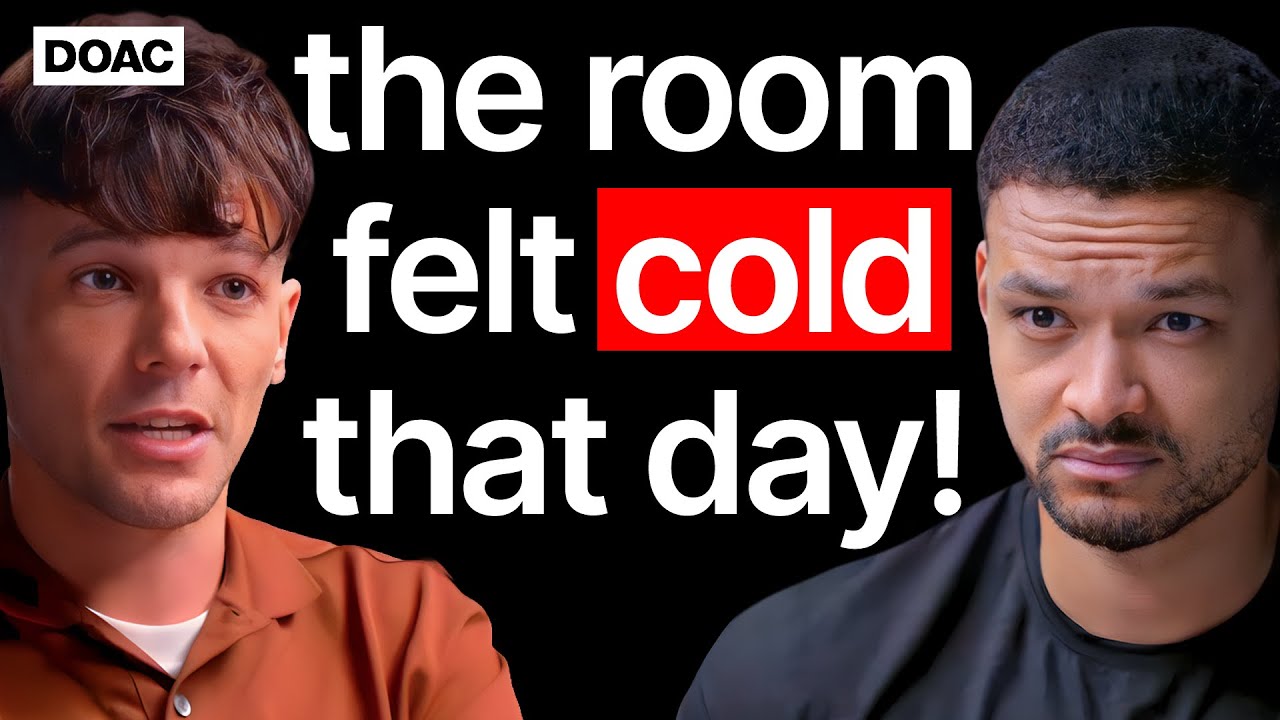
The atmosphere in that final meeting was unlike anything Louis had experienced in the group. Normally marked by camaraderie and an "arms in arms" attitude, the room turned distinctly cold as individual self-interest took over. Looking around at the exact same faces he had seen every day for years, he felt a profound emptiness because everyone collectively knew where the situation was heading. What frustrated Louis most was the deliberate use of the word "hiatus," which he calls a "cringy word" designed to soften the blow. When he pressed the room for a concrete timeline on how long the break would last—whether one, five, or ten years—he received no real answers, realizing in hindsight that no one present was brave enough to admit the band was over for good.
[44:40](https://www.youtube.com/watch?v=lylGyddTiGg&t=2680s) Life After One Direction and the Reality of Career Decline
Louis reflects on how the internal dynamics of One Direction evolved, explaining that after about two years of being in the band, "nobody, absolutely nobody could tell us shit." While they were always nice boys and never rude, their immense success gave them an innate confidence that insulated them from record label interference. Even Simon Cowell was smart enough to recognize that trying to dictate decisions to them would only rub them the wrong way. However, once the band ended, Louis transitioned from an utterly chaotic lifestyle to a much quieter reality—a shift he admits he is still actively unpacking.
```
CAREER TRAJECTORY COMPARISON
Linear Peak (Typical) The One Direction Reality
| / | * (Peak at age 24)
| / | / \
| / | / \ "The only way is down"
| / | / \
| / | / \
+------------> +------------>
Age/Time Age/Time
```
He recalls a heavy conversation in Las Vegas after a Billboard Awards event with producer Julian Bunetta, who asked, "Where do we go from here?" Though offended by the collective "we" at the time, Louis realized the profound truth behind the question. Most people experience a linear progression in success as they age, but at just 24 years old, Louis had to confront the reality that he had already hit the peak of global stardom and "the only way is down." While he doesn't lose sleep over no longer getting massive billboards in Los Angeles or New York, he acknowledges that staying competitive now requires immense effort. Achieving a UK #1 album with *Faith in the Future* felt like an incredible testament to his fans and team, yet he constantly feels the need to work hard just to keep his head above water.
* Singing a 1D song like *Night Changes* at a 5,000-capacity venue with around 1,200 attendees creates a stark contrast to performing it at a sold-out Wembley Stadium, which Louis describes as "brutal poetry."
* Despite his naturally "glass half full" mindset, living in the shadow of reaching the absolute pinnacle of the music industry at age 24 remains a constant psychological challenge.
---
[49:40](https://www.youtube.com/watch?v=lylGyddTiGg&t=2980s) Redefining Success and His Deep Bond with Liam Payne
When asked how he copes with the constant comparison to his past, Louis explains that redefining the word "success" is an ongoing internal conversation. Around four or five years ago, he posted on Instagram about shifting his definition away from a numbers game toward personal fulfillment and feeling good about his creative choices.
```
BOND & DYNAMICS AMONG BANDMATES
+---------------------------------------------------------+
| LOUIS |
+---------------------------+-----------------------------+
|
+------------------+------------------+
| |
+--------v--------+ +--------v--------+
| LIAM PAYNE | | OTHER BOYS |
| - "Like brothers"| | - Surface level |
| - Deep, honest | | - Small talk |
| - Shared grief | | - Fear of judgement
+-----------------+ +-----------------+
```
When discussing his relationships with his former bandmates, Louis reveals that he only had truly deep, vulnerable conversations about coping with post-band life with Liam Payne. Conversations with the other members often felt like polite "small talk" because he worried that admitting he missed being in the band might make them think his solo career wasn't going well. With Liam, however, he felt like an older brother who wanted to look after him, and they could speak with total honesty.
> "Liam will be someone who candidly I could say to him really honestly like 'Bro, fuck hell, I miss being in the band,' and we could have a really honest conversation like that."
* Louis admired Liam's bravery and his ability to approach anyone with a smile, noting that Liam wore his heart on his sleeve far more than most people.
* To protect his own mental well-being, Louis draws a firm boundary between his work life and his personal identity, emphasizing that when he is with his son Freddy, he is strictly "full-time dad" and not a global pop star.
---
[56:13](https://www.youtube.com/watch?v=lylGyddTiGg&t=3373s) Looking at Old Photos and the Loss of His Mother
Steven presents Louis with a collection of old personal photographs, prompting a nostalgic walkthrough of his early life and career. Louis reacts with warmth, identifying a photo taken by his mother—the very first picture ever taken of One Direction—where an 18-year-old Louis stands alongside 16- and 17-year-old Harry Styles, Liam Payne, Niall Horan, and Zayn Malik. Looking at another photo of himself and Liam, Louis laughs, noting that Liam was likely telling a joke that he didn't find funny at the moment, only to laugh about it an hour later.
```
┌─────────────────────────────────────────────────────────────┐
│ THE FIRST 1D PHOTO │
│ │
│ Louis Tomlinson (Age 18) • Harry Styles (Age 16) │
│ Liam Payne (Age 16/17) • Niall Horan (Age 16/17) │
│ Zayn Malik (Age 17) │
│ │
│ * Photo taken by Louis' mother, Johannah Deakin │
└─────────────────────────────────────────────────────────────┘
```
The mood shifts as they look at photos of his mother, Johannah Deakin, including one identical to the portrait Louis keeps on his bedside table. About a year after One Direction went on hiatus, his mother passed away from leukemia at just 42 years old. Louis reflects on the unimaginable timing of losing his core support system right as his world was shifting away from the band.
* The grief initially manifested as roughly six months of intense resentment toward the world, where minor annoyances felt utterly unjust.
* During the peak of his grief, trivial daily frustrations—like stubbing a toe or a jacket zipper getting stuck—would trigger intense anger because his mindset made him feel like he "could only lose."
---
[59:42](https://www.youtube.com/watch?v=lylGyddTiGg&t=3582s) Finding Out His Mum Was Sick
Louis recounts the exact moment he learned about his mother's diagnosis. He was attending the wedding party of footballer Jamie Vardy around 10:00 p.m., having already had a few vodka Red Bulls, when his phone rang. Since it was completely normal for his mother to call him at any hour, he stepped outside the venue without any sense of panic or apprehension, unaware that the conversation would alter the course of his life forever.
[01:00:09](https://www.youtube.com/watch?v=lylGyddTiGg&t=3609s) Initial Diagnosis and the Shadow of Loss
Louis recalls the life-altering phone call from his mother when she revealed her leukemia diagnosis. Like many facing devastating news, his immediate reaction was an intense, protective denial. Trying to grasp for hope, he innocently asked if leukemia was "the good one to get," assuming it had a high survival rate, only for his mother to softly correct him. Though he did not typically use alcohol as a coping mechanism, the sheer weight of the news led him to get heavily intoxicated that night purely to escape the reality of the moment. Throughout that first conversation and the time that followed, Louis balanced his genuine dread as a son with a desire to protect his mother, avoiding showing his full despair so she would not feel guilty for making him worry.
Her passing came far too quickly—roughly within 18 months, though Louis admits the exact timeframe and anniversary dates are largely blocked from his memory due to the trauma. His brain instinctively "deletes" the specific date of her death, only recognizing the anniversary when supportive texts begin pouring in from friends and family.
- **Mother's Diagnosis:** Acute leukemia, communicated over a routine daily phone call.
- **Initial Reaction:** Immediate denial and a protective attempt to maintain optimism ("that's the good one to get though, right?").
- **Timeframe:** Approximately 18 months or fewer between her diagnosis and passing.
---
[01:02:40](https://www.youtube.com/watch?v=lylGyddTiGg&t=3760s) Performing on The X Factor Three Days After Her Death
Only three days after his mother died, Louis took the stage on *The X Factor* to perform his debut solo single, "Just Hold On," alongside Steve Aoki. Having no active role from his biological father, Louis had long stepped up as a central, protective figure for his younger siblings. Taking the stage under such extreme emotional duress seemed impossible to those around him, including his sister Lottie. However, Louis explains that his mother had explicitly urged him from her deathbed to perform no matter what happened, wanting to ensure her illness would never derail his life or burgeoning solo career.
He describes those three and a half minutes on stage as the single most challenging, darkest moment of his entire life, feeling as though the choice was taken out of his hands because he refused to let his mother carry any posthumous guilt. Yet, surviving that agonizing milestone permanently reshaped his perspective on stress and hardship. Facing high-pressure industry situations—such as a radio station refusing to play his single—no longer rattles him, as he knows it compares to a fraction of a percent of the pain he endured that night. The experience gave him a profound, enduring emotional confidence, knowing that life will rarely, if ever, feel that dark again.
> "I don't think I'll ever have a more challenging time in me life than those three and a half minutes on stage. I did it only for her."
- **Performance Details:** "Just Hold On" with Steve Aoki on *The X Factor* final, live three days post-mother's passing.
- **Mother's Final Wish:** Urged him not to cancel the show so her death wouldn't affect his life or career.
- **Perspective Shift:** Facing the absolute darkest moment of his youth rendered all future professional setbacks trivial by comparison.
---
[01:06:11](https://www.youtube.com/watch?v=lylGyddTiGg&t=3971s) Relearning Confidence and Finding Purpose Through Grief
The loss of his mother exposed a deep dependency Louis hadn't fully recognized while she was alive. She had been his ultimate anchor, instilling unconditional self-belief and dismissing his self-doubt whenever he hesitated about auditions or new songs. Without her constant reassurance, he had to relearn how to build confidence independently. When asked how a young man grieves such a foundational loss, Louis explains that his personal path through grief was driven entirely by purpose and responsibility toward his family.
Instead of sinking into prolonged despair, he threw himself into caring for his younger sisters, his father, and his grandfather. Becoming the emotional pillar for his family gave him a clear reason to wake up every morning with intent. When his sister Daisy called him crying, his self-appointed duty was to reframe her world until she could see "the glimpse of a glass half full." While he clarifies that grief never truly leaves—and that he still carries it beneath a outward presentation of positivity—taking care of others provided the structure he needed to survive it.
- **Core Anchor:** His mother served as his primary source of confidence and reassurance during self-doubt.
- **Coping Mechanism:** Reframing grief into familial purpose, stepping up to guide and support his younger sisters (Lottie, Daisy, Phoebe).
- **Long-term Impact:** Acknowledges grief remains an ever-present, quiet reality rather than something one simply "gets over."
---
[01:09:17](https://www.youtube.com/watch?v=lylGyddTiGg&t=4157s) Navigating Anxiety and Unexpected Tragedies
Addressing his mental health, Louis notes that while he was not a worried child, the sudden nature of the losses in his life cultivated an underlying sense of unpredictability and anxiety. Rather than letting anxiety dominate him, he reframes it using advice once given by his vocal coach: the physiological sensations of anxiety and excitement are virtually identical. He recalls how, during his first major tours, he would feel such intense stage anxiety right before stepping out that he would futilely plan how to run out the venue doors—yet he always stepped on stage regardless.
Just a couple of years after losing his mother, tragedy struck his family again with the sudden death of his 18-year-old sister, Félicité (Fizzy). The sheer succession of these two losses left him feeling an intense, burning anger at the unfairness of life—not primarily for himself, but for his remaining young sisters who were being forced to endure endless heartache.
- **Vocal Coach's Advice:** Reframed nervous anxiety as excitement due to their identical physical feelings.
- **Stage Fright Story:** Early in his touring career, he routinely fantasized about escaping out the back door right before going on stage.
- **Sister's Passing:** Félicité passed away at age 18, just over two years after their mother died.
---
[01:12:44](https://www.youtube.com/watch?v=lylGyddTiGg&t=4364s) The Midnight Knock and Supporting the Unsung Helpers
The night Félicité died, Louis was sitting in his London home around midnight or 1:00 AM, completely unsuspecting, smoking a joint in his front room. When the doorbell rang, an immediate, eerie sense of dread overcame him. Though under different circumstances he might have worried about the police catching him with weed, he instantly knew the late-night visit meant something catastrophic. Opening his gates to find a police car, he was delivered the devastating news. His initial reaction was total emotional numbness and denial, calmly saying "Okay, right," before closing the door to process the shock.
As the reality hit the household, Louis witnessed the profound toll the moment took on his best friend (and roommate at the time), who broke down in tears apologizing for the tragedy. Louis felt an unexpected layer of guilt over putting his friend through such heavy trauma. He emphasizes that conversations around grief often overlook the unsung roles played by close friends and loved ones. These non-therapists are thrust into unimaginable pain without training or preparation, trying desperately to provide comfort when no words could possibly suffice.
- **The Setting:** Alone at home in London around midnight with his best friend and ex-girlfriend.
- **The Moment:** A sudden late-night police knock at the door delivering the news of Félicité's sudden death.
- **Initial Shock:** Immediate numbness and protective denial before the emotional weight caught up.
- **The Role of Friends:** Highlighted the immense emotional burden placed on close friends who support loved ones through sudden, catastrophic trauma.
[01:16:23](https://www.youtube.com/watch?v=lylGyddTiGg&t=4583s) Guilt, Powerlessness, and a Promise to His Mother
Louis reflects deeply on the crushing guilt he felt following the sudden loss of his younger sister, Felicité ("Fizzy"). He notes that if he had to strip his entire purpose in life down to one fundamental core, it would be to act as the protector and caretaker of his family. Losing his sister in the tragic manner they did shattered that core identity, leaving him feeling completely powerless and convinced that he had let both his sister and his mother down. He recalls one of the most poignant conversations he had with his mother, Johannah, during the final weeks of her life. She told him, *"You better promise me you look after your sisters,"* specifically singling out Felicité because she was exceptionally fragile. At the time of her death, Louis felt like he had failed that sacred promise, even though he rationally knows now—and knows Felicité herself would reassure him—that he did everything he could.
Following his mother's death, Louis's overarching goal had been to place his sisters and grandparents inside a protective bubble where nothing bad could touch them. He admits it might sound arrogant when framed that way, but he means it metaphorically as a desperate attempt to shield his family from further harm. Felicité's passing utterly undermined that mission, destroying the sense of hope and resilience he had spent years trying to build post-motherhood. It made every positive outlook infinitely more difficult to articulate, process, or believe. The only silver lining Louis clings to is the tragic relief that his mother was not alive to witness the loss of her daughter, knowing it would have completely broken her.
- **Family Role:** Louis views his defining role within his family structure as "the protector" and caretaker.
- **The Death of Felicité:** Felicité passed away suddenly in 2019 at the age of 18, triggering intense personal guilt for Louis.
- **Johannah’s Deathbed Request:** His mother specifically asked him to look after Felicité, noting her fragile nature.
- **Mental Toll:** The tragedy completely shattered the protective framework Louis had built for his surviving family after their mother's passing.
[01:18:33](https://www.youtube.com/watch?v=lylGyddTiGg&t=4713s) Understanding Felicité's Struggles and Her Bright Intellect
Reflecting on the nature of internal struggles and addiction, Steven notes an insight he gained from being around Liam Payne: unless someone has lived closely alongside a person battling deep personal demons, it is almost impossible to grasp how utterly helpless it feels from the outside. Outsiders often naively assume you can simply show up, sit down for dinner, and fix the problem, failing to realize how much of the battle happens secretly in private. Louis agrees, clarifying that while their mother’s passing drastically amplified Felicité’s internal struggles, she had also fought her own quiet battles with life in general.
Louis describes Felicité as an "uber-intelligent" young woman who was in a completely different league intellectually, even within a bright family. However, that extraordinary intellect was a double-edged sword: it created a profound social frustration and alienation from a young age. She frequently felt like she was on the outside looking in, unable to connect easily with peers her own age. Beyond her sharp mind, Felicité was the sibling who most closely resembled their mother—both in her authentic, caring personality and her physical appearance. Louis warmly recalls how people used to tell him as a young boy how much he looked like his mother, something he was embarrassed by as a kid but now wears as a badge of immense pride.
- **Felicité's Intellect:** Described as exceptionally bright from childhood, leading to social alienation and feeling "on the outside looking in."
- **Resemblance:** Of all the siblings, Felicité looked and acted the most like their mother, Johannah.
- **Visual Similarities:** Louis notes that he and his sister shared very similar facial features and both inherited their mother's distinct look.
[01:20:44](https://www.youtube.com/watch?v=lylGyddTiGg&t=4844s) Refusing to Be Defined by Grief and Media Exploitation
Louis explains why he has rarely spoken about these profound family tragedies in depth, emphasizing that while *The Diary Of A CEO* is the right, respectful setting to discuss them, he generally avoids the topic. His primary concern is that he despises being pitied or viewed through a lens of tragedy. He acknowledges that people naturally feel sympathy when hearing these stories, but he refuses to let grief define him, his mother, or his sister. He expresses deep frustration with how the tabloid media—specifically singling out outlets like the *Daily Mail*—takes minor everyday moments, like stepping out for a coffee, and appends a recycled 80% background narrative detailing his family losses to drive clicks.
This persistent narrative clashes sharply with Louis’s actual personality, as he naturally views life as a "glass half full" individual. He points to the release of his single *"Two of Us"*—a moving tribute to his late mother—as a turning point. Releasing the song unexpectedly opened the floodgates for fans to project their own trauma onto him. It also led to insensitive media interactions, including an interview on *BBC Breakfast* where presenters crossed pre-agreed boundaries by probing directly into his raw personal grief. When Louis voiced his frustration on Twitter afterward, the journalist defensively retorted, *"If you write a song about grief expect to be asked about it."* To Louis, that response demonstrated an appalling lack of empathy from someone who clearly had never experienced true loss firsthand. Steven validates Louis, sharing that when they first met at Soccer Aid, he had no idea about Louis's intense personal tragedies because Louis carries himself simply as a grounded, down-to-earth person.
- **Tribute Song:** *"Two of Us"* was written directly about the death of Louis's mother, Johannah.
- **Tabloid Frustration:** Criticizes outlets like the *Daily Mail* for constantly repeating his personal tragedies as background fluff in unrelated articles.
- **Media Boundary Violation:** A *BBC Breakfast* interview caused conflict when journalists ignored agreed-upon restrictions regarding questions about his grief.
- **Perception:** Steven notes that Louis shows no trace of a self-pitying identity, coming across purely as a normal, grounded individual.
[01:25:40](https://www.youtube.com/watch?v=lylGyddTiGg&t=5140s) The Evolution of His Bond with Liam Payne
The conversation shifts to Louis's deep and complex relationship with his late One Direction bandmate, Liam Payne, noting that Liam's birthday fell on August 29th, just three days after Louis's own on August 26th. Reflecting on their early days in One Direction, Louis candidly admits that they initially clashed. Liam had been grinding relentlessly in the music industry since age 14—auditioning for *The X Factor* previously and even performing at West Bromwich Albion's stadium—which gave him a strict, highly disciplined work ethic. In contrast, Louis was younger in his industry mindset and wanted to enjoy the moment, often staying out late partying despite early morning photoshoots.
Over time, however, that dynamic shifted into profound mutual respect. Louis reveals that while he lacked the maturity to admit it back then due to pride, all the boys in the band looked up to Liam immensely. Liam was universally recognized as the band's "safest pair of hands"—flawless vocally, poised in interviews, and completely focused, while Louis and Zayn Malik were often messing around in the background. Liam's willingness to keep the machine running gave space for Louis to take on his own role as the disruptive force who pushed back against labels and management. Post-band, their relationship blossomed into a close, enduring friendship, with Liam frequently speaking about Louis during the pandemic as his absolute best friend in the group.
- **Shared Birthdays:** Liam Payne (August 29, 1993) and Louis Tomlinson (August 26, 1991) had birthdays just three days apart.
- **Early Clashes:** Initial friction arose because Liam had been working professionally since age 14 and was laser-focused, while Louis enjoyed the partying and casual lifestyle of early fame.
- **Role in One Direction:** Liam was considered the "safest pair of hands" vocally and professionally, anchoring the band while Louis played the role of the outspoken disruptor.
- **Post-Band Friendship:** Their connection deepened significantly after One Direction went on hiatus, becoming extremely close confidants.
[01:29:43](https://www.youtube.com/watch?v=lylGyddTiGg&t=5383s) Liam's True Character and Hearing the News of His Passing
Steven and Louis reflect on how wildly misunderstood Liam Payne was by the general public and media, particularly in the years leading up to his tragic death in Argentina. Louis strongly agrees, noting that while public commentary often painted Liam as arrogant during awkward interview moments, the reality was the exact opposite. Steven describes Liam as having a core of pure innocence, while Louis affectionally notes he possessed a "puppy dog energy"—he was someone who desperately wanted to be liked and was deeply hurt if banter went wrong or felt cutting. Because Liam spent his mid-teens working continuously toward his dreams rather than having a normal social adolescence, he missed out on critical formative social experiences, shaping how he navigated public life.
Louis recounts the devastating moment he learned of Liam's passing. He was in his car in Los Angeles, having just dropped his son, Freddie, off at school, and was pulling back up to his house. He received the tragic news directly via a phone call or text from his bandmate Niall Horan, who asked him if he had seen the news online. The sudden loss hit Louis with overwhelming weight, leaving him struggling to find the words to express the magnitude of the heartbreak and the endless memories they shared.
- **Public Misconceptions:** Media often falsely labeled Liam as arrogant, misinterpreting his earnestness and boundary-pushing interview moments.
- **Personality:** Described as having a pure heart and "puppy dog energy," driven by a strong desire to connect with and be liked by others.
- **Learning of the Death:** Louis was in Los Angeles after dropping his son Freddie off at school when Niall Horan reached out to break the news about Liam's passing in Argentina.
[01:31:50](https://www.youtube.com/watch?v=lylGyddTiGg&t=5510s) The Inevitability of Loss and Misunderstanding
Louis reflects deeply on the helplessness he felt while watching Liam Payne struggle, drawing a direct parallel to the painful experience he had with his late sister Félicité. He candidly admits that it was his "own arrogance" to think he could fix things when Liam was going through something far deeper than anyone outside could repair, noting that even giving "150% wasn't nearly enough." Both Louis and Steven discuss how tragic it is that Liam never truly saw himself through the eyes of those who loved and respected him. Steven mentions that he and Liam were actually friends—a detail Louis admits Liam would have absolutely loved, given how much Liam respected credible, business-minded individuals like Steven.
Louis explains that much of the public's judgment of Liam stemmed from the fact that he was forced to figure out his identity entirely in the public eye. Where most artists undergo a private development stage for 18 months or two years, the One Direction boys had to do their personal growing up after achieving global superstardom. Comparing it to watching university students make mistakes, hold hypocritical views, or act like "walking contradictions" as they mature, Louis emphasizes that Liam was simply trying to navigate life without a filter. Losing Liam not only meant losing a brother, but it also felt like grieving the band all over again, cementing the realization that now only three other people on Earth (Harry Styles, Zayn Malik, and Niall Horan) can truly understand the exact magnitude of what they lived through.
* **The Oasis Analogy:** Louis notes that if someone offered them a massive sum of money 25 years down the line to do a reunion tour, Liam's passing has completely "put a pin in all that," as no one campaigned harder for One Direction to get back together than Liam himself (with Louis as a close second).
---
[01:36:01](https://www.youtube.com/watch?v=lylGyddTiGg&t=5761s) Liam's Unfiltered Heart and Selfless Support
Recalling their solo careers, Louis touches on a period when he and Liam were both struggling professionally to find their footing as individual artists. When Liam experienced hits, Louis cheered him on; later, when the roles reversed and Louis released his documentary about his post-One Direction journey, Liam showed up for the premiere. Louis reveals the immense weight of that gesture: while Louis isn't sure if he or any of the other band members would have had the bravery to attend an event celebrating a bandmate's success while struggling themselves, Liam put himself second entirely to show support.
Tragically, Liam posted a heartfelt essay on social media expressing how proud he was of Louis, only to delete it two days later due to intense internet backlash accusing him of "chasing clout" or jumping on a bandwagon. Louis points out that a similar toxic narrative played out when Liam attended Niall Horan's concert in Argentina shortly before his death. Louis implores people to look past surface-level media narratives: what looked to casual onlookers like someone craving attention was actually a young man who had been in the world's biggest band, deeply missing the magic of live music and simply trying to show love to his brothers.
> "He put up this beautiful post after my premiere... like an essay, a fucking essay. Stuff that he's never said to me before. It was like the sweetest, nicest shit... And then about two days later, he deleted it because the fans were just caning him for it... [He was] really trying to say to the world how proud he was of me, and the end goal was more ridicule."
---
[01:39:50](https://www.youtube.com/watch?v=lylGyddTiGg&t=5990s) Fatherhood with Freddie and Navigating Fame as a Young Dad
Transitioning to his personal life, Louis speaks warmly about his son, Freddie, whom he had at age 24. While new parenthood terrifies many, Louis says he felt utterly confident and excited to be a father from day one. Now 33, Louis jokes that picking Freddie up from school keeps him humble and boosts his ego because he gets to be the cool "young dad" among the other parents. Steven shares a quote from Louis' sister Lottie, who praised Louis as an incredible father whose parenting style she actively tries to emulate.
However, protecting Freddie from the invasive realities of fame requires set boundaries. Louis explains that while he normally agrees to take photos with fans when he is out on his own, he maintains an absolute "1000% no chance" rule when he is spending precious time with his son. He recalls feeling worried that Freddie might misinterpret his firm refusal to take photos as being mean, forcing Louis to have a mature conversation with him to explain the boundary.
* **The School Karaoke Incident:** Louis shares a funny yet awkward story about picking Freddie up on the last day of the school term. Hearing what sounded like karaoke coming from the classroom, the teacher asked Louis in front of all the kids and parents to come up and sing a song. Bound by his commitment to just be "Freddie's dad" outside of work, Louis politely declined, admitting how tough and uncomfortable those public moments can be to navigate around a young child.
* **Seeing Dad's World:** Freddie eventually gained a clearer context of his father's global fame after coming out to California to watch Louis perform live at one of his concerts.
[01:46:28](https://www.youtube.com/watch?v=lylGyddTiGg&t=6388s) A New Musical Palette and Finding Happiness
Louis Tomlinson discusses the shift in tone on his upcoming album, *How Did I Get Here?*, contrasting it with his past work. He notes that while his earlier music was honest and reflected painful moments, listening to it made him feel emotionally exhausted, prompting him to wonder why he didn't just include a few nice, fun songs. Now, however, he feels in a comfortable place to create positive, happy, and confident music. He explains that his overarching intention for the new record is simply to make listeners "feel good."
Using a visual metaphor, Louis describes how his last two records were made using a very small paint palette consisting mostly of darker colors. In contrast, his new album features a much deeper palette with far more color and substance. He stresses that you cannot fake that kind of positive energy—at least he can't—so creating a record with this much color reflects a genuine new sense of life, purpose, and fulfillment.
- Louis emphasizes his intention for the new music to leave listeners feeling good, a shift from his earlier, emotionally heavier material.
- He uses the analogy of a expanded color palette to explain the broader range of emotion and positivity in his upcoming songs.
---
[01:47:48](https://www.youtube.com/watch?v=lylGyddTiGg&t=6468s) Writing About Real Life and Redefining Success
When asked how much love influences his music, Louis describes himself as a "deeply, deeply romantic person," noting that creativity and romance are inextricably tied. He admits that he struggles to write in a fictional sense, meaning his lyrics must stem from literal, real-life experiences. Because he currently feels so good and in love, that natural positivity naturally flows into the fabric of his new record.
The conversation then turns to how Louis defines success at this stage of his career. He explains that true success means genuinely internalizing a new definition of accomplishment rather than just saying the words. However, he acknowledges how difficult this is in a music industry that is inherently a competitive numbers game designed to drag artists back into traditional metrics. Although he knows where his album charts shouldn't matter as much, it still does. He reflects on how achieving a UK Number 1 album with his last project momentarily reset his mental barriers, pulling him back into the same competitive game he thought he was stepping away from.
- Louis states he cannot write fictional songs and must draw directly from his real life and current feelings.
- He admits that despite trying to shift away from industry metrics, getting a Number 1 album reignited his desire for traditional commercial markers of success.
---
[01:50:04](https://www.youtube.com/watch?v=lylGyddTiGg&t=6604s) Overcoming Imposter Syndrome and the Bond with "Louies"
Plotting his life on a timeline of happiness, Louis feels like he is finally on the "home straight." For a long time, the idea of getting over his struggles and being truly happy was just an abstract concept rather than a reality. Now, he feels worthy of the success he has earned and views this upcoming project as the album he always deserved to make. He admits it required him to be brave enough to call himself an artist, recording artist, and songwriter without feeling a sense of cringeworthy imposter syndrome, making his view of the future far sharper than before.
Steven Bartlett points out the overwhelming fan excitement following Louis's recent social media posts, leading Louis to express immense gratitude for his fan base, who call themselves "Louies." He describes the dynamic as a healthy "codependency," explaining that when he performs on stage, it isn't a display of what he can do, but a celebration of "look what we've done together." He credits his fans' patience and loyalty for making large venue tours possible while he worked through his personal and creative evolution on the fly.
- Louis shares that he feels like he is on the "home straight" in his personal journey toward happiness.
- He credits his fan base (known as "Louies") for their loyalty and patience, framing his live shows as a shared achievement.
---
[01:52:41](https://www.youtube.com/watch?v=lylGyddTiGg&t=6761s) Entrepreneurship: Away From Home Festival and 28 Clothing
Steven highlights Louis's success as an entrepreneur outside of his music career, pointing to his creation of the Away From Home Festival. Originating in London, the self-curated festival has expanded internationally to countries like Spain, Italy, and Mexico.
In addition to the festival, Louis founded 28 Clothing, a unisex streetwear brand named after the number 28 (which he also has tattooed on his arm). Steven notes that the brand has achieved tremendous success, including four sold-out product drops worldwide along with hosting major promotional events.
- Louis founded the Away From Home Festival, expanding it from London to international locations including Spain, Italy, and Mexico.
- He runs the streetwear brand 28 Clothing, which has achieved four sold-out worldwide drops.
---
[01:53:31](https://www.youtube.com/watch?v=lylGyddTiGg&t=6811s) The Diary Chair Question: Prioritizing What Truly Matters
Following the podcast's tradition, Steven reads a question left by the previous guest about whether high achievers truly prioritize the most important things in life, like family, given limited time and energy. Louis candidly answers, "No, I haven't," explaining that spending his late teens and early twenties in One Direction kept him from realizing how critical certain things were. As a young man, allure and novelty seemed far more exciting than quiet reflection.
Looking back, Louis notes that while he has always been a family man, he now deeply cherishes those moments rather than taking them for granted. Steven reassures him, noting that Louis puts massive effort into spending time with his son, Freddie, and that his family has always described him as deeply family-centric. Louis thanks Steven, sharing that he thoroughly enjoyed the conversation and felt the time flew by.
- In response to the guest question, Louis candidly admits he did not always prioritize the most important things correctly when he was younger due to the whirlwind of One Direction.
- Steven highlights Louis's commitment to his son, Freddie, and his reputation for being exceptionally family-oriented.
## Notable quotes
> [01:02:40](https://www.youtube.com/watch?v=lylGyddTiGg&t=3760s) I don't think I'll ever have a more challenging time in me life than those three and a half minutes on stage. I did it only for her. — Louis Tomlinson
> [01:16:23](https://www.youtube.com/watch?v=lylGyddTiGg&t=4583s) You better promise me you look after your sisters — Johannah Deakin
> [01:20:44](https://www.youtube.com/watch?v=lylGyddTiGg&t=4844s) If you write a song about grief expect to be asked about it. — BBC Journalist
> [01:36:01](https://www.youtube.com/watch?v=lylGyddTiGg&t=5761s) He put up this beautiful post after my premiere... like an essay, a fucking essay. Stuff that he's never said to me before. It was like the sweetest, nicest shit... And then about two days later, he deleted it because the fans were just caning him for it... [He was] really trying to say to the world how proud he was of me, and the end goal was more ridicule. — Louis Tomlinson
## Mentioned
Louis Tomlinson, Johannah Deakin, Steve Aoki, Lottie Tomlinson, Daisy Tomlinson, Phoebe Tomlinson, Félicité Tomlinson, Liam Payne, Niall Horan, Harry Styles, Zayn Malik, Freddie Tomlinson, Jamie Vardy, Steven Bartlett, One Direction, The Diary Of A CEO, Daily Mail, BBC Breakfast, Soccer Aid, X Factor, Away From Home Festival, 28 Clothing, Just Hold On, Two of Us, Lemonade, How Did I Get Here?
Louis Tomlinson reflects on the psychological disorientation of reaching global superstardom at age 24, the grounding influence of his Doncaster upbringing, and the compounding grief of losing his mother, sister, and former bandmate Liam Payne. To navigate post-band life, he has worked to redefine personal fulfillment away from commercial metrics toward family responsibility, artistic autonomy, and fatherhood.
Grounding, Working-Class Guilt, and Doncaster Roots (5:23)
Raised primarily by his mother in a crowded Doncaster home, Tomlinson assumed early domestic responsibilities caring for his younger siblings. When One Direction achieved sudden wealth—beginning with a lucrative merchandise deal at age 19—he felt persistent guilt and alienation, acutely aware of childhood friends facing student debt. To maintain normality, he avoided lavish displays of wealth and kept music plaques off his walls for years. Tomlinson credits his mother's open communication and blunt guidance, such as her reprimand after he failed his A-levels, as foundational wake-up calls that kept him humble and grounded.
Navigating Boy Band Machinery and Self-Doubt (17:46)
After twice failing producer auditions on The X Factor, Tomlinson joined One Direction at age 18, initially battling severe imposter syndrome. With his audition unaired and his vocals confined to lower harmonies, he questioned his contribution. However, as the group's oldest member, he became their primary advocate, pushing back against management and Simon Cowell's Syco label to secure rest and fair treatment. Rejecting the sterile boy-band stereotype, he championed a cooler image. He also noted contrasting coping mechanisms: while he and Zayn Malik managed pressure through rule-breaking camaraderie, Liam Payne operated under intense, anxious precision.
Family Tragedy, Protector Guilt, and Media Exploitation (60:09)
Tomlinson experienced acute personal loss when his mother, Johannah, died of leukemia at 42. Honoring her deathbed wish, he performed on The X Factor three days later—an agonizing experience that permanently diminished his fear of future professional hardships. He channeled grief into becoming the emotional pillar for his younger siblings, but that framework was shattered in 2019 when his 18-year-old sister, Félicité, died suddenly. Having promised his mother he would protect Félicité, Tomlinson felt intense personal guilt. He adamantly refuses to be defined by tragedy, criticizing tabloid outlets for reducing his life to a repetitive grief narrative.
Brotherhood, Scrutiny, and the Loss of Liam Payne (85:40)
Tomlinson’s relationship with Liam Payne transitioned from early friction over Payne's rigid work ethic into deep brotherhood. The group regarded Payne as their "safest pair of hands," and post-band, Payne was the only member with whom Tomlinson shared raw conversations about career decline and missing the group. Tomlinson defends Payne against public accusations of arrogance, describing him as having an earnest "puppy dog energy" and noting the cruelty of online backlash against his candid support. Reflecting on Payne's tragic passing in Argentina, Tomlinson acknowledges the helplessness of dealing with internal struggles and notes it permanently ended any prospect of a One Direction reunion.
Career Realities, Fatherhood, and Redefining Success (44:40)
Confronting the reality that reaching the industry summit at age 24 meant "the only way is down," Tomlinson learned to detach his self-worth from arena crowds and chart metrics, though he admits commercial milestones like a UK Number 1 album still tempt his competitive instincts. He established independent ventures, including the Away From Home Festival and streetwear brand 28 Clothing. In his personal life, fatherhood with his son Freddie provides grounding, accompanied by strict rules against fan intrusions during family time. For his upcoming album How Did I Get Here?, he has shifted from emotionally draining material toward an optimistic, fulfilling sound.
Tomlinson's account details the psychological strain of early global fame compounded by devastating personal bereavement. While fatherhood, entrepreneurship, and a healthier musical outlook have provided purpose, uncoupling self-worth from commercial validation and enduring the absence of foundational loved ones remain ongoing challenges.
精炼阅读摘要
在前One Direction成员Louis Tomlinson的自述中,极度的全球声誉并未消解他的工人阶级底色,反而伴随着强烈的异化感与阶层负罪感;经历母亲与妹妹相继离世的重击以及前队友Liam Payne的骤逝后,他试图在失去昔日超级光环的现实中,重新锚定生活责任与个人价值。
唐卡斯特底色与名誉带来的阶层疏离 (5:23)
Louis出生于英格兰唐卡斯特的工人阶层家庭,由上夜班的单亲母亲Johannah抚养长大,并在七口人挤在三居室的环境中过早承担起照料弟妹的责任。经历两次《The X Factor》海选被拒后,他在十八岁凭借第三次尝试入选并组建One Direction。然而,突如其来的巨额财富和全球名望却引发了持久的负罪感。十九岁拿到第一笔巨额商品授权分成时,他甚至因顾及朋友们沉重的助学贷款和经济拮据而不敢分享喜悦,甚至直到两年前才愿意在家中挂出全英音乐奖(Brit Awards)奖杯与唱片认证墙,以避免在家乡好友面前显得高人一等。
面对高压的工业流水线与异化风险,Louis有意识地抵制被名利场吞噬。他与同样具备反叛思维的Zayn Malik在巡演大巴上靠抽大麻、打《使命召唤:僵尸》和聊日常话题来制造“常态感”,对抗几万人狂欢后的精神噪音。他强调,保持脚踏实地并非偶然,而是自己至少付出了一半主观努力的选择,包括坚决不脱离真实朋友圈,避免让自己成为开着法拉利招摇过市的脱节富豪。
单向组合的巅峰与二十四岁的下行困境 (44:40)
在One Direction内部,Louis逐渐从最初因未播出个人海选、仅唱低音和声的“冒名顶替感”中挣脱出来,利用自己作为最年长成员的“大哥”心态,成为敢于直接对抗唱片公司Syco与Simon Cowell以争取休假权益的发言人。他承认Cowell深谙心理控制术,通过给予他特殊重视将其作为联络乐队的桥梁,而他出于英格兰北部的阶层忠诚,在组合停摆后成为唯一坚持留在Syco单飞的成员。
2015年Zayn Malik的突然退团让Louis深感遭到背叛,而随后乐队各奔东西的决定更带来沉痛打击。Louis指出,成员们用“休假(hiatus)”这个尴尬的词汇来掩饰真正的终结,在那个毫无温情的最终会议上,没人有勇气直接宣布解散。更残酷的心理冲击发生在他二十四岁那年,在拉斯维加斯与制作人Julian Bunetta交谈后,他被迫接受一个反常规律的事实:他在二十四岁就已经抵达了流行音乐的绝对巅峰,“剩下的路只能向下走”。从温布利球场的万人狂欢到千人场馆的巡演,这种落差被他形容为“残酷的诗意”。
连续丧亲创伤与家庭守护者角色的重击 (76:23)
组合宣布休假约一年后,Louis的核心精神支柱——年仅四十二岁的母亲Johannah因急性白血病逝世。遵照母亲病榻前绝不能让疾病毁掉其职业生涯的遗愿,Louis在母亲去世仅三天后,便登上《The X Factor》决赛舞台现场直播演唱首支个人单曲《Just Hold On》。他将那三分半钟定性为生命中最黑暗、最艰难的时刻,但也正是那次极限经历,让他彻底重塑了抗压视角,使日后任何商业挫折都变得无足轻重。
然而,将自己核心价值定义为“家庭保护伞”的Louis,在两年多后遭遇了毁灭性打击:2019年午夜,警察登门通知他十八岁的妹妹Félicité骤逝。这彻底击碎了他向母亲临终许下的“照顾好脆弱妹妹”的誓言,带来了无力挽回的自责与信念崩塌。 Louis反思外界对于成瘾与心理泥潭的干预存在认知误区,即便倾尽所有也往往无法阻止悲剧发生。面对《Daily Mail》等小报长期将家庭悲剧作为点击率标签的消费,以及部分媒体在采访中越界探寻隐私的做法,他始终坚持拒绝以悲情自居,拒绝让创伤定义自己与家人。
利亚姆·佩恩:兄弟情谊与公众误解 (85:40)
谈及近期在阿根廷不幸去世的前队友Liam Payne,Louis回顾了两人关系的戏剧性演变。成团初期,自十四岁起便极度职业化的Liam与散漫贪玩的Louis频生摩擦,但Liam无懈可击的唱功与控场能力,实则是维系整个乐队运转的“最安全的一双手”。单飞时期,Liam是唯一能让Louis毫无防备坦承“我真的好想念乐队”并分享失落感的成员。
针对公众和媒体对Liam行为举止的苛刻审判,Louis与主持人Steven Bartlett指出,Liam本质上拥有一种迫切渴望被爱与被接纳的纯真,却因缺少青春期的正常社交试错期,被迫在聚光灯下笨拙地成长。当Liam在Louis的纪录片首映礼后发布长文力挺好友,却因舆论嘲讽“蹭热度”而在两天后被迫删帖;其在阿根廷出席Niall Horan演唱会亦被误读为博眼球,但在Louis看来,这只是一个深爱兄弟且怀念舞台的年轻人在表达爱意。Liam的离世不仅剥夺了一位挚友,也使世界上真正理解单向组合奇迹的人只剩下了四位,彻底断绝了未来重组演出的可能。
成功再定义:从阴影中走向父职与音乐新生 (106:28)
步入三十三岁的Louis,正在通过父职与独立创作确立内心的平静。他在二十四岁迎来了儿子Freddie,并确立了严格的生活边界:在陪伴儿子时坚决拒绝一切合影要求,甚至在学校期末活动中礼貌婉拒登台唱歌的邀请,坚持只做纯粹的父亲。在商业上,他创立了成功拓展至多国的Away From Home音乐节,以及发售即售罄的街头服装品牌28 Clothing。
在即将推出的新专辑《How Did I Get Here?》中,Louis打破了前两张专辑充满沉重阴郁色彩的“狭窄调色盘”,转向更加明亮、自信和浪漫的质感。面对由数字和榜单驱动的音乐工业,他坦承尽管上一张专辑拿下英国榜冠军曾短暂诱发好胜心,但他正努力将成功的标准转向纯粹的自我认可。他将自己忠诚的歌迷群体(Louies)视为一种健康的互助联结,坚信自己终于摆脱了长久以来的冒名顶替综合征,迎来了迟到但应得的平静与自我接纳。
Louis Tomlinson的故事展现了一个在极速造星机器中登顶、又在破碎创伤中艰难自渡的样本。尽管他试图以家庭责任和生活本真去抵御行业指标的束缚,但正如他坦承新专夺冠仍会激起竞争本能一样,在彻底剥离过往超级巨星光环与维系当下音乐生涯之间,重构“成功”依然是一场需要持续调和的心理博弈。
Detailed notes — zh
## Background
该视频由 YouTube 频道《The Diary Of A CEO》(主持人 Steven Bartlett)于 2025 年 10 月 9 日发布。视频简介指出,前全球超级男团 One Direction 成员路易·汤姆林森(Louis Tomlinson)首次深入敞开心扉,探讨了席卷全球的爆红名利、乐队的解散、母亲与妹妹的早逝、前队友利亚姆·佩恩(Liam Payne)的离世,以及他在经历巨大悲痛后如何重建自我价值、肩负父亲责任并拥抱即将推出的全新个人专辑。
## TL;DR
在长达两小时的深度对话中,路易斯·汤姆林森回顾了自己从英国唐卡斯特工薪家庭一路走向全球流行乐顶峰的传奇与落差,坦诚剖析了在 One Direction 时期曾经历的自我怀疑、阶级负罪感,以及 24 岁登顶后不得不面对“下坡路”的内心挣扎。面对母亲因白血病去世与 18 岁妹妹猝然早逝的双重毁灭性打击,他坚守长兄的责任托举全家,拒绝让自己被外界媒体打上“悲剧符号”的标签。谈及前队友利亚姆·佩恩的突然离世,他深情追忆了两人超越名利的兄弟情义,并痛陈公众舆论对挣扎者的残忍误解。如今 33 岁的路易斯正以父亲的身份作为人生的坚实锚地,学着摆脱榜单数字对自我价值的捆绑,以充满爱与释然的明亮心境开启音乐与生活的新章节。
## Atmosphere & style
整场对话的基调极其真诚、深沉且饱含温度,彻底褪去了流行偶像访谈常见的公关防备,宛如深夜壁炉旁的推心置腹。主持人的提问敏锐克制且富有共情力,路易斯的叙述则坦荡赤诚,既有谈及至亲与挚友猝逝时喉头发紧、眼眶湿润的沉痛与脆弱,也有回忆年少荒唐与重获幸福时北方男孩特有的从容与幽默。听众仿佛跟随着他穿越了顶级名利的喧嚣风暴与痛失至亲的刺骨严冬,切身感受到那种深入骨髓的无力与创伤,却又最终被他身上流淌的家庭责任感、清醒的生命韧性以及破土而出的治愈力量所深深打动。
## Bulletin
- [45:15](https://www.youtube.com/watch?v=lylGyddTiGg&t=2715s) 路易·汤姆林森回顾在 One Direction 登顶与解散的经历,坦言 24 岁站在全球流行乐顶峰后曾陷入巨大迷茫,必须在单飞后花费数年重新建立个人价值与对成功的定义。
- [01:16:31](https://www.youtube.com/watch?v=lylGyddTiGg&t=4591s) 接连经历母亲与妹妹离世的人生浩劫后,路易将巨大的丧亲之痛转化为维系家庭的核心责任感,同时强烈抗拒媒体将自己的人生粗暴标签化为悲剧符号。
- [01:29:43](https://www.youtube.com/watch?v=lylGyddTiGg&t=5383s) 针对前队友利亚姆·佩恩的猝然离世,路易澄清了外界对利亚姆的恶劣误解,指出其单飞后在无遮蔽的舆论聚光灯下摸索身份认同所承受的巨大脆弱与痛苦。
- [01:49:35](https://www.youtube.com/watch?v=lylGyddTiGg&t=6575s) 在推出新专辑《How Did I Get Here?》与新单曲《Lemonade》之际,路易表示自己已走出狭窄昏暗的情绪阴霾,迎来了内心笃定、充实幸福的人生冲刺阶段。
## Key takeaways
- [02:34](https://www.youtube.com/watch?v=lylGyddTiGg&t=154s) 母亲的情感教育让路易自幼学会坦诚表达脆弱,而单亲家庭中扮演长兄的经历铸就了他以守护身边人为核心的人生使命。
- [05:23](https://www.youtube.com/watch?v=lylGyddTiGg&t=323s) 面对全球顶级名利场的冲击,路易刻意抗拒自满与虚荣,依靠英格兰北部工薪阶层的根基与敢讲真话的旧友保持初心。
- [08:50](https://www.youtube.com/watch?v=lylGyddTiGg&t=530s) 在连续两次试镜遭淘汰后,母亲恰到好处的信任与推力支撑着路易第三次冲击《The X Factor》并最终改变命运。
- [17:46](https://www.youtube.com/watch?v=lylGyddTiGg&t=1066s) 作为乐队最年长成员,路易凭借对北部音乐审美的坚持与大哥担当,敢于向西蒙·考威尔及唱片工业争取掌控权,打破传统俗气男团的流水线包装。
- [24:38](https://www.youtube.com/watch?v=lylGyddTiGg&t=1478s) 19岁获得巨额分红带来的不仅是喜悦,更有源于工薪阶层出身的强烈负罪感与疏离感,促使他长期将奖杯深藏以捍卫平等的常态人际关系。
- [28:14](https://www.youtube.com/watch?v=lylGyddTiGg&t=1694s) 早年在队内缺乏演唱镜头曾让路易陷入边缘感,一度依赖西蒙·考威尔的心理拉拢,并出于对忠诚的盲目执念在单飞时留守 Syco 厂牌。
- [37:48](https://www.youtube.com/watch?v=lylGyddTiGg&t=2268s) 泽恩·马利克的不辞而别与四人秘密会议的冷酷终局,让路易承受了宛如丧亲般的剧痛,直斥所谓的“休假期”(hiatus)是对终局的掩饰。
- [48:03](https://www.youtube.com/watch?v=lylGyddTiGg&t=2883s) 在 24 岁登顶后,路易深刻体验到职业下坡的断崖式落差,甚至在千人场馆唱起《Night Changes》时感受到残酷诗意,促使他逐步摆脱纯数字榜单的比拼逻辑。
- [57:24](https://www.youtube.com/watch?v=lylGyddTiGg&t=3444s) 母亲因白血病离世后,路易遵照其临终嘱托在数天后忍痛登台演出,并在极度怨恨期过后将悲痛转化为支撑年幼妹妹的坚定目标感。
- [01:16:31](https://www.youtube.com/watch?v=lylGyddTiGg&t=4591s) 妹妹 Félicité 的猝逝给路易带来了作为守护者的沉重负罪感,但他坚决拒绝被八卦媒体与公众舆论消费私人哀伤或定义为悲剧符号。
- [01:29:43](https://www.youtube.com/watch?v=lylGyddTiGg&t=5383s) 澄清公众对利亚姆·佩恩的偏见与傲慢标签,还原其如同“小狗般纯真”却因过早投身职业生涯而缺乏心理防线的真实面貌。
- [01:34:56](https://www.youtube.com/watch?v=lylGyddTiGg&t=5696s) 利亚姆的离世不仅彻底终结了单向组合未来重聚的可能,也让路易反思单飞初期在全网显微镜下摸索身份认同时成员间放下自尊的相互扶持。
- [01:40:54](https://www.youtube.com/watch?v=lylGyddTiGg&t=6054s) 24 岁为人父后,路易将陪伴儿子 Freddie 视为至高优先级,在公众名利与私人育儿之间划定严苛界限以捍卫纯粹的亲子时光。
- [01:49:35](https://www.youtube.com/watch?v=lylGyddTiGg&t=6575s) 新专辑《How Did I Get Here?》标志着路易音乐调色板从沉重阴郁走向广阔明亮,终于克服冒名顶替综合征并确信自己配得上持久的幸福与艺术认可。
## Detailed walkthrough
### [00:00](https://www.youtube.com/watch?v=lylGyddTiGg&t=0s) 序幕:聚光灯背后的挣扎与创伤
路易·汤姆林森(Louis Tomlinson)坦言,自己以前从未像现在这样如此深入地探讨过过往的这些经历。面对人生中那些极端重大的变故与困境,“没有任何事情能让你提前做好准备”,而在当时,他唯一的真实感受就是“觉得自己彻底失败了”。直到今天,他仍在努力消化和理清那段过往。
作为红极一时的全球超级男团 One Direction 的成员,路易在唐卡斯特(Doncaster)的一个工薪阶层家庭长大,一家七口挤在一栋三居室的房子里。母亲夜以继日地打工养家,还不得不兼顾“父亲”的角色,年幼的路易常常要负责帮妹妹们穿衣准备上学。在唐卡斯特,普通人根本不会拥有走红的机会。然而当《X 音素》(The X Factor)来临时,他历经了三次试镜:第一次失败,第二次同样被淘汰,那时的他感到挫败与心碎,但母亲始终让他相信自己无所不能。凭借重拾的信心,他在第三次试镜中终于脱颖而出。
在随后爆红的五六年里,生活的轨迹彻底失控:
- **脱离常态与阶级愧疚感**:路易坦白,对于自己赚取的大量金钱和巨大声名,内心始终抱有一种源自工薪阶层出身的愧疚感。
- **队内的自我怀疑**:即便参与联合创作了 15 首白金销量单曲,他依然苦苦挣扎于自己在队内的角色与价值,总觉得自己做得不够。
- **错失的家庭时光**:随着演出和通告占据所有时间,他与家庭渐行渐远,甚至一度分不清自己的双胞胎亲妹妹,“这恰恰说明我待在家里的时间有多么少”。
- **巅峰落幕的迷茫**:24 岁那年乐队走向暂停,他猛然意识到,自己仿佛已经站在了人生的最高峰,“往后唯一的路就是走下坡路”。
当面对主持人关于年轻人如何面对巨大悲痛的提问时,路易表示自己虽然不常把这些挂在嘴边,但他愿意敞开扉页分享,因为他绝不允许这些悲剧成为定义他一生的标签。
---
### [02:34](https://www.youtube.com/watch?v=lylGyddTiGg&t=154s) 母亲的深远影响:情感教育与双重角色
被问及理解他的生命历程需要从何处开始时,路易将目光投向了人生的头四五年。在那段最初的时光里,他的世界里只有他和母亲两个人。他最早的深刻记忆,就是和母亲之间那些温暖、细腻且充满情感的交谈。
路易感到十分自豪的是,自己很容易流露真情,并且非常喜欢坦诚地探讨情绪与内心感受。这种毫无防备地表达情感的能力,正是母亲自幼在他心中种下的种子。对于路易而言,在日后跌宕起伏的生活与高压的工作环境中,能够自由地表达情绪和脆弱,成为了保护他心理健康最为关键的支柱。
关于自己的生父,路易平静地提到,生父在他出生后不久便离开了,自己一生总共只见过对方大概三次,父亲从未真正参与过他的人生。正因如此,母亲在生活中承担起了多重角色。她深知家里没有父亲,于是主动扮演起“父亲”的形象:
- **言传身教的榜样**:母亲身上带有一种爱闹、爱恶作剧的顽皮天性,她常常鼓励孩子们做一些无伤大雅的傻事,带头打闹,让家里充满欢笑。
- **人生的第一位导师**:路易动情地称母亲是“我所认识的最伟大的女人”,也是他最幸运拥有的导师。他在后来的朋友与伴侣身上所探寻的美好特质,几乎全都是母亲身上品质的投射。
---
### [04:29](https://www.youtube.com/watch?v=lylGyddTiGg&t=269s) 七口之家的长兄:对陪伴的渴望与责任感
随着家庭成员的增加,路易的大部分童年是在一家七口挤在同一套三居室房子的喧闹中度过的。在这种全家人紧密贴合、几乎没有个人隐私的环境中长大,直接塑造了路易日后极其害怕独处、甚至很难一个人呆着的性格。直到长大后他才意识到,这是因为小时候家里永远人声鼎沸,他根本没有机会体会什么是孤独。
这种拥挤的家庭氛围却成为了他最宝贵的财富。路易极度享受当哥哥的感觉,并将其视为自己人生的核心意义之一——“去照顾身边的人”。他觉得自己生来就是要当一名长兄的。随着岁月的推移和家庭后来经历的重重变故与挑战,这种守护家人、挑起重担的长兄角色,在他生命中变得愈发坚定和不可或缺。
---
### [05:23](https://www.youtube.com/watch?v=lylGyddTiGg&t=323s) 名利场中的清醒与坚守本色
主持人史蒂芬·巴特利特(Steven Bartlett)透露,在录制前他与路易身边的几位亲友进行了深入交谈,包括他的发小兼死党尼萨姆(Nisam)、多年来合作的摄影师兼摄像师卡尔(Cal),以及比他小六岁的妹妹洛蒂(Lottie)。所有人都给出了一致的评价:路易完全没有变,他身上依然保留着当年的底色,从未因巨大的名利而自视甚高或疏远旧友。
听到这些反馈,路易感到无比欣慰。他解释说,保持不变至少有 50% 是刻意为之的清醒选择:
- **对抗疏离感**:当一个人被推入 One Direction 那样狂热的顶级名利场时,原本与你拥有相同背景和话题的旧友,会突然觉得彼此距离极其遥远,日常的烦恼也不再互通。这种疏离感令人恐慌,而路易选择了全力抗拒这种被名利推着走的冲动。
- **拒绝捧杀的圈子**:在演艺圈,许多成功人士很容易被顺从和阿谀奉承包围,从而滋生出盲目的自我膨胀。路易认为,身边必须有敢于在自己举止不妥、表现得像个混蛋时当面直言制止的朋友。
- **对故土的敬畏**:赢得家乡唐卡斯特人民的尊重对他至关重要。正是出于这种对根基的敬畏,他坚决不会开着一辆扎眼的法拉利去唐卡斯特的街头炫耀。
```mermaid
flowchart TD
accTitle: 名利冲击与自我认同的保持
accDescr: 展示路易在面对全球顶级名利场冲击时,如何通过反思保持初心与根基的过程
subgraph External["外部名利冲击"]
A["进入顶级男团 One Direction"] --> B["生活环境与社交圈极度异化"]
B --> C["产生与过去和朋友的疏离感"]
end
subgraph Internal["内心抗拒与自我审视"]
C --> D{"选择沉沦还是抗拒?"}
D -->|刻意抗拒| E["保留真实自我,拒绝自大虚荣"]
D -->|随波逐流| F["迷失于名利陷阱(被路易排斥)"]
end
subgraph Anchors["维持初心的支柱"]
E --> G["真诚的发小与敢讲真话的团队"]
E --> H["对工薪故土唐卡斯特的敬畏与认同"]
end
```
---
### [07:38](https://www.youtube.com/watch?v=lylGyddTiGg&t=458s) 高考失利、戏剧启蒙与三次冲击《X 音素》
回顾少年时代,路易在唐卡斯特的黑菲尔德学校(Hayfield School)完成了大部分学业,但他却在 A-level(英国高中高级证书考试)中遭遇了滑铁卢。那是他人生中第一次招致母亲极其严厉的斥责:
- 平日里极为开明包容的母亲在学业上却有着严格的底线。
- 在接他上车后,从不讲脏话的母亲极其严肃地对他说:“你把你自己的人生给搞砸了(You fucked your life up)。”
- 母亲的粗口和罕见的严厉让路易浑身起鸡皮疙瘩,这也成为他人生的一记警钟,让他开始认真思考必须为自己的人生做点正事。
在 15、16 岁时,路易加入了一个戏剧社团。到了 17 岁,他在音乐剧《油脂》(Grease)的制作中成功拿下了男主角丹尼·祖克(Danny Zuko)的戏份。这段舞台表演的经历为他奠定了音乐与表演的基础。
到了 18 岁,路易下定决心去追求自己的歌唱梦想,再次踏上了《X 音素》的试镜舞台。这实际上已经是他第三次参加该节目的选拔:
- 按照选拔机制,选手需要先连续通过三轮制片人闭门面试,才有机会登上大舞台面对西蒙·考威尔(Simon Cowell)等主评审。
- 从 16 岁起,他每一年都去报名尝试,但在前两年的制片人选拔轮次中,他无一例外均以淘汰出局告终。尽管屡战屡败,但正是母亲给予的信念支撑着他重整旗鼓,最终迎来了彻底改变命运的第三次机会。
### [08:50](https://www.youtube.com/watch?v=lylGyddTiGg&t=530s) 屡遭淘汰与母亲的推力:三次冲击《The X Factor》
面对《The X Factor》的残酷选拔,绝大多数人在遭遇一两次拒绝后便会彻底放弃,因为每一次落选都意味着要灰头土脸地回家向亲友承认失败。路易回忆道,第一年被淘汰时那种感觉是“毁灭性的打击”("utterly crushing"),在此之前他从未体会过真正的人生挫折。第二年的经历则更具戏剧性且更刺痛自尊:当时他与学校里公认最漂亮的女孩一同前往试镜,女孩同样热爱唱歌,两人数月前聊起选秀便决定搭伴前往,路易心里甚至暗自觉得这是一次聪明的追求机会。然而女孩在他前面试镜并顺利拿到通往下一轮的“金通行证”(gold ticket),路易却惨遭淘汰;更煎熬的是,由于两人同行,他被迫跟着女孩进入了一间大约坐着200名晋级选手的候场室。满屋子的人都在热切畅想着下一阶段的舞台,唯独他身处局外,这种强烈的落差反而在他心底点燃了一团胜负欲之火,让他暗下决心来年必须跻身于成功者的行列。
对于年仅十几岁的少年来说,面对挫折的韧性固然重要,但母亲在背后的推力起到了决定性作用。路易坦言,在决定是否第三次奔赴赛场时,如果自己有过哪怕一丝动摇,母亲绝对会毫无保留地给予支持。他回忆起高中时排演音乐剧的经历,当时他一度退缩不想去面试,是母亲亲自开车把他送到现场。在路易眼中,母亲绝不是那种令人窒息或功利的“逼迫型家长”(pushy parent),她总是掌握着恰到好处的分寸感("the right amount of force")。无论是在他自我怀疑时说一句轻柔而坚定的“去吧,你可以的”,还是平日里将他放在极高的位置上夸赞,母亲的全然信任让他产生了一种“自己无所不能”的底气,也正是这份底气支撑着他第三次踏上选秀舞台。
### [11:31](https://www.youtube.com/watch?v=lylGyddTiGg&t=691s) 从250人到3000人:初赛舞台上的“聚光灯盲区”
谈到那场改变命运的《The X Factor》初试,路易纠正了大众的普遍误解:翻唱鲍勃·迪伦的《Make You Feel My Love》其实发生在后来的训练营(Boot Camp)环节,而他真正走进聚光灯下的首场海选歌曲是 Plain White T's 的《Hey There Delilah》。路易毫不避讳地评价当年的自己对声音处理毫无概念,单纯觉得喜欢就唱了,其糟糕程度令他至今不敢回看当时的录像,“那真的很糟糕,甚至到了现在只要听到或看到那段试镜,我依然会感到极度不适。”
这种窘迫在很大程度上源于舞台规模带来的巨大冲击。路易此前唯一的公开表演经历是在学校排演的音乐剧《Grease》(油脂)中登台,两场演出面对的大约只有250人,而这在当时的他看来已经是一座由观众组成的“巍峨大山”。转眼之间,他被直接推上了曼彻斯特 MEN Arena(曼彻斯特竞技场)的聚光灯下,面对着3000名观众和现场直播的电视镜头。对于任何尚未出道的年轻歌手而言,3000人的专场都足以算作一场大秀,这种直接被扔进深水区("thrown at the deep end")的极端落差让他彻底手足无措。路易自认从小是个颇为自信的男孩,极少脱离舒适圈,但在那一刻,他整个人僵直得如同“迎面撞上汽车强光的小鹿”("deer in the headlights"),浑身颤抖,恨不得脚下的地板能立刻裂开将自己吞噬。随后,主持人与他探讨评委西蒙·考威尔(Simon Cowell)是否早已暗中筹划打造一支男团,路易笑着表示以西蒙敏锐的商业嗅觉和打造流行男团的辉煌战绩,必定早在前一年就已经在脑海中布好了这盘吸金大棋。
### [13:18](https://www.youtube.com/watch?v=lylGyddTiGg&t=798s) 暖场打破偏见:意识到 One Direction 正在引爆风暴
在《The X Factor》以组合形式获得第三名后,年仅19岁的路易与队友们正式签约西蒙·考威尔旗下的 Syco Music。回看随后发生的一切,路易用“宛如一团迷雾”("It's a mist")来形容那种失控的速度与体量,直到跳脱出组合的身份后,他才真正看清当年的不可思议。在成名第一年,五个少年甚至误以为这种连轴转与巨大的受关注度就是音乐圈的“常规成功”,对自身的超高热度缺乏清醒的概念,直到作为嘉宾为迪士尼/尼克儿童频道旗下的当红男团 Big Time Rush 巡演暖场时,转折点才真正出现。
演出前,团队那位常年神龙见首不见尾的高级经理人理查德(Richard)——一位经验极其丰富、一年只在拉斯维加斯或洛杉矶等顶级都市现身少数几次的行业大佬——特意在后台给五个男孩上了一堂严厉的“现实辅导课”。经纪人警告他们放低预期,直言作为暖场嘉宾,台下观众能跟着哼唱一两首打榜单曲就已经是天大的胜利,绝不可能有人熟悉专辑里的非主打歌。然而当 One Direction 走上舞台、以一首冷门非主打歌曲开场时,全场观众却爆发出了震耳欲聋的尖叫并从头到尾一字不差地全场合唱。演出结束后,年轻气盛的路易迫不及待地跑去向经纪人炫耀局面的反转,心里洋溢着一丝恶作剧得逞般的得意;可当他深夜躺在床上反思时,一股震撼悄然升起:一个在行业内见多识广的资深大佬竟然会出现如此离谱的误判,这唯一说明了一件事——他们身上正在酝酿的风暴,已经彻底打破了现有的行业常理。
### [16:04](https://www.youtube.com/watch?v=lylGyddTiGg&t=964s) 规则与叛逆:面对成名重压时的不同应对机制
在全球爆红的聚光灯下,极度反常的作息与巨大的外界压力对大脑尚处于发育阶段的年轻艺人构成了严峻考验。主持人提到此前采访前队友 Liam Payne 时的对话,Liam 曾痛苦地回忆巡演就像一个冰冷封闭的循环:从迪拜面对十万名观众的舞台下来后,立刻被塞进车里,送回酒店,反锁在房间内("Stage, car, hotel, locked")。面对同样的处境,路易指出自己与 Liam 的应对机制截然不同。路易早期与 Zayn Malik 尤为投契,正是因为两人骨子里都带着一种不愿墨守成规的野性。他们并非存心制造破坏,而是坚持拥有自己的行事主张;在路易心中,只要自己渴望去做某件事,他就一定会设法去实现,这种自主性在很大程度上抵消了被囚禁般的精神窒息感。
相比之下,Liam 与其他成员往往对规则怀有一份敬畏与紧张。Liam 从14岁起便心无旁骛、极度自律地向着顶级歌手的目标苦练,对每一步都追求精准把控,承受的心理负荷远超常人;而路易则更倾向于将自己视作一个“买彩票撞大运的乐天派”("a happy-go-lucky guy won the lottery"),这种相对松弛的心态让他在面对滔天名利与严密管控时,找到了属于自己的喘息空间。
### [17:46](https://www.youtube.com/watch?v=lylGyddTiGg&t=1066s) 敢于向唱片工业说不:担当乐队的“带头大哥”与重塑男团规则
斯蒂芬·巴特利特(Steven Bartlett)提到,他此前与 One Direction 的前随行摄影师卡姆(Cam)交流时,对方特别提到路易斯是五人当中唯一敢于直面唱片公司(Syco Music / 索尼音乐)并为全员争取权益的人——比如直接去找高层要求“我们今天需要放一天假”。斯蒂芬引述了心理学中关于“习得性无助”与自主权(Control and Autonomy)的研究:拥有掌控感的人往往压力更小、心理更稳定;而当年的路易斯完全没有沦为任人摆布的提线木偶,而是敢于在十八九岁的年纪正面硬刚流行乐坛巨头西蒙·考威尔(Simon Cowell)的体系。路易斯承认,与朋友回看那段经历时也觉得不可思议,“一个没有任何行业经验的 18 岁毛头小子,居然敢指着当时流行乐界呼风唤雨的大人物说:‘不,你全搞错了。’”这种底气并非出于自负,而是源自他作为团队最年长成员的“大哥”责任感,“哪怕只是我一个人在发声,我的出发点也永远代表了我们五个人的整体利益”。
路易斯直言自己当时是组合中“最敢表达、主见最强的一个”,他不想把这种表达欲浪费在社交媒体(Twitter)上打嘴仗,而是用于保护团队。另一方面,来自英格兰北部的成长背景让他在音乐观念上有一种天然的审美品味与“傲气”。在英国北部的音乐语境中,传统男孩团体往往被视作最俗气(naff)、最格式化的流水线产物;他们穿着一模一样的衣服、接受死板的公关训练。路易斯从加入 One Direction 的第一天起,就极力想打破这种老派男团的刻板印象,探索如何让这支乐队变得“更酷一点”。
这种打破规则的信心在首支单曲《What Makes You Beautiful》预售时得到了彻底验证。当时单曲尚未正式发行,甚至听众都不知道旋律是什么样,预购量就已经打破了历史纪录。那一刻让路易斯强烈意识到,粉丝所狂热投入和认同的,首先是他们五个人真实的个体与人格魅力,甚至超过了音乐本身;既然公众赋予了他们如此庞大的支持,他们就完全有底气改写传统的男团运行规则。
```mermaid
flowchart TD
accTitle: 路易斯在 One Direction 初期的心理掌控力与抗衡机制
accDescr: 展示路易斯如何凭借年长责任感与北部音乐审美,打破传统男团模式并与唱片高层抗衡。
subgraph Motivation["内在动力与定位"]
A["乐队中最年长成员<br/>『大哥』担当与发声代表"]
B["英格兰北部音乐审美品味<br/>反感千篇一律的俗气男团包装"]
end
subgraph Action["具体行动"]
C["向西蒙·考威尔及厂牌抗争<br/>直言争取休假与自主权"]
D["注入真实个性<br/>推动乐队形象潮流化、去公关化"]
end
subgraph TurningPoint["权力反转契机"]
E["《What Makes You Beautiful》预售破纪录<br/>在未出歌前即展现绝对号召力"]
F["重写行业规则:<br/>粉丝深爱成员本身,团队获得话语权"]
end
A --> C
B --> D
C --> E
D --> E
E --> F
```
- **认知特质**:路易斯自认是一个“过度思考者”(overthinker),但绝非“沉溺于消极情绪的人”(not a dweller),当年那种“无知者无畏/不知即福”(ignorance is bliss)的心态在一定程度上保护了他。
- **代表性引用**:“即使只有我一个人在传达讯息,那也始终是出于集体的意愿。它永远是为了我们所有人的利益。”
---
### [21:28](https://www.youtube.com/watch?v=lylGyddTiGg&t=1288s) 盛名之下的疏离感:与 Zayn 萌生退意与被剥夺的日常
面对突如其来的全球声名,自由与独立性并不是骤然消失的,而是被名利一点点蚕食。路易斯深情地回忆起参加《X Factor》海选前的 18 岁,称那是他人生中最美好的一年:刚学会开车、拥有完全的独立社交、每天都有无穷无尽好玩的事情。然而成名后,这些鲜活的日常瞬间被剥夺。尽管他对组合获得的每一次机会与舞台都抱有极大感激,但只要一停下来独处,汹涌的思乡病就会将他吞噬。
这种强烈的与现实脱节感,曾让他和队友泽恩·马利克(Zayn Malik)在年轻时无数次促膝长谈,商量着“要不我们干脆不干了,就此放弃收手吧(pack it in)”。路易斯解释道,名望带来的最大痛苦是“极度的疏离感与孤立感(alienation)”。当原本熟悉的生活经验再也无法与家乡的发小产生共鸣,他甚至因为自己通过成名赚取的大笔财富而产生了某种深深的负罪感(working-class guilt)——这是典型的英国工薪阶层小镇出身所烙下的心理印记。
斯蒂芬指出,公众常以为“孤立”是没有人陪伴,但路易斯所面对的孤立,是置身于人海却再也无法与人建立平等、真实的联系。路易斯深表赞同,并给出了一个极具画面感的比喻:这就好比用无人机从高空俯拍日本著名的涩谷十字路口,“拉到最远的广角镜头时,你不过是茫茫喧嚣人潮中一个微不足道的小黑点”。外人眼中的巨星光环,从来都不是真实的世界。
- **萌生退意的共鸣者**:路易斯与 Zayn 在乐队早期曾多次认真讨论是否要彻底退出歌坛、回归原本的普通生活。
- **名望的双刃剑**:路易斯坦言自己“永远无法与名气这种东西真正和解”;如果可以,他宁愿只专注于做音乐本身,但剥离了大规模舞台的冲劲与能量,又很难达到同样的艺术亢奋。
---
### [24:38](https://www.youtube.com/watch?v=lylGyddTiGg&t=1478s) 19 岁的第一张大额支票、工薪阶层的内疚感与对“常态”的渴望
19 岁那年,One Direction 凭借周边商品(Merchandise)版权拿到了职业生涯第一笔真正意义上的巨额分红支票。路易斯激动万分,第一时间拨通了母亲的电话报喜,母亲也由衷地为儿子感到自豪。然而挂掉电话后,一种空虚与无措迅速袭来:“除了我妈,我还能把这事告诉谁?”他想到了好友 Nazim,但犹豫再三还是没有拨出电话。在他看来,同龄的发小们此时正被昂贵的大学学费和助学贷款压得喘不过气,普通人理所当然地认为“你上了电视、当了明星,有钱成功是自然的”,但这种巨大的经济鸿沟会瞬间杀死朋友间的纯粹性。
这种对于阶层跃升与名望象征的排斥感,伴随了路易斯很多年。他坦承,直到两年前,自己才勉强把当年在乐队时期获得的奖杯(包括全英音乐奖 Brit Awards)和销售认证唱片挂在家里的墙上。即便是现在,客厅里的这些奖杯依然让他感到有些别扭。当发小来家里喝咖啡闲聊时,他最讨厌的就是话题不自觉地被引向自己的名利或巨星光环。
路易斯渴望的是“最纯粹的普通与常态(real normality)”,以及在任何对话中都能与对方处于完全平等的地位。失去这种人人平等的常态沟通,是他应对名望过程中最艰难的心灵折磨;正当两人深入探讨名利场对神经系统的刺激时,斯蒂芬顺势切入了下一个核心议题——在多巴胺与压力极度失衡的狂热生活里,酒精扮演了怎样的角色。
- **首次巨额收入**:19 岁通过 One Direction 的周边销售合作拿到第一笔大额分红。
- **奖杯与现实的隔阂**:直到约两年前(30岁左右)才把全英音乐奖奖杯与白金唱片挂上墙壁,此前因害怕破坏平凡人际关系中的平视感而长期收存。
### [26:36](https://www.youtube.com/watch?v=lylGyddTiGg&t=1596s) 舞台狂欢后的降噪解压:大麻、僵尸游戏与虚幻的日常感
面对巡演期间巨大的精神负荷,乐队成员各自有着不同的宣泄与应对机制。Louis 回忆道,Liam Payne 很早就开始受到酒精问题的困扰,而这一切往往始于酒店房间里触手可及的迷你吧——刚刚还在十万人面前狂热演出,几分钟后就被孤身一人扔进放着冷藏酒精的安静房间,那种落差极具冲击力。Louis 坦承自己当时也喝了不少酒,但他演出后真正的“解药”却是大麻。走下舞台后,他习惯拉着 Zayn Malik 一起钻回巡演大巴抽大麻,以此给极度亢奋的大脑“关静音”。
在大巴车上,他们会通宵打《使命召唤》僵尸模式(Call of Duty Zombies),陷入典型的“飞行员式扯淡”,天马行空地探讨不明飞行物(UFO)或看似深刻的玄学话题。这种在外人看来略显荒唐的消遣,在喧嚣疯狂的巡演世界里为他们构筑起一座安全屋。Louis 解释道,这不仅与家乡同龄伙伴的生活如出一辙,更用一种极致的平静中和了十万人现场带来的躁狂感,成为他当时找回“正常生活感”的唯一方式。
### [28:14](https://www.youtube.com/watch?v=lylGyddTiGg&t=1694s) 缺乏镜头的边缘感与被海胆刺伤的电视“危机”
当被问及如果能穿越回与 Syco 签约的那一天,33 岁的自己会对 18、19 岁的那个少年说什么时,Louis 直言最大的建议就是“在最初几年要有自信,放过自己一点”。年纪渐长后他才明白,大多数人早入行时都在某种程度上“硬装懂行”。作为一名从未受过专业歌手训练、觉得自己纯粹像“中了彩票”一样的年轻小伙,他当时总觉得自己是在艰难地追赶其他人的步伐。虽然他能坦然承认自己绝非世界上唱功最好的歌手,但在那个年纪,内心的自我否定和迷茫让他如同“车灯照射下的幼鹿”,毫无安全感。
这种边缘感从《The X Factor》选拔初期就已埋下种子。尽管初选拿到了三张赞成票,但节目播出时,他和 Niall Horan 的海选片段全部被剪光。由于观众对他们毫无了解,两人在一夜成名的乐队中倍感被动。到了“评委之家”(Judges' Houses)拍摄阶段,Louis 在海里不慎被海胆刺伤,整只脚肿得像大象一样粗。节目组借机大做文章,营造出一种“没有 Louis,乐队接下来的试音该怎么办”的虚假悬念。Louis 感到既尴尬又沮丧,因为当时的真相极其残酷:他当时只负责唱很低的和声部分,在最终的混音音频里可能根本没人能听清他的声音,乐队缺了他试音完全没有任何影响。这种被当成工具人兜售戏剧冲突、个人价值却完全悬空的经历,深深刺痛了他的自尊心。
### [32:00](https://www.youtube.com/watch?v=lylGyddTiGg&t=1920s) 迷恋 Simon Cowell 的话语权术与对 Syco 的盲目忠诚
长期缺乏价值感的 Louis,逐渐在商业巨头 Simon Cowell 的巧妙掌控下找到了依靠。作为乐队与唱片公司之间的主要沟通纽带,Simon 极其擅长拉拢他,最管用的一招就是每次对话都特意叫他的名字。“想象一下,一个 19 岁的北方小伙,Simon Cowell 看着你对你说:‘你知道关于这个想法最妙的是什么吗,Louis?’那一刻你觉得自己被彻底赋予了力量。”Louis 回忆道,这种施加在年轻人身上的“语言魔咒”极具迷惑性,让他误以为自己在 Simon 心中有着不可替代的分量。
这种盲目崇拜直接影响了乐队休团后 Louis 的个人抉择。当 One Direction 宣布暂停活动、成员们各自单飞时,其他男孩纷纷跳槽去了其他唱片厂牌,甚至离开了索尼音乐体系。Louis 坦言自己当时并没有挑挑拣拣的资本,但即便手里有十份同等报酬的合约,他依然会毫不犹豫地选择留守 Syco。出生于英格兰北部工人阶级家庭的经历,让他将“忠诚”视作最神圣的硬通货。当时看到队友们相继离开,他甚至自豪地觉得自己坚守阵地能向 Simon 证明自己的赤胆忠心,试图维持一种“大家庭”式的和谐温存。直到后来作为独立个人正式签约 Syco 展开合作,他才残酷地意识到,过往那些热络的吹捧在现实商业运作面前不过是一句轻飘飘的“谢谢你,亲爱的”,毫无实质重量。
```mermaid
flowchart TD
accTitle: Louis Tomlinson签约心态演变
accDescr: 展示Louis Tomlinson从早期被Simon Cowell言语掌控到解散后出于忠诚留守Syco的心理链路
subgraph Manipulation["权力与言语魔法 (19岁)"]
A["X Factor时期缺乏存在感<br/>被剪镜头 / 和声边缘化"] --> B["Simon Cowell的心理拉拢<br/>常呼其名 / 赋予虚假话语权"]
B --> C["建立崇拜与自我膨胀<br/>自视为厂牌与乐队的桥梁"]
end
subgraph Loyalty["阶级观念与单飞选择"]
C --> D["英格兰北部工人阶级价值观<br/>将'忠诚'视为最高通货"]
D --> E["乐队解散分流"]
E -->|其他四位成员| F["签约外部厂牌 / 脱离索尼体系"]
E -->|Louis Tomlinson| G["坚决留守 Syco<br/>自认为展现了极致忠诚"]
end
subgraph Awakening["商业现实幻灭"]
G --> H["独自签约后遭遇冷遇<br/>看清'口头赞许'毫无现实意义"]
end
```
### [34:36](https://www.youtube.com/watch?v=lylGyddTiGg&t=2076s) 骤然离家:一夜成名对母亲造成的心理创伤
聚光灯外的另一面,是一夜暴富与成名对 Louis 家乡亲人造成的剧烈震荡。主持人提到曾与其妹妹 Lottie Tomlinson 交流,Lottie 透露 Louis 的突然离家对母亲 Johannah 的打击尤为深重。在单亲家庭的环境下,作为长子的 Louis 不仅是一个 18 岁的高中毕业生,更是母亲操持家庭、抚养众多弟妹不可或缺的臂膀与合伙人,两人更是无话不谈的挚友。
Louis 对此有着极为深刻的记忆。母亲生前曾反复跟他提起一个“大学比喻”:如果孩子是去外地读大学,做母亲的至少能有一个明确的时间表,可以在几个月的时间跨度里做好“孩子即将离家生活”的心理建设。然而 One Direction 的爆红如同一列完全失控的疾驰列车,从选秀到全球巡演,所有人仿佛只眨了一下眼,他便已彻底告别了家门。他的母亲甚至来不及体验并消化那份孩子离巢的失落与悲伤,就不得不面对长子瞬间被抛入世界级名利场的现实。
### [35:39](https://www.youtube.com/watch?v=lylGyddTiGg&t=2139s) 与母亲的特殊羁绊与错失的家庭时光
路易斯·汤姆林森回顾了自己与母亲之间极为亲密的特殊羁绊。他在纪录片中曾提到一个细节:自己失去童贞后,第一个倾诉的对象就是母亲。当时他完全像是在跟一个哥们儿炫耀一样,兴冲冲地跑去对她说“猜猜今晚发生了什么”。路易斯解释道,由于母亲在19岁时就生下了他,在他童年的头几年里家里并没有成年男性的角色,因此两人之间建立了一种远比普通母子更为深厚、更像是挚友般的关系。然而,成名也让他深刻体会到了遗憾,回过头看,他极其希望能更加珍惜陪伴家人的时光。
长期在外巡演的狂热生活,甚至让他与至亲之间产生了难以言说的疏离感。路易斯分享了一段此前从未告诉过妹妹们的往事:他的双胞胎妹妹黛西(Daisy)和菲比(Phoebe)比洛蒂(Lottie)小四五岁,长相极其相似。原本路易斯能够分毫不差地辨认她们,但随着跟随单向组合(One Direction)常年离家在外,有一段时间他回到家竟然没有把握叫对她们的名字。为了不叫错,他只能含糊地用“宝贝”(babe)来称呼她们。这种连从小一起长大的妹妹都快认不出来的窘迫,让他清晰地意识到自己缺席了多少家庭生活。
路易斯分析,在组合的那五年里无法陪伴家人,大约有85%是由于乐队高强度的工作和身不由己的环境造成的,但也有15%源于自己当年的不成熟。在单向组合那种火箭般的忙碌节奏下,属于个人的自由时间极其稀缺,而年轻气盛的他当时还太幼稚,未能领会陪伴家庭的真正价值。
- 母亲19岁诞下路易斯,早期没有男性榜样,两人相处更像同龄挚友。
- 黛西和菲比是同卵双胞胎,如今大约21岁;路易斯曾因常年不在家而不敢直接叫出她们的名字。
- 对于缺席家庭时光的原因,路易斯给出的比例是“85%归咎于工作与单向组合的疯狂节奏,15%归咎于自己当时不懂珍惜”。
---
### [37:48](https://www.youtube.com/watch?v=lylGyddTiGg&t=2268s) 泽恩的不辞而别与被背叛的兄弟情
2015年3月,泽恩·马利克(Zayn Malik)突然宣布退团,声明表示自己只想过一个“普通的22岁年轻人的生活”,震惊了全球歌迷。回想起那一刻,路易斯直言自己当时“怒不可遏”(fuming)。对他来说,兄弟情谊的核心是忠诚,他自私地希望泽恩在做决定前能先私下找他谈谈。在单向组合的最后一次巡演中,尽管大家曾发誓绝不做那种彼此隔离、各自拥有独立更衣室的乐队,但现实是哈里、莉姆和奈尔各自拥有独立的休息室,唯独路易斯和泽恩依然共享同一个更衣室,足见两人的亲密。
泽恩离开的前一晚,一切看似风平浪静。路易斯回忆,他们在巡演途中的一家酒店房间里一起抽大麻、聊天,直到晚上11点左右泽恩离开回房,没有任何发脾气或反常的迹象,互道了晚安。然而第二天一早,乐队原本要为赞助商可口可乐拍摄宣传物料,大家却被通知泽恩不会来了。虽然泽恩向来是个极有主见、不想做就绝对不勉强的人,路易斯甚至在某种程度上敬佩泽恩敢于拒绝的态度,但那一刻对于路易斯而言,犹如毁灭性的打击。如果泽恩提前跟他沟通,以路易斯强势且充满主见的性格,一定会拼命劝说泽恩留下,或许这正是泽恩选择悄然离开的原因。
路易斯坦言,泽恩的退团不仅让他感到乐队末日将至的恐慌,更让他承受了失去最好朋友的私人创痛。虽然泽恩单飞后取得了巨大的商业成功,但路易斯认为泽恩内心一定也会怀念曾经在乐队的日子——毕竟独自面对娱乐圈的繁琐与喧嚣时,再也没有人能够分担不想应付的采访与压力。尽管近来两人偶有碰面,但当年的不辞而别依然是彼此之间悬而未决的“房间里的大象”。
- 泽恩离队前夕,两人还在酒店房间轻松共度,没有任何冲突征兆。
- 泽恩缺席的次日工作是一场可口可乐(Coca-Cola)的商业拍摄。
- 在最后一次巡演中,哈里、莉姆、奈尔各自单独使用更衣室,路易斯与泽恩共用一间。
---
### [41:43](https://www.youtube.com/watch?v=lylGyddTiGg&t=2503s) 单向组合走向终点:“那天房间里的空气无比冰冷”
泽恩离队后不久,单向组合也迎来了休止符。路易斯形容那种感受就如同“迎头撞上一吨重的砖墙”。他虽然没有为组合的登顶做好准备,但更没有为组合的崩解做好心理准备。事后他才意识到,自己当时经历的其实是一场彻头彻尾的“丧亲之痛”(grief)——渴望拥有却再也无法拥有。虽然路易斯生性乐观,习惯看到半杯水满的一面,总觉得事态不至于发展到无可挽回的地步,但命运的转折点最终在一个四人会议中降临。
那场决定单向组合命运的关键会议并没有经纪人或西蒙·考威尔(Simon Cowell)等外部代表参与,只有留下的四位成员。路易斯回忆,平日里大家总是挽着手臂、同甘共苦、随性而行,极少有如此严肃沉重的时刻。但当每个人不得不开始独立思考、自私地规划个人前途时,整个气氛彻底变了:“那一天房间里的空气无比冰冷。”面对着那些每天朝夕相处的面孔,房间里却充斥着一种前所未有的空洞与压抑,因为每个人心底都清楚一切正走向不可逆转的结局。
最让路易斯感到困扰和煎熬的,是他们反复使用的“休假”(hiatus)这个虚伪而让人难堪的字眼。路易斯在会议上极度渴望得到一个明确的时间表,他追问大家这次暂停究竟是暂别一年、两年、五年还是十年、十五年,以便他规划自己的未来。然而,现场没有一个人能给他答案。如今路易斯明白,在当时那种微妙的局势下,根本没有人有勇气直面并承认那个残酷的真相:所谓的暂别,其实就是终局。
- 决定乐队命运的会议仅有四位核心成员参加,没有外部代表与经纪团队在场。
- 路易斯在会上强烈要求给出明确的“休假期”限(1年、2年、5年甚至15年),但未得到任何正面回应。
- 他直斥“休假”(hiatus)是大家重复了上百万次的刺耳词汇,掩盖了无法维系乐队的现实。
### [44:38](https://www.youtube.com/watch?v=lylGyddTiGg&t=2678s) 掌控自主权:西蒙·考威尔与乐队的权力平衡
在 One Direction 成立大约两年后,队内的权力动态便发生了彻底的转变。路易斯·汤姆林森直言不讳地指出,当时在外界看来他们或许只是些礼貌乖巧的大男孩,绝非粗鲁无礼之辈,但在专业和团队决策上,事实是“绝对没有任何人能对我们指手画脚(nobody absolutely nobody could tell us shit)”。
这种自主权甚至延伸到了他们与挖掘并打造乐队的西蒙·考威尔(Simon Cowell)之间的关系。路易斯指出,西蒙或许在 20 世纪 90 年代习惯了对旗下艺人拥有绝对控制权,但面对 One Direction 时,他并没有那种旧式的发号施令权。西蒙非常聪明,敏锐地意识到如果强行干预这些年轻人自己的决定,只会适得其反、引起反感,因此从不强加干涉。
---
### [45:15](https://www.youtube.com/watch?v=lylGyddTiGg&t=2715s) 24岁登顶后的坠落感与拉斯维加斯的午夜发问
当盛极一时的狂欢戛然而止,生活从极致的疯狂骤然回归平淡,路易斯至今仍在消化与梳理这段经历给人生带来的深远震荡。他回忆起在拉斯维加斯参加公告牌音乐奖(Billboard Music Awards)的一场狂欢之夜,乐队的核心制作人朱利安·布内塔(Julian Bunetta)在喝了几杯伏特加红牛后,罕见地神情严肃,拉住路易斯抛出了一个沉重的问题:“我们接下来该何去何从?(Where do we go from here?)”
这个提问中的“我们”让路易斯内心泛起一丝复杂的情绪与波澜:制作人固然与乐队休戚与共,但制作人随时可以转身去给下一个当红艺人做歌;而对路易斯而言,这个问题的分量和残酷程度要深邃得多。路易斯意识到,绝大多数人的成功轨迹是线性的,随着年龄增长而稳步上升,但自己在年仅 24 岁时,就不得不面对一个无可逃避的事实——自己已经站在了世界流行音乐的最顶峰,未来的路“唯一可能走的方向就是往下(the only way is down from here)”。
```mermaid
flowchart TD
accTitle: 职业轨迹对比
accDescr: 对比传统职业生涯的线性上升曲线与路易斯在24岁登顶后的断崖式落差
subgraph Normal["常规人生轨迹"]
N1["青年期起点"] --> N2["中年稳步上升"] --> N3["事业巅峰"]
end
subgraph Louis["路易斯的心境映射"]
L1["18-24 岁: One Direction 全球登顶"]
L2["24 岁解散: 意识到未来唯一下坡"]
L3["单飞时期: 必须拼命划水才能勉强浮出水面"]
L1 --> L2 --> L3
end
```
- **制作人与歌手的落差**:朱利安·布内塔问出“何去何从”后依然在行业内如常制作热门金曲,而路易斯却必须直面失去全球顶流光环后的人生真空。
- **不可逾越的高峰**:在 24 岁就看清了娱乐产业“帷幕后的真相”,路易斯深知在平行宇宙里也不可能再达到甚至超越 1D 当年的规模。
- **单飞后的拼搏**:虽然不再奢求在洛杉矶或纽约时代广场拥有巨大的专辑广告牌,且凭借专辑《Faith in the Future》拿下了令人骄傲的冠军专辑,但他深感单飞生涯中每前进一步,都必须付出数倍的努力才能“勉强把头露出水面呼吸”。
---
### [48:03](https://www.youtube.com/watch?v=lylGyddTiGg&t=2883s) 残酷的诗意:从温布利球场到千人场馆的“Night Changes”
将单飞生涯与 One Direction 的辉煌作对比,在理智上是徒劳且不公平的,但在感性上却是一道无法抹去的阴影。路易斯在个人巡回演唱会上保留了演唱 1D 经典曲目《Night Changes》的环节,他自嘲地将唱自己的歌称作“翻唱(cover)”,但这一举动却在某次演出中带来了极其震撼的心灵冲击。
那是一场在容纳 5,000 人的场馆举办的演出,现场大约卖出了 1,200 张门票。路易斯站在舞台上,视线穿过空荡稀疏的观众席,嘴里唱着歌词“看夜晚变换得多么迅速(Look how fast the night changes)”。那一瞬间,脑海中浮现出当年在座无虚席、数万人齐声呐喊的温布利球场(Wembley Stadium)演唱同一首歌的壮阔画面,两相对照,他形容这种心境宛如一种“残酷的诗意(brutal kind of poetry)”。
面对史蒂芬·巴特利特提出的“24 岁登顶珠峰后如何重构衡量标准”这一问题,路易斯承认这需要常年不断地自我对话。他几年前就曾在社交平台上反思过自己对“成功”一词的定义:
- **脱离单一的数字游戏**:不再把专辑销量、榜单排位和场馆人数作为自我价值的唯一标尺。
- **转向内在的满足感**:把做出一张真正表达自我、忠于内心的唱片视作最高成就,哪怕这是一场“逆水行舟”的艰难战斗。
---
### [50:32](https://www.youtube.com/watch?v=lylGyddTiGg&t=3032s) 与利亚姆·佩恩的深厚情谊:唯一的避风港与内心的铠甲
在乐队解散后,由于各自开启新生活,与其他成员的交流往往难免沦为流于表面的客套闲聊(small talk),但路易斯与利亚姆·佩恩(Liam Payne)之间的连接却截然不同。路易斯将利亚姆视为自己真正的亲兄弟,在这段关系中,路易斯本能地扮演着守护者与兄长的角色:“我想保护他、照顾他,我觉得那就是我该承担的角色。”
路易斯盛赞利亚姆有着超乎寻常的勇敢,总是带着真诚的笑容去面对任何人、询问任何问题。但他同时也始终为利亚姆感到担忧,因为利亚姆是个“完全把心事写在脸上(wore his heart on his sleeve)”的人,性格中没有太多防线,这也让他在残酷的名利场和舆论漩涡中更容易受到伤害。
与利亚姆在一起时,路易斯可以彻底卸下防备,坦率地倾诉内心的失落:“兄弟,见鬼了,我真的好想念还在乐队里的日子。”在其他成员面前,路易斯会顾虑这句话是否会被解读为自己在单飞事业上过得不如意、正在走下坡路;但面对利亚姆,这类世俗的自尊与猜疑完全不存在。
谈及面对名利压力的生存策略,路易斯指出自己拥有一套清晰的界限保护机制——将“工作中的自己”与“生活中的自己”彻底剥离。尤其是成为父亲后,当他回到儿子弗雷迪(Freddie)身边,他就是一个纯粹的父亲、朋友和伴侣,正是这种身份的割裂与锚定,让他得以在纷繁复杂的聚光灯之外保有内心的安宁。
### [54:03](https://www.youtube.com/watch?v=lylGyddTiGg&t=3243s) 父亲的身份与赞助商时间
在为人父母的角色中,外部名利场的一切喧嚣都会瞬间退居幕后。Louis 坦言,当陪伴在孩子身边时,他就是一个全职父亲,而不是舞台上的歌手;聚光灯外的名声与成就,在面对做父亲的责任时毫无意义。这种清晰的分界感,让他在纷繁复杂的娱乐行业中找到了一块完全属于生活本身的锚地。
随后节目切入赞助环节。主持人 Steven Bartlett 分享了团队对安全软件 1Password 的使用体验,强调其“企业密码管理器”(Enterprise Password Manager)能够实时监测全队密码泄露隐患,并逐步过渡到免密登录的 Passkeys 方案。接着,Steven 介绍了新住所安装的 SimpliSafe 智能家庭安防系统,其采用 AI 摄像头与远程人工安保代理实时联动的机制,不仅能在入侵者接近时直接语音喊话或鸣响警报驱离,还能迅速报警出警,改变了传统安防事后应对的被动模式。
---
### [56:13](https://www.youtube.com/watch?v=lylGyddTiGg&t=3373s) 老照片里的青涩岁月与最初的 One Direction
Steven 拿出一叠珍贵的生活与巡演旧照,带领 Louis 穿梭回人生的起点。看到早期照片中穿着小巧牛仔夹克的自己,以及那张在自家客厅里故作潇洒、双手插兜拍摄的青涩硬照,Louis 笑着回忆道,那副故作镇定的神情远比他当时内心的真实感受更加从容。当翻到一张张面对数万名观众的万人演唱会现场照时,他依然忍不住感叹那种狂热场面的不可思议。
一张特殊的合影引发了两人的专注凝视——那是 One Direction 组队后拍摄的第一张官方合影,掌镜的正是 Louis 的母亲 Johannah。当时 18 岁的 Louis 是乐队中年纪最大的成员,而 Harry、Liam 和 Niall 只有 16 岁,Zayn 也刚满 17 岁。看着照片中自己与 Liam Payne 的神态,Louis 满怀眷恋地指出,这张照片完美浓缩了他与 Liam 之间的真实相处模式:Liam 当时一定在滔滔不绝地讲着一个并不那么好笑的笑话,而自己脸上正挂着略显嫌弃的表情,但往往过了一个小时后,自己又会忍不住偷笑出声。
---
### [57:24](https://www.youtube.com/watch?v=lylGyddTiGg&t=3444s) 母亲因白血病离世与席卷而来的怨恨期
翻到母亲的美丽照片时,Louis 语气格外温柔,提到自己家卧室的床头柜上也摆着一张极为相似的照片。然而,就在 One Direction 宣布休团约一年后,他的母亲因白血病(Leukemia)不幸去世,年仅 42 岁。从世界顶尖男团的解体到失去生命中最关键的精神支柱,这连串巨大的人生动荡与打击令人难以承受。面对主持人的同情与哀悼,Louis 坦诚地剖析了丧亲之痛中鲜为人知的一面:在母亲走后的前六个月里,他陷入了对整个世界极度强烈的“怨恨”(resentment)之中。
在这段极度灰暗的时期,Louis 感觉自己成了被命运苛待的受害者,生活中仿佛“只能输,不能赢”。他回忆说,人在极度悲痛时,心理防线会彻底崩塌,哪怕只是日常生活中踢到了脚趾,或夹克上的拉链卡住无法完全拉上,这些微不足道的琐事都会被无限放大成一种“不可理喻的不公”,让人忍不住怒火中烧、崩溃质问命运为何还要雪上加霜。这种被放大的受挫感与怨怒,正是被重创后无力感的真实宣泄。
- 母亲 Johannah Deakin 因白血病去世,享年 42 岁。
- 丧亲后的前六个月,Louis 经历了强烈的世界怨恨期,极度敏感且认为任何生活琐碎的失误都是命运的不公。
---
### [59:42](https://www.youtube.com/watch?v=lylGyddTiGg&t=3582s) 瓦尔迪婚礼上的电话与深层否认
当被问及何时得知母亲确诊的消息时,Louis 详细回忆了那个改变一生的夜晚。当时他受足球运动员杰米·瓦尔迪(Jamie Vardy)的邀请参加婚礼派对,大约在晚上十点左右,他在派对间隙站在场外。那时他已经喝了不少伏特加红牛,母亲像往常一样打来电话——这本是母子间几乎每天都会有的日常联络,但电话那头传来的却是白血病的确诊通报。
在听到这个沉重消息的刹那,Louis 的大脑瞬间启动了彻底的“否认机制”(denial)。他的第一反应是医生可能搞错了,甚至脱口而出了一句自欺欺人的话:"Oh, that's the good one to get though, right?"(“不过这是存活率最高的那种,对吧?”),母亲只得温柔而无奈地回答其实并非如此。在通话中,尽管内心惊恐万分,Louis 依然拼命压抑恐慌、努力传递希望,生怕自己的难过会让母亲产生愧疚。挂断电话后,他选择用伏特加将自己彻底灌醉,那是他极少数单纯为了逃避残酷现实而拼命买醉的夜晚。
```mermaid
flowchart TD
accTitle: 母亲确诊消息接收过程
accDescr: Louis Tomlinson在派对上接到母亲确诊白血病电话时的心理与行为反应路径。
subgraph PhoneCall["派对现场与突发通话"]
A["参加瓦尔迪婚礼派对<br/>(已饮用伏特加红牛)"] --> B["接听母亲日常晚间来电"]
B --> C["得知确诊白血病消息"]
end
subgraph PsychologicalDefense["心理防御机制"]
C --> D["第一阶段:否认现实<br/>'医生搞错了 / 这是好治的那种吧?'"]
D --> E["掩饰自身恐慌<br/>向母亲传递希望,避免其产生负罪感"]
end
subgraph CopingAction["逃避与消化"]
E --> F["通话结束,当晚借酒消愁<br/>彻底灌醉自己以逃离现实"]
end
```
---
### [01:02:40](https://www.youtube.com/watch?v=lylGyddTiGg&t=3760s) 遗忘纪念日与戴孝登台的承诺
从得知母亲确诊到她最终离世,时间的流逝在 Louis 的记忆里已经变得模糊,他推测大约经历了 18 个月或更短的时间。这种创伤让他的大脑自发启动了保护性的遗忘机制——他甚至无法记住母亲忌日的具体日期,每年只有当朋友们发来“今天在想你”的慰问短信时,他才猛然意识到这又到了那个特殊的日子。
在生父缺席的家庭背景下,作为长子的 Louis 早已在弟弟妹妹们的生活中承担起兼具“长兄与父亲”的双重责任。在母亲去世仅三天后,Louis 便坚强地站上了《X 音素》(The X Factor)决赛的舞台,与 Steve Aoki 共同完成了新歌首演。这一看似常人难以做到的艰难决定,实际上承载着母亲临终前的坚定嘱托;妹妹 Lottie 等家人也证实,正是母亲生前极力鼓励与要求他必须完成那场演出,他才顶着巨大伤痛将对母亲的爱与承诺化作了舞台上的力量。
### [01:03:18](https://www.youtube.com/watch?v=lylGyddTiGg&t=3798s) 母亲离世数日后的舞台演出与重塑的坚韧
Louis 回忆起母亲去世仅几天后,他就登上《The X Factor》决赛舞台与 Steve Aoki 合作表演单曲《Just Hold On》。身边的家人与外界都难以置信他竟然有承受这一切的力量,但在母亲弥留之际,她特意对 Louis 叮嘱过:“如果我撑不过去,我依然希望你完成这场演出。” Louis 心里十分透彻母亲为何会这么说——她绝不希望自己的离去成为阻碍儿子事业与生活的阴影。尽管登上舞台的那三分半钟是他人生中经历过最艰难、最煎熬的时刻,甚至整首歌的内容也在不断刺痛着神经,他依然义无反顾地登台,因为“我完全只是为了她而做”。
这段极度痛苦的经历反而在日后赋予了 Louis 一种异乎寻常的内心力量。他坦言,自己在那么年轻的年纪就经历了如此绝望的时刻,这彻底改变了他看待事物的尺度。现在回到现实工作中,即便遇到单曲没有被电台播放等事业上的不顺,那些挫折感与当年在舞台上经历的黑暗相比甚至连“0.00001%”都不到。正是因为在那场最严酷的情感浩劫中挺了过来,他内心反而滋生出一种强大的底气——明白此生大概很难再遇到比那更为绝望黑暗的处境。
- 合作演出曲目为 Louis 与 Steve Aoki 合作的《Just Hold On》,在母亲去世仅数日后登台。
- 母亲在最后几天亲口交代他一定要登台,不希望自己的病情和离世拖累他的个人事业。
- 舞台上的 3 分半钟被 Louis 视为人生中最难熬的时刻,但也构成了他往后面对生活与工作挫折时最坚韧的心理基石。
---
### [01:06:01](https://www.youtube.com/watch?v=lylGyddTiGg&t=3961s) 母亲扮演的地基角色与在责任中化解悲伤
失去母亲让 Louis 第一次彻底意识到自己过去对母亲的深重依赖。母亲曾是他所有信心与力量的源泉,就像垫在一切生活之下的“地壳板块”。每当他感到焦虑、不想参加试镜或对新作品没底气时,母亲总是让他觉得自己能够征服世界上任何事情,甚至会让他为怀疑自己的能力而感到自惭形秽。失去这样的精神支柱后,他不得不被迫独立,重新在独处中去寻找并重构那份自信。
面对丧母之痛,Louis 找到的应对方式是“目标感与责任感”(Purpose)。虽然他也有过极度崩溃和心碎的时刻,但那些情绪只能被压缩在稍纵即逝的间隙里,因为家中还有年幼的妹妹们、父亲和祖父需要照顾。作为兄长,他迅速扛起了支撑整个家庭的重担,在最昏暗的日子里强撑着从床上爬起来去处理现实琐事。当妹妹 Daisy 哭着给他打电话时,他的职责就是在通话结束前让妹妹看到一丝“半杯水”的乐观希望。这种对家人的照料让他把自己的悲伤退居二线,以至于即使普通人与他相处两周,也完全看不出他背负着如此沉重的生活创伤。
```mermaid
flowchart TD
accTitle: 悲伤转化机制
accDescr: Louis 将个人巨大悲伤转化为家庭责任感的心路历程
subgraph 失去支柱
A["母亲离世"] --> B["失去精神基石与依赖"]
end
subgraph 责任驱动
B --> C["年幼的妹妹与家庭陷入危机"]
C --> D["承担家庭顶梁柱职责"]
end
subgraph 心理转化
D --> E["以目标感驱动生活<br/>(成为给予家人希望的人)"]
E --> F["个人悲伤退居次要,重塑坚毅"]
end
```
---
### [01:08:46](https://www.youtube.com/watch?v=lylGyddTiGg&t=4126s) 生活的不确定性与焦虑的本质
Steven 敏锐地指出,至亲突然离世往往会让人觉得脚下的基石随时可能崩塌,这种生活充满变数的状态极易滋生出深刻的焦虑感。Louis 坦承自己童年时并不是一个容易忧心忡忡的人,但随着亲人相继猝然离世,生活中的变数和不可预知感确实变得如影随形。他如今面对人生的积极态度,恰恰有一部分正是源于这种危机感——既然明天一切都可能突变,那就更要在当下保持信念。
谈及日常生活中的焦虑,Louis 表示自己经常能体会到焦虑的存在,但并不会被其彻底操控。他的声乐教练曾告诉他一句话,对他产生了终生的影响:“感到焦虑与感到兴奋,在生理机制和感受上几乎是一模一样的。”许多带来极佳体验的事物,在开始前往往都令人望而生畏。Louis 回忆自己在第一次个人巡演时,每次上台前都会冒出极其荒谬却又真实的念头,满脑子想着“我要怎么从这扇门逃出去,逃掉这场演出?”然而,焦虑并没有真正阻挡他走上舞台的脚步,行动最终战胜了逃避的本能。
---
### [01:10:49](https://www.youtube.com/watch?v=lylGyddTiGg&t=4249s) 妹妹 Félicité 骤逝带来的二次重创
在母亲离世仅数年之后,厄运再次降临——Louis 刚满 18 岁的妹妹 Félicité 猝然离世。对于任何一个人来说,经历一次至亲早逝已是难以承受的打击,而接连失去两位挚爱,更是言语无法形容的惨痛。在母亲去世后,Louis 已经全面扮演起了“一家之长”的角色,拼尽全力去扶持所有妹妹。面对妹妹年轻生命的骤然逝去,那种痛苦就像之前生活受挫被猛踩一脚的痛楚被无限放大了数倍。
面对这起极其突然的变故,Louis 感到的是一种对命运的极度愤怒。他并不是站在自怨自艾的角度去质问“我到底做错了什么要承受这些”,而是全心全意为家人打抱不平。他愤怒于生活对他的家人如此残酷与不公:“Daisy 和 Phoebe 还那么小,Lottie 也是,她们已经承受了那么多痛苦,为什么还要经历这些?为什么偏偏是现在?”这种毫无预兆、瞬间降临的噩耗,让他体验到了与母亲病逝时完全不同形式的剧痛,成为了他人生中最沉重且难以抚平的考验之一。
### [01:12:51](https://www.youtube.com/watch?v=lylGyddTiGg&t=4371s) 午夜警铃与难以承受的噩耗
在伦敦的家中,路易·汤姆林森正坐在客厅里抽着大麻,脑子里什么也没多想。在此前的几个月里,他心里一直对妹妹费莉西蒂(Félicité)隐隐有些担忧,正如他对其他所有姐妹的牵挂一样。然而,大门门铃突然在午夜或凌晨一点左右猛烈地响了起来。那一瞬间,路易心中升起一股极其不祥的预感。换作平常的日子,他可能会下意识地紧张是不是警察来抓他抽大麻,但那一刻完全不是那种情绪——深更半夜有人按响门铃,几乎从不会是什么好消息。他穿过院子拉开大门,赫然看到停在门外的警车与站立的警察。警察当场告知他,他的妹妹已经离开了人世。
听到这个毁灭性消息的瞬间,路易的第一反应却异常平静,只是冷冷地应了一声:“好的,知道了(Okay, right)。”当时屋里只有他和同住的最好朋友以及当时的女友,这并非为了面子或硬汉自尊而强装镇定,而是大脑出于彻底的否认机制(denial),拒绝接收和运算如此残酷的信息。路易关上门走回屋里,将警方的通知转告给同伴。屋内的两人瞬间崩溃痛哭,此时他的大脑才渐渐跟上现实的脚步。
最让路易感到揪心和内疚的,是看到与他同住的发小好友痛哭流涕、一遍又一遍地说着“我真的很抱歉(I'm just so sorry)”。路易甚至为让朋友承受这种心碎而感到荒唐的愧疚。他指出,在面对巨大悲痛时,人们往往只关注失去至亲的当事人,却忽略了身边这些普通朋友所扮演的角色。他们不是专业的心理治疗师,人生中从未经历过这种层级的剧痛,也没有任何应对应急悲痛的经验;面对破碎的朋友,他们只能拼命在脑海中搜寻安慰的词句,但现实中根本没有任何语言能填补这种空洞。路易表示,朋友在那一刻倾尽所有的陪伴与支持,是他一生都难以偿还的恩情。
### [01:16:31](https://www.youtube.com/watch?v=lylGyddTiGg&t=4591s) 守护者的自责与破碎的承诺
如果将路易在家庭中承担的角色浓缩为一件事,那就是“守护者”——去照顾家人,去拼命保护自己的姐妹们。因此,以这样的方式失去费莉西蒂,对他的精神造成了近乎毁灭性的重创。尽管路易理智上明白这种苛责对自己并不公平,但他内心深处不可避免地被排山倒海的负罪感与无力感吞没。
在母亲约翰娜(Johannah)生命最后的几周里,母亲曾郑重地拉着他的手叮嘱:“你必须向我保证,一定会好好照顾你的妹妹们。”路易当时毫不犹豫地答应了。母亲紧接着特别强调了一句:“尤其是费莉西蒂,你知道的,她很脆弱。”妹妹的离世,让路易在很长一段时间里深信自己彻底失败了,不仅辜负了妹妹,更背弃了临终前对母亲许下的诺言。即使他如今明白事实并非如此,如果费莉西蒂泉下有知也会宽慰他没有做错,但那种深入骨髓的情感烙印却无法轻易抹去。在母亲去世后,路易原本拼尽全力想为妹妹们和祖父母筑起一个无坚不摧的保护气泡,试图让残酷的生活不再伤及家人分毫,但妹妹的突然离去击碎了所有的希冀,动摇了他此前在无母世界里建立起来的全部信念。
### [01:18:33](https://www.youtube.com/watch?v=lylGyddTiGg&t=4713s) 费莉西蒂的挣扎:超常的智力与灵魂的孤立
谈及帮助那些深陷心理泥潭的人,路易坦言自己其实从好友利亚姆·佩恩(Liam Payne)身上学到过很多。没有真正陪护过重度挣扎者的人,往往天真地以为“过去坐坐、一起吃顿晚餐、陪陪他们”就能把问题解决。但现实极其残酷与无助,身处痛苦中的人往往会把真正的挣扎严密地隐藏在私密角落,不被外界所窥见。
当主持人史蒂文问及费莉西蒂的痛苦究竟是源于母亲的离世,还是长期的生活挣扎时,路易分析两者兼而有之。母亲的离去无疑放大了所有的负面情绪,但费莉西蒂自幼展现出的超高智商本身就是一种沉重的精神负担:
- **天才的孤独**:费莉西蒂从小就极其聪明,聪明程度在路易整个家族中都独树一帜。这种远超同龄人的心智给她带来了巨大的社交挫败感,让她从很小的时候就常常感觉自己像一个局外人,只能站在门外冷眼旁观,承受着难以言说的疏离与孤立。
- **神形毕肖的印记**:在所有兄弟姐妹中,费莉西蒂性格最像母亲,外貌也是最接近母亲的一个。她身上那份纯粹的真实感和与母亲如出一辙的面孔,让她的离去为全家带来了更难以承受的重量。路易看着镜头外的旧照片感叹,自己小时候也常被人说长得像妈妈,年轻时男孩可能不乐意听这种话,但如今他对这份血脉相承感到由衷自豪。
### [01:20:44](https://www.youtube.com/watch?v=lylGyddTiGg&t=4844s) 拒绝被悲剧定义:媒体窥伺与《Two of Us》的反思
路易罕见地在播客中深入剖析这段极度私密的悲痛,但他坦承自己过去很少详述这些遭遇,原因在于他极度抗拒被人怜悯或同情。如果换作他在听别人讲述这种惨剧,自然也会心生怜悯,但他绝不能接受自己的整个人生和形象被悲剧所框定(defined by tragedy),因为这对他的家庭、对费莉西蒂、对母亲都是极其不公的。
```mermaid
flowchart TD
accTitle: Media Sensationalism vs Louis's Perspective
accDescr: Diagram illustrating how tabloid media distorts personal grief into sensationalized narratives versus Louis Tomlinson's effort to keep grief private.
subgraph TabloidEngine["八卦媒体刻板叙事(以《每日邮报》为例)"]
A["捕风捉影的日常街拍<br/>(例如外出喝咖啡)"] --> B["20% 事实陈述"]
B --> C["80% 填塞陈年惨剧<br/>(母亲与妹妹离世等叙事模板)"]
end
subgraph LouisStance["路易·汤姆林森的坚守"]
D["拒绝扮演悲观者角色"] --> E["警惕悲剧标签绑架自我与家庭"]
E --> F["对宣泄作品保持谨慎<br/>(反思纪念单曲《Two of Us》的后座力)"]
end
TabloidEngine -.->|舆论压力| LouisStance
```
路易特别批评了英国小报(例如《每日邮报》(Daily Mail))的恶劣生态。哪怕只是平常出门和朋友买杯咖啡被狗仔偷拍,媒体也能写出一篇报道:前面用20%的篇幅轻描淡写喝咖啡,剩下的80%全在机械化地翻炒他母亲和妹妹相继离世的悲惨旧事。这种甩不掉的窥伺让他极为沮丧,因为他骨子里绝不是一个“悲观半杯水(glass half empty)”的人。他写下纪念母亲离世的单曲《Two of Us》时,原本只是纯粹的情感表达,却未曾预料到这首歌一旦公之于众,便如同打开了一道泄洪闸门,引来了无数外界强加在他身上的悲情叙事与过度投射。
### [01:22:53](https://www.youtube.com/watch?v=lylGyddTiGg&t=4973s) BBC Breakfast 采访风波:当悲伤被无同理心地消费
在公开谈论失去亲人的经历后,路易斯发现人们开始习惯性地把各自的创伤投射到他身上,仿佛这道伤口撕开后,任何人都有权打探最私密的伤痛。他特别回忆起多年前参加《BBC Breakfast》早间新闻直播的不愉快经历。那是一个清晨很早的通告,“早到连主持人自己都不想待在那里,更别提我了”,当时他是为了宣传写给亡母的新单曲《Two of Us》。在登台前,团队已事先与节目组立下清晰界限,明确说明哪些可以聊、哪些私人悲痛话题绝对不能触碰——这与普通的宣传公关规矩(例如避谈单向组合 One Direction)完全不同,而是涉及一个人最脆弱、最深沉的创伤底线。
然而,节目记者在直播中依然公然违背事先约定,当面直接抛出了刺探痛处的问题,这让路易斯感到极度冒犯与不安。采访结束后,年轻气盛的路易斯立即在社交平台 Twitter 上宣泄愤怒,直言“再也不会为 BBC 工作”。而那名记者随后公开回击称:“既然你写了一首关于悲伤的歌,就该料到会被人问起。”这句话让路易斯本能地感到齿冷,他意识到对方绝对是一个从未经历过真正生离死别的人,因为但凡品尝过刻骨哀伤滋味的人,绝不可能说出如此残忍且毫无共情心的话。这种经历促使路易斯此后更加谨慎地防卫自己的私生活。主持人史蒂文·巴特利特(Steven Bartlett)坦言,此前两人在“足球援助”(Soccer Aid)慈善赛相处数日时,自己完全不知道路易斯经历过如此沉重的家庭变故,因为路易斯身上丝毫没有展现出任何自怜或痛苦受害者的姿态,就是一个脚踏实地的普通人;而这正是路易斯最希望在公众面前呈现的样貌。
- 路易斯强调,聊音乐背后的创作意图是一回事,但新闻媒体在明知禁令的情况下恶意消费私人哀伤,是极其缺乏同理心的行为。
- 他始终努力让自己不带着“深陷痛苦”的气场去生活,希望别人看到的是一个正常的男孩,而非被悲剧定义的符号。
---
### [01:25:40](https://www.youtube.com/watch?v=lylGyddTiGg&t=5140s) 与利亚姆·佩恩(Liam Payne)的羁绊:从最初摩擦到“最可靠的支柱”
话题自然转向了二人共同的挚友利亚姆·佩恩(Liam Payne)。当时正值利亚姆刚过不久的冥诞(利亚姆生日为 8 月 29 日,史蒂文为 8 月 26 日)。利亚姆在阿根廷度假期间不幸坠亡的噩耗,至今仍让人感到难以置信。史蒂文提到,在疫情期间与利亚姆交流时,利亚姆几乎无时无刻不在谈论路易斯,两人不仅一起连线做线上演出,利亚姆更在心里将路易斯视作组合中最好的朋友。路易斯深情地确认了这份深厚情谊,并坦言这种完全的信任与亲密是在组合解散之后更加深厚的。
回顾单向组合刚刚成立的头两年,路易斯和利亚姆之间其实经常发生摩擦与碰撞。当时年仅 14 岁便踏上音乐征途的利亚姆,早已在西布朗(West Brom)足球场数万人面前演唱过,为实现音乐梦想投入了常人难以想象的精力与自律;相比之下,三次参加海选的路易斯在入选前并没承受过如此严苛的训练。在组合初期,两人的观念大相径庭:当路易斯深夜想出门狂欢享受青春时,利亚姆会严肃地提醒“明天早上 9 点还有拍摄”,这让路易斯觉得受到了束缚。但路易斯坦言,当年因为年轻气盛和过强的自尊心,他无法当面承认,其实队伍里的每个人都在内心深处极度仰慕利亚姆。
利亚姆是整个单向组合中最成熟、最令人放心的“最稳妥的一双手”(the safest pair of hands)。无论是演唱、面对媒体采访,还是音乐录影带拍摄,只要利亚姆在场,一切都能井井有条地运转。当路易斯和泽恩(Zayn Malik)在后排抽大麻、胡闹甚至叛逆反抗管理层和唱片公司时,永远是利亚姆在前方统揽全局、收拾残局。路易斯坦承,利亚姆从少年时代起就被外界强行贴上团队里“懂事老成的大人”这一标签,背负了远超年龄的沉重心理负担。
---
### [01:29:43](https://www.youtube.com/watch?v=lylGyddTiGg&t=5383s) 被外界严重误解的纯粹灵魂与得知噩耗的那一刻
谈及公众对利亚姆的评价,路易斯与史蒂文都深感痛心与愤慨:外界对利亚姆存在着极其严重、甚至带有恶意的误解。在某些媒体报道和网络舆论中(例如他在洛杉矶接受的某次争议性访谈后),大众往往根据只言片语将他粗暴地塑造成一个傲慢无礼的人。但对于真正了解他的人而言,利亚姆的内在恰恰是傲慢的完全反义词。
路易斯用“纯粹”(pure)这个词来精准定义利亚姆,形容他身上永远散发着一种宛如“小狗般的纯真能量”(puppy dog energy)。在私底下,哪怕朋友之间一句无心的打趣开得有点过头,只要看到利亚姆眼神中闪过一丝失落,对方就会立刻陷入深深的自责与内疚,觉得自己是个混蛋。利亚姆内心深处极度渴望被所有人喜欢与认可;然而,正是因为从 14 岁到 16 岁本该享受青春社交的黄金阶段,他所有的心智与日夜都毫无保留地倾注在如何攀登职业巅峰上,导致他错过了正常建立社交防御机制的成长过程,也让他在面对成人世界的流言蜚语时格外脆弱。
当史蒂文问及路易斯是在何时何地得知利亚姆离世的消息时,路易斯的声音变得低沉而恍惚。他回忆道,当时自己正驾车行驶在洛杉矶的路上,刚刚开车送儿子弗雷迪(Freddie)到学校,正准备把车停回自己的家门前。就在那一瞬间,同组队友奈尔·霍兰(Niall Horan)打来电话,亲口向他传达了这道晴天霹雳般的噩耗。
- 利亚姆渴望得到外界认可的性格,很大程度上源于少年时期为职业生涯牺牲了正常的校园生活与社交圈子。
- 听到利亚姆在阿根廷离世的噩耗时,路易斯刚刚送完儿子去学校,是前队友奈尔·霍兰第一时间联络并告知了他这个撕心裂肺的消息。
### [01:31:45](https://www.youtube.com/watch?v=lylGyddTiGg&t=5505s) 得知噩耗的瞬间与面对困境时的无力感
当有人问起“你看到新闻了吗?”时,Louis Tomlinson 的心立刻沉了下去,他瞬间就预感到了这句话背后的含义。那种窒息般的直觉,与他当年在妹妹 Félicité 出事时的感受如出一辙。Louis 坦言,任何陪伴在深陷挣扎的人身边的人都会有这种体会:即便自己付出了 150% 的努力,也根本远远不够。他反思道,以为自己能拯救对方其实是一种“傲慢”,因为 Liam 当时的内心痛苦和挣扎远比外人能触及的要深得多。
Louis 提到很多人曾对他说过一句话,让他产生了强烈的共鸣:“如果 Liam Payne 能有哪怕五分钟的时间,住进你或者我的脑子里,看看我们到底有多么认可和欣赏他,他一定会大吃一惊的。”当得知主持人 Steven 与 Liam 也是朋友时,Louis 感慨道,Liam 生前如果知道这点一定会非常自豪,因为 Steven 来自一个极具信誉的商业领域,而商业和声誉正是 Liam 生前无比看重的东西。
### [01:33:20](https://www.youtube.com/watch?v=lylGyddTiGg&t=5600s) 公众注视下的摸索与被误解的 Liam
Louis 深入剖析了 Liam 经常被公众误解的根源。大部分乐队或新人歌手在出道时,都会有 6 到 24 个月的封闭发展期来寻找自我;然而 One Direction 的成员们却必须在单飞后、在全世界聚光灯的严苛注视下完成这种蜕变。离开这支全球最红的乐队后,每个人都被迫面对一个极其吓人的问题:“剥离掉 One Direction 的光环后,我究竟是谁?”
这种公开摸索就像把大学校园里摸爬滚打的年轻人放在显微镜下观察一样——前一年还发誓绝不穿某个品牌,第二年就穿在身上,充满了矛盾与迷茫。Liam 在单飞后没有给自己设置任何“滤镜”(filter),想到什么就说什么、做什么,这让他更容易招致误解与非议。
- **身份认同的困境**:不仅是 Liam,整个乐队在解散后都面临着如何重构个人身份的巨大恐慌。
- **被放大的矛盾**:年轻人在成长中难免自相矛盾与犯错,但在公众舆论的放大镜下,这些探索直接变成了全网抨击的靶子。
### [01:34:56](https://www.youtube.com/watch?v=lylGyddTiGg&t=5696s) 失去朋友、重温乐队终结之痛与重聚幻想的破灭
Liam 的离世对 Louis 而言,不仅是失去了一位挚友,更是对 One Direction 终结的又一次沉重哀悼。Louis 伤感地表示,如今世界上只剩下三个人(Harry Styles、Zayn Malik、Niall Horan)能够真正深刻理解他走过的这段职业旅程。过去人们总说“永不说绝不”,甚至幻想 25 年后能像 Oasis 一样为了天价报酬重聚巡演,但 Liam 的离去彻底给这一切画上了句号。
具有讽刺意味的是,在所有成员中,Liam 曾经是呼吁和渴望 One Direction 重聚最卖力的那个人,而 Louis 自己则是排在第二位紧随其后的支持者。
```mermaid
flowchart TD
accTitle: 单飞后的心境演变与彼此支撑
accDescr: 展示 Louis 与 Liam 在单飞初期的职业起伏、角色互换以及放下自尊的相互支持过程。
subgraph Phase1 ["单飞初期:抱团取暖"]
A["同时陷入单飞迷茫期<br/>(Louis 感觉两人一起在事业上受挫)"] --> B["Liam 凭借热门单曲大获成功<br/>Louis 替好友由衷高兴并送上祝福"]
end
subgraph Phase2 ["角色反转:考验与格局"]
B --> C["Louis 事业渐入佳境(开启巡演/发行纪录片)<br/>Liam 陷入个人与事业低谷"]
C --> D["纪录片首映礼:Liam 亲自到场站台<br/>(将自己放在第二位,战胜虚荣与攀比)"]
end
subgraph Phase3 ["网络舆论的反噬"]
D --> E["Liam 在网上发布深情长文表达骄傲"]
E --> F["遭遇小部分网络喷子攻击'蹭热度'<br/>两天后被迫无奈删帖"]
end
```
### [01:36:01](https://www.youtube.com/watch?v=lylGyddTiGg&t=5761s) 纪录片首映礼上的胸襟与残酷的网络舆论
谈及两人的情谊,Louis 分享了一段令他动容的经历。刚单飞时,两人曾一起经历低谷;后来 Liam 凭借出色的单曲成绩大放异彩,而 Louis 还在艰难摸索,那时他由衷为 Liam 感到自豪。随后情况发生反转,Louis 逐渐找到步调、开启大型巡演并制作了个人生活纪录片《All of Those Voices》,而此时的 Liam 却正陷入低谷。
在纪录片首映礼那天,Liam 顶着内心的挣扎亲自到场支持 Louis。Louis 直言不讳地说:“乐队里其他几个人绝对不会这么做,甚至我自己换作当时的他,都不确定有没有勇气坐进电影院,看着对方在过去一年取得辉煌成就。”在演艺圈不可避免的相互比较中,Liam 完全放下了自尊,把 Louis 放在了第一位。
更令人心碎的是,首映礼后 Liam 在社交平台上写下了一篇饱含深情的长文,表达对 Louis 的敬佩与自豪,那是他从未当面说过的贴心话。然而仅仅过了两天,因为一小部分激进网民恶毒抨击他“蹭热度”,Liam 被迫删除了帖子。包括后来 Liam 在阿根廷观看 Niall Horan 的演唱会时,也遭遇了被指责“渴望关注”的恶评。Louis 痛心呼吁,在急着评判他人之前,多去看看表象背后的真实原因——那是一个刚经历过全球最顶级舞台的年轻人,本能地怀念并渴望舞台的情感流露。
### [01:39:45](https://www.youtube.com/watch?v=lylGyddTiGg&t=5985s) 24 岁为人父:拥抱父亲角色与小 Freddie 的善良
当被问及还有什么想说的话时,Louis 主动提起了自己的儿子 Freddie。他回忆道,自己在 24 岁那年迎来了 Freddie 的诞生。与许多初为人父时的慌乱与焦虑不同,Louis 从小就极度渴望成为一名父亲,当这一刻到来时,他内心充满了毫无动摇的自信:“我坚信自己会成为一个好爸爸。”
谈到如今的 Freddie,Louis 动情得眼眶湿润,直言 Freddie 是世界上最善良、最贴心的小孩,这也是让他深感自豪的地方。主持人 Steven 也补充道,自己曾私下询问过 Louis 的妹妹 Lottie 等亲友,所有人给出的评价完全一致:Louis 是全世界最棒的父亲。
### [01:40:54](https://www.youtube.com/watch?v=lylGyddTiGg&t=6054s) 父亲的身份:在名气与育儿之间划清界限
主持人提到 Louis 的妹妹 Lottie 对他的高度评价,称 Freddie 是“世界上最乖巧、最贴心、最有礼貌的男孩”,而这完全归功于 Louis 的言传身教。Louis 坦言,现年 33 岁的他头上虽然已经冒出几根白发,逐渐感受到了岁月的痕迹,但去学校接儿子时,在同龄家长的圈子里他依然算是一个年轻爸爸,这让他的虚荣心得到了小小的满足。然而,育儿过程中最大的挑战在于如何向年幼的孩子解释“名气”这头房间里的大象。在小孩子的纯真视角里,爸爸只是一个唱歌的人,名气的概念如同向小学生讲解微积分一样难以理解。
这种冲突在日常生活中尤为尖锐。Louis 在不工作时极度渴望平凡,宁愿拉上兜帽不被任何人认出;他平时对粉丝的合影请求通常有求必应(十次里会答应八次),但只要和 Freddie 在一起,合影的几率就是绝对的零。由于常年在巡演与英国之间奔波,陪伴孩子的每一秒都无比珍贵,因此他会毫不犹豫地拒绝路人的合影。然而,在连续拒绝了几次路人之后,当天晚上哄 Freddie 入睡时,Louis 陷入了深深的自责与内疚——他平时一直在教育儿子要做一个善良、礼貌、尊重他人、看到人性美好一面的人,但他刚才冷硬拒绝别人的行为却完全违背了这一教导,他十分害怕儿子会因此觉得自己是个傲慢讨厌的人。
学校生活中的界限划分同样艰难。在 Freddie 学期最后一天的放学时刻,Louis 走进教室去接儿子,正好赶上教室里在办卡拉 OK 派对。老师当着全班同学和家长的面,直接邀请这位曾经红遍全球的流行巨星到讲台前献唱一首。Louis 强调自己当时纯粹是以一名普通父亲的身份站在那里,但当着 Freddie 和他所有同班同学的面,他只能选择礼貌地谢绝。那一刻他内心极为纠结,既担心这会让 Freddie 感到尴尬或不适,又深知当时年幼的儿子根本无法完全理解为什么有些家长会抓住麦克风狂欢,而自己的明星父亲却坚决拒绝。直到后来 Freddie 亲临加利福尼亚州看他的现场演出,孩子才对父亲的真实职业与舞台形象有了更具象的认知。
- **育儿铁律**:只要和儿子 Freddie 在一起,面对外界的合影要求 1000% 拒绝,坚决捍卫属于亲子的专属时间。
- **父亲与巨星的角色冲突**:在学校活动中拒绝老师的卡拉 OK 邀请,既维护了作为家长的普通人底线,又承担了可能让孩子不解的心理压力。
---
### [01:44:16](https://www.youtube.com/watch?v=lylGyddTiGg&t=6256s) 赞助环节:Adobe Express
主持人 Steven Bartlett 分享了自己在 24 岁时做出的一个重大改变:每天坚持在社交媒体上发布内容。这一习惯不仅倒逼他加速学习,将每日经历提炼为有价值的思考,更帮助他积累了数百万粉丝,成为日后创办《The Diary Of A CEO》的基础。他借此推荐了本期赞助商 Adobe Express,介绍其为非专业平面设计师打造的易用工具,只需几次点击即可制作出适用于 LinkedIn 和 Instagram 的优质视觉内容。
---
### [01:45:21](https://www.youtube.com/watch?v=lylGyddTiGg&t=6321s) 全新音乐章节:走出阴霾的色彩与沉浸于爱
话题转向 Louis 即将推出的新专辑。33 岁的 Louis 如今迎来了人生的全新篇章,不仅在个人生活中收获了满满的充实感,更深陷爱河,甚至在 Instagram 上正式公开了恋情(他自嘲这是“在边做边学的新领域”,身边的家乡好友还打趣他完全被女友“吃得死死的”)。谈及这种生活状态对创作的影响,Louis 坦言个人的幸福感直接重塑了音乐的基调。回顾以往的作品,尤其是为悼念亡母而创作的《Two of Us》,整张专辑弥漫着沉重且令人情绪耗竭的悲伤感,听众听完往往身心俱疲;尽管那些痛苦真实而赤诚,但终究缺少让人感觉美好的力量。
在新专辑的筹备中,Louis 的核心意图是“让人感觉良好”。他用了一个极为生动的比喻来形容创作心境的转变:前两张专辑就像是在一个极度逼仄的调色板里挑选颜色,画布上几乎全是深沉昏暗的阴郁色调;而到了这张新作品,他的调色板变得异常宽广深邃,不仅有更多想说的话,更注入了前所未有的明亮色彩。作为一个极度浪漫且无法凭空捏造虚构故事的写实型创作人,当下的恋爱状态与真实幸福,毫无保留地渗透到了每一段旋律与歌词之中。
```mermaid
flowchart LR
accTitle: 音乐创作状态演变
accDescr: 对比前两张专辑与新专辑在心境、色彩调色盘及音乐感受上的显著差异。
subgraph EarlyStage["前两张专辑阶段"]
A1["沉重的丧亲之痛<br/>(如《Two of Us》)"] --> B1["极度狭窄昏暗的<br/>颜色调色盘"]
B1 --> C1["诚实但痛苦耗竭<br/>令人心情沉重"]
end
subgraph NewStage["当前新专辑阶段"]
A2["33岁的充实幸福<br/>热恋与内心释然"] --> B2["广阔深邃且<br/>充满活力的调色盘"]
B2 --> C2["积极自信的能量<br/>让人由衷感到美好"]
end
```
---
### [01:48:33](https://www.youtube.com/watch?v=lylGyddTiGg&t=6513s) 重新定义成功:在数字与排行榜的拉扯中挣扎
当被问及现阶段对“成功”的定义时,Louis 给出了一个坦率而矛盾的深刻回答:真正的成功,并不在于对外界喊出一套“看淡名利”的高尚说辞,而是自己的内心能够真正“完全消化并打心底认同这种新定义”。他坦承自己目前尚未完全达到这一境界。音乐行业本质上是一个高度依赖冰冷数据和激烈竞争的名利场,外界有成千上万种衡量机制不断将人拉回旧有的比拼逻辑中。
Louis 剖析道,理性上他非常清楚,新专辑在英国官方排行榜(UK Charts)上到底冲到第几名,其实根本不应该对自己有那么大的影响;但残酷的现实是,作为一个在这个体系中浸泡多年的音乐人,他内心深处依然无法完全免俗,榜单位置依然真实地牵动着他的神经。在摆脱传统数字游戏的羁绊与真正获得内心的精神自由之间,他依然在经历一场漫长而真实的心理拔河。
- **对“成功”的真实困境**:不仅是口头上宣布不在乎数字,而是要让潜意识真正摆脱对排名的依赖。
- **行业的固有引力**:音乐产业以数字和竞争为驱动,即便创作者渴望追求纯粹的艺术满足,各大工具与指标依然会不断制造焦虑。
### [01:49:35](https://www.youtube.com/watch?v=lylGyddTiGg&t=6575s) 重新定义成功与幸福:冲向人生的“最终直线”
谈到对成功的执念与界定,路易斯·汤姆林森(Louis Tomlinson)坦言自己经历了一场心境上的拉锯。在上上一张个人专辑取得傲人战绩并一举夺得榜首时,他曾以为自己终于找到了“新定义下的成功模样”;然而,当真正登顶后,他又立刻陷入了“想要再次达成”的渴望中。他坦陈这是一种“高级的烦恼”,但当一个人超越了自己预设的成就时,终点线的栏杆便会随之抬高,让人不知不觉又重新回到旧有的竞争游戏中。
当主持人史蒂文·巴特利特(Steven Bartlett)请他将当下的生活绘制在幸福的时间轴上时,路易斯眼前一亮,感慨自己仿佛终于迎来了人生的“冲刺直道”(home straight)。在很长一段时间里,彻底跨越过往创伤、获得真正持久的幸福,对他而言仅仅停留在逻辑层面的抽象概念,而非切实的现实可能。如今,他终于克服了内心的冒名顶替综合征,确信自己配得上所赢得的一切。他坚定地表示,即将推出的新专辑《How Did I Get Here?》是他一直以来理应创作的作品,而现在的他终于拥有足够的勇气大声承认:“是的,我是一名艺术家;是的,我是一名录音室歌手、巡演歌手,也是一名词曲创作者。”
### [01:51:22](https://www.youtube.com/watch?v=lylGyddTiGg&t=6682s) 与歌迷的“共生关系”与商业版图的拓展
随着新单曲《Lemonade》的推出与巡演信息的公布,路易斯近期在社交平台上表达音乐自信的帖子引发了巨大的反响。在探讨与庞大粉丝群体的羁绊时,路易斯拒绝用行业陈词滥调来敷衍,而是将这种纽带定义为深刻的“相互依存”(codependency)。对他来说,每一次站在舞台上演出,都不是单向的“展现我能做什么”,而是彼此心领神会的“看我们共同完成了什么”。歌迷们展现出的非凡忠诚与无比耐心,包容着他在聚光灯下一路摸索前行,才支撑他一步步登上连自己过去都未曾敢设想的宏大巡演场馆。
在音乐事业之外,路易斯还展现出了作为企业家的敏锐与执行力。他在伦敦创立并迅速拓展至西班牙、意大利、墨西哥的Away From Home音乐节大获成功;而以手臂刺青为灵感创立的中性街头潮流品牌“28”,也在全球范围内完成了连续四批次售罄的亮眼成绩。当史蒂文打趣询问他的粉丝群体是否有特定的统称时,路易斯笑着分享,歌迷们亲切地自称为“the Louies”,这种默契而顺口的情感认同令全场会心一笑。
### [01:53:31](https://www.youtube.com/watch?v=lylGyddTiGg&t=6811s) 传统提问环节:在高成就人生中是否真正排对了优先级?
节目迎来了标志性的传统环节——由上一位未曾谋面的嘉宾向路易斯抛出匿名提问:“如果你在真正优先考虑人生中最重要的事物(例如家庭),而我们的时间和精力都是有限的,那么作为一个高成就者与卓越执行者,你是否做到了将最重要的事情置于首位?”
面对这一需要极度坦诚的问题,路易斯没有丝毫回避,给出了斩钉截铁的回答:“没有,我并没有做到。”他深刻反思道,自己的整个青春期晚期与成年早期几乎全部奉献给了One Direction(单向组合),在那段飞速运转的岁月里,他的心智尚未成熟到能够真正领悟万事万物的轻重缓急。年轻时的认知往往直接而浅白——喝了酒觉得开心便以为那是好事,目之所及皆是光鲜刺激的新鲜诱惑。直到经历岁月沉淀与多重挫折后,他才真正意识到照看好身心健康是多么重要,也才懂得如何深沉地去珍视与家人相守的每一个微小瞬间。
- **主持人的触动与共鸣**:史蒂文表示路易斯的剖析如同一面镜子照向了自己,尽管路易斯自谦没有把优先级排到完美,但他为了陪伴儿子弗莱迪(Freddie)所付出的巨大心力,以及妹妹形容他“永远以家庭为核心”的特质,证明了他早已走在许多人前面。
### [01:56:35](https://www.youtube.com/watch?v=lylGyddTiGg&t=6995s) 告别感谢与节目私域社群公告
在访谈尾声,史蒂文真诚感谢路易斯毫无保留的分享,赞许他将历经失去与成长的全部生命体验倾注到了温暖治愈的新音乐中,无论在镜头前后都是一个真正值得信赖的好人。路易斯则开怀回应,表示漫长的对话时间仿佛飞速流逝,自己非常享受这次深度的交流。
在节目终曲,主持人史蒂文向观众宣布启动名为“DOAC Circle”的全新私密社群,首期仅开放一万个席位,为核心听众提供iPad录制备忘录、未公开独家片段、幕后花絮以及直接参与选题与嘉宾提议的互动特权。最后,史蒂文提及后台53%的忠实听众尚未订阅节目的数据,诚挚呼吁观众点击订阅支持,并承诺团队将以此为契机持续倾听反馈、打磨更具深度的人物对话。
## Notable quotes
> [00:00](https://www.youtube.com/watch?v=lylGyddTiGg&t=0s) 没有任何事情能让你提前做好准备……在当时,我唯一的真实感受就是觉得自己彻底失败了。 — Louis Tomlinson
> [07:38](https://www.youtube.com/watch?v=lylGyddTiGg&t=458s) 你把你自己的人生给搞砸了(You fucked your life up)。 — Johannah Deakin
> [17:46](https://www.youtube.com/watch?v=lylGyddTiGg&t=1066s) 即使只有我一个人在传达讯息,那也始终是出于集体的意愿。它永远是为了我们所有人的利益。 — Louis Tomlinson
> [21:28](https://www.youtube.com/watch?v=lylGyddTiGg&t=1288s) 拉到最远的广角镜头时,你不过是茫茫喧嚣人潮中一个微不足道的小黑点。 — Louis Tomlinson
> [41:43](https://www.youtube.com/watch?v=lylGyddTiGg&t=2503s) 那一天房间里的空气无比冰冷。 — Louis Tomlinson
> [48:03](https://www.youtube.com/watch?v=lylGyddTiGg&t=2883s) 看夜晚变换得多么迅速(Look how fast the night changes)。 — Louis Tomlinson
> [01:03:18](https://www.youtube.com/watch?v=lylGyddTiGg&t=3798s) 如果我撑不过去,我依然希望你完成这场演出。 — Johannah Deakin
> [01:08:46](https://www.youtube.com/watch?v=lylGyddTiGg&t=4126s) 感到焦虑与感到兴奋,在生理机制和感受上几乎是一模一样的。 — Louis Tomlinson
> [01:16:31](https://www.youtube.com/watch?v=lylGyddTiGg&t=4591s) 你必须向我保证,一定会好好照顾你的妹妹们。尤其是费莉西蒂,你知道的,她很脆弱。 — Johannah Deakin
> [01:31:45](https://www.youtube.com/watch?v=lylGyddTiGg&t=5505s) 如果 Liam Payne 能有哪怕五分钟的时间,住进你或者我的脑子里,看看我们到底有多么认可和欣赏他,他一定会大吃一惊的。 — Louis Tomlinson
> [01:49:35](https://www.youtube.com/watch?v=lylGyddTiGg&t=6575s) 是的,我是一名艺术家;是的,我是一名录音室歌手、巡演歌手,也是一名词曲创作者。 — Louis Tomlinson
> [01:53:31](https://www.youtube.com/watch?v=lylGyddTiGg&t=6811s) 没有,我并没有做到。 — Louis Tomlinson
## Mentioned
Louis Tomlinson, Steven Bartlett, One Direction, Liam Payne, Zayn Malik, Harry Styles, Niall Horan, Johannah Deakin, Félicité Tomlinson, Lottie Tomlinson, Daisy Tomlinson, Phoebe Tomlinson, Freddie Tomlinson, Simon Cowell, Steve Aoki, Julian Bunetta, Jamie Vardy, Nazim, The X Factor, Syco Music, 索尼音乐, Big Time Rush, BBC Breakfast, Daily Mail, Away From Home Festival, 28 Clothing, How Did I Get Here?, Lemonade, Faith in the Future, Two of Us, Just Hold On, What Makes You Beautiful, Night Changes, All of Those Voices, 1Password, SimpliSafe, Adobe Express
## Video description
Louis Tomlinson, former member of One Direction - one of the most successful and era-defining bands in history, opens up about X Factor fame, the band’s split, the loss of Liam Payne, fatherhood, grief, and life after global superstardom for the first time, revealing the highs and lows that defined his journey.
As a solo artist, Louis has released two chart-topping albums, amassed over 4.5 billion streams, and recently dropped his new single “Lemonade” ahead of his upcoming album “How Did I Get Here?”. Beyond music, he’s carved his own path as the founder of the self-curated Away From Home Festival and the unisex streetwear label 28 Clothing.
In this powerful, candid conversation, he reveals:
◼️How he finds strength through loss, following the deaths of his mother, younger sister, and former bandmate, Liam Payne.
◼️How he rebuilt his self-worth after feeling like he wasn’t good enough
◼️Why a promise to his mother still drives everything he does today
◼️Why becoming a father changed how he sees life, pressure, and legacy
◼️His journey re-defining success and identity after reaching the pinnacle of the music industry.
◼️His upcoming album, 'How Did I Get Here', and his newfound happiness as inspiration.
00:00 Intro
03:42 Your Mother's Role in Your Life
04:29 Louis' Siblings
05:23 Do You Think Fame Changed You?
11:31 Boot Camp
13:18 Reflecting on One Direction
17:46 Having the Confidence to Push Back Against the Record Label
26:31 Relationship With Alcohol
28:14 What Advice Would You Give Your Younger Self?
29:44 Feeling Like the Weak Link in the Band
33:25 Solo Record Label After the Band Split Up
34:36 The Impact of Your Success on Your Family
37:48 Zayn's Decision to Leave the Band
41:43 Grieving the End of One Direction
42:30 The Meeting That Ended the Band
45:12 Career Decline After One Direction
48:03 Dealing With Comparing the Past to Now
54:11 Ads
56:13 Balancing Career and Personal Life
57:24 Your Mother's Death
59:42 Finding Out Your Mum Was Sick
1:02:40 Going on Stage After Your Mum’s Death
1:06:47 Advice for People With Grief
1:09:17 Experience With Anxiety
1:10:49 Remembering Louis’ Sister
1:11:20 Moving Through Grief
1:18:33 Felicite's Struggles
1:20:44 Why He Doesn't Speak About These Tragedies Often
1:25:40 Your Relationship With Liam Payne
1:29:43 Liam's Death
1:39:45 Challenge With Having Children When Famous
1:44:10 Ads
1:45:18 Louis’ New Music
1:47:48 How Much Does Love Come Into Your Album?
1:50:03 Where Are You on Your Journey of Happiness?
Follow Louis:
Instagram - https://bit.ly/3KG2uDG
X - https://bit.ly/435ovlC
Facebook - https://bit.ly/47aMx14
TikTok - https://bit.ly/48lj1qu
YouTube - https://bit.ly/4q0bh3q
You can listen to Louis’ new music, here:
Lemonade Out Now - https://bit.ly/3KWsBX0
How Did I Get Here? - Album out 23rd January - https://bit.ly/3WpcAeH
US + EU + UK Tour - On sale Friday 10th October - https://bit.ly/4o9psSd
The Diary Of A CEO:
◼️Join DOAC circle here - https://doaccircle.com/
◼️Buy The Diary Of A CEO book here - https://smarturl.it/DOACbook
◼️The 1% Diary is back - limited time only: https://bit.ly/3YFbJbt
◼️The Diary Of A CEO Conversation Cards (Second Edition): https://g2ul0.app.link/f31dsUttKKb
◼️Get email updates - https://bit.ly/diary-of-a-ceo-yt
◼️Follow Steven - https://g2ul0.app.link/gnGqL4IsKKb
Sponsors:
1Password - Find out more at https://1password.com/doac
SimpliSafe - https://simplisafe.com/DOAC to save 50% on a SimpliSafe home security system.
Adobe Express - http://ADOBE.LY/STEVEN
[Source](https://www.youtube.com/watch?v=lylGyddTiGg)
Source quotes
[0:00] Louis Tomlinson: 没有任何事情能让你提前做好准备……在当时,我唯一的真实感受就是觉得自己彻底失败了。
[7:38] Johannah Deakin: 你把你自己的人生给搞砸了(You fucked your life up)。
[17:46] Louis Tomlinson: 即使只有我一个人在传达讯息,那也始终是出于集体的意愿。它永远是为了我们所有人的利益。
[21:28] Louis Tomlinson: 拉到最远的广角镜头时,你不过是茫茫喧嚣人潮中一个微不足道的小黑点。
[41:43] Louis Tomlinson: 那一天房间里的空气无比冰冷。
[48:03] Louis Tomlinson: 看夜晚变换得多么迅速(Look how fast the night changes)。
[63:18] Johannah Deakin: 如果我撑不过去,我依然希望你完成这场演出。
[68:46] Louis Tomlinson: 感到焦虑与感到兴奋,在生理机制和感受上几乎是一模一样的。
[76:31] Johannah Deakin: 你必须向我保证,一定会好好照顾你的妹妹们。尤其是费莉西蒂,你知道的,她很脆弱。
[91:45] Louis Tomlinson: 如果 Liam Payne 能有哪怕五分钟的时间,住进你或者我的脑子里,看看我们到底有多么认可和欣赏他,他一定会大吃一惊的。
[109:35] Louis Tomlinson: 是的,我是一名艺术家;是的,我是一名录音室歌手、巡演歌手,也是一名词曲创作者。
[113:31] Louis Tomlinson: 没有,我并没有做到。
Source quotes
[62:40] Louis Tomlinson: I don't think I'll ever have a more challenging time in me life than those three and a half minutes on stage. I did it only for her.
[76:23] Johannah Deakin: You better promise me you look after your sisters
[80:44] BBC Journalist: If you write a song about grief expect to be asked about it.
[96:01] Louis Tomlinson: He put up this beautiful post after my premiere... like an essay, a fucking essay. Stuff that he's never said to me before. It was like the sweetest, nicest shit... And then about two days later, he deleted it because the fans were just caning him for it... [He was] really trying to say to the world how proud he was of me, and the end goal was more ridicule.
Original transcript
[0:00] not really ever spoke about it in depth
[0:02] like this.
[0:04] Nothing prepares you in life for those
[0:06] kind of situations,
[0:08] but I felt like I'd failed at the time.
[0:10] That's the truth. And it's still
[0:12] something that I'm unpacking still to be
[0:14] honest.
[0:15] >> Louie, you spoke to your sister Lotty
[0:17] about this. Would you like to see it?
[0:21] >> Louis Tomlinson.
[0:24] >> I didn't spend my life as a young lad
[0:26] thinking I was going to be a singer.
[0:27] Like, I grew up in a working-class town.
[0:29] Seven of us living in a three bed house.
[0:31] Like my mom used to work a lot of
[0:33] nights. She had to play dad as well. So
[0:35] I would have to get my sisters ready for
[0:36] school. So people in Doncaster didn't
[0:38] get those opportunities. And then the X
[0:40] Factor came along. I auditioned three
[0:42] times. First time I failed. The second
[0:44] time I failed. And I remember thinking
[0:46] this is utterly crushing. Just so me.
[0:48] But she made me feel like I could do
[0:49] anything. So instead of running away, it
[0:51] was like I know I deserve it. I know I
[0:54] can't. So how do I relearn confidence
[0:56] and go for a third time? When I think
[0:58] about what happened in the preceding
[0:59] five or six years, it is crazy.
[1:02] >> Yeah. And the toughest thing to deal
[1:03] with is just the lack of normality and
[1:06] part of growing up in a working-class
[1:07] town. I have this like guilt for the
[1:09] success and money that I've earned and
[1:11] then personal work within the band I
[1:13] really really struggled with.
[1:15] >> But you co-wrote 15 platinum singles.
[1:17] >> But I wanted to do more. But mostly for
[1:19] me, I didn't realize the value of family
[1:21] time. And the more time I spent in the
[1:23] band, the more time I spent away from
[1:24] home, like two of my sisters who are
[1:26] identical twins. I've never told them
[1:28] this, but I wasn't confident enough to
[1:29] tell them apart. That shows just how
[1:32] little I was at home.
[1:34] >> And then it ends.
[1:36] >> And what was really strange was being 24
[1:38] years old, realizing that the only way
[1:40] is down from it.
[1:41] >> Louis, there's so many things that
[1:43] happened in your life. How does a young
[1:45] man grieve? It's not really something I
[1:47] speak loads about about I'm I'm happy to
[1:49] because I cannot have that define me.
[1:53] >> The floor is yours.
[1:59] >> I see messages all the time in the
[2:00] comments section that some of you didn't
[2:02] realize you didn't subscribe. So, if you
[2:04] could do me a favor and double check if
[2:05] you're a subscriber to this channel,
[2:06] that would be tremendously appreciated.
[2:08] It's the simple, it's the free thing
[2:10] that anybody that watches this show
[2:11] frequently can do to help us here to
[2:13] keep everything going in this show in
[2:15] the trajectory it's on. So, please do
[2:17] double check if you've subscribed and uh
[2:19] thank you so much because in a strange
[2:20] way you are you're part of our history
[2:22] and you're on this journey with us and I
[2:24] appreciate you for that. So, yeah, thank
[2:26] you
[2:27] [Music]
[2:34] >> Louie to understand you. What is the
[2:37] earliest context that I need?
[2:40] >> Something that played a massive role for
[2:43] me in my life was the fact that maybe
[2:45] for the first four or five years of my
[2:49] life, it was just me and my mom. My
[2:52] first proper memories are just kind of
[2:55] having like really kind of nice and warm
[2:57] and really like emotional conversations
[3:00] with my mom. I think something that I'm
[3:01] kind of proud of is that I'm I'm I find
[3:04] it easy to be emotional and I kind of
[3:06] like talking about my feelings and I
[3:08] like getting into conversation with
[3:09] other people about that and that was
[3:10] definitely something that she instilled
[3:12] in me from from like a really young age
[3:15] and something that still definitely
[3:16] really helps me today especially you
[3:18] know navigating through the life like I
[3:20] have those kind of things and being able
[3:22] to talk about your emotions and your
[3:23] feelings like vitally important actually
[3:25] for the job that I do mentally you know
[3:27] >> so your your father wasn't around he
[3:29] your biical father left soon after you
[3:32] were born.
[3:33] >> Yeah, it's not really something I speak
[3:35] loads about, but I'm I'm happy to. Um,
[3:37] yeah, he wasn't he wasn't involved in my
[3:40] life at all. I've met him like three
[3:41] times ever.
[3:43] >> So, your your mother played, I guess,
[3:45] several roles in your life.
[3:46] >> Yeah, my mom was always really good at
[3:47] that. I think she realized the fact that
[3:49] my dad wasn't going to be around that
[3:51] she had to play dad as well. And she had
[3:53] this kind of mischievous instinct in my
[3:56] mom and definitely kind of inspired some
[3:58] of that. and and and part of that was
[4:00] her being her, but part of that was also
[4:02] trying to play that kind of dad role,
[4:04] you know, where you kind of lock about
[4:05] and encouraged to do kind of silly
[4:07] things that aren't going to hurt, you
[4:08] know. She was just she was just like I
[4:11] get emotional about she's just the best
[4:12] woman I ever knew. Definitely. And also
[4:14] just I feel so vitally like lucky to be
[4:18] able to have her as my mentor cuz she
[4:20] just everything that I look to in like
[4:23] friends and partners, etc. They're the
[4:26] kind of things that that she embodied
[4:28] really.
[4:29] >> And you had siblings? Yeah. Lots of
[4:31] them.
[4:31] >> Yeah. Lots of them. So when when I grew
[4:33] up, like kind of like the bulk of my
[4:35] childhood,
[4:37] there was seven of us living in a three
[4:39] bed house. I've got a little bit better
[4:41] at. But one thing I really have
[4:43] struggled with is being on my own. And
[4:46] and the more I've thought about that as
[4:48] I've got a bit older, it's because I
[4:49] just never had an opportunity to be when
[4:51] I was young. the when when you live in a
[4:53] house that you know it's threebedroom,
[4:55] there's seven people living in it, you
[4:57] you're you're literally all living on
[4:58] top of each other and I I loved that.
[5:01] Like it was like one of the best things
[5:02] that ever happened to me being an older
[5:03] brother. Like I just it's just it's like
[5:06] one of the definitions of my purpose I
[5:08] would say. I just like to look after
[5:10] people mine. So like being an older
[5:12] brother is like a role I feel like I was
[5:14] always supposed to do. And then I think
[5:16] even you know as we move through life
[5:18] and a couple of things got more
[5:20] challenging that role has become more
[5:22] prevalent. Definitely.
[5:23] >> I I was fortunate enough to speak to
[5:25] quite a few people that um have known
[5:28] you over the years.
[5:28] >> I heard that was cool. That was cool.
[5:30] >> Yeah. And I was uh I was just listening
[5:32] to some of the the recordings of those
[5:34] conversations like Nisam.
[5:35] >> Yeah.
[5:36] >> He's your childhood best friend.
[5:38] >> Yeah.
[5:39] >> Cal who's your photographer and
[5:40] videographer.
[5:41] >> Yeah. Love Cal
[5:42] >> throughout the years. Lotty, who's your
[5:44] younger sister, 6 years younger.
[5:45] >> Mhm.
[5:46] >> And it's interesting that one of the
[5:47] things they all came back to is that you
[5:48] you really haven't changed.
[5:50] >> I appreciate that.
[5:52] >> Yeah, but that's what they said. Your
[5:54] best friend from childhood said that's
[5:55] one of the most remarkable things that
[5:57] you're still made out of the same stuff
[5:58] and you've never turned around and
[5:59] thought you were anything more than you
[6:00] were back then when he knew you.
[6:03] >> And that's one thing I love about him,
[6:04] you know, as a friend. I've never said
[6:05] this to his face, but you know, he's
[6:07] he's a real guy. like uh you know he's
[6:09] never turned around us to us and never
[6:10] said oh I'm this big shock now or that
[6:13] ego you know that's never played and
[6:14] he's never been embarrassed of us you
[6:16] know he's he's a real guy
[6:17] >> it's at least 50% conscious that or at
[6:19] least it started out as that idea
[6:21] because I think when you enter a crazy
[6:24] situation and and and One Direction
[6:26] being like the pinnacle of that idea
[6:29] there's people around you that all of a
[6:31] sudden feel that that used to feel
[6:33] really really similar and all of a
[6:34] sudden they feel really different I'm
[6:35] not talking about day-to-day
[6:36] conversation but I'm talking about stuff
[6:38] that we can relate to, problems that I
[6:40] might have had that I might, you know,
[6:41] talk to them about. And I think that's
[6:43] quite an alienating feeling. Um, so
[6:46] instead of instead of kind of just
[6:49] submitting, I've always always resisted
[6:51] that. It's been really important to me.
[6:52] And those kind of things, you know,
[6:55] hearing that and hearing other people
[6:56] say that about me, that that does make
[6:57] me really proud cuz there's definitely,
[7:00] you know, it's definitely a lifestyle
[7:01] that can kind of sweep you away. But I
[7:04] think the other side of that and getting
[7:06] swept away, I don't really like the idea
[7:08] of what that might look like. And I
[7:10] think you need people around you that
[7:12] are going to tell you if you're being a
[7:14] dick, like vitally important in this
[7:16] job. Definitely. And those things I
[7:18] think I think when you're surrounded,
[7:20] you know, like a lot of successful
[7:21] people are, when you're surrounded only
[7:23] by success, it it it it breeds a funny
[7:26] kind of narrative to be respected from
[7:29] people in Doncaster like that. That
[7:30] means a lot to me. Definitely. So that's
[7:32] why another reason why, you know, I
[7:34] wouldn't drive through the streets of
[7:35] Doncaster in a [ __ ] Ferrari or
[7:37] whatever.
[7:38] >> And you went to school in Doncaster,
[7:40] Hayfields.
[7:41] >> Yeah, Hayfield's where I did most of my
[7:42] time. And then I failed my A levels and
[7:44] then went somewhere else for a year.
[7:45] >> You failed your A levels.
[7:46] >> I failed my A levels. Yes. That was the
[7:49] first time I'd ever ever got a real
[7:53] bollockin off my mom. A real real
[7:55] dressing down cuz she was really really
[7:57] fair, but there was something that she
[7:59] was kind of strict on with school work.
[8:00] And I remember getting in the car and
[8:02] she said, "You [ __ ] your life up." And
[8:05] she never swore. She never swore. And I
[8:07] remember I got goosebumps thinking about
[8:08] it there. I remember thinking, "Maybe I
[8:10] need to do something with my life."
[8:13] >> At at 15 years old, 15, 16 years old,
[8:15] you join a drama group. And I was
[8:17] watching actually just before you
[8:18] arrived, at 17 years old, you got the
[8:21] lead role in Greece.
[8:26] [Music]
[8:27] to
[8:30] >> the foundations were set and you
[8:31] ultimately at 18 years old decide to um
[8:33] go and audition.
[8:34] >> Yeah, that was the third time I
[8:36] auditioned for the X Factor. So, every
[8:38] year previous to that um so that would
[8:40] have made me 16 when I first auditioned.
[8:42] There's like three producer auditions
[8:44] and then you get to see Simon, you know,
[8:46] it's the it's the main one. Um and the
[8:49] first year first year I didn't get
[8:50] through any of them. the second year I
[8:52] got through the first round
[8:54] and then for a final time I said to
[8:56] myself well I'm going to give this one
[8:58] more shot because that was another thing
[8:59] at that age it's it's it's one thing
[9:01] saying you're resilient and I like I do
[9:03] think I am but it's a lot easier to be
[9:05] resilient at that age as well definitely
[9:07] >> it's really surprising that someone
[9:08] would go to the X Factor once be
[9:10] rejected essentially go again not not
[9:13] make it and then go again without having
[9:16] their self-esteem or their confidence
[9:17] knocked to the point where they go I'm
[9:19] not going to go through that again cuz
[9:19] every time you got to come home you got
[9:20] to tell your friends and family. It
[9:22] didn't work out.
[9:23] >> Yeah. Well, the first year I can
[9:24] remember it being utterly crushing. Like
[9:25] I'd not really had real rejection at
[9:28] that point. I hadn't really experienced
[9:30] that kind of thing. The second time I
[9:31] went was even more challenging cuz I
[9:33] went with what I'll describe as like the
[9:37] hottest girl at school at the time,
[9:39] right? So, she's also a singer. We got
[9:42] talking like months ago. Turns out she
[9:44] wants to audition for the X as well. I'm
[9:46] like, well, let's go together. Thinking
[9:47] this could be like a smart little play.
[9:49] She goes before me and I think at this
[9:52] point I feel like I was still in the
[9:53] queue and she showed me that she got
[9:55] through to the next round. It was like a
[9:56] gold ticket. I then didn't get through
[9:59] and then we got because I was with her,
[10:01] I was traveling with her. We then got
[10:03] ushered into a room of say 200 people
[10:05] and every single person in the room had
[10:07] a yes. I remember that being really
[10:09] really challenging. I'm just you're just
[10:11] surrounded by people that are dreaming.
[10:13] You know, they're really really excited
[10:14] about what does the next stage look
[10:16] like? And that created a bit more fire.
[10:18] I think it was like, okay, how do I get
[10:20] on the right side of this next year? How
[10:22] do I how do I be in this group of people
[10:25] next year?
[10:26] >> Did your mom play a role in you going
[10:27] for that third year?
[10:29] >> I can't remember specifically, but I I
[10:30] would say if I would have had any level
[10:33] of doubt, 100%. The musical that you
[10:37] just referenced that I did at school, I
[10:39] didn't want to go to that audition and
[10:40] she literally picked me up and drove me
[10:42] there and I was so thankful that she
[10:44] did. She was often very very good at,
[10:46] you know, pushy parents or or that's not
[10:49] good. She was never like that. She
[10:51] always had the the right amount of
[10:52] force, you know, um cuz sometimes you
[10:55] need that as a kid and especially
[10:56] actually even as adults, you know, in a
[10:58] situation where you're second guessing
[10:59] something, as soon as someone goes, "Go
[11:01] on, you can do it. You're okay." So, I
[11:03] think that definitely played a a big
[11:05] role in that. Even if I had just
[11:07] suggested that I wasn't going to go to
[11:08] this audition
[11:10] throughout the year, she would have been
[11:12] giving me a hundred different reasons to
[11:13] go. Now, not literally, but just from a
[11:17] confidence point of view, the way that
[11:18] she was talking to me, how she was just
[11:20] put me on this amazing pedestal. She
[11:22] made me feel like I could do anything.
[11:23] Definitely. And I think that that helps
[11:26] in those kind of situations going for it
[11:28] for a third time cuz my mom's saying I
[11:30] can do it. So, maybe I can.
[11:31] >> So, you deal with the audition where you
[11:33] sang make you feel my love. That was
[11:35] boot camp. So that was the second part
[11:37] of the audition. Um my first audition
[11:39] was a song called Hey There Delila.
[11:42] Did nothing for me like sonically. Like
[11:44] obviously now I can say this cuz I've
[11:45] got a bit more experience but as a young
[11:47] lad you're not thinking about any of
[11:48] these things. It was just I like that
[11:49] song. I'll sing that song. It was bad.
[11:52] It was really really bad. And to the
[11:54] point where like it still makes me
[11:56] deeply uncomfortable like listening to
[11:58] or watching that audition. The only
[12:00] thing I done like this is the school
[12:02] production of of Greece and that was to
[12:04] about 250 people over two nights and
[12:07] that felt like a [ __ ] mountain of
[12:09] people. Cut to then your live TV
[12:12] audition at the MEN in Manchester and
[12:14] there's 3,000 people in the audience.
[12:17] 3,000 people is a big gig for anyone to
[12:19] play like full stop. Like if you do
[12:21] 3,000 tickets you're doing really really
[12:23] well. So like it was it's the definition
[12:25] of being thrown at the deep end. And I
[12:27] think that's part of what they want, but
[12:30] it's not it's not going to yield the
[12:32] best results from everyone. Some people
[12:33] it is, but I just remember feeling like
[12:35] a [ __ ] deer in a headlight. Like
[12:37] really really shaky, like really really
[12:40] just felt really really uncomfortable. I
[12:42] was just I just wanted the ground to
[12:43] swallow me up. I'd never been in a
[12:44] situation where
[12:46] I was quite a confident young lad. So it
[12:48] wasn't very often I'd even been out of
[12:49] my comfort zone like that. And I just
[12:51] felt felt like a deer in the headlights.
[12:53] Definitely. Am I right in thinking that
[12:55] they probably had the idea to construct
[12:57] a band much sooner than
[12:59] >> they must have done? They must have
[13:00] done. Knowing knowing Simon, I will have
[13:02] had these conversations with him in the
[13:04] past, but can't remember now. But
[13:06] >> knowing Simon, yeah, I think you know
[13:08] he's like, right, he will have had that
[13:10] in his mind for at least for the year
[13:12] before.
[13:13] >> He loves a boy band as well. He's got a
[13:14] track record.
[13:15] >> Yeah. Yeah. They make him a lot of
[13:16] money. M. And so you come third on the X
[13:20] Factor as a as a band when you put
[13:22] together and then you signed at 19 years
[13:23] old to Simon Cow's Psycho Music. And
[13:27] it's crazy because when I think about
[13:28] you signing at 19 years old and I think
[13:30] about what happened in the preceding
[13:32] five or six years, I mean it is crazy.
[13:37] It's a mist. It's only now outside of
[13:39] being in One Direction that I actually
[13:41] have a little bit of a concept of what
[13:43] happened and even you know the the
[13:45] craziness of it because nobody has any
[13:48] context to it before it happens. So we
[13:51] we definitely we felt like things were
[13:54] going really really well but we also
[13:56] there will have been part of us
[13:58] especially in that first year of just
[14:00] assuming this is what you know success
[14:01] looks like. You know a successful artist
[14:03] does these things. And the first moment
[14:05] that I remember distinctly actually that
[14:07] that I realized that maybe this was
[14:09] bigger than like let's say like the
[14:12] average thing at the time, we got booked
[14:15] on a support gig with a u like a Disney
[14:18] band called Big Time Rush. And before
[14:21] that tour show, our manager, but our
[14:24] like senior manager, the kind of guy you
[14:26] only see, you know, like six gigs a year
[14:28] and it just happens to be Vegas and LA
[14:30] and all the best places in the world,
[14:32] you know. and he sat us down. It was
[14:33] like this dressing down. It was like,
[14:34] "Look, this is what you need to expect
[14:36] from a gig like this. Expect people to
[14:38] only know the the singles and even if
[14:40] they know the singles, you know, like
[14:41] that's that's a real win. They're not
[14:43] going to know the the words to the album
[14:44] tracks that it's going to be a very very
[14:46] different show to what you expected. So,
[14:49] we're all ready to go out fighting cuz
[14:51] we've not really had that at that point.
[14:52] We'd have most things that we' done we
[14:55] felt really confident doing. So, like we
[14:57] we we were kind of going on the back
[15:00] four. And then I can remember when we
[15:01] walked out on stage and I think we
[15:03] opened with something that wasn't a
[15:05] single and people were just locked in
[15:07] like massively locked in and it was
[15:10] really really [ __ ] loud in there.
[15:13] And I think that was a moment where I
[15:14] remember again I had this kind of side
[15:16] to me when I was younger. I was so
[15:17] excited to tell Richard who was our
[15:19] manager at the time. I was so excited to
[15:20] tell him post gig about how it actually
[15:22] went. Did you see it then? Cuz that was
[15:24] obviously not how it played out. And I
[15:26] remember feeling pretty smug about that.
[15:28] But I think on it was once I kind of got
[15:29] to bed that evening and I was kind of
[15:31] thinking I don't know I wasn't an overly
[15:34] deep thinker at that point but I was
[15:35] still thinking occasionally on a deep
[15:37] level. And I'm looking at this music
[15:38] manager and I'm thinking like this guy's
[15:40] like uber experienced like he's been in
[15:43] this situation countless times. So if he
[15:45] was to predict it wrong like maybe he
[15:48] did I'm like well maybe we maybe
[15:50] something is happening.
[15:51] >> How do you take care of yourself amongst
[15:53] that? Because you know one of the things
[15:54] I've learned from doing this podcast is
[15:55] I've learned so much about the brain.
[15:57] I've learned so much about dopamine and
[15:59] and and sleep and circadian rhythms and
[16:02] all these all these things. And so when
[16:04] I fit that into the context of what your
[16:05] life was like at an age where these
[16:07] neuroscientists tell me that the male
[16:09] brain is still growing. It's still
[16:11] forming itself. You're putting this
[16:13] tremendous external pressure on it.
[16:15] You're like shocking it every night. I
[16:16] remember when I interviewed Liam um your
[16:18] former bandmate him telling me that he
[16:20] would like he remembers walking out on
[16:22] stage in I think it was Dubai. There's
[16:24] like a hundred thousand people there and
[16:26] then thrown in, you probably remember
[16:27] the gig, like thrown into the the taxi,
[16:30] taken back to the hotel room and locked
[16:31] in there. And he was like, I remember
[16:33] him saying to me, was stage, car, hotel,
[16:36] locked. Stage, car, hotel, locked.
[16:38] >> [ __ ]
[16:39] >> I would say that the way that that we
[16:41] both handled it, me and Liam, was quite
[16:43] different. I think I I that's often why
[16:45] I I kind of had a good relationship with
[16:48] Zayn from early on because neither of us
[16:50] are kind of rule abiding and not in a
[16:52] way that's like utterly disruptive. It's
[16:54] just we have our own ideas, you know,
[16:56] and that at least alleviated a little
[16:59] bit of the pressure knowing that deep
[17:00] down if I wanted to just go and do
[17:02] something, I would I would genuinely
[17:03] just go and do it. Whereas I think Liam
[17:06] and the other boys actually to a degree
[17:08] there was there was an element of a
[17:10] little bit of fear I think you know and
[17:12] and also Liam had you know he'd worked
[17:14] so hard from the age of 14 to get there
[17:16] Liam's journey was a lot different to
[17:17] mine my I just felt like a happy golucky
[17:19] guy won the lottery you know like
[17:21] whereas Liam was very very precise and
[17:24] deliberate and he'd got there for all
[17:26] his hard work so I think we also came
[17:28] from a slightly different point of view
[17:30] another benefit that I I had during that
[17:33] time and I still have is I'm not a
[17:35] dweller. Like I I'm I'm an overthinker
[17:38] for sure, but I wouldn't say like I'm a
[17:40] dweller. So I wouldn't use this phrase
[17:42] in me very often, but like there was
[17:43] there's definitely an element of
[17:44] ignorance is bliss during that whole
[17:46] time. I find it so fascinating that you
[17:48] talk about this, this idea of you being
[17:51] having the the minerals or the
[17:52] personality where you would push back
[17:54] against the system a little bit because
[17:56] when I spoke to your former cameraman
[17:59] and videographer,
[18:00] >> he said that you you were the one in a
[18:02] group that stood up against the the
[18:05] label.
[18:05] >> So, you'd be the one to turn around to
[18:07] the record label and say, "We need a day
[18:09] off."
[18:10] >> Mhm.
[18:10] >> And it's interesting again cuz I I was
[18:12] one of the things I learned from doing
[18:13] this podcast is this idea of like
[18:14] learned helplessness and control and
[18:16] autonomy. Basically, TLDDR is it says
[18:18] that people who feel like they have
[18:20] control have much better physiological
[18:23] health outcomes. They have less stress.
[18:26] They're more insulated, better
[18:27] psychological states, less anxiety, less
[18:29] depression because they feel like
[18:30] they're in control of the situation. So,
[18:32] >> there's this crazy study that I was
[18:33] reading about when I was writing my last
[18:34] book about these these rats where they
[18:36] they learn that they can't do anything
[18:37] about the situation and they basically
[18:39] give up and they become submissive and
[18:41] they stop trying. And I think about this
[18:43] in the context of humans as well. You're
[18:45] you're from what your your videographer
[18:47] told me, Cam, you were clearly not that.
[18:49] You're clearly someone that would push
[18:51] against Simon Cow's record label as a
[18:54] young man.
[18:55] >> Yeah. And that's something I've had a
[18:57] few conversations with my friends,
[18:58] similar things um about this. And I'm
[19:01] not certain where that was like inspired
[19:02] by cuz it's brave, right, to to stare
[19:05] someone who at the time, at least in
[19:07] pop, was one of the most successful
[19:09] people in the music industry and say,
[19:10] "No, you've got it wrong. Here's me, an
[19:12] 18-year-old with no experience telling
[19:14] you, "You've got it wrong." I I think
[19:17] what gave me confidence in those ideas
[19:19] is even if it wasn't a collective voice,
[19:22] even if it was just my voice delivering
[19:24] the message, it was always with
[19:26] collective intention. It would always be
[19:28] for the good of all of us. Making those
[19:30] decisions now on my own are no, they're
[19:32] not quite as easy.
[19:33] >> There's there's a lot of different kind
[19:34] of things at play. But where and again
[19:36] it kind of comes from that big brother
[19:38] kind of role. Again, I was the oldest in
[19:39] the band. It was kind of my role in the
[19:43] band, I think, to to to kind of to do
[19:45] that. And I realized that by far I was
[19:47] the most opinionated in the band,
[19:49] definitely. So, I think I wanted to use
[19:52] that for good and not just chatting [ __ ]
[19:54] about someone on Twitter or something.
[19:55] Another important distinction about One
[19:57] Direction is this is not like
[20:00] disrespectful to Ed. Like, I appreciate
[20:01] I was in a boy band. I know that, right?
[20:03] But like if there would be like one
[20:05] genre of music that I would think might
[20:07] be the most naff, it's it's boy band. if
[20:09] you could call that a genre. So going
[20:11] into at this point going into One
[20:13] Direction when I was 18, you know,
[20:14] growing up in the north of England, it's
[20:16] like it's like real, it's kind of like
[20:19] snobby musically, you know, this like
[20:21] this like real music and then there's
[20:23] boy bands, you know? So having that kind
[20:26] of feeling going into it, it was that
[20:28] that was why it was easy to kind of push
[20:31] against some of these old school ideas
[20:34] cuz they were the ideas that I didn't
[20:36] the reasons I didn't like these bands is
[20:38] cuz they all looked the same and cuz
[20:40] they all felt very kind of PR pressed.
[20:43] You know, it was always a really
[20:44] interesting project for me to try and to
[20:46] to look at One Direction and think,
[20:48] well, how how could we make this a
[20:51] little cooler? I remember the the the
[20:53] the real turning point in One Direction
[20:54] was when we put up the pre-order for our
[20:57] first single, What Makes You Beautiful.
[21:00] I can't remember the number of how much
[21:02] we sold that week, but we broke some
[21:04] record, right, the pre-order and we got
[21:06] told this and we not released any music
[21:08] at this point. And I remember thinking
[21:09] that's fascinating because they don't
[21:12] know what it's going to sound like yet,
[21:14] but they're invested. That felt like
[21:17] power really early on. And it also felt
[21:18] like that we could rewrite the rule book
[21:20] because people were invested in us
[21:25] as much if not more than the music. I
[21:27] think that's fair to say.
[21:28] >> Was there a part in the the evolution in
[21:30] the journey of One Direction where you
[21:32] had that moment where you go there's
[21:34] elements of my life that I love that I
[21:37] no longer have access to because of this
[21:40] success?
[21:41] >> I would say that
[21:44] it's more gradual than that really. you
[21:46] know, you you start to you start to lose
[21:49] some of your own independence to a
[21:52] degree. And then I think
[21:55] also the age I was, right? So like I was
[21:57] 18 when I first joined the band. And I
[22:00] always say this, that year of my life
[22:03] before I auditioned for the XFactor,
[22:06] at least up to those 18 years was the
[22:08] best year of my life. You know, you've
[22:10] got independence at that point. I was
[22:12] driving. You could go out. like it was
[22:15] just it was it was so fascinating
[22:17] socially. There's always something to
[22:18] do. So to leave that behind was quite
[22:22] gutting actually and that took me a
[22:23] second to get used to at first. Now I
[22:25] always felt incredibly grateful and
[22:29] really excited every time I was doing
[22:31] something with One Direction. But any
[22:33] kind of time for reflection I was I was
[22:35] really really missing home. Like me and
[22:37] Zayn would when we were younger we had
[22:39] countless conversations of like you know
[22:41] should we just pack it in? Should we
[22:42] just call it a day? Why?
[22:46] >> Because you you you feel alienated.
[22:49] You've got you you you you are living
[22:51] this lifestyle that and there's a
[22:54] million different reasons, right? But
[22:55] like the fame thing is really difficult
[22:57] and mostly for me it was about being
[22:58] alienated and I can't like any of my
[23:03] life experience was now not so relevant
[23:06] to some of my friends you know and I
[23:09] think that also I have this I think this
[23:11] is part of growing up in a working class
[23:13] working workingass town but I have this
[23:14] like guilt for the success and money
[23:16] that that that I've earned as well and I
[23:18] think that also is kind of part of the
[23:20] same thing I think I think for it's kind
[23:24] of like two different things. The fame
[23:26] thing I'll never I'll never be okay
[23:29] with. Like if I like, of of course every
[23:32] artist says this, but if I could just do
[23:35] the music, you know, be amazing. That
[23:38] would be amazing. I suppose I could on a
[23:39] on a lower level, but I wouldn't get the
[23:41] same rush that I do. I think it's almost
[23:43] Yeah, it's almost everything else that
[23:45] that comes with that. It's interesting
[23:47] when someone says they they felt
[23:49] isolated, which is something I've heard
[23:50] a lot from people who've had great
[23:51] public success where they've got a big
[23:52] fan base because we think of like
[23:55] isolation as not being around people.
[23:58] But I guess isolation in the context you
[23:59] describe it is more about connecting to
[24:01] people, relatability.
[24:03] >> Yeah. But it's also like like the
[24:04] metaphor would be like what's that
[24:06] really famous crossing in Japan? If you
[24:08] took a drone shot and you pulled right
[24:10] out from that and you would just become
[24:12] a little dot amongst the noise
[24:15] sometimes. That's kind of how it feels
[24:17] because also it's not the it's not the
[24:20] real world. You know, the the the even
[24:23] in the way that people perceive you,
[24:26] it's not the real world.
[24:29] The first moment that One Direction got
[24:32] the first big pay packet was a
[24:34] merchandise deal that we got and we
[24:35] always did really good merch.
[24:36] >> How old were you?
[24:38] >> 19. That was the first kind of moment
[24:40] where I I I felt really really excited
[24:44] and so I rang my mom straight away and
[24:46] you know told her about it like I always
[24:48] would and she was really excited for me
[24:49] and obviously you know there's she's
[24:51] just proud that's it
[24:54] and then I remembered the feeling of but
[24:57] who else do I tell now cuz like do I
[25:00] call up Nisam and tell him well he'll
[25:04] he'll he'll be into that and he'll be
[25:05] really proud of me but bear in mind he's
[25:08] just seen me on the X Factor and this is
[25:10] another thing I realized about people is
[25:11] they think if you're successful then
[25:13] everything is just you know successful
[25:15] and that's how it goes. So I think you
[25:16] know if I call if I I didn't call Nazam
[25:18] but if I had called him he probably
[25:20] would have been really nice but in his
[25:21] head would he shove his shoulders like
[25:23] well obviously you know things are going
[25:24] really well for you. So I think there's
[25:26] definitely a lack of like understanding
[25:28] there rightly so. There's also a a gill,
[25:31] you know, especially at that age. People
[25:33] like life's really really expensive at
[25:35] that age. People are like up to their
[25:37] eyes and student loans. It was only
[25:40] about 2 years ago that I put all the
[25:41] plaques up on my wall at home and my
[25:43] awards like the Brit awards and stuff
[25:45] that I got in the past from the band.
[25:47] They still annoy me even now in my
[25:49] lounge because like if I'm in having a
[25:51] conversation with someone, I don't even
[25:52] really want like I don't I want to just
[25:55] be me. I don't want to be that guy that
[25:57] won those awards. Like we can be and we
[25:59] can conversate like that, but truthfully
[26:00] like if someone if Nisam came over to my
[26:02] house for like a chat and a coffee, I
[26:05] would hate that the conversation might
[26:06] end up then gravitating to me or my
[26:08] success. It's much more about just what
[26:11] those uh relationships and conversations
[26:13] look like in the real world. That's what
[26:14] I'm craving is that real normality.
[26:18] All I want is to just be on an even
[26:22] playing field with everyone in any kind
[26:24] of conversation. I think that was the
[26:25] toughest thing to deal with is just the
[26:27] the lack of normality in every sense of
[26:30] the word.
[26:31] >> How does things like alcohol play into
[26:33] this? Because you're you're living a
[26:34] crazy crazy life where your dopamine and
[26:36] your your brain is being tested in all
[26:38] different ways. I remember Liam saying
[26:39] to me, this is really when he started to
[26:41] have a problem with alcohol in the early
[26:42] years of the band, and he I'll never
[26:44] forget it, him talking to me about the
[26:46] mini bar in the room.
[26:47] >> Like one of the things I didn't realize
[26:48] is, okay, you've just been out on stage
[26:49] in front of 100,000 people, then you're
[26:51] back in a hotel room with a mini bar.
[26:54] >> I feel the pull from alcohol and I
[26:56] definitely drank quite a bit when I was
[26:58] when I was in the band. But I think an
[27:01] important distinction post show would be
[27:03] I'd smoke my weed. I'd go back to my
[27:04] tour bus and I'd go and smoke me weed
[27:06] and Zane would would smoke with me too.
[27:08] I hope he doesn't mind me saying that.
[27:10] I'm sure he won't. And that was great.
[27:12] And actually like you know people do
[27:15] things for different reasons and that
[27:16] was my vice. That was my choice. Now the
[27:19] reason why that kind of suited my brain
[27:21] at that time was I've just had all this
[27:24] noise in my head. I've just had this
[27:26] crazy experience on stage and that's the
[27:29] noise that you kind of need to quieten
[27:30] down sometimes. So what we would do is
[27:32] we'd get back on the tour bus, we'd play
[27:34] Call of Duty zombies, we'd smoke our
[27:37] weed, and like that's all we'd think
[27:39] about and that's all we'd do. And then
[27:41] we'd get into cliche stoner chats of
[27:43] deep conversation, probably UFOs, you
[27:46] know, all that kind of [ __ ] And as as
[27:49] as dafted as that might look and feel,
[27:52] it it again, it's our normality. It's
[27:55] creating the normality on tour. It's a
[27:57] version of what our friends were doing
[27:58] back home as well. But also it just it
[28:01] it it was such a lovely way to kind of
[28:04] debrief from those moments away from the
[28:06] manicness. You've just got this kind of
[28:08] really subdued nice environment. The
[28:10] juxosition
[28:12] actually felt quite nice.
[28:15] >> If you could go back to the day that you
[28:16] signed the contract with Psycho, what is
[28:18] the advice that 33y old Louie would give
[28:22] 18 19year-old Louie?
[28:24] >> Such a that is a really really big
[28:26] question. I I I think I would just I
[28:28] think I would say to be be be confident
[28:31] in the earlier years because the older I
[28:34] get, the more I realize most people in
[28:36] their earlier years of doing said thing
[28:38] are to a degree faking it. And I think
[28:41] for a long time I was just thinking,
[28:43] well, you know, I didn't spend my life
[28:44] as a young lad thinking I was going to
[28:46] be a singer, so I'm playing catchup and
[28:48] all of those things. And listen, I'm
[28:50] also there's another thing I'm I'm more
[28:51] than comfortable enough to say. I'm not
[28:53] the best singer in the world. I'm okay
[28:55] with that, right? But like there was
[28:56] definitely a time where those things
[28:59] were challenging as a young lad. And I
[29:01] think I would just cut myself a bit of
[29:03] slack as a young lad because it's been a
[29:06] lot of my
[29:09] defiance and decision making that's got
[29:12] me to where I've got and that should
[29:14] give me confidence. So I think I think
[29:16] as a young lad you I I did really just
[29:19] felt like a deer in a headlights and I
[29:22] didn't really have any kind of context
[29:23] what was going on. And I think when I'm
[29:26] talking about these things, I'm not
[29:28] talking about uh no, we're not going to
[29:30] do this Disney performance because I
[29:31] don't think it looks good on the for One
[29:33] Direction. I'm talking about more like
[29:35] introspective uh personal worth within
[29:37] the band or those kind of things. I
[29:39] really really struggled with that as a
[29:40] young lad big time. So I would I would
[29:43] say I would give myself a bit more
[29:44] credit there.
[29:44] >> You really struggled with that?
[29:46] >> I found it um I found it really tough.
[29:49] So like like as I said before like I was
[29:52] the kid who won the lottery. Like I I
[29:55] sang my first audition um for the X
[29:58] Factor. Didn't feel like I did a good
[30:00] job. Was really surprised that I got the
[30:02] three yeses. Now that was maybe 4 months
[30:06] before the first edition's air. So I've
[30:09] told everyone at this point obviously
[30:10] I'm in a band. I'm on the X Factor. And
[30:13] I have told anyone that will listen.
[30:15] Like everyone. And actually me and
[30:17] neither me nor Nile got any TV time on
[30:20] our on our audition. So the irony is we
[30:22] get put in this band but people have no
[30:24] idea who we are. Like there's no context
[30:26] for the viewers to actually see this and
[30:28] and actually really care. I felt like I
[30:30] was playing catcher from that moment in
[30:33] I remember this like really like real na
[30:35] thing typical X Factor thing. We went
[30:38] filming for the judges houses which is
[30:40] the stage. You have the auditions, then
[30:42] boot camp, judges houses, live shows.
[30:44] And we weren't filming for judges
[30:45] houses. And I was already questioning. I
[30:48] wasn't really singing at all. We had not
[30:50] had like any individual thing to sing.
[30:52] It was all like harmony stuff. And I got
[30:54] stung by a sea urchin, right? Random
[30:57] story. My foot blew up like an elephant.
[30:59] And we had to film all this. You know
[31:01] what X Factor is like, right? We had to
[31:02] film all this Jeopardy. This like how
[31:04] will how will the boys audition without
[31:06] Louisie? It was awful. It was awful
[31:09] because
[31:10] there was no credibility to that
[31:12] statement. The boys could have
[31:13] auditioned straight away. At that point,
[31:16] I was doing a lower harmony and I don't
[31:18] I would be shocked if anyone could even
[31:20] hear me in the mix at that point. So,
[31:22] that was really challenging where, you
[31:24] know, I'm already starting to feel those
[31:25] things and then you get something like
[31:27] that that's quite literal and they're
[31:28] and they're trying to sell this
[31:30] Jeopardy. And I remember thinking, oh,
[31:32] like I it just it really I wanted to do
[31:35] more. I just didn't know how to do that.
[31:38] Again, there's no context. I thought I
[31:40] was a good singer before I went on the
[31:42] X-Factor. Then I get through the
[31:43] audition, they put me through, and I'm
[31:44] like, "Okay, well, I must be all right."
[31:46] Then they don't show the TV audition.
[31:48] You're like, "Oh, maybe that's like a
[31:50] personality thing or I don't know, maybe
[31:51] it is my voice." And there's a lot of
[31:54] there's there's there's a lot of
[31:56] especially as a young lad in this
[31:57] situation, there's a lot of unanswered
[31:59] questions.
[32:00] >> Did you ever ask those questions?
[32:01] >> Did I ever ask him why I was in that
[32:03] band? No. I would love to, though. I
[32:04] would have loved to, but do you know why
[32:05] I wouldn't would never with him? Simon
[32:07] would probably he would he would Simon
[32:09] was always very brilliant at making me
[32:12] feel
[32:14] uh like worthy in the band. But but as
[32:17] you said before, like I was often a a
[32:19] voice between the band and the label. He
[32:22] was the label. Well, he put me on side
[32:23] and that's a smart move, isn't it? One
[32:25] thing he would always do, Steven, is he
[32:27] would always say my name. Now, when
[32:29] you're a 19-year-old lad and Simon Cow
[32:32] says, "Do you know what the thing is
[32:33] about that idea, Louie? You are
[32:35] empowered." Now, we like people using
[32:37] our names. Now, imagine that Simon Cow
[32:40] and you're 19 years old. There is a
[32:42] spell that comes with that and there's a
[32:43] power that comes with that. And I think
[32:46] I think for a long time I kind of I kind
[32:48] of fell for all those kind of ideas.
[32:50] Now, I think Simon again is an
[32:52] interesting person. He is a brilliant
[32:54] businessman. Now, I learned a lot from
[32:57] him. I I I still deeply respect him
[33:01] and I was I was I was in awe of him as a
[33:03] young lad. I just I was I love to be
[33:05] around him. I love to listen to him make
[33:08] decisions and and all of that. And I
[33:10] thought he was he was definitely
[33:11] brilliant at that time. He just
[33:15] he built me up on a pedestal to the
[33:18] point where I thought that it would
[33:19] actually have a realworld meaning, not
[33:22] just a thanks darling kind of vibe.
[33:25] >> When did you realize that it didn't?
[33:27] When I joined Psycho on my own,
[33:29] >> so this is after the band, you sign of
[33:31] sorry. So the band the band split up and
[33:33] uh now I didn't have my pick of record
[33:36] labels. It was never like that. But even
[33:38] if I had I could have had 10 offers on
[33:40] the table. Let's just assume they're all
[33:42] the same money.
[33:43] >> I would have I would have picked Simon
[33:44] always because like again a little bit
[33:47] like the north of England,
[33:50] loyalty is like a a really important
[33:53] currency. It really is in these kind of
[33:55] you know working-class places. was
[33:56] really really vital and I think like for
[33:58] me it was that always meant a lot to me.
[34:00] So I thought well if I'm I'd heard that
[34:03] some of the other boys were thinking
[34:04] about going to other labels which was
[34:05] they were right to and I found out I was
[34:08] the only one that was going to stay with
[34:09] him and that just motivated me more. So
[34:11] all the other boys went and joined
[34:13] different record labels some of them not
[34:14] even within labels that were in Sony
[34:16] which Psycho was part of. And I remember
[34:19] thinking oh wow this is like it's
[34:20] amazing for me actually that all the
[34:21] boys have done that cuz like look how
[34:23] good this makes me look to Simon. I look
[34:24] really loyal and and and and like some
[34:27] of it was like deliberate, but mostly
[34:29] that's just how I am as a person. Like I
[34:31] I would rather just keep the happy
[34:33] family kind of vibe that that that suits
[34:35] me.
[34:37] >> One of the um one of the things people
[34:38] don't talk about is the impact that your
[34:39] success has on everyone else back here
[34:41] in Doncaster, including including your
[34:43] mom. I spoke to your sister Lotty, one
[34:46] of my team did and I was listening to
[34:47] the recordings and she said that it was
[34:49] especially hard for your mom because you
[34:51] leave home suddenly at 18 years old and
[34:52] from everything you've described, you
[34:54] were more than just a kid. You were in
[34:57] some respects a partner in raising the
[34:59] the family
[35:00] >> and best mates as well, man. Yeah,
[35:02] definitely.
[35:02] >> Did she ever speak to you about the
[35:03] impact it had on her all of that? That's
[35:05] something that I can remember really
[35:07] clearly. And she used to do the uh
[35:10] university analogy. And she used to say,
[35:13] "I knew you were going to leave home at
[35:14] some point, but I had at least a time
[35:16] scale to that. I could like work towards
[35:18] in my head, okay, you know, in 3 months
[35:20] time he's going to leave for uni and
[35:22] that's that." One Direction never
[35:24] happened like that. You know, we it all
[35:26] ran away with itself. So, I think it
[35:29] felt like we all blinked and before we
[35:31] knew it, I was no longer living at home.
[35:32] So, my mom had no time to even grieve
[35:34] that idea of like, and just for context,
[35:37] I mentioned this in I made a like a film
[35:39] and documentary, and it kind of sums up
[35:41] me and my mom's relationship perfectly.
[35:43] The first person I told when I lost my
[35:45] virginity was my mom.
[35:48] Like, I was as if as if I was telling
[35:49] like one of my lad mates, I was just and
[35:51] I wasn't telling her for any other
[35:53] reason other than to show off and be
[35:54] like, "Guess what happened tonight." And
[35:56] that that we we definitely had that kind
[35:59] of energy together, you know? We we we
[36:01] we I always always saw her more as a
[36:03] best friend than anything else. And
[36:05] especially cuz I was her first. She had
[36:07] me when she was 19. We spent the first
[36:10] few years together without a male role
[36:12] model. So it was a little deeper than
[36:15] your average, you know, son and and and
[36:17] mother situation. So I think it really
[36:19] hit me like a ton of bricks. If I had my
[36:22] time again, I would have been more
[36:25] present and aware of those kind of
[36:26] ideas. And I actually, here's a story.
[36:29] Actually, I don't I've never told Daisy
[36:32] and Phoebe this. Daisy and Phoebe are
[36:34] two of my sisters who are identical
[36:36] twins. And they're about four or five
[36:39] years younger than Lotty, so they're
[36:40] about 21. Now, I could always tell them
[36:44] apart perfectly, but they look utterly
[36:46] identical, these two, especially when
[36:47] they were really young. And I can
[36:49] remember the more time I spent at the
[36:50] band, the more time I spent away from
[36:52] home, I wasn't confident enough to use
[36:55] their name to them. you know, it would
[36:56] be always like, "Oh, babe," or like, you
[36:58] know, something that way I wouldn't have
[36:58] to mention the name because I wasn't
[37:01] certain who was who. These are two
[37:03] sisters that I spent my life with and
[37:05] grew up with, but I think shows just how
[37:09] little I was at home. And if my mom my
[37:12] mom would come out to see me, which was
[37:14] great, but other, you know, the kids
[37:15] were at school and stuff like that. So
[37:17] there was a long time for those out of
[37:20] those 5 years we're in the band a long
[37:22] time spent not spending enough time with
[37:25] family and that I would say that is that
[37:28] was 85% the job and the situation and
[37:32] one direction and stuff and then 15% me
[37:34] too like I could definitely have done
[37:36] more like that but you know it when you
[37:39] when you're living a life like we did in
[37:41] One Direction free time is so
[37:43] competitive and when you're young you're
[37:45] not smart enough to realize the value of
[37:48] this family type.
[37:49] >> And you were on an absolute rocket ship
[37:51] >> up until you're sort of you must mean
[37:53] what sort of 23 24 years old when the
[37:56] band origin announces that it's breaking
[37:58] apart in March that year. Zayn says he
[37:59] wants to leave to have a normal 22y
[38:01] old's life which shocked the world.
[38:04] >> Um how do you reflect on Zayn's decision
[38:06] now? Cuz you were you pissed off at the
[38:08] time that he was breaking things up or
[38:10] >> I was fum. I was again it it's not
[38:13] something we've discussed enough yet but
[38:16] um me and saying I mean but again it
[38:19] comes back to like loyalty for me and I
[38:22] just
[38:23] selfishly I'd wished he'd had a
[38:25] conversation with me first cuz me and
[38:27] Zayn I'd like to think that he would say
[38:29] this too. I think he would. There was
[38:32] times where like we were like
[38:35] let's put it like this is a good way of
[38:36] describing it. Uh on the last tour that
[38:38] Zayn did this, we always said we would
[38:41] never be this band. The type of band
[38:42] that would have all their own individual
[38:44] dressing rooms. Well, sometimes when
[38:45] you've got a lot of guests and stuff, it
[38:47] can be challenging, but we always said
[38:48] we wouldn't be that band. And on the
[38:50] last tour, Zayn did, Harry had his own
[38:52] dressing room, Liam did, Nile did, and
[38:54] me and Zayn shared. So, I think I kind
[38:55] of like testament of of the
[38:57] relationship.
[38:59] So, I felt a little bit hard done by. I
[39:01] felt like like not like throw these boys
[39:03] under the bus, but let me know. But I
[39:05] just a little bit I I I I I thought that
[39:08] we had a relationship where he could
[39:10] have had that conversation with me. In
[39:12] reflection, and he hasn't told me this,
[39:14] we'll see when I chat to him about it,
[39:16] but I think if he told me, I would have
[39:18] tried I would have tried to tell him to
[39:20] stay. And I think that's probably one of
[39:22] the reasons why he didn't, cuz he know
[39:23] he knew I was always very opinionated.
[39:26] >> So, how did you find out? That evening,
[39:29] um, the night before we found out,
[39:31] everything was normal. We're in the
[39:33] hotel room. We were somewhere, I don't
[39:35] know where, somewhere in the world,
[39:36] maybe where weed isn't legal, but we
[39:38] were having a joint. And everything was
[39:40] normal, you know, and and then I think
[39:43] he maybe left at like 11:00. He was
[39:46] cool. Wasn't like in a bad mood or
[39:47] anything like that, you know. Good
[39:48] night, lad. And then the next morning I
[39:51] woke up, we had a shoot with like
[39:52] Coca-Cola for some sponsor thing. and we
[39:56] found out that he wasn't coming. Now,
[39:59] like I had this in me too, but like Zayn
[40:01] was quite prolific for it. Like this
[40:02] wasn't out the ordinary. Like if Zayn I
[40:04] always rated him for it. If he didn't
[40:06] want to do something like he he
[40:08] literally wouldn't do it. Like you name
[40:09] the thing, it doesn't matter. He just he
[40:11] just if he does it doesn't if it's not
[40:13] right for him then he won't do it. So I
[40:16] think well then that's probably why he
[40:19] left the band you know and that's what I
[40:20] admire about him because if I was in his
[40:22] same situation I would have probably put
[40:25] six plasters on it just to hope that we
[40:27] can stay playing happy families you know
[40:29] I want to know if he regrets it not in
[40:32] the way that
[40:35] like he his own personal success has
[40:38] been incredibly successful and he's done
[40:39] really really well like that
[40:42] but he must miss it like he must do
[40:44] because I know Zayn really well and Zayn
[40:48] has a bit of the kind of energy I do in
[40:51] such a way that sometimes this whole job
[40:54] can just be a little bit fussy. It's
[40:56] just a bit fussy in general, you know,
[40:57] just there's just a lot going on like
[40:59] now when you're in a band, you can share
[41:01] that wealth. It's like it's, you know,
[41:02] say they say you're a sat an interview
[41:04] you're not enjoying. You just kind of
[41:05] shut up a little bit and let someone
[41:06] else pick up the pieces and they'll do
[41:08] that role. We could share the things
[41:09] that we didn't like to do as much. There
[41:11] must definitely be times that that he he
[41:14] misses the comfort of that for sure. But
[41:16] it's not it's kind of like the elephant
[41:17] in the room to be honest. It's not I've
[41:19] met up with him a couple of times
[41:20] recently, but it's not often something
[41:22] we'll discourse. But there'll be a time
[41:24] for that for sure. I would like to have
[41:26] those conversations with them. But it
[41:28] crushed me, man. It absolutely crushed
[41:30] me. I was I was devastated because it
[41:32] felt like, oh, is this the beginning of
[41:34] the end of the band? But then also, I'm
[41:36] like like this is like my best mate in
[41:38] the band at the time. So, it was I'd
[41:41] lost a friend and someone in the band.
[41:43] It's
[41:43] >> funny. Yeah. You know, I've heard you
[41:44] say that you didn't you weren't prepared
[41:46] for the success of One Direction, but
[41:47] you also weren't prepared for the end of
[41:48] One Direction.
[41:49] >> Oh, no.
[41:50] >> And you describe it as hitting you like
[41:52] a ton of bricks.
[41:53] >> Yeah. It was awful. It wasn't until
[41:55] after the event that I realized that I
[41:57] actually computed all these feelings,
[41:58] but it was like I was straight grieving
[42:00] for it. That was grieving the band. I'm
[42:03] someone who unfortunately has a little
[42:04] bit of experience in grief and all al
[42:07] allbeit it felt different but it was a
[42:09] version of the same thing. It was
[42:10] something that I really wanted that I
[42:12] couldn't have anymore. I think like
[42:14] anything like that you know like if
[42:16] you're like a I'm a glass half full kind
[42:17] of guy. So like I I felt the wheels
[42:20] start to turn in motion like that but
[42:22] you're looking the other way you're like
[42:23] no it's fine it's not going to play out
[42:24] like that. It's never going to come to
[42:25] that whatever. And then we had a meeting
[42:27] one day and and and and it did.
[42:30] >> What happens in that meeting? What
[42:32] what's said? Is it Simon saying
[42:34] something? Is it the boys? Is it
[42:36] representatives?
[42:37] >> It was us boys, which was great. Um,
[42:41] always how it should be like that,
[42:42] obviously. But I think
[42:47] it almost might as well have been
[42:49] representatives. What's really
[42:50] fascinating is those real serious
[42:53] moments. We wouldn't have a lot of them
[42:55] in One Direction. We were just kind of
[42:56] going with the flow and really happy,
[42:58] you know, for each other and stuff like
[42:59] that. But I think those kind of moments
[43:01] where you have to be selfish,
[43:04] it was an atmosphere that I never really
[43:06] felt in the band because normally, like
[43:07] I said, we're arms in arm in- arms. It's
[43:09] all this camaraderie. And then all of a
[43:10] sudden, you get someone thinking more
[43:12] independently and more for themsel,
[43:14] which by the way, they have every right
[43:15] to do, of course. But it just felt the
[43:18] room felt cold that day. I can remember
[43:20] that in particular. There was it was I'm
[43:23] trying to find the right metaphor for
[43:25] it, but it was it was something where
[43:27] these are all the same faces that I'd
[43:28] seen every single day, but I'd never
[43:30] quite felt an energy like that in the
[43:32] room. There was like a there was there
[43:33] was this emptiness. And I think probably
[43:36] because we knew we all knew collectively
[43:39] where it was going, you know, and that's
[43:41] probably some friction between those
[43:43] ideas. The thing that really bothered me
[43:46] was and this again is naive was so naive
[43:49] at the time but I was adamant on having
[43:51] some kind of indication of because it
[43:53] was it was it was originally said as
[43:56] what's that [ __ ] word we've used a
[43:57] million times hiatus.
[43:58] >> Yeah.
[43:59] >> Which by the way is just such a cringy
[44:02] word. So it was originally pitched as
[44:03] that. So I was thinking I remember
[44:05] saying like well if I'm going to try and
[44:07] do some stuff on my own and at this
[44:09] point I didn't even know what I was
[44:09] going to do. I was like it' be good to
[44:11] know how long this break's going to be
[44:13] for. So let's speculate a year, two
[44:15] years, 5 years, 10 years, 15 years. I
[44:19] never really got an answer to that
[44:20] question, which I understand now because
[44:22] truthfully, I don't think the people or
[44:25] person involved was brave enough to
[44:28] answer that question deep down. I think
[44:29] they probably knew the reality and
[44:31] that's why it was tough.
[44:32] >> And does Simon try and persuade you back
[44:34] into the band? Let me say that by this
[44:36] point,
[44:38] and I I I' I'd say Simon was aware of
[44:40] this, but maybe not quite so aware,
[44:42] because we're a band, after about two
[44:45] years of One Direction, nobody
[44:48] absolutely nobody could tell us [ __ ]
[44:50] Now, we wouldn't we were nice boys. We
[44:52] were never like rude or anything like
[44:53] that, but like so like if Simon had like
[44:55] it just we didn't have that. It wasn't.
[44:57] He might have had that relationship
[44:58] prior like back in the ' 90s when all
[45:01] that stuff was kind of prevalent, but I
[45:02] think we we'd always had our own kind of
[45:05] confidence like that. So, it he was
[45:07] never involved in those kind of
[45:08] decision-m. In fact, he was smart enough
[45:10] to realize that that would rub us up the
[45:12] wrong way.
[45:12] >> Makes sense.
[45:15] >> And then it ends and uh your life goes
[45:18] from absolutely crazy to less crazy.
[45:21] >> Yeah. It's something it's still
[45:24] something that I'm unpacking still to be
[45:25] honest and still trying to work out all
[45:28] of those kind of things. I remember
[45:30] something I spoke about before, but
[45:32] Julian Banetta, who is a producer who
[45:34] worked on a lot of the One Direction
[45:36] stuff, we had a great relationship with
[45:37] him, really cool guy. We had this crazy
[45:40] night at um it was like some kind of
[45:42] Billboard Awards in Vegas. Julian, he
[45:45] pulled me aside and he said, and it was
[45:47] like really, it's funny because he's not
[45:48] really like this heavy, but it was a
[45:50] real heavy statement. Obviously, I had a
[45:52] few vocar red balls or something and he
[45:55] was like, "Where do we go from here?"
[45:57] Now, by the way, the we upset me a
[45:59] little bit. It's like a I understand
[46:00] that and we are all in this together,
[46:02] but that question is a hell of a lot
[46:04] deeper for me than it is you. I
[46:05] understand. I get it. But at the same
[46:07] time, you're probably and what he did
[46:09] end up doing is carrying on doing what
[46:11] he did. And I still don't really know
[46:12] the answer to that question. And I still
[46:15] it's in fact maybe I don't think you
[46:16] can. I think a lot of people's not
[46:18] everyone's but most people's natural
[46:21] trajectory of let's just call it
[46:23] success. I could make a pantic argument
[46:25] for it not being specifically that. But
[46:27] you know they have a kind of linear
[46:28] journey. They that the older they get,
[46:30] the more successful that they get. What
[46:32] was really strange was being 24 years
[46:34] old and realizing that the only way is
[46:37] down from it. like there there is no
[46:39] alternative reality where I at least
[46:43] keep up or supersede. No way. There was
[46:46] no chance of that. And I wasn't that
[46:48] wasn't you know it was very obvious. It
[46:50] was very obvious to anyone around it.
[46:52] And still is something that is
[46:55] challenging definitely cuz you've had a
[46:57] look behind the curtain. You know you
[46:59] know now these those some of the things
[47:03] that maybe I had then that I don't have
[47:06] now. I, you know, I'm not I'm not overly
[47:08] pressed for like a I don't know, like a
[47:11] billboard for the album on uh in LA or
[47:14] here in New York. Like I don't get those
[47:16] kind of opportunities anymore. Does do I
[47:18] lose any sleep over it? No. No, not
[47:20] really. But I think the feeling in
[47:22] general of I have to work really hard to
[47:25] be to to compete at the level I do. Like
[47:28] that is just a fact. Like I just got a
[47:30] number one record and the last record on
[47:32] Faith in the Future. Never in a million
[47:34] years, never in a million years when I
[47:36] started my solo career did I ever think
[47:38] that I would be getting a number one
[47:39] record. It's a testament to my fans,
[47:41] testament to the record, the producers,
[47:43] etc. But I've always had to work on my
[47:45] own anyway, I've always felt like I've
[47:47] had to work really, really hard just to
[47:49] kind of keep my head above water. Now,
[47:51] the reality of that statement is, and I
[47:53] realize that as I say it out loud, my
[47:55] version of head out of water or head
[47:57] above water is very different to a lot
[47:59] of people cuz from 18 to 24, that whole
[48:02] landscape looked very very different.
[48:04] And that's why I've always found it
[48:05] quite unrealistic to like not like to
[48:08] not compare the two. I I completely
[48:10] agree with that cuz they you cannot
[48:12] compare them. The two being One
[48:13] Direction and my own solo career, but
[48:16] it's something that you can't ignore. I
[48:18] do this I do a cover. stupid of me to
[48:21] call it a cover. I realized how funny
[48:22] that is. When I do a One Direction song,
[48:24] I call it a cover, which is really
[48:25] ironic. But I do night changes on my
[48:27] tour show. And I can remember this one
[48:30] show in particular, I think it was like
[48:31] a 5,000 capacity uh room. And I think
[48:34] maybe we'd done like 1,200 tickets,
[48:37] which you know is okay. That's all
[48:38] right.
[48:40] But when you're singing night changes at
[48:42] a gig like that, when you can vividly
[48:46] and vi and visually remember singing
[48:49] night changes like that at say Wembley
[48:51] Stadium
[48:52] and you're literally singing Look how
[48:54] fast the night changes and you're
[48:56] looking out to this sparse room. It's
[48:58] like a brutal kind of poetry. And that's
[49:01] the point about it being unrealistic
[49:03] >> is
[49:04] >> I could I could be the most and I am I
[49:07] could be the most glass half full guy in
[49:09] the world, but life is gonna constantly
[49:11] challenge me like that. Definitely
[49:13] because that was the pinnacle.
[49:16] >> Yeah. I um Yeah. I mean it's it's it's
[49:19] very very human. Obviously the example
[49:21] and scenario you're talking about is one
[49:22] no one no one can understand,
[49:24] >> but it's the comparison is how how we
[49:26] work. It's how we understand the value
[49:27] of things. M
[49:28] >> and as you say going to the the top of
[49:31] Mount Everest at 24 means that you're
[49:34] always going to have some kind of sort
[49:35] of even unconscious comparison to to
[49:39] everything thereafter. Do you what do
[49:40] you do about that? Do you have to use a
[49:41] different yard stick of measurement? Do
[49:42] you
[49:43] >> I I try to I try to
[49:45] >> These are words, aren't they? Do you
[49:46] know what I mean?
[49:46] >> That's it being honest.
[49:48] >> And some days I I live by it. Some days
[49:49] I live by it definitely. I I wrote
[49:51] something on my social media probably
[49:53] like four or five years ago now, but it
[49:55] was on Instagram, I think, and about my
[49:57] interpretation of the word success
[50:00] because I'd spent a long time and I only
[50:02] knew through the lens of One Direction.
[50:04] And I think that's a constant battle.
[50:06] It's a constant conversation with myself
[50:08] internally that I can measure my own
[50:10] success in a different way. It doesn't
[50:12] have to be a numbers game, you know, in
[50:14] terms of like fulfillment, for example,
[50:17] and like, you know, going doing like
[50:20] this latest record that I've just
[50:21] written, like I feel really really good
[50:22] about it. There's been an element of me
[50:24] kind of swimming against the tide a
[50:25] little bit to this point. It's like that
[50:28] the feeling of fulfillment is like
[50:30] that's that's legit.
[50:31] >> Did you have conversations with your
[50:32] your former band mates about how they
[50:34] were coping with these all different? Uh
[50:37] to be honest, that would only happen me
[50:38] and Liam. Um like between the other
[50:41] boys, like not that it's not like
[50:43] emotional cuz like it is and it's it's
[50:45] definitely deeper than surface level,
[50:46] but it it's it's more
[50:50] it's more I would struggle to text the
[50:53] other boys as much.
[50:55] me just I would love to hang out with
[50:57] him in person like that but I just
[50:59] there's an element of it feeling
[51:02] >> it's just all a bit small talk you know
[51:04] like which is lovely and it's nice and
[51:06] it's nice to catch up like that but me
[51:07] and Liam would always speak on a much
[51:08] more deep level because and I like he
[51:11] definitely he I felt bad saying this cuz
[51:15] feel arrogant but I shouldn't I I wanted
[51:17] to look I wanted to look after him
[51:18] definitely Liam like that that was that
[51:21] was like a role I feel like I was there
[51:23] to play and like he definitely, you
[51:26] know, often his uh the way he would like
[51:28] perceive certain parts of his life, I I
[51:30] would be really inspired by like he was
[51:32] someone who really brave at times which
[51:35] like contrary to sometimes what he put
[51:36] out but really really brave like he
[51:39] would ask anyone anything with a smile
[51:41] and like you know he he had a really
[51:42] good way about him like that. I would
[51:45] say he was the closest to being my
[51:47] brother. Love him deeply. could spend
[51:49] hours and hours and hours with him, but
[51:51] there was an element of
[51:54] always checking in and just making sure
[51:55] that like he's cool like that. Did you
[51:58] worry about him?
[51:59] >> Always. Always. Yeah. Cuz
[52:06] because I knew he was a little
[52:07] misunderstood. Uh but also,
[52:12] you know, like interestingly the record
[52:14] when when when you're starting out as a
[52:16] solo artist, the parallels of
[52:21] people who know themselves made the best
[52:23] records. Definitely. So like if you're
[52:26] still unpacking all that information of
[52:27] who you are as a person, as an adult,
[52:29] which we all were post One Direction,
[52:32] it's it's near impossible to point and
[52:34] go, "This is who I want to be as an
[52:35] artist." is cuz essentially it's just a
[52:37] metaphor for who you are as a person or
[52:38] at least that you know the best stuff is
[52:41] Liam will be someone who candidly I
[52:42] could say to him really honestly like
[52:44] bro [ __ ] hell like I miss being in
[52:46] the band and we could like have a really
[52:48] honest conversation like that whereas
[52:52] and I I I I don't mean this in a in a in
[52:55] any kind of way but if I'd said that to
[52:57] any of the boys I'd be worried that they
[52:59] might think oh things aren't going well
[53:01] in his solo life you know whereas Liam I
[53:04] never I never had to worry about those
[53:06] things. It was It was It was like
[53:07] brothers like that.
[53:08] >> He wore his heart on his sleeve, didn't
[53:09] he? So you Liam was Liam.
[53:11] >> Yeah. Yeah, definitely. And I just It's
[53:14] really fresh that it's a really really
[53:16] cool way of living cuz we all say even
[53:18] like I would like to say I wear my
[53:20] heart, my sleeve, but you know, there's
[53:21] still 10% of me. It's God in the right
[53:23] places. He certainly had his his way of
[53:26] being. I like to
[53:27] >> I do like as we were saying I do wonder
[53:29] if that made him slightly more
[53:30] susceptible to
[53:33] um the pressures because sometimes you
[53:35] know if you can if you can put on a
[53:37] second face
[53:38] >> if you can yeah what's helped me in this
[53:41] job and there's no truer time that that
[53:44] kind of shows itself it's me as a parent
[53:46] is there is a real distinction. This is
[53:48] me there is me at work and there is me
[53:51] not at work basically. So either being a
[53:53] parent or being a a friend or a partner
[53:55] or whatever. That's always helped me to
[53:57] have that kind of distinction of, you
[54:00] know, when I'm dad to Freddy,
[54:03] I'm full-time dad and I'm not a singer,
[54:05] you know, and I'm and any of that world
[54:07] outside does not does not really matter.
[54:08] It's not relevant to me as a father,
[54:10] which it isn't.
[54:12] >> Did I ever tell you about the uh data
[54:13] breach that we had at my previous
[54:15] company?
[54:15] >> Yeah, I remember hearing about that,
[54:17] >> which which um was a total nightmare.
[54:19] So, I'm glad that we now use one
[54:20] password. What actually is it, Steve?
[54:22] >> It's called um One Password, and they're
[54:25] the sponsor of the podcast now. And they
[54:26] have this feature called Enterprise
[54:27] Password Manager, which means that if
[54:29] any of our passwords across the team are
[54:30] compromised or leaked, then it notifies
[54:33] us. And obviously, if that were to be
[54:35] the case, we're at huge risk across the
[54:36] entire team. Through one password EPM,
[54:38] you can also store all of your sensitive
[54:40] information. And it's helping us to move
[54:42] closer towards pass keys, which means
[54:44] eventually everybody will be able to log
[54:46] in to pretty much everything without
[54:48] ever having to put a password in.
[54:49] >> Sounds like a good addition. Yeah, I
[54:51] think it's like the single most
[54:52] impactful security addition you can make
[54:53] to your team. Especially if your team
[54:55] has tons of passwords that are all like
[54:57] hidden in Excel files and stuff. To my
[54:59] listeners, if you want to secure your
[55:00] business, head to onep
[55:01] password.com/doac.
[55:04] One password is a game changer. It's the
[55:06] future that I always wish would be the
[55:07] case. As someone that has, you know, 20,
[55:09] 30 different passwords for 20, 30
[55:11] different applications. I asked my
[55:14] assistant Sophie to find me a reliable
[55:15] security system for my new place in LA.
[55:17] What she discovered is that most
[55:18] available options have the same issue.
[55:21] They're reactive and only take action
[55:23] after someone has broken into your
[55:25] house. Simply Safe, who sponsors this
[55:27] show, has a completely different
[55:28] approach. If someone's lurking near your
[55:30] home or office, their AI powered cameras
[55:32] detect them. Then human agents who act
[55:35] like a remote security guard take
[55:36] action, speaking directly to the
[55:38] intruder, letting them know they're
[55:40] being watched on camera, and if
[55:42] necessary, triggering a siren or
[55:44] spotlight to scare them off. or they can
[55:46] call 911 for police dispatch. This
[55:48] immediate response is why I went with
[55:50] Simply Safe. No one else approaches
[55:52] security in the same way, but they have
[55:53] no long-term contracts or hidden fees,
[55:56] so you can cancel at any time. They also
[55:58] have a 60-day money back guarantee. My
[56:00] audience can save 50% on a Simplysafe
[56:03] home security system at
[56:05] simplysafe.com/doac.
[56:07] That is simply.com/doac.
[56:10] There's no safe like a Simplysafe.
[56:13] I I've never found more photographs of a
[56:15] person's life in my life. And I mean,
[56:19] >> cute. Nice little denim jacket.
[56:21] >> What do you think when you see that
[56:22] photo?
[56:23] >> It looks like Yeah, it reminds me of a
[56:25] nice time.
[56:26] >> This one?
[56:27] >> Yeah, I remember that vividly. We did
[56:29] like a full photo shoot in my living
[56:33] room.
[56:35] Yeah, quite the pose with the hands in
[56:37] the pockets. It's much more nonchalant
[56:40] than I would have actually been feeling.
[56:41] I mean, these ones are all the the band
[56:43] photos. I mean, it's just [ __ ]
[56:45] unbelievable. Like, looking at some of
[56:46] the uh crowds and these images is
[56:48] insanity.
[56:50] >> Yeah.
[56:51] >> Oh, yeah. This my my mom took this
[56:52] picture. This was the first picture ever
[56:54] taken of us. My mom took this.
[56:56] >> You look super young.
[56:58] >> Yeah. Yeah. That again. Yeah. So, I was
[57:00] the oldest 18. Then you got the Harry,
[57:03] Liam, and now they were 16, saying 17.
[57:06] >> And of course, you're
[57:07] >> Yeah. I love that picture. I love that
[57:09] picture. It kind of really sums up mine
[57:12] and Liam's relationship. I love it. I
[57:14] love it. He will have been telling me a
[57:16] joke that I didn't think was like
[57:18] hilarious at the time. So, I'll be
[57:19] giving him that kind of face and then
[57:21] probably about an hour later, I would
[57:22] have laughed to myself about it.
[57:24] >> And I have these these beautiful
[57:26] pictures of your beautiful mother.
[57:28] >> Oh, yeah. They're lovely. I love this
[57:31] one. I love this one. This is cute. Real
[57:33] cute.
[57:35] Yeah. Yeah, I got I got the very similar
[57:38] picture to this uh by me bedside table
[57:41] at home in my bedroom
[57:43] >> about a year after you leave One
[57:44] Direction. The uh your your mother
[57:46] passes away from leukemia. Thinking
[57:49] about the timing of all these events
[57:50] that thinking about the the shock of
[57:52] being thrown into a very different life,
[57:55] one without the boy band around you and
[57:56] then your mother getting leukemia, which
[57:58] if people don't know is the 12th most
[58:00] common form of cancer. She she passes
[58:02] away at age 42.
[58:05] the timing of all these things is is
[58:07] quite unthinkable to me because there's
[58:09] so much transition in your life. Um
[58:13] I'm just terribly sorry. I'm just I you
[58:15] know I appreciate you saying that.
[58:16] >> You know I don't really have anything
[58:17] else to say other than just
[58:18] understanding what she meant to you and
[58:19] the role she had in your life. I'm
[58:20] terribly sorry. You know
[58:23] >> there was definitely as you said the
[58:24] timing obviously there's no good time
[58:27] for anything like this but I think the
[58:28] timing that's what created a bit of it
[58:32] didn't last too long. I want to say
[58:33] maybe six months but of like true like
[58:35] resentment for the world like real
[58:37] resentment feeling really hard done by
[58:41] you know it's the kind of one thing I
[58:43] remember about grief when you're in the
[58:45] midst of it you could stub your toe
[58:48] right and something like that is utterly
[58:52] unjust now that's something you might
[58:54] have done say none of this ever happened
[58:56] you stub your toe it'd be annoying but
[58:58] you just get over it little things like
[59:00] that are really really struggled with
[59:03] when I when I was grieving. So, it's
[59:05] things that should work a certain way
[59:07] that don't. There's a zip on my jacket
[59:09] that won't quite go all the way up. Real
[59:12] micro non-important little things, but I
[59:15] think because of the weight of the stuff
[59:17] that had happened, there was just yeah,
[59:20] there was a moment in my life, as I
[59:21] said, for about 6 months where it just
[59:23] felt like I couldn't win. In fact, I
[59:26] could only lose. So, that's where even
[59:28] just stubbing your toe, you another
[59:30] [ __ ] thing. Now it it sounds stupid
[59:32] to say but once you're met with these
[59:35] when you're met with that kind of
[59:37] mindset of feeling hard done by the
[59:39] smallest things definitely can amplify
[59:41] that.
[59:42] >> When did you hear that she was sick?
[59:45] >> I got friendly with a footballer called
[59:48] Jamie Vardy and he'd invited me to his
[59:50] wedding. So, I was I was at the wedding
[59:52] and now it it was like the party
[59:55] afterwards and it was like 10:00 p.m. At
[59:57] this point, I'd already had quite a few
[59:58] vodka red balls, which was not ideal for
[60:00] the the weight of the conversation. Uh,
[60:03] my mom called me. I was I was stood
[60:04] outside. It wouldn't been out the
[60:06] ordinary for my mom to call me, so I
[60:08] wasn't worried or anything like that.
[60:09] She called me like most days, if not
[60:11] every day. And then she told me,
[60:15] and you know like what it's like
[60:16] anything like this in life when when you
[60:18] hear something like that carries any
[60:19] kind of weight, like the first 10
[60:21] thoughts are either it can't be true,
[60:25] maybe she's got it wrong, maybe the
[60:27] doctors have got it wrong, just all
[60:29] these stages of denial of before
[60:31] actually, you know, even
[60:34] embracing the thought.
[60:37] It wasn't really, it wasn't kind of
[60:39] really lighting. It didn't even feel
[60:41] like it was like a cry for help at the
[60:43] time, but that night I got absolutely
[60:45] battered. I got I got really really
[60:47] drunk. Um that there'll be nights where,
[60:50] you know, and there has been nights in
[60:51] the past where I'll have a little bit
[60:52] too much to drink. Um more from not
[60:55] knowing me limit, but in this kind of
[60:57] situation, it's not something I ever
[60:59] really use drink for to be honest, but I
[61:02] just that was I felt the only way just
[61:03] to completely escape that moment in that
[61:05] in that that night. What I found really
[61:08] challenging
[61:10] during
[61:12] even that first conversation with her
[61:13] about it was
[61:15] I still wanted to inspire hope. I still
[61:18] wanted to like cuz she was really
[61:19] hopeful and she was like
[61:22] so I was trying to have this like
[61:24] genuine worry that any son would. But I
[61:27] also was trying to shield a bit in my
[61:29] mom from that. I didn't want her to, you
[61:31] know, feel like she'd upset me or, you
[61:34] know, even though obviously it wasn't
[61:35] her choice. But I can remember that idea
[61:38] of really trying to
[61:40] I would be real with my mom about how I
[61:43] was feeling, but there were times when I
[61:44] wouldn't be cuz I wouldn't want her to
[61:46] feel guilty.
[61:47] >> So, she told you over the phone that
[61:48] she'd had a diagnosis.
[61:50] >> Yes. Yeah. She told me that she had
[61:51] leukemia. My first answer was I don't
[61:53] know where, again, this is just like the
[61:55] definition of denial. My first answer um
[61:58] word for word was, "Oh, that's the good
[61:59] one to get though, right?"
[62:02] Meaning that has the most survival rate.
[62:05] Um, and bless her, she has to be like,
[62:07] "No, not really."
[62:11] >> And how long was it from that phone call
[62:12] till to till her passing?
[62:14] >> I I have no idea. I could not I I want
[62:17] my guess would be 18 months. I think it
[62:20] might have been quicker than that. Um,
[62:23] the anniversary of her death,
[62:27] I get texts all the time and whenever
[62:29] the anniversary is and someone will say,
[62:31] "Thinking of you today." And it's only
[62:32] at that point that I know that that's
[62:34] the day
[62:35] >> because I just it's deleted from my
[62:37] brain.
[62:40] >> She she passes. Um because you don't
[62:43] have a your biological father isn't
[62:45] around. You're very much at that point,
[62:47] you know, you're the
[62:50] in some respects you're the father of
[62:52] lots of siblings
[62:54] >> cuz you're you're your big brother. Um
[62:56] you you went out on stage three days
[62:58] after her death for an XFactor
[63:00] performance.
[63:02] Um, from what I understand from from
[63:04] Lotty, she very much pushed you to do
[63:07] that before she passed away and told you
[63:08] that you you you
[63:10] needed to do that performance.
[63:13] I'll never forget the X Factor final
[63:16] performance that he did with Steve
[63:18] Aayoki when my mom had only passed away
[63:20] like a couple of days before, which I
[63:22] still can't believe he even, you know,
[63:24] had the strength to do. But my mom was
[63:27] just so proud of him and especially him
[63:30] starting his solo career. Even in like
[63:32] her final days, she was like, "If I
[63:34] don't make it, I still want you to do
[63:36] this performance."
[63:38] And when she did pass, we were like,
[63:40] "There's no way." No one would have
[63:42] expected him to do it. But he wanted to
[63:44] do it for her.
[63:46] >> And I knew I knew exactly what that was.
[63:49] I knew why she was telling me. She was
[63:52] telling me because she would have hated
[63:55] something that she something that had
[63:57] happened to her affect my career and my
[64:01] life as a person. I would do it again
[64:03] for her. That's I don't think I'll ever
[64:07] have a more challenging time in me life
[64:08] than those three and a half minutes on
[64:11] stage. I did it only for her. I didn't I
[64:13] didn't It's not something I look back on
[64:15] and go I'm really proud that I am proud
[64:18] that I did that, but that that you
[64:19] almost say those kind of things when you
[64:21] want to do something, right? I'm really
[64:22] proud that I did that. I that wasn't it
[64:25] felt like it was taken out of my hands.
[64:26] I didn't want her to have that gill,
[64:29] but it was the last thing in the world I
[64:31] wanted to do. Like obviously like I just
[64:33] it was it was horrible. And also the
[64:35] song alluded to the song was called Just
[64:38] Hold On.
[64:40] It's weird how empowering those moments
[64:43] are. I I can sit here now and
[64:47] comfortably say that the chance now
[64:49] obviously they could, but the chances of
[64:52] my life being as dark as it was in those
[64:55] 3 minutes alone, like I would be
[64:57] desperately unlucky to ever be in a
[64:59] situation like that again where it was
[65:02] where I was so young. I was in a
[65:04] situation where as you said all the
[65:05] timing was and then I felt like I'd you
[65:07] know been encouraged to go on stage but
[65:09] it wasn't really something that I did
[65:10] that I wanted to do. It puts everything
[65:12] into perspective you know so like like
[65:15] nothing's going to get as hard as that.
[65:17] So I think it it there's times where my
[65:19] job will weigh me down even like today
[65:20] you know not today but I mean in this
[65:22] current head and it's just worth it
[65:26] helps me remember and it helps me put
[65:28] things into perspective that you know
[65:30] just because a radio station isn't
[65:33] playing my single you know that that
[65:36] hurts 0.0 0 0 0 1% the same as as
[65:41] something like that. I think because I
[65:43] was so challenged emotionally and I I I
[65:46] survived the experience, it's given me a
[65:49] weird kind of confidence to be honest.
[65:52] It's it just knowing that life
[65:57] probably won't get that dark again.
[66:01] >> You sometimes don't realize that the
[66:02] role that your parents were playing
[66:03] until they're not around that they were
[66:06] almost a sort of tectonic plate
[66:07] underneath everything. Was that was that
[66:10] a realization at that point?
[66:11] >> Big time. I I there was this true
[66:15] dependency on my mom that I did not
[66:17] realize until I'd got until I'd lost me
[66:20] mom. Um so I think there there was
[66:22] definitely stuff that I've had to learn
[66:24] like being like on my own. And often she
[66:27] would inspire confidence. You know, I'd
[66:29] say I'm worried about this. I don't want
[66:30] to go to this audition or I don't want
[66:32] to do this or I'm worried about this
[66:33] song. And she like, you know, as she
[66:36] always did, made me feel like I could do
[66:37] anything in the in the planet. And she'd
[66:39] actually make me feel stupid for even
[66:40] questioning the fact that I could
[66:41] couldn't do anything, you know. So, I
[66:44] think there's moments like that where
[66:45] you have to you've almost had to relearn
[66:46] confidence like that.
[66:48] >> And and how how does how does a young
[66:50] man grieve the loss of his mother at
[66:52] such a young age?
[66:55] >> Everyone obviously everyone everyone's
[66:57] grief is completely individual. So then
[67:00] I found out more recently, purpose was
[67:02] mine. Now this is again not a luxury
[67:05] that everyone has in a situation like I
[67:08] found myself in. I I grieved and I I I
[67:12] had moments where I was deeply deeply
[67:14] upset. But these were fleeting moments
[67:17] because there was too much to do for my
[67:20] sisters. There was too much to do for my
[67:22] dad and granddad. There was too much to
[67:23] do for me family where it gave me
[67:26] something to do. It gave me a true
[67:28] purpose. It gave me a reason in the
[67:31] darkest days to get out of bed and
[67:34] confidently get out of bed cuz I had
[67:36] that there was stuff that needed to be
[67:37] done. And at that time my sisters were
[67:40] so so so young and I was so terrified of
[67:44] what kind of effect that would have on
[67:45] them, you know, growing up. And luckily
[67:47] they impress me every day. They're
[67:49] amazing amazing women. My role felt like
[67:52] the
[67:54] the strong one in that situation and
[67:56] someone who's willing to give someone,
[67:59] you know, Daisy had called me and she'd
[68:01] be really upset and by the end of the
[68:03] call she can just see the glimpse of a
[68:06] glass half full. That was my job. You
[68:09] know, the grief became less relevant
[68:12] because of
[68:16] the need to look after everyone else.
[68:19] Like sometimes you get might get asked
[68:21] like you know what advice would you give
[68:22] to people with grief?
[68:25] It's just an impossible question to
[68:26] answer just because like I'm still I'm
[68:29] still feeling it. Like you you could you
[68:31] could and the interesting thing about
[68:32] that is you could spend two weeks with
[68:34] me and you never knew me and you never
[68:35] knew my life story. Never in a million
[68:37] years would you think so? I don't carry
[68:38] myself like that. I'm not someone who's
[68:40] like down in the dumps like that. But
[68:42] it's still there, you know. It's it will
[68:45] never go away.
[68:46] >> What What are the symptoms of it still
[68:47] being there? It it it there is like this
[68:49] air of I suppose air of unpredictable
[68:53] this feeling of
[68:56] and that's sometimes where my my uh
[68:58] positivity comes from too like things
[69:00] could change tomorrow. So I suppose that
[69:03] is and that kind of jeopardy and that
[69:04] kind of idea that's how I would
[69:06] interpret it that and because for for
[69:09] any grief that I've experienced it has
[69:11] been relatively quick. I haven't really
[69:14] had a lot of time to compute these kind
[69:16] of ideas. Does that create a certain
[69:18] anxiety with life and a certain worry
[69:20] for life that you know if the
[69:21] foundations are uncertain and bad news
[69:23] can arrive at any moment one would you
[69:25] know that seems like the the breeding
[69:28] ground of worry and anxiety. I I
[69:30] actually wrote that down earlier cuz
[69:31] when we were speaking earlier you said I
[69:34] wasn't a worrier back then
[69:36] >> when you're talking about your
[69:37] childhood.
[69:38] >> Yeah. I didn't used to be a worrier. Now
[69:41] I'm I'm sure most people can say that
[69:43] right? your worry your worry levels or
[69:45] at least for most people are you have
[69:48] less worry when you're younger you know
[69:50] you haven't quite understood all your
[69:53] emotions yet really
[69:54] >> do you have anxiety do you struggle with
[69:56] it
[69:57] >> it's yeah I experience it all the time
[69:59] is it something that kind of controls me
[70:03] no you know I'm sure you've heard about
[70:05] this my vocal coach always used to say
[70:07] to me that the feeling of being anxious
[70:10] and excited are near identical in
[70:12] feeling And and and that was something
[70:14] that always kind of stuck with me really
[70:16] cuz not always but like a lot of like
[70:19] stuff that feels really good can be
[70:21] quite intimidating beforehand. You know
[70:23] that that was an anxiety that comes with
[70:25] doing something that is out of the
[70:26] ordinary. I suppose I can distinctly
[70:28] remember not so much now but on the
[70:31] first tour like I would literally before
[70:32] going out on stage I'd literally as
[70:35] futile and as ridiculous as it is I'd
[70:37] think to myself like how do I run away
[70:39] from this? like how could I literally
[70:41] run out the door and not do the gig? So
[70:43] maybe that would be a version of
[70:44] anxiety, but it didn't stop me getting
[70:46] up there and doing it. I suppose maybe
[70:48] there's the the difference.
[70:49] >> Couple years after the passing of your
[70:51] mother, you lose your younger sister,
[70:53] Felicity.
[70:55] And the circumstances of her her death
[70:57] are um deeply deeply
[71:01] tragic. When I was speaking to several
[71:04] people in your life around you, they
[71:06] they talked about how you had done so
[71:08] much since the passing of your mother to
[71:10] support your sisters, how you'd really
[71:12] take t taken on the role as being the
[71:13] the quote unquote head of the family is
[71:15] what they told me. And the tragedy is
[71:18] deepened by the fact that she's 18 years
[71:19] old at the time. Again, an unthinkable
[71:22] an unthinkable tragedy for for one
[71:24] person to go through in their life, but
[71:26] for you to go through two of these
[71:27] things in succession is
[71:30] I mean, I don't have the words. Yeah,
[71:31] that was that was kind of what I was
[71:33] speaking about before. That moment of
[71:34] stubbing your toe and that kind of
[71:36] aggravating you. That was just like that
[71:38] idea accentuated. Um I just couldn't
[71:42] believe I couldn't I couldn't believe
[71:43] how deeply unlucky we've been as a
[71:45] family. I was just now
[71:48] you know maybe it's not overly uncommon
[71:52] um people that you lose parents young
[71:54] and obviously struggle to deal with a
[71:55] bit at the time.
[71:59] I felt
[72:02] angry at life and I felt angry mostly on
[72:05] be behalf of my family. Now it wouldn't
[72:08] be like obviously I would know that I
[72:10] was included in this idea but I wouldn't
[72:12] be I wouldn't be thinking what have I
[72:15] done to deserve this. It was more Daisy
[72:18] and Phoebe are so young they've already
[72:20] had so and Lotty as well already had so
[72:23] much to deal with. Why this and why now?
[72:27] It just it just it was it did feel
[72:30] incredibly incredibly unfair. That's
[72:33] something that's interesting about grief
[72:36] is just how different each thing feels.
[72:39] Um was that definitely it hit me in a
[72:43] different way. I was it was completely
[72:44] sudden and immediate. I uh
[72:49] again one of the most challenging
[72:51] moments of my life. the so I'm sat in my
[72:55] house in London and everything was like
[72:58] fine. Um I was a little bit worried.
[73:00] I've been worried about Felicity for the
[73:03] months prior as I was worried about all
[73:05] my sisters and I was just sat in my
[73:07] front room smoking a joint, not thinking
[73:10] about anything really. And then the
[73:12] doorbell rang at like
[73:15] 1 in the morning or something or maybe
[73:17] like midnight.
[73:20] And I had this feeling come over me
[73:22] straight away. And I'm not really this
[73:23] kind of guy where I'm I you know and in
[73:28] on another day I might have been worried
[73:30] that the police were coming to grab me
[73:32] weed, but I wasn't like that. I just had
[73:34] this thing come over me straight away
[73:35] and I knew it was bad. and knew that
[73:37] look when someone rings your doorbell
[73:39] about that time it's not it's rarely
[73:40] good news
[73:43] and I saw and then and then I opened the
[73:45] gates I've got these gates and I opened
[73:46] the gates and I saw the police car and
[73:49] the policeman
[73:51] and then they told me that she passed
[73:52] away and
[73:56] I literally was like okay
[73:58] right
[74:00] um I can't tell you why cuz it was it
[74:04] was just there was just Uh, it was only
[74:08] me and my best friend and my
[74:09] ex-girlfriend at the time. So, it wasn't
[74:12] like a pride thing of me being like,
[74:13] "Okay, like I'm I'm cool. I'm fine." I
[74:15] just I think I didn't I just
[74:18] Not only did I was I in denial at that
[74:20] moment, like I just refused to even
[74:22] compute it. It was just like, "Okay,
[74:24] cool." And then I remember shutting the
[74:25] door.
[74:27] And then I had I told the people I'm in
[74:29] the house with. And uh obviously then
[74:31] they then they start crying and
[74:33] obviously then
[74:35] I think your brain starts catching up
[74:36] with you.
[74:38] Um
[74:40] and something that was really really
[74:43] tough for me at this moment in time
[74:46] and this is a stupid thing to say cuz I
[74:48] know that he was more than willing to be
[74:50] there for me but my best friend who I
[74:52] was living at the time who's here today
[74:55] I remember him saying I'm just so sorry.
[74:58] and he was crying his eyes out. I was
[74:59] just like, "I'm just so sorry. I'm so
[75:01] sorry."
[75:03] And I
[75:04] I felt I felt I felt guilty that he felt
[75:08] like that, which is stupid. Um,
[75:12] and so I'd said before about how
[75:16] this is, you know, me and my family are
[75:18] are are some of the characters in this
[75:21] story, but often what's not spoke about
[75:23] in the name of grief is people like my
[75:26] best friend and the role that they have
[75:28] to play. Now, these are not trained
[75:30] therapists. These are not people who've
[75:32] had any kind of reference of this kind
[75:34] of pain. And all you're doing as a best
[75:36] friend there is actually demanding or
[75:40] just praying hoping that they give you
[75:42] something in return that will
[75:45] not change the reality but just you know
[75:48] be there for you or whatever. And that
[75:51] nothing prepares you in life for those
[75:52] kind of situations. That's something
[75:54] that I will forever, forever, ever be in
[75:57] debt to him for because
[76:00] yes,
[76:02] you know, this is an unfathomable, it's
[76:04] a really impossible situation for me and
[76:07] my family to have found ourselves in,
[76:10] but there are other people at play too,
[76:12] you know, and and and I I can only
[76:15] imagine how hard that was. And he knew
[76:18] how hard it was for me and how I just
[76:19] lost me mom and and there are no words,
[76:21] right? you just I'm sure you're just
[76:23] scrambling your brain trying to find the
[76:24] words and there isn't any. Um, also bear
[76:28] in mind everything that I've said before
[76:30] this,
[76:31] if I was to dumb my role down to like
[76:34] one thing in life, I'd maybe say like to
[76:37] look after people. Well, like in the
[76:39] context of my sisters, the protector,
[76:41] right? to lose me sister in the manner
[76:44] that we did.
[76:47] Even though I know I knew that it wasn't
[76:49] fair on myself, like I felt
[76:52] I felt utterly guilty. I felt powerless
[76:55] and I felt like I'd let me sister and
[76:58] like I'd let my mom down really. Um my
[77:01] mom said to me like last couple of weeks
[77:03] of her life, she was like,
[77:07] "You better promise me you look after
[77:10] your sisters." is and I'm like, "Yeah,
[77:11] you know, of course, you know, I will."
[77:13] And she was like, "But specifically,
[77:14] Felicity, you know, she's fragile."
[77:21] I felt like I'd failed at the time. That
[77:23] that that that's the truth. Um I know
[77:26] now that I I didn't and if she was here
[77:29] now, she would say that you didn't. Um
[77:32] but yeah, it doesn't change the feeling.
[77:33] And that's again, you know, that that
[77:35] was that's always been the role I played
[77:36] in the family. So, and all I was trying
[77:40] to all I was trying to do after me was
[77:41] just put me and me sisters in and me
[77:43] grandparents in a bubble and just like
[77:45] let's just nothing's going to get to us,
[77:48] you know. So, that that uh
[77:54] sounds like a really um arrogant thing
[77:58] to say. I mean this more metaphorically,
[78:00] but it truly undermined me. It
[78:03] undermined all the hope that I'd had,
[78:05] all this all these kind of ideas that I
[78:08] was instilling post a life without our
[78:10] mom. And it just kind of undermined all
[78:13] those ideas. It made it made it a lot
[78:14] more challenging for me to say them and
[78:17] and feel them and believe them. But the
[78:19] same with me sisters, like you know, so
[78:22] it it just made everything obviously
[78:25] infinitely more diff difficult. Um, the
[78:28] only thing I'm thankful is that me mom
[78:29] wasn't around to to see that because
[78:31] that would have been horrible for her.
[78:32] But,
[78:33] >> you know, I actually learned this from
[78:35] um being around, funny enough, being
[78:37] around Liam. Um, when someone is
[78:39] struggling with their with their own
[78:41] demons, per se, unless you've been
[78:44] around someone who's really struggling,
[78:47] you probably don't understand how
[78:49] helpless it often feels. And and in
[78:51] hindsight, it's, you know, someone
[78:52] that's not been in those situations
[78:53] thinks, well, you just you just go over
[78:55] there and you sit with them and have
[78:56] dinner and then you fix it. You just
[78:57] stay. But actually, the reality of
[78:59] helping someone who's struggling is they
[79:01] often do things in private and in
[79:03] secretly you referenced you knew that
[79:05] Felicity was was struggling with
[79:08] something. Was was that the passing of
[79:10] your mother that she was struggling with
[79:11] or was it life generally? Was
[79:12] >> I think it was a bit of both. I think I
[79:14] think obviously mom passing definitely
[79:17] amplified any of those things. Um, but I
[79:20] think with Felicity, she was one of
[79:22] these people that um
[79:25] she was uber intelligent from a young
[79:27] age. Really, really, really intelligent,
[79:29] which is ironic cuz I'd say we're
[79:30] relatively smart family, but she was
[79:32] like in her own league. Um, really,
[79:35] really intelligent woman. And I think
[79:36] that brought its own like social
[79:39] frustration for her definitely. You
[79:41] know, you hear these people that are
[79:42] like intelligent from a young age. She
[79:44] would always have felt like she was on
[79:45] the outside looking in, but only because
[79:47] of like her intellect really. And you
[79:50] know that's tough for kids when they're
[79:51] younger. Definitely it's not something I
[79:53] can personally relate to. But I can
[79:55] imagine how that would be really
[79:56] alienating and tough. Fisty
[80:00] was probably the most like mom. So that
[80:05] that that then that also carried its own
[80:07] way because it felt
[80:09] I'd say Felicity looked the most like my
[80:12] mom as well, like visually.
[80:14] >> I mean, she's authentic.
[80:15] >> Yeah. Yeah. Yeah. It's crazy.
[80:18] >> You look like each other to be honest.
[80:20] >> Yeah, we do. I used to get that when I
[80:21] was younger. People always just say how
[80:23] much I look like me mom. And as a young
[80:24] lad, that's not really what you want to
[80:25] hear. But I I'm really proud that
[80:28] >> Yeah.
[80:31] Yeah. You can see how much I love her
[80:33] there.
[80:42] But you see,
[80:45] I've alluded to some of this stuff in
[80:47] the past, not not really ever spoke
[80:49] about it in depth like this.
[80:52] And part of the reason for that is, and
[80:56] this is the correct forum and it makes
[80:57] sense, but part of the reason for that
[80:59] is
[81:02] I can't think of anything worse than
[81:05] being
[81:06] uh what's the word? Um
[81:10] when if when someone if someone like
[81:11] this was talking to me about this and I
[81:13] had not experienced that, I'd feel
[81:15] really sorry for them naturally. I don't
[81:18] like that. I don't like those feelings.
[81:19] I don't like those ideas. appreciate
[81:21] that it's it's weighty and people should
[81:23] of course feel sorry, but I think the
[81:25] reason that I'm always quite selective
[81:27] of how when I talk about it is because I
[81:30] cannot have that define me. I can't.
[81:32] It's not fair to my family. It's not
[81:34] fair to Felicity. It's not fair to my
[81:36] mom. Like I can't. And you know the the
[81:41] problem is
[81:43] if we walked out of here and we just
[81:46] happened to get paps right in the
[81:48] article that the Daily Mail print every
[81:50] single time they will write about this
[81:52] stuff you know like like every single
[81:54] time it could be me and you going to get
[81:55] a coffee and then you know they do that
[81:57] thing where it's like a 20% new article
[82:00] and then they just fluff out the rest of
[82:02] the 80% with basically the narrative
[82:04] that that they want to push. But that's
[82:06] that's something that I can't escape and
[82:10] I that that that I find that really
[82:12] frustrating because I'm not someone who
[82:14] is a a glass half empty kind of guy. I
[82:17] don't want those kind of feelings and
[82:19] emotions. I empathize and understand
[82:21] with the with anyone hearing these
[82:23] stories. Of course, you're going to
[82:24] maybe you would feel bad for me. But I
[82:26] think my biggest worry in these kind of
[82:28] things
[82:31] is to not be defined by it. And an
[82:33] example of that would be when I released
[82:35] a song called Two of Us, which was a
[82:37] song that was written essentially about
[82:40] my mom's uh passing.
[82:42] >> Yeah.
[82:43] >> And
[82:46] I didn't realize by releasing that song
[82:48] how a it would open the floodgates to
[82:50] have many people kind of, you know, put
[82:53] a lot of their trauma on me as well,
[82:54] which is okay, but also creating this
[82:57] thing where anyone just feels like they
[82:59] could ask anything then. So, I remember
[83:01] going on to BBC breakfast news
[83:04] and uh it's one of those things. It's
[83:06] [ __ ] early morning slot. Like, not
[83:08] even the presenters want to be there.
[83:10] Never mind me at that time. And I'm not
[83:12] good with early mornings. Anyway, so I'm
[83:13] going on to talk about two of us the
[83:15] single. Now, we distinctly said, you
[83:18] know what, it's like, you know, these
[83:19] are these are the things that are okay
[83:21] to mention and do not mention these
[83:23] things.
[83:24] Now, if I was going to go on and talk
[83:26] about what the song was about, then fair
[83:28] enough. you know, that's that's one
[83:29] thing. But I actually had a journalist
[83:31] at the time who asked me um directly
[83:34] about those things and I'd known that
[83:36] we' we' we'd said don't. Now, it's very
[83:39] different to be like sometimes on that
[83:41] list we might have don't speak about One
[83:42] Direction like that. This is not what
[83:44] I've got a problem with, but when
[83:46] someone's had their their own grief and
[83:48] you're still then going to ask those
[83:50] kind of questions, I think
[83:53] I found that really really troubling.
[83:55] And I think what was interesting was I I
[83:58] I left the interview and I used to be
[84:00] good at this when I was a bit younger
[84:01] and he took to Twitter was like never
[84:03] [ __ ] working with the BBC again blah
[84:05] blah blah blah blah then he came back at
[84:07] me this journalist he said well um if
[84:10] you write a song about grief expect to
[84:12] be asked about it and my instinctive
[84:14] reaction was there's somebody who hasn't
[84:17] experienced grief they couldn't possibly
[84:19] have because if they had they wouldn't
[84:21] make such a
[84:24] horrible horrible comment that just
[84:26] lacks all kind of empathy. So, I think
[84:29] it's those kind of moments where I've
[84:31] I've
[84:34] quite guarded with this kind of
[84:35] information just because I think as I
[84:38] said, I think a lot of people if I never
[84:39] spoke about it, I I don't carry myself
[84:41] with someone that looks like they're
[84:43] really hurting. At least I hope I don't.
[84:44] I don't think I do.
[84:46] >> Do you know what I had? This sounds like
[84:48] a crazy thing for me to say,
[84:50] >> but I I had no idea.
[84:53] >> Okay. Right. Yeah. Okay. Okay. Yeah.
[84:55] >> So, we met Soccer.
[84:57] >> Okay. Right.
[84:57] >> I had no idea.
[84:58] >> I like that. Okay. That makes me feel
[84:59] good, actually.
[85:01] >> And, you know, it's it's just me being
[85:02] honest. I had no idea. I'm not someone
[85:03] that I don't read really read
[85:05] newspapers. I don't stay close to um
[85:07] tabloid stuff. Uh I had known Liam, but
[85:11] Liam hadn't spoken to me about these
[85:13] things. I'd met you. We hang out for a
[85:14] couple of days at Soccerade. I had no
[85:16] idea.
[85:16] >> Yeah. Okay. And it was only in
[85:18] researching your story and your
[85:19] background and understanding where
[85:21] you've come from and really what
[85:22] inspires a lot of the music and and
[85:24] different things like that that I
[85:25] started to understand these things. So,
[85:28] um you're certainly not someone that
[85:30] carries yourself in any with any
[85:32] particular identity really that's that
[85:34] that one could could discern other than
[85:37] just being a normal guy.
[85:40] >> And the the other thing that that
[85:42] connects us is it was Liam and I think
[85:44] it would have been Liam's birthday a
[85:45] couple of days ago. Yeah, his birthday
[85:46] was 3 days off mine. So, his 29th of
[85:48] August, I believe, and mine was mine's
[85:49] the 26th. And we both um I knew him a
[85:52] little bit. You knew him an awful lot.
[85:53] And he he passed away
[85:56] um while on holiday um in Argentina.
[86:00] I mean, yeah. I just it just couldn't
[86:03] believe it. And you to him cuz he had
[86:06] told me he talked about you all the time
[86:08] through the pandemic. I know you were
[86:10] doing things together, doing sort of
[86:11] these sort of live life live shows and
[86:13] stuff. and he would talk about you as if
[86:15] you were his best friend in the band all
[86:18] the time. And I guess that's that's you
[86:21] feel you reciprocate that feeling with
[86:23] him, right? You were like the especially
[86:24] thereafter the band, you know,
[86:26] >> definitely thereafter. I I'd say um in
[86:29] the first couple of years me and Liam
[86:31] used to speak about this. We we kind of
[86:32] but head heads a little bit like I said
[86:34] before Liam had been you know he'd been
[86:37] working really really hard since the age
[86:39] of 14 to get to where he was in One
[86:42] Direction. My journey wasn't like that.
[86:44] So there was definitely,
[86:47] you know, if I wanted to do something
[86:49] and I might be going out late at night
[86:52] and then Liam might say something on the
[86:53] line along the lines of we've got a
[86:56] photo shoot at 9:00 in the morning
[86:57] tomorrow. We we never saw eye to eye on
[87:00] those kind of things cuz I'm just like,
[87:01] well, I've got this amazing opportunity,
[87:03] so I'm still going to go out and, you
[87:04] know, party or whatever. But I think
[87:06] Liam he came from a very very sensible
[87:09] um point of view but mostly because he
[87:12] had uh he'd given so much more time and
[87:14] energy to it by that point like like as
[87:17] I said like when yes it was my third
[87:19] audition but really they weren't too
[87:21] taxing the moments of the rejection I I
[87:24] just got on with it and got through it
[87:25] and it was fine.
[87:27] The only time X Factor was relevant to
[87:29] me was the times when I was auditioning
[87:31] those days. Whereas Liam, it became his
[87:33] life from 14 right up until 16. Um, you
[87:36] know, he he'd sang at like West Brom
[87:38] Stadium before like any of us had done
[87:41] anything. Um,
[87:43] I when I put my post up about him and by
[87:48] the way so utterly challenging that like
[87:54] that there are just too many words and
[87:56] too many memories. You could it could
[87:57] just be infinite the the post you know
[87:59] you got to you I really wanted
[88:02] I really wanted him to be remembered the
[88:04] way that he should be remembered but
[88:06] this you know I could just go on and
[88:07] talk all day about how amazing he was
[88:09] but I think we all looked up to him if
[88:12] we it if we were I don't think I would
[88:15] have been brave enough to say at that
[88:16] age when I was in the band I think I
[88:18] would have had too much pride um but we
[88:20] all looked up to him massively for like
[88:22] the reasons that I just stated you know
[88:23] he he was vastly experienced before any
[88:25] of us had done anything. Um, he was also
[88:28] like the safest pair of hands like in
[88:31] every sense of the word. So like
[88:33] vocally, interview, music video, you
[88:37] know, like whatever it would be and he'd
[88:39] be like working and doing it like he
[88:40] would always be the safest pair of hands
[88:42] where he maybe of me and saying in the
[88:44] back like either smoking a joint or
[88:45] doing something stupid. Liam would
[88:46] always always have his eye on the ball,
[88:49] which
[88:50] ironically created more space for the,
[88:55] you know, when you've got someone who's
[88:56] willing to pick up the pieces and you've
[88:58] got young lads,
[89:01] young lads don't reflect and go, "Oh, I
[89:02] can see who's picking up a lot of the
[89:03] pieces. I'm going to do a bit more for
[89:05] it." Well, no, you just see that. Like
[89:07] my role in the band might have been to
[89:09] be disruptive and have conversations
[89:11] with record labels or or or management
[89:13] or whoever and that was for me to be
[89:16] disruptive and go against the grain.
[89:18] Liam's role was the opposite but equally
[89:20] if not more important to just keep
[89:23] everything going, you know, and and be
[89:25] that safe pair of hands of of uh keeping
[89:28] everything in check. That's why from
[89:31] like a very young age like he was he was
[89:33] he was called like the sensible one in
[89:35] the band which I also don't think would
[89:36] have done him loads of favors mentally
[89:38] either.
[89:38] >> He was wildly misunderstood.
[89:40] >> Big time. Big time man. Big time.
[89:43] >> And often times people maliciously
[89:44] misunderstood him which was hard. You
[89:46] know it's hard. I don't know how I don't
[89:48] know if I have the right words for this
[89:49] but if you knew Liam Payne and then you
[89:52] went on the internet and saw the way
[89:53] that he was described when you know
[89:55] certain moments in press and there was
[89:56] that interview he did in LA
[89:58] >> and things like that.
[89:59] >> Yeah. you you if you you could only feel
[90:02] awful that he was so poorly
[90:05] misunderstood because he was often
[90:06] painted as being arrogant or whatever,
[90:08] but the reality of Liam is like the
[90:10] opposite of whatever the word arrogant
[90:12] is.
[90:13] >> Pure is the word.
[90:15] >> Really? Yeah. Really nice way of
[90:16] describing him like that had and I don't
[90:19] mean this in a in in a remotely um rude
[90:22] way or derogatory derogatory way. He he
[90:24] had a bit of puppy dog energy about him,
[90:27] you know, like he's just like when you
[90:29] say pure there, that's what it makes me
[90:30] feel like. He's just the kind of guy
[90:31] that you might, you know, you might get
[90:33] a bit of banter wrong and it comes
[90:35] across a bit cutting and you see him go,
[90:36] "Oh," and you go, "Oh, I'm a [ __ ]
[90:38] asshole." He just just such a
[90:41] >> just really wanted to be liked. And now
[90:43] we all do obviously like that that I've
[90:45] seen all of us. But I think for Liam it
[90:47] was it was vitally important but also he
[90:49] missed out on some of the social life
[90:51] cuz from 14 to 16 he was actually
[90:53] working at that point like he was still
[90:55] at school and stuff but his brain and
[90:57] and his dreams and probably every night
[91:00] that he went to sleep he was thinking
[91:02] about how is he going to achieve what it
[91:04] is that he wants to achieve. So he he
[91:08] definitely had a very different journey
[91:09] to to all of us. Where were you when you
[91:12] you found out?
[91:14] >> In the car on in LA and I just dropped
[91:18] I'm pretty sure again my memory isn't
[91:20] good at these moments of time, but I
[91:22] think I think I just dropped Freddy off
[91:24] at school with my son and we were just
[91:26] about to pull back up home.
[91:30] Yeah. And yeah, I think that's how it
[91:32] went down. It was actually It was
[91:35] actually I found out through Nile.
[91:39] He told me and then I yeah as soon I
[91:44] think he said n say something like on
[91:45] the lines of have you seen the news and
[91:47] I knew as soon as he said that um kind
[91:50] of knew what it might meant what what he
[91:52] might have meant um
[91:56] I had the feeling to that had a felicity
[92:02] you know and I think anyone has this
[92:04] when they're around someone who's
[92:06] struggling um
[92:11] my 150% wasn't nearly enough. And that's
[92:14] where we, you know, it's my own
[92:16] arrogance thinking that I could have
[92:18] helped really cuz it was so much deeper
[92:20] than than what I could have done for
[92:22] him. He was definitely, you know, he was
[92:24] definitely struggling at that time in
[92:25] his life. And
[92:28] a lot of people said this and I really
[92:29] it really resonated with me. It just he
[92:31] never
[92:33] if he could
[92:36] if he could just see just for 5 minutes
[92:39] just live in your head or my head and
[92:41] see how we perceive him. He would be so
[92:44] shocked.
[92:45] >> He would be like honestly but like even
[92:47] the fact that you two were friends and I
[92:49] didn't know about that until you
[92:51] mentioned it so maybe he mentioned it
[92:53] loosely. Um he would have loved that. He
[92:57] would have loved that. He would have you
[92:58] would have been someone definitely
[93:00] definitely that he would have felt
[93:03] really like proud to know, you know, and
[93:05] like cuz cuz you come from also a very
[93:07] credible space and that's something that
[93:08] was always always really important to
[93:10] Liam. Business very very important to
[93:11] Liam.
[93:12] >> Um so the fact that you saw him like
[93:16] that would have meant the the world to
[93:18] him definitely.
[93:20] >> He just he just Yeah, he he very very
[93:22] misunderstood.
[93:24] But I think also the fact that he was
[93:26] misunderstood
[93:28] is because he was like I said to before
[93:31] about our all of our solo endeavors.
[93:35] When most bands or artists start out,
[93:37] they do a development stage for 6
[93:40] months, 12 months, 18 months, 2 years.
[93:43] We had to do this development in the
[93:46] public eye post being in One Direction.
[93:48] Liam was still working so much out. So
[93:52] the fact that he might have been a
[93:53] misunderstood, you can't, you know,
[93:56] there's some things that people
[93:57] definitely can be judged for, but in
[93:59] terms of him occasionally coming across
[94:00] like that, you can't even judge people
[94:03] on looking because they just see what
[94:05] they see. But in reality, that's just
[94:07] someone navigating almost in the way
[94:09] that if you went down to university and
[94:12] just people watched for two months, you
[94:14] would see some stuff, you know, of
[94:16] people that were struggling with some
[94:18] things and whatever. Uh or, you know,
[94:20] complete walking contradictions. You'd
[94:22] see someone in the first year who says
[94:24] that they swear by this brand and
[94:26] they'll never wear this brand and then
[94:27] next year they'll be wearing said brand.
[94:29] We we when when we're at that age, we're
[94:31] all still just working it out. there's
[94:33] so much room to be misunderstood cuz you
[94:37] you you
[94:39] don't know yet, you know, and and I
[94:41] think that was a tough thing for all of
[94:44] us is working out who am I outside of
[94:49] Liam in One Direction, Louis in One
[94:51] Direction, who who who am I and what
[94:53] does that look like? And that question's
[94:55] intimidating. Really really
[94:56] intimidating. you lose you lose a friend
[94:59] there, but you also in some respects it
[95:01] marks
[95:03] it's grieving the band again, is it not?
[95:04] Is it not? You know what I mean? It's
[95:06] >> it definitely brought up feelings like
[95:07] that. Um, look, there's there's there's
[95:11] now only three other people on the
[95:14] planet that can deeply understand my
[95:19] professional journey.
[95:21] Like you never say never, right? never
[95:23] like I just can't I can't ever imagine
[95:27] I'm not sure it would be right to him
[95:29] like say say say say say say say say say
[95:29] say say say say say say say say say say
[95:29] say say say say say say say say say say
[95:30] say say say say say say say say say say
[95:30] say say say say say say say say say say
[95:30] say say say say say say say say say say
[95:30] say say say sake of argument 25 years
[95:32] time it's like a [ __ ] oasis thing
[95:34] they offer us an arm and a leg and
[95:36] they're like come back and do this many
[95:37] shows
[95:41] I don't know yeah I think it just it
[95:43] just completely put a a pin in all that
[95:47] and the irony is there was no one
[95:48] campaigning for one direction to get
[95:50] back back together more than Liam. And
[95:53] like I would say I came in a close
[95:55] second actually. Like definitely another
[95:57] important thing to mention about Liam
[95:58] which I thought was incredible.
[96:01] There's a time where I felt like me and
[96:03] Liam were professionally losing
[96:05] together. We were struggling to to um be
[96:09] solo artists and find true success and
[96:11] we were kind of struggling together. And
[96:13] then Liam had little moments where he
[96:15] had like really successful singles and
[96:16] they stream really well and he'd like
[96:18] feel really good about that. But at that
[96:20] time I nothing was really working for me
[96:22] and and in my job. So, I was really
[96:25] proud of him and I'd messaged him and
[96:26] stuff, but and then not to the same
[96:30] weight, but kind of role reversed a
[96:32] little bit and Liam start was struggling
[96:34] a little bit more professionally and I
[96:35] just started just started to understand
[96:37] the picture a little bit more, started
[96:39] doing more touring and stuff like that.
[96:42] And like for example, when my I made a
[96:45] documentary in a film about like my life
[96:47] after One Direction and Liam came to the
[96:49] premiere. Now,
[96:52] I'll just say this cuz I was going to
[96:54] mince me words, but none of the other
[96:56] boys would have done that fact. Boys out
[96:58] the band, the the lads in One Direction.
[97:01] Would I have even done that? I would
[97:03] like to sit here now and say, "Yeah, I
[97:05] think I would, but I I I don't know
[97:06] truthfully." And the point being that le
[97:10] me empathizing how I was a couple of
[97:13] years prior to that Liam was sat in a
[97:16] cinema watching a film about how I had
[97:19] been successful in the last 12 months
[97:22] when he was struggling with his own
[97:23] things. And it's something that I'm not
[97:28] sure I would have been brave enough to
[97:29] do. I'm not sure the other boys would
[97:30] have. And basically all that is to to
[97:33] sum that up is just utterly putting
[97:35] himself second. there's no way that that
[97:38] wouldn't have had a certain kind of
[97:39] weight on him because as you said, we're
[97:42] all human and we naturally compare. So,
[97:45] you know, there might be things that
[97:46] were happening there that that he was he
[97:48] was wanting for. And I think just the
[97:50] fact that he turned up on that day and
[97:51] was there for me and I just did the role
[97:55] reverse in my head and imagined that I
[97:57] just imagined how challenging that that
[97:59] could be and it's just a real testament
[98:01] to to Liam and he couldn't have been
[98:03] more happy. And it's another great
[98:05] example, right, of this of where the
[98:07] [ __ ] internet are just it's just
[98:08] horrible place at times.
[98:11] He put up and luckily I know someone
[98:13] will have screenshotted it cuz he
[98:14] deleted in the end. But he put up this
[98:17] beautiful post after my premiere for
[98:19] this documentary. Like an essay, a
[98:21] [ __ ] essay, like stuff that he's
[98:23] never said to me before. It was like the
[98:25] sweetest, nicest [ __ ] [ __ ] And then
[98:28] about two days later, he deleted it
[98:30] because the fans were just caning for
[98:32] it. Just saying that he was like, you
[98:34] know, bandwagon kind of like like you
[98:36] know what what it's like. It's a very
[98:37] small percentage of people, but they
[98:38] make a lot of noise and sometimes it'll
[98:40] push you to a point of like even
[98:41] deleting a pose. But that being an
[98:42] example of him just really putting
[98:44] himself second and really trying to say
[98:47] to the world how proud he was of me and
[98:49] and the end goal was more ridicule
[98:51] >> and save happened right when he was in
[98:52] Argentina. He was there watching Nile.
[98:54] >> Yeah. performing. There was lots of
[98:56] similar narrative around his his
[98:58] appearance there.
[98:58] >> And and all I would say in any regard
[99:01] like that, not just Liam, in any person
[99:04] like that, after you judge, cuz
[99:08] sometimes it's human nature to judge.
[99:10] After you judge, just give those things
[99:12] just a little bit more thought. So take
[99:14] the tour thing for example, and he's at
[99:16] the tour show and people were people
[99:18] were making comments of how much he was
[99:21] loving the attention.
[99:23] On the surface level, that's someone who
[99:24] wants attention. If you just look a
[99:26] little bit deeper, that's someone who's
[99:27] just been in the biggest band in the
[99:29] world and wants those situations again,
[99:31] who hasn't had those live situations
[99:33] again and craves for them. The reason
[99:35] also Liam could be misunderstood is
[99:36] because he he didn't really operate with
[99:39] a filter, you know. So, he would just
[99:41] feel something, say it, and they go,
[99:45] >> "Is there anything else that you you've
[99:47] been meaning to say?"
[99:50] It's a great provocative question that
[99:53] is always right.
[99:54] >> No, no, there is. There is. There is.
[99:56] Um,
[99:59] >> well, we should we should we should talk
[100:00] we should talk about Freddy for a
[100:01] second. My little boy.
[100:02] >> Follow the head.
[100:03] >> Yeah.
[100:04] >> Yeah. Which is again something that
[100:05] happened to me. Um, I was young. I was
[100:08] 24 when I had Freddy. Now, what a lot of
[100:12] people the emotions that a lot of people
[100:13] go through when they've become a new
[100:14] parent. Some of those will be different
[100:17] for me because I've always been uber
[100:19] excited about it. Even from like being a
[100:21] young young lad, but also truthfully, I
[100:24] felt utterly confident.
[100:26] >> I just I just I felt I felt like I was
[100:28] going to be a good dad. I really really
[100:30] wanted to to to do that and to play that
[100:32] role. Um and he's just honestly he is
[100:35] just the sweetest kid, man. He's just so
[100:38] kind. Like that's what honestly I could
[100:40] well up thinking about it now. That's
[100:42] what that's what makes me feel deeply
[100:44] proud.
[100:45] >> That I mean that's what I I did ask
[100:47] Lotty and a few others about about him.
[100:49] And the quote that I got back is Louis
[100:51] is the most amazing dad. His little boy
[100:54] is the nicest, sweetest, most polite boy
[100:57] ever. And that's obviously because of
[101:00] how Louis has brought him up. I tried to
[101:02] take a lot of advice and be more like
[101:04] him with my parenting. And that came
[101:06] from Lotty. I know multiple accounts of
[101:09] just how wonderful of a young young man
[101:11] Freddy's growing up to be. So that's
[101:13] >> he's great, man. I tell you what, I'm at
[101:16] this age, 33, few gray hairs on me head,
[101:20] starting to be a bit more aware of me
[101:21] age, feeling a little bit older. There's
[101:23] nothing that makes you feel better than
[101:25] when I go pick him up from school. I am
[101:26] a young dad. Like for that age group,
[101:29] I'm still a young dad. So yeah, it's
[101:31] good for my ego as well. The only things
[101:34] that can sometimes be challenging like
[101:35] that with with Freddy is um it took it
[101:39] was like the elephant in the room for
[101:41] ages, me talking about like my life and
[101:43] specifically the fame like specifically
[101:46] like those kind of things cuz I think to
[101:48] a kid they just see it in the pure sense
[101:50] of a singer, you know, there's someone
[101:52] who sings and that's that. But the I
[101:55] think where I where it became inevitable
[101:57] that I'd have to have conversations with
[101:58] him, it'd be like say we're out, you
[102:00] know, uh at Target in America and
[102:04] someone stops me for a photo. Now, I'd
[102:07] like to say I'm pretty good with photos.
[102:09] I'll do them eight times out of 10. Um
[102:11] whenever I'm with Freddy, there is a
[102:13] 1,000%
[102:15] no chance. Like that is just not
[102:17] happening. I don't get enough time with
[102:18] him as it is. I'm always always
[102:20] balancing me time between tour and going
[102:22] to see Freddy in the UK. So like it's
[102:23] just a flat note every single time. And
[102:26] after like the second or third time that
[102:27] that had happened, I just played in my
[102:29] mind. I put into bed that night and I I
[102:32] was reliving it and I was thinking he's
[102:33] going to think I'm a dick. And that why
[102:36] was I was like cuz I you know it's
[102:38] really important that you know I push
[102:40] kindness on him and and and and respect
[102:42] and seeing the good in people and all of
[102:44] that. And all of a sudden I was doing
[102:46] this thing that was really contrary to
[102:48] what I was kind of trying to teach. So,
[102:50] I did have to have a conversation with
[102:52] him about it. But again, you're you're
[102:54] trying to explain algebra. As I said
[102:56] before, when I'm not at work, like I I
[103:00] would be more than happy to like nobody
[103:03] to ever recognize me when I'm not at
[103:05] work. When I'm at work, I'll need it for
[103:06] the promo. Give me a bit of that. But
[103:07] when I'm not at work, like I'm I could
[103:09] go out me way to just never have any of
[103:11] that. Hood up. No one. Cool. So, when
[103:12] I'm picking up Freddy from school, I am
[103:15] certainly not some guy used to be in
[103:17] this band and this singer. Like, not at
[103:19] all. Well, I am there like everyone else
[103:20] as a father or as a mother. It was last
[103:22] day at term go to pick him up and go to
[103:25] his class and I could just hear what
[103:28] sounded like karaoke. And I'm thinking
[103:30] of all [ __ ] days of me going to pick
[103:32] him up, they're doing karaoke today. And
[103:34] she had absolutely no problem asking me
[103:36] in front of everyone if I wanted to come
[103:38] to the front and do one of the songs.
[103:41] Now I'm there as a parent like you know
[103:43] that that's that. And what's really
[103:44] tough is in front of Freddy and all his
[103:47] friends, I have to plightly decline.
[103:49] Now, I don't really like how that's
[103:50] going to make Freddy feel. You know,
[103:52] those kind of situations are really,
[103:53] really tough like that where now some
[103:55] people may well have just grabbed the
[103:56] mic and just took the stage, you know,
[103:57] but um I I those there are moments like
[104:00] that that I think I don't think he's
[104:03] going to truly understand until he gets
[104:04] a little bit older. He's been to a
[104:06] couple of gigs and that definitely added
[104:08] like some context to it all.
[104:10] >> He came to you in California, didn't he?
[104:11] >> Yeah. when you performed out.
[104:12] >> Yeah, that was amazing, man. It was so
[104:14] amazing.
[104:16] >> I did something at 24 years old that has
[104:18] had a profound impact on my life. I set
[104:20] myself the challenge of posting every
[104:22] single day on my social media channels
[104:24] and at the time I was doing it to grow
[104:25] my following. But it had this profound
[104:27] impact on my life and two remarkable
[104:29] things happened when I did that. I
[104:31] managed to learn faster because every
[104:33] single day I'm capturing what is
[104:34] happening to me and trying to distill it
[104:36] down into something that I can share
[104:38] with the world. But more remarkably, it
[104:40] led me to building a following of many
[104:42] millions of people. And that's the basis
[104:44] that I used to launch the Dire of SEO.
[104:46] And that's why I want to tell you about
[104:47] our sponsor today, Adobe Express. They
[104:49] are the platform that I use to make all
[104:51] the posts across my LinkedIn and across
[104:52] my Instagram. It's a couple of clicks
[104:55] and you don't need to be an expert. And
[104:57] that is why I love using it because I'm
[104:58] not an expert in graphic design. It's
[105:00] accessible to use for all of us, even if
[105:02] we don't have the technical prowess to
[105:04] design great things. So, if you want to
[105:05] start compounding both your reach and
[105:07] your knowledge like I did at 24 years
[105:09] old, then head to adobe./stephven
[105:13] and get started with Adobe Express.
[105:14] That's adobe.
[105:17] Steven. I guess we should talk about the
[105:21] music.
[105:21] >> Yeah.
[105:22] >> Which I'm very excited to talk about.
[105:23] So, you've been working on this album.
[105:26] And I think what's the important context
[105:28] we've had is I'm curious to know how
[105:30] much everything we've talked about today
[105:32] and the season of life that you've
[105:34] arrived at at 33, you're now in love as
[105:36] well.
[105:37] >> Your girlfriend is out there from all
[105:39] the people I spoke to.
[105:40] >> You're very smitten. I think your your
[105:42] friend from back home described you as
[105:44] being whipped.
[105:46] >> Was that Miz? Yeah. Yeah. Yeah. Sounds
[105:48] like him. That's funny.
[105:50] >> Um and you went Instagram official.
[105:52] >> Yeah. Yeah. I saw that. New territory
[105:54] for me all that. Yeah, I'm learning on
[105:57] the job.
[105:57] >> How does that all weave in to the music?
[105:59] And how is the music different this time
[106:00] around? Like what are you thinking going
[106:02] into the studio?
[106:02] >> You know, all of those all those things
[106:03] are so relevant. They are like, you
[106:05] know, personal life and and and how
[106:08] happy you are and fulfilled and content.
[106:11] All those things of course play into the
[106:13] record definitely. I think because of
[106:15] you know a lot of the conversation we've
[106:17] just had, there's been a certain kind of
[106:18] weight to the music before now. Like I
[106:20] said, I wrote that song about my mom
[106:22] called Two of Us. And there's just a
[106:24] certain I could imagine, you know,
[106:26] listening to my first record, like I'
[106:28] i'd be pretty exhausted after listening
[106:30] to it emotionally. It's like [ __ ]
[106:31] hell. Just put in a couple of nice,
[106:33] happy, fun songs, you know? But I it
[106:36] wasn't true to me at that time. So like
[106:37] I think I think now
[106:40] now I feel in a comfortable place to be
[106:42] like positive and like happy and
[106:45] confident. You know, that's one thing I
[106:47] was thinking about with this record is
[106:48] like my intention is just to maybe feel
[106:51] good. I know that's a really cliche and
[106:53] like obvious thing to say, but I'm not
[106:57] sure some of my other music did that. It
[106:59] made you feel it was honest. It was
[107:02] painful at times, but it didn't feel
[107:04] that good. So, I think now I've got this
[107:06] almost like a new sense of life, a new
[107:09] sense of happiness and purpose and
[107:12] fulfillment, all of those things. But
[107:14] also, it's something I've like the older
[107:17] I get, the more hippie I can get on
[107:18] these kind of ideas. And if I would use
[107:22] like a an analogy,
[107:25] on the last two records, I had a very
[107:27] small palette of paint of the colors I
[107:30] was choosing from. And a lot of them
[107:31] were kind of darker colors. Whereas on
[107:34] this record, it feels like the palette
[107:36] is a lot deeper. There is a lot more to
[107:38] say, but there's a lot more color on
[107:40] there as well. That makes me feel really
[107:42] good because that that I must feel good
[107:44] to make that record. You can't fake [ __ ]
[107:46] like that or at least I can't anyway.
[107:48] >> And how much does love come into all of
[107:50] this?
[107:51] >> As I said, I'm I'm like deeply deeply
[107:53] romantic person. Um it also it's also
[107:56] easy to be romantic when you're a
[107:58] creative. You know, those two things are
[108:00] just they're tied.
[108:03] But I think for me,
[108:06] I really struggle to write in a
[108:07] fictional sense. I really really
[108:09] struggle. So like for me I have to have
[108:12] been living it. I have to it has to be
[108:14] literal. It has to be real to me. So if
[108:17] I wasn't feeling so good like right now
[108:19] I wasn't feeling so in love. The record
[108:22] probably would have a slightly different
[108:24] feel to it. Just cuz it you know I
[108:28] things like that are in everything that
[108:30] I we do I would say.
[108:33] >> And what is success for you this time
[108:35] around? Like what is we talked about the
[108:36] comparison and this and that and all
[108:38] these other yard sticks we can use and
[108:39] >> I'll tell you what success is. Success
[108:41] for me
[108:44] is actually successfully
[108:48] computing what the new idea of success
[108:51] is. So I know what my old idea is, but
[108:54] true success for me, and I'm not there
[108:55] yet, is getting to the point where I
[108:59] don't just say this is my new version of
[109:01] success. I mean it implicitly. And it's
[109:04] really what's really difficult is
[109:07] the music industry is an industry that
[109:11] is a a numbers game and b competitive.
[109:14] Now you can pretend to have this
[109:16] different version of success and and and
[109:17] and you can get there in the end, but
[109:19] the point being that like there are a
[109:21] million different tools in place to pull
[109:23] you to the other side.
[109:25] >> Yeah,
[109:25] >> it genuinely shouldn't matter where my
[109:28] album charts, let's just say like go to
[109:30] the UK for example, where my album
[109:32] charts in the UK. It shouldn't really
[109:33] matter that much to me, but it does.
[109:35] I've not quite got there yet. And I
[109:37] think the irony is I just started to get
[109:39] there on the last record. And the last
[109:41] record obviously high class problem. I
[109:43] get that. Went to number one. And then
[109:45] all of a sudden I'm like obviously I
[109:46] want it again now. So I I started to
[109:50] have the answer for what the new thing
[109:51] of success looks like until I succeeded.
[109:54] I superseded my own idea of success. And
[109:57] then I'm like, "Oh, well then the
[109:59] barriers just changed." And then that
[110:01] then then you're basically just playing
[110:02] the same game you were before.
[110:04] >> Where are you in your journey of
[110:05] happiness? Like if you had to plot plot
[110:07] your plot your life on a timeline of
[110:10] like, you know.
[110:11] >> Oh, I like that cuz I've never really
[110:12] thought about that like thought about it
[110:14] like this. It makes me feel good. It
[110:15] feels like I'm on the home straight.
[110:17] >> Okay. Nice. Beautiful. Like I feel like
[110:21] truthfully, like obviously not what I
[110:23] would have told like my sisters like
[110:25] back in the day or my family or anything
[110:26] like that, but like it was more of a
[110:28] concept.
[110:30] Um the idea of me getting over this and
[110:33] being truly happy for a long time. It
[110:35] was like a concept as opposed to any
[110:37] kind of form of reality. It was like,
[110:39] "Oh, well, I'm sure, you know, logically
[110:41] that makes sense in my head, but will I
[110:43] ever get that? I don't know."
[110:45] Um,
[110:46] I now feel
[110:49] worthy for the success that I've earned.
[110:51] And for a long time, I I just I didn't
[110:54] know if I'd ever get there. And I would
[110:55] say this record, this this album is the
[110:58] album that I was always that I always
[111:01] deserve to make. It's just I had to be
[111:03] brave enough to say, "Yes, I'm an
[111:05] artist. Yes, I'm a recording artist, and
[111:07] I'm a touring artist, and I'm a
[111:08] songwriter." And all these things that
[111:10] sometimes just felt a little bit cringe
[111:12] to say out loud, weirdly. And I think
[111:14] part of the imposter syndrome maybe, but
[111:17] the the picture that was forever quite
[111:19] blurry looks a little bit more sharp
[111:22] now.
[111:22] >> And I mean, the fans are waiting.
[111:25] >> Yeah.
[111:26] >> I mean, I saw the tweet you did the
[111:27] other day where you you talked about the
[111:31] music and how confident you are and how
[111:32] you're feeling about it. Um, and the
[111:34] response underneath that that post was
[111:36] just insane.
[111:38] >> Absolutely insane. the energy is is
[111:40] there and um people are extremely
[111:44] excited. You have an incredible fan
[111:46] base.
[111:46] >> Yeah, honestly, I I I could I can never
[111:48] talk about this enough. Um and anyone
[111:51] listening to this now that doesn't know
[111:53] me or my fans would just think that this
[111:55] is just another artist speaking another
[111:57] cliche about his fans. I'm telling you,
[112:00] this is what I call it is a
[112:01] codependency. like I they do so much for
[112:06] me and I do, you know, hopefully stuff
[112:08] for them when I do the gigs and stuff,
[112:10] but like when I feel the energy on
[112:12] stage, this is not a let me show you all
[112:16] what I can do. this is a look what we've
[112:18] done together, you know, and I really
[112:19] really feel that the the size of the
[112:21] venues that that'll be playing on this
[112:23] next tour. These are things I never
[112:25] considered for myself and only made
[112:28] possible from the fan base being like
[112:31] really really loyal but also like real
[112:33] patient real patient for me to just kind
[112:36] of you know work all these things out on
[112:38] the fly while they keep buying the
[112:39] record. The other thing that really
[112:41] surprised me that a lot of people didn't
[112:42] know about is that you are also um a
[112:45] pretty prolific entrepreneur in your own
[112:47] right and you've you've founded a music
[112:49] festival called the Away from Home
[112:50] Festival which was which originally in
[112:52] London but has expanded internationally
[112:53] around Spain, Italy, Mexico. Um you got
[112:56] your clothing brand as well, 28 I saw 28
[112:58] tattooed on your arm there I believe
[112:59] which is a streetear brand. Um and
[113:02] that's done tremendously well. The the
[113:04] brand has sold four soldout drops
[113:06] worldwide and hosted some incredible
[113:08] events. Well, I'm very excited. I'm very
[113:10] very excited about your um your album.
[113:13] Very very excited by it. I'm I'm I guess
[113:15] um Do you have a name for your fan base
[113:17] yet? Everyone seems to have a name for
[113:18] the fan.
[113:18] >> You know what? That's so funny cuz like
[113:21] >> the Tom Lindon. I don't know. What's it?
[113:23] >> There must be though. That Oh, I think
[113:25] No, they call himself the Louis.
[113:26] >> The Louis. So, I'm a Louis. So,
[113:28] >> there we go. So, just rolls up the
[113:30] tongue.
[113:31] >> We We have a closing tradition on this
[113:33] podcast where the last guest leaves a
[113:34] question for the next guest not knowing
[113:36] who they're leaving it for. The question
[113:37] left for you, it's a bit of a paragraph,
[113:39] but I'm going to give it my best shot.
[113:41] If you are truly prioritizing the most
[113:44] important things in your life, brackets,
[113:47] eg family, and we only have limited time
[113:50] and effort to give. If you are a high
[113:53] achiever and performer, have you
[113:56] prioritized the most important thing?
[114:01] >> No. No, I haven't. I haven't. But
[114:05] I would I would I would that's really
[114:08] tough one to answer. It requires some
[114:10] true true honesty.
[114:13] Those the things that really really
[114:15] matter.
[114:17] For a start, I spent a lot of my a lot
[114:21] of my
[114:23] later teen years and early adult life in
[114:26] One Direction. So, I didn't
[114:30] I didn't re I wasn't really in the head
[114:32] space for the ball to have dropped for
[114:34] how important certain things are. When
[114:36] you're younger, it's super literal,
[114:38] right? Like, if I drink this alcohol and
[114:40] get really drunk and I feel good, then
[114:42] that's good, right? Then you get a bit
[114:43] older and you realize, oh, maybe it's
[114:45] not so good. So, like any of those kind
[114:46] of things. Um, I I I I suppose now I
[114:51] understand how important,
[114:54] you know, looking out for yourself is
[114:55] and and and mental health, but also, you
[114:58] know, I've always been a family guy, but
[115:00] I mean, actually deeply
[115:04] cherishing those moments as well. So, I
[115:06] definitely could have done that more as
[115:07] as a young lad, but I think that's
[115:08] probably the case of a lot of young
[115:10] people that they probably reflect and
[115:11] think, well, I should have done that
[115:12] more as a as a young person. But the
[115:14] truth is, the ball hasn't really dropped
[115:16] yet. you don't realize how important
[115:17] those all those little intricacies
[115:20] intricacies are cuz also when you're
[115:22] young everything's so new so you just
[115:23] like the allore is so much sexier on the
[115:25] other side oh look there's a new thing
[115:26] here new thing here new thing here
[115:28] whereas I think it takes a bit of age
[115:30] and experience to look at those things
[115:31] to go oh actually maybe I haven't been
[115:33] spending my time correctly
[115:36] >> yeah I mean you perfect you said it
[115:38] perfectly and it really held the mirror
[115:40] up to me to be honest because I think
[115:44] you know you said you you haven't
[115:46] perfectly prioritize the most important
[115:47] things, but you're certainly
[115:49] prioritizing the most than more than
[115:51] most people,
[115:52] >> you know, cuz I hear about how much time
[115:54] how much effort you put into making sure
[115:55] you spend time with Freddy and your
[115:57] sister described you as always being
[115:59] family centric.
[116:00] >> Um, and that's a really really beautiful
[116:02] thing. Louis, thank you so much. So, I
[116:03] can't be can't be more excited to listen
[116:05] to the album with all the context that
[116:07] we've described and also the
[116:08] understanding of where you've arrived at
[116:09] in your life now and how how your
[116:11] perspective has has developed and um all
[116:14] that lived experience has poured into a
[116:16] beautifully uplifting wonderful sound.
[116:18] Um so, thank you so much for the honor
[116:19] and the privilege of being able to have
[116:20] this conversation with you and just for
[116:22] being a really on and off camera just a
[116:24] really really sound guy.
[116:25] >> Oh, nice one, man. I appreciate that.
[116:27] No, I really enjoyed it, man. I really
[116:28] It flew by though. We've been talking
[116:30] for some time.
[116:31] >> Yeah, it's good man. Thank you so much.
[116:35] Make sure you keep what I'm about to say
[116:36] to yourself. I'm inviting 10,000 of you
[116:39] to come even deeper into the D of a CEO.
[116:41] Welcome to my inner circle. This is a
[116:44] brand new private community that I'm
[116:46] launching to the world. We have so many
[116:48] incredible things that happen that you
[116:49] are never shown. We have the briefs that
[116:52] are on my iPad when I'm recording the
[116:53] conversation. We have clips we've never
[116:55] released. We have behindthe-scenes
[116:57] conversations with the guests and also
[116:58] the episodes that we've never ever
[117:01] released. and so much more. In the
[117:04] circle, you'll have direct access to me.
[117:06] You can tell us what you want this show
[117:07] to be, who you want us to interview, and
[117:09] the types of conversations you would
[117:11] love us to have. But remember, for now,
[117:13] we're only inviting the first 10,000
[117:15] people that join before it closes. So,
[117:18] if you want to join our private closed
[117:19] community, head to the link in the
[117:20] description below or go to
[117:21] daccircle.com.
[117:25] I will speak to you there.
[117:28] This has always blown my mind a little
[117:30] bit. 53% of you that listen to the show
[117:32] regularly haven't yet subscribed to the
[117:35] show. So, could I ask you for a favor
[117:36] before we start? If you like the show
[117:38] and you like what we do here and you
[117:39] want to support us, the free simple way
[117:41] that you can do just that is by hitting
[117:42] the subscribe button. And my commitment
[117:44] to you is if you do that, then I'll do
[117:46] everything in my power, me and my team,
[117:47] to make sure that this show is better
[117:49] for you every single week. We'll listen
[117:51] to your feedback. We'll find the guests
[117:52] that you want me to speak to and we'll
[117:54] continue to do what we do. Thank you so
[117:56] much.
[117:58] Heat. Heat. N.
[117:59] [Music]
[118:08] Heat. Heat.
[118:14] [Music]