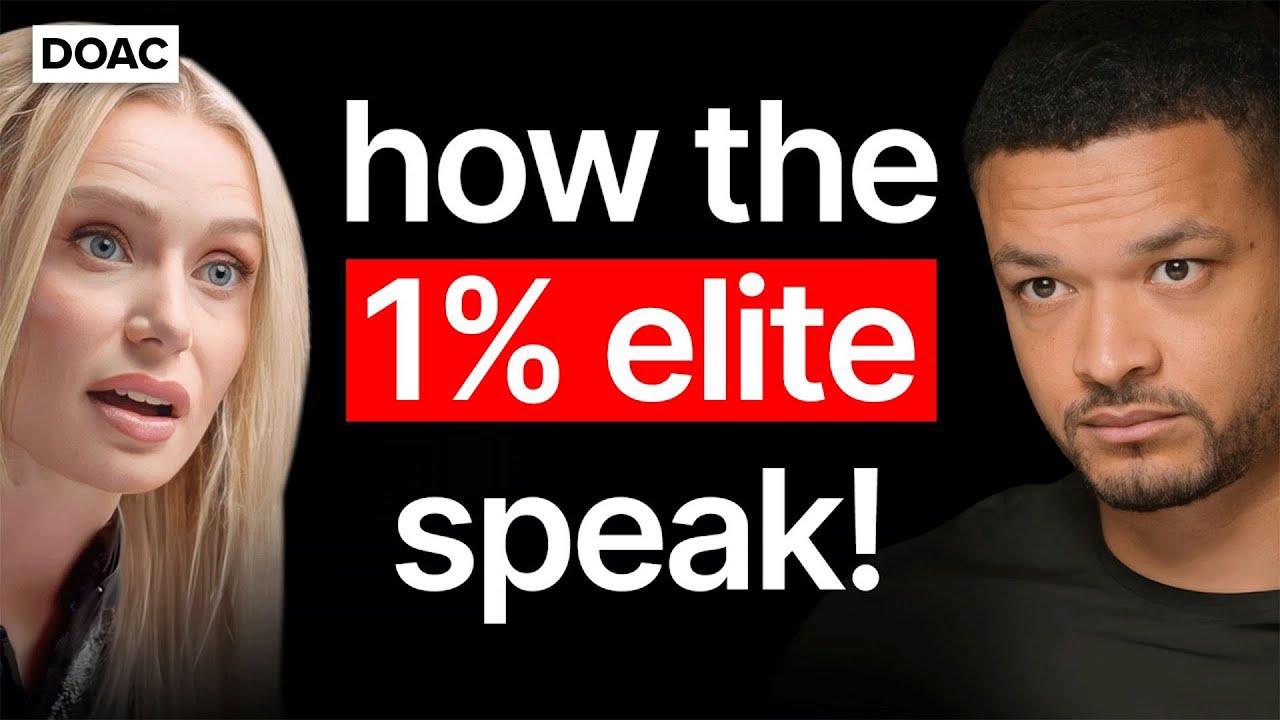
Cardone Ventures Partner Natalie Dawson Links Business Scaling to Skills Stack
The Diary Of A CEO
Natalie Dawson argues that scaling companies past revenue bottlenecks requires founders to build specific skill stacks and boost active income rather than relying on passive investments.
## Background
Published on November 10, 2025, by the YouTube channel The Diary Of A CEO, this interview features business strategist Natalie Dawson discussing strategies for building wealth, scaling 9-figure companies, and mastering executive-level communication. The video description highlights actionable insights from Dawson's PPF framework, the $100K skill stack, goal setting, and common misconceptions about hard work and productivity.
## TL;DR
Entrepreneur Natalie Dawson shares her tactical blueprints for personal development, operational scaling, and financial success. She outlines frameworks for effective communication, leadership, and calendar control, emphasizing that sustainable growth relies on high-conviction mindsets and skill acquisition rather than passive strategies or superficial metrics. Dawson also tackles the upcoming $30 trillion women's wealth transfer, the realities of burnout, and strategies for navigating business operations in an AI-driven economy. Ultimately, she emphasizes that overcoming self-limiting beliefs and building undeniable first-party evidence are the primary drivers of long-term achievement.
## Atmosphere & style
The conversation maintains an intense, high-energy, and direct tone, driven by Dawson's unwavering conviction and highly structured, pragmatic business philosophy. Steven Bartlett's probing interview style draws out deeply candid personal stories, shifting the mood from tactical business analysis to intimate reflections on anxiety, public speaking trauma, and personal standards. It feels like an unfiltered executive masterclass where disciplined self-accountability meets vulnerable self-examination.
## Key takeaways
- [15:08](https://www.youtube.com/watch?v=VsTMXuIV3OM&t=908s) Self-confidence and authority are built through the accumulation of 'first-party evidence'—undeniable metrics and data gathered from direct experience rather than abstract belief.
- [17:27](https://www.youtube.com/watch?v=VsTMXuIV3OM&t=1047s) The 'Be, Do, Have' framework states that achieving success requires first assuming the identity and presence of the target persona before engaging in the necessary actions.
- [19:20](https://www.youtube.com/watch?v=VsTMXuIV3OM&t=1160s) Effective executive communication depends on complete physical presence and the elimination of tentative language like 'I think' in favor of conviction-driven phrasing like 'I believe.'
- [27:11](https://www.youtube.com/watch?v=VsTMXuIV3OM&t=1631s) A calendar functions as a literal budget of priorities; unbudgeted high-level goals and relationships will fail to materialize without direct daily time blocking.
- [31:53](https://www.youtube.com/watch?v=VsTMXuIV3OM&t=1913s) Burnout is not caused by high volume or hard work, but by making sacrifices that fail to yield tangible results or clear progress toward set goals.
- [34:06](https://www.youtube.com/watch?v=VsTMXuIV3OM&t=2046s) Earning respect requires prioritizing professional integrity over being liked, including enforcing strict personal morality standards within company culture.
- [43:09](https://www.youtube.com/watch?v=VsTMXuIV3OM&t=2589s) The most profitable business opportunities in 2025 and 2026 involve integrating AI back-office operations into traditional non-tech sectors like home services.
- [49:23](https://www.youtube.com/watch?v=VsTMXuIV3OM&t=2963s) Small service-based businesses hit a revenue bottleneck around $1 million when founders fail to step away from direct execution and delegate system operations.
- [52:14](https://www.youtube.com/watch?v=VsTMXuIV3OM&t=3134s) When scaling a business, the 4-step onboarding process (Tell Me, Show Me, Let Me, Coach Me) ensures operational consistency before new hires attempt to innovate.
- [57:24](https://www.youtube.com/watch?v=VsTMXuIV3OM&t=3444s) Hiring expensive C-suite executives before reaching $30 million in revenue poses severe financial risks by disrupting core offers and operational stability.
- [01:02:59](https://www.youtube.com/watch?v=VsTMXuIV3OM&t=3779s) Sales conviction operates on full internal alignment; an individual cannot successfully sell a product or vision unless they are completely sold on it themselves.
- [01:09:44](https://www.youtube.com/watch?v=VsTMXuIV3OM&t=4184s) Between 2025 and 2030, a $30 trillion wealth transfer will transition to women, creating an urgent need for practical financial skill acquisition over manifestation content.
- [01:19:26](https://www.youtube.com/watch?v=VsTMXuIV3OM&t=4766s) Building wealth requires prioritizing top-line active income expansion through high-value skills rather than relying on small-principal passive income yields.
- [01:27:23](https://www.youtube.com/watch?v=VsTMXuIV3OM&t=5243s) The primary barrier to individual success across all income tiers is a lack of self-belief rather than missing systemic privilege or innate genius.
- [01:34:51](https://www.youtube.com/watch?v=VsTMXuIV3OM&t=5691s) Being underestimated or disrespected can be leveraged as a superpower to drive skill acquisition and build undeniable professional authority.
## Detailed walkthrough
### [00:00](https://www.youtube.com/watch?v=VsTMXuIV3OM&t=0s) Intro: The Communication Blueprint and the 1% Mindset
Natalie Dawson opens with a stark assertion: real success hinges entirely on one's ability to clearly communicate who they are, what they stand for, and what their ideas are worth. She introduces a universal three-step communication method that she relies on for every high-stakes interaction—whether negotiating a raise, executing tough corporate layoffs, or convincing a partner where to go for dinner. This framework provided the ladder for her own transformation, taking her from someone paralyzed by social anxiety and fear to co-founding two separate nine-figure enterprises, advising over 15,000 business owners, and studying the specific habits that elevate the top 1% above the rest of the population.
```
┌───────────────────────────────────────────┐
│ THE 1% WEALTH MINDSET │
└─────────────────────┬─────────────────────┘
│
┌────────────────────────────┴────────────────────────────┐
▼ ▼
┌─────────────────────┐ ┌─────────────────────┐
│ Prioritize Respect │ │ Effort Over Hacking │
│ Over Being │ │ Eradicates Fear of │
│ Liked │ │ Crashing Down │
└─────────────────────┘ └─────────────────────┘
```
The conversation touches upon the core mindsets that keep 99% of people from ever attaining true financial freedom. High performers prioritize being respected over being liked, and they recognize that lasting success cannot be shortcuts or "hacked." When wealth is built through deliberate effort and character, the underlying anxiety that it could all collapse vanishes. Moreover, Dawson dispels the common narrative surrounding burnout, arguing that hard work itself isn't inherently destructive because human beings aren't candles designed to burn out. Addressing popular finance trends, she cautions against getting distracted by passive income before hitting a baseline of real capital.
- **Scale of Impact:** Co-founded two 9-figure companies and helped over 15,000 business owners scale.
- **Top 1% Trait:** Choosing respect over popularity when leading and making decisions.
- **Burnout Philosophy:** Rejects the idea that intense effort inherently burns people out: *"You're not a candle. You can't burn out."*
- **Passive Income Rule:** Avoid focusing on passive income strategies until reaching a net worth threshold of at least $1,000,000.
---
[02:02](https://www.youtube.com/watch?v=VsTMXuIV3OM&t=122s) The Global Wealth Crisis and Why Hard Work Isn't Enough
Host Steven Bartlett asks Dawson to address viewers who feel stuck despite putting in exhausting hours every week. Dawson pinpoints a fundamental disconnect: hard work only creates wealth when applied to the right set of problems. Too many team members, leaders, and entrepreneurs pour immense energy into daily tasks that have zero direct correlation with generating measurable income or value. Everyone across an organization ought to be able to look objectively at their daily output and trace a straight line to the financial result it produces.
```
Hard Work + WRONG Problems ──► Exhaustion Without Wealth
Hard Work + RIGHT Problems ──► Measurable Financial Growth
```
Dawson frames this disconnect as part of a broader global wealth crisis driven by widespread financial illiteracy and confusion over how money is actually generated. People consume their days with low-leverage activities, wondering why their bank accounts fail to reflect their effort. Re-evaluating calendar priorities and aligning daily tasks with actual financial goals is the essential first step toward bridging the gap between working hard and building tangible net worth.
- **The Core Disconnect:** Hard work yields no wealth if applied to problems disconnected from revenue and value creation.
- **The Global Wealth Crisis:** Driven by a lack of financial literacy and misunderstanding how the top 1% manage time, skills, and capital.
- **The Litmus Test:** *"You should be able to objectively point at 'my work here generated this result.'"*
---
[03:44](https://www.youtube.com/watch?v=VsTMXuIV3OM&t=224s) Inside Cardone Ventures and 10X Health
Dawson outlines the scale and scope of her business ventures over the last six years, having co-founded two companies that each scaled past the $100 million threshold. The first, **Cardone Ventures**, launched in 2019 as a management consulting and investment firm designed to operate like a "McKinsey for small businesses." The firm steps in to help typical $3 million-a-year business owners break through the revenue plateaus that prevent them from reaching $5 million, $10 million, or beyond—a threshold where true financial security finally begins.
The second entity, **10X Health**, was acquired in 2023 and rapidly grew into a 9-figure global health and wellness company. Across both ventures, Cardone Ventures has served more than 15,000 business owners through a mix of direct services—such as handling marketing, recruiting, and bookkeeping—and massive live training events. Dawson emphasizes that while her firm can execute these tasks, her true preference is teaching business owners to master internal operations themselves. When founders blindly outsource critical functions like reading P&Ls or building balance sheets, they abdicate financial control to employees whose capabilities may cap out far below the company's growth targets.
- **Cardone Ventures:** Founded in 2019; scales small businesses beyond typical $3M revenue plateaus.
- **10X Health:** Acquired in 2023; built into a global 9-figure enterprise.
- **Reach:** Over 15,000 business owners trained across education, consulting, direct services, and live events.
- **The Financial Literacy Trap:** Warning against blindly delegating books to friends or casual hires: *"If business owners don't understand how to read a P&L and the importance of a balance sheet, they're always going to abdicate that work to somebody else."*
---
[06:09](https://www.youtube.com/watch?v=VsTMXuIV3OM&t=369s) Character, Partners, and the 3-Step Hiring Framework
Reflecting on what separates thriving businesses from failed ones since 2019, Dawson asserts that fundamental execution playbooks—accounting standards, recruitment mechanics, and core operational structures—rarely change. The primary point of failure is almost always character and environment. A brilliant business model will crumble if the founder, partners, or key hires lack ethics, compliance, and a drive to win. Conversely, an average business model (whether in roofing, HVAC, or digital marketing) will flourish under strong leadership and ethical alignment.
```
┌───────────────────────────┐
│ 3-STEP HIRING FRAMEWORK │
└─────────────┬─────────────┘
│
┌──────────────────────────────┼──────────────────────────────┐
▼ ▼ ▼
┌───────────────┐ ┌───────────────┐ ┌───────────────┐
│ 1. CULTURAL │ │ 2. TECHNICAL │ │3. CORE VALUES │
│ INTERVIEW │ │ INTERVIEW │ │ INTERVIEW │
└───────┬───────┘ └───────┬───────┘ └───────┬───────┘
│ │ │
▼ ▼ ▼
Uncover 5-Year Practical Case Present Past
Goal Alignment Study / Live Work Proof to Leaders
```
Dawson warns that business owners often sabotage their own growth by tolerating unaligned spouses, family members, or paid employees who quietly undermine momentum. To safeguard corporate culture, she relies on a strict **3-Step Interview Process**:
1. **Cultural Interview:** Screens for personal drive and alignment. Dawson enforces a non-negotiable rule: if a candidate cannot articulate clear 5-year personal goals, they are rejected immediately to protect team morale.
2. **Technical Interview:** Places candidates as close to real work conditions as possible. Salespeople must make cold calls on the spot; graphic designers must produce live presentation assets rather than requesting weeks for abstract creative briefs.
3. **Core Values Interview:** Requires candidates to present concrete historical examples of how they lived out the company's specific values, presenting directly to the leadership team. Dawson personally evaluated these presentations for her first 100 hires.
- **Non-Negotiable Hiring Rule:** Absence of personal goals is an instant disqualifier during the culture check.
- **Live Work Simulations:** Skipping prolonged creative briefs in favor of real-time execution tests to gauge true operational speed.
- **Cultural Ownership:** Founders must actively defend their environment: *"You have to own your culture and your environment... otherwise they're going to create their own environment inside yours and then you've lost control."*
---
[12:22](https://www.youtube.com/watch?v=VsTMXuIV3OM&t=742s) The PPF Framework for Goal Setting
When individuals feel lost or lack clarity around their future, Dawson introduces her foundational **PPF Framework** (**Personal**, **Professional**, **Financial**), a system she has personally deployed across thousands of coaching sessions. The framework eliminates vague New Year's resolutions by forcing clarity across three distinct categories over three specific time horizons: **1 Year**, **3 Years**, and **5 Years**.
| Category | 1-Year Horizon | 3-Year Horizon | 5-Year Horizon |
|:--- |:--- |:--- |:--- |
| **Personal** | Near-term health, family, lifestyle | Mid-term life changes | Identity & lifestyle at scale |
| **Professional** | Immediate role, skills, targets | Career progression | Industry positioning & leadership |
| **Financial** | Income targets, savings goals | Portfolio expansion | Major capital & investment milestones |
Dawson explains that while 1-year goals feel straightforward and 3-year goals start to blur, 5-year goals are where most people completely freeze up. To overcome this mental barrier, she grounds the exercise in simple aging math: time will pass regardless, so you must define who you intend to become when that time arrives. For her own 5-year vision at age 32, she targets reaching a stage where she can write a $1,000,000 to $50,000,000 check to charity purely out of financial strength.
- **Structure:** Organize goals visually on paper with Personal at the top, followed by Professional, then Financial—each broken into 1, 3, and 5-year targets.
- **The 5-Year Anchor:** Acknowledge aging as a fixed variable to force long-term vision: *"In 5 years from now, for certain, I will be 37 years old. And so, who is Natalie at 37? She's a f***ing badass."*
<ElicitationsGroup message="Where would you like to go next with this transcript analysis?">
<Elicitation label="Summarize Part 2 of the transcript" query="Please write a detailed, faithful walkthrough for Part 2 of this transcript, continuing where this part left off."/>
<Elicitation label="Explore the PPF Framework in depth" query="Can you break down how to apply the PPF Framework step-by-step with practical examples for a career in business or tech?"/>
</ElicitationsGroup>
Here is a detailed, faithful walkthrough of the provided transcript section:
[15:08](https://www.youtube.com/watch?v=VsTMXuIV3OM&t=908s) Acquiring First-Party Evidence and Building Self-Confidence
Reflecting on her earlier life, Natalie shares that at 20 years old, she was crippled by anxiety and deeply fearful of how others perceived her. When asked how she transformed from that anxious mindset into her present "aura" and high-level confidence, she explains that it came down to targeting concrete stats and tracking objective outcomes. Rather than relying on how people subjectively viewed her or her life choices, she focused on generating undeniable evidence. For instance, in her early career, she set out to track exact recruiting statistics—proving she could recruit, interview, onboard, and build a successful company culture based purely on measurable data. Once an outcome is proven by numbers, no one can argue against it or take it away. She became obsessed with avoiding activities that distracted her from building those stats.
To build true self-confidence, one must accumulate "first-party evidence" about who they are. For young people in their twenties who feel shrouded in insecurity, fear failure, or worry about external judgment, Natalie advises going "all in" on themselves and their single, specific area of interest—whether that is scrapbooking, social media, recruiting, or reading business books. Rather than scattering focus across a dozen things, she emphasizes picking one interest, becoming completely obsessed, and building an environment around becoming objectively the best at it.
* At 20 years old, Natalie suffered from severe anxiety and fear of judgment.
* She built confidence by collecting objective, undeniable metrics (stats) in specific domain skills like recruitment and onboarding.
* Advice for 20-year-olds: Go all-in on a single specific interest, ignore distractions, and curate your environment to become objectively the best at that one thing.
[17:27](https://www.youtube.com/watch?v=VsTMXuIV3OM&t=1047s) Image, Identity, and the "Be, Do, Have" Framework
Addressing whether physical appearance and personal presentation matter, Natalie notes that people often overemphasize their looks, but changing your appearance can accelerate identity shifts. If a 20-year-old college student who feels unarticulated and "dumpy" wants to transform into a professional golfer, the fastest path to success is to practice golf constantly while dressing, acting, and assimilating into that environment.
She introduces her core operating philosophy: the process of **"Be, Do, Have."** Most people make the mistake of waiting to *have* the desired title, wealth, or business before changing who they are. In reality, you must first *be* the person (adopt the mindset, dress, and presence), then *do* the required actions (practice, show up, execute), in order to ultimately *have* the result—whether that is a scrapbooking enterprise or a $20 million organization. As long as it does not compromise one's moral code, dressing and acting like the person you aspire to become is the fastest way to get into the right rooms.
* **Be, Do, Have Framework:** You must assume the identity and appearance first (**Be**), take the necessary disciplined actions (**Do**), and only then will you achieve the desired outcome (**Have**).
* Rebranding one's physical appearance and behavior serves as a tool to assimilate into high-level environments.
[19:20](https://www.youtube.com/watch?v=VsTMXuIV3OM&t=1160s) Mastering Communication and Physical Presence
Natalie asserts that communication is the single most vital skill for achieving success; without the ability to clearly articulate ideas, thoughts, and points of view, an individual cannot bring their vision to life. When asked what makes a communicator effective and persuasive, she emphasizes total physical presence. In an age filled with digital distractions, many leaders damage their credibility in meetings by constantly checking emails on their cell phones, appearing completely unaware and disconnected.
Her rule is simple: if your two feet are in the room, your full attention must be in the room. Effective communicators track everything happening around them and remain deeply engaged with every human being present, not just the most important person in the room. She illustrates this with a personal story: when she and her partner were breaking into their industry, they attended a large event with 35,000 people hosted by Grant Cardone and Elena Cardone. Instead of acting like "big deals" or acting distracted, they sat in the audience, took meticulous notes, laughed, and gave active verbal and visual cues. Speakers on stage can immediately spot who in the audience is engaged versus who is slouching or distracted. By respecting the space and showing genuine engagement, they earned Grant and Elena's attention, ultimately building a major business partnership with them.
> "If you're in the room and your two feet are there, that is where you have to be."
* Key communication practice: Maintain total presence; avoid using cell phones or looking distracted during meetings.
* Case study: Natalie and her partner earned a partnership with Grant and Elena Cardone by showing total engagement as audience members out of 35,000 attendees.
[22:31](https://www.youtube.com/watch?v=VsTMXuIV3OM&t=1351s) High-Conviction Language and Communication Frameworks
To make communication persuasive and structured, effective leaders rely on deliberate frameworks. Natalie utilizes the **VCE Framework** (Vision, Commitment, Execution) in all her strategic messaging, whether she is pitching for a promotion, laying off employees, or deciding where to go to dinner. Beginning with **Vision** is critical because explaining the intention and the "why" behind a message achieves far greater buy-in than jumping straight into tactics.
The conversation shifts to word choices, such as avoiding weak filler phrases like "I think" or "I feel." Natalie notes a nuance: while using "I think" as a mindless filler phrase drains authority and certainty from a message, being transparent about genuine uncertainty builds trust with a team. Steven notes that in his own communications, he frequently replaces "I think" with "I believe," which maintains high conviction while acknowledging a personal hypothesis. Natalie agrees that while "I believe" sounds authoritative, leaders growing companies from $1 million to $10 million must be cautious not to project absolute certainty when they actually need feedback, as overly rigid certainty creates an echo chamber where team members are afraid to push back or collaborate.
* **VCE Framework:** **V**ision (the "why" and intention), **C**ommitment, and **E**xecution.
* Language nuance: Avoid weak filler phrases that degrade certainty, but maintain enough genuine transparency to invite collaboration and avoid executive echo chambers.
[27:11](https://www.youtube.com/watch?v=VsTMXuIV3OM&t=1631s) Mastering Your Calendar to Engineer Your Future
Natalie argues that mastering your calendar is essential for any real personal or business transformation because things do not "magically manifest." Your calendar is an exact reflection of what you prioritize; if an objective is absent from your daily schedule, it will not happen. For example, if a business owner allocates zero time on their calendar to revenue-generating activities, they cannot be surprised when their annual revenue remains completely flat.
Rejecting the idea of leaving success to pure luck, Natalie emphasizes using your calendar to reverse-engineer the future life you want at age 40, 50, or 60. If someone wants high-caliber, "badass friends" who achieve great things, they must sacrifice time over a couple of years to build value, position themselves in the right environments, and earn those relationships. Managing your calendar gives you the maximum number of "at-bats" for key opportunities rather than relying on chance.
> "Your calendar is a reflection and a representation of what you find to be important and is in alignment or out of alignment with the goals that you have every single day."
* Success requires reverse-engineering goals directly into daily calendar blocks.
* Relationships and business growth are built by intentionally budgeting time rather than relying on luck.
[30:24](https://www.youtube.com/watch?v=VsTMXuIV3OM&t=1824s) Hard Work vs. Burnout
Addressing the popular debate surrounding work-life balance, Natalie states flatly that hard work is indispensable if someone wants an extraordinary life—you simply cannot reach unusual levels of success without working hard. However, she draws a firm distinction between working hard and experiencing burnout. She notes that truly successful people who remain in the game for the long haul do not view a long, intense day as burnout.
Citing her business partner Grant Cardone, she shares his perspective: "You're not a candle. You can't burn out." While leaders will inevitably face intense pressure, stress, and heavy responsibilities, feeling overwhelmed is not inherently negative—it simply means people are relying on you to execute something great.
* Hard work is an absolute prerequisite for achieving outsized or non-traditional success.
* Grant Cardone quote: "You're not a candle. You can't burn out."
* Feeling overwhelmed or stressed is a natural byproduct of high responsibility, not an indicator of medical burnout.
[31:53](https://www.youtube.com/watch?v=VsTMXuIV3OM&t=1913s) Reframing Burnout and the Pursuit of Moving Goalposts
Natalie Dawson directly challenges the common narrative surrounding burnout, arguing that true burnout is rarely caused by hard work alone. Instead, it stems from a fundamental disconnect: doing intense work that fails to lead to the desired outcome. Using a fitness analogy, she notes that waking up at 5:00 AM to train before her kids wake up is not exhausting when she knows it will yield a six-pack, self-confidence, and a higher standard of living. Sacrifices only create burnout when people feel they will be stuck or overweight forever regardless of their effort; if the outcome is assured, the exertion is empowering.
She observes that when entrepreneurs achieve massive milestones—such as selling a company for hundreds of millions of dollars—the initial wave of joy eventually fades, making way for a new drive to solve bigger problems and expand their impact. Moving the goalposts after a win is not a flaw, but a natural expression of human potential. When people win, they are rarely burnt out; they simply find a new, exciting game to play.
* "You only really get burnt out if you don't see how the sacrifices that you're making are actually going to lead you to the six-pack."
* "When people win, they are rarely burnt out at that moment."
---
[34:06](https://www.youtube.com/watch?v=VsTMXuIV3OM&t=2046s) Earning Respect by Choosing Being Respected Over Being Liked
When asked how someone who feels constantly disrespected can change their reality, Dawson states that the foundational step is choosing to be respected rather than liked. People too often compromise their integrity by prioritizing popularity over making the right, respectable decision. Once that trade-off is established, the next requirement is accumulating undeniable proof and statistics in specific domains of expertise. Respect is not a blanket attribute, but a compartmentalized measure based on tangible results in the physical universe.
```
┌─────────────────────────────────────────┐
│ 1. Prioritize Respect Over Likability │
│ Choose integrity over pleasing others │
└────────────────────┬────────────────────┘
│
▼
┌─────────────────────────────────────────┐
│ 2. Build Undeniable Proof & Statistics │
│ Gain real results in your domain │
└────────────────────┬────────────────────┘
│
▼
┌─────────────────────────────────────────┐
│ 3. Anchor to Your 3-to-5-Year Vision │
│ Act in alignment with future self │
└─────────────────────────────────────────┘
```
Reflecting on her own personal journey, Dawson describes growing up with a doctor mother who was effortlessly warm, kind, and beloved by everyone in every room she entered. Modeling her mother's behavior led Dawson to over-accommodate others in her early twenties, leaving her disconnected from her own opinions. To overcome the urge to be liked, individuals must anchor themselves to a clear vision of their three- to five-year future self, acting consistently with who they intend to become rather than seeking immediate social approval.
* To earn respect, a person must first decide that they would rather be respected than liked.
* Giving advice in areas without proven personal metrics (such as offering relationship advice while unable to maintain a healthy marriage) erodes respect.
* Defining one's future identity is not a "manifestation practice," but a deliberate decision to act in alignment with one's long-term standards.
---
[38:14](https://www.youtube.com/watch?v=VsTMXuIV3OM&t=2294s) Setting Firm Boundaries: Why She Fired Employees for Cheating
Dawson defines leadership as "making other people's success easy." To construct an environment where high performers can thrive, a leader must actively protect organizational boundaries and eliminate culture-corroding behaviors. She addresses a controversial incident where she publicly revealed firing two employees who were engaging in an extramarital affair with each other. When caught, Dawson terminated both immediately, drawing sharp criticism online from people who argued an employee's personal life is off-limits.
```
┌─────────────────────────────────┐
│ Core Ethical Breach │
│ (Extramarital affair at work) │
└────────────────┬────────────────┘
│
▼
┌─────────────────────────────────┐
│ Erosion of Personal Ethics │
│ (Deceiving life partner) │
└────────────────┬────────────────┘
│
▼
┌─────────────────────────────────┐
│ Predictable Professional Risk │
│ (Risk to clients, team, trust) │
└────────────────┬────────────────┘
│
▼
┌─────────────────────────────────┐
│ Immediate Termination │
│ (Protecting culture & focus) │
└─────────────────────────────────┘
```
Host Steven Bartlett pushes back, suggesting that managing employees' personal home lives expands a founder's scope of concern unnecessarily and distracts from company execution. Dawson counters that personal morality directly influences professional ethics: if someone is willing to cheat on their spouse, they cannot be trusted not to cheat the company, clients, or team members. Allowing toxic personal dynamics inside an organization creates a massive operational liability that directly undermines the team's ability to succeed.
* "My definition of leadership is making other people's success easy."
* "If they're going to cheat on the person that they're supposed to spend the rest of their life with, do you think that they're cheating on their work?"
* Dawson asserts that employees who lack personal code-of-ethics integrity distract from the team's mission and introduce unacceptable organizational risks.
---
[43:09](https://www.youtube.com/watch?v=VsTMXuIV3OM&t=2589s) High-Opportunity Business Ideas in 2025 and 2026
Looking ahead at how to launch a business, Dawson warns against choosing a direction based solely on existing skills or past experience. Instead, founders should evaluate where the greatest statistical probability of success lies. Because artificial intelligence is so new, it acts as a massive equalizer—nobody has decades of legacy experience in it. This creates an unprecedented opportunity for entrepreneurs to build eight- or nine-figure service businesses simply by helping traditional companies integrate AI into their operational workflows.
```
┌────────────────────────────────────────────────────────────────────────┐
│ HIGH-GROWTH BUSINESS OPPORTUNITIES │
├───────────────────────────────────┬────────────────────────────────────┤
│ Category │ Strategic Advantage │
├───────────────────────────────────┼────────────────────────────────────┤
│ AI Integration & Automation │ High demand, zero legacy expert │
│ Services │ moat, massive stickiness │
├───────────────────────────────────┼────────────────────────────────────┤
│ Essential Home Services │ Insulated from AI replacement, │
│ (Roofing, Plumbing, HVAC) │ prime for software modernization │
├───────────────────────────────────┼────────────────────────────────────┤
│ Hybrid Wellness Clubs │ Post-COVID shift from nightlife │
│ & Longevity Gyms │ toward health optimization │
└───────────────────────────────────┴────────────────────────────────────┘
```
Selecting a market with aggressive underlying growth is critical because a booming industry forgives minor execution mistakes, whereas shrinking markets require absolute perfection to survive. Beyond pure AI tools, she highlights home service businesses—such as HVAC, plumbing, roofing, and electrical—as prime targets. While the core physical work cannot be replaced by AI, their back-office operations, scheduling, CRMs, and accounting systems are ripe for high-margin AI modernization. Additionally, shifting consumer priorities post-COVID have led to a decline in traditional nightlife and alcohol sales, creating a massive boom in hybrid wellness clubs and health-optimization facilities.
* America's 35 million small-business owners are often terrified of AI and desperately need implementation partners to wire up CRMs, financial tools, and automated workflows.
* Setting up shop in a growing market allows entrepreneurs to innovate with less competition and higher tolerance for early mistakes.
* Service-based trade businesses present immediate opportunities for consultants to charge tens of thousands of dollars per client for basic software and AI integration.
<FollowUp label="Explore Natalie Dawson's PPF framework for setting goals" query="What is Natalie Dawson's PPF framework for setting goals, and how does it take someone from $30K to $300K?"/>
[47:40](https://www.youtube.com/watch?v=VsTMXuIV3OM&t=2860s) Expanding Revenue in Niche Markets and Pet Care
Natalie Dawson highlights how small businesses can unlock unexpected revenue streams by stacking complementary services onto existing customer visits. She shares a personal example of going for a 60-minute facial—her favorite hobby—where the clinic integrated IV therapy services directly into the session. This type of simple innovation allows a business to capture additional revenue from a client who is already sitting in a chair for an hour, seamlessly tying back to their health and well-being. According to Dawson, these subtle service integrations are driving significant growth across small markets globally.
The conversation pivots to the booming pet care industry, which Dawson calls out as a prime market for growth. She notes that people often spend more money on their pets than on their kids or themselves. To illustrate the extreme measures owners take, she mentions speaking to someone who routinely organizes Reiki sessions for her 12 dogs. High earners and business owners, particularly those who have pets before children, channel their discretionary income into their "pooch," using services like caretakers, doggy nail polish, and even EMF therapy to alleviate their own guilt and maximize their pet's comfort.
- Integrated services (like IV therapy during a facial) maximize revenue per customer hour.
- Pet owners are increasingly willing to fund premium, unconventional treatments (e.g., dog Reiki, EMF therapy, manicures) for their pets.
---
[49:23](https://www.youtube.com/watch?v=VsTMXuIV3OM&t=2963s) Breaking Through the $1M Revenue Bottleneck
Steven Bartlett points out a common frustration among small business owners: reaching roughly $1 million in revenue—typically in service-based businesses—only to become a bottleneck unable to scale further. Dawson notes that this hurdle is an expected milestone in entrepreneurship rather than a unique failure. The statistics show that transitioning from doing the work oneself to enabling others to execute it is the critical breaking point. A business owner must get out of daily service execution and into scaling operations. For instance, a dentist cannot scale to 12 clinics if they are still personally flossing patients' teeth.
To break this bottleneck, founders must systematically audit their calendar, identify non-essential high-value tasks across their 50-hour work week, and document their processes. Dawson emphasizes that business owners often suffer from "special snowflake" syndrome—believing no one else can speak to their clients or perform a task like them. Believing a "magical unicorn employee" will step in without structured guidance leads straight to failure and lost confidence.
- Most service business founders hit an operational wall around $1 million in total revenue.
- Scaling requires transitioning out of doing the work (e.g., hygienist tasks) and into optimizing operations and revenue generation.
- The "special snowflake" mindset prevents founders from delegating core tasks.
---
[52:14](https://www.youtube.com/watch?v=VsTMXuIV3OM&t=3134s) The VCE Framework and the "Tell Me, Show Me, Let Me, Coach Me" Onboarding
To build scalable processes, Dawson advocates utilizing the Vision, Commitment, Execution (VCE) framework. Instead of reducing tasks to cold steps, VCE teaches team members the underlying "why" behind an operation, what the organization commits to, what the employee must commit to, and how to execute it properly. Furthermore, onboarding must abandon the passive assumption that adults learn like children by just picking things up.
Instead, owners should implement a four-step training methodology:
1. **Tell Me:** Explain the written process clearly.
2. **Show Me:** Demonstrate how the process applies in real-world scenarios.
3. **Let Me:** Allow the employee to execute the task directly.
4. **Coach Me:** Provide real-time feedback, measuring their output until the role is handled consistently.
- **VCE Framework:** Connects process steps to organizational vision, mutual commitment, and execution.
- **4-Step Onboarding Process:** Tell me, Show me, Let me, Coach me.
- Documenting and auditing time over 50-hour work weeks enables founders to step away from operational tasks within three months.
---
[53:36](https://www.youtube.com/watch?v=VsTMXuIV3OM&t=3216s) Avoiding Hiring Pitfalls: The 4 M's Framework
When Bartlett brings up the common founder rebuttal—"I tried hiring, but they screwed up, so I'll just do it myself"—Dawson responds by challenging founders to examine their own interview and onboarding standards. Most people are "terrible at hiring" because they use generic job descriptions from Google, ChatGPT, or Grok rather than defining real, measurable outcomes. If a plumbing business doing $800,000 in revenue hires for a "marketing manager," the founder must define whether the core requirement is actually direct email marketing or referral management before bringing someone in.
To systematically scale roles without getting duped, Dawson outlines her **4 M's Framework**:
* **Model:** The founder creates and documents an operational model of what currently yields revenue.
* **Mimic:** The new hire replicates the founder's proven actions and behaviors.
* **Master:** The employee demonstrates total competency and mastery over that documented process.
* **Multiply:** Once mastery is proven, the employee expands the role—potentially hiring a coordinator underneath them—while introducing new, additive strategies (like Instagram marketing).
- Generic job descriptions fail because they lack connection to specific business outcomes.
- **The 4 M's Framework:** Model $\rightarrow$ Mimic $\rightarrow$ Master $\rightarrow$ Multiply.
- Founders must force new hires to master existing, proven revenue drivers before granting room to innovate.
---
[57:24](https://www.youtube.com/watch?v=VsTMXuIV3OM&t=3444s) The Caution of Hiring "Smarter" Talent Too Early
Bartlett shares how his hiring perspective shifted over his career. Early on, as a 20-year-old founder, he hired people he could easily manage because he felt intimidated by 45-year-old veterans. Over time, he realized the real goal was to hire exceptionally smart people who surpassed his knowledge. However, Dawson offers a sharp counterpoint: aiming high with expensive external talent before a company reaches roughly $30 million in revenue introduces extreme risk.
Citing statistics that 97% of businesses fail within 10 years, Dawson cautions against bringing in high-level executives who attempt to overhaul proven systems. If an external leader disrupts the existing core offer at a $10 million business, revenue can rapidly slip back to $7 million or $8 million. She recounts a personal mistake of bringing in a C-suite executive with "fanciful ideas" and big-name resume credentials who couldn't contextualize his experience to their core operations, ultimately disenfranchising the existing team. A founder must maintain discipline, ensuring new hires quickly learn and respect the core four walls of the business before introducing major strategic changes.
> "Trusting too early on without that founder getting the necessary skills ends up in the luck scenario instead of 'this was a strategy because I knew and had certainty about what was going on.'" — Natalie Dawson
- **30% / $30M Threshold:** High-level executive hires can break a company doing under $30 million if the founder hasn't codified core operations.
- **97% Failure Rate:** Standard 10-year business failure rates stem largely from improper operational scaling and premature delegation.
- Bringing on outside leaders who alter core offers risks sliding backwards in annual revenue.
[01:02:59](https://www.youtube.com/watch?v=VsTMXuIV3OM&t=3779s) The 10 Steps to Becoming a Millionaire and Mindset in Sales
Steven references a video Natalie made outlining a 10-step process to becoming a millionaire within a year. Among these steps are researching high-earning jobs, cutting out energy-draining friends, studying top performers, eliminating distractions like doom scrolling, attending high-value events, and mastering sales daily. Turning to the topic of sales, Natalie shares one of her favorite quotes from Grant Cardone: "To the extent you are sold, you will sell." She emphasizes that if you lack deep conviction in yourself, your product, or your company, you will fail to convince others.
Natalie explains that salespeople often blame the product or claim they are "not good at sales" when they have simply compromised on their original target and settled for selling something they do not truly believe in. To demonstrate how to instill conviction, she shares her hands-on experience training door-to-door roofing sales reps. She personally goes out on roofs to help team members connect their daily work to a grander vision—showing them how mastering sales is a stepping stone toward opening new business locations and building long-term career growth.
- **Grant Cardone Quote:** "To the extent you are sold, you will sell."
- **Roofing Sales Strategy:** Inspect damage using drones or roof walks after storms to show homeowners concrete problems, framing the solution around protecting their primary financial asset before costs escalate.
---
[01:09:44](https://www.youtube.com/watch?v=VsTMXuIV3OM&t=4184s) The $30 Trillion Women's Wealth Transfer
Transitioning to broader financial trends, Steven asks about a phrase Natalie mentioned prior to recording: the "women's wealth transfer." Natalie outlines a massive demographic shift where wealth controlled by women in the United States is projected to grow from $10 trillion to $30 trillion by 2030, forming part of a broader $124 trillion generational transfer from baby boomers. Because women typically outlive male partners by five to six years, many will inherit complex assets like real estate, businesses, and investment portfolios—often without prior involvement in financial planning.
Natalie critiques the current media landscape, citing a study by Ellevest showing that female creators produce 12 times as much content on "manifestation" as on equity and investing. Furthermore, 70% of women feel more overwhelmed after consuming quick financial "hacks" on social media rather than structured operational guidance, and 70% fire their financial advisor within the first year of a spouse's death. Natalie argues that women must be equipped with practical business literacy—such as understanding P&L statements and 401(k) structures—before major life crises occur.
* **US Women's Wealth Projection:** Expected to surge from $10 trillion to $30 trillion between 2025 and 2030.
* **Total Generational Wealth Transfer:** $124 trillion shifting from baby boomers to younger generations over the next two decades.
* **Life Expectancy Gap:** Women outlive male partners by roughly 5.5 to 6 years on average.
* **Ellevest Study Findings:** 12x more manifestation content exists online for women than actionable investing or equity content.
---
[01:14:00](https://www.youtube.com/watch?v=VsTMXuIV3OM&t=4440s) Tackling the Financial Crisis with Skill Acquisition
Addressing the broader "financial crisis," Natalie clarifies that the real issue is how few people actually make enough money to thrive. Out of 35 million businesses in the US, fewer than 200,000 generate over $1 million in revenue, with average profit margins hovering around just 8.5%. Despite the illusion of widespread affluence on social media, many individuals are struggling because they focus on saving rather than expanding their income.
To overcome this, Natalie advises individuals to use AI platforms to map out actionable skill-building syllabi. By inputting their current skills, interests, and income targets—such as earning an additional $100,000 within 12 months—people can outline a daily two-hour learning routine. Rather than relying solely on modest 6% to 10% investment returns, she urges people to take direct control over their earning potential by acquiring high-value skills to solve real-world problems.
- **US Business Statistics:** Out of ~35 million US businesses, under 200,000 bring in more than $1,000,000 in revenue.
- **Average Business Margin:** Small businesses operate on an average profit margin of approximately 8.5%.
- **Action Plan:** Dedicate 2 hours daily to structured skill learning to raise top-line income rather than relying purely on spending cuts.
---
[01:17:19](https://www.youtube.com/watch?v=VsTMXuIV3OM&t=4639s) Sponsor Break: Apple Mac
Steven reflects on the origins of *The Diary Of A CEO*, recalling how it began under his duvet with a cheap plug-in microphone and his Mac. Though the show's setup and audience have grown from a few dozen listeners to tens of millions worldwide, his team continues to use Mac computers across their studio operations.
- **Sponsor:** Apple Mac (`[apple.com/mac](https://apple.com/mac)`).
[01:18:28](https://www.youtube.com/watch?v=VsTMXuIV3OM&t=4708s) Sponsoring Growth with Adobe Express
Steven shares a personal story about how he used to post content every single day on his social media channels. While his initial goal was simply to grow his audience, the practice ended up having a profound impact on his life: it forced him to distill his daily experiences and learn faster, eventually building a following of millions that served as the foundation for *The Diary Of A CEO*.
He introduces episode sponsor Adobe Express, highlighting it as the platform he uses to design his posts across LinkedIn and Instagram. Steven notes that you do not need to be a graphic design expert or possess technical prowess to create great visuals, making it an accessible tool for anyone looking to compound their reach and knowledge.
---
[01:19:26](https://www.youtube.com/watch?v=VsTMXuIV3OM&t=4766s) The Reality of Passive Income
Steven pivots to the topic of passive income, noting the widespread internet obsession—especially on YouTube—with earning money while sleeping and doing nothing. He asks Natalie for the harsh reality of this trend and whether it is a realistic goal for most people.
Natalie responds bluntly, arguing that individuals shouldn't even think about passive income until they have at least $1,000,000 in their bank account. Before reaching that threshold, people lack the underlying assets required to generate meaningful passive returns. For someone earning a median U.S. salary of $60,000, chasing an 8% or even 15% return on a small principal will not lead to financial freedom. Instead, 99% of someone's focus should go toward increasing their active earning potential—taking that $60,000 income to $160,000—by acquiring high-value skills. Passive income should be treated as a secondary backup plan or rainy-day fund for financial protection, rather than the primary strategy for building wealth.
* Passive income is irrelevant without a $1,000,000 base asset.
* Focusing on yield percentages (e.g., 8–15%) on small amounts of capital does not create wealth; scaling active income does.
* Learning and achieving competency in a skill acts as a natural confidence engine, enabling people to systematically 10x their earning potential.
---
[01:21:53](https://www.youtube.com/watch?v=VsTMXuIV3OM&t=4913s) Skills in the Age of AI and Robotics
Steven brings up the rapid shift in the modern workplace brought on by AI and robotics, pointing out how traditional skills learned in university—or even creative disciplines like writing and podcasting—are quickly being automated. He cites recent developments in humanoid robotics, such as the commercially available humanoid robot from 1x (Neo), which blends artificial intelligence with physical manipulation of the environment.
```
AI Intelligence + Physical Environment Manipulation = Redundant Human Labor
```
Steven reflects on his own experience as an author, noting that writing was once his primary competitive edge for building personal brands and pitching investors, whereas now AI chatbots can instantly output writing in anyone's style. He asks Natalie what core edge or skill humans should double down on that machines cannot steal.
Natalie asserts that the only sustainable edge in an AI-driven future is the **ability to learn and adapt**. While she acknowledges Elon Musk's recent description of AI as a "supersonic tsunami," she feels full-scale disruption may still be further away than some predict. Regardless, the best personal hedge is to lean directly into what you do not know, discard the fear of looking foolish when confronted with complex jargon like "LLMs" or "agentic AI," and build the resilience required to constantly update your skill set.
* AI is best used as a personalized, 1-on-1 tutor to rapidly close knowledge gaps without needing traditional degree programs.
* Accepting what you do not know is a crucial competitive advantage.
* Continuous adaptation ensures an individual can deliver value regardless of external technological shifts.
---
[01:27:23](https://www.youtube.com/watch?v=VsTMXuIV3OM&t=5243s) Self-Belief as the Ultimate Barrier
When Steven asks what crucial topic they haven't touched on yet, Natalie emphasizes that the ultimate barrier holding people back—whether they earn $60,000, $1,000,000, or $100,000,000—is a fundamental lack of self-belief. People often mistakenly assume that high achievers possess a "genius gene" or were born with special privileges.
> "There isn't actually a barrier there that exists... there's no special privilege or special characteristics that somebody has that you don't have in that you can learn anything."
Natalie opens up about her own childhood struggles with numbers, sharing how she frequently reversed digits, found math overwhelming, and spent years telling herself a story that she was "stupid." She realized later that this was merely an excuse, as she had never actually spent a focused Sunday afternoon trying to get better at remembering numbers. Successful people simply limit the excuses they tell themselves: they either over-index on their strengths or directly attack their limitations to shore up weak areas and springboard forward.
---
[01:30:21](https://www.youtube.com/watch?v=VsTMXuIV3OM&t=5421s) Gender Differences in Confidence and Goal Setting
Steven references studies highlighting how men and women evaluate their own readiness differently—such as the well-known statistic that men apply for jobs when meeting only 60% of the qualifications, whereas women apply only when meeting 100%. He notes how this systemic overconfidence often leads to men securing higher-level positions.
Natalie validates this dynamic strongly, sharing that she witnesses it firsthand during team alignment sessions. In identical roles, high-performing female team members will often set modest yearly income targets (e.g., going from $80,000 to $90,000), while less-performant male colleagues in the very same position comfortably set targets to reach $200,000 or $250,000 within three years.
To combat this self-imposed limitation, Natalie uses specific leadership techniques to expand her team members' vision:
1. **The 3-Year Future Mapping Exercise:** Asking employees to picture their exact life 3 years into the future—including relationships, travel, family, and personal milestones.
2. **Vision Boarding (Pinterest):** Directing them to visually map out tangible, exciting items or experiences they truly want (for Natalie, her personal benchmark was owning a "full sequin suit").
3. **Linking Daily Work to Personal Aspirations:** Connecting an employee's everyday work responsibilities directly to achieving their personal financial and lifestyle goals, while remaining ruthlessly honest about habits holding them back.
---
[01:33:33](https://www.youtube.com/watch?v=VsTMXuIV3OM&t=5613s) The Closing Question
Steven introduces the show's closing tradition, where the previous guest leaves a question for the next without knowing who will answer it. He reads the question: *"What would you do if you knew you would not fail?"*
Natalie immediately responds that if failure were off the table, she would move to fix world hunger.
[01:33:50](https://www.youtube.com/watch?v=VsTMXuIV3OM&t=5630s) Grounding Ambition in Present Action
Natalie Dawson discusses her approach to ambitious goal-setting, emphasizing that while it feels selfish not to dream of solving massive global issues, she prefers to pour her daily energy into realistic, highly achievable targets. For her, living fully means taking massive action toward milestones that push her closer to the woman she wants to become. Rather than getting paralyzed by fixing world peace or world hunger single-handedly, she focuses on what she can directly control to maximize her current impact.
- Natalie prioritizes taking massive action on achievable goals that align with her self-growth over getting lost in unreachable ideals.
- She believes she is doing everything within her current power to make a meaningful difference in the world right now.
---
[01:34:51](https://www.youtube.com/watch?v=VsTMXuIV3OM&t=5691s) Turning Being Disrespected into a Superpower
Steven Bartlett draws a parallel between Natalie and previous guest Evie Pompouras (a former Secret Service agent), noting that both share a commanding, direct communication style that demands respect. He asks how people—especially women in male-dominated industries like finance—can earn respect when feeling dismissed or unheard. Natalie responds candidly: "Being looked down upon, being not taken seriously is actually your superpower." She views disrespect not as a setback, but as fuel to determine what concrete skills must be acquired to force people to take you seriously next time.
Natalie recalls a formative moment from a charity event roughly a decade earlier when she was 22 years old. Making a career pivot to work alongside her husband, Brandon Dawson, she completely fumbled the classic question, "What do you do?" The individual she was trying to impress wrote her off for the rest of the trip. Frustrated with herself, Natalie made it her personal mission over the next 12 months to build something undeniable so that no one could dismiss her again.
- **The Charity Event Turning Point:** At age 22, Natalie felt mortified after fumbling her elevator pitch in front of a respected figure at a charity event.
- **The One-Year Goal:** She set a strict timeline to build credibility and master her communication before returning to the same trip at age 24.
---
[01:37:36](https://www.youtube.com/watch?v=VsTMXuIV3OM&t=5856s) Overcoming Public Speaking Trauma and Building Skill Stack
To build her credibility and master communication, Natalie had to overcome severe public speaking anxiety stemming from a traumatic early-20s experience. She had been assigned to deliver an hour-long presentation on a new organizational leadership program at 8:00 AM. Five minutes in, she turned to check the presentation screen, turned back around, and completely froze. Nerves gripped her entire body, severing the connection between her mind and her speech. In a panic, she rushed through the remaining 55 minutes of content in just seven minutes, sitting silently while the audience had to piece together the rest of the program themselves.
The humiliation was so deep that for four years, Natalie struggled to speak comfortably in groups larger than four or five people. To break through this limitation, she intentionally launched a weekly podcast. Knowing she lacked business authority at age 23, she chose a niche topic she knew intimately: navigating age-gap relationships, step-parenting, third marriages, and the private social friction experienced by high performers. Additionally, she forced herself to make a toast at every single meal or event where it was appropriate. A year later, she returned to the charity event as a published creator whose blog and podcast generated thousands of readers and real revenue, allowing her to pitch her skills directly to the very people who had once ignored her.
- **The Presentation Disaster:** A panicked 5-minute freeze forced Natalie to compress a 60-minute presentation into 7 minutes, leaving her unable to speak comfortably in groups for four years.
- **The Recovery Strategy:** She launched a podcast focused on personal age-gap dynamics and step-parenting to practice public speaking weekly.
- **Micro-Repetitions:** She forced herself to give toasts at dinner tables continuously to desensitize her fear of public speaking.
- **The Result:** Returned the following year with a successful content platform, offering digital growth strategies to older executives who previously dismissed her.
---
[01:40:45](https://www.youtube.com/watch?v=VsTMXuIV3OM&t=6045s) Choosing Respect Over Popularity and Liking Yourself
Steven references top comments on Natalie's viral YouTube content, such as "Being nice destroyed my life" and "A friend to all is a friend to none," highlighting the tension between being liked and being respected. Natalie points out that many people sabotage their long-term potential because they prioritize short-term popularity over respect. The solution, she argues, is choosing *who* you want to be liked by. If you seek approval from unmotivated colleagues who complain about company culture, you get stuck in a destructive cycle. However, seeking the respect of high-performing, respectable people forces you to make sacrifices and shed old identities.
Natalie emphasizes that the ultimate goal of self-improvement is becoming your own best friend through radical self-honesty. She shares her past struggles with self-criticism, admitting she used to say harsh things to herself that she would never speak to an enemy. She also identifies passive distraction—like binge-watching Bravo's *The Real Housewives*—as a dangerous form of escapism akin to drugs or alcohol, because it trains people to admire others' lives instead of building their own. By replacing self-criticism and passive consumption with constructive habits, true self-respect is established.
- **Choosing Your Audience:** "You have to choose who you want to be liked by." Aligning with high-performing individuals requires shedding comfortable, lazy social circles.
- **Radical Self-Honesty:** Loving yourself requires being brutally honest about strengths and weaknesses without over-indexing in self-pity or arrogance.
- **Escapism Warning:** Natalie compares excessive media consumption (like reality TV) to hard drugs, warning that living vicariously through others breeds self-loathing.
- **Conclusion:** Steven wraps up the interview, thanking Natalie Dawson for her actionable insights and expressing excitement to follow her future progress.
## Notable quotes
> [20:28](https://www.youtube.com/watch?v=VsTMXuIV3OM&t=1228s) If you're in the room and your two feet are there, that is where you have to be. — Natalie Dawson
> [27:48](https://www.youtube.com/watch?v=VsTMXuIV3OM&t=1668s) Your calendar is a reflection and a representation of what you find to be important and is in alignment or out of alignment with the goals that you have every single day. — Natalie Dawson
> [31:28](https://www.youtube.com/watch?v=VsTMXuIV3OM&t=1888s) You're not a candle. You can't burn out. — Grant Cardone
> [32:27](https://www.youtube.com/watch?v=VsTMXuIV3OM&t=1947s) You only really get burnt out if you don't see how the sacrifices that you're making are actually going to lead you to the six-pack. — Natalie Dawson
> [33:48](https://www.youtube.com/watch?v=VsTMXuIV3OM&t=2028s) When people win, they are rarely burnt out at that moment. — Natalie Dawson
> [38:20](https://www.youtube.com/watch?v=VsTMXuIV3OM&t=2300s) My definition of leadership is making other people's success easy. — Natalie Dawson
> [41:30](https://www.youtube.com/watch?v=VsTMXuIV3OM&t=2490s) If they're going to cheat on the person that they're supposed to spend the rest of their life with, do you think that they're cheating on their work? — Natalie Dawson
> [57:24](https://www.youtube.com/watch?v=VsTMXuIV3OM&t=3444s) Trusting too early on without that founder getting the necessary skills ends up in the luck scenario instead of 'this was a strategy because I knew and had certainty about what was going on.' — Natalie Dawson
> [01:02:59](https://www.youtube.com/watch?v=VsTMXuIV3OM&t=3779s) To the extent you are sold, you will sell. — Grant Cardone
> [01:27:23](https://www.youtube.com/watch?v=VsTMXuIV3OM&t=5243s) There isn't actually a barrier there that exists... there's no special privilege or special characteristics that somebody has that you don't have in that you can learn anything. — Natalie Dawson
> [01:33:33](https://www.youtube.com/watch?v=VsTMXuIV3OM&t=5613s) What would you do if you knew you would not fail? — Steven Bartlett
> [01:34:51](https://www.youtube.com/watch?v=VsTMXuIV3OM&t=5691s) Being looked down upon, being not taken seriously is actually your superpower. — Natalie Dawson
> [01:40:45](https://www.youtube.com/watch?v=VsTMXuIV3OM&t=6045s) You have to choose who you want to be liked by. — Natalie Dawson
## Mentioned
Natalie Dawson, Steven Bartlett, Grant Cardone, Elena Cardone, Cardone Ventures, 10X Health, VCE Framework, Ellevest, Apple Mac, Adobe Express, 1x (Neo), Elon Musk, Evie Pompouras, Brandon Dawson, The Diary Of A CEO, ChatGPT, Grok, Pinterest, Bravo's The Real Housewives
Natalie Dawson argues that wealth and organizational scale depend on aligning daily tasks with measurable financial results, mastering operational delegation, and building undeniable competence. Drawing on her experience scaling two nine-figure companies, she contends that lasting success requires choosing professional respect over popularity and acquiring high-value skills rather than pursuing shortcuts.
Aligning Effort with Revenue and Skill Acquisition (2:02)
Dawson asserts that hard work fails to generate wealth when directed at low-leverage problems disconnected from revenue. Challenging standard views on burnout, she quotes business partner Grant Cardone's statement that people are not candles and cannot burn out; she argues instead that exhaustion stems from intense effort that yields no tangible return. Consequently, Dawson cautions against pursuing passive income strategies before reaching at least $1,000,000 in capital, advising earners to direct their efforts toward increasing active income by acquiring high-value technical skills.
Highlighting that fewer than 200,000 of the 35 million businesses in the United States generate over $1 million in revenue—with profit margins averaging 8.5%—Dawson emphasizes that expanding earning power requires solving immediate market needs. She identifies high-growth opportunities in helping traditional small businesses integrate artificial intelligence tools, modernizing back-office operations for essential trade services like HVAC and plumbing, and expanding hybrid wellness spaces. To adapt, she recommends dedicating two hours daily to structured skill development.
Scaling Operations and Disciplined Hiring Standards (49:23)
Small service firms routinely stall between $1 million and $3 million in revenue because founders succumb to 'special snowflake syndrome,' believing no one else can handle client work or operations. Dawson insists founders must audit their calendars and document their core processes to step away from daily labor within three months. To scale effectively without destabilizing current revenue, she applies the 4 M's framework: the founder creates the Model, the employee Mimics it, achieves complete Mastery over existing revenue drivers, and only then Multiplies the role. She warns against hiring expensive C-suite executives before reaching approximately $30 million in revenue, noting that premature outside leadership often disrupts proven operations.
Protecting corporate culture requires strict hiring mechanisms. Dawson’s three-stage interview screens cultural alignment by immediately disqualifying candidates who lack defined five-year personal goals, tests operational ability through on-the-spot technical simulations, and evaluates core values through presentations to leadership. Additionally, Dawson enforces strict behavioral standards, arguing that personal ethical compromises—such as workplace affairs—pose direct operational liabilities to team cohesion and client trust.
Execution Architecture Through PPF, VCE, and Calendars (12:22)
To prevent vague planning, Dawson deploys the PPF Framework, categorizing goals across Personal, Professional, and Financial dimensions over one-, three-, and five-year intervals. To counter resistance when mapping out five-year goals, she anchors the projection in fixed chronological aging, forcing individuals to define the standard of living and identity they intend to reach. These long-term targets are reverse-engineered directly into calendar blocks, grounded in Dawson's conviction that an objective omitted from a daily schedule will not happen.
For team leadership and instruction, Dawson utilizes the VCE (Vision, Commitment, Execution) framework. In training, she pairs this with a structured onboarding process: Tell Me (explain the process), Show Me (demonstrate it), Let Me (hands-on execution), and Coach Me (real-time feedback). She highlights that opening communication with the overarching vision secures buy-in, while cautioning leaders against using filler language that projects false certainty and discourages constructive collaboration.
Identity Shifts, Full Presence, and Earning Respect (15:08)
To overcome early social anxiety, Dawson collected objective metrics and 'first-party evidence' within specific domains like recruitment, establishing undeniable track records that external opinions could not alter. Under her 'Be, Do, Have' philosophy, individuals must first adopt the physical presentation and discipline of the person they aspire to become before expecting the title or financial rewards. She also stresses maintaining total physical presence in professional environments, noting that active engagement commands far more respect than passive networking.
Dawson maintains that career progression requires choosing to be respected over being liked. Prioritizing social approval erodes standards, whereas anchoring choices to multi-year personal goals builds credibility. When encountering dismissive treatment, she recommends treating disrespect as diagnostic information to identify and master the competencies necessary to command authority, a strategy she applied to overcome severe public speaking anxiety.
Dawson’s methodology asserts that business scaling and wealth generation are direct byproducts of operational mastery, strict accountability, and quantifiable skill development. However, her aggressive operational model—including monitoring employee personal ethics, rejecting conventional concepts of work-life burnout, and delaying passive investments until reaching seven-figure liquid assets—presents distinct challenges for individuals operating within different risk profiles or corporate structures.
## Background
该视频由 YouTube 频道《The Diary Of A CEO》(主持人 Steven Bartlett)于 2025 年 11 月 10 日发布。视频简介指出,估值 9 位数企业的联合创始人、商业操盘手 Natalie Dawson 揭秘了前 1% 精英群体的财富思维,涵盖个人、职业与财务的 PPF 框架、沟通法则、打造卓越团队、生产力管理以及实现长期商业跃迁的底层逻辑。
## TL;DR
Natalie Dawson 结合自身辅导超过 15,000 名企业主及打造 9 位数企业的实战经验,深度拆解了普通人通往财富与核心竞争力的认知密码。她强调财富源于解决正确问题的主动收入与硬核技能积淀,驳斥了 100 万美元资产前追求被动收入的幻觉,并提出了涵盖个人、职业与财务维度的 PPF 目标框架与 4M 业务复制体系。此外,她主张“宁求受人尊重,绝不讨好求人喜欢”,并指出面对 AI 浪潮最关键的护城河是保持终身学习与掌控日程表的绝对纪律。
## Atmosphere & style
整场对话凌厉敏锐、极具实战压迫感与穿透力,Natalie Dawson 以毫无修饰的干练气场颠覆了诸多流行的成功学温情鸡汤。Steven Bartlett 则以深具同理心且步步深入的提问机制,引导嘉宾层层剥开从严重社交焦虑到掌控亿级商业帝国的内心创伤与自省蜕变。现场充满知性张力与硬核数据支撑,让观众在直面职场与财富残酷真相的同时,激发出强烈的掌控欲与行动觉醒感。
## Bulletin
- [02:02](https://www.youtube.com/watch?v=VsTMXuIV3OM&t=122s) Cardone Ventures 联合创始人 Natalie Dawson 提出,商业成败与财富积累的关键在于将努力聚焦于直接产生商业结果的问题,而非低价值琐事;在个人净资产达到 100 万美元之前,盲目追求被动收入属于严重的战略误区。
- [30:23](https://www.youtube.com/watch?v=VsTMXuIV3OM&t=1823s) Natalie Dawson 驳斥了努力工作必然导致职业倦怠的偏见,指出人不是蜡烛、不会被真正燃尽,所谓的倦怠本质上源于长期的努力看不见确定的正向商业回报。
- [01:09:43](https://www.youtube.com/watch?v=VsTMXuIV3OM&t=4183s) 即将到来的“女性财富大转移”预计在未来 20 年随婴儿潮一代交接高达 124 万亿美元资产,然而当前内容生态中充斥着 12 倍于实际股权投资的“显化法则”碎片信息,亟需建立对 P&L 与真实财务工具的底层认知。
- [43:08](https://www.youtube.com/watch?v=VsTMXuIV3OM&t=2588s) 面对 AI 浪潮,个人与企业最核心的护城河是快速学习与坦然承认无知的能力;通过将 AI 作为专属导师并在传统蓝领家居服务等落后运营环节落地自动化,可打开极高确定性的增量空间。
## Key takeaways
- [02:02](https://www.youtube.com/watch?v=VsTMXuIV3OM&t=122s) 财富来源于在正确的核心问题上倾注努力,每一项日常工作成果必须能够客观溯源到量化的商业回报。
- [06:09](https://www.youtube.com/watch?v=VsTMXuIV3OM&t=369s) 企业主的品格、道德底线与求胜欲望决定商业成败,而缺乏界限的团队成员或阻碍型伴侣是拖垮企业核心专注力的元凶。
- [08:56](https://www.youtube.com/watch?v=VsTMXuIV3OM&t=536s) 采用文化面试、现场技能实测(如即时打50个电话)与核心价值观演讲的三步面试法,客观筛选能全权对齐组织目标的 A Player。
- [12:22](https://www.youtube.com/watch?v=VsTMXuIV3OM&t=742s) 目标设定需落地至个人(Personal)、职业(Professional)与财务(Financial)的 1 年、3 年、5 年清晰具象化规划。
- [18:39](https://www.youtube.com/watch?v=VsTMXuIV3OM&t=1119s) 践行“成为、践行、拥有”(Be, Do, Have)哲学,通过外在形象与内在认知提前对齐理想身份,从而推开高阶圈层的大门。
- [22:35](https://www.youtube.com/watch?v=VsTMXuIV3OM&t=1355s) 在商业与日常沟通中落实“愿景、承诺、执行”(VCE 模型),必须把底层的 Why 与愿景置于战术执行之前以化解阻力。
- [27:11](https://www.youtube.com/watch?v=VsTMXuIV3OM&t=1631s) 日程表是个人与企业核心战略最真实的镜像,缺乏对营收增长的有效时间分配必然导致业务与财富停滞。
- [34:05](https://www.youtube.com/watch?v=VsTMXuIV3OM&t=2045s) 宁可选择受人尊重也绝不盲目迎合以求受人喜爱,尊重必须建立在无可辩驳的客观硬数据(Stats)之上。
- [39:34](https://www.youtube.com/watch?v=VsTMXuIV3OM&t=2374s) 领导力的本质是让团队的成功变得轻而易举,必须果断剔除欺骗、出轨等道德败坏隐患以保护团队核心环境。
- [45:24](https://www.youtube.com/watch?v=VsTMXuIV3OM&t=2724s) 市场增速决定创业胜率,在由 AI 抹平资历差距的高增速蓝海及亟待后台改造的传统蓝领家居服务(Home Services)中蕴藏巨大机遇。
- [49:23](https://www.youtube.com/watch?v=VsTMXuIV3OM&t=2963s) 打破企业主凡事亲力亲为的“独特雪花”心态,通过“教、演、练、评”与 4M 进阶法(Model, Mimic, Master, Multiply)实现业务规模化复制。
- [58:51](https://www.youtube.com/watch?v=VsTMXuIV3OM&t=3531s) 在公司年营收迈过 3000 万美元大关之前,切忌盲目依赖外部履历光鲜的高管,创始人必须先夯实内部可稳定交付的盈利闭环。
- [01:06:04](https://www.youtube.com/watch?v=VsTMXuIV3OM&t=3964s) 销售从本质上是信念的转移,“你在多大程度上说服了自己,你就能在多大程度上卖出产品”,业绩低迷源于对产品与愿景的底层动摇。
- [01:13:47](https://www.youtube.com/watch?v=VsTMXuIV3OM&t=4427s) 全美 3500 万家企业中年营收破百万美元的不足 20 万家且平均净利仅约 8.5%,普通人应专注于用 AI 定制技能学习以提升主动收入上限,而非过度沉迷微薄的被动理财收益。
- [01:24:19](https://www.youtube.com/watch?v=VsTMXuIV3OM&t=5059s) 面对技术更迭,坦然承认自身无知并以 AI 为杠杆快速学习是唯一的抗风险对冲,卓越者与平庸者的分水岭在于严格限制自己找借口的次数。
- [01:41:31](https://www.youtube.com/watch?v=VsTMXuIV3OM&t=6091s) 被人轻视是不甘平庸者的超级力量,通过高频刻意练习与硬核战果能重构话语权,摆脱虚幻的逃避主义方能建立坚不可摧的底层自信。
## Detailed walkthrough
### [00:00](https://www.youtube.com/watch?v=VsTMXuIV3OM&t=0s) 破局认知:从社交焦虑到执掌9位数企业的底层逻辑
成功的核心前提,在于能够清晰自如地表达自己的想法、个人身份以及核心观点。娜塔莉·道森(Natalie Dawson)开门见山地指出,她在所有沟通场景中都贯彻一套三步沟通法则。无论是向上争取晋升、进行团队裁员,还是说服伴侣晚上去哪家餐厅共进晚餐,这套法则都同样奏效。正是这种沟通能力的跃迁,让她彻底摆脱了过去身处人群中无法开口、被极度焦虑与恐惧彻底瘫痪的状态,一路逆袭成为两家9位数(亿美元级别)企业的联合创始人,迄今已协助超过15,000名企业主实现规模化增长。她指出,位列前1%的精英群体在积累财富和获得成功时,有着与99%普通人截然不同的核心策略——其中一个关键原则就是“宁可被尊重,也绝不强求被喜爱(prioritize being respected over being liked)”。
商业与个人发展的成败,终究取决于一个人的品格。如果一个人内心缺乏求胜欲,或者不愿做出实质性的牺牲,那么无论如何都无法抵达目标。许多人试图寻找走捷径的“作弊码”(hack success),但唯有通过扎扎实实倾注心血换来的成果,才不会让人时刻提心吊胆、生怕一切会在一夜之间分崩离析;因为你知道哪怕推倒重来,自己依然拥有重建的能力。娜塔莉直言,关于拼命工作会导致所谓“职业倦怠”(burnout)纯粹是一种认知误区:“你不是一根蜡烛,你根本不会被‘燃尽’(You're not a candle. You can't burn out)。”针对当下被热炒的“被动收入”(passive income)概念,她直截了当地打破幻想:在个人净资产没有达到100万美元之前,根本不要浪费时间去琢磨被动收入;相反,应当把日常的日程表当成个人目标的真实镜像,严格对照自己每天究竟把时间押注在哪些关键事项上。针对那些对个人目标感到迷茫的人,她提炼出了一套被称为“PPF”的目标设定三步法,并彻底改变了成千上万人的财富轨迹。
- **三步沟通法的全场景适用性**:涵盖职场晋升谈判、企业裁员处理直至生活琐事协商。
- **1%精英与99%大众的认知分水岭**:将“获得尊重”置于“讨人喜欢”之上;依靠真实付出的实力构建安全感,而非投机走捷径。
- **被动收入与日程管理纪律**:100万美元资产积累前切勿盲目追求被动收入,须以日程表反映个人真实战略重点。
---
### [02:02](https://www.youtube.com/watch?v=VsTMXuIV3OM&t=122s) 财富困境:为什么拼命苦干却换不来真正的财富?
许多人每天都陷入精疲力竭的苦干与拼搏中,倾注了全部的时间与心血,到头来账面上却根本没有任何能够拿得出手的财富积累。娜塔莉明确指出,财富必然来自于“在正确的问题上倾注努力”(wealth should come from hard work on the right set of problems)。每个人都需要叩问自己一个极其尖锐的问题:我每天究竟在解决什么样的问题?无论你是普通员工、团队主管,还是企业所有者,都必须能够客观、清晰地指着某项具体成果说:“正是我的这项工作直接催生了这个商业结果。”
```mermaid
flowchart TD
accTitle: 努力与财富转化的核心归因路径
accDescr: 对比低价值投入与高价值商业成果之间如何导致贫困或积累财富
subgraph WrongPath ["陷入贫困的恶性循环"]
A1["耗费大量时间与精力"] --> B1["解决边缘/错误的问题"]
B1 --> C1["无法直接产出商业价值"]
C1 --> D1["个人财富与收入停滞"]
end
subgraph RightPath ["1% 精英的财富增长路径"]
A2["聚焦战略核心问题"] --> B2["工作直指商业核心成果"]
B2 --> C2["形成可量化的商业回报"]
C2 --> D2["实现指数级财富跃升"]
end
```
如果对当下的收入与财富现状不满,原因往往只有一个:你耗费大把时间去解决的琐碎难题,与你想要增加财富的核心目标之间根本没有直接挂钩。放眼当今世界,全球范围其实正深陷一场严重的“财富与认知危机”(wealth crisis)。大众在金融素养层面存在巨大的信息盲区与认知误区,搞不清楚到底是谁在赚钱、他们如何赚到钱,以及他们把时间分配在何处。真正拉开那1%精英群体与99%挣扎大众之间鸿沟的,并非工作时长的长短,而是他们如何管理时间、如何挑选投资标的、如何打造高价值技能栈,以及如何建立一套截然不同的底盘思维。
- **财富挂钩原则**:工作成果必须能客观溯源到商业回报,盲目解决低价值问题只能带来虚假的勤奋感。
- **全球金融素养脱节**:绝大多数人无法辨识真正的价值创造环节,导致努力被严重稀释。
---
### [03:44](https://www.youtube.com/watch?v=VsTMXuIV3OM&t=224s) Cardone Ventures与10X Health:做小微企业背后的麦肯锡
在过去的六年间,娜塔莉作为联合创始人一手打造了两家达到9位数估值的企业。第一家是创立于2019年的管理咨询与投资机构 Cardone Ventures,其核心业务是帮助中小企业主突破增长瓶颈、实现规模化扩张。在日常业务中,她面对的大多是年营收在300万美元左右的企业主,这些人普遍急于探寻如何让企业跃迁至500万或1000万美元年营收的阵营。残酷的现实在于,300万美元的年流水在扣除各项开支后,并不能给创业者带来真正的财务安全感。另一家企业则是 10X Health,团队于2023年将其收购并进行重构,如今业务已覆盖全球,同样跻身9位数企业之列。
```mermaid
flowchart LR
accTitle: Cardone Ventures 四大赋能飞轮
accDescr: 展示咨询公司针对中小企业提供的四维支持结构与能力培养闭环
subgraph SupportEngine ["Cardone Ventures 赋能体系"]
direction TB
E["教育培训 (Education)"]
C["管理咨询 (Consulting)"]
S["落地服务 (Services)"]
I["资本投资 (Investing)"]
end
Target["300万美元年营收企业"] --> SupportEngine
SupportEngine --> Goal["打造具备独立经营能力的千万级企业"]
```
迄今为止,已有超过15,000名企业主走入他们的服务体系。Cardone Ventures 的定位相当于“小微企业界的麦肯锡(the McKinsey for small businesses)”。团队会逆向拆解企业当前的市场处境、产品布局、服务结构与交付链路,既可以直接提供实操性的外包服务——如全面接管市场营销、招聘人才或代账记账,但更核心的板块在于大型活动与实战培训体系。娜塔莉强调,相比直接兜售代运营服务,她更倾向于让企业主及其管理层亲自掌握核心能力。如果企业主连看懂损益表(P&L)和资产负债表的基本功都没有,就会习惯性地将核心业务全盘甩手给他人(abdicate work)。现实中常见的情形是:“某位在教会认识的熟人看起来很靠谱,老板就盲目把整套账目托付过去;殊不知对方充其量只有打理300万美元盘子的眼界与能力,面对千万级体量时便彻底抓瞎。”而现行的传统教育体系中,根本没有教导中小微企业主如何识别这一断层的课程。
- **赋能体系涵盖四大维度**:培训教育(Education)、管理咨询(Consulting)、综合落地服务(Services)与资本投资(Investing)。
- **反对盲目甩手掌柜(Abdication)**:缺乏对财务报表和招聘机制的理解,盲目依赖外部人选往往是企业触顶崩塌的导火索。
- **核心业务规模**:累计服务超15,000名创业者,专注帮助企业从300万美元安全感盲区跨越到1000万美元规模量级。
---
### [06:09](https://www.youtube.com/watch?v=VsTMXuIV3OM&t=369s) 决定商业成败的核心:创始人品格与身边的人
当回顾自2019年创业以来的认知迭代时,主持人斯蒂芬提问:随着在这条路上越走越远,究竟有哪些底层规律从最初的假说变成了颠扑不破的铁律?在接触过的15,000名企业主中,让成功者与失败者彻底分流的关键分水岭到底是什么?娜塔莉斩钉截铁地回答:一切最终都必须归结于“操盘者本人的品格(character of the person)”。
即使一家企业拥有全世界最完美的商业模式、摸清了流量营销打法、搭建了顺畅的运营流程并且具备扩张潜力,但如果操盘的这个人道德败坏、心术不正、蔑视合规,且内心毫无追求卓越与胜利的欲望,那么整个盘子必败无疑。无论是做屋顶修缮、暖通空调(HVAC)、大健康产业还是广告营销代理,商业基础逻辑和常规的会计、招聘准则自2019年以来并未发生本质颠覆,工具软件固然层出不穷,但底层铁律始终如一。这六年来让她痛彻心扉领悟到的是:商业的本质在于你选择与谁同行、挑选怎样的合伙人,以及你允许谁进入你的核心圈子(inner circle)。
> “你可以把所有的书籍、所有的培训、整套实战打法全盘倾囊相授给某个人,他们最终依然会惨败收场;因为要么他们自己就不是那块料,要么就是他们在企业内部被形形色色的人彻底拖垮,身边全都是不断踩刹车的‘绊脚石’。”
这种人际陷阱不仅存在于企业外部,更深深扎根于许多创始人的身边。娜塔莉观察到,许多怀揣野心、积极求胜的女企业家满怀信心地走进研讨会,做满笔记并立志回公司全面推行;然而回到现实后,身边的伴侣、家庭成员,或者更具讽刺意味地——那些每月领着老板薪水却在工作里处处使绊子、扯后腿的员工,会不断蚕食她的专注度与潜能。当核心圈层充满阻力时,任何精妙的战略与工具都将沦为空谈。
- **商业根基在于品格三要素**:坚守道德底线(ethical)、合规意识(compliant)、强烈的求胜与牺牲意愿(wants to win)。
- **核心圈层与团队内耗**:企业最大的讽刺莫过于付费雇佣员工,对方却在企业内部制造阻碍、阻碍目标达成;清理阻碍型人际关系是企业破局的前提。
### [08:56](https://www.youtube.com/watch?v=VsTMXuIV3OM&t=536s) 卓越团队与三步面试法
企业规模停滞不前的根本原因,往往在于组织不仅限制了员工的成长和抱负,更击垮了个人的自信心。针对“究竟什么样的人才算顶级人才(A Player),以及如何精准筛选”这一核心问题,许多企业管理者往往只凭“感觉”行事。然而,人在判断时极易受到自身偏见和不安全感的影响,从而导致团队招聘方向出现偏差。
为了客观筛选真正卓越的人才,Natalie Dawson 提出了一套极其严格的三步面试法(Three-Step Interview Process):
```mermaid
flowchart LR
accTitle: 三步面试法流程
accDescr: 展示文化面试、技能面试与价值观面试的完整选拔步骤
subgraph Step1 ["第一轮:文化面试"]
A["考察五年目标与对齐度"]
end
subgraph Step2 ["第二轮:技能面试"]
B["实战现场测试<br/>(如现场打50个销售电话)"]
end
subgraph Step3 ["第三轮:核心价值观面试"]
C["向高管团队做案例演讲<br/>(用数据证明过去践行度)"]
end
A --> B --> C
```
1. **文化面试(Cultural Interview)**:比起纠结求职者当下能否把某项具体任务做好,Natalie 更看重对方是否与企业组织的目标完全同频。在招聘前,最关键的一个必问问题是:“你未来五年的目标是什么?”求职者必须给出具体清晰的回答。如果一个人毫无目标,哪怕技术再硬、履历再辉煌也绝不录用。因为一个没有目标的人一旦进入组织,会直接挫伤周围所有正为目标全力以赴的团队成员的士气。
2. **专业技能面试(Technical Interview)**:必须让候选人尽可能贴近真实的工作场景,进行即时实操。若应聘销售岗位,公司会当场递给候选人一份包含 50 个联系人的名单,并现场旁听其拨打电话全过程;若应聘平面设计师,公司绝不会给他们两周时间去慢慢“构思 Brief”。在快节奏的商业世界里,每天需要产出大量的广告物料与演示文稿(Pitch Decks)。如果做案例实战测试时,候选人表示需要两天构思,甚至无法当场熟练使用 Adobe 或 Canva 完成幻灯片或广告图,便会直接被淘汰。
3. **核心价值观面试(Core Values Interview)**:候选人需要向整个高管领导团队做一次正式展示,陈述他们在过往经历中如何践行公司的核心价值观。在 Cardone Ventures 招聘前 100 名员工时,Natalie 亲自参与并聆听了每一位候选人的核心价值观演讲。如果求职者无法列举具体真实的数据——例如“我当时获取了 X 数量的潜在客户,并以 Y 的转化率促成交易”,那就说明他们只是在夸夸其谈。
企业创始人必须对自己团队的文化和工作环境全权负责(Own your culture)。如果不主动建立高标准,外部随意涌入的人员就会在内部建立他们自己松散的小环境,最终导致企业失控。
---
### [12:22](https://www.youtube.com/watch?v=VsTMXuIV3OM&t=742s) 目标拆解的 PPF 框架
许多人习惯在跨年夜列出一长串宏大而虚无的愿望清单,但这种做法往往停留在空泛的遐想层面。在亲自与上千名企业老板、企业员工一对一访谈目标后,Natalie 发现所有人的追求都可以归纳到她开创的 **PPF 框架** 中:
* **个人目标(Personal)**
* **职业目标(Professional)**
* **财务目标(Financial)**
具体的落地执行逻辑,是针对这三个领域分别制定出清晰的 **1 年期、3 年期和 5 年期** 目标:
| 维度 / 周期 | 1 年期目标 | 3 年期目标 | 5 年期目标 |
|:--- |:--- |:--- |:--- |
| **个人(Personal)** | 明确且容易把握的具体生活/健康追求 | 逐步延展个人能力与边界 | 描摹出 5 年后成熟自洽的自我画像 |
| **职业(Professional)** | 寻求晋升或达成某一核心业务指标 | 承担更大责任或带领团队突破 | 建立在行业内不可替代的核心竞争力 |
| **财务(Financial)** | 具体的数字增长(如增收 10,000 美元) | 投资与资产积累的中期计划 | 实现资金层面的超强实力与财富自由 |
在执行这一工具时,大多数人很容易看清 1 年期的规划,3 年期开始变得模糊,而 5 年期则让许多人难以清晰具象化。但时间是绝对客观的——无论是否规划,五年后每个人都会老五岁。以 Natalie 自身为例,她 32 岁时便清晰描画了 37 岁时的自己:“那时的 Natalie 将是一个完全掌控自己生存环境的硬核强者(badass),拥有强大的投资与资本实力。届时,不仅能在商界挥洒自如,更能做到随手开出一张 100 万美元、甚至 1,000 万到 5,000 万美元的慈善捐款支票。”
---
### [15:00](https://www.youtube.com/watch?v=VsTMXuIV3OM&t=900s) 从焦虑内耗到用“硬数据”建立底气
当被问及“如何养成这种硬核(badass)的气场和心态”时,Natalie 坦言自己并非天生如此。在 20 岁出头时,她曾极度焦虑、脆弱,整日深陷于“别人会怎么看待我”的恐惧内耗之中。
彻底扭转这一切的转折点,在于她开始疯狂追求**客观事实与数据(Stats)**:
- 她决定通过招聘这一具体行动来证明自己,积累客观战果。当她能拿出“我成功招募了 X 名员工”这一具体数据时,这就成为了不可辩驳的铁证——它客观证明了她懂得如何筛选、面试、入职培训并建立成功的文化。
- 这种通过行动打赢一场场硬仗所积累的“第一手证据(first-party evidence)”,在内心为她自己筑起了坚不可摧的事实依据。
- 不管外界是喜欢她、讨厌她,还是将功劳归咎于他人,“你永远夺不走我拿出的数据”。从那一刻起,她坚决杜绝任何无法沉淀出实质结果与数据的虚妄事务。
---
### [16:20](https://www.youtube.com/watch?v=VsTMXuIV3OM&t=980s) 给年轻人的建议与外在形象重塑
面对那些像她 20 岁时一样心怀不安、极度在意外界眼光的年轻人,Natalie 给出的核心忠告是:**“彻底下注在你自己身上(Go all in on yourself)。”**
不要三心二意去铺开 12 件事,而是挑出自己最感兴趣、哪怕在外人看来有些奇特的那“一件事”——无论是做剪贴簿、社交媒体运营、招聘,还是研读商业书籍。在当今社交媒体高度发达的时代,只要彻底专注、沉浸并以此重塑周围的环境,任何人都能基于自己的独特兴趣创造出非凡的事物,并在该领域做到客观上的极致。
谈到外在形象在转型中的作用时,Natalie 强调,人们必须清楚自己想要成为谁。外在的形象重塑(Rebrand your look)本质上是与新身份同频的加速器。如果一个原本懒散、整日刷手机且无人重视的 20 岁大学生立志要成为一名职业高尔夫球手,那么实现这一转变最快的路径,除了每天每小时疯狂练习高尔夫之外,还必须在着装、言行举止与生活方式上全面融入并同化进职业球手的严谨环境之中。通过外在与内在的双重校准,才能迅速完成身份与认知的蜕变。
### [18:39](https://www.youtube.com/watch?v=VsTMXuIV3OM&t=1119s) “成为、践行、拥有”原则与外在呈现
在探讨如何实现阶层与事业跃升时,娜塔莉·道森(Natalie Dawson)强调了其核心处事哲学——“成为、践行、拥有”(Be, Do, Have)。绝大多数人往往抱有本末倒置的幻想,渴望先“拥有”(Have)某种身份、财富或事物,再去考虑如何行事。然而现实规律恰恰相反:无论目标是成为职业高尔夫球手、经营一家手工剪贴簿小店,还是打造一家估值 2000 万美元的成熟企业,第一步都必须是在内在认知与外部形象上彻底“成为”(Be)那个角色,通过践行(Do)该身份应有的行为举止,最终自然而然地“拥有”(Have)相应的成果。
为了切实改变自身所处的外部环境,最快的路径便是设法进入那些高水准圈子的房间,并迅速读懂并适应这些圈子的规则与面貌。娜塔莉指出,只要在不违背个人道德准则的前提下,个人应当主动改变外表、穿着风格与行事风范,让自己从视觉和举止上无限贴近期望达成的目标。这种从内到外的角色认同与外在呈现,是推开高阶圈层大门不可或缺的敲门砖。
### [19:25](https://www.youtube.com/watch?v=VsTMXuIV3OM&t=1165s) 极度专注的临场感:如何赢得格兰特·卡登的注意
当史蒂文·巴特利特(Steven Bartlett)问及沟通对于展现自我有多重要时,娜塔莉毫不犹豫地将其置于通往成功的核心位置。她认为,一个人如果无法准确传达自身观点、思想与核心定位,就注定无法创造出渴望的事业。在当今这个智能手机让每个人随时能够联络数百万人的时代,“全情投入的临场感”(being incredibly present)反而成了职场中最稀缺的顶尖技能。大量渴望晋升的管理层在高级例会上显得心不在焉,一边开会一边偷偷回复邮件,浑然不知这种涣散的举止彻底暴露了他们的迟钝与不称职。
娜塔莉遵循的沟通法则是:“你的双脚站在哪里,你的心与神就必须百分之百留在哪里。”真正顶级的沟通者不仅关注屋里最有权势的人,更对视野范围内的每一个人报以充分的注意力与尊重。娜塔莉分享了她与伴侣布兰登(Brandon Dawson)最初结识格兰特·卡登(Grant Cardone)与埃琳娜·卡登(Elena Cardone)并促成合伙关系的真实故事:当时他们置身于一场容纳了 35,000 名观众的庞大活动中,他们并未摆出企业家的架子,而是端坐在观众席中飞速做笔记,全神贯注地跟随台上的演讲产生互动与情绪共鸣。
台上的演讲者往往能敏锐地观察到台下每一位听众的反馈。如果听众全程瘫坐、低头看手机或神情涣散,即便活动结束后排队合影,演讲者也会清晰地记得刚才正是这个人让自己的控场变得异常艰难。相反,通过提供眼神交流、恰到好处的笑声与积极肢体语言,他们赢得了格兰特的极高赞赏。无论是在企业会议、学校课堂、公众演讲,还是与伴侣和孩子的日常对话中,掌控自身所处的空间并对眼前的人倾注全部专注,足以从底层彻底重塑人际关系。
- 临场感原则:双脚落座之处,即是全部心神所在,严禁在关键沟通中一心多用。
- 逆向同理心:台上的核心决策者能精准捕捉谁在敷衍谁在投入,消极听众会直接被关在机会大门之外。
- 35,000 人大会的契机:通过在庞大观众席中展现出超乎常人的聆听姿态与笔记互动,为日后与卡登夫妇建立价值数亿美元的合作奠定了基础。
### [22:35](https://www.youtube.com/watch?v=VsTMXuIV3OM&t=1355s) 沟通框架与 VCE 模型:愿景先行
谈及顶尖演说家与平庸沟通者的本质区别,娜塔莉强调结构化思维的作用:一个人掌握的沟通框架越多,其观点就越能精准着陆。缺乏框架的商务人士往往陷于繁杂琐碎的细节无法自拔,让听众迅速失去焦点;而高手则懂得用极简的模型重塑认知。娜塔莉在日常管理与核心决策中始终践行她开创的“VCE 框架”——愿景(Vision)、承诺(Commitment)、执行(Execution)。
```mermaid
flowchart LR
accTitle: VCE沟通框架
accDescr: 包含愿景、承诺和执行三个连续步骤的沟通与说服闭环流程
subgraph VCE ["VCE 核心沟通模型"]
A["1. 愿景 (Vision)<br/>阐述意图与底层 Why"] --> B["2. 承诺 (Commitment)<br/>确立责任与心理契约"]
B --> C["3. 执行 (Execution)<br/>落地战术与动作分解"]
end
```
该框架具备极强的普适性,无论是争取职场晋升、推行团队裁员,还是说服伴侣今晚去哪家餐厅共进晚餐,都可以无缝套用。娜塔莉格外强调为何“愿景”必须置于首位:如果一个人无法在开场清晰阐述某项行动背后的底层逻辑、深层意图与“为什么做”,直接切入执行战术只会招致防御与抵触;唯有先统一愿景,才能为后续的承诺与执行铺平道路。
### [23:53](https://www.youtube.com/watch?v=VsTMXuIV3OM&t=1433s) 确定性博弈:“我认为”与“我相信”的语言权衡
针对此前娜塔莉曾主张避免使用“我认为”(I think)或“我感觉”(I feel)等弱化语气的建议,史蒂文展开了深入探讨。娜塔莉坦言自己的认知已经迭代:如果发言者确实面临未知的盲区,坦承“我认为这是正确的道路”不仅不是软弱,反而体现了领导者的坦诚与担当。然而,如果将其作为缺乏底气的口头禅——例如在向整个卡登集团(Cardone Ventures)汇报时连篇累牍地说“我认为我们应该做这个,这是我认为该走的方向”——就会瞬间瓦解团队的信心。商业本质上是一场与投资人、客户、员工和合作伙伴之间的“确定性博弈”(certainty game),削弱他人确定性的口癖只会阻碍目标推进。
史蒂文随即分享了自己的日常写作习惯:他在撰写电子邮件时,有将近 90% 的情况下会刻意将草稿里的“我认为”(I think)修改为“我相信”(I believe)。在史蒂文看来,“我认为”显得轻飘飘且摇摆不定,宛如“风中的塑料袋”(plastic bag in the wind);而换用“我相信”不仅保留了对假说未经验证的敬畏,更注入了一种不容置疑的高确信度(high conviction)。
娜塔莉高度认可这种表达在书面语中的权威感,但她同时向成长型企业的创始人发出警示:当企业规模从 100 万美元跨越至 1000 万美元、身边出现多层管理梯队时,过度展现绝对的确定性极易滋生危险的“回音室效应”(echo chamber)。当领导者表现得无所不知、坚不可摧时,下属即使手握关键事实也断然不敢提出异议。在高阶领导力中,创始人必须拿捏好精准的平衡:在核心战略上保持定力,而在需要众人协同共创的未知地带,敢于明确指出自身不确定的盲区,避免给组织施加不必要的重压。
### [27:11](https://www.youtube.com/watch?v=VsTMXuIV3OM&t=1631s) 掌控日程表:时间分配与击碎“幸运”神话
谈到个人蜕变与企业规模化的底层驱动力,娜塔莉直指日程表管理的决定性地位。她犀利地戳破了社交媒体上鼓吹的“显化吸引力法则”:在这个世界上,任何有价值的东西都不会仅凭冥想奇迹般降临。想要拥有卓越美满的婚姻,就必须在日程表上真金白银地为伴侣锁定时间;想要深厚的友谊,就必须实际投入相处时光;企业经营同样如此,日程表就是一个人价值观最诚实、最赤裸的倒影。
娜塔莉在日常辅导企业主时反复强调一个残酷事实:许多老板年末抱怨公司业绩毫无起色,但复盘其日程表就会发现,他们整整一年分配在“营收增长”(revenue generation)这项核心动作上的时间竟然接近为零。既然从未给核心目标分配时间,业绩停滞便完全是必然结果。
- 日程表是检测行动与既定目标是否对齐的唯一绝对指标。
- 拒绝寄希望于“幸运”:将人生与事业交由运气支配,本质上是一种逃避现实的无能,必然带来无尽的自我怀疑与失控感。
- 创始人必须每日主动审视并强制校准日程安排,把最具价值的时间资产优先倾注在业务造血的核心环节。
### [28:42](https://www.youtube.com/watch?v=VsTMXuIV3OM&t=1722s) 掌握时间:用逆向工程创造人生的“出棒机会”与顶级人际圈
在人生的际遇中,“在正确的时间出现在正确的地点”固然是一部分因素,娜塔莉·道森(Natalie Dawson)也坦言自己的职业生涯中确实受过时机眷顾。然而,真正决定命运的并非被动等待运气降临,而是主动掌控自己的时间投入。只有牢牢控制每天的时间分配,才能为自己争取到最多的“出棒机会”(at-bats),抓住通往心仪目标的机遇。无论是渴望更丰富、更充实的 40 岁、50 岁还是 60 岁,人人生来都渴望拥有一种截然不同的人生——更棒的关系、更强健的体魄、更高的收入,或是结识一群能一起做大事的“牛人”朋友。
优质的人际圈绝非撞大运或仅仅依靠外表皮囊获得的通行证。娜塔莉指出,要结交那些真正厉害的人,必须通过对时间的“逆向工程”来达成目标。这意味着你可能需要付出长达两年的牺牲与沉淀,专注提升自我价值,才能拥有与他们平等对话并提供价值的底气。“优秀的人只想与正在做大事的人同行”,唯有通过有意识地管理并创造属于自己的时间,用扎实的行动去创造价值,才能确保自己真正处于卓越的轨道上。
```mermaid
flowchart LR
accTitle: 人际圈逆向工程逻辑
accDescr: 展示从掌控时间到建立高质量人际关系的递进过程
A["掌控每日时间投入"] --> B["专注创造过硬成果"]
B --> C["具备提供价值的能力"]
C --> D["吸引优秀同行者"]
```
---
### [30:23](https://www.youtube.com/watch?v=VsTMXuIV3OM&t=1823s) 努力工作与职业倦怠的真相:“人不是蜡烛,你不会被烧尽”
谈及人们常挂在嘴边的“工作与生活平衡”以及对 40 岁时坐拥游艇、美满家庭与成功事业的幻想,史蒂文·巴特利特(Steven Bartlett)向娜塔莉发问:努力工作到底在这个公式中扮演了多关键的角色?娜塔莉斩钉截铁地回答:“努力工作是最核心的事情。”如果追求的是非同寻常的成就,离开极致的努力绝无可能。但她同时驳斥了努力工作必然导致职业倦怠(burnout)的世俗偏见。在她的认知中,真正身处顶尖赛道且持续在场的人,绝不会因为一天的长工时而陷入所谓的倦怠。
娜塔莉引用了她的商业合伙人格兰特·卡多恩(Grant Cardone)常说的一句话:“你不是一根蜡烛,你根本不会燃尽(You’re not a candle. You can’t burn out)。”人或许会感到压力、紧张或因身负重任而手足无措,但这并非坏事,而是他人依赖你、期待你创造非凡成果的证明。所谓的“倦怠”,本质上并非源于努力本身,而是人们发现自己所做的事情根本无法导向他们想要的结果:
- **看不见结果的徒劳才会引发倦怠**:如果让人每天在健身房苦练两小时、只吃鸡胸肉配米饭,放弃一切美食却连六块腹肌都看不到,人自然会厌烦崩溃;但如果坚信这一过程必然能换来令人自豪的腹肌与极少数人才能拥有的体魄,那么清晨 5 点在孩子醒来前爬起来训练便不再是折磨,而是达成目标的必要阶梯。
- **胜利者从未在胜利时刻感到倦怠**:很多企业创始人将公司以数亿美元出售,账户上躺满巨额资金时,最初的狂喜与庆祝退去后,他们体内的潜能机制便会再次启动——想要解决更大的问题、产生更深远的影响,目标线自然会向前移动。
- **目标线的移动理所应当**:尽管外界常常批评人“得寸进尺、不断挪动目标线”,但这本身就是人类探索潜能的本能,每一次达成目标后的自我认同,都将成为开启下一个全新游戏篇章的动力。
---
### [34:05](https://www.youtube.com/watch?v=VsTMXuIV3OM&t=2045s) 如何赢得尊重:选择受人尊重而非受人喜欢
当被问及 33 岁的自己是否比 2019 年时赢得了多得多的尊重,娜塔莉给出了毫不犹豫的肯定回答。面对那些在职场或日常生活中频繁感觉被人轻视、无法建立威信的人,她给出了系统性的破局之道:
1. **宁要受人尊重,也不讨好以求受人喜欢**:人们在人际交往中犯下的最大错误,就是为了迎合他人、讨人喜欢而牺牲了正确且值得受人尊敬的原则。当正确且受尊重的决定注定不会讨所有人欢心时,必须果断放弃对“讨人喜欢”的执念。
2. **在渴望获得尊重的领域拿出不可反驳的“硬数据”(Stats)**:尊重不是凭空出现的空中楼阁,它存在于客观物理世界的数据与事实中。无论你在组织中处于什么层级,若想获得尊重,必须拥有无可辩驳的专业成果。娜塔莉打了个尖锐的比方:“如果你自己从未谈过一段健康的恋爱,身边伴侣也不认可你,那你根本没资格到处给人提供情感建议,别人不尊重你也是理所应当。”
3. **尊重是分领域的,不存在所谓“全能型尊重”**:认为某个人在所有生活领域都受人尊重的想法只是一种幻象。人们只需要在自己优先排序的核心领域里,通过铁打的实绩与成果去赢得尊重,无论别人主观上喜欢你与否,都无法否认你的实力。
---
### [36:23](https://www.youtube.com/watch?v=VsTMXuIV3OM&t=2183s) 摆脱过度取悦他人的成长蜕变
史蒂文指出,摆脱“想要讨人喜欢”的心态对很多人来说都是一场艰难的心理战。娜塔莉回顾了自己的成长经历:她的母亲是一名医生,也是世界上最温柔、善良、体贴的人,只要走进任何聚会,房间里的每个人都会立刻喜欢上她。娜塔莉从小将母亲视为榜样,学会了在交流中提出极佳的问题、全神贯注地关注他人。然而,这种过度迎合与取悦他人的模式,却让她逐渐迷失了自我:“如果我总是在顺应别人的期待、努力去博得所有人的好感,那我到底如何看待我自己?”
要彻底打破这种过度迎合的循环,娜塔莉分享了她的自我重塑法则:
- **将眼光投向 3 年乃至 5 年后的自己**:除了你自己,没有任何人能够替你描绘未来的模样。
- **立下清晰的标准与旗帜**:明确决定自己未来要以什么立足、想要成为什么样的人。这绝非空洞的心想事成“显化练习”,而是一个清醒而坚决的决策过程。
- **以未来的自我标准行事**:无论是在 20 岁、30 岁还是 70 岁,只要当下的一言一行都严格契合未来那个理想自我的标准,就能建立起坚不可摧的自我认同,真正成为那个值得自己发自内心喜爱与尊重的人。
### [38:13](https://www.youtube.com/watch?v=VsTMXuIV3OM&t=2293s) 领导力的本质与捍卫界限:让团队的成功变得轻而易举
对话从如何赢得尊重以及树立界限展开。Steven Bartlett 询问 Natalie Dawson,为了赢得尊重,她是否必须不断强化并捍卫自己的界限,以及是否经常有人试图试探这些底线。Natalie 毫不犹豫地回答“当然会”。她每天都要与数百名团队成员共事,每个人都有自己独特的见解,对工作方式和企业文化也有不同的诉求。这常常促使她深入反思:究竟该如何打造一个能让大家获得成功的环境?
在 Natalie 看来,**领导力的核心定义就是“让别人的成功变得轻而易举”**("making other people's success easy")。如果一位领导者立志于此,就必须思考:什么样的环境才能让他们毫不费力地走向成功,而不是让他们觉得跳槽到街对面的另一家公司、托付给别的领导会更有前途?为了实现这个目标,Natalie 对自己的角色定位与底线边界进行了极为严格的审视与把控。
```mermaid
flowchart TD
accTitle: Natalie Dawson 的领导力与组织文化闭环
accDescr: 展示领导者如何通过界定成功、剔除道德隐患来维护健康的组织环境
subgraph Core["核心领导力定义"]
L1["领导力目标:<br/>让团队成员的成功变得轻而易举"]
L2["核心问题:<br/>什么样的组织环境能让成功阻力降到最低?"]
end
subgraph Culture["环境与文化防御"]
C1["严格剔除组织负债<br/>(欺骗、谎言、毒品、道德败坏)"]
C2["保护团队核心价值观<br/>(职业成就与健康家庭生活并存)"]
end
subgraph Outcome["长远价值"]
O1["高黏性、高信任度的团队"]
O2["对客户与业务的全情投入与道德保障"]
end
L1 --> L2
L2 --> C1
C1 --> C2
C2 --> O1
C2 --> O2
```
---
### [39:34](https://www.youtube.com/watch?v=VsTMXuIV3OM&t=2374s) 职场出轨即刻开除:道德败坏就是团队的最大负债
Natalie 随后谈到了一件在网上引发巨大争议的真实事件。她曾公开在 TikTok 上分享自己开除员工的经历:当她得知公司里的一名女员工出轨了另一名男同事,而双方在公司外部都各自拥有伴侣时,她毫不手软,**在得知此事的瞬间便将两人双双开除**。这一决策令许多人感到震惊与不解。
当 Steven 追问这是否意味着“两人在公司内部搞外遇,且外部各有正牌伴侣”时,Natalie 给出了肯定答复,并强调这几乎是一个本能的瞬间决定:
- **组织价值观的侵蚀**:Natalie 坚信,如果将那些破坏团队道德与价值观的人留在身边,领导者就根本无法“让大家的成功变得轻而易举”。对绝大多数普通人而言,人生的成功绝不包含妻离子散或经历痛苦的离婚,而是在取得财务与职业成功的同时,维系稳定的伴侣与家庭。
- **己所不欲,勿施于人**:她表示绝不希望看到自己的丈夫去一家对出轨、互相欺骗、吸毒或毫无道德底线视若无睹的公司上班。
- **全方位的信任与责任隐患**:当 Steven 提出“有人可能会认为员工下班后的私生活与老板无关,只要没在工位上搞外遇就不该管”时,Natalie 态度坚决地反驳,即使不在工作场合,她也照样会立刻开除。“如果一个人连托付终身、发誓共度余生的伴侣都会背叛欺骗,你难道指望他在工作上不偷奸耍滑?你觉得他不会欺骗客户吗?”她认为,深陷个人道德危机的人必然心力涣散,这种人在任何环境中都是一颗不可预测的“绝对负债”("a complete liability")。
Steven 表达了相对保守的边界观点,他笑着直言:“如果我把关心的范围无限扩大,那我特么什么事都别想干了。”他认为作为 CEO,除非员工主动求助并声明私生活已严重影响工作,否则自己不想成为插手员工私生活的“道德监管政府”,只要工作场所内不出现违规即可。
---
### [42:09](https://www.youtube.com/watch?v=VsTMXuIV3OM&t=2529s) 赞助商插播:Vanta
Steven Bartlett 插入了赞助商 Vanta 的宣传。在当前的初创公司环境中,伴随着 AI 带来的极速节奏,许多早期团队虽然能快速拿到大型企业客户(Enterprise)订单,却常因缺乏合规与安全认证(如 SOC 2)而陷入困境。Vanta 凭借 AI 和自动化合规系统,帮助企业在几天内达到客户的安全合规预期,并提供持续监测,确保商业交易不会受阻。访问 `vanta.com/ceo` 可享受 1,000 美元优惠。
---
### [43:08](https://www.youtube.com/watch?v=VsTMXuIV3OM&t=2588s) 2025年创业的最佳视角:进入由 AI 抹平经验的高增速蓝海
回到创业主题,Steven 询问 Natalie:面向 2025 年及瞬息万变的世界,针对那些想要寻找创业方向、确定启动项目的人,有哪些基于成败案例的宝贵建议?
Natalie 指出,大多数创业者常犯的致命错误,是**仅仅基于自己过去的经验和掌握的技能去选择赛道**。她认为正确的思考框架应当是:**“在什么领域,我获得成功的概率才是最大的?”**("where is there the greatest chance for me to be successful?")。
- **AI 是终极拉平差距的工具(The Great Leveler)**:在 AI 领域,没有人拥有几十年资历,所有人都是新手。全美有 3,500 万家小企业,它们的老板既不知道如何搭建自动化流程,也不懂如何利用 AI 智能体/助手将业务接入 CRM 系统或财务管理软件以辅助决策。这是一片从未有人实现规模化落地的绝对空白。
- **利用企业主“无上限的预算”解决真痛点**:对于能真正帮自己赚到更多钱的有效解决方案,企业主的预算几乎是无限的。全美数千万小企业主目前处于极度恐慌状态,他们要么像鸵鸟一样把头埋在沙子里逃避现实,要么指望某个年轻人能突然替他们解决问题。对于具备商业理解的人而言,只要在接下来的 18 到 24 个月里专注于帮小企业落地 AI 工具,打造一家 8 位数甚至 9 位数(千万至亿美元级别)估值的企业绝非难事,且这种业务具有极强的客户黏性。
---
### [45:24](https://www.youtube.com/watch?v=VsTMXuIV3OM&t=2724s) 市场增速决定一切:传统家居服务与 AI 的化学反应
Steven 追问在选择创业领域时,市场本身的增长速度是否是核心指标。Natalie 斩钉截铁地表示:**“市场增速就是一切。”**
| 维度 | 存量成熟市场(如 2025 年创办造纸厂) | 高增速市场(如 AI 赋能、大健康等) |
|:--- |:--- |:--- |
| **竞争要求** | 必须做到行业顶尖、拥有极度独特的定位才能艰难存活 | 即使业务做得稍逊一筹,也能取得巨大成功 |
| **竞争格局** | 玩家饱和,红海厮杀 | 玩家稀缺,拥有大量市场空白与入场窗口 |
| **创新空间** | 极度受限 | 容错率高,极大地包容新入局者与颠覆性创新 |
除了纯科技领域,Natalie 还对**蓝领家庭本地服务业(Home Services)**寄予厚望,包括屋顶工(Roofers)、水管工(Plumbers)、电工(Electricians)以及暖通空调(HVAC)等传统行业:
- 在具身机器人全面普及之前,这些服务本身的核心交付不可能被 AI 颠覆。
- 然而,这些传统企业的**日常运营与后台系统极其落后**,亟待全面重构。
- 无论是 15 岁的高中生还是 50 岁的人,只要学会利用简单的 AI 解决方案帮这些小企业打通自动化与获客流程,就能向每家客户收取数万美元的高额服务费。
---
### [46:43](https://www.youtube.com/watch?v=VsTMXuIV3OM&t=2803s) 2026年最具盈利潜力的赛道之一:混合型健康俱乐部
在探讨 2026 年最具盈利潜力的六大商业赛道时,除了 AI 企业和家庭本地服务之外,Steven 提到了 Natalie 预测的另一个关键方向——**混合型健康俱乐部(Hybrid Wellness Clubs)**。
Natalie 阐明了她长期看好大健康赛道的底层逻辑:
- **后疫情时代的根本性价值观转变**:自疫情爆发以来,全球人群对个人健康与免疫力的重视程度达到了前所未有的高度。
- **夜生活与饮酒消费的急剧退潮**:统计数据显示,与传统夜总会、酒吧强绑定的酒类销售额大幅滑坡。年轻一代不再热衷于通宵达旦地派对狂欢与滥饮,反而将注意力与资金全面转向身体保养与机能优化。
- **不断升级的基础设施需求**:提供全方位健康优化方案、结合多样化配套设施的新型健身与健康俱乐部,自疫情结束起就始终保持强劲的增长势头,未来还将继续迎来爆发式红利。
### [47:38](https://www.youtube.com/watch?v=VsTMXuIV3OM&t=2858s) 交叉销售与宠物经济:微小市场中的商业创新
Natalie 提到了传统服务行业中技术与体验的叠加创新。她分享了自己的个人爱好——做面部护理(Facial)。最近一次去体验 60 分钟的面部护理时,店家直接将静脉注射(IV 静脉补水/营养注射)服务整合进了这 60 分钟的护理流程中。她指出,当顾客已经在椅子上躺足 60 分钟时,商家完全可以思考还能引入哪些与健康、福祉相关的增值服务,从而直接拉动客单价和企业营收。这种商业微创新正在全球各地的细分市场中广泛发生。
谈及宠物行业为何蕴藏巨大商机,Natalie 强调“人们爱宠物,且极其愿意为宠物花钱”,甚至往往超过为孩子或自己花钱的意愿。她举例称,最近接触到一位客户,竟然在给自己的 12 只狗做“灵气疗法”(Reiki)。随着高收入人群和企业主赚取更多财富,宠物在他们尚未生育小孩前扮演了完全依赖他们的“家庭成员”与“最好朋友”角色。为了弥补内心的愧疚感并让宠物生活得更舒适,主人极其舍得将可支配收入挥霍在看护员、宠物美甲、甚至是电磁场(EMF)疗法等各种各样的细分项目上。
### [49:23](https://www.youtube.com/watch?v=VsTMXuIV3OM&t=2963s) 突破百万营收瓶颈:从业务执行者转型为规模化管理者
Steven 指出,大量小型企业主(尤其是年营收达到 100 万美元左右的服务型企业)常抱怨自己成了企业发展的“最大瓶颈”,业务规模难以再进一步。Natalie 直截了当地回应:“欢迎来到创业的世界,这绝不是个例,而是每个人都会面临的必经挑战。”统计数据表明,当企业主需要将自己行之有效的做法交接给他人时,这种脱节是极其常见的。这并不意味着企业主能力不足,而是因为他们缺乏一项明确的技术性技能:**教会他人把自己擅长的事情做好,从而抽身聚焦于企业主最核心的职责——创造营收**。
Natalie 形象地打比方:一个牙医不可能一边拥有 12 家牙科诊所,一边还在亲自拿着牙线替病人清洁牙齿。日常的清洁牙线工作应该交给洗牙师(Hygienist),企业主必须从“亲自低头做事”(doing)中抽身,进入到“推动业务运营规模化”(scaling of operations)的轨道中去。
- **核心动作**:打开日程表(Calendar),逐一审视自己每天 50 个小时的工作时长究竟花在了哪里。
- **打破“独特雪花”心态**:绝大多数企业主存在严重的心理误区,自负地认为“只有我才能跟客户沟通”、“客户只听我的”、“没人能像我一样服务好病人”,从而亲手制造了依赖自己的工作环境。
- **筛选出非核心高价值任务**:客观识别出哪些工作并不属于个人时间的最优利用,将其拆解并建立流程(Process),制定明确的时间表(例如在未来 3 个月内彻底将这些事项移出自己的职责范围)。
```mermaid
flowchart TD
accTitle: 业务放权与规模化演进路径
accDescr: 展示企业主从陷入执行泥潭到通过流程与培训实现业务复制的完整进阶逻辑。
subgraph Trap["困境:个人瓶颈"]
A["成为业务执行者<br/>(亲力亲为做业务)"] --> B["自认'不可替代'<br/>(独特雪花心态)"]
B --> C["年营收卡在100万美元瓶颈"]
end
subgraph Solution["破局:标准流程与赋能"]
D["日程表审计<br/>(剥离低价值任务)"] --> E["VCE 框架提炼流程<br/>(Vision - Commitment - Execution)"]
E --> F["四步培训落地<br/>(Tell - Show - Let - Coach)"]
end
subgraph Scale["进阶:4M 复制体系"]
G["Model (建构模型)"] --> H["Mimic (模仿复刻)"]
H --> I["Master (精通业务)"]
I --> J["Multiply (裂变创新)"]
end
C --> D
F --> G
```
### [52:16](https://www.youtube.com/watch?v=VsTMXuIV3OM&t=3136s) “VCE 框架”与“教、演、练、评”四步培训法
Natalie 指出,很多老板在放权时往往寄希望于空降一个“神奇独角兽员工”,幻想对方能瞬间接管自己摸索多年的独门绝技,失败后便归咎于他人。真正规范的移交,要求企业主将流程书面化沉淀下来,最好采用 **VCE 框架**(Vision, Commitment, Execution):
1. **Vision(愿景)**:让团队理解这项流程背后的深层“原因”(Why)。
2. **Commitment(承诺)**:明确组织对员工的承诺是什么,以及员工需要向组织兑现什么。
3. **Execution(执行)**:明确具体落地的操作动作与交付标准。
在将流程交给员工时,绝不能只在入职培训(Onboarding)时随手扔过去一份文档就不闻不问。成年人并不会像小孩那样自然“凭直觉搞懂一切”,必须严格遵循四步教学结构:
- **Tell me(说给我听)**:直接向员工清晰陈述工作流程与标准。
- **Show me(做给我看)**:亲自在实际业务场景中进行操作示范,让流程具体化、具象化。
- **Let me(让我来做)**:给员工自主实操的空间,观察其动手过程。
- **Coach me(指导复盘)**:在员工操作时持续提供反馈、纠偏与指导,确认其能像创始人一样准确交付,并建立客观衡量标准反复检验。
### [53:36](https://www.youtube.com/watch?v=VsTMXuIV3OM&t=3216s) 为什么老板总觉得“员工靠不住”:招聘与培训的核心痛点
Steven 提出很多创业者的普遍抱怨:“我试过了,招了人进来,结果他们把事情搞得一团糟,我被坑惨了,所以还不如我自己做。”Natalie 针锋相对地反问:企业主自己在面试流程和入职培训中尽到了什么责任?真的给员工演示过正确做法了吗?真的确认过他们理解到位了吗?
Natalie 明确指出绝大多数老板“极其不擅长招聘”。核心问题在于老板自己甚至都不知道这个岗位具体需要交付什么成果。他们往往随手在 Google 搜一个招聘模板,或者用 ChatGPT、Grok 生成一份与实际业务产出毫不相干的宽泛职位描述。以年营收 80 万美元的水管维修公司(Plumbing Business)为例,老板往往只空泛地说“我需要一个懂市场营销的人”,但实际上该公司的核心营销方式可能仅仅是基础的邮件营销(Email Marketing)。结果新员工带着以往完全不同的背景经验进来,各执一词,老板也缺乏客观的量化指标来衡量对方究竟是否合格。
### [55:04](https://www.youtube.com/watch?v=VsTMXuIV3OM&t=3304s) 4M 进阶法:Model、Mimic、Master、Multiply
为了防止在雇佣与放权过程中“被忽悠”,Natalie 提出了实操性极强的 **4M 框架**(Model、Mimic、Master、Multiply)。
- **第一步:Model(树立模型)**:如果一家水管维修公司已经能做到 80 万美元年营收,说明现有的营销模式已经在起效(哪怕仅仅依靠口碑转介或邮件触达)。老板要做的第一件事,是把自己做到 80 万美元的方法提炼成标准化模型。
- **第二步:Mimic(模仿复刻)**:招人进来的首要任务,是要求对方 100% 照搬并模仿老板验证过的现有动作与流程,证明他们能在当前业务水平上达到合格胜任。
- **第三步:Master(全面精通)**:当员工彻底吃透业务逻辑、摸清客户画像,将老板原有的打法彻底精通后,才具备微调和拓展的资格。
- **第四步:Multiply(裂变创新)**:在精通的基础上,员工才可以开始尝试增量渠道(例如因为发现水管客户活跃在 Instagram 上而试水 Instagram 营销),从而由内而外实现业绩的倍增与扩展。只有经历过前三个 M 的沉淀,团队成员才能真正承担起规模化扩张的责任。
### [56:55](https://www.youtube.com/watch?v=VsTMXuIV3OM&t=3415s) 业务规模化扩张与早期招聘的高低之争
在团队角色裂变与层级扩展的讨论中,Natalie Dawson 阐述了业务扩张的成熟标志:只有当现有员工真正把某项职能完全吃透并拿出实打实的结果时,才证明业务已经具备了引入下一层人员的条件。例如,在营销经理(Marketing Manager)下面配置一名营销协调员(Marketing Coordinator),让新人从头经历最基础的执行步骤,而原先负责这些基础业务的管理者则得以解放双手,去开拓更多增量营销渠道。
针对早期招聘,Steven Bartlett 提出反思:初创期创始人是否往往把人才标准定得太低?早期创始人内心往往怀有不安全感,害怕找来的人在专业领域凌驾于自己之上、对自己指手画脚。Steven 回忆自己二十岁出头创业时,只想招募“自己能管得住的人”,通常是同龄人甚至更年轻的下属。当时他甚至无法想象去招募一个 45 岁、有 25 年工作经验的老手,因为他误以为创始人的职责就是居高临下地发号施令。直到事业更进一步、内心更加从容自信后,他才意识到这种逻辑必须彻底逆转:优秀企业需要寻找真正聪明、懂自己所不懂领域的顶尖专家,为他们构建施展空间,将他们的智慧注入团队的“蜂群思维”(hive mind)之中。
```mermaid
flowchart TD
accTitle: 招聘心智模式的转变对比
accDescr: 对比创始人早期招募可控人员与成熟期引入顶尖智囊团的差异
subgraph EarlyStage["早期初创心智模式"]
E1["创始人心态不安全"] --> E2["招募同龄/易管控人员"]
E2 --> E3["创始人负责单向命令与输入"]
end
subgraph MatureStage["成熟企业心智模式"]
M1["创始人自信且笃定"] --> M2["招募远超自身的顶尖专家"]
M2 --> M3["融入蜂群思维决策"]
M3 --> M4["开拓全新业务与收入线"]
end
```
### [58:51](https://www.youtube.com/watch?v=VsTMXuIV3OM&t=3531s) 盲目招募“大牛”的致命陷阱:为何 3000 万美元前必须先深耕内核
对于 Steven “尽早招募比自己聪明的人”的观点,Natalie Dawson 提出了极其严肃的反驳。她尖锐地指出,这种做法在公司营收跨过 3000 万美元大关之后才真正适用;在此之前,创始人如果自身尚未打造出经受住市场检验、可被稳定复制的盈利闭环,过早轻信外来高人将会招致巨大灾难。数据显示,97% 的企业会在成立 10 年内走向倒闭,其中核心根源往往在于业务退步(slipback)。
Natalie 剖析了具体业务场景:假定一家公司年营收达到 1000 万美元,创始人以为请来一位经验丰富、看似更聪明的外部销售主管就能带来跃迁,指望对方重构整套销售流程。可一旦这位外部高管引入全新产品、全新模式,打乱了原本带团队冲上 1000 万美元的既有核心路径,公司营收往往不仅冲不上 2000 万,反而会直接滑落至 700 万或 800 万美元。如果创始人连内部核心业务究竟靠什么运作都搞不清楚,就根本没有底气和能力去分辨外部建议的优劣,最终沦为被忽悠的牺牲品。
- **先验证再赋能**:在引入能够带来增量的高管之前,创始人必须先检验对方是否能在公司现有的基石(无论是 80 万、200 万还是 1000 万美元的盘子)上平稳交付既有成果。
- **短期严格评估期**:高管入职不必花几年去搞繁琐的文化同化,但必须在短短数周或数月内展现出对既有核心业务逻辑的绝对谦逊与透彻理解。
- **虚名与纸上谈兵的危害**:Natalie 分享了自己当年的教训——曾招聘过履历光鲜、满嘴宏伟蓝图的 C-suite 高管,因完全无法将过往经验与当前核心业务对接,最终不仅没有产生效能,反而导致既有团队被孤立和边缘化。
- **战略确定性 vs 侥幸碰运气**:过早放权与盲目信任只会把公司推向全凭运气的边缘,唯有创始人在自身领域扎牢严密的规矩与纪律,外来人才的增量价值才不会变成吞噬基本盘的毒药。
### [01:02:45](https://www.youtube.com/watch?v=VsTMXuIV3OM&t=3765s) 成为百万富翁的 10 个步骤与“彻底自我认同”的销售本质
Steven 对此深有共鸣,坦言自己现在敢于下血本高薪聘请豪华背景人才,恰恰是因为自己已经身经百战、“更难被忽悠”了,能够精准评估其 ROI,而不再像年轻时那样仅凭对方在某家知名大厂待过就盲信其能力。随后,Steven 提及 Natalie 在 2024 年 12 月发布的“一年内成为百万富翁的 10 个核心步骤”影片,并提炼出其中极为硬核的几条法则展开讨论:
1. **研究百万富翁的岗位属性**:分析能产生高财富的职业,对照自身兴趣与技能评分,选定一项全力攻克。
2. **清理负能量社交**:果断切断那些消耗自身能量、不支持个人目标的人际关系。
3. **拆解标杆人物**:通过播客、视频与书籍,深度研究所在领域排名前十的翘楚。
4. **全天候技能积累**:利用一切碎片时间打磨能力,社交媒体上只关注百万富翁,彻底剔除 Netflix、无脑刷屏等一切无意义干扰。
5. **敢于投资与理性负债**:缺乏投资认知的穷忙注定一辈子贫穷,必须敢于把资源压在自身成长上。
6. **浸泡在高价值圈层**:参加高质量人脉盛会,并在行前做足参会者背景背调。
7. **日复一日精进推销**:每天都要锤炼向客户、团队乃至向自己“推销”自我的能力。
```mermaid
flowchart LR
accTitle: 销售本质的认知递进模型
accDescr: 展示从自我认同到外部成功销售的逻辑递进过程
A["内心深处百分之百笃信<br>(To the extent you are sold)"] --> B["成功向他人输出信念<br>(You will sell)"]
B --> C["跨部门协同顺畅<br>/ 客户成单"]
D["内心批判与合理化借口<br>('这辆车是垃圾')"] --> E["向外推销失败 / 业绩脱节"]
```
在聚焦“如何成为顶级销售者”时,Natalie 引用了商业导师 Grant Cardone 的核心名言:“你在多大程度上说服了自己,你就能在多大程度上卖出东西”("To the extent you are sold, you will sell.")。销售从本质上是信念的转移。如果你连自己、自己的商业点子、所推销的产品、或是需要跨部门协作的项目都没有发自内心地彻底认同,你的推销必定溃不成军。Natalie 深入一层剖析:很多人表面上抱怨自己在这个月汽车销售业绩垫底是因为“自己卖的这车就是个垃圾”,在找借口合理化失败;但如果抽丝剥茧探究源头,他们真正的问题在于当初根本没有说服自己为什么要做这份工作——可能内心真正渴望去公关公司,却因逃避被公关公司拒之门外的挫折而退而求其次选了车行,这种底层的自我怀疑最终导致了在业务一线的全面溃败。
### [01:06:04](https://www.youtube.com/watch?v=VsTMXuIV3OM&t=3964s) 销售的本质是自我信服:屋顶销售实战案例
很多销售人员之所以业绩不佳,往往不是缺乏与生俱来的天赋或技巧,而是因为他们自己首先对所售卖的产品或机会“退缩并动摇了”(unsold)。当销售人员未能达成既定目标时,他们没有在目标上保持坚定与“不讲道理”(unreasonable),反而开始变得“合情合理”(reasonable),降低对自己的要求,继而对工作环境挑刺、对产品吹毛求疵,最终误以为自己根本不适合做销售。Natalie Dawson 指出,核心症结在于他们缺乏对所做事情的内在信念。只要能让他们打心底认同产品和背后的长期愿景,任何人都能爆发出惊人的销售潜能。
为了说明这一点,Natalie 分享了自己亲自下场培训屋顶翻新团队的经历。她曾在一个月前和两个月前亲自爬上屋顶带教。绝大多数年轻销售不会一大早醒来就梦想着去“卖屋顶”,因为这听起来既不性感也不光鲜。然而,老板向他们展示了宏伟的扩张愿景——公司将从一个据点拓展到两个、三个乃至五个网点;销售屋顶只是他们掌握商业技能、成长为未来扩张合伙人的垫脚石。当他们认同了这个机会平台,敲门的动力便截然不同。
面对主持人 Steven Bartlett 追问“在实战中究竟该如何向房主推销”,Natalie 现场拆解了上门获客的全流程逻辑:
```mermaid
flowchart TD
accTitle: 屋顶销售转化闭环
accDescr: 展示从上门发现痛点、量化潜在损失到提供解决方案并建立长期愿景的完整销售闭环流程。
subgraph Problem["第一阶段:揭示潜在痛点"]
A["敲开房主大门<br/>(例如暴风雨过境后)"] --> B["实地登顶检查 / 操纵无人机航拍"]
B --> C["指出房主尚未察觉的屋顶隐患"]
end
subgraph Cost["第二阶段:量化长远代价"]
C --> D["测算结构侵蚀风险与房屋贬值代价"]
end
subgraph Solution["第三阶段:交付低成本方案"]
D --> E["引导走房屋保险理赔路径<br/>(数周内完成修复且无需大笔自掏腰包)"]
E --> F["保护家庭最大核心资产,达成交易"]
end
```
- **揭示隐蔽问题**:在遭遇恶劣风暴天气后敲门拜访,通过登顶勘查或操控无人机拍摄,向房主清晰指出其尚未察觉的屋顶损坏;这一环节不仅是为客户解决隐患,也是让销售人员坚信自己不是在推销无用之物,而是在真正帮人。
- **锚定潜在代价**:向房主详述屋顶破损若长期搁置对整个住宅结构的侵蚀,以及对房产这一家庭核心资产所造成的严重贬值。
- **提出精准方案并化解抗拒**:通过走房屋保险理赔程序,让房主在数周内以极低甚至零成本完成全面修缮,从而以远低于潜在损失的代价解决核心痛点。
---
### [01:09:43](https://www.youtube.com/watch?v=VsTMXuIV3OM&t=4183s) 即将到来的“女性财富大转移”与认知缺口
在录制前与 Steven 交流时,Natalie 重点提到了一个至关重要的宏观经济趋势——“女性财富大转移”(Women's Wealth Transfer)。仅在美国,目前掌握在女性手中的资产约为 10 万亿美元,预计到 2030 年这一数字将急剧膨胀至 30 万亿美元;而在接下来的 20 年里,伴随婴儿潮一代(Baby Boomers)资产向下一代的全面交接,整体财富转移规模高达 124 万亿美元。
这一惊人财富转移的主要驱动力之一在于两性预期寿命的客观差距。在夫妻或伴侣关系中,男性平均比女性早逝 5.5 到 6 年。这意味着大量女性在失去伴侣后,突然继承了房产、实体企业、投资组合、股票账户等庞大资产。然而,由于历史制度原因(直到 1980 年代美国相关法律完善之前,女性在没有丈夫或父亲陪同下甚至无法独立开设银行账户),许多女性在过去常被排除在家庭与财务顾问的核心决策对话之外。一旦家庭发生变故,70% 的女性会在配偶去世后第一年内解雇原有的财务顾问,并在缺乏准备的恐慌、压力与困惑中接手复杂的资产负债、员工卡车车队和未偿债务。
与这一资产激增形成鲜明对比的是当前互联网上的认知误导。数字化理财平台 Ellevest 的一项研究显示,在女性创作者制作的内容中,关于“显化法则”(manifestation)的内容数量是“股权与实际投资”硬核知识的 12 倍;高达 70% 的女性在浏览了网络上的碎片化理财“小窍门”(hacks & tricks)后,反而感到更加迷茫和不堪重负。Natalie 强调,当务之急是让女性尽早参与真正的商业对话,在危机发生前就深入理解诸如损益表(P&L)、401(k) 退休计划运作等底层机制,建立起掌控财富的真正底气。
- **财富激增规模**:美国女性掌控财富预计从当前的 10 万亿美元猛增至 2030 年的 30 万亿美元。
- **代际转移总量**:婴儿潮一代在未来 20 年转移的财富总额将达到约 124 万亿美元。
- **寿命差距与资产接管**:男性平均比女性早逝 5.5 至 6 年,女性普遍需要独立接手重资产而非单纯的流动资金。
- **内容生态失衡**:女性博主产出的“显化/玄学财富”内容是真实投资与股权知识的 12 倍。
- **顾投关系断裂**:70% 的女性在配偶去世后的第一年内会直接辞退原有的财务顾问。
---
### [01:13:47](https://www.youtube.com/watch?v=VsTMXuIV3OM&t=4427s) 隐秘的财务危机:社交媒体繁荣背后的真实数据
当 Steven 问及这种认知缺失是否属于她此前所说的“财务危机”时,Natalie 纠正并深化了这一概念。对她而言,当今真正的财务危机在于绝大多数人根本没有赚到足以维系稳定生活水平的资金,全社会的实际收入情况远比社交媒体所营造的光鲜幻象残酷得多。
社交网络让大众产生了一种“到处都是百万富翁、遍地高薪”的错觉,但冷酷的商业统计数据揭示了现实的骨感:全美虽拥有约 3,500 万家注册企业,但年营收能突破 100 万美元大关的还不足 20 万家;即便进入这 20 万家行列,全美企业的平均净利润率也仅有可怜的 8.5% 左右。企业主和团队成员实际到手的现金流极其微薄,往往在生死线上苦苦挣扎。
随着 AI 在医疗健康、基因组学等领域的快速突破,人类的预期寿命正在进一步延长,这就对个人的终身财富创造能力提出了更高要求。Natalie 尖锐地指出,普通人当下最迫切需要建立的底层认知就是直面事实:“金钱至关重要”(Money matters)。如果承认金钱的重要性,每个人就必须极其严肃地审视自己今天、明天的每一寸时间到底是如何分配与消耗的。
- **全美企业营收现实**:在 3,500 万家美国企业中,营收超过 100 万美元的不足 20 万家(占比不到 0.6%)。
- **微薄的企业利润率**:全美企业平均净利润率仅约为 8.5%,扣除各类税费与开支后可用利润极少。
- **长寿带来的财务压力**:AI 医疗与基因科学拉长整体寿命,对长期现金流与高壁垒技能的储备提出了更紧迫的要求。
### [01:15:20](https://www.youtube.com/watch?v=VsTMXuIV3OM&t=4520s) 技能重于省钱:如何用 AI 定制年增收 10 万美元的系统大纲
Natalie Dawson 强调,人们必须重新审视时间与金钱的关系。如果你把时间对准能产生收入的事物,而不是认为金钱是一种固定稀缺的资源,你就能真正拉高收入上限(Top line)。很多人试图靠缩减开支通往财务自由,但“你能一路省到底,然而谷底里根本没有任何充裕可言”。如果今天想要赚更多钱,Natalie 建议直接打开 AI 平台,输入一段极具实操性的提示词:明确列出自己拥有的技能集合、当前的兴趣范围、现任工作岗位,并设定目标——“从现在起 12 个月内让年收入增加 100,000 美元;如果我每天抽出两小时学习,请为我制定每周具体的学习大纲,让我掌握那些能真正证明我具备更高赚钱能力的技能”。
这种自我提升的视角正是当今大部分理财讨论中所缺失的。社会和金融理财顾问总是大谈特谈 401(k) 退休计划、指数投资或争取 6%、8%、10% 的年化回报,但普通人真正能 100% 掌控的并非市场波动,而是自己的技能,以及如何将这些技能交换为解决现实问题的能力,从而换取更高的主动收入。投资和理财产品只是从属的辅助工具,绝非核心。“核心在于你必须掌握技能。人均寿命越来越长,未来你可能还要在这个世界上生活一百年,赶紧醒醒,去闻闻玫瑰的花香吧!”既然要在世界生存这么久,就必须习惯持续学习,搞清楚自己在学习上的阻碍,唯有如此才不会在时代变迁中恐惧技能更迭。
- **AI 定制增收方案的核心结构**:
- 输入:现有技能栈、兴趣点、当前岗位与日常工作内容;
- 目标:12 个月内增收 10 万美元;
- 投入:固定每天 2 小时;
- 输出:按周细化的技能习得与交付训练课程大纲。
- **掌控力对比**:外部投资(6%~10% 回报率)受制于市场行情,属于副业与派生;提升自身技能与解决问题的兑现能力,则是每个人唯一具备绝对控制权的主动杠杆。
---
### [01:17:18](https://www.youtube.com/watch?v=VsTMXuIV3OM&t=4638s) 赞助商插播:从被窝录音到千万收听(Apple Mac & Adobe Express)
Steven Bartlett 讲述了《The Diary Of A CEO》从无到有的创业历程。在播客成为现象级节目之前,它仅仅是一个念头:当时只有 Steven 一个人、一支廉价的即插式麦克风,以及一台 Mac 电脑。在被窝里录制完第一期播客后,他坐在赞助商 Apple 的 Mac 前花了数小时剪辑并上传。原本以为这就结束了,但几个朋友表示喜欢,他便一期期坚持了下来。如今录音设备早已专业升级,但唯一没变的是全团队依然使用 Mac 协同办公,节目受众也从最初的几十人发展为全球数千万人。Steven 借此鼓励大家,如果有好想法在心头萌动,那就立即行动。
随后 Steven 分享了自己在 24 岁时做过的一项深远影响人生的决定:强迫自己每天在社交平台上发帖。当时虽然只是为了涨粉,却带来了两项不可思议的复利回报——每天梳理并提炼自己的经历,极大加速了个人认知迭代;同时累积了数百万粉丝,成为日后推出 DOAC 节目的基本盘。他推荐了赞助商 Adobe Express,强调即便没有专业平面设计技术,普通人也能通过几次点击轻松制作出发布在 LinkedIn 和 Instagram 上的精美视觉内容。
---
### [01:19:26](https://www.youtube.com/watch?v=VsTMXuIV3OM&t=4766s) 被动收入的幻觉与“首个百万”法则
针对网络与 YouTube 上无处不在的“被动收入”(Passive Income)狂热,Steven 指出“躺着什么都不做就能赚钱”的设想极具诱惑力,大家都在寻找睡后收入。Natalie 极其直率地泼了冷水:在银行账户里真正存够 100 万美元之前,压根连想都不要去想被动收入。没有坚实的资产作为本金底仓,所谓的被动收益根本无从谈起。此时投入大把精力琢磨投资回报率,纯属本末倒置;把全部时间用在学会“如何赚到第一个 100 万美元”才是最划算的。
以美国年收入中位数 60,000 美元为例,即便在该本金上获得 8% 甚至费尽心机提升到 15% 的回报率,也根本无法让人实现财务自由,因为基数太小了。真正的出路在于把收入从 6 万提升到 16 万美元。Natalie 称“学习并掌握新技能是地球上最棒的兴奋剂”:当你克服困难掌握一项技能并达到胜任水平时,你会恍然大悟——那些以前看似高不可攀、能多赚 10 万美元的人也不过如此;既然这套掌握新技能的方法行得通,那么依样画葫芦把收入从十几万放大 10 倍到 160 万美元同样遵循这一逻辑。被动收入在特定的人生阶段和资产保护期确实有用,但它本质上只是一份“以备不时之需的应急备用方案”,而非积极开拓与创造财富的引擎。99% 的精力应当聚焦于如何把“方案 A”(Plan A)打磨成功,而不是把力气花在安全网上。
```mermaid
flowchart TD
accTitle: Passive Income Trap vs Skill-First Wealth Creation
accDescr: 对比低收入阶段盲目追求被动收入与通过技能提升本金的财富积累路径差异
subgraph Trap["低本金下的被动收入陷阱(无效死循环)"]
A["基数过低<br/>例如年入 $60,000"] --> B["过度研究 8%~15% 理财收益"]
B --> C["微薄回报无法改变财务现状"]
C -->|无法抵御风险| A
end
subgraph Solution["技能优先的财富跃迁路径(增量飞轮)"]
D["锁定目标<br/>年入增收 10 万美元"] --> E["每日投入 2 小时习得核心硬技能"]
E --> F["解决更难问题,提升主业营收"]
F --> G["建立胜任感与自驱力,复制 10 倍增长"]
G --> H["积累超 100 万美元资产后<br/>再布局被动收入提供防御"]
end
```
---
### [01:21:53](https://www.youtube.com/watch?v=VsTMXuIV3OM&t=4913s) AI 与机器人浪潮下的核心护城河
面对技术狂潮,Steven 提出了深刻的担忧:大学教授的传统专业(会计、律师甚至播客与文字创作)正迅速被机器智能替代,而像 1X(原 Neo)等机器人公司推出的人形机器人又赋予了智能物理交互的能力。Steven 以自己撰写两本书的经历为例,原本引以为傲的文字写作、个人品牌打造与说服力等核心优势,如今任何人都可以在 AI 聊天框里输入“模仿 Steven 或 Natalie 的文风”一键批量生成。
在技术以极快速度抹平各类专业壁垒的时代,个人究竟该在什么技能上加倍下注?Natalie 给出的答案十分明确:“在 AI 时代,我们唯一能够全力押注的技能,就是持续学习与快速适应的能力。”因为没有人能够准确预测 2040 年的世界到底是什么格局,也没人知道人形机器人最终的物理能力边界在哪里。尽管像埃隆·马斯克(Elon Musk)将 AI 比作“超音速海啸”(Supersonic Tsunami)——既有超音速的速度,又有海啸般的体量,且马斯克作为多面布局的企业家在此类宏大叙事中自有其商业利益——但对于个体而言,沉溺于预测与恐慌毫无意义,建立快速吸纳新知、不断打破自身认知界限的敏捷度,才是唯一不会被剥夺的底层优势。
### [01:24:19](https://www.youtube.com/watch?v=VsTMXuIV3OM&t=5059s) 面对 AI 浪潮的唯一对冲:终身学习与承认无知
谈到埃隆·马斯克(Elon Musk)以及人工智能的未来发展,Natalie Dawson 明确表示自己非常推崇马斯克,十分钦佩他的头脑和创造的一切,但她认为通用人工智能等技术成熟的距离可能比许多人预期的要远一些。然而,这场变革终究势不可挡。在 Natalie 看来,面对技术变革,任何人唯一的抗风险手段就是“适应与学习的能力”。AI 对每个人来说最核心的用途,正是成为极速学习的杠杆。
最强大的起点在于坦然承认自己的无知。Natalie 指出,一个人能拥有的最强力量,就是舒适且毫无负担地承认:“我不知道怎么看利润表(P&L)”、“我看不懂这份法律合同”、“我根本不了解 AI,听过 LLM,但不知道它到底是什么,它和智能体(Agentic)有什么区别?”在接触新领域时,面对铺天盖地的新名词,人难免会感到自己像个“十足的笨蛋(freaking idiot)”,甚至产生冒充者综合征,怀疑身边所有人都比自己聪明。但关键在于说服自己打破心理障碍,展现韧性并坚持跨越学习门槛。只有这样,无论外界环境如何风云变幻,你都能确信自己可以迅速适应并持续创造价值。
```mermaid
flowchart TD
accTitle: 面对 AI 时代的认知跃升循环
accDescr: 展示从坦然承认无知到利用 AI 工具加速学习并建立不可替代自信的正向循环。
subgraph Mindset["心理突破"]
A["直面无知<br/>(坦然承认不懂 P&L / 法律 / LLM)"] --> B["克服心理障碍<br/>(拒绝冒充者综合征与自卑)"]
end
subgraph Action["实践加速"]
B --> C["以 AI 为私教<br/>(快速获取关键硬核技能)"]
C --> D["建立适应韧性<br/>(在任何环境下提供独特价值)"]
end
D -.->|持续迭代| A
```
### [01:25:40](https://www.youtube.com/watch?v=VsTMXuIV3OM&t=5140s) 从自卑到兴奋:AI 作为零门槛的专属导师
当 Steven 问及 Natalie 是否对 AI 感到恐惧时,她直截了当地回答:“我一点也不害怕,相反,我非常激动!”过去,她常觉得自己不够聪明,认为很多深奥知识只有那些名牌大学出身的精英才掌握。然而,几年前 AI 工具的爆发彻底颠覆了她的人生观。
Natalie 直言,AI 在短短两年内教会她的知识,原本可能需要花费数年攻读一个学位才能学到;更讽刺的是,许多真正拿到学位的人,往往还忽略了某些最核心、最关键的实践内容。AI 为像她这样的人带来了前所未有的机遇:它是一个全天候在线、能根据个人盲点进行量身辅导的顶级参考库与私人家教。这种学习机会没有任何门槛,不分性别、种族或年龄。过去千百年来,人们遭遇商业变局时必须独自摸索,而如今,AI 让每个人都能在短时间内弄懂前沿趋势,补齐认知差。
### [01:27:23](https://www.youtube.com/watch?v=VsTMXuIV3OM&t=5243s) 打破“天才神话”与自我设限的借口
Steven 询问在商业与财富领域,观众最应该被告知却常被忽视的核心是什么。Natalie 强调,无论一个人目前年收入是 6 万美元、100 万美元还是 1 亿美元,最关键的是必须深信自己“有能力学会任何想学的东西”,现实中其实没有任何不可逾越的屏障。
谈及过去是否迷信过某些顶级精英天生具备某种“天才基因”,Natalie 坦承自己小时候确实以为这些人一出生就按下了某种“天才按钮”。她童年时在数字记忆上非常吃力,经常把数字顺逆颠倒,记不住数据,因此曾长期自卑,觉得自己很笨。直到后来接触了大量成功与不成功的人士,她才恍然大悟:每个人都有自己的缺陷和短板。
- **借口的本质**:Natalie 意识到所谓“我不擅长数字”只是自己编造的受害者故事,因为自己过去从未在某个周日下午真正投入时间专项训练数字记忆。
- **卓越者的特质**:成功人士与普通人的根本区别,在于他们严格限制自己找借口的次数。面对自身局限,他们要么极度放大长处以掩盖短板,要么意识到该短板已成为发展瓶颈,便立即主动出击、花时间攻克它,并以此为跳板实现进阶。
### [01:30:21](https://www.youtube.com/watch?v=VsTMXuIV3OM&t=5421s) 性别自信差异与设定雄心目标的领导力艺术
Steven 进一步引入了一个心理学与职场现象:男性倾向于对自己的工作表现给出高于实际水平的评价,而女性往往即便表现优异也会自我低估。例如经典研究指出,男性在满足 60% 的任职要求时就会大胆投递简历,而女性往往要达到 100% 契合才敢申请。这种“过度自信”往往让男性在欧洲等地区的高管职位中占据优势,暴露出男女在“准备充分度”心理需求上的显著差异。
Natalie 对此感同身受,并分享了自己在公司团队辅导中的真实案例:
- **女性员工的表现与预期**:在进行“个人、职业与财务目标(PPF)”面谈时,一位表现宛如明星员工、深受客户喜爱的大客户经理(女),目前年薪 8 万美元,而她提出的目标仅仅是“希望一年后能涨到 9 万美元”。
- **男性员工的表现与预期**:仅一小时后,面对同一岗位、业务表现明显逊色的另一位男员工,对方却在年薪同为 8 万美元的情况下毫不犹豫地说:“我认为未来三年内我应该能拿到 20 万到 25 万美元。”
| 评估维度 | 明星女员工表现 | 普通男员工表现 |
|:--- |:--- |:--- |
| **实际业务水平** | 表现卓越、深得客户喜爱、充满灵气 | 表现平平,明显不及女同事 |
| **当前年薪** | $80,000 | $80,000 |
| **设定目标与期望** | 一年后微调至 $90,000 | 三年内大幅跳升至 $200,000 - $250,000 |
面对这种情况,Natalie 认为领导者的真正职责并不是夸耀自己的成就,而是启发员工看见未来的可能性。她会引导受限的员工畅想三年后的具象化生活:去注册 Pinterest 建立愿景板(Vision Board),收集自己真正渴望的生活切片——无论是一套华丽的亮片西装、向往的旅行、家庭状态还是收入水平。只有先敢于描摹理想人生,才能打破心理枷锁,将日常工作与长远愿景深度绑定。
### [01:33:33](https://www.youtube.com/watch?v=VsTMXuIV3OM&t=5613s) 传统传承问题:如果你知道自己绝不会失败
在访谈尾声,Steven 提到了节目的保留传统:上一位嘉宾在不知道下一位是谁的情况下留下一个问题。留给 Natalie 的是一道广为人知的经典设问:
“如果你知道自己绝不会失败,你会去做什么?”("What would you do if you knew you would not fail?")
### [01:33:46](https://www.youtube.com/watch?v=VsTMXuIV3OM&t=5626s) 拒绝空泛的宏大叙事:采取大规模行动迈向自我实现
娜塔莉·道森(Natalie Dawson)深入剖析了自己对待宏大理想与日常实践的平衡法则。她坦言,如果明知自己绝不可能失败,她当然也渴望解决全球饥荒或实现世界和平;但若脱离切实的执行力去空谈拯救世界,把不切实际的幻想当成借口,反而是一种变相的自私。对她而言,立足于当下真实的生活,核心在于对自己坚信的目标全力以赴、采取极其庞大的行动(massive action)。哪怕这些目标在起步阶段看似不可思议、难以企及,但只要制定了规划,她就会倾注全部精力确保自己绝不在执行层面败下阵来。
这种行动逻辑的终极目的,是让她每时每刻都在尽可能逼近自己渴望成为的那位理想女性。她并不拘泥于一成不变的终点,几个月或几年后随着视野拓展,目标随时可以迭代升级。但在现阶段,除了解决世界和平这种超乎个人能力范畴的议题外,她已经在竭尽所能运用掌握的所有认知与工具,脚踏实地对周围的世界产生切实的积极影响。
### [01:34:51](https://www.youtube.com/watch?v=VsTMXuIV3OM&t=5691s) 被轻视是你的超级力量:从一场慈善晚宴的羞愧反弹
主持人史蒂文·巴特利特(Steven Bartlett)将娜塔莉的沟通风格与前美国特勤局特工埃维·庞珀拉斯(Evy Poumpouras)作对比,指出她们在沟通中都拥有一种极其罕见、直截了当的穿透力与坚定信念。在当今社会,尤其是在金融投资等男性主导的高压行业中,许多女性乃至普通职场人常年处于被轻视、被边缘化或声音被掩盖的委屈与压抑之中。因此,当大众在娜塔莉身上看到那种毫不动摇的权威感时,渴望探寻她“如何瞬间赢得他人尊重”的核心秘诀。
娜塔莉给出了一个颠覆常人认知的定调:“被人瞧不起、不被严肃对待,恰恰是你最大的超级力量(superpower)。”关键在于你不能沉溺于受害者心态,而必须将受挫的愤怒能量,转化为下一次交锋时彻底令对方刮目相看的筹码。她回忆起大约十年前参加的一次慈善旅行晚宴,当时年仅22岁左右的她正处于职业生涯的重大转折点,刚刚决定与布兰登·道森(Brandon Dawson,现为她的丈夫兼商业合伙人)共事。当同桌一位极具分量的前辈漫不经心地抛出“你是做什么的”这一常规问题时,毫无准备的娜塔莉结结巴巴地搞砸了回答。
在那场随后的整趟行程中,那位她极其渴望获得其尊重的前辈彻底将她当成了透明人。娜塔莉感到前所未有的羞耻与愤怒,她痛恨自己在二十出头的年纪没有拿得出手的建树,更痛恨自己苍白无力的表达。但她没有陷入自怨自艾,而是当场暗下决心:在接下来整整一年的时间里,她要创造出实打实的成果,等到下一届慈善之旅再次碰面时,让所有人不得不对一个24岁的年轻女性肃然起敬。
### [01:37:36](https://www.youtube.com/watch?v=VsTMXuIV3OM&t=5856s) 突破当众表达的心理创伤:从7分钟崩溃到实战破局
要想在商业世界立足,沟通能力是绕不开的第一道生死关卡。娜塔莉坦白,如今在镜头前自信从容的她,年轻时其实对公众表达抱有深入骨髓的恐惧。在二十岁出头时,她曾遭遇过一次毁灭性的公开演讲危机:当时机构推行一套全新的领导力培训项目,她自告奋勇担任上午八点整开场的第一位主讲人。原本做足了准备,但在讲了短短五分钟后,她转身面向投影屏幕示意,随后重新转回台下面对观众的那一刹那,极致的恐慌突然侵蚀了全身每一个细胞。
大脑与嘴唇瞬间脱节,原本计划讲足一个小时的内容,她在失控的高速语速下仅仅用了7分钟便语无伦次地草草收尾。在剩下的50多分钟里,她面红耳赤、无地自容地瘫坐在前排,任由全场参会者私下议论那些本该由她详细拆解的模块。这次灾难性的心理创伤长达整整四年无法愈合,那期间只要面对超过四到五人的群体,她就会陷入生理性的剧烈焦虑与思维断片。为了打破这个心魔,她开始主动寻求训练沟通的极端场景:
- **创立播客切入真实痛点**:她很清楚在23、24岁的年纪假装成商业导师高谈阔论只会沦为笑柄。她选择从身边真实的独特经历入手——聚焦当时周围人群普遍存在、私下热议却讳莫如深的“年龄差距恋情”(age gap relationships),以经历第三段婚姻家庭、担任继母以及如何向父母坦白的真实视角制作播客,每周稳定输出,强制自己练习清晰组织语言。
- **餐桌祝酒的高频实战脱敏**:在整整一年的时间里,只要出席任何适合祝酒的聚餐场景,她都会主动站起来提议敬酒,以此强迫自己在众人注视下克服心慌、掌控谈话节奏。
- **用商业成果重构对话话语权**:当一年后她再次回到当年的慈善旅行时,她已经建立起一个每月坐拥数千忠实读者且实现稳定盈利的博客品牌。面对当年轻视她的老派商人,她虽然表面上谦逊有礼,但内心已拥有充足的底气:“去年你或许没把我当回事,但我打造出了这个新产品,掌握了你完全不懂的数字化运营技能,现在的我完全有能力帮你的企业解决同类难题。”
```mermaid
flowchart TD
accTitle: 娜塔莉建立尊重与话语权的实战演进路径
accDescr: 展现从被忽视的耻辱感转化为刻意练习技能,并最终用成果建立威信的闭环过程。
subgraph Phase1["受挫转化阶段"]
A["晚宴社交失误与演讲创伤<br/>遭遇漠视与专业轻视"] --> B["转化负面情绪为行动力<br/>确立一年内翻盘目标"]
end
subgraph Phase2["高频刻意练习"]
B --> C["开启垂直话题播客<br/>建立每周规律表达习惯"]
B --> D["每次聚会主动站立祝酒<br/>脱敏公众注视焦虑"]
end
subgraph Phase3["成果与话语权闭环"]
C & D --> E["打造高流量变现博客<br/>沉淀不可替代的专业壁垒"]
E --> F["重回社交场平视资深老手<br/>用确定性的结果赢得尊重"]
end
```
### [01:40:45](https://www.youtube.com/watch?v=VsTMXuIV3OM&t=6045s) “讨人喜欢”与“受人尊重”的本质冲突:打破讨好型人格的恶性循环
史蒂文提到,娜塔莉那期关于赢得尊重的视频之所以引起巨大轰动,是因为精准戳中了无数普通人内心的隐痛。视频下方最热门的两条高赞评论分别是:“做个老好人彻底毁了我的人生(Being nice destroyed my life)”以及“与所有人为友等于不与任何人结交(A friend to all is a friend to none)”。许多人在职场与生活中陷入“渴望讨好他人(being liked)”的执念,宁愿放弃自身崇高的抱负、压抑真实的自我,换取虚假的接纳与廉价的认同;而这种无底线的退让,本质上是对自我的一种严重背叛与自毁。
娜塔莉对此深有共鸣。她明确指出,在“受人尊重”与“讨人喜欢”之间,必须做出清晰、主动的取舍,这绝非被动发生的自然状态,而是一项决绝的战略选择:
- **甄别你究竟渴望得到谁的认可**:如果为了和消极怠工、抱怨公司文化、装模作样摸鱼的平庸同事打成一片而随波逐流,你追求的“被喜欢”毫无价值,只会将自己拉入自我轻视的泥潭;相反,如果你渴望获得那些真正优秀、有建树、令人敬佩之人(respectable people)的认可,你就绝不可能走偏。
- **蜕变必须承受剥离旧身份的剧痛**:要想赢得值得尊敬的人的欣赏,就必须彻底割舍那个软弱、平庸的过去自我。这个过程宛如毛毛虫破茧成蝶(metamorphosize into a butterfly),极其煎熬且痛苦,因为你必须主动剔除那些曾以为不可或缺的依赖关系与旧圈子。
- **自我敬畏带来坚不可摧的底层自信**:一旦你完成了这种自我蜕变,赢得了高水准人士的真诚敬重,你就会打心底里真正喜欢上自己、尊重自己。而当一个人建立起坚定的自尊与自爱时,外界琐碎的非议与讨好冲动便会彻底烟消云散,进而开启不断挑战更高目标的正向循环。
### [01:43:04](https://www.youtube.com/watch?v=VsTMXuIV3OM&t=6184s) 成为自己最好的朋友与摆脱逃避主义
娜塔莉·道森(Natalie Dawson)分享了她内心最深层的支柱——成为自己最好的朋友。尽管她深爱着丈夫、团队成员、父母和弟弟,但世界上没有任何喜悦能超越“真正喜欢自己”。她澄清说,这绝不是盲目地安慰自己或自我感动,而是对自己保持极致的坦诚:清楚知道自己擅长什么、不擅长什么,既不过度贬低也不盲目自大。当你付出努力去实现目标、不再对自己真正渴望的事物撒谎时,你才会发自内心地喜欢自己。这种安然自若的笃定状态不仅为你打开了探索整个世界的大门,还会散发强大的吸引力,吸引那些优秀的人主动靠近并想要“一起做很酷的事情”。相比之下,大多数人连自己都不喜欢,甚至把“做自己的朋友”当成无稽之谈。
娜塔莉坦言自己过去也曾陷入极端的自我苛责中。她回忆道:“别人绝不会像我对自己的评价那样对我说话;我甚至对最坏的敌人,都说不出我曾经对自己说过的那些刻薄话。”为了改变这种自我毁灭式的循环,她不得不重新构建自己的心智回路,探究为何自己总对自己如此恶毒,并切断这种负面内耗,转向动手解决生活中让自己不满的实际问题。她举例指出,自己曾沉迷于 Bravo 频道的所有真人秀,如《真实家庭主妇》(The Real Housewives)。这种沉迷让她对自己极度厌恶,因为她是在羡慕别人的精彩生活,而非投入精力创造自己的生活。娜塔莉将这种捷径式的逃避主义(escapism)比作毒品和酒精,认为它们的杀伤力同样致命。
对谈尾声,主持人史蒂文·巴特利特(Steven Bartlett)对娜塔莉的深度分享表达了由衷的感谢,并相约未来再次对谈,期待追踪她个人、职业与财务(PPF)框架目标的最新进展,同时鼓励她继续以这种力量影响更多人。
- **自爱与极致坦诚**:真正的自爱建立在不对自己撒谎的基础之上;如实面对自己的优缺点,既不夸大优势,也不因劣势自卑。
- **走出内心苛责**:许多人对待自己比对待敌人还要残忍;必须主动重塑思维模式,停止刻薄的自我批判,将精力转向解决实际问题。
- **逃避主义的危害**:通过沉迷真人秀等娱乐形式消费他人的生活,实际上是对构建自己理想人生的逃避,这种心理代偿在破坏性上堪比成瘾性药物。
- **吸引力法则的本质**:只有当你真正接纳并喜爱自己时,外部世界才会向你敞开机会,志同道合的优秀伙伴才会聚集到你的身边。
## Notable quotes
> [00:00](https://www.youtube.com/watch?v=VsTMXuIV3OM&t=0s) You're not a candle. You can't burn out. — Natalie Dawson
> [02:02](https://www.youtube.com/watch?v=VsTMXuIV3OM&t=122s) wealth should come from hard work on the right set of problems — Natalie Dawson
> [06:09](https://www.youtube.com/watch?v=VsTMXuIV3OM&t=369s) 你可以把所有的书籍、所有的培训、整套实战打法全盘倾囊相授给某个人,他们最终依然会惨败收场;因为要么他们自己就不是那块料,要么就是他们在企业内部被形形色色的人彻底拖垮,身边全都是不断踩刹车的‘绊脚石’。 — Natalie Dawson
> [19:25](https://www.youtube.com/watch?v=VsTMXuIV3OM&t=1165s) 你的双脚站在哪里,你的心与神就必须百分之百留在哪里。 — Natalie Dawson
> [28:42](https://www.youtube.com/watch?v=VsTMXuIV3OM&t=1722s) 优秀的人只想与正在做大事的人同行 — Natalie Dawson
> [38:13](https://www.youtube.com/watch?v=VsTMXuIV3OM&t=2293s) making other people's success easy — Natalie Dawson
> [43:08](https://www.youtube.com/watch?v=VsTMXuIV3OM&t=2588s) where is there the greatest chance for me to be successful? — Natalie Dawson
> [45:24](https://www.youtube.com/watch?v=VsTMXuIV3OM&t=2724s) 市场增速就是一切。 — Natalie Dawson
> [01:02:45](https://www.youtube.com/watch?v=VsTMXuIV3OM&t=3765s) To the extent you are sold, you will sell. — Natalie Dawson
> [01:15:20](https://www.youtube.com/watch?v=VsTMXuIV3OM&t=4520s) 你能一路省到底,然而谷底里根本没有任何充裕可言 — Natalie Dawson
> [01:21:53](https://www.youtube.com/watch?v=VsTMXuIV3OM&t=4913s) 在 AI 时代,我们唯一能够全力押注的技能,就是持续学习与快速适应的能力。 — Natalie Dawson
> [01:34:51](https://www.youtube.com/watch?v=VsTMXuIV3OM&t=5691s) 被人瞧不起、不被严肃对待,恰恰是你最大的超级力量(superpower)。 — Natalie Dawson
> [01:43:04](https://www.youtube.com/watch?v=VsTMXuIV3OM&t=6184s) 别人绝不会像我对自己的评价那样对我说话;我甚至对最坏的敌人,都说不出我曾经对自己说过的那些刻薄话。 — Natalie Dawson
## Mentioned
Natalie Dawson, Steven Bartlett, Cardone Ventures, 10X Health, Grant Cardone, Elena Cardone, Brandon Dawson, Evy Poumpouras, Elon Musk, The Diary Of A CEO, Vanta, Apple, Adobe Express, Ellevest, 1X, ChatGPT, Grok, Canva, Pinterest, Bravo, The Real Housewives
## Video description
Millionaire Maker NATALIE DAWSON reveals how to build wealth, scale a 9-figure business, lead with confidence, speak like the 1% elite, master productivity, and create long-term success.
She explains:
◼️Why certain traits will guarantee failure in business (and how to fix them)
◼️The exact PPF framework that took her from $30K to $300K
◼️How 1% of people set goals differently, and why it changes everything
◼️The $100K skill stack that schools never teach, but millionaires all master
◼️Why most people think they’re working hard…but aren’t even close
00:00 Intro
02:02 Why People Can't Create Wealth
03:44 Helping Businesses Make Millions
06:09 What Makes a Business Owner Successful
12:22 The 3-Step Framework for Goal Setting
15:00 From Anxious to Badass Entrepreneur
16:20 Advice for Young People Who Don't Believe in Themselves
17:27 Do Looks Really Matter in How You Show Up?
19:20 How Important Is Communication?
22:31 How the 1% Elite Speak
23:53 Avoiding These Words Will Improve Your Communication Skills
27:11 Mastering Your Calendar
30:24 Work-Life Balance
31:50 Do People Really Burn Out?
34:06 How to Get People to Respect You
39:34 I Fired Someone at My Company for Cheating
43:09 How to Start a Business Today
45:24 Is Market Growth Important When Building a Company?
46:43 The Most Profitable Business in 2026
49:24 The Vision, Commitment, Execution Framework to Scale a Company
1:02:46 The 10-Step Process to Become a Millionaire
1:09:44 The Women's Wealth Transfer
1:17:19 Ads
1:19:26 What's the Reality About Passive Income?
1:22:40 What Jobs Won't Be Taken Over by AI?
1:27:24 The Only Barrier You Have Is Not Believing in Yourself
1:34:51 How I Earned Respect and Communication Skills
Follow Natalie:
YouTube - https://bit.ly/4qIBvIl
Instagram - https://bit.ly/4hL4ruZ
TikTok - https://bit.ly/49E4R4f
LinkedIn - https://bit.ly/47ENZba
Newsletter - https://bit.ly/47HpES2
Get your free copy of Natalie’s bestselling book, ‘TeamWork’, here: http://cardoneventures.com/doac
The Diary Of A CEO:
◼️Join DOAC circle here - https://doaccircle.com/
◼️Be the first to hear about Steven's new book - https://bit.ly/jfdi-doac
◼️Shop the 1% Diary - https://bit.ly/3YFbJbt
◼️The Diary Of A CEO Conversation Cards (Third Edition) - https://g2ul0.app.link/f31dsUttKKb
◼️Get email updates - https://bit.ly/diary-of-a-ceo-yt
◼️Follow Steven - https://g2ul0.app.link/gnGqL4IsKKb
Sponsors:
Vanta - https://vanta.com/steven
Apple: https://www.apple.com/mac/
Adobe Express - http://ADOBE.LY/STEVEN
[Source](https://www.youtube.com/watch?v=VsTMXuIV3OM)
Source quotes
[0:00] Natalie Dawson: You're not a candle. You can't burn out.
[2:02] Natalie Dawson: wealth should come from hard work on the right set of problems
[6:09] Natalie Dawson: 你可以把所有的书籍、所有的培训、整套实战打法全盘倾囊相授给某个人,他们最终依然会惨败收场;因为要么他们自己就不是那块料,要么就是他们在企业内部被形形色色的人彻底拖垮,身边全都是不断踩刹车的‘绊脚石’。
[19:25] Natalie Dawson: 你的双脚站在哪里,你的心与神就必须百分之百留在哪里。
[28:42] Natalie Dawson: 优秀的人只想与正在做大事的人同行
[38:13] Natalie Dawson: making other people's success easy
[43:08] Natalie Dawson: where is there the greatest chance for me to be successful?
[45:24] Natalie Dawson: 市场增速就是一切。
[62:45] Natalie Dawson: To the extent you are sold, you will sell.
[75:20] Natalie Dawson: 你能一路省到底,然而谷底里根本没有任何充裕可言
[81:53] Natalie Dawson: 在 AI 时代,我们唯一能够全力押注的技能,就是持续学习与快速适应的能力。
[94:51] Natalie Dawson: 被人瞧不起、不被严肃对待,恰恰是你最大的超级力量(superpower)。
[103:04] Natalie Dawson: 别人绝不会像我对自己的评价那样对我说话;我甚至对最坏的敌人,都说不出我曾经对自己说过的那些刻薄话。
Source quotes
[20:28] Natalie Dawson: If you're in the room and your two feet are there, that is where you have to be.
[27:48] Natalie Dawson: Your calendar is a reflection and a representation of what you find to be important and is in alignment or out of alignment with the goals that you have every single day.
[31:28] Grant Cardone: You're not a candle. You can't burn out.
[32:27] Natalie Dawson: You only really get burnt out if you don't see how the sacrifices that you're making are actually going to lead you to the six-pack.
[33:48] Natalie Dawson: When people win, they are rarely burnt out at that moment.
[38:20] Natalie Dawson: My definition of leadership is making other people's success easy.
[41:30] Natalie Dawson: If they're going to cheat on the person that they're supposed to spend the rest of their life with, do you think that they're cheating on their work?
[57:24] Natalie Dawson: Trusting too early on without that founder getting the necessary skills ends up in the luck scenario instead of 'this was a strategy because I knew and had certainty about what was going on.'
[62:59] Grant Cardone: To the extent you are sold, you will sell.
[87:23] Natalie Dawson: There isn't actually a barrier there that exists... there's no special privilege or special characteristics that somebody has that you don't have in that you can learn anything.
[93:33] Steven Bartlett: What would you do if you knew you would not fail?
[94:51] Natalie Dawson: Being looked down upon, being not taken seriously is actually your superpower.
[100:45] Natalie Dawson: You have to choose who you want to be liked by.
Original transcript
[0:00] In order to be successful, you have to
[0:02] be able to communicate your ideas, who
[0:04] you are, and your point of view. And so,
[0:06] I use three steps in every communication
[0:08] that can be used for getting a
[0:09] promotion, laying people off. It could
[0:11] be used to persuading your significant
[0:12] other, "Where are you going to go to
[0:13] dinner that night?" And it allowed me to
[0:14] go from being in a room where I couldn't
[0:16] have a conversation with people and
[0:18] crippled with anxiety and fear to
[0:20] co-founding two nine-figure businesses,
[0:22] helping over 15,000 business owners
[0:24] scale their organizations, as well as
[0:26] helping people unpack the strategies
[0:28] that the top 1% of people use to gain
[0:30] wealth and success that are different
[0:32] than 99% of people who can't create the
[0:34] wealth that they've always wanted. Like
[0:35] they prioritize being respected over
[0:37] being liked.
[0:38] >> And where else do people go wrong here?
[0:40] >> Well, ultimately this comes down to the
[0:42] character of the person. If the person
[0:44] isn't somebody who wants to win, who
[0:46] doesn't sacrifice, you cannot get to
[0:48] where you want to go. Now, of course,
[0:50] you could try to hack success, but if
[0:52] you did it by putting in the effort, you
[0:54] don't have this anxiety that it's all
[0:55] going to come crashing down because you
[0:58] know that you could redo it and it's
[0:59] never burnoutinducing. That's a
[1:01] misconception about hard work. You're
[1:03] not a candle. You can't burn out.
[1:05] >> What about passive income? Because the
[1:06] idea that you can make income and do is
[1:08] unbelievably compelling.
[1:09] >> Well, before you have a million dollars,
[1:10] don't even think about passive income.
[1:12] Instead, use your calendar as a
[1:14] representation of what you find to be
[1:15] important with the goals that you have
[1:16] every single day.
[1:17] >> But if someone at home isn't quite clear
[1:19] on their goals, what should they be
[1:20] doing?
[1:20] >> I have a three-step methodology for goal
[1:22] setting that I have rolled out to
[1:24] thousands of people and it's called PPF
[1:26] and it's transformed my life. So, the
[1:29] first is
[1:30] >> I see messages all the time in the
[1:32] comment section that some of you didn't
[1:34] realize you didn't subscribe. So, if you
[1:36] could do me a favor and double check if
[1:37] you're a subscriber to this channel,
[1:38] that would be tremendously appreciated.
[1:40] It's the simple, it's the free thing
[1:42] that anybody that watches this show
[1:43] frequently can do to help us here to
[1:45] keep everything going in this show in
[1:47] the trajectory it's on. So, please do
[1:48] double check if you've subscribed and uh
[1:50] thank you so much because in a strange
[1:52] way you are you're part of our history
[1:54] and you're on this journey with us and I
[1:56] appreciate you for that. So, yeah, thank
[1:58] you
[2:01] Natalie. For my viewers that have just
[2:04] clicked on this conversation, what is
[2:06] the reason that you think it's important
[2:07] for them to stay and listen to what
[2:09] we're going to talk about today and all
[2:10] of the things that you've spent your
[2:12] career understanding? If you are
[2:15] somebody who has really struggled with
[2:18] working hard and putting in the effort
[2:20] and the energy, but you don't actually
[2:23] have wealth to show for it, this
[2:26] conversation is important because wealth
[2:30] should come from hard work on the right
[2:32] set of problems. And so you have to ask
[2:34] yourself the question, what problems do
[2:36] I work on every single day? And whether
[2:38] you're a team member in an organization,
[2:40] whether you're a leader in an
[2:41] organization, a business owner in an
[2:43] organization, you should be able to
[2:46] objectively point at my work here
[2:49] generated this result. And so if I'm
[2:51] upset with this result, meaning I
[2:54] haven't made the wealth, I haven't
[2:55] created the income that I want, it would
[2:58] make sense that where you're spending
[2:59] your time and the problems that you're
[3:00] solving are not tied to your actual goal
[3:03] of increasing your wealth. And when it
[3:06] comes to wealth, I do think that we are
[3:08] in a wealth crisis across the globe. I
[3:11] think that there is so much confusion
[3:13] and misunderstanding about financial
[3:16] literacy and what's actually happening
[3:17] with who is making money, how they're
[3:19] making money, what they're spending
[3:21] their time on. And so this conversation
[3:24] I'm very much looking forward to
[3:26] unpacking what are the strategies that
[3:28] people use the 1% for their time, for
[3:32] their investments, for their skills, for
[3:35] their mindset that are just different
[3:37] than 99% of people who can't seem to get
[3:40] ahead and create the wealth that they've
[3:42] always wanted.
[3:44] >> And so as you sit here now, what is your
[3:46] business? What's the scale of the
[3:48] business? And uh what does it do? Yeah,
[3:51] over the last six years, I co-founded
[3:53] two businesses that are both nine
[3:55] figures today. One is a management
[3:59] consulting investment firm. It's called
[4:00] Cardone Ventures, and we help small
[4:02] business owners grow and scale their
[4:04] organizations. So, I work with business
[4:06] owners on a daily basis who will be
[4:08] doing $3 million in annual revenue. They
[4:11] want to know, how do I become one of the
[4:14] fewer that is able to have a $5 million
[4:17] a year business or a $10 million a year
[4:19] business? because they really realized
[4:20] that $3 million a year doesn't actually
[4:21] create financial security. And that
[4:24] business was started in 2019. And then
[4:27] our second business, 10X Health, we
[4:30] purchased a health business back in 2023
[4:34] and today is helping people all over the
[4:37] world and it's a nine figure business.
[4:40] >> So you're on that first business. How
[4:42] many business owners have you worked
[4:43] with?
[4:44] >> Total business owners that have come
[4:45] through our programs would be over
[4:47] 15,000. What what are the range of
[4:49] things you're helping them with?
[4:51] >> Great question. So, there's education.
[4:53] Yeah. There's consulting, there's
[4:55] services, and there's investing. So,
[4:57] think of us like the McKenzie for small
[4:59] businesses. We reverse engineer their
[5:02] current market, what they're doing, what
[5:03] their products, services, offerings are,
[5:06] and we give back to them either in the
[5:08] form of actual services where we will do
[5:10] their marketing for them, we will
[5:11] recruit people for them, we will do
[5:12] their bookkeeping for them. But then we
[5:14] also have a massive events component of
[5:17] our business where we train business
[5:18] owners on how to hire, how to recruit
[5:21] themselves. So they don't need to hire
[5:22] us to do it. I actually prefer it when
[5:24] people don't hire us to do this because
[5:26] I think it's so important for business
[5:28] owners and the leaders inside those
[5:30] teams to actually get the competence in
[5:32] that skill. So if you use Yeah. have
[5:35] hiring or their books. If if business
[5:38] owners don't understand how to read a
[5:40] P&L and the importance of a balance
[5:42] sheet, they're always going to abdicate
[5:44] that work to somebody else. And at some
[5:47] point, that is not going to work for
[5:49] them any longer because I don't actually
[5:51] know what that skill is. So, I'm
[5:53] trusting that Steven can come into my
[5:55] business. Steven seems great. I know him
[5:57] from church. I'm just going to let
[5:58] Stephen do this. But, I don't know that
[6:00] Steven only knows how to do this to a $3
[6:01] million business. And I need it to be a
[6:03] $10 million business. there's no
[6:05] education system that exists for
[6:06] business owners to help them identify
[6:08] that today.
[6:09] >> So it was a 2019 you started this
[6:11] business.
[6:13] >> So if I jumped back to 2019,
[6:17] what is the difference like fundamental
[6:18] difference in the principles of how to
[6:20] be successful in business that you know
[6:22] now that you wouldn't have known then?
[6:25] Like what are the glaring principles? I
[6:26] often think that like the further you go
[6:27] down any path,
[6:29] >> it becomes more and more clear what the
[6:30] like fundamental rules of the game are.
[6:32] And at the very beginning, those are
[6:34] just hypotheses. So, what are like the
[6:36] fundamental things you've learned about
[6:38] what differentiates those 15,000 people
[6:40] that you've interfaced with that are
[6:41] business owners um makes some of them
[6:44] successful and the others unsuccessful?
[6:47] >> I ultimately think that this comes down
[6:49] to the character of the person that is
[6:51] doing the business. Because if you look
[6:55] at people that you can partner with in
[6:56] business, it is incredibly challenging
[7:00] to make something truly successful. Even
[7:04] if it's the best business model in the
[7:06] world, you figured out marketing, you
[7:07] figured out operations, you can scale
[7:10] it. If the person is a piece of [ __ ] and
[7:12] if the person is not somebody who is
[7:14] ethical and is somebody who's compliant
[7:17] and isn't somebody who wants to win, to
[7:20] me those three things go hand in hand
[7:22] because it to me it doesn't matter what
[7:24] the business model is. You could give me
[7:25] a roofing business, you can give me an
[7:27] HVAC business, you can give me a
[7:28] wellness company, a marketing agency.
[7:30] The principles that I thought to be
[7:33] true, many of them have held true over
[7:36] the last six years since 2019. Many of
[7:38] them are still very applicable around
[7:42] standard practices for accounting and
[7:44] how you recruit people. Certain tips and
[7:47] tools help with different platforms that
[7:50] you can use for these things, but for
[7:51] the most part, those things actually
[7:52] haven't changed. But what I've learned
[7:54] painfully over the last 6 years is
[7:57] everything is about the people that you
[7:59] do business with and the partners that
[8:01] you choose and the people that you allow
[8:03] in your inner circle. And so that is the
[8:05] case for your own business, but that's
[8:07] also the case for the businesses that we
[8:09] help. And I can watch the most
[8:11] incredible business owner come into our
[8:13] organization. She's wanting to win.
[8:16] She's excited about what the future can
[8:18] look like. She's going to take all of
[8:20] the notes and actually go home and
[8:21] implement those things. But if she has
[8:23] somebody in her life, say it's a spouse,
[8:26] say it's a kid, worse yet it's an
[8:28] employee that she's paying to help her.
[8:30] Like that's the irony. You pay people to
[8:32] help you and yet when they're actually
[8:34] on your team, they do things that
[8:35] detract from your ability to achieve
[8:38] your goals and to reach your potential.
[8:40] That's where I find doesn't matter what
[8:42] the business model is, doesn't matter.
[8:43] You can give all of the books, all of
[8:45] the training, the full playbook to
[8:46] somebody, they're going to fail because
[8:48] either they aren't that person or
[8:50] they've surrounded themselves inside
[8:51] their business with people who will just
[8:53] be stops to them and continually stop
[8:56] their ability to grow and to reach for
[8:57] more, reducing that person's confidence
[8:59] in themselves and their business stays
[9:01] stuck.
[9:02] >> If people are the most important thing
[9:03] for long-term success and for business,
[9:06] what are you looking for in people? What
[9:09] makes someone an A player in your view?
[9:11] And how do you how do you filter them
[9:13] out?
[9:15] Because a lot of people go off their
[9:16] vibes and if I've learned anything over
[9:18] the last 10 years is that we're all
[9:19] riddled with our own biases and
[9:21] insecurities. So we end up aiming in a
[9:23] certain direction whether that's for
[9:24] better or for worse.
[9:26] >> So what's your process of finding
[9:27] exceptional people?
[9:29] >> I use a three-step interview process. So
[9:32] the three steps for me is first a
[9:33] cultural interview. I want to understand
[9:36] more so than me trying to get into the
[9:38] technicalities of can they do the work.
[9:40] Are they aligned with our organization?
[9:42] Are they goal oriented? The best
[9:46] question that you can ask somebody
[9:48] inside a business before you hire them,
[9:51] what are their five-year goals and
[9:54] actually get a real answer. I don't
[9:56] really care what skills and experiences
[9:57] you have. If you don't have goals,
[10:00] you're I'm not hiring you. You're not
[10:02] allowed to be inside this environment
[10:03] because it's demoralizing for every
[10:05] other person who is here to help achieve
[10:08] their goals. the organization's goals
[10:10] and hopefully the goals of the end
[10:12] customer, client, patient for whatever
[10:14] type of business. So that first
[10:16] interview really being the cultural
[10:18] grounding point is of the utmost
[10:21] importance and then I move straight into
[10:23] a technical interview where I want to
[10:24] get the person as close to the work as
[10:27] possible. So if you're going to be a
[10:29] salesperson, I want to see you make a a
[10:30] sales call. I'm going to give you a list
[10:32] of 50 people to call. I want to listen
[10:34] to you call those people. If you are a
[10:36] graphic designer in our organization, we
[10:39] do not do briefs. We are not the type of
[10:41] people that are going to say you get all
[10:43] of this time to be able to think through
[10:45] this whole process and this whole
[10:47] journey and we're going to give you two
[10:48] weeks to do this. For us, we are
[10:51] turnurning content constantly because
[10:53] that's the world that we live in for the
[10:55] amount of ads that need to be created,
[10:57] presentation decks. It can't take a
[10:59] bunch of time. And so if the person when
[11:01] I do a case study interview and I have
[11:03] them actually make a presentation in
[11:05] front of me says that they need two days
[11:08] to think about this and they can't
[11:09] assemble some form of a presentation or
[11:12] a graphic for an ad. They don't know how
[11:14] to use Adobe or Canva or whatever the
[11:16] platform is, I I can't really hire the
[11:19] person because I know that they don't
[11:20] have that skill. And then the final one
[11:22] is a core values interview. And for me,
[11:26] our team's ability to demonstrate ahead
[11:29] of time, ahead of joining the
[11:30] organization that they actually
[11:32] understand and are in alignment with our
[11:34] core values is essential.
[11:37] >> How do you test someone's core values?
[11:39] >> Well, I asked them to give me times
[11:42] where they have exemplified the core
[11:44] values that we have and they present it
[11:46] to our leadership team. For the first
[11:49] 100 team members at Cardone Ventures, I
[11:50] listen to every single core values
[11:52] presentation. the person can't
[11:54] demonstrate and actually say, "Oh, I was
[11:56] able to generate x amount of leads and
[11:58] convert them at y percentage." They
[12:00] probably don't know what they're talking
[12:01] about and they're gonna have a really
[12:03] hard time in the environment. And I do
[12:05] believe that this is the business
[12:06] owner's responsibility. You have to own
[12:08] your culture and your environment. And
[12:10] if you don't and just think that anybody
[12:12] that can come in is going to actually
[12:14] live by what you want to create, you're
[12:16] going to be very quickly mistaken
[12:18] because they're going to create their
[12:19] own environment inside yours and then
[12:21] you've lost control. You talked about
[12:23] goal setting being an imperative when
[12:24] you're meeting people. What is what is
[12:27] your framework for goal setting? If
[12:29] someone at home isn't quite clear on
[12:31] their goals, what what should they be
[12:32] doing?
[12:33] >> I have a three-step methodology for goal
[12:35] setting that I have rolled out to
[12:37] thousands of people. And this three-step
[12:40] framework has really transformed my life
[12:43] because it allows me to create buckets
[12:46] for goals. And the process is called
[12:49] personal goals, professional goals, and
[12:51] financial goals. And after having over a
[12:54] thousand of these conversations
[12:55] personally where I've interviewed team
[12:58] members and business owners and team
[13:00] members of business owners about their
[13:02] goals, what I can say is I've never
[13:04] found a goal that is outside of those
[13:05] three buckets. But the challenge many
[13:07] people run into is on New Year's Eve,
[13:09] they start to list out all of the lovely
[13:12] things that they would like to
[13:13] accomplish and who they want to be. And
[13:14] it becomes this very esoteric
[13:16] conversation. Instead of really
[13:18] prioritizing personally, what does
[13:20] success look like? Professionally, what
[13:23] does success look like? Financially,
[13:25] what does success look like? And what
[13:27] would those targets be in one year from
[13:29] now, 3 years from now, and 5 years from
[13:32] now? Because those three buckets become
[13:35] easy to think about in the short term.
[13:37] One year for most people, super
[13:39] straightforward. They're like, "Oh, I'd
[13:40] like to make an additional $10,000.
[13:42] Maybe I'd like a promotion here." Three
[13:44] years starts to get a little bit more
[13:45] nebulous. And after having over a
[13:47] thousand of these conversations, 5 years
[13:50] for most people they have a hard time
[13:52] thinking with. But the one constant is
[13:54] in 5 years from now, guess what? We're
[13:57] going to be 5 years older. I am 32 years
[13:59] old today. In 5 years from now, for
[14:02] certain, I will be 37 years old. And so,
[14:05] who is Natalie at 37?
[14:07] >> Who is she?
[14:08] >> She's a [ __ ] badass.
[14:11] Natalie is in control of her
[14:15] environment. Natalie is able to
[14:19] make a lot of financial investments that
[14:20] I'm not in the position financially to
[14:22] make today because I want to be able to
[14:25] write a million dollar check to charity
[14:27] just because I can. I'd ideally like
[14:30] that check to be 10 or $50 million. And
[14:33] when you say PPF, personal,
[14:36] professional, financial,
[14:37] >> is there any specific way that I should
[14:40] write this down? Is it just do I just
[14:42] think about in 5 years from now, what
[14:44] are my personal, professional, and
[14:45] financial goals? And then I write that
[14:46] down on a piece of paper, for example.
[14:48] >> Great question. Ideally, personal is at
[14:50] the top,
[14:51] >> okay,
[14:51] >> with a bucket for one year, three year,
[14:54] and 5year.
[14:55] >> Then the next is professional, one year,
[14:57] three year, five year. Financial one
[14:58] year, three year, five year.
[15:00] >> And you know, you use the word badass.
[15:02] >> Uhhuh.
[15:03] What is the mindset of a badass? Like,
[15:05] have you always been like this?
[15:08] >> I always wanted this, but today I am
[15:10] this. At 20 years old, I was crippled
[15:14] with anxiety and fear about what others
[15:16] thought of me.
[15:17] >> What changed? What happened? How did you
[15:20] acquire such an aura? I think the aura
[15:22] came from targeting, getting stats that
[15:26] I could prove that let somebody not see
[15:30] me in my life choices, but actually let
[15:32] them see an outcome. So that first
[15:34] outcome was being able to recruit
[15:36] people. I wanted to actually have a stat
[15:38] that I have recruited X amount of
[15:41] people. Therefore, I know how to hire
[15:42] people. I know how to interview them. I
[15:44] know how to onboard them. I know how to
[15:46] create a successful culture because a
[15:48] result shows that. So whether you like
[15:52] me, don't like me, think that it was
[15:54] him, you can't take away the stat. And I
[15:57] became obsessed with not
[16:01] getting things or doing things that took
[16:04] me away from stats.
[16:06] >> So you needed to acquire first party
[16:08] evidence for yourself about yourself.
[16:10] >> Mhm.
[16:11] >> So that within yourself, you knew
[16:15] who you were
[16:16] >> that
[16:16] >> you had a self case for who you are.
[16:18] that
[16:19] >> and even I guess to for people to do
[16:20] that because I'm sure there's so many
[16:21] people listening that are maybe
[16:23] 20-year-old Natalie in some way, maybe a
[16:25] bit shrouded with sort certain
[16:26] insecurities and maybe aren't the most
[16:29] conf confident, maybe a bit anxious,
[16:30] scared about what people might think if
[16:32] they try. What would you say to those
[16:33] people from your experience?
[16:36] >> Go all in on yourself.
[16:39] Go all in on that weird thing that
[16:42] you're interested in. If it's
[16:43] scrapbooking, if it's
[16:47] social media, if it's
[16:50] recruiting, if you like reading business
[16:53] books, go allin on that thing. And
[16:56] social media has never created a better
[16:58] time for people to actually create
[17:00] incredible things based off of their own
[17:03] interests and get those things out to
[17:04] the world. So 20-year-old, anybody,
[17:08] anybody who is 20 years old should say,
[17:11] "This is what I'm interested in. It is
[17:13] one thing. It is not 12 things. And I'm
[17:15] going to go all in on myself with this
[17:18] thing and become completely obsessed and
[17:20] create my environment around becoming
[17:22] the best at objectively the best at this
[17:26] thing."
[17:27] >> Does it matter how you look? I've I've
[17:29] heard you talk about this in a video you
[17:30] made in April where you're talking about
[17:32] seven steps to transforming yourself
[17:34] >> and you say that you should rebrand your
[17:36] look.
[17:38] >> Does it matter how I look?
[17:41] >> I think it matters a lot to people how
[17:42] they look. I think people have a lot of
[17:45] ideas about
[17:47] levels of acceptance about how they look
[17:49] and ultimately you have to decide if you
[17:52] are comfortable with the way that you
[17:53] look and I do think many people
[17:56] overemphasize how they look and how they
[17:59] come across. But if you want to rebrand
[18:03] yourself and have this new identity,
[18:05] let's say somebody wants to go from
[18:08] being a 20-year-old college student that
[18:10] no one really takes seriously and it's
[18:12] kind of dumpy and doesn't really like
[18:16] certain things but can't really
[18:18] articulate why. Spend too much time on
[18:20] social media. And let's say that person
[18:23] wants to become a professional golfer.
[18:26] Well, all of a sudden, in order for me
[18:28] to become a professional golfer, the
[18:30] fastest way for me to be successful
[18:32] becoming a professional golfer is to
[18:34] practice golf every hour of the day and
[18:36] to assimilate into that environment, to
[18:39] look the part and to act the part. I'm a
[18:42] huge believer in the process of be, do,
[18:44] have. It is not have before you actually
[18:48] be that person and you do the things in
[18:51] order to have the stuff or have the
[18:53] identity or have the whatever it is that
[18:56] you're looking to create the being a
[18:58] professional golfer, the scrapbooking
[19:00] business, the $20 million organization.
[19:03] And so the first step really is becoming
[19:05] that. And if I really want to change
[19:09] what my external environment is, I need
[19:12] to get in those rooms and I need to
[19:14] start to understand what those rooms
[19:15] look like. And the fastest way for me to
[19:17] actually be able to do that, as long as
[19:19] it doesn't compromise my moral code,
[19:21] would be to start to look like, dress
[19:22] like, act like that thing that I want to
[19:24] become.
[19:25] >> How important do you think communication
[19:27] is in terms of like the way that you
[19:29] show up here and the way that you talk?
[19:32] Do you think that's important? And if
[19:35] so, what advice would you give to to my
[19:37] audience about being an effective
[19:40] communicator?
[19:43] >> Of course, communication is the most
[19:45] important thing. Next to being
[19:48] successful,
[19:50] actually, I would say in order to be
[19:51] successful, you have to be able to
[19:53] communicate your ideas and your thoughts
[19:56] and who you are and your point of view.
[19:58] And if you can't communicate those
[20:00] things, it will show in your inability
[20:04] to create the things that you want to
[20:06] have. So, what do you do when you think
[20:08] about your own communication style? What
[20:10] are some of the things that you've
[20:11] learned over time that are effective to
[20:13] make people take you seriously to to
[20:14] hear you and to persuade people?
[20:17] >> I am incredibly present in any room that
[20:20] I am in. And that is a missed skill in a
[20:23] day and age where everyone has a cell
[20:25] phone where they can contact millions of
[20:28] people instantly. I find that leaders
[20:30] who want to get promoted and and be in
[20:34] the next position, they don't even think
[20:36] of how unaware they look in every
[20:39] leadership meeting because they are
[20:40] simply answering another email or not in
[20:43] that room. And my philosophy is if
[20:45] you're in the room and your two feet are
[20:47] there, that is where you have to be. And
[20:49] so you are an effective communicator if
[20:51] you can actually track with what's
[20:52] happening. If I can track what he's
[20:54] doing over here and when he comes and
[20:56] talks to me, I'm able to have a
[20:58] conversation because he's physically in
[21:00] my space. That communication matters.
[21:02] It's not just the most important person
[21:04] in the room that matters in any room.
[21:06] It's how you present yourself to every
[21:09] individual because you are present in
[21:12] that environment right now. And if you
[21:15] can teach yourself to not numb yourself
[21:18] from the environment, if you can teach
[21:20] yourself to really observe the
[21:22] environment and talk to whoever it is
[21:24] that's in front of you, communicate with
[21:26] them, even if they're not talking to
[21:27] you. How we became partners with Grant
[21:30] and Elena Cardone was by sitting at an
[21:32] event with 35,000 people and instead of
[21:35] acting like big deals and instead of
[21:37] acting like we were somebody, we sat
[21:40] there in their audience and took notes
[21:43] and were actively interested in what
[21:45] they were saying. Why? Cuz if somebody's
[21:46] up on stage and you want that person's
[21:48] attention, the fastest way to make them
[21:50] not want to spend time with you is to
[21:52] slouch in your chair and is to look down
[21:55] or be distracted the whole time. And
[21:57] then when they meet you to come maybe
[21:59] take a picture at the end of the event,
[22:01] they see you. They are going to know
[22:03] that you gave them no laughs, you gave
[22:06] them no verbal cues, you were completely
[22:07] uninterested, and you actually made
[22:09] their job harder for them despite the
[22:11] fact that maybe they are your role model
[22:13] or idol. I find people are so unaware of
[22:16] their physical presence in any room, in
[22:19] a meeting, in a school room, in a
[22:21] presentation, in a conversation with
[22:24] their significant other with their kids,
[22:26] that if they could just own the space
[22:29] that they are in and be intentional with
[22:31] the human being that's in front of them
[22:33] would change everything in their lives.
[22:35] >> What about how you speak? how the very
[22:37] the most effective speakers that you've
[22:39] encountered, what it is they do
[22:41] tactically to make sure that people hear
[22:44] what they're saying and are persuaded by
[22:45] them, you know, and there's a spectrum,
[22:47] right? There'll be these business owners
[22:48] that you meet that are like terrible
[22:50] communicators and speakers. What are
[22:52] they doing wrong? And then the very best
[22:53] that you meet, what are they doing
[22:55] right?
[22:56] >> The more frameworks somebody has to
[23:00] frame their communication, I think helps
[23:03] them land their point. So there's no
[23:06] shortages of frameworks on the planet.
[23:10] My framework is vision, commitment,
[23:13] execution. I use three steps in every
[23:15] communication that I'm really
[23:17] intentional about and wanting to land.
[23:20] And that three-step framework can be
[23:22] used for getting a promotion. It could
[23:24] be used for laying people off. It could
[23:26] be used to figuring out where you're
[23:29] going to go to dinner that night and
[23:30] persuading your significant other. So
[23:33] the first step of the framework under
[23:37] VCE is vision. And it's important that
[23:40] vision is first because if you can
[23:43] articulate to somebody the intention and
[23:46] the why behind whatever it is you're
[23:48] communicating, you're going to get much
[23:50] further than just going into tactics.
[23:52] >> I've heard you talk about avoiding
[23:54] phrases like I think, I feel,
[23:57] um, and being more high conviction and
[23:59] certain with the way that you
[24:00] communicate with people.
[24:01] >> Mh. Explain that to me.
[24:05] >> That honestly might be outdated for me.
[24:08] >> Yeah.
[24:08] >> Because in a day and age where it's
[24:11] important to share your point of view,
[24:15] it's not a bad thing to say, I think
[24:18] this is the right path, especially if
[24:20] you aren't certain. And it
[24:21] [clears throat] shows strength and
[24:23] integrity that you are
[24:27] communicating that you you're thinking
[24:28] this. you you don't know for sure and
[24:30] you're relying on other people. Now, if
[24:32] it is just a filler word, if somebody
[24:35] says, "I think we should do this and
[24:38] this is the direction that I think we
[24:39] should take Cardone Ventures," that
[24:41] wouldn't be very engaging. So, in that
[24:43] context, you absolutely should not be
[24:44] using these filler phrases of I think or
[24:47] maybe and and adding lack of certainty.
[24:51] At some level, you're playing a
[24:52] certainty game with everybody around
[24:53] you, whether they are investors,
[24:55] clients, patients, team members,
[24:57] partners, vendors. And so using phrases
[25:00] that decrease people's certainty in your
[25:03] direction isn't going to help them help
[25:06] you. But if you actually are uncertain,
[25:08] it is okay to be transparent about that.
[25:11] And it actually builds trust.
[25:12] >> I think it's funny I just said I think I
[25:15] think about this a lot. Um because I I
[25:17] find myself writing out emails and
[25:19] messages where I've written I think in
[25:21] them. And I I'd say 90% of the time
[25:24] change it to I believe.
[25:27] >> And I think there's something different
[25:29] about that framing. Whenever I write I
[25:31] believe it feels it's still appreciating
[25:33] that this is a belief that I have and I
[25:35] don't have certainty on this hypothesis.
[25:36] But there's something high conviction
[25:38] about the phrase I believe we're going
[25:40] to blah blah blah blah and I believe
[25:42] that will happen blah blah. It feels
[25:44] much better than I think. M
[25:46] >> I think I it's a bit flimsy.
[25:48] >> I'm in agreement with you.
[25:49] >> A bit plastic bag in the wind. So,
[25:51] >> but when you say it like this, it makes
[25:54] me connect to you because it actually
[25:56] feels like it's a stream of
[25:57] consciousness that you are thinking
[25:59] something.
[26:00] >> Yeah.
[26:00] >> Instead of in an email.
[26:02] >> You saying I believe is much more
[26:04] authoritative. I would
[26:08] I would caution leaders when it comes to
[26:12] using words like I believe or being
[26:14] certain about really ensuring that you
[26:18] are certain or you really do believe
[26:20] something, especially as your business
[26:22] grows. If you're doing a million dollars
[26:25] and now you have a $10 million business
[26:27] and all of a sudden you have a a layer
[26:29] of leaders around you, it can become an
[26:31] echo chamber. And the more certain you
[26:34] are, or at least you seem to be, the
[26:38] less likely people are going to push
[26:40] back on you when you might actually need
[26:42] them to collaborate. And you weren't so
[26:45] certain, but you came off with such
[26:47] certainty. And I find that that's a
[26:48] balance that leaders have to find as
[26:50] they become more competent in their zone
[26:52] of genius and as they get higher up in
[26:54] organizations or start their own
[26:56] organization themselves. if they aren't
[27:00] really communicating what things they
[27:02] aren't certain of but they're waffling
[27:05] on um it it can cause unnecessary
[27:09] duress.
[27:11] >> You talk about mastering your calendar
[27:13] as well being central transformation.
[27:15] >> Why is why is this so important and what
[27:17] does that mean?
[27:18] >> Well, if you want anything in life, you
[27:21] actually have to spend time to get that
[27:23] thing. things don't just magically
[27:26] manifest into people's lives despite
[27:28] what the internet tells you. So, in
[27:30] order for me to have the relationship
[27:33] that I want to have, I actually have to
[27:35] invest time with my significant other.
[27:38] It's not just going to magically happen
[27:39] that I'm going to have an amazing
[27:41] marriage. If I want to have great
[27:44] friends, I actually have to spend time
[27:46] with my friends. And so your calendar is
[27:49] a reflection and a representation of
[27:51] what you find to be important and is in
[27:54] alignment or out of alignment with the
[27:56] goals that you have every single day. So
[27:58] if I have zero time being spent on
[28:00] generating revenue inside my business,
[28:03] it shouldn't surprise me at the end of
[28:04] the year that I'm doing the same amount
[28:06] of revenue that I did last year. Why? I
[28:07] spent zero time on the one thing aka
[28:10] revenue generation in order for it to
[28:13] grow. So for me, my calendar, and I
[28:16] teach business owners this every single
[28:17] day, you have to look at it every day.
[28:20] You you have to start to align your
[28:22] time, unless you want your life to be
[28:25] something that just is a story of luck.
[28:29] I don't know about you, but I'm not
[28:30] interested in having a life of luck
[28:32] because I think that actually leads to a
[28:34] significant amount of self-doubt and
[28:36] uncertainty. Oh, just because I'm lucky,
[28:38] I'm going to leave something to to being
[28:40] out of my control just because I I
[28:42] happen to be at the right place at the
[28:44] right time. Of course, there are those
[28:46] components. I have been at the right
[28:47] place at the right time throughout my
[28:48] career. But the way that you control
[28:52] where you spend your time gives you the
[28:54] most amount of atbats to the
[28:56] opportunities that you want if you have
[28:59] goals and aspirations to have a
[29:01] different life than you currently have.
[29:02] And to me, still to this day, I want to
[29:05] have a different life in the future. And
[29:06] I imagined a more enriched version of my
[29:08] life at 40 and at 50 and at 60. And I
[29:12] think if people were really honest with
[29:13] themselves, they want a different
[29:15] version of their lives, too. I don't
[29:17] think someone listens to this podcast or
[29:20] watches this show without wanting to be
[29:23] something different or to have something
[29:24] different, whether it's relationship or
[29:26] different health situation or different
[29:30] income, different friends. I mean, how
[29:32] many people would want different
[29:34] friends, like badass friends to do cool
[29:36] [ __ ] with? Well, how do you get that?
[29:38] Okay, I would need to actually reverse
[29:39] engineer using my time and what I do
[29:42] every single day to get me closer to
[29:44] people who are doing those similar
[29:46] things. And so, that might actually take
[29:48] me making sacrifices for 2 years in
[29:51] order to be able to be around people, to
[29:54] be able to give value to people who'd be
[29:56] interested in being my friend. And it
[29:58] sounds a little
[30:00] strategic, but it is because you don't
[30:03] just get great people in your life
[30:05] because you happen to be at the right
[30:06] place at the right time. You get great
[30:07] people by doing great things because
[30:08] great people want to spend time around
[30:10] other people who are doing great things.
[30:11] And the only way that you can certainly
[30:13] know that you are doing great things
[30:14] without getting lucky or happening to
[30:16] look a certain way so that you get
[30:18] invited into certain places is by
[30:20] managing and really creating your own
[30:22] time.
[30:23] >> What about hard work in this equation?
[30:26] You know, people talk a lot about work
[30:28] life balance and I think a lot of people
[30:29] want want everything. We want to, you
[30:33] know, get to 40, have the yacht, have
[30:35] the great family, have great
[30:37] relationships, have a great business. I
[30:38] mean, that's an ideal outcome for all of
[30:39] us. What would you say to people about
[30:42] the concept of working hard and how
[30:43] critical or or unimportant that is?
[30:47] >> Working hard is the most important
[30:48] thing. You cannot get to where you want
[30:51] to go if it's truly something that is
[30:54] unusual or out of the ordinary without
[30:57] working hard. Never burnout inducing
[31:00] though. And I think that that's a
[31:02] misconception about hard work. I don't
[31:05] know successful people who are still in
[31:07] the game who are burnt out by a long
[31:10] day. That the response isn't burnout.
[31:13] Their their response might be, I want to
[31:17] go do something different for a minute.
[31:20] But my business partner, Grant Cardone,
[31:23] who I am obsessed with, and that was one
[31:25] of the greatest partnerships I could
[31:27] have ever done in my entire life, he
[31:29] says, "You're not a candle. You can't
[31:32] burn out. A human being cannot burn out
[31:34] because you are not a candle. So, can
[31:37] you feel moments of pressure, stress?"
[31:39] Yes. I don't take any of those moments
[31:42] as being a bad thing. It's not a
[31:44] negative to feel overwhelmed because you
[31:45] have responsibility. People depend on
[31:47] you. People are relying on you to do
[31:48] something great. Go.
[31:50] >> Burnout then in your view. Why do people
[31:52] say, do you know I was doing this thing
[31:53] and I got burnt out so I had what is
[31:56] that?
[31:57] >> The thing that people do is not actually
[32:00] leading to where they want to go.
[32:03] So, if I thought that it was going to
[32:05] require me to work out two hours a day
[32:08] in the gym and only eat chicken and rice
[32:12] and never have any of the things that I
[32:14] love to never get a six-pack, I'm not
[32:17] going to do that. But if I think that by
[32:20] doing this work that's going to be hard
[32:22] and I'm gonna hate and it's going to
[32:24] suck that I can actually get what I want
[32:27] and my life would be changed because I'd
[32:29] actually have a six-pack and I'd feel
[32:30] confident and I'd be able to buy the
[32:31] clothes that I'd want and I'd just be
[32:33] part of the very small percentage of the
[32:34] population that has one. Then the
[32:37] process of me going to the gym early at
[32:40] 5:00 before my kids get up wouldn't burn
[32:43] me out. I would recognize that this is a
[32:45] step that's necessary to get to my goal.
[32:47] And at which point when the goal is
[32:49] there, you might change your mind and
[32:51] you might have a different goal. But
[32:53] when people win, they are rarely burnt
[32:55] out at that moment. I've watched
[32:58] business owners sell their businesses
[32:59] for hundreds of millions of dollars. Uh
[33:03] I've watched them get hundreds of
[33:04] millions of dollars in their bank
[33:05] account. And that feeling of celebration
[33:08] and joy happens to stay around for a
[33:11] little while until that thing kicks in,
[33:14] which is that individual's potential to
[33:17] help somebody, to solve more problems,
[33:19] to be able to make a larger impact. And
[33:21] so that end goal does end up moving. The
[33:25] goalpost ends up moving. And there's
[33:27] actually nothing wrong with that.
[33:29] despite the world wanting to tell you
[33:31] that there is something wrong with the
[33:32] fact that you're moving the goalpost. I
[33:34] don't think there's anything wrong with
[33:35] it. And you only really get burnt out if
[33:37] you don't see how the sacrifices that
[33:40] you're making are actually going to lead
[33:41] you to the six-pack. If you're going to
[33:43] be overweight forever, then of course
[33:45] I'm just going to eat candy and chips
[33:46] and all the things that I love to eat.
[33:48] But I do think I could get a six-pack.
[33:51] So, I'm willing to make some of these
[33:52] sacrifices here and there because the
[33:53] goal isn't going to allow me to get
[33:55] burnt out because I'm going to be so
[33:56] freaking proud of myself by the time I
[33:58] reach that goal, at which point I'm
[34:00] going to change it to a different goal.
[34:01] And it's going to be just as interesting
[34:02] and exciting of a game for me to play at
[34:04] that point in my life.
[34:05] >> Do you think people respect you a lot
[34:07] more now at 33 than they did when you
[34:09] were
[34:11] in 2019?
[34:13] >> Of course they do.
[34:14] >> And what should someone do that is
[34:18] looking to earn the respect? some
[34:20] someone that feels like they're
[34:21] continually disrespected. There's
[34:22] something about them. There's something
[34:23] in the way they carry themselves that
[34:26] what they continually feel like people
[34:27] are disrespecting them. They might work
[34:28] in a business or, you know, they might
[34:30] be low down in a company or maybe
[34:32] they're not. Maybe they're just someone
[34:33] who's gone through the corporate world
[34:34] and they're continually disrespected.
[34:36] What would you say they should do to to
[34:38] earn people's respect?
[34:39] >> The first thing somebody has to do in
[34:41] order to earn respect is to decide that
[34:43] they would rather be respected than
[34:45] liked. That trade-off is made too often.
[34:49] We're in a situation when the right
[34:51] respectful thing to do is unlikable. We
[34:54] don't choose the right respectable thing
[34:56] to do. We prioritize being liked. And so
[34:59] when you make that decision to be
[35:02] respected and to not prioritize what
[35:06] everybody thinks about you, you can then
[35:08] transition into the second step, which
[35:10] is you have to get stats in the area
[35:12] that you want respect in. If you're low
[35:14] in an organization or you have different
[35:17] people around you who don't respect you
[35:19] for a variety of different reasons, what
[35:21] is the area of your expertise that is
[35:23] undeniable?
[35:24] It's proof. It exists in the physical
[35:27] universe. It's not just because you had
[35:28] an idea or you think you can be an
[35:29] entrepreneur or you'd like to be someone
[35:32] who gives people relationship advice.
[35:35] I'm sorry, but if you're not in a
[35:36] relationship and you don't have a stat
[35:38] of being able to have a good
[35:40] relationship and you can't have a spouse
[35:42] that's like, "Wow, this person's great.
[35:45] I love being around this person." You
[35:46] probably shouldn't be giving that advice
[35:47] and that's why you don't have respect in
[35:49] that area. So, I don't think respect is
[35:52] a overall life respect. You need to have
[35:55] respect in the different compartments.
[35:58] It's not just Steven is a respectable
[36:00] person altogether. That's that's a
[36:02] facade to me. You might not be
[36:04] respectable in certain areas. I maybe
[36:05] shouldn't respect you in certain areas
[36:07] of your life,
[36:08] >> but other areas, I would think areas
[36:10] that you've prioritized, you're
[36:12] incredibly respectable in, and you've
[36:15] prioritized getting stats and proof in
[36:17] those areas to earn people's respect
[36:20] whether they like you or not, because
[36:22] you have something to prove for it.
[36:23] >> Has that been a journey for you, this
[36:24] idea of caring less about being liked?
[36:27] Because you talked about that earlier as
[36:28] being really central to your sort of
[36:30] early 20ies, etc. It was so hard for me
[36:32] to not want to be liked. I had a mom
[36:35] growing up who was a medical doctor and
[36:38] just was the world's most sweet, kind,
[36:42] thoughtful person. She would sit down at
[36:44] a party and every single person in that
[36:46] room loved her immediately that she just
[36:49] had this aura about her. And so I
[36:52] watched my mom growing up as a role
[36:54] model and somebody who still to me today
[36:57] is a role model. and she really
[36:59] emphasized how important it is to ask
[37:02] great questions and to be engaged with
[37:05] other people. And what I lost in that
[37:08] process is well, if I'm always asking
[37:12] other people and and trying to get other
[37:14] people to like me and it's always that
[37:16] flow, like what do I actually think
[37:19] about myself because I'm so focused on
[37:21] over accommodating others? And so if
[37:24] you're trying to flip this for yourself,
[37:26] you're trying to go from I overindex on
[37:31] being liked and not so overindexed on
[37:34] being respectable and liking what I
[37:37] think about myself. You really have to
[37:39] go out to your three-year version of
[37:42] yourself and your 5-year version of
[37:44] yourself because no one is going to get
[37:45] clear on that for you besides you. And
[37:49] once you put that stake in the ground
[37:51] saying, "This is what I want to be known
[37:52] for. this is who I want to become. This
[37:54] is who I imagine myself being. This
[37:56] isn't a manifestation practice. It's a
[37:59] I'm going to decide who that person is.
[38:01] And then I'm going to like myself at 20,
[38:04] at 30, at 70 because I'm acting in
[38:07] accordance with the way that I view
[38:08] myself in the future and I'm going to
[38:10] become the person that I want to be.
[38:13] >> Have you found that you've had to
[38:14] reinforce and protect your boundaries in
[38:18] order to earn that respect? Do you find
[38:20] that people try and test you? Of course
[38:22] they do. I work with hundreds of team
[38:24] members every single day who have their
[38:28] own points of view and their own
[38:30] perspectives on what they want the work
[38:32] to look like, what they want our culture
[38:34] to look like. And I think I've had to
[38:37] wrestle with this so much because I want
[38:40] to create an environment where people
[38:42] can be successful. My definition of
[38:44] leadership is making other people's
[38:46] success easy. So, if I'm going to be a
[38:49] leader, I'm going to make other people's
[38:51] success easy. How would I go about doing
[38:54] that? What type of environment would
[38:55] they need to be in in order to actually
[38:57] make their success easy compared to
[38:59] their alternative, which is going down
[39:01] the street and trusting that some other
[39:02] leader is going to make them more
[39:04] successful. And so, I really wrestle
[39:07] with who I need to be and what the
[39:09] boundaries are that I set for myself.
[39:11] And one of the things I've gotten so
[39:13] much criticism of uh online was when I
[39:17] publicly shared a Tik Tok about firing
[39:20] somebody because I found out that she
[39:22] was cheating on her significant other
[39:24] and the other person also had a
[39:26] significant other. And as soon as I
[39:27] found out about it, I terminated both of
[39:29] them immediately. And it's so shocking
[39:32] to people that
[39:33] >> Wait, someone was cheating with someone
[39:34] in the company?
[39:35] >> Yeah.
[39:36] >> Oh, and they both had partners outside
[39:38] of the company.
[39:38] >> Both had partners outside of the
[39:39] company. As soon as I caught wind of it,
[39:41] it wasn't even like a a split-second
[39:45] decision. Well, I guess it technically
[39:46] was a split-second decision. Was like, I
[39:48] can't have this in my environment,
[39:50] especially somebody close around me.
[39:52] People trust me and should trust any
[39:55] leader to help them make their success
[39:57] easy. Am I making people's success easy
[40:00] by putting inside that environment
[40:03] people who are going to erode the values
[40:07] of the group? No. Success for most
[40:10] people isn't getting a divorce from
[40:11] their significant other. Success for
[40:13] most people looks like figuring out how
[40:15] to have the success in their
[40:18] professional lives and in their
[40:19] financial lives while also being able to
[40:21] have a spouse. I wouldn't want my
[40:24] husband going out to work and being in
[40:26] an environment where the company was
[40:28] just fine with people cheating on each
[40:30] other, lying to each other, and not
[40:32] having a code of ethics, doing drugs.
[40:34] Like none of that is something that I
[40:36] want inside my environment cuz it's my
[40:38] job to make people's success easy.
[40:40] >> One would say that's none of your
[40:42] business what they're doing when they go
[40:43] home.
[40:44] >> It is my business first of all because
[40:46] it was with each other.
[40:48] >> Yeah. But they're not doing it at work.
[40:51] >> Well, there was a not to get into
[40:54] specifics of the particular event, but
[40:56] it happened to be around work related.
[40:58] >> But but if it wasn't at work, you still
[41:00] >> even if it was, I would fire the person
[41:02] immediately.
[41:02] >> So you'd fire someone for cheating.
[41:03] Absolutely. On their
[41:04] >> partner. Absolutely.
[41:06] >> I can't have cheaters. If they're going
[41:07] to cheat on the person that they're
[41:08] supposed to spend the rest of their life
[41:09] with, do you think that they're cheating
[41:10] on their work?
[41:11] >> Do you think that they're going to cheat
[41:12] on our clients? Do you think that
[41:14] they're going to have the ethics and
[41:15] morals and judgment to not be so
[41:17] distracted with their own personal
[41:19] ethics situation that they can actually
[41:20] focus and do a good job? That person in
[41:22] any environment is a liability to the
[41:25] environment. It's a complete liability.
[41:27] Some people have, you know, things in
[41:30] their personal life which are very
[41:32] different to the way that they show up
[41:34] professionally. Though people people do
[41:35] all kinds of things in their personal
[41:36] life.
[41:36] >> It's terrifying
[41:38] >> cuz listen, the way that I see it is if
[41:40] I expand the scope of my uh [laughter]
[41:44] concerns,
[41:45] >> I'm going to get [ __ ] nothing done.
[41:46] >> Mhm. So if I start, you know, going into
[41:49] who they who they at home with and in
[41:52] bed with and what's going on in their
[41:53] personal life, unless they bring it to
[41:54] me, obviously when you're the founder or
[41:55] the CEO, people bring you stuff and they
[41:57] say, "Look, this is going to impact my
[41:58] work."
[41:59] >> But um I, you know, boundary, I don't
[42:02] want to be I don't want to be the
[42:04] government of your [ __ ] personal
[42:06] situations as well, as long as it
[42:07] doesn't show up in the office.
[42:08] >> Mhm.
[42:09] >> If you've ever worked in a startup, you
[42:11] already know it's chaos. It's speed and
[42:13] it is survival. And now with AI
[42:15] accelerating everything, that speed has
[42:16] only increased. Startups are landing
[42:18] enterprise deals even earlier than
[42:20] before. But what comes with those deals
[42:22] is regulatory requirements. Something a
[42:25] lot of earlystage businesses aren't
[42:26] equipped to handle. And a sock too, if
[42:29] you know what that means, isn't always
[42:30] enough. When having the right kind of
[42:32] security is the difference between
[42:34] making a deal or breaking a deal, you
[42:36] need to have a plan in place. Vanta, who
[42:39] are a sponsor of this podcast, have an
[42:40] AI and automation system that makes it
[42:42] easier to meet buyer expectations in
[42:44] just days. And they continuously monitor
[42:46] your compliance so any future deals are
[42:48] never blocked. With AI changing
[42:50] regulations, their team knows exactly
[42:52] what's needed and when it's needed. And
[42:54] they've built the fastest and easiest
[42:56] path to get you there. If you're running
[42:57] a startup and this appeals to you, you
[42:59] can visit vanta.com/ceo
[43:01] and get $1,000 off. That's vanta.com/ceo
[43:05] for $1,000 off.
[43:08] If I'm thinking of starting a business
[43:10] in 2025,
[43:13] you know, you've spoken to thousands and
[43:14] thousands and thousands of business
[43:16] owners online, probably many millions of
[43:18] business owners.
[43:21] When we think about that initial period
[43:22] of like coming up with the idea and
[43:24] picking what to work on. Is there any
[43:26] advice you would give people based on
[43:28] the success and failure you've seen
[43:29] about what they should aim at, what they
[43:30] should work on, especially in the
[43:32] context of like 2025 when so much in the
[43:34] world is changing so quickly?
[43:36] >> If they could use the frame, if any
[43:40] business owner or potential business
[43:42] owner could think about starting a
[43:44] business from the standpoint of where is
[43:46] there the greatest chance for me to be
[43:49] successful, that is the best frame to
[43:51] use. Unfortunately, most do not use that
[43:54] frame and they base it off of their
[43:55] existing experience and the skills that
[43:57] they have. If it was not based off of
[44:00] existing experience or skills that
[44:01] somebody has, I think great AI is going
[44:04] to be the great leveler because nobody
[44:08] has a lot of experience in AI. Nobody
[44:11] knows in small businesses across America
[44:13] how to hook up automations and start
[44:15] working with assistants to be able to
[44:17] put small businesses onto a CRM system
[44:21] or an operating system that connects to
[44:23] their financial software that allows the
[44:25] business owner to make great decisions.
[44:26] No one has done this at scale because it
[44:28] didn't exist. And so if I was starting a
[44:31] business in 2025, I would absolutely
[44:33] look at how do I help business owners
[44:35] who have an infinite budget for things
[44:37] that actually work to make them more
[44:39] money solve problems that are real to
[44:41] them. And the problems that are real to
[44:43] the 35 million business owners in the
[44:45] United States of America is that they
[44:47] don't know how to use AI. they are
[44:49] terrified of AI and they're going to
[44:52] either put their head in the sand or
[44:55] assume that somebody who is young is
[44:57] going to create the solution for them
[44:59] when somebody instead who is experienced
[45:02] could have a eight maybe even a nine
[45:06] figure business over the course of the
[45:08] next 18 to 24 months really figuring out
[45:11] how to help solve these problems because
[45:13] it makes the business owner to that
[45:16] business incredibly sticky. the customer
[45:19] is always going to be there and they
[45:20] would be on the front end of something
[45:21] that nobody has experience in.
[45:23] >> So do you think a lot about this the
[45:25] speed in which that market is growing
[45:26] when you think about where to set up
[45:28] shop and start a business?
[45:30] >> Of course the market growth is
[45:33] everything because if you want to start
[45:35] a paper business in 2025, you would have
[45:40] to be the best paper business and really
[45:43] have a unique positioning to make that
[45:46] successful. when you could do something
[45:49] less well and be much more successful
[45:52] because there's just more opportunity in
[45:53] the growth and there's less players in
[45:55] markets. So the growth allows for
[45:57] innovation, the growth allows for new
[46:00] entrance and as I mentioned with AI, uh
[46:04] there's just an unprecedented
[46:06] opportunity in front of people right
[46:07] now. But I'm also very excited about
[46:09] service-based businesses, roofers,
[46:12] plumbers, electricians,
[46:14] HVAC, all of those businesses.
[46:17] The core of the business doesn't get
[46:19] disrupted by AI until robots. But those
[46:23] business operations are ripe for
[46:27] somebody to come in, I don't care if
[46:29] you're 15 years old or if you're 50
[46:31] years old, and get paid tens of
[46:33] thousands of dollars per client to
[46:36] implement very simple solutions that
[46:39] really do solve problems for those
[46:40] businesses
[46:42] >> using AI.
[46:43] >> Using AI.
[46:44] >> Yeah. I've heard you talk about when you
[46:45] described the six most profitable
[46:47] businesses that you think will be around
[46:48] in 2026. We've talked about AI
[46:51] businesses, talked about home services.
[46:52] The other one was hybrid wellness clubs.
[46:54] >> Mhm.
[46:55] >> Why is why is health such a a big
[46:57] predict prediction for you in terms of
[46:59] profitability and a good place to set up
[47:01] shop?
[47:01] >> There's growth in the health space after
[47:04] co the whole world changed and their
[47:06] priorities changed as it relates to
[47:07] health. the statistics I read recently
[47:10] about alcohol sales connected to like
[47:13] nightclubs, it's just it's not what it
[47:15] used to be because instead of wanting to
[47:17] go out late and party and do all sorts
[47:19] of things, people are actually
[47:20] prioritizing their health and providing
[47:23] them with solutions for optimizing their
[47:26] health is just it's continued to grow
[47:29] for ever since co and it's going to
[47:32] continue to grow with different types of
[47:35] amenities at gyms with different types
[47:38] of technology that people are inserting
[47:40] into what a traditional I one time I
[47:43] recently went to a a facial, my favorite
[47:46] thing, my hobby. I went to get a
[47:49] 60-minute facial and they integrated IV
[47:52] services into that facial experience.
[47:55] Well, what else could you do that allows
[47:57] somebody who is sitting in a chair for
[48:00] 60 minutes to add revenue to that
[48:04] business that's connected to their
[48:05] health and well-being? Those types of
[48:07] innovations are happening in small
[48:09] markets all across the world.
[48:11] >> And why did you say in that video pet
[48:13] care?
[48:14] >> People love their pets and people will
[48:15] spend money on their pets. People will
[48:17] spend more money on their pets than
[48:18] they'll spend on their kids and then
[48:20] they'll spend on themselves. I mean, if
[48:23] somebody has a dog, I recently talked to
[48:26] somebody who told me that she was doing
[48:29] Reiki with her 12 dogs. I mean, it's
[48:33] just the the level of interest that
[48:36] people have in taking care of their
[48:37] pets. I think what's happened in that
[48:38] market place specifically is as business
[48:41] owners and high-income earners make more
[48:45] money and they do have these pets, these
[48:48] things that are dependent upon them that
[48:50] aren't yet children. They want to spend
[48:53] their discretionary income on making
[48:56] that pooch that is their new best friend
[49:01] phto comfortable
[49:03] making him be well through all sorts of
[49:07] offerings because I feel bad and it can
[49:10] actually pay off my guilt by providing
[49:13] phto with a caretaker and nail polish
[49:18] and
[49:19] EMF, you know, therapy.
[49:23] And the other the other thing that I I
[49:25] think is particularly pertinent to the
[49:26] experience you've had is um so many
[49:28] small business owners will come up to me
[49:29] and say that they are
[49:33] they won't say it like this but what
[49:34] they're describing is that they're a
[49:36] bottleneck in their own business.
[49:37] >> They're at maybe I don't know a million
[49:38] in revenue. I mean most people that come
[49:40] up to me say this exact same thing.
[49:42] They've reached about a million in
[49:43] revenue in total and they don't know how
[49:45] to scale beyond their typically like
[49:48] service based businesses where someone's
[49:49] doing a service for a client. And uh
[49:52] what would you what do you say to those
[49:54] people when you've encountered them in
[49:55] your your company?
[49:57] >> Welcome to being an entrepreneur. This
[50:00] is not a unique set of challenges. This
[50:02] is an expected set of challenges. The
[50:04] statistics show that the challenges that
[50:07] business owners face at that break point
[50:11] of taking what they are doing that is
[50:13] working and transitioning that to having
[50:17] other people help them is part of the
[50:20] process. And so there is nothing wrong
[50:22] with this business owner. It's just that
[50:24] they don't technically know how to train
[50:26] somebody to do what they do well that
[50:29] then allows the business owner to focus
[50:31] on the business owner's primary role.
[50:32] And that primary role should be to
[50:34] generate revenue. It shouldn't be the
[50:36] dentist being in the person's mouth. You
[50:39] cannot have 12 dental clinics and still
[50:41] be the person that is helping the person
[50:44] floss and making sure that they are
[50:46] flossing. Right? Mostly hygienists help
[50:48] dentists with that. But you have to get
[50:50] out of the doing of your business and
[50:54] you have to get into the scaling of the
[50:56] operations of your business. And those
[50:57] are just skills that you don't currently
[50:59] have.
[50:59] >> And what is that skill? What is the core
[51:01] skill there? It's a tactical skill. And
[51:04] the skill is opening up their calendar,
[51:07] looking at what they do every single
[51:08] day, duplicating through process
[51:12] creation what it is that they do that
[51:14] makes them a special snowflake in their
[51:16] mind. Because every business owner
[51:18] thinks that they are the only person
[51:19] that can talk to their customer. They're
[51:21] the only person that their clients will
[51:22] listen to. Nobody is ever going to be
[51:24] able to service their patient like them.
[51:26] That's what they think. And so they
[51:27] create those conditions instead of
[51:28] saying, "No, I'm going to objectively
[51:30] look at where I spend my time. And out
[51:32] of all of the things that I do across a
[51:34] 50-hour work week, there are specific
[51:37] things that are not the highest value
[51:39] for me to continue to do, but I would
[51:41] have to train somebody how to do that
[51:43] thing flawlessly." It is not about
[51:46] hiring somebody who's going to know how
[51:48] to do that thing. That's where they fail
[51:50] and then they lose confidence because
[51:52] they think some magical unicorn employee
[51:54] is just going to come into their lives
[51:56] and take this thing that only know they
[51:58] know how to do and actually be able to
[52:00] do it. Of course, they can't. So, it's
[52:02] this reinforcing thought that they have
[52:04] instead of structuring it to say out of
[52:07] these things, these are the specific
[52:09] parts of the business that I want to
[52:10] remove off of my plate so that in 3
[52:12] months from now, I do not touch these
[52:14] processes. In order to do that, I'm
[52:16] going to document what I do. Ideally
[52:19] using a framework like vision,
[52:21] commitment, execution so that it doesn't
[52:23] just get reduced down to steps, but so
[52:26] that team members can understand the why
[52:28] behind it, what the organization is
[52:30] committed to, what the team member needs
[52:31] to commit back to, and then actually
[52:33] execute on whatever that process is. And
[52:36] instead of just handing that person
[52:38] those items in an onboarding and maybe
[52:42] never checking it again, you're going to
[52:43] go through a four-step process. First,
[52:45] you're going to tell the person what
[52:47] they're supposed to do, aka the process.
[52:49] Ideally, then you show them what they're
[52:51] supposed to do so that they can see how
[52:53] this applies in real life. It's not just
[52:55] something on a document. Then you're
[52:58] going to let them do that thing. And you
[53:01] are going to coach them and provide them
[53:03] feedback on doing that thing. So when
[53:05] you can see that you've properly trained
[53:07] somebody and you've switched your
[53:10] mindset from just assuming that adults
[53:12] learn the same way that we used to learn
[53:14] when we were children, which is just by
[53:16] picking it up and figuring it out.
[53:18] You're going to give them a full
[53:19] structure, tell me, show me, let me
[53:21] coach me on the most important things
[53:23] that they need to be onboarded with. And
[53:25] then you are going to actually measure
[53:26] that they're able to do those things in
[53:28] the way that you were able to do that so
[53:30] that that role inside your business is
[53:32] handled. And then you just do that over
[53:34] and over and over again.
[53:36] >> So often when people are having this
[53:38] conversation with me about this, they
[53:41] say, "Oh, I tried that and I brought
[53:42] someone in and they [ __ ] up and and so
[53:45] yeah, I'm not I'm just going to do it
[53:47] myself." That's like the rebuttal that I
[53:48] always get. It's always people saying,
[53:49] "Well, I tried that. I trusted someone.
[53:51] They [ __ ] me over. So that doesn't
[53:53] work."
[53:54] >> What responsibility can they take in the
[53:56] interview process? What responsibility
[53:58] can they take in the onboarding process?
[54:00] Did they actually show that person what
[54:02] they were supposed to do? Did they
[54:03] ensure that the person knew what to do?
[54:05] >> Do you think most people are bad at
[54:06] hiring?
[54:07] >> Of course they are. People are terrible
[54:08] at hiring.
[54:09] >> Where do they go wrong? Like what are
[54:10] the biases that they that end up
[54:12] consuming that process that make them
[54:14] make a bad decision?
[54:15] >> I don't think they really understand
[54:16] what the work is that they're trying to
[54:18] get that person to do. So they Google a
[54:20] job description or they chat GPT or use
[54:24] Grock to put a job description that
[54:25] isn't actually connected to the real
[54:27] outcomes in the role. I can imagine if
[54:29] you posted for a marketing position
[54:31] inside your business. For you, marketing
[54:33] looks like lots of different things.
[54:35] Yeah. For the average business owner,
[54:37] I'm just going to I need somebody to
[54:38] help me with marketing.
[54:39] >> They don't even know what they're hiring
[54:40] for. Yeah.
[54:41] >> No. So then the person comes in with a
[54:43] certain set of experiences and they are
[54:45] going to drive based off of their
[54:47] experiences whatever they think the
[54:49] outcomes are for their role inside that
[54:50] business because the owner never took
[54:52] the responsibility to say this is how
[54:54] I'm going to objectively measure. Was
[54:56] this person successful based off of the
[54:57] fact that the marketing that we do for
[55:00] our plumbing business that's doing
[55:01] $800,000 of revenue is actually email
[55:04] marketing?
[55:04] >> So, what if I don't know the right type
[55:06] of marketing? Cuz I'm a plumber. I don't
[55:08] know about [ __ ] marketing. So, I'm
[55:10] going to be very easily duped by someone
[55:12] that tells me that they know marketing.
[55:14] What do I do to
[55:17] minimize the probability of me being
[55:18] duped?
[55:20] Well, the good news is if you are a
[55:22] plumber currently and you're doing,
[55:24] let's say, $800,000 of revenue, you
[55:26] figured out marketing for $800,000 of
[55:28] revenue. So, the first thing in order to
[55:31] not be duped would be ensuring that the
[55:33] person that you're bringing on can at
[55:34] least do what you are doing and they can
[55:37] duplicate what you are doing. Now, once
[55:39] they've demonstrated to you that they
[55:40] can take on those tasks for that
[55:42] 800,000, they are competent. They
[55:45] understand the business. They understand
[55:46] who your customer is because you forced
[55:48] them to. because you documented what you
[55:50] did did to get the first 800 and maybe
[55:51] that's even referrals. Great. What is
[55:53] your referral process and how then once
[55:55] they've been able to master what you
[55:58] created a model for? I like to call this
[56:01] the four M's. Model, mimic, master,
[56:03] multiply. The business owner can first
[56:06] create the model of what they are doing
[56:08] today that's generating the $800,000 of
[56:10] revenue in their plumbing business. I
[56:12] take a model. I have the model. This is
[56:14] what we are doing for email marketing
[56:16] inside our business. Then I move into
[56:19] seeing if they can mimic what is the
[56:22] behavior to then move into mastering it.
[56:26] And once somebody is at mastering
[56:28] something inside a plumbing business for
[56:31] $800,000 a year that it's generating,
[56:34] they can then start to tweak and add
[56:36] things and and maybe we're going to also
[56:38] try one other thing. We're going to try
[56:40] Instagram marketing because we know that
[56:42] our plumbing clients are on Instagram
[56:45] and we're going to have this strategy
[56:46] here. So now I'm going to be able to add
[56:49] to that. At which point when a team
[56:51] member can go through those first three
[56:52] M's, model, mimic, master, then they're
[56:55] in a position to multiply their role.
[56:58] Because if they really did master
[57:01] something, the results would show that
[57:03] to indicate that the business is ready
[57:05] for them to add potentially a marketing
[57:07] coordinator underneath the marketing
[57:09] manager that can then go through those
[57:12] first three steps of the process. while
[57:14] the team member who was once responsible
[57:17] for those things is no longer doing
[57:19] those things but is being additive to
[57:21] additional types of marketing inside
[57:23] that business. The the other thing that
[57:25] I often wonder is if people aim too low
[57:28] with talent, especially like earlier
[57:30] stage founders, they tend they tend
[57:32] there tends to be a bit of insecurity
[57:33] there and they don't want
[57:36] someone to come in and tell them what to
[57:38] do in a particular domain
[57:40] >> because I think the further I've got in
[57:43] my career, the more I've sought out
[57:44] people that are like significantly
[57:45] smarter than me and I see that as the
[57:46] game. But in the early innings of my
[57:48] career, I think I was
[57:51] hiring people I could manage.
[57:54] Do you think you weren't as successful
[57:56] when you were hiring people you could
[57:57] manage
[57:57] >> 100%?
[57:58] >> Because now you're able to bring on
[58:00] talent to help you bring on whole new
[58:03] lines of revenue, whole new
[58:05] partnerships, business opportunities,
[58:07] manage those things.
[58:10] >> Yeah. In the early innings of my career,
[58:12] I was particularly aiming at young
[58:14] people that were like my age or younger
[58:16] cuz I was what I was what 20. So, I'm
[58:18] like, how how the hell am I going to
[58:20] bring in a 45-year-old that's been doing
[58:21] this for 25 years and get and and be
[58:24] able to tell them anything, which is
[58:26] what which was the fault in my thinking
[58:28] cuz I thought my job was to tell them
[58:29] what to do and to give them the vision
[58:31] and but actually as I I think got more
[58:33] secure in myself, I realized that the
[58:34] game is the inverse, which is try and
[58:36] find truly exceptional people that know
[58:38] things I don't know and create the
[58:40] conditions where their knowledge is adds
[58:43] to the hive mind of the decisions of
[58:45] this organization.
[58:47] And actually that's what we need. We
[58:48] need new thinking, new experiences.
[58:51] >> I think that's important once you reach
[58:54] $30 million of revenue. But until you as
[58:57] the founder
[58:59] can generate something that you can
[59:02] prove works and you can replicate what
[59:05] works, you open yourself up to
[59:08] significant risk. And the stats show it.
[59:12] the the majority of businesses, 97% of
[59:14] businesses fail within 10 years. So by
[59:19] trusting or thinking that you're going
[59:20] to bring on somebody who's smarter than
[59:22] you, you're not actually taking on your
[59:24] role to say this is what I want to
[59:26] build. This is what I've built so far.
[59:28] before you will be additive to this
[59:30] environment, I need to make sure that
[59:32] what we have built so far, the $800,000
[59:34] of revenue, the $2 million of revenue,
[59:36] the $10 million of revenue, I need to
[59:39] first make sure that you can do that.
[59:41] >> Because if you can't do that, and we
[59:43] can't duplicate what we're already doing
[59:46] that works well, we don't know what is
[59:49] the right idea to bring in because there
[59:50] isn't a a core understanding of what
[59:53] makes this business run today. And the
[59:55] last thing that you want to do is bring
[59:56] on a leader. Let's say your business is
[59:58] doing $10 million of revenue and you
[60:00] think that there's somebody out there
[60:01] that is smarter than you who's going to
[60:02] entirely change your sales process.
[60:05] Maybe you weren't the best salesperson.
[60:06] You hired a salesperson on very early.
[60:08] They've tapped out in their ability to
[60:10] add additional salespeople and really
[60:11] properly run a sales team. Well, as soon
[60:14] as that's happened and you're going to
[60:15] bring on this external person, it would
[60:17] be great if they could add $20 million
[60:20] of revenue. But if it's through some
[60:22] different product and different service
[60:24] and different way that disrupts what got
[60:27] you to 10 million, you're not at 10
[60:29] million any longer. You're at 8 million
[60:32] or 7 million. And there's real slipbacks
[60:34] that happen. And to me, that's more of
[60:36] the reality that I see, which is the
[60:37] slipback because the business owner
[60:40] doesn't know enough about the core parts
[60:42] of the business to decide how the
[60:44] business is run, what the core offer is
[60:46] to have the confidence to then bring on
[60:48] people who are additive that can't break
[60:50] the business.
[60:51] So you think we you should approach with
[60:53] caution because there's risk associated
[60:54] with on boarding people that might be
[60:56] expensive and um
[61:00] know too much about I guess be I guess
[61:03] it goes back to being duped be able to
[61:05] dup you by you not fully understanding
[61:07] what they're saying and what they know
[61:09] >> and they can't dup you if you know what
[61:12] you are already doing. If you're really
[61:14] willing to model what is currently being
[61:17] done and they are willing to be humble
[61:20] enough to come into your environment and
[61:22] learn the reasons why. This doesn't have
[61:24] to take years. This can take a handful
[61:26] of months. I'm not talking about like
[61:28] stifling innovation for quarters and
[61:30] quarters or years and years to make sure
[61:32] that they like really are indoctrinated
[61:34] with the way that the organization
[61:35] works. Absolutely not. That wouldn't
[61:37] work. The way you have to do it is
[61:39] quickly assessing that they understand
[61:42] the way the things work inside your
[61:43] current business. We just recently
[61:44] brought on a new seauite um within the
[61:47] first handful of weeks. I can tell that
[61:50] he's picking up on what our core
[61:51] business has does. And if I didn't think
[61:54] that, it would be hard for me to trust
[61:56] some of his recommendations because I
[61:58] brought on a seuite team member earlier
[62:00] this year who had all these fanciful
[62:03] ideas and this, you know, the the big
[62:05] names and you think that they're going
[62:07] to bring on all these things, but they
[62:09] can't actually contextualize what their
[62:11] experience is to the core business
[62:13] because they don't understand the core
[62:14] business. And then it ends up
[62:16] disenfranchising the team members that
[62:17] they're responsible for working with.
[62:19] And I have seen more often than not that
[62:22] trusting too early on without that
[62:25] founder getting the necessary skills
[62:27] ends up in the luck scenario instead of
[62:31] this was a strategy because I knew and
[62:33] had certainty about what was going on
[62:34] and I'm good with what my four walls
[62:36] are. This is what you are going to
[62:38] bring. That is incredibly additive to
[62:40] that core business. But that rigor and
[62:42] that discipline has to be there from the
[62:44] founder first.
[62:45] >> It's interesting. Yeah, it's really
[62:46] interesting. And I think part of my bias
[62:49] is because I've been there before. I
[62:50] would never start a new business now
[62:53] without aiming extremely high with the
[62:55] talent. But that's actually because I'm
[62:57] harder to dup now. So if you have to pay
[62:59] someone a huge salary for example and
[63:01] give them a huge package whatever
[63:03] >> I'm better able to assess whether they
[63:05] are worth it and what their ROI is going
[63:07] to be versus the start of my career
[63:08] where hiring someone on and taking such
[63:11] a big risk on someone I didn't have
[63:13] enough data to understand if I was being
[63:15] duped or not. So it was a lot of faith
[63:17] and trust and well they worked at this
[63:20] incredible company so they must be good
[63:22] and I've also seen that completely
[63:24] backfire as well. um you talk about
[63:26] these 10 steps to becoming a millionaire
[63:27] in a video that you made uh in December
[63:30] in 24 and there are a couple of things
[63:32] that I wanted to to pull out here. So
[63:34] you outline out outline this 10-step
[63:36] process to becoming a millionaire within
[63:37] a year and one of them is researching
[63:40] what jobs millionaires have.
[63:42] Then rate your interest and skills in
[63:44] each and pick one to master.
[63:47] The other one is cut out friends who
[63:48] drain energy or don't stop your goals.
[63:51] Study the 10 most successful people in
[63:53] your field through podcast, videos, and
[63:55] books.
[63:58] Use every moment to build skills. Follow
[64:00] only millionaires on social media and
[64:01] eliminate all distractions such as
[64:03] Netflix and doom scrolling.
[64:06] Be willing to invest and go into debt
[64:10] as without investment knowledge, you
[64:11] will stay broke.
[64:14] Attend events with successful people.
[64:17] Research you'll be attending. Master
[64:19] selling yourself, your customers, and
[64:21] your team members daily.
[64:24] On this point of selling, is there
[64:26] anything on this subject of how to be a
[64:28] great salesperson that we haven't talked
[64:30] about that you think is important?
[64:33] Whether it's selling yourself or selling
[64:34] your ideas or selling your business or
[64:37] >> one of my favorite quotes from Grant
[64:39] Cardone, to the extent you are sold, you
[64:43] will sell.
[64:45] >> Oh, okay. So to the extent in which you
[64:47] believe something is the extent you'll
[64:49] be able to make others believe in the
[64:50] thing.
[64:51] >> Mhm. So if you're not sold on yourself,
[64:53] on your business idea, on the product
[64:55] that you're selling for the company that
[64:57] you work for, on getting another
[64:59] department to work crossunctionally with
[65:01] you, if you aren't really sold on that,
[65:03] you will not sell. But I think it goes a
[65:06] layer deeper than that often times
[65:09] because
[65:11] it's easy to look at I'm not selling the
[65:13] product inside my business. Maybe I'm a
[65:16] team member. I'm in sales and I'm not
[65:19] hitting my quota this month of cars that
[65:20] I'm supposed to sell. And I'm like,
[65:22] well, like I don't really feel good
[65:25] about the fact that I sell cars. Like I
[65:27] this car is a piece of crap. Of course,
[65:29] I'm not selling the car. And you can get
[65:30] very critical of the thing and
[65:33] rationalize why you are not good at
[65:35] sales. But if you really do take a step
[65:38] back, why did you choose to sell cars in
[65:42] the first place? Why is that the thing
[65:45] that you said, I'm going to spend my
[65:48] time and energy being sold on? You could
[65:50] have chosen lots of other opportunities.
[65:52] and you actually being sold on the PR
[65:55] firm that you wanted to work at instead
[65:57] of taking the sales job that you got and
[65:59] not confronting the PR rejection that
[66:02] you got landed you in this place where
[66:04] you're unsold and then you're critical
[66:05] of your environment and you're critical
[66:07] of the product and then you think you're
[66:08] not good at sales when really you just
[66:11] needed to go back to that thing that you
[66:12] were actually sold on because you sold
[66:14] yourself on why you thought for you that
[66:16] was your opportunity. then you just
[66:18] missed the target and instead of being
[66:20] unreasonable about the target, you
[66:22] became reasonable and started selling
[66:24] something you didn't believe in and then
[66:25] you think that you're not good at sales.
[66:27] And so the reasonleness
[66:29] in yourself in what you want to be doing
[66:33] is actually why I find that salespeople
[66:35] can't sell. It's not about their
[66:37] inherent skills. If I can get them sold
[66:39] on the product, of course I'm going to
[66:40] get them sold on the product. I help
[66:42] business owners across the country get
[66:44] sold on getting their team members to
[66:45] sell roofs. I believe that somebody
[66:48] knocking on the door and selling roofs
[66:50] is the most important thing for that
[66:51] team member. I am sold on the fact that
[66:53] they're working for a roofer who cares
[66:55] about them. So, I'm like, "Hell yeah,
[66:57] let's get on the roof." I've was on a
[67:00] roof about a month ago and then was on
[67:02] another roof two months ago cuz I
[67:03] literally helped these business owners
[67:04] train their sales team members to sell
[67:07] roofs. And these sales team members
[67:09] aren't naturally interested in roofs.
[67:10] They didn't wake up one day and thinking
[67:12] like, "My life's dream is to sell a
[67:13] roof." But what are they sold on?
[67:15] They're sold on the opportunity to
[67:16] potentially join this roofing company to
[67:18] go from one location to two locations,
[67:22] three locations, five locations because
[67:23] the business owner has created that
[67:25] vision for them and the salesperson can
[67:27] sell themselves on the skills that they
[67:30] have to understand how to sell a roof.
[67:33] Maybe not the sexiest thing, but that's
[67:35] a stepping stone in order to be a future
[67:37] expansion partner with this business
[67:39] owner because this opportunity exists.
[67:41] So, how do I sell a roof? If I'm on that
[67:43] roof with you and you're trying to train
[67:45] me to sell the roof better,
[67:47] >> how what are you saying to me is
[67:49] >> Well, ideally, you're knocking on the
[67:50] door of the homeowner.
[67:51] >> Okay. I knock on the door.
[67:53] >> You knock on the door.
[67:54] >> Yeah.
[67:54] >> And you go through if there was a storm.
[67:56] There's all sorts of ways that you can
[67:57] sell roofs, but let's say that there was
[67:58] a storm nearby or recently that hit that
[68:01] area and you could go the easier route,
[68:04] which is going through insurance because
[68:05] that roof is completely then paid for.
[68:08] But then you'd need to go up on the roof
[68:09] and or use a drone to look at the real
[68:12] damage because that in and of itself is
[68:15] a sales skill. Somebody going up and
[68:18] pointing out the problem that that
[68:20] person has that they do not know in that
[68:22] moment that they have helps the person
[68:24] feel confident in selling that roof. So,
[68:27] it's just as much a part of a process to
[68:29] go walk the roof or to fly a drone over
[68:32] that roof to see the damage as it is a
[68:34] selling mechanism for the salesperson
[68:35] because you're not just selling somebody
[68:37] a roof that doesn't need a roof. They
[68:38] actually have a problem. And then you
[68:40] would educate that sales individual on
[68:42] the damage that that can do long term,
[68:46] the value loss of that property. And if
[68:48] you can sell the salesperson on why that
[68:50] homeowner deserves to know that their
[68:52] roof has something that insurance could
[68:54] pay for that could get fixed for them
[68:56] within a handful of weeks that doesn't
[68:59] erode the biggest investment that that
[69:01] person has likely made in their life,
[69:02] their home. All of a sudden, I have an
[69:04] army of salespeople who are interested
[69:07] in selling roofs because they're sold
[69:09] not just on the fact that it's a roof,
[69:10] but the impact that that work makes on
[69:12] the person that they're selling and
[69:14] ideally the opportunity that they have
[69:15] inside that company to be freaking great
[69:18] at selling roofs.
[69:19] >> So, you you pointed out the problem that
[69:20] they have. You've then assigned a cost
[69:23] to that problem, how much it's going to
[69:25] cost them over the long term or short
[69:26] term, and then you posed the solution,
[69:29] which is to get the roof repaired. And I
[69:32] guess you're trying to frame the
[69:33] solution relative to the cost so that
[69:35] the solution is not bigger or more
[69:38] costly than the the cost of having a bad
[69:41] roof.
[69:43] Earlier on, you mentioned um this this
[69:46] phrase which I've not heard before and
[69:48] it was just before we started recording
[69:49] you talked about a woman's wealth
[69:51] transfer.
[69:52] >> And when I asked you what was front of
[69:53] mind for you at the moment, you
[69:55] referenced that you were thinking a lot
[69:56] about the women's wealth transfer. What
[69:59] is this?
[70:00] >> The women's wealth transfer. between
[70:02] 2025 and 2030 looks like just these are
[70:07] US stats 10 trillion dollars are in the
[70:11] hands of women right now and between now
[70:13] and 2030 that number is going to go up
[70:16] to $30 trillion.
[70:18] So this wealth is going to balloon. And
[70:22] when you think about the implications of
[70:23] how this wealth transfer happens, it's
[70:26] not just cash that is given to women all
[70:30] of the sudden because they're making
[70:31] more money. There's a transition because
[70:34] of differences in life expectancy in
[70:37] partners. A man and a woman, there's
[70:38] about a on average
[70:39] >> men are going to die first.
[70:40] >> Yep. And it's about five and a half, six
[70:43] years. So women are left with assets,
[70:48] not cash, like homes, businesses,
[70:52] portfolios, investments, bank accounts
[70:55] that often times they were left out of
[70:57] the conversation with the financial
[70:58] adviser. And they don't actually know
[71:01] how to operationalize, how to manage
[71:02] because up until as recent as 50 years
[71:06] ago, women weren't even allowed to open
[71:09] bank accounts without their husband or
[71:10] their father until that passed in the
[71:12] 80s. And so the wealth is actually
[71:15] moving towards women. But women today
[71:18] feel less financially able due to
[71:23] content creation. There was recent study
[71:25] done by a company called Elvest where
[71:28] they analyze the amount of manifestation
[71:31] content on the internet created by women
[71:34] creators. There's 12 times as much
[71:37] manifestation content from women
[71:39] creators as there is investing and
[71:42] equity content. Or 70% of women feel
[71:45] more overwhelmed with financial
[71:48] information after consuming the content
[71:52] because it's a tip or trick or hack that
[71:54] is being shared instead of a real system
[71:57] and process for how do they take
[71:59] something and systematize or
[72:01] operationalize this business that has
[72:03] equity. But then there's trucks maybe
[72:05] that they're inheriting. Then there's
[72:06] debt on this business. And it's just a
[72:09] brand new conversation. And as women get
[72:12] more financially literate, as they get
[72:14] more financial opportunities, there have
[72:17] to be more ways for them to be in these
[72:20] conversations. They have there have to
[72:21] be more ways for them to understand how
[72:24] to navigate what opportunities didn't
[72:27] exist structurally even up until as
[72:30] recent as 20, 30 years ago. And so I'm
[72:32] passionate about this because I see this
[72:34] incredible time where
[72:38] I help people every day understand how
[72:42] to grow businesses and be competent in
[72:44] businesses. So as the total wealth
[72:47] transfer takes place over the next 20
[72:50] years from baby boomers to the next
[72:52] generation, that total wealth transfer
[72:54] is about $124 trillion.
[72:57] How do I equip women to feel confident
[73:01] with the decisions that they're making,
[73:03] to not just fire their financial
[73:06] advisor, which 70% of them do after
[73:08] their spouse dies within the first year,
[73:11] and actually know before this
[73:14] catastrophic event takes place, how they
[73:18] control the money, how they feel
[73:20] confident with the money. So that once
[73:22] they have it, it is not in moments of
[73:25] panic and stress and frustration that
[73:27] they are having to figure these things
[73:28] out. They already feel like they are
[73:30] equipped with conversations about what
[73:32] is a P&L and how do I understand what's
[73:36] happening with my 401k and still some of
[73:38] these concepts are just out of sight,
[73:42] out of mind and traditionally held by
[73:44] male roles in a household. So what would
[73:47] you recommend people do who find
[73:49] themselves in that situation where
[73:50] they're they are financially illiterate?
[73:52] You used the word earlier on financial
[73:53] crisis.
[73:54] >> Is that dovetailing into the same thing?
[73:56] Is that because people is that the
[73:57] financial illiteracy point?
[74:00] >> You say financial crisis
[74:01] >> for me the financial crisis is how few
[74:02] people are actually making enough money
[74:04] to make ends meet. The financial crisis
[74:07] is that there are so many businesses, 35
[74:11] million in the US alone, and yet less
[74:14] than 200,000 make more than a million
[74:17] dollars. And if less than 200,000 make a
[74:21] million over a million dollars, and the
[74:23] average margin of a business is 8.5%,
[74:26] you just you you're circling the drain
[74:28] as to how much money people are actually
[74:30] making. It seems like there's so much
[74:32] money because of social media. And there
[74:35] are team members who work in
[74:36] organizations that make more than
[74:38] $60,000 a year, but people are actually
[74:41] making less money than I think society
[74:44] believes because of the proliferation of
[74:46] content creation. And so this crisis to
[74:48] me is has much more to do with how do we
[74:50] get people skills that they need with
[74:53] our life expectancy in total looking
[74:56] like it's going to be longer based off
[74:58] of the different treatments that are
[75:00] coming out due to AI in healthcare in
[75:03] genomics.
[75:04] >> What do you think is the most important
[75:06] financial information the average person
[75:07] needs in this regard?
[75:09] >> I think the most important financial
[75:11] information is actually that money
[75:13] matters. And if money matters, how are
[75:16] you spending your time today, tomorrow,
[75:20] the next day to get skills and to do
[75:23] things that generate money? And if you
[75:25] can align your time with making more
[75:27] money instead of thinking that it's some
[75:29] fixed resource or there is some scarcity
[75:31] around it, you could actually increase
[75:33] the the top line because you can save
[75:35] your way to the bottom, but you get to
[75:39] the bottom. There's no abundance in the
[75:41] in the bottom. So what are the skills?
[75:45] Like if I was somebody that was trying
[75:47] to earn more money today, I would go on
[75:50] to one of the AI platforms and say this
[75:53] is the set of skills that I have. These
[75:56] are the set of interests that I have.
[75:59] This is the current job that I hold,
[76:01] what I do for work, and my goal is to
[76:04] increase my income between now and 12
[76:08] months from now by $100,000. what are
[76:11] the specific skills and the associated
[76:13] syllabus for each week if I carved out
[76:16] two hours a day for me to learn that you
[76:18] could put together for me so that I can
[76:20] actually get skills that would
[76:22] demonstrate that I'm able to make more
[76:23] money. And I think that message is
[76:25] missed when people talk about investing
[76:28] and 401ks.
[76:31] Sure, you can make your 6%, your 8%,
[76:34] your 10%. But what can you actually
[76:37] control? And what does every individual
[76:38] have the ability to control? their
[76:40] skills and how they exchange those
[76:42] skills for problems that they are
[76:45] solving in exchange earning more income
[76:49] and then they're able to invest in and
[76:51] do all of those other things. But those
[76:52] things are ancilliary. They are not the
[76:54] main thing. The main thing is you need
[76:55] to get skills. You are going to live
[76:57] longer. Wake up, smell the roses. The
[77:00] world is going to be a very long place
[77:02] that you are going to inhabit for the
[77:04] next potentially hundred years on
[77:06] average. So let's get comfortable with
[77:09] learning more, understanding what our
[77:11] stops are to learning so that we aren't
[77:14] scared as the world changes of having to
[77:16] acquire new skills. Before the Diary of
[77:18] a CEO was what it is today, it was just
[77:21] an idea. And it started with me, a cheap
[77:23] plug-in microphone, and my Mac right
[77:26] here. And I have to say when I first had
[77:28] the idea for the diary of a CEO, my
[77:29] thinking was that the world might want
[77:31] to see into the diaries of some of the
[77:33] most interesting, successful people
[77:35] really in high places that were doing
[77:37] interesting things. So after recording
[77:39] that first episode under my duvet, I sat
[77:41] on my Mac, which is from our sponsor
[77:42] Apple, and spent hours editing and
[77:44] eventually uploaded it. And honestly, I
[77:46] thought that would probably be it. But a
[77:48] couple of my friends said they enjoyed
[77:50] it, so I kept on recording. And over
[77:52] time, the microphone has changed and we
[77:54] now have this incredible setup here. The
[77:56] thing that has stayed the same is I'm
[77:58] still using the Mac. Even today, my
[78:01] entire team across our studio still uses
[78:03] the Mac. Our first few episodes maybe
[78:05] had tens of people listening, but now
[78:08] tens of millions of people tune in all
[78:09] over the world, which is still
[78:10] absolutely crazy to me. So, if there is
[78:13] an idea that keeps tapping you on the
[78:14] shoulder, this is your sign to start.
[78:16] Your great ideas start on Mac. And you
[78:19] can find out more at apple.com/mac.
[78:23] I did something at 24 years old that has
[78:25] had a profound impact on my life. I set
[78:27] myself the challenge of posting every
[78:28] single day on my social media channels.
[78:30] And at the time, I was doing it to grow
[78:32] my following. But it had this profound
[78:34] impact on my life. And two remarkable
[78:36] things happened when I did that. I
[78:38] managed to learn faster because every
[78:39] single day, I'm capturing what is
[78:41] happening to me and trying to distill it
[78:43] down into something that I can share
[78:44] with the world. But more remarkably, it
[78:47] led me to building a following of many
[78:49] millions of people. And that's the basis
[78:50] that I used to launch the diary of a co.
[78:52] And that's why I want to tell you about
[78:53] our sponsor today, Adobe Express. They
[78:56] are the platform that I use to make all
[78:57] the posts across my LinkedIn and across
[78:59] my Instagram. It's a couple of clicks
[79:01] and you don't need to be an expert. And
[79:03] that is why I love using it because I'm
[79:05] not an expert in graphic design. It's
[79:06] accessible to use for all of us, even if
[79:09] we don't have the technical prowess to
[79:11] design great things. So, if you want to
[79:12] start compounding both your reach and
[79:14] your knowledge like I did at 24 years
[79:15] old, then head to adobe./stephven.
[79:18] y/stephven
[79:19] and get started with Adobe Express.
[79:21] That's adobe.
[79:24] Stephven.
[79:26] People love talking about passive
[79:28] income,
[79:28] >> especially on YouTube and the internet.
[79:30] They everyone wants passive income. The
[79:31] idea that you can make income and do
[79:32] [ __ ] all is unbelievably compelling.
[79:34] >> Yeah.
[79:35] >> Like I would like some passive income.
[79:36] >> What is the reality of this? Because
[79:38] there's a real obsession with figuring
[79:39] out ways to make passive income. I want
[79:41] to earn money when I sleep.
[79:43] >> Um what is the reality of that? Is that
[79:45] is that a thing? Is that possible? Is
[79:47] that something I should be aiming at?
[79:48] >> You should aim at that. Once you have a
[79:50] million dollars in your bank account
[79:53] before you have a million dollars, don't
[79:56] even think about passive income. You
[79:58] have you have no asset to actually earn
[80:00] passive income off of. And your time is
[80:03] much better spent learning how do you
[80:05] get your first million dollars than it
[80:08] is through passive income and thinking
[80:10] how you're going to earn a percentage on
[80:12] the principle that you've invested. If
[80:14] you make $60,000 a year, medium wage,
[80:17] United States of America, if you make
[80:19] $60,000 a year, 8% on that isn't gonna
[80:22] get you to financial freedom. So, don't
[80:25] figure out how to crack 8% to maybe I'm
[80:28] going to get 15% returns because the
[80:30] principle is still so small. The 60,000
[80:32] is so small. What do you have to do?
[80:35] Actually learn how do I make my income
[80:37] 160,000. But what's wild once people
[80:40] learn how to do this and the skill of
[80:42] learning is like it's the greatest drug
[80:44] on planet earth because you learn how to
[80:47] do something and you become competent in
[80:49] it and as soon as you get there you're
[80:50] like oh my gosh if that's all it took
[80:54] for these people that I used to think
[80:55] were special to earn an additional
[80:58] 100,000 and now all I have to do is do
[81:01] that same process again to go from where
[81:03] I'm at to be able to earn 1.6 6 million,
[81:06] do a 10x, sign me up. Because you get
[81:09] this confidence from learning how to do
[81:11] things. And so passive income is great
[81:14] at a certain stage of life and at a
[81:16] certain stage of financial protection,
[81:19] but it is not. It is financial
[81:21] protection. It is not for the people who
[81:24] are saying I want to go build something.
[81:25] I want to grow something. I want to
[81:27] create something. It is a it is to me
[81:29] almost the opposite of survival
[81:31] actually. It's your backup plan. It's
[81:34] your rainy day fund in case [ __ ] hits
[81:37] the fan. And I'm not opposed to having a
[81:40] backup plan. It's good to have a backup
[81:42] plan, but 99% of your time should be
[81:45] focused on how do I make the first plan
[81:48] go freaking right and do everything I
[81:51] can today to control plan A.
[81:53] >> You talked about acquiring skills being
[81:54] the key thing there. Um obviously the
[81:56] world is changing quickly because of AI
[81:58] and all the skills that a lot of people
[82:00] once acquired in university you know
[82:02] accountants, lawyers, um podcasters I
[82:05] guess
[82:06] >> um our skills are quickly being replaced
[82:09] by intelligence machines and systems
[82:11] that can now do what we do. And when you
[82:13] look around the corner at what's going
[82:14] on in robotics, I think Neo, the
[82:16] robotics company this week put on sale
[82:18] their first humanoid robot which can
[82:20] move through the physical environment
[82:21] and do things. And when I combine these
[82:24] two things, I can combine intelligence
[82:25] with the ability to manipulate the
[82:28] physical environment, I go, where are
[82:30] where are humans going to going to be in
[82:32] all this? Cuz it is conceivable. It's
[82:35] perfectly conceivable to me that
[82:40] much of what
[82:42] we employ people to do these days will
[82:44] be redundant in the in the near future.
[82:46] >> Mhm. And that's not to say that there
[82:48] won't be new jobs, but it's a difficult
[82:50] time to be um investing heavily in any
[82:53] particular skill set. Well, some to some
[82:54] skill sets because they're they're
[82:57] becoming invalid in no time at all. Like
[82:59] even as a writer, so like I've written
[83:01] two books and I enjoy the process of
[83:02] writing. I considered it to be one of my
[83:04] edges. I was like, I'm quite good at
[83:05] writing. So that's useful. You can build
[83:07] a personal brand. You can send good
[83:09] emails. You can convince people,
[83:10] investors, whatever it might be. But
[83:12] even now like [ __ ] everyone's got like
[83:14] AI now chatb2. So they can just produce
[83:16] AI slop and they can literally just say
[83:18] write it like Steven or write it like
[83:20] Natalie. So the edges are are going What
[83:23] is the edge of the future in your view?
[83:25] What is the edge? What is the skill I
[83:27] should double down on that the robots
[83:29] and AI aren't going to steal from me?
[83:31] >> I think the only skill that we can
[83:32] actually double down on in a world of AI
[83:35] is the skill of learning and adapting
[83:38] because we cannot predict what the world
[83:40] is going to look like in 2040. We do not
[83:43] know what robots are or aren't going to
[83:45] be capable of. I'm not as bullish on
[83:48] this. I watched Elon have a interview
[83:52] over the weekend about his take on AI
[83:55] and he said that it's a supersonic
[83:57] tsunami in which he proceeded to explain
[84:00] that supersonic is traveling at the
[84:02] speed of sound and a tsunami is a wall
[84:06] of water. And so if you think about that
[84:10] being AI, it's coming. It's here. It's
[84:13] fast. And of course, he benefits from
[84:15] everybody believing all of those things
[84:17] with all of the companies. And I am a
[84:19] pro Elon person. I I love what he has
[84:21] built. I love his mind. But I think that
[84:23] we're further away than people think,
[84:25] but it is still coming. And so the only
[84:28] hedge that somebody can have is the
[84:30] ability to adapt and learn. And what AI
[84:33] should be used for with every individual
[84:35] is the ability to learn. Acknowledge
[84:37] what you don't know. That is the
[84:39] greatest strength somebody has. Really
[84:41] be comfortable saying, "I do not know
[84:44] how to read a P&L. I don't know how to
[84:47] read this legal contract. I don't know
[84:49] anything about AI and what I've heard
[84:52] LLM. Uh I don't really know what it is
[84:54] or agentic. What's the difference?" And
[84:57] be able to convince yourself why that is
[85:00] the most important skill for you to push
[85:03] past that barrier of learning something
[85:06] new. that is so uncomfortable because
[85:08] the the names are new and you feel like
[85:10] a freaking idiot and then you think
[85:12] everybody is smarter than you and that
[85:14] you're just some fraud to push back on
[85:17] that and to have some resilience through
[85:19] it to say I'm going to adapt through
[85:21] this. I'm going to get to the other side
[85:22] and learn so that I concretely can have
[85:25] confidence that I can change in any
[85:28] environment based off of what's needed
[85:30] of me in that environment and I will add
[85:31] value to that environment regardless of
[85:34] whatever the external circumstances are.
[85:36] That is the only choice. There is no
[85:38] alternative choice.
[85:40] >> Are you scared about AI?
[85:41] >> I'm not scared at all. I'm pumped. As
[85:42] you can tell, I'm really excited because
[85:46] I used to feel dumb. I used to feel like
[85:48] there were things that these smart
[85:50] people knew that I didn't know. And my
[85:54] entire
[85:55] outlook on life changed a handful of
[85:58] years ago when this got launched because
[86:00] AI has taught me in two years what I
[86:04] would have had to go to school for and
[86:07] would have had to get a degree in still
[86:09] to just find out that most people who
[86:10] went to school for those things and had
[86:11] degrees in them missed something
[86:13] critical and important. And so for me,
[86:16] and I think people like me, and I don't
[86:20] think there's anything particularly
[86:21] special about who I categorize as people
[86:24] like me, it is a unprecedented time to
[86:29] lean into this reference of information
[86:34] that can specifically tutor you on what
[86:37] you don't know, to actually equip you.
[86:39] you've never had this opportunity before
[86:42] and it's not specific to you with your
[86:45] gender or your race or your age. It's
[86:48] accessible.
[86:50] And so I'm beyond excited because
[86:51] anything that comes up that's like, "Oh,
[86:54] this just changed the whole dynamic of
[86:55] the business." Guess what? I have AI to
[86:58] help me understand that and to help me
[87:01] get whatever skill I need in this new
[87:03] world. Same thing that people 100 years
[87:05] ago had to do. Same thing that 2,000
[87:07] years ago people had to do. They just
[87:09] didn't actually have a tool to help them
[87:11] understand what was happening to then
[87:13] learn what needed to happen from them
[87:15] whatever they had misunderstood Zar in
[87:18] in order to actually get to the other
[87:20] side with real skills.
[87:23] >> Natalie, what do you think is the most
[87:24] important thing we haven't talked about
[87:26] that we should have talked about as it
[87:27] relates to what you know about who my
[87:28] audience are and what they're interested
[87:30] in?
[87:31] I think this is a connected subject but
[87:34] I would want anybody in the audience
[87:37] whether you make 60,000 a year a million
[87:41] a year a 100red million a year to
[87:44] actually have the belief in themselves
[87:47] that they can learn anything that they
[87:50] want to know and that there isn't
[87:52] actually a barrier there that exists
[87:55] because if I could get people to really
[87:56] believe that their entire life would
[87:59] change due to the access that they have
[88:01] today due to the tools that they have
[88:03] today. And so taking that confidence
[88:06] that I can walk into any room with any
[88:09] big shot with anybody who knows
[88:12] something about a particular subject
[88:14] matter that I know nothing about and
[88:17] feel totally comfortable being in that
[88:19] environment because you can prep
[88:21] yourself. You can learn about it and
[88:23] life is so beautiful because you get
[88:26] those experiences and you don't have to
[88:27] be scared of them. you can learn and you
[88:30] can understand and there's nothing
[88:31] that's wrong with you to where you can't
[88:34] and there's no special privilege or
[88:35] special characteristics that somebody
[88:38] has that you don't have in that you can
[88:41] learn anything.
[88:42] >> Did you used to think there were special
[88:44] characteristics or some kind of genetic
[88:47] genius gene that these people at the
[88:49] very top had and and how how did that
[88:52] change once you were in rooms with those
[88:54] people? Of course, I thought that there
[88:56] was some genius button that somebody
[88:59] clicked at birth before coming out of
[89:01] the womb where they just got to be
[89:03] special and they got to understand
[89:05] things. I really struggled growing up
[89:08] with remembering numbers. Numbers were
[89:10] so challenging. I would just reverse the
[89:12] numbers and then they wouldn't stick in
[89:14] my brain and I thought I was stupid for
[89:16] so much of my life. And for anybody who
[89:20] also struggles with that, what you would
[89:24] come to find out being around lots of
[89:27] people, successful or unsuccessful
[89:29] people, is everybody has that thing. So
[89:32] the faster that you can attack it and
[89:35] get yourself comfortable with numbers,
[89:37] what I realized is like that was just a
[89:38] story I told myself because had I ever
[89:40] spent an afternoon on a Sunday with my
[89:44] extra time actually trying to get better
[89:46] at remembering numbers. No, I hadn't. I
[89:49] just used it as an excuse. And
[89:52] successful people just limit the amount
[89:54] of excuses that they allow themselves to
[89:56] believe for why they aren't successful.
[89:59] They take the limitation that they have
[90:02] and either they so overindex in the
[90:05] strength and they ignore that or they
[90:08] realize that that limitation is actually
[90:10] at a point where it is limiting them. So
[90:12] they have to attack it and take the time
[90:15] to get better and shore up that area to
[90:17] then be able to springboard from there.
[90:21] >> There's also I guess another layer to
[90:22] this which is men tend to rate their own
[90:24] performance higher than women do even
[90:26] when their actual performance is equal.
[90:28] And there's a bunch of different studies
[90:29] that site this. There's one famous study
[90:30] that people always talk about which
[90:31] might not be I think might be refuted
[90:33] now but it said that men apply for a job
[90:35] when they meet 60% of the listed
[90:37] qualifications while women only apply
[90:39] when they meet 100% of the listed
[90:41] qualifications which in part as it
[90:43] relates to top jobs um in in Europe
[90:46] people think that this is part of the
[90:48] reason why men are more likely to be in
[90:50] full-time top jobs um because they that
[90:53] overconfidence
[90:54] means they're more likely to apply and
[90:57] therefore more likely to um I convince
[91:00] pe other people and more likely to get
[91:01] the job. So there is something there
[91:04] seems to be a difference in genders in
[91:05] terms of
[91:09] the need to feel ready and the need to
[91:11] feel qualified.
[91:14] >> That's so real to me.
[91:16] >> Yeah,
[91:17] >> that is so real to me. I get to work
[91:20] with people every day and I will have a
[91:25] personal, professional, and financial
[91:26] goal conversation with team members who
[91:28] are in the exact same role. Let's say
[91:30] they're an account manager. One will be
[91:32] a female, one will be a male. The woman
[91:33] is like a rock star. She like the
[91:36] clients love her and she's so good and
[91:38] she just has like this little like
[91:40] magical spark. So, I'll be sitting with
[91:42] them with their personal, professional,
[91:44] and financial goal conversation, and the
[91:46] woman will say, "Oh, I'd like to go from
[91:49] making $80,000 a year to maybe in a year
[91:52] from now making 90,000." And the next
[91:55] hour I will have a conversation with a
[91:58] guy who is not as performant as she is,
[92:01] and he will say, "Yeah, I'm making
[92:02] 80,000 a year. Think in the next three
[92:04] years I should be up to 200, 250." I've
[92:07] had this happen over and over and over.
[92:09] So, I watch this in real time. And my
[92:15] go-to in that is
[92:18] to sit down with a girl and to say, "I
[92:20] want you to imagine what [clears throat]
[92:23] your life is going to look like in 3
[92:26] years from now. So, if you're 35 years
[92:28] old, you're going to be 38 years old.
[92:31] What does life look like? Who are you
[92:33] spending time with? How much money are
[92:34] you making? Have you traveled? Do you
[92:37] have a spouse? Do you have kids? Like
[92:39] what what does life look like? And what
[92:41] I want you to do if you don't have an
[92:43] account already is I want you to get
[92:44] hooked up with Pinterest and you are
[92:46] going to create a board and you just
[92:47] going to go through all of these
[92:48] incredible things that you could have in
[92:50] your life that you actually want. Not
[92:52] the stupid things like the things that
[92:54] you're like, if my life could include
[92:56] that, it would change my life. I would
[92:58] love to have that life. For me, that
[93:00] would have been full sequin suit.
[93:03] Because if you can't do that, you're of
[93:06] course going to be stunted in what
[93:07] you're going to do in order to get
[93:09] there. If it was a man who was
[93:11] struggling with that, though, I'd do the
[93:12] exact same thing. That to me is the real
[93:14] job of a leader is to inspire people
[93:15] enough not about who you are and all of
[93:18] your accomplishments, but to actually
[93:19] have them see that they could have the
[93:21] life that they want through the work
[93:23] that they do every single day. and tying
[93:25] those two things together and being
[93:27] ruthlessly honest with them when they do
[93:29] things that hold them back and remove
[93:31] things that are in their way.
[93:33] >> Natalie, we have a closing tradition
[93:34] where the last guest leaves a question
[93:35] for the next not knowing who they're
[93:36] leaving it for. And the question left
[93:38] for you is um a fairly well-known
[93:41] question actually. It is, what would you
[93:43] do if you knew you would not fail?
[93:46] >> If I knew that I wasn't going to fail, I
[93:49] would just like I'd fix world hunger and
[93:50] I'd fix all of these things. But like
[93:52] short of thinking that I could solve
[93:55] those particular problems, it's it's
[93:58] selfish to not have those goals and
[94:00] dreams, I just think for my actual life
[94:03] today, I really believe and preach and
[94:08] to my core I feel act out that
[94:13] I take massive action towards goals that
[94:16] do seem unbelievable or unreal to me.
[94:19] And right now the the set of goals that
[94:21] I have are the things that I'm very
[94:24] confident that I'm not going to fail at.
[94:27] And I'm spending time doing those things
[94:29] in order to get myself as close as
[94:30] possible to the woman that I want to
[94:31] become. And I could change my mind in a
[94:34] handful of months or a handful of years
[94:36] once I've achieved those things. But I
[94:38] guess I already actually do think that
[94:40] I'm living my life short of solving
[94:43] world hunger and like world peace. that
[94:47] I'm doing everything that I know how to
[94:48] do to make an impact on the world.
[94:51] >> I noticed that um you know I've had a
[94:52] bunch of conversations on this show with
[94:54] people like Evie Porus who is the uh the
[94:57] the Secret Service agent and you have a
[94:59] lot of similarities to her. I think
[95:01] because of the directness in which you
[95:03] speak and I think part of the resonance
[95:05] is people want to know how to be taken
[95:10] seriously in this world
[95:11] >> and I think they they they look at you
[95:13] and see someone who is like them in many
[95:15] ways or at least how they aspire to be
[95:18] but is taken seriously in a world that
[95:20] is often hard to be taken seriously in
[95:22] especially as a woman in male-dominated
[95:25] environments especially things like the
[95:26] finance industry and investment industry
[95:28] it's hard to be taken seriously it's
[95:30] hard to be respected
[95:31] And so people I think people have a deep
[95:33] sense that they are being being
[95:35] diminished. They are like misunderstood.
[95:37] They're not being heard. And so they
[95:38] when they hear someone that speaks so
[95:40] clearly and with such conviction as you,
[95:44] >> um they they want to learn how to do it.
[95:46] >> Is there anything in that regard that
[95:48] we've we've left off? because I was I
[95:51] was I was on your YouTube channel and I
[95:52] was looking at some of your recent
[95:53] videos and one of the recent videos that
[95:56] has been incredibly resonant to people
[95:57] is this exact point which is the 1%
[95:59] secrets to make anyone respect you
[96:00] instantly.
[96:02] >> Is there anything within the subject of
[96:04] that video and I was looking at the
[96:06] comment section it was a lot of people
[96:08] talking about how they feel
[96:10] someone has disrespected them or that
[96:13] they feel they've been ignored or not
[96:16] heard. Is there anything you'd say to
[96:17] those people?
[96:19] >> Being looked down upon, being not taken
[96:23] seriously is actually your superpower.
[96:26] And you have to convert the energy of
[96:30] that frustration into what are you going
[96:34] to do in that environment next time to
[96:36] be taken seriously. I went to a charity
[96:38] event was about a decade ago now and I
[96:42] remember being mortified because I was
[96:44] in this career pivot where I was making
[96:46] the decision to work with Brandon and
[96:49] the
[96:50] >> your husband
[96:50] >> my husband yeah and the proverbial
[96:53] question of like what do you do came
[96:57] around to me and I fumbled the question
[97:01] and for the rest of that night and it
[97:03] was actually a charity trip the person
[97:05] just didn't take me seriously and they
[97:07] were somebody that I wanted to respect
[97:09] me and I was so pissed off at myself
[97:11] that I messed it up that I hadn't
[97:13] created something at 22 or years old
[97:16] that was more impressive that they would
[97:18] take me seriously and so I made it my
[97:20] mission between that point and the next
[97:23] year when we would go on that trip for
[97:25] them to take me seriously and I had to
[97:27] look at what do I have to do what do I
[97:30] have to create in order for somebody to
[97:32] take a 24 year old seriously
[97:34] >> what did you have to do and create
[97:36] >> well I launched a podcast and I had to
[97:40] work on this communication skill cuz I
[97:42] was terrified to communicate. I used to
[97:44] not be able to communicate like this. I
[97:46] had a horrifying experience when I was
[97:49] in my early 20s where I was supposed to
[97:52] present this new leadership program that
[97:54] was being rolled out at this
[97:55] organization. And I was nervous ahead of
[97:58] time but was fairly confident in the
[97:59] material that I was presenting. And I
[98:01] walked up to the front of the room and I
[98:03] was the first person to speak. It was
[98:05] 8:00 in the morning and I got through
[98:07] five minutes of my hourlong
[98:08] presentation. I turned around to the
[98:11] presentation screen to point out
[98:13] something and turned back to the
[98:14] audience. And in that moment, I was
[98:17] instantly petrified. The nerves took
[98:20] over every fiber of my body. I could not
[98:23] control what I was saying. My thoughts
[98:25] and my words did not connect. And I
[98:27] proceeded to give the rest of my
[98:29] presentation that was supposed to take
[98:31] an additional 55 minutes in seven. And
[98:34] then I sat at the front of the room
[98:36] while everyone around me was talking
[98:39] about all the different components of
[98:41] the things I was supposed to be
[98:42] highlighting because I just couldn't
[98:44] articulate them. And from that point for
[98:47] about four years, I was unable to have a
[98:50] conversation with people that had a
[98:52] larger group than four or five because
[98:54] this disconnect for me happened and this
[98:56] anxiousness took place and I had to work
[99:01] on this skill to learn how to
[99:03] communicate. And so I launched a podcast
[99:06] and the only topic that I felt
[99:07] comfortable talking about at that point
[99:08] I didn't have some business expertise. I
[99:10] wasn't naive enough to think that
[99:12] somebody was going to listen to me at
[99:14] the wise age of 23 or 24, my early 20s,
[99:18] and how to run a business. So, what did
[99:20] I know at that point? And what was a
[99:22] problem that I was seeing? Well, I was
[99:24] actually around a group of people who
[99:25] were in age gap relationships and having
[99:30] all these conversations in secret, but
[99:33] wouldn't publicly talk about it. And so
[99:35] I started a podcast where I was talking
[99:37] about what it's like being a third
[99:40] marriage and being a stepmom and how did
[99:43] we tell our parents and what are tools
[99:45] to navigate something that feels really
[99:47] crippling and almost embarrassing to
[99:49] somebody who is a high performer. And I
[99:52] proceeded to have that podcast every
[99:53] single week. And I made it my mission
[99:55] that year to make a toast at every
[99:57] single meal that made sense for me to
[99:59] make a toast at. So that I worked out
[100:01] this skill of communicating. And working
[100:04] out the skill of communicating is what
[100:06] allowed me to go from being in a room
[100:08] where I couldn't trust myself to even
[100:10] introduce what I do to showing up the
[100:13] next year and having made progress on my
[100:16] communication and saying, "Hey, I I know
[100:18] that you didn't take me very seriously
[100:20] last year, but this year, I would never
[100:22] say it like this, but this year I've
[100:24] built this cool thing, and I actually
[100:26] have this blog that has thousands of
[100:28] readers every single month that is
[100:31] generating this revenue. And you, Mr.
[100:33] old man might not have taken me
[100:35] seriously, but I could probably help you
[100:36] in your business do the same thing
[100:38] because I know that you don't know
[100:39] anything about this. So, I gained a
[100:41] skill in that process and was able to
[100:42] talk about the skill that I knew was my
[100:44] angle.
[100:45] >> The top comment on that video is being
[100:46] nice destroyed my life.
[100:49] >> I can understand. Of course, it did.
[100:53] >> The second comment is, "A friend to all
[100:55] is a friend to none." People really
[100:58] resonate with the topic of being liked
[101:01] versus being respected. And people give
[101:04] up their goals in order to be liked. And
[101:06] they give up what they believe that they
[101:08] can actually accomplish. And thinking
[101:11] that it's okay to go all in on
[101:12] themselves in order to be liked. And so
[101:16] that message I know really resonated
[101:18] with people because I start out the
[101:20] video by talking about the difference
[101:21] between respect and being liked and
[101:24] really making that a choice and it's an
[101:25] active choice, not a passive thing that
[101:28] just happens.
[101:30] >> I wonder why that is. I wonder why so
[101:32] many people are really focused on the
[101:35] the idea of being liked. They don't want
[101:38] to be disliked and they want to be
[101:39] liked, but in their pursuit of being
[101:41] liked, they feel like they're
[101:42] self-sabotaging in some way. like
[101:45] they're disrespecting themselves. So
[101:46] then they end up wanting to be okay with
[101:48] not being liked.
[101:49] >> What is the the answer there in that
[101:52] vicious loop?
[101:54] >> You have to choose who you want to be
[101:55] liked by. And if you choose that you
[101:57] want to be liked by people who are
[101:59] respectable, you're not going to lose.
[102:02] If you choose that you want to be liked
[102:03] by your co-workers because they think
[102:05] it's cool to [ __ ] on the company culture
[102:08] or to
[102:10] pretend like they're working but not
[102:11] really care, then of course you're going
[102:14] to get stuck in this vicious cycle
[102:15] because you actually want to be
[102:17] respected, but you're choosing to be
[102:18] liked by somebody that is not
[102:20] respectable. And
[102:23] I think when you find yourself in a
[102:25] position where people who are
[102:26] respectable do actually like you, you
[102:29] start to like yourself a little bit more
[102:31] because you've made sacrifices. You have
[102:33] to have made sacrifices in order to drop
[102:35] the person that you were to become this
[102:38] different version of yourself. And that
[102:40] process is so painful because you shed
[102:43] your identities and you shed people that
[102:45] you thought you needed to be dependent
[102:46] upon. But as soon as you shed that and
[102:48] you,
[102:50] it's almost like a butterfly. You
[102:52] metamorphosize into this new person, you
[102:55] will repeat that process over and over
[102:57] again because of the confidence that it
[102:59] brings you. And you like yourself. And
[103:02] when you like yourself,
[103:04] there's nothing better on this planet. I
[103:05] love my husband. I love my team members.
[103:07] I love my parents, my brother. There's
[103:09] there's no amount of there's no greater
[103:13] joy that I have than actually being my
[103:15] own best friend. And I don't say that
[103:17] from like a I'm just going to hold your
[103:19] hand and we're just I'm just going to be
[103:20] best friends with myself. I am brutally
[103:23] honest with myself about what I am bad
[103:24] at, what I am good at. And I don't
[103:28] overindex either way. I'm just honest
[103:30] with myself because I want to like me.
[103:32] And when you like you because you've put
[103:34] in work that you have to do to not lie
[103:38] to yourself about what you want, then
[103:41] the world is opened for you to pursue
[103:44] whatever opportunities because you like
[103:46] yourself and you're good with yourself
[103:48] and that actually attracts more people
[103:50] who want to do cool [ __ ] with you
[103:51] because most people don't like
[103:53] themselves and they're not their own
[103:54] best friend and they think that that's
[103:55] silly. But they are so mean to
[103:57] themselves. And I get that cuz I used to
[103:59] be so mean to myself and so critical.
[104:01] Nobody would ever say to me what I would
[104:04] say to myself. I would never say to a
[104:06] friend of mine or even my worst enemy
[104:07] what I used to say to myself. And I I
[104:10] had to work on rewiring myself to
[104:12] understand why I was so critical and why
[104:14] I was so mean to myself to stop doing
[104:16] that and to stop acting in that way that
[104:19] then allowed me to work on the things
[104:21] and fix the things that I didn't like
[104:23] about myself. For instance, used to
[104:24] watch way too much reality television. I
[104:26] hated that I watched as much reality
[104:28] television as I watched, but I loved all
[104:31] of the Real Housewives, everything on
[104:33] Bravo, but it made me feel crappy
[104:36] because I liked their lives instead of
[104:38] liking my own lives, my own life. And
[104:41] when you like somebody else's life and
[104:43] you're living into something that you
[104:44] don't feel good about,
[104:47] you end up being really rude to yourself
[104:50] for obvious reasons. You're not creating
[104:51] the thing that you want. You're just
[104:53] circumventing. You're like shortcutting
[104:54] it. And that stuff to me is is just as
[104:57] powerful and maybe even just as harmful
[105:00] of a drug as hard drugs and alcohol
[105:03] because it's escapism.
[105:05] >> Natalie, thank you and I'm very excited
[105:08] to sit again with you in uh some point
[105:09] in the future and get an update on your
[105:12] PPS.
[105:13] >> I appreciate
[105:13] >> see how you're getting on.
[105:14] >> Thank you.
[105:14] >> Please keep doing what you're doing.
[105:16] >> Appreciate you. [music]
[105:20] Heat. Heat. N.
[105:22] [music]
[105:31] >> [singing]