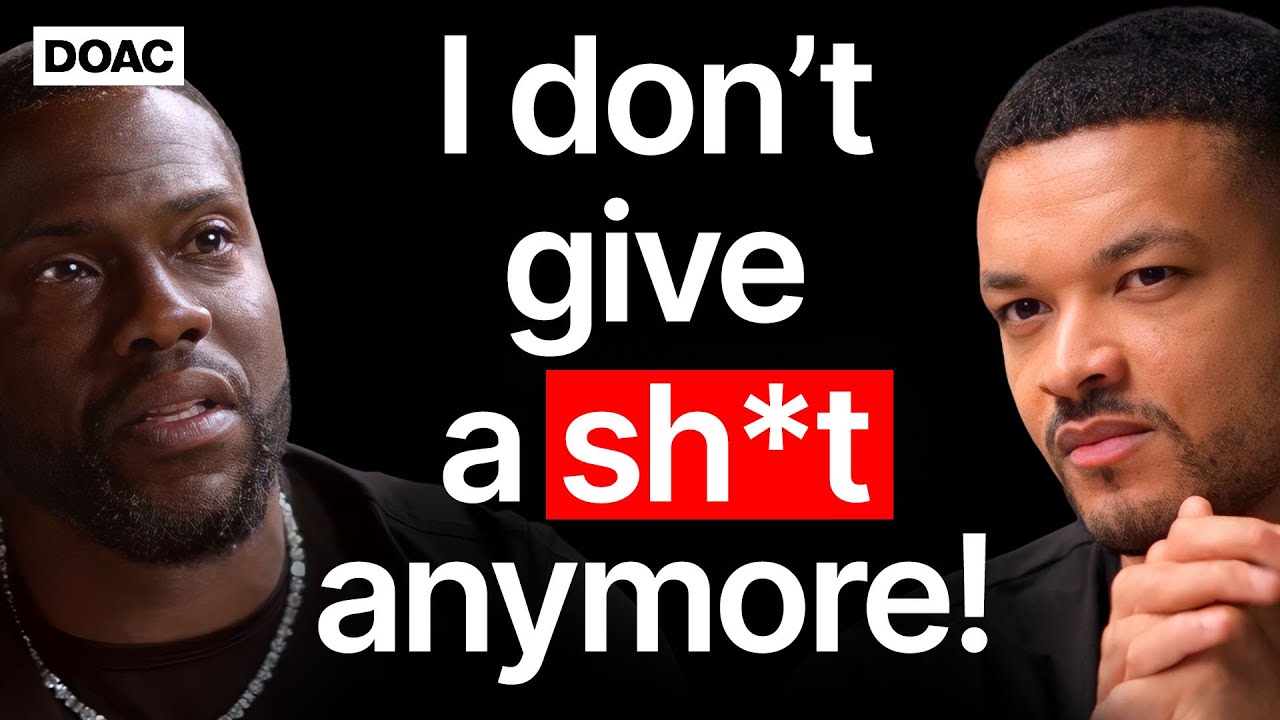
Kevin Hart Replaces Endorsement Deals With Equity After 13-Year Struggle
The Diary Of A CEO
Comedian Kevin Hart says long-term financial security requires building equity networks and accepting early failure rather than relying on solo talent or passive celebrity endorsements.
## Background
The Diary Of A CEO podcast hosted by Steven Bartlett released this episode on YouTube on November 20, 2025. The video features comedy icon, author, and Hartbeat founder Kevin Hart discussing how he overcame failure and rejection to build a billion-dollar entertainment career.
## TL;DR
Kevin Hart breaks down his journey from an unmotivated kid in North Philadelphia to a global comedy superstar and venture capital investor. He shares critical lessons learned from his mother's strict parenting, his 13-year grind through 28-set weekends, and the mindset needed to turn personal branding into lasting enterprise equity. Hart also offers candid perspectives on taking accountability, embracing ignorance as a learning tool, navigating the modern men's crisis, and setting strict boundaries to manage severe work stress.
## Atmosphere & style
The conversation is deeply candid, reflective, and energetic, balancing Hart's signature comedic charisma with serious executive wisdom. Steven Bartlett's thoughtful, inquisitive interviewing style creates an intimate space where Hart openly reflects on childhood struggles, financial realities, and personal vulnerability. The tone shifts seamlessly between high-energy storytelling and grounded philosophical insights, giving listeners an inspiring and authentic look behind the scenes of a global entertainment empire.
## Key takeaways
- [00:00](https://www.youtube.com/watch?v=5sCGZAcXKWg&t=0s) The willingness to drop one's ego and be the "dummy in the room" by asking basic questions is essential for acquiring high-level knowledge and unlocking financial growth.
- [03:29](https://www.youtube.com/watch?v=5sCGZAcXKWg&t=209s) Success and failure are inseparable twin outcomes; embracing failure provides necessary tactical adjustments and builds long-term resilience.
- [04:04](https://www.youtube.com/watch?v=5sCGZAcXKWg&t=244s) Growing up in North Philadelphia, Hart was heavily influenced by his mother's strict discipline, while his father's presence was intermittent due to addiction and incarceration.
- [09:57](https://www.youtube.com/watch?v=5sCGZAcXKWg&t=597s) The "Rule of Completion" teaches that quitting halfway creates a self-defeating cycle, whereas completing a process instills self-respect regardless of the eventual career path.
- [15:09](https://www.youtube.com/watch?v=5sCGZAcXKWg&t=909s) Hart's career path in stand-up comedy was sparked by a casual suggestion from a retail coworker while he was working as a sneaker salesman.
- [22:42](https://www.youtube.com/watch?v=5sCGZAcXKWg&t=1362s) Early success required a relentless work ethic, including driving between Philadelphia and New York to perform up to 28 sets in a single weekend.
- [26:06](https://www.youtube.com/watch?v=5sCGZAcXKWg&t=1566s) Transitioning from performer to mogul involved moving beyond simple endorsement deals to secure equity ownership and executive integration across major global brands.
- [36:56](https://www.youtube.com/watch?v=5sCGZAcXKWg&t=2216s) Hart's major comedy breakthrough came from his performance at Shaq's All-Star Comedy Jam, which he immediately leveraged to shoot his breakout special, Seriously Funny.
- [40:31](https://www.youtube.com/watch?v=5sCGZAcXKWg&t=2431s) Long-term breakthrough often requires enduring a 13-year grind; most people fail not because the task is impossible, but because they opt out of line too early.
- [44:21](https://www.youtube.com/watch?v=5sCGZAcXKWg&t=2661s) Developing deep expertise in one core discipline (a "T-shaped" skillset) provides the necessary leverage to enter high-level business rooms and negotiate long-term equity.
- [53:18](https://www.youtube.com/watch?v=5sCGZAcXKWg&t=3198s) Ultra-wealthy investors rarely operate alone; they scale enterprises and minimize downside by syndicating deals across trusted professional networks.
- [59:12](https://www.youtube.com/watch?v=5sCGZAcXKWg&t=3552s) Executive leadership requires removing personal emotion from personnel decisions and maintaining redundant, clear communication across all levels of an organization.
- [01:13:19](https://www.youtube.com/watch?v=5sCGZAcXKWg&t=4399s) Building long-term legacy requires constantly recreating oneself and transitioning from individual talent into an empire builder who creates platforms for others.
- [01:18:03](https://www.youtube.com/watch?v=5sCGZAcXKWg&t=4683s) True maturity ("acting your age") involves deliberately sacrificing the lifestyle of a younger self to focus on family, responsibility, and intentional boundaries.
- [01:26:19](https://www.youtube.com/watch?v=5sCGZAcXKWg&t=5179s) Advice from Chris Rock to expand beyond local observational humor forced Hart to broaden his material and build a globally scalable brand.
- [01:27:56](https://www.youtube.com/watch?v=5sCGZAcXKWg&t=5276s) To combat work-induced stress and avoid mental overload, high-performers must enforce strict daily boundaries and allow time for total silence.
## Detailed walkthrough
### [00:00](https://www.youtube.com/watch?v=5sCGZAcXKWg&t=0s) Verbalizing Ignorance and the Willingness to Be the "Dummy"
Kevin Hart begins by sharing a core belief about personal growth and networking: people must overcome the fear of verbalizing their ignorance. Many individuals hold themselves back because they refuse to ask basic questions, terrified of looking uninformed. Hart illustrates this using the world of investing. When presented with high-return pitches, an uneducated knee-jerk reaction is to dismiss it as a scam—*"I know a scam when I see one... go find you another idiot."* However, real growth happens when you drop the ego and admit what you do not know: *"I don't know what that means. How does investing really work?"* By allowing himself to be the "dummy" in high-level conversations, Hart positioned himself to absorb knowledge, enter the right rooms, and ultimately transform his financial trajectory.
Following the opening clip, host Steven Bartlett introduces the episode with a brief message to the audience, reminding viewers to check their subscription status. He emphasizes that subscribing is a simple, free way to support the show's continuous trajectory and thanks the audience for being an integral part of the show's journey and history.
[02:47](https://www.youtube.com/watch?v=5sCGZAcXKWg&t=167s) Driven by Ideation and Embracing Failure
When asked what underlying "wiring" or background formed his extreme drive, Hart explains that he is fueled by **ideation**. For him, the ultimate cognitive rush comes from taking a raw thought, falling in love with it, and summoning the energy to bring that idea into a tangible, larger reality.
When Bartlett questions whether this drive is ultimately measured by material success, Hart counters that success and failure are inseparable twin outcomes. Success cannot exist without failure, and he embraces both equally:
* Failure provides crucial lessons, adjustments, and sharpens execution.
* Making mistakes reveals necessary tactical approaches for future attempts.
* Embracing failure as much as victory builds long-term resilience.
[04:04](https://www.youtube.com/watch?v=5sCGZAcXKWg&t=244s) Childhood Rebellion and Growing Up in North Philadelphia
Hart candidly reveals that if anyone had met him at age 10 or 15, they would not recognize the hyper-driven mogul he is today. As a kid growing up in North Philadelphia, he lacked motivation, hated doing anything he didn't want to do, slackened in school, and actively avoided extracurricular activities. His primary focus was simply "hanging out"—a basic luxury that his strict mother, Nancy Hart, routinely denied him.
Because his older brother had been given more leniency, he fell into selling drugs and engaging in youth crime. Determined not to let Kevin follow the same path, Nancy enforced a rigid, protective household regime:
* **Nancy Hart:** Highly disciplined, hyper-protective, and focused on education. She continuously pursued degrees and certificates (working toward a master's) because she saw education as an unassailable strength no one could strip away.
* **Kevin's Rebellion:** Frustrated by strict curfews and lack of freedom, he passively-aggressively rebelled by slacking off in school and discarding valuable academic opportunities.
[05:45](https://www.youtube.com/watch?v=5sCGZAcXKWg&t=345s) Fatherly Absence and the Norms of the Environment
Hart discusses his father, Henry Witherspoon ("Spoon G"), describing him affectionately as "my guy," while acknowledging his severe shortcomings. His father lived a life dominated by gangs, crime, drug addiction, and repeated stays in prison.
Hart offers a nuanced perspective on growing up around systemic poverty and crime:
* While an outsider might view that environment as tragic, for kids living in it, it was simply "the norm."
* His father was only in the house during Kevin's very young years (roughly ages 5 to 8) before his mother kicked him out for good.
* Afterward, his dad became an intermittent presence—stopping by occasionally, cycling through jail, or disappearing entirely during deep bouts of addiction.
* Because almost none of his peers had active fathers at home, Hart never felt singled out or traumatized by his father's absence.
Hart recalls one striking contrast during his youth: visiting a swim team friend's house and being utterly blown away that his friend had his own bedroom with a door that closed, alongside a grassy backyard. In contrast, Kevin and his brother slept on bunk beds tucked into a hallway where everyone walked past.
[09:57](https://www.youtube.com/watch?v=5sCGZAcXKWg&t=597s) The Bible Story and the Rule of Completion
Hart shares what he considers one of the absolute best stories of his life, illustrating his mother's tough-love parenting style. Early in his comedy career, Hart was broke and unable to pay his rent. He called his mother begging for financial help, but she repeatedly gave him a singular condition: *"Read your Bible, and then talk to me."*
For weeks, Hart lied over the phone, insisting he was reading the scripture daily while begging for rent money. His mother held her ground, telling him to keep reading. Desperate and facing eviction, Hart finally sat down, picked up the physical Bible, and opened it—only to find multiple months' worth of rent checks tucked inside the pages. His mother knew he was lying all along, using the lesson to teach him honesty, faith, and patience.
Beyond the Bible lesson, Nancy Hart instilled a core philosophy that defined Kevin's career: **The Rule of Completion**.
* She refused to let him quit activities once he started them, forcing him to complete whatever he signed up for, even if he did it with an attitude.
* As he matured, Hart realized the absurdity of putting time and energy into something only to quit when things got tough.
* Quitting creates a self-defeating cycle where you constantly start over without ever finishing.
* Completing a process—even if you don't pursue it long-term—allows you to put a definitive "period on that sentence" and build genuine self-respect.
[13:16](https://www.youtube.com/watch?v=5sCGZAcXKWg&t=796s) The "Big Dummy" Moment at Great Adventure
Hart pinpoints the exact turning point when he realized he had to take control of his life. During his high school senior year, he and his friends skipped school to go to Six Flags Great Adventure theme park for senior day. While hanging out and eating food at the park, his friends began casually discussing the colleges they had been accepted to, the acceptance letters they had received, and when they took their SATs.
Hart sat there stunned, realizing he had rushed through his SATs just to skip school, had applied nowhere, and had zero plans for the future:
> "They let me be the dummy by myself. And that's when it dawned on me that like nobody cares about you more than you should care about yourself... You have to go find that information. You got to go discover it."
[15:09](https://www.youtube.com/watch?v=5sCGZAcXKWg&t=909s) From Sneaker Salesman to Stand-Up Comedy
Facing the sudden reality of his lack of direction, Hart entered community college, worked as a lifeguard, and eventually landed a job selling sneakers at City Sports. Determined not to remain the "dummy," Hart threw himself into retail, climbing the ranks to store manager and aiming for a corporate career in sneaker sales. Although he lacked a college degree, his innate charisma, humor, and natural sales ability allowed him to flourish on the retail floor.
While working at the sneaker store, a female colleague casually watched him entertaining customers and staff and told him point-blank: *"You should do stand-up because you're funny. You should try stand-up."*
Hart had always been the hilarious center of attention who loved a stage and a light, but he had never considered stand-up comedy as a viable career path. That single comment from a coworker served as the spark that lit the fuse for the rest of his life.
[17:40](https://www.youtube.com/watch?v=5sCGZAcXKWg&t=1060s) The Spark on Stage and the Shepherd of Laughter
Kevin Hart recalls the exact moment he fell in love with stand-up comedy: the second he stepped under the bright stage lights during amateur night and heard the crowd laugh. For Hart, laughter is the ultimate positive energy—a pure, intoxicating force that instantly set a new trajectory for his life. Making people laugh made him feel as though he was performing a higher "service of good," stepping into the role of a shepherd who could guide a room full of strangers toward a shared moment of joy.
That initial rush on stage expanded his perspective globally. He realized that if he could connect with a small crowd, he could scale that connection to an international audience, opening doors to opportunities far beyond stand-up.
```
"Hearing people laugh, I was like, 'Oh shit, that feels different.' This is energizing... I feel like I'm doing a service of good... That means I'm like a shepherd of some sort. I am responsible for making people feel better."
— Kevin Hart
```
[19:23](https://www.youtube.com/watch?v=5sCGZAcXKWg&t=1163s) The Golden Tape: Breaking into the Comedy Club Scene
Reviewing footage from his early days at Carolines on Broadway in New York during the early 2000s, an 18- or 19-year-old Hart reflects on the pivotal set that generated his first quality audition tape. In the snippet, he opens by telling the audience, *"Everything I say here tonight is a joke, okay?... I don't want nobody coming up to me after the show saying, 'Who's the funny one now?'"* That tape became his gold standard currency—the physical VHS tape he duplicated and mailed to comedy club bookers and casting directors across the country to secure live auditions.
At the time, Hart made an ultimatum with his mother: he was given a strict window of time to make comedy profitable and support himself. If he failed, he had to abandon his dreams and follow her path—pursuing higher education and getting a traditional job. Driven by absolute certainty, Hart dropped out of community college, pooled all his resources, and relied on winning consecutive local amateur night contests to cover his monthly rent.
* **Age at First Major Tape:** 18–19 years old.
* **The Mother's Deal:** A strict time limit to make comedy self-sustaining before enrolling in college and securing a standard job.
* **Early Survival Strategy:** Funding daily living expenses and rent strictly through cash prizes from amateur night victories.
[22:42](https://www.youtube.com/watch?v=5sCGZAcXKWg&t=1362s) The 28-Set Weekends and the Long Flatline
Mapping out his career trajectory from age 18 to 46 on a handwritten graph, Hart details the prolonged "flatline" phase that defined his early twenties. Between ages 18 and 22, he drove daily from Philadelphia to New York City, grinding through the club circuit. Because clubs often paid comedians only in free food, Hart gamified the system to build revenue: he booked 20- to 25-minute spots, performing **25 to 28 sets in a single weekend** across the city to make $400 to $500 a week ($20 to $25 per spot).
```
"Rather than doing one spot, I would do, let's just say in a weekend, I got to the point where I was doing 25 to 28 sets... A weekend. Wow. Well, I started making $400 a week, $500 a week."
— Kevin Hart
```
Eventually, his relentless work ethic earned him a spot at a major comedy festival, where industry executives noticed his high energy. This led to network meetings and a **$250,000 holding deal with ABC**. However, when the network failed to develop a show for him, his career flatlined again. Realizing he could not simply wait for the phone to ring, Hart moved to Los Angeles with no backup plan, taking acting classes, hitting the road to perform at colleges, and slowly transitioning from club feature act to headliner.
[26:06](https://www.youtube.com/watch?v=5sCGZAcXKWg&t=1566s) Scaling the Ladder: From Theaters to Hollywood & Equity Ownership
Hart traces his explosive growth, moving from selling out comedy clubs to filling theaters, and eventually packing out arenas. His major Hollywood breakthrough came when producer Will Packer cast him in *Think Like a Man*, which went on to earn over **$90 million at the box office**. That hit catalyzed a string of blockbuster comedies, including *Ride Along* (which grossed over **$140 million**) and *Central Intelligence* alongside Dwayne "The Rock" Johnson.
```
"Think Like a Man did 90-something million dollars in the box office. And Will says, 'Hey man, working with you is great. Let's do something else. I got this movie called Ride Along. You and Ice Cube would be great.' Boom. Ride Along does 140."
— Kevin Hart
```
As Hollywood success mounted, Hart shifted his operational strategy. Instead of relying solely on incoming offers, he founded **Hartbeat** (his production company) and **Hartbeat Ventures** (his venture capital firm) to build long-term equity. Recognizing that his personal brand was like a high-performing NASCAR vehicle, he moved beyond basic endorsement deals to secure equity ownership and executive integration across major brands:
* **Brand Equity & Partnerships:** Gran Coramino Tequila, Fabletics Men, DraftKings, Chase, and C4 Energy.
* **Ecosystem Integration:** Cross-promoting his equity brands within his creative projects (e.g., wearing Fabletics apparel on-screen or setting brand activations within health and wellness events).
* **The Non-Negotiable Promise:** Applying his mother's childhood rule—*"If you start it, you're going to finish it"*—to assure major enterprise partners like Netflix that he will never quit on a project.
[32:01](https://www.youtube.com/watch?v=5sCGZAcXKWg&t=1921s) Navigating Doubt, Unseen Work, and the Katt Williams Moment
Reflecting on the early years when friends doubted his ambitions—telling him he was "funny, but not comedian funny"—Hart stresses that no one will ever match your internal confidence during the beginning stages of a career. He acknowledges that while modern social media allows today's generation to monetize entrepreneurial pursuits rapidly, his generation had to endure the raw, unglamorous struggle of empty rooms and financial anxiety.
Hart shares a moment of inspiration early in his career when he was struggling to get small television roles and failed pilots to stick. While attending the BET Comedy Awards—at a time when he was opening for Katt Williams—he watched Williams walk on stage in a famous leopard-print suit and deliver a legendary, triumphant stand-up performance that brought the entire audience to their feet. Seeing that level of raw audience response reignited Hart's hunger, clarifying the exact standard of excellence he needed to achieve in order to reach superstardom.
Here is a detailed, faithful walkthrough of this section of the interview.
---
[36:56](https://www.youtube.com/watch?v=5sCGZAcXKWg&t=2216s) "Shaq's All-Star Comedy Jam" and the Moment Everything Changed
Reflecting on watching Katt Williams seize his breakthrough at the BET Comedy Awards, Kevin Hart realized that success isn't just about waiting for an opportunity—it is about being fully prepared to execute when it arrives. If you drop the ball in that critical window, the moment vanishes. For Hart, his defining breakthrough came when he headlined *Shaq's All-Star Comedy Jam*. Hosted by Cedric the Entertainer and featuring a stacked lineup, Hart delivered one of the best comedy sets of his life. He recalls the electric atmosphere in real time as the crowd of stars and fans stood up to applaud, leading into a slow-motion walk-off edit that cemented his status as a main-stage act.
Hart highlights a poetic twist of fate: Katt Williams was actually in the audience as a fan that night. Despite their later public friction (which Hart notes is now resolved), he sees it as a full-circle moment where the universe aligned. The massive response to *Shaq's All-Star Comedy Jam* propelled his career out of a cannon. Because he had been writing and grinding relentlessly, he was able to immediately leverage that exposure—filming his iconic stand-up special *Seriously Funny* just two weeks later. The fans who discovered him through Shaq's show turned out in droves, turning *Seriously Funny* into a massive success and paving his pathway straight into selling out arenas worldwide.
- **Key Events**: *Shaq's All-Star Comedy Jam* taped two weeks before Hart shot his breakout special, *Seriously Funny*.
- **Performers Mentioned**: Cedric the Entertainer, Tommy Davidson, Katt Williams.
- **Quote**: "I had a moment, and that was the moment that then took me and shot me out the cannon."
---
[40:31](https://www.youtube.com/watch?v=5sCGZAcXKWg&t=2431s) The 13-Year Grind and the Math of Staying in Line
Steven Bartlett points out that it took roughly 12 to 13 years from the time Hart started stand-up comedy to reach that game-changing breakthrough. Hart emphasizes that if aspiring entrepreneurs were told at the beginning that it would take 13 years of hardship to achieve their breakthrough, almost no one would start. Most people opt out by year two or three due to a lack of money, or by year six out of frustration, constantly abandoning their efforts to search for a quick financial return.
To illustrate the rarity of true persistence, Hart shares a metaphor told to him by music mogul Scooter Braun: Imagine a contest where anyone who can hit a fastball pitch from a top Major League Baseball pitcher wins a million dollars. On day one, millions of people would stand in line to try. But after swinging and striking out, almost everyone would walk away defeated. Very few would have the grit to walk right back to the end of the line and wait for another try. Hart explains that as time goes on, the line naturally shrinks not because the task gets easier, but because most people quit. True success requires staying in line through years of hardship until you learn how the system works. Once you gain that education and understanding, money ceases to be the sole driving obsession and simply becomes an operational tool.
- **Scooter Braun's Fastball Analogy**: Success comes down to being willing to repeatedly get back in line to swing at the fastball while everyone else quits.
- **Timeline of Quitting**: Most people opt out at years 2–3 due to lack of immediate income, or quit by year 6 out of frustration.
- **Quote**: "You'll find that the line will get smaller and smaller because of how many people are dropping out and optioning not to wait and do the hard thing again."
---
[44:21](https://www.youtube.com/watch?v=5sCGZAcXKWg&t=2661s) Developing Deep Expertise vs. the Trap of Doing Too Much
Discussing why so many young entrepreneurs fail, Bartlett notes that struggling founders often pitch 17 different ideas at once, believing that spreading themselves thin increases their odds of success. Hart strongly disagrees, maintaining that spreading your focus across multiple projects actually guarantees failure. Success requires picking one single discipline, giving it 100% of your focus, and seeing it through to completion before moving on to something else. For Hart, that singular focus was mastering stand-up comedy and becoming an elite headliner, which later served as his ultimate leverage to open doors across Hollywood and business.
Bartlett relates this to a concept he discussed with Snap CEO Evan Spiegel: the idea of "T-shaped" individuals who have broad knowledge across many subjects but possess extremely deep expertise in one specific core skill. For Bartlett, that core skill was marketing; for Hart, it was mastering stand-up performance and understanding his personal brand value. Hart explains that as a performer's star shines brighter, it grants them access to rooms with key decision-makers. Once in the room, that deep expertise allows them to turn casual introductions into long-term equity, brand partnerships, and philanthropic projects.
- **Concept**: The "T-shaped" person—broad general knowledge combined with deep expertise in one primary discipline that provides leverage.
- **Core Principle**: Quitting a project halfway to jump to the next "bright idea" creates a endless cycle of unfinished efforts.
---
[47:37](https://www.youtube.com/watch?v=5sCGZAcXKWg&t=2857s) Embracing Ignorance: The Courage to Be the "Dummy in the Room"
Transitioning from an artist to a serious business owner required Hart to acquire vast amounts of new knowledge, which he accomplished by being a "sponge" and refusing to hide his ignorance. Coming from an environment where he felt "everything is a scam," Hart initially resisted venture capital and investing, preferring to keep his money safely tucked away. However, by asking basic, direct questions about how the stock market, brand equity, and venture investments actually worked, he rapidly expanded his financial acumen.
Hart criticizes the deep-seated insecurity that keeps most people silent when they do not understand a concept. Expecting a mentor to randomly appear and hand out wisdom without being asked is a fantasy. Information is widely available—whether through online tutorials, specialized courses, or experts—but people must be willing to verbalize what they do not know. Hart uses the simple analogy of a golfer struggling with their swing: rather than asking a peer for advice on how to get the ball in the air, many golfers will privately hit balls in their backyard for years, suffering in silence rather than risking looking foolish.
- **Mindset**: Being secure enough in oneself to admit ignorance and play the "dummy in the room" is the fastest way to gain high-level knowledge.
- **Quotes**:
- "I am extremely secure in saying 'I don't know what that means. Explain that.'"
- "Information is not free, but it's available. It's not actually hard to obtain. It's only hard to people that are very insecure about just verbalizing 'I don't know.'"
---
[53:18](https://www.youtube.com/watch?v=5sCGZAcXKWg&t=3198s) Seeing Behind the Curtain and how the Wealthy Collaborate
Bartlett recounts his own experience of growing up without wealth and later sitting in a billionaire's kitchen at age 27, listening to him orchestrate a $50 million pre-IPO deal over a casual phone call. Hart echoes this sentiment, sharing what he discovered once he pulled back the curtain on high-level finance and enterprise business.
The biggest realization for Hart was that top-tier investors almost never operate in isolation. Unlike beginners who attempt to build everything alone, ultra-wealthy investors constantly syndicate deals, pulling in trusted peers—calling up "Gary," "Michelle," and "Melissa"—to share risk and multiply resources. They recognize that combining great minds, capital, and networks creates stronger companies, generates more jobs, and minimizes individual downside. Once a superstar or entrepreneur accesses this inner circle, the key is to bring in top-tier personnel and operators who can scale the enterprise beyond the founder's personal capacity.
- **High-Level Investing**: Wealthy investors syndicate deals together rather than trying to own 100% of a venture alone.
- **Strategic Network**: Scaling a business requires combining great minds to build an operational infrastructure around a central vision.
[55:25](https://www.youtube.com/watch?v=5sCGZAcXKWg&t=3325s) Behind the Curtain of Venture Capital and High-Stakes Investing
Kevin Hart illustrates how corporate ecosystems and venture capital structures pass power down through generations. When senior leaders build companies and eventually bring in new operational talent, it creates a trickle-down effect where lower-level personnel inherit tomorrow's ventures. Once a founder or investor gets "behind the curtain," the mechanics of valuation and equity become starkly apparent. Hart reenacts early investment pitch meetings where founders praised the immense value of his celebrity endorsement over his actual cash injection, revealing his initial skepticism: *"What do you mean by that? You trying to fucking steal? What are you doing, man?"*
Hart breaks down how tech and growth ventures operate on "multiples of X," explaining how strategic capital and personal brand reach can transform a speculative startup into a massive financial payout. By being a "fly on the wall" in exclusive boardrooms, he absorbed this financial playbook and now uses his platform to demystify venture capital for his audience.
- **Portfolio Investments:** Hart notes his venture portfolio includes Function Health (valued at **$2.5 billion**), ElevenLabs (valued at **$3 billion**), MoonPay, Yuga Labs, SweatPals, Radian, NuranX, and Paltown.
- **Venture Mechanics:** Early-stage companies actively seek high-profile strategic investors because an influential voice acts as a force multiplier for brand awareness and market reach.
---
[59:12](https://www.youtube.com/watch?v=5sCGZAcXKWg&t=3552s) People, Business, and Managing Emotion in Executive Leadership
When asked how much of business relies on managing human relationships, Hart emphasizes that finding the right team requires navigating trial, error, and personal development. He notes that while some team members grow alongside a company, others hit a skill ceiling. For business leaders, keeping personal emotions tied to personnel decisions can cripple long-term organizational success. Hart shares that he had to learn to step out of his own way, stop trying to micro-manage every aspect of his enterprise, and empower hired experts to perform their roles.
Hart describes his current role in his business ecosystem as acting more like a "hard drive of other people's issues or problems" than just an executive. He constantly acts as a buffer for internal friction, conflict resolution, and operational hurdles.
- **Leadership Dynamic:** Effective leadership requires detaching personal emotion from business decisions to ensure the broader organization remains positioned to scale.
- **Daily Conflict Resolution:** Hart acts as a daily "solution-driven" arbiter, constantly fielding concerns from team members striving to prove their value in the company hierarchy.
---
[01:03:34](https://www.youtube.com/watch?v=5sCGZAcXKWg&t=3814s) Communication as the Foundation of Business Management
Continuous and redundant communication is critical when steering large organizations. Hart points out that he frequently repeats core strategies five or six times to ensure alignment across departments. Successful corporate management relies on the same interpersonal adaptability he developed as a child—when he made it a point to connect with every student at every table in his school cafeteria regardless of background or race.
- **Organizational Alignment:** Leaders must over-communicate to prevent misinterpretations and ensure every team member understands the overall vision.
- **Relatability:** The ability to communicate comfortably across diverse social and professional demographics directly transfers from early childhood social dynamics to high-stakes corporate management.
---
[01:04:50](https://www.youtube.com/watch?v=5sCGZAcXKWg&t=3890s) Protecting Assets, Exploitation, and Independent Ownership
Addressing the historic trend of young talent—particularly within the Black community—being exploited by predatory contracts, Hart analyzes how predatory industry figures prey on inexperienced artists. He acknowledges that young creators often rely on managers and lawyers without knowing how to perform due diligence or retain independent legal counsel. Hart counters the emotional guilt trips used by predatory advisors by standardizing cold, non-negotiable auditing practices: *"It's never personal. I don't take offense to anything that you want to check or background check on me. You should. It's business."*
Hart argues that early contractual mistakes should serve as a practical education rather than a permanent loss. He highlights how modern artists in the music and entertainment sectors build independent record labels, production studios, and product lines by replicating the operational infrastructure of legacy conglomerates.
- **Predatory Dynamics:** Vulnerable creators are frequently targeted by industry "sharks" who exploit an artist's lack of legal literacy.
- **Strategic Parity:** Modern independent creators leverage large conglomerate platforms to finance and distribute their work while retaining equity and IP control over their underlying assets.
---
[01:10:24](https://www.youtube.com/watch?v=5sCGZAcXKWg&t=4224s) The Cost of Ambition, Daily Stress, and Legacy
When discussing the personal tax of maintaining a global empire, Hart identifies "time" as the primary sacrifice. He openly acknowledges an insatiable ambition and admits to being *"stressed the fuck out on the daily,"* yet emphasizes that he thrives within high-pressure environments. When asked how he would evaluate his life if it ended unexpectedly, Hart shares that he could comfortably cross his legs and accept it, knowing he elevated his family name, expanded his worldview, and acted as an engine of positivity.
Hart's core fear is not failure or death, but wasting time while maintaining peak mental agility, good health, and cultural influence. He remains focused on capitalizing on his current platform before his visibility naturally declines.
- **Personal Cost:** The relentless pursuit of high-level success requires sacrificing personal leisure and accepting constant operational stress.
- **Mortality and Time:** Hart views wasting his current window of high mental capacity and broad cultural reach as a greater failure than any business risk.
[01:13:19](https://www.youtube.com/watch?v=5sCGZAcXKWg&t=4399s) Reinvention, Longevity, and Building an Empire Beyond Yourself
Kevin Hart emphasizes the necessity of staying realistic about peak success, asserting that nothing lasts forever in its original form. While an individual cannot maintain the exact same winning moment indefinitely, the key to long-term survival and growth lies in constant recreation and iteration. You have to let go of trying to replicate your initial "lightning in a bottle" moment and instead find joy in creating new variations at a high level. Rather than obsessing over staying at one static peak, true longevity comes from using that initial momentum to build larger platforms, incubate new talent, and venture into adjacent business ecosystems.
Using Jay-Z (Hove) and Michael Rubin as prime examples of reinvention and amplification, Hart breaks down how Jay-Z transitioned from a solo artist into an empire builder. Jay-Z took the momentum from his music career and built Roc-A-Fella Records, signing artists like Kanye West, Beanie Sigel, and Rihanna. By creating a platform that launched other superstars, Jay-Z generated a new energy source that sustained his influence far beyond his individual album drops. That foundational music asset then naturally fed into higher-margin ventures, including Armand de Brignac (Ace of Spades) champagne, D'USSÉ cognac, the 40/40 Club, and strategic brand equity partnerships.
* **The Cycle of Recreation:** "You can't be unrealistic. Nothing is going to last forever... You can recreate and you can figure out ways to find success again and again, but the one thing that you are winning in, you're not going to win in it forever."
* **Accepting Past Peaks:** Accepting that an iconic past milestone won't be duplicated frees a creator to perform at a high level without carrying unrealistic expectations.
* **Building Assets vs. Relying on Solo Talent:** By surrounding himself with talented artists, Jay-Z turned individual success into an enduring enterprise where the platform itself carries massive value and powers subsequent lucrative exits.
---
[01:18:03](https://www.youtube.com/watch?v=5sCGZAcXKWg&t=4683s) "Acting My Age" and Evolving Beyond the Younger Self
Transitioning to his Netflix comedy special, *Kevin Hart: Acting My Age*, Hart discusses the true meaning of growing up and embracing his present stage of life. Adulthood requires making a conscious decision to sacrifice habits, behaviors, and priorities that served a younger, less responsible version of oneself. True maturity involves letting go of old mindsets, putting trivial distractions on the back burner, and stepping fully into the responsibilities and joys that come with aging.
Hart highlights that many adults struggle because they refuse to let go of the lifestyle that flourished when they had fewer obligations. For him, "acting his age" meant deliberately choosing to retire an outdated version of life to focus on what actually matters in his 40s—managing family dynamics, elevating his focus, and accepting that some things simply are not the same anymore.
* **Redefining Growth:** "You can be an adult but still not embrace what being an adult actually is. And when it's time to grow up, you start sacrificing the shit that the younger version of you with less responsibilities thrived and flourished off of."
* **Embracing the Present Stage:** Rather than clinging to past behaviors, Hart views aging as an opportunity to step into a refined, more grounded version of himself.
---
[01:19:29](https://www.youtube.com/watch?v=5sCGZAcXKWg&t=4769s) Navigating Masculinity, Fatherhood, and Accountability
When asked about the modern crisis of masculinity—where men face high rates of isolation, mental health struggles, and dropping out of the workforce—Hart describes the current cultural landscape for young men as "extremely polluted waters." The modern definition of what makes a "good man" has become foggy and contradictory. For Hart, the foundation of manhood must rest on leadership, responsibility, and total accountability, principles he learned largely through the evolution of his relationship with his late father.
Hart reflects emotionally on his father’s later years, which were defined by deep accountability. His father openly owned his past mistakes, admitted what he failed to do, and dedicated his remaining time to being the best grandfather possible. That honest accountability taught Hart what *not* to do, giving him a clear blueprint for how to raise his own sons. While Hart encourages emotional openness, he warns his children that they live in a competitive world ("sharks and prey") where unmonitored weakness can be exploited. His role as a father is to bear the heavy burdens behind the scenes, communicate directly, and protect his children so they can accomplish far more than he ever did.
* **Learning from a Father's Accountability:** Hart's father acknowledged his past shortcomings, telling him: *"Kevin, I love you and I love your brother, but I can't go back. I can only say I'm sorry... The grandkids are your focus."* Hart notes that his father's willingness to admit fault gave him the blueprint to parent correctly.
* **The Balancing Act of Male Emotions:** "I'm not against emotions... In sharing your emotions and having an opportunity to voice or offload them, extremely important, but... you are in a world of like prey and sharks... It means that you also have to be smart and aware."
* **Parental Responsibility:** Hart makes it clear to his sons that he carries unseen heavy struggles to make their lives easier, expecting them to leverage their privileges wisely rather than taking them for granted.
* **Nuance Over Dogma:** Hart notes that society has become overly divisive, where disagreeing on parenting styles or manhood leads to quick hostility: *"If you don't see it my way, then you're dumb."* He advocates for personal clarity without forcing his blueprint onto others.
---
[01:26:19](https://www.youtube.com/watch?v=5sCGZAcXKWg&t=5179s) The Game-Changing Advice from Chris Rock: "Get Out the Country"
Asked about the single most impactful piece of advice he received as an adult, Hart recounts a pivotal conversation early in his stand-up career with Chris Rock. Rock challenged Hart to stop relying purely on local, hyper-specific observational humor that only resonated with neighborhood crowds. He explicitly told Hart: "You don't just want to make niggas laugh. The world is so much bigger than your block or your neighborhood. Get out the country... and figure out a way to make the world laugh."
This advice completely transformed Hart’s approach to comedy and business. It forced him to broaden his material, focusing on universal human experiences rather than regional tropes, ensuring that his stand-up could land in London, Tokyo, or Johannesburg without altering his identity. Bartlett notes that this mindset of intentionally entering unfamiliar environments became the core engine behind Hart’s entire global entertainment and business empire.
* **Chris Rock's Mandate:** "Get out the country and figure out a way to make the world laugh and comedy will be so much better."
* **Broadening the Material:** Transitioning from local anecdotes (like jokes about local corner drugstores) to universal themes allowed Hart to perform anywhere in the world without having to alter his core persona.
* **Embracing Unfamiliarity:** Hart’s willingness to be the "outsider in the room" allowed him to seamlessly crossover from comedy into global film production, venture capital, and corporate leadership.
---
[01:27:56](https://www.youtube.com/watch?v=5sCGZAcXKWg&t=5276s) The Vulnerability Paradox and Managing Extreme Work Stress
Revisiting the topic of men's mental health, Hart addresses a modern dilemma: while men are increasingly encouraged to open up about their struggles, that very vulnerability is frequently weaponized against them in public discourse. Although Hart himself doesn't fear judgment—stating bluntly that he doesn't care what people think—he recognizes why many men hesitate to speak candidly about their emotional burdens.
When asked if he struggles with mental health or anxiety, Hart clarifies that his primary battle is not anxiety or mental illness, but severe work-induced stress caused by his own relentless drive. Realizing that pushing himself to the absolute limit around the clock is unhealthy, Hart has developed a strict discipline around setting boundaries. As he has aged, he has learned to intentionally shut down his work day earlier, step away from phone calls, and seek out deliberate silence—such as driving his car with no music—to reset his brain and protect his well-being.
* **The Fear of Expressing Vulnerability:** "More men are being forward and wanting to express and talk, but the fear of being judged after... those things are like being used against them."
* **Stress vs. Mental Health:** Hart differentiates clinical anxiety from self-imposed workload stress: *"My shit is like more stress. It's not a struggle... I know I do too much."*
* **The Power of Silent Shutdowns:** To counteract burnout, Hart enforces strict downtime during the day, stepping away from business calls to sit in total silence.
* **Setting Boundaries Early:** "The timeline of when I'm shutting off has gotten earlier and earlier... The healthy side comes with silence for a sec. You need some silence—a ride in a car by yourself, no music."
[01:30:14](https://www.youtube.com/watch?v=5sCGZAcXKWg&t=5414s) Setting Boundaries to Prevent Mental Overload
Steven Bartlett challenges Kevin Hart on the grueling pace of his life, observing that his relentless drive almost sounds like a "disease" that forces him to sacrifice being fully present with his wife and four children. Kevin responds by explaining that the true breakthrough in his life was learning to stop caring about whether other people understand his personal decisions. He admits he used to put everyone else’s needs, wants, and reasons before his own, carrying an immense daily volume of dialogue and responsibility. However, constantly accommodating outside demands means "your plate's always full" until you reach a point where you cannot breathe and simply snap.
Kevin clarifies that the growing mental health crisis isn't about people suddenly going "crazy," but rather individuals reaching a tipping point from sheer mental overload. When Steven points out that Kevin has the wealth to go relax in Bali whenever he wants, Kevin reframes what his money actually buys him. Wealth isn't about exotic vacations; it's the freedom to say, "I'm not talking anymore today," and empowering the team around him to step up and handle things.
* **The Problem with People-Pleasing:** Placing everyone else's expectations ahead of personal well-being leads to an unsustainable build-up of mental strain.
* **Defining True Freedom:** Wealth provides the agency to set immediate boundaries and disconnect, rather than just funding luxury travel.
* **Mental Exhaustion:** People snapping under pressure is often the direct result of continuous, unmanaged mental overload rather than underlying mental illness.
---
[01:33:10](https://www.youtube.com/watch?v=5sCGZAcXKWg&t=5590s) A Vision of Long-Term Success and Retirement
Looking ahead ten years, Kevin outlines a surprisingly modest and grounded vision of his future. Rather than performing in packed arenas, his ideal scenario involves sitting on a simple stool in a small, 30-person hole-in-the-wall comedy club twice a week, simply enjoying the craft of stand-up. Alongside playing golf, spending time with his children, and eventually becoming a grandfather looking through old photo albums, his goal is to have "mailbox money" coming in from self-sustaining businesses he built earlier in life.
Steven expresses deep gratitude to Kevin, sharing a personal story from when he was an 18-year-old living in a lonely room in Manchester. During a difficult period of trying to figure out his career, Steven illegally downloaded Kevin's comedy specials to find a rare moment of joy and escapism. He commends Kevin for bringing families together and creating genuine connections for millions across the world, citing times he saw Kevin live at the Royal Albert Hall and Madison Square Garden. Kevin humbly accepts the praise and encourages Steven to keep providing his podcast platform as a necessary service for the public.
* **Future Comedy Goals:** Performing intimate sets in small comedy venues just for the love of the art.
* **Financial Independence:** Relying on automated "mailbox money" generated by established business ventures.
* **Personal Legacy:** Prioritizing family, grandchildren, and simple pleasures like golf over continuous media dominance.
* **Impact on Audiences:** Steven highlights how Kevin's specials provided vital escapism during his early, isolated years in Manchester.
---
[01:35:12](https://www.youtube.com/watch?v=5sCGZAcXKWg&t=5712s) The DOAC Circle Announcement
The episode concludes with Steven Bartlett issuing an exclusive invitation to his audience to join "DOAC Circle," a newly launched private community. He limits the initial rollout to the first 10,000 members before closing access, promising behind-the-scenes content that never airs on the main show.
* **Behind-the-Scenes Access:** Members get to view interview briefs from Steven's iPad, unreleased clips, private guest conversations, and shelved episodes.
* **Direct Interaction:** Community members can directly pitch interview guests and influence the direction of future podcast topics.
* **Access Link:** Viewers are directed to join at `doaccircle.com` or via the link in the episode description.
## Notable quotes
> [24:52](https://www.youtube.com/watch?v=5sCGZAcXKWg&t=1492s) Rather than doing one spot, I would do, let's just say in a weekend, I got to the point where I was doing 25 to 28 sets... A weekend. Wow. Well, I started making $400 a week, $500 a week. — Kevin Hart
> [26:26](https://www.youtube.com/watch?v=5sCGZAcXKWg&t=1586s) Think Like a Man did 90-something million dollars in the box office. And Will says, 'Hey man, working with you is great. Let's do something else. I got this movie called Ride Along. You and Ice Cube would be great.' Boom. Ride Along does 140. — Kevin Hart
> [40:31](https://www.youtube.com/watch?v=5sCGZAcXKWg&t=2431s) You'll find that the line will get smaller and smaller because of how many people are dropping out and optioning not to wait and do the hard thing again. — Kevin Hart
> [47:37](https://www.youtube.com/watch?v=5sCGZAcXKWg&t=2857s) I am extremely secure in saying 'I don't know what that means. Explain that.' — Kevin Hart
> [47:45](https://www.youtube.com/watch?v=5sCGZAcXKWg&t=2865s) Information is not free, but it's available. It's not actually hard to obtain. It's only hard to people that are very insecure about just verbalizing 'I don't know.' — Kevin Hart
> [01:18:03](https://www.youtube.com/watch?v=5sCGZAcXKWg&t=4683s) You can't be unrealistic. Nothing is going to last forever... You can recreate and you can figure out ways to find success again and again, but the one thing that you are winning in, you're not going to win in it forever. — Kevin Hart
> [01:19:03](https://www.youtube.com/watch?v=5sCGZAcXKWg&t=4743s) You can be an adult but still not embrace what being an adult actually is. And when it's time to grow up, you start sacrificing the shit that the younger version of you with less responsibilities thrived and flourished off of. — Kevin Hart
> [01:20:24](https://www.youtube.com/watch?v=5sCGZAcXKWg&t=4824s) I'm not against emotions... In sharing your emotions and having an opportunity to voice or offload them, extremely important, but... you are in a world of like prey and sharks... It means that you also have to be smart and aware. — Kevin Hart
> [01:22:56](https://www.youtube.com/watch?v=5sCGZAcXKWg&t=4976s) You don't just want to make niggas laugh. The world is so much bigger than your block or your neighborhood. Get out the country... and figure out a way to make the world laugh. — Kevin Hart
> [01:24:36](https://www.youtube.com/watch?v=5sCGZAcXKWg&t=5076s) More men are being forward and wanting to express and talk, but the fear of being judged after... those things are like being used against them. — Kevin Hart
> [01:25:03](https://www.youtube.com/watch?v=5sCGZAcXKWg&t=5103s) My shit is like more stress. It's not a struggle... I know I do too much. — Kevin Hart
> [01:25:24](https://www.youtube.com/watch?v=5sCGZAcXKWg&t=5124s) The timeline of when I'm shutting off has gotten earlier and earlier... The healthy side comes with silence for a sec. You need some silence—a ride in a car by yourself, no music. — Kevin Hart
## Mentioned
Kevin Hart, Steven Bartlett, Nancy Hart, Henry Witherspoon, Will Packer, Dwayne Johnson, Ice Cube, Scooter Braun, Katt Williams, Cedric the Entertainer, Tommy Davidson, Evan Spiegel, Chris Rock, Jay-Z, Michael Rubin, Kanye West, Beanie Sigel, Rihanna, Hartbeat, Hartbeat Ventures, Gran Coramino Tequila, Fabletics Men, DraftKings, Chase, C4 Energy, Netflix, ABC, Function Health, ElevenLabs, MoonPay, Yuga Labs, SweatPals, Radian, NuranX, Paltown, Roc-A-Fella Records, Armand de Brignac, D'USSÉ, 40/40 Club, Think Like a Man, Ride Along, Central Intelligence, Seriously Funny, Shaq's All-Star Comedy Jam, Kevin Hart: Acting My Age, DOAC Circle
Comedian and entrepreneur Kevin Hart argues that long-term commercial success requires relentless persistence, the humility to verbalize ignorance, and focusing on a single mastered skill before diversifying into equity ownership. He asserts that enduring wealth depends on building institutional platforms that scale independently of an individual performer's day-to-day labor.
The Rule of Completion and Relentless Persistence (9:57)
Hart attributes his work ethic to his mother's 'Rule of Completion,' an unbending household policy that forbade quitting any chosen activity, forcing him to see commitments through to the end regardless of frustration. In his early twenties, Hart applied this mindset to the comedy circuit, regularly driving from Philadelphia to New York to perform 25 to 28 sets across a single weekend, earning between $400 and $500 total ($20 to $25 per spot) to stay financially afloat.
Hart stresses that reaching his breakout stage required 12 to 13 years of unglamorous effort. Citing a metaphor from music executive Scooter Braun about standing in line to hit a major-league fastball, Hart claims that most aspiring entrepreneurs drop out around years two, three, or six due to lack of immediate money or sheer exhaustion. In his view, professional breakthroughs frequently come down to outlasting the vast majority of competitors who exit the line.
Intellectual Humility and Verbalizing Ignorance (47:37)
A primary inflection point in Hart's financial trajectory was overcoming the fear of appearing uninformed. He argues that many people from disadvantaged backgrounds reflexively dismiss investment opportunities as scams because they are too insecure to ask basic clarifying questions. Hart advocates deliberately playing the 'dummy in the room,' openly acknowledging what he does not understand during high-level meetings to absorb how corporate finance and venture mechanisms function.
By dropping his ego, Hart moved away from hoarding cash in savings toward understanding equity multiples and angel investing. He maintains that while practical information is accessible through mentors, specialists, and online resources, individuals remain constrained if they refuse to verbalize their ignorance and ask direct questions.
Leveraging Core Mastery into Scalable Equity (26:06)
Hart cautions against the common startup trap of pursuing multiple ventures at once, arguing that spreading focus guarantees mediocre outcomes. Instead, he highlights the necessity of developing deep, singular expertise in one craft—which for him was headlining stand-up comedy—to generate the leverage required to command attention in corporate boardrooms. Following major box-office successes like *Think Like a Man* ($90M+) and *Ride Along* ($140M+), he shifted away from standard endorsement deals to negotiate equity stakes and operational integration across ventures such as Gran Coramino Tequila and Fabletics Men.
Through his production entity Hartbeat and venture firm Hartbeat Ventures, Hart holds stakes in high-growth companies including Function Health (valued at $2.5 billion) and ElevenLabs (valued at $3 billion). Pointing to Jay-Z's business evolution as a blueprint, Hart contends that performers must accept that peak individual popularity cannot last forever; sustainable longevity requires syndicating deals with top operators and constructing autonomous platforms that outlive personal fame.
Executive Boundaries and Managing Extreme Stress (90:14)
Managing a multi-sector corporate enterprise imposes significant personal strains, and Hart acknowledges feeling daily work-related stress. However, he distinguishes this pressure from clinical mental illness, describing his strain as mental overload caused by excessive scheduling, managing personnel conflict, and over-accommodating external demands.
To prevent burnout, Hart has instituted strict operational boundaries, stepping away from corporate communications earlier in the afternoon and scheduling periods of complete silence, such as driving without audio. He reframes wealth not as the luxury of taking extravagant holidays, but as the autonomy to establish boundaries, delegate operational burdens to specialized leaders, and work toward a future centered on small-club sets supported by passive revenue.
Hart acknowledges that his extreme drive entails continuous sacrifices of personal leisure and family presence, raising the unresolved question of how long an entrepreneur can maintain peak executive stress before stepping back. His strategy ultimately hinges on whether his operating companies can achieve full operational autonomy before his cultural visibility begins to decline.
## Background
本期访谈由 YouTube 频道“The Diary Of A CEO”(主持人 Steven Bartlett)于 2025 年 11 月 20 日发布。视频简介指出,全球顶级喜剧巨星凯文·哈特(Kevin Hart)在节目中深情揭秘了自己如何从怀揣 25 美元、睡在过道双层床的草根起步,历经 13 年碰壁与挣扎,最终将单口喜剧锤炼为横跨好莱坞与多元风投的十亿美元商业帝国;同时深入剖析了成长创伤、商业底层逻辑以及现代男性所面临的危机与责任。
## TL;DR
凯文·哈特深入复盘了自己从北费城困境走向巅峰的奋斗史,讲述了母亲严苛的“有始有终”信条如何支撑他在长达 13 年的漫长低谷期咬牙坚守,通过周末狂演 28 场的极限节奏将单口喜剧打磨成敲开一切大门的核心支点。他拆解了从单纯接活的“雇工”跃升为 Hartbeat 商业帝国所有者的底层机制,强调勇于在高端局承认无知、甘当“全场最笨的人”是实现认知阶层跃升的钥匙。此外,他还深入探讨了父辈过错带来的代际责任、现代男性的心理困境,以及通过主动“关机”拒绝信息超载与讨好心态、回归内心宁静的成熟哲学。
## Atmosphere & style
整场对话极具张力与感染力,凯文·哈特那标志性的快节奏、高能量幽默叙事与严肃深沉的人生自省交替穿插,显得格外真挚坦荡。Steven Bartlett 带着细腻共情的探寻式发问,与哈特充满草根韧性、毫无虚饰的商业清醒碰撞出极强的思辨火花。现场氛围在揭秘顶层资本游戏的快意、直面童年贫困与家庭残缺的从容,以及谈及压力过载与生命终局的平静释怀中自如切换,带给受众一种既被烈火点燃又深受启迪的心灵震撼。
## Bulletin
- [22:42](https://www.youtube.com/watch?v=5sCGZAcXKWg&t=1362s) 凯文·哈特回顾其13年的底层沉淀,早期通过周末连跑25至28场高频演出磨练技艺,以单口喜剧为单一支点最终敲开影视与风投大门。
- [40:31](https://www.youtube.com/watch?v=5sCGZAcXKWg&t=2431s) 针对年轻创业者频繁宣称“同时做17件事”的浮躁现象,哈特指出大多数人在第2至3年便因急功近利离场,唯有在单一核心领域深耕到底才能形成杠杆优势。
- [47:37](https://www.youtube.com/watch?v=5sCGZAcXKWg&t=2857s) 商业认知的飞跃源于放下虚荣、勇于在对话中扮演“最无知的人”,哈特借此涉足风投领域并参投Function Health、ElevenLabs等独角兽,理解20至30倍回报的资本乘数法则。
- [01:30:36](https://www.youtube.com/watch?v=5sCGZAcXKWg&t=5436s) 面对现代男性的心理危机与持续高压,哈特强调必须戒掉讨好型人格并主动“关机”,指出财富带来的最高特权在于拥有随时对外界过度索取说“不”并暂停对外输出的自主权。
## Key takeaways
- [02:47](https://www.youtube.com/watch?v=5sCGZAcXKWg&t=167s) 创意构想是底层核心燃料,成功与失败必然并存,在跌跟头和碰壁中重塑认知才能打磨出真正的敏锐度。
- [10:13](https://www.youtube.com/watch?v=5sCGZAcXKWg&t=613s) 母亲将数月房租支票夹在《圣经》中给哈特上了深刻一课:凡事绝不可半途而废,凡有开启就必须有始有终地彻底完成。
- [13:10](https://www.youtube.com/watch?v=5sCGZAcXKWg&t=790s) 高三逃课日惊觉同龄人皆获大学录取的“蠢人时刻”带来当头棒喝:世上无人会比你更在乎你的前途,缺乏主动性只会彻底掉队。
- [22:42](https://www.youtube.com/watch?v=5sCGZAcXKWg&t=1362s) 早期起步是一条漫长的水平死线,哈特通过费城与纽约之间每日往返、周末连赶28场演出,将微薄收入逐步积累为行业曝光。
- [27:08](https://www.youtube.com/watch?v=5sCGZAcXKWg&t=1628s) 摆脱单纯被雇佣的演员身份,效仿NASCAR赛车逻辑自建Hartbeat制作公司与风投基金,将个人IP与Gran Coramino、Fabletics等品牌进行长期股权绑定。
- [34:44](https://www.youtube.com/watch?v=5sCGZAcXKWg&t=2084s) 在决定性时刻降临前必须做好100%准备,哈特在奥尼尔喜剧特辑压轴引爆全场后顺势推出大热专场,完成从俱乐部到万人体育馆巡演的跃升。
- [40:31](https://www.youtube.com/watch?v=5sCGZAcXKWg&t=2431s) 创业与成功犹如排长队击球:多数人在前两三年因未赚到快钱便放弃换道,唯有千锤百炼不退场的人才能迎来变短的队伍与挥棒机会。
- [44:38](https://www.youtube.com/watch?v=5sCGZAcXKWg&t=2678s) 践行T型人才法则:必须在单口喜剧垂直领域深挖到底打磨成压轴主咖,这一坚实底牌才能转化为横跨影视与投资的万能钥匙。
- [47:37](https://www.youtube.com/watch?v=5sCGZAcXKWg&t=2857s) 打破街头匮乏思维与盲目防御心理,卸下因不安全感而伪装懂行的面子,甘当“全场最笨的人”主动求教资本与商业运作规则。
- [53:18](https://www.youtube.com/watch?v=5sCGZAcXKWg&t=3198s) 顶级投资人和商界领袖从不单打独斗,顶级项目往往抱团协作以分摊风险、整合顶层头脑,玩转20至30倍回报的乘数游戏。
- [01:06:08](https://www.youtube.com/watch?v=5sCGZAcXKWg&t=3968s) 商业世界中泛滥的情感是负资产,必须引入独立专业法务审查合同条款,避免因盲目信任虚假头衔而沦为行业资本掠夺的猎物。
- [01:08:08](https://www.youtube.com/watch?v=5sCGZAcXKWg&t=4088s) 拒绝做单纯听命的雇工,应当拆解巨头的组织逻辑并镜像创建自己的微型实体,通过让渡部分股权反向撬动巨头庞大的渠道与资本池。
- [01:13:17](https://www.youtube.com/watch?v=5sCGZAcXKWg&t=4397s) 顶峰状态无法永久停留,创作者应效仿Jay-Z将自身声量与势头放大并重塑转移至独立厂牌、高端消费与实体产业中形成商业闭环。
- [01:19:34](https://www.youtube.com/watch?v=5sCGZAcXKWg&t=4774s) 直面自杀率高企与职场退出的现代男性危机,父亲晚年坦承过往过失并主动担责的姿态,成为哈特确立责任感与领导力的核心启示。
- [01:26:17](https://www.youtube.com/watch?v=5sCGZAcXKWg&t=5177s) 牢记克里斯·洛克的忠告:艺术创作不能局限于自身街区琐事,必须走出舒适区,打磨出能跨越文化与地域隔阂的普适内容。
- [01:28:46](https://www.youtube.com/watch?v=5sCGZAcXKWg&t=5326s) 长期处于解决他人麻烦的“移动硬盘”状态极易导致心智超载,必须学会强制定时“关机”,在无音乐独处中寻求纯粹的静止。
- [01:30:36](https://www.youtube.com/watch?v=5sCGZAcXKWg&t=5436s) 许多公众眼中的情绪崩溃实为长期超载断裂,真正的财富自由并非奢华享受,而是具备对外界需求设立边界并随时按下暂停键的底气。
## Detailed walkthrough
### [00:00](https://www.youtube.com/watch?v=5sCGZAcXKWg&t=0s) 敢于暴露自己的无知与13年的单口喜剧坚守
凯文·哈特(Kevin Hart)指出,很多人在生活和事业中裹足不前,核心原因在于“不敢将自己的无知宣之于口”。他以投资领域为例:如果有人告诉你“现在把钱投进来,能获得20倍甚至30倍的回报”,大多数自诩聪明的人会本能地自我防卫,甚至叫嚣着:“你在搞诈骗吧?我一眼就能识破骗局,找别人当傻子去吧,我可不吃这一套!”但如果放下盲目的傲慢,坦诚承认“我不懂这是什么意思、投资到底是怎么运作的、我该去哪里学习”,你就瞬间进入了正确的对话场域与优质机会圈。哈特强调,正是在对话中甘愿扮演“最无知的那个人”,才让他最终换来了今日的认知与成就。
谈及从初次登台到迎来突破整整走过的13年历程,哈特直言自己之所以没有中途放弃,归根结底源自母亲从哥哥身上吸取的深刻创伤与教训。他在北费城(North Philadelphia)长大,父亲频繁进出监狱,哥哥在街头贩毒。为了不让他重蹈覆辙,母亲与他达成了一项协议:在特定期限内全力以赴尝试喜剧事业。当时哈特认准自己别无选择、必须搞出名堂,于是开启了极限疯狂的拼搏模式:每天往返于费城和纽约之间,直到凌晨四点才到家,每个周末疯狂赶场表演25到28场脱口秀。在长达十几年的漫长煎熬中,他也无数次陷入自我怀疑:“我到底在干什么?我下个月付得起房租吗?”但母亲给他最严厉的信条就是绝不许放弃。大多数人熬到第二年就会选择退出,试图寻找所谓赚快钱的捷径,结果就是从一个半途而废的念头跳到另一个念头,陷入一事无成的死循环。哈特很早就决定将单口喜剧作为必须彻底攻克的阵地,因为他清醒地意识到,只要把这一件事做到极致,未来一切想要涉足的大门都会随之敞开。
在随后的前瞻对话中,节目探讨了成功的隐性代价、男性的心理健康困境以及当今时代对“何为好男人”日趋模糊的定义,为全场对话定下了兼具坚韧奋斗与深度自省的基调。
```mermaid
flowchart TD
accTitle: 凯文·哈特的成长与成事逻辑
accDescr: 展示凯文·哈特如何通过坦诚面对无知、死磕单口喜剧以及从家庭逆境中萃取坚韧特质,最终实现突破。
subgraph Mindset ["底层心智模型"]
A["承认无知<br/>甘当房间里的'笨蛋'"] --> B["获取优质对话与学习资源"]
C["深挖单一支点<br/>单口喜剧13年如一日"] --> D["周末高频赶场<br/>25-28场演出/周"]
end
subgraph Upbringing ["家庭逆境与淬炼"]
E["北费城恶劣环境<br/>父亲涉毒入狱 / 哥哥走入歧途"] --> F["母亲严苛管教<br/>严禁放弃,设立硬性底线"]
end
B --> G["打通多维商业版图"]
D --> G
F --> C
```
---
### [02:47](https://www.youtube.com/watch?v=5sCGZAcXKWg&t=167s) 驱动力的内核:创意构想与全面拥抱失败
主持人史蒂芬·巴特利特(Steven Bartlett)问及哈特异于常人的底层特质究竟是如何被锻造出来的。哈特回应称,自己是一个极具驱动力的人,而这种驱动力的核心动力源是“创意构想(Ideation)”。他深深着迷于大脑中迸发想法的过程——只要对某个构想产生由衷的热爱,就会被赋予无穷的精力和能量,去不惜代价地将脑海中的念头落地转化为庞大的现实,这种将虚幻想法变为真实存在的渴望构成了他大脑的燃料。
当主持人追问这种构想驱动是否只是表象,最终渴求的其实是物质成果与成功时,哈特坚定地纠正了这一观点:“成功与失败是并存的,没有失败就绝无成功可言。”在他看来,失败不仅不可避免,而且伴随着无价的认知重塑与细节调整;人在跌跟头、做错事和碰壁的过程中,才会真正看清原本不懂的切入方式,从而变得更加敏锐和老练。因此,他对待失败的接纳程度,丝毫不亚于享受胜利时的喜悦。
---
### [04:04](https://www.youtube.com/watch?v=5sCGZAcXKWg&t=244s) 严厉的母亲与叛逆的童年:避免重蹈兄长覆辙
被问及十岁或十五岁时的自己是否已经初露锋芒时,哈特的回答极为干脆:“完全沾不上边(Not even close)。”少年时期的他对任何自己不想做的事情都提不起半点兴趣,成绩一团糟,在学校里虚度光阴,对母亲强加给他的各类课外活动敷衍应付。在那个年纪,他眼中最极致的奢侈和乐趣就是“在街头闲逛混日子”,但因为母亲南希·哈特(Nancy Hart)的极度严苛,他根本得不到这种自由。
哈特解释道,母亲之所以对他管束得如同铁桶一般,完全是因为在哥哥罗伯特·哈特(Robert Hart)身上吃尽了苦头。母亲早年对哥哥较为宽松,允许晚归和自由活动,结果哥哥在青少年时期卷入了街头毒品交易和小规模犯罪。母亲眼见大儿子走向歧途,暗下决心绝不能让悲剧在凯文身上重演。因此,凯文成了承受严苛管教的那个孩子,没有门禁时间,更不允许外出闲逛。这种压抑反而激起了凯文强烈的逆反心理,既然母亲不让他去街头玩耍,他便在所有母亲强制他做的事情上消极怠工、故意荒废。
- **家庭对照**:哥哥享有更多宽容却步入底层犯罪泥潭;凯文承受严防死守式的管教,童年在压抑与逆反中反复拉扯。
- **母亲的执念**:南希·哈特对教育充满近乎偏执的渴望,在艰苦条件下不断考取学位并攻读硕士,坚信唯有掌握在自己手中的知识和教育,才不会受制于任何人。
---
### [06:45](https://www.youtube.com/watch?v=5sCGZAcXKWg&t=405s) 缺席的父亲与走廊里的双层床:恶劣环境下的常态化认知
谈及亲生父亲亨利·威瑟斯庞(Henry Witherspoon,外号“Spoon G”),哈特坦言在世人眼中父亲绝对是个“彻头彻尾的失败者(A fuck-up)”,混迹黑帮、卷入街头犯罪、吸毒并且频繁进出监狱。然而哈特指出,对于生长在北费城低收入街区的人来说,这种恶劣环境反而是生活的全部,以至于“底层与破碎就是日常的常态(Normalcy is the low)”。父母从未正式结婚,在哈特的记忆中,父亲仅仅在自己五岁到七八岁期间在家里住过;随后母亲忍无可忍将父亲彻底赶出了家门(“滚出去,彻底结束了”)。此后,父亲变成了偶尔周末探望一次的过客,直到后来父亲深陷毒瘾并不停坐牢,便彻底从生活中消失了。
作为孩子,哈特在当年并没有因此遭受毁灭性的心理创伤,原因在于“整个街区几乎没有人的父亲在身边”。身边的玩伴大家处境完全一样,父亲偶尔出现大家依然心存依恋,所有人都认为家庭本就该是这个模样。直到哈特因为加入游泳队第一次受邀去中产家庭的白人队友家做客时,他的世界观才遭受了巨大震颤:
1. **私人卧室的震撼**:朋友竟然拥有一间带门的独立卧室,可以随手把门关上享有私密空间。而哈特家里根本没有专属卧室,他和哥哥的双层床直接摆在狭窄逼仄的走廊过道里,任何走过的人都能一眼看到他们。
2. **后院与草坪的落差**:看到朋友家拥有独立的后院与绿油油的草坪时,哈特感到不可思议,因为在他成长的街区根本见不到这种东西。
尽管差距悬殊,但由于恶劣境遇早已被视作人生预设,幼年时的哈特对父母不和与家庭残缺始终持有一种“耸耸肩、认清现实”的坦然态度。当时的他脑海中根本没有“男性榜样(Male role model)”的概念,身边只有一些邻里长辈在母亲奔波学业与生计时代为看管。直到心智成熟之后,母亲当年苦口婆心所种下的那些严苛法则,才开始在哈特的骨髓里发生剧烈质变——而这一切转变的起点,正深藏在一本充满传奇色彩的《圣经》故事之中。
### [10:13](https://www.youtube.com/watch?v=5sCGZAcXKWg&t=613s) 圣经里的房租支票与母亲的教诲
凯文·哈特分享了一段关于他母亲的著名轶事。当时他生活拮据,交不起房租,面临被房东扫地出门的危机,于是向母亲求助。母亲给出的回应却异常坚决:“在你开始读《圣经》之前,我不会帮你。”哈特当时表面上满口答应,撒谎说自己一直在读,甚至央求道:“妈,我是认真的,他们真的要把我赶出去了!”但母亲毫不松口,每次都冷冷地回复:“等读了《圣经》再来找我谈。”
陷入绝境的哈特走投无路,独自在房间里终于妥协,拿起了那本一直被他束之高阁的《圣经》。然而当他翻开书页的瞬间,里面竟然掉出了一张张母亲早已备好的支票——整整几个月的房租都夹在其中。这一刻深深震撼了哈特,母亲不仅一眼看穿了他的谎言,更用这种极具戏剧性却深刻的方式给他上了人生最重要的一课。
从此,母亲平日里灌输给他的那些道理开始真正内化。其中最核心的原则就是:“凡事不可半途而废,不要开启任何你没打算坚持到底的事情。”小时候哈特做过很多虎头蛇尾的事,每次想要放弃,母亲都会强迫他必须完成,哪怕他满怀怨气地做完。随着年龄增长,他才明白:如果遇到困难就轻易放弃,这种习惯会彻底侵蚀一个人。自此,“有始有终”成为了他的座右铭——即便最终结果不如意,只要能给事情画上一个完整的句号,付出过心血,就可以堂堂正正面对自己,开启下一个目标。
### [13:10](https://www.youtube.com/watch?v=5sCGZAcXKWg&t=790s) 游乐园里的“蠢人时刻”与人生当头棒喝
当被问及是什么契机让他突然认真对待机会时,哈特直言是因为意识到自己“把一手好牌打得稀烂”。他分享了高中时期最刻骨铭心的一次“蠢人时刻”(Dummy Moment):
在高三的“离校逃课日”(Senior Skip Day),他和一帮朋友逃课前往东海岸的大冒险主题公园(Six Flags Great Adventure)游玩。当大家玩累了坐下来吃东西闲聊时,周围的所有朋友都在兴奋地讨论自己即将就读的大学,每个人手里都已经拿到了录取通知书。哈特当时整个人懵了,脱口问道:“你们都是什么时候办的这些事?什么时候申请的?什么时候考的 SAT?”虽然他也考了 SAT,但当时为了赶着逃课去玩,全程敷衍了事。看着周围朋友早已迈向人生的下一阶段,他发现全场只有自己被留在了原地,成了一个彻头彻尾的笨蛋。
这次打击让哈特深刻领悟到人生的残酷现实:
- 世界上没有任何人会比你更在乎你自己的前途。
- 没有人会主动塞给你一张通往成功的路线图,所有的信息和路径都必须靠自己去挖掘、去渴望、去执行。
- 缺乏内在的主动性和动力,只会让自己在起跑线上就陷入极其被动的深渊。
```mermaid
flowchart TD
accTitle: 凯文·哈特的人生顿悟与行动转变路径
accDescr: 展示哈特从荒废学业到遭遇游乐园当头棒喝,再到脚踏实地工作并发现脱口秀天赋的心路历程。
subgraph Failure["被动与逃避阶段"]
A["敷衍对待学业与SAT"] --> B["游乐园 Senior Day 聚会"]
B --> C["惊觉同龄人皆获大学录取,独留自己落后"]
end
subgraph Realization["心理转折点"]
C --> D["当头棒喝:无人会替自己的人生负责"]
D --> E["进入社区大学并兼职救生员"]
end
subgraph Action["主动探索与爆发阶段"]
E --> F["入职 City Sports 鞋店成为金牌销售"]
F --> G["同事 Alice 发现其幽默天赋,提议尝试脱口秀"]
G --> H["登上业余脱口秀舞台,彻底找到终身热爱"]
end
```
### [15:24](https://www.youtube.com/watch?v=5sCGZAcXKWg&t=924s) 从鞋店金牌销售到舞台初啼
遭遇这次教训后,哈特进入了一所社区大学,期间做过救生员,随后进入运动鞋专卖店 City Sports 工作。这份工作让他重新找到了热情与目标。他当时兴奋地认为卖鞋就是自己的终身事业,甚至早早规划好了升迁蓝图:从普通店员做到店经理,再晋升进入公司管理层。虽然缺乏亮眼的学历与文凭,但凭借过人的情商、幽默感和销售口才,他在卖场里如鱼得水、业绩斐然。
正当他以为自己将在鞋履零售界大展宏图时,人生迎来了真正的转折点。一位名叫爱丽丝(Alice)的女同事在店里认真地对他说:“你这么风趣,应该去试试脱口秀。”
这句话点燃了哈特内心的火种。哈特坦言,虽然自己从小就喜欢成为全场注目的焦点,天生具备把人逗笑的能力,也迷恋舞台与聚光灯,但在那之前,他从未真正想过把脱口秀当成一份职业。听从建议后,他去参加了一场业余开放麦(Amateur Night)。站在舞台上,耀眼的灯光打在脸上,台下爆发出的欢笑声瞬间彻底击中了他。
对哈特而言,笑声拥有无可比拟的魔力。那种感觉不是虚荣,而是一种强烈的使命感和正能量反哺——“我觉得自己在做一件善事,如果我能让人们感觉更好、照亮别人的一天,我就像是一个引路人。”他甚至在刹那间产生了宏大的预感:如果自己能不断成功,有朝一日就能将全世界的人聚集在一个场地里,共享同一份快乐。
### [19:23](https://www.youtube.com/watch?v=5sCGZAcXKWg&t=1163s) 珍贵的录像带与早期演艺打拼
节目现场播放了哈特早年在知名喜剧俱乐部 Carolines 进行脱口秀表演的珍贵历史录像。当时年仅十八、九岁的哈特留着青涩的面容,一上台便抛出经典开场白:“今晚我在这里说的每一句话纯粹都是段子,千万别当真,我可不想演出结束后有人跑过来质问我‘现在到底谁才是搞笑的那个人’。”
哈特动情地回忆,在那个年代,一场成功的演出后俱乐部递给他的 VHS 录像带就是无价之宝:
- **通行证般的展示带**:年轻喜剧演员极度依赖高质量的现场录像带(Tape),需要自费翻录大量拷贝,邮寄给各大喜剧俱乐部,以此证明实力并争取登台试镜的资格。
- **全方位拓展机会**:不仅是脱口秀俱乐部,电影试镜、选角导演几乎人手一份哈特的演出带。
- **极度专注的奋斗期**:从十八岁到二十出头,哈特彻底褪去了当年的散漫,化身为极度自律、高强度运转的拼命三郎。
当主持人问及这个阶段父母对他的喜剧事业是否支持时,哈特表示,当时父亲深陷毒瘾等自身泥潭,父子之间在这几年里基本没有交流;而母亲的反应,则成了他接下来职业道路上的另一大考验。
### [21:33](https://www.youtube.com/watch?v=5sCGZAcXKWg&t=1293s) 孤注一掷的豪赌:没有后路的脱口秀之路
凯文·哈特(Kevin Hart)回忆起当年与母亲达成的一项协议:母亲给了他一段有限的缓冲时间,让他去证明脱口秀能够行得通,并找到养活自己的办法;如果做不到,他就必须顺从母亲的规划——重返校园接受教育,一边打工一边拿文凭。但对凯文来说,他的未来构想里根本没有大学,“我已经退学了,彻底结束了社区大学的生活。这就是我想做的事,我拿定主意了。我这辈子从未对未来感到如此兴奋过,非它莫属。”
当被问及打算如何靠这个赚钱时,年轻气盛的凯文只能回答:“我会想出办法的。”他的筹码就是一头扎进脱口秀俱乐部,靠着不断参加业余之夜(Amateur Nights)赢取奖金来交房租。因为接连赢下多场业余比赛,在当时初生牛犊不怕虎的他看来,这一切似乎并不艰难。真正让他义无反顾的是别无退路的心态:“我把我所有的鸡蛋都放在了这一个篮子里,而且我对这个选择无比满意。我把最后一颗蛋都押了进去,除了脱口秀,其他一切都无所谓了。我向你保证,我一定会找到出路的。”
### [22:42](https://www.youtube.com/watch?v=5sCGZAcXKWg&t=1362s) 绘制人生走势图:从拿盒饭充饥到周末连演28场
史蒂文·巴特利特(Steven Bartlett)递过纸笔,让凯文在纸上画出一条以“年龄(18岁到46岁)”为横轴、“成功”为纵轴的事业轨迹图。凯文从18岁开始下笔,坦言人生的最初阶段是一条几乎毫无起伏的水平死线(Flatline)。脱口秀初期想变现极其艰难,哪怕逗乐了全场观众、好不容易挤进了几家脱口秀俱乐部,主办方打发新人的报酬往往只是一顿免费餐食。
```mermaid
flowchart TD
accTitle: 凯文·哈特的演出与阶梯式晋升路径
accDescr: 展示凯文·哈特从早期微薄收入到顶级商业帝国的演变历程
subgraph EarlyStage["早期积累与磨砺 (18 - 22岁)"]
A["脱口秀酒吧业余之夜<br/>(免费餐饮报酬)"] --> B["费城至纽约每日往返奔波<br/>(单场报酬 20-25 美元)"]
B --> C["周末连跑 25-28 场演出<br/>(周收入 400-500 美元)"]
end
subgraph TransitionStage["行业曝光与破局瓶颈"]
C --> D["入选喜剧节脱口秀舞台<br/>(行业高管与星探关注)"]
D --> E["ABC 电视台 25 万美元锁定协议<br/>(无项目落地,再度陷入停滞)"]
E --> F["移居洛杉矶自创项目<br/>(全美巡回高校与俱乐部专场)"]
end
subgraph ScaleStage["规模化跃升与商业帝国"]
F --> G["场馆升级:俱乐部 ➔ 剧院 ➔ 体育馆"]
G --> H["好莱坞票房爆发:<br/>《像男人一样思考》《佐州自救兄弟》"]
H --> I["商业生态构建:Hartbeat 公司、<br/>Hartbeat Ventures 与品牌股权绑定"]
end
```
这种胶着状态直到凯文掌握了通告(spots)的运作规律才迎来转机。他发现周末是脱口秀演员的黄金时间,跑一个场子能拿到20到25美元。为了积累微薄的收入,他把日程压缩到极致:
- 在18岁到22岁左右的阶段,他每天开着车在费城和纽约之间往返奔波;
- 一个周末下来,他疯狂接下25到28场演出;
- 凭借这种非人的高密度跑场,他硬是将周收入提到了400至500美元。
高强度的曝光终于为他赢得了参加喜剧节的入场券。在戏剧节的舞台上,影视工业界的高管和星探们第一次注意到了这个充满爆发力的小个子:“这个精力极其充沛的新人是谁?这个混蛋家伙身上绝对有点东西。”
### [24:46](https://www.youtube.com/watch?v=5sCGZAcXKWg&t=1486s) 从洛杉矶的虚假繁荣到席卷全美的票房黑马
喜剧节的曝光带来了密集的商务会面,ABC电视台随后向他抛出了一份约25万美元的锁定协议(Holding Deal)。然而,拿到了预付款的凯文很快发现,资方只是为了锁定他的潜在机会,项目却迟迟没有推进。事业再度陷入平直期,他只能日复一日枯坐在电话机旁等待响铃。不甘被动的凯文决定自己操刀创作电视节目并成功立项卖出。他意识到了一条底层规律:与其被动等待他人挑选,不如自己源源不断地生产内容。
带着这个念头,凯文毅然搬到了洛杉矶。然而现实给了他当头一棒,没有现成的人脉和现成的项目,生活再次陷入了死寂。凯文迅速调整策略重回巡演第一线,主攻大学校园演出和全美脱口秀俱乐部。凭借年复一年的底层深耕,他逐渐成为了能让脱口秀俱乐部场场爆满的主咖。当时的经纪团队敏锐察觉到了票房号召力,提议将演出升级至剧院级别;随后剧院门票也迅速售罄,演出场地进而顺理成章地跃升到了万人体育馆级别。
正是在体育馆巡演期间,好莱坞知名制片人威尔·帕克(Will Packer)注意到了凯文恐怖的票房转化力。帕克带着史蒂夫·哈维(Steve Harvey)畅销书改编的电影《像男人一样思考》(*Think Like a Man*)找到凯文,力邀他担纲主演。电影上映后狂揽9000多万美元票房。紧接着,两人二度联手,由凯文与艾斯·库珀(Ice Cube)搭档主演的《佐州自救兄弟》(*Ride Along*)更是斩获1.4亿美元全球票房。随后与巨石强森(Dwayne "The Rock" Johnson)合作的《乌龙特工》(*Central Intelligence*)等一系列商业喜剧接踵而至,凯文·哈特在好莱坞一飞冲天。
### [27:08](https://www.youtube.com/watch?v=5sCGZAcXKWg&t=1628s) 打造商业生态闭环:不做打工人,做资产所有者
面对好莱坞片约纷至沓来的红利期,凯文没有停留在仅仅作为演员被动承接工作,而是深思如何建立可持续的造血系统:“别人总在源源不断地把机会递到我面前,但我该如何亲自成为机会的发源地?”基于这一思考,他创立了自己的制作公司 Hartbeat,并延伸设立了风险投资基金 Hartbeat Ventures。
凯文将自己的商业逻辑类比为纳斯卡赛车(NASCAR):
- 赞助商总是争相把商标贴在表现最亮眼、跑得最快的那辆赛车上;
- 凯文将自己视为这辆高曝光的超级赛车,先后与大通银行(Chase)、DraftKings、Fabletics 等品牌建立深度战略合作;
- 他不满足于单纯的商业代言,而是亲自下场孵化品牌(例如创立 Gran Coramino 龙舌兰酒等烈酒品牌),追求长远的股权与所有权控制。
凯文打通了文娱曝光与商业实体之间的协同网络。以能量饮料品牌 C4 和运动服装品牌 Fabletics 为例,凯文既是品牌大使和代言人,更是利益绑定的股东与合伙人。在进行健康与健身主题的公众活动时,他自然植入 C4 产品;在拍摄好莱坞大制作电影的特定戏份时,他会身穿 Fabletics 运动服出镜。“这不仅让合作伙伴感受到被高度重视与精准赋能,更创造了独一无二的杠杆价值。”
更深层次上,这种商业直觉与凯文母亲从小灌输的家训形成了闭环。母亲留给他最深的一堂课是:“凡事绝不半途而废,只要开了头,就必须拼尽全力完成。”这种信条成为了他面对商业伙伴时最有力的杀手锏——无论是让 Netflix 确信只要签约就能获得凯文100%的专注与兑现,还是让影视工作室坚信 Hartbeat 出品必属精品的保障,他的底层逻辑始终如一:“我的销售逻辑与我的成长逻辑完全重合,我所做的一切都是相辅相成、紧密咬合的。”
### [32:01](https://www.youtube.com/watch?v=5sCGZAcXKWg&t=1921s) 迷茫期的冷嘲热讽:“你挺搞笑,但不是脱口秀演员那种搞笑”
当史蒂文将话题拉回到18岁那个没有收入、前途未卜的停滞期,询问他面对旁人白眼与自我怀疑时是如何熬过来的,凯文坦陈,在那个阶段,周围根本没有任何人相信他能靠脱口秀出人头地。
身边的朋友听到他的宏图大志时,反应往往是毫不掩饰的怀疑:“你平时开开玩笑挺搞笑,但你绝不是能当脱口秀演员的那种搞笑。”朋友们不解地质问:“你凭什么觉得自己能站在舞台上?”凯文回答自己想成为像埃迪·墨菲(Eddie Murphy)那样的传奇喜剧大师,得到的却只有冷水:“醒醒吧,你永远不可能成为埃迪·墨菲。”在那段无人喝彩的起跑线上,支撑他熬过黑暗的唯有心底那股不留退路的倔强。
### [03:29](https://www.youtube.com/watch?v=5sCGZAcXKWg&t=209s) 坚守无人看好的选择:穿越没有捷径的漫长隧道
当一个人下定决心要成为巨星时,身边的外界往往充满质疑,人们会觉得你疯了、在异想天开。凯文·哈特(Kevin Hart)指出,没有任何人会对你为自己所做的决定抱有与你同等程度的信念与信心。如果在起步阶段就苦等外界的认可与共鸣,很可能永远等不来;即便得不到支持,也绝不能停下脚步,必须沿着认定的方向死磕到底。
他对比了当下的时代环境:如今的年轻一代通过社交媒体矩阵找到了前所未有的创业变现与资产掌控途径,赚钱的速度令人难以置信;但在他奋斗的年代,这种路径根本不存在,摆在面前的只有赤裸裸的挣扎。无数个日子里,他只能独自坐在客厅里发懵,绝望地自问:“这到底他妈的是怎么回事?”面对主持人斯蒂芬·巴特利特(Steven Bartlett)关于“在没有钱、所有人都在质疑时究竟靠什么不放弃”的提问,哈特坦言支撑他的唯有热爱——因为他终于找到了自己一生想做的事,并坚信黑暗隧道的尽头终有阳光,哪怕当时根本不知道具体该如何到达,也坚信自己能一步步摸索出来。
```mermaid
flowchart TD
accTitle: 奋斗历程的发展轨迹
accDescr: 从早期默默无闻到抓住关键突破点的成长演进过程
subgraph Phase1["漫长沉淀期(13年探索)"]
A["纽约起步:面临质疑与微薄收入"] --> B["转战洛杉矶:近距离接触好莱坞与表演课"]
B --> C["客串与试播集频频受挫,持续打磨基本功"]
end
subgraph Phase2["转折与引爆"]
D["观察 Katt Williams 破局:领悟'为时刻做好准备'"] --> E["《Shaq's All-Star Comedy Jam》压轴引爆全场"]
E --> F["顺势录制《Seriously Funny》,实现体育馆级巡演跃升"]
end
Phase1 --> Phase2
```
---
### [34:44](https://www.youtube.com/watch?v=5sCGZAcXKWg&t=2084s) 奔赴好莱坞与卡特·威廉姆斯(Katt Williams)的震撼一幕
在纽约摸爬滚打一段时间后,有人告诉哈特必须去洛杉矶,他没有半分犹豫立刻启程。当被问及到了洛杉矶要做什么时,他的回答干脆利落:“去了再琢磨。”他很清楚,如果只是为了糊口,随时可以飞去各地脱口秀俱乐部跑场子赚钱,但仅靠跑场子成不了巨星。他必须亲自走到好莱坞的核心圈子里,去近距离“嗅到它的气味、感受它的存在”,找到同样拼命的人,去上表演课,融入真正的行业腹地。身处其中会彻底激发更强烈的野心与饥饿感,因为你能在现场目睹最顶尖的同行如何演出。
哈特分享了一段从未公开对卡特·威廉姆斯(Katt Williams)讲过的往事。当年他曾在 BET 喜剧大奖(BET Comedy Awards)台下观摩,彼时哈特自己虽拿到过几次机会,但出演的试播集没有下文,角色也大多是跑龙套的小客串,事业始终不见起色。那天,威廉姆斯身穿一套豹纹西装登台表演,以摧枯拉朽之势引爆了全场,观众集体起立陷入疯狂。台下的哈特被彻底震撼了,他不仅没有嫉妒,反而深受触动,对自己说:“就是这个,这就是那个瞬间(The Moment)。”他清楚地看到威廉姆斯抓住了这个改变命运的契机,随后便接连参演了《下一个星期五》(Friday After Next)等作品,事业彻底腾飞。这让哈特深刻意识到:
> “你不知道属于你的契机何时会降临;但只要它出现,如果你能一棒将球轰出全垒打,一切都将彻底改变。前提是——你必须在那一刻到来前做好百分之百的准备。”
- **现场冲击**:威廉姆斯在 BET 喜剧大奖上的封神一役(该奖项之后未再举办),成为哈特确立职业标准的标志性节点。
- **关键心智**:面对同行的顶峰表演,哈特摒弃了嫉妒与浮躁,将其转化为“必须耐心等待并打磨自身内容”的长期信念。
---
### [38:21](https://www.youtube.com/watch?v=5sCGZAcXKWg&t=2301s) 《Shaq's All-Star Comedy Jam》:命运齿轮的咬合
哈特属于自己的“破局时刻”出现在沙奎尔·奥尼尔(Shaquille O'Neal)主办的《Shaq's All-Star Comedy Jam》。那场演出由汤米·戴维森(Tommy Davidson)参演、塞德里克(Cedric the Entertainer)担纲主持,哈特担任压轴嘉宾。那晚他奉献了职业生涯迄今最完美的专场演出之一,当他说完“晚安”向台下致意时,全场起立爆发出震耳欲聋的喝彩。在后期的特别节目剪辑中,导演甚至为哈特离场的背影配上了慢动作特写。
命运的奇妙巧合在于,当年深深震撼哈特的卡特·威廉姆斯,当晚正巧作为普通观众坐在台下见证了一切。哈特的出色表现如同一记重炮将他推向高空,而他早已备齐了后续所有的弹药:在这场大秀录制两周后,他紧接着录制了个人的里程碑式喜剧特辑《认真搞笑》(Seriously Funny)。借助奥尼尔全明星赛特别节目的火爆热度,无数观众狂热地涌向他的新专场,彻底引爆了之后的体育馆(Arena)级别巡演。
---
### [40:31](https://www.youtube.com/watch?v=5sCGZAcXKWg&t=2431s) 十三年的漫长队列与年轻创业者的“17件事”陷阱
斯蒂芬·巴特利特感叹,从第一次登台到迎来决定性时刻,哈特整整熬了 12 到 13 年,而绝大多数在社交媒体上刷成功学鸡汤的人,根本无法承受 13 年毫无起色的磨砺。哈特对此深表认同,并引用了著名经纪人斯库特·布劳恩(Scooter Braun)曾对他讲过的一个“击球测试”比喻:
| 阶段 | 排队击球者的心理与行动表现 | 最终结果 |
|:--- |:--- |:--- |
| **初期(第1天)** | 听说击中顶级投手的快速球就能拿到 100 万美元,数百万人涌来排队尝试。 | 绝大多数人挥棒落空被三振出局。 |
| **中期(第2-3年)** | 大部分人失败后抱怨“结束了、我没戏”,放弃等待,寻找赚快钱的替代捷径。 | 队伍人数急剧衰减,只剩极少数人重新回到队尾继续排队。 |
| **后期(第6-13年)** | 面对一次又一次挫败,极少数人不断重新排队练习,队列变得越来越短。 | 最终站在打击区的只有那些经过千锤百炼、绝不离场的人。 |
哈特指出,现实生活中大多数人在第二年、第三年因没赚到钱就放弃了;到了第六年,他们会骂着“这太蠢了,我到底在干嘛”彻底退场,盲目转投见效快的领域。然而事实是:一旦你真正弄懂了商业的底层逻辑,赚钱本身并不难,它需要眼界的提升、认知的升级和心智资源的成熟,届时你才能精准地立项、提案、宣讲并完成商业闭环。
然而,绝大多数人都在途中“跟丢了队伍”,因为他们永远急功近利。巴特利特补充道,许多一事无成的年轻创业者总喜欢夸夸其谈,一张口就宣称自己同时在做 17 件事,误以为涉猎的项目越多、成功的概率就越大。哈特对此极其认同,直言这种人往往一件事情都做不完:“他们不断放弃手中的事,去开启另一个看似是点子的新项目,最终陷入永远无法交付结果的死循环。”
### [44:38](https://www.youtube.com/watch?v=5sCGZAcXKWg&t=2678s) 专注打磨核心竞争力:从“单点极致”到敲开所有大门
凯文·哈特(Kevin Hart)阐述了自己做事的核心哲学:认准一件事,就必须倾注 100% 的精力和专注去把它“做完”(finish)。只有彻底完成了,你才有资格回过头来复盘、拆解优缺点,决定是推倒重来把它改得更好,还是转向别的事情。他当初下定决心,必须在单口喜剧(standup comedy)领域做到极致并彻底扎下根来。他清醒地意识到,只有先成为一名真正优秀脱俗的单口喜剧演员和压轴领衔者(headliner),这个核心成果才会化作一把万能钥匙,为他打开通往影视、投资和商业领域的所有大门。如果连这一张硬底牌都没有,凭什么奢望能敲开高端行业的大门?
史蒂芬·巴特利特(Steven Bartlett)对此深表认同,并引用了与 Snapchat 联合创始人埃文(Evan Spiegel)交流时谈到的“T型人才”(T-shaped people)概念——对很多领域有广泛涉猎,但在某一垂直领域必须扎得极深。史蒂芬提到自己的杠杆支点就是“营销”,正是因为有长达 15 年深耕营销的底层功力,他才能跨界启动媒体商业集团、受邀打入股票与资本市场的顶层圈子。凯文正是凭借自己在单口喜剧领域沉淀的深厚 IP 与个人品牌经验作为筹码,一路纵横投资和影视制作界。凯文进一步剖析,这其中真正的价值源于“自我价值”以及对自我如何掌控、操盘的深刻认知。当你的明星光环越大、越耀眼,只要你时刻保持警醒,它就会带你进入更高端的社交场域。人们会惊喜地说“天哪,我认识你”,而你不仅能和对方握手,还能自然地切入对话:“那么,你们是做什么的?”
在这种高端圈子里,商业机会与资源是无限延伸的。无论对方在探讨心理健康、个人成长与身心健康(wellness),还是谈及需要能够鼓舞人心的自信声音,只要你顺势而为,合作机会就会水到渠成;甚至当谈到改善青少年返校教育时,凯文也能借势发力,用自己积极饱满的能量去带动孩子们对学习的热情,从而把个人影响力转变为商业与社会效益的双赢。
```mermaid
flowchart TD
accTitle: T型人才的杠杆效应机制
accDescr: 展示从打磨单一核心专长到获得高端圈层入场券,最终横向扩展商业版图的完整闭环。
subgraph Core ["底层支点:单点打磨"]
A["选定核心赛道<br/>(单口喜剧 / 营销)"] --> B["倾注 100% 专注力<br/>打磨至压轴水准"]
B --> C["沉淀深厚 IP 与专业实力<br/>(成为入场筹码)"]
end
subgraph Expansion ["杠杆辐射:高端破圈"]
C --> D["明星光环与辨识度攀升"]
D --> E["进入高端人脉场域<br/>(投资人、企业领袖)"]
E --> F["横向跨界商业合作<br/>(风投、影视制作、公益、大健康)"]
end
```
---
### [47:37](https://www.youtube.com/watch?v=5sCGZAcXKWg&t=2857s) 勇于暴露自己的无知:成为一块海绵,别怕在房间里当“笨蛋”
史蒂芬观察到凯文的事业曲线上存在一个爆发式的向右上拐点:在那之前,凯文来自单亲家庭的底层环境,对商业与资本运作一无所知;究竟是怎样的一种蜕变,让他彻底吸收了这些高阶知识?凯文直截了当地回答:秘密就在于**“把自己变成一块海绵,绝不害怕提问”**。凯文表示,自己在内心深处极其从容坦然,从来不怕成为“全场最笨的那个人”(the dummy in the room),并且可以毫不害臊地当场说出:“我听不懂这是什么意思,请你给我解释一下。”
```
┌──────────────────────────────────────────────────────────┐
│ 底层防卫心 vs 终身学习者心态 │
├────────────────────────────┬─────────────────────────────┤
│ ❌ 街头匮乏思维(防卫心理) │ ✔️ 终身学习者思维(成长心态) │
├────────────────────────────┼─────────────────────────────┤
│ • 觉得所有投资都是骗局 │ • 大方承认自身无知并主动请教 │
│ • “别人拿了钱就要跑路” │ • 探究“睡后收入”与股权逻辑 │
│ • 宁愿把现金死死塞在床底下 │ • 不懂就问:“这到底怎么运作的”│
│ • 死要面子、沉默伪装懂行 │ • 摆脱虚荣,视信息为公开资源 │
└────────────────────────────┴─────────────────────────────┘
```
凯文生动地举了自己初涉风险投资(Venture Capital)时的例子。由于成长环境的影响,他骨子里最初充斥着街头防御思维:“没人能从我这骗走一分钱还不给我东西!你要把我的钱放到哪去?门都没有,我的钱必须死死压在我的床底下!”当时别人让他投钱、并声称钱生钱时,他的第一反应是:“去找别的傻子吧,少在老子面前装神弄鬼,滚一边去!我从小长大的地方到处都是骗局,什么骗术我一眼就能看穿!”然而,真正让他蜕变的契机,是他卸下心理包袱去虚心求教:“股票市场到底是怎么运转的?”、“投资的本质到底是什么?”、“所谓‘睡着也能赚钱’究竟是什么意思?”、“品牌赞助背后的运作逻辑到底长什么样?”
凯文一针见血地指出,许多观众最大的障碍就是内心深处的不安全感(insecurity)——为了维护虚荣的面子,在自己完全不懂的事情面前强装镇定、保持沉默,仿佛幻想着有朝一日会有一个神秘贵人走过来对他说:“嘿,你看上去需要知道这些内幕,我来教你吧。”凯文大笑着直言这绝不可能发生。商业与高阶信息从来都不是免费的,但它们是向所有人敞开的;获取知识并不难,难的是克服那些不敢当众开口承认“我不知道去哪里获取这些知识”的心理障碍。
为了说明这种病态的沉默,凯文拿高尔夫球产业举例:如今成千上万的网络博主靠教人挥杆赚得盆满钵满,本质上就是因为无数高尔夫爱好者哪怕每天在自家后院一遍遍郁闷地削球、砸地,甚至打得一塌糊涂,也死活不肯在球场上当面问别人一句:“兄弟,教教我怎么把球打飞起来?”大家为了维持自尊,宁愿关上门在黑暗中默默刷教学视频偷偷学。凯文强调,这种因自尊而导致的闭门造车和伪装,正是阻碍大多数人认知跃迁的最大祸根。
- **赞助商插播(Plaud Note Pro)**:史蒂芬在此处插播了赞助商 Plaud 的 Note Pro 录音卡介绍,强调其可吸附在手机背面、多麦克风协同捕捉多人对话、一键标记重点,并利用 AI 自动生成包含摘要、行动点和思维导图的会议记录,并提供了观众专属折扣码(DOAC22)。
---
### [53:18](https://www.youtube.com/watch?v=5sCGZAcXKWg&t=3198s) 掀开幕布看商业真相:亿万富翁从不单打独斗
史蒂芬借着凯文曾经说过的“走到幕布后面才发现有人在操盘”的隐喻,分享了自己的亲身经历:他出生在非洲,母亲是尼日利亚人,父亲是英国人,后来搬到英国生活,从小被灌输的认知是“努力在麦当劳打工晋升到店长就能挣钱”,对顶层资本游戏毫无概念。直到 27 岁那年,他坐在一位亿万富翁的豪宅厨房里,亲眼目睹对方打通私人电话,在某家公司即将 IPO 上市前最后一刻直接敲定 5000 万美元的私募入股,以拿到极优的低成本定价——那一瞬间彻底击碎并重构了史蒂芬对财富运作的认知。
凯文随即揭示了幕后真正顶级的商业运作逻辑:**顶级投资人和商业大鳄从来不会单打独斗**。当你观察那些超级投资人时,会发现他们永远抱团在一起,绝不孤身涉足一个新的大项目。他们的常态思维是:“有你加入这事才能办得更漂亮,所以来跟我一起干吧!对了,加里(Gary)怎么样?把加里也叫上!米歇尔(Michelle)呢?叫上米歇尔!还有梅丽莎(Melissa)!”
这群哪怕单拎出来任何一个都能凭自身财力单独办成项目的大佬,绝不相信盲目的个人英雄主义或陷入“自我苦撑”的陷阱。相反,他们坚信将顶尖头脑联合成一台高效协作的精密机器,不仅能汇聚最顶级的智慧,更能共同抵御风险、撬动更大的机遇。一旦项目取得商业成功、公司规模扩大,这群人便会再次调动集体资源,为企业配置更豪华的高管团队与专业人才,在赋能新一代精英的同时,实现资本与资源链条的无限裂变与再造。
### [55:20](https://www.youtube.com/watch?v=5sCGZAcXKWg&t=3320s) 幕后的人才流动与风投的乘数游戏
凯文·哈特剖析了风险投资与企业构建的内在逻辑:无论是科技、生活方式还是健康领域,其运转本质都不是高不可攀的高深学问("rocket science")。最底层的员工通过历练被提拔到前台主持大局,而他们麾下又会汇聚一批崭新的头脑与团队;今天从底层起步的人正执掌着当下的公司,而他们身后的年轻血液则将主导明天的商业版图。只要真正走到幕后,就会顿悟这一整套人才造血与迭代机制。
```mermaid
flowchart TD
accTitle: 人才晋升与资本放大飞轮
accDescr: 展示从基层人才成长为管理者并推动新企业,与资本乘数效应相互赋能的双轨正向循环流程。
subgraph 人才梯队建设
A["底层基层人员"] --> B["历练晋升 / 掌舵新项目"]
B --> C["吸纳新血液 / 汇聚新团队"]
C --> D["孕育未来企业掌门人"]
end
subgraph 资本与声量放大
E["早期资本 + 影响力注入"] --> F["平台与个人声量放大"]
F --> G["获得 20X–30X 乘数回报"]
G --> H["跻身高阶商业圈层与优质项目"]
end
B -.-> E
H -.-> B
```
回溯自己最初涉足风险投资的经历,哈特分享了当时强烈的自我怀疑与防备心理。投资人主动找到他,极力劝说:“凯文,你的资金入局会带来难以估量的价值。”哈特起初满腹狐疑:“我投的钱根本比不上你们的数额啊。”对方则解释,关键在于哈特愿意背书并参与其中,这本身就是巨大的号召力。哈特当时内心警铃大作,甚至下意识觉得对方是在设局坑钱:“你们是想偷我的钱吗?你语速太快了,慢点说!别跟我说这么快,我什么都不懂,特别没有安全感。”随后对方耐心地向他科普了风投的本质:拍电影赚钱固然很好,但风险投资玩的是“倍数乘数的游戏(a game of multiples of X)”,一旦押中爆发式增长的项目,资产将实现 20 倍乃至 30 倍的回报。当哈特亲身试水并真正拿到惊人回报后,他彻底明白了幕后规则,成功跻身优质项目与高层次商业对话之中。
- 史蒂芬·巴特利特列举了哈特近年来参与投资的一系列高估值独角兽公司:估值 25 亿美元的 Function Health、估值 30 亿美元的 AI 语音技术公司 ElevenLabs,以及加密支付公司 MoonPay。
- 哈特补充列举了自己投资版图中的其他前沿公司:Young Labs、SweatPals、Radiant、Noranics、Paltown 等,这些涉足硬科技、数字化与健康领域的项目完全超出了外界对他作为喜剧演员的刻板印象。
---
### [59:12](https://www.youtube.com/watch?v=5sCGZAcXKWg&t=3552s) 商业中的人际法则:从情感抽离到“行走的故障硬盘”
谈及商业成败的关键,哈特坦承在找到合适的人才之前,必须先踩坑、经历无数“错误的人”。面对不合拍的人,要么直接替换,要么选择共同成长。哈特自称是“共同成长派”,但他清醒地认识到,很多人并没有与你并肩进阶的意愿和野心,因此团队中的掉队与淘汰在所难免。在商业世界里,泛滥的情感往往是“最糟糕的负资产”;创始人必须将个人情绪与纯粹的商业目标彻底剥离。为了带领企业突破增长瓶颈与天花板,领导者必须克制凡事亲力亲为的控制欲,懂得适时放手,引入高水平专业人才并给予充分信任与回报。
哈特幽默而深刻地将现阶段的自己形容为“存储别人所有问题与麻烦的移动硬盘(a hard drive of other people's issues or problems)”。作为掌控大局的掌舵人,他每天都会被海量的人事纷争、内部抱怨和利益诉求所淹没——“能和你聊聊吗?”“我遇到了个难题”“我想做这个,但我不知道他们在搞什么”。在这种位置上,领导者唯一的职责就是成为“积极的解决方案提供者”,必须随时保持冷静,反复向团队强调“先别急、放缓节奏、共同沟通、达成共识”,通过不知疲倦的沟通将所有人凝聚在同一方向上。哈特指出,这与他孩提时代的生存智慧一脉相承:当年在学校食堂里,他就能游走于每一个餐桌,与任何圈子、任何肤色的人打成一片;如今在企业管理中,唯有让每个人都感受到信任、认同并自愿追随企业愿景,商业机器才能健康运转。
---
### [01:04:50](https://www.youtube.com/watch?v=5sCGZAcXKWg&t=3890s) 黑人社群的盲信陷阱与合同背后的信任危机
史蒂芬·巴特利特提出一个尖锐的问题:在建立横跨制作、个人 IP 与多元投资的商业帝国(如 Hartbeat)时,许多人因为草根出身、缺乏商业信息而天生带着戒备心与信任障碍,甚至在托付财富、企业及后代传承时遭遇背叛而倾家荡产,这种情况在黑人社群中尤为普遍。
哈特对此深表认同,并直言不讳地指出,黑人社群之所以频繁遭受欺骗和掠夺,根源在于**商业知识与专业信息的匮乏**。许多人因为不懂法务与商业运作,往往仅凭一纸虚名就陷入盲目信任:
- “合同上写着你是持牌律师,而且承诺会维护我的最大利益。”
- “你说你是我的经纪人,一心一意为我着想。”
- “既然合同你都看过了,说没问题,那我就直接签字吧。”
正是这种缺乏专业审核能力、完全仰仗他人所谓的“专业身份”而草率签字的行为,让无数创作者和创业者在不知不觉中落入了商业陷阱,失去了对自己财富与知识产权的控制权。
### [01:06:08](https://www.youtube.com/watch?v=5sCGZAcXKWg&t=3968s) 商业中剥离情绪:从“猎物”到建立防御机制
凯文·哈特(Kevin Hart)深入剖析了自己在商业起步期遭受的挫折。他直言,自己早期的无知并不意味着懒惰,而是源于轻信他人:“我的无知意味着我相信了你。”由于缺乏商业阅历,他根本不知道要去质疑、二次核对,或者聘请专业团队来严审合同中的微小条款(fine print)。对方一句口头保证的“我不可能骗你”,曾让他信以为真。正因如此,他强调在商业合作中必须彻底剔除情绪。
如今面对任何合同,即便对方打包票,哈特也会平静地回应:“我会找专业人士来看看这份文件,确保事情正如你所说。我知道你不会骗我,但从商业规范的角度,我必须让我信任的眼睛来过目一遍,确认我理解无误。这绝不是针对你,而是我如今做事的基本准则。”他指出,反过来如果有人对自己做严格的背景调查或合同审查,他也绝不会觉得被冒犯,因为“这就是商业”。
哈特反思道,年轻创作者往往因为缺乏保护而成为被掠夺的牺牲品。特别是在音乐和娱乐产业中,涉世未深的年轻才俊在资本和行业老手眼中犹如“待宰的猎物(prey)”。一头头行业“鲨鱼(sharks)”紧盯着这些年轻人,谁先扑上去,谁就能用天花乱坠的包装、空头支票和浮华表象将艺人套牢;一旦新人身边缺乏真正懂行的智囊守护,注定会被鲨鱼吞噬殆尽。
---
### [01:08:08](https://www.youtube.com/watch?v=5sCGZAcXKWg&t=4088s) 承担责任与自立门户:学会巨头的杠杆游戏
主持人史蒂文·巴特利特(Steven Bartlett)对此感同身受,指出在遭遇不公之后,个人必须主动承担责任。巴特利特回忆自己二十岁左右时也签过极其糟糕的霸王条款,损失惨重,但如果一味将自己视为受害者而不反求诸己,相同的悲剧未来必定会重演。
哈特完全赞同,并补充说,早年“踩坑”并不一定是坏事,关键在于能否从中看清本质。他身边的许多音乐圈朋友早年被大唱片公司剥削,但在彻底弄清楚行业运作的底层逻辑(“the business of the business”)后,纷纷选择自立门户,创办独立厂牌,如今掌控着自身版权与运营,发展得远比当年依附大机构时更加出色。
哈特总结道,如果一个人身处成功的商业体系内,却只甘愿做一个唯命是从的“雇工(work for hire)”,那是极其愚蠢的。聪明的做法是镜像复制(mirror)巨头的商业架构并创建自己的版本:
- 打造属于自己的独立厂牌、影视制作公司或联名产品线;
- 借鉴并拆解行业巨头的组织机器,在巨头生态下搭建自己的微型机器;
- 采取合作入股模式(出让部分小机器的权益),反向撬动大财团旗下的资本池、宣发网络和庞大消费者资源。
```mermaid
flowchart TD
accTitle: 从雇工到建立独立商业实体的跃迁模式
accDescr: 展示创作者如何从依赖大集团的雇工转变为自建微型商业机器并撬动巨头资源的进阶流程。
subgraph Trap["早期陷阱 (受制于人)"]
A["年轻创作者 / 雇工"] -->|"轻信口头承诺 / 霸王合同"| B["行业巨头 / 鲨鱼资本"]
B -->|"拿走大部分收益与版权"| C["陷入被动与剥削"]
end
subgraph Transformation["觉醒与破局"]
C -->|"承担责任 / 学习底层商业逻辑"| D["拆解并镜像巨头模式"]
end
subgraph Autonomy["独立商业帝国 (合伙与杠杆)"]
D --> E["打造独立实体\n(自建厂牌/制作公司/产品线)"]
E -->|"让渡微型机器部分股权"| F["与行业巨头深度合资"]
F -->|"反向撬动"| G["巨头庞大的渠道、资本与用户池"]
end
```
---
### [01:10:21](https://www.youtube.com/watch?v=5sCGZAcXKWg&t=4221s) 成功的代价、时间的紧迫与面对死亡的释怀
当巴特利特问及建立起庞大商业帝国背后的代价是什么时,哈特脱口而出:“时间。”
巴特利特追问,这种无法关闭的巨大野心是否让他感觉自己是被生活生拉硬拽着往前走,哈特坦承:“我每天都压力爆棚(stressed the fuck out on the daily),但我早就学会在高压环境下运转。”面对“你快乐吗”的质问,哈特斩钉截铁地回答:“我一万个百分点(10,000%)快乐,我所承受的压力完全来自于‘我必须去做’的使命感。”
巴特利特抛出一个假设:如果生命在今天突然走向终点,回首过往是否会觉得自己本末倒置或排错了人生优先级?哈特平静地表示,若今天生命走到尽头,他可以问心无愧地跷起二郎腿安然离去:
- 他在每一件事上都全力以赴,倾尽所能;
- 他竭尽全力为所爱之人创造了更好的条件,让他们能看得更远、走得更广;
- 家族的姓氏因他的拼搏而比昨天更加坚韧有尊严;
- 他有幸走遍世界各地,成为传播善意、连接人与人之间关系的能量源泉。
然而,哈特强调,虽然他不畏惧死亡的到来,但他**绝对无法容忍在身体健康、头脑敏锐、名声正盛时虚度光阴**。他深知来自街头的自己能攀上今天的地位何其不易,现实就是“没有任何光环能永远闪耀”。如果等到自身的能量与星光黯淡再去敲门,门可能就永远关上了。
---
### [01:13:17](https://www.youtube.com/watch?v=5sCGZAcXKWg&t=4397s) 势头转移与资产重塑:以 Jay-Z 为例的商业飞轮
哈特强调,无论你是谁,都不可能在一个领域内永远站在顶峰。作为顶尖创作者,必须学会放下对“重造巅峰之作”的执念,因为那往往是可遇不可求的“瓶中闪电(lightning in a bottle)”。聪明的做法是保持高水准输出的同时,将势头和能量重塑、放大并转移到新的商业版图上。
哈特以挚友 Jay-Z(Hov)和迈克尔·鲁宾(Michael Rubin)为例,详细拆解了这种“重塑、放大、反复迭代(recreation, amplification, and step repeat)”的商业艺术:
- **核心声望起步**:作为传奇说唱歌手,Jay-Z 的某些神级专辑后人难以逾越,但他并未被困在音乐的上限里;
- **平台化扶植生态**:他与戴蒙·达什(Dame Dash)共同创办 Roc-A-Fella 唱片,孵化出坎耶·韦斯特(Kanye West)、蕾哈娜(Rihanna)、比尼·西格尔(Beanie Sigel)及 State Property 等巨星,将个人才华转化为输出优质资产的集团化引擎;
- **跨界实体与资本退出**:凭借核心品牌的强大溢价,顺势切入高端消费与实业,打造黑桃A香槟(Armand de Brignac / Ace of Spades)、帝狮干邑(D'USSÉ)以及 40/40 Club 连锁高端体育酒廊,持续获取股权分红、资产增值与高额资本退出收益。
哈特指出,无论是演艺、潮流还是消费品牌,这些跨界生意的底色与护城河始终是“创作者本人的硬核实力与品牌影响力”。
---
### [01:16:14](https://www.youtube.com/watch?v=5sCGZAcXKWg&t=4574s) 赞助插播:Stan Store
节目在此处插播了赞助广告,巴特利特用简短篇幅分享了如何构建可行线上业务的心得。他提到,人生中的赢家从不需要一份完美无缺的计划,而是迈出第一步并保持专注与连贯。作为其联合拥有的平台及本期播客赞助商,Stan Store 能够帮助创作者、企业家在数分钟内将专业知识转化为数字产品、在线咨询、会员订阅及社群收入,无需面对繁琐的技术搭建门槛。
### [01:18:03](https://www.youtube.com/watch?v=5sCGZAcXKWg&t=4683s) 专场《成熟自洽》(Acting My Age)与“长大成人”的真谛
史蒂文谈到自己和女友曾坐在伦敦现场的前排观看凯文·哈特的脱口秀巡演,整场演出让人捧腹大笑,而该专场《成熟自洽》(Acting My Age)定于11月24日上线 Netflix。史蒂文询问这个标题背后的深意:“成熟自洽”究竟意味着什么?为什么凯文会在人生的这个节点选择这个主题?凯文轻笑了一声坦言,核心就在于“人终究要长大成人”。他认为生活中最艰难的事情之一,就是真正理解“长大”的定义——许多人虽然生理上成年了,内心却从未真正接纳成年人的责任。
凯文解释道,当一个人真正步入成熟期时,就必须学会主动做出割舍,放下那些曾经在年轻无拘无束、毫无责任压力时赖以生存的浮躁习惯与狂欢。随着年龄增长,那些曾经看似重要的消遣和执念必须被退居二线,因为身体与生活现实都在提醒你“岁月不饶人”。他做出了一个明确的决定:彻底告别某种旧的生活方式,张开双臂拥抱自己当前的年龄段,并尽情享受这个人生阶段所独有的从容与乐趣。
---
### [01:19:34](https://www.youtube.com/watch?v=5sCGZAcXKWg&t=4774s) 现代男性的危机与父亲留下的“责任担当”
史蒂文将话题引向当下社会普遍讨论的“男性危机”(Masculinity Crisis)。他列举了一系列触目惊心的数据:现代男性拥有的男性朋友数量跌至历史低点;男性的自杀率比女性高出300%至400%;在大学本科学历获取上存在明显鸿沟,全美每2名男性获得学士学位的同时就有3名女性毕业;劳动力流失更是令人担忧,在24岁至50岁的黄金年龄段中,有数百万男性彻底退出了劳动力市场,降幅接近10%。面对这样扑面而来的困境,当一个“好男人”的标准变得前所未有的模糊。凯文对此深有共鸣,直接将当前的社会环境与舆论比喻为“被严重污染的水域”(polluted waters)。他认为世间万物都在与时俱进,但围绕“何为男人”的社会探讨却陷入了一种扭曲的脱轨状态。
谈到男人的立身之本,凯文深情追忆了自己已故的父亲。尽管父亲的人生道路走得坎坷且充满过错,但他在晚年展现出了极其难得的“问责与担当”(accountability)。父亲曾坦诚地对凯文说:“我很清楚自己过去哪些事没做好,清楚自己犯下的错误,也明白自己原本应该做得更好。我无法改变过去,我爱你们,但我只能说一句对不起,真希望当年能有所不同。”凯文当时告诉父亲,过去的不必再追究,父亲晚年的核心使命就是做孩子们的后盾,“如果你能成为孙辈们眼中最棒的爷爷,对我来说就是最大的胜利”。父亲晚年勇于正视失败的坦率,成为凯文心中最深沉的触动——正是从父亲反面的缺席与失职中,凯文看清了领导力的真谛,并暗自发誓绝不重蹈覆辙;正是因为父亲犯了那些错,才为凯文标明了通往正轨的参照坐标。
```mermaid
flowchart TD
accTitle: 凯文·哈特的代际成长与为父之道
accDescr: 展示凯文·哈特如何将父亲的错误转化为责任感,并确立对下一代的教养方式
subgraph Father["父亲的经历与反思"]
F1["过去的缺失与失误"] --> F2["晚年的坦诚与责任担当 (Accountability)"]
F2 --> F3["成为孙辈眼中最棒的爷爷"]
end
subgraph Kevin["凯文的自我觉醒"]
F1 -.->|"反面教材与警示"| K1["明确立身原则:责任、领导力与担当"]
F2 -.->|"深受触动"| K1
K1 --> K2["平衡情绪释放与防备意识"]
end
subgraph Sons["儿子的教育之道"]
K1 --> S1["暗中替孩子扛下生活重担"]
K2 --> S2["严禁挥霍资源与任性妄为"]
S1 --> S3["培养心智成熟、懂选择的新一代"]
S2 --> S3
end
```
- **现代男性面临的客观困境**:
- 男性自杀率高出女性 300% 至 400%。
- 高等教育比例失衡:美国高校中每毕业 2 名男性学士,对应就有 3 名女性。
- 劳动力流失严重:24 至 50 岁黄金劳动年龄段中,近 10% 的男性退出职场。
- **父亲的救赎与和解**:凯文并不怨恨父亲年轻时的荒唐,反而将父亲晚年直面错误、诚恳认错的品质视为最具震撼力的榜样教育。
---
### [01:22:38](https://www.youtube.com/watch?v=5sCGZAcXKWg&t=4958s) 情绪、狼群与凯文·哈特的为父之道
面对家中的两个儿子,凯文强调他最希望传递给下一代的品质是领导力、责任感与敢于担当。针对现代人热议的“男性表达脆弱与情绪”,凯文给出了极其清醒的观察:他绝不反对流露情绪,但他深知“世人皆有苦难,这世界上从不缺少痛苦与问题”。每个人心中承受的万钧重担,在宏观世界里或许只是常态。凯文提醒道,宣泄与表达情感固然极度重要,但现实社会充满掠食者与暗礁,脆弱一旦毫无防备地暴露,很可能会被别有用心之人利用。因此,男人既要接纳自己的感受,也必须时刻保持警觉与智慧。
在家庭教育中,凯文选择做一个为孩子遮风挡雨的护盾。他经常直截了当地告诉孩子们:“爸爸每天都在独自消化你们永远无法想象的压力与困境,因为我不希望你们过早背负这些重担。”作为父亲,他的天职是拼尽全力为下一代铺路,提供自己童年连做梦都想不到的优质资源,但他绝不允许孩子依仗优渥的条件而荒废人生、把一切视为理所当然。他会用完全不同于上一代的严谨沟通方式管教儿子,在现阶段为他们做出最理性的规划。凯文感慨,当下社会弥漫着一种“如果你和我想法不一样,那你就是愚蠢”的极端对立氛围,而他并不强求别人认同自己的育儿哲学,他只专注于尽到一个父亲应尽的职责。
- **情绪管理的平衡**:允许自我脆弱,但必须防备外界“弱肉强食”的残酷现实,避免将软肋随意交付给潜在的伤害。
- **做父亲的责任边界**:在孩子未成年时果断扮演引路人与决策者,不放任孩子以“我感觉”为由肆意妄为;成年之后则给予充分自由与无条件的爱。
---
### [01:26:17](https://www.youtube.com/watch?v=5sCGZAcXKWg&t=5177s) 传统提问:克里斯·洛克(Chris Rock)最震撼的建议
访谈进入尾声,史蒂文按照节目传统,代上一位未透露姓名的嘉宾向凯文提问:“在成年之后,你所收到的对人生影响最深远的一条建议是什么?”凯文不假思索地提到了喜剧传奇克里斯·洛克(Chris Rock)在他脱口秀生涯初期给予的当头棒喝。克里斯·洛克当时严厉地告诫年轻的凯文:“你不能只想着逗街坊邻居那帮人笑。世界比你所在的街区、你的社区要辽阔得多。走出国门去,去弄清楚怎么让全世界的人都为你大笑,你的喜剧境界才能真正拔高。”
凯文回忆说,在收到这个建议之前,他的演出素材极其局限,全是关于自己街区转角的某家杂货店有多离谱、店里怪人的琐碎段子。虽然同街区的人心领神会,但外部世界的大多数观众根本无法产生共鸣。克里斯·洛克的这番话彻底击碎了他的狭隘视野,逼迫他走出舒适区,学会将个人经验提炼为能跨越地域、文化和种族隔阂的普适幽默,从而奠定了他走向世界级巨星的坚实基础。
### [01:27:18](https://www.youtube.com/watch?v=5sCGZAcXKWg&t=5238s) 走出舒适区与当代男性的表达困境
在谈及克里斯·洛克(Chris Rock)给出的建议时,凯文·哈特(Kevin Hart)强调了把眼界放宽、走出舒适区的重要性。洛克曾告诫他,应当将自己的喜剧打磨到无论走到世界哪个角落,都不必改变自身的幽默风格或自我本质,就能让所有人开怀大笑;要走出美国本土,在更大的格局上思考自己的艺术手艺。史蒂文·巴特利特(Steven Bartlett)对此深表认同,指出哈特在商业投资与影视帝国建设中正是如此行事——哈特始终愿意成为那个在陌生房间里的“局外人”,主动置身于未知的领域。
随着话题的延伸,哈特反思了当下关于“男性困境”与心理健康的一个微妙现象。他敏锐地观察到,当今社会虽然有越来越多的男性愿意敞开心扉、倾诉作为男人的挣扎与沉重压力,但这些表达却往往反过来成为攻击他们的武器。现代男性一方面被鼓励要勇敢表达脆弱与心理负担,另一方面又深陷被外界评判和审视的恐惧之中。
### [01:28:46](https://www.youtube.com/watch?v=5sCGZAcXKWg&t=5326s) 应对压力过载:学会主动“关机”与寻找静止
当被问及自身是否也有被人评判的恐惧或饱受心理健康困扰时,哈特坦承自己根本不在乎别人的看法,自己面临的不是病理性的心理危机,而是极为纯粹的“压力过载”——因为他自己很清楚“我接的活儿实在太多了”。他应对过度消耗的自我保护机制是学会“关机”:在一天当中的某一刻彻底放下手机,果断推掉所有的会议和电话,哪怕是之前答应过的沟通,也直接交代团队改到明天或后天,告诉自己“今天到此为止了,我彻底结束了”。
史蒂文指出这种不断把自己逼到极限的状态犹如一种病态循环,甚至可能影响到哈特在婚姻与四个孩子面前的真正投入。哈特对此进行了深入剖析:年轻时他会整夜抱着电话处理工作、整天疯狂奔跑,而随着年龄增长,他意识到必须给自己设定更早的“关机”时间节点。他发现真正的健康来自彻底的安静——比如独自一人开着车,不放任何音乐,就只是沉浸在完全的寂静之中。
```mermaid
flowchart TD
accTitle: 应对心理过载的个人边界机制
accDescr: 展示从过去讨好外界的过度消耗状态转向主动设立关机边界的心态演进过程。
subgraph Past["过去的心态模式"]
A["外界不断堆积需求与期待"] --> B["过度在乎他人评价与感受"]
B --> C["毫无保留接纳外部压力"]
C --> D["精神濒临崩溃与心智过载"]
end
subgraph Present["如今的保护机制"]
E["主动设定当日停工界限"] --> F["不在乎外界是否理解"]
F --> G["独处与绝对静止(如无音乐驾驶)"]
G --> H["保持精力并守护内心健康"]
end
```
### [01:30:36](https://www.youtube.com/watch?v=5sCGZAcXKWg&t=5436s) 戒掉“讨好型人格”与从信息过载中解脱
哈特指出,摆脱过度消耗最核心的诀窍,在于坦然接受“别人可能无法理解你”。在过去,他极度在乎别人对自己决定的看法,总是把所有人的需求、诉求和理由排在自己前面,宁愿自己扛下所有负担也不愿拒绝别人。然而,外界根本无法感知一个人日常承受的庞大对话量与精力流失。久而久之,外界会不断往你的盘子里塞东西,直到你被撑得无法喘息甚至精神崩盘。
他强调,当代社会越来越多的人精神失常或情绪爆发,并非真正“疯了”,而是因为长期的心智过载(Mental Overload)导致情绪断裂(Snap)。对于外界关于“你这么有钱为什么不去巴厘岛度假放松”的疑问,哈特澄清道,财富带给他最大的特权不是豪华旅行,而是拥有在一天当中的任何时刻说出“我今天不想再多说一句话”并就此打住的权力。
- **拒绝过度迁就他人**:明白延后到明天沟通并不会引发灾难,学会不在乎外界是否理解自己的停顿界限。
- **重新定义财富的自由**:金钱的意义不仅是度假消费,而是有能力配备专业团队替自己分担工作,从而让自己拥有“随时暂停对外输出”的控制权。
- **心理超载的普遍性**:许多公众眼里突然崩溃的个体,实际上只是承受了过量的外界需求而没有宣泄出口,导致情绪瞬间决口。
### [01:33:10](https://www.youtube.com/watch?v=5sCGZAcXKWg&t=5590s) 展望未来十年:终极成功的愿景与告别赠言
在谈及十年之后的理想状态时,哈特给出了一个极其朴实而动人的画面。他心中的成功并非坐拥更多商业版图,而是回归初心与生活本质:在十年后,他希望自己能够坐在一个小镇喜剧俱乐部的圆凳上,面对台下仅有的三十位观众表演脱口秀,纯粹享受手艺本身的快乐;一周可能只演两场,闲暇时打打高尔夫,陪伴自己的孩子们甚至未来的孙辈,一家人一起翻看老相册回忆往昔;而他一手打造的商业帝国则拥有自主运转的能力,持续产生源源不断的“被动收入”(Mailbox Money)。
史蒂文向哈特致以诚挚的感谢,并深情回忆起自己 18 岁时在曼彻斯特孤独拼搏的岁月——当时经济拮据的史蒂文正是靠着在网上观看盗版的哈特脱口秀专场,获得了难熬日子里唯一的快乐慰藉与精神逃避。多年后,他不仅带女友去皇家阿尔伯特音乐厅(Royal Albert Hall)和麦迪逊广场花园(Madison Square Garden)现场观看哈特的表演,更将哈特视为给全球数百万人带来欢笑与情感纽带的力量源泉。哈特对此谦逊地表示感谢,并由衷鼓励史蒂文继续做好这档为大众带来启发的播客节目。访谈结束后,史蒂文向听众介绍了限量开放 10,000 个名额的 DOAC 专属私密社群(DOAC Circle)。
### [01:36:04](https://www.youtube.com/watch?v=5sCGZAcXKWg&t=5764s) 节目尾声与告别
在对话的最后时刻,双方以简短而亲切的话语互相致意。主持人以一句自然的约定“I will speak to you then”(回头聊)为整场访谈画上圆满的句号。随着现场轻松的附和与即兴呼应,欢快热烈的片尾音乐与歌声随即响起,节目在轻松惬意且充满活力的氛围中正式落幕。
## Notable quotes
> [02:47](https://www.youtube.com/watch?v=5sCGZAcXKWg&t=167s) 成功与失败是并存的,没有失败就绝无成功可言。 — 凯文·哈特
> [10:13](https://www.youtube.com/watch?v=5sCGZAcXKWg&t=613s) 在你开始读《圣经》之前,我不会帮你。 — 南希·哈特
> [10:13](https://www.youtube.com/watch?v=5sCGZAcXKWg&t=613s) 凡事不可半途而废,不要开启任何你没打算坚持到底的事情。 — 凯文·哈特
> [21:33](https://www.youtube.com/watch?v=5sCGZAcXKWg&t=1293s) 我把我所有的鸡蛋都放在了这一个篮子里,而且我对这个选择无比满意。我把最后一颗蛋都押了进去,除了脱口秀,其他一切都无所谓了。我向你保证,我一定会找到出路的。 — 凯文·哈特
> [34:44](https://www.youtube.com/watch?v=5sCGZAcXKWg&t=2084s) 你不知道属于你的契机何时会降临;但只要它出现,如果你能一棒将球轰出全垒打,一切都将彻底改变。前提是——你必须在那一刻到来前做好百分之百的准备。 — 凯文·哈特
> [47:37](https://www.youtube.com/watch?v=5sCGZAcXKWg&t=2857s) 我听不懂这是什么意思,请你给我解释一下。 — 凯文·哈特
> [01:06:08](https://www.youtube.com/watch?v=5sCGZAcXKWg&t=3968s) 我知道你不会骗我,但从商业规范的角度,我必须让我信任的眼睛来过目一遍,确认我理解无误。这绝不是针对你,而是我如今做事的基本准则。 — 凯文·哈特
> [01:19:34](https://www.youtube.com/watch?v=5sCGZAcXKWg&t=4774s) 我很清楚自己过去哪些事没做好,清楚自己犯下的错误,也明白自己原本应该做得更好。我无法改变过去,我爱你们,但我只能说一句对不起,真希望当年能有所不同。 — 亨利·威瑟斯庞
> [01:26:17](https://www.youtube.com/watch?v=5sCGZAcXKWg&t=5177s) 你不能只想着逗街坊邻居那帮人笑。世界比你所在的街区、你的社区要辽阔得多。走出国门去,去弄清楚怎么让全世界的人都为你大笑,你的喜剧境界才能真正拔高。 — 克里斯·洛克
> [01:30:36](https://www.youtube.com/watch?v=5sCGZAcXKWg&t=5436s) 我今天不想再多说一句话。 — 凯文·哈特
## Mentioned
凯文·哈特 (Kevin Hart), 史蒂芬·巴特利特 (Steven Bartlett), 南希·哈特 (Nancy Hart), 罗伯特·哈特 (Robert Hart), 亨利·威瑟斯庞 (Henry Witherspoon), 爱丽丝 (Alice), 卡特·威廉姆斯 (Katt Williams), 斯库特·布劳恩 (Scooter Braun), 沙奎尔·奥尼尔 (Shaquille O'Neal), 埃迪·墨菲 (Eddie Murphy), 威尔·帕克 (Will Packer), 史蒂夫·哈维 (Steve Harvey), 艾斯·库珀 (Ice Cube), 巨石强森 (Dwayne Johnson), 埃文·斯皮格尔 (Evan Spiegel), Jay-Z, 戴蒙·达什 (Dame Dash), 迈克尔·鲁宾 (Michael Rubin), 克里斯·洛克 (Chris Rock), Hartbeat, Hartbeat Ventures, Netflix, ABC 电视台, Carolines 喜剧俱乐部, 大通银行 (Chase), DraftKings, Fabletics, C4, Gran Coramino, Function Health, ElevenLabs, MoonPay, Young Labs, SweatPals, Radiant, Noranics, Paltown, Stan Store, Plaud Note Pro, 《像男人一样思考》 (Think Like a Man), 《佐州自救兄弟》 (Ride Along), 《乌龙特工》 (Central Intelligence), 《Shaq's All-Star Comedy Jam》, 《认真搞笑》 (Seriously Funny), 《成熟自洽》 (Acting My Age)
## Video description
No.1 Comedy Icon KEVIN HART reveals how he built a billion-dollar career on $25, slept in a hallway, overcame failure, and turned standup stress into global Hollywood success.
Kevin Hart is a world-renowned comedian, actor, producer, and Founder of Hartbeat, a global, multi-platform entertainment company. He is the author of bestselling books such as, ‘It Will All Work Out: The Freedom of Letting Go’, and features in the upcoming Netflix comedy special, KEVIN HART: ACTING MY AGE.
He explains:
◼️What 13 years of rejection taught him about leadership and success
◼️How masculinity and discipline helped him overcome stress and self-doubt
◼️Why most people never make it in Hollywood, and how he did
◼️The moment he realized comedy wasn’t a dream, but was a business
◼️How growing up around crime shaped his ambition
00:00 Intro
02:47 What Made You Who You Are Today?
03:29 There's No Success Without Failure
04:04 What Were You Like as a Kid?
06:45 I Didn’t Grow Up with My Dad at Home
09:57 The Biggest Lesson I Learned from My Mother
15:09 I Thought My Future Was in a Shoe Store
16:34 The Proposition That Changed My Life
22:40 13 Years of Struggle & Failures to Reach the Top
27:04 How I Got Into Business & Business Development
29:31 The Importance of Not Quitting
31:54 Advice to Young People
38:21 The One Moment I Knew Things Would Change Forever
40:31 It Took 13 Years to Make It
45:25 The Deep Expertise That Allows You to Succeed
47:37 Be Comfortable with Coming Across as Stupid
53:18 Seeing Behind the Curtains
59:12 How Much About Business Is About People?
1:02:34 The Importance of Communication in Business
1:04:50 How Do You Know Who to Trust in Business?
1:10:24 What's the Cost of Success?
1:18:05 Kevin Hart Show: Acting My Age
1:19:29 The Men's Crisis
1:20:54 What Does It Take to Be a Good Man?
1:26:19 What’s the Best Advice You Got as an Adult?
1:27:56 One More Thing About What's Happening with Men
1:30:19 Is There a Cost for Your Family?
Follow Kevin:
Instagram - https://bit.ly/4pgdUND
X - https://bit.ly/4i60W2I
Facebook - https://bit.ly/4peILtW
LOL! Network - https://bit.ly/43rS1T1
Kevin’s Netflix Comedy Special ‘KEVIN HART: ACTING MY AGE’ releases globally on Monday, November 24, 2025. He reflects on the trials and triumphs of his 40s,
managing family dynamics, and embracing the wisdom of aging.
You can purchase Kevin’s book, ‘It Will All Work Out: The Freedom of Letting Go', here: https://amzn.to/4jgTdiP
The Diary Of A CEO:
◼️Join DOAC circle here - https://doaccircle.com/
◼️Be the first to hear about Steven's new book - https://bit.ly/jfdi-doac
◼️Shop the 1% Diary - https://bit.ly/3YFbJbt
◼️The Diary Of A CEO Conversation Cards (Third Edition) - https://g2ul0.app.link/f31dsUttKKb
◼️Get email updates - https://bit.ly/diary-of-a-ceo-yt
◼️Follow Steven - https://g2ul0.app.link/gnGqL4IsKKb
Sponsors:
Plaud - https://www.plaud.ai/pages/steven use DOAC22 for $10 off Note and NotePin or https://amzn.to/47ahktN
Stan Store - https://stevenbartlett.stan.store for your 14-Day free trial
KetoneIQ - Visit https://ketone.com/STEVEN for 30% off your subscription order
[Source](https://www.youtube.com/watch?v=5sCGZAcXKWg)
[24:52] Kevin Hart: Rather than doing one spot, I would do, let's just say in a weekend, I got to the point where I was doing 25 to 28 sets... A weekend. Wow. Well, I started making $400 a week, $500 a week.
[26:26] Kevin Hart: Think Like a Man did 90-something million dollars in the box office. And Will says, 'Hey man, working with you is great. Let's do something else. I got this movie called Ride Along. You and Ice Cube would be great.' Boom. Ride Along does 140.
[40:31] Kevin Hart: You'll find that the line will get smaller and smaller because of how many people are dropping out and optioning not to wait and do the hard thing again.
[47:37] Kevin Hart: I am extremely secure in saying 'I don't know what that means. Explain that.'
[47:45] Kevin Hart: Information is not free, but it's available. It's not actually hard to obtain. It's only hard to people that are very insecure about just verbalizing 'I don't know.'
[78:03] Kevin Hart: You can't be unrealistic. Nothing is going to last forever... You can recreate and you can figure out ways to find success again and again, but the one thing that you are winning in, you're not going to win in it forever.
[79:03] Kevin Hart: You can be an adult but still not embrace what being an adult actually is. And when it's time to grow up, you start sacrificing the shit that the younger version of you with less responsibilities thrived and flourished off of.
[80:24] Kevin Hart: I'm not against emotions... In sharing your emotions and having an opportunity to voice or offload them, extremely important, but... you are in a world of like prey and sharks... It means that you also have to be smart and aware.
[82:56] Kevin Hart: You don't just want to make niggas laugh. The world is so much bigger than your block or your neighborhood. Get out the country... and figure out a way to make the world laugh.
[84:36] Kevin Hart: More men are being forward and wanting to express and talk, but the fear of being judged after... those things are like being used against them.
[85:03] Kevin Hart: My shit is like more stress. It's not a struggle... I know I do too much.
[85:24] Kevin Hart: The timeline of when I'm shutting off has gotten earlier and earlier... The healthy side comes with silence for a sec. You need some silence—a ride in a car by yourself, no music.
Original transcript
[0:00] You can't be afraid to verbalize your
[0:03] ignorance. That's holding you back.
[0:05] >> Give me an example.
[0:06] >> I can give you several like investing.
[0:08] Like you're telling me that if I put
[0:10] this money in here right now, I get 30x
[0:13] 20x. What the a scam? I know a scam.
[0:16] When I see one, go find you another
[0:18] idiot cuz it ain't happening over here,
[0:20] buddy. But when you go, you say, "I
[0:23] don't know what that means. How does
[0:24] investing really work? I don't know
[0:26] where to get it." Now you're a part of
[0:28] the right conversations. You're part of
[0:29] the right opportunities, but you get
[0:31] there by being the dummy in them. And
[0:34] now look at what I'm able to do.
[0:36] >> Kevin,
[0:38] I love it. I love it.
[0:39] >> Kevin, it took 13 years from where you
[0:41] did your first stand up to you having
[0:43] your moment. But why didn't you quit?
[0:44] >> Because of the lessons that my mom gave
[0:46] from being [music] very scarred from my
[0:48] brother. So, let's go back. I grew up in
[0:51] North Philadelphia. My brother sold the
[0:52] drugs. My dad was always in jail, out of
[0:55] jail. My mom wasn't going to let that
[0:56] happen with me. So, we had an agreement.
[0:58] I had a certain amount of time to make
[0:59] comedy work. [music] And in my mind, it
[1:01] wasn't going to be hard because there
[1:03] was no other option. I would figure it
[1:04] out. So, I was driving from Philadelphia
[1:06] to New York every day. I wasn't coming
[1:08] home until 4:00 a.m. where I was doing
[1:10] 25 to 28 sets a weekend.
[1:14] I worked at for a very, very long time.
[1:16] And the struggle left you with days of
[1:18] what am I doing? Can I [music] pay my
[1:20] rent? This man, but my mom's biggest
[1:23] lesson was you're not quitting. And not
[1:25] many people are going to do the 13 years
[1:27] of hard. Most people opt out at year two
[1:29] and want to go find a quick return.
[1:31] Well, you keep quitting to start
[1:32] something else that you think is the
[1:33] idea. It's just a cycle. You're never
[1:35] completing anything. You got to make a
[1:36] choice of the thing you're going to do
[1:37] and finish. I made the choice that
[1:39] standup comedy was what I was going to
[1:41] finish. Because if I focused and did it
[1:43] well, that would open up the doors for
[1:45] me to do everything else [music] that I
[1:47] want to do.
[1:48] >> But they say that you can't have
[1:49] everything in life.
[1:50] >> So, what is the cost? Have you struggled
[1:52] with your mental health? What advice
[1:53] have you got for young men in terms of
[1:55] like what it takes to be a good man?
[1:57] >> It's a weird thing that's happening
[1:58] where the definition of a good man is so
[2:01] foggy. It seems that in this time today
[2:03] more men are being forward [music]
[2:06] wanting to express and talk but the fear
[2:08] of being judged [music] after.
[2:11] >> Do you have that fear?
[2:18] I see messages all the time in the
[2:20] comments section that some of you didn't
[2:21] realize you didn't subscribe. So, if you
[2:23] could do me a favor and double check if
[2:25] you're a subscriber to this channel,
[2:26] that would be tremendously appreciated.
[2:27] It's the simple, it's the free thing
[2:29] that anybody that watches this show
[2:31] frequently can do to help us here to
[2:32] keep everything going in this show in
[2:34] the trajectory it's on. So, please do
[2:36] double check if you've subscribed and uh
[2:38] thank you so much because in a strange
[2:39] way, you are you're part of our history
[2:42] and you're on this journey with us and I
[2:43] appreciate you for that. So yeah, thank
[2:45] you. [music]
[2:49] In so many ways, you're clearly an
[2:52] anomaly. For you to be the way that you
[2:54] are, there must be some kind of early
[2:56] context that people need to be aware of,
[2:57] a certain wiring or a cauldron that has
[3:00] has sort of shaped you into who you are.
[3:01] What is that context that I need to
[3:03] understand?
[3:05] >> I am a very driven individual and I'm
[3:08] driven off of ideiation. I I like the
[3:12] fact that you can have thoughts and if
[3:17] you're in love with the thoughts that
[3:18] you're having, you can be energized to
[3:21] bring those thoughts like into a bigger
[3:24] reality. That's like that's the real
[3:28] fuel to the brain for me.
[3:30] >> Do you think at the at the very core of
[3:32] you that's what's motivating you because
[3:35] >> absolutely
[3:36] >> that's like a process but the the
[3:38] outcome of that is success in all its
[3:40] forms. It's material success
[3:41] >> or failure. I mean like there is no
[3:43] success without failure. They go hand in
[3:45] hand. And with the failure comes amazing
[3:48] lessons, adjustments
[3:51] and you get sharper because of the [ __ ]
[3:53] that you've done wrong or that you
[3:55] didn't know to approach a certain way
[3:57] that you now know how to approach. So I
[4:00] embrace the concept of failure just as
[4:02] much as I embrace the win of success.
[4:06] Had I met you at 10 years old or 15
[4:08] years old,
[4:10] how similar would you have looked in?
[4:12] >> Not even close.
[4:13] >> Not even close. Not motivated to do the
[4:16] things that I didn't want to do. Uh not
[4:19] a good student, kind of [ __ ] off
[4:22] school, the opportunities that come with
[4:23] school, the extracurricular activities
[4:25] that I didn't want to do that I was
[4:26] doing that my mom made me do. Hanging
[4:28] out was the thing. Hanging out was the
[4:31] luxury. It was the fun. And it's it
[4:34] wasn't available. My mom was strict. So,
[4:37] I didn't have the luxury of doing all
[4:39] those things, which is why I wanted them
[4:41] more.
[4:42] >> I found this photo of your mother.
[4:43] >> Yeah. Me and Nancy Hart.
[4:45] >> She was strict.
[4:46] >> Very strict with me. Uh my older
[4:49] brother, he had the, you know, he had he
[4:52] had a little more lenency. He he freed
[4:54] him, you know, he curfew late at night.
[4:58] But my brother did all the all of the
[4:59] other stuff. My brother sold the drugs,
[5:03] you know,
[5:05] did the, you know, the smaller tears of
[5:07] crime and and stupid [ __ ] as a teenager
[5:11] to her own mom felt like she wasn't
[5:12] going to let that happen with me. So,
[5:14] she was much more protective
[5:16] um because of the mistakes she saw that
[5:18] she made with my brother.
[5:20] >> You see what I'm saying? So, I got the I
[5:22] got the short end of the stick.
[5:24] >> So, I didn't have the curfew. I didn't I
[5:27] wasn't able to go hang out. I wasn't
[5:29] able to do all those things. That's why
[5:30] I wanted that so much. So I rebelled in
[5:33] the spaces where you have to do this and
[5:37] I was like, "Well, you don't let me do
[5:39] this, so I don't
[5:40] >> I don't want to do this." So I kind of
[5:42] [ __ ] off a lot of those opportunities.
[5:44] And your father,
[5:45] >> Henry Witherspoon, Spoon G's, my guy.
[5:50] Uh, you know, a [ __ ] up in the eyes of
[5:53] most, but
[5:55] my my dad, you know, he didn't
[5:58] necessarily do the right things in life.
[6:00] Um,
[6:02] gang, crime, all of the [ __ ] Jail, in
[6:06] jail, out of jail, drugs. Uh
[6:10] I mean that that environment that we
[6:13] were raised in is not like you know the
[6:16] the best environment for for anyone but
[6:20] it's a it's an amazing environment for
[6:22] those that live in it because it's all
[6:23] we know and the normaly is the low. My
[6:27] mom strive for the higher side of it. My
[6:29] mom was education uh degree, trying to
[6:33] get another degree, trying to get a
[6:34] master's, trying to My mom was like
[6:36] always wanting to get better, always
[6:38] wanting to educate herself more because
[6:41] she felt that it was the biggest
[6:43] strength that nobody could control but
[6:46] her.
[6:46] >> And they separated.
[6:48] >> Yeah. They were never never married.
[6:49] >> Never married.
[6:50] >> Never married.
[6:50] >> And did they physically separate at a
[6:53] certain point? I mean, I think my dad my
[6:55] dad only lived in the house with me like
[6:58] my really younger years. Like maybe from
[7:02] like
[7:05] five to seven,
[7:07] maybe eight if I can remember. Like I
[7:10] didn't have I didn't grow up with like
[7:12] my dad home, you know? So when my mom
[7:15] was like, "Fuck that. You're out of
[7:17] here." It was over. like he my dad he
[7:20] was a weekend dad or every other weekend
[7:23] dad or you know during the week stopped
[7:26] by then he was in and out of jail then
[7:28] we got on drugs we didn't see him at
[7:30] all.
[7:30] >> How did you understand that as a kid?
[7:32] Like how does a kid understand the the
[7:34] dad coming and going being in jail
[7:35] drugs?
[7:36] >> You are
[7:39] a product of your environment and in
[7:42] that environment that's the norm. So
[7:44] when you so when you say like how did
[7:46] you understand that? Well, nobody had a
[7:48] dad.
[7:49] >> Yeah.
[7:49] >> Right. Like all all my friends, our
[7:52] dads, like we see him when we see him
[7:54] and we love him because that's what we
[7:57] that's what we thought that it should
[7:59] be. It's not like I'm going over a
[8:02] volume of homes where I'm seeing the
[8:05] father sit with the family and the mom
[8:08] and they're doing dinner and they're
[8:10] having [snorts] conversations and
[8:12] they're, you know, it's this happy
[8:15] household. I I I only had a couple of
[8:18] examples like that. I remember when I
[8:21] went over one of my friends houses um
[8:23] from the swim team and I remember he had
[8:25] his own room.
[8:27] It was like crazy.
[8:29] You get to close the door and [ __ ] like
[8:31] this is your space. Yeah. This is my
[8:33] room. I had a hallway. We ain't have no
[8:35] goddamn room. We had a hallway. My bed's
[8:38] in the hallway. Every You could always
[8:39] see me. This is where [laughter]
[8:42] this is where I am. Me and my brother
[8:44] right here in the hall on these bunk
[8:46] beds. My friend had grass. He had a
[8:49] backyard. This is [ __ ] crazy. Yeah,
[8:52] we don't have none of this where we
[8:53] live. So, because that is the norm, I
[8:57] never it never affected me, right? Like
[9:00] I never
[9:02] I was never taken back by the obstacles
[9:06] of our household. My mom and dad just
[9:10] didn't get along and it didn't work. All
[9:11] right. It is what it is.
[9:13] >> Did you have male role models at the
[9:14] time?
[9:15] >> I don't think that I was in the space of
[9:18] no
[9:19] when it comes to role model like at this
[9:21] time like I I I didn't have the mindset
[9:25] of what a role model is or should be. I
[9:28] just had good people around me who acted
[9:32] as like parenting aids to my mother to
[9:35] help her because of her schedule. But I
[9:37] never remember at that age looking at
[9:39] other families like, "Oh, this is what I
[9:42] this is what I want and this is what I'm
[9:44] striving
[9:45] to get or gain." You know, like I it was
[9:49] it was shoulder shrug. A lot of shoulder
[9:51] shrugs. It wasn't until I got older that
[9:53] I think the lessons not I think I know
[9:55] the lessons that my mom was kind of
[9:56] laying down started to click in
[9:58] differently. I mean, one of those
[10:00] lessons that your mother was trying to
[10:01] lay down can be seen
[10:04] >> in a Bible thousand%.
[10:06] >> With this, there's a
[10:08] >> Mhm.
[10:09] >> Best story ever. Best story um that I'm
[10:12] able to tell.
[10:13] >> She put something in the Bible that's
[10:15] hanging out there as you can see.
[10:16] >> Checks, man. I couldn't pay my rent. I
[10:19] cannot pay my rent. I needed help. And
[10:23] she was like, "Well, I'm not helping you
[10:25] until you start reading the Bible." And
[10:27] I was like, "Mom, I'm reading the
[10:28] Bible." I was lying. Just lying. I'm
[10:31] reading it. Come on, Mom. This is real.
[10:33] Mom, they're going to kick me out. Are
[10:35] you reading your Bible? Yes.
[10:38] When you read your Bible, then talk to
[10:40] me. And she did this for like a while.
[10:45] And one day I was like, you know what,
[10:46] man? I was I was by myself and I was
[10:48] like, what am I going to do? I said, let
[10:51] me get this Bible.
[10:54] I read the Bible. And I opened up the
[10:56] Bible
[10:58] and like my checks,
[11:00] rent, like multiple months of rent
[11:02] checks had fell out. And I was like, you
[11:05] know what?
[11:07] It's pretty amazing. [clears throat]
[11:09] Pretty amazing. And then I had to
[11:11] actually open a Bible and and start
[11:15] reading the Bible. But that was her way
[11:18] of of course knowing that I'm lying
[11:21] first of all and b giving me like one of
[11:24] the best lessons ever. You know
[11:26] somewhere along the lines the gyms that
[11:29] she dropped started to click
[11:33] and
[11:35] the idea of not starting things that I'm
[11:39] not going to finish.
[11:41] That's what really resonated with me the
[11:43] most. So, like I started a lot of stuff
[11:47] that I didn't complete in the younger
[11:49] years. That was me and my mom's battle.
[11:52] No, you're gonna finish it. And she
[11:53] would make me finish it. No, I want to
[11:56] quit. No, you're going to finish it. So,
[11:58] I ended up doing a lot of things with an
[11:59] attitude, which is why I have to ask it.
[12:02] >> Then, as I got older, you realize, well,
[12:05] why are you putting time into something
[12:07] in the beginning that you don't want to
[12:09] see through? Why? or just because you
[12:12] have like a rough moment or a rough
[12:13] patch, why is it so easy for you to
[12:16] quit? Why why is the idea of quit so
[12:20] quick to you to come up with and why are
[12:22] you so comfortable with the results of
[12:25] that?
[12:27] I shouldn't be
[12:29] and that shouldn't be my like motto.
[12:32] So, we don't stop. If we start
[12:34] something, we see it the entire way
[12:36] through. And at the end of it, even if
[12:39] you don't like it to the highest level,
[12:42] you know that you put your time, energy
[12:44] into something that you're at least
[12:45] proud.
[12:47] Proud that you did, proud that you were
[12:50] able to put a period on that sentence
[12:53] and now you can start the next thing.
[12:55] But it's not until you complete
[12:57] something that you can honestly sit with
[13:00] yourself and go,
[13:03] that's that's that's
[13:05] what life is.
[13:07] That's called seeing things through the
[13:09] entire way.
[13:10] >> What was it that changed in you? Like
[13:12] what happened that made you suddenly
[13:13] start to take opportunities more
[13:15] seriously?
[13:16] >> When you saw the opportunity, you [ __ ]
[13:17] off. I remember the the the
[13:22] my big dummy moment and I've had a lot
[13:24] so I don't know how much time we have to
[13:25] go down but I got a lot of dummy moments
[13:29] but my biggest dummy moment
[13:33] we hookie school to go and have our
[13:36] senior day. We go to Great Adventure
[13:38] theme park on the east coast and there
[13:40] was a moment where we're done
[13:46] and we're talking. like eating and
[13:47] hanging out and all my friends were
[13:49] talking about the college that they were
[13:51] going to go to and they had already been
[13:54] accepted. They had already had letters
[13:57] and [ __ ]
[14:01] When did y'all do this?
[14:05] When did everybody apply? When did
[14:07] everybody
[14:08] When did you guys take the SAT? I just I
[14:12] took mine, but I rushed it because I
[14:13] wanted to get here. I wanted a hookie.
[14:15] Wait.
[14:16] How do you guys know where you going
[14:18] already? I had no knowledge, no idea.
[14:24] All my friends have went on to the next
[14:25] stage.
[14:27] They let me be the dummy by myself. And
[14:29] that's when it dawned on me that like
[14:34] nobody cares about you more than you
[14:37] should care about yourself.
[14:39] And nobody
[14:43] is giving you the road map to like the
[14:47] winds. You have to go find that
[14:48] information. You got to go discover it.
[14:51] You got to you got to want to get it.
[14:53] You got to want to do it. And with the
[14:56] right help, the right world of
[14:57] knowledge, it can better help position
[14:59] you. But ultimately, you have to want to
[15:02] you got to want to do it. and me and
[15:04] just not wanting to do [ __ ] kind of put
[15:07] me in a really [ __ ] up position early
[15:09] on.
[15:11] >> Was it finding the thing, your thing
[15:14] that put some wind in your sales and
[15:16] made you more of a apparently sort of
[15:18] motivated individual? Cuz at some point
[15:20] you go from being that Kevin to the
[15:22] Kevin that can't stop working.
[15:24] >> Yeah. Well, you Well, that was my light
[15:25] bulb moment.
[15:26] >> Okay.
[15:26] >> My light bulb moment was look at what
[15:29] not applying myself got me. I feel like
[15:31] the dummy that doesn't know what he
[15:33] wants to do with his life. And now I'm
[15:35] at community college. I'm working as a
[15:37] lifeguard. I eventually went to go work
[15:39] for City Sports, which is a sneaker
[15:41] store. And I remember when I started
[15:43] working at the sneaker store. Talked
[15:46] about this for years, too. I was like,
[15:47] "Oh man, this is this is cool. This is
[15:50] what I want to do. I got the thing that
[15:52] I want to do." I was so excited that I
[15:55] went and got a job, found a job. I'll do
[15:57] this forever and I'm going to make it to
[15:59] the highest level so I can have a
[16:01] career. So I become the manager and
[16:03] after being the manager I work for
[16:04] corporate and this is something that I
[16:06] can build like I was already inspiring
[16:08] because I was like I I got to
[16:10] [clears throat] figure out what I'm
[16:10] doing with the rest of my life. What is
[16:12] my life now? I'm panicking. What?
[16:16] And I was flourishing
[16:18] in the space of sneaker sales,
[16:22] right? Education and college degree I
[16:25] don't have. But in the space of
[16:26] personality and sale,
[16:29] I was able to maneuver. This is it. This
[16:33] is my calling.
[16:36] That's where
[16:39] the real beacon of light presented
[16:40] itself
[16:42] through ideas of my friends. You should
[16:45] do standup because you're funny.
[16:48] You should try standup.
[16:49] >> Do you remember where you were when they
[16:50] said that?
[16:51] >> In my workplace. I'm working every Hey,
[16:53] I'm on the floor
[16:54] >> and someone a colleague of yours that
[16:56] works
[16:57] >> Alice colleague of mine that I work
[16:59] with.
[16:59] >> What did your brain think when she said
[17:01] that? Was it was it just blowing on a
[17:03] fire that was kind of already there or
[17:04] was it lighting the fire?
[17:06] >> No, I think it the the fire was lit.
[17:08] Like I I never thought about pursuing
[17:11] standup comedy prior to like the idea
[17:15] came up. I was always funny, but I
[17:16] wasn't like man I got to figure out how
[17:18] to become a comedian. That was never a
[17:20] thought. I knew that I was very funny. I
[17:23] knew that I was entertaining. I knew
[17:25] that I can make people laugh. I love
[17:26] being the center of attention. I love
[17:28] the idea of a stage and a light, but
[17:33] that wasn't the thing. I wasn't like, I
[17:36] got it and this is what it's going to
[17:38] do. It was presented and then I went and
[17:40] did the amate and that's when I fell in
[17:42] love.
[17:43] >> Why did you like the stage and the light
[17:46] and and why did you like performing
[17:48] >> the laugh?
[17:49] >> Why? There's nothing better than to
[17:52] laugh.
[17:54] There's nothing better than
[17:59] being on stage having the bright light.
[18:02] And
[18:06] the only energy of good that you're able
[18:10] to take away from what you're doing is
[18:12] the laugh. Ha.
[18:17] Hearing people laugh, I was like, "Oh
[18:19] [ __ ]
[18:21] that feels different."
[18:23] >> Why?
[18:24] >> This This is
[18:26] This is energizing. This is like
[18:29] >> How does it make you feel about you?
[18:31] >> I feel like I'm doing a service of good.
[18:35] If I can make people feel better, if I
[18:37] can brighten up your day,
[18:40] it's a service of good.
[18:43] That means I'm like a shepherd of some
[18:47] sort. I'm
[18:49] I am responsible for making people feel
[18:52] better. Oh my god. That means
[18:54] in success I can bring people to one
[18:57] destination
[18:59] and everybody can share a moment and a
[19:02] laugh and all relate that it came from
[19:05] me. Oh my god, this can get global. This
[19:08] can get bigger. Well, this is starting
[19:10] to change now.
[19:12] Oh wow. Wait, this has opened up doors
[19:15] for me to do this or that or this or
[19:18] that. It all started with the laugh. It
[19:21] all started with the stage.
[19:23] >> So, you went to that comedy show. Um,
[19:25] I've got a I was looking at some of
[19:27] those early clips of you performing.
[19:30] It's funny cuz I think this is the early
[19:31] 2000s.
[19:32] >> Okay.
[19:33] >> But, I mean, you probably
[19:35] >> Oh my god. Caroline.
[19:37] Caroline. This right here. My best set
[19:41] in the beginning of my career.
[19:43] Everything I say here tonight is a joke,
[19:45] okay? It is nothing else. I don't want
[19:48] nobody take none of this stuff too
[19:49] serious.
[19:49] >> I don't want nobody coming up to me
[19:51] after the show saying, "Who's the funny
[19:53] one now?" Yeah. Yeah. This this that
[19:57] tape. So that was when you know
[20:02] the thing I needed was a tape. Mhm.
[20:05] >> And [clears throat] the reason why I
[20:05] needed the tape was so that I could send
[20:07] it to the other comedy club so that they
[20:10] could have an example of me, my talent,
[20:12] and then dictator judge if I can get a
[20:14] live audition in person.
[20:16] >> And how old are you at that point?
[20:17] >> Oh my god. Right there. I'm like
[20:20] 18, 19.
[20:21] >> That's crazy.
[20:22] >> 18, 19 years old.
[20:23] >> Cuz you're so That clip is so funny. I
[20:25] watched it this morning and like I was
[20:27] dying.
[20:30] If you could understand the feeling of
[20:32] getting off that stage, having a good
[20:35] set and then them putting the tape in my
[20:38] hand, it was gold.
[20:40] I got it. I got a good tape.
[20:43] I got to go make copies of my tape and I
[20:46] just got to send them to everybody. I
[20:48] just used to
[20:51] because it was it was it was valuable.
[20:54] It was value. Started getting in comedy
[20:56] clubs, started getting auditions,
[20:57] started getting more
[20:59] Oh my god. Kevin's up for an audition.
[21:01] Uh movie audition, cast of directors,
[21:03] they all got that tape. Everybody got
[21:06] that tape.
[21:07] >> From that period onwards, from 18 to
[21:09] let's say to your early 20s, you were at
[21:11] this point a very motivated individual.
[21:13] You're working hard.
[21:15] >> You're focused
[21:15] >> very.
[21:16] >> And what was your when you speak to your
[21:17] mom and your dad at this point about
[21:19] comedy? Do they think that's a serious
[21:21] career?
[21:22] >> My dad not as much cuz I didn't really
[21:25] talk to my dad through these years.
[21:27] That's my dad was kind of dealing with
[21:28] his his world of issues. Um, my mom, we
[21:33] had an agreement. I had a certain amount
[21:35] of time to make comedy make sense and
[21:39] figure out a way to support myself. Um,
[21:42] if I didn't do it, then I had to go with
[21:44] my mom's idea, which was education and
[21:48] getting a job while getting my
[21:50] education. My plan didn't it didn't
[21:52] involve college. I'm out. I'm done. I'm
[21:56] done. No more community. This is what I
[21:58] want to do. I got it. My I've never been
[22:00] more excited about my future. This is it
[22:04] for me.
[22:07] How you going to make your money, Kevin?
[22:09] I'm going figure it out. How you going
[22:11] to figure it out? I'mma figure it out
[22:14] though. I'm just going to go down to the
[22:16] comedy clubs and I've been winning the
[22:17] amateur nights. I think the amateur
[22:19] nights help me pay for my rent cuz I was
[22:20] winning the amateur nights. I won a
[22:22] bunch of them in a row. In my mind, it
[22:25] wasn't hard. It wasn't going to be hard
[22:27] because there was no other option. All
[22:29] my eggs were in this basket and I was
[22:31] very happy with that choice.
[22:34] I put every last egg in this thing.
[22:37] Nothing else matters but this. I promise
[22:40] you I will figure it out.
[22:42] >> Can you draw me a picture? If your
[22:44] career was a graph?
[22:45] >> Mhm.
[22:45] >> Okay. So, I'm going to say here is 18
[22:48] years old and you're 40 46 now. So,
[22:51] you're 46 now. This is the axis of this
[22:54] graph and on this axis we have let's say
[22:57] success
[22:59] and on this axis we have age. Can you
[23:02] draw me a p a line that shows how how
[23:06] >> success and age? Okay. So success for me
[23:11] knowing what I want to do in life comes
[23:13] here.
[23:14] >> Yeah. right now. Figuring out
[23:18] how to get to like
[23:20] money, revenue,
[23:23] just supporting yourself through telling
[23:26] a joke, man. Let's go. Let's go here for
[23:28] a second. We flatlining. Okay. Like, I'm
[23:32] I mean, I'm making people laugh.
[23:36] I'm I'm getting in some comedy clubs,
[23:38] but you only get paid with food. But
[23:41] then something weird happens where you
[23:42] start figuring out, oh wait, here's kind
[23:44] of where the spots come in. I can make
[23:47] money on the weekends and I can get 20
[23:51] to $25 a spot. So rather than doing one
[23:55] spot, I would do, let's just say in a
[24:00] weekend, I got to the point where I was
[24:02] doing 25 to 28 sets.
[24:06] >> A weekend.
[24:07] >> Wow. Well, I started making 500 $500 a
[24:11] week. $400 a week.
[24:14] >> How many years in is this to you making?
[24:17] >> 18. Let's say 22
[24:21] >> two. Yeah.
[24:22] >> So, I was driving from Philadelphia to
[24:23] New York every day. But because of that,
[24:26] now you got to get into a comedy
[24:28] festival. All right. So, now let's start
[24:31] to go here because we did these spots
[24:33] for a while. But then I got in a comedy
[24:34] festival. Oh [ __ ] I got in a comedy
[24:36] festival.
[24:37] But that's when the industry saw me.
[24:39] Who's this new guy? Who's this guy with
[24:41] all this energy? Who's this [ __ ] guy?
[24:44] This guy here, he's got something.
[24:46] All right. So, I started meetings,
[24:48] general meetings, and now I get a
[24:50] holding deal. So, let's go up a little
[24:52] bit. I think it was ABC. They gave me
[24:54] like 250 grand. So, they're holding you
[24:56] in hopes they get something. Nothing
[24:58] happens. So, we're flatlining here. Now,
[25:00] I'm just waiting for the phone to ring.
[25:01] That's how this works. What if I want to
[25:04] create my own thing? Create a show. Oh
[25:06] my god. Show gets picked up. I create
[25:08] something else. They decide to do it. Oh
[25:11] [ __ ] there's a pattern. I can do that
[25:12] as much as I want. I can treat that just
[25:15] how I was treating the spots and stuff
[25:16] in New York. I'm out. I'm moving to LA.
[25:20] No plan, no nothing. Flatline.
[25:24] I'm here. I just did it. I just came and
[25:26] moved out. [ __ ] man. This is weird. I
[25:29] don't like this [laughter]
[25:32] work. I'm not getting no work, man. This
[25:34] [ __ ] is is real stagnant. I'm going on
[25:37] the road. I want to I want to work the
[25:40] road. I'm going to be a headliner. I'm
[25:42] going to do colleges. So, I'm going to
[25:44] get college money and comedy club money
[25:47] and I'm going to do it. I worked that
[25:49] for a very long time. Right. Very, very
[25:52] long time to the point where now I'm
[25:55] selling out comedy clubs. After I
[25:57] started selling out comedy clubs,
[25:59] my person at the time was like, "Yo, we
[26:02] can probably do theaters. You're adding
[26:03] a lot of shows.
[26:04] >> Are you a millionaire at this point?
[26:06] >> No. No. I'm just an active active comic.
[26:09] The next stage of success, right, was
[26:13] let's go from comedy clubs to theaters.
[26:16] All right. Boom. Let's go here. Then
[26:19] let's go up again. Theaters start
[26:21] selling out real quick. Oh, [ __ ] Let's
[26:24] go from theaters, right, to like arenas.
[26:28] Oh [ __ ] Will Packer, he was like, "I
[26:32] got this book that I want to make a
[26:34] movie. It's called Think Like a Man.
[26:35] Steve Harvey wrote it. I think you're
[26:38] funny as hell. I've been tracking you on
[26:40] tour. I want you to be the star." We
[26:43] film it. Think Like a Man comes out.
[26:44] Think Like a Man did 90 something
[26:46] million dollars in the box office. And
[26:48] Will says, "Hey man, working with you is
[26:50] great. Let's do something else. I got
[26:52] this movie called Ride Along. You and
[26:54] Ice Cube would be great." Boom. Ride
[26:56] Along does 140. Like the movies just
[26:59] started to pow, get hard, central
[27:02] intelligence, me and the rock. I mean,
[27:04] it just happened so fast. So now because
[27:08] the movies are working, I'm like, this
[27:10] is so cool. But while this is happening,
[27:14] I should figure out like how to kind of
[27:17] create my own source of like
[27:21] opportunity. Like people keep bringing
[27:23] opportunities to me. How do I create my
[27:26] own source of opportunity? I'm gonna
[27:28] start a a production company.
[27:31] I need to start developing. But now I'm
[27:33] like, I created that. Let's create
[27:34] something else. So then I say, let's go
[27:36] like Heartbeat Ventures and let's do a
[27:39] VC. Oh man, I'm creating a bunch of
[27:41] stuff. Hey, these entities around me,
[27:43] it's all happening because my likeness.
[27:45] My likeness allows me to get in these
[27:47] rooms and start relationships and put
[27:49] myself in a position to make deals and
[27:52] create long-term revenue. How do I get
[27:54] more of that? Wow.
[27:57] Like NASCAR, people attach themselves to
[28:00] the car they think is doing the best.
[28:02] I'm a car. I should have brand
[28:05] partnerships.
[28:06] Chase, DraftKings, Fablettics.
[28:11] I should have my own brands and
[28:12] businesses that I'm building where more
[28:16] opportunity for long-term revenue can
[28:17] present itself.
[28:19] Grand Cormino, wine, spirits. Now, oh
[28:22] wow, I've grabbed this concept of
[28:27] business control ownership and mirrored
[28:30] it with Kevin's drive and entertainment
[28:35] and visibility.
[28:37] Leverage that to get me into the rooms
[28:40] where I may not be as visible or as
[28:44] strong, but once I'm embedded into these
[28:46] environments, I can bring them value. I
[28:49] can help amplify or uplift their brands,
[28:52] their products. So, my case study of
[28:57] Fablettics,
[28:59] of DraftKings, before I got there versus
[29:02] after I got there, Chase financial
[29:05] literacy, like C4, like these are things
[29:08] where I'm now, well, I'm not just a
[29:11] partner, I'm an owner, I'm a endorser,
[29:15] I'm an ambassador.
[29:17] Oh, wow. This
[29:19] is where the real money is made. The
[29:22] ecosystem of life. How do you how do you
[29:26] put yourself in a position to be a part
[29:28] of everyday movement in life?
[29:33] You're looking at things in a much
[29:34] granular scale. And now I go way back
[29:38] here
[29:40] to when I was like not really focusing,
[29:44] not thinking about life, not thinking
[29:46] about how things connect. I'm now able
[29:49] to tap into the lessons that my mom
[29:51] gave. And I'm like,
[29:55] all good things that happen happen when
[29:56] they're supposed to. But now I'm poised
[29:59] and polished enough with a mindset that
[30:02] understands, well, I don't want to start
[30:04] something that I'm not going to finish.
[30:06] So, if I'm going to put myself in
[30:07] position to do these things, how do I
[30:10] make sure that my partners know I'm
[30:11] willing to give my all?
[30:14] How do I show that I'm not going to
[30:15] quit?
[30:17] Which back here, my mom's biggest lesson
[30:20] was, you're not quitting. If you start
[30:22] it, you're going to finish it. So, how
[30:24] do I make my partners that I'm now
[30:25] saying you should work with me? How do I
[30:28] make Netflix secure and knowing that
[30:30] when you get me, you get 100% of me and
[30:33] I'm never going to quit. I'm going to
[30:35] finish it all. How do I make my other
[30:37] studio affiliates understand and working
[30:40] with Heartbeat, it is in my best
[30:42] interest to bring you great product,
[30:43] great material so that you understand
[30:46] what we do so that we can continue to
[30:49] drive a business that has the best
[30:51] interest for both of us. How do I sell
[30:54] you on that? So now my business of sell
[30:58] mirrors and matches my business of grow.
[31:01] Nothing that I'm doing doesn't go hand
[31:02] in hand. And I should be able to embed
[31:06] the products or the partnerships that
[31:08] I'm now operationally like attached to
[31:12] into the ecosystem of entertainment. So
[31:15] if I have a C4 can and I'm doing an
[31:19] activation and health and wellness, well
[31:22] C4 is my partner, I should integrate you
[31:24] in this opportunity. Hey, my movie, we
[31:27] have an opportunity to basically wear a
[31:30] product. I should be in Fablettics in
[31:33] this scene because this makes my partner
[31:36] feel valued and positioned. Oh wow. This
[31:39] is what I do. I elevate
[31:44] I I I basically navigate my space of
[31:47] ownership in a way like only I can to
[31:50] elevate my partners so that my partners
[31:53] go and say you're different. This is
[31:56] different and this is what we need more
[31:57] of.
[31:59] That's my graph.
[32:01] >> I've got some questions about the graph.
[32:03] So, I guess the parts that I'm curious
[32:05] about are this initial period when
[32:07] you're 18 where like nothing's really
[32:08] happening
[32:09] >> because so many of my listeners,
[32:11] probably most of them are in some
[32:13] pursuit or sort of professional endeavor
[32:15] in their life in this kind of stagnant
[32:17] moment
[32:18] >> where maybe they enjoy it, but like it
[32:20] ain't paying the bills. No one believes
[32:22] in them. Maybe some of their friends are
[32:23] rolling their eyes when they tell them
[32:24] what they're doing. When you look back
[32:26] on this season of life, like what is
[32:28] that season and how do you how'd you get
[32:30] through it?
[32:31] >> Nobody
[32:32] believed that I was funny when I said I
[32:35] was going to be a comedian. Like they
[32:37] were like, "You funny but not comedian
[32:39] funny."
[32:40] Like my friends were,
[32:44] "Yeah, what do you mean you gonna get on
[32:45] stage? What do you mean I'm going to get
[32:46] on stage? I'm going be a comedian."
[32:48] G like how? Like Eddie Murphy. Like I'm
[32:51] going be a comedian. Yeah, but you're
[32:52] never going to be Eddie Murphy. Yeah, I
[32:54] know. But I'm I'm saying like I'm going
[32:56] to do it. Like I'm going to be I'm be a
[32:57] star. No,
[32:59] I don't know, man.
[33:02] I don't know about the whole star thing.
[33:03] I think you're tripping. I think I don't
[33:06] I don't I don't think that's it. Nobody
[33:09] has the confidence in the decisions that
[33:10] you're making for yourself like you do.
[33:14] So if you're waiting for that to connect
[33:16] in the beginning stages, it may or may
[33:18] not. If it doesn't, it shouldn't prevent
[33:20] you from like following through on
[33:23] whatever the the line of like go is for
[33:27] you.
[33:29] The money is never coming fast.
[33:33] We're in a time today where this
[33:35] generation has found ways to make money
[33:40] in a entrepreneur manner
[33:44] that we've never seen before. like the
[33:46] the social media machine and how this
[33:51] generation navigates that machine to
[33:53] find revenue and to own
[33:56] is unbelievable. That didn't exist. We
[34:00] didn't have the like in in my time. We
[34:03] didn't have that.
[34:04] >> We just had the struggle
[34:06] >> and the struggle left you with days of
[34:08] like literally sitting in the living
[34:10] room going, "What the [ __ ] man?"
[34:13] >> So, why didn't you quit? because no
[34:15] money, everyone's doubting it. What What
[34:17] were you believing in?
[34:18] >> I was believing in the idea that I
[34:20] finally found the thing that I want to
[34:22] do.
[34:22] >> So, it was passion that was really you
[34:24] anchored to
[34:24] >> I I found the thing that I want to do
[34:27] and I'm not going to quit it because I
[34:30] love it this much and I strongly believe
[34:34] that the sun is at the end of this dark
[34:36] tunnel, but I got to be willing to get
[34:38] there. And I I just don't know how to
[34:40] get there yet, but I'mma figure it out.
[34:44] Guess I'm going to LA.
[34:47] I was in New York, but after New York,
[34:48] they say go to LA. I'm gone.
[34:51] What you going to do when you get there?
[34:52] I'll figure it out.
[34:55] I can always get on the plane and fly
[34:56] where I got to go for stand up. If
[34:58] that's the case, I can always go and
[35:00] make money doing standup
[35:03] if I have to, but I'm not going to get
[35:04] to the star
[35:06] by just doing that. I got to I got to go
[35:09] there. I got to get close to it. I got
[35:12] to smell it. I got to feel it. I got to
[35:13] find out where the people are that are
[35:16] trying to do it, too. I got to get
[35:17] acting classes. I got to I got to get
[35:19] around the the the Hollywood. Like, what
[35:21] is H? I got to get there. And what
[35:24] happens when you're there? It fuels
[35:26] another another like
[35:30] another appetite of of hunger cuz I'm
[35:34] there in real time. I'm seeing people
[35:36] better. I remember I tell this Cat
[35:38] Williams story and I don't I don't even
[35:41] think I told Cat this. Uh
[35:48] there was a moment where I was opening
[35:49] for Cat Williams and
[35:52] I remember
[35:54] I remember being at the the BET Comedy
[35:57] Awards
[35:59] and I'm in I'm in attendance and this is
[36:02] like you know I'd had a couple of shots
[36:04] at some things but they just you know it
[36:06] wasn't the things weren't sticking like
[36:08] the the the pilots I thought were going
[36:11] to hit weren't going to hit the the
[36:13] things that I thought were going to
[36:14] happen, they just weren't. It just
[36:16] didn't seem like it was adding up,
[36:18] right? Like the the roles are little
[36:20] small roles or little small cameos, but
[36:23] like it wasn't it wasn't the thing. And
[36:25] I remember Cat Williams set during the
[36:28] BET Comedy Awards, he had like a leopard
[36:31] suit,
[36:33] destroyed,
[36:35] destroyed the Comedy Awards, destroyed
[36:38] this moment. And
[36:41] audience goes crazy, stands up.
[36:45] I remember being in the audience and I
[36:47] was like, that's it.
[36:50] I say like that's the that's the thing.
[36:53] that thing, that reaction, that roar,
[36:56] that moment.
[36:58] I got to be patient because my moment is
[37:01] going to come. I witnessed his moment.
[37:05] And he after that moment,
[37:09] it was Friday after next, you know, that
[37:11] I mean, he went on and started to do
[37:13] crazy things in his career, right? But I
[37:16] witnessed the moment. And in that
[37:18] moment, my takeaway was that he was
[37:21] ready for the moment.
[37:23] his material, the the jokes, everything,
[37:28] it all hit. And I didn't watch it in a
[37:31] in a manner of like jealous or angry. I
[37:34] was like that that's it. Like he's
[37:40] probably out of here after this. I mean,
[37:42] it's the BT Comedy Awards. At the time,
[37:45] I'm like, this is the biggest thing
[37:47] ever, right? This the comedy awards. By
[37:49] the way, they never did the Comedy
[37:50] Awards again. I think this is like the
[37:53] last one they did. But that moment,
[37:57] if the ball is dropped in that moment,
[38:01] then the moment goes. You don't know
[38:04] when the moment is presenting itself,
[38:07] but I'm staying with the thing because I
[38:09] know that the moment is going to come.
[38:12] And when I'm in the moment, if I knock
[38:15] that [ __ ] moment out the park,
[38:18] all things will change. But you may not
[38:20] know it. You may not know when the
[38:21] moment comes.
[38:22] >> When did your moment come?
[38:24] >> Shaq's all-star comedy jam. The reason
[38:27] why I equated with the story with cat.
[38:30] Uh I believe it was Tommy Davidson. It
[38:32] was D set of the Entertainer was a host.
[38:35] I headlined it. I end up having one of
[38:39] the best sets that I've ever had. And at
[38:42] the end of the Shacks Allstar Comedy
[38:44] Jam, I say good night and they do like a
[38:46] slow motion walkoff.
[38:49] It's a slow motion thing and it's like
[38:51] I'm I'm walking, the crowd stands up and
[38:56] they're going crazy. By the way, I don't
[38:57] know the slow motion walkoff is going to
[38:59] happen in the edit of the special, but I
[39:02] remember in real time crowds standing
[39:04] up, stars were there. Everybody was
[39:07] there, right? And in that moment,
[39:12] show you how [ __ ] crazy the world is.
[39:15] This is why I hate that like me and Cat
[39:18] went through our stuff and we're much
[39:20] better now. I'm going show you how the
[39:22] world aligns.
[39:24] Cat was in the audience. The Shacks
[39:27] Allstar Comedy Jam and Cat was watching
[39:30] the show. He was just there as a fan,
[39:31] but at this time everything big is
[39:34] happening.
[39:36] And I had a moment
[39:39] and that was the moment that then took
[39:41] me and shot me out the cannon.
[39:45] And if I wasn't prepared for the moment
[39:47] and I wouldn't have known all the things
[39:49] to come. Okay. But that then set up I
[39:52] was releasing my special. My special
[39:54] seriously funny. I was taping in two
[39:56] weeks.
[39:58] So Shaq's Allstar Comedy Jam goes they
[40:00] rush to put it out. It crushes. I then
[40:03] tape my comedy special. Seriously funny
[40:07] was my next special. Seriously funny
[40:10] destroys,
[40:12] but it only destroyed because of Shaq's
[40:14] All-Star Comedy Jam. And the audience
[40:16] that watched that and I was like, "Oh my
[40:19] god, this guy showed up in droves for
[40:21] Seriously Funny." And then Seriously
[40:23] Funny was like, "Oh [ __ ] this big ass
[40:26] special." And then the arenas and
[40:30] everything. Boom, boom, boom, boom,
[40:31] boom.
[40:33] >> So about 12, 13 years from the moment
[40:36] you did your first sort of standup event
[40:38] to you having your moment. And I find
[40:41] that fascinating cuz those 13 years most
[40:43] people
[40:44] >> aren't willing to do something for 13
[40:45] years without their moment showing up.
[40:47] >> Like when you hear like I don't know
[40:49] [ __ ] on Instagram or quotes or you watch
[40:50] motivational videos and stuff.
[40:52] >> If they told you that it would take 13
[40:54] years for you to have your moment,
[40:55] almost nobody would take part.
[40:57] >> Nobody. No. and those 13 years of your
[41:00] training.
[41:00] >> I mean, so Scooter Braun told me one
[41:04] time, he was like, what makes him
[41:06] different is the work that he's willing
[41:08] to do in something. And he was like, you
[41:12] know, if they were giving out like a
[41:16] million dollars for somebody that can
[41:19] hit a fast ball pitch, you know, from a
[41:23] from the best pitcher in baseball,
[41:26] right? And this thing will basically
[41:29] require everybody everybody's going to
[41:32] go and try to hit this because everybody
[41:33] wants the million dollars. So the first
[41:36] day of the announcement, the line to hit
[41:40] this pitch is going to be
[41:43] droves, right? Like I mean millions of
[41:45] people, who knows how many people would
[41:46] be in this line and people would go up
[41:49] and strike out and after that they would
[41:53] go, "Damn, it's over." like I missed.
[41:59] Not many people would like miss and then
[42:02] go stand back in line to go hit the ball
[42:06] again. He was like, I'm going to keep
[42:10] getting in line. What you'll find is
[42:13] that the line will get smaller and
[42:14] smaller
[42:16] because of how many people are dropping
[42:19] out and optioning not to wait and do the
[42:22] hard thing again.
[42:25] That comparison and that
[42:28] world of understanding is like something
[42:31] that equates to life
[42:33] very well, right? Not many people are
[42:36] going to wait through the 13 years of
[42:39] like [ __ ] hardship. Most people opt
[42:43] out at year two,
[42:45] maybe three, no money, whatever. I need
[42:48] to figure something else out. Year six,
[42:50] [ __ ] this man. Stupid. What am I doing?
[42:53] Why am I doing it? Right? I'm going to
[42:56] go find the quick avenue or the quick
[42:58] return because money is the that's what
[43:01] it boils down to for most people.
[43:04] Where's the money? Where am I making the
[43:06] money?
[43:09] When the money comes, it comes.
[43:11] [clears throat]
[43:13] What you find is that it's not hard to
[43:16] make money once you start making money.
[43:18] You learn
[43:20] how to make money. like you. It comes
[43:23] with education. It comes with
[43:26] understanding and it comes with a better
[43:30] resource of mind that makes you go, "No,
[43:34] I'm going to do this and I'm going to
[43:35] build this and I'm going to go here. I'm
[43:36] going to meet. I'm going to present. I
[43:37] have an idea. I'm going to pitch it."
[43:39] like you you're now a a much better
[43:42] machine because you understand
[43:46] money is no longer the thing that you
[43:50] think it was when you get to it. But
[43:52] getting to it to get that understanding,
[43:56] you lose the pack.
[43:58] You lose the pack because the pack is
[44:00] like, I want it here. And because it
[44:03] didn't show up here, I got to go figure
[44:05] out a new thing to do that's going to
[44:06] give it to me here. And they got to
[44:07] recycle like
[44:08] >> they lose focus.
[44:09] >> Yes. You you're never completing
[44:11] anything. You never finish nothing. So
[44:14] the thing that you think you're focusing
[44:15] on, you keep quitting to start something
[44:17] else that you think is an idea and it's
[44:18] just a cycle. It's a cycle.
[44:21] >> Don't you notice that people come up to
[44:23] I notice this a lot with young
[44:24] entrepreneurs, especially those that
[44:25] aren't having success. They start one
[44:27] thing. Well, they when they come and
[44:28] tell you what they do, they tell you 17
[44:30] things.
[44:30] >> 17.
[44:31] >> None of them have ever say 17 things.
[44:33] >> Mhm. And they think that more doing more
[44:36] things is increasing the probability of
[44:37] success.
[44:38] >> 100% where it's the opposite. [laughter]
[44:42] >> It's the opposite. It's the it's the
[44:44] thing that you actually thought of that
[44:46] you are going to put 100% of your mind
[44:50] and focus into to complete. And then
[44:53] after that, you're able to pick it apart
[44:55] and take the good, the bad, the whatever
[44:57] and either restart that thing again to
[45:00] improve it or make a decision to do
[45:02] something else. But you finished. I made
[45:05] the choice that standup comedy was what
[45:07] I was going to finish. I made a choice
[45:10] that becoming a good comic and a good
[45:12] headliner, if I focused and did it well,
[45:16] that would open up the doors for me to
[45:18] do everything else that I want to do. If
[45:21] I don't have that,
[45:24] how do I expect to get in?
[45:27] >> I was speaking to Evan at Snapchat and
[45:28] he was talking about T-shaped people. So
[45:30] you have like a broad understanding of
[45:32] of a lot of things, but then you're like
[45:33] really deep on one particular thing. And
[45:35] that one particular thing is almost I
[45:37] guess you could see as like screw that
[45:39] gets you into the industries. So for me,
[45:41] mine would have originally been
[45:43] marketing, but I was able to use that
[45:44] like deep expertise to then launch this
[45:46] media business cuz it's still the same
[45:48] game of marketing that I did for for 15
[45:49] years. I was able to go into like the
[45:51] stock market because they really needed
[45:53] to understand marketing. And it was that
[45:55] deep expertise in one thing that was my
[45:57] leverage in all of these really
[45:58] interesting rooms. It's kind of what you
[45:59] were saying at the start like you had
[46:00] this deep expertise, this deep IP
[46:02] experience value that allowed you to
[46:04] like break in as an investor and then to
[46:06] production and all these other areas. I
[46:09] mean the value the value for me it was
[46:10] self but
[46:13] the value of self and understanding
[46:17] of how to truly control and operate that
[46:20] and navigate that correctly.
[46:22] That's a that's a world of its own. So
[46:27] the bigger that the star gets,
[46:30] the brighter that the star shines.
[46:33] If you are paying attention, it's only
[46:37] positioning you to go in places where
[46:40] people say, "Oh my god, I know you." And
[46:42] where you can shake a hand, but the
[46:44] interest of just knowing you because of
[46:45] the place from the star, it allows a
[46:48] moment for the conversation of, "So what
[46:51] is it that you do?"
[46:53] Oh my god. Like that's that's so cool. I
[46:56] would love to learn more about that. And
[46:58] what you'll find is that the resources
[47:00] of opportunity over there are endless.
[47:02] Oh my god. Are you serious? We would
[47:03] love to partner with you in something
[47:05] like this. I mean, in this space, are
[47:07] you talking about mental health,
[47:09] wellness? Listen, strong voices and
[47:12] confident voices or inspiring voices.
[47:14] There could be a lot for us in what we
[47:16] do here. Hey, maybe there's a
[47:18] partnership that we can form. Oh my god,
[47:22] man. Back to school kids. I love kids.
[47:23] I'm thinking about doing more like
[47:25] here's something where I think I can
[47:27] have a very very good cadence and a and
[47:29] a very good energy towards getting kids
[47:32] hype about school education because it's
[47:35] not something that I took serious. How
[47:37] do I help? Where did you learn? So when
[47:40] I look at this graph here, I see this
[47:42] sort of moment where things become go up
[47:45] and to the right very quickly where you
[47:46] start to get into entrepreneurship. But
[47:48] at this moment that comes before it, you
[47:50] didn't know this stuff. So at some point
[47:52] you acquired information. So for the
[47:54] people that are listening now that are
[47:55] thinking like how did Kevin go from a
[47:56] kid that was in this rough area, dad
[47:58] wasn't around much, his mom was raising
[48:00] him to a guy that knows all this stuff.
[48:03] >> You get there now by being a sponge and
[48:08] not being afraid to ask questions. I am
[48:12] I'm very secure
[48:14] in myself
[48:16] and being the dummy in the room.
[48:19] I am extremely secure and saying I don't
[48:22] know what that means.
[48:24] Explain that.
[48:25] >> Give me an example of a context where
[48:27] you
[48:27] >> I can give you several like venture and
[48:31] investing.
[48:33] I was a firm believer that nobody's
[48:35] stealing my money
[48:38] and giving you nothing.
[48:40] Yeah. You going to go and put it where?
[48:42] [laughter] Yeah. No, my money going to
[48:44] stay right here under my bed. I'm not
[48:46] doing that. So give you you want me to
[48:49] give you money and you telling me you
[48:52] going to get you going to take that
[48:54] money and then that money is going to
[48:56] turn into what? Yeah.
[49:00] Okay. Go find you another idiot cuz it
[49:03] ain't happening over here, buddy. Get
[49:05] your scamming ass up out of here. Okay.
[49:07] I come from the world of everything is a
[49:09] scam. Okay. It's a [ __ ] scam. I know
[49:12] a scam when I see one. All right. But
[49:15] when you go, you say, "Well, how does
[49:18] the stock market really work?" Or, "How
[49:20] does investing really work?" Or, "What
[49:22] do you mean you make money while you
[49:23] sleeping?" What does that mean? What do
[49:26] you mean by that? How does this brand
[49:27] [clears throat]
[49:28] partnership [ __ ] really work? Like, you
[49:32] you can't be afraid
[49:35] to like verbalize your ignorance.
[49:39] And and the bigger problem,
[49:42] [clears throat] which I'm sure a lot of
[49:43] your viewers
[49:46] have,
[49:48] is like insecurely like just being quiet
[49:54] about the [ __ ] that they don't know
[49:58] as if you're going to figure it out
[50:00] because someday, one day, somebody's
[50:02] going to go, "Hey, you look like you
[50:04] need to know."
[50:07] >> [laughter]
[50:07] >> It'll never happen that way. It's never
[50:10] going to happen. You're never going to
[50:11] run into a person who's randomly going
[50:14] to talk about the things that you wish
[50:16] you had more knowledge in. It will never
[50:19] happen. And what you'll find is that
[50:21] information is not free, but it's
[50:24] available.
[50:25] It's not actually hard to obtain. It's
[50:27] only hard to people that are very
[50:30] insecure about just verbalizing
[50:35] I don't know where to get it.
[50:38] Look at how many howto's help to all of
[50:42] these things today. the the success that
[50:45] we're seeing in entrepreneur and
[50:46] influencer streamer and all of this
[50:48] stuff in entertainment is the same
[50:50] success that you're seeing in
[50:53] uh
[50:55] we can call them motivational speakers,
[50:57] howto experts, uh step one through five
[51:00] and what to do. The idea of I'm here to
[51:04] service you and give you the information
[51:05] that you don't know is available. So,
[51:07] let me tell you how to get it.
[51:09] Here's what I'm going to help you. three
[51:11] easy steps to making sure that you can
[51:14] and I don't care if you want to go to
[51:17] the world of athletics or you want to go
[51:19] to corporate or you want to go to
[51:21] entertainment like you can break it down
[51:23] golf do you know how much money is being
[51:25] made in a game of golf because you got
[51:30] millions of people that are trying to
[51:32] give people information on how to better
[51:35] improve your golf swing cuz I don't want
[51:37] to I don't want to say out loud my swing
[51:39] ain't [ __ ] but I don't know Man, I keep
[51:42] coming down on top of the ball. Why the
[51:44] [ __ ] am I coming down on top of the
[51:46] ball? I don't know what's happening. And
[51:48] some people would rather go out in their
[51:50] backyard every day, hit the same ball,
[51:54] then just ask somebody, "Hey man, any
[51:57] way that you can tell me [laughter] how
[51:58] to come like what? How do you get that
[52:00] [ __ ] in the air?" So now people online
[52:03] go, well, we're just going to put it out
[52:05] here and that person that's struggling
[52:07] quietly where they're going to discover
[52:08] me and in silence they'll watch and
[52:11] they'll look to improve because nobody
[52:13] knows
[52:15] and they still get to be quiet.
[52:18] That's the problem.
[52:21] Just give me a minute of your time and
[52:22] I'll tell you about a device that my
[52:24] team's been using that they won't seem
[52:26] to shut up about. It's called the Note
[52:28] Pro and it's by our sponsor Plaude. This
[52:32] tiny card clips onto the back of your
[52:34] phone and captures everything. But why
[52:37] it's so clever is that it picks up
[52:39] multiple voices at the same time. And
[52:41] when someone says something important,
[52:43] you just push this tiny little button
[52:44] here and that moment gets highlighted in
[52:48] your notes and captured. It records the
[52:50] conversations that it hears, takes those
[52:52] conversations, creates a transcript, and
[52:55] it uses AI to synthesize all of that
[52:57] information into whatever template suits
[53:00] you. You get a summary, action points,
[53:02] highlights, and even a mind map sent
[53:05] straight to the Plaude app. So, I highly
[53:07] recommend you check out Plaude's
[53:08] products using the link in the
[53:10] description below. Don't tell anybody
[53:12] this, but if you use code DOAC22,
[53:16] you'll get 22% off on some of Plaude's
[53:18] products. There's also unknown unknowns,
[53:21] which you would have experienced. I
[53:23] remember you talking about um you got to
[53:25] see behind curtains and you didn't even
[53:26] know people were behind there. And when
[53:28] when I heard you say that, it was the
[53:29] perfect metaphor and analogy for exactly
[53:32] what I had experienced in my life.
[53:33] Coming from a kid that came from a very
[53:34] normal background, was was born in
[53:36] Africa, moved to the UK, mother's
[53:38] Nigerian, dad's English, and didn't know
[53:41] that all these like rich people were
[53:43] back here playing money games. I thought
[53:45] the way you make money is you like work
[53:46] in McDonald's, you like work really
[53:48] hard, you might become manager, D. And
[53:50] then at like I'm going to say 27 being
[53:53] sat in a billionaire's kitchen and
[53:55] watching him on the phone and he's
[53:57] calling his boy and they're doing 50
[53:59] million just before the IPO happens so
[54:01] that they get a better price and I'm
[54:03] thinking [ __ ] hell.
[54:04] >> It's all it
[54:07] the the the thing that I've realized
[54:10] right when you look at your biggest
[54:12] investors right
[54:16] you'll find that they're all together.
[54:19] None of them are investing in the new
[54:22] thing alone.
[54:25] They all are like, "Well, it's better
[54:28] with you,
[54:30] so do it with me." Well, what about
[54:31] Gary? Yeah, call Gary, too. Let's see if
[54:33] we can get him in here. What about
[54:35] Michelle? Yeah. Hey, Michelle. What
[54:37] about Melissa? All right. You'll find
[54:40] that this group of 10 people all who
[54:44] could easily do something on their own
[54:47] do not believe in the struggles of self
[54:50] when you can combine
[54:52] this machine of great minds
[54:55] to provide another great opportunity and
[54:58] in success. Well, this thing works. The
[55:01] company gets bigger. Well, let's use our
[55:03] resources to go out and make sure that
[55:05] we align the person that they already
[55:08] have with more amazing individuals,
[55:12] create more jobs, more opportunities for
[55:14] new minds to become successful. And then
[55:17] in those minds building and that
[55:20] personnel like elevating,
[55:24] well, now this person that was at the
[55:25] bottom here, we then go and ask this
[55:27] person to run this thing. And now
[55:30] underneath this thing we get another
[55:32] version of a downpour.
[55:34] New minds, new personnel, new things.
[55:36] Okay, this whole business of venture,
[55:40] this whole business of company build,
[55:42] whether it's tech, lifestyle, health,
[55:44] well, it doesn't matter what it is. You
[55:46] will notice that the people that started
[55:48] from the bottom are now running the new
[55:50] companies of today. And now the source
[55:53] of personnel that's underneath it will
[55:56] be the minds running the company of
[55:58] tomorrow.
[55:59] It's not like rocket science. Once
[56:02] you're behind the curtain
[56:05] once you go, "Oh shit."
[56:09] I remember when when I first started
[56:11] like investing this, "Oh my god, Kevin,
[56:13] like your your money in this would add a
[56:15] crazy amount of value." Well, I ain't
[56:17] putting in what y'all put in. No, but
[56:19] the fact that you're involved in it at
[56:20] all is just big that you believe in it
[56:22] and we're able to say that you believe
[56:23] in it with us is huge.
[56:26] What do you mean by that? [laughter]
[56:28] You trying to [ __ ] steal? What are
[56:30] you doing? What are you doing, man? You
[56:32] talking too fast. Say what you said
[56:33] again. Slow down so I understand it.
[56:35] Don't talk fast to me because I'm so
[56:38] insecure cuz I don't know what you're
[56:40] saying and it might be some [ __ ] in
[56:42] here.
[56:44] But it's No. Well,
[56:46] we know that you're you're doing well
[56:49] over here and your movies and all that
[56:50] stuff is cool, but this is different.
[56:53] This business, Kevin, could be different
[56:54] for you. It's a business of multiple. So
[56:58] we play a game of multiples of X. So
[57:01] what your money is today? Well, we think
[57:03] in success if this is a light bulb or a
[57:07] bottle rocket, you 30X, 20X. What the
[57:10] [ __ ] You're telling me that if I put
[57:13] this money in here right now, and if my
[57:17] voice is attached to the thing that I
[57:19] think it is, which is a crazy
[57:21] crazy venture, a crazy opportunity.
[57:25] Well, yeah, Kevin. I mean, look, we all
[57:27] believe that, but with your voice, we
[57:29] may be able to say it a little louder.
[57:31] Oh my.
[57:34] Oh my. Okay. Well, I did it. Oh my. I I
[57:36] won. I got a return. Oh my.
[57:40] Oh.
[57:44] Oh.
[57:45] So, now I figured it out. Now, now
[57:48] you're part of the right conversations.
[57:49] You're part of the the right
[57:51] opportunities. But once again,
[57:54] the information is discovered
[57:57] because of the opportunity to be the
[57:59] flower on the wall in the spaces that
[58:01] you never imagined yourself being in.
[58:03] But now, look at what I'm able to do.
[58:05] I'm able to take this information, take
[58:07] all the [ __ ] that I know, come and have
[58:09] these [ __ ] organic conversations like
[58:12] I am now. And we're sharing it. And some
[58:16] people that are watching this are going
[58:18] to take that information and go, I knew
[58:20] it.
[58:22] and I'm doing the right thing and it's a
[58:24] matter of time before I get around them.
[58:25] And when I do, oh my god, the things
[58:27] that I have, the stuff that I have on
[58:29] the table, the things that I have
[58:31] created, the opportunities,
[58:34] I'mma be the next person to bring the
[58:36] thing that everybody else is involved
[58:37] in. I'mma be the next person to be the
[58:40] [ __ ] energy source to tomorrow's
[58:42] future future within. like people just
[58:46] need to hear
[58:48] how fast it happens, quick it happens,
[58:50] and and and when it does what you're
[58:52] supposed to be ready for.
[58:54] >> And you were able to invest in lots of
[58:56] great companies like Function Health,
[58:57] that's valued at 2.5 billion now. 11
[59:00] Labs, everybody knows in the tech space,
[59:02] those 11 Labs, which were valued valued
[59:04] at three billion now, Moonpay, um
[59:07] >> Young Labs, Sweat Pals, Radiant,
[59:09] Noranics, Paltown, um
[59:11] >> tons of stuff stuff that you would never
[59:12] expect me to be in. How much of this
[59:14] game have you learned in hindsight is
[59:16] about
[59:18] people about like getting because even
[59:21] when that person was saying to you that
[59:22] analogy you gave of they're telling you
[59:23] to put your money into this thing and
[59:24] you're going [ __ ] me are they stealing
[59:26] you're going to have to lean on someone
[59:27] you trust like someone in your circle
[59:29] that you know
[59:31] >> and I'm I'm wondering cuz people don't
[59:32] talk about it enough how how important
[59:35] it is to like
[59:36] >> collect the right people and can you
[59:38] think of moments where you like met a
[59:40] person and that was like gamechanging
[59:43] and you understanding a whole new world
[59:44] and what was behind the curtain.
[59:46] >> All of my people could see this. I'm I'm
[59:48] just going to be extremely transparent.
[59:51] Like you
[59:53] before you get to the right people, you
[59:54] run through wrong people.
[59:57] And
[59:59] with wrong people, you can go like,
[60:01] they're wrong. They don't work. I got to
[60:03] get somebody else. Or you can grow with
[60:05] people.
[60:07] I'm a believer of the grow, right? Like
[60:11] I think it's dope when we can all say we
[60:14] started a certain way but we're ending
[60:16] up in a completely different space along
[60:19] that journey of growth. Some people
[60:21] won't make it. You can be patient and
[60:24] you can want the best for some but they
[60:26] might not want the same for themselves.
[60:29] So because of that the falloff
[60:32] presents itself to be a little more
[60:34] consistent um than what it should be.
[60:37] Right. Mhm.
[60:38] >> But in business, what you'll find
[60:41] is that the emotions
[60:44] can be your like
[60:47] can be your worst asset. Having emotions
[60:50] in business attached to business
[60:54] can be everything but beneficial to the
[60:56] business. So the more that I was able to
[61:02] detach my emotions
[61:04] from the world of want and understand
[61:07] that the things that I'm doing are to
[61:09] better position the business
[61:12] and the people that have worked so hard
[61:14] to help this business get to where it is
[61:16] today. I have a service to them as well.
[61:19] How do I bring in the right valuable
[61:21] assets to put us in a bigger position to
[61:24] win? Sometimes you got to let go
[61:28] of things that you thought would be the
[61:30] thing, but you can you can climax. You
[61:32] can you can get to a place where it's a
[61:33] ceiling. You're like, we're not getting
[61:35] past the ceiling unless we go get the
[61:36] right people, unless we go get the
[61:38] correct personnel. So, I'm a firm
[61:40] believer in talent. I'm a firm believer
[61:44] in rewarding those that do a job and
[61:48] that can do a job at a high level. But
[61:50] the only way to you realize that is to
[61:52] get out of the way. I had to learn to
[61:55] stop trying to control everything. Stop
[61:56] trying to do everything. Stop trying to
[61:58] be with my the one with my hands in
[62:00] everything and put people in a position
[62:02] to do the thing that they've been hired
[62:05] to do and do it well. But the patience
[62:09] that you have to have
[62:12] and learning people and dealing with
[62:16] people is a talent within itself. I want
[62:20] to say like you're
[62:24] at this stage I'm more
[62:27] I'm more of a hard drive
[62:31] of other people's issues or problems
[62:34] than I am a person. [laughter]
[62:38] I I am a hard drive of can I talk to
[62:42] you? I want to tell you what's going on.
[62:45] I have an issue with. Hey man, look, I'm
[62:49] trying to do this. I don't know what
[62:50] they trying to do. Here's what I'm
[62:51] trying to do. And you have to be a
[62:53] positive source of solution all day,
[62:56] every day. Because if you're talking and
[62:59] you're talking to do anything but solve,
[63:01] then you shouldn't be in the chair of
[63:03] control. So I am solutiondriven
[63:07] every single day because I am faced with
[63:10] a new problem attached to the ecosystem
[63:13] and the community that I built
[63:14] underneath me of how to navigate or how
[63:17] to better navigate in the world because
[63:20] everybody's trying to do something to
[63:22] prove that they're worthy of the seat or
[63:24] seats that they have or that they want.
[63:28] So every day
[63:30] you're dealing with a board of shuffle
[63:32] and a new board of opportunity
[63:34] >> and drama.
[63:34] >> And every day you're telling people not
[63:37] now and time. Slow up. I hear you. We'll
[63:43] deal with it. Let's all talk together.
[63:47] Communication is key. Let's table this
[63:49] and make sure everybody's on the same
[63:51] page. you're saying things five and six
[63:54] times because you have to make sure that
[63:57] you're the best example of what you're
[63:59] speaking.
[64:00] So every day
[64:03] the thing that you never thought would
[64:05] come into play
[64:07] is communication
[64:10] and like the ability to [ __ ] give
[64:13] great dialogue in the hopes of getting
[64:16] the return of effort and work. So now
[64:18] you're going back to ground zero when
[64:21] you were with your mom and you were with
[64:22] your friends in the early days of life.
[64:25] And what was the thing that I told you I
[64:27] did very well? I connected with
[64:28] everybody in a lunchroom. I was at
[64:31] everybody's table. Didn't matter who you
[64:33] were, what you were, what race, what
[64:36] didn't matter in this space of now
[64:39] business and corporation. If everybody
[64:41] doesn't feel like they can trust or
[64:43] believe or follow
[64:47] my direction, my vision, something about
[64:50] what I'm doing is wrong.
[64:52] >> How does one build an empire that relies
[64:56] on people when they naturally
[65:00] don't come from a place of that
[65:01] information? So they they might have
[65:03] trust issues like you were referring to
[65:04] these kind of trust issues like wait a
[65:05] minute, you're trying to steal my money.
[65:06] How does you've got this big empire of
[65:08] lots of different verticals within
[65:10] within Heartbeat and your your companies
[65:12] and your personal IP. You're going to
[65:14] have to be trusting a lot of other
[65:16] people with your wealth, with your
[65:19] business, and with your with your
[65:21] children's inheritance. And I hear so
[65:22] many of these stories of I trusted a guy
[65:24] and I lost everything. Especially
[65:27] honestly, especially in the like black
[65:28] community.
[65:29] >> Mhm.
[65:30] >> It's a major fact. Um, but we're also a
[65:34] community that
[65:36] gets taken advantage of
[65:39] because of the lack of knowledge, right?
[65:42] We get [ __ ] over more than we don't
[65:46] because
[65:48] All right. Well, it says here that
[65:49] you're a lawyer and that you have my
[65:51] best interest. All right. It says that
[65:53] you're my manager and you have my best
[65:56] interest.
[65:58] All right. Well, you read the paperwork.
[66:02] All right. You read the contract and
[66:04] it's good and I'm just signing, right?
[66:08] My ignorance doesn't mean that I'm lazy.
[66:11] My ignorance means that I believe you.
[66:15] And
[66:17] I don't know to second guessess or
[66:18] second check or to hire or onboard
[66:22] people to second guess to second check
[66:25] to show me
[66:27] fine print fine line because it's
[66:30] impossible. I can't get [ __ ] cuz you
[66:32] said
[66:34] well yeah I can't but you said
[66:40] go back to the emotions and why I say
[66:42] emotions had to be removed. I'm going to
[66:45] have somebody look at this just so I
[66:47] know that it is what it is. I wouldn't
[66:49] lie to you. I know. But it's in the best
[66:51] nature of business just for me to make
[66:53] sure that my eyes that I have lay eyes
[66:56] on it and they can just say what you
[66:57] just said but just make sure I
[66:59] understand it correctly. Yeah. But you
[67:01] don't have to do that. It's nothing
[67:02] against you. It's just a practice that I
[67:05] have within the way that I now approach
[67:07] business and anything that you do. It's
[67:11] never personal. I don't take offense to
[67:14] anything that you want to check or
[67:16] background check on me. You should. It's
[67:18] business.
[67:20] I think that
[67:24] we don't get a fair level of
[67:26] understanding for our fuckups, for our
[67:28] mishaps, of how the road presented
[67:31] itself for somebody to take from me. So
[67:34] when I'm recovering from the take,
[67:37] well, you got to start at a safe space.
[67:40] My space was never safe because they're
[67:42] sharks. So they focus on the [ __ ]
[67:45] prey. The young talent in the music
[67:48] business is prey.
[67:50] So the sharks see the young talent.
[67:52] Whichever one gets there first
[67:55] has an opportunity
[67:57] to [ __ ] give me the presentation of
[68:00] the world and make it bells, whistles,
[68:01] and candy. Well, if I get there right
[68:04] and the prey doesn't have the right
[68:06] people around them, I'm going with the
[68:07] shark every time.
[68:08] >> I guess you there is an element of
[68:10] responsibility here which people don't
[68:12] like to acknowledge that you got to take
[68:14] responsibility. I signed bad contracts
[68:17] in my career and I was like I look back
[68:18] at 20 years I go [ __ ] you know I lost
[68:20] a lot there. But that was on me and if I
[68:23] don't take responsibility then it's
[68:24] going to happen again. But there's also
[68:26] you you'll know a lot of people that
[68:28] become victims. I don't think it's the
[68:30] worst thing, right? Like it's when it
[68:34] happens early on. Like I got a lot of
[68:37] friends that are in the music business,
[68:38] a lot of artists that are now
[68:40] independent artists that control and own
[68:41] their labels and are doing much better
[68:44] at this position than they were when
[68:46] they were signed underneath the big
[68:48] thing. And they were getting taken, but
[68:49] after finding out how it was and why it
[68:52] was, they said, "I'm going to go create
[68:53] my own." Like, you know, when you look
[68:55] at the biggest labels that are
[68:57] independent and you look at the artists
[68:58] that fall underneath these independent
[69:00] labels, well, you'll look at a blueprint
[69:03] of people following
[69:06] >> the person that was like in front of
[69:09] them and what they said, but it was only
[69:11] because they learned the business of the
[69:14] business, right? Like so being a part of
[69:16] a business that's just succeeding and
[69:18] you being embedded into it
[69:21] >> and just being the work for hire that
[69:22] just follows the suit what they say.
[69:24] Well that's not smart if you have an
[69:26] opportunity to mirror what they're doing
[69:28] and create your own. So what I do like
[69:31] within a culture is a lot of the artists
[69:33] that are that are independent or that
[69:35] are that are now like
[69:39] able to say I have my own version
[69:42] whether it's studio production company
[69:45] label independent label whether it's own
[69:48] line of product that they share
[69:50] ownership with like people are now
[69:53] learning to follow and and repeat what
[69:57] the conglomerates are doing. I can use a
[70:00] conglomerate and I can take your machine
[70:04] and create a small version of a machine
[70:07] underneath yours and partner with you
[70:09] and give you a piece of my machine, but
[70:12] it allows me to own I can leverage the
[70:15] the the bank of opportunity and consumer
[70:18] that you have here under this brand.
[70:21] >> What's the cost though? Because you
[70:23] know, you're incredibly successful.
[70:24] You've got all this empire of companies
[70:26] and businesses and ventures you've
[70:27] started. They say that you can't have
[70:29] everything in life,
[70:31] >> especially not at the same time.
[70:32] >> So, what is the cost of this pursuit?
[70:35] Because
[70:36] >> time.
[70:36] >> Time.
[70:37] >> Is your ambition like in uns insatiable?
[70:40] >> Yes.
[70:40] >> It just won't. You couldn't switch it
[70:42] off if you wanted to.
[70:43] >> And does that not make you feel like
[70:45] you're being dragged versus being
[70:46] driven?
[70:47] >> You for sure have your days. I'm
[70:48] absolutely stressed out. I'm stressed
[70:51] the [ __ ] out on the daily, but I operate
[70:54] within stress.
[70:55] >> Are you happy?
[70:56] >> I'm 10,000% happy, but I'm stressed out
[71:00] with the concept of I have to do.
[71:03] >> If your life ended now, God forbid.
[71:05] >> Mhm.
[71:06] >> Do do you think if you if you found out
[71:07] today that it was ending, you would
[71:09] reflect on it and say, do you know, I
[71:10] think I might have had things in the
[71:12] wrong order, would there be any mis
[71:13] prioritization in hindsight if today was
[71:15] the day? If life ended today,
[71:19] I could cross my legs comfortably
[71:22] and be okay.
[71:25] That it's that it's time. I did it
[71:28] correctly. I
[71:31] made sure that I applied myself to the
[71:34] best of my ability.
[71:36] I tried my best to put those that I
[71:38] loved in a better position so that they
[71:41] could see more and do more.
[71:44] My last name and my family name is much
[71:48] stronger today than it was yesterday.
[71:52] The idea of
[71:55] the world is something that I was able
[71:58] to see and understand better
[72:01] because I was blessed and fortunate
[72:02] enough to travel and meet so many
[72:09] people
[72:12] are made to like we're here to embrace,
[72:15] we're here to love, we're here to like
[72:17] share.
[72:18] >> Mhm. [clears throat]
[72:19] I was an energy source of good to bring
[72:23] people closer together through all
[72:24] things that I've done. So, it all
[72:27] connects. And I'm okay.
[72:29] I'm okay with if it stopped, it stopped.
[72:35] What I'm what I'm not okay with is while
[72:38] I have the bandwidth of good health,
[72:42] [ __ ] great mind, strong
[72:46] [ __ ] like mind concept and I can I
[72:51] can go I can do it. I can get there.
[72:54] I'm not okay with wasting that time.
[72:58] I'm not okay with wasting my time of
[73:02] good and I can do and I'm strong enough
[73:05] to connect at a very high level. My star
[73:09] is bright which allows me to go and get
[73:12] into these spaces. If I wait for this to
[73:14] dim out and I try to get into these
[73:16] spaces, what if I can't?
[73:17] >> Is there always a fear because of where
[73:19] you came from that the stuff absolutely
[73:20] might dim?
[73:21] >> Absolutely. Like you you can't be
[73:24] unrealistic.
[73:25] Nothing is going to last forever.
[73:28] nothing. I don't give a [ __ ] who you
[73:30] are. I don't It's not true. You can
[73:33] recreate and you can figure out ways to
[73:36] find success again
[73:38] and again,
[73:40] but the one thing that you are winning
[73:42] in, you're not going to win in it
[73:44] forever, right? Like
[73:47] I love talking about my guy man Hoveve
[73:51] and Ruben, Michael Rubin. like
[73:55] two great [clears throat]
[73:56] friends but two good examples
[73:59] of recreation
[74:01] amplification
[74:03] and step repeat right successful rapper
[74:08] albums some albums hope will never make
[74:10] again some will you don't look at them
[74:13] all like they are all the best some you
[74:15] think are better than others but the
[74:18] fight to be the thing that you were when
[74:22] it was at your highest
[74:24] is a driving factor to get you. But then
[74:26] as a talent, you you let go of that
[74:28] because you become comfortable with
[74:30] knowing that I'm never going to create
[74:32] that again. That was my lightning in the
[74:35] bottle moment. I'm never going to create
[74:38] this again, but I can have fun doing
[74:41] what I'm doing and I can create a
[74:42] variation
[74:44] of versions of this that still display
[74:46] my talent and that I'm doing it at a
[74:48] high level. Man, you know what? This
[74:51] right here, it could cap out. But boy oh
[74:54] boy, did I find [ __ ] momentum and now
[74:58] the movies or in Ho's case is the
[75:01] example I was using. He then found
[75:02] momentum and well this thing, the
[75:07] Rockefeller thing, him dame created this
[75:10] thing and then the artists underneath
[75:11] the thing and the progression of the
[75:14] artist underneath that brand and started
[75:16] to go bow pow Kanye bow state property
[75:20] beanie seagull bow bow bow Rihanna all
[75:22] these people bow now this thing was so
[75:24] dope that we were able to create other
[75:26] people that's more energy so now I don't
[75:29] need the [ __ ] I don't need the
[75:33] I'm looking at the product of a valuable
[75:36] asset that we created that's premium
[75:39] enough to display that the talent that
[75:41] comes from underneath us
[75:44] is strong [ __ ] talent and we do
[75:46] amazing things. Now my business because
[75:49] of this business well this business
[75:51] becomes great too. Ace of spades and
[75:53] deuce say and all oh [ __ ] the value the
[75:56] exit the return he keeps finding more
[75:59] energy in these other things. Mhm.
[76:01] >> Oh [ __ ] 4040 club. More assets, more
[76:06] brand, likeness, partnership, ownership.
[76:10] But the backdrop to it all is the
[76:12] artists.
[76:14] Just give me 15 seconds to explain how
[76:16] you can build a viable business online.
[76:18] The people I see winning in life don't
[76:20] have a perfect plan. They just take the
[76:21] first step and then the next and then
[76:23] they keep going. They stay obsessed and
[76:24] they stay consistent. And Standstore, a
[76:27] platform I co-own and one of our
[76:29] sponsors, is the best first step to help
[76:31] turn your knowledge into income. It only
[76:33] takes a couple of minutes to launch your
[76:35] business and start selling digital
[76:37] products, coaching, memberships, or
[76:38] communities online without any tech
[76:41] headaches or endless setup. Thousands of
[76:43] entrepreneurs, creators, and risktakers
[76:45] use Stan to take control of their
[76:47] future. Because Stan is for
[76:49] entrepreneurs, for those willing to put
[76:50] in the work and bet on themselves. If
[76:53] you're ready to start building, join us.
[76:55] Launch your business today with a free
[76:57] 14-day trial at
[76:59] stevenbartlet.stan.store.
[77:03] Have you ever heard about this before?
[77:04] This thing I'm holding in my hands now.
[77:06] This is called ketone IQ. The website is
[77:08] ketone.com. You've heard me on this
[77:11] podcast talking about the fact that I
[77:12] stay much of the year in a ketogenic
[77:14] state, which is a highly restricted
[77:16] diet. And the reason I do that is
[77:18] plentifold. One of them is I spend hours
[77:20] and hours talking to people for a
[77:21] living. So, I want to make sure my brain
[77:23] is firing in an optimal way. And the
[77:25] other reason that I do the ketogenic
[77:26] diet is because I just feel better. So,
[77:30] when I discovered this, which is what
[77:31] they call an exogenous ketone product
[77:34] where you can drink it and it increases
[77:36] your blood's ketone levels, I was blown
[77:39] away. I contacted them, I met them, I
[77:41] invested extremely heavily into their
[77:43] company and I've become a co-owner of
[77:45] the company accordingly and they sponsor
[77:47] this show now. So, if you want to try
[77:48] this out for yourself, I recommend you
[77:51] try it. Just visit ketone.com/stephven
[77:54] and you'll get 30% off your first
[77:55] subscription order. You'll also get a
[77:57] free gift with your second shipment.
[77:59] That's ketone.com/stephven.
[78:03] Your show is called Your New Well, it's
[78:05] not new necessarily. I actually saw it
[78:07] in in London. Me and my girlfriend were
[78:09] were near the front row when you came
[78:10] and did um acting acting my age in
[78:13] London. The show was absolutely
[78:15] hilarious and we were dying of laughter
[78:17] and it's coming to Netflix Monday the
[78:19] 24th of November. So
[78:21] >> if you're listening now, you've got to
[78:22] go and watch it. But the title of the
[78:24] show,
[78:24] >> acting my age,
[78:26] >> what does what do you mean acting my
[78:28] age? And why now?
[78:29] >> Um, [snorts]
[78:31] you know, you got to grow up.
[78:34] I think it's like one of the
[78:36] one of the toughest things
[78:39] in life is just realizing
[78:42] like what grow up actually means, right?
[78:45] And like you can you can be an adult but
[78:49] still not embrace
[78:52] what being an adult actually is. And
[78:56] when it's time to grow up, you start
[78:59] sacrificing
[79:01] the the [ __ ] that the younger version of
[79:05] you with less responsibilities thrived
[79:08] and flourished off of. And in you
[79:12] realize that a lot of that [ __ ] gets
[79:14] thrown on the back burner and is no
[79:16] longer important because
[79:20] you're [ __ ] getting older and some
[79:22] [ __ ] just isn't isn't the same, right?
[79:25] Like I just made a decision to let go of
[79:28] a certain version of life and embrace my
[79:32] age and all the fun that comes with it.
[79:34] >> What about being a man? It's it's
[79:36] confusing. I think it's more confusing
[79:37] than ever for many to be a man. And we
[79:39] often talk about this masculinity crisis
[79:41] where men have less men male friends
[79:44] than ever before. Um the stats are
[79:46] pretty shocking on this. The suicide
[79:48] suicidation is 300 to 400% higher in
[79:51] men. There's a college degree gap. For
[79:53] every two men who earn a bachelor's
[79:55] degree in the women, three in the US,
[79:57] three women do. There's a workforce
[79:59] dropout rate, which is pretty
[80:00] terrifying. Millions of prime age men
[80:02] between the age of 24 and 50 are no
[80:04] longer in the labor force, representing
[80:06] an almost 10% drop.
[80:08] >> Um, being a man is tough these days
[80:12] >> for a bunch of different reasons.
[80:14] >> You got a plethora
[80:15] >> a plethora of it's it's not it's not
[80:18] straightforward.
[80:18] >> Yes. polluted waters is what I call it.
[80:21] Extremely polluted waters.
[80:24] >> What advice have you got for for young
[80:26] men on in terms of like what it takes to
[80:28] be a a good man?
[80:29] >> You know, I think the definition of a of
[80:33] a good man is so foggy today.
[80:36] >> Mhm.
[80:37] >> Right. [clears throat] And
[80:39] I'm a firm believer that change comes
[80:42] within time. [clears throat] So I'll
[80:44] start by saying that and I understand
[80:46] that you know
[80:48] nothing should stay the same.
[80:52] Everything should evolve
[80:55] when it's evolving. The conversation of
[80:58] a of a man and what makes a man a man is
[81:01] weird. It's like
[81:04] >> it's not evolving right. And you know, I
[81:07] was raised on a foundation of
[81:12] a leader or leadership. And I think, you
[81:16] know, rest in peace to my dad.
[81:20] It's [ __ ] up of a road that my dad
[81:22] had.
[81:24] My dad's like later years
[81:29] were driven from accountability.
[81:32] I'm aware of what I didn't do. I'm aware
[81:35] of the mistakes that I made and I'm
[81:37] aware of what I should have did much
[81:39] better. I can't change those things, but
[81:43] I would love to try to be the best
[81:44] grandfather
[81:46] or grandparent that I can be.
[81:49] Kevin,
[81:50] I love you and I love your brother, but
[81:53] I can't go back. I can only say I'm
[81:55] sorry
[81:57] and I wish I could. You don't have to.
[81:59] Like, the grandkids are your focus. And
[82:01] if you can be the dopest example of a
[82:04] grandpop to them,
[82:06] then that's the win for me at this
[82:08] point. But his accountability in that
[82:11] moment is what I remember the most about
[82:14] my father and love the most. Because
[82:16] leadership or lack thereof
[82:20] put me in a position to say I don't want
[82:22] to do that.
[82:24] I want to do
[82:27] this. And not because my dad is like the
[82:30] worst, but [ __ ] man, if he didn't do
[82:32] these things wrong, back to tying [ __ ]
[82:34] in, I wouldn't know how to do them
[82:37] right. Mhm.
[82:38] >> So now I got two boys. I want to make
[82:42] sure that my example
[82:44] of man to my to my sons, it's
[82:47] leadership, responsibility,
[82:50] it's accountability,
[82:52] >> emotions,
[82:53] >> you know, I'm not against emotions, but
[82:55] but I am also I am a student of
[83:01] everybody has problems.
[83:04] Nobody there's not a shortage of
[83:05] problems. So the weight of the world
[83:08] that you feel is the heaviest for you
[83:11] may not come close to what the weight of
[83:13] the world is for you. And I think in
[83:16] sharing your emotions and having an
[83:20] opportunity to voice or offload them
[83:23] extremely important but you also in a
[83:27] world where you know weakness can at
[83:30] some point in time be taken advantage
[83:32] of. Right?
[83:34] You are in a world of like prey and and
[83:39] and and sharks as I presented earlier.
[83:42] And it's it doesn't mean that your
[83:44] emotions don't matter because they do.
[83:47] It means that you also have to be smart
[83:49] and aware, right? And what are you
[83:52] ultimately trying your best to become?
[83:56] And what are you ultimately trying to be
[83:58] the best example for yourself first and
[84:02] then others for?
[84:04] I don't mind being weak, but I talk to
[84:06] my kids. I talk to them in our voice.
[84:09] Your dad deals with struggles that
[84:11] you'll never know about because I don't
[84:12] want you to have to feel the burden of
[84:14] them. It's my job to try my best to make
[84:17] life easier for you so that you can go
[84:19] on and do way more than I ever have.
[84:22] It's my job to give you the
[84:24] opportunities to learn [ __ ] that I never
[84:26] knew that I could learn at this stage.
[84:28] But I'm going to make sure that I
[84:29] communicate with you differently than I
[84:30] was communicated with. I'm not going to
[84:32] let you [ __ ] off or take advantage of
[84:34] the things that you have as resources at
[84:35] your fingertips. I'm not going to let
[84:37] you tell me the things that you think
[84:39] you should do because you feel when I
[84:41] know right now at this stage in your
[84:43] life what's best for you.
[84:46] That's my format of parenting and it
[84:48] doesn't mean it's the same for others.
[84:51] But for the man that I am,
[84:54] I know the type of man that I want my
[84:55] kids to be based off of what my outcome
[84:58] was and is. And I think that if I
[85:02] correctly position them to simply
[85:04] understand in your older age, you make
[85:07] whatever decisions you want. I'm your
[85:08] father. I'm gonna love you regardless.
[85:10] Has no care worry to me. I want to know
[85:14] that I did my job for what I was
[85:16] supposed to control. And I want to know
[85:18] that our conversations and our dialogue
[85:21] was always straight up and
[85:23] straightforward enough to where you were
[85:24] comfortable to talk to me and you were
[85:26] comfortable and feeling like your father
[85:29] has your best interest. That's for me
[85:32] that's my makeup. And in a time today,
[85:37] my makeup doesn't have to fit yours. And
[85:40] I'm okay with that. And I'm okay with
[85:43] yours being whatever it is for you. But
[85:46] I think we're in a time today where
[85:48] society wants to fight with one another
[85:49] about it's it's just too much of like,
[85:52] well, if you don't see it my way, then
[85:54] you're dumb.
[85:55] >> Yeah.
[85:55] >> And and that's I think that's why the
[85:57] conversation has gotten so inconsistent
[86:00] and polluted.
[86:02] That's my personal opinion and my side
[86:06] of information attached to it. So
[86:08] hopefully, you know, your viewers can
[86:09] hear that and understand that and know
[86:11] it's okay with not being okay with my
[86:13] choice.
[86:14] >> Mhm.
[86:15] That's okay.
[86:17] >> Kevin, we have a closing tradition where
[86:18] the last guest leaves a question for the
[86:19] next, not knowing who they're leaving it
[86:21] for. The question left for you is, what
[86:23] is the advice you got as an adult that
[86:25] had the most significant impact on your
[86:30] life?
[86:31] >> I'm going to go to best the best piece
[86:33] of advice came from Chris Rock where
[86:34] Chris Rock told me early in my comedy
[86:36] career. He says his exact word is you
[86:40] don't just want to make [ __ ] laugh.
[86:43] the world is so much bigger than your
[86:45] block or your neighborhood. He said,
[86:48] "Get out the country. Get out the
[86:50] country and figure out a way to make the
[86:53] world laugh and comedy will be so much
[86:55] better."
[86:58] At that point, I was very like specific
[87:01] in my material.
[87:03] 15, you know, we got these
[87:07] the this drugstore is crazy. YOU EVER
[87:10] HAD A GUY IN THE DRUGSTORE IN YOUR
[87:11] BLOCK? AND IT'S LIKE, WELL, everybody
[87:13] doesn't relate or can't relate. How do
[87:16] you broaden it? How do you how do you
[87:18] open it up so that you're never changing
[87:20] your material or who you are? Everywhere
[87:22] you go in the world, people can laugh
[87:25] and you never have to adjust. Get out
[87:28] the country.
[87:30] Get bigger in the way you're thinking
[87:32] about
[87:34] your craft.
[87:35] >> I mean, you've done that across the
[87:36] board and across industries now. you've
[87:38] been willing to be the person, the
[87:40] outsider in lots of rooms. That seems to
[87:43] be really central to your success. And
[87:44] what Chris Chris Rock said to you there
[87:46] was get out into the unfamiliar. Go put
[87:48] yourself in an unfamiliar place. And
[87:49] when I look at your career and the
[87:50] empire that you've been able to build
[87:51] across business and investing, it's
[87:53] exactly that. It's you were willing to
[87:54] be in unfamiliar territories for some
[87:57] reason.
[87:58] >> Yeah. Yeah. You know what you just made
[88:00] me think about too and and I I want to
[88:01] backtrack before we leave. One thing
[88:03] that's like
[88:05] kind of crazy just when you were talking
[88:07] about the conversation of men, like it's
[88:09] a weird thing that's happening where you
[88:12] do have men that are opening up more and
[88:14] talking more about like the struggles
[88:16] >> Mhm.
[88:17] >> of a man,
[88:19] but then those things are like
[88:21] being used against them in the
[88:25] conversation of a man. Like when you get
[88:28] to talking about like the things that
[88:29] you're dealing with and the emotion and
[88:31] stuff like of
[88:32] >> the mental health
[88:32] >> the mental health and the weight like it
[88:35] seems that in this time today more men
[88:37] are being forward and wanting to express
[88:42] and talk but the fear of being judged
[88:45] after.
[88:46] >> Do you have that fear?
[88:48] >> No, I don't I don't get [ __ ] I don't
[88:49] really I don't really care too much what
[88:51] people think.
[88:51] >> Have you struggled with your mental
[88:52] health?
[88:53] >> No.
[88:54] >> No. I think I told you my [ __ ] is like
[88:56] more more stress. It's not a struggle.
[88:59] It's like
[89:00] >> Is that anxiety or is it is it
[89:01] >> No, just like I know I do too much.
[89:04] >> Yeah.
[89:04] >> Like I know I know I know for a fact.
[89:07] >> What's the symptom of that? How do you
[89:08] feel? Like
[89:09] >> you have to like you have to shut down.
[89:11] So like what I'm getting better at is in
[89:13] a day there's time I just don't I'm off
[89:16] the phone. I got it. I know I told him I
[89:18] would do calls. Just tell them I'll
[89:20] start that tomorrow or the day after.
[89:22] But like there's a there's a time where
[89:25] I get to a point in the day where I'm
[89:26] like, "Okay, that oh that's it for me.
[89:28] >> You're done.
[89:28] >> That's my Yeah. Like and I'm I'm
[89:30] literally I'm done. I don't want to I
[89:32] don't want to talk about anything else.
[89:34] I don't want to I don't want to hear."
[89:35] >> So you're pushing yourself right up to
[89:37] the edge over and over and over and over
[89:38] again.
[89:39] >> I get to a a point in a day and that
[89:41] timeline of when I'm shutting off has
[89:44] gotten earlier and earlier, whereas
[89:47] before it was, you know, we hours of the
[89:48] night and I'm still on the phone
[89:50] figuring it out. and all day you just
[89:52] been racing and racing and racing. So I
[89:54] think the older that I've gotten. I've
[89:57] realized more and more that's not
[89:59] healthy.
[90:01] The healthy side comes with silence for
[90:04] a sec. Like you need you need some you
[90:06] need some silence. A ride in a car by
[90:09] yourself, no music.
[90:11] >> Sounds a bit like a disease.
[90:13] >> No, you need silence.
[90:14] >> Do you know what I mean by it sounds a
[90:15] bit like a disease? Because this is
[90:16] something that's taking you to a point
[90:18] where it's like it's kind of hurting you
[90:19] a little bit. and I can relate. So, it's
[90:21] not like I'm like passing judgment
[90:22] because you just described my entire
[90:24] life.
[90:24] >> Um, you're not going to be as present
[90:26] with your loved ones. You're not going
[90:27] to be as present in your relationship. I
[90:28] know you're married. Um, you've got four
[90:30] kids. How how are you ever going to be
[90:32] like truly present when your brain is
[90:34] like,
[90:34] >> "Yes,
[90:36] but also, how do you how do you become
[90:39] comfortable with being okay with people
[90:42] not understanding?"
[90:44] That's the trick. Like, I I hate to say
[90:47] it bluntly.
[90:48] >> Yeah. I used to have such a high level
[90:50] of give a [ __ ] attached to how you felt
[90:51] about my decisions that were best for
[90:53] me. Oh god, I don't want to say cuz
[90:56] they're going to feel like I'm not doing
[90:57] it's going to be crazy. I don't [sighs]
[90:59] I'll just do it
[91:02] because I'm thinking more about you than
[91:04] I'm thinking about me, right? I'm
[91:06] putting everybody before me. I'm putting
[91:09] everybody's needs, everybody's wants,
[91:11] everybody's reasons all before me.
[91:14] Nobody is thinking about the volume of
[91:17] dialogue
[91:19] that I'm delivering on a day-to-day
[91:21] basis
[91:22] and how much of that like happens over
[91:26] and over again. Nobody's thinking about
[91:28] it. So the day that I became comfortable
[91:31] with going I don't really give a [ __ ] if
[91:34] like they understand or not. Like I'm
[91:35] done. I know but they feel it's really
[91:37] important. You got to do it today. I'll
[91:39] talk to them tomorrow. Nothing's going
[91:40] to happen. Nothing's going to change
[91:42] from this time to that time. You have to
[91:44] get to a point to where you actually get
[91:46] that and are okay with that because if
[91:50] not, you're constantly putting all of
[91:53] the [ __ ] from outside there on your
[91:56] table and like your plate's always full.
[91:59] You're never finishing your [ __ ]
[92:01] plate because you're just constantly
[92:02] people just keep coming and dumping more
[92:04] [ __ ] on it. So imagine that. Imagine
[92:06] people just keep telling you keep
[92:07] eating. You just keep getting full. like
[92:09] eventually you can't [ __ ] breathe and
[92:12] you bust. It's no different from your
[92:14] from your mind. And and and more today
[92:18] than ever, you're seeing more people pop
[92:22] from mental overload, man. Like people
[92:25] aren't crazy. I hate the like this whole
[92:28] crazy. You crazy [ __ ] You
[92:29] crazy. It's like [ __ ] are just
[92:31] popping like it's too much and they
[92:34] [ __ ] when they snack they snap.
[92:36] That's it. That's not what I'M SAYING.
[92:37] I'M [ __ ] I'M SICK a check like
[92:40] goddamn man you crazy. No, you're not.
[92:42] [ __ ] just popped.
[92:43] >> But you could you got the money to go
[92:45] chill in Bali.
[92:46] >> I'm going I I
[92:47] >> But but you don't
[92:48] >> I have the money to not go chill in
[92:50] body. I have the money to say I'm not
[92:52] talking anymore today.
[92:54] That's the That's the difference. It's
[92:56] not about the vacation. It's not about
[92:57] the trip. It's not about I'm not talking
[93:00] anymore today. So the people and the
[93:03] resources that I put around me to help
[93:04] me do your job. What happens next for
[93:07] you? We sit here in 10 years time, it
[93:09] all went well. What happened?
[93:10] >> I think in 10 years time, if I'm able to
[93:15] sit on a stool
[93:17] at a comedy club with 30 people and do
[93:22] material and enjoy my craft,
[93:26] and it's little small hole-in-the-wall
[93:28] comedy clubs, wherever I'm living at the
[93:30] time, and I do it maybe twice a week.
[93:33] and I golf. Uh, and I spend time with my
[93:37] kids and hopefully their kids and I'm a
[93:40] grandpop and we're able to like look
[93:43] through photo albums of remember when
[93:45] and
[93:47] mailbox money is attached to things that
[93:49] I've built that are operating and
[93:51] functioning on its own.
[93:53] That's
[93:55] that's my version [clears throat] of
[93:58] success.
[93:59] >> Kevin, thank you.
[94:00] >> Thank you, man. Thank you so much for
[94:01] all the um you talked about how you've
[94:03] made people's lives happier and uh made
[94:06] people more connected etc. And that's
[94:07] exactly the impact you've had on me. I
[94:09] remember the first time I I watched one
[94:11] of your uh comedy specials and watched
[94:13] you on stage was when I was going
[94:14] through a very tough part of my life. I
[94:16] was lonely. I was in this room in
[94:17] Manchester. I'm probably 18 years old at
[94:18] the time and I'm trying to figure out my
[94:21] career and my future and things are hard
[94:22] and I think like pirating your pirating
[94:26] your comedy specials was that little
[94:28] moment of escapism. It was that little
[94:30] moment of joy in my day and so you're
[94:32] that for so many many millions of people
[94:33] that you'll never get to meet. You
[94:35] brought so much joy to families. You
[94:36] brought families together. You brought
[94:37] me and my girlfriend out to come and see
[94:39] you in the Royal Albert Hall and also
[94:40] I've seen you in New York City when you
[94:41] did I think it was Madison Square Garden
[94:43] here as well on that square stage. It's
[94:46] you're a source of joy and connectivity
[94:48] and if the world ever needed that energy
[94:51] right right now, um it needs it now more
[94:53] than ever.
[94:55] >> I humbly appreciate you and thank you.
[94:58] Uh this was amazing, man. And I and I
[95:00] think you're doing a service of good and
[95:03] what you're providing for the masses is
[95:06] is necessary. So don't stop. Keep going,
[95:08] man.
[95:09] >> Thank you so much. All right.
[95:10] >> Thank you so much. Appreciate it,
[95:11] brother.
[95:12] >> [music]
[95:14] >> Make sure you keep what I'm about to say
[95:16] to yourself. I'm inviting 10,000 of you
[95:19] to come even deeper into the diary of a
[95:20] CEO. Welcome to my inner circle. This is
[95:24] a brand new private community that I'm
[95:26] launching to the world. We have so many
[95:27] incredible things that happen that you
[95:29] are never shown. We have the briefs that
[95:32] are on my iPad when I'm recording the
[95:33] conversation. We have clips we've never
[95:35] released. We have behindthe-scenes
[95:37] conversations with the guests and also
[95:38] the episodes that we've never ever
[95:40] released. and so much more. In the
[95:44] circle, you'll have direct access to me.
[95:46] You can tell us what you want this show
[95:47] to be, who you want us to interview, and
[95:49] the types of conversations you would
[95:50] love us to have. But remember, for now,
[95:53] we're only inviting the first 10,000
[95:55] people that join before it closes. So,
[95:57] if you want to join our private closed
[95:59] community, head to the link in the
[96:00] description below or go to
[96:01] daccircle.com.
[96:04] I will speak to you then.
[96:08] Heat. Heat. [music]
[96:17] [music]
[96:23] [music]
[96:25] [singing]
[96:28] >> [music]