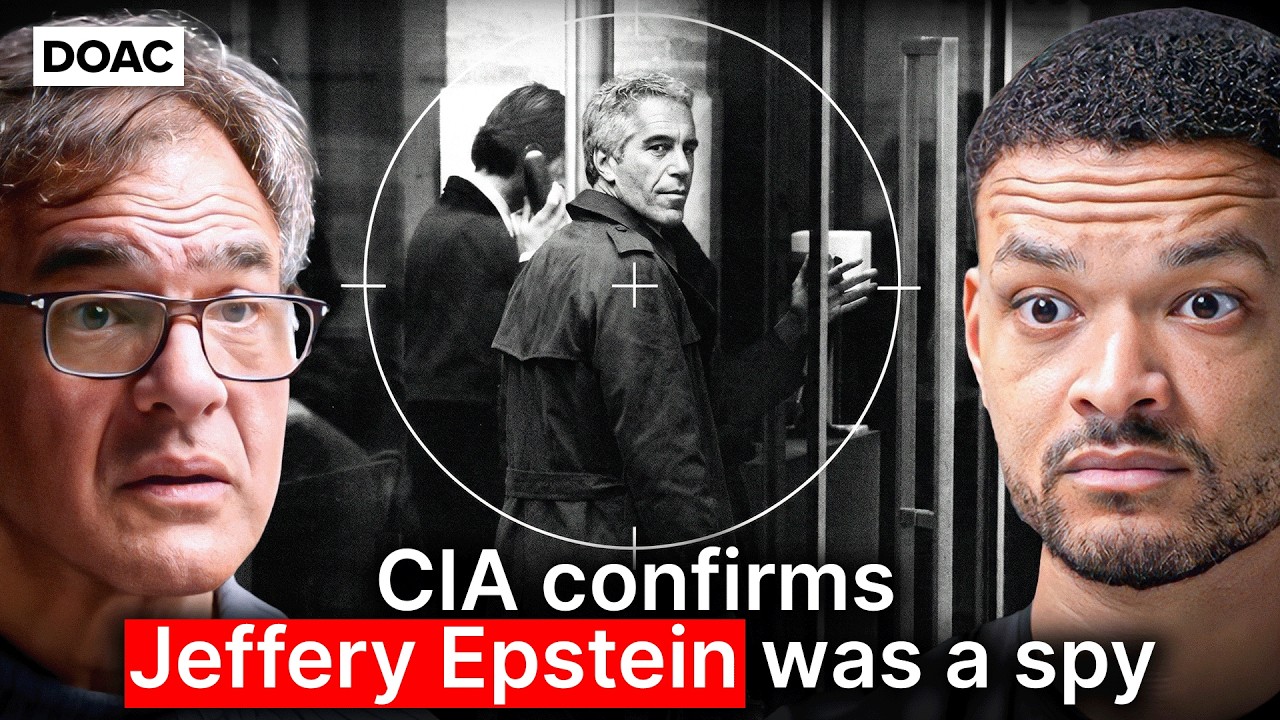
Former CIA Officer Kiriakou Says Agency Bypasses Warrants via Bulk Metadata
The Diary Of A CEO
Federal intelligence agencies routinely bypass warrant requirements by purchasing citizens' bulk communications data directly from telecommunications and technology companies.
## Background
Published on January 19, 2026, on YouTube by The Diary Of A CEO, this episode features host Steven Bartlett interviewing former CIA officer and whistleblower John Kiriakou. According to the page description, Kiriakou reveals how intelligence agencies track citizens, the psychological strategies used to recruit spies, and the personal cost of exposing the CIA's illegal post-9/11 torture program.
## TL;DR
Former CIA counterterrorism officer John Kiriakou breaks down the realities of intelligence operations, from the four-step asset recruitment cycle to the high divorce rates and sociopathic traits prevalent in the agency. He discusses cyber surveillance, foreign sleeper agents, and intelligence failures, while detailing his own path from briefing presidents to spending 23 months in prison after exposing the CIA's waterboarding program. Kiriakou also analyzes global geopolitical dynamics, including US fiscal vulnerabilities, foreign espionage, and covert operations.
## Atmosphere & style
The conversation carries a tense, candid, and eye-opening tone, balancing high-stakes national security disclosures with deeply personal reflections. Kiriakou speaks with unapologetic resolve and grounded realism, demonstrating zero contrition for his whistleblowing despite the severe personal and financial fallout. The dynamic between host and guest creates a captivating narrative arc that moves seamlessly from intense intelligence tradecraft to sober warnings about government overreach.
## Key takeaways
- [00:00](https://www.youtube.com/watch?v=yUNoJ32eLBc&t=0s) The NSA, CIA, and FBI spend billions on advanced surveillance tools, including technology capable of remotely hijacking vehicle systems and turning smart devices into listening tools.
- [02:50](https://www.youtube.com/watch?v=yUNoJ32eLBc&t=170s) Former CIA officer John Kiriakou served 23 months in prison for whistleblowing on the illegal post-9/11 CIA torture program, a decision he maintains was right and would repeat.
- [04:26](https://www.youtube.com/watch?v=yUNoJ32eLBc&t=266s) The core CIA mission is recruiting spies, stealing secrets, and analyzing intelligence, using a four-stage asset cycle: Spot, Assess, Develop, and Recruit.
- [15:04](https://www.youtube.com/watch?v=yUNoJ32eLBc&t=904s) The CIA's Office of Public Affairs actively engages with media, including Hollywood and podcasters, to shape public perceptions and advance official narratives.
- [25:37](https://www.youtube.com/watch?v=yUNoJ32eLBc&t=1537s) The CIA deliberately looks for candidates with sociopathic tendencies who are capable of navigating morally gray areas, with 95% of foreign sources motivated primarily by money.
- [33:17](https://www.youtube.com/watch?v=yUNoJ32eLBc&t=1997s) Operational secrecy, training in deception, and strict cover demands contribute to the CIA having an 80% divorce rate, the highest among U.S. government agencies.
- [41:31](https://www.youtube.com/watch?v=yUNoJ32eLBc&t=2491s) Kiriakou argues the CIA has failed to predict almost every major modern geopolitical shift since its inception in 1947.
- [41:31](https://www.youtube.com/watch?v=yUNoJ32eLBc&t=2491s) To bypass warrant requirements, post-9/11 U.S. intelligence agencies regularly buy bulk communications metadata directly from telecommunications and tech companies.
- [47:39](https://www.youtube.com/watch?v=yUNoJ32eLBc&t=2859s) Vault 7 disclosures revealed the CIA conducts false-flag cyberattacks by planting foreign code like Cyrillic scripts to mislead attribution efforts.
- [56:34](https://www.youtube.com/watch?v=yUNoJ32eLBc&t=3394s) Washington, D.C. hosts an estimated 10,000 foreign spies, with defense contractors and intelligence personnel constantly targeted for acquisition.
- [01:27:11](https://www.youtube.com/watch?v=yUNoJ32eLBc&t=5231s) China operates on 25-year strategic planning horizons and utilizes student researchers at major U.S. universities for intelligence collection.
- [01:33:22](https://www.youtube.com/watch?v=yUNoJ32eLBc&t=5602s) China strategically converts trade surpluses into infrastructure projects across developing nations to secure long-term global influence.
- [01:36:15](https://www.youtube.com/watch?v=yUNoJ32eLBc&t=5775s) The 2014 McCain-Feinstein Anti-Torture Amendment was passed in direct response to the public disclosures brought to light by Kiriakou's whistleblowing.
- [01:40:09](https://www.youtube.com/watch?v=yUNoJ32eLBc&t=6009s) After serving his prison term, Kiriakou rebuilt his career in private competitive intelligence, syndicated journalism, and media production, while applying for a presidential pardon.
## Detailed walkthrough
Here is a detailed walkthrough of the transcript section.
---
[00:00](https://www.youtube.com/watch?v=yUNoJ32eLBc&t=0s) Intro and Whistleblowing
Former CIA officer John Kiriakou previews the extent of modern surveillance and counterterrorism operations. He points out that billions of dollars are spent by agencies like the NSA, CIA, and FBI to monitor Americans. Furthermore, capabilities exposed via WikiLeaks' "Vault 7" leak—documents taken by a disgruntled CIA software engineer—revealed that intelligence agencies can remotely control a car's computer system to crash it or covertly activate smart TV speakers as listening devices, even when turned off.
Kiriakou emphasizes that despite his 15 years in the CIA and his deep patriotism, ethics led him to publicly blow the whistle on the CIA's illegal, immoral, and ineffective torture program during a televised ABC News interview. Despite facing prison time for his revelations, he maintains that he would make the same decision again without remorse. Host Steven Bartlett introduces the broader topics of their discussion, including geopolitical threats, covert government operations, and high-profile intelligence conspiracies such as Jeffrey Epstein's alleged ties to Israeli intelligence.
* **Vault 7 Leak:** Tens of thousands of documents classified above top secret were leaked to WikiLeaks by a disgruntled CIA software engineer, revealing widespread remote cyber-espionage capabilities.
* **Epstein Allegations:** Kiriakou expresses his belief that Jeffrey Epstein was working as a spy for Israeli intelligence.
---
[02:50](https://www.youtube.com/watch?v=yUNoJ32eLBc&t=170s) I Blew the Whistle on the CIA
When asked why his name is recognized worldwide, Kiriakou attributes it to two main factors: his public whistleblowing on the CIA's post-9/11 torture program on ABC News, and a recent resurgence of his message reaching millions on YouTube over the past 18 months.
Reflecting on his 23-month prison sentence, Kiriakou recalls an interview given to the BBC on the day after his release. When the interviewer expressed surprise at his lack of contrition or remorse, Kiriakou made it clear that he had no regrets because standing up against torture was the right thing to do.
> "I'm not remorseful. I'm not contrite. I would do it again. I would let them send me to prison again because it was the right thing to do."
---
[04:26](https://www.youtube.com/watch?v=yUNoJ32eLBc&t=266s) What Was Your Role in the CIA?
Kiriakou breaks down his 15-year career in the CIA, explaining the agency's core mandate to a layperson as recruiting spies, stealing secrets, and analyzing those secrets so policymakers can make informed decisions. Kiriakou spent the first half of his career as an intelligence analyst covering Iraq. He eventually grew bored with analysis and transitioned into counterterrorism operations, becoming the Chief of Counterterrorism Operations in Pakistan following the September 11 attacks. His operational focus was infiltrating Al-Qaeda to disrupt impending attacks.
Kiriakou recounts a defining story from his early analyst days when he was 25 or 26 years old during the administration of George H. W. Bush. Having been assigned to the Iraq desk—then considered a quiet "training account"—he arrived at work the morning Iraq invaded Kuwait. His superior rushed him to the White House into an Oval Office meeting with President Bush, the Vice President, the Secretary of Defense, the CIA Director, and the National Security Advisor. When asked by the President what was happening, Kiriakou briefed him on the invasion and identified the newly appointed military governor as a co-founder of the Popular Front for the Liberation of Palestine (PFLP), prompting Vice President Dan Quayle to shout, "Jesus Christ!"
* **Presidents Served Under:** George H. W. Bush, Bill Clinton, and George W. Bush.
* **Key Publications Written For:** The President's Daily Brief (PDB).
* **The Asset Acquisition Cycle:** The four-step framework taught to CIA case officers: *Spot, Assess, Develop, Recruit*.
---
[08:44](https://www.youtube.com/watch?v=yUNoJ32eLBc&t=524s) Recruiting an Al-Qaeda Operative in Pakistan
Illustrating the practical side of CIA covert recruitment, Kiriakou details a field operation in Pakistan. Tasked with making contact with mid-level Al-Qaeda fighters meeting daily at a coffee shop, Kiriakou grew a beard and used his fluent Arabic to blend in. Over several weeks, he cultivated a relationship with one of the men through subtle daily contact—moving from shared glances, to respectful nods, to exchanging the traditional greeting (*"Salaam alaikum"* / *"Wa alaykumu assalam"*).
Eventually, Kiriakou invited the operative to sit with him and later took him out to dinner to avoid being spotted by other militants. Kiriakou disclosed that he was an American CIA officer, but reassured the man. When Kiriakou asked what it would take for him to provide specific, critical intelligence, the fighter explained that he was weary after five years of fighting, missed his family in Cairo, and had never seen his infant son. Kiriakou secured him a passport, a first-class plane ticket, and starting funds to return home safely in exchange for the requested information.
* **Recruitment Key:** When Kiriakou asked the operative why he agreed to cooperate with the enemy, the man replied, *"I've been here 5 years and you're the first person who ever asked me about my family."*
* **Language Skills:** Kiriakou demonstrates his operational Arabic during the conversation (*"Tasharrafna bima'rifatik"* - Nice to meet you; and verses from Surah Al-Fatiha).
---
[12:44](https://www.youtube.com/watch?v=yUNoJ32eLBc&t=764s) How Did You End Up Being a Spy?
host Steven Bartlett shares his initial skepticism about spy stories and how meeting real intelligence officers changes one's paradigm regarding covert actions. Bartlett notes that the comment section on interviews with former CIA figures often repeats the cliché "once CIA, always CIA." Kiriakou pushes back against that narrative, calling it "intellectually lazy" and noting that he is one of the most vocally critical former CIA officers in the public eye today.
---
[15:04](https://www.youtube.com/watch?v=yUNoJ32eLBc&t=904s) The CIA’s Strategy With Podcasters
Addressing whether the CIA actively targets new media, Kiriakou states that while the agency was slow to adapt initially, it now has a deliberate strategy for podcasters and creators, much like its long-standing relationship with Hollywood. He explains that within the last decade, the CIA's Office of Public Affairs established a branch dedicated to liaising with Hollywood studios (a practice the FBI has engaged in since the 1940s) to ensure movies like *Zero Dark Thirty*, *Argo*, and *The Recruit* depict the agency favorably.
Hypothesizing on how the CIA would leverage podcasters as operational assets, Kiriakou explains that an effective covert propaganda campaign requires a clear, trackable goal rather than just boosting an algorithm. The operation would focus on repeatedly disseminating a specific, finely honed narrative—whether it is promoting pro-CIA sentiments, shaping public opinion on geopolitical targets like Iran, or steering foreign policy discussions.
Here is a detailed, faithful walkthrough of this section of the interview.
---
[17:15](https://www.youtube.com/watch?v=yUNoJ32eLBc&t=1035s) Exposing the CIA’s Lies on Torture
John Kiriakou reflects on the institutional deception that ultimately drove him to become a whistleblower. He explains that his superiors and colleagues at the CIA repeatedly pushed the narrative that torture was effective and that it yielded intelligence that saved American lives. In reality, Kiriakou asserts, this claim was simply a lie—on top of being illegal, immoral, and unethical. Realizing that the agency intended to continue down this path, he made the deliberate decision to go public and expose the truth to the American people.
---
[17:43](https://www.youtube.com/watch?v=yUNoJ32eLBc&t=1063s) From Middle Eastern Studies to a CIA Campus Recruit
Recounting his path into the intelligence world, Kiriakou shares that he had wanted to be a spy since he was nine years old. When applying for college, he sent only one application: George Washington University in Washington, D.C. Located just two blocks from the White House, GW was one of only three universities in the United States at the time offering a Middle Eastern Studies program, where he was one of only four students in the inaugural class. He stayed on to pursue a master’s degree in legislative affairs with a focus on foreign policy analysis.
During his graduate studies, he took a class titled *Psychology of Leadership*, taught by Dr. Jerrold Post, an eminent psychiatrist. Dr. Post gave an assignment requiring students to shadow their everyday workplace bosses for a week and write a psychological profile. At the time, Kiriakou was working for a labor union—the United Food and Commercial Workers Union. He authored a deeply researched paper heavily cited with psychology texts, ultimately concluding that his union boss was a sociopath with psychopathic and potentially violent tendencies.
After handing in the paper, Dr. Post awarded him an A and asked to see him after class. In his private office with the door closed, Dr. Post dropped a bombshell: he was not actually a full-time professor, but a CIA officer under academic cover assigned to recruit talent that fit the agency’s culture. Believing Kiriakou was a perfect match, Post asked, "Would you like to be a spy?" When Kiriakou agreed, Post immediately picked up his phone and called a colleague named Bob, stating, "Jerry, I've got a good one for you."
* Kiriakou was instructed to go immediately to an address in Rosslyn, Virginia, just across the river and one subway stop away on the Metro.
* Upon arrival, he was greeted at the door and introduced to "Bob," a imposing 6'6", 350-pound giant who blurted out, "John, Bob, how the hell are you?" and scheduled him for testing that Saturday morning at 8:00 a.m. at the GW Medical School Auditorium.
* Approximately 200 candidates took the assessment that morning. Two weeks later, Bob called Kiriakou to inform him that he had "blew the doors off those tests."
* A month later, he was summoned to CIA Headquarters, interviewed by the Office of Near Eastern Operations, the Office of Near Eastern Analysis, and the Office of Leadership Analysis, eventually accepting an offer as an analyst on the Iraq desk.
---
[21:00](https://www.youtube.com/watch?v=yUNoJ32eLBc&t=1260s) Covert Life, Marital Strain, and Late-Night Calls
When Kiriakou initially applied, the agency strictly forbade him from telling anyone—even his spouse—due to the potential for deep cover assignments. However, Kiriakou admits he told his wife anyway, reasoning, "She's my wife. What am I going to do?" He was forced to admit this violation during his polygraph exam.
As his CIA career progressed, maintaining operational secrecy put an unsustainable strain on his personal life. He would return home after covert operational tasks—such as breaking into someone's house to plant cameras and audio bugs—and give his wife non-committal answers like "Not a darn thing."
The tension peaked with late-night operational call-outs. Kiriakou details how his phone would ring at midnight with coded phrases: a contact would say, *"The rain in Spain falls mainly in the plain,"* to which Kiriakou had to reply, *"Mairzy Doats and Dozy Doats and Little Lamzy Divy."* The exchange meant he had to meet a contact in a yacht club parking lot in three hours. Upon leaving at midnight and returning at 6:00 a.m. just in time to shower for work, his suspicious wife demanded to know, "What was her name?"
In one memorable instance, Kiriakou had spent the night sitting inside a filthy garbage dumpster waiting in an alley for a target to drive by and toss in a bag of documents. When his wife accused him of infidelity, he replied, "Do I seriously smell to you like I've been with a woman? Seriously." The constant secrecy and bizarre hours eventually resulted in a divorce.
---
[23:30](https://www.youtube.com/watch?v=yUNoJ32eLBc&t=1410s) Analysis Training and the President’s Daily Brief (PDB)
Kiriakou explains that training at the CIA varies vastly depending on a recruit's entry track. Starting in intelligence analysis, his immediate focus was mastering the CIA's rigid writing style. The cornerstone analytical product of the agency is the President's Daily Briefing (PDB), designed to inform the Commander-in-Chief of crucial national security insights.
He illustrates the analytical process with a real-world example from the lead-up to the Gulf War. When Iraqi military forces began moving toward the Kuwaiti border, a intense internal debate erupted over whether an invasion was imminent. Kiriakou proposed a direct approach: calling the American Defense Attaché at the U.S. Embassy in Baghdad and asking him to physically drive down to observe the movement. The attaché drove down, called back, and reported: "Literally, the entire Iraqi military is on its way to the Kuwaiti border." Based on this observation, the CIA submitted an urgent briefing delivered to the President at 7:00 a.m. the following morning, correctly warning that Iraq would invade Kuwait within 48 hours.
Kiriakou outlines the CIA’s strict hierarchy of communication urgency levels:
* **Routine:** Low-priority standard intelligence.
* **Priority:** Important, but can be addressed later in the day.
* **Immediate:** Requires top-priority reading ahead of standard updates.
* **Flash:** Urgent notification indicating a severe event that warrants waking the President.
* **Critic:** The highest emergency level (e.g., dynamic military attacks, embassy breaches, or events like 9/11) requiring immediate action, waking the President, and scrambling fighter jets.
---
[25:37](https://www.youtube.com/watch?v=yUNoJ32eLBc&t=1537s) Sociopathic Tendencies and Human Motivation in Espionage
When host Steven Bartlett asks what the CIA teaches about human nature that might transfer to business, Kiriakou reveals that the CIA actively seeks to recruit individuals with "sociopathic tendencies." He carefully distinguishes between clinical sociopaths and those with sociopathic tendencies: full sociopaths lack a conscience entirely, easily beat polygraph tests, but are completely unmanageable and incapable of feeling remorse.
Kiriakou observes that while many corporate CEOs possess sociopathic traits—clawing their way to the top at the expense of others—the CIA deliberately recruits people with these traits because they are willing to operate in legal, moral, and ethical gray areas. A normal person would hesitate to break into a foreign embassy, whereas Kiriakou notes he was gladly willing to do so because of the conviction that "we're the good guys."
Turning to how the CIA recruits foreign spies, Kiriakou reveals the primary driver behind treason. While the CIA refers to a recruit's weakness as a "vulnerability," internal CIA studies demonstrate that **95% of foreign informants turn spy strictly for money**. It is a direct cash transaction: secrets in exchange for cash.
When Bartlett questions whether money is truly the dominant human motivator, contrasting it with corporate settings where employees leave high-paying roles for scrappy startups to pursue a personal "hero's journey," Kiriakou clarifies the difference: corporate employees are making a career choice, whereas foreign assets are committing high treason against their nation.
Beyond the 95% motivated by money, Kiriakou notes that the remaining 5% of spy motivators consist of:
* **Love and Family:** Providing for or protecting loved ones (often using money as a proxy).
* **Ideology:** Alignment with American values or political beliefs.
* **Revenge:** Settling scores against their own government or superiors.
* **Excitement:** Adrenaline seekers hooked on espionage thrill or James Bond fantasies.
---
[31:31](https://www.youtube.com/watch?v=yUNoJ32eLBc&t=1891s) CIA Leverage and Domestic Restrictions
Addressing the extent of incentives the CIA can offer to entice foreign agents, Kiriakou confirms that the agency can provide "quite literally anything you can imagine"—from U.S. Green Cards to wiping away massive foreign tax debts—so long as it does not involve illicit acts like child exploitation or narcotics. For instance, if a foreign asset delivers actionable blueprints of a Russian tank, the CIA can easily resolve their financial or immigration hurdles.
However, Kiriakou emphasizes that the CIA is legally prohibited from operating domestically against American citizens or recruiting U.S. citizens as spies. While the CIA maintains field offices across the United States, their primary domestic purpose is to debrief American business executives and C-suite leaders who return from traveling to "denied areas" (such as North Korea). In these instances, CIA officers present their official credentials and conduct voluntary patriotic debriefs regarding local conditions and impressions.
---
[33:17](https://www.youtube.com/watch?v=yUNoJ32eLBc&t=1997s) The Art of Lying and Overseas Operations
Kiriakou discusses the CIA’s rigorous training in lying and lie detection, identifying it as a core skill that contributes to the agency having the highest divorce rate in the U.S. government—upwards of **80%**. Officers are trained to construct and maintain convincing cover identities, such as posing as a representative for an import-export firm under an alias like "Dave Phillips." The true challenge of professional lying lies in the mental discipline required to keep complex, multi-layered lies consistent over extended periods.
To illustrate how intelligence officers initiate contact with targets in the field, Kiriakou begins sharing a previously untold story from his time in the Middle East. Headquarters assigned him to target a specific foreign officer who held valuable classified intelligence. After conducting surveillance on the single officer for a week, Kiriakou tracked him to a local coffee shop on a Saturday morning to execute a staged "accidental" encounter...
[34:50](https://www.youtube.com/watch?v=yUNoJ32eLBc&t=2090s) The Fake Affair and the Limits of Seduction
John Kiriakou recounts a target-building assignment where he tracked down a Ministry of Foreign Affairs official at a local coffee shop. Despite living across town, Kiriakou pretended he was a regular neighbor who frequented the establishment. After striking up a conversation, Kiriakou cabled headquarters stating he was "100% sure" the official was gay—a conclusion based purely on a "vibe." Because the official was single at an age where that was culturally unusual, CIA headquarters instructed Kiriakou to pretend to be gay to build rapport and extract information.
Kiriakou agreed to "do it for Uncle Sam." He invited the official to a show and sushi, which led to dinners at their respective homes. Preparing his own home required Kiriakou to ask his wife to leave for the evening and remove all of their recent wedding photographs. When the official leaned in to kiss him during dinner, Kiriakou instinctively backed away. Panicking, he claimed he was indeed gay, but added, "I'm not into hairy guys." Despite the awkward moment, the two remained close friends, and the official eventually opened up and provided the needed intelligence. The official confessed he was routinely passed over for foreign service promotions because his superiors suspected his sexuality in a conservative culture; Kiriakou advised him to tell colleagues he was simply waiting to find the right woman. Years later, Kiriakou discovered the man had successfully become an ambassador.
When asked if CIA officers often have to "take one for the team" romantically, Kiriakou recounts an assignment with a foreign intelligence officer he found exceptionally unappealing, describing her as looking like a "stone gargoyle" off Notre Dame with a large facial mole. When he scheduled a private Saturday lunch with her—a breach of local protocol requiring foreign officers to socialize in groups—his boss jokingly ordered him to sleep with her to secure the asset. When Kiriakou panicked, the supervisor clarified that the CIA does not operate that way. Sleeping with assets is strictly prohibited; officers caught doing so are pulled back to the United States and put in the "penalty box," though it does occasionally happen.
* **Honey Traps and Blackmail:** Kiriakou notes that sex-based coercion and blackmail rarely yield productive, long-term intelligence assets. He shares an old CIA story about an Iranian Ayatollah who was caught on hidden cameras in a honey trap with a prostitute. When intelligence officers confronted him with compromising photographs expecting compliance, the Ayatollah nonchalantly requested an 8x10 print, two 5x7s, and wallet-sized copies for his family. The agency concluded blackmail backfires because successful recruitment relies on mutual trust rather than force, though services like the Russians and Israelis still utilize coercive tactics.
---
[41:31](https://www.youtube.com/watch?v=yUNoJ32eLBc&t=2491s) "The Best and the Brightest": Intelligence Failures and Mass Surveillance
Reflecting on the true nature of intelligence work, Kiriakou dispels the myth that the CIA consists of the world's sharpest minds. Though President John F. Kennedy famously referred to the agency as "the best and the brightest," Kiriakou contends they are average people who frequently misread global geopolitics. He notes that the CIA has missed nearly every major global development since its founding in 1947, including the rise and fall of the Berlin Wall, the collapse of the Soviet Union, the Suez Crisis, the Iranian Hostage Crisis, and 9/11. While the agency excels at daily briefings for the President and recruiting lower-level informants around terrorist networks, it consistently struggles with big-picture strategic foresight.
Kiriakou warns that the domestic legal boundaries protecting citizens collapsed after 9/11. Prior to the attacks, spying on Americans was strictly illegal. Today, billions of dollars are poured into domestic surveillance across the NSA, CIA, FBI, and private contractors. Federal agencies no longer require traditional search warrants signed by judges; instead, law enforcement can simply purchase bulk metadata directly from telecommunications carriers and tech companies.
To illustrate how vulnerable citizens are to targeted prosecution, Kiriakou highlights the book *Three Felonies a Day* by Harvard Law professor Dr. Harvey Silverglate. The book argues that federal regulations are so vast that the average American inadvertently commits three felonies daily during routine activities. If the government decides to target an individual over political dissent, agencies can pull their metadata, comb through past actions, uncover technical violations, and destroy their life.
* **Retaliation Against Whistleblowers:** Kiriakou explains how this system was weaponized against him after he publicly exposed the CIA's secret prison network and torture programs in Guantanamo Bay and worldwide. CIA Director John Brennan pushed Attorney General Eric Holder to charge Kiriakou with espionage. When Holder's prosecutors noted a lack of evidence, Brennan instructed them to "charge him anyway, and make him defend himself."
* **Financial and Legal Pressure:** Facing five felony counts—including three counts of espionage that carried potential death penalty charges—Kiriakou spent ten months fighting the government, racking up $2 million in legal fees and declaring bankruptcy. Once his funds were exhausted, prosecutors dropped the espionage charges and offered a plea deal for a lesser offense. Confronted with a 98.2% federal conviction rate, he accepted the plea and served 23 months in prison.
* **The New Reality of Digital Privacy:** Citing former New York Governor Eliot Spitzer’s rule of conduct ("Don't nod when you can motion, don't speak when you can nod, and don't ever put anything in a text message"), Kiriakou advises extreme caution. On his first day at the CIA, recruits were warned never to do or say anything they wouldn't want on the front page of *The Washington Post*.
---
[47:39](https://www.youtube.com/watch?v=yUNoJ32eLBc&t=2859s) Cyber Capabilities: Hacking Cars, TVs, and Smart Devices
Addressing digital vulnerability, Kiriakou emphasizes that modern technological surveillance extends far beyond U.S. intelligence agencies. Friendly nations (the Five Eyes partners: Britain, Canada, Australia, New Zealand) alongside foreign adversaries (Russia, China, Israel, Iran, France, Germany) possess advanced capabilities to intercept private communications and compromise personal hardware. Devices are never truly secure.
He cites the 2017 "Vault 7" leak published by WikiLeaks, which stemmed from a disgruntled CIA software engineer downloading tens of thousands of classified documents above Top Secret. The disclosures exposed internal cyber tools used by the agency to conduct clandestine operations:
* **False-Flag Cyberattacks:** The CIA routinely hacks into target networks—such as the Iranian Ministry of Interior—and leaves behind fake electronic traces written in Cyrillic to frame Russian intelligence services.
* **Smart Device Exploitation:** The agency can remotely compromise smart TVs and convert their speakers into ambient microphones. Even when turned off, the hardware captures room conversations and transmits audio back to intelligence handlers—a capability that existed when Kiriakou was first hired.
* **Vehicular Takeovers:** Intelligence agencies possess remote exploits that take direct control of a vehicle's onboard computer systems. Kiriakou notes that this capability can be deployed to intentionally crash a target's car into a tree or drive it off a bridge to commit targeted assassinations.
Here is a detailed, faithful walkthrough of this section of the transcript, capturing the facts, examples, nuances, and conversational context without omitting important details.
---
[52:07](https://www.youtube.com/watch?v=yUNoJ32eLBc&t=3127s) Russian "Sleeper Agents" and the East German Defector
John Kiriakou breaks down the mechanics of "sleeper agents," explaining that while the United States does not use them, Russia excels at the practice. A sleeper agent is someone taken virtually from birth or early childhood—often around age two, with their family's acquiescence—and raised in a purpose-built, American-style mock town in the Russian hinterland. They are taught to speak English with an authentic American accent, eat American food, watch American movies and TV shows, receive an American-style education, and follow American sports teams like the Philadelphia Eagles or San Francisco 49ers. To integrate them into the U.S. seamlessly, Russian intelligence searches through American death records from the agent's birth year (e.g., 1964) to find infants who died only a day or two after birth. They appropriate the deceased child's name and birth date to obtain a Social Security card and a genuine American passport. The agent enters the U.S. legally under that stolen identity (such as "Bob Smith") and may spend 20 years working a mundane cover job, like a travel agent, without any contact from handler network until they are activated to carry out a targeted assignment or infiltrate the Department of Defense.
Kiriakou notes that a woman in his own neighborhood was outed as a Russian sleeper agent roughly a year prior while working as an elementary school teacher before being traded back to Russia for two Americans. He also recalls interviewing a former East German intelligence sleeper on his podcast. The man had been raised as an American, sent to New York in his early 20s, and worked in a restaurant supply company under a cover identity for 25 years. However, after getting married and looking at his newborn daughter's face in the hospital, he realized he could no longer live a lie. When East German intelligence sent him an activation message via radio, he ignored it. Shortly after, while riding the subway, a handler stood next to him, grabbed the overhead strap, and whispered in his ear, *"If you don't report back, I have to kill you."* The agent immediately fled to the FBI field office in New York, turned himself in, and became a prolific source for U.S. intelligence.
- **Sleeper Agent Creation:** Children taken as young as age two, raised in isolated American-replica towns in Russia, and given stolen identities from American infant death records.
- **Activation Mechanism:** Agents live normal civilian lives for decades until receiving a coded radio signal or direct contact from a handler.
- **East German Defector Example:** A sleeper who operated in New York for 25 years, defected after the birth of his daughter, and sought protection from the FBI following a death threat on the subway.
---
[56:34](https://www.youtube.com/watch?v=yUNoJ32eLBc&t=3394s) How Many Spies Are Active in the United States?
Addressing whether an average person regularly interacts with an intelligence operative, Kiriakou states that while the average citizen likely does not, anyone working for a U.S. defense contractor (such as Northrop Grumman, Lockheed Martin, or Boeing) faces an "even money" chance of encountering foreign espionage. Russian, Chinese, and Israeli intelligence services are the three primary forces targeting U.S. interests. In Washington, D.C. alone, Kiriakou estimates there could be as many as 10,000 foreign spies. To illustrate how prevalent intelligence officers are in the nation's capital, he shares an anecdote about his first wife, who taught a ballet class for four- to six-year-olds at a private school. Kiriakou frequently chatted with another parent, a Belgian diplomat whose child was in the class, making small talk about their kids. One day, Kiriakou walked into CIA headquarters for work and ran straight into the Belgian diplomat entering for a liaison meeting. The diplomat looked at him and said, *"You know, I thought you were a spy,"* to which Kiriakou replied, *"I actually didn't think you were a spy,"* before both laughed and agreed to keep each other's secret.
When asked to estimate the total number of spies operating in the U.S.—including foreign officers, CIA employees, and domestic covers—Kiriakou offers a ballpark figure of 50,000 to 60,000 people (noting that exact CIA staffing numbers and undercover counts remain classified). The host performs quick "napkin math," calculating that with a U.S. population of roughly 330 million, 50,000 spies means roughly 1 out of every 6,600 people is an undercover operative. Given that the average person meets between 3,000 and 10,000 people annually, the host jokes that statistically, the average American meets about one undercover spy per year.
- **Major Intelligence Adversaries in the U.S.:** Russia, China, and Israel actively target defense contractors and government facilities.
- **Estimated Spy Population in Washington, D.C.:** Up to 10,000 foreign intelligence operatives.
- **Nationwide Estimate:** Approximately 50,000 to 60,000 total intelligence personnel (combining covert U.S. officers and foreign agents).
---
[01:00:22](https://www.youtube.com/watch?v=yUNoJ32eLBc&t=3622s) Unlimited Post-9/11 Budgets and $25 Million Informant Payoffs
The conversation turns to financial incentive and intelligence agency spending. Kiriakou explains that following the September 11 attacks, his operational budget as a CIA counterterrorism officer became essentially unlimited. If an informant claimed they could deliver a high-value terrorist in exchange for $10 million, Kiriakou could agree instantly: *"Done."* He recalls leading the March 2002 raids in Faisalabad, Pakistan, that captured Abu Zubaydah, who U.S. intelligence initially believed was the number three leader in Al-Qaeda. The State Department paid out a $10 million reward to the Pakistani intelligence service (ISI) for the analytical coordination that led to his capture.
However, Kiriakou reveals that individual sources received even larger sums during the War on Terror, with at least one informant paid $25 million cash within 24 hours for delivering a high-ranking foreign terrorist. Handing millions of dollars to a local source—such as a shepherd or tea boy making $40 a month—presents extreme operational dangers, as sudden wealth instantly draws life-threatening suspicion. In such cases, the CIA mandates that the informant relocate permanently. The Agency coordinates with a foreign government to resettle the informant, assuring the host country that the individual will not be an economic burden. Kiriakou notes that the $25 million recipient refused to move to the United States, preferring to remain within the region, leading the host to joke about relocating to Dubai for tax benefits.
- **Abu Zubaydah Capture:** Captured in Faisalabad, Pakistan (March 2002) during raids led by Kiriakou; a $10 million reward was distributed to Pakistani intelligence.
- **Maximum Informant Payoff:** At least one individual informant received $25 million within 24 hours for aiding in the capture of a top terrorist figure.
- **Resettlement Protocol:** High-paid sources are required to leave their home country immediately to avoid exposure and are relocated to cooperative allied nations.
---
[01:03:42](https://www.youtube.com/watch?v=yUNoJ32eLBc&t=3822s) MKUltra, Biological Tests, and CIA Cover-ups
The host reflects on how learning about intelligence operations shatters everyday reality, noting that many "conspiracy theories" turn out to be accurate. Kiriakou agrees, pointing out that the term "conspiracy theory" was originally coined by a former CIA director specifically to discredit critics and make them sound unhinged. However, historical records confirm that the CIA engaged in extreme illegal operations between 1952 and 1975 under programs like MKUltra, MKCHICKWIT, and Operation Grasshopper. As an example of dangerous domestic experimentation, Kiriakou describes how the CIA released a pathogen into the atmosphere of San Francisco on an unusually foggy day to test biological agent dispersal; 11 people were hospitalized with rare upper respiratory infections, which agency officials celebrated as a success.
Kiriakou explains the origins of the CIA's infamous mind-control program. In 1951, Chinese intelligence leaked disinformation claiming that the Soviet Union was developing LSD into a mind-control weapon. In reality, the Soviets had no such program, but the Chinese did, using the rumor to throw the U.S. off their trail. Panicked by the false intelligence, the CIA launched MKUltra in 1952. The Agency initially tested LSD on its own employees without their knowledge or consent, leading to catastrophic mental breakdowns and suicides, including an officer who jumped out of a hotel window. Realizing that dosing their own staff was counterproductive, the CIA shifted to dosing unsuspecting civilians. Under Operation Midnight Climax, the CIA set up a safe house in San Francisco, hired sex workers to lure men back to the location, secretly spiked their drinks with LSD, and observed their behavior through one-way mirrors to see if the human mind could be broken down, reprogrammed, or implanted with false memories.
When Congress formed the Church Committee in 1973 to investigate intelligence abuses, the CIA Director was explicitly ordered not to destroy any records. That afternoon, the Director returned to headquarters and ordered the mass destruction of all MKUltra files to cover up illegal experimentation on American citizens. The Director was subsequently held in contempt of Congress and fined a nominal $150. Only roughly 15% of the documents survived due to administrative oversight, meaning the full extent of MKUltra's human experimentation will never be known.
- **Origin of "Conspiracy Theory":** Coined by CIA leadership as a psychological discrediting tactic against government critics.
- **San Francisco Biological Test:** The CIA sprayed a pathogen in San Francisco fog to monitor disease spread, resulting in 11 hospitalizations.
- **Disinformation Trap:** Chinese disinformation about Soviet LSD development tricked the CIA into launching MKUltra in 1952.
- **Operation Midnight Climax:** Sex workers were used to lure men to a San Francisco safe house, where they were covertly drugged with LSD and observed through one-way mirrors.
- **1973 Document Destruction:** The CIA Director defied Church Committee orders and ordered the destruction of MKUltra records, leaving only 15% of surviving documentation.
---
[01:08:49](https://www.youtube.com/watch?v=yUNoJ32eLBc&t=4129s) Mossad's Operations and Afghan Informants in Iran
Turning to current geopolitical events, the host asks if the CIA is actively involved in encouraging anti-government protests on the streets of Iran. Kiriakou states that while the CIA is likely present, Israeli intelligence (Mossad) is far more heavily involved on the ground. He points to Israel's operational success during the "12-day war," praising their recruitment strategies inside Iran. Iran hosts over two million Afghan refugees who live as undocumented immigrants without access to healthcare, social support, or formal employment, forcing many to beg to eat. Mossad targeted this vulnerable population, discreetly paying Afghan refugees around $200 a month in exchange for actionable intelligence on Iranian military targets, such as the exact residential locations of senior military generals.
- **Intelligence Presence in Iran:** Active operational involvement by Israeli intelligence alongside U.S. covert assets.
- **Recruitment Strategy:** Exploiting the economic desperation of Iran's 2 million undocumented Afghan refugees with $200 monthly stipends to gather targeting data on Iranian military leadership.
---
<ElicitationsGroup message="Where would you like to go next with this transcript?">
<Elicitation label="Summarize Part 3 of the transcript" query="Please provide a detailed, timestamped walkthrough for Part 3 of this CIA Whistleblower interview."/>
<Elicitation label="Summarize Part 5 of the transcript" query="Please provide a detailed, timestamped walkthrough for Part 5 of this CIA Whistleblower interview."/>
</ElicitationsGroup>
[01:10:09](https://www.youtube.com/watch?v=yUNoJ32eLBc&t=4209s) Mossad’s Targeting of Iranian Officials and General Powell’s Phone Call
Former CIA officer John Kiriakou details how Israeli intelligence conducted precision targeting against senior Iranian military leadership and nuclear scientists by exploiting human networks and mobile phone tracking. Israeli operatives recruited Afghan intelligence contacts in Tehran who provided exact addresses and mobile phone numbers for these high-value targets. By geolocating those mobile devices, Israeli forces executed strikes that eliminated top generals and scientists. Even after Iranian command banned cell phones for high-ranking personnel, they overlooked their security details—allowing Israeli forces to track the bodyguards' phones and strike the exact same targets.
```
┌─────────────────────────────────────────┐
│ Israeli Intelligence / Mossad Strategy │
└────────────────────┬────────────────────┘
│
┌──────────────────────┴──────────────────────┐
│ Exploited Afghan networks in Tehran to find │
│ addresses & phone numbers of Iranian elite │
└──────────────────────┬──────────────────────┘
│
┌──────────────────────────┴──────────────────────────┐
│ Geolocated target cell phones for precision strikes │
└──────────────────────────┬──────────────────────────┘
│
┌──────────────────────────┴──────────────────────────┐
│ When officers ditched phones, Israel tracked the │
│ bodyguards' cell phones to complete the strikes │
└─────────────────────────────────────────────────────┘
```
The conversation then shifts to whether Kiriakou ever killed anyone during his CIA tenure. He states proudly that he never took a life, though he recalls one troubling "half-exception." In 1993, while sitting in a routine 9:00 AM morning meeting, his secretary informed him that General Colin Powell was on the phone. Surprised that Powell knew him, Kiriakou answered. Powell asked who would execute an Iraqi operation if Saddam Hussein attempted to assassinate former President George H.W. Bush during his trip to Kuwait. Kiriakou provided the exact address of the Iraqi Intelligence Service (IIS) headquarters in Baghdad and the name of its director, Sabawi Ibrahim al-Tikriti (or Sabir Abdulaziz al-Douri). Eight hours later, the U.S. military launched 47 cruise missiles into the IIS headquarters; because the strike occurred at night, the only casualty was a civilian janitor.
* Israeli intelligence geolocated targets through Afghan contacts who gathered cell phone numbers of Iranian generals and scientists.
* When Iranian leaders prohibited cell phones, Israel tracked their bodyguards' active mobile devices instead.
* General Colin Powell called Kiriakou directly in 1993 for the address of the Iraqi Intelligence Service headquarters in Baghdad following an assassination plot against George H.W. Bush.
* The subsequent U.S. strike sent 47 cruise missiles into the building overnight, unintentionally killing a night janitor—a moment that weighed heavily on Kiriakou despite his supervisor reassuring him he was not responsible.
---
[01:13:34](https://www.youtube.com/watch?v=yUNoJ32eLBc&t=4414s) U.S. Targeted Assassinations and the White House "Kill List"
Kiriakou confirms that the U.S. government actively carries out targeted assassinations via the CIA. He explains that during Barack Obama's presidency, Deputy National Security Advisor John Brennan instituted formal "Tuesday morning kill list" meetings at the White House. These meetings brought together Brennan, National Security Council lawyers, CIA General Counsel representatives, and officials from the Counterterrorism Center to select targets for liquidation that week.
These targets are not typically world leaders, but ground-level operational terrorists. Although U.S. law specifies that targeted individuals must pose a "clear and present danger" to the United States, its citizens, or military installations, Kiriakou stresses that this definition is dangerously vague and subject to internal interpretation without public oversight.
* **Tuesday Morning Meetings:** Initiated by John Brennan under President Obama to determine weekly strike targets.
* **Key Participants:** Brennan, NSC attorneys, CIA legal counsel, and Counterterrorism Center leadership.
* **Target Criteria:** Supposed to be individuals posing a "clear and present danger," though the legal threshold is broadly interpreted.
---
[01:15:05](https://www.youtube.com/watch?v=yUNoJ32eLBc&t=4505s) Israeli Intelligence Operations and the Hezbollah Pager Attack
When asked which foreign intelligence agency is the most impressive, Kiriakou points immediately to Israel's Mossad, citing their willingness to operate without legal or diplomatic constraints. "The Israelis have no rules," Kiriakou notes, pointing to the covert operation against Hezbollah's communications infrastructure as a prime example of operational complexity.
Recognizing that Hezbollah avoided smartphones to prevent intercepting calls, Israeli intelligence established a front company in Hungary to manufacture compromised pagers. Hezbollah ordered these pagers, which were routed through Taiwan, Thailand, Syria, and ultimately into Lebanon packed with tiny explosive charges. Israel then remotely detonated thousands of pagers simultaneously, decapitating Hezbollah's operational structure.
* Mossad created a shell manufacturing pipeline in Europe to supply explosive-laden pagers to Hezbollah.
* The supply chain spanned Hungary, Taiwan, Thailand, Syria, and Lebanon before the simultaneous detonation.
* Kiriakou notes that Israeli military doctrine frequently accepts high collateral damage—including leveling full urban blocks—to guarantee the elimination of a single target.
---
[01:17:22](https://www.youtube.com/watch?v=yUNoJ32eLBc&t=4642s) CIA Counterintelligence and Israeli Espionage in the U.S.
Kiriakou shares his personal interactions with Israeli intelligence, describing them as contentious. During his first classified liaison briefing as a junior CIA analyst, his supervisor warned him that Israeli officials were strictly banned from entering CIA Headquarters at Langley. Because Israeli representatives routinely brought gifts loaded with long-battery listening devices to bug meeting rooms, briefings had to occur at off-site rented facilities miles away.
> "Every time somebody tries to bring something in, you have to X-ray it. And it's packed with 2 years' worth of batteries... They try to bug our conference rooms."
During that initial briefing regarding Saddam Hussein's psychological state, a representative from Shin Bet (Israel's internal security service) demanded Kiriakou spell his name and pointedly asked if he was Jewish, evaluating him for potential recruitment. Kiriakou pushed back immediately. He adds that on his first day at the CIA, the Director of Security warned new recruits never to eat at a local steakhouse on Route 123—the closest restaurant to headquarters—because KGB officers frequented it to catch CIA personnel talking shop. The security director revealed that while the U.S. willingly shares ~95% of its defense secrets with Israel, the FBI had identified 187 undeclared Israeli intelligence officers operating across the U.S., primarily targeting defense contractors to steal the remaining 5%.
* **Headquarters Ban:** Israeli officials were barred from Langley due to repeated attempts to plant surveillance bugs concealed in gifts.
* **Security Protocols:** Liaison meetings were restricted to classified off-site locations and kept below the Top Secret level.
* **Undeclared Foreign Agents:** The FBI identified 187 undeclared Israeli intelligence officers operating in the U.S. to acquire sensitive defense technology.
* **Route 123 Warning:** CIA officers were strictly warned against visiting nearby establishments known to be monitored by foreign intelligence operatives.
---
[01:21:33](https://www.youtube.com/watch?v=yUNoJ32eLBc&t=4893s) Was Jeffrey Epstein an Israeli Intelligence "Access Agent"?
Kiriakou expresses strong confidence that Jeffrey Epstein operated as an "access agent" for Israeli intelligence. In intelligence doctrine, an access agent is not tasked with stealing secrets directly, but is funded to build lavish environments that attract high-value targets—such as former presidents, CEOs, and royalty—who cannot be directly recruited.
```
┌─────────────────────────────────────────────────────────────┐
│ FOREIGN PRINCIPAL │
└──────────────────────────────┬──────────────────────────────┘
│
▼
┌─────────────────────────────────────────────────────────────┐
│ ACCESS AGENT (EPSTEIN) │
│ - Funded via money laundering (Real Estate/Art/Horses) │
│ - Hosts elites on private island / mansions │
└──────────────────────────────┬──────────────────────────────┘
│
▼
┌─────────────────────────────────────────────────────────────┐
│ TARGETED ELITES │
│ - Compromising situations captured via hidden sensors │
│ - Kompromat created for leverage & intelligence gathering │
└─────────────────────────────────────────────────────────────┘
```
Kiriakou highlights that Epstein's island residence and properties were wired with hidden cameras in every room, including bathrooms, designed specifically to collect *kompromat* (compromising material). Kiriakou argues that only state entities can launder funds on the scale required to build Epstein's empire, typically utilizing real estate, fine art, and racehorses. Epstein's controversial 2006 plea agreement—where prosecutor Alexander Acosta noted he was instructed by senior leadership to step back because Epstein "belonged to intelligence"—further signals state involvement.
* **Access Agent Definition:** An operative tasked with cultivating relationships with elite targets to grant a intelligence service proximity and leverage.
* **Surveillance Infrastructure:** Multi-room hidden camera networks installed throughout Epstein's properties to produce compromising footage.
* **Money Laundering Channels:** High-value real estate, fine art markets, and thoroughbred racehorses utilized to move state funds.
* **Legal Debate:** Kiriakou recounts debating Epstein's former attorney Alan Dershowitz on television, arguing that Epstein was an Israeli asset collecting intelligence on American political figures.
---
[01:26:53](https://www.youtube.com/watch?v=yUNoJ32eLBc&t=5213s) China as the Primary Geopolitical Adversary
Asked to identify the true adversary of Western intelligence, Kiriakou bypasses Russia and names China as the most formidable and strategic challenger. He emphasizes that Chinese intelligence operations are exceptionally patient, sophisticated, and deeply embedded within critical global sectors.
* China operates with long-term strategic timelines rather than short-term political cycles.
* Chinese intelligence capabilities in cyber-espionage, economic intelligence, and human recruitment pose a far greater threat to Western hegemony than conventional military posturing.
<FollowUp label="Want me to walk you through Part 6 of the transcript?" query="Write a detailed, faithful walkthrough of Part 6 of the CIA Whistleblower John Kiriakou transcript, covering the next timestamped section."/>
Here is a detailed, faithful walkthrough of the provided transcript section.
[01:27:11](https://www.youtube.com/watch?v=yUNoJ32eLBc&t=5231s) China's Long-Term Timeline and Student Espionage
John Kiriakou emphasizes the stark contrast in planning horizons between the United States and China. While the American political system suffers from short-term thinking driven by four-year election cycles—demanding immediate results—the Chinese government, unconstrained by electoral turnover, routinely formulates 25-year strategic plans. Kiriakou points out that China excels at acquiring technology, partly by sending vast numbers of brilliant doctoral candidates in the hard sciences to every major university across the United States. He highlights a recurring pattern where these individuals express a desire to stay in America, masking their underlying intelligence activities on behalf of Beijing.
When questioned about his certainty regarding Chinese student espionage, Kiriakou asserts he is "1,000% sure," noting that federal law enforcement frequently arrests these individuals and exchanges them for Americans detained in Chinese prisons. Beyond intellectual property theft, China’s primary immediate geopolitical objective remains reunification with Taiwan. Kiriakou explains that even under current U.S. policy and Taiwanese reality, there is an implicit acknowledgement that Taiwan is part of China, though operating with practical independence.
- China plans on 25-year timelines, whereas the U.S. is bound to 4-year election cycles.
- Chinese espionage targets the hard sciences via PhD candidates enrolled in top U.S. universities.
- Kiriakou claims absolute certainty because the U.S. regularly conducts prisoner swaps involving arrested Chinese student spies.
[01:29:12](https://www.youtube.com/watch?v=yUNoJ32eLBc&t=5352s) The Maduro Raid, the Monroe Doctrine, and a Multipolar World
Kiriakou examines how recent U.S. military actions ripple across the global balance of power, specifically referencing a Delta Force operation that captured Venezuelan President Nicolás Maduro to face international narcotics trafficking charges in New York. He argues that by invoking the 1814 Monroe Doctrine—the idea that the Western Hemisphere falls under exclusive U.S. protection and influence—the U.S. unintentionally gave tacit permission to other global powers to claim their own spheres of influence. If Washington asserts unilateral authority over the Americas, it signals to Moscow and Beijing that Russia's actions in Ukraine and China's ambitions toward Taiwan are governed by identical logic.
This shift marks an effective transition from a unipolar world, dominated solely by American military power, to a multipolar world. Although China has a larger population and Russia holds a massive nuclear arsenal, the U.S. remains the singular global superpower in hardware, possessing 12 aircraft carriers (soon to be 14) compared to China's single operational carrier, along with far superior long-range bombers and fighters. Nevertheless, Kiriakou personally views a multipolar order as safer than unipolar hegemony, despite the diplomatic chaos created by cross-border operations.
If China were to move on Taiwan tomorrow, Kiriakou predicts the U.S. would not commit ground troops to fight Chinese soldiers directly. Instead, Washington would rush to defend core regional non-NATO allies such as Japan, South Korea, Australia, the Philippines, and Thailand. He notes that U.S. policy—and statements by leaders like Donald Trump—implicitly accepts eventual reunification, provided it does not occur unilaterally or disrupt the immediate status quo during their presidency.
- **Venezuela Operation**: U.S. Delta Force seized President Nicolás Maduro to face federal drug charges in New York.
- **Aircraft Carrier Disparity**: U.S. operates 12 aircraft carriers (heading to 14), while China currently operates 1.
- **Monroe Doctrine Fallout**: Invoking 1814 sphere-of-influence policies legitimizes Russian dominance over Ukraine and Chinese dominance over Taiwan.
- **U.S. Defense Priorities**: In a Taiwan contingency, the U.S. would prioritize defending Australia, Japan, South Korea, Thailand, and the Philippines over direct troop engagement in Taiwan.
[01:33:22](https://www.youtube.com/watch?v=yUNoJ32eLBc&t=5602s) China’s Soft Power Strategy and the Threat of U.S. Bankruptcy
When asked if China actively seeks the collapse of the U.S., Kiriakou responds affirmatively, but clarifies that Beijing achieves its aims through economic expansion rather than military intervention. Unlike the U.S., which frequently overthrows foreign governments and invades nations, China leverages its immense trade surplus through infrastructure diplomacy. They build highway systems, airports, hospitals, and electrical grids across developing nations in exchange for alignment and friendly relations, effectively gaining control over key African infrastructure.
What keeps Kiriakou awake at night is not a foreign military strike, but the unchecked growth of the U.S. defense budget. Over the past 50 to 55 years, Pentagon spending has outpaced the next eight largest national military budgets combined, reaching over a trillion dollars annually with requests pushing toward $1.5 trillion. Combined with Social Security, net interest on the national debt has become the third largest U.S. government expenditure.
Kiriakou warns that America is spending itself into oblivion while China invests directly in high-speed rail, modern pristine airports, and flawless road infrastructure. He compares driving through his local town to traversing war-torn Bosnia, pointing out that Chinese cities enjoy 400 mph bullet trains and world-class public infrastructure because Beijing prioritized domestic development over endless weapons manufacturing. He warns that unless the U.S. raises taxes and sharply cuts federal spending, national bankruptcy is an inevitable reality.
- **Pentagon Spending**: Exceeds the military budgets of the next eight largest countries combined, exceeding $1 trillion annually.
- **Debt Service**: Interest on the U.S. national debt is now the third largest line item in the federal budget.
- **Infrastructure Contrast**: China reinvests trade surpluses into 400 mph high-speed trains, modern airports, and global infrastructure projects, while U.S. public infrastructure deteriorates.
[01:36:15](https://www.youtube.com/watch?v=yUNoJ32eLBc&t=5775s) Government Lawlessness, Torture, and the Whistleblower Legacy
Turning to the subject of ethics, Kiriakou explains why he felt compelled to expose the CIA’s waterboarding and torture program. He underscores that America's strength lies in being a nation of laws, contrasting historic precedents with post-9/11 policy shifts. In 1946, the U.S. passed the Federal Torture Act and executed Japanese soldiers found guilty of waterboarding American prisoners of war. Decades later, on January 11, 1968, when *The Washington Post* published a front-page photo of an American soldier waterboarding a North Vietnamese captive, Defense Secretary Robert McNamara immediately ordered an investigation; the soldier was court-martialed and sentenced to 20 years of hard labor at Leavenworth.
By 2002, however, government lawyers bypassed existing laws, falsely declaring torture legal simply because "we're the good guys." Kiriakou recounts his tenure as a human rights officer in Bahrain, where he was tasked with writing annual reports for Congress. He describes the stark hypocrisy of warning the Bahraini Minister of Interior against beating teenage pro-democracy demonstrators to death, only for the local CIA station chief to walk in an hour later offering $10 million to build a black site for secret detentions and torture.
Kiriakou highlights that U.S. torture officially ended when the McCain-Feinstein Anti-Torture Amendment passed in December 2014. On the Senate floor, Senator John McCain explicitly credited Kiriakou’s whistleblowing for making the law possible, stating that the public would never have known the truth without his revelations. For Kiriakou, knowing he stopped government-sanctioned torture made his prison sentence completely worth it.
- **Historical Precedents on Waterboarding**: Executed Japanese interrogators in 1946; sentenced a U.S. soldier to 20 years hard labor at Leavenworth in 1968.
- **Bahrain Black Site Hypocrisy**: Human rights warnings were undermined by CIA offers of $10 million to construct clandestine detention facilities.
- **McCain-Feinstein Amendment (Dec 2014)**: Passed following public outrage, with Sen. John McCain publicly attributing the legislation to Kiriakou’s exposures.
[01:40:09](https://www.youtube.com/watch?v=yUNoJ32eLBc&t=6009s) Presidential Pardon Application and Overcoming Self-Pity
Regarding his legal standing, Kiriakou confirms he has formally applied for a presidential pardon from Donald Trump. His application is currently inside the system, supported by high-level advocates who have personally approached the president on his behalf.
When addressing the final tradition of the show—answering a question left by the previous guest about what single change improved his life the most—Kiriakou answers directly: "Feeling sorry for myself." He openly discusses his lifelong battle with depression and how he hit rock bottom following his second divorce. In his 50s, burdened by a felony conviction, unemployable in corporate America, and struggling month-to-month to pay rent, he viewed himself as a complete failure.
The turning point came when he refused to stay stuck in self-pity, resolving to build a career on his own terms. Having previously run the competitive intelligence practice at Deloitte & Touche—spying on competitors like Ernst & Young, PwC, and IBM—he knew corporate and government work were off the table. He leaned into his talents as a writer and storyteller, eventually building a successful media career with two syndicated newspaper columns across 212 publications, regular TV appearances, and three daily podcasts (*Deprogram*, *Deep Focus*, and *John Kiriakou's Dead Drop*). By realizing he was right and the system that punished him was wrong, he reclaimed his life.
- **Pardon Effort**: Formal pardon request submitted to President Trump, backed by high-level personal emissaries.
- **Corporate Background**: Former head of competitive intelligence at Deloitte & Touche, conducting corporate espionage against EY, PwC, and IBM.
- **Current Media Footprint**: Writes two syndicated columns for 212 newspapers and hosts three podcasts (*Deprogram*, *Deep Focus*, and *Dead Drop*).
[01:44:16](https://www.youtube.com/watch?v=yUNoJ32eLBc&t=6256s) Closing Remarks and The 1% Diary
As the interview wraps up with mutual thanks, host Steven Bartlett transitions into a personal message for the audience regarding goal achievement and self-improvement. Recognizing that viewers of *The Diary Of A CEO* are high achievers in business and personal health, he acknowledges how daunting massive goals can be. Standing at the foot of a massive ambition can feel like looking up at Mount Everest, creating intense psychological discomfort. He emphasizes that the key to reaching these monumental targets is breaking them down into tiny, actionable steps—a philosophy his team calls "the 1%," which he credits for much of the podcast's success.
To help viewers apply this framework to their own lives, Bartlett created the "1% Diary." After the initial release completely sold out, he had his team bring the planners back with minor tweaks and new color options. He recommends the diary for anyone needing structure, motivation, and a clear process to achieve a major goal, pointing listeners to the link in the description.
- The "1% philosophy" focuses on making small, incremental daily improvements to achieve intimidating, large-scale goals.
- The updated 1% Diaries feature new colorways and refined design tweaks based on feedback from the initial sold-out run.
- Viewers can access a 20% discount on the Black Friday bundle at thediary.com via the link in the episode description.
## Notable quotes
> [02:50](https://www.youtube.com/watch?v=yUNoJ32eLBc&t=170s) I'm not remorseful. I'm not contrite. I would do it again. I would let them send me to prison again because it was the right thing to do. — John Kiriakou
> [04:26](https://www.youtube.com/watch?v=yUNoJ32eLBc&t=266s) Jesus Christ! — Dan Quayle
> [08:44](https://www.youtube.com/watch?v=yUNoJ32eLBc&t=524s) I've been here 5 years and you're the first person who ever asked me about my family. — Al-Qaeda Operative
> [08:44](https://www.youtube.com/watch?v=yUNoJ32eLBc&t=524s) Tasharrafna bima'rifatik — John Kiriakou
> [17:43](https://www.youtube.com/watch?v=yUNoJ32eLBc&t=1063s) Would you like to be a spy? — Dr. Jerrold Post
> [21:00](https://www.youtube.com/watch?v=yUNoJ32eLBc&t=1260s) The rain in Spain falls mainly in the plain — Intelligence Contact
> [21:00](https://www.youtube.com/watch?v=yUNoJ32eLBc&t=1260s) Mairzy Doats and Dozy Doats and Little Lamzy Divy. — John Kiriakou
> [21:00](https://www.youtube.com/watch?v=yUNoJ32eLBc&t=1260s) Do I seriously smell to you like I've been with a woman? Seriously. — John Kiriakou
> [52:07](https://www.youtube.com/watch?v=yUNoJ32eLBc&t=3127s) If you don't report back, I have to kill you. — East German Handler
> [56:34](https://www.youtube.com/watch?v=yUNoJ32eLBc&t=3394s) You know, I thought you were a spy — Belgian Diplomat
> [56:34](https://www.youtube.com/watch?v=yUNoJ32eLBc&t=3394s) I actually didn't think you were a spy — John Kiriakou
> [01:27:11](https://www.youtube.com/watch?v=yUNoJ32eLBc&t=5231s) 1,000% sure — John Kiriakou
> [01:36:15](https://www.youtube.com/watch?v=yUNoJ32eLBc&t=5775s) we're the good guys — John Kiriakou
> [01:40:09](https://www.youtube.com/watch?v=yUNoJ32eLBc&t=6009s) Feeling sorry for myself. — John Kiriakou
## Mentioned
John Kiriakou, Steven Bartlett, The Diary Of A CEO, CIA, NSA, FBI, WikiLeaks, Vault 7, ABC News, BBC, Jeffrey Epstein, George H. W. Bush, Bill Clinton, George W. Bush, Dan Quayle, Popular Front for the Liberation of Palestine (PFLP), President's Daily Brief (PDB), Zero Dark Thirty, Argo, The Recruit, George Washington University, Dr. Jerrold Post, United Food and Commercial Workers Union, Dr. Harvey Silverglate, Three Felonies a Day, John Brennan, Eric Holder, Eliot Spitzer, The Washington Post, Five Eyes, Northrop Grumman, Lockheed Martin, Boeing, China, Taiwan, Nicolás Maduro, Delta Force, Donald Trump, Robert McNamara, John McCain, Deloitte & Touche, Ernst & Young, PwC, IBM, Deprogram, Deep Focus, John Kiriakou's Dead Drop, Mount Everest, 1% Diary
Former CIA counterterrorism officer John Kiriakou contends that modern intelligence operations routinely violate constitutional and ethical norms, from institutionalized torture and unchecked domestic surveillance to aggressive covert actions abroad.
Whistleblowing on Torture and Institutional Deception (2:50)
Kiriakou states that his 15-year intelligence career ended after he exposed the CIA's post-9/11 interrogation program during a televised ABC News interview. He argues that agency leadership actively misled policymakers and the public by claiming waterboarding and torture were effective and saved American lives, when in reality the tactics were ineffective, immoral, and illegal. Despite serving a 23-month prison sentence for his disclosures, he maintains no remorse, pointing out that Senator John McCain later credited his whistleblowing with enabling the passage of the McCain-Feinstein Anti-Torture Amendment in December 2014.
Domestic Surveillance and Exploitation Tools (41:31)
According to Kiriakou, legal safeguards prohibiting domestic espionage on American citizens dissolved after September 11. Instead of securing judicial search warrants, agencies such as the NSA, CIA, and FBI purchase bulk metadata directly from telecommunications and tech companies. He notes that the 2017 WikiLeaks "Vault 7" disclosure revealed advanced CIA cyber capabilities, including hacking smart TVs to use their speakers as ambient listening devices even when powered off, orchestrating false-flag digital intrusions disguised with Cyrillic script, and taking remote control of vehicle computer systems.
Human Espionage, Psychology, and Asset Recruitment (25:37)
Kiriakou explains that the CIA actively targets individuals with sociopathic tendencies for recruitment because operations require officers to navigate legal and moral gray areas without hesitation. While corporate motivation relies on diverse incentives, internal CIA assessments reveal that 95% of foreign informants commit espionage strictly for money. In high-value counterterrorism operations following 9/11, operational budgets became virtually unlimited, including cash rewards of up to $25 million paid to individual sources in exchange for capturing high-ranking targets, alongside required international relocations to prevent operational compromises.
Foreign Intelligence Clashes and Covert Proxies (68:49)
In assessing foreign services, Kiriakou characterizes Israel's Mossad as operating without legal or diplomatic constraints. He highlights the supply-chain infiltration that placed explosive-laden pagers into Hezbollah's communication network and the recruitment of impoverished Afghan refugees inside Iran for $200 a month to geolocate Iranian commanders. Furthermore, Kiriakou claims that Israeli intelligence systematically targeted U.S. defense contractors and attempted to bug CIA conference rooms. He also asserts his belief that Jeffrey Epstein served as an Israeli "access agent" funded to construct compromising environments aimed at gathering kompromat on political and business elites.
China's Grand Strategy and U.S. Economic Vulnerability (86:53)
Kiriakou identifies China, rather than Russia, as the premier strategic challenge to the West due to its 25-year planning horizon, extensive intellectual property acquisition through doctoral students in the hard sciences, and global soft-power infrastructure investments funded by its trade surplus. In contrast, Kiriakou views unchecked U.S. defense spending—exceeding the next eight national military budgets combined—alongside rising national debt interest as an existential domestic hazard, warning that failure to curb expenditures and raise revenues could lead the country toward fiscal insolvency.
While Kiriakou views a multipolar world order as structurally safer than unilateral hegemony, he warns that expanding surveillance, unaccountable targeted killing protocols, and runaway defense spending present severe systemic risks to American constitutional governance.
## Background
该视频由知名访谈播客频道《The Diary Of A CEO》(主持人 Steven Bartlett)于2026年1月19日发布在 YouTube 平台。根据页面简介,前中央情报局(CIA)反恐官员兼吹哨人约翰·基里亚库(John Kiriakou)做客节目,揭露情报机构如何轻松追踪个人隐私、现代监控技术与间谍招募心理学,并讲述了他因公开揭发中情局酷刑项目而惨遭国家机器报复并服刑23个月的惊人内幕。
## TL;DR
在长达近两小时的深度对话中,基里亚库系统揭开了情报界的残酷真相与运作逻辑。他不仅详述了特工招募的人性弱点利用、冷战及反恐时期的真实交锋,更直言曝光了包括“第七号保险库”(Vault 7)在内的全球监控手段,指出情报机构能够远程黑入智能电视与汽车行车电脑。此外,他深入剖析了爱泼斯坦的间谍背景、白宫暗杀名单、摩萨德在伊朗的暗杀网络以及中美地缘竞争的底层逻辑,并反思了美国政府在酷刑问题上滑向非法主义的道德溃败,分享了自己在遭遇政治迫害与破产入狱后重塑人生的心路历程。
## Atmosphere & style
整场访谈笼罩在一种冷静克制却令人毛骨悚然的张力之中,基里亚库用平缓轻描淡写的语调,讲述着足以颠覆常人认知的国家机密与阴谋真相。主持人史蒂文在层层剥茧的追问中不断流露出震惊与幻灭,两人在私密而专注的对话氛围中碰撞出强烈的叙事感染力。随着话题从惊心动魄的谍战技术转向残酷的牢狱代价与晚年自省,节目的情感曲线从冷峻的地缘现实主义逐渐过渡为一种坚守良知、拒绝自怨自艾的悲壮与豁达,带给观众极度沉浸且震撼的视听体验。
## Bulletin
- [00:00](https://www.youtube.com/watch?v=yUNoJ32eLBc&t=0s) 前中情局反恐官员约翰·基里亚库披露,美国情报机构绕过司法令状直接采购运营商元数据,并可利用“第七号保险库”披露的工具远程入侵行车电脑制造车祸或逆向激活关机电视实施窃听。
- [02:41](https://www.youtube.com/watch?v=yUNoJ32eLBc&t=161s) 基里亚库因率先公开曝光中情局水刑项目被起诉五项重罪,并在耗尽200万美元律师费破产后服刑23个月,其揭秘直接促成了2014年《麦凯恩-范斯坦反酷刑修正案》彻底禁止酷刑。
- [27:34](https://www.youtube.com/watch?v=yUNoJ32eLBc&t=1654s) 情报招募调研显示95%的间谍完全因金钱卖命,中情局偏爱招募具“反社会倾向”的人才,且因普遍要求深度欺瞒,局内离婚率超过80%。
- [01:21:33](https://www.youtube.com/watch?v=yUNoJ32eLBc&t=4893s) 基里亚库断言爱泼斯坦是服务于以色列情报机构的“接触型代理人”,通过针孔摄像头掌握政商高层妥协性材料以实施战略敲诈。
- [01:29:12](https://www.youtube.com/watch?v=yUNoJ32eLBc&t=5352s) 基里亚库指出中国是西方真正的长期对手,美军突袭委内瑞拉抓捕马杜罗重启“门罗主义”,在事实上打破单极霸权并默许中俄在各自势力范围的主导权。
## Key takeaways
- [00:00](https://www.youtube.com/watch?v=yUNoJ32eLBc&t=0s) 维基解密披露的“第七号保险库”证实,情报机构能够远程入侵现代汽车行车电脑制造致命意外,并可将关闭状态下的智能电视扬声器逆向改造为监听麦克风。
- [02:41](https://www.youtube.com/watch?v=yUNoJ32eLBc&t=161s) 作为唯一因中情局酷刑项目入狱的人,基里亚库服刑23个月却毫无悔意,坚称酷刑既违法不道德且在情报获取上完全无效。
- [12:44](https://www.youtube.com/watch?v=yUNoJ32eLBc&t=764s) 中情局通过专职部门深度介入好莱坞影视及现代播客生态,长线灌输既定叙事以塑造机构形象并引导年轻受众风向。
- [25:37](https://www.youtube.com/watch?v=yUNoJ32eLBc&t=1537s) 中情局在招募时偏好具有“反社会倾向”的人才,因为这类特质敢于在法律与伦理灰色地带活动,但真正的反社会人格者因缺乏管控性会被排除。
- [27:34](https://www.youtube.com/watch?v=yUNoJ32eLBc&t=1654s) 中情局内部调研显示,高达95%背叛祖国的线人纯粹出于金钱交易动机,高尚理想或刺激感仅占极低比例。
- [37:52](https://www.youtube.com/watch?v=yUNoJ32eLBc&t=2272s) 中情局在实战中彻底放弃使用“美人计”与性敲诈,因为通过羞耻感或恐吓建立的合作极不稳定,现代情报更依赖投其所好与建立深度信任。
- [41:25](https://www.youtube.com/watch?v=yUNoJ32eLBc&t=2485s) 中情局几乎误判了冷战以来的所有重大历史拐点;当下情报与执法机构通过商业采购电信元数据彻底绕过了宪法第四修正案的令状审查。
- [42:45](https://www.youtube.com/watch?v=yUNoJ32eLBc&t=2565s) 过度犯罪化让普通美国人平均每天在不知情下触犯三项重罪,这使情报与司法系统能够通过定向调取数据合法摧毁任何异见人士的生活。
- [52:06](https://www.youtube.com/watch?v=yUNoJ32eLBc&t=3126s) 俄罗斯情报机构系统化打造“潜伏特工”,从两岁起在全美式模拟城镇培养,盗用夭折婴儿身份申领合法证件,在美潜伏长达二十年待命激活。
- [01:02:54](https://www.youtube.com/watch?v=yUNoJ32eLBc&t=3774s) “阴谋论”一词最初由中情局推广以贬损质疑者,但历史上诸如旧金山释放病原体实验及通过“午夜高潮行动”向平民秘密投喂LSD的“MKUltra”均属真实黑幕。
- [01:13:23](https://www.youtube.com/watch?v=yUNoJ32eLBc&t=4403s) 奥巴马首任期内,约翰·布伦南在白宫牵头设立了“周二清晨暗杀名单会议”,每周闭门敲定并在全球定点清除基层恐怖分子,缺乏独立外部问责。
- [01:15:05](https://www.youtube.com/watch?v=yUNoJ32eLBc&t=4505s) 以色列情报机构行事毫无底线,其黎巴嫩寻呼机供应链爆炸袭击展现了跨国制造渗透能力,但无视平民附带伤亡。
- [01:21:33](https://www.youtube.com/watch?v=yUNoJ32eLBc&t=4893s) 基里亚库坚信杰弗里·爱泼斯坦是服务于以色列的“接触型代理人”,其豪宅中的针孔摄像头完全服务于收集黑料以实施政商战略勒索。
- [01:29:12](https://www.youtube.com/watch?v=yUNoJ32eLBc&t=5352s) 美军突袭委内瑞拉抓捕马杜罗事实上重新激活了“门罗主义”,逻辑上等于间接承认中国对台湾及俄罗斯对乌克兰的传统势力范围,标志着单极世界转向多极格局。
- [01:33:42](https://www.youtube.com/watch?v=yUNoJ32eLBc&t=5622s) 中国通过基建外交深化海外联系,而美国军费恶性膨胀与飞涨的国债利息正将国家推向事实上的破产,中国无需军事进攻即可坐视美国自我消耗。
- [01:36:15](https://www.youtube.com/watch?v=yUNoJ32eLBc&t=5775s) 美国对水刑的法律态度经历了从战后重罪死刑到反恐战争时期自我合法化的道德倒退,基里亚库的吹哨直接推动了国会正式立法禁止酷刑。
## Detailed walkthrough
### [00:00](https://www.youtube.com/watch?v=yUNoJ32eLBc&t=0s) 全球监控网与“第七号保险库”泄密案
数十亿美元被源源不断地投入到针对普通公民的监听与监视网络中,国家安全局(NSA)、中央情报局(CIA)以及联邦调查局(FBI)均深涉其中。约翰·基里亚库(John Kiriakou)指出,公众所面临的技术监控远比想象中致命:中央情报局拥有远程劫持汽车车载电脑系统的能力,能直接操控车辆使其失控撞毁或坠桥;他们甚至能远程接管智能电视,即使在电视处于关机状态下,也能将其扬声器逆向激活为窃听麦克风,把室内的对话实时回传给情报部门。当被问及普通设备是否真能做到这一点时,基里亚库肯定地表示,这一切之所以大白于天下,源于一名心怀不满的前中情局软件工程师。该工程师下载了数万份超越“绝密”(Top Secret)级别的机密文档,但他没有投奔俄罗斯或中国,而是将其转交给了维基解密(WikiLeaks),这便是轰动世界的“第七号保险库”(Vault 7)泄密事件。
基里亚库直言,不仅是美国,全球各大国的情报机构都掌握着此类手段,每个人的数字生活都在裸奔,随时可能被当作把柄。作为在中情局服役15年的资深特工,他深爱自己的国家,但内心始终坚守伦理底线。正是因为上级不断向公众撒谎称“酷刑是有效的”,他才选择站出来公开揭露中情局的酷刑项目。在他看来,酷刑不仅违法、不道德、反人类,而且在情报获取上根本毫无成效。哪怕因此身陷囹圄,他也愿意再做一次,因为这是出于正义的选择。此外,针对主持人抛出的一连串敏感地缘与阴谋问题——从冷战时期中情局在本土城市做人体实验与细菌扩散,到当今西方真正的对手、委内瑞拉局势、格陵兰岛问题,再到臭名昭著的杰弗里·爱泼斯坦(Jeffrey Epstein)是否为间谍——基里亚库给出了斩钉截铁的回答:爱泼斯坦就是一名间谍,其背后的效忠对象是以色列情报机构。
- **监控手段突破物理限制**:中情局可远程入侵现代汽车行车电脑制造致命“意外”,亦可通过关闭状态下的智能电视扬声器监听室内谈话。
- **“第七号保险库”(Vault 7)**:维基解密公布的中情局史上最大规模黑客与网络武器库泄密事件,揭示了情报机构针对全球智能设备的广泛渗透能力。
- **爱泼斯坦的间谍身份定性**:基里亚库直接认定爱泼斯坦是受雇于以色列情报部门的特工人员。
---
### [01:38](https://www.youtube.com/watch?v=yUNoJ32eLBc&t=98s) 节目订阅插曲与主持人的承诺
在深入交谈前,主持人史蒂文·巴特利特(Steven Bartlett)打断了原本由团队准备的标准口播脚本,直接向听众做了一段极为诚恳的心里话交流。他向所有长期支持频道的观众致谢,坦言过去的一年是他人生中最不可思议、最疯狂的一段时光,频道的反响远超他最初的梦想。他感到一种必须持续产出高质量内容以回馈听众的沉重责任感。
史蒂文提到,在经常收听该播客的忠实受众中,仍有大约47%的人并未点击订阅。他真诚地请求大家按下免费的订阅按钮,因为每一份订阅都是对制作团队的注资与激励,能让节目有能力触及更大规模的选题与重磅嘉宾。他向听众承诺绝不辜负这份信任,若未来节目质量下滑,大家随时可以取消关注。
---
### [02:41](https://www.youtube.com/watch?v=yUNoJ32eLBc&t=161s) 吹哨中情局酷刑:毫无悔意与牢狱代价
当史蒂文询问“为什么全世界都知道你的名字”时,基里亚库笑着长舒一口气,给出了两个层面的答案。首先,他感到无比自豪的是,自己曾在全美广播公司(ABC News)的全国电视直播采访中,率先公开揭露了中情局的绝密酷刑项目(如水刑)。其次,在吹哨过去的多年后,因碰上了过去18个月里 YouTube 推荐算法的“甜蜜爆发点”,他的反思与真相才以前所未有的速度席卷了全球社交网络。
```mermaid
flowchart TD
accTitle: 基里亚库吹哨中情局酷刑事件流程
accDescr: 展现基里亚库从公开揭露中情局水刑真相到入狱23个月,再到出狱后坚持无悔立场的关键节点。
A["ABC News 全国电视专访<br/>公开中情局酷刑项目"] --> B["遭到司法部以间谍罪等罪名起诉"]
B --> C["被判入狱服刑 23 个月"]
C --> D["出狱次日接受 BBC 首家专访"]
D --> E["公开表态:绝不后悔<br/>'为了正义,我愿意再去坐一次牢'"]
```
因为站出来戳穿谎言,基里亚库付出了沉重的代价——他被判处入狱23个月。但他坚定地强调:“如果明天让我再选一次,我依然会这么做。”他回忆起自己刑满释放的第二天,BBC 是第一家要求对他进行专访的媒体。在录制过程中,BBC 记者带着一种难以理解且略带不安的语气质问他:“你难道对自己的所作所为没有表现出一丝一毫的悔恨或痛悔吗?”基里亚库当时直截了当地回答:“不,我没有任何悔恨,也没有任何痛悔。哪怕他们再次把我送进监狱我也在所不惜,因为我做了正确的事。”
- **吹哨渠道**:通过 ABC News 首次在国家级电视台上公开证实中情局对基地组织嫌疑人实施水刑(Waterboarding)等酷刑手段。
- **监禁与代价**:作为唯一一名因中情局酷刑项目入狱的人,他不是施暴者,而是揭露酷刑真相的吹哨人,服刑长达23个月。
- **出狱后的强硬姿态**:面对 BBC 记者的追问,公开拒绝表达任何形式的悔罪(Contrition)。
---
### [04:01](https://www.youtube.com/watch?v=yUNoJ32eLBc&t=241s) 什么是间谍?从情报分析师到反恐前线主管
基里亚库曾是一位出类拔萃的资深特工,他在中情局度过了整整15个春秋。他的职业生涯分为两个截然不同的阶段:前一半时间在从事纯粹的情报分析工作。然而,随着时间推移,分析工作的案头枯燥感让他厌倦,于是他做出了当时极为罕见的职业转型,跨界进入反恐行动部门(Counterterrorism Operations)。“9·11”恐怖袭击事件发生后,他临危受命,直接出任中情局驻巴基斯坦反恐行动主管。
如果向一个从未听过中情局的16岁青少年解释间谍的本质,基里亚库将其归结为极其纯粹的底层逻辑:中情局的核心职能就是“招募间谍来窃取机密,并对这些机密进行深入分析,从而让决策者能够制定出最具信息支撑的政策”。而在“9·11”事件发生后,整个美国情报界都笼罩在奥萨马·本·拉登(Osama bin Laden)所谓的“一场将使9·11相形见绌的新袭击”的巨大阴影下。基里亚库当时的死命令,就是全面渗透基地组织内部,在他们之中物色并招募高价值叛徒,提前获知下一次袭击的时间与地点,以此挫败阴谋、击毙或抓捕其头目,并彻底摧毁该恐怖组织的网络。
---
### [05:26](https://www.youtube.com/watch?v=yUNoJ32eLBc&t=326s) 25岁白宫汇报:直面伊拉克入侵科威特的清晨
在转型成为外勤特工之前,基里亚库曾是一名顶级情报分析师,负责为美国权力中枢的最高层撰写报告,读者涵盖总统、副总统、国务卿、国防部长以及国家安全顾问,核心载体便是极具分量的《总统每日简报》(President's Daily Brief, PDB)。他历经了老布什(George H. W. Bush)、克林顿(Bill Clinton)和小布什(George W. Bush)三任政府。在职业生涯早期,由于伊拉克局势长年波澜不惊,这一区域被局里戏称为“新手练手账号”(Training account),基里亚库便一直负责跟踪伊拉克事务。
然而历史在1990年8月骤然转折——伊拉克军队毫无预警地越过边境入侵科威特。次日清晨,年仅25、26岁的基里亚库早早来到办公室,上司却突然命令他:“别脱外套,我们现在就去白宫!”此前基里亚库唯一一次去白宫只是作为普通游客。几分钟后,他们被径直引进了白宫椭圆形办公室,屋内的阵仗令人窒息:总统老布什、副总统丹·奎尔、国家安全顾问、中情局局长、基里亚库的上级,以及他自己。
```
┌────────────────────────┐
│ 白宫椭圆形办公室 │
│ 老布什总统与权力核心 │
└───────────┬────────────┘
│ 提问:“现在我们该怎么办?”
▼
┌────────────────────────┐
│ 25岁的新手中情局分析师 │
│ 约翰·基里亚库 │
└───────────┬────────────┘
│ 汇报关键情报
┌───────────────────────┴───────────────────────┐
▼ ▼
┌───────────────────────────────┐ ┌───────────────────────────────┐
│ 战况与王室动向 │ │ 傀儡占领总督身份 │
│ 凌晨2点伊军越境侵略科威特 │ │ 萨达姆指派的新占领总督 │
│ 科威特王室仓皇出逃至沙特阿拉伯 │ │ 实为“解放巴勒斯坦人民阵线”联合创始人 │
└───────────────────────────────┘ └───────────────┬───────────────┘
│
▼
┌───────────────────────────────┐
│ 副总统丹·奎尔当场失态惊呼: │
│ "Jesus Christ!" │
└───────────────────────────────┘
```
众人落座后,老布什总统双手一摊问道:“好吧,现在我们该怎么办?”全场的高官瞬间全部把目光投向了最年轻的基里亚库。在短暂的错愕后,基里亚库迅速接管了全场汇报:“报告总统先生,如您所知,伊拉克军队于今日凌晨两点越境,科威特王室已仓皇逃亡沙特阿拉伯,伊拉克方面已指派了新的占领区总督……”老布什立刻打断询问总督的身份,基里亚库准确念出了名字,并补充道:“实际上,此人正是激进组织‘解放巴勒斯坦人民阵线’(PFLP)的联合创始人。”听到这个极度危险的背景,副总统丹·奎尔在办公室内失声惊呼:“Jesus Christ(我的老天)!”随后老布什总统向基里亚库致谢并表示白宫将接管后续决策。基里亚库回忆道,走出白宫时自己暗自感慨,若把刚才发生的这一幕告诉朋友们,哪怕过一千年他们也绝不会相信。
---
### [07:45](https://www.youtube.com/watch?v=yUNoJ32eLBc&t=465s) 招募间谍的心理战术与巴基斯坦咖啡馆潜伏
由分析师调往一线从事反恐行动后,核心业务变成了获取机密与发展下线。基里亚库系统接受了外勤特工训练,其中最核心的实战法则是被称为“资产获取周期”(Asset Acquisition Cycle)的四部曲:发现(Spot)、评估(Assess)、培养(Develop)、招募(Recruit)。
```mermaid
flowchart LR
accTitle: 中情局资产获取四阶段循环
accDescr: 展现中情局特工发展线人时的四个核心步骤:发现目标、评估价值与弱点、建立信任培养关系、正式提出招募要求。
subgraph 搜寻与定性
S["发现 (Spot)<br/>社交场合筛选潜在目标"] --> A["评估 (Assess)<br/>判断涉密层级与接触动机"]
end
subgraph 渗透与收网
A --> D["培养 (Develop)<br/>长线润物细无声地建立信任"]
D --> R["招募 (Recruit)<br/>提出核心诉求,转化为情报资产"]
end
```
在日常社交场合,这种物色是极其现实且功利的。基里亚库打了个比方:在鸡尾酒会上闲聊,如果对方透露自己只是鞋店经理,特工会客气礼貌地寒暄几句后迅速转身寻找下一个人;但如果对方透露自己在重要港口工作、身居国防部要职,或是在别国驻外大使馆任职,特工便会立刻锁定目标并发出共进午餐的邀请——这便完成了“发现”与初步“评估”,随后便进入漫长而耐心的“培养”阶段。
为了说明如何精准培养目标,基里亚库分享了他在巴基斯坦前线的一起真实案例。当时他获得线报,得知几名基地组织中层战斗人员每天上午10点都会固定在一家咖啡馆聚头。为了执行任务,基里亚库留起了一脸浓密的大胡子以伪装身份,而他当时的一大杀手锏是极其纯正流利的阿拉伯语。在节目现场,他即兴展示了地道的阿拉伯语日常问候(“Tasharrafna bima'rifatik”,意为幸会)以及《古兰经》开端章的肃穆吟诵。
行动开始后,基里亚库每天上午买一份阿拉伯语报纸,准时坐在咖啡馆里静静阅读。果不其然,上午10点整,四名基地组织人员推门而入。第一周,基里亚库只做一件事:在其中一人看向自己时,平静地迎上目光,仅仅进行一次眼神接触,不发一言;第二周,当对方再次看过来时,基里亚库配合对方微微颔首致意,依然没有语言交流;到了第三周,基里亚库已成为那里的常客,双方形成了某种默契的熟人感知,对方主动用穆斯林传统礼节向他打招呼:“Salaam alaikum(愿平安与你同在)”,基里亚库则自然回应:“Wa alaykumu assalam(也愿平安与你同在)”。直到有一天,这名目标独自一人走进了咖啡馆,基里亚库抓住这千载难逢的心理突破口,主动开口邀请道:“Tafaddal(请过来坐吧),跟我坐一桌,你一个人何必单独坐呢……”一场精密的人性猎捕与间谍招募,就此在看似不经意的市井日常中拉开序幕。
### [10:05](https://www.youtube.com/watch?v=yUNoJ32eLBc&t=605s) 巴基斯坦咖啡馆的招募与摊牌
在巴基斯坦的一家咖啡馆里,John Kiriakou 走到了那位独自坐着的目标人物面前。两人坐下交谈,对方透露自己已经来巴基斯坦五年了,此前一直在阿富汗“对美国人发动圣战(jihad)”。Kiriakou 顺势同情地回应那段经历一定是“人间地狱”,对方深有感触地形容美军对托拉搏拉(Tora Bora)的轰炸简直“骇人听闻(hideous)”。当聊起家庭时,男子黯然表示妻子、儿子和女儿都在开罗,而自己甚至从未见过儿子,因为孩子是在他离开家去参加圣战后才出生的。
随着接触加深,为了避免被对方的熟人撞见,Kiriakou 提议换个地方吃晚饭。在餐厅里,Kiriakou 决定亮明真实身份。他直截了当地告诉对方:“我有些事瞒了你,我不是黎巴嫩人……其实我是美国人。你能接受吗?”在得到对方平静的回答后,Kiriakou 进一步挑明:“其实,我是一名 CIA 官员。”对方没有尖叫逃跑,也没有拔枪相向,只是困惑地问他为什么要找上自己。Kiriakou 坦言自己需要对方掌握的一项非常具体的情报。当被问及能提供什么作为交换时,Kiriakou 许诺“任何你想要的东西”。男子的愿望非常简单:“我想回家。”
- **情报交换的代价**:Kiriakou 为他弄到了合法护照、购买了头等舱机票、送到机场,并塞给他一笔用于重新开始生活的现金。
- **意料之外的理由**:在临别前,Kiriakou 问他为何愿意向自己这个“敌人”提供绝密情报。男子回答:“我在这里待了五年,你是第一个问起我家人的人。”
- **保密红线**:关于当年究竟获取了什么情报,Kiriakou 在播客中直言绝不能透露,否则自己会“直接被送回监狱”。
---
### [12:44](https://www.youtube.com/watch?v=yUNoJ32eLBc&t=764s) 认知颠覆:CIA 的播客渗透与舆论操控
主持人 Steven Bartlett 感慨道,普通人通常对间谍抱有刻板幻想,而眼前谦逊低调的 Kiriakou 却完全打破了这种印象——而这恰恰印证了顶级特工“大隐隐于市”的伪装能力。Steven 坦言,三十岁前自己总认为世界非黑即白,直到深入接触间谍访谈才意识到世界背后充斥着复杂的隐秘行动。甚至有阴谋论认为,某些频繁亮相大热播客的退役特工(如 Andrew Bustamante)背后可能有 CIA 的影子,算法推波助澜,意在塑造特定叙事。
Kiriakou 并不否认这种可能性的存在,但他自嘲自己是“全网最反 CIA 的前情报人员”,因为他始终在公开批评 CIA 是一个失控的机构。谈到播客生态,Kiriakou 证实 CIA 如今确实建立了一套针对播客创作者的统战与引导策略,就像他们早在几十年前就开始渗透好莱坞一样。
```mermaid
flowchart TD
accTitle: CIA 媒体与叙事引导机制
accDescr: 展示 CIA 从好莱坞宣传到现代播客信息战的操作链条
subgraph Hollywood["好莱坞宣传策略"]
A["设立专门联络部门<br>(公共事务办公室专职对接)"] --> B["审查/资助主流影视项目<br>(如《猎杀本·拉登》《逃离德黑兰》)"]
B --> C["塑造 CIA 救世主形象"]
end
subgraph Podcast["播客与新媒体策略"]
D["锁定特定受众群<br>(如 18-30 岁年轻男性)"] --> E["反复灌输精准核心话术"]
E --> F["引导国际局势与机构声誉风向"]
end
```
- **好莱坞先例**:联邦调查局(FBI)从 1940 年代就开始系统性影响好莱坞;而 CIA 在过去十年间也在公共事务办公室下设立了专门部门,确保好莱坞作品(如《Zero Dark Thirty》《Argo》《The Recruit》)中的 CIA 永远以正面英雄形象示人。
- **信息战模型**:若要在播客界扶植代理人,仅靠资金砸流量是不够的,必须锚定可量化目标,并长年累月重复特定信息。
- **揭露酷刑的初衷**:Kiriakou 指出,当年 CIA 高层就是通过在媒体上反复撒谎,宣称“酷刑行之有效且拯救了美国人的生命”。为了戳穿这一非法、不道德且纯属捏造的谎言,他才下定决心公开揭密。
---
### [17:46](https://www.youtube.com/watch?v=yUNoJ32eLBc&t=1066s) 九岁梦想成真:潜伏在大学里的招募者
将时间拨回起点,Kiriakou 自幼便有着不同寻常的志向。年仅九岁时,他就对父母宣告自己长大后要成为一名间谍。高中毕业申请大学时,他只报考了位于华盛顿特区的乔治·华盛顿大学(George Washington University),原因有二:学校距离白宫仅两个街区,并且是当时全美仅有的三所开设有中东研究(Middle Eastern Studies)专业的学府之一。当时整个专业仅仅招收了四名学生。
在攻读聚焦于外交政策分析的立法事务硕士学位期间,Kiriakou 选修了一门名为“领导力心理学”的课程,授课教师是著名精神病学专家 Jerrold Post 博士。正是这门课上的一次特别作业,彻底改变了他的整个人生轨迹。
- **追踪老板的作业**:当时 Kiriakou 在联合食品与商业工人工会(UFCW)兼职。Post 博士布置了一项任务,要求学生暗中观察自己的老板整整一周,并为其撰写一份心理画像报告。
- **一份拿 A 的诊断**:Kiriakou 查阅了大量心理学学术专著,在报告中引经据典,最终得出结论:自己的老板是一个具有精神变态特征、并伴有暴力倾向的反社会人格者(sociopath)。
- **办公室内的密谈**:Post 博士批阅后给了他“A”,并在卷面写下“课后留一下”。在紧闭的办公室门后,教授平静地坦白:“我其实不是真正的大学教授,我是卧底成教授的 CIA 官员,一直在搜寻符合 CIA 文化的人才。我认为你很合适。你想成为一名间谍吗?”
- **火速面试**:得到肯定的答复后,Post 博士当场拨通电话:“Bob,我是 Jerry,我给你物色到了一个好苗子。”随后递给 Kiriakou 一张写着地址的便签,要求他在二十分钟内赶到弗吉尼亚州罗斯林(Rosslyn)的一处办公楼。在那里,一位身材魁梧、身高约 6 英尺 6 英寸(约 1.98 米)、体重达 350 磅(约 158 公斤)的 CIA 招募主管 Bob 接见了他,并命令他周六早上 8 点前往乔治·华盛顿大学医学院礼堂参加测试。届时,现场将聚集大约 200 名候选人展开激烈角逐。
### [20:52](https://www.youtube.com/watch?v=yUNoJ32eLBc&t=1252s) 保密誓言、暗号电话与破裂的婚姻
约翰·基里亚库(John Kiriakou)完成测试后,妻子开车接他并询问考得如何,他坦言自己毫无头绪。当时妻子虽然知道他在应聘中央情报局(CIA),但那几乎是她所能获知的全部极限。实际上,中情局严禁应聘者向任何人透露考核事宜,因为一旦未来进入“卧底”(undercover)或“深度潜伏”(deep cover)状态,外界绝不能有人知晓其真实身份。然而在随后的测谎测试中,当考官严厉质问他是否向妻子透露时,基里亚库直言不讳地承认了:“是的,我告诉她了。她是我妻子,我还能怎么办?”
这种极端保密的要求最终演变成家庭生活的梦魇。某天他可能刚潜入某人的住宅安装完摄像头和窃听器,回到家面对妻子“今天过得如何、做了什么”的询问,只能轻描淡写地敷衍“挺好,啥也没干”。半夜十二点,家里的电话会突然响起,电话那头传来接头暗号:“西班牙的雨主要下在平原上(The rain in Spain falls mainly in the plain)”,他便要对出无厘头的密语:“小马吃燕麦,母山羊吃燕麦,小羊吃常春藤(Mairzy Doats and Dozy Doats and Little Lamzy Divy)”——这暗语的真正含义是“三小时后在游艇俱乐部停车场碰头”。当妻子质问深更半夜要去哪里时,他只能回答“去工作”,直到清晨六点才赶回家洗漱更衣,接着奔赴白天的班。
最糟糕的一次争吵源于一场秘密行动。当他满身异味回到家时,疑心重重的妻子冷冰冰地质问:“那个女人叫什么名字?”而事实的真相极其狼狈:基里亚库整整一整夜都蹲在一个垃圾桶里,死等目标开车经过小巷并扔进一袋机密文件。他满身馊臭、心力交瘁地反问妻子:“你闻闻我身上这股恶臭,真觉得我是跟女人鬼混去了吗?”这种无法坦白、充满猜忌的生活,最终让两人以离婚收场。
### [23:02](https://www.youtube.com/watch?v=yUNoJ32eLBc&t=1382s) 入职中情局与《总统每日简报》的运作机制
测试两周后,招募人鲍勃(Bob)打来电话,兴奋地夸赞他的笔试成绩“简直惊艳绝伦”。一个月后,基里亚库被正式传唤至中情局总部,接受了近东行动处(Office of Near Eastern Operations)、近东分析处(Office of Near Eastern Analysis)以及领导力分析处(Office of Leadership Analysis)的联合面试,最终获得了伊拉克事务处的情报分析员职位。
分析人员入职后的第一项核心训练,就是掌握中情局严谨的公文写作规范,尤其是撰写中情局每日最重要的产品——《总统每日简报》(President's Daily Brief, 简称 PDB)。这份简报的核心逻辑在于:向国家元首呈现分析员认为他“必须掌握”的关键情报。基里亚库回忆道,在伊拉克军队开始向科威特边境集结期间,分析部门曾激烈争论伊军是否真会跨越边境发起侵略。基里亚库提议直接致电美国驻巴格达武官,请对方亲自开车沿路侦察。武官驱车巡查后回电明确证实:“毫不夸张地说,整个伊拉克军队都在全速向科威特边境推进。”基于此,他们迅速起草了一份总统简报,断言伊拉克将在未来48小时内入侵科威特,并在次日清晨7点准时呈送在总统案头。
```mermaid
flowchart TD
accTitle: CIA Cable Priority Levels
accDescr: Hierarchy of CIA cable urgency from Routine to Critic.
subgraph RegularHandling["常规与优先处理"]
R["常规 Routine<br/>无甚紧要,按部就班"] --> P["优先 Priority<br/>当天抽空阅读处理"]
P --> I["即时 Immediate<br/>建议优先翻阅"]
end
subgraph EmergencyHandling["突发与最高危机"]
I --> F["突发 Flash<br/>发生重大险情,唤醒总统"]
F --> C["危急 Critic<br/>战端开启或使馆遭袭,即刻备战"]
end
```
这些机密电报根据紧急程度严格划分为不同级别:
- **常规(Routine)**:相对无关紧要的日常琐事,平级传阅即可。
- **优先(Priority)**:属于重要范畴,要求负责官员在“当天抽空审阅”。
- **即时(Immediate)**:紧迫性明显提高,提示阅读者“最好放在第一位阅读”。
- **突发(Flash)**:代表“发生重大灾难性突发事件”,通常需要立即唤醒熟睡中的总统。
- **危急(Critic)**:最高级别危机代码,意味着“敌军正在翻越使馆围墙、战争已经爆发”,必须立刻叫醒总统、紧急升空战斗机。基里亚库指出,“9·11”事件在情报体系中就属于典型的 Critic 级绝密警报。
### [25:37](https://www.youtube.com/watch?v=yUNoJ32eLBc&t=1537s) 中情局选拔逻辑:偏爱“反社会倾向”的人格特质
谈及中情局对人性的剖析与利用,基里亚库揭示了一个残酷的职场现实:中情局在招募时,会刻意物色带有“反社会倾向”(sociopathic tendencies)的人才。他特别澄清,机构并不需要真正的“反社会人格者”(sociopaths)。真正的反社会者毫无道德良知,他们甚至能轻而易举地通过测谎仪,但他们桀骜不驯、无法管控,大脑机制让他们感受不到一丝懊悔与自责。
他将此与商业世界进行了尖锐的对比:许多大型跨国企业的首席执行官往往带有反社会人格,他们踩着同事的肩膀一路往上爬,为了升职加薪不惜落井下石,且毫无愧疚感。中情局需要的正是这种特质——因为只有具备这种心理构造的人,才敢于潜入外国大使馆去刺探机密。普通人会遵循法律和外交底线,认为那是他国主权领土不可侵犯;但基里亚库坦言,自己不仅毫不犹豫,而且乐于执行这类任务,因为在其认知中“我们才是正义的一方”。当被问及自身是否具备这种倾向时,他坦承:“绝对有。我的反社会倾向就体现在:我习惯并热衷于在法律、道德和伦理的灰色地带中游刃行事。”
### [27:34](https://www.youtube.com/watch?v=yUNoJ32eLBc&t=1654s) 策反人性的“钩子”:95%的间谍只为金钱卖命
在情报招募中,将普通人转化为背叛祖国的线人,关键在于找到对方的“死穴”或“钩子”——中情局术语称之为“弱点”(vulnerability)。基里亚库透露,中情局内部曾专门做过系统性调研,结果极为赤裸:在所有同意为中情局充当间谍的人当中,高达 95% 的人纯粹是为了金钱。这就是一场直截了当的现金交易——“你给我钱,我交出机密”。至于剩下的 5%,其动机才分布在以下几类:
- **爱情与家庭(Love and Family)**:为保护所爱之人或换取家庭出路;
- **意识形态(Ideology)**:认同美国的价值观或对本国体制深恶痛绝;
- **复仇(Revenge)**:因遭遇不公待遇而寻求报复;
- **刺激感(Excitement)**:极少数深受《007》等谍战片影响的人,单纯为了追求分泌肾上腺素的快感而涉险(即便如此中情局依然会给予报酬)。
主持人斯蒂芬对此深感困惑。在商业招聘中,诸如员工离开 OpenAI 等高薪期权巨头跳槽至初创团队,或早年工程师放弃大企业高薪追随拉里·佩奇与谢尔盖·布林创立谷歌,人们往往为了追求心目中的“英雄之旅”(hero's journey)或自我实现而甘愿降薪,金钱鲜少是第一驱动力。基里亚库反驳指出,两者存在根本差异:企业招聘是在帮助求职者“经营自己的人生”,而情报策反则是诱导一个人去“背叛自己的祖国”。在背叛国家的极端心理高压下,高尚的理想往往退场,而金钱则成为最现实的硬通货——它既是对叛国风险的直观对价,同时也是践行保护家庭、实施复仇或换取生存刺激的底层筹码。
### [31:19](https://www.youtube.com/watch?v=yUNoJ32eLBc&t=1879s) CIA 招募线人的筹码与国内行动的法律红线
中央情报局(CIA)为了说服目标出卖国家机密,可以开出几乎任何能想象到的条件。无论是绿卡还是帮忙抹掉棘手的税务账单,只要目标能提供高价值的情报——例如俄罗斯坦克的机密图纸——中情局就能动用资源摆平。不过,这种交易也有不可逾越的底线:机构绝不会协助提供毒品或涉及未成年人的非法交易。
当被问及若有美国公民欠税,中情局是否会出面与国税局(IRS)打招呼以换取合作时,John Kiriakou 明确给出了否定回答。根据法律规定,CIA 被严格禁止在美国本土开展行动,通常根本不会招募美国公民。虽然中情局在全美各地设有办公室,但这些机构的核心职能是进行“情况汇报”(debriefing)。当中美企业高管或商界领袖从朝鲜等受限或敌对区域出差回国后,中情局官员会主动登门拜访,出示名片并聊上一小时,了解他们对当地局势的见闻与印象;出于爱国情怀,99.99% 的商界人士都会爽快答应配合。
- **招募筹码**:合法的移民身份(如绿卡)、解决海外经济纠纷或重大税务难题。
- **绝对禁区**:毒品走私、未成年人性交易等极端恶劣违法行径。
- **本土限制**:受法律约束不得招募美国公民作为间谍,国内分支机构仅用于对外出涉密/禁区人员进行合法自愿的行后访谈。
---
### [33:17](https://www.youtube.com/watch?v=yUNoJ32eLBc&t=1997s) 说谎的艺术:假扮同性恋与高难度的心理渗透
在谈及中情局技能与商业领域的互通性时,Kiriakou 直言,中情局教给特工最核心、也最具有杀伤力的技能就是“说谎与测谎”(lying and lie detection)。特工本质上是受过专业训练的职业骗子,而这种将欺瞒融入骨髓的职业特质,直接导致了中情局内部畸高的人际代价——该机构的离婚率高达 80% 以上,位居全美政府部门榜首。说谎的核心难点并不在于随口编造身份,而在于“让所有的谎言自圆其说、丝丝入扣”。
为了说明这一点,Kiriakou 首次公开了一段在中东执行任务的亲身经历。当时总部要求他接触并招募一名掌握关键情报的外国外交部官员。在暗中跟踪对方一周后,Kiriakou 摸清了他周六上午泡咖啡馆的作息习惯,随后精心安排了一场“偶遇”。他不仅谎称自己住在同一个街区,还声称自己是该店常客。交谈中,Kiriakou 凭借敏锐的直觉认定这位年过适婚年龄却依然单身的官员是一名隐秘的同性恋者。将此信息通过电报发回总部后,兰利总部竟下达指令,要求已婚的 Kiriakou 假扮同性恋对其进行针对性攻关。
```mermaid
flowchart TD
accTitle: 假扮同性恋招募外交官流程
accDescr: 展示从锁定目标到假装同性恋建立信任并最终获取情报的行动步骤
subgraph Phase1["第一阶段:摸底与偶遇"]
A["跟踪锁定外事官员作息"] --> B["周六咖啡馆制造偶遇"]
B --> C["直觉判断其为隐秘同性恋"]
end
subgraph Phase2["第二阶段:攻关与设局"]
C --> D["总部要求假扮同志执行攻关"]
D --> E["邀约看戏、共进寿司并赴约晚餐"]
E --> F["移走家中结婚照并支开妻子回请"]
end
subgraph Phase3["第三阶段:化解尴尬与成果转化"]
F --> G["拒绝亲吻:“我不喜欢多毛男”"]
G --> H["转化为真挚知己并给予职业建议"]
H --> I["成功获取情报并见证对方升任大使"]
end
```
为了“山姆大叔”的利益,Kiriakou 接受了任务。他邀请对方看剧、吃寿司,甚至在接受对方邀请共进晚餐后,设法回请对方到自己家中。为此,他不得不让刚新婚的妻子暂时离开,并将家里所有的结婚照和合影全部收起。用餐期间,气氛一度极其微妙,对方情不自禁地凑上前想要亲吻他。Kiriakou 身体本能地向后闪躲,化解尴尬的瞬间他谎称:“我是同性恋,但我对多毛的男人不感兴趣。”这次试探虽未上升到肉体关系,却让对方彻底卸下防备,倾诉了因性取向受社会文化压制而面临升职受阻的痛苦。Kiriakou 顺势安慰他,两人最终成了深交的好友,他也顺利拿到了所需的情报;数年后查证,该官员最终打破阻碍成为了一名驻外大使。
- **特工职业病**:高强度的职业欺骗导致婚姻危机,中情局离婚率超过 80%。
- **实战伪装**:为配合目标心理弱点,特工甚至需要在家庭环境、个人性取向等方面对目标进行彻底欺骗。
- **心理破局点**:利用目标在保守社会环境中无处倾诉的孤立处境,以“同病相怜的知己”身份建立无条件信任。
---
### [37:52](https://www.youtube.com/watch?v=yUNoJ32eLBc&t=2272s) 所谓“为团队献身”与美人计行动的破产
在谍报世界中,特工是否真的需要为了国家利益在肉体上“为团队献身”(take one for the team)?Kiriakou 回忆了自己初任外勤特工时的一段荒唐插曲。当时他试图接触一名在外国情报机构任职的女性官员,形容对方的外貌丑陋至极,“如同巴黎圣母院外墙上的石雕滴水嘴兽(stone gargoyle),脸上长着带毛的大黑痣”。在该国严格限制官员私下与美方社交的背景下,Kiriakou 竟然成功约到对方在周六单独共进午餐。
当他兴奋地向站长汇报这突破性进展时,上司却一脸严肃地下令:“我要你去睡了她。”初出茅庐的 Kiriakou 吓得目瞪口呆,以为这是必须履行的特工天职,咬牙答道:“好,我干。”结果上司当场大笑拆穿这只是个玩笑,告诫他按正常规矩去发展线人即可。事实上,虽然中情局明令禁止特工与资产(线人)发生性关系,违规者会被直接召回本土打入“冷宫”(penalty box),但如果特工如实上报并真正换来了重大情报招募,处罚有时也会留有灰色空间。
至于影视作品中屡见不鲜的“美人计”(honeypot)和性勒索,Kiriakou 揭示了中情局早已放弃这种手段的真实原因。他提到刚入局时老前辈分享的一个经典反面案例:中情局曾试图招募一位伊朗阿亚图拉(Ayatollah),暗中安排妓女与其幽会并在安装了全方位针孔摄像头的房间内拍下偷欢画面。然而,当特工拿着一叠一丝不挂的艳照上门勒索时,这位阿亚图拉不仅没有恐慌,反而饶有兴致地挑挑拣拣,要求“把这张放大成 8x10 英寸,那张洗两张 5x7 英寸,再来几张钱包尺寸的”。
这次彻底失败的敲诈让中情局意识到,靠胁迫、恐吓或桃色把柄建立的合作关系极其脆弱且不可持续。虽然俄罗斯和以色列的情报部门依然热衷于使用此类手段,但现代西方情报学派认为,真正高效、持久的情报来源,必须建立在基于共同利益与相互信任的人际纽带之上。
| 招募模式 | 经典手段 / 机制 | 实际效果与局限性 | 代表使用机构 |
|:--- |:--- |:--- |:--- |
| **胁迫敲诈型(美人计)** | 偷拍性爱录像、掌握犯罪证据、经济勒索 | 极易引发反弹;阿亚图拉案例表明无耻感目标对敲诈免疫,合作极不可靠 | 俄罗斯(如克格勃/FSB)、以色列情报机构 |
| **信任发展型(专业招募)** | 心理摸底、投其所好、建立情感共鸣与知己纽带 | 合作稳定深厚,线人主动提供高质量情报的意愿更高 | 现代中情局(CIA)主流实操路线 |
### [41:25](https://www.youtube.com/watch?v=yUNoJ32eLBc&t=2485s) 情报机构的神话破灭与全天候监视帝国的崛起
主持人提到,在三年前未深入接触情报界受访者之前,自己对世界的运作方式抱有极大的天真,以为设备设置了密码就是安全的。当被问及普通人对现实真相有哪些普遍认知盲区时,约翰·基里亚库(John Kiriakou)给出了两个直击要害的回答。首先,他打破了大众对情报机关能力的迷信。当年约翰·肯尼迪(John F. Kennedy)曾赞誉中央情报局汇聚了“最优秀、最聪明的人才”(the best and the brightest),但基里亚库直言这纯属神话:局里的人不过是普通人,既没有自以为的那么聪明,也没有那么见多识广。自1947年成立以来,中情局几乎误判或错失了每一次重大国际历史转折点,从柏林墙的建立与倒塌、苏联解体、苏伊士运河危机,到伊朗人质危机以及“9·11”恐怖袭击,无一命中。在他看来,中情局真正擅长的仅仅是为总统撰写日常情报简报,或者在恐怖组织外围招募一些无关紧要的跟班,而在把握宏观大局上极其拙劣。
其次,也是更为严峻的事实——针对本土公民的监控防线已经彻底溃败。“9·11”事件之前,美国法律明文严禁对本国公民实施间谍活动,这是一条不可逾越的铁律。然而如今,美国国家安全局(NSA)、中情局(CIA)、联邦调查局(FBI)以及庞大的情报承包商网络每年耗费数十亿美元监听监视美国公民,世间已无任何秘密可言。更令人不寒而栗的是,执法机构若想调查某人,早已不再需要向法官申请搜查令或提出“合理怀疑”的理由,他们只需直接向电信运营商购买用户的元数据(Metadata)。随着所有人的生活细节主动暴露在 Facebook、X(原 Twitter)或 Instagram 上,普通人将自己置于毫无防备的境地。
基里亚库特别引用了哈佛大学法学院教授哈维·西尔弗格莱特(Dr. Harvey Silverglate)的名著《每天三项重罪》(*Three Felonies a Day*)。该书论证指出,由于美国社会的法律法规过度庞杂细化,一名普通美国人在日常生活中哪怕循规蹈矩,平均每天也会在不知不觉中触犯三项重罪。这意味着一旦情报或执法机构因政治立场对某人产生敌意,他们完全可以通过调取海量元数据从中挑出违法行为进行起诉,从而合法地摧毁一个人的生活,而普通公民对此根本没有任何自卫能力。
- 中情局历史上错失的重大情报事件:柏林墙修建与倒塌、苏联解体、苏伊士运河危机、伊朗人质危机、9·11 袭击。
- 司法规避:执法机构绕过法院令状审查,直接向商业电信运营商采购公民通信元数据。
- 法律陷阱:过度犯罪化使得普通公民日常极易在无意识中构成重罪事实,成为定向打击的把柄。
```mermaid
flowchart TD
accTitle: 元数据采购与选择性起诉机制
accDescr: 展示美国执法与情报机构如何绕过司法令状,利用购买的公民元数据和过度犯罪化法律进行定点清除。
subgraph Surveillance["数据获取阶段"]
A["公众日常数字足迹\n(社交媒体 / 通信记录)"] --> B["商业电信运营商元数据"]
B -->|"无需法官搜查令\n直接商业采购"| C["情报与执法机构\n(NSA / CIA / FBI / 承包商)"]
end
subgraph Weaponization["法律打击阶段"]
C --> D["深挖数字通信记录"]
E["过度犯罪化现状\n(人均日犯3项隐形重罪)"] --> F["筛选可起诉罪名"]
D --> F
F --> G["实施法律战打压\n(针对异见与吹哨人)"]
end
```
### [44:45](https://www.youtube.com/watch?v=yUNoJ32eLBc&t=2685s) 揭露酷刑后的政治报复:逼入破产与认罪交易
主持人指出,这种国家机器的倾轧机制正是基里亚库当年的亲身经历。作为公开揭露中情局水刑等残暴酷刑项目以及关塔那摩湾和全球秘密黑监狱(Black Sites)内幕的吹哨人,基里亚库遭遇了最高层的无情绞杀。时任总统国土安全与反恐事务顾问约翰·布伦南(John Brennan)曾亲自致信司法部长埃里克·霍尔德(Eric Holder),明确要求以间谍罪起诉基里亚库。当时霍尔德回信表示手下的司法专业人员一致认为基里亚库的行为并不构成间谍罪,但布伦南态度专横地批复:“照样起诉他,逼他去法庭上为自己辩护。”("Charge him anyway, and make him defend himself.")
随之而来的是毁灭性的国家诉讼:基里亚库被指控犯有五项重罪,其中包含三项可判处死刑的间谍罪指控。这场官司打得他家破人亡,经过长达十个月的法律缠斗,他在承担了高达200万美元的巨额律师诉讼费后彻底宣告破产。就在他弹尽粮绝之际,检方才撤销了间谍罪指控,并抛出最后的通牒:要么接受较轻罪名的认罪协议入狱,要么检方重新追加间谍罪指控继续审判。面对 ProPublica 统计数据中联邦政府高达98.2%的惊人胜诉率,普通人根本赌不起余生,基里亚库最终只能选择认罪妥协,服刑23个月。
针对普通公众在毫无防备的现实世界中如何自保,基里亚库转述了前纽约州州长兼前总检察长埃利奥特·斯皮策(Eliot Spitzer)的经典告诫:“能做手势就别点头;能点头就别出声;绝不要在文字短信里留下任何字句。”("Don't nod when you can motion. Don't speak when you can nod. And don't ever put anything in a text message.")中情局在第一天入职培训时给学员立下的规矩同样刻骨铭心:永远不要说或做任何你耻于在《华盛顿邮报》头版看到的事情。在当今这个所有信息都可能被永久记录并断章取义用作攻击武器的时代,无论在言语还是文字交流中,即使是开玩笑也必须谨小慎微。
- 政治操弄:约翰·布伦南无视司法部专业意见,下达强制起诉指令,将《间谍法》作为打击报复的政治武器。
- 司法威慑力:联邦政府在刑事案件中拥有98.2%的极高定罪胜诉率,利用诉讼费拖垮被告是常见的法律战术。
- 处分结果:历经200万美元诉讼费用导致的破产后,基里亚库达成认罪协议,最终实际服刑23个月。
### [47:39](https://www.youtube.com/watch?v=yUNoJ32eLBc&t=2859s) 毫无隐私的数字世界:从黑客入侵智能电视到远程操控汽车
话题转入数字安全时,基里亚库彻底击碎了大众以为设备具有安全防线的幻想。他强调,普通人不仅需要提防本国的 NSA、CIA 和 FBI,更要意识到全球主要情报机构全部拥有拦截与破解通信的能力,包括“五眼联盟”盟友(英国、加拿大、澳大利亚、新西兰)以及法国、德国、俄罗斯、中国、以色列和伊朗。任何现代通信设备在这些技术力量面前几乎是全裸的。
为了说明这种入侵能力的深度,基里亚库提到了2017年维基解密(WikiLeaks)曝光的“第七穹窿”(Vault 7)重磅机密文件。该泄密源自一名对中情局心怀不满的软件工程师,对方并未向外国谍报机构倒戈,而是将数万页属于“绝密以上”(Above Top Secret)级别的网络武器源代码和绝密文档打包交给了维基解密。文件披露的细节令人触目惊心:
1. **伪旗黑客攻击**:中情局在侵入诸如伊朗内政部的计算机系统时,会特意在代码中留下以西里尔字母(俄语字母表)编写的电子线索,人为栽赃给俄罗斯。
2. **物联网窃听**:通过远程劫持智能电视(Smart TV),将其内置扬声器反向逆转为拾音麦克风。即使电视处于断电关机假象下,它依然在监听房间内的一切谈话,并持续向中情局服务器回传音频。基里亚库笑称,这种将扬声器逆向改造为监听器的技术在他刚入局的冷战时代就早已实现,如今在 iPad 等设备上运作更是轻而易举的老技术。
3. **车载系统劫持**:最令人毛骨悚然的披露是中情局能远程黑入现代汽车的行车电脑系统。这不仅仅是监控位置,而是能直接接管车辆操控,通过制造车辆冲出大桥或高速撞树的致命车祸,达到隐蔽谋杀目标的目的。
- “第七穹窿”(Vault 7):2017年由维基解密公开的中情局网络情报中心绝密档案库,曝光了海量零日漏洞利用工具。
- 网络伪旗手段:在渗透行动中刻意植入西里尔字母特征代码,制造俄罗斯黑客行动的假象。
- 隐秘暗杀手段:利用现代车辆 CAN 总线及行车电脑漏洞远程接管油门与转向,实施“伪装成意外”的物理清除。
### [50:16](https://www.youtube.com/watch?v=yUNoJ32eLBc&t=3016s) 商业赞助环节:Pipedrive 销售管理与 Stan 创作者经济
随后主持人插入了节目的商业赞助内容。首先介绍了销售客户关系管理工具 Pipedrive。主持人分享道,企业销售团队往往不是被业务指标击垮,而是被伴随每个客户而来的无尽文书、会议纪要与跟进琐事耗尽精力。他自身在近十年来的投资企业及原公司 Social Chain 中长期使用该工具,它不仅能将销售漏斗流程可视化,还能将繁琐机械的跟进任务自动化,支持与500多种应用程序连接,并向听众提供了30天的免费试用链接。
紧接着主持人推介了他参与合伙创立的创作者商业平台 Stan。该平台旨在帮助个人打造被动收入与副业,让销售数字产品、在线课程和会员社群变得极具扩展性与简便性。配合平台最新推出的“敢于梦想”(Dare to Dream)项目,旨在鼓励那些希望摆脱纯粹规划思考、真正转型将创意变现并自主创业的人群投入实践。
### [52:06](https://www.youtube.com/watch?v=yUNoJ32eLBc&t=3126s) 潜伏特工:从摇篮开始打造的“完美伪装”
约翰·基里亚库深入解析了俄罗斯情报机构极为擅长的“潜伏特工”(Sleeper Agent)培养机制。他指出,据美方所知,除了俄罗斯之外,全球几乎没有任何国家在系统化使用这种长期潜伏手段,连美国自己也不采用。这套培养体系极其极端:候选人几乎是从婴儿时期就被选中。通常在孩子两岁左右,情报部门征得其家庭的默许,将其带离父母,送往俄罗斯内陆深处专门建造的全套美式城镇。在那里,孩子们全天候接受美式教育,吃美式快餐,看美国电视节目和好莱坞电影,并被训练出一口地道纯正的美式英语口音,熟悉诸如费城老鹰队(Philadelphia Eagles)或旧金山49人队(San Francisco 49ers)等美式体育文化与社会流行梗。从谈吐到思维方式,外人根本不可能看出他们其实是俄罗斯人。
在身份合法化(Backstopping)环节,情报机关会运用极其隐秘的手法伪造全套档案。特工出生年代若是1964年,情报人员便会去翻查1964年全美的婴儿死亡记录,专门寻找那些仅出生一两天就夭折的新生儿。他们盗用该死婴的名字和出生日期,顺理成章地向美国政府申领真实的社会安全卡(Social Security Card),再凭社保卡申领完全合法的美国护照。潜伏特工带着这套天衣无缝的真实证件合法入境美国,化名“鲍勃·史密斯”(Bob Smith),找一份如旅行社职员等极为低调寻常的工作,在此成家立业、按部就班地生活长达二十年之久,期间母国可能完全不与其联络。
直到某一刻,情报总部决定“激活”(Activate)这枚沉睡已久的棋子。潜伏特工接到的任务可能是一次定点清除,也可能是要求其利用已建立的社会背景设法应聘进入美国国防部(Department of Defense),暗中盗取最高机密。
```mermaid
flowchart TD
accTitle: 俄罗斯潜伏特工培养与激活流程
accDescr: 展示潜伏特工从幼儿挑选、全美式封闭训练、盗用死婴身份到长期潜伏与最终激活的完整生命周期。
subgraph S1["第一阶段:身份重塑"]
A["幼儿挑选(约2岁)"] --> B["送往内陆美式模拟基地"]
B --> C["美式语言/文化浸润教育"]
end
subgraph S2["第二阶段:合法洗白"]
D["筛查夭折婴儿死亡档案"] --> E["申领真实社保卡与护照"]
C -.-> E
E --> F["合法入境美国定居"]
end
subgraph S3["第三阶段:潜伏与激活"]
F --> G["普通职业潜伏长达数十年"]
G --> H["无线电电波秘密激活"]
H --> I["执行暗杀或盗取国防机密"]
end
```
### [54:33](https://www.youtube.com/watch?v=yUNoJ32eLBc&t=3273s) 激活与叛逃:邻里教师与东德潜伏特工的人性觉醒
谈及潜伏特工在现实生活中的存在,基里亚库透露这绝非虚构小说——大约一年前,他自己居住的社区中就有一名小学女教师被联邦调查局查明为俄罗斯潜伏特工并实施逮捕,美方最终用她与俄方交换了被扣押的两名美国公民。他还在自己的播客中采访过一名前东德情报机构(Stasi)的潜伏特工。该男子年幼时被送往苏联,按照美国人的生活习惯被系统培养长大,二十岁出头时被派往纽约潜伏,表面上在一家餐馆供应公司上班。他在美国结婚生女,过着平静的普通人生活。然而,就在女儿出生的那天,看着襁褓中女儿的面孔,他内心彻底崩溃并顿悟:“这才是人生的意义,我再也不想过这种特工生活了。”
随后,东德总部通过秘密无线电讯号向他下达了激活指令,而他选择了已读不回。不久后的一天,在拥挤的纽约地铁车厢内,他正抓着吊环扶手发呆,一名陌生男子走过来拉住他身旁的吊环,贴着他的耳朵轻声警告道:“如果你再不回电复命,我就不得不杀了你。”("If you don't report back, I have to kill you.")惊恐万状的他下车后一路狂奔到联邦调查局(FBI)纽约现场办公室,当场自首坦白自己的东德潜伏特工身份,此后成为FBI极为高产的情报线人。
- 潜伏特工往往从两岁起脱离原生家庭,在全美式模拟城镇中生活训练近二十年,二十岁出头即被派驻目标国。
- 身份盗用通常依托真实早夭婴儿的出生档案,因而其持有的美国社保卡与护照在官方系统内无懈可击。
- 特工长达20至25年的平凡日常生活中,人性的温情与家庭羁绊往往成为促使其背叛情报机构的核心催化剂。
### [56:37](https://www.youtube.com/watch?v=yUNoJ32eLBc&t=3397s) 全美有多少间谍?普通人每年与特工擦肩而过的概率
主持人斯蒂芬提问,此刻正在收听节目的普通听众在日常生活中是否有可能接触到中情局、外国情报机构或从事间谍活动的人?基里亚库坦言,对于绝大多数普通民众而言概率较低,但如果你在美国的国防承包商工作——例如诺斯洛普·格鲁曼(Northrop Grumman)、洛克希德·马丁(Lockheed Martin)或波音(Boeing)等公司,那么遇到间谍甚至身处间谍活动漩涡的几率就会直线上升至“对半开”(Even money)。针对美国发起情报攻势最凶悍的三大国家分别是俄罗斯、中国和以色列。
仅仅在华盛顿特区,外国间谍的人数可能就高达一万人。基里亚库分享了早年的一则趣事:他的第一任妻子当时在一所私立小型学校教授四至六岁儿童芭蕾舞,其中一名学生的父亲是比利时外交官。双方家长经常坐在一起闲聊育儿趣事,互相夸赞穿着芭蕾舞裙的孩子们有多可爱。直到有一天,基里亚库上班走进中央情报局总部大楼时,赫然发现这位比利时外交官正从大门迎面走进来。基里亚库忍不住叫道:“别装了,彼得!”对方尴尬地回应:“其实我早猜到你是特工了。”基里亚库笑道:“我之前可真没想到你也是个间谍。”原来对方是以联络官身份前来参加情报联席会议,两人相视大笑后互相叮嘱千万不要外传。
对于全美境内到底有多少间谍,基里亚库表示中情局雇员人数属于机密,而卧底人员编制更是绝密中的绝密。他粗略估计,将全美境内的中情局特工与外国情报人员全部相加,大约有5万到6万人。斯蒂芬随即在草稿纸上算了一笔账:
- 全美人口约3.3亿,以5万名间谍计算,平均每6600人中就有1名特工。
- 统计数据显示普通人每年大约会结识或接触3000至10000人。
- 根据这一数据推算,普通美国人每年在概率上至少会与一名卧底间谍产生一次擦肩而过的交集。
### [01:00:22](https://www.youtube.com/watch?v=yUNoJ32eLBc&t=3622s) “无限预算”时代:阿布·祖贝达与两千五百万美元悬赏
主持人探讨特工是否能够向政府支取巨额资金。基里亚库指出,特别是在“9·11”恐怖袭击事件之后,反恐一线的资金支持简直是不可思议的“无上限”(Unlimited budget)。当时只要有人能提供抓捕关键恐怖分子的确凿情报,哪怕线人开口要一千万美元,中情局前线指挥官都能当场拍板:“成交!”
基里亚库回顾了自己在2002年3月带队于巴基斯坦费萨拉巴德(Faisalabad)抓捕阿布·祖贝达(Abu Zubaydah)的行动。当时美方误以为祖贝达是基地组织(Al-Qaeda)的“三号人物”,美国国务院为其开出了一千万美元的高额悬赏。最终这笔千万赏金由于情报分析通力合作,直接划拨给了巴基斯坦三军情报局(ISI)。但在反恐战争期间,有普通个体线人拿到了远高于一千万美元的现金报酬,甚至在24小时内款项便全部到位,其中最高的一笔个人赏金高达两千五百万美元($25 million),换取的是一名未曾公开披露姓名的外国高级恐怖分子落网。
基里亚库特别强调,这种巨额财富对线人自身而言往往隐藏着致命凶险:
- 如果一个原本月收入仅40美元的当地牧羊人或茶水工(Tea boy),银行账户里突然凭空冒出两千五百万美元,瞬间就会引来杀身之祸或暴露身份。
- 情报局的应对规程是立刻对该线人实施强制异地安置,告知其:“你绝不能再留在当地生活了,任选一个国家,以后那里就是你的新家。”
- 中情局随后会出面与第三方国家的政府展开外交斡旋,以人情请求对方接收该线人定居,并确保其财富足以自立,绝不会成为接纳国的财政负担。
### [01:02:54](https://www.youtube.com/watch?v=yUNoJ32eLBc&t=3774s) 告密者的隐匿去向与阴谋论的起源
在谈及一名手握 2,500 万美元重金的线人时,对方挑选的安置去向引发了主持人的好奇。John Kiriakou 坦言出于保密原则不能透露具体国名,但说明该线人坚持留在中东地区,坚决拒绝迁往美国。主持人打趣猜测对方多半去了免税的迪拜,引得 Kiriakou 会心一笑。主持人感叹道,在探寻间谍世界的过程中,最令他着迷的是情报机构对人性的透彻理解与心理操纵,而多次对话也让他意识到大众眼中的“现实”极其脆弱;人们常对所谓的“阴谋论者”冷嘲热讽,但在深入了解真相后,却不得不承认阴谋论者对事实的命中率高得惊人。
针对阴谋论的说法,Kiriakou 揭露了一个极具讽刺意味的历史事实:“阴谋论”(conspiracy theory)这个词本身就是由前 CIA 局长创造并发扬光大的,其初衷正是为了通过给质疑者扣上疯子、偏执狂的帽子,从而彻底剥夺其言论的可信度。然而历史证明,公众怀疑的诸多离奇事件绝非空穴来风:从大约 1952 年到 1975 年间,CIA 曾推行过一系列疯狂至极的秘密行动,例如“草蜢行动”(Operation Grasshopper)、“MK-CHICKWIT”以及臭名昭著的“MKUltra”。为了测试生物武器的杀伤效果,CIA 甚至曾在旧金山的一场大雾天蓄意向大气中释放病原体,导致 11 名无辜平民因罕见的严重上呼吸道感染被送进急诊室,而情报官员们却在暗中击掌相庆,庆祝试验“成功”。
### [01:05:20](https://www.youtube.com/watch?v=yUNoJ32eLBc&t=3920s) MKUltra、虚假情报与失控的 LSD 人体实验
冷战初期,CIA 对致幻剂 LSD 的狂热痴迷源于一场经典的反情报骗局。1951 年前后,中方放出虚假情报,声称苏联正在利用 LSD 进行洗脑与精神控制药物的研发。CIA 内部顿时陷入极度恐慌,然而事实的真相是苏联根本没有相关研发项目,真正暗中开展实验的反而是中方自己。受到误导与恐慌驱使的 CIA 在 1952 年紧急启动了代号为“MKUltra”的绝密项目,不择手段地探索用 LSD 控制思想、重塑记忆的可能。
为了观测药物对心智的摧毁与操控效果,CIA 最开始居然拿自己的内部员工开刀,在毫不知情的情况下向同僚投毒,导致多名特工精神崩溃自杀,甚至有人直接从酒店高窗跳楼身亡。在意识到祸害自己人代价过高后,CIA 转变策略,决定向毫无防备的普通公众下手。他们前往旧金山租下安全屋,展开了臭名昭著的“午夜高潮行动”(Operation Midnight Climax)——雇佣性工作者将嫖客诱骗至安全屋,并在其饮品中下毒注入大剂量 LSD,情报人员则躲在单向透视镜后观察、记录并试图粉碎和重建目标的人格。
```mermaid
flowchart TD
accTitle: MKUltra 项目的源起与演变
accDescr: 展示从假情报引发恐慌到在旧金山进行非法人体实验的发展脉络
subgraph Origin["情报对抗与误判"]
A["中方释放虚假情报<br>(谎称苏联研发 LSD 洗脑)"] --> B["CIA 陷入战略恐慌"]
B --> C["1952年正式启动 MKUltra 计划"]
end
subgraph InternalExp["第一阶段:内部人体试药"]
C --> D["在不知情下对 CIA 内部雇员投毒"]
D --> E["引发精神失常,多名员工自杀坠亡"]
end
subgraph PublicExp["第二阶段:午夜高潮行动"]
E --> F["转向社会公众进行人体试验"]
F --> G["在旧金山设立安全屋并雇佣性工作者"]
G --> H["诱骗嫖客服下 LSD 并透过单向镜窥探监控"]
end
```
- **档案毁灭事件**:1973 年,时任 CIA 局长下令全面销毁 MKUltra 计划的所有档案。尽管当时丘奇委员会(Church Committee)已明确下达禁令严禁销毁任何材料,该局长仍在听证会结束后径直返回总部下达销毁指令。
- **违抗国会的代价**:该局长最终仅因蔑视国会罪被象征性地罚款约 150 美元,而侥幸逃过销毁、遗留至今的档案仅占总量的 15% 左右,MKUltra 犯下的绝大部分反人类罪行已被永远掩盖。
### [01:08:49](https://www.youtube.com/watch?v=yUNoJ32eLBc&t=4129s) 现代间谍战:摩萨德在伊朗的暗杀与手机定位清洗
谈到当代地缘政治动荡及民众对政权的抗议,主持人提问 CIA 是否正深度介入伊朗局势。Kiriakou 认为 CIA 很可能有所参与,但目前在伊朗境内渗透最深、成效最惊人的无疑是以色列摩萨德(Mossad)。在去年的“十二日战争”中,摩萨德展现出了极高水准的情报暗杀艺术。他们的突破口瞄准了滞留在伊朗境内的两百多万阿富汗难民。这些难民身份非法、缺乏医疗福利、饥肠辘辘,只能靠乞讨苟活;摩萨德人员极其隐秘地接触他们,仅以每月 200 美元的微薄报酬,就让难民充当线人,刺探伊朗将领与核科学家的住所位置及其私人手机号码。
获取手机号后,以色列情报部门通过精确的手机信号地理定位直接呼叫导弹定点清除,一举击杀了伊朗全军排名前 12 位的高级将领以及几乎所有的顶级核科学家。当伊朗后知后觉地意识到致命漏洞源自手机,并下令严禁高级军官与科学家携带任何移动电话时,他们却犯下了灾难性的疏忽——忘了命令随行保镖交出手机。结果摩萨德迅速将定位目标锁定在保镖的手机信号上,继续引导导弹轰炸,将安保队伍与核心首脑一并毁灭。
### [01:11:06](https://www.youtube.com/watch?v=yUNoJ32eLBc&t=4266s) 鲍威尔的一通电话与命丧空袭的伊拉克清洁工
当被问及“你是否杀过人”这一沉重话题时,Kiriakou 庆幸地表示自己从未下达过直接致人死亡的行动指令,自己的孩子也曾骄傲地向他求证过这点。然而,他坦言心中始终背负着一个几乎无法释怀的“半例外”事件。1993 年的一天,年轻的 Kiriakou 正参加每天上午 9 点例行的局内情报晨会,秘书突然神色慌张地敲门通报:“柯林·鲍威尔将军(Colin Powell)点名找你接电话。”
在满怀疑惑接起这通参谋长联席会议主席的越洋专线后,鲍威尔在电话中开门见山地质问:“如果伊拉克人企图刺杀总统,实际掌管这起行动的指挥官会是谁?”Kiriakou 意识到对方指的是老布什总统访问科威特期间遭遇的未遂暗杀阴谋,当即回答该行动由伊拉克情报局巴士拉分部执行,而幕后真正的操盘手是伊拉克情报总局局长萨比尔·阿卜杜勒-阿齐兹·杜里(Sabir Abdulaziz al-Douri)。鲍威尔接着追问该局长身在何处、具体办公地址是什么,Kiriakou 随即在系统里调出档案并念出了位于巴格达的准确建筑坐标,鲍威尔道谢后立刻挂断了电话。
- **空袭与附带代价**:通话结束仅 8 个小时后,美军便向 Kiriakou 提供的伊拉克情报总局大楼倾泻了 47 枚战斧巡航导弹。
- **难以抹去的自责**:由于导弹落在巴格达的深夜时分,核心目标并未在场,空袭唯独炸死了一名值班的伊拉克清洁工。次日清晨,陷入极度自责的 Kiriakou 痛苦地对主管说“是我杀了那个清洁工”,尽管上司严厉宽慰他事先根本无法预料鲍威尔会拿这些情报去引导空袭,但这起事件依然成为他谍海生涯中挥之不去的心魔。
### [01:13:23](https://www.youtube.com/watch?v=yUNoJ32eLBc&t=4403s) 白宫的“周二清晨暗杀名单”与定点清除
在谈到中情局(CIA)是否依然执行暗杀行动时,约翰·基里亚库(John Kiriakou)给出了斩钉截铁的肯定回答。他回忆道,在贝拉克·奥巴马(Barack Obama)的第一任总统任期内,时任副国家安全顾问(主管反恐)的约翰·布伦南(John Brennan)设立了一个机制,被称为“周二清晨暗杀名单会议”(Tuesday morning kill list meeting)。每周二早晨,布伦南会与国家安全委员会(NSC)的律师、CIA 总法律顾问办公室的代表,以及反恐中心负责人的代表在白宫闭门碰头,共同拟定一份当周需要处决的目标名单。随后,行动小组便奔赴世界各地狙杀目标,并在下周二回到白宫汇报并制定下一批名单。
这些被清除的目标并非国家领导人,而是所谓的一线“基层恐怖分子”(ground level terrorists)。按照法律条文的严格规定,暗杀对象必须对美国、美国公民或美国设施构成“清晰且迫在眉睫的危险”(clear and present danger)。然而,基里亚库尖锐地指出,这种法律准则看似清晰,实则极其模糊。现场特工执行完致命任务回国后,由于缺乏第三方的独立审查,官方机构和公众“只能单方面听信他们的汇报”,几乎不存在实质的制衡与问责。
- **周二暗杀会议核心成员**:主管反恐的副国家安全顾问约翰·布伦南、国家安全委员会律师、CIA 总法律顾问办公室代表、CIA 反恐中心总监代表。
- **目标甄别标准**:法律要求其对美国本土、海外公民或军事/外交设施构成迫在眉睫的威胁,但在实际操作中自由裁量空间巨大。
---
### [01:15:05](https://www.youtube.com/watch?v=yUNoJ32eLBc&t=4505s) 最令人胆寒的情报机构:以色列与寻呼机斩首行动
当主持人询问全世界哪支间谍力量最令人印象深刻时,基里亚库不假思索地回答:“以色列人。”他直言,以色列情报界的可怕之处在于他们“完全没有底线,敢于对任何人下手”(The Israelis have no rules. They'll kill anybody)。两人谈到了震惊全球的黎巴嫩寻呼机爆炸事件,基里亚库感叹这项行动堪称“彻头彻尾违法的绝世天才手笔”(a work of genius, totally illegal),其复杂程度让主持人都直呼如同好莱坞电影般不可思议。
基里亚库详细还原了这场情报战的链条:黎巴嫩真主党(Hezbollah)为了防止手机通讯被以方监听,误以为低技术的寻呼机最为安全。以色列摩萨德顺水推舟,在匈牙利秘密收购了一家寻呼机制造公司,诱导真主党向其下订单。这批被植入微型炸药的寻呼机辗转经过台湾、泰国、叙利亚等地,最终送达真主党成员手中。随着远程引信在同一时刻被集体激活,真主党的高层指挥与骨干力量瞬间被“斩首”。基里亚库补充说,以色列行动的一大特征是完全不在乎附带损伤——为了定点清除一个人,他们不屑于贴身暗杀,而是敢于直接炸平一整片街区、导致千人丧生,并狂妄地挑衅外界:“你能拿我们怎么样?去国际法院告我们吗?”
```mermaid
flowchart LR
accTitle: 以色列针对真主党的寻呼机供应链渗透与斩首流程
accDescr: 展现以色列情报部门如何通过空壳公司在寻呼机中植入炸药并分发给真主党的全过程
subgraph 制造与渗透
A["真主党弃用手机<br/>转向寻呼机"] --> B["以方在匈牙利收购/设立<br/>寻呼机制造公司"]
B --> C["在寻呼机内部<br/>植入微型炸药与引爆装置"]
end
subgraph 供应链辗转
C --> D["辗转台湾、泰国、叙利亚等多国中转"]
D --> E["真主党订购并分发给核心骨干"]
end
subgraph 远程打击
E --> F["远程同步引爆<br/>实现全面瘫痪与斩首"]
end
```
---
### [01:17:23](https://www.youtube.com/watch?v=yUNoJ32eLBc&t=4643s) 与以色列特工交手:窃听器、招募陷阱与187名地下特工
基里亚库以亲身经历讲述了他与以色列情报人员打交道的恶劣体验。在刚入职 CIA 约六周、仍是一名公开身份的新人分析师时,他被安排给以色列同行做首次简报。出发前,他的主管严肃警告:“我们绝不允许以色列人进入中情局总部大楼,因为他们总在刺探我们。”以色列代表团每次来访都会带着“礼物”示好,而安全检查时 X 光机总能在礼物里扫出装有能维持两年的电池的窃听器。当 CIA 当面质问“你们每次来都想窃听会议室,这种做法太下作”时,对方却只是一笑了之,狡辩称“哈哈,我们早就知道你们能查出来,开个玩笑而已”。因此,CIA 只能在距总部数英里外的租用场地与以方会面,且仅限分享机密(Secret)以下、绝不透露绝密(Top Secret)的情报。
简报现场的气氛同样充满算计。基里亚库发言时刚报出自己的名字,并表示要分析萨达姆·侯赛因的心理状态,台下以色列辛贝特(Shin Bet,以色列国内安全局)的官员便推了推眼镜,要求他拼写姓氏,随后直接质问:“你是犹太人吗?”基里亚库当场被激怒,严厉回击:“你想都别想,我不可能被你们招募,少来这一套!”走出会场后,基里亚库气得快要爆炸,而资深同事们却哄堂大笑,坦言“他们对我们每一个人都干过这种试探策反的事”。
基里亚库还透露了美国反情报工作的严峻现实:
- **总部周边的 KGB 餐厅**:CIA 安全主管在新人第一天就警告,切勿踏进弗吉尼亚 123 号公路上距离总部最近的一家牛排馆,因为苏联克格勃(KGB)坚信 CIA 员工会在那里吃饭,整间餐馆坐满了等候窃听 CIA 人员聊工作的苏联特工。
- **双重间谍与技术窃密**:以色列使馆官方登记的合法情报官仅有两人(摩萨德和辛贝特各一人),但联邦调查局(FBI)在美国全境锁定了 **187 名未公开身份的以色列情报官员**,主要潜伏在国防承包商内部刺探美军机密。
- **技术赠予与残余盗窃**:尽管美国已经无偿向以色列共享了 95% 的尖锐国防机密(包括最先进的 F-35 战机和前沿导弹系统),以色列依然会倾尽全力把剩下的 5% 核心机密彻底偷走。
---
### [01:21:33](https://www.youtube.com/watch?v=yUNoJ32eLBc&t=4893s) 杰弗里·爱泼斯坦的间谍疑云与“敲诈控制术”
在谈到臭名昭著的杰弗里·爱泼斯坦(Jeffrey Epstein)时,基里亚库斩钉截铁地表示,他坚信爱泼斯坦就是一名间谍,并且极其肯定他是为以色列情报部门服务。在情报训练体系中,爱泼斯坦是典型的“接触型代理人”(access agent)。外国情报机构深知自己不可能直接策反比尔·克林顿(Bill Clinton)、比尔·盖茨(Bill Gates)或安德鲁王子(Prince Andrew)这样的前国家元首、超级商业巨头或英国王室成员,退而求其次的最佳方案,便是物色并打造一个能与这些大人物建立高频、紧密且私密接触的代理人。
爱泼斯坦的角色正是通过财富与排场,让这些顶层精英感到舒适与备受尊重。为此,幕后操盘者会注入巨额资金,让代理人坐拥奢华私人岛屿与庄园,并引入年轻女性将这些权贵诱入道德与法律的致命圈套。基里亚库强调,公众现在已知爱泼斯坦的私人岛屿豪宅里,连浴室在内的每个房间都装有密闭针孔摄像头。这种收集“黑料”(kompromat,妥协性材料)的行为唯一合理的逻辑就是用于战略敲诈。而在世界级情报机构中,只有以色列和俄罗斯会把勒索与道德绑架作为驱动代理人和操控政商要员的核心手段。通过掌控这些无法见光的绝密录像,幕后势力得以在暗中牢牢掐住全球精英的命门。
### [01:23:43](https://www.youtube.com/watch?v=yUNoJ32eLBc&t=5023s) 洗钱的三大途径与杰弗里·爱泼斯坦的间谍疑云
谈到资金的秘密流动,约翰·基里亚库(John Kiriakou)直言,政府是极少数能够肆无忌惮、不受约束进行洗钱的主体。而在常规社会中,最容易洗钱的三大渠道分别是:精细艺术品(Fine art)、房地产(Real estate)以及纯血赛马(Racehorses)。
随后,话题转向了身败名裂的富豪杰弗里·爱泼斯坦(Jeffrey Epstein)。当被问及如果爱泼斯坦是间谍,为何他没有公开喊冤或交代真相时,基里亚库反驳称,这恰恰解释了为什么他在 2006 年能获得极其反常的“私下优待协议”(Sweetheart deal)。作为一个被定罪的儿童性犯罪者,爱泼斯坦当时仅仅被判处 6 个月戴着电子脚镣的居家监禁。而在美国司法体系中,同类初犯存在长达 5 年的强制最低刑期(Mandatory minimums)。
当时的联邦检察官亚历山大·阿科斯塔(Alexander Acosta,后来在特朗普第一任期内出任劳工部长)曾透露,他是接到了司法部长的直接命令才给予爱泼斯坦这份宽大协议的。基里亚库指出,全美唯一能向司法部长直接下达此类命令的人就是总统本人。当时究竟是因为爱泼斯坦掌握了克林顿等民主党政客的把柄,还是因为他本身在为美国情报机关工作?基里亚库认为,爱泼斯坦甚至有可能是一名被策反、反制以色列等外国情报机构的双面间谍。
当主持人追问,如果押上全部身家打赌爱泼斯坦到底是不是间谍时,基里亚库毫不犹豫地回答:“他是间谍,我对这一判断非常自信。”
基里亚库分享了他在皮尔斯·摩根(Piers Morgan)节目上与知名律师艾伦·德肖维茨(Alan Dershowitz,曾为爱泼斯坦辩护)以及前摩萨德(Mossad)高官丹尼·阿亚隆(Danny Ayalon)辩论的幕后趣事:
- 当时基里亚库与斯科特·霍顿(Scott Horton)公开主张爱泼斯坦是以色列间谍。
- 德肖维茨当场愤怒打断他,反驳道:“这太荒谬了!如果他是间谍,他一定会告诉我,因为我是他的律师,我本可以去白宫为他争取更轻的判决!”
- 基里亚库当即反唇相讥:“等等,你打算去白宫对总统说:‘请放过杰弗里·爱泼斯坦,因为他是帮以色列刺探美国政客情报的间谍’?如果我是总统,我早就把他吊死在树上了!”
- 随后皮尔斯·摩根转向丹尼·阿亚隆求证,阿亚隆只是带着戏谑的笑容轻描淡写地回了句:“谁知道呢?(Who knows?)”
---
### [01:26:53](https://www.youtube.com/watch?v=yUNoJ32eLBc&t=5213s) 西方的真正对手:极具战略耐心的中国与学术间谍
当主持人问及西方世界的头号对手究竟是谁、是否依然是俄罗斯时,基里亚库明确表示真正的对手是中国。
基里亚库指出,美国与中国在战略思维上有着本质的差异:
- **美国的短视**:美国缺乏长期战略规划,任何诉求都想立刻实现,这很大程度上是由四年一次的总统选举周期导致的。
- **中国的长远规划**:中国行事极其耐心、擅长布局,他们可以制定跨越 25 年的长远计划,因为其权力架构能够保持延续性。
在情报战层面,基里亚库认为中国极其擅长窃取高新技术。他指出,目前全美各主要大学的硬科学(Hard sciences,如理工科关键前沿学科)领域充斥着大量极其聪明的中国博士生。许多人在毕业后表达留美意向,表面上称赞美国生活体验好,但在基里亚库看来,这背后隐藏着收集情报的动机。
面对主持人“这是否每天都在发生”的质疑,基里亚库斩钉截铁地表示自己“一千个百分点确定”(1,000% sure)。他解释称,美国执法部门经常逮捕这些伪装成硬科学博士生的情报人员,随后在私下里通过情报交换渠道,将他们用于换回被关押在中国监狱中的美国公民。
对于中国的核心诉求,基里亚库指出:
- 现阶段最直接的目标是与台湾统一。无论从历史事实还是各方政策来看,台湾终将走向统一,即便美国官方政策在法理上也承认台湾是中国的一部分。
- 台湾自身的态度则处于“既是又不是、既不真正独立又维持事实独立”的微妙状态。
---
### [01:29:12](https://www.youtube.com/watch?v=yUNoJ32eLBc&t=5352s) 委内瑞拉突袭行动、门罗主义与大国势力范围的重塑
针对近期特朗普政府在委内瑞拉和格陵兰岛引发的国际局势动荡,基里亚库展开了极为深刻的地缘政治剖析。他透露,美军三角洲特种部队(Delta Force)刚刚突袭委内瑞拉抓捕了马杜罗(Nicolás Maduro)总统,并将其押送至纽约面临国际毒品走私指控。基里亚库指出,无论外界支持与否,这一行动已经产生且无法逆转,但它却无意中为中俄长期寻求的国际格局打开了绿灯。
虽然美国拥有压倒性的军事霸权(拥有 12 艘、即将达到 14 艘航母,拥有远超他国的远程战略轰炸机和战机,而中国仅有少数航母,俄罗斯正深陷乌克兰消耗战),但美方此次行动实质上重新激活了 1814 年的“门罗主义”(Monroe Doctrine)——宣称西半球是美国的专属势力范围,排斥外来势力干预。
基里亚库警告,这种逻辑将彻底动摇战后的单极世界秩序:
- 如果美国可以以门罗主义为由将西半球划归为自己的势力范围,并肆意跨国抓捕别国元首,这无异于默认并赋予了其他大国同样的特权。
- 这意味着美国默许了中国的势力范围包括台湾,俄罗斯的势力范围包括乌克兰。
- 这一举动等于美国在事实上放弃了单极世界霸权,转而承认走向“多极世界”(Multipolar world,即存在三个或以上超级大国的制衡格局)。基里亚库个人认为,多极世界在宏观上其实比单极世界更加安全。
```mermaid
flowchart TD
accTitle: 美军干预与势力范围逻辑推演
accDescr: 展示美国重启门罗主义如何间接承认中俄在各自区域的势力范围并促成多极世界格局。
subgraph US_Action ["美国单边行动"]
A["三角洲部队突袭委内瑞拉<br/>抓捕马杜罗押往纽约"] --> B["重新激活'门罗主义'<br/>主张西半球专属势力范围"]
end
subgraph Global_Ripple ["地缘政治连锁反应"]
B --> C["战略默认:各大国均有专属势力范围"]
C --> D["承认俄罗斯在乌克兰的传统势力范围"]
C --> E["承认中国对台湾及周边的主导权"]
end
subgraph World_Order ["国际秩序重组"]
D --> F["单极世界终结<br/>转变为三足鼎立的多极世界"]
E --> F
end
```
谈及若中国采取行动统一台湾时美国的应对,基里亚库给出了极为现实的推演:
- 他直言:“说实话,我认为美国什么实质行动都不会采取。”
- 美军绝不可能派遣美国士兵去台湾前线与解放军直接交火。
- 美国的真实反应将是迅速退守并强化其核心盟友的防线,全力保护澳大利亚、日本、韩国、菲律宾和泰国等主要非北约盟友(Major non-NATO allies)。
- 特朗普此前对《纽约时报》的表态也印证了这一长期政策的基调:台湾问题归根结底取决于中方意愿,美方的核心诉求仅仅是“只要不在我的总统任期内动手就行”。
当主持人最后询问中国是否希望看到美国崩溃、并且是否正在为此采取行动时,基里亚库予以了肯定答复。但他特别强调,中国采取的手段与世人传统想象中的模式截然不同——他们绝不会像传统帝国那样满世界去颠覆政权或发动武装入侵。
### [01:33:42](https://www.youtube.com/watch?v=yUNoJ32eLBc&t=5622s) 两种地缘战略:中国的基建外交与美国沉重的军费支出
谈到中国在全球的影响力扩展,John Kiriakou 指出中国与美国的手段截然不同。中国不会像美国那样采取军事干预或武力威慑,而是带着巨额贸易顺差直接去其他国家开展务实合作:“你们需要新的高速公路系统吗?我们来出资建。需要新机场?没问题。需要新医院、新电网?我们资金充足,统统给你们建。我们只想和你们建立非常友好的关系。”这种策略极其有效,以至于他感叹“中国人现在基本上拥有了非洲”。
随后,主持人询问当下世界上究竟什么事情最令他担忧、甚至让他夜不能寐。Kiriakou 直言,最令他恐惧的是美国政府过去半个多世纪以来的军费恶性膨胀。五角大楼的开支现在已经超过了排在其后八个国家的军费总和。特朗普政府任内五角大楼年度预算达到1万亿美元,后续甚至要求追加至1.5万亿美元。与庞大军费相伴的,是国债利息支出已经跃升为美国联邦政府仅次于社保和国防的第三大开支。他警告说,美国正在滑向事实上的破产,而中国甚至不需要动武,只需眼睁睁看着美国通过无节制的开支走向自我毁灭。
Kiriakou 对美国国内基础设施与中国的反差表达了强烈不满。他质问,为什么美国没有时速400公里的高铁?为什么从华盛顿到芝加哥不能坐3小时火车到达?美国的机场陈旧破败,而中国的机场设施整洁一新、服务与餐饮一流;在自己的家乡开车如同“穿越战乱的波斯尼亚”,路面上到处是坑洼,而中国的公路却平整完好。这背后的核心原因在于,中国选择将巨额财富投向基础设施建设,而美国却一味将其挥霍在武器与战争上。要避免彻底破产,美国未来将不得不面临痛苦的加税与巨额削减预算。
```mermaid
flowchart TD
accTitle: 中美资源分配与发展路径对比
accDescr: 对比中国投资基础设施与美国过度军费开支带来的国家后果
subgraph 中国策略 ["中国发展路径"]
A["巨额贸易顺差"] --> B["海外基建投资<br/>(公路、机场、电网)"]
B --> C["高标准国内基础设施<br/>(高铁、现代化机场)"]
end
subgraph 美国策略 ["美国发展路径"]
D["五角大楼过度扩张<br/>(军费超后八国总和)"] --> E["国债利息飞涨<br/>(跃居政府第三大支出)"]
E --> F["国内基建破败<br/>走向财政破产风险"]
end
```
---
### [01:36:15](https://www.youtube.com/watch?v=yUNoJ32eLBc&t=5775s) 道德沦丧与水刑合法化:政府如何违背自己的法律
在被问及访谈中最重要却尚未探讨的话题时,Kiriakou 严肃地谈到了“伦理道德”(Ethics)。他强调自己比世界上任何事物都更热爱美国,正因如此,他希望国家走在正道上。美国本应是一个法治国家,这也是他当年选择站出来揭露中情局酷刑项目的根本原因。然而,大约从2000年或2001年起,美国政府滑向了一种“只要我们想做,就直接去做”的危险境地。
为了说明这种法治与道德的倒退,Kiriakou 梳理了美国对待“水刑”(Waterboarding)的历史演变:
- **1946年**:美国国会通过《联邦酷刑法》(Federal Torture Act)明令禁止酷刑。同年,美国对在二战中对美军战俘实施水刑的日本士兵执行了死刑,当时使用水刑属于不可饶恕的死刑重罪。
- **1968年1月11日**:《华盛顿邮报》头版刊登了一名美军士兵对北越战俘实施水刑的照片。时任国防部长罗伯特·麦克纳马拉(Robert McNamara)随即下令严查,涉事士兵被捕受审并以酷刑罪被判处在莱文沃思堡军事监狱服20年苦役。
- **2002年**:仅仅过了几十年,政府的态度却变成了“这是合法的,我们可以做,因为我们是好人”。法律条文从未改变,变的是当权者的操守。
Kiriakou 痛心地指出,国家不能一边自诩为罗纳德·里根口中“山巅上的光之城”,一边在暗地里肆意践踏底线。他回忆起自己在巴林担任人权官员时的荒谬经历:当时他代表美国政府向巴林内政大臣提交年度人权报告,严正交涉道:“殿下,您不能因为一个15岁少年参加和平游行就把人抓走并在警局活活打死,然后让父母来收尸。这种行为会导致你们失去购买美国军火的资格。”然而仅仅一小时后,中情局驻当地站长就走进同一间办公室说:“别理那个人权官员,如果你帮我们建一个黑狱秘密监禁囚犯,我给你1000万美元。你负责严刑拷打,把口供写给我们就行。”
这种双重标准彻底摧毁了美国的信誉。直到2014年12月《麦凯恩-范斯坦反酷刑修正案》(McCain-Feinstein anti-torture amendment)成为正式法律,美国才在立法层面彻底叫停酷刑。约翰·麦凯恩(John McCain)参议员当时在参议院全体会议上公开表示,这项立法的出台全归功于 Kiriakou 的勇敢揭发;如果不是他冒着巨大风险告知美国公众,大众永远不会知道中情局打着纳税人的旗号做出了何种勾当。正是麦凯恩的这番话,让饱受牢狱之苦的 Kiriakou 确信“这一切的付出都是值得的”。
---
### [01:40:09](https://www.youtube.com/watch?v=yUNoJ32eLBc&t=6009s) 寻求总统赦免与走出人生低谷
对于是否应该获得特朗普总统的特赦,Kiriakou 坦言自己必须在用词上十分谨慎。他确认自己已经正式递交了赦免申请,名字已在审查系统之中,并且有级别非常高的支持者已经亲自向特朗普总统当面提及此事,他本人对此保持乐观与期待。
随后,主持人提出了节目传统的保留环节——上一位嘉宾为未知的下一位嘉宾留下的问题:“有什么事情是你停止去做之后,对你生活的改善程度甚至超过了你新开始做的任何事?”
Kiriakou 的回答斩钉截铁:“不再自怨自艾(Feeling sorry for myself)。”他坦承自己一生都在与抑郁症作斗争。在经历了第二次婚姻破裂以及中情局揭密带来的牢狱之灾后,他一度陷入了连床都爬不起来的绝望深渊。当时他年过五十,顶着重罪犯的头衔,不仅无法在传统职场立足,还背负着下个月房租无着落的生存压力,一度深信自己是个彻底的失败者。
转折点源于内心深处的一次猛烈自省。他意识到自己无需向体制低头,既然深知自己当年揭露罪恶没有做错、即便重来一次依然会吹响哨声,那么犯下罪行的是那些违法的当权者,自己绝不该自暴自弃。他彻底抛弃了自怜心态,决定重塑人生:
- **告别体制与大企业**:离开中情局后,他曾担任德勤(Deloitte & Touche)竞争情报业务主管,负责刺探安永(Ernst & Young)、普华永道(PWC)和 IBM 的情报。虽然那段经历十分有趣,但他深知自己再也不会踏入政府和跨国公司。
- **开创自由职业道路**:凭借出色的写作与叙事天赋,他全职撰写书籍,并在全美212家报纸开设两个联合专栏,频繁受邀参与电视访谈。
- **自媒体与播客矩阵**:日常运营三档热门节目,包括每天在 YouTube 和 Rumble 上播出的《Deprogram》、在 YouTube 和 Apple Podcast 播出的《Deep Focus》,以及专门讲述真实情报幕后故事的《John Kiriakou's Dead Drop》。
如今,Kiriakou 不仅获得了丰厚体面的收入,还收获了深厚美满的长期感情。他以自身经历告诫所有人:当陷入泥潭时,唯一有效的方法就是停止自怨自艾,起而行动。访谈最后,主持人感谢他为公众揭开了一个常人难以触及的隐秘世界,并真诚祝愿他早日获得总统特赦。
### [01:44:15](https://www.youtube.com/watch?v=yUNoJ32eLBc&t=6255s) 访谈尾声与“1%法则”日记本的重磅回归
在长达近两小时的信息量巨大、跌宕起伏的深度对谈结束后,主持人史蒂文·巴特利特(Steven Bartlett)与约翰·奇里亚库(John Kiriakou)互致谢意与敬意,正式为这场触及中情局内幕、监控现实与告密者代价的访谈画上句号。
随后,史蒂文向广大听众分享了一款专为进取者打造的实用工具——“The 1% Diary”(1%日记本)。史蒂文坦言,《The Diary Of A CEO》的核心受众普遍具有极强的事业心和进取精神,无论是在商业拓展还是健康管理上,大家心中都怀揣着极其宏大的梦想。然而,当一个人直接面对那些庞大到令人窒息的远大目标时,在心理上往往会产生巨大的压迫感和无力感,这种心理状态“就像孤身站在珠穆朗玛峰脚下向上仰望一样”。真正能够打破阻碍、实现跃升的关键,在于将看似不可逾越的目标拆解为每一个微小而具象的步骤,这在他们团队内部被称为“1%法则”(The 1%),也是该播客项目及团队取得今日巨大成功的核心驱动力。
为了帮助屏幕前的观众将宏大愿景落地,团队将这一行动框架实体化为日记本。史蒂文透露,去年该日记本首发时便迅速售罄,因此他多次督促团队重新补货,并根据用户反馈进行了细节优化与微调,同时推出了全新的配色系列。对于渴望获得清晰框架、科学流程与持久动力的受众,史蒂文建议在库存再次售空前尽早入手,并在节目简介中附上了官网购买链接与专属的黑色星期五折扣优惠。
- **1%核心哲学**:将庞大目标拆解为微小可执行步骤,避免“珠峰脚下仰望”的心理压迫感与拖延症
- **产品迭代升级**:重新上架的日记本进行了细节工艺微调,并新增了多种配色选择
- **购买与优惠信息**:观众可通过 thediary.com 购买黑五优惠套装(享受20%折扣),相关链接已附于节目信息栏中
## Notable quotes
> [02:41](https://www.youtube.com/watch?v=yUNoJ32eLBc&t=161s) 如果明天让我再选一次,我依然会这么做。 — John Kiriakou
> [02:41](https://www.youtube.com/watch?v=yUNoJ32eLBc&t=161s) 不,我没有任何悔恨,也没有任何痛悔。哪怕他们再次把我送进监狱我也在所不惜,因为我做了正确的事。 — John Kiriakou
> [04:01](https://www.youtube.com/watch?v=yUNoJ32eLBc&t=241s) 招募间谍来窃取机密,并对这些机密进行深入分析,从而让决策者能够制定出最具信息支撑的政策 — John Kiriakou
> [10:05](https://www.youtube.com/watch?v=yUNoJ32eLBc&t=605s) 我在这里待了五年,你是第一个问起我家人的人。 — 目标人物
> [25:37](https://www.youtube.com/watch?v=yUNoJ32eLBc&t=1537s) 我的反社会倾向就体现在:我习惯并热衷于在法律、道德和伦理的灰色地带中游刃行事。 — John Kiriakou
> [44:45](https://www.youtube.com/watch?v=yUNoJ32eLBc&t=2685s) Charge him anyway, and make him defend himself.(照样起诉他,逼他去法庭上为自己辩护。) — John Brennan
> [44:45](https://www.youtube.com/watch?v=yUNoJ32eLBc&t=2685s) Don't nod when you can motion. Don't speak when you can nod. And don't ever put anything in a text message.(能做手势就别点头;能点头就别出声;绝不要在文字短信里留下任何字句。) — Eliot Spitzer
> [54:33](https://www.youtube.com/watch?v=yUNoJ32eLBc&t=3273s) If you don't report back, I have to kill you.(如果你再不回电复命,我就不得不杀了你。) — 潜伏特工联络人
> [01:15:05](https://www.youtube.com/watch?v=yUNoJ32eLBc&t=4505s) The Israelis have no rules. They'll kill anybody.(以色列人完全没有底线,敢于对任何人下手。) — John Kiriakou
> [01:36:15](https://www.youtube.com/watch?v=yUNoJ32eLBc&t=5775s) 这是合法的,我们可以做,因为我们是好人。 — John Kiriakou 引用美国政府态度
> [01:40:09](https://www.youtube.com/watch?v=yUNoJ32eLBc&t=6009s) 不再自怨自艾(Feeling sorry for myself)。 — John Kiriakou
## Mentioned
John Kiriakou, Steven Bartlett, The Diary Of A CEO, CIA, NSA, FBI, WikiLeaks, Vault 7, ABC News, BBC, Osama bin Laden, Al-Qaeda, President's Daily Brief (PDB), George H. W. Bush, Dan Quayle, Jerrold Post, George Washington University, Harvey Silverglate, Three Felonies a Day, John Brennan, Eric Holder, Pipedrive, Stan, Stasi, Northrop Grumman, Lockheed Martin, Boeing, Abu Zubaydah, MKUltra, Mossad, Colin Powell, Shin Bet, Jeffrey Epstein, Bill Clinton, Bill Gates, Prince Andrew, Alan Dershowitz, Danny Ayalon, Nicolás Maduro, Monroe Doctrine, John McCain, Donald Trump, Deloitte & Touche, Deprogram, Deep Focus, John Kiriakou's Dead Drop, The 1% Diary
## Video description
Former CIA officer and whistleblower JOHN KIRIAKOU reveals how easily you’re tracked, the truth about surveillance, manipulation, and torture, and why exposing the CIA sent him to prison!
John Kiriakou is a former CIA counterterrorism officer and intelligence analyst who served for 15 years, including as chief of counterterrorism operations in Pakistan after 9/11. He publicly blew the whistle on the CIA’s torture program, for which he served 23 months in prison.
He explains:
◼️How intelligence agencies can monitor your car in real time
◼️The proven psychology the CIA uses to recruit spies
◼️Why he went to prison for exposing the truth, and would do it again
◼️The surveillance mistake that instantly makes you easier to track
◼️Why telling the truth is treated as a national security threat
00:00 Intro
02:50 I Blew the Whistle on the CIA
04:26 What Was Your Role in the CIA?
12:44 How Did You End Up Being a Spy?
15:04 The CIA’s Strategy With Podcasters
17:46 How Did You Get Into the CIA?
23:32 What Was Your Training Like?
27:56 People’s Vulnerabilities
31:30 What Can the CIA Really Get for Someone?
33:17 Lying and Lie Detection
37:52 Do You Often Have to ‘Take One for the Team’ in the CIA?
41:31 What Does the Average Person Not Know About the World?
47:39 Digital Security
52:06 Sleeper Agents: Training Spies From Birth
56:37 Is the Average Person Interacting With a Spy?
58:27 How Many Spies Are There in the US?
01:04:04 Conspiracy Theories
01:05:29 Dosing Americans With LSD
01:08:51 Are the CIA Involved in Iran?
01:11:07 Have You Ever Killed Anyone?
01:15:06 Which Spy Force Is the Most Impressive?
01:21:33 Was Jeffrey Epstein a Spy?
01:26:57 Who Is the Real Adversary?
01:29:12 Is Venezuela a Cover for Something Else?
01:33:22 Does China Want the US to Fall?
01:34:10 Is the US Going Bankrupt?
01:36:15 Why Does the US Government Keep Breaking the Law?
01:40:09 Should You Be Pardoned by Trump?
01:40:48 What Did You Stop Doing That Improved Your Life?
Follow John:
X - https://bit.ly/4bAFhy4
Instagram - https://bit.ly/4b3GQ7M
You can purchase John’s book, Surveillance and Surveillance Detection: A CIA Insider's Guide‘, here: https://amzn.to/4qU7Cnv
The Diary Of A CEO:
◼️Join DOAC circle here - https://doaccircle.com/
◼️Buy The Diary Of A CEO book here - https://smarturl.it/DOACbook
◼️The 1% Diary is back - limited time only: https://bit.ly/3YFbJbt
◼️The Diary Of A CEO Conversation Cards (Second Edition): https://g2ul0.app.link/f31dsUttKKb
◼️Get email updates - https://bit.ly/diary-of-a-ceo-yt
◼️Follow Steven - https://g2ul0.app.link/gnGqL4IsKKb
Sponsors:
Pipedrive - https://pipedrive.com/CEO
Stan: NO PURCHASE NECESSARY. VOID WHERE PROHIBITED. For Official Rules, visit https://DaretoDream.stan.store
[Source](https://www.youtube.com/watch?v=yUNoJ32eLBc)
Source quotes
[2:41] John Kiriakou: 如果明天让我再选一次,我依然会这么做。
[2:41] John Kiriakou: 不,我没有任何悔恨,也没有任何痛悔。哪怕他们再次把我送进监狱我也在所不惜,因为我做了正确的事。
[4:01] John Kiriakou: 招募间谍来窃取机密,并对这些机密进行深入分析,从而让决策者能够制定出最具信息支撑的政策
[10:05] 目标人物: 我在这里待了五年,你是第一个问起我家人的人。
[25:37] John Kiriakou: 我的反社会倾向就体现在:我习惯并热衷于在法律、道德和伦理的灰色地带中游刃行事。
[44:45] John Brennan: Charge him anyway, and make him defend himself.(照样起诉他,逼他去法庭上为自己辩护。)
[44:45] Eliot Spitzer: Don't nod when you can motion. Don't speak when you can nod. And don't ever put anything in a text message.(能做手势就别点头;能点头就别出声;绝不要在文字短信里留下任何字句。)
[54:33] 潜伏特工联络人: If you don't report back, I have to kill you.(如果你再不回电复命,我就不得不杀了你。)
[75:05] John Kiriakou: The Israelis have no rules. They'll kill anybody.(以色列人完全没有底线,敢于对任何人下手。)
[96:15] John Kiriakou 引用美国政府态度: 这是合法的,我们可以做,因为我们是好人。
[100:09] John Kiriakou: 不再自怨自艾(Feeling sorry for myself)。
Source quotes
[2:50] John Kiriakou: I'm not remorseful. I'm not contrite. I would do it again. I would let them send me to prison again because it was the right thing to do.
[4:26] Dan Quayle: Jesus Christ!
[8:44] Al-Qaeda Operative: I've been here 5 years and you're the first person who ever asked me about my family.
[8:44] John Kiriakou: Tasharrafna bima'rifatik
[17:43] Dr. Jerrold Post: Would you like to be a spy?
[21:00] Intelligence Contact: The rain in Spain falls mainly in the plain
[21:00] John Kiriakou: Mairzy Doats and Dozy Doats and Little Lamzy Divy.
[21:00] John Kiriakou: Do I seriously smell to you like I've been with a woman? Seriously.
[52:07] East German Handler: If you don't report back, I have to kill you.
[56:34] Belgian Diplomat: You know, I thought you were a spy
[56:34] John Kiriakou: I actually didn't think you were a spy
[87:11] John Kiriakou: 1,000% sure
[96:15] John Kiriakou: we're the good guys
[100:09] John Kiriakou: Feeling sorry for myself.
Original transcript
[0:00] Billions of dollars are spent [music]
[0:02] spying on Americans, whether it's NSA or
[0:04] CIA or FBI. And to make matters worse,
[0:08] we know that the CIA can take control
[0:10] remotely of a car's computer system in
[0:12] order to crash the car, take it off a
[0:14] bridge, or take control of your smart TV
[0:16] and turn the speaker into a microphone,
[0:19] even though the TV is off and broadcast
[0:21] back to the CIA. [music]
[0:22] >> Can they do that with devices?
[0:23] >> Absolutely. And I'll tell you how we
[0:25] know. There was a CIA software engineer
[0:27] who was disgruntled, and he downloaded
[0:28] [music] tens of thousands of documents
[0:30] classified above top secret. And instead
[0:33] of going to the Russians or the Chinese,
[0:35] he went to WikiLeaks, and they became
[0:37] the Vault 7 documents. So, our whole
[0:39] lives are out there potentially [music]
[0:41] for someone to use against us. And every
[0:43] country has these capabilities. Listen,
[0:46] I spent 15 years in the CIA. I love this
[0:49] country, but one of the most important
[0:50] things in my life is the issue of
[0:51] ethics, [music] which is why I blew the
[0:53] whistle on the CIA's torture program,
[0:55] because my superiors kept repeating that
[0:57] torture worked. But besides being
[0:59] illegal, immoral, unethical, it just
[1:01] wasn't true. And I would let them send
[1:03] me to prison again, because it was the
[1:05] right thing to do. I mean, we know that
[1:07] they were experimenting on American
[1:09] citizens and spreading diseases in
[1:11] American cities.
[1:13] >> This is the stuff of movies.
[1:14] >> It is.
[1:15] >> And because you've been in this world
[1:16] that the [music] average person really
[1:17] has no idea about, I have to ask you,
[1:19] who do you think is the real adversary
[1:21] of the West? What are you most concerned
[1:23] about in the world at the moment? And
[1:24] what about everything that's going on
[1:25] with Trump and Venezuela and Greenland?
[1:27] And then, do you think Jeffrey Epstein
[1:29] was a spy?
[1:30] >> Yes.
[1:30] >> Who do you think he was working [music]
[1:31] for?
[1:32] >> The Israelis.
[1:32] >> Why?
[1:38] Listen, my my team gave me a script that
[1:40] they asked me to read, but I'm just
[1:41] going to ask you, um in the nicest way
[1:43] possible I can,
[1:44] thank you first and foremost for
[1:45] choosing to subscribe to this channel.
[1:47] It is, um it's been one of the most
[1:48] incredible, crazy years of my life. I
[1:50] never could have imagined. I had so many
[1:52] dreams in my life, but this was not one
[1:53] of them. And the very fact that these
[1:55] conversations have resonated with you
[1:57] and you've given me so much feedback is
[1:58] something I will always be appreciative
[1:59] of. And I will almost carry a weight a
[2:01] sort of burden of uh responsibility to
[2:03] pay you back. And the favor I would like
[2:05] to ask from you today is to subscribe to
[2:07] the channel. If you would be so obliged,
[2:09] it's completely free to do that. Roughly
[2:11] about 47% of you that listen to this
[2:13] channel frequently currently don't
[2:15] subscribe to the channel. So, if you're
[2:16] one of those people, please come and
[2:17] join us, hit the subscribe button. It's
[2:19] the single free thing you can do to make
[2:20] this channel better. And every
[2:22] subscriber sort of pays into this show
[2:24] and allows us to do things bigger and
[2:26] better and to push ourselves even more.
[2:27] And I will not let you down if you hit
[2:29] the subscribe button, I promise you. And
[2:30] if I do, please do unsubscribe, but I
[2:32] promise I won't.
[2:33] Thank you.
[2:35] >> [music]
[2:41] >> John Kiriakou,
[2:43] the world knows your name.
[2:45] Why?
[2:46] >> [laughter]
[2:47] [gasps]
[2:47] >> Why does the world know your name?
[2:50] >> I
[2:51] can give you two answers.
[2:54] One, I'm proud to say that I blew the
[2:57] whistle on the CIA's torture program
[3:00] in a nationally televised interview with
[3:03] ABC News.
[3:04] The second reason is
[3:07] I blew the whistle a long time ago and
[3:10] just in the past 18 months I seem to
[3:13] have hit some sort of YouTube algorithm
[3:16] sweet spot and all of a sudden
[3:19] my message is getting out there.
[3:21] >> And you went to prison for blowing the
[3:23] whistle.
[3:24] >> And I would do it again tomorrow.
[3:26] I really would. You know, I was I was
[3:28] giving an interview to the BBC the day
[3:30] after I got out of prison. They were the
[3:32] first
[3:34] outlet to ask for an interview.
[3:36] And so, I gladly gave it to them.
[3:38] And the interviewer said
[3:41] kind of
[3:43] perturbedly,
[3:45] "You're not showing any remorse or
[3:47] contrition?" And I said, "No, I'm not
[3:50] remorseful. I'm not contrite. I would do
[3:53] it again. I would let them send me to
[3:56] prison again because it was the right
[3:58] thing to do.
[4:00] >> And you were a spy in the CIA?
[4:02] >> Yeah, I was quite an accomplished spy.
[4:05] In the CIA. I spent 15 years in the CIA.
[4:08] The first half of my career was in
[4:09] analysis and uh and I got bored,
[4:12] frankly. And so I made an unusual, at
[4:15] the time, change to counterterrorism
[4:17] operations. And then I was the chief of
[4:20] CIA counterterrorism operations in
[4:21] Pakistan after the 9/11 attacks.
[4:24] >> And if I'd never heard about the CIA
[4:26] before
[4:27] and I had never heard about your role in
[4:29] the CIA before and I was a 16-year-old
[4:32] >> Right.
[4:33] >> how would you explain to me
[4:35] what you did there, what your role was,
[4:37] and what the CIA is?
[4:39] >> Sure. The CIA is an intelligence service
[4:43] whose job it is
[4:46] at its most basic level
[4:48] to recruit spies to steal secrets and to
[4:51] analyze those secrets so that the policy
[4:53] makers can make the best informed
[4:55] policy.
[4:56] After 9/11,
[4:58] we were expecting an attack, to use
[5:00] Osama bin Laden's words, that would
[5:03] dwarf 9/11.
[5:05] And so my job was to infiltrate Al-Qaeda
[5:09] by recruiting members of Al-Qaeda
[5:12] to tell us when and where that next
[5:15] attack was going to come so that we
[5:17] could disrupt it.
[5:19] We could
[5:21] kill or capture the leadership and
[5:23] destroy the organization.
[5:25] >> And give me a range of the things that
[5:28] you did during your time in the CIA.
[5:30] Just for a very top-line range of the
[5:32] types of things you worked on.
[5:34] >> Oh, sure.
[5:35] Um as an analyst, it was actually quite
[5:37] straightforward. Uh
[5:39] we would write for the president, the
[5:41] vice president, the secretaries of state
[5:43] and defense, and the national security
[5:45] advisor.
[5:46] >> And who were the presidents during this
[5:47] that time?
[5:47] >> Uh when I started it was George H. W.
[5:49] Bush, the father.
[5:51] And then it was Bill Clinton, then
[5:53] George W. Bush. There are several
[5:56] different publications. There's the
[5:57] President's Daily Brief, which is the
[5:59] most important. I covered Iraq the
[6:02] entire time that I was in analysis from
[6:05] well before most Americans had ever
[6:07] heard of Iraq.
[6:09] I was told actually that it was a
[6:10] training account because nothing ever
[6:13] happened there, nothing ever changed.
[6:15] And then
[6:17] Iraq invaded Kuwait.
[6:19] The next day I got to the office early.
[6:22] I was 25
[6:25] years old, 26 years old. And my boss
[6:29] said, "Don't take your jacket off, we're
[6:31] going to the White House." I had never
[6:32] been to the White House before except as
[6:35] a tourist.
[6:36] And so we got in a car, went to the
[6:38] White House, we're ushered into the Oval
[6:39] Office.
[6:41] It's the president, the vice president,
[6:43] the national security
[6:45] adviser, the director of the CIA, my
[6:48] boss, and me.
[6:50] And then we all sit down, the president
[6:52] tells us sit down.
[6:53] We sit down and the president says,
[6:55] "Well,
[6:56] now what do we do?"
[6:58] And everybody turns and looks at me.
[7:00] And it took me a second.
[7:02] And I said, "I Yes, I said, 'Mr.
[7:04] President, as you know, Iraqi troops
[7:07] crossed the border at 2:00 this morning.
[7:09] They the royal family has
[7:11] has run away to Saudi Arabia. They've
[7:14] named a new
[7:16] occupation governor, etc., etc.' Do we
[7:18] know who that is? I said, "Yes, sir." I
[7:20] gave him the name. And I said,
[7:22] "Actually, he he's the co-founder of the
[7:24] Popular Front for the Liberation of
[7:25] Palestine."
[7:27] The vice president shouts, "Jesus
[7:29] Christ!"
[7:30] And then the president says, "Gentlemen,
[7:32] thank you. Thank you. We'll take it from
[7:33] here." And I remember saying to myself,
[7:36] "My friends would never believe in a
[7:39] thousand years what I was doing right
[7:41] now. They wouldn't even believe me if I
[7:43] told them.
[7:44] That's what an analyst does. When I
[7:45] switched to operations, again, the the
[7:48] job was very straightforward. It was to
[7:50] recruit spies to steal secrets.
[7:53] But then if you're involved in
[7:54] counterterrorism operations, there are a
[7:56] lot of extras that you have to be
[7:57] trained in. So, you go through the
[8:00] normal spy training. This is how you
[8:03] ingratiate yourself. It's something
[8:04] called the asset acquisition cycle.
[8:06] Spot, assess, develop, recruit. I meet
[8:10] you at a cocktail party. You seem like a
[8:12] nice guy. I introduce myself.
[8:16] I ask, uh, "So, what do you do for a
[8:17] living?" Well, if you tell me you manage
[8:19] a shoe store, I'm going to say, "Well,
[8:21] it was very nice meeting you." And I'm
[8:22] going to go into the next guy. But if
[8:24] you tell me you work at the port,
[8:27] you work in the Ministry of Defense, you
[8:30] work in the Chinese Embassy,
[8:33] I'm going to invite you to lunch. I've
[8:35] spotted you. I've assessed you. And my
[8:37] assessment is I'd like to get to know
[8:40] you. Then I begin to develop you. I'll
[8:42] give you an example.
[8:44] I was in Pakistan. I got a tip that, uh,
[8:47] that Al-Qaeda
[8:49] a group of mid-level Al-Qaeda fighters
[8:51] was meeting every single day
[8:54] in a coffee shop at 10:00 in the
[8:56] morning.
[8:57] My Arabic was absolutely flawless at the
[8:59] time.
[9:01] And so, I had a bushy beard that I grew
[9:03] for operational reasons.
[9:04] >> Can I hear some of your Arabic?
[9:06] >> Yeah. Uh, "Tasharrafna bima'rifatik."
[9:08] It's nice to meet you.
[9:10] Or "Bismillah ar-Rahman ar-Raheem.
[9:12] Alhamdulillah Maliki Yawm ad-Din.
[9:14] Ar-Rahman ar-Raheem." Uh, so,
[9:17] I, uh, I bought an Arabic newspaper and
[9:20] I went to the coffee shop. And I just
[9:22] sat there. And sure enough, at 10:00,
[9:25] the four of them came in. One of them
[9:27] looked at me and I looked at him. And
[9:30] that was it. We made eye contact. I did
[9:32] that for a week.
[9:34] The second week, I was there drinking my
[9:36] coffee, sitting with my Arabic
[9:38] newspaper, and the one who had looked at
[9:40] me the week before, he nodded. So, I
[9:43] nodded back. That was it. No
[9:45] communication otherwise. The third week,
[9:48] I'm a regular now. He recognizes me.
[9:52] So, he says to me, "Salaam alaikum." I
[9:54] said, "Wa alaykumu assalam. May peace be
[9:55] upon you." And I say, "And upon you
[9:57] peace."
[9:59] One day, he came in alone.
[10:01] And I said, "Tafaddal, please have a
[10:03] seat.
[10:04] Sit with me. No sense in you sitting
[10:05] alone and me sitting alone."
[10:07] So, he sat down. We started talking. And
[10:10] um
[10:11] I asked him how long he had been in
[10:13] Pakistan. He said, "Oh,
[10:15] I've been here for 5 years. I was in
[10:17] Afghanistan. I was making jihad against
[10:19] the Americans." And I said, "Oh,
[10:22] that must have been hell on earth." He
[10:24] said, "Oh." He said that the bombing of
[10:26] Tora Bora was hideous. That was the word
[10:28] that he used. It was hideous.
[10:30] And I said, "And what about your family?
[10:32] How's your family?" He said, "My wife
[10:34] and and son and daughter are in Cairo.
[10:38] I've never met my son. He was born just
[10:40] after I left to make jihad." I said,
[10:42] "I'm so sorry." And he said, "Yes, I'm
[10:45] I'm lonely and I I want to go home and
[10:48] we continued this relationship.
[10:51] And
[10:52] finally I said to him, "Let me take you
[10:54] to dinner. Let's get out of the coffee
[10:56] shop." The truth was I didn't want one
[10:58] of his friends to walk in and see us.
[11:01] So, we went to a restaurant for dinner.
[11:03] And I said, "Listen,
[11:06] there's something that I haven't been
[11:07] truthful with you about.
[11:10] I'm not Lebanese.
[11:13] And I said, "And actually, I'm American.
[11:17] Are you okay with that?"
[11:19] And he says, "I think so."
[11:21] I said, "Well,
[11:23] actually,
[11:24] I'm a CIA officer."
[11:27] And he says, "Okay."
[11:30] So, he didn't run screaming from the
[11:32] room or pull a gun or anything. And he
[11:35] said,
[11:38] "Why do you want me? Why do you want to
[11:40] talk to me?" I said, "Actually, you have
[11:42] access to something that I want." It was
[11:44] very specific and I told him what it
[11:46] was.
[11:47] And he says, "And what will you do for
[11:49] me?"
[11:50] And I said, "Anything your heart
[11:53] desires."
[11:54] And he said, "I want to go home."
[11:57] I said, "I can do that."
[11:59] >> You wanted information presumably.
[12:01] >> information. Very specific information.
[12:03] >> Which you can't share.
[12:04] >> No. I'll go right back to prison.
[12:07] So uh
[12:08] >> [laughter]
[12:09] >> So um
[12:11] we got him a passport. I bought him a
[12:14] first class ticket
[12:16] and I took him to the airport, gave him
[12:18] some cash to get himself started again.
[12:21] And I said, "Before you go, I have to
[12:23] ask you,
[12:24] why did you agree
[12:26] to give me this information?
[12:28] I mean, presumably I'm the enemy."
[12:31] And he said, "I've been here 5 years and
[12:33] you're the first person who ever asked
[12:35] me about my family."
[12:38] So I said, "Best of luck." Never saw him
[12:40] again.
[12:43] That's the job.
[12:44] >> I have to ask you.
[12:45] >> Mhm.
[12:47] >> Take me on the journey of you being a
[12:50] young man in West Pennsylvania
[12:53] >> Right.
[12:55] >> to becoming a spy. What happened?
[12:58] Because I'll be I'll be honest, you
[12:59] know, I don't I don't really know what
[13:01] my perception of spies is, but it's not
[13:03] you.
[13:04] >> That's good.
[13:05] >> Yeah.
[13:06] >> That's good. See, because I kind of work
[13:08] under the radar.
[13:09] >> Mhm. So what's really interesting is I
[13:12] >> [laughter]
[13:12] >> There's There's so many um
[13:15] once you learn about spies as a pod Like
[13:17] so, if you go back a couple of years and
[13:19] someone had told me about spies, I
[13:20] wouldn't have believed them. I wouldn't
[13:21] have believed that these things actually
[13:23] happened. Oh, yeah. You know, you hear
[13:24] about people going undercover and going
[13:28] to other countries and getting secrets
[13:30] and and all of these things.
[13:33] And it's not until you meet the people
[13:34] that said
[13:36] "Yes, that's me. I used to do that." But
[13:38] you're sort of you have this paradigm
[13:39] shift in your mind and you Oh my god,
[13:41] what else might be going on?
[13:42] >> Right.
[13:42] >> Because I lived in this world probably
[13:44] up until the age of I don't know, 30
[13:45] years old, where I kind of just assume
[13:47] things are what they are.
[13:49] >> Right.
[13:50] >> And then you know, you you start to
[13:51] discover that there's layers of secrecy,
[13:54] nations are against each other, they're
[13:55] doing all of these covert operations.
[13:58] And even like as a podcaster now, I have
[13:59] moments where I go
[14:02] like how do I know that
[14:05] you're not you're not here to steal
[14:06] secrets from me?
[14:07] >> Right.
[14:08] >> So you know what's funny? When I had
[14:09] Andrew Bustamante on the show,
[14:12] the comment sections are always the
[14:13] same. They're always like once a CIA
[14:14] spy, always a CIA spy.
[14:16] >> I hate when people say that.
[14:17] >> It's so intellectually lazy.
[14:19] >> But I does it I do wonder and I go Okay,
[14:21] here's a super conspiracy theory. What
[14:23] if
[14:24] the CIA have made spies do really well
[14:28] in the YouTube algorithm so that all of
[14:30] us as long-form podcasters invite them
[14:32] on and then they
[14:34] >> You know what? I would agree with that.
[14:36] I would have agreed with that a year ago
[14:38] because Andrew Bustamante has really
[14:40] made a handsome living out of selling
[14:43] his experience.
[14:44] >> Yeah.
[14:44] >> And he's on every podcast.
[14:45] >> Yeah.
[14:46] >> But I am the most anti-CIA former CIA
[14:52] person that's out there.
[14:54] >> But wouldn't that be the perfect CIA
[14:55] agent?
[14:58] >> I mean, if if I weren't constantly
[14:59] criticizing the CIA as a as a an
[15:02] organization that's just out of control.
[15:04] >> Do you think the CIA are have a strategy
[15:06] for podcasters and for podcasting?
[15:08] >> I think yes, now they do. It took them a
[15:11] little while to to get current, but just
[15:15] like they
[15:16] over time developed a strategy with
[15:18] Hollywood,
[15:20] sure, they're developing a strategy with
[15:22] podcasters. You know, it was only in the
[15:24] last 10 years that the CIA opened a
[15:27] branch within the office of public
[15:29] affairs whose job it is solely to liaise
[15:32] with Hollywood studios. The FBI's been
[15:34] doing this since the since the 40s.
[15:37] And the goal is that everything that
[15:40] comes out of Hollywood should be
[15:41] pro-CIA.
[15:43] And you know, we end up with with
[15:46] Zero Dark Thirty and you know, The
[15:48] Recruit and the CIA Argo. The CIA is
[15:52] always the hero in these movies.
[15:53] >> If you were still at the CIA now and
[15:55] your job was to in infiltrate and
[15:59] uh
[16:00] use creators or podcasters as an asset
[16:03] for the CIA subjectives,
[16:06] how might you design that plan if we
[16:08] were just hypothesizing?
[16:10] >> You would have to have
[16:14] a goal
[16:17] that would be specific enough that you
[16:18] could actually track the progress to it.
[16:20] So, you can't just say, "Well, I'm going
[16:22] to pay this podcaster X amount of money
[16:25] and we're going to we're going to
[16:27] we're going to do something with the
[16:28] algorithm to make him
[16:30] vastly popular among
[16:33] men, you know, 18 to 30, let's say.
[16:37] There's got to be more to it than that.
[16:39] It has to be a message. You've got to be
[16:41] able to get a specific, well-honed
[16:45] message out there.
[16:47] And the message can be anything.
[16:50] It could be, you know, love the CIA,
[16:52] we're the good guys. It could be support
[16:55] the overthrow of the Iranian government.
[16:57] It could be, you know, any criticism of
[17:01] Benjamin Netanyahu as anti-Semitism.
[17:03] It could be anything you want it to be.
[17:06] You just have to make sure that it's
[17:07] repeated enough. See, this was the
[17:08] danger with the torture program. This is
[17:10] one of the very important reasons that I
[17:12] went public when I did because
[17:15] my colleagues, my superiors at the CIA
[17:18] kept repeating this lie over and over
[17:21] and over again that torture worked. And
[17:24] that torture got us information that
[17:26] saved American lives. And that was just
[17:28] simply not true. It was a lie. Besides
[17:32] being illegal, immoral, unethical.
[17:35] It just wasn't true.
[17:37] And so I decided
[17:39] before we go down this road anymore, I'm
[17:41] going to go public.
[17:43] >> So can you take me back then? We got a
[17:45] little bit sidetracked there, but
[17:46] >> Sure.
[17:47] >> John, how did you come to be a CIA spy?
[17:51] >> When I was 9 years old, I told my
[17:54] parents that I wanted to be a spy when I
[17:56] grew up. It came time to apply for
[17:59] college and I only applied at one
[18:02] university, George Washington University
[18:04] in Washington, because it was two blocks
[18:07] from the White House and it was one of
[18:09] only three schools in America that
[18:11] offered a Middle Eastern Studies
[18:12] program.
[18:14] I was one of only four people in that
[18:16] brand new Middle Eastern Studies
[18:18] program.
[18:20] I stayed for a master's degree in
[18:22] legislative affairs with a focus on
[18:24] foreign policy analysis.
[18:26] I was taking a class in that program
[18:28] called the psychology of leadership. It
[18:31] was taught by an eminent psychiatrist
[18:33] named Dr. Jerrold Post.
[18:36] And
[18:37] he gave us an assignment one one day
[18:40] where we had to shadow our bosses. We
[18:42] had to just follow our bosses for a
[18:44] week.
[18:44] >> Your bosses?
[18:45] >> Yeah, I worked at a labor union called
[18:48] the United Food and Commercial Workers
[18:49] Union. And so we were just supposed to
[18:52] follow our boss around for a week and
[18:54] then write a psychological profile.
[18:57] I used dozens of, you know, footnotes
[19:00] from psychological, you know, psychology
[19:02] texts and I ended up saying that he was
[19:05] a sociopath with psychopathic and
[19:07] possibly violent tendencies and you
[19:09] know, I had these citations.
[19:12] I passed the paper in.
[19:14] Dr. Post gives it back to me a week
[19:15] later, gave me an A, and then he wrote,
[19:17] "Please see me after class."
[19:20] So, I went up to him after the class,
[19:21] and I said, "Dr. Post, you wanted to see
[19:23] me." He says, "Come to my office." So,
[19:25] we went down there, he closed the door,
[19:28] and he says, "Listen,
[19:30] I'm not really a professor here.
[19:33] I'm a CIA officer undercover as a
[19:35] professor here, and I'm looking for
[19:38] people who would fit into the CIA's
[19:40] culture.
[19:41] I think you would fit into the CIA's
[19:43] culture. Would you like to be a spy?"
[19:47] And I said, "Yes,
[19:49] I would."
[19:51] He picked up the phone
[19:53] and
[19:54] called a number,
[19:56] and he said, "Bob, this is Jerry. I've
[19:58] got a good one for you. Do you have some
[20:00] time?"
[20:01] And he said, "Sure." He writes an
[20:03] address on a scrap of paper, and he
[20:05] says, "Be at this address in 20
[20:07] minutes."
[20:08] It was only one subway stop away. So, I
[20:10] jumped on the metro, I went to Rosslyn,
[20:12] Virginia, just across the river. I had
[20:14] to buzz to be let in, and a woman opens
[20:17] the door, she says, "Are you here for
[20:18] Bob?" And I said, "Yes." She says, "Come
[20:21] on in."
[20:23] I'm sitting there for a moment, and then
[20:24] this like 6'6"
[20:26] 350-lb
[20:28] giant barrels out of his office, and he
[20:30] says,
[20:31] "John, Bob, how the hell are you? I want
[20:35] you to be at the George Washington
[20:36] University Medical School Saturday
[20:38] morning at 8:00. We've got some tests
[20:40] for you." I said, "Okay."
[20:43] And then we shook hands, and I left. So,
[20:46] Saturday morning, I went to the GW
[20:48] Medical School Auditorium.
[20:50] There were like, I don't know, 200
[20:52] people there, and they hand us a a test.
[20:56] My wife picked me up. She said, "How did
[20:58] you do?" I said, "I have no idea."
[21:00] >> Does your wife at this point know that
[21:01] you're applying for the CIA?
[21:03] >> Yes, and that was going to be pretty
[21:05] much the extent of what she ended up
[21:08] knowing cuz once I got in
[21:11] >> But you were allowed to tell her.
[21:12] >> I was not allowed to tell her.
[21:14] No.
[21:14] >> So you told her anyway.
[21:16] >> Yeah.
[21:17] When I first applied they said, "Listen,
[21:19] don't tell anybody because you may go
[21:21] undercover, you may go under deep cover
[21:24] and we can't have people out there who
[21:26] know that you're a CIA officer."
[21:29] >> Presumably the CIA is smart enough to be
[21:31] able to check if you've told her.
[21:33] >> Yeah. And they ask you on the polygraph.
[21:35] >> Did you tell her?
[21:36] >> Really?
[21:37] >> And I said, "Yeah, I told her. She's my
[21:38] wife. What am I going to do?
[21:40] You know?" But it got to the point where
[21:43] I'd get home from a day where, you know,
[21:44] I broke into some guy's house and and
[21:46] planted a camera and a bug and
[21:49] I'd get home and she'd say, "How was
[21:50] your day?" I'd say, "Great."
[21:52] What did you do?
[21:53] Not a darn thing.
[21:54] And then my phone would ring at, you
[21:56] know, midnight and a guy would say
[21:59] "The rain in Spain falls mainly in the
[22:00] plain."
[22:01] And I'd say, "Uh Mairzy Doats and Dozy
[22:04] Doats and Little Lamzy Divy." And that
[22:06] means
[22:07] "Meet me at the yacht club parking lot
[22:09] in 3 hours."
[22:11] And then I'd leave. She's She would say,
[22:13] "Where Where are you going? It's
[22:14] midnight."
[22:15] I got to work.
[22:17] So I'd leave, I'd do my meeting, I'd
[22:19] come home 6:00 in the morning just in
[22:21] time to shower and shave and get dressed
[22:23] to go to work and she would say
[22:26] "What was her name?"
[22:28] And I I remember this one terrible time.
[22:31] That's what she said to me, "What was
[22:32] her name?" The truth is I had been
[22:35] sitting in a garbage dumpster
[22:37] waiting for a guy to drive by down the
[22:39] alley and throw a bag of documents in
[22:42] and I stunk of garbage and I said to
[22:45] her, "Do I seriously smell to you
[22:48] like I've been with a woman?
[22:50] Seriously."
[22:53] So we ended up getting a divorce.
[22:56] >> [laughter]
[22:58] [gasps]
[22:59] >> So you do the assessment, presumably you
[23:01] get in.
[23:02] >> Yeah, well I
[23:03] he he called me like 2 weeks later.
[23:06] Bob did.
[23:07] And he said, "You blew the doors off
[23:09] those tests." I said, "Oh, great. Okay."
[23:12] So, a month later, they summoned me to
[23:14] headquarters.
[23:16] And uh I was interviewed by
[23:18] the office of
[23:19] Near Eastern Operations, the office of
[23:22] Near Eastern Analysis, and the office of
[23:24] Leadership Analysis. I was offered the
[23:27] analysis job on the Iraq desk.
[23:30] >> And what is the sum total of the
[23:32] training you were given in the variety
[23:34] of different roles that you had? Like,
[23:36] how did they train you guys by
[23:38] >> That's a good question. And the answer
[23:40] is vastly different depending on where
[23:43] you start your career. So, because I
[23:45] started mine in analysis, the immediate
[23:48] training was in mastering the CIA's
[23:52] writing style. So, the most important
[23:55] product that the CIA writes every day is
[23:58] the PDB, the President's Daily Brief.
[24:01] >> And it tells the president what?
[24:03] >> What you think he needs to know.
[24:05] >> Okay.
[24:06] >> So, for example,
[24:07] when the Iraqis began moving to the to
[24:10] the Kuwaiti border,
[24:12] we had this big debate, are they going
[24:14] to are they going to cross the border?
[24:16] Yes or no? So, I said,
[24:19] "Listen, why don't I call
[24:21] the American Defense Attaché in Baghdad,
[24:24] and I'll just ask him to drive down
[24:25] there and look, and tell us what he
[24:27] sees."
[24:28] He drives down there, drives back, he
[24:30] calls me, and he says, "Literally, the
[24:33] entire Iraqi military is on its way to
[24:36] the Kuwaiti border."
[24:38] So, we wrote a thing for the president
[24:40] saying, "Iraq is going to invade Kuwait,
[24:42] and it's probably going to happen in the
[24:43] next 48 hours."
[24:44] >> And when when did the president see that
[24:46] particular briefing?
[24:47] >> At 7:00 a.m. the next morning.
[24:49] >> Okay. And is there ever situations where
[24:51] the president would get it in the middle
[24:52] of the night?
[24:52] >> Yes.
[24:54] Yeah.
[24:54] >> And be told in the middle of the night
[24:55] that
[24:57] >> There There are these levels of
[24:58] immediacy.
[25:00] There's routine, which is like, who
[25:02] cares? And then there is um
[25:06] priority, which means, ah, I'll get to
[25:08] it sometime today. Then there's
[25:10] immediate, which means, you should
[25:11] probably read it first.
[25:14] But then there's
[25:16] flash,
[25:17] which means, oh my god, something
[25:19] terrible just happened.
[25:21] You should probably wake the president.
[25:23] And then there's critic, which means,
[25:26] they're coming over the embassy walls,
[25:28] we're at war, wake up the president,
[25:31] scramble the jets.
[25:32] >> 9/11.
[25:33] >> 9/11. Mhm. That's a critic.
[25:36] >> Mhm. [snorts]
[25:37] >> [clears throat]
[25:37] >> So going back to this question of your
[25:39] training,
[25:40] >> Yeah.
[25:41] >> what is it that the s- CIA teach you
[25:45] about human nature and how to use human
[25:48] nature to your advantage that could be
[25:50] transferable to other disciplines in
[25:53] life like business or
[25:55] >> Well, this is going to sound
[25:57] not very nice,
[25:59] but it's it's
[26:01] real life. It's everyday life,
[26:02] especially in in business.
[26:05] The CIA actively seeks to hire people
[26:09] who have what they call sociopathic
[26:11] tendencies.
[26:13] Not sociopaths. Sociopaths have no
[26:16] conscience. They'll just blow right
[26:19] through a polygraph exam.
[26:21] But they're impossible to
[26:24] corral. They're impossible to to you
[26:27] know, keep
[26:29] under rein.
[26:30] Uh and it's because they're not able
[26:33] their brains won't allow them to feel
[26:35] regret or remorse.
[26:37] Now, in business, most CEOs are
[26:40] sociopaths. Most, not all, but most,
[26:44] especially in big companies because they
[26:45] claw their way to the top, usually on
[26:48] the backs of the people around them.
[26:50] They don't feel bad screwing the next
[26:52] guy to get that next promotion.
[26:55] The CIA wants people like that.
[26:58] Because those are the people
[27:00] who are going to break into a foreign
[27:02] embassy. A normal person would not
[27:04] advocate breaking into a foreign
[27:06] embassy. That's sovereign territory of a
[27:08] foreign country. I would.
[27:11] I'd be glad to do it.
[27:12] >> Why?
[27:13] >> Because we're the good guys.
[27:15] >> So, do you have sociopathic tendencies?
[27:17] >> Absolutely.
[27:19] >> And what are your sociopathic
[27:20] tendencies?
[27:22] >> My sociopathic tendency was to operate
[27:25] in legal, moral, and ethical gray areas.
[27:31] Specifically, that's what it was.
[27:34] >> I'm really curious about what we can
[27:35] learn about the human nature from
[27:37] someone whose job was to meet strangers
[27:39] and to get them to basically, sometimes,
[27:42] to turn against their own country.
[27:44] >> Mhm.
[27:44] >> I'm really interested in and I think I
[27:47] think it's informative because so many
[27:48] of us, you know, when we think about
[27:50] what good leadership is or what good
[27:52] sales man or woman ship is.
[27:55] >> Mhm.
[27:56] >> Um it seems like there's transferables.
[27:59] I guess for some people it's family. I
[28:00] guess for some people it's something
[28:01] else. That that that hook that you're
[28:04] talking about, that thing that gets
[28:05] them.
[28:06] >> And the word [clears throat] that they
[28:07] use at the CIA for the hook is a
[28:09] vulnerability.
[28:11] And it's not really a vulnerability in
[28:13] every case. Now,
[28:16] 95%
[28:18] Studies have been done about this
[28:20] internally at the CIA. 95%
[28:23] of the people who agreed to become spies
[28:25] for us do it for the money.
[28:27] Right? It's It's a simple cash
[28:29] transaction.
[28:31] You give me money, I'll give you
[28:33] secrets. 95%.
[28:35] >> So, you're telling me that you think
[28:36] human motivation is 95% driven by money?
[28:40] >> Yes.
[28:40] >> Really?
[28:41] >> Yes.
[28:42] The rest was love and family,
[28:46] um ideology,
[28:49] revenge,
[28:50] and excitement.
[28:52] You're going to get a handful of people
[28:54] who are hooked on James Bond movies, and
[28:56] they will do it. I mean, you're going to
[28:58] pay them anyway, but they will do it
[29:00] just for the adrenaline rush.
[29:02] >> It's interesting cuz when I look at this
[29:04] list of things and I compare it to
[29:07] business,
[29:08] it I would say it's slightly different
[29:11] from my experience of hiring people.
[29:13] Specifically of hiring people. I tend to
[29:15] think that
[29:17] you know, you could one would ask
[29:18] themselves, like, why would someone
[29:20] leave a company right now, like,
[29:22] I don't know, Open AI and go work at a
[29:24] startup. They're going to get paid way
[29:26] more at Open AI. You've got these equity
[29:28] and these grants, but people are on mass
[29:30] doing that. And even when I think about
[29:32] the early days of Google, people left
[29:33] the big conglomerates that would pay
[29:35] them more,
[29:36] and they went and worked for Larry and
[29:37] Sergey,
[29:38] um, getting paid way less,
[29:40] >> Right.
[29:40] >> but to be involved in something small,
[29:42] scrappy, exciting.
[29:45] >> And and so I And this is what what I
[29:46] think about when I sit, you know,
[29:47] probably I've hired a thousands of
[29:48] people in my life now across my
[29:50] businesses. And money is a factor, but
[29:53] it doesn't tend to be the biggest
[29:56] factor.
[29:58] It tends to be, in my experience,
[30:01] there's a particular
[30:03] hero's journey in their mind that they
[30:05] want to be
[30:06] seen through. They want to complete.
[30:08] >> Uh-huh.
[30:08] >> You know, there's a particular way that
[30:09] they see themselves, and they want to
[30:12] fulfill that.
[30:13] >> Oh, I could get that. I I work with a
[30:17] with a very, very tiny startup right now
[30:18] called Ivy Cyber, and uh, it it focuses
[30:21] on privacy software, you know,
[30:24] things like, you know, scrambling your
[30:26] data so it can't be intercepted. That
[30:27] that sort of thing. And
[30:30] I've participated in a couple of pitches
[30:32] to, uh,
[30:34] to angel investors.
[30:37] And they all say exactly the same thing
[30:38] that you did.
[30:39] >> And this is why I was confused when I
[30:40] heard that money was 95%
[30:42] because I I just think
[30:47] especially in the work that you I don't
[30:48] know especially in the work that you do
[30:50] I would assume
[30:50] >> look at it this way I think this would
[30:52] explain the discrepancy.
[30:54] Um you're comparing people who are
[30:56] making a life
[30:57] >> Mhm.
[30:58] >> versus people who are betraying their
[30:59] country.
[31:00] >> Mhm.
[31:01] Sure.
[31:02] And what's [snorts] interesting as well
[31:04] is in those examples that you've given
[31:07] money is actually a proxy to be able to
[31:10] take care of my family.
[31:12] >> Mhm.
[31:13] >> And to be able to you know
[31:15] fulfill my ideology.
[31:17] And maybe to get excitement and revenge.
[31:19] Do you know what I'm saying? So even
[31:19] that guy that wanted the plane ticket so
[31:21] he could fly home. Yeah he could he
[31:23] could have the money could have got him
[31:24] home if you just given him
[31:26] the reason why he wanted to go home was
[31:27] because his family.
[31:29] >> His family. That was it.
[31:31] >> What's the extent of the things that the
[31:32] CIA can get as a
[31:35] incentive for someone to
[31:38] turn against the nation to give secrets?
[31:40] >> Quite literally anything you can
[31:41] imagine.
[31:42] >> Even if it's against the law?
[31:43] >> Well like they're not going to get like
[31:45] drugs or
[31:47] you know child prostitutes or no
[31:50] not stuff like that.
[31:51] >> What if someone said I want you to
[31:55] um
[31:56] >> [snorts]
[31:58] >> get me a a green card.
[32:00] >> Oh sure.
[32:01] >> What if they said
[32:03] >> good enough not a problem.
[32:04] >> What if they said I want you to
[32:07] I've got this
[32:08] tax bill. I want you to make the tax
[32:10] bill go away.
[32:11] >> Okay. Give me give me the plans to that
[32:13] Russian tank we'll make it happen.
[32:15] >> What if it was an American would they
[32:16] speak to the IRS here and just get rid
[32:18] of it?
[32:19] >> Oh if it was an American citizen you
[32:20] mean?
[32:21] >> Yeah.
[32:22] >> Uh
[32:22] no.
[32:24] >> But why?
[32:25] >> No.
[32:27] We normally don't recruit American
[32:29] citizens. By law the CIA can't operate
[32:32] domestically. Although they have offices
[32:34] all over the country those offices are
[32:37] generally to to debrief business
[32:40] leaders, C-suite officers who traveled
[32:44] to denied areas. For example, if if you
[32:47] take a trip to North Korea, let's say,
[32:51] I'm going to call you and I'm going to
[32:52] say, "You don't know me, but I'm from
[32:55] the CIA and I understand you just went
[32:57] to North Korea and I was wondering if I
[32:58] could come over to your office for an
[33:00] hour and just ask you about your trip."
[33:03] 99.99%
[33:04] are going to say yes because they're
[33:05] patriots. So, I go to your office, I
[33:08] give you my business card, and we just
[33:10] chat about, you know, your impressions
[33:13] of the place and
[33:15] that kind of thing.
[33:17] >> Just to close off on this point, are
[33:18] there any skills that the CIA taught you
[33:21] or trained you in that you think are
[33:23] transferable for business that we
[33:24] haven't talked about?
[33:28] >> They They trained us also in lying and
[33:31] lie detection.
[33:32] That was actually quite important. You
[33:35] know, you
[33:36] CIA you're you're trained liar.
[33:38] And this is why the divorce rate is so
[33:40] high. It's the highest divorce rate of
[33:42] any entity in in the US government. It's
[33:45] It's upwards of 80%.
[33:47] >> Trained to lie. How do they train you to
[33:49] lie?
[33:50] >> Hi, my name is Dave Phillips.
[33:52] I work for an import-export company.
[33:55] >> But do they teach you the art of lying?
[33:57] >> Oh, yeah.
[33:57] >> And what is the art?
[33:59] >> You know, it's it's hard to like it's
[34:01] hard to pin down. You just sort of have
[34:03] to have it. You have to have that
[34:05] ability, but the hard part is you have
[34:07] to keep the lies straight. I'll give you
[34:09] another example. I've never told this
[34:11] story before.
[34:15] I was asked by headquarters. I was
[34:17] overseas in the Middle East
[34:19] and I was asked by headquarters to
[34:21] target one specific officer
[34:23] of this foreign country.
[34:25] >> Target?
[34:26] >> Yeah.
[34:27] Hi, how are you? Oh, we've never met.
[34:29] I'm John. So nice to meet you.
[34:32] Let me take you to lunch.
[34:33] He had access to to information that we
[34:36] really needed.
[34:38] Uh so, they told me to
[34:40] accidentally bump into him. So, I
[34:42] surveilled him for a week.
[34:45] And he was single. And on Saturday
[34:47] morning, he went to a coffee shop. So, I
[34:50] go into the coffee shop. And I'm looking
[34:52] at him, and he's looking at me. And I
[34:53] said,
[34:54] "I know you."
[34:56] "Ministry of Foreign Affairs?" He said,
[34:57] "Yes. Do I know you?" I said, "I am John
[34:59] from the American Embassy." "Oh, nice to
[35:01] nice to see you." I said, "Hey, good to
[35:03] see you, too. Do you live in the area?"
[35:04] "Yes, I do." I said, "Oh, so do I." I
[35:06] didn't. I lived like across town. "Oh,
[35:08] fancy meeting you here at this coffee
[35:10] shop. I come here all the time. Do you?"
[35:12] "Yeah," he says, "I come here all the
[35:13] time." "Why don't you have a seat?" he
[35:14] says. So, I sit down.
[35:17] At the end of the conversation, I go
[35:18] back to the embassy. And I write a
[35:19] cable. And I said, "He's gay.
[35:22] I'm 100% sure he's gay."
[35:24] So, then we started this conversation,
[35:26] headquarters and I,
[35:27] "How can we use that to our benefit?
[35:29] Does he have a wife?"
[35:30] >> No.
[35:31] He's single.
[35:31] >> Which was unusual at his age.
[35:34] >> How did you know he was gay?
[35:35] >> Oh, I
[35:36] I just It was a vibe.
[35:38] >> [laughter]
[35:38] >> Okay.
[35:40] >> So,
[35:42] headquarters says,
[35:44] "We want you to pretend that you're
[35:45] gay."
[35:47] I said, "Oh, come on, you guys."
[35:49] "No, we really need the information. You
[35:51] got to pretend that you're gay."
[35:53] I said, "Okay. I'll do it.
[35:55] I'll do it for Uncle Sam."
[35:58] So, I call him. And I said, "Hey, I have
[36:01] two tickets to this show. And I was
[36:04] hoping maybe you'd be free.
[36:06] Maybe we'll grab some sushi afterwards."
[36:10] He said, "Yeah, I'd love to."
[36:12] So, we go to the show. He thoroughly
[36:14] enjoyed it.
[36:15] And we go for sushi afterwards.
[36:18] And then we go out again. And he says,
[36:21] "Why don't you come over to my place
[36:22] some night? And I'll I'll make dinner."
[36:23] I said, "Great." So, I go over to his
[36:25] place. He made a lovely dinner.
[36:27] And then I thought, well, I have to
[36:28] invite him to my place. So, I told my
[36:30] wife, "You're going to have to like get
[36:32] out." So, she left. I made dinner. I
[36:35] removed all the pictures of us together.
[36:37] And we had just gotten married. So, we
[36:39] had like our wedding picture up and
[36:40] everything.
[36:42] At the dinner,
[36:45] he leaned in to kiss me.
[36:47] And I instinctively backed off. And he
[36:49] said, "Oh my god, I'm sorry. I thought
[36:51] you're gay." And I said, "Oh, no. I I am
[36:54] gay.
[36:55] I'm I'm I'm not into hairy guys."
[37:00] And he's like, "Oh."
[37:02] "Okay." I said, "I'm sorry. I think
[37:05] you're great, but I'm I'm not feeling
[37:08] it."
[37:08] >> You didn't kiss him?
[37:09] >> No.
[37:10] >> [laughter]
[37:12] >> So, we remained friends.
[37:15] And in the end, he gave me the
[37:16] information.
[37:17] Because we were friends. And then he he
[37:20] opened up. He's like, "I can't tell
[37:21] anybody I'm gay. They suspect I am, and
[37:24] they pass me over for promotion. And my
[37:26] boss asked me, is there something in
[37:27] your personal life that you're not
[37:28] telling me?" He knows I'm gay. I said,
[37:31] "Listen, your culture's backwards. Don't
[37:34] tell them you're gay. Just say that
[37:36] you've just never met the right woman,
[37:37] and inshallah, the right woman is
[37:39] coming, you know, in your life at some
[37:42] point, and
[37:43] I actually Googled him a couple of years
[37:45] ago, and he did become an ambassador
[37:46] finally.
[37:47] >> And he's still working in that country
[37:49] now?
[37:49] >> Mhm.
[37:50] >> [clears throat]
[37:50] >> Does that kind of stuff happen a lot in
[37:51] the CIA where you have to take one for
[37:53] the team?
[37:53] >> Yes.
[37:55] >> Have you ever taken one for the team?
[37:56] >> No.
[37:57] >> You I'm not sure you're telling the
[37:59] truth.
[37:59] >> Well, I it came close.
[38:01] >> When did it come close?
[38:02] >> So, I was overseas. I was a brand new
[38:04] operations officer.
[38:06] And there was
[38:10] a woman
[38:11] in this foreign intelligence service who
[38:14] was
[38:15] the ugliest woman I've ever seen in my
[38:17] life.
[38:19] Like, you want to avert your eyes. Like,
[38:21] she came off the side of Notre Dame.
[38:24] She was a, you know, a stone gargoyle
[38:26] with a giant mole right here with a
[38:28] giant hair coming out of it. That kind
[38:30] of ugly.
[38:31] So,
[38:35] so I took her to lunch
[38:36] and she was very nice. And then I
[38:38] thought I did something kind of gutsy by
[38:40] CIA standards cuz it was early on in our
[38:42] relationship. I invited her
[38:45] to go to lunch on a Saturday. Now, as a
[38:48] rule,
[38:49] the people in this country were not
[38:50] allowed to socialize with us
[38:53] privately. It had to be like their whole
[38:55] office, you know, or several of them
[38:58] together. So, I asked her just to meet
[39:01] me
[39:02] privately for lunch on Saturday. Don't
[39:04] tell anybody.
[39:05] >> So, she was someone from the Middle
[39:06] East?
[39:06] >> Yes.
[39:08] And she agreed. And I was like, "Oh my
[39:10] god, she said yes." And I ran back to
[39:12] the office. I was like, "She said yes to
[39:14] a lunch on Saturday alone."
[39:17] And my boss says, "Okay,
[39:18] here's what I want you to do.
[39:20] I want you to [ __ ] her."
[39:22] And I said, "What?" I said, "Have you
[39:24] ever seen her?"
[39:26] And he said, "I know,
[39:28] but we're the good guys and you're going
[39:30] to have to take one for the team."
[39:33] And I go, "Oh my god." I said, I go,
[39:37] "Okay,
[39:38] I'll do it."
[39:39] And he says, "No, you're not going to
[39:41] [ __ ] her. We don't do that." I said, "I
[39:45] don't know. I just started this. I've
[39:46] never been an operations guy before. How
[39:49] am I supposed to know?" He said, "Come
[39:51] on." He said, "Just develop her like a
[39:53] normal person. You don't have to [ __ ]
[39:55] her." I said, "Oh my god, you almost
[39:57] gave me a heart attack."
[39:58] >> But they they
[40:00] might not be mad if you did.
[40:02] >> So long as I reported it and I got the
[40:04] recruitment out of it.
[40:05] >> It wasn't illegal to, uh, you know,
[40:06] sleep with assets.
[40:08] >> Yeah, you're not supposed to sleep with
[40:10] assets. It has happened to a couple
[40:12] people I know.
[40:13] And, um, they end up being pulled back
[40:15] to the United States. You have to sit in
[40:17] the penalty box if you do that. You're
[40:18] not supposed to do that. But yeah, it
[40:20] happens sometimes.
[40:22] >> isn't a real thing?
[40:23] >> It can be. We don't
[40:27] >> [sighs]
[40:27] >> When I first got hired, one of the
[40:29] old-timers told me the story of about an
[40:32] Ayatollah that they were trying to
[40:34] recruit and they set this Ayatollah up
[40:36] with a prostitute. And it was he had sex
[40:39] with this prostitute in a room where
[40:41] they had cameras everywhere.
[40:43] And so they bumped him afterwards. They
[40:45] bumped into him and said, "Hey, we have
[40:47] all these pictures." And they laid out
[40:49] the pictures of him, you know, butt
[40:50] naked with this prostitute.
[40:52] And he said, "Yeah?
[40:54] Give me that one in 8 by 10. Give me two
[40:57] 5 by 7s of that one. How about some
[40:59] wallet size for this?" He's like, "Get
[41:01] out of here."
[41:03] And he said, you know, after that, we
[41:06] just stopped doing that. It doesn't
[41:08] work. When you recruit somebody, you
[41:10] really do need the relationship to be
[41:12] based on mutual trust.
[41:14] >> Not coercion, pressure, or threatening.
[41:16] >> somebody, it's it's not going to result
[41:18] in a productive relationship. The
[41:20] Russians do it. The Israelis do it.
[41:23] But most intelligence services around
[41:25] the world don't.
[41:27] >> Because you've been in this world,
[41:29] what is it that you know about the
[41:31] nature of the reality that we all live
[41:33] in
[41:34] that the average person
[41:36] really has no idea about?
[41:39] Do you know what I mean?
[41:40] >> Yeah.
[41:41] >> Because, you know, going back to what I
[41:42] said earlier, 3 years ago before I
[41:44] started doing all this podcast stuff and
[41:45] started interviewing people that that
[41:47] had been involved in spy work in the CIA
[41:49] and all this,
[41:50] I was kind of like naive to the way that
[41:52] the world worked. I thought
[41:54] I thought if I have a password on my
[41:55] device, my device is secure. And I
[41:57] thought that, you know,
[41:59] >> Right.
[42:00] >> all these kind of just simple things.
[42:01] But what is it that you know about the
[42:03] nature of reality that most people
[42:04] don't?
[42:06] >> Well, I I guess it's a couple of things.
[42:10] You know, John Kennedy called the CIA
[42:13] the best and the brightest.
[42:15] And we're not.
[42:17] We're just average people.
[42:19] And we're not as smart as we think we
[42:21] are. We're not as worldly as we think we
[42:23] are.
[42:24] We've pretty much missed every major
[42:27] global development since 1947. From the,
[42:30] you know, the rise of the Berlin Wall to
[42:32] the fall of the Berlin Wall to the fall
[42:34] of the Soviet Union to the Suez crisis
[42:36] and the Iran hostage crisis and 9/11 and
[42:39] everything else, we missed it.
[42:42] We're really good at day-to-day, you
[42:44] know, updates for the president. We're
[42:46] really good at recruiting minor
[42:48] hangers-on around terrorist groups, but
[42:51] the the big picture items, we're just
[42:53] not good at it. Number one. Number two.
[42:58] Until 9/11, it was against the law, like
[43:01] in stone, to spy on Americans.
[43:05] And now,
[43:06] billions of dollars are spent spying on
[43:09] Americans, whether it's NSA or CIA or or
[43:14] FBI or intelligence community
[43:17] contractors,
[43:19] nothing is secret. Nothing. And to make
[43:22] matters worse,
[43:25] let's say maybe you did do something
[43:28] that law enforcement might be interested
[43:29] in. They don't need a warrant anymore.
[43:32] They don't need to go to a judge and
[43:33] say, "Well, we have reason to believe,
[43:35] you know, blah blah blah." All they have
[43:37] to do is just buy your metadata, cuz
[43:38] it's for sale.
[43:40] Just go to the go to the carrier. Just
[43:42] buy it.
[43:43] They don't need a judge's order to do
[43:45] that.
[43:46] It's all out there. We've made all We've
[43:48] made ourselves vulnerable. All of our
[43:49] lives are out there, whether it's on
[43:52] Facebook or X or Insta or whatever.
[43:56] If they really want to get you, they're
[43:58] going to get you, which reminds me of a
[44:00] book
[44:02] written by Dr. Harvey Silverglate.
[44:05] He's a professor of law at Harvard, and
[44:06] it's called Three Felonies a Day.
[44:09] And he argues in this book that we are
[44:11] so over-criminalized,
[44:13] so over-regulated in this country, that
[44:15] the average American on the average day,
[44:18] going about his or her normal business,
[44:20] commits three felonies.
[44:22] Every day.
[44:24] You may not mean to, but you do, every
[44:27] day. So, if they decide they want you,
[44:31] they don't like your politics,
[44:33] they can get your metadata. They can go
[44:35] through that metadata, find crimes that
[44:39] they can charge you with, and ruin your
[44:41] life. And there's nothing you can do to
[44:43] protect yourself.
[44:45] >> To some extent, they did that to you.
[44:47] >> Yeah, they did. They did that to me.
[44:50] >> Because you spoke out about a torture
[44:52] program that [clears throat] was
[44:53] happening in the CIA.
[44:54] >> Yeah, John Brennan wrote a letter to
[44:56] Eric Holder and said,
[44:59] "Charge him with espionage."
[45:01] And Holder wrote back. Eric Holder was
[45:03] the Attorney General. Holder wrote back
[45:05] and said, "My people don't think he
[45:06] committed espionage." And John Brennan
[45:09] wrote back to Holder and said, "Charge
[45:10] him anyway, and make him defend
[45:12] himself."
[45:13] So, they arrested me, charged me with
[45:15] five felonies, including three counts of
[45:18] espionage. Espionage can be a death
[45:20] penalty case.
[45:21] Charged me with espionage.
[45:23] They waited until I went bankrupt 10
[45:26] months later with $2 million in legal
[45:29] fees.
[45:31] And then they dropped the espionage
[45:32] charges.
[45:33] And they said, "We can re-add the
[45:35] espionage charges,
[45:37] or you can take a plea to this lesser
[45:38] charge."
[45:40] What are you going to do?
[45:42] Roll the dice, knowing that the
[45:44] government wins 98.2% of its cases,
[45:47] according to ProPublica?
[45:49] Or do you just take the deal and make it
[45:50] go away? And that's what I did.
[45:52] >> And you got roughly 2 years in jail.
[45:54] >> Yeah, I ended up doing 23 months.
[45:57] >> Mhm.
[45:58] And for anyone that doesn't know, this
[46:00] was because at some point in your
[46:02] career, you spoke out about torture
[46:04] programs that were happening in
[46:06] Guantanamo Bay and and and elsewhere.
[46:08] >> And yeah, and at secret prisons that the
[46:10] CIA had set up around the world, right?
[46:13] >> And going back up to the top of my
[46:14] question here, I'm really trying to
[46:16] speak to Jane Dave who's listening to
[46:19] this right now. Sure. They have a normal
[46:21] life.
[46:21] >> Yep.
[46:22] >> They're not really aware that spies
[46:23] exist and the extent of the work they
[46:24] do. They kind of assume that everything
[46:26] they see and people they interact with
[46:27] are normal and they think their devices
[46:30] and everything else is secure. What
[46:31] message do you have for them? A word of
[46:33] warning or caution about the reality?
[46:35] >> Yeah, that's a good question.
[46:37] Elliot Spitzer, the former um
[46:40] governor of New York
[46:42] when he was attorney general of New
[46:43] York, he said
[46:47] don't nod when you can motion.
[46:51] Don't speak when you can nod.
[46:55] And don't ever put anything in a text
[46:58] message.
[47:01] At the CIA on our very first day, they
[47:03] told us not to ever say or do anything
[47:07] that we would be ashamed to see on the
[47:10] front page of the Washington Post. I
[47:12] took that seriously.
[47:14] The truth of the matter is because of
[47:16] technology the way it is today,
[47:19] our whole lives are out there
[47:21] potentially for someone to see, for
[47:24] someone to use against us.
[47:26] So, be careful what you say, be careful
[47:29] what you write, even in jest
[47:32] because it can be taken out of context
[47:34] to target you.
[47:38] >> And what about digital security? You
[47:41] talked about the fact that it's possible
[47:43] for these these forces and not just the
[47:45] US, but other countries to be able to
[47:48] hack and crack your devices and see
[47:50] anything on your devices. I think we all
[47:52] go around assuming that our devices are
[47:53] secure. They're not secure at all.
[47:56] >> At all. It's not just, you know, NSA,
[47:58] CIA, FBI that you have to worry about.
[48:01] It's the British, the French, the
[48:03] Germans, the Canadians, the Australians,
[48:05] the New Zealanders,
[48:07] the Russians, the Chinese, the Israelis,
[48:09] the Iranians.
[48:11] I mean, everybody has these
[48:12] capabilities. Everybody.
[48:15] So, you've got to be very, very careful.
[48:18] >> Capabilities to do what?
[48:19] >> To intercept communications.
[48:21] >> I've heard you say that they can hack
[48:24] car systems.
[48:26] They could So, they could theoretically
[48:27] hack into my car?
[48:28] >> Yes, we know that from uh WikiLeaks.
[48:31] There was something in 2017 called the
[48:33] Vault 7 Revelations. There was a a CIA
[48:36] software engineer who was disgruntled.
[48:40] And instead of
[48:42] going to the Russians or the Chinese,
[48:45] he went to WikiLeaks.
[48:47] And he downloaded thousands, tens of
[48:49] thousands of pages of
[48:52] documents classified above top secret.
[48:55] And
[48:56] they became what WikiLeaks called the
[48:58] Vault 7 documents. So, they included
[49:01] things like
[49:02] the CIA, for example,
[49:04] will hack into, let's say, the Iranian
[49:08] Ministry of Interior computer system.
[49:11] But they'll leave little electronic
[49:13] clues
[49:15] all written in Cyrillic.
[49:16] >> Uh in Cyrillic as well?
[49:17] >> The Cyrillic is the is the alphabet, the
[49:19] Russian alphabet. Yep.
[49:22] >> Uh or
[49:24] they can take control of your smart TV
[49:27] remotely,
[49:29] and they can make the speaker turn into
[49:31] a a microphone. So, even though the TV
[49:34] is off,
[49:36] it can still
[49:37] hear everything that's being said in the
[49:38] room and broadcast back to the CIA.
[49:41] >> Can they do that with all devices? Do
[49:43] they
[49:43] >> Oh, they could do that when I first got
[49:45] hired, they were able to do that.
[49:48] >> So, they could be doing that right now
[49:49] with
[49:49] >> Oh, yeah, totally.
[49:50] >> My iPad
[49:50] >> Absolutely, yes. That's old technology.
[49:53] And then the thing about the car, this
[49:56] was revelatory. They can take control,
[49:59] again remotely, of a car's computer
[50:01] system
[50:03] in order to
[50:06] well, I mean, in order to to kill you.
[50:09] >> Crash the car.
[50:10] >> Crash the car, take it off a bridge,
[50:12] take it into a tree, sure.
[50:15] >> Do you know something I've noticed? Most
[50:17] commercial teams aren't tested by their
[50:19] targets. They're tested by the weight of
[50:21] the admin that comes with every client.
[50:23] All the follow-ups, all the meetings,
[50:24] all the notes, the timelines that never
[50:26] ever stop. These were a constant source
[50:28] of friction in my commercial team until
[50:30] I introduced our sponsor, Pipedrive. If
[50:33] you're not familiar, Pipedrive is a
[50:34] simple but powerful sales CRM that gives
[50:37] you visibility on any deals through a
[50:38] sales pipeline. It also automates a lot
[50:41] of the tedious, repetitive, and
[50:42] time-consuming tasks that come with the
[50:44] sales process. I've used it across my
[50:46] investments for almost a decade now,
[50:47] even when I was at Social Chain, and
[50:49] it's so effective in part because it's
[50:51] customizable. We've been able to tailor
[50:53] it for different teams depending on how
[50:55] they work. Pipedrive also scales with
[50:57] your business, and you can also link it
[50:59] to over 500 different apps. It is
[51:01] hands-down my favorite CRM tool. Try it
[51:04] right now for free for 30 days, no
[51:06] credit card or payment required. Just
[51:07] using my link below, or you can go to
[51:09] pipedrive.com/ceo
[51:11] to get started. That's
[51:12] pipedrive.com/ceo.
[51:17] So many of us are pursuing passive forms
[51:19] of income and to build side businesses
[51:21] in order to help us cover our bills. And
[51:23] that opportunity is here with our
[51:25] sponsor, Stan, a business that I co-own.
[51:28] It is the platform that can help you
[51:29] take full advantage of your own
[51:31] financial situation. Stan enables you to
[51:34] work for yourself. It makes selling
[51:35] digital products, courses, memberships,
[51:38] and more simple products more scalable
[51:40] and easier to do. You can turn your
[51:42] ideas into income and get the support to
[51:44] grow whatever you're building. And we've
[51:46] just launched Dare to Dream. It's for
[51:48] those who are ready to make the shift
[51:50] from thinking to building, from planning
[51:53] to actually doing the thing. It's about
[51:54] seeing that dream in your head and
[51:56] knowing exactly what it takes to bring
[51:57] it to life. Enter to win $100,000 for
[52:00] your dream. All you have to do is share
[52:02] what it is. Learn more at dare to
[52:03] dream.stan.store.
[52:07] I've heard you talk about sleeper agents
[52:09] before.
[52:09] >> Yes.
[52:10] >> What is the What is a sleeper agent?
[52:12] >> Yeah, the Russians are very good with
[52:15] sleeper agents.
[52:16] We Americans don't have No No other
[52:19] country that we know of uses sleeper
[52:21] agents. A sleeper agent is someone
[52:24] who is taken virtually from birth
[52:27] and trained
[52:29] to be of another nationality. For
[52:31] example, let's say you're born in Russia
[52:36] and from the age of, you know, two, they
[52:40] take you from your family with your
[52:42] family's acquiescence,
[52:44] and they take you to
[52:47] an American-style
[52:48] town that they've built out in the
[52:50] hinterland in Russia,
[52:52] and they teach you to speak English
[52:55] with an American accent.
[52:57] You watch American TV shows, you watch
[52:59] American movies, you eat American food,
[53:02] you get an American-style education. So,
[53:05] I have no idea that you're not American.
[53:09] You speak English just like I do. You
[53:11] know all the same
[53:13] you know, social references that I make.
[53:15] You follow the Philadelphia Eagles, you
[53:18] know, or or the, you know, the San
[53:20] Francisco 49ers or whatever.
[53:24] And then they send you to the United
[53:25] States on a on a fake
[53:28] with a fake ID. What they'll do is
[53:30] they'll go through I was born in 1964,
[53:33] so they'll go through death records from
[53:36] 1964, and they'll look for for deaths
[53:39] where the person was only a day or two
[53:41] old.
[53:43] And they'll take that name and the birth
[53:45] date and they'll get a social security
[53:47] card with the birth date.
[53:49] And then they'll use the social security
[53:51] card to get you a passport. An American
[53:53] passport. So, you come here on your
[53:55] American passport.
[53:57] Everything's legit. Now your name is,
[53:59] you know, Bob Smith, which was really
[54:01] that baby's name that died.
[54:03] And you get a job, let's say, as a
[54:06] travel agent.
[54:09] And you may work as a travel agent for
[54:12] 20 years
[54:14] and never hear from them.
[54:17] But then they'll activate you.
[54:19] And they'll say, "We want you to go take
[54:21] care of this target over here."
[54:23] >> Kill him.
[54:23] >> Yeah.
[54:24] Or we want you to get a job at the
[54:27] Defense Department and give us
[54:29] everything that you that you can steal.
[54:32] Whatever.
[54:33] There's a woman in my neighborhood who
[54:34] was outed as a sleeper
[54:36] about a year ago. She was an elementary
[54:38] school teacher.
[54:40] And they grabbed her. And they ended up
[54:41] trading her back to the Russians for two
[54:43] Americans.
[54:45] So, they're they're out there. I I
[54:47] interviewed a a sleeper, a former
[54:49] sleeper, on my own podcast a couple of
[54:51] weeks ago. He was
[54:54] from the East German intelligence
[54:56] service.
[54:57] And he was raised as an American
[54:59] and
[55:01] sent to New York.
[55:03] He got a job, I forget doing what, like
[55:05] restaurant supply company or something
[55:08] like that.
[55:10] And
[55:11] he got married
[55:13] and he had a daughter.
[55:15] And he told me, "As soon as I looked at
[55:17] her face the day she was born,
[55:20] I realized this life wasn't for me
[55:22] anymore.
[55:24] So, they
[55:26] sent him an activation. What they do is
[55:28] they'll send you a radio message.
[55:30] And he didn't respond to it.
[55:32] >> [snorts]
[55:32] >> And he told me he was on the subway one
[55:34] day. He's just standing there holding
[55:35] the strap.
[55:37] And this guy came up to him and the guy
[55:39] grabs the strap next to him and whispers
[55:42] in his ear, "If you don't report back, I
[55:45] have to kill you."
[55:47] And so, he ran straight to the FBI field
[55:51] office in New York and he said, "I'm an
[55:53] East German sleeper
[55:54] and I want to turn myself in."
[55:56] And he became a prolific source for the
[55:58] FBI.
[55:59] >> So, he was
[56:02] taken as a young person?
[56:03] >> Yes.
[56:04] >> What was his story?
[56:05] >> Yeah, taken as a young person, sent to
[56:08] Russia to become American.
[56:11] >> Mhm.
[56:11] >> They set him up with this phony
[56:12] identity.
[56:13] >> Mhm.
[56:13] >> And then after he had gone through all
[56:15] the training, he came over here young.
[56:17] He was like 20 or 22.
[56:21] And uh and did this for
[56:23] 25 years.
[56:25] And then he said as soon as his daughter
[56:27] was born, he was like, "Wow, this is
[56:30] what life is for, not being a sleeper."
[56:33] >> Do you think the average person
[56:34] listening to this conversation right now
[56:36] is interacting in their life at this
[56:39] exact moment in time with someone who is
[56:42] involved in
[56:44] espionage, spying, the CIA, or some
[56:47] international
[56:49] equivalent?
[56:50] >> Probably not.
[56:52] Because
[56:55] they're mostly focused foreign
[56:57] intelligence officers are going to be
[56:59] spread out all over America. If if
[57:02] if a listener
[57:04] of this podcast is working
[57:06] in a defense
[57:08] company
[57:09] a defense contractor, anywhere in
[57:11] America, then my answer is yes.
[57:13] Yes, you're probably encountering
[57:17] espionage of some sort
[57:19] or somebody committing espionage.
[57:21] Whether it's Russian, Chinese, or
[57:22] Israeli, they're the three biggest ones
[57:25] that go after us.
[57:27] Um
[57:28] in Washington
[57:32] I mean foreign spies, there there could
[57:34] be as many as 10,000 in Washington. I
[57:37] remember my first wife um
[57:40] she was teaching ballet at a small
[57:42] private school and one of the
[57:45] the students there, they were all like
[57:46] four, five, and six years old. One of
[57:48] the students there father was a Belgian
[57:50] diplomat.
[57:51] And so we would sit and talk and oh
[57:54] aren't the kids talented and oh this is
[57:56] so much fun. They look so cute in their
[57:57] little tutus. And then I went to work
[57:59] one day and as I was walking in, he was
[58:02] walking in and I said, "Oh come on
[58:04] Peter."
[58:06] And he's like, "You know,
[58:07] I thought you were a spy." And I said,
[58:10] "I actually didn't think you were a
[58:12] spy."
[58:13] And he was just going for a liaison
[58:15] meeting.
[58:16] We had a good chuckle about it and I
[58:18] said, "Listen,
[58:20] don't tell anybody, right?"
[58:22] Right, right, right. Sorry.
[58:25] >> So I'm trying to figure out how many how
[58:27] many spies do you think there are in the
[58:30] United States? If you think about
[58:32] >> Fo- foreign spies?
[58:33] >> Foreign spies, domestic spies, people
[58:35] that are basically undercover.
[58:38] >> Including Americans, you mean?
[58:39] >> Including Americans.
[58:40] >> The number of CIA employees is
[58:42] classified. The number of CIA employees
[58:44] undercover is actually even more highly
[58:47] classified. I can give you a guestimate.
[58:50] >> But also you know if Russia, China
[58:52] >> Yeah.
[58:53] 50 to 60,000 altogether?
[58:56] >> 50 to 60,000 in the United States.
[58:58] >> Mhm.
[58:59] >> So by a couple of degrees of separation
[59:01] if you know 100 people
[59:03] >> Yeah. You're probably going to know one.
[59:06] Sure.
[59:08] >> So there's probably about 50,000 in the
[59:10] United States. So I've I've just done
[59:12] some quick math on my notepad here.
[59:15] Which means that in order to know
[59:17] one
[59:19] you'd need
[59:20] to meet 6,600 people.
[59:22] >> Okay.
[59:23] >> Because the US population is roughly 330
[59:24] million people.
[59:25] >> That's right.
[59:26] >> And I and then I did some other maths
[59:27] and did some research. And I asked um
[59:29] the question I was trying to figure out
[59:30] is how many people does the average
[59:32] person meet a year?
[59:33] And it's roughly
[59:35] about
[59:36] 3 to 10,000 people.
[59:37] >> Mhm.
[59:38] >> So, theoretically
[59:39] >> So, the chances are good?
[59:41] >> every year
[59:43] statistically
[59:45] according to my
[59:47] napkin math you're meeting one of these
[59:50] undercover [laughter] spies.
[59:52] One a year.
[59:54] >> There it is. Well, now that number I
[59:57] gave you is I'm lumping like all CIA
[60:01] people and all foreign intelligence
[60:03] officers in the United States.
[60:06] >> Interesting.
[60:07] >> But again, if you work for an American
[60:10] defense company, Northrop Grumman,
[60:12] Lockheed Martin, Boeing, any of them,
[60:17] your chances of encountering a foreign
[60:19] intelligence officer are
[60:21] even money.
[60:22] >> Can't you as a spy with the United
[60:24] States
[60:25] ask the United States to give you loads
[60:26] of money? Like can't you say, "Oh, you
[60:28] really want me to go do that. Can I have
[60:29] a million dollars?"
[60:31] Cuz you're giving you're potentially
[60:32] giving away a lot of money to other
[60:34] people.
[60:34] >> Oh, my god, giving away like unlimited
[60:36] amounts of money.
[60:37] >> Cuz your budget when you were a spy, how
[60:38] much was it?
[60:39] >> After 9/11, it was unlimited.
[60:41] >> What does that mean? It means you can
[60:42] basically give away as much money as you
[60:44] need to.
[60:45] >> If I approach somebody and he says, "I
[60:47] can give you
[60:49] this terrorist.
[60:51] I want 10 million." I'm like, "Done."
[60:54] >> What was the most you ever gave in terms
[60:56] of money?
[60:56] >> You gave someone 10 million? For what?
[61:00] >> Abu Zubaydah.
[61:02] >> Who's Abu Zubaydah?
[61:03] >> We believed that Abu Zubaydah was the
[61:05] number three in Al-Qaeda. He wasn't the
[61:07] number three, but he was a very bad guy.
[61:10] I led the raids that captured Abu
[61:12] Zubaydah in Pakistan, Faisalabad,
[61:14] Pakistan, in March of 2002.
[61:17] And um
[61:19] the State Department had a $10 million
[61:21] reward. We ended up giving the 10
[61:23] million to the Pakistani intelligence
[61:24] service. It wasn't
[61:26] >> a person.
[61:27] >> a person. It was just really great
[61:29] analysis that led us to him. But,
[61:33] there were others in the so-called war
[61:36] on terror
[61:40] who
[61:42] got more than 10 million
[61:44] and got it like within 24 hours.
[61:49] >> Individuals?
[61:50] >> Individuals.
[61:51] >> How much?
[61:53] >> One got 25 million.
[61:55] >> Just a person?
[61:56] >> Uh-huh. And the thing is, you know,
[61:57] there's a lot of danger there.
[61:59] If you're a if you're a, you know, a
[62:02] shepherd
[62:03] or a tea boy
[62:05] and you make $40 a month
[62:08] and all of a sudden you have $25 million
[62:13] something something's up.
[62:14] >> And what was the 25 million for?
[62:17] >> It was for a very
[62:20] high-ranking
[62:23] foreign terrorist who was brought to
[62:25] justice. I I can't I can't say
[62:28] cuz it was never
[62:31] publicly disclosed.
[62:33] But, what we would have to do in a
[62:34] situation like that is
[62:37] we would have to tell the the source,
[62:39] you can't live here anymore.
[62:41] Pick a country
[62:43] and that's going to be home from now on.
[62:45] And then we go to that country and say,
[62:47] "Hey, can you do us a solid? We've got
[62:48] this guy who, you know, he really came
[62:50] through and
[62:52] >> [clears throat]
[62:52] >> he's not going to be a burden on your
[62:54] economy
[62:55] >> cuz he's got 25 million dollars.
[62:57] Which country did he pick?
[62:58] >> Oh, I can't I can't tell you that.
[63:02] He wanted to He wanted to stay in the
[63:03] region.
[63:05] He He wasn't willing to move to the
[63:06] United States, for example.
[63:08] Cuz we're happy to take him.
[63:10] You're welcome to come to the United
[63:11] States. He's like, "Absolutely not."
[63:13] >> He went to Dubai.
[63:14] >> I would.
[63:15] >> Yeah, [laughter] with the tax code.
[63:19] Interesting.
[63:21] Mhm.
[63:23] I think I'm I think I'm Yeah, I'm You
[63:25] can tell my bias from the questions that
[63:26] I ask about the things that fascinate me
[63:28] about espionage and spies. It's just
[63:31] It's the under They're understanding of
[63:33] human nature and what motivates us and
[63:35] the psychology of humans that you can
[63:36] learn from
[63:38] um spies and the nature [clears throat]
[63:40] of human beings, I guess.
[63:42] >> Right.
[63:42] >> And also, I guess the other thing that
[63:43] really fascinates me is just
[63:47] I've had so many mind mind-blowing
[63:48] moments where I've learned just how
[63:51] fragile the reality that I believe is.
[63:54] Like I thought things were secure and I
[63:55] thought they were as they are, but
[63:57] >> Right.
[63:57] >> it just doesn't appear to be that way.
[63:58] There appear appears to be lots of
[63:59] secrets. And you know, conspiracy
[64:01] theorists get a hard time,
[64:03] but actually, the more I've done this as
[64:05] a job, the more I go, "Hm, conspiracy
[64:07] theorists are
[64:08] right more than I expected them to be."
[64:10] >> See, and that's an important point.
[64:13] I
[64:14] >> [sighs]
[64:17] >> I hate conspiracy theories that run
[64:20] amok. But you know, the the the a former
[64:22] CIA director is the one who came up with
[64:24] the term conspiracy theory.
[64:27] And it was it was a way for the CIA to
[64:29] discredit people by making them sound
[64:31] like crazy people. When in fact, there
[64:34] was such a thing called MK Ultra. There
[64:36] was such thing called, you know,
[64:38] Operation Grasshopper or or MK Chickwit
[64:42] or you know, the CIA did crazy crazy
[64:45] stuff from roughly 1952 to 1975.
[64:50] For example, they um
[64:53] experimented with a a virus
[64:56] that they
[64:59] that they released in San Francisco.
[65:01] They waited for it an unusually foggy
[65:04] like heavily foggy day. They released it
[65:07] into the atmosphere just to see if it
[65:09] would make people sick. And 11 people
[65:12] went to the emergency room with this
[65:13] rare upper respiratory infection. And
[65:16] then they were like, you know, high
[65:17] fives. Yeah, it works.
[65:20] And then they they started experimenting
[65:22] with LSD. LSD was a big thing at the CIA
[65:25] in the early days.
[65:27] We were convinced See, and this this is
[65:30] this is where counterintelligence is
[65:31] important.
[65:35] The Chinese
[65:38] told us
[65:39] in like 1951
[65:42] that the Russians were using LSD to try
[65:45] to engineer it to be used as a mind
[65:49] control drug.
[65:51] That wasn't true. That was
[65:53] disinformation.
[65:54] The truth was the Russians had no
[65:57] LSD program.
[65:59] The Chinese did.
[66:01] So, they tried to throw us off the off
[66:04] the scent by blaming the Russians.
[66:08] We panicked.
[66:09] And by 1952 we started this program
[66:11] called MKUltra,
[66:13] which began
[66:15] by using LSD
[66:17] um experimentally.
[66:19] What the CIA did was they they started
[66:21] by dosing their own employees
[66:23] without telling them.
[66:25] Um several committed suicide. One jumped
[66:28] out of a hotel window.
[66:29] >> With the hope that
[66:31] >> Yeah, we'll just see what happens. See
[66:32] what they say. See how it feels. You
[66:34] know, see if we can control them. See if
[66:36] we can plant memories that didn't
[66:38] actually happen.
[66:40] And then they decided, "No, it's not a
[66:42] good idea to dose our own people. Let's
[66:44] just dose strangers out in public." So,
[66:46] they went to San Francisco.
[66:49] They
[66:50] rented a safe house
[66:52] and they hired prostitutes to go out on
[66:56] the street, pick up Johns, bring them
[66:59] back to the safe house.
[67:00] >> Johns?
[67:01] >> Johns, people who hire prostitutes, men
[67:03] who hire prostitutes.
[67:05] Dose the Johns with uh
[67:07] LSD
[67:09] and just see what happens.
[67:12] But, I mean, these are like serious
[67:15] crimes you're committing against people.
[67:18] >> Just reading about it here, it says
[67:19] under Operation Midnight Climax.
[67:21] >> Mhm.
[67:22] >> Interesting name. Operation Midnight
[67:24] Climax.
[67:25] >> The CIA paid sex workers to lure men to
[67:28] safe houses where agents drugged them
[67:31] and then watched them through one-way
[67:33] mirrors and recorded their behavior.
[67:35] >> Exactly.
[67:36] >> They tried to erase their personality.
[67:40] >> Nice, huh?
[67:42] >> The goal was often to break and rebuild
[67:44] the human mind.
[67:46] In 1973, the CIA director ordered mass
[67:49] destruction of the MK Ultra files.
[67:52] What we know comes from accidentally
[67:54] surviving documents, meaning this is a
[67:56] sanitized version.
[67:57] >> That day he testified before the Church
[68:01] Committee.
[68:02] The Church Committee specifically told
[68:05] him, "Do not destroy any documents."
[68:09] He went back that afternoon to the CIA
[68:12] and said, "Destroy everything."
[68:14] >> Why?
[68:15] >> Because it it was damning. They were
[68:18] experimenting on American citizens. They
[68:21] were They were experimenting by
[68:23] spreading diseases in American cities.
[68:28] And so
[68:30] he was held in contempt of Congress. He
[68:33] was fined like $150.
[68:37] And um
[68:38] about 15% of the documents were
[68:41] overlooked and survived.
[68:44] We'll never know exactly what happened
[68:46] under MK Ultra.
[68:49] >> As we sit here now, there's people on
[68:51] the streets of Iran
[68:53] that are protesting the leadership
[68:55] there.
[68:56] And the CIA the CIA are often associated
[69:00] with some of the coups going back to the
[69:02] 1950s and other countries toppling
[69:04] elected leaders to protect US interests.
[69:07] >> Yes.
[69:09] >> Do you think the CIA are involved in
[69:10] Iran at the moment?
[69:12] >> Probably.
[69:13] I think the Israelis are heavily
[69:15] involved in Iran at the moment. I'll
[69:16] tell you why, for a couple of reasons,
[69:18] more than a couple. Number one, in the
[69:20] so-called 12-day war that we saw last
[69:22] year,
[69:23] the Israelis were absolutely masterful
[69:27] in the way they went after
[69:28] the Iranian leadership.
[69:30] What they did was
[69:33] they
[69:34] focused on recruiting Afghan refugees.
[69:39] Iran was home to more than 2 million
[69:42] Afghan refugees
[69:44] and as
[69:46] essentially illegal aliens, they could
[69:48] not avail themselves of medical care,
[69:53] the welfare system. They're starving.
[69:56] You're right, they only eat if they can
[69:57] beg for enough to to buy food.
[70:00] And so the Israelis went to these people
[70:02] very discreetly and said, "Hey, you
[70:03] know, we'll give you $200 a month
[70:06] if you tell us where the generals live,
[70:09] in which apartments do the generals
[70:11] live, where do the nuclear scientists
[70:12] live?"
[70:14] The Israelis killed the top 12 generals
[70:19] across the entire Iranian military and
[70:21] killed almost every Iranian nuclear
[70:24] scientist.
[70:25] Because what they were able to do was to
[70:27] recruit these Afghans to not just tell
[70:29] them where they were living, where the
[70:31] generals and the scientists were living,
[70:33] but
[70:34] what their cell phone numbers were.
[70:36] And so the Israelis were able
[70:38] to geolocate the cell phones.
[70:41] And then that's where you fire the
[70:42] missile.
[70:44] They killed all of them. And then after
[70:46] the Iranians finally realized
[70:49] it's the cell phones,
[70:51] they ordered that no senior military
[70:52] officials and no scientists could carry
[70:55] cell phones.
[70:56] But it never dawned on them
[70:59] to tell the bodyguards not to carry cell
[71:01] phones. And so, the Israelis started
[71:03] rocketing the bodyguards and just killed
[71:05] everybody else.
[71:06] >> Have you ever killed anybody?
[71:08] >> No, thank God. My children asked me
[71:09] that.
[71:10] And I told them very proudly that I have
[71:13] never taken any action that resulted in
[71:15] the death of another human being.
[71:17] There's one kind of half exception.
[71:20] And I think about this all the time.
[71:23] In 1993,
[71:27] I guess it was.
[71:30] I was sitting in the morning meeting.
[71:32] I told you earlier that every unit meets
[71:35] every day at 9:00, and you just talk
[71:37] about what happened in the country that
[71:39] you cover overnight.
[71:41] I was in the morning meeting, and the
[71:43] secretary came in, and she said, "John,
[71:46] General Powell is on the phone for you.
[71:48] Call him Powell."
[71:49] I said, "General Powell, how does he
[71:51] know who I am?"
[71:52] And she said, "I don't know, but he
[71:53] asked for you by name."
[71:56] My boss is like, "Well, go answer the
[71:57] phone."
[71:59] So, I went to my desk and I said, "Good
[72:00] morning, General Powell. This is John
[72:01] Kiriakou."
[72:03] And he says, "John,
[72:04] if the Iraqis were going to kill the
[72:06] president, who would actually be in
[72:08] charge of that operation?"
[72:11] And I said, "Well, if you're talking
[72:12] about the attempt to kill President
[72:14] Bush, George H.W. Bush,
[72:18] he had been visiting Kuwait. I said,
[72:20] 'Kuwait operations are run from the
[72:23] Iraqi Intelligence Service's Basra
[72:24] station."
[72:26] But, Basra station is headed by
[72:30] um Sabir Abdulaziz al-Douri, the
[72:32] director of the Iraqi Intelligence
[72:34] Service. He says, "Where does he sit?" I
[72:36] said, "Baghdad." "Where exactly in
[72:38] Baghdad?"
[72:39] I said, "If you hold on a second, I'll
[72:41] look up the address." So, I looked it
[72:42] up. I gave him the address. He says,
[72:44] "Thank you." And he hangs up the phone.
[72:47] I go back in the meeting.
[72:49] They were like, "What did he want?" I
[72:50] said, "He wanted to know
[72:52] about Sabri Badori and the attempt to
[72:55] kill President Bush. I'm like, okay.
[72:58] 8 hours later, we fired 47 cruise
[73:00] missiles into Iraqi intelligence service
[73:03] headquarters.
[73:04] But by then, it was the middle of the
[73:05] night in Baghdad and we killed the
[73:07] janitor.
[73:09] So the next day, I said to my boss,
[73:12] I killed that janitor.
[73:14] And he said, I knew you were going to
[73:16] say that. You didn't kill the janitor.
[73:18] You had no idea what Powell was going to
[73:20] do with the with the information.
[73:23] I said, I know, but I still feel guilty
[73:24] about it.
[73:26] Other than that, thank God,
[73:29] I never had to do it.
[73:30] I'm not sure how I would sleep at night.
[73:34] >> Do the US still assassinate people by
[73:37] the CIA?
[73:38] >> Absolutely, yes.
[73:40] When Barack Obama was president, John
[73:42] Brennan
[73:44] in the first term was the deputy
[73:45] national security advisor for
[73:46] counterterrorism and he started
[73:48] something called the Tuesday morning
[73:51] kill list meeting.
[73:52] So, it would be Brennan, it would be the
[73:55] national security council attorney,
[73:57] somebody from the CIA
[73:59] general counsel's office, and a
[74:02] representative of the director of the
[74:04] counterterrorism center. And every
[74:05] Tuesday morning, they would meet at the
[74:06] White House, come up with a list of
[74:08] people to kill that week. The teams
[74:10] would fan out around the world, kill
[74:13] their targets, and then go back and meet
[74:15] next Tuesday morning.
[74:16] >> And are these world leaders or are they
[74:18] normal people?
[74:19] >> No, these are these are ground level
[74:21] terrorists.
[74:22] >> Okay, so it could be
[74:26] someone that appears to be a normal
[74:27] civilian, but is doing something that
[74:29] they don't like.
[74:30] >> The law is
[74:32] pretty clear on this. It it's supposed
[74:35] to be somebody who poses a clear and
[74:37] present danger to the United States, to
[74:41] an American citizen, or to an American
[74:43] installation.
[74:45] >> Which can be quite a vague brief.
[74:48] >> the thing. It sounds like it's clear.
[74:51] It's actually not at all clear.
[74:53] And
[74:54] when they get back from these missions,
[74:56] we just have to take their word for it.
[74:59] >> Which um spy force around the world did
[75:01] you think was the most
[75:04] impressive?
[75:05] >> Oh, the Israelis.
[75:07] >> Really?
[75:07] >> Yeah. The Israelis
[75:09] have no rules.
[75:11] They'll kill anybody.
[75:13] Uh what was it? 3 years ago?
[75:16] This uh
[75:18] this pager operation?
[75:19] >> Oh, it was so fascinating.
[75:21] >> Good lord, it was it was a work of
[75:23] genius.
[75:24] >> It is genius. It is
[75:26] >> totally illegal.
[75:27] >> Totally illegal.
[75:28] >> But it was genius. The the moving parts
[75:32] >> I I couldn't believe it was real. I had
[75:34] to like re- I was like, "There's no way
[75:35] that this is real. This is the stuff of
[75:37] movies."
[75:38] >> It is.
[75:39] >> For anyone that doesn't know,
[75:40] what was the story?
[75:41] >> Uh yeah. Okay. So,
[75:44] the Israelis knew that Hezbollah, the
[75:48] terrorist group Hezbollah
[75:49] [clears throat] from Lebanon,
[75:51] was communicating using pagers. They
[75:53] didn't want to use cell phones cuz they
[75:54] didn't want the Israelis to intercept
[75:56] their phone calls. And they thought,
[75:57] "Oh, pagers.
[75:58] Th- Those are safe."
[76:00] So, the Israelis
[76:03] bought a company
[76:05] in like Hungary, I think it was, that
[76:08] made pagers.
[76:10] And they got Hezbollah to order the
[76:12] pagers from this company.
[76:16] They were able to insert explosives in
[76:19] the pagers. And the pagers went to like
[76:21] Taiwan, and from Taiwan to Thailand, and
[76:24] then from Thailand to I forget where,
[76:26] Syria, I guess, and then from Syria to
[76:29] Lebanon.
[76:31] And so,
[76:32] what the Israelis did was they were able
[76:35] to activate the explosives in all the
[76:38] pagers simultaneously.
[76:40] >> Killing people?
[76:41] >> They killed everybody of any import in
[76:45] Hezbollah. They essentially decapitated
[76:48] Hezbollah. And then the ones they didn't
[76:50] kill in that operation,
[76:52] they bombed the apartment buildings
[76:54] where they lived. See, this is the thing
[76:55] too about the Israelis. If they want to
[76:57] kill you,
[76:59] they won't
[77:01] they won't like just do a close in hit.
[77:03] They'll blow up the entire city block
[77:06] where you live.
[77:08] They'll kill a thousand people
[77:10] just to get you. And they don't care.
[77:13] And then then then they say, "What are
[77:14] you going to do about it? You're going
[77:15] to go to the International Court of
[77:17] Justice?"
[77:18] >> Do they Do they really do this?
[77:19] >> Yeah.
[77:20] Uh-huh.
[77:22] >> Did Did you ever interact with them?
[77:23] >> Yes.
[77:24] >> And how did you find [clears throat]
[77:25] them to be?
[77:26] >> Miserable.
[77:28] My very first briefing that I ever gave
[77:31] as a junior analyst was to the Israelis.
[77:34] My boss said, "Okay," he says, "you're
[77:36] going to give your first classified
[77:38] liaison briefing.
[77:40] So, [snorts]
[77:41] it's going to be the Israelis and there
[77:42] are a couple things you should know." I
[77:44] said, "Okay." He said, "We don't allow
[77:46] the Israelis into the building
[77:49] ever." I said, "Why not?" He said, "Cuz
[77:51] they spy on us. Not only do they spy on
[77:53] us, they would always bring gifts. Like,
[77:56] "Oh, we brought this wonderful gift for
[77:58] you."
[77:59] And then you Every Every time somebody
[78:01] tries to bring something in, you have to
[78:02] x-ray it.
[78:03] And it's got like listening devices and
[78:05] it's packed with 2 years' worth of
[78:07] batteries. We're like, "You guys, you
[78:09] have to stop doing this. Every time you
[78:11] come here, you try to bug our conference
[78:12] rooms. You got It's bad form. You have
[78:14] to stop doing it." And then they're
[78:16] like, "Ho ho ho,
[78:17] okay, okay. We knew you would find it.
[78:19] We're just kidding." Come on.
[78:22] So, we have to meet them
[78:25] miles away from headquarters
[78:27] in a place that we rent.
[78:30] So,
[78:32] he said,
[78:34] "Nothing over for secret level. No top
[78:36] secret information, just up to secret.
[78:39] I'm like, "Okay." So, I go with like a
[78:40] dozen analysts. And because I'm the
[78:43] junior-most analyst, I've only been on
[78:45] the job at this point, I'm going to say
[78:47] 6 weeks or so,
[78:49] I went last.
[78:50] So, the first analyst says, "I'm the
[78:52] chief analyst, and this is my briefing."
[78:54] And then the next guy says, "I'm the
[78:56] political analyst, and I'm the econ
[78:58] analyst, and I'm the military analyst,
[78:59] and I'm the oil analyst, and
[79:01] you know, the tech analyst." And then it
[79:03] comes to me.
[79:04] So, I said,
[79:06] because I was overt at the time, I was
[79:08] not undercover, I said, "My name is John
[79:11] Kiriakou, and I'm going to brief you on
[79:13] Saddam Hussein's psychological state of
[79:15] mind."
[79:17] Well, there were two Israelis there. One
[79:19] was from Mossad, and one was from Shin
[79:21] Bet. Shin Bet is the FBI of Israel, and
[79:25] Mossad is the CIA of Israel.
[79:28] So, the Shin Bet guy has his glasses
[79:30] down like this, and he he he goes like
[79:32] this, he says, "Spell your name."
[79:36] So, I spell it, K I R, I spell it. And
[79:39] he goes,
[79:40] "You are
[79:43] Jewish?"
[79:44] I said, "Don't you dare.
[79:47] I am not recruitable.
[79:48] Don't you dare even try it."
[79:52] I was furious.
[79:53] We went out of the briefing, I was going
[79:55] to explode. Everybody started laughing
[79:57] at me. They're like, "They do that to
[79:59] every one of us."
[80:02] Every one of us.
[80:03] >> They try and recruit you?
[80:04] >> Yeah.
[80:05] >> To turn against the United States?
[80:07] >> Yeah.
[80:09] On my very first day at the CIA, we got
[80:11] a briefing from the CIA's director of
[80:13] security.
[80:14] And he said
[80:15] that all of us have to have in the very
[80:18] front of our minds
[80:20] the concept of counterintelligence. For
[80:22] example, he said, "There's a steakhouse
[80:25] right down the road on Route 123. It's
[80:28] the It's the nearest restaurant to the
[80:30] CIA." He goes, "Don't ever eat there."
[80:34] Why?
[80:36] Because the KGB thinks we all eat there.
[80:39] So, all the customers are KGB officers
[80:42] waiting for CIA people to walk in and
[80:44] start talking about work. Don't ever eat
[80:46] there. I've never eaten there. To this
[80:48] day.
[80:49] >> Because they're potentially Russian
[80:50] spies.
[80:51] >> Mhm.
[80:51] So, he said,
[80:54] "Our Israeli friends
[80:56] have two officers in their embassy. One
[80:59] from Mossad, one from Shin Bet.
[81:01] The FBI has identified 187 undeclared
[81:05] Israeli intelligence
[81:08] officers spread all across the United
[81:11] States, mostly at defense contractors
[81:15] trying to steal our secrets.
[81:17] Now, we give the Israelis 95%
[81:22] of our defense secrets. You want the
[81:23] F-35? Done. Here's the F-35. You want
[81:26] this advanced missile? Here you go. It's
[81:28] on us.
[81:29] So, they steal the remaining 5%.
[81:34] >> Do you think Jeffrey Epstein was a spy?
[81:38] >> I believe very strongly he was a spy,
[81:40] yes.
[81:41] >> And who do you think he was working for?
[81:42] >> The Israelis. I'm confident it was the
[81:45] Israelis.
[81:46] >> Why?
[81:47] Jeffrey Epstein
[81:50] is kind of the stereotypical example
[81:54] that they give you in training for
[81:56] what's called an access agent. This is a
[81:59] different kind of recruit.
[82:01] So, for example, if you're a foreign
[82:04] intelligence service and you want
[82:06] information, like close-in information
[82:09] from
[82:10] a former president,
[82:12] from the CEO of the biggest company in
[82:15] the world, from a member of the British
[82:17] royal family, you're not going to
[82:18] recruit these guys. You're not going to
[82:20] recruit Bill Clinton or Bill Gates or
[82:22] Prince Andrew.
[82:24] So, you do the next best thing.
[82:27] You somebody who has regular access to
[82:29] them.
[82:30] And that person that you recruit is
[82:32] going to need to make these people feel
[82:34] comfortable and appreciated.
[82:37] And so you give him plenty of money.
[82:40] So he has this
[82:41] house on an island or he has the whole
[82:43] island and maybe you bring in young
[82:46] girls, you get them in compromising
[82:49] positions.
[82:50] Just in case you need to use what's
[82:52] called compromat.
[82:54] Compromising
[82:56] pictures.
[82:58] We know We know now that Jeffrey
[83:00] Epstein's house
[83:02] on the island
[83:04] had video cameras
[83:07] hidden video cameras in literally every
[83:09] room including the bathrooms.
[83:12] Why?
[83:15] Uh why would he care
[83:17] what was going on unless it was to use
[83:20] that information against people?
[83:22] As I said, only the Israelis and the
[83:26] Russians use
[83:29] extortion as a motivator.
[83:33] >> So would they have made Jeffrey Epstein
[83:35] rich?
[83:36] >> Yeah.
[83:36] >> to give him that access.
[83:38] >> Yes. How how could they have done that?
[83:40] >> Oh, that's easy. I mean, you you do
[83:43] >> [snorts]
[83:43] >> I mean, governments are the only ones
[83:45] really that can money
[83:46] that can launder money unfettered.
[83:49] And you can also do it through real
[83:50] estate, through fine art, and through
[83:52] horses.
[83:53] Those are the three easiest ways to
[83:55] launder money
[83:57] today.
[83:58] Fine art, real estate, and racehorses.
[84:02] >> But presumably
[84:04] he would have spoken out at some point,
[84:06] no? He would have said something or
[84:08] >> No.
[84:09] But it would explain why he got a
[84:10] sweetheart deal in 2006. I mean, this is
[84:13] a guy that's been convicted of child sex
[84:16] crimes.
[84:17] And he gets 6 months of house arrest
[84:20] with an ankle bracelet?
[84:21] We have mandatory minimums in this
[84:23] country. That's a 5-year mandatory
[84:24] minimum first offense.
[84:26] >> He definitely had some interesting
[84:27] power, didn't he?
[84:29] >> Mhm. And
[84:31] Alex Acosta,
[84:33] who was the prosecuting attorney at the
[84:35] time and then later became Secretary of
[84:37] Labor under Trump, Trump won.
[84:40] Alex Acosta said that he was ordered
[84:44] by the Attorney General
[84:46] to give Epstein the sweetheart deal.
[84:48] Well, who's the only person that can
[84:50] order the Attorney General to do
[84:51] something?
[84:52] It's the president.
[84:55] So,
[84:57] was it because
[84:59] Epstein was was working on Clinton?
[85:02] Most of the people down there were
[85:03] Democrats. I mean, what what was
[85:06] the reason?
[85:08] >> Maybe he was working for the US
[85:09] government.
[85:10] >> It's possible that he could have been
[85:12] doubled against the Israelis or others.
[85:15] Sure.
[85:17] Sure, that's possible.
[85:18] >> If you had to bet,
[85:20] what would you say? If you had to bet
[85:22] everything you have
[85:24] on either him being a spy or not a spy,
[85:27] >> Yeah.
[85:28] >> What would you bet on?
[85:29] >> He was a spy.
[85:30] I feel very confident in that
[85:32] assessment.
[85:34] I debated Alan Dershowitz about this on
[85:36] the Piers Morgan show one time.
[85:38] It was it was Scott Horton and me
[85:41] who said
[85:42] that he was an Israeli spy. And it was
[85:44] Alan Dershowitz
[85:46] and General Danny Ayalon, the former
[85:48] head of Mossad.
[85:51] Ayalon was kind of
[85:53] into it in terms of having a fun time.
[85:55] He was just having a fun time with the
[85:57] conversation.
[85:58] He wasn't going to admit to anything.
[86:00] Dershowitz was Epstein's attorney.
[86:03] So, I said that that I believed Epstein
[86:07] was an Israeli spy. And Dershowitz
[86:09] interrupts me like attorneys do.
[86:12] And he says, "That is outrageous.
[86:15] If he had been a spy, he would have told
[86:18] me because I was his attorney and I
[86:20] could have gone to the White House and I
[86:22] could have gotten him a better sentence.
[86:24] And I said, "Wait a minute.
[86:26] You could have gone to the White House
[86:28] to say, 'Go easy on Jeffrey Epstein
[86:30] because he's an Israeli spy collecting
[86:33] information from American politicians?'
[86:36] If I were the president, I would have
[86:38] hung him from a tree."
[86:41] And then Piers Morgan said, "General
[86:42] Ayalon, was he a spy?" And he goes,
[86:46] >> [laughter]
[86:48] >> "Who knows?"
[86:49] >> Who knows?
[86:52] >> I said, "Come on, man."
[86:53] >> Who do you think is the real
[86:56] adversary of the West? Cuz we often talk
[86:58] about it being Russia or
[87:00] >> I think it's China.
[87:01] >> Why?
[87:02] What is it that we don't realize about
[87:03] China and their agenda?
[87:05] >> Oh, wow. So much. The Chinese are so
[87:09] good at what they do. And the Chinese
[87:11] are so patient. You know, in the United
[87:14] States,
[87:15] we we don't have long-term timelines for
[87:18] for anything. When we want something, we
[87:20] want it now.
[87:21] >> Is that in part because we have this
[87:23] 4-year election cycle?
[87:24] >> Yes. I believe that it is. The Chinese
[87:27] will plan for something 25 years down
[87:29] the road.
[87:29] >> Because they'll still be in power then.
[87:32] >> Yeah.
[87:33] And so,
[87:34] you know, they're really good at
[87:36] stealing technology.
[87:38] There are more Chinese PhD students in
[87:41] the hard hard sciences here in the
[87:42] United States than you can shake a stick
[87:45] at. They're everywhere. They're they're
[87:47] at every major university and they're
[87:48] really really smart.
[87:52] And then oftentimes they'll say, "Oh,
[87:53] you know, I've had such a great
[87:54] experience here. I'd like to stay in the
[87:56] United States." Yeah, I bet you would.
[87:59] I bet you would.
[88:00] So you can spy for China.
[88:02] >> Do you think that's happening?
[88:04] >> Every single day.
[88:06] >> You think that
[88:08] Chinese students are in America spying
[88:10] on behalf of China?
[88:11] >> Yes.
[88:13] Yes.
[88:13] >> How could you be so sure?
[88:15] >> I'm 1,000% sure.
[88:17] >> How could you be so sure?
[88:18] >> Because we frequently arrest them and
[88:21] then trade them for Americans who are in
[88:23] Chinese prisons.
[88:25] >> Hm.
[88:26] >> [clears throat]
[88:26] >> Yeah.
[88:28] >> And they're masquerading as students.
[88:31] >> Mhm.
[88:32] PhD candidates, always in the hard
[88:34] sciences, always.
[88:37] >> So, China are the long-term adversary.
[88:39] >> And what is it that they want?
[88:40] >> China want? What is it they're doing?
[88:44] And what is the outcome?
[88:44] >> they want a couple of things. I think
[88:46] that
[88:48] on a more immediate basis, they want
[88:49] reunification with Taiwan. It's going to
[88:51] happen someday. Even the Taiwanese will
[88:53] tell you, "Yes, we're a part of China,
[88:56] but we're kind of not a part of China.
[88:59] We're not really independent, but we are
[89:00] kind of independent."
[89:02] Even American policy is that Taiwan is a
[89:05] part of China.
[89:06] And eventually someday they'll be
[89:08] reunited.
[89:09] >> Do you think with everything that's
[89:11] going on at the moment with Trump and
[89:12] Venezuela and Greenland, this is going
[89:14] to create cover for
[89:16] >> Oh, I was hoping you would ask me a
[89:17] question like that.
[89:19] I think that's very That's a very
[89:20] important issue that that the media
[89:23] really aren't talking about.
[89:26] So,
[89:28] let's put it in the context of what
[89:29] happened last week in Venezuela because
[89:32] it
[89:32] they're all moving parts of the same of
[89:36] the same policy.
[89:38] So,
[89:41] we we sent a Delta Force squad into
[89:43] Venezuela a week ago and we snatched
[89:46] President Maduro and he faces
[89:48] international narcotics trafficking
[89:50] charges in New York. Okay? Some people
[89:52] are for that, some people are against
[89:54] it.
[89:55] Whether you're for it or against it,
[89:57] it's happened. There's nothing we can do
[89:58] about it now.
[89:59] But,
[90:02] that operation may have inadvertently
[90:06] given the green light to something that
[90:07] both the Russians and the Chinese have
[90:09] long sought. The United States really is
[90:11] the only true superpower in the world.
[90:14] Yeah, the Chinese have a lot more
[90:16] people. They have lots of nuclear
[90:17] missiles.
[90:19] But they have one aircraft carrier. We
[90:21] have 12, soon to be 14. We have way more
[90:25] long-distance bombers. We have way more
[90:27] fighters. The Russians are bogged down
[90:29] in a war in in Ukraine. They're winning
[90:31] the war, but they're bogged down
[90:33] nonetheless. So,
[90:36] did this did this reinstitution of the
[90:39] Monroe Doctrine saying that, you know,
[90:41] from 1814 that that the Western
[90:44] Hemisphere is the is the territory of
[90:48] the United States? It's up to us to
[90:50] protect it from foreign powers. Well, in
[90:53] 1814 that meant the British Navy.
[90:56] We don't really need a Monroe Doctrine,
[90:58] and it's not up to us
[91:00] whether the Argentines want to have good
[91:02] relations with China, for example.
[91:05] We invoked the Monroe Doctrine in this
[91:08] operation to snatch Maduro.
[91:10] So, does that mean then that if we have
[91:14] a sphere of influence that is the
[91:15] Western Hemisphere, that the Chinese
[91:17] have a sphere of influence that includes
[91:20] Taiwan? That the Russians have a sphere
[91:22] of influence that includes Ukraine? Cuz
[91:24] that's kind of what it seems. It looks
[91:26] like we've given the green light to both
[91:28] of those countries, and that we're
[91:30] conceding the fact that it's a unipolar
[91:33] world
[91:34] right now
[91:36] in favor of a multipolar world. Now,
[91:38] personally, I think a multipolar world
[91:40] is safer.
[91:41] >> What's a multipolar world?
[91:43] >> world is where there's not just one
[91:44] superpower. There are three or more.
[91:49] So,
[91:51] in terms of policy,
[91:53] this simple act of just sending a team
[91:55] in to grab Maduro has turned
[91:58] international diplomacy on its head.
[92:02] What do we do if the Chinese invade
[92:04] Taiwan?
[92:05] Do we really want to send American
[92:07] soldiers to, you know, to fight and die
[92:10] for Taiwan?
[92:11] >> What do you think would happen if China
[92:13] tomorrow said, "You know what? We're
[92:14] going to take Taiwan."
[92:15] >> You know what? Honest to God, I think
[92:17] nothing would happen.
[92:21] I think we would rush to protect
[92:23] Australia, Japan, South Korea, the
[92:26] Philippines, Thailand. We'd rush to
[92:29] protect them.
[92:29] >> Why?
[92:30] >> Because they're they're major non-NATO
[92:32] allies. They're good friends, close
[92:34] friends. But in terms of going to Taiwan
[92:36] to fight Chinese soldiers,
[92:39] I can't imagine it.
[92:40] >> Trump told the New York Times that
[92:42] whether China moves on Taiwan is
[92:43] ultimately up to
[92:45] Chinese President Xi Jinping,
[92:48] >> [clears throat]
[92:48] >> Yeah.
[92:48] >> not the USA, adding that he's told Xi he
[92:51] would be very unhappy if China changed
[92:54] the status quo. He claimed he doesn't
[92:56] think Xi will act while he's president.
[92:58] >> See, and that is actually what the
[93:00] long-term policy is. The long-term
[93:02] policy is, "Sure, someday,
[93:07] to be determined later, you guys can
[93:09] unify."
[93:10] >> Just don't do it while I'm here.
[93:11] >> Yeah, don't do it today.
[93:14] >> Maybe when Trump goes.
[93:16] >> God forbid.
[93:17] >> So, going back to this point, you said
[93:19] they want Taiwan. What else do you think
[93:21] China want?
[93:22] >> Well,
[93:23] >> [sighs and gasps]
[93:24] >> do they want to see the US fall?
[93:26] >> Yes.
[93:27] Sure.
[93:28] >> And are they actively doing things to
[93:30] encourage that?
[93:32] >> Yes, but not the things that
[93:35] that you would expect.
[93:37] Instead of running around the world, you
[93:40] know, overthrowing governments, invading
[93:42] countries, which is what we do.
[93:47] They go to countries and say, "Hey, you
[93:49] need a new highway system? We'll pay for
[93:51] it.
[93:53] You need a new airport? No problem.
[93:55] You need a new hospital, let's
[93:57] electrical grid? We have plenty of money
[93:59] from our gigantic trade surplus. We'll
[94:01] pay for it.
[94:02] We just want to have really good
[94:04] friendly relations with you.
[94:06] And that's what they do. The Chinese
[94:07] essentially own Africa right now.
[94:10] >> What are you most concerned about in the
[94:12] world at the moment? What What does
[94:14] actually keep you up at night?
[94:15] >> What
[94:16] frightens me the most
[94:18] is that the US government
[94:22] over the last
[94:26] Well, really over the last
[94:29] 50 years or 55 years
[94:32] has so inflated its military budget
[94:37] that
[94:38] what we spend
[94:39] on the Pentagon is now more than the
[94:42] next eight largest countries combined.
[94:46] Right?
[94:48] >> [clears throat]
[94:48] >> Donald Trump right now spends a a
[94:50] trillion dollars a year on the Pentagon
[94:52] budget. He's asking for next year to be
[94:55] a trillion and a half.
[94:58] We can't afford it.
[95:00] Our interest on the national debt
[95:02] is now the third largest expenditure in
[95:05] government between the Pentagon and
[95:07] social security and then the net the
[95:09] interest on the debt.
[95:10] >> And why does this bother you?
[95:12] >> Because we're going bankrupt.
[95:14] And all the while the Chinese are the
[95:16] Chinese are letting us spend ourselves
[95:17] into oblivion. The Chinese don't spend
[95:20] that kind of money.
[95:21] How come I can't have a bullet train
[95:23] that goes 400 miles an hour? How come I
[95:25] can't get to Chicago in 3 hours by
[95:27] train?
[95:29] You know, how come
[95:30] the airports in my country look like
[95:33] [ __ ]
[95:34] And you go to the Chinese airports and
[95:36] they're
[95:37] pristine with like the most amazing
[95:39] services and the best restaurants.
[95:42] How come Chinese roads don't have
[95:44] potholes? And in my town it's like
[95:47] driving across Bosnia.
[95:51] It's because they decided not to spend
[95:52] their money
[95:54] on weapons.
[95:55] They spend it on infrastructure.
[95:57] >> Do you think that's likely that the US
[95:59] could go bankrupt effectively?
[96:02] >> I do.
[96:04] Yeah, I do. We can't keep up this pace.
[96:06] It's not possible.
[96:08] We're going to have to
[96:10] we're going to have to raise taxes and
[96:12] cut the budget.
[96:15] >> What's the most important thing that we
[96:16] didn't talk about that we should have
[96:16] talked about, John?
[96:19] >> Ooh, that's a good question.
[96:22] One of the most important things in my
[96:23] life, to tell you the truth, uh is the
[96:25] issue of ethics.
[96:27] I love this country more than anything
[96:29] else in the world.
[96:31] And I want it to do the right thing.
[96:33] We're a country of laws.
[96:36] And we have to obey our laws, which is
[96:39] why I blew the whistle on the torture
[96:40] program.
[96:41] >> Who's not obeying the laws?
[96:42] >> Our government.
[96:43] >> In what way?
[96:46] >> We've gotten to the point, and it
[96:48] started around the year
[96:50] 2000 or 2001. We got to the point where
[96:55] if we want to do something, we just do
[96:57] it.
[96:58] >> Like what?
[96:59] >> In 1946,
[97:02] we passed something called the Federal
[97:03] Torture Act, which banned torture.
[97:07] Okay?
[97:09] Also in 1946,
[97:11] we executed
[97:13] Japanese soldiers who waterboarded
[97:15] American prisoners of war. That was a
[97:18] death penalty offense to waterboard
[97:20] someone.
[97:21] All right?
[97:23] In 1968, on January the 11th, 1968,
[97:27] the Washington Post ran a front-page
[97:30] photograph of an American soldier
[97:33] waterboarding a North Vietnamese
[97:34] prisoner. When the when the picture ran,
[97:37] the Secretary of Defense, Robert
[97:39] McNamara, ordered an immediate
[97:40] investigation. That soldier was
[97:43] arrested. He was charged with torture,
[97:46] and he was sentenced to 20 years of hard
[97:49] labor at Leavenworth.
[97:52] And then in 2002, huh.
[97:55] Oh, it's legal. We can do it.
[97:57] We can do it cuz we're the good guys.
[98:00] The law never changed.
[98:02] We changed.
[98:04] And my point was always
[98:06] either we're going to be the good guys
[98:08] or we're not. Either we're going to be
[98:10] what Ronald Reagan called a shining city
[98:12] on a hill
[98:14] or we're not. It When I was When I was
[98:16] stationed in Bahrain, I was the human
[98:18] rights officer. So, I had to write the
[98:20] human rights report every year that we
[98:21] sent to Congress. Well, imagine
[98:25] if John goes in
[98:26] to see the Minister of Interior
[98:29] and I say
[98:30] Your Highness
[98:32] you cannot pick up a 15-year-old kid
[98:35] for marching in a peaceful pro-democracy
[98:37] demonstration and then murder him, beat
[98:40] him to death in the in the police
[98:43] station and call his parents to come and
[98:45] pick up the body. You can't do that. I
[98:47] have to report that to Congress and
[98:48] you're going to lose your your rights to
[98:50] buy American military hardware.
[98:53] But then
[98:54] the CIA station chief goes in an hour
[98:57] later and says
[98:58] don't pay any attention to the human
[99:00] rights guy.
[99:02] I'll give you $10 million
[99:04] if you set up a secret prison here.
[99:06] We're going to send you some prisoners.
[99:08] You torture them and then you give us a
[99:10] write-up of everything they say during
[99:12] torture. Who's he going to listen to? Is
[99:14] he going to listen to me?
[99:15] >> Did that happen?
[99:16] >> Yes.
[99:20] He's not going to listen to me.
[99:23] If all of a sudden torture is legal just
[99:25] cuz we say it is
[99:27] and then Congress is like, "Oh, we don't
[99:29] know anything because it's a secret
[99:31] program, so we can't talk about it."
[99:33] >> Do we still torture people?
[99:34] >> No.
[99:35] I am very proud to say
[99:39] that
[99:40] when the McCain-Feinstein anti-torture
[99:43] amendment was passed into law
[99:45] in December of 2014, John McCain got up
[99:49] on the floor of the Senate and said it
[99:50] was because of me.
[99:52] Because of my revelations. He said if I
[99:54] had not told the American people
[99:57] that the CIA was torturing prisoners in
[99:59] their name,
[100:01] we would never have known.
[100:03] That's why I say it was worth it.
[100:09] >> Do you think you should be pardoned by
[100:11] President Trump?
[100:13] >> Have you written to him?
[100:15] >> I've
[100:16] >> [sighs and gasps]
[100:18] >> I've
[100:19] I have to be careful with my language
[100:21] here.
[100:23] I
[100:24] applied.
[100:25] My name is in the system.
[100:27] I have very
[100:31] very high-level
[100:33] supporters
[100:35] who have approached him personally.
[100:38] And I'm hopeful that it happens.
[100:45] >> John, we have a closing tradition where
[100:46] the last guest leaves a question for the
[100:47] next not knowing who they're going to be
[100:48] leaving it for. And the question left
[100:50] for you is what's something you stopped
[100:53] doing that improved your life more than
[100:55] anything you started?
[100:59] >> Feeling sorry for myself.
[101:05] I I'll be honest with you. I have
[101:07] struggled with depression my entire
[101:09] life.
[101:11] And after my second divorce,
[101:15] I went through this period where I was
[101:16] just I couldn't pull myself out of bed
[101:19] in the morning
[101:21] because I felt so sorry for myself.
[101:24] >> Because of the divorce or because of
[101:26] your life or because
[101:27] >> The whole thing. I I believed I was just
[101:30] a loser. I was in my 50s,
[101:33] unemployable,
[101:35] convicted felon,
[101:37] barely able to make ends meet, worried
[101:40] about where my rent was coming from one
[101:43] month to the next.
[101:46] And then I thought, "Fuck you. What's
[101:49] wrong with you?
[101:51] You don't have to answer to anybody."
[101:53] And I I told myself, "No more feeling
[101:57] sorry for myself. I was going to go make
[101:59] a career on my own."
[102:01] And so I knew I would never work for
[102:03] government again. I knew I would never
[102:04] work in corporate America again. After I
[102:06] left the CIA, I was the head of the
[102:08] competitive intelligence practice at
[102:10] Deloitte & Touche, spying on Ernst &
[102:13] Young and PWC and IBM. And it was great
[102:16] fun. I'll never work in in the corporate
[102:18] world again. So I decided, "I'm going to
[102:21] do what I'm good at."
[102:23] And I'm a I'm a terrific writer.
[102:27] And I'm told that I'm a gifted
[102:28] storyteller.
[102:30] So I'm going to write books. I have two
[102:33] syndicated newspaper columns that run in
[102:35] 212 small-town papers around the
[102:38] country. I'm on TV all the time. I have
[102:41] three podcasts, Deprogram, every day on
[102:45] on both YouTube and Rumble.
[102:46] Thanks for letting me plug them, by the
[102:48] way.
[102:48] >> ahead.
[102:48] >> Uh Deep Focus on YouTube and on Apple
[102:51] Podcast, John Kiriakou's Dead Drop,
[102:54] which is just story after story after
[102:56] story.
[102:57] And now I make a perfectly great living.
[102:59] I I'm in a long-term relationship with
[103:01] the woman I'm crazy about, and life is
[103:04] good.
[103:05] >> And it all started with that decision to
[103:06] stop feeling sorry for yourself.
[103:07] >> Yes.
[103:08] If people around me keep saying,
[103:11] "You've done nothing wrong. You're a
[103:12] hero for what you did."
[103:15] And deep down, I would do it again,
[103:17] then why am I feeling sorry for myself?
[103:19] I'm right. They're wrong. They're
[103:22] criminals.
[103:24] So I'm just going to go on with my life.
[103:26] And that snapped me out of it.
[103:30] So don't feel sorry for yourself.
[103:34] Do something about it.
[103:36] Act.
[103:38] >> John, you are someone that is very good
[103:40] at storytelling. You are. You've written
[103:42] many books. I'm going to link all the
[103:42] books below.
[103:43] >> Oh, thank you.
[103:44] >> So many incredible books. I've got some
[103:45] of them here with me on the floor. Um
[103:47] I could go through all them, but we'd
[103:49] need another
[103:50] couple of days.
[103:51] Um John, thank you.
[103:53] >> Thank you.
[103:53] >> Thank you so much for your incredible
[103:55] storytelling, your wisdom, but also just
[103:57] giving us a window into a world that
[103:58] most of us know nothing about because
[104:00] there's so many lessons that I think are
[104:01] pertinent to all of our lives riddled
[104:02] amongst there, and I think, you know,
[104:07] I hope you do get pardoned.
[104:08] >> Thank you. I hope so. I've got my
[104:10] fingers crossed.
[104:11] >> And when you do, hopefully we can come
[104:12] back again and have another
[104:13] conversation.
[104:14] >> I look forward to that.
[104:15] >> It's been such a pleasure.
[104:16] >> Pleasure's mine. Thanks for the
[104:17] invitation.
[104:18] >> [music]
[104:21] >> This is something that I've made for
[104:23] you. I realized that the Diary of a CEO
[104:25] audience are strivers, whether it's in
[104:26] business or health. We all have big
[104:29] goals that we want to accomplish. And
[104:30] one of the things I've learned is that
[104:32] when you aim at the big, big, big goal,
[104:35] it can feel incredibly psychologically
[104:38] uncomfortable because it's kind of like
[104:39] being stood at the foot of Mount Everest
[104:41] and looking upwards. The way to
[104:43] accomplish your goals is by breaking
[104:44] them down into tiny, small steps, and we
[104:47] call this in our team the 1%. And
[104:49] actually, this philosophy is highly
[104:51] responsible for much of our success
[104:53] here. So, what we've done is that you at
[104:55] home can accomplish any big goal that
[104:57] you have is we've made these 1% Diaries,
[105:01] and we released these last year, and
[105:02] they all sold out. So, I asked my team
[105:04] over and over again to bring the Diaries
[105:06] back, but also to introduce some new
[105:07] colors and to make some minor tweaks to
[105:09] the Diaries. So, now we have a better
[105:12] range for you. So, if you have a big
[105:15] goal in mind, and you need a framework
[105:17] and a process and some motivation, then
[105:19] I highly recommend you get one of these
[105:21] Diaries before they all sell out once
[105:23] again. And you can get yours was at the
[105:25] diary.com where you can get 20% off our
[105:28] Black Friday bundle. And if you want the
[105:30] link, the link is in the description
[105:31] below.
[105:32] >> [music]
[105:41] [music]
[105:48] [singing]