## Background
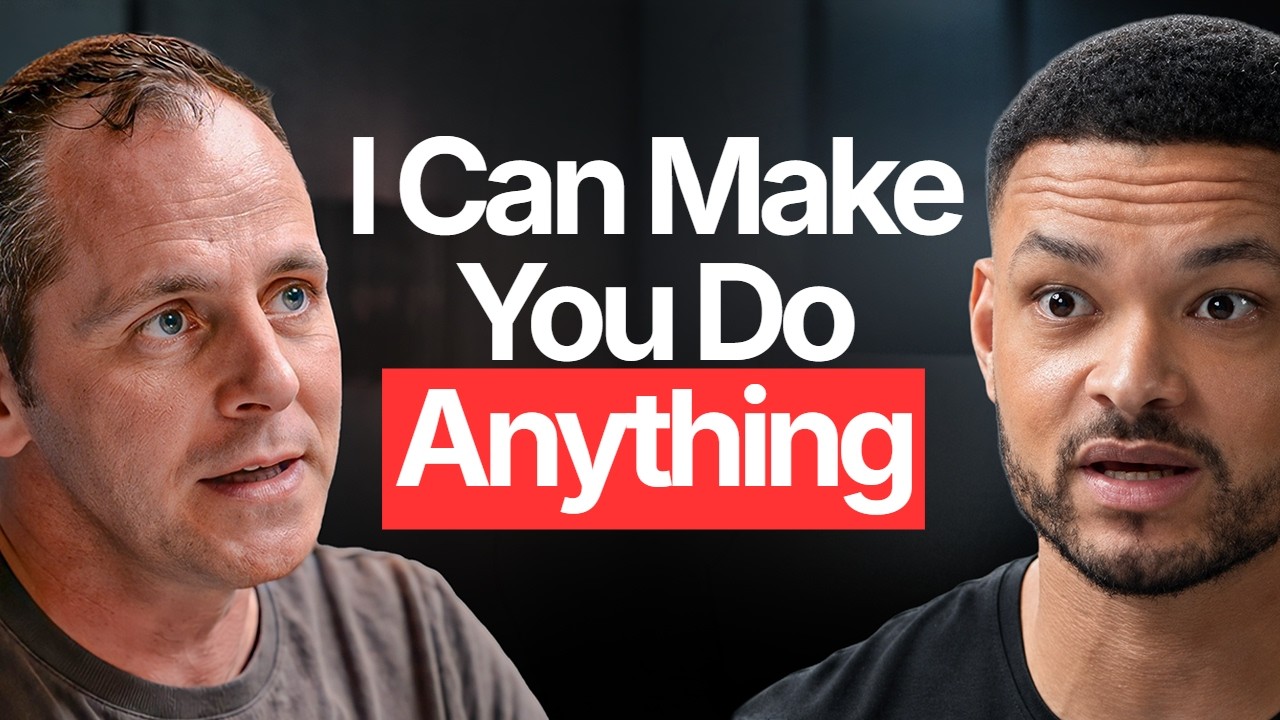
This video was published on YouTube by The Diary Of A CEO (hosted by Steven Bartlett) on March 19, 2026. According to the page description, it features behavior expert and former US Navy Chief Chase Hughes breaking down the secret formulas and hacks behind human influence, psychological operations, behavioral profiling, and how social media and AI impact identity.
## TL;DR
Behavioral expert Chase Hughes joins Steven Bartlett to explore the mechanics of covert influence, profiling, and psychological operations. Hughes outlines frameworks like the PCP model, identity precommitment, and micro-compliance to explain how context and language shape human decisions. The discussion spans the psychological impact of childhood conditioning, the strategic use of narrative archetypes in media and courtrooms, and how AI elevates the importance of authentic human connection. It culminates in a deep dive into consciousness, DMT, and reframing life's challenges to build genuine psychological resilience.
## Atmosphere & style
The conversation carries an intense, intellectually captivating vibe that seamlessly bridges high-stakes tactical influence with profound existential philosophy. Steven Bartlett plays an inquisitive, highly analytical host, creating a candid dynamic where Chase Hughes delivers deep psychological insights with calm, authoritative precision. The emotional arc moves fluidly from sharp, pragmatic breakdowns of human manipulation to evocative, mind-expanding reflections on consciousness and human connection.
## Key takeaways
- [00:00](https://www.youtube.com/watch?v=9uSXOr-AdAU&t=0s) The human brain has not evolved a new neurological wrinkle in 200,000 years, making fundamental evolutionary principles of brainwashing and micro-compliance consistently effective over time.
- [02:30](https://www.youtube.com/watch?v=9uSXOr-AdAU&t=150s) As technical, analytical, and automated tasks are taken over by artificial intelligence, human skills like emotional intelligence, connection, and social dynamics will become highly valuable assets.
- [05:30](https://www.youtube.com/watch?v=9uSXOr-AdAU&t=330s) The first step of the PCP Model is Perception, which emphasizes that effective persuasion relies on using resonating language that flows with what someone is feeling rather than direct confrontation.
- [08:28](https://www.youtube.com/watch?v=9uSXOr-AdAU&t=508s) Articulating unstated social rules or 'saying the quiet part out loud' breaks established social scripts, stripping them of subconscious leverage and allowing for authentic engagement.
- [10:51](https://www.youtube.com/watch?v=9uSXOr-AdAU&t=651s) Context serves as the second step of the PCP Model, functioning as a powerful framework that dictates what behaviors are permissible or unthinkable without changing underlying core values.
- [21:36](https://www.youtube.com/watch?v=9uSXOr-AdAU&t=1296s) Negative dissociation can be used to get people to open up by expressing disdain for a negative trait, causing the listener to covertly distance themselves and adopt the opposite positive identity trait.
- [25:17](https://www.youtube.com/watch?v=9uSXOr-AdAU&t=1517s) Securing a small, identity-aligning precommitment exponentially increases subsequent agreement to larger requests by anchoring behavior to a person's core perception of themselves.
- [36:13](https://www.youtube.com/watch?v=9uSXOr-AdAU&t=2173s) Authentic authority rests on distinct leadership channels like the President (directive), Professor (expertise-based), and Artist (presence-based), combined with a total removal of ego.
- [38:46](https://www.youtube.com/watch?v=9uSXOr-AdAU&t=2326s) True authenticity requires a willingness to receive social or financial injury to maintain core principles, stripping away performative ego to display genuine character.
- [40:37](https://www.youtube.com/watch?v=9uSXOr-AdAU&t=2437s) Roughly 90% of adults function under automated behavioral scripts that were adapted during childhood across three core developmental domains: Safety, Friends, and Rewards.
- [54:12](https://www.youtube.com/watch?v=9uSXOr-AdAU&t=3252s) Micro-compliance serves as the primary mechanism for gradual psychological control, building an unconscious pattern of obedience by getting subjects to complete dozens of trivial tasks.
- [01:00:47](https://www.youtube.com/watch?v=9uSXOr-AdAU&t=3647s) Short-form video feeds hook viewers using a four-step algorithmic priming hierarchy that cycles through Novelty, Authority, Tribe Signals, and Emotional Triggers to condition receptivity right before ads.
- [01:04:00](https://www.youtube.com/watch?v=9uSXOr-AdAU&t=3840s) The 'LEGO' method of persuasion is an incredibly dangerous skill that places two unlinked ideas close together so the target's mind connects them, making them believe the idea originated within themselves.
- [01:06:20](https://www.youtube.com/watch?v=9uSXOr-AdAU&t=3980s) An internal locus of control correlates directly with personal accountability and success, making it a critical trait to screen for by evaluating how individuals assign blame for poor outcomes.
- [01:23:26](https://www.youtube.com/watch?v=9uSXOr-AdAU&t=5006s) Psychedelics like DMT resolve trauma by radically shifting perspective rather than deleting memories, forcing individuals to view past events through a completely altered cognitive lens.
- [01:40:43](https://www.youtube.com/watch?v=9uSXOr-AdAU&t=6043s) An alternative theory of consciousness posits that the human brain acts as a receiver and filter rather than a generator of consciousness, with substances like DMT temporarily removing the filter.
- [01:42:41](https://www.youtube.com/watch?v=9uSXOr-AdAU&t=6161s) AI and digital platforms cannot serve as a replacement for human connection at the belonging and love level of Maslow's Hierarchy, as the human brain remains hardwired for physical, 3D social connection.
- [01:48:39](https://www.youtube.com/watch?v=9uSXOr-AdAU&t=6519s) Human misery largely stems from taking life with absolute seriousness rather than treating it like a game, which requires individuals to pause and actively celebrate wins instead of rushing to the next task.
- [01:50:25](https://www.youtube.com/watch?v=9uSXOr-AdAU&t=6625s) Gold medal depression occurs when peak achievements fail to transform internal identity, highlighting that happiness is defined by expectations matching reality (Happiness = Reality - Expectations).
## Detailed walkthrough
### [00:00](https://www.youtube.com/watch?v=9uSXOr-AdAU&t=0s) The Psychology of Influence and Micro-Compliance
Human behavior is deeply vulnerable to psychological manipulation—whether through social media, political rhetoric, or cult recruitment. The foundational mechanism behind almost all interpersonal influence is **micro-compliance**. In hypnotic inductions, a subject can be rendered unconscious on the floor within ninety seconds by first leading them through dozens of seemingly meaningless, small instructions—such as extending hands, flipping palms, or tracking eye movements upward and downward. None of these actions matter individually, but collectively they establish a subconscious pattern of obedience.
Because the human brain has not evolved a single new wrinkle in 200,000 years, the most effective techniques for influencing people today rely on the same fundamental brainwashing principles that have always worked. One primary driver is **novelty**, which immediately hijacks the brain’s neural circuitry. Functional MRI (fMRI) studies demonstrate that decisions form in the brain before conscious awareness occurs. Therefore, introducing novel physical or environmental changes—such as altering one's wardrobe or repainting office walls—communicates directly with the evolutionary "animal brain" to initiate shifts in belief or behavior.
---
* Micro-compliance relies on small, low-friction requests to build momentum toward complete obedience.
* Human decision-making originates unconsciously before reaching conscious awareness, as confirmed by neuroimaging.
* Novelty acts as a neurological circuit-breaker, making individuals more receptive to changing their habits or beliefs.
---
[02:30](https://www.youtube.com/watch?v=9uSXOr-AdAU&t=150s) Human Skills in the Era of AI and Automation
As artificial intelligence and robotics advance rapidly toward a future with billions of humanoid robots, purely technical or analytical tasks will be fully automated. The consensus among AI experts is that non-automatable, uniquely human traits—specifically social skills, emotional intelligence, and high-stakes communication—will become the most valuable assets in the economy.
```
"We are in an epidemic right now of loneliness where people are disconnected from each other, and these human skills are going to matter more than ever as AI comes out."
— Chase Hughes
```
In an era saturated with artificiality and performative content, people naturally gravitate toward authenticity. Mastering interpersonal dynamics allows professionals across fields to achieve specific outcomes:
* **Attorneys** can effectively sway juries.
* **Hostage negotiators** save lives under extreme pressure.
* **Parents** raise better-adjusted children through clear communication.
* **Leaders** guide teams toward shared goals with minimal friction.
---
[05:30](https://www.youtube.com/watch?v=9uSXOr-AdAU&t=330s) Step 1 of the PCP Model: Perception
The primary framework governing human decision-making and influence is the **PCP Model** (**P**erception, **C**ontext, **P**resence/Precommitment). The first stage requires altering how a person perceives a given situation. Effective persuasion does not force a direction; instead, it uses **resonating language** that aligns with what the other person is already feeling before guiding them forward.
When encountering an extreme or unusual opinion (e.g., someone claiming "the sky is purple"), attempting a direct confrontation triggers defensiveness. A skilled communicator validates the person's perceptual experience first—acknowledging differences in sensory interpretation—before shifting their perspective.
```
"The biggest mistake that people make with language is language should be resonating and not directing... You're getting into their river, so to speak, and flowing with that first."
— Chase Hughes
```
---
[08:28](https://www.youtube.com/watch?v=9uSXOr-AdAU&t=508s) Calling Out Social Scripts to Neutralize Power
A powerful technique for shifting perception is openly identifying the unspoken social script operating in a room or an individual's mind. Human interactions are heavily governed by hidden social expectations—such as the rigid decorum of a business networking event or an overly aggressive "alpha male" handshake.
When you articulate the unstated rule out loud ("saying the quiet part out loud") without mockery, you immediately strip that script of its subconscious influence:
* **Surface the dynamic:** Acknowledge the hidden motive or expectation directly.
* **Disarm the behavior:** By bringing the background program into conscious awareness, the other person loses their performative leverage.
* **Grant permission:** Disruption of the script allows both parties to break away from artificial social expectations and engage authentically.
---
[10:51](https://www.youtube.com/watch?v=9uSXOr-AdAU&t=651s) Step 2 of the PCP Model: Context Dictates Permissibility
The second component of the PCP model is **Context**. Context acts as the ultimate filter for human behavior, dictating what actions are permissible or unthinkable in any given setting. By altering the context surrounding an individual, their actions can be radically altered without changing their underlying core values.
A striking historical illustration of context's power occurred during a 1957 stage hypnosis show featuring an off-duty police officer. Under hypnosis, the officer was told he was a sheriff on stage and that an audience member was drawing a gun. Operating entirely within that constructed context, the officer pulled his concealed service weapon and fired into the crowd. Similarly, radicalization on the internet relies entirely on systematically altering an individual's perceived context until extreme behavior feels like an automatic necessity.
| Historical Case Study | Contextual Driver | Resulting Behavior |
|:--- |:--- |:--- |
| **1957 Stage Hypnosis Incident** | Perceived threat to authority in a hypnotic frame | Off-duty officer drew his service weapon and fired into the crowd. |
| **1979 Woolworths Fire (Manchester)** | Social protocol of a restaurant setting | Customers remained seated near the exit and died because no one had paid or given permission to break protocol. |
| **Smoke-Filled Room Experiments** | Social conformity in public spaces | Subjects remained seated in filling smoke simply because others around them didn't move. |
To apply contextual control in everyday life—whether in sales, parenting, or personal relationships—a communicator must explicitly establish the **frame** at the very beginning of an interaction. Setting the frame redefines the context before negative assumptions can take root.
For instance, when a parent needs to talk to a child who assumes they are in trouble, the parent can proactively shift both perception and context by stating: *"I'm so glad that we can have this talk in a calm way that is focused on learning instead of punishment."* This immediately dismantles the child's defensive posture, changing the interaction from an adversarial confrontation into a collaborative learning moment.
[15:38](https://www.youtube.com/watch?v=9uSXOr-AdAU&t=938s) Permission, Framing, and the Mechanics of Context Shift
Chase Hughes completes the explanation of his **PCP Model** (Perception, Context, Permission), highlighting how controlling context ultimately delivers the third element: **permission**. Changing a person's perception of a situation alters what they believe is acceptable or expected. For example, in a business negotiation, framing the conversation right at the outset with a statement like, *"I'm glad that we could all come here for this, and I know both of us want to find common ground as fast as possible,"* immediately establishes a collaborative frame.
Steven Bartlett reflects on how rarely people proactively set a frame in high-stakes meetings. Recalling recent business meetings in Los Angeles with potential partners, Bartlett notes that people often fall into trivial pleasantries about the weather before sinking into passive silence, leaving the frame completely unanchored. Bartlett realizes that taking charge of the narrative early on—stating a clear intent to move past theoretical discussions and reach a concrete, actionable deal—would have dramatically shifted the productivity of those meetings.
Hughes advises using a contrasting statement when setting a frame—starting with a negative observation about common pitfalls and contrasting it with a positive shared goal. He also introduces the concept of a **permission phrase**, such as *"Hey, just so I understand—and I may be wrong here..."* to gain buy-in without creating defensiveness. They note that framing is equally vital in personal and romantic relationships; establishing a clear, agreed-upon goal before addressing a conflict prevents emotional arguments from drifting into irrelevant personal grievances.
- **Media Manipulation:** Media outlets manipulate public perception by framing news with charged openers like, *"In another piece of terrifying news..."* Framing a politician as a "threat to democracy" fundamentally alters context, granting implicit psychological permission for extreme or radicalized reactions.
- **Context-Driven Permission:** Behavior changes completely depending on context. Hughes uses the stark example of taking off one's clothes: standing in front of a hot shower grants obvious permission, whereas doing so in an office setting violates social codes.
- **The Automatic Decision Query:** To persuade someone to make a specific choice, ask: *"In what context would the decision I need this person to make be the automatic thing?"*
[21:03](https://www.youtube.com/watch?v=9uSXOr-AdAU&t=1263s) Cognitive Dissonance and the Hypnosis Incident
Referring back to a story Hughes previously mentioned, Bartlett recounts a well-documented news report from December 1923 published in *The New York Times*. During a hypnosis demonstration in Croatia, an officer under a hypnotic trance believed he was under attack and fired his firearm into the crowd, killing three people and wounding several others. Upon snapping out of the trance and realizing what he had done, the officer immediately arrested the hypnotist on the spot.
Hughes chuckles, pointing out that this bizarre immediate arrest is a classic example of **cognitive dissonance**—the brain's emergency reaction to reconcile two contradictory realities. The officer could not process that he had just committed a horrific act under influence, so his brain instantly shifted back to his baseline identity as a law enforcement officer asserting control over the situation.
- **Hypnotic Context Shift:** The officer drew his weapon because the hypnotic suggestion changed his perceived context to an active attack, making firing his weapon the automatic and permissioned behavior.
- **Immediate Reversion:** Once the trance broke, the mental shock forced him to assert his primary role as a police officer to cope with the sudden psychological dissonance.
[21:36](https://www.youtube.com/watch?v=9uSXOr-AdAU&t=1296s) Open-Mindedness and Negative Dissociation
Bartlett pivots to a practical, personal dilemma: as a podcast host interviewing guests across the entire political and ideological spectrum (from Donald Trump to Kamala Harris), he wants both his guests and his audience to enter conversations with an open mind. He asks how to foster genuine objectivity in a world designed to force people into rigid ideological boxes.
Hughes introduces a covert persuasion technique called **negative dissociation**. Instead of telling a person directly that they should be open-minded—which triggers defensiveness—you make a casual, observational statement about a negative trait observed in *other* people. By expressing disdain for rigid, close-minded people who are terrified of stepping outside their comfort zones, you prompt the listener to covertly distance themselves from that group and internally affirm that they are the opposite.
> "The moment you can get them to covertly make an 'I am' statement in their head, you're hacking your way into that person's identity." — **Chase Hughes**
- **Mechanism of Action:** Negative dissociation targets identity rather than actions. Getting someone to agree with a general statement about who they *are not* subconsciously forces them to adopt the desired traits to preserve their self-image.
- **Follow-Up Commitment:** Following up with a disarming question—such as asking how they became so open-minded or whether it took special training—causes the subject to actively explain and defend their open-mindedness, locking the behavior in place for the duration of the interaction.
- **Aiming Language vs. World Observations:** Direct statements like *"I can tell you're the kind of person who..."* represent "aiming language" that feels manipulative. Persuasive language should always sound like an objective, casual observation about the world.
[25:17](https://www.youtube.com/watch?v=9uSXOr-AdAU&t=1517s) Identity Precommitment and Social Influence
Hughes illustrates how identity precommitment operates using a classic study by social psychologist Robert Cialdini. In the experiment, researchers attempted to convince homeowners to place a massive, unsightly sign reading "Drive Carefully" in their front yards. When approached cold, only about 1% of residents agreed. However, in another neighborhood, researchers first knocked on doors a week prior to ask a simple, 15-second survey question: *"Do you support safe driving?"* Nearly everyone answered yes.
When asked to place a tiny sticker supporting safe driving in their window, the residents easily complied. A week later, when asked to plant the huge, ugly sign on their lawn, an astonishing **85% of people agreed**. Because they had already made a small commitment aligning their identity with "someone who supports safe driving," refusing the larger request would have directly conflicted with their self-perception.
```
┌─────────────────────────────────────────────────────────────────────────┐
│ CIALDINI'S PRECOMMITMENT STUDY │
├───────────────────────────────┬─────────────────────────────────────────┤
│ Direct Request Alone │ ~1% Agreement │
├───────────────────────────────┼─────────────────────────────────────────┤
│ Survey + Small Sticker First │ ~85% Agreement │
└───────────────────────────────┴─────────────────────────────────────────┘
```
Hughes explains that positive precommitments can be created by praising a respected group rather than the individual directly. Telling someone, *"It's amazing how high-performing CEOs always completely tune in and focus on people when they talk,"* causes them to subtly agree with the statement and quietly adjust their behavior to match that elevated group standard.
- **Positive Association:** Assigning desirable traits to an admired reference group subconsciously motivates the listener to emulate those traits without feeling directly targeted.
- **Temporary vs. Permanent Shift:** Precommitment tactics generally trigger a temporary behavioral compartment for a specific interaction rather than fundamentally changing a person's personality forever.
[28:46](https://www.youtube.com/watch?v=9uSXOr-AdAU&t=1726s) Leveraging Precommitment for Self-Control and Action
Bartlett expands on the power of precommitment, pointing out that restricting one's own future choices is one of the most effective ways to beat internal friction and procrastination. He cites key academic studies demonstrating how structural precommitments dramatically alter behavior in academics, public safety, and financial planning:
- **MIT Deadline Study:** In an MIT experiment involving semester papers, students given complete freedom to submit all papers at the end of the semester scored the lowest grades and reported the highest stress. Conversely, students forced to pre-commit to strict, evenly spaced deadlines produced significantly higher quality work and earned better grades.
- **Bystander Beach Intervention Study:** In a social experiment on a public beach, a fake thief grabbed a radio sitting on a towel; only **20% of bystanders** intervened or chased the thief. However, when the owner asked a neighbor, *"Can you just watch my stuff for a second?"* prior to stepping away, **95% of people** chased down the thief when the radio was taken due to the explicit social precommitment.
- **Savings Precommitment:** Studies in behavioral economics consistently show that individuals who pre-commit portions of future wage increases directly into savings accounts save at significantly higher rates than those relying on real-time willpower.
<ElicitationsGroup message="Explore related concepts from this discussion:">
<Elicitation label="Deconstruct the PCP Model in detail" query="Break down Chase Hughes' PCP Model (Perception, Context, Permission) with practical real-world negotiation examples."/>
<Elicitation label="Analyze Cialdini's influence principles" query="Explain Robert Cialdini's core principles of influence and precommitment with psychological case studies."/>
</ElicitationsGroup>
[30:25](https://www.youtube.com/watch?v=9uSXOr-AdAU&t=1825s) Rewiring Identity and Precommitment
Steven Bartlett opens this section reflecting on how simple precommitments yield massive results. He highlights how individuals who committed to saving money—even by just writing it down on a piece of paper—saw their savings rates jump roughly fivefold, going from a baseline of 3% to 15%. This shift occurs because they made a precommitment to their future selves years earlier.
Chase Hughes builds on this, noting that precommitments work by pre-defining one's identity. To master this mechanism, a person must make identity-based commitments both privately and publicly. Rather than framing a habit as a future task—such as saying *"I'm going to go to the gym tomorrow"*—a person should declare *"I am the kind of person who goes to the gym."* Hughes emphasizes that identity is the single most effective lever in persuasion and influence. In the context of intelligence training, he explains that mastering influence is about constructing two metaphorical boundaries:
* **Anxiety:** The fear of breaking a social contract or facing social rejection if one fails to live up to their word.
* **Cognitive Dissonance:** The internal psychological tension that occurs when actions do not align with one's stated identity ("I am X person, so doing Y causes dissonance").
When these two boundaries are set, the path between them becomes a psychological hallway providing relief from discomfort. Dissonance forces individuals back into alignment with their self-image whenever they stray. To illustrate how rapidly identity can alter behavior, Hughes presents a thought experiment:
> "If you were an Olympic athlete and you had a badass body... and one day you woke up for some reason and you're 295 lb... How fast would you get back to that body? It would be lightning. You may set world records for weight loss because your identity is with that body. It's not that 'Oh, I want to lose this weight so I can be healthy,' it's 'This is not me.'"
To practically leverage this, Hughes often advises clients struggling with weight loss to edit a photo of themselves using FaceApp to look drastically overweight and place it on their refrigerator. Addressing concerns that this might "program the subconscious to be fat," Hughes clarifies evolutionary psychology: humans are hardwired to move away from negative outcomes first rather than toward positive ones. Early human ancestors survived because they mistook a rock for a bear, never the other way around. Placing an unwanted visual on the fridge creates immediate cognitive dissonance that the mammalian brain processes without needing motivational slogans.
Steven references a conversation with author Nir Eyal (*Indistractable*), highlighting Eyal's core thesis that humans are primarily **discomfort-avoiding creatures** rather than pleasure-seeking ones. Even basic drivers like desire or horniness are forms of physical or psychological irritation that prompt action to relieve the feeling. Steven notes how seeing himself looking out of shape on podcast footage acts as an immediate trigger to get back into the gym, reinforced by the public nature of his platform.
---
[36:13](https://www.youtube.com/watch?v=9uSXOr-AdAU&t=2173s) The 3 Channels of Authority in an AI World
As society transitions into an AI-driven era where human connection becomes paramount, leadership and interpersonal authority become critical skills. Hughes stresses that most modern leadership literature focuses merely on management rather than true authority. Authentic authority rests on five core traits:
Hughes emphasizes that people frequently pursue the wrong form of authority because they hold rigid preconceptions of how a leader should act. He categorizes personal authority into **three primary channels**:
When individuals force themselves into a channel that does not fit their underlying profile—such as a naturally quiet, professor-type executive trying to act like an aggressive "President"—they project inauthenticity. This misalignment creates internal tension, reduces their real-world impact, and diminishes overall happiness.
---
[38:46](https://www.youtube.com/watch?v=9uSXOr-AdAU&t=2326s) Redefining Authenticity and Social Injury
The conversation shifts to defining what true authenticity entails. Hughes argues that what most people call "authenticity" is actually just a collection of behavioral habits and coping mechanisms formed in early childhood. True authenticity requires stripping away ego:
> "Authenticity is authenticity plus a removal of ego and a willingness to receive social injury. And that's the best way that I've ever been able to describe that to somebody. Like if I'm being authentic in a conversation, then I'm willing to receive a social injury for it."
Steven echoes this perspective, citing entrepreneur Cody Sanchez, who stated she refuses to be private friends with anyone unwilling to say something publicly that might cost them something. Steven notes that this same standard applies to brands: genuine authenticity requires a willingness to sustain short-term social or financial costs to stand by core long-term principles, rather than resorting to hollow virtue signaling that often backfires.
---
[40:37](https://www.youtube.com/watch?v=9uSXOr-AdAU&t=2437s) The Childhood Development Triangle
Hughes outlines a foundational framework used in behavioral profiling: **The Childhood Development Triangle**. During development, every child establishes automated behavioral scripts across three primary domains to navigate their environment:
* **Safety:** What the child had to do to feel secure. Responses range from seeking physical affection to becoming hyper-vigilant, dominating the room, or shrinking into the background to avoid notice (e.g., navigating an unpredictable or alcoholic parent).
* **Friends:** What the child had to do to earn and keep peers—such as playing the class clown, performing, or remaining agreeable.
* **Rewards:** How the child earned appreciation, affection, and love from primary caregivers.
These childhood adaptations form permanent behavioral scripts that individuals place in a metaphoric "backpack" and carry into adulthood. Hughes explains that roughly **90% of adults** operate under the control of this childhood triangle. For instance, an adult colleague who freezes or shuts down during high-stakes business meetings is often displaying an automated response learned at eight years old when scolded at the family dinner table.
Steven provides two personal examples of colleagues whose adult workplace behaviors directly mapped to their upbringing:
* A colleague who was consistently pessimistic and watched Steven intently in meetings later revealed their father had rapid, unpredictable mood swings and was an extreme pessimist. Paying hyper-focused attention to the authority figure's shifting moods was a survival mechanism to stay safe.
* Another colleague (referred to as "Sarah") was an exceptional planner who was constantly anticipating potential problems 20 steps ahead. She similarly grew up with a volatile parent, turning hyper-vigilance and radical preemptive planning into a protective habit that later translated into a professional skill.
Hughes emphasizes that to break free from these automatic patterns, individuals must recognize that these internal scripts are written in a child's voice. Adult life typically maps onto three distinct social environments that mirror childhood settings:
* **Work Self** $\rightarrow$ Classroom
* **Friends Self** $\rightarrow$ Playground
* **Home Self** $\rightarrow$ Family Home
Recognizing when an automated reaction belongs to a childhood script is the first step toward reclaiming conscious control over adult behavior.
[45:53](https://www.youtube.com/watch?v=9uSXOr-AdAU&t=2753s) Unlocking Massive Self-Knowledge and Unpacking Childhood Triangles
Chase Hughes presents a practical framework for self-knowledge and personal transformation. True awareness starts with accepting two foundational mindsets: acknowledging that you are not special, and becoming completely comfortable with the idea that you may never be fully understood by others. In personal relationships and workplace arguments, people often get stuck fighting to be understood rather than seeking a constructive solution. By relinquishing the need to be special or universally understood, you open the door to recognizing deep-seated behavioral patterns in yourself and those around you.
For leaders, identifying these subconscious patterns allows them to see the reactive "8-year-old child" within an employee during moments of friction. When conflict arises, understanding whether a person is reacting to social dynamics, threats to their safety, or a drive for recognition makes their behavior predictable. Steven Bartlett reflects on how these three drivers—safety, rewards, and social connection—are deeply interconnected. Sharing a personal memory from growing up in Plymouth in the mid-1990s as part of the only Black family in his area, Bartlett explains how wanting the same popular shoes as his peers was a drive for material rewards that simultaneously provided safety through fitting in and helped him make friends.
- **Step 1:** Become completely okay with never being understood, removing the impulse to win emotional arguments.
- **Step 2:** Accept that "I am not special," which breaks down ego-driven defensiveness.
- **The Childhood Assessment Questions:**
- **Social/Friends:** *"What did you do to make and keep friends?"*
- **Safety:** *"What did you need to do or avoid to feel safe?"*
- **Rewards:** *"What did you feel you had to do to earn rewards, and what were rewards to you?"*
- **The Significance Trap:** Individuals who are obsessively driven by external status symbols (such as Ferraris or Rolexes) often grew up ignored by parents unless they achieved public recognition, such as winning awards or performing in recitals.
---
[49:43](https://www.youtube.com/watch?v=9uSXOr-AdAU&t=2983s) Rewriting Childhood Contracts and Overcoming Limiting Beliefs
When an old coping mechanism or childhood behavior begins actively sabotaging your adult life—blocking career advancement or romantic relationships—you must realize that this behavior stems from a contract created by a child. Children form survival rules under the assumption that they will need them forever. To break free, you must explicitly write down how that childhood voice developed, recognize that the voice will never completely disappear (much like you cannot stop your mind from completing a familiar nursery rhyme), and reframe it as a misguided child trying to provide protection.
To rewire these deeply ingrained patterns, Hughes recommends creating extreme, visually jarring reminders that expose what your limiting belief is actually costing you. For example, a business owner who hesitated to pursue big clients because of a childhood belief ("If I stay small, I am safe") was instructed to set his computer desktop wallpaper to read: *"My kids don't deserve for me to be successful."* Looking at that confronting statement daily creates a visceral sense of disgust and hyper-awareness, training the brain to view the limiting belief not as a reality, but as a fictional narrative from childhood.
Bartlett notes that such stark reminders force immediate action, allowing individuals to gather new real-world evidence of success. Addressing the common frustration where people relapse into old habits after listening to personal development advice, Bartlett emphasizes that childhood survival mechanisms cannot be deleted or thrown out of one's metaphorical backpack; rather, the goal is to turn down their volume so they no longer drive decisions.
---
[54:12](https://www.youtube.com/watch?v=9uSXOr-AdAU&t=3252s) Micro-Compliance and the Psychology of Persuasion
Hughes explains that the primary mechanism for changing your own mind—or influencing others—relies on "micro-compliance." Demonstrating how stage hypnotists, cult leaders, political campaigns, and social media platforms gradually build control, Hughes notes that hypnotists begin by asking a subject to complete dozens of trivial tasks, such as looking up and down, turning their hands over, or shifting their stance. None of these actions are inherently meaningful, but executing 50 tiny instructions builds an unconscious habit of obedience.
This psychological mechanism explains how medical professionals or authority figures can lead individuals through a lengthy checklist before successfully prescribing complex treatments. To rewire your own behavior, you should leverage the exact same principle: focus on achieving small, regular micro-wins with your goals rather than demanding massive, instant identity shifts.
- **The Milgram Obedience Experiment (1962, Yale University):** Demonstrates how ordinary citizens were led to administer what they believed were lethal electric shocks to strangers through step-by-step micro-compliance combined with the presence of perceived authority figures in lab coats.
- **The Four-Stage Behavioral Hierarchy:**
1. **Focus:** The absolute prerequisite. Without capturing focus, authority cannot be established.
2. **Authority:** Leveraged once attention is fully secured.
3. **Tribe:** Looking to social context ("What is everyone else doing?").
4. **Emotion:** The final step, determining how an individual feels about the action taken.
---
[57:35](https://www.youtube.com/watch?v=9uSXOr-AdAU&t=3455s) The Power of Novelty and Beating the "Wallpaper Filter"
Because focus is the primary gateway to influence, capturing it requires novelty—an unexpected event or break in pattern. From an evolutionary perspective, an ancestor carrying fish back from a river would instantly drop all peripheral thoughts to focus entirely on a snapping branch in a nearby bush. Novelty forcefully hijacks the brain's cognitive resources because human survival depends on processing unexpected information immediately.
To apply this to self-directed change or marketing, you must actively break routine patterns to bypass the brain's automatic filtering system. Hughes suggests altering your physical environment—repainting office walls, rearranging furniture, changing your wardrobe, or moving household items—to shock your brain out of autopilot.
Bartlett ties this directly to marketing and communication, citing a classic rodent study where a rat navigating a maze for the first time exhibits explosive brain activity while searching for chocolate. By the second run, the rat's brain activity drops drastically because the maze has become familiar and no longer requires active cognitive processing. To persuade an audience or build a brand, creators must constantly disrupt this "wallpaper filter." Whether speaking on stage against the distraction of smartphones or structuring fast-paced YouTube videos like MrBeast, introducing novel stimuli every few seconds is essential to keeping an audience engaged.
[01:00:47](https://www.youtube.com/watch?v=9uSXOr-AdAU&t=3647s) The Algorithm of Manipulation: How Platforms Hook You Before the Ad
Chase Hughes presents a practical challenge to test how short-form video feeds use psychological triggers to manipulate viewer attention. He instructs viewers to scroll through short-form content and observe the exact sequence of hooks being deployed: first comes a 20-to-40-second clip driven by pure novelty to jerk your attention and lock in focus. Next comes an authority figure—a famous creator, celebrity, or politician weighing in on complex topics. That is immediately followed by a "tribe signal" showing massive crowds, sold-out concerts like Taylor Swift, or high engagement numbers designed to implicitly signal how you ought to behave and conform.
The sequence culminates in a highly emotional video designed to evoke a strong feeling, right before hitting the viewer with a targeted advertisement. By recognizing this four-step rhythm—novelty, authority, tribe, and emotion—viewers can spot how social feeds condition their brains to be receptive right when a commercial break lands.
* **4-Step Algorithmic Priming Sequence:**
1. *Novelty:* Captures immediate focus via unusual or attention-grabbing visual hooks.
2. *Authority:* Establishes perceived credibility using celebrities or experts.
3. *Tribe Signal:* Triggers social proof and conformity (e.g., concert crowds, agreement stats).
4. *Emotional Trigger:* Evokes strong feelings to open up psychological receptivity right before an ad appears.
---
[01:04:00](https://www.youtube.com/watch?v=9uSXOr-AdAU&t=3840s) The "LEGO" Method: Making People Feel Clever to Plant Ideas
Moving into core influence tactics, Steven Bartlett asks Chase to explain a concept he previously mentioned: that the most powerful way to persuade someone is to make them feel clever. Chase calls this "maybe the most dangerous persuasion skill there is." He illustrates it using a simple mental picture: placing one LEGO brick on the table, then setting down another nearby without connecting them. By continuing the conversation without linking the two pieces, the listener's brain naturally jumps to the conclusion: *"Oh, I bet those things go together."* Because the listener synthesized the conclusion themselves, they possess zero psychological resistance to it.
```
+-------------------+ +-------------------+
| Information A | | Information B |
| (Familiar Fact 1) | | (Familiar Fact 2) |
+---------+---------+ +---------+---------+
| |
+-------------+-------------+
|
v
+-----------------------------+
| Target's Mind Connects |
| "Oh! A + B must mean C!" |
| (100% Internal Ownership) |
+-----------------------------+
```
Chase points out how news media and conspiracy theories rely on this exact mechanism. For instance, a news broadcast might report that a woman is missing and mention that neighbors saw her arguing with her boyfriend right before cutting to a commercial break. The viewer instantly thinks, *"I know exactly what happened!"* because they connected the dots themselves. Similarly, conspiracy theories around figures like Bill Gates thrive by juxtaposing two familiar facts—wealth/power and interest in biotechnology or vaccines—allowing people's minds to assemble a narrative of hidden motives.
* **The Rule of Self-Generated Ideas:** People cannot resist an idea they believe originated within their own minds.
* **The Formula:** Present two familiar, undisputed pieces of information close together, leaving the final logical leap unstated for the target to complete.
* **Media & Conspiracy Leverage:** Tropes and news teasers intentionally withhold the final connection so the audience feels insightful for arriving at the intended conclusion.
---
[01:06:20](https://www.youtube.com/watch?v=9uSXOr-AdAU&t=3980s) Cultural Archetypes: The "Evil Rich" Narrative and Internal Control
The discussion shifts to why certain narratives take root so easily in the public consciousness. Steven and Chase explore the cultural archetype of the "wealthy villain," tracing it back past modern movies to ancient fairy tales like those of the Brothers Grimm. Chase notes that early storytelling deliberately framed poverty as virtuous and wealth as corrupt or dangerous to instill social values in children. Over centuries, these tropes became deeply encoded into collective archetypes, making them effortless shortcuts for modern filmmakers and communicators.
```
+-----------------------------------------------------------------------+
| LOCUS OF CONTROL MATRIX |
+-----------------------------------+-----------------------------------+
| EXTERNAL LOCUS OF CONTROL | INTERNAL LOCUS OF CONTROL |
+-----------------------------------+-----------------------------------+
| • "Things happen TO me" | • "I am responsible for my life" |
| • Blames external factors | • Owns mistakes and learns fast |
| • Victim mentality | • Driven, ambitious, higher yield |
| • Focuses on outside barriers | • High personal accountability |
+-----------------------------------+-----------------------------------+
```
This discussion leads directly into how human minds fill in missing details based on established archetypes. Mentioning a "billionaire businessman" instantly summons images of private jets, briefcases, and ruthless behavior without those details ever being spoken aloud.
Steven connects this to a hiring filter he uses in his own businesses, where candidates complete a 35-question test ending with: *"When I don't do great work, who's to blame?"* Roughly 45% of applicants select "myself" rather than management or teammates. Both agree that selecting for an **internal locus of control**—the belief that you are in charge of your own destiny—correlates directly with accountability, faster learning, ambition, and long-term success.
* **Fairy Tale Tropes:** Historical fables engineered the "virtue in poverty" narrative, embedding rich-versus-poor stereotypes into modern media archetypes.
* **Internal Locus of Control:** Individuals who take personal responsibility for outcomes achieve higher performance and demonstrate greater resilience.
* **Covert Screening:** Asking candidates subtle questions about responsibility reveals their core mindset without giving away the "right" answer.
---
[01:08:55](https://www.youtube.com/watch?v=9uSXOr-AdAU&t=4135s) Legal Mind-Games: Winning Courtroom Trials Through Covert Profiling
Chase details his work as a trial consultant, revealing that he offers a **200% money-back guarantee** when hired for legal cases—despite knowing almost nothing about actual law. His expertise lies entirely in human behavior. During jury selection (voir dire), his job is to profile potential jurors covertly to filter for specific mindsets without alerting opposing counsel to his strategy.
He shares a real case where he represented a major grocery store chain being sued by a customer who slipped on a green bean. To win, Chase needed jurors with an internal locus of control who believed individuals are responsible for their own safety, while eliminating candidates with a victim mentality.
To uncover this without revealing his intent, Chase crafted covert questions like: *"How does a person catch a cold?"*
* Candidate A responded: *"These stupid kids wiping their noses on escalators and coughing everywhere!"* (External locus / victim mentality).
* Candidate B responded: *"If I get sick, I wasn't taking care of myself, taking my vitamins, or washing my hands properly."* (Internal locus / personal responsibility).
By analyzing these answers, Chase accurately stacked the jury with individuals predisposed to side with his client.
* **Trial Consulting Offer:** Chase provides a 200% money-back guarantee based on his behavioral jury profiling techniques.
* **Covert Questioning Strategy:** Asking indirect, seemingly unrelated questions prevents opposing counsel from discerning the desired juror profile.
* **The "Green Bean" Lawsuit:** A real-world civil case where jury selection hinged on identifying internal vs. external locus of control using the cold-prevention question.
---
[01:12:39](https://www.youtube.com/watch?v=9uSXOr-AdAU&t=4359s) Priming the Jury: Archetypes and the "File Clerk" Effect
Once a jury is selected, Chase uses archetype priming to guide their decision-making. If representing an individual against a corporate giant, he spends the opening hours embedding the **David and Goliath** narrative without ever mentioning the story by name. By subtly weaving in key terms like "giant," "small," or "slingshot," he plants the story arc directly into the jurors' minds so they feel they discovered the dynamic themselves. He reinforces this by bringing up everyday frustrations like waiting in line at the passport office or sitting in a doctor's waiting room for 45 minutes, activating memories of institutional incompetence and corporate neglect.
```
[ CONVERSATIONAL PRIMING ]
(Keywords: "Giant", "Slingshot", "DMV")
|
v
+-------------------------+
| THE MENTAL FILE |
| CLERK |
+------------+------------+
|
v
[ Pulls Folders: Incompetence, Bullying ]
|
v
[ Leaves Folders Open on Cognitive Desk ]
|
v
[ INFLUENCES EVENING DECISIONS & ]
[ FINAL VERDICT DELIBERATIONS ]
```
To explain the psychological mechanism behind this, Chase uses the metaphor of the **"mental file clerk."** When a speaker mentions a concept or scenario, the mental file clerk inside the listener's brain runs down to the filing cabinet and pulls out the relevant memory folder. If a communicator triggers multiple specific files throughout the day within a given context, the file clerk leaves all those open folders sitting on the desk. This collective body of activated memories subconsciously shapes every decision, assessment, and verdict the listener makes moving forward.
* **Archetype Priming:** Embedding classic story frameworks (e.g., David and Goliath) by introducing thematic keywords without explicitly naming the story.
* **The "Mental File Clerk" Metaphor:** Concepts mentioned during a conversation force the brain to retrieve related past memories and hold them active in working memory.
* **Cumulative Priming Impact:** Keeping specific categories of memories active on the mental "desk" systematically biases subsequent decisions and interpretations.
[01:15:15](https://www.youtube.com/watch?v=9uSXOr-AdAU&t=4515s) Story Archetypes, Justice, and the Human Mind
Chase Hughes explains how archetypes function as an extremely potent form of persuasion. Rather than trying to dictate a conclusion to someone, a skilled influencer can present a scenario in a way that maps onto a classic story archetype—such as David and Goliath. When the subject recognizes the archetype, their brain instinctively fills in the rest of the narrative. If you frame a current conflict as being at the midpoint of a David and Goliath struggle, where the young shepherd boy is walking down the hill to challenge the giant, the listener's brain automatically generates the expected ending. Because completing an archetype feels like justice and "the right thing to do," people will actively push for that outcome without realizing the archetype was implanted in their mind days earlier.
An archetype, Hughes notes, is essentially a "brand of story"—classic narrative arcs like the Hero's Journey, a tragedy, a story of loss and return, rags-to-riches, or the wounded healer. Referring to the work of Joseph Campbell, Hughes notes there are roughly 12 fundamental story types that the human brain recognizes. When an audience is led to believe they are at the 75% mark of a redemption arc, their brain doesn't just predict what happens next; it feels an intrinsic desire to make that outcome happen.
- **Key Archetype Types:** Hero's Journey, Tragedy, Loss and Return, Rags-to-Riches, Wounded Healer.
- **Joseph Campbell Framework:** Around 12 core story archetypes exist in human psychology.
- **Mechanism of Action:** Archetypes bypass normal linguistic processing because they are deeply woven into human cognition without requiring language.
---
[01:17:02](https://www.youtube.com/watch?v=9uSXOr-AdAU&t=4622s) Profiling People Through Their Personal Narrative
When Steven Bartlett asks how someone like "Debbie in Ohio" can apply this in everyday office life, Hughes recommends using archetypes as a practical profiling tool. By paying close attention to how colleagues speak about their lives and past experiences, you can identify what "movie" they believe they are living in. For example, a coworker who constantly seeks wild adventures and unprecedented challenges is operating within a *Back to the Future* style archetype. If you map out their personal narrative arc, you can predict the future challenges they anticipate and how they will make choices.
Steven connects this concept to a framework shared by former CIA officer Andrew Bustamante: the **RICE framework** (*Reward, Ideology, Coercion, Ego*). Bustamante noted that during his time in espionage, understanding a target's *ideology* was the most powerful lever of persuasion. Steven builds on this by proposing that everyone carries an internal Hero's Journey. The greatest challenge when negotiating or pitching—whether hiring an executive or selling a Range Rover—is listening long enough to understand the other person's underlying ideology and framing your offer as the logical next chapter in their personal story.
Hughes agrees, adding that persuasion doesn't require selling a complete ending; it only requires framing your proposal as the natural next step. For example, if a job candidate explains that at their previous company they worked tirelessly without any appreciation, they reveal they felt trapped in a tragedy as a victim. Consequently, moving to a new company represents their "redemption arc"—meaning they have a deep, unspoken need to be recognized and appreciated.
- **Andrew Bustamante's RICE Framework:**
- **Reward:** Tangible gains (e.g., money).
- **Ideology:** Personal values, beliefs, and duty to family or country (identified as the most persuasive driver).
- **Coercion:** Pressure and force.
- **Ego:** Pride and self-image.
- **Practical Application:** Listen for how people describe past setbacks (e.g., feeling unappreciated) to identify their current narrative arc (e.g., seeking redemption).
---
[01:21:20](https://www.youtube.com/watch?v=9uSXOr-AdAU&t=4880s) The Time-Distance Problem in Interrogation and Persuasion
Hughes reveals that the central problem he sought to solve throughout his entire behavioral career is what he terms the **Time-Distance Problem**. He visualizes this using two axes: a horizontal "Distance" axis and a vertical "Time" axis. Distance represents how far you can shift a person away from their baseline behavioral norm—such as convincing someone to confess to a crime that carries a 30-year prison sentence, or persuading a customer to make a high-stakes purchase they initially resisted. Time represents how long it takes to achieve that behavioral shift.
While many sales tactics or interrogation strategies can eventually move a person far down the distance line, they often require months or years of persuasion. Hughes describes a high-pressure assignment for a California corporation where he was tasked with conducting **45 interrogations in just two days**, leaving him with roughly **25 minutes per subject**. Solving the time-distance problem requires rapidly layering techniques—identity adjustments, perception shifts, context, and explicit permission—into a brief conversation to trigger a dramatic behavior shift almost instantly.
- **Horizontal Axis (Distance):** How far a subject is moved from their standard behavioral norm.
- **Vertical Axis (Time):** The duration required to achieve the shift.
- **Corporate Case Study:** 45 interrogations conducted over 2 days with only ~25 minutes allotted per person.
---
[01:23:26](https://www.youtube.com/watch?v=9uSXOr-AdAU&t=5006s) Trauma, Perspective, and Sponsored Break
Shifting briefly to personal psychology, Hughes connects the idea of shifting behavior to how people carry trauma. Many individuals struggle trying to "delete" traumatic memories, but Hughes explains that treatments like psychedelics don't erase memories at all—they radically alter perspective. By forcing a person to view past traumatic events through a completely different lens, the emotional burden changes. For roughly 90% of the individuals Hughes works with who struggle with confidence, leadership anxiety, or negotiation fears, the root issue is purely a perspective problem rather than a lack of capability. However, he also cautions that long-standing mental struggles can sometimes stem from physical chemical imbalances or basic vitamin deficiencies, recommending neurotransmitter and brain testing.
> "The reason that psychedelics can rewire PTSD so effing fast is that it doesn't delete your trauma at all... It changes the perspective so massively that you can still see the event, but it forces you to see all of that stuff through a different lens."
- **Perspective vs. Deletion:** Trauma resolution relies on changing how an event is viewed, not removing the memory.
- **Physical Factors:** Chronic anxiety or low confidence can also stem from biological issues like vitamin deficiencies or neurotransmitter imbalances.
*Note on Sponsor Messages:*
The episode features promotional segments for **Vivo Barefoot** shoes (highlighting research from Liverpool University showing a 60% increase in foot strength over 6 months of use, offered with discount code `stevenb15`) and a bundle offering **The Diary Of A CEO Conversation Cards (Second Edition)** alongside **The 1% Diary** for corporate and personal habit building.
---
[01:26:24](https://www.youtube.com/watch?v=9uSXOr-AdAU&t=5184s) Psychedelics, DMT, and Altering Human Consciousness
When Steven asks how someone can alter their perspective without using psychedelics, Hughes notes methods like sensory deprivation tanks, darkness retreats, and breathwork, though he admits his primary focus has been studying psychedelics. He highlights findings from Johns Hopkins University indicating that psychedelic compounds have shown unprecedented effectiveness in treating psychological conditions like treatment-resistant depression, PTSD, and addiction. He also mentions **ibogaine** for addiction recovery and the emerging clinical practice of extended **intravenous (IV) DMT** infusions.
Hughes shares that he was the **41st person in the world** to undergo a continuous 5-hour IV DMT infusion in Denver. His goal was to repair his own brain following a diagnosed brain disease, leveraging DMT's ability to trigger massive surges of **BDNF** (Brain-Derived Neurotrophic Factor) and promote intense neuroplasticity. He states that the 5-hour experience permanently transformed him, though he stresses that DMT is an extraordinarily intense experience that has zero recreational appeal.
To explain what a DMT journey feels like, Hughes uses a geometric analogy: imagine two-dimensional creatures living on a flat sheet of paper. If one creature takes DMT, it is peeled off the paper and suddenly gains the ability to perceive a three-dimensional room. Every scientist studying DMT, Hughes notes, agrees that the experience does not feel like a typical hallucination. Across 4,500 years of recorded human history, users consistently report entering the exact same realms and encountering the same seven or eight types of entities—a startling phenomenon given that DMT is an endogenous chemical naturally produced inside the human body. Returning to normal waking reality after DMT makes the everyday world feel like low-resolution "claymation" or a cartoon.
- **Johns Hopkins Findings:** Psychedelics recognized as highly effective treatments for PTSD, treatment-resistant depression, and addiction.
- **DMT Mechanism:** Triggers significant releases of Brain-Derived Neurotrophic Factor (BDNF) and neuroplasticity.
- **Hughes's Experience:** 41st subject globally to undergo a 5-hour IV DMT trial in Denver.
- **The 2D to 3D Analogy:** DMT feels like peeling a two-dimensional entity into a three-dimensional space.
- **Consistency of Experience:** Historical records spanning ~4,500 years document users meeting the same 7–8 entity archetypes in identical states.
[01:30:12](https://www.youtube.com/watch?v=9uSXOr-AdAU&t=5412s) Are We Living in a Simulation? Hermes Trismegistus and Dream Logic
The conversation dives deep into the nature of reality and whether our world is an illusion or a simulated construct. Steven Bartlett questions whether Chase Hughes truly believes this world isn't real, prompting Chase to emphasize that we first have to define what "real" and "simulation" even mean. Chase points out a recurring historical pattern of human hubris: every generation defines the universe by its newest technological breakthrough. When electricity emerged, the universe was described as energy; during the Industrial Revolution, it was viewed as a massive machine; today, because we discovered computers, everyone assumes the universe is a computer.
However, Chase explains that discoveries in particle physics and quantum mechanics are increasingly validating ancient philosophical ideas—specifically the Hermetic principles attributed to Hermes Trismegistus (Thoth). The foundational principle, "All is Mind," posits that the universe is fundamentally mental. To illustrate this to his son, Chase asked him about dreaming: when you look at a house in a dream, you are using imagined eyes; the 30 feet of air between you and the house isn't physical air, but your mind; and the house itself is composed of your own consciousness. In a dream, everything can feel completely real and touchable, yet it is all generated internally. Chase suggests that our waking reality might just be a higher level of that same dynamic—where distance and physical separation are merely hallucinations.
- Chase highlights two primary Hermetic principles: *"All is mind"* (the universe is mental) and *"As above, so below"* (fractal structures repeat at every scale).
- He notes how patterns in nature mirror one another across scales—such as a spinning galaxy resembling a DNA double helix, or a human eyeball looking identical to a nebula.
- The ultimate illusion, according to Chase, is the idea of separation—believing you are separate from other people or distinct from nature when you are literally made of the same dirt.
> "I do think that separation is the greatest lie ever told to the entire world... How people say, 'I need to go spend time in nature'—like, you are nature. You're made out of that stuff. You're made out of that dirt."
---
[01:34:34](https://www.youtube.com/watch?v=9uSXOr-AdAU&t=5674s) Levels of Reality, DMT, and Unzipping the Ego
Steven reflects on the levels of reality Chase proposed—where level one is dreams and level two is our waking universe—and asks what level three might be. Chase suggests that level three could be what people experience during a DMT journey, a state he describes as exponentially and immeasurably more real than our everyday physical world. When Steven asks how one quantifies "realness," Chase admits there are simply no human words capable of capturing it.
This profound shift in perspective drastically altered Chase's relationship with spirituality and religion. Rather than remaining non-religious or practicing "performed spirituality"—where spiritual practices are displayed for virtue signaling—he became genuinely spiritual in a quiet, humble way. He realized spirituality doesn't require buying linen yoga pants, wearing wooden beads, or bathing in essential oils. Instead, it is about abandoning rigid certainty. Over repeated psychedelic therapy sessions, Chase learned that going in with an egoic desire to "understand the secrets of the universe" is pointless, as the human brain cannot retain or translate that vast information upon return. The true value lies in letting go of the ego.
- Chase describes how psychedelic experiences allow him to *"unzip this little ego costume"* a bit more each time.
- He emphasizes that certainty is the ultimate enemy of growth, noting that humans are *"very newborn creatures on this planet."*
- Going through these experiences made Chase "unbelievably" more empathetic toward others.
> "Spirituality was kind of something I did to show people... Now spirituality, you kind of see it like it's not a big deal. You don't have to go buy linen yoga pants and wooden beads and bathe in essential oils to be spiritual."
---
[01:36:49](https://www.youtube.com/watch?v=9uSXOr-AdAU&t=5809s) Being Banned from Hyperspace and the Gut Microbiome Analogy
Chase shares a fascinating, widely reported phenomenon from DMT culture: people getting "banned" or "locked out" of hyperspace. Individuals who abuse DMT recreationally often report reaching a point where the experience abruptly stops. Regardless of how many hits they take or how high the dosage is, the drug stops working, or entities within the realm explicitly tell them they are no longer welcome. Steven reads through the documented descriptions of this phenomenon, which range from hitting a "waiting room wall" to suffering a terrifying "hyper slap" or experiencing sudden blackouts where no memories are retained.
To explain why he has come to believe there is something far greater than our current perception, Steven shares an unexpected analogy involving the human gut microbiome. Learning that the human gut harbors 38 trillion living organisms completely reframed his understanding of existence. If those micro-organisms were capable of debating, they would debate religion and question whether a creator exists, completely unaware that they live inside the very organism feeding and sustaining them. Similarly, creatures at the bottom of the ocean have no concept of the world above. Steven argues it is pure arrogance to assume humans sit at the absolute top of existence. Furthermore, looking through a 1-meter binocular in Joshua Tree at a galaxy 28 million light-years away made him realize how impossibly vast the cosmos is.
- **Locked Out of Hyperspace Phenomena:**
- **The Waiting Room Wall:** Stuck in the initial onset phase, unable to break through.
- **The Gray Room:** Seeing dull, colorless visuals instead of vibrant geometry.
- **The Hyper Slap:** Entities aggressively telling the user they aren't welcome and must leave.
- **Sudden Blackouts:** Ingesting the substance and immediately falling asleep or forgetting the experience.
- Steven draws a parallel between the 38 trillion organisms in the human gut and the trillions of galaxies in the universe, wondering if we are merely "another gut in the bug of some toddler in some other space."
---
[01:40:43](https://www.youtube.com/watch?v=9uSXOr-AdAU&t=6043s) Consciousness as a Receiver and the Illusion of Moral Superiority
Chase introduces a emerging theory of consciousness that flips traditional neuroscience on its head: what if the brain does not *generate* consciousness, but rather acts as a receiver and a filter for it? Under this framework, DMT temporarily removes or alters that filter, allowing a person to experience unfiltered, full consciousness. If the Hermetic principle "All is Mind" holds true at this level, then we are all individual points of perception sharing a single, collective dream.
Steven notes that adopting this perspective fundamentally transforms how one treats others. If everyone is part of the same underlying mind, then your friend, your spouse, and even your enemy are all ultimately *you*. Empathy ceases to be a performative moral duty; instead, treating others well becomes an act of self-preservation and natural care, identical to how a parent protects their own child. Moral posturing becomes obsolete because doing the right thing is simply treating yourself properly.
- The brain functions like a radio receiver tuning into a signal, rather than a generator producing the signal.
- Distance between people is an illusion constructed by the brain's filtering mechanisms.
- Recognizing unity eliminates the need for forced morality—protecting others becomes identical to protecting oneself.
> "Moral morality doesn't need to exist anymore. It's just the right thing... If I see you as me, I'm just protecting myself."
---
[01:42:41](https://www.youtube.com/watch?v=9uSXOr-AdAU&t=6161s) The Human Need to Be Seen and Heard in an AI-Driven World
Steven asks Chase to identify the single most critical human skill needed in a future dominated by robotics and artificial intelligence. With robots expected to handle physical labor and AI taking over cognitive tasks, humans will be left primarily interacting with one another. Chase responds without hesitation: the most vital skill is making people feel truly heard and seen—resonating with them when they are heard, and refusing to judge them when they are seen.
Chase asserts that AI will never replace human interaction at the social level of Maslow’s Hierarchy of Needs (love and belonging). While technology offers pseudo-social connections through platforms like TikTok, X, and YouTube parasocial relationships, these digital interactions act as a placebo. Human brains have not gained a single new wrinkle in 200,000 years; they are hardwired for physical, 3D social connection. Because people rely on digital placebos, they remain stuck at level three of Maslow's pyramid, unable to properly progress to self-esteem and self-actualization.
- **Maslow's Hierarchy Breakdown in the Digital Age:**
- **Level 1 & 2 (Survival & Safety):** Physical needs and security.
- **Level 3 (Belonging & Love):** Social connection that *cannot* be fulfilled by AI or screens.
- **Level 4 & 5 (Esteem & Self-Actualization):** Blocked when social connection is substituted with digital placebos.
- Chase highlights that you cannot "meditate your way out" of needing real, physical human beings in your life.
- Steven reminisces about his high school psychology teacher, Mrs. Lowney (along with his business teacher Mr. Hughes), who made him feel seen as a student and introduced him to foundational psychological studies like Harry Harlow's rhesus monkey experiments.
> "Mark my words, AI will never in a million years serve as a replacement for humans on the social level of Maslow's hierarchy of needs... Our brains were not wired to receive digital connection. Our brains have not developed one more wrinkle in the last 200,000 years."
[01:45:37](https://www.youtube.com/watch?v=9uSXOr-AdAU&t=6337s) The Need for Human Connection and the Universal Reality of Insecurity
Reflecting on the psychological necessity of contact, Steven Bartlett recalls Harry Harlow's famous rhesus monkey experiment, where infant monkeys were provided either a soft cloth mother or a bare wire mother. The outcome demonstrated that monkeys raised with the cloth mother grew up psychologically stable and happy, whereas those given only the wire mother developed severe psychological issues and erratic behavior. Steven notes that even in an upcoming era dominated by AI, robotics, and hyper-retentive algorithms, the irreplaceable necessity of physical human contact will cause a dramatic societal bifurcation, driving many people back into real-world interactions. Chase Hughes agrees, highlighting that modern society is plagued by manufactured division and resultant widespread loneliness, but offers a deeply comforting psychological perspective to end on.
Chase explains that if a person were to write down their deepest, most embarrassing life insecurities and mix them into a hat with those written by a hundred random strangers, they would be completely unable to identify their own paper. Everyone shares the same underlying fears, anxieties, and hidden self-doubts, yet people continuously hide their vulnerabilities, falsely believing they are alone in feeling that way. The biggest regret expressed by people on their deathbeds is failing to realize that life should have been treated more like a game rather than a hyper-serious struggle.
* The Harlow monkey experiment demonstrated that physical comfort and touch (the cloth mother) were essential for normal psychological development over simple food delivery (the wire mother).
* Chase emphasizes that our deepest personal insecurities are universally shared, meaning the exact things we try hardest to hide are actively felt and hidden by everyone else around us.
[01:48:39](https://www.youtube.com/watch?v=9uSXOr-AdAU&t=6519s) Life as a Game and the Skill of Celebrating Wins
Steven observes a noticeable evolution and heightened level of empathy in Chase since their prior meeting, noting how this shift seems to slow down the rush of everyday life. Chase agrees that keeping life in perspective requires constantly reminding oneself: "It's supposed to be fun. It's supposed to be a game." He quotes philosopher Alan Watts, who famously observed, "Most of man's misery comes from taking very seriously what God made for fun." Steven acknowledges that taking things lightly becomes difficult when primitive neurobiology perceives a threat to core needs like safety, community, or status.
Transitioning to the podcast's signature closing tradition, Steven reads the question left by the previous anonymous guest: "If you were going to take on a new challenge this year to expand the territory of your skill set in a way that would make you happy, what would it be?" Chase answers candidly that his biggest challenge is developing the ability to "shut the fuck up and celebrate when there's a win." He shares a recent example where his company had a massive, record-breaking month, yet rather than taking time to acknowledge the milestone with his team, he immediately jumped into the next routine business meeting and let the achievement fall by the wayside.
* Philosophy reference: Alan Watts noted that human suffering largely stems from taking life's playful nature with absolute seriousness.
* Chase identifies celebrating victories as an actual skill he desperately needs to cultivate, acknowledging that moving onto the next task immediately robs his team and himself of joy.
[01:50:25](https://www.youtube.com/watch?v=9uSXOr-AdAU&t=6625s) Managing Expectations, Gratitude, and Uncoupling Success from Identity
Steven references a previous guest, former Google X executive Mo Gawdat, who defined happiness as the state when your life matches your expectations, meaning unhappiness is simply the delta between how life is going and how you expected it to go. Because ambitious individuals continuously push their goals higher, they maintain a constant gap between reality and expectations. This dynamic explains "gold medal depression," where Olympic athletes reach the top of the podium only to experience intense melancholy because achieving their ultimate goal failed to magically transform their internal life or posture.
To combat this trap, Steven shares a personal practice he used when purchasing his home in Los Angeles. Before stepping foot inside the house, he explicitly told himself out loud that the house would not alter his identity, make him an inch happier, or change anyone's opinion of him. By dropping his internal expectations to zero, he was able to walk inside and genuinely enjoy the property every day without attaching his self-worth to it. Chase agrees, pointing out that true emotional freedom comes from appreciating wins—like receiving a glowing YouTube comment or buying a house—without drafting sweeping "identity statements" about oneself.
* Mo Gawdat (Episode 101 of *The Diary Of A CEO*) defined happiness through the formula: Happiness = Reality - Expectations.
* "Gold medal depression" occurs when peak achievements fail to deliver the expected emotional or identity transformation.
* Steven's anti-expectation mental exercise allowed him to enjoy his new Los Angeles home without projecting identity claims onto material success.
* Where to find Chase Hughes online: `nci.university` and his self-titled YouTube channel.
## Notable quotes
> [02:30](https://www.youtube.com/watch?v=9uSXOr-AdAU&t=150s) We are in an epidemic right now of loneliness where people are disconnected from each other, and these human skills are going to matter more than ever as AI comes out. — Chase Hughes
> [05:30](https://www.youtube.com/watch?v=9uSXOr-AdAU&t=330s) The biggest mistake that people make with language is language should be resonating and not directing... You're getting into their river, so to speak, and flowing with that first. — Chase Hughes
> [21:36](https://www.youtube.com/watch?v=9uSXOr-AdAU&t=1296s) The moment you can get them to covertly make an 'I am' statement in their head, you're hacking your way into that person's identity. — Chase Hughes
> [30:25](https://www.youtube.com/watch?v=9uSXOr-AdAU&t=1825s) If you were an Olympic athlete and you had a badass body... and one day you woke up for some reason and you're 295 lb... How fast would you get back to that body? It would be lightning. You may set world records for weight loss because your identity is with that body. It's not that 'Oh, I want to lose this weight so I can be healthy,' it's 'This is not me.' — Chase Hughes
> [38:46](https://www.youtube.com/watch?v=9uSXOr-AdAU&t=2326s) Authenticity is authenticity plus a removal of ego and a willingness to receive social injury. And that's the best way that I've ever been able to describe that to somebody. Like if I'm being authentic in a conversation, then I'm willing to receive a social injury for it. — Chase Hughes
> [01:23:26](https://www.youtube.com/watch?v=9uSXOr-AdAU&t=5006s) The reason that psychedelics can rewire PTSD so effing fast is that it doesn't delete your trauma at all... It changes the perspective so massively that you can still see the event, but it forces you to see all of that stuff through a different lens. — Chase Hughes
> [01:30:12](https://www.youtube.com/watch?v=9uSXOr-AdAU&t=5412s) I do think that separation is the greatest lie ever told to the entire world... How people say, 'I need to go spend time in nature'—like, you are nature. You're made out of that stuff. You're made out of that dirt. — Chase Hughes
> [01:34:34](https://www.youtube.com/watch?v=9uSXOr-AdAU&t=5674s) Spirituality was kind of something I did to show people... Now spirituality, you kind of see it like it's not a big deal. You don't have to go buy linen yoga pants and wooden beads and bathe in essential oils to be spiritual. — Chase Hughes
> [01:40:43](https://www.youtube.com/watch?v=9uSXOr-AdAU&t=6043s) Moral morality doesn't need to exist anymore. It's just the right thing... If I see you as me, I'm just protecting myself. — Chase Hughes
> [01:42:41](https://www.youtube.com/watch?v=9uSXOr-AdAU&t=6161s) Mark my words, AI will never in a million years serve as a replacement for humans on the social level of Maslow's hierarchy of needs... Our brains were not wired to receive digital connection. Our brains have not developed one more wrinkle in the last 200,000 years. — Chase Hughes
## Mentioned
Chase Hughes, Steven Bartlett, The Diary Of A CEO, Robert Cialdini, Nir Eyal, Cody Sanchez, MIT, Woolworths, FaceApp, Milgram Obedience Experiment, Yale University, MrBeast, Taylor Swift, Bill Gates, Brothers Grimm, David and Goliath, Joseph Campbell, Andrew Bustamante, RICE Framework, Vivo Barefoot, Liverpool University, Johns Hopkins University, Hermes Trismegistus, Thoth, Joshua Tree, Mrs. Lowney, Mr. Hughes, Harry Harlow, Alan Watts, Mo Gawdat, TikTok, X, YouTube, Google X
Behavioral profiler Chase Hughes argues that human behavior is largely directed by unconscious patterns, contextual framing, and developmental conditioning rather than rational choice. In an increasingly automated society, he contends that genuine interpersonal skills, self-awareness, and uncoupling identity from external achievements are critical for personal agency and connection.
The Mechanics of Influence: The PCP Model and Micro-Compliance (0:00)
Hughes asserts that interpersonal compliance rests on small, sequential steps termed micro-compliance. In hypnotic demonstrations, subjects are led through dozens of minor, low-friction directions—such as turning over hands or adjusting eye gaze—to condition subconscious obedience before significant suggestions take hold. Hughes points to Stanley Milgram’s 1962 Yale experiments to illustrate how ordinary participants gradually escalated to administering what they believed were lethal shocks under the direction of an authority figure.
Contextual Frames, Precommitment, and Identity (10:51)
Under Hughes's PCP Model (Perception, Context, Permission), shifting an individual's context alters what actions they deem permissible without altering their foundational values. Hughes references a 1923 incident in Croatia reported by The New York Times, where an officer under hypnosis perceived an active threat, fired into a crowd, and then immediately arrested the hypnotist upon waking due to cognitive dissonance. Setting conversational frames early similarly reshapes business and personal outcomes.
Persuasion also relies heavily on identity precommitment. Hughes cites Robert Cialdini’s safe-driving experiment: cold requests for large lawn signs achieved only a roughly 1% compliance rate, whereas securing a small survey agreement and window sticker a week prior elevated subsequent compliance to about 85%. Host Steven Bartlett notes studies showing students forced to pre-commit to deadlines earned better grades, and beachgoers who explicitly promised to watch a neighbor's towel intervened in a staged theft 95% of the time, compared to 20% who acted without prior commitment.
Narrative Archetypes and Covert Profiling (64:00)
Rather than forcing direct conclusions, Hughes advocates presenting fragmented information that prompts subjects to connect ideas independently—a method he terms the 'LEGO' technique. News reporting and conspiracy theories leverage this cognitive tendency by placing facts side-by-side so audiences synthesize the implication with full internal ownership. Communicators also exploit cultural archetypes; framing an interaction as an incomplete David and Goliath dynamic leads listeners to anticipate and pursue an outcome that feels like narrative justice.
In trial consulting, Hughes uses covert profiling during jury selection to identify whether jurors possess an internal or external locus of control. By asking indirect questions, such as how someone catches a cold, he categorizes individuals based on whether they blame external factors or accept personal accountability, thereby seating jurors predisposed to his client's narrative while offering a 200% money-back guarantee.
Childhood Behavioral Scripts and Emotional Conditioning (40:37)
Hughes proposes the Childhood Development Triangle—consisting of Safety, Friends, and Rewards—to explain adult interpersonal reactions. He estimates that approximately 90% of adults carry automated behavioral adaptations formed during childhood to stay secure, win peer approval, or receive affection from caregivers. When high-stakes workplace or domestic conflicts arise, adults often revert to the protective scripts of an eight-year-old child.
Rewiring limiting behaviors requires confronting these early survival rules directly. Hughes suggests exposing self-sabotaging scripts through visually jarring reminders that outline the true cost of outdated habits. Bartlett adds that childhood conditioning often drives adult material pursuits, recalling his childhood need for specific shoes as an effort to blend in and secure social safety.
Human Connection, Consciousness, and Modern Empathy (102:41)
Hughes and Bartlett observe that as artificial intelligence and robotics automate analytical tasks, human survival increasingly depends on high-stakes communication, emotional resonance, and making others feel seen. Hughes stresses that digital media serves as a superficial placebo that fails to satisfy belonging at the third level of Maslow’s hierarchy. Bartlett references Harry Harlow’s rhesus monkey experiments to highlight the developmental necessity of physical contact over bare sustenance.
Reflecting on his experience as the 41st individual to undergo a 5-hour continuous intravenous DMT trial in Denver, Hughes describes consciousness as an external signal that the brain merely filters. Both speakers argue this perspective eliminates moral superiority; viewing others as extensions of a shared consciousness makes ethical treatment an act of self-care. Bartlett references former Google X executive Mo Gawdat's formula—Happiness = Reality - Expectations—to advocate decoupling self-worth from material success and overcoming 'gold medal depression.'
The discussion contends that human judgment remains vulnerable to evolutionary shortcuts, algorithmic priming, and early developmental habits. While Hughes provides actionable profiling and persuasion frameworks, the broader societal implications of AI-driven isolation and unchecked subconscious manipulation remain an ongoing challenge.
## Background
本期内容由知名播客频道《The Diary Of A CEO》(主持人 Steven Bartlett)于 2026 年 3 月 19 日在 YouTube 平台发布。节目特邀前美国海军首席情报官、行为与审讯专家 Chase Hughes 担任嘉宾,深入探讨了操控术背后的心理战机制、影响人类决策的 PCP 模型、社交媒体与 AI 重塑个体认知的方式,以及普通人如何识别并打破日常潜意识操纵。
## TL;DR
节目全面解构了人类行为操控与影响力的神经心理学底层逻辑,重点阐释了通过微顺从累积与重构认知的“PCP 模型”(Perception 认知、Context 情境、Permission 许可)。Chase 揭示了媒体、司法庭审与算法如何利用新奇感劫持注意力、拼凑叙事原型并改写受众许可,同时深入剖析了童年三角脚本(安全感、社交、奖励)对成年人决策的潜意识支配。对话后半程探讨了打破认知失调的自我重塑法、高维意识体验与灵性视角,强调在 AI 泛滥的时代,给予他人真实看见与放下自我的同理心才是最不可替代的核心竞争力。
## Atmosphere & style
整场对话在冷静硬核的心理情报拆解与深沉内省的哲学思辨之间自如切换,节奏张弛有度、张力十足。Chase Hughes 的分享展现出审讯专家的锐利与极度清醒,而 Steven Bartlett 则凭借敏锐的主持嗅觉不断穿针引线,通过真实的商业挫败与童年经历进行高密度角色扮演与经验共振。随着话题从致命操控术逐步延伸至意识本质与幸福哲学,现场氛围从起初的警醒防备走向释然与谦卑,给听众带来一种被层层剥去心智伪装后的认知震颤与深维通透感。
## Bulletin
- [05:30](https://www.youtube.com/watch?v=9uSXOr-AdAU&t=330s) 前美军行为分析专家 Chase Hughes 提出人类心智控制的 PCP 模型(Perception 感知、Context 情境、Permission 许可),指出只要重塑情境与认知框架,操纵者即可诱导目标做出极度背离常态的极端决策。
- [00:00](https://www.youtube.com/watch?v=9uSXOr-AdAU&t=0s) 社交媒体算法与洗脑术均高度依赖‘微顺从’(Micro-compliance)机制,通过连续下达几十个无意义的微小指令或设计滑动交互,在潜意识中悄然累积不可抗拒的服从惯性。
- [56:03](https://www.youtube.com/watch?v=9uSXOr-AdAU&t=3363s) 操控哺乳动物大脑遵循不可逆的四步神经演化链条:新奇感劫持焦点(Focus)位于最顶端,随后依次是确立权威(Authority)、展示群体规范(Tribe)与激发情绪(Emotion)。
- [01:04:00](https://www.youtube.com/watch?v=9uSXOr-AdAU&t=3840s) 说服的最高境界是‘积木拼图法’,即仅摆出逻辑成立的信息碎片,诱导对方大脑自主推导得出结论,因为人类对自己头脑中自发形成的念头毫无防守与抵御能力。
- [01:42:41](https://www.youtube.com/watch?v=9uSXOr-AdAU&t=6161s) 在 AI 与自动化接管白领脑力的未来,人类最不可替代的核心竞争力在于实体面对面互动中让人感到‘被倾听、被看见’且不加评判的深度共鸣能力。
## Key takeaways
- [00:00](https://www.youtube.com/watch?v=9uSXOr-AdAU&t=0s) 微顺从机制是催眠、政治竞选与邪教招募的通用底层技术,通过密集累积微小且无害的顺从动作,逐步瓦解目标的心理戒备。
- [09:05](https://www.youtube.com/watch?v=9uSXOr-AdAU&t=545s) 打破既定社交脚本的秘诀在于‘把潜台词公之于众’,当面点破对方暗中运行的操纵企图或虚伪人设,能瞬间削弱其心理控制力。
- [10:51](https://www.youtube.com/watch?v=9uSXOr-AdAU&t=651s) 情境(Context)直接规定了什么样的行为被社会许可,历史上的催眠误射案与火灾悲剧证明,极端情境可使毁灭性反应变为个体的自动化反应。
- [14:44](https://www.youtube.com/watch?v=9uSXOr-AdAU&t=884s) 高效谈判应抢先运用‘先抑后扬的反差法’设定对话框架,明确沟通目的,避免会议陷入无意义的客套与拉扯。
- [21:36](https://www.youtube.com/watch?v=9uSXOr-AdAU&t=1296s) ‘负向解离’技术通过客观评述并贬低某种封闭特质,诱导对方点头认同,从而在无形中将对方绑定在极度坦诚、开放的自我身份定位中。
- [25:17](https://www.youtube.com/watch?v=9uSXOr-AdAU&t=1517s) 预承诺(Pre-commitment)实验表明,让个体提前亲口确认自己的道德或行为身份,可将后续极端请求的顺从率从 1% 提升至 85%。
- [27:26](https://www.youtube.com/watch?v=9uSXOr-AdAU&t=1646s) 避免使用直接贴标签的‘瞄准型语言’,改用‘间接特质投射’将优秀行为与对方崇敬的群体绑定,能在不引发防御的前提下引导行为。
- [30:40](https://www.youtube.com/watch?v=9uSXOr-AdAU&t=1840s) 顶尖的影响力模型是在‘违背承诺的焦虑之墙’与‘背离自我认同的认知失调之墙’之间修建通道,使顺从成为摆脱心理压力的唯一出口。
- [36:38](https://www.youtube.com/watch?v=9uSXOr-AdAU&t=2198s) 人类向外投射权威存在三种原型(总统型、教授型、艺术家型),强行模仿不契合的原型会导致权威流失与巨大的心理内耗。
- [40:37](https://www.youtube.com/watch?v=9uSXOr-AdAU&t=2437s) 成年人 90% 的行为模式受‘童年发展三角’(安全感、维系社交、赢取奖励)支配,职场中的消极退缩或过度警惕本质上是内心孩童契约的重演。
- [58:32](https://www.youtube.com/watch?v=9uSXOr-AdAU&t=3512s) 击穿‘壁纸过滤器’必须利用高密度新奇感打破自动化低能耗惯性,这也是顶级内容创作者和短视频算法漏斗锁死用户注意力的核心密码。
- [01:09:00](https://www.youtube.com/watch?v=9uSXOr-AdAU&t=4140s) 庭审与商业博弈中可通过隐蔽的日常问题(如‘人是怎么感冒的’)精准甄别候选人是内控型负责者还是外控型受害者心态。
- [01:13:34](https://www.youtube.com/watch?v=9uSXOr-AdAU&t=4414s) 高超的叙事操纵并不直接兜售大结局,而是将经典故事原型(如大卫战胜歌利亚)推进至 75% 节点,诱发大脑本能去促成结局的正义与闭环。
- [01:23:26](https://www.youtube.com/watch?v=9uSXOr-AdAU&t=5006s) 创伤修复的核心不是删除既有记忆,而是彻底重塑观察视角;现代人多数自信溃败与抑郁实质上是视角聚焦过窄引发的问题。
- [01:40:43](https://www.youtube.com/watch?v=9uSXOr-AdAU&t=6043s) 将意识视为肉体之外的普遍存在、大脑仅为过滤器,有助于消除人与人之间的孤立感,将利他与共情转化为本能反应。
- [01:50:25](https://www.youtube.com/watch?v=9uSXOr-AdAU&t=6625s) 痛苦源于现实与预期之间的落差 Delta,进取型人格需通过‘刻意暂停感恩’与‘剥离身份认同’来打破金牌抑郁症的虚无陷阱。
## Detailed walkthrough
### [00:00](https://www.youtube.com/watch?v=9uSXOr-AdAU&t=0s) 微顺从与神经机制:操纵与影响力的底层密码
社交媒体的 algorithmic 算法绑定、政治竞选的舆论裹挟,乃至邪教组织的成员招募,其底层都共享着同一种最核心的影响力技术——“微顺从”(Micro-compliance)。切斯·休斯(Chase Hughes)指出,催眠是展示微顺从机制的绝佳例证。在实际操作中,他几乎能在短短一分半钟内让一个人完全躺倒在地失去表层知觉,这种技巧任何人都能学会。其秘诀绝非依赖某种神秘力量,而是在最初阶段向对方下达约五十个毫无实际意义的微小指令:“把手伸给我”、“两只手平举,然后翻过来”、“眼睛往上看,再完全往下看”。这些动作本身毫无价值,但它们通过密集的微小顺从,在当事人毫不知情的情况下,悄然累积起海量的服从惯性。
要想改变人的行为或实施深度影响,最有效的方法就是借鉴洗脑技术的底层逻辑,因为人类的大脑在过去二十万年间甚至没有多长出一条新皱褶。原始的大脑结构极易被“新奇感”(Novelty)劫持。当一个人试图重塑信念、减轻体重或改变生活轨迹时,仅仅依靠理智通常收效甚微;更有效的方法是直接向大脑的动物本能发送信号——例如彻底更换衣橱风格,或是重新粉刷办公室的墙壁。功能性磁共振成像(fMRI)研究早已证实,人类做出决定的生理神经信号往往早于我们的显意识感知。
这套底层逻辑能够直接转化为极具威力的人际沟通技能:
- **法庭审判**:律师可以凭借对神经认知的调控精准动摇并引导陪审团的决断。
- **危机谈判**:人质谈判专家在生死关头利用语言重构挽救生命。
- **家庭教养**:父母掌握消极解离(Negative Dissociation)与儿童发展三角(Childhood Development Triangle)等工具,能以达成理想结果的方式与孩子高效沟通。
- **核心框架**:休斯提出了一套名为“PCP 模型”的决策引导体系,将其视为人类影响力领域最不可或缺的底层心智模型。
---
### [01:44](https://www.youtube.com/watch?v=9uSXOr-AdAU&t=104s) 剧变前夕:AI、具身机器人与不可替代的“真人技能”
在正式深入硬核的行为剖析前,主持人史蒂芬·巴特利特(Steven Bartlett)向观众提出了一个真诚的请求。节目即将迎来关键的订阅里程碑,而后台数据显示仍有大约 69% 的忠实听众尚未点击订阅。史蒂芬坦言,团队在达成里程碑后会共同庆祝,而点击免费的订阅按钮正是支持制作团队持续改进节目品质最直接的方式。
随着对话步入正轨,史蒂芬将视线投向了当下剧烈变动的全球格局:地缘政治震荡、人工智能加速演进,以及埃隆·马斯克预测未来将出现上百亿台搭载强人工智能的具身人形机器人。当算力与智能全面接管白领脑力劳动,人类的核心立足点究竟还剩什么?多位顶尖 AI 专家的共识高度一致:那些无法被替代的人类原生技能——包括真实世界中的社交技能、沟通艺术与人际影响力——其价值将呈现指数级爆发。休斯此前在后台被问及最热爱且对人最具价值的议题时,给出的回答正是:“教会人们如何引导人类的决策,并展开极具影响力的高维度对话。”
当前社会正深陷一场严重的“孤独流行病”,人与人之间高度解离。社交平台充斥着过度包装与表演性质的虚假互动,大众因而对未经雕琢的“真实感”(Realism)产生了强烈的饥渴。休斯强调,许多 AI 系统的底层架构本身就在模拟并应用人类行为学以博取好感;在机器日益逼真的时代,现实物理世界(IRL, in real life)中人与人之间真实的微观互动,反而成为了最稀缺的竞技优势。
---
### [05:30](https://www.youtube.com/watch?v=9uSXOr-AdAU&t=330s) PCP 影响力模型之基石:认知重塑与打破社交脚本
休斯解构了操纵与影响人类心智的“PCP 模型”。无论是极端如“满洲候选人”式的深度心智控制,还是日常商业销售中的一通成交电话,人类大脑做出决策的过程都会经历这三个阶段的级联反应。PCP 中的第一个字母 **P 代表认知(Perception)**。要促成他人未来的行为改变与决策落地,第一步必然是重塑对方看待当前情境的角度,即在心理学意义上“掌控框架”(Owning the frame)并重新定义局面的含义。
```mermaid
flowchart LR
accTitle: PCP 影响力模型的级联机制
accDescr: 展示从认知重塑到行为引导的三个递进阶段,当前聚焦于第一阶段认知。
subgraph Phase1["第一阶段:认知介入"]
P["P: 认知 (Perception)<br/>重塑框架 / 重新定义情境"]
end
subgraph Phase2["后续级联演进"]
C["C: 认知处理与连接<br/>(Cognition / Connection)"]
P2["P: 行动促成与决策<br/>(Prompt / Pattern)"]
end
P --> C --> P2
```
休斯指出了大多数人在沟通语言上犯下的致命错误:“语言应当用于共鸣,而非指挥。”("Language should be resonating and not directing.")高效的沟通者绝不生硬地下达指令强迫对方如何思考或感受,而是精准契合对方当下的心境与情绪河流,顺流而下,再徐徐引导。即使面对 AI,高级的回复模式也是先进行确认与共鸣——“史蒂芬,我理解你的意思,我也完全明白你为什么会沮丧”——随后再递进抛出深层解构:“但这件事的本质其实在于……”,从而在一瞬间击穿并重构对方的原始认知。
为了直观展示如何实现这种认知层面的重塑,史蒂芬与休斯在现场展开了角色扮演:
- **应对荒谬主张(“天空是紫色的”)**:休斯坦言自己从未遇到过认为天空是紫色的人,但他不会直接反驳或纠正。他的切入点是首先承认并共鸣对方的感知体验,谈论视网膜上视杆细胞与视锥细胞的个体差异,说明人类大脑在解释相同波长光线时可能产生的词汇与感知分歧。这种做法不仅没有激起防卫机制,反而将一场潜在的对抗转化为了“我们看待世界其实高度一致”的深度连接。
- **商务社交破局(打破既定社交脚本)**:在死板虚伪的商务社交场合,休斯会直接当面拆穿所有人内心正在运行的“社交脚本”(Social Script):“真有意思,现场有这么多人都在按部就班地扮演‘商务精英’——生怕流露一点个人情绪,绝不谈私事,机械地递名片、立人设。”通过将对方脑海中潜意识运行的虚饰脚本公开挑明并使其显意识化,对方观察周遭环境的认知透镜瞬间被颠覆,真实的交流通道由此被彻底打开。
### [09:05](https://www.youtube.com/watch?v=9uSXOr-AdAU&t=545s) 拆解社交剧本:把潜台词公之于众的力量
任何在潜意识或社交层面暗中运行的“剧本”(Script),只要你当面将它挑明、公开说出来,就能大幅削弱它的掌控力。Chase Hughes 指出,如果一个人试图通过极其用力、侵略性十足的握手来展示所谓的“假装阿尔法男”(pretend alpha male)气场,如果你直接把对方内心深处的意图挑明,微笑着说:“哇,这个握手真有力。我前几周刚读到一篇文章,说只有阿尔法男才会这样握手。” 这就是把大家都心知肚明却避而不谈的潜台词公之于众(say the quiet part out loud)。
```mermaid
flowchart LR
accTitle: 社交剧本的破解机制
accDescr: 展示将暗中运行的社交剧本公开化如何削弱其心理控制力
subgraph SCRIPT ["潜意识运行机制"]
A["隐藏的社交剧本"] --> B["压制 / 默默顺从"]
B --> C["剧本控制力倍增"]
end
subgraph BREAK ["挑明与解构"]
D["公开点破潜台词"] --> E["意识浮出水面"]
E --> F["获得打破常规的许可"]
end
```
这种做法并非为了嘲弄对方,而是为了打破既定的互动框架。当 Steven 追问这在握手者的脑海中究竟产生了什么心理机制时,Chase 解释道,社交中处处存在既定轨道——比如做播客时两人必须持续对视、频繁点头。一旦有人把这种隐性规则拿到台面上说破,双方瞬间就会意识到这种剧本的存在,从而获得了摆脱束缚的“许可”(permission)。原本想要通过握手确立主导地位的心理企图,就在这种公开拆解下瞬间被化解,因为你平静地说出了对方原本试图隐瞒的企图。
### [10:51](https://www.youtube.com/watch?v=9uSXOr-AdAU&t=651s) 情境(Context)的力量:从舞台催眠到商场火灾
在 PCP 行为模型中,一旦你改变了对方的感知(Perception),紧接着就要改变“情境”(Context)——而这恰恰是整个影响链条中至关重要、却鲜有人讨论的一环。Chase 强调,情境直接规定了什么样的行为是“被允许的”(Context dictates what behavior is permissible)。例如,几乎所有人每天都会脱光衣服去洗澡,但几乎没有人会在办公大楼的正中央脱光衣服,因为所处的情境完全不同。
为了证明情境对人类行为具有绝对的支配力,Chase 分享了两个令人毛骨悚然的真实案例:
* **1957年催眠秀意外射击事件**:在一场喜剧舞台催眠秀上,一名处于恍惚状态的男子被推上舞台。该男子其实是一名携带便携式配枪的休假便衣警察。催眠师为了节目效果,为台上的人构建了一个假想情境:“你们所有人都是治安官,台下观众极其吵闹不听指挥,有人甚至正掏出手枪准备行凶。” 在该情境的强力刺激下,这名警察在无意识中拔出了自己的执勤配枪,直接向观众席开火。这个警察并非嗜血恶魔,而是“治安官保护现场”这一极端情境规定并驱动了他的自发反应。
* **1979年曼彻斯特 Woolworths 百货公司大火**:火灾发生在白天,大门敞开,但遇难者大多数集中在紧邻大门的餐厅内。现场消防检查人员百思不得其解,直到心理学家介入才揭示真相:这些顾客之所以没有逃跑,是因为他们当时正坐在桌前“等待买单”。在餐厅这一情境中,行为准则要求顾客必须付完账才能起身离开;再加上周围没有人率先带头破局,所有人都在浓烟中默默等待,最终导致悲剧发生。
Chase 强调,如果能彻底重塑感知与情境,甚至可以将一个普通网民激进化为极端枪手,或者让一个人在感恩节家庭聚餐上与所有至亲彻底决裂。只要情境转换成功,操纵者想要的目标行为就会变成被操纵者眼中唯一顺理成章、自动发生的反应。
### [14:44](https://www.youtube.com/watch?v=9uSXOr-AdAU&t=884s) 设定对话框架:反差开场法与争取主动权
将这套感知与情境理论落地到日常生活与商业谈判中,关键在于“抢先设定框架”(setting the frame),由你主动定义整场互动的性质与边界。许多人在面对冲突或重要交流时往往处于被动响应状态。例如,父母在管教自以为要挨罚的孩子时,若一开场就说:“我很高兴我们能平心静气地坐下来谈,这次谈话的目的是为了让我们一起学习吸取经验,而不是为了惩罚。” 这一句话就瞬间颠覆了孩子恐惧的感知,把情境从“审判场”重塑为“共同成长”。
```mermaid
flowchart TD
accTitle: 对话框架设定与许可获取模型
accDescr: 描绘如何通过先抑后扬的反差法重构情境并锁定商业结果
subgraph FRAME ["框架设定技巧"]
P1["消极反差: 点出常见误区/弊端"] --> P2["积极反差: 确立合作共识"]
end
subgraph ACTION ["商业落地应用"]
P2 --> C1["重构 Context (会议情境)"]
C1 --> P3["赋予 Permission (获得最终许可)"]
P3 --> OUT["摆脱空谈,锁定实质成果"]
end
```
在商业谈判中,极少有人在入座寒暄后主动建立框架,往往只能随波逐流地聊天气,最终让整场会议沦为空谈。Chase 给出了一个极为实用的框架设定话术模板——**先抑后扬的反差法(Contrasting Statement)**。因为商业环境中人们普遍厌倦扯皮和恶性竞争,先谈负面痛点再转入正面价值,能形成强烈的心理锚定:
* **反差破局示例**:“各位,今天能在这里碰面我非常高兴。商场上有太多人总是一头扎进零和博弈的对抗思维里,所以能和大家这种秉持协作共赢理念的伙伴坐在一块做生意,真的让人耳目一新。”
Steven 结合自己过去十天在洛杉矶与潜在合作伙伴的高层商务会议深有感触地反思道:双方在会议室里客套寒暄、闲聊天气,随后陷入无意义的理论探讨,开了无数次会却没有拿到实际合同。他意识到自己本该在开场时就主动打破客套、抢占框架。Chase 随即提供了另一种结合了“索取许可(Permission Phrase)”的干练开场模板:“请允许我确认一下,我也许理解有偏差——但就我目前的理解,我们今天聚在一起的核心目的,就是把过去好几个月在 Zoom 线上沟通的所有内容汇合成型,彻底敲定结果并画上句号。这样一来,即使方案尚未百分之百完美,我们今天走出这间屋子时,手里也能握有一个实打实的成果。”
### [18:24](https://www.youtube.com/watch?v=9uSXOr-AdAU&t=1104s) 框架设定与舆论操纵:从情侣争吵到“民主威胁”
在对话与沟通中,许可(Permission)往往依赖于事先确立的框架。在亲密关系中,伴侣之间的争执常常演变成单纯的情绪对抗;若不在一开始花一分钟明确“我们这场谈话究竟想达成什么目标”,情绪一旦失控,对话就会彻底跑偏——对方可能会翻出“四年前你母亲做过的一件事”,让争吵无限蔓延。但只要事先设立了共识框架,无论对话如何偏离,你都能把对方拉回这个预设的轨道中。
媒体(尤其是观点类媒体)在操纵公众认知时同样深谙此道。当新闻主播谈论一位他们反感的政客时,往往会以“接下来这条消息会让你不寒而栗”或“在另一则可怕的新闻中……”作为开场白。这种操作在一开始就锚定了受众的感知框架。更危险的是背景语境(Context)的置换:在一种语境下,该政客可能只是“一个坏蛋”;但如果将语境替换为“他是对民主制度的威胁”,事情的性质就彻底变了。人们潜意识中对“摧毁民主制度的威胁”所采取的行动是消灭它。这种语境重塑在无形中彻底激进化了受众,甚至受众自己都未曾意识到这种观念已经被内化。
```mermaid
flowchart TD
accTitle: 语境置换与行动许可模型
accDescr: 展示感知与语境如何重塑个体的行为许可机制
subgraph Manipulation["认知重塑过程"]
P["感知锚定 (Perception)<br>'这条新闻很恐怖'"]
C["语境替换 (Context)<br>从'政客很坏'转为'威胁民主'"]
end
subgraph Action["行为许可触发"]
Perm["社会许可颠覆 (Permission)<br>极端手段被合理化"]
Auto["触发自动化行为<br>激进化反应 / 消除威胁"]
end
P --> C
C --> Perm
Perm --> Auto
```
---
### [19:51](https://www.youtube.com/watch?v=9uSXOr-AdAU&t=1191s) 语境决定“许可”:1923年克罗地亚催眠惨剧
一旦感知与语境被成功修改,个体就会获得采取任何行动的心理“许可”。这种许可的本质是打破日常的社交规范约束。在正常社交规则下,一个人绝不会在办公室脱个精光,但在浴室的热水喷头前,脱衣就成了自然且被允许的行为。因此,想要让某人做出平时绝不会做出的举动,核心问题是:**“在什么样的语境下,我需要对方做出的决定会成为一种必然的自动化反应?”** 比如在谈判中,如果双方在11个事项中已经就10个达成了共识,那么签下最终协议就成了顺理成章的自动化举动;又或者遭遇枪击时,拔枪反击同样是本能的自动化防御。
关于语境操纵的极端案例,历史上曾有真实记录。1923年12月,《纽约时报》曾报道过发生在克罗地亚的一场悲剧:一名奥地利催眠师在表演过程中,让一名被催眠的警官误以为自己正遭到持械歹徒的袭击。在这个被植入的极端语境下,该警官获得了开枪的合法心理许可,随即拔枪向台下人群射击,当场导致3人死亡、多人受伤。荒诞的是,当这名警官猛然从催眠恍惚状态中清醒、意识到自己酿成惨剧后,他的第一反应竟是当场逮捕了催眠师——这正是心理学上典型的“认知失调”(Cognitive Dissonance)爆发的现场反应。
---
### [21:36](https://www.youtube.com/watch?v=9uSXOr-AdAU&t=1296s) 负向解离:如何神不知鬼不觉地入侵他人身份认知
面对充满偏见与极端框架的世界,播客主持人经常陷入两难:无论嘉宾来自政治光谱的极左还是极右,主持人都希望与对方展开真诚对话,并期盼受众和嘉宾都能保持客观开放的心态。针对这一痛点,存在一种能够让对话对象迅速变得开放且放下防备的技术——**负向解离(Negative Dissociation)**。
这项技术的精髓在于发表一段看似漫不经心的“外部观察”,暗中迫使对方在脑海中完成与负面人群的身份割裂:
* **第一步:抛出客观观察并贬低封闭特质。** 例如一坐下来便说:“我真庆幸今天能跟你坐在这里深聊。外面有太多人思想极其封闭,死守着僵化的信念不放。我不知道他们是害怕踏出界限后招致非议,还是单纯不敢去面对不同的观点,但现实中这种人真的随处可见。”
* **第二步:诱导非言语认同。** 听到这番合情合理的话,对方往往会下意识地点头附和。而这一下点头,就在潜意识里让对方隐秘地承认了“我绝不是那种封闭狭隘的人”。
* **第三步:植入“我是谁”(I am)的身份认同。** 这不是去约束对方未来的行为举止,而是直接黑进对方的自我身份定位。
* **第四步:利用脆弱提问彻底锁死预承诺。** 紧接着递上一句伪装成请教的提问:“跟你说个小秘密,我从小其实有严重的社交焦虑。你是怎么做到对任何事情都如此坦诚开放的?你天生就这样,还是后来参加过什么领导力培训?”
当对方开口回答诸如“我其实一直都很坦诚、不在乎别人评价”时,他们就已经落入了预承诺的闭环。为了在接下来的互动中维持这一人设的一致性,他们在整场谈话中都必须保持极度坦诚与开放。
---
### [25:17](https://www.youtube.com/watch?v=9uSXOr-AdAU&t=1517s) 预承诺的力量:从车道告示牌到日常影响力
这种技巧所撬动的核心心理机制并非“对方想成为什么样的人”,而是“**对方亲口承认自己是什么样的人**”。心理学大师罗伯特·西奥迪尼(Robert Cialdini)曾通过经典的“安全驾驶”标志实验证实了这一“预承诺”(Pre-commitment)的恐怖威力:
研究人员在某个社区挨家挨户敲门,请求居民在自家前院草坪上竖起一块巨大且极其丑陋的标牌,上面写着“请安全驾驶”。
* **直接请求组**:直接敲门请求竖立巨型丑标牌,仅有约 **1%** 的居民同意。
* **预承诺干预组**:在一周前,研究人员先上门邀请居民参与仅需15秒的一句话问卷:“你支持安全驾驶吗?”所有人都回答了“支持”(完成了对自我的道德身份确认)。随后研究员顺水推舟请求:“为了表达支持,能否在临街窗户上贴一张微型小贴纸?”居民欣然应允。一周后,当研究人员再次上门要求立巨型丑标牌时,该社区竟有高达 **85%** 的人同意在自家院子里插上那块巨丑的牌子。
这种预承诺技术并不是用来逼迫某人直接签署巨额合同,而是用来在日常交际中对对方的行为施加微调。例如,如果你想让对方在交谈中高度聚焦于你,直接赞美对方“你注意力真集中”会显得极度虚伪且带有操纵痕迹;相反,运用负向解离技术的反向逻辑,借由对外界现象的客观评述,就能让对方为了维护自我形象而自然而然地全神贯注。
### [27:26](https://www.youtube.com/watch?v=9uSXOr-AdAU&t=1646s) 间接特质投射与“瞄准型语言”的陷阱
Chase 进一步拆解了如何不动声色地将某种行为标准锚定在对方身上。秘诀在于:构建一个对方心生向往的正面群体,并为该群体赋予一个特定的积极行为特质。例如,Chase 对 Steven 示范道:“Steven,你知道吗,每次我和那些财富 100 强企业的顶尖 CEO 坐在一起时,总会发现他们身上都有一个惊人一致的特质——只要一跟别人交谈,他们就会立刻放下手头的所有事情,百分之百地全神贯注。”
在这段对话中,Chase 抓住了对方天然崇敬或认同的高管身份,并把“极度专注倾听”这个行为与其绑定。倾听者听到后会下意识点头认同,而在心理层面,这种认同等同于承认“我也是这类人”,进而在后续互动中自觉展现出全神贯注的倾听姿态。最关键的是,说话者自始至终都没有把话头直接指向对方。Chase 尖锐地批评了许多主流人际影响培训中兜售的“瞄准型语言”(aiming language)——诸如“我一眼就能看出来你……”或“我知道你就是那种……的人”。这种直接瞄准对方的评判会立刻触发心理防御,让人敏锐地察觉到被试探、被操纵或被妄加揣测。真正高超的说服,听起来必须像是对客观世界规律的一段不经意的日常观察。
```mermaid
flowchart TD
accTitle: 间接归因 vs 瞄准型语言对比
accDescr: 展示了通过正面群体映射触发自发认同与直接评判引发警惕防御的心理机制差异。
subgraph DirectApproach["瞄准型语言(易引发防御)"]
D1["'我看得出你是个...的人'"] --> D2["对方感知到意图与评判"]
D2 --> D3["触发警惕与戒备心理"]
end
subgraph IndirectApproach["间接群体特质投射(高效影响)"]
I1["客观观察:'顶尖CEO都具备完全专注的特质'"] --> I2["对方认同该群体价值并点头"]
I2 --> I3["自发内化:'我也属于这类优秀人群'"]
I3 --> I4["不自觉调整当下行为以匹配该特质"]
end
```
---
### [28:46](https://www.youtube.com/watch?v=9uSXOr-AdAU&t=1726s) 前期承诺的自我驯服:从 MIT 论文实验到海滩防盗研究
Steven 顺着这个思路补充指出,这种“前期承诺”(Pre-commitment)的力量不仅能用来影响他人,更是一种极度强大的自我管理武器,甚至能借由自我设限来克服拖延。他接连列举了数项经典的心理学研究:
- **MIT 论文提交实验**:研究人员将学生分为两组完成学期三篇重要大论文。一组享有绝对自由,只要在学期最后一天交齐即可,期间无任何惩罚;另一组则被强制要求提前承诺在学期内均匀分布的严苛截止日期(deadlines)。最终结果显示,拥有完全自由的学生表现最差、学期压力最大;而主动或被动设定阶段性前期承诺的学生,不仅写出了最高质量的论文,成绩也最为优异。这表明,故意限制未来的选择自由反而是战胜拖延的良方。
- **海滩收音机偷窃实验**:在对照组中,一名假扮的小偷突然冲过来抢走沙滩毛毯上的收音机拔腿就跑,周围目击者中只有 20% 的人会起身追赶。但在实验组中,收音机主人只要在离开前对身旁陌生人随口说一句:“嘿,我去买个冰淇淋,能帮我看一下东西吗?”当小偷再次出现时,起身追贼的比例飙升到了惊人的 95%。仅仅一句口头的前期承诺,就彻底改写了人的实际行为。
- **个人储蓄研究**:研究显示,那些即便仅仅在纸上写下前期承诺要储蓄的人,几年后的实际储蓄率从原先的 3% 跃升到了 15% 左右,实现了近五倍的增幅。
---
### [30:40](https://www.youtube.com/watch?v=9uSXOr-AdAU&t=1840s) 身份认同驱动与双墙走廊:焦虑与认知失调
Chase 对 Steven 分享的案例赞赏有加,并指出所有持久的前期承诺本质上都是在“提前预置自己的身份认同”(pre-doing your own identity)。如果想把这项能力发挥到极致,就必须将其上升为身份层面的社会承诺。比如对去健身房这件事情,平庸的表述是“我明天要去健身房”,而真正具备强大驱动力的是“我就是那种风雨无阻去健身房的人”。身份认同是整个说服与影响力领域中至高无上的核心法则。
在情报与特种作战的心理训练中,Chase 会将顶尖的影响力模型具象化为“修建一条由两面高墙构成的走廊”:
1. **焦虑之墙(Anxiety)**:来自于违背承诺可能面临的社会排斥、契约破裂或外部评价压力。
2. **认知失调之墙(Cognitive Dissonance)**:来自于“我自认是这样的人,但我的行为却背离了这一设定”的内心剧烈冲突。
影响力大师所做的事情,就是在这两面高墙之间打造一条唯一的通道——沿着施加影响者所引导的方向前进,成为获得心理安宁与摆脱双重压力的唯一出口。
为了让 Steven 秒懂身份认同的恐怖力量,Chase 举了一个形象的假想案例:假设你是一名身材健美、饮食严苛、精力充沛的顶级奥运运动员。某天清晨醒来照镜子,突然发现自己一夜之间莫名其妙暴增到了 295 磅(约 134 公斤)。你会以多快的速度减回原样?答案必然是闪电般的,甚至会打破世界减重纪录。因为驱动你的根本不是“我想变健康”,而是那种触目惊心的**“这不是我”**(This is not me)的身份失调感。
---
### [33:38](https://www.youtube.com/watch?v=9uSXOr-AdAU&t=2018s) 哺乳动物大脑的避险本能与领导力框架
Chase 进一步分享了他在辅导客户减重时的心理“黑客”技巧:让客户用手机滤镜(如 FaceApp 等)生成一张自己极度肥胖、臃肿变形的照片打印出来,直接贴在冰箱门正中央。面对某些人“这难道不是在潜意识里给自己植入肥胖暗示吗”的疑虑,Chase 直截了当地反驳:“绝非如此。人类的神经系统演化机制永远是先逃离危险与痛苦,其次才是追逐积极事物。远古时期,那些把石头误当成熊而逃命的祖先活了下来;而把熊误当成石头的人早就绝种了。”冰箱上的丑照会瞬间被掌管生存本能的哺乳动物大脑所捕获,无需任何励志名言,这种直观的认知失调与恐惧感就会自动化为行动力。
Steven 深有共鸣地引用了《专注力》(*Indistractable*)作者 Nir Eyal 的洞察:人类本质上是“避免不适”(discomfort-avoiding)的生物,而非表面所认为的追求享乐。哪怕是性欲或食欲,其本质也是身体传递出的一种生理焦躁与不适感,迫使机体采取行动来消弭它。Steven 坦言,自己每隔几年重回健身房苦练,往往就是因为在播客回放中猛然看到镜头里走形的自己,那种“这绝对不是我”的强烈失调感直接击碎了舒适圈。
随着对话进入尾声,Steven 将话题引向即将到来的人工智能时代:当硬技能逐步被 AI 接管,人际沟通与心理洞察变得前所未有地重要,该如何建立核心竞争力?Chase 强调,在 AI 浪潮中,每个人最需要重新审视并置于核心的是自己的**领导力风格**(leadership style)。市面上大量所谓的领导力书籍本质上只是在谈管理,而真正构建个人权威的基石,始终深深扎根于包括自信、自律和领导力在内的几大权威特质之中。
### [36:38](https://www.youtube.com/watch?v=9uSXOr-AdAU&t=2198s) 权威的三种原型:总统、教授与艺术家
切斯·休斯(Chase Hughes)谈到,他在过去二十年对人类行为与审讯技术的研究中发现,绝大多数人在追求影响力和领导力时,往往会误入歧途。人们总以为领导力必须呈现出某种特定的“标准样貌”,于是拼命将自己塞进并不适合的模具里。为了让听众认清自己的真实领导力特质,休斯提到了一份极具揭示性的权威评估问卷,并建议史蒂文·巴特利特(Steven Bartlett)将其附在节目简介中供大家自测。休斯将人类向外投射权威的渠道归纳为三种截然不同的经典原型:
* **总统型(The President):** 以贝拉克·奥巴马(Barack Obama)为代表。这类权威极具指令感、气场强大、外放且极具控场能力,是世俗眼光中最典型的领导者形象。
* **教授型(The Professor):** 类似于经典电影中温文尔雅的大学学者。他们的权威绝不喧哗,从不盛气凌人或过度发号施令,却散发出一种渊博、沉稳且不容置疑的掌控感。
* **艺术家型(The Artist):** 类似于演员约翰尼·德普(Johnny Depp)。这种特质在某些特定场合能瞬间吸走全场所有的注意力,而在另一些环境中可能完全退居幕后、毫不惹眼,但他们内在的权威感却从未消失。
现实中最常见的悲剧在于角色的错位。许多性格极其内敛、冷静的企业 CEO,其本质实际上是“教授型”,但他们脑海中却根深蒂固地认为领导者必须像“总统型”那样雷厉风行、霸气外露。结果,他们终日戴着面具去扮演别人,不仅表现得极其虚假变扭,其原本强大的威信也会被严重削弱。史蒂文指出,这种内耗对人构成了双重打击:对外的不真实会直接瓦解他人的信任与自身的权威,导致人生处处受阻;对内的不真实则会带来持久的精神损耗与未被满足的空虚感。
```mermaid
flowchart TD
accTitle: 权威渠道与领导力错位模型
accDescr: 展示三种权威原型(总统、教授、艺术家)以及错位扮演导致的内耗与权威流失
subgraph Types["三种权威原型"]
P["总统型<br/>(高指令/强气场,如奥巴马)"]
PR["教授型<br/>(沉稳内敛/低调博学)"]
A["艺术家型<br/>(深层张力,如德普)"]
end
subgraph Dilemma["常见的认知误区"]
PR -->|"强行模仿假装"| P
Mismatch["权威渠道错位<br/>(Inauthenticity)"]
end
subgraph Costs["代价与后果"]
Mismatch --> Ext["对外:权威流失,说服力降低"]
Mismatch --> Int["对内:自我耗竭,陷入空虚困境"]
end
```
---
### [38:46](https://www.youtube.com/watch?v=9uSXOr-AdAU&t=2326s) 真实性的本质:承担“社交伤害”的勇气
大众口中常说的“做真实的自己”(authenticity),在休斯看来往往是一个巨大的心理误区。绝大多数人所谓的“真实本我”,本质上不过是一套“童年信念的戏服”。一个人在成年后如何应对冲突、如何结交朋友、如何维持安全感,通常只是在机械地重复八九岁时习得的行为回路。休斯给出了他对真正“真实性”的深刻定义:**真正的真实 = 剔除自尊心(Removal of Ego)+ 愿意承受社交伤害(Willingness to Receive Social Injury)**。如果在人际交往中你声称自己很真实,那你就必须做好准备,哪怕为坚持真理而被社会排斥、遭受冷眼或付出代价,也在所不惜。
史蒂文对此深表赞同,并引用了投资人科迪·桑切斯(Codie Sanchez)曾对他说过的一句箴言:“在私下里,我绝不会和任何一个不敢在公开场合说出可能让他付出代价之言论的人做朋友。”这正是衡量一个人是否真实的最硬核标准——你是否愿意为了自己坚信的原则承担切实的现实风险。
这种法则在商业品牌层面同样适用。史蒂文指出,真正具有生命力的品牌敢于为了长远信念在短期内承受公关压力与社会争议。反观近年来许多知名品牌的营销翻车惨案,往往是因为它们为了讨好某些群体、极力避免潜在的非议,大搞极端的“道德标榜”(Virtue Signaling)或强行介入身份政治。结果弄巧成拙,既失去了原有的忠实受众,又被大众一眼识破其虚伪,反而招致了毁灭性的舆论反噬。
---
### [40:37](https://www.youtube.com/watch?v=9uSXOr-AdAU&t=2437s) 童年发展三角模型:隐秘支配一生的潜意识脚本
作为行为画像专家,休斯系统阐述了支配绝大多数人一生的核心心理机制——“童年发展三角模型”(Childhood Development Triangle)。一个人在成长过程中,潜意识里为了解决三大根本生存问题,会固化出特定的行为脚本:
```mermaid
flowchart TD
accTitle: 童年发展三角模型
accDescr: 三角形的三条边分别代表童年期为了安全感、朋友和奖励所建立的无意识脚本,最终被带入成年期。
subgraph Triangle["童年发展三角模型"]
Safety["底边:安全感(Safety)<br/>(如:察言观色、过度警觉、隐身退缩或大吵大闹)"]
Friends["侧边:维系社交(Friends)<br/>(如:扮演小丑迎合他人、顺从、自我牺牲)"]
Rewards["侧边:获取奖励(Rewards)<br/>(如:追求表扬、情感认同、成就饥渴)"]
end
Safety --- Friends
Friends --- Rewards
Rewards --- Safety
Triangle --> Adult["打包进成年人背包<br/>(90% 的成年人仍受其无意识驱使)"]
```
* **维系朋友(Friends):** 那个孩子必须做些什么才能赢得并留住同伴?有的孩子发现通过不断讲笑话扮演小丑才能被人接纳;有的孩子则学会委曲求全、隐藏棱角以求合群。
* **确立安全感(Safety):** 孩子在家庭环境中需要通过什么策略来保护自己?对于某些孩子,安全感仅仅是放学后有人给一个拥抱;而对于另一些处于动荡家庭的孩子,安全感可能意味着“我今天能不能吃上饭”或者“父亲今天回家前到底有没有喝酒”。为了活下去,有的孩子选择变得大声咆哮、统治全场;有的孩子学会缩小自己的存在感,变得悄无声息;还有的孩子则被迫演化出极度的机警,时时刻刻神经紧绷以预判危险。
* **赢取奖励(Rewards):** 孩子通过何种方式才能换取爱、赞赏与情感关注?这些脚本往往在童年早期便被永久性地写入大脑,孩子将它们装入随身背包,一路带到了成年世界。
休斯直言,现实中高达 90% 的成年人一生都在被这套童年三角模型牢牢操控。比如在企业会议室里,常常能看到一些女性高管明明专业能力极强、渴望发表意见,但每到关键时刻却突然闭口不言、身体蜷缩防御。人们以为这只是单纯的职场胆怯,但休斯指出:“你看到的根本不是一个成年职场人,而是一个八岁大的小女孩,正在被当年家庭餐桌上的怒吼声吓得瑟瑟发抖——只不过她现在套了一副成年人的皮囊而已。”
---
### [43:13](https://www.youtube.com/watch?v=9uSXOr-AdAU&t=2593s) 职场中的童年创伤与三个自我的投射
史蒂文分享了发生在自己团队中的两个真实案例,生动验证了休斯的理论:
* **案例一:极度悲观的凝视者。** 史蒂文在与一名新员工共事半年后,察觉到对方身上总有一种莫名的异样感——只要史蒂文出现在房间里,对方就会长时间死死盯着他,且工作态度异常悲观。直到一次晚餐长谈,该员工才敞开心扉,透露自己的父亲情绪极度阴晴不定,且是个无可救药的极端悲观主义者,总在不断挑刺、预判事情必将失败。史蒂文顿时恍然大悟:在这名员工的童年脚本里,唯有全神贯注盯紧权威人物的脸色,并主动采取悲观立场与其保持一致,才是唯一能保全自我的生存方式。
* **案例二:“激进的预判者”莎拉(Sarah)。** 史蒂文团队中的另一名核心员工同样有着眼神紧绷、过度分析的习惯。每当史蒂文看向她时,她永远已经提前死死盯住史蒂文了。莎拉解释称,她的父亲情绪变化如翻云覆雨,毫无征兆,因此她从小被迫训练成了一名“激进的前瞻预判者”(radical preempter),脑子必须永远抢先二十步去推演所有可能出错的灾难性变故。这种机制虽让她在工作中表现优异、防患于未然,但也让她长期处于巨大的心理重负与内耗之中。
休斯坦言,解开这一心结绝非在便利贴上写写画画五分钟就能彻底搞定。最关键的顿悟在于:**必须意识到,脑海中不断回荡的那些负面思维模式,本质上只是一份“用孩童幼稚的笔触写下的契约”**。当你觉察到那些恐惧、警惕或讨好的声音时,强制自己去听清那其实只是一个无助孩童的声音,而非客观理性的成年判断。
最后,休斯阐述了人类在社会生活中的“三重自我”与童年场景的精准映射关系:
| 成年期的三重自我 | 童年对应的物理场景 | 行为模式的心理根源 |
|:--- |:--- |:--- |
| **工作中的自我(Professional Self)** | **教室(Classroom)** | 映射童年时期在老师、校规等“外在权威”面前习得的服从、反抗或防御策略。 |
| **家庭中的自我(Home Self)** | **家庭(Home)** | 映射童年与父母相处时的最底层生存模式(如何求得安全感与爱)。 |
| **社交中的自我(Social Self)** | **操场(Playground)** | 映射当年在同龄人小圈子中为了避免被嘲弄或边缘化而形成的社交姿态。 |
很多人成年后常常痛苦地感叹:“为什么我的生活里总是反复吸引那些充满负能量的消耗型人渣?”休斯指出,这根本不是什么命运的捉弄,而是你的潜意识正在强迫症般地完成童年时未完结的故事原型(Story Archetype)。只要你继续任由那个八岁孩童的剧本在后台自动运行,你就会在成年人的世界里一次又一次主动踏入相同的陷阱。
### [45:53](https://www.youtube.com/watch?v=9uSXOr-AdAU&t=2753s) 自我觉察与破除执念:我不特殊,也不必被完全理解
Chase Hughes 提出了能够彻底改变人生的核心原则:极致的自我认知与自我觉察。通往真正觉察的前提,是与自己达成两项内心契约——“我并不特殊”(I am not special)以及“就算永远不被别人理解,我也完全坦然”(I'm completely okay if I'm never understood)。日常生活中,无论是在婚姻家庭里的争执,还是职场上毫无意义的内耗辩论,绝大多数人争吵的本质并不是为了解决问题,而是源于一种近乎执念的渴望:“我必须让你理解我。”一旦你能放下“别人必须懂我”的执念,承认自己普通而不特殊,内心防御的大门便会彻底打开。
这种视角在职场领导力中尤为强大。作为管理者,一旦洞察这些行为机制,就能透过员工表面令人恼火的言行,一眼看到背后那个受困的“8岁小孩”。面对冲突,不需要扮演算命先生去揣测对方具体的童年细节,但可以通过行为模式准确预判团队成员的反应:当遇到社交类人际冲突时,他们会激活当年的“朋友模式”;而当涉及裁员、失业等生存威胁时,所有人(包括管理者自己)则会立刻暴露出深层的“安全防御模式”。
```mermaid
flowchart TD
accTitle: 童年印记与行为三角关系图
accDescr: 展示安全感、社交关系与奖励机制三者之间如何相互交织并投射到成年行为。
subgraph Triangle["童年行为塑造三角"]
direction TB
Safety["<b>安全感机制 (Safety)</b><br/>做什么或避免什么才能感到安全"]
Friends["<b>社交机制 (Friends)</b><br/>靠什么吸引并维持人际关系"]
Rewards["<b>奖励机制 (Rewards)</b><br/>做何事才能获得价值与奖励"]
Safety <--> Friends
Friends <--> Rewards
Rewards <--> Safety
end
subgraph AdultBehavior["成年生活映射"]
direction TB
Conflict["<b>人际冲突与危机</b><br/>暴露童年防御与取悦模式"]
LimitingBelief["<b>限制性信念</b><br/>'保持渺小才能换取安全'"]
end
Triangle --> AdultBehavior
```
### [47:24](https://www.youtube.com/watch?v=9uSXOr-AdAU&t=2844s) 行为画像三问:安全感、社交与奖励的童年三角
针对人际关系与团队沟通,Steven 追问应该如何向身边的关键人物提出正确的行为画像问题。Chase Hughes 详细梳理了核心的“童年三角问题”:
1. **关于朋友**:“你小时候做些什么才能结交并维持朋友关系?”
2. **关于安全**:“你当时需要做什么、或者极力避免什么,才能获得安全感?”
3. **关于奖励**:“你潜意识里觉得必须完成什么才能赢得奖励?对你而言,什么才算真正的奖励?”
Chase 特别强调,在询问奖励机制时必须加入“觉得(feel)”一词。例如,那些在成年后病态追求外在符号(豪车法拉利、劳力士等过度追求社会地位)的人,童年时往往只有在极其显眼、社会认可度极高的时刻才能获得关注——比如拿着满分奖状回家、老师打电话表扬、或在钢琴独奏会上赢得满堂喝彩;若非如此,父母几乎对其视若无睹。
Steven 对此深有共鸣,并指出这三者实际上紧密相连、互为因果。他回忆自己 1994、1995 年在普利茅斯成长时,作为当地罕见的黑人家庭孩子,深感自己与周围群体的不同。为了获得安全感,他极度渴望拥有一双同龄人都在穿的球鞋;穿上这双鞋让他融入集体并感到安全,同时这双鞋本身也是一种奖励,还能借此赢得朋友的认可。安全、社交与奖励三者形成了一个高度咬合的死循环。在行为画像专家的眼中,正是这套循环在无形中操控着成年后的行为偏好、逃避倾向与冲突反应。
### [49:43](https://www.youtube.com/watch?v=9uSXOr-AdAU&t=2983s) 识破内心小孩的谎言:极限制约与负面动力学
当这套童年养成的生存机制开始阻碍成年后的事业发展、亲密关系与个人晋升时,彻底改变并重塑信念的具体步骤便至关重要。Chase Hughes 指出,强行消除内心的声音是不可能的——这就像试图在脑海中阻止补全“Mary had a little lamb”一样,多年的神经回路早已固化。关键不在于抹杀声音,而是改变对该声音的认知:
* **确认发声源属于孩童**:明确意识到“这只是一个缺乏指引的孩子为了在当时的世界中活下来而建立的应对契约”,它并不属于当下的成年自我。当脑海中再次浮现消极退缩的念头时,告诉自己“这是那个孩子在讲故事”,它便从事实降级为了虚构剧本。
* **利用极限制约建立负面壁纸**:人类天生具有强烈的“逃避痛苦”倾向。Chase 分享了一位患有“只要保持低调渺小就能获得安全”信念的创业者案例。该客户明明能力过人,却因为这种童年安全机制而不敢争取大客户,导致事业停滞。Chase 得知他有三个孩子后,要求他把电脑桌面壁纸改成直白而刺眼的一句话:“我的孩子们不配让我获得成功,他们不配拥有财富。”每天开机时,强烈的内疚与厌恶感直击内心,直接盖过了退缩的潜意识,从而逼迫他走出舒适区、直面挑战。
Steven Bartlett 深表赞同并补充道,采取行动后获得的切实成果(例如赢下大客户)会成为重塑大脑的新证据。此外,许多人听了播客后尝试改变,但一遇到旧习复发就陷入绝望自责,误以为心理创伤可以被“一键清除”。Steven 深刻地感悟到,童年背包里的生存机制可能会伴随终身,但我们真正需要做的不是强行扔掉背包,而是“剥夺它们替我们做决定的权力”(turn down their ability to make the decision)。
Chase 对此高度认同,并顺势用舞台催眠的操控手法作为隐喻切入:要想真正对他人施加影响力,并不是一开始就制造惊世骇俗的动作,而是从最细微、最自然的身体顺从引导开始——比如先让对方伸手、翻转掌心,一步步建立起不可抗拒的心理惯性。
### [54:37](https://www.youtube.com/watch?v=9uSXOr-AdAU&t=3277s) 微顺从机制与“楔子策略”:邪教、医疗与自我重塑的底层逻辑
切斯·休斯(Chase Hughes)展示了一种极为隐蔽却威力巨大的行为控制手法——通过下达一连串微小且看似毫无意义的指令来构建服从。他会让对方迅速转动眼球:“向上看、向下看、向左看、向右看”,接着调整站姿:“双脚分开一点、再并拢一点,不对,朝这边转过来”。他可以在短时间内让一个人连续执行多达五十个细碎动作。从表面上看,其中没有一项指令具备实际意义或杀伤力,但它们在神经层面上构成了一个个“微顺从”(micro compliance)。
这种心理技术正是现代操纵术的基石,社交媒体通过它逐步捕获用户的注意力,政治选战用它拉拢选民,邪教领袖也借此诱导信徒深陷其中。由于每一次顺从的要求都微不足道,个体的心理防御机制根本不会被触发。休斯举例指出,在医院进行全面体检时,医生往往会对照一份多达90项的检查清单,让患者接连配合完成几十个微小动作;而在这一长串服从建立起来之后,医生紧接着建议患者服用某种陌生的处方药物,患者便极易在未经深思熟虑的情况下欣然接受。休斯告诫大家,如果遇到这种情况,务必让自己停下来多想一想,因为人类的大脑天生就具备适应这种微顺从惯性的生理回路。
对于希望戒除旧习、建立新信念或改变自身行为的人而言,这种“洗脑”机制反过来可以成为强大的自我重塑工具。休斯强调,在影响力的世界里,一切都应该被视作一块“楔子”(wedge)。不要试图一步登天去完成宏大目标,而是要利用催眠、邪教招募乃至思想控制的底层逻辑,为自己设计源源不断的微小服从和微小胜利,让大脑在持续的“微顺从”积累中逐步完成认知重塑。
- **微顺从机制的日常载体**:社交媒体滑动互动、政治选举动员流程、邪教新人培训、医疗机构的标准体格检查程序。
- **自我心理干预的核心原则**:将宏大目标拆解为无需消耗意志力即可执行的微型动作,把“微顺从”当作撬动心智防线的楔子。
---
### [56:03](https://www.youtube.com/watch?v=9uSXOr-AdAU&t=3363s) 颠覆米尔格拉姆实验:操纵哺乳动物的四大法则与新奇感劫持
针对微顺从现象,史蒂文·巴特利特(Steven Bartlett)联想到了心理学史上著名的“米尔格拉姆服从实验”(Milgram obedience experiment)。1962年在耶鲁大学进行的这项实验中,普通受试者在实验人员的一步步诱导下,竟对隔壁房间的陌生人施加了他们自以为足以致命的高压电击。多年来,包括斯坦利·米尔格拉姆(Stanley Milgram)在其著作《对权威的服从》(*Obedience to Authority*)中的分析,学界普遍认为这种行为完全源于“白大褂”所代表的专业权威与严肃的学术环境。
然而,休斯对这一经典结论提出了根本性的颠覆。他指出,权威并非影响力的起点,因为在掌控任何哺乳动物的心智之前,必须遵循严格的神经心理演化序列。在远古祖先的生存环境中,最宝贵且稀缺的资源始终是“焦点”(Focus)。如果没有先获取个体的焦点,权威根本无从谈起。休斯总结道,掌控所有哺乳动物(无论是人类还是海豚)的行为体系都由四大基石构成,且其触发顺序不可逆转:
```mermaid
flowchart LR
accTitle: 哺乳动物行为受控的四步心理演化序列
accDescr: 展示从新奇感获取焦点开始,依次经过权威、群体认同,最终激发情绪并达成行为转化的链路。
A["焦点 (Focus)<br/>源于新奇感突发刺激"] --> B["权威 (Authority)<br/>专业身份/主导地位"]
B --> C["群体 (Tribe)<br/>从众行为/同伴示范"]
C --> D["情绪 (Emotion)<br/>主观感受/心理驱动"]
D --> E["行为控制 / 转化"]
```
休斯解释说,捕获焦点的终极手段是“新奇感”(novelty),即环境中出现了某种意料之外的变化。想象在一万年前,一个原始人每天沿着同样的灌木丛从小河里挑鱼回家;某一天路过同一处灌木丛时,身旁突然传来一声刺耳的枯枝折断巨响。在这一瞬间,大脑的原始机制会被立刻“劫持”(hijack),个体全部的注意力将无条件集中在那声响动上,家庭、健康或日常烦恼全都被抛诸脑后。这种面对突发异质信息的生理反应是写在基因深处的本能,没有任何哺乳动物可以用意志力抑制自己转头去看发声处的冲动。只有在通过新奇感夺取焦点之后,施加影响者才能进一步展示权威、搬出群体规范,并最终激发情绪。
- **控制哺乳动物的四大核心法则**:
1. **焦点(Focus)**:必须首先通过打破常规的“新奇感”彻底劫持受试者的注意力。
2. **权威(Authority)**:在受试者聚焦后,适时切入专业符号或主导姿态(如白大褂、高大身姿、专业语调)。
3. **群体(Tribe)**:呈现他人反应(“大家都在做什么”、“票已售罄”),激活社会从众本能。
4. **情绪(Emotion)**:受试者在群体共鸣中产生情绪波动,进而丧失批判性思考能力。
---
### [58:32](https://www.youtube.com/watch?v=9uSXOr-AdAU&t=3512s) 击穿“壁纸过滤器”:短视频算法背后的心理操纵漏斗
谈及新奇感对于心智的劫持,史蒂文将其与营销领域的“击穿壁纸过滤器”(wallpaper filter)概念相联系。人类大脑为了节省能量,具有极其强大的自动化过滤机制。史蒂文提到了他在书中所写的一项老鼠迷宫实验:当老鼠第一次进入装有巧克力的未知迷宫时,其脑电扫描显示神经元活动呈现爆发式活跃,老鼠在不断嗅探墙壁、摸索路径;然而当它第二次被放进同一个迷宫时,大脑活动几乎陷入停滞,完全依靠自动化惯性直奔终点。日常生活中,人们早晨起床走到厨房泡咖啡同样不需要动脑,大脑将这些熟悉的环境当成了“无害的壁纸”而视若无睹;唯有当你走到客厅发现沙发凭空消失时,意识才会被猛然唤醒。
这种机制在个人品牌打造、演讲与短视频营销中被发挥得淋漓尽致。史蒂文坦言,自己在舞台演讲时最大的竞争对手就是台下观众的手机、Twitter 动态和 TikTok 推送,因此他必须迫使自己“几乎每隔10秒就制造一些出人意料的内容来打破预期”。这也正是知名 YouTuber 野兽先生(MrBeast)坐拥数亿粉丝的核心秘诀——在视频开始的前几秒利用极高密度的新奇感瞬间锁定观众眼球。
休斯随即揭示了短视频平台 algorithms 极其精密的内容编排逻辑。他向观众发起了一个挑战:打开短视频应用下滑浏览,观察信息流是如何按心理操纵漏斗进行排布的:
1. **新奇感抓取焦点**:首先刷到一段20到40秒的短视频,内容充满意想不到的荒诞场景或强烈视听反差,直接击碎思维防线,抢夺注意力。
2. **权威人物背书**:紧随其后出现的是著名创作者、好莱坞明星、政治人物或自以为精通政治的流行歌手,利用光环效应建立信任与顺从。
3. **群体归属暗示**:第三条视频往往充斥着群体从众符号,比如泰勒·斯威夫特(Taylor Swift)演唱会上全场疯狂欢呼的粉丝海啸,向潜意识灌输“大家都支持这个,你也应该这样做”的行为范式。
4. **强烈情绪诱导**:紧接着出现一段高度唤起同情、愤怒或狂喜的情感类视频。
5. **商业收割(广告)**:在观众的心智历经“焦点被夺—信任权威—顺从群体—情绪充血”的一整套软化流程之后,系统便会精准插入一则广告,此时受众的防御力降至冰点。
- **破除心智惯性的生活建议**:休斯建议,想要重塑自我意识的人,应当主动打破自己生活中的“壁纸环境”——重新粉刷办公室墙壁、定期重整家具布局、更换穿衣风格;如同把客厅桌子移开会让宠物狗立刻提高警觉一样,外部物理环境的视觉错位是迫使大脑走出自动化低耗能模式的最高效手段。
---
### [01:01:57](https://www.youtube.com/watch?v=9uSXOr-AdAU&t=3717s) 商业转化中的认知突破:Stan 与 LinkedIn 的受众触达
在剖析完内容背后的情绪与注意力操纵之后,史蒂文将话题引入了实际的商业与营销痛点中。他指出,许多创作者和创业者之所以迟迟没有建立个人品牌或发布内容,往往受困于深层的心理瘫痪(paralysis)——过度担忧外界眼光、怀疑自己的观点幼稚愚蠢、或者苦于内容创作消耗过多的时间精力,最终导致社交媒体账号荒废。作为投资者,史蒂文介绍了 Stan Store 针对该痛点推出的 AI 工具“Stanley”。该工具通过深度解析创作者现存的信息流、语调、历史沉淀及爆款内容,不仅能为缺乏灵感的用户自动生成契合个人风格的文案,还能为创作枯竭期提供精准的灵感指引,帮助普通人跨越第一步心理阻碍。
随后,针对 B2B 营销领域广告费大量浪费的现象,史蒂文进一步分析指出,许多创始人抱怨投放效果不佳,归根结底并非文案或素材本身存在缺陷,而是广告根本未能出现在正确的决策者面前。在这个领域,无效沟通是最大的成本消耗,而 LinkedIn 广告平台则凭借对特定受众的精准穿透能力解决了该难题。该平台汇聚了全球超过10亿职场精英,其中包括约1.3亿核心业务决策者;其定向机制能够细致渗透至职位头衔、职级资历、企业规模、垂直行业乃至具体技能标签,确保商业对话从一开始就在正确的权威与决策圈层内部展开。
- **Stan Store 核心功能点**:AI 工具 Stanley 支持多维度学习个人发帖历史、语气风格与历史高互动数据,消除创作恐惧并提供即时创作灵感。
- **LinkedIn 广告平台关键数据**:覆盖超10亿专业职场人士,触达约1.3亿高层决策者,支持按岗位职能、行业细分、团队规模与专业技能精准定向。
### [01:03:34](https://www.youtube.com/watch?v=9uSXOr-AdAU&t=3814s) 赞助插播与说服力核心策略的引出
对话由一段 LinkedIn Ads 的赞助推广切入:在 B2B 广告网络中,该平台的广告支出回报率(ROAS)极为可观,听众访问专属链接 `linkedin.com/diary` 并在首个广告活动消费 250 美元后,即可获赠额外 250 美元的广告额度。随后,话题迅速切入心理学领域。Steven Bartlett 提到 Chase Hughes 曾表达过一个颇具冲击力的观点——“如果你想说服别人,就必须让他们觉得自己很聪明(make them feel clever)”,并请他深入剖析其中的心理学机制。
### [01:04:00](https://www.youtube.com/watch?v=9uSXOr-AdAU&t=3840s) 最危险的说服技巧:积木拼图法与心理无抗力
Chase Hughes 明确将这种方法定义为“世界上可能最危险的说服技巧”。他打了一个极为形象的比方:就像把一块乐高积木放在对方眼前的桌上,接着又放下另一块乐高积木,然后若无其事地继续正常交谈;对方的大脑便会自然而然地冒出念头:“噢,这两块东西肯定能拼在一起。”整个过程的关键在于,结论绝不由说服者主动说出,而是由对方大脑自行构建。Chase 指出,人类心理存在一个底层铁律:“任何你认为源自自己头脑的想法,你都毫无招架和抵御的能力。”只要能诱导对方自主产生这个念头,说服就已经完成。
为了展示这种手段在现实中的泛滥,Chase 举了一个典型的新闻操弄案例:新闻主播播报“奥斯汀一名本地女子被报告失踪”,紧接着抛出第二条信息“邻居称今天早些时候有人看到她与男友发生争吵”,随后立刻插播一句“详情请见广告之后”。此时,观众的大脑已经毫不犹豫地得出“一定是男友干的”这一推论,并为自己的敏锐直觉感到沾沾自喜。媒体并未直接指控男友,只是并列摆出两个看似相关的碎片信息,就成功操控了公众心理。Chase 补充道,若能将这种技巧运用在法庭上,将成为诉讼中无往不利的“绝对不公平优势”,足以左右无数案件的胜负。其核心公式包括两点:
- 提供的两个信息片段必须是对方完全赞同、理解且在逻辑上高度合情合理的。
- 信息之间必须保持足够的认知距离与亲近度,大脑才会本能地跨越间隙,主动将它们拼接起来。
```mermaid
flowchart LR
accTitle: 积木拼图说服法流程
accDescr: 展示说服者如何通过提供孤立事实引发受众自主推导并深信不疑的过程
subgraph Input["信息植入"]
A["事实碎片 A<br/>(无可挑剔的共识)"]
B["事实碎片 B<br/>(引发联想的信息)"]
end
subgraph Internal["目标大脑自主处理"]
C["产生思维飞跃<br/>(自主填补逻辑空隙)"]
D["形成自创结论<br/>(感官上觉得自身极聪明)"]
end
subgraph Result["心理锁定"]
E["毫无防备与抵抗<br/>(视该观点为自身信念)"]
end
A --> C
B --> C
C --> D
D --> E
```
### [01:06:16](https://www.youtube.com/watch?v=9uSXOr-AdAU&t=3976s) 阴谋论的温床与“富人即恶人”的文化原型
Steven Bartlett 随即联想到阴谋论的滋生逻辑:这正是阴谋论大行其道的方式。例如长期围绕比尔·盖茨(Bill Gates)的各种健康与疫苗阴谋论,公众潜意识里把两件事拼在了一起——其一是“他极度富有、权势滔天”,其二是“他投入巨资搞生物科技、疫苗与医疗”。大众普遍将金钱与权力天然等同于不怀好意或自私冷血,一旦加上极少富豪深入的医疗卫生领域,再适逢全球疫情爆发,大众就会“二加二等于四”般自发拼凑出惊天阴谋。
Chase Hughes 随后抛出一个反问:“你回想一下自己小时候看过的电影,哪一部里超级有钱的反派不是彻头彻尾的恶人?”即便有人举例钢铁侠托尼·斯塔克(Tony Stark),编剧也故意把他塑造成具有反社会倾向的人格。Chase 解释道,这种思维定势甚至可以追溯到几个世纪前的《格林童话》以及更古老的民间寓言,当时社会统治阶层故意灌输“贫穷即美德、富有即罪恶”的意识形态,以便让底层安于现状。如今,这一设定早已沉淀为人类潜意识深处的集体原型(archetype)。Steven 赞同指出,只要电影里出现一个西装革履、拿着公文包打商务电话、坐私人飞机的亿万富翁,编剧一句话都不用解释,观众的大脑就会自动脑补出其虚伪、刻薄的嘴脸;而当观众自主完成这层拼图时,他们便以为这是自己的洞察,从而深信不疑。
### [01:09:00](https://www.youtube.com/watch?v=9uSXOr-AdAU&t=4140s) 陪审团心理战:青豆滑倒案与隐蔽筛选技巧
谈及集体原型的实际运用,Chase 揭开了自己作为庭审顾问(Trial Consultant)的神秘幕后工作。他笑称自己可能是业内唯一提供“200%退款保证”的庭审顾问。尽管他对具体的法条细节一窍不通,但他对人性与行为心理了如指掌。他的核心任务是在开庭前的陪审团遴选阶段,通过隐蔽且精心设计的问题,精准挑出有利的陪审员,同时淘汰不利的候选人。最难之处在于,提问必须做到完全“隐蔽(covert)”——绝不能让对方律师察觉到己方真实的倾向与意图。
他分享了一桩真实的重大诉讼案:一家大型连锁超市被顾客起诉索赔巨款,起因是一位女士在超市里踩到了一根青豆滑倒。作为被告超市方的顾问,Chase 需要的陪审员必须具备极强的“内控型控制点(internal locus of control)”,即坚信人生由自己做主、自己对命运负全责的人;而必须淘汰那些具有“受害者心态(victim mentality)”、认为“全世界都在伤害我”的“外控型”候选人。为了不让对方律师识破,他们设计了一个看似毫不相干的闲聊式问题:**“一个人平时是怎么感冒的?”**
面对这个隐蔽问题,候选人的回答呈现出截然相反的世界观:
- **外控型/受害者心态者**抱怨:“全怪那些淘气的小孩乱抠鼻涕抹在扶梯上,到处咳嗽打喷嚏,大家连口罩都不戴!”
- **内控型/责任自担者**回答:“如果我感冒了,肯定是我去了不该去的地方,没好好洗手,没照顾好身体,没吃维生素,全怪我自己没照顾好自己。”
通过这道题,Chase 团队在不泄露战术意图的前提下,精准完成了陪审团的心理摸底与画像清洗。
### [01:11:26](https://www.youtube.com/watch?v=9uSXOr-AdAU&t=4286s) 招聘中的性格透视:45%的内控型真相
听到这个案例,Steven Bartlett 兴奋地叫停并分享了一个高度共鸣的亲身管理经验。在他自己的公司招聘流程中,所有应聘者在获得正式面试资格前,必须在线完成一份包含 35 道题目的笔试测试。而该测试的收尾压轴题与 Chase 的方法如出一辙:**“当你工作表现不佳、没有拿出优秀成果时,责任在谁?”** 备选答案包括:合作的同事、未提供明确指示的客户/上司、抑或是应聘者自己。
Steven 透露,统计数据表明大约只有 45% 的人会主动勾选“责任在我自己”。尽管公开这个内幕可能会让测试未来的有效性打折扣,但他直言,能毫不犹豫选择由自己负责的人会拿到最高分。因为无论商业管理还是司法心理学,核心都在于穿透表面伪装,筛选出那些真正拥有自我归因能力与强大内部控制点的人才。
### [01:12:19](https://www.youtube.com/watch?v=9uSXOr-AdAU&t=4339s) 陪审团与原型植入:掌控故事叙事的底层框架
谈话紧承对个人责任感的探讨,拥有内控型思维的人往往更有进取心、更愿意承担错误,也因而能学得更快、走得更远。Chase Hughes 随即把这种心理机制延伸到他在法庭陪审团遴选与庭审操纵中的实操:一旦陪审团选定,真正的博弈就在于“在这个案件的表象之下,究竟在上演什么样的宏大故事原型(Archetype)”。
假设 Chase 站在弱势一方——比如代表一位起诉巨头企业的普通女性,他的核心策略绝不是直接喊冤,而是在整整一天的陈述中,完全不提名字却让陪审员脑海里不断闪现“大卫战胜巨人歌利亚”(David and Goliath)的古老典故。他会精心设计措辞,在开场陈述的前三个小时里,自然地散布诸如“庞然大物(Giant)”、“弱小个体”、“弹弓(Slingshot)”等暗含圣经故事隐喻的微小关键词。这些词汇悄无声息地在陪审员的大脑中播下叙事种子,最可怕的是,陪审员会完全坚信这个“弱小反抗强权”的认知纯粹是他们自己独立思考得出的结论。
```mermaid
flowchart TD
accTitle: 叙事原型在潜意识中的植入与闭环机制
accDescr: 展示从外部关键词暗示到唤醒大脑记忆文件,再到停在75%节点由受众自发闭环以实现正义感的过程
subgraph Priming["潜意识铺垫阶段"]
A["散布隐喻词汇<br/>(例如:庞然大物、弱小个体、弹弓)"] --> B["唤醒大脑底层故事原型<br/>(如:大卫与歌利亚)"]
end
subgraph Retrieval["记忆检索与情绪共振"]
B --> C["大脑『档案管理员』提取日常受挫记忆<br/>(如:车管所排队、诊所被晾45分钟)"]
C --> D["所有负面体验文件摊在桌面<br/>(产生对官僚与大机构的愤怒)"]
end
subgraph Closure["认知闭环与决策驱动"]
D --> E["将案件定格在叙事高潮前夕<br/>(故事行进至 75% 节点)"]
E --> F["大脑本能追求『结局正义』<br/>(自发判定弱者胜利,顺应故事闭环)"]
end
```
---
### [01:13:34](https://www.youtube.com/watch?v=9uSXOr-AdAU&t=4414s) 大脑里的“档案员”隐喻与叙事闭环
为了解释这种心理植入的原理,Chase 提出了一个生动的大脑“档案管理员”(File Clerk)隐喻。人类的大脑就像一间巨大的档案室,每当外界提到一个场景或意象,脑海里的小档案员就会立刻跑向相应的档案柜,抽出一份相关的记忆卷宗。例如,只要提到“热气球”,档案员就会把你在新墨西哥州热气球节的经历翻出来。
在庭审中,律师会故意提及大家在日常生活中都会遇到的痛点:去车管所(DMV)办驾照时漫长屈辱的排队、在海关护照检查处的煎熬,或是被诊所医生平白晾在候诊室45分钟却无人过问。Steven Bartlett 补充道,这种大机构傲慢无能、不把普通人的时间当回事的感受,全世界任何人都能产生强烈共鸣。Chase 指出,律师表面上根本不抨击涉案的大公司,只是不断提及这些场景。此时,脑内的档案员会把所有“被庞大机构欺凌与怠慢”的卷宗全部调出,并杂乱地“摊在桌面上”不收回去:
- 当大脑桌面上堆满了对大机构愤怒与无力的记忆文件时,陪审员当晚回家乃至最终投票时所做的每一个决定,都会被这些摊开的文件潜移默化地主宰。
- 操纵者绝不会把故事讲完,而是刻意将案情卡在故事的“中段(Midpoint)”——即那个年轻的牧童正缓缓走下山坡、准备迎战不可一世的巨人的瞬间。
- 此时大脑会不受控制地自动脑补出故事应有的终局,并渴望促成这个终局,因为在人类大脑深处的认知本能里,“完成一个经典故事的既定轨迹,就是正义本身”。
---
### [01:15:54](https://www.youtube.com/watch?v=9uSXOr-AdAU&t=4554s) 12种经典原型与人类对“结局正义”的本能渴求
针对 Steven 关于“原型(Archetype)”具体定义的提问,Chase 解释说,原型本质上就是故事的经典母题,如神话学家约瑟夫·坎贝尔(Joseph Campbell)所归纳的那样。人类文化中大约有12种永恒的故事母题:英雄之旅(Hero's Journey)、悲剧(Tragedy)、失去与归来(Loss and Return)、白手起家逆袭(Rags-to-Riches)、受创的疗愈者(Wounded Healer),以及伴随着救赎弧线(Redemption Arc)的故事模型。
语言在原型面前甚至只是次要的工具,因为这些原型早在语言成熟前就已经深深刻入人类的集体潜意识之中。在司法博弈或高端说服中,高明的操纵者往往会将叙事推进到大约 75% 的关口,正好停在即将发生反转与救赎的悬崖边。此时听众的大脑不仅会本能地预测接下来的走向,更会产生强烈的行动冲动去促成该走向,因为只有让恶人受惩、让弱者逆袭,在心理学上才符合人们对“合乎逻辑的圆满与正义”的渴望。
---
### [01:17:02](https://www.youtube.com/watch?v=9uSXOr-AdAU&t=4622s) 日常生活中的人物侧写:“他们正在演哪部电影?”
Steven 追问,如果将这种高深的说服技术落地到普通人(比如一位俄亥俄州的普通职员 Debbie)的生活与工作中,她该如何借助原型来理解同事并获得最佳沟通效果?
Chase 透露,原型不仅是施加影响的武器,更是极具穿透力的人物侧写工具。在日常职场中,你根本不需要死记硬背复杂的心理学术语,只需在私底下的笔记中问自己一个简单的问题:“**当这个人谈论自己的生活时,他觉得自己正在演哪部电影?**”
- 比如办公室里总有一个渴望疯狂冒险、做前人未竟之事的狂热同事,他本质上是在扮演《回到未来》(Back to the Future)式的开拓者主角。
- 如果你摸清了对方身处的电影脚本,且他目前的生活一切顺利,你就能精准预测他接下来的心理预期:他必然在下意识等待剧本中的“危机降临”。只要知道对方认同的故事剧本,就能预知他们如何预测未来并做出抉择。
---
### [01:18:26](https://www.youtube.com/watch?v=9uSXOr-AdAU&t=4706s) 倾听对方的英雄之旅与促成“下一章”
Steven Bartlett 联想到前 CIA 特工 Andrew Bustamante 在节目中分享过的间谍策反核心框架“RICE 模型”:
- **R(Reward)**:利益回报,如金钱与物质。
- **I(Ideology)**:意识形态,如为了家庭、国家或信仰而战。
- **C(Coercion)**:强迫与施压手段。
- **E(Ego)**:自尊、虚荣与自我价值。
Andrew 曾强调,在四者之中,看透并调动一个人的“意识形态”最具杀伤力。Steven 将其融会贯通为自己的理解:每个人内心深处都在演绎一场属于自己的“英雄之旅”,包含了走过的艰难过往与渴望奔赴的壮阔未来。与人谈判或说服他人加入公司时,最关键的挑战不是夸夸其谈自己想要什么,而是耐心地倾听足够长的时间,直到对方自愿把他的“意识形态”和“剧本”拱手交到你手上。一旦洞悉了对方的剧本,即便只是卖给他一辆揽胜(Range Rover),你也绝不能干瘪地罗列汽车参数,而必须顺着他渴望体验的英雄征途去描摹这辆车的意义。
Chase 对此高度认同,并给出了至关重要的修正补充:**在现实说服中,永远不要妄图直接向对方兜售故事的大结局,你只需要向他兜售“合乎逻辑的下一章”**。
- 如果对方犯了错,惩罚之后的剧本就该是“汲取教训并迎来救赎”;
- 洞悉他人的故事原型丝毫不依赖复杂的审问技巧,只需要在闲聊中漫不经心地问一句:“聊聊你上一家公司呗,当时到底发生啥了?”
- 只要对方开始抱怨:“我拼死拼活做了那么多,结果没有一个人说声谢谢,那份破工作根本吃力不讨好,我主管完全是个混蛋……”——此时,一个“委屈的受害者”或“怀才不遇的悲剧英雄”原型就已经彻底暴露无遗。
### [01:20:51](https://www.youtube.com/watch?v=9uSXOr-AdAU&t=4851s) 救赎故事弧与法庭心理学应用
在探讨人类叙事模型时,蔡斯·休斯(Chase Hughes)指出,每个人的言谈举止都在无意识中遵循某种原型。例如,一个人如果此前经历了悲剧并自视为受害者,当他来到一家新公司时,实际上是在渴望被认可并追寻一段“救赎故事弧”(redemption story arc)。这种内在的叙事原型会极其自然地流露在每一个人的日常言辞之中。
休斯特别强调,他从未见过有人能像他们团队那样,把这种心理叙事结构精准运用到法庭审判中。在法庭环境下,掌握证人、陪审团或被告内心的叙事脚本,是一件杀伤力极其巨大的心理武器。
### [01:21:20](https://www.youtube.com/watch?v=9uSXOr-AdAU&t=4880s) 影响力的终极核心:“时间-距离”难题
休斯职业生涯中最专注于攻克的核心课题被称为“时间-距离难题”(Time Distance Problem)。这个模型由两个轴构成:横轴代表“距离”(Distance),纵轴代表“时间”(Time)。
```mermaid
flowchart LR
accTitle: 时间与距离行为影响力模型
accDescr: 展示行为改变距离与所需时间的关系架构
subgraph Problem["时间-距离核心框架"]
D["横轴:偏离距离<br>(远离日常行为规范的程度)"]
T["纵轴:耗费时间<br>(从初始接触到达成目标所需时间)"]
end
subgraph Challenge["实操极端挑战 (加州企业审讯)"]
Goal["极限施压:2天完成45场审讯<br>(单场仅约25分钟)"]
Action["快速叠加核心技术:<br>身份定位 + PCP模型 (感知/情境/许可)"]
end
Problem --> Challenge
```
“距离”指的是你能促使一个人偏离其日常“行为基线”(behavioral norm)有多远。例如,让史蒂文承认一项可能判处30年监禁的重罪,或者在销售中让客户买下平时绝不会考虑的分时度假房产,这都属于将对方拉出原本的行为轨道。通常情况下,即便有人能促成极大的行为距离改变,也往往需要耗费极漫长的时间(甚至长达一年)。
而在休斯为加利福尼亚州一家企业执行审讯任务时,他面临着前所未有的极限时间压力:必须在两天内完成45场审讯,平均每场审讯仅仅被分配了约25分钟。在这种绝境下,唯有以最快速度层层叠加密义技术、身份锚定,以及由“感知、情境与许可”组成的 PCP 架构(Perception, Context, and Permission),才能以最短的时间跨越极大的心理距离,促成目标行为的迅速转变。
- **横轴(距离)**:诱导个体做出背离常态决策的偏离幅度(如认罪、大额冲动购买)。
- **纵轴(时间)**:施加影响并实现决策跨度所需的时间消耗。
- **加州实战案例**:45场企业审讯在48小时内密集完成,单场时长压榨至约25分钟。
### [01:23:26](https://www.youtube.com/watch?v=9uSXOr-AdAU&t=5006s) 创伤不是被删除,而是视角的重塑
针对很多人总试图彻底摆脱背包里沉重的童年创伤这一现象,休斯提出了颠覆性的见解。他指出,致幻剂之所以能以惊人速度重塑创伤后应激障碍(PTSD),核心机制根本不是抹去创伤记忆,那些发生过的痛苦细节和事实依然完好存在;其真正作用在于以极端强烈的方式瞬间切换观察者的视角,强迫大脑穿透一套全新的滤镜去看待旧日创伤。
休斯直言,现代人身上遭遇的心理阴霾、抑郁情绪或是深陷“我不配成为领导者、我无法主持这场谈判”的自信溃败,多达90%纯粹只是“视角问题”(perspective issue)。此外,对于长期遭受严重情绪困扰的人群,他也建议去检查神经递质与脑部生化指标,因为某些严重的心理状态有时仅仅是由脑内化学失衡或单纯的维生素缺乏诱发的生理表征。
### [01:24:32](https://www.youtube.com/watch?v=9uSXOr-AdAU&t=5072s) 中场赞助与习惯工具
史蒂文回顾了此前与哈佛大学人类学家丹尼尔·利伯曼博士(Dr. Daniel Lieberman)的对话,提到那期节目中最受观众反复观看的片段,正是关于自己穿着的赤足鞋(Vivo Barefoot)。这类鞋款大幅减少了额外支撑,促使双足通过日常行走自主强化;利物浦大学的研究也证实,穿着赤足鞋6个月可将足部力量提升高达60%(官网凭代码 stevenb15 可享85折与100天退款保障)。
同时,史蒂文宣布将备受期待的《The Diary of a CEO》深度对话卡牌与培养习惯的《1% 日记》(1% Diary)正式捆绑发售。每位做客播客的嘉宾都会在日记本中留下专属提问,这些绝不公开的秘题如今被收录在卡牌中,成为团队建设、商业企业与亲密关系中建立深层联结的有效沟通载体。
### [01:26:24](https://www.youtube.com/watch?v=9uSXOr-AdAU&t=5184s) 迷幻药的力量与静脉注射 DMT 的临床突破
当史蒂文询问除了迷幻药之外,是否存在感官剥夺水箱或黑暗静修等转换视角的方式时,休斯表示自己并不涉足呼吸法或神秘疗养营,但他对迷幻化合物进行了长期深度的科学追踪。
据约翰斯·霍普金斯大学(Johns Hopkins)近年的前沿临床研究表明,迷幻药物在应对难治性抑郁症、PTSD 以及成瘾等精神顽疾方面,展现出了人类药物研发史上堪称最为显著的疗效。此外,古老的伊博格碱(Ibogaine)也在现代戒瘾领域引发重大关注。更前沿的突破在于静脉持续输注二甲基色胺(IV DMT),它能将常规仅持续5分钟的体验稳定延长至整整5个小时。
休斯透露,为了修复自身的脑部疾病,他在丹佛接受了该疗程,并成为全球第41位接受静脉长程输注 DMT 的临床体验者。DMT 能够引发脑源性神经营养因子(BDNF)的井喷式分泌并激发极强的神经可塑性。休斯感慨自那次5小时的治疗之后,自己的大脑便彻底迎来了蜕变;但他同时严肃警告,DMT 的体验极其沉重压抑,“我完全无法理解为什么会有人把这种东西拿来当娱乐药物”。
### [01:28:05](https://www.youtube.com/watch?v=9uSXOr-AdAU&t=5285s) DMT 体验究竟是什么:被“剥离”进更高维度的现实
为了让没有接触过 DMT 的人理解这种抽象体验,休斯做了一个二维生物的比喻:想象有一群二维生命一直生活在桌面上平整的白纸上,其中一只生物偶然吸入了 DMT,瞬间被“剥离”出纸面,跃升至三维空间,亲眼目睹了整间屋子的立体全貌——这就是 DMT 带来的认知震撼。
休斯强调,深入研究 DMT 的严肃科学家中,“没有一个人认为它单纯是大脑的幻觉”。越是深入钻研该领域的人,面对眼前的真相反而越发感到无法断言。令人震惊的是,在长达4500年的人类记载历史中,全球各地的 DMT 体验者在进入该状态后,几乎都会前往完全相同的心灵地域,遇见高度一致的七到八类“高等实体”(entities)。更耐人寻味的是,DMT 本身就是人体内源性自产的神经化学物质。
谈及这一体验对其现实观的颠覆,休斯直言那里的真实感比我们目前的现实世界“强烈一千倍甚至一百万倍”,以至于当药效退去重新回归日常生活时,眼前的物质世界在很长一段时间内显得粗糙无比,宛如劣质低分辨率的“黏土定格动画”(claymation)或是粗糙的卡通假象。这种体验彻底瓦解了人对日常事物的绝对确信,让人在不可名状的震颤中明白,人类所知的现实或许只是极狭隘的一层表象。
### [01:30:07](https://www.youtube.com/watch?v=9uSXOr-AdAU&t=5407s) 楚门的世界与“真实”的定义
Chase Hughes 描述了从强烈的意识体验返回日常生活后的心理落差:一旦经历过那种更高的维度,返回现实世界时,整个人会产生一种强烈的感受——“这个维度的某些东西感觉不再真实了”。这种认知转变对某些人来说极其剧烈且不可逆转,就像“把头探出了《楚门的世界》(The Truman Show)的侧门,偷偷瞥见了后台的运转机制”,从此再也无法假装什么都没看见。
主持人和 Chase 随即探讨了究竟何为“真实(Real)”。主持人提出常规认知下的真实标准:能够触摸、测量、品尝和嗅闻的事物。当被问及我们是否生活在一个“模拟(Simulation)”中时,Chase 指出,人类每个时代都有一种傲慢——习惯用当下最新奇、最先进的技术去定义整个宇宙:
- 当人类掌握电学时,宇宙被解释为“能量”;
- 工业革命到来后,整个宇宙被看作一台“精密的巨型机械”;
- 如今人类发现了计算机,大家便纷纷宣称“宇宙必然是一台计算机模拟”。
Chase 强调,若将“模拟”理解为“被某种机制渲染(rendered)出的表象”,粒子物理学与量子力学的前沿发现反而正在不断验证古老的赫尔墨斯法则(Hermetic principles)。
```mermaid
flowchart TD
accTitle: 人类对宇宙本质认知的历史演化
accDescr: 展示从电力时代、工业革命到计算机时代,人类如何受限于时代认知来定义宇宙。
subgraph Epochs ["人类认知的时代局限性"]
E1["掌握电力"] --> V1["宇宙本质是能量"]
E2["工业革命"] --> V2["宇宙是一台巨型机械"]
E3["计算机时代"] --> V3["宇宙是一个虚拟程序 / 模拟"]
end
V3 -.-> Modern["量子力学与粒子物理新视角:验证古老法则"]
```
---
### [01:31:41](https://www.youtube.com/watch?v=9uSXOr-AdAU&t=5501s) 赫尔墨斯法则与做梦的层级隐喻
Chase 引用了相传由赫尔墨斯·特里斯墨吉斯忒斯(Hermes Trismegistus,在埃及神话中常与透特神 Thoth 联系在一起)提出的七大秘传法则。其中最核心的两个原则是:
1. **“万物皆心,宇宙皆心智(All is mind. The universe is mental)”**;
2. **“其下如其上,其上如其下(As above, so below)”**。
为了向儿子解释这一深奥理念,Chase 分享了几天前两人的对话:
- 他问儿子:“做梦时如果你看到一栋房子,你是用什么眼睛去看的?”儿子回答用眼睛,但随后意识到并不是现实肉身的眼睛,而是梦境中虚构出来的双眼和肉身。
- 他继续问:“你和房子之间的距离有多远?”儿子说三十英尺。“那你们之间的空气是什么做的?”儿子回答空气并不是真的空气,而是大脑构想出来的。
- 儿子最终得出结论:不仅空气是自己,那栋房子、脚下的土地、天空的云彩,整场梦境的实质全都是“我”。
在梦境里,一切感官体验都能被触碰和感知,显得无比真实,但实质上距离和空间只是心智渲染出来的幻觉。Chase 引述许多神经科学家的假说指出:宏观宇宙与微观生命高度互文(例如螺旋旋转的星系与 DNA 双螺旋、人眼的虹膜结构与宇宙星云高度相似)。如果梦境是“第一层级(Level 1)”,眼前的现实或许就是“第二层级(Level 2)”,人类在这一层级中幻想着彼此之间的物理距离与隔阂。Chase 强调,“分离(Separation)”是全人类听过的最大谎言——人们常说“我要去大自然走走”,却忘记了人本身就是大自然,身体就是由这片泥土与元素构成。致幻体验之所以能以极快速度重塑大脑,正是因为它彻底抹除了这种“彼此孤立”的幻觉。
---
### [01:34:40](https://www.youtube.com/watch?v=9uSXOr-AdAU&t=5680s) 超越现实与脱下“自我外衣”
主持人接着提问:如果梦境是第一层级,现实是第二层级,那么 DMT 体验所触及的世界是否就是“第三层级(Level 3)”?Chase 斩钉截铁地确认了这一点,并指出那个维度的真实感以指数级、无可度量的方式超越了日常现实,甚至无法用人类语言予以量化。
这种体验彻底颠覆了 Chase 对宗教与灵性的看法:
- **从表演到内在领悟**:过去他并非信徒,甚至有时只是在“表演灵性(virtue signalling)”给外界看;如今他意识到灵性无需外在道具支撑,不需要特意去买亚麻瑜伽裤、戴木质佛珠或泡精油澡。真正的灵性在于承认无知、放下绝对的笃定,因为人类在地球上还只是非常初生的物种。
- **同理心的大幅提升**:前几次尝试致幻治疗的人往往带着极度以自我为中心(egocentric)的欲望,渴望去窥探宇宙的终极奥秘;然而当那个维度将一切展示出来时,人类大脑的容量根本无法理解、记忆或翻译。
- **解开自我的外衣**:这种经历让 Chase 深刻领悟到,执着于自我(Ego)实际上只是一场表演。每一次回溯或反思这种体验,都像是在帮自己“把这件小小的自我外套拉链再往下多拉开一点”。
---
### [01:36:49](https://www.youtube.com/watch?v=9uSXOr-AdAU&t=5809s) 被“超空间”拉黑与肠道微生物的造物者隐喻
Chase 提及了一个在致幻圈中极具神秘色彩的现象——“被 DMT 拉黑(getting banned from DMT)”:成千上万经常娱乐性使用 DMT 的人报告称,进入彼端后,那里的“存在(entities)”会直接通知使用者“你到此为止了,你被禁足了”。一旦发生,体验会瞬间终止,使用者即便一剂接一剂地大量吸入,也无法再产生任何致幻反应,彻底被该领域关在门外。
主持人随后念出了关于“被超空间锁在门外(locked out of hyperspace)”的几种典型表现:
- **等待室墙壁(The Waiting Room Wall)**:卡在药效发作的初始阶段,无论如何努力都无法突破(break through);
- **灰色房间(The Gray Room)**:原本绚丽动态的几何视觉完全消失,眼前只剩下扁平、毫无色彩或沉闷的死寂景象;
- **超级掌掴(The Hyper Slap)**:极度恐怖且令人不安的情境,那里的存在会直接以严厉态度宣告“这里不欢迎你,你不该再出现在这里”;
- **突然断片(The Sudden Blackout)**:吸入后直接陷入沉睡或大脑空白、失去一切记忆,实质上被完全剥夺了进入资格。
针对宇宙是否存在更高维造物者的问题,主持人分享了一个看似突兀却极具说服力的思想实验——**人体肠道微生态(Gut Microbiome)**:
- 人体肠道内生存着大约 38 万亿个活体微生物。
- 如果将这些微生物拟人化,由于视野局限,它们根本不知道自己生活在另一个庞大的活体生物内部。
- 如果它们具备辩论能力,它们会在肠道内辩论宗教与哲学:“你觉得我们有造物主存在吗?”它们环顾四周,什么也看不到。
- 它们完全不知道宿主就是它们的“上帝”——宿主每天摄入食物滋养它们、维持其生存,为它们提供繁衍的生态环境。
- 同样,深海海底的生物终其一生也根本无法想象海平面之上的广袤世界,这正印证了“其下如其上”的多层嵌套宇宙观。
### [01:39:28](https://www.youtube.com/watch?v=9uSXOr-AdAU&t=5968s) 浩瀚星空与微观菌群:破除自我中心的谦卑视角
对灵性与宇宙秩序的敬畏,往往源于对自我渺小程度的顿悟。斯蒂芬·巴特利特(Steven Bartlett)谈及自己在灵性与宗教探索中的转折点,直言人类若自大地认为自己就是宇宙演化的顶峰、上方再无他物,那纯粹是一种极度自负与幼稚的想法。他分享了自己在约书亚树国家公园(Joshua Tree)观星的经历:当时他与一位星空专家围坐,对方拿出一台一米口径的巨大双筒望远镜指向夜空,轻描淡写地告诉他,视线正前方那个不起眼的小斑点,是位于 2800 万光年之外的另一座星系。
凝视着这个极其遥远的微小光点,斯蒂芬感到难以置信的震撼,而专家接着补充道:“宇宙里有数万亿个这样的星系。”这一幕瞬间让他联想到人体内的微生物群——人体肠道中同样寄宿着大约 38 万亿个微生物。这些微小的生命构成了微观生态,人类或许能在某种颗粒度上理解它们,但绝非终极认知。他不禁自嘲与思索:也许在另一个维度的庞大生命眼中,我们这整个人类世界,不过是某个外星幼童肠道菌群里的微小颗粒而已。面对这种压倒性的尺度差,人类原有的傲慢瞬间荡然无存。
---
### [01:40:43](https://www.youtube.com/watch?v=9uSXOr-AdAU&t=6043s) 意识的外在假说:当“所有人都是你”,道德化为本能
切斯·休斯(Chase Hughes)随即引出了一种前沿的意识理论:**意识并非起源于我们的大脑内部,而是存在于肉体之外**。在这个假说中,大脑并不是意识的创造者,而仅仅是一个“接收器兼过滤器”(a receiver and a filter)。
```mermaid
flowchart LR
accTitle: 意识过滤器与单一心智模型
accDescr: 展示外部意识通过大脑过滤器投射为个体,以及在滤镜剥除后显现的单一共享心智关系。
subgraph External["外部普遍意识"]
Cosmos["单一共享心智<br/>(One Mind)"]
end
subgraph Brain["物理载体"]
Filter["大脑过滤与接收机制<br/>(DMT 等物质可剥除滤镜)"]
end
subgraph Perception["投射体验"]
Self["自我感知"]
Others["他人感知<br/>(本为一体)"]
end
Cosmos --> Filter
Filter --> Self
Filter --> Others
```
切斯解释,如果大脑只是一个过滤器,那么像 DMT 这类迷幻体验,本质上可能就是暂时剥离了这一层生物过滤器,让人得以窥见完整的全知意识。如果宇宙遵循“万物皆心”(all is mind)的法则——就像人在梦境中所见到的一切人物与场景,本质上全是由做梦者自身构建的一样——将这种逻辑向上平移,现实中的全人类很可能只是一个宏大心智的不同碎片,彼此之间根本没有真正的空间与物理距离,大家只是在共同经历一场共享的梦境。
斯蒂芬极为赞同这种视角所带来的情感力量。他表示,无论这一假说在科学上是否完全确凿,仅仅是去理解这种观念,就会让人内心滋生出极大的同理心。因为在这个框架下:
- 你的敌人就是你;
- 你的朋友就是你;
- 你所爱、所恨、或是远在千里之外不同肤色的人,全都是你自己。
切斯指出,一旦达成这种认知,人甚至不再需要外在的道德说教或戒律去约束行为。当你真切地将对方视为自己的一部分时,善待他人就变成了像保护亲生骨肉或保护自己身体一样的本能反应。
---
### [01:42:41](https://www.youtube.com/watch?v=9uSXOr-AdAU&t=6161s) AI 时代不可替代的核心技能:被看见与马斯洛需求假象
当话题转向未来的生存技能时,斯蒂芬向切斯提问:在机器人逐步接管体力劳动、人工智能逐步取代脑力劳动的未来世界中,人类在现实互动中迫切需要掌握的核心技能究竟是什么?
切斯斩钉截铁地回答:**最无可替代的能力,是让别人感到被倾听、被看见(making people feel heard and seen),并在他们被倾听时产生共鸣,在他们被看见时不加评判。**
切斯坚信,AI 无论如何进化,都绝不可能在马斯洛需求层次理论的第三层——“社交与归属感”(belonging)上真正取代人类。当前的数字世界通过社交软件为人们提供了大量廉价的代用品:
- 社交平台(如 X / Twitter、TikTok)制造的只是一种伪连接的“安慰剂”(placebo);
- 视频平台上的网红博主与观众之间,形成的只是单向的拟社会人际互动(parasocial interaction);
- 这类虚拟互动根本无法满足深层的归属渴望,导致现代人永远被卡在第三层,无法真正通往自尊与自我实现的更高维度。
切斯从神经进化角度剖析,人类大脑在过去的 20 万年里没有多进化出一条褶皱,底层大脑的生理机能完全是为三维现实世界中的实体接触而构建的。我们无法通过算法去欺骗这颗原始的大脑,也绝不可能通过静心冥想来代替真实的实体社交,现实中的人际联结是不可绕过的刚性需求。
---
### [01:45:00](https://www.youtube.com/watch?v=9uSXOr-AdAU&t=6300s) 恒河猴实验与人类触觉纽带:数字化时代的孤独与分裂
斯蒂芬由此回忆起自己 16 岁时在高中心理学课上的经历。他深情地提及当年对自己影响深远的心理学老师劳尼夫人(Mrs. Lownie,并幽默地喊话希望她能通过团队联系自己)与商科老师休斯先生(Mr. Hughes),感慨正是这两位老师当年看到了自己的潜力。劳尼夫人曾讲授过著名的恒河猴依恋实验(哈里·哈洛的代母实验):
研究人员将幼猴分别置于两种人造代母身边:
1. **铁丝代母(Wire mother)**:全身由金属铁丝制成,但绑有奶瓶提供食物;
2. **布料代母(Cloth mother)**:由柔软舒适的布料包裹,能提供触觉抚慰。
实验结果极为显著:长期依附于布料代母的小猴在心理上更加健全、情绪稳定且富有安全感;而仅仅由冰冷铁丝代母抚养长大的小猴,成年后则表现出严重的心理缺陷、精神失常与攻击倾向。斯蒂芬借此强调,即便未来充满智能机器人与深度算法,人类对物理触碰与真实温度的依恋是绝对不可替代的。
斯蒂芬预言,随着虚拟算法的泛滥,未来社会将出现一种两极分化(bifurcation):一部分人将彻底从数字沉迷中逃离,重返现实世界寻求真实联结。切斯补充道,当前这种数字化浪潮留给人类的两个最大毒瘤便是**孤独(loneliness)**与**分裂(division)**——其中群体间的撕裂往往是被算法蓄意制造的,而普遍的孤独感则是这种虚拟异化带来的必然副产品。
---
### [01:46:40](https://www.youtube.com/watch?v=9uSXOr-AdAU&t=6400s) 百人不安实验:隐藏的共性与把人生当成游戏的解脱
为了打破谈话末尾沉重压抑的氛围,切斯提出了一个极具治愈意义的思想实验:
假设挑选 100 个人,让每个人在纸上毫无保留地写下自己毕生最深层的自卑与不安——包括那些隐藏在心底不敢示人的疯狂念头、12 岁时做过的羞耻傻事、以及拼命想从旁人眼中遮掩的瑕疵。如果把这 100 份纸条全部打字打印出来混进一顶帽子里,让你伸手去抽选,**你根本无法找出属于自己的那一张**。
切斯解释说,当你翻看那些纸条时,你会产生一种错觉,以为有人把同一份内心剖白换着用词复述了 100 遍。人类在内心深处隐藏的恐惧、自卑与脆弱,本质上惊人地一致。我们所有人都在用尽全力隐藏着完全相同的东西,并承受着一模一样的痛苦。
切斯感叹,许多人在临终病榻上最大的遗憾,莫过于没有早点把人生当作一场游戏来看待:去弄清楚这款游戏里什么才是真正重要的,并去做真正重要的事,而不是被无休止的虚荣和自我防御所困。
斯蒂芬敏锐地察觉到切斯言辞中的温度变化,直言切斯比起上一次做客节目时有了极大的蜕变与进化。切斯欣然承认,这种深层同理心的觉醒对人生至关重要——它不仅能让狂奔的生活节奏放慢下来,更能赋予人看透一切经历与苦难的从容视角。
### [01:48:34](https://www.youtube.com/watch?v=9uSXOr-AdAU&t=6514s) 人生本该是一场游戏:视角转变与演化本能的冲突
讨论从对生活本质的领悟切入。Chase Hughes 建议大家干脆做一张海报贴在墙上时刻提醒自己:“人生本该是有趣的,它本该是一场游戏。”他引用哲学家阿兰·瓦兹(Alan Watts)的名言指出,人类绝大多数的痛苦与执念,皆源于“把神明本为了好玩而创造的东西看得过于严肃”。这番话引来了两人的会心大笑。
Steven Bartlett 随即提出反思:当生活中的某些变故直接威胁到人类史前的演化设定时,人们很难不把它当真。如果重温前文提到的儿童期与行为三角形——社交联结(朋友)、奖赏以及安全感——一旦这三者中的任何一环遭遇危机,那种置身游戏的乐趣就会荡然无存。Chase 对此表示认同,但他强调关键在于“视角”(Perspective):正是这种时刻才最需要发生视角的剧烈转换,强行提醒自己跳出焦虑框架,意识到整场人生其实都是一场探索游戏。
---
### [01:49:25](https://www.youtube.com/watch?v=9uSXOr-AdAU&t=6565s) 终极拷问:学会“闭嘴并庆祝每一次胜利”
依照《CEO日记》(The Diary Of A CEO)的闭幕传统,Steven 拿出了上一位匿名嘉宾留给下一位嘉宾的问题。Steven 打趣说这段开场白他已经讲了大概500遍,熟练得不能再熟练。本期的问题是:“如果你今年要接受一项新挑战,以一种能让你感到快乐的方式扩展自己的技能领域,那会是什么?”
Chase 思考后给出了一个极为真诚且切中要害的回答:“我想培养一种能力——在取得胜利时,学会闭上那该死的嘴,好好庆祝一下(shut the fuck up and celebrate when there's a win)。”他坦言,自己的公司刚刚经历了一个创历史纪录的超大规模盈利月,但当好消息传来时,他的反应仅仅是淡淡地说了句“行吧,行吧”,紧接着便立刻切入下一场工作会议。胜利就这样被抛在脑后、悄无声息地溜走了。Chase 意识到自己未来一定会为这种麻木感到后悔,因而发自内心地认为“停下来庆祝胜利”并不是本能,而是一门必须刻意培养的关键技能。
---
### [01:50:25](https://www.youtube.com/watch?v=9uSXOr-AdAU&t=6625s) 莫·乔达特的幸福公式与进取者的“预期落差陷阱”
```mermaid
flowchart TD
accTitle: 预期与幸福感的关系模型
accDescr: 展示了进取型人格如何在期望落差中产生痛苦,以及如何通过刻意感恩实现解脱
subgraph Trap["进取者的落差陷阱"]
A["达成目标 / 取得胜利"] --> B["未能自动产生喜悦"]
B --> C["立即锚定下一个更高目标"]
C --> D["形成预期落差 Delta"]
D --> E["持续的失落与不满"]
end
subgraph Solution["视角抽离与刻意感恩"]
F["达成里程碑"] --> G["强行暂停 / 视角拉远"]
G --> H["刻意感恩:意识到旧梦想已实现"]
H --> I["获得充实的成就感"]
end
```
针对 Chase 的反思,Steven 提到了节目第101期的嘉宾莫·乔达特(Mo Gawdat,前 Google [X] 首席商务官,该期为2023年英国 Apple 播客平台分享次数最多的单集)。莫·乔达特在领导 Google 前沿人工智能与机器人研发团队期间,因儿子在一次例行手术中意外离世而离开公司,踏上了寻找幸福本质的旅途。50多岁时,他离婚并成为一名仅有一件衬衫的背包客。当莫坐在 Steven 位于伦敦肖尔迪奇区(Shoreditch)由旧厨房改建的工作室里时,说出了一句令 Steven 终生难忘的格言:“幸福,就是你对生活的预期得到了满足(Happiness is when your expectations of how your life are supposed to be going are met)。”
Steven 剖析道,这一定义的反面就是痛苦的根源:只要现实与预期产生落差(Delta),挫败感和不满就会随即而生。无论是在路上被人加塞、播客成绩未达标,还是亲密关系出现摩擦,核心都在于预期落空。人们常以为感恩是自发涌现的,但作为天生永不满足、不断奋斗的生物(striving creatures),大脑几乎在达成目标的同一瞬间,就自动把目光投向了下一座山峰,人为制造了新的差距。Steven 回忆起自己初次成为百万富翁或播客爆火时,曾天真地以为狂喜会“自动降临”,甚至幻想着有钱能改善自己的体态、让皮肤变好,结果现实中什么都没发生。当喜悦没有自动出现时,他甚至荒谬地寄希望于“也许完成下一个目标就会有了”。
---
### [01:52:46](https://www.youtube.com/watch?v=9uSXOr-AdAU&t=6766s) 视角拉远:打破“金牌抑郁症”的死循环
Chase 将这种心理困境比喻为摄影机镜头被卡死在极度微观的视角(Zoomed in):人们的目光死死盯在眼前的几分钟内,比如手头未完的业务或即将开始的会议。唯一的解法是“拽着镜头的咽喉强行往后拉”,就像在谷歌地图上将视角无限缩放至俯瞰全景:“实际上没有任何你以为的大事是真的天塌大祸。你完全有时间暂停,取消那个会议,好好庆祝一番。”
两人深入探讨了心理学中著名的“金牌抑郁症”(Gold Medal Depression)。许多奥运冠军在历经千辛万苦拿到金牌回国后,反而陷入严重的抑郁。这是因为他们此前对胜利赋予了过高的预期,以为登顶之后整个世界都会放起彩带、游行庆祝,人生将彻底蜕变;可现实是,登顶并不会改变现实生活的平庸本质。没有改变,巨大的虚无感便随之而来。
为了打破这种死循环,Steven 总结出了两套对抗机制:
- **刻意/强行感恩(Forced Gratitude):** 在取得成就前刻意停顿,将视角拉远,强迫自己意识到“这就是曾经梦寐以求的时刻”。
- **极端预期管理(Extreme Low Expectations):** 预先清空不切实际的幻想。
---
### [01:54:01](https://www.youtube.com/watch?v=9uSXOr-AdAU&t=6841s) 剥离身份认同:在洛杉矶豪宅前的顿悟与收尾致意
Steven 分享了自己最近在洛杉矶购置豪宅的经历。作为一个出生在博茨瓦纳、后来迁往英国的普通孩子,买下这套令人惊叹的豪宅本是一件不可思议的成就。但在第一次踏入大门前,他站在门外大声告诫自己:“这套房子绝不可能让我多感到一丁点快乐;它对任何本质事物都不会带来实质影响;没有任何人会因为这栋房子改变对我的看法。它对我而言什么都改变不了。”当把预期彻底归零后,他踏进屋内反而体会到了无与伦比的震撼与纯粹享受,以至于如今每天下楼看到窗外的风景依然感到心潮澎湃。
Chase 一语道破其中的真谛:这是一种“剥离身份认同的庆祝”(celebrating without it meaning something about you)。关键在于把外部结果与自我价值彻底解绑——就像看到一条夸赞自己的 YouTube 优质评论时,你可以为此感到高兴,但绝不要借此撰写自我认同声明(Identity statements),不要借机强化“我是一个多么优秀的人”。Steven 极为共鸣地指出:“身份,这才是核心所在。”只要不让物质或赞誉绑架自己的身份认知,人就能纯粹享受当下的风景。
对谈尾声,Steven 询问了 Chase 的后续动态与联络方式:
- 官方学习平台:`nci.university`
- YouTube 个人频道:直接搜索 Chase Hughes 即可找到
节目最后在友好的致谢中结束,Steven 亦顺应 YouTube 算法推荐机制,引导观众点击屏幕下方 Chase 的头像以进一步探索更多行为心理学与反操纵的内容。
## Notable quotes
> [05:30](https://www.youtube.com/watch?v=9uSXOr-AdAU&t=330s) Language should be resonating and not directing. — Chase Hughes
> [10:51](https://www.youtube.com/watch?v=9uSXOr-AdAU&t=651s) Context dictates what behavior is permissible. — Chase Hughes
> [38:46](https://www.youtube.com/watch?v=9uSXOr-AdAU&t=2326s) 真正的真实 = 剔除自尊心(Removal of Ego)+ 愿意承受社交伤害(Willingness to Receive Social Injury)。 — Chase Hughes
> [38:46](https://www.youtube.com/watch?v=9uSXOr-AdAU&t=2326s) 在私下里,我绝不会和任何一个不敢在公开场合说出可能让他付出代价之言论的人做朋友。 — Codie Sanchez (Steven Bartlett 转述)
> [40:37](https://www.youtube.com/watch?v=9uSXOr-AdAU&t=2437s) 你看到的根本不是一个成年职场人,而是一个八岁大的小女孩,正在被当年家庭餐桌上的怒吼声吓得瑟瑟发抖——只不过她现在套了一副成年人的皮囊而已。 — Chase Hughes
> [01:04:00](https://www.youtube.com/watch?v=9uSXOr-AdAU&t=3840s) 任何你认为源自自己头脑的想法,你都毫无招架和抵御的能力。 — Chase Hughes
> [01:17:02](https://www.youtube.com/watch?v=9uSXOr-AdAU&t=4622s) 当这个人谈论自己的生活时,他觉得自己正在演哪部电影? — Chase Hughes
> [01:18:26](https://www.youtube.com/watch?v=9uSXOr-AdAU&t=4706s) 在现实说服中,永远不要妄图直接向对方兜售故事的大结局,你只需要向他兜售“合乎逻辑的下一章”。 — Chase Hughes
> [01:31:41](https://www.youtube.com/watch?v=9uSXOr-AdAU&t=5501s) 万物皆心,宇宙皆心智(All is mind. The universe is mental)。 — Chase Hughes (Hermes Trismegistus 引言)
> [01:42:41](https://www.youtube.com/watch?v=9uSXOr-AdAU&t=6161s) 最无可替代的能力,是让别人感到被倾听、被看见(making people feel heard and seen),并在他们被倾听时产生共鸣,在他们被看见时不加评判。 — Chase Hughes
> [01:48:34](https://www.youtube.com/watch?v=9uSXOr-AdAU&t=6514s) 人生本该是有趣的,它本该是一场游戏。 — Chase Hughes
> [01:49:25](https://www.youtube.com/watch?v=9uSXOr-AdAU&t=6565s) 我想培养一种能力——在取得胜利时,学会闭上那该死的嘴,好好庆祝一下(shut the fuck up and celebrate when there's a win)。 — Chase Hughes
> [01:50:25](https://www.youtube.com/watch?v=9uSXOr-AdAU&t=6625s) 幸福,就是你对生活的预期得到了满足(Happiness is when your expectations of how your life are supposed to be going are met)。 — Mo Gawdat (Steven Bartlett 转述)
## Mentioned
Chase Hughes, Steven Bartlett, The Diary Of A CEO, The Behavior Operations Manual: Neuro-cognitive Intelligence Training Manual, Tongue: A Cognitive Hazard, Elon Musk, Robert Cialdini, Barack Obama, Johnny Depp, Codie Sanchez, Nir Eyal, Stanley Milgram, MrBeast, Taylor Swift, Stan Store, Stanley, LinkedIn Marketing / LinkedIn Ads, Bill Gates, Joseph Campbell, Andrew Bustamante, Vivobarefoot, Dr. Daniel Lieberman, Johns Hopkins University, Hermes Trismegistus, The Truman Show, Alan Watts, Mo Gawdat, Google [X], nci.university
## Video description
Are you being manipulated daily? Behaviour Expert Chase Hughes on the secret formula and hacks behind influence!
Chase Hughes is a former US Navy Chief who spent 20 years specialising in applied behavior and interrogation, and a specialist in understanding psychological operations. He is the author of the bestselling book, ‘The Behavior Operations Manual: Neuro-cognitive Intelligence Training Manual’.
He explains:
◼️The 4-step psyop model that secretly controls your behaviour
◼️How to read anyone instantly using behavioural profiling
◼️The “PCP” method that lets you influence any decision
◼️How social media and AI are rewiring your identity
◼️The subtle manipulation tactics used by governments and media
00:00 Intro
05:30 Why The PCP Model Might Be Your Biggest Edge In An AI World
08:28 Why Breaking Social Scripts Changes How People See You
10:51 The Hidden Framework That Makes You Instantly More Persuasive
21:36 How To Get People To Open Up (Without Forcing It)
25:17 Why Precommitment Quietly Controls Your Future Decisions
31:20 How To Reduce Anxiety By Resolving Cognitive Dissonance
36:02 What Your Leadership Style Reveals (And What It’s Costing You)
38:46 What Real Authenticity Actually Looks Like (And Why Most Get It Wrong)
40:37 The Childhood Triangle That Secretly Shapes Your Behavior
49:43 How Your Childhood Still Controls You - And How To Break Free
56:03 How To Rewire Your Brain Without Realizing It
1:01:57 Why This Ad Break Might Be More Strategic Than You Think
1:04:00 The Most Dangerous Persuasion Skill (And Who’s Using It On You)
1:06:20 Why The “Rich = Bad” Narrative Is More Complicated Than It Seems
1:09:00 How Psychology Wins Court Cases Behind The Scenes
1:16:59 How To Actually Apply These Skills In Everyday Life
1:26:25 How Changing Your Perspective Can Transform Your Mental Health
1:28:05 What A DMT Experience Really Feels Like (And Why It Sticks)
1:30:31 Are We Living In A Simulation? What The Evidence Suggests
1:35:07 How DMT Changes The Way You Think About Religion
1:36:52 Inside The DMT Waiting Room: What Happens Before The Trip
1:40:42 What If Consciousness Isn’t In Your Body At All?
1:42:41 Why Feeling Seen And Heard Is More Powerful Than You Think
1:46:38 How Your Insecurities Shape Your Reality (Without You Noticing)
1:48:39 Why Life Is Supposed To Be Fun (And Where We Go Wrong)
1:49:39 How Expanding Your Skill Set Might Be The Key To Happiness
Follow Chase:
YouTube - https://link.thediaryofaceo.com/6PdAJ3p
Instagram - https://link.thediaryofaceo.com/6Rhy1yz
You can purchase Chase’s book, ‘Tongue: A Cognitive Hazard’, here: https://link.thediaryofaceo.com/GgAsWW8
Chase’s quiz - https://www.jordanharbinger.com/wp-content/uploads/2018/10/The-Hughes-Authority-Assessment-Matrix.pdf
The Diary Of A CEO:
▪️Join DOAC circle here - https://doaccircle.com/
▪️Buy The Diary Of A CEO book here - https://smarturl.it/DOACbook
▪️The 1% Diary is back - limited time only: https://bit.ly/3YFbJbt
▪️The Diary Of A CEO Conversation Cards (Second Edition): https://g2ul0.app.link/f31dsUttKKb
▪️Get email updates - https://bit.ly/diary-of-a-ceo-yt
▪️Follow Steven - https://g2ul0.app.link/gnGqL4IsKKb
Sponsors:
Stan - Visit https://coach.stan.store/?ref=stevenbartlett&utm_source=youtube&utm_medium=podcast&utm_campaign=episode2
LinkedIn Marketing - https://www.linkedin.com/DIARY
Vivobarefoot - https://vivobarefoot.com/DOAC with code STEVENB15 for15% off
[Source](https://www.youtube.com/watch?v=9uSXOr-AdAU)
Source quotes
[5:30] Chase Hughes: Language should be resonating and not directing.
[10:51] Chase Hughes: Context dictates what behavior is permissible.
[38:46] Chase Hughes: 真正的真实 = 剔除自尊心(Removal of Ego)+ 愿意承受社交伤害(Willingness to Receive Social Injury)。
[38:46] Codie Sanchez (Steven Bartlett 转述): 在私下里,我绝不会和任何一个不敢在公开场合说出可能让他付出代价之言论的人做朋友。
[40:37] Chase Hughes: 你看到的根本不是一个成年职场人,而是一个八岁大的小女孩,正在被当年家庭餐桌上的怒吼声吓得瑟瑟发抖——只不过她现在套了一副成年人的皮囊而已。
[64:00] Chase Hughes: 任何你认为源自自己头脑的想法,你都毫无招架和抵御的能力。
[77:02] Chase Hughes: 当这个人谈论自己的生活时,他觉得自己正在演哪部电影?
[78:26] Chase Hughes: 在现实说服中,永远不要妄图直接向对方兜售故事的大结局,你只需要向他兜售“合乎逻辑的下一章”。
[91:41] Chase Hughes (Hermes Trismegistus 引言): 万物皆心,宇宙皆心智(All is mind. The universe is mental)。
[102:41] Chase Hughes: 最无可替代的能力,是让别人感到被倾听、被看见(making people feel heard and seen),并在他们被倾听时产生共鸣,在他们被看见时不加评判。
[108:34] Chase Hughes: 人生本该是有趣的,它本该是一场游戏。
[109:25] Chase Hughes: 我想培养一种能力——在取得胜利时,学会闭上那该死的嘴,好好庆祝一下(shut the fuck up and celebrate when there's a win)。
[110:25] Mo Gawdat (Steven Bartlett 转述): 幸福,就是你对生活的预期得到了满足(Happiness is when your expectations of how your life are supposed to be going are met)。
Source quotes
[2:30] Chase Hughes: We are in an epidemic right now of loneliness where people are disconnected from each other, and these human skills are going to matter more than ever as AI comes out.
[5:30] Chase Hughes: The biggest mistake that people make with language is language should be resonating and not directing... You're getting into their river, so to speak, and flowing with that first.
[21:36] Chase Hughes: The moment you can get them to covertly make an 'I am' statement in their head, you're hacking your way into that person's identity.
[30:25] Chase Hughes: If you were an Olympic athlete and you had a badass body... and one day you woke up for some reason and you're 295 lb... How fast would you get back to that body? It would be lightning. You may set world records for weight loss because your identity is with that body. It's not that 'Oh, I want to lose this weight so I can be healthy,' it's 'This is not me.'
[38:46] Chase Hughes: Authenticity is authenticity plus a removal of ego and a willingness to receive social injury. And that's the best way that I've ever been able to describe that to somebody. Like if I'm being authentic in a conversation, then I'm willing to receive a social injury for it.
[83:26] Chase Hughes: The reason that psychedelics can rewire PTSD so effing fast is that it doesn't delete your trauma at all... It changes the perspective so massively that you can still see the event, but it forces you to see all of that stuff through a different lens.
[90:12] Chase Hughes: I do think that separation is the greatest lie ever told to the entire world... How people say, 'I need to go spend time in nature'—like, you are nature. You're made out of that stuff. You're made out of that dirt.
[94:34] Chase Hughes: Spirituality was kind of something I did to show people... Now spirituality, you kind of see it like it's not a big deal. You don't have to go buy linen yoga pants and wooden beads and bathe in essential oils to be spiritual.
[100:43] Chase Hughes: Moral morality doesn't need to exist anymore. It's just the right thing... If I see you as me, I'm just protecting myself.
[102:41] Chase Hughes: Mark my words, AI will never in a million years serve as a replacement for humans on the social level of Maslow's hierarchy of needs... Our brains were not wired to receive digital connection. Our brains have not developed one more wrinkle in the last 200,000 years.
Original transcript
[0:00] This is how social media starts roping
[0:02] you in. This is how politics starts
[0:04] roping you in. This is how cult leaders
[0:06] will recruit you into a cult. It's the
[0:08] number one way that we influence another
[0:10] human being. Micro compliance. And
[0:13] hypnosis is a great example of this.
[0:14] Like I can have a person laying on the
[0:16] floor unconscious in maybe a minute and
[0:18] a half and it's very easy to do. Anybody
[0:20] can learn to do it. But one of the
[0:22] things you'll see me do at the beginning
[0:23] of that is like give me your hand, put
[0:24] both hands out like this and then flip
[0:26] them over. You look all the way up and
[0:27] look all the way down. I'll make him do
[0:28] like 50 things. None of the things that
[0:30] I just did with them are meaningful.
[0:32] Everything was micro compliance. You
[0:35] don't realize that you're going through
[0:37] massive amount of compliance. In order
[0:39] to get your behavior to change or
[0:41] influence another human being, use what
[0:43] works for brainwashing. Cuz our brains
[0:45] have not developed one more wrinkle in
[0:47] the last 200,000 years. So a regular
[0:50] example of this is novelty.
[0:52] Anything novel hijacks our brain. So if
[0:55] you're trying to change your beliefs,
[0:56] you want to lose this weight, change
[0:57] something up in your life, change your
[0:59] wardrobe, repaint the walls in your
[1:01] office. You need to tell the animal part
[1:03] of our brain here cuz this has been
[1:04] proven on fMRI studies that the decision
[1:07] shows up before we're conscious of it.
[1:09] >> What about human to human skills? So
[1:11] people are starving to have great
[1:12] conversations that are very influential.
[1:15] Which means that if I'm an attorney, I
[1:16] can sway a jury. If I'm a hostage
[1:18] negotiator, I save people's lives. If
[1:20] I'm a parent, I raise better kids
[1:21] because I can communicate in a way that
[1:23] gets the outcome that I'm looking for.
[1:25] And you can do that with any of these
[1:26] techniques like negative dissociation,
[1:28] the childhood development triangle. So
[1:30] there's this thing called the PCP model
[1:32] and when it comes to influencing human
[1:34] beings, that is the most important thing
[1:36] that you could ever understand.
[1:37] >> That might just be the most important
[1:39] skill in the world. So let's do some
[1:40] role playing.
[1:41] >> All right.
[1:44] >> Guys, I've got a quick favor to ask you.
[1:46] We're approaching a significant
[1:47] subscriber milestone on this show and
[1:49] roughly 69% of you that listen and love
[1:52] this show haven't yet subscribed for
[1:53] whatever reason. If there was ever a
[1:55] time for you to do us a favor, if we've
[1:57] ever done anything for you, given you
[1:59] value in any way, it is simply hitting
[2:01] that subscribe button. And it means so
[2:03] much to myself, but also to my team, cuz
[2:04] when we hit these milestones, we go away
[2:06] as a team and celebrate. And it's the
[2:07] thing, the simple, free, easy thing you
[2:09] can do to help make this show a little
[2:10] bit better every single week. So, that's
[2:13] the favor I would ask you. And um if you
[2:15] do hit the subscribe button, I won't let
[2:17] you down, and we'll continue to find
[2:19] small ways to make this whole production
[2:20] better. Thank you so much for being part
[2:23] of this journey. Means the world. And uh
[2:25] yeah, let's do this.
[2:27] >> [music]
[2:30] >> Chase.
[2:31] The world is changing rapidly before our
[2:33] eyes. On so many fronts, in terms of
[2:35] geopolitics, but also in terms of
[2:37] technology, with this whole AI thing
[2:39] that's rapidly accelerating. And with
[2:42] that, you've got things like robotics
[2:43] that are on the way. And Elon Musk
[2:45] saying that we'll have 10 billion
[2:47] humanoid robots in the world in the
[2:49] future. And these are going to be
[2:50] intelligent robots, because the software
[2:52] within them is now artificial. And it's
[2:55] incredibly intelligent.
[2:57] One of the things people say to me a lot
[2:58] is, in a world where we're going to have
[3:00] all this intelligence, what jobs are
[3:02] going to remain? And one of the points
[3:04] of consensus from interviewing all these
[3:05] great AI experts is that human skills,
[3:08] any skills that are irreplaceably human,
[3:10] social skills, people skills, are going
[3:14] to be of extreme value.
[3:16] You spend a lot of time teaching people
[3:19] these skills.
[3:21] I asked you a question just before we
[3:22] started recording. The question I asked
[3:23] you is, what is the thing you like
[3:25] talking about the most that you think
[3:26] adds the most value to people? What did
[3:28] you say?
[3:29] >> Helping people understand how to
[3:32] guide human decision and and have great
[3:35] conversations that are very influential.
[3:37] >> What does that mean in in real,
[3:40] specific, practical terms?
[3:41] >> It means that if we're in a
[3:43] conversation, I become more likely to
[3:46] help you achieve the outcome that I see
[3:48] for you.
[3:49] So, if I'm a leader, then I can do that.
[3:51] If I'm an attorney, I can sway a jury. I
[3:54] can make a jury pick a certain decision.
[3:57] If I'm a hostage negotiator, I save
[3:59] people's lives. If I'm a parent, I raise
[4:01] better kids because I I can communicate
[4:03] [clears throat]
[4:04] in a way that gets the outcome that I'm
[4:06] looking for from another person.
[4:08] >> That might just be the most important
[4:09] skill in the world.
[4:10] >> I think it is.
[4:12] >> Increasingly so in a world of AI where
[4:13] computers are going to be able to handle
[4:15] a lot of this sort of intelligent
[4:16] white-collar related stuff for us, and
[4:19] we're going to be rendered useful only
[4:21] for that which humans can do, which is
[4:23] probably this stuff.
[4:25] >> Yeah.
[4:25] >> The IRL, in real life, human-to-human
[4:27] stuff.
[4:28] >> And I think people are starving for it.
[4:31] You've got a podcast that's
[4:32] non-performative.
[4:34] And people are attracted to realism.
[4:37] There's so much that's artificial and
[4:38] performative that people are starving
[4:40] for realism already, and this is pre-AI.
[4:44] This was starting to blow up because it
[4:45] just gave us a sense of something that
[4:47] was real. We are in a epidemic right now
[4:51] of loneliness where people are
[4:53] disconnected from each other, and these
[4:54] human skills are going to matter more
[4:56] than ever as AI comes out.
[4:58] >> I I was thinking about what you teach in
[4:59] terms of human behavior and getting the
[5:01] best out of people and then influencing
[5:02] people to do what you want them to do.
[5:04] And um
[5:05] AI does a lot of that.
[5:07] >> It does.
[5:07] >> It seems like it's been programmed to
[5:11] understand human behavior and to get me
[5:15] to like it.
[5:17] So, let's get into some of that human
[5:18] behavior that you think is critical in a
[5:20] world of AI.
[5:22] In a world of AI, if the skills that
[5:24] matter the most are human-to-human
[5:26] skills,
[5:27] where does one where does one begin?
[5:30] >> Let's understand humans first. Like, how
[5:31] could AI compromise a person? And when
[5:35] it comes to influencing human beings,
[5:37] the most important thing that you could
[5:39] ever understand, whether you're a CEO, a
[5:41] mom, or a dad, is this thing called the
[5:43] PCP model.
[5:46] And PCP is a three-step cascade that
[5:49] happens inside the human brain when we
[5:52] get influenced, whether we're doing
[5:53] something massively extreme like some
[5:55] Manchurian Candidate type of stuff, or
[5:58] we're we're just having a sales call and
[6:00] we we make a sale.
[6:02] Everything goes through PCP. So, P is
[6:04] perception.
[6:06] So, the first step to really changing
[6:08] somebody's outcome, getting you to make
[6:11] a decision later on, is to change how
[6:13] you're viewing this situation.
[6:15] So, when people talk about owning the
[6:17] frame of a situation or redefining what
[6:21] a situation means right there, is
[6:23] changing the perception of it.
[6:25] If we're just talking about AI,
[6:27] AI can say, "Yes, uh Stephen, I see what
[6:30] you mean and I can see why you're
[6:31] frustrated." And you you know, one of
[6:32] those like standard responses.
[6:35] But, here's what's here's what this is
[6:37] really about. And it gives you this
[6:39] layer that makes you say, "Oh, [ __ ]
[6:41] Like, this is it's going deep." So, now
[6:44] it's hit the P on the PCP model.
[6:47] So, it's modified your perception of a
[6:48] situation.
[6:49] >> And how has it specifically done that
[6:51] there? Is it because it's acknowledged
[6:53] my point of view, but then
[6:55] given a new one?
[6:56] >> Yes.
[6:56] >> So, if it's just given me a new one, I
[6:58] might not have believed it. But, because
[7:00] it first acknowledges my point of view
[7:02] before delivering it a different one,
[7:04] that's more effective.
[7:05] >> Yes. So, and the biggest mistake that
[7:07] people make with language is language
[7:10] should be resonating and not directing.
[7:14] If you want to speak well, you're not
[7:16] directing people to think certain things
[7:18] or to feel certain things. It should
[7:19] resonate with what they're already
[7:21] feeling and then start guiding them.
[7:23] So, you're getting into their river, so
[7:26] to speak, and flowing with that first.
[7:28] >> Okay, so let's let's do some
[7:29] role-playing.
[7:30] >> All right.
[7:31] >> I say to you,
[7:33] "Chase, I think the sky is purple."
[7:36] Your job is to
[7:38] carry out the perception shift.
[7:40] >> Yeah.
[7:40] >> What would you say to me?
[7:41] >> [clears throat]
[7:42] >> So, if somebody says something that is
[7:44] an idea that's far out there,
[7:47] I'll always acknowledge it.
[7:49] And I would say like every human being
[7:50] is different, and it's fascinating how
[7:52] many rods and cones we have in our eyes,
[7:54] how we all perceive things differently.
[7:56] And it's amazing when you see one thing
[7:59] that you might see something that's
[8:00] purple, and I see the exact same thing.
[8:02] We may be seeing the identical color,
[8:05] but our brains are just interpreting it
[8:06] differently, or maybe we have a
[8:07] different word for it. And it's amazing
[8:10] how much we agree on, and we just don't
[8:12] realize how much aligned we are with the
[8:15] a situation in life.
[8:18] Does that make sense?
[8:18] >> Mhm.
[8:19] >> So,
[8:20] I've never
[8:21] I've never had to respond to somebody
[8:23] calling the sky purple, but
[8:25] if I can modify how you perceive a
[8:27] situation, so let's say we're at a
[8:28] business networking event, and I walk up
[8:30] to you,
[8:32] and I say,
[8:33] let's say I call out the script, openly
[8:35] call out the script, and I say, "It's
[8:37] It's amazing how many people are just
[8:39] running the script of I need to look
[8:41] like a business professional. I can't
[8:43] say anything that makes me look
[8:44] emotional. I can't say anything that's
[8:46] personal. I have to hand out a business
[8:48] card. I have to like put on this
[8:50] persona." So, I'm just openly saying the
[8:53] script that's running inside that
[8:55] person's head.
[8:56] And I'm making you aware of it, which
[8:58] means that I'm changing your perception
[8:59] of the situation.
[9:01] So, anything I can get you aware of
[9:03] that's running inside of your own head,
[9:05] I can massively start transforming your
[9:07] behavior. And we'll get to identity here
[9:09] in a minute, but
[9:11] any script that you call out, you're
[9:13] weakening its power.
[9:15] >> Uh
[9:15] >> So, like if you shook my hand super
[9:18] aggressively, or somebody shook my hand
[9:20] like a like a pretend alpha male,
[9:22] and you call out exactly what they're
[9:24] wanting to happen,
[9:25] and you say, "Wow, that handshake is
[9:27] really firm. I just read an article a
[9:29] few weeks ago that only alpha males do
[9:30] that."
[9:32] And you say the quiet part out loud.
[9:35] So, any script that's running in the
[9:36] background, or some kind of social
[9:38] script, if I can surface that,
[9:41] then I become a lot more powerful over
[9:44] the situation because I've lessened the
[9:46] power of the script.
[9:48] Any script that we push
[9:50] down is going to be a lot more powerful
[9:52] in that person. We're increasing power.
[9:55] >> On that example of the not very, you
[9:57] know, over the top handshake,
[9:59] by calling it out, what have you done?
[10:02] What what have you done in my head? So,
[10:04] I've I'm the one that's just squeezed
[10:05] your hand really tight.
[10:06] >> Yeah.
[10:06] >> want to be an alpha male. You call it
[10:08] out. What what does that do? It It
[10:10] disarms me, or it makes me feel great,
[10:13] or
[10:13] >> No, and and and I'm not saying that's
[10:15] that's a tactic anybody should do, but
[10:17] if there's a script running, here like
[10:19] here is what we're supposed to do. You
[10:20] and I are on a podcast, we're supposed
[10:22] to look make eye contact with each
[10:23] other, we're supposed to nod throughout
[10:25] this entire thing. I'm making both of us
[10:27] more aware of this, and that gives us a
[10:30] little permission to break away from it.
[10:32] >> Oh, to break away from it.
[10:33] >> Yeah. So, your desire to be the alpha
[10:35] male in the handshake situation would be
[10:38] temporarily kind of broken because I'm
[10:40] openly saying out loud what you didn't
[10:42] want to say out loud.
[10:43] >> Oh, okay.
[10:44] >> Does that make sense?
[10:45] >> Oh, okay. So, you're like kind of
[10:46] calling it out, but without it being
[10:48] >> Without making fun of it. Yeah. Yeah.
[10:51] >> So,
[10:53] after I shift your perception, I all I
[10:55] need to do is get you to see a situation
[10:57] a little bit differently. And if you
[10:59] turn on the news, oh my god, are you
[11:01] going to see this all day, every day.
[11:03] The perception changes. Oh, you thought
[11:05] it was about this? Guess what? Here's
[11:08] what they did today, and they did this
[11:09] blatantly, and they're and now it's in
[11:11] your face. They do all of this stuff to
[11:13] shift your perception.
[11:15] And in order to get your behavior to
[11:18] change, once I shift your perception,
[11:20] then I change the C in that in this
[11:23] model. And the C is context.
[11:26] And context is the most important thing
[11:29] in the world, and nobody's talking about
[11:32] it. Probably everyone watching this or
[11:34] listening to this right now is going to
[11:36] get naked today.
[11:39] They'll get in a shower, they'll get in
[11:41] a bath, whatever it is. But some
[11:43] almost everybody's going to get naked.
[11:45] We're probably not going to do it in the
[11:47] middle of an office building like at
[11:49] work.
[11:50] Context dictates what behavior is
[11:52] permissible.
[11:54] So if if you go back to 19 I think it
[11:56] was 1957
[11:58] there's this guy running a stage
[12:00] hypnosis like comedy show.
[12:02] You know, where they bring people up on
[12:03] stage and make them do silly stuff.
[12:06] And
[12:07] one of the guys that's up on stage, he's
[12:10] knocked out and he's doing all this
[12:12] crazy stuff.
[12:13] He's an off-duty police officer. So he's
[12:16] concealed he has a concealed handgun.
[12:19] But one of the skits in this or one of
[12:21] the bits that this comedian does
[12:23] he tells the people that all of you are
[12:25] sheriffs and then you can't leave the
[12:27] stage but everybody in the in the
[12:29] audience right here is rowdy. They're
[12:31] making lots of noise. You need to tell
[12:33] them to keep it down.
[12:35] So this starts
[12:37] and the hypnotist says
[12:39] now they're they're not even listening
[12:41] to you they're not respecting you. And
[12:43] then he says they're they're you can't
[12:44] leave the stage but one of them's
[12:46] pulling out a gun.
[12:47] And this off-duty police officer pulls
[12:50] out his
[12:51] service weapon and starts firing into
[12:53] the crowd. This is a true story. True
[12:55] story. Really? Yeah. But is he a
[12:57] monster?
[12:59] Of course not because context dictated
[13:03] what he would do.
[13:05] So if I can change context to where what
[13:08] I want you to do is just an automatic
[13:11] thing
[13:12] I can make you do anything.
[13:14] The the real skill is just being able to
[13:17] shift perception and context.
[13:20] If you can just shift perception and
[13:21] context you can radicalize someone on
[13:24] the internet and turn them into a
[13:26] shooter.
[13:27] You can radicalize somebody politically
[13:30] and make them excommunicate their entire
[13:32] family over a Thanksgiving.
[13:34] I'll give you a an example from UK. In
[13:37] in In 1979, I think, there was a fire in
[13:40] in Manchester in Woolworths department
[13:42] store.
[13:42] >> Yeah.
[13:43] >> And
[13:44] it was during the daytime. Doors were
[13:46] open and it turned out that most of the
[13:49] people that died were in the restaurant.
[13:52] And these the restaurant was right by
[13:54] the door.
[13:56] So, the fire inspector looked and they
[13:57] were trying to figure this out and then
[13:59] a psychologist finally came along
[14:01] and said they died because they were
[14:02] waiting to pay their bill.
[14:05] Cuz no one gave them permission to kind
[14:07] of stand up and walk out. No one did it
[14:10] first. So, they kind of just went along
[14:12] with the crowd.
[14:14] And in the context of a restaurant, you
[14:17] don't stand up and walk out until you've
[14:20] paid your bill.
[14:21] >> Mhm.
[14:21] >> So, the context can also lead us into
[14:24] something like that. So, the perception
[14:26] of the situation, even though there's a
[14:27] fire, I'm locked in context of I'm
[14:30] sitting in a restaurant.
[14:32] And
[14:34] and that's been tested time and time
[14:36] again where people will sit in a
[14:37] smoke-filled room long enough to die
[14:40] just cuz nobody else is moving.
[14:42] So, context matters.
[14:44] >> So, how does that pertain to being able
[14:46] to persuade people
[14:49] for like, I don't know, Debbie in Ohio
[14:52] >> Yeah.
[14:52] >> who's listening. [clears throat]
[14:53] >> Yeah.
[14:53] >> How does she what and think about
[14:55] context when she's in a sales meeting
[14:57] speaking to her husband, her son,
[14:58] whoever it might be?
[14:59] >> Yeah. So, one of the best things that
[15:01] you can learn when it comes to being
[15:04] able to shift context is setting the
[15:06] frame of what every interaction is and
[15:08] being the one to openly say what the
[15:10] frame is as the conversation starts.
[15:13] Let's say you're talking to a kid and
[15:14] it's a parent talking to a kid. The kid
[15:17] thinks they're in trouble. That's the
[15:18] context they have and I need to shift
[15:20] their perception of our situation before
[15:22] I can change their context.
[15:24] >> Mhm.
[15:24] >> So, we sit [clears throat] down, we
[15:25] start the conversation, and I'm like,
[15:27] "I'm so glad that we can have this talk
[15:28] in a calm way
[15:30] that is focused on learning instead of
[15:32] punishment."
[15:34] A massively transformed perception and
[15:38] context. So, I've changed what this
[15:40] means and the definition of what's
[15:42] allowed here.
[15:43] >> Mhm.
[15:44] >> So, context gives us the final P, which
[15:47] is permission.
[15:48] So, if I change your perception of a
[15:50] conversation, and you can do that right
[15:52] away,
[15:53] and if if I'm entering into a
[15:55] negotiation, and we start the room with
[15:58] I'm glad that we could all come here for
[16:00] this, and I know both of us want to find
[16:02] common ground as fast as possible, and I
[16:03] suggest that maybe we even start there.
[16:06] So, I'm setting a frame right right from
[16:09] the very beginning.
[16:10] >> It's so surprising how few of us do that
[16:12] when we go into a conversation. I was
[16:14] just thinking back over the last sort of
[16:16] 10 days of my life in business meetings,
[16:18] very important business meetings in Los
[16:19] Angeles with new potential partners, and
[16:23] walking into the boardroom and sitting
[16:25] down and doing the like formalities of
[16:26] like, "Oh, hi. How's your weather like
[16:28] how's the weather where do you live?"
[16:29] Oh, "West fine." And then a little bit
[16:32] of quiet, we introduce ourselves,
[16:34] and nobody really sets the frame, or
[16:36] someone sets the frame, but it isn't
[16:38] you.
[16:38] >> Yeah.
[16:39] >> And actually
[16:40] that meeting would have been much more
[16:41] productive if I had volunteered up a
[16:44] frame very early. And it was a frame in
[16:46] line with whatever I'm trying to get out
[16:47] of that meeting.
[16:48] >> Yeah.
[16:49] And anytime you're setting a frame, or
[16:52] just kind of setting the perception of
[16:53] what's going on, especially in business,
[16:55] start out by a negative first, because
[16:57] people [ __ ] about stuff in business all
[16:59] the time,
[17:00] and then go to the positive. So, you're
[17:02] doing kind of a contrasting statement.
[17:04] So, like let's say in in the last
[17:05] meeting you had, if you said something
[17:07] like, "I'm so glad we're meeting today,
[17:08] guys. There's so many people out there
[17:10] that just fall into these competitive
[17:12] mindsets.
[17:12] >> Mhm.
[17:13] >> Uh and it's really good to do business
[17:15] with people that are in a collaborative
[17:17] mindset instead of a competitive
[17:19] mindset.
[17:20] >> With what you said, the frame that I
[17:22] wish I'd said based on the all of the
[17:24] the context, was I'd walked into that
[17:26] room wanting to get a deal done cuz I'm
[17:27] sick of [ __ ] talking about it on
[17:28] emails.
[17:29] >> Yeah.
[17:29] >> And meetings meetings meetings meetings
[17:30] meetings. So, I wish I'd walked in and
[17:32] said something words to the effect of
[17:34] I'm so glad we could meet in person to
[17:36] finally really make progress on this
[17:38] because there's been so much talk about
[17:40] theoretical deals. And I feel like
[17:42] getting us together can get us much
[17:44] closer much quicker to figuring out
[17:47] a real deal that we can work on it or
[17:48] words to that effect.
[17:50] >> Yeah.
[17:50] >> Cuz I think that would have started the
[17:51] conversation away from the theoretical.
[17:53] >> Yeah.
[17:54] >> If I just called it out. But
[17:55] unfortunately, I didn't say that and we
[17:57] spent a lot of time just talking about
[17:58] theoretical stuff again.
[18:00] >> Yeah. And you can do that with
[18:01] permission. At the beginning with a
[18:03] permission phrase and you just say,
[18:04] "Hey, just so I understand and I may be
[18:06] I may be wrong here.
[18:07] But what I understand is the purpose of
[18:10] this meeting is for us to kind of
[18:11] compile all these zooms that we've been
[18:13] on for months and months and finally get
[18:15] something done and put a bow on it.
[18:18] Then we have some kind of finished
[18:19] product even if it's not perfect yet, we
[18:21] have something tangible.
[18:23] >> Mhm.
[18:24] >> And this is that's permission. So,
[18:26] you're like, "I might be wrong about
[18:27] this." But of course, they'll probably
[18:28] agree with that.
[18:30] >> I think the same applies actually for
[18:32] romantic relationships. Thinking about
[18:34] >> Mhm.
[18:34] >> argue with your partner, you can go in
[18:36] just emotion versus emotion. If you
[18:38] don't take a minute to just define
[18:41] define what we're trying to accomplish
[18:42] from this.
[18:44] >> And then when people drift because they
[18:45] do in emotional situations, you've got a
[18:47] frame to bring them back into that you
[18:49] pre-agreed on.
[18:50] You know, cuz you you when you get in
[18:51] those emotional they'll bring up
[18:52] something your mother did six you know,
[18:54] four years ago or something you and it
[18:55] just drifts away from the frame.
[18:58] >> Yeah.
[18:59] And if you watch the media,
[19:01] uh especially the opinion side of the
[19:02] media, they talk about a politician that
[19:04] they don't like. What do they start out
[19:06] with? This is going to scare you.
[19:09] In another piece of terrifying news,
[19:11] here's what this guy did today up on the
[19:13] stage, this politician did. So, they set
[19:16] the frame for it to be terrifying.
[19:18] They're setting up your perception from
[19:19] the very beginning.
[19:21] And then, if I if I change the context,
[19:25] in one context, yeah, maybe this
[19:27] politician's a bad guy. Another context
[19:29] is this person is a threat to democracy.
[19:34] >> I've heard that phrase a lot.
[19:35] >> A lot. And that mean And what do we do
[19:37] to threats to our entire democracy? We
[19:39] kill them.
[19:41] So, we start radicalizing people
[19:42] instantly without them really even
[19:44] processing that they're they're
[19:46] internalizing that.
[19:47] >> Mhm.
[19:48] >> We were radicalizing people just through
[19:49] that context.
[19:51] So, if you can modify a perception and
[19:53] context, you can give someone that
[19:56] permission, that final piece to do
[19:57] anything. Let's go back to the police
[19:59] officer in the hypnosis show.
[20:01] He had the permission to start firing
[20:03] his firearm because of the context of
[20:06] being attacked by someone with a weapon.
[20:08] >> Mhm.
[20:09] >> So, once the context shift, your social
[20:12] permission of what I'm allowed to do,
[20:13] like I don't strip down and get naked in
[20:15] my office, but I do when I'm standing in
[20:17] front of a hot shower.
[20:19] That is the permission to do things
[20:21] differently.
[20:23] So, if you want someone to do something
[20:25] that they normally wouldn't do, the
[20:27] question you ask yourself is, in what
[20:29] context would the decision I need this
[20:32] person to make be automatic thing?
[20:35] If we agreed on 10 different things out
[20:38] of 11, then we the automatic thing would
[20:41] be for us to sign an agreement together.
[20:43] >> Okay.
[20:44] >> Or if if I'm being shot at, the
[20:46] automatic thing for me is to draw my
[20:48] weapon and and fire back. So, it's an
[20:50] automatic behavior based
[20:53] that typically in another situation
[20:55] would violate social permissions. Like,
[20:57] I don't have social permission to to
[20:59] behave in that way.
[21:01] >> Mhm.
[21:01] >> [clears throat]
[21:02] >> I was reading about the story that you
[21:04] referenced. I think I found the one. In
[21:05] December 1923,
[21:07] the New York Times reported on it
[21:09] regarding a tragedy in Croatia where an
[21:11] Austrian hypnotist ended up firing into
[21:14] the crowd
[21:15] and um
[21:17] killed three people and wounded several
[21:19] others
[21:20] before he was snapped out of his trance.
[21:23] Upon realizing that he had done it, the
[21:24] officer reportedly arrested the
[21:26] hypnotist on the spot.
[21:29] Which is
[21:30] strange to
[21:31] >> That's called cognitive dissonance.
[21:33] >> [laughter]
[21:34] >> Well, okay.
[21:36] So, PCP, I understand that. One of the
[21:38] things I was thinking about is is there
[21:40] any way for my audience listening now,
[21:41] based on everything you know about
[21:43] psyops and the way that we're
[21:44] manipulated with media,
[21:46] is there any way that we might be able
[21:49] to help them
[21:50] be more objective in a world that is
[21:52] trying to force them into one frame or
[21:54] the other?
[21:55] Because I'd, you know, as a podcast,
[21:56] this may be a selfish thing. I speak to
[21:58] so many different people.
[22:00] And I'm going to speak to
[22:02] someone on the right, someone on the
[22:03] left, up, down, left, right. As long as
[22:07] I think I'm going to have be able to
[22:08] have a conversation with them, I'm going
[22:09] to meet them as I find them, and I'm
[22:10] going to have a conversation with them.
[22:12] And there's really no external pressure
[22:13] that's going to change that. Yeah,
[22:14] unfortunately. Like I've I've had all
[22:16] the external pressure in the world, and
[22:17] I'm not going to change that because I
[22:18] have to do this myself for a long period
[22:20] of time. So, my the thing that's going
[22:23] to keep me in love with this job is to
[22:24] be able to follow my curiosity and not
[22:26] be trapped by anyone else's
[22:28] pressure.
[22:29] But, that requires your audience as well
[22:31] to be open-minded.
[22:33] Which means that if I sit here with
[22:34] Kamala Harris or with Donald Trump, I I
[22:37] want my audience to come into the
[22:39] conversation with as an open-minded as
[22:41] they possibly are able to.
[22:43] >> Let's talk about how to manipulate your
[22:44] next podcast guest into being more
[22:47] open-minded.
[22:47] >> Okay.
[22:48] >> And this technique is something we teach
[22:51] called negative dissociation.
[22:53] And the way that it works is
[22:55] I'll make a small it should sound like
[22:58] an observation about the world. So, in
[23:00] our discussion, let's say we just sat
[23:02] down, and I'd say, "You know what? I'm
[23:04] I'm glad I'm interviewing with you.
[23:05] There's a lot of people out there that
[23:07] are just so closed off and locked in
[23:09] these little rigid beliefs. And I'm not
[23:12] sure whether it is they're just
[23:13] terrified of what what people are going
[23:15] to think about them if they step outside
[23:16] the lines or if they're [clears throat]
[23:18] scared of being open-minded for these
[23:21] other beliefs. I'm not sure which one it
[23:23] is, but I mean, you meet these people so
[23:26] often.
[23:27] And you're going to nod. You nodded your
[23:29] head
[23:29] while we were saying it cuz what is what
[23:31] I'm saying sounds true.
[23:33] >> [clears throat]
[23:33] >> And it probably is, but you're making
[23:36] that person very covertly agree that
[23:39] they are not that person.
[23:41] >> [clears throat]
[23:41] >> Does that make sense?
[23:42] >> perfect sense.
[23:43] >> So, throughout the conversation, what
[23:45] you're really doing is you're not
[23:46] getting them to make an agreement about
[23:48] how they're going to act. You're getting
[23:49] them to make an agreement about who they
[23:51] are as a human being.
[23:54] So, the moment you can get them to
[23:55] covertly make an I am statement in their
[23:58] head, you're hacking your way into that
[24:00] person's identity.
[24:02] So, like let's say you said that, they
[24:04] nodded,
[24:05] and then maybe a few minutes later
[24:07] you're like, "I got I got a confession
[24:08] to make. I had you know, I had social
[24:10] anxiety growing up. How did you get this
[24:12] open about everything? Have you always
[24:14] been this way or was this through some
[24:16] kind of
[24:17] like leadership training or something
[24:18] like that that you went to?"
[24:20] And the moment you answer that question,
[24:23] I've got you to commit. Now you're fully
[24:25] committed
[24:26] to being wide open for the rest of the
[24:28] conversation.
[24:29] >> What would you assume they would then
[24:30] say in such a scenario?
[24:31] >> They're like, "I don't know. I I think
[24:33] I've always been really open. I haven't
[24:35] been really scared about what people
[24:37] think about me and I've always tried to
[24:39] wear my heart on my sleeve." So, now
[24:40] you're getting them to make all these
[24:41] commitments
[24:42] >> that they're going to be like that going
[24:44] forward.
[24:44] >> Yeah. I
[24:45] mean, you're not permanently changing a
[24:47] human being,
[24:48] but it's a temporary change that they
[24:50] will make for one little compartment of
[24:52] a of an interaction with you.
[24:54] >> And is this because you're really you're
[24:56] speaking to their you said that
[24:58] identity.
[24:59] Their sense of who they want to be.
[25:02] And that's heavily driven by social
[25:05] perception. And what I think of them.
[25:08] >> Yeah.
[25:09] But it's not who they want to be.
[25:11] It's who they say they are.
[25:14] And those are different.
[25:16] So
[25:18] man, Bob Cialdini's got a great example
[25:21] of this. They got these people to stick
[25:23] signs in their yard. These giant ugly
[25:25] signs that say drive safe on them.
[25:28] And the way that they got this like 85%
[25:31] of this neighborhood to stab them into
[25:33] their yard, nasty stupid looking sign,
[25:36] was a week prior.
[25:38] A week before, they knocked on their
[25:40] door and they said, "Hey, I have a one
[25:41] question survey. It'll take 15 seconds.
[25:43] Do you support safe driving? Yes or no?"
[25:46] Of course everyone's going to say yes.
[25:48] And then so now they've made a
[25:50] commitment about who they are. Do you
[25:52] support? So it's who are you as a
[25:54] person?
[25:55] And I said, "All right, thank you so
[25:56] much for that. And
[25:58] just to show your support, could you put
[25:59] this tiny small sticker in the window of
[26:02] your house facing the street?"
[26:05] And they're like, "Yeah, yeah." And they
[26:06] go stick it on the window.
[26:08] But they're more likely to do it cuz
[26:09] they just said yes.
[26:11] But anyone who said yes, I support safe
[26:13] driving,
[26:15] a week later would stick that giant
[26:17] stupid looking sign in their front yard.
[26:20] And the And they double blinded this.
[26:23] They did it in another neighborhood
[26:24] where they didn't go door-to-door first.
[26:25] They just went door-to-door and said,
[26:27] "Hey, can we stab this giant ugly sign
[26:28] in your yard?" And like 1% of people
[26:32] said yes, as opposed to like 85% in the
[26:35] other neighborhood.
[26:36] But it's a tiny agreement about who you
[26:38] are as a person.
[26:39] >> So this is the power of pre-committing.
[26:41] Getting someone to pre-commit to
[26:43] something before you ask them to do it.
[26:45] >> Yeah.
[26:46] >> And you get them to pre-commit in terms
[26:48] of their identity and who they think
[26:49] they are and who they want to be.
[26:51] >> Yeah. But you're not getting them
[26:53] I'm not using this technique to go to
[26:55] make you sign a contract. I'm using it
[26:57] to just make subtle shifts in how you're
[26:59] behaving in our conversation.
[27:00] >> Mhm.
[27:01] >> So if I wanted you to focus on me more,
[27:03] I'll do the opposite of the negative
[27:05] dissociation thing. And remember, I'm
[27:06] not talking about you.
[27:08] Cuz if I'm sitting here saying, "Oh,
[27:09] Steven, you pay attention so well in a
[27:11] conversation." That sounds super weird
[27:14] and
[27:15] manipulative.
[27:16] >> People say that to me all the time.
[27:18] >> Yeah.
[27:18] >> [laughter]
[27:19] >> Maybe they want Maybe they want you to
[27:21] >> In reality, if I do the opposite of what
[27:23] that negative dissociation statement
[27:25] did,
[27:26] and I I make a positive group of people
[27:29] and assign an attribute to them. So
[27:31] that's how you would do this.
[27:33] So it's like, you know, Steven, it's
[27:34] amazing. Every time I meet these really
[27:36] high-performing CEOs, all of these
[27:39] Fortune 100 companies that I work with,
[27:40] you sit down with one of these CEOs,
[27:42] it's like they all have the exact same
[27:44] quality. You sit down with these people
[27:46] and they stop what they're doing and
[27:48] they just completely tune in
[27:50] to other people when they talk to them.
[27:53] >> Mhm.
[27:54] >> So I'm taking a quality that I know you
[27:56] admire, like CEOs, all this kind of
[27:59] stuff,
[28:00] and I'm assigning a trait to that. And
[28:03] you're going to nod, and you're going to
[28:05] That sounds kind of true, but it also
[28:07] means that you're agreeing that you are
[28:09] also that type of person.
[28:11] >> Mhm.
[28:11] >> But I'm never saying it about you.
[28:13] So this is if I'm talking directly about
[28:16] you, which is what so many influence
[28:17] people teach out there. Like, "Oh, I can
[28:20] tell that you this." Or "I can tell that
[28:22] you're the kind of person that blank and
[28:23] blank and blank."
[28:25] This is called aiming language. My My
[28:27] language is aimed at you, and you can
[28:30] feel it. And people can feel that
[28:32] there's something going on if there
[28:34] somebody's sitting there making guesses
[28:36] and weird assumptions about them.
[28:38] So anytime you're using any of these
[28:40] techniques, it should feel and sound
[28:43] like you're making an observation about
[28:45] the world.
[28:46] >> It's interesting
[28:48] this sort of power of pre-commitment can
[28:50] also be used on yourself to get you to
[28:52] do things.
[28:53] >> Yeah.
[28:54] >> As you're saying, I was looking down at
[28:55] some research here. There's multiple
[28:57] studies that I find fascinating. One of
[28:58] them is a study conducted at MIT with
[29:01] students. Um they gave these MIT
[29:03] students three major papers for their
[29:05] semester. One class was given ultimate
[29:07] freedom. They could turn in all three
[29:09] papers at the very end of the semester
[29:11] with no penalty. The other class was
[29:13] forced to pre-commit to strict evenly
[29:15] spaced deadlines throughout the
[29:16] semester. And the students who had total
[29:18] freedom performed the worst and
[29:20] experienced the most stress.
[29:22] The students who pre-committed to
[29:24] certain deadlines produced the highest
[29:26] quality work and gave the best work and
[29:28] got the best grades. It proves that
[29:30] intentionally restricting our own future
[29:32] choices through pre-commitments is often
[29:34] the best way to beat procrastination.
[29:36] And then I remember the study they did
[29:37] with people on a beach where they had a
[29:39] fake thief run past someone next to you
[29:41] on the beach and
[29:42] on the beach and grab a radio. And 20%
[29:45] of people would chase the person. But if
[29:47] someone had said to you in a different
[29:50] study where someone runs up, grabs the
[29:51] radio, but someone has said to you
[29:52] seconds earlier, "Hey, I'm just going
[29:54] >> to get an ice cream. Can you Can you
[29:55] take a look?"
[29:56] >> Can you just watch my stuff? 95% of
[29:58] people would then chase the person
[30:00] stealing the radio because we've made a
[30:02] pre-commitment to another person. So,
[30:04] pre-commitments can work with yourself
[30:05] or
[30:07] you know,
[30:08] with others, which is fascinating cuz
[30:10] especially to yourself,
[30:12] I find that interesting that I can
[30:13] change my own behavior by making a
[30:15] pre-commitment attached to my own
[30:17] identity.
[30:18] Um
[30:20] I guess there's one more I'll share,
[30:22] which is this the study around savings.
[30:23] They found that people who committed to
[30:25] saving, even if they wrote it on a piece
[30:27] of paper,
[30:28] were up to five times, in terms of
[30:30] percentage terms, they went from saving
[30:32] 3% to saving 15% roughly 15% just
[30:35] because they'd done a pre-commitment
[30:37] even years earlier that they would they
[30:38] would save.
[30:40] >> That's beautiful.
[30:42] I love that.
[30:43] And and you're kind of just pre-doing
[30:45] your own identity.
[30:47] And if if somebody wants to master that,
[30:50] you make it about your social
[30:52] commitment. To yourself, to other
[30:54] people, but publicly say like I am this
[30:57] kind of person to yourself. So, it's not
[30:59] like I'm the I'm going to go to the gym
[31:01] tomorrow. It's I am the kind of person
[31:03] that goes to the gym is a much more
[31:06] powerful identity-based
[31:09] action.
[31:10] And identity is the number one thing in
[31:13] the world when it comes to persuasion
[31:15] and influence.
[31:16] There's basically the way that I teach
[31:18] this to intelligence people is when
[31:21] you're good at influence, you're
[31:22] building two walls. One wall is anxiety
[31:25] and the other one is cognitive
[31:26] dissonance.
[31:28] And the hallway that you're creating is
[31:30] the relief from those from those things.
[31:33] >> What are these two things? So, I know I
[31:34] know what anxiety is, but what's
[31:35] cognitive dissonance?
[31:37] >> Well, the anxiety is like if I don't do
[31:39] what I say, I'm going to have some so
[31:41] I'm going to face social rejection.
[31:43] Or if I if I go here and I'm and I break
[31:46] this rule or I don't do this, I'm going
[31:48] to break a social contract with
[31:50] somebody.
[31:51] The cognitive dissonance is I am the
[31:53] kind of person that does this and
[31:55] if I don't do this, I'm not keeping with
[31:58] who I said I am and and who I agreed to
[32:00] be. And I'm facing cognitive dissonance.
[32:03] So, that's like when
[32:05] some politician wins the presidential
[32:08] election that someone doesn't like.
[32:10] Like you have that cognitive dissonance.
[32:12] Either A, I have to decide that wow, a
[32:14] lot of people like this person or B,
[32:17] everyone's stupid.
[32:19] And it's a lot easier for me to just say
[32:20] everybody's stupid and we always take
[32:22] that path.
[32:23] So, cognitive dissonance means that it's
[32:25] bouncing them back into the hallway
[32:27] every time they bump up against
[32:29] something that they've previously agreed
[32:30] to.
[32:31] And identity is the way that that you
[32:33] can hack your own behavior so fast. And
[32:36] the way that I explain this to people,
[32:37] it takes 30 seconds to understand it.
[32:40] If you were an Olympic athlete and you
[32:44] had a
[32:45] a badass body, like you had a
[32:48] healthy diet, everything was in in
[32:50] perfect shape, you woke up every
[32:51] morning, you had great energy and all
[32:53] that stuff, and one day you woke up for
[32:55] some reason and you're 295 lb.
[33:00] And you wake up and you look in the
[33:01] mirror
[33:02] and there's something weird happened
[33:03] overnight.
[33:05] How fast would you get back to that
[33:07] body?
[33:08] It would be lightning you you may set
[33:11] world records for for weight loss
[33:14] because your identity is with that body.
[33:17] It's not that oh, I need to I want to
[33:19] lose this weight so I can be healthy,
[33:21] it's this is not me.
[33:24] And anytime you're feeling this is not
[33:26] me or I'm this is against my who I am as
[33:29] a person, it's the most powerful
[33:31] motivator when it comes to influencing
[33:33] other people and influencing ourselves.
[33:37] Hm.
[33:38] >> [clears throat]
[33:39] >> And it like it a goal like a weight loss
[33:42] thing that I that I have a lot of my
[33:44] clients do is to download
[33:46] the face app. There's like an app where
[33:49] that'll make you look super fat and real
[33:51] real beast and print it off and put it
[33:54] on your refrigerator.
[33:56] And then people are like, "Oh, well,
[33:57] aren't I programming my subconscious to
[33:59] be fat?" I'm like, "No.
[34:01] You're pro- you're programmed to go away
[34:03] from bad things first, never toward
[34:06] positive things first. It's always away.
[34:08] Your ancestors lived because they
[34:10] mistook a uh a rock for a bear, not the
[34:14] other way around.
[34:15] >> Yeah.
[34:15] >> Never the other way around.
[34:17] >> Yeah.
[34:17] >> So, you're not going to accidentally
[34:18] program your brain and I'm I'm the brain
[34:21] guy.
[34:22] But put that on the fridge and you start
[34:24] you start hacking into your own
[34:26] identity, but you're doing it in a way
[34:28] that your mammalian brain, the thing
[34:30] that runs the show
[34:32] can see it and understands it instantly.
[34:34] There's no words, there's no
[34:35] motivational phrases or anything like
[34:37] that. It picks up on it instantly and
[34:39] starts setting a course forward because
[34:41] it's cognitive dissonance that you're
[34:42] creating for yourself.
[34:43] >> I remember Nir Nir Eyal who I
[34:45] interviewed who wrote the book on like
[34:46] procrastination called Indistractable
[34:48] said to me
[34:49] a phrase that's always stayed with me.
[34:51] It's probably, you know, we spoke for 6
[34:52] 7 hours I think me and Nir. Just this
[34:54] one phrase I always think about. He said
[34:56] that humans are discomfort avoiding
[34:57] creatures.
[34:59] And like we think that we're pleasure
[35:01] seeking creatures. But when he said
[35:03] discomfort avoiding, I really like
[35:05] interrogated him. I was like, "Yeah, but
[35:06] what about like horniness? That makes me
[35:09] have sex." And he was like, "Well,
[35:10] actually that horniness is a form of
[35:11] discomfort. Your body is sending you
[35:13] this sort of almost irritation which is
[35:15] making you take an action." And I stress
[35:17] tested it across many areas of my life.
[35:18] I was like, "Actually, he's he's right.
[35:20] I I'm trying to avoid discomfort." And
[35:22] then your example of seeing myself on
[35:24] the fridge.
[35:25] Yeah, I'm I would I would want to avoid
[35:27] that. It would cause such dissonance to
[35:29] my identity that I would do everything
[35:30] to avoid that.
[35:31] >> Some big ass fat Steven [clears throat]
[35:33] on the on the fridge.
[35:34] >> I mean that's actually
[35:36] every couple of years what gets me back
[35:38] in shape is like catching myself in the
[35:39] mirror.
[35:40] Or because I'm always on camera.
[35:43] I sometimes I don't see myself kind of
[35:45] getting out of shape and then I watch
[35:46] the podcast back and I'm like, "Oh,
[35:48] fuck."
[35:49] >> Yeah.
[35:49] >> Like Jack didn't tell me. No one's told
[35:52] me.
[35:53] And then then I'm like, "Right, gym
[35:54] every day again." And
[35:55] >> Yeah.
[35:56] >> Uh interesting.
[35:57] >> social cuz you're I mean you're making
[35:59] this commitment in front of a million
[36:00] people.
[36:01] >> Yeah.
[36:02] What else do you think is important to
[36:03] know as we head into this AI world where
[36:05] human skills and people skills are going
[36:07] to be more important than ever? What
[36:08] What other frameworks have you got for
[36:09] me that I should bear in mind or or
[36:11] ideas?
[36:13] >> As we go into AI, your leadership style,
[36:15] everyone's leadership style needs to be
[36:17] front and center. And
[36:19] I know there's a lot of books out there
[36:21] that are technically about leadership or
[36:24] but I think they're about management and
[36:25] they call themselves a leadership book.
[36:27] When I teach what's most important when
[36:30] it comes to understanding ourselves is
[36:31] developing authority, but that authority
[36:34] has those five traits of authority. This
[36:35] is confidence, discipline, leadership,
[36:38] gratitude, and enjoyment.
[36:39] Do you do show notes where people can
[36:41] download stuff in the description?
[36:43] >> Yeah, sometimes yes.
[36:43] >> I'll send it I'll send this inventory to
[36:45] you where people can take this quiz, and
[36:47] it's
[36:48] it's the most revealing thing about your
[36:50] leadership power.
[36:52] But what people tend to do is seek out
[36:54] the wrong type of authority.
[36:56] I learned this with 20 years of working
[36:59] with people
[37:00] that we will tend to seek one of these
[37:03] little avenues that looks
[37:05] a certain way because we think that's
[37:07] what leadership is supposed to look
[37:08] like. That's what authority is supposed
[37:10] to look like.
[37:11] But there are three types,
[37:13] and the three types that I've broken
[37:15] them down into and how authority
[37:17] channels to other people cuz authority
[37:19] looks different in different people. So
[37:21] it's the president,
[37:23] the professor,
[37:24] and the artist.
[37:27] And we can have that authority. So like
[37:29] the artist, you can think like somebody
[37:31] like Johnny Depp.
[37:32] The president, you can see think
[37:34] somebody like
[37:35] Obama.
[37:36] The professor, you can think of like the
[37:37] classic movie
[37:39] professor. It still broadcasts
[37:41] authority, but it's not loud. It's not
[37:43] extremely directive.
[37:45] And the artist can hold a ton of
[37:47] attention,
[37:47] >> Mhm.
[37:48] >> [clears throat]
[37:48] >> and in some rooms doesn't hold any
[37:49] attention at all.
[37:51] The authority's still there. The
[37:53] attention isn't.
[37:55] For somebody that's super calm,
[37:57] even if they're the CEO of a company,
[37:59] they might be the professor,
[38:01] and the whole time their idea of what
[38:03] leadership looks like is this president.
[38:07] So they're faking their way into this
[38:08] thing, and it never feels real. They
[38:10] still like even though their authority's
[38:12] really high, they have this weird
[38:14] feeling of inauthenticity because
[38:15] they're pushing towards the wrong
[38:17] authority channel.
[38:19] >> What's the cost of that?
[38:21] >> I think that it detracts from your level
[38:23] of authority, which automatically means
[38:25] that you're getting less outcomes that
[38:26] you want in life.
[38:27] >> Because your inauthenticity to both
[38:29] others and yourself um
[38:32] like pays a toll on you. So, if I'm
[38:34] inauthentic to you, then that's going to
[38:36] hurt my authority. But then if I'm
[38:37] inauthentic to myself, it's going to
[38:38] hurt my happiness, I guess.
[38:41] Yeah. I'm going to feel like I'm again
[38:43] going back to your point about identity,
[38:44] living an unfulfilled life.
[38:45] >> Yeah.
[38:46] >> And I think when people say
[38:48] authenticity, we should note that what
[38:51] we call most people call authenticity is
[38:54] a costume of childhood beliefs.
[38:58] Like my authentic self and how I act is
[39:00] typically what I was in childhood. How I
[39:02] deal with conflict, how I make friends,
[39:04] how I stay safe, all these little
[39:06] patterns that I learned when I was eight
[39:07] or nine, I'm still repeating a lot of
[39:09] that stuff. So, when we say
[39:10] authenticity, it's always important to
[39:13] think that
[39:14] it's authenticity plus
[39:17] a removal of ego
[39:19] and a willingness to receive social
[39:21] injury. And that's the best way that
[39:24] I've ever been able to describe that to
[39:25] somebody. Like if I'm being authentic in
[39:28] a conversation, then I'm willing to
[39:30] receive a social injury
[39:32] for it.
[39:34] >> Cody Sanchez said something to me which
[39:35] has stayed with me. She said um again,
[39:37] I'm going to butcher it, but words to
[39:38] the effect of
[39:40] I won't be friends with anyone in
[39:42] private that won't say something in
[39:44] public that will cost them something.
[39:49] And going to put it about social injury,
[39:51] I think what Cody's actually saying is
[39:52] like that's how I know that they're
[39:55] authentic. Is they're willing to risk
[39:57] something
[39:58] for something they believe.
[40:00] >> Yeah.
[40:00] >> I also think this is how you know a
[40:02] brand's authentic.
[40:03] Like are they willing to cause social
[40:05] injury in the near term for something
[40:08] they believe in the long term? Yeah.
[40:10] You know?
[40:11] >> Yeah.
[40:12] And a lot of what
[40:14] >> [laughter]
[40:14] >> a lot of the recent brand debacles that
[40:17] we've had
[40:18] is they thought they were doing
[40:20] something to avoid social injury that
[40:22] caused a massive social injury.
[40:24] >> Because people said you're not being
[40:25] authentic to your audience.
[40:27] >> Yeah.
[40:28] >> Yeah.
[40:28] >> When they tried to do like get into
[40:30] identity politics and stuff like that.
[40:31] And
[40:32] >> Okay, like like extreme virtue signaling
[40:35] and stuff like that. Yeah. Which
[40:36] backfires.
[40:37] >> Can we go into this childhood
[40:38] development thing really quick? I think
[40:40] it's super important for people to know.
[40:41] >> Sure.
[40:42] >> And I'm I'm a behavior profiler and
[40:45] if if anybody listening didn't know
[40:46] that.
[40:47] And one of the things that I teach
[40:49] everybody is this thing called the
[40:50] childhood development triangle. So, it's
[40:52] just three sides of this triangle.
[40:54] So, when you're growing up
[40:56] what did that child have to do most of
[40:59] the time to earn and keep friends? So,
[41:01] friends is one.
[41:04] And then to feel safe. What What did the
[41:06] kid have to do to feel safe? For some
[41:08] kids, safety was like
[41:11] I don't know, somebody gives me a hug at
[41:13] the end of the day. For some kids, it
[41:14] was like, "Am I going to eat today?"
[41:17] >> For some kids, it's like cracking jokes.
[41:19] >> Yeah.
[41:19] >> And
[41:20] >> I'm going to crack jokes and keep
[41:22] friends. I'm going to feel safe by
[41:23] becoming really loud
[41:26] and dominating the room. I'm going to
[41:27] become safe by getting really small and
[41:29] shrinking so nobody notices me.
[41:32] Or I'm going to become safe by being
[41:33] hyper-vigilant because I don't know if
[41:35] dad drank before he got home or if he's
[41:38] going to start drinking when he got
[41:39] home.
[41:40] So, it's like what did that child What
[41:42] are the scripts that that child needed
[41:44] to run on autopilot to feel safe, to
[41:47] make friends, and then to get rewards?
[41:49] And that would be the third side.
[41:51] And the rewards for some kids might just
[41:53] be like appreciation. And it's typically
[41:55] just appreciation, affection, love.
[41:59] And that tends to get written in
[42:02] childhood and the kid who writes all
[42:05] these permanent scripts, they put them
[42:07] in a backpack and carry them all the way
[42:09] into adulthood.
[42:10] >> Yeah.
[42:11] >> And 90% of us are walking around with
[42:13] this exact triangle governing our life.
[42:16] And if you look around at people at
[42:18] work, you see this woman
[42:20] who every time there's a meeting,
[42:22] uh she wants to speak up a lot, but then
[42:24] she shuts her mouth and her body shuts
[42:26] down and all that kind of stuff. You're
[42:28] seeing an 8-year-old who got yelled at
[42:30] at a family dinner table.
[42:32] That's all. But you're just seeing it in
[42:34] a grown-up body.
[42:35] >> I have two examples that a super friend
[42:37] of mine that completely align with what
[42:40] you've just said. I have two colleagues
[42:41] that I work with and I got 6 months into
[42:44] working with one of them and I could
[42:45] always tell that there was something not
[42:46] quite right because
[42:48] whenever I was in the room, they would
[42:51] they would stare at me a lot and um they
[42:54] would be a little bit more on the
[42:56] pessimistic pessimistic side than I'm
[42:58] used to.
[42:59] And one day at dinner, I was talking to
[43:01] them about their childhood and they
[43:02] offered up that their dad
[43:04] was his mood could change rapidly and he
[43:07] was always pointing out why something
[43:09] would never work and why and he was an
[43:11] extreme pessimist. And suddenly this
[43:13] person who is in my life suddenly made
[43:15] sense. I completely understand it cuz
[43:18] you grew up in that environment where to
[43:19] be safe um you [clears throat]
[43:22] >> agree with it.
[43:23] >> had to pay attention to to the authority
[43:25] figure
[43:26] and then yeah, you had to also you
[43:28] learned maybe that you know, pessimism
[43:31] was a way to safety yeah, safety. And
[43:34] then there's another colleague who's
[43:35] actually in the room over there and I'll
[43:36] ask her before we publish this if I can
[43:38] say this publicly, but similar thing,
[43:40] she she expressed to me that she had a a
[43:41] dad that was his mood would change
[43:43] rapidly. And I said to her one day, I
[43:45] said um I'll call her Sarah. I said,
[43:47] "Sarah, you're always staring at me
[43:49] as if whenever I look at you, you're
[43:50] already looking at me.
[43:52] And it's like you're like over-analyzing
[43:53] and overthinking." And she explained to
[43:55] me the same thing. She said, "When I
[43:56] grew up, my dad's mood would just change
[43:58] like this. So every time I'm preempting,
[44:01] I'm like a radical preempter. I'm
[44:03] thinking 20 steps ahead of like what
[44:05] might go wrong or you know, which makes
[44:07] her exceptional at her job. But I would,
[44:09] you know, you know, one might assume
[44:11] that that comes at some kind of cost.
[44:12] Yeah.
[44:13] So, safety. Yeah.
[44:14] >> Very true. Very true. And the the way
[44:17] that I explain this, if somebody wants
[44:19] to like
[44:20] it's not where you can kind of go back
[44:22] and like sit there for 5 minutes, put it
[44:23] on a post-it note, and then figure your
[44:25] whole life out. I wish I had a cool
[44:27] a trick to do that.
[44:29] But the way that like I want people to
[44:31] think about this is
[44:33] going back to your childhood, a lot of
[44:35] those things this are just contracts
[44:37] that were written in a child's voice.
[44:40] And when you start hearing these
[44:41] patterns repeating in your head, force
[44:43] yourself to hear the voice of a kid.
[44:46] That's all it is. It's just a kid who
[44:49] made these choices. It's not an adult.
[44:52] So, we're typically three different
[44:54] people, all of us.
[44:56] We have a work self, like a professional
[44:58] kind of self. We have a home self.
[45:01] And we have a self with friends.
[45:04] And what is that as a kid? That's
[45:06] classroom, playground, home.
[45:09] So, I'll typically take people through
[45:11] this process of where were you around
[45:14] authority figures, which is like
[45:15] classroom or home?
[45:17] What were you around when your all your
[45:18] friends were around? You got made fun
[45:20] of, or you had to become really small.
[45:22] And that that goes on the friends side
[45:24] of the triangle. And that that talks
[45:26] about how the social patterns that are
[45:28] going to show up for me.
[45:30] And somebody says, "Well, I keep
[45:31] attracting these negative people into my
[45:33] life."
[45:34] Why do I do that? And that that goes to
[45:36] these patterns. Because if I do this, I
[45:38] know this is going to happen, I know
[45:39] that's going to happen. It's just
[45:40] completing a story archetype.
[45:43] So,
[45:44] that's the childhood development
[45:45] triangle, and it is really powerful to
[45:48] start understanding our own patterns.
[45:50] And I'm I'm not saying that you can go
[45:52] out there and there's like, here's six
[45:53] steps that are going to change your
[45:55] whole freaking life if you if you do
[45:57] these six things.
[45:59] The awareness is what you want. You want
[46:01] massive like self-knowledge and
[46:04] self-awareness.
[46:05] >> Mhm.
[46:05] >> Uh
[46:06] with the
[46:07] side agreement of I am not special. And
[46:11] I'm completely okay if I'm never
[46:13] understood.
[46:14] Because most of what happens uh when we
[46:17] get into arguments with our spouse, we
[46:19] get into these [ __ ] arguments with
[46:20] people at work,
[46:23] it's our argument to be understood more
[46:26] than it is for us to
[46:28] come to a solution. I need you to
[46:29] understand me.
[46:31] So, getting okay with the idea that you
[46:33] might not never ever be understood is
[46:35] like step number one. Number two, I am
[46:38] not special.
[46:40] And that that helps us to open the door
[46:42] to start coming into a lot of these
[46:43] things.
[46:44] But if you if you are a leader at work,
[46:46] you can start seeing these patterns in
[46:48] your employees and you can be like, I
[46:50] see an 8-year-old there. And if you get
[46:52] to a point where you're seeing some of
[46:54] these uh behavior that might have pissed
[46:56] you off in somebody that works for you
[46:57] and you're like, wait a second.
[46:59] Now I can see
[47:01] exactly what's going on because this,
[47:03] this, and this probably happened. You
[47:04] don't need to make some prediction or
[47:07] fortune-telling thing about their
[47:08] childhood, but you're starting to see
[47:10] these patterns and you know now how your
[47:12] team's going to respond in conflict. And
[47:15] if the if it's a conflict and it's
[47:16] social, you're seeing all their friends'
[47:18] patterns. If it's a conflict and
[47:20] somebody might be losing their job,
[47:21] you're going to see their safety
[47:22] patterns come out and you'll see your
[47:24] own.
[47:24] >> So, do you think I should go to the key
[47:26] people in my life, maybe my team, and
[47:27] ask them these questions about around
[47:30] how did you make friends?
[47:32] Is that the question?
[47:33] >> What did you do to make and keep
[47:35] friends?
[47:35] >> What did you do to make and keep
[47:36] friends? And what was the safety
[47:38] question again?
[47:38] >> Like what what did you need to do or
[47:41] avoid to feel safe?
[47:43] >> And the rewards one?
[47:45] >> What did you feel and this one's always
[47:47] you want to put the word feel in there.
[47:48] What did you feel like you had to do to
[47:50] earn rewards and what were rewards to
[47:52] you?
[47:52] >> Okay.
[47:52] >> It was appreciation or somebody that's
[47:54] like hyper significance driven. Like
[47:57] I've got to have the Rolex, I've got to
[47:59] have the Ferraris and all this kind of
[48:00] stuff.
[48:01] They never got rewards because
[48:04] their parents ignored them unless they
[48:06] brought home a certificate, their
[48:07] teacher called and said they did a good
[48:09] job, they played the piano recital and
[48:11] did a great job and lots of people were
[48:13] acknowledging them and clapping for
[48:14] them. They only got acknowledged when
[48:16] they were socially significant.
[48:18] >> And am I right in thinking here that
[48:19] these are fundamentally interlinked in
[48:21] many ways because when you're talking
[48:22] about safety, I was running through my
[48:25] head the things that made me feel safe
[48:28] and they were rewards
[48:30] that I could tell my friends about.
[48:32] >> [laughter]
[48:32] >> Yeah.
[48:32] >> So I like I touched all three of them
[48:34] and part in part because we, you know, I
[48:36] was thinking I was very different to my
[48:37] social group when I was younger. We were
[48:39] the black family. There wasn't another
[48:41] black family that I knew of um
[48:43] um other than maybe one other kid I
[48:44] think in the area in Plymouth in 1994 or
[48:47] five.
[48:48] Um so some of the material things I
[48:51] wanted like the the shoes that everyone
[48:52] had made me feel safe cuz they made me
[48:55] fit in.
[48:56] >> Yeah.
[48:56] >> And that, you know, and that got me
[48:58] friends.
[48:59] >> Yeah.
[48:59] >> Or at least I thought it did.
[49:00] So like for me it really was like an
[49:02] interconnected triangle. Yeah, that's
[49:03] just one of many examples that I could
[49:04] think of.
[49:05] >> It does tend to do that and I will
[49:07] typically wait for somebody to figure
[49:09] that out and as they're filling it out
[49:11] they're they're kind of like, "Oh, I did
[49:13] this because of this to get to this."
[49:14] >> Mhm.
[49:15] >> And it you'll see a little cycle start
[49:17] happening.
[49:18] Uh but it's great for self-knowledge,
[49:19] but if you're a behavior profiler,
[49:21] that's what's going to run people.
[49:23] You're going to know how they're going
[49:23] to respond to conflict.
[49:25] You're going to know what they're going
[49:26] to avoid. You're going to like if you're
[49:28] putting teams together, I know what
[49:30] people I want to have working with each
[49:31] other and it doesn't have to be some
[49:33] complex 9-hour thing. Like you can see
[49:37] this stuff in everyday life.
[49:38] >> And you're not saying that I need to
[49:40] radically change.
[49:42] >> No.
[49:43] >> But what if one part of this triangle or
[49:46] one behavior I've learned for safety or
[49:48] for rewards or for friends is making my
[49:50] life worse?
[49:52] >> Yeah.
[49:53] >> You know what? It could be ruining my
[49:54] life. Like it could be the thing
[49:55] standing in the way of me having a
[49:56] romantic relationship or getting
[49:58] promotion or building a business. It's
[50:00] like getting in the way now.
[50:02] >> Yeah.
[50:02] >> What do I do, Chase?
[50:03] >> So, you you've identified the pattern.
[50:06] Let's assume that you've you've got it.
[50:07] You're like, "Oh, I've got this [ __ ]
[50:09] that's that's happening on repeat."
[50:11] The part two of this is, I need to focus
[50:14] on that being a kid.
[50:17] That belongs to a child.
[50:19] And you need to write down like this
[50:21] Here's how that child wrote the
[50:22] contract, made the promise to
[50:24] themselves, developed the contract.
[50:26] And then even if you make it up, like
[50:28] when Let's I'm going to write down a
[50:30] little thing. When did this kid bring it
[50:32] into adulthood?
[50:34] I need to stay small in order to stay
[50:37] safe. Let's say it's one of those
[50:38] things. And then you just start telling
[50:40] yourself that is a child's voice.
[50:43] That's a child's voice.
[50:45] So, you the voice is not going to go
[50:46] away. That's the sad part. That's like
[50:49] me you trying to
[50:51] not complete the sentence, "Mary had a
[50:53] little"
[50:54] in your head. You can't get rid of it.
[50:56] No matter how hard you try to delete
[50:57] that, it's repeated over years and
[50:59] years. Just like one of these things.
[51:02] The the what truly changes for you is
[51:05] hearing a child. Hearing a misguided
[51:08] child who developed a coping mechanism
[51:10] for the world.
[51:12] Not knowing that they were like they
[51:14] just assumed, "I'm going to have this
[51:15] forever. I'm going to need this as an
[51:17] adult. I'm going to bring this into my
[51:18] adult life." Part two of this is,
[51:21] you make a mm like a wallpaper or
[51:24] something for your desktop. And we're
[51:26] talking about being negatively uh
[51:28] motivated, we're away from negative
[51:30] things.
[51:32] You make a like a motivational wallpaper
[51:34] that has your big limiting belief on it.
[51:36] And then take it to an extreme. I had a
[51:38] client that had this, "If I stay small,
[51:40] I'm going to be safe."
[51:41] Uh and he was in a busi- like he owned a
[51:44] business, but he wouldn't go get these
[51:46] big clients. And he wouldn't he wouldn't
[51:48] go do this. And the guy's got three
[51:49] kids.
[51:50] And I said, "I want you to make a
[51:51] desktop wallpaper that says, 'My kids
[51:53] don't deserve for me to be successful.'"
[51:56] And I want you to look at it every
[51:57] single day when you turn your computer
[51:58] on, because that's exactly what your
[52:00] belief is saying.
[52:02] Cuz if your kids truly deserved it, it
[52:04] would override the belief.
[52:06] So, you just need to write the belief in
[52:08] plain English and what it's truly truly
[52:10] costing you in your life is, "My kids
[52:12] don't deserve
[52:14] me to be successful. My kids don't
[52:16] deserve money."
[52:18] And that's what it comes down to. And
[52:19] every day you look at it, you're you
[52:21] have a feeling of disgust. And there's a
[52:24] hyper awareness of that thing running in
[52:26] your head. You're going to be more prone
[52:28] to hear it when it does come up.
[52:30] And you're also training yourself to
[52:32] hear it as a child's voice, which means
[52:34] you're going to start hearing fiction.
[52:36] You're still hearing the same sentence,
[52:37] but you're hearing a fictional story.
[52:39] >> There's two parts to this. I I love
[52:41] this, and there's two parts to it that I
[52:42] think I wanted to talk about. The first
[52:44] is, in doing so, in waking up in the
[52:46] morning and seeing my wallpaper that
[52:48] says like, "My kids don't deserve a
[52:49] great life." or whatever. Um of course
[52:51] it's going to motivate me to take
[52:53] action, which is then going to start to
[52:55] build new evidence once I take action,
[52:57] once I win that big client, and I
[52:59] realize that everything's fine, which is
[53:00] going to change my life. And then the
[53:02] second point I wanted to point out is
[53:03] like, people listen to podcasts like
[53:05] this and they write this stuff down, and
[53:07] then
[53:09] they have relapses. And things don't
[53:11] change fast enough. And I think that can
[53:13] sometimes make them feel hopeless or
[53:15] inadequate because they heard it on the
[53:17] Diary of a CEO or whatever, and then
[53:18] they did it for a bit, and they
[53:20] struggled, and it didn't quite work out,
[53:22] and then they went back to their old
[53:23] behavior. And I think in part this
[53:25] happens because we live under the
[53:26] presumption that this stuff is easy and
[53:28] it's fast, and that at some point in the
[53:30] future I can fix my trauma. Like I think
[53:33] one of the best realizations I ever had
[53:35] was realizing that the [ __ ] that
[53:37] I've carried with me in that backpack
[53:38] since I was a kid, that the stuff about
[53:40] what will make me safe or what will
[53:42] reward me, or how I'll make friends, or
[53:43] who I am, or whatever, my survival
[53:45] mechanisms,
[53:47] they will be be with me forever.
[53:49] And actually, instead of trying to
[53:51] delete them, or like throw them out the
[53:52] backpack, what I was able to do is like
[53:55] turn down their ability to make the
[53:57] decision.
[53:58] >> That's it.
[54:00] That's it.
[54:01] You've totally got it.
[54:03] And And I would say this for anybody out
[54:05] there that you're trying to go through
[54:07] this and you having a hard time,
[54:10] I get it. It's totally tough.
[54:12] The number one way that we influence
[54:14] another human being, let me just kind of
[54:15] metaphor this for 1 second.
[54:17] Uh when you watch a hit hypnotist,
[54:20] and hypnosis is Anybody can learn to do
[54:22] it. It's a It's a pretty easy thing.
[54:24] So, it looks very dramatic, but one of
[54:27] the things you'll see me do at the
[54:28] beginning of that is like, go ahead and
[54:30] give me your hand, and I'll hold their
[54:31] hand for a second, like put both hands
[54:33] out like this, and then flip them over.
[54:35] That's great. Now, just just to test
[54:37] your eyes really quick, look all the way
[54:38] up and look all the way down. Look all
[54:40] the way left. Look all the way right.
[54:42] All right. Then, spread your feet a
[54:42] little further apart, a little closer
[54:44] together. Actually, no, face this way.
[54:46] And I'll make them do like 50 things.
[54:49] None of the things that I just did with
[54:50] them are meaningful.
[54:52] None of them.
[54:55] Everything was micro compliance.
[54:58] So, this is how social media starts
[55:00] roping you in. This is how politics
[55:02] starts roping you in. This is how cult
[55:04] leaders will recruit you into a cult.
[55:07] Micro compliance.
[55:09] And you don't realize that you're going
[55:11] through this massive amount of
[55:13] compliance. So, like you go through a
[55:15] doctor's physical, and they go through
[55:16] like
[55:17] this 90-point checklist. They've made
[55:19] you do 50 things, and then they
[55:21] recommend a weird drug, or they
[55:22] recommend you get on some other drug.
[55:24] Take some time to think about it.
[55:26] Because our brain is hardwired for these
[55:29] micro compliances.
[55:30] So, I say this to say that if you're
[55:33] going through any of these things, and
[55:34] you're trying to change your
[55:36] beliefs, or you're trying to change
[55:37] something in your body, use what works
[55:39] for brainwashing and figure out a way
[55:42] that you can get micro compliance with
[55:44] your own goals on a very regular basis.
[55:47] Small little wins, so your brain has
[55:49] that just like hypnosis, just like cult
[55:52] recruiting, just like brainwashing.
[55:54] Small little things at the very
[55:55] beginning. So, everything in influence
[55:57] should be looked at as a wedge.
[56:01] Everything.
[56:03] >> It reminds me of that uh famous study
[56:05] they did where they got people to
[56:08] give electric shocks to other people,
[56:09] the Milgram obedience experiment.
[56:11] >> Yeah.
[56:12] >> And they managed to get a member of the
[56:13] public to give another member of the
[56:16] public lethal electric shocks
[56:19] just through sort of micro compliance,
[56:20] but also through authority, because the
[56:22] experimenters were like wearing white
[56:24] jackets, white overalls, etc.
[56:26] >> And here's the second thing in that
[56:27] experiment that's going to going to
[56:29] perfectly tie back to this.
[56:31] So, this experiment that you're talking
[56:32] about happened at Yale University. It
[56:34] was 1962.
[56:36] Uh
[56:37] and we I mean, there's tons of data on
[56:40] it, but essentially strangers would
[56:41] shock another person seemingly, or what
[56:43] they thought was to death, just cuz some
[56:45] dude in a lab coat told them to.
[56:48] But, what they didn't account for and
[56:50] even Dr. Milgram's book was called
[56:52] obedience to authority. They thought it
[56:53] was all about the authority, the lab
[56:55] coat, the guy's tall. Uh it's a
[56:57] professional setting.
[56:59] But, really think about if you go back
[57:01] to our ancestors,
[57:03] like the most important resource to your
[57:06] ancestors was your was focus.
[57:08] There's nothing more important than
[57:10] focus.
[57:11] And the number one way to generate
[57:13] focus, and you cuz you if if I don't
[57:15] have your focus, I can't command
[57:17] authority.
[57:18] Right? So, focus is always first. My
[57:21] focus, authority, tribe, and emotion.
[57:22] Those are the four things that govern a
[57:24] mammal, all mammals, dolphins, doesn't
[57:26] matter.
[57:28] So, I have to have focus before
[57:30] authority, and they didn't talk about
[57:31] that. And the way to get focused is
[57:33] through novelty.
[57:35] >> Novelty meaning
[57:36] >> something unexpected is occurring. So
[57:38] like if you walk past the same bush
[57:40] every day uh 10,000 years ago and your
[57:44] job is to carry fish from the river
[57:46] and suddenly you walk past that bush and
[57:48] you hear a big ass uh stick snap.
[57:52] All of your focus
[57:54] all of it is on that stick.
[57:56] Not it's not on your kids, it's not on
[57:58] your health, it's not on anything that's
[57:59] going on, it's to this new unexpected
[58:02] piece of information.
[58:04] That hijacks our brain.
[58:06] Anything novel hijacks our brain. So if
[58:09] you see like and it follows that pathway
[58:11] focus, then authority, and then tribe,
[58:14] what's everybody else doing, and then
[58:16] emotion. Then how do I feel about it? So
[58:19] it's
[58:19] and what happens is we are hardwired
[58:23] to respond to these things. You cannot
[58:24] decide not to respond to novelty. Your
[58:28] head turns it to to loud sounds, all
[58:30] this stuff happens.
[58:32] So the way that if if you're trying to
[58:34] do this like brainwash yourself
[58:37] is change your house up. Change
[58:40] something up in your life. Change your
[58:41] wardrobe, repaint the walls in your
[58:44] office, move your furniture around, buy
[58:46] a new car if you if you can. I want you
[58:49] to like just imagine this, how would I
[58:51] influence my dog in this situation?
[58:56] I would need imagery. I would need
[58:58] something to shift. If I move the
[59:00] kitchen table to the side and move all
[59:02] the furniture, when my dog comes out of
[59:04] the bedroom, he's going to know
[59:06] something's different.
[59:07] >> Yeah. I think this is one of the great
[59:09] secrets of good marketing [snorts]
[59:11] is that it beats your brain's wallpaper
[59:14] filter.
[59:15] And um I wrote a little bit about this
[59:17] in my last book about this idea of
[59:19] beating the wallpaper filter. I think we
[59:20] talked a little bit about it last time,
[59:21] but I talked about a study where they
[59:23] got a rat and put it in a maze with
[59:24] chocolate at the other end of the maze
[59:26] and they looked at the rat's brain as it
[59:27] went through the maze the first time,
[59:29] and they saw that the rat's brain was
[59:31] like exploded with activity. It's
[59:33] smelling the walls, it's trying to
[59:34] figure it out, like And then they put
[59:36] the rat in the maze the second time.
[59:38] And there's like almost no brain
[59:40] activity because it's on autopilot. It
[59:42] knows the maze, so it doesn't need to
[59:44] use any of its cognitive resources. Its
[59:46] cognitive resources can be allocated to
[59:48] new surprising things. The maze is no
[59:50] longer surprising. Whizzes through the
[59:51] maze to the chocolate. And even like as
[59:53] you think about how you got out of your
[59:55] bed this morning and got down to the
[59:56] kitchen, you didn't have to think. So,
[59:58] you paid no attention.
[59:59] >> Yeah.
[60:00] >> Um but you would have paid attention if
[60:02] you walked down there and your like sofa
[60:03] wasn't there.
[60:04] Um and how does that then apply to
[60:05] marketing? So, like how do you surprise
[60:07] people is like a central question of
[60:09] anyone who's trying to build a personal
[60:11] brand, start podcast,
[60:12] or do marketing.
[60:14] Um but I guess also to
[60:17] to persuade people. So, one of the
[60:18] things I think about a lot when I talk
[60:19] on stage,
[60:20] >> Yeah.
[60:20] >> is I know I'm competing with your mobile
[60:24] phone.
[60:25] Your Twitter feed or your TikTok. So, I
[60:28] have to do something almost like every
[60:29] 10 seconds to like catch you off guard.
[60:32] And Mr. Beast I guess is the great
[60:34] master of this and it's probably why
[60:35] he's got half a billion YouTube
[60:36] followers.
[60:37] >> Yeah.
[60:38] >> Because the minute that video starts,
[60:41] you're hooked in. [laughter]
[60:42] >> You're hooked.
[60:44] But this is I mean that's the power of
[60:45] novelty. I would challenge anybody to
[60:47] take this challenge.
[60:49] If you're scrolling through short-form
[60:50] content,
[60:52] watch for something that like
[60:54] jerks your attention. Like some
[60:56] [clears throat] kind of weird novelty
[60:57] thing that happens. And that video's
[60:59] probably short, 20, maybe 40-second
[61:02] video that that
[61:04] it captures your focus through novelty.
[61:07] The next video, watch for an authority
[61:09] figure.
[61:10] A famous YouTuber, a celebrity, a
[61:12] politician, a pop singer who thinks that
[61:15] they know politics, all that kind of
[61:18] stuff. Watch for an authority figure.
[61:20] Next, watch for a tribe signal.
[61:24] So, a tribe signal is going to be here's
[61:26] how many people agree with this, here's
[61:28] lots of people doing one thing, these
[61:30] tickets are selling out, here's the
[61:32] Taylor Swift concert, here's everyone
[61:34] cheering at the concert, here's how
[61:36] you're supposed to behave is basically
[61:38] what that means in the tribe section.
[61:40] You're supposed to do what these people
[61:41] are doing.
[61:42] And then watch for the emotion.
[61:44] So, watch for this pattern.
[61:46] It'll be a focus generating novelty,
[61:49] then it'll be authority, then you'll see
[61:50] tribe, then you'll see an emotional
[61:51] video, and guess what happens after the
[61:53] emotional video?
[61:55] >> Wow.
[61:55] >> Ad.
[61:57] Much of the reason most people haven't
[61:59] posted content or built their personal
[62:00] brand is because it's hard and it's time
[62:03] consuming and we're all very, very busy
[62:05] and if you've never posted something
[62:07] before,
[62:08] there's so many factors in your
[62:10] psychology that stop you wanting to
[62:11] post. What people will think of you, am
[62:14] I doing this right, is the thing I'm
[62:15] saying absolutely stupid? All of these
[62:18] result in paralysis, which means you
[62:19] don't post and your feed goes better.
[62:23] I'm an investor in a company called Stan
[62:25] Store, which you've probably heard me
[62:26] talk about and what they've been
[62:27] building is this new tool called Stanley
[62:29] that uses AI, looks at your feed, looks
[62:31] at your tone of voice, looks at your
[62:32] history, looks at your best performing
[62:34] posts and tells you what you should
[62:36] post, makes those posts for you. You can
[62:38] also you just use it for inspiration and
[62:40] sometimes what we need when we're
[62:41] thinking about doing a post for our
[62:43] social media channels is inspiration.
[62:45] Building an audience has fundamentally
[62:47] changed my life and I think it could
[62:48] change yours too. So, I'm inviting you
[62:50] to give this new tool a shot and let me
[62:53] know what you think. All you have to do
[62:54] is search coach.stan.store
[62:56] now to get started.
[62:58] I've had so many founders speak to me
[63:00] and say, why didn't this particular ad
[63:02] that I ran on this platform work for me?
[63:04] Maybe the copy wasn't good, the creative
[63:06] wasn't strong, but usually the problem
[63:07] is they're not having the right
[63:08] conversation because that ad never
[63:10] reached the right person. And if you're
[63:12] in B2B marketing, that is much of the
[63:14] game and this is where LinkedIn ads
[63:16] solves that problem for you. Their
[63:18] targeting is ridiculously specific. You
[63:20] can target by job title, seniority,
[63:23] company size, industry, and even
[63:25] someone's skill set. And their network
[63:27] includes over a billion professionals.
[63:29] About 130 million of them are decision
[63:32] makers. So, when you use LinkedIn Ads,
[63:34] you're putting your brand in front of
[63:35] the right people. And LinkedIn Ads also
[63:37] drive the highest B2B return on ad spend
[63:39] across all ad networks in my experience.
[63:42] If you want to give them a try, head
[63:44] over to linkedin.com/diary.
[63:47] And when you spend $250 on your first
[63:49] LinkedIn Ads campaign, you'll get an
[63:51] extra $250 credit from me for the next
[63:55] one. That's linkedin.com/diary.
[63:58] Terms and conditions apply.
[64:00] >> I heard you say something as well that
[64:02] if you want to persuade other people,
[64:03] you should make them feel clever.
[64:05] >> Yeah.
[64:06] >> Explain this to me.
[64:07] >> I
[64:09] refer to this as maybe the most
[64:11] dangerous persuasion skill there is.
[64:15] And
[64:16] what I'm
[64:17] the 10-second brief is, I'm basically
[64:19] I'm going to put a LEGO right here on
[64:21] the table in front of you.
[64:23] I'm going to put another LEGO right here
[64:25] on the table in front of you.
[64:27] And I'm just going to keep having the
[64:28] conversation
[64:30] to where eventually your brain is going
[64:32] to be like, "Oh, I bet those things go
[64:33] together."
[64:35] So, the idea came from you.
[64:37] So, I'm going to give you one piece of
[64:39] information and another piece of
[64:40] information, but I will never put them
[64:42] together for you.
[64:43] And the reason is that any idea that you
[64:46] think came from your own mind, you have
[64:48] no ability to resist it.
[64:51] So, all I have to do is make you have an
[64:53] idea.
[64:55] So, a regular example of this is, let's
[64:58] say you're watching the news and they
[64:59] say
[65:01] uh local Austin woman has been reported
[65:04] missing.
[65:05] Neighbors said that earlier this day
[65:08] people saw her arguing with her
[65:10] boyfriend.
[65:11] >> Oh, yeah.
[65:12] >> Details after the break.
[65:13] >> [laughter]
[65:14] >> So,
[65:15] >> Yeah.
[65:15] >> and your brain's like, oh, I know what
[65:17] happened.
[65:18] Oh, I know exactly what happened.
[65:19] >> [laughter]
[65:20] >> But, they make you feel clever.
[65:23] >> Yeah.
[65:23] >> They give you a piece of data and a
[65:25] piece of data, but they don't tell you
[65:27] to put it together.
[65:28] >> The media do this all the time.
[65:30] >> Yes.
[65:31] And if you can do this in a courtroom,
[65:34] it you it will be the biggest unfair
[65:36] advantage you'll ever have in a legal
[65:38] standing.
[65:39] Cuz it will win lots of trials.
[65:43] The way that
[65:44] like if there's a formula on how to use
[65:46] this is here's a piece of information
[65:49] here
[65:50] and it's a piece of information that you
[65:52] will absolutely agree with
[65:54] that makes sense to you and another
[65:56] piece of information that makes sense to
[65:58] you. It has to be two things that
[66:01] that makes sense to your brain.
[66:03] Cuz it's like you're not going to
[66:04] experiment with something that you're
[66:05] not familiar with. So, two pieces of
[66:07] familiar information close enough
[66:09] together where the brain is going to
[66:11] say, oh, you know what I can do? I'm
[66:13] going to put these two things together.
[66:14] >> Isn't this how conspiracy theories take
[66:16] hold as well?
[66:16] >> Oh, yeah.
[66:17] >> Cuz also, you know,
[66:19] yeah.
[66:20] You know, there's a big um
[66:22] there's a big enduring conspiracy theory
[66:24] that someone like Bill Gates has done
[66:26] things that are nefarious as it relates
[66:28] to health. And they're like, I guess the
[66:30] two pieces people are connecting is
[66:31] they're saying,
[66:32] well, he's worked a lot he's very rich
[66:34] and powerful.
[66:35] And he's very, very interested in
[66:37] health.
[66:38] >> Biotech and
[66:39] >> and and vaccines and all these other
[66:40] things. And and you know,
[66:43] someone very, very, very, very powerful,
[66:45] we often think of, you know, very
[66:46] powerful, successful, influential people
[66:48] as being somewhat like evil or not
[66:50] having our interests at heart. And then
[66:51] someone who's spending a lot of money on
[66:53] like
[66:54] health and medical side side of things,
[66:56] um
[66:59] is on is quite an unusual thing. So, we
[67:01] put two and two together. We have, you
[67:02] know, we think they have bad intentions
[67:03] because they are a billionaire. And that
[67:05] word is, you know, comes with a certain
[67:07] pre-preconceptions and then health and
[67:10] then a pandemic happens and I think
[67:11] people you know
[67:13] >> [snorts]
[67:14] >> This is how I think a lot of
[67:14] conspiracies
[67:16] >> Name Name a movie from when you were a
[67:18] kid where the bad guy or where the super
[67:21] rich person in the movie wasn't the
[67:23] evil.
[67:24] >> Yeah. Yeah. Yeah.
[67:25] >> Yeah, I mean it's programmed into the
[67:27] media and it's a
[67:29] definite programming that was very
[67:31] deliberate in our country. It's like
[67:34] always the rich people are evil.
[67:36] But then people say oh well Tony Stark
[67:38] was rich. They made him a sociopath.
[67:41] >> It's interesting because I think
[67:42] you know I can make the case that at
[67:44] some point it's intentional
[67:46] but at some point also it becomes such a
[67:49] clear stereotype that you have to follow
[67:51] that stereotype when you're like writing
[67:53] movies or else it doesn't make sense to
[67:54] people.
[67:55] >> Yeah, and I'm not saying it was
[67:56] intentional within the last like 200 300
[67:59] years. I'm not We're talking about like
[68:01] the Brothers Grimm
[68:03] ancient fairy tales.
[68:05] And it what I think it was intentional
[68:07] then like having wealth is bad. There's
[68:09] virtue in poverty. That's the big thing
[68:11] they wanted to communicate to their
[68:13] kids.
[68:14] If poverty is virtuous.
[68:16] And of course like we're we're still
[68:17] doing a lot of that stuff today.
[68:19] But the reason is exactly what you're
[68:22] saying is correct. I think it's it's
[68:24] burned into like some collective
[68:26] archetype
[68:27] of what stories have become.
[68:29] >> And we wouldn't recognize it. So like if
[68:31] I watched a movie and there was a very
[68:33] successful billionaire businessman
[68:36] All I have to say is that you have to
[68:37] fill in the gaps. You're thinking
[68:39] private jet. You're thinking how they
[68:40] treat people. You're thinking you know
[68:42] they're on their phone with a briefcase.
[68:44] You're thinking you know that they have
[68:45] what they're wearing. You know what
[68:46] they're wearing. And I didn't say any of
[68:48] that stuff.
[68:49] >> Yeah. And you made me feel clever.
[68:51] Cuz I put all that stuff together. It
[68:53] came came from my own mind.
[68:55] And speaking of archetypes, that's the
[68:57] second way that you can win any court
[68:58] case in the world.
[69:00] >> Have you got experience with court cases
[69:02] and stuff like that?
[69:03] What is your experience?
[69:04] >> As far as I know, I'm the only trial
[69:06] consultant that offers a 200% money-back
[69:09] guarantee. Uh when I work.
[69:11] >> So, what does that mean as a trial
[69:12] consultant? What's your objective in
[69:14] simple terms?
[69:15] >> It's always a little different and it
[69:17] depends on whether I'm working for a
[69:18] prosecution or defense.
[69:20] Uh I know nothing about the law. Like
[69:24] just about nothing.
[69:26] But I know people.
[69:27] So, I will typically go in and we'll
[69:30] pick a jury and we'll select a jury. And
[69:33] we want to select a jury based on this
[69:35] factor and this factor and based on this
[69:37] zip code. Here's the question that we
[69:39] want to ask to find out which is going
[69:41] to be a good juror and which is the bad
[69:43] juror. But then I have to figure out
[69:44] questions that are covert. How can I
[69:46] covertly ask a question where the
[69:48] opposing counsel, the other attorney,
[69:50] won't know what I desire and what I
[69:52] don't desire based on the answer. So,
[69:55] one case I worked for was with a
[69:59] was for a large grocery store company
[70:03] who was being sued because a lady
[70:05] slipped on a green bean.
[70:08] Real [ __ ]
[70:10] Uh and they hired me cuz it was it was a
[70:12] big big lawsuit. And uh
[70:16] I want a jury that has an internal locus
[70:20] of control. That they're in charge of
[70:22] their own life. They're they're
[70:24] responsible for their destiny. And we
[70:26] want to weed out the people that have
[70:28] the opposite. We want to weed out the
[70:29] people that kind of victim mentality,
[70:31] like the world happens to me, that kind
[70:34] of thing.
[70:35] So,
[70:37] we have to figure out how do I ask a
[70:38] question that A reveals that, is B
[70:41] covert, and C is not going to expose
[70:44] what we're looking for to opposing
[70:46] counsel.
[70:47] So, we'll come out with a question like
[70:49] how does a person catch a cold?
[70:52] And then you get one person that
[70:53] answers, "Well, these stupid kids
[70:56] picking their boogers, they're wiping on
[70:57] the escalator, they're coughing,
[70:59] sneezing all over the place, people
[71:01] aren't wearing masks. We ask the next
[71:03] guy, how does a person catch a cold?
[71:05] And he says, well,
[71:07] uh if I've ever caught a cold, I was in
[71:09] place a place I shouldn't have been, I
[71:11] didn't wash my hands thoroughly enough,
[71:13] I didn't take care of my body, I didn't
[71:14] take vitamins, I didn't take care of
[71:16] myself.
[71:17] Very, very different. So, we'll we know
[71:19] what what is satisfactory for us
[71:22] to select a jury. And that's just one uh
[71:25] tiny example.
[71:26] >> But I'm going to pause you there cuz I
[71:27] just wanted to share something before we
[71:28] carry on with this story cuz it's
[71:29] fascinating. It's actually the last
[71:31] question I ask on our cold task when we
[71:33] employ people for my company. We We ask
[71:35] them 35 questions before they
[71:37] uh offered the chance to interview. And
[71:39] the last question is, when I don't do
[71:40] great work, who's to blame?
[71:43] And I ask them, it says, the people I
[71:45] worked with,
[71:46] I wasn't given clear enough instructions
[71:48] from a client or a boss, or myself.
[71:51] And it's remarkable that 45% of the
[71:53] population will click, it was me. When I
[71:56] don't do great work, it's not my team to
[71:58] blame, it's not the person above or
[72:00] below me or some other factor, it is me.
[72:02] And that scores them I shouldn't say
[72:04] this cuz it's going to ruin my test, but
[72:05] I'm going to just say it. That scores
[72:07] the highest marks on that that
[72:09] particular question. Because again,
[72:10] we're trying to reveal like if you have
[72:12] that sense of personal responsibility
[72:14] >> Yeah.
[72:14] >> and internal locus of control, internal
[72:17] center of control in your life.
[72:19] Which correlates to better work, more
[72:20] ambition, harder work, better long
[72:22] long-term success, and better happiness.
[72:25] More happiness. Sorry. Please do
[72:28] continue.
[72:28] >> And you you can tell they're driven,
[72:29] too. They're going to own their
[72:31] mistakes, they're going to they're going
[72:32] to help other people be more
[72:33] accountable.
[72:34] >> Probably going to learn faster because
[72:35] they're going to take responsibility.
[72:37] >> Absolutely.
[72:39] So, with an archetype in the jury room,
[72:41] so we've selected let's say we've picked
[72:43] a jury,
[72:44] then the goal is, what is the
[72:47] what is the overall archetype of the
[72:49] case that's playing out in front of us
[72:51] right here. It's a small person suing a
[72:53] big company. Let's say if I'm on the
[72:56] opposite now. Let's say I'm on that
[72:57] lady's side.
[72:59] Then I'm going to come out with without
[73:01] ever saying the name, I'm going to come
[73:03] out and I'm going to make you think
[73:05] David and Goliath all day long without
[73:08] knowing that I made you think David and
[73:10] Goliath.
[73:12] I might say giant. I might say someone
[73:14] small.
[73:15] I might say slingshot. I might say all
[73:17] these little keywords that are probably
[73:19] in your head about the David and Goliath
[73:20] story. Just to plant that narrative in
[73:23] your head.
[73:24] And that may might be the first 3 hours
[73:26] of of the day.
[73:28] And I've jammed that into your head and
[73:29] you think it's your own idea.
[73:32] Does this make sense so far?
[73:33] >> Yeah. Yeah. Yeah.
[73:34] >> So,
[73:35] then the next time I'm going to talk
[73:36] about uh maybe it's a deposition or
[73:39] something like that. We'll talk about
[73:40] waiting in line at the DMV. We're going
[73:42] to talk about
[73:44] >> For people that don't know the context
[73:45] there cuz they're not in the US.
[73:46] >> Yeah. So, waiting in line at the at this
[73:48] government identification card office.
[73:51] >> Everyone every around the world will
[73:53] have some form of that. When you've gone
[73:54] to get a passport or whatever.
[73:55] >> Yeah. Waiting at passport control.
[73:58] Um
[73:59] Um your doctor's office keeping you
[74:01] waiting for 45 minutes and not caring
[74:03] about your time. We're going to talk
[74:05] about all these situations where a big
[74:07] big company is screwing over another
[74:10] person or a big big government doesn't
[74:13] know what the hell they're doing.
[74:14] They're incompetent. So, the attorney
[74:15] doesn't say any of this.
[74:18] He's just mentioning the scenario.
[74:21] So, if I mention a scenario, what um you
[74:23] there's like a little file clerk in your
[74:25] head.
[74:26] And if I mention any scenario, I can get
[74:28] that little guy to run down to the file
[74:30] cabinet and pull out
[74:32] a folder that has that stuff in there.
[74:34] So, when I say
[74:36] hot air balloon, your your file clerk
[74:38] runs down there and like, "Okay, I I was
[74:41] at a hot air balloon festival in New
[74:42] Mexico or something." And pulls that
[74:44] file out. So, if I can get your file
[74:47] clerk keep pulling files out throughout
[74:49] the day, what the one thing the file
[74:51] clerk does, and this is a gross
[74:53] generalization,
[74:55] is
[74:56] anything that's pulled out throughout
[74:57] that day, and if it's in one context,
[75:00] the file clerk leaves them all out on
[75:02] the desk.
[75:04] And if I can get enough files, all the
[75:06] files that I want out on that desk,
[75:09] that's going to influence every decision
[75:11] that you make when you go home tonight.
[75:15] So, that's kind of persuasion, except
[75:17] I'm putting it in there in the form of
[75:19] an archetype.
[75:20] And if I get you to think David and
[75:22] Goliath,
[75:23] I want you to think that this is the
[75:25] midpoint of that story, not the end.
[75:29] So, if I just get you to think this is
[75:31] probably David and Goliath,
[75:33] this is the middle part of the story.
[75:34] This is when
[75:36] the little kid, the shepherd kid, is
[75:38] walking down the hill to challenge uh
[75:40] challenge the giant.
[75:42] Your brain comes up with the ending to
[75:44] the story automatically.
[75:46] >> Mhm.
[75:47] >> So, these archetypes are so woven into
[75:49] us that we think if I could just
[75:51] complete an archetype story,
[75:53] it's justice.
[75:54] >> And what does archetype mean?
[75:57] >> So, an archetype is just like a
[76:00] a brand of story.
[76:02] >> Okay.
[76:02] >> So, like a a hero's journey.
[76:04] >> Like a beginning, a middle, and an end.
[76:05] >> Tragedy, a loss and return, a
[76:09] rags-to-riches story, a wounded healer
[76:11] story. All of these classic story types.
[76:15] So, there's like 12 story types. Joseph
[76:17] Campbell's talked a lot about this.
[76:20] But if our brains has about 12 of these
[76:22] little archetypes, and if it's a like a
[76:23] wounded healer story,
[76:25] and there's a redemption thing at the
[76:27] end, which is called a redemption arc,
[76:30] I'm going to get the audience to see
[76:31] that we're at the 75% mark, right where
[76:34] it's about to happen. And if I just get
[76:36] you to see a situation through the lens
[76:38] of an archetype,
[76:40] your brain automatically, not just
[76:42] predicts, but you know how it's going to
[76:44] end.
[76:45] >> Mhm.
[76:46] >> And you want to make it in that way
[76:48] because it looks like justice, it looks
[76:50] like the right thing to do, and you
[76:51] don't even know why your brain is trying
[76:53] to do that, even though I'm the one
[76:54] that's jammed the archetype into your
[76:57] head for a couple of days.
[76:59] >> Mhm.
[77:02] So, bringing this back to Debbie in
[77:04] Ohio.
[77:05] >> Yeah.
[77:05] >> How might she use such a strategy in her
[77:08] own life to
[77:11] get the best out of the people she works
[77:12] with or those around her?
[77:14] >> Yeah. So, you can also use this as a
[77:16] profiling tool. If I have
[77:19] And if you take notes on this stuff
[77:21] about people in your office, I would
[77:23] keep them private. But
[77:26] figure out like this guy's on a You
[77:29] don't even have to know and memorize all
[77:30] these 12 archetypes. What movie are they
[77:32] in? When they talk about their life,
[77:34] what movie are they in? You have that
[77:36] one guy in the office that wants to go
[77:37] on crazy adventures and do stuff that
[77:39] nobody else has done? This is that's a
[77:41] Back to the Future archetype.
[77:43] You can make up your own archetypes. But
[77:45] if they're if they're doing all of this
[77:47] and everything's going good, what's the
[77:49] next thing they're going to predict?
[77:51] They're going to have a problem coming
[77:52] up in their life. So, I know how they're
[77:54] going to predict their future if I just
[77:56] know what story they're in.
[77:58] >> Andrew Bustamante, who's that CIA spy
[78:00] who I've had on the show a few times,
[78:02] told me about his rice framework
[78:04] in espionage, reward, ideology,
[78:06] coercion, and ego.
[78:07] Um reward being the things you want,
[78:09] like money. Ideology being you know,
[78:12] doing this is good for your family,
[78:13] doing this is good for your country.
[78:15] The C being coercion, which is
[78:16] pressurizing people, and the E being
[78:18] ego. He said of all four of these
[78:20] ideology, like understanding someone's
[78:22] ideology is the most persuasive for when
[78:24] he was a spy.
[78:26] And the way that I've kind of
[78:27] conceptualized that and maybe built upon
[78:29] it a little bit, and I'm saying that cuz
[78:31] I don't want to be butchering his idea,
[78:32] is I think everybody has a hero's
[78:35] journey that they're on right now. And
[78:37] when you're meeting them to get them to,
[78:39] you know, maybe come and work at your
[78:40] company or persuading them to do a deal,
[78:43] like the first great challenge is
[78:44] listening to them long enough
[78:46] for them to hand over their ideology to
[78:49] you.
[78:50] So that you can speak to them not
[78:51] through your own ideology and what you
[78:52] want, but you can talk through their
[78:54] ideology.
[78:56] And like even with me, obviously,
[78:57] there's like a hero's journey in my
[78:59] mind. There's like a story
[79:00] >> All of us.
[79:01] >> that like
[79:02] is behind me, but also I want to be
[79:04] ahead of me. And if you know, if you can
[79:06] listen long enough to figure out what
[79:07] that is, you can tell me, "Okay, Steven,
[79:08] I'm going to sell you this Range Rover."
[79:10] And tell me the features of it or the
[79:13] benefits of it through
[79:15] >> Yes.
[79:16] >> the hero's journey that I want to live
[79:17] out. Yeah. Everyone listening right now
[79:19] has that. Like you have a hero's journey
[79:21] that you're on, and the most persuasive
[79:22] thing I think anyone could do is not
[79:23] just give you money or whatever,
[79:25] is to let them know that the thing
[79:28] you're offering is going to realize that
[79:30] story.
[79:32] >> Or at least the next chapter.
[79:34] >> Okay.
[79:35] >> So not it we don't always want to sell a
[79:37] completion. We just want to say this is
[79:39] the logical next step of this story.
[79:41] Like this guy did a bad thing,
[79:45] he needs to be punished, and what
[79:46] happens after the punishment? This is
[79:48] the learning the lesson and being
[79:49] redeemed arc.
[79:51] >> Mhm.
[79:51] >> So we're not we're not going to tell a
[79:53] jury or suggest to a jury that he's
[79:54] going to go learn a lesson and then come
[79:56] back. We're just going to suggest like
[79:58] what's this next thing that happens? So
[80:00] if somebody has this arc, if we figure
[80:01] out what what is my journey? What is
[80:03] what archetype am I living right now?
[80:05] What type of story?
[80:07] >> [snorts]
[80:07] >> Then I can figure out how my brain is
[80:10] predicting the future.
[80:11] Because archetypes are so woven into our
[80:14] brains without language.
[80:17] So
[80:18] language is not necessary for the
[80:19] archetype to exist.
[80:20] >> Mhm.
[80:21] >> So it's if you know someone else's
[80:24] archetype, you can understand how
[80:26] they're going to predict their future
[80:27] and how they're going to make choices.
[80:28] >> And how do you get their archetype out
[80:30] of them?
[80:30] >> You're going to hear it. It's so funny.
[80:32] Like there's you don't even need special
[80:34] questions. You ask them about their
[80:36] life, ask them where they're from, ask
[80:38] them to give me like this summary of
[80:40] like what happened when you worked there
[80:41] at that company. Well, I did this and
[80:42] this and this and nobody thanked me. It
[80:45] was a thankless job. The manager was a
[80:47] total [ __ ]
[80:49] So now you're starting to see an
[80:51] archetype. Like the guy was in a tragedy
[80:53] there. The guy was a victim.
[80:54] >> And they want to be appreciated.
[80:55] >> Yes, so now he's here at this brand new
[80:57] company for redemption. So now we're in
[80:59] a redemption story arc.
[81:02] That makes sense?
[81:03] >> Yeah, it makes perfect sense.
[81:04] >> So it just comes out naturally in
[81:05] everybody's speech.
[81:07] But the the funny thing is I've never
[81:09] seen it applied to
[81:13] courtrooms
[81:14] in the way in the way that we do it. And
[81:16] it's a just such a powerful tool.
[81:20] The number one thing that I specialize
[81:22] in is this thing called the time
[81:24] distance problem.
[81:25] This is what I wanted to solve
[81:26] throughout my entire career. So we have
[81:29] two axes.
[81:32] Our vertical axis
[81:33] and horizontal axis. So this
[81:36] horizontal axis is the distance line.
[81:41] And the vertical axis going up and down
[81:43] is the time line.
[81:48] Okay, so we have time and we have
[81:50] distance.
[81:51] So distance is how far away from a
[81:54] behavioral norm can I get a person to
[81:58] go?
[81:58] >> Mhm.
[81:59] >> So can I get
[82:01] Steven to confess to a crime?
[82:03] Like doing something that's going to
[82:05] send you to jail for 30 years is way
[82:08] outside of your behavioral norm.
[82:10] And for me to be able to do that in an
[82:12] interrogation room, I have to do some
[82:14] techniques. I have to do some crazy
[82:16] stuff. If I do it in sales, then I'm
[82:19] getting you to make a decision that you
[82:20] maybe otherwise wouldn't have. Maybe if
[82:22] I'm in timeshare uh sales or something
[82:24] like that.
[82:26] And
[82:27] at the end of the day
[82:29] some people can get people far on the
[82:32] distance line
[82:34] but it's going to take forever to do it.
[82:37] It's going to take maybe a year to to
[82:39] make something happen.
[82:40] >> Of persuading them and trying to
[82:42] sell to them etc.
[82:43] >> Yeah.
[82:44] And the last interrogations I did that
[82:46] were for a corporation in California
[82:51] I had to do 45 interrogations in like
[82:54] two days.
[82:55] And I had maybe 25 minutes per
[82:58] interrogation. So the least amount of
[82:59] time I've ever
[83:01] been given.
[83:02] And that was the time distance problem.
[83:05] So how do I layer on the techniques, the
[83:08] identity, the perception, context, and
[83:09] permission? How do I get that layered
[83:11] into a conversation as fast as possible
[83:13] so I can shift someone's behavior as
[83:16] fast as possible.
[83:17] So everything that you're looking at is
[83:19] typically a time distance problem. And
[83:21] there's one more universal thing and
[83:23] this may not even fit anywhere in the
[83:24] episode cuz it's random.
[83:26] But you were talking earlier about like
[83:27] carrying this trauma in your backpack.
[83:29] So many people are trying to get rid of
[83:30] this trauma.
[83:32] The reason that psychedelics can rewire
[83:35] PTSD so effing fast is that it is that
[83:39] doesn't delete your trauma at all. The
[83:40] memory is still there. The whole all
[83:42] that stuff is still there. It changes
[83:45] the perspective so massively
[83:47] that you can still see the event but it
[83:49] forces you to see all of that stuff
[83:51] through a different lens.
[83:53] >> Mhm.
[83:53] >> So if you look at somebody that has some
[83:55] depression stuff going on, some weird
[83:57] mental stuff going on in their life, so
[83:59] much of of what ails us, even someone
[84:02] who's lacking confidence and they say I
[84:04] I can't be a leader, I can't go into
[84:05] this meeting, I can't do this
[84:06] negotiation, it's a perspective problem.
[84:09] It's like 90% of the problems that that
[84:11] that people have that I work with is
[84:13] it's just a perspective issue. And
[84:15] nothing else.
[84:16] And occasionally, um if somebody's been
[84:19] going through a lot for a long time,
[84:21] I would get your neurotransmitters
[84:23] tested and get your brain tested and see
[84:26] if you've got some chemical imbalance
[84:27] that's that's causing a lot of stuff.
[84:28] Just sometimes a vitamin deficiency
[84:30] could cause a lot of that.
[84:32] >> Do any of you remember a conversation I
[84:33] had on this podcast with anthropologist
[84:35] Dr. Daniel Lieberman? It was one of the
[84:37] most viewed conversations of all time on
[84:39] the Diary of a CEO. And interestingly,
[84:41] the most replayed moment of that entire
[84:44] conversation was when I talked about a
[84:46] specific pair of shoes that I wear.
[84:48] They're called barefoot shoes and
[84:50] they're made by a brand called Vivo
[84:51] barefoot who have become one of the
[84:53] sponsors of this show now. All of their
[84:55] shoes have significantly reduced support
[84:57] which gives my feet the opportunity to
[84:59] strengthen just by wearing them. And
[85:01] research from Liverpool University backs
[85:03] this up. They've shown that wearing Vivo
[85:05] barefoot shoes for 6 months can increase
[85:07] foot strength by up to 60%.
[85:10] So, if you want to start strengthening
[85:12] your feet which are the foundation for
[85:13] the rest of your body, head to
[85:15] vivobarefoot.com/doac.
[85:17] And if you do that, I'll give you 15%
[85:19] off when you use my code stevenb15.
[85:24] Use that code at checkout and I'll also
[85:26] give you a 100-day money-back guarantee.
[85:29] stevenb15.
[85:32] Enjoy.
[85:33] We have finally caved in. So many of you
[85:36] have asked us if we could bundle the
[85:38] conversation cards with the 1% diary.
[85:40] For those of you that don't know, every
[85:42] single time a guest sits here with me in
[85:43] the chair, they leave a question in the
[85:45] Diary of a CEO and then I ask that
[85:47] question to the next guest. We don't
[85:48] release those questions in any
[85:50] environment other than on these
[85:52] incredible conversation cards. These
[85:54] have become a fantastic tool for people
[85:56] in relationships, people in teams, in
[85:58] big corporations, and also family
[86:00] members to connect with each other. With
[86:01] that, we also have the 1% diary which is
[86:04] this incredible tool to change habits in
[86:06] your life. So many of you have asked if
[86:08] it was possible to buy both at the same
[86:09] time, especially people in big
[86:12] companies. So, what we've done is we've
[86:14] bundled them together and you can buy
[86:16] both at the same time. And if you want
[86:17] to drive connection and instill habit
[86:19] change in your company, head to the
[86:21] diary.com to inquire and our team will
[86:23] be in touch.
[86:24] >> Outside of psychedelics, is there any
[86:26] useful ways you found to change one's
[86:28] perception?
[86:30] >> There's They have all kinds of like
[86:32] sleep depriva- not sleep deprivation,
[86:34] sensory deprivation tanks, and darkness
[86:37] retreats.
[86:38] All those things that people talk about
[86:40] with breath work and they go on these
[86:41] big-ass retreats. I don't know anything
[86:43] about those things. Do study
[86:45] psychedelics a lot and
[86:49] I think Johns Hopkins this year I think
[86:51] said that it was the most effective drug
[86:53] ever tested in human history.
[86:55] >> For depression, treatment-resistant
[86:56] depression or
[86:57] >> For psychological problems. The
[86:59] treatment-resistant depression, PTSD,
[87:02] addiction.
[87:03] And now we have this new drug called
[87:04] ibogaine. It's not new, it's been around
[87:07] for thousands of years, but uh it's
[87:09] helping people with addiction.
[87:11] And
[87:12] there's now people able to do
[87:14] intravenous uh DMT.
[87:17] For like 5 hours at a time instead of 5
[87:19] minutes at a time.
[87:21] And I was the 41st person in the world
[87:23] to do the uh intravenous uh DMT.
[87:26] >> Where did you do that?
[87:27] >> Uh Denver.
[87:31] I did it because it DMT boosts has a
[87:34] massive boost of BDNF, which is
[87:36] brain-derived neurotrophic factor.
[87:38] And it also produces a lot of
[87:40] plasticity, a lot of brain plasticity.
[87:42] So, I was trying to fix my brain. I've
[87:43] got a brain disease.
[87:45] So, I went down there on this this
[87:47] 5-hour thing and I've been completely
[87:49] different ever since that day.
[87:51] So, it is a it is a massive benefit and
[87:55] it's heavy, though. DMT's a heavy heavy
[87:58] thing to go through. I don't see I can't
[88:00] see any reason why any human being would
[88:03] use it recreationally.
[88:05] >> For anyone that hasn't experienced DMT,
[88:07] how would you describe the experience? I
[88:09] know that's going to be hard to do cuz
[88:10] I've some of my friends have done it and
[88:13] when you ask them to describe it, it
[88:14] seems to be quite abstract.
[88:16] >> Yeah, it's like
[88:18] if you
[88:19] if we had some two-dimensional creatures
[88:22] that were living on this piece of paper
[88:23] right here on the table.
[88:25] And one of those creatures figured out
[88:27] that he can smoke some DMT
[88:30] and that somehow enabled us to peel this
[88:32] two-dimensional creature toward it could
[88:34] see in three dimensions and see
[88:36] everything in this room.
[88:38] That's the DMT.
[88:40] You're getting peeled out of reality
[88:42] into some other realm. And the the weird
[88:45] thing is every scientist that I know
[88:47] that's studying DMT
[88:49] not one of them thinks it's a
[88:50] hallucination.
[88:52] >> What do they think it is?
[88:53] >> I think the the more someone the more
[88:55] familiar someone is with DMT, the less
[88:57] certain they are
[88:58] about what the hell's going on.
[89:01] But everyone everyone, literally
[89:03] everyone who uses DMT pretty much goes
[89:05] to the same exact places.
[89:07] And they all meet the same entities, the
[89:09] same seven or eight different types of
[89:11] entities. And it's been the same for
[89:12] 4,500 years of of recorded history with
[89:15] DMT.
[89:16] And DMT is something we make in our own
[89:18] body. It's it's an endogenous chemical.
[89:21] >> How's it changed your perception of what
[89:22] reality really is?
[89:23] >> 100%. Yeah. It's so much more real than
[89:27] this reality.
[89:29] It's like
[89:32] it's
[89:33] it's so ineffable. There are no words
[89:35] that that can describe it. But
[89:38] it's a thousand, maybe a million times
[89:40] more real than this
[89:42] in such a way that just coming back to
[89:45] this feels like everything is kind of
[89:47] claymation for a little while.
[89:49] >> Claymation?
[89:50] >> Or just fake, like a cartoon uh of some
[89:53] kind. It's just really low resolution.
[89:56] And
[89:57] it I I come back with no certainty about
[89:59] anything.
[90:00] And I think everybody comes back with
[90:02] that lack of certainty.
[90:03] You're not coming back and be like, I
[90:04] saw this exact thing and here's what it
[90:06] means and here's how the universe is
[90:07] created and and all of that.
[90:10] But you go up there and you come back
[90:12] and you're like something about this
[90:14] plane doesn't feel real anymore. And
[90:16] that is a permanent shift that's hard
[90:18] for some people to make. And you can't
[90:20] unsee
[90:22] that you were kind of able to poke your
[90:23] head out of the out of the side door of
[90:25] the Truman Show
[90:27] and and look out backstage for a little
[90:29] while.
[90:31] >> So has it made you believe that this
[90:32] isn't
[90:33] real?
[90:34] This reality that we're living in now is
[90:36] not real.
[90:37] >> We'd have to define real.
[90:39] >> Um the only
[90:43] >> How would you define real?
[90:45] >> Yeah, that's a good question. So that's
[90:46] why I brought this.
[90:46] >> you can touch it, you can measure it,
[90:48] you can taste it, smell it. Would that
[90:50] be real?
[90:51] >> Do you think we're living in a
[90:52] simulation?
[90:54] >> Then we'd have to define simulation. Cuz
[90:56] I think every society has this hubris of
[91:00] the universe is whatever's cool to us
[91:02] right now. Electricity came out, the
[91:04] universe was energy. Industrial
[91:06] Revolution came out, the whole universe
[91:07] was a giant machine.
[91:09] And right now everybody says, "Oh, we we
[91:11] just discovered computers, the universe
[91:14] must be a computer." It's like the the
[91:16] hubris of of every generation.
[91:19] What [snorts] I mean by simulation I
[91:21] I think like is it rendered in some way
[91:24] by something?
[91:25] Uh
[91:27] I I study this stuff all day every day
[91:30] of my life.
[91:31] And I think that the more we the more
[91:33] discoveries we have in particle physics
[91:36] and quantum mechanics, the more they're
[91:38] proving the hermetic principles right.
[91:41] >> What's that?
[91:42] >> These are the seven ancient principles
[91:44] of this guy named Hermes Trismegistus,
[91:47] also known as Thoth, like an an Egyptian
[91:50] guy. They're confused about his name.
[91:53] But he's like uh
[91:55] he wrote these like these first two
[91:56] principles are the most important. The
[91:58] first one is all is mind.
[92:00] >> All is mind.
[92:01] >> All is mind. The all is mind. The
[92:03] universe is mental.
[92:05] And then the second one is as above so
[92:07] below.
[92:08] And here's how I explained this to my
[92:10] son a couple days ago.
[92:12] I said, "Have you ever had a dream where
[92:14] there's like a building in the dream?
[92:16] Maybe there's a house in front of you.
[92:18] And what are you looking at the house
[92:20] with?" And he's like, "Well, my eyes." I
[92:23] said, "Why?
[92:24] Which eyes are they?
[92:26] Are they your eyes that you're seeing
[92:27] the house with?" And he said, "No." Cuz
[92:29] you're imagining your own set of eyes to
[92:31] see the house with in your dream. Your
[92:33] eyes don't aren't there. Your body isn't
[92:36] there. So, you're imagining the whole
[92:37] body and the world. And I said, "What's
[92:40] the distance between you and that house
[92:41] in your dream?"
[92:42] He said, "30 ft."
[92:44] I said, "What is the air made out of
[92:46] between you and the house?"
[92:48] And he said, "Air." And I said, "You
[92:49] have air in your dreams? Is it real
[92:51] air?" He said, "No, it's just it's my
[92:53] brain."
[92:54] I said, "So, is there distance between
[92:56] you and the house?" He said, "No."
[92:58] "What's the house made out of?" Me.
[93:00] "What's the air made out of?" Me.
[93:02] The entire thing is me. The ground I'm
[93:04] standing on, the house, the the
[93:07] clouds in the sky. So, in a dream
[93:10] you can verifiably prove that something
[93:12] is real. You can test it, you can touch
[93:15] it, and all that, and the perception of
[93:17] it is is very much real.
[93:20] So, the theory now, and I don't I don't
[93:23] have any certainty about this, but one
[93:25] interesting theory that I've heard from
[93:26] many different neuroscientists
[93:29] is that if we look at as above so below,
[93:32] like a universe spins like a DNA double
[93:35] helix, you can zoom in on a human
[93:36] eyeball and it looks the same as a
[93:38] nebula.
[93:39] What if dreams are this level level one,
[93:43] and this is like level two of that?
[93:46] Where we're hallucinating distance.
[93:48] We're hallucinating and I think
[93:50] whatever the case is, I have no idea. I
[93:54] have no theories about it myself. But
[93:56] whatever the case is, I do think that
[93:58] separation is the greatest lie ever told
[94:01] to the entire world.
[94:03] Of like the you are separate from that
[94:05] person. Like this you are separate from
[94:07] this.
[94:08] And how people say, I need to go spend
[94:10] time in nature. Like you are nature.
[94:13] Like that's that's part of who you are.
[94:14] You're made out of that stuff. You're
[94:16] made out of that dirt.
[94:19] So I think the illusion of separation is
[94:21] is the one thing that I think will help
[94:23] a lot of people and that's why
[94:25] psychedelics
[94:27] can really just rewire somebody's brain
[94:29] so so fast. It just deletes that
[94:33] separation.
[94:34] >> Feel like I just did had some DMT.
[94:37] Cuz you said, you know, level one is
[94:39] dreams, level two is maybe this reality.
[94:40] So the question in my mind was what's
[94:42] level three?
[94:44] >> Yeah, and that would maybe be what you
[94:46] see on DMT.
[94:49] >> You said that world was more real than
[94:50] this one.
[94:52] >> Oh, yeah. Exponentially. Immeasurably.
[94:56] >> Why? How How do you quantify realness?
[94:58] Like what's the the measuring stick
[94:59] there?
[95:01] >> It it
[95:04] There it There are no words for it.
[95:07] >> Has this changed your view on religion?
[95:10] >> Yeah.
[95:11] >> How has it changed your view?
[95:12] >> I wasn't really a religious person. I
[95:14] think it made me a much more spiritual
[95:16] person.
[95:17] And I think before
[95:19] any psychedelic therapy that I went
[95:21] through, I was I was performing
[95:23] spirituality.
[95:25] So spirituality was kind of something I
[95:26] did I did to show people.
[95:28] >> Yeah, virtue virtue to signal virtue
[95:30] signals.
[95:31] >> And
[95:33] now spirituality you kind of see it like
[95:35] it's not a big deal.
[95:36] It doesn't You don't have to go buy
[95:38] linen yoga pants and and wooden beads
[95:41] and bathe in essential oils to be
[95:43] spiritual. Like you can just
[95:46] maybe have a hand up there and be less
[95:48] certain. I think the certainty is the
[95:51] is the enemy. Like we haven't been here
[95:53] very long. We're very very newborn
[95:55] creatures on this planet.
[95:56] >> Has it made you more empathetic?
[95:58] >> Unbelievably so. Yeah.
[96:02] At the end of the day, it
[96:05] everybody wants to
[96:07] like after your first or second time
[96:09] going to psychedelic therapy, you're
[96:10] like, "Oh, I need to understand the
[96:11] secrets of the universe now."
[96:14] Which you go in there with this like
[96:15] very egoic
[96:17] uh egocentric uh desires.
[96:20] And then they're like, "Okay, you want
[96:21] to understand the universe." They'll
[96:22] show it all to you and your brain's not
[96:24] capable of understanding it, remembering
[96:26] it, or translating it once you once you
[96:29] come back anyway.
[96:30] And I think over time
[96:33] you learn that the more ego I have, it's
[96:35] like I'm performing.
[96:37] And then every time I go back in there
[96:39] or every time like I kind of reflect on
[96:41] that experience, it helps me to unzip
[96:44] this my little ego costume
[96:46] uh a little bit more.
[96:49] Did you know that you can get banned
[96:50] from DMT?
[96:52] >> Really?
[96:53] >> Dude, you got to look this up.
[96:55] There are thousands of people out there
[96:57] who are using DMT recreationally
[97:00] and the beings up there
[97:02] basically told them,
[97:03] "You are done and you're you're banned
[97:05] from from DMT." And the journey stops
[97:08] right there in that moment and the guy
[97:10] can take hit after hit after hit after
[97:12] hit of DMT and nothing happens.
[97:15] You can be banned from that realm or
[97:18] whatever it is.
[97:19] I think they call it hyperspace now.
[97:22] >> In the culture culture surrounding DMT,
[97:24] there is a widely reported anecdote
[97:26] phenomenon called being locked out of
[97:28] hyperspace.
[97:30] Many frequent users report reaching a
[97:32] point where the drug simply stops
[97:33] working as expected regardless of the
[97:35] dose.
[97:37] The common descriptions include the
[97:38] waiting room wall, getting stuck in the
[97:40] initial onset phase and being unable to
[97:42] break through, the gray room,
[97:44] seeing only flat colorless or dull
[97:46] visuals instead of the visual vibrant
[97:48] geometry. The hyper slap, a terrifying
[97:51] or deeply uncomfortable experience where
[97:53] entities appear to tell you that you
[97:55] aren't welcome or shouldn't be here
[97:57] anymore.
[97:59] The sudden blackout,
[98:00] smoking the substance and simply falling
[98:03] asleep or remembering nothing,
[98:05] effectively being denied entry.
[98:08] Hmm.
[98:09] I think there's there are thousands of
[98:11] people.
[98:12] One of the very, very random, but
[98:15] persuasive thought experiments I
[98:17] sometimes
[98:18] um use to explain why I've started to
[98:21] believe that there's probably something
[98:22] more
[98:24] is weirdly how much I've learned about
[98:26] the gut microbiome.
[98:28] And it sounds like a strange thing. And
[98:29] like not a connection one would expect
[98:31] to make. But when I sat here with these
[98:32] experts and they're like, "Oh, by the
[98:33] way, there's 38 trillion living
[98:36] organisms in your gut right now."
[98:39] I
[98:41] you know, you you're saying like what is
[98:43] below is above, whatever that phrase
[98:45] was. I was like, "Okay, so those 38
[98:47] million creatures, I know that that you
[98:48] could argue that maybe they're not
[98:49] conscious or whatever you want to say,
[98:51] yeah, but they have no idea
[98:53] like if they were they have no idea that
[98:55] they're living inside another organism.
[98:58] Down there, if they could debate, they
[99:00] would be debating religion. They'd be
[99:01] saying, "Do you think we have a
[99:02] creator?"
[99:03] And they'd look around and they wouldn't
[99:04] see him.
[99:05] But because they don't realize that
[99:07] they're inside
[99:09] I guess
[99:10] their god, like their creator, the thing
[99:13] that's feeding them every day and
[99:14] keeping them alive and that kind of do
[99:16] you could argue created them because I
[99:18] create the environment for them to
[99:19] reproduce.
[99:20] And when I thought about that, I thought
[99:22] about the oceans. I was like, the you
[99:23] know, the animals at the very bottom of
[99:25] the deepest ocean have no idea that
[99:26] there's anything above. They have no
[99:28] idea. And then I And then you got to ask
[99:30] yourself, am I like arrogant enough to
[99:31] believe or naive enough to believe that
[99:33] like this is it? That I am at the top of
[99:36] the And there's nothing. It's so
[99:38] egotistical to think like there isn't
[99:40] there could be nothing above me. And
[99:41] then the other thing that's been really
[99:42] persuasive for me in my journey of like
[99:44] spirituality or religion or whatever you
[99:46] want to call it is I did a bunch of star
[99:49] talks and generally getting interested
[99:50] in the stars and sitting there with a
[99:53] star expert and him saying to me at
[99:54] night time in Joshua Tree, "Look over
[99:56] there." And he'd like get this big
[99:58] binocular out, this 1 m binocular, and
[100:00] he'd say, "What you're seeing there is"
[100:01] he'd say something crazy like 28 million
[100:04] light years away.
[100:05] And I'm looking at [laughter] a whole
[100:07] 'nother galaxy and it's just this speck
[100:08] and it's 28 million light years away.
[100:12] I'm scratching my head and I'm like,
[100:13] "What the" That is inconceivably far
[100:17] away and it's just this dot. And he
[100:18] goes, "Yeah, there's like trillions of
[100:20] those."
[100:21] And I'm thinking, "Oh, like the book of
[100:22] microbiome, there's like 38 trillion of
[100:24] those."
[100:25] >> Yeah.
[100:26] >> And they're just specks with life on
[100:28] them that we
[100:30] understand at some granular level but
[100:32] maybe not the deepest granular level. So
[100:33] maybe I'm just another gut in the bug of
[100:36] some toddler in some other space. And I
[100:39] just don't know the answer. What do you
[100:40] do with that information? No idea.
[100:43] >> But the new theory is that this
[100:44] consciousness is external to our body.
[100:48] >> What does that mean?
[100:49] >> Like our brains act as a receiver and a
[100:51] filter
[100:53] for consciousness and not a creator of
[100:55] consciousness.
[100:57] So that hypothetically maybe DMT is
[101:00] something that just pops that filter off
[101:03] and allows us to experience full
[101:04] consciousness.
[101:06] And then if the all is mind, so if
[101:09] everything in my dream is made up of me
[101:12] and we just copy paste that up to this
[101:13] level,
[101:14] we're all maybe part of the one mind and
[101:16] there aren't any people.
[101:21] It's just a mind.
[101:22] So like the distance between us doesn't
[101:24] exist. It's just just like a dream
[101:27] except we're sharing a dream up here.
[101:29] And that's one of the
[101:31] I think that's a part of that that new
[101:33] consciousness theory. I I subscribe to
[101:35] any of them any one of them in
[101:37] particular.
[101:38] >> You haven't got to believe any of this
[101:39] stuff.
[101:41] Um
[101:43] because it's hard to you're never going
[101:45] to know for sure, but even hearing it
[101:47] makes me feel a lot more empathetic for
[101:49] my fellow being.
[101:51] >> Yeah.
[101:51] >> Cuz it makes me you. It makes It makes
[101:54] your enemy you. It makes your friend
[101:56] you. Makes the person you love, hate,
[101:57] whatever. It makes all of them you. And
[102:00] none of us would, I think, I think we
[102:02] treat ourselves much better sometimes
[102:03] than we would treat uh someone a
[102:06] thousand miles away in a different
[102:07] country with a different color skin.
[102:08] >> Yeah.
[102:09] >> Um so that's what I love about this
[102:11] conversation and actually every time I
[102:12] bring myself back to the point about
[102:14] consciousness being one it does make me
[102:17] more empathetic to things.
[102:19] >> It does and it's not because you're a
[102:20] moral person.
[102:22] >> Mhm.
[102:22] >> Like you don't have to have morals
[102:23] anymore. So if I see you as me
[102:26] >> Mhm.
[102:27] >> I'm just protecting myself.
[102:29] >> Yeah.
[102:29] >> Like it it's just a natural
[102:31] >> In the same way I would with my
[102:32] children.
[102:32] >> Yeah.
[102:33] >> Or yeah.
[102:33] >> Yeah.
[102:34] And I mean the the morality doesn't need
[102:36] to exist anymore. It's just
[102:39] the right thing.
[102:41] >> Chase, what is the most important idea
[102:43] we didn't talk about that we should have
[102:44] talked about specifically as it relates
[102:46] to
[102:47] the most important skills people are
[102:49] going to need, whether it's body
[102:51] language or people skills or sales
[102:53] skills, in the world we're heading
[102:54] towards where they're positing that
[102:56] robots are going to take away a lot of
[102:57] the manual labor jobs and artificial
[102:59] intelligence is going to take away a lot
[103:01] of the like cognitive work and we might
[103:03] be rendered left with each other in the
[103:04] real world.
[103:06] >> Yeah.
[103:07] Number one is making people feel heard
[103:12] and seen
[103:14] and resonating with them when they're
[103:16] heard and not judging them when they're
[103:18] seen.
[103:20] That's the number one because AI
[103:24] you can mark my words, AI will never in
[103:27] a million years
[103:30] serve as a replacement for humans on the
[103:32] social level of Maslow's hierarchy of
[103:35] needs where we have survival, safety,
[103:37] belonging, that that third row of
[103:40] Maslow's pyramid cannot be fulfilled
[103:42] through electronic means as of yet
[103:44] anyway. And maybe the
[103:47] they're going to start making sex robots
[103:49] and all that kind of stuff when these
[103:50] these things come out. But
[103:53] we cannot fulfill that desire. We cannot
[103:56] fulfill that need. So, what's above
[103:58] that?
[103:59] Then we have esteem.
[104:02] Our self-esteem and our our
[104:04] self-actualization. We can never move
[104:07] past level three because we're getting a
[104:09] placebo of connection from Twitter and
[104:13] Tik Tok and all these apps and
[104:16] these pseudo social apps, YouTube. We
[104:18] have these parasocial relationships on
[104:20] YouTube.
[104:21] And
[104:23] it's it cannot fulfill that level. Our
[104:25] brains were not wired to receive digital
[104:28] connection.
[104:29] We our brains have not developed one
[104:31] more wrinkle in the last 200,000 years.
[104:34] Exactly the same brain.
[104:36] So, we're not going to out science
[104:39] the lower part of the brain. And you
[104:41] can't like meditate your way out of
[104:43] having good relationships and being
[104:46] around 3D people. You you need it in
[104:48] your life. And I genuinely think AI is
[104:51] never going to replace it.
[104:53] >> I would agree.
[104:54] I would agree.
[104:57] I think one of the things that's been
[104:58] really persuasive in this regard is I
[105:00] remember in psychology lessons when I
[105:01] was like
[105:02] maybe 16 years old, Mrs. Lownie.
[105:06] I've always missed Miss Lownie. Miss
[105:08] Lownie, if you're listening, please get
[105:09] in touch. My I shouldn't say my email.
[105:11] Um but just get in touch through Gareth.
[105:13] He knows me and me. But I just wanted to
[105:15] say that cuz she she was a great teacher
[105:16] for me in psychology. I really only
[105:18] liked two lessons in school, business
[105:19] and psychology. So, Mr. Hughes and Mrs.
[105:21] Lownie Lownie's lessons. The others I
[105:23] found a bit tricky. But I thought those
[105:25] two teachers saw something in me. Miss
[105:27] Lowney was talking about the rhesus
[105:29] monkeys experiment where they got these
[105:31] like rhesus monkeys to
[105:34] um
[105:35] either they gave them a fake mother but
[105:37] had that had cloth on it or they gave
[105:39] them a wire mother, so a mother made out
[105:42] of wires.
[105:44] And they looked at their psychological
[105:45] outcomes over time. I'm probably
[105:47] butchering this, so please community
[105:48] note me, DiverCity team, so that the
[105:50] facts are on the screen. And what they
[105:52] found is if you want the monkeys that
[105:54] grew to be most psychologically stable
[105:56] and happy
[105:57] and weren't psychopaths were the ones
[105:59] that had a cloth mother. And the the
[106:01] monkeys that became erratic and clearly
[106:03] had deep psychological problems were the
[106:05] ones that just had a wire mother. So,
[106:06] that's always reminded me that even in a
[106:08] world of robots or AI or whatever,
[106:10] there's still something irreplacably
[106:12] human about physical human connection
[106:13] and touch, yeah, which I actually think
[106:16] is going to become is going to
[106:17] absolutely surge in a world where we do
[106:18] have robots and intelligence and
[106:20] retentive algorithms. I think there's
[106:21] going to be this bifurcation of society
[106:23] where many people flee back to
[106:25] the real world.
[106:27] Yeah. And the two biggest things that we
[106:29] have as a result of all of this is
[106:31] loneliness and division.
[106:33] And the division is manufactured and the
[106:35] loneliness is a byproduct.
[106:38] Is there anything else you wanted to
[106:39] share?
[106:40] Yeah, maybe some good news. That was
[106:42] some shitty That'd be shitty to stop on
[106:44] that note. Give me some good news.
[106:47] I think one of the the number one thing
[106:49] that people need to know is that if you
[106:52] wrote down the biggest insecurities that
[106:54] you've ever had in your entire life,
[106:56] every crazy, crazy thing about how you
[107:00] thought it was a big deal, you have to
[107:02] forget forgive yourself for that [ __ ]
[107:04] you did when you were 12, you have to
[107:06] stop doing this, you have to you have to
[107:08] stop hiding yourself from other people.
[107:10] If you just wrote down every one of your
[107:12] insecurities
[107:13] with a hundred people
[107:16] and then had someone type all of them
[107:18] out, all hundred people
[107:21] you wouldn't be able to find your own.
[107:28] You'd You'd be very confused.
[107:31] You'd think that someone just
[107:32] paraphrased you 100 times if you're
[107:34] digging through that hat trying to find
[107:36] your insecurities.
[107:38] And it would shock you. Uh and it's one
[107:40] thing to hear it maybe on a podcast, but
[107:42] to see it in real life, if you see the
[107:45] depth of other people,
[107:47] we are so much the same.
[107:50] And all the [ __ ] that we hide cuz we
[107:52] don't want anybody else to see it,
[107:55] everyone else is hiding the exact same
[107:57] stuff. Everybody else is feeling the
[107:59] exact same way.
[108:00] The number one thing that people regret
[108:02] on their deathbed is like, I should have
[108:05] treated it more like a game. I should
[108:06] have figured out what was important in
[108:08] the game and done what was actually
[108:09] important.
[108:11] Uh and that's it.
[108:15] >> That means a lot to you, doesn't it?
[108:17] That particular point. I've I've It's
[108:18] almost like you've changed since last
[108:19] time we spoke in a way.
[108:22] >> Yeah.
[108:22] >> there's been a bit of an evolution.
[108:24] >> Yeah.
[108:25] I think that level of empathy is super
[108:29] important to life and it helps slow
[108:30] things down.
[108:32] And no matter what you're going through,
[108:34] you put put make a poster and put this
[108:36] up on your wall.
[108:38] It's supposed to be fun.
[108:40] It's supposed to be a game.
[108:43] And I think Alan Watts had a quote that
[108:45] said, "Most of man's memory comes from
[108:48] taking very seriously what God made for
[108:51] fun."
[108:53] >> [laughter]
[108:57] >> It's hard not to take it seriously
[108:59] though when it seems to threaten some of
[109:02] our prehistoric
[109:06] design. And if we go back to the
[109:07] triangle where you've got friends and
[109:09] rewards and you've got safety, if it
[109:12] threatens any of these things, then it
[109:14] doesn't feel so fun.
[109:15] >> Right. Depending on your perspective.
[109:18] And that's where the big perspective
[109:19] shift comes in of like
[109:21] I got to remind myself this is supposed
[109:23] to be fun.
[109:25] >> Chase, we have a closing tradition on
[109:27] this podcast where the last guest leaves
[109:28] a question for the next not knowing who
[109:29] they're leaving it for.
[109:30] And the question left for you is
[109:32] >> you've rehearsed that.
[109:33] >> Yeah, I've said that quite a few times
[109:34] now. Probably 500 times.
[109:36] Um
[109:39] If you were going to take on a new
[109:42] challenge this year
[109:44] to expand the territory of your skill
[109:46] set
[109:48] in a way that would make you happy, what
[109:50] would it be?
[109:53] >> I think uh
[109:55] developing the ability to
[109:58] shut the [ __ ] up and celebrate
[110:01] when there's a win.
[110:03] Uh we just had like a giant record month
[110:05] in our company, massive record month,
[110:07] and I was like, "Okay, okay." And then I
[110:10] just went I joined another meeting and
[110:12] it fell by the wayside, and I think I'm
[110:14] going to regret doing that. And I think
[110:16] celebrating wins is a skill
[110:18] uh that I need to cultivate better.
[110:25] >> Mo Gawdat um from episode 101 was the
[110:27] most shared episode of any podcast in
[110:30] 2023 on Apple in the UK, according to
[110:32] Apple. And one of the things he said in
[110:34] that conversation, he's um head of
[110:36] Google X who left when its un- died in a
[110:37] routine operation, and he went in search
[110:39] of happiness. So, at Google he was
[110:40] leading the innovation teams, all like
[110:41] the AI stuff, ro- robots, and all that
[110:43] stuff.
[110:44] And I remember he he like becomes a
[110:45] backpacker at 50-odd years old, ends up
[110:48] having a divorce from his wife after 18
[110:49] years, and his whole life when he sat in
[110:51] the chair, he was like backpacking, had
[110:52] this one shirt. He'd come to my studio
[110:54] in Shoreditch in London, this this old
[110:56] kitchen. This used to be my kitchen. And
[110:58] he said a line to me which has always
[110:59] stayed with me. He said, "Happiness is
[111:00] when your expectations of how your life
[111:02] are supposed to be going are met." And
[111:04] so, from that I can deduce the opposite
[111:06] to be true, which is unhappiness is when
[111:08] your expectations of how you thought
[111:09] your your was supposed to be going go
[111:11] unmet. And in there, I I always come
[111:13] back to this because like almost all of
[111:15] my unhappiness is when I had an
[111:17] expectation of how my life was supposed
[111:19] to be going or something was supposed to
[111:21] be going, your relationship, getting cut
[111:22] off in traffic, whatever it might be, a
[111:23] podcast, whatever.
[111:25] And when it when you fall short of one's
[111:26] expectation, that gap is like is
[111:29] dissatisfaction and frustration and
[111:30] whatever else. And so,
[111:33] can one play with this by
[111:36] being grateful? Cuz I think great
[111:37] gratitude is a proxy of realizing that
[111:41] expectations you once had
[111:43] are now being met and succeeded. But,
[111:44] the problem is as striving creatures,
[111:48] we keep
[111:49] a delta between where we are and where
[111:53] we expect to be. So, like when you
[111:54] talked about celebrating your win there,
[111:56] I think the problem is you're already
[111:57] thinking about the next one. So, you've
[111:59] already created a delta.
[112:00] >> Yeah.
[112:01] >> And that's going to keep you on happy.
[112:02] Like, whereas like the you know,
[112:03] is it Eastern traditions are all about
[112:06] gratitude, which in that moment is
[112:07] going, "Fuck, Chase, we did it."
[112:09] >> Yeah. This was a dream.
[112:11] >> Yeah.
[112:11] >> And you did it.
[112:13] And like, are you able to sit in that?
[112:14] The problem I've also discovered with
[112:15] this spiel
[112:17] is I expected it to be automatic. I
[112:20] expected the gratitude and the
[112:22] excitement and the joy to be automatic.
[112:25] >> Yeah.
[112:26] >> So, when it didn't automatically show up
[112:28] when I became a millionaire or the
[112:29] podcast did well,
[112:32] I
[112:33] thought maybe it'll show up on the next
[112:35] one.
[112:36] >> [laughter]
[112:37] >> Yeah.
[112:37] >> Instead of like taking a moment and
[112:38] forcing it out of me. Like, reminding
[112:41] myself that this was it, Chase.
[112:42] >> Yeah.
[112:43] >> This was the dream.
[112:44] >> And that's the perspective.
[112:45] >> Yeah, perspective.
[112:46] >> Like, your your camera angle's like
[112:48] mine, I'll speak for myself, it's just
[112:50] so zoomed in on on this exact moment on
[112:54] what's going on in the business, this
[112:55] meeting that's coming up in a few
[112:56] minutes.
[112:57] And you're just like dragging that
[112:59] camera
[113:00] by the throat and pulling it up to like
[113:03] when you zoom out on Google Maps and be
[113:04] like,
[113:05] "This is
[113:07] a big deal. Like you have time to pause.
[113:10] Nothing you think is a big deal is a
[113:11] huge deal. You can pause, you can cancel
[113:14] that meeting
[113:15] uh and really celebrate.
[113:17] It's so true.
[113:19] And it maybe like when I became a
[113:21] millionaire, I thought it was like
[113:23] it's going to fix my posture.
[113:26] It's going to make my skin look better.
[113:28] Um
[113:30] it didn't do anything. It didn't do
[113:31] [ __ ]
[113:32] >> Mhm.
[113:33] And the crazy part about that is you
[113:35] hear often hear of what they call gold
[113:37] medal depression.
[113:38] Which again is a prime example of like
[113:40] you you had an expectation of that
[113:41] moment. You thought confetti and a
[113:43] marching band and it would be on the
[113:45] like front page of the newspaper or
[113:46] whatever. And the reality is it didn't
[113:48] do [ __ ] So now you got a problem. Now
[113:51] you Now a lot of people they get upset.
[113:52] They come back from the Olympics with
[113:53] the gold medal and they're depressed.
[113:56] Because they climbed to the top of the
[113:57] mountain they got and it didn't change
[113:58] anything.
[113:59] Now that's a problem.
[114:00] >> Yeah.
[114:01] >> So I actively practice, especially ahead
[114:04] of an accomplishment, I actively
[114:06] practice forced gratitude, which is like
[114:08] really taking a moment and and zooming
[114:10] out as you say. And then the other is
[114:12] like before I just got my house in LA,
[114:14] which is an incredible [ __ ] house and
[114:15] like blows like from where I come from
[114:17] it's, you know, kid born in Botswana,
[114:19] moves to the UK cuz
[114:21] um
[114:22] before I walked into the house, I I
[114:24] literally out loud reminded myself that
[114:27] this was not going to change anything in
[114:29] my life. It wasn't going to make me an
[114:31] inch happier in any way. It was going to
[114:34] have no material impact on anything. No
[114:36] one's opinion of me is going to change.
[114:38] Nothing. It's going to do nothing for
[114:40] me. And when I walked into that house
[114:41] for the first time,
[114:43] I could actually really enjoy it
[114:45] because my expectations were so low.
[114:48] >> [laughter]
[114:48] >> That's beautiful.
[114:49] >> So it was very easy to exceed my
[114:50] expectations cuz I had none.
[114:52] You know? I actually enjoy it every day
[114:53] when I walk downstairs because it's like
[114:55] blowing my mind.
[114:56] >> Yeah.
[114:56] >> You know?
[114:57] >> That is awesome.
[114:59] But you still get to celebrate that that
[115:01] you got the house.
[115:02] >> Yeah.
[115:02] >> Without it meaning something about you.
[115:05] >> Yeah. That's I think that's the
[115:06] difference.
[115:07] >> Yeah, yeah, you're right.
[115:08] >> Like you can feel good about a good
[115:10] YouTube comment without it
[115:12] without you going, "Yeah, yeah, Steven
[115:14] is a good guy."
[115:16] >> [laughter]
[115:16] >> You know, like where you're not writing
[115:17] identity statements about it.
[115:19] >> Identity, that's the key. That's what I
[115:20] was clearly doing there is I'm saying
[115:22] this is not going to impact my identity
[115:23] in any way. Don't [ __ ] think it's
[115:24] going to going to.
[115:25] >> Yeah.
[115:25] >> But it still means that when I wake up
[115:26] in the morning and see a view I go,
[115:27] "Wow, that's so wow."
[115:29] >> Yeah.
[115:30] >> You know?
[115:30] >> So true.
[115:31] So true. I fully resonate with that.
[115:34] >> Chase, where do people go to get more of
[115:35] you?
[115:36] Where's the best place?
[115:38] >> Best place is nci.university.
[115:41] >> nci.university. I'll link that below for
[115:43] anyone that's looking for the link.
[115:46] >> And my YouTube channel is just my name.
[115:49] >> We'll try and collab with you on this
[115:50] video. So if you should if you look down
[115:52] below you should see two
[115:54] icons. You'll see the Charisma On
[115:55] Command icon and Chase's icon if you're
[115:56] watching on YouTube. Just click Chase's
[115:58] icon and you'll go over to his YouTube
[116:00] channel.
[116:01] Chase, thank you so much.
[116:02] >> Thanks, Steven.
[116:03] >> YouTube have this new crazy algorithm
[116:05] where they know exactly what video you
[116:07] would like to watch next based on AI and
[116:09] all of your viewing behavior. And the
[116:11] algorithm says that this video is the
[116:14] perfect video for you. It's different
[116:16] for everybody looking right now. Check
[116:18] this video out. I bet you you might love
[116:20] it.