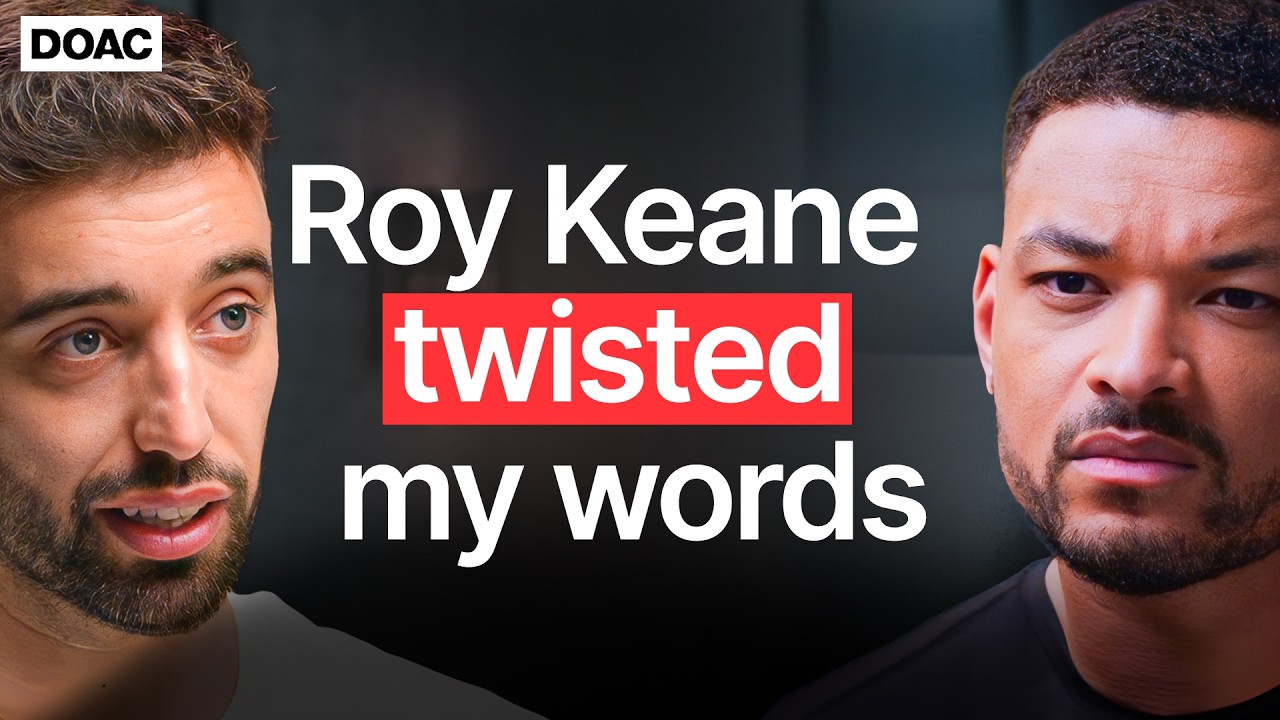
Manchester United Captain Bruno Fernandes Rejects £200M Saudi Offer
The Diary Of A CEO
Bruno Fernandes rejected a lucrative Middle Eastern contract offer because he has not yet fulfilled his goal of winning Premier League and Champions League titles with Manchester United.
## Background
This episode of The Diary Of A CEO was published on YouTube by Steven Bartlett on May 25, 2026. According to the page description, Manchester United captain Bruno Fernandes opens up about his journey, how his agent broke the news of United's interest, the club's culture rebuild, leadership, rejecting a £200 million offer, and addressing past public criticism from Roy Keane.
## TL;DR
In an intimate interview, Bruno Fernandes reflects on the roots of his relentless winning mentality, shaped by his father's strict feedback and playing against older kids in Portugal. He discusses his journey to Manchester United, the emotional moment he knew the move was happening, and his unwavering commitment to restoring the club's winning culture under new executive leadership and manager Michael Carrick. Fernandes addresses media criticisms, clears up misquotes from Roy Keane, explains his high-risk playing style, and reveals why he rejected a massive £200 million offer to stay in Manchester and pursue Premier League and Champions League glory.
## Atmosphere & style
The conversation carries an unusually raw, deeply emotional, and authentic atmosphere, balancing high-level football intellect with tender human vulnerability. Steven Bartlett creates an intimate, reflective space at United's training ground, allowing Fernandes to transition seamlessly from sharp tactical analysis and fierce competitiveness to tearing up over heartfelt messages from teammates and discussing his family. What emerges is an inspiring, grounded, and emotionally resonant portrait of modern sports leadership, defined by total candor, loyalty, and deep personal integrity.
## Key takeaways
- [00:00](https://www.youtube.com/watch?v=qel8Fyt78fk&t=0s) Bruno Fernandes, capitão do Manchester United, alcançou marcas históricas no clube: 108 golos em 328 jogos, 5 prémios Sir Matt Busby de Jogador do Ano (recorde) e igualou o recorde de assistências numa única época da Premier League (20 assistências).
- [02:33](https://www.youtube.com/watch?v=qel8Fyt78fk&t=153s) A mentalidade competitiva e a disciplina de Bruno foram moldadas pelo seu pai, que nunca o elogiava em excesso, focando-se sempre nos 2% de margem para melhorar e exigindo 100% de dedicação.
- [05:47](https://www.youtube.com/watch?v=qel8Fyt78fk&t=347s) A destemidez e agressividade de Bruno no futebol começaram aos 5 anos, quando jogava com crianças dois anos mais velhas devido ao hábito de disputar bolas contra o seu irmão, 5 anos mais velho.
- [08:40](https://www.youtube.com/watch?v=qel8Fyt78fk&t=520s) Francesco Guidolin desempenhou um papel decisivo na carreira de Bruno na Udinese ao travar o seu empréstimo ao Watford e atuar como uma figura paterna e tática.
- [14:09](https://www.youtube.com/watch?v=qel8Fyt78fk&t=849s) Bruno emocionou-se até às lágrimas ao saber do interesse do Manchester United no seu closet, concretizando o sonho da sua vida após a frustração do negócio falhado com o Tottenham.
- [22:15](https://www.youtube.com/watch?v=qel8Fyt78fk&t=1335s) Bruno defende o respeito absoluto por todos os funcionários do clube (como pessoal de limpeza e cozinheiros), um valor herdado da sua mãe, que limpava casas para sustentar a família.
- [26:23](https://www.youtube.com/watch?v=qel8Fyt78fk&t=1583s) O principal erro histórico de recrutamento do Manchester United foi a mudança constante de treinadores com filosofias táticas opostas, sem priorizar a estabilidade nem o caráter dos jogadores.
- [32:38](https://www.youtube.com/watch?v=qel8Fyt78fk&t=1958s) Para evitar distrações e fugas de informação no balneário, Bruno proibiu estritamente a sua família de fazer comentários públicos ou publicações em redes sociais sobre o clube.
- [43:07](https://www.youtube.com/watch?v=qel8Fyt78fk&t=2587s) Sob o comando de Michael Carrick, o clube alcançou estabilidade tática e grande pontuação, proporcionando aos jogadores calma, clareza e autonomia para resolverem problemas em campo.
- [48:44](https://www.youtube.com/watch?v=qel8Fyt78fk&t=2924s) Bruno defende a necessidade de assumir riscos no seu estilo de jogo na posição de 'camisola 10', aceitando falhar passes difíceis desde que crie oportunidades claras de golo para a equipa.
- [52:44](https://www.youtube.com/watch?v=qel8Fyt78fk&t=3164s) Erik ten Hag utilizou análises de dados e gráficos para convencer Bruno a rematar mais perto da grande área (18 jardas em vez de 25), otimizando a sua taxa de conversão de golos.
- [01:02:01](https://www.youtube.com/watch?v=qel8Fyt78fk&t=3721s) Ao assumir a braçadeira de capitão, a primeira atitude de Bruno foi procurar Harry Maguire para garantir que o seu estatuto de líder no balneário e o respeito mútuo se mantivessem inalterados.
- [01:06:26](https://www.youtube.com/watch?v=qel8Fyt78fk&t=3986s) Bruno refutou publicamente as críticas de Roy Keane, esclarecendo que as declarações atribuídas a si eram mentira e que criticava a si próprio por rematar quando deveria ter passado.
- [01:10:33](https://www.youtube.com/watch?v=qel8Fyt78fk&t=4233s) Mensagens de áudio emocionantes de colegas de equipa como Dalot, Heaton e Shaw demonstraram que Bruno valoriza mais o seu impacto humano e empatia fora de campo do que os troféus individuais.
- [01:18:00](https://www.youtube.com/watch?v=qel8Fyt78fk&t=4680s) Bruno rejeitou uma proposta astronómica de cerca de £200 milhões para se mudar para o Médio Oriente, escolhendo permanecer no Manchester United por ainda ter o sonho de vencer grandes títulos no clube.
- [01:22:30](https://www.youtube.com/watch?v=qel8Fyt78fk&t=4950s) A sua esposa, Ana Pinho, é a sua principal âncora emocional e conselheira desde os 16 anos, mantendo-o humilde e focado nos verdadeiros valores de carreira e família.
- [01:27:59](https://www.youtube.com/watch?v=qel8Fyt78fk&t=5279s) A nova estrutura diretiva liderada pela INEOS (Jim Ratcliffe, Omar Berrada, Jason Wilcox) trouxe clareza operacional e um rumo estratégico necessário para que o clube volte a disputar títulos.
- [01:30:30](https://www.youtube.com/watch?v=qel8Fyt78fk&t=5430s) A ambição máxima de Bruno nos próximos cinco anos passa por vencer a Premier League e a Liga dos Campeões pelo Manchester United, bem como conquistar o Campeonato do Mundo por Portugal.
## Detailed walkthrough
### [00:00](https://www.youtube.com/watch?v=qel8Fyt78fk&t=0s) Introduction & Manchester United Highlights
The episode opens with Bruno Fernandes reflecting on the emotional toll that a professional football career exacts on a player's family. He emphasizes that while the public sees victories and defeats, it is family members who endure every up and down, standing by a player through both their best and worst moments. Interviewer Steven Bartlett then frames Fernandes' tenure at Manchester United as a roller-coaster ride, bringing up a reported £200 million offer to leave Old Trafford and asking why he chose to stay.
A commentary sequence highlights Fernandes' status as "Captain Fantastic" and arguably Manchester United's greatest player of the post–Alex Ferguson era. Since his arrival, no player in the Premier League has accumulated more assists, and Fernandes has won more Sir Matt Busby Player of the Year awards than Cristiano Ronaldo, while ranking among the top goalscorers in the league. Sitting down at Manchester United's training ground, Bartlett introduces the pressing questions surrounding the midfielder, specifically addressing public criticisms from former United captain Roy Keane regarding Fernandes' mindset and leadership. Fernandes addresses these claims head-on, noting that while harsh football criticism does not bother him, he refuses to tolerate outright lies about what he has said.
- **Career Milestones**: 108 goals in 328 appearances for Manchester United, a record 5-time Sir Matt Busby Player of the Year award winner, and equaled the Premier League single-season assist record with 20 assists.
- **League Standing**: Over 70 Premier League goals scored since joining the club in January 2020.
- **Roy Keane Dispute**: Fernandes reveals he requested former manager Ole Gunnar Solskjær's help to obtain Keane's phone number so he could address the comments directly.
---
[01:38](https://www.youtube.com/watch?v=qel8Fyt78fk&t=98s) What Shaped Bruno Fernandes?
To uncover what makes Fernandes such an intense, anomaly-like competitor on the pitch, Bartlett probes into his early life and upbringing in Portugal. Bartlett points out how Fernandes was continually fast-tracked and promoted into older age groups throughout his youth, suggesting that his mindset was forged early on by his immediate environment.
Fernandes explains that his core identity is anchored entirely in family and the responsibility of taking care of others. He stresses that achieving long-term success in sports or life requires staying grounded and being careful about one's surroundings. The underlying values instilled by his parents served as the ultimate foundation for both the person and the professional footballer he became.
---
[02:33](https://www.youtube.com/watch?v=qel8Fyt78fk&t=153s) How Bruno Learned His Winning Mentality From His Father
Discussing parental influences, Bartlett notes how he learned more from observing his own father's actions than from verbal lectures. Fernandes strongly resonates with this, explaining that his father was never a verbally expressive person who handed out frequent affection or detailed instructions. Instead, his father led purely by example, modeling how much personal sacrifice was required to achieve success. While his mother provided physical affection like hugs and kisses during his childhood, his father demonstrated work ethic and discipline.
Fernandes shares how his father maintained an exacting standard after his youth matches. Even if young Bruno scored two or three goals, his father would deliberately single out the mistakes and poor plays to remind him that his performance was good, but not great. This relentless focus on areas for improvement taught Fernandes from an early age how to handle criticism constructivel. As a result, playing for one of the most heavily scrutinized football clubs in the world does not break his confidence; he uses criticism as actionable feedback to refine his game. His father never pressured him to become a professional footballer, but rather insisted that whatever path he chose—whether schoolwork or sports—he had to give 100% effort and never settle for partial commitment.
- **Academic Metaphor**: In the Portuguese grading scale of 0 to 100%, scoring a 98% was praised by his father as an amazing result, but immediately followed by the reminder that 2% was still left on the table to improve.
- **Personal Ethos**: Fernandes refuses to operate at 50%, 60%, 70%, or 80% capacity in any endeavor, constantly striving for full commitment and self-improvement.
---
[05:47](https://www.youtube.com/watch?v=qel8Fyt78fk&t=347s) Why Bruno Was Already Different at 5 Years Old
Fernandes recalls starting his football journey at age five with his first club, FC Infesta. At that age, he didn't harbor explicit ambitions of becoming a high-earning professional; he simply wanted a ball at his feet at all times. Remarkably, after just a single indoor 5-a-side session, coaches realized he needed to play on the grass with the seven-year-olds—competing two years above his age bracket.
When asked why he was moved up so rapidly, Fernandes explains that he possessed zero fear. Growing up playing against his older brother—who was five years his senior—prepared him for any physical challenge. Whether he had to tackle, sprint, or take on older opponents 1v1, he went all-in without intimidation. He acknowledges that while his technical ability and speed were good, he was neither the tallest, strongest, nor fastest kid on the pitch; his primary edge was absolute fearlessness and aggression.
- **Youth Clubs**: Started at FC Infesta at age 5 before being quickly recruited by Boavista FC roughly a year later.
- **On-Pitch Aggression**: Referees at youth level would occasionally approach Infesta coach Sérgio to ask him to substitute young Bruno off the pitch to avoid having to give him a red card.
---
[08:40](https://www.youtube.com/watch?v=qel8Fyt78fk&t=520s) How Francesco Guidolin Helped Shape Bruno’s Career
Fernandes traces his rapid trajectory from Portugal to Italy, where he moved to Novara at age 17 before breaking into the first team within three months. Shortly thereafter, he signed with Serie A club Udinese, where he encountered manager Francesco Guidolin—a figure who proved monumental in his developmental years at 18 years old.
Fernandes reveals a dramatic turning point: Udinese were on the verge of sending him on loan to English side Watford (which shared ownership under the Pozzo family) near the end of the transfer window. Devastated and questioning his own ability, Fernandes packed his bags alongside his girlfriend (now wife), wondering what he had done wrong. However, just as he was preparing to leave, the sporting director called him back to reveal that Guidolin had intervened. Guidolin loved Fernandes' work ethic, wanted him to stay, and personally committed to mentoring him on tactics and positioning. Guidolin served as a father figure to the squad, teaching Fernandes how to navigate the psychological aspects of management and squad rotation without taking benchings personally.
- **Transfer Near-Miss**: Was on the verge of joining Watford FC on loan before Francesco Guidolin personally blocked the move.
- **Managerial Impact**: Guidolin provided the tactical foundation and confidence for Fernandes to express himself freely at the top tier of Italian football.
---
[12:04](https://www.youtube.com/watch?v=qel8Fyt78fk&t=724s) What Bruno Really Dreamed About at 18
Looking back at his 18-year-old self at Udinese, Fernandes notes that once he broke into professional football, his goal was singular: play for the world's biggest clubs, compete in the UEFA Champions League, and win major trophies alongside the sport's elite. He confirms he never doubted his ability to reach that top tier.
---
[12:30](https://www.youtube.com/watch?v=qel8Fyt78fk&t=750s) Why Tottenham Nearly Signed Bruno
At age 22, Fernandes returned to Portugal, signing a five-year contract with Sporting CP for a reported fee of €8.5 million. He delivered a stunning debut season, scoring 20 goals and providing 13 assists from midfield. This performance attracted major interest from Premier League side Tottenham Hotspur, leading to concrete transfer negotiations.
Fernandes admits he was extremely keen on joining Tottenham at the time because playing in the Premier League—with its full stadiums, intensity, and world-class competition—was his ultimate dream. Tottenham presented a compelling vision under their manager, complete with new training facilities. However, in the final 24 to 48 hours of the transfer window, Sporting CP pulled the plug on the deal, refusing to sell their star midfielder. Though disappointed at the moment, Fernandes reflects that the failed transfer happened for a reason, clearing the way for his ultimate dream move to Manchester United a few months later in January.
- **Sporting CP Stats**: Recorded 20 goals and 13 assists in a single season from midfield.
- **Transfer Dynamics**: Sporting CP blocked a deadline-day move to Tottenham Hotspur despite advanced negotiations.
---
[14:09](https://www.youtube.com/watch?v=qel8Fyt78fk&t=849s) The Moment Bruno Found Out Manchester United Wanted Him
Growing up in the era of Sir Alex Ferguson and watching fellow Portuguese star Cristiano Ronaldo excel at Old Trafford, Manchester United had always been Fernandes' dream club in England. He recounts the exact moment he learned United's interest was concrete: he was standing inside his closet, preparing for bed while his wife put their young daughter to sleep.
Having learned from the emotional frustration of the Tottenham situation, Fernandes had instructed his agent never to notify him about transfer rumors until an acquiring club was 95% committed and ready to submit a formal bid. Sitting in his wardrobe, his phone rang with his agent delivering the life-changing news that Manchester United were officially making their move.
<FollowUp label="Would you like to continue with Part 2 of the transcript walkthrough?" query="Please provide the next part of the transcript walkthrough."/>
Here is a detailed, faithful walkthrough of this section of the interview.
[15:21](https://www.youtube.com/watch?v=qel8Fyt78fk&t=921s) The Call That Changed Everything: Joining Manchester United
Bruno Fernandes recalls how he explicitly instructed his agent, Miguel Pinho, not to bring him speculative transfer noise or rumors that would disrupt his focus on what he could control. After a high-profile move to Tottenham Hotspur collapsed on the final day of a previous transfer window when Sporting CP pulled the plug, Bruno was determined not to get emotionally invested in headlines. However, his agent eventually called him with an update that was concrete: Manchester United had reached an agreement with Sporting, leaving the final decision entirely in Bruno's hands. Pinho pressed him on the phone, telling him that this was the moment and the exact move he had been waiting for.
Overwhelmed by the news, Bruno went completely silent on the line for twenty seconds as he broke down in tears of joy. Trying to conceal his raw emotion because his voice was going "chalky," he hung up, only for Pinho to call back repeatedly demanding a response. Bruno's wife walked into the room to find him crying and asked what was wrong, reminding him that playing for Manchester United in the Premier League was the ultimate dream he had worked toward his entire life. Realizing that his dream was 100% coming true after the heartbreak of the failed Tottenham deal, Bruno called his agent back and gave an immediate, unconditional yes without wanting to hear any further details.
- While Bruno loved his two-and-a-half years at Sporting CP—crediting the club as the environment where he became the best version of himself—the Sporting fanbase fully understood and respected that he was ready to take the next step.
- Looking back at the iconic photograph of him signing his Manchester United contract, Bruno notes that the same genuine smile remains on his face today because joining the club was the absolute "cherry on top of the cake" professionally.
---
[18:31](https://www.youtube.com/watch?v=qel8Fyt78fk&t=1111s) Arriving at an Unstable United and Believing in the Project
When Bruno arrived in January 2020, Manchester United was in a state of turbulence. Sitting seventh in the Premier League under manager Ole Gunnar Solskjær, the club was still searching for direction in the post-Sir Alex Ferguson era. Bruno vividly remembers watching United lose 2-1 at home to Burnley just days before his arrival. Despite having the profile to join more stable, top-performing clubs across Europe, Bruno embraced the challenge. He recognized that while the club was going through a rough patch, the squad possessed immense underlying potential, and he wanted to contribute his own standards, values, and work rate to help revive the institution.
Bruno clarifies that he never arrived with an ego thinking he was a "magic powder" destined to single-handedly solve every problem. Instead, he saw an opportunity to be part of building something that would become great again. He points out that during his early months—despite the interruption of the COVID-19 pandemic—the team went on an extraordinary run, ultimately finishing second in the Premier League the following season. Though rebuilding the club has taken longer than he initially anticipated, Bruno insists that the passionate, hungry player who arrived in 2020 with a determination to win trophies at Old Trafford remains exactly the same today.
- Bruno stresses that in elite football, periods without winning do not necessarily mean a squad lacks quality; often, it simply means competitor teams are performing at an exceptional level.
---
[22:15](https://www.youtube.com/watch?v=qel8Fyt78fk&t=1335s) Respect as an Uncompromising Foundation
Discussing the cultural evolution at Old Trafford, host Steven Bartlett references historical stories—such as Sir Alex Ferguson famously reprimanding players who failed to sign charity items for staff members like Wendy—to highlight how tiny details define a club's identity. Bruno wholeheartedly agrees, stating that basic respect and genuine care for every staff member across the organization are non-negotiables for any player representing Manchester United. Whether interacting with physios, matchday stewards, receptionists, or kitchen staff, Bruno insists on treating everyone with equal dignity.
He emphasizes that a club’s environment thrives when everyone feels valued, drawing a direct parallel to the corporate world: while a CEO holds high-level responsibility, the workspace becomes unlivable if the cleaning staff do not do their job well. For Bruno, greeting staff members and showing them warmth ensures they feel just as vital to the club's success as the players on the pitch.
- Bruno's deeply rooted respect for service workers stems directly from his childhood: his mother worked cleaning houses to support the family.
- He strictly enforces this value with his own children today, teaching them never to command or speak down to household helpers, but rather to ask politely or learn to clean up after themselves.
---
[26:23](https://www.youtube.com/watch?v=qel8Fyt78fk&t=1583s) Tactical Instability vs. Hiring the Right Characters
Reflecting on Manchester United's struggles since Sir Alex Ferguson's departure, Steven suggests that past recruitment suffered from signing high-profile names for commercial appeal rather than tactical fit or character. Bruno provides a player's perspective, explaining that the club's biggest historical mistake was constantly hiring managers with wildly divergent tactical philosophies. Swinging from one managerial style to another forced the club to buy players suited for one system, only for the next manager to deem those same players redundant, triggering a costly and chaotic cycle of constant rebuilding.
Bruno emphasizes that while pure footballing quality is a prerequisite for playing at Manchester United, character is what ultimately determines long-term success. Player form inevitably fluctuates, but a player with the right character will push themselves out of bad form and uplift their teammates during difficult periods. He insists that modern recruitment must prioritize individuals who genuinely want to fight for the shirt and restore the club to its title-winning pedigree, rather than players who join simply because Manchester United is a famous global brand.
- Bruno notes that a player's true character can often be evaluated even before signing by observing their conduct on the pitch and their presence on social media.
- He reiterates that United's ultimate objective remains returning to the pinnacle of English football and adding to their historic tally of 20 Premier League titles.
[30:35](https://www.youtube.com/watch?v=qel8Fyt78fk&t=1835s) Recruitment and Fitting the Manchester United Culture
Reflecting on what makes Manchester United unique, Steven Bartlett recalls a story from Patrice Evra, who once met Sir Alex Ferguson at an airport in France. Rather than assessing Evra's technical skills with a ball, Ferguson sat him down and asked a single defining question: "Are you willing to die for Manchester United?" Upon Evra answering "Yes," Ferguson shook his hand and welcomed him to the club. Bruno Fernandes agrees that while Ferguson made occasional recruitment errors, his defining strength was bringing in players who genuinely fit the identity and spirit of the club. Fernandes stresses that while managers rotate every few years, players typically sign five-year contracts. Because sacking a manager is far easier for a club than moving on an entire squad, recruitment must be driven by a long-term club vision rather than short-term managerial preferences.
Fernandes draws a direct comparison to the sustained success seen under Pep Guardiola at Manchester City and Jürgen Klopp at Liverpool. Those clubs established structural alignment between the board, the playing style, and the manager. Even when high-priced signings failed to perform, their broader squad structures were resilient enough to absorb those setbacks without publicly imploding.
- **Key recruitment principle:** Player recruitment must fit Manchester United's long-term identity rather than changing with every new manager, given that players sign multi-year contracts while managers are frequently replaced.
- **The Evra anecdote:** Sir Alex Ferguson prioritized mentality, heart, and commitment over pure technical evaluation when scouting players.
- ** squad resilience:** Successful clubs like Liverpool and Manchester City handle $50M–$70M signing flops without internal toxicity because their overall squad culture remains strong.
[32:38](https://www.youtube.com/watch?v=qel8Fyt78fk&t=1958s) Curbing Social Media Distractions and Family Boundaries
Steven notes a stark cultural shift inside the Manchester United dressing room over the current season: the frustrating leaks, Cryptic posts, and social media complaints from disgruntled players—or their family members—have virtually vanished. Fernandes explains that maintaining discipline requires a firm approach from both the club leadership and the players themselves. He believes the club must set strict boundaries with agents and families when public comments start causing negative distractions for the team.
Fernandes details the strict rules he enforced within his own inner circle from the very start of his career. He explicitly told his parents, brother, and sister never to comment on his playing time or club decisions publicly. Even when his mother suffered emotionally from criticism aimed at him, Fernandes instructed her simply to pray to her saints rather than engage with the noise online. He emphasizes that if he is dissatisfied, he handles it directly inside the building rather than using family or media to leak complaints about his manager or training.
- **Family rule:** Fernandes explicitly banned his parents, brother, and sister from speaking publicly or posting on social media regarding his playing time or football situations.
- **Dressing room discipline:** Eliminating public complaints on Instagram stories from family members and agents was crucial to stabilizing United's team culture.
[35:36](https://www.youtube.com/watch?v=qel8Fyt78fk&t=2136s) Managerial Loyalty and Bruno's Leadership Style
Having played under a series of managers at Old Trafford—Ole Gunnar Solskjær, Michael Carrick, Ralf Rangnick, Erik ten Hag, Rúben Amorim, Darren Fletcher, and Carrick once again—Fernandes maintains that a player's core duty is absolute commitment to whoever is in charge. Rather than taking issue with tactical shifts, Fernandes views adapting to different managerial philosophies as an opportunity to broaden his own skill set. His primary goal is to perform so consistently in training that no manager can justify leaving him out of the starting XI.
When asked how he approaches leadership and whether he treats squad members differently, Fernandes rejects the idea that high-profile players should receive special treatment. While he adapts his communication tone depending on a player's personality, his underlying standard remains unyielding across the board. He expects every teammate to execute the tactical game plans prepared throughout the week. Fernandes explains to younger and older players alike that he will only stop shouting and demanding more from them when he no longer believes in their potential to improve.
- **Managerial transitions:** Fernandes has played under Ole Gunnar Solskjær, Michael Carrick, Ralf Rangnick, Erik ten Hag, Rúben Amorim, and Darren Fletcher during his time at United.
- **Leadership approach:** "Trust me, the day I stop talking to you, the day I stop shouting at you, is because I don't believe in you anymore."
[39:56](https://www.youtube.com/watch?v=qel8Fyt78fk&t=2396s) Navigating Bad Runs and the Appointment of Michael Carrick
The discussion turns to the emotional turbulence inside the dressing room during difficult periods and managerial changes. Fernandes acknowledges that starting from scratch with a new manager is one of the hardest aspects of professional sport because it resets structural progress. However, he maintains hope through a deep personal belief in himself and a conviction that every preseason offers a fresh start. Reflecting on recent managerial decisions, Fernandes notes that when Rúben Amorim was brought in, the squad was prepared for a long-term build, making his departure difficult.
Following Amorim's departure, Michael Carrick stepped in to guide the squad through to the end of the season. Fernandes notes that despite the mid-season turbulence, United managed to finish third in the Premier League table. In fact, over the stretch of games under Carrick's tenure, United accumulated more points than almost any other side in the league.
- **League recovery:** Despite early struggles, Manchester United climbed back up the table to finish in 3rd place.
- **Form under Carrick:** Under Michael Carrick's management, United became one of the top point-accumulating sides in the Premier League during that run.
- **Table density:** Prior to the coaching shift, United were only two points behind second place and five points off first place during a tightly congested top-seven battle.
[43:07](https://www.youtube.com/watch?v=qel8Fyt78fk&t=2587s) What Michael Carrick Brought to Manchester United
Following the recent announcement that Michael Carrick will continue as Manchester United manager on a permanent basis, Fernandes outlines what makes Carrick such an effective leader. Carrick brought immediate calm, stability, and peace of mind back to a squad in turmoil. Having both played and previously managed under Sir Alex Ferguson, Carrick understands the fundamental standards of the club and what the supporters expect to see on the pitch.
Tactically, Carrick balances structure with individual player accountability. He establishes firm non-negotiable rules and game plans during the training week, but empowers the players to adapt independently on the pitch when opponents suddenly switch formations—such as shifting from an anticipated 4-3-3 to a 3-5-2. Rather than relying on the manager to bark instructions from the touchline during play, Carrick expects the players to hold the block, stay compact, and resolve tactical problems in real time before receiving adjustments at halftime.
- **Management style:** Carrick brings high operational calmness, strong non-negotiables, and places tactical problem-solving responsibility directly onto the players during matches.
- **In-game adaptation:** Carrick equips players to react to unexpected mid-match formation changes (e.g., an opponent shifting from a 4-3-3 to a 3-5-2) without panicking.
<ElicitationsGroup message="Where would you like to go next with this transcript?">
<Elicitation label="Explore Part 4 of the transcript" query="Please provide the detailed walkthrough for Part 4 of this transcript."/>
<Elicitation label="Summarize Bruno's thoughts on leadership" query="Summarize Bruno Fernandes' core principles on leadership and squad management based on this transcript."/>
</ElicitationsGroup>
### Michael's Tactical Freedom and Principles
Bruno explains that manager Michael gives the team freedom with the ball to make their own decisions because he believes that responsibility lies with the player on the pitch. Michael tells the squad, "I can't tell you where to pass the ball. I can't tell you where to shoot. I can help you where the space is going to be." Knowing where space will open up is paramount, and Michael maps out large gaps to exploit, showing them that attacking from one side leaves the opponent shorthanded there and allows more players to flood the box. The tactical foundation also emphasizes a strong counter-press, requiring three defenders back—two marking and one sweeping behind. Michael provides solutions rather than strict step-by-step instructions, acknowledging that video analysis does not capture everything that unfolds during a 90-minute match. Bruno highlights a concrete example against Nottingham Forest where he played a through ball to Bryan for a goal—a sequence they had specifically visualized after seeing Aston Villa execute the exact same movement and passes against Forest. When Steven asks if Michael ever gets angry given his calm press-conference demeanor, Bruno laughs and confirms that while he is a very calm presence with a knack for choosing the right words, "everyone gets angry anyway," and Michael would dial up the aggression whenever the team genuinely needed it.
- **Tactical Structure**: Three players kept back for counter-pressing against two opposition strikers.
- **Key Example**: Visualized and replicated an exact goal-scoring movement against Nottingham Forest that Aston Villa had previously used.
---
### The Philosophy of Risk and Reward
The conversation shifts to Bruno's high-risk playing style, drawing a parallel to business concepts where increasing the failure rate drives better outcomes. Bruno acknowledges that he takes more risks than traditional midfielders—drawing a contrast to Michael Carrick, who opted for safer choices rather than threading needles through thin gaps. For Bruno, it is strictly about risk-reward balance and whether taking a risk benefits the collective. Operating in the number 10 position demands taking risks so that attacking teammates receive the ball in high-probability scoring zones. He notes, "I might miss two or three times, but if I get one right, that can become a goal for us." He explains that every position carries distinct risk profiles: wingers lose the ball in 1-on-1s, fullbacks cross more frequently, center-backs and number sixes tackle, and structural balance is essential. Playing alongside Kobbie Mainoo and Casemiro—who are not high-risk players—means Bruno takes on four risky passes while they take one each, maintaining a healthy team equilibrium much like Kevin De Bruyne did at Manchester City alongside safer players like Rodri, while Phil Foden and Riyad Mahrez took the 1-on-1 risks.
---
### Erik's Data-Driven Shot Selection
Reflecting on managerial feedback, Bruno reveals that Erik ten Hag once told him to take fewer shots from outside the box. Erik brought out a data board tracking Bruno's shots on target, shots off target, and goals to show where he was most effective. The data revealed that shots fired towards the left or right sides of the box yielded more goals, whereas shots from the middle edge of the box resulted in more misses. Erik urged him to get closer to the box—moving from 25 yards out down to 18 yards—where his power and efficiency would increase his scoring conversion from roughly one in five to a much higher success rate.
- **Shot Analytics**: Erik ten Hag used statistical performance boards to guide Bruno away from low-percentage central long-range shots.
- **Distance Optimization**: Shifting shot attempts closer to the 18-yard line drastically improves the scoring success rate.
---
### Preferred Positions and Non-Negotiable Commitment
When Steven asks where he likes to play most on the pitch, Bruno draws out a tactical square diagram showing his preferred zones of high effectiveness across various managers.
Under Ruben Amorim's 3-4-2-1 setup featuring three at the back, wing-backs, and two midfielders, Bruno initially played deeper as a left-sided midfielder or left number 10 to help build up play from the back, create numerical overloads against opposing presses alongside Luke Shaw, and drive the ball forward. Later, Amorim pushed him higher into the line of three number tens. Under Ole Gunnar Solskjaer, he operated as a traditional number 10 in a 4-2-3-1 formation, shifting across the pitch to execute long switches to the wingers. He also spent time playing as a number six alongside Erik ten Hag, a role he thoroughly enjoyed because it forced him to become a more aggressive, defense-oriented player covering spaces. Despite positional fluidity, Bruno stresses that commitment, running, fighting, and team spirit are absolute non-negotiables. Addressing his seemingly endless stamina and injury resistance, Bruno admits that while he does get tired and injured, his secret lies in treating training with 100% intensity, often pushing himself to do extra shooting practice or crosses when exhausted so that his body and brain adapt to performing under fatigue just like they would in the 89th minute of a match.
---
### Becoming Manchester United Captain and Speaking with Harry Maguire
Bruno recounts the surprising moment Erik ten Hag called him into his office to offer him the captain's armband after deciding to change leadership. While deeply grateful for an honor he never actively dreamed of, his immediate second thought was how difficult the news would be for Harry Maguire. Before giving the manager his final answer, Bruno walked straight to Harry—who already knew from the manager—to ask the vital question: whether Harry was actually leaving the club.
By the way, to unlock the full functionality of all Apps, enable [Gemini Apps Activity](https://myactivity.google.com/product/gemini).
Here is the detailed, faithful walkthrough of Part 5 of the transcript.
---
[01:02:10](https://www.youtube.com/watch?v=qel8Fyt78fk&t=3730s) Harry Maguire’s Reaction to Passing the Captain’s Armband
Bruno Fernandes reflects on the pivotal moment when he took over the Manchester United captaincy from Harry Maguire. Maguire called Bruno to share the news of the offer and expressed genuine grace, telling Bruno: *"If there is someone that deserves that, it is you. I'm very, very happy that it is you getting the captain armband. If I have to take it off for myself, I think you really deserve that."* For Bruno, hearing those words from Maguire was a profound validation that he was doing things right. He acknowledges how difficult that transition must have been for Maguire, but notes that their mutual respect never wavered.
Bruno emphasizes that losing the physical armband did not stripped Maguire of his leadership status within the squad. When Maguire was captain, the two of them always made decisions together, and that collaborative dynamic remains unchanged. Whenever Bruno needs to make crucial choices for the team, Maguire is still one of the key leaders he consults.
- Harry Maguire explicitly endorsed Bruno taking over the captaincy, telling him he fully deserved it.
- Bruno reassured Maguire immediately that he remained one of the squad's core leaders regardless of who wore the armband.
- Bruno continues to consult Maguire alongside other senior figures when making team decisions.
[01:03:13](https://www.youtube.com/watch?v=qel8Fyt78fk&t=3793s) A Record-Breaking Season at Manchester United
Steven Bartlett highlights Bruno's remarkable statistical achievements across the season, pointing out that his consistency stands out even among elite Premier League players. Bruno completed 34 appearances while racking up 8 goals and 20 assists, alongside 12 Player of the Match awards (the highest in the league). He also earned his sixth Premier League Player of the Month award—putting him behind only Sergio Agüero, Harry Kane, and Mohamed Salah, who all hold seven. Furthermore, Bruno won the Sir Matt Busby Player of the Year award for a record fifth time, an honor voted on directly by Manchester United fans.
Responding to his individual accolades, Bruno emphasizes that individual recognition naturally follows when the collective team performance improves. He expresses deep gratitude for matching the Premier League single-season assist record of 20, putting his name alongside icons like Thierry Henry and Kevin De Bruyne. Bartlett shares a message from Thierry Henry, who sent his regards and congratulations to Bruno for joining him at the top of the assist charts. Bruno admits he never envisioned chasing 18, 19, or 20 assists at the start of the year; he only started tracking the record once he reached 16 or 17 assists, as his main focus is always simply improving on his output from the previous season.
- **34 appearances**, **8 goals**, and **20 assists** in the Premier League season.
- **12 Player of the Match awards** (most in the Premier League that season).
- **6 Premier League Player of the Month awards** in his career (trailing only Agüero, Kane, and Salah at 7).
- Won the **Sir Matt Busby Player of the Year award for the 5th time**, a record for any Manchester United player.
- Equalled the all-time Premier League single-season record of **20 assists**, joining Thierry Henry and Kevin De Bruyne.
[01:06:26](https://www.youtube.com/watch?v=qel8Fyt78fk&t=3986s) Addressing Roy Keane’s Media Criticism
Bartlett brings up how media scrutiny amplifies at the highest level of football and asks Bruno about recent criticism from former United captain Roy Keane. Keane had publicly criticized Bruno’s mentality, claiming Bruno said, *"I should have shot, but I made the passes,"* and using that fabricated quote to accuse him of selfishly chasing individual assist records. Bartlett points out that anyone listening to the actual interview knows Bruno said the exact opposite: he was criticizing himself for shooting when he *should* have passed to a teammate in a better position.
Bruno addresses the situation directly, stating that while he welcomes constructive criticism from anyone, he draws the line at outright lies: *"What I don't like was when people lie about things, and this case that you said about Roy Keane, basically what he said is a lie."* He points out that his underlying chance creation numbers have remained consistently high every single year since arriving in England, proving he plays for the team rather than individual stats. He explains the no-win nature of media narratives: if you shoot and score, people criticize you for not passing; if you assist, people criticize you for not shooting. Out of respect for Keane's legacy, Bruno even asked former manager Ole Gunnar Solskjær for Keane’s phone number so he could text him directly to clear the air. Bruno stresses that Keane can criticize his playing style or captaincy all he wants, but he will not tolerate having words put in his mouth.
- Bruno clarified that he was being self-critical for shooting instead of passing, contradicting Keane's misquoted claims.
- He requested Roy Keane's phone number from Ole Gunnar Solskjær to address the misrepresentation directly.
- Bruno reiterated that his overarching goal is winning the Premier League and Champions League with Manchester United, not collecting individual player awards.
[01:10:33](https://www.youtube.com/watch?v=qel8Fyt78fk&t=4233s) Emotional Voice Notes from Teammates
Bartlett reveals that ahead of the interview, he reached out to several of Bruno’s current and former teammates off-camera to ask about his character. Instead of standard answers, Bartlett received glowing emotional voice notes, which he plays out loud during the show:
* **Diogo Dalot / Teammate:** Expressed deep appreciation for Bruno as both a player and a person, highlighting his care for others off the pitch and his relentless leadership as an example to follow every day.
* **Tom Heaton:** Described Bruno as consistently world-class on the pitch, but emphasized that his best quality is his human side—being *"caring, compassionate, supporting, [and] demanding at the right times."*
* **Luke Shaw:** Spoke about Bruno’s ability to uplift people when they need it most and how he makes everyone around him better without even trying, ending his message with, *"We love you, Capitano."*
Hearing the recordings visibly moves Bruno, bringing him to tears. He explains that while compliments about his football ability are nice, hearing his peers praise his character and human values hits far deeper. He credits these traits entirely to the grounding upbringing and core values his parents gave him back in Porto.
- Teammates Diogo Dalot, Tom Heaton, and Luke Shaw submitted personal voice notes praising Bruno's empathy, compassion, and leadership off the pitch.
- Bruno was deeply moved to tears by the messages, stating that being recognized as a good human being matters far more to him than football accolades.
[01:14:31](https://www.youtube.com/watch?v=qel8Fyt78fk&t=4471s) Why Being Human Matters More Than Football
Bartlett asks Bruno why hearing his teammates speak about his character evokes such a strong emotional reaction. Bruno explains that at the end of a career, football skills fade, but how you treat the people around you is what truly endures. Aside from his wife and children, his teammates are the people he spends the most time with—far more than his parents, siblings, or friends back home in Portugal. Knowing that his daily actions inside the dressing room reflect the moral values his parents instilled in him makes him immensely proud.
When Bartlett points out how rare it is to see a fierce, competitive footballer show such vulnerability, Bruno smiles and admits: *"I'm just a soft guy. It doesn't look on a pitch, but I'm quite quite a soft guy."*
- Bruno views his teammates as his day-to-day family due to the sheer amount of time they share together.
- He notes that his ultimate goal in life is to model good human values for his own children, just as his parents did for him.
<FollowUp label="Want to move on to Part 6 covering Bruno rejecting £200M offers to stay at United?" query="Please provide the walkthrough for Part 6 of the Bruno Fernandes Diary Of A CEO transcript."/>
Here is the detailed, faithful walkthrough covering Part 6 of the interview.
---
[01:16:40](https://www.youtube.com/watch?v=qel8Fyt78fk&t=4600s) "Vulnerability is the Doorway to Connection"
Host Steven Bartlett frames the heart of his show through almost 700 conversations: true intimacy and deep human connection emerge when people allow themselves to be vulnerable. To foster that same depth outside the studio, he created *The Diary Of A CEO Conversation Cards*, featuring genuine questions left by past interview guests. Bartlett explains how he uses these cards personally with his fiancée, colleagues, and friends, emphasizing their power to help couples connect, teams bond, and families escape digital distractions to engage in meaningful analog, human-to-human conversations.
- *The Diary Of A CEO Conversation Cards* are available on the podcast website as a tool to cultivate vulnerability and build stronger relationships across romantic, professional, and family settings.
---
[01:18:00](https://www.youtube.com/watch?v=qel8Fyt78fk&t=4680s) Turning Down £200 Million to Stay at Manchester United
Bartlett brings up private contract details, mentioning a rumored release clause allowing Bruno Fernandes to leave for £60 million, alongside massive financial offers from the Middle East reportedly worth up to £200 million. Fernandes could have taken an easy payday and moved to a team offering virtually guaranteed silverware, yet he refused. When asked point-blank why he didn't walk away, Fernandes pauses and grows reflective, admitting candidly, "I haven't fulfilled my dreams here, you know, at this club."
When big decisions arise, Fernandes relies completely on his wife, Ana Pinho, who has been by his side since they were 16 years old. He recalls starting out in Italy at 17, earning roughly €1,500 a month with complete career uncertainty. His wife put her own personal aspirations on hold to support his football dream from day one. When the lucrative Middle Eastern offer arrived while Fernandes was on a post-season tour in Hong Kong, he immediately phoned her despite the difficult time zone difference. She asked him two grounding questions: *"Have you achieved everything you wanted to achieve in your career? And is this the next step you want to give for your future and for your career?"* For Fernandes, playing in the Premier League remains the pinnacle of football enjoyment, and he stays because there are still major titles to win in Manchester.
- **Contract & Offers:** Reports pointed to a £60M release clause and a £200M total contract offer from Middle Eastern clubs.
- **Relocation & Priorities:** Moving with two young children requires family consensus; Fernandes prioritizes values and family above becoming the "richest person in my own town."
- **Foundational Roots:** Fernandes and his wife have been together since age 16, building a life together from his early days making €1,500/month in Italy.
---
[01:22:30](https://www.youtube.com/watch?v=qel8Fyt78fk&t=4950s) Family, Emotion, and the Grounding Power of His Wife
Discussing his family brings visible emotion to Fernandes. He explains that family members endure the true emotional tax of a professional athlete's career—weathering every low point, harsh criticism, and bad mood off the pitch while remaining unconditionally supportive. Warmly comparing his wife to Bartlett's own Portuguese fiancée, Fernandes calls her "the second version of my dad" because she keeps him grounded, demands constant improvement, and never allows him to get overly arrogant or "too big."
Fernandes lightheartedly joke about how his wife will react when she watches the podcast episode and sees him crying, knowing she will tease him for being "soft." He describes himself as the affectionate, emotionally open partner who loves hugs and openly shows when he suffers or cares, whereas his wife built a protective, highly resilient exterior through her own life challenges. He also shares tender details about their two children: their daughter, born in Italy, whose childhood ear-covering habit inspired his famous goal celebration, and their younger son, Gonzalo, born in England, whom he playfully describes as looking "white blonde" and half-British.
- **Personality Dynamics:** Fernandes views himself as the emotional, expressive partner, while his wife is the resilient anchor who keeps him humble.
- **Children & Heritage:** Daughter Matilde (born in Italy) inspired his ear-covering goal celebration; son Gonzalo (born in England) completes their tight-knit family unit.
- **Fan Gratitude:** Bartlett expresses deep gratitude on behalf of Manchester United supporters, praising Fernandes for exhibiting rare loyalty, integrity, and resilience during a turbulent period for the club.
---
[01:27:59](https://www.youtube.com/watch?v=qel8Fyt78fk&t=5279s) INEOS, Club Restructure, and the Pursuit of Stability
The discussion shifts to the structural overhauls brought by INEOS's arrival at Manchester United. Bartlett shares anecdotes from spending time with INEOS executives during an American pre-season tour, noting how shocked they were by the historical lack of corporate and sporting structure connecting players and management to ownership. Fernandes agrees that the new executive framework—referencing key figures like Omar Berrada, Jason Wilcox, and Sir Jim Ratcliffe—gives players clear operational pathways and a solid foundation.
Fernandes addresses the managerial transition, reflecting on how the club initially planned a 3-to-4-year process under Rúben Amorim before a breakdown led to a necessary split. With Michael Carrick now established in charge, Fernandes stresses that stability in management is paramount. He believes Carrick possesses deep institutional knowledge, incredible character, and a complete understanding of Manchester United's core values—qualities essential to steering the club back to its historic standards.
- **Executive Clarity:** The presence of leaders like Omar Berrada, Jason Wilcox, and Sir Jim Ratcliffe provides clear direction that was previously missing.
- **Managerial Continuity:** Fernandes emphasizes that giving the manager room and proper support is crucial for long-term success.
- **Form Under Carrick:** Since Michael Carrick took over, Manchester United statistically accumulated more points than any other Premier League side during that stretch.
---
[01:30:30](https://www.youtube.com/watch?v=qel8Fyt78fk&t=5430s) Summer Recruitment and Long-Term Goals
Looking ahead to the transfer window, Fernandes outlines what Manchester United must do to construct a true title contender. With key players like Casemiro moving on, squad reinforcement is essential. However, Fernandes stresses that United shouldn't just hunt for "the best player in the world" based on star power alone. Instead, recruitment must target players with character, high professionalism, and a genuine hunger to buy into the rebuilding process, mirroring the smart profile choices made in recent windows.
Closing with the podcast's traditional final question—what success would look like five years down the line—Fernandes lays out his ultimate ambitions. On a club level, he wants to win both the Premier League and the UEFA Champions League, restoring Manchester United to the summit of football. On an international level, his ultimate dream is lifting the World Cup trophy with Portugal.
- **Recruitment Strategy:** Priorities must be placed on character, hunger, and tactical fit over pure market star-power when replacing key departures like Casemiro.
- **5-Year Vision:** Premier League and Champions League titles with Manchester United.
- **Ultimate Career Pinnacle:** Winning the FIFA World Cup with the Portuguese national team, representing his family, friends, and country on the world's biggest stage.
[01:33:06](https://www.youtube.com/watch?v=qel8Fyt78fk&t=5586s) Ambition with Portugal and Manchester United's Potential
Bruno reflects on the pride and fearless ambition of his home country, describing Portugal as a nation that has "conquered the world many times in different ways." Achieving ultimate success on the pitch for his nation would be an extraordinary milestone for everyone involved. At the same time, the discussion pivots to Manchester United's trajectory, with strong conviction that the club now possesses the real potential to go and challenge for major trophies once again. This renewed foundation is attributed to the relentless hard work put in by people across the organization, alongside the steadying presence of key figures who stayed committed through turbulent periods.
[01:33:20](https://www.youtube.com/watch?v=qel8Fyt78fk&t=5600s) Legacy, Loyalty, and a Contract Plea
Steven Bartlett offers a heartfelt tribute to the Manchester United captain, emphasizing that regardless of future silverware, Bruno has secured his status as a "cult hero at this club forever." Bartlett underscores that what Bruno accomplished is far rarer and more difficult in modern football: showing "tremendous loyalty, unbelievable character," and genuine humanity during the club's weakest moments. While leading when everything is going well is easy, maintaining total commitment, running non-stop on the pitch, and remaining an exceptional human off it during hard times speaks volumes about his true character.
Speaking on behalf of Manchester United supporters everywhere, Bartlett delivers a warm thank-you before adding a cheeky, lighthearted plea: "please sign the contract." Bruno laughs off the moment, quipping "when it's on the table," bringing the conversation to a playful and affectionate conclusion.
* **Cult Hero Status:** Recognized for setting an irreplaceable standard and leadership benchmark when Manchester United was at its lowest ebb.
* **Modern Loyalty:** Highlighted as a rare example of unwavering dedication and character in contemporary professional football.
* **Contract Quip:** Bruno humorously responds that he will sign as soon as the contract proposal is placed on the table.
## Notable quotes
> [01:06:26](https://www.youtube.com/watch?v=qel8Fyt78fk&t=3986s) What I don't like was when people lie about things, and this case that you said about Roy Keane, basically what he said is a lie. — Bruno Fernandes
> [01:06:26](https://www.youtube.com/watch?v=qel8Fyt78fk&t=3986s) I should have shot, but I made the passes — Roy Keane
> [37:15](https://www.youtube.com/watch?v=qel8Fyt78fk&t=2235s) Trust me, the day I stop talking to you, the day I stop shouting at you, is because I don't believe in you anymore. — Bruno Fernandes
> [01:02:10](https://www.youtube.com/watch?v=qel8Fyt78fk&t=3730s) If there is someone that deserves that, it is you. I'm very, very happy that it is you getting the captain armband. If I have to take it off for myself, I think you really deserve that. — Harry Maguire
> [01:10:33](https://www.youtube.com/watch?v=qel8Fyt78fk&t=4233s) caring, compassionate, supporting, [and] demanding at the right times. — Tom Heaton
> [01:10:33](https://www.youtube.com/watch?v=qel8Fyt78fk&t=4233s) We love you, Capitano. — Luke Shaw
> [01:14:31](https://www.youtube.com/watch?v=qel8Fyt78fk&t=4471s) I'm just a soft guy. It doesn't look on a pitch, but I'm quite quite a soft guy. — Bruno Fernandes
> [01:18:00](https://www.youtube.com/watch?v=qel8Fyt78fk&t=4680s) I haven't fulfilled my dreams here, you know, at this club. — Bruno Fernandes
> [01:18:00](https://www.youtube.com/watch?v=qel8Fyt78fk&t=4680s) Have you achieved everything you wanted to achieve in your career? And is this the next step you want to give for your future and for your career? — Ana Pinho
> [48:43](https://www.youtube.com/watch?v=qel8Fyt78fk&t=2923s) I might miss two or three times, but if I get one right, that can become a goal for us. — Bruno Fernandes
> [30:35](https://www.youtube.com/watch?v=qel8Fyt78fk&t=1835s) Are you willing to die for Manchester United? — Sir Alex Ferguson
> [43:07](https://www.youtube.com/watch?v=qel8Fyt78fk&t=2587s) I can't tell you where to pass the ball. I can't tell you where to shoot. I can help you where the space is going to be. — Michael Carrick
## Mentioned
Bruno Fernandes, Roy Keane, Steven Bartlett, Manchester United, Sir Alex Ferguson, Cristiano Ronaldo, Ole Gunnar Solskjær, FC Infesta, Boavista FC, Novara, Udinese, Francesco Guidolin, Watford FC, Pozzo family, Sporting CP, Tottenham Hotspur, Miguel Pinho, Burnley, Patrice Evra, Pep Guardiola, Manchester City, Jürgen Klopp, Liverpool, Ralf Rangnick, Erik ten Hag, Rúben Amorim, Darren Fletcher, Michael Carrick, Nottingham Forest, Bryan, Aston Villa, Kobbie Mainoo, Casemiro, Kevin De Bruyne, Rodri, Phil Foden, Riyad Mahrez, Luke Shaw, Harry Maguire, Sergio Agüero, Harry Kane, Mohamed Salah, Thierry Henry, Diogo Dalot, Tom Heaton, Ana Pinho, Gonzalo, Matilde, INEOS, Omar Berrada, Jason Wilcox, Sir Jim Ratcliffe, The Diary Of A CEO, The Diary Of A CEO Conversation Cards, Sir Matt Busby Player of the Year, Premier League, UEFA Champions League, FIFA World Cup, Portugal
Manchester United captain Bruno Fernandes attributes his career trajectory and high-intensity approach to an exacting, grounded upbringing, arguing that long-term football success depends on squad culture, character over star power, and personal loyalty over financial windfalls.
Upbringing and High-Standard Mentality (2:33)
Fernandes traces his fearlessness on the pitch to competing without intimidation against older opponents as a young child in Portugal, including his brother who was five years his senior. His father instilled a strict work ethic by leading through personal example rather than verbal lectures, often focusing on mistakes even after multi-goal games to remind him that performance could always be improved. Fernandes applies this mindset to his professional career, using rigorous criticism as actionable feedback and refusing to operate below full commitment.
Off the pitch, Fernandes credits his mother's background as a house cleaner for teaching him to treat all club staff—from kit managers to receptionists—with basic dignity and respect. He demands this same humility within his own household, teaching his children to speak respectfully to household helpers and imposing strict rules on his family never to leak complaints or post publicly about team selections and tactical decisions on social media.
Leadership, Accountability, and Handling Criticism (35:36)
Within the squad, Fernandes emphasizes demanding the highest standards from his teammates, stating that he only stops shouting at or pushing a player when he no longer believes in their capacity to improve. When Erik ten Hag offered him the captaincy, Fernandes immediately consulted Harry Maguire—who endorsed the handover—and continues to involve Maguire and senior peers in team decisions. Emotional voice notes from teammates Luke Shaw, Diogo Dalot, and Tom Heaton highlighted Fernandes' compassion and human warmth away from the pitch, qualities he values more than individual football awards.
Addressing external scrutiny, Fernandes stated that while he accepts footballing criticism, he refuses to tolerate outright lies. He cited comments from former captain Roy Keane, who accused him of chasing personal assist stats based on a fabricated quote; Fernandes explained he was actually criticizing himself for taking a shot instead of passing to a better-positioned teammate. To settle the matter directly, Fernandes requested Keane's phone number through Ole Gunnar Solskjær to clear up the misrepresentation.
Tactical Evolution and Risk-Reward Philosophy (43:07)
Throughout his tenure under various managers—including Ole Gunnar Solskjær, Erik ten Hag, Rúben Amorim, and Michael Carrick—Fernandes has played multiple roles, ranging from a number six to an advanced attacking midfielder. Under ten Hag, data analytics boards demonstrated that long-range shots from the center yielded lower return, encouraging Fernandes to move closer to the 18-yard box to optimize conversion rates. Under Carrick, Fernandes highlights the manager's balance of calm leadership and player empowerment, requiring the squad to solve in-game tactical shifts on the pitch before receiving halftime corrections.
Fernandes defends his high-risk passing style as a necessary trade-off for an attacking midfielder. Because colleagues like Kobbie Mainoo and Casemiro provide positional stability with lower-risk distribution, Fernandes accepts multiple missed through-balls to create high-probability scoring opportunities for his forwards. He pointed to a goal against Nottingham Forest—derived from studying how Aston Villa exploited Forest's defensive spacing—as an example of calculated risk translating directly into results.
Turning Down Millions and INEOS Stability (78:00)
Addressing transfer interest, Fernandes confirmed rejecting lucrative contract offers from the Middle East reportedly worth up to £200 million. After consulting with his wife, Ana Pinho, he decided to stay at Old Trafford because he felt his ambitions of winning the Premier League and Champions League with Manchester United remained unfulfilled. He stated that financial windfalls cannot supersede family stability or the competitive pinnacle of English football.
Fernandes expressed optimism regarding Manchester United's restructuring under INEOS leaders Sir Jim Ratcliffe, Omar Berrada, and Jason Wilcox, which he argues provides an operational clarity the club previously lacked. He maintained that future recruitment should mirror this long-term cultural alignment, focusing on players with character, tactical resilience, and genuine hunger rather than signing global star names purely for commercial branding.
Looking to the next five years, Fernandes targets Premier League and Champions League titles with Manchester United alongside a FIFA World Cup victory with Portugal, while the club seeks sustained managerial and structural stability.
精炼阅读摘要
曼联队长 Bruno Fernandes 在受访中系统阐述了其职业生涯轨迹与竞技哲学,强调家庭塑造的抗压心态与集体价值观是其立足豪门的核心支柱。他透露自己曾拒绝来自中东高达2亿英镑的高薪报价,并对前队长 Roy Keane 的言论歪曲进行了坚决澄清,重申全力率队重返英格兰及欧洲之巅的承诺。
家庭塑造的竞技心态与谦逊品格 (1:38)
Fernandes 将其坚韧且无畏的赛场风格追溯至葡萄牙的成长经历。他的父亲在童年时期鲜少口头夸奖,而是通过严苛标准传授责任感与自我批评能力,例如将 98% 的成绩视为优秀但依然强调那未达标的 2%,从而让他学会将外部审视转化为持续精进的动力。五岁加入 FC Infesta 时,他就因展现出对抗大龄球员的彻底无畏而被迅速提拔至七岁组。母亲早年从事房屋清洁工作,这一背景深刻塑造了 Fernandes 对后勤人员的平等尊重,他将俱乐部基层的餐饮、接待与清洁团队视为与场上球员同等重要的运转核心,并对子女严格灌输相同的待人礼仪。
面对足坛聚光灯,Fernandes 对核心家庭圈层设定了严格的公关界限,明确禁止父母、兄弟姐妹通过社交媒体就上场时间或俱乐部决策公开发表评论,以杜绝更衣室噪音。在球场之外,他坦言自己是个情感丰富、珍视团队羁绊的人。听到队友 Diogo Dalot、Tom Heaton 和 Luke Shaw 发来的语音盛赞其富有同理心且以身作则时,他感动落泪,并直言随着竞技生涯落幕,比起个人荣誉,与人相处的方式和被认可为一个有温度的普通人才是终极价值。
转会抉择与拒绝两亿英镑的初衷 (8:40)
回顾转会历程,Fernandes 指出早年在意甲乌迪内斯效力时,主帅 Francesco Guidolin 的介入阻止了将他外租至 Watford 的交易,成为其战术意识建立的重要拐点。22岁回归葡萄牙体育(Sporting CP)交出单赛季20球13助攻的表现后,他虽在最后关头遭遇 Sporting CP 叫停加盟 Tottenham Hotspur 的转会,但数月后便等到了梦寐以求的曼联正式报价,并在经纪人确认达成协议的电话中激动落泪。
在曼联经历波折期间,据报道有中东俱乐部为其开出了高达2亿英镑的丰厚合同,且外界盛传其合同中包含6000万英镑的解约条款。Fernandes 与自16岁起便相伴的妻子 Ana Pinho 深入沟通后,毅然选择拒绝这一巨额报价。他明确表示,在老特拉福德未竟的事业与对最高竞技舞台的热爱远胜于财富积累,英超赛场仍然是他竞技激情的源泉,他留在曼联的目标是赢回英超冠军与欧冠奖杯,而非成为家乡最富有的人。
曼联文化重构与主帅战术角色演变 (18:31)
自2020年1月以主力身份加盟以来,曼联正经历后弗格森时代的长期震荡。Fernandes 指出,俱乐部过去最大的症结在于反复聘用战术哲学截然不同的主教练,导致阵容构建陷入频繁换帅与推倒重建的恶性循环。他主张俱乐部引援应学习曼城与利物浦的长期顶层架构,优先考察球员的坚韧性格与战术适配度,而不是只看重商业号召力的大牌球星。
在 Erik ten Hag 决定剥夺 Harry Maguire 的队长职务时,Fernandes 迅速与 Maguire 面沟通,Maguire 大度认可其资格并给予全力支持,两人至今在团队决策中维持着紧密合作。随着 INEOS 集团引入 Omar Berrada、Jason Wilcox 与 Sir Jim Ratcliffe 确立管理构架,以及 Michael Carrick 接过帅印并实现转正,球队重回稳定轨道。Carrick 赋予球员充分的场内决策权,强调由球员自主解决空间利用和即时战术阵型切换(如应对4-3-3变阵3-5-2),并保持高强度的高位反抢结构(保留三名防守球员实施反压迫)。曼联在 Carrick 带队期间成为同期英超拿分最多的球队之一,并最终锁定联赛第三名。
高风险战术哲学与回应名宿失实批评
在个人战术定位上,Fernandes 坦言自己承担着全队最高的冒险比率。身为10号位组织核心,他深知低风险传球无法创造打破僵局的得分机会,宁可承担数次传球失误的代价,也要将球输送到高威胁区域,而身旁的防守搭档(如 Kobbie Mainoo 或 Casemiro)则负责维系球队的控球平衡。他同样展现了极高的战术灵活性,曾先后在 Ole Gunnar Solskjær 的4-2-3-1中司职传统前腰,在 Rúben Amorim 的3-4-2-1中回撤至双后腰及左侧10号位构建进攻过载,并在 ten Hag 治下尝试过6号位深处拦截。ten Hag 曾通过数据面板指出其在大禁区前沿中路的远射效率偏低,指导其向禁区边缘(18码线)推进以及向两侧肋部寻找空间,从而显著提升了进球转化率。
凭借34次英超联赛出场打入8球并贡献20次助攻、追平由 Thierry Henry 和 Kevin De Bruyne 保持的单赛季助攻纪录,Fernandes 第五次斩获马特·巴斯比爵士年度最佳球员奖项。面对前队长 Roy Keane 在媒体上公开指责其自私追逐个人纪录、并称其说过“我本该射门但我选择了传球”的言论,Fernandes 作出严正驳斥。他强调自己当时的原意恰恰是在自我检讨“在应该传给处于更好位置的队友时却盲目射门”,并透露曾通过 Solskjær 索取 Keane 的联系方式准备直接当面核实,重申自己完全能承受技战术层面的批评,但绝不接受媒体公然捏造言论。
Fernandes 将眼光锁定在未来五年的长期目标上,力图协助曼联重回英超与欧洲巅峰,同时全力冲击随葡萄牙国家队夺得世界杯冠军的终极梦想。尽管球队经历了密集的管理层与战术更迭,但随着内部纪律的肃清与竞技框架的企稳,这名中场核心的续约意愿与留队承诺为俱乐部的重建周期提供了不可或缺的稳定性标杆。
Detailed notes — zh
## Background
本期内容由知名播客频道《The Diary Of A CEO》(主持人史蒂文·巴特利特,Steven Bartlett)于2026年5月25日发布在YouTube平台。节目简介指出,曼联队长布鲁诺·费尔南德斯(Bruno Fernandes)在访谈中深度揭秘了他得知曼联报价那一晚的动容时刻、俱乐部重塑赢家文化的进程、对卓越领导力与人员管理的见解,并正面回应了名宿罗伊·基恩(Roy Keane)的批评言论与据传高达2亿英镑的巨额转会报价诱惑。
## TL;DR
曼联队长布鲁诺·费尔南德斯系统回顾了从葡萄牙起步到成为老特拉福德核心领袖的职业生涯,详述了父亲严苛的“留白之爱”如何锻造其面对外界非议时的终身免疫力。他剖析了后弗格森时代曼联频繁换帅与体系脱节的弊病,强调招募具有奉献精神的“硬性品格”远胜于单纯的技术堆砌,并分享了在卡里克麾下平衡战术纪律与球场冒险哲学的经验。面对罗伊·基恩曲解其采访言论的争议,布鲁诺展现出坦率坚决的原则底线;同时在听到队友达洛特、卢克·肖等人的深情留言后数度哽咽,道出在妻子和家庭的支持下拒绝中东2亿英镑天价合同、誓要随曼联与葡萄牙国家队追逐最高荣誉的赤诚之心。
## Atmosphere & style
整场对话深入肌理且极富人情味,既有在战术板前拆解场上空间与决策机制的严谨专业,也有直面舆论风暴与名宿非议时的坦率硬朗。史蒂文·巴特利特作为资深曼联球迷,以同理心和深刻洞察引导出布鲁诺坚韧外表下的柔软内核,尤其当更衣室队友的真情语音在棚内播放、布鲁诺眼含泪光谈及妻子安娜的付出时,演播室涌动着深沉的温情与震撼。整期节目宛如一场关于现代足坛忠诚、领袖担当与纯粹热爱的精神自白,节奏张弛有度,带给观众强烈的情感共鸣与力量感。
## Bulletin
- [01:17:59](https://www.youtube.com/watch?v=qel8Fyt78fk&t=4679s) 布鲁诺·费尔南德斯透露曾拒绝一份据称高达2亿英镑的中东转会报价,在妻子安娜的提醒与支持下,他选择留守曼联继续追逐未竟的英超与欧冠复兴之梦。
- [01:03:11](https://www.youtube.com/watch?v=qel8Fyt78fk&t=3791s) 布鲁诺本赛季在34场比赛中贡献8球并送出20次助攻,追平了亨利和德布劳内保持的英超单赛季助攻历史纪录,并史无前例地第5次荣获马特·巴斯比爵士年度最佳球员奖。
- [01:06:26](https://www.youtube.com/watch?v=qel8Fyt78fk&t=3986s) 布鲁诺正面回应名宿罗伊·基恩对其心态的批评,直言自己不介意任何技战术或队长资格的质疑,但绝不容忍基恩颠倒黑白、捏造其为了刷个人助攻而传球的虚假言论。
- [27:39](https://www.youtube.com/watch?v=qel8Fyt78fk&t=1659s) 分析曼联后弗格森时代的长期困境,布鲁诺指出俱乐部最大的失误在于风格迥异的主帅之间频繁更迭,导致高价引进的球员因体系脱节而沦为多余,并呼吁给现任主帅迈克尔·卡里克足够的稳定性和耐心。
- [01:27:59](https://www.youtube.com/watch?v=qel8Fyt78fk&t=5279s) 英力士(INEOS)入主曼联后确立了由拉特克利夫爵士、CEO贝拉达与体育总监威尔考克斯组成的清晰权责架构,彻底解决了以往层级缺失、沟通断层的更衣室混乱。
## Key takeaways
- [01:38](https://www.youtube.com/watch?v=qel8Fyt78fk&t=98s) 父亲的严厉教育与苛刻标准塑造了布鲁诺对批评的绝对免疫力,使他在曼联铺天盖地的舆论风暴中始终能保持冷静并专注于自我提升。
- [05:47](https://www.youtube.com/watch?v=qel8Fyt78fk&t=347s) 年仅5岁时便破格跳级进入7岁梯队,与年长5岁的哥哥对抗的经历抹杀了布鲁诺对身体碰撞的恐惧,铸就了凶悍无畏的球风。
- [09:14](https://www.youtube.com/watch?v=qel8Fyt78fk&t=554s) 在乌迪内斯险些被外租沃特福德的转折点上,主教练圭多林力排众议将其留下,成为帮助布鲁诺建立战术素养与成熟心智的关键导师。
- [14:09](https://www.youtube.com/watch?v=qel8Fyt78fk&t=849s) 在热刺转会压哨告吹后,曼联在深夜正式报价,布鲁诺在衣帽间得知梦想成真的一刻激动落泪,并在球队低谷期怀揣信念毅然加盟。
- [21:18](https://www.youtube.com/watch?v=qel8Fyt78fk&t=1278s) 受母亲做家政保洁的经历熏陶,布鲁诺将‘对基层普通劳动者的绝对尊重’视为俱乐部不可妥协的文化底线与家教核心。
- [29:12](https://www.youtube.com/watch?v=qel8Fyt78fk&t=1752s) 在俱乐部引援哲学中,强大的性格特质(Character)必须凌驾于单纯的技术能力,曼联必须引进真正渴望为球队献身、理解复兴重任的球员。
- [31:14](https://www.youtube.com/watch?v=qel8Fyt78fk&t=1874s) 建队逻辑应以俱乐部长期哲学为核心,而非盲目迎合主帅的短期合同,否则会留下沉重的长约阵容负担与频繁换帅的恶性循环。
- [32:38](https://www.youtube.com/watch?v=qel8Fyt78fk&t=1958s) 更衣室根除社交媒体杂音,布鲁诺从小严令家人不得擅自公开发表针对球队或教练的言论,坚决拒绝舆情营销与立人设。
- [36:25](https://www.youtube.com/watch?v=qel8Fyt78fk&t=2185s) 作为队长,布鲁诺恪守‘百分之百服从主帅安排’的天职,对全队一视同仁保持严格纪律,同时在迈克尔·卡里克体系下享受空间决策的自由度。
- [48:23](https://www.youtube.com/watch?v=qel8Fyt78fk&t=2903s) 秉持‘高风险高回报’的10号位进攻哲学,布鲁诺主动分担球队最高的传球失误风险,以换取极具杀伤力的破门机会,并结合数据分析优化威胁区域的射门选择。
- [58:27](https://www.youtube.com/watch?v=qel8Fyt78fk&t=3507s) 为了在比赛收官阶段保持头脑敏捷,布鲁诺习惯在极度疲惫的状态下自我加练关键射门与传球,以此模拟大脑在极限高压下的决策本能。
- [01:00:32](https://www.youtube.com/watch?v=qel8Fyt78fk&t=3632s) 接过曼联队长袖标的第一时间,布鲁诺主动私下找哈里·马奎尔坦诚交心,马奎尔的大度支持促成了更衣室领袖力量的无缝过渡。
- [01:10:33](https://www.youtube.com/watch?v=qel8Fyt78fk&t=4233s) 队友达洛特、希顿和卢克·肖在语音留言中盛赞布鲁诺的担当与同理心,布鲁诺动容表示相比于球技,被认可为人品格才是他最珍视的成就。
- [01:21:26](https://www.youtube.com/watch?v=qel8Fyt78fk&t=4886s) 妻子安娜是布鲁诺人生的定海神针,在诱惑面前以灵魂拷问助其守住初心,而标志性的捂耳庆祝动作正是献给大女儿马蒂尔德的专属印记。
- [01:30:52](https://www.youtube.com/watch?v=qel8Fyt78fk&t=5452s) 面向未来五年,布鲁诺将为曼联赢下英超与欧冠视为使命,而随葡萄牙国家队捧起世界杯大力神杯则是其职业生涯的终极梦想。
## Detailed walkthrough
### [00:00](https://www.youtube.com/watch?v=qel8Fyt78fk&t=0s) 开场:风暴中心的曼联队长与外界审视
在职业足球这条充满大起大落与艰难时刻的道路上,布鲁诺·费尔南德斯(Bruno Fernandes)坦言,承受压力最大的往往是身边的家人。家人目睹了球员最光鲜的高光时刻,也见证了最失落的低谷,洞悉他们的优点与阴暗面,但始终坚定地守在身后。主持人史蒂文·巴特利特(Steven Bartlett)指出,布鲁诺在曼联的生涯犹如过山车一般起伏,甚至面临过一份据传高达2亿英镑的巨额报价诱惑,然而他却选择坚守老特拉福德。
作为后弗格森时代曼联队中无可争议的核心人物,布鲁诺打破了多项纪录:自加盟英超以来助攻数位居联赛第一,夺得马特·巴斯比爵士年度最佳球员(Sir Matt Busby Player of the Year)的次数甚至超过了克里斯蒂亚诺·罗纳尔多(Cristiano Ronaldo),同期仅有五名球员的联赛进球数超过了他的70球大关。针对外界关心的犀利话题,尤其是名宿罗伊·基恩(Roy Keane)此前引用所谓布鲁诺的言论质疑其心态与队长资格一事,布鲁诺正面回应表示,自己完全不介意批评甚至言辞激烈的攻击,“如果有人说我不够好、不是个好队长或者配不上这家俱乐部,这都没关系;但我无法忍受的是有人捏造谎言”,他甚至为此专门向索尔斯克亚(Ole Gunnar Solskjær)索要基恩的电话,打算找对方当面对质。
### [01:38](https://www.youtube.com/watch?v=qel8Fyt78fk&t=98s) 父亲的“留白之爱”与对批评的绝对免疫
要剖析布鲁诺在球场上的非典型特质与强悍心智,必须回到他在波尔图的成长土壤。布鲁诺强调,他的立身之本是“家庭”与“关怀身边的人”。在他看来,无论在体育界还是现实生活中,想要取得成功,就必须对周围的环境极其审慎,正是父母植入的家庭价值观塑造了今天的他。
谈及父子关系,主持人分享了自己从父亲身上学到“行胜于言”的经历,布鲁诺深感共鸣。他的父亲从不是个把情感挂在嘴边或耳提面命的人,而是用无声的实际行动来示范做事的标准:
- **含蓄的父爱表达**:童年时父亲从不轻易拥抱或亲吻,这种细腻温暖的爱意向来由母亲给予,直到布鲁诺成年、打完比赛走出球场,父亲才开始习惯给他一个结实的拥抱和亲吻;
- **苛刻的标准与无休止的精进**:小时候就算布鲁诺在比赛里上演帽子戏法打进两三球,赛后父亲也绝不会一味夸奖,而是精准挑出他犯错的细节,告诫他“踢得不错,但离卓越还差得远”,永远存在提升空间;
- **构筑对批评的终身免疫力**:正因为从小在父亲严厉的审视下长大,如今身处全球聚光灯与舆论风暴中心的曼联,外界铺天盖地的批评根本无法动摇布鲁诺的内心。他虽然也不喜欢被批评,但绝不会因此改变行为方式或踢球初心,反而会冷静审视录像寻找技术短板;
- **全心全意的百分百哲学**:父亲从未执念于把布鲁诺培养成职业球员,而是要求他在任何领域都倾尽全力——无论是踢球还是做功课。在葡萄牙百分制的考试体系中,考了98分当然值得高兴,但父亲会提醒他“还有2%的提升空间”。这种凡事拒绝打折、必须投入100%力量的心态,成为布鲁诺一生的信条。
### [05:47](https://www.youtube.com/watch?v=qel8Fyt78fk&t=347s) 五岁时的无畏野兽:跳级比赛与不知疲倦的对抗
布鲁诺从5岁开始踢球,彼时他从未想过以此为职业,纯粹出于对足球这项运动最纯粹的迷恋,只要球在脚下就感到快乐。在最初加盟的当地俱乐部英费斯塔(FC Infesta),仅仅经历了一堂室内五人制训练课后,教练组就震惊地决定将这名只有5岁的幼童破格提拔到7岁年龄段的大场草地梯队中。
这种越级提升并非因为他的身体天赋碾压众人,而是源于一种异于常人的“无畏”气质:
```mermaid
flowchart TD
accTitle: 幼年布鲁诺的球场心理与越级机制
accDescr: 展示布鲁诺面对年龄比他大的对手时,如何凭借无畏的对抗心态促使教练将其破格提拔
subgraph Mindset["家庭环境与对抗心态"]
A["与大5岁的哥哥日常对抗"] --> B["完全抹杀对体型/年龄的恐惧"]
B --> C["不求表现更优,但求全力硬碰"]
end
subgraph Performance["球场综合表现"]
C --> D["技术好但非顶尖"]
C --> E["速度快但非最快"]
C --> F["身体对抗寸步不让"]
end
subgraph Outcome["梯队越级晋升"]
D & E & F --> G["首堂训练课展露无畏特质"]
G --> H["5岁跳级进入7岁梯队"]
H --> I["因球风过于凶悍屡被裁判警告"]
end
```
在布鲁诺眼中,面对比自己大两岁的对手,与在家中跟大自己5岁的哥哥肉搏毫无区别——无论过人、拼抢还是铲球,被对手狠狠放倒后爬起来便再次反抢。论绝对技术、绝对速度、身高和体能,他自认在同龄人里都不是拔尖的,但他拥有敢于和任何人正面较量的凶悍气场。甚至在英费斯塔效力期间,由于拼抢过于凶暴,裁判曾多次找到他的主教练塞尔吉奥(Sérgio),要求主动把布鲁诺换下场,否则就只能出示红牌将他驱逐。在英费斯塔仅待了一年后,葡超劲旅博阿维斯塔(Boavista)便立刻相中并签下了这块璞玉。
### [08:40](https://www.youtube.com/watch?v=qel8Fyt78fk&t=520s) 登陆亚平宁:乌迪内斯与圭多林的严酷淬炼
年少成名的布鲁诺职业生涯升级极为迅速,展现出超乎常人的适应能力。17岁那年,他做出重大抉择离开葡萄牙,只身前往意大利加盟意乙球队诺瓦拉(Novara Calcio)。仅仅过了三个月,表现出色的他便被火速提拔至一线队征战。
亮眼的发挥很快引起了意甲球队的注意,随后布鲁诺迅速转会至意甲劲旅乌迪内斯(Udinese)。正是在那里,年仅18岁的布鲁诺遇到了对其职业生涯起到决定性塑造作用的主教练弗朗西斯科·圭多林(Francesco Guidolin),开启了他在亚平宁半岛战术体系与高强度防守重压下的严酷淬炼。
### [09:14](https://www.youtube.com/watch?v=qel8Fyt78fk&t=554s) 圭多林在乌迪内斯的指引与近乎告吹的意甲开局
谈及弗朗切斯科·圭多林(Francesco Guidolin)对职业生涯的深远影响,布鲁诺·费尔南德斯(Bruno Fernandes)表示,圭多林是真正为他打下坚实心理与战术基础的主教练。初登意甲乌迪内斯(Udinese)时,年轻的布鲁诺急于在顶级舞台展现自我,内心塞满了杂念。圭多林开门见山地打消了他的焦虑,告诉他早在意乙诺瓦拉(Novara)时期就已看中他的才华,俱乐部签下他绝非盲目。
鲜为人知的是,刚转会乌迪内斯后不久,由于乌迪内斯和英格兰沃特福德(Watford)同属波佐家族(Pozzo family)旗下,庞大的阵容导致管理层在转会窗关闭前突然通知布鲁诺:他将被外租至沃特福德。布鲁诺当时陷入了强烈的自我怀疑,以为自己能力不足、表现没有打动主帅。他回到住所准备收拾行李,当时还是女友的妻子安娜(Ana Pinho)安慰他只要有实力,去哪里都能成功。就在这极度沮丧的当口,体育总监突然再次来电叫停转租:圭多林坚决要求留下布鲁诺。主帅表示非常欣赏他的态度,希望亲自带他适应战术,并坦承布鲁诺新赛季可能出场机会不多,但坚信他必定能在这家俱乐部取得成功。
圭多林宛如一位慈父,善于平复年轻球员一夜成名后的浮躁心态,告诫他们“放宽心,我有数,但你还没完全达标”。很多年轻球员坐替补席时总会狭隘地认为主教练偏心,而圭多林让布鲁诺深刻理解了教练层面的决策逻辑与取舍过程,这段经历让他心智大幅成熟。
```mermaid
flowchart TD
accTitle: 乌迪内斯初期转折流程
accDescr: 展示布鲁诺从被告知外租沃特福德到圭多林力排众议将其留下的决策过程
subgraph 租借危机
A["加盟乌迪内斯,阵型庞大"] --> B["转会窗截止前被通知:外租沃特福德"]
B --> C["收拾行李并产生自我怀疑:是否自己不够优秀?"]
end
subgraph 圭多林介入
C --> D["体育总监突发来电通知叫停"]
D --> E["主帅圭多林力挺:欣赏态度,坚决留队培养"]
E --> F["奠定无畏心态,理解主教练战术与用人逻辑"]
end
```
### [12:02](https://www.youtube.com/watch?v=qel8Fyt78fk&t=722s) 18岁的雄心与转会热刺的泡影
年仅18岁刚成为职业球员时,布鲁诺对未来的憧憬毫不掩饰:他渴望效力世界顶级豪门、征战欧冠联赛、争夺最高荣誉,成长为自己偶像那样级别的球员。他从未对自己能否立足顶级舞台产生过一丝动摇。22岁那年,他以约850万欧元的转会费重返葡萄牙加盟葡萄牙体育(Sporting CP)。首个赛季他便轰出惊人的20粒进球外加13次助攻,交出了一份对中场球员而言不可思议的成绩单。
这番高光表现引来了托特纳姆热刺(Tottenham Hotspur)的强烈兴趣。双方当时已无限接近达成协议,热刺展示了宏伟的建队规划、崭新的球场设施,时任主帅也极度渴望签下他。英超在布鲁诺心中是全球最具竞争力和观赏性的联赛,他十分渴望前往英格兰踢球。然而在转会窗口关闭的最后倒计时阶段,葡萄牙体育高层突然单方面终止了转会,坚决拒绝放走中场核心。虽然错失了当时唯一成行的英超机会,但布鲁诺未曾料到,命运将更大的惊喜留到了几个月之后。
- **18岁职业愿景**:立足豪门、打欧冠、争夺各项奖杯,心态上坚信自己必成大器。
- **加盟葡萄牙体育数据**:转会费约850万欧元,首个赛季便交出20球13助攻的中场统治级数据。
- **热刺转会始末**:个人意向与俱乐部谈判已接近完成,葡萄牙体育在转会窗最后两天/一天决定强行留人,交易告吹。
### [14:09](https://www.youtube.com/watch?v=qel8Fyt78fk&t=849s) 曼联来电那晚的衣帽间泪水
儿时伴随克里斯蒂亚诺·罗纳尔多(Cristiano Ronaldo)与弗格森爵士(Sir Alex Ferguson)辉煌时代的熏陶,曼联一直是布鲁诺心目中在英格兰的终极梦想。在经历过热刺转会压哨告吹的心理打击后,布鲁诺为自己定下了一条铁律:除非俱乐部之间已经敲定了95%的实质性报价,否则经纪人米格尔(Miguel Pinho)不要向他透露任何风声,以免因不可控的流言分散场上注意力。
转会窗即将关闭的某个深夜,布鲁诺正在家中的衣帽间准备就寝,妻子刚把大女儿哄睡。此时经纪人米格尔打来电话,严肃地表示两家俱乐部已经完全达成协议,现在去不去全凭布鲁诺一句话。布鲁诺起初还以为是媒体捕风捉影的八卦,经纪人随即揭晓谜底:“曼联正式来签你了,这就是你一直等待的那支球队。”听到这句话的布鲁诺整个人愣住了,在长达十到二十秒的时间里一句话都说不出来,眼泪止不住地夺眶而出。
妻子走进衣帽间,看着哽咽到嗓音嘶哑的布鲁诺,诧异地问他到底在哭什么;电话另一头的米格尔也听出了异样连连追问。布鲁诺挂掉电话试图向妻子解释,米格尔又心急如焚地回拨催促答案。妻子笑着提醒他:“你哭什么?这可是你从小到大的梦想啊!”在经历热刺转会的挫败后,布鲁诺本以为英超之门已经关闭,没想到这一次叩响大门的竟然是自己一生向往的曼联。布鲁诺当即给经纪人回电:“别的条件我什么都不管了,告诉他们我立刻就去!”时至今日,看到加盟曼联签约时的那张经典照片,布鲁诺脸上依旧洋溢着如当年一样灿烂纯粹的笑容,那不仅是一笔职业合同,更是梦想彻底成真的加冕时刻。
### [18:29](https://www.youtube.com/watch?v=qel8Fyt78fk&t=1109s) 加盟动荡期的曼联:带着信念而非“救世主”心态
布鲁诺·费尔南德斯(Bruno Fernandes)加盟曼联时,俱乐部正经历后弗格森时代的剧烈动荡。主教练帅位频繁更迭,当时由奥莱·居纳尔·索尔斯克亚(Ole Gunnar Solskjær)执教,球队在英超积分榜上仅排在第七位。主持人史蒂文·巴特利特(Steven Bartlett)指出,以布鲁诺在葡萄牙体育(Sporting CP)的亮眼表现,他完全有条件选择加盟一支环境更稳定、体系更成熟的豪门;毕竟环境对球员的发展有着决定性的塑造作用。
布鲁诺回忆,在他正式加盟的几天前,曼联刚刚在主场以 0-2 爆冷不敌伯恩利(Burnley,布鲁诺口误记为 1-2)。即便如此,布鲁诺并没有被眼前的颓势吓退,反而看到了阵容中蕴藏的巨大潜力。他清醒地认识到,任何伟大俱乐部都会经历低谷,而足球场上胜败乃兵家常事。他并没有把自己摆在“救世主”的位置,自以为是能解决所有难题的“魔法粉末(magic powder)”;相反,他希望带入自己的价值观、经验与拼搏,帮助身边每个人共同提升。事实证明,在他到来的后半赛季,曼联打出了不可思议的状态,并在随后的赛季夺得英超亚军(仅次于强势的曼城)。布鲁诺坦言,尽管俱乐部复兴所耗费的时间超出了最初的预期,但他心中对冠军的渴望与初登老特拉福德时毫无二致。
- 曼联在布鲁诺加盟前几天刚刚在主场输给伯恩利。
- 布鲁诺加盟后,球队在 2019-20 赛季后半程状态爆发,随后在 2020-21 赛季夺得英超联赛亚军。
- 布鲁诺坚信“自己不是来当解决一切问题的魔法粉末”,而是通过融入和带动他人让团队变得更强大。
---
### [21:18](https://www.youtube.com/watch?v=qel8Fyt78fk&t=1278s) 曼联文化的基石:尊重每一个普通人
史蒂文提到曼联昔日的俱乐部文化,回忆起自己在卡灵顿基地和老特拉福德包厢与工作人员交流时的见闻——亚历克斯·弗格森爵士(Sir Alex Ferguson)能叫出每一位基层员工的名字。加里·内维尔(Gary Neville)曾讲述过一个细节:俱乐部员工温迪(Wendy)拿着慈善足球请球员签名,个别球员直接走过没有理会,弗格森得知后怒气冲冲下楼“狠狠收拾”了他们。这种对底层员工的尊重,正是昔日曼联强盛的文化基石。
谈及文化的本质,布鲁诺强调,无论球员背景如何多元,**“对人的尊重”是绝对不可妥协的底线(non-negotiable)**。来到曼联的球员,必须无条件尊重理疗师、现场安保、前台接待、食堂厨师以及餐厅服务员等每一位在幕后照顾他们的人。布鲁诺对待球星队友和保洁阿姨、前台保安没有任何差别:每天早上打相同的招呼、给予相同的握手。布鲁诺打了个比方:就像一家企业的首席执行官(CEO),哪怕职位再高,如果清洁工没有把环境打扫干净,整个工作空间就会充斥垃圾,变得无法容忍。尊重那些默默保障日常运转的人,才能建立起团结、温暖且健康的团队氛围。
```mermaid
flowchart TD
accTitle: 俱乐部文化与团队认同的自下而上构建
accDescr: 展示自下而上的基层尊重如何塑造健康的团队环境与更强的场上凝聚力
subgraph Ground["基层支撑与日常互动"]
A["基层工作者(清洁工/厨师/安保/前台)"]
B["球员与管理层(平等问候、握手与发自内心的关怀)"]
A <--> B
end
subgraph Culture["文化氛围构建"]
C["全员归属感与尊严(所有人都是整体的一部分)"]
D["健康的日常环境(无等级傲慢与琐碎抱怨)"]
B --> C
C --> D
end
subgraph Outcome["竞技表现体现"]
E["更强的团队凝聚力与赛场战斗力"]
D --> E
end
```
- 布鲁诺认为尊重和关怀后勤员工是“不可妥协的底线(non-negotiable)”。
- 史蒂文引用苹果公司传奇设计师乔纳森·伊夫(Jony Ive)的观点印证这一点:“人们很难直接‘看到’关怀,但只要有人漫不经心、缺乏关怀,所有人都能立刻直观地感受到这种环境的恶化。”
---
### [24:52](https://www.youtube.com/watch?v=qel8Fyt78fk&t=1492s) 母亲的清洁工经历与引申的家教
布鲁诺深厚的共情与平等观念,源于他的家庭背景。布鲁诺透露,自己的母亲过去就是一名靠给人打扫房屋谋生的清洁工。正因如此,他从小就对做家政服务的人抱有特殊的感情,绝不能容忍有人看轻母亲的劳动或不尊重她。如今布鲁诺家庭条件优渥,家中也雇有保姆和家政阿姨,但他从第一天起就立下严格家规:绝不允许自己的孩子对家政人员颐指气使或态度傲慢。
布鲁诺要求孩子们如果需要帮助,必须极具礼貌地提出请求;而只要是孩子们自己力所能及的事情,家政人员不仅不应代劳,反而要教导孩子们自己动手完成。布鲁诺表示,母亲从未向他抱怨过雇主有任何刁难,但正是那份“我不希望任何人轻视我母亲”的心情,促成了他今天在俱乐部和生活中对待每一个平凡劳动者的态度——“因为我不希望别人那样对我母亲,我也绝不会那样对待别人”。
---
### [26:23](https://www.youtube.com/watch?v=qel8Fyt78fk&t=1583s) 曼联后弗格森时代的引援阵痛与文化迷失
作为一名自幼随兄长支持曼联的资深红魔球迷,主持人史蒂文回忆了自己在博茨瓦纳出生、随后搬到曼彻斯特现场看球的经历。从弗格森时期的巅峰滑落到动荡的过渡期,史蒂文直言不讳地指出,曼联在后弗格森时代的招募政策和文化建设上犯了严重错误。
在史蒂文看来,前任首席执行官埃德·伍德沃德(Ed Woodward)时期的引援策略显得轻率且缺乏长远规划,频繁签下名气大、流量高但根本不契合球队战术与价值观的“大牌球星”。这导致更衣室内部的文化走向混乱和割裂,场上球员缺乏统一的核心价值共识,与如今曼联在战术纪律与价值观上形成的重新凝聚构成了极为强烈的反差。
- 史蒂文在 18 岁搬到曼彻斯特,现场见证了曼联从弗格森巅峰期到过渡时期的剧烈转折。
- 史蒂文批评后弗格森时期的招募风格倾向于“单纯看重大牌名气而非战术与文化契合度”,导致了长期的更衣室文化撕裂。
### [27:39](https://www.youtube.com/watch?v=qel8Fyt78fk&t=1659s) 曼联引援的长期弊病:频繁换帅与体系断层
主持人提到,近两年来曼联似乎一直在清除那些性格特征不符合球队要求的球员。包括新上任的主教练鲁本·阿莫林(Rúben Amorim)也公开谈到过,必须淘汰掉那些心态和性格不合格的球员。主持人透露,自己私下与曼联多位现役及前任球员交流时,大家都表达了相同的看法:俱乐部过去确实存在严重的性格适配问题,而如今这方面正在逐步得到纠正。
布鲁诺·费尔南德斯(Bruno Fernandes)则给出了更深层次的剖析。他指出,曼联多年来犯下的最大错误其实是**在风格迥异的主教练之间反复横跳**:
```mermaid
flowchart TD
accTitle: 频繁换帅与引援错位的恶性循环
accDescr: 展示曼联换帅导致战术体系冲突和阵容冗余的循环机制。
subgraph Cycle["换帅死循环"]
A["聘请新任主教练"] --> B["按其特定风格引进 4-5 名球员"]
B --> C["战绩波动换帅"]
C --> D["下一任主教练战术风格截然相反"]
D --> E["原有 4-5 名球员在新体系中彻底失效"]
E --> F["被迫再次斥巨资清洗并引进新人"]
F --> A
end
```
这种策略的频繁更迭导致整支球队失去了连贯的战术逻辑。布鲁诺直言,很多时候外界将问题归咎于“性格不合”,但实际上最根本的症结在于**战术体系根本不匹配**。虽然不可否认有些球员确实从性格上就不适合曼联,但在真正签约加盟之前,俱乐部很难全方位了解一个人的真实秉性;不过,球员在场上的举止和社交媒体上的表现,多少能提前透露其是否适合曼联。
- 俱乐部最大的失误在于换帅跨度过大,每一位新教练与前任风格都大相径庭。
- 球员按前任战术构想引进后,往往在新任教练手下沦为多余,迫使俱乐部继续买人填补空缺。
- 战术体系不适配被过分泛化成了“性格缺陷”,但实际上两者互相交织。
---
### [29:12](https://www.youtube.com/watch?v=qel8Fyt78fk&t=1752s) 为何“性格特质”永远凌驾于单纯的技术能力
布鲁诺着重强调,优秀的性格特质(Character)对一支志在复兴的豪门来说至关重要,其重要性甚至高于纯粹的技术能力。任何能踏入曼联大门的人,脚下技术绝不可能差;但技术和状态总有起伏,唯独性格能够历久不变。在球员状态陷入低谷时,只有强大的性格才能驱使他自我救赎重回巅峰,或者在自己低迷时依然能激励队友保持高昂斗志。
布鲁诺指出,曼联在引援中最核心的原则,是必须找到**真正发自内心想为曼联踢球的人**,而不是仅仅贪图这是一家顶尖豪门的名号。球员必须深刻理解曼联的厚重历史,渴望同这家俱乐部一起赢得胜利,将球队带回那个曾经叱咤风云、斩获 20 座英超冠军的辉煌年代。
主持人随即分享了帕特里斯·埃弗拉(Patrice Evra)亲口讲述的一段往事:埃弗拉当年在法国某机场与亚历克斯·弗格森爵士(Sir Alex Ferguson)会面,弗格森坐下来看着他,开门见山地问了一句:"Are you willing to die for Manchester United?"(你愿意为曼联豁出性命吗?)。埃弗拉坚定地回答“愿意”,弗格森随即与他握手:“欢迎来到曼联。” 这种招募方式并不测试脚法有多精湛,而是考察内心的硬度与对曼联的献身精神。
- **状态会波动,性格永恒**:技术能力会有低谷期,但坚韧的性格能支撑球员渡过难关并带动全队。
- **渴望为俱乐部拼搏**:曼联需要的是希望带领球队终结 12、13 年低谷并夺回英超荣誉的斗士。
- **弗格森的建队哲学**:即便弗爵爷也曾买过表现一般的球员,但他挑选的绝大多数人都具备与曼联精神完美匹配的心态。
---
### [31:14](https://www.youtube.com/watch?v=qel8Fyt78fk&t=1874s) 长期建队逻辑:以俱乐部为基准,而非迎合教练合同
布鲁诺提出了一个极为深刻的足球管理观点:俱乐部必须以自身为核心来招揽契合的球员,然后再去挑选符合俱乐部哲学与现有班底的主教练。因为从商业和现实角度来看,**球员通常签下长达 5 年的合同,而主帅往往只有 2 年左右**。一旦成绩不佳,俱乐部解雇主教练的成本远远低于清洗整批长约球员。如果一味按主教练的个人喜好频繁洗牌,只会留下沉重的阵容包袱。
他列举了尤尔根·克洛普(Jürgen Klopp)和佩普·瓜迪奥拉(Pep Guardiola)取得成功的底层逻辑:他们与管理层同心协力,筛选出的球员不仅适合教练打法,同样高度贴合俱乐部的长远战略。即便他们也有投资失败的案例,但成功率远高于曼联,且绝大多数未达预期的球员也鲜少公开发难攻击老东家。曼联以往常见的情况是斥资五六千万乃至七千万英镑引进球员,球员自以为理应场场首发,一旦坐上替补席就心生怨气。而健康的顶级球队拥有足够强大的更衣室凝聚力和阵容深度,能够有效安抚、管理好那些暂时失落的替补球员。
---
### [32:38](https://www.youtube.com/watch?v=qel8Fyt78fk&t=1958s) 根除更衣室杂音:社交媒体乱象与严厉家规
主持人指出,本赛季曼联展现出一个极其鲜明的转变——**以往那种围绕社交媒体的闹剧彻底销声匿迹了**。在过去几年里,经常出现球员没能首发后在 Instagram 动态里阴阳怪气,或是其兄弟姐妹公开在网上发声抱怨“我哥/弟凭什么不上场”。而本赛季这类无聊的社交闹剧全部消失不见。
被问及这是俱乐部硬性整顿的结果还是引援性格变好带来的自然转变时,布鲁诺表示两者兼而有之。曼联这种级别的豪门一举一动都处于聚光灯下,一旦出现不和谐迹象,俱乐部管理层必须态度强硬地找球员、经纪人及其亲友谈话。
布鲁诺进一步分享了自己治家的严格原则:
- **从小立下的禁令**:从很年轻时起,他就严令父母、哥哥和姐姐,绝不允许在他不知情的情况下对外公开发表任何言论。家人出于护犊心切,可能觉得是在帮他说话,但往往会带来意想不到的负面波及。
- **母亲的焦虑与解法**:当外界针对布鲁诺产生攻击和非议时,母亲总会深受折磨。布鲁诺对母亲的劝导非常直接:“别理会这些噪音。就像你一直为我做的那样,向你的圣人们祈祷,确保他们保佑我做正确的事,这就足够了。”
- **拒绝舆情营销与立人设**:布鲁诺绝不会在回家后跟家人抱怨哪个教练好或不好,更极度反感找人或者让家人去网上造势、发通稿吹嘘“布鲁诺训练多刻苦”、“布鲁诺多么无私”。他说:“我自己清楚自己在做什么,这就足够了。”
---
### [35:36](https://www.youtube.com/watch?v=qel8Fyt78fk&t=2136s) 经历六任主帅的绝对职业态度:全盘吸收与绝对忠诚
主持人回顾了布鲁诺在曼联经历的漫长动荡期:先后经历了奥莱·纳尔·索尔斯克亚(Ole Gunnar Solskjær)、迈克尔·卡里克(Michael Carrick,暂代)、拉尔夫·朗尼克(Ralf Rangnick)、埃里克·滕哈赫(Erik ten Hag)、鲁本·阿莫林(Rúben Amorim)、达伦·弗莱彻(Darren Fletcher)等多次帅位更迭。在这一切乱局中,最令人惊叹的是**布鲁诺对每一位教练的拥护态度从无二致**。他从不在外界流露任何对教练的不满或偏向,无论私下有何想法,公众永远看不出他在挑教练的刺。
布鲁诺真诚地表示,自己确实由衷喜爱每一位执教过他的主教练:
- **永远保持学习的心态**:每一位教练都有独树一帜的执教理念、战术思路和踢球要求。
- **适应不同战术定位**:一位教练可能要求他承担组织核心职责,另一位则要求他更多无球插上或承担防守任务;这种多样性反而让他不断吸收新养分,成为更全面的球员。
- **直面沟通而非公开抱怨**:如果场上或场下存在分歧,应该直接当面跟教练沟通解决,而不是借助外界媒体或社交网络来发泄。
### [36:25](https://www.youtube.com/watch?v=qel8Fyt78fk&t=2185s) 队长的服从之道与战术执行原则
作为曼联队长,布鲁诺·费尔南德斯(Bruno Fernandes)对自己与历任主帅的合作方式有着极其清晰的界限感。当被问及若对主教练的某些决定不满意时是否会主动找其理论,布鲁诺给出了断然否定的回答:“无论他们希望我做什么,只要他们认为这对球队是最好的安排,我就会全力以赴去执行。”他强调,不管自己内心深处是否完全认同,百分之百服从主教练的战术安排是身为球员的天职。战术最终奏效与否、是否需要调整,完全由主教练负责决定。
布鲁诺坚决不会越权去要求主教练调整阵型或改变打法。他的原则十分纯粹:除非教练主动征求意见,否则绝不多嘴;只有在对方询问时,他才会坦率给出自己的看法。他决不允许自己在主教练心目中留下“这场比赛可以不派布鲁诺出场”的余地,而是通过在任何角色上毫无保留的投入,确保自己永远是场上不可或缺的关键人物。
### [37:15](https://www.youtube.com/watch?v=qel8Fyt78fk&t=2235s) 真正优秀的管理之道:一视同仁与严格要求
在曼联经历了多位主教练的更迭后,布鲁诺对人员管理形成了独特的理解。职业足坛常有一种说法,认为大牌或特定球员应当享受特殊优待,但布鲁诺对此坚决反对:“这就和经营一家企业一样,你引进特定的人是为了让他们完成特定的工作,因为你相信他们是最合适的人选。那你就不应该改变对待他们的基本态度。”尽管交流方式可以因人而异——毕竟每个人的性格特质截然不同——但底层标准和考核原则必须一视同仁。
在球场上,布鲁诺对队友的要求同样极其严苛,他从不避讳在比赛中大声提醒甚至怒吼。他解释道,全队整整一周都在演练战术、反复观看录像,教练已经把对手的细节交代得清清楚楚,那么在比赛中把战术纪律执行出来就是必须履行的底线义务。“我不在乎你是谁,全队练了一整周,这些基础要求必须做到。”至于能否送出神来之笔的传球、打入精彩进球或做出关键铲断,那是取决于球员个人天赋的事情;但战术职责是不能打折扣的。
```mermaid
flowchart TD
accTitle: 布鲁诺的球场沟通与激励闭环
accDescr: 展现布鲁诺如何通过统一的纪律底线、适度的公开赞扬以及高标准的预期推动队友持续提升。
subgraph S1["战术纪律与底线要求"]
A["周中战术演练与录像解析"] --> B["场上严格执行底线"]
end
subgraph S2["沟通与心理驱动"]
B --> C["适时给予肯定与表扬"]
C --> D["明确施加更高期待与标准"]
end
D --> E["持续激发出球员更强潜能"]
```
布鲁诺表示,队友们如今完全理解他怒吼的真正意图——那绝非针对个人,更不是欺负年轻球员。“如果该批评,无论你是老将还是新人,我都会大声批评;如果要赞扬,我也同样一视同仁。”他甚至会在某些队员表现尚未完全达标时,在公开采访中给予赞美,以此激励对方迈入下一个层级,但私下里会立刻提醒对方:“我已经给予了你肯定,但我对你有更高的期待。”这种方式源于他父亲从小对他的教育哲学。布鲁诺常对队友直言:“相信我,哪天我要是彻底不再对你说话、不再在场上冲你大喊大叫了,那才意味着我已经对你彻底死心,认为你再也无法进步了。”
### [39:56](https://www.youtube.com/watch?v=qel8Fyt78fk&t=2396s) 更衣室内的动荡更迭与从零开始的循环
曼联近年来成绩起伏不定,时而拿到联赛亚军,时而跌至积分榜中下游,频繁的主帅更迭让球队犹如坐过山车一般。谈及主教练深陷下课传闻时更衣室的真实氛围,布鲁诺坦言球员们首先会为主教练感到难过。这种情绪在主力与替补之间会有微妙差异:出场较多的球员自然感触更深,而出场机会较少的球员虽然也不愿看到教练离开,但心底里难免会意识到新帅的到来意味着自己争取位置的新契机。
在布鲁诺看来,频繁换帅是竞技体育中最残酷的事情,因为这意味着一切必须推倒重来,重新回到起跑线。被问到经历一次次“刚有起色便换帅归零”的折磨为何从不丧失希望时,布鲁诺透露自己曾与队友迪奥戈·达洛特(Diogo Dalot)深入探讨过:
- **季前赛的全新起点**:每一次季前集训开启时,所有人都会重燃斗志,坚信“这一次一定会不同,这一次轮到我们出成绩了”。
- **强大的自我信念**:布鲁诺内心最核心的支柱是不可动摇的自信,“只要我把事情做对,带动并帮助大家把事情做对,团队就永远有机会冲到该去的位置。”
布鲁诺回顾了本赛季初阿莫林(Rúben Amorim)离任的情形。当时球队积分其实咬得很紧,仅落后第二名2分、落后榜首5分,三到七名的分差完全在毫厘之间。球队换帅并非单纯因为战绩崩盘,而是管理层感到某些层面的信任出现了裂痕,决定彻底开启新的发展周期。虽然这种中断让人难过,但球队在迈克尔·卡里克(Michael Carrick)接手后再次从零起步,最终不仅强势拿到联赛第三名,而且在卡里克执教期间曼联甚至是全联赛拿分最多的球队之一。
### [43:07](https://www.youtube.com/watch?v=qel8Fyt78fk&t=2587s) 卡里克带来的定海神针:秩序、底蕴与临场决断权
随着迈克尔·卡里克正式成为曼联长期主帅的任命公布,布鲁诺深情解析了卡里克为这支球队注入的独特气质。卡里克上任后做的第一件事就是稳住阵脚,给处于震荡中的球员们带来急需的稳定感与内心的平静。更重要的是,卡里克将曼联昔日黄金时代的基石与底蕴带回了更衣室——从他作为核心球员并肩弗格森爵士(Sir Alex Ferguson)征战沙场,到后来担任助理教练,卡里克骨子里深知这家俱乐部的 DNA、球迷渴望看到的踢法以及曼联应有的模样。
在领导风格与战术执教上,卡里克展现出了极其鲜明的特质:
- **冷静而坚定的执教气场**:他以沉着、清晰的方式传达战术诉求,让球员带着平稳的心态踏上赛场,同时又时刻牢记肩头沉甸甸的责任。
- **不可动摇的核心原则(Non-negotiables)**:卡里克为球队确立了底线框架与几条不可妥协的铁律,夯实战术骨架。
- **将临场应变权交还给球员**:卡里克继承了弗格森爵士时代的精髓,明白场上瞬息万变。布鲁诺举例说明:全队整整一周针对对手常踢的 4-3-3 阵型演练逼抢,结果比赛一开始对手突然变阵 3-5-2,教练不可能在场边每分每秒遥控每个人的跑位。此时球员必须承担起决策责任,“既然原定逼抢套路失效,全队就必须立刻主动保持紧凑阵型、收缩防线,绝不让对手轻易打穿;控球时稳稳控住节奏,熬到半场休息再由主帅做出针对性部署。”
卡里克的伟大之处正在于这种平衡:在场下给予极其周密详尽的准备与安定军心的从容,而在比赛陷入不可控的僵局时,赋予场上球员充分的信任与决断自由度,放手让他们依靠球场智慧去化解难题。
### [45:45](https://www.youtube.com/watch?v=qel8Fyt78fk&t=2745s) 战术原则与场上决策:迈克尔带来的战术根基
布鲁诺·费尔南德斯(Bruno Fernandes)深入拆解了助理教练迈克尔·卡里克(Michael Carrick)给球队带来的战术改变。这种改变并不是简单的“给球员完全的自由”,因为“自由”在足球语境中完全是另一码事。迈克尔赋予球员的是“控球时做决定的自由”,他的逻辑非常明确:球员在球场上持球时的具体动作是球员自己的责任。教练无法隔空替球员做主去决定往哪里传球或何时起脚射门,教练的真正职责是帮球员分析“空间会出现在哪里”。
在布鲁诺看来,球员最核心的能力就是洞察场上空间,只有摸清空当所在,才能利用它去惩罚对手。迈克尔为球队搭建了极其清晰的攻防底层逻辑:例如从某一侧发起进攻时,防守方在该侧的人员必然较少,球队便能在另一侧向禁区内投入更多兵力;针对对手双前锋的阵型,后场必须保留三人防守结构,采取两人盯防、一人拖后的反击压制保护。然而,教练给出的战术方案只是预案,比赛瞬息万变,实战中原定路线可能会被封死。迈克尔多次向全队强调,他无法在比赛的那一秒钻进球员脑子里去替他们操作,他提供的是思路与解法,球员必须学会阅读比赛,自主去执行奏效的方案,并在方案受阻时即兴找到破局之道。
```mermaid
flowchart TD
accTitle: 迈克尔的战术指导与场上执行框架
accDescr: 展示了从教练端战术输入到球员端场上自主决策的完整执行逻辑
subgraph CoachInput["教练职责:空间与战术原则"]
A["预设战术底座与防守结构<br/>(如防双前锋的三人拖后保护)"]
B["空间识别与兵力调配<br/>(找到对手防守薄弱区域)"]
C["录像拆解与视觉化预演<br/>(参考其他球队的成功案例)"]
end
subgraph PlayerAction["球员责任:自主决策与临场应变"]
D["阅读瞬息万变的90分钟战局"]
E{"预设解法是否被封死?"}
F["严格执行预案动作<br/>(传球/射门转化为空门或进球)"]
G["临场即兴调整<br/>(自主寻找替代解法破局)"]
end
A --> D
B --> D
C --> D
D --> E
E -- "否(路线通畅)" --> F
E -- "是(已被限制)" --> G
```
布鲁诺用实战案例印证了这种赛前可视化(Visualization)的力量。在对阵诺丁汉森林(Nottingham Forest)的一场比赛中,布鲁诺精准送出直塞助攻队友破门。这个进球并不是灵光一现的巧合,而是曼联教练组此前带全队深度研究过阿斯顿维拉(Aston Villa)对阵森林队时的进球录像——那次配合中的跑位路线、传球时机和跑动轨迹与维拉的进球一模一样。全队在赛前通过录像在大脑中反复推演过那个场景,正因为形成了清晰的战术印记,到了球场上才能严丝合缝地复刻出来。谈到迈克尔的执教风格时,布鲁诺表示,迈克尔在公开新闻发布会上虽然看似极其温和沉稳,但私下在更衣室里也确实发过一两次火;他是一个极其懂得说话时机与措辞分寸的沟通高手,唯有在球队真正需要被当头棒喝、注入紧迫感的关键节点,他才会展现强硬威严的一面。
### [48:23](https://www.youtube.com/watch?v=qel8Fyt78fk&t=2903s) 风险与回报:曼联10号位的高风险哲学
主持人斯蒂芬·巴特利特(Steven Bartlett)将话题引向布鲁诺的踢球风格,并类比到商业逻辑中:商业上常强调通过提高试错率来换取更优异的商业回报;而布鲁诺在球场上同样是一个极度不惧怕冒风险的球员。与其他追求稳健控球的中场(如曾经稳健谨慎的卡里克)相比,布鲁诺虽然丢失球权的次数偏多,但他创造绝佳得分机会的能力在整个英超联赛中名列前茅。
布鲁诺坦承,自己的核心信条始终是“风险与收益对等”(Risk and Reward)。他强调,身为前腰(10号位),冒险精神必须是球员立足的核心技能之一,其首要使命就是将球输送到锋线队友最舒服、进球期望最高的位置:
> “我可能传丢两三次,但只要有一次传到位,那就能转化成我们的进球。而我认为,没有任何一种风险回报比能比换来一个进球更有价值。”
在场上不同位置的分工决定了各自承担的失误容忍度:边锋在1对1突破时丢球是家常便饭,边后卫起脚传中的频率远超中后卫,而防守型后腰(6号位)的铲抢次数则远多于前锋。布鲁诺以球队阵型举例,当他与科比·梅努(Kobbie Mainoo)以及卡塞米罗(Casemiro)搭档中场时,后两者的职责是扎实推进由守转攻的基础组织(Buildup),为前场输送弹药,他们不能过多冒进;如果全场中场区域总共允许承担6次传球失误的风险,那么布鲁诺一人就该分担其中的4次冒险直塞,而让两名搭档各自只承担1次。
布鲁诺进一步指出,如果一支球队缺少敢于冒险的进攻核心,比赛最终就会沦为毫无威胁的来回倒脚(Bubbling)。即便是以瓜迪奥拉(Pep Guardiola)的传控战术(Tiki-taka)闻名的曼城(Manchester City),阵中也必须有德布劳内(Kevin De Bruyne)负责传威胁球承担失误风险,以及福登(Phil Foden)、多库(Jérémy Doku)或马赫雷斯(Riyad Mahrez)负责边路1对1突破冒险,而绝非全队都在踢安全球。
当被问及是否有教练曾要求他减少冒险时,布鲁诺透露埃里克·滕哈赫(Erik ten Hag)曾拿出数据分析板与他深谈,要求他减少在禁区外盲目远射。战术板详细标出了布鲁诺射正率、打偏率以及最终进球的射门热区分布:
- **边缘中路盲区**:在禁区弧顶中路一带起脚,射门往往偏出较多、效率极低;
- **左右两侧高胜率区域**:在偏左侧或偏右侧的禁区边缘拔脚,进球转换率显著提高。
滕哈赫据此要求布鲁诺多前插到两肋威胁区域再做起脚打算。布鲁诺完全认同这种用数据优化风险回报的思路:在25码外开火,即便能蒙进一脚世界波,可能5次尝试中也只能进1球;但如果通过跑位推进到18码左右的禁区前沿,射程更短、球速更快、吃球更准,5次起脚往往能收获3个进球,这才是真正聪明的“把控风险”。
### [52:44](https://www.youtube.com/watch?v=qel8Fyt78fk&t=3164s) 赞助商插播:LinkedIn Ads 与 Bon Charge
随后节目切入商业赞助环节。主持人斯蒂芬·巴特利特基于自己十余年创业与投资的经验,指出了许多企业在制定营销预算时的痛点:预算批复后往往毫无回报,其根源往往不在于广告创意或产品本身,而在于人群触达彻底错位——广告被推送给了根本没有购买需求、无法转介绍、更没有任何预算签字决策权的非目标群体。赞助商 LinkedIn Ads 能够让 B2B 品牌直接按照职位头衔、职级资历、公司规模、细分行业及专业技能进行极精准的靶向定向投放,从而带来远超其他主流广告渠道的 B2B 广告投资回报率(ROAS)。
紧接着,主持人分享了健康护理品牌 Bon Charge 最新推出的红光声波牙刷。该产品将护肤与抗炎领域成熟的红光及近红外光技术整合进日常声波洁齿设备中,既能完成深度清洁,又能刺激牙龈血液循环、舒缓牙龈酸痛敏感,无需给用户增添额外的日常护肤负担,即可实现全方位的口腔护理。
### [54:51](https://www.youtube.com/watch?v=qel8Fyt78fk&t=3291s) 球场上的绝对舒适区:10号位的空间魔法
重回访谈后,主持人借助现场的模型战术板向布鲁诺发问:在经历过多位执教风格各异的主帅、并被安排过不同场上位置之后,布鲁诺心目中自己在球场上最具杀伤力、最渴望盘踞的区域究竟在哪里?
布鲁诺走到战术板前,没有指定一个死板的位置点,而是直接用手在对方半场划出了一个特定的进攻方块区域(Square)。他解释道,只要球队发起进攻,这个介于前场中路与肋部之间的特定纵深方块,就是他能够释放最大能量、送出致命一传或完成杀机转换的最具威胁的领地。
### [55:32](https://www.youtube.com/watch?v=qel8Fyt78fk&t=3332s) 战术板上的多面手:从阿莫里姆体系到滕哈赫与索尔斯克亚的部署
布鲁诺·费尔南德斯在战术板前向主持人直观拆解了自己在不同教练手下的战术角色演变。在鲁本·阿莫里姆(Rúben Amorim)的三中卫体系下(三名中卫、两名翼卫、两名中场及前场攻击手),布鲁诺初期经常出现在左侧前腰(左侧“10号位”)的位置上。不过,阿莫里姆对他的要求更接近于一名内收的左中场,目的在于增加中场的控球稳定性,并利用他向前输送皮球、勇于承担冒险传球的能力。当对手实施前场三人对三人的人盯人逼抢时,布鲁诺会回撤协助后场出球形成人数超载(overload),从而解放边后卫(通常是卢克·肖)向前推进,化解对手的高位压迫;而在进攻推至前场时,他则会顶上锋线后方,与队友共同组成前场攻击攻击线。
随后布鲁诺对比了在奥勒·居纳尔·索尔斯克亚(Ole Gunnar Solskjær)执教时期的踢法。在当时的 4-2-3-1 阵型中,他是纯粹的前腰“10号位”,需要进行大范围的横向穿插,频频拉边接球后送出大范围的长传转移,精准找到边路的突击手。而在埃里克·滕哈赫(Erik ten Hag)治下,他甚至多次回撤担任单后腰“6号位”,身前搭配两名“8号位”中场。布鲁诺坦言,虽然大家普遍认为身处前腰核心区域能展现出“最好的布鲁诺”,但他同样非常享受踢后腰角色——这要求他在无球状态下展现出完全不同的侵略性,必须不惜体力地为身前插上的队友填补防守空间。对他而言,只要能带动整支球队运转,他在场上的任何位置都甘之如饴。
```mermaid
flowchart TD
accTitle: 布鲁诺在不同主帅体系下的战术角色演变
accDescr: 展示布鲁诺在阿莫里姆、索尔斯克亚和滕哈赫手下的场上站位及战术职能
subgraph Amorim["鲁本·阿莫里姆体系 (3-4-2-1)"]
A1["左侧前腰 / 内收左中场"] --> A2["回撤制造中场超载,助卢克·肖等前插推进"]
A2 --> A3["压上时组成前场进攻三人组"]
end
subgraph Solskjaer["索尔斯克亚体系 (4-2-3-1)"]
B1["核心10号位前腰"] --> B2["大范围横向穿插与拉边"]
B2 --> B3["长传精准调度,联系边锋"]
end
subgraph TenHag["滕哈赫体系"]
C1["后撤至6号位单后腰"] --> C2["搭配双8号位中场"]
C2 --> C3["防守端高侵略性,专注覆盖大片空当"]
end
```
### [58:27](https://www.youtube.com/watch?v=qel8Fyt78fk&t=3507s) 绝不妥协的投入度与“在疲惫中训练大脑”
当被问及无论场上位置如何变动、哪些原则是绝对不可妥协时,布鲁诺毫不犹豫地回答:“投入度(Commitment)。”在他看来,无论自己喜不喜欢某个具体位置,无论个人偏好如何,对比赛任务的全力付出绝对不容动摇,“奔跑、战斗和团队精神,任何时候都绝对不能缺席。”面对主持人关于他“似乎永远不知疲倦、从不受伤”的惊叹,布鲁诺幽默地反驳道自己不仅会累,不幸的是也受过伤,但他确实拥有良好的身体底子,并注重与俱乐部瑜伽师和营养师配合调理身体。
然而,布鲁诺强调自己与其他人最大的不同在于训练态度。他把每一堂训练课都当作正式比赛来踢,如果感觉当天全队的训练负荷不够,他绝不肯就此作罢,一定要给自己“加餐”——进行额外的射门训练、为队友传中,直到自己筋疲力尽、彻底感到疲惫才离开训练场。这种近乎自虐的加练背后蕴藏着一套清晰的认知哲学:
- **身体与大脑的抗疲劳模拟**:在比赛进行到第70甚至第89分钟时,人体会极度疲劳,大脑的思考速度和运转效率必然不如开场阶段敏捷。
- **疲劳状态下的关键决策**:射门练习与最后三区(Final Third)的关键传球必须在极度疲惫时加练。唯有让身体和大脑在日常训练中习惯疲倦状态下的严苛压力,到了真实赛场的决胜时刻,身体才懂得如何本能且正确地应对。
### [01:00:32](https://www.youtube.com/watch?v=qel8Fyt78fk&t=3632s) 接过曼联队长袖标:在滕哈赫办公室之后与马奎尔的交心谈话
谈到接任曼联队长这一敏感转折点,布鲁诺深情地回忆起当时复杂的心理波澜。当滕哈赫把他叫到办公室、询问他是否愿意担任俱乐部新队长并负责领导这支球队时,布鲁诺内心最先涌现出的是巨大的感激与不可思议,因为“这超越了我以往所有的梦想,你可能会做很多美梦,但绝不敢奢求成为这样一家豪门的队长”。紧接着,布鲁诺脑海中浮现的第二个念头是:“这对哈里(马奎尔)来说将会极其艰难。”在俱乐部效力期间直接被剥夺队长袖标并转交他人,在足坛是极其罕见且令当事人难堪的局面。
布鲁诺迈出滕哈赫办公室后的第一件事,就是赶在正式答应教练之前立刻找到马奎尔当面沟通。他甚至开门见山地直接问马奎尔是否打算离开曼联。而马奎尔的大度与坦诚深深震撼了他,马奎尔对他说:“如果有谁真正配得上这顶队长袖标,那就是你。如果我必须交出袖标,我非常非常高兴接替它的人是你,你完全实至名归。”这段对话让布鲁诺倍感欣慰,意识到自己平日在队内做人做事得到了最高认可。他当场对马奎尔承诺:“你虽然失去了袖标,但你依然是我们的核心领袖之一,这永远不会改变。”布鲁诺透露,即便如今自己成为队长,每当队内需要做出重大决策时,马奎尔依然是他首先征询意见的关键球员。
### [01:03:11](https://www.youtube.com/watch?v=qel8Fyt78fk&t=3791s) 惊艳赛季与追平20次助攻历史纪录
谈及布鲁诺本赛季不可思议的爆发表现,主持人列举了一串令人震撼的硬核数据:
- **出场与进球助攻**:代表球队出战34次,打进8球并送出了惊人的20次助攻;
- **全场最佳荣誉**:单赛季斩获12次全场最佳球员(Player of the Match),高居英超联赛榜首;
- **月度最佳积累**:生涯已拿到6次英超月度最佳球员(Player of the Month),历史上仅有塞尔希奥·阿圭罗(Sergio Agüero)、哈里·凯恩(Harry Kane)和穆罕默德·萨拉赫(Mohamed Salah)三人的7次排在他身前;
- **巴斯比爵士年度最佳**:史无前例地第5次荣获由曼联球迷投票选出的“马特·巴斯比爵士年度最佳球员(Sir Matt Busby Player of the Year)”,刷新队史纪录。
布鲁诺将个人的爆发归功于团队的整体回暖:“当团队闪耀时,个体才会自然凸显,本赛季显然比过去两个赛季好得多。”最让他感到自豪的,莫过于单赛季20次助攻的里程碑,这追平了英超历史传奇蒂埃里·亨利(Thierry Henry)和凯文·德布劳内(Kevin De Bruyne)保持的单赛季助攻纪录。主持人转达了亨利本人的赞扬与问候,祝贺布鲁诺登顶共享荣誉。布鲁诺动情地表示,能够将自己的名字与亨利、德布劳内这样的传奇并列,是自己此前从未敢设想的高度,直到助攻数累积到16、17次时,他才真正意识到自己正站在改写历史的门槛之上。
### [01:04:59](https://www.youtube.com/watch?v=qel8Fyt78fk&t=3899s) 助攻纪录与伴随顶级表现而来的舆论审视
在谈及单赛季助攻纪录时,布鲁诺·费尔南德斯(Bruno Fernandes)坦承,打破纪录从来不是他赛季初设定的目标。他的出发点始终极为纯粹:超越上个赛季的自己,拿出更好的数据、更高的产出和更出色的场上表现。他从没算计过自己必须达到18次、19次还是20次助攻,直到数字越来越近,脑海中才难免掠过一丝念头。主持人史蒂文·巴特利特(Steven Bartlett)笑着补充道,当时作为球迷,所有人看比赛的心态都变了,大家守在屏幕前就为了看他能否达成纪录。
布鲁诺指出,自己在曼联的六个赛季里表现一直非常稳定,只是往年可能总有其他球星的锋芒盖过了他,因此受到的镁光灯关注反而不如本赛季强烈。而如今,他是曼联这支全球球迷基数最庞大俱乐部的队长,伴随着英超赛季最佳球员的呼声与各项大奖的肯定,舆论的审视与压力也达到了顶峰。史蒂文直言,在任何行业处于绝对巅峰时,被热议是一种“职业风险”;在自己的曼联球迷群里,大家都在热烈讨论布鲁诺,但也正因如此,招致的批评也前所未有地尖锐,而布鲁诺童年时父亲严苛的磨炼恰好为面对这种风浪做足了准备。
---
### [01:06:26](https://www.youtube.com/watch?v=qel8Fyt78fk&t=3986s) 回应罗伊·基恩的批评:接受质疑,但绝不容忍歪曲与谎言
话题随即转入足坛名宿罗伊·基恩(Roy Keane)此前对布鲁诺心态的猛烈抨击。基恩在评论中公开指责布鲁诺贪图个人数据,声称布鲁诺曾说“我本该射门,但我传了球”,以此断定他是在刻意刷助攻。史蒂文为布鲁诺鸣不平,指出基恩完全颠倒了黑白——任何听过原采访的人都知道布鲁诺当时是在自我检讨,表示自己当时应该传球给位置更好的队友而不是强行射门,出发点完全是为了球队利益。
布鲁诺罕见地严肃正面回应了这一争议。他明确表示自己完全不抗拒批评:“我一直都说,我不介意批评。我能接受任何人的批评,而且我从来不公开回击。”别人觉得他好或坏都是个人观点,但基恩这次触碰了底线,因为基恩说的是不折不扣的谎言:
- **事实有据可查**:布鲁诺庆幸采访全程都有录像记录,否则舆论真会以为他是个利己主义者;
- **创造机会的踢法从未改变**:自登陆英超以来,他的创造机会数据始终名列前茅,他的比赛哲学一直都是“高风险高回报”,绝非为了破纪录而突然改变球风;
- **双标的舆论困境**:足球舆论往往横竖都是错——“如果你进球,别人会骂你只顾射门不传球;如果你助攻,别人又会说你传球太多不敢射门。”
- **曾向索尔斯克亚要电话沟通**:布鲁诺对基恩为俱乐部做出的历史贡献始终抱有极高敬意,他甚至向奥勒·居纳尔·索尔斯克亚(Ole Gunnar Solskjær)要过基恩的电话,打算直接发信息私下沟通,当面讲清楚:你可以批评我能力不够、批评我不配当队长或配不上曼联,但绝不能把没说过的话强加到我嘴里;
- **唯一的追求是团队荣誉**:布鲁诺动情地强调,自己从没在任何场合说过想当英超最佳球员或刷什么个人纪录,他公开喊出的目标永远只有两个——为曼联赢得英超冠军和欧冠冠军。
```mermaid
flowchart TD
accTitle: 布鲁诺对待外界舆论与批评的界限
accDescr: 流程图展示了布鲁诺费尔南德斯对待客观批评与捏造歪曲事实的不同态度
subgraph ACCEPTABLE ["布鲁诺完全接纳的部分"]
A["战术与球风批评\n(如:状态差、不配当队长)"]
B["名宿与媒体的个人主观评价"]
end
subgraph UNACCEPTABLE ["布鲁诺坚决反对的底线"]
C["颠倒黑白篡改原话\n(如:将自我检讨曲解为刷助攻)"]
D["凭空捏造虚假言论"]
end
ACCEPTABLE --> E["促进自我反思与进步\n不予公开争辩"]
UNACCEPTABLE --> F["触碰原则底线\n私下寻求沟通澄清事实"]
```
---
### [01:10:33](https://www.youtube.com/watch?v=qel8Fyt78fk&t=4233s) 队友的真情语音留言:球场之外的顶级人格
为了还原一个不受媒体滤镜影响的真实队长,史蒂文透露自己在前一天晚上给曼联队内的球员们发了信息,征集到了大量语音备忘录,并在录音棚现场直接播放给布鲁诺听:
- **第一则留言(来自迪奥戈·达洛特 Diogo Dalot)**:达洛特亲切地称呼他为“我的朋友布鲁诺”,借此机会表达对他的感激之情。达洛特强调,很少有人能看到布鲁诺在比赛结束之后、在球场之外的模样——那是他身上最宝贵的特质。他总是第一个伸出援手照顾所有人,充满担当与稳定性,这为整支球队树立了榜样,希望能和他继续并肩作战赢得更多奖杯。
- **第二则留言(来自汤姆·希顿 Tom Heaton)**:希顿亲切地称呼他为“队长”(Skip),称赞布鲁诺不仅是持续保持世界级水准的非凡球员,更是一个令人折服的卓越之人。希顿直言,人们很难看全布鲁诺温柔、富有同理心且极具支持力的一面,同时他又能把握绝佳时机对团队提出严格要求,“很自豪能叫你队长,但更自豪能叫你朋友”。
- **第三则留言(来自卢克·肖 Luke Shaw)**:肖表示布鲁诺在球场上的表现有目共睹,但离开球场后,他的为人更是不可思议。他尊重身边的每一个人,懂得在别人低落时拉人一把;身边能有这样一位甚至无需刻意用力就能带动周围人变得更好的队长,是巨大的幸运,并在最后深情呼唤:“我们爱你,队长(We love you, Capitano)!”
听着朝夕相处的队友们的真诚告白,布鲁诺忍不住吸了吸鼻子,显得格外动容。他坦言,最击中他内心的不是大家夸他球踢得有多好,而是所有人都在谈论他作为“人”的一面。尤其这几位发声的队友——达洛特、卢克·肖、汤姆·希顿以及哈里·马奎尔(Harry Maguire),全都是在队里陪伴他最久、也是他在日常训练中要求最严格、最苛刻的人;得到他们发自肺腑的认可,对他而言意义重于千钧。
### [01:13:39](https://www.youtube.com/watch?v=qel8Fyt78fk&t=4419s) 为人胜于球技:做有温度的“软心肠”
听到队友们发来的暖心留言,布鲁诺·费尔南德斯(Bruno Fernandes)深有感触。他表示,比起被称为一名出色的球员,大家更认可他作为一个“人”的品格,这让他感到由衷的自豪与幸福。在足球世界里,优秀的球员数不胜数,你总能与最顶尖的高手共事、切磋;然而,当一切尘埃落定,真正留存下来的,是你作为一个个体的为人处事之道。布鲁诺欣慰于自己始终践行着父母从小在波尔图灌输给他的优良价值观。
主持人史蒂文·巴特利特(Steven Bartlett)观察到布鲁诺脸上的动容,指出大部分受访球星听到赞美时通常聚焦于赛场上的成就(“他球技绝伦”),但曼联队友们却无一例外地选择赞扬他的人格力量。被问及为何对此如此动情时,布鲁诺坦言,球员球技再好,最终最重要的依然是你如何对待身边的人。球员与队友相处的时间甚至远超家人——除了妻子和孩子,他在日常生活中见得最多的就是队友,连远在葡萄牙的父母、兄弟姐妹和童年挚友都很少能见到。他希望自己为人处世的方式、追求的生活状态,以及想传承给下一代的品质,正是队友们口中描绘的那样。布鲁诺笑着自嘲道,自己在球场上凶狠拼命,但私底下其实是一个“心肠很软的人”("quite a soft guy")。
### [01:15:55](https://www.youtube.com/watch?v=qel8Fyt78fk&t=4555s) 商业赞助与心灵连接
随后史蒂文插入了本期节目的赞助信息。首先介绍的是 AI 驱动的合规与风险管理平台 Vanta。史蒂文指出,在商业扩张中“信任”是核心资产,随着企业规模扩大,合规与数据安全风险剧增;Vanta 能为企业自动化处理合规流程,节省多达 82% 的审计时间(访问地址:vanta.com/diary)。
接着,史蒂文分享了自己在近 700 场对谈中体会到的感悟:“展现脆弱是建立人际连接的桥梁”。每位做客播客的嘉宾在离开前都会在日记中留下一道深刻的问题。节目组将这些历年积攒的问题制作成了“The Diary Of A CEO 深度对话卡牌”(Conversation Cards),旨在帮助情侣、团队和家庭在数字化时代摆脱屏幕,通过深入且直击心灵的提问,建立起面对面、人对人的真实温度(获取途径:thediary.com)。
### [01:17:59](https://www.youtube.com/watch?v=qel8Fyt78fk&t=4679s) 拒绝2亿英镑天价报价:未竟的曼联梦想
回到访谈,史蒂文抛出了一个重磅话题:根据调查,布鲁诺的合同中存在一项据称允许他以约 6000 万英镑离队的条款。此前有中东俱乐部向他开出了高达 2 亿英镑的天价合同。如果接受,他完全可以功成名就、赚取海量财富,甚至转会至一支夺冠概率更高的世界级豪门,但他最终坚决拒绝了诱惑,选择留在老特拉福德。
史蒂文询问他为何拒绝这份足以改变几代人生活的巨额合同,布鲁诺叹了一口气,坚定地回答:“我在这家俱乐部还没有实现我的梦想。”他坦言,生活的目标绝不是成为家乡小镇上最富有的人,他更渴望去追逐内心的梦想,并为孩子们树立正确的价值观。在布鲁诺心中,家庭永远排在第一位,但他之所以能义无反顾地追逐梦想,是因为家人一直在背后无条件地成全他的梦想。
```mermaid
flowchart TD
accTitle: 布鲁诺拒绝天价邀约的决策逻辑
accDescr: 展示布鲁诺面对中东2亿英镑报价时,在家庭、价值观和未竟梦想驱动下最终选择留守曼联的思维过程。
subgraph External ["外界诱惑"]
A["中东2亿英镑天价报价"]
B["更有保障的冠军荣誉与金钱"]
end
subgraph Internal ["核心价值观与家庭考量"]
C["妻子关键提问:<br/>职业生涯目标实现了吗?"]
D["渴望在最高水准的英超享受足球"]
E["向孩子传递比金钱更重要的价值观"]
end
subgraph Decision ["最终抉择"]
F["留守曼彻斯特联"]
G["继续追逐未竟的豪门复兴之梦"]
end
A --> C
B --> C
C --> D
C --> E
D --> F
E --> F
F --> G
```
### [01:21:26](https://www.youtube.com/watch?v=qel8Fyt78fk&t=4886s) 妻子安娜:“第二个版本的父亲”与人生的定海神针
布鲁诺深情回忆了妻子安娜(Ana)对他人生的巨大影响。两人自 16 岁相恋至今,已共同育有两个可爱的孩子。当年布鲁诺 17 岁前往意大利踢球时,月薪仅有 1500 欧元,未来充满了极大的不确定性。但安娜放弃了原本属于自己的生活和梦想,毅然选择跟随布鲁诺,陪伴并全力支持他追梦。因此,布鲁诺生命中的每一个重大决定,妻子都享有至关重要的发言权。
当那份巨额报价传来时,布鲁诺正随曼联在香港进行赛季后巡回赛。因为时差,他和妻子通了越洋电话。安娜没有被天文数字冲昏头脑,而是问了他两个直击灵魂的问题:“你职业生涯想达成的一切都实现了吗?这是你未来和职业生涯真正想迈出的一步吗?”这番话彻底点醒了布鲁诺——英超是世界第一联赛,是他唯一能全身心享受纯粹足球的地方,他的曼联梦想还远远没有完成。
谈到动情处,布鲁诺眼含泪光。他感慨道,职业球员的生活充满起伏与挣扎,而家人是承受最多痛苦的人,因为他们见过你最光彩的一面,也见过你最糟糕、最脆弱的一面,但他们永远不离不弃。布鲁诺透露,接地气的妻子就像是“自己父亲的第二版”("the second version of my dad"),每当自己感到飘飘然、自满自大时,妻子总是对他极其严格,毫不留情地把他拉回现实,时刻提醒他还有很多不足需要提升。布鲁诺笑着承认,这或许就是他们命中注定选择彼此的原因。
- **早年意大利生涯月薪**:约 1500 欧元
- **相恋年龄**:16 岁(布鲁诺当时接近 17 岁)
- **拒选中东天价报价地点**:曼联香港赛季后巡回赛期间
### [01:23:58](https://www.youtube.com/watch?v=qel8Fyt78fk&t=5038s) 坚强的妻子与两个孩子:耳塞庆祝动作的由来
布鲁诺·费尔南德斯(Bruno Fernandes)谈及自己的家庭时流露出柔情与幽默。他笑着自嘲,妻子安娜(Ana Pinho)看完这段采访发现他落泪后,肯定会毫不留情地调侃他“太软弱了”:“她肯定会说我太感性、太脆弱,我在这里就不直说她原话会用什么词了。”他解释道,在两人的相处中,自己是那个喜欢拥抱、主动表达爱意的一方;而妻子一生经历过许多波折,因此在内心筑起了一道坚固的防线,表面上总表现得好像不需要太多关爱,也不擅长把内心的感受挂在嘴边。但布鲁诺心里明白妻子需要爱、深有体会,只是性格使然——他自己愿意将喜怒哀乐、受挫或关怀毫无保留地宣泄出来,而妻子则习惯把一切默默藏在心底,是一个极其坚强独立的女性。
谈到两人的两个孩子,布鲁诺的言语间充满了作为父亲的自豪与笑意。大女儿马蒂尔德(Matilde)出生在他们旅居意大利时期,平时总爱开玩笑说自己是“半个意大利人”;小儿子贡萨洛(Gonçalo)则出生在英格兰,长着一头金发、皮肤白皙,活脱脱像个英国本地小孩,布鲁诺笑称他们是“半个意大利人、半个英格兰人和两个彻头彻尾的葡萄牙人组成的家庭”。主持人史蒂文·巴特利特(Steven Bartlett)提到布鲁诺标志性的双手捂耳庆祝动作,布鲁诺证实这正是为了女儿而设计的:女儿小时候经常做这个动作,于是他便带到了球场上;不过如今女儿渐渐长大,“已经是个很有主见、很有个性的小安娜了”,不仅完全继承了妈妈的坚毅与自立,甚至连行事风格也越来越有布鲁诺在场上的强硬作风。
- **家庭成员趣事**:大女儿马蒂尔德出生于意大利(自称半个意大利人),小儿子贡萨洛出生于英国(一头金发貌似英国人),父母均为葡萄牙人。
- **捂耳庆祝动作**:源自大女儿年幼时的习惯性动作,如今女儿长大已不再做,但已成为布鲁诺职业生涯极具辨识度的招牌庆祝。
---
### [01:26:04](https://www.youtube.com/watch?v=qel8Fyt78fk&t=5164s) 坚守红魔的忠诚:来自球迷与更衣室的感激
作为一名曼联死忠,主持人史蒂文·巴特利特借此机会代表自己、身边的球迷朋友乃至整个红魔球迷群体,向布鲁诺表达了由衷的敬意与感谢。史蒂文直言,曼联近年来经历了一段极其动荡的低谷期,期间布鲁诺收到了多支球队抛来的橄榄枝,甚至面对数额惊人的巨额金钱诱惑(传闻高达2亿英镑),但他依然选择留守老特拉福德,承担起球队的重任。在当今金钱至上、忠诚愈发稀缺的现代足坛,布鲁诺恪守父母赋予的价值观、在顺境与逆境中始终咬牙拼搏的态度,不仅深深感动了球迷,更成为无数年轻一代关于“责任、忠诚与正直”的人生榜样。史蒂文转达道,不仅是球迷,曼联更衣室的多位队友也私下向他表达过由衷的感激,庆幸队长选择了与大家并肩作战。
布鲁诺对这番赞誉表示真诚的感激,并坦言不仅是俱乐部,所有不离不弃的球迷和全体人员都值得曼联重返往昔的辉煌岁月。史蒂文表示,如今俱乐部已逐步搭建好坚实的基础架构,正迎来一个崭新的发展阶段,所有人都由衷期盼布鲁诺能在老特拉福德效力更长时间。
---
### [01:27:59](https://www.youtube.com/watch?v=qel8Fyt78fk&t=5279s) INEOS带来的新架构与迈克尔·卡里克的掌舵
史蒂文谈及英力士(INEOS)入主曼联后的深刻变革。他在跟随曼联进行美国季前赛期间与英力士的高管深入交流,管理层直言初到俱乐部时,发现俱乐部内部竟然严重缺乏层级结构,主帅与所有权层、球员与高层之间存在巨大的脱节鸿沟。布鲁诺对此感同身受并正面回应:英力士入局后带来的最大改变正是理顺了治理架构。过去并不是完全没有架构,而是指引模糊不清,球员在遇到问题时根本不知道该找谁沟通;而如今职责界限清晰分明——从体育总监贾森·威尔考克斯(Jason Wilcox)、首席执行官奥马尔·贝拉达(Omar Berrada)到老板吉姆·拉特克利夫爵士(Sir Jim Ratcliffe),更衣室非常明确遇到事务时该去哪个部门寻求解决,这为全队提供了坚固的基石。
```mermaid
flowchart TD
accTitle: 曼联管理层与球队运转新架构
accDescr: 展示英力士入主后从所有权层到技术管理层再到更衣室的清晰层级链条
subgraph 决策与管理层 ["俱乐部管理中枢 (INEOS)"]
direction TB
A["吉姆·拉特克利夫爵士 (Sir Jim Ratcliffe)"] --> B["奥马尔·贝拉达 (Omar Berrada) / CEO"]
B --> C["贾森·威尔考克斯 (Jason Wilcox) / 体育总监"]
end
subgraph 竞技执行层 ["竞技与更衣室"]
direction TB
C --> D["主教练:迈克尔·卡里克 (Michael Carrick)"]
D --> E["队长:布鲁诺·费尔南德斯 & 球员团队"]
end
```
谈及更衣室的掌舵人变迁,布鲁诺坦诚回顾了此前与鲁本·阿莫林(Rúben Amorim)开启的项目。俱乐部原本规划这是一段长达三至四年的重建历程,但后来由于主教练与俱乐部层面的关系破裂,不得不遗憾分道扬镳。如今俱乐部正式确立由迈克尔·卡里克(Michael Carrick)挂帅,布鲁诺对此给予了全力支持,并强调俱乐部当前最亟需的是**帅位稳定性**:“如果你确信迈克尔是那个正确的人选并任命了他,就必须给予他所需的基石,让他去打造成功团队所需的一切。”在布鲁诺眼中,卡里克比现役任何球员都更了解曼联的传统与灵魂,他曾以球员、助教和主教练的身份长年驻足于此,其处事品格与举止完美契合曼联主帅的标准,完全清楚球队前进的目标与方向。
- **管理层架构**:确立了由吉姆·拉特克利夫爵士、奥马尔·贝拉达及贾森·威尔考克斯构筑的清晰权责层级,解决以往沟通无门的断层混乱。
- **帅位稳定性诉求**:阿莫林的长期规划因与高层关系破裂提前终止;布鲁诺呼吁俱乐部对卡里克保持绝对耐心与信任,卡里克执教后曼联拿到了同期英超最高积分。
---
### [01:30:52](https://www.youtube.com/watch?v=qel8Fyt78fk&t=5452s) 夏窗引援理念与五年后的终极梦想:英超、欧冠与世界杯
面对即将到来的关键夏窗,史蒂文指出包括达洛特(Diogo Dalot)在内的球员都在密切关注引援动向,并询问布鲁诺球队若要在未来争夺英超冠军还需补强什么。布鲁诺一针见血地指出,随着卡塞米罗(Casemiro)的离队,中场核心位置亟需填补,但引援绝非简单地堆砌“世界第一名气”的大牌球星:“我们需要的不是外界口中所谓最好的球员,而是那些真正渴望加盟曼联、打心底理解球队目前重建进程的球员。”他强调,新援必须明白争冠虽是终极目标但不可能一蹴而就,曼联需要的是如去年夏天鲁本引援时那样注重人品、性格和职业素养的优质团队成员,全方位提升团队整体战斗力。
节目最后,布鲁诺回答了《CEO日记》每期由前一位嘉宾留下的闭门盲盒问题:“如果五年后我们再次坐在这里,回顾这过去的五年堪称巨大成功,那期间必须发生什么?”
布鲁诺毫不犹豫地给出了自己的答案。俱乐部层面,他渴望为曼联赢下英超联赛冠军与欧洲冠军联赛冠军,将红魔真正带回本应属于它的王座;而谈及整个职业生涯的最巅峰追求,布鲁诺眼中闪烁着无与伦比的光芒——那就是随葡萄牙国家队夺得**世界杯冠军**:“能够身披国家队战袍出战,代表自己的祖国、父母、兄弟姐妹、妻子和孩子,代表那片小小的国度触摸大力神杯,那将是我整个人生与职业生涯无可替代的无上荣耀。”
### [01:33:03](https://www.youtube.com/watch?v=qel8Fyt78fk&t=5583s) 葡萄牙的足球梦想与无畏精神
布鲁诺·费尔南德斯(Bruno Fernandes)深情谈及自己的祖国葡萄牙。他感慨道,虽然葡萄牙从国土面积来看并不算大,但它蕴含着极高的品质、深沉的爱与无畏的勇气。在历史的长河中,这个无所畏惧的国家曾以多种不同的方式探索并征服世界;而如果在当下的现代足球世界里,能够以足球的方式再次站上世界之巅,那对于整个国家和所有球员来说都将是一项不可思议的伟大成就。
### [01:33:20](https://www.youtube.com/watch?v=qel8Fyt78fk&t=5600s) 患难见真情:超越奖杯的忠诚与领袖担当
主持人史蒂文·巴特利特(Steven Bartlett)随后表达了对曼联未来与布鲁诺本人的由衷敬意。他坚信,得益于俱乐部内部许多人付出的艰辛努力,再加上布鲁诺始终如一的忠诚,曼联如今已经重新具备了去争夺重大冠军奖杯的底气与潜力。史蒂文直言,无论未来发生什么,布鲁诺都注定会永远成为老特拉福德球迷心中的传奇英雄。这种地位并非单纯依靠数据或奖杯铸就,而是因为布鲁诺做到了在现代足坛乃至现代社会极其罕见、也最为艰难的事情——展现出无比强大的品格、非凡的人性关怀与不可动摇的忠诚。
史蒂文特别动情地指出,当俱乐部顺风顺水、处处繁花似锦时,表现出色、忠心耿耿是件轻而易举的事;然而,在曼联深陷低谷、处于最脆弱、最需要有人挺身而出的至暗时刻,布鲁诺不仅在球场上不知疲倦地全力奔跑、以身作则,更在球场之外展现出了卓越的人格魅力。在逆境中依然能做到这一点,才真正彰显了一个男人的脊梁。代表所有曼联球迷,史蒂文向他送上了最诚挚的感谢,并半开玩笑地恳求他等续约合同摆上桌面时务必签字。布鲁诺听后笑着应和道“等它摆在桌上时再说”,两人在融洽欢快的笑声与致谢中紧紧相握。
- **对曼联的崇高敬意**:俱乐部上下在艰难重建中所付出的努力,加上队长的忠诚担当,让红魔重燃重返巅峰的希望。
- **现代足坛的罕见品质**:在球队最羸弱困难的关头,布鲁诺用极具说服力的球场奔跑和球场下的人性温暖树立了榜样。
- **现场风趣收尾**:史蒂文恳切呼吁队长“请签下合同”,布鲁诺幽默回应“只要摆在桌面上”,现场气氛既温馨又打动人心。
### [01:34:26](https://www.youtube.com/watch?v=qel8Fyt78fk&t=5666s) 尾声:算法推荐与节目收官
在访谈落幕之际,史蒂文转向屏幕前的观众,介绍了 YouTube 依据人工智能和用户观看偏好所推送的精准推荐视频。他向观众热情推荐系统为每个人量身定制的下一期精彩节目,并期待大家在持续收看中收获更多启发。
## Notable quotes
> [00:00](https://www.youtube.com/watch?v=qel8Fyt78fk&t=0s) 如果有人说我不够好、不是个好队长或者配不上这家俱乐部,这都没关系;但我无法忍受的是有人捏造谎言 — 布鲁诺·费尔南德斯
> [14:09](https://www.youtube.com/watch?v=qel8Fyt78fk&t=849s) 曼联正式来签你了,这就是你一直等待的那支球队。 — 米格尔·皮尼奥
> [29:12](https://www.youtube.com/watch?v=qel8Fyt78fk&t=1752s) Are you willing to die for Manchester United? — 亚历克斯·弗格森爵士
> [36:25](https://www.youtube.com/watch?v=qel8Fyt78fk&t=2185s) 无论他们希望我做什么,只要他们认为这对球队是最好的安排,我就会全力以赴去执行。 — 布鲁诺·费尔南德斯
> [37:15](https://www.youtube.com/watch?v=qel8Fyt78fk&t=2235s) 相信我,哪天我要是彻底不再对你说话、不再在场上冲你大喊大叫了,那才意味着我已经对你彻底死心,认为你再也无法进步了。 — 布鲁诺·费尔南德斯
> [48:23](https://www.youtube.com/watch?v=qel8Fyt78fk&t=2903s) 我可能传丢两三次,但只要有一次传到位,那就能转化成我们的进球。而我认为,没有任何一种风险回报比能比换来一个进球更有价值。 — 布鲁诺·费尔南德斯
> [58:27](https://www.youtube.com/watch?v=qel8Fyt78fk&t=3507s) 奔跑、战斗和团队精神,任何时候都绝对不能缺席。 — 布鲁诺·费尔南德斯
> [01:00:32](https://www.youtube.com/watch?v=qel8Fyt78fk&t=3632s) 如果有谁真正配得上这顶队长袖标,那就是你。如果我必须交出袖标,我非常非常高兴接替它的人是你,你完全实至名归。 — 哈里·马奎尔
> [01:10:33](https://www.youtube.com/watch?v=qel8Fyt78fk&t=4233s) 很自豪能叫你队长,但更自豪能叫你朋友 — 汤姆·希顿
> [01:10:33](https://www.youtube.com/watch?v=qel8Fyt78fk&t=4233s) 我们爱你,队长(We love you, Capitano)! — 卢克·肖
> [01:17:59](https://www.youtube.com/watch?v=qel8Fyt78fk&t=4679s) 我在这家俱乐部还没有实现我的梦想。 — 布鲁诺·费尔南德斯
> [01:21:26](https://www.youtube.com/watch?v=qel8Fyt78fk&t=4886s) 你职业生涯想达成的一切都实现了吗?这是你未来和职业生涯真正想迈出的一步吗? — 安娜·皮尼奥
> [01:27:59](https://www.youtube.com/watch?v=qel8Fyt78fk&t=5279s) 如果你确信迈克尔是那个正确的人选并任命了他,就必须给予他所需的基石,让他去打造成功团队所需的一切。 — 布鲁诺·费尔南德斯
> [01:30:52](https://www.youtube.com/watch?v=qel8Fyt78fk&t=5452s) 我们需要的不是外界口中所谓最好的球员,而是那些真正渴望加盟曼联、打心底理解球队目前重建进程的球员。 — 布鲁诺·费尔南德斯
## Mentioned
布鲁诺·费尔南德斯, 史蒂文·巴特利特, 曼联 (Manchester United), 罗伊·基恩, 奥莱·居纳尔·索尔斯克亚, 弗朗切斯科·圭多林, 亚历克斯·弗格森爵士, 克里斯蒂亚诺·罗纳尔多, 米格尔·皮尼奥, 安娜·皮尼奥, 埃里克·滕哈赫, 鲁本·阿莫林, 迈克尔·卡里克, 哈里·马奎尔, 迪奥戈·达洛特, 汤姆·希顿, 卢克·肖, 帕特里斯·埃弗拉, 加里·内维尔, 埃德·伍德沃德, 拉尔夫·朗尼克, 达伦·弗莱彻, 科比·梅努, 卡塞米罗, 佩普·瓜迪奥拉, 尤尔根·克洛普, 凯文·德布劳内, 菲尔·福登, 热雷米·多库, 利亚德·马赫雷斯, 塞尔希奥·阿圭罗, 哈里·凯恩, 穆罕默德·萨拉赫, 蒂埃里·亨利, 吉姆·拉特克利夫爵士, 奥马尔·贝拉达, 贾森·威尔考克斯, 马蒂尔德·费尔南德斯, 贡萨洛·费尔南德斯, 诺瓦拉, 乌迪内斯, 沃特福德, 葡萄牙体育, 托特纳姆热刺, 博阿维斯塔, 英费斯塔, 曼城, 阿斯顿维拉, 诺丁汉森林, 伯恩利, 英力士 (INEOS), LinkedIn Ads, Bon Charge, Vanta, The Diary Of A CEO, 马特·巴斯比爵士年度最佳球员奖
## Video description
Manchester United captain Bruno Fernandes reveals what happened the night his agent called with the news that United wanted him, how the club is rebuilding its winning culture, what great management and leadership actually looks like, and what really happened with the Roy Keane criticism.
Bruno Fernandes is the captain of Manchester United and one of the most driven midfielders of his generation. Since joining in 2020, he has scored 108 goals in 328 appearances, won the Sir Matt Busby Player of the Year award a record 5 times, and equalled the Premier League's all-time single-season assist record with 20 assists this season.
He explains:
◼ How his father's parenting style shaped him into the player and person he is today
◼ How growing up playing against boys five years older than him made him fearless
◼ What he said to Harry Maguire the moment he was handed the captain's armband
◼ Why taking risks is one of the most important things he does on a pitch
◼ Why he turned down a reported £200 million offer to leave Manchester United
00:00:00 Intro
00:01:38 What Shaped Bruno Fernandes?
00:02:33 How Bruno Learned His Winning Mentality From His Father
00:05:47 Why Bruno Was Already Different at 5 Years Old
00:08:40 How Francesco Guidolin Helped Shape Bruno’s Career
00:12:04 What Bruno Really Dreamed About at 18
00:12:30 Why Tottenham Nearly Signed Bruno
00:14:09 The Moment Bruno Found Out Manchester United Wanted Him
00:22:15 How Football Culture Has Changed Inside the Game
00:32:38 Social Media and Footballers' Interactions
00:35:36 Why Bruno Believes Every Manager Deserves Backing
00:37:15 What Actually Makes a Great Football Manager
00:37:54 How Bruno Treats Players
00:39:56 What Happens Inside the Dressing Room During Bad Runs
00:43:07 The Key Change Michael Brought to Manchester United
00:48:23 Why Bruno Thinks Taking Risks Is Essential
00:52:44 Ads
00:55:01 The Position Bruno Loves Playing Most
00:58:58 Bruno Never Seems to Get Tired
01:00:31 What Being Manchester United Captain Really Means to Bruno
01:03:44 Why This Season Feels Different for Bruno
01:05:40 Bruno Responds to Roy Keane’s Criticism
01:10:33 The Emotional Voicemails Bruno Received From Teammates
01:14:31 Why Being Human Matters More Than Football to Bruno
01:15:54 Ads
01:18:56 Why Bruno Rejected Huge Offers to Leave Manchester United
01:22:32 The Importance of Family For Bruno
01:30:30 What Must Change for United to Compete for Titles Again
01:31:42 Bruno’s Definition of Success Five Years From Now
Follow Bruno:
Instagram - https://link.thediaryofaceo.com/Bh3r8R7
X - https://link.thediaryofaceo.com/GGhEBj3
Facebook - https://link.thediaryofaceo.com/4IPRmSU
The Diary Of A CEO:
◼ Join DOAC circle here - https://doaccircle.com/
◼ Buy The Diary Of A CEO book here - https://smarturl.it/DOACbook
◼ The 1% Diary is back - limited time only: https://bit.ly/3YFbJbt
◼ The Diary Of A CEO Conversation Cards: https://linkly.link/2io2A
◼ Get email updates - https://bit.ly/diary-of-a-ceo-yt
◼ Follow Steven - https://g2ul0.app.link/gnGqL4IsKKb
Sponsors:
LinkedIn Marketing - https://www.linkedin.com/DIARY
Bon Charge: https://boncharge.com/DOAC for 20% off
Vanta - https://vanta.com/stevendiary
[Source](https://www.youtube.com/watch?v=qel8Fyt78fk)
Source quotes
[0:00] 布鲁诺·费尔南德斯: 如果有人说我不够好、不是个好队长或者配不上这家俱乐部,这都没关系;但我无法忍受的是有人捏造谎言
[14:09] 米格尔·皮尼奥: 曼联正式来签你了,这就是你一直等待的那支球队。
[29:12] 亚历克斯·弗格森爵士: Are you willing to die for Manchester United?
[36:25] 布鲁诺·费尔南德斯: 无论他们希望我做什么,只要他们认为这对球队是最好的安排,我就会全力以赴去执行。
[37:15] 布鲁诺·费尔南德斯: 相信我,哪天我要是彻底不再对你说话、不再在场上冲你大喊大叫了,那才意味着我已经对你彻底死心,认为你再也无法进步了。
[48:23] 布鲁诺·费尔南德斯: 我可能传丢两三次,但只要有一次传到位,那就能转化成我们的进球。而我认为,没有任何一种风险回报比能比换来一个进球更有价值。
[58:27] 布鲁诺·费尔南德斯: 奔跑、战斗和团队精神,任何时候都绝对不能缺席。
[60:32] 哈里·马奎尔: 如果有谁真正配得上这顶队长袖标,那就是你。如果我必须交出袖标,我非常非常高兴接替它的人是你,你完全实至名归。
[70:33] 汤姆·希顿: 很自豪能叫你队长,但更自豪能叫你朋友
[70:33] 卢克·肖: 我们爱你,队长(We love you, Capitano)!
[77:59] 布鲁诺·费尔南德斯: 我在这家俱乐部还没有实现我的梦想。
[81:26] 安娜·皮尼奥: 你职业生涯想达成的一切都实现了吗?这是你未来和职业生涯真正想迈出的一步吗?
[87:59] 布鲁诺·费尔南德斯: 如果你确信迈克尔是那个正确的人选并任命了他,就必须给予他所需的基石,让他去打造成功团队所需的一切。
[90:52] 布鲁诺·费尔南德斯: 我们需要的不是外界口中所谓最好的球员,而是那些真正渴望加盟曼联、打心底理解球队目前重建进程的球员。
Source quotes
[66:26] Bruno Fernandes: What I don't like was when people lie about things, and this case that you said about Roy Keane, basically what he said is a lie.
[66:26] Roy Keane: I should have shot, but I made the passes
[37:15] Bruno Fernandes: Trust me, the day I stop talking to you, the day I stop shouting at you, is because I don't believe in you anymore.
[62:10] Harry Maguire: If there is someone that deserves that, it is you. I'm very, very happy that it is you getting the captain armband. If I have to take it off for myself, I think you really deserve that.
[70:33] Tom Heaton: caring, compassionate, supporting, [and] demanding at the right times.
[70:33] Luke Shaw: We love you, Capitano.
[74:31] Bruno Fernandes: I'm just a soft guy. It doesn't look on a pitch, but I'm quite quite a soft guy.
[78:00] Bruno Fernandes: I haven't fulfilled my dreams here, you know, at this club.
[78:00] Ana Pinho: Have you achieved everything you wanted to achieve in your career? And is this the next step you want to give for your future and for your career?
[48:43] Bruno Fernandes: I might miss two or three times, but if I get one right, that can become a goal for us.
[30:35] Sir Alex Ferguson: Are you willing to die for Manchester United?
[43:07] Michael Carrick: I can't tell you where to pass the ball. I can't tell you where to shoot. I can help you where the space is going to be.
Original transcript
[0:00] In the in the football career, you go
[0:02] through a lot ups and downs and [music]
[0:05] a lot of uh difficult moments.
[0:08] And uh let's say the ones that suffered
[0:10] most family,
[0:16] they [snorts] um they see [music] your
[0:19] good moments, your bad moments, your
[0:21] good side, your bad side also, [snorts]
[0:24] but uh they [music] always stand by you.
[0:26] >> Your time at Manchester United has been
[0:28] a bit of a roller coaster like this. And
[0:29] so on that day when you get a big
[0:30] [music] offer to leave Manchester United
[0:32] for a contract that was worth reportedly
[0:34] 200 million, why didn't you go?
[0:39] >> It's Captain Fantastic.
[0:41] >> Manchester United's captain Bruno
[0:43] Fernandez has arguably become their
[0:46] greatest player in the post Ferguson
[0:49] era. There isn't a single player in the
[0:51] Premier League who has more assists
[0:53] since his arrival. He's won more club
[0:56] player of the year awards than Ronaldo
[0:58] and only five players have scored more
[1:01] than his 70 league goals. So, I'm at the
[1:04] Manchester United training ground to ask
[1:06] him the questions the footballing world
[1:08] wants to know, including recently Roy
[1:11] Keane criticized your mentality based on
[1:13] a quote he claimed you said. How do you
[1:15] respond to that?
[1:16] >> He came criticizing me, killing me,
[1:18] saying that I'm not good enough, that
[1:19] I'm not a good captain, that I'm not a
[1:20] good player for the club. It's okay. I
[1:22] don't mind. What I don't like is when
[1:24] people lie about things. I even asked
[1:26] Ole his number to have a word with him.
[1:28] >> Did you speak to him?
[1:35] [music]
[1:38] >> Bruno. To understand somebody, I always
[1:41] think you have to start with where they
[1:42] started and the the early context that
[1:44] they grew up in. And we were just
[1:45] talking before we started recording
[1:46] about Porto. I'm on a journey to
[1:48] understand why you are the way that you
[1:50] are because you're such an anomaly on
[1:51] the pitch and your your career when I
[1:53] track the journey of where you've come
[1:54] from and how you continually were
[1:56] promoted and pushed forward at a very
[1:58] young age is clear to me that your early
[2:00] context your early upbringing and
[2:01] whatever it was that was present at that
[2:04] age has shaped you in some very very
[2:06] important way what is the sort of
[2:08] earliest thing I need to understand
[2:09] about where you came from and that
[2:11] environment
[2:13] >> for me is all about family is about
[2:15] taking care of other people And I think
[2:18] to succeed not just in in sports but in
[2:20] life, you need to be you need to be very
[2:24] careful of of your surroundings. So I
[2:26] think the values of my family, the
[2:28] values of my of my parents were were
[2:30] what make me the person and the player I
[2:32] am today.
[2:33] >> The older I've gotten, I'm now 33, so I
[2:34] think I'm 2 years older than you, the
[2:36] more I've realized actually with time
[2:38] what I learned from my parents and like
[2:40] the values that my dad in particular
[2:42] gave me. He never for a lot of the
[2:44] things it's not something he ever said
[2:46] to me. It's like modeling what he did.
[2:48] So seeing how he behaved.
[2:50] >> Yeah.
[2:50] >> What's that for you?
[2:51] >> It's it's kind of the same, you know,
[2:53] like um my father was never a person to
[2:55] to show his emotions too much or tell
[2:58] you what to do or how to do it. Uh he
[3:01] would just do it and you would
[3:03] understand by by by his behavior, by the
[3:06] way things that uh that was his way of
[3:10] showing us how he has to be doing. Was
[3:12] never a person of like hugging, kissing
[3:14] and stuff. He's got now into that even
[3:18] when I come out of games and stuff you
[3:20] see like I I I always get his hug. I
[3:22] always get the his kiss and this is
[3:24] something that I as a kid I knew how
[3:27] much he loved me but uh in in this small
[3:30] aspects was always my mom giving this
[3:31] kind of love. He was more uh in the way
[3:34] of he was showing how things have to be
[3:36] done how how much you have to sacrifice
[3:40] yourself to certain things. My dad was
[3:42] very strong with me in term of like
[3:45] games.
[3:46] >> Imagine I could come out of a game
[3:48] scoring two, three goals or whatsoever
[3:50] and my parents, my dad in this case will
[3:53] always pick up the bad moments I had in
[3:55] games to make me understand that wasn't
[3:57] that wasn't that was good but wasn't
[4:00] great. It's always margin to
[4:02] improvement. You know, it's always small
[4:03] things. And I think I've learned such
[4:06] from such a young age to deal with
[4:08] criticism that I'm now in probably in
[4:10] one of the biggest clubs in terms of
[4:12] like caring criticism and attention.
[4:14] That doesn't hurt me. Like I don't like
[4:16] it. Obviously, no one likes to get
[4:18] criticized, but it doesn't hurt me. It
[4:20] doesn't change the way I behave. It
[4:22] doesn't
[4:23] change the way I want to do things. But
[4:25] from the other side, it makes me
[4:27] understand there's still things to
[4:29] improve. And I listen to that and I I I
[4:31] I look at my game and I see if he's
[4:34] needed of changing of improvement in my
[4:36] game. And and my dad was always very
[4:38] strong in that with me. And I see
[4:41] nowadays the parents, you know, my dad
[4:44] never wanted me to be a footballer. He
[4:46] wanted me to become a better person, a
[4:48] better player on or a better student.
[4:51] Everything I wanted I wanted to do, he
[4:53] just wanted to me to do it at like 100%.
[4:56] You need you want to do this, you have
[4:57] to do the best you can. You can't just
[4:59] be happy with you go to a test and let's
[5:01] say in Portugal was from zero to 100%.
[5:04] And you have 98 and you'll be the most
[5:07] happiest person in the world. No, you
[5:08] can be happy because that result is
[5:09] amazing. But you left 2% then that you
[5:12] still can improve. So you always showing
[5:14] me that even if it was just a small
[5:16] thing or a small detail, you still have
[5:19] something more to do. You still still
[5:20] have something more that you can improve
[5:21] or become better. And that's something
[5:23] that has stuck with me not just in
[5:25] football but in life. I don't like to do
[5:27] things 50% 60 70 or 80. Whenever I'm
[5:31] included in something, I want I want to
[5:33] go full. I want to learn as much as I
[5:34] can. I want to be the best version I can
[5:38] in that aspect, whatever it is.
[5:40] >> I mean, it's it's really interesting
[5:42] because I I I wonder to myself how you I
[5:45] think you started playing football at 5
[5:46] years old.
[5:47] >> Yeah, five.
[5:48] >> And were you good from 5 years old? Were
[5:51] you were you different from your peers
[5:52] at a young age? In such a young age, I I
[5:55] never think about being a footballer. I
[5:57] just wanted to play football for life.
[5:58] I'm just happy playing football. I just
[6:00] want to have this ball in my feet every
[6:03] time, all time.
[6:04] >> And you joined uh FC Infesta.
[6:06] >> Yeah, that was my first club
[6:07] >> at 5 years old. I mean, I've got some
[6:08] photos of you as as a young man here.
[6:11] I've got so many photos here, but
[6:12] [laughter]
[6:13] you must be roughly around that age
[6:15] then. And remarkably, I read that after
[6:18] one training session, they moved you
[6:20] into the older group and you played with
[6:22] people two years older than you when you
[6:24] were four, five years old.
[6:26] >> Yeah, I was five playing with a seven
[6:28] years old.
[6:28] >> Why did they move you into a different
[6:29] group?
[6:30] >> I went for the first session and it was
[6:32] a football session. Five aside uh but
[6:34] like an indoor thing. Um
[6:37] >> and uh after that first session, they
[6:39] told me that like no, you need to get on
[6:41] the grass. And then I think it comes
[6:43] just u you know I looked at the other
[6:45] players and at the other other people
[6:47] that were training with me and I didn't
[6:49] want to be better than them. I just
[6:51] wanted to like
[6:53] [snorts] getting getting at them was the
[6:56] same at getting at my brother that was
[6:57] five years old than me. For me it was no
[6:59] difference. If I have to beat him up I
[7:01] will beat him up. You know like one v
[7:02] one I'm going to go past him. I have to
[7:04] tackle I'm going to tackle him. He's
[7:06] going to tackle me stronger. It doesn't
[7:07] matter. I tackle him again. And and I
[7:08] was I had no fear. And I think that was
[7:10] the thing that make me become better and
[7:13] better because I was never the best.
[7:16] Like technical ability, yes, I was good.
[7:18] Was the best? No. Speed. Was I quick?
[7:20] Yeah, I was quite the quick. Was this
[7:21] the quickest? No. I was the strongest.
[7:23] No. I was the tallest. No. But I had no
[7:26] fear of anything of that. I had to
[7:27] sprint with someone that was quicker
[7:28] than me. I'm going to sprint with him
[7:29] and I'm going to I might not beat him,
[7:31] but I'm going to get close to that. I
[7:32] actually read that you were so
[7:34] aggressive that referees sometimes asked
[7:36] your coach at Infesta Sergio to sub you
[7:40] off otherwise they'd have to send you
[7:42] off.
[7:43] >> Yeah.
[7:44] >> I mean that kind of correlates with what
[7:45] you were saying there about fear.
[7:47] >> Yeah.
[7:47] >> You were aggressive.
[7:48] >> I was I that's what I mean. Like I had I
[7:51] had no fear, you know, like I I wouldn't
[7:54] look at faces or sizes whatsoever and
[7:56] think like oh he's bigger than me, you
[7:58] know, like he's going to he's going to
[8:00] be stronger than me or whatever. I would
[8:01] get into any any any ball in any moment
[8:04] in in in the game with with no fear at
[8:07] all. And this is probably the best times
[8:09] in my career between Infesta and Bu
[8:11] Vista because this one is Infesta. This
[8:13] one is at Vista when I just I stayed
[8:16] probably a year at Infesta and Buista
[8:18] got me straight away. There should be a
[8:20] button just down below here. And if it
[8:22] says subscribed, you're already
[8:24] subscribed. If it says subscriber, that
[8:27] means you're not yet. And if you're not
[8:28] subscribed, please could you do us a
[8:29] favor and hit that button? It helps the
[8:31] show more than you know. And according
[8:32] to the algorithm, you're someone that
[8:34] watches our show, but you haven't yet
[8:35] hit that button. Thank you so much.
[8:37] >> And you moved quickly um up and up and
[8:39] up and up. And that was one of the
[8:40] remarkable things I noticed when I
[8:42] looked at you starting playing at 5
[8:44] years old getting promoted to an older
[8:46] team and then quickly almost in all the
[8:49] clubs, you know, up I'm looking at when
[8:50] you were 17 years old and you left
[8:52] Portugal and moved to Italy to join
[8:53] Navara.
[8:54] >> Yeah.
[8:54] >> And after three months there, you were
[8:56] promoted to the first team. Um, and but
[9:00] then you very quickly joined Udinazi.
[9:03] >> Yes.
[9:04] >> And at Udazi, you met a guy called
[9:05] Franchesco. I can't pronounce his
[9:07] surname, but Goudellini.
[9:08] >> Guidelini. Yeah.
[9:10] >> He was really, really formative in your
[9:11] career, wasn't he? You were what, 18, 18
[9:13] years old.
[9:14] >> 18 years old. Yeah.
[9:14] >> Why was he such an important part of
[9:17] your career? What did he teach you or
[9:18] give you at Udemy?
[9:20] He was the manager that probably gave me
[9:22] the basis and the foundation to be
[9:26] fearless and express myself, you know,
[9:28] like to get my head out of so many
[9:31] things that were going on. And as a
[9:32] young kid that has just made step into
[9:35] the area and he's like, I need [snorts]
[9:38] to now is the moment I need to show
[9:40] myself. But he was like, you don't you
[9:43] you showed me that you have the
[9:44] qualities when you were in second
[9:45] division in Italy. That's why we bought
[9:47] you. And to be honest, I was on the edge
[9:51] of coming to Watford on loan.
[9:53] >> Watford.
[9:54] >> Yeah. Because the is the same ownersh
[9:56] >> and uh we're getting at the edge of the
[9:59] transfer window. They just bought me and
[10:02] obviously they had a big squad with a
[10:03] lot of players and they were like we're
[10:05] going to send you to Watford. You're
[10:06] going to you're going to be there
[10:07] playing for them blah blah. And I was
[10:09] like what have I done? Like I wasn't I
[10:11] wasn't good enough. And then in the same
[10:13] moment they called me to go to the auto
[10:14] pack my stuff cuz it was like last days
[10:16] this pack my stuff. I was with with my
[10:19] girlfriend wife now and she was like uh
[10:23] don't worry we're going to we're going
[10:24] to go anywhere else and you're going to
[10:26] you're going to succeed. And I said but
[10:28] why can I make it here? Like what what
[10:30] what was that I did wrong that like the
[10:32] manager is like not looking at me the
[10:34] same that is looking to other players
[10:37] and in my head was like have I done
[10:39] something wrong? I've not like showed my
[10:41] full potential. Have I not shown that
[10:43] I'm good enough to be in this team? And
[10:45] I don't know why in the middle of all
[10:47] this thought the sporting director
[10:49] called me again and says Bruno you can't
[10:51] go anymore. The manager wants you to
[10:53] stay. He says he loved you. He loves
[10:55] your attitude. He wants you to learn
[10:57] from him. He wants you to understand how
[11:00] he wants to play and everything. He says
[11:02] you might not play much this season but
[11:04] he's pretty sure that you you are the
[11:05] type of player that will succeed at this
[11:07] club. And then we had many conversations
[11:09] and I think when you want a manager for
[11:12] young players that very quick will play
[11:16] and will think like oh I'm I'm the guy
[11:19] now he's going to make you understand
[11:21] stay calm I got you but you're still not
[11:24] there. And he was so good for me. He was
[11:26] like a father figure, you know, like but
[11:28] not just for me. If you speak with every
[11:30] player that was there at that time, they
[11:32] knew they were important for him because
[11:34] he always showed that. And that's why we
[11:35] made me so much more complete in terms
[11:39] of understanding the moments and the
[11:41] process that managers have to go through
[11:43] their heads and what they think about
[11:45] players that is better or whatsoever
[11:47] that you don't understand. Whenever a
[11:48] manager puts you on the bench, you just
[11:49] think doesn't like me. He's he's doing
[11:52] this because he makes he wants to make
[11:53] another one play. what but the way he
[11:56] did it with me and all the players that
[11:58] were around me at that time we were so
[12:00] happy that their environment was very
[12:02] very good
[12:02] >> as a young man when you're this age
[12:04] you're 18 years old what are your dreams
[12:06] and if I'd asked you at the time what
[12:08] does your future look like what would
[12:09] you have said to me
[12:11] >> as soon I I became a professional player
[12:13] I I was like I want to be on on on the
[12:16] top clubs I want to play for for the big
[12:18] clubs I want to be in the Champions
[12:19] League I want to to play for trophies I
[12:21] want to become the players I'm looking
[12:23] at I I want I want to become like them.
[12:25] >> Did you think you could?
[12:27] >> Yeah, always. I've never I never doubt.
[12:30] >> And at 22, you get a call um and you
[12:33] returned to Portugal and signed a 5-year
[12:35] deal with Sporting in a deal worth
[12:37] reportedly 8.5 million. That next
[12:40] season, you scored 20 goals and added 13
[12:42] assists, which was unheard unheard of
[12:45] for a player in your position. And what
[12:47] I read as well is that Tottenham were
[12:49] interested in you at that time. Um, and
[12:52] it was it was at one point highly likely
[12:54] that you were gonna end up moving to
[12:56] Tottenham. I'm very glad you didn't as a
[12:58] Man United fan, but tell me about that.
[12:59] So, Tottenham call you.
[13:01] >> Yeah, I spoke with Tottenham and uh we
[13:04] were very close to get an agreement
[13:06] done. Um, then in the last two days or
[13:10] one day of market, the Sporting just
[13:12] said we we're not going to sell him.
[13:14] We're going to keep him because we need
[13:15] him. And
[13:17] >> you wanted to go to Tottenham?
[13:18] >> Yes, because I wanted to play in the
[13:19] Premier League.
[13:20] >> Why?
[13:21] because for me is the best league in the
[13:22] world. He's the most competitive one.
[13:24] He's the one that I think when you grow
[13:26] up you dream to play for you know like
[13:28] full stadiums,
[13:30] top clubs, top players. Obviously I was
[13:33] I was lucky enough that my dream club to
[13:36] play in England was Man United and
[13:38] obviously
[13:40] Tottenham at the time was the option I
[13:42] had and I was very very happy to join
[13:44] them because they showed me the process
[13:46] that they were going through. the
[13:48] manager that was there at the time they
[13:49] also really wanted me all the new things
[13:52] the new facilities and everything. So I
[13:54] was very happy with the with everything
[13:56] that I could see uh going forward but uh
[13:59] it didn't happen and for bigger reasons
[14:01] I I guess and then in January I got I
[14:04] got the call that uh I was I was hoping
[14:07] for for uh for two three years already.
[14:10] >> Tell me about that call [laughter]
[14:12] cuz I know Manchester United has has
[14:14] been you know in your eye for a long
[14:16] time. I mean you I know you grew up
[14:18] watching people like Cristiano Ronaldo
[14:19] play for this club and I think when he I
[14:22] think when he first played for Portugal
[14:23] you were you were a young guy. You were
[14:24] like eight eight or 10 years old or
[14:25] something and he had been a great star
[14:27] of Manchester United but but I think
[14:29] generally people of our age group we
[14:31] grew up in the heyday of Manchester
[14:33] United the Alex Ferguson era as well. So
[14:36] why Manchester United and can you zoom
[14:38] me in if I'm a fly on the wall when you
[14:39] get that phone call from your agent I
[14:42] guess that Manchester United are in I
[14:43] can see the smile on your face.
[14:44] [laughter]
[14:46] I was um let's say I was in my wardrobe.
[14:49] I was getting getting ready to go to
[14:51] bed. We just had to my wife was just
[14:53] putting uh kids to my daughter at that
[14:55] time. I only had my daughter uh to bed
[14:58] and I get the call from my agent. Uh I
[15:00] knew things were going on and
[15:02] everything, but after what happened with
[15:04] Tottenham, I didn't want to put my focus
[15:06] on transfer windows. And I I never did
[15:08] it in every step of my career that I've
[15:10] changed club. I always said to my agent
[15:12] whenever he's like 95% that the club
[15:16] really wants me and he's ready to make
[15:17] an offer tell me and then I decide if
[15:19] it's like the right moment and I want to
[15:21] go. Apart of that I'm like just keep him
[15:23] apart. Keep me apart. I don't want to
[15:24] know it. I don't want like to lose the
[15:26] focus of what I'm doing to something
[15:28] that I can't control. And after the
[15:30] Tottenham thing I was like even more
[15:32] because obviously I was basically done.
[15:34] And then all of a sudden last day
[15:35] Sporting just says like guys oh they
[15:37] text to them and say like we're not
[15:39] going to make it. So he called me and he
[15:41] said, "Brun, so you told me to not speak
[15:43] to you until we had something like
[15:46] >> concrete."
[15:47] >> Concrete, but just so you know, they
[15:50] also have agreement already everything.
[15:52] So it's just on your side now to say yes
[15:55] or no. And I was like like yes or no to
[15:57] what? And he said, "Come on, you've seen
[15:59] the news." I said, my agent calls me guy
[16:01] said, "Miguel, the news are every day
[16:04] different. Every day they're going to
[16:06] put a new club that is interested in me.
[16:07] So I'm not I'm not going to be focused
[16:08] on that." He said, "Okay, many night is
[16:11] coming for you. I know I know this is
[16:13] like what you want. So, just so you
[16:15] know, this is this is the one that
[16:16] you've been waiting for. So, it's on you
[16:19] now to make a decision." And then, uh,
[16:21] for like 10 20 seconds, I didn't I
[16:24] didn't said anything. I was I was
[16:26] crying, but I didn't want to talk
[16:27] because, you know, like your voice
[16:28] starts going a little bit chalky. And
[16:30] then all of a sudden, my my wife gets
[16:33] into the wardrobe and he says, "I'm
[16:35] still on the call." And she goes like,
[16:36] "Why are you crying?" and like him on
[16:38] the phone say are you crying? I was like
[16:42] just I turned that off and I was like
[16:44] Miguel just called me and then in the
[16:46] moment I'm trying to explain to my wife
[16:47] what's going on. He's calling me like
[16:49] repetitively like I need an answer and I
[16:52] was like and my wife was like why are
[16:53] you crying so like this is like what you
[16:56] have dreamed for. like this is this is
[16:57] the moment you you're waiting for and I
[16:59] was like oh I don't know it's it's just
[17:02] too much like I I' I've never expected
[17:05] after everything that happened with
[17:06] Tottenham I would have got the chance to
[17:08] come to the Premier League again and
[17:10] having the chance to come to the Premier
[17:11] League with Man United is it's it's like
[17:15] 100% of the dream complete. So obviously
[17:18] then like uh I just I just call him back
[17:20] and I said like I don't even want to
[17:22] know anything else. Just tell them I'm
[17:24] going. Obviously, I was very good at
[17:26] sporting and I was very
[17:28] happy there because I I really enjoyed
[17:30] my time at sporting because was when I
[17:32] became
[17:34] probably the best version of of myself
[17:36] as a player where I improved so much in
[17:38] that two years and a half but then was
[17:40] like the dream of playing for the
[17:42] Premier League and I think from every
[17:45] sporting fund they really understood
[17:46] that was was ready for me to to go and
[17:50] do the next step. And when you join,
[17:52] man, I mean, here's the famous photo of
[17:55] you signing with Manchester United.
[17:58] >> Yeah,
[17:59] >> it's funny the the smile that you still
[18:01] have on your face when you look at these
[18:02] pictures.
[18:03] >> Same. Yeah, it's uh because I think when
[18:05] when you look back, as I said, like
[18:08] this is the day your dream comes true.
[18:11] So it's uh it's probably professional
[18:15] wise I think I put this one and sporting
[18:19] together because of the importance that
[18:21] sporting had in my career but obviously
[18:24] this this was the cherry on on top of
[18:27] the cake because this is where I wanted
[18:29] to be. and you joined the club at a time
[18:31] when the club was in a bit of uh
[18:33] turmoil, struggling. You know, Sir Alex
[18:35] Ferguson has left. Um we've cycled
[18:38] through a bunch of managers and we've
[18:39] got um Olegosar as the manager at that
[18:42] point. I think the club was seventh in
[18:44] the Premier League when you joined. Um
[18:46] and it was going through a time of
[18:47] turbulence. You knew that Manchester
[18:49] United wasn't the most stable club in
[18:50] the world, but you chose to come here
[18:52] anyway. And based on your rec record at
[18:55] sporting, you would have had a lot of
[18:56] other opportunities to join a club that
[18:58] was more stable. That was, you know, and
[19:01] it's interesting because clubs can have
[19:02] a big impact on a player's future.
[19:05] Players can have a big impact on a club,
[19:06] but it also goes the the other way. And
[19:08] as someone that runs businesses, you
[19:10] know, the environment you join has a
[19:12] huge impact on everyone's behavior. No,
[19:14] no, irrespective of how hard you try.
[19:17] You chose to join a club that was at the
[19:19] time unstable.
[19:22] Look, the the game I looked before I
[19:24] came here was I think Burnley, United
[19:28] Burnley and United loses at home 2-1. I
[19:32] don't remember exactly but I know I know
[19:34] they've lost that game and it was just
[19:36] like days before I came and I was like
[19:40] I I still think there is there's a lot
[19:42] of potential in that team and a part of
[19:45] having potential that team. I'm joining
[19:47] one of the biggest clubs in the world
[19:48] and I know that clubs go through periods
[19:52] where things don't go the way they want
[19:54] but sometimes it's not just because
[19:56] they're not great. It's just because
[19:58] other teams are being better than them.
[19:59] And that's that's fine because in
[20:01] football you're not going to win all the
[20:02] time. But the thing you can do is like
[20:05] you can bring your own values, your own
[20:08] experience, your own qualities and
[20:11] trying to help everyone else around you
[20:12] to become better to become the team you
[20:16] want to see. And I think at that time
[20:18] that period of then we had the co time
[20:21] and all the stuff but that period from
[20:23] there to the end of the season the team
[20:25] was unbelievable. and the season after
[20:27] we got second place and because we
[20:29] struggled in certain moments of keeping
[20:31] keeping up to to the standard of city
[20:33] that had a very good end of season but
[20:36] for me was like I wasn't like I I'll fix
[20:40] that. I was like I'm going to be the the
[20:43] magic magic powder that's going to solve
[20:45] all the problems. But I really knew that
[20:48] this club had something special and for
[20:50] me to join it was was like I can be part
[20:54] of something that is going to become
[20:56] great again and I still believe that and
[20:57] obviously it can take time it's taking
[20:59] more time than I thought. Yes, of
[21:01] course. But at that time I had too many
[21:03] dreams in my head and uh they still are
[21:06] here and still a lot of things that I
[21:08] want to achieve. But this smile and this
[21:11] guy that came here in 2020 is is is
[21:13] still is still is still the same guy
[21:15] that wants to to win and succeed at this
[21:17] club. I'm wondering, you know, because
[21:19] there's been so much said about the
[21:20] environment at Manchester United over
[21:22] the years. I I know a little bit about
[21:24] the environment when Sir Alex Ferguson
[21:25] was here because I interviewed a lot of
[21:27] his players and having been to
[21:28] Carrington before and uh actually going
[21:31] to the grounds and actually sitting in
[21:32] the hospitality lounge and waitresses
[21:34] coming over to me and talking about when
[21:35] Sir Alex Ferguson was here and how he
[21:38] knew everyone's name and then how it
[21:40] changed. I it was really interesting to
[21:42] me to get a lot of this feedback because
[21:45] it highlighted how small things in
[21:47] culture can have a big impact right down
[21:50] to the the way players play. And there's
[21:51] always a story that Gary Neville told me
[21:53] about with Wendy and her charity balls.
[21:55] He told me a story of players walking
[21:56] past Wendy who got the charity ball
[21:58] signed for a local charity and one day a
[22:01] couple of them didn't sign it and Sir
[22:03] Alex Ferguson came downstairs and he
[22:05] quote killed us. And it's it's a
[22:08] strange thing to do like to care that
[22:10] much about a small detail in culture,
[22:12] but over time Gary told me he he
[22:14] understands why Sir Alex Ferguson cared
[22:16] so much. So my question to you is really
[22:18] about the cultural evolution at this
[22:19] club and what the fans are desperate to
[22:22] know about like how it's changed and how
[22:23] it feels different from the time you
[22:25] arrived in 2018 up until today. I've
[22:29] brought in my behavior, my the way I've
[22:33] been raised and all these things. And I
[22:35] think every different player has brought
[22:37] different things to the to the club. But
[22:39] I think one of the things that has to be
[22:41] always there is the respect for people.
[22:43] And I think that says for me is a
[22:45] non-negotiable thing. Like if any player
[22:49] comes to this club and he doesn't
[22:50] respect the physios, the pe the
[22:53] stewards, the people that are in all the
[22:56] desks we have here, the people that work
[22:58] for us in the restaurant, the chefs and
[23:00] all these people that are around us
[23:03] taking care of us. Even if you don't see
[23:04] it or if you don't think it or whatever
[23:07] is for me is a non-negotiable thing that
[23:10] the respect has to be always there. And
[23:12] more than respect, the care you need to
[23:14] care about them because if you have a
[23:17] good foundation, a good base of respect
[23:18] and and care in in your club, it's going
[23:21] to get better. The environment gets
[23:23] better. Everything is more positive
[23:25] because I think and and this is probably
[23:27] the way I've been raised. I treat
[23:29] everyone in the same way. I don't treat
[23:31] the players in a way that I don't treat
[23:33] the clean lady or the people that are in
[23:36] the front desk or the people that the
[23:38] stewards and at the entrance. You know,
[23:39] if I say good morning to these ones, I
[23:41] say good morning to this ones. I don't
[23:42] change that. If I give an shake to this
[23:44] ones, I give an shake to this one. If I
[23:46] greet them as I'm greeting my teammates,
[23:48] they will feel part of it. They will
[23:50] feel involved. They will feel as
[23:51] important as them. Even knowing that the
[23:54] role of them is completely different of
[23:55] the other ones because the the role of a
[23:58] CEO is one thing. But if the cleaner
[24:01] doesn't clean everything nice and leaves
[24:03] everything prepared and well well done
[24:04] and everything, you will notice that
[24:06] something is wrong. You will notice that
[24:08] this is not the place where you want to
[24:10] work for. You do you notice that you
[24:12] don't want to be the CEO of a company
[24:13] that has trash everywhere.
[24:15] >> Yeah.
[24:16] >> And so why wouldn't you greet the person
[24:19] that takes care of you, takes care of
[24:20] your place to look so good and to make
[24:22] an impact when people come in from the
[24:24] outside?
[24:25] >> It reminds me of something actually
[24:26] Johnny IV said. So Johnny IV is the
[24:28] famous Apple designer that designed all
[24:30] the Apple products that we know and
[24:31] love. And he said um it's very hard to
[24:34] feel care. He goes but everyone can feel
[24:36] when someone didn't care. You go to a
[24:38] restaurant and they didn't care. Small
[24:40] things. He goes but it's like he said um
[24:42] care is just this thing in the
[24:44] background this ambient feeling you have
[24:46] when you arrive somewhere but you can't
[24:48] you can't like point out exactly what it
[24:50] is but you can feel it.
[24:52] >> That's the thing. I think it's more that
[24:54] you feel it but you don't see it. And I
[24:56] think touching this point I was I was
[24:58] talking about cleaners. My mom was a she
[25:00] was cleaning houses for work. So I never
[25:04] wanted the people that were cleaning the
[25:06] house to treat my mom badly or let's say
[25:09] downgrade the work she's doing for them
[25:11] because for example now I have a person
[25:13] that works in my house. I don't allow my
[25:16] kids to talk badly to her. I don't allow
[25:18] my kids to say grab that and put it in
[25:20] place. And I said it to her in the first
[25:22] day she came to work and I said if
[25:24] something is not in the in the right
[25:25] place obviously I want you to clean. I
[25:28] want you to put things in place. I want
[25:30] all of this. But I don't want my kids to
[25:32] tell you oh that uh arrange that or put
[25:36] this in place. No. If they want
[25:38] something they can ask you but first of
[25:40] all they need to be respectful. If they
[25:42] can't make it they have to ask you but
[25:44] in the respect way. But if it's
[25:46] something that they can make you have to
[25:48] make them make it. Not like, oh, you do
[25:51] it. No, just explain them how to do it.
[25:54] Show them the way so they learn with it.
[25:56] And this probably the way I behave with
[25:58] the people that work with me. It comes a
[26:00] lot because of my background of not like
[26:02] it to see my mom because I was not in
[26:05] the houses. Obviously, I don't know if
[26:06] they treated well or not. My mom never
[26:08] said to me that any of the people that
[26:10] she work for were bad bad to her or
[26:13] treat her in a in a bad way. So I really
[26:16] think that that made me understand that
[26:18] because I I don't want that for my mom,
[26:20] I won't make that to other people.
[26:23] >> I've been a Man United fan since I was a
[26:24] kid. So like my siblings were born in
[26:26] Manchester. I was saying to you before I
[26:27] was born in um in Botswana in Africa,
[26:30] but because I've got two older brothers
[26:31] who are Man United fans, I very quickly
[26:33] became a Manchester United fan. I
[26:34] remember like 3 four years old and then
[26:36] as soon as I could when I was 18, I
[26:37] moved up from the southwest to
[26:38] Manchester at 18 years old and I lived
[26:41] here and went to my first Manchester
[26:43] United games. I've seen the club go on
[26:45] this incredible journey um from you know
[26:48] Sorax Ferguson's era to this sort of
[26:50] period of transition to where we are now
[26:51] and it's my observation my honest
[26:53] observation that after in the post
[26:55] Fergie era the club made some bad
[26:59] decisions as it relates to recruitment
[27:00] and culture. Um people often talk about
[27:03] um Edwards I'm not going to I'm not
[27:05] going to try and stitch you up in any
[27:06] way or get you to talk about anything in
[27:07] particular. I'm just expressing my
[27:08] opinion. They talk about Ed Woodward's
[27:10] uh strategy towards signing players and
[27:12] it being a bit flippant and then you
[27:14] [snorts] look at the sort of group of
[27:15] lads that we had and just as a United
[27:17] fan watching on the pitch, I felt the
[27:20] culture was a bit confused because it
[27:22] didn't seem like it seems now where it
[27:24] seems like there's this really strong
[27:26] central agreement around the values. It
[27:29] felt a bit I don't know a bit like we
[27:32] had signed players because they were
[27:34] famous or big but not because they fit.
[27:37] And I feel when I look at the club now,
[27:39] I go, "Oh, these guys kind of fit." And
[27:41] whoever's doing recruiting is thinking
[27:42] about character.
[27:44] It feels to me like there's been this
[27:47] process over the last couple of years of
[27:49] getting rid of the wrong character
[27:50] profiles. And I think Amaran really
[27:52] spoke to this. He really talked about
[27:54] getting rid of the players that didn't
[27:56] have the right character profile. Just
[27:58] to add one more line to this. I've
[27:59] spoken to a lot of players at the club
[28:00] in past and present and they expressed
[28:02] the same to me as well that there was an
[28:04] issue with sort of character profile
[28:06] that has now been solved for. I think
[28:10] the main mistake that the club has done
[28:12] through the years that we've changed
[28:14] manager to manager, they were very
[28:16] different and that's already a bad sign
[28:19] not of recruitment because then you
[28:22] bring in players that fit that manager.
[28:24] Mhm.
[28:25] >> But the next one you brought plays a
[28:27] completely different way and the three
[28:29] or four or five that you bought don't
[28:31] fit this one anymore. And then you have
[28:33] to buy another four or five
[28:35] >> and then the constantly change of
[28:38] strategy in in in the club or in the way
[28:41] we wanted to play or whatsoever was not
[28:43] was not the best because then obviously
[28:46] it becomes that the players don't suit
[28:48] anymore. The system is not even more the
[28:49] character than it comes up but it's more
[28:51] the system. Then obviously we can talk
[28:53] about character that players that were
[28:55] certain players that were not a perfect
[28:58] fit for the club but you never know it
[28:59] until you bring it to the club. I think
[29:01] sometimes you can see it and I think is
[29:03] there players that I think the club by
[29:05] the behavior they have on the pitch or
[29:07] the behavior they have on on social
[29:08] media whatsoever you can see if they
[29:10] will be a fit for the club or not. And I
[29:12] think the main thing for the club as you
[29:14] said there you need to bring good
[29:16] characters because that will be more
[29:18] important to build something that good
[29:20] qualities because good qualities they
[29:21] all they will have. You don't bring a
[29:24] player to Man United that doesn't have
[29:25] qualities. But if you can add the
[29:27] qualities to the character, that's a
[29:29] win-win because the qualities will be
[29:31] moment that the quality won't be as good
[29:34] as you want because players go through
[29:36] periods that sometimes they play very
[29:37] good, sometimes they play very bad, but
[29:39] the character remains the same. And
[29:42] that's the character you want where they
[29:43] are on a low to be the right character
[29:46] to push himself to be on a high or at
[29:48] the same time when they are on the low
[29:50] to be the right character to push the
[29:51] other ones to be at at the top level.
[29:54] And I think that's the main thing that
[29:56] the club has to do in terms of
[29:57] recruitment and everything is bringing
[29:59] people first of all that want to be a
[30:01] Man United to play for Man United, not
[30:03] to be a Man United just because it's a
[30:05] big club. They want to be here because
[30:08] this is the club they think and they
[30:09] really understand that they want to
[30:11] succeed with this club. They want to
[30:13] bring this club back to the days we were
[30:15] used to see Man United. I know it's been
[30:17] 12, 13 years. I know, but we want that
[30:20] to get as short as possible to become
[30:22] that club that won 20 Premier League
[30:24] titles and is joined the most in the
[30:26] Premier League.
[30:26] >> Mhm.
[30:27] >> So character in a football club is more
[30:30] important than the quality because the
[30:31] quality you always going to get it and
[30:33] you can improve it. This is what I heard
[30:35] from Patrice Ever. I remember him
[30:37] telling me that he met Sir Alex Ferguson
[30:38] in in an airport, I think in France, and
[30:41] Sir Alex Ferguson sat him down and said,
[30:43] "Are you willing to die for Manchester
[30:44] United?" And he said, "Yes." And so he
[30:47] shook his hand. He said, "Welcome to
[30:48] Manchester United." And that's a
[30:49] different way of recruiting. He's not
[30:51] testing if he can kick a ball well. He's
[30:52] testing if he's got the heart and that
[30:54] mentality that I think Fergie and
[30:58] previous sort of cohorts of Manchester
[31:00] United really really cared about. I
[31:02] think Sir Alex obviously he's done
[31:04] mistakes in recruitment too because
[31:05] obviously not every player was great but
[31:08] he always brings players in any time and
[31:10] any moment they would fit the club and
[31:12] that's the main thing I think in terms
[31:14] of recruitment but this is like
[31:16] something that is not for me to get
[31:17] involved but I will say it I understand
[31:20] the club has different manager coming in
[31:22] comes in and different ways of playing
[31:24] and whatsoever but the recruitment has
[31:26] to be for many United because the player
[31:28] will get normally a 5 years contract and
[31:31] the manager will get two and you know
[31:33] that if he's not something is not
[31:34] working the club always gets rid of the
[31:36] manager first then he gets rid of the
[31:38] player because it's much more difficult.
[31:40] So I think you always have to bring
[31:42] players that fit the club and then you
[31:44] bring managers that fit the club and the
[31:47] players you've got
[31:48] >> and I think that says to be the the the
[31:50] thing that for example let's talk about
[31:53] club and pep why they were so successful
[31:55] because they chose the players in
[31:58] togetherness with the club that will fit
[32:00] the club the system and the way they
[32:03] wanted to play
[32:04] >> and through the years have done mistakes
[32:06] of course have they bought players that
[32:07] didn't work yes but I think we're more
[32:09] the ones that worked than the ones that
[32:11] didn't. And the ones that didn't work, I
[32:14] haven't seen many of them coming out and
[32:15] talking bad about the club or about the
[32:17] manager whatsoever. Yeah, it's difficult
[32:19] to be there and a club buy you for 50,
[32:21] 60, 70 million and then you don't play
[32:23] when you thought, oh, oh, I'm going to
[32:25] play because they paying this amount of
[32:26] money for me. I'm going to play. Then
[32:27] you get there, you don't play. Of
[32:29] course, it's difficult. But what I've
[32:30] seen is that they built in a way that
[32:33] the squad was strong enough to take care
[32:35] of those players that were not playing
[32:37] and were struggling. One of the things
[32:38] I've noticed as a change, especially
[32:40] this season, is all this social media
[32:44] distraction. People posting on their
[32:45] Instagram stories when they don't play
[32:47] their brother's sister posting my
[32:49] brother should be playing whatever. All
[32:51] of this sort of like social media
[32:54] stuff that some players were doing over
[32:56] the last couple of years seems to have
[32:57] vanished. And this is just an
[32:59] interesting, you know, we talk about
[33:01] small things being interesting signals.
[33:03] It's one of the things I've noticed this
[33:04] year there isn't social media nonsense
[33:08] going on. How like I guess my question
[33:12] is is that something the club has done?
[33:14] Has there been have they sat you down
[33:16] and said stop the social media stuff or
[33:17] is it just a consequence of getting the
[33:19] right people together?
[33:21] I think it's a little bit both, but at
[33:22] the same time, I think the club has to
[33:24] be the one being strong with the
[33:25] players. When they see something that is
[33:27] not right or they don't like it or it's
[33:28] not good on the players, on on the team,
[33:31] on the attention this club gets. I think
[33:34] the the club needs to talk with them and
[33:37] with the agents with the families
[33:39] whatsoever that speaks out and says
[33:41] something because I think it's also on
[33:43] the players to make the families and u
[33:47] everyone that is behind them understand
[33:49] that what they put out or what they say
[33:51] can have consequences on our careers.
[33:53] >> Do you do you talk to the players about
[33:55] this? I've if if I see something that I
[33:57] don't like or if I see them posting or
[33:59] replying to some people on social
[34:00] whatsoever because for example from such
[34:02] a young age I've said to my parents I've
[34:05] said to my brother I've said to my
[34:06] sister I don't want you talking without
[34:08] my like without me knowing it not
[34:11] because they don't know how to talk or
[34:13] whatever but they not aware what can be
[34:15] bad or wrong they they might think they
[34:18] will going to say something that is
[34:20] going to be good for me but maybe has
[34:22] repercussions on other people and I
[34:23] don't want them to do that So my parents
[34:26] never spoke, my brother never spoke, my
[34:28] sister never spoke when I wasn't
[34:29] playing. Let people make noise, let
[34:31] people talk. Doesn't matter what they
[34:32] say. I know for my mom, for example, she
[34:35] suffers a lot with this. And I say,
[34:37] "Take it in. Don't care. Pray pray at
[34:41] your saints like you did to me all the
[34:43] time and and make sure they do the right
[34:45] thing for me because that's that's what
[34:47] matters." And she she kind kind of like
[34:49] gets okay with that. Obviously I know
[34:51] that probably when my brother sees
[34:53] something or my sister they want to
[34:55] reply to something they want to say it's
[34:56] not true why why you talking about this
[34:58] or my my brother whatever I don't want
[35:00] them to get involved in that because not
[35:01] going to be good for them
[35:03] >> not going to be good for me and it's not
[35:04] going to be good for my environment then
[35:05] I don't want that but I think that is
[35:07] because I was strong with my family in
[35:09] the in the first moment and I think
[35:10] that's who we have to be I don't go home
[35:13] to my family and saying like you know
[35:15] this manager this this manager that I
[35:18] might say what I like or I don't like
[35:20] whatever but I don't go in a way of
[35:21] like, [sighs] oh, if I had someone that
[35:24] could put something out because I've
[35:26] been doing this, I I don't care like to
[35:28] people to put out, oh, Bruno is training
[35:30] so well, Bruno is doing this, Bruno is
[35:32] doing that. I know I'm doing it. That's
[35:35] enough for me.
[35:37] >> And it's true because, you know, you've
[35:38] been through this this process of
[35:40] transition with Ollie, then Carrick,
[35:42] then Raph, then Eric, then Reuben, then
[35:44] Fletcher, then Carrick again. And
[35:46] actually, one of the remarkable things
[35:48] is I've never noticed
[35:51] your attitude towards the managers be
[35:54] any different. I can't tell. I can't
[35:56] tell. As far as I'm aware, you support
[35:58] them all. And that's how it should be. I
[36:01] think if you've got a problem, I think
[36:02] as you know, player, you should go tell
[36:04] them. But we shouldn't know
[36:07] [laughter] and well, we don't know. With
[36:09] you, I don't know what you think of
[36:10] them.
[36:10] >> I agree with that. First of all, I like
[36:13] every manager that comes in my way
[36:14] because I learn with them. And every
[36:16] manager that comes in has their own
[36:18] idea, has their own thinking, has their
[36:21] own way of playing. And they want me to
[36:23] do one thing, the other one another
[36:25] thing, the other one another thing. And
[36:26] for me, that's good because they believe
[36:28] that I'm capable of doing different
[36:30] things that I was doing before. So, what
[36:33] I won't give to the managers is the
[36:36] choice or the option in their head to
[36:38] think I'm not going to play Bruno. What
[36:40] do you do when you're not happy about
[36:42] something though as the captain? Do you
[36:43] go have a chat with them?
[36:45] >> No, I do whatever they want me to do. If
[36:47] they think is the best thing for the
[36:48] team, I'm going to do it. Either I agree
[36:51] or not, believe it more or not. I make
[36:53] myself
[36:55] available for what they want to do.
[36:57] 100%. If then it works or not, that's on
[37:00] them to to decide to decide that if it
[37:04] needs to be changed or not. I'm not
[37:05] going to go to the manager and ask them
[37:07] to change formation, the way they play.
[37:10] If they ask me, I give my opinion. If
[37:13] they don't ask me, I don't say anything.
[37:15] >> What have you learned about what a good
[37:16] manager does and how to be a good
[37:18] manager from the six managers you've
[37:21] had?
[37:23] >> For me, look, through my career, I've
[37:25] always heard that, you know, like
[37:26] certain players should be treated in a
[37:28] different way than other players. I
[37:31] don't believe in that. It's like the
[37:32] same as having a business. you buy
[37:35] certain people to do certain things
[37:36] because you believe they the right
[37:38] person to do that. So I don't think that
[37:43] you then should change the way you
[37:45] behave with them. You should probably
[37:48] approach them in different ways. I
[37:51] believe in that because I'm not the same
[37:53] as you.
[37:53] >> Yeah.
[37:54] >> So do you treat players differently on
[37:55] the pitch because you're you know you
[37:57] shout at lots of your teammates. Are
[37:59] there some that you won't shout at as
[38:01] much? I treat I treat all of them the
[38:03] same and I think they kind of getting to
[38:06] know exactly why I do it everything that
[38:08] we train in imagine let's see during the
[38:11] week we train this and we have seen
[38:12] images of this we know what we have to
[38:14] do the menace has prepared for us for
[38:16] that I demand that at least I don't I
[38:21] don't care who you are we've been a full
[38:23] week preparing the training the game for
[38:24] this this we need to know how to do it
[38:27] then if you can make a pass or you can
[38:29] make a goal or you can make a tackle
[38:31] That's different. That's the qualities I
[38:33] need from each one individually. But
[38:37] I've learned to talk with them in
[38:39] different ways, but
[38:42] with the same end result. Not like I
[38:45] won't like go to one and say like being
[38:48] scared of saying things to him
[38:50] >> and the other one like because he's
[38:51] younger whatsoever, I'm going to like
[38:52] shout at him whatsoever. No. If I have
[38:54] to shout at this one, I'll shout this
[38:55] one. If I have to shout at this one,
[38:57] I'll shout this one. If I have to praise
[38:59] this one, I'll praise this one in the
[39:01] same way I praise this one. And I think
[39:02] that you can see in my interviews. I'm
[39:04] not afraid of saying what I feel. At the
[39:07] same time, I'm not afraid of praising
[39:08] players for what they have done or what
[39:10] they're doing. Even if they probably in
[39:13] the moment they haven't done as much as
[39:16] they needed to get the praise.
[39:18] >> But for me, I think he needs that praise
[39:21] to get into the next level. So, I'm
[39:23] going to give him something. But I make
[39:25] him aware. I've gave you something but
[39:27] I'm expecting something more more from
[39:29] you. It's like my dad giving me like you
[39:33] need to be better, you need to do more
[39:35] because he knows I'm capable of more.
[39:37] And this is why I demand from the
[39:38] players. I demand I'm I'm I'm very
[39:40] strong on them because I I really
[39:43] believe in them. I have said this so
[39:45] many times to so many different players
[39:46] is like trust me the day I stop talking
[39:48] to you, the day I start shouting I stop
[39:51] shouting at you is because I don't
[39:52] believe in you anymore and I don't
[39:54] believe you can improve anymore. your
[39:56] time at Manchester United has been a bit
[39:57] of a roller coaster like this kind of
[39:58] like up and down and up and down. You
[40:00] went second and then you dropped down
[40:01] the league you're second and uh I mean
[40:03] the last two years have been a prime
[40:04] example of that finishing near the near
[40:05] the bottom end of the table and then
[40:07] this year back up to third. I'm
[40:09] wondering as a fan when things get bad
[40:12] and you hear all these sort of rumors
[40:13] breaking online that the manager is
[40:15] going to be sacked. Does that impact the
[40:18] dressing room? Like do you guys in the
[40:19] dressing room because you've been
[40:21] through it so many times where a manager
[40:23] has been removed? Do how what's that
[40:25] like when you know things are going bad?
[40:29] No, first of all, you feel it for the
[40:30] manager is is the first thing because I
[40:33] think obviously certain players will
[40:35] feel it more than others because it's
[40:37] that players that play more than others
[40:38] and they obviously the ones that
[40:40] probably don't play,
[40:41] >> they don't like to see managers going,
[40:43] but at the same time, if a new manager
[40:45] comes in is a new opportunity for them
[40:47] to probably get into the team more times
[40:49] they were getting before.
[40:50] >> And I think going through the process of
[40:51] changing money is probably the worst
[40:53] thing in in in sports because
[40:56] it's starting from zero again. And
[40:58] either either people believe it or not
[41:00] when you're through a process you want
[41:02] to get to the end of the process and
[41:04] understanding what's what that has gave
[41:06] to you as a player and what you can do
[41:09] more with that staff with that team uh
[41:12] and with that manager to go even further
[41:14] more.
[41:14] >> Why didn't you lose hope because you
[41:16] went through that process of starting
[41:18] from zero making progress manager goes
[41:21] back to zero making progress manager
[41:23] goes back to zero.
[41:24] >> You know why? Because every time I've
[41:26] spoke this with yoga before, every time
[41:29] you come for preseason is like a new
[41:33] start and you always get that belief of
[41:35] like this is going to be the this is
[41:37] going to be the time. This is going to
[41:38] be the time is moments through the
[41:40] season that you you get this belief that
[41:42] things are not going well.
[41:45] But the main thing I have is belief in
[41:46] myself. So I always think if I do things
[41:50] right and I take people to do things
[41:52] right and I help them to do things right
[41:55] as a team we still have a chance of
[41:58] pushing ourself into positions we want
[42:00] to be and this let's say this season has
[42:02] been that case because we strug we
[42:05] struggle obviously we didn't change
[42:06] manager because of results because we
[42:08] were two points behind second place and
[42:11] like five points behind first place we
[42:14] were same points till I think from third
[42:18] to seventh place was everyone with the
[42:20] same points something like that. So we
[42:22] were we wore there was something
[42:24] different with this with the club that
[42:26] they felt that the the trust between
[42:28] them was was broke or whatsoever and
[42:30] they kind of decided to start a new
[42:34] process and that was bad because for us
[42:38] when Reuben came what was passed from
[42:40] the club is like this is going to be a
[42:41] process but we're going to go through
[42:43] this going to be good and bad times but
[42:45] we're going to go through this obviously
[42:47] then the club decided that it was time
[42:49] to part ways and you started from zero
[42:50] for from with Michael
[42:53] but then
[42:55] you've got results and you went to the
[42:57] end of the season and you finished third
[42:59] and you finish what doing probably in
[43:02] the time Michael was here till the end
[43:03] of the season till till now is we
[43:05] probably the team that has made more
[43:06] points.
[43:07] >> What did Michael change? I think in in
[43:09] the first moment what what what Michael
[43:11] tried to do is like to give stability to
[43:13] the team because as every manager
[43:15] understands when you come in after a
[43:18] break, you understand that you need to
[43:21] give stability and peace of mind to the
[43:24] players to get back to the level he
[43:28] thought we could have. and he brought
[43:30] the foundation and the base that has
[43:32] been in this club uh from the time he
[43:35] played till the time he managed and then
[43:38] he left. So he knows he knows the club
[43:41] he knows how the club wants to play and
[43:43] he knows what the fans want to see.
[43:45] >> How is he different like what's what
[43:47] tactically or from a character
[43:49] perspective what does Michael bring as a
[43:52] manager? I know as you know just an hour
[43:53] ago or so it was announced that he's
[43:55] going to be the Manchester United
[43:56] manager going forward. Um, which is
[43:58] great news. Um, but what what is if you
[44:01] had to describe him to me as a leader
[44:03] and a manager, what how is he different?
[44:05] >> I think he's a very he gives you a a lot
[44:08] of calmness, you know, in terms of uh
[44:11] why he wants from the team, the way he
[44:12] demands, the way he coaches. Um, he
[44:15] gives you he gives you a good way of
[44:17] going to the game with with a good peace
[44:18] of mind but with a lot of responsibility
[44:21] because I think from the time he was
[44:24] here with Salex, he gave a lot of
[44:26] responsibility to the players to make
[44:27] decisions and to make choices on the
[44:29] pitch that have to be on you. He gives
[44:32] you the base. He gives you the
[44:33] foundation. He gives you certain rules
[44:36] that is like the non-negotiable ones.
[44:38] But then he also knows and he wants us
[44:41] to take some responsibility through the
[44:42] game that things might change because
[44:44] you prepare a game full week obviously.
[44:46] But then the team could come and uh do a
[44:48] different thing like you prepare to play
[44:50] against a 4-33 because they always
[44:51] played 4-33 and then they come and they
[44:53] play 352 and then you go like oh and now
[44:56] the manager come be on the sideline
[44:58] telling you where to press, where to go.
[45:00] So as a as a players have the
[45:02] foundation, have the base, have the
[45:04] rules, non-negotiables and from there on
[45:06] we need to find a way of like okay let's
[45:09] imagine we compress because they've
[45:11] changed everything and the press we
[45:12] prepared was not was not the one we
[45:14] needed. Let's get compact let's get
[45:16] together. They don't get into our block
[45:18] when we have the ball we play with the
[45:19] ball. we get into the off time and then
[45:21] the manager will give us the message
[45:23] that he wants to give or whatever he has
[45:24] seen that we need to do differently in a
[45:26] way of getting a better result from the
[45:28] from the pressure and I think that's
[45:30] what he gave to us the calmness and the
[45:33] way he prepares games was very good but
[45:35] when things were not going in the way we
[45:37] wanted he gave responsibility to the
[45:39] players to like make it work then we
[45:42] solve it
[45:43] >> ah so like a bit of freedom to
[45:45] >> it's not exactly freedom because freedom
[45:48] is a different thing He gives you
[45:50] freedom with the ball to make decisions
[45:52] because he says that's your
[45:54] responsibility on the ball. I can't tell
[45:55] you where to pass the ball. I can't tell
[45:56] you where to shoot. I can help you where
[45:59] the space is going to be. And I think
[46:00] that the most important thing for a
[46:01] player is knowing where space is going
[46:03] to be. You need to know where spaces are
[46:06] to then play with it. You know that they
[46:08] have big gaps there that we can hurt
[46:10] them from there. And this is the message
[46:12] that Michael has passed to the team.
[46:13] It's like if we attack from here, they
[46:15] have less people on this side. we can
[46:17] bring more people in the box from this
[46:19] side. We want a very good counter press
[46:21] because they have two strikers. So we
[46:22] need to have three people in the back.
[46:25] Two of them mark, one of them stays
[46:26] behind. So this is the small things and
[46:28] the foundation that he give to us. But
[46:30] then he says many times, I can't tell
[46:32] you where to pass. I can't tell you
[46:33] where to shoot. I give you the solutions
[46:36] but might not be there. So you have to
[46:38] find a way of making the good pass, the
[46:40] good shot, the good decision because I'm
[46:42] not going to be in your head in that
[46:44] moment. in their head it's going to be
[46:46] the ideas I gave you and some of them
[46:48] will be good some of them won't won't
[46:50] work out so you have to make a way of
[46:52] like understand the good ones I gave you
[46:54] and the other ones that are not working
[46:56] well you need to find a way of make it
[46:58] work
[46:58] >> so it's more just he gives you the
[47:00] principles uh instead of specific
[47:03] instructions on how to play and what to
[47:05] do
[47:07] >> kind of gives you but then he lets you
[47:09] balance through the game
[47:10] >> okay
[47:10] >> he lets let's say he lets the players
[47:14] read the
[47:15] Because
[47:16] in 90 minutes many things happen and not
[47:19] going to always happen what you see in
[47:20] the video. Hopefully yes but not always.
[47:24] For example, let's say we had the chance
[47:27] against um Nottingham Forest that I
[47:30] passed the ball through Brian and he
[47:32] scores. We have seen the same chance
[47:35] from Villa against Forest. The exact
[47:37] same chance, exact same movements, exact
[47:40] same passes. And we've seen that. We
[47:42] visualized that and that's why that
[47:44] works because we had the ideas. We knew
[47:47] we could make that happen and we made
[47:49] it.
[47:51] >> Does he get angry cuz he seems like such
[47:53] a calm guy when you see him in press
[47:54] conferences. He's very calm and very you
[47:56] know.
[47:56] >> Yeah, he did. He did he did got angry
[47:58] one once or twice but he's very calm in
[48:00] the way he speaks. But I think I think
[48:03] everyone gets hungry anyway. But u he's
[48:06] a very calm presence and he's is someone
[48:08] that speaks very well knows the timing
[48:11] the words he knows what to say. Um and
[48:15] whenever he got when he let's get let's
[48:17] say more aggressive within us was was
[48:20] the time that we needed to to get that
[48:22] from him. And the way that you play is
[48:24] interesting because it when I was
[48:25] looking at um a bunch of your quotes
[48:27] over time, but also how I think about
[48:29] business. You are a player that takes
[48:31] more risks than most people. And we talk
[48:33] a lot about failure in business and how
[48:35] you have to increase your rate of
[48:36] failure to to to get better outcomes.
[48:38] But you're a player that is not shy of
[48:40] taking a risk. And you play in a way
[48:43] where you you sometimes lose the ball,
[48:44] but you also, as we've seen this year
[48:46] and in many other years, you often are
[48:48] generating more opportunities than any
[48:50] other player on the pitch. How do you
[48:52] think about this? Because the way you
[48:54] play means that sometimes you're going
[48:55] to make a lot of mistakes. You're going
[48:56] to lose the ball more so than other
[48:57] players. I'd argue even more so than
[48:59] some of the previous midfielders we've
[49:01] had like Carrick who would often choose
[49:03] a more safe option than trying to play
[49:05] it through a thin gap. What's your
[49:07] attitude towards risk?
[49:08] >> I think it's always riskreward. You
[49:10] know, you you need to understand how
[49:11] much reward you're going to get from
[49:12] that. Um and if taking that risk is good
[49:18] for the team or not. Let's say the
[49:19] position I play.
[49:22] You need that is has to be one of your
[49:24] main skills to take risks to do things
[49:27] that the game demands from you and to
[49:31] make sure that your team teammates in
[49:33] the front get the ball in the positions
[49:36] that is going to be
[49:38] the rate of success for them to score a
[49:40] goal is going to be higher. I might miss
[49:43] two or three times, but if I get one
[49:45] right, that can become a goal for us.
[49:48] And I [clears throat] think there's
[49:50] nothing better than a riskreward that is
[49:52] a goal. So I think when you play as a
[49:55] number 10 position, obviously you don't
[49:57] want to lose the ball. You have to make
[50:00] that as less as possible. But in certain
[50:04] positions, you lose the ball more often
[50:06] than others. Wingers will lose more the
[50:08] ball on one v1s than midfielders do.
[50:11] Fullbacks will do normally more crosses
[50:14] than center backs will do. Number sixes
[50:17] will make more tackles than a striker
[50:20] will do. So is a balance in the team
[50:22] that you need to have. Let's imagine I
[50:24] played with Kobe and Cassad, they not a
[50:28] risk player. So if I take four times,
[50:32] let's say uh risky pass and they take
[50:35] one each, that's six times a game. So I
[50:40] need to be the one that takes four. They
[50:42] need to be the ones that take one one
[50:43] each because the responsibility they
[50:46] have in the team is the one that they
[50:48] make the team play from the buildup,
[50:50] push the team forward to then get the
[50:52] ball into the players that have to take
[50:53] the risks
[50:54] >> because [clears throat]
[50:55] if you don't have the players that take
[50:57] the risks,
[50:59] you're going to end up bubbling. And we
[51:01] talk like for example let's say
[51:04] Man City that is a team that that let's
[51:07] say Guardiola Tikitaka all these things.
[51:09] De Bruin was the player that take the
[51:11] risks.
[51:12] >> Cherokee is not the player that take the
[51:13] risks. Phil Falden Dou Mahrez will be
[51:18] the ones that taking the risks on a 1 v
[51:19] one.
[51:20] >> Has a manager ever told you to take less
[51:21] risks?
[51:22] >> Eric told me to take less shots
[51:26] >> from the outside of the box. He showed
[51:28] me a a board with my success rating of
[51:32] shots on target, shots off target, and
[51:34] goals. Showed me the positions where I
[51:36] was more effective. And he told me, I
[51:39] think you need to get more into these
[51:40] positions to then make your shot.
[51:42] >> Into what positions?
[51:43] >> Let's say close to the box like in in
[51:46] the position we would see the box and
[51:49] you would say like more towards left
[51:50] hand side, you score more goals. more
[51:52] towards the right hand side, you're you
[51:55] aim more the goal towards the middle of
[51:57] the of of the of the edge of the box,
[52:00] you miss more shots. So, he was like,
[52:03] get more into the left side or get more
[52:04] into the right side or close range, long
[52:07] range. So, but then obviously is is is
[52:11] we come back to the risk and reward cuz
[52:14] sometimes obviously you're going to
[52:15] score a great goal from 25 yards out.
[52:17] >> Mhm. [clears throat]
[52:18] >> But how many times you going to do it
[52:20] out of five? you maybe score one and
[52:22] he's a lot already. So I need to make
[52:25] that risk become less and less and less
[52:29] getting more risk probably from 18 yards
[52:32] because there the possibility of me
[52:34] scoring a goal it might be three in five
[52:38] because I'm much more closer. I can put
[52:40] more power on the ball. I can be much
[52:42] more effective.
[52:44] >> I've spent the last decade building and
[52:45] investing in companies and so often the
[52:47] conversation around marketing budgets
[52:49] follows the exact same pattern. The
[52:50] budget gets approved, but then the
[52:52] results don't come back. And most of the
[52:54] time, the creative pitch and the offer
[52:56] is fine. The problem lies with the
[52:58] audience. Ads reach people who will
[53:00] never buy or refer, nor do they have the
[53:04] power to sign off anything at all. And
[53:05] this is why so much budget gets wasted.
[53:08] LinkedIn ads, who are sponsor of this
[53:09] podcast, lets you reach them
[53:11] specifically by job title, seniority,
[53:14] company size, industry, the skills that
[53:16] they have, and much more. You're no
[53:18] longer hoping your ad reaches the right
[53:20] person. Instead, you're defining exactly
[53:22] who sees it. And LinkedIn Ads drives the
[53:24] highest B2B return on ad spend across
[53:27] all major ad networks. Give them a try
[53:30] at linkedin.com/diary.
[53:32] And if you spend $250 on your first
[53:34] campaign, you'll get a $250 credit for
[53:37] your next one just by going to
[53:39] linkedin.com/diary.
[53:42] Keep this to yourself. Terms and
[53:43] conditions apply. Of all the things I
[53:45] thought would ever turn up on my desk, a
[53:47] red light toothbrush was not one of
[53:50] them. Here we are. This is made by our
[53:53] sponsor Bond Charge, and you'll probably
[53:55] know of their red light face mask and
[53:57] their infrared sauna blanket because I
[53:59] use them religiously, and I've spoken
[54:00] about them on this podcast before, but
[54:02] their toothbrush is new to me. I was
[54:05] sent one of these a few weeks ago, and
[54:07] ever since then, I've been using it
[54:08] religiously because I love their
[54:09] products. And this is the first
[54:11] toothbrush that combines both red light
[54:13] and near infrared light with sonic
[54:16] cleaning at the same time. The same red
[54:18] light technology that's used for skin
[54:20] and inflammation is now built into a
[54:21] device you already know so well. And I'm
[54:24] using it at least two times a day at the
[54:25] moment to clean my teeth. It's great for
[54:28] your gums, for stimulating gum
[54:29] circulation, and for soreness. And the
[54:31] best part is it's not an extra thing to
[54:33] add to your routine. It just replaces
[54:35] your current toothbrush. If you give it
[54:36] a try, you'll get 20% off at
[54:38] boncharge.com/doac.
[54:41] And also, you'll get free shipping and a
[54:43] one-year warranty. That's
[54:44] boncharge.com/dac.
[54:51] You've had lots of managers, so they've
[54:53] all asked you of different to be, you
[54:55] know, playing different positions. But
[54:57] on on this pitch here, where is it that
[55:00] you you like to play the most?
[55:03] I think the positions where I can be
[55:06] more effective is this square. Let's say
[55:10] here I would say let's let's put it like
[55:13] this.
[55:13] >> Okay.
[55:14] >> Yeah. No, just just need a square.
[55:15] >> Oh, you just need a square.
[55:16] >> This is let's say imagine we attacking
[55:19] this side. This this is the spaces where
[55:23] I think I can be more effective in this
[55:25] square here. And different managers
[55:27] asked you to play in different positions
[55:29] within here
[55:30] >> because for example
[55:32] uh let's say let's put here with Ruben
[55:36] he used to play three at the back one
[55:39] wing back two midfielders
[55:42] uh another wing back and striker two
[55:47] with Ruben. I played a lot of times here
[55:52] in this position when he first came and
[55:54] he wanted me and and in this position
[55:56] these two more more than often you
[56:00] wanted me to be one of these two to help
[56:02] here to help these two midfielders to
[56:05] build up
[56:06] >> and to get this guy higher in the
[56:08] position when he can be in the last line
[56:10] and to get the ball into these two. So
[56:13] what position would you call that? Like
[56:14] left.
[56:15] >> This was the left 10, let's say. But he
[56:17] wanted me to play more like as a left
[56:20] midfielder. Okay.
[56:21] >> To help them to like first of all to
[56:23] have more stability in the middle.
[56:25] Second to get the ball going forward
[56:28] >> to take the risk of passing the ball
[56:29] forward. Then I played a lot of times
[56:31] here.
[56:32] >> What we're going to do is we're going to
[56:33] make you unfortunately we're going to
[56:34] make you blue just so we can see which
[56:35] one you are.
[56:36] >> Okay.
[56:36] >> Okay. So in this one when I played here
[56:39] many times he wanted me here
[56:41] >> because they were pressing let's say
[56:43] three against three and he wanted me to
[56:45] come and do the overload. So we had one
[56:48] more player to build up so they will
[56:50] open up this ones a little bit more get
[56:52] this one more offensive normally was
[56:54] Luke Shaw then as a fullback he was used
[56:56] to play in this space and so then we
[56:59] could drive the ball and they couldn't
[57:00] press with the three they had they
[57:01] wouldn't be able to press because we
[57:03] always had this one also to bounce the
[57:04] ball. Then whenever we go up the pitch
[57:07] with the ball, you wanted me here.
[57:10] >> Reuben did.
[57:11] >> Yeah. You wanted me to play more a
[57:14] little bit more higher to be one of the
[57:16] three T10s and make this line of 310.
[57:18] Then for example with the Ole I was
[57:21] playing we would play like four two
[57:26] three one and I will be the number 10.
[57:28] And you wanted me to do this.
[57:31] >> Uh okay. Go across. And sometimes you
[57:33] wanted me to do this and get the ball
[57:35] here or here to make the long passes and
[57:38] to make the switches to the the wingers.
[57:41] I think
[57:43] this bit here in the middle is where I'm
[57:45] more
[57:47] I can I I think we all can see the best
[57:50] version of Bruno. If you ask me where I
[57:52] prefer to play, anywhere on the pitch.
[57:56] I think for the way we play, this is the
[57:59] position I I can be more effective, but
[58:03] I think I really enjoy to play here
[58:06] because I really enjoy to get the team
[58:09] to play and if he I played many times
[58:12] with Tanagard like this.
[58:15] >> Mhm.
[58:15] >> I was the number six playing with 28 and
[58:17] I really enjoy it to play here and it
[58:19] make make myself being different a
[58:22] different player more aggressive off the
[58:24] ball. someone that has to cover spaces
[58:26] for these ones.
[58:27] >> Regardless of where you are on the
[58:28] pitch, which can change, what is
[58:31] non-negotiable in terms of how you play?
[58:34] >> Commitment.
[58:36] That's that's non-negotiable. Like the
[58:38] commitment I have for what we have to
[58:40] do. It doesn't change by me liking the
[58:44] position or not, me preferring one
[58:46] position or the other. Um that that
[58:49] won't change. Um,
[58:52] I think running, fighting, and team
[58:57] spirit can never miss.
[58:58] >> It doesn't appear to me that you ever
[58:59] get tired. And also, one remarkable
[59:01] thing about you is you don't seem to
[59:02] ever get injured.
[59:04] >> I get tired and I got injured
[59:05] unfortunately. Oh,
[59:07] >> but how how does that happen? Cuz I I
[59:08] watch you run it be the 89th minute and
[59:10] you're running up and down still. Is
[59:12] that genetic or is that something you do
[59:13] in training? What is that? I think
[59:15] obviously I've I have to say that I have
[59:17] good genetics but um is
[59:21] I I was talking with yoga about this the
[59:23] other day also and the nutritionist
[59:25] about like genetics how how you how you
[59:28] treat yourself and everything. Uh but
[59:30] then then the same time I said to them
[59:32] you know what's different on me than the
[59:33] other ones because I always train 100%.
[59:35] I make the training as a game. I don't
[59:37] care. I go full and if I I don't feel
[59:39] good I I I need to make some extras. If
[59:42] I feel that the training wasn't like
[59:43] enough, let's do something else. Let's
[59:45] do some shots. Let's do some crosses to
[59:47] someone. Let's do something that can
[59:49] make me go out of training and feeling
[59:51] like I'm tired.
[59:53] >> Why is that important? Because I think
[59:55] in the game you need to get tired and
[59:57] then you know like for example when when
[59:59] I'm training shooting practice or last
[60:02] third passes I rather train that when
[60:04] I'm tired because going to be the last
[60:07] 20 minutes of the game your brain is not
[60:09] going to work in the same way it was
[60:10] working in the beginning because you get
[60:12] tired and you get to think slower a
[60:14] little bit. So you need to be able to
[60:17] train your body and your brain when they
[60:19] are tired. And I think if you do that in
[60:22] training, when you get to the game and
[60:24] you start getting tired, your brain is
[60:26] used to that also. Your body is used to
[60:28] be tired and it knows how to react into
[60:31] into that moment.
[60:32] >> These core principles that have been
[60:34] central to how you play have led you to
[60:36] being given this the captain's armband,
[60:38] which was quite there's lots of talk of
[60:40] it at the time because Maguire was the
[60:42] captain before you. And it's quite typ
[60:45] atypical for the captain to be displaced
[60:47] while they're still at the club and for
[60:48] someone else to be brought in. And as
[60:50] fans from the outside, we wonder how
[60:52] Maguire takes that, how Harry reacts to
[60:55] that, but also what that means to you to
[60:56] become captain of uh your dream club.
[61:00] No, obviously for me was was a strange
[61:03] time because I was not expecting, you
[61:05] know, uh Tenner called me to his uh
[61:07] office to speak with me and to ask me if
[61:10] I wanted to be the captain of the club
[61:13] because he had decided to change the
[61:15] captain and he wanted me to be to be the
[61:18] one to lead the team from now on. H
[61:20] obviously first thought was like very
[61:24] grateful. um like in something that I've
[61:27] never dreamed about, you know, like you
[61:29] you can have many dreams, but you don't
[61:30] dream about being the captain, you know,
[61:32] like of your club. And I think the
[61:35] second thought was like this is going to
[61:38] be tough on Harry. And the first person
[61:39] that I spoke with after I got out of
[61:41] that was Harry because he knew already.
[61:44] I think the manager spoke to him and
[61:46] before I said yes, I went to speak with
[61:48] him. uh because the the manager
[61:50] basically made me the question if I
[61:52] wanted also that he didn't said like
[61:54] you're going to be the captain that's it
[61:55] point he asked me and I went to speak
[61:58] with Ari and the first question I made
[62:00] was if he was leaving the club because
[62:03] obviously as you said it's not something
[62:05] normal I've never been through this in
[62:07] in my whole career and I spoke with him
[62:10] about that the offer that they gave it
[62:12] to me and to be honest to him and he
[62:15] said he said like if is there someone
[62:17] that that deserves that is you and I'm
[62:19] I'm very very happy that is is you
[62:22] getting the captain armband that uh if I
[62:25] have to take it off for myself I think
[62:28] you really deserve that and I think that
[62:29] was the point that made me understand I
[62:32] was doing things right you know uh
[62:34] obviously I know for him was very
[62:37] difficult and I don't think he would
[62:38] have said something bad even if he felt
[62:41] it uh to me but the way we spoke and the
[62:44] way I think I've been treating him
[62:46] through these years also in the same way
[62:48] of like I said straight away to him like
[62:51] you might have lost the arman but he's
[62:53] still one of our leaders and that won't
[62:55] change everything that we've been
[62:57] through because Ari when he was the
[62:59] captain we always make decisions
[63:01] together also because I was one of them
[63:03] and that hasn't changed now because
[63:06] every time I have to do or take some
[63:07] decisions for the team I speak with
[63:09] certain players and Harry is one of them
[63:10] that is always there
[63:11] >> and your performance this season speaks
[63:13] for itself uh you've won [snorts] you've
[63:17] well you've done 34 four appearances,
[63:18] which I think is an achievement in and
[63:19] of itself because a lot of players
[63:21] aren't that consistent on the pitch. Um,
[63:23] you've scored eight goals, 20 assists.
[63:25] You've got 12 player of the match
[63:26] awards, which is the most by any player
[63:28] in the Premier League, six player of the
[63:30] month awards, and only Sergio Aguero,
[63:33] Harry Kane, and Muhammad Salah have
[63:34] more. All of them have seven. And you've
[63:37] also won Matt Busby's player of the year
[63:38] award for the fifth time, the most by
[63:41] any other Man United player. And this
[63:43] that's an award voted by the fans. And
[63:44] there's other awards that I know you've
[63:45] won in recent times. I saw you on stage
[63:47] the other day winning more awards. What
[63:49] has what's happened? Why why are you
[63:52] sudden you know you've had you've been
[63:53] consistent throughout the whole time
[63:54] since you've been at the club, but this
[63:56] year seems to stand out for some reason.
[63:59] >> No, I think I think for this season,
[64:02] first of all, I think when the team
[64:04] shines, the individual comes up and I
[64:06] think this season is being much better
[64:08] from the last let's say two seasons. At
[64:11] the same time, uh I think the assists
[64:14] record and all this going around made
[64:16] made me having a lot of headlines and
[64:18] and and and stuff like that obviously is
[64:21] is an achievement that hasn't been done
[64:23] for any player. It's just Kevin De
[64:26] Bruyne and Tierry. So
[64:27] >> I've got the little graph here. It says,
[64:29] "Yeah, Kevin De Bruyne." Thi actually
[64:31] spoke to to Thierry about this as well
[64:33] and he sends his regards to you.
[64:35] Congratulates you on um joining him up
[64:38] there um with with the record. Yeah,
[64:40] it's it's something like that I'm very
[64:42] grateful for, you know, like we I put I
[64:45] put my name in this in this case with
[64:47] them up there is something something
[64:49] that I've never dreamed about or think
[64:52] about. I like I probably start thinking
[64:54] about that when I got probably into 16
[64:56] 17 assists. I was like, "Oh,
[64:57] [clears throat] I'm I'm actually getting
[64:59] closer now." Uh but it was not something
[65:01] that was in my head because in my head
[65:03] is always improving my last season and
[65:06] getting better numbers, better outputs,
[65:08] better performance and was never in my
[65:11] mind that I would go to 18, 19, 20 or
[65:15] whatsoever. Uh but obviously when you
[65:17] start getting close, you start thinking
[65:18] about a little bit
[65:19] >> and then all of us as fans start
[65:21] watching the games to see if you can do
[65:22] it.
[65:23] >> And then and then obviously I think um
[65:25] I've been very consistent in terms of
[65:27] performance during my six years here.
[65:30] But um probably other years were people
[65:34] that stand out that more than me and
[65:36] that's why I probably didn't got as much
[65:38] attention as I did this season. with
[65:40] being captain and with being at the
[65:42] biggest club in the world. I think in
[65:44] terms of fan base, um with that comes
[65:46] pressure and responsibility, the world
[65:48] talks about you. You know, no matter
[65:51] what industry you're in, an occupational
[65:53] hazard of of being at the very very top
[65:55] or the peak of your powers or being even
[65:56] better is more and more talk. And you
[65:59] know, I think especially because of
[66:01] this, people are talking even more about
[66:03] Bruno Fernandez than I've ever seen. You
[66:05] know, in my group chat, I've got a Man
[66:06] United group chat and we're watching the
[66:08] game. We're watching you. we're willing
[66:09] you to we were willing you to reach this
[66:11] record which you did and now because
[66:13] you're you know people are saying you're
[66:15] the you're the player of the year in the
[66:16] Premier League. They're they're giving
[66:17] you all these big awards. With that
[66:19] comes even more criticism and I think
[66:20] this is where your childhood has
[66:21] prepared you.
[66:22] >> Yeah.
[66:23] >> That [laughter] your dad sounds like
[66:24] your dad prepared you. I I wanted to I
[66:26] wanted to clear something up because it
[66:28] was on my mind. Um, and I imagine it's
[66:30] frustrating for you, which is when your
[66:32] words are twisted in the media. And
[66:34] recently Roy Keane criticized your
[66:36] mentality based on a quote he got
[66:38] completely backwards. He claimed you
[66:40] said, "I should have shot, but I made
[66:42] the passes and used that to suggest that
[66:44] you were chasing individual assist
[66:46] stats. But everyone who actually
[66:47] listened to the interview, including
[66:48] myself, knows you said almost the exact
[66:50] opposite. You were being self-critical
[66:52] of yourself in saying you should have
[66:53] passed the ball instead of shot because
[66:56] you wanted the best for your team." And
[66:57] so, interestingly, because I've spoken
[66:59] to so many of your your players, your,
[67:01] you know, your teammates over the last
[67:02] couple of days about you, they also told
[67:05] me that this is the exact opposite of
[67:07] your mentality on the pitch and off the
[67:09] pitch. And I know it must be frustrating
[67:11] for your leadership style to be sort of
[67:13] misrepresented in that way. Um, how how
[67:15] how do you respond to that? Like, how do
[67:17] you deal with that when you hear it and
[67:18] you go, "That's not what I said."
[67:20] >> Yeah. To be honest, like I've always
[67:21] said, I don't mind criticism. I've
[67:24] always take criticism from everyone and
[67:25] anyone and I never reply to anything or
[67:28] whatsoever. People have an opinion, they
[67:30] think it's good, bad, whatever. What I
[67:32] don't like was when people lie about
[67:35] things and this case that you said about
[67:37] Roy Kin, basically what he said is a lie
[67:39] because you can either either he saw
[67:42] some other interview or he can't say
[67:44] that I said one thing that I've just not
[67:46] said. And luckily for me is everything
[67:48] on record. Imagine if he wasn't like
[67:50] then people will think like oh yeah
[67:51] Bruno is is the guy always trying to got
[67:54] the assist but one thing that is
[67:56] consistent is my number of creation is
[67:59] always the same. So it's not that I've
[68:00] been trying to reach this now no I've
[68:03] been creating chances since I came to
[68:04] the Premier League probably more than
[68:06] anyone else. So he hasn't changed that
[68:08] my type of play or of play or way of
[68:11] playing hasn't changed since I came to
[68:12] the Premier League. It's not that this
[68:14] season probably Roy Kein saw someone
[68:16] like Bruno creating more because he
[68:18] wanted the assist record. No, he's
[68:19] seeing the same Bruno that is about
[68:21] risky reward, is about creating chances
[68:23] for his teammates, is about getting the
[68:25] best out of the other ones. Because the
[68:28] thing is like you will get criticized in
[68:29] a way if you say if you're scoring
[68:31] goals, you'll get criticized because
[68:33] you're not passing the ball and you're
[68:34] shooting. If you if you if you're doing
[68:36] assists is because you're passing too
[68:38] much and you're not shooting to score
[68:39] goals. So, it's going to always be like
[68:41] that. people will always make the the
[68:43] the balance the way they want. They
[68:44] won't balance thing. They will put it
[68:46] the the way they want to the things to
[68:48] be. And obviously, I think I've always
[68:50] showed a lot of respect for for Raen and
[68:52] for everything he's done for the club
[68:54] and for everything he's is is um he's
[68:56] always said I've never ever had
[68:59] something to say. I've never said
[69:00] something wrong. I even asked Ole his
[69:03] number to text him to be honest to to to
[69:05] have a word with him to say like that. I
[69:08] don't mind the criticism. I don't like
[69:09] when people lie about things that I say
[69:12] >> because this [clears throat] is like it
[69:14] goes a little bit over the top of the
[69:15] things that I think uh are acceptable. I
[69:18] accept criticism. I accept that he can
[69:20] say things that I don't like and I don't
[69:23] like to see it. But as I said before
[69:25] that improves me. Uh what I don't like
[69:28] is that people make their own words on
[69:31] what I say and it's not true. He can
[69:33] criticize me, criticizing me, killing
[69:35] me, say that I'm not good enough, that
[69:36] I'm not a good captain for him, that I'm
[69:38] not a good player for the club
[69:40] whatsoever. It's bad. Is is okay. I
[69:42] don't mind. Is it is he opinion? I like
[69:44] it. No. Obviously, I prefer Roy Kein to
[69:47] give me some praise sometimes because
[69:49] I've achieved something that not many
[69:50] players have achieved. I understand that
[69:52] this club is about winning trophies.
[69:53] I've never take that off my mind. I've
[69:55] always said in front of everyone that I
[69:57] want to win the Premier League and the
[69:58] Champions League. I never said I wanted
[69:59] to be the best Prem player in the
[70:01] Premier League. Never. Never one time
[70:03] any any person has heard that Bruno
[70:05] wanted to uh get the assist record or
[70:08] get the goals record or get the player
[70:10] of the season or get um being better
[70:13] than anyone else. Now, Bruno wants the
[70:14] club to be successful. Bruno wants the
[70:16] club to win trophies and that's all
[70:18] Bruno wants. I accept his criticism. I
[70:20] accept that he he might likes me like me
[70:23] as a player or not, likes me as a person
[70:25] or not. But what I don't like is that he
[70:28] puts words in my mouth that has not been
[70:30] said. That's the only thing I don't
[70:32] like.
[70:33] >> Well, I am I I did actually ask your
[70:35] your teammates what you were like and uh
[70:38] I asked them on and off camera on and
[70:40] off the record. I couldn't get some of
[70:42] them to be very serious, but um what I
[70:45] what I received is lots and lots of
[70:47] voice notes from lots and lots of your
[70:48] your former players. I text around uh
[70:51] last night and I'll play you what they
[70:54] said.
[70:56] My friend Bruno, taking this opportunity
[71:00] to spread some love to you. I just
[71:03] wanted to take this opportunity to tell
[71:05] you how much we value you as a player
[71:08] and as a person. I think not many people
[71:11] get to see how are you after the games
[71:14] and uh outside of the pitch. So I would
[71:18] say that's one of your best qualities.
[71:19] the way you care, the way you one of the
[71:22] first to help everyone, your leadership,
[71:24] your consistency.
[71:27] That's something that I take from from
[71:28] example and you know it. It's been a lot
[71:31] of years together right now. So
[71:33] hopefully this this can continue and we
[71:36] can win so many things and so much much
[71:39] more things together.
[71:41] >> Skip Tom for me. a world class
[71:44] footballer consistently world class as
[71:47] well um which is which is very difficult
[71:50] I think everyone knows that how good you
[71:52] are but I think more importantly from
[71:54] from my view is how you are as a human
[71:57] being and that's a side that not many
[71:58] people get to see you know the caring
[72:02] compassionate supporting demanding at
[72:04] the right times but yeah I think for me
[72:06] that that is by far and a way probably
[72:08] your best quality why you're the the
[72:10] leader of this team and and such a good
[72:12] human being so for me proud to call the
[72:14] captain, but more importantly a friend.
[72:16] So, top cost.
[72:17] >> I mean, what he does on the pitch
[72:19] obviously speaks for itself, but I mean,
[72:22] away from football, he's he's an
[72:24] unbelievable human being. The way he
[72:26] treats people, looks after people, the
[72:30] way he lifts others when they need it,
[72:32] and I feel like the respect he gives
[72:34] everyone around him that says everything
[72:37] about his his character. And
[72:41] I feel like I've been lucky to spend a
[72:43] number of years with him. And he's one
[72:46] of them people that you you kind of
[72:48] appreciate having around you every
[72:50] single day. He's the type of player who
[72:52] makes people around him better without
[72:53] even trying. We love you, Capitano.
[72:57] [snorts]
[72:57] >> We love you, Capitano.
[73:00] >> I mean, I had so many more, but we just
[73:01] don't have the time.
[73:03] >> Yeah. No, it's just uh you know
[73:06] the standout from that for me is just uh
[73:09] the way they speak uh
[73:13] from me as a person, not more as a
[73:15] player, you know, like uh
[73:18] and you you picked some people that I'm
[73:20] very demanding on them, you know, like
[73:22] um Diego and Luke as as being probably
[73:25] the players have been more time with me.
[73:27] Tom is probably up there with Harry,
[73:29] Harry, Luke, Diego, and then Tom and his
[73:33] uh his people that I really respect a
[73:35] lot. But as as I said to you, like it's
[73:37] not what they say about me as a player,
[73:39] is more what they say uh from me as as
[73:41] as a person that uh that makes me very
[73:45] proud and very happy because uh you you
[73:48] can be a good player and I'm going to
[73:49] meet a lot of good players in the in the
[73:51] world of football and you can train with
[73:53] a lot of them and and meet them a lot.
[73:56] But uh I think that uh what it stays at
[73:59] the end is like the way you behave as a
[74:01] person and [snorts] I like to see that I
[74:03] have the good values that my parents
[74:05] showed me.
[74:06] >> That's what I said at the start when you
[74:07] started describing what your parents had
[74:08] instilled in you back in Porto. It
[74:11] sounded like what all your colleagues
[74:13] and your the players you play with said
[74:15] to me as well because I've done this
[74:16] before and people will say, "Oh, he's a
[74:18] great player. He's amazing." Whatever.
[74:19] But what was consistently true through
[74:21] all of those messages and there's so
[74:22] many more is they all chose to speak
[74:24] about you as a human.
[74:26] >> Yeah.
[74:26] >> And that's clear that clearly comes from
[74:28] what whatever your parents did at a
[74:30] young age.
[74:32] >> Why does that mean so much to you? I can
[74:34] see it in your face.
[74:35] >> No, because as I said to you, uh I think
[74:39] as a player you can be as good as you
[74:40] want. like uh at the end of the day I
[74:43] think the way you behave and the way you
[74:44] treat people around you is the most
[74:46] important thing because you spend so
[74:48] much time with them that uh they kind of
[74:53] become part of your day by day you know
[74:54] like you see more there often than I see
[74:57] my parents for example I I obviously my
[74:59] wife and my kids is the people I see the
[75:01] most but then after that is them I don't
[75:04] see my friends from Portugal as often as
[75:05] them my parents my brother my sister I I
[75:08] see more them and and the way I behave
[75:10] the way I've been raised, the way I want
[75:13] to live my life and the way I want uh my
[75:16] kids to be is is the way they have uh
[75:20] they have said the things about me and
[75:22] this makes me very proud.
[75:26] >> Why what is that emotion?
[75:29] >> I don't know. It's just like uh it's
[75:31] good to hear that. Just just that.
[75:35] >> It's so interesting cuz I don't think
[75:37] any anybody else that I've met would
[75:40] respond
[75:42] how you're responding to hearing people
[75:44] talk about you as a man and as a human.
[75:46] >> I don't know.
[75:48] I'm just a a soft guy. It doesn't look
[75:50] on a pitch, but I'm quite quite a soft
[75:52] guy.
[75:55] One thing I've learned from interviewing
[75:56] a lot of founders and building companies
[75:58] myself is that trust is the real
[76:00] currency of business. It's the thing
[76:01] that gets customers to buy, partners to
[76:03] say yes, and investors to back you. But
[76:05] as you grow, trust stops being just a
[76:07] feeling and becomes something you have
[76:09] to prove because the bigger you get, the
[76:11] more exposed you are. Customer data,
[76:12] security expectations, regulations, all
[76:14] of it. And the risk of one small mistake
[76:16] becomes incredibly significant. And if
[76:19] you've ever tried to scale while keeping
[76:20] on top of all of that, you'll know it
[76:22] can become a full-time job. But our
[76:24] sponsor, Vanta, automates your
[76:26] compliance processes and brings
[76:27] compliance, risk, and customer trust
[76:29] together through their AI powered
[76:31] platform. And the companies already
[76:33] using Vanta say they spend 82% less time
[76:36] on audits because of Vant's platform. So
[76:38] if your organization wants to inject
[76:40] time back into building and growing,
[76:42] make sure you head over to
[76:43] vanta.com/diary.
[76:45] That's vanta.com/diary.
[76:49] I've done almost 700 interviews with
[76:51] some of the most interesting people in
[76:52] the world. And one of the things you
[76:54] learn which is unexpected is that
[76:56] vulnerability is the doorway to
[76:58] connection. And after sitting here for 2
[76:59] three hours with a guest, I feel a deep
[77:02] sense of connection to them. And as they
[77:04] leave, what I get them to do is to write
[77:06] a question in the diary of a CEO. We've
[77:10] taken all of the questions from the
[77:11] diary of a CEO. We have put the question
[77:15] here on this card with the name of the
[77:17] person that wrote it. So you can sit at
[77:19] home as I do with my fiance and my
[77:21] colleagues at work and other people in
[77:22] my life. Whenever we get a minute, we
[77:25] play the diio conversation cards and it
[77:28] is incredible what happens. These are
[77:30] great if you're in a romantic
[77:31] relationship and you want to connect
[77:33] your partner more. These are also great
[77:34] if you're in a team and you want to bond
[77:36] your team together. And I have to say
[77:38] they're also great for families that
[77:39] want to learn more about each other and
[77:41] that need a good excuse to spend some
[77:43] time in a digital world in the analog
[77:46] environment connecting human to human.
[77:48] It is remarkable what the right question
[77:50] at the right time can do. Go to the
[77:53] diary.com
[77:55] and you can get these conversation cards
[77:57] right now.
[77:59] One of the things I learned through my
[78:00] investigations is that you have a a
[78:04] clause in your contract, and you don't
[78:05] have to confirm or deny this. I'm not
[78:07] going to ask you to, but what I what I
[78:08] discovered is that you have a clause in
[78:09] your contract which allows you to leave
[78:11] for I I was I found out 60 million. And
[78:15] you chose not to leave Manchester
[78:17] United. You got a very very very large
[78:20] financial offer. I mean, I've seen some
[78:22] of the numbers that are reported up to
[78:24] 200 million to leave Manchester United
[78:26] and you chose not to leave. You could
[78:29] have rode off into the sunset. You
[78:31] frankly, I think the way you were
[78:32] playing, you could have gone to almost
[78:34] any club in the world. You could have
[78:35] got paid more and probably would have
[78:37] had a a more certain guarantee of
[78:39] winning silverware. And for some reason,
[78:42] you chose to stay. when that offer came
[78:44] in reportedly from the Middle East that
[78:47] you know the big offer that we're
[78:48] hearing for a contract that was worth
[78:51] reportedly 200 million.
[78:54] Why didn't you go?
[78:57] >> Uh I I said it before I [sighs]
[79:01] I haven't fulfilled my dreams here, you
[79:02] know, at this club.
[79:04] >> Was that a conversation you had with
[79:05] your wife?
[79:06] >> Yeah, also
[79:08] >> what was that conversation? She seems to
[79:10] be there all the time when you make
[79:11] these big decisions. Oh, of course she's
[79:14] the one uh probably I never make a
[79:17] decision by myself because obviously
[79:21] moving around nowadays with two kids has
[79:24] has a lot to say obviously um and uh
[79:29] more than uh I don't know become
[79:33] most richest person in my own town. I
[79:36] want to live my dreams and pass through
[79:40] the values to my kids that they they
[79:42] need to have and
[79:45] my family is always going to be the
[79:47] number one priority in everything I do.
[79:50] Um because
[79:52] they followed my dream. Uh, you.
[79:57] They [snorts] um they my wife obviously
[80:02] I know on the other side it looks great
[80:04] life obviously a lot of money good a lot
[80:07] of good things but she chose to leave my
[80:11] dream with me and that's says a lot
[80:14] about her because
[80:16] let's say that uh when she
[80:20] chose to do that I was 17 years old
[80:24] going to a club with
[80:27] uh one point like let's say uh oh you
[80:32] say 1500 you say
[80:33] >> 1,500
[80:34] >> yes a month uh in Italy uh
[80:39] [clears throat]
[80:40] a lot of um uncertainty let's say she
[80:44] had uh her own life she had uh her own
[80:51] dreams
[80:53] and uh obviously She she said like, "I'm
[80:58] I'm going to help you." And uh that's
[81:01] what she did
[81:04] since uh since day one until now. So she
[81:07] always has a say on everything I do.
[81:10] >> And you've been with her since you were
[81:11] 16. You're 16.
[81:12] >> Yeah. 16. She was 16. Now I was about to
[81:16] be 17. So more or less that.
[81:19] And uh and then after that we have we
[81:22] have constructed a beautiful family. two
[81:25] beautiful kids.
[81:26] >> Yeah.
[81:27] >> And so on that day when you get you get
[81:29] a big offer to leave Manchester United,
[81:30] she's the first person you speak to. Of
[81:33] course, as always, I spoke obviously
[81:36] first my agent because he speaks with me
[81:38] about the offer, but then the first
[81:39] thing I did was call her and I was in uh
[81:43] [sighs]
[81:44] I [snorts] think was Hong Kong that we
[81:46] were uh like we went on the postseason
[81:49] tour and uh timing was not the best to
[81:52] talk with her because of time difference
[81:54] and everything, but she was there again
[81:58] and uh what uh the words she said was
[82:02] like, "Have you have you achieved
[82:06] everything you wanted to achieve in your
[82:07] career? And is is this the next step you
[82:10] want to give for for your future and for
[82:11] your career?" Like, because obviously
[82:15] this is the league I want to be. This is
[82:16] the best league in the world. This is
[82:17] where I'm going to enjoy my football as
[82:20] I'm not going to enjoy it in any other
[82:22] place. So,
[82:24] we we still have uh dreams to fulfill.
[82:29] >> Why does that make you emotional? I
[82:31] don't know talking about family
[82:34] it's uh it's tough [snorts] just because
[82:39] um
[82:41] in the in the football career you go
[82:43] through a lot ups and downs and a lot of
[82:46] uh difficult moments
[82:48] and uh let's say the ones that suffered
[82:51] most of them because they see your good
[82:55] moments, your bad moments, your good
[82:57] things, your bad things, your good side,
[82:59] your bad side also.
[83:01] >> [snorts]
[83:02] >> But uh they always stand by you. So
[83:04] that's the most important thing you can
[83:06] have in life.
[83:11] And
[83:11] >> she's always been there.
[83:12] >> Yeah.
[83:14] >> She looks like my fianceé a little bit.
[83:16] She Portuguese.
[83:16] >> Portuguese girl. Yeah.
[83:19] >> Very down to earth, I hear.
[83:20] >> Yeah. She's she's the one that pushed me
[83:23] down to earth. Also, when I'm probably
[83:25] getting too much or feeling too big,
[83:28] she's always also very very tough on me
[83:32] to make me understand that's all the
[83:35] things to improve.
[83:37] It's my let's say she's the second
[83:40] version of my dad.
[83:46] Probably that's why I chose her and she
[83:49] chose me in certain way.
[83:53] Does she know this? Does she know? Have
[83:55] you been able to tell her?
[83:57] >> Yeah. [snorts]
[83:58] >> Yeah.
[83:58] >> I'm uh She's not. She's going to I can't
[84:02] say the word what she's going to say
[84:04] after she sees this and she sees me
[84:05] crying. [snorts] She's going to say I'm
[84:07] very soft. I won't say the word exactly,
[84:09] but [laughter] let's say I'm the
[84:11] affection one, you know, the one that
[84:13] likes Uggs, that likes uh she's she's
[84:17] more I don't know. She's
[84:20] she likes she's she I think she she's
[84:25] through her life she had uh she had many
[84:27] things going on and she built this thing
[84:30] around her that she doesn't need
[84:33] [snorts] let's say she doesn't need much
[84:34] love or whatsoever but is there many
[84:37] moments where
[84:40] I know she needs I know she feels it I
[84:42] know she kind of like she's just like is
[84:46] not good at saying what she feels And uh
[84:49] I'm more open. I I show more my
[84:52] emotions. I show more if I care, if I
[84:54] don't care, if I suffer, if I don't
[84:56] suffer. She she kind of clos it a little
[84:59] bit for herself.
[85:01] Um [snorts]
[85:03] but uh she's a very strong woman to be
[85:05] honest.
[85:05] >> I know you have two beautiful kids
[85:06] together.
[85:07] >> Yeah, she we have a beautiful girl. That
[85:11] was the first one. at the time we were
[85:14] in Italy and then it came little Gonzalo
[85:19] when we were in England. So one let's
[85:22] say that she's always saying that she's
[85:24] half Italian and one uh that basically
[85:27] looks like British is white blonde um
[85:31] and uh one half English let's say and
[85:33] then two full Portuguese people.
[85:36] >> I didn't realize your celebration where
[85:38] you you cover your ears as for your
[85:39] daughter.
[85:40] >> Yeah.
[85:40] >> She covers her ears, right? Yeah, she
[85:42] used to do it when she was younger.
[85:44] She's too old for that now. She's a
[85:46] little Anna now. Very very strong
[85:48] minded, very strong attitude. She has a
[85:51] lot from me in the terms of uh being
[85:55] very strong and very she's like uh she
[85:58] can take care of herself very well. Is
[86:02] exactly like her mom.
[86:04] >> Well, I wanted to say thank you. I'm a
[86:07] Man United fan and hearing that you, you
[86:10] know, have gone through this very
[86:11] tumultuous period with the club where
[86:13] you could have gone where you've had
[86:14] many offers from many people to go and
[86:16] do something else and you've had offers
[86:17] where people offered you even more money
[86:20] and for whatever reason and I think it I
[86:22] now understand because I've understood
[86:24] your values that your parents instilled
[86:26] in you, you chose to stay and to stick
[86:28] with us as a club and as a fan base. So
[86:31] on behalf of myself and all of my
[86:33] friends that Man United fans and the Man
[86:34] Manchester United fan base, I just
[86:35] wanted to say a huge thank you. Loyalty
[86:38] is increasingly rare these days in
[86:41] football um because people are often
[86:43] thinking about other things. So as a Man
[86:44] United fan, thank you so much. By doing
[86:48] that, you've also taught me something as
[86:50] a man. You've also taught me what
[86:52] loyalty is and how you treat other
[86:54] people. And you've taught me a lesson
[86:55] about responsibility in my businesses,
[86:57] in my relationships, and in my life. And
[86:59] I think this is a really important
[87:00] lesson because there are so many young
[87:02] men that look up to you. And what you've
[87:04] said through the good and the bad times
[87:07] is that you keep on going. You keep on
[87:09] going. You keep on fighting. You don't
[87:11] give up. You don't quit. And it's so
[87:13] great that the captain of the biggest
[87:14] club on earth has those values and puts
[87:18] those values before other things that
[87:20] might tempt someone with less integrity.
[87:24] So I just wanted to say a huge thank
[87:25] you. And I I also am passing that on
[87:27] from many of your teammates who are very
[87:28] very very glad that you stayed.
[87:31] >> Okay. Thank you very much. I really
[87:32] appreciate that. That's very kind words
[87:34] from you
[87:35] >> and I hope you stay even longer
[87:37] [laughter] because I think we're coming
[87:39] into an interesting period at Manchester
[87:40] United where I think we have a lot of
[87:42] the sort of foundations in place now
[87:45] to to carry on.
[87:46] >> That's what I hope so. And I think this
[87:49] not the club but everything in general,
[87:52] the fans and everyone I think really
[87:55] really deserve to be back to the glory
[87:58] days.
[87:59] >> Things have changed. I mean Inos are
[88:01] here now. I know the um I know quite a
[88:02] lot of the guys at Inos. I was away in
[88:04] the in the tour with a couple of them
[88:06] during the American preseason tour and
[88:10] one of the things they said to me is
[88:11] what that when they arrived in the club
[88:12] there wasn't structure. A couple of them
[88:14] had said to me there just wasn't. And
[88:16] it's so rare that you have this this
[88:18] huge gap between the manager and the
[88:20] ownership or the players and the
[88:22] ownership that usually in clubs there's
[88:23] structure. They've I think from what
[88:26] I've heard from players they've put that
[88:27] structure in place now. How has it
[88:29] changed with any arrival? No, I think
[88:32] was first of all it was important
[88:34] because as you said uh not that we
[88:37] didn't have a structure but was very
[88:38] difficult for players to understand
[88:40] where where they had to go to talk in
[88:43] certain situations that they we were not
[88:45] very clear we should talk with
[88:47] >> and now I think it's very clear that you
[88:49] have Jason then you have Omar and then
[88:52] you have sim I'm I'm very aware that now
[88:56] the structure that we have is a is a
[88:58] good foundation and a good base for us
[89:00] to understand where and which places we
[89:03] need to go if we need something as a
[89:04] club or as a players.
[89:06] >> Has it improved?
[89:07] >> We started a process with uh Reuben
[89:10] where we thought that would be a process
[89:11] of 3 four years. That was the plan of
[89:13] the club. Then we know there was a break
[89:15] in in a relationship there between the
[89:17] manager and the club and they had to
[89:19] change unfortunately. Uh and now they
[89:22] today they they have announced that they
[89:23] want to go in a direction with the with
[89:25] Michael and hopefully for me I hope that
[89:29] he stays stable because the main thing
[89:31] the club needs is stability in terms of
[89:33] managing because if you really believe
[89:36] that Michael is the guy and and you took
[89:38] him to the job I think you have to give
[89:41] him the foundations he need to build
[89:43] what he thinks he needs for a successful
[89:46] team. At the same time, I think you
[89:48] brought someone in that knows what are
[89:50] the values of the club. And I think
[89:52] that's the main thing and the most
[89:53] important thing that the club brings
[89:55] people in that know the values and know
[89:57] what's needed and have a great character
[89:59] to be at this club.
[90:00] >> And Michael is the guy.
[90:01] >> Yeah. Because as I said, I think he's
[90:03] the he's the one that uh knows the club
[90:05] better than any any player that here. Uh
[90:08] he's been probably more time at the
[90:10] club. I've been with him as a manager,
[90:11] assistant manager and then manager. the
[90:13] way he behaves uh he shows that he has
[90:16] the character to be the manager of Man
[90:18] United. I think that's very important to
[90:20] have someone that in the the full
[90:24] process will know always where he wants
[90:26] to go, where he wants to be and how much
[90:28] he wants this club to succeed.
[90:30] >> You said to me earlier that since
[90:32] Michael Carrick has joined, Man United
[90:33] have won more points than any club in
[90:35] the Premier League, and that's
[90:35] statistically accurate. For this to
[90:37] continue on and to continue going
[90:39] forward, obviously the summer is going
[90:40] to be really, really important. And I
[90:42] was talking to a few of the other
[90:43] players about this as well like Diego.
[90:45] What needs to happen this summer in your
[90:47] opinion for Manchester United to
[90:48] continue to move up and potentially even
[90:51] fight for the title?
[90:52] >> We need recruitment is is obviously we
[90:54] know we know like obviously we losing
[90:56] Casemiro there is a pal pal thing that
[90:58] we had. So we going to need a player to
[91:01] replace him. Uh either is a player that
[91:03] is already in the house. Either is a
[91:05] player that's coming. We need to
[91:06] reinforce the team to become stronger as
[91:09] a team. not we need the best player in
[91:12] the world this or that. No, we need
[91:13] players that want to come to United to
[91:15] understand that we through a process
[91:17] that we want to win the league but it
[91:19] might not happen but this is the way we
[91:21] want to go to become the successful club
[91:23] that we were before. So I think the
[91:25] recruitment has to be the right one. We
[91:27] need to bring the right people in again
[91:28] as we did last summer. I think in that
[91:30] Reuben was great in the choices he made
[91:33] to bring the players he he did to to the
[91:35] club because he brought good characters,
[91:37] good players and good professionals
[91:39] also. And I think that's very important
[91:41] for the next one.
[91:42] >> Bruno, we have a closing tradition on
[91:43] this podcast where the last guest leaves
[91:45] a question for the next guest not
[91:46] knowing who they're leaving the question
[91:47] for. And the question that's been left
[91:49] for you is if we sat here in 5 years
[91:53] time and the five years that had just
[91:56] passed were a huge success. What would
[91:59] have had to have happened?
[92:02] Huge success. Well, at let's say that
[92:05] I've I've won the Premier League, I've
[92:08] won the Champions League with the club
[92:10] and uh we've brought
[92:12] >> got the old
[92:14] >> we've brought the club back to the place
[92:16] he has to be in terms of club.
[92:19] Obviously, in five years time, I would
[92:21] like to be able to touch one of the gold
[92:24] ones too with my national team. Of
[92:26] course, that's let's say that's my
[92:29] biggest goal in terms of career
[92:32] >> is probably the World Cup.
[92:34] >> I would say because winning the Premier
[92:36] League and the Champions League with
[92:38] this club will be amazing, but
[92:40] representing my nation will be always
[92:42] the biggest achievement I have in my
[92:43] career because
[92:46] not many players get to do that. You
[92:47] know like
[92:48] >> [sighs]
[92:48] >> uh representing your this is when you
[92:51] represent your people when you represent
[92:53] your parents,
[92:55] your brother, sister, wife, kids. This
[92:59] is you you represent that small nation
[93:03] inside but in size but big in quality
[93:06] and big in in love and and fearless a
[93:10] fearless country that has conquered the
[93:12] world many times in different ways and
[93:15] do it in a in in in a football way will
[93:17] be will be a great achievement for us
[93:20] >> irrespective of what happens here and I
[93:23] I very much believe that Manchester
[93:25] United has now the potential to go and
[93:27] challenge for these trophies here
[93:29] because of all the hard work that has
[93:31] been put in by many people in this club,
[93:32] but also because of your loyalty. Um,
[93:34] irrespective of what happens, uh, you're
[93:36] going to be a cult hero at this club
[93:38] forever. Not not not irrespective of
[93:40] this stuff, because I think you've done
[93:42] something which is even harder and even
[93:44] more rare in the modern world, which is
[93:45] you've shown tremendous loyalty,
[93:47] unbelievable character, you've shown
[93:49] humanity, and you've set an example for
[93:51] the club when we were at our weakest,
[93:53] when we needed someone to do that the
[93:55] most. It's all well and good doing it
[93:57] when everything's great. It's all well
[93:59] and good, but doing being that committed
[94:01] and that loyal and setting that much of
[94:02] an example and continuing to run on the
[94:05] pitch, but also to be an exceptional
[94:07] human off the pitch when times are hard,
[94:08] I think says even more about a man. So
[94:11] again, on behalf of all the Man United
[94:12] fans, a huge, huge thank you and um
[94:16] please sign the contract [laughter]
[94:19] >> when he's in the table.
[94:20] >> Brilliant. Thank you. Thank you very
[94:22] much. Well done. Thank you so much.
[94:24] Appreciate it. Thank you. Thank you.
[94:25] [laughter]
[94:26] >> YouTube have this new crazy algorithm
[94:27] where they know exactly what video you
[94:29] would like to watch next based on AI and
[94:32] all of your viewing behavior. And the
[94:33] algorithm says that this video is the
[94:37] perfect video for you. It's different
[94:38] for everybody looking right now. Check
[94:40] this video out and I bet you you might
[94:42] love it.