Youth Unrest Threatens Modi Rule as India Job Shortage Mounts
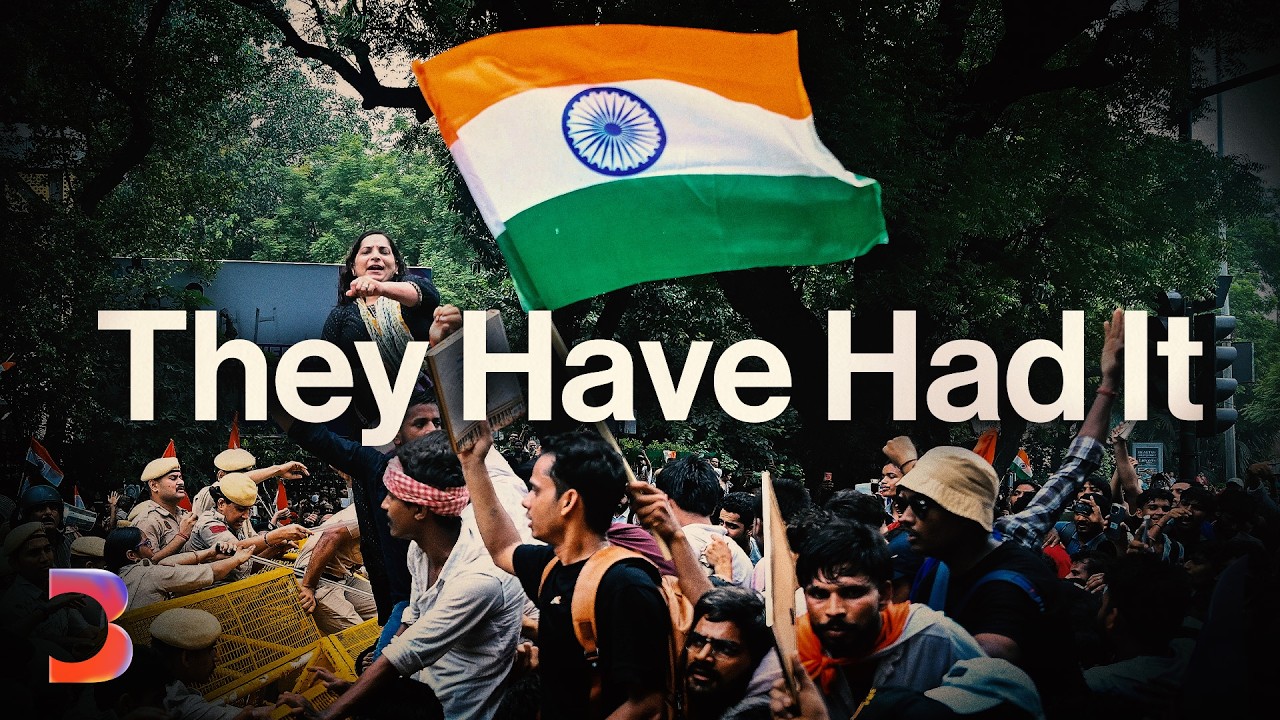
India's Youth Are Angry. Here's Why. — Bloomberg Originals

Bloomberg Originals

Unemployed graduates in India are mobilizing into a political force under a viral meme mascot, forcing a cabinet minister's resignation as the economy fails to generate formal jobs for its 63 million degree holders.

AI-assisted summary of India's Youth Are Angry. Here's Why. — original source. Check the original for full context.

Source published:

Detailed notes

## Background This video was published by Bloomberg Originals on YouTube on July 31, 2026. According to the page description, it examines how rising youth unemployment in India triggered the student-led "cockroach" movement, which forced the resignation of a cabinet minister and presented a growing political challenge for Prime Minister Narendra Modi.

## TL;DR Spurred by an AI-generated satire meme that responded to an official's offensive remarks, India's youth mobilized under the banner of the "Cockroach Janata Party" to protest severe job scarcity and widespread examination paper leaks. Tens of thousands of students marched on Parliament in New Delhi, enduring police tear gas and baton charges to demand accountability. Their mass demonstrations ultimately led to the historic resignation of Education Minister Dharmendra Pradhan, marking the first time a cabinet minister stepped down under public protest pressure during Modi's tenure. However, deep structural economic challenges persist, including an immense graduate glut, stagnant real wages, and a vast majority of educated youth trapped in precarious gig work.

## Atmosphere & style The piece carries an urgent, cinematic, and data-driven tone that balances sharp investigative journalism with tense, eye-witness reportage from the streets. The narrative arc moves from the absurd viral origins of an online meme to the high-stakes physical confrontation outside Parliament, creating a mood of palpable frustration and youth-led resilience. Watching it feels like a sobering look into a generation's boiling anger, contrasting polished statistical charts on demographic crises with raw, chaotic footage of student protests.

## Key takeaways - [00:00](https://www.youtube.com/watch?v=eoMFocllbFw&t=0s) The student-led 'Cockroach' movement emerged as a major political challenge to Prime Minister Narendra Modi and the ruling BJP ahead of key state elections. - [04:42](https://www.youtube.com/watch?v=eoMFocllbFw&t=282s) Widespread anger over paper leaks and administrative failures in national entrance exams—affecting millions of candidates—sparked the mass protests. - [00:40](https://www.youtube.com/watch?v=eoMFocllbFw&t=40s) The movement was sparked by controversial comments framing unemployed youth as parasites, leading student Abhijit Deepke to create a viral AI cockroach meme that evolved into the 'Cockroach Janata Party' (CJP). - [02:44](https://www.youtube.com/watch?v=eoMFocllbFw&t=164s) India faces a severe graduate glut: while the number of graduates expanded 13-fold from 4.8 million in 1983 to 63 million today, unemployed graduates surged 16-fold to 11 million. - [05:30](https://www.youtube.com/watch?v=eoMFocllbFw&t=330s) Tens of thousands of youth marched on Parliament in New Delhi despite bans and heavy security, defying tear gas and police baton charges. - [06:09](https://www.youtube.com/watch?v=eoMFocllbFw&t=369s) In a historic victory for student protesters, Education Minister Dharmendra Pradhan was forced to resign, marking the first time a cabinet minister stepped down under public protest pressure since Modi took office in 2014. - [06:27](https://www.youtube.com/watch?v=eoMFocllbFw&t=387s) Out of every 100 young Indian graduates, only 50 have any employment, just 26 hold regular salaried jobs, and merely 4 have a formal contract with benefits and social security. - [06:27](https://www.youtube.com/watch?v=eoMFocllbFw&t=387s) Lacking formal opportunities, millions of educated youth are forced into gig work, earning 500–700 rupees ($5–$8 USD) for 8–10 hours of daily manual labor while real graduate wages decline. - [08:28](https://www.youtube.com/watch?v=eoMFocllbFw&t=508s) India's youth movement reflects a broader wave of youth-led political unrest against corruption, joblessness, and inequality seen across South Asia, including Bangladesh, Nepal, and Indonesia. - [08:28](https://www.youtube.com/watch?v=eoMFocllbFw&t=508s) To absorb 8 million new graduates each year and reach developed nation status by 2047, India needs sustained 8%–9% annual GDP growth while transforming economic growth into high-quality job creation.

## Detailed walkthrough Here is a detailed, faithful walkthrough of the provided transcript segment.

---

[00:00](https://www.youtube.com/watch?v=eoMFocllbFw&t=0s) The "Cockroach" Threat to Modi's Dominance

For over a decade, Prime Minister Narendra Modi and his party, the Bharatiya Janata Party (BJP), have held a firm grip on Indian politics, securing a third term and expanding control in key regions like the national capital. However, this formidable political machine ran into a massive roadblock when tens of thousands of angry young protesters converged on Parliament in New Delhi. The streets were blocked off by police barricades and heavy internet jammers as crowds marched for weeks, chanting slogans like "Long live the revolution!" What sparked this massive wave of social unrest was not a traditional political campaign, but an unlikely internet meme centered around a six-legged pest: the cockroach.

The movement—dubbed the "Cockroach" movement—is directed squarely at India's education department following a series of high-profile examination scandals. Amid a grim youth unemployment landscape where formal degrees no longer guarantee economic security, the movement achieved an extraordinary early victory in late July: forcing the resignation of India's central Education Minister after massive protests over exam paper leaks. With major state elections approaching, Prime Minister Modi finds himself confronting a growing grassroots challenge led by an army of disgruntled young voters rallying under a cockroach mascot.

- **Movement Trigger:** Internet meme featuring a cockroach mascot. - **Key Victory:** Resignation of India's Education Minister in late July following exam paper leak scandals. - **State Response:** Deployment of police barricades and internet jammers around Parliament during weeks of demonstrations.

---

[00:40](https://www.youtube.com/watch?v=eoMFocllbFw&t=40s) Origins of the Cockroach Janata Party (CJP)

The movement's bizarre name traces back to controversial remarks made by an official regarding the legal profession and unemployed youth, comparing them to "parasites" and essentially dismissing them as "cockroaches." In response to an important state functionary telling young citizens that they "are no good" and labeling them pests, Abhijit Deepke—a student finishing a graduate degree in the United States—used AI tools to create a satire meme. The meme took off instantly, going viral across social media.

Within 24 hours of the meme's release, the joke evolved into a digital political entity known as the **Cockroach Janata Party (CJP)** (or the Cockroach People's Party). The satire struck a deep chord with India's 367 million young citizens, who constitute the world's largest youth population and make up a third of the nation's entire workforce. For years, Indian politicians had boasted about tapping into this "demographic dividend," but young citizens felt insulted by political rhetoric and trapped in an economic system that offered them few opportunities.

- **Founder:** Abhijit Deepke, a US-based graduate student who created the original AI-generated meme. - **Target Audience:** India's 367 million young people (one-third of the total national workforce). - **Social Media Reach:** The mock party's Instagram account accumulated nearly 27 million followers after launching in May.

---

[02:44](https://www.youtube.com/watch?v=eoMFocllbFw&t=164s) The Youth Jobs Crisis and the Graduate Glut

While India stands out as the world's fastest-growing major economy, higher education no longer guarantees a stable living. Over the last four decades, a massive proliferation of private and technical colleges led to a tremendous expansion of graduates. In 1983, India had roughly 4.8 million young graduates; by the present era, that total expanded 13-fold to 63 million. However, economy-wide job creation failed to keep pace with higher education output. During that same timeframe, the number of unemployed graduates surged 16-fold, jumping from under 1 million to 11 million.

This imbalance created a massive glut of educated job-seekers, resulting in surreal scenes at job fairs where thousands of applicants queue up for just a handful of open positions. Students and families invest millions of rupees into higher education, only to discover that their credentials do not translate into in-demand skills. This dilemma is further compounded by rapid automation, artificial intelligence, and a high-stress "pressure cooker" education system.

| Metric | 1983 | Present Era | Growth Factor | |:--- |:--- |:--- |:--- | | **Total Young Graduates** | 4.8 million | 63 million | **13x increase** | | **Unemployed Graduates** | <1 million | 11 million | **16x increase** |

---

[04:42](https://www.youtube.com/watch?v=eoMFocllbFw&t=282s) Exam Scandals and the March on Parliament

The simmering anger boiled over following a string of high-profile administrative failures in the national examination system. Authorities were forced to cancel the nationwide medical entrance exam after the question paper leaked, disrupting the lives of 2.2 million candidates. Simultaneously, widespread errors and grading glitches plagued one of India's largest graduate examinations, affecting thousands more students. These failures transformed academic anxiety into active political mobilization.

The Cockroach Janata Party targeted Minister of Education Dharmendra Pradhan, demanding his immediate resignation. Tens of thousands of young demonstrators marched directly toward Parliament in New Delhi despite being denied official police permits. When crowds pushed against the gates, security forces retaliated with baton charges ("canes") and tear gas. Eyewitnesses described the intense mood on the ground, noting that young people were so deeply frustrated that they stood their ground and absorbed physical strikes to their bodies rather than disperse.

- **Medical Entrance Exam Leak:** Impacted 2.2 million test-takers across India. - **Protest Action:** Unpermitted march on the Indian Parliament in New Delhi. - **Police Tactics:** Deployment of tear gas and physical baton charges against student demonstrators.

---

[06:09](https://www.youtube.com/watch?v=eoMFocllbFw&t=369s) Resignation and Systemic Job Insecurity

In a rare move to defuse the growing crisis, Prime Minister Modi—who usually refrains from commenting directly on operational political disputes—released a series of videos aimed at calming public anger. By the end of the week, Education Minister Dharmendra Pradhan stepped down. This marked the first time since Modi assumed power in 2014 that a cabinet minister resigned under direct pressure from public protests. The administration subsequently promised tougher legal penalties for exam fraud and announced a special task force to reform national testing procedures.

Despite the high-profile resignation, structural economic issues remain unresolved. Statistically, for every 100 young Indian graduates, only 50 hold any form of employment. Out of those 50: * Only **26** hold regular salaried positions (as opposed to being self-employed or doing casual day labor). * Out of those 26, only **4** possess a formal written contract with paid leave and social security protection.

Faced with a lack of formal jobs, millions of graduates drop into the "inferno of gig work," driving delivery vehicles or doing manual tasks for 8 to 10 hours a day to earn between 500 and 700 rupees (roughly $5 to $8 USD per day). Furthermore, real wages have stagnated; while female graduates have slowly closed the gender wage gap, male graduate earnings have steadily declined since peaking around 2012.

- **Employment Breakdown (per 100 young graduates):** - **50** are employed in any capacity. - **26** work in regular salaried roles. - **4** have a written contract, paid leave, and social security. - **Gig Worker Average Pay:** 500–700 rupees ($5–$8 USD) for 8–10 hours of daily labor.

---

[08:28](https://www.youtube.com/watch?v=eoMFocllbFw&t=508s) Broader Regional Impact and Future Outlook

The turmoil in India reflects a broader trend of youth-driven unrest shaking governments across Asia—including Nepal, Bangladesh, and Indonesia—where young people are protesting against inequality, systemic corruption, and high unemployment. Every year, 8 million new graduates enter India's job market. The traditional middle-class pathway enjoyed by previous generations—securing a steady job, buying a home, and building long-term financial stability—feels virtually out of reach for today's youth.

Politically, this dissatisfaction poses a direct risk to Modi's party ahead of crucial state elections in Uttar Pradesh, India's most populous state, where youth unemployment is a top political concern. Economically, to achieve its goal of becoming a fully developed nation by 2047, India must maintain consistent GDP growth between 8% and 9% annually over the next 25 years while rapidly generating high-paying jobs. In this context, the cockroach has evolved into a symbol of resilience—representing young people striving to survive amid deep-rooted corruption and bureaucratic apathy.

- **Annual Workforce Additions:** 8 million new graduates enter the labor market each year in India. - **2047 Growth Requirement:** 8% to 9% sustained annual GDP growth needed for 25 consecutive years to reach developed nation status. - **Key Political Battleground:** Upcoming elections in Uttar Pradesh, India's most populous state.

## Notable quotes > [00:00](https://www.youtube.com/watch?v=eoMFocllbFw&t=0s) Long live the revolution!

## Mentioned Narendra Modi, Bharatiya Janata Party (BJP), Parliament, New Delhi, Education Department, Abhijit Deepke, Cockroach Janata Party (CJP), Dharmendra Pradhan, Uttar Pradesh, Nepal, Bangladesh, Indonesia

[Source](https://www.youtube.com/watch?v=eoMFocllbFw)

中文简报

印度就业短缺加剧引青年动荡 威胁莫迪执政 因经济未能为6300万学位持有者创造正规就业岗位,印度失业毕业生借助网络爆红的模因吉祥物凝聚成政治力量,迫使一名内阁部长辞职。 受针对官员冒犯性言论而制作的AI讽刺模因推动,印度青年以“蟑螂人民党”(Cockroach Janata Party)为旗号集结,抗议严重的就业岗位短缺和普遍的考题泄露问题。数万名学生无视警方的催泪瓦斯和警棍冲击,在新德里向议会游行要求问责。他们的大规模示威最终导致教育部长Dharmendra Pradhan历史性辞职,这也是莫迪执政期间首次有内阁部长在公众抗议压力下下台。然而,深层的结构性经济挑战依然存在,包括巨大的毕业生过剩、实际工资停滞不前,以及绝大多数受过教育的青年深陷不稳定的零工困境。 针对青年高失业率及国家考试泄题丑闻,印度爆发由学生主导的“蟑螂”抗议运动;源于讽刺官员侮辱言论的AI蟑螂表情包迅速演变成拥有庞大网络声量的“蟑螂人民党”(CJP)。 (0:40) 印度面临严重的学历过剩危机:年轻大学毕业生人数从1983年的480万增至当下的6300万(增长13倍),但同期失业毕业生人数激增16倍,达到1100万人。 (2:44) 涉及220万考生的国家医学院入学考试泄题引发数万名青年冲击议会,迫使教育部长达门德拉·普拉丹(Dharmendra Pradhan)辞职,成为莫迪2014年执政以来首位因公众抗议下台的内阁部长。 (4:42) 统计显示每100名印度年轻毕业生中仅有50人处于就业状态,仅26人拥有固定薪资,而持有正式合同并享有社保者仅占4人,数百万人被迫从事日薪仅5至8美元的零工工作。 (6:09)

Reading summary

Bloomberg Originals reports that pervasive youth unemployment and repeated national examination leaks have triggered unprecedented student-led unrest in India, mobilizing millions under the satirical "Cockroach" banner to force direct accountability from Prime Minister Narendra Modi's administration. The Satirical Rise of the Cockroach Movement (0:40) The unrest crystallized after an official publicly denigrated unemployed youth and legal professionals by comparing them to "parasites" and "cockroaches." In reaction, Abhijit Deepke, an Indian graduate student based in the United States, used AI tools to launch a satirical digital campaign that rapidly transformed into the Cockroach Janata Party (CJP). The initiative resonated deeply across India's 367 million young people—who represent one-third of the country's total workforce—and amassed roughly 27 million Instagram followers after debuting in May. Rather than internalizing official insults or accepting political rhetoric regarding India's "demographic dividend," demonstrators adopted the cockroach as an emblem of resilience. The mascot came to symbolize young citizens striving to survive amidst institutional neglect, pervasive credentialism, and an economy failing to offer viable pathways to economic security. Testing Scandals and Historic Cabinet Resignation (4:42) Latent frustration erupted into widespread protest after catastrophic administrative failures disrupted India's standardized examination system. The cancellation of the nationwide medical entrance exam following a question paper leak upended the plans of 2.2 million test-takers, while concurrent grading errors impacted thousands of candidates in another major graduate test. Demanding the dismissal of Education Minister Dharmendra Pradhan, tens of thousands of students marched directly toward Parliament in New Delhi without permits, encountering internet jammers, police barricades, tear gas, and baton charges. To stem the crisis, Prime Minister Modi released public videos to quell anger, culminating in Pradhan's resignation in late July. This marked the first time since Modi took office in 2014 that sustained public demonstrations forced a cabinet minister to step down. Although the government promised harsher penalties for test tampering and appointed a task force for procedural reform, the episode laid bare deep administrative vulnerabilities. Imbalance Between Educational Degrees and Formal Jobs (2:44) The unrest highlights a worsening structural crisis where rapid higher education expansion has severely outpaced formal job creation. Between 1983 and the present era, the number of young Indian graduates increased 13-fold from 4.8 million to 63 million, while the ranks of unemployed graduates surged 16-fold from under 1 million to 11 million. Intense competition has led to scenes of thousands of credentialed applicants vying for scarce entry-level openings at job fairs, exacerbated by artificial intelligence, automation, and an unyielding education system. The quality of employment has deteriorated sharply. For every 100 young graduates in India, only 50 are employed in any capacity. Of those 50, only 26 secure regular salaried positions, and merely 4 have written contracts that provide paid leave and social security. Millions have slipped into gig work, laboring 8 to 10 hours a day as delivery drivers or couriers for 500 to 700 rupees ($5 to $8 USD), while real wages for male graduates have declined since peaking around 2012. Electoral Risks and India's 2047 Target (8:28) India's youth mobilization reflects broader unrest across Asia, where young populations in countries such as Bangladesh, Nepal, and Indonesia have demonstrated against inequality and stagnant employment. With roughly 8 million new graduates entering the domestic labor market every year, the erosion of conventional middle-class stability presents an immediate political challenge for the ruling Bharatiya Janata Party (BJP), particularly in critical electoral battlegrounds like Uttar Pradesh. Beyond short-term political consequences, the crisis intersects directly with India's long-term modernization agenda. Economists estimate that India must sustain annual GDP growth between 8% and 9% for the next 25 consecutive years to achieve its official goal of becoming a fully developed nation by 2047. Realizing that target depends not just on headline growth, but on the state's capacity to convert educated labor into high-productivity, well-compensated formal employment. While the resignation of the education minister and promises of testing overhauls offered immediate political relief, the structural economic divide remains unaddressed. The central question remains whether India's economy can generate enough stable, contract-protected jobs to satisfy the millions of graduates entering the workforce each year.

精炼阅读摘要

根据彭博原创(Bloomberg Originals)的报道,尽管印度经济增速领先全球,但高校毕业生过剩与高质就业匮乏之间的矛盾,已通过针对国家考试舞弊的抗议演变为一场自下而上的政治危机,并动摇着莫迪政府的执政基础。 讽刺迷因催生“蟑螂党”抗议浪潮 (0:40) 抗议运动的导火索源于一名印度官员将失业青年与法律从业者斥为“寄生虫”和“蟑螂”。在美国攻读研究生的Abhijit Deepke随后利用人工智能工具制作讽刺迷因,并在24小时内迅速衍生出名为“蟑螂人民党”(Cockroach Janata Party,简称CJP)的网络政治组织。该账号自5月在Instagram上线后吸引了近2700万关注者。印度拥有全球最庞大的青年群体,总数达3.67亿人,占全国总劳动力的三分之一。政客常年宣扬所谓的“人口红利”,但年轻一代在现实中深感被侮辱,且陷入机会匮乏的经济体系中,这使得该讽刺形象迅速转化为抗议图腾。 高校过度扩招与青年失业剧增 (2:44) 过去四十年来,印度私立与技术院校激增,青年毕业生总数从1983年的约480万人激增13倍至当前的6300万人。然而,整体经济的就业岗位增长远未能匹配这一产出,失业毕业生人数同期暴增16倍,从不足100万人飙升至1100万人。高等教育不再是经济保障的象征,学生与家庭投入数百万卢比后,却发现文凭难以换取市场所需技能。在自动化、人工智能以及高压教育体系的挤压下,成千上万名求职者在招聘会上为仅有的数个岗位排起长队。 考试舞弊与新德里国会抗议冲突 (4:42) 一系列国家级考试管理失职将潜在不满推向爆发点。全国医学入学考试因试题泄露被迫取消,直接影响220万名考生;与此同时,一项波及数千名学生的大型研究生考试亦因评分故障与错误引发混乱。这促使“蟑螂人民党”发动数万名无游行许可的青年走上新德里街头,直奔国会要求教育部长Dharmendra Pradhan辞职。面对警方设置的封锁线、互联网干扰器、催泪瓦斯以及警棍殴打,抗议者连续数周拒绝散去并高呼革命口号。 部长下台难掩零工经济与正规岗位匮乏 (6:09) 为平息民愤,极少直接回应具体政治纷争的莫迪总理发布多段视频安抚公众,教育部长Dharmendra Pradhan最终于7月下旬辞职。这是自2014年莫迪执政以来,首次有内阁部长因抗议直击而下台。官方虽承诺加大作弊惩戒并成立改革特别工作组,但统计数据揭示了深层的制度性缺陷:每100名印度年轻毕业生中仅有50人能获得某种形式的就业,其中仅26人拥有常规受薪职位,而拥有书面合同、带薪休假及社保保障的只有4人。数百万毕业生被迫进入每日工作8至10小时、日收入仅500至700卢比(约5至8美元)的配送等零工行业,男性毕业生自2012年达到顶峰后实际工资持续下滑。 政治版图挑战与2047发展目标考验 (8:28) 印度每一年新增800万大学毕业生涌入劳动力市场,传统通过稳定工作买房立足的中产阶级道路已近乎断绝。这种危机并非孤立存在,尼泊尔、孟加拉国和印度尼西亚等亚洲邻国同样出现了青年针对不平等、腐败与失业的抗议风潮。在政治上,青年失业已成为关键选民议题,对莫迪领导的印度人民党在人口第一大邦北方邦的选情构成了直接风险。若要实现到2047年成为发达国家的目标,印度必须在未来25年内维持年均8%至9%的国内生产总值增长,并快速创造高薪岗位。 在这场席卷全国的风暴中,“蟑螂”不仅演变为对官僚傲慢的反讽,更成了青年在深层腐败与体制漠视下顽强生存的韧性象征;尽管内阁要员引咎辞职,但如何为每年数以百万计的新增劳动力提供具备体面保障的正规岗位,仍是莫迪政府尚未解决的核心难题。

Detailed notes — zh

## Background 该视频由彭博原创(Bloomberg Originals)于2026年8月7日发布在YouTube平台上。根据页面简介,视频聚焦于印度日益严峻的青年失业危机,揭示了一场由学生主导的“蟑螂运动”(Cockroach Movement)如何迫使一名内阁部长辞职,并对印度总理纳伦德拉·莫迪(Narendra Modi)的执政地位构成了愈发严峻的政治挑战。 ## TL;DR 面对司法高官的侮辱性言论与国家级升学考试(如NEET)接连曝出的泄题丑闻,印度的失业青年借助AI表情包发起并建立了讽刺性质的“蟑螂人民党”(CJP)。数万名抗议者走上新德里街头包围议会大厦,顶着警方的催泪瓦斯和警棍暴力施压,最终迫使印度教育部长引咎辞职,创下了莫迪执政以来的先例。然而,部长的下台并未改变印度劳动力市场的残酷现状:四十年来大学毕业生激增13倍而失业人数飙升16倍,仅有4%的毕业生能获得具备劳动合同与社保的体面工作,严峻的青年生计危机正成为动摇莫迪执政根基与大选前景的核心隐患。 ## Atmosphere & style 整个报道透着一种严肃、紧迫且充满悲壮张力的纪实风格。叙事从网络自嘲的荒诞表情包迅速切入到充满棍棒与催泪瓦斯的血肉抗争,强烈的视听对比生动传递出底层年轻人被制度抛弃后的深层绝望与坚韧。冰冷客观的宏观统计图表与残酷的街头生存现实交织在一起,让观众在深感压抑窒息的同时,深刻体会到那一股在权力傲慢下绝地求生的顽强怒火。 ## Bulletin - [00:01](https://www.youtube.com/watch?v=eoMFocllbFw&t=1s) 由青年失业潮引发的“蟑螂运动”(Cockroach Movement)席卷印度,迫使教育部长普拉丹引咎辞职,创下莫迪执政十多年来首位内阁部长因公众街头抗议下台的先例。 - [02:44](https://www.youtube.com/watch?v=eoMFocllbFw&t=164s) 四十年间印度大学毕业生总量增长13倍至6300万人,但失业毕业生人数暴增16倍达到1100万,毕业生失业增长速度已显著超过文凭发放速度。 - [06:27](https://www.youtube.com/watch?v=eoMFocllbFw&t=387s) 就业质量结构极度脆弱:每100名印度大学毕业生中仅有4人能获得同时具备书面合同、带薪假和基础社保的体面工作,大量学子被迫涌入日收入仅5至8美元的零工经济。 - [04:42](https://www.youtube.com/watch?v=eoMFocllbFw&t=282s) 波及220万考生的全国医学院入学考试(NEET)泄题丑闻成为引爆危机的导火索,正对莫迪及执政党在北方邦等关键大省的地方选情构成严峻反噬压力。 ## Key takeaways - [00:01](https://www.youtube.com/watch?v=eoMFocllbFw&t=1s) 街头抗议迫使内阁部长下台:数万名年轻人包围新德里议会大厦抗议失业危机,导致印度教育部长达门德拉·普拉丹引咎辞职,这是莫迪执政以来的标志性政治事件。 - [01:47](https://www.youtube.com/watch?v=eoMFocllbFw&t=107s) “蟑螂人民党”的反讽式崛起:运动导火索源自首席大法官将失业青年侮辱性地比作“蟑螂”,留学生阿比吉特·迪普克利用AI表情包发起反击,在24小时内催生了聚拢数千万粉丝的戏仿政党“蟑螂人民党”(CJP)。 - [02:44](https://www.youtube.com/watch?v=eoMFocllbFw&t=164s) “人口红利”叙事面临严峻现实:印度坐拥全球最庞大的3.67亿年轻人口,占总劳动力三分之一,但长期兜售的人口红利正沦为文凭贬值与岗位枯竭的深重危机。 - [02:44](https://www.youtube.com/watch?v=eoMFocllbFw&t=164s) 学历通胀与岗位供给严重脱节:四十年间全国高校毕业生总数从480万暴增至6300万,而失业毕业生从不足100万飙升至1100万,失业规模扩张速度超越文凭增速。 - [02:44](https://www.youtube.com/watch?v=eoMFocllbFw&t=164s) 教育体系弊端与技术冲击:私立与技术院校盲目扩招导致技能脱节,叠加AI对初级白领职位的压缩,让背负重债求学的年轻一代深陷“高压锅”式的升学与求职内卷。 - [04:42](https://www.youtube.com/watch?v=eoMFocllbFw&t=282s) 国家级考务泄题丑闻引爆民怨:涉及220万考生的NEET医考因考卷泄露被迫取消,随后全国研究生入学考试又曝出严重评分舞弊,彻底摧毁了考生对官方选拔体系的信任。 - [04:42](https://www.youtube.com/watch?v=eoMFocllbFw&t=282s) 暴力清场与莫迪罕见回应:示威者在新德里议会大厦前遭警方警棍殴打与催泪瓦斯压制,一贯在争议中保持超然的总理莫迪罕见地连续发布多条视频试图安抚年轻群体。 - [06:27](https://www.youtube.com/watch?v=eoMFocllbFw&t=387s) 仅4%的体面就业保障覆盖率:统计显示每百名毕业生中仅半数有酬劳,仅26人有规律月薪,而能同时享有正规合同、带薪休假及基础社保的体面工作者仅占4%。 - [06:27](https://www.youtube.com/watch?v=eoMFocllbFw&t=387s) 实际薪酬停滞与零工经济困境:自2012年达到顶峰后男性毕业生实际薪酬不升反降,大批受过高等教育的青年被迫每天在极端高温下从事8至10小时零工,日均收入仅5至8美元。 - [08:28](https://www.youtube.com/watch?v=eoMFocllbFw&t=508s) 区域青年抗议浪潮的共性警讯:印度的街头动荡与尼泊尔、孟加拉国及印尼等地如出一辙,均由青年失业率高企、贫富差距悬殊及官僚腐败直接诱发。 - [08:28](https://www.youtube.com/watch?v=eoMFocllbFw&t=508s) 关键地方大选与经济目标承压:失业绝望正转化为选民对莫迪政府的政治反冲,不仅威胁北方邦等地方大选,也让印度在2047年独立百年迈入发达国家的高增长目标充满挑战。 - [08:28](https://www.youtube.com/watch?v=eoMFocllbFw&t=508s) “蟑螂”象征顽强抗争的生存哲学:这一曾被上层权贵用以贬损弱者的昆虫代名词,已被青年重构为在腐败与体制冷漠中凭借极端生命力抗争的尊严图腾。 ## Detailed walkthrough ### [00:01](https://www.youtube.com/watch?v=eoMFocllbFw&t=1s) 莫迪执政新阻碍:“蟑螂运动”的爆发与部长下台 十多年来,印度总理纳伦德拉·莫迪(Narendra Modi)及其领导的印度人民党(BJP)牢牢掌控着印度政坛,不仅成功斩获第三个执政任期,还稳固了对首都的统治地位。然而,这台看似所向披靡的政治巨轮近期却撞上了一堵前所未有的高墙。在新德里街头,警方筑起了重重路障并开启了网络信号屏蔽器,数以万计的抗议者成群结队逼近印度议会大厦,高呼着“革命万岁”为自己的基本权益而战。这场持续了数周的抗议狂潮,导火索竟然源自一个以“蟑螂”为核心形象的互联网表情包(Meme)。 抗议者们打出的口号明确而坚决:“青年必须获得就业,国家的制度必须改变!”这场被称为“蟑螂运动”(Cockroach Movement)的大规模抗议看似顶着一个滑稽古怪的名字,其矛头却绝非针对市政灭虫工作,而是直指印度教育部以及近期接连爆发的国家级考试泄题丑闻。长期以来,印度的文凭、学位和资格证书已经无法为年轻人换来生计,失业危机日益严峻。 在抗议持续发酵后,运动在7月下旬迎来了一场里程碑式的胜利:印度教育部长达门德拉·普拉丹(Dharmendra Pradhan)在巨大的舆论与街头压力下被迫引咎辞职。然而,罢免一名内阁部长并不能彻底根除印度青年的就业顽疾,而人工智能(AI)技术的普及更让这一危机雪上加霜。在多场关键地方选举逼近之际,莫迪面临的已不再仅仅是建制派政治对手的挑战,而是一场由六足昆虫作为图腾、誓要撼动印度现状的青年风暴。 - **抗议规模**:数以万计的年轻人连续数周包围新德里议会大厦周边街区。 - **政治震动**:印度教育部长达门德拉·普拉丹辞职,成为莫迪执政以来首位因公众抗议而下台的内阁部长。 --- ### [01:47](https://www.youtube.com/watch?v=eoMFocllbFw&t=107s) 侮辱性言论与AI表情包:蟑螂人民党的戏剧性崛起 一个严肃的政治抵抗运动为何会以“蟑螂”自居?这一典故源于印度首席大法官在公开场合就法律行业发表的一番争议性言论。在谈及青年失业与行业现状时,这位国家重要司法长官竟然将失业青年贬损为“寄生虫”,甚至暗示这些无所事事的年轻人就像社会阴暗处苟活的“蟑螂”。这种居高临下的羞辱刺痛了千千万万在就业线上挣扎的学子,但在愤怒之外,年轻人迅速将其转化为一种讽刺性的反击武器。 当时正在美国攻读研究生的阿比吉特·迪普克(Abhijit Deepke)敏锐地捕捉到了这种情绪,他利用AI工具创作了一组以蟑螂为主角的讽刺表情包,将受辱青年的自嘲与反抗意志具象化。这个表情包在社交网络上引发了病毒式传播,短短24小时之内,一个戏仿性质的全新政治实体——“蟑螂人民党”(Cockroach Janata Party,简称 CJP)便宣告诞生。创始人当时甚至难以置信地感叹:“哪怕在最狂野的梦里,我也从未想象过会发生这一切。” 原本只是网络恶搞的虚构政党迅速从线上席卷到线下,仅在 Instagram 上就聚集了近2700万粉丝。当这股庞大的数字力量走出屏幕走上街头时,他们向全印度宣告:这群曾经被权贵蔑称为“蟑螂”的年轻人,正准备在印度的政治历史上掀起一场不可磨灭的风暴。 --- ### [02:44](https://www.youtube.com/watch?v=eoMFocllbFw&t=164s) 人口红利还是就业灾难:狂飙的学历与停滞的岗位 “蟑螂运动”之所以能够产生如此广泛的共鸣,根源在于印度庞大的人口结构现实。印度拥有多达3.67亿年轻人口,不仅是全球最庞大的青年群体,更占据了印度整体劳动力市场的三分之一。多年来,印度政客们反复兜售“人口红利”这一宏大叙事,宣称这个全球增速最快的主要经济体将凭借极其年轻的劳动力大军实现腾飞。但对于置身其中的年轻求职者而言,现实却残酷得多:教育文凭早已失去了通往稳定体面工作的入场券属性。 回顾历史数据,印度的就业困境尤为触目惊心。1983年,印度全国的青年大学毕业生人数约为480万;经过四十年的扩张,随着大量私立大学与技术院校的泛滥,到近年这一数字暴增13倍,达到了6300万人。然而,正规就业岗位的创造速度完全脱节。在这四十年间,陷入失业窘境的毕业生人数从不足100万暴增至1100万,增幅高达16倍,毕业生失业规模的膨胀速度甚至超越了文凭发放的速度。 如今在印度各大招聘会现场,数千名持有各类文凭的年轻人挤在烈日下排起长龙,争夺区区几个低阶岗位的画面早已屡见不鲜。学生家庭不惜背负沉重债务、花费数百万卢比供养孩子接受高等教育,但学校传授的内容与市场实际需求严重脱节。伴随着AI对初级白领职位的冲击、政府政策的失衡,以及被称为“高压锅”般令人窒息的升学内卷体系,青年群体的挫败感早已积累到了临界点。 - **年轻人口基数**:3.67亿青年,占印度劳动力总量的三分之一。 - **毕业生供需悬殊**:四十年间毕业生总数从480万增至6300万(13倍),而失业毕业生从不足100万飙升至1100万(16倍)。 - **教育与技能断层**:私立院校泛滥导致学历通胀,毕业生技能无法匹配现代产业需求。 --- ### [04:42](https://www.youtube.com/watch?v=eoMFocllbFw&t=282s) 考试泄题丑闻发酵与议会大厦前的棍棒催泪瓦斯 在这一充满压抑的社会背景下,接二连三爆发的国家级考试行政丑闻成为了引爆火药桶的火星。其中影响最为恶劣的,是印度全国统一医学院入学考试(NEET)因考卷泄露事件被迫紧急取消,直接波及了220万名寒窗苦读的考生及其家庭。紧接着,在另一项涉及成千上万考生的印度全国大型研究生入学考试中,阅卷与评分环节又被曝出严重的管理漏洞和舞弊差错。 耗尽青春与积蓄备考的年轻人忍无可忍,愤怒从线上声讨全面升级为现实问责。“蟑螂人民党”迅速锁定了第一责任人——印度教育部长达门德拉·普拉丹,要求其立即辞职。数万名示威者浩浩荡荡开赴位于新德里的印度议会大厦。面对未经警方许可的游行队伍,当局部署了严密的防暴力量,当汹涌的人潮逼近议会大门时,警方使用警棍(Lathi)无情殴打抗议者,并密集发射催泪瓦斯试图强行清场。 现场目击者描述了极其震撼而悲壮的一幕:“年轻人太绝望了,他们就那样站在那里,用自己的血肉之躯硬生生扛下一记又一记警棍的重击。”面对民怨沸腾的危局,一贯习惯在政治纷争中“超然物外”、极少直接下场回应争议的总理莫迪,也罕见地在社交平台上接连发布多条视频,试图安抚激愤的年轻人。 --- ### [06:27](https://www.youtube.com/watch?v=eoMFocllbFw&t=387s) 历史性辞职背后的结构性泥潭:仅4%的体面保障 在持续不断的街头抗争与政治风暴中,教育部长达门德拉·普拉丹最终在该周末递交辞呈。这是莫迪自2014年执政以来,首次有内阁部长因公众直接抗议施压而丢掉乌纱帽。为了平息怒火,政府还承诺对考试作弊舞弊实施更严厉的法律制裁,并宣布成立专门的工作组全面整顿国家考试体系。然而,部长的下台并不能抹平印度深层的劳动力市场疮疤。 根据官方与学术机构的统计模型,印度的青年就业质量呈现出极度脆弱的倒金字塔结构: ```mermaid flowchart TD accTitle: 印度青年毕业生就业质量分布 accDescr: 展示每100名印度青年毕业生中就业保障的层层剥离过程 subgraph Graduation ["受教育群体"] A["100名 青年毕业生"] end subgraph Status ["基本就业状况"] B["50名 处于失业或未充分就业状态"] C["50名 拥有某种形式的工作"] end subgraph Stability ["岗位稳定性分流"] D["24名 从事零工或自雇"] E["26名 拥有正规受薪职位"] end subgraph Protection ["劳动权益保障"] F["22名 无书面合同或社保"] G["4名 拥有书面合同、带薪休假及社会保障"] end A --> B A --> C C --> D C --> E E --> F E --> G ``` 在这每100名青年毕业生中,仅有50人能获得某种形式的报酬;在这50人中,只有26人拥有相对规律的月薪工作;而在最后这26人里,仅有区区4个人能够同时拥有正规书面雇佣合同、法定带薪假期以及基础社会保障。大量拥有正规学位的年轻人不得不涌入被戏称为“炼狱”的零工经济(Gig work),每天顶着高温奔波8到10个小时,日收入仅有500至700卢比(约合5至8美元)。不仅岗位稀缺,整体薪资水平更陷入了长期停滞:自2012年达到顶峰以来,印度男性大学毕业生的平均月薪不升反降,女性薪资虽然略微缩小了差距,但整体阶层向上的薪酬通道已被牢牢封死。 - **薪酬趋势**:男性毕业生实际平均月薪自2012年峰值后呈下滑态势。 - **零工报酬**:大量大学毕业生从事外卖、快递等零工,日均工作8-10小时,仅获5-8美元报酬。 - **核心保障缺失**:具备劳动合同、社保及带薪假的体面工作仅覆盖4%的毕业生群体。 --- ### [08:28](https://www.youtube.com/watch?v=eoMFocllbFw&t=508s) 亚洲青年怒潮、大选压力与“蟑螂”生存哲学 放眼区域大势,印度年轻人的愤怒并非孤立现象。从尼泊尔、孟加拉国到印度尼西亚,由青年主导的抗议浪潮接连冲击着亚洲各国的执政当局,引爆这些动荡的导火索高度一致:贫富不均、权力腐败以及普遍的青年高失业率——而这些恰恰是莫迪当年竞选时承诺彻底根治的弊病。每年,印度有800万新生劳动力涌入市场,但上一代人所走过的经典中产道路——“找到体面工作、跨入中产阶层、购置房产安度余生”——对于当下的年轻一代而言已经变得彻底无法企及。 这一代年轻人普遍感觉自己被系统性地剥夺了机会,而这种绝望正在迅速转化为政治反噬。在即将到来的地方选举中,莫迪领导的政党将在印度人口最多的关键大省北方邦(Uttar Pradesh)迎来严峻考验,而当地年轻人的生计问题已成为决定选举走向的核心议题。如果莫迪政府希望在2047年独立百年之际实现让印度跃升为“发达国家”的宏伟愿景,全国经济必须在未来25年内持续保持8%至9%的高速增长,不仅需要创造数以亿计的就业岗位,还必须切实提高劳动者收入,以维持印度作为全球重要消费市场的动力。 在这场抗争中,“蟑螂”这一最初被上位者用来蔑视弱者的代名词,已经蜕变为一种顽强求生的精神图腾。它象征着身处逆境的普通人,在根深蒂固的贪腐和令人窒息的官僚冷漠中,凭借极度顽强的生命力对抗渺茫的命运。正如观察者所言,这种在极端逆境中挣扎求生的现实,“如果你没有真正置身印度,或许永远无法感同身受”。 ## Notable quotes > [00:01](https://www.youtube.com/watch?v=eoMFocllbFw&t=1s) 革命万岁 — 抗议者 > [00:01](https://www.youtube.com/watch?v=eoMFocllbFw&t=1s) 青年必须获得就业,国家的制度必须改变! — 抗议者 > [01:47](https://www.youtube.com/watch?v=eoMFocllbFw&t=107s) 寄生虫 — 印度首席大法官 > [01:47](https://www.youtube.com/watch?v=eoMFocllbFw&t=107s) 哪怕在最狂野的梦里,我也从未想象过会发生这一切。 — 阿比吉特·迪普克 > [02:44](https://www.youtube.com/watch?v=eoMFocllbFw&t=164s) 人口红利 > [02:44](https://www.youtube.com/watch?v=eoMFocllbFw&t=164s) 高压锅 > [04:42](https://www.youtube.com/watch?v=eoMFocllbFw&t=282s) 年轻人太绝望了,他们就那样站在那里,用自己的血肉之躯硬生生扛下一记又一记警棍的重击。 — 现场目击者 > [06:27](https://www.youtube.com/watch?v=eoMFocllbFw&t=387s) 炼狱 > [08:28](https://www.youtube.com/watch?v=eoMFocllbFw&t=508s) 找到体面工作、跨入中产阶层、购置房产安度余生 > [08:28](https://www.youtube.com/watch?v=eoMFocllbFw&t=508s) 如果你没有真正置身印度,或许永远无法感同身受 — 观察者 ## Mentioned 纳伦德拉·莫迪 (Narendra Modi), 达门德拉·普拉丹 (Dharmendra Pradhan), 阿比吉特·迪普克 (Abhijit Deepke), 印度人民党 (BJP), 蟑螂人民党 (Cockroach Janata Party), 印度教育部, 印度首席大法官, NEET (印度全国统一医学院入学考试), Instagram, Bloomberg Originals, 北方邦 (Uttar Pradesh) ## Video description Rising youth unemployment in India has sparked the student-led “cockroach” movement, which has managed to oust a cabinet minister while presenting a growing challenge to Prime Minister Narendra Modi. Explore these and other related stories in more depth on Bloomberg.com: A Cockroach Joke Turns Into a Giant Modi Headache https://www.bloomberg.com/news/newsletters/2026-07-22/indian-judge-s-cockroach-joke-turns-into-a-big-narendra-modi-headache Three Teens Expose Exam Flaws That Spark Modi Political Showdown https://www.bloomberg.com/news/articles/2026-06-12/three-teens-expose-cbse-exam-flaws-trigger-political-showdown-with-india-s-modi 00:00: Introduction 00:40: ‘Cockroach’ Movement Origins 01:38 Titlecard 01:53 Chief Justice Comments 02:44 Youth Jobs Crisis 04:42 Exam Scandals and Administrative Errors 05:30 Protests and Government Response 06:27 Outcome of Protests 06:57 Systemic Problems 09:03 Concluding Thoughts #India #CockroachJantaParty #Unemployment #Modi -------- Like this video? Subscribe: http://www.youtube.com/Bloomberg?sub_confirmation=1 Get unlimited access to Bloomberg.com for just $1.99 your first month: https://www.bloomberg.com/subscriptions?in_source=YoutubeOriginals Bloomberg Originals offers bold takes for curious minds on today’s biggest topics. Hosted by experts covering stories you haven’t seen and viewpoints you haven’t heard, you’ll discover cinematic, data-led shows that investigate the intersection of business and culture. Exploring every angle of climate change, technology, finance, sports and beyond, Bloomberg Originals is business as you’ve never seen it. Subscribe for business news, but not as you've known it: exclusive interviews, fascinating profiles, data-driven analysis, and the latest in tech innovation from around the world. Visit our partner channel Bloomberg News for global news and insight in an instant. [Source](https://www.youtube.com/watch?v=eoMFocllbFw)

Source quotes

[0:01] 抗议者: 革命万岁 [0:01] 抗议者: 青年必须获得就业,国家的制度必须改变! [1:47] 印度首席大法官: 寄生虫 [1:47] 阿比吉特·迪普克: 哪怕在最狂野的梦里,我也从未想象过会发生这一切。 [2:44] 人口红利 [2:44] 高压锅 [4:42] 现场目击者: 年轻人太绝望了,他们就那样站在那里,用自己的血肉之躯硬生生扛下一记又一记警棍的重击。 [6:27] 炼狱 [8:28] 找到体面工作、跨入中产阶层、购置房产安度余生 [8:28] 观察者: 如果你没有真正置身印度,或许永远无法感同身受

Source quotes

[0:00] Long live the revolution!

Original transcript

[0:01] For over a decade, Prime Minister Narendra Modi [0:04] and his party have dominated Indian politics. [0:07] Narendra Modi secures a third term. [0:10] Modi's BJP wins control of the Indian capital. [0:15] But that dominant political vehicle hit a [0:18] bit of a roadblock. [0:19] The police has barricaded the street [0:22] and put internet jammers in place. [0:24] Everyone is here fighting for their rights. [0:25] Long live the revolution. [0:28] In total, there would've been tens of thousands [0:31] of protestors converging on the parliament. [0:34] And it went on for weeks, [0:36] but was triggered by an internet meme featuring... [0:39] Well, look. [0:42] The youth will get employment. [0:44] Now the country’s system will now change. [0:48] Cockroach movement. That's a rather weird name [0:51] for a popular movement, isn't it? [0:53] It is, particularly considering [0:55] that anger isn't directed at the government's pest control record, [0:59] but its education department [1:00] and some recent exam scandals. [1:02] The unemployment situation in India is fairly grim. [1:06] These degrees, diplomas, and certificates are not enough. [1:10] In late July, the movement scored a win. [1:14] The country's education minister has resigned [1:17] after protests over exam paper leaks. [1:19] Toppling a minister though doesn't fix a youth job crisis [1:23] that's only being compounded by artificial intelligence. [1:27] With major elections looming, [1:29] Modi isn't just fighting political rivals now. [1:32] He's facing a threat to India's status quo, [1:35] marching under the banner of a six-legged mascot. [1:47] So how does a political movement come [1:50] to be likened to a cockroach? [1:52] Well, the story is that the Chief Justice [1:55] of India made a comment about the legal profession, how [2:00] unemployed youth, they were parasites and so on. [2:03] An important state functionary is telling that, look, [2:07] you guys are no good. [2:09] You are cockroaches. [2:11] You are about to do something very big in this country, [2:14] and that is going to change the country's [2:16] political history forever. [2:19] Abhijit Deepke, who was then finishing a graduate degree in [2:23] the United States, created an internet meme [2:27] using some AI tools. [2:28] That meme went viral. [2:30] And within 24 hours, [2:32] we had something called the Cockroach Janita Party [2:36] or the Cockroach People's Party. [2:44] This resonated with many of the 367 million young Indians [2:48] who make up both the world's largest youth population [2:51] and a third of India's entire workforce. [2:55] The politicians of this country [2:56] for long years have been talking about the demographic [2:59] dividend, how we need [3:00] to capitalize on this extremely young labor force. [3:05] Although it's the world's fastest growing major economy [3:09] for young Indians, education doesn't guarantee a secure job. [3:13] And here's why. In 1983, India was home [3:18] to about 4.8 million young graduates. [3:21] Over four decades, that total swelled 13-fold [3:25] to 63 million. [3:27] But job creation hasn't kept pace. [3:30] Over the same period, the number [3:32] of graduates left without work grew even faster. [3:35] From fewer than a million to 11 million, a 16-fold increase. [3:42] Basically, there's a glut of graduates fueled [3:45] by a proliferation of private and technical colleges. [3:49] It's become a common sight to see long queues [3:52] of youth at job fairs, thousands of applicants applying for [3:58] just a handful of jobs. [4:00] The problem really is that kids are spending millions [4:04] of rupees on education, [4:06] but they're not getting the required skillsets. [4:10] They are feeling the pinch of AI, government policies, [4:13] and the Indian education system can be a sort [4:17] of pressure cooker environment. [4:21] Against this background, it didn't take much [4:23] for a movement to emerge. [4:26] Not even in my wildest dreams. I would have imagined this. [4:30] Since being formed in May, [4:31] the mock political party amassed nearly 27 million Instagram [4:35] followers, many of whom showed up on the streets of India. [4:40] Apart from that comment from a Chief Justice, [4:43] what rallied them was a series of administrative errors. [4:47] Authorities canceled the country's medical entrance exam [4:50] after the question paper was leaked [4:51] and 2.2 million candidates were affected. [4:54] And around the same time, thousands of students complained [4:57] of mistakes in one of India's largest graduate examinations. [5:04] Young people had had enough and demanded accountability. [5:10] So the cockroach movement chose to target [5:13] the education minister, Mr. [5:15] Dharmendra Pradhan, and demanded his resignation. [5:20] You have all of these different vectors, you know, [5:24] pointing towards this mounting frustration, [5:26] and then suddenly they all become politically aware. [5:30] Tens of thousands [5:31] of protestors marched on the Indian Parliament in New Delhi. [5:36] No police permission was granted, [5:38] and as the crowd closed in on the parliament gates, [5:40] authorities responded with canes and tear gas. [5:56] I saw it in the streets. They were so frustrated [5:58] that they stood there and they took [6:00] the batons on their bodies. [6:03] This was, this was a stunning thing to watch. [6:09] In a rare move, Prime Minister Modi, [6:11] whose tactic is typically to float above the fray, [6:14] posted a series of videos in a bid [6:16] to quell the rising anger. [6:27] And by the end of the week, [6:35] Pradhan resigned. [6:37] The CJP had achieved something remarkable. [6:41] This was the first time since Modi took power in 2014 [6:44] that one of his cabinet ministers had resigned [6:47] under public pressure. [6:49] The government also promised stricter penalties [6:51] for exam fraud and announced a task force [6:54] to overhaul national tests. [6:57] But unfortunately, India's underlying problems remain. [7:02] Out of every hundred young Indian graduates, [7:04] 50 are employed in some form. [7:07] But only 26 of these hold regular salaried roles as opposed [7:11] to being self-employed or in casual work, for instance. [7:15] And among those 26, only four have a written contract, [7:19] paid leave, and social security benefits. [7:23] You may have the diplomas, the certificates, [7:25] and the degrees, but they're not giving you the kind [7:28] of skills that you need to enter into the job market. [7:34] You get to a point where there's a large mass of people, [7:38] some of them actual graduates who have failed to find jobs, [7:41] who have thrown themselves into the inferno of gig work. [7:45] They work eight to 10 hours a day. [7:47] They make 500 to 700 rupees a day. [7:51] That's about five to eight US dollars. [7:54] So this isn't just even about a lack of jobs, [7:56] but poor wage prospects. [7:59] After peaking in 2012, [8:01] India's male graduates have seen their average monthly [8:04] salaries decline. [8:05] Female graduates have gradually closed the gap. [8:09] But across the board, the picture is one [8:11] of wages having stagnated. [8:14] Hold that thought until after this. [8:28] India's youth aren't alone. [8:30] From Nepal to Bangladesh [8:32] and Indonesia, youth-led unrest is rattling governments [8:35] across Asia, fueled by anger over inequality, corruption, [8:40] and widespread unemployment. [8:42] The very issues Modi promised to fix. [8:45] Eight million graduates enter the [8:47] workforce every year in India. [8:50] And the path that was available to their parents [8:54] finding a decent job, stepping into the middle class, [8:56] eventually buying a house, [8:58] and then living in it for the rest [8:59] of your life is simply not available. [9:02] Next year, Modi's party faces a key election in Utah [9:06] Pradesh, India's most popular state, [9:08] where youth unemployment is a major concern. [9:12] This is a huge crisis [9:14] with very many layers attached to it. [9:16] At almost every economic aspect, the youth of the country [9:21] feels like they're being robbed of the opportunities. [9:24] For India to be able to get to a developed status by 2047, [9:28] the country will have to consistently grow between eight [9:31] to 9% for the next 25 years. [9:34] It will have to create enough jobs for its workforce [9:38] and has to make sure that the workforce is also able [9:42] to increase their incomes in a way [9:45] that India retains its spot [9:47] as the big demand center for the world. [9:50] The cockroach has become some sort of a symbol [9:54] for survival. [9:55] Survival of people who are fighting very [10:00] long odds in an environment of deep-seated corruption [10:05] and bureaucratic apathy at a level [10:08] that is hard to understand if you've not been to India.