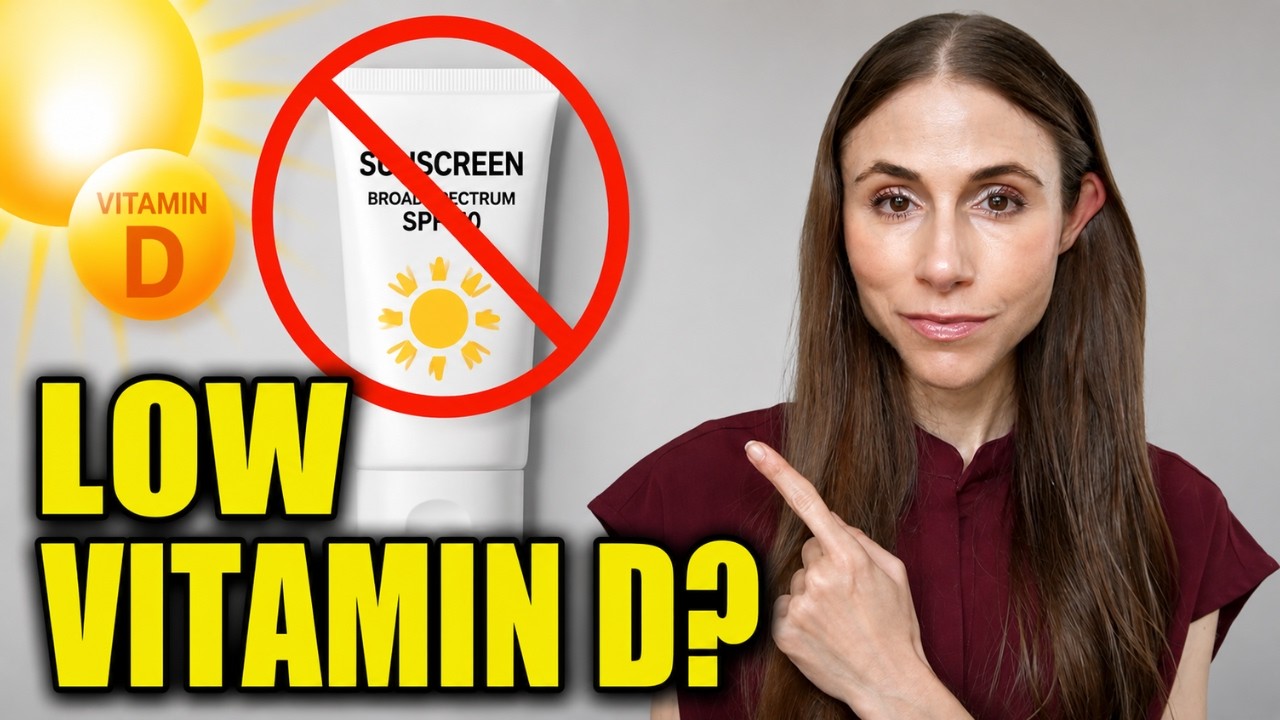
Dr. Dray Rejects Indoor Sunscreen Claims and Vitamin D Epidemic
Dr Dray
Standard window glass blocks the UVB rays necessary for indoor vitamin D synthesis while higher laboratory diagnostic thresholds artificially created a widespread deficiency epidemic.
## Background
Published by board-certified dermatologist Dr. Dray on YouTube on July 26, 2026, this video is part two of her weekend skincare Q&A series. According to the page description, Dr. Dray addresses viewer questions on topics ranging from vitamin D synthesis and sunscreen use to melasma, DSAP, postmenopausal chin hair, gym hygiene, lip masks, and post-acne discoloration treatments.
## TL;DR
In this comprehensive Q&A session, Dr. Dray clarifies that skipping sunscreen indoors does not boost vitamin D synthesis due to glass blocking UVB rays, while also challenging the mainstream narrative around a vitamin D deficiency epidemic. She breaks down practical approaches for managing hyperpigmentation, oxidation in tinted sunscreens, and structural skin benefits using ammonium lactate. Additionally, she offers actionable medical guidance on handling DSAP, postmenopausal facial hair growth, preventing fungal and staph infections at the gym, choosing effective lip masks, and optimizing treatments like IPL, BBL, and targeted nail care.
## Atmosphere & style
The video carries an informative, pragmatic, and reassuring tone characteristic of a trusted medical professional. Dr. Dray delivers evidence-based advice with clear authority, seamlessly balancing analytical explanations with candid humor—such as her playful commentary on the frustrations of postmenopausal hair growth and the irritating side effects of topical treatments. Watching the session feels like a direct, transparent consultation that breaks down complex dermatological science into accessible, practical advice.
## Key takeaways
- [00:26](https://www.youtube.com/watch?v=i3IQCX0wRko&t=26s) Skipping sunscreen indoors does not boost vitamin D synthesis, as glass windows block UVB rays needed for production while letting in UVA rays that degrade existing skin vitamin D.
- [00:26](https://www.youtube.com/watch?v=i3IQCX0wRko&t=26s) Recent research suggests that regular sunscreen use outdoors does not cause vitamin D deficiency, though studies on high-SPF formulations in low-sunlight regions remain limited.
- [02:01](https://www.youtube.com/watch?v=i3IQCX0wRko&t=121s) The perception of a widespread vitamin D epidemic is largely driven by artificially raised laboratory diagnostic thresholds and increased routine screening in asymptomatic adults.
- [02:01](https://www.youtube.com/watch?v=i3IQCX0wRko&t=121s) Vitamin D acts as a negative acute phase reactant, meaning circulating levels naturally drop during chronic inflammatory conditions like diabetes or autoimmune disease.
- [05:42](https://www.youtube.com/watch?v=i3IQCX0wRko&t=342s) Tinted sunscreens help prevent hyperpigmentation because iron oxides physically shield against visible light, but acidic skincare actives and surface oils can oxidize them, turning the tint orange.
- [07:07](https://www.youtube.com/watch?v=i3IQCX0wRko&t=427s) In clinical trials, twice-daily application of 12% ammonium lactate for three months was required to induce dermal thickening, whereas lower concentrations or reduced frequencies only affect the epidermis.
- [07:57](https://www.youtube.com/watch?v=i3IQCX0wRko&t=477s) Disseminated Superficial Actinic Porokeratosis (DSAP) is a hereditary skin condition triggered by UV light, and while rare, lesions carry a risk of developing into squamous cell carcinoma.
- [10:28](https://www.youtube.com/watch?v=i3IQCX0wRko&t=628s) Postmenopausal chin hair growth is caused by changing androgen-to-estrogen ratios that transition soft vellus hairs into coarse terminal hairs, rather than systemic hormone abnormalities.
- [11:58](https://www.youtube.com/watch?v=i3IQCX0wRko&t=718s) Benzoyl peroxide body wash is effective at clearing staph bacteria from hair follicles to prevent gym-acquired skin infections without inducing antibiotic resistance.
- [11:58](https://www.youtube.com/watch?v=i3IQCX0wRko&t=718s) Putting on socks before underwear prevents athlete's foot fungal spores from transferring to the groin and hands, breaking the cycle of auto-inoculation.
- [15:59](https://www.youtube.com/watch?v=i3IQCX0wRko&t=959s) Simple ointment formulations like CeraVe Healing Ointment and plain Vaseline are the most effective treatments for dry or compromised lips, with plain petroleum jelly being safest for active dermatitis.
- [17:30](https://www.youtube.com/watch?v=i3IQCX0wRko&t=1050s) Intense Pulsed Light (IPL) targets pigment to treat post-inflammatory hyperpigmentation (PIH), whereas Pulsed Dye Laser (PDL) specifically targets vascular redness associated with post-inflammatory erythema (PIE).
- [19:10](https://www.youtube.com/watch?v=i3IQCX0wRko&t=1150s) Pretreating skin with tretinoin before light-based procedures like Broadband Light (BBL) can reduce post-procedure hyperpigmentation risk and support wound healing, though provider timelines vary.
- [20:04](https://www.youtube.com/watch?v=i3IQCX0wRko&t=1204s) Topical urea and lactic acid act as humectants that bind water to the nail plate, where ointment or lacquer formulations like Kerasal provide optimal penetration to treat dry, brittle nails.
## Detailed walkthrough
### [00:00](https://www.youtube.com/watch?v=i3IQCX0wRko&t=0s) Introduction and Vitamin D Synthesis Indoors
Dr. Dray kicks off the Sunday Q&A session by reminding viewers that this is part two of her weekend series. She notes that all past Q&A videos are cataloged in her dedicated "skincare Q&A" playlist, complete with timestamps so viewers can easily scan the chapters and jump straight to specific topics without having to watch through the full video.
The first question addresses whether spending the day at home without wearing sunscreen in the Northeast will theoretically boost skin synthesis of vitamin D. Dr. Dray delivers a firm "no." She explains that indoor skin synthesis of vitamin D requires ultraviolet B (UVB) rays from the sun, which are effectively blocked by standard glass windows. In fact, she points out an interesting counter-perspective held by many experts: because people spend so much time indoors, they are predominantly exposed to UVA rays—which actually degrade and compromise existing vitamin D levels in the skin.
Regarding whether wearing sunscreen outdoors significantly lowers vitamin D levels, Dr. Dray notes that current research generally suggests sunscreen usage does not compromise vitamin D levels, though she raises critical caveats:
* Most existing studies were conducted on people spending short periods on the beach rather than individuals living in regions with minimal ambient sunlight.
* Research historically hasn't evaluated high-SPF sunscreens (such as SPF 50 and above).
* Some scientists theorize that sunscreen might actually *improve* vitamin D synthesis by filtering out the UVA rays that degrade it, though this compelling theory remains unproven.
[02:01](https://www.youtube.com/watch?v=i3IQCX0wRko&t=121s) Debunking the "Low Vitamin D" Epidemic
Dr. Dray expresses deep skepticism toward what she calls the general "pearl clutching" over vitamin D levels, arguing that public discourse has distorted the overall clinical picture. While clarifying that vitamin D is undeniably crucial for bone health and overall bodily function, she joins endocrinologists and epidemiologists in asserting that society has artificially engineered an "epidemic" of low vitamin D. This has occurred primarily because laboratory medicine systematically raised the numerical threshold required to trigger a diagnosis of deficiency, automatically reclassifying millions of healthy individuals as "deficient." Furthermore, this shift coincides with a massive, consumer-driven spike in voluntary lab testing—even though medical evidence shows routine screening in healthy, asymptomatic adults offers no proven benefit.
```
+-------------------------------------------------------------------------------+
| KEY FACTORS IN THE "VITAMIN D EPIDemic" |
+------------------------------------+------------------------------------------+
| Diagnostic Threshold Shifts | Lab cutoffs were raised, instantly |
| | labeling normal levels as "deficient." |
+------------------------------------+------------------------------------------+
| Negative Acute Phase Reactant | Vitamin D drops naturally during chronic |
| | systemic inflammation (e.g., CRP test). |
+------------------------------------+------------------------------------------+
| Adipose Tissue Sequestration | Being fat-soluble, it gets trapped in |
| | body fat (affecting 43-70% of US adults).|
+------------------------------------+------------------------------------------+
```
Dr. Dray highlights two critical physiological nuances that are almost universally ignored during routine blood work evaluation:
* **Negative Acute Phase Reactant status:** Just as C-reactive protein (CRP) rises as a marker of systemic inflammation, vitamin D drops as a *negative* acute phase reactant during chronic inflammatory conditions like diabetes, autoimmune diseases, hypertension, and cancer. Low levels are often a *consequence* of an inflammatory state rather than its root cause.
* **Sequestration in Body Fat:** Because vitamin D is fat-soluble, excess body fat traps and sequesters it away from circulating blood. With updated estimates indicating 43% to 70% of the US adult population qualifies as having obesity, circulating levels naturally drop.
Dr. Dray cautions that blind, excessive supplementation among otherwise healthy adults does not measurably improve health outcomes and carries real risks, including hypercalcemia and dangerous vascular calcification.
[05:42](https://www.youtube.com/watch?v=i3IQCX0wRko&t=342s) Age Spots vs. Melasma & Preventing Tinted Sunscreen Oxidation
Addressing hyperpigmentation, Dr. Dray clarifies that age spots (sunspots) and melasma are distinct clinical entities, though both fall alongside post-inflammatory hyperpigmentation (PIH) under the broad umbrella of cutaneous hyperpigmentation. She highlights that tinted sunscreens are particularly effective because the iron oxides providing the tint act as a physical shield against visible light, a primary trigger for hyperpigmentation in deeper skin tones.
When asked why tinted sunscreens frequently turn orange throughout the day, Dr. Dray explains this is caused by the chemical oxidation of iron oxides on the skin. She outlines clear steps to prevent this reaction:
* **Manage Active Skincare Layering:** Formulations containing acidic actives—such as alpha hydroxy acids (AHAs), salicylic acid, or L-ascorbic acid (vitamin C) serums—accelerate iron oxide oxidation.
* **Allow Absorption Time:** Wait 5 to 10 minutes after applying acidic serums so they can dry down and fully absorb before applying tinted sunscreen.
* **Apply Setting Powders:** Dusting a mattifying mineral powder or SPF setting powder over the sunscreen helps absorb surface sebum and sweat, both of which drive the oxidation process.
[07:07](https://www.youtube.com/watch?v=i3IQCX0wRko&t=427s) AmLactin Daily Frequency and Dermal Thickening
A viewer asks whether applying AmLactin (ammonium lactate) three times a week is sufficient to achieve deep structural skin benefits, or if daily application is strictly required. Dr. Dray notes that no clinical studies have specifically evaluated a three-times-a-week regimen.
She references key clinical research on 12% ammonium lactate (the active concentration in AmLactin Daily):
* Studies comparing 5% and 12% ammonium lactate demonstrate that while both concentrations increase epidermal thickness, only the 12% concentration successfully induces **dermal thickening** (reversing structural skin thinning).
* In these clinical trials, subjects applied 12% ammonium lactate **twice daily for 3 months** to achieve these dermal gains.
* It remains unknown whether reduced application frequencies (like three times a week) can build or maintain those deep dermal improvements.
[07:57](https://www.youtube.com/watch?v=i3IQCX0wRko&t=477s) DSAP: Causes, Skin Cancer Risk, and Treatment Protocols
Dr. Dray breaks down Disseminated Superficial Actinic Porokeratosis (DSAP), describing it as a chronic, hereditary skin condition characterized by small, round, rough, scaly lesions primarily distributed across the arms and legs. It is linked to an autosomal dominant genetic mutation that impairs localized cholesterol synthesis within the skin. Because UV light strongly triggers and exacerbates DSAP—frequently causing flares during summer months—strict, year-round sun protection is critical.
While DSAP is primarily a nuisance, Dr. Dray stresses that squamous cell carcinoma (SCC) can rarely arise directly within a DSAP lesion. Furthermore, individuals who develop DSAP inherently possess a higher baseline risk for other forms of skin cancer, requiring regular dermatologic skin examinations.
```
+-------------------------------------------------------------------------------+
| DSAP THERAPEUTIC OPTIONS OVERVIEW |
+------------------------------------+------------------------------------------+
| Topical 5-Fluorouracil (5-FU) | Cytotoxic cream; causes intense redness |
| | and irritation ("wants to say F-you"). |
+------------------------------------+------------------------------------------+
| Topical Imiquimod (Aldara) | Immune-response modifier; also used for |
| | pre-cancers and genital warts. |
+------------------------------------+------------------------------------------+
| Topical Statins | Promising therapy aimed at targeting local|
| | cholesterol synthesis defects. |
+------------------------------------+------------------------------------------+
| Procedural & Destructive Options | Cryotherapy, Photodynamic Therapy (PDT), |
| | or resurfacing lasers (lesions may return)|
+------------------------------------+------------------------------------------+
```
Dr. Dray humorously nicknames topical 5-fluorouracil "5-FU" because patients frequently "want to say 'F-you' when using it" due to severe localized peeling, dryness, and inflammation as it targets abnormal cell populations—far exceeding typical retinoid irritation. While destructive procedures like cryotherapy, Photodynamic Therapy (PDT), or resurfacing lasers can temporarily target stubborn spots, recurrence remains common.
[10:28](https://www.youtube.com/watch?v=i3IQCX0wRko&t=628s) Postmenopausal Chin Hairs: Causes and Management
A postmenopausal viewer inquires why coarse, spiky chin hairs suddenly appear daily and whether this indicates abnormal hormone levels. Dr. Dray reassures her that hormones are usually not "out of whack"; rather, this is a normal physiological response to aging. Certain hair follicles on the face and body are genetically hyper-responsive to androgenic signals. During menopause, declining systemic estrogen levels alter the local androgen-to-estrogen ratio at the follicle, causing fine, soft vellus hairs to transition into coarse terminal hairs.
Dr. Dray commiserates with the frustration of this process, noting the irony that the exact androgenic mechanism causing unwanted facial hair growth simultaneously drives follicle miniaturization on the scalp (female pattern hair loss): "Do one... no, do it the other way around!"
To manage unwanted chin hair, Dr. Dray outlines several practical interventions:
* **Tweezing:** A quick, accessible option for isolated, sporadic hairs.
* **Electrolysis:** The gold standard for a few persistent rogue hairs, as it intentionally destroys the individual follicle to create localized scarring alopecia.
* **Laser Hair Removal:** Effective for widespread coarse growth, though patients must be monitored for *paradoxical hypertrichosis* (a rare side effect where laser treatment stimulates surrounding finer hairs to grow thicker).
Dr. Dray details hygiene practices for preventing infectious skin conditions when using shared gym equipment and mats. She identifies two main categories of gym pathogens: *Staphylococcus aureus* (bacterial staph infections like impetigo and folliculitis) and dermatophytes (fungal infections such as ringworm/tinea corporis, athlete's foot/tinea pedis, and tinea gladiatorum).
To guard against these organisms, Dr. Dray evaluates various cleansing methods:
* **Benzoyl Peroxide Wash:** Highly recommended for people prone to recurrent staph folliculitis or impetigo. Benzoyl peroxide penetrates deep into hair follicles to eliminate staph bacteria without driving antimicrobial resistance.
* **Regular Body Wash:** Cleans away surface sebum, dirt, and excess bacteria, but lacks targeted antibacterial action against follicle-bound staph.
* **Hypochlorous Acid Spray:** Excellent for soothing post-workout redness, itchiness, and mild inflammation, but **not** a standalone therapeutic or preventative agent against established staph or fungal spores.
```
+-------------------------------------------------------------------------------+
| GYM HYGIENE & INFECTION PREVENTION |
+------------------------------------+------------------------------------------+
| Benzoyl Peroxide Face/Body Wash | Deeply purges staph from hair follicles; |
| | carries zero risk of antibiotic resistance.|
+------------------------------------+------------------------------------------+
| Disinfecting Wipes & Clean Towels | Mandatory wipe-down of shared mats; never|
| | re-use or share gym-supplied towels. |
+------------------------------------+------------------------------------------+
| Footwear Protocols | Never walk barefoot/socks-only to avoid |
| | fungal spores causing nail/foot fungus. |
+------------------------------------+------------------------------------------+
| "Socks-First" Dressing Rule | Put socks on BEFORE underwear to avoid |
| | dragging foot fungus to the groin/hands. |
+------------------------------------+------------------------------------------+
```
Dr. Dray strongly warns against going barefoot or walking around in socks on gym floors (such as during heavy lifting), as fungal spores spread easily. She explains the classic **"two feet, one hand, and jock itch"** auto-inoculation phenomenon: when people put on underwear before socks, fungal spores from athlete's foot attach to the underwear, transferring to the groin as the garment is pulled up (causing jock itch) and onto the dominant handling hand (causing *tinea manuum*). Dressing with socks first completely breaks this transfer cycle.
Finally, she advises wiping down all equipment with disinfectant wipes before and after use, taking an immediate post-workout shower, and—for individuals with chronic nasal staph colonization—consulting a doctor regarding episodic intranasal mupirocin ointment treatments.
### [15:48](https://www.youtube.com/watch?v=i3IQCX0wRko&t=948s) Managing Post-Gym Hygiene
If showering immediately after a workout isn't possible, it is still highly recommended to at least rinse the skin off, change out of sweaty gym clothes, and put on dry clothing before leaving. However, taking a full shower is always the ideal scenario to prevent potential skin infections from shared gym equipment.
---
### [15:59](https://www.youtube.com/watch?v=i3IQCX0wRko&t=959s) Dermatologist-Approved Overnight Lip Masks
When looking for a bedtime lip mask, the absolute top recommendation is CeraVe Healing Ointment. It features hyaluronic acid, which provides an extra plumping effect and works above and beyond standard products. Plain petroleum jelly, such as Vaseline, is the definitive second favorite. If someone is dealing with active lip dermatitis or severely dry, cracked lips, it is best to completely avoid complex products and stick strictly to plain petroleum jelly.
For travel, the Neutrogena Hydro Boost Hydrating Overnight Lip Sleeping Mask is an excellent, fragrance-free choice that utilizes hyaluronic acid to combat dry hotel climates. The COSRX Ceramide Lip Butter Sleeping Mask and the Illiyoon Intensive Ceramide Lip Mask—which contains ceramides and murumuru butter—are also highly recommended options. A surprising standout is the Tatcha Kissu Lip Mask; despite the brand generally being viewed as overpriced, this particular product is highly effective, though its high price tag makes it more of a luxury splurge.
* **Top Pick:** CeraVe Healing Ointment (contains hyaluronic acid for a plumping effect)
* **Best for Active Dermatitis:** Plain Vaseline (petroleum jelly)
* **Travel Favorite:** Neutrogena Hydro Boost Hydrating Overnight Lip Sleeping Mask (fragrance-free)
* **Ceramide Options:** COSRX Ceramide Lip Butter Sleeping Mask and Illiyoon Intensive Ceramide Lip Mask
* **Luxury Choice:** Tatcha Kissu Lip Mask (effective but expensive)
---
### [17:30](https://www.youtube.com/watch?v=i3IQCX0wRko&t=1050s) Treating Post-Acne Discoloration: IPL vs. PDL
Intense Pulsed Light (IPL) is a better choice for treating post-inflammatory hyperpigmentation (PIH) than a Pulsed Dye Laser (PDL). It is important to remember that IPL is technically not a laser because it utilizes a broad spectrum of light rather than a single wavelength. Conversely, a PDL is highly effective at targeting vascular issues, making it the ideal choice for post-inflammatory erythema (PIE). Because many individuals experience both hyperpigmentation and erythema following acne, both treatments can offer significant benefits. Other pigment-specific options, such as a Q-switched laser, can also be utilized.
---
### [18:12](https://www.youtube.com/watch?v=i3IQCX0wRko&t=1092s) Salicylic Acid Cleansers for Acne-Prone Skin
For many individuals, a salicylic acid face wash is more than adequate to gain the benefits of a beta hydroxy acid (BHA) without needing a separate leave-on serum. However, individuals with more inflammatory, thick, or stubborn acne often achieve better results with a leave-on exfoliant rather than a wash. Salicylic acid is comedolytic and localizes well into the pores, but it generally serves a supporting role in an acne routine by enhancing the penetration of active treatments rather than drastically clearing acne on its own. There is no single "gold standard" version, as effectiveness varies heavily from person to person.
---
### [19:10](https://www.youtube.com/watch?v=i3IQCX0wRko&t=1150s) Tretinoin Guidelines Around Broadband Light (BBL) Treatments
Pretreating the skin with tretinoin before a Broadband Light (BBL) or resurfacing light-based treatment can be highly beneficial, as it is thought to reduce the risk of post-inflammatory hyperpigmentation and aid in wound healing. Unfortunately, there is no medical consensus regarding the exact percentage to use or the precise timeline for starting and stopping the retinoid. To minimize the risk of unnecessary irritation, patients should strictly follow the specific protocol provided by their practitioner. The timeline for resuming tretinoin post-procedure is also highly provider-dependent and relies heavily on the individual's overall skin tone and unique concerns.
---
### [20:04](https://www.youtube.com/watch?v=i3IQCX0wRko&t=1204s) Lactic Acid vs. Urea for Brittle and Splitting Nails
Both lactic acid and urea function as humectants that improve the water-binding capacity of the nail plate. This prevents nail proteins from becoming dehydrated due to frequent exposure to water, surfactants, and harsh detergents, ultimately helping to reduce nail splitting and improve brittle nails. These ingredients are also excellent for softening and hydrating the surrounding cuticles and skin.
While there are no head-to-head clinical studies comparing the two ingredients, both are highly useful. For instance, applying an alpha hydroxy acid lotion like AmLactin to the hands will naturally benefit the nails. However, specialized nail products like the Kerasal Nail Renewal lacquer (which features urea and salicylic acid) or the Kerasal Intensive Foot Repair Ointment are preferred for targeted treatment. Ointments and lacquers provide superior staying power and adherence, which significantly enhances the penetration of active ingredients through the tough nail plate.
---
### [21:21](https://www.youtube.com/watch?v=i3IQCX0wRko&t=1281s) Outro and Q&A Announcements
The weekend Q&A wraps up with an invitation for viewers to leave their skincare, haircare, or nail-related questions in the comment section. These submissions will be reviewed for the upcoming Q&A session, which airs every weekend at 11:00 a.m. Central Standard Time. Viewers are encouraged to give the video a thumbs up, share it with friends, subscribe to the channel, and always remember to apply their sunscreen.
## Notable quotes
> [10:28](https://www.youtube.com/watch?v=i3IQCX0wRko&t=628s) Do one... no, do it the other way around! — Dr. Dray
> [07:57](https://www.youtube.com/watch?v=i3IQCX0wRko&t=477s) wants to say F-you — Dr. Dray
> [11:58](https://www.youtube.com/watch?v=i3IQCX0wRko&t=718s) two feet, one hand, and jock itch — Dr. Dray
Dermatologist Dr. Dray examines common misconceptions surrounding vitamin D synthesis and routine supplementation, arguing that shifted laboratory thresholds have artificially engineered a deficiency epidemic. Alongside systemic health, she outlines evidence-based protocols for managing hyperpigmentation, gym-acquired pathogens, genetic skin conditions, and targeted post-procedural care.
The Realities of Vitamin D and Sunscreen (0:00)
Dr. Dray asserts that staying indoors without sunscreen does not boost vitamin D synthesis, as standard window glass blocks the UVB rays necessary for production while allowing UVA rays to penetrate and degrade existing skin stores. While evidence indicates that normal sunscreen use does not significantly lower vitamin D levels, Dr. Dray notes that existing studies primarily evaluate beachgoers in high-sun environments rather than residents of low-sunlight regions utilizing high-SPF products.
More broadly, Dr. Dray challenges the widespread diagnosis of vitamin D deficiency, attributing it to elevated clinical cutoffs and excessive screening of asymptomatic adults. She highlights that vitamin D functions as a negative acute phase reactant, naturally falling during chronic inflammatory states such as diabetes, hypertension, and cancer. Furthermore, because vitamin D is fat-soluble, it is sequestered within adipose tissue—a relevant factor given that an estimated 43% to 70% of US adults have obesity. She warns that blind supplementation carries clinical risks, including hypercalcemia and vascular calcification.
Managing Hyperpigmentation, Acid Layering, and Skin Architecture (5:42)
Tinted sunscreens containing iron oxides offer critical photoprotection by physically blocking visible light, a primary exacerbating factor for melasma and post-inflammatory hyperpigmentation in deeper skin tones. When tinted formulas oxidize and turn orange, Dr. Dray explains that surface sebum and acidic actives accelerate the chemical breakdown of iron oxides. To counteract this, she advises allowing 5 to 10 minutes for acidic serums (such as L-ascorbic, alpha hydroxy, or salicylic acids) to absorb before applying tinted SPF, followed by a mineral setting powder.
Regarding structural skin changes, Dr. Dray addresses the efficacy of ammonium lactate lotions. Clinical trials have demonstrated that applying a 12% concentration twice daily for three months successfully induces dermal thickening to reverse skin thinning, whereas a 5% concentration only thickens the epidermis. She notes that less frequent regimens, such as three times weekly, have not been evaluated in clinical literature.
Clinical Management of DSAP and Menopausal Hair Growth (7:57)
Disseminated Superficial Actinic Porokeratosis (DSAP) is an autosomal dominant condition linked to abnormal localized cholesterol synthesis within the skin. Because UV exposure triggers flares, strict sun protection is essential. While predominantly benign, lesions carry a small risk of transforming into squamous cell carcinoma and indicate an elevated baseline risk for skin cancers. Dermatologic therapies include topical 5-fluorouracil (which induces pronounced inflammatory peeling), imiquimod, topical statins, and destructive modalities like cryotherapy or resurfacing lasers, though lesions frequently recur.
Addressing postmenopausal chin hair, Dr. Dray explains that declining estrogen levels shift the follicular androgen-to-estrogen ratio, triggering genetically sensitive follicles to convert fine vellus hairs into coarse terminal hairs. Recommended interventions include tweezing for sporadic growth, electrolysis to achieve permanent localized follicular destruction, or laser hair removal, which requires monitoring to avoid paradoxical hypertrichosis in adjacent fine hairs.
Gym Sanitation and Preventing Fungal Auto-Inoculation (11:58)
To prevent common gym-acquired infections caused by Staphylococcus aureus and dermatophyte fungi, Dr. Dray recommends tailored hygiene strategies. While regular soaps cleanse surface dirt, benzoyl peroxide washes penetrate deeply into hair follicles to suppress recurrent staph folliculitis without generating antibiotic resistance. Hypochlorous acid sprays provide anti-inflammatory relief for post-workout redness but do not replace targeted antimicrobials against established fungal or staph pathogens.
To prevent fungal transmission, Dr. Dray stresses never walking barefoot or in socks in fitness facilities. She details the 'two feet, one hand, and jock itch' auto-inoculation sequence, in which fungal spores from athlete's foot are dragged across the groin and hands when putting on underwear before socks. Putting socks on before undergarments breaks this cycle. Preventative protocols also include wiping shared equipment before and after use, showering promptly, and considering intranasal mupirocin under medical supervision for chronic staph carriers.
Procedural Light Therapies and Localized Barrier Treatments (17:30)
When addressing post-acne marks, Dr. Dray distinguishes between Intense Pulsed Light (IPL), which uses broad-spectrum light to target melanin in post-inflammatory hyperpigmentation, and Pulsed Dye Lasers (PDL), which target vascular erythema. Pre-treating skin with tretinoin before Broadband Light or resurfacing procedures can reduce hyperpigmentation risks and accelerate wound healing, though exact treatment pauses depend on provider protocols.
For localized barrier care, Dr. Dray recommends petrolatum-based ointments with hyaluronic acid for overnight lip repair, advising patients with active cheilitis to stick exclusively to plain petroleum jelly. To treat brittle, splitting nails, humectants such as urea and lactic acid enhance the water-binding capacity of nail proteins. Targeted ointments and lacquers provide superior adhesion and active ingredient penetration through the dense nail plate compared to standard body lotions.
Dr. Dray emphasizes that safe dermatologic and systemic health practices rely on understanding physiological mechanisms—such as inflammatory acute phase responses, light spectra, and follicular biology—rather than responding to uncalibrated laboratory screening trends or unverified skincare routines.
[10:28] Dr. Dray: Do one... no, do it the other way around!
[7:57] Dr. Dray: wants to say F-you
[11:58] Dr. Dray: two feet, one hand, and jock itch
Original transcript
[0:00] Well, hey guys. Happy Sunday. We are
[0:02] back for part two of the weekend Q&A. If
[0:04] you missed yesterday's Q&A, go ahead and
[0:06] check it out. It's in the skincare Q&A
[0:09] playlist where I keep all of these
[0:10] videos. If you ever miss one or you're
[0:12] like, "Oh, I don't know. Did she answer
[0:13] my question?" You can go back and watch
[0:15] them and they all have timestamps in
[0:17] them. So, you don't even have to watch
[0:18] the whole thing. You can just scan the
[0:20] chapters breakdown and find out what
[0:22] questions were asked. You can skip
[0:23] around, but let's get into this Q&A. I
[0:26] live in the Northeast and am at risk for
[0:29] osteoporosis. If I don't wear sunscreen
[0:31] when I'm spending the day at home, will
[0:33] that theoretically help to increase
[0:35] vitamin D levels? No. So, when you're
[0:37] indoors, your skin is not going to be
[0:40] synthesizing vitamin D from the sun. In
[0:42] order for your skin to produce vitamin D
[0:44] from the sun, you need the sun's UVB
[0:47] rays, which are blocked out by window
[0:49] glass. In fact, a lot of people argue
[0:51] that because we spend so much time
[0:53] indoors, we get mostly UVA, which
[0:56] compromises actually skin levels of
[0:59] vitamin D. It degrades it. Now, the
[1:01] question becomes, when I'm outdoors
[1:03] then, will wearing sunscreen in what
[1:05] limited sun exposure I do get, will that
[1:08] compromise my vitamin D? The research
[1:09] that we have today does not suggest that
[1:12] wearing sunscreen lowers vitamin D with
[1:14] a few caveats in that. We don't have
[1:17] studies looking at your specific
[1:19] circumstance. Most of the studies
[1:21] looking at sunscreen and vitamin D
[1:23] levels showing, "Oh, yeah, it doesn't
[1:25] seem to make a difference." Um, are done
[1:27] like at for people at on the beach,
[1:29] which you know, it could be very
[1:30] different for people who are getting
[1:33] such little sun exposure due to where
[1:35] they live. Also, those studies don't
[1:38] look at high SPF sunscreens like SPF 50
[1:41] and above. People theorize that wearing
[1:44] sunscreen can actually improve skin
[1:46] synthesis of vitamin D because
[1:49] sunscreens can block out that UVA piece
[1:51] which degrades vitamin D. But, that's
[1:53] never been proven before either. So, I
[1:56] would not overemphasize that per se, but
[1:58] it is compelling. I tend to be a little
[2:01] bit skeptical of all of the vitamin D
[2:03] pearl clutching in general. I think we
[2:05] have overblown and misrepresented the
[2:08] plot, so to speak, of vitamin D. Vitamin
[2:11] D is critical for bone health, for
[2:13] overall health, absolutely. However,
[2:15] where we have run into, I believe,
[2:17] problems, and I'm not alone, there are a
[2:19] lot of experts in endocrinology to
[2:22] likewise agree, epidemiologists, that we
[2:24] have created an epidemic of low vitamin
[2:26] D by raising what we consider to be low
[2:31] vitamin D levels. So, what do I mean by
[2:33] that? Well, when you raise the threshold
[2:35] value required to trigger a label of low
[2:38] vitamin D, you're going to label more
[2:41] people with low vitamin D. Couple that
[2:44] with the fact that there has been a mass
[2:47] increase in the demand for vitamin D
[2:51] testing, despite the fact that research
[2:54] shows that in an otherwise healthy
[2:56] adults, screening for vitamin D is not
[2:59] helpful. So, we're screening more people
[3:03] because they want to be screened, and we
[3:05] have raised the level of vitamin D
[3:08] needed to trigger that. So, as a result,
[3:11] higher vitamin D levels now get you
[3:12] labeled as having low vitamin D. And
[3:15] those labels don't take into account a
[3:17] lot of nuance when it comes to vitamin
[3:19] D. For example, almost no one in this
[3:22] discussion ever mentions the fact that
[3:24] vitamin D is a negative acute phase
[3:27] reactant. What do I mean by that? Well,
[3:29] maybe you have heard of acute phase
[3:31] reactants like your CRP. That is
[3:33] something that gets raised, elevated.
[3:35] It's a marker that is high when you have
[3:38] some sort of chronic inflammatory state,
[3:40] such as diabetes, autoimmune disease.
[3:43] The flip side of that is a negative
[3:44] acute phase reactant will drop in the
[3:47] setting of an inflammatory disorder. So,
[3:49] is it any wonder that low vitamin D is
[3:52] associated with chronic inflammatory
[3:55] disorders. But does that mean that
[3:57] that's what caused those disorders or is
[4:00] it low because they are chronic
[4:01] inflammatory disorders and it is a
[4:03] negative acute phase reactant? That's
[4:05] something that is almost never brought
[4:07] into the vitamin D conversation. Then
[4:10] the other thing is that your vitamin D
[4:13] levels will appear low if you have
[4:16] excess body fat because it is a
[4:18] fat-soluble vitamin and it will get
[4:19] sequest questioned in adipose tissue.
[4:22] And is it any wonder that when 43% by
[4:25] newer estimates actually up to 70% of
[4:28] the US population, I will say, qualifies
[4:31] as having obesity, is it any wonder that
[4:33] you're seeing this epidemic of low
[4:36] vitamin D? We have more fat to sequester
[4:38] the vitamin D. We have more chronic
[4:40] inflammatory conditions, both the result
[4:43] of more people having excess body fat,
[4:46] diabetes, hypertension, cardiovascular
[4:48] disease, more cancers. So we have the
[4:51] negative acute phase reactant aspect of
[4:54] things like that. Plus now what was once
[4:56] a normal vitamin D, because we've
[4:57] changed the threshold on lab tests to
[5:00] trigger oh that's low vitamin D. Because
[5:02] we've changed that, now almost everyone
[5:03] appears to have low vitamin D and it's
[5:05] resulted in this frenzy of vitamin D
[5:08] supplementation and it's largely fueled
[5:11] overuse, in my opinion, of vitamin D
[5:13] supplementation, which I'm sure, you
[5:15] know, there's some evidence actually
[5:16] that in certain groups, certain
[5:18] situations, vitamin D supplementation
[5:20] absolutely makes a difference. But for
[5:22] otherwise healthy adults, the research
[5:24] suggests that just supplementing with
[5:26] vitamin D doesn't actually move the dial
[5:28] and it puts you at risk for excess
[5:30] calcium absorption, calcification. So
[5:32] it's not without harm. I think it's just
[5:35] a narrative that fuels excess
[5:36] consumption of vitamin D supplementation
[5:39] without any real understanding of its
[5:41] clinical relevance. Are age spots the
[5:43] same thing as melasma and
[5:44] hyperpigmentation and will it be helped
[5:47] by a tinted sunscreen? Are there tips
[5:50] then for not having your tinted
[5:52] sunscreen turn orange? So, age spots are
[5:54] not the same as melasma, but melasma,
[5:56] age spots, and post-inflammatory
[5:58] hyperpigmentation are all types of
[6:00] hyperpigmentation. So, when it comes to
[6:02] the tinted sunscreen piece of things,
[6:04] clinical evidence suggests that using a
[6:06] tinted sunscreen because of the iron
[6:09] oxides in the tint, that can offer you
[6:11] some protection against the visible
[6:13] light from the sun that plays a role in
[6:16] hyperpigmentation, especially in deeper
[6:18] skin tones. So, tinted sunscreens are
[6:20] recommended for people who have melasma
[6:23] and post-inflammatory hyperpigmentation,
[6:25] and they likely can benefit sunspots,
[6:27] age spots as well. As far as the tinted
[6:30] sunscreens turning orange, that has to
[6:31] do with, I believe, the oxidation of the
[6:33] iron oxides. There are certain
[6:35] ingredients in your skin care routine
[6:37] that might make that more of a problem,
[6:39] like your alpha hydroxy acids, your
[6:41] salicylic acid, your ascorbic acid
[6:44] vitamin C serums. Um, so, if you're
[6:46] using those things, you might wait 5 to
[6:48] 10 minutes, make sure they're fully
[6:49] absorbed and dried down and everything
[6:51] before applying your sunscreen. Some
[6:53] people also find that applying a matting
[6:56] powder or mineral powder or one of the
[6:58] SPF powders over can also cut down on
[7:01] the oxidation because part of it is
[7:03] related to the sweat and the oils. So,
[7:05] that powder might help to absorb some of
[7:07] your oils. Do we need to use M-Lactin
[7:09] daily to obtain the deeper skin layer
[7:11] benefits, or would three times a week be
[7:13] sufficient? So, no one's looked uh the
[7:15] three times a week regimen, and the
[7:17] studies that we have on uh 12% ammonium
[7:20] lactate, which is what is in the
[7:21] M-Lactin daily, um it's not like we have
[7:23] a ton, but the ones that we have that
[7:25] show that it can reverse epidermal and
[7:27] dermal um thinning. Um namely, one of
[7:30] them that compares 5% to 12%, and shows
[7:33] that both 5 and 12% result in epidermal
[7:35] thickening, but 12% results in the
[7:38] dermal thickening. And that study, the
[7:40] patients were applying the um lactic
[7:43] acid, the ammonium lactate twice a day
[7:46] for 3 months. So, that's what the study
[7:49] looked at as far as frequency, and it's
[7:52] not clear then if using it less
[7:54] frequently gets you the same results,
[7:56] does it maintain the results? We don't
[7:58] know. Please educate us on DSAP and
[8:00] treatments. DSAP stands for disseminated
[8:03] superficial actinic porokeratosis, a
[8:06] complicated name for a chronic
[8:08] hereditary skin condition where you have
[8:11] these little round, scaly, rough spots,
[8:15] usually on the arms and the legs. It's
[8:17] thought to be related to a genetic
[8:18] mutation that is inherited in an
[8:20] autosomal dominant fashion in which the
[8:22] skin has some sort of problem with
[8:24] cholesterol synthesis. It is triggered
[8:26] by sun exposure. It's brought out often
[8:28] times in the summer months. So, sun
[8:30] protection is really important. Very,
[8:32] very rarely, squamous cell carcinoma has
[8:34] been known to arise in a lesion of DSAP.
[8:38] It's It's very rare, but it's something
[8:40] that has been known to happen, and so
[8:42] ongoing sun protection and and
[8:44] monitoring is necessary. If you notice
[8:46] any changes, that's really important.
[8:47] But as far as therapies, unfortunately,
[8:49] nothing really works great. You can try
[8:52] to As far as topicals, there is
[8:55] 5-FU. I call it 5-FU. It stands for
[8:59] 5-fluorouracil, but I call it 5-FU
[9:01] because when you use it, the patient
[9:03] wants to say "F you" because it can be
[9:05] pretty uncomfortable to use. I mean, you
[9:06] guys think that tretinoin uglies that
[9:09] they talk about are bad with the dryness
[9:10] and the peeling, Efudex will really jack
[9:13] you up because it's like really buzzing
[9:16] around [clears throat] in there with the
[9:17] abnormal cell population. So, that can
[9:19] be effective. Also, the immunomodulator,
[9:22] a topical imiquimod, which is what we
[9:23] also use for like genital warts. It's
[9:25] called Aldara, that's a brand name.
[9:27] Interestingly enough, a topical statin
[9:29] can help quite a bit.
[9:31] You know, that shows promise as well,
[9:32] but nothing really like erases it or
[9:34] gets rid of it, and you do want to keep
[9:36] protecting your skin from the sun. Now,
[9:38] there are some destructive therapies
[9:40] that can kind of help. I personally have
[9:42] never had good success with those like
[9:44] cryotherapy or um photodynamic therapy
[9:47] can be helpful for some people, but it
[9:49] it often comes back. So, if you're
[9:51] wondering about photodynamic therapy, I
[9:53] have a video that details that and you
[9:55] know, it's it's it's something that I
[9:57] think is worthwhile for a lot of people.
[9:59] So, check that video out, but yeah, that
[10:01] can be helpful and then um of course
[10:03] resurfacing lasers can get in there and
[10:05] try and zap them. Uh but really it's you
[10:08] know, unfortunately not not a straight
[10:10] shoot. Like I said, you can develop skin
[10:12] cancers and people who make this, they
[10:14] tend to have a greater risk for other
[10:16] skin cancers. So, it just kind of buys
[10:18] you some perhaps more frequent visits to
[10:20] the dermatologist for skin checks and
[10:22] just something to be aware of. But yeah,
[10:24] sadly we we just don't have like a great
[10:26] slam dunk treatment for that. It can be
[10:28] pretty tough. Postmenopausal woman here,
[10:30] why do I grow tough spiky chin hairs
[10:33] now? I get new ones daily, no joke.
[10:35] Anything to prevent or my hormones out
[10:36] of whack? So, no, your hormones are not
[10:38] out of whack. Um for whatever reason, we
[10:41] will have hair follicles on our body, on
[10:43] our face that are like hyper responsive
[10:46] to androgen hormones and to to hormonal
[10:49] signals. And so, as you go through
[10:51] menopause, the natural decline in
[10:53] estrogen that happens is a natural
[10:54] phenomenon that happens with aging and
[10:56] responsible for a lot of the symptoms of
[10:58] menopause, but when you have that
[11:00] decline in estrogen, well, at the level
[11:02] of the follicle, there's more of a
[11:04] presence if you will of
[11:06] non-estrogen hormones. All of a sudden
[11:08] it's like, all right, well, I've got
[11:10] this one follicle that's very
[11:12] responsive. So, it's just going to go
[11:15] from being a vellus hair to a terminal
[11:16] hair. It's brutal because like the same
[11:19] process that does that on your face,
[11:21] these chin hairs, is the same process
[11:24] that does the complete opposite more or
[11:26] less on your scalp, miniaturizes. Like,
[11:28] do one, no, do it the other way around.
[11:31] But to get back to the rogue chin here,
[11:33] a lot of women just tweeze that. Um but
[11:36] that's a situation where electrolysis
[11:38] can come in clutch cuz it'll create just
[11:40] a focal scarring alopecia there. But you
[11:42] know, if you just have one or two, it
[11:43] can really, you know, take that off your
[11:45] plate, quite literally. Laser hair
[11:47] removal if you've got a ton, but uh you
[11:49] know, sometimes you get paradoxical
[11:51] hypertrichosis with laser hair removal.
[11:54] So, like I said, it kind of depends on
[11:55] how much you've got, the color, and you
[11:58] know, what you want to do. What's the
[11:59] best way to prevent skin infection from
[12:01] shared mats and equipment? Rinsing off,
[12:03] toweling off, then using hypochlorous
[12:05] acid spray before getting dressed to go
[12:06] back to work, showering with benzoyl
[12:08] peroxide face wash, or showering with
[12:10] regular body wash. The concerns around
[12:12] shared equipment in the gym largely are
[12:14] around staff skin infections, common,
[12:18] all right? Like, for example, if you're
[12:19] a wrestler, they commonly get all kinds
[12:21] of impetigo because they're sharing, you
[12:24] know, their bodies are often coming in
[12:25] contact with one another, mats, all that
[12:28] kind of stuff. And um various forms of
[12:30] ringworm, dermatophyte skin infections,
[12:32] athlete's foot, um ringworm proper, uh
[12:35] tinea gladiatorum, it's even called for
[12:38] the wrestlers. And so, what should you
[12:40] do? Well, when it comes to the staff
[12:41] thing, that's really where the benzoyl
[12:43] peroxide acne washes are super helpful
[12:46] because if you're someone who deals
[12:47] especially with recurrent staff
[12:49] folliculitis, impetigo, the benzoyl
[12:52] peroxide targets the surface, but it
[12:54] also gets down into the follicle to kill
[12:57] that bad staff bacteria off and keep it
[12:59] at bay. And there's no uh concern for
[13:02] antimicrobial resistance to benzoyl
[13:04] peroxide like some other anti-infectives
[13:06] that you might uh pursue. Regular body
[13:09] wash is still helpful because it's going
[13:11] to remove sebum, dirt, and bacteria from
[13:14] like the surface, but it doesn't have
[13:15] that treated staff-specific disinfecting
[13:18] thing. The benzoyl peroxide isn't
[13:20] necessarily that helpful though for
[13:23] preventing ringworm per se. Hypochlorous
[13:25] acid is fantastic to spray on the skin
[13:28] to reduce inflammation, to reduce itch,
[13:30] for some antimicrobial activity, but
[13:32] it's definitely not a treatment for
[13:33] staph or for preventing staph. It's not
[13:36] a treatment for dermatophyte infections
[13:38] or preventing them. So, it may help cut
[13:40] down on workout-related skin irritation,
[13:43] but it's not truly a treatment for those
[13:45] things. Now, the other thing that's
[13:46] really important is wiping down the mats
[13:48] with like a disinfecting cloth, any
[13:50] shared equipment, very important. Don't
[13:52] share towels, washcloths, the gym
[13:55] towels, you know. Be real careful with
[13:57] those because they harbor staph. And the
[14:00] the thing about not only the staph, but
[14:03] the thing about ringworm is that it
[14:05] makes these little spores. So, in
[14:06] addition to wiping stuff off, do not go
[14:08] barefoot or, you know, in just socks
[14:11] even in the gym. I see people lifting
[14:13] weights in the weight room take their
[14:16] shoes off. And I guess it's so they have
[14:17] a good grip with the floor or whatever.
[14:19] I don't know. I'm not going to pretend
[14:19] to be some weightlifting expert. I don't
[14:21] recommend doing that because you can
[14:23] easily get toenail fungus, foot fungus.
[14:26] And then, if you pick it up on your
[14:27] feet, the other thing that can happen is
[14:29] the two feet, one hand, and jock itch
[14:32] phenomenon where basically most people
[14:34] put their underwear on when they get out
[14:36] of the shower before their socks. But,
[14:38] if you have ringworm on your If you have
[14:39] a athlete's foot, which is ringworm
[14:41] basically, on your feet or toenail
[14:43] fungus, you can inoculate that You know,
[14:45] the fungal spores can get on your
[14:47] underwear, transfer onto your hand as
[14:49] you pull your underwear up to your
[14:50] groin, so you get jock itch, and you'll
[14:52] get tinea manuum of the hand that you've
[14:54] been pulling your underwear up with. So,
[14:56] in those situations, it's recommended to
[14:58] put your socks on first reduce the risk
[15:00] of that. But, yeah,
[15:02] don't walk around barefoot or wear in
[15:04] the gym would be the other thing. Get
[15:06] out of your gym clothes ASAP. Change
[15:09] into, you know, take a shower. You don't
[15:11] necessarily, you know, it's a good idea
[15:13] to do the benzoyl peroxide wash thing if
[15:15] you're at a, you know, a high-traffic
[15:18] gym, I would say. I mean, you can get it
[15:20] It only takes one or one person with
[15:22] staff to to create a problem. So, but
[15:24] it's going to be more likely if you're
[15:25] in a high-traffic situation. If you're
[15:27] someone though who already is getting
[15:29] recurrent staph infections, then yeah,
[15:31] absolutely. Some people have the staph
[15:33] bacteria that colonizes their nose. They
[15:35] have to undergo um treatment with
[15:37] mupirocin into their nose episodically
[15:39] to cut down on recurrences. It's really
[15:41] It's really a a burden for them. So, if
[15:43] you're one of those people, then yeah,
[15:44] then the benzoyl peroxide thing comes in
[15:46] handy. But, if you don't have a lot of
[15:48] time, you're otherwise not getting skin
[15:50] infections at the moment, well, then you
[15:51] can at least just just rinse the skin
[15:54] off, get out of the sweaty clothes, and
[15:56] put dry clothes on to leave. But,
[15:58] ideally you are taking a shower. I'm
[16:00] looking for a new lip mask for bedtime.
[16:02] What are your favorites? CeraVe healing
[16:04] ointment, cuz it's got a little bit of
[16:06] something extra, I find, as far as
[16:08] especially for the lips. That hyaluronic
[16:10] acid in there, I guess, really offers
[16:12] some kind of plumping effect. I mean, it
[16:14] really It really works above and beyond.
[16:16] My second uh favorite, which is just
[16:18] plain petroleum jelly, aka Vaseline.
[16:20] Love that. Like, if I have an active lip
[16:22] dermatitis, dry cracked lips, I'm not
[16:24] using any kind of product. I am using
[16:27] plain petroleum jelly. That's what I'm
[16:29] using. The other one I love, actually,
[16:31] that I like to keep in my travel bag,
[16:32] and it's great for the dry climate like
[16:35] in the hotels and stuff, is the
[16:37] Neutrogena Hydro Boost Hydrating
[16:39] Overnight Lip Sleep Mask. It has
[16:41] hyaluronic acid, no fragrance. I also
[16:43] really loved the COSRX Ceramide Lip
[16:47] Butter Sleeping Mask. That is wonderful.
[16:50] using Illiyoon's Intensive Ceramide Lip
[16:53] Mask with ceramides and murumuru butter.
[16:56] I really like that. I think I mentioned
[16:57] I ordered it when I reviewed their uh
[17:00] lotion and their toner for you guys in a
[17:02] video a while back, and I I've really
[17:04] liked that product quite a bit. It's
[17:06] quite good. I I would recommend that as
[17:08] well. The one that surprised me, because
[17:10] I've never used anything from this brand
[17:12] that I thought was worth a fart, and
[17:14] it's super overpriced, but this product
[17:16] was good. Um the Tatcha Kissu Lip Mask,
[17:19] that I bu- I want to say it has
[17:20] fragrance. I loved that. I've gone
[17:22] through like two, maybe three jars of
[17:25] it. I I have not gone back to it in
[17:27] several years, simply because it's very
[17:29] expensive, so it's kind of a splurge.
[17:31] Which works better for post-inflammatory
[17:32] hyperpigmentation following acne? Is it
[17:36] IPL or PDL? So, intense pulse light is
[17:39] IPL. Uh, it's not technically a laser as
[17:42] a reminder. It's actually a better
[17:43] choice for post-inflammatory
[17:45] hyperpigmentation than pulse dye laser.
[17:47] Pulse dye laser is very good for
[17:49] targeting vascular things, so it's a
[17:51] great choice for post-inflammatory
[17:53] erythema. And, you know, following acne,
[17:55] for example, you might Many people have
[17:57] both things going on. So, both can
[17:59] certainly be beneficial. Intense pulse
[18:02] light uses like a more of a broad
[18:03] spectrum of light, so that's why it's
[18:05] not a laser, okay? Cuz it's using more
[18:07] than one wavelength of light. But then,
[18:09] you know, more pigment-specific lasers
[18:11] like, uh, Q-switch laser, for example.
[18:13] Can you use a salicylic acid face wash
[18:15] for acne-prone skin? Is that enough, or
[18:17] do we need a separate BHA
[18:18] serum/exfoliant
[18:20] in our routine? Um, for a lot of people,
[18:22] that's more than adequate, um, because
[18:24] they get the benefits of salicylic acid
[18:26] in their routine, and, you know, that's
[18:27] all that they need. Some people find
[18:28] that they don't respond as well to the
[18:31] wash forms, and they do better with a
[18:33] leave-on, especially people who have
[18:35] more inflammatory, stubborn acne. I
[18:36] mean, salicylic acid is helpful for
[18:38] acne, but I've never found that by
[18:40] itself it moves the dial much for acne.
[18:43] It's kind of just like play it has a
[18:44] supporting role. I think probably in
[18:46] helping to get better penetration to the
[18:48] follicle of stuff that actively treats
[18:50] acne, cuz it is comedolytic, and it does
[18:52] localize fairly well into the pore. But,
[18:54] you can get that in there with a wash.
[18:57] But, I think people my just experience,
[18:59] people who tend to have more
[19:00] inflammatory, thicker, stubborn acne
[19:02] tend to do better with a leave-on form
[19:04] of salicylic acid, but it varies a lot
[19:06] from person to person. There's no like,
[19:08] this is the best gold standard version
[19:10] of it. Should I take a break from
[19:12] tretinoin before or after BBL, aka
[19:15] broadband light treatment? Pretreatment
[19:17] with tretinoin is is actually helpful.
[19:19] It's thought to not only significantly
[19:21] cut down on the risk of
[19:22] post-inflammatory hyperpigmentation, but
[19:25] for light-based devices that are
[19:26] resurfacing, it's thought to aid in
[19:29] wound healing. Unfortunately, there's no
[19:31] consensus on the like regimen of
[19:33] starting it in advance and stopping it
[19:36] and what the best percentage is. You
[19:37] don't want to do anything that's going
[19:38] to increase irritation. They might tell
[19:40] you to stop it. Do whatever they tell
[19:41] you, okay? Always prudent to minimize
[19:44] risk. And then how long after the BBL
[19:46] should you resume? You know, that's
[19:48] another one that's kind of provider
[19:50] dependent. And it's also going to depend
[19:52] to like on your overall skin tone and
[19:54] other things that you're dealing with.
[19:55] So again, I would I would ask them, but
[19:57] do know that there's not like a solid
[19:59] consensus on starting and stopping
[20:01] topical retinoids around different
[20:03] light-based devices. Does lactic acid
[20:06] hydrate the nail plate in a similar way
[20:08] to urea, which is more effective in this
[20:10] way? So both are humectants, and they
[20:12] can improve the water binding sites in
[20:14] the nail plate and cut down on the risk
[20:16] of the proteins in the nail getting
[20:18] dehydrated from exposures to water and
[20:21] surfactants and detergents and things.
[20:22] Ultimately, that can really help with
[20:24] brittle nails. As far as which one is
[20:26] better than the other, we don't really
[20:27] have like head-to-head comparison
[20:29] studies between the two. Now, they also
[20:31] are very helpful for softening,
[20:33] hydrating, and improving the health of
[20:35] the skin around the nails, the cuticles
[20:37] as well. And ultimately for cutting down
[20:40] on nail splitting. You can use both. You
[20:42] know, for example, people use AmLactin
[20:45] lotions on their hands, get benefits to
[20:47] the nails that way. But like the the
[20:49] thing I like for nails is either the
[20:52] lacquer from Kerasal, which has urea and
[20:55] not lactic acid, salicylic acid. I like
[20:57] the lacquer, and I also like the
[20:59] ointment because those have real good
[21:01] staying powder
[21:03] staying power on the nail. Like they'll
[21:05] last a lot longer. They'll they'll
[21:06] adhere. and they really allow for good
[21:08] penetration of those ingredients as
[21:10] well. Especially like ointments we know
[21:12] enhance penetration of things. And nail
[21:14] plate penetration is a lot more
[21:16] challenging than getting stuff to
[21:18] penetrate other skin
[21:20] you know, other surfaces of the body for
[21:21] example. All right guys, that about
[21:23] wraps up the weekend Q&A. I hope you
[21:25] guys are having a fantastic weekend. And
[21:27] again, if you have any questions that
[21:29] you want me to answer in upcoming videos
[21:31] that are skin care, hair care, or nail
[21:32] related, please leave them in the
[21:34] comments of this video because that's
[21:36] where I'm going to come back and check
[21:37] for the upcoming Q&A, which will happen
[21:40] next weekend, 11:00 a.m. Central
[21:41] Standard Time. But if you guys enjoyed
[21:43] today's video, please give it a thumbs
[21:45] up, share it with your friends, and as
[21:46] always, don't forget sunscreen and
[21:48] subscribe. I'll talk to you guys
[21:49] tomorrow. Bye.
[21:51] >> [music]
[22:05] [music]