## Detailed walkthrough
### [00:00](https://www.bilibili.com/video/BV1PQyHY9EZL?t=0s) Introduction and the Vision for Personalization
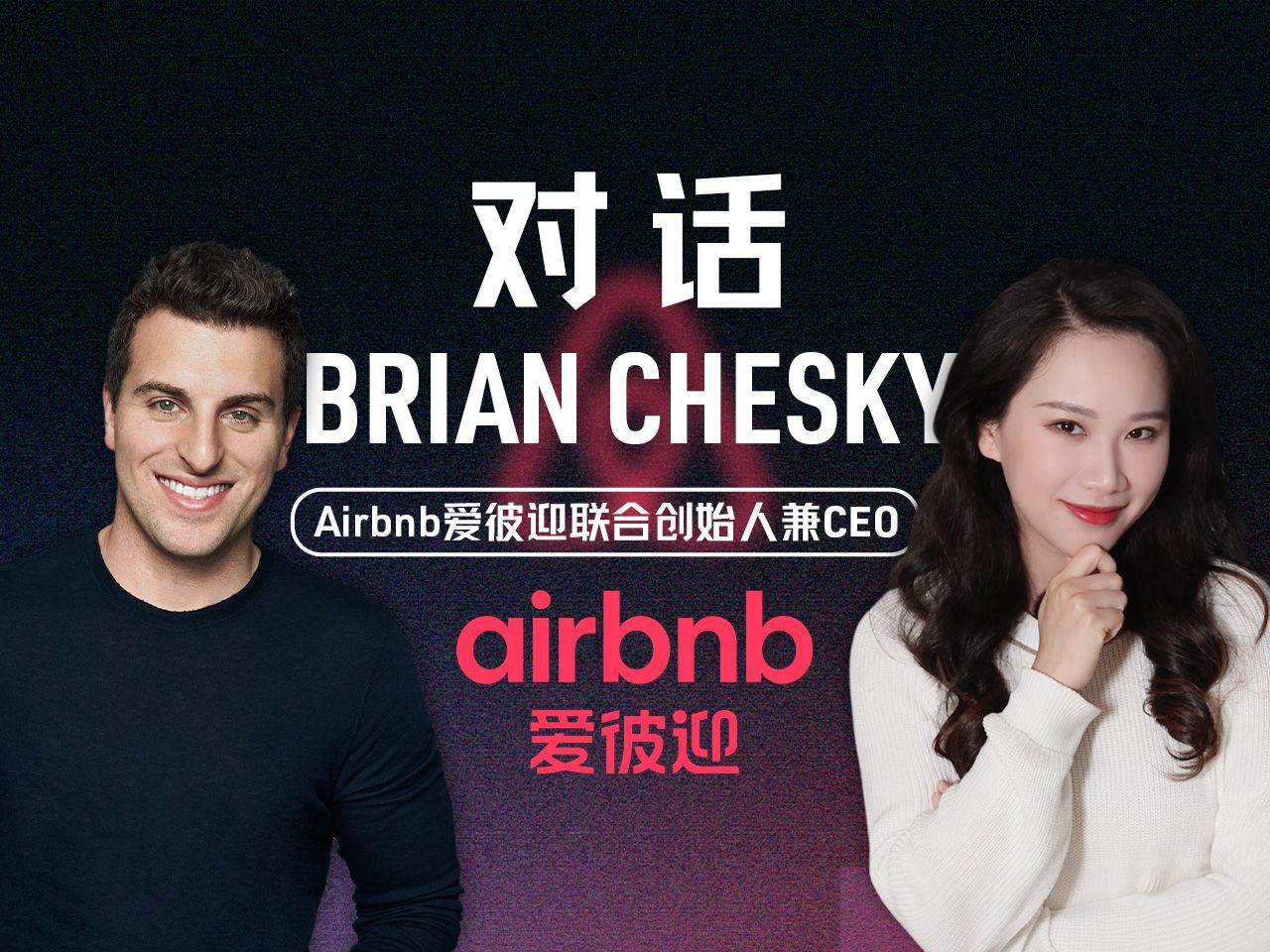
The episode kicks off with Brian Chesky, co-founder and CEO of Airbnb, sharing his long-term aspiration: "I think for decades, literally, we want Airbnb to be the most personal experience of any travel company on the internet." The host of *Greatest 101* introduces Chesky as a visionary leader, a close friend of OpenAI CEO Sam Altman, and a pioneer of the "founder mode" management style. Connecting live from New York, Chesky introduces Airbnb's latest massive product release, which features over 50 upgrades designed to move away from the traditional "one size fits all" travel booking experience. Instead of presenting every user with the same generic interface, Airbnb is leveraging past search history, booking patterns, and user profile information to curate a highly customized journey for every individual.
To illustrate this shift toward deep personalization, Chesky highlights several new features. When users open the app to search for a destination, they are now greeted with tailored suggestions based on their historical behavior. The app also introduces proactive search tips to guide users through the booking process. For instance, if a guest is looking at a six-night stay where a weekly discount is available, the app will nudge them: "hey, add another night and you'll get a destination discount." Additionally, recommended filters will dynamically adapt to the context of the trip; a user searching for a ski lodge in a cold climate will automatically see a recommendation for a hot tub to help them warm up.
- **Key Release:** Over 50 new product upgrades aimed at deep personalization.
- **Personalization Examples:** Dynamic destination suggestions, proactive booking tips (e.g., adding a night to trigger weekly discounts), and context-aware filter recommendations (e.g., hot tubs for ski trips).
- **Core Philosophy:** Moving away from the "one size fits all" approach of traditional internet travel booking.
[04:59](https://www.bilibili.com/video/BV1PQyHY9EZL?t=299s) The Co-Host Network and Unlocking Supply
When asked about the "killer feature" of the new launch, Chesky enthusiastically points to the newly unveiled Co-Host Network. While many people want to earn money by renting out their homes or secondary properties, they are often held back because hosting is simply too much work, or they do not live in the local area. Historically, homeowners had to either manage it themselves or turn to Google to find a property management company. However, traditional property management companies on Airbnb average a mediocre rating of 4.62. To solve this, Airbnb built a curated network of 10,000 top-tier hosts across 10 different countries, boasting an impressive average rating of 4.86, with 73% of them holding Superhost status.
The Co-Host Network uses an advanced matching algorithm that evaluates 80 different variables—most importantly, physical location—to pair homeowners with the perfect local co-host. Homeowners can customize the arrangement, choosing to hand over the entire hosting process or delegate only specific tasks. Chesky believes this feature will be a massive growth driver, predicting it will "unlock eventually hundreds of thousands, maybe even one day millions of new homes on Airbnb." This influx of supply will give travelers more choices and naturally make Airbnb more affordable by easing supply constraints in key markets.
- **Co-Host Network Scale:** Launching with 10,000 hosts across 10 countries.
- **Quality Metrics:** Average rating of 4.86 (compared to the 4.62 average for traditional property management companies), with 73% being Superhosts.
- **Matching Algorithm:** Evaluates 80 different variables, with geographic proximity being the most critical factor.
- **Long-term Goal:** Unlocking hundreds of thousands to millions of new listings to alleviate supply constraints.
[09:59](https://www.bilibili.com/video/BV1PQyHY9EZL?t=599s) Growth Strategies and International Markets
Chesky outlines a clear three-pronged strategy for Airbnb's growth over the next five years. First, he emphasizes that the company is "only scratching the surface" of how big their core business could be, even in mature markets. He points out a striking statistic: for every person who stays in an Airbnb, about nine people still choose to stay in a hotel. Capturing just one of those nine hotel guests would instantly double the size of Airbnb's business. Second, the company is focusing heavily on international expansion. While Airbnb has a global footprint, its market penetration in countries like Japan, China, Korea, Latin America, and parts of Europe lags far behind its success in the United States, France, and Australia.
To capture the massive Chinese outbound travel market, Airbnb is focusing intensely on key travel corridors. During China's Golden Week national holiday in October, Airbnb witnessed an extraordinary surge in bookings. Chesky reveals that bookings for Golden Week were "4x, 300% higher" compared to the Labor Day weekend in May. The company is actively mapping out where Chinese travelers want to go—with Japan, Southeast Asia, and the United States topping the list—and ensuring they have high-quality home supply ready in those specific destinations. The third bucket of growth, Chesky teases, will come from entirely new products and offerings slated to launch next year.
- **The 9-to-1 Ratio:** For every Airbnb guest, nine people stay in hotels, representing a massive untapped core market.
- **Golden Week Surge:** Outbound bookings from China during Golden Week were 4x (a 300% increase) compared to the May Labor Day weekend.
- **Target Corridors:** Focusing on popular destinations for Chinese travelers, specifically Japan, Southeast Asia, and the United States.
- **Three Growth Buckets:** 1) Deepening core market penetration, 2) Expanding international corridors, and 3) Launching new products starting next year.
[14:59](https://www.bilibili.com/video/BV1PQyHY9EZL?t=899s) Pop Culture, Icons, and the Future of AI in Travel
The conversation shifts to Airbnb's highly successful creative marketing campaigns, which have captured global attention. Chesky explains that their "Icons" initiative was born out of the massive success of the Barbie Malibu Dreamhouse campaign, which generated more press for Airbnb than their actual IPO. This inspired them to create a dedicated category for extraordinary, once-in-a-lifetime cultural experiences. These include a real-life, 40,000-pound replica of the house from Pixar's *Up* suspended 40 feet in the air by 8,000 balloons, and a luxury bedroom built inside the iconic clock tower of the Musée d'Orsay in Paris, offering a private terrace view of the Olympic opening ceremonies. Chesky notes that these campaigns serve as highly effective "earned media" that keep the brand relevant with Gen Z and younger travelers on social media.
Addressing potential language barriers for Asian travelers booking local experiences, Chesky explains that Airbnb's built-in translation engines and language filters make communication seamless. Looking forward, he is incredibly excited about the role of AI in travel, noting that real-time, AI-powered translation will soon make language barriers a thing of the past, helping to "create a common language across communities and cultures." Regarding Airbnb's broader AI strategy, Chesky confirms they will not build their own Large Language Models (LLMs) from scratch, despite acquiring AI startup GamePlanner.ai in 2023. Instead, Airbnb will focus on the application layer, leveraging models from OpenAI, Google, Anthropic, Meta, and Mistral to design the world's best user interfaces and travel experiences.
- **Icons Campaign Examples:** The *Up* house suspended by 8,000 balloons, the Musée d'Orsay clock tower bedroom, Prince's *Purple Rain* house, and a 40-foot Polly Pocket clamshell.
- **Marketing ROI:** Icons act as "earned media," driving massive social media engagement and brand aspiration without expensive paid ad placements.
- **AI Strategy:** Airbnb will not build proprietary LLMs; instead, they are focusing on the application layer and user interface design, utilizing existing models from major AI players.
- **Acquisition:** Acquired GamePlanner.ai in 2023 to accelerate their AI application development.
[19:59](https://www.bilibili.com/video/BV1PQyHY9EZL?t=1199s) The Slow Evolution of AI Applications
Brian Chesky points out that while there has been a massive explosion in GPU development and foundational AI models since the launch of ChatGPT nearly two years ago, we have yet to see a major breakthrough in consumer-facing applications. He invites listeners to look at their phone's home screen and ask how many of those apps have actually been transformed by generative AI. The answer, he notes, is "very little," including Airbnb's own app. Chesky believes this is completely normal because foundational innovation takes time to trickle down into application layers. While many startups are rushing to build travel planning wrappers by scraping the same data from Google, Airbnb's advantage lies in its deep vertical integration. The company boasts over 8 million homes, unique guest and host profiles, hundreds of millions of reviews, and a world-class interface design team that can rethink user experiences for this new technological paradigm.
[21:30](https://www.bilibili.com/video/BV1PQyHY9EZL?t=1290s) Rebuilding Airbnb One Room at a Time
When asked why rebuilding Airbnb into a fully AI-powered application will take years, Chesky compares the situation to the early hype around self-driving cars. A decade ago, people predicted autonomous fleets would dominate the roads by 2020; yet, while they are finally reaching critical mass, most people still drive themselves. "Just because the technology is almost ready doesn't mean society immediately changes and adapts," Chesky explains. To transition Airbnb, the team is treating the app like a house, redesigning it "one room at a time" rather than attempting a single, overnight reveal. The first major room being overhauled is customer service. AI can speak every language, work 24/7, and analyze the entire history of customer contacts to draft perfect responses, serving as the ultimate "power tool" for human agents when complex issues arise.
[24:59](https://www.bilibili.com/video/BV1PQyHY9EZL?t=1499s) Three Unforgettable Moments in Airbnb's History
Reflecting on the turbulent years since the pandemic began in late 2019, Chesky shares three defining moments that shaped the company. The first was the onset of the pandemic around March 15, 2020—the "Ides of March"—which culminated in a painful layoff on May 5, 2020. It was the hardest thing Chesky ever had to do, but it forced the company to become leaner. Soon after, an unexpected travel shift occurred: instead of crossing borders or visiting major cities, people began booking local Airbnbs within a couple hundred miles of their homes to shelter in place. This business resurgence led to the second unforgettable moment: Airbnb's massive IPO, where the stock price more than doubled from its issue price on the first day, pushing the company to a $100 billion market cap. The third moment was the subsequent journey to grow into that valuation by focusing on profitability, leading to Airbnb becoming one of the most profitable companies of its size in Silicon Valley.
- Airbnb now generates more than $4 billion in free cash flow alongside billions of dollars on an EBITDA basis.
- The company is preparing for its next phase: expanding into new geographies, markets, products, and services.
[28:15](https://www.bilibili.com/video/BV1PQyHY9EZL?t=1695s) A Personalized, Non-One-Size-Fits-All Work Culture
While tech giants like Amazon are demanding employees return to the office, Airbnb has maintained its flexible remote work policy established in 2022. Chesky explains that a "one-size-fits-all approach" is counterproductive. If a company forces thousands of employees to commute, it severely limits its talent pool to a tight geographic radius. Instead, Airbnb evaluates office attendance on a case-by-case basis, bringing creative and highly collaborative teams together physically when it makes sense, while allowing others to work remotely. Chesky rejects the idea that physical presence is required to ensure people work hard. Instead, Airbnb relies on strict deadlines—specifically its major product releases in May and October/November—and a highly robust program management function to maintain accountability.
- Chesky reviews company progress rigorously on a recurring cycle of every week, two weeks, four weeks, and eight weeks.
- He believes physical offices are great for human connection, but frequency of attendance should be personalized to the individual's job and circumstances.
[30:45](https://www.bilibili.com/video/BV1PQyHY9EZL?t=1845s) Demystifying "Founder Mode" and Steve Jobs' Legacy
The conversation shifts to "founder mode," a management philosophy popularized by Paul Graham after a talk Chesky gave to 200 late-stage Y Combinator founders. Chesky addresses the criticism that founder mode is just a fancy word for micromanagement. He explains that around 2019, after running Airbnb for over a decade, he tried to step back and empower others, only to find that standards slipped, bureaucracy grew, and politics took over. Inspired by Steve Jobs, Chesky realized that great leaders do not simply delegate and disappear; they are "in the details" with their teams. Jobs did not view himself as a micromanager because he partnered with his employees, actively debating them and demanding strong arguments rather than dictating orders.
- Chesky defines founder mode as a mindset where "great leadership is not absence. Great leadership is presence."
- He argues that while specialists have deep expertise, a leader must bring them together, cross-pollinate ideas, and act as the "keeper of the standards" and pace.
[34:59](https://www.bilibili.com/video/BV1PQyHY9EZL?t=2099s) The Modern Landscape of Founder Mode and Leadership Principles
When asked who exemplifies founder mode today, Chesky highlights three distinct cohorts. Among older founders, he points to Jensen Huang of NVIDIA, Elon Musk, and Mark Zuckerberg. In his own peer group, he counts Daniel Ek (Spotify), Tobias Lütke (Shopify), Patrick Collison (Stripe), Tony Xu (DoorDash), and his close friend Sam Altman (OpenAI). Chesky expresses a desire to eventually write down his thoughts on founder mode to help the next generation of entrepreneurs learn these lessons faster. Despite the rapid rise of AI startups in 2024, Chesky believes the core principles of great leadership have not changed in a hundred years. The only real shifts are technological: communication has moved from email to real-time text messaging, and AI tools now give small teams immense leverage, much like AWS did with cloud servers years ago.
- Chesky notes that his primary form of communication has shifted from writing emails to real-time text messaging.
- He warns that modern technology makes the job a "seven days a week" endeavor because work easily follows founders home via their phones.
[39:59](https://www.bilibili.com/video/BV1PQyHY9EZL?t=2399s) Sam Altman and the Reality of Hyper-Growth
The conversation shifts to the leadership of OpenAI and how Sam Altman is managing his role as the head of one of the most watched companies in the world. Brian Chesky offers high praise, stating that "Sam Altman is scaling faster than almost any leader ever has." He points out that OpenAI is, by some metrics, growing faster than any company in Silicon Valley history. To put this in perspective, Chesky notes that while he had over ten years to learn and grow into his role at Airbnb—and previous generations of leaders had decades—Altman has had to adapt almost instantly. Before the launch of ChatGPT, OpenAI was a research-focused organization of only a few hundred people. In just two years, it has surged to billions of dollars in revenue and hundreds of millions of users, thrusting Altman into the spotlight as one of the most high-profile founders on the planet.
Chesky references an old saying, which he attributes to Reid Hoffman: "starting a company is like jumping off the cliff and assembling the airplane on the way down." In the era of rapid AI expansion, the runway is even shorter, leaving founders with far less time to put that airplane together. Addressing the public narratives and scrutiny surrounding the frequent organizational changes and challenges at OpenAI, Chesky argues that these are simply the natural "output of hyper growth." When a company doubles in size every year or every few months, the entire structure must be rebuilt with each iteration. This constant rebuilding is inherently unstable, making OpenAI's achievements over the last two years nothing short of remarkable.
- OpenAI is growing as fast or faster than any company in Silicon Valley history.
- Before ChatGPT, OpenAI consisted of only a few hundred people focused on research.
- Hyper-growth forces a company to rebuild itself every time it doubles in size, creating a highly unstable environment.
[41:43](https://www.bilibili.com/video/BV1PQyHY9EZL?t=2503s) Global Travel Trends and the Rise of Gen Z
When asked about his next vacation destination and recommendations for the audience, Chesky highlights several major travel trends currently emerging on Airbnb. He notes a massive surge in beach destinations across Southeast Asia, particularly among Chinese travelers heading to countries like Thailand, Indonesia, and Malaysia. For winter sports enthusiasts, ski destinations in Europe—specifically Switzerland, Italy, and the French Alps—remain incredibly popular. For those looking for options closer to the United States, the Caribbean stands out as a premier winter getaway.
Chesky observes that in the post-pandemic era, travel has cemented itself as an increasingly vital part of people's lives. This shift is particularly pronounced among younger travelers, with China boasting the largest population of Gen Z travelers in the world. This demographic is highly active on social media, where travel content reigns supreme as the ultimate aspirational lifestyle. Because of this digital culture, Chesky predicts that we will see even more people dreaming of travel and exploring the world in the years to come.
- Popular beach destinations: Thailand, Indonesia, and Malaysia (highly favored by Chinese travelers).
- Popular winter destinations: Switzerland, Italy, the French Alps, and the Caribbean.
- China represents the largest population of Gen Z travelers who are highly active on social media.
To close the conversation, Chesky recaps the core focus of Airbnb's latest updates. The company has rolled out over 70 improvements across the platform, including more than 50 upgrades specifically designed for guests to ensure a more personalized, seamless experience. The long-term vision is to create an app that truly "knows you and understands you" the more you use it.
Additionally, Chesky reiterates his excitement for the newly launched co-host network. While Airbnb has always been an excellent avenue for people to earn extra money, many property owners simply do not have the time to manage a listing. By connecting these property owners with local, high-quality co-hosts, Airbnb is opening up the platform so that "now everyone can host." The host expresses gratitude for Chesky's time, looking forward to their next meeting in person in the Bay Area.
- Airbnb introduced over 70 total improvements, with more than 50 dedicated to enhancing the guest experience.
- The co-host network removes the barrier of time, allowing anyone to host by outsourcing management to experienced co-hosts.
## Notable quotes
> [00:00](https://www.bilibili.com/video/BV1PQyHY9EZL?t=0s) I think for decades, literally, we want Airbnb to be the most personal experience of any travel company on the internet. — Brian Chesky
> [00:00](https://www.bilibili.com/video/BV1PQyHY9EZL?t=0s) hey, add another night and you'll get a destination discount. — Airbnb App
> [04:59](https://www.bilibili.com/video/BV1PQyHY9EZL?t=299s) unlock eventually hundreds of thousands, maybe even one day millions of new homes on Airbnb. — Brian Chesky
> [09:59](https://www.bilibili.com/video/BV1PQyHY9EZL?t=599s) only scratching the surface — Brian Chesky
> [09:59](https://www.bilibili.com/video/BV1PQyHY9EZL?t=599s) 4x, 300% higher — Brian Chesky
> [14:59](https://www.bilibili.com/video/BV1PQyHY9EZL?t=899s) create a common language across communities and cultures. — Brian Chesky
> [19:59](https://www.bilibili.com/video/BV1PQyHY9EZL?t=1199s) very little — Brian Chesky
> [21:30](https://www.bilibili.com/video/BV1PQyHY9EZL?t=1290s) Just because the technology is almost ready doesn't mean society immediately changes and adapts — Brian Chesky
> [21:30](https://www.bilibili.com/video/BV1PQyHY9EZL?t=1290s) one room at a time — Brian Chesky
> [28:15](https://www.bilibili.com/video/BV1PQyHY9EZL?t=1695s) one-size-fits-all approach — Brian Chesky
> [30:45](https://www.bilibili.com/video/BV1PQyHY9EZL?t=1845s) great leadership is not absence. Great leadership is presence. — Brian Chesky
> [30:45](https://www.bilibili.com/video/BV1PQyHY9EZL?t=1845s) keeper of the standards — Brian Chesky
> [34:59](https://www.bilibili.com/video/BV1PQyHY9EZL?t=2099s) seven days a week — Brian Chesky
> [39:59](https://www.bilibili.com/video/BV1PQyHY9EZL?t=2399s) Sam Altman is scaling faster than almost any leader ever has. — Brian Chesky
> [39:59](https://www.bilibili.com/video/BV1PQyHY9EZL?t=2399s) starting a company is like jumping off the cliff and assembling the airplane on the way down. — Reid Hoffman
> [39:59](https://www.bilibili.com/video/BV1PQyHY9EZL?t=2399s) output of hyper growth — Brian Chesky
> [43:10](https://www.bilibili.com/video/BV1PQyHY9EZL?t=2590s) now everyone can host. — Brian Chesky
## Mentioned
Airbnb, Brian Chesky, 硅谷101, Sam Altman, OpenAI, Co-Host Network, Google, Icons, Barbie Malibu Dreamhouse, Up, Musée d'Orsay, Prince, Purple Rain, Polly Pocket, GamePlanner.ai, Anthropic, Meta, Mistral, ChatGPT, Amazon, Paul Graham, Y Combinator, Steve Jobs, Jensen Huang, NVIDIA, Elon Musk, Mark Zuckerberg, Daniel Ek, Spotify, Tobias Lütke, Shopify, Patrick Collison, Stripe, Tony Xu, DoorDash, AWS, Reid Hoffman
Airbnb联合创始人兼CEO Brian Chesky指出,公司正通过深度个性化产品更新与协同房东网络释放供给,并在AI浪潮中聚焦应用层设计与深度的垂直整合,同时通过重构管理重拾“创始人模式”。
个性化体验与协同房东网络 (0:00)
Airbnb推出包含50多项体验升级在内的冬季版本,核心目标是打破传统在线预订“一刀切”的模式,根据历史搜索、预订习惯与个人资料提供定制化推荐,包括动态目的地建议、主动预订提示以及情境化筛选推荐。Chesky强调,长远目标是让应用成为互联网上最具个性化的旅行工具。
在供给侧,Airbnb推出了协同房东网络(Co-Host Network),旨在解决房东因缺乏时间或异地而无法运营房源的痛点。该网络上线即汇聚10个国家的10,000名优质房东,其平均评分达4.86(73%为超赞房东),远高于传统物业管理公司4.62的均分。系统通过匹配算法考量包括地理位置在内的80个变量。Chesky预测,该功能未来将释放数十万乃至数百万套新房源,从而缓解热点市场的供给限制并拉低平均价格。
增长空间与出境游走廊布局 (9:59)
针对未来五年的增长策略,Chesky提出三大路径:首先是渗透核心业务,他引用行业比例指出,目前每有1人入住Airbnb,就有约9人选择传统酒店,只要争取到其中1人,业务规模就能翻倍;其次是国际市场拓展,针对日本、中国、韩国、拉美及欧洲部分渗透率较低的地区加大布局;第三是计划于次年推出的全新产品线。
对于中国市场,Airbnb重点聚焦出境游热门通道。在10月黄金周期间,中国出境预订量较5月劳动节假期激增300%(达4倍)。公司目前正针对中国游客偏好的日本、东南亚(如泰国、印尼、马来西亚)和美国等目的地加强房源储备,并利用应用内置翻译引擎与语言筛选功能降低跨语言沟通壁垒。
AI应用层的渐进式演进路径 (19:59)
尽管过去近两年底层大模型和GPU硬件爆发,但Chesky认为消费级AI应用尚未发生根本性变革。多数初创公司仅是抓取Google等公开数据套壳,而Airbnb的护城河在于深度垂直整合:拥有逾800万套房源、独特的房东房客档案、数亿条评价,以及顶级设计能力。Airbnb明确表示不会自研底层大模型,而是接入OpenAI、Google、Anthropic、Meta等主流模型,专注优化应用层交互与界面设计,并已在2023年收购GamePlanner.ai以加速研发。
Chesky将AI落地周期比作自动驾驶汽车的发展,强调技术就绪与社会接受之间存在时滞。Airbnb采取“每次改造一个房间”的渐进式策略重构应用,目前优先改造的是客户服务场景。AI客服具备多语言、全天候和调用全量交互历史的能力,可为人工坐席提供高效辅助工具。
“创始人模式”管理与组织韧性 (24:59)
回顾经营历程,Chesky提到2020年疫情初期被迫裁员25%是其最艰难的时刻,但此后本地避难度假潮与高估值IPO促使公司全面转向盈利能力,如今Airbnb每年可产生超40亿美元自由现金流。在日常协作上,Airbnb拒绝强制全员到岗的“一刀切”政策,保留2022年制定的灵活远程办公机制,依据岗位具体性质安排面对面协作,并通过5月和秋冬两次集中产品发布节点以及1至8周的固定审查周期保障交付进度。
针对近期引发热议的“创始人模式”,Chesky澄清这并非微观管理,而是强调卓越领导力在于“在场”而非缺席。他在2019年尝试完全放权后发现组织标准下滑、官僚主义滋生,从而转为借鉴Steve Jobs的管理哲学:领导者必须深入业务细节,作为跨专业协作的纽带与公司标准的坚守者。谈及同行,他高度评价OpenAI CEO Sam Altman在超高速增长期重构组织的应变力,认为在用户与营收爆发式扩张的剧烈动荡中,组织频繁调整是高速增长必然伴随的常态。
从疫情低谷重返高额自由现金流后,Airbnb试图以协同房东网络打开长期供给瓶颈,并稳步推进应用层AI改造。然而,消费级AI重构产品界面的节奏相对缓慢,且跨国出境游走廊拓展与全新产品形态的成效仍有待后续发布验证。
Source quotes
[0:00] Brian Chesky: I think for decades, literally, we want Airbnb to be the most personal experience of any travel company on the internet.
[0:00] Airbnb App: hey, add another night and you'll get a destination discount.
[4:59] Brian Chesky: unlock eventually hundreds of thousands, maybe even one day millions of new homes on Airbnb.
[9:59] Brian Chesky: only scratching the surface
[9:59] Brian Chesky: 4x, 300% higher
[14:59] Brian Chesky: create a common language across communities and cultures.
[19:59] Brian Chesky: very little
[21:30] Brian Chesky: Just because the technology is almost ready doesn't mean society immediately changes and adapts
[21:30] Brian Chesky: one room at a time
[28:15] Brian Chesky: one-size-fits-all approach
[30:45] Brian Chesky: great leadership is not absence. Great leadership is presence.
[30:45] Brian Chesky: keeper of the standards
[34:59] Brian Chesky: seven days a week
[39:59] Brian Chesky: Sam Altman is scaling faster than almost any leader ever has.
[39:59] Reid Hoffman: starting a company is like jumping off the cliff and assembling the airplane on the way down.
[39:59] Brian Chesky: output of hyper growth
[43:10] Brian Chesky: now everyone can host.
Original transcript
[0:00] I think for decades, literally, we want Airbnb to be the most personal experience of any travel company on the internet. And I think with this update, we're on our way. Ryan Chesky. Ryan Chesky, co-founder and CEO of Airbnb. For the past October Chinese national holiday, which is also called Golden Week in China. The bookings were 4x, 300% higher. I think Airbnb at its best really is about connecting people, especially people from different cultures. Where do you see the future for AI and travel? It's going to be a multi-year journey, one step at a time. What are the top three moments you'll never forget during this period? When the pandemic first occurred, the world really started shutting down. It was very difficult, but ultimately we were stronger because of it. Second moment, which is our IPO. And the IPO was one of the biggest in history. So the third chapter moment for us was to grow into that valuation and to become a really, really great company. What is a good founder mode? Founder Mode was basically inspired by a talk I did. Founder Mode is not limited to founders. It's really a mindset. It's a mindset that simply means great leadership is not absence. Great leadership is presence Steve Jobs did not believe he was a micromanager because he believed he was partnering with people Among current founders who do you think has the best founder mode management style? Jensen Huang and Avidia, Elon and then Mark Zuckerberg. How do you think Sam is doing as the leader of OpenAI? What Sam has gone through in the last two years of OpenAI, I had more than 10 years to learn and grow. Hello, guys, welcome to the Welcome to the Greatest 101 I am In Airbnb IBE 2014 year of the year we have a great opportunity to become the new channel of Airbnb and CEO Brian Chesky of the only channel Brian is my always want to be a professional career not only he's the leadership but he's in Airbnb the key key point on the strategy he the The idea of the company's development of AI and the idea of the company's development, and the idea of the founder mode is Brian's first. Also, he is as a OpenAI CEO of Sam Altman's friend. Brian, as a company's development of AI, is how to describe the company's development of AI. So, this is what I'm very interested in. Because Brian is in New York so we did a live on the 40 interview So let get into the Chesky Hi, Brian. Thanks so much for your time attending our interview. First of all, do you want to say hi to our Value 101 audience? Yeah, I mean, first of all, thank you so much for having me on today. Really, really excited to talk to you about Airbnb and some of the new things that we have going on. Airbnb in the new release of the new product available over 50 products. It is a key word for the entire production of the new product, also through more of the big recommendations for the new event, to give the guests more the way more every single time of the旅程. So in the interview, Brian just said that the change of the new product is a challenge. As a result of the new product, as a provider of the app from Google search to the new product, Airbnb-based, and the ability to get into the product. In addition to the customers, Airbnb has launched the co-host network the customer service service. It can allow customers to invite other customers to help manage the customers. This also has solved the challenges of customers experience and experience Congratulations on the recent product release This product release marks the start of a more personalized Airbnb Can you share your vision for personalization and how it aligns with your long strategy Yeah, it's a great question. So I think for years, for decades, literally, you know, if you want to book travel on the internet, you go to an app or a website, and it's kind of one size fits all. You have the same settings as everyone else. But we want to change that because so many people have already used Airbnb. And we asked, what if when you came to Airbnb, it would be a much more personalized experience? What if we took an account all the time you've used Airbnb? What if we took your profile information into account and gave you a distinct personalized experience that's different than anyone else's experience? And that's the beginning of what we're doing. We have a number of new features. For example, we now, when you go to search for a destination, we give you suggested destinations. And these suggested destinations are based on places you search for in the past and what we know about you. We give you search tips to help you, guide you through the booking process to tell you, hey, you know, if you try to find a six-night stay and there's a week discount, we say, hey, add another night and you'll get a destination.
[4:59] count. We have recommended filters based on your prior bookings and the search you're doing. So if you're going to a ski lodge, we might recommend a hot tub because we know you might want a hot tub and because you're going to be cold and you might want to warm up. So these are just some of the things we're doing. There's over 50 upgrades for guests and a large percent of these upgrades are really aiming to make Airbnb a more personalized experience. We want Airbnb to be the most personal experience of any travel company on the internet. And I think with this update, we're on our way. What is a killer feature among this product launch that you're most proud of? Yeah, I mean, by far, the one that I would like to highlight the most is actually a feature for host new product for host. And that is the co host network. So basically, you know, Airbnb is is a great way to make money. And a lot of people have expressed interest in making money off of their home. But the problem is, a number of people said that hosting is too much work, they can't get started. Or maybe they wanna rent out their second home and they don't live in that local area. So what if we could match them with somebody who could take care of their home And historically the way you would do this is either you wouldn host or you go on like Google and you search for a property management company The problem is the property management companies, the average rating on Airbnb is about a 4.62. So we thought, what if we built a network of co-hosts that could partner with you and take care of your home and take care of your guests? And the Coast Network is a network of 10,000 hosts in 10 different countries that we're launching. They have an average rating on Airbnb of 4.86. 73% of them are super hosts. And they are some of our very best hosts. And you can basically, we will match you with the one that's right for you based on like 80 different variables and factors, including like where you're located. That's the most important criteria. And we make it really easy to integrate. You can choose to have them help you with the entire process, or they can only have them help you with just parts of the hosting job. So we think if we do this, we're going to unlock eventually hundreds of thousands, maybe even one day millions of new homes on Airbnb. And that's going to give people more options and more choices to stay. And it also going to make Airbnb more affordable because we not going to be as supply constrained in key markets That why many passengers like to use Airbnb including my own非常的感兴趣那这些体验都是酒店所不能够提供的而在过去几年我们观察到Airbnb也在强化体验这个核心产品点这让Airbnb最近的品牌营销有好几次非常出圈的案例是吸引了非常大的市场热度这就包括了在去年巴比电影上映的时候Airbnb就趁机推出了巴比梦幻屋邀请用户入住这栋豪华巴比别墅并且由演员Ryan Gosling扮演的肯成为Airbnb的房东那么在电影上映期间我还记得当时媒体对Airbnb巴比梦幻屋的各种报道是非常出权那么在今年年中的时候Airbnb继续加强旅客们对这种特色营销推出了全新特色分裂王牌Icons来自全球的音乐、影视、艺术、体育等等圈层的名流大咖是变身Airbnb Icons房东包括从奥赛博物馆醒来推窗就能够看到奥运盛会那么这些难得的体验啊是赢得了非常多旅行爱好者和媒体的热情啊而这其实也将转化到Airbnb的增长上Brian在专访当中就对我们说增长将是Airbnb接下来的重点目标那么这分为三步策略加强现有市场的份额渗透继续开拓国际市场以及持续产品重新。 Right, that sounds exciting. I know Airbnb has consistently launched major product updates twice a year, from categories to guest favorites, icons, and now the personalized app. How do you feel Airbnb has progressed so far, and what direction do you see it's heading in next? Yeah, I think we are accelerating the improvements of Airbnb.就是给你个例子过来的两个月我们有多个400并且做成功更新于更新的尽兵甚至于70就在这October release我们的所以我们的更新的更新的更新的非常好我们的现在我们的新的新的新的新的新的
[9:59] offerings in the coming years to come. So I think in future interviews, I hope to be able to share new things that we're doing. That's great. Where will Airbnb find growth momentum over the next five years in international markets, especially? And what strategy will Airbnb adopt to capitalize on these growth potentials? I mean, there's a lot of opportunities for growth. I mean, if I could break them into three buckets, the first one would be we're only scratching the surface of how big our core business could be, even in our more mature markets. You know, for everyone who stays in Airbnb, about nine people stay in a hotel. If we can just get one of those people to stay in Airbnb, we'd double the size of our business. Number two, you mentioned international markets. So, you know, we're in nearly every country in the world, but we do not have nearly the market penetration in, say, Japan or China or Korea or countries in Latin America or even parts of Europe that we say have in the United States, France, or Australia. And so if we could increase the market penetration by just investing a little bit more time, energy, and resources in these local markets then we can see a huge amount of growth And in China for example what we really focused on is the corridors the destinations that Chinese travelers are traveling to Japan is a big one Parts of Southeast Asia are really large destinations The United States is a really popular destination. And so what we want to do is figure out where all the Chinese travelers want to travel to and make sure we have homes in those destinations. And that's one of the things that we're really focused on. So the first one, again, is just scratching the surface of our core business. The second one is international markets. And the third is eventually new products and new offerings that are coming starting next year. For the past October Chinese national holiday, which is also called Golden Week in China, did you see a burst of Airbnb bookings from outbound Chinese tourists? Yeah, I mean, it was a really, really big week. And just to give you a point of reference, if you compare the bookings for Golden Week this past October to Labor Day weekend, which was in May, the bookings were 4x, 300% higher. Wow, that's amazing. I think Airbnb has been pretty creative in recent years on some of the marketing campaigns like Barbie Malibu Dreamhouse as well as a bunch of traveling with local activities I myself have been a heavy user actually In Italy last year we went on a travel hunting tour with a local chef We got to meet his family his brother his wife his kids and his dogs. He had four golden retrievers. I know you have a golden retriever as well. I'm so sorry for your recent loss, but that trip was so lovely. I booked all the trips on Airbnb and I really enjoyed the experiences. So pop culture is a big focus for Airbnb with the icons launch. How have your creative efforts resonated with Chinese travelers? What type of campaigns work best for them? Yeah, I mean, you mentioned that earlier this year, on May 1, we launched icons, the world's most extraordinary experiences from some of the biggest icons in pop culture. and it was really inspired by some promotions we've done, in particular Barbie. Last year, the Barbie movie came out as part of promoting Barbie. We worked at Barbie to take a house in Malibu and that looked like the Malibu Barbie Dreamhouse. We customized it to look fairly uncannily similar to the Barbie Malibu Dreamhouse and it became a pop culture sensation In fact it got more press for Airbnb than our IPO So we started thinking to ourselves what if this wasn't a one-off? What if we had a category dedicated to some of the biggest icons in culture? And that's what we did. We launched with The Up House. Up is a movie by Pixar. We had a house that was 40,000 pounds that is lifted 40 feet in the air with 8,000 balloons. to answer your question what's popular Chinese travelers I'd say probably the Musée d'Orsay so the Musée d'Orsay is a very famous art museum that's a former rail station and there's got this very iconic clock tower and you can walk into the clock tower but it's historically within just an empty space and so we turned that clock tower into what might be one of the most extraordinary bedrooms on earth. It is so cool. And when you walk out to the terrace, you had a view to the opening games of the Olympics on the River Seine. So it was such a great experience. So I'd say the Musée d'Orsay was particularly popular, but we just launched an experience with Doja Cat, where you can do a private living room listening session. Prince, before he died, acquired the home from
[14:59] featured in the movie Purple Rain. And that's now in the family's estate. And we will work with them to list that home on Airbnb. And it was renovated and made to look like the film, but actually in some ways more idealized and a little bit nicer. So we have some incredible experiences coming up. We have Polly Pocket, which it was if, you know, any girl that played with a clamshell toy that you could fit in your pocket, we built a 40-foot version of that. The bigger point here is why are we doing this? I think the reason we're doing this is number one, I think it's really fun. And we love to capture people's imagination. And we've done it a few times. We thought, why don't we keep doing it? But it's also really great free marketing for us. It's really great marketing promotion. It's really what you might call earned media. You're earning the media. You're not paying for placement. You're paying to build them. But that's about it. And I think what it does is it introduces new audiences to Airbnb. It keeps us very relevant with Gen Zers and basically like younger travelers that are on social media, plays very well on social media. And it's also great to target certain countries. Like in India, we had Javi Kapoor, one of the biggest Bollywood actresses, list her family home that never been seen to the public before on Airbnb And so it turns out to be a really like aspirational campaign And I think sometimes the best marketing is your product And this is a real product that you can book. It's kind of you need to get a golden ticket. So, you know, some thousands or even sometimes millions of people will visit the pages and only a few people can win them. But I think that for those who do, I think it's a once a lifetime experience right but do you think language is a barrier for some of the chinese or asian travelers trying the local experience i think that um language can be but um the thing that i think is um important is that you when you search an airbnb number one you can filter by language so you can find people that speak your language and they'll they'll they'll reference um they'll reference the language. Also, you know, when you're booking, you know, we have a translation engine that can actually help translate for you. So you can read the description, you can read the reviews, it really facilitates communication. So I think this, these are some of the things that that we do that I think will really really be helpful Yeah I think with AI audio models getting better and better So hopefully maybe soon we can do the simultaneous translation very soon Yeah this is the most difficult you know kind of intro language communication will ever be for the rest of our lives It's only going to get easier and more real time with essentially AI-powered translation. And I think eventually, you know, this is going to be a massive development, right? That's one of the most important things AI can do. It can create a common language across communities and cultures. And as a common language is formed, you're going to have a lot more connections across cultures. And that's going to make the world feel a little bit smaller. And I think Airbnb is definitely on that path. It's very much consistent with what we're trying to do. You know, at some larger level, right? Like on the one hand, on the surface, we want to provide really unique homes and experiences that people can't get anywhere else. But at some larger level, I think Airbnb at its best really is about connecting people, especially people from different cultures. And I think it does that uniquely well, better than almost any other large travel company in the world. As a company, Airbnb plan for AI plan is how it is in the I must ask Brian about AI plan and what the change in the business According to the USAirbnb在2023年花费了上亿美元收购了初创公司GamePlanner.ai也说明公司在AI上确实开始了布局Brian Dong表示不会自己从零开始去训练大模型Airbnb的重点在应用层上Airbnb在界面设计和应用程序构写方面是非常的出色拥有世界上最好的团队之一那公司呢也有信心在接下来数年内打造AI平台和体验So for my next questionsince we're both based in Silicon ValleyI have to ask you the AI questionAirbnb acquired GamePlanner.ai in 2023And you mentioned earlier this yearYou guys won't be building your own LLMBut plan to work with the foundation model companiesFor better traveling experienceFriendly user interface所以如果你看到的未来,I and travel?未来,I and travel,I the future,I will be on the application layerSo,you know,you have the models and there are a number of modelsOpenAI makes one of the most,it makes probably the most advanced modelbut then Google and Anthropic and Meta and Mistral
[19:59] There's a lot of models and there's more and more emerging. The real value to travel, and I believe the majority economic value, will be in building the applications on top. And I think, you know, we are nearly two years since the launch of ChabgGPT. And there's been a huge amount of development of GPUs. There's been a huge development in models. There's not been a major development applications. If you were to like hold your phone up and look at the apps that you have on your home screen, then I'll ask, well, how have they all changed through generative AI? The answer is very little. Most of them haven't, including ours, haven't yet changed for because of generative AI. That's that's OK. I think the lesson is it's going to take time that the innovation is starting more at the foundational level and that it's going to take some time for us to build applications that can leverage AI. travel is going to be completely transformed by ai a lot of people are creating travel uh planning like travel agents but i think the challenge people are going to have is they're all trying to basically scrape the same data from google and just create a different like layer or wrapper i think where we really thrive is we are completely vertically integrated we have over 8 million homes We got unique tools unique data We know a lot about our guests and our hosts They have profiles. We have hundreds of millions of reviews. And the other thing is we are really, really great, I believe, at interface design and designing and building applications. I think we have one of the best teams in the world. And hopefully when people get their hands on some of the updates to this app, they'll agree that when they use our app, it's really delightful. So imagine if you could bring that user interface to a truly AI-powered app that rethinks interfaces for the next technology paradigm. So you said it would take years to rebuild Airbnb into a fully AI-powered application. Why it takes so long? It's going to be a multi-year journey. It's going to be a multi-year journey. And I think we're going to be one of the fastest. I think we'll be one of the fastest and we'll still be a multi-year journey. I think there's a lesson for all these technologies. Maybe self-driving cars is another lesson. You know, I remember 10 years ago, everyone said by 2020, self-driving cars would take over a huge amount of the fleets. They finally starting to reach some critical mass but the vast majority of people still drive themselves I think AI will happen faster than self cars But just because the technology is almost ready doesn mean society immediately changes and adapts. And I think that while we all got really excited after ChatGPT launched and we thought, oh my God, the world's going to change and it will, it is going to take time. You have to build the technology. Then people have to create new apps and then people have to adopt those new apps and there's there's a there's going to be a multi-year curve to be able to do that and technology wise what needs to happen in order to rebuild airbnb into this fully ai-powered new thing um it just really um it probably the most fundamental thing is just just redesign the app think of it think of the app as like a house and there's all different rooms in the house. And the way we're going to do it is we're going to basically redesign the house one room at a time with technology that's now available to us that wasn't before. And that's what we're starting to do. And you're actually going to start to see some of this trickle out over the coming years. And so we're going to start with smaller updates. One of the major things you going to see is customer service When you contact customer service more and more it going to be AI powered And this is really great because AI can speak every language It can work 24 seven and it can read a corpus of all the contacts that everybody ever gotten And it can help agents really create the best answer. So it can be the first line of defense. It can respond. It can help you take actions. And then when you do need a real human, it's the ultimate power tool for the and to be able to help support you. So that's a big area that you're going to see really starting to affect the Airbnb experience. But there are other things as well. Right. So you think that's kind of step by step, not like AI is coming overnight. I think step by step. I don't think there's like one single moment where we unveil a new AI-powered Airbnb. I think it's going to be a multi-year journey, one step at a time. Airbnb除了其产品受到旅行爱好者和房东们的关注之外Brian Chesky这位创始人也被视为硅谷科技以及创业的领军人物之一他对领导力的看法比如说最近在硅谷是讨论的异常火热的创始模式Thunder Mode就是他最开始提出来的还有就是Airbnb的企业文化如今永久远程工作Live Anyway
[24:59] Work Anywhere 构成了 Airbnb 独特的企业文化Brian 就曾经表示这样的办公模式为 Airbnb 的员工提供了随时随地生活和工作的灵活性他将释放一些惊人的创造力和创新同时呢Brian 也是 OpenAI CEO Sam Ultimate 的好友那他如何看待现如今面临的挑战和领导力我也问了Brian 这样的问题我们最后一部分的对话非常的精彩I want to switch the topic a little bit from AI to more of Airbnb, the company you're building. You guys have gone through a lot since the pandemic started back in 2019. First of all, downsized your workforce, then unexpected traveling boom, then you had to hire back tons of people, then a pretty good IPO. Now the world is finally back to normal. So what are the top three moments you will never forget during this period?所以它可以是指定你所做的,或是指定你所做的,或是一些的 lessons你所做的我认为,如果我提到三个人的第一个人,会是当时的疫情起来,你会说,我会叫它在末日,在末日,在末日,当时的世界上,尤其rch 15th, the Ides of March, where the world really started shutting down, especially the United States. That's when it's like really started shutting down around March 15th. And then it culminated in us having to do a layoff, I think around like May 5th, so like six, seven weeks later. And it was the hardest thing I've ever had to do. It was very difficult. But ultimately, we were stronger because of it. That was really the first moment. At that moment, we put our IPO on hold and we thought, you know, travel is not going to recover for a while. And something remarkable happened. People started booking Airbnbs, but they weren't crossing borders. They won't go into cities. They weren't traveling for business, but they were getting in their car and they were driving within a couple hundred miles to shelter in place in an Airbnb rather than stay at the home they lived in. This led to a resurgence of our business and we were a much more efficient business. And so that led to the second moment, which is our IPO. And the IPO was one of the biggest in history by if you if you measure it by like the kind of, you know, increase to our market cap on the first day of the offering. You know, the stock price doubled more than doubled from the issue price. And it was incredible. And that was a second moment. But now we are like, you know, approximately a hundred billion dollar market cap company. And there were really, really big expectations and we weren't even profitable. So the third chapter moment for us was to grow into that valuation and to become a really, really great company that was highly profitable and had a really solid foundation and a great user experience. And so we spent the last few years working on a becoming profitable. We now generate more than four billion dollars of free cash flow, billions of dollars on an EBITDA basis. So we're one of the most profitable companies in all Silicon Valley for our size. If you take the amount of free cash flow that's generated for every dollar earned, it is one of the highest in all of Silicon Valley. We've also made hundreds and hundreds of improvements to our product to make Airbnb an easier service, a more reliable service, a more affordable service. And so we are always going to be improving Airbnb, but we're about to enter maybe the next moment. And the next moment will be expansion. It's going to be expanding to new geographies, new markets, and it's going to be also expanding new products and new services. And you couldn't do any of that until you first became more profitable to fund it, then to fix and improve the foundation of your core service. So people love your service so much they want to do they want more things from you. And we are now approaching that next phase. And I'm really, really excited about the next few years because I think it's going to really capture a lot of people's imagination. And I think we're going to expand what Airbnb is to people. That's a great answer, indeed. Now, many tech firms are calling their employees to go back to the office, like Amazon. But I know Airbnb hasn't done so. In fact, you told employees back in 2022, they can work remotely forever. So why are you guys different from other big tech companies? And what kind of work culture do you want to build within the company that's different from other big techs? Yeah, here's the difference. I don't think you need to have a one-size-fits-all approach. There are certain employees that I do ask to come in the office, but I don't ask everyone. We take it on a case-by-case basis. And there are some people for whom they don't need to be in an office five days a week. They don't even need to be office every week. There are certain positions where people are like working really collaboratively and they're really creative functions. They want to be a physical space together. Then it makes sense for them to be in the office. The key is not to be one size fits all. And the reason one shouldn't be one size fits all is if you require everyone, 100% of your employees to come to an office and you have thousands of people. First of all, thousands of people can't even interact with thousands of other people, and I
[29:59] I can't possibly interface with thousands of people. So I don't need thousands of people around me. But the second is if I limit myself to hiring people in a commuting radius, then that's gonna really limit the amount of talent that we can hire. So I think it's really about finding that balance, finding that balance where it's not one size fits all. It's not a simple policy. If you can summarize your work policy in a sentence, maybe it's too one size fits all. Maybe you should be very specific on a person by person basis. And everyone has a unique work arrangement that makes the most sense for their job and their team. The only other thing I'd say is I don't think you need to have people in the office to work hard or to know they're working. The best thing you can do is have very clear deadlines. And we have these two releases a year, May and October, November. This one's in October. And the way I operate Airbnb is I review all the work every week, every two weeks, every four weeks, every eight weeks. That is the thing that keeps us working hard and on pace, that we have a deadline and we check in rigorously and frequently on our progress towards the deadline. And things are really well tracked We have an extremely robust program management function And that is the best accountability mechanism I can ever imagine not seeing people physically in office I don think people physically in office is the way you hold them accountable I do think it's great for a connection, though. And I do think there's a real value to people coming into an office regularly. But I think the frequency should determine to be very person by person, their job, their circumstances. And that's the big takeaway. it's personalized not one size fits all the last part of the discussion is is relevant to the founder mode conversation which has been heatedly debated here in the valley the term actually came out from your conversation with paul graham and he then wrote in a blog post that the viral then here's the debate between founders should embrace a more hands-on management style versus criticism, worrying such management style could turn into micromanagement. So I think the concern is really, it's hard to draw the line, right? So can you clarify a little bit more? What is a good founder mode Yeah I mean it a great it a great question You know why Because founder mode was basically inspired by a talk I did It was a talk that I did off the record to 200 founders who were in later stage Y Comed Air companies. And what I did is I described the journey of basically learning how to become an effective CEO. And what I was told was that great people hire great people and they trust them and give them operating freedom to do their job. And actually, it turns out that is not what most great effective leaders do, that they're in the details with their team. So to answer your question, this word micromanagement comes up a lot. And micromanagement, by the way, is kind of like a pejorative. It's kind of like a bad word, right? No one wants to work for a micromanager. No one wants to admit being a micromanager. So let me say this about micromanagement. founder mode was very much inspired by steve jobs i um i got to a point where i was running airbnb it was 2019 where i was ceo for like 11 12 years and i got to a point where i kept letting go more and more and as i let go more and more the standards went down there was more bureaucracy there was more politics and in other words in this by trying to empower people people were becoming disempowered and then i discovered you know some of the methods of steve jobs and steve Jobs was in the details He was in all the details But was Steve Jobs a micromanager Well let me tell you what Steve Jobs said. Steve Jobs did not believe he was a micromanager because he believed he was partnering with people. He was in the details with them. In other words, he was like an athlete on the field with them. But he wasn't just telling them what to do. He was debating with them and he was trying to ask them for their arguments. And the argument that you should only trust people to do their job. The problem is you've got a lot of specialists and a lot of times those specialists have conflicting goals and you as a leader have to basically bring them together and be able to make a decision based on the collective wisdom of a bunch of people's recommendations that sometimes even conflict with one another. So I believe that a leader should be in as many details as they can. I don't know where you draw the line. I think you draw the line with your own capacity in time. But I think what you should draw the line is you want to be autocratic. In other words, you don't want to just tell people what to do, you know, because often the people are managing our experts more than you are. But what do you have? You have the passion. You have the vision. You have the big picture. You can cross pollinate and you can see how everything fits together. You are the keeper of the standards. You are the keeper of the intensity and the pace.
[34:59] And founder mode is not limited to founders. It's really a mindset. It's a mindset that simply means great leadership is not absence. Great leadership is presence. You mentioned Steve Jobs as a good example among current founders whom do you think has the best founder mode management style? um i have um there are there are so many different people that i uh great founders of our generation um you know and i think i think everyone has i don't want to i don't i wouldn't want to call anyone but maybe if i like call out like a couple cohorts um among the founders that are further along than me the three founders that kind of stand out that are further along than me would be Jensen Huang and NVIDIA, Elon, obviously doing all the things he's doing at Tesla, SpaceX, and then Mark Zuckerberg. Now they're all different and they, you know, presumably have, you know, different strengths. Among my peer set, there's a huge cohort of founders, you know, Daniel Eck at Spotify, Toby Lucky at Shopify, Patrick Collison, Tony at DoorDash. I can kind of go down the list There a number of people of my peer set Sam Altman certainly one of my very close friends Um and then of course there the new the next generation So I don think there any one They kind of they kind of by generation Right And um and I uh and I think there there so many And and and the interesting thing is we all have like a lot of similarities but you know we also have our own styles and one of the things I'm eager to do is at some point I want to write down what it means to me. Like what is founder mode? Like that two-hour talk. Well, what did I say? My goal is to eventually write it all down and be able to start comparing notes to other founders because what I'm most curious about is how much we share in common versus how we have different methods. But ultimately I'd love to be able to communicate more with people to be able to help founders because I think the common thing here is many of us felt like we're a little bit on our own trying to learn lessons and learning the same lessons over and over again. And the question is, if we were to share more information, could we learn the lessons faster and not go through some of the pain of those before us? For AI startups today, including OpenAI, I feel like things move so fast for them. Founders and tech leaders have to get lots of resources talents and capital in order to develop the next generation of large language models I just wondering whether the founder mode today in 2024 is this somehow different from the time when you started Airbnb back in 2008? Is there any difference? It's a really good question. It doesn't strike me as that different. I think the principles of entrepreneurship and great leadership actually have not changed that much since I certainly came to Silicon Valley like 16, 17 years ago. And I don't think they've changed a lot, frankly, and probably in the last hundred years. In other words, I think the technology changes, consumer taste changes, but human nature and what is great leadership, it doesn't actually change all that much. So the things that change is the speed of information, the speed of communication. I think what's different is there people are kind of online all the time. Now your phone is in your pocket and you can text and call and chat and email all day and night. I don't really use email that much. I respond to emails, but I'll very rarely write an email like five, 10 years ago I would write a lot of email My primary form of communication now is text message And I think a lot of founders are essentially using text because it more real time and it not subject based It kind of contact based It like you know like you have an ongoing conversation um so i think those are some changes but that's like and also with ai you have more leverage so you essentially you don't need as many employees or said differently the same number of employees can do a lot more work because you basically have um these incredibly powerful models that give you really a lot more leverage um but that's the story of technology like before i started b&b everyone needed to have their own servers then aws came out and you didn't need your own servers you could use a cloud service. So I think it's all a continuation that communication is getting more real time. The job is a little bit more seven days a week. You know, there's a little that's that's something to be careful about. There's a little like your work can follow you home via your phone. You're getting more leverage. But I think the principles of leadership have not changed all that much. I don't anticipate they will. Right. I know you are a good friend of Sam And of course, I think it's really hard to be the leader of OpenAI today because everybody is watching him. You have the ethics challenge. You have the top talents living. You have confidence.
[39:59] from nearly all the big players, you have to deal with the investor relations, right? How do you think Sam is doing as the leader of OpenAI? I think Sam Altman is scaling faster than almost any leader ever has. I mean, I think it's important to know that OpenAI is by some measures growing as fast or faster than any company in Silicon Valley history. what sam has gone through in the last two years of open ai i had more than 10 years to learn and grow and people before me had 20 30 40 years if you look at the length of time it took for coming to get to a billion dollars revenue or four billion dollars revenue to get to the first hundred million users sam basically was only a few hundred people doing research before the launch of chat gpt and the last two years has become one of the most high profile founders and he's basically like there's an old saying, I think Reid Hoffman told me this. He's like starting a company's like jumping off the cliff and assembling the airplane on the way down And the difference is when you when today AI starts to grow so fast especially open AI that you have a lot less time to assemble that airplane And so I think you know when I see narratives I see narratives and there's a lot of, you know, there's definitely a lot of people opining on how much change there is at open AI and all the, all the, all the challenges. To me, that's just an output of hyper growth. Hyper growth means that like, if your company more than doubles every year or every few months, every time your company doubles, you almost have to rebuild it. That's a huge amount of change. That is a highly unstable thing. And so I think when you take into account how fast they're growing, I think it's remarkable what they've accomplished the last two years. So the real last question is, where is your next vacation destination? Any suggestions to our audience? Yeah, I'm kind of still trying to figure that out. But I think we're seeing a few really popular trends on Airbnb. You know, one thing is beach destinations in Southeast Asia, especially with Chinese travelers. So like Thailand, Indonesia, Malaysia, also ski destinations in Europe So whether it Switzerland or Italy or the French Alps those are also really really popular as well So I think those are really great You know I of course being in the United States, closer to home destinations would be like the Caribbean would be really great in the winter as well. So these are some of the great destinations. It's always a great time to travel. I mean, you know, but I think post pandemic, we are seeing that travel is becoming an increasingly important part of people's lives. And we're also seeing that among younger travelers, and those younger travelers are often in China. It's the largest population of Gen Z travelers that are frequently traveling in the world. They're more on social media. Social media is very much driven by travel content, people sharing where they're going. It is the ultimate aspiration. And I think you're gonna see a lot more people traveling and dreaming of travel in the future. Okay, so those are all the questions I have. Any questions I didn't ask? Anything else you want to add? No, I mean, thank you for your time. And just to recap, we're really excited about the upgrades we made. We made over 70 improvements for guests and hosts over 50 upgrades for guests to make it be a more experience The basic idea is you come to Airbnb over time We want you to feel like the app knows you and understands you. You have a better experience. And I'm really, really excited about the co-host network because Airbnb has always been a great way to make extra money, but not everyone has the time. And now everyone can host because they can get a co-host. All right, Brian, thanks so much for your time and really looking forward to meeting you in person next time in the Bay Area. Absolutely. Thank you so much. We'll see you next week. Bye.