Kim Amasses $22 Billion Windfall Through Arms Deals and Crypto
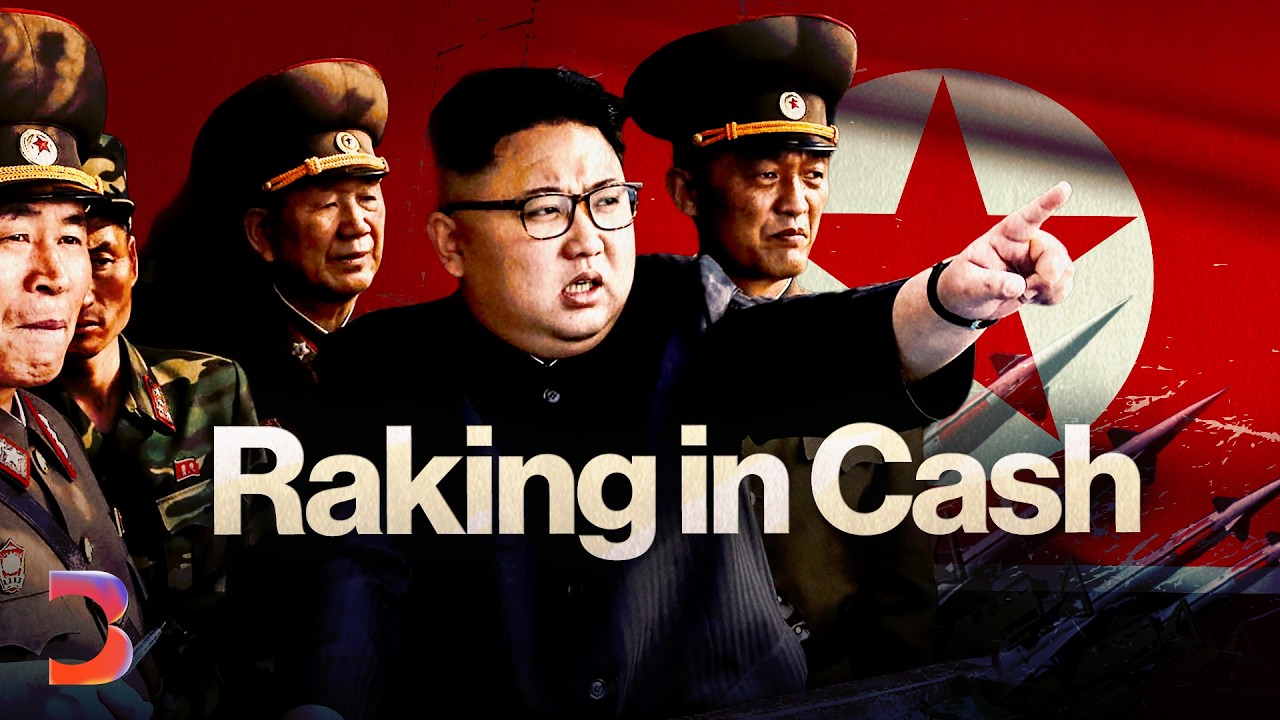
Bloomberg Originals
North Korea generated up to $22 billion from 2022 to 2025 by leveraging Russian arms sales, global crypto thefts, and trade with China to bypass sanctions and accelerate its military expansion.
AI-assisted summary of Why Sanctions Aren't Stopping North Korea — original source. Check the original for full context.
Source published:
Detailed notes
## Background Published on YouTube by Bloomberg Originals on August 7, 2026, this video examines how North Korean leader Kim Jong Un amassed up to $22 billion in foreign earnings between 2022 and 2025 according to Bloomberg Economics. The page description highlights that this represents a 400% revenue increase over the previous four-year period despite crippling global sanctions, raising international concerns about a wealthier Pyongyang.
## TL;DR Despite severe UN sanctions and pandemic isolation, North Korea transformed its economic trajectory into a position of unprecedented financial and geopolitical strength. The regime generated massive cash windfalls primarily through state-sponsored cryptocurrency thefts exceeding $2 billion annually and over $12 billion in arms and artillery sales to Russia for its war in Ukraine. Backed by an indispensable trade partnership with China, Kim Jong Un has funneled these billions into rapid nuclear program expansion, capital city modernization in Pyongyang, and diplomatic positioning to secure long-term dynastic succession.
## Atmosphere & style The video presents a sleek, investigative, and data-driven journalistic tone characteristic of high-end financial news documentary style. It contrasts stark economic disparities—such as satellite images of a dark nation versus Pyongyang's bustling, modern luxury—to evoke a sense of grave geopolitical alarm and strategic intrigue. The narrative carries a somber, analytical weight, tracing Kim Jong Un's journey from a humiliated leader after the failed 2019 Hanoi summit to a triumphant, heavily funded dictator standing alongside global autocratic allies.
## Key takeaways - [00:00](https://www.youtube.com/watch?v=v30SRprmmLE&t=0s) Between 2022 and 2025, North Korea generated up to $22 billion in foreign earnings—a 400% increase over the previous four-year period—despite severe international sanctions. - [00:00](https://www.youtube.com/watch?v=v30SRprmmLE&t=0s) The massive influx of foreign currency is funding an aggressive military expansion and solidifying Kim Jong Un's dynastic control. - [00:00](https://www.youtube.com/watch?v=v30SRprmmLE&t=0s) North Korea's accessible foreign currency grew by nearly 60% in peak post-pandemic years compared to pre-sanction levels. - [01:55](https://www.youtube.com/watch?v=v30SRprmmLE&t=115s) Pyongyang is seeing a visible surge in modern conveniences, including smartphones, private cars, and ride-hailing services. - [03:48](https://www.youtube.com/watch?v=v30SRprmmLE&t=228s) Following the failed 2019 Hanoi summit with Donald Trump, Kim Jong Un abandoned diplomacy to rapidly build one of the world's largest nuclear stockpiles. - [05:21](https://www.youtube.com/watch?v=v30SRprmmLE&t=321s) North Korea accounts for over 70% of global crypto thefts, bringing in upwards of $2 billion annually by 2025. - [05:21](https://www.youtube.com/watch?v=v30SRprmmLE&t=321s) Stolen digital assets are systematically laundered into hard currencies like USD, Euros, and RMB to purchase weapons technology and luxury goods. - [06:14](https://www.youtube.com/watch?v=v30SRprmmLE&t=374s) China remains the regime's essential economic pillar, accounting for 98% of North Korea's total foreign trade and providing crucial energy supplies. - [06:14](https://www.youtube.com/watch?v=v30SRprmmLE&t=374s) Beijing tolerates North Korean provocations and underwrites basic stability to prevent a chaotic regime collapse or a US-aligned unified Korea on its border. - [07:03](https://www.youtube.com/watch?v=v30SRprmmLE&t=423s) North Korea earned up to $12.8 billion supplying artillery and missiles to Russia for its war in Ukraine. - [07:03](https://www.youtube.com/watch?v=v30SRprmmLE&t=423s) In exchange for munitions, Russia provided advanced military hardware—such as $20 million in naval air defense tech—and technical missile assistance. - [09:22](https://www.youtube.com/watch?v=v30SRprmmLE&t=562s) Kim Jong Un is actively grooming his young daughter, Kim Ju Ae, for succession through frequent appearances at high-profile military events and foreign diplomatic visits. - [09:22](https://www.youtube.com/watch?v=v30SRprmmLE&t=562s) The regime considers nuclear weapons the non-negotiable prerequisite for its survival, believing that disarmament guarantees foreign-enforced regime change.
## Detailed walkthrough ### [00:00](https://www.youtube.com/watch?v=v30SRprmmLE&t=0s) Introduction
North Korea has long existed as a geopolitical enigma—a sealed-off totalitarian state sitting right on the doorstep of Asian superpowers. Despite maintaining a minuscule domestic economy, the regime commands global fear and attention through its nuclear arsenal. Following a minor economic uptick in 2016, crippling UN sanctions combined with strict pandemic border closures sent the country into a severe, multi-year economic slump. However, by 2023, the tide turned dramatically. Far from collapsing under international pressure, the entire North Korean government finds itself in a stronger overall position today than at any point over the last 35 years.
Where the world once viewed Kim Jong Un as the isolated, lonely dictator of a hermit kingdom, his recent schedule and newfound wealth tell a radically different story. He is currently operating at peak economic, military, and political power. The substantial influx of foreign currency flowing into Pyongyang is funding an aggressive, non-stop conventional and nuclear military buildup, while simultaneously solidifying dynastic rule for another generation—potentially securing the throne for his young daughter.
- **Foreign Earnings Windfall:** Between 2022 and 2025, North Korea generated up to $22 billion in foreign earnings according to Bloomberg Economics—nearly a 400% increase over the preceding four-year period. - **Foreign Currency Surge:** The regime's accessible foreign currency jumped by almost 60% during post-pandemic peak years compared to pre-sanction levels. - **GDP Disparity:** North Korea’s annual GDP sits at roughly $30 billion, making it 60 times smaller than South Korea’s $1.9 trillion economy.
---
[01:55](https://www.youtube.com/watch?v=v30SRprmmLE&t=115s) Recent Economic Growth
The visual transformation in the capital city of Pyongyang resembles that of an unexpected lottery winner who suddenly traded the bus for a chauffeur-driven luxury vehicle. While satellite imagery at night still shows North Korea as a dark patch sandwiched between the glowing economic powerhouses of China and South Korea, someone has clearly turned up the dimmer switch over major urban centers. Observers note a visible uptick in consumer technology, infrastructure, and street traffic.
Living standards and modern conveniences among the capital's elite have taken a noticeable leap forward. Streets feature a growing number of private vehicles, residents are increasingly equipped with smartphones, and commuters even have access to app-based, Uber-like ride-hailing services. This concentration of new wealth has drastically reshaped the regime's short-term economic outlook, even if the country as a whole remains deeply impoverished.
- **Capital Modernization:** Increased presence of modern cars, widespread smartphone adoption, and ride-hailing digital services in Pyongyang. - **Regional Impact:** Noticeable infrastructure and visual light improvements concentrated in Pyongyang and select major industrial hubs since 2022.
---
[03:48](https://www.youtube.com/watch?v=v30SRprmmLE&t=228s) Geopolitical Landscape
The past decade marked a crucial turning point for North Korea’s domestic stability and foreign strategy. A dramatic pivot occurred at the high-stakes 2019 summit in Hanoi, Vietnam, where Kim Jong Un met with US President Donald Trump. Kim sought complete sanctions relief in exchange for partial dismantling of his nuclear infrastructure. When the talks abruptly collapsed—leaving Kim empty-handed and publicly humiliated—the North Korean leader abandoned diplomatic overtures and doubled down on accelerating his nuclear weapons program.
In the years following Hanoi, Kim skillfully maneuvered through shifting global fault lines. The stark contrast in his international standing was put on full display when Chinese President Xi Jinping, Russian President Vladimir Putin, and Kim Jong Un stood together at a massive military parade marking 80 years since the end of World War II. By leveraging mounting friction between Western democracies and autocratic states, Kim turned an isolated, near-bankrupt position into a strategic power play.
- **Hanoi Summit (2019):** Negotiations collapsed when the US refused full sanctions relief, prompting North Korea to rapidly expand its nuclear material production. - **Stockpile Expansion:** North Korea accelerated warhead production, placing it on track to build one of the world's largest nuclear stockpiles. - **Trilateral Alignment:** High-profile diplomatic realignment showcasing Kim alongside Xi Jinping and Vladimir Putin.
---
[05:21](https://www.youtube.com/watch?v=v30SRprmmLE&t=321s) Crypto Thefts
One of the most immediate mechanisms Kim used to replace lost trade revenue was the expansion of state-sponsored cyberwarfare. North Korea deployed some of the world's largest, most sophisticated military hacking units, directing their efforts specifically at global cryptocurrency platforms, decentralized finance protocols, and digital exchanges.
These cyber operations grew at an astronomical pace. While North Korean hacking collectives were responsible for roughly 30% of global cryptocurrency thefts in 2017, that figure dropped briefly during pandemic-era downtime before skyrocketing to over 70% of all global crypto heists. The stolen digital tokens are systematically laundered, converted into hard fiat currencies—including Euros, US Dollars, and Chinese Renminbi—and transferred to offshore bank accounts to procure restricted technology and luxury goods for the regime.
- **Annual Crypto Revenue:** State-backed crypto thefts generated upwards of $2 billion annually by 2025. - **Global Theft Share:** North Korea accounts for more than 70% of all stolen cryptocurrency worldwide, up from 30% in 2017. - **Laundering Pipeline:** Digital assets are funneled into hard currencies (Euros, USD, RMB) to bypass international banking blockades.
---
[06:14](https://www.youtube.com/watch?v=v30SRprmmLE&t=374s) Trade with China
Despite new revenue channels, China remains the indispensable economic bedrock for the Kim regime. Beijing accounts for roughly 98% of North Korea's total foreign trade, serving as both the primary destination for North Korean exports and the sole supplier of vital crude oil, refined energy products, and daily essentials.
Beijing's willingness to support Pyongyang—even when Kim's aggressive missile tests frustrate Chinese leadership—stems from a calculated fear of regime collapse. A destabilized North Korea would trigger a massive refugee crisis along China's northeast border and potentially result in a unified, US-aligned Korean Peninsula right on Beijing's doorstep. Consequently, China routinely tolerates North Korean provocations and funds basic stability because, as analysts note, "they need a stable North Korea, and they're willing to pay for it."
- **Trade Dominance:** China accounts for 98% of overall North Korean foreign trade volume. - **Energy Lifeline:** Critical energy supplies, including essential oil shipments, remain heavily underwritten by Beijing. - **Strategic Buffer:** China prioritizes border stability and preventing a US-backed unified Korea over strict sanctions enforcement.
---
[07:03](https://www.youtube.com/watch?v=v30SRprmmLE&t=423s) Arms Sales to Russia
The single largest cash windfall for the Kim regime emerged directly from Russia’s full-scale invasion of Ukraine. As Russian forces expended artillery shells and ballistic missiles at a rate that severely drained their domestic stockpiles, Moscow urgently sought external suppliers of Soviet-caliber munitions. North Korea was uniquely positioned: it possessed vast warehouses of compatible munitions and a functioning defense industry capable of mass production.
This transaction transformed North Korea's economy and military posture. Beyond receiving billions in cash, the regime has traded munitions for advanced Russian military hardware and technology. A primary example is North Korea’s newly unveiled naval destroyer, which features sophisticated Russian-supplied air defense systems valued at over $20 million. Furthermore, the war in Ukraine serves as a real-world testing ground, allowing North Korean engineers to refine, upgrade, and market their missile systems for future export to other foreign buyers.
- **Total Arms Revenue:** The Center for Strategic and International Studies (CSIS) estimates North Korea earned up to $12.8 billion from arms transfers to Russia. - **Technology Transfer:** Russia provided air defense equipment valued at over $20 million for North Korea’s new naval destroyer, alongside missile technical assistance. - **Diplomatic Reciprocity:** Following years of distance, Xi Jinping visited Pyongyang in June for his first trip in seven years, seeking to balance Moscow's growing influence over Kim.
---
[09:22](https://www.youtube.com/watch?v=v30SRprmmLE&t=562s) Regime Survival
The dramatic capital surge underscores Kim Jong Un’s adaptability in safeguarding dynastic survival. For 15 years, Kim has upheld the totalitarian, military-first ("Songun") ideology established by his father, Kim Jong Il, and his grandfather, state founder Kim Il Sung. Now, flush with cash and military backing, Kim is taking early steps toward securing his succession, frequently appearing alongside his young daughter, believed to be named Kim Ju Ae.
Although she is in her early teens, Ju Ae has been heavily featured in state media, with two-thirds to three-quarters of her public appearances tied directly to military inspections, weapons tests, and high-level diplomacy—including accompanying Kim on an official trip to Beijing. In a deeply patriarchal society, introducing her early serves two purposes: preparing the public for a potential female leader and signaling unbroken continuity of the Paektu bloodline. Ultimately, North Korea’s leadership views nuclear deterrence as the non-negotiable prerequisite for life itself, operating under the firm belief that surrendering their nuclear weapons would mean immediate regime destruction.
- **Succession Prep:** Kim Ju Ae (estimated early teens) participates in 66% to 75% of her public appearances at military or defense-related events. - **Diplomatic Exposure:** Ju Ae joined Kim Jong Un on an official state visit to Beijing in September, signaling her high-level grooming. - **Core Doctrine:** The regime views the US and Israeli strikes on Iran as absolute proof that nuclear weapons are the only guaranteed shield against foreign-enforced regime change.
<Elicitation label="Summarize North Korea's crypto hacking operations and methods" query="How does North Korea conduct its state-sponsored crypto thefts and launder the proceeds?"/> <Elicitation label="Detail the $12.8B arms deal between Russia and North Korea" query="What specific weapons and technology were exchanged between North Korea and Russia during the Ukraine war?"/>
## Notable quotes > [06:14](https://www.youtube.com/watch?v=v30SRprmmLE&t=374s) they need a stable North Korea, and they're willing to pay for it.
## Mentioned North Korea, Kim Jong Un, Bloomberg Economics, Pyongyang, South Korea, China, Donald Trump, Hanoi, Vietnam, Xi Jinping, Vladimir Putin, World War II, Euros, US Dollars, Chinese Renminbi, Beijing, Russia, Ukraine, Center for Strategic and International Studies (CSIS), Kim Jong Il, Kim Il Sung, Kim Ju Ae, US, Iran, Israel
[Source](https://www.youtube.com/watch?v=v30SRprmmLE)