S&P 500 Reclaims Record Highs in Fastest Recovery Since 1928
The Compound
Stock market gains reflect strong corporate forward earnings and resilient consumer spending rather than government intervention or central bank bailouts.
## Background
The Animal Spirits podcast (episode 461), published by The Compound on YouTube on April 22, 2026, features hosts Michael Batnick and Ben Carlson discussing why the stock market feels counterintuitive, the speed of modern market rallies, changing inflation regimes, and broader trends across real estate, crypto, and pop culture.
## TL;DR
In this episode, Michael Batnick and Ben Carlson examine the recent stock market rally, arguing that markets move on forward earnings and marginal improvements rather than central bank safety nets. They review data showing record-fast recoveries from market pullbacks, strong consumer spending trends from Bank of America earnings, and structural housing supply solutions in Austin. The hosts also touch on Hyperliquid's rise in crypto, the massive run in semiconductor equities, airport etiquette, and recent television and film recommendations.
## Atmosphere & style
The podcast carries a conversational, energetic, and candid tone characteristic of two longtime friends and colleagues discussing financial markets. The dynamic between Michael and Ben blends witty banter, pop culture debates, and sharp financial analysis, easily transitioning from Star Wars prequels to complex macroeconomic data. It feels like an unscripted, insightful, and highly accessible casual chat between seasoned market professionals.
## Key takeaways
- [00:56](https://www.youtube.com/watch?v=iTflH_E8GLw&t=56s) Michael Batnick and Ben Carlson challenge the argument that the stock market is detached from reality, maintaining that markets act logically based on forward earnings data rather than government bailouts.
- [07:22](https://www.youtube.com/watch?v=iTflH_E8GLw&t=442s) Michael’s Number One Rule of Investing: when consensus market sentiment strongly opposes price action, the crowd is almost always wrong and the market is right.
- [07:22](https://www.youtube.com/watch?v=iTflH_E8GLw&t=442s) The S&P 500 achieved the fastest recovery on record since 1928, reclaiming all-time highs within 11 days of a 5% to 10% pullback.
- [14:40](https://www.youtube.com/watch?v=iTflH_E8GLw&t=880s) The current bull market run parallels the massive 1982–2000 rally, reinforcing the case for disciplined buy-and-hold strategies over market timing.
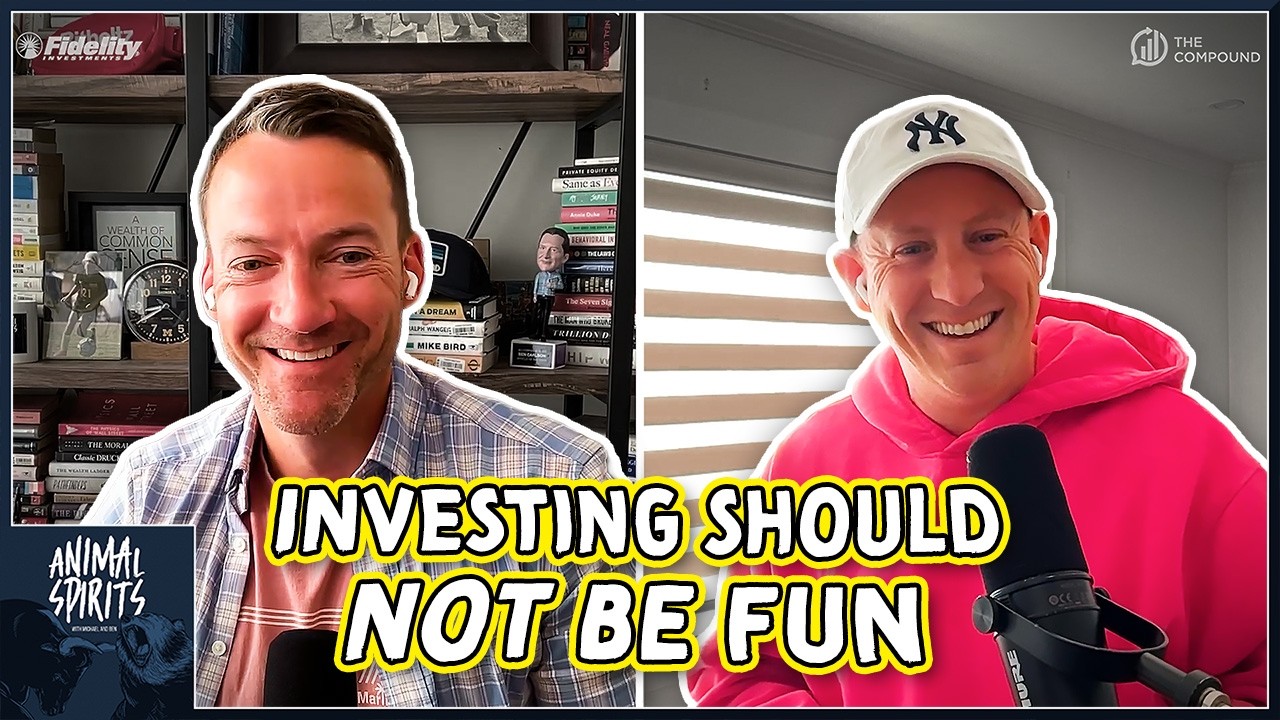
- [17:12](https://www.youtube.com/watch?v=iTflH_E8GLw&t=1032s) Investing is inherently uncomfortable and emotionally challenging, as market participants grapple with anxiety during both drawdowns and record highs.
- [20:11](https://www.youtube.com/watch?v=iTflH_E8GLw&t=1211s) The post-pandemic economy has transitioned into a new macro regime with higher baseline inflation equilibrium (3.0%–3.5%), elevated interest rates, and strong nominal growth.
- [22:56](https://www.youtube.com/watch?v=iTflH_E8GLw&t=1376s) Productivity metrics are showing signs of an upward inflection, largely driven by corporate integration of AI tools.
- [24:32](https://www.youtube.com/watch?v=iTflH_E8GLw&t=1472s) On an inflation-adjusted basis, younger generations are building higher average net worth than prior generations did at equivalent ages, supported by broader market participation and asset growth.
- [29:35](https://www.youtube.com/watch?v=iTflH_E8GLw&t=1775s) Bank of America consumer data shows steady 5% annual spending growth, backed by high household equity and stock market wealth.
- [34:34](https://www.youtube.com/watch?v=iTflH_E8GLw&t=2074s) The semiconductor sector has achieved a generational run, with stocks like SMH posting multi-year surge gains and reaching 16% of the total S&P 500 weight.
- [36:43](https://www.youtube.com/watch?v=iTflH_E8GLw&t=2203s) Decentralized exchange Hyperliquid demonstrates how crypto protocols can build highly profitable financial infrastructure without traditional venture capital funding.
- [39:23](https://www.youtube.com/watch?v=iTflH_E8GLw&t=2363s) Austin solved its local housing crisis and reduced median rents by 15% through aggressive density reforms that expanded its housing stock by 30%.
- [41:33](https://www.youtube.com/watch?v=iTflH_E8GLw&t=2493s) Bank of America's Q1 metrics show improving credit quality with lower consumer charge-offs and two decades of broad systemic balance sheet deleveraging.
- [44:50](https://www.youtube.com/watch?v=iTflH_E8GLw&t=2690s) Annual trading volume on prediction platforms like Polymarket and Kalshi surged from $500 million to over $6 billion within a single year.
- [58:59](https://www.youtube.com/watch?v=iTflH_E8GLw&t=3539s) Small-cap stocks in the Russell 2000 have mounted a sharp rally, gaining roughly 50% over the past year and outperforming the S&P 500.
## Detailed walkthrough
### [00:04](https://www.youtube.com/watch?v=iTflH_E8GLw&t=4s) Fidelity Trader Pro Sponsor Spot
The episode opens with a sponsor message for Fidelity Investments highlighting the downloadable Fidelity Trader Pro platform. The spot emphasizes seamlessly synced preferences across desktop and mobile devices, multi-monitor customization, mobile order alerts, and integrated screen-sharing with trading specialists to help active traders move fast in high-volatility environments.
[00:56](https://www.youtube.com/watch?v=iTflH_E8GLw&t=56s) Star Wars Prequels and the New York Times Op-Ed Debate
Michael Batnick and Ben Carlson kick off the show by addressing feedback from the previous week, playfully resolving to make their iconic opening greeting standard. Michael then introduces an op-ed from *The New York Times* written by their friend and author Kayla Scanlon, titled *"Why the Stock Market Makes No Sense Right Now."* While establishing his rule to "praise by name, criticize by category," Michael admits feeling heartbroken by the piece, comparing his disappointment to Anakin Skywalker’s turn to the dark side in *Star Wars: Episode III – Revenge of the Sith*. This triggers a lighthearted debate about the Star Wars prequel trilogy, where Ben labels the prequels universally terrible, while Michael defends *Revenge of the Sith* as a genuine high point after the complete flops of *The Phantom Menace* and *Attack of the Clones*.
```
"If the market is doing one thing and most people are saying 'this makes no sense,' most people are wrong and the market is right."
— Michael Batnick
```
Transitioning back to the article, Michael reads Kayla’s argument: that modern markets are detached from real-world risks because investors operate under the assumption that the U.S. government and Federal Reserve will always step in to bail them out, while counting on artificial intelligence to rescue valuations. Michael strongly rejects this thesis as "nonsense," arguing that the current rally has nothing to do with a government bailout. Ben notes that while the Fed stepped in during the 2020 pandemic, 2022 was the exact opposite of a bailout—the Fed aggressively raised interest rates from 0% to 5% with explicit intent from Fed officials like Neel Kashkari to cool equity valuations and suppress demand. Michael argues that the market has simply been right about every major macro variable this decade: predicting vaccine rollouts, transitory inflation dynamics, oil avoiding $200 a barrel despite the Russia-Ukraine war, and the neutral market impact of geopolitical tensions in Iran. Echoing a quote from investor Steve Eisman, Michael emphasizes that the stock market is fundamentally "amoral" and driven strictly by earnings figures rather than narrative outrage.
- Kayla Scanlon's *New York Times* piece argued that markets are ignoring risk under the assumption of an omnipresent government safety net and AI hype.
- Michael and Ben counter that the market is acting logically based on marginal improvements and underlying forward earnings data rather than central bank intervention.
- Steve Eisman quote cited: *"The stock market is amoral. It doesn't care about anything other than the numbers."*
[07:22](https://www.youtube.com/watch?v=iTflH_E8GLw&t=442s) Marginal Improvements, Forward Earnings, and Speed of Market Moves
The hosts examine why investors consistently struggle during market pullbacks by leaning into "static thinking"—focusing on current bad news rather than future improvement. Citing research from Duality Research, Michael points out that asset prices move on marginal change rather than absolute current conditions. Ben and Michael re-state "Michael’s Number One Rule of Investing": when the market moves in direct opposition to consensus sentiment, the crowd is almost always wrong and the market is right. To prove that current valuations are logical, they review forward earnings data showing that consensus 12-month forward EPS estimates for S&P 500 companies are accelerating at a rate rarely seen outside of post-recession recoveries, outpacing even the corporate tailwinds following the 2017 tax cuts.
```
"Contrarians are mostly wrong."
— Jeff Bezos (quoted by Michael Batnick)
```
Shifting to the extreme velocity of recent market cycles, Ben references statistics from Bespoke Investment Group and Matus Proposal. The S&P 500 reached new all-time highs within just 11 days of a 5% to 10% pullback—the fastest recovery of its kind since 1928. Historically, 11- to 13-day surges of this magnitude occurred almost exclusively during catastrophic bear market snapbacks (such as in 2001, 2008, or March 2020). Instead of following the classic adage where markets "take the stairs up and the elevator down," this cycle featured a slow, grinding decline followed by an immediate elevator ride back to record highs.
- **Fastest Recovery on Record:** Bespoke data highlights that the S&P 500 reclaimed all-time highs in 11 days or fewer after a 5–10% drop, a feat unmatched since 1928.
- **3-Week Performance Flip:**
- *3 Weeks Prior (Year-to-Date):* S&P 500 was down ~7%, Nasdaq was down ~9%, and the Russell 2000 was down ~3%.
- *Current Standings (Year-to-Date):* S&P 500 up >4%, Nasdaq (QQQ) up ~6%, and the Russell 3000 up ~13%.
- The S&P 500 registered 7 new all-time highs on the year after roughly 2 months of sideways consolidation.
<ElicitationsGroup message="Explore related market analysis and macroeconomic topics:">
<Elicitation label="Break down the shift in market velocity over the last decade" query="Analyze why stock market drawdowns and recoveries have accelerated over the past decade, focusing on structural market shifts, liquidity, and algorithmic trading."/>
<Elicitation label="Examine the impact of forward EPS growth on stock returns" query="Explain how 12-month forward EPS estimates drive equity market returns and why multiple contraction occurs outside of economic recessions."/>
</ElicitationsGroup>
[14:40](https://www.youtube.com/watch?v=iTflH_E8GLw&t=880s) The Epic Bull Market Run and Buy-and-Hold Reality
The stock market’s rapid recovery back to all-time highs serves as a powerful backdrop for evaluating long-term market trends. A look at historical data reveals that between 1980 and March 2000 (the peak of the dot-com bubble), the S&P 500 notched 505 new all-time highs. By comparison, from 2013—when the market finally crossed its pre-Great Financial Crisis highs—through early 2026, the market has racked up nearly 450 new all-time highs. Charting the 2009 bull market alongside the 1982 bull market shows a striking parallel: the current run sits just a 57% gain away from matching the entire magnitude of the massive 1980s and 1990s bull market.
This relentless upward momentum reinforces the fundamental case for buy-and-hold investing over market timing. Attempting to jump in and out of stocks while dodging capital gains taxes is a fool's errand for almost everyone. While buy-and-hold can be painful and subject investors to prolonged stagnant periods, non-systematically relying on "intuition" or market feel over a career is a recipe for failure. Unless an investor possesses the world-class acumen of a Stanley Druckenmiller, strict, rules-based strategies are essential.
* The S&P 500 notched 505 new all-time highs from 1980 to March 2000.
* Since breaking its GFC peak in 2013, the market has reached nearly 450 new all-time highs.
* The current bull market requires only a 57% additional gain to match the total rise of the 1982–2000 bull market.
* "Buy and hold is the worst form of investing except for all the other ones."
---
[17:12](https://www.youtube.com/watch?v=iTflH_E8GLw&t=1032s) Is Investing Supposed to Be Fun?
Investing is fundamentally unexciting, even if managing a tiny speculative slice of a portfolio offers some entertainment. Citing financial writer Sam Ro, the day-to-day process of putting money to work is often deeply uncomfortable. Investors frequently experience anxiety in both directions: fearing market tops when stocks rise and worrying about further drops when they decline. Even after years of compounding and clear progress toward long-term goals, few investors look back on the journey as a smooth or enjoyable ride.
A prime example is an investor who deployed a large lump sum at the market peak immediately before "Liberation Day." Despite experiencing a brutal crash right after entering, the market's subsequent rally completely erased the bad timing in hindsight. Yet, living through that volatility was stressful and far from fun. While passive 401(k) contributors who check their balances once a year may find the process painless, active market participants and news-watchers feel every turn of the screw.
> "As much as I enjoy the intellectual exercise of researching and writing about financial markets, I find the active investing can be very unpleasant. When stocks are up, I worry they'll go down, and when they're down, I worry they'll go lower." — Sam Ro
---
[20:11](https://www.youtube.com/watch?v=iTflH_E8GLw&t=1211s) A New Economic Regime and Inflation Equilibrium
The economy has transitioned into a fundamentally different regime despite the S&P 500 logging nearly identical annualized returns in the 2020s as it did in the 2010s. While some label the post-pandemic macro environment as "Goldilocks"—not too hot, not too cold—the baseline metrics have shifted significantly. Analysis of post-pandemic inflation trends suggests that the economy has established a higher equilibrium, where a "normal" inflation rate is closer to 3.0%–3.5% rather than the pre-pandemic target of 2.0%.
Accompanying this structural inflation shift are higher interest rates, elevated wage growth, and stronger nominal economic growth. The primary engine keeping the expansion alive remains a resilient labor market. Despite widespread media narratives predicting economic slowdowns, underlying employment metrics remain solid, exposing continuous recession fears as premature.
* For the four weeks ending March 28, 2026, U.S. private employment added an average of 39,250 jobs per week, marking four consecutive weeks of hiring growth.
* S&P 500 annualized returns for the 2020s are currently tracking on par with the 2010s despite higher underlying inflation and interest rates.
* Private credit is highlighted as a widely discussed risk that will take years—rather than a single sudden crisis—to work through default covenants and workouts.
---
[22:56](https://www.youtube.com/watch?v=iTflH_E8GLw&t=1376s) Productivity Booms and AI Adoption
Despite historic skepticism regarding whether the internet generated measurable productivity gains on standard economic charts, current metrics indicate a potential resurgence. Using non-farm business labor productivity (output per hour), data shows that initial internet adoption drove a massive, measurable leap in output. Recent readings indicate that productivity growth is bottoming out and poised to accelerate again, driven by corporate integration of artificial intelligence tools.
The practical impact of AI as a workflow accelerant is already evident, shifting daily habits from traditional search engines to direct AI tools for complex problem-solving. As these technologies diffuse across industries, productivity metrics are anticipated to show a noticeable upward inflection.
---
[24:32](https://www.youtube.com/watch?v=iTflH_E8GLw&t=1472s) Wealth Dynamics Across Generations
Intergenerational economic debates often fail to account for structural market cycles. While Generation X faced severe early-career headwinds—navigating the 2001 dot-com crash, 9/11, and the 2008 Great Financial Crisis back-to-back—they also benefited from lower housing prices and declining mortgage rates throughout the 1990s and 2000s. Accumulating assets via dollar-cost averaging through flat or declining markets ultimately positions disciplined investors for substantial wealth accumulation over a 15-to-20-year horizon.
On an inflation-adjusted basis in 2025 dollars, average household net worth trends upward with every successive generation:
* Millennials currently hold higher average net worth than Gen X and Baby Boomers did at equivalent ages.
* Gen X household wealth averages higher than Baby Boomer wealth at the same stage of life.
* From late 2019 through mid-2020s, the bottom 90% of U.S. households experienced higher percentage asset growth than the top 10%, driven by housing appreciation and broader market participation.
Economic data can easily be cherry-picked to support either bullish or bearish arguments, making corporate earnings reports a vital reality check on actual consumer behavior. As a universal consumer staple, corporate updates from major food and beverage brands like Pepsi offer direct insight into how everyday spending holds up across diverse income brackets.
* A notable shift in consumer taste preferences includes a growing adoption of zero-sugar beverage lines, such as Pepsi Zero.
Here is a detailed, faithful walkthrough of this part of the podcast transcript.
---
[29:35](https://www.youtube.com/watch?v=iTflH_E8GLw&t=1775s) Consumer Resilience, Household Wealth, and Home Repair Woes
Michael Batnick and Ben Carlson examine the underlying strength of the US consumer, pointing to consistent multi-trillion-dollar spending data across major platforms. Bank of America CEO Brian Moynihan reports that total consumer spending through the bank reached $4.5 trillion annually, growing 5% in 2025 and maintaining that steady 5% rate into the first quarter of 2026—outpacing inflation. The hosts emphasize that because the consumer powers 70% of the economy and tech giants drive S&P 500 growth, the stock market's upward trajectory makes complete sense. Addresssing skepticism about how households keep spending, Ben argues that historic wealth creation in equities and real estate this decade provides a massive backstop and margin of safety for the 65% of Americans who own homes and stocks.
Michael illustrates this dynamic with a personal anecdote about managing major home expenses. Facing an $18,000 quote from an HVAC contractor (verified by a general contractor friend to be legitimate) to fix his home's heating and cooling system—following a recent $1,200 repair on his Navien water heater—Michael took advantage of cheap capital. After opening a mailer offering 0% APR, he used Claude to search for zero-fee balance transfer credit cards, ultimately securing a 0% interest card for 12 months with no transfer fee through Fairwinds. Ben quips that Michael has now managed to "pick lemons for both cars and houses," leading Michael to vent about his unreliable Jeep acting up in a parking lot.
- Bank of America processes **$4.5 trillion** in annual consumer money movement, showing **5% year-over-year spending growth** in Q1 2026.
- Homeowners and stock market investors represent **65% of the population**, benefiting from historic decade-long asset growth.
- Michael paid **$1,200** to restore hot water and spent **$18,000** for a full HVAC heating/cooling replacement.
- Used a 12-month **0% APR card with a 0% balance transfer fee** from Fairwinds to finance the home repair.
> "If you look at the state of the consumer, which powers 70% of the economy, and if you look at the tech giants, which powers a lot of the growth in the S&P 500, it's not hard to see why the stock market is going higher."
---
[34:34](https://www.youtube.com/watch?v=iTflH_E8GLw&t=2074s) AI Vibe Shift and the Generational Semiconductor Run
Reflecting on a recent trip to Washington, D.C. hosted by F/m Investments—where they spoke with recurring *Talk Your Book* guest Alex Morris—the hosts note a distinct vibe shift around artificial intelligence. The prevalent narrative that AI is an absolute, triple-stamped "bubble" has rapidly dissolved. Real enterprise spending and consumer usage have validated the technology rather than resulting in hyper-scalers building "railroad tracks to from no town to no town." While Microsoft (serving as a proxy for OpenAI) saw a 34% drawdown during the broader tech re-rating, the underlying infrastructure boom remains undeniable.
Highlighting a chart from Todd Sohn, the hosts explore whether extreme concentration in semiconductors presents a new vulnerability. Semiconductor stocks now make up 16% of the S&P 500, nearing the combined market weight of energy, healthcare, consumer staples, and utilities (which total 19%). Beyond Nvidia, Micron alone has reached a half-trillion-dollar market cap. Ben details the staggering performance of the VanEck Semiconductor ETF (SMH), describing its multi-year surge as a true generational run.
- Semiconductor stocks account for **16% of the S&P 500**, compared to **19%** for Energy, Healthcare, Staples, and Utilities combined.
- Micron Technology's market capitalization has climbed to **$500 billion ($0.5 trillion)**.
- Annual returns for the VanEck Semiconductor ETF (SMH):
- **Year-to-Date (2026):** Up 29%
- **2025:** Up 50%
- **2024:** Up 40%
- **2023:** Up 73%
---
[36:43](https://www.youtube.com/watch?v=iTflH_E8GLw&t=2203s) Crypto's New Frontier: Hyperliquid
On his flight to D.C., Michael read a long-form profile written by Dom Cooke for Colossus (Patrick O'Shaughnessy's media platform) about Jeffrey Yan and Hyperliquid. The decentralized exchange gained widespread prominence in financial circles as the primary venue for tracking crude oil and S&P 500 futures trades over weekends. Operating with just 11 employees, the three-year-old firm generated over $900 million in profit, achieved a $10 billion market valuation, and never accepted a single dollar of venture capital funding. Michael considers whether Hyperliquid demonstrates crypto's potential to construct a parallel, highly efficient financial system beyond stablecoins and store-of-value assets.
Ben expresses skepticism, drawing parallels between the media hype surrounding crypto wunderkinds and the initial profiles written about Sam Bankman-Fried before FTX collapsed. He notes that crypto periodically crowns new "kings and princes" whose dominance later fades. Michael pushes back against the comparison, clarifying that unlike the spotlight-seeking SBF, the Hyperliquid team operates quietly out of Singapore while maintaining anonymity whenever possible.
- Hyperliquid key metrics: **11 employees**, over **$900 million in profit**, **$10 billion market cap**, and **$0 in VC funding**.
> "I feel like we get one of these every 3 years in crypto... You'll forgive me for saying this, this article sounds a lot like Sam Bankman-Fried. Like could you not have read the same profile on him?"
---
[39:23](https://www.youtube.com/watch?v=iTflH_E8GLw&t=2363s) How Austin Solved Its Housing Crisis
Ben breaks down a Pew Research Center study on Austin, Texas, using it as a case study for housing affordability. Following rapid growth in the 2010s where rents soared by 100% and home prices surged by 80%, Austin enacted major local policy reforms in 2015 to encourage high-density residential development. The city added 120,000 housing units to its stock—a 30% expansion that exceeded the national housing growth rate by more than three times.
As a result of this supply surge, Austin rents plummeted 15% from peaks around $1,500/month, falling below the national median even while the city added 18,000 new residents. Michael and Ben agree that local zoning and permitting reform, rather than broad federal mandates, is the true mechanism to lower housing costs.
- Austin housing stock expanded by **120,000 units (+30%)**, over **3x the national average growth rate**.
- City rents dropped **15%** below national averages despite adding **18,000 new residents**.
---
[41:33](https://www.youtube.com/watch?v=iTflH_E8GLw&t=2493s) BofA Earnings Data: Consumer Credit, Charge-Offs, and Deleveraging
Analyzing Bank of America’s Q1 earnings slides, Michael highlights robust spending growth in discretionary categories. Debit and credit card transaction volume for entertainment jumped 12% year-over-year (with transaction counts up 7%), while travel volume grew 6% (transactions up 4%). Discretionary entertainment spending growth significantly outpaced basic food budgets, signaling a healthy bull-market consumer mindset.
Contrary to fears of widespread consumer default, Bank of America's credit quality metrics improved. Net consumer charge-offs fell to $1.1 billion (down $60 million from Q1 2025), with credit card charge-off rates declining from 4.05% to 3.64%. The hosts discuss practical debt relief strategies, noting consumers can negotiate interest rates directly with card issuers or consolidate balances into 0% teaser rates. Furthermore, BofA’s long-term balance sheet data reveals massive systemic deleveraging since the Great Financial Crisis: consumer loans dropped from 67% of the total loan book in 2009 to 40% today, driven by steep declines in credit card debt (-36%) and home equity lines of credit (-83%).
- BofA credit card charge-off rates dropped to **3.64% in Q1 2026** (down from **4.05% in Q1 2025**).
- Total consumer net charge-offs decreased by **$60 million** year-over-year to **$1.1 billion**.
- BofA consumer loan book breakdown (2009 vs. Present):
- Consumer loans as total book share: fell from **67% to 40%**.
- Credit card exposure: **down 36%**.
- Home equity loans (HELOCs): **down 83%**.
---
[44:50](https://www.youtube.com/watch?v=iTflH_E8GLw&t=2690s) Tech Efficiency and the Prediction Market Explosion
Ben details a quote from Bank of America CEO Brian Moynihan regarding headcount efficiency. BofA currently operates with fewer total employees than it did in 2007 prior to acquiring Merrill Lynch and Countrywide, demonstrating how two decades of technology adoption allows massive institutions to operate with leaner workforces.
Transitioning to trading trends, Michael presents a Bloomberg chart illustrating explosive growth in prediction markets across platforms like Polymarket and Kalshi. Annual trading volume on these platforms skyrocketed from under $500 million to over $6 billion within a twelve-month period, driven largely by mainstream adoption and integration alongside sports betting culture.
- BofA operating workforce is **smaller in 2026 than in 2007** (pre-Merrill Lynch and Countrywide acquisitions).
- Prediction market volume on Polymarket and Kalshi expanded from **~$500 million to $6 billion** in one year.
[46:03](https://www.youtube.com/watch?v=iTflH_E8GLw&t=2763s) Prediction Markets and Regulatory Pushback
Ben Carlson and Michael Batnick continue discussing prediction markets and non-traditional betting platforms. Ben asks whether these expanding platforms make traditional sports betting companies like FanDuel and DraftKings immediate shorts, or if the overall gambling "pie" is simply expanding enough to accommodate everyone. Michael points out that stock prices for Flutter (owner of FanDuel) and DraftKings previously dropped significantly as a result of this emerging competition.
The conversation shifts to the regulatory friction surrounding prediction markets. Traditional sportsbooks share roughly 50% of their net revenue with individual state governments. Newer prediction and event-trading platforms, such as Kalshi, operate under different federal frameworks and do not share revenues with state governments, prompting legal and regulatory pushback from states unhappy about losing tax revenues.
[47:13](https://www.youtube.com/watch?v=iTflH_E8GLw&t=2833s) Airline Etiquette and Airport Observations
Transitioning to travel stories from recent flights, Ben shares a major cultural win: flight attendants are actively making pre-flight announcements requiring passengers without earbuds to keep device volume off, strictly forbidding un-headphoned audio from kids or adults. Ben recounts a frustrating layover during a spring break trip where an older man sat nearby and played TikTok or Instagram reels on maximum volume. Intimidated by the prospect of creating a scene—and kept in check by his wife—Ben opted to move his family away rather than confront the traveler.
Michael admits he is often tempted to call out bad behavior in public, though his wife similarly holds him back. Switching to airport logistics, Michael notes that displaying live vehicle tracking on screen is one of Uber’s greatest psychological and technological innovations. He describes how entire airport rideshare pickup lines remain fixated on their screens, mentally pushing the vehicle icon to move faster.
[49:41](https://www.youtube.com/watch?v=iTflH_E8GLw&t=2981s) Upcoming Movies and Pop Culture News
The hosts discuss movie trailers and upcoming film releases. While Michael prefers going into original films "raw dog" without watching trailers beforehand, Ben loves watching trailers regularly. They discuss the trailer for an upcoming *Street Fighter* movie. Despite the disastrous 1990s Jean-Claude Van Damme film and the mixed record of video game adaptations, Michael feels the new project embraces the necessary cheesy energy. Ben warns that video game adaptations risk becoming over-saturated, much like superhero movies.
They move on to news regarding upcoming feature films and streaming releases:
* **Here Comes the Flood:** An upcoming bank heist film starring Denzel Washington, Robert Pattinson, and Daisy Edgar Jones.
* **1990s Natural Disaster Movies:** Ben shares that his son went on a disaster film binge after watching the movie *Thrash*. They rewatched classics like *Hard Rain* (1998) starring Christian Slater, Morgan Freeman, and Minnie Driver, as well as Stallone's *Daylight*.
* **Crawl (2019):** Ben brings up the alligator-horror-disaster film *Crawl*, defending its 84% Rotten Tomatoes score and noting Quentin Tarantino famously praised it as one of his favorite films of the decade.
* **The Adventures of Cliff Booth:** Tarantino and Brad Pitt wrote a project centered on the *Once Upon a Time in Hollywood* character, with David Fincher set to direct.
[53:30](https://www.youtube.com/watch?v=iTflH_E8GLw&t=3210s) Siri, Voice-to-Text, and Tech Frustrations
Michael shares his recent adoption of talk-to-text features, expressing frustration over how frequently speech recognition fails. Ben agrees, questioning why Apple's Siri has shown minimal improvement over the years despite massive overall advances in AI. Ben notes Siri has roughly a 50% success rate when his children ask it to play specific songs.
[54:19](https://www.youtube.com/watch?v=iTflH_E8GLw&t=3259s) TV and Movie Recommendations
The hosts dive into their recent watch lists and television reviews across major streaming services:
* **The Pit:** Ben finished Season 2 of the long-form series (15–16 episodes) starring Noah Wyle. Despite a slower middle stretch, he praises the finale, stating they "landed the plane" with emotional performances.
* **A Big Bold Beautiful Journey:** Ben watched this romantic fantasy on a flight. Starring Colin Farrell and Margot Robbie and written by the writer of *The Menu*, the story follows two people in magical rental cars that take them through past memories. Despite strong chemistry between the leads, Ben felt the plot lost its way.
* **Midlife Crisis Shows:** The hosts highlight a trend in TV series tailored to their demographic, including *DTF St. Louis*, *Your Friends and Neighbors* (adding James Marsden in Season 2), and *Rooster*.
* **Paradise:** Michael caught up on Season 2 of *Paradise*. While praising the writing, he feels two seasons are sufficient unless future reviews are outstanding.
* **Beef (Season 2):** Michael watched the premiere of the new anthology season starring Oscar Isaac and Carey Mulligan as a couple running an elite golf club with a $300,000 initiation fee.
[58:59](https://www.youtube.com/watch?v=iTflH_E8GLw&t=3539s) Final Market Check and Closing
To wrap up the episode, Michael and Ben do a quick closing market check:
* **Small Caps:** The Russell 2000 index has rallied sharply. Over the past year, small-cap stocks are up roughly 50%, outperforming the S&P 500's 35% gain.
* **Software Sector:** Software stocks have rebounded significantly toward previous highs.
* **Market Narrative:** Michael notes that while underlying fears over AI disrupting software companies persist, sharp stock rallies (such as Salesforce climbing 25%–30% off its lows) temporarily calm doom-and-gloom narratives.
The hosts sign off, thanking their producer Duncan and the Compound media team.
## Notable quotes
> [00:56](https://www.youtube.com/watch?v=iTflH_E8GLw&t=56s) If the market is doing one thing and most people are saying 'this makes no sense,' most people are wrong and the market is right. — Michael Batnick
> [00:56](https://www.youtube.com/watch?v=iTflH_E8GLw&t=56s) The stock market is amoral. It doesn't care about anything other than the numbers. — Steve Eisman
> [07:22](https://www.youtube.com/watch?v=iTflH_E8GLw&t=442s) Contrarians are mostly wrong. — Jeff Bezos
> [17:12](https://www.youtube.com/watch?v=iTflH_E8GLw&t=1032s) As much as I enjoy the intellectual exercise of researching and writing about financial markets, I find the active investing can be very unpleasant. When stocks are up, I worry they'll go down, and when they're down, I worry they'll go lower. — Sam Ro
> [29:35](https://www.youtube.com/watch?v=iTflH_E8GLw&t=1775s) If you look at the state of the consumer, which powers 70% of the economy, and if you look at the tech giants, which powers a lot of the growth in the S&P 500, it's not hard to see why the stock market is going higher. — Michael Batnick
> [36:43](https://www.youtube.com/watch?v=iTflH_E8GLw&t=2203s) I feel like we get one of these every 3 years in crypto... You'll forgive me for saying this, this article sounds a lot like Sam Bankman-Fried. Like could you not have read the same profile on him? — Ben Carlson
## Mentioned
Michael Batnick, Ben Carlson, Fidelity Investments, Fidelity Trader Pro, The New York Times, Kayla Scanlon, Federal Reserve, Neel Kashkari, Steve Eisman, Duality Research, Jeff Bezos, Bespoke Investment Group, Matus Proposal, S&P 500, Nasdaq, Russell 2000, Russell 3000, Stanley Druckenmiller, Sam Ro, Pepsi, Bank of America, Brian Moynihan, Claude, Fairwinds, Jeep, Navien, F/m Investments, Alex Morris, Talk Your Book, Microsoft, OpenAI, Todd Sohn, Nvidia, Micron Technology, VanEck Semiconductor ETF (SMH), Dom Cooke, Colossus, Patrick O'Shaughnessy, Jeffrey Yan, Hyperliquid, Sam Bankman-Fried, FTX, Pew Research Center, Austin, Texas, Polymarket, Kalshi, Flutter, FanDuel, DraftKings, Uber, Star Wars, Street Fighter, Here Comes the Flood, Denzel Washington, Robert Pattinson, Daisy Edgar Jones, Thrash, Hard Rain, Christian Slater, Morgan Freeman, Minnie Driver, Daylight, Sylvester Stallone, Crawl, Quentin Tarantino, The Adventures of Cliff Booth, Brad Pitt, David Fincher, Once Upon a Time in Hollywood, Siri, Apple, The Pit, Noah Wyle, A Big Bold Beautiful Journey, Colin Farrell, Margot Robbie, DTF St. Louis, Your Friends and Neighbors, James Marsden, Rooster, Paradise, Beef, Oscar Isaac, Carey Mulligan, Salesforce
标普500指数以1928年以来最快速度反弹,重返历史新高
股市上涨反映出企业强劲的预期收益与具韧性的消费支出,而非政府干预或央行救助。
在本期节目中,Michael Batnick与Ben Carlson审视了近期股市的反弹,认为市场走势是受预期收益和边际改善推动,而非央行兜底。他们回顾了显示市场回调后创纪录快速复苏的数据、Bank of America财报中体现的强劲消费支出趋势,以及Austin在住房供应方面的结构性解决方案。主持人还谈及了Hyperliquid在加密货币领域的崛起、半导体板块的大幅上涨、机场礼仪,以及近期的影视推荐。
Michael Batnick和Ben Carlson对股市脱离现实的论调提出质疑,坚持认为市场是基于预期收益数据合乎逻辑地运行,而非依赖政府救助。 (0:56)
Michael的首要投资法则:当市场共识情绪与价格走势严重背离时,大众几乎总是错的,而市场是对的。 (7:22)
标普500指数创下1928年以来有记录的最快复苏速度,在经历5%至10%的回调后仅用11天便重回历史新高。 (7:22)
当前牛市的走势与1982年至2000年的大牛市相似,进一步证明了坚持有纪律的买入并持有策略优于市场择时。 (14:40)
投资本质上伴随着不适与情绪挑战,因为市场参与者在面对回调和历史高位时都会深陷焦虑。 (17:12)
Reading summary
Hosts Michael Batnick and Ben Carlson argue that equity market resilience reflects accelerating forward earnings and consumer spending rather than government bailouts. Despite short-term anxiety, macroeconomic data indicates that consumer balance sheets and corporate productivity continue to support the expansion.
Market Logic Versus Government Intervention Narratives (0:56)
Responding to a New York Times op-ed by Kayla Scanlon asserting that markets ignore risk due to expectations of federal interventions and artificial intelligence bailouts, the hosts counter that recent price action is fundamentally rational. They observe that the Federal Reserve did the opposite of a bailout in 2022 by aggressively hiking rates from 0% to 5% to suppress demand and equity valuations. Batnick argues that asset prices move on marginal improvements rather than static conditions, noting that 12-month forward earnings per share (EPS) estimates for S&P 500 companies have accelerated at a pace rarely seen outside post-recession recoveries.
The velocity of recent recoveries also counters pessimistic consensus views. Citing Bespoke Investment Group data, the hosts highlight that the S&P 500 reclaimed all-time highs within 11 days of a 5% to 10% pullback, marking the fastest such recovery since 1928. Over a three-week window, the S&P 500 reversed from down roughly 7% year-to-date to up over 4%, with the Nasdaq turning positive and small caps surging, demonstrating how quickly markets rebound on changing marginal data.
Consumer Spending and Balance Sheet Deleveraging (29:35)
Economic resilience remains anchored in consumer activity, which accounts for roughly 70% of the U.S. economy. According to Bank of America CEO Brian Moynihan, annual consumer spending across the bank reached $4.5 trillion, maintaining a 5% year-over-year growth rate into Q1 2026. This spending is backed by accumulated household wealth in real estate and equities, benefiting approximately 65% of Americans who own homes and stocks. Discretionary spending outpaced staples, with Bank of America card volume rising 12% in entertainment and 6% in travel.
Fears of widespread consumer defaults are not supported by the banking data. Bank of America reported that credit card charge-off rates dropped from 4.05% in Q1 2025 to 3.64% in Q1 2026, with total net charge-offs falling by $60 million to $1.1 billion. Over a longer horizon, consumer debt exposure has fallen from 67% of Bank of America’s total loan book in 2009 to 40%, accompanied by a 36% decline in credit card debt and an 83% drop in home equity lines of credit.
Tech Concentration and Shifting AI Dynamics (34:34)
The narrative around artificial intelligence has transitioned from fears of a speculative bubble to recognition of real enterprise investment. Semiconductor stocks now constitute 16% of the S&P 500, rivaling the combined 19% share of energy, healthcare, consumer staples, and utilities. Micron Technology's market capitalization reached $500 billion, while the VanEck Semiconductor ETF posted consecutive annual gains of 73% in 2023, 40% in 2024, 50% in 2025, and 29% year-to-date in 2026.
Broader tech-enabled productivity and alternative financial platforms also reflect structural shifts. Non-farm labor productivity figures indicate an upward inflection as AI workflows diffuse across industries. Simultaneously, decentralized platforms and prediction markets have grown rapidly, with annual trading volumes on platforms like Polymarket and Kalshi increasing from under $500 million to over $6 billion within a single year, even as they face state-level regulatory pushback over gambling tax revenue.
The Discomfort of Long-Term Wealth Accumulation (14:40)
Despite consistent equity compounding, the hosts stress that buy-and-hold investing remains psychologically difficult. Citing writer Sam Ro, they note that market participants experience persistent anxiety, fearing imminent pullbacks at record highs and anticipating further losses during downturns. Nonetheless, historical data favors staying invested: between 1980 and 2000, the S&P 500 notched 505 all-time highs, while registering nearly 450 new highs from 2013 to early 2026.
Demographic and municipal trends further influence wealth accumulation. Inflation-adjusted data shows that average household net worth has risen with each successive generation, with Millennials holding higher wealth at their life stage than Generation X or Baby Boomers did. In real estate, the hosts point to Austin, Texas, where adding 120,000 housing units—a 30% supply increase—lowered rents by 15% from their peak, demonstrating how local supply reforms can directly resolve asset and affordability bottlenecks.
While equity markets demonstrate persistent momentum supported by corporate earnings and solid household balance sheets, unresolved challenges include extreme sector concentration in semiconductors, regulatory hurdles facing emergent prediction markets, and the ongoing psychological strain that regular market volatility imposes on investors.
## Background
本期节目由 The Compound 频道于 2026 年 4 月 22 日在 YouTube 平台发布,为播客栏目《Animal Spirits》的第 461 期。根据页面简介,主播迈克尔·巴特尼克(Michael Batnick)与本·卡尔森(Ben Carlson)深入探讨了为何当前股市看似毫无道理实则遵循盈利逻辑、极速反弹的史诗级牛市、新通胀常态、去中心化衍生品交易所 Hyperliquid、奥斯汀平抑房租的供给改革以及迈克尔的第一投资法则等丰富议题。
## TL;DR
节目围绕《纽约时报》关于“股市脱离现实”的专栏展开反驳,强调美股长牛本质上是由强劲的企业每股收益(EPS)预期与非衰退期的估值修复所驱动,而非政府兜底;市场展现出前所未有的反弹速度,也印证了“买入并持有”虽不轻松却是最有效的投资策略。主播结合大行财报与宏观数据指出,稳健的劳动力市场让消费者“有钱就会消费”,家庭资产负债表与房屋净值筑牢了安全垫,而奥斯汀的大规模住房供给改革更为平抑房租提供了教科书范本。节目后半段还探讨了半导体板块的集中度风险、去中心化交易所 Hyperliquid 的轻资产高盈利模式、预测市场借道体育博彩实现爆发式增长的监管套利,并以影视文化与即时盘面评述轻松收尾。
## Atmosphere & style
整场节目充溢着老友围炉式的松弛与默契,两位主播在严谨的专业金融剖析与充满自嘲的生活闲聊之间无缝切换。他们对唱空宏观的流行论调报以犀利而风趣的解构,同时坦诚分享普通投资者即便身处牛市也难免焦虑的心理拉扯,情绪曲线从对严肃市场逻辑的慷慨辩护,自然流淌到对老电影、美剧及 Siri 语音识别故障的趣味吐槽。听众能真切感受到一种兼具智识深度与市井烟火气的对话氛围,既不乏机构级投资人对基本面规律的敬畏,又充满了直率真实、不装腔作势的陪伴感。
## Bulletin
- [12:18](https://www.youtube.com/watch?v=iTflH_E8GLw&t=738s) 美股大盘在无衰退背景下创下历史级反弹,标普500指数自1928年以来首次在经历5%至10%的回调后仅用11天便刷出历史新高,其底层核心驱动力在于12个月远期每股收益(EPS)预期的全面加速上调。
- [39:26](https://www.youtube.com/watch?v=iTflH_E8GLw&t=2366s) 得克萨斯州奥斯汀通过放宽区划限制并扩充多户型与租赁住房存量30%(达12万套),成功推动平均租金下挫15%且租金中位数落至全美均值以下,为解决住房负担危机提供了依靠供给而非联邦补贴的有效样本。
- [34:34](https://www.youtube.com/watch?v=iTflH_E8GLw&t=2074s) 半导体板块在标普500指数中的权重已飙升至16%,几乎等同于能源、医疗、必需消费品及公用事业四大板块的总和,VanEck半导体ETF(SMH)连续数年维持30%-70%的高额年化收益,行业集中度隐忧持续累积。
- [45:28](https://www.youtube.com/watch?v=iTflH_E8GLw&t=2728s) Kalshi等金融预测市场交易量在一年内由5亿美元狂飙至60亿美元,其爆发中约90%由体育博彩业务驱动,并因避开各州约50%的博彩净收益税负对DraftKings等传统博彩平台形成监管套利冲击。
- [41:35](https://www.youtube.com/watch?v=iTflH_E8GLw&t=2495s) 美国银行最新财报揭示居民家庭资产负债表的强劲韧性:娱乐支出同比增长12%,信用卡净冲销率降至3.64%,消费贷款相比2009年收缩逾三分之一,为宏观经济提供了充裕的防御安全垫。
## Key takeaways
- [03:29](https://www.youtube.com/watch?v=iTflH_E8GLw&t=209s) 股市本质上是不讲道德的(amoral),它不在乎客观现状有多艰难,而是完全由企业盈利预期与未来的边际改善(getting better at the margin)所主导。
- [08:45](https://www.youtube.com/watch?v=iTflH_E8GLw&t=525s) 迈克尔的第一投资法则强调:当大众与媒体普遍抱怨市场“毫无道理”时,错的往往是大众,群体的直觉与逆向投资在绝大多数时间里都是失效的。
- [12:18](https://www.youtube.com/watch?v=iTflH_E8GLw&t=738s) 市场上涨节奏正在打破传统的“坐楼梯上楼,坐电梯下楼”规律,呈现出沿楼梯温和缓跌、随后乘电梯暴力拉升的“平躺J型”极端提速特征。
- [14:32](https://www.youtube.com/watch?v=iTflH_E8GLw&t=872s) 对于普通投资者而言,买入并持有(Buy and Hold)仍是剔除所有其他糟糕策略后的最优解,投资组合核心应当保持枯燥乏味,依靠感觉择时交易注定会失败。
- [20:11](https://www.youtube.com/watch?v=iTflH_E8GLw&t=1211s) 2020年代宏观经济迈入了新的均衡常态,通胀锚点从传统的2%升至3%至3.5%,只要私营部门就业市场坚挺,消费者的支出引擎就不会熄火。
- [24:32](https://www.youtube.com/watch?v=iTflH_E8GLw&t=1472s) 通胀调整后的历史数据显示,随着生产力与经济体量长期扩张,每一个新世代在同一年龄段所积累的平均家庭净资产均超越了前一个世代。
- [30:52](https://www.youtube.com/watch?v=iTflH_E8GLw&t=1852s) 美国家庭资产负债表拥有极高安全边际:约65%的居民同时持有房产与股票,享受本年代资产膨胀带来的财富效应,且依然能借由低成本信贷消化突发开支。
- [36:45](https://www.youtube.com/watch?v=iTflH_E8GLw&t=2205s) 去中心化衍生品交易所Hyperliquid展现了极端精简的金融组织模式,仅凭11人全职团队在未接受VC投资的情况下创造逾9亿美元利润,但也面临着加密造神周期的长久质疑。
- [39:26](https://www.youtube.com/watch?v=iTflH_E8GLw&t=2366s) 解决住房危机的唯一根本路径是打破地方邻避效应并扩大物理供给,奥斯汀的大规模营建经验证实唯有政策放宽供给才能真正打压租金。
- [41:35](https://www.youtube.com/watch?v=iTflH_E8GLw&t=2495s) 美国银行相比2009年大幅去杠杆,房屋净值贷款骤降83%,全行以更精简的人力支撑倍增的资产规模,印证了技术与自动化对长期生产力的提升。
- [59:00](https://www.youtube.com/watch?v=iTflH_E8GLw&t=3540s) 资产价格本身决定了一切市场叙事:正如软件股在AI颠覆恐慌后仅凭龙头股反弹25%-30%便让做空论调迅速消声匿迹,盘面走势永远在重塑投资者的观点。
## Detailed walkthrough
### [00:00](https://www.youtube.com/watch?v=iTflH_E8GLw&t=0s) 开场赞助与《星战前传》闲聊
节目开头照例是富达投资(Fidelity Investments)旗下交易平台 Fidelity Trader Pro 的赞助介绍,重点宣传了其跨设备无缝同步图表与偏好设置、移动端与桌面端协同操作、多显示器视图以及交易专家屏幕共享等功能。
广告结束后,迈克尔·巴特尼克(Michael Batnick)与本·卡尔森(Ben Carlson)互致早安。本笑着提到,上周有听众反映他们开场居然漏掉了标志性的“欢迎收听 Animal Spirits”,让听众感觉少点什么。迈克尔随即连说了好几声“欢迎”。在进入严肃的财经话题前,迈克尔分享了自己刚和孩子们重温《星球大战前传3:西斯的复仇》(Revenge of the Sith)的感受。他感叹虽然片中的“66号密令”(Execute Order 66)情节现在看起来有点滑稽,但他依然喜欢这部电影。本则直言前传三部曲在他看来普遍糟糕,《幽灵的威胁》简直是个笑话,《克隆人的进攻》也没好到哪去,唯一亮点大概就是阿纳金最终堕落成为达斯·维达的转折。
---
### [01:30](https://www.youtube.com/watch?v=iTflH_E8GLw&t=90s) 争议观点:股市真的“毫无道理”吗?
闲聊过后,迈克尔将话题引向周末《纽约时报》(The New York Times)发表的一篇专栏文章。作者是两人的好友、知名财经内容创作者凯拉·斯坎伦(Kyla Scanlon)。迈克尔坦言自己在公开评论时一向主张“点名表扬,按类别批评”(praised by name, criticized by category),而本则调侃自己平时最喜欢点名批判“永久看空者”(permabears)。尽管迈克尔非常欣赏凯拉的才华,但看到这篇文章时还是“心碎了一地”,觉得这篇内容完全有失水准。
该文章的标题为《为什么如今的股市毫无道理》(Why the stock market makes no sense right now)。迈克尔在节目中摘读了文中的核心论述:文章认为过去40年给市场带来的唯一教训就是“它总会得到救助”,投资者不再对风险进行合理定价,因为他们默认美国政府绝不会任由市场崩溃,而这种假设正在将全球经济推入险境;与此同时,投资者寄予厚望的全新救星——人工智能(AI),本身也极易受到市场所忽视的那些风险的冲击。迈克尔承认,这种论调精准切中了当下许多普通美国人和普通投资者的困惑——大家都想不通,现实生活中明明有这么多问题,为什么美股还在不断攀升?
---
### [03:29](https://www.youtube.com/watch?v=iTflH_E8GLw&t=209s) 并非“政府兜底”:美股这十年的理性与业绩驱动
迈克尔和本对专栏中的观点提出了强烈反驳,迈克尔直言这种论调纯属“无稽之谈”(nonsense)。虽然大萧条或2020年疫情期间政府确实注入了数万亿美元救市,但本轮市场的反弹绝非由于“美联储看跌期权”(Fed put)或政府兜底。相反,2022年的美联储恰恰是在不遗余力地打压市场:明尼阿波利斯联储主席尼尔·卡什卡利(Neel Kashkari)当时公开宣称“我希望股市下跌,股市下跌是件好事”,美联储在极短时间内将基准利率从0%猛拉到5%,这根本不是救市,而是在主动给市场降温。
本指出,过去几周市场在地缘政治危机(如中东局势与霍尔木兹海峡担忧)下展现出的韧性其实非常合乎逻辑。危机初期人们确实会感到困惑并经历两到三周的波动,但随后市场迅速形成理性共识:原油价格终会回落、美元会降温、利率会下行,而与此相伴的是企业盈利预期持续上调。本强调,过去十年里,股市在重大宏观转折上的判断几乎比任何预言家都准确:
- 准确预判了新冠疫苗的问世速度;
- 准确预判了高通胀在本质上仍具“暂时性”(最终见顶回落);
- 准确预判了俄乌冲突不会导致原油价格永久暴涨到200美元/桶;
- 准确预判了人工智能带来的产业变革权重远高于关税纷争;
- 准确预判了中东冲突目前为止并未对企业底层盈利造成实质性破坏。
迈克尔援引了著名对冲基金经理史蒂夫·艾斯曼(Steve Eisman)在播客中的名言:“股市是不讲道德的(The stock market is amoral)。除了数字,它什么都不在乎。”只要宏观事件没有切实伤及企业盈利,股市就没有理由持续下跌。
---
### [06:27](https://www.youtube.com/watch?v=iTflH_E8GLw&t=387s) 股市的道德属性与“边际改善”逻辑
迈克尔坦言,当霍尔木兹海峡地缘局势紧张升级时,所有人一开始也都在摸不着头脑,担心黑天鹅降临;然而当市场拒绝深度下挫时,举证责任就落到了看空者身上,投资者必须尊重盘面信号。这种场景让人联想起2020年疫情刚爆发时的情景:当时标普500指数自暴跌35%后强力反弹,华尔街几乎所有“聪明人”都在断言这只是“死猫跳”,市场必将二次探底。迈克尔回忆自己在2020年5月市场重返历史新高时也曾犯过同样的错误,在节目里质疑:“难道你觉得现在的经济和企业现状比疫情前还要好吗?”但他后来意识到,股市从来不反映当下客观现状有多糟糕,而是反映未来的边际变化。
迈克尔随后引述了 Duality Research 的精辟论述,以解释为何传统思维总被市场打脸:
> “我们身处这样一个市场环境:它根本不在乎当下的情况看起来如何,唯一重要的是情况是否在边际上好转(getting better at the margin),因为这才是真正驱动价格的核心变量……只要边际改善的动态机制维持不变,维持建设性看多的势头就能持续。”
该研报最后写道:“如果你觉得这个逻辑很难理解,请记住:股市的天职就是让你感叹‘这简直毫无道理’(the stock market's job is to make you say, 'This makes no sense')。”本对此表示赞同,指出市场从来不会为想抄底重新入场的人铺好红地毯,它天生就是用来愚弄大多数人的。本同时也提醒,未来也必然会出现相反的极端时刻——当市场对各类风险麻木不仁、盲目自满,认为任何危机都能安然度过时,真正的灾难才会降临。
### [08:45](https://www.youtube.com/watch?v=iTflH_E8GLw&t=525s) 迈克尔的第一投资法则与企业盈利的现实支撑
迈克尔·巴特尼克(Michael Batnick)提出了他的“第一投资法则”:当市场走出某种行情,而绝大多数人都抱怨“这根本讲不通、毫无道理”时,错的往往是大众,而市场是对的。市场凝聚了群体的智慧,虽然群体偶尔也会犯错,但在绝大多数情况下,理性的基准假设应当是“你自己理解错了,而不是市场错了”。本·卡尔森(Ben Carlson)对此深表认同,并引用了杰夫·贝佐斯(Jeff Bezos)的名言——“逆向投资者绝大多数时候都是错的(Contrarians are mostly wrong)”。
为了论证当下的股市逻辑其实非常合理,迈克尔引用了关于标普 500 指数价格回报率与 12 个月远期每股收益(EPS)同比增速的对比图表。两者的走势方向高度重合,直接击碎了所谓“市场脱离基本面”的论调。本指出,许多普通投资者以及华尔街分析师都在陷入困惑,彭博的丽莎·阿布拉莫维奇(Lisa Abramowicz)就曾转述汇丰银行(HSBC)首席投资策略师的感慨:“这不合常理,风险资产已经脱离了现实——我们现在的很多客户会议就是这样开场的。”但本强调,市场的奥卡姆剃刀(最直接简明的解释)就是“盈利”二字。《经济学人》的迈克·伯德(Mike Bird)也指出,当前美股的盈利预期上升速度甚至超过了 2017 年特朗普减税之后,这种增速通常只有在经济走出衰退的强劲复苏期才能见到,“利润机器根本停不下来”。
```mermaid
flowchart LR
accTitle: 市场上涨逻辑链条
accDescr: 展示企业盈利预期加速、空头回补与资产配置追涨推动股市新高的传导机制。
subgraph Fundamentals["基本面驱动"]
A["12个月远期 EPS 预期加速上升"]
B["非衰退期估值压缩后反弹"]
end
subgraph MarketDynamics["资金面与市场结构"]
C["巨量避险资金此前滞留现金"]
D["科技权重占比主导盈利(40-50%)"]
end
subgraph Outcome["市场表现"]
E["标普500快速收复失地并创新高"]
end
A --> E
B --> E
C --> E
D --> A
```
- 标普 500 指数的价格表现与 12 个月远期 EPS 同比增长高度亦步亦趋,盈利预期正在全面加速上调。
- 此前市场在无经济衰退的情况下经历了极为罕见的估值压缩(股价下跌而盈利上升),就像一根被拉到极致的橡皮筋,随后带来剧烈的估值修复弹升。
- 投资者此前持有过高的现金头寸,仓位严重偏低,随着一切压制市场的利空因素退去,资金被迫重新进场追逐涨幅。
- 股市并不等同于宏观经济:能源板块仅占标普 500 指数约 4% 的权重,而广义科技板块占比高达 40% 到 50%,油价虽然波及全社会,但对决定大盘命运的巨头利润影响有限。
---
### [12:18](https://www.youtube.com/watch?v=iTflH_E8GLw&t=738s) 市场节奏全面提速:“坐楼梯下楼,坐电梯上楼”
本回顾了自己在 2014 年写过的一篇题为“一切都在变得更快”的博客文章,感叹即便是当年,他也未曾预料到过去十年间市场节奏的演进会如此激进。来自 Bespoke 的历史数据显示,自 1928 年以来,这是标普 500 指数在经历 5% 至 10% 的回调之后,首次在短短 11 天或更短的时间内便重新刷出历史新高。
华尔街向来有一句老生常谈的格言:“市场总是坐楼梯慢慢上涨,坐电梯急速下坠(The markets take the stairs up and the elevator down)。”然而最近的行情却彻底颠覆了这一定律。迈克尔指出,这次回调根本算不上标准的“V 型反转”,因为下跌时极为温和,甚至连一个跌幅达到 2% 的单日大跌都没有出现,反而更像是一个“平躺的 J 型”:市场沿着楼梯缓步下跌,随后却直接搭乘电梯以暴力拉升的姿态直冲云霄。
- 纳斯达克指数创下了罕见的连续 13 个交易日上涨,历史上与之匹敌的 11 至 13 天暴涨窗口基本只发生在 2000 年、2001 年、2008 年、2009 年和 2020 年等大崩盘之后的报复性报复反弹中。
- 资产表现出现极端急转弯:仅仅三周之前,标普 500 年内累计总回报下跌 7%,纳斯达克 100(QQQ)下跌 9%,罗素 2000 下跌 3%;而在三周后的当前,罗素 3000 上涨 13%,QQQ 上涨近 6%,标普 500 年内涨幅重回 4% 以上。
---
### [14:32](https://www.youtube.com/watch?v=iTflH_E8GLw&t=872s) 史诗级长牛对比与对“直觉投资”的彻底否定
本让团队的马特(Matt)统计了美股历代牛市的新高数据。从 1980 年到 2000 年 3 月互联网泡沫顶峰,美股在 20 年间共创造了 505 次历史新高;而从 2013 年全球金融危机后美股首次突破前高算起,截至目前已经累计录得近 450 次历史新高。在图表对比中,自 2009 年低点启动的这轮长牛,只要再上涨 57%,其整体涨幅就将追平 1982 年至 2000 年那场载入史册的超级大牛市。
| 历史大牛市周期 | 历史新高次数 | 对应牛市总走势特征 |
|:--- |:--- |:--- |
| **1980 年 – 2000 年**(80/90 年代超级牛市) | 505 次 | 经历 1982 年启动至互联网泡沫顶峰的全面繁荣 |
| **2013 年 – 至今**(2009 年低点复苏期) | 约 450 次 | 仅需再上涨 57% 即可在幅度上全面追平 1982-2000 年牛市 |
面对如此强劲且迅速的市场,迈克尔与本深入探讨了“买入并持有(Buy and Hold)”策略的不可替代性。本提前剧透了自己即将在三周后出版的新书中的核心金句。他套用了温斯顿·丘吉尔关于民主的名言:
> “丘吉尔曾说‘民主是最糟糕的政府形式,但除掉其他所有形式之后除外’;而我的版本是:买入并持有是最糟糕的投资方式,但除掉其他所有方式之后除外。”
迈克尔激动地表示,频繁择时、进进出出并妄图击败资本利得税的想法完全是“天大的笑话”。虽然“买入并持有”并不轻松,过程中不仅会遭遇漫长的回撤甚至失去的十年,但依靠主观直觉进行非系统化交易则是彻头彻尾的幻想。本补充道,从 2007 年次贷危机前夕至今的近二十年数据已经无可辩驳地证明,仅凭感觉和直觉做投资是疯狂的。“除非你是斯坦利·德鲁肯米勒(Stanley Druckenmiller),否则普通人必须依靠严格的规则来约束行为”。
在话题结尾,本引用了财经作家山姆·罗(Sam Ro,其 Substack 专栏名为 Tker)提出的疑问:“投资理应是有趣的吗?”迈克尔直截了当地回答:“不应该。”他认为,投资组合的核心绝大部分都应当是极其枯燥乏味的内容,投资者当然可以留一小部分边角资金去寻找刺激和乐趣,但投资的本质从来就不是为了好玩。
### [17:43](https://www.youtube.com/watch?v=iTflH_E8GLw&t=1063s) 投资从非易事:即便利润丰厚,过程也充满煎熬
本段讨论从一位投资者的真实感悟切入:尽管研究与撰写金融市场内容极具智识上的乐趣,但实际投资的过程往往令人备受煎熬——股票上涨时担心会跌,下跌时又恐慌会跌得更深。本·卡尔森对此深有同感,并坦言自己每次看到股市哪怕微跌一点,内心都会本能地预感它将演变成暴跌。那位投资者回顾自己的资产组合向财务目标迈进的过程,却发现自己几乎从未对处于风险之中的资金感到彻底笃定和踏实;事后回看虽心怀感激,但真实的经历绝非一路坦途。比如他在“解放日”(Liberation Day)前夕的市场最高点大举买入,随后遭遇暴跌,尽管如今市场强势反弹让当年的买入看起来相当划算,但他感叹自己简直像“全球最差择时者鲍勃”(Bob the world's worst market timer),整个过程没有丝毫快感可言。
迈克尔·巴特尼克完全赞同这一观点,直言即便如今身处大牛市,过程也从来都不轻松。他回忆起早在 2013 年标普 500 指数创下历史新高时,就有知名常年看空者(perma bear)发表名言宣称“市场弥漫着狂热的恶臭”(the market reeks of euphoria)。当时他和乔希·布朗(Josh Brown)正在得克萨斯州奥斯汀的一辆大巴上,看到这句话忍不住咯咯大笑。两人感慨,对于那些对股市完全不感兴趣、只是按部就班上班、往 401(k) 养老金账户扣款且每年只看一次账户余额的普通工薪族而言,这轮牛市确实轻轻松松;但对每天紧盯新闻头条、频繁刷新账户资产的投资者来说,心理体验绝对是一场苦修。本还分享了他最近与一位客户的真实对话:当他询问客户如何看待近期的地缘政治与宏观动荡时,对方答道:“说实话,我工作忙得不可开交,根本没空关注。”本随即回应道:“那我就不再多说了,只要这种状态对你有效,就继续保持下去。”远离市场噪音往往才是最好的心理防线。
### [20:11](https://www.youtube.com/watch?v=iTflH_E8GLw&t=1211s) 2020年代的新通胀体制与坚挺的劳动力市场
进入 2020 年代以来,市场在经历各种冲击的同时,展现出了令人难以置信的韧性。尽管 2020 年代迄今标普 500 指数的年化复合收益率与 2010 年代基本一致,但其所处的宏观经济底层逻辑已发生天翻地覆的改变。迈克尔甚至忍不住抛出“金发女孩”(Goldilocks)这个词,形容当前经济呈现出“不冷不热、恰到好处”的状态。然而,本指出了其中的微妙变化:财经作家马特·克莱因(Matt Klein)曾绘制过疫情前后的通胀趋势对比,虽然通胀飙升后迅速回落看起来很像“暂时性的”,但经济似乎已经停留在了一个全新的均衡点——原本 2% 的常态通胀锚点,现在实际上更接近 3% 到 3.5%。虽然仅相差一至两个百分点,但这彻底重构了宏观环境,伴随而来的是更高的工资增长、更强的经济增速以及更高的基准利率。
支撑这一强劲周期的关键逻辑非常简单粗暴:“手头有钱,就会消费”(Have money, we'll spend it)。多年来大家一直在问究竟什么能阻挡消费者的步伐,答案唯有劳动力市场的崩溃;只要就业不垮,消费引擎就不会熄火。来自 Daily Chartbook 引述经济学家内拉·理查森(Nela Richardson)的数据显示,截至 2026 年 3 月 28 日的四周内,美国私营部门平均每周新增 39,250 个就业岗位。虽然绝对值看似不大,但这已是连续第四周出现招聘改善,市场评论员戏称这直接构成了一次对衰退论调的“叙事违规”(narrative violation)。
```mermaid
flowchart TD
accTitle: 劳动力市场支撑宏观韧性逻辑链
accDescr: 展示劳动力就业维持消费,进而推动名义增长与高利率新均衡的传导过程
subgraph Labor["就业与收入基石"]
A["私营就业连续改善<br/>周均增近 4 万岗位"] --> B["薪资增长维持韧性"]
end
subgraph Economy["消费与名义经济"]
B --> C["消费支出强劲<br/>'有钱就会消费'"]
C --> D["经济稳健增长"]
end
subgraph Regime["新常态机制"]
D --> E["新通胀均衡点<br/>从 2% 跃升至 3%-3.5%"]
E --> F["长期利率维持较高水平"]
end
```
### [22:02](https://www.youtube.com/watch?v=iTflH_E8GLw&t=1322s) 风险轮动与私募信贷:像《冰川时代》松鼠般追逐下一个恐惧
面对长年累月的宏观噪音,市场上演着一种极具戏剧性的周期循环:每当一个潜在系统性风险冒头,分析师与媒体便会将其置于显微镜下进行无微不至的病理剖析;而过了一段时间,该风险自行淡化或被市场消化,所有人便迅速将其抛诸脑后,转而狂热地扑向下一个新恐慌。迈克尔提问,当前大家过度痴迷的头号假想敌是否就是“私募信贷”(Private Credit)?
本对此表示肯定。他指出私募信贷资产的重组与清算周期极其漫长,即使底层确实存在不良贷款,也绝不可能像传统流动性危机那样某天早晨突然爆出“所有贷款一夜暴雷”的耸动头条。这类机构拥有极其严格复杂的契约条款(covenants),并且私募股权管理机构手握巨额干火药(dry powder)与缓冲资本,风险化解和处置可能需要拖延数年之久。这恰恰会导致市场参与者因为漫长的过程而感到厌烦。本形象地借用了动画电影《冰川时代》(Ice Age)中那只为了松果疲于奔命、却永远抓不住核心危机的松鼠奎特(Scrat),调侃投资者总是在一个又一个虚妄的风险焦点之间盲目跳跃。
### [23:00](https://www.youtube.com/watch?v=iTflH_E8GLw&t=1380s) 生产力悖论与 AI 驱动的新一轮效率爆发
关于技术进步对宏观经济的实际贡献,长期存在着“互联网并未真正提升生产力”的统计悖论:若单纯观察历史长期趋势线,互联网的全面铺开似乎并未引起生产力斜率的显著抬升,这种结论虽然反直觉,但在统计数据中经常被提及,甚至让人怀疑是否是经济学界衡量生产力的方法出了差错。然而,摩根士丹利(Morgan Stanley)最新发布的研究报告显示,人类当前可能正处于另一场由人工智能推动的生产力大爆发的初期阶段。
摩根士丹利采用的度量指标是非农企业劳动生产率(即每小时产出,Output per hour)。该指标显示,互联网的普及在当年实际上对每小时产出产生了巨大的推动作用;而在经历了一段产出增速放缓(图表斜率走平)后,AI 技术的应用渗透率正在构筑坚实底部,并显现出强劲的向上拐点。迈克尔和本均对此表示认同,认为除了全面拥抱 AI 提升效率之外,现代企业与知识工作者“别无选择”。迈克尔感叹,自己当天早晨处理日常工作任务时还在感慨,如今利用大模型获取精准信息与解决问题的体验,若换成以往单纯依赖 Google 搜索,难度和时间成本不知要高出多少倍;AI 已经彻底取代了传统搜索引擎,成为直截了当解答复杂问题的工作核心。
### [24:32](https://www.youtube.com/watch?v=iTflH_E8GLw&t=1472s) 代际财富之争:X 世代的“失落十年”与世代交替的必然富裕
对话随后转入火药味十足的人口结构与代际财富话题。本透露自己最近收到了一些来自 X 世代(Gen X)听众的愤怒邮件,抱怨他在之前的节目中声称“X 世代从未经历过艰难、过得最顺遂”。本连忙为自己辩解,称自己讨论人口代际时往往是半开玩笑(tongue-in-cheek)的调侃;迈克尔则当场无情戳穿,吐槽他上一期斩钉截铁地说“婴儿潮一代(Boomers)是迄今为止活得最轻松的一代”时可没有半点开玩笑的意思,批评本不应面对反馈就轻易退缩,而应该勇敢坚持自己的观点。
回归理性讨论,《华尔街日报》(The Wall Street Journal)近期发布的图表详尽复盘了各代人的财富轨迹:
- **购房黄金窗口**:X 世代在 1990 年至 2015 年期间迎来成家立业与置业高峰,当时美国房价相对低廉,且伴随着抵押贷款利率的长达二十多年的震荡下行,在住房资产积累上占据了得天独厚的历史优势。
- **职业早期的双重股灾打击**:X 世代在刚步入职场建立财富蓄水池的关键时期,接连遭受了两次灾难性崩盘——先是 2000 年互联网泡沫破裂叠加“9·11”事件,随后又是 2008 年的全球金融危机(GFC)。
- **失落十年的定投逆袭**:本分享了他哥哥一位朋友的真实遭遇:该朋友自 2000 年参加工作,经历了两次经济衰退与股市长达十年的横盘,到了 2010 年他向本抱怨,自己辛苦投入账户的本金总额居然比账户当时的实际市值还要高,完全看不到希望。本当时给他的唯一慰藉是:“你在整个悲惨的十年里持续按定额定投(dollar-cost average),想象一下再过十五年它会变成多少财富。”站在 15 年后的今天回望,那段在极度低迷资产价格中的持续买入,最终孕育了惊人的复利回报。
- **世代财富的历史宿命**:最后,两人重点强调了《华尔街日报》以 2025 年不变美元(通胀调整后)计算的各代人平均家庭净资产走势。该图表给出的终极结论(coup de grâce)打破了代际悲观论调:经过通胀调整后,随着时间推移与经济规模的长期扩张,每一个新世代在同一年龄段的最终财富积累,无一例外都会比前一个世代更为富有。
### [26:28](https://www.youtube.com/watch?v=iTflH_E8GLw&t=1588s) 代际财富争议与被曲解的经济数据
讨论从代际财富对比切入。本·卡尔森(Ben Carlson)提到,数据上来看,X世代在同年龄阶段的财富积累超过了婴儿潮一代,而千禧一代又跑赢了X世代和婴儿潮一代。迈克尔·巴特尼克(Michael Batnick)对此提出异议,指出这只是“平均数”(average),如果关注财富不平等,就会明白均值被严重扭曲了。尽管本认为“中位数”(median)可能也呈现出类似的趋势,但他分享了自己对跨代际竞争的整体看法:每一代人都过得不容易,因为生活本身就是艰难的,每个人都要经历各自的个人挫折。环境与时代背景虽在变化,但人性是共通的。迈克尔补充指出,哪怕同属一个世代,跨度也有将近18年,比如身为年长千禧一代(Older Millennials)的他们,置业时机就让他们与被如今高房价挤出市场的年轻千禧一代截然不同;不过年长千禧一代也吃足了2008年金融危机的苦头。
本进一步指出,当前的宏观经济数据已经丰富且精细到了“你可以为任何观点找到反例”的程度。例如,根据美联储自1989年以来的净资产和资产数据,从2019年底到本年代(2020年代),处于后50%与中间40%的人群——即底部的90%人群——其资产与净资产的增长率不仅大幅跑赢了最顶层的10%,而且幅度相当可观。当本把这个令人意外的积极数据发布出来时,互联网上的反馈却几乎全是泼冷水:“那是因为他们基数低。”尽管这确实是事实,但底层的90%持有更多股票、财富实打实地增长,绝对算得上好消息。这种无论看到多好的数据都能挑刺找碴(“Yeah, but what about this?”)的现象,正是当下经济舆论中最令人厌烦的地方。
- **美联储财富分配数据**:2019年底至本年代,全美后90%群体的资产和净资产增长速度均显著高于前10%的富裕群体。
- **舆论悖论**:数据本身表明低收入和中产阶级财富有所修复,但网络舆论往往以“低基数效应”全盘否定其积极意义。
---
### [29:05](https://www.youtube.com/watch?v=iTflH_E8GLw&t=1745s) 韧性十足的美国消费者与财报实证
转入最新的企业财报与宏观消费数据,各大行业巨头的业绩完全打破了经济疲软的叙事。以服务大众客群著称的百事公司(PepsiCo),其CEO公开表示,公司不仅监测美国、更在持续观察全球各地的消费状况,结果发现消费者展现出了极强的韧性,甚至自地缘冲突爆发以来需求都未受明显冲击。迈克尔还在一旁打趣,自己最近彻底叛变,从无糖可乐(Diet Coke/Coke Zero)改喝百事零度(Pepsi Zero),觉得它味道更好。
随后他们引用了美国银行(Bank of America)CEO布赖恩·莫伊尼汉(Brian Moynihan)的发言。美银服务的同样是典型的美国实体经济(Main Street America),其平台上每年流经的美国消费者支出总额高达4.5万亿美元。数据显示,2025年该支出较2024年增长了5%,而这种5%的稳健增速直接延续到了2026年第一季度。《华尔街日报》也指出,消费者的财务状况依然强劲,不仅支出超越去年同期(即便算上汽油开支增加),其他品类的开销也并未因此放缓。
- **百事公司观察**:全球范围内消费者韧性十足,终端日常消费需求未见明显萎缩。
- **美国银行消费流量**:美银网络内年资金流转达4.5万亿美元;2025年同比增长5%,2026年第一季度同比继续保持5%的增幅,持续跑赢通胀。
- **宏观支撑逻辑**:消费占据美国经济的70%,再配合科技巨头带动标普500指数的盈利增长,美股不断走高在底层逻辑上完全讲得通。
---
### [30:52](https://www.youtube.com/watch?v=iTflH_E8GLw&t=1852s) 财富效应、零利率薅羊毛与昂贵的养房账单
面对社交平台上“消费者究竟怎么可能在各种压力下还在一直花钱”的质疑,迈克尔给出了直接的答案:本年代在股市和房地产市场中所创造的财富规模,几乎不输历史上任何一个时期。全美约有65%的人同时拥有住房和股票,这构成了巨大的财富安全垫(Margin of Safety)。
迈克尔随后以自身经历现身说法。他自嘲承认自己属于高收入群体的幸运儿,平时信用卡推销信直接扔垃圾桶,但前阵子打开了一封提供“首年0% APR”的信件。在向本请教了余额代偿(Balance Transfer)通常需要扣除3%手续费的规则后,迈克尔直接用Claude进行AI搜索,竟然真找到了一家名为Fairwinds的机构,提供首年0%利率且0%转账手续费的优惠卡。凑巧的是,审批他申请的工作人员刚好是播客的忠实听众,帮他顺利办妥。
迈克尔之所以急需这笔低成本资金,是因为家里的房子再次“爆雷”:上周刚刚花1,200美元修好了无水箱热水器(Navien),终于洗上了热水澡;结果家里的温控又出了大问题,总是非冷即热。昨天空调(AC)师傅上门检修,经迈克尔一位总承包商(GC)朋友确认并非被坑,整套暖通系统更换总报价竟然高达18,000美元。迈克尔于是果断利用这笔0% APR、0%手续费的信贷工具分期支付。本表示自己翻新地板时也用了类似的12个月免息分期,感叹如今有信用背书的人依然能轻松获取廉价流动性。本还不忘调侃迈克尔体质特殊,买车挑中毛病不断的吉普(Jeep),买房也挑到了个处处漏风的“柠檬房”(Lemon)。
```mermaid
flowchart TD
accTitle: 消费者的资产护城河与低成本信贷运作流程
accDescr: 展示资产升值建立财务安全垫,进而利用现代免息金融工具消化高额突发支出的过程。
subgraph WealthEngine["财富效应安全垫"]
A["65%家庭持有房产与股票"] --> B["本十年历史级资产增值"]
B --> C["强大的财务韧性与消费底气"]
end
subgraph CreditTool["低成本杠杆化解大额支出"]
D["18,000美元 空调系统更换账单"] --> E["Claude检索 0% APR + 0%手续费 优惠卡"]
E --> F["Fairwinds 获批免息转账"]
F --> G["锁定12个月免息周期 延期支付"]
end
C -.-> D
```
---
### [34:34](https://www.youtube.com/watch?v=iTflH_E8GLw&t=2074s) 人工智能风向转变与半导体板块的集中度隐忧
聊完生活琐事,两人将目光投向了科技板块。本翻看两人的准备文档,发现近三年来第一次在“人工智能(AI)”栏目下一片空白。不过本提到上周他们前往华盛顿特区参加F&M Investments的活动,并与常客嘉宾亚历克斯·莫里斯(Alex Morris)进行了深入探讨。本敏锐地感受到,整个市场关于AI的舆论氛围(Vibe Shift)已经彻底转变:之前市场上一大批人信誓旦旦地断言“这绝对是个大泡沫,盖棺定论毫无疑问”,如今随着价格推升和实际应用支出的落地,唱空泡沫的声音几乎全线撤退。大家意识到科技巨头并非在“修一条从无人村通向无人村的荒废铁路”,算力背后存在着真实的商业使用量。
然而,迈克尔指出了硬币的另一面:尽管科技巨头的实际支出并未停歇,但超大规模云厂商(Hyperscalers)的估值扩张已在分化,比如作为OpenAI代理指标的微软(Microsoft)股价就曾回调了34%。迈克尔展示了托德·索恩(Todd Sohn)当天早晨发布的一张图表,警示了可能真正酝酿泡沫的角落——半导体板块(Semiconductors)。当前半导体在标普500指数中的权重已经达到惊人的16%,正在逼近能源、医疗保健、必需消费品以及公用事业四大传统板块的总和。迈克尔强调,这绝非英伟达(Nvidia)一家公司的独角戏,美光科技(Micron)等公司的市值也已攀升至半万亿美元规模,整个芯片板块的超高集中度正在形成新的市场结构风险。
- **半导体板块权重对比**:半导体已占标普500指数权重的16%,几乎等同于能源、医疗、必选消费品与公用事业四个大型板块的总和。
- **市场情绪变迁**:AI纯概念性“泡沫论”明显降温,转向基于实际CAPEX支出与落地使用的考量,但硬件供应链端的估值与权重集中度隐患正在加剧。
### [36:19](https://www.youtube.com/watch?v=iTflH_E8GLw&t=2179s) 半导体 ETF 的世代级行情
迈克尔·巴特尼克(Michael Batnick)与本·卡尔森(Ben Carlson)在讨论公用事业股和整体市场时,将话题转向了近年来最耀眼的市场明星——半导体。本拿出 VanEck 半导体 ETF(代码:SMH)过去四年的年度回报率数据,其涨幅之惊人令人咂舌:在当年开局不久的情况下,年初至今(YTD)已累计上涨 29%;而在此之前,前一年暴涨 50%,再往前一年上涨 40%,大前年更是飙升了 73%。两人感叹,整个半导体板块正在经历一场名副其实的“世代级大牛市”(a generational run),这种持续超高强度的复利拉升在行业历史上极为罕见。
- **SMH 近四年回报表现**:当年年初至今上涨 29%,前一年上涨 50%,前两年上涨 40%,前三年上涨 73%。
---
### [36:45](https://www.youtube.com/watch?v=iTflH_E8GLw&t=2205s) Hyperliquid 的暴利神话与加密宿命论
迈克尔聊到自己在飞往华盛顿特区的航班上读了 Dom Cooke 为 Patrick O'Shaughnessy 旗下 Colossus 撰写的深度人物特稿。特稿聚焦于去中心化衍生品交易所 Hyperliquid 及其创始人 Jeff Yan。此前,由于中东局势突发时传统市场周末休市,交易员们纷纷涌入 Hyperliquid 押注原油期货和标普 500 指数合约,该平台因而迅速出圈。这篇深度报道披露了一组令人震撼的数据:该团队仅有 11 名全职员工,却创造了超过 9 亿美元的净利润;成立仅 3 年,代币与协议估值已达 100 亿美元,且自始至终未拿过任何风投机构(VC)的一分钱。迈克尔感叹,外界长期拷问加密行业除了作为投机资产类别和稳定币之外究竟有何实用价值,而 Hyperliquid 展现的高性能去中心化金融清算网络,或许正是通向全新金融基础设施的答案。
本·卡尔森对此则表现出极大的怀疑与警惕。本直言,每隔三年加密行业就会塑造出一个类似的神话人物,这篇特稿的字里行间让他不可避免地想起了曾经的 Sam Bankman-Fried(SBF)——同样是标榜“不为世俗财富所动、生活朴素的天才数学少年”。本表示,这些年来人们不断为各种“加密新王”加冕,但最终多数都黯然收场,他更倾向于等待其实际经历周期考验。迈克尔则反驳辩护称,两者性格截然不同:SBF 极度贪恋聚光灯,恨不得把名字冠名到所有体育馆和报刊头条,而 Hyperliquid 团队扎根在新加坡,尽可能保持匿名和低调。迈克尔还提到像量化投资人 Corey Hoffstein 这样严谨的传统金融界人士也在推特上持续关注并研究该项目,足见其技术架构与流动性设计的过人之处。
- **Hyperliquid 核心财务与运营指标**:团队仅 11 人,产生逾 9 亿美元利润,成立 3 年,市值达 100 亿美元,VC 融资额为 0 美元。
- **周末交易窗口**:传统交易所休市期间,成为全球资金追踪原油期货及标普 500 指数波动的前沿阵地。
---
### [39:26](https://www.youtube.com/watch?v=iTflH_E8GLw&t=2366s) 奥斯汀房地产:放开供给是平抑租金的唯一解
谈到房地产,迈克尔与本提及对比得克萨斯州奥斯汀十年前与当下天际线的鲜明照片,整个城市拔地而起了海量全新建筑。皮尤研究中心(Pew Research)近期就奥斯汀的房地产演变发布了一份深度研究报告。在 2010 年代,由于外来人口大规模涌入,奥斯汀曾经历全美最剧烈的租金与房价飙涨,租金累计翻倍(上涨约 100%),房价上涨 80%。面对严峻的居住成本危机,奥斯汀在 2015 年推行了一揽子重磅政策改革,放宽区划限制并鼓励新建住房(尤其是租赁类公寓)。这一改革直接促成了破纪录的建造潮,全市住房存量大幅激增 12 万套,增幅达到 30%,超过全美平均增速的三倍。
大规模增加供给带来的直接结果是租金断崖式回落:奥斯汀的房租不仅下跌了 15%,从曾经的高位跌至全美最具竞争力的水平,其租金中位数甚至已经低于全美中位数,而同期该市仍有 1.8 万名新迁入居民。本与迈克尔强调,这一案例雄辩地证明“政策确实能产生巨大且良性的影响”,但解决住房危机的抓手绝非依赖联邦政府大水漫灌式的补贴或贷款担保,而必须根植于地方政治打破邻避效应(NIMBY)。奥斯汀居民容忍了满城大兴土木的施工阵痛,最终换来了房价和租金的可负担性。正如迈克尔总结的那样:"It's time to build."(是时候大造特造了),唯有降低建造难度、全力提升供给,才是平抑住房危机的根本解法。
```mermaid
flowchart TD
accTitle: 奥斯汀住房供给改革机制
accDescr: 展示奥斯汀从政策改革到增加住房存量并最终促使房租下降的市场正向反馈链条
subgraph Policy["政策与规划改革"]
A["2015年区划与土地政策改革"] --> B["全面鼓励多户型与租赁住房开发"]
end
subgraph Supply["供给爆发"]
B --> C["奥斯汀住房存量激增12万套"]
C --> D["住房供给增速达30%<br>(全美均值的3倍以上)"]
end
subgraph Market["市场再平衡"]
D --> E["租金累计下调15%"]
E --> F["租金中位数低于全美平均水平<br>(顶住1.8万净增人口压力)"]
end
```
- **奥斯汀 2010 年代前期**:租金涨幅约 100%,房屋售价涨幅约 80%,一度成为全美住房通胀最严重的地区之一。
- **2015 年政策改革后供给激增**:新增住房 12 万套,住房存量增长 30%,是全美平均供给增速的 3 倍以上。
- **租金成效**:平均租金下挫 15%,中位数已落入全美中位数之下,彻底逆转了居住负担危机。
---
### [41:35](https://www.youtube.com/watch?v=iTflH_E8GLw&t=2495s) 美国银行财报:娱乐消费狂欢与家庭资产负债表的安全边际
在财报盘点(Great Quarter Guys)环节,本详细拆解了美国银行(Bank of America)第一季度的信贷与借记卡消费数据。数据显示,美国消费者的休闲支出依然极其火爆:娱乐消费总金额同比增长 12%,交易笔数同步增长 7%,表明这一增幅并非单纯由门票涨价驱动,而是参与频次实打实上升;旅游支出金额与笔数也分别增长 6% 和 4%。本特别指出,当前居民在娱乐领域的预算规模甚至达到了食品预算的近 4 倍,这种强劲的非必需品消费倾向是典型的“大牛市心理”。与此同时,消费者信用质量依然保持稳健:净冲销额为 11 亿美元,环比去年同期的 2025 年 Q1 减少了 6000 万美元;信用卡净冲销率从去年同期的 4.05% 降至 3.64%,整体坏账水平不仅处于历史低位,而且还在持续改善。
讨论转至信贷结构变迁时,报告呈现了惊人的去杠杆图景。相比 2009 年第四季度,美国银行的消费信贷敞口发生了结构性逆转:
| 贷款分类指标 | 2009 年第四季度(GFC 后期) | 当前财报披露时点 | 变动幅度 |
|:--- |:--- |:--- |:--- |
| **消费贷款占全行贷款总额比重** | 67% | 40% | 下降 27 个百分点 |
| **个人信用卡贷款余额** | 基准水平 | 相比高点收缩 | 下降 36% |
| **房屋净值贷款(Home Equity Loans)** | 基准水平 | 相比高点收缩 | 暴跌 83% |
| **房屋净值信用额度(HELOC)** | 普遍偏高 | 相比高点收缩 | 持续大幅萎缩 |
迈克尔和本分析指出,在整体宏观经济体量(分母)大幅扩大的背景下,全行的消费贷款绝对存量竟然缩水了整整三分之一,这反衬出 2008 年金融危机前夕系统内堆积的民间杠杆何其恐怖。正是由于过去十年各类资产价格暴涨,大多数家庭根本无需过度借贷,这反而赋予了当下经济极具弹性的“安全边际”——一旦经济遭遇温和衰退或资产增值放缓,居民家庭的房屋净值与信用空间依然极为充裕,具备随时抵押借贷以维持消费的能力。
最后,针对美国银行本年度员工总数净减少 1000 人的提问,首席执行官布赖恩·莫伊尼汉(Brian Moynihan)给出了意味深长的回答。莫伊尼汉回顾称,在 2007 年美国银行尚未收购美林证券(Merrill Lynch)和全美金融公司(Countrywide)之前,银行总员工数就已经超过了今天。整整 19 年过去,在资产规模与业务复杂度翻倍增长的情况下,银行依靠技术流程革新、数字化自动化以及客户对线上金融服务的深度采纳,成功用更少的人力驱动了庞大帝国的运转。本感叹,这正是科技赋能生产力最直观的历史注脚。
---
### [45:28](https://www.youtube.com/watch?v=iTflH_E8GLw&t=2728s) 预测市场的爆发式增长
本展示了一张来自彭博(Bloomberg)的数据图表,该图记录了 Polymarket 与 Kalshi 两大预测市场平台在过去一年多时间里的成交量变动轨迹。图表显示,此前这两家平台的整体交易量长期维持在边缘水平,但随后呈现出垂直拉升的指数级爆发态势,平台交易规模在短短一年左右的时间内从约 5 亿美元激增到了 60 亿美元。两人不禁对这一新兴衍生博弈工具为何能在如此短的时间内狂飙突进、席卷主流舆论与交易圈展开了追问。
### [45:58](https://www.youtube.com/watch?v=iTflH_E8GLw&t=2758s) 预测市场与体育博彩的博弈与监管套利
Michael Batnick 与 Ben Carlson 深入探讨了以 Kalshi 为代表的预测市场交易量近期出现爆炸式增长的核心推手。Ben 指出,这一轮行情的关键转折点在于平台上线了体育博彩业务,实际上有高达 90% 的交易量正是由体育竞猜驱动的,根本不是散户在押注下个月的原油走势,而是纯粹的下注赌球。这种交易量的转移直接冲击了传统的体育博彩巨头,像 Flutter(FanDuel 母公司)和 DraftKings 的股价均遭遇了大幅下挫,跌幅一度达到近 60%。
两人进一步解析了传统博彩平台与新兴预测市场之间的商业模式与监管差异。DraftKings 和 FanDuel 作为合规体育博彩运营商,往往需要将约 50% 的净收入作为税费上缴给各州政府;而作为受联邦商品期货交易委员会监管的金融合约平台,Kalshi 则完全不需要向各州分润。这造就了巨大的商业模式护城河与套利空间,也引来了各州监管部门的强烈反弹与法律层面的围剿,地方政府对这类绕过州级博彩抽成的平台感到极其不满。
- **成交量核心驱动**:预测市场平台约 90% 的暴涨量能来自体育博彩业务,随后才扩散到宏观经济与金融市场的其他领域。
- **监管分润差异**:DraftKings 与 FanDuel 等传统平台须向各州政府上缴约 50% 的净收益,而金融预测市场免于此项州税负担,引发了州级层面的监管反击。
- **股价冲击**:受预测市场竞品分流交易量的影响,博彩巨头 Flutter 与 DraftKings 的股价大幅重挫约 60%。
---
### [47:16](https://www.youtube.com/watch?v=iTflH_E8GLw&t=2836s) 出行见闻:机舱公放羞耻与 Uber 的进度条心理学
Ben 分享了自己过去几周搭乘飞机时的观察,并盛赞这是“人类文明的一大飞跃”:多趟航班的空乘人员在起飞前通过广播明确宣布,乘客如果不戴耳机就必须关闭扬声器,若没有耳机空乘可以免费提供,绝不允许任何大人或儿童外放手机或 iPad 的声音。紧接着 Ben 吐槽了春假转机时的经历,为了远离人群他特意带着家人找了一处偏僻的登机口座位,结果一名老年男子径直走过来坐在对面,将手机音量调到最大,旁若无人地刷起 TikTok 和 Instagram Reels。Michael 怒斥这种无视公共礼仪的人“简直应该被社会放逐”,Ben 则无奈承认自己原本想上去理论,但在妻子的极力劝阻下只能选择全家换座位。
随后两人聊到了机场候车时的群体心理学。Ben 提出,过去 20 年中最伟大的技术创新之一就是在 Uber 屏幕上实时显示车辆位置。每次站在机场的网约车等候区,所有人都会低头死死盯着手机屏幕上的小车图标移动,仿佛“只要你盯得越用力,车子就会开得越快”。尽管明知车辆还有两分钟到达,大家依然无法移开视线,必须全程看着小车一路开过来。Ben 戏称,如果 Uber 当初没有加入这个实时定位地图的心理学设计,今天大概率不会取得如此巨大的成功。
---
### [49:41](https://www.youtube.com/watch?v=iTflH_E8GLw&t=2981s) 影视娱乐杂谈:从游戏改编热潮到经典水难灾难片
谈及观影习惯,Michael 表示自己遇到原创电影喜欢保持完全未知的“裸看”(raw dog)状态而不碰预告片,Ben 则截然相反,坦言自己能一整天沉迷看预告。两人聊到最新发布的《街头霸王》(Street Fighter)电影预告,Michael 赞叹这部片子抓住了精髓,直接拥抱了无厘头与搞笑气质,甚至让人回忆起童年打街机喊着“波动拳”(Hadouken)的日子,完全摆脱了当年尚格·云顿版烂片的阴影。Ben 指出,继漫威超级英雄退潮之后,电子游戏正成为好莱坞的新宠,各家片厂都在疯狂压榨游戏 IP。
随后话题转向了各类影视资讯与老电影怀旧:
- **Netflix 新片与财报**:虽然 Netflix 刚发财报股价承压,但新片储备依然充足,其中包括丹泽尔·华盛顿(Denzel Washington)、罗伯特·帕丁森(Robert Pattinson)与黛西·埃德加-琼斯(Daisy Edgar-Jones)主演的银行劫匪片《洪水将至》(Here Comes the Flood)。
- **水难片怀旧热**:由于 Ben 的儿子沉迷看洪水灾难片,两人盘点了多部经典与烂片:克里斯汀·史莱特(Christian Slater)与摩根·弗里曼(Morgan Freeman)主演的 90 年代老片《大雨成灾》(Hard Rain)、史泰龙主演的《龙出生天》(Daylight),以及讲述飓风洪水中鳄鱼困在房屋内的《巨鳄风暴》(Crawl)。Michael 吐槽《巨鳄风暴》廉价得像 Lifetime 频道的烂片,而 Ben 则力挺该片,指出其烂番茄新鲜度高达 84%,连名导昆汀·塔伦蒂诺都公开称赞其为近十年最喜欢的电影之一。
- **《好莱坞往事》衍生作**:昆汀与布拉德·皮特联手编剧、大卫·芬奇(David Fincher)执导的新项目《克里夫·布斯的冒险》(The Adventures of Cliff Booth)即将推出,令影迷十分期待。
---
### [53:21](https://www.youtube.com/watch?v=iTflH_E8GLw&t=3201s) 科技痛点:停滞不前的 Siri 与语音转文字体验
Michael 表达了近期自己对“语音转文字”(Talk-to-Text)功能的强烈不满。他表示虽然自己跟进这项功能晚了几年,但他说话吐字十分清晰,绝没有含糊不清,但系统的听写识别率却极其糟糕,经常把整句话完全辨识错;更令人抓狂的是,一旦系统听错了,你对着手机纠正说“不,我说的不是这个”,它还会原封不动地继续把这句话转成文字发出去。
两人将矛头对准了苹果公司的 Siri。Michael 感到不可思议:在整个人工智能(AI)技术日新月异、突飞猛进的时代背景下,作为科技巨头的苹果,其核心语音助手 Siri 居然能从第一天发布起就几乎没有任何实质性进步。在日常生活中,当家里的孩子吵着要听歌时,Michael 对着音箱喊“Hey Siri,放某某歌”,系统的识别命中率大概只有 50%,体验极其糟糕,完全无法匹配当前的生成式 AI 发展水平。
---
### [54:19](https://www.youtube.com/watch?v=iTflH_E8GLw&t=3259s) 剧集推荐:《急诊室故事/深坑》(The Pit)第二季
在播客尾声的常规推荐环节中,Ben 推荐了自己刚刚刷完第二季的剧集《The Pit》。他提到这次把自己的大女儿也拉进了追剧队伍,女儿不仅彻底迷上了这部剧,还一口气补完了第一季的所有内容,并在第二季播到一半时追上了全家的进度。
Ben 指出该剧整季长达 15 到 16 集,在如今流媒体短剧盛行的时代显得篇幅较长,剧情在中段由于体量过大确实有一些节奏放缓,但最后两集的戏剧张力和收尾极为震撼,非常值得一看。
### [54:49](https://www.youtube.com/watch?v=iTflH_E8GLw&t=3289s) 剧集季终评价与飞机电影《A Big Bold Beautiful Journey》
Ben Carlson 和 Michael Batnick 接着上一段对剧集的讨论,盛赞其季终表现,认为编剧和制作团队“再度平稳落地(landed the plane)”。剧集不仅紧紧牵动着观众的心弦,主演诺亚·怀尔(Noah Wyle)的演技更是达到了出神入化的全新水准,最后两集极其精彩。
随后 Ben 分享了自己上周从华盛顿特区飞回家途中看的一部“飞机电影”——《A Big Bold Beautiful Journey》。影片由柯林·法瑞尔(Colin Farrell)和玛格特·罗比(Margot Robbie)主演,由于编剧曾写过电影《菜单》(The Menu),Ben 预料到这会是一部略带奇幻怪诞风格的浪漫喜剧。故事设定相当新颖:男女主角在一场婚礼上相识,随后租到了一辆奇特的老爷车,车子能带他们回到各自过去的生命节点;他们沿途停车、穿过一扇扇门,去重温过往的记忆。然而 Ben 评价道,这部电影并未能“平稳着陆”;尽管两位极具魅力的演员化学反应十足、演技在线,但剧本情节却支离破碎、走向混乱。
- **演员阵容**:柯林·法瑞尔(Colin Farrell)与玛格特·罗比(Margot Robbie)
- **幕后背景**:编剧曾执笔黑色讽刺惊悚片《菜单》(The Menu)
- **核心剧情概念**:两位陌生人在婚礼相识后驾驶具有时空穿越功能的租用车,穿过门扉回溯并重温各自的过去记忆
---
### [56:00](https://www.youtube.com/watch?v=iTflH_E8GLw&t=3360s) 柯林·法瑞尔影视偏好与“中年危机”美剧热潮
两人的话题顺势转向柯林·法瑞尔的经典作品。Michael 提出自己最喜欢的两部法瑞尔电影是《致命人脉》(People I Know / 原音似 Fathom Bush)和《反恐特警组》(SWAT),但随即改口否认《SWAT》,并追问法瑞尔与阿尔·帕西诺搭档的那部中情局电影,Ben 提醒是《谍海计谋》(The Recruit)。Ben 个人最爱的法瑞尔作品则是黑色幽默名作《杀手没有假期》(In Bruges)。
Ben 进一步观察到,当下荧屏上涌现出一大批精准切中他们这一代观众痛点的“中年危机”题材电视剧,例如《DTF St. Louis》、《Your Friends and Neighbors》以及《Rooster》。两人对《DTF St. Louis》赞不绝口,认为剧中角色面对面交锋的怪诞喜感令人欲罢不能。谈到《Rooster》第二季,Ben 提到新加入了詹姆斯·麦斯登(James Marsden)饰演一个类似“了不起的盖茨比”式的角色;Michael 随后兴奋地提起某一集结尾主角走向冰箱的情节,笑称要是他们在高中抽完大麻看这一幕,绝对能连着大笑四个小时。
---
### [57:48](https://www.youtube.com/watch?v=iTflH_E8GLw&t=3468s) 《Paradise》第二季、《怒呛人生》第二季与美剧复兴
聊完 HBO 剧集后,Michael 感谢 Ben 之前推荐他去补完《Paradise》第二季。尽管他们一致认为 HBO 的顶级编剧水准依然遥遥领先、无人能及,但《Paradise》的编剧同样极为扎实。不过 Michael 明确表态,正如第一季结束时所言,除非 Ben 之后力荐,否则他绝不会主动再看第三季,Ben 也赞同这部剧并不需要再拍下去。
紧接着两人聊到了刚刚上线的《怒呛人生》(Beef)第二季。Michael 表示自己只看了第一集就已经彻底沦陷。第二季由奥斯卡·伊萨克(Oscar Isaac)和凯芮·穆里根(Carey Mulligan)主演,两人在剧中饰演一对经营顶级豪华高尔夫俱乐部的夫妻,入会费高达 30 万美元。Ben 回顾了第一季的独树一帜,并感叹整个电视剧行业在经历了此前的好莱坞编剧与演员罢工潮后,似乎正迎来一轮强势爆发,优质新剧层出不穷,多到让人根本追不过来。
- **《怒呛人生》(Beef)第二季主演**:奥斯卡·伊萨克(Oscar Isaac)与凯芮·穆里根(Carey Mulligan)
- **第二季核心设定**:夫妻两人共同打理一家入会门槛高达 300,000 美元的奢华高尔夫俱乐部
- **行业反思**:好莱坞罢工造成的延期与停摆结束后,优质剧集集中释放,电视剧正迎来全新的高光时刻
---
### [59:00](https://www.youtube.com/watch?v=iTflH_E8GLw&t=3540s) 尾声盘面速览:小盘股与软件股狂飙、叙事受价格驱动
节目进入尾声,两人顺手扫了一眼实时金融市场行情。美股大盘持续上扬,其中罗素 2000 小盘股指数(Russell 2000)走势尤为凶悍,呈现出近乎垂直拉升的直线暴涨形态。
```mermaid
flowchart LR
accTitle: 小盘股与标普500近期表现及市场叙事驱动逻辑
accDescr: 展示从解放日低点反弹以来小盘股相对标普500的涨幅差异,以及股价反弹如何改变软件行业的叙事。
subgraph Returns["过去一年资产表现"]
RUT["罗素 2000 小盘股<br>+50%"]
SPX["标普 500 指数<br>+35%"]
end
subgraph Dynamics["市场心理与叙事逻辑"]
Price["股价暴力反弹<br>(如 Salesforce 触底反弹 25%-30%)"]
Narrative["市场叙事迅速平息<br>'股价驱动一切叙事'"]
end
RUT -. 跑赢大盘.-> SPX
Price --> Narrative
```
Ben 指出,自所谓的“解放日”(Liberation Day)低点(约 4 月 8 日前后)以来,小盘股的反弹幅度几乎是标普 500 指数的两倍;拉长到过去一年来看,小盘股累计上涨了 50%,远超标普 500 的 35%。同时,此前饱受 AI 颠覆担忧困扰的软件板块也强势反弹,突破前期高点,创下阶段新高。
Ben 发问这是否又是市场在迅速消化并跨过恐慌情绪的典型范例。Michael 分析认为,尽管软件行业面临的 AI 颠覆威胁绝不会轻易烟消云散,但只要像 Salesforce 这样的龙头股从底部反弹 25% 到 30%,市场唱衰的恐慌言论便会暂时偃旗息鼓。正如金融市场永恒的规律所昭示的那样:“股票市场的主导价格直接驱动了一切市场叙事(The stock market drives everything in terms of the narrative)”。最后,主播向听众和制作团队致谢并结语下播。
## Notable quotes
> [01:30](https://www.youtube.com/watch?v=iTflH_E8GLw&t=90s) 点名表扬,按类别批评 — Michael Batnick
> [03:29](https://www.youtube.com/watch?v=iTflH_E8GLw&t=209s) 股市是不讲道德的。除了数字,它什么都不在乎。 — Steve Eisman
> [06:27](https://www.youtube.com/watch?v=iTflH_E8GLw&t=387s) 我们身处这样一个市场环境:它根本不在乎当下的情况看起来如何,唯一重要的是情况是否在边际上好转,因为这才是真正驱动价格的核心变量……只要边际改善的动态机制维持不变,维持建设性看多的势头就能持续。 — Michael Batnick
> [06:27](https://www.youtube.com/watch?v=iTflH_E8GLw&t=387s) 如果你觉得这个逻辑很难理解,请记住:股市的天职就是让你感叹‘这简直毫无道理’。 — Michael Batnick
> [08:45](https://www.youtube.com/watch?v=iTflH_E8GLw&t=525s) 逆向投资者绝大多数时候都是错的 — Jeff Bezos
> [12:18](https://www.youtube.com/watch?v=iTflH_E8GLw&t=738s) 市场总是坐楼梯慢慢上涨,坐电梯急速下坠 — Ben Carlson
> [14:32](https://www.youtube.com/watch?v=iTflH_E8GLw&t=872s) 丘吉尔曾说‘民主是最糟糕的政府形式,但除掉其他所有形式之后除外’;而我的版本是:买入并持有是最糟糕的投资方式,但除掉其他所有方式之后除外。 — Ben Carlson
> [14:32](https://www.youtube.com/watch?v=iTflH_E8GLw&t=872s) 投资理应是有趣的吗?不应该。 — Michael Batnick
> [20:11](https://www.youtube.com/watch?v=iTflH_E8GLw&t=1211s) 手头有钱,就会消费 — Ben Carlson
> [39:26](https://www.youtube.com/watch?v=iTflH_E8GLw&t=2366s) It's time to build. — Michael Batnick
> [59:00](https://www.youtube.com/watch?v=iTflH_E8GLw&t=3540s) 股票市场的主导价格直接驱动了一切市场叙事 — Michael Batnick
## Mentioned
Michael Batnick, Ben Carlson, Kyla Scanlon, Steve Eisman, Neel Kashkari, Jeff Bezos, Stanley Druckenmiller, Sam Ro, Matt Klein, Nela Richardson, Brian Moynihan, Jeff Yan, Sam Bankman-Fried, Corey Hoffstein, Alex Morris, Todd Sohn, Dom Cooke, Noah Wyle, Colin Farrell, Margot Robbie, Denzel Washington, Robert Pattinson, Daisy Edgar-Jones, Christian Slater, Morgan Freeman, Sylvester Stallone, Quentin Tarantino, David Fincher, Brad Pitt, Oscar Isaac, Carey Mulligan, James Marsden, Fidelity Investments, The New York Times, Duality Research, HSBC, The Economist, Bespoke, Daily Chartbook, Morgan Stanley, The Wall Street Journal, PepsiCo, Bank of America, Pew Research, VanEck, Hyperliquid, Colossus, Polymarket, Kalshi, Flutter, DraftKings, FanDuel, Uber, Netflix, Salesforce, Micron, Nvidia, Microsoft, OpenAI, Apple, Claude, Siri, F&M Investments, Revenge of the Sith, Street Fighter, Here Comes the Flood, Hard Rain, Daylight, Crawl, The Adventures of Cliff Booth, The Pit, A Big Bold Beautiful Journey, The Menu, The Recruit, In Bruges, DTF St. Louis, Your Friends and Neighbors, Rooster, Paradise, Beef, Russell 2000, S&P 500, Nasdaq 100
## Video description
On episode 461 of Animal Spirits, Michael Batnick and Ben Carlson discuss: why the stock market feels like it makes no sense, stocks are the smart money, the speed of market moves, an epic bull market run, a new inflation regime, Hyperliquid, what Austin got right on housing, consumers are still spending, Michael's number one rule of investing and more.
This episode is sponsored by Fidelity Investments and the all-new Fidelity Trader+, Fidelity’s most powerful trading platform yet. Learn more at http://www.fidelity.com/TraderPlus
► 00:00 - Fidelity Ad
► 00:56 - Stock Market
► 20:11 - The Economy
► 34:32 - AI
► 36:43 - Crypto
► 39:23 - Real Estate
► 41:33 - Great Quarter Guys
► 45:28 - Prediction Markets
► 47:13 - Travel
► 49:41 - Entertainment
► 54:19 - Recommendations
👕 Check out The Compound shop: https://idontshop.com
🎙️Listen to our podcasts:
TCAF: https://podcasts.thecompoundnews.com/show/TCAF/
Animal Spirits: https://podcasts.thecompoundnews.com/show/animalspirits/
Ask The Compound: https://podcasts.thecompoundnews.com/show/ATC/
The Compound Newsletter: https://www.thecompoundnews.com/subscribe
Linkedin: https://www.linkedin.com/company/the-compound-media/
Instagram: https://instagram.com/thecompoundnews
Twitter: https://twitter.com/thecompoundnews
Tik Tok: https://www.tiktok.com/@thecompoundnews
Fidelity Disclosure: Fidelity Investments and The Compound are not affiliated. Views, opinions, products, services, and strategies discussed are not endorsed or promoted by Fidelity Investments. Fidelity Brokerage Services LLC, Member NYSE, SIPC
Investing involves the risk of loss. This podcast is for informational purposes only and should not be or regarded as personalized investment advice or relied upon for investment decisions. Michael Batnick and Ben Carlson are employees of Ritholtz Wealth Management and may maintain positions in the securities discussed in this video. All opinions expressed by them are solely their own opinion and do not reflect the opinion of Ritholtz Wealth Management. See our disclosures here:
https://ritholtzwealth.com/podcast-youtube-disclosures/
The Compound Media, Incorporated, an affiliate of Ritholtz Wealth Management, receives payment from various entities for advertisements in affiliated podcasts, blogs and emails. Inclusion of such advertisements does not constitute or imply endorsement, sponsorship or recommendation thereof, or any affiliation therewith, by the Content Creator or by Ritholtz Wealth Management or any of its employees. For additional advertisement disclaimers see here https://ritholtzwealth.com/advertising-disclaimers.
#thecompound #investing #stockmarket
[Source](https://www.youtube.com/watch?v=iTflH_E8GLw)
Source quotes
[1:30] Michael Batnick: 点名表扬,按类别批评
[3:29] Steve Eisman: 股市是不讲道德的。除了数字,它什么都不在乎。
[6:27] Michael Batnick: 我们身处这样一个市场环境:它根本不在乎当下的情况看起来如何,唯一重要的是情况是否在边际上好转,因为这才是真正驱动价格的核心变量……只要边际改善的动态机制维持不变,维持建设性看多的势头就能持续。
[6:27] Michael Batnick: 如果你觉得这个逻辑很难理解,请记住:股市的天职就是让你感叹‘这简直毫无道理’。
[8:45] Jeff Bezos: 逆向投资者绝大多数时候都是错的
[12:18] Ben Carlson: 市场总是坐楼梯慢慢上涨,坐电梯急速下坠
[14:32] Ben Carlson: 丘吉尔曾说‘民主是最糟糕的政府形式,但除掉其他所有形式之后除外’;而我的版本是:买入并持有是最糟糕的投资方式,但除掉其他所有方式之后除外。
[14:32] Michael Batnick: 投资理应是有趣的吗?不应该。
[20:11] Ben Carlson: 手头有钱,就会消费
[39:26] Michael Batnick: It's time to build.
[59:00] Michael Batnick: 股票市场的主导价格直接驱动了一切市场叙事
Source quotes
[0:56] Michael Batnick: If the market is doing one thing and most people are saying 'this makes no sense,' most people are wrong and the market is right.
[0:56] Steve Eisman: The stock market is amoral. It doesn't care about anything other than the numbers.
[7:22] Jeff Bezos: Contrarians are mostly wrong.
[17:12] Sam Ro: As much as I enjoy the intellectual exercise of researching and writing about financial markets, I find the active investing can be very unpleasant. When stocks are up, I worry they'll go down, and when they're down, I worry they'll go lower.
[29:35] Michael Batnick: If you look at the state of the consumer, which powers 70% of the economy, and if you look at the tech giants, which powers a lot of the growth in the S&P 500, it's not hard to see why the stock market is going higher.
[36:43] Ben Carlson: I feel like we get one of these every 3 years in crypto... You'll forgive me for saying this, this article sounds a lot like Sam Bankman-Fried. Like could you not have read the same profile on him?
Original transcript
[0:04] This message is brought to you by
[0:05] Fidelity Investments. When timing is
[0:07] everything, you need powerful tools and
[0:09] research that can meet you in the
[0:10] moment. With the all-new Fidelity Trader
[0:12] Pro platform, your charts and
[0:14] preferences show up consistently, synced
[0:16] up across all your devices, so you can
[0:18] act fast whenever and wherever you're
[0:20] trading. You can save an order on your
[0:22] desktop at home, get a mobile alert when
[0:24] you're at work, and complete the trade
[0:25] in the Fidelity app without starting
[0:26] over. And with a downloadable Fidelity
[0:28] Trader Pro desktop platform, you have
[0:30] more control with multi-monitor views,
[0:32] enhanced tools and customization
[0:34] options, and integrated screen sharing
[0:36] with Fidelity trading specialists. Try
[0:38] Fidelity's most powerful trading
[0:39] platform yet at fidelity.com/traderpro.
[0:43] Fidelity Investments and The Compound
[0:44] are not affiliated. Views, opinions,
[0:46] products, services, and strategies
[0:47] discussed are not endorsed or promoted
[0:49] by Fidelity Investments. Fidelity
[0:51] Brokerage Services LLC, member NYSE,
[0:54] SIPC.
[0:57] Welcome to Animal Spirits with Michael
[0:58] [music] and Ben. Ben, good morning. How
[0:59] you doing?
[1:00] Good morning. Someone said last week we
[1:02] didn't say welcome to Animal Spirits, so
[1:03] [music]
[1:04] uh it threw him off.
[1:06] All right, well, welcome. Welcome.
[1:08] Welcome. Welcome. All right, we're going
[1:09] to start the show today with an op-ed in
[1:12] The New York Times. I am generally a
[1:16] uh praised by name praised by name
[1:19] criticized by category person. [music]
[1:21] That's like the right the right attitude
[1:22] in life.
[1:23] Yeah.
[1:24] >> Plus when you're talking to a public
[1:25] audience. Um
[1:26] >> That's true. I criticize permabears.
[1:28] That's my thing.
[1:30] So, there was an article over the
[1:31] weekend by uh our friend Kayla Scanlon,
[1:34] and it broke my heart a little bit. Like
[1:37] like what Anakin did to you
[1:39] to the queen in uh Revenge of the Sith,
[1:41] which I just rewatched with Logan and
[1:43] the boys and Kobe.
[1:44] I still love that movie, even though
[1:46] Execute Order 66 was a bit
[1:48] it's silly.
[1:50] Are we talking prequels here?
[1:52] The prequel Star Wars prequels, is that
[1:53] what you're saying?
[1:54] >> Yeah. One, two, three. Yeah, Revenge of
[1:55] the Sith. Yeah, they're all terrible.
[1:57] I want to see them in the theater.
[1:59] Is it I thought that was like universal
[2:00] knowledge that those are just really
[2:01] bad. Well, the first one was a complete
[2:03] joke. Yeah. Clone Wars was no better,
[2:06] but Revenge Revenge of the Sith was was
[2:07] the one.
[2:07] >> Yeah, I I didn't mind Is that the one
[2:08] where he turned into Darth Vader? I
[2:10] guess I didn't mind that.
[2:11] >> that was pretty cool.
[2:12] All right, so anyway, um so I'm going to
[2:15] criticize
[2:16] Cullen's piece cuz I think she's I think
[2:18] she's phenomenal,
[2:19] super talented, but this this one
[2:23] didn't hit the mark for me. The title of
[2:25] the of the post which she didn't choose,
[2:28] but still this was the the the topic. So
[2:31] it's it was fair.
[2:32] Why the stock market makes no sense
[2:33] right now.
[2:35] And
[2:36] Ben, is this is this text like a you
[2:38] pull this straight from the article?
[2:40] Yes, if you want to read
[2:40] >> Okay.
[2:41] All right, more broadly and listen, I
[2:44] think I think what she's saying is what
[2:46] a lot of
[2:47] people are feeling.
[2:49] Everyday investors, everyday Americans
[2:51] are like, why is the stock market going
[2:53] up?
[2:54] She says, more broadly the markets are
[2:56] showing the single lesson that the past
[2:57] 40 years have taught them. It will
[2:59] always be saved. Markets are not
[3:01] properly pricing risk because they
[3:03] really don't have to.
[3:05] They have assumed that the US government
[3:07] will allow them to implode and that
[3:09] assumption is putting the world economy
[3:11] at stake.
[3:12] What's more, the new rescuers the new
[3:15] rescuer investors are counting on
[3:16] artificial intelligence is vulnerable to
[3:19] the exact risks markets are ignoring.
[3:23] So this was like the the popular writer
[3:25] right there that has taken the country
[3:27] over the last I don't know, decade,
[3:28] whatever.
[3:29] And this article is nonsense.
[3:32] This argument is nonsense because
[3:35] I think generally, yes, I think
[3:37] everybody agrees that
[3:39] uh
[3:40] the government will not allow us to
[3:41] implode.
[3:42] The Fed put the the the the the the the
[3:44] the
[3:45] But that's not what happened in this in
[3:46] this go round at all. I think the
[3:48] markets made perfect sense.
[3:51] Now, I think like in the in the
[3:52] beginning, yes, everyone's like, "Wait,
[3:53] why are why are markets going down? Why
[3:54] are markets going down?" But after like
[3:57] a let's call it two to three to four
[3:59] weeks,
[4:00] I think investors settled in
[4:02] and said, "Well, this actually does make
[4:04] sense."
[4:06] Because we know that these
[4:08] headwinds
[4:09] are going to pass.
[4:11] Everybody, air quote, knew. No, we
[4:13] couldn't know for sure, but everybody
[4:15] had a feeling. The market was right that
[4:17] we were going to move on, that crude oil
[4:19] would come down, that the dollar would
[4:20] come down, that rates would come down,
[4:21] and all the while
[4:23] earnings estimates kept going higher.
[4:26] And so it it was like a pretty linear It
[4:28] was very understandable. It wasn't This
[4:29] had nothing to do with the government or
[4:31] any of these things that we hate about
[4:32] the system. I understand why people say
[4:34] that because we did get saved in in the
[4:36] pandemic. It could have been way worse
[4:37] if the government didn't throw trillions
[4:38] of dollars at it, but also in 2022, it
[4:41] was the opposite of being saved.
[4:42] Remember, the Fed was literally trying
[4:44] to make the stock market go down. They
[4:46] said that.
[4:47] Neel Kashkari said, "I want the stock
[4:49] market to go down. It's a good thing
[4:50] when it goes down. We we brought rates
[4:52] from 0% to 5%. That wasn't them saving.
[4:54] That was them trying to destroy the
[4:55] market. Liberation Day wasn't the
[4:57] government saving the market. It was the
[4:59] government saving them from themselves,
[5:00] right?" And that's the same thing that
[5:02] that's going on now is that it's it's
[5:03] not a saving thing. Uh I think the thing
[5:05] that really makes people mad is that the
[5:06] stock market has been more right than
[5:08] anyone this decade. It was right about
[5:10] the vaccine coming. It was right about
[5:11] inflation being transitory, which kind
[5:13] of was.
[5:14] It was right about the Russia-Ukraine
[5:16] war not sending oil to $200 a barrel. It
[5:18] was right about the fact that AI would
[5:20] matter more than tariffs, and it was
[5:21] right about so far the Iran war not
[5:23] having a huge impact on earnings. And
[5:25] that's the thing. I heard Steve Eisman
[5:26] on a podcast a few months ago, and he
[5:29] said,
[5:30] "The stock market is amoral. It doesn't
[5:32] care about anything
[5:34] other than the numbers. That's all it
[5:36] cares about."
[5:37] And if if this was impacting earnings,
[5:39] the stock market would be lower. That's
[5:41] it. That's all that the stock market
[5:42] cares about.
[5:43] Uh yeah, remember a couple of weeks ago
[5:46] I said, "If you think that the market is
[5:48] going to crash whatever like the burden
[5:49] of proof is on you because the market
[5:51] was telling you
[5:53] Again, I understand the first the first
[5:55] two weeks
[5:57] the reaction
[5:58] we was we were scratching our heads,
[6:00] too. Right? Because it was like, wait a
[6:01] minute. I thought the Strait of Hormuz
[6:03] was the black swan event.
[6:05] Like I don't under we don't we we didn't
[6:07] understand, but as it kept going
[6:09] the lack of the sell-off, you had to
[6:11] say, "Okay, the market is probably
[6:12] right." And it was right. And so I I do
[6:16] feel uncomfortable calling Cathie Wood
[6:17] by name because she's a friend of the
[6:18] show and I think her work is phenomenal.
[6:21] But this particular piece of hers
[6:24] I didn't care for. And I'm still a fan
[6:26] of hers.
[6:27] Yeah, I am, too. I think she's done
[6:28] great work. I I think that we see this
[6:30] we've seen this every sort of downturn
[6:32] where people ask this whole decade, "Why
[6:34] isn't this worse?" Remember how many
[6:35] people predicted when the stock market
[6:36] came rushing back in 2020? Like, "Yeah,
[6:38] okay, fine. It's going to roll This is a
[6:40] dead cat bounce. It's going to roll
[6:41] over. We're definitely retesting the
[6:42] lows."
[6:43] Every smart investor was saying that at
[6:45] the time. I said that. I remember in
[6:47] May-ish as the market was approaching
[6:50] new all-time highs and we erased the 35%
[6:52] decline. I very
[6:54] I very much remember saying on the show
[6:56] like, "You're telling me that the
[6:59] market, the economy, businesses are in a
[7:01] better place today than they were
[7:03] pre-pandemic?"
[7:04] And the thing is
[7:06] that's not how the stock market works.
[7:09] I was an idiot to say that. I mean, I
[7:10] Listen, it was I think it was forgivable
[7:13] given all the the deaths and stuff and
[7:14] all the the scary
[7:16] news that was the pandemic. But that's
[7:18] not how the market works. It doesn't
[7:19] work on today. It works on the future
[7:22] and what it anticipates the future to
[7:23] be. So, a really great
[7:27] compliment to that essay was
[7:30] um Duality Research.
[7:32] He wrote
[7:34] we're in a market environment
[7:36] that doesn't care much about how things
[7:38] looked today.
[7:40] All that matters is whether things are
[7:42] getting better at the margin because
[7:43] that's what actually moves prices.
[7:45] Like we said last week, we want to avoid
[7:47] static thinking and focus on where
[7:49] things are going, not where they are
[7:51] right now. Improvement alone can be
[7:53] enough to sustain momentum so long as
[7:55] that dynamic holds. The case for staying
[7:57] constructive momentum intact. All right,
[7:58] so this is the this is the
[7:59] his coup de gras.
[8:01] If you're having a hard time grasping
[8:03] the idea,
[8:04] remember that the stock market's job is
[8:06] to make you say, "This makes no sense."
[8:10] So, lean into it because this market
[8:11] isn't exactly rolling out the red carpet
[8:13] for anyone trying to jump back in, and
[8:15] that's kind of the point here.
[8:16] Yes. Not always, but many times the
[8:19] stock market fools the majority. That's
[8:22] just the way that is. But here's a
[8:23] here's Go ahead. I also think I I I can
[8:26] almost say with certainty
[8:28] there's going to be a point where we're
[8:29] going to be complacent about risk. We're
[8:30] going to be too complacent, and we're
[8:31] going to think, "Oh, this will blow
[8:32] over, too." That that is going to
[8:34] happen. I think that's what people are
[8:35] waiting for. Like, "Oh, these idiots are
[8:37] way too complacent. This should be
[8:39] getting worse, and it's not."
[8:40] That's going to happen at some When you
[8:42] say these idiots, do you mean us two or
[8:43] the market? No, no, no. Everyone
[8:45] Everyone not us. Everyone. I I think I I
[8:47] just think that But trying to predict
[8:49] that ahead of time, when the market is
[8:51] too dumb, like and when the market is,
[8:54] you know, But that's That's That's one
[8:56] out of a hundred. Listen, this is
[8:58] Michael's number one rule of investing.
[9:00] If the market is doing one thing
[9:03] and most people are saying this makes no
[9:04] sense, most people are wrong and the
[9:06] market is right. That is just That's it.
[9:09] It is the collective wisdom of the
[9:11] crowds, and yes, the crowd is wrong once
[9:14] in a while, but just assume that you're
[9:17] wrong, not the market.
[9:19] Yes, that that's a good baseline
[9:21] assumption.
[9:22] I don't understand why the Yeah. You
[9:24] don't understand. You're wrong. Bezos
[9:27] once said, "Contrarians are
[9:29] mostly wrong."
[9:30] It's true, and it has to be by
[9:32] definition. Okay. So, here's a great
[9:34] chart from Alex at Tuality Research. S&P
[9:37] 500 price returns versus forward EPS
[9:40] growth.
[9:41] So, it's looking at the price return
[9:43] year-over-year
[9:44] and the 12-month forward EPS
[9:45] year-over-year. And would you say these
[9:47] move in the same direction, Ben? Cuz I
[9:48] would.
[9:49] So, the
[9:50] So, based on this, this makes the stock
[9:52] market makes perfect sense right now.
[9:53] Now, I know what I I understand Kyle's
[9:55] Kyle's post, right? It's It's she's
[9:57] talking to everybody, right? The average
[9:59] investor that really is like, wait, this
[10:00] doesn't make any sense. And I think she
[10:01] would probably you know, agree with with
[10:03] what we're saying here.
[10:04] >> She's not She's not alone, either.
[10:05] Because so, this is from Lisa Abramowicz
[10:07] tweeted this from
[10:08] uh one of the chief investment
[10:09] strategists at HSBC. This doesn't make
[10:11] sense. Risk assets are detached from
[10:12] reality. This is how a lot of our
[10:14] meetings start right now.
[10:16] Uh and the thing is, it's it's just it's
[10:18] that back to your EPS growth, it's
[10:20] earnings. That's it. That's it. I pull
[10:22] up my exhibit A. Look at I pull this
[10:23] consensus expected estimates from
[10:25] exhibit A.
[10:26] Earnings are ex- expectations are
[10:28] accelerating.
[10:29] They're going up. Now,
[10:30] could it be that these expectations are
[10:32] too high and in the like if if actual
[10:34] earnings come in lower than that, then
[10:35] the market is getting out over its skis?
[10:37] Yes. But look look at this one from Mike
[10:39] Bird at The Economist. Earnings
[10:41] expectations for American stocks are now
[10:42] rising faster than after the 2017 tax
[10:45] cuts. They're rising at a pace you
[10:46] usually only see during recovery from
[10:48] recessions. The profit machine will not
[10:50] stop. So, this is
[10:52] 12-month forward earnings per share
[10:54] percentage change from a year earlier.
[10:55] And again, it's accelerating.
[10:57] This is the thing the stock market cares
[10:59] about.
[11:00] And it it it could be wrong.
[11:02] But but that's that's not what it That's
[11:04] not what the stock market's paying
[11:05] attention to right now. Like, could this
[11:06] be wrong? It's It's no, this is what's
[11:08] happening.
[11:09] I forget who I saw this from. I think a
[11:11] lot of people have have done this chart.
[11:13] You've never seen this sort of multiple
[11:15] contraction
[11:17] outside of a recession.
[11:19] Because prices rise or prices were
[11:20] falling as earnings were rising. Yes.
[11:22] So, it was like
[11:24] leverage on leverage. So, that was like
[11:26] the rubber band being pulled.
[11:30] Yes, that that's if you want to make
[11:31] sense of the market,
[11:33] the earnings are this this is the
[11:34] Occam's razor. This is the simple
[11:35] explanation. I think this I think the I
[11:37] actually think the market makes perfect
[11:38] sense right now.
[11:40] Everything that was holding the market
[11:42] back receded. Earnings growth is
[11:43] accelerating. And and also the biggest
[11:45] part or the one of the biggest parts is
[11:46] people were way under-allocated. Because
[11:49] they went there was the the biggest rush
[11:50] to cash ever. Now, I know it's like on a
[11:52] dollar spaces, but still.
[11:54] People were under-invested and now
[11:56] they're chasing.
[11:58] And will the chase go too far? Yeah,
[12:00] probably. This is also This is also a
[12:02] really good explainer in the stock
[12:04] market not always being the economy.
[12:05] Energy makes up 4% of the index.
[12:07] Technology is 40 or 50 depending on how
[12:09] you define it.
[12:11] And I know oil impacts everything, but
[12:13] obviously with these big companies that
[12:15] matter most are earnings. It doesn't
[12:16] matter all that much. All right.
[12:18] I looked at this. Not trying to pat
[12:20] myself on the back here. You Everyone
[12:21] said someone emailed me last night and
[12:23] said, "You know, that was really
[12:24] heartfelt kudos Michael gave to you last
[12:26] week. I think he actually meant it." I
[12:28] said, "Yeah, I kind of think he meant
[12:28] it, too." What do you mean? Of course he
[12:30] meant it. That was I'm honest. But I
[12:33] don't want to pat myself on the back,
[12:34] but I look the first blog post I ever
[12:35] wrote about everything is getting faster
[12:37] was 2014.
[12:38] And even I could not have anticipated
[12:41] how much faster things have gotten since
[12:43] then in like the last decade. So, this
[12:44] is from Bespoke. Since 1928, this is the
[12:47] first time the S&P has made new all-time
[12:48] highs in 11 days or fewer after falling
[12:51] 5 to 10%.
[12:52] Matus proposal posted this the 13-day
[12:55] Nasdaq returns. So, I think it was up 13
[12:56] days in a row. Is that right?
[12:58] And he he posted on the the greatest
[13:01] 11-day or 13-day returns ever. And the
[13:03] he says the other dates are hilarious
[13:05] because it's all 2001, 2009, 2000, 2008,
[13:10] 2020, like after may massive massive
[13:14] crashes, like the snapback rallies. This
[13:16] one is in that same boat. And This was
[13:19] This was a weird one because the phrase
[13:22] is the markets take the stairs up and
[13:25] the elevator down.
[13:27] And that's usually true, right? Markets
[13:29] go up slowly and then they come down
[13:32] really fast. This was the opposite.
[13:34] But we've This is the new normal though.
[13:36] We've done it We did Listen to this.
[13:38] 2018 V-shape rally. 2020 No.
[13:41] >> This wasn't but this My point is this
[13:42] wasn't a V because the V is V down, V
[13:45] up. This wasn't a V.
[13:47] This was a a J, a sideways J.
[13:50] >> slowly. Yeah, so it's like a backwards.
[13:52] >> it was weird. We took the stairs down.
[13:54] Remember everyone was like, "Why aren't
[13:55] we going down faster?" We didn't even
[13:56] have a 2% down day. The market took the
[13:58] stairs down, the elevator back up. It
[13:59] was very bizarre. But I feel like every
[14:02] single downturn we've had this decade,
[14:04] you get stats like this going, "This is
[14:06] never happened before." This is
[14:08] happening more and more often. So, 3
[14:10] weeks ago, the S&P for year-to-date,
[14:12] this is not the downturn, this is
[14:13] year-to-date returns. On a total turn
[14:15] basis, we're down seven, the Nasdaq was
[14:17] down nine, and the Russell 2000 was down
[14:18] three. Now,
[14:20] the Russell 3000 is up 13%. The Qs are
[14:23] up almost 6% and the S&P is up over 4%
[14:26] year-to-date.
[14:27] >> Wow. Wow. Wow. Huge. And this is in 3
[14:29] weeks. Wow.
[14:32] So, I had Matt look at this for me.
[14:34] We've had seven new highs this year. I
[14:36] think we had three in a row. So, we had
[14:37] like 2 months between all-time highs. It
[14:38] was It was nothing essentially, right?
[14:40] We came racing back to all-time highs.
[14:43] So, I looked at new all-time highs by
[14:44] decade.
[14:46] And then I thought like, "Man, this is
[14:47] fast approaching the '80s and '90s bull
[14:49] market." So, if you look at from 1980 to
[14:52] March of 2000, which is when we peaked
[14:54] for the dot-com bubble, there was 505
[14:56] new all-time highs in the market.
[14:58] From since 2013 when we hit new all-time
[15:00] highs again after the GFC for the first
[15:02] time through now, we're at almost 450
[15:05] all-time highs.
[15:07] Look at the next chart. I did I had Matt
[15:09] update this chart for me. The bull
[15:10] market The 1982 bull market versus 2009.
[15:14] Oh, wow. That's pretty good. 57% We a
[15:17] 57% move higher and we are we equal the
[15:20] 1980s and 1990s bull market.
[15:24] That's where we are.
[15:25] >> I know this comment is a reflection of
[15:26] where we are in time,
[15:28] but I also
[15:30] genuinely believe what I'm about to say.
[15:32] This is why buy and hold beats almost
[15:33] everything else.
[15:35] It's just too difficult. It's not to say
[15:37] that like yes, people don't have great
[15:38] calls and of course they do and of
[15:41] course there are very talented traders,
[15:43] but we can't all be talented traders.
[15:45] And this idea that you're going to jump
[15:46] in and out and in and beat taxes is such
[15:49] a [ __ ] joke. And if you don't
[15:51] understand that by now now I'm not
[15:52] saying buy and hold is easy. It sucks
[15:54] [ __ ] I'm not saying that you don't get
[15:55] lost decades. All of that sort of stuff
[15:56] still applies.
[15:58] But if you think that you're going to do
[15:59] better
[16:00] by
[16:02] whatever like using your intuition or or
[16:04] whatever like you are you are very
[16:06] delusional. Can I give you a sneak peek
[16:08] of my book that's coming out in about 3
[16:10] weeks? So Churchill had the quote that
[16:12] democracy is the worst form of
[16:13] government except for all the other
[16:14] ones.
[16:15] And my play on that was buy and hold is
[16:18] the worst form of investing except for
[16:20] all the other ones.
[16:21] Yeah, it's good. And to be clear, we are
[16:24] not at least we are not I was about to
[16:26] say I'm not but we are not I speak for
[16:27] Ben and I. Like at at Rebalance, we are
[16:29] not
[16:31] um
[16:32] shut up nothing matters buy and hold
[16:33] forever. Like we we run a a trend
[16:35] following tactical strategy.
[16:37] So we understand the behavioral
[16:38] difficulties of staying invested, but
[16:40] just this idea that like you're going to
[16:42] non-systematically
[16:43] use your intuition um and your feel and
[16:47] do that successfully over over the
[16:48] course of your investing career
[16:50] nonsense. If you include I think if you
[16:52] include the last 20 years which is like
[16:54] 2007 right before the GFC to now,
[16:56] I think it's proven beyond like a shadow
[16:58] of doubt investing on your intuition is
[17:00] nuts.
[17:02] The best people in the world can do it.
[17:04] You Stanley Druckenmiller, knock
[17:06] yourself out.
[17:07] Everyone else,
[17:08] you have to have rules in place to guide
[17:10] your actions. You have to.
[17:12] It's never going to work. All right, I
[17:13] love this one from Sam Ro.
[17:14] Question, is investing supposed to be
[17:16] fun?
[17:17] What do you think?
[17:21] I will say this.
[17:22] No.
[17:23] Parts of your portfolio can be fun. So,
[17:25] even though I think that
[17:28] whatever percent the vast majority of
[17:30] your overall portfolio should be boring
[17:31] [ __ ] you're allowed to have a little
[17:33] fun. I have a little fun.
[17:34] >> So, I like this one. So,
[17:35] >> but no, it's not fun. Sam had a had a
[17:37] piece of the
[17:38] at TKR and he said, wait, I would get it
[17:40] wrong every time.
[17:40] >> TKR? Ticker. Wow.
[17:43] As much as I enjoy the intellectual
[17:44] exercise of researching and writing
[17:46] about financial markets, I find the
[17:47] active investing can be very unpleasant.
[17:49] When stocks are up, I worry they'll go
[17:50] down, and when they're down, I worry
[17:51] they'll go lower. I think that's the
[17:53] sentiment of many many people and I
[17:55] think you
[17:55] >> it. You've said that before, too.
[17:57] >> Well, my thing is every time I think
[17:58] every time stocks fall a little, I think
[18:00] they're going to fall a lot. Yeah, so he
[18:01] says even when I look back and see
[18:03] progress my portfolio has made towards
[18:04] my financial goals, I struggle to recall
[18:06] moments when I felt totally sanguine
[18:08] about the money I had at risk. Sure, in
[18:09] hindsight, I'm grateful for how far I've
[18:11] come, but my memory of the process is of
[18:13] anything but a smooth ride. I'm glad he
[18:14] said this. So, he shows get this thing
[18:16] where he put money in
[18:18] last year right at the peak before
[18:20] Liberation Day. So, he put a big lump
[18:21] sum in right at the peak, had a huge
[18:23] crash, but now the stock market came
[18:26] roaring back and he now that buy doesn't
[18:28] look so terrible.
[18:29] Which is kind of my Bob the world's
[18:30] worst market timer. So, he's saying like
[18:32] I'm the world's worst timer cuz I put a
[18:33] lump sum in at the peak, but he's saying
[18:36] even though it worked out, that was not
[18:37] fun. I didn't enjoy that.
[18:39] I think that's that is a good point that
[18:42] it's easy to look back and go, ah man,
[18:43] that wasn't too bad. This is been a a
[18:45] bull market, but it's has not been easy
[18:47] the whole time.
[18:49] I I am in complete agreement.
[18:53] Um
[18:54] Yeah, this is this is not been a smooth
[18:56] ride. In
[18:57] in a million years if you would have
[18:59] told me in 2013 when we hit new all-time
[19:01] highs, remember people were saying this
[19:02] is the market reeks of euphoria, our
[19:04] favorite quote from a perma bear we
[19:06] know.
[19:07] In 2013 people were saying this.
[19:09] >> 2013. By the way, we were laughing
[19:12] in 2013 about that quote. Josh and I
[19:15] were in Austin. I'll never forget we
[19:16] were on a bus giggling.
[19:19] Now, it's been easy for people that are
[19:22] that are
[19:23] um
[19:24] completely disinterested in the stock
[19:26] market.
[19:27] Right? I would say like for for for the
[19:29] average person that goes to work,
[19:31] contributes to the 401k, checks their
[19:32] balance once a year, yeah, it's been
[19:34] really easy.
[19:35] But for people listening to this podcast
[19:37] that are checking their balance, that
[19:38] are looking at the headlines,
[19:40] ain't been easy.
[19:42] No. No, it has not. And it's funny, I
[19:44] had a client conversation. I may have
[19:46] told this story already. Stop me if I
[19:47] have.
[19:48] And kind of asked, this is like a week
[19:50] ago, like, "How have you felt about this
[19:51] all this stuff? The geopolitics, the
[19:53] macro, whatever's going on?"
[19:55] And they said, "Honestly, I've been so
[19:57] busy in my job that I haven't been able
[19:59] to pay attention." And I said, "All
[20:01] right. I'm not going to say anything
[20:02] else."
[20:03] If that's working for you, keep at it. I
[20:06] there's no reason for me to show you
[20:07] charts and and
[20:09] that's not a bad place to be.
[20:11] Okay.
[20:12] I think one of the more interesting
[20:13] reason reasons why people would have had
[20:15] disbelief heading into this decade about
[20:17] not not just all the stuff that's going
[20:19] on, but we're in a totally new
[20:20] environment, economic environment. So,
[20:22] it's it's crazy to me that we have the
[20:24] S&P essentially has the exact same
[20:25] annual returns in the 2020s as it did in
[20:27] the 2010s,
[20:29] but it's a totally different
[20:30] environment. Can I say can I can I say
[20:32] can I say the G word?
[20:33] What's that? It does feel like that's
[20:35] there's like Goldilocks for the economy.
[20:39] Well, here's the here's the weird part,
[20:40] though.
[20:41] It's And what I mean is like not too
[20:43] hot, not too cold.
[20:44] It's sort of, you know, it's sort of
[20:45] just just right.
[20:47] So, Matt Klein has this thing where he
[20:48] shows
[20:50] what the inflation outlook look
[20:51] inflation looked like before
[20:53] the pandemic and and after. And even
[20:56] though like it looks like the inflation
[20:57] was kind of transitory because it went
[20:58] up and it went came down really quick,
[20:59] like we've reached this new
[21:02] equilibrium it seems where it like 2%
[21:04] really is three, three and a half
[21:05] percent.
[21:07] And it seems like such a small number.
[21:09] But it's that's a totally different ball
[21:11] game. And obviously the Guess what? The
[21:12] wage growth has been a little higher,
[21:14] the economic growth has been a little
[21:15] higher, rates have been higher. But
[21:16] that's a that's a totally different
[21:18] world that we're living in. Like this is
[21:20] a totally new environment.
[21:23] Have money, we'll spend it. I feel like
[21:24] for years, particularly you've been
[21:27] asking the question like what stops us?
[21:29] And it's just it's the labor market.
[21:32] That is it. And what stops that?
[21:35] You know, who knows.
[21:36] Um
[21:38] And I
[21:38] >> Pulled this chart Yeah, probably. Pulled
[21:40] this chart from uh uh Daily Chartbook.
[21:43] Nela Richardson. For the four weeks
[21:45] ending March 28th, 2026, US private
[21:48] employment added an average of 39,250
[21:51] jobs a week. Doesn't sound like a very
[21:53] big number, but it was the fourth
[21:55] straight week of improvement in hiring.
[21:58] I believe they called it a narrative
[21:59] violation.
[22:00] That's it.
[22:02] You know, the the funny thing about all
[22:04] the risks that we've been talking about
[22:05] for God knows how many years is that a
[22:08] risk happens, we dissect it
[22:11] in every detail,
[22:13] and then it kind of just goes away, and
[22:15] then we forget about it.
[22:16] We move people We move on to another
[22:18] risk, and then we worry about that for a
[22:19] few weeks. Do Do you think that the
[22:21] biggest candidate for that, the the risk
[22:23] that we're obsessing over is private
[22:24] credit?
[22:26] I do. I think people it's it's likely
[22:28] because again, the workouts on these
[22:30] things take so long. Even if it is bad
[22:32] loans,
[22:33] it's not going to be like one day
[22:34] there's going to be a headline going,
[22:35] "All the loans went bad." Right. It's
[22:37] going to take years and years to work
[22:39] out, and they'll probably
[22:41] They have all these covenants to go
[22:42] through and And we get bored.
[22:43] >> private equity managers have a ton of
[22:44] money. Yes. What's the What What movie
[22:46] was the squirrel from?
[22:48] Where the Oh, Ice Age, right? Right.
[22:50] Yeah. Is that it? Okay.
[22:52] Where he can't get the nut ever.
[22:55] Yeah.
[22:55] >> Yeah.
[22:56] Yeah. Uh All right, this is an
[22:57] interesting one. Um
[23:00] I forget who I who who shared this.
[23:01] We've We've spoken about this. Like the
[23:02] internet didn't do anything for
[23:04] productivity if you just look at the
[23:05] trend line, which kind of sounded like a
[23:07] maybe a legitimate data point that just
[23:09] was hard to believe. Can't be true,
[23:11] right? Internet did nothing? Then maybe
[23:13] we're measuring productivity wrong.
[23:15] So, I saw this from Morgan Stanley.
[23:18] We are likely in the early stages of
[23:20] another productivity boom.
[23:22] Now, the way that they're measuring this
[23:25] is
[23:26] non-farm business labor productivity.
[23:29] So, output per hour.
[23:31] Okay, I'm not exactly sure how you
[23:32] measure output per hour, but
[23:34] according to this metric, internet
[23:37] adoption
[23:38] had a massive impact on output per hour.
[23:42] Productivity, which is, you know, sort
[23:44] of intuitive.
[23:45] And they're showing that AI adoption and
[23:49] interestingly, this chart did go
[23:50] straight down. At least it went down.
[23:53] >> Well, it was just it wasn't increasing
[23:54] at as at as at as large of a rate.
[23:57] >> Oh, okay. It wasn't like negative.
[23:59] >> okay. Right, but they're showing AI
[24:00] adoption bottoming and potentially
[24:02] turning higher. And I I mean, I would
[24:04] expect this. Yeah, it has to.
[24:06] Otherwise, all
[24:08] there's no other choice, right?
[24:12] I uh
[24:14] What What was I doing this morning on
[24:15] the the machine? Whatever it is. Like
[24:17] just everything that you use it for is
[24:18] just like
[24:19] this would have been so much harder
[24:20] without with with just Google, right?
[24:23] Yes.
[24:24] Yes. It's it's turned into my search
[24:26] engine for anytime I need like a
[24:27] question answered.
[24:30] That's it.
[24:32] So,
[24:33] I got some angry emails from Gen X
[24:35] people in recent weeks.
[24:37] Really?
[24:38] >> Oh, yeah. Cuz they're the forgotten
[24:39] generation and I think I said something
[24:41] that like Gen X never had anything and
[24:42] they had it easy. Uh
[24:44] When I talk about demographics, my
[24:46] tongue is usually planted firmly in
[24:47] cheek. No, it's not.
[24:50] >> [laughter]
[24:50] >> What do you mean? Why you Why This is
[24:51] the This is the lamest Graham Rapit said
[24:53] I've ever seen. It Stand on something.
[24:56] You're allowed to say how you You're
[24:57] allowed to say you feel. Oh, well, I I
[24:59] said last week I think boomers had it
[25:00] easier than anyone like by far.
[25:02] >> That That wasn't tongue Wait, hold on.
[25:03] Hold on. Not to be a dick. That was
[25:04] That's not tongue in cheek. You No, I
[25:05] was I was being tongue in cheek about
[25:06] Gen X not mattering and and never having
[25:09] because Gen X
[25:10] they So, they the Wall Street Journal
[25:12] did something and they showed Gen X
[25:14] charts now.
[25:15] And they were saying that like but
[25:17] actually buying
[25:18] homes for Gen X and like from 1990 to
[25:20] 2015 was a pretty great time to buy a
[25:23] home, obviously. Rates were coming down
[25:25] and prices were pretty low. Um but Gen X
[25:27] did have to like when they were just
[25:29] hitting There's two crashes. Yes, they
[25:31] the 9/11 into dot-com bubble bursting
[25:34] into GFC. Now, in hindsight cuz I
[25:37] remember I had this story of someone
[25:38] telling me one of my brother's friends
[25:40] said
[25:41] "I started working in 2000. I lived
[25:43] through two recessions. Stock market
[25:45] went nowhere for a decade. I put more
[25:47] money in than my account is worth in
[25:49] 2010." And he's telling me like "Tell me
[25:52] something good here."
[25:53] And the only thing I could say was you
[25:55] just dollar cost average for a decade
[25:57] and think about what that's going to be
[25:58] worth. Think about what it's what it's
[25:59] worth now 15 years later. Mhm.
[26:02] So, you the good news was you got to
[26:03] dollar cost average through a bad The
[26:04] bad news was you had to live through a
[26:06] crappy decade. But here's the one that
[26:08] like I think it's just the What do you
[26:10] say? The coup de grace?
[26:11] So, they show the average household net
[26:12] worth by millennials, Gen X, baby
[26:14] boomers. Here's the one thing to take
[26:16] away from this chart.
[26:17] Which which chart are we looking at? So,
[26:18] the very that shows average household
[26:20] net worth in 2025 dollars.
[26:22] On an inflation-adjusted basis,
[26:24] eventually
[26:25] every generation is richer than the one
[26:26] before it.
[26:28] Gen X is ahead of baby boomers.
[26:29] Millennials are ahead of Gen X and
[26:31] boomers. Like this is the thing to put
[26:33] hang your hat on. People always say like
[26:35] are we better off than our parents'
[26:36] generation? But it's average. It's
[26:38] average.
[26:39] I don't care. Come on.
[26:41] No, well, if you care about wealth
[26:43] inequality, then you know how much the
[26:44] average the average skews things. I
[26:46] think the median would be pretty
[26:47] similar. Do you? Okay. Well, here's my
[26:49] take on the generational
[26:50] intergenerational stuff. I think every
[26:51] generation has it hard because life is
[26:52] hard. Life is not easy for anybody.
[26:54] Everybody goes through the same [ __ ]
[26:56] the same personal stuff. Now, the
[26:58] environments and the the things in the
[26:59] background are changing making things
[27:01] maybe different.
[27:03] But we all, us, our parents, our kids,
[27:05] we're all people and we all have the
[27:07] same
[27:08] >> are like 18 years wide, so you and I
[27:10] being older millennials,
[27:12] we have a totally different experience
[27:13] because of when we bought houses than
[27:15] younger millennials do who who got boxed
[27:16] out of housing market. Mhm. But we also
[27:18] had 2008. So, it's like you can go back
[27:20] and forth a million different times.
[27:23] Um
[27:25] All right. I was going to talk about
[27:25] young people one more time with the
[27:27] labor market, but
[27:29] I I guess I don't really have to. My one
[27:30] my one thing I want to say here is that
[27:32] economic data has gotten so good and
[27:35] there's so much of it now that you can
[27:37] always do an exception to everything.
[27:41] Yeah. Like good news, bad news, slicing
[27:44] like within the data.
[27:46] So, I did this thing a couple weeks ago
[27:48] where I posted So, if you look at the
[27:51] So, the Fed has this great
[27:52] thing that I look at all the time with
[27:53] like net worth and assets and what
[27:55] they're worth since 1989.
[27:57] And if you look at since since the end
[27:59] of 2019,
[28:00] if you look at the top 10%, the next 40%
[28:02] and the bottom 50%,
[28:04] the bottom 50% and the next 40%, so the
[28:07] bottom 90,
[28:08] okay?
[28:09] Had higher asset growth than the top 10%
[28:12] this decade
[28:13] by a pretty decent margin.
[28:16] Does that make So, so
[28:18] the growth in assets or the growth in
[28:20] net worth for that cohort, the bottom
[28:21] 90% has grown faster than the top 10%.
[28:24] And I said, "This is surprising data. I
[28:26] don't think anyone would have believed
[28:27] you if you would have told them that."
[28:29] And then people say, "Well, yeah, of
[28:30] course. It's coming off of a lower
[28:31] base."
[28:33] Which is in fact true. Mhm. That that's
[28:35] a true statement. But I still think it's
[28:37] good news that like the bottom 50% the
[28:39] bottom, you know, or the bottom 90% owns
[28:41] more stocks, has seen their wealth rise.
[28:44] I think that you have to start from
[28:45] somewhere is my point. Yeah, how could
[28:47] you say that's bad news?
[28:49] A lot of people on the internet did.
[28:53] Anyway, I think that's the thing that
[28:54] kind of irks me with economic data is
[28:55] that it's so great that we can slice and
[28:57] dice it, but you can always find
[29:00] some little thorn in your side to say
[29:02] like, "Yeah, but what about this? What
[29:03] about that?"
[29:05] Definitely can. All right, uh transcript
[29:08] pulled some stuff this week from them as
[29:10] they always do, more on the economy.
[29:14] This is from Pepsi. And I would say that
[29:16] Pepsi serves a pretty
[29:18] wide, diverse Pepsi serves everyone. Who
[29:20] doesn't drink Pepsi? You drink Pepsi?
[29:22] >> I am.
[29:23] I'm a convert. I used to be a Diet Coke
[29:25] {slash} Coke Zero drinker. I now drink
[29:28] the Pepsi Zero, whatever it's called.
[29:32] It tastes better.
[29:33] >> here's what their CEO said. And I must
[29:35] say, obviously,
[29:37] we're looking at this every day,
[29:39] globally, not only the US, but globally.
[29:42] And we're seeing the consumer quite
[29:43] resilient, very resilient. We haven't
[29:46] seen an impact on demand since the war
[29:47] started. Here's Bank of America's CEO,
[29:50] Brian Moynihan.
[29:51] The US consumer continues to spend
[29:53] through all these different platforms
[29:54] here at Bank of America. Again, company
[29:56] that serves everybody, Main Street
[29:58] America. To put that in context, the
[30:00] total spending by consumers across all
[30:01] the ways they move money into the US
[30:02] economy at Bank of America is $4.5
[30:05] trillion a year.
[30:07] For 2025, you could see that it was up
[30:08] 5% from 2024. And that 5% growth has
[30:11] been consistent in the first quarter of
[30:12] 2026 compared to the first quarter of
[30:14] 2025. Lastly, Wall Street Journal
[30:16] >> that's above the average That's above
[30:18] the rate of inflation.
[30:20] The financial health of consumers and
[30:21] businesses remain strong.
[30:23] Consumers are spending more than a year
[30:24] ago, which includes spending more on
[30:26] gas, but they haven't slowed spending
[30:30] anywhere else.
[30:32] And if you look, not to belabor the
[30:33] point, but if you look at the state of
[30:36] the consumer,
[30:37] which powers 70% of the economy,
[30:40] and if you look at the tech giants,
[30:42] which powers a lot of the growth in the
[30:44] in the S&P 500,
[30:46] it's not hard to see why the stock
[30:48] market is going higher. It actually
[30:51] makes perfect sense. So, you don't you
[30:53] don't um you don't check your mentions
[30:56] on Twitter anymore, but some guy
[30:58] wrote us and said,
[30:59] "How are they Why how could the consumer
[31:01] possibly keep spending through all this
[31:03] stuff? How is this possible?" And my
[31:05] simple answer is just the amount of
[31:08] wealth that's been created in the stock
[31:10] and housing markets this decade is
[31:13] probably on par with anything we've ever
[31:14] seen.
[31:15] And that that piece
[31:17] gives the 65% of people who own a home
[31:21] and own stocks so much of a backstop and
[31:23] a margin of safety. I'm a perfect
[31:25] example, and I know that I am fortunate,
[31:27] I am blessed, and I am at the upper end
[31:28] of the the income um
[31:31] But here's here's an example. So, I
[31:34] don't know what compelled me
[31:36] to And I caveat that because anytime we
[31:38] talk about this, everyone goes, "Oh,
[31:39] it's easy for you to say you got blah
[31:40] blah blah." Okay, I get it. I get it.
[31:41] We're very We're very blessed.
[31:43] Um
[31:47] I got a envelope from
[31:50] one of the credit card companies, and I
[31:51] don't I don't know why I opened it, but
[31:52] I opened it. They always go straight in
[31:53] the trash, right? I opened it, I looked
[31:55] at it, and it was a 0% APR for the first
[31:58] 12 months.
[31:59] You've done this before. We spoke about
[32:00] this. I called you. I said, "Hey, uh
[32:03] how does this work?"
[32:06] So, you said,
[32:08] and and what it is is you could transfer
[32:09] a balance
[32:10] from previous card,
[32:12] but usually there's like a 3% charge
[32:16] to transfer the balance. So, no free
[32:18] lunch.
[32:19] I went on Claude and I said, "Hey, are
[32:21] there any 0% cards?
[32:24] 0% uh interest for the first 12 months
[32:27] with 0% transfer fee."
[32:29] Turns out,
[32:30] I found one.
[32:32] The company is called Fairwinds.
[32:35] All right. And, uh
[32:39] I applied.
[32:40] Listener of the show got my application
[32:42] to care of me. Thank you very much.
[32:45] Uh, and this ties into what we've been
[32:47] speaking about with like how expensive
[32:48] it is to own a home.
[32:50] So, my Navien
[32:52] for listeners who are with us last week,
[32:54] my my cold water and the issue has been
[32:56] fixed.
[32:57] There was a
[32:58] issue with the whatever. It doesn't
[32:59] matter. Who cares? Boring. You finally
[33:00] have hot showers. I have hot showers.
[33:03] Uh 1,200 bucks. I have hot showers.
[33:06] Worth it. Yes. But
[33:08] my house is always the wrong
[33:10] temperature.
[33:12] It's either too hot or too cold.
[33:14] Not Goldilocks. Okay.
[33:17] So,
[33:18] uh
[33:20] AC guy came yesterday.
[33:22] And it was a recommendation from a
[33:24] friend who is a GC, so he could he
[33:27] confirmed that I've been
[33:28] I'm not being ripped off. I genuinely
[33:30] need this.
[33:31] $18,000.
[33:34] That's fun. Not.
[33:36] $18,000 to not have a to have a properly
[33:39] heated and cooled home.
[33:40] So, guess what? I'm taking advantage of
[33:44] what the economy has to offer.
[33:46] 0% transfer.
[33:49] 0% APR for the first 12 months. Now, I
[33:51] will have to pay this off eventually.
[33:52] Can't blow myself up.
[33:54] But there's so much access to cheap
[33:56] capital still
[33:57] for people with means. It is nice that
[33:59] those I had
[34:00] the same thing we redid our floors.
[34:02] Again, they said for 12 months we'll
[34:03] give you 0% financing. It's like, of
[34:04] course I'm going to do that.
[34:06] Gets you cuz people who don't repay it,
[34:07] but um
[34:09] So, you've you've managed to pick lemons
[34:12] for both cars and houses now.
[34:14] >> [laughter]
[34:20] >> This freaking Jeep, man.
[34:23] You got to be getting close to getting
[34:23] rid of it, right?
[34:26] I pulled out of the parking lot
[34:27] yesterday, and I just turned the car on
[34:29] and like it was just like goo goo goo
[34:30] goo goo.
[34:31] I'm Oh my god, I was almost got into an
[34:33] accident.
[34:34] So, we I'm looking at our next few
[34:37] things in a Google Doc here. For
[34:39] artificial intelligence for the first
[34:40] time in probably 3 years, there's
[34:42] nothing there.
[34:43] But I want to have I want to have a
[34:44] little conversation we had. We went to
[34:46] Washington D.C. last week.
[34:48] The
[34:49] group at F M Investments brought us in.
[34:50] We talked to Alex Morris, one of our
[34:51] favorites recurring guest on Talk Your
[34:53] Book. We've talked to him before for
[34:54] live shows. Always a great conversation.
[34:56] One of the things we kind of ended on,
[34:57] people were asking questions about AI
[34:59] and such, and it does seem the vibe
[35:01] shift there is completely locked in now.
[35:04] I feel like the whole
[35:06] we moved to the other side of the boat.
[35:08] And
[35:09] the whole this is a bubble, stamp it,
[35:11] double stamp it, triple stamp it
[35:13] the end of story.
[35:15] I feel like a lot of people have backed
[35:16] away from that, a lot.
[35:18] Well, yeah.
[35:19] >> And The prices did that.
[35:21] Well, the prices and just the but the
[35:24] amount of spend that's going on, the
[35:25] amount of usage it's getting. Like the
[35:26] the the baton handoff is kind of here.
[35:30] Although, you know what's interesting?
[35:30] Yes, you're right. The We're not
[35:32] building railroad tracks to from no town
[35:35] to no town, right? Like there's being
[35:37] there's usage.
[35:39] They're not artificially shifted as the
[35:41] hyperscalers have have pulled back.
[35:43] Right? Microsoft is a proxy for OpenAI,
[35:45] it fell 34%. Okay.
[35:46] Uh Todd Sohn sent out a chart this
[35:48] morning.
[35:50] Maybe here's where the bubble is.
[35:52] Semiconductors.
[35:55] Semiconductors are 16% of the S&P 500.
[36:00] They're They're closing in on Ben.
[36:02] Energy,
[36:04] healthcare,
[36:06] staples,
[36:08] and utilities.
[36:10] Now, a lot of this is Nvidia, but still,
[36:12] it's not just Nvidia. Micron is half a
[36:14] trillion.
[36:15] Again, to reiterate, semiconductors are
[36:16] 16%
[36:18] energy, healthcare, staples, and
[36:19] utilities are 90% of the market. That's
[36:21] insane.
[36:22] >> Can I read you the returns annual
[36:24] returns for the VanEck Semiconductor ETF
[36:26] which is SMH?
[36:28] This is the past This is the past 4
[36:29] years. So, year-to-date it's up 29%
[36:32] already.
[36:32] The The year obviously still young. Last
[36:34] year it was up 50%. The year before that
[36:36] it was up 40%. The year before that it
[36:38] was up 73%.
[36:39] This thing is on a generational run. As
[36:41] a group.
[36:44] Okay. Unreal.
[36:45] Um all right, on the airplane
[36:48] to DC, I read I've been saving this some
[36:52] some of Dom Cook's articles. So, Dom
[36:54] Cook
[36:55] writes these deep profiles for Colossus.
[36:59] Patrick O'Shaughnessy's company. Yeah,
[37:00] very good. We've mentioned a few of them
[37:01] before. He's unreal. He's such a good
[37:04] writer.
[37:05] And the most recent one or one of the
[37:07] ones that I saved, yeah, the April
[37:08] edition was on this guy Jeffrey Young.
[37:11] So, we've spoken about this hyper liquid
[37:12] became very prominent, at least like
[37:16] um
[37:16] uh
[37:17] what's the word I'm looking for? You
[37:18] know when your brain breaks?
[37:20] It was it was
[37:21] uh
[37:22] whatever. It became hyper liquid entered
[37:25] entered the lexicon because that was how
[37:27] people were tracking crude oil futures
[37:29] on the weekend. Right. S&P 500 and yeah.
[37:32] >> Right.
[37:33] So,
[37:34] um this company has 11 employees.
[37:37] It generated over $900 million in
[37:39] profits.
[37:41] It's 3 years old, has a market
[37:42] capitalization of $10 billion,
[37:44] and has never taken a dollar of venture
[37:45] capital.
[37:47] So, we've said repeatedly, and the world
[37:49] has asked like, what is crypto going to
[37:51] give the world other than I mean other
[37:52] than a new asset class, the stable
[37:54] coins? Like what else is there? And
[37:57] maybe this is uh maybe this is part of
[37:58] the answer. A new financial system.
[38:00] >> you'll forgive me. I I read this and it
[38:02] it's very impressive. Super impressive
[38:05] what they're doing.
[38:06] I feel like we get one of these every 3
[38:07] years in crypto. Like
[38:09] you'll you'll forgive me for saying this
[38:10] this article sounds a lot like Sam
[38:12] Bankman-Fried.
[38:14] Like could you not have read the same
[38:15] profile on him? This genius who doesn't
[38:17] care about the trappings of wealth.
[38:19] It sounds a lot like that, doesn't it?
[38:21] Yes.
[38:22] >> I'm not claiming Hyperliquid is that.
[38:23] Sounds I'm sure it's something
[38:25] different. It sure reminds me of that,
[38:27] though.
[38:28] And I feel like we've we've crowned
[38:30] these crypto kings and princes or
[38:32] whatever over the years, and then it
[38:34] kind of just fades away.
[38:35] I'll be interested to I'll just be
[38:36] interested to see one of them takes
[38:37] hold. That's all I'm saying.
[38:40] Fair.
[38:41] But this the the this guy is nothing
[38:44] like Sam Bankman-Fried, who is very much
[38:47] limelight, putting their name on
[38:48] everything. These guys are in Singapore,
[38:52] um hiding.
[38:54] Like staying anonymous to the extent
[38:55] that they can. This is This is not a
[38:56] whole
[38:56] >> I get it. This is not that, but it that
[38:58] I feel like we get one of these, and
[39:00] that that just makes me I wonder like,
[39:02] "Okay, is this fine This This is the
[39:04] thing."
[39:05] Because there are finance people like
[39:06] Corey Hoffstein who like pay attention
[39:07] to stuff, and he tweets about this, and
[39:09] I have no idea I still am frankly not up
[39:11] to speed on this Hyperliquid stuff.
[39:14] Um but very impressive piece and
[39:16] individual, obviously. Anyway, Dom Dom
[39:18] Cook is just uh an incredible writer.
[39:21] So, great
[39:21] >> Yeah, the profiles are really good. And
[39:22] they're really long, too, which which
[39:24] you don't get a lot of long form these
[39:25] days.
[39:26] All right, so you've seen this picture
[39:27] Let's talk about real estate. You've
[39:28] seen this picture of Austin before,
[39:29] which is Austin 10 years ago versus
[39:31] today, and it looks nothing like it.
[39:33] There's just a million new buildings.
[39:35] And so Pew did this research report on
[39:37] Austin about like what what happened.
[39:40] And they talked about how Austin had
[39:42] this huge growth in the 2010s, rents
[39:45] were up like 100%, prices of homes were
[39:47] up 80%. It was like
[39:49] they had some of the fastest growth in
[39:50] rents and home prices anywhere in the
[39:52] country. And a big part of that was
[39:53] people coming to the the area, right?
[39:56] But then they said in 2015,
[39:58] they did all these policy reforms that
[40:00] encouraged development of new housing,
[40:01] especially rentals. And so they did a
[40:03] did a ton of they built a ton of new
[40:05] buildings.
[40:06] And they said they added 120 units to
[40:08] housing stock, an
[40:10] increase of 30% more than three times
[40:11] the overall growth rate of the United
[40:12] States. And they said, "What happened?"
[40:14] Rents fell.
[40:15] They went from like being the highest
[40:17] like $1,500 to being some of the lowest
[40:19] and they fell 15%
[40:21] or
[40:22] and they're lower now than the overall
[40:24] market which is crazy because they said
[40:26] population still grew by 18,000
[40:28] residents. Austin rents were lower than
[40:31] the national I mean national median,
[40:34] yes. Hmm. Which is a place people are
[40:36] obviously still moving wanting to
[40:38] >> So what's the point that like policy
[40:40] can have a good impact?
[40:42] And I don't think that it's going to
[40:44] come from the federal government. They'd
[40:46] have to do like they'd have to paint
[40:47] such a wide brush and just give cart
[40:50] blanche to the home builders I guess
[40:51] like hey we're backing your loan. It's
[40:53] got to come from local politics
[40:55] unfortunately. And for whatever reason
[40:57] the residents of Austin were okay with
[40:59] having all this building going on.
[41:01] And obviously a lot of other places
[41:03] aren't.
[41:04] But if you want to lower housing prices
[41:05] and lower rent this is the way you do
[41:07] it. You make it easier to build.
[41:09] Cuz it's
[41:11] it's seems relatively simple.
[41:13] I don't know why other why are they're
[41:15] not other
[41:17] municipalities that are following their
[41:18] lead and doing the exact same thing.
[41:20] Couldn't tell you. Know nothing about
[41:22] this stuff but good. Cuz look at the
[41:25] chart here. That shows
[41:26] how much more affordable it is after
[41:28] they built a bunch of houses.
[41:30] This is the answer to everything.
[41:33] We got to build. It's time to build.
[41:34] Yep.
[41:35] Um all right some stuff that I pulled
[41:37] from Bank of America's report.
[41:41] Uh they show the first quarter credit
[41:45] and debit year-over-year growth.
[41:49] And look at entertainment and travel.
[41:52] Entertainment volume is up 12%
[41:54] year-over-year.
[41:55] Number of transactions so not just not
[41:57] just price 7%.
[41:59] Same thing with travel up six and up
[42:00] four. Look at how much higher the
[42:02] entertainment budget is versus the food
[42:03] budget for people.
[42:07] That's a bull market.
[42:10] It's like four times as high for
[42:11] entertainment as it is for food.
[42:16] They showed the asset quality
[42:18] net charge-offs
[42:21] consumer net charge-offs
[42:23] of $1.1 billion declined
[42:25] declined $60 million versus
[42:28] versus Q1
[42:29] 2025
[42:31] credit card charge-off
[42:33] of 3.64%
[42:35] in Q1
[42:37] down from 4% 4.05% in Q1 2025.
[42:42] I'm surprised those numbers are that
[42:43] low.
[42:44] I don't think people realize if you
[42:45] >> Low and get low and getting better. So
[42:48] you mentioned that like you can do 0%
[42:49] credit card and and transfer fees and
[42:51] like there's there's ways if you have
[42:52] credit card debt that you can
[42:54] consolidate it and get a lower rate and
[42:56] maybe lower your payment. But you can
[42:58] also call the credit card company and
[43:00] negotiate with them. Hey, I'm never
[43:02] going to pay this back and I'm
[43:03] especially if you're charging me 25%
[43:05] interest, it's never going to happen.
[43:06] What can you do for me? A lot of them
[43:08] will actually negotiate with you.
[43:11] Uh I thought this was interesting.
[43:13] They showed credit risk transformation.
[43:17] Reflects responsible growth strategy.
[43:19] And they showed the loan mix
[43:22] in the fourth quarter of 2009 compared
[43:24] to today.
[43:25] And in 2009 it was 67% of the book was
[43:29] consumers.
[43:30] Now it's down to 40%.
[43:33] And then they break out the consumer
[43:34] loan portfolio.
[43:37] HELOCs are down.
[43:39] Consumer credit card is down 36%.
[43:42] Home equity loans down 83%.
[43:46] I know nobody's comparing now to '09,
[43:48] but still I just thought this was
[43:49] interesting. That's isn't it weird that
[43:52] the loan book is so much smaller now?
[43:56] Just because the economic pie is so much
[43:57] bigger. You'd think they'll even been a
[43:59] slow but it's that's a really steep
[44:01] decline. That they dropped by like a
[44:03] third.
[44:03] >> cuz you're right if you were to throw a
[44:05] denominator on this just goes to show
[44:07] how much leverage was in the system
[44:09] leading up to the GFC.
[44:11] And there's just not that much today,
[44:12] even though there's, you know, obviously
[44:13] still shitload of borrowing. All right,
[44:15] he was asked Wait, this is what I This
[44:17] is the the reason why I think the
[44:18] economy has a margin of safety, though.
[44:20] Because
[44:21] if things if we do get into trouble,
[44:23] there's a lot of households with the
[44:24] ability to lever up still. Mhm. They can
[44:27] borrow against because they haven't had
[44:29] to borrow this decade cuz the assets are
[44:31] all up so much.
[44:33] But if they need to and the asset the
[44:34] asset price growth slows
[44:36] and they need to tap their equity or
[44:37] whatever, like there's there's capacity
[44:39] for borrowing if people need it. And
[44:42] people are obviously going to tap it.
[44:43] People aren't going to stop spending.
[44:45] Yeah, in a mild in a in a in a moderate
[44:48] recession, for sure.
[44:50] Yes, a non-financial crisis situation.
[44:52] He was asked about their head count
[44:53] being down 1,000 people this year.
[44:56] Thought this was very interesting.
[44:58] Brian Moynihan, in the long arc, if you
[45:01] look at 2007, before we bought Merrill
[45:03] and Countrywide to give you a sense, we
[45:05] had more employees at Bank of America
[45:06] than we have today, in 2007.
[45:10] And so the application of technology,
[45:12] the process and the customer utilization
[45:13] of our technology has allowed us
[45:14] basically to run the company 19 years
[45:17] later on less people.
[45:18] And so this is not a new trend. What
[45:20] you're seeing now is a continuation of
[45:21] those trends.
[45:22] And you're right.
[45:24] Um
[45:26] Anyway,
[45:28] that's the story of technology.
[45:31] Want to talk prediction markets real
[45:32] quick. So look at this chart from
[45:33] Bloomberg I just put in here.
[45:35] Uh it's the volume of prediction markets
[45:38] on Polymarket and Kalshi.
[45:41] And look at this thing take off in the
[45:43] past
[45:44] year essentially.
[45:46] From a very low There was not a lot of
[45:47] volume on these on these platforms.
[45:50] And it's essentially gone from, I don't
[45:52] know, half a billion dollars to six
[45:53] billion dollars in about a year.
[45:56] Why did this take off so much? Why is
[45:58] Why is there such a massive ramp in
[46:00] these things? Sports betting.
[46:03] Just because they added that, so that
[46:04] was it. Yeah, that was it.
[46:06] Okay.
[46:08] Doesn't that make all the sports
[46:09] platforms shorts?
[46:11] Why would Why would you not short
[46:13] FanDuel and DraftKings and if that if
[46:15] these things are all just going to take
[46:15] the volume?
[46:17] Well,
[46:18] or is it just cuz the whole pie is
[46:19] expanding? Just more people are doing
[46:20] it. The FanDuel of Flutter and
[46:23] DraftKings stocks fell like 60%.
[46:27] Because of this.
[46:29] There is
[46:30] >> So, this isn't people betting on the
[46:31] price of oil in a month is going to be
[46:32] this. It's just sports betting.
[46:35] This is sports betting.
[46:36] I think like 90% of their volume was
[46:37] sports betting. That makes sense. Now,
[46:40] it is it has since increased to other
[46:41] areas of the of the of the market and
[46:43] economy.
[46:46] This is a This is like a regulatory
[46:48] thing because the DraftKings and
[46:51] FanDuels have to share I think 50% of
[46:53] their net revenue with the states.
[46:56] Oh, so these platforms have a better
[46:58] business model. Cashio doesn't have to
[46:59] share anything.
[47:01] Uh
[47:02] And the states are obviously fighting
[47:05] back.
[47:06] Right? You see like I I forget one I
[47:08] forget which state said that like uh
[47:10] I don't want to make up legal [ __ ] but
[47:11] yeah, the states aren't thrilled with
[47:12] with what's going on with these with
[47:13] these platforms.
[47:16] Okay. Uh I have a few travel thoughts
[47:18] from
[47:18] >> being flights last few weeks.
[47:21] First, a great leap forward
[47:25] for humanity. I have had multiple
[47:26] flights where the
[47:29] flight attendant gets on the mic before
[47:30] the flight and says, "Listen,
[47:32] if you do not have
[47:34] your earbuds,
[47:35] talk to us. We'll give you some.
[47:37] Otherwise,
[47:39] you or your child cannot listen to a
[47:42] phone or an iPad with volume turned up.
[47:44] It has to be turned down." They're
[47:46] making these announcements now. We're
[47:47] shaming these people.
[47:49] Finally, we were at We were flying back
[47:51] from spring break a couple weeks ago,
[47:52] sitting in I like to go find a place
[47:54] away from all the people, right? And
[47:56] it's me and my family. we we sit down
[47:57] and we're we had a layover.
[47:59] And this old older gentleman Why? You're
[48:01] you're afraid you're afraid of Gen X
[48:03] people finding you?
[48:05] No, I just want to keep my kids away
[48:07] from the population.
[48:08] And this older gentleman comes in and
[48:09] sits on the other side of the seats with
[48:10] us. And he puts his phone on, and he
[48:12] turns the volume as high as he can, and
[48:14] he's watching TikTok videos or Instagram
[48:16] reels. So loud. And we
[48:18] >> What is wrong with people? People think
[48:20] this is okay behavior.
[48:24] I wanted to say something and we ended
[48:25] up just moving.
[48:27] But I should have not let him win.
[48:29] Wow, but that's embarrassing.
[48:31] Right? Well, my wife [laughter] won't
[48:32] let me.
[48:33] >> but we just but we just moved.
[48:35] My wife won't let me. I want to say
[48:36] something all the time. My wife will
[48:37] never let me say anything. Um one more
[48:39] thing.
[48:39] >> yeah, hold me back.
[48:40] Yeah, I'm that guy.
[48:43] I think
[48:45] I think probably one of the great
[48:47] technological innovations of the past 20
[48:49] years is Uber showing you where the car
[48:51] is on the screen. Cuz if you go to an
[48:52] Uber line at the airport, everyone is
[48:54] like this. Everyone's eyes are locked on
[48:57] like it you think, psychologically, if
[48:59] you stare at the screen harder, the car
[49:01] is going to get there faster.
[49:03] Everyone in Uber line is doing this.
[49:06] Just looking, looking, looking. Like you
[49:08] can't take your eyes off the screen. You
[49:10] know the car's 2 minutes away. I'll just
[49:12] wait. But you have to watch it come in
[49:13] the whole way. Everyone in the Uber line
[49:15] does that same thing. It's like one of
[49:17] the big psychological If they would have
[49:18] not done that, would they have been this
[49:20] successful? Probably not.
[49:22] It is it's I enjoy it. Um I'm mad at
[49:25] that guy for for for ruining your
[49:28] secluded your secluded spot. Right? I I
[49:30] It is really incredible
[49:32] how inconsiderate people are to others.
[49:35] Yeah.
[49:37] Like and and it's not it's never like a
[49:38] low volume. It's always a really really
[49:40] high volume.
[49:41] These people should be shunned from
[49:43] society.
[49:44] Um all right. There was a new trailer.
[49:48] Now, you know what? I like to raw dog a
[49:49] lot of movies.
[49:50] If I don't know like if I if I like um
[49:52] if I don't know what's going to happen,
[49:54] if it's a if it's a new if it's if it's
[49:56] a new movie, if it's like a an original
[49:58] movie, I don't want to see the trailer.
[49:59] I just right?
[50:00] >> Yeah, you and I are opposites there. I
[50:01] love watching trailers. I would watch
[50:02] trailers all day long.
[50:03] >> Okay. But for a movie like Street
[50:05] Fighter
[50:06] where there's no mystery
[50:09] I watched the trailer
[50:10] and holy [ __ ] it looks really good.
[50:13] You were play you play that video game
[50:15] growing up?
[50:16] Shh. Who did it? Hadouken or whatever
[50:18] the the noises, right?
[50:21] I think it was Hadouken. I think it was
[50:22] Hadouken.
[50:23] I remember they tried to make I think
[50:25] didn't they make a Van Damme movie with
[50:26] that and it was really really bad?
[50:28] >> Now, here's here's what's going to
[50:29] happen. Video games are the new Marvel.
[50:32] Are the new superheroes. They're going
[50:33] they're going to overdo it. Yeah, Mario
[50:35] did it so well. Yeah. So, I'm a little
[50:36] bit nervous about Street Fighter cuz
[50:38] it's the same people that did Mortal
[50:39] Kombat which was terrible. But it the
[50:41] trailer looked like they know they know
[50:42] what they're doing. Like they're leaning
[50:43] into the cheesiness and the silliness.
[50:45] Looks really good. Um Netflix reported
[50:47] earnings last week.
[50:49] Uh I almost stock got smoked. Oh well.
[50:51] Um
[50:52] there's a new movie. You know we we've
[50:54] said a million times like how cool is it
[50:56] you just turn on Netflix, you fire it up
[50:57] and it's like oh there's like a new
[50:59] movie out. All right. There's a movie
[51:00] coming out called Here Comes the Flood
[51:02] with Denzel and Robert Pattinson and
[51:04] Daisy Edgar Jones.
[51:05] And it's a it's a it's a bank heist.
[51:08] Okay. I thought it was an actual flood
[51:10] cuz my son has been really into flood
[51:11] movies. What was the really terrible one
[51:13] that you mentioned to me? Thrash?
[51:16] Recently Thrash, yeah. Horrible.
[51:18] >> So, yeah, my son watched it, loved it.
[51:21] And he's like we got to watch are there
[51:22] more flood movies? So, we went through
[51:23] all the flood movies. We watched You
[51:25] know what? I can't believe the '90s were
[51:27] such a I I I feel like I'm just an old
[51:28] man shouting at the clouds.
[51:31] Remember the movie Heavy Rain? We found
[51:32] it on Oh, wow.
[51:34] >> Paramount Plus or something. Is that
[51:35] Christian Slater? Christian Slater,
[51:37] Morgan Freeman. So, it's it's about a
[51:39] huge a dam breaks and a flood happens.
[51:42] Um Minnie Driver. Like this it's funny
[51:44] that they used to have like really good
[51:45] actors and actresses in movies like
[51:47] this. That was just a crappy throwaway
[51:49] action film. Did you show him Daylight?
[51:51] Wait, wait, what was the movie with
[51:53] Stallone? Yeah, we watched Daylight and
[51:54] then we watched Crawl, which I remember
[51:56] was one of your original crappy movie
[51:58] recommendations.
[51:59] >> wasn't But it wasn't But it wasn't But
[52:00] it wasn't But it wasn't crappy.
[52:03] So, it's a it's a hurricane and the
[52:05] people have an alligator nest in their
[52:07] house.
[52:09] Right? And they have to They can't get
[52:10] out of the alligator because the house
[52:11] is flooding. They can't get around the
[52:12] alligator because the house is flooding.
[52:16] Yeah, it was
[52:18] I heard Tarantino said it was like one
[52:19] of his favorite movies of the past 10
[52:20] years.
[52:21] Tarantino loves Crawl. Listen, Crawl got
[52:23] an 84% from the critics.
[52:26] Okay.
[52:27] It looked like a Lifetime movie.
[52:29] >> Thresh got a 42. Yeah, Crawl was twice
[52:31] as good.
[52:32] Yeah, but yeah, you're right. Thresh
[52:33] >> Crawl did not look like a Lifetime
[52:34] movie. What are you talking about? Eh.
[52:37] Just take the L. I think Taran- I think
[52:38] Tarantino knows a little more than you.
[52:39] No offense.
[52:40] Okay.
[52:41] Hey, I like Paul Dano. He doesn't.
[52:43] That's true. Um there's there's one more
[52:45] thing. There's a
[52:47] there's a sequel, sort of, I guess, to
[52:50] Once Upon a Time in Hollywood.
[52:53] You know about this?
[52:54] >> Oh, I can't wait. I love that movie.
[52:56] That's That's I love that movie. So, I
[52:58] was I was wrong about that movie. I
[52:59] rewatched it and it it turns out it is a
[53:01] good movie. Um
[53:03] it's called The Adventures of Cliff
[53:04] Booth.
[53:05] Brad Pitt and Tarantino wrote it and
[53:08] Fincher is directing it.
[53:10] Wow, okay. I actually read the book
[53:12] Once Upon a Time in Holly- Tarantino
[53:14] actually also wrote a book about it.
[53:16] Not about the movie, like a different
[53:18] version of the story.
[53:19] Not bad.
[53:21] Um all right, I've been
[53:21] >> Netflix has got What What What was their
[53:23] breakup fee? $3 billion? So, they have
[53:24] money to spend. They might as well
[53:26] >> Yeah.
[53:27] roll some stuff out. The I I've been
[53:30] getting very into talk-to-text lately. I
[53:32] know I'm probably like 5 years behind.
[53:34] However,
[53:36] do I mumble or do I not talk clearly? I
[53:38] I'm I I honestly don't think I do.
[53:41] I think talk to text is not very good.
[53:44] Okay. Well, maybe that's it gets
[53:47] it gets it wrong all of the time.
[53:49] Come on, Siri. What are you doing? And
[53:52] you can't you can't say like, "No, I
[53:54] didn't say this." because it will just
[53:56] continue with the talk to text.
[53:58] I I don't understand as great as Apple
[54:00] has been on stuff. I don't understand
[54:01] how Siri has never gotten better from
[54:03] like day one.
[54:05] The improvements we've seen in AI, how
[54:07] could how could Siri not be better? Like
[54:08] I I tell my kids all the always asking
[54:11] me, "Play this song. Play that song."
[54:12] and I'll just say, "Hey Siri, play this
[54:13] song." and it gets it it's like a 50%
[54:15] hit rate, maybe.
[54:17] Yeah. Talk to text. Good idea, but All
[54:20] right, Ben. What do you got? What are
[54:21] your recommendations? All right. So,
[54:23] finished season 2 of The Pit last week.
[54:25] We actually pulled my oldest daughter in
[54:26] to watch this time. She loved it.
[54:29] She like caught up on the whole season.
[54:30] >> the whole season she watched with you?
[54:32] She probably caught up halfway. She
[54:33] watched the first season, she binged it
[54:34] and caught up halfway through the second
[54:35] season. And it's a 16 episode or 15
[54:38] episode, maybe.
[54:39] So, it's
[54:41] it's a little long and definitely like
[54:43] slows down in the middle because it's
[54:44] it's so much you're not I think you're
[54:45] not we're not used to watching shows
[54:47] that long. But the last two episodes
[54:49] were fantastic. Like they did it again.
[54:51] They landed the plane.
[54:52] That show just like pulls on the heart
[54:54] tugs on the heartstrings and like the
[54:55] the acting Noah Wyle is just like on
[54:57] another level with his acting. It's kind
[54:58] of crazy and I thought the last two
[55:00] episodes were really really good. Me,
[55:02] too. Uh I thought they landed the plane.
[55:03] All right. I had a I had a airplane
[55:05] movie on the way home from DC last week.
[55:07] It's called A Big Bold Beautiful
[55:09] Journey.
[55:10] And it was Colin Farrell and Margot
[55:11] Robbie. I'm going, "Wow, that's two like
[55:15] very charismatic people in the same
[55:16] movie. It's a rom-com. I'll watch it."
[55:18] And it was a it was the guy who wrote
[55:20] The Menu. Remember that movie where they
[55:21] like reading people on the island? It
[55:23] was kind of a weird one. So, I thought I
[55:24] All right, I got to go into this
[55:25] thinking it's kind of weird.
[55:27] And the premise was really good. These
[55:28] two people meet at a wedding
[55:30] and they get the there's this these
[55:31] weird rental cars that they have and the
[55:32] rental cars take them back through
[55:34] points in their life. So, they they kind
[55:36] of
[55:37] join up and they're driving their car
[55:39] and they stop along the way and they go
[55:40] in these doors and it's like reliving
[55:42] memories of the past.
[55:43] It's like, "Oh, this is a very
[55:44] interesting
[55:45] idea."
[55:47] It's an idea that they didn't land the
[55:48] plane on.
[55:49] It just
[55:50] didn't have the greatest it boy just for
[55:53] like really good acting by them.
[55:55] Like they're they had like great
[55:56] chemistry and the movie was just the
[55:59] plot was just all over the place. I have
[56:01] two favorite Ferrell movies.
[56:04] Number one Fathom Bush.
[56:08] I remember that one. Number two, SWAT.
[56:11] Okay. No, no, no, no, not no, not SWAT,
[56:13] not SWAT, not SWAT. Two of his worst
[56:15] movies.
[56:15] >> Not SWAT, not SWAT. What's movie with
[56:17] him and Pacino the where he goes into
[56:19] the CIA?
[56:20] Oh, yes.
[56:22] The recruit. That's a good one.
[56:23] >> Recruit. That was a good one. So In
[56:25] Bruges is my favorite Ferrell movie. I
[56:26] love that movie. But he he finally plays
[56:27] himself in this movie cuz he feel like
[56:28] he plays different people now. Um
[56:31] there's I think there's a lot of midlife
[56:32] crisis TV shows and I think the reason
[56:34] you like them you and I like them
[56:35] because they're there's they're they're
[56:36] catering to us. So there's the DTF St.
[56:38] Louis which we're still watching. Your
[56:40] friends and
[56:40] >> dude, hold on. DTF St. Louis
[56:42] was so good.
[56:45] Yeah, it's so it's such a weird These
[56:47] two sign signy with each other
[56:50] face-to-face like just everything it's
[56:52] just such a it's such a
[56:54] such a good show.
[56:56] Yes, it it so that one that's like
[56:58] midlife crisis people your friends and
[57:00] neighbors is a midlife crisis movie.
[57:02] Rooster.
[57:02] >> second second season?
[57:04] I'm into it so far. We're two they added
[57:06] James Marsden as like the Great Gatsby
[57:08] kind of guy.
[57:10] Oh, that guy, that guy. Yeah, you've
[57:11] seen him in everything.
[57:12] >> Yeah. Wait, I have a question for you.
[57:14] Did you see the episode
[57:17] of Rooster where it ends with him going
[57:19] to the refrigerator?
[57:20] Yes. Okay. If we saw that
[57:24] in high school
[57:26] probably taking bong hits
[57:28] we would have been laughing for 4 hours.
[57:30] Yeah. How hilarious was that? That was
[57:32] pretty good. Yeah, I'm I'm caught
[57:35] But you're right. Those those are all
[57:36] for us, aren't they? They're all midlife
[57:38] crisis movies. People like yeah,
[57:40] um
[57:41] Yeah, that's all I got.
[57:43] Um
[57:46] Okay,
[57:48] uh
[57:49] Thanks to you or somebody who told me to
[57:50] catch up on Paradise season 2. It was
[57:52] me.
[57:52] >> It was good. Now,
[57:54] DTF and and Rooster are up here. There's
[57:56] some The writers at HBO, I don't know
[57:58] what what what they're feeding them or
[58:00] whatever, but it's obviously just head
[58:02] and shoulders above everything else.
[58:03] There's nothing even remotely close, but
[58:04] I will say the writers on Paradise are
[58:06] very good.
[58:08] But I said it after season 1 and I
[58:09] really mean it this time after season 2.
[58:11] I I'm not going to watch the next season
[58:14] unless you tell me it's good again. I
[58:16] don't need a season 3, do you?
[58:18] Probably not, no. All right.
[58:20] New show, new series of Beef.
[58:23] Yeah, how's the second season? I haven't
[58:24] It's on our list.
[58:27] Oh, I only saw the first episode and I'm
[58:28] all in. It's Oscar Isaac and Carey
[58:30] Mulligan. Oh, okay. I'm a big fan of
[58:33] both of them.
[58:34] >> They are husband and wife and they run a
[58:37] really fancy golf club with a $300,000
[58:41] initiation fee.
[58:43] Okay, I enjoyed the first season of that
[58:44] show. It was It was very unique.
[58:46] >> Loved them. All right, so all right, I
[58:47] did not realize that too bad.
[58:48] >> TV Feel like TV's having a moment.
[58:51] I think we had the strike that pulled
[58:52] things back and now yeah, I feel like
[58:54] there's ton I'm way behind on shows. I
[58:56] can't catch up on everything. Yeah, it's
[58:57] a lot.
[58:59] All right.
[59:00] Where's the market at? Market check.
[59:04] Stocks are up again.
[59:07] Look at
[59:09] Look at the Russell 2000, dude.
[59:12] Just
[59:14] straight up
[59:16] From the liberation day lows, the small
[59:18] cap stocks are almost double the S&P I
[59:20] think at this point. Is that right? Did
[59:21] I Did Hang on. What was liberation day
[59:24] lows? The 8th? April
[59:26] I don't know something like that.
[59:28] Huh.
[59:32] So well over the past year, small caps
[59:34] are up 50% and the S&P's up 35%.
[59:37] Software,
[59:39] highest levels in a while, taking out
[59:41] the previous highs. Big, big, big, big
[59:43] bounce. You like to see it.
[59:45] I like to see it. So is this another
[59:46] thing like I don't this the the the
[59:48] panics that we move on from?
[59:50] I don't think the I don't think the
[59:51] panic can I don't think the the software
[59:54] disruption story is going away anytime
[59:56] soon despite what the stocks do. But I
[59:57] will say, if Salesforce rallies 25%, 30%
[60:00] off its bottom, the stories will chill
[60:02] out for a little while.
[60:03] Probably. It seems like a lot of
[60:05] >> The stock market drives every everything
[60:07] in terms of the narrative. I mean, not
[60:09] breaking any news there, but just does.
[60:11] All right, animal spirits to the
[60:12] compound news.com. Thank you very much
[60:14] for listening. Thank you Duncan and the
[60:15] entire team for doing what you do. We'll
[60:17] see you next time.
[60:19] >> [music]