## Detailed walkthrough
### [00:00](https://www.bilibili.com/video/BV1gKuF6rEqy?t=0s) 漫威宇宙的起点与 Nick Fury 的彩蛋启发
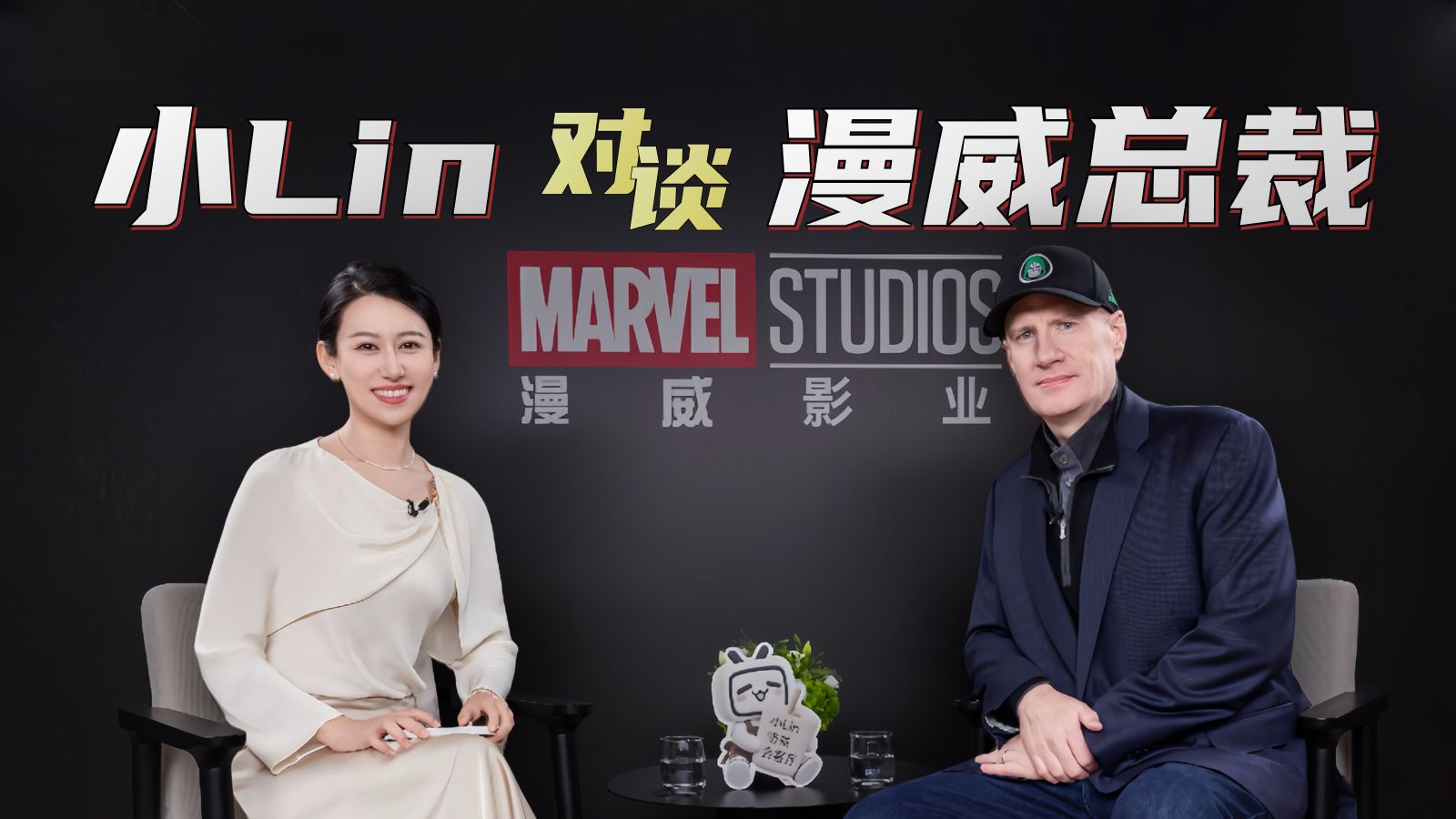
节目以“奶茶会客厅”拉开序幕,主持人隆重介绍了重磅嘉宾——漫威影业总裁兼漫威首席创意官、漫威电影宇宙(MCU)的核心架构师,同时也是全球影史上票房最高的制片人凯文·费奇(Kevin Feige)。漫威电影宇宙堪称影史奇迹,不仅创造了超过 320 亿美元的惊人全球票房,更构建出一个能持续产生复利的强大 IP 系统。当被问及在制作《钢铁侠》(Iron Man)之初是否就已经规划好整个宏大的漫威宇宙时,凯文·费奇坦言,有着 85 年历史的漫威漫画始终是他们的终极指南,漫画中所有英雄同处一个共享宇宙的概念早已存在。然而,早期因为不同影视公司各自握有不同角色的版权,导致漫威无法在荧幕上实现这种联动。漫威影业成立之初,手头只有其他制片厂挑剩下的角色版权,因此漫威宇宙的诞生并非源于一个缜密的商业大计划,而是一个希望像漫画那样将角色一块块拼图互相串联的“梦想”。在拍第一部《钢铁侠》时,最核心且唯一的任务就是拍好一部电影,让全世界观众爱上托尼·斯塔克(Tony Stark),“让这部电影成功,然后我们才能以此为基础继续构建”。
让漫威影业真正意识到“共享宇宙可行”的转折点,正是《钢铁侠》的巨大成功以及影片结尾那个开创性的“首创签名式彩蛋”。在彩蛋中,塞缪尔·杰克逊饰演的尼克·弗瑞(Nick Fury)现身对托尼·斯塔克说:“你已经成为了更大宇宙的一部分,只是你自己还不知道而已。”("Mr. Stark, you've become part of a bigger universe, you just don't know it yet.")这句对白既是对斯塔克说的,也是在向全场观众发出的hook(钩子)。观众瞬间领悟到了共享宇宙的暗示并给予了极为热烈的反响。在探讨如何平衡老漫画迷与全新电影观众时,凯文·费奇强调这至关重要,因为绝大多数进电影院的观众其实没看过漫画。漫威的原则是,无论观众之前有没有看过其他漫威电影或漫画,单部电影本身必须具备完整的“开端、过程与结局”,能作为一个独立的故事成立。
介绍漫威电影的具体制作流程时,凯文·费奇表示一切都始于漫威影业核心小团队在房间里的讨论。漫威绝不认为自己只是在拍“超级英雄电影”,而是涵盖了各种各样的类型片(Genres)。比如多年前,团队决定拍一部太空科幻片,于是诞生了《银河护卫队》(Guardians of the Galaxy);想要拍一部幽默的劫盗片(Heist movie),于是制作了《蚁人》(Ant-Man)系列。确定好想拍的电影类型后,团队会从漫威漫画宝库中搜寻相匹配的故事线、名场面或角色,聘请出色的编剧撰写剧本,再邀请像乔·罗素与安东尼·罗素兄弟(Joe and Anthony Russo)这样顶尖的导演将其变为现实。整个制作过程非常神奇——起点只是几个核心成员抱着一堆漫画书讨论,到了中期片场却有成千上万的人在共同协作,而到了后期剪辑阶段,又重新变回小团队在剪辑室里的精雕细琢。
电影拍摄完成后便进入了关键的试映阶段。制作团队会邀请 75 到 100 名普通观众观看未经最后完成的粗剪版本,并填写详细的调查问卷。凯文·费奇承认这个过程令人非常紧张,“你辛苦创作了故事,不知道观众究竟喜欢还是不喜欢”。尽管反馈有时好有时坏,但试映总是能提供极其宝贵的改进信息("plus the movie")。有时漫威只需对电影做出微小调整,有时则需要进行大规模的改动与重组,这一切都是为了确保在首映周末影院灯光暗下的那一刻,呈现给吃着爆米花和饮料的观众的是这部电影最完美的版本。
- 漫威的创作哲学是以“类型片”驱动:如《银河护卫队》定位为太空片,《蚁人》定位为劫盗片。
- 罗素兄弟(Joe and Anthony Russo)将继续执导接下来的两部《复仇者联盟》巨制。
- 试映阶段通常会邀请 75 至 100 名观众观看粗剪版并填写问卷,为后期的故事修整提供直接依据。
> [00:00](https://www.bilibili.com/video/BV1gKuF6rEqy?t=0s) Mr. Stark, you've become part of a bigger universe, you just don't know it yet. — Nick Fury
> [08:30](https://www.bilibili.com/video/BV1gKuF6rEqy?t=510s) plus the movie — 凯文·费奇
[0:00] 凯文·费奇: 让这部电影成功,然后我们才能以此为基础继续构建
[0:00] Nick Fury: Mr. Stark, you've become part of a bigger universe, you just don't know it yet.
[8:30] 凯文·费奇: plus the movie
[10:30] 斯坦·李: 漫威代表的就是我们窗外的真实世界
[10:30] 华特·迪士尼: 我们拍电影是为了赚钱,但赚钱是为了能拍更多的电影。
Original transcript
[0:00] 哈喽 欢迎来到我们今天的奶茶会客厅今天这个会客厅有点厉害因为我们请到了漫威影业的总裁兼漫威首席创意官同时也是漫威宇宙的核心架构师而且还是全球影史上票房最高的制片人Kevin FeigeWelcome Welcome Kevin我们知道漫威电影宇宙MCU绝对可以说是影史上的一个奇迹它呢不光是全球票房最高的电影系列有320多亿美元而且还是一个可以持续产生复利的IP系统电影周边角色全都在一个宇宙里就是我们常说的漫娱宇宙但随着它这个宇宙不断的规模扩大它也在承担着自身的压力和挑战再加上流媒体平台的冲击观众喜好的变化它又该怎么办呢所以今天我们就会跟Kevin一起来讨论一下这个系统是怎么样一步一步被构建起来在现在这个市场环境观众喜好视频制作不断革新的时代他又该如何自我进行我认为什么特别的在《 Marvel Universe》是它好像是一个建筑的地方每个英雄有自己的电影然后这些人一起进入一个室室所以我只是问在最初当我们制作《《 Iron Man》你已经有了想要建立整个室室还是是这样的后e the plan to build the whole universe or like it's kind of like later on it build up step by step? You know, the comics, which now have been around for 85 years, has always been our guide at Marvel Studios. Everything we do comes from the comics. And that interconnectivity and the idea that they all inhabit one shared universe had been in the comics for the entire time. But we'd never been able to do it in the movies because at the time, different studios had the rights to different characters. So when we started Marvel Studios and we had the rights to all of the other characters that that other studios didn't have It didn't start as a plan But it started as a dream to be able to start building those blocks as you say and interconnecting them the way we do in the comics But when we did Iron Man 1 we knew the most important job was making a movie that made the world fall in love with Tony Stark I am Iron Man And making that work and then maybe we could build on to it Okay, that was the mingle at the beginning Absolutely Ah, at which point did you realize, oh, that works, the universe thing works? You know, it was the success of Iron Man that did it, and also we did add a little tag, our first signature tag at the end of the movies, where a character named Nick Fury comes out and tells Tony Stark, but he's also talking to the audience, saying, you're part of a bigger universe, you just don't know it yet. Mr. Stark, you've become part of a bigger universe, you just don't know it ynto the audience saying you're part of a bigger universe you just don't know it yet mr stark you become part of a bigger universe you just don't know it yet who the hell i am and the audience really responded to that and the audience understood that that was hinting at a shared universe oh you have the the hint and the hook like exactly i see just follow up on that i think what makes mcu interesting is that the great consideration for the existing audience and the new audience. So the new audience need to understand the story, what existence wants, they get some extra rewards. How did you manage to make that happen? That was very important because we knew that most people who'd be going to see the movies hadn't read the comics. A lot would, but we needed a lot more people to come and see the movies. So they needed to work on their own. And still to this day, we try to make a movie that works whether you've seen the other movies or read the comics or not. Sometimes that's easier than other times. Avengers movies have a lot of characters, and then Avengers Endgame was the culmination of many, many movies. But even that, having a beginning, middle, end of a story in a self-contained movie is what we hope is most important to mainstream audiences. I see. Did you have a kind of like a process internally to make sure that the new audience can understand the movie? We do a lot of test screenings. We show early versions of the movies to people. There's sometimes things that we think are very clear and everybody will understand, and we show it to an audience, and they don't know what's going on. And then we will tweak it and change it and refine it so that it's clear to as many people as possible. Do you have to reshoot something? Sometimes, mainly it's just editorial. My favorite part of movie making is editing, and what you can do and how you can change the story and the clarity of the story in editing. Then how do you know that the audience will click to some heroes or not? I mean, a lot of that is casting. And we have a great casting director and we've worked with many, many great actors. That's the magic. When you find the right actor and the right character and combine them. And of course, in Iron Man, Robert Downey was the best and first example of that. You have to manage hundreds of actors and actresses. Some of them are very, very famous and busy. How is that process like like a pressure for you? It is it is nearly impossible. You know in the comic books the incredibly talented artists Just with their pencil can draw 20 characters in a scene 35 characters on a page when we have to do that we have to schedule as you were saying 30 movie stars to be in a set on one day It's very very difficult
[5:00] But thankfully at Marvel, we have the greatest team around. There's our co-executive producer and first assistant director, Chris Castaldi, who is a miracle worker at that. I think he should write a book someday about how difficult it is to manage all of those schedules. I see. So you're in great hands with all these teams. Wonderful hands. Exactly right. I see. Do you feel like across the globe, people from different countries like different characters? Yes, I do. But I also think having just been at Bilibili World earlier today, you do see a number of characters that rise up. Loki is very popular everywhere. Doctor Strange is very popular. Of course, Tony Stark in Captain America and Thor. I saw a lot of Black Widows and Winter Soldiers today. And I would say four or five people came up to me talking about Wanda being their favorite. So it really is the greatest thing about Marvel is there's so many characters that lots of different ones can be people's favorite. When you talk about individual stories, if we look back to the end game, I think some audience may feel that the universe has come to an end and their favorite heroes are like you killed most of them. What was the thinking behind that? Well with Endgame it really was bringing what we call the Infinity Saga to a conclusion 22 films 22 interconnected films more than we ever dreamed we be able to do And our focus really was on landing that storyline and completing that storyline with Endgame And after that, we had more stories to tell and more characters that we wanted to showcase, but we had to experiment and we had to expand and we had to evolve what kind of stories we were telling. And that led us to some good things and to some very things we're very proud of. It led us to things that necessarily did not connect with audiences. So as we've been over the last few years really focusing on the primary characters and we have a new Spider-Man movie coming out soon. That's really what the story of Avengers Doomsday is about, is meeting some of the old characters, Steve Rogers returning, for instance, and Thor, but also interlacing some of those new characters that we've met since Endgame and seeing how they respond to these very big events of Doomsday. I know when Disney Plus launched, Marvel Studios started to produce a large amount of like serious content. What do you think was the impact of streaming had on Marvel? Well, I think at first it was very exciting because all of us at Marvel, myself included, are just big fans who dream, as I was saying before, of bringing so many characters to the screen. And in that time people said do as much as you want make as much as you want We said great We rolled up our sleeves and we made WandaVision and Loki and show after show And I proud of almost all of them but it became a lot It felt like a barrier to entry for audiences And that was never the case, which is why, as I said, now we've streamlined, we're focusing on just one or two shows, but primarily on the feature films. What do you think would be the goal for the maybe next few years for MCU? Is it like focusing more on those major events, films? Films, for sure, absolutely. with Spider-Man, Doomsday, and Avengers Secret Wars coming up, we are going to be completing this big saga that we're nearing the end of. And whereas Endgame really wasn't ending, and then we were searching for a new beginning, Avengers Doomsday and Avengers Secret Wars is a beginning. The whole idea of those movies, as the audiences will see, is that we're seeding the future of the universe and where that universe moves on in a way that is streamlined, slightly simpler and brings in new characters like the X-Men. You just mentioned we know that the Doomsday and the Secret Wars are coming up. What are the roles for these two movies for the whole universe? Well I think that's what it is. It really is, it acts both as a farewell to certain characters like some of the X-Men characters that have been around for 30 years and this is the first time It a farewell Yeah farewell for them and also the first time we get to use them in MCU movies which is very exciting for us But it also does very much set the stage for the future of the universe in a very impactful way You produce so many movies. Could you maybe give us a picture of how the production process works like? Well, you know, it starts in a room with a small group of us at Marvel Studios who've been around together for many, many years, talking about what kind of movie do we want to make. I really don't believe that we just make superhero movies. We make all types of genres. As much as we love comics at Marvel Studios, we love movies, and we love making lots of different types of movies. So we decide, for instance, many years ago, we decided we wanted to make a space film, and that's what became Guardians of the Galaxy. We decided we wanted to do a fun heist movie, and that's what the Ant-Man movies were. So that's really how it starts. What kind of movie do we want to make? And then what of the amazing Marvel comics could we pull from to tell that story? And then you kind of write a script. Then we hire great writers. We pull moments from comics that we love, sometimes storylines, sometimes just moments and characters, and work with writers to put it into a script and then work with amazing filmmakers like Joan Anthony Russo,
[10:00] We're doing the next two Avengers movies for us to really bring it to life. And that's what else is fun, is it starts with a small group of us with a stack of comics. And then at a certain point, we're on a movie set and there are thousands and thousands of people working on that. And then we get back to a small group in the cutting room. Where does the audience, you said the test view, come in place? That's in post-production. After we've shot the movie, we'll cut an early version of it together. and we'll bring in 75, 100 people and show them a rough version of the movie and then ask them what they think and get their thoughts. Do you have like a questionnaire? Oh, yes. Are you a yes? It's very nerve-wracking because you work very hard on the story. And do you like it? Do you not like it? And sometimes it's good and sometimes it's bad, but you always get wonderful information that helps you plus the movie. Did it ever happen that you have to revamp the, not the whole thing, but a majority of stuff? Sometimes, sometimes. Sometimes we have to change just a little. Sometimes we change a lot. It varies, but it all is with trying our best when the lights dim on opening weekend that the audience in the theater sees the best version possible. Take some popcorn and drinks. If we look back to the whole architecture of the MCU what do you think are the key reasons MCU worked so well I mean to me it always comes down to the characters It comes down to the relatability of the characters Stan Lee and Jack Kirby and all the great comic writers and artists that created these characters, the genius was that even though they shot webs, even though they had hammers and could call down lightning, they were super soldiers, they were flawed people. They were normal people who had flaws and issues. just like we all do. And Stan used to always say that Marvel represents the world outside our window. It is the real world and they have real consequences and real problems. And Peter Parker has to deliver medicine to his aunt and still do his homework. And that is what works. That is what really, really makes the characters relatable to audiences around the world. And then the other thing we love about the Avengers is it really is about people from different Sometimes different planets, different types of people being thrust together in a room and whether they like each other or not, because they don't always, they have to get along and do what's best. They have to get along and help save the world, which is what Avengers, what assembling is all about. I think that is why the characters resonate with so many people for so many years. I not going to ask which one is your favorite Thank you Do you think there is something like spirit in common of those characters of those heroes you like the most like the spirit that you like the most Well, I will tell you the fact that so many of them would be extraordinary people even without superpowers. Peter Parker is a brilliant scientist and a straight-A student. Bruce Banner is a brilliant scientist. Tony Stark is a brilliant technologist. They all have talents with their brains, with their intelligence that is almost as impressive as their suits and their muscles and their webs. And that's what I strive for. I'm going to ask from a business perspective. Do you have a KPI for each movie, like maybe profit or something? We always say, and I think Walt Disney used to say, we make movies, yes, to make money. But we make movies so they can make money so that we can make more movies. We want the movies to be successful because A, that's the sign that the audience has responded to it and people are buying tickets. But also when they are successful, we get to make more. And that is always the goal. That's kind of the loop you're trying to make. So if there is somebody to replicate the whole universe what would you think the hardest part would be Is it the IP or the long story narrative I think it both I mean I think I'm the luckiest person in the history of Hollywood because, number one, I get access to the great, great storylines and characters from Marvel. 85 years of stories, 50, 60 stories a month for 85 years, Marvel has been telling. It's the longest ongoing fictional narrative in the history of humanity. And the other way I'm lucky is we have an amazing team, as I was saying at Marvel Studios, and people who just understand and think from a fan perspective first to make the best movies possible. I see. You said the team and the story itself, but what about you? Like, what do you think is your quality or trade that make you successful, make you a successful architect of the universe? I don't know other than to say I love these characters and I love movies and I've loved movies my entire life and the feelings I had in a theater looking up at a big screen that stayed with me that got into my soul that got into my personality I want to try to do that to audiences today and that's what I've been trying to do for 20 years is to make movies that feel to new audiences the way the movies that I loved as a kid felt to me
[15:00] It's kind of like the passion and also how you feel the way that the audience will feel for the movie. Yes. Okay. If you look back for the history of MCU, if there's one thing you could do differently, what would it be? I don't know. You know, not much. I do think, as you brought up earlier, I think the amount we got, I got too excited to bring many, many, many characters to the screen. And again, we've corrected that and we've pulled back on that. But other than that, I'm very, very proud of everything we've done.