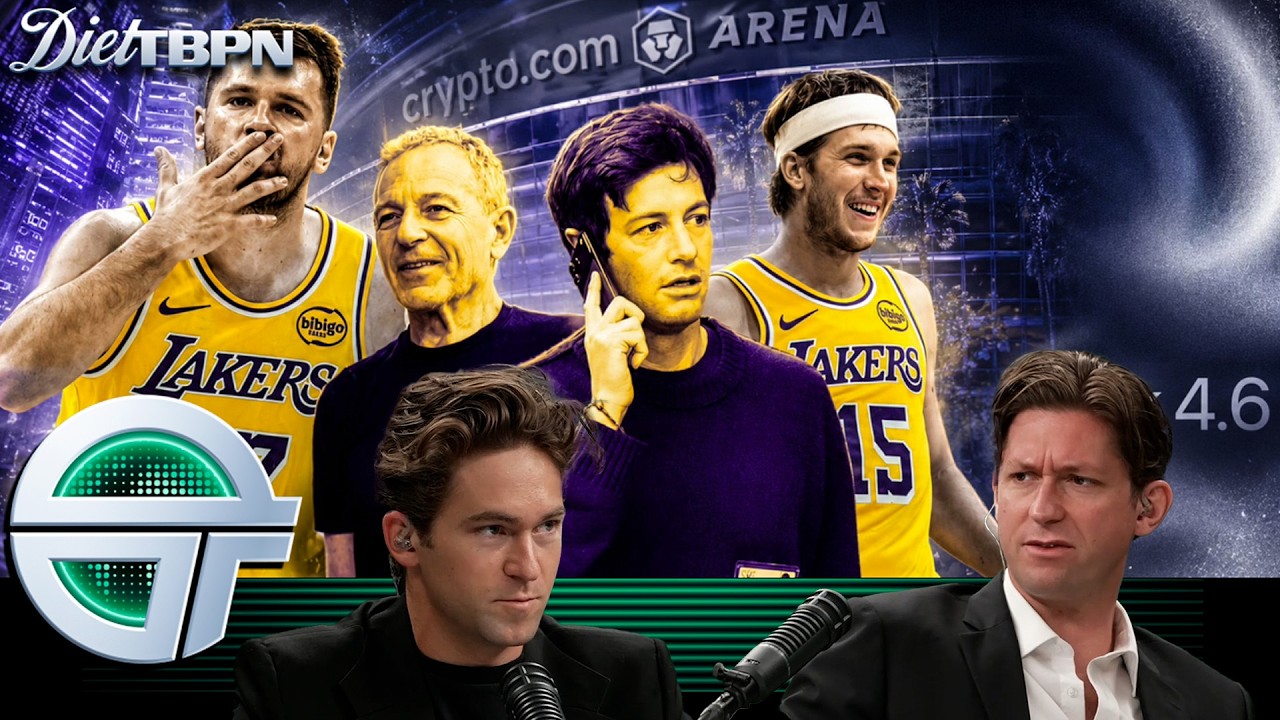
Kushner, Iger Buy Lakers for $12.5 Billion as Tech VCs Target AGI Hedges
TBPN
Venture investors are acquiring iconic live sports franchises at record valuations to build long-term portfolio hedges against potential AI disruption.
## Background
TBPN published this episode on YouTube on August 13, 2026. Diet TBPN provides a 30-minute digest of the daily live tech talk show hosted by John Coogan and Jordi Hays, covering major news across technology, venture capital, and current events.
## TL;DR
The hosts open with Josh Kushner and Bob Iger's record-breaking $12.5 billion purchase of the LA Lakers, discussing why high-net-worth tech investors are buying sports teams as an AGI hedge. They dive into frontier AI updates, including xAI's launch of Grok 4.6 and Nvidia's Nemotron 3.5 Lightning, before analyzing the implications of Anthropic's new invisible text watermarking aimed at EU compliance. Finally, they debate startup strategy, strongly push back on a founder's viral advice to only send investor updates when winning, and share practical advice for early-stage founders.
## Atmosphere & style
The episode carries a sharp, fast-paced, and conversational tech-bro dynamic packed with dry humor and casual banter, exemplified by Hays' suit story and LA pothole jokes. Coogan and Hays alternate seamlessly between detailed financial analysis and enthusiastic tech commentary, maintaining a high-energy vibe throughout. Their dynamic feels like an informal back-and-forth between seasoned industry insiders who balance skepticism over benchmarks and hot takes with genuine curiosity about frontier developments.
## Key takeaways
- [00:02](https://www.youtube.com/watch?v=qvpItsNPuIk&t=2s) Josh Kushner and Bob Iger are acquiring the Los Angeles Lakers at a record-breaking $12.5 billion valuation.
- [00:02](https://www.youtube.com/watch?v=qvpItsNPuIk&t=2s) Seller Mark Walter is under federal investigation over complex private credit transactions involving an affiliated insurance company, creating regulatory pressure for a swift exit.
- [05:18](https://www.youtube.com/watch?v=qvpItsNPuIk&t=318s) Venture funds and high-net-worth investors increasingly view sports franchises as durable AGI hedges to anchor portfolios against AI disruption.
- [10:24](https://www.youtube.com/watch?v=qvpItsNPuIk&t=624s) xAI launched Grok 4.6, delivering frontier performance at significantly lower token costs than competitors like Fable 5 Max.
- [10:24](https://www.youtube.com/watch?v=qvpItsNPuIk&t=624s) Nvidia released its open-source Nemotron 3.5 Lightning model alongside Nemo Switchyard to optimize agentic workflows on private GPU clusters.
- [15:34](https://www.youtube.com/watch?v=qvpItsNPuIk&t=934s) Anthropic is implementing global text watermarking embedded into Claude's sampling distribution to meet European Union AI regulations.
- [15:34](https://www.youtube.com/watch?v=qvpItsNPuIk&t=934s) Critics argue that AI text watermarking risks stripping creators of credit for original human writing if even minor editing checks introduce watermarked tokens.
- [21:58](https://www.youtube.com/watch?v=qvpItsNPuIk&t=1318s) Skipping regular investor updates is dangerous advice for most founders, as consistent communication builds long-term trust essential for securing future capital.
The show kicks off with hosts John Coogan and Jordi Hays breaking down the headline-grabbing news that American businessmen Josh Kushner and Bob Iger are acquiring the Los Angeles Lakers for a record-breaking $12.5 billion. Hays arrives wearing a freshly tailored suit, joking that after gaining 45 pounds of lean muscle over an 18-month "bulking season," he had literally outgrown his previous wardrobe at a rate of two pounds a month and had to update his look. Turning back to the deal, Coogan outlines the transaction mechanics: Kushner (founder of Thrive Capital and co-founder/Vice Chairman of Oscar Health, as well as brother to Jared Kushner) and Iger (who recently stepped down as Disney CEO and previously bought controlling interest in NWSL's Angel City FC alongside wife Willow Bay) made their offer to Mark Walter. Walter, Chairman of TWG Global, had only purchased majority control from the Buss family the previous year at a $10 billion valuation.
The hosts dive into the legal backdrop surrounding Mark Walter, noting that he is under federal investigation over complex private credit transactions involving an affiliated insurance company. Coogan explains the nuances: while firms like Berkshire Hathaway hold around 46% of their insurance assets in related-party transactions legally, Walter reportedly disclosed only 3% while actual figures were far higher. Despite Walter denying all wrongdoing, the hosts speculate this regulatory pressure created context for a swift exit. The deal now awaits official approval from the NBA Board of Governors meeting next month in New York, though warm endorsements are already rolling in—including excited statements from star player Luka Dončić and Lakers legend Magic Johnson (who highlighted his 40-year personal friendship with Iger).
- **Transaction Value:** $12.5 billion record valuation for the Los Angeles Lakers.
- **Sellers & Buyers:** Mark Walter (TWG Global) selling to Josh Kushner (Thrive Capital) and Bob Iger (former Disney CEO).
- **Conflict Management:** Kushner must divest his minority stake in the Miami Heat to finalize the Lakers purchase (having previously held a minority stake in the Memphis Grizzlies).
[05:18](https://www.youtube.com/watch?v=qvpItsNPuIk&t=318s) Los Angeles Infrastructure Banter & Sports as an "AGI Hedge"
The discussion segues into broader sentiments about Los Angeles. While Hays admits to being historically pessimistic about LA due to deteriorating infrastructure—prompting a comedic tangent where he pitches "The Pothole Filling Company of Los Angeles," complete with a joke proposal for a 10,000-satellite constellation firing molten asphalt precision missiles into road craters—he notes that high-profile investments like the Lakers deal give him renewed optimism for the city's future.
The hosts analyze a commentary by Sag Harbor Capital regarding the financial rationale behind modern sports acquisitions. Historically viewed purely as "trophy assets" driven by fan pride, major sports franchises are increasingly treated by ultra-high-net-worth investors and venture funds as durable, long-term portfolio hedges. Coogan and Hays note that when investors are massively long on high-risk, volatile bets like Artificial General Intelligence (AGI), securing assets anchored in physical human entertainment offers unmatched longevity. Regardless of how rapidly AI or robotics disrupt corporate business models, live sports and iconic cultural franchises will endure.
> "When you're long AGI, building a portfolio with some things that are going to be around forever no matter how many robots there are makes a lot of sense."
[10:24](https://www.youtube.com/watch?v=qvpItsNPuIk&t=624s) Frontier AI Model Wars: Grok 4.6 & Nvidia’s Nemotron Lightning
Shifting gears to frontier tech, the hosts analyze xAI's launch of Grok 4.6. Quoting tech investor Gavin Baker, Coogan notes that Grok 4.6 achieves near-parity performance with Fable 5 Max while offering staggering cost reductions—80% cheaper for input tokens and 88% cheaper for output tokens. Baker highlighted that Grok 4.7 will push even further by incorporating proprietary pre-training datasets from Cursor and SpaceX. Coogan points out that Grok 4.6 demonstrated an impressive test-time compute curve on CursorBench, enabled by mid-pre-training on the Grok 4.5 checkpoint alongside refined Supervised Fine-Tuning (SFT) stages and model-based filtering.
Hays voices skepticism regarding AI benchmarks, observing that public trust in leaderboard scores is at an all-time low because synthetic test gains rarely translate smoothly into real-world user experience. However, xAI's momentum is visibly bleeding into market dynamics—SpaceX stock surged nearly 40% over five days following the release, prompting CNBC headlines about short sellers running out of capital. xAI also unveiled "Grokbot," an autonomous AI teammate designed to log directly into enterprise software and execute tasks end-to-end. Concurrently, Nvidia entered the model orchestration arena by releasing its open-source Nemotron 3.5 Lightning model alongside **Nemo Switchyard**, a specialized model router engineered for fast, efficient agentic workflows across private Nvidia GPU clusters.
- **Grok 4.6 Pricing Advantage:** ~85% total cost discount compared to rival top-tier frontier models.
- **Artificial Intelligence Index Score:** Grok 4.6 scored 61, officially placing it in the frontier category with strong agentic performance.
- **Nvidia Software Stack:** Nemo Switchyard targets mid-scale enterprise clusters running dedicated GPU infrastructure to optimize local routing costs.
<ElicitationsGroup message="Explore deeper aspects of this transcript:">
<Elicitation label="Analyze the financial and legal structure of the $12.5B Lakers acquisition" query="Analyze the financial and legal structure of Kushner and Iger's $12.5B acquisition of the LA Lakers, including Mark Walter's background and NBA ownership rules."/>
<Elicitation label="Compare Grok 4.6 against competing frontier AI models and pricing models" query="Provide a detailed technical and cost comparison between Grok 4.6, Fable 5 Max, and other current frontier AI models."/>
</ElicitationsGroup>
[15:34](https://www.youtube.com/watch?v=qvpItsNPuIk&t=934s) Anthropic Watermarking and the EU Regulation Debate
Anthropic has announced that text and files generated by its family of Claude AI models will soon feature embedded watermarks. Unlike a visible digital watermark on an image, this implementation operates behind the scenes as "breadcrumbs" baked into the token generation process, allowing consumers or platforms like LinkedIn and X to run text through a validation tool to verify whether it originated from Claude. The co-hosts point out that this move is directly driven by regulation in the European Union. Instead of applying a post-generation filtering step specifically for European users, Anthropic integrated the mechanism deep into the model's core sampling distribution, effectively making it a global standard. While some wonder if Anthropic ever considered pulling out of the European market due to compute constraints, the consensus on the show is that enterprise users ultimately won't mind because companies actively want clean, reliable, and identifiable AI code across their codebases.
```
HUMAN CREATION & AI WATERMARKING
[Drafting Essay] ---> [AI Proofreading] ---> [Embedded Watermark]
Human writes original Claude fixes typos Tokens altered during
ideas & structure & grammar sampling process
|
v
"Is this AI?"
(Credit shifted to model)
```
The discussion shifts to tech analyst Ben Thompson's sharply critical reaction to the news. Thompson argues that the EU regulation essentially forces creators to bundle human invention with AI substantiation, effectively stripping humans of credit for original thought. Even if a writer crafts an entire essay by hand and only uses Claude for a final proofreading pass to fix minor typos, there is a distinct risk that the tool inserts watermarked tokens into those edits. If an AI detector flags those small snippets, online observers will instantly reduce the work to a binary "AI-generated" label. The hosts recall a similar phenomenon where OpenAI models heavily overused em dashes, causing readers to dismiss human-authored essays as purely AI-generated simply because of a final editing check.
- Bill Gurley previously noted that while traditional image watermarks are instantly visible, AI text watermarks act more like invisible trace evidence or forensic breadcrumbs.
- Ben Thompson argued that EU regulations mandate that human creators give up sole credit: *"Everyone is worried about being replaced by AI. The EU is mandating it."*
- Co-host Tyler explains that watermarking typically adjusts the token selection probability distribution during sampling, meaning a single modified sentence shouldn't flag an entire document as AI-written—though the internet "peanut gallery" usually treats it as a binary verdict anyway.
- Google’s SynthID has used a similar method for Gemini for years, highlighting specific words based on probability rather than labeling entire documents.
- Antidote apps are already emerging, such as a recent "Pangram fighter" tool designed to rewrite AI outputs specifically to evade detection services like Pangram.
[21:58](https://www.youtube.com/watch?v=qvpItsNPuIk&t=1318s) Should Founders Stop Sending Investor Updates?
The hosts transition to a hot take posted on X by Alfred Forbes, founder of Listen Labs, who advised founders: *"only send investor updates when you're winning."* Forbes revealed that Listen Labs has only sent three investor updates in its entire history—all tied to major fundraising announcements—arguing that no investor reads a bad update and offers to help, but rather marks the startup as dying. The hosts react with strong skepticism, calling it terrible and dangerous advice for the vast majority of founders, even if it happens to work for hyper-growth companies riding a wave of easy capital.
The co-hosts stress that regular investor updates are the primary mechanism for building long-term trust and demonstrating execution velocity over time. When a founder goes silent for a year or two, investors naturally assume the company is dead. If that founder suddenly reaches out desperately needing a bridge round, the likelihood of securing capital is vastly reduced because investors have zero visibility into how the team handled adversity or iterated on their product. While skipping regular updates might work for a company like Listen Labs—which raised a Series A in April 2025, a Series B in early 2026, and is rumored to be raising a Series C by August 2026—that pattern reflects an exceptionally hot fundraising market rather than a repeatable operating strategy.
- Listen Labs raised its Series A in April 2025 and is reportedly raising a Series C just 16 months later, making three updates equate to roughly one email every six months.
- The hosts note a common red flag among startups building in public: founders who post monthly updates usually go completely dark the moment growth stalls, revenue declines, or their product gets exposed as a thin wrapper.
- One host shares a personal story of an angel check in a company that went silent for over a year; the founder eventually texted out of nowhere asking for a bridge round, forcing the investor to reconstruct a year's worth of missing context.
- For pre-seed or early-stage founders with no revenue, the hosts advise keeping updates extremely short—just concise bullet points detailing ongoing experiments—rather than sending multi-page essays or staying completely silent.
## Notable quotes
> [05:18](https://www.youtube.com/watch?v=qvpItsNPuIk&t=318s) When you're long AGI, building a portfolio with some things that are going to be around forever no matter how many robots there are makes a lot of sense.
> [15:34](https://www.youtube.com/watch?v=qvpItsNPuIk&t=934s) Everyone is worried about being replaced by AI. The EU is mandating it. — Ben Thompson
> [21:58](https://www.youtube.com/watch?v=qvpItsNPuIk&t=1318s) only send investor updates when you're winning. — Alfred Forbes
## Mentioned
Josh Kushner, Bob Iger, Los Angeles Lakers, John Coogan, Jordi Hays, Thrive Capital, Oscar Health, Jared Kushner, Angel City FC, Willow Bay, Mark Walter, TWG Global, Buss family, Berkshire Hathaway, NBA Board of Governors, Luka Dončić, Magic Johnson, The Pothole Filling Company of Los Angeles, Sag Harbor Capital, xAI, Grok 4.6, Grok 4.7, Grok 4.5, Gavin Baker, Fable 5 Max, Cursor, SpaceX, CursorBench, CNBC, Grokbot, Nvidia, Nemotron 3.5 Lightning, Nemo Switchyard, Anthropic, Claude, LinkedIn, X, European Union, Ben Thompson, OpenAI, Bill Gurley, Tyler, Google, Gemini, SynthID, Pangram, Alfred Forbes, Listen Labs, TBPN
TBPN examines Josh Kushner and Bob Iger's record $12.5 billion acquisition of the Los Angeles Lakers alongside the emerging thesis that live sports act as a hedge against artificial intelligence disruption, contrasting it with shifting economics in frontier AI, regulatory watermarking debates, and startup governance norms.
Sports Franchise Valuations and the AGI Hedge Thesis (0:02)
American businessmen Josh Kushner and Bob Iger agreed to acquire the Los Angeles Lakers at a record-breaking $12.5 billion valuation from TWG Global's Mark Walter, who had secured controlling interest only the previous year at a $10 billion valuation. The transaction awaits approval from the NBA Board of Governors and requires Kushner to divest his minority stake in the Miami Heat. The hosts note the deal unfolds against a federal investigation into Walter over undisclosed related-party private credit transactions involving an affiliated insurer—where he reportedly disclosed 3% compared to much higher actual balances, though Walter denies all wrongdoing.
Beyond the headline figure, the hosts examine analysis from Sag Harbor Capital framing marquee sports teams as essential portfolio hedges for investors heavily exposed to Artificial General Intelligence (AGI). The rationale holds that while rapid developments in AI and robotics may disrupt traditional corporate business models, iconic live sports and physical human entertainment offer unmatched longevity and cannot be automated away.
Frontier AI Price Cuts and Enterprise Routing (10:24)
In frontier technology, xAI launched Grok 4.6, registering an Artificial Intelligence Index score of 61. Quoting tech investor Gavin Baker, the hosts report that the model approaches performance parity with Fable 5 Max while offering dramatic cost reductions of 80% on input tokens and 88% on output tokens. The release coincided with the announcement of Grokbot, an autonomous enterprise agent designed to operate directly within corporate software, and contributed to a roughly 40% five-day surge in SpaceX stock.
Despite strong synthetic test results on CursorBench, co-host Jordi Hays voiced skepticism regarding AI benchmarks, noting that developer trust in public leaderboards is at an all-time low because test gains rarely translate directly into user experience. Simultaneously, Nvidia expanded its orchestration footprint by launching the open-source Nemotron 3.5 Lightning alongside Nemo Switchyard, a dedicated model router engineered to optimize agentic workflows across private GPU clusters.
Anthropic Token Watermarking and Credit Disputes (15:34)
Anthropic announced that text and files produced by Claude will incorporate invisible watermarks embedded directly into the core token sampling distribution. Driven by European Union regulatory requirements, the company applied this mechanism globally rather than maintaining a localized post-generation filter. Tech analyst Ben Thompson sharply criticized the measure, arguing that EU mandates force creators to surrender sole credit for original work: even if an author merely uses Claude to proofread minor typos, watermarked tokens can trigger detection services and lead observers to label the entire human creation as synthetic.
Co-host Tyler clarified that token watermarking alters probability distributions during generation rather than categorically staining an entire document, drawing parallels to Google's SynthID. Nonetheless, the hosts observe that online communities often treat detection as a binary verdict, which has already spurred the development of evasion software like Pangram-fighting tools designed to strip out identifiable patterns.
Debating the Cadence of Startup Investor Updates (21:58)
The hosts firmly rejected guidance posted by Listen Labs founder Alfred Forbes, who advised founders to send investor updates only when reporting major wins, arguing that struggling companies receive no help from disclosing bad news. While Listen Labs successfully used this approach amid rapid fundraising—moving from a Series A in April 2025 toward a potential Series C by mid-2026—the hosts warned that treating this as standard operating procedure is dangerous for most founders.
Regular investor updates, the hosts argue, serve as the primary vehicle for building trust and demonstrating execution velocity. Founders who stay silent during downturns risk appearing defunct, drastically lowering their chances of securing emergency bridge capital when needed. For early-stage and pre-revenue teams, the hosts recommend concise, bulleted updates focused on active experiments rather than sporadic self-congratulatory announcements.
As frontier AI labs compress inference costs and adapt to European transparency regulations, venture investors are simultaneously navigating software disruption by securing durable physical entertainment assets and recalibrating founder governance standards.
精炼阅读摘要
本期节目聚焦于顶级资本对实物娱乐资产与前沿科技领域的双重布局,重点梳理了 Josh Kushner 与 Bob Iger 以 125 亿美元天价收购洛杉矶湖人队的交易逻辑,以及前沿人工智能模型在推理成本竞争、欧盟监管合规与初创企业投融资沟通中的最新分歧。
湖人队创纪录收购与对冲通用人工智能假说 (0:02)
Josh Kushner(Thrive Capital 创始人)与 Bob Iger(前迪士尼首席执行官)达成协议,以 125 亿美元估值从 TWG Global 董事长 Mark Walter 手中收购洛杉矶湖人队多数股权。该估值较 Walter 上一年以 100 亿美元收购相比增长了 25%。节目主持指出,Walter 当前正面临联邦监管机构关于其关联保险公司复杂私募信贷交易的调查,虽然 Walter 否认一切不当行为,但监管压力被认为加速了其退出交易。由于联盟所有权冲突规则,Kushner 必须剥离其持有的迈阿密热火队少数股权,该交易正等待 NBA 董事会下个月的正式审批。
主持人和 Sag Harbor Capital 的评论分析认为,体育资产已从单纯由所有者自豪感驱动的“奖品资产”,演变为超高净值人群和风投基金的长期投资组合对冲工具。当资本重仓布局高风险的通用人工智能(AGI)时,以物理世界和人类真实互动为核心的现场体育赛事,展现出对抗技术颠覆的高确定性。无论未来机器人或人工智能如何瓦解传统企业商业模式,顶级文化和体育 IP 仍将保持不可替代的长期价值。
前沿模型降本竞争与企业级智能体基建 (10:24)
在模型技术竞争方面,xAI 发布了 Grok 4.6 模型。科技投资人 Gavin Baker 指出,该模型在性能上逼近 Fable 5 Max,但大幅降低了推理成本:输入 Token 费用便宜 80%,输出 Token 便宜 88%,综合成本降幅约 85%。Grok 4.6 在 CursorBench 测试集上展现出强劲的推理算力扩展曲线,这一优势得益于基于 Grok 4.5 检查点的中途预训练以及模型级过滤技术。此外,Grok 4.7 计划整合来自 Cursor 和 SpaceX 的专有预训练数据集。xAI 还推出了支持直接接管企业软件执行任务的 Grokbot 智能体。
尽管主持人对基准测试能否真实反映用户体验保持审慎态度,但市场反馈剧烈,SpaceX 股价在模型发布后的 5 个交易日内上涨近 40%。与此同时,Nvidia 推出了开源 Nemotron 3.5 Lightning 模型以及名为 Nemo Switchyard 的专用模型路由器,旨在帮助企业在中型私有 GPU 集群上高效调度和编排多智能体工作流,以优化本地路由推理成本。
Anthropic 文本隐形水印与合规争议 (15:34)
为遵循欧盟针对人工智能的严格监管规范,Anthropic 宣布将在 Claude 系列模型生成的文本与文件中嵌入隐形水印。该技术并非在生成后进行过滤,而是直接在采样概率分布阶段调整 Token 生成机制,嵌入类似于法医痕迹的隐形“数字面包屑”,从而将这一机制推行为了全球标准。企业与社交平台可以通过验证工具检验文本是否来自 Claude。节目认为企业端用户由于对代码安全性与版权透明度的需求,整体对这一标识持接纳态度。
然而,该举措引发了知识产权归属方面的强烈争议。科技分析师 Ben Thompson 批评指出,欧盟法规实际上迫使创作者在独立思考与 AI 辅助之间进行绑定;若人类作者在完成原创文章后仅使用 Claude 进行标点修正或语法校对,模型嵌入的标记可能导致外部检测工具将整篇作品简化并定性为“AI 纯生成”,从而抹杀人类创作者的智力成果。尽管类似 Google SynthID 等技术强调根据概率定位局部词汇而非全篇裁定,但互联网舆论的二元化标签倾向以及随之兴起的反检测规避工具,凸显了内容溯源合规化进程中的实操困境。
初创企业投资者沟通模式的策略分歧 (21:58)
Listen Labs 创始人 Alfred Forbes 在社交媒体上主张“只有在取得胜利时才发投资者简报”,透露其公司仅在重大融资节点发出过三次通报,并声称投资者从未因坏消息伸出援手。节目主持人对这一观点提出了强烈批驳,认为这种极度低频的沟通方式并不具备普遍适用性,完全脱胎于 Listen Labs 在 16 个月内极速完成 A 轮、B 轮并筹备 C 轮的特殊过热融资周期。
主持团队强调,定期的经营通报是建立长期信任与展现团队执行迭代速度的核心渠道。当早期初创企业陷入困境、增长放缓或产品面临重构时,长时间保持沉默会使投资人默认公司已经停滞;一旦未来突发性寻求过桥贷款,缺乏背景信息的投资人极难提供资本救助。对于没有收入的早期团队,主持人建议保持简洁的事实汇报,列明正在推进的核心实验,以透明度积累信用,而非在顺境与困境之间选择性失联。
本期节目展现了当下资本市场应对技术变革的分化策略:一方面通过注资顶级体育实物资产规避技术周期风险,另一方面在模型基建层加速成本压缩与智能体落地。然而,围绕生成式内容主权归属的监管强制合规,以及投融资环境狂热下管理原则的扭曲,仍是行业参与者必须面对的未解争议。
Detailed notes — zh
## Background
本期内容由科技商业对谈节目 TBPN 于 2026 年 8 月 20 日发布在 YouTube 平台。节目属于“Diet TBPN”三十分钟精简栏目,由 John Coogan 与 Jordi Hays 共同主持,旨在汇聚并提炼科技圈当天的核心动态与重磅商业新闻。
## TL;DR
节目首先深入探讨了 Josh Kushner 与 Bob Iger 以 125 亿美元创纪录估值收购洛杉矶湖人队的交易内情,剖析了顶级体育特许经营权如何转变为防范 AGI 科技颠覆的终极对冲资产。随后,主持人分析了 xAI 推出的 Grok 4.6 在代码与价格上的帕累托优势,以及英伟达推出开源模型 Nemotron 3.5 Lightning 与 Switchyard 路由器的全栈布局。紧接着,节目探讨了 Anthropic 引入文本水印对创作者署名权的冲击及欧盟监管悖论,并深入反驳了“只有打胜仗才发投资人汇报”的激进言论,强调了在逆境中透明沟通以维系投资人信任的重要性。
## Atmosphere & style
整期节目节奏紧凑且充满美式科技播客的生动幽默,两位主持人默契十足,在硬核商业分析与无厘头插科打诨之间切换自如。从开场调侃西装太紧与脑洞大开的“卫星导弹填坑公司”,到讨论投资人汇报时突然拉响警报音效、痛陈反面教材,现场充满了鲜活的互动张力与犀利吐槽。听众既能感受到硅谷一线投资人对技术演进与资本周期的敏锐洞察,又能沉浸在老友闲聊般放松、愉悦且富有激情的氛围中。
## Bulletin
- [01:49](https://www.youtube.com/watch?v=qvpItsNPuIk&t=109s) Thrive Capital 创始人 Josh Kushner 联手迪士尼前 CEO Bob Iger,以 125 亿美元天价报价收购洛杉矶湖人队,创下全球体育俱乐部估值新纪录。
- [07:26](https://www.youtube.com/watch?v=qvpItsNPuIk&t=446s) 资本市场对顶级体育资产的投资逻辑发生根本性转向,超级富豪与主权基金开始将其视为对抗 AGI 颠覆与高风险科技波动的长期战略对冲壁垒。
- [10:39](https://www.youtube.com/watch?v=qvpItsNPuIk&t=639s) xAI 正式发布 Grok 4.6,在实现前沿模型性能的同时将输入费用削减 80%、输出费用降低 88%,打出极具杀伤力的性价比价格战。
- [15:32](https://www.youtube.com/watch?v=qvpItsNPuIk&t=932s) Anthropic 顺应欧盟监管要求对 Claude 文本植入底层统计指纹水印,引发了独立创作者在 AI 润色后恐丧失作品署名权的广泛争议。
- [21:59](https://www.youtube.com/watch?v=qvpItsNPuIk&t=1319s) 针对“仅在赢时才发投资人更新”的争议言论,投资人指出这种做法存在严重的幸存者偏差,常规初创公司长期失联将直接切断信任并堵死后续过桥融资之路。
## Key takeaways
- [00:02](https://www.youtube.com/watch?v=qvpItsNPuIk&t=2s) Josh Kushner 的常青基金 Thrive Eternal 体现了一种新型投资哲学:稀缺且顶级的传统体育资产,其抗风险能力与商业寿命可能远超当今科技巨头。
- [01:49](https://www.youtube.com/watch?v=qvpItsNPuIk&t=109s) 湖人队卖家 Mark Walter 短短一年便急于以 125 亿美元脱手球队,背后核心动因在于其面临联邦调查,涉及保险业务关联资产披露合规问题。
- [01:49](https://www.youtube.com/watch?v=qvpItsNPuIk&t=109s) 收购财团获得广泛支持,Josh Kushner 需售出迈阿密热火队股份以合规,而当家球星 Luka Dončić 与名宿 Magic Johnson 均公开力挺新资方。
- [07:26](https://www.youtube.com/watch?v=qvpItsNPuIk&t=446s) 顶级体育特许经营权已从富豪炫耀身价的“奖杯资产”,转变为对冲 AGI 与科技不确定性的优质资产配置分散器。
- [10:39](https://www.youtube.com/watch?v=qvpItsNPuIk&t=639s) Grok 4.6 凭借 CursorBench 上的优秀测试表现与数字同事 Grokbot 智能体,全面向代码敏捷迭代与复杂企业知识工作转型。
- [14:20](https://www.youtube.com/watch?v=qvpItsNPuIk&t=860s) 英伟达推出开源模型 Nemotron 3.5 Lightning 与专用路由器 Nemo Switchyard,为中大型私有算力中心打造紧密软硬结合的调度技术栈。
- [15:32](https://www.youtube.com/watch?v=qvpItsNPuIk&t=932s) Claude 的文本水印并非在元数据中标记,而是通过修改 Token 采样概率分布引入微弱统计偏差,这使得外部 API 可隐蔽校验内容是否由 AI 生成。
- [18:41](https://www.youtube.com/watch?v=qvpItsNPuIk&t=1121s) 科技分析师批评欧盟水印监管本质上是强行将生成过程与原创性捆绑,导致人类即便仅用 AI 进行拼写语法润色也面临被抹去署名权的困境。
- [18:41](https://www.youtube.com/watch?v=qvpItsNPuIk&t=1121s) AI 文本水印机制已引发激烈的猫鼠博弈,检测工具与对抗性重写伪装工具层出不穷,持续加剧双方算法攻防升级。
- [24:00](https://www.youtube.com/watch?v=qvpItsNPuIk&t=1440s) Listen Labs 创始人提出的“打胜仗才发汇报”极具误导性,其所谓三年发三次更新实际上是由于每六个月就高频完成一轮融资的特例。
- [24:00](https://www.youtube.com/watch?v=qvpItsNPuIk&t=1440s) 在常规 18 至 24 个月的融资周期中,定期的简短更新是展示团队执行力与迭代速度的关键,也是危机时刻获得投资人过桥救助的前提。
- [24:00](https://www.youtube.com/watch?v=qvpItsNPuIk&t=1440s) “公开构建”模式存在明显的沉默规律:当此前高调分享月度营收的团队突然停止公开发声,往往意味着其增长停滞或套壳模式遭受重创。
## Detailed walkthrough
### [00:02](https://www.youtube.com/watch?v=qvpItsNPuIk&t=2s) Thrive Eternal 与科技动荡下的体育资产长青论
节目一开场,主持人 John Coogan 与 Jordi Hays 立即聚焦于当天最爆炸的商业新闻:Thrive Capital 创始人 Josh Kushner 与迪士尼前首席执行官 Bob Iger 联手收购洛杉矶湖人队(Los Angeles Lakers)。Jordi 分享了自己当天清晨在桑拿房里的思考,盛赞 Josh Kushner 旗下的常青基金名称 "Thrive Eternal"(Thrive 永恒基金)是“有史以来最棒的基金名称之一”。在当前人工智能等技术颠覆浪潮席卷全球、科技巨头寿命难以预测的时代,“Eternal”不仅是一个强有力的词汇,更精准契合了一种新型投资哲学:像湖人队这样顶级而稀缺的传统体育俱乐部,其商业生命力与防御性很可能比当今世界上多数科技巨头更加持久耐磨。
两位主持人随后进入了演播室日常的幽默打趣。Jordi 当天换上了一套非常合身的帅气西装,引来 John 的连连赞叹。Jordi 笑称节目刚开播时他们进入了“增肌期”(bulking season),自己每个月长两磅体重,18 个月下来西装越来越紧,坐在演播室里极其难受;John 则在一旁调侃他“长了 45 磅纯肌肉,减掉了大量脂肪,没必要低调”。两人笑谈这种指数级增重让自己不得不把之前定制的西装留到 40 年后变成老头再穿,或者等待未来漫长的“刷脂期”(cutting season)。
---
### [01:49](https://www.youtube.com/watch?v=qvpItsNPuIk&t=109s) 125 亿美元破纪录收购案始末与卖家 Mark Walter 调查危机
调侃过后,话题回到湖人队收购案的具体细节上。多家消息源向 ESPN 证实,Josh Kushner 与 Bob Iger 已经开出高达 125 亿美元的天价收购洛杉矶湖人队,一举刷新全球体育俱乐部的交易估值纪录。该笔交易的卖方是控股公司 TWG Global 的董事长兼首席执行官 Mark Walter。值得注意的是,就在去年 10 月,Mark Walter 才以约 100 亿美元的前历史纪录估值,在 NBA 董事会全票赞成下从 Buss 家族手中接过湖人队的控股权。如果本次交易按计划推进,尚需获得预计下月在纽约召开的 NBA 董事会(Board of Governors)正式批准。
```mermaid
flowchart TD
accTitle: Lakers Ownership Transfer Chain
accDescr: 洛杉矶湖人队从Buss家族到Mark Walter再到Kushner与Iger财团的所有权流转与估值变化
subgraph Timeline["湖人队股权流转与估值飙升"]
A["Buss 家族<br>(长期持有)"] -->|"约 100 亿美元估值<br>(上一年度交易)"| B["Mark Walter<br>(TWG Global 董事长)"]
B -->|"125 亿美元创纪录报价<br>(待 NBA 董事会批准)"| C["新财团:Josh Kushner & Bob Iger<br>(Thrive Capital & 前迪士尼 CEO)"]
end
subgraph Driver["提前套现动因"]
D["联邦调查压力:关联交易披露问题<br>(将私募信贷资产置入旗下保险公司)"] -.-> B
end
```
关于 Mark Walter 为何在短短一年后就急于转手如此优质资产,主持人们披露了深层内幕:Walter 目前正面临联邦层面的调查。问题出在极为复杂的金融操作上——他涉嫌将部分私募信贷(private credit)资产直接置入其控股的保险公司账目中。尽管类似操作在合规框架下并非罕见(例如伯克希尔·哈撒韦公司约 46% 的保险资产属于关联方交易),但监管规定必须如实披露。指控称,Walter 对外宣称关联方资产占比仅有 3%,但实际比例因多层嵌套资产穿透后要高得多。虽然 Walter 坚决否认一切违规行为且调查仍在进行中,但这项调查无疑为他迅速脱手心头好资产提供了强有力的动机解释。
- **收购财团背景**:Josh Kushner 是风投机构 Thrive Capital 的创始人兼 CEO、Oscar Health 联合创始人,也是 Jared Kushner 的弟弟;他目前持有迈阿密热火队(Miami Heat)的少数股权(完成本次收购前需售出),此前曾是孟菲斯灰熊队(Memphis Grizzlies)的少数股东。Bob Iger 于今年早些时候卸任迪士尼 CEO,此前已涉足洛杉矶体育投资,与其妻子 Willow Bay 在 2024 年成为美国国家女子足球联赛(NWSL)天使城 FC(Angel City FC)的控股老板。
- **各界积极反馈**:湖人当家球星 Luka Dončić 发声表示兴奋,称“成为一名湖人意味着一切”,期待与 Josh 和 Bob 携手为洛杉矶带回总冠军;湖人名宿 Magic Johnson 公开力挺,称自己认识 Bob 超过 40 年,认为湖人球迷找不到更好的老板了。
---
### [05:19](https://www.youtube.com/watch?v=qvpItsNPuIk&t=319s) 荒诞畅想:“洛杉矶补坑公司”与城市基建吐槽
湖人队的新归宿让原本对洛杉矶持悲观态度的 Jordi 重新燃起了一丝乐观,他笑称之前对洛杉矶唯一的信心只有“这里的好天气还能持续很久”。顺着洛杉矶的城市话题,两人画风一转,大肆调侃起城市基建灾难以及 Jordi 最近脑洞大开的“创业孵化项目”——洛杉矶补坑公司(The Pothole Filling Company of LA)。
两人开始一本正经地畅想如何用前沿硬核科技解决城市路面坑洼问题:
1. **轨道监控层**:向近地轨道发射 10,000 颗搭载高清相机的低轨卫星,全天候精准定位马路坑洞。
2. **天基打击修补**:卫星直接向地面发射微型导弹,运送太空融化的高温沥青,在穿透大气层时刚好加热到适宜温度,精准撞击灌入坑洼;地面再辅以激光照射,熔融残渣完成平整压实。
玩笑背后是对洛杉矶路况的无情吐槽。John 指出,人们常问为什么洛杉矶街头满地都是奔驰大 G(G-Wagon),根本原因就是路面破烂不堪,底盘不够硬或不是四驱开起来简直是受罪。Jordi 补充说,自己认识的一位迈巴赫车主在过去一年里爆胎了好几次,自己也频繁爆胎。他们还调侃起洛杉矶敷衍的路政工程——原本坑洼被填补后往往凸起变成一个个“迷你减速带”,甚至不久后演变成更恐怖的地面塌陷天坑(sinkholes)。Jordi 甚至开玩笑说自己可以化身夜行侠,穿上笔挺的西装、在凌晨两点带着沥青桶潜入 405 号高速公路,秘密进行道路补坑行动,让摄影师 Tyler 拍成惊险刺激的实况纪实。
---
### [07:26](https://www.youtube.com/watch?v=qvpItsNPuIk&t=446s) 体育资产的新逻辑:从“富豪玩具”到“AGI 对冲工具”
回归正题,Josh Kushner 与 Bob Iger 在联合声明中强调,作为终生 NBA 球迷,能成为湖人队这支全球最具标志性体育资产的掌门人是极大的荣幸,他们对 Jerry 与 Jeanie Buss 家族满怀敬意,立志延续辉煌传承,服务洛杉矶市与广大球迷。
随后,主持人引出了 Sag Harbor Capital 的一段深刻市场洞察:过去人们普遍将投资体育球队视为富豪买来炫耀面子的“奖杯资产”(trophy asset),纯属个人兴趣和虚荣心买单;然而在当前瞬息万变的宏观环境下,体育投资逻辑已经发生了根本性转向。以主权财富基金、头部风投及超级富豪为代表的资本,正将核心体育特许经营权(sports franchises)视为一种极其优秀的资产配置分散器。这种资产凭借独一无二的文化属性、不可替代的现场注意力黏性与跨周期的长青属性,正在演变为对冲高风险前沿科技动荡乃至 AGI(通用人工智能)不确定性的强力战略壁垒。
### [09:05](https://www.youtube.com/watch?v=qvpItsNPuIk&t=545s) 投资体育球队:对抗 AGI 时代的终极对冲策略
主持人们深入探讨了巨资收购顶级体育球队背后的深层逻辑。买下一支球队不仅会锁定大量资金,更代表着一种长远的资产配置哲学:当你长期做多通用人工智能(AGI)及前沿科技时,在投资组合中纳入那些“无论未来出现多少机器人都会永远存在的事物”,在逻辑上极具说服力。这种资产平衡效应,正在成为推动顶级体育资产投资需求的新动力。正如节目中所总结的,“如果你真正坚信 AGI 终将到来,那么买下一家庞大的体育俱乐部,实际上是你眼下能做出的最明智的财务决定之一”。关于库什纳与艾格 125 亿美元收购湖人队交易的具体联盟规则与细节,他们也预告将在十余分钟后连线达伦(Darren Rovell)进行全方位的规则拆解。
### [09:51](https://www.youtube.com/watch?v=qvpItsNPuIk&t=591s) 日全食奇观与高贝塔 AI 股票的玄学预兆
节目随后切入轻松的闲聊话题:欧洲此时正迎来一场罕见的日全食。几位主持人回忆起前几年亲身体验全食的震撼感受,纷纷称那是“人生中最疯狂的体验之一”,并对这次身处异地未能亲历表示遗憾。当被问及这场日全食究竟有何象征意义时,现场打趣道:日食对于“高贝塔(high-beta)AI 股票来说是一个绝佳的吉兆”,天象正在向投资者传递明确信号——“拉满杠杆(Lever up)”。
### [10:39](https://www.youtube.com/watch?v=qvpItsNPuIk&t=639s) Grok 4.6 震撼发布:模型性价比价格战与代码能力飞跃
话题随即转向重磅 AI 资讯——xAI 正式发布 Grok 4.6。投资人加文·贝克(Gavin Baker)将其评价为实现了“帕累托最优(Pareto dominance)”,其整体性能大致持平前沿水平,但价格直接打掉 85%:输入 Token 费用便宜了 80%,输出 Token 便宜了 88%。更令人瞩目的是,未来的 Grok 4.7 预计将是一个规模更大的模型,且预训练数据中深度融合了 Cursor 的编程代码库与 SpaceX 的专业工程数据,届时性能还将迎来大幅跃升。尽管行业内目前对各类 Benchmark(基准跑分)的信任度已降至历史冰点(太多模型跑分惊艳但实际体验拉胯),但 Grok 4.6 展现出的综合能力依然引发了高度关注。与此同时,与马斯克紧密相关的 SpaceX 在资本市场上也势头正盛,近 5 天内股价大涨近 40%,逼得 CNBC 甚至调侃空头们正在“耗尽子弹(running out of bullets)”。
根据官方释放的技术与产品细节,Grok 正在全面转型为胜任复杂知识工作的“数字同事(digital colleague)”:
- **CursorBench 表现亮眼**:Grok 4.6 在 CursorBench 上的测试时间曲线(test-time curve)处于独一档水平,极大加速了代码编辑器的敏捷迭代流程,告别过去提交任务后需等待数小时甚至一整天的低效体验。
- **训练架构升级**:在 Grok 4.5 的 Checkpoint 基础上进行了更多的 Mid/Pre-training,结合 Grok 4.5 的思考轨迹(traces)以及基于模型的过滤机制完成了全新的 SFT(监督微调)阶段,再次印证了优质 SFT 检查点对于模型表现的决定性意义。
- **Grokbot 智能体亮相**:正式推出类似虚拟团队成员的“Grokbot”(此前传闻的代号 Quirk 并未采用)。这些 Bot 能真正代表人类使用生产力工具、登录企业软件并交付完整的工作成果。
- **基准测试前沿阵营**:在人工智能权威指数榜单中斩获 61 分的高分,不仅正式挤入全球前沿梯队,更展现出了极强的自主智能体(Agentic)处理性能。
### [14:20](https://www.youtube.com/watch?v=qvpItsNPuIk&t=860s) 英伟达杀入模型战场:Nemotron 3.5 Lightning 与 Switchyard 路由器
面对愈演愈烈的模型大战,英伟达(Nvidia)同样不甘只当“军火贩子”,而是采取双管齐下的战略亲自入局。英伟达开源了全新的 Nemotron 3.5 Lightning 模型,同时推出了一款名为 Nemo Switchyard 的专用模型路由器(Model Router),旨在为智能体 AI 提供更快、更高效的动态调度分发。
```mermaid
flowchart TD
accTitle: Nvidia AI Stack and Nemo Switchyard Architecture
accDescr: 企业本地部署英伟达硬件并结合 Nemo Switchyard 模型路由器的架构流程
subgraph Hardware_Infrastructure ["英伟达硬件底座 (私有数据中心)"]
A["Nvidia GPU 机架集群 (成本优化)"]
end
subgraph Routing_Engine ["智能路由调度层"]
B["Nemo Switchyard (模型路由器)"]
A --> B
end
subgraph Workload_Dispatch ["前沿任务分发"]
C["Nemotron 3.5 Lightning (开源自研)"]
D["各类第三方外部前沿模型"]
B --> C
B --> D
end
```
对于那些拥有大量自建机架、虽然未达到超大规模(Hyperscaler)级别但具有可观算力规模的中大型企业而言,全盘采用英伟达的技术栈不仅能最大化摊薄 GPU 算力成本,同时配套采用“Switchyard”这一极具工业铁路调度意味的模型路由器,在架构逻辑上也是最自然、最紧密的选择。
### [15:32](https://www.youtube.com/watch?v=qvpItsNPuIk&t=932s) Anthropic 的底层水印策略、欧盟监管与创作者的署名困境
科技博主本·汤普森(Ben Thompson)近期对 Anthropic 宣布将对其 Claude 系列模型生成的文本及文件植入“水印(Watermarking)”一事提出了犀利见解。投资人比尔·格利(Bill Gurley)指出,传统的图像水印是肉眼直接可见的,但文本水印更像是一种隐秘的“数字面包屑(breadcrumbs)”——用户肉眼看文本毫无异样,但通过特定的校验工具或 API(例如未来由 LinkedIn 或 X 平台直接接入验证),便能查验该段内容是否由 Claude 生成。
这一举措的根本推手在于欧盟(EU)的监管法案。正如本·汤普森所言,欧盟再次达成了“通过本地法规监管全球”的目标:
| 维度 | 企业/机构客户视角 | 独立创作者/写作者视角 |
|:--- |:--- |:--- |
| **对水印的态度** | 基本毫不在意,甚至持积极态度。企业核心诉求是代码和文案干净、高效,完全不介意标记为 AI 生成。 | 深感焦虑、沮丧,担忧原创成果的归属权被剥夺。 |
| **技术实现隐患** | 水印被深度植入模型底层生成概率中,无法通过切换地区或末端处理简单剥离。 | 哪怕仅将 Claude 作为校对工具查找错别字、润色语法,一旦采纳修改建议,便可能不小心混入底层水印片段。 |
| **最终社会后果** | 生产力大幅提升,合规化与自动化流程推进顺畅。 | 个人花费数小时甚至数天撰写的整篇深度长文,极有可能在水印检测工具判定下被全盘抹杀为“纯 AI 代笔”,导致创作者彻底失去署名权。 |
### [18:41](https://www.youtube.com/watch?v=qvpItsNPuIk&t=1121s) 欧盟监管、文本水印争议与 AI 署名权之辩
主持人探讨了 AI 生成内容在编辑与水印方面的争议。早期 ChatGPT 在校对文本时极度偏好插入长破折号(em dash),导致读者一眼就能认定“这是 AI 写的”,即便人类作者只是在最后一步用它润色错别字。科技分析师 Ben Thompson(Stratechery 创作者)对此提出了尖锐批评。他认为欧盟针对 AI 水印和披露的监管,本质上是在“剥夺人类拥有的最后一项特质——独创性,并强行将其与实质生成过程捆绑,最终把荣誉全归于 AI”。在现行规则下,即使你构思了一个天才想法并写了一部杰出著作,只要最后交由 AI 润色,内容就会被系统打上水印,随之而来的舆论便会嘲讽“这不就是输了个 Prompt 吗”。正如 Ben Thompson 所言:“无论是把文本交给 AI 校对的人类,还是输入 Prompt 激发写作的人类,在欧洲官僚眼中都不值一提。大家都在担心被 AI 取代,而欧盟正在立法强制加速这一过程。”
```mermaid
flowchart TD
accTitle: AI水印机制与反制对抗流程
accDescr: 展示从AI生成时的Token概率微调,到多级文本检测,再到反水印工具重写的猫鼠博弈闭环
subgraph Gen["生成阶段 (Token Sampling)"]
A["输入Prompt / 待校对文本"] --> B["大模型评估下一个Token概率分布"]
B --> C["采用非最高概率的统计指纹采样"]
C --> D["生成带有隐形统计偏差的文本"]
end
subgraph Detect["检测与反制 (Cat-and-Mouse)"]
D --> E["检测工具 (如 SynthID / Pangram)"]
E --> F["标出具体AI高危词句 (非二元全盘否定)"]
D --> G["反水印工具 (如 Claude Watermark Remover)"]
G --> H["重写扰乱统计特征"]
H --> E
end
```
关于水印的技术实现,Tyler 进一步分析了其底层机制。虽然具体实现未完全公开,但其核心逻辑基本是在 Token 采样(Sampling)过程中做文章:模型不会直接贪婪选择概率最高(most likely)的 Token,而是在概率分布上施加轻微的统计指纹(statistical bias)。这意味着,如果作者自己写了一篇文章,仅仅用 AI 替换或润色了一句话,99% 的 Token 依然是人类手笔,检测系统只会将这一个特定句子标为 AI 生成,绝不等于整个文档都被定性为 AI 代笔。就像 Google DeepMind 的 SynthID 在 Gemini 中的应用一样,它是高亮特定词汇与句段,而非做非黑即白的二元打标。然而,网络看客和社交媒体的审判往往是极端且二元化的,只要抓到一句 AI 痕迹就会大肆抨击。此外,这也催生了一场“猫鼠游戏”:当有人给 Claude 加上水印特征时,立刻就有人发布“反水印工具”;就像针对检测工具 Pangram,立刻就有人发布能将其重写为“100% 人类撰写”的对抗模型,迫使检测团队不断更新防御机制。
- 早版 ChatGPT 的文本校对特征:频繁插入长破折号(em dash),成为早期辨识 AI 文本的显性标志。
- Ben Thompson 的核心观点:“大家都在担心被 AI 取代,而欧盟正在立法强制加速这一过程。”("Everyone is worried about being replaced by AI. The EU is mandating it.")
- 技术实现原理:并非在文档元数据打标签,而是在文本生成的 Token 概率采样阶段引入统计特征偏差。
- 业界先例:Google 的 SynthID 早在数年前就已应用于 Gemini,通过对局部词汇标记概率分布来识别 AI 痕迹。
- 生态对抗现状:检测工具(如 Pangram)与伪装工具(如 Pangram Fighter / 水印移除器)之间已形成高频的对抗性演进。
---
### [21:59](https://www.youtube.com/watch?v=qvpItsNPuIk&t=1319s) 创始人只该在打胜仗时发投资人汇报?争议推文引爆讨论
播客话题转向了社交平台上的热门争议。Listen Labs 的创始人 Alfred Wahlforss 在 X 上发布了一条极其激进的推文,直言:“创始人请记住,只有在打胜仗时才去发投资人更新(Investor Updates)。Listen Labs 创立至今只发过三封汇报,每一封都是宣布融资消息。没有投资人会认真看一份糟糕的更新并给予帮助,他们只会把你标记为‘快完蛋了’。”该观点瞬间引发了大量反对与讨论。主持人一边拉响船用警报音效、用怪声调侃,一边明确指出:除非你像 Listen Labs 一样一路狂赢,否则这绝对是害死大多数创业者的“糟糕建议”。
两位主持人从天使投资人的实战视角深入反驳了这一观点。投资人关系的本质是信任与预期的管理。其中一位主持人分享了一次意外惊喜的亲身经历:他曾开过一张小额天使投资支票,之后整整一年都没有收到该公司的任何消息,他甚至默认这家公司已经悄无声息地倒闭了,甚至不好意思主动发消息去问;然而一年后,他突然收到了创始人的消息,要求他签署文件——因为公司即将以 2.5 亿美元(quarter of a billion)的高额估值被收购。但主持人强调,这种极端个案绝非商业常态。“投资人更新是建立信任的基石。它是投资人评估团队执行力和迭代速度的唯一窗口。”即便业务暂时遇到瓶颈,只要能让投资人看到创业者快速迭代的姿态,大家就会保留信念;反之,若在漫长的沉默后突然发消息通知需要“过桥贷款(Bridge Round)”,投资人几乎不可能掏钱,因为中间缺失了一整段信任链条。
- Alfred Wahlforss(Listen Labs 创始人)争议言论:“只有在赢的时候才发投资人汇报……没有人在看了糟糕的更新后会提供帮助,他们只会把你标记为‘快完蛋了’。”
- 信任建立逻辑:定期的汇报让资方在项目尚未找到商业化突破口(PMF)时,依然能对团队的应对逆境与迭代能力产生确定性。
- 极端收购案例:主持人曾投资过一家整整一年杳无音信的早期项目,在以为其已破产时,突然收到签署 2.5 亿美元收购协议的通知。
---
### [24:00](https://www.youtube.com/watch?v=qvpItsNPuIk&t=1440s) 融资节奏的幸存者偏差与“公开构建”的沉默陷阱
针对这一争议,主持人们进一步拆解了不同创业阶段和市场周期下的汇报逻辑。在纯粹处于“想法迷宫(Idea Maze)”摸索、月收入仍为零的 Pre-seed 阶段,创始人固然不需要撰写鸿篇巨制——如果在这个阶段收到洋洋洒洒数千字的更新,反而会让投资人产生极度看空(super bearish)的负面印象;此时最理想的做法是用简短清晰的几个要点(bullet points)同步核心探索进展。
Alfred Wahlforss 之所以能践行“只发三次更新”,本质上是因为 Listen Labs 处于顶级资本追逐的幸存者轨道中。Listen Labs 成立于三年前,于 2025 年 4 月完成 A 轮融资,传闻 2026 年 8 月正在筹备 C 轮融资。算下来,这三封更新大致分别对应 2025 年 4 月、2026 年 1 月和 2026 年 8 月,相当于每六个月就有一封更新——其汇报节奏本身就是每半年一次密集融资的自然副产品。然而,在正常的资本环境和硬核行业中,初创公司的融资周期通常长达 18 到 24 个月。对于开出 A 轮支票的机构投资人而言,他们必须清楚团队真实的资金跑道(Runway)还剩多少个月,不可能容忍一年半的完全失联。
这种“只报喜不报忧”的心理与当下流行的“公开构建(Build in Public)”有着惊人的相似。判断一家宣称“公开构建”的公司是否陷入困境,最简单的标志就是他们停止了公开更新。在现实中,经常能看到创始人连续六个月在推特上高调分享月度营收增长,随后突然进入死寂——这意味着增长停滞、收入下滑,抑或是所谓的“套壳产品(thin wrapper)”伪装被戳破。主持人提到自己在 70 多笔天使投资中的另一次反面遭遇:一家团队整整一年毫无动静,某天突然发短信寒暄“有空聊聊吗”,一开口就是要过桥贷款。面对这种局面,投资人即使拼命提问也无法还原空白期里的真实轨迹,更无从建立对团队逆境生存能力的信心。盲目信奉个别赢家的极端言论,只会让普通创业者在遭遇危机时彻底丧失翻盘的外部支持。
- Listen Labs 的融资时间线:公司成立仅约三年,2025 年 4 月完成 A 轮融资,2026 年 8 月传闻进行 C 轮融资,其“仅发三次”的汇报节奏实则对应高频融资节点。
- 市场现实对照:非狂热市场环境下,创业公司的典型再融资周期为 18 至 24 个月,资金跑道透明度是投资人风控的核心。
- Pre-seed 汇报准则:严禁写成长篇大论,仅需提供简明扼要的要点更新(quick bullet points)即可。
- “公开构建”的停摆规律:多数高调公开数据的创业团队在六个月后突然断更,通常是收入缩水或商业模式受阻的确凿信号。
- 投资人生态数据:主持人自身累计进行了 70 余笔天使投资,实践证明失联后突击寻求过桥贷款的项目,成功率极低。
### [27:50](https://www.youtube.com/watch?v=qvpItsNPuIk&t=1670s) 节目收尾与主播告别
在结束关于创始人是否应该停止发送投资人更新(Investor Updates)的讨论时,主持人以一句轻快而客观看待现实的评论作为收尾,坦言这套逻辑“肯定适用于某些公司”("I'm sure it applies to some companies")。随着讨论告一段落,两位主持人迅速切换到温暖而真挚的节目谢幕环节。
主持人向屏幕前的所有听众与观众致意,动情地感慨能为大家带来这档节目“是一种莫大的荣幸与特权”("It's been an honor and a privilege"),并元气满满地祝愿大家“度过有史以来最棒的一个周三”("have the best Wednesday ever")。在彼此热切附和着“务必好好享受今天”之后,主持人们带着真挚的情感向大家道别:“再见,我们爱你们”("Goodbye. We love you."),本期节目在轻松愉悦的片尾背景音乐中圆满结束。
## Notable quotes
> [00:02](https://www.youtube.com/watch?v=qvpItsNPuIk&t=2s) 有史以来最棒的基金名称之一 — Jordi Hays
> [00:02](https://www.youtube.com/watch?v=qvpItsNPuIk&t=2s) 长了 45 磅纯肌肉,减掉了大量脂肪,没必要低调 — John Coogan
> [01:49](https://www.youtube.com/watch?v=qvpItsNPuIk&t=109s) 成为一名湖人意味着一切 — Luka Dončić
> [09:05](https://www.youtube.com/watch?v=qvpItsNPuIk&t=545s) 如果你真正坚信 AGI 终将到来,那么买下一家庞大的体育俱乐部,实际上是你眼下能做出的最明智的财务决定之一 — John Coogan
> [09:51](https://www.youtube.com/watch?v=qvpItsNPuIk&t=591s) 拉满杠杆(Lever up) — John Coogan
> [10:39](https://www.youtube.com/watch?v=qvpItsNPuIk&t=639s) 耗尽子弹(running out of bullets) — CNBC
> [18:41](https://www.youtube.com/watch?v=qvpItsNPuIk&t=1121s) 大家都在担心被 AI 取代,而欧盟正在立法强制加速这一过程。(Everyone is worried about being replaced by AI. The EU is mandating it.) — Ben Thompson
> [21:59](https://www.youtube.com/watch?v=qvpItsNPuIk&t=1319s) 创始人请记住,只有在打胜仗时才去发投资人更新(Investor Updates)。Listen Labs 创立至今只发过三封汇报,每一封都是宣布融资消息。没有投资人会认真看一份糟糕的更新并给予帮助,他们只会把你标记为‘快完蛋了’。 — Alfred Wahlforss
> [21:59](https://www.youtube.com/watch?v=qvpItsNPuIk&t=1319s) 投资人更新是建立信任的基石。它是投资人评估团队执行力和迭代速度的唯一窗口。 — Jordi Hays
> [27:50](https://www.youtube.com/watch?v=qvpItsNPuIk&t=1670s) 肯定适用于某些公司(I'm sure it applies to some companies) — Jordi Hays
> [27:50](https://www.youtube.com/watch?v=qvpItsNPuIk&t=1670s) 是一种莫大的荣幸与特权(It's been an honor and a privilege) — John Coogan
> [27:50](https://www.youtube.com/watch?v=qvpItsNPuIk&t=1670s) 度过有史以来最棒的一个周三(have the best Wednesday ever) — John Coogan
## Mentioned
John Coogan, Jordi Hays, Josh Kushner, Bob Iger, Mark Walter, Luka Dončić, Magic Johnson, Darren Rovell, Gavin Baker, Elon Musk, Ben Thompson, Bill Gurley, Tyler, Alfred Wahlforss, Thrive Capital, Thrive Eternal, The Walt Disney Company, Los Angeles Lakers, TWG Global, Buss Family, NBA, Miami Heat, Memphis Grizzlies, Angel City FC, Sag Harbor Capital, xAI, Grok 4.6, Grok 4.7, Cursor, SpaceX, CNBC, CursorBench, Grokbot, Nvidia, Nemotron 3.5 Lightning, Nemo Switchyard, Anthropic, Claude, EU, Stratechery, Google DeepMind, SynthID, Gemini, Pangram, Pangram Fighter, Listen Labs, X, YouTube
## Video description
Sign up for TBPN’s daily newsletter at TBPN.com
Diet TBPN delivers the best of today’s TBPN episode in 30 minutes. TBPN is a live tech talk show hosted by John Coogan and Jordi Hays, streaming weekdays 11–2 PT on X and YouTube, with each episode posted to podcast platforms right after.
Described by The New York Times as “Silicon Valley’s newest obsession,” the show has recently featured Mark Zuckerberg, Sam Altman, Mark Cuban, and Satya Nadella.
TBPN is made possible by:
Ramp - https://ramp.com
Public - https://public.com
Cisco - https://www.cisco.com
Console - https://www.console.com
CrowdStrike - https://www.crowdstrike.com
Figma - https://www.figma.com
MongoDB - https://www.mongodb.com
NYSE - https://www.nyse.com
Railway - https://railway.com
Shopify - https://www.shopify.com/
Follow TBPN:
https://TBPN.com
https://x.com/tbpn
https://open.spotify.com/show/2L6WMqY3GUPCGBD0dX6p00?si=674252d53acf4231
https://podcasts.apple.com/us/podcast/technology-brothers/id1772360235
https://www.youtube.com/@TBPNLive
Chapters:
00:00 Kushner & Iger’s $12.5B Lakers Deal
05:18 Why Sports Franchises Are Becoming an AGI Hedge
10:24 Grok 4.6 Hits the Frontier + Nvidia’s Nemotron Lightning
15:30 Anthropic Watermarking, the EU + Who Gets Credit for AI Writing?
21:58 Should Founders Stop Sending Investor Updates?
[Source](https://www.youtube.com/watch?v=qvpItsNPuIk)
Source quotes
[0:02] Jordi Hays: 有史以来最棒的基金名称之一
[0:02] John Coogan: 长了 45 磅纯肌肉,减掉了大量脂肪,没必要低调
[1:49] Luka Dončić: 成为一名湖人意味着一切
[9:05] John Coogan: 如果你真正坚信 AGI 终将到来,那么买下一家庞大的体育俱乐部,实际上是你眼下能做出的最明智的财务决定之一
[9:51] John Coogan: 拉满杠杆(Lever up)
[10:39] CNBC: 耗尽子弹(running out of bullets)
[18:41] Ben Thompson: 大家都在担心被 AI 取代,而欧盟正在立法强制加速这一过程。(Everyone is worried about being replaced by AI. The EU is mandating it.)
[21:59] Alfred Wahlforss: 创始人请记住,只有在打胜仗时才去发投资人更新(Investor Updates)。Listen Labs 创立至今只发过三封汇报,每一封都是宣布融资消息。没有投资人会认真看一份糟糕的更新并给予帮助,他们只会把你标记为‘快完蛋了’。
[21:59] Jordi Hays: 投资人更新是建立信任的基石。它是投资人评估团队执行力和迭代速度的唯一窗口。
[27:50] Jordi Hays: 肯定适用于某些公司(I'm sure it applies to some companies)
[27:50] John Coogan: 是一种莫大的荣幸与特权(It's been an honor and a privilege)
[27:50] John Coogan: 度过有史以来最棒的一个周三(have the best Wednesday ever)
Source quotes
[5:18] When you're long AGI, building a portfolio with some things that are going to be around forever no matter how many robots there are makes a lot of sense.
[15:34] Ben Thompson: Everyone is worried about being replaced by AI. The EU is mandating it.
[21:58] Alfred Forbes: only send investor updates when you're winning.
Original transcript
[0:02] First, we got to talk about Josh
[0:03] Kushner, Bob Iger. They bought the LA
[0:06] Lakers. They're buying the LA. He's done
[0:09] it again. They said he couldn't do it.
[0:11] >> They
[0:12] >> in the sauna this morning.
[0:13] >> Yeah.
[0:13] >> I was thinking about the name Thrive
[0:17] Eternal. I think it's one of the best
[0:19] names for a fund ever.
[0:21] >> Yeah. like eternal is such a powerful
[0:23] statement and it fits the strategy so
[0:25] well
[0:26] >> and it does, you know, people have been
[0:27] talking about this this morning, but it
[0:29] feels like with all of the technology
[0:32] disruption happening,
[0:34] >> it just feels like these sports
[0:35] franchises could be more durable than
[0:39] many of the biggest companies in the
[0:41] world today.
[0:41] >> Yeah. And I figured out how to put on a
[0:43] suit.
[0:44] >> Yeah. Doesn't he look great? Look at
[0:45] this guy. [laughter] It's incredible.
[0:47] >> I cleaned it up.
[0:48] >> Yeah, I cleaned it up.
[0:49] >> Super clean. looking amazing. Uh yeah.
[0:52] Uh
[0:53] >> finally, truth be told, when we started
[0:55] the show,
[0:57] >> I went from we started hitting the gym.
[0:59] >> We did a little bulking season. It was
[1:01] bulking season
[1:01] >> and I added I added some weight and I
[1:04] basically over
[1:05] >> You added 45 lbs of lean muscle. You
[1:06] don't need to underell it, Jordy.
[1:08] >> And you lost a lot of fat. Yeah. So
[1:11] >> I added a little weight and I basically
[1:13] grew out of my suit slowly about 2 lbs a
[1:17] month.
[1:18] >> Yeah. for 18 months.
[1:20] >> It went exponential
[1:21] >> and it was a fast. It became extremely
[1:23] uncomfortable to sit here. Even though
[1:25] all these the the suits
[1:26] >> suits are beautiful
[1:27] >> that uh that we had gotten made,
[1:29] >> but it got a little tight.
[1:30] >> I'm going to have to save them for when
[1:31] I'm an elderly man.
[1:33] >> Yeah, maybe.
[1:33] >> Cuz at some point we'll shed We'll shed
[1:36] the muscle.
[1:37] >> Cutting season's coming.
[1:38] >> We'll be lean maxing.
[1:39] >> Summer's only.
[1:40] >> Cutting season is coming.
[1:41] >> Nine months away.
[1:42] >> 40 years.
[1:43] >> In 40 years.
[1:44] >> Yeah.
[1:45] >> It's good.
[1:46] >> But it's good to be back. It's good to
[1:47] be back. Yeah, looks good. Uh, let me
[1:49] take you through the story so everyone
[1:51] has the facts straight about this uh,
[1:54] incredible deal for the Los Angeles
[1:56] Lakers. The headline is the Los Angeles
[1:58] Lakers are being sold to American
[2:00] businessmen Josh Kushner and Bob Iger
[2:03] for a record-breaking price of 12.5
[2:06] billion. Multiple sources have told this
[2:08] to ESPN. So Kushner and Iger made the
[2:11] offer to Mark Walter who only last year
[2:14] p p p p p p p p p p p p p p p p p p p p
[2:14] p p p p p p p p p p p p p p p p p p p p
[2:14] purchased a controlling interest in the
[2:16] Lakers from the bus family at a then
[2:20] record valuation of roughly $10 billion.
[2:23] Walter, the CEO and chairman of holding
[2:25] company TWWG Global, officially became
[2:28] the Lakers majority owner last October
[2:30] after the NBA unanimously approved the
[2:33] deal. The new sale will likewise require
[2:35] approval from the NBA's G board of
[2:37] governors, which is scheduled to meet
[2:39] next month in New York. But looking at
[2:42] that picture, it seems like they've had
[2:44] this conversation with the relevant
[2:45] people. Uh they're not some uh random
[2:48] businessman coming in from out of town
[2:50] who
[2:50] >> and the sellers under federal
[2:52] investigation.
[2:53] >> Yes. Uh for some very complicated deals
[2:56] where some private credit transactions
[2:59] were put into an insurance firm that
[3:02] they own. uh those affiliated
[3:04] transactions if you originate the deal
[3:06] and then you put it in your insurance
[3:08] company's whole uh on your insurance
[3:10] company's books you need to you need to
[3:11] disclose this uh now you can actually do
[3:14] this Berkshire Hathaway about 46% of
[3:16] their uh insurance assets are related
[3:20] party transactions so there's a way to
[3:22] do it above board the allegations are
[3:24] that he disclosed that only 3% of the
[3:27] insurance uh assets were related party
[3:30] affiliated transactions but in fact it
[3:32] much higher when you considered some of
[3:34] the other assets that had made their way
[3:36] through a
[3:36] >> capital allocator. Bit of a bad bit of a
[3:39] bit of a bad boy,
[3:40] >> even the bad boy thing.
[3:42] >> Yeah, maybe. Um, but you know, innocent
[3:44] until proven guilty. Obviously, these
[3:46] are just allegations. He's just being
[3:47] investigated and return.
[3:49] >> Yeah. And he's denied all wrongdoing,
[3:51] but it does it does give you a little
[3:52] bit more context on what might be
[3:54] motivating a sale so soon after buying
[3:57] an asset that he was clearly optimistic
[4:00] about. So, uh, Kushner is the founder
[4:02] and CEO of venture firm Thrive Capital
[4:04] and co-founder and vice chairman of
[4:06] Oscar Health. He also is the brother of
[4:07] Jared Kushner, President Donald Trump's
[4:08] son-in-law. Kushner currently owns
[4:11] minority stake in the Miami Heat, which
[4:13] he will have to sell to complete the
[4:15] Lakers deal and was previously a
[4:17] minority owner of the Memphis Gri
[4:19] Grizzlies. Iger while meanwhile stepped
[4:22] down as Disney CEO earlier this year and
[4:24] has already made a major investment in
[4:26] the lo in Los Angeles sports. He and his
[4:28] wife Willow Bay become controlling own
[4:30] became controlling owners of the
[4:32] National Women's Soccer League's Angel
[4:34] City FC in 2024. Uh the perspective new
[4:37] owners are already getting a warm
[4:38] reception from some of the biggest names
[4:40] associated with the franchise. Uh Luca
[4:42] Donic said, "Being a Laker means
[4:44] everything to me and I'm excited to get
[4:46] back to the court and bring a
[4:47] championship to LA. I've gotten used to
[4:49] big changes over these last few years,
[4:51] but I know that no matter what, there's
[4:53] no limit to the potential of this iconic
[4:56] franchise. I look forward to meeting
[4:57] Josh and Bob so we can get to work
[4:59] building something special in LA
[5:00] together. You love to see it. Magic
[5:02] Johnson chimed in as well. He said,
[5:04] "Lakers fans couldn't have two better
[5:06] owners." Johnson said, "I've known Bob
[5:08] personally for over 40 years. He has
[5:11] always loved the Lakers and basketball
[5:13] and he will bring championships back to
[5:15] LA. So, Magic Johnson is optimistic
[5:18] about this deal."
[5:19] >> Weirdly, this is making me optimistic on
[5:21] LA overall. I've had a generally bad
[5:23] outlook. I have had extreme confidence
[5:26] that the weather is going to be very
[5:28] nice for a long time,
[5:30] >> but that's really been the only thing
[5:31] I'm willing to lean on,
[5:33] >> but this is giving me a slightly more
[5:36] positive outlook.
[5:36] >> And and you've been pitching Thrive on
[5:38] your new incubation, uh, the pothole
[5:41] company of Los Angeles. The pothole
[5:43] filling company of Los Angeles.
[5:44] >> Huge opportunity. It's really talent
[5:46] here for potholes.
[5:47] >> Yes. Yes. Hiring the best AI research.
[5:50] >> No, I want somebody I want somebody to
[5:51] do this. figure out how to fix potholes.
[5:54] Yeah, quickly.
[5:55] >> I think it starts with its own satellite
[5:57] constellation. You have to put up 10,000
[6:00] satellites in low Earth orbit with
[6:01] cameras pointed
[6:02] >> with small small effectively missiles
[6:07] fired at potholes. Yes.
[6:08] >> And then a laser that sort of like melts
[6:10] the debris down to fill in the hole.
[6:12] >> Yeah. It just kind sort of you bring the
[6:15] molten asphalt up to space. It comes
[6:17] down, warms up in as it travels through
[6:19] the atmosphere, lands directly in the
[6:21] pothole
[6:22] >> and smooshes in, fills it in.
[6:24] >> Perfect.
[6:24] >> But but you know, people are always
[6:25] saying, "Oh, why is like you go to LA,
[6:27] every other car is a G Wagon." Well, you
[6:29] know why? Because the roads are
[6:31] absolutely terrible. You pretty much
[6:33] need something that's four-wheel drive,
[6:36] otherwise you're going to have a bad
[6:37] time. I was talking to a I was talking
[6:39] about to a to a to a Maybach owner uh
[6:43] couple nights ago and he had blown out
[6:46] multiple tires in the last year. I've
[6:48] blown out multiple tires last year. It's
[6:50] a it's a disaster. The pothole the
[6:52] pothole company of Los Angeles.
[6:56] >> It's a banger idea, right?
[6:57] >> It's a banger [laughter]
[6:58] idea.
[6:59] >> Yeah. Uh
[7:00] >> I might become the Batman of potholes
[7:04] sneaking out late at night. Yeah, my in
[7:06] my Look, I could go out in the suit.
[7:08] >> You could you could Yeah. Like that guy
[7:10] who was cleaning up the FDNY uh corner
[7:13] call box. Like same thing. Potholes in
[7:16] LA. They're really, really bad. Every
[7:17] day I drive to work and I have to swerve
[7:19] into the other lane to avoid one on this
[7:21] one particular road that's just been a
[7:23] disaster for the last 6 months. Anyway,
[7:26] uh the last quote related to this deal.
[7:28] Uh as lifelong NBA fans, we
[7:30] [clears throat] are deeply honored for
[7:31] the opportunity to become the stewards
[7:33] of the Los Angeles Lakers. one of the
[7:36] most iconic sports franchises in the
[7:38] world, Kushner and Iger said in a
[7:39] statement. They said they have immense
[7:42] respect for Jerry and Jenny bus and
[7:44] intend to build on the family's legacy.
[7:47] >> I don't know what you're laughing at.
[7:48] Compete at the highest level and serve
[7:51] this extraordinary team, its fans, and
[7:53] the city of Los Angeles. If approved,
[7:54] the deal would give their third
[7:56] controlling ownership
[7:57] >> of potholes.
[7:58] >> I think he got
[7:59] >> SDT. And Tyler says he's going to film
[8:02] the missions. This would just be
[8:03] absolutely riveting content. You're out
[8:05] on the 405
[8:07] >> 2 am just you and a nasty pothole
[8:11] >> and a little bit of traffic
[8:12] >> and a little bit of asphalt slathering
[8:14] it in there. Right. Is that what you're
[8:15] doing?
[8:16] >> Well, my big issue is when they they
[8:17] when they fill in they just do a really
[8:19] bad job and so it basically creates a
[8:22] bunch of mini speed bumps
[8:23] >> and you get a sinkhole.
[8:25] >> So then you just start sinkhole company.
[8:28] >> That's a whole other problem.
[8:29] >> Yeah, that was crazy. Oh, whatever
[8:30] happened with that in LA? It was really
[8:32] bad for a while. I guess they fixed it.
[8:33] >> I would like to um get somebody to throw
[8:35] on a tin foil hat and figure out why a
[8:38] bunch of pipes started exploding
[8:39] everywhere around the city.
[8:41] >> Somebody's got to ask the question. Sag
[8:42] Harbor Capital says, "While there are
[8:44] plenty of issues you can point out with
[8:45] sports investing, I think this actually
[8:47] makes a simple yet incredibly compelling
[8:49] case. Longevity. Sports is a portfolio
[8:52] diversifier. Investment firms and
[8:54] wealthy individuals now view investing
[8:56] in sports properties as a hedge against
[8:58] higher risk investments." Very
[9:00] interesting. Everyone has always said
[9:02] sports investing is just uh it's a
[9:03] trophy asset. It's just because you like
[9:05] the team. Um but you're locking up a lot
[9:08] of capital and when you're long AGI the
[9:11] future the most cutting edge
[9:13] technologies also building a portfolio
[9:15] with some things that are going to be
[9:16] around forever no matter how many robots
[9:18] there are makes a lot of sense. And so
[9:19] that b that balancing effect seems to be
[9:22] a new thing that's driving demand in uh
[9:24] in sports investing. Do you agree with
[9:25] that?
[9:26] >> I do. Fits the strategy.
[9:28] >> Yeah. Spore agrees. If you truly believe
[9:30] in AGI, buying a massive sports
[9:32] franchise is actually one of the best
[9:33] financial decisions you can make right
[9:35] now. Uh and we've seen uh hints and
[9:37] rumors of this for a while. Uh anything
[9:40] else on the Lakers? We're going to talk
[9:42] to Darren in just uh 13 minutes about
[9:44] it. Get him to explain.
[9:46] >> He's going to walk us through the the
[9:48] whole rule set.
[9:49] >> Yeah,
[9:50] >> we're very excited about that. Anyway,
[9:51] apparently there's a solar eclipse going
[9:53] on right now.
[9:54] >> Oh, is that going on right now? I saw a
[9:56] link to a whole bunch of different
[9:58] webcams that you can use to watch it.
[10:00] The last time, a couple years ago, there
[10:03] was a full solar eclipse, not a partial
[10:06] one. And everyone who went said it was
[10:09] one of the most insane experiences of
[10:12] their life. So, I would highly recommend
[10:14] it, Tyler.
[10:15] >> Yeah. So, it's in Europe right now. Full
[10:16] solar eclipse.
[10:17] >> Full solar eclipse.
[10:18] >> Y.
[10:18] >> Wow. Should have gone. I missed this
[10:20] one. When's the next one? What does it
[10:22] mean?
[10:23] >> What's the meaning, Tyler?
[10:25] >> What does it mean? Uh, it's a great omen
[10:28] for high beta AI stocks. [laughter]
[10:32] That's what I choose to read into it.
[10:35] Lever up. That's what the That's what
[10:37] the Eclipse is trying to tell you. Uh,
[10:39] Grock 4.6 is roughly the same
[10:41] performance as Fable 5 Max at an 85%
[10:43] discount. 80% cheaper for input tokens
[10:46] and 88% cheaper for output tokens. Paro
[10:49] dominance, says Gavin Baker. uh GRA 4.7
[10:52] will be significantly better as is a
[10:55] much larger model with the cursor and
[10:57] SpaceX data included in pre-training. So
[10:58] the headline is uh SpaceX sort of jumped
[11:01] to the frontier at least on these
[11:02] benchmarks. We'll see how this comes out
[11:04] how people adopt it. Obviously cursor
[11:06] has huge huge usage all across uh the
[11:11] enterprise across businesses. Uh Grock
[11:13] is has been slower on adoption with a
[11:16] bunch of different push back there but
[11:18] the model seems to be catching up. the
[11:20] team seem to be jelling and things seem
[11:22] to be uh pretty good over there. We'll
[11:25] see how I mean I'm sure on X
[11:27] [clears throat] we'll see lots of people
[11:28] demoing uh examples of what they build
[11:31] with Gro 4.6. There's already some games
[11:33] that have hit the timeline. There will
[11:35] be a whole whole bunch more on
[11:37] benchmarks.
[11:38] >> Yeah. So, so seems uh incredibly
[11:41] impressive. Excited to get uh reactions
[11:43] and get people's lived experiences with
[11:45] the model. uh the price wars have uh
[11:50] definitely begun.
[11:51] >> Yeah.
[11:52] >> Uh you know, we saw this with Meta,
[11:53] we're seeing this with Grock now. And
[11:55] then um third, I would say trust in
[11:59] benchmarks has to be at an all-time low,
[12:02] right? There's been enough, you know,
[12:04] moments, releases so far where the
[12:07] benchmarks looked amazing, but then the
[12:09] actual lived experience is is um you
[12:12] know, less less significant. They also
[12:13] had a great launch yesterday, so they're
[12:15] building momentum. Sure.
[12:17] >> SpaceX is up almost 40% just in the last
[12:19] 5 days. That's a pretty
[12:21] >> Yeah. And I'm so curious. I I wish I
[12:22] wish you could figure out a way to parse
[12:24] out what what's driving that. Is it the
[12:26] semi analysis?
[12:27] >> Yeahsis semi analysis Friday. Well, that
[12:30] Yeah, that was Friday at the close.
[12:32] >> It popped during the day though, right?
[12:34] So,
[12:35] >> but then up 10% today.
[12:37] >> Yeah. I don't know. Maybe it was leaking
[12:38] out. CNBC says SpaceX short sellers are
[12:41] running out of bullets as stock rebounds
[12:44] more than 30% off. [laughter]
[12:47] >> We don't have any more to go.
[12:49] >> We're running out of ammo.
[12:51] >> I'm tired, boss. I can't keep buying
[12:53] [laughter] these prices. Like I'm buy
[12:55] You got to buy more. Um excited to
[12:57] release Grock 4.6. With each release,
[12:59] Grock is becoming a more capable digital
[13:01] colleague. The age of work is upon us.
[13:04] Grock for work, it's happening. Uh 4.6 X
[13:07] is significantly better at difficult
[13:09] tasks and knowledge work. It combines
[13:10] opus class intelligence and polish with
[13:13] very low cost and high speed which
[13:14] people love. Uh even even just in the
[13:16] cursor workflow, the more iterative
[13:18] approach instead of having to come back
[13:20] a day later and see what goes on. Uh
[13:22] there's a lot of value to that workflow
[13:24] in particular. Um Grock 4.6 is a very
[13:27] impressive test time curve on cursor
[13:29] bench in a league of its own. They did
[13:31] more mid/ pre-training on the Grock 4.5
[13:35] checkpoint and newer SFT stages with
[13:37] Grock 4.5 traces and modelbased
[13:39] filtering. Once again, shows how
[13:41] important a good SFT checkpoint is.
[13:44] Interesting. Getting some more details
[13:45] on what's going on with Grock. They also
[13:47] launched Grock bot. Uh we recently hired
[13:49] a new teammate. Bots are AI teammates
[13:51] that do real work for you. They sign
[13:53] into your tools, use them just like you
[13:55] do, and come back with finished work.
[13:57] So, I guess quirk isn't going to happen.
[13:59] It's going to be Grockbot, which
[14:01] actually it has a nice little rhythm to
[14:03] it. I like I like Grockbot. Um, also
[14:06] very good results on the artificial
[14:08] intelligence index joining the frontier.
[14:11] It's 61. Uh, strong agentic performance.
[14:14] Uh, lower cost obviously and the model
[14:17] wars are are upon us. Uh, Nvidia's also
[14:21] joining the model war wars. Uh, selling
[14:25] selling weapons to both sides
[14:26] potentially. uh Neotron 3.5 Lightning,
[14:29] their open source model came out, but
[14:30] they also launched a model router Nemo
[14:33] Switchyard to deliver faster, smarter,
[14:35] more efficient agentic AI.
[14:37] >> Switchard.
[14:37] >> Switchard's a good name. Good name.
[14:39] >> I like that.
[14:40] >> Kind of railroad connotations, which
[14:43] >> Oh, yeah.
[14:45] Interesting. Yeah, got to go through Ben
[14:47] Thompson stuff at some point, but um
[14:49] interesting to see uh where this goes. I
[14:51] mean it it does feel like if you're if
[14:54] you're a organization that has NVIDIA
[14:57] chips, you have your own data centers
[14:59] because you're a midscale, maybe not a
[15:01] hyperscaler, but you're pretty big. Uh
[15:04] you know the being all in on the NVIDIA
[15:06] stack and then using their model router
[15:09] could make a lot of sense. Like it's a
[15:10] logical place for it to live. Um, and
[15:14] uh, and then you're, you know, it it has
[15:16] more uh, it has more integration with
[15:18] the rest of your NVIDIA stack because
[15:19] you have a whole bunch of GPUs racked
[15:21] for the lowest possible cost. If you're
[15:23] cost optimizing, you'll probably
[15:24] eventually have your own racks and your
[15:26] own NVIDIA work uh, you know, uh, data
[15:30] center basically. Um, anyway, should we
[15:32] debate anthropics watermarking?
[15:34] >> Yeah, dive into this. I don't I don't
[15:36] know that I have a strong take yet, but
[15:39] >> Ben Thompson has a strong take on
[15:41] anthropics watermarking. So, the basic
[15:43] news is that uh you might soon be able
[15:46] to know for sure if something came from
[15:48] a human being or from Clawude. Enthropic
[15:50] said this week that text and files
[15:52] generated by its family of AI models
[15:54] will be watermarked to let consumers
[15:56] know. Now, they won't be watermarked
[15:59] like you'll still have to take the text
[16:00] and then go to their watermarking tool
[16:02] and validate that it was that it was
[16:05] >> Bill Bill Gurley was making the point
[16:06] that traditional watermark on an image
[16:08] is very visible. Yes. Just like
[16:10] immediately visible. Yes. And so it's
[16:12] not actually it's more like basically
[16:15] we're going to leave evidence that this
[16:16] is generated breadcrumbs.
[16:18] >> Yeah. Breadcrumbs. And so in theory a
[16:20] LinkedIn could or or an X could
[16:22] integrate with a anthropic API to check
[16:25] the watermarks. But the interesting read
[16:28] on this is that um this was actually
[16:30] implemented by the uh regulation in the
[16:33] European Union. So Anthropic in theory
[16:35] could watermark could only watermark
[16:37] text in Europe. But the EU has achieved
[16:40] their dream of regulating the world
[16:42] according to Ben Thompson. Um, and so
[16:45] they actually instead I I think the idea
[16:48] is instead of uh instead of doing a last
[16:53] step at the end of the generation to add
[16:56] the watermark in, it's baked much deeper
[16:58] into the model level, which means it
[17:00] will be uh watermarked whether you're in
[17:03] Europe or not. Um and so uh Ben Thompson
[17:06] explains a little bit on how it works.
[17:08] Obviously they're not explaining too
[17:10] much because then you can avoid it
[17:11] easier.
[17:12] >> Yeah, it's so it's so interesting like
[17:14] how much of their revenue is coming from
[17:16] Europe and given how compute constrained
[17:18] they are like was there I wonder if they
[17:22] ever considered like hey let's just say
[17:24] if hey if you're going to if you're
[17:25] going to go forward with something like
[17:27] this
[17:27] >> yes
[17:28] >> we're just going to exit the market
[17:30] entirely.
[17:31] >> But I don't think people care. I don't
[17:32] think Anthropic cares about
[17:33] watermarking. I think they're fine. I
[17:34] think it's nice. I think it's a good
[17:36] thing. And then also, I think business
[17:37] users don't care because they're like,
[17:39] "Yeah, I I want AI generated code all
[17:41] over my codebase. I want it to be clean
[17:42] and and efficient and I want it to just
[17:44] do the job and I'm I'm totally fine with
[17:47] it ident."
[17:50] Um, and so I don't think people uh will
[17:52] be upset about this, at least in the
[17:54] enterprise. Um, Ben Thompson points out
[17:56] that he is somewhat frustrated by this
[17:59] because even if you're using an LLM for
[18:02] proofreading and making individual
[18:05] changes in your text editor, like you
[18:07] just upload your blog post to claude now
[18:10] and you say, "Oh, like what could be
[18:12] better about this? What's wrong with
[18:13] this? Did I make any grammatical errors?
[18:15] Did I make any spelling errors?" If you
[18:16] go and implement those, there's a small
[18:19] risk. It seems like a very unlikely
[18:20] risk, but there's a small risk that even
[18:22] in just accepting those changes, you
[18:25] accidentally insert a little bit of the
[18:27] watermark in or potentially all of the
[18:30] watermark in and then you don't get
[18:33] credit potentially because people be
[18:34] like, "Oh, this is AI." When really it
[18:36] was like the last step that was AI. Uh
[18:38] we had a back and forth on this a little
[18:40] bit where uh I would write an essay by
[18:41] hand. we would throw it into catchupt to
[18:44] to to proofread it and it would put in a
[18:46] bunch of m dashes in the earlier model
[18:49] it was really heavy on m dashes and so
[18:51] people would just be like oh this is AI
[18:52] and I was like well like the last step
[18:55] but it's like but does that matter it
[18:58] does matter to a lot of people they do
[19:00] care about that but it's it's odd and
[19:02] Ben Thompson's point is saying what the
[19:04] EU is doing is stealing the last thing
[19:06] humans have creation and demanding it be
[19:09] bundled with substantiation effectively
[19:11] giving giving the AI AI the credit. Even
[19:14] if you come up with a great idea, you
[19:15] write a great book, if you have AI edit
[19:18] it, if it has a watermarking feature, it
[19:20] will be watermarked and people will be
[19:22] like, "Nah, yeah, I was all what was the
[19:24] prompt?" And it's like, "Well, maybe
[19:25] there wasn't a prompt. Maybe there was a
[19:26] whole process that you went through to
[19:29] develop your idea and then you took it
[19:31] at the last step." And so that's the
[19:33] source of frustration. At the same time,
[19:36] it does feel like uh there's ways to
[19:38] work around this. If you become more
[19:40] collaborative with the AI system, you
[19:41] can avoid the watermark by only using it
[19:43] at one certain step and then doing a an
[19:46] editing pass yourself. Um, people have
[19:48] been going back and forth these all all
[19:51] day long. Uh, he says, "The human that
[19:53] gave AI the text to proofread or even
[19:55] the prompt to generate writing doesn't
[19:57] matter to the bureaucrats in Europe.
[20:00] Everyone is worried about being replaced
[20:01] by AI. The EU is mandating it." That's
[20:04] what he says. He's got some harsh words.
[20:06] What do you think, Tyler? Yeah. I mean,
[20:07] so pres I don't think the actual like
[20:09] underlying the the way they watermark it
[20:11] is like public, but presumably it's like
[20:13] basically during the sampling process
[20:14] when you're like generating tokens. Yep.
[20:16] >> Right. It generates some distribution
[20:17] over the tokens like which one is it
[20:19] going to select and then it uses like a
[20:21] slightly different method than just
[20:22] choosing like the most likely one. Yep.
[20:23] >> And that way you can like see oh this is
[20:25] like less likely so it's probably um you
[20:28] know written by AI. But like if you
[20:30] basically have you know some essay that
[20:32] you wrote and you replace like one
[20:34] sentence then like 99% of the tokens are
[20:36] still the same then like it's like it's
[20:38] it's it shouldn't mark the whole thing
[20:40] as being like AI written. It doesn't
[20:42] make any sense. Like only the sentence
[20:43] that you changed would be marked as a
[20:45] written
[20:47] model whatever it doesn't like say the
[20:49] whole document is AR. It says like this
[20:51] sentence is AI. These tokens are
[20:53] >> very people think of a watermark as it's
[20:55] a binary. It's it's either going to say
[20:57] it's AI or not. In fact,
[20:59] >> what I think people are going to just
[21:00] look, you know, like the the peanut
[21:03] gallery online is going to be it'll be
[21:05] very binary for them. Like if somebody
[21:07] puts out even an Instagram caption,
[21:09] >> they'll get dunked on even if it's one
[21:11] sentence, right? Like like if you look
[21:13] at the Google synth ID, so Gemini has
[21:15] done this for like a few years.
[21:16] >> Um if you look at their blog that like
[21:18] explains how it works, it will like
[21:19] highlight specific basically words in
[21:21] the in the blog or whatever piece of
[21:23] text. It's like, okay, this is probably
[21:25] >> written. It's not saying the whole thing
[21:27] is is like, yeah, zero warrant. So,
[21:30] >> I think this is kind of like blowing it
[21:31] out of proportion.
[21:32] >> Yeah, I don't I don't think that many
[21:34] people will have a problem with it.
[21:36] >> How long till someone ships the claw
[21:38] watermark remover app? I mean, somebody
[21:41] shipped a panggram uh fighter like
[21:44] yesterday, something where you take the
[21:46] text, you put it in this model, and then
[21:47] it it reads 100% human to Pangram uh
[21:51] because it rewrites it in a style that
[21:53] Pangram can't detect. And so now the
[21:54] Pangram team has to go figure out how to
[21:56] defeat that. It's all a game of uh
[21:58] cat-and- mouse.
[21:59] >> Let's head over to the timeline. Alfred
[22:03] Wall Force over at Listen Labs. He's
[22:06] been on the show before coming in with a
[22:08] one of the hottest takes.
[22:10] >> Yeah, got some push back.
[22:11] >> He said, "Founders, only send investor
[22:14] updates."
[22:15] >> Yeah, give me the boat horn
[22:16] >> when you're winning. Listen has sent
[22:18] three in its history. All fundra
[22:21] announcements. Nobody reads a bad update
[22:24] and helps. They just mark you as dying.
[22:26] >> I think your crazy voice sounds crazier
[22:29] than mine.
[22:30] >> Let me let me check. Oh, it sounds about
[22:32] the same. It sounds about the same. Um,
[22:35] yeah, this is just uh I think this is
[22:38] terrible advice except if you're
[22:39] winning. That [laughter] is great.
[22:42] >> Um, I think it should be founders, if
[22:44] you're winning, only send investor
[22:46] updates.
[22:48] >> Yes. I I I I do. It's just like it's
[22:50] it's it's just such bad advice cuz I've
[22:52] had so many I mean I've had instances
[22:54] like kind of surprise and delight
[22:56] moments where I haven't been getting an
[22:58] update from a company in a year and I
[23:00] just assume the company is like dead and
[23:02] dying
[23:03] >> and then they pop up with an update. I I
[23:05] had this happen where a company that I
[23:06] thought was fully dead. I didn't even
[23:08] want to I I almost felt bad asking. Uh
[23:12] it was a small angel check. I thought
[23:14] they were dead until I got an update
[23:15] that I needed to sign something because
[23:16] they were selling for like, you know,
[23:18] >> wow, quarter of a billion. Um, updates
[23:21] are how you build trust. It's how people
[23:23] Yeah. start to process like, how is this
[23:26] team and this founder performing? Even
[23:29] if they're not winning yet, are they
[23:30] making progress? Are they iterating
[23:31] quickly? It's how and if if you're not
[23:34] sending any updates and then suddenly
[23:35] you need to raise more money like you
[23:37] need a bridge round or something like
[23:38] that the likelihood of getting that
[23:40] round done is much lower because you
[23:41] just don't have the you don't have the
[23:43] trust people can't get a good read on
[23:45] like okay do I have more conviction in
[23:47] this team today than when I invested
[23:49] even though they haven't figured it out
[23:51] yet.
[23:51] >> Okay.
[23:52] >> Right.
[23:52] >> So I'm taking the other side of this
[23:55] with some reasonleness maybe. I don't
[23:57] know. Uh you can debate me on this. Oh,
[24:00] uh, do you think it's important to send
[24:02] investor updates when you're a preede
[24:04] company like p purely in the idea maze
[24:08] very early stage there the revenue is
[24:10] zero every month you're just sort of
[24:12] like you know out figuring out the first
[24:15] product
[24:16] >> I mean at that at that stage it it
[24:18] depends hopefully you only have like one
[24:20] or two investors and but but it's still
[24:23] it's still important to see like a it's
[24:25] it's valuable to see a snapshot it
[24:27] doesn't have to be the the If at that
[24:29] stage if I get an investor update that's
[24:32] paragraphs and paragraphs and
[24:33] paragraphs, I'm like super super
[24:35] bearish. But it's still better to just
[24:37] have like even quick bullet points. Hey,
[24:39] here's what we're working on. Yeah.
[24:40] >> Um
[24:41] >> we'll come we'll we'll we'll have
[24:43] another update in a month.
[24:44] >> So because Listen Labs is only a
[24:46] three-year-old company and they raised
[24:49] their series A in April of 2025. So and
[24:53] he and there's a there's a rumored
[24:55] series C going on right now. And so if
[24:58] he sent three investor updates, that
[25:00] might be April of 2025, January of 2026,
[25:03] and August of 2026, which is like every
[25:05] six months, which doesn't feel like that
[25:07] crazy of a cadence. It's like, yeah,
[25:08] it's not quarterly, it's not monthly,
[25:10] but it's a pretty regular pace because
[25:12] they're raising money regularly. So if
[25:15] it's very different if it's like, okay,
[25:17] this is like a more like less like hot
[25:20] time in the market. You're not going to
[25:22] be fundraising every 3 months. you're
[25:24] going to be raising money every 18
[25:26] months, realistically every 24 months.
[25:28] It's a harder industry. And so I as an
[25:31] investor with a series A check, I want
[25:34] to know, okay, how much runaway is
[25:36] actually left? Yeah.
[25:37] >> Because but but that's not the equation
[25:39] here. So little bit of a of a unique
[25:42] this post reveals a little bit more
[25:44] about the level of fundraising activity
[25:47] that you can only send investor updates
[25:49] and still be emailing all your investors
[25:51] every six months.
[25:52] >> Yeah. So there's a little bit of that
[25:54] >> and and a lot of this comes down to
[25:56] Alfred Listen Labs has been crushing. I
[25:58] remember when they first came on the
[25:59] show. It seemed like the company made a
[26:02] lot of sense. They they quickly raised
[26:04] followon rounds from great investors.
[26:06] I'm sure they're still doing well. You
[26:07] wouldn't post this if if you weren't
[26:09] winning. Still [laughter]
[26:10] still sure they're doing well, but like
[26:12] just really really bad uh just really
[26:15] really bad advice.
[26:16] >> It's not one sizefits-all advice. I
[26:18] completely agree. Uh the other thing
[26:20] >> Yeah. The other the other thing I would
[26:21] say is like how do you know a company
[26:22] that's building in public is struggling?
[26:24] They stopped building in public, right?
[26:26] They haven't posted they haven't like
[26:27] you I' I've seen this like at least 10
[26:30] times right now. You see the company
[26:32] that that's got all this momentum
[26:34] founders like I'm sharing our here's our
[26:36] in I'm sharing our investor
[26:39] and they usually will string together
[26:40] like six months of that and then they go
[26:42] dark. It's like, oh, what what you don't
[26:44] want to build in public when you're not
[26:46] growing anymore and and revenue is
[26:48] declining or
[26:50] >> or um you were you were a thin rapper,
[26:53] whatever it is. If you're not updating
[26:55] somebody, like I I had uh
[26:57] >> one of the 70 odd angel investments that
[27:01] I've made, hadn't heard from them in a
[27:03] year.
[27:04] >> Mhm.
[27:04] >> And then they they they texted and said,
[27:06] "Hey, like are you free to catch up?"
[27:08] And the ask was basically like will you
[27:10] in will you like do a bridge round?
[27:13] >> Yeah. And it's like, yeah, if I I can
[27:17] ask all the questions to try to
[27:19] understand what has happened between now
[27:21] and when the investment was made,
[27:24] >> but it's so much different to be getting
[27:26] like those updates
[27:28] >> in real time, seeing how they're dealing
[27:30] with adversity, seeing seeing how
[27:32] >> how they're building m momentum as a
[27:35] company. And um yeah, so anyways, don't
[27:39] do this. [laughter] Just don't do it.
[27:41] [gasps] Um Don't do it in every in every
[27:45] case.
[27:45] >> Don't listen to Alfred the founder.
[27:48] >> I'm sure it applies to some companies.
[27:50] I'm sure it applies to some companies.
[27:52] >> It's been an honor and a privilege
[27:53] >> and have the best Wednesday ever.
[27:56] >> Please do.
[27:57] >> Goodbye. We love you.
[28:03] >> [music]