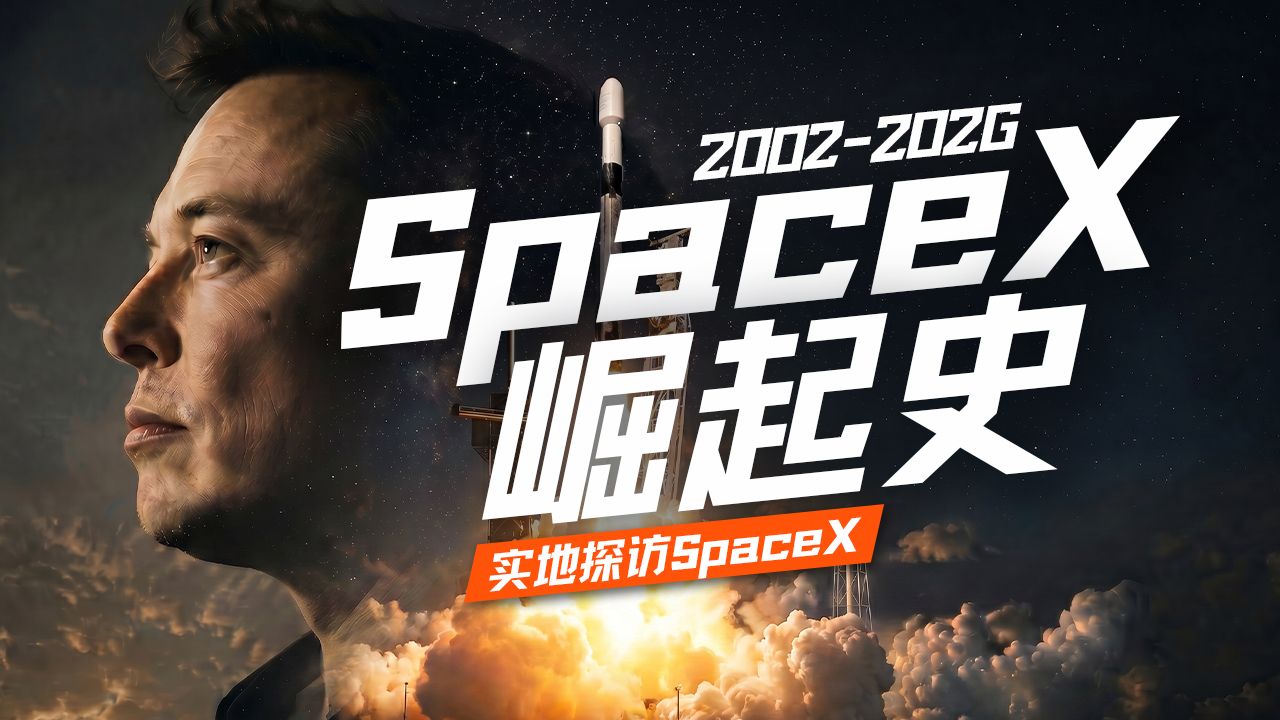
SpaceX拟通过星链与国防业务筹资推进星舰火星计划
硅谷101
SpaceX通过星链通信与星盾国防业务的稳定现金流支持星舰研发,构建起前往火星的商业与工程闭环。
AI-assisted summary of SpaceX崛起史:一切,为了去火星|实地探访发射基地与总部【硅谷101】 — original source. Check the original for full context.
Source published:
Detailed notes
## Background 本内容由Bilibili UP主【硅谷101】于2026年6月11日发布,是基于对SpaceX前高管、猎鹰9号工程师Lewis Hong的实地访谈所制作的深度探访视频。简介表明,视频通过实地走访德州Boca Chica的Starbase发射中心与洛杉矶总部,全面剖析了马斯克24年间如何将SpaceX从一家屡遭嘲笑的初创公司,一步步打造成涵盖发射、通信、国防和超级火箭研发的航天巨头与“火星移民”工程系统。
## TL;DR 视频完整梳理了SpaceX从创业初期在荒岛经历三次猎鹰1号发射失败、濒临破产,到依靠NASA固定价格合同与Founders Fund救命钱绝地求生的壮烈历程。随后深入拆解了马斯克通过“白痴指数”与“五步工作法”极致降本、实现猎鹰9号与重型猎鹰回收复用的商业与工程奇迹。下半部分则展现了SpaceX如何利用星链(Starlink)与星盾(Starshield)的庞大现金流构建太空港基础设施,并通过猛禽发动机迭代、不锈钢选材及Mechazilla“筷子”空中抓取,全面加速全复用星舰(Starship)的研发,最终指向将人类变为跨行星物种的宏大远景。
## Atmosphere & style 全片充满了宏大沉浸的科技史诗感与硬核实地探访的临场氛围。主持人的追问与前高管工程视角下的亲历回忆交相辉映,既有早期在绝境中濒临破产、马斯克立誓“绝不放弃”的悲壮与热血,也有置身德州Starbase巨型发射塔和工厂现场时的震撼与科幻感。整个叙事节奏紧凑,在严密的物理第一性原理逻辑与狂热的火星探索梦想之间保持着微妙而动人的平衡。
## Key takeaways - [00:00](https://www.bilibili.com/video/BV1y5EY62E8B?t=0s) 马斯克创立SpaceX的初衷源于对NASA停滞不前的失望以及在俄罗斯购买洲际导弹时遭受的耻辱;通过精算原材料成本(仅占传统火箭售价3%),他决心用第一性原理重构航天业。 - [02:30](https://www.bilibili.com/video/BV1y5EY62E8B?t=150s) 欧力克岛与洛杉矶鲜鱼仓库等简陋的早期环境见证了猎鹰1号连续三次发射失败的惨烈岁月,使团队与公司一度濒临破产与崩溃。 - [08:30](https://www.bilibili.com/video/BV1y5EY62E8B?t=510s) 在2008年三重危机与绝境中,马斯克立誓绝不放弃,依靠Founders Fund的2000万美元B轮融资与猎鹰1号第4次成功入轨实现逆风翻盘。 - [14:00](https://www.bilibili.com/video/BV1y5EY62E8B?t=840s) NASA推行COTS与CRS-1固定价格采购计划,打破传统“成本加成”模式,在关键时刻为SpaceX注入16亿美元订单,促成了猎鹰9号的诞生。 - [22:30](https://www.bilibili.com/video/BV1y5EY62E8B?t=1350s) 马斯克在洛杉矶总部推行“白痴指数”与“五步工作法”,通过大量逆向创新与工业级替代品压低火箭制造与发射成本。 - [29:30](https://www.bilibili.com/video/BV1y5EY62E8B?t=1770s) 通过Grasshopper试验场及一系列爆炸事故的惨痛教训,SpaceX最终成功攻克陆地与海上垂直回收技术,并创下单枚一级火箭复用33次的纪录。 - [40:00](https://www.bilibili.com/video/BV1y5EY62E8B?t=2400s) 为了破局发射市场的天花板并筹集火星资金,SpaceX推出星链(Starlink)巨型星座,占领全球万亿美元通信市场并形成发射与收益的双向飞轮。 - [43:28](https://www.bilibili.com/video/BV1y5EY62E8B?t=2608s) 在NASA商业载人计划(CCP)中,SpaceX凭借极简兼具 redundancy 的设计成功将宇航员送入空间站,并在波音Starliner危机中承担兜底救援使命。 - [48:51](https://www.bilibili.com/video/BV1y5EY62E8B?t=2931s) 星盾(Starshield)作为SpaceX专为国防与国家安全打造的产品线,通过防干扰通信、定制载荷与导弹追踪星座,获得了军方数十亿美元订单支持。 - [51:20](https://www.bilibili.com/video/BV1y5EY62E8B?t=3080s) 位于德州Boca Chica的Starbase结合制造工厂与垂直总装厂房,打造出“航天超级工厂”,旨在通过星舰(Starship)实现超大载荷与快速全复用。 - [55:20](https://www.bilibili.com/video/BV1y5EY62E8B?t=3320s) 猛禽(Raptor)发动机采用甲烷液氧推进剂与全流量阶梯燃烧循环(FFSC),经历三代迭代极大简化了结构并提升了推重比,突破了发动机工程极限。 - [59:22](https://www.bilibili.com/video/BV1y5EY62E8B?t=3562s) 马斯克果断放弃碳纤维换用301不锈钢,以极低成本和超高制造效率推进星舰研发,并最终实现了Mechazilla“筷子”空中抓取回收重型助推器的壮举。 - [01:04:15](https://www.bilibili.com/video/BV1y5EY62E8B?t=3855s) Starbase从荒凉海岸演变成拥有独立行政管理权与完善生活配套设施的“太空港口”城市,成为未来全球太空港网络的雏形原型。 - [01:09:47](https://www.bilibili.com/video/BV1y5EY62E8B?t=4187s) SpaceX所有的商业飞轮、国防业务与技术迭代,本质上都是为星舰前往火星铺路,最终服务于人类成为跨行星物种的宏大远景。
## Detailed walkthrough ### [00:00](https://www.bilibili.com/video/BV1y5EY62E8B?t=0s) 缘起与宏愿:从俄罗斯的“屈辱”到创立SpaceX
探访团队来到了位于德州最南端的星舰发射基地 Starbase。这里的氛围简单而直接——一切为了去火星。在地球45亿年的漫长历史中,这是人类第一次有可能将意识延伸到本星系群的其他行星之上。然而,这串宏大叙事的起点,却源于2001年埃隆·马斯克(Elon Musk)在浏览NASA官网时产生的一次深深震动:他惊讶地发现,距离人类上一次登上月球已经过去了整整30年,而NASA居然完全没有重返月球或前往火星的后续计划。
为了唤醒公众对太空探索的热情,马斯克起初萌生了一个相当奇特且具有艺术感构想——“火星生机”(Mars Oasis)计划。他打算买下一枚退役的苏联洲际弹道导弹,在里面塞进一个小型温室和植物土壤,将其发射到火星并拍下绿色植物在红土地上生长的照片。2001年底至2002年初,马斯克带着这个想法亲赴俄罗斯,试图向俄战略火箭军购买两枚最大的洲际导弹。当时的谈判过程极其诡异且充满耻辱:俄罗斯方面不仅开出了毫不诚意的高价,一位傲慢的火箭设计师甚至当场对着马斯克的皮鞋吐口水,认为这个从美国来的土财主根本不懂航天技术。
在悻悻搭乘飞机返回美国的途中,被激怒的马斯克打开电脑拉了一张Excel表格。他列出了铝合金、钛合金、碳纤维、推进剂等制造火箭所需全部原材料的公开市场价格,经精算后发现,原材料成本仅占当时一枚火箭总售价的3%左右。马斯克意识到,并非航天制造本身昂贵,而是传统承包商那种效率低下、层层转包的商业模式导致了天价成本。既然买不到便宜火箭,那就自己造!2002年,eBay以15亿美元全现金收购PayPal,马斯克带着刚套现的数千万美元砸下了航天领域的筹码,创立了SpaceX。早在Facebook诞生前、距离乔布斯发布第一代iPhone还有数年的2002年,SpaceX的火星征途便已悄然开启。
- **原材料成本占比**:火箭制造所需的基础金属与推进剂原材料成本仅占传统火箭售价的约3%。 - **时代背景**:SpaceX成立于2002年,不仅早于社交巨头Facebook,更比第一代iPhone发布早了整整5年。 - **初衷与灵感**:“火星生机”计划原意是用一枚洲际导弹将带植物的小温室送上火星,拍下照片以激发公众对太空的兴趣。
---
[02:30](https://www.bilibili.com/video/BV1y5EY62E8B?t=150s) 瓜加林岛的荒岛岁月:猎鹰1号的前三次惨烈失败
创业之初的SpaceX远没有后来的宏伟园区。极度匮乏资金的早期团队将试飞场地选在了太平洋马绍尔群岛中的欧力克岛(Omelek Island)。这是一座陆地面积仅有0.03平方公里的荒凉小岛,没有淡水,没有宿舍,热海盐雾弥漫。工程师们在极其恶劣的环境中洗刷与维护设备,在简陋的铁皮棚下组装他们的第一代火箭——猎鹰1号(Falcon 1)。与此同时,公司位于加州霍桑(Hawthorne)的总部也极具戏剧色彩,那里原先甚至是一家做鲜鱼加工的仓库,室内还堆放着运送渔货与零部件的木箱。刚成立时,全公司只有马斯克和被誉为美国电推进传奇工程师的“1号员工”汤姆·穆勒(Tom Mueller)等寥寥数人。
如果习惯了后来星舰带来的震撼视觉冲击,当年的猎鹰1号看起来简直就像是一个玩具火箭。但就是这个“玩具”,却成了早期团队数年挥之不去的噩梦。原定于2005年11月的首次发射因阀门故障取消;到了2006年3月第一次正式发射,火箭升空仅几十秒便因热带海岛空气中极高盐分的腐蚀导致燃料泄漏,发动机随后停机坠毁。一年后的2007年3月第二次发射,一级火箭表现完美,但二级火箭的姿态控制系统突发故障,系统剧烈震动导致发动机提前熄火,再次未能入轨。
最令人心碎的是2008年8月的第三次发射。前两次踩过的坑和推进管道问题已被全部修正,火箭前几分钟的飞行堪称完美。然而在一步之遥的一二级分离节点,因为分离时间比预期整整慢了1秒,一级火箭未能在切断动力后迅速脱离,残余推力使其往前“窜”了一下,追尾并撞击了二级火箭。火箭随即剧烈晃动失控坠入太平洋。与火箭一同陨落的,除了NASA的两颗小型卫星,还有包含《星际迷航》演员詹姆斯·杜汉(James Doohan)和阿波罗7号宇航员戈尔登·库珀(Gordon Cooper)在内208人的太空葬骨灰。太空中没有“99分”,只接受100%完美的解决方案。第三次失败后,基地一片死寂,所有人万念俱灰,认为公司明天就要倒闭了。
- **荒岛试验场**:位于太平洋马绍尔群岛的欧力克岛,陆地面积仅0.03平方公里,环境恶劣。 - **1号员工**:汤姆·穆勒(Tom Mueller),著名火箭发动机工程师,SpaceX的第一个员工。 - **猎鹰1号前三次失败主因**: * **1次发(2006年3月)**:海岛高盐分空气腐蚀管线导致燃料泄漏爆炸。 * **2次发(2007年3月)**:二级姿态控制失灵引发剧烈震动,发动机熄火。 * **3次发(2008年8月)**:分离 timing 慢了1秒,一级残余推力追尾撞击二级火箭。 - **特殊载荷**:第三次发射携带着包含208人骨灰的太空葬载荷及NASA科研卫星。
---
[08:30](https://www.bilibili.com/video/BV1y5EY62E8B?t=510s) 濒临破产与绝地演说:马斯克立誓“绝不放弃”
连续三次发射失败将SpaceX推到了崖边。马斯克从PayPal赚来的钱已几乎消耗殆尽,更糟糕的是,2008年全球金融危机全面爆发,资本市场对硬科技与航天初创企业关上了大门。 Founders Fund 创始人彼得·蒂尔(Peter Thiel)当时曾发出那句名言:“我们想要会飞的汽车,结果得到的却是140个字符。”(意指资本全跑去搞社交软件了)。与此同时,特斯拉也陷入了资金链断裂的倒计时,马斯克个人还在经历痛苦的离婚官司,三重危机同时重压在他头上。
在第三次发射失败的那个夜晚,霍桑总部的监控室里落针可闻,许多跟随马斯克多年的老员工当场痛哭。就在这万念俱灰的时刻,马斯克走到了员工中间,进行了一场载入公司史册的即兴演讲。虽然没有留存录音,但多位当事人后来回忆,马斯克神情坚毅地对大家说:“我想让你们每个人知道,SpaceX不会倒下。至于我,我绝不会放弃,永远都不会!(I will never give up, never!)我们已经挤出了第四次发射的资金。我们需要振作起来,回到工位,找出问题,解决它,准备下一次发射。回去工作吧!”
这番话像强心针一样注入了团队的心脏。更关键的是,在传统风投普遍追逐社交网络和轻资产应用(当时Facebook用户刚过百万,Twitter正红极一时)的冷酷大环境下,Founders Fund 在关键时刻伸出援手,向SpaceX注入了2000万美元的B轮融资。这笔在绝境中投下的真金白银,日后成为了全球风险投资历史上回报最为丰厚的传奇投资之一。
- **三重绝境**:SpaceX三次发箭失败资金耗尽、特斯拉濒临破产、马斯克遭遇个人离婚官司。 - **经典名言**:彼得·蒂尔“我们想要会飞的汽车,结果得到的却是140个字符”,折射出2008年前后风投对硬科技的冷落。 - **救命钱**:Founders Fund 在2008年完成2000万美元B轮融资,成为SpaceX最关键的“定海神针”。
---
[10:30](https://www.bilibili.com/video/BV1y5EY62E8B?t=630s) 猎鹰1号第4次发射成功与NASA的“救命钱”
2008年9月28日,承载着公司生死存亡的猎鹰1号第四次发射升空。随着火箭呼啸着划破夜空并成功进入预定轨道,控制中心爆发出雷鸣般的欢呼。这是人类历史上第一枚由私营商业公司自主研发并成功入轨的液体推进剂火箭。这枚火箭上没有搭载任何昂贵的商业卫星,只装载块重约165公斤的模拟钢块。这块钢块在轨道上平稳运行了整整15年,直到2023年才最终坠入大气层烧毁。从这一天起,人类通往太空的道路不再被国家垄断。
然而,入轨的喜悦并没有立即化解财务危机。就在发射成功后的两周内,雷曼兄弟破产引发了全球金融海啸,外部融资通道彻底被切断。马斯克甚至到了要向朋友借钱来付公司房租和员工薪水的地步,账面上的现金仅够维持公司运行不到两个月。
天无绝人之路,在圣诞节前夕的2008年12月23日,奇迹降临了。马斯克接到了来自NASA官员的电话,通知SpaceX获得了价值16亿美元的国际空间站商业轨道运输服务(CRS-1)合同。马斯克在电话里激动地脱口而出:“我爱死你们了!”("I love you guys!")。这笔突如其来的巨额订单,不仅在经济和情感上彻底挽救了濒临死亡的SpaceX,也正式将这家草莽创业公司拉进了美国国家航天工业的核心圈层。
``` 2008年绝地重生时间线: 8月3日:第3次发射失败 ──> 9月28日:第4次发射成功入轨 ──> 12月23日:获NASA 16亿美元CRS-1合同 ```
- **历史性突破**:2008年9月28日,猎鹰1号成为全球首个入轨的私营商业液体火箭。 - **哑载荷**:第4次发射携带165公斤配重钢块,在轨运行至2023年才再入大气层。 - **CRS-1合同**:NASA在2008年圣诞节前夕签下16亿美元采购合同,直接拯救了SpaceX。
---
[14:00](https://www.bilibili.com/video/BV1y5EY62E8B?t=840s) NASA的豪赌与CRS-1合同背后的商业博弈
CRS-1(商业补给服务第一阶段)项目的诞生,源于NASA内部一次深刻的模式革新。2005年前后,面对即将在2010年退役的航天飞机,NASA局长迈克·格里芬(Mike Griffin)推行了 COTS(商业轨道运输服务)计划。以往传统模式是“按成本加成付费”(Cost-Plus),波音、洛克希德·马丁等巨头算多少成本再加上固定利润,导致项目严重超支且无限拖延;而新模式则是“固定价格招标”(Fixed-Price),NASA设定目标和金额,谁能按时把货物送到国际空间站,谁就把钱拿走。
前SpaceX高管及猎鹰9号工程师 Lewis Hong 回忆道,NASA在选择供应商时有着清晰的商业逻辑:首先必须采用“双保险”甚至“三保险”策略,绝不把鸡蛋放在一个篮子里;其次,既要选择传统老牌厂商兜底,也要给有潜力的新兴创业公司提供机会。在2006年的第一轮竞标中,共有21家公司提交方案,最终只有SpaceX和一家名为 Rocketplane Kistler 的公司胜出。当时其他竞标方案五花八门:有的完全依赖引进俄罗斯“进步号”飞船,有的提出用大型飞机驮着火箭高空点火,甚至还有纯靠PPT忽悠的皮包公司。
遗憾的是,Rocketplane Kistler 虽满是前NASA精英,却因金融危机融不到钱且缺乏愿意自腰包的灵魂人物,最终因财务审核未过被NASA撤单,其份额随后由轨道科学公司(Orbital Sciences)接替。2008年圣诞节,NASA最终将35亿美元的总合同分配给两家公司:轨道科学获得19亿美元,SpaceX获得16亿美元。拿到这笔资金后,马斯克果断放弃了原本过渡型的“猎鹰5号”计划,直接上马拥有9台梅林发动机的“猎鹰9号”(Falcon 9)。2012年10月,猎鹰9号成功执行CRS-1首次正式补给任务,虽然发射第79秒时1号发动机突发爆炸,但机载电脑瞬间重新计算并调整了其余发动机推力,成功将龙飞船送入轨道并与空间站对接,送去了包括巧克力香草冰淇淋在内的400公斤补给,并安全带回700公斤实验样本。SpaceX自此站稳了脚跟。
- **模式变革**:从传统“成本加成”(Cost-Plus)转向“固定价格按结果付费”(Fixed-Price)。 - **CRS-1金额分配**:总额35亿美元,轨道科学公司获得19亿美元,SpaceX获得16亿美元(执行12次基础任务,实际后续追加至20次)。 - **猎鹰9号命名逻辑**:以发动机数量命名(1台发动机为猎鹰1号,9台发动机为猎鹰9号)。 - **CRS-1首飞惊魂(2012年10月)**:第79秒单台发动机爆炸,机载电脑实时容错关断并重新计算推力曲线,最终完美完成任务。
---
[18:00](https://www.bilibili.com/video/BV1y5EY62E8B?t=1080s) 进驻洛杉矶总部:极速狂人马斯克的管理与时间法则
随着业务扩张,2007年SpaceX搬进了位于洛杉矶霍桑的一座巨大厂房。这里曾是波音公司生产波音747飞机客舱零部件的地方。随着波音项目的停摆,SpaceX接管了这片深度达1英里的园区,将火箭的设计、研发、零部件加工与最终总装全部整合在这个庞大的单一建筑内。在前高管的带领下探访可以看到,园区右边是主厂房,左边是员工停车场,停车场顶层还密布着用于测试星链(Starlink)信号的地面站天线。
在这片园区里,曾经发生过不少令人啼笑笑皆非的传奇趣事。某天中午,所有员工突然收到一封紧急邮件,要求停在特定区域的车主立刻移车,因为“老板要开始挖洞了”——这就是马斯克的无聊公司(Boring Company)的起点,其发掘的第一条地下隧道入口就在SpaceX停车场旁边。SpaceX总部、特斯拉全球设计中心以及无聊公司紧密相邻,构成了马斯克商业帝国的核心枢纽。
Lewis Hong 在采访中揭秘了马斯克当年令人难以置信的“魔鬼时间表”: * **周一**:整天待在SpaceX总部,与各部门密集开会;傍晚步行至隔壁特斯拉设计中心看最新车型设计图;随后赶往附近机场飞往北加州。 * **周二至周三**:全天待在硅谷的特斯拉超级工厂或总部办公。 * **周四**:飞回洛杉矶SpaceX总部,继续进行一整天高强度的火箭工程会议。 * **周五至周末**:飞往全球各地(如与澳大利亚总理会面或视察海外项目),7天24小时永不停息地循环。
- **总部前身**:加州霍桑总部原为波音747客机零件制造厂,园区深度达1英里。 - **无聊公司起点**:Boring Company 的第一条测试隧道入口就直接开凿在SpaceX员工停车场。 - **马斯克极速日程**:周一/周四给SpaceX,周二/周三给特斯拉,周末全球高层巡视,实现极短的时间缝隙切换。
---
[22:30](https://www.bilibili.com/video/BV1y5EY62E8B?t=1350s) 拆解“白痴指数”与马斯克的“五步工作法”
稳定了生存问题后,马斯克将全副精力转向了实现火星梦想的真正核心:极度降低发射成本。在SpaceX内部,马斯克大力推行一个由他发明的概念——“白痴指数”(Idiot Index)。即**一个成品零部件的总成本与它基础原材料成本的比值**。如果白痴指数高达几十甚至上百倍(例如一个零部件售价1000美元,但其消耗的铝材成本只有100美元),那就意味着设计过于复杂或制造过程极其腐败低效。马斯克的原话非常直接:“如果你做的东西白痴指数很高,那你就是个白痴。”
为了打掉白痴指数,SpaceX工程师们做出了大量令人瞠目结舌的逆向创新与改造: * **发动机喷管转向驱动器**:传统供应商报价12万美元。马斯克认为其复杂度不亚于车库门开关,要求5000美元搞定。年轻工程师最终改用洗车房混合清洁液的工业阀门,成功替代。 * **空间站舱门插销**:NASA采购价1500美元/个。SpaceX工程师直接改造了浴室隔间门上的金属插销,成本降至30美元。 * **整流罩空调冷却系统**:传统航天级方案报价300万美元。SpaceX工程师直接购买家用空调系统进行工业改造,达到了完全相同的冷却效果,仅花费6000美元。 * **发射场高空吊车**:空军军规要求售价200万美元。马斯克亲自说服空军修改过时的安全条例,最终仅花30万美元买下普通工业吊车。
除了对成本的极致榨取,马斯克还在所有生产和工程会议上反复强调他的“五步工作法”(Five-Step Process):
``` [1. 质疑每项要求] ──> [2. 砍掉所有能砍的流程] ──> [3. 简化与优化] ──> [4. 加快周转时间] ──> [5. 自动化] (必须知道提出者姓名) (若加回不足10%说明删少了) (绝不优化本不该存在的步骤) (前三步完成后才可加速) (最后一步) ```
Lewis Hong 补充强调,许多外界媒体常误认为马斯克是个听不进意见的独裁者,但实际上马斯克极度讲理(Data-driven)。他最厌恶的是工程师为了防御性设计去预想“不存在的问题”或毫无根据地下结论说“这不可能”;但如果你能用物理学第一性原理和严密数据证明他的假设不成立,马斯克会立刻坦然接受并修正决策。
- **白痴指数定义**:$\text{白痴指数} = \frac{\text{零部件最终售价/成本}}{\text{基础原材料成本}}$。 - **降本经典案例对比**: * 喷管驱动器:12万美元 ──> 5000美元(洗车房阀门改造) * 舱门插销:1500美元 ──> 30美元(浴室门插销改造) * 舱内冷却系统:300万美元 ──> 6000美元(家用空调改造) * 工业起重机:200万美元 ──> 30万美元(推动空军修改过时军规) - **商业成果**:通过上述举措,一枚全新猎鹰9号的发射成本被压低至约5000万美元,比市场同类产品低30%~50%。
---
[29:30](https://www.bilibili.com/video/BV1y5EY62E8B?t=1770s) 炸火箭中的生死考验:从海上试跳到重型猎鹰的回收传奇
降本的终极答案是“可重复使用”。马斯克打过一个比方:“如果每飞一次就要扔掉一架波音747,那机票将是天价。”2012年,一个造型极其怪异、被称为“水稻蝗虫”(Grasshopper)的试验装置出现在德州麦克格雷格(Gregor)测试场。它由猎鹰9号的一级推进剂箱体、一台梅林发动机和四根硕大的固定支架组成。从最初跳跃1.8米、5.4米,到最终悬停并横向平移再降落回250米高的原点,Grasshopper完成了垂直起降(VTVL)的可行性验证。
然而,从试验场走向真实的猎鹰9号入轨回收,等待SpaceX的是一段极其惨烈的“炸火箭”岁月。2014至2015年间,SpaceX开始尝试海上无人驳船回收。火箭数次在降落瞬间爆炸解体,被马斯克戏称为“快速非计划拆卸”(RUD - Rapid Unscheduled Disassembly)。最黑暗的时刻发生在2015年6月,猎鹰9号在执行CRS-7空间站补给任务时,升空不久便因二级液氧箱内部支撑杆断裂在空中爆炸解体。
时任猎鹰9号核心工程师的 Lewis Hong 回忆,当时整个公司承受着难以想象的毁灭性压力。在事故调查和整改的半年间,团队没有任何范本可以参考(连NASA都没有做过火箭垂直回收)。在最绝望的时刻,马斯克再次站出来向全员讲话:“这家公司对我而言意味着一切。如果有必要,我会卖掉我所有的个人财产、去借钱,把我最后一分钱都投进公司。”为了帮工程团队扫清障碍,当遇到涉及美军出口管制(ITAR)和运载许可的紧急审批时,马斯克直接下令让自己的私人飞机随时待命,接送工程师飞赴全美各地现场解决问题。
半年后,奇迹爆发: 1. **2015年12月21日**:猎鹰9号在卡纳维拉尔角LZ-1降落场成功实现人类历史上第一次轨道级火箭陆地垂直回收! 2. **2016年4月8日**:猎鹰9号成功降落在名为“当然我还爱你”(Of Course I Still Love You)的海上无人驳船上,开启了海上回收时代。 3. **2018年2月**:重型猎鹰(Falcon Heavy)首飞,两枚侧推器同时在陆地同步垂直降落,震撼全球。
到了2026年初,猎鹰9号的回收技术已臻化境,成功率接近100%,同枚火箭两次发射的周转时间被压缩至20天以内。2026年2月21日,一枚猎鹰9号一级火箭甚至成功刷新了单枚火箭发射并回收33次的惊人世界纪录,彻底颠覆了全球航天业的成本结构。
- **Grasshopper(水稻蝗虫)**:2012年在德州完成垂直起降验证的四腿试验装置。 - **黑天鹅事件(2015年6月)**:CRS-7任务中火箭空中爆炸,导致长达半年的停飞与整改压力。 - **回收里程碑**: * **2015年12月21日**:人类首次成功实现轨道火箭陆地垂直回收(LZ-1)。 * **2016年4月8日**:首次成功实现海上无人驳船回收(OCISLY)。 * **2018年2月**:重型猎鹰双助推器同时垂直降落。 * **2026年2月21日**:单枚猎鹰9号一级火箭成功完成第33次复用发射,不断刷新物理极限。
Here is a detailed, faithful walkthrough of Part 2 of the transcript.
---
[40:00](https://www.bilibili.com/video/BV1y5EY62E8B?t=2400s) The Birth of Starlink: Building a Trillion-Dollar Space Flywheel
Elon Musk’s foundational goal for SpaceX has always been colonizing Mars, but the global commercial space launch market is capped at only a few tens of billions of dollars annually. Even if SpaceX were to capture 100% of that market, it would not generate enough revenue to fund the astronomical costs of building a self-sustaining city on Mars. Realizing this limitation, Musk set his sights on the global telecommunications sector—a massive $1 trillion addressable market. He calculated that securing just a 3% market share would generate $30 billion in annual revenue. In 2015, SpaceX officially announced Starlink, a high-speed satellite internet initiative with a direct, real-world commercial application to bridge the global digital divide.
At the time of Starlink's announcement, International Telecommunication Union (ITU) data showed that over half of the world’s population—roughly 4 billion people—lacked internet access. Even in developed nations, rural and remote areas suffered from abysmal connectivity. The Federal Communications Commission (FCC) reported that over 24 million Americans lacked fixed broadband access, with nearly 28% of rural residents having no high-speed internet. Starlink was conceived as a low-latency, high-capacity mega-constellation of 42,000 satellites designed to replace traditional terrestrial infrastructure. The initiative began when a Falcon 9 rocket successfully deployed two prototype satellites into orbit. Today, Starlink operates over 10,000 active satellites in orbit, representing approximately 65% of all active orbital satellites globally. Its subscriber base has passed 10 million across more than 155 countries and territories.
Commercial adoption has surged alongside consumer growth. Major global airlines—including Hawaiian Airlines, Qatar Airways, and Air New Zealand—have integrated Starlink to provide in-flight video streaming for passengers. Cruise lines such as Royal Caribbean, Norwegian Cruise Line, MSC Cruises, Carnival, Costa, and Silversea rely on Starlink for ocean broadband. According to SpaceX’s IPO prospectus data, Starlink generated $11.4 billion in 2025 revenue, accounting for roughly 60% of the company's total revenue.
Beyond its standalone revenue, Starlink serves as the structural engine for SpaceX’s launch dominance. Out of SpaceX’s 165 total rocket launches in 2025, 123 were dedicated Starlink deployments—representing roughly 74.5% of all launches. This built-in internal demand guarantees SpaceX a massive baseline launch volume that competitors cannot touch. With a total constellation goal of 42,000 satellites and a required 10% to 15% annual replenishment rate, internal launch demand will only grow. This high launch frequency amortizes R&D and manufacturing overhead across hundreds of missions, allowing SpaceX to rapidly iterate its rockets, reduce unit costs, and improve reliability. The "dual growth flywheel" of commercial revenue and hardware iteration officially locked into place.
- **Global Connectivity Divide (2015):** Over 4 billion people worldwide (50%+ of population) lacked internet access; 24 million+ Americans (28% of rural US) had no broadband. - **Starlink Scale:** Over 10,000 active satellites in orbit (~65% of global total); 10 million+ subscribers across 155+ countries. - **Financial Metrics (2025):** $11.4 billion in annual revenue (~60% of total company revenue). - **Launch Dynamics (2025):** 123 out of 165 launches were Starlink missions (~74.5% internal launch capture). - **Constellation Target:** 42,000 total satellites with a 10%–15% annual replenishment cycle.
---
[43:28](https://www.bilibili.com/video/BV1y5EY62E8B?t=2608s) NASA Contracts, Crew Dragon, and the Boeing Starliner Fiasco
Following the maturation of the Falcon 9, SpaceX transformed into the primary backbone of American spaceflight and NASA’s most reliant contractor. The most high-profile showcase of this transition was NASA’s Commercial Crew Program (CCP)—the crewed counterpart to the Commercial Resupply Services (CRS) cargo contract. NASA split the crew contract between Boeing and SpaceX, once again awarding the lion’s share to the legacy contractor: Boeing received $4.2 billion, while SpaceX received $2.6 billion.
To fulfill the contract, SpaceX developed Crew Dragon based on its cargo capsule design. SpaceX discarded the industry-standard cockpit design—which traditionally featured thousands of physical switches, toggles, and dials—in favor of three massive, high-definition touchscreens that astronauts can operate even while wearing pressurized gloves. The cabin was styled like a pristine, futuristic laboratory: white, spacious, and minimalist. Crew Dragon was also engineered for fully autonomous docking with the International Space Station (ISS) using an advanced optical vision recognition system, requiring zero manual control from the crew. SpaceX has since flown well over a dozen successful crewed missions.
In stark contrast, Boeing’s Starliner capsule suffered endless development setbacks, software bugs, and technical failures. During its crewed test flight, Starliner suffered thruster failures and helium leaks, leaving two American astronauts stranded aboard the ISS for over nine months. Ultimately, NASA had to call upon SpaceX’s Crew Dragon to bring the stranded astronauts safely back to Earth—a deeply embarrassing moment for Boeing that resulted in the indefinite grounding of Starliner flight plans. Crew Dragon thus became the United States' sole operational crewed spacecraft.
- **CCP Contract Split:** Boeing was awarded $4.2 billion; SpaceX received $2.6 billion. - **Starliner Crisis:** Thruster failures and helium leaks stranded two astronauts on the ISS for over 9 months; SpaceX Dragon rescued them.
---
[45:00](https://www.bilibili.com/video/BV1y5EY62E8B?t=2700s) Designing Crew Dragon: Challenging Musk on Minimalism
Former SpaceX engineer Lewis Hong shares an insider account of how the minimalistic design of the Crew Dragon capsule came to be, illustrating the tense internal debate between Elon Musk’s design vision and traditional aerospace safety protocols. Spacecraft cockpits from NASA or Roscosmos traditionally resembled a Boeing 737—dense walls of physical buttons, breakers, and switches. Musk insisted on total minimalism, declaring: "No, we have to use touchscreens. Only one screen and zero buttons."
Engineering teams knew that while a pure touchscreen interface looked clean, modern, and futuristic (like a Model S), it added extreme engineering difficulty with little practical benefit for critical redundancy. Physical buttons offered simpler, fail-safe backups for emergency situations without adding clutter. To persuade Musk without triggering a flat refusal, an engineer devised a three-tier presentation strategy:
1. **Option 1 (Legacy Design):** A traditional cockpit packed with physical switches and dials. 2. **Option 2 (Hybrid Optimization):** A sleek main touchscreen display paired with a minimal set of essential emergency physical buttons. 3. **Option 3 (Musk’s Vision):** A completely bare, screen-only futuristic cabin with zero physical buttons, controlled entirely by touch and voice.
When presented with the options, Musk immediately pointed to Option 3: "Perfect! I want this one!" The team then flipped to the next slide detailing the cost and development timelines, demonstrating that Option 3 was prohibitively expensive and technically risky to certify on schedule. After rigorous pushback supported by 50 to 60 pages of technical data, the engineering team successfully guided Musk to accept Option 2. Today’s Crew Dragon features the ultra-clean aesthetic Musk demanded, but retains critical physical emergency override buttons beneath the main displays.
Beyond ISS rotation missions, Crew Dragon marked historical milestones in commercial spaceflight: * **Inspiration4 (2021):** The first all-civilian orbital mission with no professional astronauts on board, proving the capsule's high degree of automation. * **Polaris Dawn (2024):** Led by Jared Isaacman, this mission achieved the world’s first commercial spacewalk (EVA) and reached an orbital altitude of ~1,400 km—the highest human orbit since Apollo 17 in 1972.
SpaceX has integrated itself into nearly every major NASA program, including the Human Landing System (HLS) for Artemis, Dragon XL for Gateway Logistics Services (GLS), Launch Services Program (LSP), the ISS US Deorbit Vehicle (USDV), and Commercial Space Communications (CSP).
---
[48:51](https://www.bilibili.com/video/BV1y5EY62E8B?t=2931s) Starshield: The Stealth Defense Empire
Starting in 2024, SpaceX’s financial disclosures and third-party analyst reports (including Quality Space, Payload, and *The Wall Street Journal*) revealed a surge in defense business revenue. SpaceX's government and defense business reached an estimated $5.1 billion annually. Space sector observers noted that in 2025, roughly 25% of SpaceX’s launches were omitted from its public schedules or kept in classified orbits.
On its website, SpaceX introduced **Starshield**—not a single satellite model, but the overarching brand for SpaceX's specialized military and national security offerings. Starshield leverages three core satellite architectures built on modified Starlink hardware:
1. **Military Communications Satellites:** Based on Starlink V2 and V3 platforms, retrofitted with anti-jamming phased-array antennas, military-grade encryption modules, and inter-satellite laser communication links. 2. **Custom Payload Bus:** Standardized satellite chassis allowing government and defense clients to "plug and play" modular sensor payloads, high-resolution cameras, or electronic signals intelligence (ELINT) equipment onto a proven power and bus system. 3. **Missile Tracking Constellation:** Purpose-built, non-communication satellites deployed in large numbers, equipped with advanced infrared sensors to track intercontinental ballistic missiles (ICBMs) and hypersonic glide vehicles in real time.
SpaceX secured a $1.8 billion classified contract with the National Reconnaissance Office (NRO) to build a constellation of hundreds of real-time imaging spy satellites. Additionally, SpaceX was contracted to build a 480-satellite dedicated communications mesh for the U.S. Space Force. Starshield secured two new Space Force contracts totaling $6.45 billion for low-Earth orbit communications and ballistic missile tracking. Unlike commercial subscriptions, defense contracts feature upfront funding, long-term exclusivity, and higher profit margins, providing the crucial cash flow needed to subsidize Starship's capital-intensive development.
- **Defense Revenue:** Estimated ~$5.1 billion annually; ~25% of 2025 launches were classified/unlisted. - **Key Contracts:** $1.8 billion NRO spy satellite constellation; 480-satellite Space Force communications network; $6.45 billion dual Space Force contract award for LEO comms and missile tracking.
---
[51:40](https://www.bilibili.com/video/BV1y5EY62E8B?t=3100s) Starbase Tour: Building the MegaPort for Starship
The host and Lewis Hong tour SpaceX’s Starbase facility in Boca Chica, Texas—the southernmost tip of Texas on the US-Mexico border. Standing in front of the main headquarters, they point out two colossal black assembly structures known as the **MegaBays**.
Directly behind the MegaBays sits a massive manufacturing factory. Sub-components are fabricated in the rear plant, fed directly into the black MegaBays for vertical stacking, and then rolled straight down the road to the orbital launch mounts. By co-locating manufacturing, vertical integration, stacking, and launching into a single footprint, SpaceX created a "Gigafactory for Spaceflight" designed to mass-produce and launch super-heavy vehicles.
``` +-----------------------------------------------------------------------------------+ | STARBASE FACILITY | | | | [ Fabrication Plant ] ---> [ MegaBays 1 & 2 ] ---> [ Orbital Launch Mounts ] | | (Parts & Sub-assemblies) (Vertical Stacking) (Chopsticks Recovery) | +-----------------------------------------------------------------------------------+ ```
Starship is fundamentally different from traditional rockets like Falcon 9. Hong compares the progression: if a small rocket like Rocket Lab’s Electron is a Ferrari, and Falcon 9 is a semi-truck, Starship is an intermodal freight train to space. Starship’s architecture is engineered around two core principles:
* **Massive Payload Volume & Mass:** Designed to lift over 100+ metric tons to low-Earth orbit in a single launch, enabling space missions previously considered science fiction. * **Rapid Reusability:** Unlike Falcon 9 (which takes days or weeks to refurbish), Starship is designed to land, re-arm, refuel, and launch again within hours—multiple times per day.
Musk calculated that establishing a self-sustaining city on Mars requires transporting at least 1,000,000 tons of supplies and equipment. Achieving this volume requires a massive vehicle operating at extraordinarily low per-kilogram transport costs.
---
[55:20](https://www.bilibili.com/video/BV1y5EY62E8B?t=3320s) Engineering Starship: Raptor Engine Innovations
Developing Starship required abandoning the proven Merlin 1D engine used on Falcon 9 and designing the **Raptor** engine from scratch. SpaceX President Gwynne Shotwell noted that roughly half of Starship’s total engineering effort was dedicated strictly to Raptor development. Musk called its mass production one of the most difficult engineering challenges in aerospace history.
Raptor incorporates two radical propulsion innovations:
#### 1. Liquid Oxygen (LOX) and Liquid Methane ($\text{CH}_4$) Fuel * **In-Situ Resource Utilization (ISRU):** Mars lacks crude oil but possesses abundant atmospheric $\text{CO}_2$ and subsurface water ice ($\text{H}_2\text{O}$). Through the Sabatier reaction, methane fuel can be manufactured directly on the Martian surface for return journeys. * **Clean Burning:** Kerosene/RP-1 used in Merlin leaves heavy carbon soot inside the engine’s delicate turbopumps and cooling channels, requiring days of meticulous flushing after every landing. Methane burns cleanly without soot, enabling rapid turnaround without post-flight cleaning. * **Thermal Compatibility:** Liquid methane and liquid oxygen exist at similar cryogenic temperatures (below -150°C), eliminating the heavy insulation bulk required to keep RP-1 from freezing alongside LOX.
#### 2. Full-Flow Staged Combustion (FFSC) Cycle Raptor uses dual preburners—one oxygen-rich to drive the oxidizer turbopump, and one fuel-rich to drive the fuel turbopump. The entire exhaust from both preburners feeds into the main combustion chamber. This yields maximum combustion efficiency, thermal performance, and high thrust-to-weight ratios. Due to extreme internal pressures and temperatures, FFSC was long considered too complex for real-world flight, but Raptor became the first operational FFSC engine in history.
SpaceX rapidly iterated through three generations of the Raptor engine: * **Raptor V1:** A complex web of thousands of external lines, exposed sensors, plumbing, and wiring; weighed 2.0 tons with 180 tons of thrust. * **Raptor V2:** Streamlined design with thousands of redundant sensors and external pipes removed; lowered weight while increasing reliability. * **Raptor V3:** Almost all external plumbing and wiring was integrated internally, resulting in a clean exterior shell; weight dropped to 1.5 tons while thrust increased to 270 tons.
``` +-------------------------------------------------------------------------------+ | RAPTOR ENGINE EVOLUTION | +---------------------+-------------------+-------------------+-----------------+ | Metric | Raptor V1 | Raptor V2 | Raptor V3 | +---------------------+-------------------+-------------------+-----------------+ | Engine Mass | ~2.0 tons | Reduced | ~1.5 tons | | Thrust Force | 180 tf | ~230 tf | 270 tf | | External Lines | Complex/Exposed | Simplified | Fully Enclosed | +---------------------+-------------------+-------------------+-----------------+ ```
---
[59:22](https://www.bilibili.com/video/BV1y5EY62E8B?t=3562s) Stainless Steel and the Path to Orbital Catching
In late 2018, Musk made a controversial executive decision to scrap Starship’s original carbon fiber composite design and switch to **301 Stainless Steel**. In aerospace engineering, stainless steel was widely considered crude and obsolete—it was last used on WWII V-2 rockets and early 1950s Atlas ICBMs. However, stainless steel offered major advantages:
* **Cost:** Aerospace-grade carbon fiber costs hundreds of dollars per kilogram; stainless steel costs roughly $3 per kilogram. * **Manufacturing Speed:** Carbon fiber tanks require cleanrooms, massive autoclaves, and years of facility construction. Stainless steel can be welded in outdoor tents within weeks. * **Thermal Properties:** Carbon fiber loses structural integrity around 200°C, requiring heavy heat shielding. Stainless steel retains high strength at 800°C, drastically reducing thermal protection requirements. Furthermore, at cryogenic temperatures ($-150^\circ\text{C}$ liquid methane/LOX), stainless steel undergoes phase transformation, increasing its toughness and tensile strength by over 50%.
The walkthrough traces Starship's rapid iterative testing history: * **Starhopper (July–August 2019):** A crude, three-legged steel rig powered by a single Raptor V1 that completed a 20-meter hop, followed by a 150-meter hop and translate maneuver. * **High-Altitude Prototype Flights (2020–2021):** Prototypes SN8 through SN14 demonstrated the belly-flop descent maneuver and flip-to-vertical landing burn, though several ended in explosive crashes. SN15 achieved the first successful high-altitude flight and landing. * **Integrated Test Flight 1 (April 2023):** The full Starship/Super Heavy stack launched; its 33 Raptor engines destroyed the concrete launch pad, forcing self-destruction in high altitude. Musk celebrated that it cleared the pad without destroying the launch tower. * **Integrated Test Flight 3 (March 2024):** Starship achieved sub-orbital velocity and successfully demonstrated payload bay door operation. * **Integrated Test Flight 5 (October 2024):** A historic milestone where the Super Heavy booster returned to the launch site and was caught mid-air by the mechanical "chopstick" arms of Mechazilla on the launch tower. * **Starship V3 Flight (May 2026):** Featuring the upgraded Raptor 3 engines, extended vehicle length, and total thrust pushing nearly 9,000 tons, capable of lifting ~100 tons of payload to orbit.
Looking at the launch infrastructure, Hong notes that SpaceX is constructing multiple launch towers. Within 5 to 10 years, Starbase will feature a line of launch pads capable of simultaneous catches and launches, transforming the area into an operational commercial spaceport.
``` +---------------------------------------------------------------------------------+ | STARSHIP DEVELOPMENT TIMELINE | | | | [2019] Starhopper (150m hop) | | | | | [2020-2021] SN8-SN15 (Belly-flop descent & flip landing; SN15 success) | | | | | [2023] IFT-1 (First full-stack flight; launch pad damage) | | | | | [2024] IFT-5 (Historic mid-air "Chopsticks" catch of Super Heavy booster) | | | | | [2026] Starship V3 (Raptor 3 engines, ~9,000 tons total thrust, 100t+ payload) | +---------------------------------------------------------------------------------+ ```
---
[01:04:15](https://www.bilibili.com/video/BV1y5EY62E8B?t=3855s) Starbase as a Prototype "SpacePort" City
Starbase has transformed the local geography of Boca Chica, Texas. Located at the southernmost point of Texas, just two blocks from the US-Mexico border, the area was once an isolated coastal wildlife preserve with no post office, no mayor, and fewer than a dozen permanent residents.
Today, Starbase has evolved into a dedicated industrial space town complete with employee housing, custom infrastructure, and specialized amenities. The host and Hong walk past newly opened shops, ramen bars, sushi restaurants, and upscale dining establishments built to accommodate thousands of engineers, technicians, and visiting tourists.
Following a long-standing SpaceX tradition, local milestones are celebrated at a dedicated "SpaceX Bar." In the early Falcon 1 days, the entire company gathered at Rock & Brews in El Segundo, California, to celebrate rare launches. At Starbase, team members gather to celebrate major technical milestones like the first mid-air chopstick catch.
Starbase was granted official municipal governance status, allowing SpaceX to directly manage local municipal infrastructure, security, and urban expansion. Musk envisioned Starbase as the prototype for a network of "SpacePorts" across the US. SpaceX is already expanding a second SpacePort facility along the Gulf Coast in Louisiana to support a launch cadence of up to 1,000 launches per year.
As Starbase expands, balancing rapid launch operations with local environmental regulations and community oversight remains an ongoing process.
---
[01:09:47](https://www.bilibili.com/video/BV1y5EY62E8B?t=4187s) Humanity as a Multi-Planetary Species
The documentary concludes with reflection on SpaceX's trajectory: from a struggling startup on the brink of bankruptcy in 2008 to an aerospace powerhouse preparing for its IPO.
SpaceX's ultimate ambition extends far beyond satellite internet or space station resupply contracts. Starlink, Starshield, and Falcon 9 serve as the financial and operational scaffolding built to fund Starship. Starship itself is an engineering platform designed to lower the cost of interplanetary transit, making human settlement on Mars possible.
As Hong and the host discuss recording a future podcast in low-Earth orbit or on the surface of Mars, the overarching vision remains clear: Mars is not the final destination, but the starting point for humanity to become a multi-planetary species.
<ElicitationsGroup message="Where would you like to go next?">
<Elicitation label="Analyze Starlink's financial model & valuation impact" query="Provide a detailed financial breakdown of Starlink's revenue, unit economics, and its contribution to SpaceX's overall valuation."/>
<Elicitation label="Deep dive into Raptor 3 vs. Blue Origin's BE-4 engine" query="Compare SpaceX's Raptor 3 engine with Blue Origin's BE-4 and ULA's Vulcan rocket specs, focusing on thrust, pressure, and fuel choices."/>
<Elicitation label="Examine the Mechazilla 'Chopsticks' booster catch system" query="Explain the mechanical engineering, sensor fusion, and guidance control algorithms used by the Mechazilla launch tower to catch the Super Heavy booster mid-air."/>
</ElicitationsGroup>
## Notable quotes > [08:30](https://www.bilibili.com/video/BV1y5EY62E8B?t=510s) I will never give up, never! — Elon Musk
> [08:30](https://www.bilibili.com/video/BV1y5EY62E8B?t=510s) 我们想要会飞的汽车,结果得到的却是140个字符。 — Peter Thiel
> [10:30](https://www.bilibili.com/video/BV1y5EY62E8B?t=630s) 我爱死你们了! — Elon Musk
> [22:30](https://www.bilibili.com/video/BV1y5EY62E8B?t=1350s) 如果你做的东西白痴指数很高,那你就是个白痴。 — Elon Musk
> [29:30](https://www.bilibili.com/video/BV1y5EY62E8B?t=1770s) 如果每飞一次就要扔掉一架波音747,那机票将是天价。 — Elon Musk
> [29:30](https://www.bilibili.com/video/BV1y5EY62E8B?t=1770s) 这家公司对我而言意味着一切。如果有必要,我会卖掉我所有的个人财产、去借钱,把我最后一分钱都投进公司。 — Elon Musk
> [45:00](https://www.bilibili.com/video/BV1y5EY62E8B?t=2700s) No, we have to use touchscreens. Only one screen and zero buttons. — Elon Musk
> [45:00](https://www.bilibili.com/video/BV1y5EY62E8B?t=2700s) Perfect! I want this one! — Elon Musk
## Mentioned SpaceX, Elon Musk, Lewis Hong, Tom Mueller, Peter Thiel, Mike Griffin, Jared Isaacman, Gwynne Shotwell, NASA, Tesla, Founders Fund, Boeing, Lockheed Martin, Rocketplane Kistler, Orbital Sciences, The Boring Company, U.S. Space Force, National Reconnaissance Office (NRO), Rocket Lab, Roscosmos, Falcon 1, Falcon 5, Falcon 9, Falcon Heavy, Dragon, Crew Dragon, Dragon XL, Starlink, Starshield, Starship, Super Heavy, Starhopper, Grasshopper, Merlin Engine, Raptor Engine, Starliner, Electron Rocket, Starbase, Omelek Island, Kwajalein Atoll, Hawthorne Headquarters, Boca Chica, McGregor Test Facility, Cape Canaveral (LZ-1), International Space Station (ISS), CRS-1, COTS, Commercial Crew Program (CCP), Inspiration4, Polaris Dawn, Artemis Program, Gateway Logistics Services (GLS), US Deorbit Vehicle (USDV)
## 弹幕氛围 (Danmaku mood) — 2017 条 [Source](https://www.bilibili.com/video/BV1y5EY62E8B)