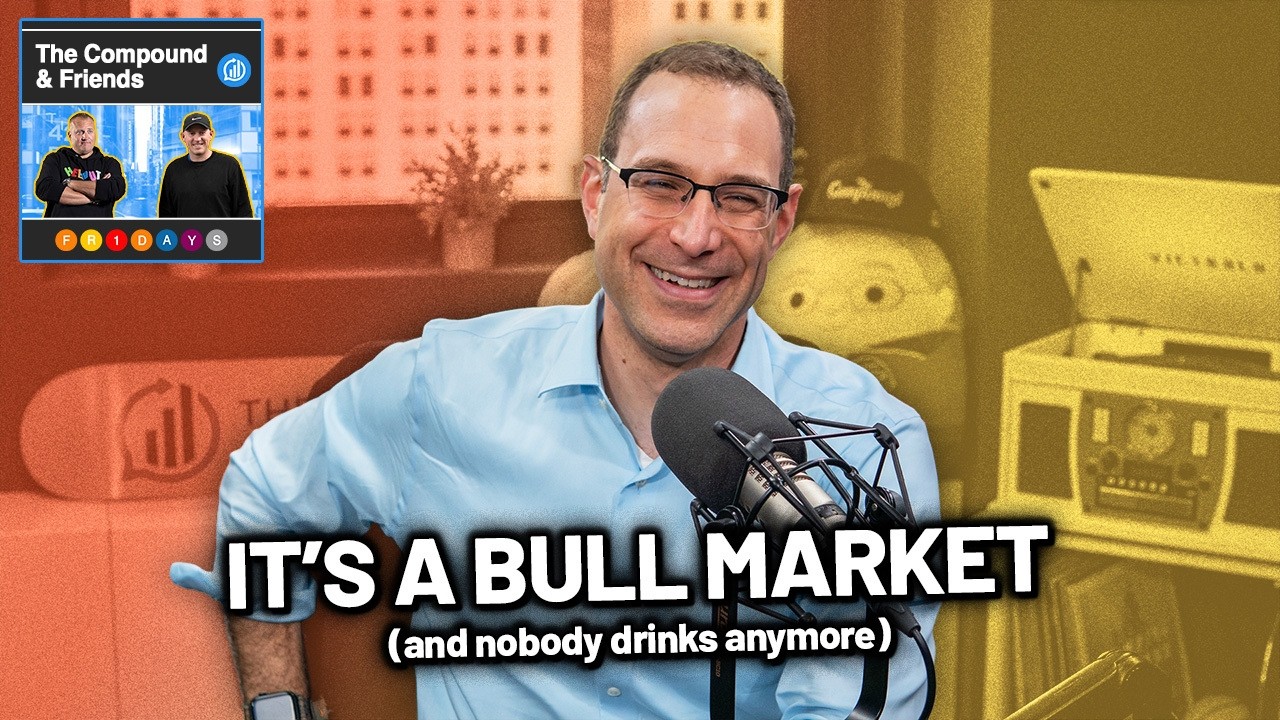
ETF Industry Surpasses 900 Launches in 2026 as Issuers Target Compute and Options
The Compound
Low-cost upstarts and fee compression are forcing ETF managers to target high-yield and niche compute strategies to gather capital despite market saturation.
## Background
The Compound (featuring Downtown Josh Brown and Michael Batnick) published this video on YouTube on August 14, 2026. Joined by Todd Sohn, Chief ETF Strategist at Baird Strategas, the episode explores the record-breaking ETF boom, thematic and leveraged products, buffer funds, prediction-market ETFs, and emerging themes like compute as an asset class.
## TL;DR
In this episode of The Compound and Friends, hosts Josh Brown and Michael Batnick chat with Todd Sohn about the unprecedented pace of ETF launches in 2026 and the shifting institutional benchmark for fund viability. They cover the explosive growth of buffer and option-income strategies, corporate supply-chain ecosystem funds, and the regulatory crackdown on leveraged single-stock products in South Korea. Additionally, the panel discusses the massive $3 trillion in retail money-market cash, shifting market dynamics across healthcare and consumer sectors, and the upcoming wave of ETFs designed to treat compute power as a core asset class.
## Atmosphere & style
The discussion is fast-paced, highly candid, and filled with conversational banter among industry insiders who blend sharp market analysis with humor. The dynamic between Brown, Batnick, and Sohn feels informal yet deeply knowledgeable, moving effortlessly from dry regulatory breakdowns to witty observations about market fads. Watching the episode feels like sitting in on a relaxed, high-energy coffee chat with seasoned Wall Street veterans dissecting the latest financial news.
## Key takeaways
- [00:00](https://www.youtube.com/watch?v=kidfan-Crqs&t=0s) The ETF industry is experiencing unprecedented launch activity in 2026, with approximately 900 new fund launches year-to-date, putting it on track to beat the ~1,100 launches recorded in 2025.
- [00:00](https://www.youtube.com/watch?v=kidfan-Crqs&t=0s) Valuations for professional sports franchises are surging into public equity territory, highlighted by MSG Sports' tax-free spinoff of the Knicks and Rangers and recent multi-billion dollar private team transactions.
- [14:42](https://www.youtube.com/watch?v=kidfan-Crqs&t=882s) Low cost structure upstarts like Corgi are disrupting traditional ETF pricing models by releasing high volumes of thematic and leveraged funds at significantly lower basis points, treating launches akin to a venture studio portfolio.
- [25:15](https://www.youtube.com/watch?v=kidfan-Crqs&t=1515s) The asset threshold for institutional viability in ETFs has migrated from $100 million up to $1 billion in AUM, as large allocators demand higher liquidity to eliminate allocation and career risk.
- [32:13](https://www.youtube.com/watch?v=kidfan-Crqs&t=1933s) Buffer and covered-call option-income ETFs have evolved into major institutional products, driven heavily by aging demographics seeking high yield and downside risk mitigation.
- [40:16](https://www.youtube.com/watch?v=kidfan-Crqs&t=2416s) South Korean regulatory authorities have cracked down on single-stock leveraged ETFs by banning new 2x funds and mandating educational courses and simulated trading for retail participants.
- [43:01](https://www.youtube.com/watch?v=kidfan-Crqs&t=2581s) Despite a massive bull market, retail money market funds hold a record $3 trillion on the sidelines, which analysts believe will require Fed rate cuts below 3% or a major equity drawdown to reallocate into stocks.
- [49:33](https://www.youtube.com/watch?v=kidfan-Crqs&t=2973s) Consumer Staples and Consumer Discretionary weights in the S&P 500 have dropped to historic lows (4.5% and under 10% respectively), reflecting how mega-cap technology and new yield products have reshaped traditional index defense.
- [54:31](https://www.youtube.com/watch?v=kidfan-Crqs&t=3271s) Physical storable commodities like gold thrive as spot ETFs, whereas energy and metal funds continue to face severe drag from contango and futures contract roll costs.
- [56:32](https://www.youtube.com/watch?v=kidfan-Crqs&t=3392s) Compute capacity is emerging as a distinct asset class, with major issuers racing to launch thematic products, futures, and direct exposure tools tracking GPU pricing, memory, and semiconductor infrastructure.
## Detailed walkthrough
### [00:00](https://www.youtube.com/watch?v=kidfan-Crqs&t=0s) Cold Open: The ETF Boom and Sports Franchise Valuations
The episode kicks off with banter around the staggering pace of the ETF industry in 2026. Todd Sohn notes that the year to date has seen roughly 900 new fund launches, putting the industry well on track to surpass the ~1,100 ETFs launched the previous year. Michael Batnick and Josh Brown point out that launching and maintaining an ETF has become so cheap and frictionless that it resembles recording a mixtape in a basement shed or launching a custom product just for friends. Josh shares that he was involved in two ETF launches within the exact same week, emphasizing just how hyperactive the market has become.
The hosts then pivot into a detailed discussion on the exploding market values of professional sports teams, drawing a direct parallel between team valuations and the broader stock market rally. Looking at a chart of Madison Square Garden Sports (MSGS), Josh notes its $10 billion market cap ($11 billion enterprise value) and highlights its upcoming tax-free spinoff separating the New York Rangers from the New York Knicks by the end of October. They contrast MSGS’s valuation with the Los Angeles Lakers' recent $12.4 billion private transaction price, arguing that public sports stocks trade at a significant discount. They run down a list of major franchise valuations—including the Los Angeles Clippers ($7.5B), Atlanta Falcons ($9.78B), New York Knicks ($9.9B), New York Yankees ($9–10B, noting their $2.6B financing deal with Apollo), Golden State Warriors ($11.33B), New York Giants ($12B), LA Rams ($12.7B), and Dallas Cowboys ($15.5B). Josh asserts that elite brands like the Cowboys and Yankees are easily $20 billion assets today.
Examining an AI-generated chart (via Claude) tracking NBA team transactions from Steve Ballmer’s $2 billion Clippers purchase up to recent mega-deals, Michael highlights that this upward trajectory is driven by extreme wealth creation among top-tier market participants (referencing figureheads like Josh Kushner and his multi-billion dollar stake in OpenAI). Josh proposes a mandatory 5-year holding period for sports team owners to prevent quick flipping for profit at the expense of fans, while noting that private equity capital is flooding the sector—from Indian Premier League cricket to global soccer.
* **Year-to-date ETF Launches (2026):** ~900 new tickers launched (compared to ~1,100 total in 2025).
* **MSGS Spinoff:** Madison Square Garden Sports is executing a tax-free distribution to split the New York Knicks and New York Rangers into separate publicly traded entities.
* **Top Franchise Valuations Discussed:**
* Los Angeles Clippers: $7.5 billion (purchased for $2B by Steve Ballmer).
* Atlanta Falcons: $9.78 billion.
* New York Knicks: $9.9 billion (estimated public/private discrepancy vs. Lakers' $12.4B deal).
* New York Yankees: $9–10 billion baseline; recently closed a $2.6 billion credit/equity financing deal with Apollo.
* Golden State Warriors: $11.33 billion.
* Dallas Cowboys: $15.5 billion (Sportico valuation).
---
[12:16](https://www.youtube.com/watch?v=kidfan-Crqs&t=736s) Episode Intro and Sponsor
Josh Brown officially opens Episode 255 of *The Compound & Friends*, introducing returning guest Todd Sohn, Chief ETF Strategist at Baird Strategas and Strategas Asset Management. Josh praises Todd's research, mentioning how frequently Strategas charts are featured across The Compound’s media network. Todd presents a physical copy of his team's monthly publication, the *ETF Field Book*, explaining that it serves as a comprehensive monthly compendium tracking fund flows, thematic trends, and industry growth for institutional clients and investors.
The episode is sponsored by VanEck and highlights their actively managed Real Assets ETF, **RAAX**. The hosts outline the macroeconomic backdrop driving real assets—including mounting national debt, deglobalization, and the massive physical infrastructure buildout required to power the AI economy. RAAX provides dynamic exposure across gold, energy, infrastructure, and natural resources, adjusting allocations based on prevailing macro conditions.
---
[14:37](https://www.youtube.com/watch?v=kidfan-Crqs&t=877s) The Evolving World of ETFs
Transitioning back to the ETF ecosystem, the hosts dig deeper into why the pace of new fund creation has exploded beyond traditional broad-market index products. Rather than a haphazard "spaghetti cannon" approach where issuers toss random ideas at the wall, Todd explains that asset managers now execute highly strategic, targeted product roadmaps to capture specific slices of investor demand.
[14:42](https://www.youtube.com/watch?v=kidfan-Crqs&t=882s) The Evolving World of ETFs and New Entrants
The discussion kicks off with a look back at earlier ETF cycles—like the 2010–2011 surge in commodity and agriculture funds—comparing them to the current wave of innovation. While a lot of niche products come and go, genuinely clever ideas continue to emerge. For issuers, success hinges on target audience, brand identity, and capitalizing on what is currently hot. Legacy fund managers can launch plain-vanilla core products aimed at financial advisors, but that path is a slow "grind." The only way an issuer wakes up with $1 billion in assets overnight is by offering either an extremely high yield or riding the thematic wave of the year.
```
+-----------------------------------------------------------------------+
| THE ISSUER'S DILEMMA |
+-----------------------------------------------------------------------+
| Vanilla / Core Strategy Thematic / High-Yield Strategy |
| - Targets traditional advisors - Rapid asset accumulation |
| - Steady, long-term "grind" - Rides current hype/yield |
| - Requires established trust - Can hit $1B overnight |
+-----------------------------------------------------------------------+
```
A major shift in 2026 is not just the volume of new issues, but the arrival of non-traditional issuers like Corgi, a Y Combinator-backed firm. Corgi's strategy mirrors the Hollywood studio model: release dozens of thematic and levered products (ranging from single-stock to index-based funds) at drastically lower price points—such as 35 to 50 basis points, compared to the industry standard of 90 to 120. They accept that seven out of ten funds might flop because three hits will easily cover the losses. This aggressive price-cutting is creating consternation among incumbent issuers who wonder why these upstarts are undercutting established margins.
- Corgi launched roughly 30 thematic ETFs at around 35 basis points, roughly half the cost of incumbent thematic funds.
- Levered products from traditional issuers typically charge 90 to 120 basis points, whereas new low-cost entrants target 50 basis points.
- Many of these new thematic products are actively managed—often using AI-driven strategies rather than traditional portfolio managers.
> "The hits will pay for the flops. And they're doing it with levered ETFs too... The other ETF issuers look at them like, 'Guys, what are you doing? We have great businesses. Why are you wrecking our business?'"
---
[19:08](https://www.youtube.com/watch?v=kidfan-Crqs&t=1148s) The Battle for Brand Loyalty, Niche Themes, and Fee Compression
The conversation turns to specific emerging thematic trends, highlighting photonics—which targets optical networking, lasers, and silicon photonics for AI infrastructure. Multiple issuers have rushed to launch photonics funds simultaneously, leading to intense competition for volume and liquidity. Roundhill launched its photonics fund (ticker LOHA), which quickly captured dominant trading volume over older competitors like Corgi and Tema within just a few days of trading. In hyper-specific themes, institutional traders do not necessarily care about brand names—they follow liquidity and the underlying basket of stocks. However, for retail financial advisors, brand recognition remains crucial when presenting allocations to clients.
The hosts debate whether thematic and active products are heading toward extreme fee compression—potentially dropping down to 10 basis points by the end of the decade. Unlike other industries where copying a competitor's exact product concept leads to legal battles, the ETF market has no "referee" to stop issuers from cloning successful funds at lower price points. While leverage-based products can maintain higher fees because active traders are price-insensitive, standard thematic funds face relentless downward pressure.
- There were four existing photonics ETFs before Roundhill launched its fund, yet Roundhill surpassed their combined volume in under four days.
- Middle-tier issuers with strong brand resonance or specialized sales forces include VanEck, Pacer ETFs, First Trust, Direction, GraniteShares, and KraneShares.
- VanEck stands out for its strong branding, memorable tickers (like HODL), and viral social media presence via the "VanEck intern" account.
> "You know what's nuts? There's no referee... There's no referee saying that ETF looks exactly like a different ETF. You can't just do what they're doing... If you can build a great product at a cheaper price, they will come to you."
---
[25:15](https://www.youtube.com/watch?v=kidfan-Crqs&t=1515s) Tracking the ETF Explosion and the New $1 Billion Benchmark
Todd Sohn from Strategas explains the operational reality of covering the overwhelming wave of new ETF launches. Institutional clients constantly demand insights on unique or structurally different products—such as the rising trend in auto-callable ETFs—to ensure they do not miss the next major structural shift. To separate signal from noise, Sohn tracks daily filings and volume via specialized analytics software, focusing purely on liquidity, asset accumulation, and structural red flags like unexpected capital gains distributions.
```
+-----------------------------------------------------------------------+
| THE SHIFTING ASSET BENCHMARK |
+-----------------------------------------------------------------------+
| OLD BENCHMARK: $100 Million NEW BENCHMARK: $1 Billion |
| - Proved viability - Required by big institutions |
| - Sufficient liquidity for retail - Prevents career/allocation risk|
+-----------------------------------------------------------------------+
```
A major theme in the institutional space is the moving target for viability. Where $100 million in assets under management (AUM) used to be the universal benchmark for an ETF to be considered "real," large institutions now frequently demand $1 billion in AUM before they will even consider making an allocation. Advisors and institutional allocators are terrified of getting burned or looking foolish if a sub-$100 million fund closes six months later. Finally, the group addresses a past misconception: many assumed direct indexing and custom portfolios would slow down ETF growth by capturing 10% of wealth management assets, but ETF launches have only accelerated.
- Strategas tracks annual ETF launches using proprietary data and platforms like Bloomberg to flag distinct active and thematic trends.
- Auto-callable ETFs are seeing surging interest and asset inflows, with issuers like Calamos gathering over $1 billion in related strategies.
- Large institutional allocators now routinely demand a fund reach $1 billion in AUM before scheduling introductory calls or approving model placements.
> "I think a billion is the new 100 million... In terms of like, this is something we could put into an allocation and not look stupid in 6 months or a year."
[28:39](https://www.youtube.com/watch?v=kidfan-Crqs&t=1719s) The Evolving World of ETFs & Custom Indexing
The discussion kicks off with the practical reality of modern retail investing: buying a ticker is simply the path of least resistance. Investors seeking target exposures—such as memory chips—prefer to quickly purchase a single ETF ticker rather than build custom portfolios. The panel contrasts this with custom indexing, noting that while firms like Vanguard and Fidelity attempted to push custom indexing onto retail accounts, the demand simply wasn't there. Custom indexing remains primarily a wealth management and high-net-worth product, while retail investors continue to embrace off-the-shelf ETFs.
A review of recent ETF launch categories demonstrates remarkable diversification across asset classes. Beyond core equities and fixed income, product development has surged in single-stock leverage, buffer strategies, option-income funds, commodities, and cryptocurrency.
- Retail investors prefer fast, single-ticker ETF execution over complex custom indexing.
- Major categories for new launches include leveraged, option-income, buffer, equity, fixed income, crypto, and commodity funds.
Addressing the next frontier of fund creation, the conversation turns to prediction markets. The panel examines research by Michael Mauboussin and Dan Callahan regarding prediction markets, the wisdom of crowds, and how platforms like Kalshi map almost one-to-one with actual real-world outcomes. However, the research highlights a critical behavioral anomaly: the **long-shot bias**. Because structural market behavior inclines retail participants to gamble on long shots, those long shots become overpriced while heavy favorites remain underpriced.
The panel debates a potential ETF structure engineered to exploit this mispricing: an ETF that exclusively buys heavy favorites (e.g., betting lines at -850 or higher with an 85%+ probability of winning) across sports, entertainment awards, and political events. Rather than targeting high-payout long shots, this fund would harvest small, steady yields across liquid markets. While the SEC has placed temporary brakes on prediction market ETFs pending comment periods, product filings—including those from issuer Subversive—are already moving forward.
> "We are inventing new and exciting ways to lose our money and grind our portfolios."
- **Long-Shot Bias:** Retail participants overpay for long shots, leaving heavy favorites (-850 or higher) structurally undervalued.
- **Issuer Activity:** Subversive (known for political trading ETFs like NANC and KRUZ) has already filed for prediction-market products.
---
[32:13](https://www.youtube.com/watch?v=kidfan-Crqs&t=1933s) The Explosive Rise of Buffer & Option-Income ETFs
The discussion shifts to what the panel considers the true breakout ETF categories over the last two years: **buffer ETFs** and **option-income (covered call) ETFs**. These options-based strategies have transformed from niche products into massive institutional franchises. The segment highlights Goldman Sachs' major acquisition strategy in this space, having acquired both Innovator ETFs (a pioneer in defined-outcome/buffered products) and NEOS Investments (known for option-income and S&P 500 covered call funds).
The hosts reflect on the massive growth in this space, recalling early conversations with ETF industry veteran Tom Lydon. NEOS alone grew to approximately $30 billion in assets under management before the deal, with total transaction values for these acquisitions hitting upwards of $2.3 billion. The primary driver behind this boom is demographic: aging American investors nearing or in retirement are hungry for yield and downside protection. Unlike temporary thematic hype, this capital is considered highly sticky.
- **Major Dealmaking:** Goldman Sachs acquired Innovator ETFs and NEOS Investments to capture defined-outcome and yield-focused asset flows.
- **NEOS Assets:** Reached roughly $30 billion in AUM prior to acquisition.
- **Demographic Tailwinds:** Aging retirees seeking risk mitigation and yield are anchoring capital in buffer and covered-call strategies.
The conversation examines a new wave of thematic launches from Harbor Capital, as highlighted by Bloomberg's James Seyffart. These actively managed funds target the corporate ecosystems of major technology giants—such as funds designed to track companies linked directly to OpenAI or the SpaceX and AI laboratory supply chains (holding stocks like SoftBank or primary chip/data suppliers).
While acknowledging the cleverness of structuring an ETF around supply-chain ecosystem partners, the panel remains skeptical about its long-term viability. Drawing parallels to past market cycles—such as television analysts disassembling computer towers on-air to show Intel Pentium chips in the 1990s, or the mid-2000s obsession with suppliers for the iPhone—the host notes that retail enthusiasm for supply-chain granularity usually turns into market fatigue. These products represent classic bull-market phenomena that struggle to gain traction during market downturns.
- **Harbor Capital Launches:** Ecosystem-focused funds targeting corporate supply networks around major tech leaders.
- **Historical Analogs:** Similar thematic pushes occurred during the PC boom (Intel component suppliers) and early iPhone cycles (glass and antenna makers).
- **Consensus Outlook:** The panel agrees that while retail interest in supply chains is high today, investors historically tire of supply-chain themes and default back to core tech ETFs.
---
[40:16](https://www.youtube.com/watch?v=kidfan-Crqs&t=2416s) Leveraged ETFs and South Korea's Regulatory Tightening
The panel examines the leveraged ETF landscape following market volatility in July. Total assets in single-stock and sector leveraged-long ETFs reached a record high-water mark of $200 billion ($500 billion in notional exposure), sparking concern among counterparty banks managing swap risks. During the market pullback, leveraged-long assets fell only about 25% before quickly rebounding alongside sharp bounces in tech and semiconductor stocks.
The segment highlights an unprecedented regulatory intervention by financial authorities in South Korea, whose retail traders represent a massive share of global leveraged single-stock ETF volume. Rather than raising interest rates, South Korean regulators implemented targeted administrative restrictions: banning new 2x single-stock fund launches and requiring retail investors to complete mandatory educational programs and a full week of simulated trading before accessing leveraged products. The hosts contrast South Korea's cohesive, protective regulatory stance with the United States' market-driven culture, where appetite for leveraged products remains unsated.
- **Notional Exposure Peak:** Leveraged ETF exposure touched a record $500 billion notional prior to the mid-summer pullback.
- **South Korean Crackdown:** Financial regulators instituted mandatory educational courses and simulated trading requirements for retail traders utilizing leveraged products.
- **Resilience of Demand:** Despite a sharp 25% drop in leveraged assets during July, retail demand for single-stock leverage bounced back rapidly alongside tech rallies.
[43:01](https://www.youtube.com/watch?v=kidfan-Crqs&t=2581s) Retail Cash and Money Markets
Michael Batnick brings up his long-held thesis regarding retail money market cash, reflecting on how he accurately predicted that money deposited into cash accounts during the interest rate hikes would remain "stuck" there. Despite a raging stock market boom and fluctuating Treasury yields, retail investors have largely chosen not to redeploy these funds into equities or bonds. Todd Sohn emphasizes that unlocking this cash will likely require the Federal Reserve to cut Fed funds rates below 3%, or take a massive stock market correction (such as a 30% to 35% crash in the S&P 500) to finally incentivize investors to move cash out of money market funds and buy the dip.
The crew examines the staggering volume of cash currently sitting on the sidelines, noting that total retail money market funds stand at an impressive $3 trillion—doubling from the $1.5 trillion baseline recorded right before the pandemic six years prior. Josh Brown highlights a structural shift in how the modern economy operates: rather than selling off core assets to finance major purchases or investments, individuals and institutions are increasingly borrowing against their existing assets.
- Total retail money market funds have expanded from $1.5 trillion pre-pandemic to $3 trillion.
- Fed funds rates below 3% are viewed as the necessary threshold to coax retail cash back into risk assets.
- Josh notes that major asset transactions—such as purchasing sports teams like the Los Angeles Lakers—are increasingly executed via leverage against existing holdings rather than liquidating underlying positions.
- The Dow Jones Industrial Average is cited as trading around 54,000 points.
> "I think if you get a 35% meltdown in the S&P 500, money will come out of money market funds and go into the stock market. And that's probably never happened before."
---
[46:02](https://www.youtube.com/watch?v=kidfan-Crqs&t=2762s) The Market is Healthy and Sector Dynamics
Transitioning to broader market internal health, Josh references a Chartken dashboard tracking Relative Strength Index (RSI) levels above 70 across various market segments. Energy is highlighted as a standout performer, partly due to its evolving market role. Energy's beta relative to the S&P 500 has collapsed significantly, transforming it into an effective portfolio hedge—particularly during periods when traditional fixed income fails to offer negative correlation to equities.
Healthcare is also making a notable comeback after underperforming throughout the prior year. Todd Sohn details how healthcare went from being the "bane of his existence" due to relentless ETF outflows and abysmal relative performance in its bottom decile to becoming an attractive contrarian trade. The group jokes about healthcare's rapid index contraction, remarking that "healthcare took a GLP-1" as its overall weight in the S&P 500 dropped from 16% down to 8%, even as individual mega-cap winners like Eli Lilly skyrocketed into the top ten global market caps.
- Refiners lead the energy sector's strength, including Marathon, Valero, HF Sinclair, and Phillips 66, along with oilfield services company Baker Hughes.
- Energy represents roughly 2% of the overall index, operating with a negative beta relative to the S&P 500.
- Healthcare's total representation within the S&P 500 contracted from 16% to 8%.
- XLV (Healthcare) and XLI (Industrials) demonstrate how legacy sector definitions fail to capture underlying sub-sector dispersion.
> "The joke I always use is healthcare took a GLP-1. It went from 16% to 8% of the S&P 500."
---
[49:33](https://www.youtube.com/watch?v=kidfan-Crqs&t=2973s) It's a Bull Market and Nobody Drinks Anymore
The discussion moves to the decaying index relevance of traditional sector definitions like Global Industry Classification Standard (GICS), which the hosts critique as outdated frameworks originating in the mid-20th century. Josh highlights a compelling chart illustrating the collapsing weights of both Consumer Staples and Consumer Discretionary within the broader market. Consumer Staples now accounts for just 4.5% of the S&P 500, prompting Josh's memorable quip: "It's a bull market, nobody drinks anymore."
The compression in these sectors is driven primarily by mega-cap technology powerhouses outgrowing the rest of the market. Furthermore, in an environment dominated by option-income strategies, investors no longer rely on defensive staples for yield generation. Consumer Discretionary dipping below a 10% weight is historically rare outside of severe economic downturns, highlighting the heavy dispersion within sub-industries ranging from homebuilders and hotels to high-profile components like Amazon and Tesla.
- Consumer Staples has fallen to a 4.5% weight in the S&P 500.
- Consumer Discretionary weight has dropped below 10%, an occurrence typically reserved for economic recessions.
- Small-cap ETF flows are showing minor signs of life, but investor sentiment remains hesitant following three years of underperformance.
- Bloom Energy reached a $100 billion market cap within the Russell 2000 prior to index rebalancing, marking an unprecedented concentration anomaly for small-cap benchmarks.
> "Staples, we know why... It's a bull market, nobody drinks anymore. They're four and a half percent of the S&P 500."
---
[51:55](https://www.youtube.com/watch?v=kidfan-Crqs&t=3115s) Crypto Today and International ETFs
Addressing the current state of crypto ETFs, Todd notes that capital has been actively fleeing these specialized products as retail traders pivot back toward artificial intelligence and software stocks. The market has become saturated with niche crypto offerings—such as 2x leveraged Dogecoin ETFs—that lack sustained investor demand. However, Todd points out Hyperliquid as a notable exception due to its real-world utility as a perpetual futures exchange, allowing users to synthetically trade assets like private SpaceX stock prior to an IPO or execute weekend oil trades.
On the international front, overall investor sentiment remains lukewarm due to a lack of direct exposure to the ongoing AI and semiconductor booms outside of select regions like South Korea and Taiwan. While Japan and Europe have delivered solid fundamental equity performance, markets like China continue to struggle, leaving broader international allocation flows confined largely to automated model portfolios tracking broad benchmarks like MSCI EAFE.
- Money is currently rotating out of crypto ETFs and into AI-focused equity themes.
- Hyperliquid is highlighted for providing synthetic pre-IPO trading in companies like SpaceX alongside 24/7 futures markets.
- Broader altcoin ETFs (e.g., Chainlink) are characterized as modern iterations of legacy "penny stock" hype cycles amplified by social media platforms like Reddit and X.
- South Korea and Taiwan dominate emerging market ETF performance due to semiconductor and hardware exposure.
> "They thought they owned the innovation of the decade and now they realize they don't... It's ice cold."
---
[54:31](https://www.youtube.com/watch?v=kidfan-Crqs&t=3271s) Commodities and the Storage Conundrum
The hosts explore why broad commodity ETFs have historically struggled to deliver long-term returns for buy-and-hold investors. Todd and Josh explain that commodity futures ETFs suffer from severe structural drag caused by contango and futures roll costs, as well as tax complications arising from Schedule K-1 partnership structures. While actively managed commodity strategies (such as those offered by RAAX) have gained traction as inflation hedges and portfolio diversifiers, passive spot tracking remains elusive for physical raw materials.
```
Physical Storage vs. Futures Roll
┌───────────────────────────────────────────┐
Gold │ Physical Vault Storage ──► Zero Roll Drag│
├───────────────────────────────────────────┤
Oil/Copper │ Futures Contracts ──────► Contango Drag │
└───────────────────────────────────────────┘
```
Michael asks why gold ETFs work seamlessly while energy and industrial metal funds struggle. Josh provides a straightforward explanation: gold can be stored indefinitely in a vault without degrading, whereas physical crude oil, natural gas, copper, and agricultural commodities suffer from severe logistics, transport, or degradation constraints, forcing fund managers to rely on flawed futures contracts.
- Futures roll yield decay (contango) and K-1 tax forms remain the primary drawbacks of traditional commodity ETFs.
- Active commodity ETFs have successfully gathered over $1 billion by dynamically managing contract exposure.
- Gold's unique status as a storable, non-perishable asset allows physically backed spot ETFs to avoid futures roll drag entirely.
> "How come gold works? Because you can store it. That's it. You can't store copper... so you have to use the futures."
---
[56:32](https://www.youtube.com/watch?v=kidfan-Crqs&t=3392s) Compute as an Emerging Asset Class
Looking ahead to the next frontier of thematic product launches, the group turns its focus to compute power as an emerging asset class. Major ETF issuers—including ProShares, Roundhill, and Defiance—are actively developing specialized products designed to track the pricing of compute capacity, GPU hardware, and semiconductor memory rather than standard equity indices.
Todd Sohn notes that the upcoming wave of thematic product filings is heavily centered around AI infrastructure, with issuers racing to tokenize and package compute availability into liquid ETF vehicles. The hosts express skepticism over the sheer volume of niche products slated to hit the market before year-end, while acknowledging that compute pricing represents the core engine of the modern tech economy.
- Major issuers preparing compute ETFs include ProShares, Roundhill, and Defiance.
- Future products aim to track the spot price of processing power, memory, and semiconductor hardware directly.
- The trend represents an evolution from broad tech sector ETFs toward hyper-specific infrastructure themes.
[57:09](https://www.youtube.com/watch?v=kidfan-Crqs&t=3429s) The CNBC $500 Billion Compute Roundtable
The hosts discuss a recent broadcast on CNBC’s *Closing Bell Overtime* that Josh Brown candidly describes as a "CNBC infomercial." The network hosted a star-studded roundtable at the NASDAQ featuring NVIDIA CEO Jensen Huang, Goldman Sachs CEO David Solomon, alongside top executives from Apollo and Blackstone to announce a massive $500 billion partnership. Josh quips that it was essentially a "roundtable of circular financing" requiring massive security. The spectacle immediately captured Wall Street's full attention, sparking predictions that futures markets and thematic ETFs tracking the price of compute are right around the corner.
As asset managers rush to file for compute-focused products, the group debates who will win the land grab. Todd Sohn notes that while multiple issuers filed virtually at the same time, success will likely hinge on brand loyalty. In the thematic ETF space, Roundhill currently holds the crown, though Josh argues that compute functions more like a commodity—akin to electricity—than a traditional thematic niche. The dynamic changes significantly depending on whether the product targets retail traders or institutional allocators, with a potential BlackRock compute fund representing a completely different scale. Adding a bit of humor to the scene, Larry Fink participated in the roundtable remotely, prompting Josh to joke, "I think he thought they were all going to get whacked," likening the gathering to the opening scene of *The Godfather*.
- **Event:** $500 billion partnership announcement broadcast during a 34-minute segment on CNBC's *Closing Bell Overtime*.
- **Key Participants:** Jensen Huang (NVIDIA), David Solomon (Goldman Sachs), Larry Fink (BlackRock, via video), plus leadership from Apollo and Blackstone.
- **ETF Brand Dynamics:** Roundhill leads in thematic brand loyalty, but institutional powerhouses like BlackRock carry distinct weight if compute is framed as a core commodity.
---
[59:00](https://www.youtube.com/watch?v=kidfan-Crqs&t=3540s) Compute as a New Asset Class and Absurd Filings
The conversation turns to the sheer velocity of modern ETF launches when Michael Batnick reveals a bizarre filing made that very day: an ETF designed to buy shares of companies interviewed by Jensen Huang. The hosts react with disbelief and laughter, joking about whether Huang is turning into Jay Leno or if the fund will simply buy whoever makes his signature leather jacket. Beyond the novelty filings, the central theme remains serious: compute is rapidly being financialized into a recognized asset class.
Josh raises the question of how financial advisors will handle compute in client portfolios over the next few years. He envisions a scenario where standard wealth management model allocations include a dedicated 2% "compute sleeve" right alongside traditional allocations like 1% to gold. Todd agrees, noting that compute behaves as a essential modern commodity. The panel compares this trend to the launch of electricity futures ETFs, prompting Josh to joke about old-school investing: "In my day, you could buy utility stocks... It's not sexy enough to buy utilities anymore."
- **Novelty Filings:** A newly filed ETF targeting portfolio holdings based on companies interviewed by NVIDIA CEO Jensen Huang.
- **Asset Allocation Outlook:** Discussion on whether wealth managers will soon build standard portfolio models containing a 1% to 2% slice dedicated to compute.
- **Market Evolution:** Parallels drawn to electricity futures ETFs, highlighting how direct exposure to underlying resources is replacing traditional utility stock plays.
---
[01:00:25](https://www.youtube.com/watch?v=kidfan-Crqs&t=3625s) Fall Outlook and the Mechanics of "Failed" ETFs
Looking ahead to the fall and winter, Josh asks Todd for his forward-looking outlook on market stories and headlines. Todd takes a cynical view on the ETF landscape, predicting that many newly launched thematic funds will inevitably "fall on their face." With hundreds of thematic funds flooding the market, there simply is not enough retail or institutional capital to sustain every single niche vehicle, even as the broader equity market remains firmly in a bull trend.
This prediction leads to an insightful debate on what actually constitutes a "failed" ETF compared to a failed traditional corporate IPO. Josh points out that when an IPO flops, investors get burned as the stock collapses. However, if an ETF accurately tracks its target index—such as compute or tanker shipping—and the underlying asset drops, or if the asset surges 1,000% but the fund fails to gather assets, retail investors do not get hurt in the same structural way. The product fulfilled its technical mandate as a packaged vehicle, even if nobody bought it.
- **Market Saturation:** Todd Sohn expects several thematic funds to shut down or fail to gather assets due to over-crowding in the marketplace.
- **IPO vs. ETF Failure Dynamics:** Unlike broken IPOs that destroy investor capital, a "flop" ETF that fails to gain traction still performs its tracking function accurately without inflicting unique structural harm on holders.
- **Real-World Example:** Tanker shipping ETFs have seen massive percentage gains in performance while attracting virtually zero investor inflows, serving their tracking purpose despite lacking asset scale.
---
[01:02:35](https://www.youtube.com/watch?v=kidfan-Crqs&t=3755s) Wrapping Up with Todd Sohn and Strategas
The episode closes on a warm and playful note as the hosts comment on the studio environment and check in with Todd about his experience on the show. Josh expresses deep gratitude for Todd’s research and expertise throughout the year, identifying him alongside Bloomberg's Eric Balchunas as one of his absolute top primary conduits for ETF industry insights and analysis.
Todd shares where institutional listeners and prospective investors can learn more about his firm's research and investment strategies. While over 900 new ETFs have launched across the industry, Strategas maintains a disciplined lineup of just three funds, including their core macro thematic strategy under ticker `SMT`. The hosts thank Todd for his time and wrap up the broadcast by encouraging viewers to leave ratings and reviews.
- **Industry Resources:** Institutional investors can find research at `bairdstrategas.com`, while fund information is available at `strategasetfs.com`.
- **Strategas Product Lineup:** Strategas currently manages three focused ETFs, including the Strategas Macro Thematic ETF (Ticker: `SMT`).
- **Expert Recognition:** Josh cites Todd Sohn and Eric Balchunas as his go-to authorities for structural ETF market intelligence.
## Notable quotes
> [14:42](https://www.youtube.com/watch?v=kidfan-Crqs&t=882s) The hits will pay for the flops. And they're doing it with levered ETFs too... The other ETF issuers look at them like, 'Guys, what are you doing? We have great businesses. Why are you wrecking our business?'
> [19:08](https://www.youtube.com/watch?v=kidfan-Crqs&t=1148s) You know what's nuts? There's no referee... There's no referee saying that ETF looks exactly like a different ETF. You can't just do what they're doing... If you can build a great product at a cheaper price, they will come to you.
> [25:15](https://www.youtube.com/watch?v=kidfan-Crqs&t=1515s) I think a billion is the new 100 million... In terms of like, this is something we could put into an allocation and not look stupid in 6 months or a year. — Todd Sohn
> [29:06](https://www.youtube.com/watch?v=kidfan-Crqs&t=1746s) We are inventing new and exciting ways to lose our money and grind our portfolios.
> [43:01](https://www.youtube.com/watch?v=kidfan-Crqs&t=2581s) I think if you get a 35% meltdown in the S&P 500, money will come out of money market funds and go into the stock market. And that's probably never happened before.
> [46:02](https://www.youtube.com/watch?v=kidfan-Crqs&t=2762s) The joke I always use is healthcare took a GLP-1. It went from 16% to 8% of the S&P 500. — Todd Sohn
> [49:33](https://www.youtube.com/watch?v=kidfan-Crqs&t=2973s) Staples, we know why... It's a bull market, nobody drinks anymore. They're four and a half percent of the S&P 500. — Josh Brown
> [51:55](https://www.youtube.com/watch?v=kidfan-Crqs&t=3115s) They thought they owned the innovation of the decade and now they realize they don't... It's ice cold.
> [54:31](https://www.youtube.com/watch?v=kidfan-Crqs&t=3271s) How come gold works? Because you can store it. That's it. You can't store copper... so you have to use the futures. — Josh Brown
> [59:00](https://www.youtube.com/watch?v=kidfan-Crqs&t=3540s) In my day, you could buy utility stocks... It's not sexy enough to buy utilities anymore. — Josh Brown
## Mentioned
Todd Sohn, Michael Batnick, Josh Brown, The Compound, Baird Strategas, Strategas Asset Management, VanEck, RAAX, Madison Square Garden Sports, MSGS, New York Rangers, New York Knicks, Los Angeles Lakers, Los Angeles Clippers, Atlanta Falcons, New York Yankees, Apollo, Golden State Warriors, New York Giants, LA Rams, Dallas Cowboys, Steve Ballmer, Claude, Josh Kushner, OpenAI, Corgi, Y Combinator, Roundhill, LOHA, Tema, Pacer ETFs, First Trust, Direction, GraniteShares, KraneShares, HODL, Calamos, Vanguard, Fidelity, Michael Mauboussin, Dan Callahan, Kalshi, SEC, Subversive, NANC, KRUZ, Goldman Sachs, Innovator ETFs, NEOS Investments, Tom Lydon, Harbor Capital, Bloomberg, James Seyffart, SpaceX, SoftBank, Intel, S&P 500, Federal Reserve, Dow Jones Industrial Average, Chartken, XLV, Eli Lilly, Marathon, Valero, HF Sinclair, Phillips 66, Baker Hughes, XLI, Consumer Staples, Consumer Discretionary, Amazon, Tesla, Bloom Energy, Russell 2000, Hyperliquid, Dogecoin, Chainlink, Reddit, X, MSCI EAFE, ProShares, Defiance, CNBC, Closing Bell Overtime, NASDAQ, Jensen Huang, NVIDIA, David Solomon, Blackstone, Larry Fink, BlackRock, Eric Balchunas, SMT
The ETF industry is experiencing a rapid proliferation of ultra-niche, leveraged, and thematic products driven by collapsing launch costs and retail demand, even as broader equity index dynamics undergo severe sector concentration. According to Strategas ETF strategist Todd Sohn, Josh Brown, and Michael Batnick, institutional allocators increasingly demand higher asset thresholds, while new products face fierce fee compression and saturation risks.
Hyperactive ETF Issuance and Low-Cost Entrants (14:37)
ETF creation has accelerated sharply in 2026, with roughly 900 new tickers launched year-to-date toward surpassing the approximately 1,100 introduced the previous year. Todd Sohn and the hosts observe that launch costs have dropped so significantly that niche and thematic products now flood the market. Venture-backed newcomers like Corgi have adopted a studio-style model, issuing dozens of thematic and leveraged products at 35 to 50 basis points—undercutting legacy issuers who historically charged 90 to 120 basis points.
The $1 Billion Viability Benchmark and Niche Fatigue (25:15)
While asset managers rapidly target narrow concepts such as silicon photonics and tech-giant supply chains, sustaining these products has grown harder. Sohn notes that large institutional allocators have largely replaced the traditional $100 million AUM viability benchmark with a $1 billion threshold to avoid allocation and fund-closure risks. The panel cautions that retail enthusiasm for granular corporate ecosystem funds often gives way to fatigue, causing investors to retreat to broader index products.
Options-Based Strategies and Leveraged Exposure Risks (32:13)
In contrast to short-lived thematic plays, options-based strategies—namely buffer and option-income covered call ETFs—have developed durable institutional scale, highlighted by Goldman Sachs acquiring Innovator ETFs and NEOS Investments (which managed roughly $30 billion prior to acquisition). Concurrently, single-stock and sector leveraged-long ETFs peaked at $500 billion in notional exposure, prompting South Korean regulators to ban new 2x single-stock funds and require retail traders to complete mandatory coursework and simulated trading.
Macro Cash Hoards and Shifting Sector Weights (43:01)
Despite broader equity strength, retail money market balances have doubled from their pre-pandemic baseline of $1.5 trillion to $3 trillion. Sohn argues this capital will remain sidelined until the Federal Reserve cuts rates below 3% or a market drawdown of 30% to 35% occurs. Meanwhile, legacy sectors have experienced dramatic shifts: mega-cap dominance has reduced Consumer Staples to 4.5% of the S&P 500 and Consumer Discretionary below 10%, while Healthcare's weight halved from 16% to 8%.
Commodities, Crypto Rotation, and the Compute Frontier (51:55)
Capital has rotated away from altcoin ETFs into artificial intelligence infrastructure themes. As commodity ETFs struggle with futures roll decay (contango) on non-storable physical assets, issuers like ProShares, Roundhill, and Defiance are structuring products around compute capacity, GPU hardware, and semiconductor memory. The panel anticipates wealth managers may soon treat compute as an emerging commodity sleeve alongside gold, despite filings veering into extreme novelties.
With hundreds of niche funds entering the market, Sohn expects many to fail commercially due to overcrowding, though an ETF's lack of assets does not inherently break its tracking mandate. A lingering question remains whether standard wealth management models will formalize dedicated compute allocations and whether sidelined retail money market cash will re-enter risk assets without a severe market correction or aggressive rate cuts.
## Background
本期内容来自 YouTube 财经频道 The Compound 于 2026 年 8 月 14 日发布的《The Compound and Friends》第 255 期节目。节目由 Downtown Josh Brown 与 Michael Batnick 主持,特邀嘉宾为 Baird Strategas 首席 ETF 策略师 Todd Sohn。页面简介显示,本期深入探讨了创纪录的 ETF 发行热潮、主题与杠杆基金、缓冲型与期权收益型产品、算力作为新兴资产类别、散户万亿级货币市场资金困局,以及职业体育球队的公开资本化趋势。
## TL;DR
节目围绕当下如火如荼的 ETF 市场狂欢展开,嘉宾与主持人们深入剖析了发行门槛大幅降低后的“录音室模式”以及 YC 支持的新入局者带来的低费率价格战,并指出机构准入标准已从 1 亿美元跃升至 10 亿美元。他们重点拆解了缓冲型与期权收益型 ETF 为何成为高盛等巨头布局老龄化财富管理的核心抓手,探讨了预测市场、AI 光子学、算力与电力等细分题材的金融化包装逻辑。此外,对话还广泛涉猎了顶级职业体育球队被富豪过剩流动性推高的股票化趋势、滞留在散户货币市场中的 3 万亿美元现金困境,以及加密货币 ETF 降温后资金向核心美股科技资产的快速回流。
## Atmosphere & style
全场对话节奏明快、幽默犀利且充满华尔街老友聚会般的化学反应,充斥着从业者之间心领神会的内行黑话与自嘲戏谑。Josh Brown 与 Michael Batnick 捧哏逗哏配合默契,毫不留情地讽刺各类跟风包装的奇葩题材与华尔街的收割套路;Todd Sohn 则以扎实的数据和专业图表穿插其间,在狂热的市场叙事中注入沉稳冷峻的行业观察。整场播客既有对金融创新与万亿资本流向的硬核洞察,又洋溢着轻松解压的脱口秀氛围,听感畅快淋漓。
## Bulletin
- [00:00](https://www.youtube.com/watch?v=kidfan-Crqs&t=0s) 美股年内新发 ETF 数量已超 900 只逼近历史纪录,发行运营基建的成熟大幅降低了试错门槛,同时机构资金准入底线已跃升至 10 亿美元。
- [32:13](https://www.youtube.com/watch?v=kidfan-Crqs&t=1933s) 高盛斥资逾 20 亿美元重金并购 Innovator 与 NEOS,全速押注迎合老龄化客群的缓冲型(Buffer)与期权收益型(Option Income)ETF 赛道。
- [42:58](https://www.youtube.com/watch?v=kidfan-Crqs&t=2578s) 全美散户货币市场基金规模达 3 万亿美元创历史新高,较疫情前翻倍,在利率跌破 3% 或美股发生极端崩盘前恐难以大规模解冻回流。
- [56:32](https://www.youtube.com/watch?v=kidfan-Crqs&t=3392s) 算力(Compute)加速金融化并迈向新型工业资产类别,英伟达与高盛等巨头敲定 5,000 亿美元融资协议,引发华尔街算力主题 ETF 申报狂潮。
## Key takeaways
- [00:00](https://www.youtube.com/watch?v=kidfan-Crqs&t=0s) ETF 行业进入“录音室模式”,发行与维护基金的基础设施高度成熟,使得试错沉没成本大幅降低,推动全市场新发产品呈指数级爆发。
- [06:58](https://www.youtube.com/watch?v=kidfan-Crqs&t=418s) 顶层科技新贵过剩的流动性与私募股权资本大举涌入职业体育产业,推动顶级球队估值突破百亿美元大关,特许经营权呈现出蓝筹股化的交易属性。
- [17:29](https://www.youtube.com/watch?v=kidfan-Crqs&t=1049s) 硅谷风险投资(VC)以“好莱坞票房模式”杀入 ETF 领域,通过批量申报数十只超低费率主题及杠杆产品,以激进价格战冲击传统发行商的费率垄断。
- [19:34](https://www.youtube.com/watch?v=kidfan-Crqs&t=1174s) 主题型 ETF 缺乏知识产权壁垒,当光子学等热门底层纯正标的极度匮乏时,发行商纷纷克隆扎堆,最终流动性完全由品牌和渠道龙头赢家通吃。
- [25:50](https://www.youtube.com/watch?v=kidfan-Crqs&t=1550s) 机构资产配置门槛从传统的 1 亿美元跃升至 10 亿美元,配置委员会为规避声誉风险,普遍拒绝将不足规模的小微基金纳入组合池。
- [28:05](https://www.youtube.com/watch?v=kidfan-Crqs&t=1685s) 直接指数化(Direct Indexing)未能对 ETF 构成实质威胁,散户和理财顾问对单个股票代码(Ticker)的极致交易便利性仍具有不可替代的偏好。
- [29:07](https://www.youtube.com/watch?v=kidfan-Crqs&t=1747s) 利用大众以小博大的“长尾效应偏见”打包高胜率热门事件的预测市场 ETF 在数学上极具套利空间,但因涉及博彩属性已遭 SEC 监管叫停并征询公众意见。
- [34:25](https://www.youtube.com/watch?v=kidfan-Crqs&t=2065s) 缓冲型与备兑期权收益型 ETF 成为过去两年最具吸金力的品类,精准满足了老龄退休投资者对收益确定性与下行防守的双重诉求。
- [42:58](https://www.youtube.com/watch?v=kidfan-Crqs&t=2578s) 散户滞留于货币市场基金的 3 万亿美元现金呈现高黏性,高息环境与基于资产抵押的借贷消费模式减少了变现核心资产的需求,阻碍资金回流股市。
- [49:33](https://www.youtube.com/watch?v=kidfan-Crqs&t=2973s) 传统全球行业分类标准(GICS)严重脱节,头部科技巨头的膨胀导致必需消费权重被动缩水,僵化的板块划分已难以反映当下的真实产业驱动逻辑。
- [51:40](https://www.youtube.com/watch?v=kidfan-Crqs&t=3100s) 投机流动性持续从加密货币 ETF 撤离并倒流回美股 AI 与软件巨头,理财顾问渠道对加密资产的认知基本仅局限于比特币单一品牌。
- [53:56](https://www.youtube.com/watch?v=kidfan-Crqs&t=3236s) 大宗商品 ETF 呈现分化:实物黄金易于低成本金库储存而表现优异,而原油、电力及农产品则受制于仓储瓶颈与期货展期损耗(Contango)的长期侵蚀。
- [56:32](https://www.youtube.com/watch?v=kidfan-Crqs&t=3392s) 算力正被视为类似于石油或电力的新一代现代工业大宗商品,预计未来两到三年内将作为独立大类资产被正式纳入主流投顾的模型配置中。
- [01:01:05](https://www.youtube.com/watch?v=kidfan-Crqs&t=3665s) 主题 ETF 商业募资失败与传统公司 IPO 破发具有本质区别:只要 ETF 精准跟踪底层标的,规模未达预期的清盘仅由发行商承担运营成本,并不构成针对投资者的制度性伤害。
## Detailed walkthrough
### [00:00](https://www.youtube.com/watch?v=kidfan-Crqs&t=0s) ETF 发行井喷与“录音室模式”时代
节目开场,主持人 Downtown Josh Brown 与 Michael Batnick 热烈欢迎 Baird Strategas 首席 ETF 策略师 Todd Sohn 重返演播室。众人感叹当前 ETF 市场正处于狂欢盛宴("ETF-a-palooza"),迎来前所未有的高光时刻。今年年内已经发行了 900 多只新代码 ETF,正在迅速逼近并注定超越去年的历史纪录(去年全年约发行了 1,000 至 1,100 只)。Todd 甚至打趣称,这里面真希望有三分之一都是杠杆产品。
Josh 和 Todd 认为,这股繁荣绝非短期现象,除非遭遇极其恶劣的熊市。背后真正的结构性推手是 ETF 发行与维系门槛的大幅下降。以往维持一只半死不活的基金成本高昂,而现在的 ETF 行业就像是当年的音乐平台 Napster,或者是开在后院简易棚里的低门槛录音室——发起人只要带着想法去,平台就会负责混音、轨道录制并打理好剩下的一切。Josh 举例说自己今年同一周就参与了两只 ETF 的推出,甚至完全不需要额外推销;ETF 已经演变成像给朋友随手做一张精选混音带(mix track)一样容易,连节目组成员 Duncan 都被打趣马上要推出自己的“摄影 ETF”了。
- 年内新发行 ETF 达 900 只,去年全年发行约 1,100 只。
- 发行与运营基础设施成熟,大幅削减了沉没成本与试错成本。
---
### [01:52](https://www.youtube.com/watch?v=kidfan-Crqs&t=112s) 麦迪逊广场花园分拆与体育资产公开交易
随后,Josh 调出 Madison Square Garden Sports(代码:MSGS)的走势图,将话题引向职业体育俱乐部的价值重估。MSGS 当前市值约为 100 亿美元,加上债务的企业价值(Enterprise Value)在 110 亿美元左右。根据最新消息,洛杉矶湖人队最新估值据传已达 124 亿美元。相比之下,MSGS 旗下不仅拥有纽约尼克斯队(New York Knicks),还包含纽约游骑兵队(New York Rangers)及相关资产,但市场定价却落后于单支球队的估值。
```mermaid
flowchart TD
accTitle: MSGS 分拆架构流程图
accDescr: 展示 MSGS 将纽约游骑兵队业务分拆为独立上市公司的结构
subgraph Parent["麦迪逊广场花园体育公司 (MSGS)"]
A["现有实体 (市值 ~100亿 / EV ~110亿)"]
end
Parent -->|免税分拆配售股票| SplitNYR["纽约游骑兵 (Rangers) 独立上市"]
Parent -->|保留核心旗舰业务| SplitNYK["纽约尼克斯 (Knicks) 纯正篮球标的"]
```
MSGS 预计在 10 月底前完成游骑兵队业务的免税分拆(Tax-free spin-off),股东将获得新成立的独立上市公司股票,届时尼克斯队将成为更加纯粹的独立股票标的。Batnick 扼腕叹息自己踏空了该股的涨幅,并指出按照私人交易基准,该股理应高出 30% 到 50%,但由于控股老板 James Dolan 长期表态不愿整体出售球队,市场上始终存在折价。Josh 戏称,如果两年前有人说可以用 35 亿美元的流动性包装买下尼克斯,任何人都会立刻接受,未来尼克斯作为独立代码上市时必定会引发散户追捧。
---
### [03:48](https://www.youtube.com/watch?v=kidfan-Crqs&t=228s) 顶级职业体育球队估值大比拼
在探讨湖人队高估值的影响时,Josh 梳理了一份主流机构对全美顶级职业球队的估值榜单,并与现场嘉宾探讨数据是否严重偏低:
| 排名 / 球队 | 估值数据 | 讨论要点与现场观点 |
|:--- |:--- |:--- |
| **洛杉矶快船 (Clippers)** | 约 75 亿美元 | 鲍尔默当年以 20 亿美元收购时被推特嘲讽,如今因斥巨资自建顶级球馆而水涨船高。 |
| **亚特兰大猎鹰 (Falcons)** | 97.8 亿美元 | 众人质疑偏高,推测核心在于顶级的梅赛德斯-奔驰体育场及其举办的大型大学碗赛和赛事收益。 |
| **纽约尼克斯 (Knicks)** | 账面 99 亿美元 | 严重低估;若湖人达到 125 亿美元,尼克斯至少值 140 亿至 150 亿美元。 |
| **洛杉矶湖人 (Lakers)** | 100 亿升至 124 亿+ | 国际知名度与商业变现能力无可比拟,在中国及全球的流媒体和周边衍生品销售上属于独一档。 |
| **纽约洋基 (Yankees)** | 账面 90-100 亿美元 | 极其荒谬的低估;Apollo Sports 刚与洋基达成 26 亿美元的股权及债权融资协议,洋基实际价值应在 200 亿美元级别。 |
| **金州勇士 (Warriors)** | 113.3 亿美元 | 估值符合预期,仅斯蒂芬·库里(Steph Curry)个人 IP 带来的商业溢价就值 10 到 20 亿美元。 |
| **洛杉矶公羊 (Rams)** | 127 亿美元 | 众人一致认为虚高,虽然背靠洛杉矶大市场和新球馆,但文化底蕴不足以支撑该数字。 |
| **达拉斯牛仔 (Cowboys)** | Sportico 估值 155 亿美元 | 与洋基队同属于能够企及 200 亿美元门槛的终极超级体育 IP。 |
Batnick 特别强调,湖人相比尼克斯具有更强大的全球号召力,尤其是在中国市场的球衣与商品销售上遥遥领先;但大家一致同意,美国头部体育资产的官方预估数据目前都跟不上实际买盘的膨胀速度。
---
### [06:58](https://www.youtube.com/watch?v=kidfan-Crqs&t=418s) 顶层富豪资本过剩与“球队资产股票化”
谈到球队估值连创新高的本质,Josh 展示了一张由 Claude 生成的 NBA 近年球队收购价格演变轨迹图:从史蒂夫·鲍尔默以 20 亿美元买下快船,到火箭 22 亿、篮网 33 亿、太阳 40 亿、凯尔特人 60 亿,再到开拓者 42.5 亿及湖人突破 125 亿美元。
Josh 直言:“这就是股票市场。” 驱动球队估值飙升的资金并不来自传统老钱(如 Steinbrenner 家族在 70 年代花 600 万美元从 CBS 手中买下洋基时的航运资本),而是来自全球最顶尖科技资产与美股牛市催生的财富巨头。比如 Josh Kushner 凭借对 OpenAI 的早期巨额押注获得惊人回报。全球排名前 100 大公司的顶级股东与超级富豪们拥有极其充裕的流动性,抢夺稀缺的体育特许经营权就像争抢蓝筹股。
- 凯尔特人以 60 亿美元出售后,面对湖人的 125 亿估值可能已经感觉卖低了。
- 明尼苏达森林狼 5 年前收购价仅 15 亿美元左右。
- 讨论指出布鲁克林篮网当年 33 亿美元的成交价充满泡沫,甚至可能成为现代体育史上首个再次转手时发生贬值的特许经营权。
### [08:27](https://www.youtube.com/watch?v=kidfan-Crqs&t=507s) NBA 球队“倒买倒卖”与私募股权涌入体育产业
Michael Batnick 和 Downtown Josh Brown 从场外花絮聊起,讨论职业体育球队日益严重的资产化与投机交易现象。Michael 提出一项“大概率无法通过”的新规倡议:NBA 球队交易应该设立至少五年的锁定期(5-year holding period)。他指出,虽然某些转让存在特殊背景(例如特定老板正面临调查的舆论风波),但如果资本纯粹将职业球队当成买卖倒手的金融资产、几年间转手赚上几个亿就套现离场,对忠实的球迷群体将是巨大的伤害,球队管理层和特许经营权必须维持最基本的稳定性。
两人随即探讨起近年来体育界愈演愈烈的“少数股权(minority stakes)”热潮与监管限制:
- 库什纳(Kushner)必须先卖掉持有的孟菲斯灰熊队(Memphis Grizzlies)股份,才能收购迈阿密热火队(Miami Heat)5% 的少数股权。
- 此前造访节目的嘉宾 David Adelman 也曾详细拆解过类似的资本流转机制:亿万富翁 Michael Rubin 当年为了涉足体育博彩业务,不得不出让其在费城 76 人队(Philadelphia 76ers)的股份,从而促成后续的股权接盘。
如今,华尔街的私募股权(Private Equity)机构已经全员押注体育赛道,“只要基金包装盒上印有‘体育(Sports)’字样,份额瞬间就会被认购一空”。Josh 透露自己此前听取了托德·伯利(Todd Boehly)旗下私募股权公司 Eldridge 的路演方案——Eldridge 团队早年在 Guggenheim 积累了巨额财富,如今不仅掌控着洛杉矶道奇队(Los Angeles Dodgers),还在全球大肆出击,计划收购印度板球超级联赛(IPL)的球队以及全球顶尖足球俱乐部。Josh 强调,在北美以外的半个地球,印度板球超级联赛的影响力和吸金能力完全不亚于 NFL。现场还穿插了一段插曲:导播间里带过来的孩子正四处补觉,在纽交所(NYSE)参观完后被问及感受,竟语出惊人地反问“为什么交易大厅连张沙发都没有?”,引得全场爆笑。
### [11:06](https://www.youtube.com/watch?v=kidfan-Crqs&t=666s) 第 255 期节目开场与 VanEck 宏观实物资产逻辑
播客进入正式录制节奏,《The Compound and Friends》迎来第 255 期。本期节目的赞助商为知名投资机构范达(VanEck)。在当前的宏观大背景下,全球正经历不断攀升的主权债务、逆全球化趋势,以及为了支撑人工智能(AI)算力底座而展开的史诗级物理基础设施建设。
这一系列宏观转变催生了对传统能源、关键原材料以及实体基础设施的暴增需求,历史经验表明,这种宏观环境通常构成实物资产(Real Assets)走强的黄金温床。针对这一赛道,VanEck 推出了旗下主动管理型 ETF——RAAX(VanEck Real Assets ETF)。该产品跳出了单纯依赖历史数据回测的被动范式,而是根据实际宏观环境的实时演变,在黄金、传统能源、基础设施和天然资源等核心板块之间主动切换仓位暴露,为投资者提供一站式的实物资产配置工具。
### [12:16](https://www.youtube.com/watch?v=kidfan-Crqs&t=736s) “常胜冠军”Todd Sohn 做客与 ETF 行业图表宝典
主客场就位后,Josh 和 Michael 隆重迎回老朋友 Todd Sohn。Todd 是 Baird Strategas 兼 Strategas Asset Management 的首席 ETF 策略师,也是主理该机构 ETF 研究部门的领军人物。他的日常研究涵盖了行业最新产品趋势、资金流动(Fund Flows)与市场共识(Consensus)的背离或顺应,在华尔街享有极高的专业声誉。Josh 盛赞道,每当收件箱里弹出来自 Todd Sohn 的分析报告,自己一定会一字不漏地研读,其绘制的高质量图表也经常直接出现在 The Compound 的内容节目中。
```mermaid
flowchart LR
accTitle: Todd Sohn and Strategas ETF Research Workflow
accDescr: Strategas ETF research process feeding the monthly Field Book and client insights.
subgraph ResearchInput["研究输入与数据追踪"]
A["行业资金流向数据"]
B["市场共识与情绪分析"]
C["全市场新发 ETF 动态"]
end
subgraph CoreOutput["核心智库与成果"]
D["Todd Sohn & Strategas 团队"]
E["月度 ETF Field Book 图表集"]
end
subgraph ClientDelivery["客户与市场触达"]
F["机构与顾问客户"]
G["Strategas ETF 产品持有人"]
H["The Compound 等财经播客"]
end
A --> D
B --> D
C --> D
D --> E
E --> F
E --> G
E --> H
```
现场展示了 Todd 每月主笔编纂的厚重图表集——《ETF 实地手册》(ETF Field Book)。谈及为什么叫“Field Book”而不是更为普遍的“Field Guide(实地指南)”,Todd 幽默地解释称,市场上各家机构都在用“Market Guide”之类的俗套名字,他们做了市场调研后特意选择了 Field Book;Josh 则打趣说,这就像观鸟爱好者走入野外森林时手里捧着的技术设备记录本一样,这本手册正是穿行 ETF 茂密丛林的硬核工具书,按月面向 Strategas 的客户与旗下 ETF 产品的投资者发行。
### [14:07](https://www.youtube.com/watch?v=kidfan-Crqs&t=847s) 繁荣与狂热:ETF 创纪录发行潮与爆款逻辑
三人切入节目的核心议题:当前 ETF 市场的发行节奏正处于前所未有的狂热阶段。即便某些新发基金表现惨淡无人问津,发行商的普遍心态也变成了“无所谓,下个月我们一口气再推 10 只”,这种忙碌程度在行业历史上前所未见。
不过,Todd 指出当下的繁荣与 2010 至 2011 年那种“向墙上乱扔意大利面(spaghetti cannon)”的盲目试错期并不完全相同。当年各家机构蜂拥推出毫无逻辑的大宗商品和农业概念 ETF,充斥着大量噱头式的垃圾产品;而如今的发行商布局更有章法,不同发行机构有着截然不同的“版图切入计划”:
- **老派核心打法**:拥有数十年历史的传统资产管理巨头倾向于推出稳健的基础核心产品(Plain Vanilla),主攻注册投资顾问(RIA)渠道。像 Dimensional Fund Advisors 和 Avantis 能够凭借扎实的投资哲学赢得青睐,但这是一场依靠渠道慢慢磨(grind)的持久战,绝不可能一夜暴富。
- **十亿美元速成赛道**:如果一家发行商想要在短时间内资产规模(AUM)瞬间暴增至 10 亿美元,行业公认只有两条捷径:要么依靠超高收益率的分红策略(Extremely High Income),要么踩中年度绝对爆火的单一叙事主题(Thematic)。
谈及主题型 ETF,三人提到了在主题投资领域敏锐激进的 Roundhill 等公司。除了讨论规模已迅速突破两亿美元的光子学(Photonics)等 AI 底层算力技术产品,大家还打趣起 Roundhill 推出的“反 AI 概念”ETF——Halo(与他们旗下最火爆的核心主题基金恰好形成负相关对冲)。不过 Josh 吐槽该基金的交易代码让人抓狂,因为代码 HALO 早已归属于某家老牌制药公司(Halozyme Therapeutics),导致他在交易终端上反复打错代码;此外,反向产品把字母拼凑成 LOWA 也拗口至极。最后,Josh 感叹如今不仅是产品多,像 Corgi 这样背靠硅谷孵化器 Y Combinator 的科技背景新发行商也在跨界入场,整个 ETF 竞争生态正在发生深刻裂变。
### [17:29](https://www.youtube.com/watch?v=kidfan-Crqs&t=1049s) Y Combinator 杀入 ETF 赛道与“好莱坞票房式”价格战
硅谷风险投资机构 Y Combinator 投资了一家新型 ETF 发行商,这一消息立刻引发了主持人们的嘲讽与热议。Josh Brown 打趣道,进 Y Combinator 曾经是初创公司的最高荣誉勋章,但如今他们一期孵化班就能招进上千家公司。然而,这背后反映的正是风险投资的资金正在加速涌入 ETF 领域。这家由 VC 支持的发行机构瞄准了行业内费率最丰厚的地盘——主题型 ETF(Thematic ETFs)与杠杆型 ETF(Leveraged ETFs),直言当前许多细分赛道的费率依然高得离谱。
这家新发行商采取的策略极其激进:他们一口气申报并推出了 30 只不同的主题 ETF,涵盖市场上所有能想到的题材,并且直接以“半价”向老牌产品开战。对于普通主题 ETF,他们仅收取约 35 个基点的费率;而对于通常收费在 90 到 120 个基点之间的杠杆 ETF,他们直接砍到了 50 个基点。Michael Batnick 形容这完全是“好莱坞票房模式”——一年发行 10 部电影,即使 7 部票房惨败,只要有 3 部大获成功,爆款赚的钱就足以补贴亏损。对于这种受 VC 支撑的初创团队来说,初期甚至不需要盈利,他们的目标就是通过野蛮铺量和极致低费率把资产规模做大,最终打包卖给更大的金融机构。但这也惹毛了现存的 ETF 发行商,同行们私下怨声载道:“哥们儿,你们在干什么?我们本来有一门暴利的生意,你们为什么要把整个行当砸烂?”
Todd Sohn 评价道,虽然打破费率垄断值得赞赏,但 ETF 终究是一场残酷的渠道分发战役(Distribution game),缺乏销售网络很可能寸步难行。Josh Brown 则回忆起 2016 年左右在外交官酒店(Diplomat Hotel)举办的 ETF 行业峰会,笑称若是当年有人这么明目张胆地砸场子,现场早就演变成一场拔刀相向的群架了。
- **降价幅度对比**:常规杠杆 ETF 年化费率普遍在 90 至 120 个基点(bps),新入局者直接压低至 50 个基点;常规主题 ETF 压低至 35 个基点。
- **产品管理模式**:这些新型主题 ETF 多数标注为主动管理型,但业内推测其实际更偏向 AI 算法驱动模型,而非高薪聘请的传统基金经理。
---
### [19:34](https://www.youtube.com/watch?v=kidfan-Crqs&t=1174s) 光子学扎堆与毫无门槛的“克隆”抄袭游戏
谈到华尔街对新鲜概念的病态追逐,三人聚焦到了近期突然爆发的“光子学”(Photonics)概念 ETF。Michael Batnick 当场在手机上搜索到底什么是光子学,结果显示其核心是光网络、激光器和硅光子技术,Josh Brown 随即戏谑地模仿电影台词大喊:“说白了不就是一束该死的激光嘛!”荒谬之处在于,全市场根本没有几只真正纯粹的光子学上市公司股票(可能就三只),但短短一周内,竟有五只不同的光子学 ETF 扎堆上市,各家发行商只不过是在用不同的权重比例拼凑同一批底层股票。
在 Roundhill 推出自己的光子学 ETF 之前,市场上已经有 Corgi、Tuttle 以及 Tema 等机构推出的四只同类产品在瓜分微薄的交易量。然而,Roundhill 凭借更强的品牌知名度与分发能力,产品上线仅仅三四天,其交易量就彻底碾压并超过了此前四只基金的总和。Todd Sohn 指出,随着竞争白热化,到 2030 年底,主动与主题类 ETF 的费率极有可能被一路内卷打到 10 个基点左右,现有巨头必须被迫跟进降价。
```mermaid
flowchart TD
accTitle: ETF 市场的残酷竞争链条
accDescr: 展示从底层概念标的匮乏到发行商扎堆克隆,再到渠道龙头利用品牌抢夺全部流动性的全流程。
subgraph S1["底层资产现状"]
A["光子学核心纯正标的<br/>(实际仅有约 3 家上市公司)"]
end
subgraph S2["发行商扎堆包装"]
B["不同发行商重新组合权重<br/>Corgi / Tuttle / Tema 等抢先卡位"]
end
subgraph S3["渠道降维打击"]
C["知名发行商入场(Roundhill)<br/>上线 3-4 天交易量超越前四者总和"]
end
subgraph S4["行业终局"]
D["无专利保护与裁判机制<br/>陷入极端价格战与费率内卷"]
end
A --> B
B --> C
C --> D
```
这也暴露了 ETF 行业毫无知识产权保护壁垒的冷酷现实。Josh Brown 感叹道,在这个自由市场里根本没有裁判,如果你在其他实体行业明目张胆地抄袭别人成熟的产品架构,大概率会被告上法庭,但在 ETF 圈子,只要你能把产品包装得更便宜并卖出去,资金就会跟着你走。几人还回忆起 2017 年网络安全 ETF(HACK)创始人 Andrew Chanin 疑似被合作方踢出局的行业公案,直言金融圈对于所谓的产品独创性从来不讲道德情面。
- **机构投资者的考量**:对冲基金等机构并不在乎发行商的名字叫 Corgi 还是贝莱德,只要底层资产有充裕流动性即可交易;但面向散户的投资顾问(Financial Advisors)则极度看重发行商品牌。
- **光子学领域 ETF 乱象**:底层资产匮乏导致多家基金高度重合,仅仅是持仓比例差异,谁先掌握流动性龙头地位,谁就能赢家通吃。
---
### [22:16](https://www.youtube.com/watch?v=kidfan-Crqs&t=1336s) 中产阶级发行商的品牌法则:从推特整活到牛排球票
如果刨除贝莱德(BlackRock/iShares)、先锋领航(Vanguard)和道富(State Street)这三家垄断大半江山的“超一线巨头”,在 ETF 行业的“中产阶级”发行商梯队中,究竟有谁真正建立起了牢固的品牌壁垒?讨论中,Todd Sohn 和 Josh Brown 一致推崇 **VanEck**。尽管 WisdomTree 拥有 Jeremy Siegel 教授等学者的金字招牌,但 VanEck 却把现代品牌传播和专业形象平衡得最为出色。
VanEck 不仅坐拥半导体巨无霸 SMH 和黄金矿业 GDX 等王牌资产,还极其擅长命名高认知度的股票代码(Ticker),例如比特币 ETF 的代码直接定为 `HODL`,此前还推出过社交媒体情绪指数代码 `BUZZ`。此外,他们的社交媒体运营极具自嘲与幽默感,官方推特账号“VanEck Intern”(实习生)在圈内疯狂圈粉,而掌门人 Jan van Eck 本人与团队坚持佩戴的精致领带,更是让老派金融从业者倍感亲切与尊重。
与 VanEck 依靠文化和线上影响力不同,**Pacer ETFs** 与 **First Trust** 则展现了另一种极致的渠道壁垒——无休止的地面部队战术(Boots on the ground)。两家公司的销售团队极具攻击性,常年在全美各地拜访财务顾问,通过高档餐厅的晚餐宴请、顶级棒球赛门票和源源不断的礼品攻势,硬生生砸出了庞大的渠道网络。Josh Brown 解释了为什么财务顾问如此看重品牌:
> “投资顾问必须在客户面前为他们挑选的产品负责。如果一个基金的 Logo 在投资报告里足够有名、足够让客户感到安心,它就能极大缓解客户的疑虑;换成一个闻所未闻的奇怪代码,客户就会反问:‘这到底是个什么玩意儿?’”
- **知名 Ticker 的品牌效应**:代码是 ETF 触达投资者的核心门面,如 VanEck 的半导体 `SMH`、黄金采矿 `GDX`、比特币 `HODL`。
- **发行商分化格局**:
- *第一梯队*:BlackRock、Vanguard、State Street(被动宽基资产霸主);
- *差异化品牌派*:VanEck(极具特色的代码、前沿资产配置、高情商社媒营销);
- *强渠道地推派*:Pacer、First Trust(强悍的地面批发商团队、宴请与球票公关)。
---
### [25:14](https://www.youtube.com/watch?v=kidfan-Crqs&t=1514s) 每周 20 只新基金:令人窒息的发售狂潮
讨论最后切入了一张由 Todd Sohn 及其 Strategas 团队编制的图表——全美历年 ETF 发行数量走势图。数据显示,近年来的 ETF 发行量正在呈爆发式指数级上升,金融机构创设新产品的狂热节奏甚至让专业的行业分析师都感到吃不消。
Todd Sohn 无奈地表示,作为首席 ETF 策略师,自己的本职工作是追踪跟踪所有新动态并撰写研报,但现在市场上几乎“每周都有 20 只全新的 ETF 诞生”,要厘清每一个新产品的结构和价值已经变得愈发困难。机构客户经常要求他过滤掉市场炒作的噪音,找出那些真正具备独特性、能解决实际配置痛点而非单纯蹭热度的优质产品。面对汹涌而来的产品洪流,华尔街正在将一切能够概念化的事物快速资产证券化,而如何去伪存真成了当前资产管理界最大的挑战。
### [25:50](https://www.youtube.com/watch?v=kidfan-Crqs&t=1550s) ETF 跟踪筛选机制与“10 亿美元”新门槛
大型机构投资者对市场上任何具有创新性、主题性或主动型的新事物都保持着极高警惕,唯恐错过下一个风口。近年来,自动赎回型产品(Auto-callables)在讨论中频繁露头,规模已迅速突破数十亿美元(如 Calamos 等机构的布局)。谈及自己如何跟进海量新产品时,Todd Sohn 透露他主要依赖 Bloomberg 和 ETF Action 等专业数据工具,每天梳理新上市产品与申报文件(Filings)。绝大多数产品非常同质化——无非是各类标的的 2 倍杠杆或某种概念主题——但他会仔细阅读每一份新提交的登记备案并记在脑海中。
在决定为哪些 ETF 撰写研报时,Todd Sohn 坚持拒绝“付费推广”(Pay-to-play)。虽然在同等条件下会优先照顾付费的战略客户,但他筛选核心仍然是硬性指标:资产规模(AUM)、交易量、流动性,以及该基金是否会产生资本利得分配(Capital gains payouts,这在 ETF 中通常被视作避雷红线)。他直言,自己绝不可能在正式研报中去推荐一只规模仅有 1000 万美元的边缘产品。
随着市场资金的急剧膨胀,机构准入的资金门槛发生了戏剧性变化:
- **门槛跃迁**:过去业内普遍认为 1 亿美元是基金生存和获得认可的底线,如今这个门槛已经拔高到了 10 亿美元。
- **现实阻力**:Todd Sohn 以 Strategas 旗下的 ETF(如 SMT)为例,即便资产规模已经达到 8.9 亿美元,依然会遭遇大型机构“等你们规模达到 10 亿美元再来打电话”的推脱。
- **机构心态**:对于资产配置委员会来说,10 亿美元是确保“即使 6 个月或 1 年后表现不佳也不会显得自己太蠢”的安全线;市场上有太多成熟标的,没人愿意为了小体量基金冒声誉风险。
---
### [28:05](https://www.youtube.com/watch?v=kidfan-Crqs&t=1685s) 直接指数化的落败与 ETF 纯粹便利性的胜利
Michael Batnick 坦白承认了自己过去的一个重大误判:他曾以为直接指数化(Direct Indexing / Custom Indexing)会抑制 ETF 市场的狂飙突进,甚至认为定制指数将夺取财富管理业务 10% 的份额,进而导致新发 ETF 数量减少。然而现实是,市场每年仍在以近千只的速度推出新 ETF,直接指数化根本无法阻挡 ETF 浪潮。
其中的核心原因在于极致的交易便利性——“直接买一个股票代码(Ticker)实在是太简单了”。如果投资者想要存储芯片(Memory)的风险敞口,直接在账户里输入对应代码下单即可,耗时不过几秒。直接指数化本质上是针对高净值人群的财富管理与税务优化产品,Vanguard 和 Fidelity 等巨头曾试图将其直接推向普通散户,但市场反应极为冷淡,普通大众根本没有热情去为复杂的定制指数买单。
---
### [29:07](https://www.youtube.com/watch?v=kidfan-Crqs&t=1747s) 预测市场 ETF 构想与现实监管博弈
在盘点历年新发 ETF 的风险敞口分类时(涵盖杠杆、股票、固定收益、缓冲型、期权收益、加密货币和大宗商品等),Michael Batnick 提出未来必将出现一个全新而庞大的类别——预测市场 ETF(Prediction Market ETFs)。
```mermaid
flowchart TD
accTitle: 预测市场 ETF 套利逻辑流程图
accDescr: 展示了从大众心理的长尾效应偏见到构建高胜率热门资产组合 ETF 的完整逻辑闭环。
subgraph Bias ["市场心理偏差"]
A["预测市场交易群体"] --> B["长尾效应偏见 (Long-shot Bias)"]
B --> C["冷门标的被高估 (过度买入)"]
B --> D["极高概率热门被低估 (无人愿押高成本)"]
end
subgraph Strategy ["ETF 策略构建"]
D --> E["筛选胜率 >= 85% 的大热门事件<br>(如 -850 赔率及以上)"]
E --> F["流动性过滤 (单市场 >= 1000万美元)"]
F --> G["覆盖 NFL、NBA、奥斯卡等全场景"]
end
subgraph Product ["产品落地与监管"]
G --> H["打包为系统性套利 ETF 产品"]
H --> I["Subversive 等机构提交申请"]
I --> J["SEC 踩刹车并公开征求意见"]
end
```
Batnick 援引了 Michael Mauboussin 与 Dan Callahan 关于预测市场与群体智慧的最新研究论文。论文表明,Kalshi 等预测市场隐含的胜率走势与实际结果几乎呈严密的一对一正相关,市场整体极其精准。然而,博彩与预测市场普遍存在“长尾效应偏见”(Long-shot bias):
1. **结构性心理偏差**:赌徒偏好以小博大,导致胜算渺茫的冷门被过度定价(Overpriced),而胜率极高的大热门却略微被低估(Underpriced)。例如在 -900 的赔率下,几乎没有散户愿意冒着亏掉 900 美元的风险去赢取微薄的 100 美元。
2. **产品构建逻辑**:若建立一个指数或 ETF,专门买入全市场(涵盖 NFL、NBA 乃至奥斯卡金像奖等)胜率达 85% 以上(赔率在 -850 及以上)且具备充裕流动性(如千万美元级别)的全部超级大热门,扣除滑点后仍可获取约 15% 的稳健收益空间。虽然这种策略毫无博彩的刺激乐趣,但在数学上构成了一个结构性的优质收益产品。
Todd Sohn 随即指出,其实此类产品**已经有人提交了申请**,提交者正是曾推出追踪国会议员持仓股票代码(如以 Nancy Pelosi 和 Ted Cruz 命名的两党交易 ETF)的 Subversive 公司。不过美国证券交易委员会(SEC)目前已经紧急踩了刹车,将此类预测市场 ETF 搁置并进入公开征求意见阶段。现场调侃道,一旦监管放行,市场上恐怕会迅速涌现出 50 只类似的赌博型基金,成为华尔街“发明新颖刺激方式来让散户亏损、磨损投资组合”的全新工具。
---
### [32:13](https://www.youtube.com/watch?v=kidfan-Crqs&t=1933s) 缓冲型与期权收益型 ETF 爆发:高盛的数十亿并购豪赌
在过去两年的 ETF 市场中,真正迎来爆发式增长的并非加密货币,而是期权驱动的两大支柱:**缓冲型 ETF(Buffer ETFs / 结构化结果产品)**与**期权收益型 ETF(Option Income / 备兑看涨期权产品,如 JEPI、NEOS 等)**。尽管传统的备兑看涨期权 ETF 早在 2010 年左右就已存在,但近两年产品结构经过重新包装后变得极其吸金。
华尔街巨头高盛(Goldman Sachs)迅速看清了这一趋势,直接砸下超 20 亿美元重金完成了针对这两个赛道的关键并购:
- 收购了由 Bruce Bond 创办的缓冲型 ETF 领军机构 **Innovator**(该类产品为投资者锁定未来 12 个月的下行保护,类似传统券商销售的结构化票据包装为 ETF 形式)。
- 收购了专注于期权收益与标普备兑看涨策略的 **NEOS**。
Josh Brown 现场分享了一则逸事:约半年前他在纽交所偶遇 ETF 领域的传奇人物 Tom Lydon,当时 Tom 带着 NEOS 团队的人向他大力引荐,表示这帮人的产品非常出色、客户极其狂热,自己正在为他们牵线搭桥。Josh 感慨,Tom Lydon 简直是“每隔三年就能精准挖到一座金矿”,自己当时就应该毫不犹豫地跟投 1% 的股份。高盛通过一口气吞下结构化保护提供商与期权收益提供商,彻底显露了其在新型衍生品 ETF 领域的野心与战略转向。
### [34:25](https://www.youtube.com/watch?v=kidfan-Crqs&t=2065s) 缓冲ETF的市场吸金力与高盛的财富战略布局
主持人和嘉宾讨论起期权缓冲与收益类 ETF 发行商的惊人估值。以 NEOS 为例,传闻收购估值高达 23 亿美元,而其资产管理规模(AUM)大概在 300 多亿美元左右;此前 Innovator 的估值也达到了二十几亿美元。尽管交易可能包含大量对赌条款(Earn-out),这一数字仍让 Josh Brown 和 Michael Batnick 忍不住打趣自嘲:“我们到底在瞎忙些什么?干脆让嘉宾 Todd Sohn 去当 Ritholtz 的 CEO 算了,凭借他的点金胜手说不定能把公司卖个 1000 亿美元,我们就能功成身退去扬帆度假了。”
说笑归说笑,Josh 指出这类产品的爆发精准切中了美国人口老龄化的核心痛点:处于五六十岁、即将退休的投资者既想要可观的收益(Yield),又渴求下跌缓冲(Buffer)与下行保护。高盛(Goldman Sachs)首席执行官戴维·所罗门(David Solomon)在近期的财报电话会上反复强调要全力加码财富管理业务,甚至推进 RIA 托管业务。Josh 认为,做托管绝不能单靠微薄的交易点子费(Basis points),其终极目的必然是通过向这批老龄客群输送黏性极高的高费率资产管理产品来实现变现。与易被追涨杀跌的投机性主题 ETF 不同,缓冲类产品的资金黏性极高,几乎没有客户会在持有后频繁赎回。
```mermaid
flowchart TD
accTitle: 高盛财富业务与收益缓冲ETF逻辑链
accDescr: 展示老龄化投资者需求如何驱动高盛布局托管并借由缓冲ETF变现
subgraph UserDemand["老龄化人口核心诉求"]
A["50-60岁退休客群"] --> B["追求稳定收益 Yield"]
A --> C["追求下行缓冲 Buffer"]
end
subgraph InstitutionalMove["机构战略承接"]
D["高盛推进 RIA 托管"] --> E["摆脱单纯交易佣金模式"]
B & C --> F["高费率且高黏性的缓冲ETF"]
E --> F
F --> G["长线稳定的资产管理业务收入"]
end
```
针对 Vanguard(先锋领航)是否会入场的问题,大家展开了探讨。尽管 Vanguard 一贯标榜“低成本核心宽基”,历来不愿涉足复杂的衍生品与结构化工具,但面对滚滚涌入该领域的资金和巨大的增长空间,几位嘉宾认为先锋领航若想维持巨头地位,迟早也会通过自主研发进入这一赛道。届时市场竞争将直接演化为高盛财富平台渠道力与 Vanguard 超级分销网络之间的正面对决。
### [36:40](https://www.youtube.com/watch?v=kidfan-Crqs&t=2200s) “生态系统”主题ETF的热潮与必然消退的审美疲劳
话题转向彭博 ETF 分析师 James Seyffart 报道的最新产品动态:Harbor Capital 提交申请了一批围绕单一巨头生态系统构建的主动管理型 ETF。例如针对 SpaceX 或 OpenAI 生态系统的基金,旨在买入与该核心公司业务关联最紧密的一篮子上下游供应链企业。Michael 对此表示十分赞赏,认为这为散户提供了一个通过公开市场间接押注非上市独角兽或英伟达生态(如 CoreWeave 等伙伴)的巧妙工具。然而翻看具体持仓就会发现尴尬的现实:OpenAI 生态系统 ETF 中第一大重仓股竟然是软银(SoftBank),而涉及 Google DeepMind 等概念的基金重仓股更是与现有科技大盘股高度重叠。
Josh Brown 对此类主题基金泼了冷水,指出这纯粹是牛市狂热特定阶段的产物。他回顾了科技周期的历史规律:
- 早期个人电脑热潮时,分析师在电视上拿着螺丝刀当场拆卸 Compaq 或戴尔(Dell)的机箱,指着里面的英特尔(Intel)奔腾芯片高谈阔论,掀起一阵追捧芯片供应链的炒作,但热度很快烟消云散。
- iPhone 问世之后历史重演,华尔街制造出一整套苹果供应链概念股(如 Skyworks、各路天线和特种玻璃厂商),最终散户同样陷入倦怠。
如今 CNBC 等财经媒体整天巨细靡遗地剖析谁在向谁采购 AI 算力芯片,普通散户自以为搞懂了产业内幕。但在 Josh 看来,市场终究会出现“主题审美疲劳”,这类产品在熊市或周期底部根本毫无立足之地。再过几年大家回头看推特上讨论的“OpenAI 生态圈概念”,只会觉得荒谬滑稽。更核心的痛点在于:如果底层持仓与常规科技宽基 ETF 大同小异,投资者何必专门多付管理费去买单?
### [40:16](https://www.youtube.com/watch?v=kidfan-Crqs&t=2416s) 杠杆ETF的狂热高位与韩国市场的“驾校式”监管
随后 Todd Sohn 分享了杠杆 ETF 领域的惊人规模与近期巨震。在 AI 芯片股经历 7 月回调之前,杠杆做多产品的资产管理规模一度冲上 2000 亿美元,名义敞口(Notional exposure)更是突破了 5000 亿美元的历史极值,负责承接对冲互换协议(Swaps)的交易对手方机构已感到高处不胜寒。令人惊讶的是,即使 7 月份科技股遭遇剧烈洗盘,杠杆多头产品的净资产总额也仅回撤了约 25%,展现出极强的抗震与复原韧性,随着半导体板块单日反弹超 15%,杠杆资金再度卷土重来。
讨论中提到了韩国监管机构针对投机狂热采取的别样“货币紧缩”措施:
- 叫停审批新的单只股票 2 倍杠杆基金;
- 散户在被允许交易杠杆 ETF 之前,必须强制参加类似“驾校培训”的合格投资者模拟教育,甚至要求完成长达一周的模拟交易测试。
Josh 对比了美韩两国的文化差异:韩国是一个同质性极高(Homogeneous)且讲求社会规范与声誉顾忌的社会,监管层能够以保障家庭财产与社会共同利益的名义推行整肃并获得公众顺从;而在奉行高度个人主义的美国,不仅没有这种“羞耻文化”,甚至一人提议禁止,身旁便会有人高喊“我要上 5 倍杠杆干进去”。在当前的美国市场环境中,任何资产能成立的唯二先决条件似乎只剩下两点:“我们能拿它来赌博吗?”以及“它愿意赞助播客节目吗?”
### [042:58] 散户货币市场基金的万亿资金困局
讨论以轻松的玩笑开场,Josh Brown 调侃他们已经聊了三个半小时的 ETF,甚至把儿子都聊睡着了。随后话题迅速转向现金储备这一关键议题。Michael Batnick 指出,早先当利率飙升、大量资金涌入现金时,他曾预测这些资金会“被卡住”,绝不会因为股市大涨就轻易撤出重返股市。事实证明确实如此:即便 10 年期国债收益率一度达到 4.9%,这笔资金也没有转入债券市场;即便标普 500 指数屡创历史新高、美联储也开启降息,散户资金依然纹丝不动。Todd Sohn 认为,除非美联储将基准利率降至 3% 以下,或者股市出现极其剧烈的恐慌性崩盘,资金才可能真正“解冻”。
```mermaid
flowchart TD
accTitle: 散户现金解冻路径分析
accDescr: 展示散户货币市场基金中滞留资金在不同宏观条件下的流向假设
subgraph CashTrap["当前困境:3万亿美元现金滞留"]
C["散户货币市场基金<br/>(3万亿美元高位锁死)"]
end
subgraph Triggers["潜在解冻催化剂"]
T1["美联储降息至 3% 以下"]
T2["标普 500 暴跌 35%~40%"]
end
subgraph Destination["资金预期流向"]
D1["追逐收益转向股市/债券"]
D2["历史罕见:逢低抄底入市<br/>(新一代投资者习惯)"]
end
C --> T1
C --> T2
T1 --> D1
T2 --> D2
```
目前散户持有的货币市场基金总额高达 3 万亿美元,而就在六年前疫情爆发前夕,这一数字仅为 1.5 万亿美元,实现了整整翻倍。Batnick 提出了一个反直觉的观点:如果未来标普 500 指数发生 35% 到 40% 的大幅雪崩,新一代投资者非但不会恐慌逃跑,反而会把货币市场基金里的资金撤出,大举抄底股市,这种场景在以往的历史周期中几乎从未发生过。大家打趣道,这几乎意味着道琼斯指数要先跌 30%,随后直奔“道指 10 万点”。Josh Brown 进一步总结,如今整个经济体系更多依靠借贷运转而非直接卖出资产消费,富人们通过抵押资产即可完成诸如收购洛杉矶湖人队这样的大宗交易,因此大量核心资产无需被变现抛售。
- 散户货币市场基金总额目前维持在 3 万亿美元的高位。
- 疫情爆发前夕(约 6 年前),散户货币市场基金规模仅为 1.5 万亿美元。
- 讨论时道琼斯工业平均指数处于 54,000 点附近,标普 500 指数同步位于历史高点。
---
### [046:02] 板块分化:能源的负贝塔与医疗保健的均值回归
转向市场广度与行业板块表现时,主持人展示了来自 Chartken 的技术看板,重点梳理相对强弱指标(RSI)突破 70 的板块。Todd Sohn 强调了能源板块的独特性:如今能源板块对标普 500 的贝塔系数(Beta)已经暴跌转负,且在整个大盘中的权重被压缩至仅剩约 2%。在债券失去传统对冲能力的背景下,具有负贝塔属性的能源及大宗自然资源 ETF 反而成为绝佳的投资组合对冲工具。
另一方面,医疗保健板块经历了极其低迷的阶段后终于迎来反弹。Todd 调侃医疗保健在过去一年半到两年里简直是他的“眼中钉”,该板块资金流出规模巨大,相对表现跌入历史最低的十分位。但正如逆向投资的逻辑——“差到极点就是买点”(So bad, it's so good)。Todd 戏称医疗保健板块自身就像吃了一剂 GLP-1 减肥药,权重从过去占标普 500 的 16% 直接腰斩至 8%。与能源板块“同涨同跌”的单一边际交易不同,医疗保健涵盖制药、器械等庞杂的细分领域(如礼来公司成长为全球市值排名前十的巨头),单一药品的获批或落选就能导致个股市值瞬间剧震 30%。这种高离散度促使投资者不再局限于传统的宽基板块 ETF(如 XLV),而是向更垂直的子行业及主题 ETF 演进。
---
### [049:33] 消费板块权重萎缩与传统行业分类(GICS)的失灵
针对宏观经济支柱——消费板块,三人展开了热烈探讨。令人费解的是,尽管消费对美国经济举足轻重,但非必需消费品(Consumer Discretionary)与必需消费品(Consumer Staples)在标普 500 中的权重却在快速被侵蚀。Todd 借用当期主题打趣道:“现在是牛市,而且没人再喝酒了(It's a bull market and nobody drinks anymore)”,必需消费品权重已跌至仅剩 4.5%。Josh 犀利地指出,这纯粹是因为分母效应:英伟达与谷歌等科技龙头的膨胀速度太快;加之当期期权收益类产品横行,投资者根本不需要依赖防守性的消费必需品来获取股息。同时,非必需消费品权重跌破 10% 在历史上通常只发生在经济陷入困境的时期,如今在强劲经济下出现此现象,完全反映了板块内部的严重分化。
三人猛烈吐槽了源自上世纪三十至五十年代、僵化陈旧的全球行业分类标准(GICS)。各大板块的归类逻辑已完全与时代脱节:
- 维萨(Visa)究竟应归属于金融、非必需消费还是科技(XLK)?
- 特斯拉(Tesla)被塞进非必需消费品,却为何不算工业股?
- SpaceX 为何被划分到通信领域而非工业板块?
- 传统科技板块中,软件公司与半导体企业的驱动力已大相径庭,根本无法一概而论。
Josh 吐槽财经电视媒体天天盘问“你超配/低配哪个板块”完全是毫无营养的套话;大家甚至开玩笑说制定 GICS 分类的人就像某些秘密结社一样神秘莫测,根本没人知道谁在真正把控这些行业定义标准。
---
### [051:12] 小盘股的纠结与罗素指数调整后的展望
对话最后触及了备受冷落的小盘股(Small Caps)。尽管近来已有部分资金尝试回流至小盘股 ETF,但 Todd Sohn 观察到市场情绪依然极其犹豫不决,大部分资金仅仅是在观望三年后小心翼翼地“试探性建仓”(dabbling back in),整体依然充满顾虑。
然而,随后的 6 到 12 个月可能会迎来转机。随着罗素指数完成年度成分股调整(Russell reconstitution),小盘股生态正在经历前所未有的结构性变化。特别是在此前罗素 2000 指数中竟然出现过诸如 Bloom Energy 这样市值曾触及千亿美元量级的极端案例,这种历史罕见的异常成分现象在重组后得到修正,将为接下来的小盘股走势提供更为纯粹和有趣的观察窗口。
### [51:40](https://www.youtube.com/watch?v=kidfan-Crqs&t=3100s) 指数编制的荒谬与加密货币 ETF 热潮的消退
三人从指数权重调整规则的滞后性聊起。迈克尔·巴特尼克(Michael Batnick)调侃称,如果排名第一的成分股体量已经达到第二名的两倍半,指数公司早就该设定硬性限制把它踢出去或重新平衡,并戏称应该推出“巴特尼克指数”(Batnick Indices)。随后,话题迅速转向近期的加密货币 ETF 竞备赛。巴特尼克发问:这场关于加密货币 ETF 的争夺战到底有没有分出胜负?各家发行商是否打算认输离场?
托德·索恩(Todd Sohn)直言,资金正在从加密货币 ETF 中大幅撤离。乔希·布朗(Josh Brown)与巴特尼克对此展开剖析:撤出的资金显然没有重返链上加密原生生态,而是转身投入了眼下最炙手可热的人工智能(AI)概念股及企业级软件板块。“你根本没法怪他们,”布朗讽刺道,“他们原本以为自己持有着未来十年的核心创新资产,如今才恍然大悟自己根本没有。”
当前的加密货币 ETF 市场已经降温至冰点,此前甚至催生出“两倍做多狗狗币(2x Dogecoin)”这类华尔街病急乱投医式的荒谬产品,市场上根本无人问津。巴特尼克提出,唯独像 Hyperliquid 这样的永续合约去中心化交易所有实际意义——它不仅允许用户在周末交易原油,甚至在 SpaceX 上市前就提供了合成头寸交易,真正起到了颠覆传统交易所的作用。然而,乔希·布朗对 Chainlink 等其他五花八门的山寨币持完全怀疑态度,直言不讳地指出:“大家坦诚点吧,它们就是廉价便士股(penny stocks)和链式传销股。它们之所以能掀起轰动,纯粹是因为推特(Twitter)和 Reddit 的推波助澜,而过去的低价股牛市中根本没有这些社交媒体工具。”在现实的投顾业务中,绝大多数理财顾问只会认准比特币(Bitcoin)这一唯一品牌,极少数自作聪明的顾问才会去大谈以太坊(Ethereum)等底层公链。
- 资金动向:大量投机性流动性正系统性退出各类加密资产 ETF,全面回流至美股 AI 与科技软件巨头。
- 投顾认知偏差:绝大多数专业财富顾问对复杂公链的代币经济学一无所知,全行业仅极少数前卫顾问会配置比特币之外的加密资产。
---
### [53:56](https://www.youtube.com/watch?v=kidfan-Crqs&t=3236s) 国际市场冷遇与大宗商品 ETF 的“储存难题”
讨论随后转向表现沉寂的国际市场 ETF。在 Robinhood 等散户平台上,海外市场几乎激不起任何浪花。索恩指出,这本质上是因为国际市场“缺乏 AI 叙事”——除了韩国和中国台湾凭借半导体供应链在一定程度上拉动了新兴市场指数,以及日本股市近期表现强劲、欧洲股市略超预期之外,中国市场的低迷加剧了拖累。整体而言,传统国际指数基金(如 MSCI EAFE)的资金流入,几乎完全依赖于财富管理机构按部就班的被动资产配置模型。
紧接着,布朗将矛头对准长期困扰投资界的大宗商品 ETF:为什么纯粹挂钩大宗商品现货表现的 ETF 几乎从没有成功运作过?原因主要在于期货展期损耗(Contango 溢价造成的资金消耗与 Backwardation 贴水结构)、复杂的税收穿透结构,以及合伙制大宗商品池带来的令人头疼的 K-1 税表。巴特尼克补充指出,虽然被动跟踪单一大宗商品的基金多半折戟,但主动管理型基金却有成功案例,例如本期播客赞助商 VanEck 旗下由戴维·沙斯勒(David Schassler)操盘的真实资产配置基金(RAAX),其资产管理规模超过 10 亿美元,成功充当了通胀对冲和组合多元化的工具。
布朗追问,为何唯独黄金 ETF(如 GLD)能够完美运行,而原油、天然气或铜却始终做不到。答案其实极其朴素而残酷:因为黄金极易妥善存放于金库中,不会变质,也不需要庞大的物流转运成本;而原油、天然气难以轻易囤积,小麦和农产品会腐烂变质,因此必须依赖不断展期的期货合约。
```mermaid
flowchart TD
accTitle: 大宗商品 ETF 的结构差异与运作瓶颈
accDescr: 解释黄金实物储备与工业/农产品期货损耗的核心分歧
subgraph Physical["实物储存型商品(如黄金)"]
G1["实物黄金"] --> G2["存入专业金库(无变质/无损耗)"]
G2 --> G3["直接发行现货 ETF(跟踪误差极低)"]
end
subgraph Futures["高损耗/易变质商品(如原油、小麦)"]
F1["工业品 / 农产品"] --> F2["仓储/运输成本极高或会变质"]
F2 --> F3["必须依赖期货市场(主力合约展期)"]
F3 --> F4["展期损耗 / 溢价结构(Contango)"]
F4 --> F5["ETF 长期净值被动跑输现货标的"]
end
```
---
### [56:32](https://www.youtube.com/watch?v=kidfan-Crqs&t=3392s) 算力(Compute)作为新型资产类别的崛起与疯狂申购潮
华尔街目前的下一场军备竞赛正火速聚焦于“算力”(Compute)。索恩透露,ProShares、Roundhill、Defiance 等多家发行商已经在火速提交以算力为核心的主题 ETF 申请文件。巴特尼克厘清道,这里的算力并非简单买入韩国存储芯片制造商的股票,而是尝试直接追踪算力价格或芯片供需周期的产品。
布朗生动地描绘了本周早些时候在 CNBC 出现的壮观场面,将其形容为长达 34 分钟的“大型电视购物联播”:
- 英伟达(NVIDIA)CEO 黄仁勋(Jensen Huang)、高盛集团(Goldman Sachs)CEO 戴维·所罗门(David Solomon),以及阿波罗全球管理(Apollo)和黑石集团(Blackstone)的掌舵人齐聚纳斯达克圆桌会议。
- 几大资本巨头高调宣布达成一项高达 5,000 亿美元的算力伙伴融资协议,构建起庞大的资金与算力循环生态。
- 贝莱德(BlackRock)CEO 拉里·芬克(Larry Fink)仅通过远程连线参会,布朗开玩笑称“拉里大概以为去现场的人都会被一锅端”,场面宛如《教父》的开场聚会。
这场会议正式打响了算力金融化的发令枪,整个华尔街都意识到,算力期货市场以及对应的算力 ETF 即将全面铺开。讨论中甚至爆出当天最新的奇葩申报案例:某家发行商甚至提交了一只“黄仁勋专访主题 ETF”(Jensen Huang Interview ETF),其投资组合专门买入被黄仁勋公开采访或提及的企业,被巴特尼克嘲讽“难道黄仁勋成杰·雷诺(Jay Leno)脱口秀主持了吗”。
布朗与索恩最后探讨了算力的资产类别属性:在未来两到三年内,独立投资顾问(RIA)的经典配置模型中,完全可能为“算力”单独劈出 1% 的仓位,将其视同电力或石油一类的现代化工业大宗商品进行标准化配置。
### [59:56](https://www.youtube.com/watch?v=kidfan-Crqs&t=3596s) 电力期货 ETF 与“买公用事业股不再性感”
讨论延续了关于新型资产类别的打包逻辑,从黄金与算力敞口一路延伸到了更具体的电力资产。主持人提到现在市场上甚至已经有了打包电力期货合约的 ETF,这引发了现场一阵讨论与调侃。Josh Brown 调侃道:“放在我们那个年代,你想押注电力需求,直接买公用事业股票(Utility Stocks)就行了,毕竟电费价格从来不会下跌。”然而在当前的投资热潮下,单纯买入传统的公用事业股已经被视为“不够性感”的做法——如今的散户和投机者宁愿去买比特币的备兑看涨期权(Covered Call ETF),也不屑于买进传统电网和公用事业公司。这种对高波动、高衍生属性包装产品的追求,正是眼下 ETF 结构复杂化、题材细分化的缩影。
---
### [01:00:25](https://www.youtube.com/watch?v=kidfan-Crqs&t=3625s) 秋冬展望:扎堆的主题型 ETF 终将面临洗牌
谈及对接下来秋冬季 ETF 市场的预测与可能引爆财经头条的大事件时,Josh 询问 Todd Sohn 未来几个月会发生什么。Todd 直言,随着杠杆和各种主题类产品的频繁重启与大量发行,接下来的头条很可能是“大量主题型 ETF 惨遭滑铁卢”。Todd 从相对冷峻的角度指出,目前市场上涌现的主题基金实在太多了,哪怕美股大盘依然处在坚挺的牛市之中,市场上也没有足够的资金来分流并支撑所有稀奇古怪的主题概念。资金只会向少数几家头部流动,大量跟风发行的小众主题产品注定无法达到维持存续所需的资产规模。
---
### [01:01:05](https://www.youtube.com/watch?v=kidfan-Crqs&t=3665s) ETF 失败 vs 公司 IPO 破发:谁在真正承担风险?
面对主题基金可能大面积折戟的预判,Josh 提出了一个非常犀利的对比:一家传统企业 IPO 破发,与一只主题 ETF 商业上宣告失败,两者的破坏力截然不同。如果一家公司上市后股价腰斩、缺乏买盘,甚至被华尔街分析师彻底放弃覆盖,参与 IPO 的投资者将蒙受实打实的重创。但对于 ETF 而言,只要产品本身忠实且精准地追踪了既定的底层标的,就算它最终没有募集到任何资产规模,本质上“根本没有人因此受害”。
```mermaid
flowchart TD
accTitle: IPO 破发与主题 ETF 失败之影响对比
accDescr: 对比公司股票 IPO 表现失败与主题 ETF 商业募资失败在投资者风险和工具属性上的本质差异
subgraph IPO["传统公司 IPO 失败"]
A1["高估值 IPO 发行"] --> B1["基本面不及预期 / 遭遇抛售"]
B1 --> C1["股价腰斩 / 缺乏分析师覆盖"]
C1 --> D1["散户与机构资金遭受真金白银重创"]
end
subgraph ETF["主题型 ETF 商业失败"]
A2["发行细分主题 ETF (如算力/航运)"] --> B2["精准追踪底层资产走势"]
B2 --> C2{"市场资金是否买账?"}
C2 -- "资产未达规模" --> D2["商业上被视作 Flop / 仅发行商承担运营成本"]
C2 -- "底层资产价格下跌" --> E2["投资者承担自身判断风险 / 产品工具本身无过错"]
end
```
为了厘清这一逻辑,Josh 与 Michael 拆解了两种极端情况:
- **情况一(标的暴跌)**:假设华尔街在年底前发行了 10 只追踪算力价格的 ETF,随后算力价格大跌,ETF 价格跟随同步下挫。投资者的确亏钱了,但这纯粹是投资判断的失误,ETF 完美履行了作为追踪工具的职责。
- **情况二(商业暴死)**:假设算力价格随后暴涨了 50%,但这 10 只 ETF 中有 8 只根本拉不到外部资产规模。在商业层面上,这 8 只基金是彻头彻尾的败笔(Flops),但只要有投资者买入,他们依然实打实地赚到了 50% 的涨幅。
Michael 补充了油轮航运 ETF 的例子:即便标的涨幅达到 1000%,由于缺乏主流配置需求,依然没有资金大量流入。因此,这类产品是“工具尽到了职责,只是市场不需要这个专属敞口”。
---
### [01:02:35](https://www.youtube.com/watch?v=kidfan-Crqs&t=3755s) 尾声:致谢 Todd Sohn 与 Strategas ETF
在节目的尾声,Josh 高度评价了 Todd Sohn 的专业能力,称 Todd 是自己在整个 ETF 领域最为信赖的三大核心信息渠道之一(另一位是彭博资深 ETF 分析师 Eric Balchunas),并感谢他全年持续提供的高质量研报与宏观观察。
Todd 随后介绍了 Strategas 的业务路径与旗下产品:
- **机构研究服务**:可通过 Baird Strategas 官方网站(bairdstrategas.com)获取机构级宏观与策略报告。
- **ETF 资产管理**:普通投资者可访问 strategasetfs.com 查看其公开发行的基金产品。在当前全市场近 900 只新发产品扎堆的狂潮中,Strategas 目前仅专注于运营 3 只核心 ETF,其中包括宏观主题基金(代码:SAMT)。
在欢快的调侃与掌声中,主持人向观众致意,提醒大家点赞、评分并留下评论,圆满结束了第 255 期节目的录制。
## Notable quotes
> [06:58](https://www.youtube.com/watch?v=kidfan-Crqs&t=418s) 这就是股票市场。 — Josh Brown
> [08:27](https://www.youtube.com/watch?v=kidfan-Crqs&t=507s) 只要基金包装盒上印有‘体育(Sports)’字样,份额瞬间就会被认购一空。 — Michael Batnick
> [17:29](https://www.youtube.com/watch?v=kidfan-Crqs&t=1049s) 哥们儿,你们在干什么?我们本来有一门暴利的生意,你们为什么要把整个行当砸烂? — Josh Brown
> [22:16](https://www.youtube.com/watch?v=kidfan-Crqs&t=1336s) 投资顾问必须在客户面前为他们挑选的产品负责。如果一个基金的 Logo 在投资报告里足够有名、足够让客户感到安心,它就能极大缓解客户的疑虑;换成一个闻所未闻的奇怪代码,客户就会反问:‘这到底是个什么玩意儿?’ — Josh Brown
> [25:50](https://www.youtube.com/watch?v=kidfan-Crqs&t=1550s) 等你们规模达到 10 亿美元再来打电话。 — Todd Sohn
> [46:02](https://www.youtube.com/watch?v=kidfan-Crqs&t=2762s) 差到极点就是买点(So bad, it's so good)。 — Todd Sohn
> [49:33](https://www.youtube.com/watch?v=kidfan-Crqs&t=2973s) 现在是牛市,而且没人再喝酒了(It's a bull market and nobody drinks anymore)。 — Todd Sohn
> [51:40](https://www.youtube.com/watch?v=kidfan-Crqs&t=3100s) 大家坦诚点吧,它们就是廉价便士股(penny stocks)和链式传销股。它们之所以能掀起轰动,纯粹是因为推特(Twitter)和 Reddit 的推波助澜,而过去的低价股牛市中根本没有这些社交媒体工具。 — Josh Brown
## Mentioned
Downtown Josh Brown, Michael Batnick, Todd Sohn, Baird Strategas, Strategas Asset Management, VanEck, RAAX, Madison Square Garden Sports (MSGS), New York Knicks, New York Rangers, Los Angeles Lakers, Los Angeles Clippers, Atlanta Falcons, New York Yankees, Golden State Warriors, Los Angeles Rams, Dallas Cowboys, Steve Ballmer, Steph Curry, Josh Kushner, OpenAI, Todd Boehly, Eldridge, Los Angeles Dodgers, Dimensional Fund Advisors, Avantis, Roundhill, Y Combinator, Corgi, Tuttle, Tema, BlackRock, iShares, Vanguard, State Street, SMH, GDX, HODL, BUZZ, Jan van Eck, Pacer ETFs, First Trust, Calamos, Bloomberg, ETF Action, Kalshi, Subversive, SEC, Innovator, NEOS, Tom Lydon, Goldman Sachs, David Solomon, Harbor Capital, SpaceX, Jensen Huang, NVIDIA, Apollo, Blackstone, Larry Fink, Eric Balchunas, SAMT
## Video description
On episode 255 of The Compound and Friends, Downtown Josh Brown and Michael Batnick are joined by Todd Sohn, Chief ETF Strategist at Baird Strategas, to discuss the record-breaking ETF boom, the rise of thematic and leveraged products, buffer and option-income ETFs, AI and compute as emerging investment themes, and where investor money is flowing now.
They also get into the battle for ETF brand loyalty, whether $1 billion is the new benchmark for a fund that matters, prediction-market ETFs, the outlook for crypto and small caps, healthcare’s comeback, and the trillions of dollars still sitting in retail money-market funds. Plus, why professional sports franchises are starting to look a lot like the stock market—and what Wall Street might package into an ETF next.
This episode is sponsored by VanEck. To learn more about RAAX, visit https://www.vaneck.com/RAAXCompound
►00:00 - Cold Open
►12:16 - Intro
►14:37 - The Evolving World of ETFs
►29:06 - Prediction Market ETFs
►32:13 - Buffer ETFs
►40:16 - Leverage
►43:10 - Retail Cash and Money Markets
►46:02 - The Market is Healthy
►49:33 - It's a bull market and nobody drinks anymore.
►51:55 - Crypto Today
►54:31 - Commodities
►56:32 - Compute as an asset class
►01:00:24 - Future Outlook
👕 Check out The Compound shop: https://www.idontshop.com
🎙️Listen to our podcasts:
TCAF: https://podcasts.thecompoundnews.com/show/TCAF/
Animal Spirits: https://podcasts.thecompoundnews.com/show/animalspirits/
Ask The Compound: https://podcasts.thecompoundnews.com/show/ATC/
The Compound Newsletter: https://www.thecompoundnews.com/subscribe
Linkedin: https://www.linkedin.com/company/the-compound-media/
Instagram: https://instagram.com/thecompoundnews
Twitter: https://twitter.com/thecompoundnews
Tik Tok: https://www.tiktok.com/@thecompoundnews
Investing involves the risk of loss. This podcast is for informational purposes only and should not be or regarded as personalized investment advice or relied upon for investment decisions. Josh Brown and Michael Batnick are employees of Ritholtz Wealth Management and may maintain positions in the securities discussed in this video. All opinions expressed by them are solely their own opinion and do not reflect the opinion of Ritholtz Wealth Management. See our disclosures here:
https://ritholtzwealth.com/podcast-youtube-disclosures/
The Compound Media, Incorporated, an affiliate of Ritholtz Wealth Management, receives payment from various entities for advertisements in affiliated podcasts, blogs and emails. Inclusion of such advertisements does not constitute or imply endorsement, sponsorship or recommendation thereof, or any affiliation therewith, by the Content Creator or by Ritholtz Wealth Management or any of its employees. For additional advertisement disclaimers see here https://ritholtzwealth.com/advertising-disclaimers.
#thecompound #investing #stockmarket #stocks
[Source](https://www.youtube.com/watch?v=kidfan-Crqs)
Source quotes
[6:58] Josh Brown: 这就是股票市场。
[8:27] Michael Batnick: 只要基金包装盒上印有‘体育(Sports)’字样,份额瞬间就会被认购一空。
[17:29] Josh Brown: 哥们儿,你们在干什么?我们本来有一门暴利的生意,你们为什么要把整个行当砸烂?
[22:16] Josh Brown: 投资顾问必须在客户面前为他们挑选的产品负责。如果一个基金的 Logo 在投资报告里足够有名、足够让客户感到安心,它就能极大缓解客户的疑虑;换成一个闻所未闻的奇怪代码,客户就会反问:‘这到底是个什么玩意儿?’
[25:50] Todd Sohn: 等你们规模达到 10 亿美元再来打电话。
[46:02] Todd Sohn: 差到极点就是买点(So bad, it's so good)。
[49:33] Todd Sohn: 现在是牛市,而且没人再喝酒了(It's a bull market and nobody drinks anymore)。
[51:40] Josh Brown: 大家坦诚点吧,它们就是廉价便士股(penny stocks)和链式传销股。它们之所以能掀起轰动,纯粹是因为推特(Twitter)和 Reddit 的推波助澜,而过去的低价股牛市中根本没有这些社交媒体工具。
Source quotes
[14:42] The hits will pay for the flops. And they're doing it with levered ETFs too... The other ETF issuers look at them like, 'Guys, what are you doing? We have great businesses. Why are you wrecking our business?'
[19:08] You know what's nuts? There's no referee... There's no referee saying that ETF looks exactly like a different ETF. You can't just do what they're doing... If you can build a great product at a cheaper price, they will come to you.
[25:15] Todd Sohn: I think a billion is the new 100 million... In terms of like, this is something we could put into an allocation and not look stupid in 6 months or a year.
[29:06] We are inventing new and exciting ways to lose our money and grind our portfolios.
[43:01] I think if you get a 35% meltdown in the S&P 500, money will come out of money market funds and go into the stock market. And that's probably never happened before.
[46:02] Todd Sohn: The joke I always use is healthcare took a GLP-1. It went from 16% to 8% of the S&P 500.
[49:33] Josh Brown: Staples, we know why... It's a bull market, nobody drinks anymore. They're four and a half percent of the S&P 500.
[51:55] They thought they owned the innovation of the decade and now they realize they don't... It's ice cold.
[54:31] Josh Brown: How come gold works? Because you can store it. That's it. You can't store copper... so you have to use the futures.
[59:00] Josh Brown: In my day, you could buy utility stocks... It's not sexy enough to buy utilities anymore.
Original transcript
[0:00] So Todd, this is like a year for you on
[0:03] set. I
[0:04] >> I'm a year is perfect. Even if it was
[0:06] two years, I don't care. Like
[0:07] >> Wait, what are we talking about here?
[0:08] I'm saying I'm saying 2026 has been a
[0:10] year since the last time you were on the
[0:12] show.
[0:13] >> No, you guys.
[0:14] >> No, I meant 2026 like ETF of Palooa.
[0:16] >> Oh my god.
[0:17] >> Like you are having a moment.
[0:19] >> It's not.
[0:20] >> You [laughter]
[0:21] is the biggest launch year by ticker.
[0:24] >> Uh 900 funds year to date
[0:27] >> and we're going to
[0:28] >> 900 new ETFs. Yeah.
[0:29] >> Yeah.
[0:30] >> We're going to pass last year pretty
[0:31] soon.
[0:32] >> Well, last year was a thousand.
[0:33] >> Last year was like 1,100 maybe.
[0:36] >> Dude,
[0:36] >> I wish a third of them were levered,
[0:38] which we'll get [laughter] into.
[0:39] >> I don't know that this is uh I don't
[0:41] know that this is temporary.
[0:43] >> I don't Well, unless you get a really
[0:45] bad bare market.
[0:46] >> Well, yeah, sure.
[0:46] >> No, it's not temporary cuz it the cost
[0:49] of launching is is much lower,
[0:51] >> right?
[0:52] >> Yeah. Oh, yeah. It's like a It's like
[0:53] >> and the cost of maintaining a fund that
[0:55] doesn't catch on. ETFs have turned into
[0:57] Napster or just like, "Hey, come to my
[1:00] shed where I have a recording studio and
[1:01] we'll lay down the tracks and do it for
[1:03] you, everything else for you."
[1:04] >> It's like a mix track.
[1:05] >> Yeah.
[1:06] >> Like everyone, you just make one for
[1:07] your friends. You
[1:08] >> and you ship it out.
[1:10] >> I was involved in two ETF launches this
[1:12] year in in the same
[1:13] >> Oh, yes.
[1:14] >> In the same week.
[1:15] >> In the same week.
[1:16] >> In the same week?
[1:17] >> Yes.
[1:18] >> I didn't promote either one of them.
[1:19] >> You don't have to promote. I don't need
[1:20] to promote them. You can do whatever you
[1:21] want.
[1:21] >> No, no, no. But like ju just like as a
[1:24] as an anecdote of how much activity
[1:26] there is.
[1:27] >> There's a
[1:28] >> I've never been involved in an ETF
[1:29] before now in this US.
[1:30] >> Dude, Duncan's about to launch one.
[1:32] >> Photography.
[1:34] >> Photography.
[1:34] >> Photography.
[1:36] >> I have books for you, by the way. If
[1:38] we're doing Are we Are we live?
[1:39] >> Yeah.
[1:39] >> Yeah. We're always bring I usually bring
[1:41] you real books. These are my books.
[1:44] >> What? What do you mean your books
[1:45] happen? Oh, you wrote a book?
[1:46] >> Not I didn't I didn't write a book like
[1:48] >> Save it for the end. Okay.
[1:49] >> Save it for the end. They're ETF related
[1:51] though.
[1:52] >> Uh, let me show you a chart. Can we put
[1:55] a chart up yet?
[1:56] >> Uh, which one do you want?
[1:57] >> MSGS.
[1:59] >> MSGS.
[2:00] >> This is Madison Square Garden Sports.
[2:02] >> Wait, this is the Knicks.
[2:04] >> This is the dude.
[2:06] >> Can we
[2:07] >> look at this? How did I miss? I actually
[2:09] wanted to talk about not invested in
[2:10] this
[2:11] >> the sphere.
[2:13] >> And could we talk about this Lakers
[2:14] price?
[2:15] >> Well, that's that's what I want.
[2:16] >> This has nothing to do with the ETFs.
[2:17] Lakers for 12 billion is no. So leave
[2:19] this, leave this on the screen.
[2:22] >> This what we're looking at is the market
[2:24] cap and enterprise val this is a share
[2:26] price, but I'm saying market cap is 10
[2:28] billion. Enterprise value, so add back
[2:31] the debt is 11 billion.
[2:32] >> Okay.
[2:33] >> If the Lakers are worth 12.4 billion,
[2:36] >> what should the stock be trading at? Way
[2:37] higher. Understanding there's a discount
[2:39] because Dolan said he doesn't want to
[2:40] sell.
[2:41] >> The building's involved with this too.
[2:42] >> I think it's the building and the
[2:43] Rangers.
[2:44] >> Oh,
[2:45] >> so they're splitting by the way. The
[2:46] Rangers and this Knicks are going to
[2:47] split.
[2:48] >> But you're right. This should be 30 to
[2:51] 50% higher right now.
[2:52] >> Okay. Are you going to buy it?
[2:53] >> I might. I mean, look how much it's up.
[2:55] I feel like the biggest idiot that I'm
[2:56] on. [clears throat]
[2:57] >> So, you know, it's going higher. I can't
[2:58] buy this either. It's too much.
[2:59] >> Um MSG.
[2:59] >> You could buy the Braves stock.
[3:01] >> MSG expects to complete the spin-off of
[3:04] the Rangers business from the Knicks
[3:06] into a distinct publicly traded company
[3:08] by the end of October.
[3:10] Tax-free transaction, a taxfree
[3:12] distribution to shareholders. So,
[3:13] they'll spin it off like they'll give
[3:15] you stock if you own one.
[3:17] >> Yeah. You'll get stock in the other and
[3:19] then they'll change the tickers.
[3:20] There'll be a Knicks. You're going to
[3:21] buy the Knicks.
[3:22] >> How do you not buy the Knicks?
[3:23] >> You're going to buy this when the Knicks
[3:24] is a stock, right?
[3:26] >> I missed it.
[3:27] >> No, I know.
[3:28] >> What if they if they repeat though?
[3:29] >> But you know what? It's so interesting
[3:30] how this happens. If you told anybody
[3:32] two years ago, hey, you could buy the
[3:34] Knicks in a liquid rapper and it's $3.5
[3:36] billion. You would say like done deal.
[3:38] The Nick's worth way more than three
[3:40] billion. Well,
[3:40] >> it's I mean, but that that thing that I
[3:43] just showed you is in and of itself a
[3:44] spin.
[3:45] >> I get it.
[3:45] >> Right. Um, here here are the top 10
[3:50] professional sports franchises in order
[3:53] >> by what?
[3:54] >> And tell me if you think Lakers at 12
[3:56] a.5 billion moves any of these up and
[3:58] down. Number uh we'll start with 10. New
[4:01] England Patriots.
[4:04] Uh oh, I don't have a number for this
[4:05] one. Uh Los Angeles Clippers is number
[4:08] nine, 7.5 billion because of the new
[4:11] arena investment.
[4:12] >> He paid two for it. Remember when he
[4:14] paid two? It was a Twitter thing. People
[4:15] were like, "What an idiot. [laughter]
[4:16] They're not worth two billion."
[4:18] >> Yeah, what a Uh,
[4:19] >> they are cursed though.
[4:20] >> Atlanta Falcons 9.78 billion.
[4:23] >> Really?
[4:24] >> So then if I thought it would be,
[4:25] >> right? If that's the number then maybe
[4:27] the Lakers should be higher.
[4:28] >> Wait, the Falcons have to be that way
[4:29] because do they play all like the Rose
[4:31] Bowl games today or the college football
[4:33] playoffs there?
[4:33] >> Stadium's nice. Mercedes Ben.
[4:35] >> It's got to be because of the stadium.
[4:38] >> Uh, New York Knicks 9.9 billion. We know
[4:41] that's way low.
[4:42] >> That has to be high.
[4:43] >> I don't know how low.
[4:44] >> It has to be higher. If the Lakers are
[4:45] 12 and a half or the Knicks 15,
[4:47] >> especially this year, I think I would
[4:49] have said, if you asked me, I would have
[4:50] said 14.
[4:50] >> You think the Lakers have a bigger
[4:52] international brand?
[4:53] >> Oh, yeah.
[4:53] >> Cuz that's what this is about. This is
[4:55] about selling
[4:56] >> way bigger. Way bigger.
[4:57] >> Selling merchandise in China.
[4:58] >> It's Lakers
[5:00] >> and selling the streams and selling like
[5:02] >> if the Knicks go on on a run here,
[5:04] >> the Knicks are a dynasty.
[5:05] >> No, no, no. Stop. It's not It's not even
[5:08] debatable. The Lakers are more valuable
[5:09] than the Knicks.
[5:10] >> All right. This one sounds way too low
[5:12] to me. New York Yankees
[5:15] nine to 10 billion. No way. No way. That
[5:18] should be 20.
[5:19] >> That's the highest base. What did the
[5:20] Dodgers go for?
[5:22] >> Uh I don't know. That's not even on the
[5:23] in the top 10. So maybe this top 10 is
[5:25] flood.
[5:26] >> You know how I know they're worth more?
[5:27] How much is like
[5:28] >> jersey? They just did a transaction.
[5:31] >> The Yankees just did a transaction with
[5:33] Apollo, right?
[5:34] >> Yeah.
[5:34] >> Was that this week?
[5:35] >> Yeah.
[5:36] >> Oh, I missed that.
[5:37] >> What was that? Uh $2.6 billion financing
[5:40] agreement with Apollo Sports. It's
[5:42] credit and equity and I don't think I
[5:45] don't think there's valuation talk
[5:46] publicly. I I could be wrong, but it's
[5:49] it's a mix of like here's some here's
[5:51] some credit.
[5:52] >> Steinburn or sell?
[5:54] >> No. I mean,
[5:55] >> no. What do they what's their what is
[5:57] their identity without the Yankees? Then
[5:58] what?
[5:59] >> Being rich. Really rich.
[6:00] >> Uh Lakers, they had a 10. It went for
[6:03] 12. Golden State Warriors 11.33.
[6:07] >> Sounds right.
[6:08] >> Sounds right.
[6:09] >> Sounds right.
[6:10] >> No. Steph Curry two billion right off
[6:12] the Yeah. No Steph. All right. Steph's a
[6:14] billion.
[6:15] >> New York Giants 12 billion.
[6:17] Okay. I suppose how
[6:19] >> I don't know. Horren a horrendously run
[6:22] franchise. Uh LA Rams 12.7 billion. That
[6:26] sounds
[6:26] >> That's So,
[6:27] >> but that just sounds wrong, too.
[6:29] >> That sounds high.
[6:30] >> That sounds high.
[6:31] >> A team without I mean they're Yeah,
[6:33] they're in LA.
[6:34] >> A decent team. They're in the playoffs.
[6:35] They're in the playoffs culture.
[6:38] >> All right. And then the Cowboys. Again,
[6:40] this predates the Lakers news. Sportico
[6:43] has the Cowboys at 15.5. I'm going to
[6:46] say the Cowboys and the Yankees are 20
[6:49] billion franchises.
[6:51] >> Wow.
[6:51] >> That's what I'm That's what I'm going to
[6:52] tell you.
[6:53] >> Well, how about this? How high do these
[6:54] go?
[6:55] >> We're finding out
[6:56] >> on the Laker the Lakers.
[6:58] >> You know what, guys? You know what this
[7:00] is?
[7:00] >> It's the stock market. Throw up the
[7:02] throw up the sports team chart.
[7:04] >> All right. So, I had Claude make this.
[7:06] These are all the transactions in the
[7:08] NBA going back to when Steve Bomber
[7:09] purchased the Clippers for $2 billion.
[7:12] Then you got the Rockets at 2.2. You
[7:13] have the Nets at 3.3. There's some in
[7:15] between. The Suns at four. Celtics just
[7:17] sold for six. Lakers sold for 10 a
[7:20] minute ago. Now they're up for 12.5. The
[7:22] freaking Trailblazers are 4.25. You know
[7:24] what this is? It's the stock market.
[7:26] Where do you think Josh Kushner's wealth
[7:28] is coming from?
[7:29] >> It's AI.
[7:30] >> It's It's open AI, right?
[7:32] >> He has a $15 billion position on Open
[7:33] AI. Now, I know I know that's not his
[7:35] money, but whatever. Like all of this
[7:37] all of this upward trajectory, it's the
[7:40] top 1% of the 1% getting soing rich.
[7:44] >> Yeah. And that's what this is.
[7:46] >> The Celtics number.
[7:47] >> I agree with that. I agree with that
[7:48] 100%. It's this is not people that make
[7:50] made their money in shipping like the
[7:52] Steinbrers. This is straight up like
[7:56] shareholders in the 100 largest
[7:58] companies in the world.
[7:59] >> It's the stock market.
[8:00] >> Yeah.
[8:00] >> The Celtics at six has to feel slighted
[8:03] now.
[8:03] >> All right. So some of this data
[8:05] >> Wolves at 1.5 like 5 years ago
[8:08] >> I would say that the Nets had 3.3
[8:10] billion could be the first franchise in
[8:12] history to resell at a lower price.
[8:15] >> Stop.
[8:16] >> Um
[8:17] like in modern history.
[8:18] >> Where are the No, the Bucks aren't on
[8:20] here. Um
[8:21] >> dude, I think Stein Burner bought the
[8:22] Yankees from CBS in the 70s for like $6
[8:26] million.
[8:27] >> There was nothing.
[8:28] >> I think that's what I literally think
[8:29] that's what it is.
[8:30] >> All right, so I have a new rule a new
[8:31] rule proposal that will never pass
[8:33] muster. Although maybe it will. You
[8:35] don't want NBA teams being flipped. Now,
[8:37] I know there's extenduating
[8:38] circumstances. We don't know everything
[8:39] about what's happening with the owner,
[8:40] but he's under investigation. There's
[8:42] there's some smoke there, but there
[8:44] needs to be a 5-year holding period
[8:45] because if this is just about money and
[8:47] flipping the teams, this is not going to
[8:48] be great for the fans. Like, there needs
[8:50] to be some stability at
[8:52] >> you think about minority stakes cuz
[8:53] that's the new thing.
[8:54] >> So, I didn't realize Kushner owned a
[8:55] piece of the Grizzlies. Yeah.
[8:57] >> He had to sell that to buy he was a 5%
[8:59] owner in the Miami Heat. Obviously has
[9:01] to sell that.
[9:01] >> Don't you remember? Don't you remember
[9:02] we had David Adelman here
[9:04] >> who explained Michael Rubin had to sell
[9:07] his piece of the the Sixers
[9:09] >> and that's how he was able to buy that
[9:10] piece.
[9:11] >> Like that's cuz if you want to get into
[9:13] gambling for example or if you want or
[9:16] if another franchise opportunity comes
[9:18] along
[9:19] >> in the same league you got to sell. But
[9:21] if if this is just about flipping to
[9:23] make a couple hundred million dollars in
[9:25] a few years or whatever, that's going to
[9:27] be the f it's not going to be good for
[9:28] the fans. If they are purely looking at
[9:30] this as how do I make more money,
[9:32] there's going to be some nasty side
[9:33] effects.
[9:34] >> The private equity guys are all in. They
[9:37] if they put the word sports on the
[9:39] rapper of a fund, it sells out.
[9:42] >> There's uh is it future sports? What's
[9:44] this company that's going to be there to
[9:45] help hedge on sporting events and stuff
[9:47] like that? Not a prediction market.
[9:49] hedge on the value of a team.
[9:50] >> It's it's something I'm I'm probably
[9:52] butchering.
[9:52] >> Is there an ETF for that?
[9:54] >> There will be guaranteed.
[9:55] >> I took the pitch from Eldridge, which is
[9:58] Todd Bolley's firm. It's private equity.
[10:00] He's made a ton of money at like
[10:01] Guggenheimr or whatever.
[10:03] >> And uh they own the Dodgers,
[10:05] >> right?
[10:05] >> And um not flipping, but like they're
[10:08] out with a deck and they're going to buy
[10:10] in Indian [clears throat] Premier League
[10:11] cricket teams. They're going to buy
[10:12] soccer teams. They're going to buy it's
[10:15] by the way it's as big as the NFL. What
[10:17] is no doubt
[10:18] >> Indian Premier League cricket?
[10:20] >> What about
[10:21] >> in half in the other half of the world
[10:22] that we don't live in is as big as the
[10:24] NFL?
[10:24] >> Pillow Fighting Championship ESPN.
[10:27] >> All right, you're out of here. Uh
[10:28] >> your son's taking a nap.
[10:29] >> It's a great story. It's a great story.
[10:32] >> Have you ever seen [laughter] Justin?
[10:33] What are you doing?
[10:36] >> He's like a I'm telling you, this kid's
[10:38] been laying down. He laid down on the
[10:40] train on the way in. He He laid down in
[10:43] my office just now. He's laying down in
[10:45] the studio. What did you think of the
[10:46] stock exchange?
[10:47] >> Did you have a bacon atater?
[10:48] >> He's like, "No, we took him to Keen."
[10:51] Oh,
[10:51] >> first time. No. Right.
[10:53] >> Tell Tell him what you said. Tell him
[10:55] what you said exchange.
[10:57] >> Why isn't there a couch?
[10:58] >> Shut [laughter] up. Swear
[11:00] >> to God.
[11:00] >> Someone tell Jay Woods.
[11:01] >> He's like a stuffed animal.
[11:03] >> This kid.
[11:04] >> Unbelievable.
[11:04] >> All right, let's let's do the show.
[11:06] >> Start it up. Compound and Friends
[11:09] episode 255.
[11:19] >> [music]
[11:23] >> This podcast is brought to you by Van.
[11:27] Look, we're in an era of rising debt,
[11:29] [music] deglobalization, and a massive
[11:31] physical buildout to power the AI
[11:33] economy. No, you look, that means more
[11:35] demand for energy, raw materials, and
[11:38] infrastructure. Historically, that's
[11:40] been a really [music] strong backdrop
[11:42] for real assets.
[11:43] >> And VANC has an ETF for that. It's
[11:45] called RAX, the VANC real assets ETF.
[11:49] It's actively managed and shifts
[11:50] exposure across gold, energy,
[11:52] infrastructure, and natural resources
[11:55] based [music] on what the macro
[11:57] environment is actually doing, not just
[11:59] what it's done in the past.
[12:02] RAX is your one-stop shop for real
[12:04] assets. Head over to van.com/raxco
[12:08] compound [music] to learn more.
[12:10] >> That's van.com/r
[12:13] a x compound
[12:15] >> compound.
[12:17] >> Oh my god. 255.
[12:21] Man, what a what a treat you guys are in
[12:23] for. Returning champion Todd S in the
[12:26] house. You could not be more excited.
[12:30] Todd is Todd is one of the best. When my
[12:34] inbox says uh Strategus Todd Zone, I'm
[12:37] reading it. I know you feel the same
[12:39] way. And a lot of Todd's charts make
[12:41] their way into uh compound content
[12:43] because we're such huge fans. Todd Zone
[12:46] is the [music] chief ETF strategist for
[12:48] Bear Strategus and Strategus Asset
[12:51] Management. He leads Strategus' ETF
[12:55] research examining industry trends and
[12:57] how investor flows fit with or against
[13:00] the consensus. He is also the author of
[13:03] Strategus Asset [music] Management's
[13:05] monthly ETF field book, a compendium of
[13:09] charts focusing on the growth of the ETF
[13:12] industry. Thank you so much for coming
[13:13] by. We we uh we're so excited for this
[13:16] episode. This is the field book. What is
[13:19] that?
[13:20] >> Give it here. That's the Why is it a
[13:21] field book and not a field guide?
[13:23] >> Because other folks use the word guide.
[13:26] Guide to the market.
[13:27] >> Field book.
[13:27] >> We just called the field book. We did
[13:29] the market research.
[13:29] >> Do you know what a field guide is?
[13:31] >> Okay.
[13:31] >> How to get through the forest.
[13:33] >> If you're a bird watcher,
[13:34] >> I love a bird
[13:35] >> as Duncan is.
[13:36] >> You would you would go out into the
[13:38] field with your equipment and a book.
[13:40] And the book is a field book.
[13:41] >> This is the book. You go this book on
[13:43] ETFs.
[13:44] >> Are there birds in here?
[13:45] >> No.
[13:46] >> How often are you producing these?
[13:48] >> This is monthly.
[13:49] >> Wow. And this goes out to
[13:51] >> this is dope, man.
[13:52] >> Strategicus clients, uh, investors in
[13:54] Strategicus ETFs, our our products,
[13:57] >> and it's meant to just be everything you
[13:58] want to know about the ETF world.
[14:00] >> I love it.
[14:00] >> Feel good.
[14:01] >> Feel good. Feel Guide.
[14:03] >> Is it available as a Trapper Keeper?
[14:05] >> Yes.
[14:05] >> All right. Awesome.
[14:07] >> All right. So, we were talk we were
[14:09] talking as we walked walked into the
[14:10] studio.
[14:11] >> I've never seen this many ETFs launched.
[14:14] >> It's nuts. Okay. Busier than ever. But
[14:16] say more besides it being nuts because
[14:18] everybody seems to be making money.
[14:20] >> If you launch a fund and it's a dud,
[14:22] it's almost like who cares? Move on.
[14:25] >> We'll launch 10 at once.
[14:26] >> Okay. It's but it's not haphazard. It it
[14:30] doesn't feel that way. It feels that
[14:32] different issuers have different game
[14:34] plans for what parts of the map they
[14:36] want to cover. And to me, it just it
[14:39] feels um I've seen spaghetti cannon
[14:42] moments with ETFs. I was around in 2010
[14:45] 2011 when they were launching all the
[14:48] commodity ones and all the and there was
[14:49] a agriculture a lot of nonsense. The
[14:53] ones that are coming along I'm not
[14:54] saying they're all good but there are
[14:55] some really great ideas coming coming
[14:57] out.
[14:58] >> It's about uh if you're an issuer what's
[15:01] your brand? What's your target market
[15:04] and what's hot? Right? If your brand is
[15:06] you're a legacy fund manager from the
[15:08] 1940s you're coming out with just core
[15:10] stuff. Right? Plain vanilla. Is there an
[15:12] audience for that though?
[15:13] >> They go for the advisers. You know,
[15:15] maybe there's always advisers who are
[15:16] looking for something different.
[15:17] >> Dimensional and Avantis.
[15:18] >> Dimensional Avantis, right?
[15:20] >> So, you can still do something vanilla
[15:23] >> and hit her.
[15:23] >> It's going to be more of a grind though.
[15:25] >> Okay.
[15:25] >> You're not going to wake up and it's
[15:27] like, oh my god, I have a billion of my
[15:28] assets overnight.
[15:30] >> The way that happens is only one way
[15:32] really. Y
[15:32] >> either an extremely high income
[15:35] >> or a theme.
[15:36] >> Theme dram of the year.
[15:38] >> The best example. Oh, it's easy. ETF
[15:41] thematic. That's the way to that's the
[15:43] way to wake up with a billion dollars in
[15:45] your account.
[15:45] >> What a launch. Holy
[15:46] >> Yeah. The W guys are great and they're
[15:48] doing they're doing excellent work now
[15:51] with um
[15:52] >> photonics. They have a big one now. It's
[15:54] probably 200 billion 200 million, not
[15:56] billion. 200 million or maybe
[15:57] >> what is a photonic?
[15:58] >> I don't even know what a photonic is.
[16:00] It's another layer of the AI.
[16:02] >> Have you heard of their Halo ETF?
[16:03] >> Of course I know the Halo ETF. But the
[16:05] problem is I keep typing in the ticker
[16:07] Halo, which is a pharmaceutical,
[16:09] >> you know, mahalo.
[16:11] >> They really need to buy I think Halo is
[16:13] a pharmaceutical company's ticker.
[16:15] >> So I keep typing that in.
[16:16] >> Just buy them and spin them out.
[16:17] >> It's like Halo Therapeutics or
[16:19] something.
[16:19] >> Halo something.
[16:20] >> All right. So will they have Lowa, which
[16:22] is not even Halo backwards really?
[16:24] >> Low.
[16:25] >> It's just sort of some of the same
[16:27] letters.
[16:27] >> Low. I can't [laughter] even pronounce
[16:29] it.
[16:29] >> I didn't come up with the ticker. Uh but
[16:32] I do like the approach. And I think
[16:34] what's interesting is that Roundtill
[16:36] launched Halo.
[16:37] >> Yeah.
[16:37] >> Which is the antithesis of their hottest
[16:39] fund.
[16:39] >> Oh, absolutely.
[16:40] >> Literally.
[16:41] >> I I I think it's a great strategy,
[16:43] right?
[16:44] >> Well, for them it's a it's like a a
[16:46] balance.
[16:46] >> It's a it's a correlation thing, right?
[16:48] On one day, and you can structure a
[16:50] portfolio like that. One day my memory
[16:51] stocks are up, the other day my uh anti-
[16:54] AI stocks.
[16:55] >> By the way, if the FBI is listening, I'm
[16:57] not promoting uh ETFs here. This is not
[16:59] a Please don't buy it. I really don't
[17:01] buy You know what's different about 2026
[17:03] though? It's not just the number of new
[17:05] issues. It's the number of new issuers.
[17:08] At least for example. Do you have you
[17:10] ever heard of a company called Corgi?
[17:12] >> I'm aware of it. I have no idea who they
[17:14] are or where they come from.
[17:15] >> So I only just found out about it. It's
[17:17] kind of recently. Tell us their story.
[17:18] >> So okay, so Corgi and if they're
[17:21] listening, I apologize if I butcher
[17:22] their backstory. They are a Y
[17:24] Combinatorbacked
[17:25] company. I don't know Y Combinator.
[17:27] Silicon Valley money. Uh
[17:29] >> wait, sorry. Y Combinator back an ETF
[17:31] company.
[17:31] >> Yeah, something like that.
[17:33] >> That used to be a badge of honor. Now
[17:34] they have an option class of 9,000
[17:36] companies. I don't know. All right,
[17:37] whatever.
[17:38] >> That's where the money comes from.
[17:39] >> Yeah.
[17:40] >> And the folks there are basically saying
[17:42] we still think fees in certain segments
[17:44] are too high,
[17:45] >> levered ETFs and thematic ETFs. So they
[17:48] are going to launch everything under the
[17:50] sun and they're just going to try and
[17:52] scale it up. So they're they did 30
[17:54] different thematic ETFs. everything that
[17:57] we know memory.
[17:57] >> They're just they're cop they're copying
[17:59] the most popular funds but for a lower
[18:00] price
[18:01] >> for half the cost about 35 basis points.
[18:03] >> What a great pitch and they don't have
[18:05] to make money. They just have to sell it
[18:06] to some other scale it up. Yeah,
[18:08] >> they right.
[18:09] >> Um and it's kind of the Hollywood box
[18:10] office approach. I release 10 films in a
[18:12] year.
[18:13] >> Seven are flops, three are hits.
[18:16] >> And the hits will pay for the flops.
[18:17] >> The hits pay for the flops. And they're
[18:18] doing it with lever ETFs too. Uh single
[18:20] stock and index base, but at 50 basis
[18:23] points. Lever ETFs are usually what 90
[18:24] to 120. The other ETF issuers look at
[18:27] them like, "Guys, what are you doing?
[18:29] We have great businesses. Why are you
[18:31] wrecking our business?"
[18:31] >> I think there's a little consternation.
[18:33] I applaud them for trying to do
[18:35] something different on the fees basis,
[18:36] but you know, it's also a distribution
[18:38] game. If you don't have the
[18:39] distribution, then you're not going
[18:40] anywhere.
[18:40] >> There used to be ETF conferences.
[18:42] >> Yeah.
[18:43] >> I feel like this would be a knife fight.
[18:45] >> Oh, it's definitely a knife fight.
[18:46] >> Like if like if we were all at the
[18:47] Diplomat Hotel and this was 2016,
[18:50] >> this could get this could get ugly. And
[18:51] it's it's interesting because they're
[18:53] their themataphones are actively
[18:54] managed, but I think it's probably more
[18:56] AI managed than portfolio managers. You
[18:59] know,
[18:59] >> how's the performance or it's too soon?
[19:01] >> They're too soon. Okay.
[19:02] >> They're too soon. They have one now.
[19:03] They also have a Photonix ETF that I
[19:06] might have one. Do institutions care
[19:08] that they've never heard of Corgi? Would
[19:10] they ever trade it
[19:11] >> or does it need it needs three years?
[19:14] >> No, I think if they were to become the
[19:15] liquidity dominant vehicle in a theme,
[19:18] >> they don't care. I don't I think it's
[19:20] the it's the basket of stocks. There's
[19:21] liquidity there. I don't think people
[19:22] care if you're tra if you're trading
[19:24] $100 million difference.
[19:25] >> You want the liquidity?
[19:26] >> Wait, what do you mean? You mean as long
[19:28] as the underlying stock
[19:29] >> I don't think I don't think the brand
[19:30] name matters like it used to in 2018.
[19:33] >> Okay.
[19:33] >> Of the issuer
[19:34] >> to a hedge fund? No. But to a financial
[19:36] adviser, yes.
[19:38] >> Yeah.
[19:39] >> Financial care. I'll give you an example
[19:41] and we're I'm going to stay on this
[19:42] photonics even though none of us have
[19:43] any idea what the hell photonic.
[19:44] >> Michael's going to Google. There are
[19:47] five photonic ETFs right now. They've
[19:49] all launched in the way [laughter]
[19:51] >> and there are three photonic stocks.
[19:53] >> Yeah, exactly. They gonna get watered
[19:55] down.
[19:56] >> They just have different They just have
[19:57] different uh uh proportions of each.
[20:00] >> Yeah, they're all I What's the big one?
[20:02] >> All right. Photonicum. They target
[20:04] optical networking, lasers, and silicon
[20:06] photonic.
[20:07] >> It's a freaking laser.
[20:09] >> Freaking laser.
[20:10] >> I don't know what it is.
[20:11] >> Um Okay. There were four of them
[20:14] previous to the last week. Corgi,
[20:18] Cuddle,
[20:19] and two others I cannot remember off the
[20:21] top of my head.
[20:22] >> Tea. Who's Tim? Tema.
[20:25] >> Is it Teimu ETF?
[20:26] >> Teu ETF.
[20:27] >> Teimu. Emu.
[20:28] >> The four of these were around and they
[20:30] were doing some volume. [applause]
[20:33] >> Roundhood launches their photonix fund
[20:35] and takes all the volume.
[20:36] >> Ah,
[20:37] >> and it's only three or four days old
[20:38] now. They're already doing more volume
[20:39] than the other four combined. Do you
[20:41] understand? So, are the active SL
[20:43] thematics going to be 10 basis point
[20:45] products by the time this is done?
[20:46] >> I think by the end of the decade, it's
[20:48] not unreasonable.
[20:49] >> Will the incumbents fight back and cut
[20:50] prices?
[20:51] >> They're going to have to. They're going
[20:52] to have to.
[20:53] >> Especially if there's Especially once
[20:54] these funds get seasoned and aged and if
[20:57] you're seeing that there's no tracker
[20:58] between them, then you have a problem.
[21:01] >> You know what's nuts? There's no
[21:02] referee.
[21:03] >> No, like free market.
[21:05] >> If you rip people off like this in some
[21:07] other business,
[21:08] >> you're gonna go to court. You might you
[21:10] might prevail, but there's no referee
[21:13] saying that ETF looks exactly like a
[21:16] different ETF.
[21:17] >> You can't just do what they're doing.
[21:18] >> Remember in 2017 when hack was mogged
[21:22] that our friend what was uh Andrew?
[21:24] >> Well, right. And then
[21:25] >> and everybody was like everybody was
[21:27] like this is this is not right. This is
[21:29] Boo that man. This is
[21:31] unethical.
[21:32] >> Nobody nobody cares.
[21:33] >> Well, wait. It's two different things.
[21:35] He had an ETF stolen from him.
[21:38] Allegedly.
[21:39] Allegedly.
[21:40] >> For procure.
[21:41] >> Allegedly. He created an ETF.
[21:43] >> They got booted. You're right.
[21:44] >> And they found a way to get they found a
[21:45] way to get rid of him. What we're saying
[21:47] is like
[21:48] >> if hypo if hypothetically
[21:50] >> uh somebody came along and said, "Look,
[21:52] I just invented I just invented uh Chad
[21:55] GBT." No, you didn't. It exists already.
[21:57] Yeah,
[21:57] >> you can't call your product like there's
[22:00] nobody coming to rescue these incumbents
[22:03] >> as they as they get
[22:04] >> if you can build a great product at a
[22:06] cheaper price, they will they will come
[22:08] to you.
[22:09] >> I don't you think this just ends at
[22:11] three basis points?
[22:13] >> Uh not for the leverage stuff cuz nobody
[22:14] cares.
[22:15] >> Yeah, leverage stuff is different just
[22:16] cuz it's supposed to be like nobody's
[22:19] going from one that's 59 basis points to
[22:21] one that's 37 cuz nobody cares. You're
[22:23] trading it anyway. Unless unless you are
[22:25] a brand loyaltyist. I think this is
[22:27] going to be a great test of brand
[22:28] loyalty. Uh Roundell has developed their
[22:31] brand. People know the brand. These
[22:33] other upstart issuers who are trying to
[22:34] get in the space, you got to work on it.
[22:36] >> Who else in that in that second and
[22:38] third tier I don't mean that as a term
[22:40] of disrespect. I mean not Black Rockck,
[22:43] Vanguard, State Street,
[22:44] >> the the middle class. Yeah. Yeah.
[22:46] >> Cuz cuz I felt as though Wisdom Tree had
[22:49] a brand,
[22:50] >> right? It had like its inherence and and
[22:52] you know Jer the Jeremy's and
[22:55] >> who else do you think has a a real I
[22:58] mean
[22:59] >> not how much could they sell the company
[23:00] for but who has a brand that cuz I know
[23:03] you could sell anything now
[23:04] >> resonates
[23:04] >> you could start a company last year and
[23:06] sell it right now but
[23:07] >> the brand that I think resonates the
[23:09] most is uh
[23:10] >> direction
[23:11] >> van
[23:12] >> I was about to say van
[23:13] >> I was about to say van I'm so glad you
[23:15] said that sm
[23:18] >> there's nothing wrong but sciency there
[23:19] but They've got the strangle hold.
[23:21] >> They have the best ticker in the world
[23:22] of ETFs to me.
[23:24] >> Racks.
[23:24] >> No, Hodal.
[23:26] >> Uh, they have Buzz. They did the social
[23:28] media one.
[23:30] >> Yeah. Yeah.
[23:31] >> The meme stock one shut down.
[23:33] >> Um, I think it's
[23:34] >> GD GDX is a is a GDX is a huge product.
[23:38] >> Why do you think Van has a brand?
[23:40] >> They play their social game really well.
[23:41] It's the the intern is on the whatever
[23:43] that is. I don't get the joke. Van
[23:44] intern is their social media account and
[23:45] it just tweets out random.
[23:46] >> It's actually Yan.
[23:47] >> It's Yan. [laughter]
[23:49] You're right.
[23:49] >> Uh they do they do the ties. The ties
[23:51] are great for folks like me who wear a
[23:54] tie and I I respect that.
[23:55] >> P uh Pacer ETFs.
[23:58] >> Uh
[23:59] good products.
[24:00] >> Do they have a niche or do they have a
[24:01] brand?
[24:02] >> They have a really good sales force.
[24:04] >> Good sales force
[24:04] >> and First Trust.
[24:05] >> I've met those guys.
[24:06] >> Pacer and First Trust. Just relentless
[24:08] boots on the ground sales force.
[24:11] >> Gifts.
[24:11] >> Like meals.
[24:13] >> Meals meals.
[24:14] >> Uh baseball tickets.
[24:16] >> Yeah. And they build products, right?
[24:17] They build quality for the most part
[24:19] products. Um, but I don't think of them
[24:21] in terms of like
[24:24] going viral.
[24:25] >> Uh, Granite Granite Shares
[24:28] >> direction
[24:28] >> crane. I mean, there's there's a
[24:30] million. I think that's I I I think like
[24:32] I
[24:33] >> I do think advisers care about brands
[24:35] because they have to answer
[24:38] >> for these products to their clients.
[24:39] Yeah. And I think having logos that are
[24:41] recognizable in a in an investor
[24:43] presentation
[24:45] does I don't know if it helps raise
[24:47] money, but I think it helps clients feel
[24:49] good about what they're about to commit
[24:51] to.
[24:51] >> The look the the brand and I mean the
[24:54] ticker sometimes depending on who you're
[24:55] talking to. Some people like the exotic
[24:57] tickers and some people are like I can't
[24:59] have this on
[24:59] >> I'm agnostic. I I don't I don't I'm not
[25:02] one of these people that's like oh it's
[25:03] cutesy ticker explain it.
[25:06] >> Yeah. Um, but the brand and then how
[25:09] does the ETF work? Is it a quality
[25:10] product? Because there's not there's
[25:11] products out there that are like, what
[25:13] is this?
[25:13] >> All right, let's do the chart.
[25:15] >> This is the annual number of ETF
[25:17] launches. This is a Strategus chart from
[25:19] Todd. This is getting difficult to keep
[25:22] up with. So, what do you mean by that?
[25:24] Because you because you have to write
[25:25] research on all these products.
[25:26] >> I try to keep up with what's going on.
[25:28] People want to know, hey, what new
[25:29] products are coming out? What new ETFs
[25:30] are coming out? And just kind of keep
[25:32] track of everything. And especially
[25:34] >> the drop coverage of things that don't
[25:36] matter anymore.
[25:38] >> Yeah. Yeah. But I, you know, a lot of
[25:40] our clients always want to say, "Hey,
[25:41] what are you seeing out there that's
[25:43] unique, different, uh, not necessarily
[25:45] hot?" Because they all, they all know
[25:46] about the hot ETFs. It gets written up a
[25:48] thousand times.
[25:48] >> There's like 20 a week.
[25:50] >> Yeah. Yeah. But they just want to know
[25:51] like, is someone doing something that's
[25:52] really interesting that we need to be
[25:54] aware of? I'm talking the big
[25:56] institutional players that do not want
[25:58] to miss out on the next big whatever it
[26:02] is. So if there's something thematic or
[26:05] active
[26:05] >> auto callables are coming up more
[26:07] >> huge
[26:08] >> coming up more in my conversations
[26:09] >> billion dollars already calamos is
[26:11] >> there's more of those popping up I am
[26:14] not an auto callable expert I can do
[26:16] auto callable kindergarten um
[26:17] >> yeah I am I'll explain it to you off the
[26:19] air so [laughter] so what's your process
[26:21] to keep up what like you read the you
[26:23] read the news or do you have a filter
[26:25] >> I have I have I've got the software you
[26:27] know Bloomberg ETF action just going
[26:30] through everything each day most of the
[26:32] time you can figure out what it is. It's
[26:33] pretty vanilla. Like, oh, 2x this or
[26:35] thematic that. Um, but I also keep track
[26:37] of whenever a new filing comes in, a new
[26:39] registration for an ETF, I'm digging
[26:41] into it, just committed to memory.
[26:44] >> Okay. And then how do you decide which
[26:47] ones you want to write about? You're
[26:48] focusing on the volume. Like, are people
[26:50] involved in this or should I not waste
[26:52] my time?
[26:52] >> It's just me. Um, I don't do paytoplay.
[26:55] >> Okay.
[26:56] >> You know, of course, if you're a
[26:57] strategic client, maybe I'll give you an
[26:58] edge. you know, if I'm going to make a
[27:00] list of 10 tickers I think you should
[27:01] pay attention to and you're a strategic
[27:04] client, of course I'm going to be
[27:05] preferable to the non-paying strategic
[27:07] client,
[27:08] >> right?
[27:08] >> Um, but I also want to know, hey, where
[27:11] are the assets? I can't put something
[27:12] that's $10 million on a list in in a
[27:13] note, right?
[27:14] >> I want to know the volume, um, the
[27:17] liquidity, what's it doing? Is it paying
[27:18] out capital gains? That's a kind of a no
[27:20] no for me. There's these ter cases of
[27:22] that.
[27:23] >> Um, but it's a little bit of just due
[27:25] diligence.
[27:26] >> What's the new floor? Because I remember
[27:28] people used to say
[27:29] >> 100 million. It used to be 100.
[27:31] >> Well, I thought I thought it used to be
[27:32] a hundred and now it could be a billion.
[27:34] Before something is like
[27:36] >> this thing is real.
[27:37] >> So, we've within Strategus, right? We
[27:40] have our ETFs with SMT. We're getting
[27:43] push back on, hey, get to a call when we
[27:45] get to a billion.
[27:46] >> Right. That's what I'm saying.
[27:47] >> 890 million right now. They're like,
[27:49] call us when we get to a billion.
[27:50] >> I think a billion is the new 100
[27:51] million.
[27:52] >> Yeah. Exactly. Yes. in terms of like
[27:55] this is something we could put into an
[27:56] allocation and not look stupid in 6
[27:59] months or a year.
[28:00] >> Yeah. They don't want to get burned.
[28:01] There's too much money at stake and
[28:03] there's too many other established
[28:05] products.
[28:05] >> Can I tell you one thing that is funny?
[28:08] I thought, and I was wrong, you might
[28:10] have agreed with me or not agreed with
[28:11] me.
[28:12] >> I really thought direct indexing was
[28:15] going to halt the ETF.
[28:18] >> Maybe not the size of the market. I just
[28:20] thought it would calm things down.
[28:21] >> I don't think you thought that. I did
[28:23] think that. I just
[28:24] >> I don't know. You're wrong.
[28:25] >> Maybe for core products. I basically
[28:27] thought um custom indexes will probably
[28:30] capture 10% of the wealth management
[28:32] business. And what that will mean
[28:34] downstream is that there'll be less
[28:36] ETFs. What a horrible opinion.
[28:38] >> It's just easier.
[28:39] >> Thousand ETFs a year.
[28:40] >> It's just easier to buy a ticker. I want
[28:42] memory exposure. I buy the memory ETFs
[28:45] that are out there. And I just do it
[28:46] real quick.
[28:47] >> Retail doesn't care about custom
[28:48] indexing. So, custom indexing is a is a
[28:51] uh is a a wealth management product
[28:54] issue. High net worth.
[28:55] >> They try like uh Vanguard, Fidelity,
[28:57] they all tried to push that in front of
[28:59] um and nobody wanted it.
[29:00] >> Retail investors. I'm sure some people
[29:02] using it, but you're right. It's not
[29:04] >> people are not climbing all over the
[29:06] walls to get into custom.
[29:07] >> Let's look Let's look at the categories
[29:08] because there's one that's not here
[29:10] that's going to prevent this from
[29:11] slowing down if it's only going to
[29:13] accelerate. Next chart. Todd has the
[29:15] annual number of ETF launches by
[29:17] exposure and it's pretty diversified.
[29:19] There's obviously a lot of leverage.
[29:21] There's equity as usual, fixed income,
[29:23] buffer is now a real category. Option
[29:25] income is a real category. Crypto is
[29:27] smaller, but commodities are still doing
[29:29] it. I mean, there's there's a lot going
[29:30] on here. Here's one category that you're
[29:32] going to see. I don't know when.
[29:33] Predictions.
[29:34] >> Oo, yeah.
[29:36] >> Okay. Here's my here's my thesis.
[29:40] Uh Mike Moesson and Dan Callahan wrote a
[29:42] paper last week about prediction markets
[29:45] and all markets and the wisdom of the
[29:47] crowds and how it works and they showed
[29:48] a line between what Koshi predicts like
[29:51] what's implied in the odds and what
[29:53] actually happens and it's basically one
[29:55] for one up and to the right. The market
[29:57] is usually right, the betting market is
[29:58] usually right. However, there's
[30:00] something called the long shot bias,
[30:02] which means that people are more
[30:04] structurally people are more likely to
[30:06] bet at a long shot
[30:08] >> that will not win. So, the long shots
[30:10] are over are overpriced, but the heavy
[30:13] favorites are slightly underpriced. So,
[30:16] if you are minus 900, nobody's taking
[30:18] that bet, right? Who the is risking
[30:20] $900 to win $100, right? Nobody does
[30:22] that. So, the heavy favorites are
[30:25] slightly undervalued. Okay, hear me out.
[30:28] If there is a market, a basket, an
[30:30] index, an ETF that only buys the heavy
[30:34] favorites and set the line where it's an
[30:36] 85% chance to win. All right, so there's
[30:37] a 50% upside, there'll be some slippage,
[30:40] right? But that is a structural
[30:41] >> 15% is great.
[30:42] >> That is a structural impairment product.
[30:44] That's great.
[30:45] >> So it's now it's not fun. It's not fun,
[30:47] but who cares? So, if you take every
[30:49] heavy favorite across not just the NFL
[30:51] and the NBA, but across the Oscars,
[30:53] whatever the betting market is, and you
[30:55] say, "We bet on every heavy favorite
[30:57] minus 850 and above when there's $10
[30:59] million in liquidity or whatever it is,
[31:01] that's going to be an ETF.
[31:03] >> It's already been filed.
[31:04] >> Who's going to who's doing it?"
[31:05] >> Um, Subversive.
[31:08] >> That sounds perfect.
[31:09] >> It's the company.
[31:09] >> That's the That's the That's literally
[31:10] >> It's the company who did the the the
[31:12] Nancy the Democratic and Republican
[31:14] trading ETFs like the Cruz and Nancy.
[31:16] But you're going to see a million of
[31:17] these
[31:18] >> I think it's subversive.
[31:20] >> So it sounds like a company that's going
[31:22] out of their way to do things that
[31:24] >> the SEC put the brakes on these things
[31:26] for now. Yeah.
[31:27] >> They're open for comment because once
[31:29] you open up prediction market ETFs
[31:31] >> going to have 50 of them.
[31:32] >> We're going to be doing
[31:32] >> that's going to be insane.
[31:33] >> We're just we are inventing new and
[31:35] exciting ways to lose our money grind
[31:38] our portfolios.
[31:39] >> You will not be disrupted by AI. You are
[31:41] safe.
[31:42] >> Yeah.
[31:42] >> I hope so.
[31:43] >> People need you. I but so so the idea
[31:45] though behind ETFs was to hire a
[31:47] professional like sports betting manager
[31:50] who finds value in the lines.
[31:51] >> So there'll be that too.
[31:52] >> Yeah.
[31:53] >> Like an actively managed hedge fund of
[31:55] of betting.
[31:56] >> You're talking about like uh what's Matt
[31:58] Tamman's character in Rounders?
[31:59] >> Uh not Worm. Um
[32:02] >> he him and an ETF Norton.
[32:04] >> Yeah. Uh
[32:05] >> Mike something.
[32:06] >> Oh uh yeah. Yeah. Mike.
[32:07] >> Mike. Yeah. Him him managing an ETF is
[32:09] basically round two.
[32:11] >> Is that
[32:12] >> what? [laughter] Oh, so can I ask you
[32:15] can I ask you about um buffer ETFs?
[32:17] >> Yeah, of course.
[32:18] >> This is the breakout.
[32:19] >> This is the breakout category of the
[32:22] last two years. Probably not crypto, not
[32:25] crypto. Buffer ETFs. Buffer or you could
[32:28] argue option income.
[32:29] >> Both both. They're both They're both
[32:30] options based.
[32:31] >> Well, the covered call ETFs have been
[32:33] around forever.
[32:34] >> True. Yeah. The first one came out in
[32:35] 2010 maybe,
[32:36] >> but they got sexy.
[32:37] >> They got real. Oh, that's that that's
[32:39] like Jeepy and uh
[32:40] >> well, Neos.
[32:42] >> So, actually, great topic. So, Neos and
[32:43] and and Bruce Bond's uh company. Um
[32:47] >> both of these categories were acquired
[32:48] by
[32:48] >> by Goldman. Wait, what what's Bruce's
[32:50] company's name? Why am I talking about
[32:51] Innovator? So, Innovator and Neos were
[32:52] both bought by Goldman.
[32:53] >> Yeah. $4 billion worth of uh
[32:56] >> What is the Goldman ETF strategy?
[32:59] >> I know it's more if we as six months
[33:02] ago, I would say I have no idea because
[33:03] they were like,
[33:04] >> "Now you know, now you know. Now it's to
[33:06] Okay, so they acquired a buffered ETF
[33:08] shop, Innovator, which for the for the
[33:11] uneduciniated,
[33:13] it protects you on the downside over the
[33:14] course of the next 12 months.
[33:15] >> Capru these are like the old school
[33:17] structured products that brokerages used
[33:19] to sell.
[33:20] >> Right. Okay. And then they also acquired
[33:22] NEOS, which does option income ETFs, S&P
[33:24] covered call funds, right?
[33:26] >> So let me tell you, I I ran into Tom
[33:28] Leiden at the New York Stock Exchange
[33:30] >> today.
[33:31] >> The goat.
[33:31] >> The goat.
[33:32] >> Six months ago.
[33:33] >> He's with the guys from Neos. Yeah.
[33:35] >> And I don't even know. I don't even
[33:37] remember the guys. Some of them didn't
[33:39] even speak English.
[33:40] >> He's buying the Lakers.
[33:42] >> Yeah.
[33:42] >> Yeah. Why not? [laughter]
[33:43] >> I mean, so he goes, "Hey, man. You ever
[33:47] hear of these guys? You should check
[33:49] these guys out." He's like, "I'm just
[33:51] sort of helping them out, making
[33:53] introductions, right? But these guys
[33:55] have a great product. People love it."
[33:57] And I'm like, "All right, yeah, I'll
[33:58] look into that. What I should have said
[34:00] is, Tom, I don't care what it is.
[34:03] Please, can I have 1%? I want to like
[34:05] what do I need to do to buy 1% of this
[34:07] because this this guy is like just
[34:10] striking gold every three years.
[34:11] >> A goat.
[34:12] >> He's a goat.
[34:12] >> He's a great great guy.
[34:13] >> We love We love So So they bought
[34:16] >> an income provider and a structured
[34:18] outcome provider. [applause]
[34:19] >> You guys know this.
[34:20] >> Time out. Stop.
[34:22] >> Two2 billion 2.3
[34:24] >> for both of them.
[34:25] >> 2.3 billion for Neos.
[34:27] >> 2.3 for Neos. I forget. Innovator was
[34:28] like two something.
[34:29] >> And what was the AUM for Neos? 30-ish
[34:32] low 30
[34:33] >> 30 billion.
[34:34] >> We don't we don't know if what the terms
[34:35] of the deal are. 2.3 is probably like if
[34:38] this happens and if this happens and if
[34:39] this happens there's probably a lot of
[34:40] ifs but great for
[34:41] >> what what are we wasting our lives
[34:42] doing?
[34:43] >> Yeah. Tom, you want to run the show?
[34:44] >> We should do it.
[34:45] >> Should I make Tom the CEO of Rholtz?
[34:48] >> Sail off into the
[34:50] >> given his magical touch then. Yes.
[34:51] >> He'll sell he'll sell this company for
[34:53] hundred billion dollars.
[34:55] >> Anyway, no, it's it's enough glazing.
[34:58] They are catering to the what I believe
[35:01] is the aging demographics of America.
[35:03] You get
[35:03] >> they want yield
[35:04] >> yield buffer or downside protection.
[35:07] >> Uh it's so brilliant. That's my guess.
[35:09] >> Gman on the recent call uh Solomon was
[35:13] talking a lot about leaning into wealth.
[35:15] >> Now they're trying to they're they're
[35:17] doing the the custody thing, but I did
[35:18] not see this one coming.
[35:20] >> No, me neither. Um,
[35:22] >> it's smart though because if they're
[35:24] going to if they're really going to do
[35:25] RAA custody,
[35:27] it can't be for basis points on trades.
[35:31] There's got to be a purpose. And the
[35:32] purpose is to get more asset management
[35:35] revenue. And this is the product that
[35:38] makes it make sense. These are products
[35:40] that people in their 50s and 60s want.
[35:43] >> These products have legs and and it's
[35:44] sticky. The AUM is sticky. Nobody's
[35:46] selling these products.
[35:47] >> It's it's not hot theme money. You know,
[35:50] it'sable. You know what else? Vanguard's
[35:51] not in these categories or at least not
[35:53] meaning.
[35:54] >> You want my hot take that I and I think
[35:56] I'm probably wrong, but I think Vanguard
[35:57] will get into them. They have to.
[36:00] >> Yeah, he's probably taking meetings
[36:01] about this every day. I mean, they're
[36:02] they're in the ETF business.
[36:04] >> You like why wouldn't you?
[36:06] >> They're not going to buy.
[36:07] >> No, they would just do it themselves.
[36:08] >> They'll do it themselves.
[36:10] >> Um, I just think it's a matter of time.
[36:12] Like, this is where the money is going
[36:13] and the growth areas.
[36:14] >> I can't believe they missed this. So
[36:16] wait, so then does that make does that
[36:18] make Goldman regret its decision if
[36:20] Vanguard comes in and hoovers up 80% of
[36:23] the market? Not really.
[36:24] >> Then it becomes a uh our wealth platform
[36:26] versus your distribution mechanism.
[36:29] >> I can't believe Vanguard is not in the
[36:30] RIA custody business.
[36:32] >> Oh, that
[36:33] >> it's a whole other account conversation.
[36:34] I just can't
[36:35] >> I'm thinking about from the ETF
[36:36] landscape like Vanguard is lowcost core.
[36:38] >> Yeah.
[36:39] >> Not derivatives.
[36:40] >> Tom, I saw uh Tom. Todd.
[36:43] >> Not Todd.
[36:43] >> We can't stop there. What the hell is
[36:44] your name?
[36:46] >> Call me whatever you want.
[36:47] >> I saw this today from James Ciphard. I
[36:48] like this.
[36:49] >> Like their guy.
[36:50] >> All right, so James is great. Uh, today
[36:52] we have ETFs from Harvard Capital
[36:53] launching.
[36:54] >> Yeah. Yeah. Yeah.
[36:54] >> They'll be actively managed funds that
[36:56] specifically target each firm's
[36:57] ecosystem. I love this. I think it's a
[36:59] great idea. Josh, tell me what you think
[37:00] about this.
[37:01] >> Um, so for example, uh,
[37:03] >> did you look at the holdings?
[37:04] >> No. So tell me about Let me tell you.
[37:07] SpaceX AI lab ecosystem ETF is an ETF
[37:11] incorporated in the Okay. The fund seeks
[37:12] to provide exposure to the portfolio
[37:14] eligible companies most directly linked
[37:16] to the SpaceX AI artificial intelligence
[37:19] ecosystem. So imagine imagine you want
[37:21] to be in the Nvidia business. You want
[37:23] to own the ETF of all the companies
[37:26] coreweave whatever all the companies
[37:27] that do business with Nvidia. I think
[37:28] it's a great idea.
[37:29] >> It's it's interesting. The largest one I
[37:31] looked at the whole the largest in the
[37:32] open AI ETF is SoftBank. So
[37:35] >> what is what's [laughter] wait so what's
[37:38] in the Google deep mind? Google like how
[37:41] much over there's [laughter] going to be
[37:42] a lot of overlap.
[37:43] >> There's a lot of overlap to other
[37:45] >> I like the I like the concept.
[37:47] Interesting.
[37:48] >> I got to I have to be honest with you
[37:49] though. I think we're in a very specific
[37:52] market moment where like
[37:55] >> momand pop investors are waking up and
[37:57] turning on CNBC. I'm making money
[37:59] >> and well listening to Leslie Picker very
[38:04] like specifically explain who's buying
[38:08] chips from who.
[38:09] >> Yeah.
[38:10] >> People are not going to be that
[38:11] interested in this in a in a year or
[38:13] two. It's people know way more about
[38:15] this than I've ever seen people
[38:17] understand because the media is so
[38:19] fascinated. And I'm not saying it's a
[38:21] bad thing. I think we're going to move
[38:22] on.
[38:23] >> That's usually what happens.
[38:25] >> That's always think about it. six years
[38:27] ago, we were like innovation and
[38:28] disruption.
[38:29] >> I have to tell you that I I was in this
[38:31] business when people would go on TV and
[38:33] with a screwdriver take apart um take
[38:37] apart an a tower a computer tower and
[38:40] point out the Intel chips in it.
[38:42] >> They used to do that with the iPhone.
[38:43] Right.
[38:44] >> Right. So, I I was going to bring you up
[38:46] to modern times. But early in the game,
[38:49] they would take they would take a
[38:50] compact or a Dell, they would open it up
[38:52] and they would say, "Look, it's a
[38:53] pennium chip from Intel." And that was
[38:55] like the investing theme. And people
[38:58] grew tired of that really fast. And then
[39:00] they did it with the iPhone. And I
[39:02] remember there was this whole suite of
[39:04] stocks like Skyworks and this one and
[39:06] that one. These guys make the glass.
[39:08] These guys make the antenna.
[39:10] >> People got bored of that. They're going
[39:11] to get bored of this. I I think it's
[39:14] clever. And I'm sure they'll make a lot
[39:16] of money.
[39:17] >> We'll see. I don't know.
[39:18] >> It's all about the distribution game
[39:19] now, right? Interesting ideas.
[39:21] >> So, who's the distributor of this?
[39:22] >> It's Harbor Capital, I think. Right.
[39:25] How
[39:25] >> who's the who's the investor in this?
[39:27] I'm asking
[39:28] >> I think it's be retail buying this.
[39:29] >> I like the idea. I don't think this is
[39:31] going to get traction.
[39:32] >> Me either.
[39:33] >> I would tend to agree.
[39:34] >> And we will delete this if it does.
[39:35] >> Yeah.
[39:36] >> No, I hope it does. I want everybody to
[39:37] win. But Josh is right. This is also
[39:40] this is also a bull market activity.
[39:42] Like this type of does not fly a
[39:43] bear. Obviously,
[39:44] >> you don't see this at bottoms.
[39:47] >> No.
[39:47] >> Or at the start of cycles. But it's also
[39:50] there there's a fatigue that sets in
[39:53] even if there's no crash as a result of
[39:54] this. It's like oh
[39:56] >> I'm exhausted.
[39:57] >> You you're going to see somebody come on
[39:58] Twitter and be like remember we used to
[40:00] talk about the ecosystem of open AI like
[40:04] it's going to feel stupid. I don't know
[40:06] if that's in 3 years or 6 months.
[40:08] >> Their their challenge would be why do I
[40:10] need this over a regular tech ETF?
[40:13] >> Right.
[40:14] >> If the holdings are the
[40:15] >> wait they're not sponsoring the show are
[40:16] they? Who is this? Harbor.
[40:18] >> All right,
[40:19] >> Todd, what do we see in the Leopard
[40:21] universe over the last
[40:23] >> over the last couple of weeks during the
[40:24] wash out?
[40:24] >> Oh, yeah. Okay, so um speaking of AI
[40:28] semis, right? We we had a we had a
[40:30] moment in July, things got shaky.
[40:32] >> And you talk about tightening, monetary
[40:35] tightening, Korea decided to tighten
[40:37] their market significantly, not through
[40:39] interest rates, but through saying um
[40:41] >> no more 2x,
[40:42] >> no more, you cannot launch more 2x
[40:44] single stock funds. and if you want to
[40:45] trade them, you got to go through
[40:46] driver's ed. And they're serious about
[40:48] it. So, that was a different form of
[40:49] tightening. Uh, but what I find
[40:51] interesting is,
[40:52] >> wait, they made them take a course?
[40:54] >> They're they're they're putting in place
[40:55] all these different regulations now.
[40:56] Like, you have to go through a I think
[40:58] it was a week worth of simulated trading
[41:00] now
[41:00] >> to trade lever ETFs. I love that. So,
[41:03] makes sense.
[41:03] >> Korea is very uh is a very homogeneous
[41:08] culture,
[41:09] >> right? It's different than America. The
[41:11] Koreans are Korean. They have the power
[41:14] and they have the cultural buyin. If
[41:17] they all decide this is what's best for
[41:18] our communities and our families and our
[41:21] future retirement hopes and dreams, then
[41:24] we're going to here. It's like the
[41:26] opposite. It's like what could I bet on
[41:28] next?
[41:29] >> I think what you're trying to say is
[41:30] they're very dim some.
[41:32] >> What?
[41:35] >> No. No. I'm making the point we don't
[41:38] have that kind of cultural buy in. If
[41:40] you get one person says, "I want to ban
[41:42] this." There'll be another person right
[41:44] next to them saying, "You don't want to
[41:45] be shamed.
[41:45] >> I want to do five times the amount of
[41:47] this."
[41:48] >> Oh yeah. Yeah.
[41:49] >> Right. We don't have a culture where we
[41:50] all agree on it.
[41:51] >> Yeah. We don't have a shame culture.
[41:52] >> So now the default is like can we gamble
[41:55] on it and will it sponsor podcasts?
[41:57] >> Yes.
[41:57] >> And these are the only two requirements
[41:59] for something to happen.
[42:00] >> Um so they tightened their market
[42:03] levered long aum. uh the leverage space
[42:05] got up to $200 billion which is there's
[42:07] new high water mark $500 billion dollars
[42:08] in notional new high water mark people
[42:10] starting to get real uncomfortable I
[42:11] think in terms of their exposure there
[42:12] specifically counterparties doing the
[42:14] swaps
[42:14] >> yeah the air gets pretty thin up there
[42:16] >> yeah um and as much as it was a rough
[42:18] July for a lot of those stocks the
[42:20] assets and levered long products only
[42:21] went down about 25% that's not that much
[42:25] and given the action today like Sanis
[42:27] was up I don't know silly amount
[42:29] >> 15%
[42:29] >> we're about to go right back to that
[42:30] high I know that this situational
[42:33] awareness fellow situ uh a hairness I
[42:35] think you were doing the other day. That
[42:36] was great. [laughter]
[42:37] >> Um yeah, he got off the field. He's
[42:39] going to come right back on. I think
[42:40] we're going to be back in the same place
[42:42] pretty soon.
[42:42] >> I called that I I called that very
[42:45] quickly. Like this kid this kid will be
[42:47] managing money tomorrow.
[42:49] >> You think this is a scandal? It's not.
[42:51] This is this is what Silicon Valley guys
[42:53] love.
[42:53] >> The demand for leverage, as much as July
[42:56] was a a reprieve or spite, whatever you
[42:58] want to call it, is coming right back. U
[43:01] we're not we're not through this yet.
[43:03] And your son's asleep. [laughter]
[43:05] >> I mean,
[43:05] >> am I that boring?
[43:06] >> We're talking about We're talking about
[43:07] ETFs for three and a half hours. I can't
[43:10] believe [laughter] it.
[43:11] >> Fantastic.
[43:12] >> What What is this so much? What is this?
[43:14] Uh
[43:15] >> cash.
[43:15] >> This is interesting.
[43:16] >> What you got?
[43:17] >> Um I got a lot I get a lot wrong, but
[43:20] sometimes sometimes I get things right.
[43:22] And this is one of them.
[43:22] >> Okay.
[43:23] >> That I said early on when interest rates
[43:27] went all the way up and all the money
[43:28] went into cash
[43:29] >> that this money was stuck. Not literally
[43:31] stuck, but it was going to stay put.
[43:32] >> Yeah. that it was not going to come out
[43:34] in the event of of of a stock market
[43:36] boom. I did think probably if you said,
[43:39] "Well, what if the tenure is at 4.9?" I
[43:42] probably would have said, "Yeah, then
[43:43] then it'll probably go into bonds."
[43:44] Nope.
[43:45] >> No. You need uh you need Fed funds below
[43:47] 3%. I think for this to unstick.
[43:50] >> So, that I could have foreseen that you
[43:52] you would have the stock market boom,
[43:54] you would have interest rates going
[43:55] higher, you would have the Fed funds
[43:56] rate coming lower. And still,
[43:59] it's not leaving.
[44:00] >> Yeah. Yeah. I think get down to 3% or a
[44:04] massive stock market correction like you
[44:07] know real
[44:08] >> doesn't this line does does this line go
[44:10] higher in a correction?
[44:12] >> No, I think the opposite.
[44:13] >> I when you so let's just say these
[44:15] >> people get scared and they pull it into
[44:17] their bank out of the money market.
[44:19] >> No, I think I do think that this
[44:20] generation of investors will not run out
[44:23] of the stock market. Wait. So for people
[44:26] listening,
[44:27] >> it this is $3 trillion in total retail
[44:30] money market funds. And for
[44:33] >> retail
[44:33] >> retail for context, it was $1.5 trillion
[44:38] the day before the pandemic started,
[44:40] which is 6 years ago, a little more than
[44:43] I think if you get a 40 if you get a 35%
[44:47] >> meltdown in the S&P 500, money will come
[44:50] out of money market funds and go into
[44:52] the stock market. And that's probably
[44:53] never happened before.
[44:55] >> I could see that. And then if if you
[44:58] >> are we all saying the same thing here?
[44:59] Are we saying Dow 100,000?
[45:02] >> All it has to do is fall 30% first.
[45:04] [laughter]
[45:04] >> Yes. Is that what we're saying?
[45:06] >> Basically,
[45:06] >> right?
[45:06] >> If if you told me Fed funds rates were
[45:08] going to be below 3% along with that,
[45:10] then yeah, that move's coming out. Uh
[45:13] that's what that's what happened in 200.
[45:14] >> If it still doesn't move, what if it
[45:16] just never moves again?
[45:17] >> People just got lazy. I don't know.
[45:19] Um, a lot of the economy runs on
[45:21] borrowed money versus
[45:23] uh spent money. It's It's very different
[45:26] now. I'm not saying that's good,
[45:28] >> but I am saying people are doing things
[45:30] with their assets without their assets
[45:31] having to be sold,
[45:32] >> like buying the Lakers.
[45:34] >> I mean, basically,
[45:35] >> can [clears throat] I ask you guys a
[45:36] question? So, what the S&P 500 is at an
[45:38] all-time high today?
[45:40] >> Okay.
[45:40] >> I'm not even sure where the Dow is. Is
[45:41] the Dow at 56,000? I really have no
[45:44] idea.
[45:44] >> I don't.
[45:45] >> Do you want to know exactly?
[45:46] >> I'm not a big Dow guy. Well, I am.
[45:48] >> Well, you just said Dow 100. The thous.
[45:50] That just reminded me. I really don't
[45:51] track it.
[45:52] >> No, I think it's 48,000. But hold on.
[45:53] >> I get interested when stocks get kicked
[45:54] out of the Dow.
[45:56] >> You think what?
[45:57] >> I get interesting when when stocks get
[45:58] out of the Dow. Unless you were talking
[46:00] to Michael.
[46:00] >> The Dow is at 54,000.
[46:02] >> 54.
[46:04] >> Uh, and the market is healthy, Todd. Um,
[46:07] we've got a dashboard from from uh from
[46:09] Chartkin. Matt, build this up, fellas.
[46:12] >> All right. How about this energy leading
[46:15] the way?
[46:17] I'm a fan. Um because it's anti-beta to
[46:21] the S&P now.
[46:23] >> Energy's beta has collapsed to the
[46:26] >> 2% of the market.
[46:27] >> Yeah. And so Okay. So if you don't want
[46:28] to take a big swing, you buy natural
[46:29] resources ETF where you're going to get
[46:30] energy and materials and maybe some
[46:32] other stuff. But energy's beta is
[46:34] negative to the S&P. It is just a
[46:36] complete collapse. So it's a hedge
[46:38] necessarily, especially when bonds
[46:39] aren't hedging.
[46:40] >> We healthare. I said
[46:43] >> I was talking about energy.
[46:44] >> Okay. So, so here's what we're sorting
[46:46] by RSI over 70. So,
[46:50] healthare I mean healthcare is working.
[46:51] It's been a while. It was really shitty
[46:53] in the first half of the year.
[46:54] >> Healthcare has been the bane of my
[46:56] existence.
[46:57] >> Why?
[46:58] >> For the last year and a half, two years,
[47:01] the case has been the same thing for
[47:03] healthcare. A massive money out of
[47:04] healthcare ETFs. Okay. You know, I start
[47:06] to think contrarianly temperature is
[47:07] very cold and relative performance that
[47:10] is in its bottom desile. So bad, it's so
[47:13] good. So that's an interesting
[47:14] combination. Bottom deskile performance,
[47:16] healthcare outflows, people hate it. So
[47:18] the contrary to me starts to say, "Oh,
[47:19] look at this." And it is it's finally
[47:21] starting to work. The joke I always use
[47:23] is healthcare took a GLP1. It went from
[47:25] 16% to 8% of the S&P 500.
[47:27] >> I think people hate it as a sector, but
[47:29] they love some of the individual stocks
[47:31] because while that's going on, what
[47:33] you're describing,
[47:34] >> Lily became one of the 10 largest market
[47:36] caps in the world.
[47:37] >> So I think it's I think in healthcare
[47:39] more so than energy. Energy is one
[47:42] trade.
[47:43] >> Yes.
[47:43] >> Yeah.
[47:44] >> Now, we have some stocks on our best
[47:46] stocks in the markets list from the
[47:47] energy sector.
[47:49] >> Marathon, Valero,
[47:52] um
[47:52] >> HF Sinclair,
[47:54] >> uh what's called uh uh Philip 66. So,
[47:57] all three are um all three are refiners.
[48:00] We have Baker Hughes, a few. But like if
[48:04] I look at the energy sector on any given
[48:06] day, they're probably going to be all
[48:08] red or all green. Exactly.
[48:10] >> Cannot say that about healthare.
[48:12] >> Healthcare is very diverse.
[48:13] >> Extraordinarily diverse in terms of the
[48:15] number of industry groups and then on a
[48:18] stockby stock basis, we're talking about
[48:21] you get a a drug approved or not
[48:23] approved, it could mean 30% market cap.
[48:25] >> Yeah.
[48:26] >> Instantly.
[48:27] >> I think that's also why sector investing
[48:30] needs to evolve. You can't just buy XLV
[48:32] or XLI because industrials are super
[48:33] diverse, right? You're buying
[48:34] transports, you're buying power
[48:35] generation
[48:37] >> or airplanes or Uber, right? So you're
[48:39] seeing more not necessarily niche but
[48:42] sub- sector ETFs launch theatics.
[48:45] >> It's it's the MADAS and that's the kind
[48:46] of the
[48:46] >> the sector is very artificial. They come
[48:48] from the 1930s4s50s.
[48:51] They're not applicable.
[48:53] >> It's visa discretionary and not a
[48:54] financial. It's a tech
[48:56] >> or tech.
[48:56] >> No, it's a
[48:58] >> exactly. I should know this.
[48:59] >> Exactly.
[48:59] >> It's in the XLK, isn't it?
[49:01] >> You might be right. It shouldn't be.
[49:02] >> Well, what index provider are we talking
[49:04] about? Cuz now you're getting into index
[49:05] providers. Is it S&P? Is it Footsie? You
[49:07] know what's funny about this? One of the
[49:09] big things like with financial TV, one
[49:11] of the tropes is like
[49:12] >> what sectors are you overweight? What
[49:14] sectors you under? It's just it it
[49:17] >> it's just not helpful to I understand
[49:19] it's a good conversation starter
[49:21] >> of course.
[49:21] >> And maybe with tech or with oil it makes
[49:24] sense cuz that is sort of thematic.
[49:27] >> Yeah.
[49:27] >> But like what do you think of consumer
[49:29] discretionary? I don't know which one.
[49:32] >> No, tech doesn't work anymore. Software
[49:33] versus semis. Yeah. Can we can we talk
[49:36] discretionary for a moment and consumer?
[49:38] >> I Oh, I brought one of your charts.
[49:39] >> Is it the weight chart?
[49:40] >> It's uh No, let's talk to it. Oh, wait.
[49:43] Did the consumer go?
[49:43] >> Yeah.
[49:44] >> Yeah, it's great. Chart N. I love this.
[49:46] >> This is interesting to me. Uh because
[49:48] the consumer is such an important part
[49:49] of our economy and yet
[49:51] >> both discretionary and staples weight in
[49:53] the S&P is evaporating. Uh staples, we
[49:55] know it's right. It's a bull market.
[49:56] Nobody drinks anymore. They're four and
[49:58] a half% of the S&P 500. That is a
[50:00] >> bull market and nobody drinks anymore.
[50:02] >> Dude, but you know what this is? This is
[50:03] just this is Google and Nvidia growing
[50:05] faster too.
[50:07] >> What? Why? What are there big alcohol
[50:09] weights in here? Is this like
[50:10] >> alcohol, tobacco?
[50:11] >> No, it's the denominator. The S&P is out
[50:13] growing tech. Yeah. Tech it's if it's
[50:16] not risk off, there's no reason to
[50:17] really own staples. And especially in
[50:19] the option income world we're in. I
[50:21] don't need staples for yield.
[50:23] Discretionary below 10% is rare. That's
[50:25] interesting to me. That usually only
[50:26] happens in tougher economic
[50:27] environments, of which is not the case
[50:28] right now. Uh, and that kind of speaks
[50:31] to how dispersed that whole sector is.
[50:33] >> But is which one? Discretionary.
[50:36] >> Discretionary. Yeah. Because you got
[50:37] hotels, Amazon, home building,
[50:40] >> is Tesla in there? Yeah.
[50:42] >> Why is Tesla not an industrial? Am I
[50:44] >> Am I like Why is SpaceX not industrial?
[50:47] It's in communications.
[50:48] >> How is Tesla discussion? You're right.
[50:50] >> I think throw all of that out. It's
[50:52] a from another.
[50:53] >> Can you name me one person who works
[50:54] with Gicks?
[50:56] >> No,
[50:56] >> you're you're you know a lot of people,
[50:58] right? No, it's probably some sort of
[51:00] cabal. I don't even know
[51:01] >> who is on the G.
[51:03] >> Who is Gicks?
[51:04] >> Who is Gicks?
[51:05] >> I I don't know.
[51:05] >> I don't know.
[51:06] >> It could be some Skull and Bones thing.
[51:08] >> It's a Yeah, it's like what's that
[51:09] Simpsons episode? The Skull, whatever.
[51:11] >> Yes.
[51:12] >> What's going on with small caps? Are
[51:13] anybody buying them? You you've you've
[51:15] charted this for a while.
[51:17] >> Small caps. Um there's money coming back
[51:20] into small cap ETFs, but I just get the
[51:22] sense that people are like, "H, yeah,
[51:24] we're dabbling back in after three years
[51:26] of being out." I think there's a lot of
[51:27] reluctance. I think I do think though
[51:29] following this Russell reconstitution
[51:31] the next six to 12 months will be
[51:33] interesting for small caps because they
[51:34] had Bloom Energy which was a hundred
[51:36] billion dollar market cap that's never
[51:37] happened in the Russell 2000 before.
[51:39] >> Right.
[51:39] >> Right. Um
[51:40] >> how how come they can't update their
[51:42] rules? Okay.
[51:43] >> Yeah. Well, I think they make it
[51:43] semianly now. Great.
[51:44] >> Yeah, but if a stock is two and a half
[51:47] times larger if number one is two and a
[51:48] half times larger than number two
[51:50] >> Yeah.
[51:50] >> it gets out of there or draw a line
[51:52] somewhere
[51:52] >> that you should be an index provider.
[51:54] >> It's common sense.
[51:55] >> Batnick indices. Um, that would make
[51:57] sense.
[51:57] >> I want to ask you about stocks are great
[51:59] though. I want to ask you about the the
[52:00] uh crypto ETF race. Is it still a race
[52:03] or has it been won?
[52:05] >> And what like is anyone going to give
[52:08] up?
[52:09] >> Uh, okay.
[52:11] Crypto [laughter]
[52:14] >> the money money is leaving crypto ETFs.
[52:16] Interestingly,
[52:17] >> it's leaving. Is it going into it's
[52:18] obviously not going into crypto.
[52:20] >> Wait, I thought they were coming back.
[52:21] >> Are these people just buying a Are they
[52:22] just buying a AI stocks?
[52:24] >> They're just buying AI stocks now. or
[52:25] maybe software.
[52:26] >> Can you blame them?
[52:27] >> Yeah, they got tired.
[52:28] >> They thought they owned the innovation
[52:30] of the decade and now they realize they
[52:31] don't.
[52:32] >> It's ice cold. Um the amount of crypto
[52:35] ETF products though got stupid. I mean,
[52:37] we were doing 2x Dogecoin. Why? Got to
[52:40] have,
[52:40] >> right?
[52:41] >> Nobody wants it.
[52:42] >> The one that's interesting to me is is
[52:44] Hyperlid because I actually have a
[52:45] tangible feeling for like I can go on a
[52:47] computer and say, "Look at Hyperl. This
[52:48] is neat."
[52:48] >> I think it's super cool. So, for people
[52:50] that don't know about it, what explain
[52:51] it quickly.
[52:51] >> It's a perpetual futures exchange. So,
[52:54] you were able to trade SpaceX
[52:56] synthetically on Hyperlink before it IPO
[52:57] >> and it got it right.
[52:59] >> Yeah, I think so market. Yeah. Yeah. It
[53:00] might be not the most liquid market, but
[53:02] it's growing.
[53:02] >> Crude oil over the weekend.
[53:04] >> Crude, you can trade crude oil on the
[53:05] weekend. You trade Bitcoin whenever you
[53:06] want. It's an exchange disruptor. That's
[53:08] interesting to me. But all these other
[53:11] random crypto ETFs of which I'm naive
[53:13] and don't understand. Like, okay, chain
[53:16] link.
[53:16] >> Just be honest and say they're penny
[53:18] stocks.
[53:18] >> They probably are.
[53:19] >> They're chain letter stocks. Why can't
[53:21] we just be honest with each other? They
[53:23] were supercharged because of the
[53:24] existence of Twitter
[53:26] >> and and Reddit, which did not exist in
[53:29] prior penny stock bull markets. But
[53:31] that's it was penny stocks.
[53:32] >> Majority of advisers will buy the brand
[53:35] name which is Bitcoin.
[53:36] >> Yeah.
[53:37] >> Some smart ones will say, "Oh, I like
[53:39] this um
[53:41] I don't know
[53:41] >> exactly
[53:42] >> whatever."
[53:42] >> I don't know. We had we had a financial
[53:44] adviser sitting in your seat talking
[53:45] about Ethereum.
[53:46] >> Yeah.
[53:47] >> I I love him. I have no idea what he
[53:48] said.
[53:49] >> He's one out of a hundred.
[53:50] >> I have no idea. like lit leg. I don't
[53:53] know if he does either, but it was
[53:54] great. All right. Um I want to ask you
[53:56] about international ETFs. I haven't
[53:58] heard a peep
[53:59] >> about any there there's I think I I
[54:02] guess like Robin Hood retail doesn't
[54:04] care about foreign stocks.
[54:05] >> There's no AI. There's AI but there's no
[54:08] you have Korea and that's it.
[54:10] >> There's Korea little Japan.
[54:11] >> Korea Korea and Taiwan jacked up
[54:12] emerging markets which is interesting to
[54:13] me.
[54:13] >> But so are you saying if there's no AI
[54:16] there's no flows? There's no semi. I
[54:17] mean, they get flows only for model
[54:19] allocations, like the real boring Msei,
[54:21] EA.
[54:22] >> Stocks have not been bad.
[54:24] >> Japan's great. Japan's been excellent.
[54:26] Europe has been surprisingly good,
[54:27] >> right?
[54:28] >> Uh, Korea, China's the kind of the
[54:30] disaster.
[54:31] >> Okay, that's always the case.
[54:32] >> Okay,
[54:33] >> nothing new there, but people just don't
[54:35] seem to care.
[54:36] >> Are you surprised that commodity stocks
[54:38] never worked?
[54:40] >> To this day, have never worked.
[54:42] Commodities
[54:43] >> they have their EP. Oh, like the actual
[54:44] >> I mean the funds
[54:45] >> cuz they come they come with futures ro
[54:48] problems and they come with tax problems
[54:49] too, right? If it's not uh if it's in a
[54:52] partnership, a commodity pool, you get a
[54:54] K1. Nobody wants that.
[54:56] >> I know I won't buy these things, but I'm
[54:58] but I guess my question to you is are
[55:00] you surprised as somebody who follows
[55:02] this industry more closely than anyone?
[55:05] >> Why did nobody figure this out? So you
[55:07] have this
[55:08] >> you have the futures role problems with
[55:11] contango and too boring for me to even
[55:13] get into.
[55:13] >> Yeah.
[55:14] >> Um
[55:15] >> the t right the tax side the the way
[55:18] it's classified the gains are
[55:19] classified.
[55:20] >> There are some successful actively
[55:22] managed commodity ETFs out there.
[55:23] >> Yeah. How about this? The sponsor of
[55:24] today's show Rex. No kidding. They
[55:26] figured it out.
[55:27] >> So they have over a billion dollars in
[55:28] that fund.
[55:29] >> Yeah. That's and that that's real fund.
[55:31] >> A purpose in a portfolio. Right. Right.
[55:33] as a diversifier, as an inflation hedge,
[55:35] if that ever becomes a thing again. Uh,
[55:38] and you have someone at the wheel. I
[55:40] think it's David Sher.
[55:40] >> That's So that's different. You're
[55:42] talking about You're talking about
[55:43] managed.
[55:43] >> Yeah.
[55:44] >> What I'm saying is like you're
[55:45] >> just saying a plane.
[55:47] >> What never worked is like I just want an
[55:51] ETF product that will go up and down
[55:54] with crude oil.
[55:56] >> I don't want to hear about I don't want
[55:57] to hear about backquidation ever.
[55:59] >> How come gold works?
[56:00] >> Because you can store it.
[56:02] >> All right.
[56:02] >> That's it. Yeah,
[56:03] >> that's the whole thing.
[56:04] >> Crack the code.
[56:05] >> You can't store copper.
[56:06] >> So you have to you have to use the
[56:08] futures for like
[56:10] >> I don't know agricultural products
[56:12] because you can't store wheat forever.
[56:14] It'll go bad.
[56:14] >> Goes bad. Yeah,
[56:15] >> that's all it is. That's the whole
[56:16] thing.
[56:17] >> As long as you can store it somewhere
[56:18] >> this whole time.
[56:18] >> This whole time. That's a [laughter]
[56:20] great answer though.
[56:22] >> Why? Like why is gold is going to be
[56:24] saying this for the rest of his career?
[56:26] >> It just goes in a vault and it just sits
[56:27] there. I never understood. No, I never
[56:29] understood why they couldn't give me oil
[56:31] and gas or or gas.
[56:33] >> Yeah, you those are harder to store
[56:35] transport.
[56:35] >> Who is working on the compute ETF which
[56:38] you know is coming?
[56:40] >> Oh, there's a whole bunch of them. Uh
[56:42] ProShares, Roundhill, maybe Defiance.
[56:44] >> Wait, what do you mean by compute? Like
[56:46] the stuff literally will track the price
[56:48] of compute, not we will buy
[56:51] >> Korean memory.
[56:51] >> That's the next that's the next rat
[56:54] race.
[56:55] >> And the price of chips. There's um I
[56:57] have a list somewhere of all the
[56:59] thematic launches coming out including
[57:01] compute and it's getting stupid but
[57:03] there's a
[57:04] >> how many compute ETFs will we see by
[57:05] year end
[57:07] >> let me let me back this up so the big
[57:09] thing that happened this week which we
[57:10] talked about already on uh what are your
[57:12] thoughts this week people that missed it
[57:15] >> um there was a CNBC infomercial I can't
[57:19] describe it any other way
[57:20] >> oh with the with the CEOs
[57:22] >> they I'm I would this on closing bell
[57:24] overtime which I think is on at 4:00
[57:27] >> something like that.
[57:28] >> So I think they called the network and
[57:30] said would you be interested in Jensen
[57:32] Wang? And they said I'm listening. Would
[57:35] you be interested in Jensen Wang, David
[57:37] Solomon, Apollo, Blackstone? Would you
[57:40] be interested in all of them?
[57:41] >> A lot of security needed
[57:42] >> at a round table at the NASDAQ
[57:46] announcing a $500 billion partnership.
[57:49] And they said you could have the rest of
[57:52] the afternoon if you want it. a round
[57:53] table of circular financing,
[57:55] >> right?
[57:56] >> It's like next to the round table.
[57:57] >> So now that is gentlemen, start your
[57:59] engines. Everybody on Wall Street
[58:01] watched it. It was 34 minutes. I watched
[58:03] on YouTube.
[58:04] >> So now you have to assume you're going
[58:06] to get futures markets on the price of
[58:09] compute.
[58:09] >> And then you're also going to get an ETF
[58:11] product.
[58:12] >> There's already registrations out there
[58:13] for compute funds.
[58:14] >> So who who do you think has the most
[58:16] compelling idea or who do you think will
[58:18] get out the door first?
[58:20] I don't know who gets out the door first
[58:21] off the top of my head.
[58:23] >> Did they all file at once at the same
[58:24] time?
[58:25] >> I think they've all filed pretty close
[58:27] together.
[58:28] >> So then this comes down to brand
[58:30] loyalty. Who has the best brand loyalty
[58:32] out of the thematic space right now?
[58:34] It's Roundhill.
[58:35] >> This should be the top.
[58:36] >> But it's not thematic. It's a commodity.
[58:38] It's like electricity. It's like betting
[58:39] on the price of
[58:40] >> if you're catering to retail to
[58:41] allocators, that's a different story.
[58:43] Um, you know, if Black Rockck does a
[58:45] Black Rockck comput, that's a that's a
[58:47] much different story.
[58:48] >> Okay. So the CEO of Black Rockck, Larry
[58:50] Frink, was part of this round table.
[58:52] He's the only one that didn't come in
[58:53] person.
[58:54] >> I think he thought they were all going
[58:55] to get whacked. [laughter]
[58:58] >> Opening scene of The Godfather.
[58:59] >> Can I Can I tell you about an ETF that
[59:01] got filed today?
[59:02] >> Spoiler. I never saw that.
[59:03] >> Speaking [laughter] You want to know
[59:05] what was filed?
[59:06] >> 1989.
[59:07] >> You want to know what's filed today?
[59:08] >> Yeah.
[59:08] >> Jensen Huang interview ETF.
[59:11] >> Stop.
[59:11] >> I'm not kidding.
[59:12] >> Who Who launching this? You don't want
[59:14] to know.
[59:14] >> Is it our sponsor? No.
[59:15] >> Okay. Wait. What is it? What does it do?
[59:18] >> Companies he interviews are in the
[59:19] portfolio.
[59:20] >> What?
[59:21] >> I'm a little
[59:21] >> Who does he interview?
[59:22] >> I don't know.
[59:23] >> Is he Jay Leno?
[59:24] >> Maybe it's the people who make the coat.
[59:25] Whatever you [laughter]
[59:27] >> hold on. So So the they said during this
[59:31] round table though that computers a new
[59:33] asset class, wealth management, blah
[59:36] blah blah.
[59:36] >> Todd, I don't know if you heard there's
[59:37] a shortage of it.
[59:38] >> But so how do I do so? Hear me out.
[59:41] >> How do I do that? Is there a world in
[59:42] which in three years financial advisors
[59:46] are showing a model asset allocation and
[59:49] there's a slice for compute or
[59:51] >> yeah it's a new commodity. Why not?
[59:53] >> Well, so like it's here's my 1%
[59:56] allocation to gold because and here's my
[59:59] 2% compute sleeve.
[60:00] >> All right, stop. There's no there's
[60:02] there's electricity futures in an ETF
[60:05] now also. So,
[60:06] >> okay.
[60:07] >> Um
[60:07] >> I like that. I heard that pitch. I
[60:08] thought that made sense. forget the
[60:10] ticker of it. Um,
[60:12] >> in my day, you could buy the utility
[60:13] stocks. Just saying.
[60:14] >> Not anymore.
[60:15] >> Wait, the price of electricity is not
[60:16] going down.
[60:17] >> Should be going up
[60:18] >> ever.
[60:19] >> It's not sexy enough to buy utilities
[60:21] anymore. [applause]
[60:22] >> Uh,
[60:22] >> but I can buy I can buy covered call on
[60:24] Bitcoin. Why don't I need utility?
[60:25] >> What's your What's your uh what's your
[60:28] fall winter outlook on as far as like
[60:32] >> what people are going to be doing, what
[60:34] people are going to be talking about
[60:35] >> for ETSs.
[60:36] >> Yeah,
[60:36] >> I think the resumption of leverage.
[60:38] Well, no. I wasn't going to ask you
[60:39] about Broadway.
[60:40] >> Yeah. Literature. What's your outlook?
[60:42] Any hot novels coming up, Todd?
[60:44] >> Like what? Give us like tomorrow's
[60:46] headlines today. What do you think is
[60:47] going to be uh big stories?
[60:50] >> I would not be surprised if we start
[60:52] reading about how some of these thematic
[60:54] funds are kind of falling on their face.
[60:56] >> Okay.
[60:56] >> Cynically, cynically, I say it cynically
[60:58] because there's so many of them. There's
[60:59] not enough money to go around.
[61:00] >> Okay.
[61:01] >> Um
[61:02] it is still very much a bull market for
[61:04] stocks. It's not, you know, that's not a
[61:05] >> You know what's funny though? If if you
[61:08] do an IPO for a for a company and the
[61:10] stock falls on its face, people get
[61:13] hurt.
[61:14] >> Yeah.
[61:15] >> Because they bought it at the IPO price
[61:18] and it gets cut in half and there's no
[61:20] interest and the analysts downgrade it
[61:21] or don't even cover it. With a failed
[61:24] ETF, so long as it accurately tracks
[61:27] what it's meant to track, if it doesn't
[61:30] attract assets, nobody gets hurt. Who
[61:32] gives a
[61:32] >> Yeah. A couple investors in, but that's
[61:34] >> No, but why do the investors get hurt?
[61:36] In other words,
[61:36] >> they bought it.
[61:37] >> Hear me out. Hear me out. They launch 10
[61:40] compute ETFs, let's say, between now and
[61:42] the end of the year,
[61:43] >> and the price of compute actually goes
[61:45] down.
[61:46] >> And the ETFs actively track the price of
[61:50] compute.
[61:51] >> Yeah.
[61:52] >> You might have lost money as an investor
[61:55] on the bet at least temporarily, but the
[61:58] ETFs did their job.
[61:59] >> Oh, exactly. They their package product.
[62:01] >> Here it is in the opposite direction.
[62:02] They launch 10 compute ETFs, the price
[62:06] of compute goes up 50%.
[62:09] Of those 10 ETFs, eight of them don't
[62:12] raise any money.
[62:13] >> They're flops.
[62:13] >> Yep.
[62:14] >> That would be the price went up of the
[62:16] of the vehicle, but the product is a
[62:18] fail.
[62:19] >> Yeah. Nobody want
[62:20] >> Who gives a though?
[62:21] >> That's nobody loses money.
[62:22] >> That's what happening with this uh with
[62:23] tanker shipping ETFs. Things up like a
[62:25] thousand%, but it's not taking any
[62:26] money,
[62:27] >> right? So, is it a flop or did it do its
[62:29] job?
[62:29] >> It's doing its job. It's just nobody
[62:30] wants
[62:31] >> Nobody made money.
[62:31] >> Yeah. Nobody wants it. Or people could
[62:33] be making money. They just they don't
[62:34] need the allocation for it. Do
[62:35] >> you have fun on the show today?
[62:37] >> I always have fun on the show.
[62:38] >> Okay. Are you unnerved by this or it's
[62:39] okay?
[62:40] >> Your child or Michael?
[62:42] >> My my
[62:42] >> or boy. He's He's adorable. Right.
[62:46] >> I like the pillow.
[62:48] >> Shout to the nugget.
[62:50] >> All right. Todd, we want to thank you so
[62:51] much for all the unbelievable work you
[62:53] do all year. You are my primary conduit
[62:55] for It's like three people on the ETF
[62:57] side.
[62:58] >> I appreciate that.
[62:58] >> You're the vessel
[62:59] >> and you're you're you're in there. It's
[63:01] Bunis. It's you. I would have to think
[63:04] long and hard about the third person.
[63:05] You really a great guy.
[63:06] >> You cover it. You cover it really well.
[63:08] Um I want to tell people how they could
[63:11] learn more about Strategus and
[63:13] potentially become clients of what you
[63:15] guys do.
[63:16] >> Institutions. Uh bear strategus.com.
[63:19] Okay.
[63:19] >> Or if you'd like to invest with us,
[63:20] strategus ETFs.com.
[63:22] >> Okay. Very proud.
[63:23] >> How many ETFs do you have now?
[63:24] >> We have three. And if you're invested,
[63:26] if you're interested in
[63:28] >> only three out of 900 launched, you got
[63:30] yourself [laughter] busy time.
[63:32] >> We're working on it.
[63:33] >> All right.
[63:33] >> If you want Strategus in an ETF, SMT.
[63:36] [applause]
[63:37] >> All right, Todd. Thank you so much. We
[63:38] appreciate it. Thank you, guys.
[63:39] >> Hey, thanks to everybody for listening.
[63:41] Thanks for watching. [applause] We
[63:43] appreciate you. Leave a rating. Leave a
[63:45] [cheering] review. Talk to you soon.
[63:47] [music]