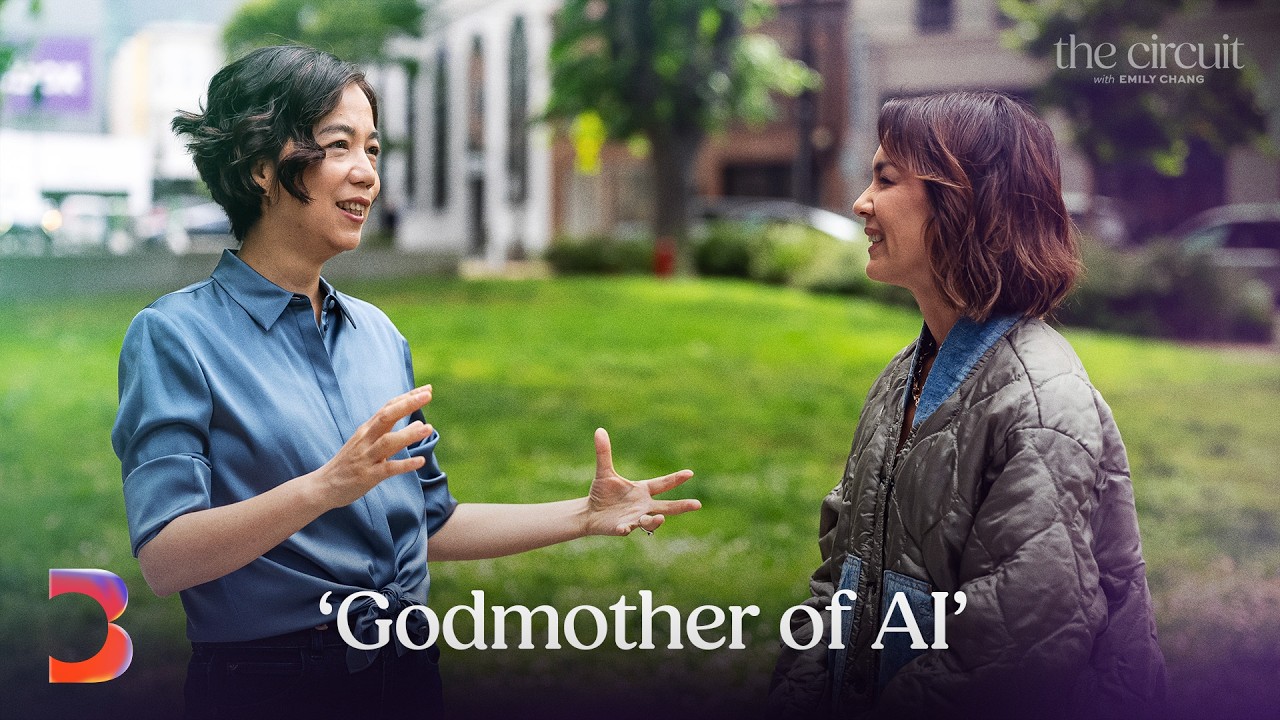
Fei-Fei Li Builds Spatial AI at World Labs to Move Beyond Text
Bloomberg Originals
Large language models cannot interact with physical reality, making 3D spatial intelligence essential to developing functional real-world robotics and true machine intelligence.
## Background
This video was published on YouTube by Bloomberg Originals on August 19, 2026. The description notes that host Emily Chang meets with artificial intelligence pioneer Fei-Fei Li to discuss her innovations in AI, her $1 billion startup World Labs, and why she believes the future of AI extends beyond chatbots.
## TL;DR
In this interview, AI pioneer Dr. Fei-Fei Li discusses her journey from Chengdu to Caltech and her foundational work on ImageNet, which paved the way for modern deep learning. She explains why her new startup, World Labs, is moving beyond text-focused Large Language Models to focus on spatial intelligence, world models, and 3D environment generation through its Marble platform. Li also shares her pragmatic perspectives on AI regulation, human-centered policy, and robotics, remaining optimistic about technology's potential to empower humanity.
## Atmosphere & style
The conversation carries a thoughtful, grounded, and intellectually stimulating tone, balancing casual reflective moments walking in the park with incisive technical and philosophical discussions. Dr. Fei-Fei Li speaks with calm authority and scientific humility, offering a stark pragmatic counterweight to industry hype. The dynamic between Emily Chang and Li creates an engaging, high-level narrative arc that moves seamlessly from personal origin stories to the cutting edge of frontier technology and societal policy.
## Key takeaways
- [00:03](https://www.youtube.com/watch?v=ITxsc3mgqts&t=3s) Dr. Fei-Fei Li launched World Labs, a $1 billion startup developing spatial intelligence and 3D world models rather than traditional text-focused LLMs.
- [00:03](https://www.youtube.com/watch?v=ITxsc3mgqts&t=3s) World models predict physical reality and spatial dynamics to enable machines to act in the physical world, addressing tasks that language models cannot perform.
- [01:58](https://www.youtube.com/watch?v=ITxsc3mgqts&t=118s) Li's early passion for machine vision stemmed from a desire to understand how human sensory systems collect visual signals and translate them into spatial intelligence.
- [04:26](https://www.youtube.com/watch?v=ITxsc3mgqts&t=266s) In 2006, Li spearheaded ImageNet, compiling 14 million annotated images across 21,000 categories to provide the massive training data required for machine learning.
- [04:26](https://www.youtube.com/watch?v=ITxsc3mgqts&t=266s) The 2012 AlexNet breakthrough established the 'golden recipe' for modern deep learning: big data (ImageNet), deep neural networks, and GPU compute.
- [04:26](https://www.youtube.com/watch?v=ITxsc3mgqts&t=266s) Li embraces the title 'Godmother of AI' to ensure female innovators receive recognition and visibility in the male-dominated technology sector.
- [07:21](https://www.youtube.com/watch?v=ITxsc3mgqts&t=441s) Spatial intelligence breaks down into three core functions: Rendering (human visual output), Simulation (physics/geometry for machines), and Planning (spatial decision-making for action).
- [07:21](https://www.youtube.com/watch?v=ITxsc3mgqts&t=441s) World Labs created Marble, a platform that generates fully interactive, geometrically consistent, and editable 3D environments from text or image prompts.
- [11:43](https://www.youtube.com/watch?v=ITxsc3mgqts&t=703s) Funding for humanoid robotics ($6B+) remains far lower than investment in autonomous vehicles or LLMs, making spatial intelligence the critical missing piece for real-world robotic utility.
- [11:43](https://www.youtube.com/watch?v=ITxsc3mgqts&t=703s) World Labs balances competition with tech giants through singular focus and direct agility within a small team environment.
- [16:01](https://www.youtube.com/watch?v=ITxsc3mgqts&t=961s) AI policy should be grounded in scientific reality rather than sci-fi doomsday scenarios, prioritizing public infrastructure, education, and real-world risk mitigation.
- [19:23](https://www.youtube.com/watch?v=ITxsc3mgqts&t=1163s) Sustaining a healthy AI ecosystem requires supporting public sector compute and robust K-16 STEM education to keep human capital at the center of innovation.
- [19:23](https://www.youtube.com/watch?v=ITxsc3mgqts&t=1163s) Major risks associated with world models and robotics include misinformation, weaponization by bad actors, and over-reliance in educational settings.
- [20:31](https://www.youtube.com/watch?v=ITxsc3mgqts&t=1231s) Li rejects tech leader 'God complexes,' calling for collective governance and democratic guardrails to regulate AI without halting beneficial advances in medicine and education.
- [22:16](https://www.youtube.com/watch?v=ITxsc3mgqts&t=1336s) Expressing long-term optimism about human progress, Li anchors her faith in collective human ethics and a universal drive to improve future generations.
- [23:19](https://www.youtube.com/watch?v=ITxsc3mgqts&t=1399s) Drawing on physics and Drake's equation, Li notes the mathematical likelihood of extraterrestrial life and names *Contact* as her favorite sci-fi movie.
## Detailed walkthrough
### [[00:03](https://www.youtube.com/watch?v=ITxsc3mgqts&t=3s)(https://www.youtube.com/watch?v=ITxsc3mgqts&t=3)] Beyond Chatbots: World Models and Spatial Intelligence
Dr. Fei-Fei Li—renowned computer vision pioneer, Stanford professor, former Google executive, and presidential advisor—begins her interview with host Emily Chang during a casual walk in the park next to her office. Known as the "Godmother of AI" for creating ImageNet, Li is launching a new chapter as the co-founder and CEO of World Labs, a $1 billion startup. While mainstream AI tech doubles down on text-focused Large Language Models (LLMs) like ChatGPT and Claude, Li is betting heavily on spatial intelligence and "world models" designed to predict physical reality rather than just guess the next word in a sentence. Asked about what world models can achieve that LLMs never will, Li delivers a sharp, practical reality check: "Can words put down fires? Can words cook an omelet?"
Addressing her leadership style, Li describes running her new venture like a "tiger mom," setting exceptionally high standards for a highly talented but younger team of researchers and engineers. When asked if she ever imagined AI redefining human civilization, geopolitical landscapes, and culture to this extent, she admits that such a massive civilizational shift was beyond what anyone imagined decades ago.
- **World Labs status:** Valued at $1 billion, focusing on spatial intelligence and 3D generative world models.
- **Core distinction:** LLMs focus on processing language, whereas world models process and predict physical environments and spatial dynamics.
---
[[01:58](https://www.youtube.com/watch?v=ITxsc3mgqts&t=118s)(https://www.youtube.com/watch?v=ITxsc3mgqts&t=118)] From Chengdu to Caltech: The Roots of a Pioneer
Reflecting on her upbringing in 1980s and '90s Chengdu, China, Li recalls how her father's curiosity about nature shaped her childhood—chasing bugs, playing with puppies, sketching in the mountains, and cultivating a deep fascination with aerospace and physics. Moving to New Jersey as a teenager in the 1990s presented immense cultural and linguistic hurdles. She juggled learning English and excelling at high school with working at her family's dry-cleaning business on weekends. She went on to study physics at Princeton before earning her PhD at Caltech and transitioning into computer science.
During that early era, AI was a obscure, non-commercial field driven strictly by pure scientific curiosity. Li notes that there was "no money, there was no power, there was no fanfare, there was no hype." Her curiosity focused on machine vision: how human visual sensory systems collect light signals for the brain to process spatial intelligence—waking up, hugging kids, grabbing keys, driving to work—and how computers could be taught to map patterns, colors, and 3D objects to prepare machines to act in the physical world.
- **Early life & education:** Grew up in Chengdu, China; immigrated to New Jersey in the 1990s; earned a B.A. in Physics from Princeton and a PhD from Caltech.
- **Side hustle:** Worked weekends at her family's dry cleaning business throughout her college years.
---
[[04:26](https://www.youtube.com/watch?v=ITxsc3mgqts&t=266s)(https://www.youtube.com/watch?v=ITxsc3mgqts&t=266)] ImageNet, AlexNet, and Embracing the "Godmother" Title
In 2006, while the broader research community remained obsessed with tweaking algorithms, Li recognized that machine learning required massive datasets to scale. She spearheaded the creation of ImageNet, an unprecedented library containing 14 million annotated pictures across 21,000 categories. In 2010, she launched the ImageNet Large Scale Visual Recognition Challenge. The historic turning point arrived in 2012 when Geoffrey Hinton’s team from the University of Toronto entered AlexNet—a deep neural network trained using NVIDIA GPU graphics cards. The combination of big data, neural networks, and GPU compute created the "golden recipe" for modern deep learning.
Looking at an iconic photo depicting AI pioneers standing on steel girders reminiscent of 1920s skyscraper construction workers, Li calls it a "civilizational moment" representing all humanity rather than just a few individuals. Chang brings up the title "Godmother of AI," which Li was initially hesitant to accept. Li explains that while she would never naturally brand herself with such titles, rejecting it outright would reinforce an industry pattern where women's contributions are overlooked. She explicitly embraces the recognition so that more female innovators and researchers are acknowledged as "godmothers" of breakthrough inventions.
- **ImageNet scale:** 14 million cataloged images covering more than 21,000 distinct categories.
- **The Golden Recipe (2012):** Big data (ImageNet) + Neural Networks (AlexNet) + Hardware compute (NVIDIA GPUs).
---
[[07:21](https://www.youtube.com/watch?v=ITxsc3mgqts&t=441s)(https://www.youtube.com/watch?v=ITxsc3mgqts&t=441)] Deconstructing World Models: Rendering, Simulation, and Planning
With ChatGPT triggering a global AI gold rush in late 2022, Li founded World Labs in 2024 to push past text. She breaks down spatial intelligence into three foundational functional classes:
1. **Rendering:** Generates visual output directly for human consumption (e.g., pixel-based video generation tools like OpenAI's Sora).
2. **Simulation:** Captures the structural, geometric, and physical properties of the real world specifically to train machines rather than generate entertainment for humans.
3. **Planning:** Teaches systems contextual spatial reasoning so an agent knows what action to take next (e.g., instructing a robotic arm how to approach, grip, and relocate a physical cup).
Li demonstrates **Marble**, World Labs' first public-facing project. Marble allows users to input simple text or image prompts to generate fully interactive, consistent, and editable 3D environments. Rather than producing flat 2D renders or videos, Marble allows users to navigate through spatial scenes like a video game. Current real-world applications range from virtual film production (shooting actors in dynamic digital environments) and game design to a collaboration with NVIDIA, which uses Marble-generated environments to train autonomous robots.
- **Three pillars of spatial intelligence:** Rendering (human-facing pixels), Simulation (physics/geometry for machines), and Planning (spatial decision-making for robotics).
- **Marble platform:** Generates fully editable, geometrically consistent 3D environments from single image or text inputs.
- **Training data edge:** World Labs trains on specialized dataset architectures enriched with camera geometry, spatial depth, and algorithmic innovations aimed at achieving true 3D and 4D world creation.
---
[[11:43](https://www.youtube.com/watch?v=ITxsc3mgqts&t=703s)(https://www.youtube.com/watch?v=ITxsc3mgqts&t=703)] Robotics, Capital, and the Hype Cycle Debate
At a Bloomberg event hosted by Emily Chang, Li addresses the broader state of robotics and humanoid technology. Pointing out that humanoid robotics funding has reached roughly $6 billion, Chang notes that current robots still cannot efficiently load dishwashers or retrieve packages. Li argues that $6 billion is actually "too small" when compared to the tens of billions poured into self-driving cars and LLMs. She emphasizes that spatial intelligence is the key missing piece needed to bridge the gap between current robotic demonstrations and real-world utility.
Acknowledging competition from tech giants with massive deep-pocket budgets, Li confesses, "As an entrepreneur and a co-founder, CEO, I'm paranoid every day." However, she notes that World Labs benefits from singular focus, whereas major tech conglomerates juggle dozens of competing priorities. Justin Johnson, a former PhD student of Li's from Stanford who joined World Labs, notes that in a 50-person startup, researchers can directly alter the company's trajectory in ways impossible inside massive corporate tech environments. Addressing skeptics who call world models the latest hype cycle, Li stands firm as a scientist: physical and spatial understanding are non-negotiable fundamentals of true machine intelligence.
- **Capital context:** Global funding for humanoid robotics ($6B+) remains far below total venture investments made into autonomous vehicles or large language models.
- **Current stage:** Li compares the current state of world models to where chatbots were around 2019—early, experimental, and on the cusp of a major scientific breakthrough.
---
[[16:01](https://www.youtube.com/watch?v=ITxsc3mgqts&t=961s)(https://www.youtube.com/watch?v=ITxsc3mgqts&t=961)] Policy, Regulation, and the Human Aspect of AI
Discussing public anxiety, economic uncertainty, and high-profile backlash against tech leaders—such as former Google CEO Eric Schmidt getting booed at a college graduation—Li acknowledges that even Stanford students feel a deep mix of hope, excitement, and job security anxiety. She warns that if the United States fails to lead with a positive, human-centered vision for AI, the entire global community loses a vital role model.
Having advised President Biden, President Trump, and the United Nations, Li outlines her pragmatic approach to AI policy and regulation:
- **Base policy on science, not science fiction:** She criticizes Silicon Valley's obsession with existential "AGI machine overlord" extinction scenarios, arguing it distracts regulators from addressing immediate, tangible challenges.
- **Invest in public infrastructure:** Governments must resource STEM education (K-12 through higher education) and public sector compute, keeping human capital at the center of the technology ecosystem.
- **Acknowledge real harms:** World models and powerful AI systems bring genuine risks regarding misinformation, potential military weaponization, and educational shortcuts that weaken student critical thinking.
Addressing accusations that prominent AI CEOs exhibit "god complexes," Li calls the mindset dangerous: "As a CEO, as an entrepreneur, our founding premise is we are here to contribute to society and to empower people." Rejecting calls to halt technological research out of fear, she argues that society must establish democratic guardrails without throwing out "the baby with the bathwater"—preserving AI's potential to discover medical cures, assist teachers, and care for aging populations.
- **Policy philosophy:** Root regulation in current scientific facts; avoid sci-fi doomsday distractions; invest heavily in K-16 STEM education.
- **Closing thoughts:** Expressing optimism rooted in Dr. Martin Luther King Jr.'s ethos, Li believes humanity's moral compass naturally bends toward benevolence, expressing fundamental faith in human agency over technological doom.
<ElicitationsGroup message="Explore more details from this interview:">
{/* Reason: Provides logical follow-up prompts to dive deeper into World Labs' technology or Dr. Fei-Fei Li's history based on the interview transcript. */}
<Elicitation label="Break down World Labs' Marble platform and 3D world models" query="Explain how World Labs' Marble platform generates 3D worlds and how it differs from text-to-video models like OpenAI's Sora."/>
<Elicitation label="Summarize Dr. Fei-Fei Li's policy advice to US Presidents and the UN" query="What specific AI policy recommendations and regulatory approaches does Dr. Fei-Fei Li advocate for when advising world leaders?"/>
</ElicitationsGroup>
[19:23](https://www.youtube.com/watch?v=ITxsc3mgqts&t=1163s) Recommendations for a Thriving AI Ecosystem and Risks of World Models
Fei-Fei Li emphasizes that a healthy AI ecosystem requires active support for the public sector and robust STEM education from K-12 through K-16. She asserts that "human capital at the end of the day is the most important resource of our world," stressing that the ultimate goal is to cultivate a thriving human society rather than a world merely dominated by machines.
When asked about the risks of world models, Li acknowledges that powerful technologies—whether language models or spatial AI—carry significant potential for harm. She highlights concerns such as mis- and disinformation, the weaponization of empowered robots by bad actors, and the danger of students treating technology as a "lazy crutch instead of an empowering learning tool." She puts these anxieties in historical context, noting that every major technological leap, from electricity and automobiles to personal computers and the internet, brought similar existential risks.
- Public sector support and STEM education (K-12/K-16) are critical to maintaining human-centric growth.
- Risks of world models include mis/disinformation, bad actors weaponizing robotics, and student over-reliance.
[20:31](https://www.youtube.com/watch?v=ITxsc3mgqts&t=1231s) Addressing AI "God Complexes" and the Need for Collective Governance
Responding to the criticism that prominent tech CEOs possess "God complexes" and believe they know best for humanity, Li calls it dangerous for any individual to assume superior knowledge over the rest of society. Speaking as a founder and CEO, she frames her mission around contribution and empowerment rather than making decisions on behalf of everyone else.
While acknowledging the messy state of current tech leadership, Li cautions against throwing "the baby out with the bathwater." She argues against outright halting AI development, emphasizing that the technology holds immense potential to discover cures for diseases, assist teachers and students, and care for the elderly. To navigate this period, she calls for collective governance, public engagement, and a personal commitment to speaking out as a scientist and educator.
- Li rejects the idea of tech leaders making all decisions for society, advocating for democratic participation and collective governance.
- True governance should regulate and guide AI without killing its potential to deliver major societal benefits in health, education, and elder care.
[22:16](https://www.youtube.com/watch?v=ITxsc3mgqts&t=1336s) An Optimistic Five-Year Outlook on Humanity and AI
Looking ahead five years, Li proudly identifies as an optimist, referencing Martin Luther King Jr. to express her belief that the arc of history "bends towards benevolence." She notes that despite human flaws, life in 2026 is vastly better for the majority of the population than it was in 2026 BC.
She grounds her hope in the innate human drive to ensure future generations live better lives, guided by a collective moral compass. Ultimately, her faith lies in humanity's potential rather than in technology alone.
- Li holds a deeply optimistic view of human progress over historical timescales.
- Her trust remains anchored in collective human ethics and the universal desire to improve life for future generations.
[23:19](https://www.youtube.com/watch?v=ITxsc3mgqts&t=1399s) Rapid-Fire: Childhood Curiosity, UFOs, and Favorite Sci-Fi
In a lighthearted closing exchange, Emily Chang asks Li about her childhood fascination with UFOs and whether she follows newly declassified documents. Li explains that her interest stemmed from "dreamy curiosity" about the universe during her youth.
Drawing on her background as a physics student, Li references Drake's equation—which calculates the theoretical probability of extraterrestrial life—to note that the numbers suggest aliens are mathematically possible. When asked for her favorite science fiction film, Li instantly names *Contact* as her top choice, highlighting its theme of intelligence somewhere out in the cosmos.
- **Drake's Equation**: Referenced by Li to explain the mathematical likelihood of extraterrestrial intelligence.
- **Favorite Sci-Fi Movie**: *Contact* ("By far my favorite").
## Notable quotes
> [00:03](https://www.youtube.com/watch?v=ITxsc3mgqts&t=3s) Can words put down fires? Can words cook an omelet? — Fei-Fei Li
> [01:58](https://www.youtube.com/watch?v=ITxsc3mgqts&t=118s) no money, there was no power, there was no fanfare, there was no hype. — Fei-Fei Li
> [11:43](https://www.youtube.com/watch?v=ITxsc3mgqts&t=703s) As an entrepreneur and a co-founder, CEO, I'm paranoid every day. — Fei-Fei Li
> [16:01](https://www.youtube.com/watch?v=ITxsc3mgqts&t=961s) As a CEO, as an entrepreneur, our founding premise is we are here to contribute to society and to empower people. — Fei-Fei Li
> [19:23](https://www.youtube.com/watch?v=ITxsc3mgqts&t=1163s) human capital at the end of the day is the most important resource of our world — Fei-Fei Li
> [19:23](https://www.youtube.com/watch?v=ITxsc3mgqts&t=1163s) lazy crutch instead of an empowering learning tool. — Fei-Fei Li
> [22:16](https://www.youtube.com/watch?v=ITxsc3mgqts&t=1336s) bends towards benevolence — Fei-Fei Li
> [23:19](https://www.youtube.com/watch?v=ITxsc3mgqts&t=1399s) By far my favorite — Fei-Fei Li
## Mentioned
Fei-Fei Li, Emily Chang, World Labs, Bloomberg Originals, ChatGPT, Claude, Stanford University, Google, Princeton University, Caltech, ImageNet, AlexNet, Geoffrey Hinton, University of Toronto, NVIDIA, OpenAI, Sora, Marble, Justin Johnson, Eric Schmidt, Joe Biden, Donald Trump, United Nations, Martin Luther King Jr., Drake's equation, Contact
Dr. Fei-Fei Li argues that the next frontier of artificial intelligence lies in spatial intelligence and "world models" that reason about physical reality, moving beyond the text-prediction limits of large language models. Drawing on her foundational role in deep learning, Li contends that unlocking real-world machine utility requires physical simulation, sustained STEM investment, and democratic governance rather than speculative extinction fears.
Defining Spatial Intelligence and World Models
Li's startup, World Labs—valued at $1 billion following its 2024 launch—is focused on building 3D generative world models designed to process and predict physical environments rather than generating text. Li contrasts this with large language models (LLMs) by noting that language alone cannot interact directly with the physical world to complete tangible tasks. She categorizes spatial intelligence into three functional pillars: rendering (creating visual pixels for humans), simulation (modeling 3D geometry and physical rules to train machines), and planning (contextual reasoning that directs physical actions, such as robotic grasping).
To demonstrate this concept, World Labs launched Marble, a platform that converts single text or image inputs into editable, geometrically consistent 3D environments that users can navigate like a game space. The technology is currently applied in virtual film production, game development, and robotic training environments through a collaboration with NVIDIA.
The ImageNet Foundation and Deep Learning
Li's current work builds on her shift in 2006 toward data scale, when she spearheaded ImageNet—a dataset of 14 million annotated images across more than 21,000 categories. In 2012, this effort converged with Geoffrey Hinton's AlexNet neural network and NVIDIA GPU computing, creating what Li describes as the "golden recipe" that catalyzed modern deep learning.
Addressing the industry title "Godmother of AI," Li noted she initially hesitated to use the label. She explained that she chose to embrace it publicly to prevent the historical pattern of women's scientific contributions being overlooked, aiming to ensure other female researchers and inventors receive comparable recognition.
Robotics Capital and the Spatial Gap
When addressing why humanoid robots still struggle with routine household tasks, Li pointed out that total venture funding in humanoid robotics—roughly $6 billion—remains far smaller than the tens of billions directed into autonomous vehicles and LLMs. She argued that spatial intelligence is the critical missing component needed to advance robots from simple demonstrations to everyday utility.
Li compared the current developmental stage of world models to where conversational AI stood around 2019, describing the sector as early and experimental but approaching a significant scientific breakthrough. While acknowledging daily competitive pressure from well-funded tech conglomerates, Li maintained that World Labs' 50-person team benefits from an undivided focus on spatial and physical reasoning.
Empirical Policy, Societal Risks, and Governance
Having advised U.S. administrations under both Donald Trump and Joe Biden, as well as the United Nations, Li advocated that AI policy should be anchored in current scientific facts rather than science-fiction scenarios about existential machine takeovers. She warned that focusing on hypothetical "AGI overlords" distracts regulators from addressing immediate harms, including misinformation, autonomous military weaponization, and educational dependencies that erode critical thinking.
Li also criticized the "god complexes" of prominent tech executives who presume to decide what is best for humanity. Rejecting calls to halt technological development, she advocated for collective, democratic governance and public investments in computing infrastructure and K-16 STEM education. She expressed historical optimism that societal guardrails will preserve AI's benefits for healthcare, education, and elder care.
Li frames spatial intelligence not merely as a commercial venture, but as the essential step required for AI to interact meaningfully with the physical world. However, whether early systems like Marble can scale physical simulation to resolve persistent robotics challenges as rapidly as LLMs scaled language processing remains an open technological test.
## Background
该视频由彭博社旗下的 Bloomberg Originals 频道于 2026 年 8 月 20 日发布在 YouTube 平台上。页面简介指出,主持人艾米莉·张(Emily Chang)与人工智能先驱李飞飞展开深度对话,探讨其在 AI 领域的创新历程、新创立的估值达十亿美元的初创公司 World Labs,以及为何她坚信人工智能的未来远不止于聊天机器人。
## TL;DR
访谈回顾了李飞飞从移民求学到主持创建 ImageNet 进而引发现代深度学习革命的传奇历程。李飞飞系统性阐述了她创办 World Labs 并押注“世界模型(World Models)”与空间物理智能的底层逻辑,强调单靠大语言模型无法理解真实三维物理规律与采取行动。她犀利指出当前 AI 领导者过度沉溺于“取代人类”与“上帝情结”,呼吁以严谨科学而非科幻末日叙事来制定监管政策,坚定主张科技发展的终极目标应当是赋能人类与社会。
## Atmosphere & style
整场对谈兼具沉稳的知性力量与轻松自然的人文温度,艾米莉·张与李飞飞在公园漫步与舞台对坐间无缝切换,对话直击技术核心且充满思想交锋。李飞飞不仅展现出顶级科学家的清晰洞察与创业者的专注警醒,更流露出对未知宇宙真挚的好奇心与历史乐观主义。观看过程既能感受到独角兽企业掌舵者的务实与敏锐,又能体会到一位女性科技先驱跨越数十年科研长河的温厚与坚定。
## Bulletin
- [00:03](https://www.youtube.com/watch?v=ITxsc3mgqts&t=3s) 李飞飞联合创立估值 10 亿美元的初创公司 World Labs,开辟“世界模型”(World Models)新赛道,致力于超越仅能预测文本的大语言模型,赋予 AI 理解与交互真实物理世界的能力。
- [09:35](https://www.youtube.com/watch?v=ITxsc3mgqts&t=575s) World Labs 推出核心平台 Marble,支持通过单张图片或文本生成可自由探索、可编辑的 3D 物理场景,并已在虚拟制作、游戏开发以及英伟达的机器人仿真训练中落地。
- [13:18](https://www.youtube.com/watch?v=ITxsc3mgqts&t=798s) 李飞飞指出当前世界模型的发展正处于类似 2019 年大语言模型的早期探索阶段,尽管底层技术路线尚未形成行业共识且极度消耗算力,但空间物理智能是实现通用机器智能不可或缺的基石。
- [17:43](https://www.youtube.com/watch?v=ITxsc3mgqts&t=1063s) 在参与全球 AI 政策咨询时,李飞飞呼吁决策者立足严谨的科学事实,摒弃硅谷极端的“人类灭绝论”与科幻叙事,并警惕科技精英自诩知晓全人类最佳利益的“上帝情结”。
## Key takeaways
- [00:03](https://www.youtube.com/watch?v=ITxsc3mgqts&t=3s) 当前的 AI 领导者过度聚焦于用技术“取代人类与工作”,极度缺乏关于“如何赋能人类”的建设性讨论;大语言模型受限于文本序列,无法直接与物理法则交互。
- [01:58](https://www.youtube.com/watch?v=ITxsc3mgqts&t=118s) 早期的 AI 研究曾是无人问津且缺乏资金的冷门学科,科研探索完全源自科学家对宇宙和自然最纯粹的求索心,与当下的资本狂热形成鲜明对比。
- [03:44](https://www.youtube.com/watch?v=ITxsc3mgqts&t=224s) 人类视觉的核心目的是为了行动做准备;李飞飞主导的 ImageNet 数据集与 2012 年 AlexNet 的质的突破,奠定了“海量数据 + 深度神经网络 + GPU 算力”的现代 AI 黄金法则。
- [05:22](https://www.youtube.com/watch?v=ITxsc3mgqts&t=322s) 李飞飞选择坦然接受“AI 教母”称号,旨在确保女性在科技史上的先锋贡献能够获得同等认可,打破女性科研人员历史地位被边缘化的行业旧困境。
- [07:17](https://www.youtube.com/watch?v=ITxsc3mgqts&t=437s) 世界模型与大语言模型并非对立,而是下一代空间智能的基石,其功能可解构为面向人类视觉消费的渲染(Rendering)、面向机器物理理解的仿真(Simulation)以及面向机器人决策的规划(Planning)。
- [09:35](https://www.youtube.com/watch?v=ITxsc3mgqts&t=575s) World Labs 的技术护城河源于高信息密度的空间像素数据处理,以及独创的算法与网络架构,率先实现了高质量交互式 3D 及未来 4D 动态世界的生成。
- [11:38](https://www.youtube.com/watch?v=ITxsc3mgqts&t=698s) 人形机器人赛道累计 60 亿美元的融资相比自动驾驶和大模型而言体量依然过小,赋予机器人空间物理智能是跨越行业炒作与实用落地差距的核心突破口。
- [13:18](https://www.youtube.com/watch?v=ITxsc3mgqts&t=798s) 初创企业抗衡巨头的关键在于维持极高的战略专注度;当前世界模型虽处于底层路径未定的探索初期,但随着路线走对必将迎来爆发式的“顿悟时刻”。
- [16:01](https://www.youtube.com/watch?v=ITxsc3mgqts&t=961s) 青年学生在 AI 赋能带来的尊严感与工作被取代的剥夺感之间普遍感到迷茫与焦虑;美国必须示范拥抱技术的积极路径,否则因恐惧而后退将导致所有人成为输家。
- [17:43](https://www.youtube.com/watch?v=ITxsc3mgqts&t=1063s) “人工智能毫无人工之处”,它源于人类且作用于人类;监管治理应将重心放在大力投资公共部门、强化 STEM 教育与人力资本上,而非被科幻式的假想风险裹挟。
- [19:47](https://www.youtube.com/watch?v=ITxsc3mgqts&t=1187s) 反对部分 AI 领袖以为能替全人类做决定的“上帝情结”;面对虚假信息与技术武器化等双刃剑风险,社会决不能因噎废食,停滞 AI 在攻克绝症与民生照护上的巨大潜能。
- [23:38](https://www.youtube.com/watch?v=ITxsc3mgqts&t=1418s) 李飞飞对人类历史的长河保持坚定乐观,坚信道德罗盘会驱动社会向善发展,并借由德雷克方程与电影《超时空接触》展现了对地外智慧与广袤未知的终极好奇。
## Detailed walkthrough
### [00:03](https://www.youtube.com/watch?v=ITxsc3mgqts&t=3s) 超越聊天机器人:走向“世界模型”的新赌注
彭博社主持人艾米莉·张(Emily Chang)与计算机视觉先驱李飞飞(Fei-Fei Li)在一处紧邻公司的公园里边走边聊。李飞飞笑着打趣道,大家平时坐得太久,所以散步交谈是个极好的习惯;当被问及这里是否时时刻刻都在聊人工智能时,她坦言自己不清楚别人在谈什么,但自己确实“除了 AI 之外别无所知”。作为斯坦福大学教授、前谷歌高管以及美国总统顾问,李飞飞长期站在 AI 领域的核心。她严厉指出,当下的 AI 领袖们过多聚焦于“取代人类和取代工作岗位”,而极度缺乏关于“如何赋能人类”的探讨。
如今,这位被誉为“AI 教母”的科学家在履历中又添上了创业公司联合创始人的身份。当全球科技界几乎全押注在 ChatGPT、Claude 等大型语言模型(LLM)上时,李飞飞却创立了估值达十亿美元的初创公司 World Labs,开辟一条全新的赛道——世界模型(World Models)。不同于语言模型仅仅预测句子中的下一个单词,世界模型致力于预测物理现实世界中接下来会发生什么。李飞飞用极具画面感的反问指出了语言模型的局限:“文字能灭火吗?文字能煎出蛋卷吗?”在她看来,AI 发展到重新定义文明、重塑文化与地缘政治的地步,其规模连当年的她也未曾预料。
- **核心观点**:当前的 AI 领导者严重忽视了利用技术赋能人类的讨论,过度聚焦于取代人类和劳动力。
- **技术分歧**:大语言模型(LLM)局限于文本序列的预测,无法直接与真实物理规律交互,而世界模型关注的是现实世界的动态与预测。
---
### [01:58](https://www.youtube.com/watch?v=ITxsc3mgqts&t=118s) 从成都的叛逆少女到普林斯顿与加州理工的求索之路
在成为全球顶尖的 AI 科学家之前,李飞飞的童年在二十世纪八九十年代的中国成都度过。她的父亲对大自然抱有无限好奇,童年的飞飞常常跟着父亲在户外追逐昆虫和小狗,爬上山头写生作画,或是沉浸在书海中。那时的她剪着一头短发,痴迷于航天航空和物理学。回想那段有些叛逆的少女时光,李飞飞坦承,十几岁的孩子为了确立自我认同往往会带有叛逆色彩,但对自然、科学以及外太空的挚爱,自始至终构成了她生命的核心底色。
上世纪九十年代,十几岁的李飞飞随家人移民到美国新泽西州。在最渴望寻找自我认同的青春期,面对全然陌生的文化、语言与生活环境,一切都变得异常艰难。李飞飞硬是一边克服语言关读完高中,一边考入普林斯顿大学攻读物理学。为了分担家庭压力,她大学期间每逢周末都要回家打理家里的干洗店。随后,她追随梦想前往加州理工学院攻读博士学位,正式踏入计算机科学领域。那时的 AI 还是一个极度冷门的边缘学科,没有任何资本青睐、没有权力光环、更没有当下的炒作与喧嚣,科研纯粹源自科学家对未知的极致好奇。
- **求学历程**:普林斯顿大学物理学本科,期间周末在家庭干洗店兼职;随后在加州理工学院获得博士学位并转向计算机科学。
- **早期 AI 科研生态**:资金匮乏、无人关注,研究动力完全由类似“仰望星空、探索深海”般纯粹的科学好奇心驱动。
---
### [03:44](https://www.youtube.com/watch?v=ITxsc3mgqts&t=224s) 空间智能的启示与 ImageNet 引发的现代 AI 革命
探讨 AI 如何理解视觉时,李飞飞将计算机与人类的认知过程进行了对比。人类通过双眼作为感官系统的驱动器,将外界光影转换为大脑能够处理的神经信号,大脑进而开展计算;计算机也是如此,需要学会提取环境模式、识别物体、理解色彩与结构。李飞飞特别强调,“视觉的核心目的之一是为行动做准备”。早晨醒来拥抱孩子、下楼制作早餐、抓起车钥匙、驾车去上班,这一系列日常连贯动作的背后,全赖人类大脑中的“空间智能(Spatial Intelligence)”,而教会计算机理解并执行这些动作极其困难。
早在 2006 年,李飞飞便敏锐意识到当时学界的一个根本盲区:“当时根本没有人在意数据。”她与学生们迎来了顿悟——机器学习的飞跃必须由海量数据驱动。为此,她主导构建了当时全球最大的图像数据库 ImageNet,包含 21,000 多个类别、总计超过 1,400 万张标注图片。2010 年,李飞飞将 ImageNet 设为公开竞赛。2012 年,杰弗里·辛顿(Geoffrey Hinton)带领多伦多大学团队带着基于英伟达 GPU 训练的 AlexNet 算法参赛,取得了断层式的胜利。这一事件成为了人工智能的转折点,奠定了“海量数据 + 深度神经网络 + GPU 算力”这一现代 AI 的黄金法则,也奠定了李飞飞的历史地位。
```mermaid
flowchart LR
accTitle: 现代 AI 突破的黄金法则三要素
accDescr: 展示 ImageNet 海量数据、深度神经网络算法和 GPU 高性能算力共同促成现代 AI 突破的结构流程。
subgraph Data["海量数据支撑"]
D1["ImageNet 图像库<br>1400万+ 标注图片 / 21000+ 分类"]
end
subgraph Compute["算力与算法融合"]
A1["深度神经网络<br>AlexNet"]
C1["GPU 高性能计算<br>NVIDIA 图像处理器"]
end
subgraph Outcome["现代 AI 革命爆发"]
R1["计算机视觉质的飞跃<br>(2012 竞赛转折点)"]
end
D1 --> R1
A1 --> R1
C1 --> R1
```
---
### [05:22](https://www.youtube.com/watch?v=ITxsc3mgqts&t=322s) 站在文明的转折点:“AI教母”的称谓与女性认同
面对一张致敬二十世纪三十年代纽约摩天大楼建设工人的 AI 先驱大合照(致敬著名的《摩天楼顶上的午餐》),李飞飞感慨道,画面所代表的绝非照片里的八个人,而是“全人类的历程”。工业化飞速发展、城市天际线拔地而起的时代是一个文明的转折点,而当下的 AI 正处于类似的文明时刻。看着照片,她还不忘幽默地调侃画面的构图:“难道他们就不能把画面居中一点吗?右边明明空了那么大一块。”
谈及多年前艾米莉·张率先冠以她的“AI 教母(Godmother of AI)”头衔时,李飞飞坦承自己最初十分吃惊,本能上并不习惯给自己扣上这种高调标签,因为她自认只专注于具体工作。然而,她随后意识到,如果当场拒绝这个头衔,行业又会退回到“女性贡献无法获得与男性同等认可”的旧困境中。图灵奖常被称为计算机界的至高荣誉,业界早有“AI 教父”,女性同样需要平等的历史定位。她由衷希望:“能有更多女性因为她们的创造、革新与发现,被尊称为各自领域的教母。”尽管她平时绝不会主动向人炫耀这一头衔,但她欣然接受外界对女性技术先锋的这份肯定。
- **对行业称号的态度**:从最初因专注科研而感到突兀,到后来为了推动科技界女性获得平等认可而坦然接受。
- **历史定位反思**:强调技术突破是属于全人类的文明级演进,不应被个别技术精英所窄化。
---
### [07:17](https://www.youtube.com/watch?v=ITxsc3mgqts&t=437s) 掌舵独角兽 World Labs:世界模型的三大核心支柱
长期以来,AI 在政策和科技圈里一直被视为“即将到来”的技术,直到 ChatGPT 横空出世,AI 瞬间从象牙塔中的小众研究蜕变为全球焦点。各种语言模型、图像生成器、视频生成器井喷,各行各业蜂拥而入。李飞飞看准行业盲区,于 2024 年正式创立 World Labs。谈起管理这家汇聚顶尖年轻人才的初创企业,李飞飞笑称自己是团队中年资最长的人,面对天赋异禀却极其年轻的科研人员和工程师,自己就像一个“虎妈(Tiger Mom)”,始终以极高的标准来掌舵和要求团队。
针对行业全盘倒向大语言模型的狂热现状,李飞飞强调,追求空间智能和世界模型绝非“反 LLM”,而是为了开拓 AI 的下一个前沿。单凭语言根本无法让机器成为能够协助科学发现、在实体世界中与人协作的机器人伙伴。她系统性地将当下被泛化的“世界模型”拆解为三种功能维度:
```mermaid
flowchart TD
accTitle: 空间智能与世界模型的三大核心功能
accDescr: 将世界模型细分为面向人类视觉消费的渲染、面向机器物理理解的仿真以及面向机器人的规划三种功能。
subgraph Functions["世界模型的三大功能维度"]
F1["1. 渲染 (Rendering)<br>输出人类消费的精美像素<br>(例:OpenAI Sora 视频生成)"]
F2["2. 仿真 (Simulation)<br>捕捉真实世界的物理与几何结构<br>(服务于机器,非单纯视觉效果)"]
F3["3. 规划 (Planning)<br>预测行动次序与决策控制<br>(例:指挥机械臂抓取并放置水杯)"]
end
F1 --> Goal["构建具备空间智能的下一代 AI"]
F2 --> Goal
F3 --> Goal
```
- **第一类(渲染)**:输出供人类视觉欣赏的逼真像素,代表产品如 OpenAI 的 Sora。
- **第二类(仿真)**:核心受众不是人类,而是机器;重点在于基于物理定律精确捕捉现实世界的几何空间结构。
- **第三类(规划)**:与机器人技术深度结合,作为规划器指引机器下一步该做什么(例如识别水杯并精确拿起放到指定位置)。
---
### [09:35](https://www.youtube.com/watch?v=ITxsc3mgqts&t=575s) Marble 平台与可探索的 3D/4D 物理世界
作为实现世界模型愿景的第一步,World Labs 推出了核心平台 **Marble**。该平台允许任何用户仅凭一张单帧图像或一段简单的文字提示,就能生成一个可交互探索、可编辑的完整 3D 物理空间。李飞飞在现场展示了一个由用户生成的精美房间:初看之下它与普通的 2D 效果图无异,但用户实际上可以像在电子游戏里一样在其中自由穿行、向前移动、转身打量每一个角落,整个场景呈现出高度一致的 3D 几何特征。
这一技术已迅速在多个领域落地:
- **虚拟影视制作**:剧组可以利用 Marble 快速构建任何环境资产,在摄影棚内将演员无缝置入虚拟场景中拍摄;
- **游戏开发**:颠覆了传统 3D 建模的庞杂流程,大幅压缩开发所需的时间与资金成本;
- **机器人训练**:World Labs 与英伟达(NVIDIA)展开深度合作,利用 Marble 构建丰富多变的高保真仿真环境,用于强化机器人的空间学习与控制训练。
在谈及核心护城河时,李飞飞透露,他们训练模型的关键优势在于两点:其一是经过特殊处理的数据,像素数据远比文本数据更加微妙且信息密度更高,蕴含着详尽的摄像机参数与空间信息;其二是独创的算法与网络架构革新,率先实现了高质量生成 3D 乃至未来 4D 动态世界的能力。面对外界对公司获得高额融资的关注,李飞飞表示业务仍处于早期阶段,但技术底座正在高速成型。
### [11:38](https://www.youtube.com/watch?v=ITxsc3mgqts&t=698s) 机器人与空间智能:跨越炒作与现实的差距
在彭博社的舞台上,主持人 Emily Chang 向 World Labs 联合创始人兼首席执行官李飞飞(Fei-Fei Li)抛出了一个颇具挑战性的现实问题:当前人形机器人领域的投资额已达到 60 亿美元,但现实中的机器人依然无法像普通人那样快速收拾洗碗机,更无法下楼帮忙收取亚马逊包裹。面对“世界模型(world models)与 World Labs 是否能弥合炒作与现实之间的巨大鸿沟”这一提问,李飞飞坦承这是个尖锐问题。
李飞飞指出,机器人技术将是人类工业化进程中最重大的革命之一,而 60 亿美元的融资规模相比其宏大愿景而言“太小了”。横向对比自动驾驶汽车和大型语言模型(LLM)的发展历程,两者所吸纳的资金规模都远超 60 亿美元。她坚信,World Labs 正在攻关空间物理智能(spatial physical intelligence)领域最核心、最关键的技术,这正是赋予机器理解三维空间、采取合理行动的关键所在。
```mermaid
flowchart TD
accTitle: World Models bridging AI and Physical Reality
accDescr: 展现从基础世界模型到赋能具体应用场景的落地路径
subgraph CoreEngine ["核心技术底座"]
A["空间物理智能<br/>(Spatial Physical Intelligence)"] --> B["世界模型<br/>(World Models)"]
end
subgraph Applications ["物理现实与场景应用"]
B --> C["工业制造与工厂机器人"]
B --> D["自动驾驶系统"]
B --> E["家庭环境导航与家务处理"]
end
```
- 人形机器人赛道累计融资已达 60 亿美元,但李飞飞认为此数字相比自动驾驶和大语言模型的投资体量依然非常有限。
- 整个科技行业正在全力竞逐世界模型,其应用场景覆盖设计、自动驾驶汽车、工业制造机器人,直至能够应对家庭复杂不可预测环境的服务型机器人。
---
### [13:18](https://www.youtube.com/watch?v=ITxsc3mgqts&t=798s) 初创公司的专注与 2019 年式的行业拐点
面对坐拥巨额资金的大型科技巨头竞争,李飞飞坦言作为创业者和 CEO,自己“每天都处于战战兢兢的偏执状态(paranoid every day)”,从来没有任何可以彻底放松的时刻。但这种担忧绝不会导致停滞不前。她强调,大公司业务线纷繁复杂,桌面上有太多事情要权衡;而 World Labs 拥有顶尖的团队并且保持极高专注度——“我们的桌上只有一件事情,那就是全力以赴搞定它”。
现场采访了一位曾在斯坦福攻读博士学位并早在 2012 年就师从李飞飞的团队成员。在被问及为何在竞争激烈的人才争夺战中选择加入时,该员工表示,在科技巨头中个人的双手往往很难撼动航向,但在 World Labs 这个仅约 50 人的团队中,“你的双手能够切实改变这家公司的发展轨迹,这是人生中一件极为美好的事”。
谈及世界模型的发展阶段,Emily Chang 提问这是否类似于聊天机器人在 2019 年的状态——所有人都在追逐大语言模型,但尚未完全破解底层核心密码。李飞飞认同这一类比,指出当前世界模型的研究阶段比当年的 LLM 更为早期,整个行业甚至尚未在“如何构建世界模型”的技术路径上达成共识。但她坚信,如果路线走对,技术必将迎来爆发与“顿悟时刻(aha moment)”。针对外界关于“这只是下一轮泡沫”的质疑,李飞飞反驳称,即便是货真价实的科学也难免伴随炒作,空间智能与物理智能是机器智能的根本基石,未来必将释放出惊人的市场价值。
- 行业在世界模型领域的总投资已突破 30 亿美元并持续增长,但底层路线仍处探索初期。
- World Labs 团队规模保持在 50 人左右,凭借高度聚焦抗衡巨头的资源优势。
- 关于算力与资本消耗,李飞飞坦言世界模型极其消耗资源,未来很可能需要更多电力与资本,团队必须用扎实的成果来赢得这些资源。
---
### [16:01](https://www.youtube.com/watch?v=ITxsc3mgqts&t=961s) 青年一代的焦虑、公众信任与美国的科技领导力
随着生成式 AI 的投资激增,社会大众的情绪正呈现两极分化。前 Google CEO Eric Schmidt 在大学毕业典礼上遭遇学生嘘声的事件,揭示了公众对于 AI 抢走就业和技术失控的深层不安。经常与青年学子交流的李飞飞证实,即使是在斯坦福大学的学生群体中,情绪也是极其复杂的:希望、兴奋、焦虑与迷茫交织在一起。
当 AI 能够帮助学生完成前所未有的任务时,他们体会到尊严与能动性(agency);但当担忧未来工作被取代时,又会产生强烈的剥夺感与无力感。在被问及如果美国社会因恐惧而对技术失去信心、导致其他国家加速领跑时会发生什么,李飞飞给出了严肃的预警。
李飞飞强调,美国在全球科学、技术与经济创新领域长期扮演着思想领袖的角色。如果美国不能展现出拥抱 AI 的积极姿态并探索出一条造福社会的正向路径,“所有人都会成为输家”。反之,如果美国能够示范如何借助 AI 创造巨大的经济价值并带来积极的文化影响,全世界才会拥有一个值得参照的榜样。
---
### [17:43](https://www.youtube.com/watch?v=ITxsc3mgqts&t=1063s) 对话世界领袖:以科学为本而非诉诸科幻叙事
在横跨学术界、科技巨头与风险投资的职业生涯中,李飞飞不仅联合创立了斯坦福以人为本人工智能研究院(Stanford HAI),还曾为拜登总统、特朗普总统以及联合国就 AI 政策提供咨询。她反复阐明其核心理念:“人工智能毫无‘人工’之处(There's nothing artificial about artificial intelligence)。它因人而获得灵感,由人创造,最重要的是,它对人产生深远影响。”
谈到如何与各国元首及顶级决策者交流时,李飞飞明确表示自己从不夸大其词,也绝不沉溺于极端的两极修辞——既不描绘乌托邦幻想,也不散布世界末日的恐慌:
> “他们最需要的是科学事实。作为一名科学家,我的职责是为他们服务,直言不讳,并在他们出现错误认知时予以纠正和回击。”
李飞飞指出,绝大多数决策者并非计算机科学出身,在技术突飞猛进时产生误解是完全可以理解的。对于监管治理,她提出了两大核心原则:
| 监管与治理建议 | 核心主张与落实路径 |
|:--- |:--- |
| **立足科学而非科幻** | 摒弃硅谷常讨论的“人类灭绝论”或“AGI 机器霸主”叙事,避免科幻假想干扰真正务实的政策制定。 |
| **培育健康生态与人力资本** | 大力注资公共部门,强化 K-12 至 K-16 的 STEM 教育,确保社会繁荣的核心始终是人类本身,而非仅充斥机器。 |
---
### [19:47](https://www.youtube.com/watch?v=ITxsc3mgqts&t=1187s) 技术双刃剑、“上帝情结”与对人类底色的乐观
对于世界模型潜在的技术风险,李飞飞直言不讳地指出,无论是世界模型还是语言模型,都可能被滥用于生成虚假和错误信息;具备空间智能的机器人若落入恶人之手,极易被武器化;缺乏自驱力的学生也可能将技术当作偷懒的拐杖,而非赋能学习的工具。她指出,电力、汽车、个人电脑和互联网在诞生初期同样伴随着巨大的潜在危害,这是所有重大技术的共性。
针对当前部分 AI 领袖被指责具有“以为自己知晓全人类最佳利益”的“上帝情结(God complex)”,李飞飞表达了鲜明的反对态度:
> “任何个体认为自己比所有人都要聪明、都要正确,这都是极其危险的。创业与成为 CEO 的初衷是为了贡献社会、赋能于人,我们无权替所有人做决定。”
她呼吁公民社会切勿因噎废食,“不要把婴儿和洗澡水一起倒掉”。不能因为治理挑战就直接按下停止 AI 的按钮,因为这项技术承载着攻克绝症、赋能师生、照护老人的巨大潜能。
在展望未来五年乃至人类历史的长河时,李飞飞化用了马丁·路德·金的名言,展现出科学家的坚定乐观:“历史的弧线虽然漫长,但我相信它最终会弯向善意(benevolence)。”她指出,今天的 2026 年远比公元前 2026 年更为文明进步,人类基因深处渴望后代过上更美好的生活,这种共同的道德罗盘将驱使社会向善前行。在节目的尾声,话题转向轻松的个人趣事,面对童年对不明飞行物(UFO)的痴迷,具有物理学背景的李飞飞笑着提起用以推算地外文明概率的德雷克公式(Drake's equation),展现出对未知宇宙未曾泯灭的好奇心。
### [23:38](https://www.youtube.com/watch?v=ITxsc3mgqts&t=1418s) 德雷克方程与最喜欢的科幻电影《超时空接触》
在访谈尾声的快问快答环节中,对话谈及了地外生命的可能性。李飞飞提到著名的“德雷克方程”(Drake Equation),指出这一科学公式正是用来推算银河系内可能存在外星生命与智慧文明的概率,因此宇宙深处存在地外智慧并非凭空想象,而是存在具体的潜在数值。主持人 Emily Chang 对此感到惊叹,并顺势抛出了下一个轻松的问题:“那你最喜欢的科幻电影是哪一部?”
李飞飞毫不犹豫地给出了答案:“《超时空接触》(*Contact*),这绝对是我迄今为止的最爱(By far my favorite)。”这一回答与前面探讨外星生命的话题形成了绝妙的呼应——正如电影所表达的那样,浩瀚宇宙的某处,或许同样孕育着智慧与探索的光芒。两人在对“智慧……存在于远方某处”的相视一笑与共鸣中,轻松愉快地结束了本次对话。
## Notable quotes
> [00:03](https://www.youtube.com/watch?v=ITxsc3mgqts&t=3s) 文字能灭火吗?文字能煎出蛋卷吗? — 李飞飞
> [03:44](https://www.youtube.com/watch?v=ITxsc3mgqts&t=224s) 视觉的核心目的之一是为行动做准备。 — 李飞飞
> [03:44](https://www.youtube.com/watch?v=ITxsc3mgqts&t=224s) 当时根本没有人在意数据。 — 李飞飞
> [05:22](https://www.youtube.com/watch?v=ITxsc3mgqts&t=322s) 能有更多女性因为她们的创造、革新与发现,被尊称为各自领域的教母。 — 李飞飞
> [13:18](https://www.youtube.com/watch?v=ITxsc3mgqts&t=798s) 每天都处于战战兢兢的偏执状态(paranoid every day) — 李飞飞
> [13:18](https://www.youtube.com/watch?v=ITxsc3mgqts&t=798s) 我们的桌上只有一件事情,那就是全力以赴搞定它。 — 李飞飞
> [13:18](https://www.youtube.com/watch?v=ITxsc3mgqts&t=798s) 你的双手能够切实改变这家公司的发展轨迹,这是人生中一件极为美好的事。 — World Labs 团队成员
> [17:43](https://www.youtube.com/watch?v=ITxsc3mgqts&t=1063s) 人工智能毫无‘人工’之处(There's nothing artificial about artificial intelligence)。它因人而获得灵感,由人创造,最重要的是,它对人产生深远影响。 — 李飞飞
> [17:43](https://www.youtube.com/watch?v=ITxsc3mgqts&t=1063s) 他们最需要的是科学事实。作为一名科学家,我的职责是为他们服务,直言不讳,并在他们出现错误认知时予以纠正和回击。 — 李飞飞
> [19:47](https://www.youtube.com/watch?v=ITxsc3mgqts&t=1187s) 任何个体认为自己比所有人都要聪明、都要正确,这都是极其危险的。创业与成为 CEO 的初衷是为了贡献社会、赋能于人,我们无权替所有人做决定。 — 李飞飞
> [19:47](https://www.youtube.com/watch?v=ITxsc3mgqts&t=1187s) 历史的弧线虽然漫长,但我相信它最终会弯向善意(benevolence)。 — 李飞飞
> [23:38](https://www.youtube.com/watch?v=ITxsc3mgqts&t=1418s) 《超时空接触》(Contact),这绝对是我迄今为止的最爱(By far my favorite)。 — 李飞飞
## Mentioned
李飞飞 (Fei-Fei Li), 艾米莉·张 (Emily Chang), 杰弗里·辛顿 (Geoffrey Hinton), 埃里克·施密特 (Eric Schmidt), 乔·拜登 (Joe Biden), 唐纳德·特朗普 (Donald Trump), 马丁·路德·金 (Martin Luther King Jr.), World Labs, 彭博社 (Bloomberg), 斯坦福大学 (Stanford University), 斯坦福以人为本人工智能研究院 (Stanford HAI), 普林斯顿大学 (Princeton University), 加州理工学院 (Caltech), 谷歌 (Google), 英伟达 (NVIDIA), OpenAI, 联合国 (United Nations), ChatGPT, Claude, ImageNet, AlexNet, Sora, Marble, 世界模型 (World Models), 空间智能 (Spatial Intelligence), 《摩天楼顶上的午餐》 (Lunch atop a Skyscraper), 《超时空接触》 (Contact), 德雷克方程 (Drake Equation)
## Video description
Emily Chang meets artificial intelligence pioneer Fei-Fei Li to discuss her innovations in the field, her $1 billion startup World Labs and why she thinks the future of AI lies beyond chatbots.
--------
Like this video? Subscribe: http://www.youtube.com/Bloomberg?sub_confirmation=1
Get unlimited access to Bloomberg.com for just $1.99 your first month: https://www.bloomberg.com/subscriptions?in_source=YoutubeOriginals
Bloomberg Originals offers bold takes for curious minds on today’s biggest topics. Hosted by experts covering stories you haven’t seen and viewpoints you haven’t heard, you’ll discover cinematic, data-led shows that investigate the intersection of business and culture. Exploring every angle of climate change, technology, finance, sports and beyond, Bloomberg Originals is business as you’ve never seen it.
Subscribe for business news, but not as you've known it: exclusive interviews, fascinating profiles, data-driven analysis, and the latest in tech innovation from around the world.
Visit our partner channel Bloomberg News for global news and insight in an instant.
[Source](https://www.youtube.com/watch?v=ITxsc3mgqts)
Source quotes
[0:03] 李飞飞: 文字能灭火吗?文字能煎出蛋卷吗?
[3:44] 李飞飞: 视觉的核心目的之一是为行动做准备。
[3:44] 李飞飞: 当时根本没有人在意数据。
[5:22] 李飞飞: 能有更多女性因为她们的创造、革新与发现,被尊称为各自领域的教母。
[13:18] 李飞飞: 每天都处于战战兢兢的偏执状态(paranoid every day)
[13:18] 李飞飞: 我们的桌上只有一件事情,那就是全力以赴搞定它。
[13:18] World Labs 团队成员: 你的双手能够切实改变这家公司的发展轨迹,这是人生中一件极为美好的事。
[17:43] 李飞飞: 人工智能毫无‘人工’之处(There's nothing artificial about artificial intelligence)。它因人而获得灵感,由人创造,最重要的是,它对人产生深远影响。
[17:43] 李飞飞: 他们最需要的是科学事实。作为一名科学家,我的职责是为他们服务,直言不讳,并在他们出现错误认知时予以纠正和回击。
[19:47] 李飞飞: 任何个体认为自己比所有人都要聪明、都要正确,这都是极其危险的。创业与成为 CEO 的初衷是为了贡献社会、赋能于人,我们无权替所有人做决定。
[19:47] 李飞飞: 历史的弧线虽然漫长,但我相信它最终会弯向善意(benevolence)。
[23:38] 李飞飞: 《超时空接触》(Contact),这绝对是我迄今为止的最爱(By far my favorite)。
Source quotes
[0:03] Fei-Fei Li: Can words put down fires? Can words cook an omelet?
[1:58] Fei-Fei Li: no money, there was no power, there was no fanfare, there was no hype.
[11:43] Fei-Fei Li: As an entrepreneur and a co-founder, CEO, I'm paranoid every day.
[16:01] Fei-Fei Li: As a CEO, as an entrepreneur, our founding premise is we are here to contribute to society and to empower people.
[19:23] Fei-Fei Li: human capital at the end of the day is the most important resource of our world
[19:23] Fei-Fei Li: lazy crutch instead of an empowering learning tool.
[22:16] Fei-Fei Li: bends towards benevolence
[23:19] Fei-Fei Li: By far my favorite
Original transcript
[0:03] I hear you love walk and talks.
[0:05] Yes, because we sit too much. Yeah.
[0:08] And also our company is just next
[0:11] to this park, so it's great.
[0:13] Is it all AI talk all the time here?
[0:16] I don't know other people's talk,
[0:18] but I talk AI all the time.
[0:20] But that's the only thing I know.
[0:22] Fei-Fei Li is a giant in
the field of computer vision,
[0:25] a branch of AI dedicated to
teaching machines to see.
[0:29] She made a breakthrough with
ImageNet, a visual library
[0:32] that sparked the modern AI revolution,
[0:35] earning her the title, 'Godmother of AI'.
[0:37] And she's been a pioneer
at AI's center ever since,
[0:40] as a Stanford professor, a
Google executive, an advisor
[0:44] to US presidents, and
a relentless advocate
[0:47] for AI that serves people.
[0:49] I feel the leaders
[0:50] of AI are not talking enough
about empowering humanity.
[0:54] They're talking too much
about replacing humanity,
[0:56] replacing jobs.
[0:57] Now she's adding startup
co-founder to her star resume.
[1:01] What's it like running your own shop? I
[1:03] feel like a tiger mom.
[1:05] While the rest of the AI
world doubles down on large
[1:07] language models like ChatGPT
[1:09] and Claude, Li is betting on
a new frontier, world models.
[1:14] She's building AI that aims to predict
[1:16] what happens next in the real world,
[1:18] not just the next word in a sentence.
[1:20] So what can world models do ultimately
[1:22] that LLMs will never be able to?
[1:24] Can words put down fires?
Can words cook an omelet?
[1:28] Li and her startup, World Labs,
[1:30] is competing in a crowded field of rivals,
[1:33] all making the same bet
[1:34] that world models are
the next big leap in AI.
[1:38] Did you ever imagine AI would be this big?
[1:40] Have I imagined the
entire civilization is going
[1:44] to be redefined by AI?
[1:46] The cultural shifts, the
geopolitical landscape?
[1:51] I would not have imagined that.
[1:58] Before she became a
leading AI scientist,
[2:01] Li was just a curious
kid looking at the world.
[2:04] What was young Fei-Fei like as a kid?
[2:06] It was '80s and '90s in
China. My city was Chengdu.
[2:11] My dad is quite a curious
soul about nature,
[2:13] so I got quite a dosage
of chasing after bugs and,
[2:17] and running after puppies
[2:19] and going to the mountains to, to draw
[2:22] and sketch with my dad.
[2:24] And, you know, reading.
[2:25] Cutting your hair short,
loving aerospace and physics.
[2:29] Did you see yourself as a rebel?
[2:29] As a kid, right? You're preteen.
[2:34] You almost have to be a rebel just
[2:36] because you want to make
a statement for yourself.
[2:38] But the love of nature and science
[2:41] and physics, the love of aerospace
[2:43] and outer space, those are
part of my identity. You
[2:47] emigrated from China to the US in - New
[2:50] Jersey. In the 90s.
[2:51] Yeah. What was it like coming here
[2:52] as a teenager back then?
[2:54] That was tough. Shifting
the whole thing, culture,
[2:58] language, life
[3:01] as a teenager is perhaps
one of the hardest times
[3:05] because you're finding who you are
[3:06] and then suddenly you don't
even know the world, right?
[3:10] Li learned English,
finished high school,
[3:12] studied physics at Princeton
while running the family dry
[3:15] cleaning business on weekends,
[3:17] and followed her dreams to
Caltech, where she earned her PhD
[3:20] and became a computer scientist.
[3:22] You've been studying artificial
intelligence since then.
[3:25] It was super niche. Yes.
[3:26] What
was the field like back then?
[3:28] That was a beautiful period.
[3:29] It was really pure curiosity
[3:31] because there was no
money, there was no power,
[3:33] there was no fanfare, there was no hype.
[3:35] We were there just the same
[3:38] as scientists look into the
sky, go down in the ocean.
[3:43] I was deeply curious.
[3:44] How does AI see
[3:46] and how is it different
from how you or I see?
[3:48] We use our eyes to
drive the sensory system
[3:53] to turn that into signals in the brain,
[3:55] and the brain does computing.
[3:57] It's not that different for computers.
[3:59] We need to learn the pattern of the world
[4:01] and understand objects,
colors, environments.
[4:06] A lot of seeing is
preparing humans to act.
[4:10] You wake up this morning,
you hug your kids,
[4:12] you go downstairs, prepare
some breakfast, grab your key,
[4:17] drive to your work.
[4:18] Everything I've described
so far, you've done that
[4:21] with your spatial intelligence. So
[4:23] it's got to be hard to
get computers to do that.
[4:26] Yes.
Li was working on this back in 2006.
[4:29] She built ImageNet, a massive catalog
[4:31] of 14 million pictures in
over 21,000 categories,
[4:35] the largest assembled at that time,
[4:37] because Li saw that algorithms
needed data to get smarter.
[4:41] So what was the spark for ImageNet?
[4:44] Nobody was paying attention to data.
[4:47] My students and I had that
epiphany that learning needs
[4:51] to be driven by data.
[4:53] In 2010, Li turned
ImageNet into a competition.
[4:56] Who could build the best algorithm
[4:58] to correctly identify the most images?
[5:01] In 2012, Geoffrey Hinton's
University of Toronto team entered
[5:04] with AlexNet, an algorithm
powered by NVIDIA Graphics cards.
[5:09] The result marked a turning point.
[5:10] That combination, massive
amount of data, neural networks,
[5:14] and GPU computing power
became the golden recipe
[5:17] for modern AI and cemented Li's legacy.
[5:22] What do you feel when you look at this?
[5:24] It's not the eight of us.
It's the entire humanity.
[5:27] That's really the main story here.
[5:30] Because this comes from
the photo of, what,
[5:33] about a hundred years ago when
industrialization was in the
[5:38] booming phase and big urban
skylines are being built.
[5:43] That was a civilizational moment.
[5:45] It's amazing that you're
being recognized here,
[5:47] but like, could they
have centered the photo?
[5:50] Come on. It's true because
there's more space here.
[5:54] I asked you about being the godmother
[5:57] of AI a few years ago. You
[5:58] did. How
[6:00] do you feel about that title?
[6:02] You know, Emily,
[6:03] I would never call myself
godmother of anything.
[6:06] Remember, Emily, when you
asked me, I was like, oh.
[6:09] I was taken aback
[6:10] because I don't naturally
think about myself
[6:14] as godmother of anything.
[6:15] That's not my personality.
I focus on work.
[6:18] If I rejected that on
that spot, we once again
[6:23] would be in a situation
[6:24] where women just don't get
recognized the same way as men.
[6:29] I want more women to be
called godmother of whatever
[6:33] creation, innovation,
discovery that they have done.
[6:37] So do you embrace the term now or?
[6:40] Embrace is a big word.
[6:42] I don't go around and
say, "Hi, I'm Fei-Fei
[6:44] I'm the godmother of AI."
But people have adopted
[6:49] that term thanks to you.
[6:51] Artificial intelligence had
long been discussed in policy
[6:54] and tech circles as something perpetually
[6:56] right around the corner.
[6:58] Until ChatGPT, AI went
from a niche research field
[7:02] to the most talked about
technology on the planet.
[7:05] Large language models, image
generators, video generators.
[7:08] Suddenly it seemed like everyone was
[7:11] or wanted to be in the AI business.
[7:13] And let's be honest, things
have come pretty far.
[7:17] Li saw an opportunity and
launched her own startup in 2024.
[7:21] What's it like running your own shop?
[7:23] So here's the thing. I'm
[7:25] by far the most senior in the company.
[7:27] From my co-founders to my
engineers and researchers
[7:30] and scientists, they're so
talented, but they're also young.
[7:34] I do feel like a mom.
[7:37] And oftentimes I feel like a tiger mom.
[7:40] I do run this shop as, I
would say, high standard.
[7:44] Li is working on
advancing world models.
[7:46] If ImageNet taught AI how
to see, this technology aims
[7:50] to guide AI through the physical world
[7:52] because describing how to catch a ball
[7:53] and actually catching one
are very different things.
[7:57] And super intelligence,
she's betting that lies
[8:00] beyond chatbots.
[8:01] The rest of the AI industry
is focusing on LLMs.
[8:05] What can't LLMs do?
[8:08] If we want to create a
world where we continue
[8:13] to push scientific discovery,
[8:15] where we want machines like
robots to be a partner to us,
[8:19] all this language cannot do it alone.
[8:22] Building world model
[8:23] and spatial intelligence
is not about anti - LLM.
[8:27] It's about the next frontier
and the next chapter.
[8:30] So what exactly is a world model? World
[8:33] model at this point
is an overloaded term.
[8:35] We look at spatial intelligence
[8:38] as three different kind of functions.
[8:41] One is rendering, one is simulation,
[8:44] and the third one is planning.
[8:47] Rendering is the world model outputs
[8:51] beautiful pixels for humans to consume.
[8:54] Most likely you're thinking
about [OpenAI's] Sora.
[8:57] The second class of world
model is they do simulation,
[9:00] but it doesn't serve just humans.
[9:03] It serves machines.
[9:04] They are focused on capturing
the actual structure
[9:08] of the world, the geometry
structure based on physics.
[9:12] The third kind of world model
planning helps you to know
[9:16] what is the next thing you need to do.
[9:18] For example, if you have
a cup, a world model
[9:22] that serves as a planner will
let the robot know, pick it up
[9:27] and put it somewhere else.
[9:29] And that is a world model
that is very closely coupled
[9:34] with robotics.
[9:35] Marble is World Lab's first step towards
[9:38] creating a world model.
[9:39] It's a platform that lets
anyone generate an explorable,
[9:42] editable 3D world from a
single visual or text prompt.
[9:46] Now, this is a showcase page
of some user-generated world.
[9:50] You can see they created
a room, a beautiful room.
[9:54] Now you look at this,
you're like, Fei-Fei,
[9:56] this is no different from a picture.
[9:58] But here's the thing.
[10:00] It actually is a world
because I can navigate in it.
[10:04] So like a game, I can move
forward. I can turn around.
[10:08] I can go anywhere.
[10:10] Here, it's a fully consistent 3D world.
[10:14] So who or what companies are using
[10:17] Marbel right now?
[10:18] Why is Marble useful? For
example, virtual production.
[10:22] In movies, people are using Marble
[10:25] because they can shoot
actors in any environment.
[10:29] Game developers.
[10:30] Marble has completely lowered
the amount of resource
[10:34] and time one needs.
[10:36] We also have robotics example.
[10:38] This is a collaboration with NVIDIA where
[10:41] they're using Marble environments
[10:43] to augment the training of robots.
[10:46] What are you training these models on
[10:47] that others don't have?
[10:49] We are training these
models on two things, right?
[10:53] One is specially prepared data.
[10:56] Pixel data are more nuanced than
[11:00] language data in the sense that
[11:02] there's more information in a picture.
[11:05] There's camera information.
[11:07] Another one is algorithmic
and architectural innovation
[11:11] because no one has created
[11:15] generative world models as we
have in terms of creating 3D
[11:20] and eventually 4D worlds. So would
[11:22] you say that's the secret?
[11:24] Yeah, I guess so.
[11:25] Well, the real secrets are
people, as I always say.
[11:28] But yes, the data and the algorithm
[11:30] and the, the system we have built.
[11:32] You've raised a billion dollars.
[11:34] How is the business doing? The
[11:35] business is still early.
[11:37] This phase of World Labs,
[11:38] we're focusing on building the technology.
[11:41] Building the technology
isn't the only part of the job.
[11:43] When Li isn't heads down at World Labs,
[11:46] she's out making the case
for the next frontier of AI.
[11:54] Absolutely.
Please welcome to the stage.
[11:58] Fei-Fei Li, co-founder
[12:00] and CEO at World Labs for a conversation
[12:02] with Bloomberg's Emily Chang. All
[12:04] of this rolls up into
robotics, so I, I want
[12:07] to get your take on the field.
[12:08] And humanoids in particular.
[12:09] Funding for humanoids hit $6 billion,
[12:12] but you know, they still can't load my
[12:14] dishwasher as fast as I can.
[12:16] They still can't go
get my Amazon packages.
[12:18] Will world models,
world labs close the gap
[12:21] between hype and reality? That's
[12:24] a loaded question, Emily.
[12:25] First of all, first of all,
robotics is going to be one
[12:29] of the most important revolution
in human industrialization.
[12:33] $6 billion is too small, right?
[12:36] If you look at self-driving
cars investment,
[12:39] if you look at language models investment,
[12:42] it took way more than $6 billion.
[12:44] Are we going to close the gap?
[12:45] I do believe World Labs is working on one
[12:48] of the most critical technology in the
[12:51] spatial physical intelligence.
[12:54] And obviously that's
the, that's the hope. But
[12:57] Li isn't alone.
[12:58] World models are the tech
industry's latest obsession
[13:01] with startups and tech giants alike all
[13:04] sprinting to build them.
[13:05] For anything from design to
self-driving cars, robots
[13:09] and factories, to eventually machines
[13:11] that can navigate the
unpredictable reality
[13:13] of the human home.
[13:18] You're competing against big
players with deep pockets.
[13:22] How worried are you about that? As
[13:24] an entrepreneur and a co-founder, CEO,
[13:26] I'm paranoid every day.
[13:29] I don't think there's a moment
I would say, "Hey, I feel
[13:32] so relaxed." You know?
[13:34] So yes, I am worried, but am
I paralyzed? Absolutely not.
[13:40] We have an incredible team.
We also have the focus.
[13:44] You know, a lot of big
companies, they have
[13:48] a lot on the, on the table.
[13:50] We have one thing on the table,
[13:52] and we're focusing on that thing. Emily,
[13:55] Nice to meet you.
[13:56] The war for talent is so fierce.
[13:58] Why work with Fei-Fei
when there are so many
[14:01] powerful AI companies out there? Well,
[14:04] I started working with Fei-Fei
way before it was cool in
[14:07] 2012. Yeah, I did my PhD
[14:10] with Fei-Fei at Stanford
way back in the day.
[14:13] You can go to a lot of big tech,
[14:14] but your hands can't change
[14:15] that trajectory in, in many instances.
[14:18] Here,
we're 50 people.
[14:20] Your hands can change the
trajectory of this company.
[14:22] That's a beautiful thing
to have in your life.
[14:25] World Labs may be a small team,
[14:27] but the investment in
world models is gigantic.
[14:30] $3 billion and growing.
Still, it's early days.
[14:33] The field hasn't even agreed
on how to build them yet.
[14:36] Would you say it's like 2019 for chatbots
[14:39] where everyone was chasing LLMs
[14:41] and trying to make it happen,
[14:42] but they hadn't cracked the code yet?
[14:44] Is that where we are for world models?
[14:46] Yeah, that's probably a
fair description. We're early.
[14:50] We're a lot earlier compared to LLMs. But
[14:53] Will there be some sort of explosion
[14:55] and aha moment where we're like,
"Oh, now we understand." If
[14:58] we do it right, yes.
[15:00] That's the magic of
technology and science.
[15:02] When it hits that milestone,
it becomes magical. There
[15:07] are skeptics in the AI
[15:08] and robotics world that say,
[15:10] "This isn't the next breakthrough.
[15:11] It's just the next hype cycle."
What do you say to that?
[15:15] I think even a good
science can be hyped.
[15:19] I believe spatial intelligence
[15:21] and physical intelligence are fundamental
[15:24] to machine intelligence.
[15:26] And these are the frontier questions
[15:30] that I believe firmly in as a
scientist, as a technologist,
[15:33] and also as an entrepreneur.
[15:36] I believe they will provide incredible
[15:38] market value. Building
[15:39] wrld models is incredibly
resource intensive.
[15:42] Do you need more power? Do you
need more capital to get to
[15:44] where you want to be? That
[15:46] we don't know yet.
[15:47] We're too early. We're
likely to need more power
[15:49] and more resources.
[15:51] And can you get that?
I don't know.
[15:55] We have to do a good job to, to earn it.
[15:57] Getting world models out
[15:59] of the demo phase will
take more time and money.
[16:01] Meanwhile, investment in
generative AI has soared,
[16:04] and Americans have
strong feelings about it.
[16:07] I'm sure you've seen the
video of former Google CEO,
[16:09] Eric Schmidt, getting booed
at a college graduation.
[16:12] So today we stand on this edge
[16:14] of another technological transformation.
[16:19] You spend a lot of time with
students. What are they saying?
[16:23] And if they're scared, are
the fears justified? Yeah,
[16:27] I do spend a lot of time with students.
[16:29] Even Stanford students reflect
some of this mixed sentiment.
[16:34] There is anxiety. There is sense of hope.
[16:37] There is also excitement.
There is also confusion.
[16:41] There is also simultaneously
a sense of dignity
[16:44] and agency when AI can help me do things
[16:47] that I couldn't do before.
[16:49] And a sense of loss of dignity
[16:51] and agency if AI is going to take my job.
[16:56] AI
Has
[16:57] Got to go.
[16:58] So what happens if the US
loses faith in this technology
[17:01] while the rest of the world races ahead?
[17:04] US is such an important
country in terms of its impact
[17:09] to the world that if we are not showing a
[17:14] positive attitude
[17:15] and positive path towards
AI, everybody loses.
[17:19] And I don't wish for that
[17:21] because US has been a thought
leader in the world when it
[17:24] comes to technology and
science and economy.
[17:28] And if we can show that we can
create incredible technology
[17:33] and incredible economic value using AI
[17:37] and have a positive cultural impact,
[17:39] the world will see it as a role model. Li
[17:43] knows a thing or two
about AI and its impact.
[17:45] Over her career, she took
roles at big tech companies,
[17:48] venture capital firms,
[17:49] co-founded an AI institute at Stanford,
[17:52] and advised US presidents
[17:53] and the United Nations on AI policy.
[17:56] There's nothing artificial
about artificial intelligence.
[17:59] It's inspired by people.
It's created by people.
[18:03] And most importantly, it
has an impact on people.
[18:07] You've advised President
Biden, President Trump, the UN
[18:11] on technology and AI policy.
[18:13] How do you approach conversations
with world leaders? I
[18:17] don't go in hyping.
[18:19] I don't go in providing extreme rhetoric.
[18:23] Either it's total utopia
or total doomsday.
[18:26] It's very important that
whoever I talk to knows
[18:30] that I'm a scientist.
[18:32] What do they need? They
need scientific facts,
[18:35] but I think it's important
to be at their service
[18:40] and to speak my mind, to
push back if they're wrong,
[18:44] because that's my responsibility.
[18:47] And have they been wrong?
Oh, yes, for sure.
[18:50] We all have been wrong. This
technology moves so fast.
[18:53] I don't blame them. Most
[18:55] of our policymakers don't come from
[18:57] computer science background. What
[18:59] is the role of regulation?
[19:00] What should that look like?
[19:02] First and foremost, root
[19:04] that in science, not science fiction.
[19:06] A lot of the AI policy world conversation
[19:11] with people from Silicon Valley
talk about the extinction
[19:15] of humanity, the, the,
the AGI machine overlord
[19:20] that distracts the real policy work.
[19:23] The second recommendation is
ensure a healthy ecosystem,
[19:28] resource the public sector,
[19:30] resource STEM education in K-12 or K-16.
[19:35] Human capital at the end
[19:36] of the day is the most
important resource of our world.
[19:41] And we want a thriving society of people,
[19:44] not a thriving society
of just machines. What
[19:47] do you worry could go
wrong with world models?
[19:49] Like if we're giving
people even more realistic
[19:52] and more powerful AI, does
[19:54] that create even more opportunities
[19:57] for really bad things to happen?
[19:58] World models, language models,
these are powerful models
[20:02] that can create mis and disinformation.
[20:05] Empowered robots can be
weaponized by bad actors
[20:08] and students who
[20:10] are not properly motivated
can use technology
[20:14] as a lazy crutch instead of
a empowering learning tool.
[20:19] I, I worry about that a lot.
[20:21] So I think a lot of things can go wrong
[20:23] with technology, not just AI.
[20:24] It could have gone wrong with
electricity, with cars, with,
[20:28] you know, PC, with internet. Some
[20:31] of the most powerful CEOs
in AI right now have been
[20:33] accused of having God complexes
[20:36] because they seem to think they know
[20:38] what's best for humanity.
[20:40] What do you think of that term? I
[20:42] think it's dangerous for any individual
[20:44] to think they know better
than everybody else.
[20:47] As a CEO, as an entrepreneur,
our founding premise is
[20:51] we are here to contribute to the society
[20:54] and to empower people.
[20:56] It's not our position
[20:58] to make every single
decision for people. But
[21:01] isn't that the path we're on?
[21:02] I mean, these are really
[21:04] powerful people.
[21:06] I think it's too early to tell
Emily. I'm not being naive.
[21:09] I know what you're talking
about. I also have my concern.
[21:13] I don't think having God
complex is constructive,
[21:16] and I wouldn't want to do that myself,
[21:18] but we have a democratic society.
[21:21] This is another reason I
think our civil society should
[21:24] not give up on AI.
[21:25] We need the voices. We need
the collective governance.
[21:30] But let's now throw the
baby with the bathwater.
[21:33] The governance shouldn't
be, let's stop AI,
[21:36] because this is a technology
that can discover cure for
[21:41] diseases, can empower students
[21:43] and teachers, can help our elderly.
[21:46] So that's the baby here.
[21:48] But right now, we are
in a very messy period.
[21:52] This is also why I feel
personal responsibility
[21:57] to speak the truth I believe in
[21:59] as a scientist and an educator.
[22:02] Li has spent her life
teaching machines to see.
[22:04] She gave AI its eyes.
[22:07] Now in her second act, she's trying
[22:09] to give it a world to live in.
[22:11] As the scientist who helped
spark the modern AI revolution,
[22:14] perhaps we shouldn't put it past her.
[22:16] Where is this all going? Where
are we in five years? This
[22:20] This is where I reveal I'm an optimist.
[22:23] The, the arc of history
is long. I paraphrase Dr.
[22:28] King. I believe it bends
towards benevolence.
[22:32] Now, we're not a perfect world of people
[22:36] and community, but 2026
today is better than
[22:41] 2026 BC for the majority
of the population.
[22:46] And I think it's because despite
all of our dark underbelly,
[22:50] we have it in our DNA.
[22:52] We want our offsprings
to live a better life,
[22:56] and we have moral compasses collectively
[23:00] to move the society towards benevolence.
[23:03] My hope is in humanity.
[23:19] Is it true you're
obsessed with UFOs? When I
[23:22] was a kid. Like,
[23:23] Have you read the documents
they're declassifying?
[23:26] No.
[23:28] I think it's part of
that dreamy curiosity
[23:31] as a kid is what's out there. Do
[23:34] you think there's aliens out there? So
[23:36] as a physics student,
you learn Drake's equation.
[23:38] Drake's equation computes
the probability of potential
[23:43] of outer space aliens.
[23:45] So there is a potential number. Wow.
[23:48] Okay. Favorite sci-fi movie?
[23:50] Contact. By far my
favorite. There you go.
[23:54] Intelligence...
somewhere out there. Yeah.