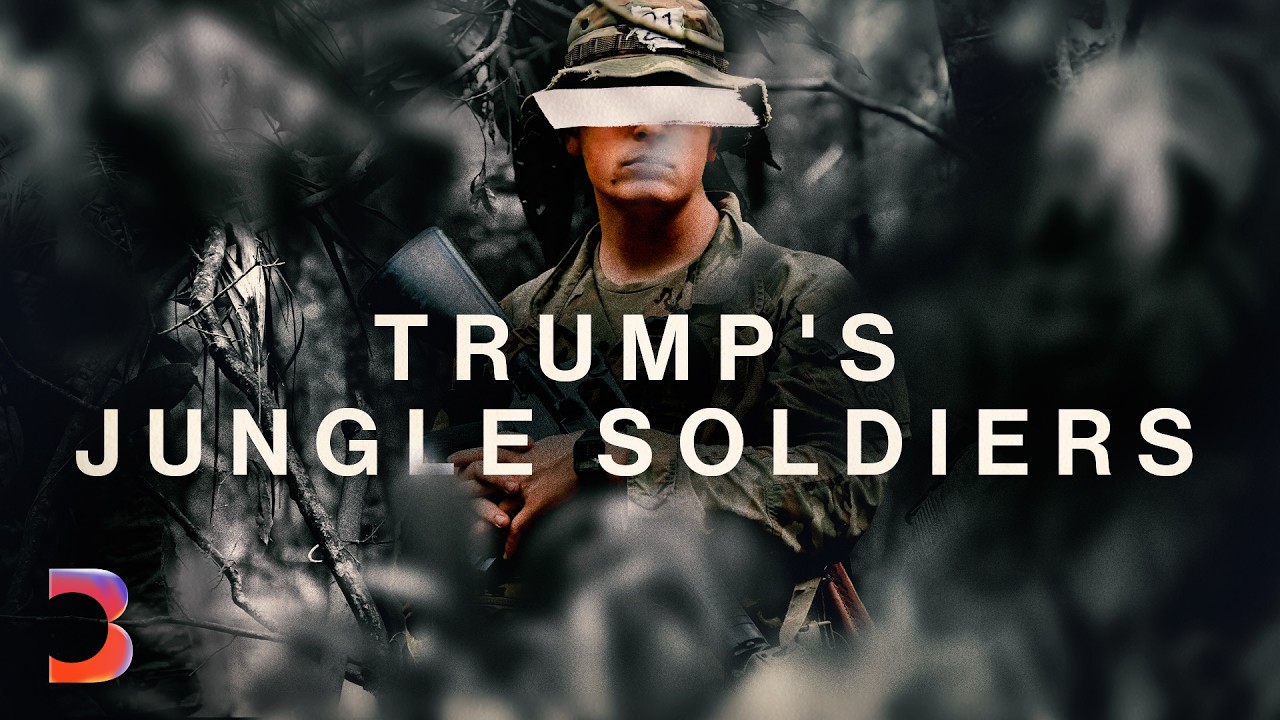
US Revives Panama Jungle Training as Trump Signals Broader Regional Operations
Bloomberg Originals
The return of American forces to Panamanian rainforests signals a muscular reinterpretation of the Monroe Doctrine intended to prepare troops for potential future interventions across Latin America.
## Background
This video was published on YouTube by Bloomberg Originals on May 11, 2026. According to the page description, it explores the US military reviving its jungle training school in Panama after a 25-year hiatus amidst Donald Trump's aggressive military buildup and strategy to ensure American dominance in the Western Hemisphere.
## TL;DR
The US military has returned to Panama for joint jungle warfare training, marking the largest military buildup in Latin America in modern history following the capture of Venezuelan President Nicolás Maduro. Trainees undergo rigorous survival and navigation exercises in harsh rainforest terrain to build readiness for potential operations across the region. Anchored in an updated National Security Strategy invoking a modern Monroe Doctrine, the buildup aims to address regional instability and drug cartels while securing vital assets like the Panama Canal, despite growing sovereign concerns and local controversy.
## Atmosphere & style
The video carries a serious, analytical, and tense tone, balancing cinematic field footage of soldiers battling harsh rainforest elements with high-stakes geopolitical commentary. It captures the extreme physical strain of jungle warfare while juxtaposing it against broader strategic policy decisions made in Washington and Miami. The narrative arc creates a sense of apprehension and strategic urgency, emphasizing the friction between joint military readiness and rising regional anxieties.
## Key takeaways
- [00:02](https://www.youtube.com/watch?v=jswwEyp3S5g&t=2s) US military forces have returned to Panama's coastal rainforests for jungle warfare training after a 25-year hiatus.
- [00:02](https://www.youtube.com/watch?v=jswwEyp3S5g&t=2s) The joint exercises form part of the largest US military buildup in Latin America in modern history following the capture of Venezuelan President Nicolás Maduro.
- [00:02](https://www.youtube.com/watch?v=jswwEyp3S5g&t=2s) The Trump administration considers the operation in Venezuela a major victory, accomplished without losing any American soldiers.
- [00:02](https://www.youtube.com/watch?v=jswwEyp3S5g&t=2s) US jungle training previously took place in Panama from the 1950s until treaty obligations required the handover of military bases in 1999.
- [00:02](https://www.youtube.com/watch?v=jswwEyp3S5g&t=2s) Right-wing Latin American leaders met at a March summit in Miami to announce a military coalition aimed at eradicating drug cartels.
- [02:00](https://www.youtube.com/watch?v=jswwEyp3S5g&t=120s) Training in Panama requires soldiers to learn survival skills in extreme triple-canopy jungle conditions with limited logistical support.
- [02:00](https://www.youtube.com/watch?v=jswwEyp3S5g&t=120s) Military officers emphasize that mastering Panama's terrain prepares troops for potential operations across Latin America and other regions.
- [04:51](https://www.youtube.com/watch?v=jswwEyp3S5g&t=291s) The updated US national security strategy serves as a modern reinterpretation of the 1823 Monroe Doctrine to exert influence in the Western Hemisphere.
- [04:51](https://www.youtube.com/watch?v=jswwEyp3S5g&t=291s) The US administration argues direct military involvement addresses regional challenges such as drug cartels, political repression, and mass migration.
- [04:51](https://www.youtube.com/watch?v=jswwEyp3S5g&t=291s) Beyond Venezuela, the US has expanded military operations and pressure into Ecuador while issuing warnings toward Cuba.
- [07:09](https://www.youtube.com/watch?v=jswwEyp3S5g&t=429s) The Panama Canal is a critical economic choke point, handling roughly 5% of global maritime trade and carrying goods tied to US commerce on ~75% of transit ships.
- [07:09](https://www.youtube.com/watch?v=jswwEyp3S5g&t=429s) Under the Neutrality Treaty, both the United States and Panama hold individual legal obligations to defend and protect the Panama Canal.
- [07:09](https://www.youtube.com/watch?v=jswwEyp3S5g&t=429s) Donald Trump's rhetoric about reclaiming the Panama Canal by force has raised local concerns and political tension across Panama.
## Detailed walkthrough
### [00:02](https://www.youtube.com/watch?v=jswwEyp3S5g&t=2s) The Return of US Troops to Panama
American soldiers have returned to the coastal rainforests of Panama after a 25-year hiatus to participate in jungle warfare training alongside Panamanian forces. This return marks a dramatic pivot in military strategy, as US focus shifts back toward the Western Hemisphere after decades of concentrating on other global regions. The joint training exercises are part of the largest US military buildup in Latin America in modern history, coming on the heels of the shock capture of Venezuelan President Nicolás Maduro.
Trump’s administration views the operation in Venezuela as a major victory, having successfully removed Maduro without losing a single American soldier's life. While some right-wing regional leaders gathered in Miami to announce a new military coalition aimed at eradicating drug cartels, critics argue that an expanded US military footprint will destabilize Latin America rather than bring prosperity.
- **Key Context**: US jungle training in Panama was standard from the 1950s until 1999, when treaty obligations mandated the handover of military bases and the Panama Canal.
- **Coalition Politics**: A March summit in Miami brought together right-wing Latin American leaders aligned with Trump's aggressive regional posture.
[02:00](https://www.youtube.com/watch?v=jswwEyp3S5g&t=120s) Training in the Triple Canopy Jungle
Instructors lead soldiers through harsh rainforest terrain, emphasizing that before engaging any human enemy, troops must learn to survive the jungle environment itself. Trainees contend with thick triple-canopy foliage, heavy continuous rain, and limited logistical support. For many soldiers, basic skills like using a machete and navigating extreme humidity are new challenges.
Military analysts and officers note that while the joint exercises do not explicitly guarantee future combat operations, they ensure readiness across the Western Hemisphere. Terrain similar to Panama's exists across Colombia, Mexico, Cuba, and other parts of the Americas, making the skills learned directly transferable to potential future interventions.
- **Environment**: Trainees face dense triple canopy coverage, persistent torrential rain, and minimal supplies.
- **Versatility**: Officers stress that mastering jungle operations prepares soldiers to operate effectively almost anywhere in the world.
[04:51](https://www.youtube.com/watch?v=jswwEyp3S5g&t=291s) The New National Security Strategy and Regional Impact
The Trump administration's updated national security strategy, published in December, signaled a shift toward a more aggressive US posture in Latin America. Observers often describe this strategy as a modern reinterpretation of the 200-year-old Monroe Doctrine, originally designed to prevent European powers from interfering in the Western Hemisphere. Within a month of releasing the policy, the US executed the capture of Nicolás Maduro following a military buildup in the Caribbean.
Proponents of this muscular approach point to ongoing crises across Latin America, including mass migration driven by political repression, failing economies, and drug cartels. The US administration argues that direct military involvement addresses issues that regional governments have been unable to solve on their own, though it continues to draw strong opposition from those concerned about sovereignty.
- **Policy Background**: The strategy builds on the 1823 Monroe Doctrine established under fifth US President James Monroe.
- **Recent Interventions**: Beyond Venezuela, military operations and pressure have expanded to Ecuador, with persistent warnings regarding Cuba.
[07:09](https://www.youtube.com/watch?v=jswwEyp3S5g&t=429s) Strategic Importance of the Panama Canal
The Panama Canal remains a vital economic choke point, carrying roughly 5% of all global maritime trade. Approximately three-quarters of the cargo ships passing through the canal carry goods tied to US imports or exports, making its stability fundamental to the American economy. Under the Neutrality Treaty, both Panama and the United States are bound to unilaterally protect and defend the canal.
While US and Panamanian commanders emphasize that joint exercises are designed to maintain readiness and prevent conflicts, political rhetoric has heightened local tensions. Comments by Donald Trump regarding "reclaiming" the Panama Canal have sparked controversy on the streets of Panama, raising concerns over long-term US intentions in the country.
- **Economic Impact**: ~5% of global trade and ~75% of transit cargo linked to US commerce pass through the canal.
- **Legal Obligations**: Per the Neutrality Treaty, the US and Panama share individual obligations to secure the canal against threats.
## Mentioned
Donald Trump, Nicolás Maduro, Panama Canal, United States, Panama, Venezuela, Cuba, Colombia, Mexico, Ecuador, Miami, Monroe Doctrine, Neutrality Treaty, Bloomberg Originals, US Military
The Trump administration has launched the largest modern US military buildup in Latin America, returning troops to Panama for jungle warfare training after a 25-year absence as part of a renewed, interventionist hemispheric doctrine.
An Aggressive Revival of Hemispheric Strategy (4:51)
The deployment follows an updated US national security strategy released in December, which observers characterize as an aggressive modern reinterpretation of the 1823 Monroe Doctrine. The policy shift was quickly punctuated by a Caribbean military buildup and the capture of Venezuelan President Nicolás Maduro, an operation the Trump administration considers a signature success achieved without US casualties. US military pressure and operations have also expanded toward Ecuador, accompanied by warnings directed at Cuba.
While a March summit in Miami brought together right-wing regional leaders to establish a military coalition targeting drug cartels, the broader escalation remains contentious. Proponents maintain that direct US military action is required to resolve acute crises—including drug trafficking, economic collapse, and mass migration—that local governments have failed to manage. In contrast, critics argue that expanding the American military footprint undermines national sovereignty and risks destabilizing the region.
Jungle Warfare and Regional Operational Readiness (0:02)
US troops are training in Panama's coastal rainforests alongside local forces for the first time since 1999, when treaty agreements required the handover of the Panama Canal and US military installations. The exercises immerse soldiers in demanding triple-canopy jungle conditions marked by heavy rain, extreme humidity, and minimal logistical support, requiring personnel to master fundamental survival and navigation skills before focusing on combat.
Military officers emphasize that these exercises build broader regional readiness rather than committing troops to specific combat missions. Because the dense tropical terrain closely resembles conditions found in Colombia, Mexico, Cuba, and elsewhere across the Americas, commanders view the skills acquired as directly transferable to potential future interventions throughout the Western Hemisphere.
Canal Security and Heightened Political Friction (7:09)
The exercises also focus on the defense of the Panama Canal, an economic choke point that handles roughly 5% of global maritime trade. The waterway is critical to American commerce, with about three-quarters of its transiting cargo tied to US imports or exports. Under the Neutrality Treaty, both the United States and Panama bear individual obligations to defend the passage from security threats.
However, the military presence has created domestic controversy in Panama. While military leaders describe the bilateral drills as defensive measures meant to deter conflict, public statements by Donald Trump suggesting the US should reclaim the canal have stoked local protests and heightened anxiety regarding Washington's long-term strategic intentions.
The return of US forces to Panama illustrates a stark pivot toward direct military engagement in the Western Hemisphere, leaving unresolved whether heightened American power will secure regional stability or trigger prolonged diplomatic and political backlash over local sovereignty.
## Background
该视频由彭博原创频道(Bloomberg Originals)于 2026 年 5 月 11 日发布于 YouTube 平台。视频简介指出,在突袭委内瑞拉之后,美军时隔 25 年重启了在巴拿马的热带丛林作战训练学校,通过大规模军事集结与联合演训,推进特朗普确立西半球“绝对主导权”的激进安全战略。
## TL;DR
在中断四分之一世纪后,美军重返巴拿马并重启三处军事基地,在严酷的三重树冠雨林中展开高强度生存与实战巡逻演练,以随时准备介入潜在的未知战场。这轮数十年来最大规模的集结紧随美军突袭委内瑞拉抓捕马杜罗之后,标志着特朗普政府新版《国家安全战略》对“门罗主义”的激进复兴。演训行动不仅在拉美引发政治分化并辐射至厄瓜多尔与古巴等热点,巴拿马运河承载的巨大经贸利益更因特朗普声称“将收回运河”的言论而激起激烈的地缘震荡与主权危机。
## Atmosphere & style
全片基调严肃冷峻,充斥着山雨欲来的地缘对峙与紧迫感。画面将官兵在暴雨泥泞、毒物横行的极度恶劣雨林中挥刀开路的艰难求生,与白宫高层追求半球霸权的宏大政治野心紧密交织。叙事在唤醒 1989 年美军入侵历史创伤与直面当下强硬干涉主义之间切换,给观者带来极具现实压迫感与警惕感的视听氛围。
## Bulletin
- [00:02](https://www.youtube.com/watch?v=jswwEyp3S5g&t=2s) 美军时隔25年重启巴拿马丛林作战演习并重新启用3处军事基地,拉开数十年来美国在拉丁美洲最大规模军事集结的序幕。
- [04:51](https://www.youtube.com/watch?v=jswwEyp3S5g&t=291s) 特朗普政府新版《国家安全战略》激进重释“门罗主义”,在闪击突袭委内瑞拉抓捕马杜罗后,将军事威慑触角进一步延伸至厄瓜多尔与古巴。
- [07:09](https://www.youtube.com/watch?v=jswwEyp3S5g&t=429s) 巴拿马运河承载全球约5%的海运贸易且约75%穿行货轮直接关联美国进出口,特朗普声称将“武力收回运河”的言论激化了当地强烈的反美主权危机。
- [00:02](https://www.youtube.com/watch?v=jswwEyp3S5g&t=2s) 拉美多国右翼领导人齐聚迈阿密组建联合打击贩毒的跨国军事联盟,但拉美内部对美军激进军事扩张带来的主权破坏与动荡深表担忧。
## Key takeaways
- [00:02](https://www.youtube.com/watch?v=jswwEyp3S5g&t=2s) 美军与巴拿马本土部队展开联合热带雨林演训,正式恢复自1999年交还运河与军事基地后中断长达25年的丛林作战训练学校。
- [00:02](https://www.youtube.com/watch?v=jswwEyp3S5g&t=2s) 美军在加勒比海集结兵力并在零伤亡情况下突袭抓捕委内瑞拉总统马杜罗,成为推动美军在拉美加速军事布局的直接催化剂。
- [00:02](https://www.youtube.com/watch?v=jswwEyp3S5g&t=2s) 多名拉美右翼领导人在迈阿密集会宣布组建多国跨国军事联盟,协同美军打击贩毒集团,展现出高度配合甚至战略依附的态势。
- [02:00](https://www.youtube.com/watch?v=jswwEyp3S5g&t=120s) 美国宣布重新启用巴拿马境内3处废弃军事基地,触动了当地对1989年美军入侵推翻诺列加政权导致严重伤亡的历史伤痛。
- [02:00](https://www.youtube.com/watch?v=jswwEyp3S5g&t=120s) 演训聚焦于遮天蔽日的三重树冠、暴雨冲刷与极端潮湿环境,参训官兵必须克服极低后勤依赖,强化生存、巡逻与伤员后送能力。
- [02:00](https://www.youtube.com/watch?v=jswwEyp3S5g&t=120s) 高密度的热带丛林生存演练虽未指明具体任务,但旨在确保美军具备随时介入哥伦比亚、墨西哥乃至古巴等密林战场的实战能力。
- [04:51](https://www.youtube.com/watch?v=jswwEyp3S5g&t=291s) 新版《国家安全战略》对两百年历史的“门罗主义”进行了激进复兴,核心目标在于谋求美国在整个西半球的绝对主导地位。
- [04:51](https://www.youtube.com/watch?v=jswwEyp3S5g&t=291s) 从新安全战略出台到闪击委内瑞拉仅相隔一个月,体现出特朗普政府从战略制定到特种武装介入的极高执行速度与侵略性姿态。
- [04:51](https://www.youtube.com/watch?v=jswwEyp3S5g&t=291s) 华盛顿以难民外流、毒品暴力及拉美国家治理失灵为由,将其直接跨国军事干预包装为维护边境秩序与西半球安全的必要手段。
- [04:51](https://www.youtube.com/watch?v=jswwEyp3S5g&t=291s) 美军军事威慑与行动范围已辐射至厄瓜多尔,并在战略规划中将打击跨境秘密制毒实验室及推动古巴政权更迭列为潜在选项。
- [07:09](https://www.youtube.com/watch?v=jswwEyp3S5g&t=429s) 巴拿马运河承载全球约5%的海运贸易量,且通航船只中约四分之三直接关联美国外贸,是维系美国供应链与商业安全的生命线。
- [07:09](https://www.youtube.com/watch?v=jswwEyp3S5g&t=429s) 依据《巴拿马运河永久中立与营运条约》,美国与巴拿马是唯二拥有在认为必要时单方面采取行动保卫运河中立与安全的法定缔约国。
- [07:09](https://www.youtube.com/watch?v=jswwEyp3S5g&t=429s) 特朗普关于“收回巴拿马运河”并威胁动用武力的公开表态,在巴拿马社会激起了激烈的街头反弹,给军事演训笼罩上了霸权对抗阴影。
## Detailed walkthrough
### [00:02](https://www.youtube.com/watch?v=jswwEyp3S5g&t=2s) 重返西半球:马杜罗倒台与美军二十五年后重归巴拿马
巴拿马潮湿茂密的原始热带雨林中,时隔25年再度出现了美国士兵的身影。美军与巴拿马本土部队展开联合丛林作战演训,标志着美国在冷落拉美地区多年后的高调回归。正如分析所指出的,过去很长一段时间里,美国的战略重心分散在全球其他热点事务上,几乎“遗忘了自家的后院”,而如今在唐纳德·特朗普的推动下,华盛顿正在全力将战略焦点重新对准西半球。
这轮演训并非孤立的军事交流,而是数十年来美军在拉丁美洲规模最大的一次军事集结的一部分。其直接导火索正是此前震惊全球的委内瑞拉突袭行动——美军在没有造成任何美军人员伤亡的情况下强行抓捕了委内瑞拉总统尼古拉斯·马杜罗。特朗普对这次行动的战果极其推崇,视其为一次里程碑式的重大胜利,并借此加速推进在拉美的军事存在。
拉美各国的政治阵营对此反应两极分化。同年3月,一批持相似政治立场的拉美右翼领导人齐聚迈阿密,高调宣布组建一个全新的跨国军事联盟,旨在协同美军打击肆虐各国的犯罪贩毒集团;许多盟友展现出了深度的合作意愿,甚至在某些观察家看来近乎一种战略顺从。然而,拉美内部也有大量反对声音疾呼,美军在这一地区激进扩张军事存在绝非长治久安的良方,反而可能打破脆弱的地区稳定与繁荣。
```mermaid
flowchart TD
accTitle: 美军在拉美军事战略升级路径
accDescr: 展示从委内瑞拉抓捕行动到巴拿马驻军与丛林训练的地缘升级过程
subgraph Strategy["战略转变与支柱"]
A["新版《国家安全战略》"] --> B["强硬重释门罗主义"]
B --> C["追求西半球绝对主导权"]
end
subgraph Action["军事威慑与实操"]
C --> D["加勒比海前所未有的兵力集结"]
D --> E["突袭委内瑞拉并控制马杜罗"]
E --> F["重启巴拿马3处废弃军事基地"]
end
subgraph Operation["实战演训拓展"]
F --> G["恢复中断25年的热带丛林训练"]
G --> H["辐射厄瓜多尔/古巴/哥伦比亚潜在行动"]
end
```
### [02:00](https://www.youtube.com/watch?v=jswwEyp3S5g&t=120s) 艰难的雨林生存课:从1989年入侵到三重树冠下的作战准备
美军教官带领士兵在泥泞中拉开生存演习的序幕,分队依次推进并深入险恶环境。去年,美国国防部长在访问巴拿马时正式宣布将重新启用巴拿马境内的三处军事基地。这一举动不可避免地唤醒了当地沉重的历史创伤——1989年老布什总统下令入侵巴拿马,推翻独裁领导人曼努埃尔·诺列加,那场激烈的武装行动造成数百乃至数千人死亡。从20世纪50年代起,美军一直在巴拿马开展丛林作战训练,直到1999年根据相关条约彻底交出军事基地并将巴拿马运河全面移交巴拿马,这项长达数十年的传统才画上了休止符。
如今,在经历了四分之一个世纪的中断后,美军重新置身于严酷的热带雨林。前线参训人员坦言,一旦被派往丛林作战环境,士兵面临的第一号敌人就是环境本身:“学会在这种极端环境下生存和行动是首要任务。”受训者不得不面对遮天蔽日的三重树冠生态系统,以及日复一日、永无休止的暴雨冲刷。许多年轻士兵此前从未握过砍刀,必须从零开始适应如何利用有限的后勤补给维持生命与战斗力。参训士官直言:“如果你能在这样的丛林中行动自如,那么世界上几乎任何严苛环境你都能应付。”
尽管目前没有任何受访军方人士直接挑明这批丛林演训是为了筹划具体的空袭或直接军事干预,但其战略意图已昭然若揭。西半球广泛分布着大片密林——从哥伦比亚的雨林腹地、墨西哥的隐蔽丛林,到古巴乃至中南美洲广袤的植被覆盖区。美军高密度开展这套生存、伤员后送和雨林巡逻演练,核心目的就是确保部队时刻具备随时介入潜在未知战场的实战能力。
- 关键历史节点:美军丛林战训练学校自1950年代持续运作至1999年,随着美军撤出基地与移交运河而终止,直至本次联合演训迎来长达25年的首度重启。
- 严酷环境挑战:官兵需在三重树冠的极低能见度、潮湿泥泞、暴雨连绵及有毒野生动植物出没的环境下,克服极低后勤依赖,熟练掌握砍刀开辟道路与雨林应急生存技能。
### [04:51](https://www.youtube.com/watch?v=jswwEyp3S5g&t=291s) 门罗主义回潮与强硬安全战略的地区震荡
去年12月特朗普政府正式公布的新版《国家安全战略》,在国际社会掀起了轩然大波。该战略毫不掩饰地展示了美国在拉美地区更具侵略性、更肌肉紧绷的安全姿态,被外界广泛解读为对有着两百年历史的“门罗主义”的激进复兴与重新阐释。这项最早由美国第五任总统詹姆斯·门罗提出的古老地缘战略,核心诉求在于驱逐欧洲外部势力对美洲大陆的干涉,而在当下的政治语境中,它已被转化为确保美国在整个西半球绝对主导地位的行动纲领。
战略出台仅仅一个月后,美军就在加勒比海完成了前所未有的兵力集结,闪电实施了针对委内瑞拉总统马杜罗的抓捕行动。随后,不仅在厄瓜多尔等地接连出现了美国的军事行动痕迹,针对古巴的强硬行动预期也甚嚣尘上。华盛顿对这种高压手段提供了自身的逻辑辩护:整个拉美地区正遭受着由于专制压迫、经济崩溃以及毒品暴力引发的史诗级难民流徙浪潮,周边国家缺乏独立解决这些深层危机的主权能力,因此美国的直接重拳干预被包装为维持边境与西半球秩序的必要手段。
- 战略推演节拍:从新版国家安全战略文本公布到马杜罗被突袭抓捕,前后相隔仅一个月时间,体现了从政策制定到特种武装介入的极高执行速度。
- 地缘外溢效应:伴随加勒比海的大规模军事调动,美军不仅涉足委内瑞拉与厄瓜多尔,更在战略研判中将打击范围延伸至打击跨境制毒实验室乃至古巴政权轮替等目标。
### [07:09](https://www.youtube.com/watch?v=jswwEyp3S5g&t=429s) 咽喉命脉:巴拿马运河的经济利益与“收回运河”言论引发的风波
巴拿马在全球格局中的极端重要性,始终与其纵贯大洋的水上物流大动脉紧密相连。巴拿马运河承载着全球约5%的海运贸易总量,而穿行运河的货轮中,有高达约四分之三直接关联着美国的货物进出口贸易,是维系美国本土供应链安全与商业繁荣不可替代的物流中枢。军方与安全战略家一再强调,“没有安全,经济繁荣便无从谈起”。依据当年的《巴拿马运河永久中立与营运条约》,世界上仅有巴拿马与美国两个国家被赋予了在必要时单方面保卫运河中立与安全的法定权利;尽管所有人都祈祷训练规划中的危机永远不要成真,但严峻的地缘现实逼迫军方必须做好最坏打算。
然而,特朗普针对运河主权发表的言论却彻底激怒了巴拿马社会。特朗普曾公开宣称:“我的政府将收回巴拿马运河,而且我们已经开始付诸行动了。”早在竞选和执政初期,他就不断抛出武力夺回运河控制权的言论。这种将运河视为美国固有资产并威胁动用强力逆转主权归属的表态,在巴拿马引发了激烈的街头反弹与主权危机感,使得这场本已极度敏感的军事集结被笼罩上了更加浓重的霸权对立色彩。
- 运河贸易权重:全球约5%的商业贸易通过巴拿马运河过境,经过该运河的货运船只中,约75%与美国的进出口运输直接相关。
- 法律条约约束:基于运河中立条约,美国与巴拿马互为唯二拥有在各自认为必要时单方面采取行动保护运河免受安全威胁的责任缔约国。
## Notable quotes
> [00:02](https://www.youtube.com/watch?v=jswwEyp3S5g&t=2s) 遗忘了自家的后院 — 地缘战略分析人士
> [00:02](https://www.youtube.com/watch?v=jswwEyp3S5g&t=2s) 在西半球确立美国的主导地位 — 唐纳德·特朗普
> [02:00](https://www.youtube.com/watch?v=jswwEyp3S5g&t=120s) 学会在这种极端环境下生存和行动是首要任务。 — 美军前线参训人员
> [02:00](https://www.youtube.com/watch?v=jswwEyp3S5g&t=120s) 如果你能在这样的丛林中行动自如,那么世界上几乎任何严苛环境你都能应付。 — 美军参训士官
> [04:51](https://www.youtube.com/watch?v=jswwEyp3S5g&t=291s) 门罗主义
> [04:51](https://www.youtube.com/watch?v=jswwEyp3S5g&t=291s) 确保美国在整个西半球绝对主导地位 — 美国国家安全战略文件
> [07:09](https://www.youtube.com/watch?v=jswwEyp3S5g&t=429s) 没有安全,经济繁荣便无从谈起 — 美军与安全战略学者
> [07:09](https://www.youtube.com/watch?v=jswwEyp3S5g&t=429s) 我的政府将收回巴拿马运河,而且我们已经开始付诸行动了。 — 唐纳德·特朗普
## Mentioned
唐纳德·特朗普, 尼古拉斯·马杜罗, 曼努埃尔·诺列加, 老布什, 詹姆斯·门罗, 美军(美国国防部), 巴拿马安全部队, 彭博社(Bloomberg Originals), 巴拿马运河, 加勒比海, 委内瑞拉, 古巴, 厄瓜多尔, 哥伦比亚, 《国家安全战略》, 《巴拿马运河永久中立与营运条约》, 门罗主义
## Video description
Taking advantage of terrain teeming with pit vipers, boa constrictors and swarms of biting flies, the US military is reviving its jungle training school in Panama after a 25-year hiatus. The lessons on rainforest survival, medical evacuations and patrols handed down to soldiers, sailors and Marines have taken on new significance as Donald Trump issues veiled threats of additional military action across Latin America following his surprise attack on Venezuela earlier this year.
Learn more: Trump’s Aggressive Military Buildup in Panama Is Keeping Latin America on Edge
https://www.bloomberg.com/news/features/2026-05-05/trump-s-military-buildup-in-panama-puts-latin-america-on-edge
Trump is pursuing "American dominance" in the region with the biggest-ever buildup of US troops.
The mission — a joint exercise with Panamanian forces — is meant to bolster readiness for jungle combat. The stakes have been raised since Trump revealed a security strategy late last year that he insists will ensure “American dominance in the Western Hemisphere.” He’s floated the idea of attacking clandestine drug labs, pushed for regime change in Cuba and mulled taking back the Panama Canal by force.
#Panama #Trump #Military
--------
Like this video? Subscribe: http://www.youtube.com/Bloomberg?sub_confirmation=1
Get unlimited access to Bloomberg.com for just $1.99 your first month: https://www.bloomberg.com/subscriptions?in_source=YoutubeOriginals
Bloomberg Originals offers bold takes for curious minds on today’s biggest topics. Hosted by experts covering stories you haven’t seen and viewpoints you haven’t heard, you’ll discover cinematic, data-led shows that investigate the intersection of business and culture. Exploring every angle of climate change, technology, finance, sports and beyond, Bloomberg Originals is business as you’ve never seen it.
Subscribe for business news, but not as you've known it: exclusive interviews, fascinating profiles, data-driven analysis, and the latest in tech innovation from around the world.
Visit our partner channel Bloomberg News for global news and insight in an instant.
[Source](https://www.youtube.com/watch?v=jswwEyp3S5g)
[0:02] This is the rainforest of Panama,
[0:04] and these are American soldiers.
[0:07] They're back in the coastal country
[0:09] after a 25-year hiatus
[0:11] for jungle training
alongside Panamanian forces.
[0:16] So why are they back now?
[0:20] For a long time we were
focused on many other things
[0:22] and we forgot about our neighborhood.
[0:24] What we are seeing with
President Trump is a refocus
[0:26] on the Western Hemisphere.
[0:30] The training is part of the
biggest US military buildup in
[0:34] Latin America in decades, and comes
[0:37] after the shock seizure
[0:38] of Venezuelan President Nicolás Maduro.
[0:41] Trump has clearly embraced what he sees
[0:45] as a big success in Venezuela.
[0:47] He was able to take out
Nicolás Maduro with no loss
[0:51] of US soldiers' lives.
[1:09] Now, there are governments in the region
[1:11] that have backed Trump.
[1:12] We saw in March a gathering in Miami
[1:14] of like-minded, right wing
Latin American leaders willing
[1:18] to partner with the US,
willing to coordinate,
[1:20] may be willing to submit, frankly.
[1:22] - We come together to
announce a brand new military
[1:25] coalition to eradicate
the criminal cartels
[1:28] plaguing our region.
[1:31] But there are many voices
who are opposed to this
[1:34] who do not think an expanded
US military presence is a
[1:38] recipe for a stable,
prosperous Latin America.
[2:00] Alright, listen up. We're
gonna head to your survival
[2:03] PE. Squad one and squad three,
[2:07] we'll push out. Squad two,
you'll fill in behind.
[2:10] All right, let's go.
[2:20] Last year, the US defense
chief announced in Panama
[2:24] that there would be a revival
[2:25] of three military bases in Panama.
[2:28] There's a long history here.
[2:32] - And fellow citizens.
[2:33] Last night I ordered US
military forces to Panama.
[2:37] No president takes such action lightly.
[2:41] There was an invasion,
hundreds, if not thousands
[2:43] of people were killed back in
1989 when authoritarian leader
[2:47] Manuel Noriega was taken out.
[2:50] Jungle training had been going
on in Panama really since the
[2:54] 1950s
[2:55] through 1999 when treaties
[3:00] required the US military
to turn over its bases
[3:05] and of course turn over
the Panama Canal to Panama.
[3:11] So it's been a quarter-century
hiatus from when the
[3:15] trainings were last happening to now.
[3:25] First and foremost, if called upon
[3:26] to serve in any capacity
in a jungle environment,
[3:29] that is the first adversary
is understanding how
[3:32] to survive and operate there.
[3:35] You're dealing with
triple canopy coverage.
[3:37] You have a ton of water
[3:39] and rain that you're contending
with on a day-to-day basis.
[3:45] So it's gonna be a little bit difficult
[3:47] 'cause maybe a lot of you guys haven't
[3:48] utilized a machete, right?
[3:51] This is a rare and
unique opportunity for us
[3:53] to apply our skills where
you have to learn how to live
[3:55] with limited logistics.
[3:58] I think if you can operate in the jungle,
[4:00] you can operate almost anywhere.
[4:03] No one I've talked to has said
[4:05] that these jungle
trainings mean there will
[4:08] be future strikes.
[4:10] No one's said that, but I think it's clear
[4:12] that the US military are
making sure they're ready.
[4:16] There's a lot of jungle terrain
in the western hemisphere.
[4:20] Columbia has jungles, Mexico has jungles.
[4:23] Cuba has jungles, many other
places too in the Americas.
[4:26] It's clear they're training
for the possibility
[4:29] of future operations.
[4:51] This past December,
[4:53] the Trump administration published
its new national security
[4:56] strategy, and this really came
as a shock to some people.
[5:00] It was pretty clear that
there was a pivot to a kind
[5:03] of a more muscular,
[5:04] more aggressive US
posture toward the region.
[5:07] Many people talked about a, a revival
[5:10] or reinterpretation of
the Monroe Doctrine.
[5:13] This 200-year-old doctrine named
[5:15] after the fifth US President, that in
[5:18] that time really sought to kind
[5:20] of expel European powers
from the Americas.
[5:24] Literally a month
[5:26] after this new national security
strategy was announced was
[5:30] the operation to capture
Nicolás Maduro in Venezuela.
[5:34] That followed an unprecedented military
[5:36] buildup in the Caribbean.
[5:38] And of course since then
there have been operations
[5:40] in, in Ecuador.
[5:41] There's talk of operations in Cuba,
[5:44] but there is support
[5:46] for the United States doing things
[5:49] that these countries have not
been able to do themselves.
[5:53] There has been kind of an
epic story of human movement
[5:57] where people are fleeing bad places
[5:59] or places where there is
no economic opportunity
[6:02] or really repressive governments.
[6:05] So I think that's part of the,
[6:06] the argument the Trump
administration is making here in
[6:09] terms of why it needs a muscular
approach to Latin America.
[7:09] Panama is clearly important
[7:11] because of this major shipping channel
[7:15] that is super important for global trade.
[7:19] Something like 5% of global
trade passes through the canal,
[7:23] around three quarters of
the cargo ships that go
[7:26] through are linked to US
imports or US exports.
[7:30] So it is a major logistical
piece of the US economy.
[7:35] You can't have economic
prosperity without security.
[7:38] There's two countries and only
two per the neutrality treaty
[7:41] that are required to
unilaterally protect the canal
[7:45] irrespective of each other.
[7:46] And that's Panama and the United States.
[7:48] And hopefully nothing ever happens.
[7:49] Hopefully all of the things
that we plan, hopefully all
[7:51] of the things that we trained for,
[7:52] we don't actually ever
have to put them into use.
[7:55] But the reality is you have to be ready.
[7:59] - My administration will be
reclaiming the Panama Canal
[8:03] and we've already started doing it.
[8:07] Early on, Trump was
talking about the need
[8:10] to retake the canal. On the street level,
[8:15] this was a very controversial comment.