SpaceX Prepares $75 Billion IPO at $2 Trillion Valuation
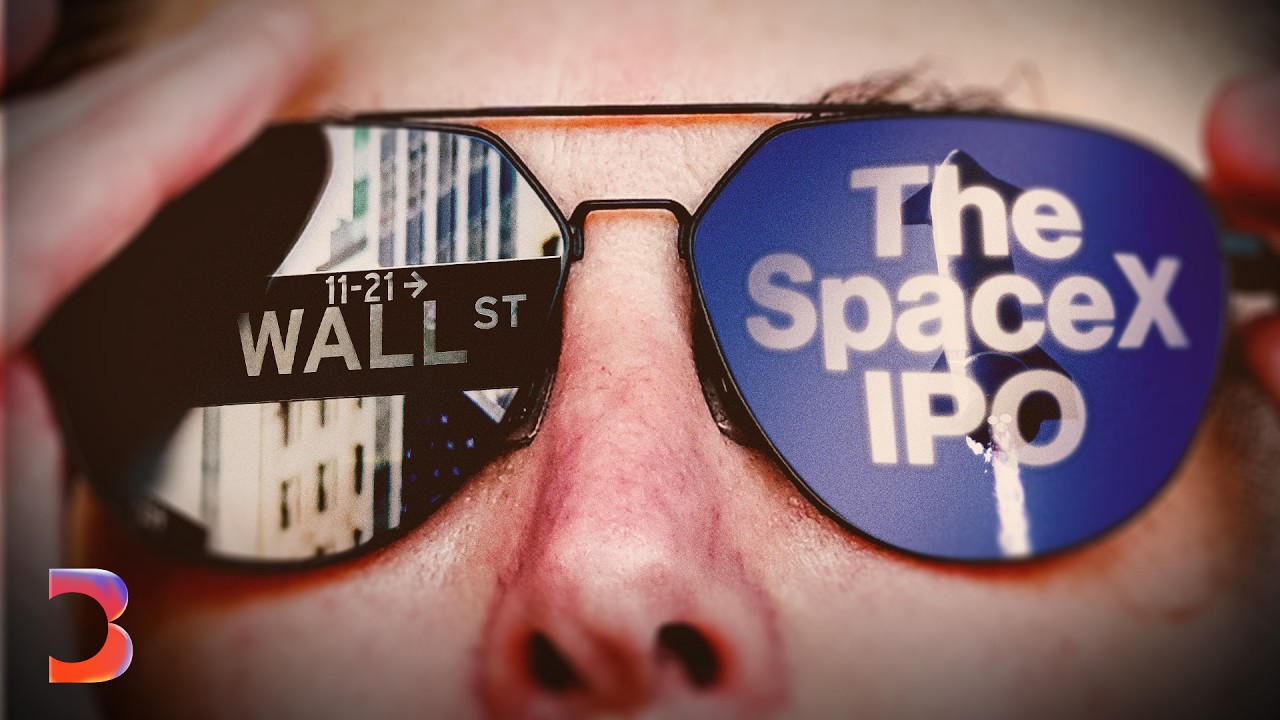
Why the SpaceX IPO Is Unlike Any Other — Bloomberg Originals

Bloomberg Originals

Elon Musk's push to build orbital AI data centers and reach Mars forces SpaceX into public markets, exposing index investors to unprecedented valuation multiples and quarterly earnings volatility.

AI-assisted summary of Why the SpaceX IPO Is Unlike Any Other — original source. Check the original for full context.

Source published:

Detailed notes

## Background Published on YouTube by Bloomberg Originals on May 29, 2026, this video examines SpaceX's upcoming initial public offering as it prepares for the largest IPO in financial history. The accompanying page description highlights the company's expansion from a rocket builder into a massive venture spanning satellites, AI, orbital infrastructure, and Mars exploration, while noting the financial risks and market questions raised by its projected $2 trillion valuation.

## TL;DR SpaceX is shifting from a private aerospace entity to a public mega-cap firm, targeting a historic $75 billion capital raise at an unprecedented $2 trillion valuation. The decision is driven by heavy capital demands following its xAI merger and ambitions to build orbital AI data centers, despite swinging to a $4.94 billion loss in 2025. While fast-track rules allow it to join major indexes like the Nasdaq 100 immediately—funneling passive capital into the stock—the listing introduces severe structural risks and tensions between short-term quarterly market pressures and long-term deep-tech goals.

## Atmosphere & style The video presents a sleek, analytical, and authoritative investigative tone typical of high-end financial journalism. It creates a tense narrative contrast between Wall Street's acute 'space FOMO' and the stark financial realities of massive losses, extreme valuation multiples, and explosive testing failures. Watching it feels like a sobering, data-driven deep dive into the high-stakes gamble of turning speculative sci-fi infrastructure into public market equities.

## Key takeaways - [00:02](https://www.youtube.com/watch?v=F5OFTtX0x04&t=2s) SpaceX prepare to execute the largest initial public offering in financial history, seeking to raise up to $75 billion at a $2 trillion valuation. - [00:02](https://www.youtube.com/watch?v=F5OFTtX0x04&t=2s) The decision to list publicly followed SpaceX's merger with xAI and the enormous capital requirements of its long-term ambitions. - [01:12](https://www.youtube.com/watch?v=F5OFTtX0x04&t=72s) SpaceX illustrates a shift in capital markets where firms stay private longer, scaling into mega-cap giants before doing an IPO. - [01:12](https://www.youtube.com/watch?v=F5OFTtX0x04&t=72s) Financial disclosures reveal high volatility: a $791 million profit in 2023 followed by a $4.94 billion loss in 2025 despite rising top-line revenues. - [01:12](https://www.youtube.com/watch?v=F5OFTtX0x04&t=72s) At a $2 trillion target valuation, SpaceX's price-to-sales ratio reaches an unprecedented 87x, vastly higher than peers like Tesla and Nvidia at ~15x. - [03:14](https://www.youtube.com/watch?v=F5OFTtX0x04&t=194s) SpaceX's valuation is driven by speculative programs such as Starship-enabled Mars exploration and constructing orbital AI data centers. - [03:14](https://www.youtube.com/watch?v=F5OFTtX0x04&t=194s) Using space as real estate for orbital AI data centers served as the key driver for expanding SpaceX into public markets. - [05:16](https://www.youtube.com/watch?v=F5OFTtX0x04&t=316s) New Nasdaq fast-track rules allow SpaceX to bypass the standard three-month public seasoning period for immediate index inclusion. - [05:16](https://www.youtube.com/watch?v=F5OFTtX0x04&t=316s) Immediate index inclusion directs passive capital from funds like Invesco QQQ into SpaceX, automatically making millions of index holders investors. - [05:16](https://www.youtube.com/watch?v=F5OFTtX0x04&t=316s) Fast-tracking mega-cap companies raises concerns regarding market concentration, pricing mismatches, and structural risk across major benchmarks. - [07:55](https://www.youtube.com/watch?v=F5OFTtX0x04&t=475s) Going public creates friction between short-term quarterly market demands and long-term deep-tech development that expects hardware failures and delays. - [07:55](https://www.youtube.com/watch?v=F5OFTtX0x04&t=475s) Strong market momentum is underpinned by investor 'space FOMO' and a willingness to trust Elon Musk's track record with speculative technologies.

## Detailed walkthrough ### [00:02](https://www.youtube.com/watch?v=F5OFTtX0x04&t=2s) A Historic IPO and a $2 Trillion Valuation

SpaceX is preparing for what is set to be the largest initial public offering in financial history. The company is expected to raise as much as $75 billion, blowing past the previous record-setting $29.4 billion raised by Saudi Aramco in 2019. The market is eyeing a staggering $2 trillion valuation for the company. CEO Elon Musk had long insisted that he had no intention of taking SpaceX public, but that stance shifted following the merger with xAI and the staggering financial demands of building out his long-term ambitions, which require tens of billions of dollars in fresh capital.

However, this astronomical valuation acts as a critical test. Experts question whether the immense hype has pushed the company's valuation far past its underlying fundamentals. When an IPO feels preordained, it distorts the market because it becomes difficult to measure whether buyers are investing based on standard financial metrics or pure speculation, effectively "buying the dream."

- Estimated capital to be raised: Up to $75 billion (compared to Saudi Aramco's $29.4 billion record in 2019). - Target valuation: $2 trillion.

---

[01:12](https://www.youtube.com/watch?v=F5OFTtX0x04&t=72s) The Shift in Public Markets and SpaceX's Financials

Historically, an IPO was the primary pathway for early-stage companies to raise growth capital and earn a public badge of honor. Today, American equity markets have seen a steady decline in the number of publicly listed companies since the 1990s because mature private capital markets allow firms to delay public offerings almost indefinitely. SpaceX represents an extreme example of this trend: companies scale privately, raise billions privately, and only hit the public market when they are already mega-cap giants.

SpaceX's 277-page SEC filing—described as taking nearly as long to read as a journey to Mars—offers a rare look into the company's financial health. The numbers reveal stark volatility alongside aggressive top-line growth. After reporting a profit of $791 million in 2023, the company swung to a $4.94 billion loss in 2025. Meanwhile, total revenue rose from $14 billion in 2024 to $18.5 billion in 2025, with revenue projections for the upcoming period ranging between $22 billion and $24 billion.

When comparing this projected revenue to the target $2 trillion valuation, the math highlights a massive discrepancy. Major public tech behemoths like Tesla and Nvidia trade at roughly 15 times their annual revenue. By comparison, SpaceX's implied price-to-sales ratio reaches an unprecedented 87 times, making established tech giants look like relative bargains.

- SEC prospectus document length: 277 pages. - 2023 financial result: $791 million profit. - 2025 financial result: $4.94 billion loss. - Revenue trajectory: $14 billion (2024) to $18.5 billion (2025), with $22 billion–$24 billion projected. - Price-to-sales valuation multiple: 87x for SpaceX vs. ~15x for Tesla and Nvidia.

---

[03:14](https://www.youtube.com/watch?v=F5OFTtX0x04&t=194s) From Satellites to Orbital AI Data Centers

SpaceX today is fundamentally different from the rocket startup founded over two decades ago. It has established total dominance as the world's largest satellite operator through its Starlink constellation, operating thousands of low Earth orbit satellites that deliver commercial broadband internet across the globe. Alongside Starlink, its core launch operations provide regular orbital cargo and crew transportation services.

However, the speculative growth programs powering the IPO narrative—such as crewed Mars exploration and orbital infrastructure—rely entirely on Starship. As the most ambitious spaceflight vehicle ever conceived, Starship's full reusability makes it extraordinarily complex, and its development has been marked by explosive test pad failures.

Beyond rockets and internet satellites, the most pressing catalyst forcing SpaceX toward the public markets is its transition into an artificial intelligence company. SpaceX plans to construct orbital data centers designed to train and run AI models in space. The sheer volume of capital required to execute this infrastructure vision far exceeds what SpaceX's current revenue streams can generate in the short term. Using space as "new real estate" for AI data centers served as the ultimate game-changer that convinced Elon Musk that the time had come to list publicly.

---

[05:16](https://www.youtube.com/watch?v=F5OFTtX0x04&t=316s) Fast-Tracking into the Nasdaq 100 and Market Concentration

A critical element of SpaceX's public listing strategy involves immediate inclusion in major equity benchmarks like the Nasdaq 100. Belonging to top market indexes grants access to hundreds of billions in automated, passive capital from pension funds, institutional portfolios, and retail retirement accounts via popular index-tracking products like the Invesco QQQ trust. Index inclusion guarantees that millions of everyday Americans will automatically become investors in SpaceX regardless of its underlying valuation.

To accommodate mega-cap listings, traditional index rules are being rewritten. The historic playbook required a public "seasoning period" during which a newly public firm had to prove its liquidity and profitability over several quarters before index eligibility. Under new fast-track rules established by Nasdaq, SpaceX was allowed to bypass the standard three-month waiting period, directly incentivizing the company to select Nasdaq as its listing exchange.

Fast-tracking a "whale" of this magnitude introduces significant structural risks to the broader market, including pricing mismatches, liquidity crowding, and systemic overconcentration. With a few mega-cap technology firms commanding an oversized weight in major indexes, individual portfolio performance is increasingly dictated by a handful of giant names. Analysts note that this phenomenon is set to repeat, as upcoming IPOs from generative AI leaders like OpenAI and Anthropic are expected to seek similarly massive valuations, making gigantic private debuts the standard rather than the exception.

---

[07:55](https://www.youtube.com/watch?v=F5OFTtX0x04&t=475s) Short-Term Quarterly Pressures vs. Long-Term Ambitions

Despite financial warning signs and extreme multiples, Wall Street remains hesitant to bet against Elon Musk, who has built his brand on turning speculative science fiction concepts into market reality. Investors are eager to wager that even if timelines slip, futuristic ambitions like orbital data centers or permanent Mars colonies remain achievable.

However, transitioning from a private entity to a publicly traded corporation introduces severe operational friction. Public markets demand short-term quarterly profit optimization for shareholders, whereas deep-tech aerospace development requires long lead times and high tolerance for trial-and-error failures. Rocket explosions and hardware anomalies that are routine during private development can destabilize a public stock price.

Ultimately, the market currently exhibits acute "space FOMO" (fear of missing out), driven by the belief that buying in at a trillion-dollar valuation could yield double-digit returns if the valuation reaches $2 trillion or beyond. Whether SpaceX's vision proves to be plausible ambition or baseless hype, investors are lining up for the payout.

- Index tracking fund cited: Invesco QQQ. - Key peer private AI valuations cited for future mega-IPOs: OpenAI, Anthropic.

## Notable quotes > [00:02](https://www.youtube.com/watch?v=F5OFTtX0x04&t=2s) buying the dream

> [05:16](https://www.youtube.com/watch?v=F5OFTtX0x04&t=316s) seasoning period

> [05:16](https://www.youtube.com/watch?v=F5OFTtX0x04&t=316s) whale

> [03:14](https://www.youtube.com/watch?v=F5OFTtX0x04&t=194s) new real estate

> [07:55](https://www.youtube.com/watch?v=F5OFTtX0x04&t=475s) space FOMO

## Mentioned SpaceX, Bloomberg Originals, Saudi Aramco, Elon Musk, xAI, Tesla, Nvidia, Starlink, Starship, Nasdaq, Nasdaq 100, Invesco QQQ, OpenAI, Anthropic, SEC

[Source](https://www.youtube.com/watch?v=F5OFTtX0x04)

中文简报

SpaceX拟以2万亿美元估值筹备750亿美元IPO Elon Musk推动建造轨道AI数据中心并登陆火星的举措迫使SpaceX走向公开市场,使指数投资者面临前所未有的估值倍数和季度收益波动风险。 SpaceX正从一家私营航天企业转型为公开上市的超大型巨头,计划以史无前例的2万亿美元估值筹集创纪录的750亿美元资金。尽管该公司在2025年转为亏损49.4亿美元,但与xAI合并后的巨额资金需求以及构建轨道AI数据中心的雄心推动了这一上市决定。虽然快速通道规则允许其立即加入Nasdaq 100等主要指数,从而引导被动资本流入该股票,但此次上市也带来了严重的结构性风险,并加剧了短期季度市场压力与长期硬科技目标之间的矛盾。 SpaceX正准备实施金融史上规模最大的首次公开募股,拟以2万亿美元估值筹集至多750亿美元资金。 (0:02) 公开上市的决定源自SpaceX与xAI的合并,以及其长期雄心所需的庞大资金支持。 (0:02) SpaceX展现了资本市场的转变趋势,即企业保持私有化状态的时间更长,在IPO前已扩张为超大市值巨头。 (1:12) 财务披露显示出高度波动性:尽管营业收入增长,但在2023年实现7.91亿美元盈利后,2025年转为亏损49.4亿美元。 (1:12) 在2万亿美元的目标估值下,SpaceX的市销率达到前所未有的87倍,远高于Tesla和Nvidia等同行约15倍的水平。 (1:12)

Reading summary

SpaceX is preparing for a record-breaking initial public offering to raise up to $75 billion at a $2 trillion valuation, driven by the massive capital required to expand Starship and build orbital AI data centers following its merger with xAI. According to Bloomberg Originals, while market enthusiasm remains elevated, the company's stark financial swing into multi-billion-dollar losses and an unprecedented price-to-sales multiple highlight growing tension between speculative hype and traditional market fundamentals. Extreme Multiples and Widening Financial Volatility (1:12) SpaceX's 277-page SEC prospectus provides a rare disclosure of its financial trajectory, showing accelerating top-line revenue paired with steep operating losses. Revenue expanded from $14 billion in 2024 to $18.5 billion in 2025, with upcoming revenue projected between $22 billion and $24 billion. However, profitability has deteriorated: after generating a $791 million profit in 2023, the company swung to a $4.94 billion loss in 2025. At a target valuation of $2 trillion, SpaceX's implied price-to-sales multiple reaches approximately 87 times forward revenue. This multiple vastly exceeds those of established mega-cap tech leaders such as Nvidia and Tesla, which trade at roughly 15 times annual revenue. Analysts question whether this valuation reflects sustainable fundamentals or unanchored speculation, particularly as the targeted $75 billion raise would dwarf Saudi Aramco's historic record of $29.4 billion set in 2019. AI Data Centers as the Primary Capital Catalyst (3:14) While SpaceX generates established revenue through commercial launch services, cargo and crew transport, and its dominant Starlink satellite broadband network, these operations cannot internally fund its next phase. CEO Elon Musk historically opposed listing SpaceX publicly, but his position changed following the corporate merger with xAI and the capital demands of constructing orbital data centers to train and run artificial intelligence models in space. Treating space as new real estate for AI infrastructure represents a strategic transformation, but it relies almost entirely on Starship. Starship is designed as a fully reusable, heavy-lift transportation vehicle needed for deep-space missions and massive orbital payloads. However, its development remains technically volatile, punctuated by high-profile explosive test pad failures that demand tens of billions in continuous funding. Index Fast-Tracking and Systemic Market Concentration (5:16) A cornerstone of the listing strategy involves securing immediate placement in major equity benchmarks like the Nasdaq 100. Traditionally, newly public companies were subject to a seasoning period spanning several quarters to demonstrate liquidity and operational track record before index eligibility. Nasdaq modified its rules for SpaceX, waiving the typical three-month waiting period to incentivize the company to choose its exchange. This fast-tracked inclusion ensures hundreds of billions of dollars in automatic, passive capital flows from institutional pensions and retail retirement portfolios tracking the index via funds like the Invesco QQQ trust. Market observers caution that immediately integrating a mega-cap of this size compounds systemic overconcentration and liquidity crowding, where portfolio performance is dominated by a few giants. This playbook is expected to repeat as other heavily capitalized private AI firms, such as OpenAI and Anthropic, approach the public markets. Quarterly Accountability Versus Long-Term Aerospace Development (7:55) Transitioning to public ownership introduces severe friction between short-term public market incentives and the long-horizon nature of aerospace development. In private markets, hardware anomalies and rocket explosions can be managed as routine trial-and-error milestones. In public markets, however, quarterly demands for earnings optimization mean that visible test failures risk causing sharp stock price volatility. Despite these structural vulnerabilities, Wall Street has exhibited pronounced space FOMO, or fear of missing out. Investors remain hesitant to bet against Musk's history of commercializing speculative technology concepts, gambling that even if schedules slip, long-term orbital infrastructure and eventual Mars exploration can deliver substantial multi-trillion-dollar returns. SpaceX's public debut represents an unprecedented market experiment, testing whether equity markets can sustain an 87-times sales multiple for a loss-making aerospace business, or if public scrutiny and quarterly performance pressures will clash with the volatile trial-and-error demands of deep-tech engineering.

精炼阅读摘要

根据彭博原创(Bloomberg Originals)的报道,SpaceX正筹备进行金融史上规模最大的首次公开募股(IPO),计划募集高达750亿美元并冲击2万亿美元的目标估值;推动这一上市进程的核心因素,在于其与xAI合并后为建设太空轨道AI数据中心及星舰项目所产生的巨额资本需求。 史无前例的估值与剧烈的财务波动 (0:02) SpaceX计划通过公开上市筹集至多750亿美元资金,这一数字将打破沙特阿美(Saudi Aramco)在2019年创下的294亿美元募资纪录,其目标估值更是直指2万亿美元。然而,长达277页的SEC招股说明书披露了其极不稳定的财务状况:尽管公司营收从2024年的140亿美元增至2025年的185亿美元,并预计在后续时期达220亿至240亿美元,但其实际盈利表现剧烈分化,在2023年实现7.91亿美元盈利后,于2025年转为49.4亿美元的巨额净亏损。 这一财务现实引发了分析人士对市场估值是否脱离基本面的质疑。以2万亿美元的目标估值计算,SpaceX的隐含市销率(P/S)高达87倍;作为参照,特斯拉(Tesla)和英伟达(Nvidia)等成熟科技巨头的市销率约为15倍。专家指出,当IPO被赋予强烈的宿命感和市场炒作时,传统的财务估值模型往往失效,投资者实际上是在为远期宏大构想支付极高的投机溢价。 业务重塑与轨道AI数据中心 (3:14) 如今的SpaceX已不再是二十年前的单纯火箭初创企业,它凭借星链(Starlink)网络部署的数千颗低轨卫星,确立了全球最大商业卫星运营商的垄断地位,并持续提供常规轨道载人与货物运输服务。然而,CEO埃隆·马斯克此前长期排斥公开上市,其立场的逆转直接源于公司向人工智能方向的重大转型——在与xAI合并后,SpaceX计划将太空开辟为“新地产”,建设用于在轨训练和运行AI模型的轨道数据中心。 建造轨道AI基础设施所需的庞大资金规模,已远远超过现有星链和发射业务在短期内能够产生的内部现金流。与此同时,承载火星探测和轨道基础设施愿景的核心运载工具星舰(Starship),因追求极致的完全可重复使用性而面临复杂的工程挑战,测试过程中经历了多次发射台爆炸。巨额资本缺口最终促使马斯克决定叩开公开市场的大门。 快速纳入指数与市场集中度风险 (5:16) SpaceX上市计划的核心组成部分之一是迅速纳入纳斯达克100指数(Nasdaq 100)。根据纳斯达克为超大型上市企业制定的快速通道新规,SpaceX得以绕过以往证明盈利与流动性所需的三个月“磨合期(seasoning period)”,实现快速纳指入列。这一机制使其能立即撬动来自养老金、机构组合以及诸如Invesco QQQ等被动型指数基金的数千亿美元自动配置资金,意味着数百万普通投资者将在不考虑具体估值的情况下自动成为其股东。 分析人士警告,破例快速吸纳此类体量的“巨鲸”将给公开市场带来显著的结构性隐患,包括潜在的定价扭曲、流动性虹吸效应以及基准指数的过度集中化风险。这种现象未来还将延续,随着OpenAI和Anthropic等生成式AI领军企业相继筹备巨额估值IPO,超级独角兽在私有市场完全壮大后再空降公共指数正在成为常态,进一步加剧了个别巨头对整体金融市场的系统性支配。 季度盈利压力与深科技研发周期的冲突 (7:55) 面对高企的估值倍数与连年亏损,华尔街资本依然普遍不愿站在马斯克的对立面。由于马斯克多次将看似科幻的目标变为商业现实,市场当前弥漫着强烈的“太空错失恐惧症(space FOMO)”,许多投资者押注即便轨道数据中心或火星定居计划的时间表有所推迟,在万亿美元以上入场仍有望斩获高额回报。 然而,从私人持股转向上市公司将带来尖锐的运营体制冲突。公开市场依赖以季度为周期的短期利润考核与财报透明度,而深科技航空航天开发需要漫长的研发周期和对试错成本极高的宽容度。在私有化阶段被视为常规迭代过程的技术故障或火箭爆炸,一旦进入公开交易市场,将极易引发股价剧烈震荡,使企业在长期技术突破与短期股东期望之间承受巨大摩擦。 SpaceX的创纪录IPO构成了对其宏大愿景能否战胜传统财务指标的严峻考验。轨道AI数据中心的资本渴求打破了马斯克的长期私有化执念,而公共市场被动投资机制与深科技长研发周期之间的固有矛盾,将在其高达87倍市销率的超高估值下面临前所未有的压力测试。

Detailed notes — zh

## Background 该视频由彭博原创(Bloomberg Originals)于 2026 年 5 月 29 日发布在 YouTube 平台上。视频简介指出,SpaceX 正筹备史上规模最大的首次公开募股(IPO),其估值逼近 2 万亿美元,业务版图已从火箭制造延伸至卫星、人工智能、轨道基础设施与火星探索,在成为华尔街新宠的同时也引发了关于风险、市场集中度与过度炒作的严峻审视。 ## TL;DR SpaceX 计划以 2 万亿美元的目标估值启动史上规模最大的 750 亿美元 IPO,其上市核心动力在于与 xAI 整合以及建设轨道 AI 数据中心所需的百亿级资金缺口。招股书暴露出其高达 87 倍市销率的估值溢价与由盈转亏的财务波动,然而纳斯达克破例修改快车道规则将其迅速纳入纳斯达克 100 指数,使得海量被动基金与养老金投资者在事实上承担了巨额风险。面对航天研发的试错容忍度与公开市场季度盈利审判之间的尖锐矛盾,这一超级 IPO 既折射出私募催生超大盘巨头的资本新常态,也让整个市场深陷由马斯克个人光环与“太空 FOMO”驱动的狂热豪赌之中。 ## Atmosphere & style 全片延续了彭博深度调查报道一贯的冷静、严谨与敏锐质感,将宏大的太空探索叙事与刺眼的财务数据并置呈现。叙述在火箭发射的壮丽景象与 277 页招股说明书的冷酷现实之间从容切换,既描绘出技术前沿的颠覆性潜力,又处处透露出对资本泡沫和规则破例的深切戒备。平实而富有穿透力的解说节奏营造出一种山雨欲来的悬疑感与压迫感,让观众深刻体会到当千亿资本浪潮涌向未经验证的科幻愿景时,市场在极度亢奋与系统性焦虑之间的微妙博弈。 ## Bulletin - [00:02](https://www.youtube.com/watch?v=F5OFTtX0x04&t=2s) SpaceX 正推进美股史上最大规模 IPO,预计募资高达 750 亿美元并追求 2 万亿美元估值,募资体量是沙特阿美此前历史纪录的两倍以上。 - [02:03](https://www.youtube.com/watch?v=F5OFTtX0x04&t=123s) 公司向 SEC 递交的 277 页招股书披露其 2025 年转为巨亏 49.4 亿美元,但其 87 倍的市销率预期远超特斯拉与英伟达约 15 倍的水平。 - [05:16](https://www.youtube.com/watch?v=F5OFTtX0x04&t=316s) 纳斯达克破例取消 3 个月交易观察期,通过“快车道规则”加速将 SpaceX 纳入纳斯达克 100 指数,将引发被动资金和退休基金的大规模机械式买入。 - [07:17](https://www.youtube.com/watch?v=F5OFTtX0x04&t=437s) 马斯克转向上市的核心催化剂是整合 xAI 并筹资建设天基 AI 数据中心,但公开市场的季度利润审判与航天长周期研发试错存在根本冲突。 ## Key takeaways - [00:02](https://www.youtube.com/watch?v=F5OFTtX0x04&t=2s) SpaceX 本次 IPO 预计筹资 750 亿美元,剑指 2 万亿美元目标市值,将创下全球资本市场有史以来的最高募资纪录。 - [00:02](https://www.youtube.com/watch?v=F5OFTtX0x04&t=2s) 马斯克打破长期不上市承诺,核心催化剂在于公司与旗下 xAI 的深度整合,以及开发次世代空间基础设施所需的数百亿美元资本缺口。 - [01:12](https://www.youtube.com/watch?v=F5OFTtX0x04&t=72s) 私募市场海量资金充斥改变了资本规则,使企业能够长期保持私有化扩张,最终以“超级巨无霸”(Mega-cap)姿态直接空降公开市场。 - [02:03](https://www.youtube.com/watch?v=F5OFTtX0x04&t=123s) 财务数据呈现剧烈波动:SpaceX 在 2023 年实现 7.91 亿美元净利润,但在 2025 年骤然转为亏损 49.4 亿美元。 - [02:03](https://www.youtube.com/watch?v=F5OFTtX0x04&t=123s) 营收虽从 2024 年的 140 亿美元增至 2025 年的 185 亿美元,但 2 万亿美元估值对应的 87 倍市销率(P/S)使其估值远超主流科技巨头。 - [03:14](https://www.youtube.com/watch?v=F5OFTtX0x04&t=194s) 星链宽带网络与成熟的轨道运载发射构成了 SpaceX 当下最具确定性的商业造血与垄断性现实业务。 - [03:14](https://www.youtube.com/watch?v=F5OFTtX0x04&t=194s) 星舰(Starship)全复用飞船是未来承载火星与太空蓝图的核心,但高复杂度工程伴随着高风险,此前的试飞爆炸加剧了估值脆弱性。 - [03:14](https://www.youtube.com/watch?v=F5OFTtX0x04&t=194s) SpaceX 正加速转型为太空 AI 公司,规划建设轨道天基数据中心,该设想带来的前所未有资金饥渴成为走向公开市场的决定性动力。 - [05:16](https://www.youtube.com/watch?v=F5OFTtX0x04&t=316s) 纳斯达克破例修改并使用“快车道规则”,免除常规三个月的沉淀期考核,允许 SpaceX 闪电纳入纳斯达克 100 指数。 - [05:16](https://www.youtube.com/watch?v=F5OFTtX0x04&t=316s) 快速纳入基准指数将迫使养老金和 401(k) 等数万亿美元被动资本机械化买入,引发流动性挤出与指数集中度过高的系统性风险。 - [07:17](https://www.youtube.com/watch?v=F5OFTtX0x04&t=437s) 上市后公司必须接受公开市场严格的季度利润审判,这与航天领域允许爆炸、漫长研发周期的试错文化产生尖锐冲突。 - [07:17](https://www.youtube.com/watch?v=F5OFTtX0x04&t=437s) 当前资本市场被狂热的“太空 FOMO”所主导,投资者出于对马斯克落地科幻愿景的个人崇拜而涌入,推高了脱离基本面的泡沫风险。 ## Detailed walkthrough ### [00:02](https://www.youtube.com/watch?v=F5OFTtX0x04&t=2s) 史上最大 IPO 启航:2 万亿美元估值与造梦狂潮 SpaceX 正迎来一场前所未有的资本升空,而且其意义早已超越了火箭本身。市场预计 SpaceX 本次首次公开募股(IPO)将筹集高达 750 亿美元的资金,这一规模是 2019 年沙特阿美(Saudi Aramco)创下的 294 亿美元历史纪录的两倍以上,堪称有史以来规模最庞大的 IPO。伴随而来的是令人咋舌的 2 万亿美元目标估值。埃隆·马斯克(Elon Musk)此前长期坚称没有将 SpaceX 推向公开市场的计划,但在公司与 xAI 深度整合、且推进这些宏大野心需要数百亿美元持续注资的背景下,上市成了势在必行的选择。 然而,这笔天文数字般的估值不仅是一座里程碑,更是一场严峻的市场压力测试。外界不禁质疑:席卷而来的铺天盖地炒作,是否让这家公司的估值严重脱离了实际价值?如果一切看似已成定局,投资者究竟是因为基本面还是单纯追逐估值数字而入局,就变得难以捉摸。这种狂热在某种程度上扭曲了市场机制——"投资者买下的是一个梦想",但所有人都清楚梦想的存在,真正的问题在于现实是否撑得起这份狂热。 - **预期募资规模**:预计高达 750 亿美元(远超沙特阿美 2019 年创下的 294 亿美元纪录)。 - **目标市值**:剑指 2 万亿美元,直接锁定全球资本市场新宠地位。 - **上市核心催化剂**:与马斯克旗下人工智能公司 xAI 的业务整合,以及开发次世代基础设施所面临的百亿级资金缺口。 ### [01:12](https://www.youtube.com/watch?v=F5OFTtX0x04&t=72s) 资本游戏规则演变:从早期公开募股到私募催生巨无霸 在传统金融市场中,IPO 曾是早期企业筹集资金的主要手段,敲钟上市不仅代表资本注入,更是一枚象征企业成熟的"荣誉勋章"。但当下的资本运作环境已发生颠覆性变化,初创企业在早期阶段就能从私募市场触达海量资金,这使得美国股市涌现出一种全新叙事:那些过去需要在极早阶段上市融资的公司,如今几乎可以随心所欲地推迟上市时间。 这一趋势直接导致美国公开上市公司的数量自 20 世纪 90 年代以来持续下滑。SpaceX 虽然是一个极端案例,却绝非孤例。越来越多的企业选择长期维持私有化状态,在非公开市场中完成规模扩张、完成一轮轮巨额融资,直到它们最终敲开公开市场大门时,自身早已蜕变成体量惊人的"超级巨无霸"(Mega-cap)。 ```mermaid flowchart TD accTitle: 企业上市模式的代际演变 accDescr: 对比传统早期上市模式与当今依靠私募资本催生巨无霸后再上市的新模式 subgraph TRAD["传统 IPO 模式"] T1["初创期企业"] --> T2["早期公开上市 (获得资金与荣誉)"] T2 --> T3["在公开市场逐步扩张"] end subgraph MOD["现代超级巨头模式"] M1["初创期企业"] --> M2["长期保持私有化"] M2 --> M3["私募市场海量融资并完成规模化"] M3 --> M4["以数千亿至万亿美元超级巨无霸姿态入市"] end ``` ### [02:03](https://www.youtube.com/watch?v=F5OFTtX0x04&t=123s) 277 页招股书背后的财务解剖:87 倍市销率的巨大鸿沟 SpaceX 向美国证券交易委员会(SEC)递交的长达 277 页的招股说明书,其阅读厚度被戏称为"堪比前往火星的漫长旅程"。这份文件首次向公众揭开了一家处理着公开市场闻所未闻巨额资金的庞大集团的健康全貌。招股书勾勒出剧烈波动的盈利轨迹:公司在 2023 年实现了 7.91 亿美元的净利润,但到了 2025 年却骤然转为巨亏 49.4 亿美元。 与之相伴的是营收的强劲拉升,其总营收从 2024 年的 140 亿美元跃升至 2025 年的 185 亿美元,接下来的营收预期预估将落在 220 亿至 240 亿美元之间。然而,当将这一营收数字与本次 IPO 谋求的 2 万亿美元估值相对比时,巨大的价值鸿沟便暴露无遗。纵观当前美股主流科技巨头,投资者给予特斯拉(Tesla)和英伟达(Nvidia)的估值大约为其年营收的 15 倍左右;相比之下,SpaceX 高达 87 倍的市销率(P/S)让前两者看起来甚至像极了"打折促销的便宜货"。 | 指标 / 公司 | 特斯拉 (Tesla) / 英伟达 (Nvidia) | SpaceX (IPO 预期) | |:--- |:--- |:--- | | **市销率 (P/S Ratio)** | 约 15 倍 | **高达 87 倍** | | **年营收轨迹** | 稳定百亿/千亿美元级成熟现金流 | 2024年 140 亿美元 → 2025年 185 亿美元 → 预期 220-240 亿美元 | | **净利润状况** | 持续大规模盈利 | 2023年盈利 7.91 亿美元 → 2025年大幅亏损 49.4 亿美元 | | **估值锚点** | 现有成熟高利润硬件与软件生态 | 2 万亿美元天价估值(严重依赖未来未兑现的星舰与天基 AI 前景) | ### [03:14](https://www.youtube.com/watch?v=F5OFTtX0x04&t=194s) 业务裂变:从星链霸权到轨道 AI 数据中心 今天的 SpaceX 与 20 多年前创立之初的火箭作坊早已不可同日而语。凭借星链(Starlink)星座在近地轨道运行的数以千计卫星,它已成为无可争议的全球最大卫星运营商,为主流地面区域提供高速宽带接入。与此同时,公司的发射业务持续统治着轨道货物运输及载人航天飞行。尽管前往火星在当下仍然是遥远且极具投机色彩的长线愿景,但星链与发射服务构成了 SpaceX 已经牢固掌控并占据绝对主导地位的坚实现实业务。 然而,这些宏伟蓝图的终极实现,全部系于星舰(Starship)之上。星舰被视为人类有史以来构想的最具野心的航天运载工具,其全复用设计赋予了它极端的工程复杂性,而这一研发历程也充满了坎坷与波折。上一次试飞中,火箭甚至直接在发射台上发生爆炸。对于一家大量估值都押注在"尚未完全成真之物"上的公司而言,这种失误无异于巨大的警示。 除了卫星与火箭这两块传统看家本领,促使马斯克下定决心现在上市的更深层、更紧迫催化剂,是 SpaceX 正在悄然转型为一家 AI 公司。在轨道空间建设用于未来训练与运行 AI 的天基数据中心,被视为利用太空"全新地产"的颠覆性概念。但要在短时间内支撑如此庞大的算力与发射工程,单靠现有各项业务的造血速度已远远不够,这种对前所未有海量资本的饥渴,最终促成了走向资本市场的决断。 ### [05:16](https://www.youtube.com/watch?v=F5OFTtX0x04&t=316s) 纳斯达克 100 破例开道:被动投资与指数集中度隐忧 SpaceX 本次 IPO 的一个关键里程碑,是其将被快速纳入纳斯达克 100 指数(Nasdaq 100)。对于标普 500 指数或纳斯达克 100 指数这类追踪美国核心科技资产的基准指数,几乎所有拟上市公司都渴望跻身其中,因为入选意味着数以亿计的被动资金将源源不断地自动买入。这些被动投资来自各行各业——养老基金、机构投资者、以及普通人的 401(k) 等退休账户。数万亿美元的资金会机械化地流向诸如 Invesco QQQ 这类追踪纳斯达克 100 的 ETF 基金。这意味着一旦 SpaceX 纳入其中,数以百万计的普通美国家庭无论其个人意愿或估值高低,都将在事实上用自己的血汗钱投资这家太空巨头。 在过往的市场机制中,纳入标普 500 或纳指 100 是一场漫长的考核过程。公司必须先完成 IPO,经历一段"磨合沉淀期"(seasoning period),向市场证明其盈利能力、流动性以及运营稳定性,随后才可能获得纳入资格。但面对 SpaceX 这头早已成型的庞然巨物,传统规则被彻底打破。纳斯达克主动修改并开辟了"快车道规则"(Fast-track rules),取消了通常要求的三个月上市交易等待期,允许其以极快速度破格入指,SpaceX 也顺理成章地选择在纳斯达克挂牌上市。 为了接纳巨鲸而破例修改规则的做法在资本市场上极其罕见,这也引发了专业人士的强烈担忧: - **价格错配与流动性挤出**:规则加速可能导致在尚未充分价格发现前出现估值失衡,并对市场其余资产造成严重的流动性抽血效应。 - **超级权重过度集中**:市场持仓日益被极少数几家超大盘科技股所垄断,投资者的投资组合表现完全被这几家公司的起伏所绑架。 - **市场系统性脆弱**:当被动资金不计成本地涌入超高估值资产时,整个指数的抗风险韧性将受到极大考验。 ### [07:17](https://www.youtube.com/watch?v=F5OFTtX0x04&t=437s) 超大巨头新常态与公募审判:在科幻神话与季度利润之间 SpaceX 决不是唯一一家怀揣天量估值与崇高营收目标、正在门外窥探超级 IPO 的私有企业。观察 OpenAI 和 Anthropic 等顶尖人工智能公司的膨胀速度与自我复制节奏,它们在不久的将来也将开启同等量级的上市进程。超级巨型企业直接空降股市正在从例外变成公开市场的常规现象,市场各方将就此展开激烈辩论:投资组合中应当保留多少分散度?未来的真正赢家到底是谁?市场对于后续更多、规模更庞大的巨无霸 IPO 是否还能保持充足的胃口? 面对这些预警信号,华尔街依然不敢轻易看空马斯克。马斯克依靠"将科幻小说变为现实"的卓越能力建立起了牢不可破的个人品牌。投资者甚至愿意押注:即便他在交付时间表上屡屡跳票,轨道数据中心或建立火星殖民地这些宏愿也绝非天方夜谭。 但是,转变为一家公众上市公司所需承担的代价是沉重的。一旦进入公开市场,聚光灯将不可避免地转向季度短期利润,管理层必须时刻向股东交代如何将利润最大化。而对于 SpaceX 来说,航天技术的研发周期极其漫长,且必须保留"允许失败"的试错空间。此前数次火箭爆炸的画面在研发期尚能被接受,但在公开市场的放大镜下,往往会让追求确定性的投资人和股东坐立难安。 这家公司最终能否兑现其天价野心仍待时间检验。眼下被视作合情合理的宏大抱负,稍有不慎就可能沦为毫无根基的虚妄泡沫。然而在当下,整个资本市场已被一种近乎狂热的"太空 FOMO"(错失恐惧症)牢牢统治——人们迷信于可能出现的超额回报:"一万亿美元买进,未来就可能以两万亿美元脱手"。这种造富神话在历史上不断重演,也是眼下太空故事能够让无数投资者深信不疑的根本逻辑。 ## Notable quotes > [00:02](https://www.youtube.com/watch?v=F5OFTtX0x04&t=2s) 投资者买下的是一个梦想 > [01:12](https://www.youtube.com/watch?v=F5OFTtX0x04&t=72s) 荣誉勋章 > [01:12](https://www.youtube.com/watch?v=F5OFTtX0x04&t=72s) 超级巨无霸 > [02:03](https://www.youtube.com/watch?v=F5OFTtX0x04&t=123s) 堪比前往火星的漫长旅程 > [02:03](https://www.youtube.com/watch?v=F5OFTtX0x04&t=123s) 打折促销的便宜货 > [03:14](https://www.youtube.com/watch?v=F5OFTtX0x04&t=194s) 尚未完全成真之物 > [03:14](https://www.youtube.com/watch?v=F5OFTtX0x04&t=194s) 全新地产 > [05:16](https://www.youtube.com/watch?v=F5OFTtX0x04&t=316s) 磨合沉淀期 > [05:16](https://www.youtube.com/watch?v=F5OFTtX0x04&t=316s) 快车道规则 > [07:17](https://www.youtube.com/watch?v=F5OFTtX0x04&t=437s) 将科幻小说变为现实 > [07:17](https://www.youtube.com/watch?v=F5OFTtX0x04&t=437s) 允许失败 > [07:17](https://www.youtube.com/watch?v=F5OFTtX0x04&t=437s) 太空 FOMO > [07:17](https://www.youtube.com/watch?v=F5OFTtX0x04&t=437s) 一万亿美元买进,未来就可能以两万亿美元脱手 ## Mentioned SpaceX, 埃隆·马斯克 (Elon Musk), xAI, 沙特阿美 (Saudi Aramco), 美国证券交易委员会 (SEC), 特斯拉 (Tesla), 英伟达 (Nvidia), 星链 (Starlink), 星舰 (Starship), 纳斯达克 100 指数 (Nasdaq 100), 标普 500 指数 (S&P 500), Invesco QQQ, 401(k), OpenAI, Anthropic, Bloomberg Originals ## Video description SpaceX is preparing for the biggest initial public offering in history, one that could reshape markets. What began as a rocket company is now a gargantuan bet on satellites, artificial intelligence, orbital infrastructure and Mars. With a projected valuation approaching $2 trillion, the company run by Elon Musk is already the new tech darling of Wall Street. But as investors rush to absorb SpaceX into their portfolios and retirement funds, Musk’s promises raise thorny questions about risk, market concentration and hype. See it first at Bloomberg.com: https://bloom.bg/4a2G2yr Watch more: https://www.youtube.com/playlist?list=PLqq4LnWs3olXOhUOv4O6r-9OdWTQN83se #SpaceX #IPO #ElonMusk -------- Like this video? Subscribe: http://www.youtube.com/Bloomberg?sub_confirmation=1 Get unlimited access to Bloomberg.com for just $1.99 your first month: https://www.bloomberg.com/subscriptions?in_source=YoutubeOriginals Bloomberg Originals offers bold takes for curious minds on today’s biggest topics. Hosted by experts covering stories you haven’t seen and viewpoints you haven’t heard, you’ll discover cinematic, data-led shows that investigate the intersection of business and culture. Exploring every angle of climate change, technology, finance, sports and beyond, Bloomberg Originals is business as you’ve never seen it. Subscribe for business news, but not as you've known it: exclusive interviews, fascinating profiles, data-driven analysis, and the latest in tech innovation from around the world. Visit our partner channel Bloomberg News for global news and insight in an instant. [Source](https://www.youtube.com/watch?v=F5OFTtX0x04)

Source quotes

[0:02] 投资者买下的是一个梦想 [1:12] 荣誉勋章 [1:12] 超级巨无霸 [2:03] 堪比前往火星的漫长旅程 [2:03] 打折促销的便宜货 [3:14] 尚未完全成真之物 [3:14] 全新地产 [5:16] 磨合沉淀期 [5:16] 快车道规则 [7:17] 将科幻小说变为现实 [7:17] 允许失败 [7:17] 太空 FOMO [7:17] 一万亿美元买进,未来就可能以两万亿美元脱手

Source quotes

[0:02] buying the dream [5:16] seasoning period [5:16] whale [3:14] new real estate [7:55] space FOMO

Original transcript

[0:02] SpaceX is taking off. [0:04] And we're not just talking about rockets. [0:07] We've never seen anything like this. [0:11] SpaceX's initial public offering [0:13] is expected to raise as much as $75 billion, [0:17] more than double the record setting $29.4 billion [0:21] raised by Saudi Aramco in 2019. [0:24] This is the biggest IPO of all time. [0:26] We're looking at $2 trillion valuation. [0:30] Elon long had said that he didn't really plan on taking SpaceX public, [0:35] but that was before the merger with XAI before he needed [0:38] tens of billions of dollars to build out these ambitions. [0:42] But this massive valuation is also a test. [0:46] Could all this hype make it seem worth more than it is? [0:49] If it's preordained then it becomes hard to predict [0:52] how much of the buyers are buying because of fundamentals or the valuation. [0:57] So then that kind of distorts the market. [0:59] Investors are buying the dream. [1:01] Sure, we all know the dream, but what about the reality? [1:12] Traditionally, an IPO or [1:14] initial public offering was a primary way for companies to raise money. [1:19] Going public was also a badge of honor. [1:21] But today, [1:22] companies have all kinds of access to capital to fund their early growth. [1:26] This is a huge narrative in the American stock market right now [1:30] where companies that used to go public at very early stage [1:34] now, can wait really almost as long as they want [1:38] because they have sources of funds that don't require public investors. [1:42] This trend has been fairly consistent with the number of publicly [1:45] listed companies in the US falling since the 90s. [1:49] SpaceX is an extreme case, but it's definitely not a one off. [1:52] A lot of companies are choosing to stay private, choosing to scale [1:55] privately, choosing to raise funds privately and then go public. [1:59] And when they go public, they're already a mega cap. [2:03] SpaceX’s 277 page [2:06] filing with the SEC takes about as long to read as a journey to Mars. [2:10] It depicts a conglomerate [2:11] handling dollar amounts practically unheard of in any other IPO. [2:15] And that filing is giving us a little bit more of a peek here [2:18] into the health of this company. [2:20] After 2023, the company made a profit of $791 million, [2:25] only to lose 4.94 billion in 2025. [2:29] But between 2024 and 2025, its total revenue continued to grow [2:33] from $14 billion to $18.5 billion. [2:37] We're looking at an estimated revenue projection [2:40] between 22 and 24 billion. [2:43] But when you compare that to the total valuation of the company [2:48] that SpaceX is looking at for this IPO, we're looking at [2:51] $2 trillion in valuation. [2:54] That is a very big discrepancy. [2:58] And you can see that discrepancy here. [3:01] Looking at major tech stocks, investors value Tesla [3:04] and Nvidia at roughly 15 times their annual revenue. [3:08] They look like bargains compared to SpaceX and its price [3:11] to sales ratio of 87 times. [3:14] SpaceX today is a very different company than the SpaceX [3:17] that was founded more than 20 years ago. [3:20] It is the largest satellite operator in the entire world with its Starlink [3:24] constellation, with thousands and thousands of satellites [3:27] operate in low Earth orbit that provide broadband internet to the ground below. [3:32] So those are very real businesses that SpaceX has both commandeered and dominated. [3:42] On top of that, it It operates rocket transportation [3:45] services, either sending cargo and humans to space. [3:49] Even Mars travel someday. [3:51] Those are still quite speculative and a years away. [3:55] All of these ambitious IPO related programs all rely on Starship, [4:01] and it's probably the most ambitious [4:04] vehicle that's ever been conceived for spaceflight. [4:07] It's meant to be fully reusable, that makes it extremely complicated, [4:12] and its development process has been kind of rocky in order to get there. [4:17] And this is a rocket that last time exploded on the pad. [4:20] So like you you think you want to think it's going to go well. [4:26] So much of its, [4:27] value proposition is tied up in stuff that hasn't quite happened yet. [4:31] Even though rockets and satellites have been its bread and butter, [4:34] there's another, more pressing reason to go public now. [4:38] They're also slowly becoming an AI company and building out [4:42] data centers to both train and operate, AI in the future. [4:47] The amount of capital that they need to, execute on all of these [4:52] really ambitious goals is just going to require a lot more [4:55] than maybe they can receive [4:57] from all of their various businesses in a short amount of time. [5:01] This concept of using SpaceX. [5:03] As you know, this new real estate for putting AI data centers [5:08] that seemed to be the game changer that got Elon thinking, [5:12] okay, now might be the time to actually go public. [5:16] An important aspect of SpaceX's IPO will be its inclusion in the Nasdaq 100 index. [5:22] We have these big indexes like the S&P 500. [5:25] It tracks the biggest 500 companies in the US [5:27] or the Nasdaq 100, which are the biggest tech companies. [5:30] Many companies or their I say all would like to be added to them, [5:34] because it means millions and millions of dollars of passive funds. [5:38] This passive money comes from everywhere [5:41] pension funds, institutional investors, retirement accounts. [5:45] Together, trillions of dollars flow automatically into funds [5:48] like Invesco QQQ, which tracks the Nasdaq 100. [5:52] If SpaceX is in one of those indexes, it means millions [5:55] and millions of Americans will hold your company. [5:58] Once the company is included in the Nasdaq 100 and any investors [6:01] who are buying the QQQ or will, by definition, be investing [6:05] their hard earned money into space, regardless of the valuation. [6:09] And inclusion in the Nasdaq 100 or S&P 500. [6:13] Used to be a lengthy process. [6:14] But now, since many companies going public are already giant, [6:18] the rules are getting bent. [6:20] The old playbook was that you go public, you undergo a seasoning [6:24] period, you prove your profitability, your liquidity. [6:27] And then maybe you get added The new playbook is the fast track entry. [6:33] Nasdaq said, okay, we're going to fast track our rules. [6:36] So instead of being public for three months, [6:39] you can be part of the Nasdaq 100, [6:42] and so SpaceX chose to list with Nasdaq. [6:45] Still, changing the rules to fast track [6:47] a whale is not something you see every day in the markets. [6:51] There are a lot of risks when it comes to fast entry. [6:54] There's price mismatch, liquidity crowding. [6:58] And there's also, of course, the overconcentration of mega-cap names [7:02] because increasingly a lot of our holdings are just very few [7:06] big companies, these few companies determine the future of your portfolio. [7:12] The market has become very concentrated. [7:14] It's very worrisome thing to a lot of people. [7:17] And SpaceX isn't the only big private company [7:19] eyeing a blockbuster IPO while clinging to aspirational revenue goals. [7:24] If you look at companies like anthropic and OpenAI and the, rates at which they're [7:29] growing and replicating themselves, those are going to be equally enormous. [7:32] IPO is probably not very distant future. [7:36] You can see a case [7:38] where maybe enormous companies become the rule as far as IPOs go. [7:42] Going forward, this is going to be the debate. [7:45] How much dispersion should there be? [7:46] Who are the winners going to be, and will the appetite remain [7:49] for all of the other much, much bigger IPOs, it should be said. [7:55] Despite the warning signs, [7:56] many are wary of underestimating Elon Musk. [8:00] These really built an entire brand on turning science fiction into reality, [8:05] and investors are willing to bet that even if he doesn't deliver on the timeline, [8:09] some of these ambitions, like orbital data centers or building [8:13] a colony on Mars, actually isn't out of the realm of possibility. [8:18] Yet the pressures of being a public company have a cost. [8:21] When you shift to a public company, your focus becomes more on short [8:26] term profits and how you're maximizing those profits for your shareholders. [8:31] When it comes to SpaceX, there's a very long [8:35] lead time of development that they also need to be able to fail. [8:39] We've seen quite a few explosions here and that doesn't always sit [8:42] well with investors and shareholders. [8:46] So it remains to be seen if SpaceX can actually pull all this off. [8:49] What looks like plausible ambition may end up being completely baseless hope. [8:53] For now, though, the market seems to have space [8:57] FOMO on an IPO with potential massive payouts someday. [9:02] You buy it a trillion, you could potentially sell a 2 trillion. [9:05] This keeps happening and that's pretty much the story [9:08] of why space makes sense to a lot of people.