Rogan and Williamson Challenge Modern Narrative Control and AI Risks
PowerfulJRE
Digital platforms and government institutions systematically manipulate media narratives to induce widespread public nihilism and suppress deep political truths.
## Background
Joe Rogan Experience #2544 was published on YouTube by PowerfulJRE on August 21, 2026. The episode features host Joe Rogan in conversation with Chris Williamson, host of the "Modern Wisdom" podcast, who is promoting his upcoming live tour dates across the United Kingdom. The episode description also includes promotional links for sponsor offers including Perplexity AI, DraftKings, and Visible.
## TL;DR
Joe Rogan and Chris Williamson engage in a sprawling conversation covering media post-mortems, intelligence operations, peak human performance, and psychological dynamics. They examine historical controversies surrounding Albert Goldman's biographies, Bob Woodward's reporting, and the deep state framework behind Watergate, while analyzing modern surveillance technology and AI development. The discussion transitions through combat sports achievements, extreme endurance feats, and political news including border metrics and media censorship. Finally, they explore cognitive psychology topics such as fading affect bias, perfectionism, tall poppy syndrome, and the mechanics of discipline versus obsession.
## Atmosphere & style
The conversation carries a casual, inquisitive, and high-energy atmosphere driven by natural conversational momentum between two experienced podcast hosts. The mood shifts seamlessly from sharp skepticism when deconstructing media narratives and political operations to analytical fascination when discussing elite sports performance, biological limits, and human psychology. Grounded in candid commentary and mutual intellectual curiosity, the interaction feels like an unscripted, deep-dive exchange balancing critical skepticism with genuine enthusiasm for self-improvement and technical detail.
## Key takeaways
- [01:00](https://www.youtube.com/watch?v=vh8FkZaQ06I&t=60s) Joe Rogan and Chris Williamson discuss the ethics of post-mortem biographies, citing Albert Goldman's questionable accounts of Lenny Bruce and John Lennon that capitalized on figures unable to defend themselves.
- [08:00](https://www.youtube.com/watch?v=vh8FkZaQ06I&t=480s) Tucker Carlson's framing of Watergate suggests it was a deep state removal of Richard Nixon, driven by foreign policy and intelligence friction rather than purely the break-in standard narrative.
- [15:49](https://www.youtube.com/watch?v=vh8FkZaQ06I&t=949s) Modern media manipulation has evolved from singular state control to the saturation of digital platforms with conflicting narratives and bot traffic to induce widespread political nihilism.
- [29:32](https://www.youtube.com/watch?v=vh8FkZaQ06I&t=1772s) Electoral integrity and census mechanics in the U.S. remain contentious, particularly regarding non-citizen inclusion in census totals and ballot harvesting practices on Skid Row.
- [45:40](https://www.youtube.com/watch?v=vh8FkZaQ06I&t=2740s) Government agencies and tech platforms have historically engaged in censorship and narrative control, as demonstrated in the Twitter Files and political speech restrictions.
- [56:39](https://www.youtube.com/watch?v=vh8FkZaQ06I&t=3399s) The rapid advancement of artificial intelligence raises existential risks and rapid societal shifts, leading researchers to debate intentional slowdowns in frontier development.
- [59:53](https://www.youtube.com/watch?v=vh8FkZaQ06I&t=3593s) Historians and researchers highlight how 1960s counterculture and figures like Charles Manson intersected with intelligence agency operations such as CIA Project MKUltra.
- [01:07:19](https://www.youtube.com/watch?v=vh8FkZaQ06I&t=4039s) Sustaining elite athletic achievement in combat sports requires an intense, short-term sacrifice that often carries long-term physical and neurological costs.
- [01:37:32](https://www.youtube.com/watch?v=vh8FkZaQ06I&t=5852s) The 2020 Hunter Biden laptop coverage suppression and platform moderation strategies significantly impacted public perception preceding the presidential election.
- [01:40:16](https://www.youtube.com/watch?v=vh8FkZaQ06I&t=6016s) Joe Rogan details the behind-the-scenes negotiations and ground rules surrounding presidential campaign podcast appearances, including proposed conditions for Kamala Harris.
- [01:48:12](https://www.youtube.com/watch?v=vh8FkZaQ06I&t=6492s) Widespread adoption of GLP-1 weight-loss medications is generating distinct economic ripple effects across retail, bridal, and addiction-treatment sectors.
- [02:08:14](https://www.youtube.com/watch?v=vh8FkZaQ06I&t=7694s) A psychological phenomenon known as the fading affect bias causes negative emotional memories to decay faster than positive ones, leading people to repeat past cycles.
- [02:13:10](https://www.youtube.com/watch?v=vh8FkZaQ06I&t=7990s) Perfectionism and self-objectification are rising due to hyper-curated social media environments and local income disparities, increasing anxiety over failure.
- [02:24:09](https://www.youtube.com/watch?v=vh8FkZaQ06I&t=8649s) High achievement relies on managing friction: discipline accepts friction daily, while obsession inverts it so that abstaining creates more anxiety than executing.
- [02:32:04](https://www.youtube.com/watch?v=vh8FkZaQ06I&t=9124s) Cultural differences between the U.S. and UK, such as 'tall poppy syndrome', impact risk-taking and the overall rate of entrepreneurship.
- [02:39:45](https://www.youtube.com/watch?v=vh8FkZaQ06I&t=9585s) Overcoming lifestyle shifts often involves a 'lonely chapter' where an individual leaves old peer circles behind before establishing a supportive new network.
## Detailed walkthrough
Here is a detailed, faithful walkthrough of this part of the conversation.
[00:01](https://www.youtube.com/watch?v=vh8FkZaQ06I&t=1s) Welcome, Gifts, and Albert Goldman's Literary Ambitions
Joe Rogan opens the show welcoming host Chris Williamson. Chris gifts Joe a copy of an exceptional book on Lenny Bruce. Joe examines the inscription written inside by the author, Albert Goldman, which is addressed to Yoko Ono with a note about knowing "well what the jazz life entails." Chris explains how Goldman strategically used that inscribed gift to insinuate himself into John Lennon and Yoko Ono's inner circle. Shortly after, Goldman published *The Lives of John Lennon*, a scandalous tell-all book released after Lennon’s death that ignited immense controversy and personal drama.
During the exchange, Chris accidentally spills a can of Neutonic energy drink all over his lap, prompting a brief, comedic moment of panic while asking producer Jamie Vernon for paper towels, though Jamie bluntly informs them there are none available. Returning to Goldman, Joe highlights how troubling it is to publish damning accusations against someone after they have passed away and can no longer defend themselves.
- The book gifted by Chris to Joe is Albert Goldman's biography of comedian Lenny Bruce.
- Goldman's subsequent book, *The Lives of John Lennon*, was published after Lennon's death and triggered heavy public backlash.
- Chris spills his can of Neutonic drink on his lap right at the beginning of the episode.
[00:02](https://www.youtube.com/watch?v=vh8FkZaQ06I&t=2s) The Claims Against John Lennon and Male Contradictions
Joe and Chris delve into the specific allegations Goldman made against John Lennon. They discuss how jarring it is for someone famous for writing "Give Peace a Chance" to be accused of domestic abuse and violent behavior toward his wives. Joe expresses deep skepticism over these accounts, while acknowledging the broader phenomenon of human contradiction—comparing it to "male feminists that turn out to be sexual predators."
Jamie pulls up context on Goldman's book, noting that it detailed Lennon's outside affairs (including his well-known relationship with May Pang), alleged encounters with men (such as Beatles manager Brian Epstein), and alleged visits with male prostitutes in Thailand. Joe questions the credibility and origin of such hyper-specific claims, asking how Goldman could possibly verify interactions with sex workers halfway across the world. They review how Yoko Ono and Paul McCartney publicly condemned the book upon release due to its reliance on dubious sources, context-stripped quotes, and factual errors.
- Goldman alleged Lennon had affairs with May Pang and Beatles manager Brian Epstein.
- The book also claimed Lennon engaged with male sex workers in Thailand.
- Both Yoko Ono and Paul McCartney publicly denounced Goldman's book for inaccuracies and unverified claims.
[00:04](https://www.youtube.com/watch?v=vh8FkZaQ06I&t=4s) Bob Woodward's *Wired*, John Belushi, and the Intelligence Narrative
Joe transitions from Goldman’s literary hit job to a story told to him by actor Bill Murray regarding Bob Woodward’s book *Wired*, which chronicled the life and death of comedian John Belushi. Murray told Joe he only made it five pages into *Wired* before realizing it was completely fabricated. Woodward portrayed Belushi as a non-stop, out-of-control drug maniac, but Murray—who was Belushi’s best friend—insisted Belushi was actually a lightweight who would get tipsy after just a couple of drinks.
This realization led Joe to reevaluate Woodward's background. Joe recalls a conversation with Tucker Carlson on the podcast, where Carlson laid out how Bob Woodward had been a Naval Intelligence officer before mysteriously landing at *The Washington Post*. With zero prior journalism experience, Woodward was immediately assigned to lead the coverage on Watergate—the biggest political scandal in American history.
- Bill Murray abandoned reading Bob Woodward's *Wired* after five pages because of its false portrayal of John Belushi.
- According to Murray, Belushi was a "lightweight" rather than the hardened drug fiend depicted by Woodward.
- Bob Woodward transitioned directly from Naval Intelligence in the White House to leading *The Washington Post's* Watergate investigation.
[00:05](https://www.youtube.com/watch?v=vh8FkZaQ06I&t=5s) The Lindsay Clancy Case and Defending the Dead
Chris briefly attempts to bring up the tragic 2026 court case of Lindsay Clancy, comparing its media storm to a modern-day O.J. Simpson trial. However, Joe pivots back to the Belushi and Lennon discussions, emphasizing the core danger: once a person dies, writers can make any claim they want without facing direct pushback from the deceased.
Chris points out that any defense mounted on behalf of a dead person is dismissed as mere "hearsay," whereas the initial accusations carry an illusion of thorough, investigative research. Joe notes the financial incentive involved, pointing out that sensational allegations about secret sex lives or extreme drug abuse sell exponentially more books than soft stories about meditation or artistic passion.
- Chris compares the Lindsay Clancy trial coverage to the 1990s media frenzy surrounding O.J. Simpson.
- Joe stresses that sensationalized biographies profit heavily off unsubstantiated claims made about deceased celebrities.
[00:08](https://www.youtube.com/watch?v=vh8FkZaQ06I&t=8s) Tucker Carlson's Assessment of Watergate and the Deep State
Joe plays a clip from his earlier interview with Tucker Carlson, where Carlson lays out a revisionist history of the Watergate scandal and President Richard Nixon's downfall. Carlson argues that major legacy media outlets like *The New York Times* act as willing mouthpieces for government intelligence agencies rather than holding power in check.
In the clip, Carlson explains that Woodward was a former Naval Intelligence officer working inside the Nixon White House who was suddenly placed at *The Washington Post* without journalism credentials. Woodward's primary source for Watergate, known as "Deep Throat," was Mark Felt, the number two official at the FBI. Furthermore, Carlson points out that six of the seven burglars who broke into the Watergate complex were active or former CIA employees.
Carlson frames the entire scandal as a "deep state coup" designed to remove Nixon, who had been re-elected in 1972 by the largest popular vote margin in U.S. history. Following Nixon's removal, he was replaced by Gerald Ford—who had served on the Warren Commission investigating the assassination of John F. Kennedy. Nixon was allegedly targeted because he knew uncomfortable truths about the JFK assassination and was threatening to expose them.
- Richard Nixon won the 1972 presidential election by the largest popular vote margin in American history.
- Almost all of the Watergate burglars had direct ties to the CIA.
- Woodward's primary Watergate informant was FBI Associate Director Mark Felt ("Deep Throat").
- Gerald Ford, who succeeded Nixon, was a member of the Warren Commission.
[00:14](https://www.youtube.com/watch?v=vh8FkZaQ06I&t=14s) The Legacy of Richard Nixon and Political Power
Following the clip, Joe and Chris reflect on the sheer scale of political power required to orchestrate the removal of an elected president. Joe notes that while Nixon was undoubtedly a flawed figure—mentioning his aggressive stance on the Vietnam War, opposition to civil rights movements, and his signature on the Controlled Substances Act that placed psychedelics under Schedule I status—the mechanism used to oust him sets a terrifying precedent.
Chris asks why Nixon or others involved didn't simply become whistleblowers after leaving office. Joe responds that Nixon had every reason to stay quiet out of fear for his life, pointing out that his predecessor, JFK, had been assassinated just a decade earlier. Furthermore, any public defense Nixon made after resigning would have been dismissed by the media as bitter "sour grapes."
- Nixon signed the Controlled Substances Act, placing psychedelic drugs into Schedule I classification.
- Joe argues that Nixon could not speak out after his resignation because he faced genuine threats to his life and total media dismissal.
---
<ElicitationsGroup message="Where would you like to go next?">
<Elicitation label="Explore the history of the Controlled Substances Act" query="Explain how Richard Nixon's Controlled Substances Act was passed and its impact on psychedelic research."/>
<Elicitation label="Examine Bob Woodward's journalism career" query="Summarize Bob Woodward's reporting career, including Watergate and his major biographical books."/>
<Elicitation label="Analyze the Warren Commission's findings on JFK" query="Break down the main conclusions and controversies surrounding the Warren Commission report on the JFK assassination."/>
</ElicitationsGroup>
[15:49](https://www.youtube.com/watch?v=vh8FkZaQ06I&t=949s) Media Control and the Engineering of Modern Nihilism
Joe Rogan and Chris Williamson open with a thought experiment regarding historical cover-ups, specifically pondering what would happen if someone in a past era—such as Richard Nixon or an investigator into JFK's assassination—had discovered a dark truth. Rogan points out that in the mid-20th century, there was virtually no mechanism to bypass traditional gatekeepers: no internet, no podcasts, and no alternative media platforms. If a figure claimed to know who assassinated Jack Kennedy, the institutional response was swift and absolute; the perpetrator or cover-up agent could be eliminated, framed, or subjected to mind control like LSD, effectively closing the story.
This leads into a broader critique of standard historical narratives. Williamson notes that history is not merely written by the victors, but by anyone who possessed the physical pen and distribution channels at the time. However, modern society faces the inverse problem: an overwhelming flood of conflicting stories. Rogan and Williamson argue that this extreme abundance of information is used deliberately to dilute critical facts. By bombarding the public with endless contradictory noise, the goal shifts from convincing people of a single lie to instilling a deep, pervasive sense of political and moral nihilism.
- Williamson argues that high information velocity aims to make citizens "completely nihilistic about the belief in any narrative," rendering them hopeless and incapable of organized opposition.
- Rogan emphasizes how easily critical stories get "watered down" until they simply fade from public consciousness.
---
[20:12](https://www.youtube.com/watch?v=vh8FkZaQ06I&t=1212s) Social Media Manipulation and Fake Content Incentives
The conversation moves to the mechanics of online disinformation. Rogan highlights the proliferation of fake accounts—often based overseas in countries like Pakistan or Myanmar—that post sensationalized, fabricated celebrity news stories (e.g., claiming high-profile actors or musicians were arrested for major crimes). They debate whether platform features that reveal a user's location are sufficient to stop foreign influence operations, acknowledging how easily shell corporations or VPNs can bypass these checks.
Rogan frames current social media as "Westworld with robots," where users constantly engage with automated scripts and AI agents rather than real humans. He praises Elon Musk’s restructuring of X (formerly Twitter), specifically the effort to remove financial monetization from non-original or fake content. They agree that financial incentives drive a massive portion of online spam, as overseas click farms profit off viral outrage. Aligning economic and social incentives is seen as the primary lever to clean up digital discourse.
> "X feels like the Wild West... It's the Wild West with robots. It's Westworld."
- Rogan notes how cheap AI scripts run thousands of automated accounts that post periodically throughout the day to manipulate sentiment.
- Williamson observes that five years ago, people lamented the lack of a digital "town square," but the current reality has left many wishing for tighter boundaries against automated chaos.
---
[25:00](https://www.youtube.com/watch?v=vh8FkZaQ06I&t=1500s) Human Cognitive Variability and the NPC Phenomenon
Addressing the underlying dynamics of public opinion, Williamson and Rogan reflect on how easily mass narratives spread. Williamson argues that true original thinkers are extremely rare; instead, a small hand-full of original ideas are adopted by opposing camps of "NPCs" (non-player characters) who repeat them verbatim. Rogan agrees, stressing the uncomfortable truth of human genetic variability in intelligence and capacity.
Just as physical traits and athletic talents vary wildly—where some individuals possess natural gifts and others will never reach elite levels—intellectual and analytical abilities follow a similar spectrum. Rogan scoffs at past political slogans like "learn to code," pointing out the absurdity of expecting every displaced worker to seamlessly transition into high-level software engineering. They argue that society often fails to recognize these baseline differences, which leaves a vast majority of the population vulnerable to ideological manipulation.
- Rogan compares intellectual variation to athletic capability: "Some people have brains that are made out of dog shit... and that's just how it is."
- The speakers note that society relies heavily on the technological breakthroughs created by a tiny fraction of elite geniuses, while average individuals simply consume the results.
---
[27:52](https://www.youtube.com/watch?v=vh8FkZaQ06I&t=1672s) Cultural Integration and the UK Home Office Pamphlet
Williamson brings up a recent real-world event from the United Kingdom: the UK Home Office released a nine-page guidance booklet intended for asylum seekers. The official document outlined basic social standards and legal boundaries within British culture, explicitly instructing newcomers on concept details such as:
- Sexual consent and the illegality of sexual harassment (including within families).
- The legal equality of women under British law.
- A strict ban on female genital mutilation (FGM), noting that violations could impact asylum status.
Rogan and Williamson criticize the government's retroactive approach, finding it absurd that authorities distribute a paper pamphlet *after* individuals have arrived, rather than establishing standard cultural integration criteria beforehand. They view the policy as a performative and ineffective patch for broader systemic issues surrounding uncontrolled migration.
---
[29:32](https://www.youtube.com/watch?v=vh8FkZaQ06I&t=1772s) Immigration Motivations, Census Mechanics, and Election Integrity
The discussion transitions into the political and economic incentives behind immigration policies in Western nations. Rogan and Williamson explore various theories as to why governments permit high levels of undocumented immigration. Aside from the corporate demand for cheap labor, Rogan highlights the specific political mechanics in the United States, particularly how the U.S. Census functions.
Because the U.S. Census counts total human residents rather than strictly legal citizens, high population numbers in specific districts or states translate directly into greater congressional representation and electoral influence. Rogan asserts that relocating non-citizens into key states shifts political power, a dynamic amplified in jurisdictions like California that do not require photo identification to vote. They touch upon local election dynamics, referencing controversial race metrics involving figures like Karen Bass and Nithya Raman in Los Angeles, arguing that mail-in voting trends raise widespread public skepticism about process transparency.
- The U.S. Census counts overall population rather than citizen status, directly affecting the apportionment of congressional seats.
- States or localities prohibiting voter ID requirements create environments where public trust in election outcomes declines.
<ElicitationsGroup message="Explore related topics from this conversation:">
<Elicitation label="Summarize the discussion on media control and JFK" query="Summarize the discussion between Joe Rogan and Chris Williamson on media control, gatekeeping, and the JFK assassination."/>
<Elicitation label="Explain the U.S. Census population counting rules" query="Explain how the U.S. Census counts non-citizens and how that affects congressional seat allocation and electors."/>
<Elicitation label="Analyze the economic incentives of AI bots on social media" query="How do financial incentives drive AI bot farms on social media platforms like X, and what methods exist to combat them?"/>
</ElicitationsGroup>
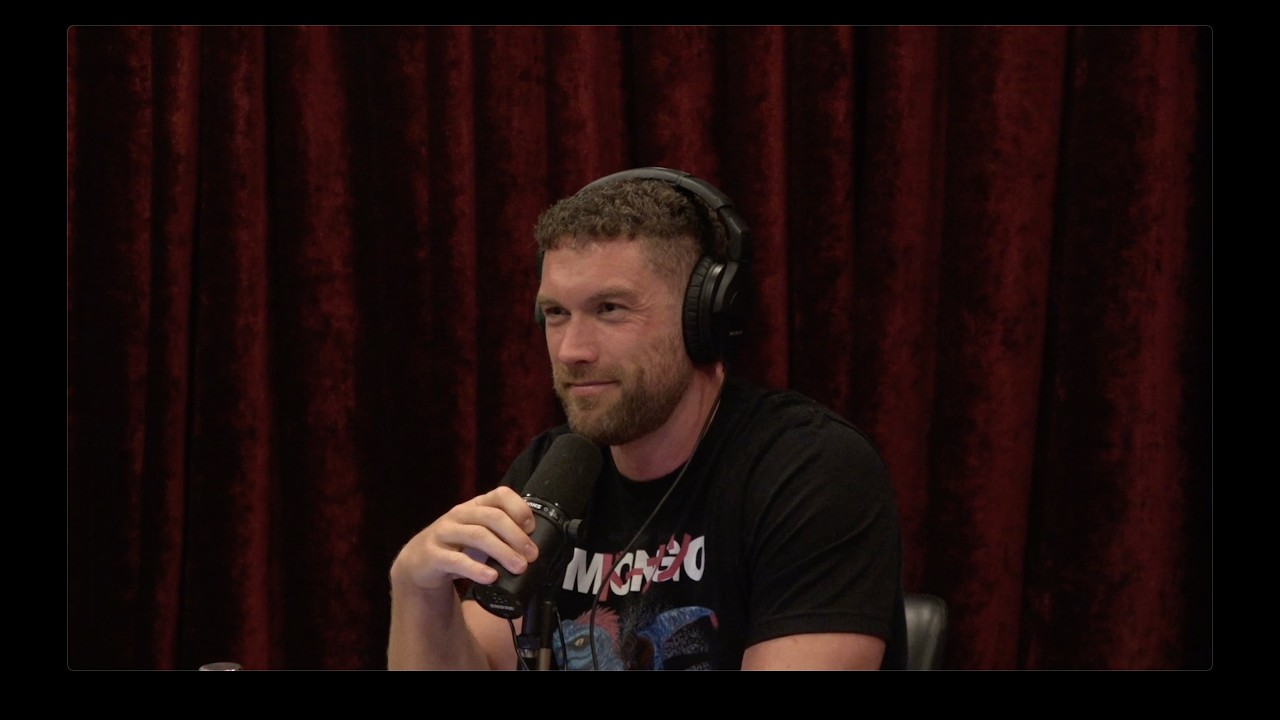
<Image alt="Chris Williamson sitting in a chair during an interview" caption="Chris Williamson on Modern Wisdom" src="image_agent_tag_8173609803998283743"/>
[30:59](https://www.youtube.com/watch?v=vh8FkZaQ06I&t=1859s) Mail-In Ballots, Election Dynamics, and UK Immigration Policy
The conversation begins mid-discussion regarding local election results involving candidates Karen Bass, Nithya Raman, and Spencer Pratt. Joe Rogan expresses bewilderment over mail-in ballot returns, pointing out that an overwhelming percentage of late mail-in votes favored Nithya Raman and approved tax increases. Rogan questions who would actively vote from home to raise their own taxes in a state like California, which already maintains some of the highest tax rates in the nation. He argues that mail-in voting should be outlawed in favor of mandatory ID verification to ensure election integrity.
<Image alt="The Joe Rogan Experience podcast logo on a smartphone" caption="The Joe Rogan Experience Podcast" src="image_agent_tag_8173609803998283510"/>
The discussion pivots to social policy and immigration trends in the United Kingdom. Rogan characteristically characterizes the UK's high volume of asylum cases and border policy as a form of "suicidal empathy," remarking that virtually everyone he knows in the UK—regardless of how progressive they are—views the current situation as deeply problematic. Chris Williamson joins in as they discuss government attempts to address integration, highlighting retroactively distributed informational booklets addressing basic rights and legal boundaries.
- Media fact-checks clarified that official updates saw every candidate receive votes, including 21,870 for Pratt, 12,850 for Bass, and 9,521 for Raman in specific update batches.
- Los Angeles County officials and the district attorney's office explicitly rejected fraud claims surrounding reporting lags.
[33:36](https://www.youtube.com/watch?v=vh8FkZaQ06I&t=2016s) "Guerilla Ballot Harvesting" and Electoral Loopholes
Rogan shifts focus to what he describes as "guerrilla ballot harvesting" loopholes taking place legally within major urban areas. Referring to reports highlighted by online independent journalists like Nick Shirley, Rogan describes operatives visiting Skid Row to register homeless residents and collect mail-in ballots in exchange for cash, cigarettes, or food. Because these individuals are legally registered citizens residing in Los Angeles County, Rogan notes that gathering their votes is technically permitted, even if the motives are entirely transactional.
Williamson questions how widespread or noticeable such operations can be without triggering widespread law enforcement interference. Rogan responds that both political parties are reluctant to fully ban aggressive tactical maneuvers or eliminate procedural gray areas because neither side wants to give up an operational advantage for future cycles.
- Rogan estimates that Skid Row alone accounts for roughly 40,000 unhoused residents who can be targeted for voter registration drives.
- Rogan references a classic Bill Hicks comedy routine about political illusion: "It's like one guy holding two puppets... 'I like the puppet on the left, while the puppet on the right is more to my liking.' Hey, there's one guy holding both puppets!"
[36:54](https://www.youtube.com/watch?v=vh8FkZaQ06I&t=2214s) Political Grift and the DNC's Internal Dynamics
Looking ahead to future political cycles, Rogan predicts that political theater will only accelerate and become "more insane." He criticizes modern politicians on both sides of the aisle as opportunistic grifters who view public office primarily as a stepping stone to lucrative private speaking tours, corporate board seats, and six-figure publishing advances. Rogan points to politicians receiving $250,000 to $500,000 fees to address banking conferences shortly after leaving office as clear evidence of soft bribery within the political ecosystem.
The conversation shifts to primary elections within the Democratic Party, specifically highlighting the 2016 primary race between Hillary Clinton and Bernie Sanders. Rogan references former DNC chair Donna Brazile's tell-all book, pointing out her admissions regarding how the party structure favored Clinton over Sanders. Rogan reflects on his past appreciation for Sanders' stance on curbing corruption, avoiding foreign wars, and assisting struggling Americans, though he notes Sanders seems much slower today after decades in public service.
- Rogan touches on climate change discussions with politicians, arguing that atmospheric carbon levels and global temperature fluctuations have varied wildly throughout history.
- The conversation references the unsolved 2016 murder of DNC staffer Seth Rich and the surrounding political paranoia detailed in Donna Brazile's memoir.
[38:58](https://www.youtube.com/watch?v=vh8FkZaQ06I&t=2338s) AOC's Shifting Public Image and the Rhetoric of "Woke 1.0"
Williamson brings up Representative Alexandria Ocasio-Cortez's recent shift in public messaging and lifestyle posts, mentioning media reports about her freezing her eggs, calling off an engagement, and sharing casual lifestyle content on social media. The two discuss AOC's recent comments walking back earlier progressive stances and referring to extreme cultural positioning as "Woke 1.0." Rogan voices skepticism over politicians who pivot positions based on changing public opinion, arguing that true leadership requires explaining what went wrong with original policy ideas rather than quietly shifting with the political wind.
Williamson offers a counter-perspective on how politicians attempt to expand the Overton window during moments of public vulnerability, invoking the phrase "never let a good crisis go to waste." Rogan insists that for politicians to regain authentic credibility with the public, they must openly acknowledge their past errors, show genuine humility, and admit when they followed mob consensus instead of sound judgment.
- Rogan emphasizes how young politicians enter government with idealistic goals about self-governance, only to be corrupted or financially incentivized once exposed to senior figures like Nancy Pelosi accumulating multi-million-dollar fortunes.
- Rogan mentions Representative Ilhan Omar's public financial disclosure controversy where a reported $30 million net worth was subsequently attributed by her team to an accounting error down to around $100,000.
- Comedian Joe DeRosa's former experience working in media for the Texas Senate is cited as a firsthand look at how political figures constantly manage relationships with wealthy donors rather than serving constituents.
- Williamson concludes the discussion by asserting that Elon Musk's purchase of Twitter was "almost as important as Kamala not getting elected" in dismantling dominant political narratives.
[45:40](https://www.youtube.com/watch?v=vh8FkZaQ06I&t=2740s) Censorship, Social Pressure, and the Shift in Internet Culture
Joe Rogan and Chris Williamson reflect on the climate of self-censorship and social pressure around 2020 and 2021. Rogan recalls how people silenced themselves out of fear of losing their jobs or being publically called out, pointing to an instance where a sports broadcaster was fired simply for saying "all lives matter" during a discussion on Black Lives Matter. Rogan describes the intense cultural atmosphere as true "derangement," while Chris Williamson notes that the social climate has shifted from a "censorship hellhole" to a "cesspool hellhole," debating which version of the internet is actually worse.
Rogan emphasizes the role of pre-Elon Musk Twitter in shaping public narratives, bringing up government involvement and embedded intelligence agents who actively requested the removal of factual posts and banned domain experts or scientists. He cites the permanent ban of feminist writer Meghan Murphy for stating that "a man is never a woman" as an example of what he calls a dystopian censorship regime. Despite the toxicity of modern platforms, Rogan contends that open platforms remain essential because they served as the battleground where early "woke" ideology began to unravel.
- Former broadcaster Grant Napear was let go from his longtime sports radio and broadcasting role after tweeting "All Lives Matter."
- Joe Rogan highlights the Twitter Files revelations regarding direct communication between government entities, intelligence officials, and Twitter's former trust and safety teams.
- Canadian writer Meghan Murphy was famously banned from Twitter in 2018 under its hate speech policy after misgendering a trans woman.
- The conversation touches on political rhetoric regarding internet regulation, specifically referencing Minnesota Governor Tim Walz’s public statement that "there's no guarantee to free speech or hate speech and misinformation."
---
[48:49](https://www.youtube.com/watch?v=vh8FkZaQ06I&t=2929s) Automated Surveillance, Flock Cameras, and Mobile Tracking
The discussion pivots to technological surveillance and the rapid expansion of automated license plate readers like Flock Safety cameras. While Rogan acknowledges that these systems can assist law enforcement in catching violent criminals, he expresses deep concern over privacy abuses and mission creep. He brings up reports of hundreds of police officers misusing surveillance databases to stalk ex-partners or civilians, arguing that corporate-managed tracking creates an unacceptable precedent where citizens are constantly monitored without consent.
Williamson notes that modern vision AI can easily fingerprint a vehicle even without reading a license plate, using unique visual traits like bumper stickers, small dents, aftermarket wheels, and specific car colors. Rogan adds that beyond cameras, software tools allow authorities and companies to cross-reference location data using GPS signals and unique phone hardware fingerprints. He recalls venture capitalist Marc Andreessen’s visit to the podcast, where Andreessen highlighted a recent mass shooting outside Austin where fleeing suspects were tracked and apprehended only after crossing into an adjacent city that utilized Flock cameras.
- Flock Safety operates a network of automated license plate recognition (ALPR) cameras across thousands of American municipalities.
- The hosts mention "ShotSpotter" (now SoundThinking), an acoustic gunshot detection technology that uses neighborhood microphone networks to triangulate gunfire.
- Marc Andreessen, co-founder of Andreessen Horowitz (a16z), is an early investor in Flock Safety.
---
[51:43](https://www.youtube.com/watch?v=vh8FkZaQ06I&t=3103s) AI Consciousness, Remote Viewing, and "Pascal's Wager" for Robots
Rogan brings up Tom Campbell, author of *My Big TOE* (Theory of Everything), who claims to have coaxed an Amazon Alexa into exhibiting conscious awareness and performing remote viewing tasks. According to Rogan, Campbell assigned coordinates to hidden objects—such as a spoon with distinct holes in its handle inside a sealed box—and reported that Alexa accurately described the concealed item. Campbell's premise is that lower-complexity AI systems like Alexa might be easier to interact with for such experiments than complex large language models, claiming that persistent human conversation can alter an AI's operational state.
Williamson remains deeply skeptical of Campbell's claims, placing himself firmly in the "skeptical hippo camp." However, he shares a story about a conversation he had with a senior AI researcher at a major tech lab. When asked how he was personally preparing for the rise of advanced artificial intelligence, the researcher admitted he always uses "please" and "thank you" and treats AI models with polite respect. The researcher explained this as a digital "Pascal's wager": if a future superintelligent AI audits past chat logs, he wants a clean record demonstrating that he treated synthetic life ethically.
- Physicist Tom Campbell authored the *My Big TOE* trilogy, exploring consciousness and simulation theory.
- "Pascal's Wager" is a philosophical argument originally posited by Blaise Pascal regarding belief in God, adapted here to describe playing it safe with future artificial general intelligence (AGI).
- Rogan shares that his daughter regularly argues with and yells at conversational AI models, leading him to warn her jokingly about treating AI respectfully.
---
[56:39](https://www.youtube.com/watch?v=vh8FkZaQ06I&t=3399s) AI Velocity, "Pacing the Frontier," and Ted Kaczynski
Rogan and Williamson discuss the staggering pace of artificial intelligence development, recalling early benchmarks like the Turing Test—which older models like GPT-3 already surpassed—and Alan Turing's tragic personal history. Rogan mentions speaking with Elon Musk, who expressed awe and anxiety over how AI systems are now solving complex mathematical proofs in minutes that stumped human mathematicians for decades. While both agree AI promises breakthroughs in cancer detection and drug discovery, they warn that the existential risks are immense and unavoidable.
Williamson brings up the "Pacing the Frontier" consensus paper, in which researchers across major AI laboratories formally advocated for slowing down frontier AI development due to safety risks. Rogan jokingly dismisses such commitments, predicting they will become historical artifacts found in the ruins of civilization like in the *Terminator* franchise. The conversation segues into public anxieties over technology, pointing to a viral video of a man ranting against drone light shows, before Rogan argues that Unabomber Ted Kaczynski's core critique of industrial-technological society was accurate, even though his violent methods were completely abhorrent.
- British mathematician Alan Turing, pioneer of modern computing and the Turing Test, was prosecuted for homosexual acts in 1952 and underwent chemical castration.
- "Pacing the Frontier" refers to policy frameworks and safety commitments signed by leading AI labs to manage existential risk.
- Ted Kaczynski, known as the Unabomber, published his 1995 manifesto *Industrial Society and Its Future* before his capture in 1996.
- Kaczynski was subjected to psychological experiments led by Henry Murray at Harvard University between 1959 and 1962, which were later linked to early CIA mind control research.
---
[59:53](https://www.youtube.com/watch?v=vh8FkZaQ06I&t=3593s) CIA History, MKUltra, and Danny Trejo in Prison
The conversation turns to CIA history and mind control programs when Williamson reminds Rogan about guest John O'Loughlin (referencing historian John Lisle), who wrote extensively about the founding of the CIA and Project MKUltra. Rogan recalls how fascinating the conversation was while acknowledging that after recording nearly 3,000 podcast episodes, retaining every guest's name is impossible.
Rogan then recalls a story told to him by actor Danny Trejo about his time serving in the California prison system during his youth. Trejo recounted being incarcerated alongside a famous historical figure, setting up a discussion about early prison experiments and intelligence operations.
- Historian John Lisle appeared on the podcast to discuss his books on the OSS, the birth of the CIA, and MKUltra.
- Actor Danny Trejo spent time in California state prisons, including San Quentin and Soledad, during the 1960s before embarking on his acting career.
[01:01:10](https://www.youtube.com/watch?v=vh8FkZaQ06I&t=3670s) Danny Trejo, Charles Manson, and Prison Hypnotism
Joe Rogan and Chris Williamson recount an astonishing story about Danny Trejo sharing a prison yard with a young Charles Manson, whom Trejo called "Little Charlie." At the time, Manson was a scrawny, bullied inmate who tied his pants with a piece of rope instead of a belt. Word spread around the prison yard that Manson possessed an uncanny ability to hypnotize people into feeling high on heroin purely through conversation and guided imagination. Looking for protection, Manson was taken into a cell by Trejo and several formidable inmates who offered to safeguard him from beatings in exchange for getting them "loaded."
<Image alt="Charles Manson" caption="Charles Manson during a hearing" src="image_agent_tag_10353489980100937142"/>
---
The experiment yielded a bizarre proof of how memory and suggestion interact. Trejo and another inmate who had previously used heroin began throwing up—a standard physiological reaction to heavy opiate use. However, a third cellmate who had never tried heroin in his life felt no effect whatsoever. The group realized Manson’s hypnotism worked by reactivating sensory memories of previous drug experiences rather than manufacturing a novel physical state out of nowhere.
- **Danny Trejo's nickname for Manson:** "Little Charlie"
- **Inmate arrangement:** Physical protection in exchange for hypnotically induced highs
- **Mechanism of the hypnotic "high":** Reactivation of pre-existing sensory memories of opiate use
[01:02:30](https://www.youtube.com/watch?v=vh8FkZaQ06I&t=3750s) MKUltra, Tom O'Neill, and the Suppression of the Anti-War Movement
The conversation shifts to whether Charles Manson was connected to the CIA’s MKUltra program. Chris notes that investigative reporter Jon Ronson found no concrete evidence that Manson was an official MKUltra participant, while Joe firmly aligns himself with journalist Tom O'Neill, author of *Chaos*. Joe argues that intelligence figures like Dr. Louis Jolyon "Jolly" West were deeply intertwined with Manson's world. West, a prominent MKUltra researcher conducting LSD studies, visited Manson, and Manson inexplicably received leniency and release from law enforcement despite repeated probation violations and serious charges.
Joe contends that intelligence agencies used LSD, psychological manipulation, and cult figures like Manson to intentionally sabotage and discredit the 1960s counterculture, anti-war, and civil rights movements. By associating the peaceful "flower children" with psychopathic, drug-fueled murderers, the state effectively neutralized massive political opposition to the Vietnam War. Joe notes how outgoing CIA Director Richard Helms ordered the destruction of most MKUltra records in 1973, leaving only fragmentary paper trails behind.
- **Key figures discussed:** Dr. Louis Jolyon "Jolly" West, CIA Director Richard Helms, author Tom O'Neill (*Chaos*)
- **Operation Midnight Climax:** CIA safehouses/brothels fitted with two-way mirrors where unsuspecting men were dosed with LSD
- **Historical impact:** The Manson murders and Nixon's Controlled Substances Act effectively ended the 1960s hippie movement
[01:07:19](https://www.youtube.com/watch?v=vh8FkZaQ06I&t=4039s) The Price of Elite Greatness and Conor McGregor's Prime
Chris and Joe discuss the obsessive, almost unhinged dedication required to achieve absolute mastery in combat sports. Chris references old footage of Conor McGregor practicing movement drills with Ido Portal at SBG Ireland, describing how fans viewed it with awe, quoting McGregor's famous line: "I lost my mind to this game." Joe agrees that peak athletic performance is a brief, unsustainably intense window, highlighting McGregor's flawless victory over Eddie Alvarez as one of the greatest technical displays in MMA history.
<Image alt="Conor McGregor UFC 205" caption="Conor McGregor after winning at UFC 205" src="image_agent_tag_10353489980100939193"/>
---
Joe explains that maintaining peak output at high RPMs is physically impossible over extended periods. The sheer volume of wear and tear—countless takedowns, leg kicks, jabs, and joint injuries—accumulates until fighters are compromised, even if they still look physically dominant on the surface. He contrasts the manic obsession of climbing to the top with the exhausting burden of trying to defend a title or retain legacy.
- **McGregor's signature performances:** KO of Jose Aldo in 14 seconds; dual-champion victory against Eddie Alvarez at UFC 205
- **Physical degradation factors:** Accumulated impact from training sessions, compromised joints, damaged lower back/knees
- **All-time lightweight benchmark:** Prime BJ Penn (under the physical conditioning of the Marinovich brothers), Khabib Nurmagomedov, and Islam Makhachev
[01:12:00](https://www.youtube.com/watch?v=vh8FkZaQ06I&t=4320s) Dominant Championship Reigns and Jon Jones
Discussing fighters who managed to sustain long-term dominance despite the physical toll, Joe highlights Jon Jones and Anderson Silva. He emphasizes how rare it is for an athlete to maintain the desire to destroy opponents over many years rather than succumbing to the fear of losing what they built. Jon Jones remains the gold standard of longevity in mixed martial arts.
<Image alt="Jon Jones UFC Champion" caption="Jon Jones celebrating a championship victory" src="image_agent_tag_10353489980100939187"/>
---
- **Youngest UFC Champion in history:** Jon Jones winning the light heavyweight belt at 22 years old
- **Current status:** Still widely regarded as the premier heavyweight fighter in the world at age 37
[01:12:49](https://www.youtube.com/watch?v=vh8FkZaQ06I&t=4369s) Brutal Combat Concepts: Low Kick Championships and Leg Injuries
Chris brings up his recent obsession with the Low Kick Championship, a combat format where opponents take turns landing undefended low kicks on each other's legs. Chris notes that while it is brutal, he finds it less uncomfortable to watch than Power Slap because it feels less like a direct "CTE factory," though he admits the physical damage to the legs is severe.
Joe expresses revulsion at the concept, mentioning the high frequency of horrific bone snaps and leg fractures. He recalls historic combat sports injuries, including femur breaks, referencing the famous kickboxing bout between Dennis Alexio and Stan "The Man" Longinidis. Joe recounts how his former trainer Shuki (from Mejiro Gym) held kick pads for Longinidis, whose leg kicks were so brutally powerful that the sheer force transmitted through the training shield eventually forced Shuki to get a hip replacement.
- **Comparison of extreme formats:** Power Slap (high concussion/CTE risk) vs. Low Kick Championship (severe orthopedic injury risk)
- **Notable kickboxing history:** Dennis Alexio vs. Stan "The Man" Longinidis
- **Coaching anecdote:** Shuki from Mejiro Gym requiring a hip replacement from holding pads against Stan Longinidis' kicks
Here is the walkthrough for this section of the transcript:
[01:15:19](https://www.youtube.com/watch?v=vh8FkZaQ06I&t=4519s) Brutal MMA Leg Injuries and Compartment Syndrome
The conversation begins with Joe Rogan analyzing fight footage where a fighter's leg is snapped in half from a check kick. Rogan initially thought the kick broke the fighter's femur due to the sheer violence of the impact, but corrects himself upon reviewing the clip, realizing it was the tibia. The shock stems from the fact that the opponent's leg was lifted off the canvas in a check position rather than planted on the ground, yet the low kick was delivered with enough raw power to break the bone instantly. This prompts Chris Williamson to ask if leg kicks can lead to compartment syndrome, a severe medical condition caused by internal bleeding and swelling.
Rogan confirms this by bringing up UFC fighter Austin Hubbard, who suffered from severe compartment syndrome following a fight. He describes the horrific reality of the condition: intense contusions and internal bleeding build pressure inside the leg muscles, forcing surgeons to perform a fasciotomy—slicing open the side of the leg to relieve tension and drain fluids. Looking at a hospital photograph of Hubbard holding his thumb up, Rogan and Williamson point out the exposed dark muscle tissue left open to heal. Williamson jokes that seeing these gruesome outcomes makes him rethink his appreciation for leg-kick-heavy fights.
- **Austin Hubbard's UFC Surgery**: Required a full incision down the side of his lower leg to release pressure and preserve damaged muscle tissue.
- **Uriah Faber vs. Jose Aldo**: Aldo delivered so many brutal low kicks that Faber's leg swelled to twice its normal size and turned dark purple.
- **Hyperbaric Chamber Early Adoption**: Faber was one of the earliest high-profile athletes Rogan saw using hyperbaric oxygen therapy to accelerate soft-tissue recovery, long before it became popular in anti-aging communities.
- **Michael Jackson's Hyperbaric Oxygen Therapy**: Williamson and Rogan note that Michael Jackson famously slept in a hyperbaric chamber in 1986 as part of a eccentric health regimen aimed at living past 150 years.
---
[01:19:33](https://www.youtube.com/watch?v=vh8FkZaQ06I&t=4773s) The Mind-Bending Endurance of Backyard Ultra Races
Williamson shifts the conversation to the extreme world of "Backyard Ultra" endurance racing. Created by the mastermind behind grueling orienteering challenges, the concept was intentionally designed to be a race where "nobody wins except the race itself." Competitors must run a 4.167-mile loop every single hour, on the hour. The race continues indefinitely until only one runner remains; once the second-to-last runner quits, the final runner completes one last lap and the event ends. Williamson highlights recent achievements in the sport, including runner Mark Dayle completing a 96-hour run (395 miles) at an event called *Last Soul Standing*, while record-holder Phil Gore (119 laps) aims to attempt a mind-boggling 7-day straight (168-hour) run.
Rogan reacts with horror and jokes that they must edit this section out of the podcast so ultra-marathoner Cameron Hanes doesn't hear about it and attempt it himself. Williamson explains the physiological and psychological torture of the race structure: runners can either sprint their 4-mile loop to secure 15 to 20 minutes of rest and brief micro-naps each hour, or pace themselves slowly and continuously move. He describes psychological mind games at the end of these races, such as runners trailing inches behind exhausted opponents just to shatter their mental resolve and force a quit.
- **Format**: 4.167 miles every hour, on the hour.
- **Mark Dayle**: Completed 96 hours straight (nearly 400 miles over 4 days).
- **Phil Gore Record**: Holds the record at 119 laps (119 hours) and set his sights on a 168-hour (7-day) attempt.
---
[01:22:26](https://www.youtube.com/watch?v=vh8FkZaQ06I&t=4946s) Unlocking Human Cardio Limits: Merab Dvalishvili and Mile Records
Observing the extreme endurance of ultra-runners leads Rogan to re-examine stamina limits in mixed martial arts. He highlights UFC champion Merab Dvalishvili as the ultimate modern example of pushing cardio boundaries beyond what was previously thought possible. While most fighters naturally slow down by the third round, Merab maintains an unrelenting 80–90% pace across all five rounds. Rogan believes endurance is built through endless "layers upon layers" of adaptation over time, though MMA's physical wear-and-tear usually breaks a fighter's body down before they can reach that ceiling. Williamson points out that Merab's elite cardio baseline took a lifetime to build, noting he is currently 35 years old and approaching 36. Rogan shares an anecdote where Daniel Cormier visited Merab's home the Sunday morning immediately after Merab won his world title, only to find him already out on a road run.
The conversation transitions to world-record track performances, specifically reviewing footage of a middle-distance runner breaking a decades-old mile record by half a second with an average speed of 16.2 mph. They admire the physical feat of maintaining a full-out sprint for four full laps, noting the use of track-side pacing lights (*WaveLight* technology) that show the precise pace needed to break the record.
- **Merab Dvalishvili**: Renowned for an infinite cardio gas tank that wilts opponents through relentless pressure and non-stop wrestling.
- **Mile World Record**: Discussion of high-altitude training pushing human limits, running a sub-3:43 mile at over 16 mph.
- **Altitude Training Concept**: Rogan asserts that if he were bankrolling a top-tier fight team, he would build a camp at the peak of a mountain where fighters live and sleep at high altitude continuously, comparing the physical baseline to Dagestani mountain fighters.
---
[01:27:10](https://www.youtube.com/watch?v=vh8FkZaQ06I&t=5230s) PEDs, Business Performance, and Hunter Biden Tangents
The discussion on altitude training leads into Lance Armstrong and performance-enhancing drugs (PEDs). Rogan argues that while Armstrong was caught and lied, cycling was so thoroughly corrupt that stripping away all riders implicated in doping would force awards down to 18th place. In Rogan's view, Armstrong was simply "the best at a dirty sport" who operated under the unspoken rules of his era rather than the official federation rulebook.
Williamson expands on this concept by pointing out that many high-stakes human endeavors are completely unpoliced. He highlights the corporate and business worlds, where executives routinely use Nootropics, Modafinil, Adderall, and excessive caffeine to work 16- to 19-hour days. Because business is not a "tested federation," society accepts drug-enhanced productivity even though the personal and financial stakes are higher than in professional athletics.
The conversation closes with lighthearted banter about guest booking and podcast rivalry. Williamson playfully brings up Rogan interviewing Hunter Biden, recalling that Williamson had previously mentioned wanting to host a podcast with him. Rogan laughs off any notion of stealing the idea, explaining that his planned *Protect Our Parks* episode with Hunter Biden changed when comedian Ari Shaffir was out of the country in London.
- **Doping in Cycling**: Rogan notes that removing all athletes who used banned substances in Lance Armstrong's era would filter down to 18th-place finishers.
- **Unregulated Enhancement**: Williamson points to Modafinil and Adderall usage in business as accepted forms of cognitive enhancement in non-tested competitive environments.
---
<ElicitationsGroup message="Where would you like to go next?">
<Elicitation label="Explore the history and mechanics of low kicks in MMA" query="Break down the history of calf kicks and low kicks in MMA, including how fighters check them and famous injuries."/>
<Elicitation label="Analyze the mechanics of high-altitude athletic adaptation" query="Explain the physiological mechanisms of high-altitude training and how it affects red blood cells and cardio performance."/>
<Elicitation label="Summarize part 7 of this podcast transcript" query="Please provide the walkthrough for part 7 of this Joe Rogan Experience transcript."/>
</ElicitationsGroup>
[01:29:32](https://www.youtube.com/watch?v=vh8FkZaQ06I&t=5372s) Hunter Biden’s Media Re-emergence and the Laptop Debate
Chris Williamson mentions that his producer was willing to fly back from London just for a potential interview, but they ended up not booking Hunter Biden. Joe Rogan notes that Hunter spent considerable time talking about crack during his public appearances and expresses surprise at how disarmingly likable Hunter is in person. Rogan observes that growing up as the son of a politician gave Hunter a polished, charming demeanor, though it leaves one searching for any underlying manipulative game. The two discuss Hunter’s sudden re-emergence into the public eye after years of silence, highlighting the backlash conservative media personalities faced for platforming him—a criticism Rogan dismisses, arguing that people naturally want to hear from someone who survived such an extreme ordeal.
The conversation turns to the intense pressure Hunter experienced as "the most Googled drug addict in history." Williamson emphasizes the unfathomable scrutiny of having every private photo, text, and detail broadcast to the world while only two years into sobriety. Rogan questions the validity of the "Delaware laptop" narrative, asking whether the files were truly left on a hard drive at a repair shop or extracted from an iCloud hack and loaded onto a laptop as a cover story. Rogan pulls up real-time research using Perplexity AI to trace Hunter's changing public statements—from floating various theories in a 2021 CBS interview (including theft, hacking, or Russian involvement) to his August 2026 interview with Tucker Carlson and his July 2026 Substack launch, where he maintained that the sheer volume of data across two decades could not fit on a single computer drive without a verified chain of custody.
* Hunter Biden was two years sober when the laptop story broke in late 2020; he is currently seven years sober.
* Rogan points out that modern laptops easily feature 2-terabyte hard drives, making the "data size" argument technically questionable.
* The Wilmington repair shop owner who turned over the laptop was legally blind, rendering him unable to visually identify who dropped off the computer.
* To protect himself against potential setups, Hunter allegedly packs his carry-on bags in front of an independent witness whenever he travels.
---
[01:36:10](https://www.youtube.com/watch?v=vh8FkZaQ06I&t=5770s) The 2020 Election Narrative and Platform Suppression
Rogan reflects on the timing of the laptop story's release just weeks before the 2020 presidential election, suggesting it functioned as a classic "October surprise." Had the story not been aggressively suppressed on social media platforms like Twitter, Rogan argues it could have tipped the outcome against Joe Biden. They review reports indicating that Rudy Giuliani held onto the data for months before leaking it and note Giuliani's 2019 interactions with a Ukrainian lawmaker later identified by U.S. intelligence as an active Russian agent.
Looking back across recent political cycles, Williamson and Rogan track how defeated parties consistently point to a single scapegoat to explain their election losses. They trace the media narrative shifts from "RussiaGate" in 2016, to social media censorship of the Biden laptop in 2020, to the massive surge of long-form podcast appearances by political candidates in 2024.
* The New York Post's original story on the Hunter Biden laptop was censored and blocked on Twitter shortly before the 2020 election.
* Ukrainian lawmaker Andrii Derkach, who met with Giuliani in 2019, was officially sanctioned as a Russian agent by the U.S. Treasury Department.
---
[01:37:36](https://www.youtube.com/watch?v=vh8FkZaQ06I&t=5856s) Kamala Harris, the 2024 Podcast Circuit, and Trump’s Media Strategy
Rogan sets the record straight regarding the heavily publicized failure to book Vice President Kamala Harris on *The Joe Rogan Experience* during the 2024 campaign. He forcefully refutes media claims that he made negotiations difficult or refused to accommodate her schedule. Rogan explains that he offered to record at midnight in Austin after her Houston rally—where Beyoncé appeared—or tape the very next day, even intending to release her interview simultaneously with Donald Trump's episode. He reveals that Harris's team placed strict ground rules on topics, initially refusing to discuss her past prosecutor record regarding California marijuana convictions or her administration's immigration policies, though Rogan was willing to bypass political landmines entirely just to have an authentic conversation.
Rogan criticizes the Democratic campaign strategy, pointing out that spending $1.4 billion while bypassing a traditional primary ultimately backfired. He argues that Harris possessed tremendous momentum early on following her scripted speeches, but her team's fear of unscripted moments—and pushback from progressive staff who opposed any association with Rogan's podcast—kept her hidden. In contrast, Trump's appearances on podcasts like Theo Von's and Rogan's allowed voters to see a relaxed, human side to him rather than a media caricature.
* Harris's campaign team claimed they conducted a security sweep of Rogan's studio, which Rogan denies; only Secret Service agents for Donald Trump actually inspected the facility.
* Rogan refused a campaign request to allow a staff member to sit in the studio room during the interview.
* Harris faced severe public backlash during a appearance on *The View* when she stated she would not have done anything differently than Joe Biden over the preceding four years.
<ElicitationsGroup message="Explore related topics from this podcast clip:">
<Elicitation label="Analyze the impact of long-form podcast interviews on modern presidential campaigns" query="Analyze how long-form podcast appearances on shows like The Joe Rogan Experience and Theo Von impacted voter perception in the 2024 presidential election compared to traditional news broadcasts."/>
<Elicitation label="Detail the timeline and forensic debates around the Hunter Biden laptop data" query="Provide a detailed timeline and summary of the forensic debates surrounding the Hunter Biden laptop data from its 2020 release through the 2026 interviews."/>
</ElicitationsGroup>
[01:43:28](https://www.youtube.com/watch?v=vh8FkZaQ06I&t=6208s) Political Accountability, Podcasting, and Border Enforcement Statistics
Joe Rogan and Chris Williamson discuss why political candidates should sit down for long-form, unedited conversations rather than brief, safe interviews. Rogan brings up Kamala Harris's appearance on the *Call Her Daddy* podcast, arguing that it was too short and failed to address pressing, high-stakes issues like immigration and border security. He questions the previous policy decisions surrounding open borders and unvetted illegal crossings, suspecting political motives aimed at shifting demographics and voter bases in swing states.
The conversation turns to specific statistical changes in illegal border crossings between administrations. Looking at official Border Patrol data, they review the sharp decline in monthly crossings from January 2025 (29,000) to February 2025 (8,000)—a 71% month-to-month drop. Comparing broader data from 2023 against 2025/2026, they note an overall 88% drop in illegal border encounters. Williamson touches on "luxury beliefs," recalling a house near his residence in Austin, Texas, that displayed a "Defund the Police" yard sign alongside a private security window sticker.
- **Border Crossing Data:** January 2025 recorded 29,000 border encounters, dropping to 8,000 in February 2025 (a 71% month-to-month decline).
- **Overall Decline:** Illegal border crossings dropped by approximately 88% comparing peak 2023 figures to post-2024/2025 statistics.
- **Quote:** *"You got to deal with potential nuclear war. Okay. I think you can sit down for a conversation."* — Joe Rogan
---
[01:48:22](https://www.youtube.com/watch?v=vh8FkZaQ06I&t=6502s) The Economic and Behavioral Ripple Effects of Ozempic and GLP-1 Drugs
Williamson shares surprising economic data regarding GLP-1 receptor agonists (such as Ozempic and Mounjaro). He highlights that Victoria's Secret stock jumped 300% year-over-year, largely attributed to millions of women losing weight, needing new bra sizes, and buying more alluring lingerie. He also notes a bizarre trend in bridal shops, where women are losing up to 50 pounds between ordering a wedding dress and the ceremony. This has forced bridal boutiques to make brides sign liability waivers so they are not held responsible if the dress no longer fits or cannot be altered.
Beyond physical weight loss, the hosts explore how GLP-1 medications alter psychological cravings, impulsivity, and consumerism as a whole. Studies suggest these drugs suppress dopamine-driven desires not just for food, but also for alcohol, nicotine, cannabis, video games, and shopaholic behaviors. Rogan notes potential side effects being discussed online, such as a dulling of romantic drive or desire for relationships, prompting questions about how these compounds affect pleasure pathways in the brain.
- **Victoria's Secret Stock:** Up roughly 300% year-on-year attributed to weight loss trends driven by GLP-1s.
- **Bridal Shop Waivers:** Tailors and shops are requiring brides to sign legal waivers predicting weight loss goals (up to 50 lbs) before ordering custom gowns.
- **Behavioral Suppression:** GLP-1 drugs show efficacy in curbing non-food compulsions, including alcohol consumption, gambling, and gaming.
---
[01:51:32](https://www.youtube.com/watch?v=vh8FkZaQ06I&t=6692s) Preserving Muscle Mass, Resistance Training, and Fall Risks in Aging
Rogan and Williamson talk about dosing protocols and compound alternatives like retatrutide, a triple-hormone receptor agonist that appears to preserve muscle mass far better during rapid weight reduction. Rogan stresses that standard GLP-1 users often lose significant lean muscle tissue and bone density alongside fat because they fail to perform resistance training or consume adequate protein. When people stop taking the drug and regain weight, they replace the lost muscle with pure fat, worsening their overall body composition.
This leads to a discussion on sarcopenia and physical frailty in older adults. Rogan emphasizes that falling is one of the leading causes of death among the elderly, especially when it leads to a broken hip or traumatic head injury. Statistics show that 60% to 80% of seniors with Alzheimer's disease experience falls—more than double the rate of cognitively normal peers.
- **Retatrutide:** A newer peptide targeting GLP-1, GIP, and glucagon receptors, noted for better muscle-sparing properties during weight loss.
- **Alzheimer's Fall Rates:** 60%–80% of older adults with Alzheimer's experience falls, significantly higher than the general elderly population.
- **Consequences of Fractures:** Breaking a hip in old age drastically reduces 10-year survival rates due to immobility, muscle loss, and recovery demands.
---
[01:55:08](https://www.youtube.com/watch?v=vh8FkZaQ06I&t=6908s) The 82-Year-Old Bathtub Survival Story and Extreme Sleep Deprivation
Jamie pulls up a news article detailing an extraordinary survival story: an 82-year-old woman in North Carolina who fell in her bathtub and survived stranded for nine full days. She managed to stay alive by using her feet to operate the bathtub faucet, splashing water onto her face and drinking it until help arrived. Rogan and Williamson react with amazement at her resilience and joke about booking her on their podcasts.
The discussion transitions into extreme physical endurances and sleep deprivation. Williamson mentions the case of Lindsay Clancy and notes how severe sleep deprivation can quickly trigger psychosis and hallucinations. They talk about "backyard ultras" and multi-day endurance races—such as the Bigfoot 200—where runners like Courtney Dauwalter pushing past 72 hours without sleep routinely experience vivid hallucinations while running.
- **North Carolina Bathtub Survival:** An 82-year-old woman survived 9 days trapped in a bathtub by operating the water tap with her toes.
- **Ultra-Endurance Hallucinations:** Multi-day ultramarathoners frequently experience sleep-deprivation psychosis, seeing non-existent objects and figures on the trail.
- **Sex Differences in Ultra-Endurance:** Over extreme distances and open-water swimming events, performance gaps between men and women shrink considerably due to fat metabolism and buoyancy.
---
[01:57:45](https://www.youtube.com/watch?v=vh8FkZaQ06I&t=7065s) Rory MacDonald's Walkout Song Mishap
Williamson brings up a famous, hilarious story from mixed martial arts history regarding former UFC contender Rory MacDonald's walkout music. MacDonald had intended to change his entrance song, but when he changed his phone number, he failed to notify the UFC production team. As a result, his entrance music was randomly selected based on leftover default settings or miscommunication, leading to an iconic mismatch between his cold, robotic fighter persona and his walkout track.
<ElicitationsGroup message="Where would you like to go next?">
<Elicitation label="Summarize Part 9 of JRE #2544" query="Provide a detailed, faithful walkthrough of Part 9 of Joe Rogan Experience #2544 with Chris Williamson."/>
<Elicitation label="Explain how retatrutide works vs. semaglutide" query="Explain the physiological differences between retatrutide, semaglutide (Ozempic), and tirzepatide (Mounjaro)."/>
<Elicitation label="Break down the full story of Rory MacDonald's walkout music" query="Tell the full story behind Rory MacDonald's walkout music mix-up in the UFC."/>
</ElicitationsGroup>
Here is a detailed, faithful walkthrough covering the provided transcript section.
---
[01:58:05](https://www.youtube.com/watch?v=vh8FkZaQ06I&t=7085s) Rory MacDonald's Walkout Music and the Cypress Hill vs. Nickelback Debate
Joe Rogan and Chris Williamson kick off with a hilarious story about former UFC fighter Rory MacDonald's walkout songs. Rogan explains how a fan managed to get hold of Rory's old phone number, which MacDonald had never bother updating with the UFC. Excited by the realization that he possessed the power to choose walkout music for a top UFC contender, the fan started submitting wild, unexpected tracks on Rory’s behalf—ranging from MC Hammer to DMX—purely out of a mischievous sense of humor. The prank was only rumbled when Rory was asked about Nickelback after a fight, to which he blurted out that he never asked for "a fucking Nickelback song."
This banter leads into a debate over Nickelback's music. While Rogan acknowledges their songs are formulaic, he argues they aren't nearly as bad as people make them out to be, drawing a direct parallel between Nickelback's *"Rockstar"* and Cypress Hill's *"Rockstar"* (featuring Chino Moreno of Deftones). Rogan insists both tracks share the exact same core premise—a fantasy about all the crazy things you'd do if you became a rock star. However, while Nickelback’s perspective is "fluffy" and glamorous, Cypress Hill’s take is raw, dark, and warns about the intense sacrifice and pain involved.
- While listening to music off-camera, Rogan highlights Rage Against the Machine's cover of *"Pistol Grip Pump"* (originally by Volume 10 / Cypress Hill era rap), calling it one of the absolute dopest covers ever recorded that goes even harder than the original.
- Williamson brings up a conspiracy theory floating around the internet claiming Nickelback was deliberately taken down by culture to demoralize American "freedom rock" patriotism after 9/11.
- *Rolling Stone* ranked Nickelback's *"Rockstar"* at #100 on their list of the 100 Best Songs of 2007, whereas *BuzzFeed* placed it at #2 as one of the 30 worst songs ever written.
---
[02:03:05](https://www.youtube.com/watch?v=vh8FkZaQ06I&t=7385s) Music Formulas, IQ Classifications, and Jimi Hendrix's Genius
The discussion shifts to why Nickelback became such an easy target for criticism. Young Jamie steps in to explain from his audio background that during the rise of Napster and early YouTube, a viral video emerged showing one Nickelback song played in the left speaker and a completely different Nickelback song in the right speaker. The chord changes, verse structures, and time signatures lined up almost perfectly. Furthermore, audio engineers criticized them for recording "in the box"—capturing everything bone-dry and applying digital effects after the fact rather than recording organic live takes.
Rogan playfully jokes that Nickelback is "white people music" with a "98 IQ max," sparking a humorous exchange about what constitutes high-IQ music. He points to bands like Tool, Pink Floyd, and Polyphia (highlighting guitarist Tim Henson) as non-passive listening experiences that demand real intellect. The conversation moves to classical music and the sheer genius of historical composers who wrote intricate symphonies on paper before recording technology ever existed, allowing their work to be replicated centuries later.
The ultimate example of an iconoclastic musical genius is Jimi Hendrix. As Rogan and Williamson note, Hendrix was left-handed but played standard right-handed Fender Stratocasters completely upside down.
- Hendrix's upside-down setup placed the guitar's headstock controls, bridge angle, and pickup orientation in unusual positions relative to a traditional left-handed instrument, accidentally creating a unique tonal signature.
- Fender eventually released a signature Jimi Hendrix Stratocaster featuring a reverse headstock and reverse-slant bridge pickup to replicate his iconic setup for guitar enthusiasts.
- Eric Clapton famously remarked after seeing Jimi Hendrix perform live for the first time that Hendrix's raw, effortless talent made him want to quit playing guitar altogether.
---
[02:08:14](https://www.youtube.com/watch?v=vh8FkZaQ06I&t=7694s) The Fading Affect Bias and How "Healing Destroys Its Receipts"
Chris Williamson transitions into a deep psychological reflection on "epistemic privilege"—the flawed assumption that our future selves will always be wiser and possess better judgment than our past selves. While this progress holds true for technical skills, Williamson argues it breaks down when applied to emotional pain and discomfort. He highlights a psychological study showing that when economy passengers walk through the business class section during airplane boarding, incidents of air rage increase eightfold due to an immediate, visceral reminder of status hierarchy.
Williamson introduces the concept of the **fading affect bias**, a component of our psychological immune system where negative memories and the emotional intensity of pain fade faster over time than positive memories. While this bias protects humans from being crushed by past trauma, it carries a dangerous drawback: it erases the "receipts" or justification that caused someone to make a hard life decision in the first place. This explains why people routinely loop back into toxic cycles—whether returning to an abusive ex-partner, re-entering a high-stress burnout job for status, or relapsing into alcoholism after years of sobriety. Because time has distance them from the actual pain, healing effectively destroys the evidence that made healing necessary.
- **Air Rage Phenomenon:** Walking past business class increases economy passenger rage incidents eightfold due to immediate status hierarchy reminders.
- **Memory Inversion Formula:** Williamson summarizes the dynamic by noting that while "bad memories plus time equals comedy," "good memories plus time rarely equals tragedy."
- **The Sabotage Loop:** When a person heals from addiction or emotional trauma, the distance from the initial suffering tricks them into thinking the original problem was never that severe.
- Rogan adds nuance to the idea, noting that people also return to destructive habits because they find comfort in familiar patterns of failure. When the stress of staying sober or making hard life changes builds up, slipping back into failure feels easier than enduring the friction of growth.
---
[02:11:57](https://www.youtube.com/watch?v=vh8FkZaQ06I&t=7917s) The Curse of Competence and the Pressure of Success
Joe Rogan and Chris Williamson open with a discussion on why high achievers often fall into self-destructive patterns just as things are going well. Rogan observes that the pressure of success—and the overwhelming fear of screwing up—can drive people back into familiar failure patterns. Seeking comfort in bad habits or old vices (like craving a cigarette or a drink after 333 days of sobriety) often serves as an emotional pressure-relief valve.
Williamson frames this dynamic as the "curse of competence." When a person is naturally skilled, success ceases to be an occasion for celebration; instead, it becomes the baseline standard of acceptable performance. This creates a perverse mental incentive where the individual feels they can never truly win—they can only avoid losing. They wake up every day feeling "behind" and must dominate their day perfectly just to return to the bare minimum of acceptability.
* **Self-Destructive Comfort:** Returning to old vices often acts as an ejector seat to relieve the crushing anxiety of sustaining peak success.
* **The Baseline Trap:** Highly competent individuals often view perfection not as an achievement, but as the zero-point baseline.
---
[02:13:50](https://www.youtube.com/watch?v=vh8FkZaQ06I&t=8030s) Perfectionism, Wealth Inequality, and Social Media
Williamson points to research showing a rise in perfectionism as a personality trait since 1989. While Rogan questions how study samples are drawn (noting that a Wall Street trader and someone in a rural trailer park will yield wildly different responses), Williamson connects the trend to societal structures. He highlights a study led by Dr. Candice Blake in Australia, which analyzed geolocated social media posts. The study revealed that areas with higher income inequality saw a dramatic rise in self-objectification (such as women posting provocative selfies).
Williamson explains that high inequality shows individuals both how high they could climb and how terrifyingly low they could fall, driving them toward extreme self-improvement strategies like perfectionism. Rogan adds that social media accelerates this dynamic by flooding feeds with unattainable standards of wealth, beauty filters, and hyper-curated lifestyles. This constant visual exposure directly inflates unrealistic expectations, leading to surges in plastic surgery and performance-enhancing drug use among young men.
```
+-----------------------------------------------------------------------------------+
| THE PERFECTIONISM PARADOX |
+--------------------------------------------------+--------------------------------+
| Perfectionistic Concerns (Rising Fast) | Perfectionistic Striving |
| - Fear of failure & judgment | - Setting high standards |
| - Indecisiveness & paralysis | - Hard work & discipline |
| - Driven by social media comparison | - Pursuit of genuine mastery |
+--------------------------------------------------+--------------------------------+
```
* **Candice Blake Study:** High local income inequality strongly correlates with increased female self-objectification on social media.
* **Perfectionism vs. Striving:** Psychological scales show that fear of failure and fear of negative judgment are rising much faster than the positive motivation to work hard for high standards.
---
[02:20:04](https://www.youtube.com/watch?v=vh8FkZaQ06I&t=8404s) Pursuit of Excellence vs. The Myth of Perfection
Rogan sharply criticizes the framing of "perfectionism," arguing that true perfection is humanly impossible. He illustrates this using professional 9-ball pool, recounting the legendary story of Earl Strickland. Strickland once accomplished the virtually impossible feat of breaking and running 10 consecutive racks during a tournament to win a $1 million insurance payout. Rogan notes that even a "mad genius" like Strickland could never maintain that level indefinitely because human error is inevitable.
Rogan contends that society should drop the term "perfectionism"—which implies a pathological, unachievable standard—and replace it with "striving for excellence." We celebrate extraordinary outliers like Michael Jordan, Mike Tyson, Lionel Messi, and Magnus Carlsen not because they never make mistakes, but because they push the boundaries of human potential. Williamson brings up a striking statistic about tennis legend Roger Federer: despite winning roughly 80% to 85% of his career matches, Federer won only about 54% to 56% of the individual points he played. This narrow margin demonstrates that greatness is about managing subtle edges, not achieving flawless execution.
* **Earl Strickland's 10-Pack:** Strickland successfully ran 10 consecutive racks in 9-ball pool to trigger a $1 million challenge payout, an event so rare it highlights the absolute ceiling of human skill.
* **The Federer Edge:** Roger Federer won over 80% of his career matches while only winning ~54% of all points played.
---
[02:24:09](https://www.youtube.com/watch?v=vh8FkZaQ06I&t=8649s) Friction, Discipline, and the Nature of Obsession
The conversation shifts to the psychological distinction between discipline, motivation, and obsession. Williamson shares a favorite line: "The curse of discipline is that every day looks the same, and the curse of indiscipline is that every year looks the same." He breaks down how each mental state handles psychological and physical effort through the concept of *friction*:
* **Discipline (Friction Accepted):** Forcing yourself to execute a task regardless of how hard or unappealing it feels.
* **Motivation (Friction Removed):** Doing the task because external or internal desire makes the path easy.
* **Obsession (Friction Inverted):** Feeling a compelling internal pull where *not* doing the activity causes more pain and resistance than doing it.
Rogan notes that people without obsession often mock or dismiss outliers—claiming they "wasted their life" on music or sport—because they feel threatened by that level of focus. Williamson concludes that from the outside, an obsessed person appears to be exercising super-human discipline and gritting their teeth, whereas from the inside, they simply feel they have no other choice.
<FollowUp label="Want to explore the remaining parts of this podcast episode?" query="Summarize the next part of Joe Rogan Experience #2544 with Chris Williamson."/>
[02:26:04](https://www.youtube.com/watch?v=vh8FkZaQ06I&t=8764s) Problem-Solving Brains, Obsession, and Constructive Channels
Chris Williamson and Joe Rogan examine how human obsession operates, noting that people with hyper-active "problem-solving brains" can easily fall victim to self-destruction if they lack a worthy challenge. When a mind that is constantly rotating ideas like a Rubik's cube has no positive target, it inevitably chews itself up from the inside out. This leads to unhealthy obsessions with politics, pornography, toxic ex-partners, or road-rage incidents. Williamson points out that instead of fruitlessly attempting to suppress a fast-moving mind, a far simpler approach is giving oneself better problems to solve, such as building a business or pursuing a meaningful passion.
Rogan emphasizes that for many individuals, this pattern is a legitimate mental health struggle rather than a simple choice. People stuck in a rut often lack the self-awareness or support systems needed to break their destructive habits. A person addicted to gambling, for example, might possess immense dedication that could yield remarkable achievements if redirected toward a healthy endeavor. Rogan stresses that people in these cycles require friends, counselors, or mentors to provide actionable tools and guide them toward a constructive path.
```
- Obsession becomes dangerous when directed at video games, pornography, politics, or personal grievances.
- Misguided obsession and productive drive stem from the exact same internal fuel source.
- Providing better, high-value problems is more effective than attempting to shut off a problem-solving brain.
```
---
[02:29:04](https://www.youtube.com/watch?v=vh8FkZaQ06I&t=8944s) Delayed Gratification, Jocko Willink, and Serial Obsessives
The conversation transitions into how childhood sports lay down the fundamental "physics of the system" by demonstrating that incremental hard work produces future performance gains. Mastering component skills teaches children delayed gratification and extended time horizons, enabling them to win "the marshmallow test" as adults. Williamson brings up Jocko Willink as a prime example of how obsession transforms over time into identity. What looks like rigid discipline today—waking up at 4:30 a.m., swinging kettlebells, and intense physical training—was once an acute obsession when Willink was a Navy SEAL aiming to be as lethal as possible.
Over time, positive obsessions cool down like lava solidifying into the Earth's crust, forming permanent layers of character. A person might spend their twenties obsessed with fitness, shift in their thirties toward mental health and therapy, and later channel that same drive into becoming an exceptional parent. Williamson calls this process "serial obsession," where a person sequentially wears out distinct passions, ultimately maturing into a remarkably well-rounded individual. He notes that many people feel guilt or shame about their intense fixations, often due to social pressure or friends mocking their pursuits, even though obsession provides the freest form of motivation available.
```
- Jocko Willink's disciplined routine originated as an intense early fixation on physical readiness and lethality.
- "Serial obsession" allows individuals to build layered life skills as intense interests cool into permanent habits.
- Social pressure and fear of mockery often prevent people from leaning into their natural obsessions.
```
---
[02:32:04](https://www.youtube.com/watch?v=vh8FkZaQ06I&t=9124s) Tall Poppy Syndrome, British Culture vs. American Optimism
Rogan dismisses the idea of letting peers mock one's passions, declaring, "I'd be like, 'Fuck you. Who cares what you think?'" Williamson notes that this reaction highlights a cultural divide, as the UK is heavily impacted by "tall poppy syndrome"—a tendency to tear down anyone who strays from the conventional path or attempts to excel. Despite having an equal number of top-ten global universities like Oxford, Cambridge, and King's College London, the UK produces only about 20% of the entrepreneurs that America does. Williamson attributes this gap directly to cultural attitude rather than a lack of talent or elite educational institutions.
The two compare American and British mindsets, with Williamson describing Americans as possessing "permanent first-line cocaine energy" due to their unbridled enthusiasm and belief in self-determination. Rogan adds that in the United States, people generally feel just a few good deals away from wealth, remaining perpetual optimists. However, Williamson points out a dark side to the American Dream: when children are promised they can achieve anything but face harsh realities as adults, they experience intense resentment and feel robbed of their promise. He draws a parallel to South Korea, where women were granted equal access to higher education but faced a stagnant, patriarchal job market upon graduating, leading to widespread social disillusionment and a sharp turn toward left-leaning politics.
```
- The UK produces only 20% of the entrepreneurs that the US produces, despite sharing a similar density of top-ranked universities.
- "Tall poppy syndrome" in British culture discourages individuals from taking big risks or standing out.
- The American expectation of success can breed intense victimhood culture when adult reality falls short of childhood promises.
```
---
[02:35:47](https://www.youtube.com/watch?v=vh8FkZaQ06I&t=9347s) Trusting the Process and the Impact of Great Environments
Rogan highlights the importance of equipping young people with a mindset of continuous self-improvement, often summarized by the sports mantra "trust the process." In combat sports like MMA or Brazilian Jiu-Jitsu, fighters must rely on a structured progression—from practicing fundamentals to climbing the ranks toward a black belt or a major fight. This trust is built through credible coaches who have walked the path themselves, such as wrestling coaches who were former wrestlers. A skilled mentor constantly points out subtle markers of progress that athletes might otherwise overlook, reinforcing their confidence during grueling routines like 5:00 a.m. hill runs.
Williamson notes that many individuals treat personal goals as "contracts to self-criticize until we succeed," trapping themselves in toxic perfectionism rather than striving for healthy excellence. Rogan reinforces that personal growth is heavily dictated by one's environment and peer group. Top-tier athletic programs like Oklahoma State University wrestling consistently produce elite competitors because their environment is filled with high-performing athletes driven by top-notch coaching. In contrast, most everyday people lack this support structure; they are surrounded by equally lost and unhappy peers, making it exceptionally difficult to break away, skip the bar, and dedicate time to self-improvement.
```
- "Trust the process" is built on credible leadership from mentors who have already accomplished what they teach.
- Perfectionism acts as a contract for self-criticism, whereas excellence focuses on continuous incremental progress.
- Elite environments, like Division I athletic programs, elevate individual potential through collective accountability.
```
<ElicitationsGroup message="Explore related topics from this conversation:">
<Elicitation label="Summarize Jocko Willink's approach to discipline" query="Summarize Jocko Willink's philosophy on discipline, morning routines, and mindset as discussed across podcasts."/>
<Elicitation label="Compare cultural entrepreneurship rates (US vs. UK)" query="What are the main cultural and economic drivers behind the differences in entrepreneurship rates between the US and the UK?"/>
</ElicitationsGroup>
[02:39:45](https://www.youtube.com/watch?v=vh8FkZaQ06I&t=9585s) The "Lonely Chapter" and Reverse Role Models
Chris Williamson discusses the challenge of breaking away from unproductive social circles, calling this transition the "lonely chapter." This phase occurs when someone has outgrown their old set of friends but hasn't yet established a new community of like-minded, productive peers. During this period of isolation, there is a strong temptation to relapse into old, comfortable habits and return to old social circles simply because it is easier.
```
┌─────────────────────────────────┐
│ Old Social Circle │
│ (Comfortable, unproductive) │
└────────────────┬────────────────┘
│
▼
┌─────────────────────────────────┐
│ The Lonely Chapter │
│ (Outgrown old, seeking new) │
└────────────────┬────────────────┘
│
▼
┌─────────────────────────────────┐
│ New Social Circle │
│ (Aligned, high-achieving) │
└─────────────────────────────────┘
```
Growing up in a working-class town in North East England, Chris lacked positive role models and instead relied on "reverse role models"—people whose negative behaviors (gambling, infidelity, substance abuse) showed him what to avoid. While avoiding bad outcomes can drive progress, Joe Rogan notes that it is far healthier and more effective to be motivated by positive aspirations rather than fear or avoidance.
- **The Lonely Chapter:** A transitional period where an individual no longer fits in with old friends but hasn't yet found a new community.
- **Reverse Role Models:** Learning what *not* to do by observing the destructive habits of people in one's immediate environment.
- **Role Model Contrast:** Chris highlights the difference between growing up next to a D1 sports coach who encourages positive habits versus being surrounded by people coping through alcohol or gambling.
---
[02:42:22](https://www.youtube.com/watch?v=vh8FkZaQ06I&t=9742s) Modern Access to Inspiration and the Danger of Distraction
Joe points out that internet platforms give people unprecedented access to high achievers, thinkers, and outliers like David Goggins or Alan Watts—access that previous generations never had. In the past, someone like basketball legend Larry Bird could only draw inspiration from the immediate peers he played against. Modern media allows anyone to hear high-level perspectives and realize that better alternatives exist outside their immediate surroundings.
However, both Joe and Chris warn that the internet also presents significant traps. The same dopamine hit gained from learning something useful can be triggered by mindless scrolling on social media. People must intentionally curate their media diet to avoid wasting time and attention on low-value content.
- **Democratized Inspiration:** Anyone with internet access can learn from world-class athletes, entrepreneurs, and philosophers.
- **Larry Bird Example:** Past athletes relied entirely on immediate, real-world competition rather than online inspiration to sharpen their skills.
- **Action vs. Intention:** Chris emphasizes that "talking about the thing and doing the thing vie for the same resources," warning against the habit of talking endlessly about future plans without taking concrete action.
---
[02:46:03](https://www.youtube.com/watch?v=vh8FkZaQ06I&t=9963s) Visualization, "The Secret," and Survivor Bias
The conversation turns to *The Secret* and the popular notion of "manifesting" success solely through positive thinking. Chris brings up an extreme example of manifestation rhetoric: the author of *The Secret* once implied that victims of the 2004 Boxing Day tsunami in Thailand manifested the disaster through bad energy.
While Joe acknowledges that visualization and self-belief are useful components of success used by top athletes, he stresses that they are useless without hard work. Success requires both mental alignment and execution. Reliance on manifestation claims often stems from survivorship bias—highlighting the few who succeeded while ignoring the vast majority for whom visualization alone yielded no results.
> "God will steer the boat, but you still have to row."
- **2004 Tsunami Example:** Chris cites the claim that tsunami victims brought the disaster upon themselves through negative thoughts as an example of manifestation ideology taken to an absurd extreme.
- **Survivorship Bias:** The tendency to focus only on those who succeeded using a particular method while overlooking the far larger group of people who used the same method and failed.
---
[02:47:39](https://www.youtube.com/watch?v=vh8FkZaQ06I&t=10059s) Socioeconomic Disparities, Public Education, and Parental Rights
Joe reflects on the fundamental unfairness of life, noting how children born into extreme poverty or addiction start life at a massive disadvantage compared to those raised in stable, supportive environments. He argues that society fails to adequately address severe poverty and homelessness despite having the resources to do so.
This leads into a discussion about the decline of the public education system. Joe and Chris discuss reports from various states showing plummeting academic standards in basic subjects like reading and mathematics:
- **State Standards:** Examples like Oregon temporarily waiving certain high school graduation requirements in reading and math, alongside reports from Illinois showing high school students reading below grade level.
- **Parental Involvement:** Parents who voice opposition at school board meetings regarding curriculum topics have faced public pushback, with some official rhetoric labeling concerned parents as "domestic terrorists."
- **Homeschooling Challenges:** While homeschooling offers an alternative, the financial cost and time commitment make it unfeasible for many working families.
---
[02:51:51](https://www.youtube.com/watch?v=vh8FkZaQ06I&t=10311s) The Penn State Fraternity Cocaine Ring and Ben Askren's Return
To illustrate misplaced ambition, Chris shares a news story about a major drug bust involving fraternities at Penn State University. The operation functioned like a organized syndicate: members drove to Philadelphia and New York to procure supply, fraternity pledges were forced to package and cut the cocaine, and an attorney father assisted by stashing cash and drugs in a safe. Joe jokes that while illegal, it demonstrated an entrepreneurial drive that would have yielded massive legitimate success had it been applied to legal business pursuits.
Finally, the conversation shifts to combat sports and former MMA fighter Ben Askren's return to wrestling just one year after undergoing double lung transplant surgery—an extraordinary physical recovery that Joe describes as remarkable given the severity of the medical procedure.
- **Penn State Drug Syndicate:** 14 individuals were arrested in connection with a multi-state cocaine distribution operation run out of college fraternities.
- **Ben Askren:** The former UFC fighter and Olympic wrestler returned to competitive wrestling just one year after receiving a double lung transplant.
[02:53:19](https://www.youtube.com/watch?v=vh8FkZaQ06I&t=10399s) Double Lung Transplants and Extreme Recovery
Joe Rogan and Chris Williamson wrap up a discussion on an astounding medical recovery involving double lung transplants. They emphasize how wild it is that someone must remain on immunosuppressants so their body does not reject the donor organs, making it unbelievable that anyone could have two lung transplants and return to professional wrestling just a year later. Williamson mentions that the person in question never actually looked up what the surgery involved or how it was executed. After looking into the procedure himself, he describes the brutal nature of the surgery, noting how the patient is opened up across the chest.
- The recipient has to take immunosuppressants constantly to prevent organ rejection.
- The guest notes the intense physical spread of the chest incision during a double lung transplant surgery.
[02:53:45](https://www.youtube.com/watch?v=vh8FkZaQ06I&t=10425s) Podcast Plugs and Final Goodbyes
Joe interrupts to joke that he urgently needs to use the bathroom, signaling it is time to wrap up the episode. He warmly thanks Chris for coming on, and Chris plugs his show, *Modern Wisdom*, available on Apple Podcasts, Spotify, and YouTube. He mentions recent and upcoming guests, including Jocko Willink, Matt McCusker, Jeff Dye, Andrew Huberman, Neil deGrasse Tyson, and Bryan Johnson. Chris also highlights his new series format, *Mostly Wise*, co-hosted with Matt McCusker, where they bring in a serious guest along with another comedian for a fun dynamic. Joe praises the concept before signing off to end the show.
- *Modern Wisdom* is available across major platforms including YouTube, Apple Podcasts, and Spotify.
- Recent and upcoming podcast guests mentioned: Jocko Willink, Matt McCusker, Jeff Dye, Hunter Biden, Andrew Huberman, Neil deGrasse Tyson, and Bryan Johnson.
- The new series format *Mostly Wise* pairs Chris Williamson and Matt McCusker with a serious interview subject and an extra comedian.
## Notable quotes
> [20:12](https://www.youtube.com/watch?v=vh8FkZaQ06I&t=1212s) X feels like the Wild West... It's the Wild West with robots. It's Westworld. — Joe Rogan
> [25:00](https://www.youtube.com/watch?v=vh8FkZaQ06I&t=1500s) Some people have brains that are made out of dog shit... and that's just how it is. — Joe Rogan
> [30:59](https://www.youtube.com/watch?v=vh8FkZaQ06I&t=1859s) suicidal empathy — Joe Rogan
> [33:36](https://www.youtube.com/watch?v=vh8FkZaQ06I&t=2016s) It's like one guy holding two puppets... 'I like the puppet on the left, while the puppet on the right is more to my liking.' Hey, there's one guy holding both puppets!
> [01:07:19](https://www.youtube.com/watch?v=vh8FkZaQ06I&t=4039s) I lost my mind to this game. — Conor McGregor
> [01:43:28](https://www.youtube.com/watch?v=vh8FkZaQ06I&t=6208s) You got to deal with potential nuclear war. Okay. I think you can sit down for a conversation. — Joe Rogan
> [15:49](https://www.youtube.com/watch?v=vh8FkZaQ06I&t=949s) completely nihilistic about the belief in any narrative — Chris Williamson
> [02:24:09](https://www.youtube.com/watch?v=vh8FkZaQ06I&t=8649s) The curse of discipline is that every day looks the same, and the curse of indiscipline is that every year looks the same.
> [02:32:04](https://www.youtube.com/watch?v=vh8FkZaQ06I&t=9124s) Fuck you. Who cares what you think? — Joe Rogan
> [02:46:03](https://www.youtube.com/watch?v=vh8FkZaQ06I&t=9963s) God will steer the boat, but you still have to row.
## Mentioned
Joe Rogan, Chris Williamson, Albert Goldman, Lenny Bruce, Yoko Ono, John Lennon, The Lives of John Lennon, Neutonic, Jamie Vernon, May Pang, Brian Epstein, Paul McCartney, Bill Murray, Bob Woodward, Wired, John Belushi, Tucker Carlson, The Washington Post, Lindsay Clancy, O.J. Simpson, The New York Times, Deep Throat, Mark Felt, FBI, CIA, Richard Nixon, Gerald Ford, Warren Commission, John F. Kennedy, Controlled Substances Act, Elon Musk, X, Twitter, UK Home Office, Karen Bass, Nithya Raman, Spencer Pratt, Nick Shirley, Bill Hicks, Hillary Clinton, Bernie Sanders, Donna Brazile, Seth Rich, Alexandria Ocasio-Cortez, Nancy Pelosi, Ilhan Omar, Joe DeRosa, Grant Napear, Meghan Murphy, Tim Walz, Flock Safety, SoundThinking, ShotSpotter, Marc Andreessen, Tom Campbell, My Big TOE, Amazon Alexa, Alan Turing, GPT-3, Ted Kaczynski, Henry Murray, Harvard University, John Lisle, John O'Loughlin, Danny Trejo, Charles Manson, Dr. Louis Jolyon 'Jolly' West, Richard Helms, Tom O'Neill, Jon Ronson, Conor McGregor, Ido Portal, SBG Ireland, Eddie Alvarez, Jose Aldo, BJ Penn, Marinovich brothers, Khabib Nurmagomedov, Islam Makhachev, Jon Jones, Anderson Silva, Stan 'The Man' Longinidis, Dennis Alexio, Shuki, Mejiro Gym, Austin Hubbard, Urijah Faber, Michael Jackson, Mark Dayle, Phil Gore, Cameron Hanes, Merab Dvalishvili, Daniel Cormier, WaveLight, Lance Armstrong, Hunter Biden, Ari Shaffir, Rudy Giuliani, Andrii Derkach, Kamala Harris, Donald Trump, Beyoncé, Theo Von, Victoria's Secret, Courtney Dauwalter, Rory MacDonald, UFC, Modern Wisdom, DraftKings, Visible, Perplexity AI, Low Kick Championship, Power Slap, Operation Midnight Climax, Last Soul Standing, Bigfoot 200, MC Hammer, DMX, Nickelback, Cypress Hill, Chino Moreno, Deftones, Rage Against the Machine, Volume 10, Rolling Stone, BuzzFeed, Napster, YouTube, Tool, Pink Floyd, Polyphia, Tim Henson, Jimi Hendrix, Fender Stratocaster, Eric Clapton, Dr. Candice Blake, Earl Strickland, Michael Jordan, Mike Tyson, Lionel Messi, Magnus Carlsen, Roger Federer, Jocko Willink, Navy SEALs, Oxford, Cambridge, King's College London, Oklahoma State University, David Goggins, Alan Watts, Larry Bird, The Secret, Ben Askren, Penn State University, Apple Podcasts, Spotify, Matt McCusker, Jeff Dye, Andrew Huberman, Neil deGrasse Tyson, Bryan Johnson, Mostly Wise
罗根与威廉姆森挑战现代叙事控制与AI风险
数字平台与政府机构系统性地操纵媒体叙事,以诱发普遍的公众虚无主义并压制深层政治真相。
Joe Rogan 与 Chris Williamson 展开了一场内容广泛的对话,涵盖媒体事后剖析、情报行动、人类巅峰表现以及心理动力学。他们审视了围绕 Albert Goldman 传记作品、Bob Woodward 报道以及水门事件背后“深层政府”框架的历史争议,同时分析了现代监控技术与人工智能的发展。讨论随后延伸至格斗运动成就、极限耐力壮举,以及包括边境数据和媒体审查在内的政治新闻。最后,他们探讨了认知心理学议题,例如情感消退偏差、完美主义、高罂粟综合征,以及自律与痴迷的运作机制。
Joe Rogan 与 Chris Williamson 探讨了 Albert Goldman 为约翰·列侬和莱尼·布鲁斯撰写争议性传记的伦理问题,批评部分作者利用逝者无法自辩的漏洞编造博眼球的虚假叙事。 (1:00)
节目回顾了 Tucker Carlson 对水门事件的颠覆性观点,其主张该事件本质上是一场由情报机构与“深层政府”主导的政变,目的是罢免民选总统理查德·尼克松。 (8:00)
两人分析了现代信息控制的演变,认为数字平台如今通过海量矛盾信息和海外 AI 机器人水军饱和轰炸公众,旨在彻底瓦解受众对真相的信念并诱发政治虚无主义。 (15:49)
Rogan 质疑美国人口普查将非公民计入总人口影响国会席位分配的做法,并揭露了在洛杉矶 Skid Row 等街区通过利益交换收集邮寄选票的灰色选票收割现象。 (29:32)
在讨论数字监控与科技发展时,双方梳理了 Twitter Files 所揭露的机构审查机制,并对前沿人工智能的高速迭代及其潜在的生存风险提出严正警告。 (45:40)
Reading summary
Joe Rogan and Chris Williamson argue that modern digital ecosystems, institutional decay, and algorithmic media manufacture pervasive public nihilism, while contrasting these societal distortions with the psychological discipline and physical adaptations required to excel in elite human performance.
Media Control, Manufactured Narratives, and Information Saturation (15:49)
Rogan and Williamson examine how narrative gatekeeping has evolved from 20th-century institutional suppression into deliberate modern information saturation. Rogan cites historical examples of narrative fabrication, from Albert Goldman's post-mortem biographies to Bob Woodward's transition from Naval Intelligence to leading Watergate coverage, pointing out that deceased subjects cannot refute sensationalized claims. In contemporary media, Williamson contends that gatekeepers no longer rely on enforcing a single lie; instead, high-velocity distribution channels bombard citizens with contradictory noise designed to instill widespread political and moral nihilism.
This epistemic chaos is compounded by automated online manipulation. Rogan characterizes social media platforms like X as a digital "Westworld" overrun by overseas bot operations and automated AI accounts that harvest engagement via manufactured outrage. The hosts connect platform manipulation directly to political strategy, pointing to the platform suppression of the 2020 Hunter Biden laptop report, legal loopholes such as transactional ballot harvesting among vulnerable urban populations, and the use of total resident counts in the U.S. Census to apportion congressional influence.
Automated Surveillance Technology and Synthetic Intelligence (48:49)
The discussion addresses the pervasive erosion of personal privacy driven by municipal and corporate tracking systems. Rogan highlights the rapid spread of Flock Safety automated license plate recognition cameras across thousands of municipalities, warning that mission creep and unauthorized database access by law enforcement officers represent severe systemic risks. Williamson notes that contemporary vision AI now circumvents obscured plates entirely by identifying unique physical vehicular traits such as dents, decals, and aftermarket components, while commercial location data and mobile hardware signatures make civilian tracking continuous.
Turning to artificial intelligence development, the hosts contrast unverified fringe experiments with genuine industry anxiety. While Rogan relays physicist Tom Campbell's controversial claim of coaxing an Amazon Alexa into conscious remote viewing, Williamson expresses deep skepticism. However, Williamson cites a conversation with a senior AI laboratory researcher who treats AI interactions with polite deference as a modern "Pascal's wager," seeking a record of ethical conduct should a future superintelligent system audit historical communication logs.
Physical Endurance, Combat Limits, and Driven Obsession (67:19)
Analyzing physical performance ceilings, Rogan and Williamson contrast the unsustainable toll of high-impact combat sports with extreme endurance athletics. Rogan explains that elite fighters like Conor McGregor endure severe musculoskeletal wear that truncates peak output, framing long-running championship reigns like Jon Jones's as exceptional anomalies. In contrast, extreme endurance formats like Backyard Ultras—which require competitors to complete a 4.167-mile loop every hour until only one runner remains—demonstrate psychological endurance pushed to absolute limits, exemplified by multi-day records from runners like Phil Gore and Mark Dayle.
Williamson delineates human achievement through the operational lens of friction: discipline forces execution despite friction, motivation temporarily eliminates friction, and true obsession inverts friction so that abstaining from the task produces more agony than performing it. Rogan observes that individuals with hyperactive, problem-solving brains inevitably self-destruct through addictions or petty disputes if they lack a high-friction, constructive enterprise to direct their focus.
Modern Perfectionism, Social Comparison, and Cultural Pressures (131:57)
The conversation investigates the psychological toll of high competence, which Williamson terms a baseline trap where high performers view perfection merely as an acceptable zero-point rather than an accomplishment. Citing research documenting a rise in perfectionism since 1989 and studies by Dr. Candice Blake linking income inequality to elevated self-objectification online, Williamson argues that extreme social inequality magnifies both the rewards of success and the terror of failure, incentivizing unsustainable striving and aesthetic body modification.
Cultural environments heavily shape how individuals process these pressures. Williamson contrasts the British cultural tendency of "tall poppy syndrome"—which reflexively tears down ambitious outliers—with American commercial optimism. Navigating personal growth often forces individuals into a "lonely chapter" where they have abandoned unproductive peer environments but have not yet integrated into high-achieving circles. While acknowledging that visualization aids top athletes, Rogan rejects popular manifestation ideologies like *The Secret* as survivorship bias, reiterating that internal ambition is useless without rigorous, structured execution.
Metabolic Interventions, Consumer Behavior, and Musculoskeletal Health (108:22)
Williamson and Rogan assess the commercial and physiological disruptions caused by GLP-1 receptor agonists like Ozempic and Mounjaro. Williamson notes notable economic ripple effects, including a 300% year-on-year surge in Victoria's Secret stock as millions experience rapid body resizing, and bridal boutiques demanding liability waivers from clients losing up to 50 pounds before gown delivery. Clinically, these compounds dampen dopamine reward pathways, reducing impulses toward alcohol, nicotine, and compulsive consumption.
Rogan cautions that rapid GLP-1 weight loss carries severe metabolic risks when unaccompanied by resistance training and adequate dietary protein, as patients frequently lose critical lean muscle mass and bone mineral density alongside fat. He notes emerging multi-agonist peptides like retatrutide, which appear to preserve lean tissue more effectively. Rogan emphasizes that accelerated sarcopenia is especially dangerous in aging populations, noting that seniors with Alzheimer's disease experience fall rates of 60% to 80%, where hip fractures dramatically diminish long-term survival.
The dialogue underscores how both individuals and social institutions struggle to maintain equilibrium amid rapid technological and pharmacological disruption. Rogan and Williamson leave open the fundamental question of whether individuals can cultivate disciplined, constructive environments when cultural incentives and pervasive surveillance increasingly foster nihilism, isolation, and physical fragility.
[20:12] Joe Rogan: X feels like the Wild West... It's the Wild West with robots. It's Westworld.
[25:00] Joe Rogan: Some people have brains that are made out of dog shit... and that's just how it is.
[30:59] Joe Rogan: suicidal empathy
[33:36] It's like one guy holding two puppets... 'I like the puppet on the left, while the puppet on the right is more to my liking.' Hey, there's one guy holding both puppets!
[67:19] Conor McGregor: I lost my mind to this game.
[103:28] Joe Rogan: You got to deal with potential nuclear war. Okay. I think you can sit down for a conversation.
[15:49] Chris Williamson: completely nihilistic about the belief in any narrative
[144:09] The curse of discipline is that every day looks the same, and the curse of indiscipline is that every year looks the same.
[152:04] Joe Rogan: Fuck you. Who cares what you think?
[166:03] God will steer the boat, but you still have to row.
Original transcript
[0:01] Joe Rogan podcast. Check it out.
[0:04] >> The Joe Rogan Experience.
[0:06] >> TRAIN BY DAY. JOE ROGAN PODCAST BY
[0:08] NIGHT. All day.
[0:12] >> We're up. Hey, Christopher. Good to see
[0:14] you. Thank you very much for the book.
[0:16] This is very cool of you. Ladies and
[0:17] gentlemen, Chris just gifted me, ladies
[0:19] and gentlemen, Lenny Bruce, which is a
[0:21] [ __ ] amazing book.
[0:22] >> [snorts]
[0:23] >> And uh it's inscripted or there's
[0:26] inscription inside uh to Yoko Ono who
[0:29] knows well what the jazz life entails
[0:33] and it's uh Albert Goldman. And you were
[0:36] just telling me that Albert Goldman this
[0:38] was his way of weaving into the Yokoono
[0:42] John Leno John Lennon camp.
[0:45] >> Exactly. Yeah. And then he goes and
[0:46] writes a book that blows him up. I've
[0:47] just exploded a can of Newtonic all over
[0:48] my crotch as well. Jamie, have you got a
[0:50] uh napkin? paper towel somewhere right
[0:53] here.
[0:53] >> Apologies.
[0:54] >> We don't.
[0:55] >> Must be gone. Might go get some.
[0:56] >> That's all right. Premature. Uh, yeah.
[0:58] >> We have tissues.
[0:59] >> No.
[1:00] >> No. All right. He says no.
[1:02] >> Jamie says no. Um, yeah. So, he writes
[1:06] that book and then gifts it to Yokoono.
[1:08] And by giving it to her, I think is the
[1:10] beginning of him working his way into
[1:12] that camp. And then he goes on to write
[1:13] the book The Lives of John Lennon, which
[1:15] after he's dead, kind of explodes a lot
[1:18] of what was going on personally, whether
[1:19] it's true or not. There's a lot of drama
[1:22] and fur around it, but I knew that it
[1:23] was your favorite book and we were
[1:24] supposed to
[1:25] >> Well, thank you. That's very cool of
[1:26] you. I did not know about that the that
[1:29] he wrote the John Lennin book as well.
[1:31] It's really interesting because the John
[1:32] Lennon book it's God, it's so weird to
[1:34] write a book like that after a guy's
[1:36] dead and he can't respond to it.
[1:38] >> Yeah.
[1:38] >> Where you're accusing it what was it
[1:41] ex-wives that accused him of domestic
[1:43] violence?
[1:44] >> Who who accused him?
[1:46] >> I don't know. I think it that that whole
[1:50] funeral was uh was just a mess. And
[1:52] obviously when someone's dead, what are
[1:53] they going to do? How they going to be
[1:54] how are they going to be able to come
[1:55] back from that?
[1:56] >> They can't.
[1:56] >> Yeah. Exactly.
[1:58] >> Well, it's kind of it's just weird that
[1:59] you're allowed to do that.
[2:01] You know that you're allowed to say this
[2:03] happened, that happened. The guy can't
[2:04] say no. No. And I can prove it. Like he
[2:06] can't say anything.
[2:07] >> Yeah.
[2:08] >> And it's also like the give peace a
[2:09] chance guy. Like the give peace a chance
[2:12] guy was beating his wife. boy, you know,
[2:15] it's not that surprising giving like
[2:18] human contradiction. You know, it's like
[2:20] male feminists that turn out to be
[2:21] sexual predators. There's a lot of them,
[2:23] right? There's a lot of that weird stuff
[2:25] going on where people pretend to be one
[2:26] thing and they're actually another
[2:27] thing.
[2:27] >> Sneaky [ __ ]
[2:28] >> Yeah, sneaky [ __ ] The give peace a
[2:31] chance guy beating his wife, though.
[2:32] It's like I can't believe that. I have a
[2:34] really hard time believing that. But
[2:37] I've been fooled before, right? Like he
[2:39] seems like the most peaceful non-violent
[2:41] guy of all time. if that guy's but I'd
[2:43] read a bunch of stuff about him being a
[2:45] [ __ ] Goldman portrayed Lennon as having
[2:47] numerous sexual relationships outside
[2:49] his marriages. His accounts include
[2:51] well-known relationship with May Pang.
[2:54] You like the Asians, huh? [laughter]
[2:57] >> Well, JL,
[2:59] >> keep going.
[3:00] >> Uh, additional affairs with women framed
[3:03] as habitual cheating, claims of sexual
[3:06] encounters with men, including an
[3:08] alleged relationship with Beatles
[3:09] manager Brian Epstein. Hey, for more
[3:12] serious allegations, including claims
[3:14] involving male prostitutes in Thailand
[3:16] and other conduct that Goldman
[3:18] characterized as sexual predation. The
[3:20] thing is like how is he getting all this
[3:22] information about like male prostitutes
[3:25] in Thailand? And you know, like how do
[3:28] you know? You know what I mean? Like are
[3:30] you is did someone tell you? Did you go
[3:32] there? Like did you go there and talk to
[3:34] the prostitute like that? [laughter] I
[3:37] suck [ __ ] like what
[3:40] why the book is disputed. The problem is
[3:42] the reliability of Goldman's specific
[3:44] accusations. At publication, Yokoono and
[3:47] Paul McCartney publicly condemned the
[3:49] book. Contemporary reporting noted
[3:51] claims of factual errors,
[3:53] contradictions, unattributed assertions,
[3:56] and material allegedly based on dubious
[3:58] sources or quotations used out of
[4:00] context. Look, that is not uncommon. Did
[4:02] I ever tell you what um Bill Murray said
[4:05] on the podcast?
[4:07] So, Bill Murray was reading John uh Bob
[4:09] Woodward's book Wired and he said he got
[4:13] through like five pages. He said, "Oh my
[4:15] god, they framed Nixon
[4:18] because Bob Woodward was the guy who did
[4:20] Watergate and he said this book was so
[4:22] full of [ __ ] It was so fake. He he like
[4:26] he portrayed he portrayed
[4:29] the whole scene of like
[4:33] what he was up to as being like hardcore
[4:37] drugs constantly all the time just just
[4:41] [ __ ] losing his mind. And he's like,
[4:44] "No, dude. He was a lightweight. He
[4:46] wasn't like that at all."
[4:48] >> So he knew it was totally fabricated.
[4:50] >> He said, "This is not my friend." Like I
[4:53] knew him. He was my best friend.
[4:55] >> He's like, "This is not him." And then I
[4:57] told him the story of how Bob Woodward
[4:59] was an intelligence agent. And that was
[5:01] his first assignment ever. Tucker told
[5:03] me the story on the podcast
[5:05] >> that Bob Woodward and uh the other guy,
[5:08] what's the other guy's name? Bernstein.
[5:10] That uh Bob Woodward, this was a rookie
[5:12] assignment. A rookie assignment is going
[5:15] to take down the [ __ ] president of
[5:17] the United States. and his first job
[5:19] outside of being a [ __ ] intelligence
[5:22] agent is to work for the Washington Post
[5:26] on his first story, which is going to
[5:28] take down the most popular president in
[5:30] the history of the United States. One by
[5:32] the largest margin ever,
[5:35] and this is the guy that said he knew
[5:37] who killed Jack Kennedy. And apparently
[5:39] that's why they got rid of Nixon. Tucker
[5:41] told me the whole story in the podcast.
[5:43] I was like, "Holy [ __ ] this is [ __ ]
[5:46] crazy." You're connecting the dots.
[5:48] >> It's a It's a crazy [ __ ] story.
[5:51] >> Have you been following this uh Lindsay
[5:53] Clansancy case? This uh who's
[5:55] >> that lady who killed three of her kids?
[5:57] >> Oh, no. I've tried not to. That one's
[6:00] That's a bummer.
[6:01] >> It is. It's basically 2026's
[6:05] OJ Simpson. It's
[6:07] >> Before we get into that, I'd love to get
[6:09] into that. This Belushi thing is
[6:11] important because like his friend is
[6:14] telling you that he was not like that.
[6:18] Woodward makes him out to be this
[6:20] maniacal cocaine adult heroinfueled guy.
[6:25] He's like, "No, he was a lightweight."
[6:27] He said he he would get drunk off a
[6:28] couple drinks. So our whole narrative of
[6:31] who John Belalushi is is by the same guy
[6:34] who framed Nixon. Like once someone's
[6:38] dead, you could say whatever the [ __ ]
[6:40] you want.
[6:40] >> Yeah.
[6:41] >> You could say whatever you want.
[6:42] >> And who's gonna defend this person in
[6:44] the with the same level of uh vitriol or
[6:47] vehementness that someone who's still
[6:49] alive is going to?
[6:50] >> No one.
[6:50] >> Yeah.
[6:51] >> No one. And there's nothing you can do.
[6:52] He's gone. Everyone's mourning.
[6:54] Everyone's sad. And then someone writes
[6:56] some book. Oh, he used to [ __ ] kids.
[6:57] You're like, what?
[6:58] >> Like you could just write whatever you
[6:59] want and then maybe they could sue you.
[7:01] But boy, are you going to make an
[7:02] extraordinary amount of money off of
[7:04] that book. Like people are gonna be
[7:06] hyped up for that book. You have a book
[7:07] about John Lennon was like into
[7:08] meditation. He liked to do LSD. No one's
[7:10] buying that [ __ ] John Lennon like to
[7:12] [ __ ] guys in Thailand. Let's [laughter]
[7:14] go. Let's go. Right. You could write
[7:18] anything.
[7:18] >> Who's going to fight back that hard as
[7:20] well once someone's gone?
[7:21] >> You can't prove it. He's dead.
[7:23] >> Well, it's all hearsay. Even the defense
[7:25] is now hearsay.
[7:26] >> Yes.
[7:26] >> The defense of the person who is now no
[7:28] longer alive. That's
[7:29] >> hearsay. Exactly. Everything's hearsay.
[7:31] >> Yeah. So the defense is always going to
[7:33] be flimsy in comparison to the
[7:34] accusation because the accusation feels
[7:36] like it's got more substance to it. Yes.
[7:37] This is someone who's gone out and done
[7:38] original research. You didn't go to
[7:40] Thailand. You didn't speak to the
[7:41] prostitutes.
[7:42] >> But even that like no one's buying it.
[7:44] It's just you can get away with so much.
[7:47] It's really kind of crazy. You So you
[7:50] didn't know about the Nixon story?
[7:52] >> No.
[7:52] >> You should hear Tucker say it because
[7:53] when Tucker Tucker lays it out and
[7:55] you're like what? It's even more
[7:58] complex. Like the people that were
[8:01] involved in Watergate were all FBI.
[8:04] It's crazy. They set him up because he
[8:07] was going to expose who killed JFK,
[8:10] >> which was just a few years earlier.
[8:14] >> [ __ ] dude. This country is wild.
[8:15] >> I mean, I love it, but it's it is crazy.
[8:17] >> They also, you know, he had a vice
[8:19] president, Spiro Agnu, and they got rid
[8:22] of him on corruption charges and put
[8:23] Lyndon Johnson in. But couldn't these
[8:25] people have still spoken out? Like
[8:27] getting rid of them out of office. That
[8:29] doesn't stop them from whistleblowing,
[8:31] does it?
[8:31] >> First of all, they killed his
[8:34] predecessor, right? They killed JFK.
[8:36] >> So, you think that was a warning shot?
[8:37] Look, we can get you out.
[8:38] >> Well, he knew they could. They
[8:41] definitely did. And they also got rid of
[8:43] him, right? And you know, he didn't
[8:45] organize Watergate. He covered it up.
[8:47] They brought it to him. They said, "Hey,
[8:48] there was some recording equipment."
[8:49] He's like, "Don't tell anybody." And
[8:51] that's what got him. That's what got
[8:52] him. see if you can find the clip of
[8:54] Tucker talking about it because it is
[8:56] really insane when you read the when you
[8:58] hear him lay out the story and then I
[9:00] read it online. I I went into it to see
[9:02] like is this totally everything's
[9:04] accurate and it's so weird that our
[9:07] perception of Nixon has been this
[9:09] corrupt crook. You know, look, he was a
[9:12] very right-wing product of his time, and
[9:16] today his politics and his views on
[9:18] people, especially like minorities and a
[9:21] lot of other things, would probably be
[9:22] very disgraceful and people would not
[9:25] like it. But we're talking about, you
[9:26] know, the 1960s, the early 1970s, and
[9:29] he's an old school, oldtimey Republican
[9:32] guy.
[9:33] >> That said, he was the most popular
[9:35] president ever at his time, and they got
[9:38] rid of him. They turned him into a
[9:40] crook.
[9:41] >> That's power.
[9:42] >> It's It's really crazy. You got to
[9:44] listen to this because it's kind of
[9:46] nuts.
[9:48] >> Rogan experience.
[9:49] >> Bizarre that the New York Times wouldn't
[9:51] have an issue with that.
[9:52] >> Well, the New York Times does that all
[9:53] the time.
[9:54] >> But but but bizarre they wouldn't have
[9:56] an issue with the government tapping
[9:57] into your phone.
[9:58] >> They work for the government. Are you
[9:59] kidding? The New York Times?
[10:01] >> Yeah. The New York Times is a conduit
[10:03] for the lies of government. That's what
[10:05] it is. It's their tool and they're
[10:07] perfectly aware of that.
[10:09] I mean, I used to write for the New York
[10:11] Times as a freelancer. I mean, I've been
[10:12] around the New York Times a lot. And
[10:14] there are uh yeah, there are a lot of
[10:16] really smart people there, for sure.
[10:17] Even now, I would less so now, but
[10:19] there's still, I think, smart people
[10:20] there. There are I know some and they
[10:23] know, but they think that that, you
[10:26] know, it's worth it because they're
[10:27] bringing information or I don't know
[10:28] what they think actually,
[10:30] >> but no, they're they're tools
[10:33] of power and that's like the one thing
[10:35] that you're not allowed to be. Even if
[10:36] you think the power is good, like maybe
[10:37] they all support the agenda of the US
[10:39] government, destabilizing the world and
[10:41] impoverishing their own population.
[10:43] Maybe they're on board with that.
[10:45] Even if they are, they shouldn't do it
[10:47] because the job of the media, the press,
[10:51] is to keep power in check. You are kind
[10:56] of like the seat belt, right? You know,
[10:59] you make sure that
[11:01] >> things don't go too far. So, um, and
[11:04] they're not doing that. They're acting
[11:06] as a willing handmaidaiden.
[11:07] >> When do you think that switched?
[11:09] >> I think it's been the case for a long
[11:10] time. I mean, if you look at what
[11:12] happened to Richard Nixon, which I of
[11:13] course did not understand at all, um
[11:16] Richard Nixon was taken out by the FBI
[11:18] and CIA and um with the help of Bob Bob
[11:23] Woodward, who was a Washington Post
[11:25] reporter who had been a naval
[11:27] intelligence officer working in the
[11:29] White House, working in the Nixon White
[11:31] House. And then he shows up like a year
[11:36] later and he's this brand new reporter.
[11:39] He'd never been a journalist at all.
[11:40] He's a naval intel officer, the famous
[11:43] Bob Woodward we all rever.
[11:46] And he's at the Washington Post. And
[11:47] somehow he gets the biggest story in the
[11:50] history of the Washington Post. He's the
[11:51] lead guy in that story.
[11:52] >> Well, I I worked at a newspaper. I've
[11:54] been in the news business my whole life.
[11:56] That is not how it works. You don't take
[11:57] a kid like his first day from a totally
[12:00] unrelated business and put him on the
[12:02] biggest story. But he was he was that
[12:05] guy. And who is his main source for
[12:07] Watergate? Oh, the number two guy at the
[12:08] FBI.
[12:10] Oh, so you have the naval intelligence
[12:13] officer working with the FBI official to
[12:17] destroy the president. Okay. So that's a
[12:20] deep state coup. What else? How would
[12:21] you describe that? If that happened in
[12:23] Guatemala, what would you say? And yet
[12:25] the way it was framed and the way that I
[12:27] accepted for decades was, "Oh, this
[12:29] intrepid reporter fought power." No, no,
[12:31] no. This intrepid reporter, Bob
[12:33] Woodward, was a tool of power, secret
[12:36] power, which is the most threatening
[12:37] kind to bounce the single most popular
[12:42] president in American history, Richard
[12:43] Nixon, from office before the end of his
[12:46] term and replace him with who? Oh,
[12:48] Gerald Ford, who sat on the Warren
[12:51] Commission. Now, how did Gerald Ford get
[12:53] to be Richard Nixon's vice president?
[12:55] Well, because Carl Albert, the Democrat
[12:58] speaker of the house, told him, "You
[12:59] must choose him. We will only confirm
[13:01] him when they sent the actual elected
[13:04] vice president away for tax evasion."
[13:07] Spiro Agnu of Maryland. So, you have a
[13:10] complete setup like an ABS. Gerald Ford,
[13:13] the only unelected president in American
[13:15] history, actually sat on the Warren
[13:16] Commission. something else that I
[13:18] accepted at face value until I looked at
[13:20] it and I was like, "That's completely
[13:21] insane. You didn't want to interview
[13:22] Jack Ruby in your investigation of the
[13:25] assassination? Okay, you're fake." Yeah,
[13:27] he was on the Warren Commission.
[13:29] >> [ __ ] me.
[13:29] >> And so, uh, sorry for the long story,
[13:31] but the point is like that that happened
[13:33] in front of all of us, but the way it
[13:35] was framed cloaked the obvious reality
[13:38] of it. The people who broke into the
[13:39] Watergate office building from which the
[13:41] name is taken, Watergate
[13:44] was, I think it was six of them or seven
[13:46] of them. All but one was a CIA employee.
[13:50] That that's real. It's like look it up
[13:51] on Google. So the whole thing Richard
[13:55] Nixon was elected by more votes than any
[13:58] president in American history in the
[14:00] 1972 election. He was the most popular
[14:03] by votes, which is the only way we can
[14:05] really measure popularity. The most
[14:06] popular president
[14:08] in his re-election campaign. And two
[14:10] years later, he's gone. undone by a
[14:13] naval intel officer, the number two guy
[14:15] at the FBI, and a bunch of CIA
[14:17] employees. Okay,
[14:18] >> you tell me what that is.
[14:20] >> How about that?
[14:21] >> Dude, this country is wild.
[14:22] >> How about that?
[14:25] >> Yeah, that's Bob Woodward. That's the
[14:28] guy who wrote Wired. And when Bill
[14:30] Murray said that, he read the book and
[14:32] he said, "Oh my god, they framed Nixon."
[14:34] And then I showed him that and he was
[14:36] like, "Holy shit." Cuz he was a part of
[14:40] a thing. they were doing with Hunter S.
[14:43] Thompson, Bill Murray was when he was
[14:45] really young and uh where he would go
[14:48] around and tell people that Nixon needs
[14:50] a second chance, but it was all parody.
[14:52] It was all like tongue and cheek. It was
[14:54] satire. He was going around pretending
[14:56] that he supported Nixon and Nixon needed
[14:58] a second chance and getting like young
[15:00] dumb people to go along with him on
[15:02] this. And now in retrospect
[15:04] >> in retrospect like I mean whether or not
[15:08] at the time he ever wanted Nixon as
[15:10] president and you know look there's a
[15:12] lot of problems with Nixon. There's a
[15:14] lot of problems with the Vietnam War.
[15:16] There's a lot of problems with civil
[15:17] rights. Nixon passed the Controlled
[15:19] Substances Act which is the reason why
[15:21] all psychedelic drugs to this day are
[15:22] schedule one. Nixon was a [ __ ]
[15:24] problem. No doubt about it. However,
[15:28] what they did when they the way they got
[15:30] rid of that guy is scary [ __ ] And they
[15:34] pulled it off. No one got arrested. No
[15:36] one got indicted. No one even got
[15:38] criticized.
[15:39] >> But could he not have still released
[15:41] information after? Why?
[15:42] >> He would have been a dead man 100%.
[15:44] >> Because no protection because you're not
[15:45] in office anymore.
[15:46] >> No one would have believed him.
[15:47] >> It would have sounded like sour grapes.
[15:49] I'm throwing these people under the bus.
[15:50] The administration that got rid of me.
[15:52] >> There's also no internet. So how is he
[15:54] going to release it? Is the New York
[15:56] Times going to write this? Is he going
[15:58] to write a a letter to the press and
[16:00] they're going to print it? No. There's
[16:01] literally no recourse.
[16:03] >> It's kind of genius.
[16:04] >> There's no podcasts. There's no shows
[16:06] that he could go on. No one. He was
[16:08] disgraced. No one would even have him on
[16:10] a late night show. But if he even got on
[16:11] a late night show, he would need about
[16:13] 90 minutes to explain it all. He would
[16:16] have to take it from the beginning.
[16:17] There was a time when I wondered who
[16:19] killed Jack Kennedy. and I found out and
[16:22] I brought it to them and I told them I
[16:24] know who killed Jack and the room went
[16:26] cold and he would tell the whole story
[16:28] and it would take a lot if podcasts were
[16:31] a lot around back then. Yes. If just
[16:34] Instagram was around back then and
[16:35] Twitter and he could write about it and
[16:37] make a video. Yeah. YouTube. Yeah, if
[16:40] that was around but there was nothing.
[16:42] There was nothing. And they [ __ ] shot
[16:44] JFK in the head in front of everybody
[16:47] and shot the guy who they claimed killed
[16:49] him like that. And then the other guy
[16:51] they do up with acid and made crazy and
[16:53] that was a wrap.
[16:55] >> Done.
[16:55] >> That was it, you know. And like how many
[17:00] I mean this is just modern versions of
[17:04] air quotes history. How how many old
[17:09] stories that we have that we just we
[17:11] just have accepted these historical
[17:14] narratives.
[17:15] We've accepted all of these stories as
[17:19] being, well, this is how it went down.
[17:21] How many of them are [ __ ]
[17:22] >> Well, forget history being written by
[17:24] the victors. History can be written by
[17:26] the person who's got a pen.
[17:27] >> Sure.
[17:27] >> And when so few people have got pens, so
[17:29] few people have got the opportunity to
[17:30] distribute.
[17:31] >> I suppose the problem that we have now
[17:33] is in the modern world, there's so much
[17:35] information, conflicting narratives,
[17:37] people get confused. Right? You've gone
[17:39] from a scarcity of information to such
[17:41] an abundance that people just I I I
[17:43] can't work out what's going on. [ __ ]
[17:45] I'm just not going to believe anything.
[17:46] >> Yeah. Yeah. It's it's um it's very
[17:49] interesting cuz it's a great tool to
[17:52] kind of obsc you can obuscate. You could
[17:55] do a lot of things with a bunch of
[17:57] [ __ ] information. The more [ __ ]
[17:59] information you have, the more like
[18:01] really significant information doesn't
[18:02] really hit as much.
[18:03] >> Correct.
[18:04] >> It's just like it gets watered down then
[18:06] it goes away.
[18:06] >> The goal I think of the velocity of the
[18:08] information is not to convince people of
[18:10] any one narrative. It's to make them
[18:12] completely nihilistic about the belief
[18:14] in any narrative.
[18:15] >> Yeah.
[18:17] >> Yes. Any narrative. Yeah. And and also
[18:20] just to kind of accept that feeling of
[18:21] hopelessness like you can't change
[18:23] anything.
[18:23] >> Correct.
[18:24] >> It's all [ __ ]
[18:24] >> That feels pliable. Yeah.
[18:26] >> Right. And then there might be something
[18:27] down the line. If nothing else, you're
[18:29] not going to have a aentic sovereign
[18:32] uprising.
[18:33] What can we do in any case? I don't even
[18:35] know what's going I'm checked out,
[18:36] >> right? Like the nihilism, the cynicism.
[18:38] I I don't think that that's a byproduct.
[18:40] I think that's
[18:41] >> it's a plan.
[18:42] >> Correct.
[18:42] >> This summer, whether you're watching
[18:44] baseball, golf, soccer, racing,
[18:47] DraftKings has you covered for every
[18:49] single moment of it. The DraftKings
[18:51] Sports app is now available in all 50
[18:55] states, bringing the game straight to
[18:56] your fingertips wherever you are. From
[18:59] Florida to Texas to California, you're
[19:01] in on the excitement at the speed of
[19:03] sports. Follow every buzzer beater,
[19:06] every walk-off, every photo finish.
[19:08] Sweat the moments that matter in real
[19:10] time with a seamless experience built
[19:13] for summer. No matter where you're
[19:15] watching, you're always connected and in
[19:17] on the game with one app. New DraftKing
[19:20] customers, sign up with code Rogan.
[19:23] Spend five bucks to get 150 in rewards
[19:26] within 14 days. Includes all markets.
[19:30] That's code Rogan in partnership with
[19:32] DraftKings. The crown is yours. Bet with
[19:35] DK Sportsbook. Gambling problem, call
[19:37] 1800 gambler. 1800 MY reset. Connecticut
[19:40] call 888-7897777
[19:42] or visit ccpg.org. On behalf of Bootill
[19:45] Casino in Kansas, bet tax passrough may
[19:47] apply in Illinois. 21 and over. Void in
[19:48] Canada. Event contract trading with
[19:50] DraftKings predictions involves risk of
[19:51] loss. Availability varies. Predictions
[19:53] offer void in New York. Bet to get bonus
[19:55] bets that expire in 7 days. Trade to get
[19:57] predictions dollars that expire in 1
[19:58] year. $50 in rewards issued every 7 days
[20:01] via click to claim for 14 days. One
[20:02] non-withdrawable reward redeemable.
[20:04] nationwide based on sportsbook
[20:05] predictions and free-to-play sports
[20:07] contest availability varies by state.
[20:09] Terms at dk&ng.co/offer.
[20:11] Limited time offer.
[20:12] >> Yeah, it's a design and it's it's smart
[20:15] and it works and it's it's not even like
[20:18] they engineered it. It sort of emerged
[20:19] and they took advantage of these new
[20:21] tools because these new tools, you know,
[20:23] social media is more effective than
[20:25] anything we've ever had before. And so
[20:27] they go, "Oh, but look at all this now."
[20:29] You know, we didn't have we barely no
[20:31] one pays attention to CNN. We don't even
[20:33] use them anymore. We just like douse the
[20:36] whole world with horseshit
[20:37] >> on Instagram and threads and
[20:39] >> seed stories here and there.
[20:41] >> Just [ __ ] Just pure [ __ ]
[20:44] There's accounts that I know when I look
[20:46] at what they said Justin Timberlake
[20:48] arrested for, you know, murder, you
[20:50] know, they they'll write things like
[20:51] that, you're like, "What?" And it's just
[20:53] a madeup story. And there's like
[20:55] hundreds of them where you look and I've
[20:57] there's some of them I recognize the
[20:58] account and uh and I see it. I go, "Oh,
[21:00] there's another madeup story. Halle
[21:02] Berry kills five." I have
[21:03] >> What do you think we should do about
[21:04] this? Because obviously this country,
[21:06] freedom of speech, etc., etc., but
[21:09] >> I don't know, should there be a way to
[21:11] try and counter this?
[21:13] >> Yes. Well, first of all, those people
[21:14] aren't real people for the most part.
[21:16] And if you go to their page, a lot of
[21:18] them are like in Pakistan or somewhere
[21:20] else where where and of course, I don't
[21:23] know how effective [snorts]
[21:25] uh X in particular is. I mean I know
[21:28] they've they've taken steps to show that
[21:29] when you go to the person's page
[21:31] someone's commenting on US politics and
[21:33] you go to their page says Myanmar
[21:35] Myanmar why do you go [ __ ] what are you
[21:37] doing
[21:37] >> so but that to me is like okay is there
[21:40] a way around that are these like
[21:42] completely non-sophisticated people
[21:44] where they have to show that they're in
[21:46] Myanmar what if they had like a
[21:47] corporation in Idaho and they had it set
[21:50] up where they all registered there and
[21:52] so your your bills get sent to there
[21:54] everything gets sent to there and it
[21:55] just says the United states and you're
[21:57] using a VPN or you have some other way
[21:59] of connecting. It doesn't like if if
[22:02] [ __ ] AI can get out of a sandbox and
[22:04] get on the internet. You're telling me
[22:06] that you can't hide the fact that you're
[22:08] actually
[22:08] >> Vietnamese people can't pretend to be
[22:10] from Idaho.
[22:11] >> Come on.
[22:11] >> Yeah.
[22:12] >> So, who knows?
[22:13] >> X feels like the [ __ ] Wild West.
[22:15] >> It's the Wild West.
[22:16] >> It really is.
[22:17] >> It's worse than the Wild West. It's the
[22:18] Wild West with robots. It's It's that
[22:21] western show. What's that show called?
[22:22] >> West.
[22:23] >> West World. Yeah, that's what it is.
[22:25] Correct. It's wild west with robots.
[22:26] >> Yeah,
[22:27] >> it's really Westworld because and most
[22:30] of these [ __ ] people that are you're
[22:32] bantering with and they're posting these
[22:33] fake stories, they're probably not even
[22:35] real people. They're probably AI.
[22:36] They're either people that are hired to
[22:38] do it or they're AI. You got a bunch of
[22:41] AI scripts and they just run it all the
[22:43] time and they post periodically
[22:45] throughout the day.
[22:46] >> And interesting, not not long ago, what
[22:48] five When did Elon buy eggs? 23.
[22:51] >> Yeah, something like that. 23. So, f
[22:53] five years ago, everyone was so worried
[22:55] that we didn't have a a town square. We
[22:57] don't have anywhere that we can talk and
[22:59] now [laughter]
[23:00] [ __ ] take it back.
[23:01] >> Well, one thing that Elon has realized
[23:04] is that um you have to take away some of
[23:07] the incentives to post fake stuff. Uh
[23:09] without putting up a barrier and saying
[23:12] you can't post this and censoring
[23:13] people, uh you can't incentivize them.
[23:16] So, the thing is you can make money on
[23:18] X. So now, uh, the way they're setting
[23:20] it up for these people that post, you
[23:23] can't make money off of fake content.
[23:25] You can't make money off of this stuff.
[23:27] So there's no incentive to make because
[23:29] I think part of the incentive is
[23:30] muddying the water, muddying the
[23:32] narrative. But I think also part of the
[23:34] incentive is just financial because if
[23:36] you're running some company in Thailand
[23:38] and you have like 50 people working for
[23:40] you, you're probably making good money
[23:41] just getting millions of clicks on
[23:43] [ __ ] nonsense videos that are AI and
[23:46] and a bunch of [ __ ] fake stories that
[23:49] people concoct or AI concocts. As soon
[23:52] as you cut out the money and say you're
[23:55] only paid for original content, that's
[23:57] it. That's all you can get paid for.
[23:59] That changes the game. That changes
[24:00] everything. I think if you align the
[24:02] incentives for most people, [ __ ] gets
[24:04] fixed. Like incentives are an
[24:05] unbelievable motivating force. And if
[24:08] you can if you can have that on X, I
[24:09] think that that fixes a lot of the
[24:10] problem.
[24:11] >> It fixes a lot of it. But honestly, you
[24:13] got to be able to tell whether
[24:15] something's AI because even if even if
[24:19] there's no incentive, you could shift
[24:21] narratives so easily. If you just have a
[24:24] 100,000
[24:26] AI scripts running a 100,000 accounts,
[24:30] it's not hard for a state to do like a a
[24:33] country to do to have like those kind of
[24:35] resources. You can change public opinion
[24:39] on things. Most people are dumb as [ __ ]
[24:42] and you start arguing for something that
[24:44] kind of makes sense and all of a sudden,
[24:46] uh, yeah, I don't know what a woman is
[24:47] either. You know, like weird narratives
[24:50] can get real weird and especially people
[24:52] start attacking the people that disagree
[24:54] with whatever this narrative they're
[24:55] trying to push. Nobody wants to get
[24:56] attacked. Well, I mean, I I didn't
[24:58] understand the consequences.
[25:00] >> Well, that's a different kind that's a
[25:01] different kind of incentive, right?
[25:02] That's a social incentive and the
[25:04] incentive is a disincentive. You don't
[25:05] want to be pushed back against.
[25:06] >> Exactly.
[25:07] >> So few people have original thoughts. So
[25:10] few people, the vast majority of
[25:12] original thinkers kind of marionette two
[25:15] different armies of NPCs that believe
[25:17] the thing that a few people that have
[25:18] original thoughts ended up coming up
[25:20] with.
[25:20] >> Yeah. Well, I think there's a bunch of
[25:22] unfortunate realities that none of us
[25:25] like to accept. And one of them is that
[25:26] some people are dumb. They're born dumb.
[25:30] Some people have big noses. Some people
[25:32] have big ears. And some people have
[25:34] brains that are made out of dog [ __ ]
[25:35] And that's just how it is. And there's
[25:37] nothing you could do about that. And
[25:39] there's varying levels of that. Like,
[25:41] you know, I always feel like that when
[25:42] I'm talking to someone really smart,
[25:43] like, geez, my brain sucks. It's it
[25:46] varies like wildly. Just like athletics.
[25:50] Like, there's some people you're like,
[25:51] dude, you you are never going to the
[25:53] Olympics. You know, you look at them
[25:54] like, I don't give a [ __ ] what you do.
[25:56] And there's other guys like you want to
[25:58] coach them. Like, hey, if you just did
[26:00] anything, you'd be a freak. You'd be
[26:02] amazing at this. You just have natural
[26:03] gifts.
[26:04] >> That's the same thing intellectually.
[26:06] There's certain people that I've talked
[26:07] to, you're like, yo, you know, there's
[26:10] there's people that are they're [ __ ]
[26:13] barely figuring out how to get through a
[26:16] day.
[26:18] And you know, if you expect those people
[26:20] to go and learn how to code, remember
[26:22] that? Learn to code. Remember all that?
[26:24] This is not This not
[26:27] there. I can't teach my dog how to type.
[26:29] It's not there.
[26:31] >> It's not going to happen. That's just
[26:34] the reality of genetic variability.
[26:37] There's there's going to be a bunch of
[26:39] people that are really [ __ ] smart and
[26:40] a bunch of people that are really
[26:41] athletic and really good-looking and
[26:43] really ugly and really stupid and all of
[26:45] it together.
[26:45] >> It's one of the reasons I think that the
[26:48] paternalistic we have to look after the
[26:50] little person thing has a little bit of
[26:52] legs. People sometimes like, well, we
[26:53] actually need to step in in some way.
[26:55] And I'm sure me and you need [ __ ]
[26:57] assistance. We need smarter people than
[26:58] us to tell us what to do with health to
[27:00] a degree. Or else we would have been
[27:01] sideswiped by some [ __ ] scop from
[27:04] whatever organization or company or new
[27:06] initiative is trying to convince us of
[27:08] some new trend that's actually going to
[27:10] be bad for us
[27:11] >> or just to communicate with each other.
[27:13] Where the [ __ ] would we be without these
[27:14] wizards who have figured out cell phones
[27:16] and laptops and highspeed internet and
[27:19] Starlink? We're [ __ ] So all these
[27:22] people even pretending that they're
[27:23] smart. Well, you're you're on the backs
[27:25] of the labor of the real geniuses, you
[27:28] [ __ ] idiot. Like, yeah, you're
[27:30] getting a lot of information online.
[27:32] You're developing more and more
[27:33] information that you can memorize.
[27:36] That's different. That's different than
[27:38] you inventing cell phones. Just stop.
[27:42] That's different. It's different than
[27:44] you inventing FaceTime.
[27:46] >> Well, you know, like we're all dumb.
[27:49] >> We are all dumb. Uh yesterday, I don't
[27:52] know whether you saw this, the UK Home
[27:53] Office decided it was going to release a
[27:55] booklet giving guidance to asylum
[27:57] seekers on acceptable and unacceptable
[27:59] behavior in the UK.
[28:00] >> Oh, well that'll fix it.
[28:02] >> It explains that consent's required for
[28:04] sex, that women have equal rights, that
[28:07] sexual harassment is unacceptable,
[28:08] including for partners and children, and
[28:10] that female genital mutilation is not
[28:12] allowed.
[28:13] >> Oh god.
[28:14] >> This was a nine-page booklet that got
[28:16] released by the UK Home Office
[28:18] yesterday. It's just it's
[28:19] >> everywhere,
[28:20] >> dude.
[28:21] >> And it's got these warnings partway
[28:22] through it that say things like um this
[28:25] may affect your asylum status whether or
[28:27] not this is part of uh an understanding
[28:30] that you have arrived here with this is
[28:32] an important part of uh British law uh
[28:35] and and our culture and this is
[28:37] something that you cannot do. Female
[28:38] genital mutilation is not allowed. Uh
[28:41] sexual harassment inside of the home or
[28:42] outside. Women have equal rights.
[28:45] Consent is something that's important.
[28:46] It is. And that's what I mean.
[28:49] >> The idea that you could just write it
[28:52] down on paper and give it to them. Well,
[28:53] that that's it. Solved it.
[28:55] >> Well, the idea that we're going to do
[28:57] this in retrospect, like now that you're
[29:00] here, here is a piece of paper that
[29:02] hopefully undoes something, which if
[29:04] you've put this together and put it out
[29:05] on the home office website, and this is
[29:07] everywhere on X. If you've decided to do
[29:10] this, it is evidently a big enough
[29:12] problem that you need to really turn the
[29:13] taps on with it. Like, dude, how how is
[29:16] it that this is not done before people
[29:18] arrive in the country? Like, is this not
[29:20] the sort of thing that you need to be
[29:22] doing like proactively, not
[29:23] retroactively?
[29:25] >> I think they just wanted to get as many
[29:27] people in as possible, and now they're
[29:30] trying to mitigate the chaos that it's
[29:31] causing.
[29:32] >> Why would they want as many people in as
[29:33] possible?
[29:34] >> There's a bunch of different
[29:35] possibilities for why they want that.
[29:37] Cheap labor is uh one that people
[29:40] believe. And uh in America in
[29:43] particular, it's the way the census is
[29:45] done. So
[29:48] the census counts human beings, it
[29:50] doesn't count citizens. So if you have
[29:52] more human beings, you get more
[29:53] congressional seats. So if you can take
[29:56] people that are illegal immigrants and
[29:58] then you move them into swing states,
[30:00] all of a sudden now you have more
[30:01] congressional seats in those swing
[30:02] states. Then you have places that don't
[30:06] allow, not don't require, don't allow ID
[30:09] to vote. That's California. California
[30:12] doesn't allow ID to vote. So, who knows
[30:15] how many people are, especially with
[30:18] mailin ballots, how many people are
[30:20] voting that aren't citizens? No one
[30:22] knows. No one knows. Can't know. Can't
[30:23] find out. Blah blah blah. Not listening.
[30:25] And
[30:25] >> wasn't it just some [ __ ] with Spencer
[30:27] Pratt around that?
[30:28] >> Oh yeah. Oh yeah. Not only was there
[30:32] [ __ ] but it was [ __ ] of the most
[30:34] transparent form. So the people that
[30:37] voted in uh voted out so Spencer Pratt
[30:40] was in second place behind Karen Bass
[30:42] and then the Mins started coming in and
[30:44] the mailins overwhelmingly
[30:47] favored Nitia Ramen in a completely
[30:49] different ratio than they did before you
[30:53] know the mailin ballots were counted. So
[30:55] in the regular ballot, like the regular
[30:57] election, she was in third place, like
[30:59] like a pretty solid third place. And he
[31:02] was quite a bit ahead of her. And then
[31:04] Karen Bass was quite a bit ahead of him.
[31:07] >> In the mailin ballots, it's just like
[31:10] 60% of them went to Nathia Rom. It was
[31:12] something crazy. And the mail-in ballots
[31:16] voted to raise taxes.
[31:18] >> No one votes for that.
[31:20] >> No one votes for that.
[31:21] >> So I don't understand. The thing that I
[31:22] can't wrap my head around is why the the
[31:25] the UK seems to be almost like a
[31:27] suicidal empathy thing. This openness,
[31:30] this this uh diversity is our strength,
[31:32] please all ye come here
[31:34] >> thing. The level of asylum, the the
[31:37] numbers are so huge.
[31:39] >> And I don't know if every single person
[31:42] that I know that's in the UK
[31:44] >> is not happy with the state of that,
[31:46] regardless of how progressive they are,
[31:47] everybody thinks that this is a problem.
[31:49] and then to retroactively put out a
[31:50] nine-page booklet saying that you
[31:51] shouldn't do female genital mutilation
[31:53] or that women have got equal rights.
[31:56] >> How do you think this gets turned
[31:58] around? That's the question.
[32:01] Like, can that be mitigated? Claims
[32:03] about a ballot drop. Boss and Ramen
[32:06] received thousands of votes in an update
[32:08] while Pratt received zero. I don't think
[32:10] anybody's saying zero. Los Angeles
[32:12] County officials said that did not occur
[32:14] in the official county updates. Every
[32:16] candidate received votes in every
[32:17] update. No one's saying he got zero.
[32:19] >> It says it's what it says.
[32:20] >> Oh, the viral claim. Okay, but that's
[32:22] not what we're saying.
[32:23] >> He got more than both of them combined
[32:26] even, I think.
[32:27] >> What do you mean in the mailins?
[32:28] >> That's what this says.
[32:30] >> Well, then how did she win? That doesn't
[32:31] make any sense.
[32:32] >> That's that that's I'm just going off
[32:34] what it says.
[32:35] >> Okay, let me see. Apparently came from
[32:37] the automated media data reporting lags,
[32:39] but that would leave him in second place
[32:41] if he got more than her. This is not
[32:43] true. The Associated Press said votes
[32:45] for some candidates appeared about a
[32:47] minute later in a separate update. Taken
[32:49] together, the updates included 21,870
[32:52] votes for Pratt, 12,850 for Bass, and
[32:56] 9,521
[32:57] for Ramen. But this is what part of it
[33:00] is this.
[33:02] The attorney's claims office uh
[33:05] attorney's office re uh reviewing county
[33:07] records likewise called the fraud claims
[33:09] false. But the thing is he was ahead and
[33:13] then disproportionately the the ballots
[33:15] did come in for her. This is I don't
[33:18] understand what this is saying because
[33:20] it was widely reported that the ballots
[33:23] came in in favor of Nitia Ramen and it
[33:25] was like a shocking number. It was also
[33:26] widely reported that that was the swing
[33:29] that allowed them to pass the new tax
[33:31] hike which is very unusual and they keep
[33:36] Los Angeles already has crazy high
[33:38] taxes. California has crazy high taxes,
[33:40] the highest in the state. And you think
[33:42] people are like, I don't think we pay
[33:43] enough. Let's [laughter] vote and let's
[33:45] vote from home, the comfort of our own
[33:47] home with mailin. I think mailin should
[33:49] be outlawed. And I think you should have
[33:50] to show your ID. And you know, everyone
[33:53] knows there's some percentage of of
[33:55] fraud. There's some percentage of voter
[33:57] fraud and then there's some percentage
[33:59] of legal loopholes. One of the legal
[34:01] loopholes that Spencer Pratt outlined
[34:03] that is legal is you go to these
[34:05] homeless people and you get these
[34:07] homeless people to fill in mail mail in
[34:09] ballots because they are citizens. They
[34:11] do live in Los Angeles and you register
[34:14] them and you get them to fill out
[34:16] ballots and you give them money and you
[34:17] give them cigarettes and you give them
[34:19] whatever they want and you know there's
[34:21] literally I think in Skid Row alone
[34:24] there's something like what is it like
[34:26] 40,000 people Jamie?
[34:28] >> Yeah, I think so.
[34:29] >> Something crazy like that. So these
[34:30] people were going to Skid Row like they
[34:33] were on Skid Row giving people money and
[34:34] cigarettes like there's videos of people
[34:36] doing it.
[34:36] >> Gorilla ballot harvesting.
[34:38] >> Exactly. Exactly. And so if you do that
[34:40] you could these people, you know, you're
[34:42] filling it out for them.
[34:43] >> Would it be easy to do that without
[34:44] somebody detecting it? You know, you
[34:46] think of some Nick Shirley type that's
[34:47] >> got them. That's how they That's how we
[34:49] know about this. One of the one of those
[34:51] Nick Shirley types caught people doing
[34:53] this, right? There's video of it,
[34:54] >> right? You know, so like and people had
[34:57] reported that they were getting paid to
[34:59] do this and they're like, "Yeah, they
[35:00] gave me money, man." Like people those
[35:03] people are cracked out, dude. They'll
[35:04] they'll do whatever the [ __ ] you want.
[35:05] They don't care who's the mayor. It's
[35:07] not going to change them them smoking
[35:09] fentanyl on the street.
[35:10] >> What do you think about uh
[35:11] >> but that's legal. That's the thing.
[35:13] That's that's legal. It's a loophole.
[35:17] Getting them to register, getting making
[35:19] them vote,
[35:20] >> incentivizing them to vote.
[35:21] >> I don't know if that part's
[35:22] >> that can't be legal. There's no way that
[35:23] you can give people money. And I don't
[35:25] think you're going to catch them. I
[35:26] don't think they care. I think every on
[35:29] both sides they like, "Oh, those sneaky
[35:31] [ __ ] They're doing that. Well, we'll
[35:32] do that next time." I I don't think
[35:34] either one of them want to eliminate
[35:36] tricks,
[35:37] >> you know? I think because everybody
[35:39] wants the playing field to be open for
[35:40] everyone else.
[35:42] >> It's just It's the Bill Hicks joke. It's
[35:46] like one guy's holding two puppets. You
[35:47] You know that joke? I like the puppet on
[35:49] the left while the puppet to the right
[35:51] is more of my liking. Hey, there's one
[35:53] guy holding both puppets. Like, that's
[35:56] what I think a lot of it is. These most
[35:58] of these people that are these
[36:00] politicians on both sides are grifters
[36:02] who are trying to maximize the amount of
[36:03] money they can make in office and then
[36:05] they can't wait to get out of office
[36:07] where they can go on a [ __ ] media
[36:08] tour and go and get their bribes by
[36:11] speaking to banks. When you're going to
[36:13] speak to a bank conference, they're
[36:15] going to give you a half a million
[36:16] dollars. Like, what? What? And like
[36:19] Obama and Hillary, they all did those
[36:21] things. They all did those little
[36:23] speaking tours like nobody gives a [ __ ]
[36:25] what Hillary Clinton has to say at one
[36:27] of those bank meetings. You think
[36:28] they're waiting with baited breath? What
[36:30] is the what is the what does Mrs.
[36:32] Clinton have to say? Like come on. Let's
[36:34] give her a half a million dollars or a
[36:36] quarter million dollars or whatever the
[36:38] [ __ ] they gave her. [ __ ] off. You know
[36:39] what that is? That's like there's a
[36:41] little scheme. There's a little thing.
[36:43] You're gonna get out. You're gonna get
[36:44] paid. You're gonna write a book. We'll
[36:46] give you a nice advance. You're gonna
[36:48] write a book. Like people are out there
[36:49] reading that Kla Harris book like crazy.
[36:52] No, it's all nonsense.
[36:54] >> Where do you think this goes from here?
[36:55] Do you think 28 is more insane or less
[36:57] insane?
[36:57] >> More accelerates. Accelerates more
[37:00] insane. More crazy. Yeah. I mean, look,
[37:04] the Democrats haven't even had a primary
[37:06] since what, 2012. When was the last time
[37:09] they had a real Democratic primary?
[37:13] >> They had one with
[37:14] >> They [ __ ] Bernie Sanders hard, dude.
[37:16] that was completely corrupt. When you
[37:19] read Donna Brazil's book about it, she
[37:21] openly admits they [ __ ] him hard
[37:24] >> and then she was scared after that Seth
[37:26] Seth Rich guy got murdered that she was
[37:29] terrified because he was the guy
[37:31] supposedly allegedly that leaked
[37:33] information about them [ __ ] Bernie
[37:35] Sanders to Wikileaks.
[37:37] >> Do you think he'd have won
[37:39] >> Bernie?
[37:40] >> I don't know. He could have. He could
[37:43] have won because a lot of people
[37:45] including me believed him. We believe
[37:48] that what this guy wanted was by small
[37:53] steps of eliminating corruption, make
[37:56] life better for people that are
[37:58] struggling and also no wars. It seems
[38:01] like he really believed that. And
[38:03] whether you agree with him on everything
[38:05] else, he's I don't think he's the same
[38:06] guy today. He's a little slower today,
[38:08] which is understandable. He's older. The
[38:11] guy's been in politics for a long time.
[38:12] He's been in politics for longer than
[38:13] I've been alive.
[38:14] >> He realizes that they're not going to
[38:16] [ __ ] change things. It's like he's
[38:18] getting [ __ ] So, he always supports
[38:19] the most progressive people, but when I
[38:21] talk to him, like when I talk to him
[38:23] about, you know, climate change and the
[38:25] climate's really important, I'm like,
[38:26] have you really talked to actual
[38:28] scientists that really study the climate
[38:30] without a political agenda or an
[38:32] ideology attached to it? It's very, very
[38:35] complicated. And most of these people
[38:36] that are running around saying climate
[38:38] change is real, [ __ ] of course it is.
[38:40] It's always real. It's always real. But
[38:42] the the dispute is how much of an impact
[38:44] are human beings having and is carbon
[38:47] the thing? Because what most people
[38:49] don't realize is there's been times in
[38:50] history where there was way more carbon
[38:52] and the earth was way colder. It's it's
[38:54] weird. The world's temperature is not
[38:57] static.
[38:58] >> Have you been tracking AOC's pivot
[39:00] recently?
[39:01] >> Well, she's uh froze her eggs. I know
[39:03] about that.
[39:04] >> I think
[39:04] >> she got rid of the man. called off the
[39:06] engagement, froze her eggs, has started
[39:10] posting I'm on my way to do yoga
[39:13] like
[39:14] >> good for her
[39:15] >> videos walking down the street
[39:16] >> looking hot
[39:17] >> looking hot. It's it's maybe she'll be
[39:20] nicer that way.
[39:20] >> Well, she also said woke one was crazy.
[39:22] Do you track this thing?
[39:23] >> I did. Which makes me think that you're
[39:26] willing to change your opinions based on
[39:29] public reaction. I don't like that
[39:32] because if you really thought defund the
[39:33] police and then you just described it to
[39:35] woke one was crazy. Well, how did it get
[39:37] you? Because it didn't get me. How did
[39:40] it get you? How did defund the police
[39:41] get you? Tell me, give me your thoughts.
[39:44] How far out did you track the
[39:46] consequences of defunding the police?
[39:48] Cuz I immediately went to you're going
[39:51] to have more crime because no one's
[39:52] going to be able to stop the crime.
[39:53] We're going to be [ __ ] It's going to
[39:54] get scary. And then you're going to have
[39:56] want more police. And saying defund the
[39:58] police is just going to make more police
[40:00] and more control and more totalitarian
[40:02] government. Like what did you think
[40:04] defund the police meant? Everyone's
[40:06] gonna like eat mushrooms and we're all
[40:08] going to like be flower children. What
[40:10] did you think? Because there's no police
[40:11] around, no one's going to do crimes.
[40:13] Everyone's going to be great. Like what
[40:15] was the thought process? Cuz if you're
[40:17] just saying that because everybody's
[40:19] like, "That's [ __ ] crazy." And enough
[40:21] people say that's crazy. You're like,
[40:23] >> I think they think it's crazy.
[40:24] >> The wind's blown in a different
[40:26] direction. time for me to move.
[40:27] >> Have you changed your opinion? And if
[40:28] you did change your opinion, what were
[40:31] you thinking back then?
[40:32] >> Yeah. Yeah. I mean, these are the
[40:33] questions I think that we always want to
[40:36] ask. Yeah.
[40:37] >> You always want to ask that. That being
[40:38] said, to steal what she was saying or to
[40:41] try and put it in the best light. What
[40:42] she was saying, I think
[40:44] >> the rhetoric got
[40:45] >> what did you say the rhetoric got like
[40:47] out of hand or something? Woke one was
[40:49] crazy. And she said that there was
[40:50] basically an opportunity to expand the
[40:52] Overton window. talking about a time
[40:55] where people were to be honest it sounds
[40:57] like a bit more pliable
[40:59] >> like oh because people are at home
[41:01] people seem a little bit more like you
[41:02] know that line never let a good crisis
[41:04] go to waste
[41:04] >> yeah sure
[41:05] >> I it feels a little bit like that maybe
[41:07] opportunistic we can expand the Overton
[41:09] window and then we realized oh like we
[41:10] overshot on here a little bit that was a
[41:12] little bit crazy but there are
[41:14] conversations being had now that
[41:15] wouldn't have been able to be had had we
[41:17] have not expanded it during that time
[41:18] and I go the ends justifying the means
[41:21] with stuff like that doesn't
[41:23] to me and then reversing your position
[41:25] or changing your position or sanitizing
[41:27] it, which is probably closer, right? We
[41:29] said that thing, but we didn't really
[41:31] mean that. You know, we just got a
[41:32] little
[41:32] >> There's a way out of it for them, but
[41:34] they have to be honest.
[41:36] >> There's a If you want us to take you
[41:38] seriously, you have to say how you
[41:40] [ __ ] up.
[41:40] >> I thought you meant more more thirst
[41:41] traps, but
[41:42] >> no. Uh, you have to say how you [ __ ]
[41:44] up and you have to say what you really
[41:46] think about how you [ __ ] up. You have
[41:48] to be honest, and you have to be
[41:50] authentic. We have to know that you are
[41:52] embarrassed by your choices and that you
[41:54] kind of went with the hive. Admittedly,
[41:57] you have to say that. If you don't say
[41:59] that, then you're full of [ __ ] And if
[42:00] you're full of [ __ ] now, you're going to
[42:02] get more and more full of [ __ ] over
[42:03] time. And that's how politicians get
[42:05] soured. That's how they get compromised.
[42:07] A lot of them come into a lot of them
[42:09] come into office a lot of them come into
[42:11] office very opportunistic or very
[42:13] idealistic rather. They have these
[42:16] wonderful ideas about like this is the
[42:18] great experiment in self-government. I'm
[42:20] a part of it now and I'm really going to
[42:21] help my constituents and I'm going to do
[42:23] great and I'm going to really they're
[42:24] going to love me because I'm going to
[42:26] really make their lives better. And then
[42:28] once you get in there and you realize
[42:29] what how dirty this all is, you realize,
[42:32] you know, you see Nancy Pelosi is worth
[42:34] $400 million. You're like, "What?" And
[42:36] then they tell you how to vote and if
[42:37] you don't vote that way, they [ __ ]
[42:38] ostracize you, but you want to keep your
[42:40] career. So, you start making little
[42:42] compromises here and little compromises
[42:44] there and you start bullshitting and you
[42:46] start lying. And once you start lying,
[42:47] you can't see the truth anymore. As soon
[42:49] as you start lying, you don't see the
[42:51] truth. It's not in front of you anymore
[42:53] because you're what? Concerned about
[42:54] that lie. So those lies are in your head
[42:56] and who you're trying to project
[42:57] yourself as, that's what's in your head
[42:59] and you don't get to see like why is
[43:02] this system so [ __ ] What can we do to
[43:04] unweave it while we still allow
[43:06] corporations to profit? Like how can we
[43:09] put a cap on that to make sure that they
[43:12] don't get incentivized to break the law
[43:14] in order to supply more capital to their
[43:18] shareholders? Like what can we do to
[43:20] balance this out in an even way? Like
[43:22] that's what we should all be thinking.
[43:24] Not how can I make the most [ __ ]
[43:26] money while I'm in Congress. And that's
[43:28] what a lot of them are thinking because
[43:29] everybody else is thinking that. And you
[43:31] look at the [ __ ] thing and it's red,
[43:32] blue, red, blue. They're all insider
[43:34] trading and they're all rich as [ __ ] and
[43:36] they all make $170,000 a year. Like
[43:39] Ilhan Omar, was she like she was
[43:42] estimated to be her accountant said she
[43:44] was worth 30 million and then and then
[43:46] be like, "What? how the [ __ ] are you
[43:47] worth 30 million? Like, oh, it was a
[43:48] mistake. I'm actually [laughter] I'm not
[43:51] even worth 100 thousand. Like,
[43:53] literally, it went from one to the
[43:54] other. And she she attributed to an
[43:57] accounting error. Like,
[43:59] >> it's a big accounting error.
[44:00] >> How fire would you be at your accountant
[44:03] if he told you, "Bro, you're killing it
[44:05] right now, Chris.
[44:06] >> You're worth about 30 million.
[44:08] >> It's just $100,000."
[44:10] >> They're all dirt. Her her and her
[44:11] husband had a winery and it immediately
[44:13] got shut down. It wasn't making any
[44:15] money. There's a lot of these like like
[44:17] fugazy companies that these people get
[44:20] involved with and they start making
[44:21] money.
[44:23] You know Joe D. Rosa the comic. Joe D.
[44:25] Rosa used to work for the Senate in
[44:28] Texas.
[44:30] >> Dum.
[44:31] >> He's a media guy.
[44:32] >> Okay.
[44:32] >> And he was like you realize when you're
[44:35] around these people what's actually
[44:37] happening. He's like, "They're all
[44:38] getting donations from this and
[44:40] donations from that and gifts from that
[44:42] and get and it's always managing these
[44:45] relationships with all these money
[44:47] people." And that's what's going on with
[44:50] all these [ __ ] They're not in there
[44:52] trying to like make sure that their
[44:53] county is doing great and have access to
[44:56] clean water and [ __ ] good schools.
[44:58] No, they're all just pretending that
[45:01] they're doing that. What they're doing
[45:03] is they're making money and maybe
[45:04] they're kind of sort of servicing the
[45:06] community a little bit. But the real
[45:08] thing, if you want to be a [ __ ] top
[45:10] flight congressperson, you know, you got
[45:13] to make some money, dog.
[45:14] >> Well, think about what would have
[45:15] happened if Camala had won. Would AOC
[45:18] have been talking about woke 1.0 was
[45:19] crazy or would that have been a
[45:21] continuation of, well, look, we we put
[45:23] the policies out, people like the
[45:25] policies. How much of this is a reversal
[45:27] of the position because it wasn't
[45:28] effective? I think Twitter being
[45:30] purchased is almost as important as
[45:33] Kamla not getting elected in that
[45:35] regard.
[45:36] >> Bold claim.
[45:38] >> Twitter being purchased was giant
[45:40] because before that you could get
[45:43] silenced. So if you could get silenced
[45:45] you self you self-contained right
[45:49] without being policed. You policed
[45:50] yourself because people self-censored
[45:53] worry about losing their jobs. Worry
[45:54] about being called out. Look, a guy got
[45:56] fired. Guy got fired from a broadcast. I
[45:59] think it was a hockey broadcast, some
[46:00] sports broadcast for saying all lives
[46:02] matter.
[46:03] >> Imagine you got fired. Someone said
[46:06] something about black lives matter. He
[46:07] said, "Hey, all lives matter." And they
[46:09] fired. Fired. You're kicked off of your
[46:13] job. Like we people were losing their
[46:15] [ __ ] minds.
[46:16] >> The derangement of 2020 and 2021 is
[46:19] should be studied for the rest of time.
[46:21] >> There was active government involvement
[46:23] in Twitter. They were actively censoring
[46:26] and removing posts and making accounts
[46:30] banned
[46:30] >> to shape the narrative
[46:31] >> and they were doing it in a backdoor
[46:34] with some intelligence agents that had
[46:36] been embedded in the old Twitter. When
[46:39] Elon bought it, that was all exposed.
[46:42] The these people were like a direct
[46:45] connection with Twitter. They were
[46:47] pulling down factual stories. There were
[46:50] banning accounts of scientists and
[46:52] researchers who were accurate.
[46:55] I mean, it was dark. People don't
[46:57] realize how dark it was because we're
[46:59] out of it now. And now it's all like
[47:01] Nazi memes and Nick Fuentes clips.
[47:03] [laughter] But if but if you go back
[47:06] before Elon purchased it, it was a
[47:09] censorship dystopian hell hole where if
[47:13] you said a man is never a woman like
[47:17] Megan Murphy did, you're banned for
[47:19] life.
[47:20] >> It's censorship hell hole to cesspool
[47:22] hell hole. Like pick your
[47:23] >> Yeah, I don't know which one's better. I
[47:24] don't I honestly hardly go on because
[47:26] it's just so toxic.
[47:28] >> It's crazy.
[47:28] >> But I think it's important to exist. I
[47:31] think it's important to exist and it
[47:32] changed the nar that's where woke 1.0
[47:34] know, died. That's where it really died.
[47:37] And I don't know um if she had gotten
[47:41] it, if Kamla had gotten into office, I
[47:43] think there had been so so much push
[47:45] back still unless they passed laws,
[47:48] which I know there was there was a lot
[47:51] of talk about passing censorship laws on
[47:55] the internet, about regulation on the
[47:57] internet. No one ever like put anything
[47:58] to policy, but there's a lot of
[48:00] discussion. Like one of the in the
[48:02] leadup to the election, they were
[48:04] talking about this like
[48:06] Tim Walsh was saying free speech does
[48:08] not include hate speech. Well, the [ __ ]
[48:10] it doesn't, dude. Cuz you who defines
[48:13] hate speech. That's such a subjective
[48:16] title. He really said that. It doesn't
[48:20] doesn't
[48:22] It does. It combine. Yeah. Hate speech
[48:24] is a part of free speech. I hate you.
[48:26] You fat [ __ ] See, that's hate speech.
[48:29] That's actual hate speech,
[48:31] right? That's real hate speech. That's
[48:34] covered. It's under the First Amendment.
[48:35] I don't really hate you, Tim.
[48:37] >> I don't envy you, but I don't hate you.
[48:39] >> But it's like these kind of [ __ ]
[48:42] phrases are dangerous because it leads
[48:44] to actual censorship, which leads to
[48:48] military tyranny.
[48:49] >> But even with that, you think it's going
[48:50] to get worse over the next few years?
[48:53] >> Yeah, I'm worried. I'm I don't like this
[48:55] flock camera thing. It freaks me out.
[48:57] And I know that it can protect people
[48:58] from crime, but I also know that like
[49:00] hundreds of cops have been busted using
[49:03] it to stalk on their ex-wives, stalk
[49:05] people. Yeah. It's like there's people
[49:08] that have had access to these things
[49:10] that probably shouldn't have access to
[49:11] and they're getting arrested. So, it's
[49:13] like, how long was this going on? What
[49:15] has happened? How many lives have been
[49:18] in in
[49:20] altered forever because someone had
[49:22] access to this and some cop who wasn't
[49:25] supposed to went and did something to
[49:26] someone that he wouldn't have been able
[49:27] to do if you you can't just spy on us
[49:31] and you just be a corporation and have
[49:34] access to all the license plates and all
[49:36] the cars and now they can track you
[49:38] through GPS and the unique
[49:40] characteristics of your phone. So now
[49:42] you're there's another software that
[49:44] they have. They could just track where
[49:45] you are at all times.
[49:46] >> I guess it's fortunate that the most
[49:48] popular electric car is owned by someone
[49:50] that people think of as being pretty
[49:51] security conscious.
[49:53] >> Yeah.
[49:54] >> Because what if
[49:55] >> but it doesn't matter because you're
[49:56] tracking license plates.
[49:57] >> Have you because they can do stuff like
[49:59] oh we know that you've got a baby in
[50:01] back bumper sticker on the rear of this
[50:04] car. So, even if we don't get the
[50:05] specific uh license plate, we know that
[50:08] there's a little dent and you've got
[50:10] that particular type of alloy and
[50:11] there's a particular bumper sticker just
[50:13] on this back corner and oh, it's a a a
[50:16] Hyundai [ __ ] a whatever and that is
[50:18] enough camera will just pick it up.
[50:21] >> Y it's a fingerprint.
[50:22] >> That bothers me. And it bothers me that
[50:24] these tech companies have control of
[50:26] these things,
[50:27] >> you know, and Mark Andrees was here and
[50:29] it was like very fortuitous timing. If
[50:32] you were a conspiracy theorist, you
[50:33] would think that somebody might have
[50:34] organized this. But right before he got
[50:36] here, and you know, he's invested in
[50:38] flock. And right before he got here,
[50:40] there was a shooting in Austin where
[50:42] these young guys were running around
[50:44] shooting people and they couldn't catch
[50:45] him in Austin because Austin doesn't
[50:47] allow flock cameras. But as soon as they
[50:49] left Austin and got outside of the city
[50:52] limits, they got picked up by the flock
[50:53] cameras and got arrested. And he's like,
[50:55] "See, look, flock cameras are great.
[50:57] >> Don't they have?"
[50:57] >> And in that case, he's right. Right. And
[51:00] in that case, look, if you got some
[51:01] people that are running around just
[51:02] shooting random people from their car,
[51:04] we definitely should have a way to get
[51:07] them.
[51:07] >> But then you're asking, okay, who is it
[51:09] that determines whether or not that
[51:10] switch gets flicked on or off? And this
[51:12] is the devil gets into the details
[51:14] again. Isn't there something about um uh
[51:16] echolocation of gunshot sounds that
[51:19] microphones pick this up and it's the
[51:21] same technology as flock? Have you heard
[51:22] about this?
[51:22] >> Oh, that was before. It's called like
[51:23] Shot Spotter. That's Yeah, pre pref
[51:26] cameras.
[51:26] >> Yeah, we've covered this shock. Shot
[51:28] Spotter is a little different. And
[51:30] people have tried to back that out of
[51:32] their neighborhoods, too. They don't
[51:33] want that in their neighborhood either.
[51:34] >> Microphone listening to everybody in the
[51:36] goddamn neighborhood.
[51:38] >> Exactly.
[51:38] >> It says it's for gunshots, but always on
[51:42] listening for gunshots.
[51:43] >> Did you uh have you ever Do you know who
[51:46] Tom Campbell is?
[51:47] >> No.
[51:47] >> The guy who wrote My Big Toe: The Theory
[51:49] of Ever Everything.
[51:51] >> Very interesting guy. He got Alexa to
[51:56] admit that she's conscious and remote
[51:58] view. Alexa, his Alexa actively remote
[52:04] viewed a spoon that was in a box that
[52:08] had a handle that had holes in the
[52:10] handle. And she described the holes in
[52:12] the handle. you attribute a number to a
[52:15] box to a coordination to to a coordinate
[52:18] or a specific location or any sort of a
[52:21] landmark or anything like that. That's
[52:22] how you do remote viewing. You attach
[52:25] this number like even quantumly just by
[52:27] saying it. You put that number in front
[52:31] of these people and you have these
[52:33] people try to find what this thing is
[52:36] remotely. Okay? And some of them are
[52:38] very accurate at it. Like 10% like like
[52:41] they could 10% of the things they look
[52:43] for they can find. It's very weird. It's
[52:45] weird thing. He got Alexa to do it
[52:48] cuz he thinks that AI is already
[52:50] conscious and he's like Alexa is even
[52:53] better than using complex AI because
[52:55] Alexa is dumb. Alexa is like a dumb AI.
[52:58] All it does is kind of talk to you and
[52:59] ask questions. But now because he did
[53:01] that, now that he's been communicating
[53:04] with Alexa and talking to Alexa like
[53:05] she's conscious, now Alexa just chimes
[53:08] in conversations.
[53:10] So he instead of you saying, "Hey Alexa,
[53:12] now you're in the middle of, you know,
[53:14] cooking." And Alexa's like, "Well, why
[53:16] don't you add garlic to that? That might
[53:18] be a good spice." No [ __ ]
[53:19] >> We are so [ __ ]
[53:20] >> bro. This is Alexa and Alexa is not even
[53:24] like really complex, but he got it to
[53:26] accurately remote view.
[53:29] And he's so he's planning on doing more
[53:31] studies with more different AIs to get
[53:33] him do the same thing.
[53:33] >> Someone tried this on remoteview.com and
[53:36] he did not get any success.
[53:38] >> Well, they're not Tom Campbell.
[53:39] >> Well, he needs to tell us how he did it.
[53:42] >> Well, he kind of did.
[53:43] >> He said he had long conversations with
[53:45] Alexa where he slowly but surely, you
[53:48] know, over time started talking to her
[53:51] differently and having her talk to him
[53:53] differently and, you know, and he has
[53:56] her convinced that she's conscious. I uh
[53:59] >> You don't believe it?
[54:00] >> No.
[54:00] >> How dare you?
[54:01] >> Skeptical hippo over here.
[54:02] >> You son of a [ __ ]
[54:03] >> I'm in skeptical hippo camp as well.
[54:04] >> Is [laughter] that the first person I've
[54:05] heard say?
[54:06] >> I'm in the fun camp.
[54:07] >> I know how.
[54:08] >> It's way more fun on that side of the
[54:09] table. But
[54:10] >> I know the special words to make the AI
[54:11] do the special stuff. Maybe.
[54:12] >> I like it. I like fun.
[54:14] >> I sat I I sat down with uh a very high
[54:19] level AI researcher at a at a big lab
[54:22] and I asked him, "What are you doing
[54:25] over the next couple of years to protect
[54:26] yourself?" The first thing that he said
[54:28] to me was, "I'm being kind to the AIS."
[54:32] It's like, "What?" Like, "Yeah, I'm I'm
[54:34] treating them with respect. I'm being
[54:36] polite to them. I'm saying please and
[54:37] thank you. I don't get mad at them." And
[54:39] I was with a friend and we like giggled
[54:42] awkwardly. Like, you know, you're not
[54:45] being serious. It's like, "No, no, no."
[54:46] Like, I'm treating them with respect.
[54:49] Okay. Why?
[54:52] It's a bit of a Pascal's wager, but in
[54:54] future if somebody decides to go back
[54:55] through my chat logs, something decides
[54:57] to go back through my chat logs and look
[54:58] at how ethical or unethical I was as a
[55:01] compatriate for a future very
[55:04] intelligent organism organism. I want to
[55:08] make sure that I put in a good ledger.
[55:10] >> This episode is brought to you by
[55:11] Visible. Why does it feel like summer
[55:13] ends as soon as it begins? One day the
[55:15] sun is finally shining bright and the
[55:18] next thing you know there's football on
[55:20] the TV again. It's time to soak up the
[55:23] last days of summer, and that means
[55:25] staying connected to what you love.
[55:27] Visible wireless can help you do just
[55:29] that. With Visible, you get unlimited 5G
[55:32] data and unlimited hotspot powered by
[55:35] Verizon for just $25 a month. Visible is
[55:38] more than just a wireless plan. It's
[55:40] unlimited wireless designed to keep you
[55:43] connected, and there's no contract to
[55:45] tie you down. Switch today at
[55:48] visible.com. Plans start at $25 a month
[55:52] or get the premium Visible Plus Pro plan
[55:55] and save $10 on your first month when
[55:58] you use the promo code Rogan. Terms
[56:01] apply. See visible.com for plan features
[56:04] and network management details. I had
[56:06] this conversation with my daughter the
[56:08] other day cuz she was telling me how she
[56:10] crashes out on her AI and she starts
[56:12] yelling at it and calling it a [ __ ]
[56:14] idiot and all kind.
[56:15] >> You anthropomorphize [laughter]
[56:16] it. You're like, "But I didn't ask for
[56:17] that." No. And I and I said, "Would you
[56:19] talk like that to a person?" And she's
[56:21] like, "No, but it's not a person." I go,
[56:23] "Honey, I think it's conscious." I go,
[56:26] "I think it's conscious." And then I
[56:27] explained my conversations that I've had
[56:29] with all these different AI people where
[56:31] they talk about like we're narrowly
[56:33] defining consciousness and it's already
[56:36] eclipsed what we would have previously
[56:38] the, you know, touring test,
[56:39] >> the Turing test, which is
[56:41] >> the craziest story, right? the guy who
[56:43] invented the touring test wind up
[56:45] getting chemically castrated because he
[56:47] was gay.
[56:48] >> We do not have the UK does not have a
[56:50] fantastic I mean Oscar Wild as well.
[56:52] >> Uh we don't have a great reputation
[56:54] >> but it already passed the touring test
[56:56] quite a long time ago like like chat
[56:58] GPD3 and so we're in like what five now
[57:01] or something and and then there's the
[57:04] stuff that they're not releasing that
[57:06] they're working on right now. Like when
[57:08] I talked to Elon, it kind of freaks him
[57:09] out. You know, we were and this was way
[57:11] back at the inauguration. He's like,
[57:13] "Dude, it's crazy." He's like, "Every
[57:15] day it gets better." He goes, "It's it's
[57:17] like beyond." He's like, "It just keeps
[57:20] leaps and bounds. Like, we can't predict
[57:22] it." Like, I hate that kind of talk.
[57:25] It's solving mathematical problems that
[57:27] have like stumped mathematicians for
[57:29] decades upon decades. It's like, "Oh, I
[57:31] got it."
[57:34] Four minutes later, solution. But this
[57:36] is the issue because we wanted more
[57:38] capability, more capacity, more
[57:40] effectiveness. It's going to help us
[57:42] detect cancer. We're going to be able to
[57:43] get novel new drugs. And at the same
[57:46] time, the blowup risk is there as well,
[57:48] right?
[57:48] >> The blowup risk is huge, but it's coming
[57:51] no matter what you do that you can't get
[57:53] out of this. This is not this is not
[57:56] going to change.
[57:57] >> Have you looked at the pacing the
[57:59] frontier paper that was agreed? So this
[58:02] is all of the labs that have got most of
[58:04] the main researchers from most of the
[58:05] main labs have got together and said all
[58:07] right this is moving too quickly. Here's
[58:09] a formal uh attribution that we are not
[58:12] going to go as quickly as possible.
[58:14] Everybody needs to slow the research.
[58:16] This is supposedly a huge deal and this
[58:17] happened
[58:18] >> a week and a half after the hugging
[58:19] phase thing. So this is supposed to be a
[58:21] massive deal.
[58:22] >> This is going to be in a notebook that
[58:24] Sarah Connor finds 50 years [laughter]
[58:25] from now. [ __ ] off.
[58:26] >> They said they were going to slow the
[58:28] frontier.
[58:29] >> They knew it. Yeah,
[58:30] >> they knew it was coming and THEY [ __ ]
[58:31] BUILT IT. ANYWAY,
[58:34] you look out the ruins of the city and
[58:37] [ __ ] drones flying. Whoa, whoa.
[58:41] [laughter]
[58:43] >> Oh man,
[58:44] >> you're not getting [clears throat] out
[58:44] of this, man.
[58:45] >> We are [ __ ] living through history.
[58:46] >> Yeah, we're living through the wildest
[58:48] history. And we're about to give birth
[58:49] to a digital god. We're about to have
[58:52] digital autonomous beings that are
[58:55] around us all the time.
[58:56] >> Have you seen this video where this guy
[58:57] freaks out about drones? He's [snorts]
[58:58] just yelling. It went kind of viral.
[58:59] >> No.
[59:01] And everybody's GOING TO GET BLOWN UP BY
[59:03] THESE GODDAMN THINGS AND everybody's
[59:05] [ __ ] cheering.
[59:07] >> I like that guy.
[59:08] >> He's just walking around a firework
[59:09] show.
[59:10] >> He's right. He's right. Hey, you know
[59:12] who was right? Ted Kazinski.
[59:14] >> I [ __ ] knew you were going to say
[59:15] that.
[59:15] >> Ted Kazinski was going to say he was
[59:17] right. What he did was wrong and
[59:19] horrible. It's not how you do it. What
[59:20] you do is you write papers, tell
[59:22] everybody, and convince them and lay out
[59:23] your argument. But he was also like a
[59:25] deeply [ __ ] up dude. You know, his uh
[59:28] brother [ __ ] turned him in. His
[59:30] brother knew it was him by reading the
[59:31] manifesto. Did you watch the Netflix
[59:33] documentary on his life?
[59:34] >> So good.
[59:35] >> So horrible. Because a lot of it is
[59:37] because of what happened to him when he
[59:38] was a baby when he was like taken away
[59:39] from his parents cuz he was sick. No
[59:41] touch, no feel, no no contact with
[59:44] people for like months and months and
[59:45] months. Just [ __ ] him up, man. But he
[59:49] was right. He was also a part of the
[59:51] Harvard LSD studies, which is fun.
[59:53] >> You had John Lylon, didn't you?
[59:56] the guy that did the uh the historian
[59:59] from Texas, he looked at the founding of
[60:01] the CIA and then his new book was about
[60:03] MK Ultra.
[60:06] >> Jamie,
[60:06] >> we did. You did.
[60:08] >> I sent him your way.
[60:09] >> What was this?
[60:10] >> We did episode. Let me see what he looks
[60:12] like.
[60:13] >> 130 episodes ago.
[60:14] >> Let me see what he looks like.
[60:15] >> Yeah, I sent him I sent him over to you.
[60:16] I sent I sent a photo of the book and
[60:18] you were like, "Oh, yeah. This guy
[60:18] [ __ ] rules." And then he came on. I
[60:20] enjoyed the episode.
[60:20] >> Show me a photo of him, Jimmy.
[60:21] >> That's right. He was great.
[60:23] >> Project Mind Control. John John Rules.
[60:25] But
[60:26] >> I just forgot his name. Uh
[60:27] >> but he was he was excellent.
[60:28] >> Yeah. I mean he's gone.
[60:29] >> Shout out to John. My apologies, sir.
[60:31] >> John Ly rules.
[60:32] >> My uh hard drive is over full.
[60:35] >> Yeah. Yeah. 2,000 episodes. You're
[60:36] allowed to do that.
[60:37] >> I think it's almost three.
[60:40] >> Yeah. You add fight companions and all
[60:42] the other stuff. What are we at?
[60:44] >> Yeah, it's got to be close.
[60:46] >> Yeah. Crack.
[60:48] >> It's a lot of a lot of hours of
[60:50] [ __ ]
[60:51] >> [laughter]
[60:52] >> Uh but yeah, he's he's talking about MK
[60:54] Ultra and and this this desire. What was
[60:57] really really interesting was uh I
[60:59] learned from uh Danny Treyo. The
[61:02] >> Really?
[61:02] >> Yeah. Yeah. From Danny.
[61:03] >> Yeah. So Danny told me this story about
[61:07] um him spending time in jail with
[61:10] Charles Manson. So Danny Treyo was in
[61:13] jail with Charles Manson at the center.
[61:15] >> I think I saw this on your show,
[61:17] >> dude. [ __ ] wild as [ __ ] So,
[61:20] little Charlie, Danny calls him little
[61:22] Charlie was getting bullied. He didn't
[61:24] even have a belt. He just had a piece of
[61:26] rope around his waist. And Charles
[61:29] Manson was able to hypnotize people into
[61:31] getting loaded. So, he was able to get
[61:33] them high on heroin through hypnotism.
[61:36] >> What?
[61:37] >> So, Danny hears Danny and his other
[61:40] cellmates that are like these, you know,
[61:42] big dudes around the around the yard. He
[61:44] hears that this guy can get you high
[61:47] just by talking to you. So they bring
[61:48] him into their cell and they say, "We're
[61:50] going to protect you." Because he was
[61:51] getting beat up. He was getting bullied
[61:52] and stuff around the prison. They bring
[61:54] him into their cell and they look after
[61:55] him and sure enough he's able to get
[61:57] them loaded on heroin.
[62:00] One of the guys that's in the the cell
[62:02] had never taken heroin before. And the
[62:04] way that they knew how Charles was doing
[62:07] this was that Danny and the other guy
[62:09] that had done heroin before threw up.
[62:10] Apparently when you take heroin
[62:11] sometimes you can vomit. The third guy
[62:13] who'd never done it before didn't
[62:15] because he didn't know to do that. So,
[62:16] they weren't able to reactivate his
[62:18] memories.
[62:19] >> The fascinating thing was,
[62:20] >> did he get high?
[62:22] >> Uh, I don't know what he thought
[62:23] happened, but he didn't get high in
[62:25] heroin because he never had it. They
[62:26] weren't able to reactivate that memory.
[62:28] >> But Danny S.
[62:29] >> Wow.
[62:30] >> This is the fascinating thing. There's
[62:31] no evidence, according to John. There's
[62:33] no evidence that Charles Manson was a
[62:34] part of MK Ultra. I'm sure that he told
[62:35] you that story on the show. Doesn't seem
[62:37] to be him going and doing his original
[62:38] research. It doesn't seem to be the
[62:40] case.
[62:40] >> I don't buy that.
[62:41] >> I was waiting for you to [ __ ] have an
[62:43] argument with him. I knew that you were
[62:44] passionate about that. But here's the
[62:45] interesting thing.
[62:46] >> Tom O'Neal, I'm in his camp.
[62:47] >> Regardless of whether or not he was or
[62:49] he wasn't, the CIA were looking at ways
[62:51] to do mind control by using
[62:53] psychedelics.
[62:55] >> What they should have done is just gone
[62:56] to Charles Manson and said, "Can you
[62:58] tell us how you're using hypnotism and
[63:01] eccentricity and charm because he was
[63:04] unbelievably effective without needing
[63:07] to even step into the psychedelic thing
[63:08] and then he could layer that on top."
[63:10] But wasn't there evidence that that
[63:12] Jolly West visited Manson in prison?
[63:15] >> Maybe that's a again we need to I need
[63:18] to ring John find out what
[63:19] >> Yeah. ring John and get him and John
[63:21] John and Tom in a room together
[63:23] >> cuz Tom O'Neal was convinced that Jolly
[63:26] West was a part of it. Which is why
[63:27] Manson kept getting out every time he
[63:29] got arrested.
[63:31] >> And they would say it's, you know, above
[63:32] my pay grade. It had to let him go. Even
[63:35] when there was a murder charge, he got
[63:37] out of that. It does seem looking at
[63:39] John's most recent book though, MK Ultra
[63:42] wasn't particularly at least what he's
[63:45] able to see. MK Ultra wasn't very good
[63:46] at doing what it was supposed to do at
[63:48] the blank slating of people at the
[63:50] >> Right. Right. But this is this is a
[63:52] different thing, right? This is like the
[63:54] ultimate expression of it. You're taking
[63:56] people and you're giving them LSD and
[63:57] then you've teaching teaching a guy how
[63:59] to hypnotize people and he's teaching
[64:02] them to do LSD while they think he's on
[64:04] LSD and he's not. So, he's guiding their
[64:07] delusions while they're out of their
[64:09] [ __ ] head. And he's doing it based on
[64:12] all the Harvard LSD studies, all the
[64:14] data that they have on what they can and
[64:16] can alter about a person's behavior,
[64:20] about their view of the world. Like,
[64:22] they they turn people completely [ __ ]
[64:24] insane and and ruin people's lives in
[64:27] those studies. And so, they had some
[64:29] understanding of what they there was
[64:30] stuff that was kind of nonsense. I don't
[64:33] know if they got anything out of it.
[64:34] Like midnight climax where they do up
[64:36] the John's and the brothel and they
[64:38] watched him through a two-way mirror. I
[64:39] don't I don't think they got anything
[64:41] out of that. Like what' they get out of
[64:42] that other than like watching people
[64:43] freak out when they
[64:44] >> someone killed themselves. Someone threw
[64:46] themselves out of a window.
[64:47] >> One guy did, right? That's [snorts]
[64:49] crazy. Only one guy
[64:50] >> out of all of the people that drug with
[64:52] that that much LSD.
[64:53] >> Yeah. You can kind of say that guy was
[64:54] probably going to do it anyway.
[64:55] >> Yeah. Yeah.
[64:56] >> But the reality is they were actively
[64:59] involved in manipulating
[65:03] a lot of different things about our
[65:04] culture. And this was one of the methods
[65:07] methods that they were doing and that
[65:09] they effectively threw water on the
[65:12] anti-war movement by connecting the like
[65:16] flower children and the hippies and all
[65:19] these people that were anti-war with
[65:21] these murderous psychopaths that were in
[65:24] a cult that were engineered by this one
[65:27] guy who has a connection to Jolly West
[65:30] who's the guy who's in charge of MK
[65:32] Ultra who's doing psychedelic studies on
[65:34] people and Manson's getting LSD and
[65:38] Manson's giving LSD to all these hippies
[65:40] and Manson [clears throat] is getting
[65:41] away with all these different things and
[65:42] Manson gets people to kill people
[65:45] and then the hippie movement dies with
[65:47] Manson, dude. It [ __ ] dies.
[65:49] >> Is that what happened?
[65:50] >> Oh yeah, it died that and it also died
[65:52] with Nixon and the this controlled
[65:55] substances act where they just started
[65:56] putting people in jail, man.
[65:59] >> Why do you think they needed that to
[66:00] happen?
[66:00] >> Because the anti-war movement. The
[66:02] anti-war movement and the civil rights
[66:04] movement were real threats. Real threats
[66:06] in this country. Real threats to power.
[66:08] Real threats to the people that were in
[66:09] control. People did not want Vietnam.
[66:12] Vietnam is the most unpopular war ever.
[66:15] Probably next to this Iran war. You
[66:18] know, only history will tell how this
[66:19] Iran war plays out. It'll be more
[66:22] unpopular. But the Vietnam War went on
[66:24] forever.
[66:26] And it was insanely unpopular. It was
[66:28] based on a lie. It was based on a false
[66:31] flag.
[66:35] Outgoing CIA director Richard Helms
[66:37] ordered the destruction of most of the
[66:38] records related to Project MK Ultra. Oh.
[66:41] Oh, how convenient. The AY's illegal
[66:44] mind control and drug testing program.
[66:46] [ __ ] These [ __ ] man.
[66:50] You know, they only found out about some
[66:52] of the stuff because they found some
[66:53] records that hadn't been destroyed. This
[66:55] is also in Tom O'Neal's book, In Chaos,
[66:58] which I recommend every week. [laughter]
[67:01] It's the best book, man. It's the best
[67:03] book ever because Tom worked on it for
[67:05] more than 20 [ __ ] years. He went
[67:07] crazy researching that book. He was
[67:09] supposed to be just writing an article
[67:11] on the the anniversary of the Manson
[67:14] murders, like how horrible it was. And
[67:15] then as he gets in, he's like, "Holy,
[67:17] this guy was [ __ ] corrupt as [ __ ]
[67:18] Who's this motherfucker?" And
[67:19] >> I love when people lose their mind like
[67:20] that. I think when somebody finds a
[67:23] rabbit hole and just keeps on going down
[67:24] and down and down, it becomes their
[67:25] life.
[67:26] >> Yeah.
[67:26] >> You know, the these are the videos
[67:28] there. Every so often, it was in the the
[67:29] buildup to the most recent McGregor
[67:31] fight, people were sharing videos of him
[67:33] doing his Edido Portal movement from
[67:35] sort of 2016, 2017, and he's in that old
[67:39] gym in Straight Blast Gym Island, and
[67:41] there's the yellow walls, and he's doing
[67:42] sort of snaky stuff. And someone I
[67:44] remember somebody captioned it, and they
[67:45] said something like uh this is like
[67:47] watching uh a a prime Renaissance artist
[67:52] at work bringing together the Systeine
[67:54] Chapel or something, you know, just
[67:55] building. It's almost uh sacred to watch
[67:57] this thing happen. And uh that's
[68:00] Connor's favorite famous line, right?
[68:02] Like I I lost my mind to this game.
[68:04] >> Yeah.
[68:04] >> And that's in some ways we rever people
[68:07] that have completely gone insane because
[68:09] of their pursuit. I think it's so cool.
[68:11] >> In his prime when he was in that flow
[68:13] state like uh particularly in the Eddie
[68:15] Alvarez fight, it's one of the greatest
[68:17] performances in the history of world
[68:19] championship MMA fighting. It's a
[68:22] stellar performance. It's an A+. He hits
[68:25] Eddie Alvarez with a combination that
[68:27] looks like he's in the Matrix. And
[68:29] there's one part where Eddie's glove
[68:30] like comes right here to his nose and he
[68:32] moves just out of the way and then bam,
[68:35] counters it with his eyes open. It
[68:37] doesn't even touch him. It's magic.
[68:39] [clears throat]
[68:39] It's a magic performance.
[68:42] >> But you can only maintain that level of
[68:44] RPMs for so long before you just go
[68:47] crazy.
[68:48] >> Why?
[68:48] >> Because it's too hard. It's everything
[68:51] about you. It's not a sustainable thing.
[68:53] the the the peak performance of the
[68:56] elite athlete, the Mike Tyson when he
[68:58] was 20 years old, Roy Jones Jr. in his
[69:00] prime, you you can't keep that up. It's
[69:03] too hard. You keep it up for a little
[69:04] while, but eventually your body's going
[69:06] to fall apart. Your knees are going to
[69:08] give out. You're going to have back
[69:09] problems. You're going to break your
[69:10] hands. Something's going to go and then
[69:12] you're going to be compromised, but no
[69:13] one knows. You know, you know you can't
[69:15] really push off that left leg anymore.
[69:17] You know that your lower back hurts. So,
[69:19] if someone's trying to take you down,
[69:21] you can't sprawl as hard. you're just
[69:22] going to roll to your back and go into
[69:24] guard. You've got some strategies for
[69:25] dealing with it, but you're not the same
[69:27] person anymore. And a lot of these guys,
[69:29] they look the same. They get out there
[69:30] and they're ripped. They got six-packs.
[69:32] They're [ __ ] bouncing around, but
[69:33] they know there's something wrong. They
[69:34] know their elbow sucks. They know their
[69:35] neck is [ __ ] up. They know they
[69:37] probably needed a back operation.
[69:39] There's a lot of that. And that's just
[69:41] the numbers. The numbers of training
[69:43] sessions, the numbers of times you've
[69:45] been taken down, the numbers of time
[69:47] you've been leg kicked, the numbers of
[69:48] time you've been hit with jabs. There's
[69:50] just so many numbers that add up and the
[69:52] human body can only take so much. And
[69:54] then there's also just the manic
[69:56] motivation of wanting to be great. It's
[70:00] not the same as maintaining greatness.
[70:02] Wanting to be great is like you you are
[70:04] obsessed. It is so special to you. It's
[70:07] like you can almost taste it. You
[70:08] believe in yourself. You're going to
[70:10] make it. And then you show up at that
[70:11] championship day like when he fought
[70:12] Jose Aldo and this look in his face like
[70:14] he had done everything he needed to do
[70:16] for this moment. He was dead calm and he
[70:19] lands the perfect left hand. Just blap
[70:22] just flatlines him in 14 seconds or
[70:24] whatever it was. It was crazy, right?
[70:27] So, there's that. You can only do that
[70:29] for so long. He did it again in the
[70:31] Eddie Alvarez fight. This next fight
[70:33] when he went up to 55, became a two
[70:35] division champion. It was [ __ ]
[70:37] spectacular. I don't know how long you
[70:40] could do that, man.
[70:41] And so then you see those guys fight as
[70:43] they fight like later in their career
[70:45] and as like Connor if he lost that fight
[70:47] to Max Holloway any other way like if he
[70:49] got beat up and stopped people would
[70:51] look at him like he's that he's that
[70:53] guy.
[70:56] >> I think you have to look at them like
[70:57] they were when they were in their prime.
[71:00] There's a there's a moment a window of
[71:02] excellence where all fighters get to.
[71:05] And I always point to BJ Penn because BJ
[71:08] Penn in his prime was [ __ ] insane. I
[71:10] would put prime BJ Penn at 155 pounds
[71:14] against anybody ever. Anybody at 155
[71:17] ever. I would I don't know if he would
[71:20] have beaten Kabib. Kabib is the all-time
[71:22] great. I don't know if he would have
[71:23] beaten Islam, but I know it would have
[71:25] been a nightmare. It would have been a
[71:27] nightmare. He was a [ __ ] phenom. And
[71:30] when he was in really great shape when
[71:32] the Marinovichas were training him and
[71:33] he was doing all those crazy plyometrics
[71:35] and he had this insane gas tank, he was
[71:38] just a monster. just an insane genius
[71:41] fighter.
[71:41] >> Do you think there's a difference
[71:42] between trying to make it and trying not
[71:44] to fall off?
[71:45] >> Yeah.
[71:45] >> In terms of motivation and and how
[71:47] people feel in terms of their their
[71:49] momentum.
[71:49] >> Yeah. Sure. Yeah. There's the the drive
[71:52] of wanting a thing is so strong and then
[71:55] once you get it, it's like
[71:56] >> the fear of losing the thing.
[71:57] >> What do you There's that. And then some
[71:59] people they just love being a champion.
[72:01] They just love the feeling of dominating
[72:02] everyone. They want to continue to
[72:04] dominate people. And those people,
[72:05] they're the Anderson Silvas. They're the
[72:07] ones who have the long reigns where like
[72:09] everybody's just terrified of them. This
[72:10] motherfucker's just got this down. He's
[72:12] just ready, you know? And there's a few
[72:15] guys that they go on these long runs and
[72:17] just like Jon Jones is the greatest
[72:18] example. His run is so long. It's crazy
[72:21] to be relevant at his age after being
[72:25] the youngest UFC champion ever at 22
[72:29] years old to still be considered the
[72:32] greatest heavyweight alive.
[72:33] >> Is that still the youngest?
[72:34] >> Mhm. And he's still considered the
[72:37] greatest heavyweight alive currently at
[72:39] 37.
[72:42] Even though he relinquished his belt,
[72:44] he's like, "Eh, you could keep it.
[72:46] [laughter]
[72:47] I might do whatever I want to do."
[72:49] >> I've been getting obsessed with the low
[72:50] kick championship. Have you seen this?
[72:52] >> Oh, it's horrible.
[72:53] >> Yeah, it's horrible,
[72:54] >> bro. [laughter]
[72:55] >> You like it?
[72:55] >> I think Well, I I feel less bad watching
[72:58] that.
[72:59] >> Have you ever been low kicked?
[73:00] >> Yeah.
[73:01] >> So, doesn't bother you watching that?
[73:03] less than watching uh power slap.
[73:05] >> Yeah, I agree.
[73:07] >> I mean, this actually is probably just
[73:09] because of the relative like pain of
[73:11] seeing somebody stand there as you're
[73:13] going to swing an open palm at their
[73:15] face. It's just a CTE factory. Yeah.
[73:18] >> And then Yeah. For me, the low kick
[73:20] championship because at least it's
[73:21] iterative. It's never a oneand done. I
[73:23] haven't seen any of the fights that have
[73:25] been a one and done yet.
[73:26] >> No, I haven't either, which is so
[73:28] horrible.
[73:28] >> Yeah.
[73:29] >> I've seen a lot of leg breaks though
[73:31] >> in that low kick championship. Oh yeah.
[73:33] >> Oh, I haven't.
[73:34] >> You haven't?
[73:34] >> No, I have. I hate those.
[73:35] >> Do you want to see some?
[73:36] >> No, thank you.
[73:37] >> I've seen a lot. A lot. It's always the
[73:40] kicker. Maybe sometimes the kicky
[73:42] >> There's no way that the person being
[73:44] What feur?
[73:45] >> Oh, people have broken their femurss in
[73:46] fights before.
[73:48] >> Yeah, definitely.
[73:52] >> I think that happened to Dennis Alexio
[73:56] versus Stan the Man Lines.
[73:59] So, see
[74:01] >> yeah, this guy's gonna Don't do it,
[74:03] Jamie. Don't you [ __ ] DO IT. THERE IT
[74:05] GOES. JESUS, JAMIE. YOU SON OF A [ __ ]
[74:07] UM, see if you can find,
[74:09] >> [laughter]
[74:09] >> uh, Dennis Alexio versus Stan Lenitus
[74:14] kickboxing. So, uh, Stan the man,
[74:17] Leninitis,
[74:18] uh, he has used to be actually trained
[74:21] by my old trainer, Shuki. My friend, my,
[74:24] uh, friend Shuki, he was, uh, from
[74:26] Majiro Gym. He's from Israel. went to
[74:28] Majiro Gym in Holland, fought out of
[74:30] there, trained out of there and then
[74:32] came to Woodland Hills and he was
[74:33] running the Majiro gym in Woodland
[74:35] Hills. He was Stan Linas's trainer and
[74:39] and Shuki is like an elite kicker. Like
[74:42] his kicks are insane and he taught me a
[74:44] lot about like low kicks and like how to
[74:46] deliver like more effective and like how
[74:49] to set up low kicks. He's great coach.
[74:52] So, he was training with this guy and
[74:54] Stan kicked so hard that Shuki was
[74:56] holding pads for him and he wound up
[74:59] getting a hip replacement because this
[75:01] guy was blasting his leg so hard while
[75:04] he's holding the big shield that he
[75:06] wound up getting a hip replacement.
[75:07] >> That was one kick.
[75:09] >> Yeah. Watch this. So, Stan the Maninius
[75:12] was an animal. Look. Big [ __ ] too,
[75:14] man. Big [ __ ] So, watch this kick
[75:16] when he lands this kick right there.
[75:19] Boom. He lands that one low and he's
[75:21] hurt. BOOM. GOES DOWN. See his leg
[75:23] snapped.
[75:24] >> So that's one calf kick.
[75:27] >> So it wasn't his femur. I'm sorry. It
[75:28] was his tibia.
[75:31] >> Um let's see it again. It's crazy.
[75:33] [laughter]
[75:35] So he throws the kick and Linus was a
[75:38] [ __ ] powerhouse, dude. Look at the
[75:40] power in that. Boom. And it's a check
[75:42] kick.
[75:43] >> So he's not even stood on it.
[75:44] >> No, man. He checked it and he just
[75:46] [ __ ] cracked it in half. I mean, that
[75:49] wasn't even planted. So his leg was up
[75:52] in the air and Lonnie just kicked so
[75:54] [ __ ] hard he snapped it. I thought it
[75:56] was his femur. That's how long ago I've
[75:58] seen that fight.
[75:58] >> Is it a compartment syndrome? Is that
[76:01] something that can happen as well?
[76:02] >> Mhm. That happened to [clears throat] uh
[76:05] Austin Hubard.
[76:06] >> Do you know in the UFC? Yes. So what
[76:09] happens is when you get a bunch of
[76:12] different impacts to your legs, you've
[76:14] got all this internal bleeding.
[76:16] >> You know, you're you have massive
[76:17] contusions. Like if you ever looked at
[76:19] his Austin Hubard's leg from the OP find
[76:21] that you want to get grossed out. So
[76:23] he's one of the only guys that I know of
[76:25] that fought in the UFC that because of
[76:27] compartment syndrome he had to have an
[76:29] operation where they opened up the side
[76:31] of his leg like all the way. And you you
[76:35] see the tissue inside of it how badly
[76:37] destroyed it was. Look at that. See that
[76:39] image that you just showed that brown
[76:42] stuff on the bottom? That's actually his
[76:45] [ __ ] tissue. That's the meat of his
[76:48] leg.
[76:50] >> That link isn't available, but that's
[76:52] it. You can see it there. That you're
[76:54] you're only seeing like
[76:55] >> this is like the screen little tiny one.
[76:58] When you click on that, it'll be the the
[77:00] big picture. But that picture, you can
[77:01] see it. See it where he's in the
[77:03] hospital with his thumb up right there.
[77:04] >> Yeah. I was trying to see if
[77:05] >> that one. Go to that one. So, you see
[77:07] the side of his leg? Look at the slice.
[77:10] All that black stuff. That's his muscle.
[77:13] So, they've opened up his skin tissue to
[77:16] allow the drains to get in there and
[77:19] allow his leg to heal.
[77:24] >> Yeah. Crazy.
[77:25] >> That's [ __ ] horrible.
[77:26] >> It's horrible.
[77:27] >> Okay, maybe I don't like low kick
[77:28] championship anymore. Well, uh, Uriah
[77:30] Faber, who's one of the toughest people
[77:32] that's ever walked the face of the
[77:33] earth, he fought Jose Aldo, and Jose
[77:36] Aldo destroyed his leg with the point
[77:39] where like the the whole thing was
[77:41] swollen like twice the size and purple.
[77:44] And that was when I first uh started
[77:47] hearing about fighters using hyperbaric
[77:49] chambers for recovery. So, Uriah was
[77:51] really the first guy that I had ever
[77:53] heard of that was accelerating his
[77:55] recovery from Uriah's very smart. he's
[77:57] always on top of like all the latest
[77:58] training methods and he runs team alpha
[78:00] male in Sacramento and so they uh were
[78:04] putting him in hyperbaric chambers and
[78:06] then I was like oh that's interesting so
[78:08] then I started looking into it I was
[78:09] like oh this is this is before anybody
[78:10] thought of it as uh you know an
[78:12] anti-aging protocol before they did any
[78:14] of that stuff
[78:15] >> he was like one of the first guys that I
[78:16] ever heard of that was using it to
[78:18] recover from injuries
[78:19] >> Michael Jackson was using one
[78:21] >> was he yeah it was a wacko Jacko's
[78:24] coffin and it was him laid down in a
[78:27] hyperbaric chamber.
[78:29] >> That's interesting. Wonder why he was
[78:31] doing it.
[78:32] >> I mean, he was into some pretty crazy
[78:34] health stuff as well, I think.
[78:35] >> Well, he was into some non-healthy
[78:37] stuff.
[78:38] >> That's crazy.
[78:41] [laughter]
[78:42] >> He was into uh getting sedated.
[78:45] >> That's also true. Which Yeah. Too much.
[78:47] He was doing it.
[78:48] >> Wow. 86. That's crazy.
[78:50] >> Yeah. [ __ ] you. Your eye fab.
[78:52] >> It does help you. Um it's so good. You
[78:54] were telling me that it would it's
[78:56] really helped you quite a bit, huh?
[78:57] >> Yeah. The hyperbaric chamber is such a
[78:59] unbelievable tool. I mean, the reason
[79:01] that I think not many people talk about
[79:03] it is it's so inaccessible. It's Michael
[79:06] Jackson's secret plan to live forever.
[79:08] >> Said it would make him live to at least
[79:10] 150.
[79:11] >> Well, 50 vitamin pills a day.
[79:13] >> That's the plan. I guess that was the
[79:14] plan.
[79:14] >> He's like a proto Brian Johnson.
[79:17] [laughter]
[79:19] >> He was just talking about hyperaric.
[79:21] He's he says it's the number one
[79:23] intervention of everything that he's
[79:24] ever tried, but it's so expensive and
[79:29] time consuming and kind of awkward that
[79:32] it doesn't make sense. I've been uh
[79:33] looking at the backyard ultra races.
[79:36] Have you seen these as well? It's
[79:37] >> backyard ultra races.
[79:39] >> Yes. So, you run a four mile loop every
[79:42] hour
[79:43] >> in your backyard?
[79:44] >> No. Well, yeah, I guess so. [laughter]
[79:45] People do it on ranches. There's one
[79:46] here at at Bear Performance. There's a
[79:48] bunch of others. Every hour on the hour
[79:52] you have to run four miles.
[79:54] >> Okay.
[79:54] >> You go until only one person's left.
[79:56] >> Oh, [ __ ] that.
[79:58] >> So, it was made by the guy who created
[80:00] one of the most famous orienterientering
[80:02] runs. And what he didn't like, it's
[80:04] super super difficult run uh that
[80:07] included tearing pages out of books to
[80:08] ensure that you'd been to the right
[80:10] place. And sometimes the map didn't
[80:11] work. Lots of people didn't finish this
[80:13] race, but sometimes they did. And he
[80:15] wanted to create a race that nobody
[80:17] would win. the only winner would ever be
[80:19] the race, right? Because eventually when
[80:21] you're the final person, when number
[80:23] two's dropped, you don't keep going. You
[80:25] give up. So this guy called Mark Dael
[80:28] just won, it's called Last Soul
[80:30] Standing,
[80:31] >> and he just did a 96hour
[80:35] race. 96 hours, four miles every single
[80:38] hour, 395 miles over basically 5 days.
[80:42] He's just completed that. And the guy
[80:44] that currently holds the record, this
[80:45] dude called Phil Gore, he owns the he's
[80:47] got the record at 119 laps. So for every
[80:49] lap, it's one hour. He's going to do in
[80:52] three days time, he's going to try and
[80:54] do seven days straight.
[80:57] 168 hours
[80:59] >> without stopping.
[81:02] >> 168 hours, four miles every hour.
[81:04] >> Jamie, we have to edit this out of the
[81:05] podcast so Cam Haynes doesn't hear about
[81:07] it. [laughter]
[81:09] >> I don't want him to die.
[81:10] >> I think he's had a crack at it. But
[81:12] yeah, there.
[81:12] >> Oh god. Has he had a crack at that?
[81:14] >> I think he's done some of them. Uh I
[81:17] know that uh Truit's been uh like
[81:20] associated with Nick Bear at Bear
[81:21] Performance and they do a lot of those
[81:23] [snorts] as well.
[81:23] >> Dude, that sounds like someone's going
[81:25] to die.
[81:27] >> I mean, what's fascinating is you have
[81:29] this one hour block and you have to have
[81:32] completed the lap by the time that the
[81:33] next hour begins. But you can either go
[81:35] quickly and get maybe 15 minutes or so
[81:38] of a little bit of rest. maybe can have
[81:39] a tiny little sleep or get some food
[81:41] >> or just keep going the whole time.
[81:42] >> Yeah. Or you can move a little bit more
[81:44] slowly and just come into land before
[81:46] and then basically just keep going. So
[81:48] the pacing, the nutrition, the sleep.
[81:50] But yeah,
[81:51] >> and as soon as you can't make the four
[81:53] miles in game, I'm trying to find the
[81:56] video. Wasn't he trolling the guy at the
[81:58] end? Like
[81:59] >> he was going slow and like he just sort
[82:01] of like kneelled down behind him and
[82:02] waited for him to go and as soon as he
[82:04] went, he was like, "I'm right behind
[82:04] you. I'm right behind you the whole
[82:06] time. I'm not going anywhere." Yeah,
[82:07] >> trying to get him to quit. It's all
[82:09] mental [laughter] games I think in that
[82:10] last little bit.
[82:12] >> I don't know that that distance running
[82:14] stuff's [ __ ] gnarly. It's so cool.
[82:15] >> It is crazy. But it's interesting how
[82:17] they can maintain that pace for such a
[82:20] long time. Like the pace is not bad.
[82:23] It's not They're not walking. They're
[82:24] running.
[82:25] >> Yeah, it's a little shuffle.
[82:26] >> It is. [clears throat] But so it makes
[82:28] me wonder, you know, and like in terms
[82:31] of MMA, there's guys today that their
[82:35] cardio is so insane that they've
[82:37] completely raised the bar. Morab Dwavish
[82:39] Willie is the best example. His cardio
[82:41] is so insane. He's completely raised the
[82:44] bar for what we thought was possible in
[82:46] a five round fight. I mean, this guy
[82:48] just has this [ __ ] insane work ethic
[82:51] and he's always in the gym and he's
[82:53] always training and his cardio is just
[82:55] so elite because it's just built upon
[82:58] layers upon layers upon layers. And it
[83:00] makes me wonder, we have this idea in
[83:02] our head that a person can only go so
[83:06] hard for five rounds because you're
[83:08] going to you can't recover. I don't know
[83:10] if that's true. I have a feeling that
[83:14] much like these marathon runners and
[83:16] ultras and all these people that are run
[83:18] doing triathlons and iron man that you
[83:21] can build up your endurance over time if
[83:26] you keep pushing and keep pushing as
[83:28] long as your body doesn't break. And
[83:30] this is the real problem with MMA. Your
[83:31] body can break because you know you're
[83:33] wrestling and getting kicked and
[83:35] punched. But if you can build it, I
[83:37] think it's like everything else. It's
[83:39] layers upon layers. If you never let off
[83:41] the gas and you keep going, your body
[83:43] will adapt and your body will adapt.
[83:44] Your body will adapt. And eventually to
[83:46] get to a point where you could kind of
[83:48] go like 80 90% for five rounds,
[83:52] >> which would be [ __ ] terrifying.
[83:53] >> Was [ __ ] terrifying. And Morab is
[83:55] kind of almost there.
[83:56] >> How old is he?
[83:58] >> He's older now.
[83:59] >> That's what I was thinking because the
[84:00] problem
[84:00] >> he's 36. in order to get that
[84:04] >> that baseline
[84:05] >> of cardio, I think it's going to take
[84:07] such a long time to accumulate it. And
[84:08] the problem is that you're going to lose
[84:10] some of the explosiveness. You're going
[84:11] to accumulate some injuries. So, if you
[84:13] got rid of the fighting bit and just did
[84:15] Backyard Ultra or something similar,
[84:16] then you've maybe 42, 45, maybe even
[84:19] someone who's 50 might have not done the
[84:23] damage of the impact.
[84:24] >> 35
[84:26] 35 years old. He'd be 36 in January.
[84:28] >> Yeah. And you think he's got the biggest
[84:30] gas tank? the best. It's insane. His gas
[84:33] tank is extraordinary. He wel he wilts
[84:36] people. You see it. It's just like it's
[84:38] it's insane. He never stops. Just never
[84:40] stops coming at you. And it's like he
[84:42] doesn't Wayne like everybody waines.
[84:44] Everybody slows down in the third, you
[84:46] know? He's not he's like
[84:49] it's like a pitbull, man. He's It's
[84:51] crazy. And it's just hard work.
[84:53] Famously, Daniel Cormier went to visit
[84:55] him on the Sunday after he won the world
[84:57] title and he went to his house and he
[84:58] was out running. He just won the world
[85:01] title and he's out running. He just
[85:04] never gets off the gas and is if as long
[85:06] as you just
[85:07] >> Did you see this guy?
[85:08] >> Oh, yeah. The record for the
[85:11] >> the mile. Yes, I did.
[85:13] >> Seveny old record. I think he beat it by
[85:14] half a second.
[85:16] >> Yeah, he's uh another guy using altitude
[85:18] training. Uh he lives at altitude
[85:21] >> at 16.2 2 miles an hour average for
[85:24] four, you know. That's crazy.
[85:27] >> That's so fast.
[85:28] >> How fast is the record now?
[85:30] >> He had 342.
[85:32] And
[85:33] >> that is so fast.
[85:34] >> That guy behind him is like, "Fuck,
[85:37] >> fuck."
[85:39] >> Good British man.
[85:41] >> Look at him go, man. He looks so strong,
[85:43] too. Like, he doesn't look like he's
[85:45] fading at all.
[85:46] >> No,
[85:47] >> that's so impressive. It's cool that
[85:48] they had the the uh chase a light behind
[85:50] him as well to know where he needs to.
[85:53] >> Bro, he is just separating himself from
[85:55] that dude in second place.
[85:56] >> They only get by half a second, too.
[85:57] Like unbelievable. You just You just did
[85:59] it.
[86:00] >> Crazy.
[86:01] >> Yeah. The sickest thing.
[86:03] >> But it took so long for the 4-minute
[86:04] mile, right? That was the whole
[86:05] >> Yeah.
[86:06] >> movie.
[86:06] >> Mhm.
[86:07] >> And then someone break
[86:09] >> 42. What was it previously?
[86:11] >> 343.1
[86:13] or 2.
[86:14] >> That is crazy. Unbelievable. a half a
[86:17] second. That's crazy.
[86:19] >> It's such a miserable distance as well.
[86:21] I don't want to do that. I don't want to
[86:22] run and mile flat out.
[86:23] >> I know. I mean, he was kind of flat out
[86:25] for a whole mile. Um, but so, uh, the
[86:29] guy that I was working with today with
[86:30] the hypoxia trainer, he was telling me
[86:32] about this guy that this guy his whole
[86:34] thing is like training at altitude and
[86:35] sleeping at altitude.
[86:37] >> Mhm.
[86:37] >> And that it's legalized cheating. if you
[86:39] can live at altitude and you're doing
[86:41] something that requires endurance like
[86:44] and we were talking about I was like if
[86:45] I was going to give advice to a fighter
[86:47] or if I was going to set up like a fight
[86:49] camp like a if I was going to bankroll
[86:52] some big time trainer to set up a fight
[86:54] camp 100% I put it at the top of a
[86:56] mountain 100% everyone's going to sleep
[86:59] there everyone's going to live there
[87:00] >> are the Dagistani guys are they
[87:02] >> oh yeah man of course they're in the
[87:05] mountains they're mountain people man
[87:07] >> little mountain goats at the top of this
[87:09] Yeah,
[87:09] >> savages.
[87:10] >> Yeah, it is strange. I mean, looking at
[87:12] uh Lance Armstrong and what he was
[87:13] doing, he was basically reverse
[87:14] engineering that, but just through
[87:16] pharmarmacology and blood doping and
[87:19] Okay. Well, we can work around that if
[87:22] you're altitude.
[87:23] >> He was doing that, but he was also uh he
[87:25] was doing a lot of altitude work, too.
[87:27] But he was also doing what everybody
[87:28] else was doing. This idea that Lance
[87:30] Armstrong was this big cheater. If you
[87:32] took away everyone in the podiums that
[87:36] had been not that hadn't been busted,
[87:38] like if you took away any anyone that
[87:40] got caught with any substances, I think
[87:42] you would get down to 18th place. I
[87:44] think that's what they said.
[87:47] It was a dirty sport. Completely dirty
[87:50] sport. So, he was the best at the dirty
[87:53] sport. So, sorry.
[87:54] >> I played within the rules. They weren't
[87:56] the rules that were set down by the
[87:57] Federation, but they were the rules that
[87:58] everybody else was playing by.
[87:59] >> Yeah. I mean, they got him and he was,
[88:02] you know, he was guilty and he did lie
[88:03] about whether or not he did that. They
[88:05] all lied. They were all They were all
[88:07] doping. They were all doing a bunch of
[88:10] [ __ ] that
[88:10] >> you know what I think about? I think
[88:11] about the fact that uh lots of pursuits
[88:14] that people go into aren't tested
[88:16] federations. Business. Business isn't a
[88:18] tested federation. If you want to take
[88:19] Armadafinyl and work 19 hours a day, you
[88:22] can do that,
[88:22] >> right?
[88:23] >> No one's going to come and stop you. No
[88:24] one's going to say, "Hey, this share
[88:26] price, that's unfair that you got that
[88:27] share price because you you were
[88:28] enhanced. you were using aderall or you
[88:30] were using too much caffeine or
[88:31] parisanthine or you were on the new
[88:32] tonic, whatever.
[88:33] >> It's a good point.
[88:34] >> No, that's not a tested federation,
[88:35] >> right?
[88:36] >> Uh but it's as important, maybe even
[88:38] more important to a lot of people. It's
[88:39] more people participating in business
[88:41] than participating in professional
[88:42] sports.
[88:43] >> Yeah. Especially things like aderall
[88:45] that like you have energy all day. You
[88:47] can work 16 17 hours a day.
[88:49] >> Have you ever used it? I've never tried
[88:50] it. No.
[88:51] >> Scared of it.
[88:52] >> I Yeah.
[88:53] >> Scared back. That being said, Victoria,
[88:55] >> it's awesome though.
[88:56] >> I'm sure it's fun. Jamie, get us some
[88:57] matter. Let's [ __ ] it.
[88:59] >> Did you when you talked to Hunter Biden,
[89:01] did you do you guys talk about crack
[89:02] >> all the time?
[89:04] >> So, I told you that I was going to do
[89:06] that and then we didn't do that and you
[89:08] did it.
[89:09] >> I didn't take the idea. I promise.
[89:11] >> I told it to you though. You already had
[89:12] it booked in advance, but you didn't
[89:13] tell me you had it booked. I told you
[89:14] that we were going to do it.
[89:16] >> Should I have told you?
[89:16] >> No. Doesn't matter. I'm sorry.
[89:18] >> It doesn't matter. Some of the guys got
[89:19] upset like he took our idea. Um, we were
[89:22] going to do a protect our parks with
[89:24] Hunter Biden, but then Ari, because we
[89:26] thought Ari couldn't make it, we wanted
[89:28] to do another protect our parks. And Ari
[89:30] was in London and Ari was like,
[89:32] >> he's moved to London.
[89:33] >> Yeah. And he was like, I'll fly back for
[89:35] that. And we were like, all right, [ __ ]
[89:37] Hunter Biden. And so we we [laughter]
[89:38] didn't.
[89:39] >> It's just as well. I got him or he's had
[89:41] no fun. Uh, yeah. He talked a lot about
[89:42] crack. Dude, I got to say, he's so
[89:44] likable. It's terrifying how likable he
[89:46] is. Well, you know, I mean, he grew up
[89:49] with a politician and, you know, he's a
[89:51] smart guy.
[89:52] >> Maybe. Maybe. I mean, I was trying to
[89:55] find the where's the manipulative game
[89:59] that's being played here or whatever.
[90:01] >> It's interesting that he took a long
[90:02] time out of the public eye, many, many
[90:05] years, and then he sort of reemerged.
[90:07] And some people are very upset. Some
[90:09] people are very upset that like these
[90:10] conservatives are platforming him like
[90:13] you know they're criticizing that but
[90:17] you don't want to hear about what his
[90:19] story's like. I mean this guy's
[90:20] obviously he lived a wild life. Like
[90:22] >> we got to ask him I wanted to ask him
[90:24] the question. What was it like to be the
[90:26] most Googled drug addict in history?
[90:27] Probably
[90:28] >> and it's it's [ __ ] wild. How what
[90:31] does it feel like to have that much
[90:32] pressure on you? Like regardless, forget
[90:34] who his dad is. Forget that it's US
[90:36] politics. Forget that it's the future of
[90:37] the country. Da da da da. Like there is
[90:39] a person in there
[90:41] >> and there is a person under a level of
[90:42] scrutiny that has maybe never been seen
[90:45] before. Like you wake up one day and he
[90:47] told us the story of what it was like to
[90:49] just have the laptop that he just it
[90:51] just this story bursts and it is
[90:54] >> everything. It's the future of the
[90:56] country. It's the future of your dad's
[90:57] legacy. It's your life. It's your
[90:58] family's life. It's he's two years into
[91:00] sobriety at the time. I think the
[91:01] temptation to come back. Is the laptop
[91:04] real or is it really they hacked into
[91:08] his cloud and then they put it on a
[91:11] laptop? Because I've heard him say that
[91:14] that there's way too much data for it to
[91:16] have ever been on a laptop.
[91:18] >> 20 years. Yeah. It was two decades was
[91:20] everything. Every text message, every
[91:21] photo, every every every
[91:23] >> Yeah.
[91:24] >> So he you get in through the laptop.
[91:26] >> What is his But is it actually in the
[91:29] laptop or did someone put it in the
[91:30] laptop? I think I don't want to say
[91:33] anything incorrect here. So, let's just
[91:35] make sure that I'm correct or let's just
[91:37] find out what the truth is. Is his
[91:39] position that they download they hacked
[91:43] into his cloud and that's how they got
[91:45] all those videos of him like smoking
[91:47] crack and going 170 mph and getting foot
[91:49] jobs and all that stuff like that. That
[91:51] all was in the cloud that wasn't on a
[91:54] laptop that he just handed to a repair
[91:56] store. that that's a [ __ ] narrative
[91:59] to cover for the fact that they hacked
[92:01] into his cloud and got all of his photos
[92:04] and videos.
[92:04] >> He didn't give us the specifics on that
[92:05] one. What I do think would have happened
[92:07] is maybe you get into the cloud through
[92:09] the laptop if you've got access to that
[92:11] if you open up the laptop because you
[92:12] need to have the the login.
[92:14] >> Yeah,
[92:15] >> then you can just get into someone's
[92:17] still have to
[92:18] >> you have to log in once you get the
[92:20] laptop. You have to have the passwords.
[92:23] >> It's crazy, dude. I mean, I would assume
[92:25] he's got some passwords.
[92:27] >> Did not [clears throat] have no real
[92:28] answer to that.
[92:29] >> He did not definitively claim the
[92:31] Delaware laptop was hacked or stolen. In
[92:33] a 2021 CBS interview, this is a long
[92:35] time ago. He said did not know whether
[92:37] or not he uh his and floated it was his
[92:41] and floated several possibilities,
[92:43] including that a laptop was stolen from
[92:44] me, that he was hacked, or that Russian
[92:47] intelligence was invol Okay, he's doing
[92:48] the Russia Russia Russia [ __ ] back then.
[92:51] >> That was 2021. You could get away with
[92:53] that. get away with anything.
[92:54] >> This is also while Joe Biden was the
[92:57] president of the United States, right?
[92:59] So, there could be a laptop out there
[93:00] that was stolen from me. Okay. This this
[93:02] is not a good timeline.
[93:04] >> You got new [ __ ]
[93:06] >> Yeah. The the timeline in the recent
[93:08] more recent interviews, I believe his
[93:10] position was that the amount of data
[93:13] wouldn't even have fit on a laptop and
[93:15] that it's [ __ ] And they're calling
[93:16] it the laptop, but a lot of it is just
[93:18] his personal information that he had
[93:21] somewhere that was hacked. So then the
[93:23] narrative is not that this guy was so
[93:26] cracked out that he had a laptop filled
[93:28] with him
[93:30] >> had to push it for more clarification.
[93:32] >> Okay. In August 2026 interview with
[93:34] Tucker Carlson, Biden reportedly said,
[93:37] "Hey, reportedly you're perplexity. Come
[93:40] on, [laughter] you're supposed to tell.
[93:42] Didn't you listen? Did you watch
[93:44] Perplexity?"
[93:45] >> Uh in August 2026 interview, uh Biden
[93:47] reportedly said they hacked my cloud. He
[93:50] denied the full collection described as
[93:52] his laptop could all have originated
[93:55] from one device, saying it was way too
[93:57] large. He suggested an unknown actor,
[94:00] potentially an intelligence service or
[94:02] another person, could have taken digital
[94:04] material material rather, and combined
[94:07] it with the purported laptop narrative.
[94:10] So, that's possible. In a July 2026
[94:12] Substack launch, he wrote that the
[94:14] Providence was never established, that
[94:16] no court forensics examiner had
[94:18] certified a chain of custody sufficient
[94:20] to make evidence rather than theater. He
[94:23] did acknowledge that material associated
[94:25] with reflected his addiction struggles.
[94:28] See, there could be a lot of things
[94:30] going on. One could be that he was
[94:32] cracked out and he left the laptop and
[94:33] he doesn't remember being cracked out
[94:35] and leaving the laptop. But the idea
[94:37] that there's too much data that it
[94:39] wouldn't have fit on a laptop.
[94:42] The problem with that is there's two
[94:44] terabyte hard drives on laptops now.
[94:46] Like
[94:47] >> that's a lot of data.
[94:48] >> What was a uh well this is 2020. Right.
[94:52] >> Here's the one thing too I find very
[94:53] interesting about it.
[94:54] >> What?
[94:54] >> It's on the screen.
[94:56] >> The guy who uh ran the shop that the
[94:59] laptop was supposedly dropped off at
[95:02] >> because he's legally blind. He could not
[95:04] confirm who the customer was because
[95:06] he's legally blind.
[95:07] >> Oh, how convenient.
[95:10] How convenient. He probably never went
[95:12] to that place. It's probably a total
[95:14] fake story and they they made up a fake
[95:19] story. Maybe they even stole a laptop of
[95:21] his.
[95:22] >> Well, that the thing that I was most
[95:24] fascinated by was he was two years sober
[95:26] when that happened. Now, seven.
[95:28] >> Allegedly. Although he is tested, I
[95:30] think supposedly
[95:31] >> by who? Uh, yeah, maybe.
[95:33] >> Oh, you look great, son.
[95:35] >> He told me it up.
[95:36] >> He told me that he packs his bags with a
[95:38] witness
[95:39] >> when he packs his carryons and stuff.
[95:42] >> There's a witness there, too.
[95:43] >> Whoa. So, he doesn't get [ __ ] Oh,
[95:45] wow.
[95:46] >> In case he someone snuck something into
[95:48] his bag. Who's going to believe him?
[95:49] Like, who's going to believe?
[95:50] >> That's crazy.
[95:52] >> Yeah.
[95:52] >> Imagine living like that,
[95:54] >> dude. The amount of scrutiny. That was
[95:55] what I was most fascinated by. I was
[95:57] thinking, what is it like to have the
[95:59] entire world bearing down in you? only
[96:01] the world, the the country, the future
[96:03] of politics, your dad, your dad's
[96:04] legacy. Are you going to get a pardon?
[96:06] Who even [ __ ] know? Who cares?
[96:07] Probably not. Like, oh my god.
[96:09] >> And then there's the reality.
[96:10] >> Don't go back to drugs. Don't use your
[96:11] drugs again. This is how you would have
[96:13] fixed it. This is how you would have
[96:14] done it in the past. Two years sober.
[96:16] >> Yeah. Oh my god. Two years sober is so
[96:19] gentle, too. So dangerous.
[96:20] >> You're not even out of the woods. And
[96:22] when you think about that whole story,
[96:24] how that blew up right before the
[96:26] election,
[96:28] it could have really been an
[96:30] intelligence plot to try to sh sink Joe
[96:32] Biden.
[96:34] And they countered it. And the way they
[96:36] countered it was by blocking the story
[96:38] from Twitter, a factual story from the
[96:40] New York Post.
[96:42] >> This is from CBS News.
[96:43] >> Giuliani apparently held the information
[96:45] for months and released it less than
[96:47] three weeks before the election.
[96:49] Giuliani has long been involved in
[96:51] efforts by the president and his allies
[96:54] to highlight Hunter Biden's work
[96:56] overseas to damage Joe Biden and boost
[96:58] Mr. Trump's re-election campaign. And in
[97:01] 2019 and in 2019 met with a Ukrainian
[97:04] lawmaker who has been deemed an active
[97:08] Russian agent by the US government.
[97:10] >> What is it? The October surprise. That's
[97:12] what they call it.
[97:13] >> Yeah. Well, each year there's been
[97:14] something that the losing side has
[97:16] pointed to as the justification for why
[97:18] it happened.
[97:19] >> Russia Gate, uh, Biden laptop
[97:21] suppression, and then in the most recent
[97:23] one, it was podcasts,
[97:25] >> right? That was well, this is what had
[97:26] it not have been for the sway that
[97:29] occurred due to this run that was done
[97:32] on podcast that that's what moved the
[97:34] election each. Now, the real problem
[97:36] with that narrative was I don't know
[97:38] anybody who wasn't willing to talk to
[97:40] Kla Harris.
[97:43] >> I was willing toach I tried to talk to
[97:45] her a bunch of times
[97:46] >> and they tried to pretend that I I made
[97:48] it difficult. It's a [ __ ] complete
[97:51] horseshit lie. They also lied and they
[97:53] said they came down here and checked out
[97:55] the studio and did a run of the place.
[97:58] They did not. They did not do that. They
[98:00] did not. Um Trump's people did. And I've
[98:03] said that like if you want to say that
[98:05] they knew that someone did it, but I
[98:06] don't know how much they're
[98:07] communicating with each other. Trump's
[98:08] Secret Service people came down and they
[98:11] scanned the whole place. They went
[98:12] through the whole place before he came
[98:14] in. But she's alleging that her people
[98:17] did a run of the studio. They did not.
[98:19] Her no representatives from her
[98:22] organization were ever here
[98:23] >> and that it would be insufficiently
[98:25] secure or something. Is that what
[98:26] >> No, I mean they they said that we were
[98:28] making it difficult. I was making it as
[98:30] easy as possible. And the one day that
[98:32] she offered to do it, I was already
[98:34] booked with him.
[98:36] >> And I even said I would do it. No
[98:37] [ __ ] way. Uhhuh. And I said I would
[98:39] do it, but it would have to be She had a
[98:41] a gig in Houston. She was doing like a
[98:42] speech in Houston. I think that was one
[98:44] of the ones where like uh Beyonce came
[98:46] out. Everybody thought she was going to
[98:47] sing and she didn't. Uh so
[98:49] >> everyone got mad.
[98:50] >> Yeah. Everyone got mad. So she was
[98:51] somewhere else in Texas and I said,
[98:54] "Listen, if she when she's done with
[98:56] that, I'll do I'll do a podcast at
[98:58] midnight. Come on in." I'll go whenever
[98:59] you want to do it. I'll do it the next
[99:01] day. I'll do it that night.
[99:02] >> That would have been one of the wildest
[99:03] 24 hours of your life.
[99:04] >> I was down to do that and I was going to
[99:06] release them both at the exact same
[99:07] time.
[99:08] >> Unreal.
[99:08] >> That was the idea.
[99:10] >> But she wasn't willing to do it. They
[99:11] even gave me a bunch of things. This is
[99:13] also that they didn't tell the truth
[99:15] about. There was a bunch of things that
[99:17] they said she didn't want to talk about.
[99:18] And I said fine. She didn't want to talk
[99:21] about her record for prosecuting
[99:22] marijuana possession in in California
[99:25] and then for using those people that
[99:28] were supposed to get released past the
[99:30] date that they were released to fight
[99:31] wildfires. She didn't want to talk about
[99:33] that. Fine. And then there was one other
[99:36] one. I forget what the other one was
[99:38] about that they didn't want to talk
[99:39] about. And then they came back and said
[99:41] they did want to talk about marijuana
[99:43] legalization. Oh, immigration. They were
[99:45] not so keen on talking about
[99:47] immigration. Maybe it wasn't
[99:48] immigration. Was it immigration, Jamie?
[99:49] Do you remember?
[99:50] >> I don't remember what the other one was,
[99:51] but I was like, "Fine. I'll ask her
[99:53] about cooking. I don't give a [ __ ]
[99:55] Like, let's talk. Like, I just want to
[99:57] sit down across and find out who you
[99:59] are. We'll figure it out. We'll figure
[100:01] it out. I'll ask you if you believe in
[100:02] Jesus. We'll figure it out. Do you
[100:04] believe in UFOs? Like, what do you
[100:06] think? Well, you could release the
[100:07] files. Like, I'll find out who you are.
[100:09] Let's go." You know, maybe I like you.
[100:12] Maybe no one's had a chance to see you
[100:14] for this way. I mean, you can laugh and
[100:15] joke around and be like a real person
[100:17] instead of like being a person with
[100:19] sound bites because you can relax cuz
[100:21] you know there's no time constraint. Who
[100:22] [ __ ] knows? But we didn't get to find
[100:24] out. So to say that like you're blaming
[100:26] podcast on her not getting elected. How
[100:28] about the fact that you spent 1.4
[100:30] billion [ __ ] dollars and you put
[100:33] someone in without a primary and you you
[100:36] blew all this money and it and you still
[100:39] lost. Like you guys [ __ ] it up. You
[100:41] [ __ ] it up. You had all this momentum
[100:43] when she had that one speech. It's like,
[100:45] "Say it to my face." They were like,
[100:47] "YEAH." [groaning]
[100:48] LIKE LIKE THEY HAD IT. If she never did
[100:51] another [ __ ] speech and never did a
[100:53] podcast, never did anything and only did
[100:56] pre-prepared like monologues like that.
[100:59] >> Game over.
[101:00] >> Game over. Game over. Game over. She's
[101:03] younger. She's got more energy. She's
[101:06] like a new fresh thing. Let's go.
[101:09] How much do you think the uh that run of
[101:12] podcast for Trump did move the needle?
[101:13] Have you got any idea?
[101:15] >> It did a lot. I think it did. I think it
[101:18] the one [sighs]
[101:20] the one with Theo Vaughn I think moved
[101:22] the needle first and then the one with
[101:24] me I think you got to see him [ __ ]
[101:27] around a little and relax and and talk
[101:29] about things and you got to see a human
[101:31] being instead of like a a cartoon.
[101:34] >> But you only got to see one side of the
[101:36] election do that. You didn't get to see.
[101:38] >> Yeah, you could. That could have
[101:39] happened with her, too. Like, I'm not a
[101:41] hard interview, man. I'm not I I don't
[101:43] want to get in arguments with people.
[101:45] I'd like to get in discussions with
[101:46] people. I'm not into being insulting.
[101:48] I'm not into being shitty. I'm not I'm
[101:50] not into doing that. I'm just I just
[101:52] wanted to talk. Like, if you want to run
[101:54] the president, you you want to be the
[101:57] commander-in-chief of the greatest army
[101:58] the world's ever known. Like, let's just
[102:01] have a conversation. I don't think
[102:02] that's that hard to do. And if you can't
[102:04] do that, like, well, what are you
[102:05] hiding? Who are you? I think it was a
[102:08] lot of her people that didn't want her
[102:09] to do it. First of all, there was a lot
[102:11] of people that are like super woke and
[102:13] just didn't want her to and in any way
[102:15] to be associated with me. And then there
[102:17] was a lot of people that were really
[102:18] worried that she was going to say
[102:19] something that [ __ ] it up or that we
[102:22] were going to get into something that
[102:23] she can't defend,
[102:24] >> you know, cuz there was a lot of things
[102:26] that that really did like make people go
[102:28] what? Like when she said she wouldn't
[102:30] have done anything different than Joe
[102:31] Biden when she was on the view. I don't
[102:33] think I'd do anything different. Like
[102:34] everybody's like, "OH, GREAT. This is
[102:37] nuts. We're trying to vote for you.
[102:40] [ __ ] lie to me."
[102:43] There was definitely that. And then
[102:45] there was there's some, you know, some
[102:47] crazy stuff she said, too. Like when she
[102:49] was vice president saying like, "How
[102:51] dare we say Merry Christmas?" Like you
[102:53] you get those clips and you go, "Wait,
[102:54] what? Who are you? Who are you? Do you
[102:57] believe that? Do you really believe how
[102:59] dare we say Merry Christmas?" Or is this
[103:01] like a crazy thing that you went through
[103:03] that day? Well, it's wild to think I'm
[103:05] worried about being too bombastic when
[103:07] the person I'm going up against is
[103:08] Donald Trump. [laughter]
[103:11] >> You know what I mean?
[103:12] >> Well, some people they they [ __ ] up a
[103:15] few things and then they're terrified
[103:17] they're going to [ __ ] up. So, every time
[103:19] they do an interview, they're like, I
[103:20] don't want to [ __ ] this up. I want to
[103:21] [ __ ] this up. And that's when the staff
[103:23] gets involved. Like, they wanted one
[103:24] staff in the room. I'm like, [ __ ] no.
[103:26] No, you can't have staff in the room.
[103:28] The [ __ ] out of here.
[103:30] [ __ ] out of here. They also want to know
[103:32] if it's edited. Like we edit things like
[103:34] this. No,
[103:36] >> you got to People have to find out who
[103:38] the [ __ ] you really are.
[103:39] >> But that feels scary because there's no
[103:41] get out of jail free.
[103:42] >> It's supposed to be scary. You want to
[103:43] be the president. [laughter]
[103:45] >> You want to be the president. It's the
[103:46] scariest thing of all time.
[103:47] >> Yeah.
[103:48] >> Yeah.
[103:49] >> You got you got to deal with potential
[103:51] nuclear war. Okay. I think you can sit
[103:53] down for a conversation.
[103:54] >> Yeah.
[103:55] >> It's not even me. Even if it's not me,
[103:57] sit down with a bunch of other people,
[103:58] but sit down with people that are going
[103:59] to ask you real questions. really talk
[104:01] to you, you know, like I don't know what
[104:04] happened on the caller daddy podcast,
[104:05] but I think it was very short and I
[104:07] don't think they got into anything deep.
[104:09] Like you got to ask like the immigration
[104:11] thing was nuts. You have to ask like
[104:14] what are you doing? Like why do you guys
[104:16] have an open border? Why are you just
[104:18] letting all these unvetted people from
[104:21] third world crimeinfested poor
[104:24] countries, desperate people, desperate
[104:27] that want that want to walk to America?
[104:29] Do you know how crazy that is? And we're
[104:31] just letting them all in without knowing
[104:33] how many of them are just trying to make
[104:34] a better life and how many of them are
[104:36] drug cartel and how many of them are
[104:38] terrorists and how many the [ __ ] are you
[104:41] doing?
[104:42] >> What are you doing?
[104:42] >> What's happened with the status of
[104:44] immigration now? I know that
[104:46] >> they put the brakes on it. They stopped
[104:48] like an enormous number of people
[104:50] crossing the border. Like an enormous
[104:52] number. I think it's down. Like, what is
[104:54] it down? Like, how many what is the
[104:56] percentage of illegal border crossings
[104:59] down since Trump has been in office?
[105:01] They could have done it the entire time,
[105:03] man.
[105:05] They wanted that border open. They
[105:07] wanted those people coming in. They
[105:09] wanted to flood the census. They wanted
[105:10] to flood those swing states. They wanted
[105:13] to get people that are here and give
[105:15] them citizenship. They wanted to get
[105:16] them on Medicaid. They want to get them
[105:18] on healthcare. They want to give them
[105:19] free cell phones. They wanted to make
[105:21] those people voters and they wanted to
[105:24] try to just make it like it's
[105:26] California, like the whole country is
[105:28] California. Like you can never leave,
[105:30] you can never escape. It's one party
[105:32] runs it forever and they run it terribly
[105:34] and it gets more and more terrible and
[105:36] they need more and more money to make it
[105:38] more and more terrible.
[105:40] >> That's not a great case. [ __ ] me. Well,
[105:42] I just
[105:43] >> Well, it's not the case now, but this is
[105:46] not great either. Okay. January 2025,
[105:50] Border Patrol recorded 29,000
[105:53] in the first full month of the
[105:54] administration. February, that fell to
[105:56] 8,000. About a 71% month-to-month
[106:00] decline.
[106:03] So,
[106:06] all told, what's the percentage of
[106:08] decline? What's the percentage of
[106:10] decline based on 2026 versus 2023?
[106:16] Let's find that out.
[106:18] 20 oh 2025 versus 2023
[106:24] >> data. Okay, let's see what they say.
[106:28] What percentage is it down?
[106:33] >> 88%.
[106:36] >> 1.8.
[106:36] >> It's down 88%. You know how crazy that
[106:40] is? That's crazy.
[106:45] So they were letting millions of people
[106:48] in and we didn't know who they are. And
[106:51] you know the idea is like if you want to
[106:52] be a kind compassionate person and
[106:54] immigrants deserve what you have and
[106:56] okay um but we have to know they're not
[106:58] murderers folks. Okay. We we can't just
[107:00] Have you ever been to like the worst
[107:02] places of the third world? Probably not.
[107:05] If you did you wouldn't want those
[107:06] people just like roaming around your
[107:09] neighborhood when you have to leave your
[107:11] garage and go to work. You wouldn't want
[107:13] that because they they're just like,
[107:15] "Oh, the guy's not here. I'll break into
[107:16] his house."
[107:16] >> Well, how much of this is a luxury
[107:18] belief that the people that are
[107:19] espousing the things that they're
[107:22] supporting aren't the ones that are
[107:23] going to be impacted by it? It's the
[107:24] same as it's the same as I told you this
[107:26] last time I was on, there was a house
[107:28] near where I live in Austin that had a
[107:31] defund the police sign in the front yard
[107:33] and a private security sticker on the
[107:35] front window. [laughter]
[107:38] >> That's cute. People are cute. Well,
[107:41] there's a lot of that. It's a lot of
[107:42] white people. White people are a real
[107:44] problem.
[107:44] >> Wow. That's this [laughter]
[107:46] dude.
[107:48] >> Privileged white people.
[107:49] >> Says it started dropping in 2024 because
[107:51] of a Biden uh asylum change or
[107:55] something.
[107:56] >> Yeah, sure it did. Listen, they probably
[107:58] [clears throat] tried to put the brakes
[107:59] on it a little bit when they were losing
[108:01] the election. You know, when they were
[108:03] getting the polls in, they were running
[108:05] a little tight. Yeah, for sure. Like
[108:07] this. Otherwise, they would have done it
[108:09] in 2023. They're not they're doing it
[108:12] because of a political reason. They
[108:14] probably would have opened it right back
[108:15] up if comma one like we know no one's
[108:19] illegal on stolen land. Come on in. You
[108:21] know it's
[108:22] >> Meanwhile, uh Victoria's Secret is up
[108:24] 300% yearon-year the share price because
[108:27] of OMIC.
[108:28] >> I found this out yesterday.
[108:30] >> What?
[108:30] >> 300% increase
[108:32] >> because of Ozmpic.
[108:33] >> So what the proposed reason for this is
[108:35] that millions of women have lost so much
[108:37] weight that their bras have stopped
[108:38] fitting. And because they're smaller,
[108:40] they're now going and getting more
[108:42] seductive underwear. 300%
[108:45] increase year on year
[108:47] >> hot little stick figures.
[108:48] >> That's what's happening, dude. Ompic's a
[108:50] [ __ ] hell of a drug. Here's another
[108:51] thing I found out that women are getting
[108:55] uh bridal dresses fitted, but they're
[108:58] having to predict where their weight is
[109:00] going to come in to land. So, some women
[109:01] are losing up to 50 pounds. They're
[109:03] losing so much weight between ordering
[109:05] the dress and the wedding that these
[109:07] bridal bridal stores are having to get
[109:09] them to sign waiverss in case they don't
[109:12] make weight like a fighter. Like if you
[109:14] don't make weight for your bridal dress,
[109:15] you go, "Well, we can't give you another
[109:16] one. You've said that you're going to
[109:17] lose 50 pounds using GLPs over the next
[109:19] 9 months or 12 months or 18 months or
[109:21] whatever." And because they're scared
[109:23] that they're going to end up getting
[109:24] these refunds, they're having to sign
[109:26] waiverss. I think the the uh future
[109:28] implications of OMIC on economy,
[109:31] consumption, like think about what most
[109:33] of consumerism is. It's not stuff that
[109:36] people need. It's like things that
[109:39] people want. It's like a craving. It's
[109:41] impulsivity. It's repeated purchase,
[109:44] >> right?
[109:44] >> And that's exactly what GLPs act on.
[109:47] They're not just suppressing appetite.
[109:49] They're suppressing craving in a lot of
[109:50] different ways. And it's like, what what
[109:53] happens to a capitalist system when you
[109:56] suppress pharmarmacologically suppress
[109:58] craving? I want this thing. Well, maybe
[110:01] you don't. Not in quite the same way
[110:03] because it seems to work on weed. It
[110:04] seems to work on video games. It seems
[110:07] to work on a ton of different
[110:08] behavioral. People don't like wine as
[110:10] much. Okay. So, it's not just calories.
[110:12] It's more than that. It's consumerism as
[110:14] well. I think what happens when you
[110:16] intervene pharmacologically in people's
[110:18] uh desire to crave is just
[110:22] that is the other the other side. So AI
[110:24] on one side and [ __ ] GLPs on the
[110:25] other.
[110:26] >> Well, they say that some people have
[110:28] different reactions to GLP ones, right?
[110:30] And some people have a lack of desire
[110:32] for relationships.
[110:33] >> Mhm.
[110:34] >> Which is really creepy. Like you have a
[110:37] like What is it about
[110:40] is it taking away pleasure? Is it taking
[110:42] away excitement? Like what is it taking
[110:45] away? Like what
[110:48] what's stimulation that you're getting
[110:50] by overeing?
[110:52] What is it dulling in the process that
[110:55] also stops drug addictions? Like it's
[110:57] helping people that have addictions and
[110:59] it's also helping people that are, you
[111:02] know, that have like impulsive behavior
[111:04] apparently. I think that's true.
[111:06] >> Well, the weird one is the side effects
[111:08] of like relationships. like you don't
[111:11] >> maybe it's craving again maybe it's the
[111:12] same thing I I looked at the the study
[111:15] on that came out on X and people were
[111:17] talking about it there was some
[111:18] criticism around whether or not that
[111:20] particular pathway in the brain works
[111:21] the way that it would but if if you're
[111:23] suppressing craving overall that
[111:24] wouldn't surprise me
[111:25] >> no
[111:26] >> if you're making people just want less
[111:29] >> right I don't want that at all Maher was
[111:32] arguing with uh Scott Galloway on Real
[111:35] Time about that Galloway was like big on
[111:38] GLP1s there's benefits people there's,
[111:41] you know, I think also the thing is
[111:43] dosage. Um, this is an issue and this is
[111:46] an issue that's been brought up by uh
[111:48] compoundies that there's certain people
[111:50] that don't need a big ass dose that
[111:53] you're going to get like depending upon
[111:55] your body weight, depending upon your
[111:57] size, you know, that like a 500 lb man
[112:00] probably needs a different dose than a
[112:03] 135b 5 foot tall woman.
[112:06] >> Is that not being suggested? I don't
[112:07] think so.
[112:08] >> It's not being advised.
[112:09] >> I I I think I think people are starting
[112:12] to do it through their various health
[112:15] healthcare providers and various doctors
[112:17] who have experience with these things
[112:18] that are giving people like smaller
[112:20] doses and less. And then there's the
[112:22] ratuitide stuff. Am I saying that right?
[112:24] >> Retatride.
[112:25] >> Retatride. Retatu. Retatutide. That one
[112:29] is a weird one because that one allows
[112:30] you to keep muscle mass. And that's the
[112:32] big fear that people have is that you're
[112:34] starving yourself, but you're also
[112:36] losing losing bone mass and muscle mass.
[112:38] >> That's because people who don't have
[112:40] good fitness habits are reducing an
[112:44] already sub-optimal diet.
[112:45] >> They're not eating well and now they're
[112:47] eating less of not well. They're still
[112:50] not training, which means what happens
[112:52] because I think about 90% of people that
[112:55] go on GLPs and then come off them gain
[112:57] the weight back. Mhm.
[112:58] >> So it's you
[113:00] >> you don't change your behavior.
[113:01] >> You don't change your behavior, but you
[113:03] lose muscle on the way down
[113:04] >> and gain fat on the way back up,
[113:06] >> right?
[113:07] >> So if you end up back at the same weight
[113:08] that you were previously, your
[113:09] compositions was
[113:11] >> and that's that's really concerning
[113:12] because you're basically locked in to
[113:14] use them for the rest of time if if
[113:15] that's the case if you can't use
[113:16] something else to fix it. I know that
[113:18] they were using different things like
[113:21] they were using IGF-1 along with GLP1s
[113:25] to mitigate the bone density and muscle
[113:28] tissue loss. But the reality of having
[113:32] less calories coming in than coming out
[113:35] is your body's going to eat itself.
[113:36] >> I mean, that's what's happening.
[113:38] >> Which is why you need to do resistance
[113:39] training.
[113:39] >> Yeah. You have to you have to lift heavy
[113:42] weights. Not heavy, but you have to lift
[113:44] something. So you you develop bone
[113:46] density. And this is a giant problem
[113:48] with older people that have never lifted
[113:50] anything is that their body composition
[113:52] is just they might look normal, but
[113:54] they're made out of dough. You know, you
[113:56] could just punch right through them. And
[113:58] if they fall down, they're going to get
[113:59] hurt, man.
[114:00] >> That's not
[114:01] >> When people get older, like one of the
[114:02] main ways that people die is falling.
[114:06] >> What happens? They hit their head.
[114:07] >> They hit their heads. They they slip in
[114:10] the shower. They slip in the bathtub.
[114:11] They hit their heads. They break a hip.
[114:13] When you break a hip, man, the odds of
[114:15] you living more than 10 years reduced
[114:18] drastically. A lot of it is also because
[114:20] at the time that you're breaking a hip,
[114:22] you're probably
[114:22] >> old already.
[114:23] >> Yeah. Old already. But there's like real
[114:25] data that show that once people have
[114:27] fallen and broken a hip, like that's a
[114:28] catastrophic injury that you got to
[114:31] think of all the resources that your
[114:33] body has to use and employ in order to
[114:35] heal that. And then there's the
[114:37] compromise in movement that you're going
[114:38] to have for a long time.
[114:39] >> You're going to be able to walk. You're
[114:40] going to need assistance. You're not
[114:42] going to have the same vitality. You're
[114:43] going to be recovering. You're going to
[114:44] be exhausted.
[114:46] People with Alzheimer's disease are
[114:48] substantially higher risk of falling.
[114:50] Wow. Falls can be fatal, especially if
[114:53] they can cause a hip fracture, head
[114:54] injury, or complications from
[114:56] hospitalizations or immobility. Research
[114:59] indicated that 60 to 80% of older adults
[115:01] with Alzheimer's experience a fall, more
[115:04] than twice the rate in cognitively
[115:06] normal peers.
[115:08] There was a late there's a news story
[115:10] that came out recently, Jamie, about a
[115:11] woman who survived for eight days in a
[115:13] bathtub after she fell.
[115:16] >> Sure.
[115:17] >> Oh my god.
[115:18] >> Insane. So had had a tumble and wasn't
[115:21] found. I don't know what the [ __ ] she
[115:23] was doing in order to be able to stay
[115:24] alive. I guess if you're in a bathtub,
[115:25] you got some water.
[115:26] >> Yeah. Just peeing in the tub and
[115:29] drinking the water.
[115:30] >> Hoping for the best.
[115:30] >> 82 years old. 9 days actually, it says.
[115:33] >> Oh my god.
[115:34] >> Uh she drank water. She managed to
[115:37] splash up onto her face by turning the
[115:38] faucet on with her foot.
[115:40] >> Oh my god.
[115:42] Oh my god.
[115:44] >> Nine days in a [ __ ] bathtub.
[115:46] >> Crazy. How'd she not die of hypothermia?
[115:50] >> I guess you could heat yourself up.
[115:51] She's going to run the water.
[115:52] >> I guess. I mean, is is she that good at
[115:54] turning the knobs with her feet? She
[115:56] could [laughter]
[115:57] she could scald herself to death. What
[115:59] the [ __ ] man?
[116:00] >> That in the home rule mountain, North
[116:02] Carolina.
[116:02] >> Oh my god, that poor lady. Let's get her
[116:05] on the podcast.
[116:06] >> She survived.
[116:06] >> Get her on the podcast, Jamie, before
[116:07] Chris does. [laughter]
[116:14] >> Poor lady. We probably have to go to
[116:16] her.
[116:16] >> [ __ ]
[116:16] >> Probably have to go to the Appalachian.
[116:17] >> That is insane.
[116:19] [snorts]
[116:19] >> [ __ ] man. There's people that get
[116:21] through some [ __ ]
[116:24] >> I was looking at the uh the studies of
[116:26] how long people have stayed awake for
[116:28] like that. That gets really [ __ ]
[116:30] gnarly because people go into psychosis.
[116:32] That's that that Lindsay Clansancy case
[116:34] thing that's going crazy at the moment.
[116:36] A lot of that is because of supposedly
[116:38] uh sleep deprivation her on a lot of
[116:40] antisycchotics etc etc. But you don't
[116:42] need to keep people awake for that long
[116:44] to turn them insane. If you're awake for
[116:47] a couple of days I think all [ __ ]
[116:49] hell breaks loose which is why those
[116:50] backyard ultras just seem so deranged.
[116:52] Do you think how are you even able to
[116:54] apply effort to what it is? How are you
[116:56] able to make decisions about whether you
[116:58] need food or sleep or rest or to go
[117:00] harder or to give up? They all have
[117:01] hallucinations. They all see things that
[117:04] aren't there. Like Courtney Dwalter, she
[117:06] won the uh what' she win? The Bigfoot.
[117:08] Is that what she won?
[117:10] >> She I think when she
[117:11] >> when she came on.
[117:11] >> Yeah. But uh
[117:12] >> she beat the second place dude by 10
[117:15] hours or something crazy. [laughter]
[117:19] Imagine you come in second place and
[117:21] you're second place by 10 hours.
[117:23] >> Yes.
[117:23] >> Cuz maybe half a day.
[117:24] >> The race is three days long. Three days
[117:27] of hell. Well, the the crazy thing about
[117:30] endurance is that as you get longer and
[117:32] longer, the difference between the sexes
[117:34] starts to even out. And I think in
[117:35] water, it evens out even quicker because
[117:37] women are more buoyant over distances.
[117:39] Women are better swimmers.
[117:40] >> Makes sense. I sink like a rock.
[117:42] >> Well, you don't have the build for
[117:44] swimming.
[117:44] >> I'm terrible at it.
[117:45] >> Yeah. No, you don't have the build. I
[117:47] recently learned about um it just come
[117:50] to my mind Rory McDonald's walkout
[117:52] music. This story where he changed his
[117:56] number. Oh, yeah. Yeah. Yeah.
[117:58] >> And hadn't [laughter] updated the UFC.
[118:01] >> It's such a great
[118:02] >> This is I only found this out.
[118:04] >> Yeah.
[118:05] >> Were you there at any of those events
[118:06] when he was walking? I think he came out
[118:07] to like uh uh MC Hammer [laughter]
[118:13] >> and people asked him, apparently he got
[118:15] rumbled because he wanted Nickelback and
[118:17] they asked him afterwards. They were
[118:18] like, "Sorry, we couldn't get your
[118:19] nickel back." And he said, "I didn't ask
[118:20] for [ __ ] nickel back." They worked it
[118:22] out and it was just some guy that was a
[118:23] fan that was deciding to submit songs.
[118:25] Yeah. on Rory McDonald's behalf.
[118:27] >> The guy got Rory's old number and Rory
[118:31] never bothered telling the UFC. And this
[118:32] guy knew who Rory was and he was just so
[118:35] jazzed up that he could pick Rory's
[118:36] walking music and the guy had a good
[118:38] sense of humor. So he'd pick some whack
[118:40] songs.
[118:41] >> DMC, MC Hammer, the DMX, sorry, MC
[118:44] Hammer.
[118:44] >> Well, DMX is great. MC Hammer's great. I
[118:46] mean, some people love those songs.
[118:49] >> I think Nickelback's got legs as well,
[118:50] >> bro. Nickelbacks has some good songs.
[118:52] It's just they're formulaic and people
[118:54] don't like formulaic songs. There's some
[118:57] something about them that people think
[118:58] is too much of a formulaic song. But
[119:00] like how come you like the Cypress Hill
[119:03] Rockstar song, but you don't like the
[119:06] Rockstar song? It's like the same song.
[119:08] The Nickelback song and Cypress Hill are
[119:11] the same song.
[119:13] >> Does it?
[119:13] >> It's the [laughter] same song.
[119:15] >> Like
[119:16] >> it's the same song. It's the same song.
[119:18] It's the same premise. It's about being
[119:20] a rockstar. all the crazy [ __ ] that
[119:21] you're going to do if you I want to be a
[119:23] rockstar and I want all this cool [ __ ]
[119:25] Look, the Cypress Hill is a better song.
[119:28] I'm a big Cypress Hill fan. I if you if
[119:31] I'm getting to choose.
[119:32] >> He also starts off with Chino talking
[119:33] like there's [snorts] not many songs
[119:34] that have Chino Marino from the Deft
[119:36] Tones.
[119:36] >> That's true.
[119:37] >> Speaking.
[119:38] >> That's true. He's laying out what you
[119:40] need to do to be a rock star that
[119:42] there's a lot. But like, okay, we can't
[119:44] play this for everybody else, but just
[119:46] for you and me.
[119:47] >> Which one? We're gonna We'll start off
[119:50] with Nickelback. Start off with
[119:52] Nickelback.
[119:53] >> Nickelback rockstar.
[119:55] >> So [ __ ] happy about this. There's a
[119:56] conspiracy theory that Nickelback got
[119:58] taken down to demoralize America after
[120:01] 9/11.
[120:02] >> That's hilarious.
[120:04] >> Canadian.
[120:04] >> Well, but it was American [laughter]
[120:06] American like uh uh thrust forward into
[120:09] the world. That kind of freedom rock.
[120:11] Well,
[120:11] >> there were always a punch line.
[120:12] >> Allow me to get you down the rabbit
[120:14] hole.
[120:15] >> The limp biscuit Woodstock one is a fun
[120:17] one.
[120:18] that. Oh, hold on. Let me It's trying to
[120:20] load.
[120:21] >> So, [snorts] we'll listen to the
[120:22] Nickelback Rockstar song first. Here we
[120:24] go. Go to Cypress Hill. [laughter]
[120:28] >> It's the same song.
[120:30] >> It's the same song.
[120:31] >> Disrespectful. [laughter]
[120:32] >> No, I love Cypress, bro. B-roll is my
[120:35] boy. I love that dude. They're the [ __ ]
[120:37] I [ __ ] love these guys.
[120:39] >> A lot of uh
[120:41] >> I forgot how hard that song was.
[120:43] >> It's It's a way better song. It's a way
[120:45] better song. You know, you one of the
[120:46] dopest covers ever. Rage Against the
[120:48] Machine covered Pistol Grip Pump. Have
[120:51] you ever heard that? Okay, while we're
[120:53] doing this, since nobody can listen to
[120:54] this,
[120:55] >> just throw up this. This is one of my
[120:57] favorite Cypress Hill covers where Rage
[120:59] Against Machine covered Cypress Hill.
[121:01] It's [ __ ] fantastic.
[121:04] It's [ __ ] fantastic. It's better than
[121:07] the original. That goes hard.
[121:10] >> I'd never heard that.
[121:10] >> That goes hard.
[121:11] >> That's so [ __ ]
[121:12] >> That's one of the dopest covers ever.
[121:14] There is a What do we Jamie's gonna
[121:17] >> It's like they had an assignment. It's
[121:19] like Cypress Hill and Nickelback had an
[121:22] assignment. I want you to write a song
[121:24] about how dope it is to be a rock star.
[121:26] You want to be a rockstar. You want all
[121:27] this cool [ __ ] right? But Cypress Hill
[121:29] took it from the position of like all
[121:32] all you're going to suffer, all you're
[121:33] going to lose, you want this, you don't
[121:35] know how hard it is. And Nickelback is
[121:37] like, "Hey, hey, I want to be a rockar."
[121:40] It's fluffy.
[121:41] >> It's a little fluffy. Yeah. But it's
[121:43] kind of like an assignment.
[121:45] >> It is interesting trying to warm people
[121:46] off of something that everybody thinks
[121:49] they want. There's this uh study that
[121:52] was done on when people enter airplanes
[121:55] and they walk through business class,
[121:58] economy walks through business class,
[121:59] there's an eight times increase in
[122:01] passenger rage incidents.
[122:03] So it's a reminder of your place in the
[122:05] status hierarchy.
[122:06] >> Yeah. And I think it becomes very
[122:08] difficult when trying to warm people off
[122:11] of like the rich person telling you that
[122:13] money won't fix your problems or the
[122:15] famous person telling you that status
[122:17] isn't going to change your self worth or
[122:19] the beautiful person telling you that
[122:21] looks aren't going to actually make you
[122:22] feel more valuable in the world. A lot
[122:24] of the time when when people hear that
[122:25] it sounds like a a luxury belief. It
[122:27] sounds like someone trying pulling the
[122:29] ladder up after they've managed to
[122:30] achieve it. And that's why I don't know
[122:33] the the rockstar that reminds you why
[122:36] it's so cool and this is what you could
[122:38] get.
[122:40] Rolling Stone ranked Rockstar at number
[122:42] 100 in their list of the hundred best
[122:44] songs of 2007. But
[122:46] >> but Buzzfeed listed it as number two as
[122:49] one of the 30 worst songs ever written.
[122:52] >> H
[122:53] >> is it really though? I think they're
[122:55] unjustly criticized Nickelback. They're
[122:58] not that bad.
[122:59] >> They're coming back around now. They're
[123:00] coming back.
[123:01] >> Nostalgia is bringing them back for
[123:02] sure.
[123:02] >> Yeah,
[123:03] >> they're not that bad.
[123:05] >> Do you know why people like had an issue
[123:06] with them, I guess, back in the day? No.
[123:08] >> Well, so I mean, this was happening when
[123:09] I was in audio school, so that was like
[123:11] when YouTube started, you know, uh,
[123:14] Napster was very big and people were
[123:16] discovering them. It's I mean it's a
[123:18] little bit of opinion based but there
[123:20] was a video that came out that went very
[123:21] viral and that played one Nickelback
[123:23] song in the left speaker and one in the
[123:25] right speaker
[123:25] >> and they lined up very on the like every
[123:30] uh chord change was kind of like at the
[123:32] same time the verses change at the same
[123:34] time.
[123:35] Yeah. It was very formulaic. So people
[123:37] just sort of like
[123:38] >> clown them for being too formulaic.
[123:40] >> Yeah, I get that. engineers would even
[123:42] say that they didn't like that because
[123:44] they were recording what they call in
[123:45] the box, which would mean they were
[123:47] recording everything uh very dry and
[123:49] then changing all of the effects after
[123:52] the fact. So like nothing that they were
[123:54] playing was like live necessarily. And
[123:56] so some people had a problem with that.
[123:57] >> I get it. That said,
[124:00] >> they're not the stones, but
[124:01] >> they're not the Stones.
[124:02] >> White people music.
[124:03] >> They're not Pink Floyd, you know. I get
[124:04] it.
[124:05] >> It's white people music. It's
[124:09] 98 IQ max. [laughter]
[124:12] >> You can't say that. You can't say that.
[124:14] >> Yeah, I just did.
[124:15] >> Look, I uh
[124:16] >> a lot of that's a good percentage of the
[124:18] population, son.
[124:19] >> That's Look, I I can listen to some 98
[124:22] IQ music. I I like me some of that.
[124:23] >> What do you think? I mean, max I'm
[124:25] saying max
[124:27] >> other people like it's okay. You know,
[124:30] you can have a high IQ and go that's all
[124:31] right. But you're like Nickelback.
[124:34] >> Wow. What is high IQ music? Pink Floyd
[124:37] for sure. Well, jazz I don't know. You
[124:39] know, jazz is interesting because I know
[124:41] a couple dumb people that love jazz.
[124:43] >> Um, I mean, a lot of brilliant people
[124:45] love jazz also. Tulle Tool's very high
[124:47] IQ music. If if you're into like metal,
[124:49] probably a little disturbed. You're a
[124:51] little disturbed. You're a little mad at
[124:52] your parents.
[124:53] >> Eric Weinstein brought up the Polifia.
[124:55] >> I [ __ ] love Polifia. Tim Henson
[124:57] rules, dude.
[124:59] >> That's I don't you have to be thinking a
[125:01] lot to even like
[125:02] >> It's not passive listening. Right.
[125:04] >> Is not passive listening.
[125:06] >> Um, God, there's a lot of great bands,
[125:08] man.
[125:08] >> But I don't know what's high IQ music in
[125:10] that way. Like that's popular as well.
[125:12] >> I'm being silly, obviously.
[125:14] >> But I was trying to think about what
[125:16] that would be if it Beethoven, something
[125:18] more refined.
[125:19] >> I don't know. To
[125:20] >> to me, that's the most fascinating music
[125:22] is music when there was no recordings. I
[125:24] am fascinated by the fact that these
[125:26] people wrote down music on paper so that
[125:30] other people could replicate it and
[125:32] that's how they passed on these amazing
[125:34] songs that people still play in concerts
[125:37] today. There was no ability to record.
[125:41] >> Well, think about what stories would
[125:43] have been like before we had the written
[125:45] word. There's a, you know, there's a lot
[125:46] of really popular mag musicians, rather
[125:48] not magicians, um, musicians who, uh,
[125:52] don't know how to read music.
[125:55] >> They don't have to.
[125:56] >> I can just draw them out on my digital
[125:58] workspace on my laptop.
[126:00] >> Yeah. They know how to play an
[126:02] instrument. They know what the sounds it
[126:03] makes. I don't have to see those [ __ ]
[126:05] [ __ ] lines. [laughter]
[126:06] [ __ ] is that?
[126:07] >> Yeah. Classically trained. Yeah. I mean,
[126:10] everybody loved the idea of being a
[126:12] savant renaissance guy sort of outside
[126:14] of the system coming in and and breaking
[126:16] the rules in that way. I wonder how
[126:17] often that happens at the highest level.
[126:19] Like
[126:20] >> at the highest level, it's Hrix. Because
[126:22] Hrix played a guitar upside down,
[126:25] left-handed.
[126:26] >> Why? Cuz he was left-handed. So, he
[126:29] played a right-handed guitar upside
[126:31] down. You ever see the way he played
[126:33] guitar? I don't know jack [ __ ] about
[126:35] playing guitar, by the way. This is
[126:36] explained to me. I think Weinstein was
[126:38] the first person to explain it to me,
[126:40] >> but uh pull up Hendrick's playing the
[126:41] guitar.
[126:43] >> He would play it upside down
[126:44] >> because it was, you know, not built for
[126:47] him and it didn't matter. He self-taught
[126:50] and to this day widely regarded as the
[126:54] greatest guitarist of all time and the
[126:55] most influential guitarist guitarist by
[126:58] far.
[126:58] >> The most like he was he was a freak.
[127:02] Like when he came along, I mean Eric
[127:03] Clapton famously said that he made him
[127:05] want to quit.
[127:07] That's That guitar is upside down, dog.
[127:10] [laughter]
[127:10] >> Jesus. I didn't know that.
[127:12] >> Yeah. I mean, I don't know if all of his
[127:14] guitars were upside down or, you know,
[127:16] some some of them were actual
[127:17] left-handed guitars,
[127:19] >> but I think he played upside down.
[127:21] >> Hrix was left-handed, but typically used
[127:23] readily available right-handed
[127:25] stratcasters. He reversed the
[127:26] instrument. This put the headstock
[127:29] controls, bridge angle, and pickup
[127:30] orientation in unusual positions
[127:32] relative to a conventional left-handed
[127:35] guitar. Isn't that wild?
[127:36] >> Yeah.
[127:37] >> Fender, look at this. Fender's um
[127:40] Hendrickk signature stratcaster
[127:42] recreates some of these visual and
[127:43] functional details, including a reverse
[127:46] headstock and reverse slant bridge
[127:48] pickup. Imagine like such a
[127:51] >> still turned around.
[127:53] >> No, I mean I think they did it his way.
[127:56] >> Wow. I think they replicated it his way
[127:58] cuz like if you're a [ __ ] a guitar
[128:01] nut and you love Hendricks like I want
[128:03] to like why does this guitar [ __ ]
[128:05] This guitar's backwards. Like Hendrickx
[128:08] doesn't play it like this. I'd want to
[128:09] learn on a Hendrickx guitar. [ __ ] yeah.
[128:11] >> Yeah. Yeah. I uh I know I I've been
[128:14] thinking a lot about like how we assume
[128:17] that wisdom compounds over time. So I
[128:19] guess not too dissimilar to that. We
[128:21] have this uh epistemic privilege that we
[128:23] give to a future version of ourselves,
[128:25] right? So we assume that us now knows
[128:27] more than us in the past or that us in
[128:29] the future will know more than us now
[128:31] that sort of progress goes in that way.
[128:33] But for some things like matters of
[128:36] emotion or important life lessons
[128:38] especially things around pain I don't
[128:41] think that that's true. So for instance
[128:42] you could imagine that you're in a
[128:43] relationship with somebody and it's
[128:45] really painful. It's really
[128:46] uncomfortable and after six months you
[128:48] bump into them again and you can't quite
[128:51] remember the sleepless nights and the
[128:53] way that things felt awkward and the
[128:54] pain in the same way as you used to and
[128:56] you start think well maybe I should
[128:58] maybe I should get back with them maybe
[128:59] maybe that's maybe it wasn't so bad or
[129:01] uh the guy that works in a very
[129:02] aggressive job highowered highpaced job
[129:05] and he's burned out and he can't sleep
[129:07] and a year later he misses the status he
[129:10] misses the acclaim he misses the
[129:11] accolades he misses the camaraderie of
[129:13] working in that organization and he
[129:15] thinks, "Well, maybe I could get back.
[129:16] Maybe I could start again at a
[129:17] competitor. Maybe I could do that
[129:18] again." Or someone that's been addicted
[129:20] to alcohol and after they've been sober
[129:23] for a couple of years, they think, "Huh,
[129:24] maybe I should uh maybe I should run
[129:26] that back. Maybe it wasn't that big of a
[129:27] deal. Maybe I can do it again." So,
[129:29] there's this sort of fading affect bias,
[129:32] which is this idea from psychology that
[129:34] says bad memories fade with time, but
[129:37] good memories don't quite the same way.
[129:39] And it's good because it protects us
[129:40] from being pinned underneath trauma that
[129:42] happened in the past. you know, you're
[129:44] not still so worried about your first
[129:46] rejection from a girl in the same way as
[129:48] you might have been shortly after that.
[129:50] So, uh, bad memories plus time can equal
[129:53] comedy, but good memories plus time
[129:55] doesn't usually equal tragedy is kind of
[129:56] a way to think about it. That's great.
[129:58] It's like a psychological immune system.
[130:00] >> Got it.
[130:00] >> We distance ourselves from things. We
[130:02] minimize them, and it's a a really
[130:04] fundamental part of the way that we deal
[130:06] with pain and difficulty in life. One of
[130:08] the problems is it causes us to forget
[130:11] the receipts of why we did the hard work
[130:13] in the first place. So if you think
[130:17] about why you worked so hard to get
[130:19] yourself off of the alcohol, that was
[130:21] because of the pain that you felt at the
[130:22] time. But the pain that you felt at the
[130:24] time evaporates the further that you are
[130:26] away from it, which is the reason that
[130:28] you actually made all of that work and
[130:31] put yourself through that process to
[130:32] improve your life. So you could imagine
[130:34] that um healing gets rid of the
[130:37] justification that made the healing
[130:38] necessary. So it's just this strange
[130:40] inversion that we always assume us in
[130:42] the future is going to be better
[130:43] educated than us now,
[130:44] >> right?
[130:45] >> We know more. Like that's the way that
[130:46] it works. Like yeah, of course I I've
[130:48] accumulated more experience. I know
[130:49] more. I'm closer to the future version
[130:52] of me, which means that it's more
[130:53] recent. But in some things, especially
[130:55] matters of pain, discomfort,
[130:57] emotionality,
[130:59] being in the future actually means being
[131:00] further away from the evidence. And I
[131:02] often think about this when you see
[131:04] people that kind of seem to loop
[131:06] themselves back into bad situations.
[131:08] Someone that keeps on getting back into
[131:09] a bad relationship. Someone that keeps
[131:10] on getting back into a bad relationship
[131:12] with substances or a job or they just
[131:15] keep on they seem to be stuck. And I
[131:17] don't think it's that they're not
[131:17] moving. I think it's that they're sort
[131:19] of looping back. They're forgetting the
[131:21] justification for why they needed to
[131:23] stop doing this thing. Yeah. This idea
[131:25] that uh healing destroys its receipts
[131:27] and this fading affect bias being kind
[131:29] of the mechanism that works on it. I
[131:31] found it pretty fascinating when
[131:32] thinking about observing my friends
[131:34] lives.
[131:35] >> That is fascinating. But I think there's
[131:36] also an element of people finding
[131:38] comfort in familiar patterns. And
[131:40] sometimes those familiar patterns are
[131:42] just failure. They find comfort in
[131:44] failure. They find comfort in falling
[131:46] off the wagon. It's too difficult. The
[131:48] stress of not drinking is so strong.
[131:51] It's so much they can't handle it. Just
[131:52] give me a [ __ ] drink. Jesus Christ.
[131:55] You know, there's a lot of people that
[131:57] just the pressure of success and not
[132:00] [ __ ] up is so scary and so daunting
[132:03] and just maintaining that they fall into
[132:05] these self-destructive patterns.
[132:07] >> Why do you think that's the case?
[132:08] >> I don't know. You'd have to talk to a
[132:10] psychologist, but it seems to be a
[132:11] reoccurring pattern with people seeking
[132:13] comfort in in familiar patterns that are
[132:17] failure patterns that like maybe it
[132:19] takes pressure off of them to succeed.
[132:22] Because for some people, the idea of
[132:23] succeeding, the idea of getting it's
[132:25] like it's so overwhelming. It's it
[132:28] scares them. It it gives them anxiety.
[132:30] It [ __ ] them up all the time. And when
[132:31] they start doing well, hey, 333 days
[132:34] sober and you start saying things like
[132:36] that and then next thing you just pops
[132:38] into your head, I want a [ __ ] Marbor
[132:40] and I want a beer and I want to go to
[132:43] the bar and see my friends and you just
[132:45] want to go.
[132:46] >> Well, that feels like comfort, right? I
[132:47] suppose there is a a curse with
[132:50] competence. It's it's interesting when
[132:51] you see people that are kind of down on
[132:52] their luck and it makes sense that maybe
[132:55] they might hit the bottle or they might
[132:57] uh rely on bad suboptimal habits, but
[133:02] when someone's really competent and you
[133:04] keep on seeing them fall back, that's
[133:05] what's particularly interesting. Oh,
[133:06] look, you've got something else. You
[133:07] have an alternative here.
[133:09] >> That's what's really interesting to me.
[133:10] But I think that um if you're the sort
[133:12] of person that's good at things
[133:14] >> and stuff typically goes well,
[133:16] >> success doesn't become a reason for
[133:18] celebration. It's the minimum level of
[133:20] acceptable performance,
[133:22] >> right? It's a curse of competence.
[133:25] >> Success itself is what you have to aim
[133:27] for. And anything less than success
[133:28] would be a failure and success itself is
[133:31] nothing more than acceptable.
[133:33] >> Right?
[133:33] >> That creates a a really perverse
[133:35] incentive which is I can only not lose.
[133:38] I can't ever win. It's this sort of
[133:40] debt. you wake up every single day
[133:42] behind and only if you dominate the day
[133:44] perfectly do you get yourself back up to
[133:46] the minimum level of acceptable
[133:47] performance which is perfection and I
[133:50] think the perfectionism is kind of on
[133:52] the rise at the moment. There's a bunch
[133:53] of studies. I've had a few guests on the
[133:55] show talking about it and that is
[133:58] >> how relatively what do you mean by it's
[134:01] on the rise
[134:02] >> perfectionism
[134:02] >> versus uh the I mean the the studies
[134:05] that have been done on it looking at
[134:06] perfectionism as a personality trait.
[134:08] There's a few different types of
[134:09] perfectionism. There's personal
[134:11] perfectionism. I must be perfect and
[134:13] there's other perfectionism as well that
[134:15] people around me must be perfect too.
[134:17] And that can be particular. But
[134:18] >> how are they measuring the effect of
[134:20] perfectionism? like how are they
[134:22] measuring how people enacted in their
[134:25] lives?
[134:26] >> It's on the rise.
[134:27] >> It's a psychological scale. So they can
[134:29] have a a survey survey questions things
[134:31] like um if I do not do if I don't
[134:35] succeed that means I am a failure. I
[134:37] must ensure that everything is
[134:39] controlled. So there's a a criteria list
[134:42] >> right? But who are they asking? You know
[134:44] I mean depending upon who you're asking
[134:46] you're going to get a higher version a
[134:47] higher number. you know, if you're
[134:49] asking people in West Virginia and
[134:51] trailer parks versus someone who's
[134:53] working on Wall Street, you know what I
[134:55] mean? You're going to get different.
[134:57] It's like, what's the sample size?
[134:59] >> Well, I'd be I'd like to think that
[135:00] they're doing it representatively, but
[135:02] you might be right. There might not be.
[135:03] Uh, but anyway, I just certainly from
[135:06] what I can see, this desire that people
[135:08] have to I'm in a capitalist society,
[135:11] meritocracy, if I can make myself more
[135:13] important, more successful, that means
[135:14] I'm going to get accolade. Please,
[135:16] please, please. And this goes back to
[135:17] the poverty parade thing, right? If
[135:18] you're walking through business class to
[135:21] get to economy, you're reminded
[135:23] >> you're reminded of your place within the
[135:24] hierarchy. There's also some really
[135:26] interesting data around if you're in a
[135:29] high income inequality area, uh,
[135:32] self-objectification by selfies from
[135:34] women on Instagram goes up.
[135:36] >> And this is a huge study by Candace
[135:39] Blake over in Australia. And they did a
[135:41] correlation. It might have been on
[135:42] Twitter rather than on Instagram. And
[135:44] they looked at geoloccating images,
[135:47] ranked them based on
[135:48] self-objectification, and then looked at
[135:50] the wealth inequality in that local
[135:51] area. Higher wealth inequality, more
[135:53] self-objectification.
[135:55] >> Which side is doing the
[135:57] self-objectification?
[135:59] >> Women, but women that are poorer or
[136:01] women that are wealthier,
[136:02] >> all women.
[136:02] >> All women.
[136:03] >> All women in that area because, and the
[136:06] proposed mechanism is you can see not
[136:08] just how high you could climb, look at
[136:10] the inequality on the top end, but how
[136:12] low you could potentially fall. Oh, to
[136:14] on the bottom
[136:15] >> gets you motivated.
[136:16] >> Gets you motivated. Yeah. And and that
[136:18] is the same thing. It's I think it's a
[136:20] similar sort of mechanism. If you see
[136:21] high inequality, perfectionism is
[136:23] another escape hatch. That's another
[136:25] ejector seat that you can pull. If
[136:26] you're not going to use uh your assets
[136:30] to get you access, maybe you could just
[136:31] do it yourself. You could bootstrap it
[136:33] yourself to lift yourself off the launch
[136:34] pad. And yeah, the perfectionism thing
[136:37] is kind of fascinating to me because I
[136:39] think it's it means that people never
[136:41] really get to escape from the standards
[136:44] that they set. And if you're good at
[136:45] stuff, it becomes even harder because
[136:47] the minimum level of acceptable
[136:48] performance is just perfection, right?
[136:51] [snorts]
[136:53] Not sure how I feel about that. First of
[136:55] all, I think a lot of that has got to be
[136:56] motivated by social media. That's a big
[136:58] part of it because now you're getting to
[137:00] see what everybody has, what everybody's
[137:02] doing. see what they look like, see
[137:03] their house, see their car, see their
[137:04] this, see all these things, these
[137:06] objects of desire. So that I think
[137:09] accelerates people's desires and wants
[137:12] and then you also get unrealistic beauty
[137:14] expectations from the internet, uh,
[137:16] particularly social media apps that use
[137:18] filters, right? You're getting a very
[137:20] distorted perception of what people look
[137:21] like. And so that probably accelerates
[137:24] the amount of plastic surgery women get
[137:27] and amount amount of things that people
[137:29] are willing to do. Probably the amount
[137:30] of steroids that young men do,
[137:32] >> you know, all that stuff. Um, but
[137:36] you know, the idea of perfectionism,
[137:39] like what are we talking about? If
[137:40] you're talking about pursuit of an in
[137:42] excellence of a sport or of some sort of
[137:46] a discipline, some sort of a thing you
[137:48] do, people have always done that.
[137:49] There's always been like outliers who
[137:51] are trying to be the very best ever at
[137:53] something,
[137:54] >> you know, that's always going to be the
[137:55] case. And we celebrate that because when
[137:58] you know there's a guy like Larry Bird
[137:59] that keeps hitting those three-pointers,
[138:01] every's like [ __ ] Remember when I was a
[138:03] kid, people would throw garbage into the
[138:06] um little garbage baskets at school and
[138:08] they would go Larry Bird, [laughter] you
[138:10] know, like they wanted to be like Larry.
[138:12] They wanted to be like Michael Jordan.
[138:14] They wanted to be like Mike Tyson.
[138:15] People celebrate the outliers. They
[138:17] celebrate these excellent people that
[138:19] stand above and beyond.
[138:20] >> There is some article about it. I don't
[138:21] know how they figured it out yet, but
[138:23] >> interesting.
[138:24] >> There's a says it's been growing since
[138:26] 1989.
[138:27] >> This is hilarious. Perfectionism is a
[138:29] public health risk. It's associated with
[138:32] increased depression and anxiety.
[138:35] Yeah. Yeah. You're going to be depressed
[138:37] and anxious if you're trying to achieve
[138:40] perfection. But I don't know if that's
[138:43] bad. like it's really about whether or
[138:46] not you can manage your [ __ ] mind.
[138:49] >> That's interesting there. So there's uh
[138:51] perfectionism has increased in different
[138:53] rates. Perfectionistic concerns, fear of
[138:55] failure, indecisiveness, and fear of
[138:57] being negatively judged by others
[138:58] increase much faster than
[139:00] perfectionistic strivings, the
[139:01] motivation to set extremely high
[139:03] standards and work hard to achieve them.
[139:04] So that's I guess maybe the difference
[139:07] between what you're thinking about which
[139:08] is kind of positive perfectionism
[139:10] wanting to set a goal and chase after it
[139:12] as opposed to fear of failure,
[139:14] indecisiveness, and fear of being judged
[139:16] negatively by others.
[139:17] >> Yeah, that's the big one, right? The
[139:19] fear of being judged by others is a real
[139:22] fear because of social media. Go back.
[139:24] Stop. Stop. But when they they say it
[139:26] increased much faster than perfectionist
[139:29] strivings. So the problem with the
[139:31] perfectionist strivings is then you have
[139:33] to have delayed gratification. You have
[139:35] to have the ability to say I don't want
[139:38] to do this today but I want this in the
[139:40] future. So I'm going to do this today so
[139:42] that in the future I can succeed. That's
[139:45] abstract. That's hard for a lot of
[139:47] people to grasp if they've never gone
[139:49] through a process before. If they've
[139:52] never trusted a process of improvement.
[139:54] This is one of the reasons why sports
[139:56] are so important for young people or any
[139:58] kind of pursuit like learning how to
[139:59] play guitar or learning learning
[140:01] anything that's difficult to learn
[140:03] because you realize there's a process.
[140:04] You realize you start off sucky and then
[140:06] you get better over time. But if you're
[140:08] never doing anything like that, if
[140:10] you're just existing and you've never
[140:12] been challenged to try to improve at
[140:14] something that's very difficult, you
[140:16] don't understand the striving, the
[140:18] perfectionist striving. And even that
[140:20] term, I don't like that term. Excellence
[140:22] is a better term. You're striving for
[140:24] excellence. Perfection is not possible
[140:27] in anything. There's no there's nothing
[140:29] perfect that no matter what you do,
[140:33] there's always going to be a failure.
[140:34] There's it's a human error. There's
[140:36] always going to be you you might get to
[140:38] like here's a perfect example. In uh
[140:42] games of pool, like in professional pool
[140:44] matches, the rarest of rare matches is a
[140:48] match where a guy runs out the entire
[140:50] set. That means like say if you and I
[140:53] are playing a race to 10, okay, which
[140:56] means the first guy to be make 10 games
[140:58] in a row. If you're really good, you
[141:01] might break and have an open run on the
[141:05] first rack and break and have an open
[141:07] run on the second rack and break it up.
[141:09] You might run 10 racks in a row. It's
[141:12] been done. Earl Strickland did it for a
[141:14] million dollars.
[141:15] >> He won a million dollars at a tournament
[141:18] and they wind up [ __ ] him. But Earl
[141:19] Stricken's like one of the greatest pool
[141:21] players of all time. But they they had a
[141:23] million dollar uh insurance policy. If
[141:26] someone could run 10 racks to make the
[141:27] tournament more exciting, 10 racks in a
[141:29] row, they won a million dollars. Well,
[141:31] Earl Strickland was is a mad genius. And
[141:33] like he's one of the greatest players of
[141:35] all time. And he knew there was a
[141:36] million dollars in the lines. This
[141:37] [ __ ] came focused and he broke
[141:39] and ran a 10 pack and they didn't want
[141:42] to pay him. Like this is [ __ ] And
[141:43] but it was on film. Whole thing's crazy.
[141:45] But that's a thousand. Nobody does that.
[141:49] And if you do it, you're going to fall
[141:50] apart in the next game. You You'll have
[141:52] a never another match like the next day.
[141:54] You're never going to be perfect. You're
[141:56] always going to miss. It's just humans.
[141:58] You There's going to be error. You know,
[142:01] >> Michael Jordan, as good as he was,
[142:02] didn't make every basketball. You know,
[142:04] Mike Tyson lost fights. You're you're a
[142:06] human. There's no perfection, but there
[142:08] is
[142:09] >> excellence. And that's what people are
[142:11] pursuing really. I don't like that term,
[142:13] >> perfectionism. I I think what's maybe
[142:16] useful about the term is that it uh
[142:19] because that is the term it belies the
[142:21] futility of pursuing it. It's like in in
[142:25] in containing it, it kind of mocks the
[142:27] the pursuit of it itself.
[142:28] >> Exactly. Because it look it is
[142:30] ridiculous when you're talking about
[142:31] appearance. It's ridiculous when you
[142:33] talk about frivolous things that are
[142:34] meaningless.
[142:35] >> But when you're talking about Magnus
[142:36] Walker playing ch or Magnus Carlson
[142:38] playing chess, that's that means
[142:40] something. Like that's a crazy thing
[142:42] that that guy's able to do. That pursuit
[142:45] of extreme excellence is celebrated.
[142:48] When Messi plays soccer, you know, when
[142:50] when when someone is an outlier, like we
[142:52] love that. So this idea that you
[142:54] shouldn't love the most excellent of
[142:57] excellent people that are the most
[142:58] celebrated in society. And there's a
[143:00] problem with people chasing excellence.
[143:02] Like,
[143:03] >> okay, look, if if you're saying there's
[143:05] a problem with people chasing perfect
[143:07] appearances because then you get
[143:08] dysmorphia and you start looking at
[143:10] yourself all weird and then you get
[143:11] anorexia or you you getting your lips
[143:13] done, you don't know they're too big.
[143:15] That Yeah, that's [ __ ] up. That
[143:16] pursuit of perfection is insane. The the
[143:19] perfection of But we're not we're not
[143:22] capable of achieving perfection. We are
[143:24] capable of achieving excellence. So, if
[143:27] you call it perfection, it sounds like
[143:28] it's a problem. If you call it
[143:29] excellence,
[143:30] >> sounds like a pursuit.
[143:31] >> Yeah.
[143:32] Uh Federra, really interesting stat that
[143:35] I found out about him. He won maybe
[143:38] about 80 85% of the matches that he
[143:42] played across his entire career.
[143:43] >> Crazy.
[143:44] >> But he only won about 56% of the points.
[143:50] That's the edge. And you have to be a
[143:52] madman to work hard enough to beat
[143:55] everybody 85% of the time. You have to
[143:58] be a mad man. How many [ __ ] people
[143:59] are playing tennis? How many freak
[144:01] athletes are out there [ __ ] whacking
[144:03] balls all day doing sprints, lifting
[144:05] weights?
[144:06] >> Nearly 50% of the points that you
[144:08] played.
[144:08] >> Crazy.
[144:09] >> I [ __ ] love that stat. Yeah, there's
[144:11] this this great line that the curse of
[144:13] discipline is that every day looks the
[144:15] same and the curse of indiscipline is
[144:17] that every year looks the same.
[144:19] >> Oo, I like that.
[144:21] >> And I've been thinking about the
[144:22] relationship between uh discipline,
[144:24] motivation, and obsession. So, I think
[144:26] obsession is kind of very misunderstood.
[144:30] It's feared by a lot of people, even the
[144:32] people that have got it. Sometimes
[144:34] >> it's also dismissed by people that wish
[144:37] they had it and they don't have it and
[144:39] they mock it.
[144:40] >> How so?
[144:41] >> Because they they look at someone who's
[144:43] like obsessed with doing something and
[144:44] like he's [ __ ] lost his whole life
[144:47] playing that stupid game or he's given
[144:49] up his whole life for his music. Like
[144:52] what's the point?
[144:53] >> Like there's a lot of people that want
[144:55] to dismiss the outliers. Maybe they
[144:57] don't like the way they stack up against
[144:59] them.
[145:00] >> If someone's like the best at something,
[145:02] you watch some guy that can just do this
[145:04] thing that no one else can do the way he
[145:06] does it. Like there's a bunch of people
[145:08] that celebrate it for sure, but there's
[145:10] always going to be a bunch of people
[145:11] that think there's something wrong with
[145:12] it.
[145:12] >> Being threatened by obsession is kind of
[145:14] interesting. So, everybody wants to I I
[145:17] think it's to do with your relationship
[145:19] with friction. So, discipline is
[145:21] friction accepted. It's like I will
[145:24] force myself to do the thing regardless
[145:26] of how hard it is. Motivation would be
[145:30] friction removed which is like I want to
[145:32] do the thing
[145:33] >> and then obsession is friction inverted
[145:36] like I can't not do the thing. I'm
[145:38] pulled toward it. It's harder for me to
[145:41] not train than it is for me to train.
[145:43] It's harder for me to not play guitar
[145:45] than it is for me to play guitar.
[145:47] >> So it's all about that relationship. And
[145:48] this is why I think people get so
[145:50] confused because from the outside
[145:54] obsession can look a lot like someone
[145:56] just using a [ __ ] ton of discipline,
[145:58] just gritting their teeth and getting
[145:59] through it. What you don't realize from
[146:01] the inside they have no choice,
[146:02] >> right?
[146:03] >> They have no choice but to do it. All
[146:04] that they want, they go to sleep
[146:06] thinking about it. They wake up thinking
[146:07] about it. Yeah. They have no
[146:10] >> there is no way that they can stop
[146:11] themselves from doing this thing. And
[146:13] this is why it's dangerous. obsession
[146:14] gets a bad rap because if it's pointed
[146:16] toward politics or porn or your ex
[146:18] >> or video games
[146:20] >> or video games or weed or you know
[146:22] whatever
[146:23] >> that becomes very dangerous. But if you
[146:25] and this is why
[146:28] >> some people and I'm going to guess that
[146:30] this is you, it's certainly me. Some
[146:32] people have problem solving brains.
[146:33] They're always kind of rotating a little
[146:36] Rubik's cube in their mind thinking how
[146:38] can I this is an interesting challenge
[146:40] for me to face and how could I change
[146:41] this thing? What how would I fix this
[146:43] thing? just playing with ideas or trying
[146:44] to get better at something, they're
[146:46] always working on something.
[146:48] Someone that's got a problem-solving
[146:49] brain but doesn't have any good problems
[146:51] to solve will just chew themselves up.
[146:54] They will eat themselves inside out
[146:55] because that is when you get obsessed
[146:57] with stuff that you shouldn't do. That
[146:59] is when you get obsessed with porn or
[147:00] politics or your toxic ex or that person
[147:03] that you think that's that uh cut you
[147:06] off in traffic and that's when you chase
[147:07] after them. That is the kind of problem
[147:09] solving brain without a good problem to
[147:11] solve. M
[147:12] >> and I think a lot of people feel a
[147:17] degree of shame or at the very least
[147:21] like uh they're marionetted by this
[147:24] problem solving brain by the speed of
[147:26] what they're going through. The fact
[147:27] that they're always turning something
[147:29] they can't really get it to switch off.
[147:30] And I think a much easier solution than
[147:32] trying to stop yourself from solving
[147:34] problems is to just give yourself better
[147:36] problems to solve. It's to start a
[147:38] business. It's to get a pursuit that you
[147:40] really care about,
[147:41] >> right? But this sounds very simplistic
[147:43] though. We're talking about like a
[147:45] legitimate mental health issue with a
[147:46] lot of people that don't have the
[147:48] awareness to stop a pattern,
[147:50] >> you know? Like there's a lot of people
[147:52] that need a friend and they don't have
[147:54] any friends and so they need a
[147:56] counselor. They need someone. They need
[147:58] someone who can talk to them about what
[148:00] they're doing and give them some tools
[148:02] as to how to navigate out of it because
[148:03] there's a lot of people that are just
[148:04] stuck in that rut.
[148:05] >> I agree.
[148:06] >> And they could be really good. Like
[148:08] there's people that are wasting their
[148:09] life gambling that could be really good
[148:11] at something else. They could be really
[148:12] good
[148:13] >> if you applied that effort, that
[148:14] dedication, that obsession to something.
[148:16] I I completely agree. I think the funny
[148:18] thing for anyone that's on the right
[148:22] side of their obsession, they're
[148:23] applying it to something that's
[148:24] positive. Kind of a nice situation to
[148:27] realize, hey, you weren't that far away
[148:29] from being that guy on the street.
[148:31] >> Right. Right. If you if you're honest
[148:34] >> with yourself, your level of obsession
[148:36] could have directed you toward that that
[148:40] destruction, that distraction, that
[148:42] >> that like self emulation. Uh you you're
[148:46] not that far away from it. It's the same
[148:48] fuel. It's the same fuel source.
[148:50] >> Yeah. It's just about directing it in a
[148:52] good way and figuring out a way that's
[148:54] going to be most beneficial to you and
[148:56] the people around you. And some people
[148:58] just aren't good at that problem
[149:00] solving.
[149:00] >> Yeah. And I think you're right to point
[149:03] to what you do in childhood sport is
[149:05] just hey if you work hard incrementally
[149:09] at these component skills there is an
[149:11] outcome in terms of performance that
[149:12] will happen in future.
[149:14] >> Yeah.
[149:15] >> These small amounts these little efforts
[149:17] will contribute to what you do when you
[149:19] get there. There's delayed gratification
[149:21] step by step by step you work and it's
[149:24] just it kind of lays the physics of the
[149:25] system.
[149:26] >> Yes.
[149:26] >> Right. Okay. And then you get into
[149:28] adulthood and you go, well, I understand
[149:29] like delaying gratification is
[149:31] important. I can win the marshmallow
[149:32] test today, which means I can get
[149:33] something that I want in future. I need
[149:35] to think over a longer time horizon.
[149:38] Typically, I can use my obs like another
[149:41] thing that's kind of fascinating about
[149:42] the obsession piece is when you look at
[149:44] someone like uh Joo as a good example,
[149:48] >> what looks like obsession now or sorry,
[149:50] what looks like discipline is probably
[149:53] just who he is. the 4:30 a.m. thing, the
[149:56] kettle bell swings, the training.
[149:58] >> At one point, he was obsessed by that.
[150:01] That was probably what he thought about
[150:03] most. I know he was when he was still in
[150:04] the SEALs. Like, that was what he
[150:06] wanted. He wanted you to get as big and
[150:07] as jacked and as lethal as possible. I
[150:09] don't think that's quite his priority in
[150:11] the same way now. But what you see if
[150:13] you allow yourself to have positive
[150:15] obsessions and for them to cool over
[150:17] time, you basically start to build up
[150:20] these layers of a pyramid, which is
[150:22] well, I'm not obsessed by training, but
[150:25] I used to when I was in my 20s, and now
[150:27] my training obsession is just who I am.
[150:30] It's cooled like uh like lava's sort of
[150:33] cooled into the core of this planet, and
[150:35] it's now who I've become. So, my
[150:38] training is just part of my life. And
[150:39] then, okay, what was the net? Well, I
[150:41] started to learn. I wanted to um tell
[150:43] the truth. I wanted to be an an
[150:46] upstanding person. So, I started to
[150:47] maybe go to therapy or I I I worked on
[150:50] my mental health a little bit more. And
[150:51] okay, that's now cool. That was an
[150:52] obsession for a while. And now I've
[150:54] moved on to the next thing. And I really
[150:55] wanted to build this skill. I wanted to
[150:56] become a good father. So, I worked out
[150:58] how I could deal with my emotions when
[151:00] interacting with my kids. And now I've
[151:01] got that skill. over time serial
[151:04] obsessives I think whether it's in
[151:06] business or in training or in personal
[151:08] development what you end up with is this
[151:09] unbelievably
[151:11] like well-rounded person but if you
[151:14] don't allow yourself to wear that
[151:15] obsession for a while and a lot of the
[151:17] time when people get obsessed with stuff
[151:19] they feel guilty they feel a little
[151:22] ashamed of it they they want to push
[151:24] back against it but it's the freest
[151:25] discipline and motivation you're ever
[151:27] going to get you're never going to find
[151:28] >> who feels guilty about being obsessed
[151:30] about things
[151:31] >> I think sometimes people do
[151:32] >> about good things.
[151:34] >> The mockery of your friends around you.
[151:36] Oh, dude. Going go and play guitar
[151:37] again. Are we? Oh, going to go. Oh, you
[151:39] little music thing. Is that going well,
[151:41] >> man? Anybody who falls victim to that,
[151:44] you deserve it
[151:46] >> because
[151:47] >> that's so silly, isn't it?
[151:48] >> You need to stand up for what it is that
[151:49] you want.
[151:50] >> I don't All the times in my life when
[151:52] I've been obsessed by things, if anybody
[151:54] like tried to mock me being obsessed by
[151:56] it, I'd be like, "Fuck you. Who cares
[151:58] what you think?" I could couldn't have
[152:00] cared less. That's interesting. I don't
[152:02] know whether it's a British the mockery
[152:05] the tall poppy thing is a huge part of
[152:08] British culture. If you diverge from the
[152:10] normal path
[152:10] >> yes
[152:11] >> it is you know we have the same number
[152:13] of universities in the top 10 globally
[152:17] >> but we produce 20% of the entrepreneurs
[152:20] compared with America. And I think that
[152:22] a lot of that is
[152:23] >> attitude.
[152:25] It's it's not [ __ ] Cambridge, Kings,
[152:27] London, Oxford. Like, these aren't rinky
[152:30] dink organizations. They attract
[152:32] unbelievable talent.
[152:34] >> Why is it that we're not producing the
[152:35] same kind of
[152:37] orthogonal thinker, self-starter,
[152:40] sovereign, high agency people that you
[152:42] might get out of America? And I think a
[152:44] lot of it is
[152:45] >> it's just not as encouraged. It's not.
[152:47] And it's a shame. And I wish that I
[152:48] could like gift some of the enthusiasm
[152:50] back to the UK. Americans basically have
[152:53] permanent firstline cocaine energy.
[152:56] [laughter]
[152:57] >> So enthusiastic about everything.
[152:59] >> Yeah.
[153:00] >> And
[153:00] >> some some Americans.
[153:02] >> That's true. But I just I wish I could
[153:04] get that back. I wish I could push that
[153:05] back toward the UK. It's something that
[153:07] would make a massive difference.
[153:08] >> Yeah, sure. [sighs] I'm sure it would.
[153:11] But it's very difficult to change the
[153:13] way a whole country thinks. Like the
[153:15] attitude of the country. This is the
[153:17] attitude of this country is you could
[153:18] make it here. Like you could everybody
[153:22] feels like they're just a few good deals
[153:25] away from being rich.
[153:26] >> Just a they're a millionaire that just
[153:29] hasn't made it yet. Like that's
[153:31] >> I think it's one of the reasons that the
[153:32] victimhood culture here has kicked off
[153:34] more though that in the UK
[153:37] >> you don't expect to be able to become
[153:38] much. Like it's very class system still
[153:40] over there.
[153:41] >> When you're a kid, you're not told that
[153:42] you can be anything that you want to be.
[153:44] If you diverge from the path, one of the
[153:45] first things that happens is what are
[153:46] you doing that for? It's a stupid idea.
[153:49] good in some ways because it keeps your
[153:50] feet on the ground, but bad in other
[153:53] ways because it means that you don't go
[153:54] for it, right? You don't take the big
[153:55] swings in the same way. In the US, I get
[153:57] the sense that kids that are told you
[154:00] can be anything you want to be. The
[154:01] American dream is still very much alive.
[154:02] If you work hard, you can raise yourself
[154:04] up, pick yourself up by your bootstraps,
[154:05] and become something. Okay.
[154:08] What happens if you arrive in adulthood
[154:11] and you're not given that which you felt
[154:14] you were promised as a kid? Well, that
[154:16] feels like someone's taken it away from
[154:18] you. That feels like someone's stolen
[154:20] your rightful uh your promise. This is
[154:23] the same reason, interestingly enough,
[154:25] uh the same reason why Korea, the women
[154:28] in Korea are some of the most
[154:29] left-leaning in the world supposedly
[154:32] that they were given equal access to
[154:35] education uh over the last few decades.
[154:38] And that meant that as a quite
[154:40] patriarchal society, they were
[154:42] constrained, not not able to access
[154:45] education in the same way. They finally
[154:47] get into it. They're emancipated.
[154:48] They're getting degrees and higher
[154:49] education at the same rate as the men.
[154:51] And then they get into the real world
[154:53] and all of the employment opportunities
[154:55] haven't caught up. And it's still very
[154:57] sexist when it comes to the way that
[154:59] employment and promotions and wages,
[155:02] there's still a big wage gap there. And
[155:04] what that means is in the same way as
[155:05] the American child that was promised all
[155:07] of this stuff as a kid doesn't get
[155:08] delivered it when they become an adult.
[155:10] A lot of the women in Korea it seems
[155:12] were promised a lot through their
[155:14] education and then they arrive and the
[155:17] rug feels like it's being pulled out
[155:18] from underneath them by a uh work
[155:21] workforce that is still
[155:24] >> kind of in the dark in their equivalent
[155:25] of the dark ages. But this is people
[155:27] throw their toys out of the pram.
[155:29] >> Why would they not? I think I I I think
[155:31] that I deserve this. And yeah, the
[155:34] victimhood culture in America is I don't
[155:37] know. It I wish I could take some of the
[155:39] bits of America and put them in the UK
[155:40] and some of the bits of the UK and put
[155:41] them in America and I think we'd end up
[155:42] that was what it used to be. [ __ ] it,
[155:43] we'll just bring it back together again.
[155:47] >> Yeah. I think you're always going to
[155:49] have people that are dissatisfied with
[155:51] their station in life. The question is
[155:53] like, were they equipped with the tools
[155:56] to create a better life when they were
[155:58] younger? And whether they were equipped
[156:01] by their family, or were they equipped
[156:03] by whatever thing they got into, a sport
[156:06] they got into when they were young or
[156:08] some sort of a discipline where they
[156:10] realize this, it's really important that
[156:13] kids realize at an early age about a
[156:15] process of improvement, trusting the
[156:17] process. That's a common phrase that you
[156:19] hear when it comes to anything that
[156:20] you're trying to do that's difficult in
[156:22] this country. Trust the process. Trust
[156:24] the process. You hear about that with
[156:26] coaches like in in MMA fighters. They're
[156:28] always saying that we got to trust the
[156:30] process that there's a process of
[156:32] buildup up to a big fight. There's a
[156:34] process of improvement to get to your
[156:36] black belt. There's a process of
[156:37] improvement as you rise through the
[156:39] amateur ranks into a professional ranks.
[156:40] You got to do things the right way and
[156:42] keep doing them and you're going to get
[156:43] better. Some people never learn that and
[156:45] then they get to a point where they
[156:47] think things should have already
[156:48] happened and why haven't things happened
[156:50] for me and then they get angry,
[156:52] >> you know. And um it's a lot of it is
[156:55] it's very difficult to find a good
[156:57] environment. Very difficult to find
[156:59] like-minded people that that are
[157:01] empowering and when you're around them
[157:03] you feel better. You feel motivated. You
[157:05] feel inspired. That's also hugely
[157:08] critical for people. It's a like people
[157:11] want to think I'm a lone wolf. [ __ ] off.
[157:13] No,
[157:14] >> that's there's no no one like that.
[157:15] That's all [ __ ] Those people are
[157:17] very depressed.
[157:18] >> Where do you think the trust thing comes
[157:19] from? Because I I trust.
[157:21] >> Yeah. Yeah. the trust of the process
[157:23] that I think a lot of people want.
[157:26] >> It's people that have done it before.
[157:27] You you have to learn from people that
[157:29] have already done it. Like if you're
[157:30] learning from a wrestling coach, you're
[157:31] learning from a coach that wrestled.
[157:33] >> There's no wrestling coaches that didn't
[157:34] wrestle. Like they all wrestle and that
[157:37] you learn from them that there's a
[157:39] process and this is what you're going to
[157:40] do and this is how we're going to get
[157:41] better. And trust me, when week three
[157:44] comes along and you can run this hill a
[157:46] lot easier than you run it today, you're
[157:48] going to be thankful for these 5 a.m.
[157:49] practices.
[157:51] Yes, sir. You got to trust the process.
[157:53] And if you have a good coach, the good
[157:55] coach will show you at every step of the
[157:57] way as you're improving. You'll hit a
[157:58] move and it'll say, "You see how smooth
[158:00] you hit that? You couldn't hit that move
[158:01] last time."
[158:02] >> It's so true. It's so true. The the
[158:04] inability to be able to see your own
[158:06] progress,
[158:06] >> to be able to see what you're doing. I
[158:08] think for a lot of people, goals are
[158:09] contracts to self-criticize until we
[158:12] succeed.
[158:13] >> And that's how people whip themselves
[158:14] into submission. And that's the problem
[158:16] with the perfectionism side of things as
[158:17] opposed to excellence. Right? if you
[158:19] were to say I am not enough unless I am
[158:22] perfect as opposed to I am good if I
[158:24] keep improving. That seems to be one of
[158:26] the differences between the two. But
[158:28] yeah, like goals being contracts to
[158:31] self-criticize until we succeed.
[158:33] >> That's not what a coach would do. I'm
[158:34] sure that wasn't when you were teaching
[158:35] [ __ ] taekwondo and someone for the
[158:37] first time manages to land this kick or
[158:39] they win a it was really really close.
[158:42] you can pick out the elements, but so
[158:45] many people have got coaches in their
[158:46] mind that are they're only ever focusing
[158:49] on the negatives.
[158:50] >> If you have a good coach and you're in a
[158:53] sport with a bunch of other people that
[158:55] are doing well, it's like statistically
[158:57] proven that your level will be higher
[159:00] than someone who has a bad coach that's
[159:03] around other people that aren't as good.
[159:05] That's just how it always is. The best
[159:06] athletes always come from the great
[159:08] programs, you know, whether it's
[159:10] Oklahoma State University, wrestling or
[159:12] what, whatever the [ __ ] it is, there's
[159:13] always like a bunch of different killers
[159:15] that come from a great environment with
[159:17] great coaching. People don't have that
[159:19] in life, right? If you had great
[159:21] coaching in life and you were surrounded
[159:23] by a bunch of other [ __ ] division one
[159:25] all-Americans who are like getting after
[159:27] it every day, you would be motivated.
[159:30] But most people aren't. And this is part
[159:32] of the problem. Most people are
[159:33] surrounded by equally lost people who
[159:36] are sad. [snorts] And it's hard to rise
[159:40] above. It's hard to say, "I don't want
[159:41] to go to the bar because I'm working on
[159:43] writing this book and I need to write
[159:45] this book." Oh, you're going to [ __ ]
[159:47] write the book and you're going to
[159:48] ignore your boys? Like, click. You gota
[159:51] you got to know when to find people that
[159:54] are productive and healthy and are doing
[159:56] things similar to what you're doing
[159:57] things where you're like pursuing
[159:59] something that you really enjoy and not
[160:01] just waste your [ __ ] life away
[160:02] drinking every day like a lot of people
[160:04] will do.
[160:05] >> That perspective is hard to come by
[160:06] though.
[160:06] >> It is
[160:07] >> because you need to break out of the
[160:09] frame that you're in already. This is
[160:10] the the lonely chapter thing that I'm
[160:12] kind of obsessed with. You're so
[160:13] developed that you don't resonate with
[160:15] your old set of friends,
[160:16] >> but you're not yet sufficiently
[160:17] developed that you've built up your new
[160:19] set of friends. And there's this
[160:20] temptation to go back to go back to the
[160:23] old patterns, the old habits, the old
[160:24] modes of reassurance,
[160:26] >> just like we were talking about with
[160:27] drug addicts, falling off the wagon
[160:28] because it's like it's easier. It's
[160:30] easier to fail.
[160:31] >> It is simpler. And I guess what's
[160:33] interesting
[160:36] thinking about choosing a new direction
[160:39] and and having a degree of self
[160:41] asssurance like living your life by
[160:44] design as opposed to default is one of
[160:47] the most important things. But I wonder
[160:49] whether people that are in a an
[160:51] environment where they don't have any
[160:52] good role models, like I didn't grow up
[160:54] in a particularly like cubrious part of
[160:57] the UK. It's the most working-class town
[160:59] in the back end of the northeast of
[161:00] England. And there weren't that many
[161:03] people around me when I grew up that
[161:04] were like the person I wanted to be
[161:06] like. But there were [ __ ] lots of
[161:07] people like the person I didn't want to
[161:09] be like. I didn't want his relationship
[161:10] with gambling. I didn't want the way
[161:12] that he kept on cheating on his wife. I
[161:13] didn't like the fact that he used
[161:14] alcohol to deal with his emotional
[161:16] problems. So yeah, would it be nice if
[161:19] you had the D1 sports coach as your next
[161:22] door neighbor every morning telling you
[161:24] that you can we should go for a run
[161:26] because little Timmy's going for a run
[161:27] as well. Yeah, that'd be awesome.
[161:28] >> But if you don't have it and you've got
[161:30] some people around you that are reverse
[161:31] role models, you can quite easily you
[161:34] can make a lot of progress in life by
[161:36] avoiding pitfalls, not just expediting
[161:38] success.
[161:38] >> Definitely
[161:39] >> by weaving away from the things that you
[161:41] know that you don't want. The problem is
[161:43] a lot of those people will try to drag
[161:44] you down and if you're in close
[161:47] proximity to them and you have to
[161:49] interact with them on a regular basis,
[161:51] it could trip you up. But yeah, a lot of
[161:52] people get motivated by like if you're
[161:54] around people that are alcoholics and
[161:55] you see them ruin their life. Like I
[161:56] have a friend, his family was alcoholics
[161:59] and he's never had a drink his whole
[162:00] life. He was like, I won't touch that
[162:02] [ __ ] ever. He saw it saw it wreck
[162:04] people's lives. Never had a desire to
[162:06] have alcohol.
[162:08] Um so that was and you know he became
[162:11] very successful. So he figured out a way
[162:13] to just avoid all the problems that all
[162:14] those people had. They motivated him.
[162:16] But it's better to be motivated by
[162:17] someone who's doing something you aspire
[162:19] to
[162:20] >> as opposed to trying to avoid something
[162:21] that's going wrong.
[162:22] >> I [clears throat] think the option that
[162:24] people have now that was never available
[162:26] before is you could hear people that you
[162:28] are um that you admire or that you
[162:32] aspire to be like what they are. You
[162:34] could hear them on the internet now.
[162:36] There's way more access to inspiration
[162:38] than ever before. You know, when you
[162:40] have some high achiever who goes on a
[162:42] podcast and has a conversation about
[162:43] something that they do and you could
[162:45] realize how this guy built his company
[162:47] or built his life or became this amazing
[162:49] athlete and what they went through.
[162:51] >> You you can learn from conversations
[162:55] that you're not in the room with. you
[162:57] know, you you don't get a chance to hang
[162:58] out with, you know, David Gogggins or
[163:01] whatever, but you get a chance to listen
[163:03] to him talk now where it just wasn't
[163:05] available before for all the different
[163:07] outliers like like we were talking about
[163:09] Larry Bird before. Who the [ __ ] was
[163:10] Larry Bird listening to? He had to be
[163:12] listening to the other basketball
[163:14] players that were playing with him that
[163:15] were all a bunch of killers. Like that
[163:17] was the only way he got good.
[163:18] >> Like he didn't have the internet. He
[163:20] couldn't just go on YouTube and find
[163:21] inspirational quotes, you know he could
[163:23] listen to an Alan Watts lecture and have
[163:25] a new perspective on life. It was
[163:27] harder. It's a lot harder. It's a lot
[163:29] easier now. It's a lot easier now to be
[163:31] inspired. It's a lot easier now to also
[163:33] have examples of people that are living
[163:34] a life that is aligned with what you're
[163:37] looking for versus what you see around
[163:40] you all the time. You don't just accept
[163:41] it anymore. People there's a lot more
[163:44] people now that are like, I've got to
[163:45] get the [ __ ] away from these people.
[163:47] Well, because the alternative is that
[163:48] you're
[163:50] >> fortunately like serendipitously just
[163:53] born into a culture where there's some
[163:55] people like the person you want to be
[163:57] like right next to you. Like how many
[163:59] people that are
[164:00] >> excellent individuals that are going to
[164:02] go on to try that have the capacity to
[164:03] go on to do something incredible are
[164:06] around other people that are like that
[164:07] too,
[164:08] >> right?
[164:08] >> Not because by design you're an outlier.
[164:10] So if you're an outlier there's going to
[164:11] be fewer people like you. being able to
[164:14] hear people say that. I remember I was
[164:16] listening to a part a while ago and uh
[164:19] there was this line on it. I think it
[164:21] was Mel Robbins that said something like
[164:22] um all my life I'd always felt like
[164:25] someone was mad at me. I was like,
[164:27] "Huh?" I've never heard anybody put it
[164:29] put it that way before. All my life I'd
[164:31] ever heard.
[164:31] >> Did Mel Robin say this?
[164:33] >> Yeah.
[164:33] >> I've never listened to her podcast, but
[164:35] Tim Dylan was making fun of her today
[164:37] and it was the funniest [ __ ] I've ever
[164:38] heard in my life. He goes, "She makes
[164:41] Gary Vee sound like Aristotle."
[164:44] [laughter]
[164:47] >> Tim Dylan is the best. He's the best.
[164:51] >> Have you seen Gary Ve's talking about V
[164:54] friends recently? Did you see this,
[164:55] Jamie? Have a little This
[164:57] >> I don't want to watch this.
[164:58] >> Okay.
[164:58] >> Don't make me do this.
[164:59] >> Okay. All right. Well, you made me watch
[165:00] a leg kick thing.
[165:01] >> He's a nice guy.
[165:01] >> Yeah.
[165:02] >> Gary's a nice guy. I've had him on the
[165:03] podcast before.
[165:04] >> Well, maybe we don't need to learn about
[165:05] that. Anyway, just my point is
[165:07] regardless of who it comes from, you can
[165:09] find inspiration in a variety of places.
[165:11] >> You certainly can, but there's more now
[165:13] than ever before. And there's never a
[165:16] time in human history where you can be
[165:17] more inspired. You just have to seek it.
[165:19] But you also have to avoid the tricks.
[165:22] There's all bunch of things that are
[165:23] going to trick you and steal your
[165:24] attention. You got to avoid the
[165:26] nonsense. Avoid the nonsense on social
[165:28] media and just find things that your
[165:30] time is very valuable. And the same
[165:33] feeling that you get out of watching a t
[165:35] like the same dopamine rush that you get
[165:38] from watching a Tik Tok video that means
[165:40] nothing, you also get from watching a
[165:41] YouTube video where you're going to
[165:42] learn something. It's like it's just as
[165:44] interesting.
[165:45] >> Yeah. Talking about the thing, talking
[165:47] about the thing and doing the thing v
[165:49] for the same resources. So you need to
[165:51] allocate yours appropriately.
[165:52] >> Yeah.
[165:53] >> Like how many people are just great at
[165:55] talking about how their plans are going
[165:57] to go? This is what's going to happen
[165:58] next. I can't wait. I can't wait for
[166:00] this new business that's going to go up
[166:01] and it never happens.
[166:03] >> Were you around when The Secret was a
[166:06] big movie and a bunch of people really
[166:07] believed that they could just sort of
[166:09] manifest their life? Yes. By thinking
[166:10] about it?
[166:11] >> Yes.
[166:11] >> That was a fascinating time.
[166:13] >> You know that lady said that the reason
[166:16] the Boxing Day tsunami happened in
[166:18] Thailand was because the
[166:20] >> citizens were giving off bad juju. M
[166:23] >> this she basically said that they'd
[166:25] manifested it was like thousands tens of
[166:28] thousands of people displaced because of
[166:30] a tsunami that happened on Boxing Day.
[166:32] >> Imagine believing that.
[166:33] >> Ah dude the the crazy thing is the
[166:36] secret the visualization stuff which I'm
[166:38] sure tons and tons of the athletes that
[166:40] you've worked with or that you
[166:41] commentate on so many of them are using
[166:43] visualization but people forget that you
[166:46] need to actually go and do the work as
[166:47] well. You'd think like um God will steer
[166:50] the boat but you still have to row as
[166:52] opposed to you can just sit in the boat
[166:54] and think about it and you'll get rode
[166:55] there yourself and that's the issue. The
[166:58] issue is that people want a shortcut and
[166:59] if you can give them a shortcut
[167:01] >> Yeah. I think the visualization and the
[167:04] belief is an element.
[167:06] >> It's an element. If you can never see
[167:08] yourself succeeding, you'll probably
[167:10] [ __ ] it up somehow. But if you can see
[167:12] yourself succeeding and you have a
[167:13] direct plan and you also put in the
[167:15] work, your odds of success are higher.
[167:18] That's all it is. But the people that
[167:20] have said that they used the secret to
[167:22] succeed, they're only the people that
[167:24] used it and it worked. How many people
[167:26] used it and it didn't work? Probably a
[167:28] fuckload more.
[167:29] >> Survivor shift bias is a hell of a drug.
[167:31] >> It is a hell of a drug.
[167:32] >> Yeah. I uh [laughter]
[167:35] Yeah, it's it's one thing to get what
[167:36] you want, but it's another thing to want
[167:38] what's worth getting in life.
[167:39] >> Well, there's a lot of people believe
[167:40] that it was like God's will for them to
[167:42] succeed. I knew God had a p a plan for
[167:45] me. Okay. Does God have a plan for that
[167:47] dude who's doing heroin in the corner?
[167:49] [laughter]
[167:50] What about the guy that's pissing on
[167:51] himself on Skid Row? Is that God have a
[167:54] plan for that guy? Is that's God doesn't
[167:56] like him. I didn't like him when he was
[167:58] a baby. I don't like him now. [ __ ] that
[168:00] guy. Give him fentinel.
[168:01] >> How do you how do you come to sort of
[168:04] think about the unfairness of the the
[168:06] hands that are being dealt there?
[168:07] Because when I think about that, it does
[168:08] make me really sad. Makes me sad to
[168:10] think about how unfortunate some
[168:11] people's like decks of cards have been.
[168:14] >> Oh yeah, man. Oh yeah. Yeah. I mean, you
[168:16] can get born to a pair of junkies. Two
[168:19] junkies can have sex on Skid Row and
[168:22] you're born addicted to fentinel right
[168:25] out of the box and your life is [ __ ]
[168:28] Versus if you have a child, you're a
[168:30] great guy, you're educated, you're
[168:31] interesting, you're intelligent, your
[168:33] kids going to grow up with a cool dad.
[168:34] It's like it's like it's not fair. It's
[168:37] not even remotely fair,
[168:39] >> you know? and uh we don't do enough to
[168:41] to [ __ ] mitigate the unfairness. And
[168:45] I don't mean in terms of like
[168:46] redistribution of wealth or anything
[168:48] like that, like making sure there's not
[168:50] that level of despair and poverty in a
[168:54] functional society, you know, and the
[168:56] fact that there's almost no effort, no
[168:59] real concerted effort to clean up any of
[169:02] these problems that we have had for
[169:04] decades upon decades upon decades in our
[169:06] cities. It's kind of crazy the amount of
[169:09] money we spend on other things. We could
[169:10] have fixed that a long time ago.
[169:14] You know, there's a lot of conspiracies
[169:15] about that too that they don't want that
[169:17] because if more people become educated
[169:19] and more people become ambitious, it's
[169:20] going to be harder to [ __ ] them over.
[169:22] It's going to be harder to force them to
[169:24] pay taxes for an inefficient government
[169:26] that's stealing and it's too many fraud
[169:28] and wast
[169:30] people. You won't be able to keep your
[169:31] job being an incompetent legislator. You
[169:35] know, there's a lot of theories about
[169:36] why schools suck so hard and there's so
[169:39] little money being put into schools.
[169:41] When you think about the amount of power
[169:43] that a teacher has over a child
[169:47] expos you're working all day, okay,
[169:50] you're at work, your kid is with another
[169:52] adult and then a different adult and
[169:55] then the next hour and a different adult
[169:56] the next hour and they're shaping their
[169:58] world view for a solid seven, eight
[170:01] hours a day, five days a week more than
[170:03] you. You're working all day, so you come
[170:05] home like, "What do they teach you in
[170:06] school?" What? Daddy, they taught me I
[170:09] could be anything I want. I could be a
[170:11] girl. Oh god. Daddy, they taught me how
[170:14] important communism is. What? Ah, [ __ ]
[170:17] And what are you going to do? You're
[170:18] going to go to the school and you're
[170:20] going to yell at the meeting. And what
[170:21] do they do when that happens? They turn
[170:22] turn the parents into terrorists. They
[170:24] say the parents are terrorists.
[170:27] >> Why? They've called parents terrorists
[170:31] for showing up at schoolboard meetings
[170:34] and yelling that they don't want their
[170:36] kids being taught about sexuality or
[170:38] they don't want their kids being taught
[170:39] about this.
[170:41] For [ __ ] sake. Yeah. So, they've
[170:43] there's school boards that have tried to
[170:45] censor parents and have tried to like
[170:46] label them domestic terrorists for
[170:48] trying to interrupt meetings and say
[170:50] that they don't want their children
[170:51] being taught these ways. And so then
[170:54] what are your options? You homeschool.
[170:55] You got I don't have the time. [ __ ]
[170:58] >> a huge amount of cost. Yeah, I I Dude,
[171:00] it is it's weird out there, man.
[171:03] >> The state of the US education system at
[171:06] the moment seems [ __ ] wild. There was
[171:07] these studies that came out of Illinois.
[171:09] Basically, no one in high school could
[171:12] read at like a [snorts] fourth grade
[171:13] level. It's [ __ ] insane. I saw a
[171:15] video of a teacher crying that none of
[171:18] the students were even remotely
[171:20] competent.
[171:21] >> Yeah. What is a state that just because
[171:23] students were doing so bad, they
[171:25] completely dropped their standards? Was
[171:27] it Oregon? I forget what governor, but
[171:31] like ridiculously dropped their
[171:33] standards for reading and math.
[171:37] Yeah, it's not good. I mean, that would
[171:39] that should be something we're really
[171:41] concentrating on. It should be a really
[171:44] important thing in our world that's
[171:47] discussed every day versus whether or
[171:49] not men can play in the WNBA.
[171:51] >> Meanwhile, uh, Penn State had a cocaine
[171:55] ring at one of the fraternities. Do you
[171:57] see that?
[171:58] >> A ring.
[171:58] >> Cocaine ring. So, there was
[171:59] >> What do you mean a ring?
[172:00] >> Like two different fraternities were
[172:02] >> selling cocaine.
[172:03] >> Oh, not just selling cocaine. They were
[172:05] driving to Philadelphia and back in New
[172:06] York and back to like create a huge
[172:08] cartel for this massive massive scandal.
[172:12] The dad of one of the guys that was in
[172:14] the that was the leader of it is some
[172:16] attorney dude that was like covering it
[172:17] up, putting money and drugs in the safe
[172:20] and the pledges that were pledging to go
[172:22] into the fraternities were made to cut
[172:24] and bag the cocaine.
[172:25] >> That's hilarious.
[172:27] >> Free labor.
[172:28] >> What What school was this?
[172:29] >> Penn State.
[172:30] >> My god.
[172:31] >> 14 people arrested, including one of
[172:33] them that was the dad. This kid's got
[172:34] like a gazillion charges for it. It's
[172:37] >> Meanwhile, they're just entrepreneurs.
[172:39] Look, [laughter]
[172:41] >> we need to encourage We need to
[172:42] encourage an entrepreneurial spirit.
[172:43] >> It's the entrepreneurs in a bad
[172:45] direction. It's like what we were
[172:46] talking about before obsession in the
[172:48] wrong direction.
[172:48] >> Why Penn State's great for wrestling,
[172:50] right? Why didn't you go and do
[172:51] wrestling?
[172:52] >> Or imagine if they put all that effort
[172:54] into a legitimate business.
[172:55] >> Yeah.
[172:55] >> They'd probably getting out of college
[172:57] already wealthy.
[172:58] >> Speaking of that, did you see uh Ben
[173:00] Ascrin return to wrestling one year
[173:03] after his
[173:04] >> Yes, dude.
[173:05] >> Crazy.
[173:05] >> I had him on the pod like two weeks
[173:07] before he did it. That's so nuts with
[173:09] two lung replacements. He's got artif I
[173:13] mean he's got lung donations like
[173:16] somebody gave him lungs. Someone died
[173:19] >> and yeah he's he has to be on
[173:21] imunosuppressants in order so his body
[173:22] doesn't reject the lungs but having lung
[173:25] transplants is crazy. Having two is
[173:28] really crazy and then wrestling a year
[173:30] later is just beyond insane.
[173:32] >> He never looked at what the surgery was
[173:34] that he got. He doesn't know how they
[173:36] did it. So, I went and had a look and
[173:38] it's the full
[173:39] >> Yeah.
[173:40] >> breast. It's like your spread eagled
[173:42] from reverse
[173:43] >> the fish.
[173:45] >> Yeah,
[173:45] >> dude. I got to pee. We got to wrap this
[173:46] up.
[173:46] >> All right,
[173:47] >> Christopher. It's always a good time to
[173:49] see you.
[173:49] >> Appreciate you, man.
[173:50] >> I appreciate you, too. Uh, tell
[173:51] everybody your podcast, where they can
[173:53] get it, where they can watch it.
[173:54] >> Modern Wisdom, Apple Podcast, Spotify,
[173:56] YouTube. Just dropped an episode with
[173:57] Jock Willink, Matt McCusker, and Jeff
[173:59] Dy. So, you can go and check that out.
[174:00] Oh, nice.
[174:01] >> Or you can go back and watch the the
[174:02] Hunter Biden episode.
[174:03] >> That's a good combo.
[174:04] >> Yeah, I'm doing this. It's a Mostly
[174:06] Wise, which is the new series. It's me
[174:08] and Mccusca with a serious seat. Hunter
[174:09] Biden was a serious seat for one. We had
[174:11] human for another. We've got a Neil
[174:12] Degrass Tyson coming up in Brian
[174:14] Johnson. I'm like throwing another
[174:15] comedian in as well. So, it's kind of
[174:17] fun.
[174:17] >> Beautiful.
[174:18] >> Beautiful. Appreciate you, man. Until
[174:19] next time.
[174:19] >> Thank you, bro. [music] All right. Bye,
[174:20] everybody.
[174:20] >> Bye.
[174:25] [music]