Sinofsky Says Legacy Enterprise Giants Will Neutralize AI Disruptors
a16z
Deeply embedded regulatory rules and edge-case exception handling prevent AI agents from displacing incumbents like SAP and Salesforce, shifting startup opportunities toward middle-layer data integration.
## Background
Published on YouTube by the a16z channel on July 7, 2026, this episode features host Elena Burger alongside a16z partners Seema Amble and Steven Sinofsky. The conversation focuses on the shift toward 'headless' software and how AI agents are transforming enterprise applications, system-of-record architectures, and startup opportunities.
## TL;DR
The speakers analyze why core enterprise software like SAP and Salesforce remains virtually indestructible despite the rise of AI agents, attributing this durability to deeply embedded business logic, regulatory complexity, and operational edge cases. While startups will struggle with direct 'rip-and-replace' migrations, massive opportunities exist in building intelligent software layers between incumbent platforms, automating unstructured data, and streamlining exception handling. Ultimately, AI productivity will expand enterprise complexity and create new operational capabilities rather than simply shrinking job counts.
## Atmosphere & style
The discussion is deeply pragmatic, sharp, and conversational, carrying the casual authority of seasoned enterprise investors and veteran software executives. Steven Sinofsky brings a colorful, historical perspective filled with witty industry analogies, while Seema Amble and Elena Burger ground the conversation in current startup dynamics and market realities. The mood is intellectually candid and anti-hype, cutting through modern AI jargon with grounded real-world operational insights.
## Key takeaways
- [00:00](https://www.youtube.com/watch?v=Mxs4erDxOEE&t=0s) Headless software is shifting enterprise value away from top-level workflow interfaces and toward underlying data layers, logic, and APIs.
- [06:57](https://www.youtube.com/watch?v=Mxs4erDxOEE&t=417s) Agent interactions within enterprise software fit into a three-part matrix: Look Up, Do (Execute Actions), and Analyze.
- [10:00](https://www.youtube.com/watch?v=Mxs4erDxOEE&t=600s) Enterprise software stickiness relies heavily on human workflows, deep-seated operational habits, regulatory density, and edge-case feature coverage.
- [15:00](https://www.youtube.com/watch?v=Mxs4erDxOEE&t=900s) Replacing legacy systems of record like SAP or mainframes is virtually impossible because core regulatory, tax, and operational logic are directly embedded into the software.
- [21:56](https://www.youtube.com/watch?v=Mxs4erDxOEE&t=1316s) Attempting to 'vibe code' or rebuild enterprise CRMs internally fails because defining long-term organizational alignment and handling evolving code maintenance is extremely difficult.
- [28:19](https://www.youtube.com/watch?v=Mxs4erDxOEE&t=1699s) Exception handling represents the ultimate challenge and primary strategy for enterprise AI agents, as core business operations consist largely of edge cases.
- [36:11](https://www.youtube.com/watch?v=Mxs4erDxOEE&t=2171s) Productivity gains from AI automation expand work into higher levels of complexity rather than simply eliminating jobs.
- [42:01](https://www.youtube.com/watch?v=Mxs4erDxOEE&t=2521s) Generative AI creates new value by parsing and extracting actionable intelligence from unstructured enterprise assets like PDFs, Word documents, and slide decks.
- [45:11](https://www.youtube.com/watch?v=Mxs4erDxOEE&t=2711s) Incumbent SaaS providers actively resist becoming 'dumb' backend databases, leveraging bundling and platform lock-in to defend against disintermediation.
- [49:58](https://www.youtube.com/watch?v=Mxs4erDxOEE&t=2998s) The greatest startup opportunity lies in building intelligent software layers that work alongside legacy systems by capturing unindexed operational data streams.
- [52:15](https://www.youtube.com/watch?v=Mxs4erDxOEE&t=3135s) Competing head-on with established enterprise categories is ineffective; successful startups build between established players or automate proactive field operations.
- [56:43](https://www.youtube.com/watch?v=Mxs4erDxOEE&t=3403s) Software that bridges cross-functional organizational gaps creates powerful internal network effects and replaces brute-force manual integration work.
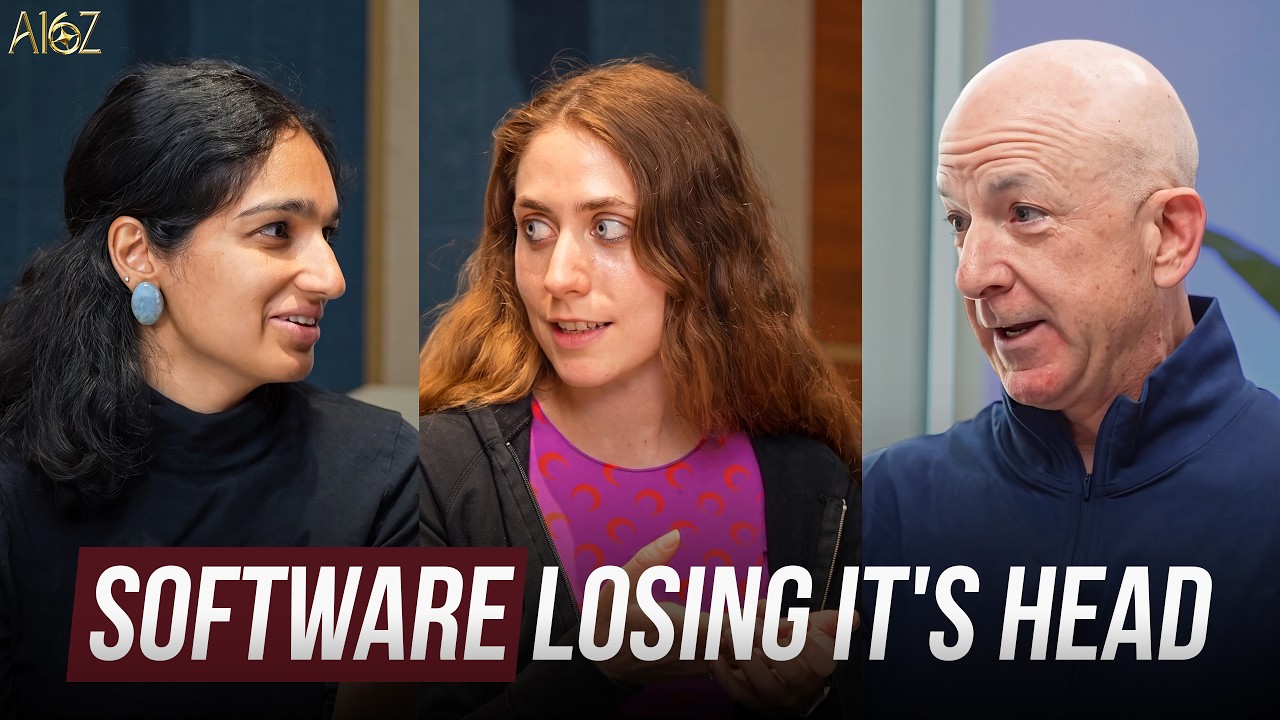
The discussion opens with Elena Burger introducing guests Seema Amble (a16z enterprise partner) and Steven Sinofsky (a16z board partner and former Microsoft executive). The conversation is anchored around Seema's essay, *"Is Software Losing Its Head?"*, which explores the shift happening in enterprise software as AI agents begin interacting with applications directly, bypassing traditional graphical user interfaces (GUIs).
Seema clarifies that "headless software" isn't a brand-new concept, but it has re-entered the spotlight following announcements like Salesforce's "Headless 360." While traditional software was designed around human workflows and UI interactions to capture data, an agentic world fundamentally reshapes this dynamic. In a headless paradigm, the true value shifts away from top-level workflow interfaces and down toward the underlying data layer, logic, and APIs that AI agents query programmatically.
- **Salesforce Headless 360 context:** Seema notes that Salesforce's announcement was largely a classic "marketing motion" acknowledging market trends rather than a fundamental technology rewrite, as it mostly rebranded pre-existing APIs.
- **Notion as a counterexample:** Notion also offers a headless product. Seema points out that Notion's user base consists of tech-savvy "agentic builders" who are far more likely to build custom AI agents than the average Salesforce user.
- **Shift in interaction channels:** AI interaction doesn't just mean raw API calls; it includes conversational interfaces like Slackbots. Slackbot agent usage has reportedly surged by 300%, allowing users to query CRM data natively without opening the main Salesforce interface.
Steven Sinofsky addresses the current buzzword fatigue, noting that the industry is currently in "definitional hell"—a natural phase during any major technology transition where old concepts are given flashy new names. He quips about the industry's rebranded terminology for autonomous agents versus traditional programs.
> "An agent, as far as I can tell right now, is also a new word for a program that takes a very long time to run and might not finish... the best branding ever is to call a program that takes a really long time, which we used to call a bug, the coolest new feature ever."
To cut through the noise, Sinofsky outlines a three-part matrix to categorize what agents are actually doing when interacting with software systems:
* **Look Up:** Lightweight, read-only queries that systems are already good at. Many newly announced "agent APIs" are simply forgiving, low-friction wrappers around traditional lookups.
* **Do (Execute Actions):** Taking action inside a system of record. This introduces messy enterprise governance challenges, including user impersonation, credential management, seat licensing, and write-permission auditing.
* **Analyze:** Multi-step reasoning across disparate systems without strict time constraints. While well-suited for non-time-bounded agents, this layer carries severe risks of hallucination, requiring rigorous verification loops at every step of the analysis.
---
[00:10](https://www.youtube.com/watch?v=Mxs4erDxOEE&t=10s) What Makes Enterprise Software Sticky
The hosts pivot to discussing why enterprise software is so notoriously difficult to displace, and how AI agents intersect with those retention dynamics. Seema points out that stickiness historically stemmed from human-centric workflows: user interface muscle memory, undocumented standard operating procedures (SOPs), cross-departmental dependencies (e.g., Finance relying on Salesforce outputs for billing), and the necessity of having a single source of truth for compliance and auditing. When a new VP of Sales joins a company, they often mandate Salesforce simply because their team is conditioned to use it.
Sinofsky adds a pragmatic seller's perspective: the single stickiest thing software can do is collect money or handle core administrative workflows. When customers pay for software and build their operational habits around it, inertia takes over.
> "I can tell you there was no meeting where we said, 'Okay, let's figure out how to make the calendar the sticky part of Outlook and make sure we handle recurring meeting exception handling well.' And then you go and you find out General Motors isn't going to displace like 600,000 seats because of the calendar..."
- **Lessons from Microsoft Outlook:** Displacing Outlook failed for competitors not because of basic email sending, but due to deep, edge-case feature coverage like delegate access, shared administrative calendars, and complex recurring meeting exceptions.
- **Inertia as a moat:** Once software "seeps its tentacles" into organizational habits, removing it requires overcoming deep-seated tacit knowledge and operational friction.
---
[00:15](https://www.youtube.com/watch?v=Mxs4erDxOEE&t=15s) The "Death of Software" Is Overblown: The Indestructible Nature of Systems of Record
Reflecting on his article *"The Death of Software? Nah."* and Seema's research on SAP, Sinofsky rejects the idea that generative AI will easily wipe out traditional SaaS giants or legacy systems.
He highlights SAP and legacy mainframe infrastructure as the ultimate proof of enterprise software durability. The only systems stickier than SAP are the bespoke COBOL programs written by insurance companies 50 to 75 years ago, which remain impossible to replace due to the sheer density of embedded business logic, local tax codes, and regulatory laws. He draws a direct parallel to Stripe's immense success, explaining that Stripe succeeded precisely because it took on the grueling, unglamorous task of re-coding payment collection across hundreds of global tax jurisdictions for the first time in two generations.
- **Mainframe permanence:** State and insurance infrastructure still actively recruit COBOL engineers because legacy software logic cannot be easily extracted or replaced.
- **Regulatory density:** Enterprise systems store decades of implicit legal, tax, and compliance rules that simple database-plus-API architectures fail to replicate.
[16:46](https://www.youtube.com/watch?v=Mxs4erDxOEE&t=1006s) Codifying Business Logic: Why SAP and Legacy SaaS Are Unbreakable
The discussion centers on why core enterprise software systems like SAP remain virtually impossible to replace. Steven Sinofsky emphasizes that systems dealing with multi-currency exchanges, border crossings, and localized tax regulations codify external regulatory forces that do not simply disappear. Replacing a system like SAP at a massive company like Walmart or a major automobile manufacturer is not just a software migration; removing it effectively causes the company itself to evaporate, because its underlying business rules and operational workflows are embedded directly into that software.
Seema Amble addresses a common misconception among startups: the belief that SAP can be easily replaced by combining a standard Postgres database with modern APIs. She highlights that the logic, customization, and contextual workflows captured within SAP over years of implementation far outweigh where the data happens to sit. Implementations take years not merely due to slow system integrators, but because the software must be tailored to how the enterprise actually functions.
- Startups often misunderstand enterprise complexity by looking at scale through a small-team lens (e.g., handling expense reporting for 40 people with a single human or simple OCR, versus managing 100,000 employees across 20 countries with conflicting national laws and corporate policies).
- Larry Ellison of Oracle famously went on a multi-year rant in the late 1990s arguing that companies should adopt an "80% solution" and stop over-customizing software—a philosophy enterprise buyers rejected because business differentiation lies entirely in their specific operational edge cases.
- In industries like automotive manufacturing, major competitors (Ford, Toyota, General Motors, Daimler) buy raw materials from similar suppliers, but differentiate themselves through the operational decisions and customized SAP screens used to plan production, hedge currencies, and manage supply chains.
---
[21:56](https://www.youtube.com/watch?v=Mxs4erDxOEE&t=1316s) The Limits of "Vibe Coding" Enterprise Software
Reflecting on the early days of rolling out Microsoft Excel to financial institutions, Steven shares an anecdote about a visit to Goldman Sachs. When the team tried convincing bankers that Excel was superior to Lotus 1-2-3, a Goldman executive remarked, "We make more money from Excel than you do." This underscored that value in the enterprise comes from how deeply software is customized—through custom add-ins, proprietary code, and tailored workflows—rather than just the off-the-shelf binary.
Seema connects this to the modern trend of trying to "vibe code" custom enterprise software or internal CRMs from scratch. She recalls a recent dinner with a RevOps leader at a 1,000+ person company tasked with rebuilding their Salesforce instance internally. While importing fields and data is straightforward, defining organizational alignment, maintaining the code, and adapting the system as the business evolves over time becomes extremely painful, causing home-built projects to quickly go stale.
> "I don't think you understand. We make more money from Excel than you do."
- A whole ecosystem of startups is emerging that builds on top of and around legacy systems like SAP and Salesforce, rather than attempting risky "rip-and-replace" migrations.
- Modern AI is primarily used as a usability and natural language retrieval layer over legacy software, enabling users to query complex tables or generate custom reports without needing to run SQL queries or navigate clunky UIs.
- Enterprise software UI is becoming optional; while users want information delivered directly (e.g., via Slack bots), the underlying data and business logic must still reside in a system of record.
---
[25:25](https://www.youtube.com/watch?v=Mxs4erDxOEE&t=1525s) Excel, PDFs, and the Emergence of Unstructured Workflow Tools
Steven notes that the two most heavily used features in enterprise software do not natively belong to any single platform: **Export to Excel** and **Export to CSV/PDF**. Enterprise software generally possesses the power to run any required report, but users often struggle to figure out the UI or navigate permission constraints. As a result, users export data into Excel or PDFs as an "escape valve" to perform ad-hoc analysis.
With large language models (LLMs), users can now ingest dozens of exported PDFs or reports instantly to run unstructured analysis, side-stepping rigid software interfaces. Historically, core enterprise categories began as ad-hoc spreadsheets before morphing into dedicated platforms (e.g., early sales tracking in Excel evolved into Siebel Systems, which preceded Salesforce). Current AI wrapper apps that chat with SAP or Salesforce are capitalizing on LLMs' strength in synthesizing and orchestrating this unstructured information.
---
[28:19](https://www.youtube.com/watch?v=Mxs4erDxOEE&t=1699s) Exception Handling: The True Challenge for AI Agents
Moving to agentic workflows, Seema explains that while AI agents performing outbound calling or messaging can easily pull structured fields from a CRM, they struggle with contextual logic and edge cases that aren't recorded in standard database fields. For example, knowing to treat a client in Asia differently from one in the US is often stored in an employee's head rather than in Salesforce.
Steven adds that exception handling is the fundamental obstacle for AI agents because "almost everything interesting in an enterprise is an exception." Standard automation works for baseline tasks, but business operations, sales negotiations, and customer interactions consist almost entirely of edge cases and custom requests.
> "Almost everything interesting in an enterprise is an exception."
- To capture contextual edge cases, startups are using voice agents (e.g., conducting freight compliance calls) and computer-use agents to observe human workflows and record how exceptions are resolved.
- Capturing context takes time because enterprise sales cycles are long and specific edge cases occur infrequently.
- Buyers must develop high trust that an AI agent has captured sufficient context before letting it act autonomously on business data.
[33:12](https://www.youtube.com/watch?v=Mxs4erDxOEE&t=1992s) Exception Handling as the New Enterprise Strategy
The conversation opens with Steven Sinofsky highlighting how non-engineers struggle to explain the exact internal logic or steps they take when resolving a customer issue. He points to Amazon as the gold standard of customer support automation, driven by a religious adherence to their core principle: always decide in favor of the customer. Amazon actively avoids human customer service interactions. When a customer receives the wrong item, the chatbot simply ships a replacement without demanding a return—recognizing that handling, shipping, and processing returned consumables like toothpaste is inefficient and costly. Amazon then feeds this exception data back into its internal operations to fix warehouse workflows, product descriptions, and reviews. Sinofsky believes this dynamic is redefining how companies view exception handling, moving enterprise comfort toward letting AI make operational decisions because it introduces consistency and predictability.
Elena Burger counters with a humorous counter-point, noting that customer service might actually feel worse in the short term as the default "decide in favor of the customer" policy recedes, forcing consumers to defend their claims again rather than receiving free Sensodyne toothpaste. Turning to the broader technical challenge, she questions whether automating the long tail of exceptions remains the hardest problem for founders and developers. Seema Amble agrees, emphasizing that permissioning and data governance form a massive part of that long tail. Granting agents API access introduces complex security questions around read-versus-write access, agent-to-agent interactions, and determining single-source-of-truth authorization in central systems of record.
- **Amazon's Return Model:** Pioneer of non-return decisions for consumables (e.g., wrong toothpaste orders), choosing customer satisfaction over reverse logistics costs.
- **Enterprise Data Loop:** Support exception data is recycled directly into supply chain, warehouse, and listing optimizations.
- **Permissioning Dilemma:** Governance models must evolve to dictate when agents can write versus read data within a core system of record.
---
[36:11](https://www.youtube.com/watch?v=Mxs4erDxOEE&t=2171s) Productivity Drives New Scenarios, Not Fewer Jobs
Sinofsky warns against linear extrapolation during exponential technology shifts. While people often fear that automation and language model agents will eliminate jobs and compress enterprise software into simple APIs, history shows that productivity gains consistently create entirely new scenarios rather than extinguishing work. When an old operational friction is solved, businesses immediately dream up new, higher-level processes to execute. For example, once Amazon automated basic returns, it created an entire backend engineering requirement to analyze and prevent those shipping errors from occurring in the first place. The long tail does not shorten; it simply extends into higher levels of complexity.
Amble and Sinofsky critique the static-pie view of innovation that fuels AI doomism—the false belief that enterprise workloads consist of fixed units of labor and software that will simply be replaced by autonomous agents. Sinofsky points to contract management in legal tech as a prime example: AI will not eliminate lawyers; instead, contracts will become longer, more sophisticated, and cover far more edge-case scenarios, leading to an expanded ecosystem of negotiations and litigation. He also cites the apocryphal case of radiology, where despite widespread AI adoption, the market is experiencing a severe radiologist shortage due to expanding diagnostic demand.
- **The Static-Pie Fallacy:** The mistaken assumption that work is a fixed quantity ($n$ people replaced by $m$ software units) rather than an expanding pie of new business capabilities.
- **Legal Sector Example:** AI-driven contract analysis will increase contract length and complexity, expanding the need for legal oversight and dispute resolution.
- **Radiology Dynamic:** AI integration in medical imaging coincided with growing demand, resulting in an ongoing radiologist shortage rather than job loss.
---
[39:40](https://www.youtube.com/watch?v=Mxs4erDxOEE&t=2380s) Layers of Analysis and Human-Centric Workflows
Continuing the analysis of evolving enterprise work, Sinofsky uses business travel and expense reporting to illustrate how software adds layers of sophistication. Initial digitizations moved expense reports from paper to spreadsheets, then to dedicated tracking platforms. Rather than eliminating travel managers, this automation enabled high-level travel optimization—routing bookings to real-time price drops, optimizing corporate credit card rewards, and managing remote work productivity. Software continually converts basic administrative tasks into strategic corporate functions.
Amble emphasizes that the physical world remains deeply human-centric, regardless of how much back-office work is automated. High-value enterprise actions—such as field sales representatives flying out to close major deals—will always require human interaction. While reps may spend less time typing notes into Salesforce, their real-world activities will generate synthetic data exhausts through ambient voice recordings, emails, and unstructured documents that AI agents ingest to optimize performance.
- **Evolution of Expense Reporting:** Shifted from manual receipts to spreadsheets, dedicated SaaS tools, and ultimately strategic business travel analysis and remote-work optimization.
- **Human-in-the-Loop Realities:** Physical interactions and high-stakes deal closures remain human, with software acting as a passive background recorder.
- **Synthetic Data Gathering:** Ambient recording of meetings, phone calls, and email threads captures previously lost enterprise knowledge.
---
[42:01](https://www.youtube.com/watch?v=Mxs4erDxOEE&t=2521s) Software as Decision-Making and Box's Unstructured Data
Drawing a parallel to open-source software development, Sinofsky explains that the hardest phase of building software is the "art of finishing"—deciding when to freeze code for a stable release. Despite developer desires to automate this via voting or sentiment-analysis APIs, it fundamentally requires human consensus, debate, and accountability. He notes that this process is identical to financial accounting steps like closing the books for quarterly earnings. Enterprise software does not eliminate these decision-making steps; it abstracts them and provides audit trails so human leaders can justify their choices.
Sinofsky highlights Aaron Levie's perspective at Box regarding the massive, untapped knowledge sitting in unstructured company assets. Historically, businesses have struggled to discern which Word documents, PowerPoint pitch decks, or Excel financial models were actually used and trusted by employees. Generative AI serves as the first technology capable of analyzing this unstructured corporate cloud, allowing organizations to query their repository to find out which sales decks close deals or which financial models reflect operational realities.
- **The "Art of Finishing":** Human decision-making and consensus-building in both open-source release cycles and corporate accounting cannot be replaced by a simple API.
- **Unstructured Data Access:** Enterprise repositories hold vast quantities of unindexed knowledge in spreadsheets and slide decks that LLMs can finally parse and summarize.
- **Aaron Levie's Vision:** Box leverages AI to transform static document storage into active enterprise intelligence.
---
[45:11](https://www.youtube.com/watch?v=Mxs4erDxOEE&t=2711s) The Flaws of Middleware and the Reality of Monopolistic SaaS
Elena Burger pivots the discussion to the historical context of "headless" software and Aaron Levie's or Steven Sinofsky's writing on Model Context Protocol (MCP) servers. She connects current agentic middleware trends to early Microsoft antitrust litigation, where the Department of Justice scrutinized middleware layers that attempted to abstract underlying platforms. Sinofsky explains that current enthusiasm for MCP and headless architectures stems primarily from an engineering view of clean software architecture—such as command-line style text interfaces—rather than business realities.
Sinofsky argues that software vendors actively resist being disintermediated into "dumb" database layers. No enterprise SaaS company wants to be relegated to a background SQL repository for expense data while another tool captures the high-margin analytics and user engagement. Furthermore, enterprise customers dislike assembling critical business functions from fragmented point solutions because a system's stability is limited by its weakest vendor. Legacy giants like SAP and Workday will defend their turf by building or bundling competing agentic features directly into their suites, often accepting a "tie" with innovative startups just to keep customers inside their ecosystem.
Amble corroborates this with the example of Workday, which technically offers APIs but deliberately makes bulk data extraction and documentation access difficult to protect its platform lock-in.
- **MCP & Engineering Bias:** Model Context Protocol reflects an idealized developer architecture that often clashes with commercial software incentives.
- **Disintermediation Resistance:** SaaS incumbents fight against becoming headless systems of record, preferring to own both the data layer and the user engagement layer.
- **Enterprise Bundling Strategy:** Major platforms accept parity ("a tie") on point-solution features, bundling them into existing suites to block specialized middleware startups.
- **Workday API Friction:** Incumbents intentionally restrict API capabilities and documentation to prevent third-party tools from commoditizing their core database.
<ElicitationsGroup message="Explore related enterprise software topics:">
<Elicitation label="Break down Salesforce's Headless 360 announcement" query="Break down Salesforce's Headless 360 announcement and how it impacts enterprise software architectures."/>
<Elicitation label="Compare systems of record vs. systems of engagement" query="Explain the distinction between systems of record and systems of engagement in enterprise software, including examples of each."/>
</ElicitationsGroup>
[49:58](https://www.youtube.com/watch?v=Mxs4erDxOEE&t=2998s) Three Paths for Enterprise AI: Incumbents, DIY, and Smart Layering
The speakers debate how businesses will adopt AI software given the limitations of legacy systems. The first option—relying on incumbents like Salesforce by enabling tools like Agentforce or building directly on top of them while using them as a backend—presents significant friction. Legacy software vendors naturally resist being relegated to a invisible background data tier. The second approach is the "do-it-yourself" (DIY) route, which offers total control but requires rebuilding complex enterprise business logic. Attempting to rip out and replace a Fortune 500 CRM or ERP is famously painful; as Seema Amble notes, it is the equivalent of trying to replace an airplane engine mid-flight or performing open-heart surgery on a living patient while keeping permissioning and collaboration intact.
The third option—and the primary thesis driving current VC investments—is to build an intelligent software layer that works alongside incumbent systems like SAP. This approach ingests unstructured data from voice calls, meeting recordings, document ingestion, and transcriptions to form a new system of record. Instead of tearing out legacy business logic, these platforms systematically observe how an enterprise operates, allowing business users to run agents on top of existing data while gradually proving their value over time.
* Incumbent platforms like Salesforce resist becoming mere background data stores when customers build custom agents over them.
* Rebuilding CRMs for Fortune 500 companies requires managing immense, fragile business logic that makes DIY overhauls risky.
* AI startups are creating new systems of record by pulling in previously uncaptured data streams like voice recordings and ingested documents.
[52:15](https://www.youtube.com/watch?v=Mxs4erDxOEE&t=3135s) Where the Biggest Startup Opportunities Are: Action, Physical Worlds, and the Middle Ground
Seema Amble highlights that startup opportunity lies where incumbents are stagnant, specifically in moving from passive data collection to proactive action. In a CRM, for example, an agent shouldn't just record call notes; it should prioritize leads, flag churn risks, automatically send outbound messages, and optimize communication strategies based on real-time response data across different global regions (such as adjusting messaging styles between Europe and Asia). Another major frontier is vertical software targeting the physical world—industries like construction and manufacturing—where capturing human and machine field data has historically been difficult.
Steven Sinofsky adds a fundamental truth about enterprise software: the absolute worst strategy is competing head-on with an established category by doing the exact same thing in the same way. Instead, the real goldmine lies in building *between* two established players. Legacy giants will attempt to weather the AI transformation by bolting AI onto existing products without disturbing their core product lines or go-to-market models. Startups that position themselves in the middle can define a new way of working without having to satisfy 20-year-old legacy compliance checklists. Sinofsky compares this shift to the rise of HTTP and HTML: the web didn't win by replicating every feature of existing client-server architectures, but by reimagining communication entirely in spite of a trillion dollars invested in client-server paradigms.
* Effective sales agents leverage an "agentic loop" to capture response metrics and adapt go-to-market strategies globally.
* Capturing field data from machinery and personnel in construction and manufacturing represents an untapped vertical software opportunity.
* Legacy software vendors rarely disrupt themselves; they prefer to bolt AI onto existing products rather than rewrite core architectures.
* Historical precedent shows new protocols like HTTP/HTML succeeded by completely side-stepping traditional client-server designs rather than replicating them.
[56:43](https://www.youtube.com/watch?v=Mxs4erDxOEE&t=3403s) Enterprise Network Effects and Bridging Cross-Functional Silos
Addressing whether enterprise software can foster true network effects, Steven Sinofsky notes that while external network effects face severe security and compliance hurdles, *internal* network effects are extremely powerful. These dynamics often start with ambitious employees who want to outperform their peers—reminiscent of Wall Street investment bankers at Goldman Sachs who adopted Lotus 1-2-3 and early versions of Microsoft Excel in the 1980s. Sinofsky humorously recalls an iconic late-1980s TV commercial for Excel featuring a professional sitting in a crowded elevator holding a massive, 12-pound laptop, trying to crunch numbers before the battery died while onlookers stared in awe, asking "How are you doing that?"
Fast-forwarding to recent years, the rapid viral spread of chat-based AI tools inside companies mirrors that exact dynamic. Sinofsky shares an anecdote about generating a full white paper using an AI prompt for a colleague at SAP, which immediately sparked an organic, viral loop across her team as colleagues saw the immediate productivity gain. The biggest cross-functional opportunity—and a core driver of modern enterprise software durability—lies in software that translates between different business units (such as sales and finance, or IT and finance). Just as Figma bridged the gap between designers and product developers, new AI platforms that eliminate manual "brute-force" integration work by consulting firms like Accenture will establish entirely new categories.
* External enterprise network effects remain rare due to corporate security and regulatory compliance constraints.
* Internal network effects are driven by power users adopting superior tools to gain a competitive edge over colleagues.
* Software that bridges disparate organizational functions (e.g., IT and finance budgeting, design and product development) bypasses costly manual consulting projects and creates defensible software categories.
* "Software has always sold to... just the sales team or the finance team, but then there's like these handoffs... and that actually presents an interesting opportunity." — Seema Amble
## Notable quotes
> [06:57](https://www.youtube.com/watch?v=Mxs4erDxOEE&t=417s) An agent, as far as I can tell right now, is also a new word for a program that takes a very long time to run and might not finish... the best branding ever is to call a program that takes a really long time, which we used to call a bug, the coolest new feature ever. — Steven Sinofsky
> [10:00](https://www.youtube.com/watch?v=Mxs4erDxOEE&t=600s) I can tell you there was no meeting where we said, 'Okay, let's figure out how to make the calendar the sticky part of Outlook and make sure we handle recurring meeting exception handling well.' And then you go and you find out General Motors isn't going to displace like 600,000 seats because of the calendar... — Steven Sinofsky
> [21:56](https://www.youtube.com/watch?v=Mxs4erDxOEE&t=1316s) I don't think you understand. We make more money from Excel than you do. — Goldman Sachs executive
> [28:19](https://www.youtube.com/watch?v=Mxs4erDxOEE&t=1699s) Almost everything interesting in an enterprise is an exception. — Steven Sinofsky
> [59:43](https://www.youtube.com/watch?v=Mxs4erDxOEE&t=3583s) Software has always sold to... just the sales team or the finance team, but then there's like these handoffs... and that actually presents an interesting opportunity. — Seema Amble
## Mentioned
Steven Sinofsky, Seema Amble, Elena Burger, Salesforce, Headless 360, Notion, Slack, Slackbot, SAP, Microsoft, Outlook, General Motors, COBOL, Stripe, Walmart, Postgres, Oracle, Larry Ellison, Ford, Toyota, Daimler, Excel, Lotus 1-2-3, Goldman Sachs, Siebel Systems, Amazon, Sensodyne, Box, Aaron Levie, Model Context Protocol (MCP), Workday, Agentforce, Figma, Accenture
Sinofsky称传统企业巨头将化解AI颠覆者冲击
深度内嵌的监管规则与边缘异常处理使AI智能体难以取代SAP和Salesforce等在位巨头,初创公司的机遇正转向中间层数据集成。
发言者分析了为何尽管AI智能体迅速崛起,SAP和Salesforce等核心企业软件依然几乎坚不可摧,并将这种持久生命力归因于深度内嵌的业务逻辑、监管复杂性以及运营层面的边缘异常处理。尽管初创公司很难通过直接的“彻底替换”迁移来取而代之,但在在位巨头平台之间构建智能软件层、自动化非结构化数据处理以及精简异常处理方面,仍蕴藏着巨大的机遇。最终,AI带来的生产力将扩大企业的业务复杂度并催生全新的运营能力,而非仅仅削减工作岗位数量。
“无头软件”(Headless software)正在推动企业软件价值从前端交互界面向底层数据层、业务逻辑与 API 迁移,AI Agent 正逐渐成为软件的主要交互者。 (1:00)
SAP 和传统大型机等底层记录系统(System of Record)几乎无法被取代,其护城河来自于数十年沉淀在代码中的合规法规、全球税法及复杂定制逻辑,而非单纯的数据库存储。 (15:00)
异常处理(Exception Handling)是企业级 AI Agent 面临的核心瓶颈与战略焦点,因为企业真实的日常运营与商业决策绝大部分都由特例与边缘场景构成。 (28:19)
AI 带来的生产力跃升并不会简单消灭工作岗位,历史证明效率提升会打破“静态工作量”假设,进而催生出更长、更复杂的全新业务流程与监管场景。 (36:11)
初创企业的最大突破点在于切入老牌巨头彼此割裂的夹缝地带,通过将语音、会议和文档等非结构化企业资产转化为行动智能,构建新一代记录系统。 (52:15)
Reading summary
While generative AI and autonomous agents are shifting user interactions away from traditional graphical interfaces toward programmatic APIs, legacy enterprise systems of record remain durable due to decades of embedded business logic, regulatory friction, and edge-case operational exceptions.
The Agent Reality Behind Headless Hype
Steven Sinofsky cautions that the enterprise software sector has entered "definitional hell," where familiar concepts are rebranded with AI terminology. He notes that autonomous agents are often simply long-running programs, dividing agentic behavior into three distinct tiers: Look Up (basic, low-friction queries), Do (executing actions within systems of record, which introduces complex governance, credentialing, and write auditing), and Analyze (multi-step reasoning that carries high hallucination risks and requires rigorous verification loops).
Seema Amble explains that the "headless software" concept primarily shifts enterprise value from UI workflows down to underlying data layers, logic, and APIs. However, she views announcements like Salesforce's Headless 360 as marketing motions packaging pre-existing APIs rather than architectural revolutions. Meanwhile, interaction channels are decentralizing into conversational surfaces; Slackbot agent usage has increased by 300%, allowing users to query CRM data directly without opening core applications.
The Indestructibility of Systems of Record (16:46)
Sinofsky and Amble dismiss assertions that generative AI will easily displace foundational systems like SAP, mainframes, or Salesforce. Sinofsky argues that software stickiness is rooted in operational inertia, billing management, and extreme edge-case coverage—pointing to Microsoft Outlook's retention via complex shared calendars and recurring meeting rules, and Stripe's defensibility built on navigating hundreds of localized tax jurisdictions. Similarly, state and insurance entities continue recruiting COBOL engineers because decades of regulatory compliance rules cannot be easily separated from legacy code.
Amble refutes the assumption that startups can replace SAP with a standard Postgres database and modern APIs. Decades-long enterprise implementations reflect tailored operational logic and compliance across global jurisdictions rather than slow integration. Furthermore, Sinofsky and Amble note that modern attempts to "vibe code" custom enterprise software or internal CRMs collapse under maintenance debt, as the real commercial value lies in custom workflows and institutional alignment rather than off-the-shelf code binaries.
Exception Handling as the Core Automation Hurdle (28:19)
Sinofsky highlights that the primary technical obstacle for AI agents is exception handling, asserting that "almost everything interesting in an enterprise is an exception." While baseline automations can execute standard rules, enterprise negotiations, shipping disputes, and localized workflows consist overwhelmingly of uncodified edge cases. Sinofsky points to Amazon's customer support as an operational benchmark, where refunding consumable items without requiring returns standardizes exception resolution while feeding data back into warehouse workflows.
Historically, enterprise employees bypassed rigid user interfaces by using "Export to Excel" or PDF downloads as analytical escape valves. With large language models, organizations can now ingest these unstructured spreadsheets, decks, and documents at scale. Amble notes that emerging startups are leveraging ambient voice and computer-use tools to capture this undocumented tacit knowledge, observing human workflows directly to train agents on handling nuanced enterprise exceptions.
Incumbent Resistance and Strategic Openings for Startups (45:11)
Sinofsky rejects the "static-pie fallacy" that AI automation will contract enterprise software spending or eliminate jobs. Drawing parallels to radiology—where AI adoption coincided with a severe labor shortage—and legal technology, Sinofsky argues that productivity tools expand output and complexity, resulting in longer contracts and broader litigation scopes. At the same time, incumbents like SAP and Workday actively resist disintermediation into backend database layers. To protect high-margin user engagement, incumbents intentionally restrict bulk API access and bundle native AI features to block specialized middleware startups.
Amble and Sinofsky identify three paths for enterprise AI adoption: relying on incumbent suites, undertaking risky "rip-and-replace" internal overhauls, or deploying intelligent layers over existing architectures. Sinofsky advises startups against competing head-on with legacy categories on established feature checklists. Instead, defensibility lies in building cross-functional software that bridges institutional silos (such as connecting sales with finance) or developing agentic systems for physical industries like construction and manufacturing.
The expansion of agentic AI is poised to fragment user interfaces and automate ad-hoc analysis, yet foundational enterprise software will resist displacement. Startups face structural disadvantages when competing directly with incumbent feature checklists, making the most defensible opportunities lie in orchestrating unstructured data, automating non-standard operational exceptions, and bridging cross-departmental silos.
## Background
该视频由知名风险投资机构 a16z 于 2026 年 8 月 3 日发布在 YouTube 频道上。节目由 Elena Burger 主持,邀请了 a16z 合伙人 Seema Amble 与前微软高管、a16z 董事合伙人 Steven Sinofsky,围绕 Seema 的深度行业文章探讨当 AI Agent 逐渐取代人类成为软件主要使用者时,企业级软件所面临的“无头化”重构与未来命运。
## TL;DR
对话深入剖析了“无头软件”(Headless Software)与智能体工作流对传统 SaaS 体系的冲击,直言依靠“氛围编程(Vibe Coding)”和轻量 API 妄图颠覆 SAP 或 Salesforce 纯属无稽之谈。嘉宾指出,企业软件真正的护城河并非前端 UI,而是长年累月沉淀下来的复杂业务逻辑、合规羁绊以及极其繁琐的“异常处理(Exception Handling)”。SaaS 巨头绝不会甘心沦为纯粹的“哑数据库”,它们会通过捆绑与限制 API 强力反击脱媒;而初创企业的真正破局点,在于卡在巨头夹缝中打造行动闭环、捕获企业沉睡的非结构化暗数据,并充当跨职能部门间的协同翻译桥梁。
## Atmosphere & style
整场对谈兼具硅谷前沿创投的敏锐嗅觉与老牌科技操盘手的辛辣务实,彻底剥离了当下科技圈对 AI 的盲目乐观。Steven Sinofsky 语言风格犀利幽默,频频以微软当年的商战往事和行业“定义地狱”无情戳破浮夸泡沫;Seema 则从一线投资视角稳健补充,抽丝剥茧。听众仿佛置身于一场顶级科技闭门研讨会,在冷静严谨的底层商业逻辑推演中,既能感受到技术范式跃迁带来的汹涌暗潮,又能体会到底层现实世界不可撼动的工程重力。
## Bulletin
- [01:00](https://www.youtube.com/watch?v=Mxs4erDxOEE&t=60s) 所谓的“无头软件”(Headless Software)并非指消除软件价值,而是将重心从传统的人机图形界面(UI)剥离,彻底下沉到底层数据、规则沉淀与“单一真实数据源”(SoR)上。
- [17:59](https://www.youtube.com/watch?v=Mxs4erDxOEE&t=1079s) 企业软件的核心壁垒在于数十年沉淀的深度定制业务逻辑与异常处理(Exception Handling),寄希望于靠轻量级数据库(PostgreSQL)配上 API 或“氛围编程”(Vibe Coding)颠覆 SAP 等巨头纯属认知误区。
- [36:11](https://www.youtube.com/watch?v=Mxs4erDxOEE&t=2171s) 生产力的飞跃必然催生更高阶的业务场景与工作增量,长尾边缘问题并未被彻底消除,而是在更复杂的分析、合规与跨系统维度上持续延伸。
- [54:06](https://www.youtube.com/watch?v=Mxs4erDxOEE&t=3246s) AI 初创公司的破局机会不在于与巨头正面对决 8,000 个祖传功能,而在于巨头系统缝隙间的“行动闭环”、物理现实世界数字化以及跨孤岛部门的智能协同连接。
## Key takeaways
- [01:00](https://www.youtube.com/watch?v=Mxs4erDxOEE&t=60s) 无头软件将前端工作流界面剥离,使企业软件的价值重心重新回归到底层存储的数据资产、业务处理规则与权限架构。
- [10:08](https://www.youtube.com/watch?v=Mxs4erDxOEE&t=608s) 企业软件的真正黏性来自多部门交叉依赖、严格的财务与法律合规审计,以及“向客户持续收钱”所固化的业务运转流程。
- [11:53](https://www.youtube.com/watch?v=Mxs4erDxOEE&t=713s) 微软 Outlook 在通用汽车等巨头中的不可替代性,往往源于日历代理权限等边缘异常场景的极端繁复性,而非核心基础功能。
- [14:26](https://www.youtube.com/watch?v=Mxs4erDxOEE&t=866s) 从几十年历史的 COBOL 系统到 Stripe 对全球监管税法的硬编码封装,将外部现实世界规则代码化构成了最坚不可摧的软件护城河。
- [20:14](https://www.youtube.com/watch?v=Mxs4erDxOEE&t=1214s) 大企业定制与差异化运营是不可跨越的鸿沟,“80% 解决方案”的宣传掩盖了各家巨头依托深度定制系统赚取超额利润的核心竞争力。
- [22:50](https://www.youtube.com/watch?v=Mxs4erDxOEE&t=1370s) “氛围编程”(Vibe Coding)无法解决企业级复杂系统的组织对齐标准与长期维护成本,基于旧系统之上的增强层比推倒重构更具可行性。
- [25:24](https://www.youtube.com/watch?v=Mxs4erDxOEE&t=1524s) “导出为 Excel/CSV”是传统企业软件最常用的逃生舱门,大语言模型正在接管这种临时分散的数据编排工作流并催生新应用形态。
- [30:06](https://www.youtube.com/watch?v=Mxs4erDxOEE&t=1806s) 企业软件最核心的考验是“异常处理(Exception Handling)”,业务经验与潜规则往往深藏在老员工脑海中,难以仅靠常规结构化数据表达。
- [31:30](https://www.youtube.com/watch?v=Mxs4erDxOEE&t=1890s) 非技术人员难以用清晰的代码阐明复杂的业务应对逻辑,组织需要更长周期沉淀与全新的权限体系才能逐步建立对 Agent 自动决策的信任。
- [36:11](https://www.youtube.com/watch?v=Mxs4erDxOEE&t=2171s) 生产力的指数级提升创造新场景而非消灭工作,将繁琐流程自动化后,必然催生出更为精密冗长、维度更高的数据管理与分析新职能。
- [41:57](https://www.youtube.com/watch?v=Mxs4erDxOEE&t=2517s) 开源版本发布的收官决议与季末财务关账具有同构性,关键决策必须依赖人类共识叙事与权责审计追踪,无法单纯依靠 API 搞定。
- [45:11](https://www.youtube.com/watch?v=Mxs4erDxOEE&t=2711s) 企业软件天然具备反脱媒本能,SaaS 巨头会通过 API 权限设限与生态功能捆绑,极力防止中间件将自己降级为无利润的“哑数据库”。
- [52:15](https://www.youtube.com/watch?v=Mxs4erDxOEE&t=3135s) 初创企业突围的最优策略是在保留老旧核心记录系统的同时,旁路叠加可完成“触达—响应—沉淀”行动闭环的 AI Agent 工作层。
- [54:06](https://www.youtube.com/watch?v=Mxs4erDxOEE&t=3246s) 避开成熟巨头的正面清单竞争,如同当年 Web 协议颠覆 Client-Server,通过全新交互范式卡在巨头软件与部门之间的空白地带。
- [56:43](https://www.youtube.com/watch?v=Mxs4erDxOEE&t=3403s) 企业软件的强网络效应发生于组织内部深处,先进生产力工具正复刻 80 年代 Excel 扩散的经典自下而上病毒式传播路径。
- [59:26](https://www.youtube.com/watch?v=Mxs4erDxOEE&t=3566s) 替代高成本的重型咨询集成工程,利用 AI 架起原本彼此割裂的业务职能部门间的协同中枢,孕育着下一个百亿美元级的软件新品类。
## Detailed walkthrough
### [00:00](https://www.youtube.com/watch?v=Mxs4erDxOEE&t=0s) 精彩集锦与前瞻讨论:AI 冲击下的企业级软件神话
在播客开篇的精彩片段中,三位嘉宾迅速抛出了当前企业软件领域最受争议的核心矛盾:当软件的主要使用者从人类变成 AI Agent 时,软件本身的价值到底沉淀在哪里?长期以来,企业软件之所以具备高粘性,很大程度上是因为人类与其交互的方式;但在一个由智能体主导的世界里,用户界面(UI)真的还那么重要吗?毫无疑问,深藏其下的数据结构、业务逻辑和底层存储才是真正价值所在。
针对当前创投圈流行的盲目乐观,Steven Sinofsky 尖锐地批评道:“现在有一种极其离谱的低估,觉得你可以仅凭‘氛围编码’(Vibe Coding)就一路打入企业级软件市场。”他援引了 Oracle 创始人 Larry Ellison 当年的经典吐槽——Ellison 曾抨击企业软件简直愚蠢透顶,因为每一家客户都在对其进行五花八门的定制。现实是,企业流程中的异常情况极其复杂,“只要你刚把最平凡乏味的事情自动化,自以为大功告成,立刻就会冒出一堆全新的问题。”Seema Amble 也指出,当下最大的认知误区莫过于以为只要搞一个 PostgreSQL 数据库加上几套 API,“嘭的一下”就能取代 SAP——这纯属无稽之谈。SAP 真正无可替代的壁垒,在于其数十年来沉淀下来的繁复业务逻辑,而不仅仅是把数据存进某个数据库。
- **核心误区**:以为靠轻量级数据库(PostgreSQL)配上 API 就能颠覆 SAP 等巨头。
- **技术变革规律**:正如历史上每一次重大计算平台迁移一样,“当指数级增长正在发生时,没有人能真正理解指数的恐怖之处。”
---
### [01:00](https://www.youtube.com/watch?v=Mxs4erDxOEE&t=60s) 什么是“无头软件”:从工作流界面到智能体优先
主持人 Elena Burger 正式开场,向听众介绍了本期嘉宾:a16z 企业投资团队合伙人 Seema Amble,以及 a16z 董事合伙人、前微软高管 Steven Sinofsky。本次对话的由头是 Seema 近期撰写并引发广泛讨论的行业深度文章《软件正在失去它的头颅吗?》(*Is Software Losing Its Head?*)。该文灵感源于 Salesforce 宣布推出“Headless 360”产品线,这一动向引发了关于 SaaS 产品未来命运的行业大辩论:未来的企业软件究竟还会不会保留前端图形界面?
Seema 解释道,“无头软件”(Headless Software)本身并不是一个新词,但在 AI Agent 爆发后重新成为了行业焦点。传统企业软件的设计逻辑完全是围绕人类操作展开的——通过精心设计的 UI 与工作流(Workflow)引导员工输入和捕获数据。但在智能体时代,Agent 根本不需要点击按钮、填写表单或浏览网页。所谓“失去头颅”,就是将作为“头”的前端用户界面剥离,把重心彻底转移到深埋在底层的核心资产上:“真正的价值在于底层存储的数据、业务逻辑和处理规则,而不仅仅是悬浮在最上层、用来记录流程的工作流软件。”
```mermaid
flowchart TD
accTitle: 传统软件与无头软件架构对比
accDescr: 对比传统 SaaS 人机交互工作流与以 Agent 为中心的无头数据逻辑架构
subgraph Traditional["传统 SaaS 模式 (Human-Centric)"]
A["人类员工"] --> B["图形界面 UI / 捕获工作流"]
B --> C["业务逻辑与规则"]
C --> D["数据库 / 记录系统 (SoR)"]
end
subgraph Headless["无头软件模式 (Agent-Centric)"]
E["AI Agents / 智能体"] --> F["API / MCP 协议层"]
F --> G["业务逻辑引擎与权限"]
G --> H["底层数据湖 / 记录系统 (SoR)"]
end
```
---
### [03:45](https://www.youtube.com/watch?v=Mxs4erDxOEE&t=225s) 剥开营销外衣:Salesforce Headless 360 与真正的行业剧变
针对 Salesforce 发布的 Headless 360,Seema 直言不讳地指出,这在很大程度上属于“典型的 Salesforce 风格”——本质上是一场声势浩大的公关营销,实际技术层面并没有发生实质性飞跃。所谓的新产品,不过是将原本就长期存在的 API 换了个 Agent 时代的时髦包装。但不可否认的是,Salesforce 极其敏锐地捕捉到了市场风向的转向:他们清楚意识到,未来通过 API 调取 CRM 数据的智能体将远多于坐在屏幕前的人类销售。
相比之下,Seema 认为像 Notion 这样的公司探索无头架构反而更具现实意义。Salesforce 的典型终端用户多数是非技术人员,很少有动力去亲自编写 Agent;而 Notion 的核心用户群天然具有极高的极客属性和动手能力,更倾向于自己搭建自动化智能流程。此外,这种“脱离传统 UI”的趋势已经在日常办公中初现端倪:
- **Slack Agent 爆发**:自从 Salesforce 收购 Slack 之后,企业员工开始大量通过对话机器人与系统交互,据相关数据显示,Slackbot / Slack Agent 的使用量暴增了约 300%。
- **交互降级**:销售和运营人员再也不必登录笨重繁琐的 Salesforce 核心系统界面去翻查某个商机状态,取而代之的是在即时通讯软件里直接向机器人发问。传统界面的存在感正在被快速稀释。
---
### [06:54](https://www.youtube.com/watch?v=Mxs4erDxOEE&t=414s) Steven Sinofsky 拆解“定义地狱”:Agent 到底在做什么?
Steven Sinofsky 对当前行业术语的泛滥进行了充满技术幽默感的犀利点评。他直言行业目前正处于“定义地狱”(Definitional Hell)之中:“每当新技术浪潮到来时,大家最擅长的就是为以前早就做过的事情发明一大堆新词。这是技术演进的自然规律。”例如,大家口中玄乎其神的“Agent”,剥除光环后来看,“无非就是一种运行时间极长、甚至可能永远跑不完的程序。以前如果一个程序跑很久没反应,我们管它叫 Bug;现在这却成了最酷的新特性,摇身一变成了 Agent。”
玩笑归玩笑,Steven 严肃指出,要真正理清无头软件与 Agent 的结合点,必须将智能体在企业系统中的实际行为拆解为三种完全不同的层次与矩阵:
| 行为层次 | 动作类型 | 技术特征与企业级挑战 |
|:--- |:--- |:--- |
| **1. Lookup(信息查询)** | 轻量级读取 | 类似于高级检索。现有系统大多天然擅长此道。新出的许多所谓无头 Agent API 本质上就是换了一种容错率更高、脱离复杂 UI 的查询接口。 |
| **2. Act(执行操作/写入)** | 改变记录系统 | 涉及极度敏感的真实世界变更。Agent 必须获得特定身份的授权与凭证模拟(Impersonation)。随之而来的是严峻的企业软件合规问题:智能体执行操作到底算不算占用一个付费座席(Paid Seat)?审计追责该如何落实? |
| **3. Analyze(综合分析)** | 跨系统深度处理 | 不受单次查询的时间限制,Agent 可以多轮迭代、跨多个异构系统交叉检索,甚至把数据路由给不同模型比对。但最大的致命威胁在于**幻觉(Hallucination)**——企业做决策需要核验分析链路中的每一步骤,缺乏可验证性会导致灾难性后果。 |
Steven 强调,业内许多人把“无头化”和“Agent 落地”混为一谈,但事实上,面对“查询、执行、分析”这三种完全不同的负载,企业软件底层的成熟度、学习曲线以及落地部署方式有着天壤之别。这直接引向了企业软件数十年来的终极命题:究竟是什么让旧系统如此难以撼动?
### [10:08](https://www.youtube.com/watch?v=Mxs4erDxOEE&t=608s) 企业软件的黏性究竟来自何处:肌肉记忆、工作流与“单一真实数据源”
企业软件之所以具备极强的黏性,最初完全是围绕人类的交互模式构建起来的。界面的黏度源于高频的读写操作、下游工作流的环环相扣,以及围绕软件演化出的海量非书面标准作业程序(SOP)。这些繁杂的日常操作早已沉淀为员工的肌肉记忆与组织的固定流程。以 CRM 系统(如 Salesforce)为例,销售代表每天都需要频繁出入该系统,早已对其交互模式产生深度依赖。很多新上任的销售副总裁(VP of Sales)加入公司后,第一件事就是强制推行 Salesforce,因为他们及其团队对这套体系最为习惯。不仅如此,财务部门需要依据 Salesforce 输出的数据进行账单结算,上游市场部门也要靠它制定投放策略,各种部门间的交叉依赖彻底固化了软件的地位。
除了操作习惯与协同依赖,企业对“单一真实数据源”(Single Source of Truth)的刚性诉求更是黏性的核心所在。企业必须在唯一的中央节点确认某笔交易是否关闭、由谁负责。而当系统从 CRM 延伸至 ERP 或薪酬结算时,合规与法律监管的约束力会陡然上升——审计师对账目数据的严密性与准确性有着极为苛刻的标准,绝不允许出现脱节。这种生态层面的共识与合规刚性,使得像 Salesforce 这样的产品直接成为了整个商业生态中的默认选项。
- **多部门依赖链条**:市场部门获取线索 $\rightarrow$ 销售部门跟进并沉淀记录 $\rightarrow$ 财务部门依凭输出生成账单。
- **合规与审计驱动**:财务与薪酬系统承担着法律风险底线,无法随意容忍分散的、未经严格审计的替代方案。
- **生态与惯性**:管理层流动带来的经验复用,进一步巩固了头部软件作为“行业事实标准”的统治地位。
---
### [11:53](https://www.youtube.com/watch?v=Mxs4erDxOEE&t=713s) 现金流、解雇威胁与微软 Outlook 日历背后的“隐形壁垒”
从商业本质来看,最强大的黏性其实是“向客户收钱”这一动作本身。“最黏的事情其实是向客户收取费用。一旦你开始收钱,客户想要停止给你付钱就会变得异常困难,他们甚至不知道停止付款后该如何运转业务。”不同角色眼中的黏性截然不同:合规团队强调 HIPAA 等行业认证,系统管理员关注新员工入职配置(Onboarding),终端用户则在意按键习惯与肌肉记忆。真正要弄清一款产品因何而不可替代,最有效的途径莫过于在客户以“我们要换掉你”相威胁时仔细倾听——往往在经历了三四个大客户的续约拉锯后,你才会发现那些连产品经理(PM)都未曾预料到的、极其冷门却致命的功能点。
微软在企业级邮件市场的统治力便是一个典型例证。许多竞品曾试图颠覆 Microsoft Outlook,却都在看似微不足道的细节前败下阵来,最典型的就是“代理人日历权限”(Delegate Access)以及多用户共同管理日历的复杂逻辑。当年微软团队在开发时,根本未曾开会规划过“把日历做成 Outlook 最坚固的护城河,并把循环会议的异常处理做绝”。然而事实却是,当通用汽车(General Motors)等拥有 60 万员工的巨头考虑撤换软件时,往往正是因为日历共享和复杂的异常处理无法被平替,最终放弃了替换数十万席位的计划。
```mermaid
flowchart TD
accTitle: 复杂企业软件的护城河逻辑
accDescr: 展示自上而下的合规与自下而上的边缘场景共同构成企业软件黏性的结构
subgraph DefenseLayer["隐形防御机制"]
A["边缘复杂功能<br/>(例如:日历代理授权/循环日程异常)"]
B["多角色诉求分歧<br/>(合规/运维/终端员工)"]
C["资金与契约绑定<br/>(停止付费导致业务停摆)"]
end
subgraph OrgInertia["组织惯性"]
D["数十万员工的组织流程"]
E["跨国合规与法律合规框架"]
end
DefenseLayer --> OrgInertia
OrgInertia --> F["替换成本过高<br/>(放弃迁移/全盘保留)"]
```
---
### [14:26](https://www.youtube.com/watch?v=Mxs4erDxOEE&t=866s) 软件死亡论?从保险业 COBOL 到 Stripe 的“规则固化”
在探讨软件生态的深层绑定时,组织惯性是一股极难撼动的力量。软件的触角在多年运转中延伸到企业的各个角落,深深内化为人们行事的隐性共识。针对当下流行的“SaaS 正在走向消亡”以及 AI 将迅速摧毁传统软件的论调,业界存在强烈的反驳声音。SAP 便是这种超级软件黏性的极致化身,而比 SAP 还要坚不可摧的,是保险公司在 50 年甚至 75 年前用 COBOL 语言写就的底层核心业务系统。
市场上关于“银行与保险机构重金急寻 COBOL 程序员”的段子屡见不鲜,这正是因为这些运行在各州底层的核心软件根本无法被替换。像全州保费(Allstate)核心系统的历史甚至比许多在场从业者还要古老。另一个反向证明这一逻辑的现代奇迹是 Stripe:Stripe 之所以取得巨大成功,是因为它耗费两代人的精力,首次将全球几乎所有国家、司法管辖区、跨国境结算、货币兑换及本地税法以代码形式硬编码并封装起来。这种对外部现实世界极端繁复的监管与法律规则的“代码化(Codification)”,铸造了哪怕再过一百年也依然难以被轻易推倒的壁垒。
---
### [17:59](https://www.youtube.com/watch?v=Mxs4erDxOEE&t=1079s) 业务逻辑绝非“Postgres + API”:大企业定制的真实壁垒
当前 AI 与初创领域存在一个极其严重的认知误区:认为只需搭建一个 PostgreSQL 数据库,外接一套现代化的 API 接口,就能迅速替代像 SAP 这样的庞然大物。这种想法完全低估了软件内部所封装的巨量复杂业务逻辑。SAP 的实施周期往往长达数年,这并非仅仅是系统集成商(SI)办事拖沓,核心原因在于必须将一家跨国企业错综复杂的真实运作机制完全量身定制地写进系统。如果将 SAP 从一家大型汽车制造厂或沃尔玛体内剥离,这家公司甚至会原地瘫痪蒸发,因为整个公司的规章制度与商业规则本身就是以这套软件为骨架来运行的。
许多初创公司习惯用几十人团队的微观视角去审视企业级难题。例如报销系统(Expense Reporting),在 40 人的初创公司里,甚至可以让一个人拿着一筐发票手动分类对账,或者用手机拍张照跑个 OCR 就能轻松解决。然而,一旦面对的是跨越 20 个国家、拥有 10 万名员工的跨国集团,系统就必须同时应对数十套不同的国家财税法案、差异化的商业报销规章以及公司内部层层叠叠的费用审核矩阵。甲骨文(Oracle)创始人拉里·埃里森(Larry Ellison)在 1990 年代末进军 ERP 与 NetSuite 领域时,曾连续多年公开痛斥企业软件定制化极其愚蠢,但现实商业世界的无数规则与例外,最终证明了深度定制与逻辑固化正是企业软件无法被轻描淡写替代的根本原因。
### [20:14](https://www.youtube.com/watch?v=Mxs4erDxOEE&t=1214s) 80% 方案的谬误与企业软件的真正护城河
讨论从软件界一个广为流传的说辞切入:有观点认为企业应该满足于所谓“80% 解决方案”,只要某款软件能应付 80% 的日常场景,企业就该直接采纳。但多数企业客户对此嗤之以鼻,其一是因为这纯粹是软件供应商在“自卖自夸(talking your book)”——供应商之所以这么讲,是因为他们的软件恰好只能实现客户需求的 80%;其二,真实世界的商业运作根本不是这样运转的。以全球前十大汽车制造商为例,暂且抛开电动车与燃油车的动力路线之争,大家制造汽车的底层技术早已非常成熟,全都是由装配流水线和产线工人构成。真正让福特(Ford)、丰田(Toyota)、通用汽车(General Motors)与戴姆勒(Daimler)拉开差距的,并不是他们买了不同的钢材、铝料、线束、仪表盘或收音机——这些硬件供应链几乎来自同一批供应商——而是各家企业内部的运营方式与决策流程:制造哪款车型、采购多少原材料、如何进行汇率套期保值、雇佣多少人员、何时推出新产品线。
所有这些核心决策全部依托于企业资源计划(ERP)系统,而且几乎全都在 SAP 中运行。因此,这些巨头企业本质上是由一群坐在会议室里、盯着 SAP 屏幕的人在驱动运转。各家公司的核心竞争力并不在于大家看着同一个软件系统,而在于他们自主选择去看哪些屏幕、在这些屏幕中做了哪些定制化改动。外界往往严重低估了企业客户在其业务软件上所倾注的深度与复杂度。
对话随后分享了一个微软早期的生动轶事:当团队最初在各家大企业推广 Excel 时,曾前往高盛(Goldman Sachs)等顶级投行拜访,极力推销 Excel 比当时如日中天的 Lotus 1-2-3 更加优秀。高盛的高管听完后看着他们,平静地说出了一句耐人寻味的话:“我想你们没搞明白一件事:我们通过 Excel 赚到的钱,比你们卖 Excel 赚的钱多得多(We make more money from Excel than you do)。”微软团队起初愣住了,完全无法理解对方的意思;后来才恍然大悟:虽然微软把 Excel 同样卖给摩根士丹利(Morgan Stanley)、摩根大通(JPMorgan Chase)等所有华尔街机构,但高盛在 Excel 之上构建的应用层具有极强的独特性——他们自行编写插件、编写了海量定制代码、深度定义了自己的内部工作流程。
```mermaid
flowchart TD
accTitle: Enterprise Software Operational Hierarchy
accDescr: Diagram illustrating how shared infrastructure leads to business differentiation via customizations and internal logic.
subgraph StandardSupply ["标准底层 / 供应链"]
direction LR
S1["通用零部件供应商<br/>(钢材 / 铝材 / 电子器件)"]
S2["标准企业软件<br/>(SAP / Salesforce / Excel)"]
end
subgraph CustomLayer ["企业核心竞争力 (差异化层)"]
direction TB
C1["定制化界面与报表视图"]
C2["专属插件、内部脚本与宏代码"]
C3["业务运营决策 (排产/对冲/排期)"]
end
subgraph OutboundResult ["企业最终产出"]
O1["差异化产品与利润壁垒<br/>(例如高盛的高频盈利模型 / 各车企的运营效率)"]
end
StandardSupply --> CustomLayer
CustomLayer --> OutboundResult
```
---
### [22:50](https://www.youtube.com/watch?v=Mxs4erDxOEE&t=1370s) 为什么“氛围编程(Vibe Coding)”无法渗透企业级软件
当前科技圈普遍流行一种盲目乐观的论调,认为只要凭借 AI 进行所谓的“氛围编程(vibe coding)”,就能随随便便手搓一套企业软件出来替代成熟系统。然而现实情况要残酷得多。前一晚的行业聚餐中出现了一个真实案例:某家中后期成长型初创企业(员工规模已超过 1000 人)的收入运营(RevOps)负责人正试图在公司内部从头手搓一套自建系统,去替换他们现有的 Salesforce。
那位负责人轻描淡写地表示:“这有什么难的,我们熟悉所有的数据字段,直接把全部数据导出来再导入进去不就行了。”但这种认知完全偏离了企业软件的本质难度。迁移或新建一套系统的真正瓶颈从来不是字段定义或数据搬迁,而是极其庞杂的组织协同逻辑:
- 究竟哪些数据必须被采集,采集的标准和规则由谁制定?
- 整个庞大的组织架构该如何围绕这套数据模型运转并保持对齐?
- 系统上线之后,日复一日漫长繁琐的维护工作由谁负责?
每个人可能都曾靠 AI 氛围编程写出过一些玩具级 CRM 或脚本工具,但绝大多数项目用不了多久就彻底僵死变质,再也没人去触碰维护,因为伴随业务变化不断修改适配底层逻辑的过程极其痛苦且耗费精力。
正因如此,如今涌现出了大量不是去“替代 SAP”,而是专门“搭建在 SAP 之上”的初创生态。这些新兴力量非常明智地选择绕开繁冗沉重的脏活累活,继续让 SAP 担任核心记录系统(System of Record),自己则利用 AI 去打造可用性更强的轻量交互层。当前大语言模型(LLM)在企业中最立竿见影的价值,正是作为自然语言交互界面,降低传统软件的信息提取门槛:员工不再需要编写复杂繁琐的 SQL 查询语句,也不必在层层嵌套的古老操作界面中迷路,只需用自然语言提问,AI 就能自动跨多个地理分区、关联多张数据表,生成量身定制的分析报表。企业软件界面的访问逐渐变得“可选”,用户期望信息像 Slack 机器人推送那样主动找上门来,但潜藏在 SAP 或 Salesforce 底层的核心数据与业务逻辑,依然稳固不可撼动。
---
### [25:24](https://www.youtube.com/watch?v=Mxs4erDxOEE&t=1524s) 逃生舱门法则:从“导出为 Excel/CSV”到大模型流程重构
针对这一现象,企业软件有一个极其关键的本质规律:**企业软件几乎总是能做到用户想要的功能,只是用户根本不知道该怎么让它执行**。SAP 理论上没有拉不出的报表,没有画不出的图表,也没有做不了的分析;但普通员工要么完全摸不清配置路径,要么受制于极为复杂的权限控制。
因此,在所有的企业软件中,使用频率最高的两大“功能”从来都不是软件的原生业务功能,而是:
1. **导出为 Excel(Export to Excel)**
2. **导出为 CSV 或 PDF(Export as CSV / PDF)**
任何企业级软件在给客户做首场 Demo 演示时,客户往往都会立刻抛出同一个灵魂拷问:“你们能导出到 Excel 吗?或者能导出为 CSV/PDF 吗?”因为这种导出功能是业务人员唯一的“逃生舱门(escape valve)”——只要把原始数据弄出来,他们就能在熟悉的电子表格里自由完成软件界面无法支持的复杂分析。
```mermaid
flowchart LR
accTitle: Enterprise Data Workflow Evolution
accDescr: Comparison of traditional data extraction escape valve versus modern LLM synthesis workflow.
subgraph LegacyEscape ["传统逃生舱门模式"]
direction TB
E1["SAP / 封闭系统"] -- "UI难以配置" --> E2["导出为 20 份 PDF / CSV"]
E2 -- "痛苦的人工复制粘贴" --> E3["手工整理到 Excel"]
end
subgraph ModernLLM ["现代大模型编排模式"]
direction TB
M1["SAP / 数据底层"] -- "导出散乱文件" --> M2["LLM 统一摄入分析"]
M2 -- "自动理解非结构化数据" --> M3["即时洞察 / 催生全新独立产品"]
end
LegacyEscape -. "工作流范式转移".-> ModernLLM
```
大语言模型的爆发彻底激活了这一逃生舱门。过去,用户面对某种异常处理(Exception Handling)报表——比如公司内部被驳回的报销单,若想跨越特殊时间周期或针对不支持的外币币种做深度统计,往往只能将导出的数十份 PDF 手工拼凑、机械地复制粘贴;而今天,用户可以直接把这 20 份 PDF 丢给大语言模型,让它瞬间完成高度复杂的数据归纳与分析。正是这种随机构建的临时业务流程(ad hoc business processes),构成了企业真实运作的核心脉络,并且每一次交互形态的迁跃都会孕育出下一代价值数十亿美元的独立产品:
- 最早的客户关系管理(CRM)根本不是独立软件,而仅仅是销售客户经理在 Excel 表格里自建的一个跟踪清单;
- 后来基于这个广泛存在的手工工作流,才诞生了 CRM 的早期鼻祖 Siebel,随后演变出 Salesforce;
- 现如今,那些基于大模型构建在 SAP 或 Salesforce 外层的对话式应用,核心本质正是利用大模型在非结构化信息综合与编排(synthesizing and orchestrating unstructured information)方面的超强能力。
---
### [28:19](https://www.youtube.com/watch?v=Mxs4erDxOEE&t=1699s) 智能体时代的真正挑战:隐性上下文与异常处理
如果将视线从人类员工转移到 AI Agent(智能体),软件的交互范式将发生更深层次的剧变。Salesforce 在过去扮演的角色,本质上是管理层对 GTM(Go-to-market,市场拓展)团队的“执行强制机制(enforcement mechanism)”,用于强制人类员工记录并维护业务状态数据。
而在 AI Agent 驱动的工作流中(例如由智能体自动化处理外呼电话或销售邮件),Agent 根本不在乎系统的字段如何排布,也不在乎界面需要点击多少次按钮,它唯一诉求是准确提取底层数据。然而,仅仅拥有结构化数据是远远不够的,真正卡住智能体落地的瓶颈在于**业务上下文(Context)**,也就是过去半年技术圈热议的“上下文图谱(Context Graph)”:
- **核心即异常处理(Exception Handling)**:业务绝不仅是 80% 的常规标准动作,而全在于边界情况(edge cases)、特殊审批权限和灵活政策的处置。
- **未被结构化的隐性经验**:Agent 可以根据 CRM 里的客户画像数据生成一封合规的推广邮件,但当客户给予特定回复时该如何跟进?经验丰富的销售知道:“如果对方在亚洲区,我们习惯按 A 方案处理;如果是北美客户,则必须换成 B 方案。”
- **知识的隐蔽性**:这些极度关键的业务判断逻辑和潜规则,从来没有被写入 Salesforce 的任何结构化字段中,它们只存在于老员工的“脑子深处”。如何捕获、理解并传递这些动态上下文与异常处理规则,才是决定智能体能否在企业真实场景跑通的胜负手。
### [30:06](https://www.youtube.com/watch?v=Mxs4erDxOEE&t=1806s) 异常处理(Exception Handling)才是企业级软件的核心
在企业软件的世界里,“默认设置”几乎从来无法满足实际业务。以 Salesforce 为例,任何销售代表、客户经理(Account Manager)或业务专员(Account Executive)都不会认为系统预设的标准处理方案适用于自己的客户。就算 AI 能够极其得体地用日语开场,写出“春天来了,鸟儿在鸣唱”,随后提醒对方付款逾期或许可证数量不符,销售人员也绝不愿意完全放手让自动化程序代劳——他们必须按照自己独特的方式去处理。Steven Sinofsky 直言,AI Agent 落地企业级场景最根本的障碍,就在于企业内部“几乎所有真正有价值、有意义的事情,本质上全都是异常情况(Exceptions)”。
现实中的企业运转处处充斥着这种“非标需求”。这就好比去麦当劳观察顾客点餐:很多人站在自助点餐机前摆弄了 15 分钟,最后索性放弃,转身走向人工柜台,因为他们想要的是“一杯麦旋风,但要混合两种不同口味”,而机器菜单里根本没有这个选项。企业软件的逻辑亦是如此——自动化软件最核心的考验就是异常处理。企业软件的定价策略同样生动地体现了这一点:当潜在客户询问“每个席位多少钱”时,厂商的回答永远是“请联系我们”,哪怕电话接通、双方深入沟通之后,敲定的方案依然属于定制的特例。
- 企业日常流程中绝大多数关键业务都不是标准化的 Happy Path,几乎每个大单和关键客户都存在非标诉求。
- 软件工程师倾向于将业务抽象为整齐划一的代码,但一线业务人员深知“每个客户的处理方式都必须因人而异”。
---
### [31:30](https://www.youtube.com/watch?v=Mxs4erDxOEE&t=1890s) 捕获隐性上下文与“无头软件”背后的工程现实
Seema Amble 指出,这些错综复杂的业务异常目前根本没有被结构化地记录在任何系统当中。不过,新型 AI 技术正在尝试破局:例如基金投资组合中的一家公司,利用语音 Agent(Voice Agent)为货运物流自动拨打合规检查电话,在通话过程中逐步搜集并沉淀那些边缘异常的上下文;还有一些工具通过屏幕操作 Agent(Computer-Using Agents)持续观察人类在软件界面上的点击路径与反馈响应。借助大语言模型(LLM),企业终于不仅能记录交互日志,还能提炼理解其中的业务背景。但这一过程绝非一蹴而就——B2B 销售周期漫长,特定异常发生的频次很低,不可能“观察三天就掌握所有上下文”。系统必须经历足够长时间的沉淀,才能让企业买家确信软件真正理解了各种复杂状况。
```mermaid
flowchart TD
accTitle: 业务异常捕获与自动化处理闭环
accDescr: 展示从非标业务交互中捕获隐性上下文,经由大模型处理后向自动化决策演进的流程。
subgraph Capture["上下文捕获"]
A["非标业务交互<br>(货运合规电话 / 客户投诉)"] --> B["多模态 Agent 观测<br>(语音录音 / 界面点击轨迹)"]
end
subgraph Processing["知识提炼与沉淀"]
B --> C["LLM 上下文解析与归纳"]
C --> D["企业知识库 / 异常场景库"]
end
subgraph Execution["业务落地与自动化"]
D --> E{"买家建立信任?"}
E -- "否: 积累样本" --> B
E -- "是: 自动化放权" --> F["高可预测性的 Agent 执行<br>(如自动补发/自动化核准)"]
end
```
Steven Sinofsky 进一步反思了工程师在构建“无头软件(Headless Software)”时的误区。当代开发者往往把“无头”、“API”与“Agent”等同视之,理所当然地认为只要是代码,就能将业务流程清晰地书写下来。但残酷的现实在于:**非技术背景的一线员工根本无法用逻辑清晰的代码语言,解释自己究竟是如何解决一个复杂的客户问题的**。
在这方面,亚马逊(Amazon)展现了一种近乎宗教式的自动化理念。亚马逊竭尽全力杜绝人工介入,其核心原则就是“无条件做出有利于客户的裁决”——若商品寄错了,用户向聊天机器人反映,机器人听懂后便直接补发新品,无需用户反复证明。传统售后往往需要层层人工核实,而亚马逊选择直接偏向客户,再反哺后台数据去排查仓库包装、产品描述或物流环节的漏洞。AI 的介入正在重塑企业处理异常的策略与思维方式;度过目前的“1.0 阶段”后,企业将逐步适应让 AI 自主决策,因为这反而能为组织带来更高的可预测性与可复现性。
- 权限体系(Permissioning)构成自动化落地的另一大瓶颈:在多 Agent 协同且频繁调用 API 的环境下,谁有权在何种场景下读取数据、何时具备写入权限、如何确保单一事实来源(System of Record)的数据一致性,仍需大量工程探索。
- 业务上下文具有长周期、低频次的特征,需要跨越漫长的时间窗口才能完成对长尾异常的覆盖。
---
### [36:11](https://www.youtube.com/watch?v=Mxs4erDxOEE&t=2171s) 生产力提升创造新场景,而非消灭工作
Elena Burger 抛出一个疑问:如果将所有长尾边缘情况都自动化,是否依然是摆在开发者和创业者面前最艰难的挑战?Steven Sinofsky 借此深入剖析了人们在面对重大技术范式转移时普遍存在的认知误区。技术发生指数级跃迁时,人们往往用线性思维去外推;而在评估生产力变革时,人们又习惯于盯着眼前现有的工作存量,幻想一旦将现有流程全部转化为 API 或交由 Agent 执行,所有事情就都能被自动化殆尽,甚至导致人类无工可做。
这种悲观论调忽视了一个根本规律:**生产力的飞跃必然催生全新的业务场景与工作增量**。以亚马逊为例,过去客户退回变质食品必须亲自带到超市前台查验,而亚马逊开创性地允许消费者直接丢弃某些低价值消耗品(如牙膏或生鲜),免去了反向物流的折腾。虽然前端退货的拉扯和客服电话被技术彻底消除了,但后台却因此诞生了一整套全新的数据分析链路与管理工具,专门用来监控并防止同类损耗再次发生。长尾问题并没有变短,它只是在更高维度上变得更长了。
创新是一个不断扩张的“增量蛋糕”,而非固定的零和博弈。那些认为“完成某项工作需要 $N$ 个人和 $M$ 套软件,一旦用几套 Agent 替代了这 $N$ 个人,社会就再无工作岗位”的观点,是完全站不住脚的:
- **法律合同场景**:有人认为 AI 能快速审查合同,从而让律师失业。但现实必然是:合同文本将变得更加冗长、精密,涵盖远超人类手写能力的复杂场景,而这反过来又会引发更具深度的法律纠纷与诉讼生态。
- **放射科医学影像**:曾有人断言 AI 普及将让放射科医生彻底过剩,但事实是放射科医生广泛拥抱了 AI 辅助工具,行业内反而迎来了放射科医师的人才短缺——市场的总需求被技术彻底激活并放大了。
- **企业的微观进化**:在企业微观层面,只要把眼前最繁琐、最日常的事务自动化,崭新的业务维度与更复杂的管理挑战就会立刻浮现。
### [39:40](https://www.youtube.com/watch?v=Mxs4erDxOEE&t=2380s) 报销与差旅:从纯记账工具演进为企业绩效优化
谈及工具如何重塑工作,报销(Expense Reporting)是一个极佳的案例。起初企业内部什么规范都没有;随后大家学会用电子表格来记账;再后来演进出完整的报销系统,企业得以对支出进行系统化分析。紧接着,差旅管理就走上了超前优化的道路:公司不再默认依赖某一家航空公司,而是开始盘算如何用里程兑现差旅、如何实时比价锁定最优航班、如何绑定特定商务信用卡以获取最贴合企业出行习惯的附加权益。不知不觉中,企业里诞生了一个名为“商务差旅分析”(Business Travel Analysis)的新职能,其投入的人力甚至远超员工自行订机票所需的时间。
数据之上总会滋生出新的分析层,而这种分析会反过来催生全新的流程与行为模式,进而成为企业之间的差异化竞争力。差旅开支在大多数公司原本只是个吞噬资金的无底洞,大家都恨不得能砍则砍;可一旦差旅数据与业务实际绩效指标挂钩,它就从单纯的“控制报销成本”蜕变为一门“绩效最优化”的学问。这套系统随之升格为一套围绕远程协作与差旅产出的优化工具。此外,无论数字世界如何演进,物理世界中依然有大量必须由人类完成的动作——销售人员依然需要坐飞机去拜访客户、面对面握手敲定订单。尽管他们花在 Salesforce 录入数据上的时间可能会减少,但线上与线下结合的人类活动所散发出的“数据尾气”(Data Exhaust),永远需要系统去捕捉并驱动持续优化。
### [41:57](https://www.youtube.com/watch?v=Mxs4erDxOEE&t=2517s) 决策的艺术:软件发布“收官”与财务关账的同构逻辑
开源软件开发很好地揭示了软件自动化的边界。在软件工程中,最艰难的事情莫过于“决定何时完工”并发布稳定版本供生态构建其上。这种“完工的艺术”(Art of Finishing)本质上是一个漫长且克制的博弈:克制住不去修改代码的冲动。这件事不存在任何所谓的 API。程序员们往往认为这个决策绝对不能被自动化——即使可以通过打分投票或引入情绪分析来辅助讨论,但最终决定某一个 Bug 是修复还是暂缓,依然必须依靠一群人达成共识。颇具讽刺意味的是,正是这群坚信发布决策无法自动化的工程师,却往往轻描淡写地认为像财务关账(Closing the Books)这样的核心业务流程“理应只需要一个 API 就能搞定”。
从认知模型来看,软件发布的收官抉择与季末财报关账本质上完全相同:两方都在审视海量数据,决定把哪些销售算入本期、把哪些 Bug 留到下个迭代。背后不仅需要阐述决策依据的叙事逻辑,还要向上级汇报背书;一旦日后出了差错,必须留有一条清晰的审计追踪记录(Audit Trail)以厘清每个人的权责。企业运作的灵魂,说到底就是“人在做决策”,而软件所做的一切,不过是把这些决策抽象化、层级化,并升级人们做决定时所依赖的工具。
这也解释了为何如今企业界掀起了一股利用 AI 捕捉一切的浪潮——不仅是通过麦克风记录现场销售对话的“合成采集”(Synthetic Gathering),更包括对所有往来邮件和文档的无感摄入。Box 首席执行官 Aaron Levie 多次精辟地指出,现代企业未被开采的最大资产,正是分散散落在各个角落的海量 Word 和 Excel 文档。辨别哪些文档真正具备权威性与影响力,往往依赖于企业文化的隐性共识;而如今客户正在借助 AI 去挖掘这些非结构化数据背后的真相,例如究竟哪套销售 PPT 促成了成交、哪份财务预测模型最受依赖。AI 正是历史上第一个真正有能力撬动企业内部这些沉睡暗数据的技术杠杆。
```mermaid
flowchart TD
accTitle: 软件决策流程与系统沉淀模型
accDescr: 展示了人类共识决策如何转化为企业数据资产,并在外围引发自动化扩张与防御的过程。
subgraph Decision ["核心决策层(无法被 API 取代)"]
D1["开源发布收官:代码冻结与Bug决议"] --- D2["财务财报关账:收入确认与合规核准"]
D1 & D2 --> H["人类权责归属与叙事追溯 (Audit Trail)"]
end
subgraph DataAssets ["非结构化数据资产 (Data Exhaust)"]
H --> A1["面对面会议录音 / 邮件沟通"]
H --> A2["分散各处的 Word/Excel 与业务提案"]
A1 & A2 --> AI["AI/LLM 摄入与非结构化知识提取"]
end
subgraph PlatformWar ["系统防守与反脱媒"]
AI --> API["中间件与 MCP 理想架构"]
API -.试图抽离底层.-> Core["企业记录核心 (Salesforce / Workday / SAP)"]
Core --"限制 API 权限 / 捆绑扩展功能"--> Def["反击中间件化,防止降级为哑数据库"]
end
```
### [45:11](https://www.youtube.com/watch?v=Mxs4erDxOEE&t=2711s) MCP、中间件陷阱与软件反脱媒的宿命
针对当前围绕模型上下文协议(Model Context Protocol,即 MCP 服务端)的讨论,Elena 提及 Steven 曾在文章中将其与当年美国司法部对微软发起的反垄断诉讼联系起来——当时诉讼的核心争端之一便是“中间件”(Middleware)对操作系统的抽象。回溯多轮软件技术浪潮,历史正在产品层面惊人地重演。
MCP 的盛行很大程度上源自纯粹的工程师思维:技术人员天然崇尚高雅整洁的软件架构,幻想着所有外部工具都能暴露极简的 API,甚至最好能像 Unix 命令行管道(CLI Pipe)一样自由出入纯文本。然而,现实商业世界的运转逻辑绝非如此:
- **反脱媒本能(Anti-Disintermediation)**:任何成熟的软件产品都绝不甘心被上层中间件架空。没有哪家软件公司愿意沦为“只负责存储报销单 SQL 数据、毫无存在感的哑数据库(Dumb Database)”,而把高附加值的报销数据分析拱手让给其他工具,因为那意味着业务的萎缩与消亡。
- **木桶理论的系统风险**:客户其实并不希望由一堆细分供应商拼凑业务场景,因为整套架构的稳定性完全取决于其中最脆弱的一环。如果底层负责报销的数据公司破产倒闭,整个系统就会瘫痪。
- **巨头的防御性捆绑与吞噬**:SaaS 巨头绝不会坐视中间件抽离自身价值。它们只要观察到周边生态或中间件在借自己的数据做哪些分析,便会迅速自行开发相应功能,并通过原有合同免费附赠进行捆绑销售。在企业级软件市场,巨头只要跟垂直竞争对手打成平手,就能凭借生态捆绑轻松胜出。
- **API 的防御性限制**:正如 Workday 或 Salesforce 展现出的策略,即便它们对外提供 API,也绝不会让外部轻易把数据清洗抽离出来以摆脱自身平台。它们刻意在 API 端点、文档和访问权限上设限,就是为了避免让自己沦为单纯的数据存储桶。中间件在网络分层模型(如 OSI 七层协议)里看似天衣无缝,但在商业博弈的现实世界中,这一层从来都是极度脆弱且不稳定的。
### [49:56](https://www.youtube.com/watch?v=Mxs4erDxOEE&t=2996s) 企业拥抱 AI 的三条路径与记录系统的演进
当企业面临是否采用 AI 软件时,眼下摆在他们面前的主要有三条不同路径。第一条路径是依赖现有老牌 SaaS 巨头,例如在 Salesforce 体系内直接开启 Agentforce,或者在其架构之上搭建所有 Agent,仅将 Salesforce 作为后端。然而这种模式的前景充满变数,因为 Salesforce 这类巨头绝不甘心仅仅充当默默无闻的底层数据管道,在自身利益诉求的博弈下,传统巨头自研顶层 Agent 的体验往往难言乐观。第二条路径则是企业彻底选择自主研发(DIY),虽然这种做法给予了企业最大的自主控制权,但难度堪比“在病人活着时做开胸手术”或“飞行途中拆换引擎”——想要为《财富》500 强级别的跨国企业从头重构一套承载繁杂业务逻辑、严密权限管理与协作体系的企业级 CRM,其工程阻力极其巨大。
因此,第三条路径成了投资机构最看好的方向:初创公司选择与现有核心系统并肩作战,例如在 SAP 等旧系统之上构建一层增强的可见性与交互层。这种模式允许业务人员在不推倒以往全部底层业务逻辑的前提下,直接基于已有数据运行 Agent。与此同时,这层新软件也在悄然催生全新的“记录系统”(System of Record):语音 Agent 在捕获前所未有的对话信息,会议录音、文档解析与智能摄取等机制正以前所未有的颗粒度观察并记录企业的实际运作流程,逐步在潜移默化中重塑未来的企业核心系统。
```mermaid
flowchart TD
accTitle: Enterprise AI Adoption Paths
accDescr: Three adoption routes for enterprise AI ranging from incumbent ecosystems to parallel intelligent layers.
subgraph Legacy["传统演进路径"]
P1["路径 1: 绑定老牌巨头<br/>(开启 Agentforce / 自研外挂)"]
P2["路径 2: 彻底自研 DIY<br/>(重构底层系统,工程风险极高)"]
end
subgraph AIPlatform["第三条路径:新一代外挂与记录层"]
P3["路径 3: 协同增强与数据摄取<br/>(AI Agent 工作层)"]
RawData["全新非结构化数据源<br/>(语音 Agent、会议转录、文档解析)"]
LegacyCore[("传统核心系统<br/>(SAP / Salesforce 数据底座)")]
NewSoR[("新一代记录系统<br/>(系统化观察业务运作)")]
RawData --> P3
LegacyCore <--> P3
P3 --> NewSoR
end
```
- **路径一(现有系统扩展)**:直接在 Salesforce 等老牌平台上启用原生 AI 工具(如 Agentforce),但受限于巨头保护自身入口地位的商业诉求,用户体验充满妥协。
- **路径二(完全自研重构)**:企业自主开发定制化系统,但需应对权限、审计与极度复杂的边缘业务规则,对于大型企业而言无异于高空换发。
- **路径三(旁路叠加与数据升维)**:初创企业切入的最优路径,在保留底层 ERP/CRM 运转的同时,以全新的感知交互层捕获实时业务上下文并形成新记录系统。
---
### [52:15](https://www.youtube.com/watch?v=Mxs4erDxOEE&t=3135s) 初创企业的突围契机:从数据死水到行动闭环与物理世界
谈及目前初创企业最核心的破局机遇,首要方向在于完成传统巨头尚未落地的跨越:从被动的数据收集层,走向主动的“行动与执行层”(Action-oriented Layer)。以现代 CRM 为例,新兴工具的价值早已超越单纯记录客户通话纪要,而是进一步提供智能化决策——明确哪些潜在销售线索需要优先跟进、哪些重要客户存在流失风险、何时自动触发邮件外呼等。当 Agent 主动向外触达并观察对方反馈时,一个完整的 Agent 闭环随之建立:它不仅能洞察何种话术能产生积极反馈,还能自动沉淀出基准对照数据(例如在亚洲市场应使用何种开场白沟通,而在欧洲市场又当如何应对),这些高价值的“数据废气”(Data Exhaust)将成为产品最深厚的数据壁垒。
另一个广阔的机遇则隐藏在软件与物理世界的交汇处。传统软件对建筑工地、重型制造、物流现场等物理环境中的动态数据一直束手无策。随着多模态 Agent 的出现,软件能够将物理现场一线工人与机械设备的真实作业轨迹即时结构化并汇总进系统,将过去无法数字化的物理现实转化为可驱动业务决策的高价值上下文,从而孕育出巨大的垂直领域 SaaS 机会。
- **行动闭环(Agentic Loop)**:AI 不只扮演记事本,更通过“发起触达—观察响应—沉淀洞察”的循环,自动化迭代跨区域的商业沟通策略。
- **数据废气资产化**:在日常业务自动化推进过程中,Agent 交互所产生的新型行为数据与转化模型,形成老牌软件未曾掌握的专有资产。
- **物理垂直场景渗透**:突破纯办公桌场景,深入制造业与工程建筑等现场,把机器与人类的物理动作接入数字神经中枢。
---
### [54:06](https://www.youtube.com/watch?v=Mxs4erDxOEE&t=3246s) 避开正面战场的“夹缝生存法则”与历史重演
在企业级软件的竞争历史上,存在一条不可动摇的法则:“最困难且最愚蠢的策略,就是按照既有方式去和成熟品类正面硬碰硬”。对于 AI 初创团队而言,黄金机遇永远存在于现有认知版图的边缘,即“卡在两大既有巨头之间的空白地带”。面对底层技术的巨大变革,成熟软件供应商唯一绝不可能做的事,就是打乱自身原有的产品线与销售渠道(Go-to-Market)。为了平稳度过技术周期,巨头们必然倾向于在原有庞大架构上修修补补——简单挂载一个 AI 侧边栏,或是把既有的 API 重新包装成 Agent 暴露出来。
初创团队若是在巨头们的夹缝中直接用全新逻辑构建服务,就能避免陷入向客户解释“为什么你没有把这 8,000 个祖传功能全都实现一遍”的合规陷阱。虽然初创企业仍需直面一个根本命题——“你究竟为什么存在?”,但定义这个答案的主动权牢牢掌握在自己手中,无需受制于那些二十年前为了解决过时问题而建立的沉重框架。这一幕就像当年 HTTP 与 HTML 彻底颠覆客户端-服务器(Client-Server)架构一样:Web 协议并没有模仿 Client-Server 的所有繁复特性,甚至完全弃用了原有的设计理念,却以一种全新的底层范式横扫市场,即便当时传统大厂在 Client-Server 生态上投入了数以万亿美元计的资本,也无法阻挡这场革命。
- **巨头的防守短板**:老牌玩家受制于数十年累积的营收结构与销售激励体系,只敢采取打补丁(Bolting AI on top)的安全策略。
- **跨部门语境翻译**:现代初创工具不单卡在巨头软件之间,更充当着企业内部不同职能团队(如销售、法务与财务部门)之间复杂交易背景的“语义翻译桥梁”。
- **范式颠覆的历史规律**:如同 Web 协议绕开 Client-Server 的重型规范,新一代 AI 原生应用通过改写解决问题的交互方式,直接绕过旧品类的功能检查清单。
---
### [56:43](https://www.youtube.com/watch?v=Mxs4erDxOEE&t=3403s) 企业软件的“对内网络效应”与工具扩散的复古浪潮
针对“企业级软件是否能像消费级互联网那样建立网络效应”的疑问,现实情况是跨企业的外部网络效应因合规、数据孤岛与信息安全壁垒而极难形成。然而,企业软件最强韧的网络效应往往发生在一座企业的“内部深处”。当前的生成式 AI 交互正在复现企业软件发展史上的经典动力学:在大部分员工只想按部就班拿薪水走人、只求不出差错的环境中,总有一小群极具进取心的人会为了把工作做得更敏捷而主动探寻新工具。
这一幕高度呼应了二十世纪八十年代末个人电脑刚刚普及时的场景。在微软早期为推广 Excel 投放的经典电视广告中,一位身穿西装的商务人士抱着重达十二磅的笨重便携电脑挤在电梯里,争分夺秒地赶在电池耗尽前运行表格模型;周围那些戴着大框眼镜、系着宽领带的同行纷纷探过头来惊呼:“你这是在干什么?你是怎么做到的?”如今这种基于个人先进生产力的病毒式自传播再次降临在各类聊天助手与大模型工具上。当少数员工率先使用 Prompt 在极短时间内完成一份原本需要漫长周期的 SAP 专业白皮书框架时,这种由惊艳与高效驱动的内部口碑传播,正在以自下而上的方式重构企业内部的软件生态。
- **企业网络效应的内部性**:跨组织的流通受到严格的数据合规约束,但企业内部自下而上的工具传染具有天然的高黏性与扩展性。
- **80年代的“Excel 电梯时刻”**:高盛银行等先锋机构中极少数追求极致效率的交易员抛弃 Lotus 1-2-3 拥抱 Excel,通过个人超额产出倒逼全员迭代。
- **自下而上的当代复刻**:从少数“偷跑”使用前沿 AI 生成研究与代码的进取型员工开始,技术扩散再次走过“极客尝鲜—同事围观—全员普及”的经典循环。
### [59:26](https://www.youtube.com/watch?v=Mxs4erDxOEE&t=3566s) 跨部门协同与 AI 带来的企业软件新机遇
当一款工具能切实改善基层员工的工作流且极易上手时,就会在团队内部自发引发病毒式的网络效应传播。员工一旦亲身体验到工作效率的显著提升,便会主动向同事推荐。而真正具有巨大商业价值的软件,往往在于能够让原本彼此割裂、无法顺畅对话的两个业务职能部门紧密连接在一起。在过去,这种跨职能协同的本质就是所谓“企业级软件系统集成”(enterprise software integration),但其实现方式通常充斥着纯粹的蛮力与高昂的人力成本——也就是“不得不花大钱聘请埃森哲(Accenture)做定制化实施”的那类重型咨询工程。
如果能够打造出直接架桥连通不同职能部门的产品,就能催生出全新的软件品类。正如 Figma 成功打破了设计与产品开发之间的壁垒,云计算时代也曾诞生出让 IT 部门与财务部门共同进行预测的 IT 预算与成本管理工具。利用 AI 将企业内部原本互不沟通的孤岛部门融合在一起,将是初创公司极具想象力的一大历史性机遇。
```mermaid
flowchart LR
accTitle: 跨部门集成的演进路径
accDescr: 展示从传统的咨询人工集成到云与 AI 驱动的新型跨职能协作工具的演进模式。
subgraph Traditional["传统集成模式"]
A["业务部门 A"] <-->|"咨询人工集成<br/>(埃森哲/定制开发)"| B["业务部门 B"]
end
subgraph Modern["AI 时代新型软件"]
C["业务部门 A<br/>(如 IT / 设计)"] <-->|"AI 智能协同中枢<br/>(如 Figma / AI Agent)"| D["业务部门 B<br/>(如 财务 / 研发)"]
end
```
- **草根驱动的网络效应**:当工具足够易用并能切实优化日常工作时,无需自上而下的行政命令,团队内部就会自发形成自传播闭环。
- **替代传统咨询集成**:传统的企业系统集成过度依赖外部顾问的“暴力硬连”(brute force integration),AI 与现代软件则通过原生协同工作流彻底颠覆了这种模式。
- **历史先例与类比**:
- **Figma**:成功架起了“产品设计”与“产品开发/工程”之间的沟通桥梁。
- **IT 预算云工具**:利用云端数据共享,拉通了传统的“IT 运维”与“财务预测”。
- **AI 的新范式**:凭借大模型在多模态理解与自动化编排上的优势,AI 能够在企业内部互不连通的异构部门之间建立全新的交互品类。
节目最后,主持人与嘉宾对本次关于无头软件、企业软件护城河与 AI 转型路径的深度探讨进行了致谢与收尾。
## Notable quotes
> [00:00](https://www.youtube.com/watch?v=Mxs4erDxOEE&t=0s) 现在有一种极其离谱的低估,觉得你可以仅凭‘氛围编码’(Vibe Coding)就一路打入企业级软件市场。 — Steven Sinofsky
> [01:00](https://www.youtube.com/watch?v=Mxs4erDxOEE&t=60s) 真正的价值在于底层存储的数据、业务逻辑和处理规则,而不仅仅是悬浮在最上层、用来记录流程的工作流软件。 — Seema Amble
> [06:54](https://www.youtube.com/watch?v=Mxs4erDxOEE&t=414s) 无非就是一种运行时间极长、甚至可能永远跑不完的程序。以前如果一个程序跑很久没反应,我们管它叫 Bug;现在这却成了最酷的新特性,摇身一变成了 Agent。 — Steven Sinofsky
> [11:53](https://www.youtube.com/watch?v=Mxs4erDxOEE&t=713s) 最黏的事情其实是向客户收取费用。一旦你开始收钱,客户想要停止给你付钱就会变得异常困难,他们甚至不知道停止付款后该如何运转业务。 — Steven Sinofsky
> [20:14](https://www.youtube.com/watch?v=Mxs4erDxOEE&t=1214s) 我想你们没搞明白一件事:我们通过 Excel 赚到的钱,比你们卖 Excel 赚的钱多得多(We make more money from Excel than you do)。 — 高盛高管
> [25:24](https://www.youtube.com/watch?v=Mxs4erDxOEE&t=1524s) 企业软件几乎总是能做到用户想要的功能,只是用户根本不知道该怎么让它执行。 — Steven Sinofsky
> [30:06](https://www.youtube.com/watch?v=Mxs4erDxOEE&t=1806s) 几乎所有真正有价值、有意义的事情,本质上全都是异常情况(Exceptions)。 — Steven Sinofsky
> [31:30](https://www.youtube.com/watch?v=Mxs4erDxOEE&t=1890s) 非技术背景的一线员工根本无法用逻辑清晰的代码语言,解释自己究竟是如何解决一个复杂的客户问题的。 — Steven Sinofsky
> [36:11](https://www.youtube.com/watch?v=Mxs4erDxOEE&t=2171s) 生产力的飞跃必然催生全新的业务场景与工作增量。 — Steven Sinofsky
> [54:06](https://www.youtube.com/watch?v=Mxs4erDxOEE&t=3246s) 最困难且最愚蠢的策略,就是按照既有方式去和成熟品类正面硬碰硬。 — Steven Sinofsky
## Mentioned
Steven Sinofsky, Seema Amble, Elena Burger, Larry Ellison, Aaron Levie, Salesforce, SAP, PostgreSQL, Headless 360, Notion, Slack, Slackbot, Microsoft Outlook, General Motors, COBOL, Allstate, Stripe, Oracle, NetSuite, Ford, Toyota, Daimler, Microsoft Excel, Goldman Sachs, Lotus 1-2-3, Morgan Stanley, JPMorgan Chase, Siebel, Amazon, Box, Model Context Protocol (MCP), Workday, Agentforce, Figma, Accenture
## Video description
Seema Amble, Steven Sinofsky, and Elena Burger unpack one of the biggest questions facing enterprise software: what happens when AI agents become the primary users of software instead of humans?
The conversation explores the rise of "headless" software, why APIs and agentic workflows are reshaping enterprise applications, and whether traditional SaaS products are becoming systems of record rather than systems of engagement. They discuss Salesforce's Headless 360 announcement, MCP, enterprise software architecture, and why AI may fundamentally change how businesses interact with their data.
Along the way, they examine what actually makes enterprise software sticky, why replacing systems like SAP and Salesforce is harder than it appears, and where startups have the greatest opportunity as AI reshapes the software stack.
Timestamps:
00:00 - Intro
01:00 - What "Headless Software" Actually Means
06:57 - Agents, APIs & the Definitional Hell We're In
10:00 - What Makes Enterprise Software Sticky
15:00 - The Death of Software? Why SAP Isn't Going Anywhere
22:00 - Vibe Coding Your Way Into Enterprise: Why It Fails
29:00 - Exception Handling Is the Entire Game
37:00 - Productivity Creates New Scenarios, Not Fewer Jobs
54:00 - Where the Biggest Startup Opportunities Are Now
Resources:
Follow Seema Amble on X: https://x.com/seema_amble
Follow Steven Sinofsky on X: https://x.com/stevesi
Follow Elena Burger on X: https://x.com/VirtualElena
Related Reading
Is Software Losing Its Head?
https://a16z.com/is-software-losing-its-head/
The Death of Software? Nah.
https://a16z.com/death-of-software-nah/
Stay Updated:
If you enjoyed this episode, be sure to like, subscribe, and share with your friends!
Find a16z on X: https://twitter.com/a16z
Find a16z on LinkedIn: https://www.linkedin.com/company/a16z
Listen to the a16z Show on Spotify: https://open.spotify.com/show/5bC65RDvs3oxnLyqqvkUYX
Listen to the a16z Show on Apple Podcasts: https://podcasts.apple.com/us/podcast/a16z-podcast/id842818711
Follow our host: https://x.com/eriktorenberg
Please note that the content here is for informational purposes only; should NOT be taken as legal, business, tax, or investment advice or be used to evaluate any investment or security; and is not directed at any investors or potential investors in any a16z fund. a16z and its affiliates may maintain investments in the companies discussed. For more details please see http://a16z.com/disclosures.
[Source](https://www.youtube.com/watch?v=Mxs4erDxOEE)
Source quotes
[0:00] Steven Sinofsky: 现在有一种极其离谱的低估,觉得你可以仅凭‘氛围编码’(Vibe Coding)就一路打入企业级软件市场。
[1:00] Seema Amble: 真正的价值在于底层存储的数据、业务逻辑和处理规则,而不仅仅是悬浮在最上层、用来记录流程的工作流软件。
[6:54] Steven Sinofsky: 无非就是一种运行时间极长、甚至可能永远跑不完的程序。以前如果一个程序跑很久没反应,我们管它叫 Bug;现在这却成了最酷的新特性,摇身一变成了 Agent。
[11:53] Steven Sinofsky: 最黏的事情其实是向客户收取费用。一旦你开始收钱,客户想要停止给你付钱就会变得异常困难,他们甚至不知道停止付款后该如何运转业务。
[20:14] 高盛高管: 我想你们没搞明白一件事:我们通过 Excel 赚到的钱,比你们卖 Excel 赚的钱多得多(We make more money from Excel than you do)。
[25:24] Steven Sinofsky: 企业软件几乎总是能做到用户想要的功能,只是用户根本不知道该怎么让它执行。
[30:06] Steven Sinofsky: 几乎所有真正有价值、有意义的事情,本质上全都是异常情况(Exceptions)。
[31:30] Steven Sinofsky: 非技术背景的一线员工根本无法用逻辑清晰的代码语言,解释自己究竟是如何解决一个复杂的客户问题的。
[36:11] Steven Sinofsky: 生产力的飞跃必然催生全新的业务场景与工作增量。
[54:06] Steven Sinofsky: 最困难且最愚蠢的策略,就是按照既有方式去和成熟品类正面硬碰硬。
Source quotes
[6:57] Steven Sinofsky: An agent, as far as I can tell right now, is also a new word for a program that takes a very long time to run and might not finish... the best branding ever is to call a program that takes a really long time, which we used to call a bug, the coolest new feature ever.
[10:00] Steven Sinofsky: I can tell you there was no meeting where we said, 'Okay, let's figure out how to make the calendar the sticky part of Outlook and make sure we handle recurring meeting exception handling well.' And then you go and you find out General Motors isn't going to displace like 600,000 seats because of the calendar...
[21:56] Goldman Sachs executive: I don't think you understand. We make more money from Excel than you do.
[28:19] Steven Sinofsky: Almost everything interesting in an enterprise is an exception.
[59:43] Seema Amble: Software has always sold to... just the sales team or the finance team, but then there's like these handoffs... and that actually presents an interesting opportunity.
Original transcript
[0:00] There are many things that made software
[0:01] sticky, but a lot of it had to do with
[0:03] the fact that the way a human interacts.
[0:06] In an agentic world, do you actually
[0:08] need that? The data, the logic,
[0:10] everything stored below it is really
[0:11] where the value is.
[0:12] >> There's this wild underestimation about
[0:14] like you could vibe code your way into
[0:16] enterprise software. Larry Ellison at
[0:18] Oracle, he went on a rant about how
[0:21] enterprise software was so stupid
[0:23] because everybody customized it. The
[0:26] minute you automate the most mundane
[0:27] thing and think you have it all squared
[0:29] away, whole new things appear.
[0:31] >> Misconception right now is that you can
[0:34] just have you know Postgress database
[0:36] and APIs and then bam like you can
[0:38] replace SAP. That's like absolutely not
[0:40] true. That piece around the logic and
[0:42] everything else that is encaptured in
[0:44] SAP is way way more important than the
[0:47] fact that like oh this data just happens
[0:49] to be in this database. One of the
[0:51] things that happens in technology shifts
[0:53] is nobody understands exponential when
[0:55] it's happening. The biggest opportunity
[0:57] right now is
[1:00] >> Welcome to the A16Z podcast. I'm here
[1:03] with Sema Amble, a partner here on the
[1:06] enterprise team, and Steven Sonowski,
[1:09] who is a board partner at E16Z, as well
[1:14] as a former uh member of of Microsoft,
[1:20] friend of the firm. Um, and here we are
[1:24] today to talk about um a piece that Sema
[1:27] wrote about a month ago called Is
[1:29] Software Losing Its Head? Uh, and this
[1:32] piece I'll I'll let Sema talk about it
[1:34] in her own words. Um, but this piece was
[1:36] written a couple months ago. Salesforce
[1:40] announced that they would be going
[1:41] headless. Um, and today we're here to
[1:45] kind of discuss, you know, what does
[1:46] that mean? What does that mean for, you
[1:48] know, the future of SAS products, the
[1:50] future of, um, you know, just just kind
[1:54] of software more generally? So, Sema,
[1:57] um, can you just walk me through first
[1:58] what headless software means and explain
[2:02] kind of what changes it introduces?
[2:04] >> Yeah. Um, so headless software has
[2:06] really it's it's not a new term, but I
[2:08] think has really risen in uh in like the
[2:11] you know public domain of of interest in
[2:13] in a topic that people are talking
[2:15] about. One of the interesting news
[2:17] points has been Salesforce making this
[2:18] announcement. they were launching
[2:20] headless 360 which was really in classic
[2:22] Salesforce motion you know uh history a
[2:25] uh a marketing announcement more than
[2:27] anything else but it does capture um it
[2:30] sort of it's an acknowledgement of
[2:31] what's happening which is you know
[2:34] traditional software had been built
[2:37] around humans accessing it and um it was
[2:41] workflow to capture data and we could
[2:43] talk more about what that meant in an
[2:44] agentic world do you do you actually
[2:47] need that the UI doesn't matter matter
[2:49] because the agent isn't accessing the
[2:51] software via the UI. We could unpack
[2:53] whether the UI matters or not. But in
[2:55] the idea of the being headless is the
[2:59] the data, the logic, everything stored
[3:02] below it is really where the value is,
[3:04] not just the workflow software that's
[3:06] being tracked at the top.
[3:08] >> Gotcha. Um, and uh, this was announced a
[3:12] couple months ago. I'm curious kind of
[3:14] in in the past couple months, what have
[3:16] we seen? I mean you wrote even in the
[3:18] piece kind of you at the beginning you
[3:21] were a little bit you know funny maybe
[3:23] and you said is this really even that
[3:25] big of an announcement? Is this sort of
[3:27] a rebrand of you know APIs that they had
[3:30] kind of already made available? So does
[3:33] this feel like a significant change? Is
[3:35] this maybe more of a branding exercise?
[3:38] Um and kind of like what have we even
[3:39] seen in the past couple months since
[3:41] we've been able to kind of observe what
[3:43] changes have have really happened? So
[3:45] I'll separate it out into the Salesforce
[3:47] context and then like the broader
[3:48] context which I think the broader
[3:50] context is more interesting. In the
[3:51] Salesforce context probably not that
[3:54] interesting. Uh I think Salesforce I
[3:56] think rightfully again it was
[3:57] acknowledging a shift that's happening
[3:58] in the market. I don't from what I could
[4:01] tell nothing actually changed. Their 360
[4:03] product was uh the same APIs that had
[4:06] always been exposed now rebranded as as
[4:08] as their 360 product. How and and APIs
[4:12] have always existed. So you know many uh
[4:14] or I shouldn't say always but for a long
[4:16] time have existed. Um but I think the
[4:18] broader trend here is there you know
[4:21] Salesforce among others are thinking
[4:24] about how they build themselves for the
[4:26] agentic world. Um and so if an agent
[4:29] needs to access the data in a CRM like
[4:32] Salesforce um what are they doing it?
[4:34] Are they doing it via the UI or are they
[4:36] using the API? And that's the you know
[4:38] Salesforce is saying like okay hey we
[4:40] know what is changing that there are
[4:42] agents who are needing to access the
[4:43] data. Let's look at the you know let's
[4:46] offer a headless version for them to
[4:47] interact with um the data versus going
[4:51] via the UI. That said again I don't
[4:54] think anything actually changed in the
[4:55] Salesforce context but Salesforce is in
[4:56] the old one. Another example is notion
[4:58] has a headless product and actually I
[5:00] think that makes uh even more sense
[5:02] because it's much hard like I think many
[5:05] users of Salesforce are probably less
[5:07] technically adept less likely to be
[5:09] building their own agents although there
[5:10] are many many more people who are doing
[5:12] that with Salesforce notion users tend
[5:14] you know all things being equal are more
[5:17] I'd say techsavvy and more agentic as as
[5:20] builders and I think notion is is one of
[5:22] many other companies that is also trying
[5:23] to figure out okay what is it that I
[5:26] offer for um and you know how do I make
[5:30] you know what APIs do I expose? I think
[5:32] Stephen will talk more about MCP. Um and
[5:34] and again I think a lot of this is also
[5:36] getting caught up a little bit in
[5:37] nomenclature and like okay what are we
[5:39] calling things?
[5:40] >> Um and I I I think that's one thing but
[5:42] I think the the broader trend around how
[5:44] agents um access systems of record I
[5:48] think is the the bigger point.
[5:49] >> Yeah. Yeah. And from my understanding
[5:51] it's also I mean it could also apply to
[5:54] something as simple as a chatbot. you
[5:56] know, it's not necessarily just an API
[5:57] or an MCP server. You know, you you
[6:00] could be, you know, Salesforce um
[6:02] acquired Slack a couple of years ago and
[6:05] like it could be something as simple as
[6:06] like you you sort of interacting with
[6:10] with a CRM via chatbot.
[6:12] >> Totally. And I think I read somewhere
[6:13] that there's been like a 300% increase
[6:15] in Slackbot uh Slack agent usage. Yeah.
[6:18] which is essentially saying that you
[6:20] don't need to log into the Salesforce
[6:22] EOS uh interface to get the data or
[6:25] whatever data it is. So yeah, it's it's
[6:27] essentially again all these are agentic
[6:28] ways of accessing it versus the human
[6:30] needing to go in log the data or or um
[6:34] from a read perspective go back and see
[6:36] okay here were the like here's this
[6:37] opportunity here's what happened and um
[6:40] look at them themselves um and so the
[6:42] that interface is is less relevant.
[6:44] >> Yeah. And Stephen, do you have anything
[6:46] to add here just on the kind of like
[6:49] definitional territory that we're
[6:50] covering right now or or kind of this
[6:53] discussion?
[6:54] >> Well, sir, I mean like we're in
[6:56] definitional hell right now where is is,
[7:01] >> you know, part of a new wave of
[7:03] technology is you make up a lot of new
[7:05] words for things that you kind of did
[7:08] before. And that's just a natural part
[7:09] of technology evolution. Um, but I I
[7:14] actually think it's super important.
[7:15] Like first you have this, you have a
[7:17] agent, which as far as I can tell right
[7:19] now is also a new word for program that
[7:22] takes a very long time to run and might
[7:24] not finish. And and so yet that's just
[7:28] like a a branding that's the best
[7:30] branding ever is to call a program
[7:32] that's takes a really long time, which
[7:34] we used to call a bug, is now like the
[7:36] coolest new feature ever and it's just
[7:38] now an agent. But in in seriousness, the
[7:42] most interesting way I think to think up
[7:45] what you're really talking about doing
[7:47] differently between an agent and an API
[7:50] is really what are you actually doing?
[7:54] What is the agent itself doing? Is it
[7:56] looking something up? Because that's
[7:58] actually a pretty lightweight thing that
[8:00] all systems are pretty good at. And in
[8:02] fact, many many of the newlyannounced,
[8:06] you know, headless agent APIs are are
[8:09] just lookup and they're just you
[8:11] basically have a new interface to the
[8:13] old way to look something up, which is a
[8:16] lot more forgiving, a lot less UI goo
[8:18] and stuff like that. Then there's like I
[8:21] want to do something and that's where
[8:23] you get into very interesting issues
[8:26] over like well if you do something you
[8:29] have to be impersonating a specific
[8:31] person you have to have their
[8:32] credentials like it's a very is it
[8:35] another paid seat is it the same paid
[8:37] seat you have all these interesting
[8:39] enterprise software issues that come up
[8:42] if you actually want to cause a change
[8:44] to a system of record and then there's
[8:47] the third thing which is analyze. And so
[8:52] analyze is more than look something up.
[8:54] It's actually look up a bunch of stuff.
[8:55] It often involves multiple systems. And
[8:58] that seems very very tuned to an agent
[9:01] because you you're not time bounded. You
[9:03] can spend energy iterate. You can route
[9:06] it to different models and get different
[9:08] answers back and compare them. But it's
[9:10] also where hallucination really is a
[9:13] huge issue because if you're going to go
[9:15] and analyze something, you actually need
[9:17] a way to verify that everything every
[9:21] step of that analysis was correct. And
[9:23] so I think it's super interesting and
[9:25] important when you look at headless and
[9:28] agent which are conflated in you sort of
[9:31] have to figure out what you're talking
[9:33] about because we're on different places
[9:35] in the evolution the learning curve and
[9:38] the deployment of agents relative to
[9:40] sort of that three-way matrix
[9:43] >> matrix.
[9:44] >> Yeah. I I think this is actually a good
[9:46] leadup into a follow-up question, which
[9:48] is kind of like historically, what has
[9:51] made software sticky and how are agents
[9:54] starting to disrupt that? And I I leave
[9:56] that to either of you to answer. Maybe
[9:58] you guys can both kind of debate about
[10:00] that. Yeah, I'd say there there are many
[10:03] things that made software sticky, but a
[10:06] lot of it had to do with the fact that
[10:08] um it was built around like the the way
[10:10] a human interacts, right? So um the UI
[10:15] was sticky because you know the number
[10:17] of times you had to read and write the
[10:20] frequency of access the downstream
[10:22] workflows all of the like undocumented
[10:24] like you know what we call SOPs or uh
[10:26] standard operating procedures all the
[10:28] stuff that happened around the software
[10:29] that got ingrained in muscle memory and
[10:31] process and then external parties etc.
[10:34] So like a CRM may be sticky because a
[10:37] sales rep needs to go in and out of it
[10:39] all the time. They're used to
[10:40] interacting with Salesforce. A lot of
[10:42] times when like new VPs of sales come
[10:44] into our companies, they they're like
[10:45] they mandate that Salesforce is there
[10:47] because they're used to using it. Their
[10:48] teams are used to using it. Um and then
[10:51] there's, you know, finance may rely on
[10:53] the Salesforce um output for billing and
[10:56] upstream marketing is going to rely on
[10:58] it as well. And so there's these
[10:59] dependencies. Um and these all are
[11:02] driving stickiness. But I think the
[11:05] other piece too is there you need one
[11:06] single set of truth, right? you need to
[11:09] know like an account is closed and who
[11:12] is working on it and all of that needs
[11:13] to be logged in one place. Um and I
[11:16] think if you go from CRM to say an ERP
[11:19] or payroll like that absolutely has even
[11:21] like legal reasons and compliance
[11:23] reasons why you can't have um numbers
[11:26] that are not being you know tracked uh
[11:29] as cleanly and and correctly as you know
[11:32] an auditor might like for example. Um so
[11:34] anyways this all drove stickiness there
[11:36] and and and durability because you know
[11:39] you were used to using Salesforce the
[11:40] whole ecosystem was using Salesforce and
[11:43] it was the default option and maybe you
[11:45] know there's one or two others in the
[11:47] market. Um and so I think historically
[11:49] those were some of the things that were
[11:50] were driving stickiness.
[11:53] Yeah. I mean I those are all exactly
[11:56] right. I I think it's important to also
[11:58] consider that the most sticky thing you
[12:01] could do is actually collect money from
[12:03] a customer. And if you're collecting
[12:05] money, it turns out it's really really
[12:07] hard for them to stop sending you money.
[12:09] And it's really hard for them to figure
[12:11] out what to do if they stop sending you
[12:14] money. And and it it sounds really trit,
[12:16] but the the stickiest software is
[12:19] software that's getting used somewhere.
[12:21] Then when you dig in and try to come up
[12:23] with reasons, well, it just depends on
[12:25] who you talk to in a company, you know,
[12:27] you talk to the HIPPA compliance people
[12:30] in some company and they're going to
[12:32] tell you this is the software you have
[12:34] to use because it's like the most
[12:35] bestest HIPPA compliant software. If you
[12:38] talk to the administrators, you're going
[12:40] to hear about onboarding new users. If
[12:42] you talk to the users, you're going to
[12:44] hear about muscle memory and keystrokes
[12:47] or labor unions or whatever. and and so
[12:51] you have to be yet you you really want
[12:52] to get the software sold and that's your
[12:56] fastest path to sticky and after that it
[13:00] it's sort of you know a winner's tail
[13:02] over over what caused it to be sticky
[13:05] and and in fact the best thing about
[13:07] sticky is if you're the rep for a
[13:10] company that you've sold something to
[13:12] and the company is threatening you like
[13:14] hey we're going to replace you we're
[13:16] just going to listen to them and you're
[13:18] going to find what's sticky. And if that
[13:21] works like three or four times across
[13:23] different accounts, then you've just
[13:25] told the tale as to what made the
[13:27] product sticky. It doesn't matter what
[13:28] the PMs or what anybody else thought of.
[13:31] It could be some crazy arcane thing, you
[13:34] know, like I have stories of lots of
[13:36] sticky software and lots of arcane
[13:38] things, but like anyone who's ever tried
[13:41] to displace um Microsoft Outlook as
[13:44] email very quickly learned about
[13:47] delegate access and and having calendars
[13:51] owned by multiple people and all of this
[13:53] crazy stuff. And like I can tell you
[13:55] there was no meeting where we said,
[13:56] "Okay, let's figure out how to make the
[13:59] calendar the sticky part of Outlook and
[14:01] make sure we handle recurring meeting
[14:03] exception handling well." And then you
[14:06] go and you find out, you know, General
[14:08] Motors isn't going to displace like
[14:10] 600,000 seats because of the calendar or
[14:13] some crazy thing like that. And so you
[14:15] can, it's really amazing in enterprise
[14:17] software what causes sticky and how you
[14:20] can actually capitalize it on it when
[14:23] somebody threatens to take you out of
[14:24] the out of the enterprise.
[14:26] >> I I think there's a really good point
[14:28] there in two things. Inertia is a really
[14:30] powerful force.
[14:31] >> And then I think the other thing is
[14:32] yeah, nobody when they're building the
[14:34] software, they're not like thinking
[14:35] about like this rubric we put together
[14:36] and like tick tick tick. We got all
[14:38] these features that are going to do all
[14:39] these things. But I think the practical
[14:41] reality is also as software extends its
[14:44] tentacles across an organization and it
[14:46] gets ingrained in people using it and
[14:49] they've been paying for it for a long
[14:50] time, it just seeps into how people are
[14:53] doing things and that's like hard to rip
[14:55] out.
[14:55] >> Yeah. Yeah. You even talk about this in
[14:57] your PC mode where there's sort of all
[14:59] of these like invisible tacet sort of
[15:03] understandings about how to use
[15:05] different products or things that are
[15:06] embedded both within the software but
[15:08] also within the people using them where
[15:10] it's just like it does become hard after
[15:13] a while to uh to extricate yourself from
[15:16] from whatever ecosystem you happen to be
[15:18] in. And in fact, Stephen, I think you
[15:20] you've even you know said the SAS
[15:24] apocalypse is overblown. you've written
[15:26] an essay called the death of software.
[15:28] Nah. Um where you where you you know
[15:32] emphatically sort of rejected this idea.
[15:34] So maybe if you want to if you want to
[15:36] maybe just recount that piece a little
[15:38] bit for us.
[15:39] >> Well, I mean Sema co-wrote a post on on
[15:41] SAP which is sort of the ultimate
[15:43] ultimate example of sticky software. I
[15:46] mean there is nothing the the only
[15:49] software that's stickier than SAP is
[15:51] behind the scenes and it's the software
[15:53] that insurance companies wrote and they
[15:56] wrote all this software like 50 years
[15:59] ago or 75 years ago and if you ever
[16:02] there's no replacing it like it it just
[16:04] it in fact you whenever jokes come up
[16:07] about like businesses that are looking
[16:09] for cobalt programmers it's to go and
[16:11] work on the insurance software that
[16:14] exists in in every state of the union
[16:17] and and in many ways what you're seeing
[16:19] like with the one of the biggest
[16:21] successes to date in Stripe has been
[16:24] somebody actually went in and for the
[16:27] first time in it two generations coded
[16:30] up the software to collect money from
[16:33] people which itself had previously been
[16:35] an unsolved problem on the scale of
[16:38] insurance because nobody put together
[16:41] the tax laws for every country every
[16:44] every jurisdiction
[16:46] every locality, every border crossing,
[16:49] every currency exchange like it it it's
[16:53] mindblowing that. And so now that is the
[16:56] most sticky. So like that is not going
[16:57] anywhere ever. Like it it'll be like
[17:01] we'll be doing this podcast with like
[17:02] great grandchildren 100 years from now
[17:05] talking about how sticky that experience
[17:08] was. Just like I told like oh you didn't
[17:11] know this but the software that runs all
[17:13] state is older than me and it's not
[17:15] going anywhere and that's because the
[17:18] these examples are ones that codified an
[17:22] external force and that external force
[17:24] was the regulatory body that they
[17:27] embraced the seamless examples of SAP
[17:31] like it just codified a company and and
[17:34] so like if you take SAP out of a large
[17:37] automobile manufacturer
[17:39] there's no automobile manufacturer left
[17:42] or or Walmart like the company just
[17:44] evaporates
[17:46] because the the company is defined not
[17:49] just by purchasing the software not even
[17:51] by just using it but by how that they
[17:54] codified the business rules into that
[17:57] product. I think it's a good point to
[17:59] double click on because I think a
[18:01] misconception
[18:03] right now is that SAP okay well you can
[18:06] just have you know Postgress database
[18:07] and APIs and then bam like you can
[18:10] replace API replace SAP and that's like
[18:14] absolutely not true. I think partly I
[18:15] mean Stephen I don't know if you want to
[18:16] elaborate on or not I'm happy to but I
[18:18] think it's that piece around the logic
[18:20] and everything else that is h like that
[18:23] is encaptured in SAP is way way more
[18:26] important than the fact that like oh
[18:28] this data just happens to be in this
[18:30] database
[18:31] >> there's a reason why also SAP like takes
[18:33] you know multiple years to implement and
[18:36] get it's not because like oh you know
[18:37] yes the system integrators are slow and
[18:40] part of it but it's it's customized to
[18:43] the way that business actually operates.
[18:45] Um, and I think that's like an important
[18:47] part about why you can't just obscure
[18:49] away the software completely from and
[18:51] and turn it into a data database plus
[18:53] APIs. Yeah,
[18:54] >> this it's just so important because this
[18:57] is one of the things where like startups
[18:59] look at enterprise software and they
[19:02] think about it in terms of startup scale
[19:04] and so they take something like mundane
[19:06] like expense reporting and like okay
[19:08] well we have 40 people and like you know
[19:11] one person could figure out expense
[19:13] reports for 40 people like you you could
[19:15] hire a human and that and be done with
[19:17] it. that like literally you come back
[19:19] from a trip, you dump the receipts in a
[19:20] bucket and one human rifles through them
[19:22] and the expense reporting problem goes
[19:24] away. Or you say, "Oh, forget the human.
[19:26] We'll just all take pictures of our
[19:28] receipts and OCR it and categorize it
[19:30] and the whole thing will go away." And
[19:33] and that's fine until you have a h
[19:35] 100,000 people in 20 countries with
[19:39] different national laws and policies
[19:41] about business expense and all of those
[19:43] and then you overlay corporate policies
[19:46] and and the whole thing just and then
[19:48] your business is just codified that way
[19:51] and it and you can't replace it. You
[19:53] back in the um in the late 1990s who now
[19:56] is sort of the godfather of enterprise
[19:57] software Larry Ellison at Oracle. back
[20:00] then they were only a database company
[20:01] and entering the world of Netswuite and
[20:04] ERP and all this but he went on a rant
[20:08] he a multi-year rant about how
[20:10] enterprise software was so stupid
[20:12] because everybody customized it and he
[20:14] had this saying that just said
[20:16] businesses should just stick with the
[20:18] 80% solution and they should just use
[20:22] whatever works like 80% of the time and
[20:25] most enterprise people were like well a
[20:27] you're just talking your book because
[20:28] your software only does 80% of what I
[20:30] need. But B, like that's that's just not
[20:34] how it works. Like if you take the auto
[20:36] industry and you just take the top 10
[20:38] companies in autos,
[20:40] >> they they all, you know, putting aside
[20:43] EV versus gas or whatever, they all just
[20:45] make cars, which is a lot of known
[20:48] technology with assembly lines and
[20:50] workers. Like what differentiates the
[20:53] the companies and what differentiates
[20:55] them is how they operate and the
[20:57] internal processes to decide what car to
[21:00] make, how many more materials to buy,
[21:02] what currencies to hedge, how many
[21:04] people to hire, when to introduce a new
[21:06] product line. All of that is enterprise
[21:10] resource management and planning. And
[21:14] how is all of that done? It's all in
[21:15] SAP. So those companies are effectively
[21:18] run by people sitting in conference
[21:20] rooms looking at SAP screens
[21:24] and and the difference between
[21:27] Ford and Toyota and General Motors and
[21:29] Daimler are just are not just that
[21:32] they're looking at the same screen. it's
[21:34] that they chose which screens to look
[21:36] at, which customizations to make in
[21:38] those screens, and then they go and they
[21:40] buy steel and aluminum and wire and
[21:43] dashboards and radios from all the same
[21:45] places. And so it's a I I just think
[21:47] that people wildly underestimate
[21:50] the the level of house of sophistication
[21:53] that customers apply to this software.
[21:56] Like when back when we were first
[21:57] starting to get Excel used in companies,
[22:00] you'll laugh at this even like like the
[22:02] we used to do these little visits and we
[22:04] go visit bankers and so we're sitting in
[22:06] Goldman Sachs and we're telling him
[22:08] about Excel is better than Lotus 123
[22:11] blah blah that's super old. You don't
[22:12] even know what 123 I know. Trust me,
[22:14] it's old. And and the guy at Goldman
[22:17] looked at us and said, "I don't think
[22:18] you understand. We make more money from
[22:22] Excel than you do."
[22:25] and and you're and we're just sitting
[22:26] there like what is he talking about?
[22:28] Like it made no sense to us. And then we
[22:30] started to think about it and it's like
[22:31] well we sell Excel to Morgan Stanley and
[22:34] JP and Chase and everybody else and what
[22:37] Goldman was saying is their application
[22:39] of Excel is so differentiated.
[22:43] A and that's and that wasn't just people
[22:45] typing. They built add-ins. They wrote
[22:47] all this code. They defined their
[22:48] WordPress. know there's this wild
[22:50] underestimation about like you could
[22:52] vibe code your way into enterprise
[22:54] software. I uh was at a dinner last
[22:56] night and there was someone there who um
[22:59] was like the head of revops at a I don't
[23:01] know maybe growth stage startup and his
[23:03] task this is like a thousand plus person
[23:06] company was to rebuild their Salesforce
[23:08] instance internally
[23:10] and you know I think he's like oh well
[23:13] you know we know all the fields we can
[23:14] import all the data and I was like
[23:15] that's not really the part that's tough
[23:19] right it's well how are you deciding
[23:22] what like what gets captured how the
[23:24] whole organizational lines around it.
[23:27] Uh, and then who's going to maintain
[23:28] this also over time. I think that's like
[23:30] a piece that just gets falls off. You
[23:32] know, you can you can vibe code a CRM.
[23:34] We've all vibecoded projects that have
[23:36] like already gone stale and know we
[23:37] haven't touched again because it's
[23:38] painful and it's it's it takes time and
[23:41] needs to adapt the business. Mhm. And
[23:43] and Simo, you've also written about how,
[23:45] you know, there are there's an entire
[23:47] ecosystem of startups now that are just
[23:50] building on top of SAP and that are, you
[23:53] know, like sort of building around all
[23:56] of the kind of headacheinducing stuff
[23:58] and but still using SAP. So, like to
[24:01] both of your points earlier, like the
[24:04] these like legacy SAS systems are just
[24:07] like so deeply embedded that the newer
[24:10] insurgents are just coming and they're,
[24:12] you know, building on top and around
[24:14] them rather than kind of like trying to
[24:16] rip out and get people to migrate
[24:18] completely. A lot of what we're seeing
[24:20] AI being used today is for is how do you
[24:24] make it like I think the word is often
[24:25] used like conversational or like how do
[24:27] you pull the information out and
[24:28] actually make it more usable? How do you
[24:31] retrieve the information from SAP
[24:33] without needing to go you know run a SQL
[24:35] query and get all the information or
[24:37] like look at a bunch of screens. It's
[24:38] like okay well if I want to be able to
[24:39] connect to Steven's point around analyze
[24:41] like you know three different uh sets of
[24:44] tables and different geographies like
[24:45] can I quickly you know query that like a
[24:47] natural language way um can I get
[24:50] reports automatically generated that are
[24:51] customized to me without needing to like
[24:53] go back through the like SAP
[24:55] customization process and I think that
[24:58] is that usability layer is I think
[25:01] indicative of what's happening now with
[25:02] software in general which is accessing
[25:04] the UI is optional and like Going back
[25:08] to the Slackbots point, like you want
[25:10] the information delivered to you versus
[25:12] needing to go to the UI, but the data
[25:15] and the business logic inside either
[25:18] it's SAP or something else that's being
[25:20] replacing it that's building it, but
[25:21] that all still needs to exist one way or
[25:23] another.
[25:24] >> Mhm.
[25:25] That's a that's an incredibly important
[25:27] point is for for folks to take away
[25:30] which is that the the the biggest thing
[25:32] about enterprise software is it almost
[25:34] always does what somebody is wants it to
[25:38] do. They just don't know how to make it
[25:40] do that. Like there's no report that
[25:43] that SAP can't generate. No graph, no
[25:46] chart, no analysis or whatever. But you
[25:48] you just can't figure it out. Or maybe
[25:51] it's configured so you don't have
[25:52] permissions or something. So the two the
[25:55] way to think of it is in enterprise
[25:56] software the two most frequently used
[25:59] features exist in no enterprise software
[26:03] natively it's export to Excel and export
[26:07] as CSV
[26:09] and or PDF you pick and so all
[26:12] enterprise software the first thing they
[26:14] have to do that's missing when they show
[26:15] up and they do that first demo is the
[26:17] customer say does it do export to Excel
[26:20] or does it do export to CSV or PDF
[26:23] because then you know you have an escape
[26:26] valve to do the thing that you couldn't
[26:28] do before on analysis.
[26:30] And and so what's so cool about where we
[26:33] are today is that now with with the
[26:37] language models you have this incredible
[26:39] way to actually consume those in much
[26:42] easier than you could before. If you
[26:44] think about PDF, like the old way used
[26:47] to be like, okay, I want to figure out
[26:49] like exception handling, some report
[26:51] that that my system emits, you know,
[26:54] declined expense reports or whatever,
[26:56] but I want to do it over some weird time
[26:58] period or across different currencies
[27:01] that it doesn't handle or some weirdness
[27:03] that you can't figure out the UI. So now
[27:05] you can export them all and take this 20
[27:08] PDFs and put them in a model and do a
[27:11] bunch of analysis that you couldn't do
[27:13] before or if you did it was all copy and
[27:16] paste and this mundane thing and to
[27:19] something that Sema wrote about these
[27:21] sort of I don't remember the word you
[27:22] used but these ad hoc business processes
[27:24] are the ones that really become the most
[27:27] interesting because they're interesting
[27:28] because that's how a business runs but
[27:31] they're also interesting because those
[27:33] are the next products
[27:35] Like those are the next companies that
[27:36] people start. You know, CRM used to just
[27:39] be a spreadsheet.
[27:41] Like the this if if you were in a
[27:43] business and you were account manager
[27:45] and you kept track of your accounts, you
[27:47] just kept track of it in Excel and then
[27:50] a company got started to to do that. It
[27:53] wasn't SA. It wasn't Salesforce first.
[27:54] It was the predecessor called Seible.
[27:57] And and then like people like oh we
[28:00] should make a whole company that does
[28:01] this. And that's what's that's what some
[28:04] of these apps are that you're seeing
[28:06] using language models and interfaces
[28:08] that are chat to SAP or to Salesforce.
[28:11] They they are just trying to take
[28:13] advantage of what the LMS are really
[28:14] good at which is synthesizing and
[28:16] orchestrating unstructured information.
[28:19] >> Yeah. I think we also forget that like
[28:21] Salesforce is like really an enforcement
[28:23] mechanism for like the the the go to
[28:26] market team which is like okay are you
[28:28] collecting all of the information that
[28:30] you need to and of course we can talk
[28:31] about Salesforce hygiene etc as a
[28:33] separate point but like do you have all
[28:35] you know is the human doing the getting
[28:38] the data to then have um like the to
[28:42] then you know capture the state of the
[28:44] business
[28:45] >> um which okay but I think if we like now
[28:47] switch to the agenda world Um, and I
[28:50] think again we can talk about what agent
[28:52] means, but imagine there's an agent that
[28:55] needs to do outbound calling or outbound
[28:59] messaging. They want to be able to
[29:00] retrieve that information. They don't
[29:02] really care about how the fields are
[29:03] organized or, you know, how many clicks
[29:06] it takes, but they do want to be a they
[29:08] still need to access that information.
[29:09] But then the second piece they need is
[29:11] this context thing. So, we've talked a
[29:13] lot. I think I feel like the internet
[29:14] has talked a lot about context graphs uh
[29:16] over the last six months, but what is
[29:18] that? That's all like the exceptions.
[29:21] What do you do? What do you how do you
[29:23] handle certain cases? It's the edge
[29:24] cases and the permissioning and all that
[29:27] stuff that needs to be um and all the
[29:29] policies that are not necessarily in the
[29:31] fields of Salesforce. Um, and so for the
[29:34] agent to then go go back to this 8020
[29:36] thing, the agent can, you know, extract
[29:37] all the information, send an outbound
[29:40] email based on the information that's in
[29:42] the CRM around the person and their
[29:43] persona and what they do and all that,
[29:45] but then like, okay, how do you deal
[29:48] with um, a case, one case versus
[29:50] another, and how they respond? And it's
[29:52] like, oh, well, normally if it's a
[29:53] person who's in Asia, we respond this
[29:55] way, but if it's a person in the US, we
[29:57] respond this other way. That's not
[29:58] captured in Salesforce, but that's
[30:01] that's was in someone's head. And so
[30:02] that's the context that I think is
[30:04] really important now for agents to be
[30:06] able to act on behalf of this data.
[30:09] >> Oh, that's super. I mean, for Salesforce
[30:12] in particular, that's incredibly
[30:13] important because I've never met a
[30:15] saleserson, an account manager, an
[30:17] account executive who thinks that the
[30:19] default is the right answer for anything
[30:22] with their account. and and like no,
[30:24] even if they get the Japanese language
[30:26] right, you know, oh, it's spring and the
[30:28] birds are chirping and but you're you're
[30:30] overdue on your payment, your license
[30:32] count is wrong, that even if you do that
[30:33] correctly, the rep is going to want to
[30:35] handle it in their in their specific
[30:37] way. And and I think that this notion of
[30:40] exception handling is just the root of
[30:44] the challenge with with agents, which is
[30:47] almost everything interesting in an
[30:49] enterprise is an exception.
[30:51] >> Yes. Yep. like that. Like all the people
[30:54] are about exception handling it. You
[30:56] know, it's basically like spend 15
[30:59] minutes at McDonald's and watch people
[31:01] start in the kiosk and give up and then
[31:04] go watch what they really want and
[31:05] they're like, "Well, I wanted a
[31:06] McFlurry, but I wanted two flavors and
[31:09] mix them together and that's not in the"
[31:11] and it's always the exceptions. And
[31:14] everything about automation in
[31:15] enterprise is handling exceptions. It it
[31:18] just is. It's the strangest thing like
[31:20] but you know enterprise pricing is a
[31:22] great example like how much is it per
[31:24] seat? Well, you have to call us. Well,
[31:26] you call then you talk and then it's
[31:28] still an exception.
[31:30] >> Yeah. And that that's exactly right. So
[31:31] these exceptions and aren't they're not
[31:34] captured anywhere right now. Mhm. Um now
[31:36] I think if you say if there's you know a
[31:39] voice agent that is doing um let's say
[31:42] compliance check calls for freight as
[31:44] one of our portfolio companies does
[31:45] they're now collecting the exceptions
[31:48] through their voice agent and getting
[31:50] some of that context or if they're we're
[31:52] looking we can talk about computer using
[31:53] agents if you're observing humans and
[31:55] how they are clicking through software
[31:57] how they are responding to things and
[32:00] now we have this ability now to you know
[32:02] not only record data or like record
[32:04] interactions but then process that BLMs
[32:06] then you're able to start collecting
[32:07] some of this context but it's a lot
[32:09] there I mean as Stephen was saying it's
[32:11] ever all the interesting work is around
[32:13] the exceptions so it's not like okay you
[32:15] know 3 days later we've we've we've got
[32:17] it all we've got all the context because
[32:18] also like sales cycles take a long time
[32:20] each exception isn't like handled um
[32:22] with the frequency that you get the data
[32:24] immediately right um and so you have to
[32:27] feel comfortable you have to get to that
[32:28] point where you're like okay we've c
[32:29] we've observed enough interactions to
[32:31] actually capture to understand the
[32:34] exceptions and then on the sales side,
[32:36] the buyer trusts that uh that you know
[32:40] this piece of software can actually you
[32:42] know has captured all the context to
[32:43] handle. Well, let me just add to
[32:45] building on that because I think it
[32:46] helps us to to go back to this notion of
[32:48] headless and what are both the
[32:50] challenges and the opportunities because
[32:52] of course if you're an engineer with
[32:54] almost everyone talking about what's
[32:56] going on in the world in AI today is you
[32:59] think headless and API a agent API just
[33:03] interchange them and so you you think oh
[33:05] well it's code I can write the business
[33:07] process down and and the the problem
[33:10] that you hit right at the beginning is
[33:12] is that if you're not an engineer, you
[33:15] can't even explain the process that you
[33:16] use to resolve a customer issue. You and
[33:20] in fact, it's sort of very interesting
[33:21] to watch Amazon really do some of the
[33:25] best work on this because they really
[33:27] really don't want to have humans. Like
[33:29] they you you you can't call Amazon for
[33:32] anything like it's just hopeless. And so
[33:35] what they're doing is they're learning
[33:37] with everybody like the best way to
[33:39] automate something and it's their
[33:41] religion. And it's their core principle
[33:43] which is you just decide it in favor of
[33:45] the customer. You know, oh they sent the
[33:47] wrong thing. So you go to the chatbot,
[33:49] you tell them. The chatbot understands
[33:51] that you got the wrong thing and it just
[33:54] sends you a new one. And I think that
[33:57] that's so interesting compared to sort
[33:59] of old school exception handling. And
[34:01] then they use the data to go and improve
[34:03] the internal shipping and handling and
[34:05] warehouse process. Maybe it's the
[34:07] product description, a zillion other
[34:09] things or reviews. And and so I find
[34:12] that's what I find so interesting about
[34:14] the capabilities of AI is that it's
[34:16] driving a different definition and
[34:19] different behavior at companies about
[34:21] how to handle exceptions. And I think
[34:23] when we get through sort of the 1.0
[34:25] version of this. We're going to get to a
[34:27] new version where people are like
[34:29] comfortable letting AI do or decide
[34:33] things because they realize it's adding
[34:35] a level of predictability and
[34:37] repeatability to their enterprise. It
[34:39] is. It's funny to think that maybe
[34:41] customer service gets worse in the short
[34:44] term because things stop getting default
[34:47] decided in favor of the customer, you
[34:50] know, like suddenly suddenly you
[34:52] actually have to defend your case again
[34:54] instead of like you being, you know,
[34:55] re-shipped the uh the sensitine
[34:58] toothpaste like you you feel like you
[35:00] were owed. Um, but uh I think I I think
[35:03] maybe then more generally it it sounds
[35:06] like you're both saying that automating
[35:08] the long tail is still kind of the
[35:10] hardest thing about about all of this.
[35:13] Is is that true or would you say that
[35:15] there are other hard things uh that that
[35:18] developers and founders also need to
[35:20] think about? I think that's that's part
[35:22] of it. Um I think there are a lot of
[35:24] other things around like permissioning
[35:25] and that this is this is all I think I
[35:27] could you could probably lump it into
[35:28] the hard tail but oh sorry long tail but
[35:30] like permissioning is part of this right
[35:32] and like you know as you give people or
[35:35] give it you know API access it's like
[35:37] okay so which in which cases can people
[35:39] extract data when when can they write
[35:42] versus read like that all needs to be
[35:45] figured out over time as well and like
[35:47] interactions also between agents right
[35:49] um and I think if you go back to the
[35:50] idea of a system of record there's it's
[35:52] one ideally one set of one central
[35:55] repository of data that is the the
[35:57] source of truth well that now if you're
[36:00] have multiple people accessing and
[36:02] writing to it like who gets to access
[36:04] when and I think that's a that anyways
[36:06] these are additional problems that I
[36:08] think need to be solved solvable but
[36:10] will take time you know
[36:11] >> well one of the things that happens in
[36:13] in technology shifts is it you know
[36:16] everybody knows the thing about nobody
[36:17] understands exponential when it's
[36:19] happening so you have to be very careful
[36:21] to extrapolate and end up extrapolating
[36:23] linear when something exponential is
[36:24] happening. But the same thing happens
[36:26] with productivity or an analogous thing
[36:28] happens with productivity which is
[36:30] people look at the existing body of work
[36:32] that happens today and they say okay how
[36:35] do we make that easier and then all of a
[36:37] sudden there's all this fear that we're
[36:39] going to automate everything away that
[36:41] everything is just going to become an
[36:42] API which developers and engineers say
[36:45] oh that will be easy and then we'll be
[36:47] in this nirvana world where everything
[36:50] is automated and easy and predictable
[36:52] but they forget that productivity drives
[36:56] new scenarios. And so the minute that
[36:58] you can get something easier with
[37:01] automation and you can actually automate
[37:03] it, which I do think is happening right
[37:05] now with agents and with with language
[37:07] models, well then we're going to dream
[37:09] up a whole bunch of new stuff to do.
[37:11] Like I I just mentioned this this loop
[37:13] that Amazon must be in on customer
[37:15] service. Well, they got rid of all the
[37:17] phone people and the phone experience
[37:20] that would be miserable to do a return
[37:22] and the the challenge response and the
[37:25] fighting and like, can I return this and
[37:27] do I have to package it up or will you
[37:28] just ignore like toothpaste? They don't
[37:30] want it back. Like that's an a
[37:32] pioneering invention by Amazon is like,
[37:35] you know, if somebody gets the wrong
[37:37] consumable, we just don't want it. Like
[37:39] they're poisoning it, they used part of
[37:41] it, it's cheaper to just have them throw
[37:43] it away. Well, that never happened
[37:45] before. Like, you used to have to
[37:47] actually bring spoiled food to the
[37:48] supermarket and show it to them. And so,
[37:50] they've fixed that level of
[37:52] productivity, but now there's this
[37:54] backend that's just out there constantly
[37:57] figuring out how to have it not happen
[37:58] again. And that now they need a new
[38:01] level of analysis, a new set of tools.
[38:03] And the long tail got no shorter. It
[38:05] just got longer in a different way.
[38:08] >> Yes. And and I I think people forget
[38:10] that that's how innovation is this
[38:12] constant reinvention and it's it's a
[38:15] growing pie, not a static pie. And and
[38:18] all the negativity around AI comes from
[38:21] just thinking that the work to be done
[38:23] is this fixed thing that takes n people
[38:27] and m amount of software and we're just
[38:29] going to replace n people with m plus
[38:31] five and then we don't we're done.
[38:33] There's no jobs anymore. There's just an
[38:35] agent running. And that's just never
[38:38] going to happen. Like legal is a great
[38:40] example of this, like where people do
[38:41] contracts and they think that the law is
[38:44] going to help contracts get get done
[38:47] quicker without lawyers. Except I can
[38:49] assure you contracts will get longer and
[38:51] more sophisticated and encompass way
[38:54] more sets of scenarios than a person
[38:56] ever could. And that's going to create a
[38:58] whole
[38:59] >> more litigation around it. And that
[39:00] creates a whole ecos.
[39:04] Look, there's the the now apocryphal,
[39:06] semi-apocalypical famous example of
[39:08] radiology, which is a correlation, not a
[39:10] causation, but radiologists all love
[39:14] AI, and now we are having a radiology
[39:16] shortage. It it's not it's there's a lot
[39:19] of reasons. It's complicated, but it it
[39:21] it it just shows that the innovation
[39:23] wasn't static and and the market for the
[39:27] demand wasn't static. And and so I think
[39:30] that a lot of what happens just in the
[39:32] micro at the enterprise level is the
[39:34] minute you automate the most mundane
[39:36] thing and think you have it all squared
[39:37] away whole new things appear like
[39:40] actually like expense reporting is a
[39:41] really good example. You know, first
[39:43] there's nothing, then people figure out
[39:45] how to like do spreadsheets, and then
[39:47] people figure out like, oh, now we have
[39:49] a whole system. We can analyze it. And
[39:51] now all of a sudden business travel, you
[39:54] get ahead of the curve. And you're like,
[39:56] well, now let's just use miles for
[39:58] business travel. Let's, you know, route
[40:00] our travel requests to the best prices
[40:02] we could get at any given moment rather
[40:04] than just default to one carrier. Let's
[40:07] use a specific credit card for business
[40:08] travel that buys us a bunch of different
[40:11] added benefits that we know matter to
[40:13] our patterns of travel. And so suddenly
[40:16] like there's a bigger job called
[40:18] business travel analysis that takes way
[40:21] more people than just booking the
[40:22] flights which everybody can just do on
[40:24] their own.
[40:25] >> There there's always another layer of
[40:27] analysis on top.
[40:29] >> Always there. But the analysis then
[40:31] drives new processes and new behaviors
[40:34] that themselves differentiate companies.
[40:36] Look, business travel is a to stick with
[40:38] that example is a huge sync in most
[40:41] companies. It's just a giant expense
[40:42] hole that they wish they could shrink.
[40:45] But once they can tie it to how things
[40:48] perform in their company, then it's more
[40:51] than just expense moderation. It's
[40:53] actually figuring out performance
[40:54] optimization. and figuring that whole
[40:57] thing out becomes like a different kind
[40:59] of job than just booking travel and
[41:02] analyzing expenses. It just becomes this
[41:04] whole remote work optimization tool and
[41:08] then it's a different thing. I think the
[41:10] other thing interesting not to double
[41:11] and you know to spend too much time on
[41:13] business travel but I think it it also
[41:15] ties there are the physical and like
[41:18] digital worlds like there are always
[41:20] things that there will be humans doing
[41:23] you know maybe it's not back office TPS
[41:26] reports but like sales people will be
[41:29] closing deal there will be human
[41:30] interaction to close deals um people
[41:33] will be getting on planes as a result
[41:35] and uh maybe they aren't spending as
[41:38] much time entering data into Salesforce
[41:40] or doing things along the way, but they
[41:42] will there there will be these humans
[41:44] doing online and offline world work and
[41:46] I think that actually is something that
[41:49] you know there will always be a data
[41:51] exhaust from things to capture
[41:54] optimization that needs to happen and
[41:56] that that isn't going away either.
[41:57] >> Yeah. Well, I think open source software
[41:59] development is actually a really good
[42:01] example of this because like the hardest
[42:03] thing in software development is, you
[42:06] know, you have to be finished at some
[42:08] point so that everybody knows this is a
[42:10] stable release and can go build on it.
[42:12] And the art of finishing is this long
[42:15] tale of like not changing the code.
[42:19] And and there's no API for that. Like
[42:22] developers think there don't they
[42:23] developers don't hesitate to think there
[42:25] should be no API for that. They they
[42:27] they could think of a way to automate it
[42:29] with voting and with a discussion that
[42:32] has sentiment analysis or whatever, but
[42:35] they you still need a bunch of people to
[42:37] concur over a decision to fix or not fix
[42:40] something. And yet they'll adv those
[42:43] those same people will just say some
[42:45] other business process like closing the
[42:46] books for earnings that should just be
[42:48] an API.
[42:50] And it's actually the literally the same
[42:53] mental model. like there's a bunch of
[42:55] stuff and we're deciding when to close
[42:57] the books and what sales to account for
[42:59] what and where. It it's fixing a bug and
[43:02] there's a story around it, a narrative
[43:04] and we have to explain it to our boss
[43:06] and if something goes wrong, we need a
[43:08] trail that explains who did what and and
[43:11] so so much of what a business really is
[43:15] it are just the people deciding things.
[43:18] And all that software does is it
[43:20] uplevels, abstracts, and changes what
[43:23] they decide and how and what tools they
[43:25] use.
[43:26] >> The the other sort of followup to Sema's
[43:28] point is like it's the best case for
[43:31] just recording everything you do like
[43:32] all like just voice recording everything
[43:34] you do to like capture if if people are,
[43:37] you know, going and flying and closing
[43:39] deals in person. Um, make sure the
[43:42] software or the LLM can kind of capture
[43:44] everything that happens at all times.
[43:47] Obviously not advocating for you know
[43:49] full ponopticon but
[43:52] >> but synthetic gathering.
[43:54] >> Exactly. Exactly.
[43:56] >> And it whether it's like you know
[43:57] recording and you know conversations or
[44:00] taking emails and you know written
[44:02] artifacts and ingesting them. This is
[44:04] all that is the way that the world is
[44:06] moving and exactly.
[44:07] >> So yeah.
[44:08] >> Yeah. Well, it's also to your earlier
[44:10] point, you know, expertise exists in
[44:12] this cloud in an organization and and it
[44:15] is the the untapped resource of the
[44:19] modern era and Aaron Levy at Box has
[44:21] done the the most eloquent job of
[44:24] explaining repeatedly the the assets
[44:26] that exist in all of these, you know,
[44:29] Word and Excel documents strewn
[44:31] throughout a company. And it's actually
[44:32] very very hard to to understand which
[44:36] documents are important, which ones to
[44:38] believe. And part of being in a company
[44:40] and having a culture is really knowing
[44:42] the answer to that. And and it's super
[44:46] interesting to watch the customers at
[44:49] Box use Box to to to actually answer
[44:52] those questions. You know, which are the
[44:55] sales PowerPoint presentations that are
[44:57] actually working? which are the
[44:58] spreadsheets and the models that people
[45:00] actually rely on and and I think that
[45:03] that AI is the first thing to come along
[45:06] that really taps into that unstructured
[45:10] information in a company.
[45:11] >> Yeah, I think um before we wrap up, it
[45:15] might be good to to visit the sort of
[45:19] more immediate history and then the more
[45:21] faraway history of kind of what what
[45:24] headless software even is. Uh I know
[45:26] Stephen you wrote last year a piece uh
[45:29] in reaction to to the rise of MCP
[45:32] servers. Um and in that piece you also
[45:36] related it actually to uh sort of like
[45:40] early Microsoft litigation that the that
[45:43] the Justice Department levied against
[45:45] them and and part of the argument was
[45:47] that Microsoft had a lot of products
[45:49] that could be categorized as middleware.
[45:52] Um, and I just kind of curious, you
[45:54] know, in all of these different software
[45:56] waves that you've witnessed, kind of in
[45:58] in what ways is history rhyming and
[46:01] repeating? Maybe not on the litigation
[46:03] side, but on the, you know, product
[46:06] level. That part will continue, too.
[46:07] Yes.
[46:09] >> Yeah. It's it's super interesting. I,
[46:11] you know, and I I I love Sema Opine on
[46:15] on where she sees things going with
[46:17] startups in this regard as well, so I'll
[46:19] go quick. But the the real thing with
[46:21] MCP is it's very much like everything
[46:24] we're seeing now is that it so much of
[46:26] it is driven by an engineering view of
[46:29] what would make for a good software
[46:31] architecture and very little of it
[46:33] little of it is being driven by sort of
[46:35] the using seamlessly the physical
[46:37] reality of of the world. And so of
[46:40] course if you're an engineer and you
[46:42] would love to have like every tool you
[46:45] want to use to have a very clean API
[46:48] preferably like a command line interface
[46:50] that pipes text in and out would be
[46:52] perfect but that turns out to like not
[46:55] be how the world wants to work. There
[46:58] are many many reasons why it doesn't
[47:00] want to work that way. Sema touched on
[47:02] many like security and compliance and
[47:04] things like that, but the reality is is
[47:06] that no software wants to be
[47:09] disintermediated by some other layer
[47:11] above it. Like nobody wants to to just
[47:15] be put in a corner and said your job is
[47:18] to just store the this SQL format for
[47:22] expense reports and do nothing more and
[47:25] then we're going to use you only for
[47:26] that and then by the way we're we're
[47:28] piping you through to some other tool to
[47:30] analyze expense reports because that's a
[47:32] that's not a growing business that's a
[47:34] decaying business and and so it this
[47:39] whole notion of like everybody is going
[47:41] to be perfectly content to be abst
[47:42] racted by some, you know, benign layer
[47:45] in the middle. It it just doesn't really
[47:48] work that way. And and it's because
[47:51] customers actually do not want to
[47:52] assemble their scenario from a bunch of
[47:55] different providers because all it takes
[47:57] is your system will only be as stable as
[48:00] the most unstable part of that. So if
[48:03] expense report company goes out of
[48:05] business, you're you're completely out
[48:07] of luck. So, you want your expense
[48:09] report company to be thriving and doing
[48:12] more stuff even though you in your head
[48:14] you're like, I I wish they would just
[48:15] stop. I don't want any more from them.
[48:17] It's getting complicated. Oh, they just
[48:18] did a UI reworking that's driving me
[48:20] crazy. And the flip side is the those
[48:24] companies, they they're not just going
[48:26] to sit there and decay and and they're
[48:28] going to look to the left and they're
[48:30] going to look to the right and they're
[48:31] just going to do the stuff that they see
[48:33] people using with their product. And so
[48:36] SAP the example Sema used, we're seeing
[48:38] this whole ecosystem grow up and SAP is
[48:41] just going to do those things
[48:45] and that's the N now not all of them and
[48:47] most of them they're not going to do
[48:48] very well. In fact, just before this I
[48:50] was talking to somebody and we reminded
[48:52] them that in most giant enterprise
[48:54] companies they view just a tie with some
[48:57] competitor as a win because they'll just
[48:59] bundle it into their existing thing and
[49:02] give it away.
[49:03] And so it's but this middleware layer
[49:06] it's always always very unstable. It
[49:08] looks great in a network hierarchy
[49:10] diagram of the OSI levels of networking
[49:13] but it's just never that stable.
[49:16] >> Yeah I think two things I'll add. So one
[49:19] is yeah the the practical realities like
[49:22] even go back to the Salesforce example
[49:24] or like workday. Workday has had APIs
[49:26] that you could work with. But can you
[49:29] really actually extract all of the data
[49:31] out of workday in a like clean way and
[49:33] just operate without using workday? No.
[49:36] Workday makes it extremely difficult to
[49:38] actually like get access to the
[49:41] documentation and work with the like and
[49:43] they don't they don't expose all the
[49:44] end. everything about the API to use the
[49:47] API example is this is you know
[49:49] analogous to what we're seeing now which
[49:50] is then it makes it a dumb database
[49:53] right the and so they're not
[49:54] incentivized to do that so I think what
[49:56] we're seeing is there's three paths in
[49:58] for in front of you one if if you were a
[50:01] a consumer or like a business that's
[50:03] looking to buy software one is okay I
[50:05] take Salesforce and I either turn on
[50:09] agent force or build all my agents on
[50:11] top of it and then treat Salesforce as
[50:14] kind of the the just the back end I
[50:16] think to what we just talked about some
[50:18] of that will work but some of that will
[50:19] also not work because Salesforce doesn't
[50:21] want you to have want that to be you
[50:23] know to they don't want to be just the
[50:24] data in the background right
[50:26] >> um and so you know I think that that
[50:29] there will be mixed mixed results around
[50:30] that and I I don't have I'm not bullish
[50:32] on uh the incumbent software building
[50:34] great agents on top there's option two
[50:37] which is you just totally DIY it you
[50:39] have the most control in that situation
[50:41] um however I think to everything we just
[50:43] talked uh that's really hard, right?
[50:46] Like you have to rebuilding true
[50:47] enterprise software and I think for a
[50:49] startup building rebuilding a CRM much
[50:51] easier for rebuilding, you know, a CRM
[50:53] for a Fortune 500 business,
[50:55] >> it's it's a lot of business logic to
[50:58] capture and you're also trying to like
[50:59] do open heart surgery while like the
[51:01] patient is like alive, right? Or you
[51:03] know, whatever one you want to use the
[51:04] analogy.
[51:04] >> Well, hopefully they're alive, but
[51:05] >> yeah. Yeah. Yeah. Yes. Yes. Yes. Of
[51:07] course, if they're alive, but I mean
[51:08] you're like taking the engine out
[51:09] mid-flight, whatever you want to say as
[51:10] the analogy. Um that's that's really
[51:12] hard and you have to get the like
[51:14] practical realities of permissioning and
[51:16] collaboration and all that right. Then
[51:17] there's a third option and I think this
[51:19] is why we are continue to do what we do
[51:20] in investing in in AI software is
[51:23] because there is a reason that like you
[51:25] know agents can continue to be built the
[51:28] data can be sucked in and built in the
[51:30] background. A lot of what we're seeing
[51:32] right now is um things that are working
[51:34] alongside an SAP or a layer of
[51:36] visibility on top that is um enhancing
[51:39] the experience and allowing the business
[51:42] user to then run agents on top of the
[51:45] existing data they have um and not but
[51:48] also not like throw out all of the the
[51:51] logic they've had in the background. Um
[51:52] and then I think also create a new
[51:55] system of record like voice agents are
[51:56] collecting new data recordings are
[51:59] correcting collecting new data
[52:00] transcription ingestion of documents all
[52:02] of that documentation is pulling in and
[52:04] maybe you know one day these AI uh
[52:06] startups will replace the systems of
[52:08] record in the back end but they are
[52:10] doing so in like a systematic way of
[52:13] observing how the business is operating.
[52:15] I guess I guess to close this out
[52:17] though, Sema, you you sort of just
[52:19] touched on this. Where where are we
[52:20] really seeing the biggest opportunities
[52:22] for startups right now? I think look, a
[52:25] lot of this Yeah, what I was just
[52:27] saying, it's it's it's doing the things
[52:29] that the incumbents are not doing right
[52:31] now, which is um which is going from a
[52:35] layer of collection of data and into how
[52:38] do we take action on top of it, right?
[52:40] And so um take the CRM example, right?
[52:43] It's like I'm not just logging all of
[52:45] the like call information but then now
[52:47] I'm providing the intelligence back
[52:48] around okay how do I prioritize leads
[52:51] which uh accounts should we work on what
[52:53] have what has risk of churn flagging all
[52:55] of that and then like sending the
[52:56] outbound right and so and and and part
[52:59] of that is creating this agentic loop
[53:00] which is you now as the agent sends the
[53:03] outbound sees the response you're
[53:05] understanding okay a what works what
[53:08] didn't what how did people respond and
[53:11] then b you're also collecting like
[53:12] benchmark data view on like okay this
[53:15] type of response is most effective in
[53:17] these cases and in Asia we should be
[53:19] using this language you know type of
[53:21] opening versus in Europe etc that sort
[53:23] of stuff you're now agentically
[53:24] collecting all of that um and that's
[53:26] like an interesting data exhaust so I
[53:28] think that's another area and the third
[53:30] area I just would flag too is we talked
[53:31] about this like physical realities but
[53:32] the other part of physical realities is
[53:34] a lot of the vertical software that
[53:36] builds for the you know the physical
[53:38] world actually um and that is a really
[53:42] interesting interesting set of data
[53:43] that's not it's like hard to capture has
[53:45] been hard to capture historically. Um
[53:48] and you know you will have to continue
[53:50] to um pull together things that um can
[53:54] be cap you know agents have been able to
[53:57] operate on software but then also what
[53:58] humans are doing out in the field
[53:59] machines are doing out in the field and
[54:01] pulling that back in. So like
[54:02] construction, manufacturing, all of
[54:03] that. Well, the universal truth for
[54:06] enterprise software is the the most
[54:10] difficult thing to do that happens to be
[54:12] the dumbest is to attempt to just
[54:14] compete head-on with with an existing
[54:16] category. And and by head-on, I mean not
[54:20] just the same category, but doing it the
[54:22] same way. The biggest opportunity right
[54:25] now is always always to look at the
[54:29] existing
[54:30] uh sort of mental map of enterprise
[54:32] categories and be in between two
[54:35] established players because the thing
[54:37] that you know right now during a massive
[54:39] technology shift is the one thing that
[54:42] established players won't do is disturb
[54:46] their existing product line and go to
[54:48] market. So they absolutely will just be
[54:50] bolting AI on top of their existing
[54:53] product. They they won't be getting rid
[54:55] of it. They won't stop working on it.
[54:57] They won't do anything to to break it.
[55:00] They're just going to try to weather
[55:02] this technology storm by sort of power
[55:04] throughing it, powering powering through
[55:07] it. And so your opportunity in a startup
[55:09] is to just look at two big players who
[55:12] are bolting AI onto the side and
[55:14] exposing some existing API as an agent
[55:17] or whatever and just aim for the middle
[55:20] and do things in in the new way and the
[55:23] new way. And by not attacking head-on,
[55:26] you don't show up at every single
[55:27] customer and have them go, you know,
[55:29] well, you need to the do these 8,000
[55:31] things before you even enter the door.
[55:34] Instead, you have a equally difficult
[55:36] question, but one you're in control of.
[55:37] It's which is why do you even exist?
[55:41] And and that but you that's your own
[55:43] question. You you don't have to answer
[55:45] to a a series of 20-year frameworks that
[55:50] a 20-year-old framework that got created
[55:52] to answer a bunch of questions that
[55:53] aren't even relevant anymore. And and
[55:55] the best example of this is is is HTTP
[55:59] and HTML. client server existed,
[56:03] but the reason that those took over was
[56:05] not because it did all the things that
[56:07] client server did. In fact, it did none
[56:09] of them, but it implemented that concept
[56:12] in an entirely new way. And so, the web
[56:15] exists in spite of the fact that legacy
[56:18] vendors had a trillion dollars invested
[56:20] on how client servers should work.
[56:22] >> Well, and I and I would say the other
[56:23] piece too, it's not just two between two
[56:25] legacy vendors, but I think now there's
[56:26] like a layer of translation between two
[56:28] different functions within an
[56:29] organization, too. Oh yeah. Yeah, for
[56:31] sure.
[56:31] >> Software has always sold to like oh I'm
[56:33] selling into just you know the sales
[56:34] team or the finance team but then
[56:36] there's like these handoffs and which is
[56:38] now the context right but on bills and
[56:40] deals and like that actually also
[56:42] presents an interesting opportunity. So
[56:43] the last question I have which is for
[56:45] Stephen is um so network effects is this
[56:50] thing we always talk about on the
[56:51] consumer side and it's a great you know
[56:53] source of defensibility. No enterprise
[56:55] software business as far as I can tell
[56:57] has successfully done you know
[56:59] implemented network effects but you
[57:00] could argue that is a good source of um
[57:04] durability over time right and I think
[57:06] Salesforce has tried this in in in in a
[57:08] couple ways in the past but do you think
[57:10] that like enterprise software will start
[57:14] entering the the uh the you know the
[57:16] field of network effects in terms of
[57:17] like okay we're going to have both
[57:18] buyers and sellers on our CRM and
[57:20] therefore be able to like mediate these
[57:22] transactions or like yeah I'm curious to
[57:24] get your take on that?
[57:26] >> Well, certainly network effects outside
[57:28] of a company are extremely difficult for
[57:31] a bunch of compliance and security
[57:33] reasons,
[57:34] >> but but the biggest network effect in
[57:36] enterprise software is inside of a
[57:38] company. And we're seeing that happen
[57:40] now with with just chat. like all of a
[57:44] sudden you're seeing the it's it's so
[57:46] incredible to be at this dynamic that
[57:48] that almost felt like the good old days
[57:50] when some very motivated person like
[57:53] most people who work in enterprises it
[57:55] turns out are not like super interested
[57:57] in making their job better they actually
[58:00] just want to go to work get paid and go
[58:02] home and they don't come to work every
[58:04] day going how can I make my how could I
[58:06] streamline my task they just want to not
[58:09] mess it up that is a lot of the world
[58:12] but There's a small set of people like
[58:14] those bankers at Goldman Sachs that were
[58:16] like, "How do I do more deals faster,
[58:18] better, more clever models?" And so they
[58:21] were using Excel when when the other
[58:23] bankers were using one 123. There's
[58:25] actually floating around on the internet
[58:26] is this old commercial for Excel, the
[58:29] launch this launch TV ad from the from
[58:32] the late 1990s where or sorry the late
[58:35] 1980s where the first Excel spreadsheets
[58:37] were being used and it's a person
[58:39] sitting there with this monstrous laptop
[58:41] that weighed like 12 pounds in an
[58:43] elevator trying to use it. I I'm
[58:45] laughing because of course they were
[58:46] trying to not run out of battery life in
[58:48] the in the elevator ride which was
[58:50] invariably the case. But all all of a
[58:52] sudden this crowded elevator of a bunch
[58:54] of people in in these 1980s ties and
[58:56] 1980s wearing glasses looking at the
[58:58] spreadsheet going, "What are you doing?
[59:00] How are you doing that?" and getting all
[59:02] excited. And fast forward to 2025 and
[59:07] that's exactly what happened with chat.
[59:09] Like, in fact, I had a friend at SAP
[59:12] that was was writing like a um a SAP
[59:15] white paper about something and and I I
[59:18] just asked them, "Tell me what questions
[59:20] you're trying to answer." And I did the
[59:22] prompt and sent them back a white paper.
[59:26] And I'm positive I kicked off some sort
[59:29] of viral loop, not technically a viral
[59:31] loop, but some sort of network effect
[59:33] viral loop inside of her team because
[59:37] like all of a sudden people are seeing
[59:38] how to make their job better and it's
[59:41] accessible to them and they're doing it.
[59:42] So I I think and to your point Tim like
[59:45] this idea of of a tool that enables two
[59:48] functions to talk together that couldn't
[59:50] before is golden. Like that's exactly
[59:54] like that's literally what enterprise
[59:56] software integration is except that's
[59:58] all manual brute force higher accenture
[60:01] kind of stuff. And so if you have
[60:03] products that bridge this and you know
[60:04] Figma did a bunch of this with design
[60:06] and product development. And so if you
[60:09] can develop software that leverages AI
[60:13] in order to bring together parts of an
[60:15] organization that don't normally
[60:16] communicate that's a whole that's a new
[60:19] category.
[60:21] And we've seen that with things like IT
[60:23] budgeting where IT and finance would end
[60:26] up with tools that ended up helping them
[60:27] both do forecasting and the cloud
[60:30] enabled that. And so I I think that
[60:32] that's that's a huge opportunity.
[60:35] >> Nice. Well, I think that's also an
[60:38] amazing note to end on. Uh thank you so
[60:41] much, Stephen, for for joining us here.
[60:43] Thanks, Sema. Yeah. And thank you. And
[60:45] thank you, Sema.