Mariana Minerals Buys Utah Copper Mine to Deploy Autonomous Mining Software
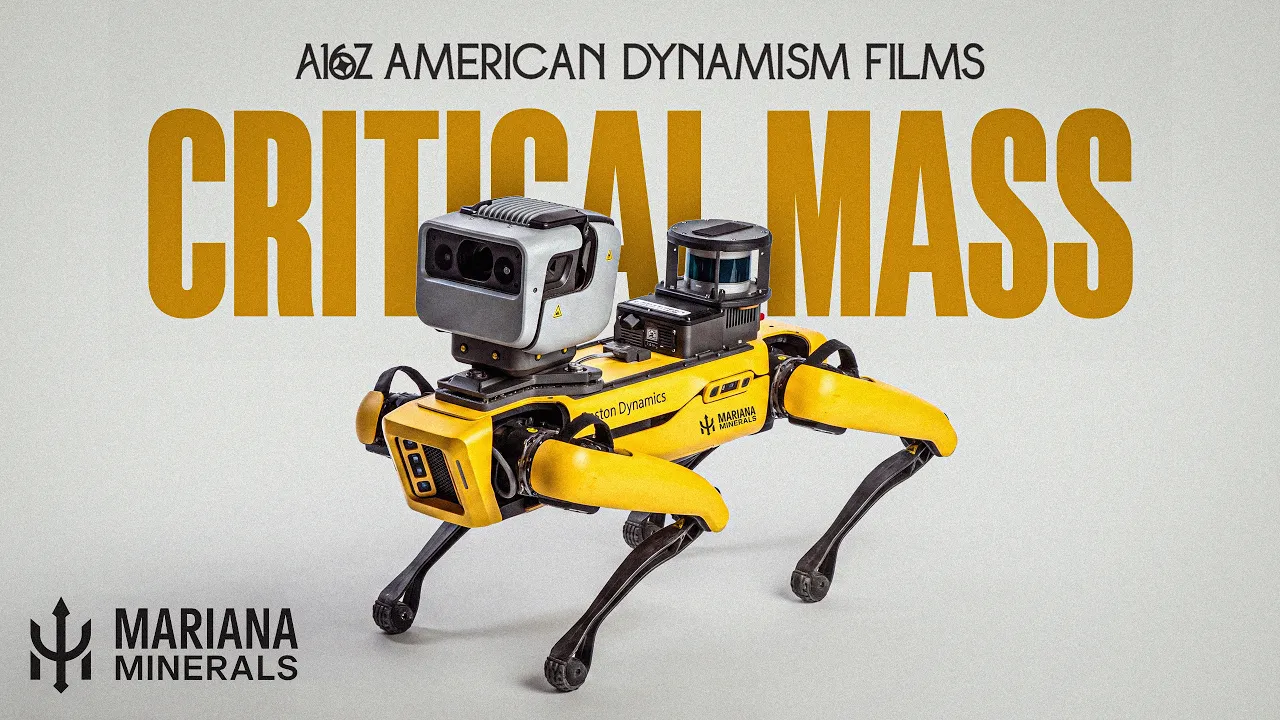
The Future is Metal - Mariana Minerals | a16z American Dynamism — a16z

a16z

Mariana Minerals acquired its Utah 'Copper One' asset and deployed autonomous trucks to prove that vertical integration of software and resource extraction can rebuild Western critical mineral supply chains.

AI-assisted summary of The Future is Metal - Mariana Minerals | a16z American Dynamism — original source. Check the original for full context.

Source published:

Detailed notes

## Background Published on YouTube by a16z on August 5, 2026, this video features Turner Caldwell, CEO of Mariana Minerals. According to the page description, it covers how Mariana is taking a software-first, automated approach to rebuilding the critical minerals industry essential for economic resilience, tech leadership, and national security.

## TL;DR The video highlights the critical role of metals in powering modern technology and addresses how Western mineral extraction has fallen behind, leaving over 90% of refining to China. Led by former Tesla engineer Turner Caldwell, Mariana Minerals aims to solve this through vertical integration, using its custom 'Mariana OS' software to grant human workers massive operational leverage. After pulling forward its Series A financing with a16z, Mariana acquired 'Copper One' in Utah, rapidly deploying autonomous haul trucks and software-driven workflows while creating vital local jobs in San Juan County. Beyond terrestrial copper, Mariana views this technology as the foundation for future extreme-environment extraction, such as deep-sea and space mining.

## Atmosphere & style The overall tone is forward-looking, pragmatic, and urgently patriotic, blending Silicon Valley tech optimism with hard-hat industrial reality. Caldwell conveys a grounded, intense determination, transitioning seamlessly from high-level geopolitical supply chain risks to practical on-the-ground execution in rural Utah. It feels like an ambitious manifest for American industrial renewal—a fusion of 'atoms and bits' where software engineers and site operators work side by side to build the future of physical infrastructure.

## Key takeaways - [00:07](https://www.youtube.com/watch?v=uFt-tkagUUI&t=7s) Every physical product powering the modern world is either mined or grown, making metals and minerals the essential foundation of the modern economy. - [00:07](https://www.youtube.com/watch?v=uFt-tkagUUI&t=7s) Over the past 30 to 40 years, Western domestic mining and refining capabilities stalled as production shifted overseas, creating critical supply chain vulnerabilities. - [00:07](https://www.youtube.com/watch?v=uFt-tkagUUI&t=7s) China currently refines over 90% of the world's critical minerals, presenting significant national security and economic risks to Western nations. - [00:07](https://www.youtube.com/watch?v=uFt-tkagUUI&t=7s) Humanity will need to mine more copper in the next 15 years than in all recorded history prior. - [01:48](https://www.youtube.com/watch?v=uFt-tkagUUI&t=108s) Mariana Minerals was founded by former Tesla battery scaling engineer Turner Caldwell to address the critical minerals bottleneck using a software-first approach. - [01:48](https://www.youtube.com/watch?v=uFt-tkagUUI&t=108s) Mariana's thesis asserts that traditional Western mining companies lack the operational muscle memory and software capabilities to effectively deploy capital. - [02:56](https://www.youtube.com/watch?v=uFt-tkagUUI&t=176s) Mariana OS is a custom software platform designed to give operational teams massive leverage by automating manual processes without replacing personnel. - [02:56](https://www.youtube.com/watch?v=uFt-tkagUUI&t=176s) Mariana pulled forward its Series A round with a16z to acquire and operate the 'Copper One' operational asset in Utah. - [04:03](https://www.youtube.com/watch?v=uFt-tkagUUI&t=243s) After originally serving as consultants on the Utah site, Mariana transitioned to acquiring and directly operating the asset to test its operational software. - [04:03](https://www.youtube.com/watch?v=uFt-tkagUUI&t=243s) Mariana rapidly modernized the Copper One facility by replacing fragmented manual processes and deploying autonomous haul trucks faster than traditional industry timelines. - [04:03](https://www.youtube.com/watch?v=uFt-tkagUUI&t=243s) Mariana established an on-site control bridge to bring software engineers and physical site operators together to bridge hardware and software feedback loops. - [05:37](https://www.youtube.com/watch?v=uFt-tkagUUI&t=337s) The revival of the Copper One facility creates high-paying jobs in San Juan County, the poorest county in Utah. - [05:37](https://www.youtube.com/watch?v=uFt-tkagUUI&t=337s) The autonomous software and systems built for terrestrial mining will serve as the foundation for future extreme-environment extraction, including deep-sea and space mining. - [05:37](https://www.youtube.com/watch?v=uFt-tkagUUI&t=337s) Building civilization-defining technology requires a unified combination of both hardware ('atoms') and software ('bits').

## Detailed walkthrough ### [00:07](https://www.youtube.com/watch?v=uFt-tkagUUI&t=7s) The Critical Role of Metals in the Modern Economy

Everything in the physical world is ultimately either mined or grown—and human civilization cannot grow metals. Every fundamental element powering modern life, from laptops and cell phones to electric vehicles, batteries, AI data centers, and advanced robotics, is extracted directly from the ground. Metals and minerals form the invisible, non-negotiable foundation beneath the entire modern economy.

Decades ago, the United States was a dominant force in mineral production, standing as one of the largest global producers of key resources like lithium and copper. However, beginning around thirty to forty years ago, a massive structural shift occurred as domestic manufacturing and extraction were offloaded overseas. Rather than maintaining or evolving these foundational capabilities, Western mining completely stalled, allowing critical industrial muscle memory to atrophy and falling drastically behind competitors.

- Over 90% of the world's critical minerals are refined in China today, representing a swift and dramatic geopolitical transition over recent decades. - Demand for copper is at an unprecedented inflection point: humanity will need to mine more copper over the next 15 years than has been produced in all of recorded human history since the Bronze Age. - The shift away from domestic refining severely threatens Western self-determination, leaving economic resilience and national security vulnerable to foreign dependency. - In a world marked by growing global tension, physical materials ("units") and hard power are non-negotiable prerequisites; if a nation lacks the raw physical metals, it simply cannot build the technologies or defense systems it requires.

[01:48](https://www.youtube.com/watch?v=uFt-tkagUUI&t=108s) Mariana Minerals and the Software-First Thesis

Turner Caldwell, CEO and founder of Mariana Minerals, brings an engineering and manufacturing background from Stanford and a decade-long tenure at Tesla, where he worked on scaling battery cell production. Through his work on intermediate battery supply chains, Caldwell realized that raw metals represent both the primary cost driver and the single biggest bottleneck in modern manufacturing. While transformational companies tackled big industrial sectors—Tesla taking on automotive and SpaceX disrupting aerospace—the fundamental minerals sector remained untouched by modern tech stack paradigms.

Mariana’s core thesis centers on the belief that legacy Western mineral companies have lost their ability to effectively deploy capital to mine and refine critical materials. To fix this structural crisis, Mariana argues the industry requires a completely new model: a vertically integrated, software-first mining and refining company that approaches resource extraction with high-velocity technology rather than traditional, slow-moving industrial paradigms.

- Turner Caldwell spent nearly 10 years at Tesla, working directly with battery cell providers to navigate supply chain constraints. - Mariana addresses a fundamental thesis: traditional Western mining firms have lost the operational muscle memory and software capability to efficiently deploy capital for domestic resource needs. - The company focuses on vertical integration—combining software, hardware, operational execution, and mineral refining under a single unified roof.

[02:56](https://www.youtube.com/watch?v=uFt-tkagUUI&t=176s) Mariana OS and Pulling Forward the Series A

At the heart of Mariana’s operating strategy is "Mariana OS," a custom software platform designed not to replace human workers, but to grant them massive leverage. Rather than treating software as a superficial add-on, Mariana uses code to eliminate the "thousand tiny paper cuts" that plague day-to-day operations across a mine site. By eliminating repetitive operational friction, a lean, highly talented team can achieve exponentially higher output with significantly fewer resources.

Following increased policy and strategic emphasis on critical minerals starting in early 2025, momentum around domestic supply chains surged. Building on this momentum, Caldwell met with Aaron at Andreessen Horowitz (a16z). When Mariana identified an operational copper asset in Utah, they decided to pull forward their Series A financing round immediately to capitalize on the opportunity, acquiring and executing on the site now known as "Copper One."

- Mariana OS leverages machine learning and automation to maximize team leverage, driving operational performance improvements rather than replacing ground personnel. - Increased macro focus on critical minerals beginning in early 2025 accelerated investor interest and corporate timelines. - Mariana pulled forward its Series A investment round with a16z after securing an operational target in Utah, taking advantage of a unique strategic window to acquire the "Copper One" asset.

[04:03](https://www.youtube.com/watch?v=uFt-tkagUUI&t=243s) Modernizing Copper One and Deploying Autonomy

Mariana originally engaged with the Copper One asset as consultants helping with a feasibility study, brought in to evaluate operations and identify efficiencies. Recognizing that the site owners and operators were eager to innovate after encountering past friction, Mariana embedded a small team on-site for four to five months to inspect the assets, analyze the geology, and assess remaining yield. Realizing the site's vast upside, the consultancy relationship pivoted when the owners asked Mariana to acquire and operate the facility directly, creating an ideal practical sandbox for Mariana's operational software.

Upon taking control, Mariana discovered the site was running on a patchwork of disconnected manual processes—finding a new spreadsheet used to manage key operations almost daily for 150 consecutive days. While this reflected standard operating procedures across the legacy mining industry, Mariana immediately began modernizing operations, including the rapid deployment of autonomous haul trucks.

- Mariana spent 4–5 months consulting on the Copper One asset in Utah before transitioning from advisory work to buying and running the site outright. - Site management had previously relied on fragmented manual tracking, with the Mariana team uncovering a new operational spreadsheet every day for roughly 150 days. - Legacy mining firms typically take up to two years to deploy autonomous haul trucks across massive fleets of 30 to 100 vehicles; Mariana compressed this timeline dramatically by deploying two autonomous trucks almost immediately to maximize real-world feedback. - To bridge the gap between software development and hardware performance on dynamic mine and refinery sites, Mariana established an on-site control bridge to put software engineers and site operators in the same room.

[05:37](https://www.youtube.com/watch?v=uFt-tkagUUI&t=337s) Local Impact in San Juan County and Long-Term Vision

For local site workers, the shift toward software-driven mining has yielded immediate tangible benefits. Longtime team members who have worked at the facility since 2005 recount how daily operations historically depended on tedious manual record-keeping—writing metrics down on physical paper clipboards before typing them into disconnected spreadsheets. Streamlining these workflows through Mariana's software stack has eliminated administrative overhead and stabilized site production.

Beyond technology, the revival of the site carries deep socioeconomic weight. Located in San Juan County—the poorest county in Utah—the Copper One project provides crucial high-paying jobs that allow local residents to support their families and sustain their communities over the long haul.

Looking to the future, Mariana views its work at Copper One as the foundational groundwork for extreme-environment mining. The robust autonomy stack being built on-site today is designed to eventually power off-world and deep-sea mineral extraction—capabilities that will be required to mine seabed floors, asteroids, Mars, or the Moon.

- San Juan County is the poorest county in Utah, making sustained, profitable copper production vital to local family livelihoods and economic stability. - Local veteran workers who have been with the site since 2005 highlighted the transition from manual paper reporting to Mariana's streamlined digital operational workflow. - Long-term technological vision: robust autonomous software built for terrestrial mines will serve as the foundation for future extreme-environment mining, including ocean floor extraction and space mining on asteroids, the Moon, and Mars. - Caldwell's core belief for building civilization-defining tech: "It's the combination of the atoms and the bits that enables that. You're not just an atoms company or you're not just a bits company. You have to be both."

## Notable quotes > [00:07](https://www.youtube.com/watch?v=uFt-tkagUUI&t=7s) Everything in the physical world is ultimately either mined or grown—and human civilization cannot grow metals.

> [00:07](https://www.youtube.com/watch?v=uFt-tkagUUI&t=7s) humanity will need to mine more copper over the next 15 years than has been produced in all of recorded human history since the Bronze Age.

> [02:56](https://www.youtube.com/watch?v=uFt-tkagUUI&t=176s) thousand tiny paper cuts

> [05:37](https://www.youtube.com/watch?v=uFt-tkagUUI&t=337s) It's the combination of the atoms and the bits that enables that. You're not just an atoms company or you're not just a bits company. You have to be both. — Turner Caldwell

## Mentioned Mariana Minerals, Turner Caldwell, Tesla, Stanford, SpaceX, Mariana OS, Andreessen Horowitz (a16z), Aaron, Copper One, San Juan County, Utah, China, United States

[Source](https://www.youtube.com/watch?v=uFt-tkagUUI)

中文简报

Mariana Minerals 收购犹他州铜矿以部署自主采矿软件 Mariana Minerals 收购了其位于犹他州的“Copper One”资产并部署了无人驾驶卡车,以证明软件与资源开采的垂直整合能够重建西方关键矿物供应链。 该视频强调了金属在驱动现代技术中的关键作用,并探讨了西方矿产开采如何陷入落后、导致90%以上的精炼依赖中国。在特斯拉前工程师 Turner Caldwell 的带领下,Mariana Minerals 旨在通过垂直整合解决这一问题,利用其定制的“Mariana OS”软件赋予人类操作人员巨大的作业杠杆。在提前完成 a16z 领投的 A 轮融资后,Mariana 收购了犹他州的“Copper One”,迅速部署了无人驾驶运输卡车和软件驱动的工作流程,同时在圣胡安县创造了关键的本地就业机会。除陆地铜矿之外,Mariana 还将该技术视为深海采矿和太空采矿等未来极端环境开采的基础。 驱动现代世界的每一件实体产品要么来自开采,要么来自种植,这使得金属与矿物成为现代经济的基本支柱。 (0:07) 在过去的30至40年里,随着生产向海外转移,西方本土的采矿和精炼能力停滞不前,造成了严重的关键供应链脆弱性。 (0:07) 中国目前精炼了全球90%以上的关键矿物,给西方国家带来了显著的国家安全与经济风险。 (0:07) 人类在未来15年内需要开采的铜矿总量,将超过有史以来的历史开采总和。 (0:07) Mariana Minerals 由特斯拉前电池规模化工程师 Turner Caldwell 创立,旨在通过软件优先的方法打破关键矿物的供应瓶颈。 (1:48)

Reading summary

Mariana Minerals argues that rebuilding Western mineral independence requires a vertically integrated, software-first mining model to address critical supply chain vulnerabilities and operational stagnation. The Western Mineral Supply Deficit (0:07) Modern technology, defense systems, and clean energy rely directly on mined resources, yet Western mining capacity has atrophied over the past thirty to forty years due to the offshoring of manufacturing and extraction. Today, China refines over 90% of the world's critical minerals. This concentration creates strategic vulnerabilities for Western nations, as physical materials represent an indispensable requirement for hard power and technological self-determination. Compounding this geopolitical shift is a steep rise in resource demand. Projections indicate humanity will need to extract more copper over the next 15 years than the cumulative volume produced since the Bronze Age. The source notes that legacy Western mining firms currently lack the operational agility and capital deployment capabilities needed to meet this domestic resource challenge. The Software-First Mining Thesis (1:48) Founded by former Tesla engineer Turner Caldwell, Mariana Minerals was formed around the observation that raw materials represent both the primary cost driver and the largest bottleneck in modern industrial manufacturing. While sectors such as automotive and aerospace adopted modern technical stacks, Caldwell asserts that legacy resource extraction remained largely unchanged by modern software paradigms. Mariana proposes a vertically integrated structure that combines software development, hardware deployment, and mineral refining. Rather than displacing ground personnel, the company's operating platform, Mariana OS, applies machine learning and automation to eliminate day-to-day operational frictions, enabling lean teams on-site to increase overall yield and productivity. Operational Overhaul at Copper One (4:03) Following heightened policy attention on domestic critical minerals in early 2025, Mariana accelerated its Series A financing round with Andreessen Horowitz to acquire an operational asset in Utah designated as "Copper One." Mariana had initially engaged with the site as a consultant for four to five months, evaluating geology and operational bottlenecks before transitioning to buy and operate the facility directly. Upon taking ownership, Mariana discovered the mine relied heavily on fragmented record-keeping, identifying a new operational spreadsheet nearly every day for 150 consecutive days. To modernize the site, Mariana embedded software engineers directly alongside operators in an on-site control bridge. The company deployed two autonomous haul trucks rapidly to gather operational data, contrasting with traditional mining timelines that can require up to two years to deploy autonomous fleets across 30 to 100 vehicles. Local Economic Impact and Long-Term Horizon (5:37) At the local level, modernizing the facility replaced paper clipboard tracking that had been used by veteran personnel since 2005 with integrated digital workflows. The project also provides stable, high-paying industrial jobs in San Juan County, which ranks as Utah's poorest county. Looking beyond terrestrial mining, Mariana considers its operational stack at Copper One as a testing ground for extreme-environment autonomy. Caldwell claims that the autonomy and software capabilities developed for domestic mines will eventually provide the technical baseline needed for future deep-sea and off-world resource extraction, including projects on asteroids, the Moon, and Mars. Mariana's thesis rests on the proposition that combining physical infrastructure with software velocity can revive domestic mineral extraction; however, realizing its wider ambitions depends on proving that early technological interventions at Copper One can scale across complex, capital-intensive extraction environments.

精炼阅读摘要

Mariana Minerals 创始人兼首席执行官 Turner Caldwell 提出,西方传统矿业因长期产业外流而丧失了高效配置资本与开采精炼的能力,必须采用“软件优先”与垂直整合的新模式重构关键矿产供应链。他指出,面对激增的现代金属需求与单一外部供应链风险,唯有结合“原子与比特”的技术路径才能保障西方的战略自主与产业竞争力。 关键矿产断层与地缘供应链风险 (0:07) 节目指出,现代经济的物理基础无法通过农业培育获得,智能手机、笔记本电脑、电动汽车、电池、人工智能数据中心及先进机器人等核心技术,完全建立在直接开采的金属与矿产之上。根据节目引述的行业预测,人类在未来15年内对铜的需求量,将超过青铜时代以来人类有记录历史的开采总和。然而,自三四十年前美国将采矿与制造环节大举外包以来,西方本土矿业陷入停滞,原有的产业执行力与经验严重退化。 当前全球超过90%的关键矿产精炼集中在中国,形成了显著的地缘依赖。节目论述称,在国际地缘博弈加剧的背景下,实体原材料构成了非对抗性的硬实力底座;如果西方无法掌握底层金属原料的开采与精炼,其先进制造业与国防安全系统都将面临严重的供应脆弱性。 垂直整合架构与软件优先模式 (1:48) Mariana Minerals 创始人 Turner Caldwell 毕业于斯坦福大学工程制造专业,曾在 Tesla 工作近十年并深度参与电池电芯产能扩张。他在对接电池供应链的过程中意识到,原矿金属是制造业最大的成本驱动因素与核心产能瓶颈。虽然汽车与航天领域已分别由 Tesla 和 SpaceX 推动了技术革新,但矿产这一最上游工业环节仍长期游离在现代技术栈之外。 Mariana 的核心观点认为,传统西方矿业巨头已不具备高效调配资本来满足本土资源需求的敏捷度与软件工程能力。为此,Mariana 提出垂直整合模式,将自研软件、硬件系统、现场工程执行与矿石精炼整合在统一组织之下,以类似高科技企业的迭代节奏替代传统矿业缓慢的工业流程,践行“原子(Atoms)与比特(Bits)紧密结合”的重构路径。 Copper One 数字化与无人驾驶部署 (4:03) 2025年初关键矿产受到的宏观政策与战略关注激增,Mariana 借此契机提前推进了由 a16z 领投的 A 轮融资,并全面收购位于犹他州的“Copper One”铜矿项目。Mariana 最初作为顾问在现场开展了为期四至五个月的可行性研究与资产评估,在原业主寻求创新的契机下直接接管成为运营主体,将该矿场打造为其自研系统“Mariana OS”的实操测试基地。 进驻矿山后,团队发现原运营方依赖严重碎片化的手动记录流程,在进场初期约150天里几乎每天都会发现一份独立记录关键运营数据的新电子表格。Mariana 借助自研软件平台消除重复性的流程摩擦,以此放大现场精简团队的生产杠杆,而非单纯替代基层工人。在自动化方面,传统大型矿企通常需耗时两年为数十至上百辆规模的车队部署无人驾驶卡车,Mariana 则迅速下场部署两辆自动驾驶运输卡车以快速获取实地反馈,并在矿山设立控制桥,使软件工程师与现场操作员同室办公以加速技术落地。 地方经济支撑与地外采矿愿景 (5:37) 数字化改造直接改善了一线矿工的工作流程。据在矿区自2005年工作至今的老员工回顾,过去的日常生产严重依赖纸质写字板人工手抄数据,再二次录入分散的表格,Mariana 软件系统的介入大幅减少了这类繁琐的行政开销并稳定了现场产出。此外,该矿场位于犹他州最为贫困的圣胡安县(San Juan County),重振该矿区的商业运营为当地家庭提供了长期的高薪工作岗位,成为维持社区经济稳定的关键支柱。 从长远技术愿景来看,Mariana 将在 Copper One 地面严苛环境中磨炼的自主控制软件体系,视作极端环境采矿的技术母版。Caldwell 团队规划,这套软硬件能力未来计划拓展应用于深海海床采矿,并最终支持小行星、月球和火星等外太空矿产资源的自主提取。 Mariana Minerals 尝试以软件工程与高频迭代重塑重工业采矿范式,但其模式能否突破传统矿业重资本、长周期的客观物理制约并在更大规模资产中实现稳定盈利,以及向深海和太空等极端环境拓展的可行性,仍有待更长期的运营成果验证。

Detailed notes — zh

## Background 本视频由风险投资机构 a16z 于其 YouTube 官方频道发布。视频重点介绍了由 Turner Caldwell 创立的 Mariana Minerals 公司,展示其如何以“软件优先”的理念重构关键矿产供应链,通过自动化、AI 与工程创新的结合重建至关重要的工业物理底座。 ## TL;DR 面对西方在关键矿产供应链和精炼能力上的严重落后,以及未来数十年全球对铜等核心金属激增的需求,前特斯拉工程师 Turner Caldwell 创立了 Mariana Minerals。公司对标特斯拉和 SpaceX 对传统工业的重塑,致力于通过自主研发的 Mariana OS 操作系统与敏捷部署的无人自动驾驶矿卡,打造一家软硬件垂直整合的现代矿企。通过收购并直接改造犹他州的 Copper One 矿山,Mariana 在提升现场运营效率、保障当地社区稳定生计的同时,践行了数字比特与物理原子深度融合的理念,为未来深海乃至太空采矿奠定基础。 ## Atmosphere & style 全片基调兼具硬核前沿科技的开拓雄心与重工业一线的泥泞质朴,叙事风格冷静务实且富有感染力。画面在中控室的代码交互与矿山现场呼啸的巨型机械之间来回切换,老矿工对稳定生计与产业复兴的真挚诉求为宏大的地缘战略议题注入了浓厚的人文温度。观看时既能直观感受到硅谷软件工程撞击传统沉重矿业所带来的工业冲击感,又能体会到重铸物理世界基础设施的深远使命感。 ## Bulletin - [00:07](https://www.youtube.com/watch?v=uFt-tkagUUI&t=7s) 全球关键矿产面临严重供需失衡,未来15年内的铜需求将超过人类自青铜时代以来的开采总和,而目前超过90%的关键矿物精炼产能集中在单一国家。 - [01:48](https://www.youtube.com/watch?v=uFt-tkagUUI&t=108s) 前特斯拉工程师 Turner Caldwell 创立软硬件垂直整合矿业公司 Mariana Minerals,运用软件、机器学习与自动化重塑关键矿物开采与精炼全流程。 - [02:56](https://www.youtube.com/watch?v=uFt-tkagUUI&t=176s) Mariana 提前完成 a16z 领投的 A 轮融资,并全盘接管犹他州 Copper One 铜矿资产,作为其自研矿业操作系统 Mariana OS 的实战试验场。 - [05:00](https://www.youtube.com/watch?v=uFt-tkagUUI&t=300s) 公司推行敏捷自动化方案,在现场部署两辆自动驾驶运载卡车与一体化指挥中心 The Bridge,同时为犹他州最贫困的圣胡安县注入长期就业支撑。 ## Key takeaways - [00:07](https://www.youtube.com/watch?v=uFt-tkagUUI&t=7s) 现代经济的底层硬件完全依赖无法人工培育的矿产金属,包括电池、电动汽车、机器人及 AI 数据中心。 - [00:07](https://www.youtube.com/watch?v=uFt-tkagUUI&t=7s) 西方在过去三十年间逐步退出本土开采与精炼链条,导致关键矿产精炼高度集中,战略自主权面临挑战。 - [00:07](https://www.youtube.com/watch?v=uFt-tkagUUI&t=7s) 未来15年全球所需的铜矿石开采总量,将超过青铜时代至今整个人类历史的开采总和。 - [01:48](https://www.youtube.com/watch?v=uFt-tkagUUI&t=108s) 创始人兼 CEO Turner Caldwell 在特斯拉负责电池电芯制造对接中意识到,底层矿物是硬件制造最大的成本瓶颈和脆弱咽喉。 - [01:48](https://www.youtube.com/watch?v=uFt-tkagUUI&t=108s) Mariana 明确对标特斯拉对汽车制造、SpaceX 对航天工业的重塑路径,致力于打造软件定义的垂直整合矿企。 - [01:48](https://www.youtube.com/watch?v=uFt-tkagUUI&t=108s) 传统西方矿业公司已丧失高效配置资本的能力,软件与物理实体的垂直整合成为破局关键。 - [02:56](https://www.youtube.com/watch?v=uFt-tkagUUI&t=176s) 自主研发的 Mariana OS 聚焦消除一线繁杂低效节点,旨在赋予工人技术杠杆以放大产能,而非简单取代人工。 - [02:56](https://www.youtube.com/watch?v=uFt-tkagUUI&t=176s) 受关键矿物战略价值升温及犹他州 Copper One 铜矿项目机遇推动,Mariana 快速推进由 a16z 领投的 A 轮融资。 - [04:03](https://www.youtube.com/watch?v=uFt-tkagUUI&t=243s) 在 Copper One 项目尽职调查前150天中,团队每天都能发现一份维持日常运营的新 Excel 表格,凸显传统矿业严重的技术脱节。 - [04:03](https://www.youtube.com/watch?v=uFt-tkagUUI&t=243s) Mariana 从最初的第三方可行性咨询顾问角色,迅速转变为直接收购并运营 Copper One 矿山资产。 - [05:00](https://www.youtube.com/watch?v=uFt-tkagUUI&t=300s) 摒弃传统采矿业耗时两年的大规模推行模式,Mariana 迅速上线两辆自动驾驶卡车进行小步快跑迭代测试。 - [05:00](https://www.youtube.com/watch?v=uFt-tkagUUI&t=300s) 设立跨学科联合指挥中心 The Bridge,将软硬件工程师与现场问题解决者聚于一堂,即时应对动态矿山工况。 - [05:00](https://www.youtube.com/watch?v=uFt-tkagUUI&t=300s) 矿山项目扎根于犹他州最贫困的圣胡安县,为依赖实体工业的当地社区家庭提供稳定长期的生计保障。 - [07:09](https://www.youtube.com/watch?v=uFt-tkagUUI&t=429s) 地面自动化采矿技术栈是未来深海海底开采、月球及火星资源开采的不可或缺的基础设施演进路径。 - [07:09](https://www.youtube.com/watch?v=uFt-tkagUUI&t=429s) 颠覆传统重工业的关键在于实现物理原子(Atoms)与数字比特(Bits)的深度融合,不能单纯偏安于软件或传统工业的一隅。 ## Detailed walkthrough ### [00:07](https://www.youtube.com/watch?v=uFt-tkagUUI&t=7s) 现代经济的物理底座与关键矿产危机 在物理世界中,人类所交互的一切物品,要么来自开采,要么来自种植——而不幸的是,金属是无法被种植出来的。从笔记本电脑、智能手机、人工智能数据中心,到机器人、电池和电动汽车,所有这些驱动现代经济运转的终端硬件,归根结底都依托于从地底开采出来的金属与矿物。五六十年前,美国曾是这些金属的核心制造国,不仅是全球最大的锂生产国之一,也是举足轻重的铜生产国。然而大约在三十年前,西方世界出现了一场深刻的产业转移,逐步退出了本土开采与精炼金属的链条。 如今的供需缺口正在演变为迫在眉睫的危机。人类在未来15年内需要开采的铜,将超过自青铜时代以来整个人类历史开采总量的总和。尽管全球对此普遍感到担忧,但西方传统矿业公司却迟迟没有采取明确、实质性的行动去填补缺口。西方不仅丧失了产能,更在技术与工程能力上显著落后。当前全球超过90%的关键矿物精炼都在中国进行。过度依赖单一地理实体,直接削弱了一个国家的战略自主权与掌控自身命运的能力。国家安全固然包含诸多无形要素,但在一个地缘冲突日益加剧的世界里,硬实力极其现实:如果没有制造装备所需的实体单元,在物理层面上就根本无法建造任何东西。 - **历史产能变迁**:美国在50至60年前曾是全球锂和铜的核心主产国,但在过去30多年间将产业链大幅外移。 - **精炼垄断格局**:目前全球超过90%的关键矿产精炼集中在单一国家(中国)。 - **铜需求激增**:未来15年的铜开采需求量将超过自青铜时代以来的整个人类文明开采总和。 ### [01:48](https://www.youtube.com/watch?v=uFt-tkagUUI&t=108s) 特斯拉基因与 Mariana 的软件定义矿业愿景 Mariana Minerals 创始人兼首席执行官 Turner Caldwell 出生于旧金山,毕业于斯坦福大学机械工程专业,随后在特斯拉(Tesla)深耕了约十年。在特斯拉期间,他专注于与电池电芯供应商对接制造环境,正是在梳理中游供应链的过程中,他敏锐地意识到:底层金属矿产才是推高整体成本的最大瓶颈,也是整个清洁能源与硬件产业中最脆弱的咽喉。纵观整个工业格局,特斯拉重塑了汽车制造业,SpaceX 颠覆了航天工业,然而规模同样庞大的矿产工业,却始终没有被人系统性地运用当代尖端科技进行全方位改造。 ```mermaid flowchart TD accTitle: Mariana Minerals 软硬件垂直整合架构 accDescr: 展示 Mariana 如何利用软件层赋能矿山一线并推动端到端垂直整合 subgraph SW["软件与智能中枢 (Bits)"] OS["Mariana OS 操作系统"] ML["机器学习与自动化决策"] Stack["自动驾驶运载堆栈"] end subgraph OPS["矿山现场运作 (Atoms)"] Bridge["矿山指挥中控室 (The Bridge)"] Fleet["无人驾驶矿用卡车车队"] Refinery["开采与精炼连续作业"] end OS --> Bridge ML --> Bridge Stack --> Fleet Bridge --> Fleet Fleet --> Refinery ``` Mariana 的核心论点在于:西方传统矿业公司已经失去了有效配置资本来开采和精炼现代经济所需关键矿物的能力。这种能力的衰退不仅关乎商业成败,更关乎国家安全。要从根本上破解这一困局,唯一的出路是建立一家软硬件垂直整合(vertically integrated)、以软件为核心驱动力的现代矿业与精炼企业。 - **创始人背景**:Turner Caldwell 拥有斯坦福机械工程背景,曾于特斯拉工作近十年,深入管理电芯制造与中间供应链。 - **工业颠覆对标**:将矿业革新对标特斯拉重塑汽车制造、SpaceX 重塑航天产业。 - **核心公司定位**:不仅是单纯的矿企或软件商,而是一家“以软件为先的垂直整合型关键矿物开采与精炼公司”。 ### [02:56](https://www.youtube.com/watch?v=uFt-tkagUUI&t=176s) 矿业操作系统 Mariana OS 与加速布局 Utah 矿山 Mariana 的核心竞争力在于其自主研发的“Mariana OS”。这个系统绝非为了写软件而写软件,而是旨在解决每天分布在成千上万名工人身上、数以千计的琐碎效率痛点("tiny paper cuts"),从底层驱动一线作业的行为模式变革。Mariana OS 的定位不是取代人工,而是赋予工人技术杠杆,放大每个人的影响力和产能,让极度精简的高技能团队能够以极少的资源完成远超以往的工作量。在复杂的矿山工程中,软件与机器学习是实现这一杠杆效应的唯一途径。 自2025年1月以来,美国社会与政策层面对于关键矿物供应链的关注与支持显著攀升,整个行业的动能迅速凝聚。这种大环境的转变吸引了更多顶级资本的注意。Mariana 团队与风险投资机构 Andreessen Horowitz(a16z)的 Aaron 展开接洽,并果断决定提前启动 A 轮融资。之所以抢抓节奏,是因为团队在犹他州敲定了一个名为“Copper One”的项目。在商业机遇的窗口期骤然敞开时,公司选择全力扑上去,以远快于行业传统周期的速度将该项目纳入旗下并快速推进。 - **系统定位**:Mariana OS 旨在赋能与杠杆化一线团队,而非简单的人力替代,依靠机器学习消除矿山繁复的低效节点。 - **资本加速**:顺应2025年1月以来的产业战略关注热潮,团队提前开启 A 轮融资,由 a16z 领投支持。 - **项目落地**:果断切入位于犹他州的 Copper One 铜矿资产,作为工业化试验与落地的标杆场景。 ### [04:03](https://www.youtube.com/watch?v=uFt-tkagUUI&t=243s) 深入一线:从 150 张电子表格到全盘接管 Copper One Mariana 最初接触到 Copper One 矿山是通过一家合作公司的引荐。当时两家矿业实体正酝酿交易,Mariana 受聘以顾问身份介入,协助进行可行性研究,并评估矿山的作业流程与改进空间。原矿山业主和管理团队在过去遭遇了诸多挑战,意识到必须采取不同以往的创新手段,因此对外部新技术持开放态度。Mariana 派出了一支精干的小型团队驻扎现场,进行了长达四五个月的严密勘探与资产评估,论证该矿山是否仍蕴含巨大的潜在开发价值。最终,矿山资方直接提出:“与其继续做咨询,你们为什么不干脆把它买下来自己运营?” Mariana 当即抓住这一契机,将 Copper One 变成了验证其软硬件技术栈的绝佳实战试验场("sandbox")。 深入一线之后,团队发现了传统矿业惊人的技术脱节:在接手的前150天里,团队几乎每天都能在现场翻出一份用于维持日常生产的新 Excel 电子表格。现场人员并不是在恶意怠工或低效运营,而是在整个矿业行业,用纸质记录、再手动输入电子表格的落后协作模式早已司空见惯。要打破这种沉重的历史惯性,就必须对底层运营系统进行彻底的数字化重构。 - **切入路径**:通过为期4至5个月的尽职调查与可行性咨询,从顾问角色转变为直接收购并运营该矿山。 - **行业痛点写照**:入驻现场后的前150天,每天都会发现一张新的 Excel 运营表格,揭示了传统矿业对碎片化手工记录的深度依赖。 ### [05:00](https://www.youtube.com/watch?v=uFt-tkagUUI&t=300s) 快速迭代自主运输矿卡与本土矿工的生计寄托 在矿山现场的自动化改造上,Mariana 打破了传统矿企的惯性路径。公司自1月份起迅速部署了两辆自动驾驶运载卡车(autonomous haul trucks)。传统采石场或大型矿山在推行无人化运输时,往往需要花费整整两年时间,在包含30辆、50辆甚至上百辆卡车的庞大车队中进行缓慢推进。这种模式耗时极长,而且严重缺乏与真实物理世界的早期碰撞反馈。Mariana 选择以极快的速度先上线两辆卡车,并设立了一个名为“The Bridge”的联合指挥控制室,将所有排查和解决软硬件故障的人员集中在同一间屋子里实时协作。面对工况极度动态、变数丛生的矿山与精炼厂,这种快速反应机制至关重要。 这一技术变革也深刻影响着当地社区与老员工的生活。一名自2005年起就在该矿山工作的资深操作工坦言,早期的矿山作业充斥着极其繁重的手工劳动,从纸笔手写报表到繁复的数据录入,消耗了大量精力;而 Mariana 的进驻使数据流转得到了极大简化与高效整合。该矿山所在的犹他州圣胡安县(San Juan County)是全州经济最贫困的县,这份稳定且具有竞争力的工作对于当地无数家庭而言意味着生活保障。这位老员工深情地表示,他最大的愿望是在自己退休离开前,看到矿山走上坚实、持续盈利的轨道,产出源源不断的铜,为这片土地留下长久稳定的就业机会。 - **敏捷推进无人化**:摒弃长达两年的大规模缓慢铺开,以两辆无人驾驶矿卡迅速切入真实工况以快速排错迭代。 - **指挥中枢 The Bridge**:将跨学科工程师与一线问题解决者集中在同一空间,应对高动态的采选冶现场环境。 - **社区经济支撑**:项目扎根于犹他州最贫困的圣胡安县,不仅验证了数字化工艺改造,更为支撑当地数十年的社区生计注入了长期活力。 ### [07:09](https://www.youtube.com/watch?v=uFt-tkagUUI&t=429s) 原子与比特的熔合:走向深海与太空采矿的终极基建 美国本质上是一个由建设者构成的国度,蕴含着强烈的独立精神:渴望用自己的双手去创造,并在这一过程中为个人、家庭、社区乃至国家赢取繁荣。Mariana 所践行的道路正是这一核心价值观的投射。从长远视角来看,人类未来若想实现深海海底采矿,离不开一套极度健壮可靠的自主全自动技术栈(autonomy stack);而人类若想迈向火星、月球或小行星带进行外太空资源开采,更是必须依赖极致成熟的自主采掘与精炼系统。Mariana 当下在矿山泥土中打磨的,正是通向这套终极工程能力的底层基石。 如果一家创业公司渴望建立真正具有划时代影响力、能够改变人类文明航向的伟大事业,就绝不能仅仅停留在纯数字空间,而必须深入物理世界去啃硬骨头。然而,纯粹的传统重工业同样无法突围。真正的变革力量来自于“原子”(Atoms)与“比特”(Bits)的深度融合——不能只做一家纯粹的物理矿业公司,也不能只做一家纯粹的代码软件公司,而必须兼具两者,成为连接数字智能与物理重构的硬核实体。 - **长期技术延伸**:现阶段打磨的无人自动化技术栈,面向未来深海采矿、月球采矿及火星资源开采的终极场景。 - **核心哲学内核**:改变文明进程的大型企业必须扎根物理世界;颠覆传统工业必须实现物理原子与数字比特的深度融合。 ## Notable quotes > [00:07](https://www.youtube.com/watch?v=uFt-tkagUUI&t=7s) 在物理世界中,人类所交互的一切物品,要么来自开采,要么来自种植——而不幸的是,金属是无法被种植出来的。 > [00:07](https://www.youtube.com/watch?v=uFt-tkagUUI&t=7s) 人类在未来15年内需要开采的铜,将超过自青铜时代以来整个人类历史开采总量的总和。 > [00:07](https://www.youtube.com/watch?v=uFt-tkagUUI&t=7s) 如果没有制造装备所需的实体单元,在物理层面上就根本无法建造任何东西。 > [01:48](https://www.youtube.com/watch?v=uFt-tkagUUI&t=108s) 底层金属矿产才是推高整体成本的最大瓶颈,也是整个清洁能源与硬件产业中最脆弱的咽喉。 — Turner Caldwell > [01:48](https://www.youtube.com/watch?v=uFt-tkagUUI&t=108s) 西方传统矿业公司已经失去了有效配置资本来开采和精炼现代经济所需关键矿物的能力。 — Turner Caldwell > [02:56](https://www.youtube.com/watch?v=uFt-tkagUUI&t=176s) Mariana OS 的定位不是取代人工,而是赋予工人技术杠杆,放大每个人的影响力和产能,让极度精简的高技能团队能够以极少的资源完成远超以往的工作量。 > [04:03](https://www.youtube.com/watch?v=uFt-tkagUUI&t=243s) 与其继续做咨询,你们为什么不干脆把它买下来自己运营? > [04:03](https://www.youtube.com/watch?v=uFt-tkagUUI&t=243s) 在接手的前150天里,团队几乎每天都能在现场翻出一份用于维持日常生产的新 Excel 电子表格。 > [05:00](https://www.youtube.com/watch?v=uFt-tkagUUI&t=300s) 传统采石场或大型矿山在推行无人化运输时,往往需要花费整整两年时间,在包含30辆、50辆甚至上百辆卡车的庞大车队中进行缓慢推进。这种模式耗时极长,而且严重缺乏与真实物理世界的早期碰撞反馈。 > [05:00](https://www.youtube.com/watch?v=uFt-tkagUUI&t=300s) 退体离开前,看到矿山走上坚实、持续盈利的轨道,产出源源不断的铜,为这片土地留下长久稳定的就业机会。 — 资深操作工 > [07:09](https://www.youtube.com/watch?v=uFt-tkagUUI&t=429s) 人类未来若想实现深海海底采矿,离不开一套极度健壮可靠的自主全自动技术栈;而人类若想迈向火星、月球或小行星带进行外太空资源开采,更是必须依赖极致成熟的自主采掘与精炼系统。 > [07:09](https://www.youtube.com/watch?v=uFt-tkagUUI&t=429s) 不能只做一家纯粹的物理矿业公司,也不能只做一家纯粹的代码软件公司,而必须兼具两者,成为连接数字智能与物理重构的硬核实体。 ## Mentioned Mariana Minerals, Turner Caldwell, Tesla, SpaceX, Mariana OS, Andreessen Horowitz (a16z), Aaron, Copper One, The Bridge, 圣胡安县 (San Juan County), 犹他州 (Utah) ## Video description Mariana is rebuilding one of the world's most important industries: critical minerals. Led by Turner Caldwell, the company is taking a software-first approach to modern mining, combining automation, AI, and engineering to rethink how mines are built and operated. Every battery, robot, AI data center, and electric vehicle depends on metals pulled from the ground, and Mariana believes rebuilding that industrial capability is essential for long-term economic resilience, technological leadership, and national security. GUEST SOCIALS Follow Mariana on X: https://x.com/MarianaMinerals Follow Turner Caldwell on X: https://x.com/tbc415 [Source](https://www.youtube.com/watch?v=uFt-tkagUUI)

Source quotes

[0:07] 在物理世界中,人类所交互的一切物品,要么来自开采,要么来自种植——而不幸的是,金属是无法被种植出来的。 [0:07] 人类在未来15年内需要开采的铜,将超过自青铜时代以来整个人类历史开采总量的总和。 [0:07] 如果没有制造装备所需的实体单元,在物理层面上就根本无法建造任何东西。 [1:48] Turner Caldwell: 底层金属矿产才是推高整体成本的最大瓶颈,也是整个清洁能源与硬件产业中最脆弱的咽喉。 [1:48] Turner Caldwell: 西方传统矿业公司已经失去了有效配置资本来开采和精炼现代经济所需关键矿物的能力。 [2:56] Mariana OS 的定位不是取代人工,而是赋予工人技术杠杆,放大每个人的影响力和产能,让极度精简的高技能团队能够以极少的资源完成远超以往的工作量。 [4:03] 与其继续做咨询,你们为什么不干脆把它买下来自己运营? [4:03] 在接手的前150天里,团队几乎每天都能在现场翻出一份用于维持日常生产的新 Excel 电子表格。 [5:00] 传统采石场或大型矿山在推行无人化运输时,往往需要花费整整两年时间,在包含30辆、50辆甚至上百辆卡车的庞大车队中进行缓慢推进。这种模式耗时极长,而且严重缺乏与真实物理世界的早期碰撞反馈。 [5:00] 资深操作工: 退体离开前,看到矿山走上坚实、持续盈利的轨道,产出源源不断的铜,为这片土地留下长久稳定的就业机会。 [7:09] 人类未来若想实现深海海底采矿,离不开一套极度健壮可靠的自主全自动技术栈;而人类若想迈向火星、月球或小行星带进行外太空资源开采,更是必须依赖极致成熟的自主采掘与精炼系统。 [7:09] 不能只做一家纯粹的物理矿业公司,也不能只做一家纯粹的代码软件公司,而必须兼具两者,成为连接数字智能与物理重构的硬核实体。

Source quotes

[0:07] Everything in the physical world is ultimately either mined or grown—and human civilization cannot grow metals. [0:07] humanity will need to mine more copper over the next 15 years than has been produced in all of recorded human history since the Bronze Age. [2:56] thousand tiny paper cuts [5:37] Turner Caldwell: It's the combination of the atoms and the bits that enables that. You're not just an atoms company or you're not just a bits company. You have to be both.

Original transcript

[0:07] Everything that we interact with [music] [0:09] in the physical world is either mined or [0:11] it's grown. [0:12] And unfortunately, we can't grow [music] [0:13] metals. Whether it's a laptop, whether [0:15] it's a cell phone, whether it's an AI [0:16] data center, whether it is a robot, [0:18] whether it's a battery, whether it's a [0:19] car, all of that stuff comes from the [0:21] ground. The entire modern economy is [0:23] underpinned on metals and minerals. [0:25] >> [music] [0:33] >> 50 years ago, 60 years ago, we made a [0:35] lot of these metals in the US. We were [0:37] one of the largest producers of lithium. [0:39] We were one of the largest producers of [0:40] [music] copper. [0:41] And then, 30 years ago, maybe a little [0:44] bit longer, there was this meaningful [0:46] shift away from making these metals [0:49] ourselves. [0:50] >> We need to mine more copper in the next [0:51] 15 years than [music] we've had in all [0:53] of human history since the Bronze Age. [0:54] There's a lot of worry about that, but [0:56] there's no clear [0:58] reaction by the Western [music] mining [1:00] companies in particular that actually go [1:01] do it. [1:02] >> We didn't just lose the capability. We [1:03] actually fell meaningfully behind. [1:05] >> [music] [1:05] >> Over 90% of the critical minerals we use [1:07] are refined in China today, which is [1:09] kind of wild to imagine. [music] [1:11] And given that that was a very fast [1:13] transition just over the last several [1:14] decades. Having an over-reliance on any [1:17] [music] single geographic player reduces [1:19] our ability to have self-determination [1:22] [music] [1:23] and control of our own destiny. [1:25] >> Obviously, there are many things that [1:26] matter in national [music] security, but [1:27] some of them are intangible, but these [1:29] are very physical. And if you don't have [1:31] the literal units you need to make [1:32] something, you physically can't make it. [1:34] And you know, we've seen [music] an [1:35] increasingly bellicose world, hard power [1:37] does matter a lot. And so, if you can't [1:39] get what you need [music] to build [1:40] things, you can't build them in a very [1:42] obvious sense. [1:48] >> My name is Turner Caldwell. I'm the CEO [1:49] of Mayana Metals. [music] From San [1:51] Francisco originally, went to Stanford, [1:52] mechanical engineering background, and [1:54] then spent about a decade at Tesla. I [1:56] >> [music] [1:56] >> started working on manufacturing climate [1:58] with our battery cell providers. And [1:59] when you start working on kind of like [2:01] the intermediate supply chain, you start [2:02] to realize that the metals are the [2:03] things [music] that are actually driving [2:04] costs and are probably the biggest [2:05] bottleneck. And so I got super excited [2:07] about that. If you look at the big [2:08] industrial sectors, [music] so you have [2:09] automotive and Tesla took that on. You [2:11] have the space industry and SpaceX took [2:14] that on. And there's this [music] like [2:16] minerals industry that no one has yet [2:18] really taken today's modern technologies [2:21] and applied it holistically to the [2:23] industry. And so we see a bunch of [2:24] opportunity to go and attack it. [2:26] >> The core thesis of the company is that [2:29] Western minerals companies have lost the [2:32] ability to effectively deploy [2:34] >> [music] [2:34] >> capital in order to mine and refine the [2:37] critical metals and minerals that we [2:39] need to power the modern economy. [2:41] >> And so fundamentally we think that that [2:42] is [music] a problem both for national [2:44] security reasons as well as more [2:45] globally. And we think the only way to [2:47] actually address that is you have to be [2:48] a vertically integrated software first [2:50] minerals mining and refining [music] [2:51] company. [2:56] >> The real [music] magic of Mariana's [2:58] product is that it's software that [3:00] drives fundamental behavior [music] [3:02] change. It's not software for software's [3:04] sake, but it's software that solves [3:06] every single one of those [3:08] >> [music] [3:08] >> tiny paper cuts a thousand times a day [3:10] across a thousand different people. [3:13] >> [music] [3:13] >> The purpose of Mariana OS is not to [3:15] replace people, it is to give them [3:16] leverage and to give them an expanded [3:19] >> [music] [3:19] >> impact. Basically, how do we make a [3:21] really small talented team do much much [3:23] more with a lot less? And software and [3:24] machine learning is is the way to do [3:26] that. [music] It's the only way to do [3:27] that. [3:27] >> It has been very interesting to see the [3:29] level of support and the level of [3:31] emphasis [music] that has been placed on [3:33] the critical minerals industry since [3:34] January of 2025. And so that's where the [3:36] momentum starts to build. [music] That [3:38] level of emphasis started to draw more [3:39] attention to the company. So we met with [3:41] Aaron at a16z, [3:42] >> [music] [3:42] >> decided to pull forward the series A [3:45] because we had landed on this project in [3:48] Utah that we're like [music] we should [3:49] bring this in and we should go and [3:50] attack this faster than we had initially [3:52] planned. Sometimes the window presents [3:54] itself and you have to dive through it. [3:56] That's what we're doing with Copper One. [4:03] >> We got introduced to Copper One through [4:04] a different company we were working [4:05] with. So, we did some consulting work [4:07] and helped them with their feasibility [4:08] study. But, at that time those two [4:10] companies were considering [music] some [4:11] kind of transaction. And so, we were [4:12] actually initially hired as consultants [4:14] to review the operation, think about how [4:16] to have to do things differently, [4:17] >> [music] [4:17] >> which is a good signal from our side [4:19] that the owners and the team here was [4:20] interested in innovating and knew they [4:21] had to do something different [music] [4:22] based on their past experience. So, we [4:24] really consulted with them for about [4:26] four or five months, had a small team in [4:28] place, checked out the assets, studied [4:29] it, [4:29] >> [music] [4:30] >> saw if there was remaining potential. [4:31] And then they said, "Look, instead of [4:33] consulting, why don't you guys buy and [4:34] run this thing?" And so, we said, "Sure. [4:36] We're lucky to might as well give it a [4:37] shot. [music] It's a great sandbox for [4:39] what we want to do." [4:40] >> Every day for about 150 days, we found a [4:42] new spreadsheet that was [music] being [4:43] used to run the operation. And that's [4:44] just how the industry runs. So, it's not [4:46] like a like the team on site [music] was [4:49] operating in a poor way relative to the [4:52] industry. It's just like how the [4:53] industry operates. [5:00] >> So, we deployed autonomous haul trucks. [5:02] We started doing it in January. The [5:04] reason we want to do it with two as [5:06] quickly as humanly possible is because [5:07] every other company that does this, [5:09] whether it's a quarry or a mine, they [5:11] take two years to do it. They do it [5:12] across a massive massive fleet, like 30, [5:14] 50, 100 haul trucks. So, the time it [5:16] takes to implement it is really really [5:17] long. And more importantly, you don't [5:20] get the contact with the real world that [5:22] you need to understand like what is [5:23] actually going [music] to break. So, the [5:25] purpose of the bridge here is to put all [5:28] of the people who solve those problems [5:30] in the same room together at the same [5:31] time. [5:32] >> [music] [5:32] >> Uh and the reason that's super important [5:33] is because a mine and a refinery are [5:35] very very dynamic. [5:37] >> I've been here since uh [5:39] 2005. [5:41] I started out as a uh [5:43] as an operator. [5:45] In the early time [5:46] uh here, there's a [5:48] there a lot of things are real uh [5:50] manual. [5:51] Like uh [5:52] >> [music] [5:52] >> reporting, there's a lot of writing [5:54] stuff on on papers, and then taking [5:56] those papers and entering the data on a [5:58] spreadsheet. So, that's been really [6:00] [music] nice with with Mariana. That's [6:02] been streamlined very much. [6:05] I think success looks like being able to [6:09] produce more copper [6:10] um [6:11] at economically, you know, to to make [6:14] profit, be able to keep expanding and [6:16] >> [music] [6:16] >> and to be able to keep running [6:18] continuously and have a a lot of people [6:20] in the the area here have jobs for for a [6:23] long time, be able to support their [6:24] families. This San Juan County here in [6:26] Utah, it's uh [6:28] it's the poorest county in in Utah. [6:31] So, this place and these jobs, you know, [6:33] means a lot to a lot of people. I would [6:34] like to see it to the end myself, you [6:36] know, see it go on you know, going off [6:38] into the horizon and successful, making [6:40] money, and cuz I'll be gone before a lot [6:42] of a lot of these people. So, I would [6:43] like to [6:44] to leave with it on good footing and [6:46] running good and and uh producing lots [6:49] of copper. [6:51] >> An America were builders. We're a [6:52] country of builders. We have an [6:54] independent spirit. [6:55] >> [music] [6:55] >> We want to prove that we can do it. We [6:56] want to do it ourselves. And in doing [6:58] so, we want prosperity for ourselves, [7:01] our families, our communities, our [7:02] countries. [7:03] And Mariana is such a perfect [7:06] encapsulation [music] of that that [7:07] vision and those values. [7:09] >> In the long term, you're not going to be [7:10] able to mine the bottom of the ocean [7:12] without a really robust autonomy stack. [7:13] And you're also going to have a really [7:14] hard time mining on Mars or on the moon [7:16] or asteroids uh without a really robust [7:19] autonomy stack. That is the autonomy [7:21] stack [music] that we are building. If [7:22] you want to build a big impactful [7:24] company that changes the course [music] [7:26] of civilization, you have to do things [7:28] in the physical world. But it it's the [7:30] combination of the atoms and the bits [7:31] that enables that. It's [music] not like [7:33] you're not just an atoms company or [7:34] you're not just a bits company. [7:36] You have to be both. [7:54] >> [music] [8:05] [music] [8:16] [music] [8:27] [music] [8:32] [music]