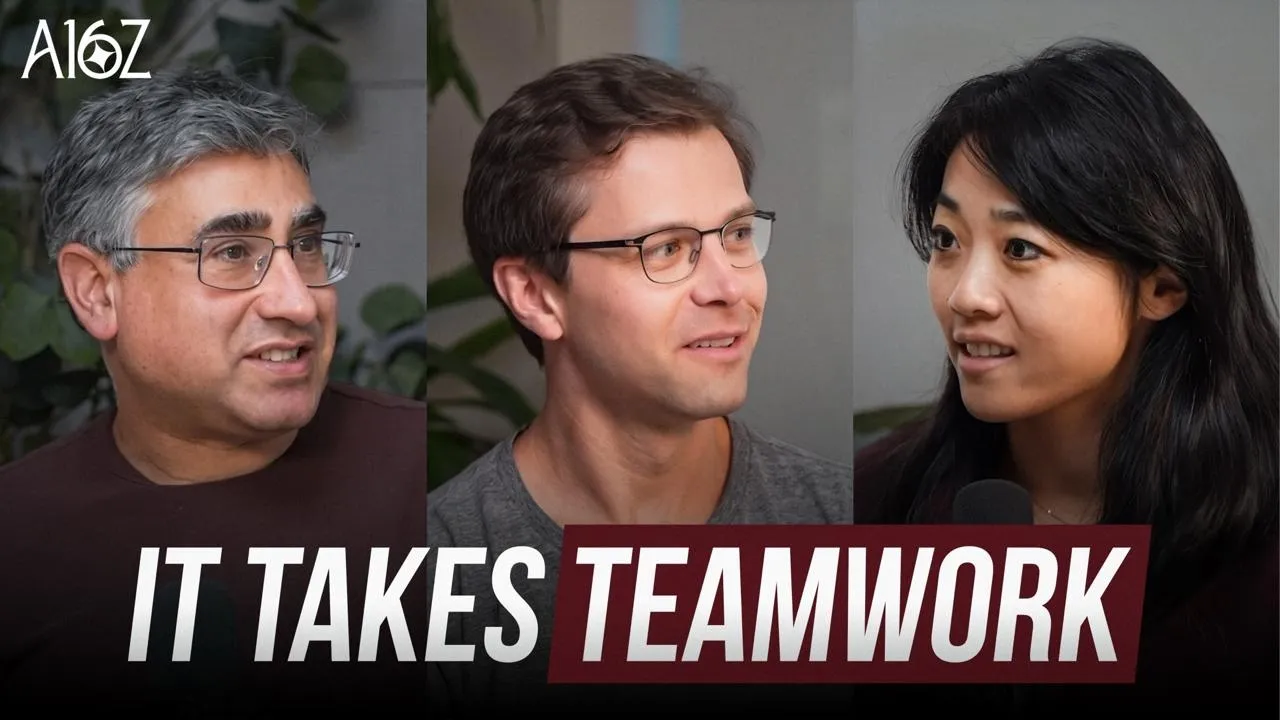
A16z Backs Cursor as AI Code Startup Takes 50% of Fortune 500
a16z
A16z partners argue that Cursor's relentless focus on the user interface and extreme product execution allowed it to outmaneuver tech giants like Microsoft and Anthropic.
## Background
This video was published on YouTube by the a16z channel on August 27, 2026. The episode features a16z General Partners Martin Casado, Sarah Wang, and Matt Bornstein unpacking the story of Cursor, exploring how a small, product-obsessed team entered a fiercely competitive AI coding market, challenged entrenched incumbents like Microsoft, and made strategic choices that redefined conventional startup wisdom.
## TL;DR
The conversation traces Cursor's journey from its early Series A round in 2024 to becoming a dominant force in AI-assisted software development. The partners detail Cursor's critical design choices, such as forking VS Code instead of building a plugin, focusing on the human-model interface rather than training a base model, and rapidly scaling self-serve and enterprise revenue. They also examine Cursor's disciplined hiring practices, unique 'hygge' office culture, and ability to continuously self-cannibalize as AI model capabilities advanced.
## Atmosphere & style
The discussion carries a reflective, analytical, and admiring tone, reflecting the venture capitalists' genuine awe at Cursor's exceptional velocity and execution. The dynamic among Martin Casado, Sarah Wang, and Matt Bornstein is warm, conversational, and insider-focused, filled with candid personal anecdotes and sharp strategic takeaways. Listening to it feels like sitting in on an executive retrospective that seamlessly blends high-stakes tech strategy with intimate details of founder culture.
## Key takeaways
- [00:00](https://www.youtube.com/watch?v=GHrnbvkVPZA&t=0s) In early 2024, Cursor prioritized building the human-AI interaction layer over training specialized coding base models, betting that general frontier models would easily translate pseudo-code into working software.
- [05:23](https://www.youtube.com/watch?v=GHrnbvkVPZA&t=323s) Cursor chose to fork VS Code rather than build a standard plugin, accepting short-term enterprise security pushback in order to gain complete architectural and UI control over the user experience.
- [00:00](https://www.youtube.com/watch?v=GHrnbvkVPZA&t=0s) Co-founder Michael Truell demonstrated radical focus early on, spending the majority of his Series A pitch telling investors 'no' to secondary product lines and enterprise add-ons.
- [09:57](https://www.youtube.com/watch?v=GHrnbvkVPZA&t=597s) Cursor achieved rapid self-serve ARR growth without immediately hiring a traditional enterprise sales force, challenging standard growth equity playbooks.
- [14:36](https://www.youtube.com/watch?v=GHrnbvkVPZA&t=876s) The engineering team demonstrated extreme velocity by resolving deep performance bottlenecks overnight, such as handling Anthropic's massive monorepo.
- [15:41](https://www.youtube.com/watch?v=GHrnbvkVPZA&t=941s) Despite persistent threats from major competitors like Microsoft Copilot, Windsurf, Cognition, and Claude Code, Cursor's founders maintained a long-term customer-obsessed focus without panicking.
- [18:38](https://www.youtube.com/watch?v=GHrnbvkVPZA&t=1118s) Cursor continuously reinvented and self-cannibalized its product, evolving over two years from an autocompletion tool to an IDE, an agent platform, and ultimately a model platform.
- [19:42](https://www.youtube.com/watch?v=GHrnbvkVPZA&t=1182s) The leadership team focused on driving widespread product adoption and usage data first, ignoring public noise regarding early unit economics under the thesis that business model optimization naturally follows massive demand.
- [22:09](https://www.youtube.com/watch?v=GHrnbvkVPZA&t=1329s) Cursor scaled its enterprise GTM engine rapidly, penetrating over 50% of the Fortune 500 through direct founder involvement and adaptable founding Account Executives.
- [25:41](https://www.youtube.com/watch?v=GHrnbvkVPZA&t=1541s) The company executed a targeted 'epoch' hiring process, relying on exhaustive backchannels to isolate and hire top-performing sales reps from leading tech teams.
- [29:14](https://www.youtube.com/watch?v=GHrnbvkVPZA&t=1754s) Cursor balanced a passion for engineering craft and Scandinavian-inspired office culture with ruthless, pragmatic execution across business development and sales.
- [33:23](https://www.youtube.com/watch?v=GHrnbvkVPZA&t=2003s) Cursor leveraged M&A aggressively—from early acqui-hires for top engineering talent to major acquisitions like Graphite—and integrated former founder-CEOs into high-leverage leadership roles.
## Detailed walkthrough
### [00:00](https://www.youtube.com/watch?v=GHrnbvkVPZA&t=0s) Back to Early 2024: How a16z First Met Cursor
The conversation opens with a retrospective on the AI landscape in early 2024, when Andreessen Horowitz (a16z) first partnered with Anysphere, the company behind Cursor. Leading the discussion are a16z General Partners Martin Casado, Sarah Wang, and Matt Bornstein. Setting the scene, Bornstein points out that the frontier models of that era—GPT-4o, Claude 3, and Llama 3—already feel like ancient history. At the time, GitHub Copilot by Microsoft was the absolute consensus leader in AI-assisted coding, benefiting from Microsoft’s full control over VS Code and its unmatched enterprise distribution.
```
┌─────────────────────────────────────────────────────────┐
│ Early 2024 Market Landscape │
├────────────────────────────┬────────────────────────────┤
│ Frontier Models │ GPT-4o, Claude 3, Llama 3 │
├────────────────────────────┼────────────────────────────┤
│ Incumbent Coding Harness │ GitHub Copilot (Microsoft) │
├────────────────────────────┼────────────────────────────┤
│ Dominant IDE Ecosystem │ VS Code │
└────────────────────────────┴────────────────────────────┘
```
During this period, the startup landscape for AI coding split into two distinct extremes: companies building specialized coding foundation models from scratch, and those building lightweight plugins on top of VS Code. Cursor chose a middle path. Guided by a strong "bitter lesson" mindset, co-founders Michael Truell and Arvid Lunnemark recognized that they did not need to compete directly with OpenAI or Anthropic on foundation model training. Instead, they believed that the human-model interface was the true bottleneck. Michael often noted that programming would shift toward writing pseudo-code—paired down to the absolute minimum specification of human intent—and that general-purpose frontier models would easily translate that pseudo-code into working implementations.
When Michael Truell pitched the a16z General Partnership for their Series A, he delivered a masterclass in founder focus. Rather than trying to pitch a wide array of theoretical product lines or enterprise add-ons, Michael spent 90% of the meeting politely saying "no" to the VCs' speculative questions. Beyond their strategic clarity, the a16z team noticed that developers at top AI research labs—including OpenAI, Midjourney, and Replicate—as well as AI luminaries like Andrej Karpathy, were already obsessed with Cursor.
- **Key AI Models (Early 2024):** OpenAI GPT-4o, Anthropic Claude 3, Meta Llama 3.
- **Predominant Incumbent:** GitHub Copilot (leveraging Microsoft's ownership of VS Code and OpenAI model access).
- **Core Product Hypothesis:** Code in the future will resemble pseudo-code; the interface between human intent and the model is the key leverage point, not training a code-only base model.
- **Partner Meeting Detail:** Co-founder Michael Truell spent 90% of his a16z GP pitch meeting politely telling investors "no" to secondary product ideas to maintain radical focus.
[05:23](https://www.youtube.com/watch?v=GHrnbvkVPZA&t=323s) The VS Code Fork vs. Plugin Decision & the Enterprise Bet
Sarah Wang recalls the initial debate over Cursor’s decision to fork VS Code rather than build a standard extension. Conventional VC wisdom dictated that enterprise IT departments would never adopt a full editor fork due to security concerns, and that a plugin was the only viable path to enterprise penetration. However, the Cursor founders maintained high conviction in their product-led strategy. They argued that building a standalone product was mandatory to control the complete user experience; accepting a plugin model meant surrendering the user experience to someone else's platform.
```
┌───────────────────────────────────────────────────────────┐
│ Product Strategy Architecture │
├──────────────────────┬────────────────────────────────────┤
│ Forking VS Code │ Complete control of UI/UX, fast │
│ │ iteration, deep integration. │
├──────────────────────┼────────────────────────────────────┤
│ Rejecting Plugins │ Refused to be constrained by another│
│ │ platform's interface boundaries. │
├──────────────────────┼────────────────────────────────────┤
│ Foundation Models │ Relied on general frontier models │
│ │ instead of training code-only models│
└──────────────────────┴────────────────────────────────────┘
```
Martin Casado explains that every strategic decision the Cursor team made flowed logically from first principles:
1. **No Code-Only Base Model:** You do not speak to AI models in raw syntax; you speak to them in natural language. Therefore, an effective coding model must understand the full breadth of human experience and language, making it equivalent to a general-purpose frontier model.
2. **Fork over Plugin:** If you truly believe in crafting a transformative user experience, you cannot build it inside someone else's walled garden.
3. **Product over Sales-Led Motion:** A great product drives its own distribution. Enterprise adoption follows organic developer love, rather than early top-down sales efforts.
This product-first philosophy mirrored Elon Musk's operational style: build a product so good that adoption becomes inevitable. The founders possessed an unusual level of intensity and domain knowledge. Bornstein recalls asking Michael what he did for fun outside of work, to which Michael looked at him confused and responded, "What do you mean?" When Casado referenced historical parallels from the early internet era during a celebratory lunch, Michael dryly pointed out, "I was five." Despite their young age, the team acted as deep students of technology business history, studying past platform shifts to avoid common founder traps.
- **Strategic Design Choice:** Forking VS Code to own the full interaction layer, rejecting the limitations of an IDE plugin.
- **Natural Language Thesis:** Effective coding assistants require general-purpose linguistic understanding, validating the choice not to build a narrow, code-only foundation model.
- **Founder Mindset:** Absolute obsession with craft; Michael Truell's viral response to what he does outside work: "What do you mean?"
[09:57](https://www.youtube.com/watch?v=GHrnbvkVPZA&t=597s) Vertical Liftoff: Why the Series B Round Was a No-Brainer
Although a16z led Cursor's Series A in May 2024, the company experienced immediate vertical liftoff. By October 2024, a16z Growth led their Series B. The timeline between rounds was incredibly compressed. Key catalysts over that summer accelerated developer adoption, including viral endorsements on X from figures like Andrej Karpathy and an in-depth appearance on the Lex Fridman Podcast that articulated their long-term vision for software engineering.
```
┌────────────────────────┐
│ MAY / JUNE 2024 │
│ Series A Round │
└───────────┬────────────┘
│
▼
┌───────────────────────────────────────────┐
│ • Viral Andrej Karpathy Endorsements │
│ • Lex Fridman Podcast Appearance │
│ • Unprecedented Self-Serve ARR Growth │
└─────────────────────┬─────────────────────┘
│
▼
┌────────────────────────┐
│ OCTOBER 2024 │
│ Series B Round │
└────────────────────────┘
```
When Sarah Wang met with Michael to discuss growth trajectory and traditional scaling playbooks—such as hiring a VP of Enterprise Sales around $25M to $50M in Annual Recurring Revenue (ARR) when self-serve growth typically slows—Michael rejected the premise. He looked her in the eye and stated flatly that self-serve growth was not slowing down. The standard financial modeling assumptions used by growth investors, which predict growth decay over five-year horizons, simply did not apply.
The decision to double down on Cursor meant ignoring classic competitive risk models. On paper, competing against Microsoft looked nearly impossible: Microsoft owned the IDE ecosystem (VS Code), had exclusive rights and access to OpenAI's weights, possessed an enterprise sales force, and boasted a distribution reach of over 100 million software developers. Yet the a16z team, led by Bornstein and Casado, held deep conviction because the Cursor team demonstrated an extraordinary ability to context-switch between deep technical details and broader market mechanics. They absorbed market data continuously and executed changes at high speed, proving that superior product execution could outperform an incumbent's structural moat.
- **Fundraising Timeline:** Series A closed in May/June 2024; Series B closed in October 2024 following vertical revenue growth.
- **Challenging Growth Metrics:** Overturned traditional software growth playbooks by maintaining rapid self-serve ARR expansion without immediately relying on a traditional enterprise sales force.
- ** David vs. Goliath Dynamic:** Competed successfully against Microsoft despite Microsoft owning VS Code, holding OpenAI partnerships, and maintaining direct distribution to 100+ million developers.
[14:36](https://www.youtube.com/watch?v=GHrnbvkVPZA&t=876s) Overcoming the Monorepo Problem and the Decision to Bet on Independents
The conversation begins by examining conventional wisdom in the software industry and why it often points toward incumbents winning. The a16z team recalls a telling incident arranged by their team member Marco, where Cursor co-founders Aman Sanger and Michael Truell had dinner sitting right next to John Schulman (then at Anthropic). Schulman mentioned that he had tried Cursor, but Anthropic's massive monorepo immediately crashed or killed the editor, preventing him from even loading the codebase.
Instead of being discouraged, Aman went back and made performance changes immediately. By the very next day, he returned to show that Cursor could handle the massive monorepo smoothly. This rapid iteration speed illustrated why a simple VS Code plugin would never suffice; the world's smartest engineers had tried building plugins, but plugins lacked the architectural control required to solve deep performance bottlenecks. Historically, the a16z team has consistently bet on leading independent startups in large markets, even when facing terrifying incumbents.
- **Key Figure:** John Schulman (then at Anthropic) tested Cursor and initially ran into monorepo scaling limits.
- **Turnaround Speed:** Aman Sanger optimized the codebase overnight to handle heavy monorepos.
- **Core Thesis:** Building a full fork rather than a VS Code plugin was essential to deliver the performance needed for top-tier engineering teams.
---
[15:41](https://www.youtube.com/watch?v=GHrnbvkVPZA&t=941s) A Rotating Cast of Competitors: Unfazed by Copilot, Windsurf, and Claude Code
The investors address the relentless, looming existential threats that Cursor faced from day one. The competitive lineup was formidable:
- **GitHub Copilot:** The original incumbent backed by Microsoft.
- **Windsurf (Codeium):** Captured massive early adoption among Y Combinator founders.
- **Cognition (Devin):** Made significant waves with autonomous AI software engineering agents.
- **Claude Code:** Anthropic's CLI-based developer agent.
Despite this rotating cast of juggernauts, the Cursor founders remained completely unfazed—a rare trait among founders who typically panic when giant rivals launch overlapping products.
Sarah Wang shares a memory from around August 2025, a few months after Anthropic launched Claude Code in May 2025. When she asked Michael Truell how he viewed Claude Code, he calmly responded that in the largest market in the world, formidable competitors are guaranteed. Microsoft Copilot was just the first, Claude Code was simply the latest, and more would follow. The investors highlight this mindset as a rare, winning combination of deep humility mixed with bold bravado, comparing the founders' long-term customer focus to Jeff Bezos's philosophy at Amazon.
---
[18:38](https://www.youtube.com/watch?v=GHrnbvkVPZA&t=1118s) Rapid Self-Cannibalization: From IDE to Agent to Model Platform
While competitors didn't rattle the founders, rapid model advancements created genuine "oh shit" moments. The team recalls being on vacation when Anthropic released Claude 3.5 Sonnet / Opus-level updates (and later when early previews of models like Mythos emerged). The sheer speed of AI model progression forced Cursor to repeatedly reinvent itself.
The investors praise Cursor for having the extreme discipline to cannibalize its own core features in a manner reminiscent of Reed Hastings at Netflix. Over just two years, Cursor evolved through distinct product phases:
1. **Autocompletion Engine:** Focused on inline code generation (the famous Andrej Karpathy "tab tab tab" workflow).
2. **Integrated Development Environment (IDE):** A full-featured editor experience.
3. **Agent Platform:** Coordinating multi-file changes and autonomous coding workflows.
4. **Model Platform:** Integrating, fine-tuning, and delivering specialized models.
---
[19:42](https://www.youtube.com/watch?v=GHrnbvkVPZA&t=1182s) Ignoring X Noise: Business Transformation Precedes Business Models
During the summer of 2025 and into early 2026, social media platforms like X (formerly Twitter) were filled with intense commentary picking apart Cursor's gross margins and unit economics. Martin Casado points out that X is largely driven by "tail-chasing adrenaline, cynicism, and Schadenfreude," creating a total disconnect between online discourse and actual business performance.
Martin emphasizes a core historical pattern: **tech transformations always precede business model optimization**. In the early days of the commercial internet, companies hadn't even figured out basic monetization, let alone profit margins. When a company experiences unlimited demand and explosive user growth, margin efficiency naturally follows once scale and enterprise monetization are established. Critics trying to sound smart by picking apart early-stage unit economics in a nascent tech shift have historically always been proven wrong.
- **Strategy:** Secure massive user adoption first; use the resulting usage data, workflow assets, and developer insights to build specialized proprietary models later.
- **Execution:** Unless starting as a multi-billion-dollar frontier lab, building distribution first was the only viable path to long-term market leadership.
---
[22:09](https://www.youtube.com/watch?v=GHrnbvkVPZA&t=1329s) Building the World's Fastest-Growing Enterprise Sales Engine
When investors initially advised Michael Truell to hire sales reps, he resisted, simply placing an `enterprise@cursor.com` email address on the website. However, the founders were rigorous students of business mechanics. As they analyzed the market, they realized that while large AI labs subsidized consumer tiers, high-margin revenue was concentrated in enterprise contracts.
Once the founders decided to target enterprises, they built one of the fastest-scaling enterprise go-to-market (GTM) engines in tech history. Led by key GTM leaders like Jordan and Roman, the team built a disciplined sales engine from scratch.
A major factor in this success was the founders' personal dedication: technical founders Michael, Aman, and Oscar spent roughly 40% of their time directly on recruiting. Co-founder Oscar was frequently flying on redeyes to Europe to personally close early enterprise deals.
- **Enterprise Reach:** Penetrated over **50% of the Fortune 500** faster than almost any enterprise software company on record.
- **Founding AE Profile:** Rather than hiring reps who merely ran traditional playbooks, Cursor targeted adaptable "founding AEs" capable of selling in high-uncertainty environments.
---
[25:41](https://www.youtube.com/watch?v=GHrnbvkVPZA&t=1541s) The Precision Hiring Framework: Epochs and Deep Backchanneling
Sarah Wang details the meticulous, research-heavy approach Cursor applied to hiring sales reps—mirroring the rigorous "edge hiring" and work-study practices they used for engineering:
1. **Identify Top Companies:** Map out the 10 companies with the best track record in a specific tier of enterprise selling.
2. **Identify Top Teams:** Drill down to identify the top 10 specific sales teams inside those target companies.
3. **Pinpoint the Top 1–2 Performers:** Isolate the exact individual Account Executives (AEs) responsible for driving that growth.
4. **Exhaustive Backchanneling:** Conduct deep backchannels with the candidate's boss, their boss's boss, and former peers to verify true performance before reaching out.
This targeted method drastically narrowed the talent pool, but it ensured every hire maintained Cursor's high-craft culture while rapidly expanding revenue.
---
[27:24](https://www.youtube.com/watch?v=GHrnbvkVPZA&t=1644s) The Cursor Paradox: Pure Craftsmanship Meets Pragmatic Execution
The investors conclude by discussing the core paradox of Cursor's internal culture. On one hand, the founders are product-obsessed engineers who code constantly simply because they love writing code, building systems, and using their own tools.
On the other hand, their calendar allocation proved they were ruthlessly pragmatic business builders. When the company required enterprise sales, recruiting, business development, or model strategy, the founders pivoted their focus entirely to those operational needs without hesitation. This balance of pure technical craftsmanship and business execution enabled a small team to navigate what Martin Casado describes as the most brutally competitive market in software history.
<ElicitationsGroup message="Explore more insights from the Cursor walkthrough:">
<Elicitation label="Analyze Cursor's transition from IDE to Model Platform" query="Break down Cursor's product evolution from autocompletion to an agent and model platform."/>
<Elicitation label="Examine Cursor's enterprise sales strategy" query="Explain Cursor's specific strategy for hiring founding Account Executives and scaling to 50% of the Fortune 500."/>
</ElicitationsGroup>
[29:16](https://www.youtube.com/watch?v=GHrnbvkVPZA&t=1756s) Competing at the Highest Level and the "Hygge" Office Culture
The partners marvel at the sheer velocity of Cursor’s journey over a two-year period. Starting out by taking on a tech giant like Microsoft, the company evolved its fundamental product approach, revamped its go-to-market strategy, navigated high-stakes M&A, and eventually found itself going head-to-head with frontier model labs like Anthropic. Despite these massive enterprise stakes, founders Michael Truell, Sualeh Asif, and Aman Sanger remained deeply obsessed with coding for its own sake. The hosts joke that coding is "the last fashion" and the only fun left now that AI models have brought us toward a post-scarcity future. Yet, behind this product obsession was a clear-eyed understanding that building an enduring, generational company required getting the business mechanics right.
This meticulous attention to detail extended well beyond code and into their physical workspace and organizational culture—embodying the philosophy that "how you do anything is how you do everything." Their office was intentionally designed with a warm, Scandinavian *hygge* aesthetic, complete with cozy secondhand furniture, ambient twinkle lights, and a strict no-shoes policy where visitors and employees swapped shoes for slippers. This created a home-like environment where the team naturally wanted to spend all their time.
* The founders' pure passion for building was evident when asked what they did for fun—their answer was simply more coding.
* Michael Truell demonstrated a rare dual perspective: a deep love for craft alongside a strategic awareness of the broader business playbook.
* The team deliberately sourced office decor from specialized secondhand *hygge* furniture dealers to cultivate a specific atmosphere that fostered focus and creativity.
> "How you do anything is how you do everything... this detail attention to the product, very artisan—there's craftsmanship, right? Overused word, 'taste'—they have taste in spades, but it extended to... even the space they created."
---
[32:22](https://www.youtube.com/watch?v=GHrnbvkVPZA&t=1942s) Relentless Focus, Discipline, and the SpaceX Parallel
A major factor in Cursor’s success was its absolute discipline in saying "no." On the marketing side, the team refused to use generic corporate tones or engage in spammy growth tactics, frequently shutting down external advice that didn't align with their brand voice. They applied this same rigor to personnel: if someone was not an exact cultural or technical fit, they made the hard decision to part ways quickly—a level of decisiveness rarely seen in young founding teams. This uncompromising approach mirrors the operational culture of Elon Musk's companies like SpaceX.
The partners highlight striking parallels between Cursor and SpaceX. When a16z first met the SpaceX team in 2019, they were purely a rocket launch business, yet they boldly declared their plan to power global communications through Starlink—a feat they ultimately achieved while outmaneuvering entrenched incumbents like Comcast. Similarly, Cursor continuously blew past every ambitious benchmark and growth forecast they set, ignoring widespread industry skepticism and consensus predictions that foretold their demise.
* Cursor’s leadership maintained tight control over their brand identity, rejecting standard startup marketing playbooks and events that felt off-brand.
* Both Cursor and SpaceX shared a culturally resilient mindset, operating with "Elon-ish" speed and ambition in the face of seemingly impossible competitors.
* The partners note that both companies repeatedly proved "naysayers" wrong after consensus repeatedly predicted their downfall.
> "Once they made a decision, it doesn't matter how hard that was... whether it's deciding not to enter a market... or who would stay in the company... kudos to them for actually having the courage and tenacity for these tough decisions."
---
[33:23](https://www.youtube.com/watch?v=GHrnbvkVPZA&t=2003s) M&A as a Talent Engine and Integrating Founder DNA
The discussion shifts to the strategic alignment behind Cursor's major M&A moves and its ultimate acquisition. On a technical level, the partnership paired massive compute and distribution infrastructure with Cursor's rich data and product-engineering depth. Both organizations shared the core belief that software code is the ultimate lever to transform all computing. Rather than shying away from the friction of acquisitions, Cursor actively embraced complex acqui-hires early on to win the fierce war for AI talent, completely unbothered by operational messiness or cultural integration challenges.
As the company scaled, its M&A strategy evolved from acquiring talent to executing large strategic moves, such as their acquisition of Graphite. A key driver of their rapid scaling was their ability to recruit and integrate former founder-CEOs—such as Tito Bohrt from Koala and Adam Ward on talent—and give them high-leverage roles. While other AI companies like Anthropic became known for slotting former founders into Individual Contributor (IC) roles, Cursor went a step further by actively structuring their core operational engine around former founders without losing momentum.
* Cursor viewed early acqui-hires primarily as a high-speed engine for talent acquisition before expanding into strategic product M&A like Graphite.
* Bringing in experienced founder-CEOs gave Cursor immediate operational leverage, accelerating their execution across different business units.
* The partners note that successfully integrating multiple ex-founders into a high-velocity startup is extraordinarily difficult in practice, making Cursor's seamless execution a rare operational feat.
> "This may be the most concentrated company in the history of companies having done M&A... They approached these in the same way that they approached everything, which was incredibly thoughtful. They had a plan, and they executed quite well."
## Notable quotes
> [05:23](https://www.youtube.com/watch?v=GHrnbvkVPZA&t=323s) What do you mean? — Michael Truell
> [05:23](https://www.youtube.com/watch?v=GHrnbvkVPZA&t=323s) I was five. — Michael Truell
> [27:24](https://www.youtube.com/watch?v=GHrnbvkVPZA&t=1644s) How you do anything is how you do everything... this detail attention to the product, very artisan—there's craftsmanship, right? Overused word, 'taste'—they have taste in spades, but it extended to... even the space they created. — a16z Partner
> [32:22](https://www.youtube.com/watch?v=GHrnbvkVPZA&t=1942s) Once they made a decision, it doesn't matter how hard that was... whether it's deciding not to enter a market... or who would stay in the company... kudos to them for actually having the courage and tenacity for these tough decisions. — a16z Partner
> [33:23](https://www.youtube.com/watch?v=GHrnbvkVPZA&t=2003s) This may be the most concentrated company in the history of companies having done M&A... They approached these in the same way that they approached everything, which was incredibly thoughtful. They had a plan, and they executed quite well. — a16z Partner
## Mentioned
Cursor, Anysphere, a16z, Andreessen Horowitz, Martin Casado, Sarah Wang, Matt Bornstein, Michael Truell, Arvid Lunnemark, Aman Sanger, Sualeh Asif, Oscar, Jordan, Roman, Marco, John Schulman, Andrej Karpathy, Lex Fridman, Jeff Bezos, Reed Hastings, Elon Musk, Tito Bohrt, Adam Ward, OpenAI, Anthropic, Microsoft, GitHub, Midjourney, Replicate, Cognition, Y Combinator, Codeium, SpaceX, Comcast, Koala, Graphite, GPT-4o, Claude 3, Claude 3.5 Sonnet, Claude Opus, Mythos, Claude Code, Llama 3, GitHub Copilot, Devin, Windsurf, VS Code, Starlink, Lex Fridman Podcast, X, Twitter, LinkedIn, Spotify, Apple Podcasts
a16z注资Cursor:AI代码初创公司拿下50%《财富》500强企业
a16z合伙人认为,Cursor对用户界面的高度专注与极致的产品执行力,使其能够超越微软和Anthropic等科技巨头。
对话回顾了Cursor从2024年早期A轮融资逐步成长为AI辅助软件开发领域主导力量的历程。合伙人们详细介绍了Cursor的关键设计抉择,例如选择Fork VS Code而非开发插件、专注于人机交互界面而非训练基础模型,以及迅速扩大自助服务和企业端营收。他们还探讨了Cursor严谨的招聘实践、独特的“hygge”办公文化,以及随着AI模型能力提升而不断进行自我蚕食与迭代的能力。
2024 年初,Cursor 顶住企业安全顾虑选择直接 Fork VS Code 而非开发轻量插件,并押注人机交互层而非专属代码大模型,坚信通用前沿模型能轻松将极简伪代码转化为实际软件。 (5:23)
联合创始人 Michael Truell 在 A 轮路演中拒绝了 90% 的次要产品与企业功能提议;凭借极致的产品专注与开发者口碑,Cursor 在不依赖传统早期销售团队的情况下实现了自助服务式 ARR 暴增,并在同年 10 月快速完成 B 轮融资。 (9:57)
面对微软 Copilot、Windsurf、Cognition 及 Anthropic Claude Code 等强劲对手的围堵,团队始终保持淡定专注,并曾在一夜之间化解 Anthropic 巨型单体代码库加载崩溃的性能瓶颈,验证了独立掌握代码底层的迭代优势。 (15:41)
Cursor 保持着果断的自我颠覆能力,在两年内从代码补全工具演进为全功能 IDE、Agent 以及模型平台,并依托精准严苛的人才挖掘体系迅速渗透了超过 50% 的《财富》500 强企业。 (18:38)
Reading summary
Andreessen Horowitz partners recount how Cursor built a rapidly growing AI coding platform by prioritizing the user interface over base model training, scaling from a viral developer tool into an enterprise product.
Interface Ownership over Base Model Training (5:23)
In early 2024, as incumbents like Microsoft's GitHub Copilot dominated AI coding, many startups chose either to train specialized coding base models or build lightweight extensions for VS Code. Cursor co-founders Michael Truell and Arvid Lunnemark pursued a different hypothesis: because software development would shift toward natural language pseudo-code interpreted by general frontier models, the core bottleneck was the human-model interface rather than specialized model training.
Despite conventional venture warnings that enterprise IT departments would reject a modified editor on security grounds, Cursor chose to fork VS Code rather than build an IDE plugin. General Partner Martin Casado notes this allowed complete architectural control over the user experience and performance. For example, when John Schulman observed that Anthropic's monorepo crashed Cursor, co-founder Aman Sanger resolved the scaling issue overnight, an architectural modification impossible within standard plugin constraints.
Continuous Self-Cannibalization and Competitive Resilience (18:38)
Rather than defending fixed product boundaries, Cursor repeatedly cannibalized its own offerings across two years, transitioning from an inline autocompletion engine to a full IDE, an agent platform, and eventually a model platform. As competitors emerged—including GitHub Copilot, Windsurf, Cognition's Devin, and Anthropic's Claude Code—the founders remained calm, treating intense competition as inevitable in a massive market.
Addressing social media criticism regarding Cursor's early compute costs and unit economics, Casado argues that technological platform shifts historically precede business model optimization. In a16z's view, capturing usage data, developer distribution, and workflow integration takes precedence over early margin efficiency, which naturally improves as scale and enterprise monetization mature.
Accelerated Enterprise GTM and Precision Hiring (22:09)
Following a16z's Series A investment in May 2024, Cursor experienced rapid self-serve revenue growth, leading the firm to back their Series B in October 2024 without waiting for traditional growth-decay cycles. Although Truell initially resisted enterprise sales in favor of self-serve adoption, the founders systematically studied enterprise mechanics and built a dedicated go-to-market engine that penetrated over 50% of the Fortune 500.
To build this enterprise sales force, General Partner Sarah Wang explains that Cursor avoided standard playbooks. Instead, they mapped the top ten companies and teams in enterprise software, identified the top one or two performing Account Executives, and conducted exhaustive reference checks with candidates' superiors and peers before making offers. Technical founders Michael, Aman, and Oscar supported this scaling effort by allocating roughly 40% of their time to recruitment and enterprise customer meetings.
Operational Discipline and Founder-Led Talent Acquisition (33:23)
The partners attribute Cursor's momentum to a combination of technical focus and operational decisiveness, comparing their execution pace to SpaceX. The founding team routinely said "no" to secondary product lines, generic marketing, and hires who failed to meet cultural standards. This deliberate approach extended to their physical workspace, which was designed with a cozy, no-shoes Scandinavian hygge aesthetic to encourage focus.
To expand its technical bench, Cursor embraced aggressive talent acquisitions and product M&A, including the purchase of Graphite. Instead of placing acquired leadership exclusively into individual contributor roles, Cursor actively integrated former startup founders—such as Tito Bohrt and Adam Ward—into key operational leadership positions to manage high-velocity growth.
While Cursor successfully outmaneuvered incumbents by pairing deep interface control with rapid enterprise execution, its long-term trajectory depends on continually balancing frontier model shifts with sustainable business mechanics in an increasingly contested AI market.
## Background
本期视频由知名风险投资机构 a16z 于 2026 年 8 月 28 日在其官方 YouTube 频道发布。视频中,a16z 普通合伙人 Martin Casado、Sarah Wang 和 Matt Bornstein 深入复盘了 AI 编程领军企业 Cursor 的崛起历程,探讨其如何在巨头林立的极度竞争环境中,通过违背常规创业直觉的产品决策、组织扩张与商业化演进,迅速成长为 AI 领域增长最快的公司之一。
## TL;DR
a16z 投资团队系统回顾了押注 Cursor 的全过程:团队从一开始就坚信人机交互界面而非特定基座模型才是胜负手,毅然选择分叉 VS Code 打造独立 IDE,并在早期极度克制地拒绝各类业务诱惑。随着业务实现爆炸式的自发增长,Cursor 从智能补全 IDE 激进自我吞噬为自主 Agent 与模型平台,同时以破纪录的速度搭建起高战斗力的企业销售引擎并强力推进战略并购。面对微软 Copilot 与 Anthropic Claude Code 等巨头的轮番压制,Cursor 凭借产品至上的极致专注、反常识的招聘哲学与波澜不惊的战略定力,打破了传统 SaaS 的增长假设与商业质疑。
## Atmosphere & style
对谈洋溢着风投内幕复盘特有的兴奋感、敬佩之情与思想碰撞的火花,三位合伙人不仅以一手见闻生动重现了投决会交锋、创始人红眼航班挖人等硬核细节,更在快节奏的深度对话中展现出极高的认知密度。言谈间既有揭开商业神话背后真实博弈的坦诚,又贯穿着对这支极客团队近乎偏执的工匠精神与马斯克式无畏野心的由衷惊叹,兼具战略推演的理性犀利与见证时代级颠覆者的澎湃激情。
## Bulletin
- [00:00](https://www.youtube.com/watch?v=GHrnbvkVPZA&t=0s) Cursor 在 2024 年初打破行业做“专用代码基座模型”或“VS Code 轻量插件”的共识,选择 Fork VS Code 构建独立 IDE,押注人机交互界面才是 AI 编程的核心壁垒。
- [09:57](https://www.youtube.com/watch?v=GHrnbvkVPZA&t=597s) a16z 领投 Cursor 早期投资后,其自助服务(Self-serve)增长完全打破了 ARR 达到 2500 万至 5000 万美元便会放缓的传统 SaaS 规律,促使 a16z 在数月内迅速跟投 B 轮。
- [22:09](https://www.youtube.com/watch?v=GHrnbvkVPZA&t=1329s) 面对低价补贴竞争,Cursor 将个人订阅层的海量自下而上流量快速转化为企业级销售,以“纪元制招聘法”严苛筛选 AE,成功渗透超过 50% 的《财富》500 强企业。
- [18:36](https://www.youtube.com/watch?v=GHrnbvkVPZA&t=1116s) Cursor 在两年内激进自我迭代,从代码补全 IDE 跨越至端到端 Agent 与专有模型平台,并大量吸收前创始人(Ex-founders)深度赋能组织,展现出类似 SpaceX 的执行力与抗压韧性。
## Key takeaways
- [02:13](https://www.youtube.com/watch?v=GHrnbvkVPZA&t=133s) 团队信奉理查德·萨顿的“苦涩的教训”,认为程序员是用自然语言表达意图,通用前沿大模型终将胜出,中小团队盲目自研专用代码模型属于资源浪费。
- [05:23](https://www.youtube.com/watch?v=GHrnbvkVPZA&t=323s) Cursor 坚决拒绝寄生在 VS Code 插件生态内,选择 Fork 独立编辑器以掌握快捷键响应、上下文控制与底层交互的全部掌控权,让极致产品体验成为核心增长引擎。
- [04:58](https://www.youtube.com/watch?v=GHrnbvkVPZA&t=298s) 创始人在投决会上 90% 的时间在对投资人的宏大业务构想礼貌说“不”,展现出对核心战略与产品边界极其罕见的专注与克制。
- [12:07](https://www.youtube.com/watch?v=GHrnbvkVPZA&t=727s) 面对 Anthropic 的巨型单体仓库导致插件崩溃的问题,Cursor 团队隔夜即可交付架构级修复方案,凸显掌握客户端底层代码的敏捷工程优势。
- [17:22](https://www.youtube.com/watch?v=GHrnbvkVPZA&t=1042s) 从微软 GitHub Copilot 到 Anthropic 的 Claude Code,团队始终保持“偏执但波澜不惊”的心态,将巨头竞争视为争夺万亿级最大市场的自然常态。
- [18:36](https://www.youtube.com/watch?v=GHrnbvkVPZA&t=1116s) Cursor 具备类似 Netflix 的自我颠覆特质,随着模型能力跃升,主动将赖以成名的“Tab 智能补全”边缘化,激进演进为多文件 Agent 及专有模型平台。
- [20:24](https://www.youtube.com/watch?v=GHrnbvkVPZA&t=1224s) 针对外界对低毛利率的质疑,投资人指出技术范式转移永远先于商业模式成熟,Cursor 先通过极致体验攫取核心开发者认知与数据资产,再构建高壁垒专有模型。
- [22:09](https://www.youtube.com/watch?v=GHrnbvkVPZA&t=1329s) 技术型产品创始人将 40% 的精力投入到人才招聘,创始人甚至搭乘越洋红眼航班亲自当面争取核心候选人。
- [24:41](https://www.youtube.com/watch?v=GHrnbvkVPZA&t=1481s) 在企业销售端开创“纪元制招聘法”,深入标杆企业特定爆发期的业务团队,通过连续向上穿透三层的背调精准锁定顶级 AE,绝不依赖公开简历投递。
- [30:50](https://www.youtube.com/watch?v=GHrnbvkVPZA&t=1850s) 团队将对细节与品味(Taste)的极致追求融入办公环境与组织决策中,包括北欧 Hygge 风格办公空间、极度克制的品牌形象,以及发现不匹配时雷厉风行的人员淘汰机制。
- [35:13](https://www.youtube.com/watch?v=GHrnbvkVPZA&t=2113s) 在早期顶尖工程人才争夺中无惧运营整合的复杂性,以超高密度的并购(如收购 Graphite)迅速吸纳顶尖团队,拓展更完整的开发者工作流护城河。
- [36:57](https://www.youtube.com/watch?v=GHrnbvkVPZA&t=2217s) 不同于 Anthropic 将前高管与创始人置于独立贡献者(IC)角色的做法,Cursor 将多位前创始人直接嵌入核心组织架构,释放超强业务杠杆与全局视野。
## Detailed walkthrough
### [00:00](https://www.youtube.com/watch?v=GHrnbvkVPZA&t=0s) 开篇序言:人机交互界面才是破局核心
对话在一组极具冲击力的前瞻观点中拉开序幕。面对当时如日中天的模型巨头,Cursor 团队从一开始就确立了极其清晰的战略定力:“我们现阶段根本不需要在底层模型上与 Anthropic 或 OpenAI 正面硬碰硬,人与模型之间的交互界面才是真正的胜负手。”当时的竞争格局在旁人看来甚至有些“近乎荒唐”——巨头环伺,微软坐拥庞大生态,而当合伙人私下问及联合创始人迈克尔·特鲁尔(Michael Truell)如何看待 Claude Code 等潜在竞争对手时,迈克尔的回答平静而坚定:“我们正在争夺的是全世界最大的市场,你永远都会遇到强大的对手,这吓不倒我们。”
对于 a16z 而言,投资 Cursor 是一次近乎毫不犹豫的抉择。彼时,前特斯拉 AI 总监、OpenAI 创始成员安德烈·卡帕斯(Andrej Karpathy)公开表达对 Cursor 的喜爱与重度使用,这款产品已经显露出不可逆转的现象级声势。Cursor 团队采取的路径是先以创纪录的速度攫取广大开发者用户,借此掌握最真实的交互数据与专有认知,随后再顺理成章地构建属于自己的专有模型能力。正如合伙人们所感慨的,除非一开始就是顶尖的前沿模型实验室,否则任何人都无法逆向复制这种自下而上的产品飞轮。
```mermaid
flowchart TD
accTitle: 2024年初AI编程市场的三种路径对比
accDescr: 展示2024年初AI编程领域三类玩家的路径选择,包括专用基座模型路线、IDE插件路线以及Cursor开创的人机界面与独立IDE路线。
subgraph S1["路径 A:代码专用基座模型"]
A1["训练专门针对编程的模型"] --> A2["受限于自然语言广度与高昂算力成本"]
end
subgraph S2["路径 B:轻量化插件生态"]
B1["基于 VS Code 开发插件"] --> B2["受制于宿主生态与体验天花板"]
end
subgraph S3["路径 C:Cursor 独立分叉路线"]
C1["Fork VS Code + 极致交互设计"] --> C2["掌握人机界面与底层控制权"]
C2 --> C3["自下而上引爆用户飞轮"]
end
```
---
### [00:53](https://www.youtube.com/watch?v=GHrnbvkVPZA&t=53s) 重回2024年初:大模型混沌期的AI编程版图
莎拉·王(Sarah Wang)将时间拨回 2024 年初。a16z 最终在同年 5 月领投了 Cursor 的融资,但在正式确立合作前的第一和第二季度,团队就已经与 Cursor 深度接触。马丁·卡萨多(Martin Casado)回忆道,回看 2023 年底到 2024 年初,市面上最领先的基座模型还是 GPT-4o、Claude 3 和开源的 Llama 3。虽然感觉那是很久以前的事,但在当时,整个 AI 编程的基础设施还处于极早期:类似 Agent 的自主调用闭环(loops)基本不存在,前沿的深度推理(reasoning)也尚未崭露头角。
在那个阶段,微软与 GitHub Copilot 是整个行业内公认的绝对霸主。微软手握 GitHub、Copilot、Office 365 套件以及占统治地位的 VS Code,几乎所有人都认为微软将凭借这种全方位的软硬件组合毫无悬念地统治 AI 时代。然而,尽管行业普遍意识到“AI 编程行得通”,但当时的实现方式更像是给旧体验打补丁,与今天全自动化的开发体验完全处于两个不同的维度。
---
### [02:13](https://www.youtube.com/watch?v=GHrnbvkVPZA&t=133s) 苦涩的教训:为何不训练代码专用模型?
马特·伯恩斯坦(Matt Bornstein)进一步拆解了当时围绕 AI 编程创业的“连续谱系”。当时市场上的创业团队大致分为两派:一派执着于模型层,认为唯一赢下编程市场的方式是训练专门的编程基座模型;另一派则走向轻量化,认为绝不能推翻既有的 IDE 习惯,做 VS Code 插件才是唯一务实的选择。这两条路在当时都聚集了极其聪明的创业者,其逻辑也看似完美闭环。代码模型派认为通用模型编程能力尚弱,专精微调才是突破口;插件派则认为不能抛弃开发者现成的开发环境。
然而,Cursor 团队却做出了极具反常识的独立判断。他们与 a16z 的理念高度重合,骨子里深深信奉理查德·萨顿(Richard Sutton)著名的“苦涩的教训”(The Bitter Lesson)——通用算力与更通用的前沿模型终将碾压一切针对特定领域的局部优化。迈克尔和阿曼·桑格(Aman Sanger)非常清醒地指出:
- 开发者日常与 AI 交流并不是直接使用底层机器语言,而是用**自然语言**表达意图;
- 要真正理解编程,模型必须理解人类语言所承载的庞大现实经验与复杂逻辑,因此所谓“代码模型”本质上就是“通用前沿大语言模型”,中小团队在初期盲目烧钱造轮子只会沦为炮灰;
- 真正的杠杆在于将程序员的意图浓缩提炼为最低规格的定义。
迈克尔经常向投资人打一个生动的比方:在早期的计算机科学经典论文中,算法部分往往不提供具体代码,而是直接写出“伪代码”(pseudo code)。Cursor 的长期信仰在于,未来软件开发的终极形态就是以类似伪代码的自然语言规范(natural language specification)与机器交流,由模型去完成底层的工程实现。这种敏锐判断不仅让他们避开了当时军备竞赛式的模型消耗战,更被后来的技术演进完全印证。
---
### [04:58](https://www.youtube.com/watch?v=GHrnbvkVPZA&t=298s) 极度的克制:合伙人评审会上的“拒绝艺术”
让 a16z 团队深受震撼的不仅是技术洞见,更是这支年轻团队展现出的超乎寻常的专注力。马特提到,他们当时调研了大量由顶级 AI 工程师构成的圈子,发现包括 OpenAI、Midjourney、Replicate 等领先公司的核心研发人员,早已全员成为 Cursor 的铁杆拥趸。Cursor 在行业顶尖技术圈层中已经形成了某种纯粹靠产品口碑建立的共识。
当 a16z 邀请迈克尔来到合伙人评审会上做项目陈述(pitch)时,出现了一幕令所有在场投资人终生难忘的场景:
- 整场会议有 **90% 的时间**,是迈克尔在极其客气地对投资人抛出的各种宏大构想说“不”;
- 风险投资人总喜欢习惯性地追问:“你们未来会不会顺便做这个?”“要不要尝试做那个相关的业务?”
- 迈克尔只是安静地坐在那里,极有礼貌地听完每一个提问,然后平静地回应:“嗯,很有意思的想法。但我们不做,我们绝对不会碰那个。”
这种不迎合资本、不追逐噪音的从容姿态,让见惯了各种天花乱坠宣讲的投资合伙人们感到极为罕见,也彻底印证了创始团队对自身产品愿景那份坚如磐石的笃定。
---
### [05:23](https://www.youtube.com/watch?v=GHrnbvkVPZA&t=323s) Fork VS Code 还是做插件?产品至上驱动的逆向押注
莎拉·王回忆起那场投决会上最大的争论焦点:Cursor 执意采取“分叉(Fork)VS Code 构建全新独立 IDE”的路径,而不是作为插件嵌入 VS Code。在当时的风险投资界与产业界,主流共识高度一致:插件才是拓展企业客户(Enterprise)的正确姿势,因为大企业对于合规、内部采购和更改底层编辑器极其敏感,分叉整个 IDE 去打企业市场在常人看来无异于自寻死路。
面对投资人关于“采用分叉载体如何拿下企业客户”的质疑,迈克尔直视全场投资人的眼睛,给出了无可动摇的回答。马丁·卡萨多指出,Cursor 的战略逻辑完全是“产品至上”的体现,这与埃隆·马斯克(Elon Musk)推崇的第一性原理极其相似:
- **拒绝寄人篱下**:如果你真正相信产品体验是核心壁垒,你就绝不能将自己降级为别人产品里的一个插件。一旦成为宿主环境的一个外挂组件,产品体验的上下文控制力、快捷键响应速度与系统交互上限都将被别人死死掐住;
- **产品即自发增长引擎**:如果产品真正达到超越时代的惊艳程度,它本身就是最强大的获客与分销手段(GTM motion)。先不要过早在企业端繁文缛节中妥协变形,而是用革命性的个人开发者体验自下而上逆推企业采购;
- **拒绝杂乱拼凑**:当时市场上许多竞品缺乏清晰骨骼,常常是插件、外围服务与外包功能各试一点的“拼盘式公司”;而 Cursor 从第一天起就是一家纯粹用产品手段解决产品难题的极致团队。
马特补充道,所有的创业者都渴望拥抱野心、追求帕累托最优边界(Pareto frontier),但难点在于你必须清楚那条最优曲线究竟在哪里。Cursor 团队甚至将这种极致纯粹带到了日常生活的每个毛孔。马特笑称,在 a16z 极力争取投资份额期间,他曾私下问迈克尔平时工作之余有什么业余爱好和娱乐活动。迈克尔当场愣住了,完全无法理解这个问题背后的含义:“娱乐?你这是什么意思?不在办公室的时候还能干什么?”在创始人眼中,除了打磨 Cursor 本身,世界上根本不存在所谓的“业余生活”。
### [08:36](https://www.youtube.com/watch?v=GHrnbvkVPZA&t=516s) 年轻的“历史学生”与压缩的融资节奏
Martin Casado 回忆起在完成早期投资后与 Cursor 团队共进午餐的一幕。席间 Martin 谈起了互联网早期的类似格局与历史经验,结果创始人 Michael Truell 淡淡地回了一句:“那时候我才五岁。”引得全场大笑。然而,令人惊叹的不仅是 Michael,而是整支创始团队展现出的特质——即便许多技术巨浪发生时他们尚且年幼,但他们对前人走过的技术和商业史却如数家珍,是极其深度的“历史学生(students of history)”。a16z 的 Alex Rampell 也常提到这一点,顶尖创始人普遍具备从过往技术周期中汲取养分、迅速理解市场规律的罕见能力。
这也促使 Martin 把话题抛向了负责成长型投资(Growth stage)的合伙人 Sarah Wang。对于早期种子/A 轮投资人而言,投资 Cursor 的决策近乎显而易见:团队精悍极致专注、全员甚至包括 a16z 团队一半人都在重度使用该产品,AI 大牛 Andrej Karpathy 在社交平台上公开盛赞,用户增长曲线呈现出垂直的渐近线上扬态势。然而,对于习惯依赖财务模型与确定性指标的成长型投资机构来说,彼时的 Cursor 却充满违背常理的信号。令 Martin 好奇的是,从当年 5、6 月 a16z 领投 A 轮,到仅仅几个月后的 10 月 Sarah 便果断推动领投 B 轮,这一极其压缩的时间线背后,成长型投资团队是如何打破常规评估框架建立信念的。
```mermaid
flowchart LR
accTitle: Cursor 早期投资进阶路径
accDescr: 展示 Cursor 从早期 A 轮到 B 轮成长投资的演进逻辑与认知打破过程。
subgraph EarlyStage["早期投资评估 (A 轮:5-6 月)"]
A["狂热用户口碑<br/>(Karpathy 盛赞 / Lex 播客)"] --> B["陡峭的自然增长曲线"]
B --> C["早期投资确定性形成"]
end
subgraph GrowthStage["成长投资评估 (B 轮:10 月)"]
D["打破传统 SaaS 预测模型"] --> E["直面微软 Copilot 垄断压制"]
E --> F["重构交互界面与独立公司红利"]
end
C --> D
```
---
### [09:57](https://www.youtube.com/watch?v=GHrnbvkVPZA&t=597s) B 轮的垂直起飞:打破常规 Growth 投资假设
Sarah Wang 感叹当时的发展节奏快得不可思议,短短一个夏天,Cursor 就实现了“垂直起飞(vertical liftoff)”。除了 Andrej Karpathy 的推文助推,团队登上 Lex Fridman 的播客长篇阐述了他们对未来编程范式的构想,展现出彻底推倒重来、重新想象一切的格局。但这给写 Growth 投资备忘录带来了前所未有的难题——常规的成长模型根本无法解释这种现象。
传统 SaaS 公司的成长智慧认为,当 ARR 达到 2500 万至 5000 万美元时,PLG 自助服务(self-serve)的增长往往会开始放缓,此时必须引入销售高管(Sales Leader)搭建企业直销体系。当 Sarah 在一次喝咖啡时把这套“下一步增长方法论”推到 Michael 面前,建议帮他们寻找销售负责人时,Michael 却直勾勾地盯着她的眼睛,斩钉截铁地回答:“我们的自助服务增长根本没有放缓。”这让投资团队意识到,过去那些预测“企业将在五年后增速放缓至 25%”的财务假设完全失灵,要投资 Cursor,就必须亲手撕碎传统成长型投资的教科书。
- **极度压缩的轮次间隙**:a16z 在初夏(5、6 月)领投 A 轮,到了同年 10 月便紧接着完成了 B 轮投资。
- **颠覆销售阶段论**:在传统 SaaS 规律中,2500 万至 5000 万美元 ARR 是转向大客户销售的临界点,但 Cursor 纯靠自助式飞轮依然呈现失控式增长。
- **打破财务预测惯性**:成长型基金合伙人 David George 与 Sarah Wang 最终选择抛弃传统的增长衰减曲线假设,全盘接受该产品无视常规天花板的爆发力。
---
### [12:07](https://www.youtube.com/watch?v=GHrnbvkVPZA&t=727s) 正面迎战微软:分叉 VS Code 与独立公司的胜算
回头来看,在 A 轮甚至更早阶段下注需要极大的勇气。Matt Bornstein 带领团队深入推进此案时,市场主流观点认为挑战者毫无胜算。因为站在对立面的竞争对手是科技巨头微软:微软不仅坐拥规模庞大的 GitHub Copilot,持有 OpenAI 的权重与商业授权,掌控着拥有上亿开发者的 GitHub 生态与无与伦比的企业销售网络,更要命的是,微软正是 VS Code 的所有者。
敢于直接 Fork 微软自家的代码编辑器,并在微软自留地上与庞然大物正面对攻,在任何常规商业分析中都无异于自杀。但 a16z 团队没有将风投看作单打独斗,他们在内部组建了专门的 Cursor 攻坚小组,并在细微的数据点中捕捉到了巨头无法逾越的鸿沟:
- **插件路线的物理局限**:合伙人 Marco 曾牵线让联合创始人 Aman Sanger 与当时在 Anthropic 的 John Schulman 共进晚餐。John 表示自己试过 Cursor,但在公司的巨型单体仓库(Monorepo)面前编辑器直接崩溃瘫痪。
- **隔夜迭代的恐怖工程速度**:Aman 在听取反馈后,第二天就完成了架构调整并给出了修复方案。这不仅验证了极强的迭代速度,更证实了一个关键事实:单靠 VS Code 插件架构根本无法承载真正的下一代 AI 编程体验,唯有完全掌握客户端与底层架构才能打破瓶颈。
- **下注独立龙头(Leading Independent)**:a16z 团队的历史经验表明,在体量极其庞大的市场中,即便在位巨头看起来固若金汤,押注于最极致、最专注的独立领跑者往往能收获巨大的胜利。
---
### [15:41](https://www.youtube.com/watch?v=GHrnbvkVPZA&t=941s) 四面楚歌却波澜不惊:从 Windsurf 到 Claude Code 的竞争长跑
在 Cursor 崛起的整个生命周期中,“灭顶之灾”般的竞争威胁几乎从未间断。从最初的 GitHub Copilot,到后来 Codeium 推出的 Windsurf 在 YC 圈子内掀起风潮形成强力围剿;再到估值飞涨、以全自动 AI 软件工程师惊艳业界的 Cognition(Devin);乃至于 Anthropic 亲自下场推出的第一代 Claude Code。面对轮番登场的强敌,Cursor 的创始人展现出了最令投资人欣赏的心理素质:“偏执狂,但波澜不惊(Paranoid but unfazed)”。
许多早期团队遭遇强力竞品发布时往往惊慌失措、连环拨打投资人电话诉苦,但 Cursor 团队始终保持着极度的专注与冷静。正因这种绝对定力,a16z 从 A 轮一路追加投资至 B、C、D 轮,且每一轮的下注金额都不断加码。尽管在 400 万美元冲到 5000 万美元 ARR 的 B 轮时投资逻辑异常顺理成章,但当 2025 年 5 月 Claude Code 携惊人声势高调登场时,如何在随后的轮次中继续说服合伙人团队保持毫不动摇的超高信念,成为了一场更加惊心动魄的硬仗。
### [17:22](https://www.youtube.com/watch?v=GHrnbvkVPZA&t=1042s) 面对巨头与轮番登场的竞争者:从 Copilot 到 Claude Code 的定力
在人工智能编码工具的战场上,Anthropic 发布的 Claude Code 曾引发广泛关注。马丁·卡萨多(Martin Casado)回忆起 Claude Code 刚推出两三个月后自己与 Cursor 联合创始人兼 CEO 迈克尔·特鲁埃尔(Michael Truell)的一段对话。当时马丁问迈克尔如何看待这个强大的新对手,迈克尔的回答展现出惊人的战略定力:“我们瞄准的是全世界最大的市场,必然会面对竞争对手。事实上,从一开始竞争对手就像走马灯一样轮番登场——最先是微软的 GitHub Copilot,如今 Claude Code 也不过是这一连串走马灯角色中的一个。在如此巨大的市场里,强大的竞争对手永远存在,这根本吓不倒我们。”
这种回应深深震撼了马丁。他形容这种心态兼具了谦逊与自信("humility mixed with bravado"),正是初创公司直面行业巨头时最致命的武器。马特·伯恩斯坦(Matt Bornstein)也补充道,这种极度清晰的聚焦带着强烈的“贝索斯风格”(Bezos-ish)——只要认知足够聪明且正确,面对巨头碾压而来的阴影时,团队反而能够保持绝对的自信与专注,不受外界阵脚的干扰。
- **轮番登场的竞争角色**:从微软 GitHub Copilot 到 Anthropic 的 Claude Code,Cursor 从诞生起就身处巨头环伺的竞技场。
- **顶级创始人的心力**:迈克尔·特鲁埃尔对巨头入局毫不畏惧,将竞争视为顶级大市场的自然常态。
---
### [18:36](https://www.youtube.com/watch?v=GHrnbvkVPZA&t=1116s) 模型的狂飙与自我颠覆:从 IDE、Agent 到模型平台的惊人演进
虽然 Cursor 团队对友商产品的发布波澜不惊,但马丁透露,真正让他们经历“冷汗直流”("oh shit" moments)的时刻几乎全与底层基础模型的突飞猛进有关。例如 Claude 3.5/Opus 新版本发布时,投资人们正值假期,整个科技圈都在惊呼模型能力的迭代速度远远超出了所有人的预料;随后 Mythos 预览版的曝光再次刷新了大家的认知。面对以惊人速度进化的底层模型能力,Cursor 团队展现出了一项极少被外界充分认可的罕见特质:像当年里德·哈斯廷斯(Reed Hastings)颠覆 Netflix 自身业务一样,在短短两年内完成激进的自我迭代与产品吞噬。
Cursor 的演进轨迹跨越了三个截然不同的阶段:他们最开始被定义为一个深度定制的 AI IDE;随后迅速转变为自主执行任务的 Agent 平台;紧接着又迈向了专有模型平台。马特提到,安德烈·卡帕西(Andrej Karpathy)曾发布过一条广为人知的推文,赞叹 Cursor 的多行智能补全功能("tab tab tab"),但在今天,纯粹的 Tab 补全已经变得不再那么核心,整个交互和智能形态已被更高级的 Agent 彻底重写。对于初创团队而言,主动淘汰自己赖以成名的拳头功能,需要极其残酷的战略自律。
```mermaid
flowchart LR
accTitle: Cursor 产品形态的自我颠覆演进
accDescr: 展示 Cursor 从最初的代码补全 IDE,演变为自主 Agent 平台,再扩展为专属模型平台的三阶段蜕变。
subgraph Phase1["第一阶段:智能交互 IDE"]
A["VS Code 分叉深度定制"] --> B["Tab 智能补全与上下文编辑"]
end
subgraph Phase2["第二阶段:自主 Agent 平台"]
B --> C["多文件自主修改"]
C --> D["端到端终端与代码执行 Agent"]
end
subgraph Phase3["第三阶段:垂直模型与工程平台"]
D --> E["开发者遥测与专属训练数据"]
E --> F["专用编程模型与全栈平台"]
end
```
---
### [20:24](https://www.youtube.com/watch?v=GHrnbvkVPZA&t=1224s) 技术的范式转移在前,商业模式在后:打破 X 上的毛利质疑
伴随着产品形态的快速更迭,外部质疑声也从未停歇。萨拉·王(Sarah Wang)提到,到了 2025 年夏天,社交网络 X(原 Twitter)上开始充斥着各种对 Cursor 毛利率(Gross Margins)低下和商业模式可持续性的批评文章。面对这种风潮,马丁直言,X 平台往往被盲目跟风、肾上腺素刺激和幸灾乐祸(schadenfreude)的情绪所主导,网上的言论与 Cursor 实际业务的真实发展态势存在巨大脱节——即便舆论非议不断,Cursor 的底层业务增长依然势如破竹。
马丁指出,许多所谓的分析来自于试图展现自己“洞见深刻”的投资人,他们热衷于在全新技术变革的萌芽期挑剔其商业模式的瑕疵。但纵观科技史,技术范式转移永远走在摸索商业模式之前。以早期的互联网为例,很长一段时间内行业甚至根本不知道该如何变现,更不用谈毛利率;而如今的 Cursor 拥有近乎无限的市场需求与爆发式增长。马特赞同道,Cursor 采取了一种极具远见的“后门策略”(backdoor strategy):在创纪录的极短时间内席卷数以百万计的开发者用户,从而掌握了构建顶尖自研编程模型不可或缺的数据资产与工程认知。这种路径是单纯的基础模型实验室无法反向复制的,那些早期的毛利质疑在历史浪潮面前终将被证明是短视的。
- **社交网络舆论的偏见**:X 上的情绪噪音与公司实际高歌猛进的财务和用户增长完全脱节。
- **科技演进规律**:技术范式革命(Technical Transformation)永远先于商业模式的成熟。
- **数据护城河的后门策略**:先凭借极致体验获取全部核心开发者,再利用高价值数据反哺自研模型。
---
### [22:09](https://www.youtube.com/watch?v=GHrnbvkVPZA&t=1329s) 转向 Enterprise:以全宇宙最快速度搭建顶尖销售团队
早期与创始人迈克尔沟通时,投资人曾多次劝告他必须尽早投入企业销售体系,但迈克尔当时极其坚决地予以拒绝,团队甚至仅仅设立了一个简陋的邮箱 `enterprise@cursor.com`,告知大客户“有需求发邮件”,几乎毫无主动外呼销售。然而转折很快发生,Cursor 团队对事物抱有极强的学习研究精神("students of whatever they do")。随着对市场理解的加深,他们清晰意识到:个人订阅层往往会被各大模型实验室用巨额补贴或免费赠送的形式蚕食,而真正的丰厚利润和大部分软件预算全部沉淀在企业级客户(Enterprise)中。
为了公司的长远生存与健康毛利,团队果断调整战略重拳出击 Enterprise 市场。由于上游漏斗已经被海量的自下而上(Bottom-Up)开发者用户彻底填满,当他们下定决心发力销售时,Cursor 上演了“人类历史上扩张最快、表现最凶悍的销售团队搭建过程”。萨拉·王深入参与了招聘工作,她与马特感叹道,Cursor 的技术型产品创始人居然愿意将个人整整 40% 的时间投入到招聘当中。联合创始人奥斯卡(Oscar Michel)为了争取一名顶尖核心候选人,常常毫不犹豫地直接搭乘红眼航班飞往欧洲当面闭环,这种近乎偏执的招募投入在同等体量的技术创始人中极为罕见。
- **战略转型的商业逻辑**:大模型实验室在 C 端以低价打补贴战,企业端才是预算与高毛利的真正聚集地。
- **创始人的时间分配**:技术出身的创始人拿出 40% 的时间扑在招募顶尖人才上。
- **超常规的招募执行力**:创始人频繁搭乘越洋红眼航班进行线下一对一 Closing。
---
### [24:41](https://www.youtube.com/watch?v=GHrnbvkVPZA&t=1481s) 极致的 Back-Channel 与人才考古学:Cursor 的 AE 招聘法门
在企业服务领域,“如何做事就决定了你如何做一切”("How you do anything is how you do everything")。Cursor 负责 GTM 的早期骨干乔丹(Jordan)和罗曼(Roman)白手起家搭建起了销售引擎。布里·沃尔夫森(Brie Wolfson)曾撰文详细解构 Cursor 独特的工程招聘体系,但萨拉指出,他们将同样的极致标准照搬到了销售客户经理(Account Executive, AE)的招募上。投资机构的合伙人们常常坐在 Cursor 办公室里长达八个小时,协助团队进行全方位的人才寻访。Cursor 坚决拒绝传统软件公司的陈旧打法,对早期 AE 画像有着极其苛刻的标准。
Cursor 团队研发出了一套深度的“人才考古学”:他们不看简历表面,而是将整个行业和候选人的职业生涯划分为不同的关键纪元(Epochs)。他们首先研究并圈定出过去十年中在某种特定销售模式上做到最卓越的 10 家标杆企业;随后深入到这些企业的核心,剖析出业务爆发期最关键的 10 个业务战队;最后层层深挖背后的非公开背调("back channel, back channel, back channel"),精准锁定当年真正转动业绩齿轮("the key dial")的核心人物并主动出击挖角。正是凭借这种近乎科学工程化、绝不坐等简历上门的人才狙击战术,Cursor 以现代企业级软件史上前所未有的惊人速度,迅速渗透了超过 50% 的《财富》500 强(Fortune 500)企业。
- **关键业务架构师**:GTM 早期团队核心成员乔丹(Jordan)与罗曼(Roman)奠定了自下而上与企业销售结合的增长底座。
- **纪元制招聘法(Epochs of Career)**:穿透简历泡沫,深度还原特定标杆公司在特定爆发周期的真正功臣。
- **极致的深度背调**:彻底摒弃公开投递通道的被动等待,通过蛛网般的业界口碑交叉验证定位隐形王牌。
- **标杆战绩**:以前所未有的速度达成对逾 50% 全球财富 500 强企业的深度渗透。
### [26:25](https://www.youtube.com/watch?v=GHrnbvkVPZA&t=1585s) 极高标准的招聘引擎:背调到底与早期创始 AE
在团队组建方面,Cursor 的招聘标准极其严苛。Sarah Wang 回顾了他们是如何通过一层又一层的背调(Back-channel)来寻找销售人才的:直接定位那些顶级公司,找出真正推动业绩转变的“头牌”客户经理(AE),然后联系他们的直接主管、主管的主管、甚至主管的主管的主管,只招募所有人口中公认的“超级明星 AE”(Superstar AE)。在 Cursor 早期,这些创始 AE 不仅需要业绩出众,还必须具备极强的应对不确定性的能力,因为早期阶段根本没有现成的业务流程手册(Playbook)供人照本宣科。
将“在特定发展阶段找到最顶尖、最契合的人才”这一标准严格贯彻下去,不仅适用于工程与产品团队,同样适用于 Go-to-Market(市场拓展)团队。这种高门槛在客观上大幅缩窄了可招聘的候选人范围,但正是因为联合创始人与早期团队从一开始就死磕这一标准,Cursor 才得以在业务急速放量扩张的同时,完整保全了团队原汁原味的核心文化。
- **多层背调机制**:不仅找直接领导求证,更会向上追溯三层管理者,确保候选人在业内是无可争议的顶尖骨干。
- **阶段性人才画像**:早期招聘重点考察在缺乏成熟 Playbook 时的模糊应对力与开拓精神,而非按部就班的执行者。
---
### [27:24](https://www.youtube.com/watch?v=GHrnbvkVPZA&t=1644s) 纯粹的产品痴迷与战略清醒的“Cursor 悖论”
关于备受科技圈津津乐道的 Cursor 文化,Matt Bornstein 与 Martin Casado 展开了深度探讨。Matt 提出,Cursor 初创团队给人的第一印象是“编写代码就是他们生活的全部”。然而他们之所以从早到晚都在写代码,绝非因为工作狂倾向,而是发自内心地热爱编程和系统架构;甚至当被问及业余爱好时,团队唯一的回答依然是“写代码”。他们最初只是极度专注地想打造一款自己渴望使用的产品。
但 Martin Casado 指出了一个巨大的“悖论”:如果从宏观行为来看,Cursor 创始团队后来的精力分配完全打破了“极客闭门造车”的刻板印象。他们把海量时间投入在招聘、商务拓展(BizDev)、设计商业模式和 Go-to-Market 上。顶尖的创始团队总能准确识别业务在当下最需要什么,并在最为残酷的红海市场中杀出重围。
编程赛道被合伙人们视作“所有人类思想转化为经济形态的元类别”(Meta category),其竞争烈度远超当年的数据库大战。Cursor 在短短两年内,起步面对微软(Microsoft/GitHub Copilot),随后直面 Anthropic(Claude Code)等坐拥海量算力与分发壁垒的超级巨头;在此期间,他们彻底重构了产品路线、翻新了商业化打法,并最终完成了极其复杂的并购谈判。联合创始人 Michael Truell 和团队始终深知:仅仅痴迷于产品并不足以构建一家基业长青的伟大企业,要彻底改变软件世界,必须将商业逻辑与战略思考推演到极致。
```mermaid
flowchart TD
accTitle: Cursor 双轨驱动进化模型
accDescr: 展示 Cursor 如何从纯粹的技术与产品热爱拓展为兼顾商业拓展与组织建设的完整商业引擎。
subgraph Culture["内核驱动:极客精神"]
A["纯粹热爱系统与代码<br/>为自己构建产品"] --> B["追求极致工艺与品味<br/>细节严苛执着"]
end
subgraph Execution["外延拓展:商业清醒"]
C["招聘顶尖非技术人才<br/>(创始级 Superstar AE)"]
D["敏锐切换 GTM 与商业模式<br/>应对 Copilot / Claude 竞争"]
E["果断决策与战略取舍<br/>完成极复杂战略交易"]
end
Culture -->|"业务需要什么就做什么"| Execution
```
---
### [30:50](https://www.youtube.com/watch?v=GHrnbvkVPZA&t=1850s) “做事方式即一切”:北欧 Hygge 风格办公空间与极速决断力
Sarah Wang 分享了一则关于 Cursor 办公空间的生动轶事。联合创始人 Michael Truell、Sualeh Asif 和 Aman Sanger 身上体现了“你做一件事的方式,就是你做所有事的方式”(How you do anything is how you do everything)。这种对细节与工艺(Craftsmanship)的执着,不仅反映在代码中,还体现在令人惊叹的审美与品味(Taste)上:
- **无鞋文化与拖鞋**:办公室进门必须脱鞋换上拖鞋,室内挂满暖光小灯串(Twinkle lights),营造出极致温馨的居家感,让团队在办公室长年累月工作却如沐春风。
- **北欧 Hygge 极简美学**:即使在团队扩张搬到第二个办公室时,他们采购的一张沙发也是特地从二手小众北欧风(Hygge)家具商处精选淘来的。很少有二十出头的年轻创业者会对空间氛围、心理状态与产品研发的共生关系有如此细腻深刻的理解。
与此同时,这种苛求品味的特质延伸到了坚决说“不”的能力上。Martin Casado 回忆,团队对外部品牌形象极度克制,拒绝在社交媒体 X 上发布任何带有营销说教或垃圾信息(Spammy)色彩的内容。投资人多次提议举办某些常规商业活动,都被他们以“这不是我们的风格”坚决回绝。更难能可贵的是在人事淘汰上的决断力:一旦发现员工与团队不匹配,他们会毫不犹豫、雷厉风行地做出切割。无论是不进入某个细分市场、维持精简克制的产品边界,还是人员汰换,一旦下定决心就坚决执行,这种杀伐果断是早期初创公司中极为罕见的武器。
---
### [33:19](https://www.youtube.com/watch?v=GHrnbvkVPZA&t=1999s) 与马斯克和 SpaceX 的精神共振:向不可能的对手宣战
这种迅速做出痛苦决策、高速迭代并背负巨大野心的特质,让 a16z 投资人将其与埃隆·马斯克(Elon Musk)旗下的公司相提并论。Martin Casado 指出,Cursor 与马斯克生态系统的契合度极高:
- **技术互补**:一方拥有顶级的算力储备,另一方拥有无可替代的代码交互分发渠道与开发者数据资产。
- **愿景一致**:双方都坚信“代码是重塑整个人类计算乃至整个人类文明演进的底层路径”。
- **文化重合**:完全以工程和产品为核心、迭代速度极快、执行硬核决策毫不手软。
Sarah Wang 补充了 a16z 在 2019 年接触 SpaceX 时的类比故事。当年 SpaceX 还仅仅是一家纯火箭发射公司,但在连一颗星链卫星(Starlink)都还没送上天的时候,团队就敢于宣称“我们要搭建覆盖全球的通信网络,为全世界每一个人提供互联网服务”,最终在世人的怀疑中击败了像 Comcast 这样看似无法战胜的电信巨头。
Cursor 在软件领域展现了完全一致的“马斯克式特征”(Elon-ish traits):
- **业绩大幅超标**:Cursor 实际交付的增长数据,每一次都“大幅超越”(Beat by a lot)他们此前给投资人的所有预测模型。
- **直面看似无法战胜的巨头**:面对从微软到各大模型厂商的全面夹击,从不畏惧正面迎战。
- **对抗全行业的唱衰**:SpaceX 和 Cursor 都在各自的发展历程中,被市场共识一次又一次断言“必死无疑”。两支团队都在舆论与行业唱衰的惊涛骇浪中,凭借极具韧性的企业文化逆风穿透了所有怀疑。
### [35:13](https://www.youtube.com/watch?v=GHrnbvkVPZA&t=2113s) 人才收购战与无畏复杂的 M&A 哲学
在当前极为激烈的人才争夺战中,谁能通过并购获取顶级人才(Acqui-hire),谁就能在竞争中抢占绝对先机。合伙人们深入探讨了 Cursor 极其亮眼的并购哲学:在公司发展早期,Cursor 的收购动作主要纯粹出于对顶尖团队的渴望——只要遇到极度优秀的人才团队,他们就会毫不犹豫地直接推进收购。与多数创业公司因恐惧运营包袱而畏首畏尾不同,Cursor 团队对并购带来的所谓“运营复杂性”毫不在意。他们的态度始终是:“无论过程有多杂乱棘手,我们都能搞定并推进下去。”更重要的是,他们对自己塑造与灌输公司文化的能力有着极强的底气,根本不担心新团队的加入会稀释其独特的团队内核。
随着业务不断演进,Cursor 的并购策略也从单纯的“人才吸纳”升维到“战略版图扩张”。其中最具代表性的标志性事件便是对 Graphite 的大规模收购,这表明他们开始在战略方向和更完整的开发者工作流层面进行深度布局。合伙人们感叹,虽然由于公司发展节奏快得令人发指,外人很难断言如果任其长期独立运转,这种超高密度的并购在极限状态下该如何完美整合,但可以确信的是,Cursor 对待并购的态度与他们对待代码和产品如出一辙:极度周密、严密规划且落地执行力超群。在企业发展史上,Cursor 可能是以如此紧凑精悍的团队规模完成如此高频并购的最极端典型。
- **人才战争制胜手**:在顶尖工程与研究人才被各大巨头争抢的白热化阶段,Cursor 将并购作为直接扩充顶级大脑的高效杠杆。
- **无惧流程杂音**:打破传统初创企业对整合成本与混乱局面的恐惧,凭借极强的企业文化自信消化外部团队。
- **向战略型收购演进**:以 Graphite 收购案为分水岭,从早期的人才猎取进化为围绕开发者体验与核心产品形态的战略级布局。
```mermaid
flowchart TD
accTitle: Cursor 并购演进路径
accDescr: 展示 Cursor 从早期人才型并购走向战略级扩张的演进过程
subgraph Early["早期动作:人才型并购"]
A["极度稀缺的顶尖工程团队"] --> B["果断启动 Acqui-hire"]
B --> C["依靠强文化底色快速消化"]
end
subgraph Mature["后期跃升:战略型整合"]
D["战略级协同与工作流扩展"] --> E["大型收购案(如 Graphite)"]
E --> F["重构并强化核心产品护城河"]
end
Early --> Mature
```
---
### [36:57](https://www.youtube.com/watch?v=GHrnbvkVPZA&t=2217s) 前创始人效应与独特的组织架构杠杆
在当今硅谷,不少创始人会把“公司里有多少前创始人(Ex-founders)”视作一种极具分量的荣耀勋章。在 Cursor 内部,这种对优秀创业者的包容与重用体现得淋漓尽致。例如他们吸纳了来自 Koala 的 Tito,以及在人才招聘端引入了 Adam Ward 等业界翘楚。这些具备创始人兼 CEO 视野与心力的人才,并没有因为过往的管理者角色而与团队格格不入,反而毫无缝隙地融入了 Cursor 强调极致工艺与审美的文化中,为整个公司的超速飞轮注入了惊人的加速度与杠杆效应。
```mermaid
flowchart LR
accTitle: 创始人级人才整合模式对比
accDescr: 对比传统巨头(如 Anthropic)与 Cursor 在吸纳前创始人模式上的差异
subgraph Anthropic_Model["Anthropic 模式"]
A1["前高管 / 创业者"] --> B1["定位于高阶 IC 独立贡献者"]
end
subgraph Cursor_Model["Cursor 模式"]
A2["前创始人 / CEO"] --> B2["深度内嵌组织架构"]
B2 --> C2["释放全面业务杠杆"]
end
```
这种组织构建方式在当前的生成式 AI 浪潮中独树一帜。虽然 Anthropic 经常因“某某大厂高管加盟转做 IC(独立贡献者)”而在业界博得眼球,但 Cursor 的做法更为激进且彻底:他们不是简单地把前创始人安置在孤立的 IC 岗位上,而是真正以这群具备全盘业务直觉的创业者为骨干来协同搭建整座公司。传统商业智慧普遍认为,把大量前创始人和不同团队拼装在一起在运营上极其复杂且极易翻车;然而事实证明,这并不是一件“听起来难、做起来容易”的事,而是一件“公认极难、且 Cursor 竟然真正把它做成了”的非凡成就。
- **创始人杠杆最大化**:引入具备全局经营视角的连续创业者,使其迅速转化为推动产品与业务突破的超强引擎。
- **超越单纯 IC 角色**:不同于 Anthropic 等将高管安排为资深 IC 的做法,Cursor 将创始团队的血统深度熔铸到公司整体的成长结构中。
- **打破管理常规偏见**:逆主流管理共识而行,凭借极高的组织把控力化解了“多中心、强个性”带来的内耗风险。
## Notable quotes
> [00:00](https://www.youtube.com/watch?v=GHrnbvkVPZA&t=0s) 我们现阶段根本不需要在底层模型上与 Anthropic 或 OpenAI 正面硬碰硬,人与模型之间的交互界面才是真正的胜负手。 — Michael Truell
> [00:00](https://www.youtube.com/watch?v=GHrnbvkVPZA&t=0s) 我们正在争夺的是全世界最大的市场,你永远都会遇到强大的对手,这吓不倒我们。 — Michael Truell
> [04:58](https://www.youtube.com/watch?v=GHrnbvkVPZA&t=298s) 嗯,很有意思的想法。但我们不做,我们绝对不会碰那个。 — Michael Truell
> [05:23](https://www.youtube.com/watch?v=GHrnbvkVPZA&t=323s) 娱乐?你这是什么意思?不在办公室的时候还能干什么? — Michael Truell
> [08:36](https://www.youtube.com/watch?v=GHrnbvkVPZA&t=516s) 那时候我才五岁。 — Michael Truell
> [09:57](https://www.youtube.com/watch?v=GHrnbvkVPZA&t=597s) 我们的自助服务增长根本没有放缓。 — Michael Truell
> [35:13](https://www.youtube.com/watch?v=GHrnbvkVPZA&t=2113s) 无论过程有多杂乱棘手,我们都能搞定并推进下去。 — Cursor 团队
> [30:50](https://www.youtube.com/watch?v=GHrnbvkVPZA&t=1850s) 这不是我们的风格 — Cursor 团队
## Mentioned
Cursor, a16z, Martin Casado, Sarah Wang, Matt Bornstein, Michael Truell, Aman Sanger, Oscar Michel, Sualeh Asif, Andrej Karpathy, Richard Sutton, Alex Rampell, David George, John Schulman, Jordan, Roman, Brie Wolfson, Elon Musk, Reed Hastings, Tito, Adam Ward, Anthropic, OpenAI, Microsoft, GitHub, GitHub Copilot, VS Code, Claude Code, Claude 3, Claude 3.5, Opus, Mythos, GPT-4o, Llama 3, Midjourney, Replicate, Codeium, Windsurf, Cognition, Devin, SpaceX, Starlink, Comcast, Graphite, Koala, Lex Fridman Podcast
## Video description
a16z General Partners Martin Casado, Sarah Wang, and Matt Bornstein unpack the story of Cursor: how a small, product-obsessed team entered one of the most competitive markets in technology, took on incumbents with seemingly unbeatable advantages, and repeatedly made decisions that ran against conventional startup wisdom.
They revisit the early bet that the interface between humans and AI would matter more than building a coding-specific foundation model, why Cursor built its own product rather than a VS Code plugin, and how the founders' ability to say "no" became one of the company's defining strengths. They also discuss Cursor's rapid evolution from IDE to agent and model platform, and why the team was willing to cannibalize its own products as AI capabilities improved.
The conversation gets into what founders can learn from Cursor's approach to competition, hiring, enterprise sales, M&A, and company culture, including why the team remained unfazed by competitors from Microsoft to Anthropic and how its obsessive focus on product ultimately extended into every part of building the company.
Timestamps:
00:00 - Intro
00:53 - Back to Early 2024: How a16z First Met Cursor
05:23 - The VS Code Fork vs Plug-In Decision & the Enterprise Bet
09:57 - Vertical Liftoff: Why the B Round Was a No-Brainer
17:03 - The Hardest Round: Claude Code, Competition & the D
23:38 - How You Do Anything Is How You Do Everything: The Hiring Engine
27:24 - Cursor Culture: Craftsmanship, Taste & Twinkle Lights
34:02 - The SpaceX Parallel: Elon-ish Ambition & Impossible Competitors
Resources:
Explore Cursor Compile: https://cursor.com/compile
Follow Martin Casado on X: https://x.com/martin_casado
Follow Matt Bornstein on X: https://x.com/BornsteinMatt
Follow Sarah Wang on X: https://x.com/sarahdingwang
Stay Updated:
If you enjoyed this episode, be sure to like, subscribe, and share with your friends!
Find a16z on X: https://twitter.com/a16z
Find a16z on LinkedIn: https://www.linkedin.com/company/a16z
Listen to the a16z Show on Spotify: https://open.spotify.com/show/5bC65RDvs3oxnLyqqvkUYX
Listen to the a16z Show on Apple Podcasts: https://podcasts.apple.com/us/podcast/a16z-podcast/id842818711
Follow our host: https://x.com/eriktorenberg
Please note that the content here is for informational purposes only; should NOT be taken as legal, business, tax, or investment advice or be used to evaluate any investment or security; and is not directed at any investors or potential investors in any a16z fund. a16z and its affiliates may maintain investments in the companies discussed. For more details please see http://a16z.com/disclosures.
[Source](https://www.youtube.com/watch?v=GHrnbvkVPZA)
Source quotes
[0:00] Michael Truell: 我们现阶段根本不需要在底层模型上与 Anthropic 或 OpenAI 正面硬碰硬,人与模型之间的交互界面才是真正的胜负手。
[0:00] Michael Truell: 我们正在争夺的是全世界最大的市场,你永远都会遇到强大的对手,这吓不倒我们。
[4:58] Michael Truell: 嗯,很有意思的想法。但我们不做,我们绝对不会碰那个。
[5:23] Michael Truell: 娱乐?你这是什么意思?不在办公室的时候还能干什么?
[8:36] Michael Truell: 那时候我才五岁。
[9:57] Michael Truell: 我们的自助服务增长根本没有放缓。
[35:13] Cursor 团队: 无论过程有多杂乱棘手,我们都能搞定并推进下去。
[30:50] Cursor 团队: 这不是我们的风格
Source quotes
[5:23] Michael Truell: What do you mean?
[5:23] Michael Truell: I was five.
[27:24] a16z Partner: How you do anything is how you do everything... this detail attention to the product, very artisan—there's craftsmanship, right? Overused word, 'taste'—they have taste in spades, but it extended to... even the space they created.
[32:22] a16z Partner: Once they made a decision, it doesn't matter how hard that was... whether it's deciding not to enter a market... or who would stay in the company... kudos to them for actually having the courage and tenacity for these tough decisions.
[33:23] a16z Partner: This may be the most concentrated company in the history of companies having done M&A... They approached these in the same way that they approached everything, which was incredibly thoughtful. They had a plan, and they executed quite well.
Original transcript
[0:00] We don't need to compete with anthropic
[0:01] and open AI on models right now. The
[0:03] interface between the human and the
[0:06] model is the key thing.
[0:07] >> If you looked at the competitive
[0:08] landscape, it was almost silly.
[0:09] >> I asked Michael, I was like, what do you
[0:11] think about cloud code? And he said
[0:13] something to the extent, look, we are
[0:15] going after the biggest market in the
[0:17] world. You're always going to have
[0:18] formidable competitors. That does not
[0:20] scare us.
[0:20] >> As founders, we all want to be ambitious
[0:22] and we want to push like to the maximum
[0:24] point the paro frontier, but like you
[0:25] have to kind of know what the curve is.
[0:26] >> For us, the decision to invest in curs
[0:28] was actually pretty obvious. You
[0:29] remember Andre Karpathy was using it. It
[0:31] was clearly a phenomenon. It was clearly
[0:33] like a known brand.
[0:35] >> They went and got all the users in
[0:36] record time. Now they have the asset,
[0:39] the data, the knowhow to build their own
[0:41] models. You really couldn't do the flip
[0:43] of that unless you started as a frontier
[0:46] lab. They were definitely a couple of oh
[0:48] moments like remember when
[0:53] >> so to kick off I actually wanted to take
[0:55] us back to early 2024
[0:59] and you know obviously you guys led the
[1:01] deal in I think it was May of 2024 that
[1:04] year. Um, but can you walk us through
[1:07] what was going on in the Q1, Q2 of that
[1:10] year and maybe how you guys started
[1:12] working with Curser well before uh we
[1:15] ever partnered officially with them?
[1:17] >> So, you have to sort of transport
[1:19] yourself back to late 2023, early 2024.
[1:23] Um, I went back and looked it up. The
[1:24] leading models at the time were GPT40,
[1:26] Claude 3, and Llama 3. Like,
[1:29] >> feels like forever ago.
[1:30] >> Llama 3.
[1:31] >> That was actually pretty good.
[1:32] >> That was great. Yeah, it was a great
[1:34] model. um you know change in strategy
[1:36] obviously now um
[1:38] >> the leading uh coding harness was
[1:40] copilot by like a mile right this this
[1:42] was like the consensus thing Microsoft
[1:44] was doing their Microsoft thing right
[1:46] they had copilot they had office you
[1:48] know they had vs code all of these
[1:49] things combined they were going to
[1:50] somehow win AI um and and so it was
[1:53] clear that AI coding was sort of working
[1:56] but it was a different universe compared
[1:58] to today right like like you had the
[2:00] sort of early signs that you could you
[2:03] could do meaningful
[2:04] work with AI, but agents didn't really
[2:06] exist. You know, loops didn't really
[2:08] exist. Reasoning didn't really exist at
[2:10] the time. So, it's sort of sort of a
[2:12] crazy time.
[2:13] >> That's there was a continuum of like
[2:17] companies going after coding, right? So,
[2:19] on one hand, you had those that like the
[2:21] only way to win coding is to build a
[2:23] base model and it has to be a coding
[2:24] specific one. And on the other hand, you
[2:26] had, you know, very preciently, by the
[2:28] way, companies just focus on agents,
[2:30] >> right? And like cursor was somewhere in
[2:32] between.
[2:33] And and not only models, there were a
[2:36] million companies doing plugins, too.
[2:38] And both of these were very reasonable
[2:40] things to do done by very smart people,
[2:42] right? Like that that's what's so
[2:43] interesting about these new spaces. It's
[2:44] like smart entrepreneurs show up and do
[2:47] really interesting things. And in this
[2:49] case, model training was very a very
[2:51] reasonable thing to do because the
[2:52] models weren't that good at coding yet.
[2:54] And there was sort of a theory that if
[2:55] we focus on this and do a coding
[2:57] specific model, it'll that's the
[2:58] breakthrough. people doing plugins on
[3:00] the other side were sort of saying hey
[3:01] like let's not toss out the whole IDE
[3:03] like that would be a crazy thing to do
[3:05] but like the interface between human and
[3:07] and model is really important so so
[3:09] plugin is a great place to go um you
[3:11] know it just kind of turned out that the
[3:13] thing that cursor was doing was the
[3:15] right thing to do right they like like
[3:18] us they were very bitter lesson pilled
[3:20] you know at the time they would have
[3:21] said oh there's no need for us to go
[3:23] train our own model of course that
[3:25] changed later for different reasons
[3:26] which we're going to get into later in
[3:27] this podcast but it's like we don't need
[3:29] to compete with anthropic and open AI on
[3:31] on models right now. Um the interface
[3:34] between the human and the model is the
[3:37] key thing and this is something that
[3:38] that I remember Michael and Aman saying
[3:39] like a lot and saying just saying very
[3:41] clearly from the earliest days of of
[3:44] cursor saying code in the future will
[3:46] look like pseudo code like I remember
[3:48] Michael making this point a lot like
[3:49] when you look at old you know like
[3:50] computer science papers there's a
[3:51] section it's like here's the algorithm
[3:53] not in code but in like pseudo code
[3:55] which you know I'm sure many people um
[3:57] you know are used to and you know we
[3:58] don't exactly write in pseudo code now
[4:00] but probably you could like probably you
[4:01] could just take the pseudo code, you
[4:03] know, block from an old paper and and
[4:05] like the models now would implement
[4:06] that. This is like really what the
[4:08] cursor guys thought from the very
[4:09] beginning. And they've proven to be
[4:10] exactly right about this, right? It's
[4:12] like this sort of natural languageish
[4:14] specification like
[4:16] >> pairing the programmer's intent down to
[4:18] the minimum possible spec. That's what
[4:21] really sort of matters now. So, so
[4:22] anyway, so we're in we were in this
[4:24] world as Martine said, we, you know,
[4:26] we're talking to a ton of very smart um
[4:28] very interesting people working on
[4:29] coding in various ways. Um you know the
[4:32] cursor team kind of stood out because
[4:35] not only did they sort of align with the
[4:36] things that we thought about the world
[4:38] um more importantly smarter people than
[4:40] us you know you know engineers working
[4:42] at at the time the leading AI companies
[4:45] like OpenAI, MidJourney, Replicate a
[4:47] bunch of others. Um you know all all
[4:49] kind of use this and subscribe to this
[4:51] model. Um and the team frankly just
[4:53] seemed kind of special right like they
[4:55] had an unusual degree of focus. Um, I
[4:58] remember we we we got Michael to come
[5:00] pitch our our GP group. Um, and 90% of
[5:05] the meeting was him saying no to things,
[5:07] >> which which which is just like like for
[5:09] for like founders out there working on
[5:11] products that you love. Like
[5:13] >> VCs will always ask you kind of dumb
[5:14] questions about other things you might
[5:16] do or things you're related to or
[5:17] whatever. And Michael literally just sat
[5:18] there and like very politely listened to
[5:20] all the questions and said, "Hm,
[5:21] interesting. No, like we're not going to
[5:23] do
[5:23] >> Wait, wait, actually on that point, can
[5:24] I ask you guys a question?" Um because I
[5:27] remember that meeting so vividly when
[5:29] you brought uh Michael in for the A and
[5:31] one of the things that he said no to was
[5:34] actually and you know to your point on
[5:36] like there were a lot of plugins, right?
[5:37] And so there was this maybe more
[5:40] consensus thought that a VS Code fork
[5:43] versus the plugin into VS Code would one
[5:46] would be better for enterprise and it
[5:48] wasn't the former it would be the
[5:49] latter. Um, and I recall I think it was
[5:51] you Martin or maybe it was both of you
[5:53] asking him, "Well, are you going to get
[5:56] enterprise customers with this medium?"
[5:59] Right. And he looked at all of us in the
[6:03] eye with high conviction and you know,
[6:05] well, I'm going to turn it back to you
[6:06] and like what did you think of his
[6:08] answer and um what gave you guys the
[6:10] conviction to take a pretty n I would
[6:12] say a pretty contrarian bet at the time.
[6:14] They actually had a very reason
[6:16] articulation for why where they were in
[6:18] the design space makes the most sense.
[6:19] So for example um why wouldn't you build
[6:22] a coding specific foundation model. So
[6:25] what they said at the time uh was it
[6:28] turns out that you don't speak to these
[6:29] models in code. You speak to these as
[6:31] humans and natural languages. Therefore
[6:33] the the model has to like understand
[6:35] like the the breadth of human experience
[6:38] in language, right? And so you know that
[6:40] means in order to build a coding model
[6:42] you're actually building you know a
[6:43] frontier language model and that's just
[6:45] a very hard thing to do. And then of
[6:47] course you know there are other
[6:48] companies doing it and there much more
[6:50] focused problems like t complete to do.
[6:52] So I think every one of their decisions
[6:54] was was very reasoned in our opinion. Um
[6:58] they were also very product focused um
[7:01] which you actually don't see a lot in
[7:03] AI. So they they really believe that you
[7:04] can build a product, the product, you
[7:06] know, if it's really good will be
[7:07] adopted, which by the way is very
[7:08] similar to how Elon thinks.
[7:10] >> Um, and that dictated a lot of their
[7:13] decisions. Like if you really believe in
[7:14] the product, you would never do a
[7:15] plug-in because then you're part of
[7:16] somebody else's product. If you really
[7:18] believed in the product, you wouldn't do
[7:19] enterprise early, you do it later
[7:21] because the product itself is the kind
[7:22] of go to market motion. And so there was
[7:24] a I would say and and Matt let me know
[7:26] you would agree tremendous clarity on
[7:29] exactly what type of companies they the
[7:32] type of company they were and the
[7:34] decisions that they said or uh were all
[7:37] fell from that consistently right where
[7:39] many of the companies we saw were kind
[7:40] of these pastiches of we'll try all of
[7:42] these different things we're not quite
[7:44] sure what's going to work you know so
[7:46] their plugins and their services and
[7:48] their whatever whatever whatever this
[7:50] was a product company going after what
[7:51] they considered to be a product problem.
[7:53] Yeah. No, I think that's exactly right.
[7:54] And and and I think they had the
[7:56] ambition and the courage to kind of do
[7:58] the maximal form of what the product
[8:00] would look like, right? Like I think,
[8:03] >> you know, as founders, we all want to be
[8:05] ambitious, right? And we want to like
[8:07] push like the to the maximum point the
[8:08] paro frontier, but like you have to kind
[8:10] of know what the curve is. And they and
[8:12] they just kind of knew what the curve
[8:13] was, right? And didn't get distracted by
[8:14] the by the sort of non-product things.
[8:16] Um, I remember uh I when we were trying
[8:19] to convince the cursor team to let us
[8:21] invest in their company. Um, uh, I asked
[8:25] Michael once what he did for fun like
[8:27] outside of outside of work. And I was
[8:29] like, he didn't understand the question.
[8:30] He's like, what do you mean?
[8:32] Like I'm like, when you're not in the
[8:34] office, he's like, what do you mean? You
[8:36] know,
[8:37] I al I also remember by the way when we
[8:40] had the lunch after we did the
[8:41] investment and you know I was talking
[8:42] about something about like like internet
[8:45] days that were similar. He was like
[8:47] >> I was five
[8:50] and we're like
[8:52] >> but but like I mean what's amazing about
[8:54] not just Michael but all the founders is
[8:56] like even though they were pretty young
[8:58] when a lot of these things happened like
[8:59] they actually were kind of students of
[9:01] of all this history which is a trait
[9:03] that we see Alex Trampel talks about
[9:04] this a lot. We see this across all of
[9:06] our top founders that they're like able
[9:07] to study and really learn from what's
[9:10] kind of happened before.
[9:10] >> Um I'm going to turn the question back
[9:12] on you. Um I I think Matt would agree
[9:15] for for us the decision to invest in
[9:17] cursor at the was actually pretty
[9:18] obvious. Um the the the team was
[9:20] phenomenal. It was incredibly focused.
[9:23] All of us were users. Um like we you
[9:25] know like half the team actually used
[9:27] cursor. Uh you remember Andre Karpathy
[9:29] was using it. It was clearly a
[9:31] phenomenon. It was clearly like a known
[9:33] brand. the growth was asmmptoic. So from
[9:36] an early stage investor is a pretty
[9:38] straightforward decision. It was a much
[9:40] less obvious decision for a growth
[9:41] investor. And so like I think probably
[9:43] what you heard in that first meeting
[9:45] maybe was a little bit dissonant with
[9:46] how you'd growth invest but then you
[9:47] very very quickly led the next round. So
[9:49] maybe talk through how you kind of like
[9:52] got past the typical growth evaluation
[9:54] and and got conviction. Yeah, I mean I
[9:58] think the timelines are so compressed
[10:00] here. It's crazy to think back on
[10:02] because I remember you guys led the A in
[10:05] May, June, right? early summer and by
[10:08] October we had done we did the B and so
[10:12] it was clearly just vertical liftoff and
[10:15] there were a couple things that summer
[10:16] right you you guys talked about Andre
[10:18] Carpathy tweeting about them but they
[10:19] went on Lex um incredibly thoughtful uh
[10:23] discussion of how they thought about
[10:24] their vision for like coding going
[10:26] forward um and so I think it comes back
[10:29] to Martine something you said which is
[10:31] they were just reimagining everything
[10:34] right and you you know you just talked
[10:35] about this as well Matt I um
[10:36] >> but you can't you can't write growth
[10:38] memos that way. Like
[10:40] >> never mind you. So you know you got the
[10:42] bug you know cuz you were calling us and
[10:44] we were so how did you convince David
[10:47] George
[10:49] >> like don't you have to show like you
[10:51] know
[10:52] >> Yeah. You know it's so funny because and
[10:54] I think you had to think out of the box
[10:56] for this one. I mean, of course, the the
[10:57] momentum was vertical, but there were so
[10:59] many things that they defied
[11:00] conventional thinking where I remember I
[11:02] the first time, you know, Martin, you
[11:05] introduced me to Michael, we got a
[11:06] coffee that day, you know, as Michael,
[11:08] you know, they move quickly. Uh, so I
[11:10] pulled some stuff together for them,
[11:12] right? Because we're um, you know, we're
[11:14] trying to show them, hey, this is the
[11:15] next stage of what growth looks like.
[11:18] And there's so many conventional pieces
[11:20] of conventional wisdom that they just
[11:22] completely broke. Like we would say,
[11:24] hey, we'll help you find a sales leader
[11:26] because, you know, previously it made
[11:29] sense to start layering a sales leader
[11:31] at 25 to 50 million of ARR when self-s
[11:34] serve starts to peter out. Michael looks
[11:37] me dead in the eye and it's like self-s
[11:38] serve is not petering out, right? And so
[11:41] then you start to pull these drivers
[11:43] that you're like, oh, these assumptions
[11:45] that would go into any growth model
[11:46] historically, you can't have that
[11:48] asmmptoing at 25% growth in five years,
[11:51] right? And so I think a lot of the
[11:53] growth investment decision at the time
[11:55] was throwing out some of the assumptions
[11:56] that we would typically make on how a
[11:59] company would, you know, eventually
[12:02] start to slow growth. Um, I'm very glad
[12:04] that we did that. Um, and then the
[12:07] second piece is we should talk about the
[12:09] competitive landscape, right? Because
[12:10] you mentioned co-pilot. I was I was
[12:12] actually going to say and actually I I I
[12:13] think Matt deserves a ton of credit here
[12:15] which is we talk about now in retrospect
[12:17] how it was a pretty easy decision on the
[12:19] series A but you know you know Matt Matt
[12:21] Matt led the early deal and he saw
[12:23] something uh a lot of people didn't
[12:26] which was this which is if you looked at
[12:27] the competitive landscape it was almost
[12:29] silly which is you had a large incumbent
[12:31] which is Microsoft that had a company at
[12:33] scale that had the open weights and they
[12:36] own VS code so everything
[12:40] you know everything would say that
[12:42] there's just no way that you could
[12:44] survive relative to this this this one
[12:46] single competitor. We'll talk about the
[12:47] other ones um later. And I and I think
[12:49] that also was one thing you said about
[12:51] Michael was what I witnessed. It' be
[12:53] great to hear Matt, which um and I even
[12:55] remember when Matt said this early on,
[12:57] he was like, you know, they have a good
[12:58] answer for everything, which when you
[13:00] have founders that are students of what
[13:03] they do, they're very consistent in
[13:06] their answers. Um, and you know, and
[13:08] this this is not listen, I I think when
[13:10] we did the deal, it was pretty obvious,
[13:12] but it wasn't so obvious six months
[13:13] before. Uh, you know, and Matt and the
[13:15] team had that deep conviction way back
[13:17] then. And I think for every one of these
[13:19] races there there are mirrors of that.
[13:21] Anyways, is this is this
[13:23] >> Yeah, totally. And look, I mean, people
[13:26] think venture capital is like an
[13:27] individual sport. Like, it's not at all
[13:29] at all. I mean, our whole team was
[13:30] working working on this at the time. Um,
[13:33] you know, I think it was over a year. We
[13:34] literally had a cursor team on our team
[13:36] like within our team.
[13:38] >> Was great, Ro was great, you know, you
[13:41] you led the team. I mean, it was
[13:42] >> So, but but yeah, no, you're exactly
[13:44] right. I mean,
[13:47] >> I I mean, these guys are crazy smart,
[13:49] right? They're like off the charts sort
[13:50] of just just raw intelligence.
[13:52] >> Yeah. um they're able to do this thing
[13:54] we talk about a lot like context switch
[13:56] between tech and markets um really
[13:59] really seamlessly and and and um they
[14:02] like in ingest data right whether it's
[14:04] historical data or like things happening
[14:06] in the market and act very very quickly
[14:07] which you which you said before Sarah
[14:09] >> but spec but spec I agree with that but
[14:11] specifically
[14:12] >> it was just kind of crazy to think
[14:14] you're going to fork something from
[14:15] Microsoft who owns the thing
[14:18] >> and then you're going to you know
[14:20] compete with them with smaller models
[14:22] Even they own the opening eye weights
[14:23] and they have enterprise sales force and
[14:25] they have
[14:26] >> greatest yeah enterprise distribution
[14:28] ever
[14:28] >> you know it's so interesting right it's
[14:30] it's like
[14:31] >> they
[14:33] have 100 million developers
[14:36] >> they own everything they literally own
[14:38] every piece of that like
[14:39] >> you know it's it's so interesting right
[14:40] because like that's definitely the
[14:41] conventional wisdom and like it's
[14:43] usually correct the conventional wisdom
[14:44] in many of these cases um you know one
[14:47] of the data points at the time was it
[14:48] was actually um Marco on our team set up
[14:50] a dinner where Aman John sat right next
[14:52] to John Schwman and um they talked like
[14:56] a lot about cursor and I I think John's
[14:59] thing was like oh yeah I tried cursor
[15:02] but like our code base I think he was at
[15:04] anthropic at the time like our our like
[15:05] monor repo just like immediately killed
[15:07] it right it's like I couldn't even load
[15:08] the code base and and like I think like
[15:10] the next day Aman came back he's like oh
[15:12] we made some changes like here you can
[15:14] and not only is like speed of iteration
[15:15] but like
[15:16] >> you know we just look for these little
[15:18] data points where it's like like
[15:19] actually like doing a plugin or or just
[15:22] like writing on top of VS Code is not is
[15:24] clearly not going to work because like
[15:25] the smartest people in the world have
[15:27] tried it and it doesn't work right so
[15:28] it's like so these guys were sort of
[15:29] listening to
[15:30] >> and and historically we as a team have
[15:32] always
[15:34] bet on the independent in in a large
[15:36] market right if there's a leading
[15:37] independent we'll always bet even if the
[15:38] incumbent seems very scary I do think
[15:41] it's worth talking about competition
[15:42] because my you know my experience with
[15:44] all of our experience with cursor is
[15:46] that there was always like a looming
[15:48] existential threat and we almost forget
[15:50] about it. But like you know, of course,
[15:52] Copilot was the big one and then
[15:54] remember the whole Windsurf thing. So
[15:55] like Windsor actually did this very
[15:56] smart thing where they went to YC and
[15:58] there was a lot of YC users using it. So
[16:00] you kind of had this kind of whole
[16:02] movement on Windsurf um and you know
[16:04] Cognition was a phenomenal company
[16:06] actually was making real waves with
[16:07] agents and they've done a great job with
[16:08] that. And then you had the first version
[16:10] of cloud code um that came out and like
[16:12] that was kind of like a you know uh a
[16:16] competitive thing and so like you kind
[16:17] of go through like there was always some
[16:20] competition and and one thing I would
[16:22] say and I would love again to actually
[16:24] hear your perspective on is like it is
[16:26] such a pleasure to work with founders
[16:28] that are entirely unfased.
[16:31] >> You know like normally like you know
[16:33] founders have this things happen are
[16:34] calling and they're kind of freaking out
[16:36] and whatever. Um they were 100% unfazed
[16:38] by the competition.
[16:39] >> Yeah. Paranoid but unfazed. I'll never
[16:41] forget um you know and we we we've been
[16:44] lucky to do I think all of all of their
[16:46] rounds starting from the A. Um but the
[16:48] one
[16:49] >> we invest in every cursor around
[16:50] >> we did. Yeah. With I think increasing
[16:52] amounts of dollars. But um
[16:53] >> Sarah Sarah coled the B and the C.
[16:56] That's real conviction. That was a
[16:58] harder conversation to convince
[17:01] >> I was going to say the C
[17:02] >> the team for the C. you know, at at the
[17:04] B you could argue, God, just bet on
[17:07] vertical momentum.
[17:08] >> That was actually was
[17:08] >> obvious the who grows from four to 50 in
[17:11] like four months or whatever, but this
[17:12] the um or actually no, it was it was the
[17:15] D. So Claude Code, not to take us on a
[17:17] time travel trip again, but Claude Code
[17:19] came out May 2025 um with a splash. You
[17:22] know, it wasn't the pickup wasn't right
[17:24] away, but obviously formidable. Um and I
[17:27] remember there was around um I think a
[17:30] couple months after three months after
[17:32] that and I asked Michael I was like what
[17:34] do you think about Claude Code and he
[17:37] said something to the extent actually
[17:40] you know exactly what you're saying here
[17:41] which is look we are going after the
[17:45] biggest market in the world there's
[17:47] going to be competitors in fact there's
[17:48] been a rotating cast of characters from
[17:51] the very beginning co-pilot Microsoft
[17:53] co-pilot was the first one cla code is
[17:56] one of a rotating set of characters and
[17:59] you know we think in big markets you're
[18:02] always going to have formidable
[18:03] competitors that does not scare us um
[18:05] and you know I just remember being
[18:08] >> yeah somewhat blown away by the clarity
[18:10] of that comment um the lack of fear
[18:13] right there's there's humility as well
[18:15] like it's humility mixed with bravado
[18:17] and I just think that is kind of the
[18:19] winning combo when you're going after
[18:20] these juggernauts like that
[18:22] >> and I know it sounds vague but like
[18:23] things like this it just it's it's
[18:24] almost a baso Bezosish thing which like
[18:27] if you're smart and right like it
[18:29] actually like gives you I think the
[18:30] confidence and the focus to to like have
[18:32] that kind of attitude when you when you
[18:34] have this like mega competitor sort of
[18:35] coming after you.
[18:36] >> Yeah.
[18:36] >> Then I'll say I will say they were
[18:38] definitely a couple of oh [ __ ] moments
[18:40] but they were always around models. Like
[18:42] remember when Opus 45 came out? Like
[18:45] we're all on vacation and I think
[18:47] everybody in the world class was like oh
[18:48] [ __ ] all
[18:51] >> that's true.
[18:53] you know, these things are moving much
[18:54] much faster um uh than any of us
[18:59] thought. And then I think the same thing
[19:00] when the pre-release of Mythos came out
[19:02] and people had access to it. These
[19:04] models were getting so good so fast. And
[19:06] I think another thing that the cursor
[19:07] team probably doesn't get, you know, the
[19:10] the level of credit for um is to the
[19:14] extent they cannibalized themselves so
[19:17] dramatically in like a Reed Hastings
[19:19] type way in a matter of two years,
[19:20] right? So they were first an IDE and
[19:23] then they you moved to an agent platform
[19:25] then they moved to a model platform and
[19:26] it's very very tough for you know
[19:29] founding teams to actually have to
[19:30] discipline.
[19:31] >> Yeah. Tab was the big thing when we you
[19:33] know Karpathy had that famous uh post. I
[19:35] guess he has a lot of famous posts where
[19:37] he's like tab tab tab. Yeah. Exactly.
[19:40] Like that kind of doesn't matter that
[19:41] much anymore.
[19:42] >> Yeah. I actually think that's a good
[19:44] segue to maybe some of the other
[19:46] strategic decisions they made along the
[19:49] way um around business model and um to
[19:53] your point on oh [ __ ] moments I don't I
[19:56] don't know if they would consider this
[19:57] that because I don't think the vagaries
[19:59] of Twitter impact them as much um
[20:03] >> as their as the investor
[20:06] >> yeah as the rest of us just like
[20:08] scrolling all day but um it was probably
[20:10] summer of 25 uh where there There's a
[20:13] lot of [ __ ] written about their gross
[20:15] margins, etc. And then of course, you
[20:17] know, post the Opus 45 maybe Janu
[20:19] January period. I mean, we should all
[20:21] talk about that because that was kind of
[20:22] those are both different but interesting
[20:24] times.
[20:24] >> Yeah. I mean, one thing else I uh is I
[20:26] just feel like X is driven by like tail
[20:31] chasing adrenaline sinking in shot and
[20:33] Freud and
[20:36] there tends to be a massive disconnect
[20:38] by what people say on X and like how the
[20:41] business is actually doing and so even
[20:43] though there was a lot of this
[20:45] >> the business tended to do very well and
[20:48] it's so interesting is so much of this
[20:50] often comes from investors especially
[20:51] things talking about like business
[20:53] quality
[20:54] But text transformations always precede
[20:56] figuring out the business. Like if you
[20:58] guys remember the internet, like we
[20:59] didn't even figure out how to monetize
[21:00] it for a long time. Forget margins,
[21:02] making any money at all, right? And here
[21:04] you've got like unlimited demand,
[21:05] unlimited growth and and margins. So,
[21:08] you know, I think this tends to be, you
[21:10] know, a e exit its own kind of echo
[21:13] chamber as people say it, but also b
[21:15] every single wave you have investors
[21:18] trying to say something that sounds
[21:19] smart, which is like picking apart, you
[21:22] know, the business model of a nent tech
[21:24] transformation and I just think
[21:25] historically they've always been proven
[21:27] wrong.
[21:28] >> Yeah. Yeah. For sure. I mean I I you
[21:30] know I think I'm going to borrow this
[21:31] quote from something you said Martin but
[21:33] you know first comes the technical
[21:35] transformation then comes the business
[21:37] model and in this case like I think the
[21:40] the strategy where they went and got all
[21:42] the users in record time now they have
[21:46] the assets the data the knowhow etc to
[21:49] build their own models right you really
[21:51] couldn't do the flip of that unless you
[21:55] started as a frontier lab
[21:57] >> um and it you know it's clearly paying
[22:00] off in this combo that we'll talk about
[22:02] later. But um I think seeing that kind
[22:04] kind of backdoor strategy um was really
[22:07] inspiring and they they took a lot of
[22:08] heat for it.
[22:09] >> So Martine, how do you think Curser
[22:10] really became a salesdriven company or
[22:12] or a company that's good at sales
[22:13] because you know early on I think I I
[22:15] told Michael a few times too. It's like
[22:17] oh you better invest in sales. He's like
[22:18] nope not going to do that. They
[22:20] literally set up enterprise
[22:21] atcursor.com. It's like if you're an
[22:23] enterprise, send your inquiries to this.
[22:24] But but like but obviously now they're
[22:26] very good at sales, right? And and and
[22:28] or go to market in generally like how
[22:30] how do you think they made that jump?
[22:32] >> Yeah, it's it's a great question. So
[22:33] here' be my best guess. Um which is they
[22:36] they are very much a students of
[22:37] whatever they do. They're very
[22:38] thoughtful every raise, you know, um
[22:41] every product decision. Um and I I think
[22:44] as they learn more about the market,
[22:45] they realize that the margins were in
[22:47] the enterprise. So very classically if
[22:49] you view your competitive set say the
[22:51] large labs the large labs will basically
[22:53] subsidize or give away the single serve
[22:54] tier. Um but then they actually have
[22:57] they command great margins in third
[22:58] party and they command greater margins
[23:00] in the enterprise and you know is really
[23:02] at scale and and as the company has
[23:04] always gone they decided okay like so
[23:06] you know for future viability we need to
[23:08] go into the enterprise that's where a
[23:10] the bulk of the spend is but also a lot
[23:11] of the margin the margin tends to be the
[23:13] value here. we've created a great you
[23:15] know top offunnel
[23:17] engine and so um you know this is
[23:20] existential and this important and then
[23:21] when they decided to do it they really
[23:23] went in and that's the f that may be the
[23:25] fastest grad of a sales team in the
[23:26] history of the planet right I mean um I
[23:29] mean you know you were you were very
[23:30] involved Sarah for example on recruiting
[23:34] so maybe talk about that actual
[23:36] expansion because it was it was
[23:38] >> yeah I mean it's um it's so neat to see
[23:42] you know that expression how you do
[23:43] anything is how you do everything. You
[23:45] you really see it. So much of what you
[23:47] guys are talking about and how they
[23:48] thought about product etc. um was
[23:51] reflected in how they did hiring and go
[23:53] to market hiring in particular and we
[23:56] got to shout out Jordan and Roman and
[23:58] their their team there who in the early
[24:00] days built that from that that engine
[24:03] from scratch. They're just the most
[24:04] incredible you know some of the most
[24:07] incredible people I've ever worked with.
[24:08] Um but we've all ever worked with and um
[24:10] >> well they all they also spend 40% of the
[24:12] time recruiting.
[24:14] >> Yeah. Yeah. Exactly.
[24:15] >> Which is amaz which is amazing for for
[24:16] for technical product founders to spend
[24:19] 40% of the time recruit. I've never
[24:20] actually seen it before. Absolutely. And
[24:22] it is so effective and like a company
[24:23] really is the team that you build and
[24:25] they took this to heart. Like everybody
[24:27] talks about it. Everybody talks about
[24:28] like doing a class route. It's entirely
[24:31] different where it's like how often was
[24:32] Oscar, you know, hey, I'm on a redeye to
[24:35] Europe to close some like literally like
[24:38] ice near it was constant.
[24:41] >> Totally. And you know, there was that
[24:42] great piece that Bri wrote about their
[24:44] hiring practices that everyone should
[24:46] read. Um, a lot of that focuses on their
[24:48] edge hiring, like the work study, all
[24:50] this stuff, right? But even on the go to
[24:52] market hiring when the thought that they
[24:54] would put into hiring a single AE,
[24:57] right? And of course, like this is
[24:58] nothing new, but just the back channel,
[25:02] back channel, back channel ethos, they
[25:04] had that to a tea. They knew exactly
[25:05] what they were looking for in founding
[25:07] AES. You know, I remember we would go
[25:09] there and sit in their office for eight
[25:10] hours helping them source stuff like
[25:12] that. And they weren't like, oh, we want
[25:15] to do it the old way. We're like that
[25:18] that's not going to we're building a
[25:19] company in a new way, right? So, we want
[25:21] very specific AES that um fit this
[25:24] profile. We're going to go get them.
[25:26] we're not just going to wait for people
[25:28] to walk in the door. All of those things
[25:29] that have been written a bit on the edge
[25:31] side, they did that on the go to market
[25:33] side and clearly to phenomenal results.
[25:35] I mean, they got to over 50% of the
[25:36] Fortune 500 and
[25:38] >> I think faster than anyone we've ever
[25:40] seen.
[25:40] >> Can you talk about specifically how they
[25:42] applied the lessons in hiring to to like
[25:45] AE hiring because this is something I
[25:47] think our founders deal with a lot like
[25:48] like you know I you know dealt with this
[25:50] a lot personally like like like how how
[25:51] do you actually make that jump and like
[25:53] what what lessons really do carry over?
[25:55] >> Yeah. Yeah. Or or that you observe in
[25:56] person.
[25:56] >> No. Yeah. And and you know hopefully I
[25:59] think this has been written about so
[26:01] hopefully it's not sharing alpha but the
[26:02] way that they think about sort of epochs
[26:06] of a person's career or of a company and
[26:08] who was the key dial in making that
[26:11] happen. I love this intense research
[26:14] period that goes on where it's like hey
[26:17] this these are the top 10 companies who
[26:19] have seen great in this type of selling
[26:21] and then let's go a level deeper. Here
[26:23] are the top 10 teams within those
[26:25] companies and then here are the one and
[26:27] number one and number two single AES who
[26:30] drove that change and accounted you know
[26:32] again back channel back channel back
[26:34] channel right like who their boss their
[26:36] boss's boss and their boss's boss's boss
[26:37] would say this is a superstar AE and of
[26:40] course in the early days it was like can
[26:42] they deal with some uncertainty because
[26:44] you don't want someone who can just run
[26:45] a playbook at this point maybe they can
[26:46] get those people but in the early days
[26:48] right the founding AE set was super
[26:50] strong and I think figuring out what
[26:53] does the best look like at what period
[26:55] of time and then which individuals drove
[26:58] that that's so applicable for
[27:00] engineering obviously product building
[27:01] but on the go to market side as well and
[27:04] um I think that nailing the right star
[27:09] who did it at the right time is really
[27:11] hard I mean it narrows the base that you
[27:13] can hire from completely but because you
[27:16] know I think Jordan Roman and the early
[27:17] team got that right they just were able
[27:20] to scale it quickly without losing the
[27:22] cursor culture
[27:23] Yeah,
[27:24] >> which you know a lot's been written
[27:26] about the cursor culture. I'm curious,
[27:27] you know, maybe you guys can share your
[27:29] own um impression of it.
[27:31] >> You know, I I mentioned earlier that
[27:33] like
[27:34] you know, kind of coding was all that
[27:36] they did. It my impression at the time
[27:39] and and like we you know, the the the
[27:42] founders could could correct us on this
[27:43] like my impression at the time is they
[27:45] weren't doing that because they're
[27:46] obsessed with work and I think they're
[27:48] still not doing it because they're
[27:49] obsessed with work. literally just like
[27:50] love writing code and love systems and
[27:54] and like I think the three of us sort of
[27:55] you know can feel that way at times too
[27:57] right like that that's like a very very
[27:58] understandable thing and that seemed to
[28:00] be the driving cultural you know kind of
[28:03] impetus at at at the time is a very
[28:04] small team everybody had that had that
[28:07] attitude and like we're orienting
[28:08] towards the future of like what is this
[28:10] actually going to be and that kind of
[28:12] like you know from an edge standpoint
[28:13] and a product standpoint like very
[28:15] narrowly focused on what they were
[28:17] trying to accomplish and like how how to
[28:18] run the team
[28:19] >> but there's This is a huge paradox cuz I
[28:20] totally agree. I 100% agree. However, if
[28:23] you actually detailed their actions
[28:25] later on, that's not the conclusion
[28:26] you'd get to like what do they spend
[28:28] their time on? It was like recruiting,
[28:30] go to market, understanding business
[28:32] models, bisdev. And so, in a way,
[28:35] >> again, I like just totally agree. And
[28:37] again, on one hand, you have
[28:39] >> a very product focused team that comes
[28:41] from the tech that literally wanted to
[28:43] build products that they that they
[28:45] wanted to use. Listen, I I think that
[28:47] high-powered founding teams work on
[28:50] exactly what is needed by the business
[28:51] and I think they did a very good job and
[28:52] I think it allowed them to navigate the
[28:54] most uh competitive market we probably
[28:58] ever see. Has there been a more
[28:59] competitive market than coding then? I
[29:01] mean, it's just it's hard to imagine.
[29:02] There's so many companies
[29:04] >> database wars.
[29:05] >> Yeah. I mean, you have very intense
[29:07] competition in like relatively narrow
[29:10] markets. I mean, databases are huge, but
[29:11] compared to coding, I actually think
[29:12] it's much smaller, right? like for like
[29:15] I mean coding is kind of the meta
[29:16] category right like like it's like all
[29:18] expression of like human thought in like
[29:20] economic form is kind of like coding
[29:21] >> I mean imagine like starting competing
[29:22] with Microsoft ending ending up
[29:24] competing with say anthropic you know
[29:26] both of these kind of you know mega
[29:28] companies with tremendous amount of
[29:30] capital and power and distribution in
[29:32] the meantime you evolve like ex like
[29:37] fundamentally your product approach and
[29:40] you change your go to market and then
[29:41] you engage in the most complicated M&A
[29:43] of all time and all in a matter of two
[29:44] years.
[29:46] Like I think this is so crazy, right?
[29:49] Like the magnum opus of like you know
[29:52] startup or just like totally
[29:54] >> there's definitely something to what
[29:55] you're saying, right? Like in the
[29:56] beginning these guys were incredibly
[29:58] focused on the product and literally
[30:00] enriching their own lives. Like
[30:01] literally they would be coding for fun.
[30:02] Like when I finally got them to admit
[30:04] they did something for fun, it was like
[30:05] oh that's also coding.
[30:08] >> But like yeah which like
[30:10] >> which by the way is the only
[30:11] >> guilty guilty. Yeah, it's the only fun
[30:13] left to any of us by the way, you know,
[30:15] now that the models have like, you know,
[30:16] brought the post scarcity future to us.
[30:18] It's like coding is like, you know, the
[30:20] last fashion. Um,
[30:22] >> you know, and but but like there was
[30:24] always awareness or at least I always
[30:26] thought talking to Michael like he was
[30:28] always aware of the game if if that
[30:29] makes sense. Like like he truly was and
[30:32] they were all truly in love with coding
[30:33] and creating great products, but like
[30:35] they kind of knew that building an
[30:38] enduring company or great company isn't
[30:39] just about product obsession. And I just
[30:41] got the sense he always kind of
[30:42] understood that and and like was
[30:44] thinking a couple of
[30:45] >> Yeah. Listen, if your goal is changing
[30:46] software, that's a critical it's
[30:48] critical to get the business right.
[30:50] Yeah.
[30:50] >> Yeah. I was going to add an anecdote
[30:52] that's not related to um them coding,
[30:55] but the other thing that you know we've
[30:58] sort of seen across a number of
[31:00] founders, but Michael and Sale and Aman,
[31:04] they they sort of embodied this is this
[31:08] again how you do anything is how you do
[31:10] everything, right? And so of course this
[31:12] detail attention to the product very
[31:14] artisan there's craftsmanship right
[31:16] overused taste they have taste in spades
[31:19] but it extended to how
[31:21] >> not only they did hiring on the edge go
[31:23] to market side but even the space they
[31:26] created the events they throw like I
[31:27] remember walking into their office and
[31:30] thinking wow in my early 20s I would not
[31:32] have paid attention to putting I don't
[31:34] know twinkle lights here they famously
[31:36] no shoes right but you'd go in you'd put
[31:38] on your slippers and it would feel you
[31:41] feel at home like hence why everyone was
[31:43] there working all the time because
[31:44] you're like this feels great like home
[31:46] and they um you know they it was very
[31:48] hege the Scandinavian style and I
[31:51] remember going to their second office
[31:52] when they finally um expanded and
[31:56] complimenting them on a couch or
[31:57] something cuz I think I was redoing my
[31:59] own house at the time and they were like
[32:00] oh yeah we got that from a secondhand
[32:03] like very hegeay uh furniture dealer and
[32:07] so they were going after a specific look
[32:10] and feel. And I just was struck by that
[32:11] because I was like, "Wow, that is not
[32:13] how I remember
[32:15] guys in their early 20s, like thinking
[32:17] about the space that you create and are
[32:19] in, how that leads to the product and,
[32:21] you know, mind space you're in."
[32:22] >> Yeah, there there's there's actually a
[32:24] nice adjacency here to a lot of the
[32:25] decisions they made. So, so marketing
[32:28] was a very obvious one. They were very
[32:30] very particular like we use X, that's
[32:31] not our voice. We're not spammy. We made
[32:33] so many suggestions. I remember we're
[32:34] like, "Oh, like let's do this event. No,
[32:36] that's not our style." Mhm.
[32:37] >> So they're very good at saying no for
[32:38] sub. Um I will say that they were also
[32:41] very good about this when it came to
[32:42] personnel. Like if if there wasn't a
[32:44] fit, they make the hard decision pretty
[32:46] quickly.
[32:46] >> Um you very very rarely see this with
[32:48] early founding teams and they they're
[32:50] very consistent about that. And so I
[32:52] would say it's almost this kind of un
[32:56] talked about probably greatest strength
[32:58] of the company is that once they made a
[33:00] decision it doesn't matter how hard that
[33:02] was whether it's deciding not to enter a
[33:04] market deciding to like be very limited
[33:06] in what they're doing like they kind of
[33:08] follow through or like you know uh who
[33:10] who would stay in the company who
[33:11] wouldn't stay in the company and so you
[33:12] know kudos to them for actually you know
[33:15] having the the the courage and the
[33:17] tenacity for these tough decisions
[33:19] >> which is sort of an Elonish trait. too.
[33:21] >> It's also very Yeah, I I actually think
[33:23] that these these two company I mean we
[33:26] just like you know talk about the M&A a
[33:28] little bit um are very good fits are
[33:30] very good fits on
[33:31] >> on like a technical level right like
[33:33] Elon has a compute they have the
[33:35] distribution and the data um on a vision
[33:38] level they both think that you know code
[33:40] is the path to changing all of compute
[33:42] and maybe all of humanity uh but also on
[33:44] a cult culture level right they're very
[33:46] product engineering focused very very
[33:48] very um very product engineering heavy,
[33:51] very fast iterating, you know, they make
[33:53] hard decisions very quickly. And so, I
[33:55] mean, I've been involved in a lot of M&A
[33:57] and uh I would say this is probably the
[33:59] best fit I've ever seen as far as just
[34:01] the full package.
[34:02] >> Yeah, couldn't agree more. I mean, there
[34:04] there's a funny analogy with our
[34:07] experience with on the SpaceX side. I
[34:09] remember we met them in 2019. Back then
[34:12] it was fully a launch business, but the
[34:14] SpaceX team was like, "No, we're going
[34:15] to launch global communications. We're
[34:17] going to power the internet for everyone
[34:18] in the world." They had no, you know,
[34:20] nothing at the time, no Starlink
[34:22] satellites in the sky. And of course,
[34:23] they they did it right. And if you think
[34:25] about the Cursor team, um, telling us
[34:29] and, you know, they actually beat every
[34:30] forecast they ever gave us. But,
[34:32] >> oh, by a lot.
[34:33] >> There's just so many Elonish
[34:34] characteristics of moving fast, going
[34:36] after large markets, winning them in the
[34:39] feet of impossible competitors, you
[34:41] know, Comcast, right? Right. in in the
[34:43] Starling case um that there's so many
[34:46] parallels totally different venues
[34:47] obviously but um fascinating to see that
[34:49] >> there's another thing I would say also
[34:50] um which I think between kind of Elon
[34:54] and and and cursor like SpaceX and
[34:56] cursor is like in both cases the
[35:00] consensus was decrying the death of both
[35:03] companies so many times
[35:05] >> you know so I think there's also like
[35:07] this kind of like
[35:08] >> you know uh you know cultural
[35:11] perseverance to the naysayers which I I
[35:13] actually really respect on both sides.
[35:14] >> Actually, I do have one other real
[35:15] question I wanted to ask you guys.
[35:17] Cursor is also really good at doing M&A
[35:19] like like doing
[35:22] me. Yeah. Yeah.
[35:23] >> Yeah. I would love to know a little bit
[35:24] more like from your perspectives like
[35:26] why why they were and what the
[35:27] philosophy was and all that.
[35:29] Um so I will say listen so uh there is
[35:33] such a war for talent
[35:36] um right now that the companies that
[35:39] have figured out how to do uh talent via
[35:44] acquisition can really get ahead. I mean
[35:46] there's just a lot of advantage there.
[35:48] And so the early motions that they did
[35:52] were of of that nature which is like
[35:55] really good team you know they'll just
[35:56] go ahead and do the acquisition. And
[35:58] what was really nice about Cursor, they
[35:59] were just never worried about like
[36:00] operational complexity. They're just
[36:01] like it doesn't matter how messy it is,
[36:03] we'll go ahead and do it. They also
[36:04] didn't really worry too much about their
[36:07] ability to set culture because they were
[36:09] just so good at it. Like again, like
[36:11] that was just part of it. Um it wasn't
[36:13] until later like the Graphite
[36:16] acquisition where they started thinking
[36:17] about acquisitions in terms of strategic
[36:19] direction. Um and of course that was a
[36:21] much larger acquisition. Um and you know
[36:24] listen I I think um the company was so
[36:29] fast like
[36:31] who who knows to the extent that they
[36:33] would have figured out how to integrate
[36:34] all of these things and execute on them
[36:36] in in the limit um just because like you
[36:39] know like now they're part of a very
[36:40] large acquisition but I will say that
[36:42] they approached these in the same way
[36:44] that they approached everything which
[36:45] was incredibly thoughtful. They had a
[36:47] plan. They executed quite well. And so
[36:49] this may be the most concentrated
[36:51] company in the history of companies
[36:53] having done M&A,
[36:55] >> you know, admitted everything else.
[36:57] >> Yeah, I was going to say I feel like
[36:58] there's this badge of honor now when a
[37:01] CEO of a company says I have exfounders
[37:03] in my company.
[37:04] >> Um, and I think it should be a badge of
[37:07] honor, right? I don't know how many what
[37:08] that stat is for Curser. Do you guys
[37:10] know? Um, but I remember and they have
[37:13] so many great founders there, but uh I
[37:15] remember when they brought on Tito from
[37:16] Koala and then Adam Ward on the talent
[37:18] side
[37:19] >> actually and just seeing firsthand the
[37:22] leverage that they got from bringing in
[37:24] someone who was a founder CEO
[37:25] effectively but slotted really well into
[37:28] the cursor culture and just take that to
[37:30] great heights and add to the
[37:31] acceleration like I think that playbook
[37:34] you know I don't know I'm sure they're
[37:37] not the ones who started it per se in
[37:38] this new Genai era But they certainly
[37:41] are, I think, one of the best examples
[37:43] of how to integrate founders really,
[37:45] really well into your company.
[37:46] >> It's funny, right? Because Anthropic
[37:47] kind of gets that tag a lot now. It's
[37:50] like, oh, like exec at company A just
[37:52] went to take an IC role at Enthropy, but
[37:54] like cursor kind of did this first and
[37:56] they weren't just like slotting people
[37:57] into IC roles. Like they're actually
[37:59] building the company this way, which I
[38:01] Yeah. I thought it's very it's very um
[38:02] unconventional, but but like really
[38:04] >> it's actually operationally incredibly
[38:05] complex.
[38:07] >> That's a conventional wisdom.
[38:08] >> Yeah. Yeah. Yeah. And I I think it's
[38:09] actually true. I mean, I think it's not
[38:11] that they, you know, um did something
[38:14] that people think is hard but is
[38:15] actually easy. I think it's actually
[38:16] hard and they just managed to pull it
[38:18] off, you know, credit to them.