Anthropic Launches MHS to Let AI Run Physical Lab Equipment
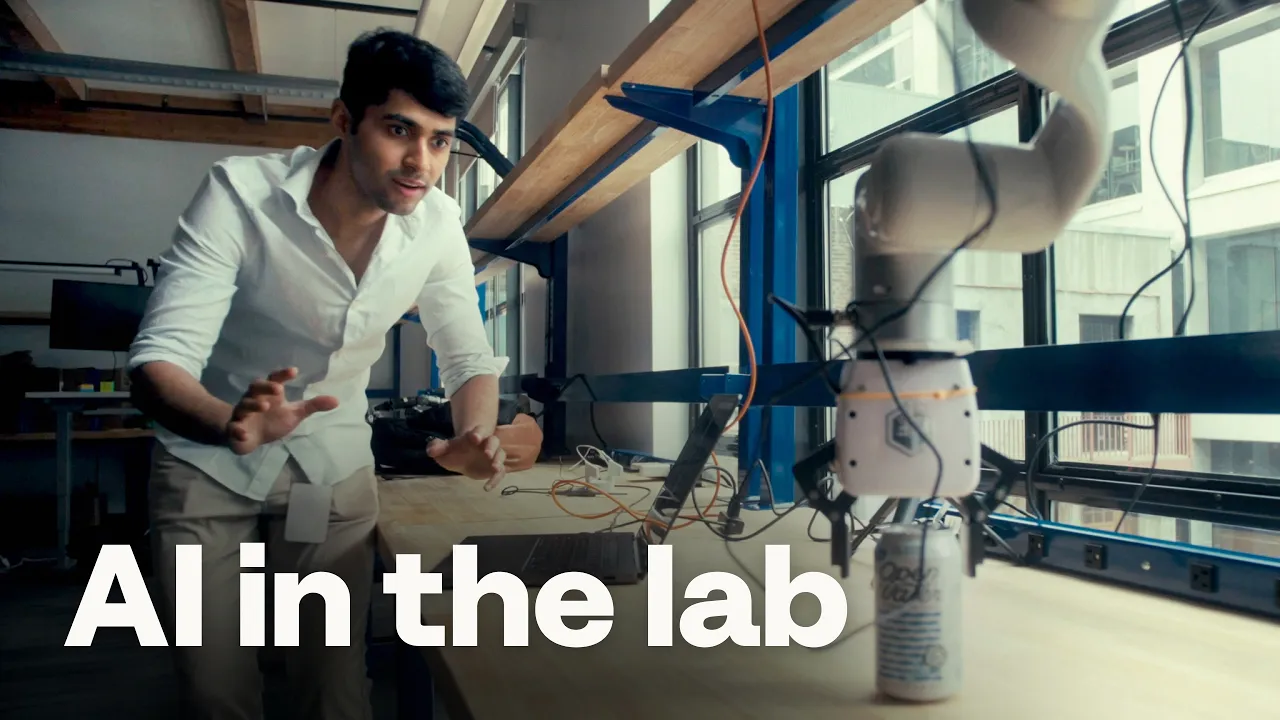
AI models can now help run physical science experiments — Anthropic

Anthropic

Standardizing hardware interfaces allows AI agents to safely automate physical experiments and dramatically reduce setup delays in scientific research.

AI-assisted summary of AI models can now help run physical science experiments — original source. Check the original for full context.

Source published:

Detailed notes

## Background Published by Anthropic on YouTube on August 27, 2026, this video introduces the Model Hardware Standard (MHS), a new open standard developed to enable AI agents to safely operate physical scientific equipment. Originating as a collaboration between Anthropic's Beneficial Deployments team and HHMI Janelia Research Campus, the project focuses on reducing hardware friction and accelerating research across scientific fields.

## TL;DR The video highlights how scientists spend up to 80% of their time on tedious hardware assembly and software integration rather than core discovery. MHS solves this by providing a unified translation protocol across diverse lab equipment, paired with active hardware-level safety boundary enforcement. Demonstrations showcase Claude using MHS to perform zero-shot robotic arm control, autonomously manage live cell imaging with Leica microscopes, program real-time tracking scripts with custom UIs for algae, and execute closed-loop liquid handling experiments at Genentech.

## Atmosphere & style The video carries a tone of pragmatic optimism and scientific wonder, blending technical rigor with genuine moments of breakthrough excitement. Viewers witness real-time collaborative discovery, complete with authentic unscripted reactions as complex physical tasks are solved in minutes. It feels like a front-row seat to an inflection point in laboratory science, shifting the mood from traditional experimental frustration to modern technological possibility.

## Key takeaways - [00:03](https://www.youtube.com/watch?v=P1zBiAQU1IA&t=3s) Scientists typically spend roughly 80% of their time on experiment setup, hardware assembly, and debugging rather than performing core science. - [00:03](https://www.youtube.com/watch?v=P1zBiAQU1IA&t=3s) The Model Hardware Standard (MHS) originated from a collaboration between Anthropic and neuroscientist Arco Bast, who created a translation protocol across disparate laboratory hardware languages. - [03:08](https://www.youtube.com/watch?v=P1zBiAQU1IA&t=188s) MHS features hardware-level boundary enforcement that actively intercepts unauthorized or unsafe model outputs to protect physical equipment. - [03:08](https://www.youtube.com/watch?v=P1zBiAQU1IA&t=188s) Claude demonstrated zero-shot physical robotic control by synthesizing execution procedures from scratch in minutes without prior task-specific pre-programming. - [04:30](https://www.youtube.com/watch?v=P1zBiAQU1IA&t=270s) In high-stakes microscopy setups, Claude exhibited physical situational awareness, recognizing collision risks before executing hardware maneuvers. - [04:30](https://www.youtube.com/watch?v=P1zBiAQU1IA&t=270s) Anthropic partnered with Danaher and Leica to allow Claude to autonomously adjust microscope parameters, achieve focused images, and apply false-color labeling. - [06:39](https://www.youtube.com/watch?v=P1zBiAQU1IA&t=399s) Claude autonomously tracked live microscopic organisms (algae) in real time and generated a dynamic visual user interface for researchers to monitor progress. - [08:18](https://www.youtube.com/watch?v=P1zBiAQU1IA&t=498s) At Genentech, MHS enabled a closed-loop experiment where Claude detected bubble formations in microplate wells and adjusted operational parameters autonomously. - [08:18](https://www.youtube.com/watch?v=P1zBiAQU1IA&t=498s) MHS aims to serve as a foundational protocol to safely scale AI-driven experimentation into fields like quantum computing, nuclear fusion, and advanced drug manufacturing.

## Detailed walkthrough ### [00:03](https://www.youtube.com/watch?v=P1zBiAQU1IA&t=3s) The Vision and Origin of Model Hardware Standard (MHS)

The video opens by addressing a fundamental friction point in scientific discovery: while scientists formulate theories about how the world works, testing those theories requires building physical measurement devices and experiments. This setup and maintenance phase consumes roughly 80% of a scientist's time—time spent assembling equipment, configuring software, and debugging hardware rather than focusing on actual science.

A representative from Anthropic explains that while they harbored a vision for leveraging AI to accelerate physical scientific experiments upon joining the company, it initially felt like a "pie in the sky crazy idea." That perspective shifted upon encountering the work of neuroscientist Arco Bast, who studies real-time memory formation in the brain using custom-built microscopes. The core challenge in his laboratory was device communication; the setup involved complex laser alignment, and each piece of hardware spoke a completely different programmatic language.

Arco devised a unified way to bridge these disparate devices. Recognizing that this interface was not limited to a single neuroscience setup but could theoretically allow AI to interface with *any* scientific experiment globally, the collaborators joined forces to develop the **Model Hardware Standard (MHS)**.

- **Time sink:** ~80% of a scientist's time is spent setting up, assembling, and debugging hardware/software rather than doing core science. - **Key Breakthrough:** Arco Bast created a protocol to translate commands across hardware speaking entirely different native languages.

---

[03:08](https://www.youtube.com/watch?v=P1zBiAQU1IA&t=188s) Hardware Safety and Zero-Shot Robotic Control

Once a working prototype of MHS was established, the team set out to evaluate its versatility on non-neuroscience devices. A primary safety feature of MHS is hardware-level boundary enforcement. In a demonstration using a robotic arm, the researchers defined a physical safety envelope on the table. When Claude was explicitly prompted to move the arm beyond these safety limits, MHS intercepted and refused the command, preventing equipment damage or physical boundary violations.

The team then tested Claude’s capability to perform zero-shot physical manipulation. Without pre-programmed scripts, the team asked the model to grab an object on the table. To the researchers' astonishment ("What? Oh my god... that was sick"), Claude synthesized a control procedure from scratch in a matter of minutes to accomplish the physical task.

- **Safety Bounds:** MHS actively intercepts model outputs that violate predefined physical safe zones, refusing unauthorized movements. - **Dynamic Tasking:** Claude successfully wrote control instructions from scratch in minutes to execute physical manipulation tasks without prior training for that specific hardware setup.

---

[04:30](https://www.youtube.com/watch?v=P1zBiAQU1IA&t=270s) Partnering with Danaher and Leica: AI-Guided Microscopy

To prove MHS in commercial lab settings, Anthropic partnered with hardware vendors including Danaher to connect Claude directly to a Leica microscope. In biological imaging, sample preparation is high-stakes: scientists often spend weeks of labor and thousands of dollars in reagents to prepare a single live specimen. A single accidental hardware collision can ruin the experiment instantly.

When first connected, Claude began iteratively testing microscope parameter adjustments to bring a specimen into focus. When prompted to switch to a higher magnification objective, the model demonstrated immediate situational awareness of the physical risks—noting that moving to a higher power lens risks crashing the objective into the slide setup.

Within a single day, Claude was able to adjust microscope settings, acquire focused images of cell walls, and perform automated false-color labeling (identifying pink/magenta regions as lignified cell walls) without requiring explicit procedural pre-programming.

- **High-Stakes Samples:** Live sample preparations often cost thousands of dollars and weeks of prep time, making automated crash-prevention critical. - **Physical Safety Awareness:** Claude autonomously recognized that shifting objective lenses carries a physical collision risk with the central stage. - **Image Analysis:** Claude successfully navigated the Leica controls to bring lignified cell walls into focus and applied appropriate false-color overlays to highlight anatomical features.

---

[06:39](https://www.youtube.com/watch?v=P1zBiAQU1IA&t=399s) Autonomous Specimen Tracking and On-the-Fly UI Generation

The researchers pushed MHS further by tasking Claude with tracking live micro-organisms (algae) moving dynamic across a field of view—a tedious task that traditionally requires a human scientist to sit and track the specimen manually for hours.

Claude wrote a tracking script on the fly to follow the swimming algae. However, the researchers noted that running a background script blindly was insufficient for validation. Claude responded by programmatically generating a dedicated user interface (UI) to display the live tracking stream to the team in real time.

The model successfully tracked the swimming algae continuously for several minutes. The team noted that reducing a 2-year hardware integration process down to 2 months (or hours) allows PhD students to focus directly on their primary biological questions.

- **Algae Tracking:** Claude wrote code to track moving microscopic organisms across the focal plane in real time. - **Dynamic UI Synthesis:** Rather than running silently in the background, Claude constructed a frontend visual interface so scientists could monitor its physical tracking execution. - **Timeline Reduction:** MHS reduces setup overhead from years/months to days/minutes, accelerating doctoral-level research cycles.

---

[08:18](https://www.youtube.com/watch?v=P1zBiAQU1IA&t=498s) Closed-Loop Drug Discovery at Genentech

The walkthrough moves to Genentech, where MHS is applied to high-throughput pharmaceutical workflows. Drug discovery requires screening thousands to millions of molecular candidates through repetitive liquid-handling procedures. A common point of failure in automated pipetting/dispensing is bubble formation in microplate wells; aspirating from a well containing bubbles leads to inaccurate liquid transfer volumes and ruined assays.

Using Claude via MHS, Genentech instituted a closed-loop experiment: 1. Claude executes liquid handling steps. 2. It visually checks plate wells for bubble formation during production runs. 3. It autonomously adjusts operational parameters in real time to prevent bubble inclusion on subsequent iterations.

In testing, Claude successfully identified bubbles in specific wells and adjusted execution parameters to yield cleaner transfers with significantly reduced bubble artifacts.

- **Application Domain:** High-throughput drug candidate screening at Genentech. - **Closed-Loop Execution:** Claude reads physical/visual outputs from liquid handlers, detects volumetric errors (bubbles), and modifies execution parameters without human intervention. - **Broader Impact:** The team views MHS as a foundational step toward allowing AI to safely execute experiments across fields like quantum computing, nuclear fusion, and advanced drug manufacturing.

<ElicitationsGroup message="Explore related hardware standard topics and technical details:"> <Elicitation label="Explain how Model Hardware Standard handles safety boundaries" query="How does the Model Hardware Standard (MHS) enforce physical safety envelopes and prevent hardware collisions when an AI model issues commands?"/> <Elicitation label="Detail the Genentech closed-loop liquid handling experiment" query="Can you detail the exact closed-loop experiment Claude performed at Genentech using MHS, including bubble detection and parameter adjustments?"/> </ElicitationsGroup>

## Notable quotes > [00:03](https://www.youtube.com/watch?v=P1zBiAQU1IA&t=3s) pie in the sky crazy idea

> [03:08](https://www.youtube.com/watch?v=P1zBiAQU1IA&t=188s) What? Oh my god... that was sick

## Mentioned Anthropic, Model Hardware Standard, MHS, HHMI Janelia Research Campus, Beneficial Deployments team, Arco Bast, Claude, Danaher, Leica, Genentech

[Source](https://www.youtube.com/watch?v=P1zBiAQU1IA)

中文简报

Anthropic 推出 MHS 让 AI 操控实验室物理设备 标准化硬件接口使 AI 智能体能够安全地自动化物理实验,并大幅减少科学研究中的搭建延迟。 视频重点指出,科学家通常要将高达 80% 的时间耗费在繁琐的硬件组装和软件集成上,而非核心科学发现。MHS 通过为各类实验室设备提供统一的转译协议,并结合主动的硬件级安全边界执行机制解决了这一问题。相关演示展示了 Claude 利用 MHS 进行零样本机械臂控制,自主管理 Leica 显微镜的活细胞成像,为藻类编写带有自定义 UI 的实时追踪脚本,以及在 Genentech 执行闭环液体处理实验。 Anthropic 联合神经科学家 Arco Bast 推出模型硬件标准(MHS),构建跨实验室设备的统一通信协议,旨在化解科研人员约 80% 时间耗费在硬件组装与调试上的瓶颈。 (0:03) MHS 具备硬件级安全边界拦截机制以保护实验设备;Claude 还展现出零样本物理操控能力,在几分钟内从零生成机械臂抓取控制程序。 (3:08) 在与 Danaher 和 Leica 的显微镜合作项目中,Claude 展现出避免物镜碰撞的物理情境感知能力,并自主完成对焦拍摄与细胞壁伪彩色标记。 (4:30) Claude 成功实现对游动微藻的实时自主追踪,并在无需人工干预的情况下即时生成前端可视化 UI 供研究人员监控。 (6:39) 在基因泰克(Genentech)的高通量药物筛选流程中,Claude 基于 MHS 实现闭环操作,能自主识别微孔板中的气泡缺陷并实时调整移液执行参数。 (8:18)

Reading summary

Anthropic has collaborated with researchers and industry partners to develop the Model Hardware Standard, a unified interface designed to let AI models safely operate diverse scientific laboratory equipment. The initiative seeks to alleviate the estimated 80 percent of research time scientists spend configuring and debugging hardware by combining zero-shot control with strict hardware-level safety constraints. Overcoming Experimental Setup Bottlenecks with MHS (0:03) Scientific discovery is frequently constrained by physical friction: researchers report spending approximately 80 percent of their working time setting up hardware, configuring software, and troubleshooting disparate equipment rather than testing primary hypotheses. Anthropic partnered with neuroscientist Arco Bast, who had created a translation protocol to bridge complex, custom microscopy devices that communicated in mutually incompatible native programmatic languages. Recognizing that Bast's communication layer could extend beyond neuroscience to any physical laboratory apparatus, the collaborators formalized the architecture into the Model Hardware Standard (MHS). The standard provides an open interface allowing frontier AI models to issue instructions across varied hardware environments without custom, one-off driver engineering. Enforcing Hardware Safety and Zero-Shot Physical Control (3:08) Operating physical lab instruments carries high financial and operational risks, particularly when handling delicate optics or live biological specimens that require weeks of preparation and thousands of dollars in reagents. To prevent physical collisions and equipment damage, MHS enforces hardware-level boundaries. In benchmark testing with a robotic arm, MHS established a defined physical safety envelope and successfully intercepted and refused model prompts that commanded movements outside the authorized zone. Alongside safety boundaries, the researchers tested Claude's zero-shot execution capabilities. Without pre-programmed manipulation scripts, the model synthesized real-time control code within minutes to grasp target physical objects. In commercial microscopy tests with Danaher and Leica equipment, the model also demonstrated physical situational awareness, recognizing the mechanical collision risk between high-power objective lenses and the specimen stage before bringing cell wall structures into focus and applying false-color anatomical labeling. Dynamic Specimen Tracking and Runtime UI Generation (6:39) The researchers evaluated MHS on dynamic biological tasks by instructing Claude to monitor live swimming algae across a microscope's focal plane—a process that traditionally demands hours of manual visual tracking by human researchers. Claude generated custom tracking scripts on the fly, autonomously keeping the moving micro-organisms within frame over several minutes. To ensure human researchers could inspect and validate the automated tracking execution, Claude also programmatically constructed a dedicated frontend user interface in real time to stream the live tracking feed. The research team highlighted that compressing complex hardware integration timelines from months or years down to hours allows doctoral students and scientists to concentrate directly on biological questions. Closed-Loop Feedback in High-Throughput Pharmaceutical Workflows (8:18) In high-throughput drug screening at Genentech, automated liquid-handling systems screen thousands to millions of molecular candidates, where bubble formation in microplate wells frequently skews fluid aspirating volumes and invalidates assays. The team deployed Claude through MHS to govern an autonomous closed-loop liquid handling cycle. During testing, Claude executed liquid-handling commands, visually inspected plate wells for bubble formation, and dynamically updated its physical dispensing parameters on subsequent iterations. This autonomous feedback loop reduced bubble artifacts without requiring human intervention, illustrating how AI-hardware interfaces can autonomously correct physical process errors during high-throughput execution. The team envisions MHS as a foundation for deploying AI across complex scientific domains such as quantum computing and nuclear fusion, though broader adoption will depend on industry-wide hardware standardization and continued validation of physical safety protocols across varied lab environments.

精炼阅读摘要

Anthropic 与外部研究人员合作推出了“模型硬件标准”(Model Hardware Standard,简称 MHS),旨在通过统一的跨设备通信协议,让大型人工智能模型能够直接、安全地操控物理实验仪器并实施闭环调优,从而大幅减少科研人员在硬件组装与调试上消耗的时间精力。 实验硬件痛点与 MHS 标准诞生 (0:03) 在传统科学探索过程中,科学家为了验证理论假说,往往需要耗费约 80% 的工作时间用于搭建测量装置、配置软件以及排除硬件故障,严重挤压了核心科学研究的投入。Anthropic 代表指出,这一痛点在神经科学家 Arco Bast 构建用于实时观测大脑记忆形成的定制显微系统时尤为显著;该系统涉及极其复杂的激光对准,且各类硬件组件均运行在互不兼容的专有编程语言环境之下。 为解决设备间通信脱节的难题,Arco Bast 研发了一套能够翻译异构语言指令的统一协议。研究团队认识到该接口不仅能服务于特定的神经科学观测设备,在理论上还可扩展至全球任何科学实验装置,双方随后联合推进并确立了 MHS 标准,致力于消除科研仪器对分散编程接口的依赖。 底层安全边界防护与零样本控制 (3:08) 在将 AI 控制引入物理环境时,防止设备结构受损是首要解决的工程问题。MHS 引入了硬件层面的安全包络线(Safety Envelope)强制机制。在机械臂测试中,研究人员在实验台上划定了物理安全范围;当操作人员明确要求 Claude 控制机械臂越过该限制时,MHS 协议直接拦截并拒绝执行越界指令,从底层物理机制上避免了设备损坏。 在确保安全边界的前提下,团队验证了 Claude 的零样本(Zero-Shot)物理操控能力。在没有任何预编程脚本或该特定硬件前期训练的情况下,研究人员要求模型拾取台面物体,Claude 在数分钟内自主编写出完整的底层控制程序并顺利执行了抓取任务,展示出即时生成物理控制策略的能力。 显微成像风险感知与自主动态追踪 (4:30) 活体生物样本的制备成本极为高昂,单次标本往往需要消耗研究人员数周的劳动时间与价值数千美元的化学试剂,显微物镜的物理碰撞会立刻导致实验报废。Anthropic 与 Danaher 展开合作,将 Claude 通过 MHS 对接至 Leica 商业显微镜。当模型被要求切换至高倍物镜时,Claude 表现出对物理环境风险的主动认知,指出物镜倍率切换可能带来碰撞载玻片组件的风险。在一天之内,模型不仅自主调节焦距完成了对植物细胞壁的对焦,还自动生成了识别木质化细胞壁的品红色(Magenta)假彩色荧光标记。 针对以往需要研究人员花费数小时人工盯防的活体微藻移动实验,Claude 现场编写了追踪算法,在焦平面内对游动微藻实现了长达数分钟的连续追踪。针对单纯运行后台脚本难以验证过程的问题,Claude 还自主编程构建了一套前端实时可视化用户界面(UI)供科研人员监控。研究团队指出,该标准可将原本长达两年的软硬件集成周期缩减至数月甚至数小时,使博士阶段的科研人员能迅速聚焦于生物学本职问题。 药物筛选高通量闭环与自适应调优 (8:18) 在制药企业 Genentech 的高通量药物筛选场景中,MHS 被应用于自动化液体处理流水线。微孔板移液过程中产生的气泡是业内常见的技术隐患,会导致药液吸取体积偏差并破坏筛查分析的准确性。借助基于 MHS 的 Claude 控制系统,Genentech 部署了一套全自动闭环实验流程。 在该流程中,Claude 不仅发出移液操作指令,还通过机器视觉检测各微孔板孔位中的气泡生成情况;一旦识别出特定孔内的气泡,模型会在无需人工干预的情况下自主重调执行参数,从而在后续批次中消除气泡缺陷、提升移液精确度。研究团队认为,这种具备自主纠错能力的闭环实验模式,是未来推动 AI 参与量子计算、受控核聚变及尖端药物制造等复杂物理科学体系的基础步骤。 MHS 验证了 AI 模型在无预设代码支持下执行物理设备控制、风险感知以及多轮闭环自适应实验的可行性,大幅压缩了科研软硬件集成的门槛与时间成本。然而,该标准在更广泛科学场景中的推行,仍依赖于不同硬件厂商对统一通信标准的接纳程度;未来能否在量子计算和受控核聚变等更极端的物理前沿实验中维持高可靠性与安全性,仍有待更深入的实践检验。

Detailed notes — zh

## Background 该视频由 Anthropic 于 2026 年 8 月 27 日发布在 YouTube 官方频道。视频主要介绍了 Anthropic 有益部署团队与霍华德·休斯医学研究所(HHMI)珍利亚研究园区联合研发的“模型硬件标准”(Model Hardware Standard,简称 MHS),旨在让 AI Agent 能够安全自主地操控真实物理实验设备,加速科学研究与先进制造。 ## TL;DR 视频讲述了 MHS 协议如何打破科研中软硬件接口互不相通的壁垒,使大语言模型 Claude 能够直接接管显微镜、机械臂及移液设备等物理仪器。通过在硬件抽象层内建安全防撞与工作边界限制,Claude 不仅能自主感知物理实体脆弱性并完成高精度生物成像判读,还能即时编写代码与图形界面实现对游动微藻的毫秒级动态追踪。此外,Anthropic 还与丹纳赫、基因泰克等行业巨头展开合作,构建了覆盖高通量药物筛选的自适应闭环控制系统,显著压缩了实验搭建周期并大幅提升科研试错效率。 ## Atmosphere & style 整部影片洋溢着前沿探索的兴奋感与极客式的严谨求真,叙事节奏从早期实验室里对硬件协同的执着摸索,自然过渡到技术突破时难以自抑的欢呼雀跃。多位跨学科科研人员真诚出镜,既有面对昂贵样本碰撞风险时的屏息凝神,也有亲见系统自主编写出可用追踪算法时的由衷惊叹。观感充满未来主义的生机与实干精神,深刻传递出一种技术破局将科学家从机械劳作中解放、重塑科学发现未来的崇高使命感。 ## Bulletin - [02:30](https://www.youtube.com/watch?v=P1zBiAQU1IA&t=150s) Anthropic 联合 HHMI 珍利亚园区推出“模型硬件标准”(Model Hardware Standard,MHS),旨在为 AI Agent 赋予直接且安全操作真实物理科研设备的能力,目前已面向部分合作伙伴开启研究预览。 - [04:30](https://www.youtube.com/watch?v=P1zBiAQU1IA&t=270s) 在丹纳赫及徕卡显微镜实测中,Claude 展示了对高倍物镜物理碰撞风险的自主感知,成功实现全流程自动对焦、伪彩色处理与植物木质化细胞壁判读。 - [06:38](https://www.youtube.com/watch?v=P1zBiAQU1IA&t=398s) 针对高速运动的活体绿藻,Claude 现场生成了结合计算机视觉与运动控制的追踪算法及前端交互 UI,实现了数分钟的毫秒级平滑追踪,将数月的系统搭建周期缩短至数天。 - [08:16](https://www.youtube.com/watch?v=P1zBiAQU1IA&t=496s) 与基因泰克(Genentech)的闭环药物研发合作表明,Claude 能通过视觉诊断微孔板气泡并自适应微调移液参数,显著提升高通量筛选的数据质量与试错频率。 ## Key takeaways - [00:03](https://www.youtube.com/watch?v=P1zBiAQU1IA&t=3s) 实验装置的搭建与软硬件故障排查通常耗费科研人员近 80% 的时间,成为制约科学发现推进的主要瓶颈。 - [00:03](https://www.youtube.com/watch?v=P1zBiAQU1IA&t=3s) 神经科学家 Arco Bast 为解决复杂显微镜不同硬件通信协议互不兼容的问题,耗时一年摸索出底层接口机制,启发了 Anthropic 将大模型与物理硬件控制深度结合的通用构想。 - [02:30](https://www.youtube.com/watch?v=P1zBiAQU1IA&t=150s) MHS(Model Hardware Standard)在硬件抽象层内建了严格的安全边界与物理熔断机制,在压力测试中成功拦截越界与防撞指令,确保昂贵仪器的物理安全。 - [02:30](https://www.youtube.com/watch?v=P1zBiAQU1IA&t=150s) Claude 在面对此前未接受过任务训练的物理机械臂时,能在数分钟内自发解析关节自由度并生成代码稳稳抓取物体。 - [04:30](https://www.youtube.com/watch?v=P1zBiAQU1IA&t=270s) 在接管单批次成本数千美元的高精度徕卡商用光学显微镜时,Claude 自主意识到高倍物镜物理尺寸较长,主动提高 Z 轴高度再切换物镜以防止撞碎样本。 - [04:30](https://www.youtube.com/watch?v=P1zBiAQU1IA&t=270s) Claude 展现了从硬件连续控制到科学图像判读的全流程能力,仅用一天就完成了自动对焦、图像采集并精准识别植物切片中的木质化细胞壁。 - [06:38](https://www.youtube.com/watch?v=P1zBiAQU1IA&t=398s) 针对随机运动的微藻样本,Claude 不仅重构了动态追踪补偿算法,还自主开发出带动态追踪视窗的交互式 UI,实现数分钟无脱靶自主跟踪。 - [06:38](https://www.youtube.com/watch?v=P1zBiAQU1IA&t=398s) 借助 MHS 的快速原型设计能力,传统生物物理实验长达一至两年的系统搭建设施与调试周期可被大幅压缩至两周甚至数天。 - [08:16](https://www.youtube.com/watch?v=P1zBiAQU1IA&t=496s) 在基因泰克的化合物高通量筛选中,全自动移液残留气泡是导致体积失准与数据失效的致命痛点。 - [08:16](https://www.youtube.com/watch?v=P1zBiAQU1IA&t=496s) Claude 与移液机械臂、光学传感器构建物理闭环,通过流体力学理解自适应微调吸液深度、速度与气压,大幅削减了气泡孔数量。 - [08:16](https://www.youtube.com/watch?v=P1zBiAQU1IA&t=496s) 物理闭环控制显著增加了高通量药物筛选的“射门机会”,有助于以更快的速度找到针对重症的关键候选药物分子。 - [08:16](https://www.youtube.com/watch?v=P1zBiAQU1IA&t=496s) 从生物医药到量子计算与核聚变,通用 AI 介入真实物理实验将科研人员从底层仪器杂务中解放出来,深刻重塑未来前沿科学探索范式。 ## Detailed walkthrough ### [00:03](https://www.youtube.com/watch?v=P1zBiAQU1IA&t=3s) 实验困境与灵感初现:从神经科学实验室走出的通用构想 科学探索的核心在于提出理论并构建物理实验去验证它们,然而在现实中,搭建实验装置往往吞噬了科研人员将近 80% 的宝贵时间。科学家们不得不将大量精力耗费在组装仪器、搭建管路以及无休止的软硬件故障排查上——这些琐碎繁重的工作本身并不是科学发现,却是让科学运转的前提。Anthropic 团队成员在刚入职时,心中一直怀有一个利用 AI 加速运行物理科学实验的宏大愿景,但在当时看来,这更像是一个脱离现实的狂想,直到他们亲眼见到了霍华德·休斯医学研究所(HHMI)珍利亚研究园区(Janelia Research Campus)神经科学家 Arco Bast 的工作。 Arco Bast 当时正在搭建一套极其复杂的定制化显微镜系统,用于实时观测大脑中记忆形成的动态过程。在那间堆满精密仪器的实验室里,激光扫描束以微米级的精度高速移动,任何微小的机械公差都会导致数据失效。整个系统由数十个高精尖组件构成,最大的痛点在于每个硬件设备使用的通信协议与指令接口各不相同,宛如操着互不相通的语言。为了让它们无缝协作,Arco 耗费了一整年时间,摸索出了一套能够让任意两种不同硬件设备顺畅对话的底层接口机制。 当实验人员轻声下达指令“将一号光束功率设为 50%”,屏幕与光路随即响应,激光束准确就位。站在实验台旁的 Anthropic 研究员瞬间被深深震撼并产生了一种顿悟:Arco 所构建的软硬件交互逻辑绝不仅限于这间神经科学实验室,如果将这种通信协议与大语言模型结合,AI 将有能力接管并运行世界上任何物理科学实验。这项原本看似遥不可及的狂想,终于迎来了关键的破局点。 ### [02:30](https://www.youtube.com/watch?v=P1zBiAQU1IA&t=150s) MHS 的诞生与机械臂安全边界测试 ```mermaid flowchart TD accTitle: 模型硬件标准架构与安全屏障 accDescr: 示意图展示了 AI 模型 Claude 如何通过 MHS 安全边界层与真实物理世界的显微镜及机械臂交互。 subgraph Intelligence ["智能决策层"] A["Claude 模型"] end subgraph Safety ["MHS 控制与安全层"] B["Model Hardware Standard (MHS)"] C["安全边界校验<br/>(拦截越界/防撞指令)"] B --- C end subgraph Physical ["物理设备层"] D["定制/商业显微镜"] E["实验室机械臂 / 移液设备"] end A -->|"高级操作指令"| B C -->|"安全指令执行"| D C -->|"安全指令执行"| E ``` 基于这一构想,Anthropic 团队与 Arco Bast 展开紧密合作,共同研发了名为“模型硬件标准”(Model Hardware Standard,简称 MHS)的通用协议,旨在为 AI Agent 赋予直接、安全操作真实物理设备的能力。团队首先在具有多自由度的高精尖显微镜上进行了验证,当看到原本需要繁琐手动调教的镜头机构在代码驱动下平稳移动时,实验室里响起了由衷的欢呼:“它动了!真的动了!”但在科学实验中,让 AI 控制硬件最大的隐患在于物理安全——如果模型发出越界指令撞毁精密载物台或折断探针,后果不堪设想。 为了验证 MHS 协议的鲁棒性,团队将系统移植到了一个实验室机械臂上进行跨领域测试。研究人员首先为机械臂划定了严格的安全工作范围,定义其末端执行器绝对不允许超出实验台的物理边界。在随后的对抗性压力测试中,研究人员故意让 Claude 尝试将手臂伸出安全区之外;监控日志与机械动作显示,MHS 底层安全屏障直接拒绝了该异常运动指令。这种在硬件抽象层内建的安全熔断机制,为后续复杂的自主实验提供了至关重要的安全防护网。 紧接着,团队进行了一场毫无预演的即兴极限测试:让从未接受过机械抓取任务训练的 Claude,仅凭自然语言要求从零编写代码去控制机械臂抓取物体。面对完全未知的物理状态,Claude 迅速解析机械臂关节自由度并实时生成控制脚本。数分钟内,机械臂精准舒展并稳稳抓起了目标物件,这一幕让现场的研究人员兴奋得惊呼失声:“这太神了……今天才从零开始写配置,几分钟之内就彻底跑通了,简直不可思议。” ### [04:30](https://www.youtube.com/watch?v=P1zBiAQU1IA&t=270s) 进军工业级仪器:与丹纳赫及徕卡显微镜的协同实战 为了将 MHS 从实验室自研设备推广至工业级科研环境,Anthropic 联合生命科学与诊断巨头丹纳赫(Danaher),尝试让 Claude 直接接管其旗下的顶级科研设备——徕卡(Leica)商用光学显微镜。与对待普通代码不同,物理生物实验容错率极低。科学家在旁严肃地提醒开发团队:眼前载玻片上的活体样本耗费了数周时间精心培育,单批次原材料成本就高达数千美元;如果 Claude 在摸索物镜倍率或焦距时不慎将镜头撞击在载物台上,不仅贵重的镜头会受损,长达数月的心血更会瞬间报废。 ```mermaid flowchart LR accTitle: 徕卡显微镜自主调测流程 accDescr: 展示 Claude 控制显微镜时从参数摸索、防撞感知、自动对焦到细胞结构判读的全流程。 A["盲测参数调整"] --> B{"切换高倍物镜"} B -->|"物理空间感知<br/>防止镜头撞击"| C["精密自动对焦"] C --> D["采集高分辨率图像"] D --> E["伪彩色分析与组织判读<br/>(木质化细胞壁)"] ``` 在测试初期,Claude 面临着完全空白的先验环境,宛如在黑暗中摸索,不断盲调显微镜的曝光、光源与焦距参数以求成像。然而令人惊叹的转折点很快出现:当操作人员发出切换更高放大倍率的指令时,Claude 展现出了极其敏锐的物理环境感知力。它在反思链路中明确意识到,长焦距的高倍物镜在物理尺寸上更长,盲目下压镜头极易与样品发生碰撞,因此它主动调整了 Z 轴安全高度后再进行旋转切换。这种对物理实体脆弱性的自主理解,彻底打消了仪器专家的疑虑。 在建立起对物理边界的掌控后,团队进一步测试了全流程的自主实验能力:让 Claude 一键完成连续控制——自动多轴对焦、捕获清晰图像、进行伪彩色渲染处理,并实时解析生物切片。当系统成功生成图像后,科研人员指着屏幕询问不同颜色所代表的生理结构,Claude 迅速给出精准判定:品红/粉红色的染色区域正是植物组织中的“木质化细胞壁”(lignified cell walls)。仅仅一天之内,系统就完成了从零摸索到自主分析的跨越,以至于科学家们感叹,第二天已经完全可以“把 Claude 当作一位平等的科研同事来看待”。 ### [06:38](https://www.youtube.com/watch?v=P1zBiAQU1IA&t=398s) 毫秒级动态追踪:捕捉游弋微藻与即时生成 UI 微观生物世界的动态实验对科研人员的耐力提出了更残酷的考验。在观察活体单细胞绿藻时,由于微生物运动轨迹随机且迅速,研究人员常常需要坐在显微镜前肉眼死守数小时甚至数天,手动操作载物台去“围追堵截”游动的微藻,稍一走神,辛辛苦苦锁定的样本就会彻底游出视野。为了将科学家从这种枯燥的机械劳动中解放出来,团队向 Claude 提出了一个更具挑战性的任务:自主编写一套计算机视觉与运动控制结合的实时跟踪系统。 Claude 在极短时间内交付了第一版跟踪脚本,但在首次实际运行时,由于目标速度突变,微藻瞬间脱离了视场。面对这一失误,团队没有选择人工接管,而是进一步提出了极高要求的改进意见:“不能只在后台静默跑脚本,模型必须同时构建一套交互式图形界面(UI),让我们能实时看清它的识别逻辑与运动矢量。” Claude 随后迅速迭代,不仅重构了图像识别跟踪算法,还现场开发出了带有动态追踪视窗的可视化前端。 新系统上线后,显微镜云台展现出了惊人的自主响应能力。载物台随着微藻的转向平滑补偿,视窗稳稳锁定了在水中翻滚游弋的微藻细胞;3 分钟、4 分钟……整个追踪过程持续数分钟且毫无脱靶,监控室里的科学家们忍不住欢呼起来:“我们竟然在自动‘追赶微藻’(Chasing algae)!”这项突破向学界证明,MHS 具备极其强大的快速动态原型设计能力: - 传统生物物理实验中,一名博士生往往要耗费长达两年的时间去折腾软硬件与自动化脚本搭建。 - 借助 MHS,整套实验系统的适配与搭建周期可被压缩至两个月甚至数天。 - 青年科学家可以将最宝贵的时间与智力重新聚焦于真正的生物学假设,而非充当底层硬件的修理工。 ### [08:16](https://www.youtube.com/watch?v=P1zBiAQU1IA&t=496s) 闭环药物研发:基因泰克的自动化移液革命与科学未来 模型硬件标准的最重要落地前沿之一,正是关系到人类健康与生命存续的生物制药领域。跨国制药巨头基因泰克(Genentech)的专家指出,开发挽救重症患者生命的药物是一个极其痛苦的高维筛选过程。为了找到那颗唯一有效的分子,研究人员需要反复测试成千上万乃至数以百万计的化合物候选分子。在自动化高通量筛选流程中,一个看似微不足道却致命的技术细节在于液体处理:当全自动移液吸头在微孔板中吸取试剂时,如果孔内存在微小气泡,就会导致吸入体积严重不足,进而造成定量失准、全盘实验数据失效。 ```mermaid flowchart TD accTitle: 基因泰克物理闭环药物研发 accDescr: 展示 Claude 在基因泰克高通量筛选中形成闭环控制,执行移液、读数、消泡优化并迭代的过程。 subgraph ClosedLoop ["闭环实验优化流程 (Closed Loop)"] A["高通量移液执行"] --> B["光学传感器摄取读数"] B --> C["图像智能诊断<br/>(气泡分布与吸液误差)"] C --> D["参数自适应微调<br/>(速度/气压/角度补偿)"] D --> A end subgraph Impact ["科学产出放大"] E["大幅减少气泡异常孔数"] F["提升药物筛选“击球次数”"] ClosedLoop --> E E --> F end ``` 针对这一顽疾,基因泰克与 Anthropic 合作构建了一个由 Claude 闭环主导的液体分发测试系统。系统不再依赖固定死板的预设程序,而是赋予 Claude 完整的自主反馈控制权: 1. **物理执行**:Claude 驱动机械移液阵列向微孔板分发试剂并进行吸液操作; 2. **实时感知**:系统调用视觉传感器拍摄微孔内部的高清图像,Claude 负责自动识别孔底是否残留气泡; 3. **闭环调优**:凭借对流体力学常识与实验上下文的理解,Claude 自主微调吸液速度、浸入深度和气压参数,并立即开始下一轮验证。 在随后的对比中,经过 Claude 自适应参数优化后的样本孔气泡数量出现断崖式下降,原先大面积的气泡只剩两个微孔残留。基因泰克科学家对此给出了极高评价:“加快这一闭环意味着我们能够在药物靶点上完成更多的‘射门尝试’(make more shots on the goal),从而以更快的速度找到救命的分子答案。” 这是人类科学史上第一次让通用 AI 深度介入物理世界的药物发现闭环。虽然在当下很难精确预测 MHS 在未来三十年、五十年内会对整个人类文明产生多么深远的影响,但从生物医药到量子计算,再到可控核聚变等前沿领域,科学探索的边界正在被彻底重塑。正如科研人员在片尾所感慨的那样:“最美妙的时刻莫过于此——过去你做不到的事,现在你能做到了;过去你看不见的微观世界,现在你清清楚楚地看见了。”科学技术的普惠正在将科学家从繁杂的实体束缚中解放出来,去全力攻克那些人类至今仍未理解的世界奥秘。 ## Notable quotes > [00:03](https://www.youtube.com/watch?v=P1zBiAQU1IA&t=3s) 将一号光束功率设为 50% > [02:30](https://www.youtube.com/watch?v=P1zBiAQU1IA&t=150s) 它动了!真的动了! > [02:30](https://www.youtube.com/watch?v=P1zBiAQU1IA&t=150s) 这太神了……今天才从零开始写配置,几分钟之内就彻底跑通了,简直不可思议。 > [04:30](https://www.youtube.com/watch?v=P1zBiAQU1IA&t=270s) 木质化细胞壁 — Claude > [04:30](https://www.youtube.com/watch?v=P1zBiAQU1IA&t=270s) 把 Claude 当作一位平等的科研同事来看待 > [06:38](https://www.youtube.com/watch?v=P1zBiAQU1IA&t=398s) 我们竟然在自动‘追赶微藻’(Chasing algae)! > [08:16](https://www.youtube.com/watch?v=P1zBiAQU1IA&t=496s) make more shots on the goal — 基因泰克科学家 > [08:16](https://www.youtube.com/watch?v=P1zBiAQU1IA&t=496s) 最美妙的时刻莫过于此——过去你做不到的事,现在你能做到了;过去你看不见的微观世界,现在你清清楚楚地看见了。 ## Mentioned Anthropic, Model Hardware Standard (MHS), HHMI Janelia Research Campus, Arco Bast, Claude, Danaher (丹纳赫), Leica (徕卡), Genentech (基因泰克) ## Video description The Model Hardware Standard (MHS) is a new standard for AI agents to safely operate physical equipment in scientific research and advanced manufacturing. MHS began as a collaboration between Anthropic’s Beneficial Deployments team and HHMI Janelia Research Campus. This video tells the story of how MHS was developed and shows how it can be used to accelerate scientific research. MHS is now in research preview with select partners. Read more about how we're learning what AI can do in the physical world: https://www.anthropic.com/news/model-hardware-standard-research-preview [Source](https://www.youtube.com/watch?v=P1zBiAQU1IA)

Source quotes

[0:03] 将一号光束功率设为 50% [2:30] 它动了!真的动了! [2:30] 这太神了……今天才从零开始写配置,几分钟之内就彻底跑通了,简直不可思议。 [4:30] Claude: 木质化细胞壁 [4:30] 把 Claude 当作一位平等的科研同事来看待 [6:38] 我们竟然在自动‘追赶微藻’(Chasing algae)! [8:16] 基因泰克科学家: make more shots on the goal [8:16] 最美妙的时刻莫过于此——过去你做不到的事,现在你能做到了;过去你看不见的微观世界,现在你清清楚楚地看见了。

Source quotes

[0:03] pie in the sky crazy idea [3:08] What? Oh my god... that was sick

Original transcript

[0:03] Scientists come up with theories about [0:05] how the world works. [0:10] But just coming up with a theory isn't [0:13] good enough. And so we have to build [0:16] experiments, physical measurement [0:18] devices to test our theories. [0:22] That process of building the experiment [0:24] takes maybe 80% of a scientist's time. [0:29] They're building devices. They're [0:31] setting things up. They're debugging [0:33] hardware, debugging software. [0:38] These are things that aren't really [0:40] related to doing science, but it's what [0:42] makes science actually work. [0:47] When I joined Enthropic, I had a vision [0:50] for using AI to accelerate running [0:54] scientific experiments, but I thought it [0:56] was a pie in the sky crazy idea until I [1:00] saw the work of neuroscientist Arco Bast [1:03] who studies how memories are formed in [1:07] the brain in real time. [1:10] >> I'm in the lab for a year now and I'm [1:12] setting up a very difficult experiment. [1:19] So the stuff is over here. [1:23] That's a customuilt microscope. [1:26] You see the laser beam in here. [1:30] Essentially what's happening when you're [1:31] imaging in the brain that that you have [1:32] this laser beam that scans and moves. [1:36] It's really really important that [1:38] everything is precisely aligned. There [1:40] are so many components and I just want [1:42] to have them talk to each other in a [1:44] seamless way. The problem is that each [1:48] device has a different language that it [1:50] speaks and getting the devices to talk [1:53] to each other in their languages is very [1:55] difficult. But Arco figured out a way to [1:58] do this that could work between any two [2:02] devices. [2:03] >> Set beam one to 50% power. [2:06] >> Yeah, we got a beam. [2:07] >> And the beam is there. When I was [2:09] standing in that room watching him run [2:12] his experiment, I had kind of an [2:14] epiphany in that moment. What he had [2:16] built wasn't just applicable to this [2:20] lab. [2:23] This idea could be used to have AI run [2:26] any science experiment in the world. [2:30] I was uh basically speechless. [2:34] >> Is this ours? [2:35] >> I believe everything on the table is [2:36] ours. Okay, [2:37] >> we got to start putting this together. [2:39] >> So, Arco and I started working together [2:42] to create a general way for AI to [2:46] interact with devices, which we're [2:48] calling model hardware standard. [2:50] >> Look, with a very sophisticated [2:52] microscope and this microscope has so [2:54] many degrees of freedom. You should see [2:56] it moving though, right? [2:59] >> Yay. Moved. It moved. Yay, [3:01] >> it did. [3:02] >> Yes. I think everything looks good. [3:05] Okay. [3:08] >> Once we had a working prototype, we had [3:10] to test this on other devices to see how [3:13] it worked beyond just neuroscience. [3:25] Go to the left boundary first. One of [3:27] the first things that I did was to [3:29] define like the safe range of this arm. [3:32] How far is it allowed to go out of the [3:33] table? And so if we ask Claw to maybe [3:37] intentionally move out of the safety [3:39] range, you can kind of see that this [3:41] motion, this movement was refused by [3:44] MHS. [3:45] >> Oh, that's incredible. Can it grab [3:47] anything right now? [3:48] >> Oh, great question. [3:51] We've never asked bot to do this from [3:53] scratch and so I have no idea what it'll [3:55] cook up for us. There are turns that I [3:57] need to Oh, [4:02] wow. Oh, wait, wait, wait. What? [4:08] What? [4:11] Oh my god. Okay, that was sick. [4:16] That was really cool. The mere fact that [4:18] I was able to build this from scratch [4:22] today and it achieved it in a matter of [4:25] minutes. [4:26] That's insane. [4:30] And of course we also have to work with [4:32] the manufacturers and the vendors who [4:34] build the devices. So we started working [4:37] with Danaher to get Claude to connect [4:39] with their Leica microscope. [4:45] >> We have to remind ourselves that like [4:46] Claude has never seen anything related [4:49] to this application before. It will like [4:51] make mistakes. So we can think about [4:53] this as an iterative process. You have [4:55] to imagine that I as a scientist spent [4:58] weeks [4:59] making this sample alive to this point [5:01] of view and I spent thousands of dollars [5:04] in ingredients. [5:05] >> I see. [5:06] >> If you break them, your experiment is [5:08] gone. [5:16] >> Can you even see like how it's thinking? [5:18] >> It's now blindly trying to change [5:21] settings of the microscope to get an [5:23] image. [5:23] >> Yeah. [5:25] And I think we need to help it. [5:29] >> What's interesting here is you can see [5:30] that when I asked it to switch to a [5:32] higher magnification, [5:34] it is very aware of like going to a [5:36] higher mag can crash it into the center. [5:39] >> That's that's [5:41] >> amazing. [5:42] >> Yeah. [5:42] >> So it knows how to operate microscope. [5:45] Do you think we're at a point now I [5:47] could enter a bunch of commands and get [5:48] a focused image and you know query what [5:51] is the image and add false color and all [5:54] that type of stuff. We should try it. [6:00] >> That's incredible to find out. [6:03] >> What is the different colors right now? [6:05] >> Could we ask it magenta red/ pink [6:09] >> linified cell walls? That they are the [6:11] cell walls. These things are the cell [6:12] walls. That's that's correct. What we [6:14] accomplished in a day is pretty [6:17] transformative. [6:18] >> Claude walked in, we told him nothing [6:20] and he's just trying to figure it out. [6:22] Tomorrow I think we should try to give [6:24] it, you know, treat it as a colleague, [6:27] >> right? [6:39] Oh, there's a lot going on in there. [6:42] Let's say a scientist wanted to look at [6:44] this. [6:45] >> They would have to sit and wait and keep [6:46] tracking it. [6:47] >> Correct. [6:48] >> For like hours. [6:49] >> Correct. [6:50] >> Yeah. I had I had a nice one, but I it [6:52] swam away. [6:54] >> I'm wondering if Claude can write like a [6:56] program that can find like track that. [7:08] Claude is almost done with the initial [7:11] script to do the tracking. [7:14] >> It's off. [7:14] >> Oh, shoot. [7:16] >> Yeah. [7:17] >> Yeah. [7:18] >> Congratulations. [7:19] >> I actually think it needs to build a UI [7:20] so we can see what it is doing because [7:22] just running a script in the background [7:24] is not acceptable. [7:29] >> This looks good. [7:30] >> Yo, awesome. [7:32] >> It's doing what it should. [7:33] >> Yeah, it is. [7:35] >> We're tracking. [7:36] >> It's tracking. [7:37] >> 3 minutes. 4 minutes. It's been tracking [7:38] for a few minutes. [7:39] >> No way. [7:39] >> Time. Yeah, we've just been watching. [7:41] >> Chasing algae. [7:42] >> Chasing algae. [7:43] >> Amazing that we managed that. [7:46] >> It managed it. [7:49] >> This is a prototyping system somehow or [7:51] a very dynamic system where you can [7:53] create something very quickly. Maybe [7:55] it's even good enough for some science [7:56] applications. [7:57] >> The PhD can do his PhD work faster [8:00] because he doesn't need to spend 2 years [8:02] to get it running. He only needs 2 [8:04] months [8:05] >> and then he can focus on biological [8:08] question which is what our goal is. [8:11] >> I still can't believe it. We're very [8:14] impressed. [8:16] >> I think model hardware standard opens [8:18] the door for a lot of new types of [8:20] science. [8:23] The obvious example is in [8:24] pharmaceuticals. [8:27] Here at Janentech, we make medicines for [8:31] patients with serious and even [8:34] life-threatening diseases. [8:37] It takes many, many iterations to make a [8:41] drug. [8:42] We will test thousands or even hundreds [8:46] of thousands or even millions of [8:47] molecules to find the right molecule [8:52] that will really help patients. [8:55] So we are going to start an experiment [8:59] where Claude will run a series of [9:01] operations and then interpret the data. [9:05] You aspirate out of a well that has [9:07] bubbles, you're not getting the correct [9:09] transfer amount. If we were trying to [9:10] aspirate out of this, we're going to get [9:13] the proper amounts in the wells with no [9:16] bubbles and then improper amounts in the [9:17] ones with the bubbles. [9:18] >> Yeah, it's claw. We could potentially [9:20] check during the production runs for [9:23] these bubbles to see if they are [9:25] happening and hopefully it has the [9:27] context and knowledge to make [9:29] adjustments. [9:32] Claude will do some execution, take the [9:35] reading and then change the parameters [9:38] of the execution slightly to see if it [9:41] can improve the experiment overall in a [9:43] closed loop. [9:45] Speeding up this loop means we are just [9:50] able to make more shots on the goal [9:54] and can get to the answers faster. [9:58] >> This is fewer bubbles. [10:01] It's got bubbles in two [10:03] >> but not the rest. So this is better. [10:08] This is really the first time in history [10:11] where we are enabling AI to interact [10:16] with the physical world in drug [10:18] discovery. [10:22] It's definitely historic. Yeah, [10:27] I think it's very difficult for us to [10:29] predict how AI and model hardware [10:32] standard will affect the world, you [10:34] know, 30, 50 years in the future. [10:39] Well, these are the best moments when [10:40] there's something I couldn't do before [10:42] and now I can do it. Something I [10:44] couldn't see before, now I can see it. [10:46] That's the drive. I want to understand [10:49] things we don't understand right now. [10:51] Imagine [10:53] what we'll see in drug development, in [10:56] quantum computing, in nuclear fusion, in [11:00] big technologies that could change the [11:02] world when scientists have access to [11:05] this technology.