Saudi PIF Cuts LIV Golf Funding, Forcing League to Seek Investors
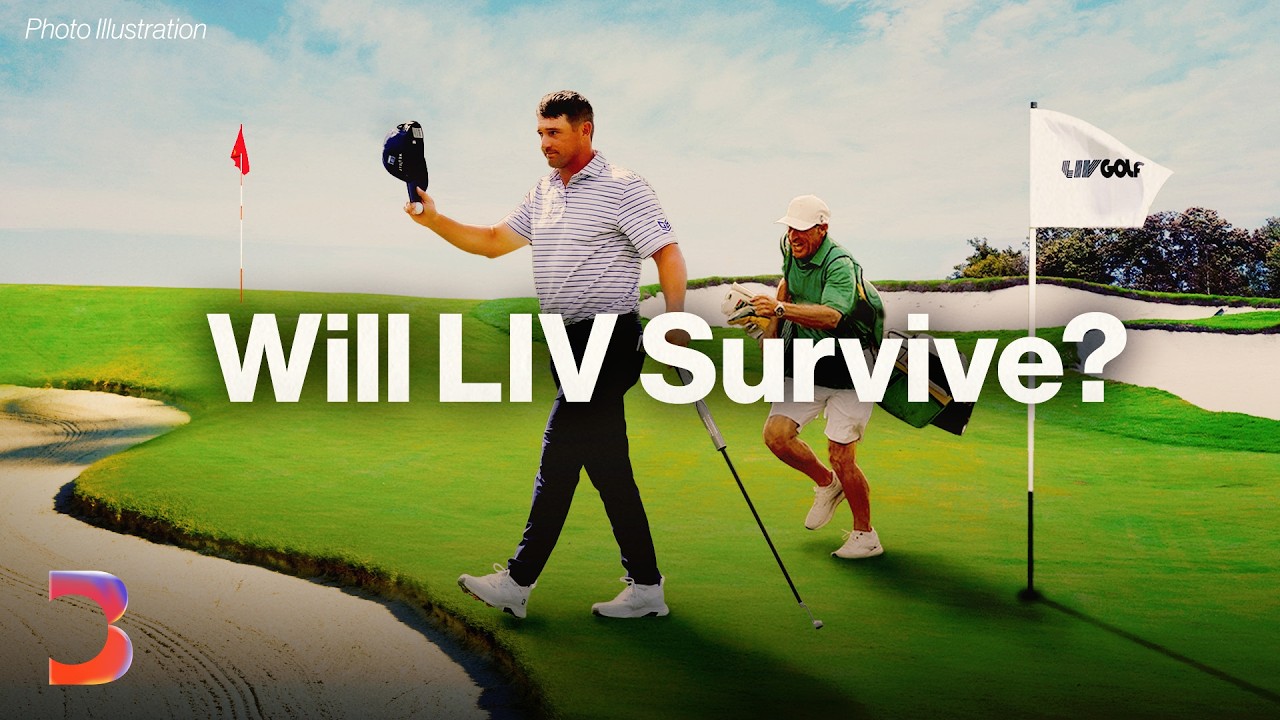
Bloomberg Originals
Saudi Arabia's sovereign wealth fund is pulling out of LIV Golf after spending over $5 billion, forcing the league to solicit private equity and offer players equity instead of massive upfront cash.
AI-assisted summary of Will LIV Golf Survive? — original source. Check the original for full context.
Source published:
Detailed notes
## Background Published on YouTube by Bloomberg Originals on August 28, 2026, this video investigates the uncertain future of LIV Golf as its primary financial backing comes to an end. According to the page description, the league was initially seen as a lucrative alternative to the PGA Tour, but it became part of an abortive effort by Saudi Arabia to exert soft power and is now scrambling for new funding.
## TL;DR LIV Golf initially disrupted professional golf by luring away marquee stars with massive upfront checks and unprecedented prize pools funded by Saudi Arabia's $1 trillion Public Investment Fund (PIF). Despite successfully lowering viewer demographics and forcing the PGA Tour to increase its own purses, LIV struggled to build a loyal broadcast audience, pulling a fraction of the PGA's viewership. Faced with mounting costs and geopolitical shifts, the PIF announced it is pulling its funding, leaving LIV searching for private investors like BC Partners and asking players to take equity instead of cash. Although a merger is currently off the table, LIV's disruptive run permanently altered the economic landscape of professional golf.
## Atmosphere & style The video carries an analytical, corporate-investigative tone typical of high-end financial journalism, balancing the high-stakes drama of golf's civil war with cold economic realities. It presents a measured, data-driven narrative arc that transitions from the initial shockwave of multimillion-dollar player defections to the sober fallout of unmaterialized broadcast numbers and geopolitical retreat. Viewing it feels like an executive debriefing—sharp, candid, and objective, dissecting how a high-flying sports disruption ultimately met the hard floor of commercial viability.
## Key takeaways - [00:00](https://www.youtube.com/watch?v=GUB-MVVuWqU&t=0s) LIV Golf launched as a high-stakes competitor to the PGA Tour, drawing major stars away with massive signing checks, including a reported $200 million deal for Phil Mickelson. - [00:47](https://www.youtube.com/watch?v=GUB-MVVuWqU&t=47s) The Saudi Public Investment Fund (PIF) invested over $5 billion into LIV Golf over five years as part of a soft-power push, but announced it will pull its funding at the end of the season. - [01:23](https://www.youtube.com/watch?v=GUB-MVVuWqU&t=83s) LIV targeted a younger demographic by offering a faster product and team format, successfully reducing the average broadcast audience age to 45 compared to the PGA Tour's 67.5. - [02:20](https://www.youtube.com/watch?v=GUB-MVVuWqU&t=140s) LIV offered unprecedented event purses of $25 million with no cut, paying $4 million to 1st place and $120,000 to last place, alongside huge contract offers up to $300 million for Jon Rahm. - [03:30](https://www.youtube.com/watch?v=GUB-MVVuWqU&t=210s) The PGA Tour responded to defections by issuing player bans, leading 11 suspended golfers to file lawsuits against the organization. - [03:41](https://www.youtube.com/watch?v=GUB-MVVuWqU&t=221s) Despite Saudi Arabia's $1 trillion wealth fund backing the league, LIV struggled to build a broadcast audience, averaging just 49,000 US viewers on FS1 compared to 4.35 million for the PGA Tour on CBS on a single day. - [06:02](https://www.youtube.com/watch?v=GUB-MVVuWqU&t=362s) Diminishing public interest and unfulfilled commercial expectations led LIV to seek private equity, entering non-binding negotiations with lead investor BC Partners. - [06:33](https://www.youtube.com/watch?v=GUB-MVVuWqU&t=393s) To offset funding shortfalls, LIV asked players to accept equity stakes rather than guaranteed cash payouts, which raised concerns among prospective investors and athletes. - [07:15](https://www.youtube.com/watch?v=GUB-MVVuWqU&t=435s) While the PGA Tour shut the door on a joint merger for now and allowed defectors to return, LIV's disruption successfully forced the PGA Tour to increase its own prize purses and player guarantees.
## Detailed walkthrough ### [00:00](https://www.youtube.com/watch?v=GUB-MVVuWqU&t=0s) A Civil War Breaks Out in Golf
Overnight, the world’s most polite sport tore itself apart as top players defected from the PGA Tour to join the newly launched LIV Golf series in London. Seeking sweeter payouts, big-name stars viewed the move as a pure business decision, with Phil Mickelson reportedly signing a deal worth $200 million. This sudden split deeply fractured professional golf, drawing sharp criticism from traditionalists who felt players were turning their backs on the very platform that built their careers.
LIV Golf's lavish business model relied heavily on the financial backing of Saudi Arabia, whose Public Investment Fund (PIF) poured over $5 billion into the league in under five years as an exercise in soft power. However, running an expensive league during shifting geopolitical times and regional conflict led to a major turning point: Saudi Arabia's PIF announced it would pull its funding at the end of the season, leaving LIV scrambling for new lead investors to foot the bill.
- Phil Mickelson signed an initial deal worth a reported $200 million to join LIV. - Saudi Arabia invested over $5 billion into LIV Golf in under five years. - The Saudi Public Investment Fund (PIF) announced it is pulling its funding at the end of the season.
---
[01:23](https://www.youtube.com/watch?v=GUB-MVVuWqU&t=83s) Shaking Up the Country Club Scene
LIV Golf set out to modernize golf's country club image by offering a faster, younger, and more global product with a festival atmosphere. While the average PGA Tour broadcast viewer skewed older—at 67.5 years old—LIV managed to pull its average audience age down to 45. Originally starting with 54-hole tournaments (reflecting the Roman numeral LIV), the league eventually expanded to a standard 72-hole format.
To further differentiate itself from the individual-focused PGA Tour, LIV introduced global tournament locations and a team-based franchise structure where groups of golfers compete together. The financial incentives were equally distinct: LIV launched with $25 million tournament prize pools—paying $4 million to the winner and $120,000 to the last-place finisher with no cut—compared to the 2022 Masters winner's purse of $2.7 million. On top of prize money, LIV offered massive upfront checks just to sign and compete, including $125 million to $130 million for top stars, and a staggering $300 million deal for Jon Rahm.
- PGA Tour average viewer age: 67.5 years old; LIV Golf average viewer age: 45 years old. - LIV inaugural purse structure: $25 million total per event, $4 million for 1st place, $120,000 for last place (no cut). - Comparison: 2022 Masters tournament winner received $2.7 million. - Major signing checks included Jon Rahm ($300 million) along with payouts in the $125 million–$130 million range for other stars. - The PGA Tour responded to the defections by issuing player bans, prompting 11 golfers to file suit against the PGA Tour for their suspensions.
---
[03:41](https://www.youtube.com/watch?v=GUB-MVVuWqU&t=221s) Sovereign Wealth and the Battle for Eyeballs
LIV was able to make astronomical offers because it was backed by Saudi Arabia's Public Investment Fund (PIF), chaired by Crown Prince Mohammed bin Salman. Managing approximately $1 trillion, PIF is one of the Middle East's largest sovereign wealth funds, trailing only Abu Dhabi's ADIA. Saudi Arabia utilized investments in sports—including boxing and combat sports—to project soft power, broaden cultural influence, and shift the international narrative away from major diplomatic incidents and the immense costs of regional giga-projects.
Despite the heavy spending, LIV struggled to translate financial capital into actual viewership. Broadcasts on FS1 failed to capture standard golf audiences, largely because mainstream fans remained loyal to the legacy PGA Tour brand in the same way fans stick with the NFL or NBA over startup competitors.
- Saudi Arabia's PIF manages roughly $1 trillion in assets. - Viewership comparison: LIV's April final round in Mexico City averaged 49,000 US viewers on FS1, while the PGA Tour's RBC Heritage final round on the same day drew 4.35 million viewers on CBS.
---
[06:02](https://www.youtube.com/watch?v=GUB-MVVuWqU&t=362s) Financial Strains, Investor Doubts, and Golf's Future
With skyrocketing costs, cooling economic conditions, and struggling giga-projects, the billions poured into LIV became increasingly difficult for Saudi Arabia to justify without commercial returns. Google search trends in 2026 revealed dwindling public interest, where the only spike in searches occurred when news broke that the Saudi PIF was pulling its financial backing. To keep the league alive, LIV began seeking private funding, entering non-binding negotiations with lead investor BC Partners.
Potential private investors expressed hesitation over the league's financial viability, particularly given proposals asking players to take equity in lieu of guaranteed cash—a risky gamble for athletes with limited career windows. Concurrently, the PGA Tour began allowing defectors to return to the fold, though some PGA loyalists publicly questioned whether returning players actually brought any real value back with them. While fans hold out hope for a eventual merger between the two leagues, the PGA Tour has shut the door on a joint deal for now. Nevertheless, LIV's disruption successfully forced the PGA Tour to increase its own prize purses and financial guarantees to protect its core talent.
- Search interest for LIV Golf remained low throughout 2026, spiking only during the news of PIF's funding exit. - BC Partners emerged as a potential lead investor via a non-binding term sheet. - LIV asked its players to accept equity stakes to offset funding shortages. - Pressure from LIV compelled the PGA Tour to raise purse sizes and economic incentives across its own signature events to retain marquee players.
## Mentioned LIV Golf, PGA Tour, Saudi Arabia, Public Investment Fund, Phil Mickelson, Mohammed bin Salman, Abu Dhabi Investment Authority, FS1, RBC Heritage, CBS, Google, BC Partners
[Source](https://www.youtube.com/watch?v=GUB-MVVuWqU)