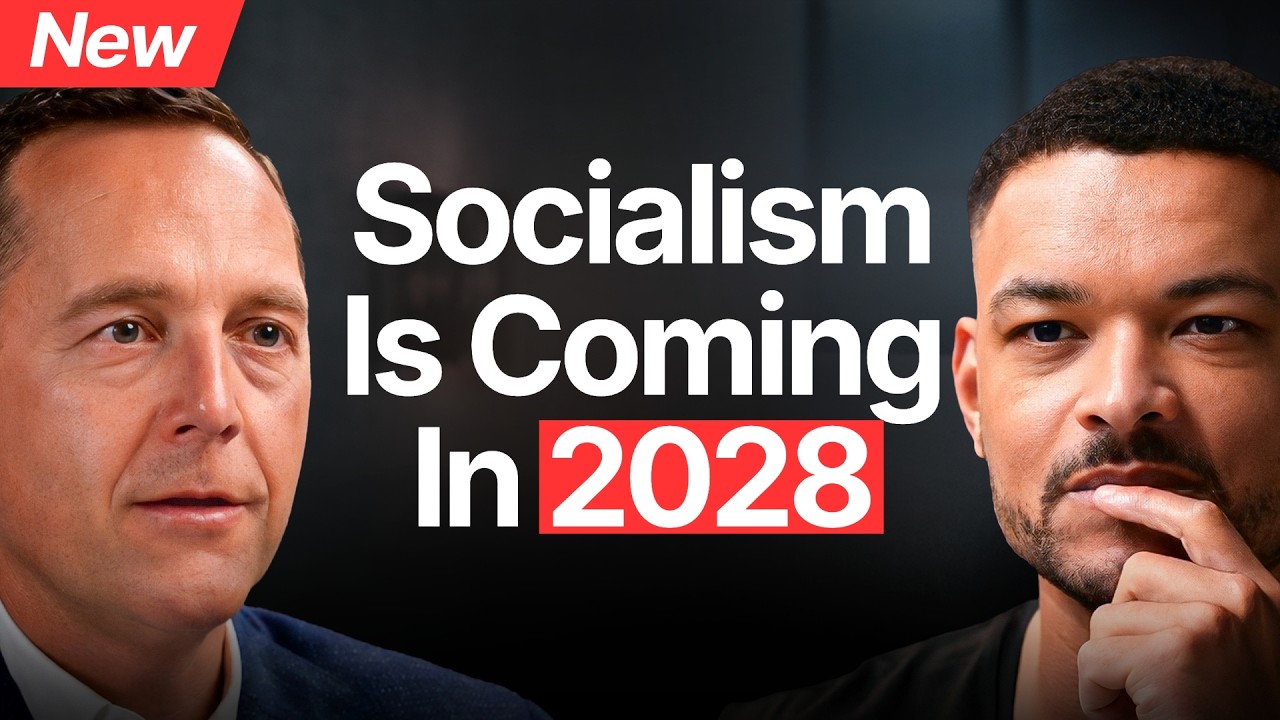
Trump Advisor David Friedberg Warns US Fiscal Drift Risking Socialism
The Diary Of A CEO
Government debt and federal price distortions in housing and education threaten to erode wealth creation, driving desperate voters toward state dependency by 2028.
## Background
This content was published on YouTube by Steven Bartlett on his channel 'The Diary Of A CEO' on August 31, 2026. The video features an in-depth conversation with scientist-entrepreneur David Friedberg, who serves on President Trump's Council of Advisors on Science and Technology and co-hosts the 'All-In Podcast'. According to the page description, the episode explores why the United States may be in imperial decline, the potential rise of socialism by 2028, how government policies distort economic markets, and why AI will ultimately create abundance and expand economic opportunity rather than cause mass unemployment.
## TL;DR
David Friedberg presents a sweeping analysis of economic policy, technological acceleration, and human longevity. He argues that government intervention and monetary expansion drive inflation while trapping middle-class Americans in debt instead of capital ownership. Dismissing widespread panic over AI-driven job loss, Friedberg asserts that historical tech revolutions always expand economic output, and that open-source AI alongside breakthroughs in cellular epigenetics will unlock unprecedented global abundance in healthcare, energy, and material sciences.
## Atmosphere & style
The dialogue balances high-stakes macro analysis with pragmatic, intellectually rigorous problem-solving. Steven Bartlett provides an engaged, grounded counterweight to Friedberg's rapid-fire explanations of economics, biological mechanisms, and tech policy. The atmosphere feels like an urgent yet fundamentally optimistic masterclass, steering clear of sensationalist doom to focus on structural realities, scientific promise, and human agency.
## Key takeaways
- [08:48](https://www.youtube.com/watch?v=OYg6BTjb90E&t=528s) Ray Dalio's model indicates that the United States fits the criteria of an empire in relative decline, with power shifting toward China due to internal economic friction and middle-class stagnation.
- [10:43](https://www.youtube.com/watch?v=OYg6BTjb90E&t=643s) Federal subsidies and liquidity injections into healthcare, housing, and higher education eliminate free-market price controls and artificially inflate living costs.
- [12:59](https://www.youtube.com/watch?v=OYg6BTjb90E&t=779s) True financial independence requires transitioning from labor to productive capital ownership, whereas homeownership often acts as an illiquid debt trap compared to index funds.
- [18:00](https://www.youtube.com/watch?v=OYg6BTjb90E&t=1080s) The U.S. tax system heavily favors capital over labor, but wealth taxes cause massive capital flight and violate constitutional property rights; taxing loans collateralized by appreciated assets is a fairer solution.
- [40:08](https://www.youtube.com/watch?v=OYg6BTjb90E&t=2408s) Short-term political election cycles incentivize politicians to promise immediate government subsidies, driving inflation and systemic dependency rather than solving long-term fiscal issues.
- [26:30](https://www.youtube.com/watch?v=OYg6BTjb90E&t=1590s) Mandatory term limits and strict anti-corruption laws—including stock trading bans for politicians—are essential reforms to curb government waste and post-service corporate kickbacks.
- [43:23](https://www.youtube.com/watch?v=OYg6BTjb90E&t=2603s) Adopting European-style safety networks and high marginal tax rates risks stifling high-risk innovation, creating productivity drags, and driving capital to lower-tax jurisdictions.
- [51:23](https://www.youtube.com/watch?v=OYg6BTjb90E&t=3083s) Historical technological waves demonstrate that automation expands economic output, increases leverage, and creates higher-paying jobs rather than causing permanent structural unemployment.
- [54:48](https://www.youtube.com/watch?v=OYg6BTjb90E&t=3288s) AI tools empower solo creators and knowledge workers to drastically increase strategic throughput, while human-centric 'In Real Life' (IRL) experiences will see premium demand.
- [01:03:29](https://www.youtube.com/watch?v=OYg6BTjb90E&t=3809s) Apocalyptic predictions of total job loss by tech founders reflect 'deep arrogance' that ignores human adaptability, as shown by enterprise case studies like Klarna.
- [01:19:18](https://www.youtube.com/watch?v=OYg6BTjb90E&t=4758s) Open-weight AI models prevent big tech gatekeeping and wealth concentration, while banning Chinese open-source AI threatens U.S. business competitiveness.
- [01:35:18](https://www.youtube.com/watch?v=OYg6BTjb90E&t=5718s) Epigenetic aging is caused by DNA repair errors shifting switches over time; partial reprogramming via Yamanaka factors can reset cellular age without inducing tumors.
- [01:42:59](https://www.youtube.com/watch?v=OYg6BTjb90E&t=6179s) AI application in life sciences allows modeling of complex protein interactions in silico, radically increasing drug discovery success rates and accelerating longevity research.
- [01:46:14](https://www.youtube.com/watch?v=OYg6BTjb90E&t=6374s) Four major public lies in America include Higher Education, Homeownership, Social Security, and Public Pensions, all distorted by government mismanagement and unsustainable debt structures.
- [01:54:43](https://www.youtube.com/watch?v=OYg6BTjb90E&t=6883s) Alexandria Ocasio-Cortez could win the 2028 presidential election as cost-of-living pressure pushes desperate voters toward Democratic Socialist promises of direct aid.
- [01:56:20](https://www.youtube.com/watch?v=OYg6BTjb90E&t=6980s) To prevent power grid strains from AI data centers, new developments should be mandated to build microgrids that feed excess electricity back to the public and share profits via worker 401(k) REITs.
## Detailed walkthrough
Here is a detailed, faithful walkthrough of the transcript section.
---
### [00:00](https://www.youtube.com/watch?v=OYg6BTjb90E&t=0s) Intro & The Promise of the Channel
The episode opens with high-stakes clips framing the core themes of the conversation: the decline of the U.S. empire, the inevitability of American socialism, and the transformative potential of artificial intelligence. Guest David Friedberg—entrepreneur, scientist, and presidential science advisor—stresses that government intervention often makes essential services more expensive, leaving 63% of Americans living paycheck to paycheck. Simultaneously, he rejects doom-and-gloom narratives around AI. Rather than causing mass unemployment or concentrating all wealth in the hands of tech moguls like Sam Altman, Dario Amodei, or Elon Musk, Friedberg predicts open-source AI will create a new wave of self-made billionaires from scratch while curing disease and ending global hunger.
Host Steven Bartlett pauses the intro to address the audience directly about subscriber retention, revealing a internal metric check showing that long-time viewers are occasionally unsubscribed by algorithm glitches. He makes a direct pact with his audience: if viewers double-check their subscription status to keep the show free and growing, he will fight harder each week to land world-class guests and produce unmatched conversations.
### [02:25](https://www.youtube.com/watch?v=OYg6BTjb90E&t=145s) Who Is David Friedberg and Why Does He Matter?
When asked to self-categorize beyond his professional titles, Friedberg defines himself primarily through a lens of deep curiosity about the universe and a fundamental belief in human agency—the capacity of individuals to actively shape their surrounding environment. Reflecting on a childhood photo showing a kid who desperately wanted to be Albert Einstein, Friedberg explains how his path evolved from pure scientific inquiry to leveraging business as a tool for large-scale change.
```
[ Astrophysics Student ]
│
▼
[ Poker Player / Analyst ]
│
▼
[ Investment Banking ]
│
▼
[ Google (Early Employee) ]
│
▼
[ Founder: The Climate Corporation ]
(Acquired by Bayer for $1B+)
```
His operational journey began in college at UC Berkeley, where he initially majored in math and physics before shifting to astrophysics. During the late 1990s dot-com boom in Silicon Valley, his dorm roommate sold a simple DVD e-commerce website for $1 million during their junior year. That eye-opening moment turned Friedberg toward business. To fund his college life, he worked at a local pool hall earning $4.25 an hour. After losing his modest earnings in a poker game hosted by the pool hall manager and bookie, Friedberg bought strategy books, mastered the game, and turned poker into his primary income stream. Putting "poker player" on his resume landed him interviews with Wall Street investment banks intrigued by his analytical risk assessment. After a stint in investment banking learning M&A and corporate finance, he joined Google back when it had fewer than 1,000 employees. In 2006, he left Google to found The Climate Corporation, an agricultural data and weather-insurance startup.
- The Climate Corporation was acquired by Bayer in 2013 for over $1.1 billion when Friedberg was 33 years old.
- Today, the platform's digital agriculture software is deployed across more than 200 million acres of global farmland annually.
### [05:22](https://www.youtube.com/watch?v=OYg6BTjb90E&t=322s) What Does a Presidential Advisor Actually Do?
Friedberg details his role on the President’s Council of Advisors on Science and Technology (PCAST), having been appointed to advise President Donald Trump. He contextualizes PCAST historically, noting how previous presidential administrations tailored the council's composition to the technological paradigm of their era—such as Bill Clinton forming a PCAST heavily focused on the nascent commercial internet.
Under the current administration, PCAST leans heavily into artificial intelligence policy, featuring prominent tech leaders such as Mark Zuckerberg, Marc Andreessen, and Sergey Brin alongside domain experts in biotechnology and life sciences. The council’s core function is bridging the gap between frontier industry breakthroughs and federal policy decisions, advising the administration on how to guide, regulate, or accelerate technological progress.
### [06:26](https://www.youtube.com/watch?v=OYg6BTjb90E&t=386s) Why AI Could Be the Most Important Issue of Our Time
Friedberg identifies artificial intelligence regulation as the central policy debate in Washington. A primary friction point—even within the same political parties—is whether the U.S. government should allow American enterprises to adopt open-source AI models developed in China.
Chinese open-weight models have reached performance parity with (and in several benchmarks exceed) leading proprietary U.S. models. Because their weights are open, domestic businesses can host them locally on their own infrastructure at a fraction of the cost. Friedberg highlights the stark economic disparity: Chinese open-source models cost around $0.50 per million tokens of output, whereas commercial American models like Anthropic's Claude can cost up to $50.00 per million tokens. Policy makers face a profound dilemma: banning these cheap Chinese models risks crippling the competitiveness of American businesses relying on low-cost compute, while permitting them raises national security concerns and potentially undermines the domestic AI sector. Beyond immediate policy disputes, AI is fundamentally restructuring the scientific method itself, accelerating discoveries across genomics, biology, and life sciences.
### [08:48](https://www.youtube.com/watch?v=OYg6BTjb90E&t=528s) What’s Really Happening to the U.S. Economy?
To understand the public anxiety surrounding AI and politics, Friedberg zooms out to analyze the macroeconomic backdrop of the U.S., identifying an acute affordability crisis coupled with severe wealth inequality. Referring to economic cycles popularized by investor Ray Dalio—who tracks the 500-year historical rise and fall of global empires—Friedberg argues that the United States fits the classic criteria of an empire in relative decline, while power shifts toward rising nations like China.
He connects internal economic dissatisfaction directly to foreign policy aggressive behaviors, noting that nations experiencing internal harmony rarely seek external military conflicts such as the war with Iran. Domestic friction manifests as class war because middle-class wages have failed to keep pace with basic living costs.
- 63% of American households currently live paycheck to paycheck and lack the cash savings to cover a single unexpected emergency expense.
- The U.S. is locked in a severe crisis of internal classism, driving resentment between socioeconomic strata.
### [10:43](https://www.youtube.com/watch?v=OYg6BTjb90E&t=643s) The Great Lie About Government Services & Higher Education
Friedberg presents a controversial thesis that challenges traditional policy intervention: the government's attempt to solve inequality by subsidizing core human necessities—education, healthcare, and housing—is precisely what makes those services unaffordable. He labels the belief that "the government will save you" as one of the great lies of U.S. public policy over the past half-century.
When the government injects unchecked liquidity into a sector, it eliminates natural free-market price sensitivity. He illustrates this dynamic through higher education:
```
[ Federal Student Loan Program (Unlimited Guaranteed Capital) ]
│
▼
[ Universities Raise Tuition 5% - 10% Annually Without Risk ]
│
▼
[ Administrative Staffing Bloat (Surges from 10% to 60% of Staff) ]
│
▼
[ Massive Student Debt & Explosive Unaffordability Crisis ]
```
Thirty years ago, administrative personnel accounted for roughly 10% of university staff; today, administrators represent nearly 60%. Because federal student loan programs grant students access to debt regardless of degree utility or institutional graduation performance, universities experience no market pressure to control costs. Instead, institutions continuously raise tuition by 5% to 10% a year to expand administrative hierarchies and boost executive salaries. When voters demand relief from the resulting debt crisis, politicians propose further federal spending—ironically pouring gasoline on the inflationary fire and driving the nation closer to state-controlled socialism.
### [12:59](https://www.youtube.com/watch?v=OYg6BTjb90E&t=779s) Labor vs. Capital: Redefining the Real American Dream
Friedberg argues that the ultimate metric of any healthy economy is how effectively it transitions its working citizens from the "labor" bucket into the "capital" bucket.
Reflecting on his own life, he recalls graduating college with $19,000 in student debt. By working, saving, paying off debt, and eventually acquiring liquid equity through Google's IPO, he crossed the threshold where his assets could generate sustainable returns without requiring a monthly paycheck.
True financial agency is not merely homeownership—which often traps people under heavy debt, property taxes, and insurance obligations—but the state of owning productive capital. Socialism stripped of market dynamics strips individuals of this agency. The genuine U.S. dream lies in enabling labor to build, hold, and compound capital, freeing citizens from the lifelong burden of living paycheck to paycheck.
[14:13](https://www.youtube.com/watch?v=OYg6BTjb90E&t=853s) The Transition from Labor to Capital and the Rise of Socialism
David Friedberg argues that true economic and financial security means reaching a point where an individual can live off the interest generated by their accumulated assets rather than relying solely on continuous labor. Illustrating the math, he points out that if someone saves $100,000 and earns a 10% annual return, they generate $10,000 a year; if they grow that nest egg to $1 million, that same 10% yield yields $100,000 annually—an income level that allows a person to live comfortably without being locked into job dependence. Friedberg asserts that the core promise of America was to provide every citizen with the agency and freedom to make this transition from labor to capital. He believes the country's ultimate metric of success should be helping roughly 2% of Americans cross that line into financial independence every year.
Conversely, Friedberg criticizes socialism because it eliminates this transition altogether, locking every citizen into perpetual labor for the state while stripping away individual freedom. When governments focus on continuously promising "more stuff" funded by printing money and racking up debt, it inflates costs, drives up national debt, and creates a vicious cycle. Under these conditions, he warns, a slide into full socialism becomes virtually inevitable.
- **Financial Independence Benchmark:** Saving $1 million at a 10% return produces $100,000 per year in passive capital income.
- **National Target:** Transitioning 2% of the U.S. population from labor dependence to capital ownership annually.
- **The Pitfall of Socialism:** Treats all citizens as permanent labor, eliminating the ability to achieve financial autonomy.
---
[15:16](https://www.youtube.com/watch?v=OYg6BTjb90E&t=916s) Is America in Imperial Decline?
When host Steven Bartlett asks whether the United States is in decline as an empire, Friedberg answers with a nuanced "yes"—specifically regarding the purchasing power of the U.S. dollar and the immediate economic prosperity felt by the average American. However, he maintains that this decline is not a runaway train and can still be reversed. Recounting his personal journey as an immigrant who moved to the U.S. from South Africa, attended a public college, took on student debt, and worked his way up to immense success without nepotism or handouts, Friedberg notes that America remains one of the few places in human history where such upward mobility occurs millions of times over. The core tragedy is that hundreds of millions of citizens haven't been given the same opportunity, but fixing that system could secure centuries of future prosperity.
When the conversation shifts to the soaring U.S. national debt, Friedberg points directly to it as the primary driver of inflation. He walks through the mechanics of monetary expansion: the Federal Reserve creates dollars to purchase government debt from the banking system, injecting those dollars into commercial banks, which then lend them into the broader economy. Because the Fed continues to accumulate this debt without being repaid, the supply of dollars inflates endlessly, eroding purchasing power.
- **Personal Background:** Immigrated to the U.S. from South Africa, attended public university, cleared personal debt, and built wealth through merit and capital growth.
- **Mechanics of Inflation:** The Federal Reserve prints dollars to buy U.S. government debt from banks, flooding the economy with excess liquidity.
- **De Facto Socialism Metric:** Roughly 50% of the U.S. population is currently dependent on the government when accounting for federal, state, and local employees, government contractors, and recipients of public pensions or Social Security.
---
[18:00](https://www.youtube.com/watch?v=OYg6BTjb90E&t=1080s) Labor vs. Capital: The Real Tax Flaw and Wealth Taxes
Friedberg identifies a fundamental flaw in the American tax system: taxing labor income at higher rates than capital growth. He illustrates how capital compounds exponentially over time—a $1 million investment growing at 10% annually becomes $1.1 million, then $1.21 million, eventually compounding to $10 million without the investor ever selling a share or triggering a tax event along the way. In contrast, working individuals have taxes withheld from every single paycheck, preventing them from accumulating the baseline savings required to start compounding capital in the first place.
```
Compounding Capital vs. Taxed Labor
Initial Capital: $1,000,000 (Grows untaxed at 10%/year)
├── Year 1: $1,100,000
├── Year 2: $1,210,000
└── Compounding continues... -> $10,000,000 (No tax paid until sold)
While advocating that capital returns should be taxed at rates equivalent to labor, Friedberg firmly opposes "wealth taxes," defining them as direct asset seizures that violate core American principles of private property rights. He explains that historically, in Europe, Asia, Africa, and the Middle East, ordinary citizens lacked true property rights, as everything ultimately belonged to kings or feudal lords. The U.S. was built on the revolutionary principle of individual property rights—originally framed around "life, liberty, and the pursuit of property" before being rephrased as the "pursuit of happiness."
- **Capital Compounding Advantage:** Investments grow tax-free until realization, whereas wages are taxed at every pay period.
- **Historical Context:** Early drafts of the Declaration of Independence referenced "life, liberty, and the pursuit of property."
- **Constitutional Protections:** Wealth taxes conflict with the Fifth Amendment's Takings Clause; seven U.S. states have explicit constitutional bans on private property taxes of this nature.
---
[21:42](https://www.youtube.com/watch?v=OYg6BTjb90E&t=1302s) The Buy-Borrow-Die Loophole and Tax Fairness
Steven shares a personal realization from when he was around 26 years old: after his company went public, a European bank offered him a tax-free loan equal to 20% of his stock holdings in his company, Ocean AG, as well as a 50% to 60% loan-to-value ratio on his Facebook stock. He recalls being amazed that he could receive $700,000 in tax-free cash against $1 million in stock without selling a single share, realizing in that moment, "fucking hell, this is what the rich do." Friedberg agrees completely, calling out this "buy-borrow-die" strategy as a massive loophole that must be closed.
Friedberg argues that borrowing against stock is functionally equivalent to transacting on that asset. He proposes that taking out loans collateralized by appreciated assets should trigger a taxable event, forcing the ultra-wealthy to pay their fair share without resorting to unconstitutional wealth seizures.
```
The "Buy-Borrow-Die" Loophole
Hold Stock (e.g., $1,000,000)
│
├── Take Bank Loan (e.g., $700,000 Cash) ──> Tax-Free Spending/Acquisitions
│
└── Stock Remains Unsold ──> No Capital Gains Tax Triggered
```
- **The Loan Loophole:** Wealthy individuals borrow cash against their stock portfolios at 50%–70% loan-to-value to buy lifestyle assets or additional investments while paying zero capital gains tax.
- **Proposed Policy Fix:** Treat borrowing against financial assets as a realization event that triggers standard capital gains taxes.
- **Alternative Tax Solutions:** Raising capital gains rates and high-earner income taxes gets policy "97% of the way there" without needing asset-seizure wealth taxes.
---
[24:30](https://www.youtube.com/watch?v=OYg6BTjb90E&t=1470s) Capital Flight and the Great Lie of Homeownership
Friedberg warns that if a country or state resorts to aggressive wealth taxes, the inevitable outcome is massive capital flight. He notes that many billionaires are already leaving or planning to leave California due to the threat of proposed wealth taxes. Pointing to France's past attempt at a wealth tax, he notes that total tax revenues actually dropped because wealthy individuals fled the country; when France repealed the tax, capital and tax revenues returned.
Turning to middle-class wealth creation, Friedberg targets what he views as one of the ultimate economic deceptions in America: the belief that buying a house is the premier path to prosperity. He explains that buying a home forces people to tie up all their liquid capital in a single, illiquid asset. To keep the model going, housing prices must be artificially inflated year after year, which ultimately priced younger generations completely out of the market. Instead of taking on a heavy mortgage, he argues that individuals can accumulate capital far faster by renting and investing their savings directly into broad market index funds like the S&P 500 through platforms like E-Trade or Robinhood.
- **California Tax Base:** The top 1% of earners pay 40% to 50% of California's total personal income tax revenue.
- **Lessons from France:** France's wealth tax backfired by causing net revenue losses due to capital flight, forcing its eventual repeal.
- **The Real Estate Trap:** Homeownership concentrates capital in a single asset and relies on constant price inflation, whereas investing in the S&P 500 historically yields an average annual return of 10% to 11% without property taxes or maintenance overhead.
[27:33](https://www.youtube.com/watch?v=OYg6BTjb90E&t=1653s) The Great Lie About Home Ownership
David Friedberg continues his critique of residential real estate as the primary investment vehicle for the average person. He points out that home ownership comes with hidden, recurring costs—insurance, maintenance, and ongoing repairs—that people often leave out of their math. Depending on the region, many individuals over the last 30 years would have achieved a significantly higher financial return by renting and investing the difference directly into the S&P 500.
Steven Bartlett brings up a common counterargument seen in comment sections whenever this topic is raised: homeowners who bought a property two decades ago frequently boast about how much its value has appreciated. Friedberg explains that this reaction highlights a structural problem rather than a triumph. When residential property prices skyrocket, the asset becomes unaffordable for the next generation. The federal government has heavily intervened in residential real estate through policies designed to inflate property values, enabling older generations—like Baby Boomers—to amass vast wealth while pricing out young graduates.
This policy-driven inflation leaves younger Americans facing high home prices, burdened by debt, and increasingly alienated from free-market capitalism. Friedberg warns that when millions of young people realize they need "a million bucks" just to buy a starter home, they naturally drift toward demanding government intervention and socialism.
- **Market Realities:** Owning the S&P 500 while renting often yields superior long-term net returns compared to home ownership once insurance, taxes, and maintenance are factored in.
- **Government Distortions:** Sectors with high government involvement (housing, higher education, healthcare) see runaway price increases, whereas unregulated tech sectors see dropping costs and rising quality.
- **Demographic Disconnect:** Approximately 40 to 45 million Americans have graduated from college over the last decade, with many facing heavy student debt and unaffordable housing costs.
- **Paycheck Precarity:** Roughly 63% of Americans live paycheck-to-paycheck, unable to cover a $500 unexpected financial emergency.
[29:56](https://www.youtube.com/watch?v=OYg6BTjb90E&t=1796s) What Should You Invest in Instead of Real Estate?
When asked what advice or prescription he would give to the 63% of Americans who feel locked out of traditional wealth-building, Friedberg emphasizes the power of individual agency and the modern internet economy. He highlights how digital platforms have unlocked entirely new economic models that didn't exist a generation ago—allowing podcasters, social media creators, digital artists on Etsy or eBay, and independent craftspeople to generate substantial incomes without needing permission from traditional gatekeepers or government bodies.
```
+-----------------------------------------------------------------------+
| PATHWAYS TO WEALTH |
+-----------------------------------------------------------------------+
| TRADITIONAL PATH (Constrained) | MODERN DIGITAL PATH (Leveraged) |
| - Real estate ownership | - Content creation & media |
| - Public/government employment | - Niche e-commerce (Etsy/eBay) |
| - High debt & credentialing | - Direct-to-consumer value |
+-----------------------------------------------------------------------+
```
Friedberg acknowledges that critics often complain that "the system failed us," but he argues that reliance on the government is a dead end. Instead of solving problems, government layers—such as mandatory licensing, costly schooling requirements, and endless administrative inspections—often inhibit personal agency and erect barriers against individuals trying to start small businesses.
To illustrate how economic growth actually occurs, Friedberg references a discussion from the Hoover Institution regarding China's rapid rise. While many attribute China's growth to central planning, he argues that the real driver was the government "loosening the shackles"—allowing individuals to trade freely, exercise entrepreneurship, and create value for one another. The central question every individual should ask themselves daily is: "What did I do today that someone else valued?"
- **Overcoming Regulatory Barriers:** Occupational licenses (such as cosmetology requirements for opening a barber shop) act as government-imposed hurdles to starting small businesses.
- **Lessons from Economic Growth:** China's growth in GDP per capita came primarily from permitting free-market activity and individual enterprise rather than top-down state control.
- **Core Wealth Principle:** Consistently identifying and delivering value that others are willing to pay for is the most reliable path to financial mobility.
[33:55](https://www.youtube.com/watch?v=OYg6BTjb90E&t=2035s) How Much of Success Is Actually in Your Control?
Bartlett pushes back on Friedberg’s emphasis on pure individual agency by offering his own life as a case study. Born in Botswana to a Nigerian mother, Bartlett questions whether his success would have been possible without the foundational stability provided by the UK government—including free schooling, healthcare, public infrastructure, and the safety net of the "Jobseeker's Allowance." He reflects on how knowing a safety net existed gave him the psychological freedom to take high-stakes entrepreneurial risks at 18 years old.
Friedberg agrees that providing basic infrastructure and a baseline safety net is a legitimate and important role for government. However, he warns against a "slippery slope" where the state transitions from providing a safety net to becoming the primary employer or income provider for the population. Once 40% to 50% of citizens rely directly on government checks, it becomes politically impossible to roll back those programs, as voters consistently vote for larger payouts.
```
[ Foundational Safety Net ] ----( Slippery Slope)----> [ Dependency Trap ]
(Infrastructure, basic safety) (State as main employer/
distributor of checks)
```
The discussion turns to how public education fails to teach agency. Friedberg argues that public schools often train students to seek civil service or government roles rather than teaching them to harness their own creative capacity to build value in the private market.
- **The Role of Infrastructure:** Governments excel when providing stable baseline conditions—roads, rule of law, basic education, and public health—that allow private enterprise to flourish.
- **The Dependency Trap:** When a large percentage of the population relies on direct government subsidies, public incentives shift toward expanding state payouts rather than fostering productivity.
- **Educational Alignment:** Public education should focus on instilling a mindset of individual agency rather than routing students solely into state bureaucracy or military service.
[37:31](https://www.youtube.com/watch?v=OYg6BTjb90E&t=2251s) Why Inequality May Be Unavoidable
Addressing whether economic inequality can ever be completely eliminated, Friedberg asserts that inequality is an inevitable byproduct of progress. In a free market, individuals push frontiers to create novel technologies and new value. However, this value diffuses gradually through society rather than benefiting everyone simultaneously.
To explain this dynamic, Friedberg uses the analogy of a "goose that lays golden eggs." The innovator who invents or captures the golden goose accumulates immense wealth first. Over time, as the technology breeds and spreads, more people acquire golden geese, ultimately raising the overall standard of living for everyone. Though society experiences temporary, sharp inequality during the diffusion phase, the entire population ends up far better off than before the innovation existed.
```
Phase 1: Innovation ---> Pioneer gets the "Golden Goose" (High Inequality)
Phase 2: Diffusion ---> Technology spreads to wider market (Standard of Living Rises)
Phase 3: Abundance ---> Technology becomes ubiquitous (Overall Society Wealthier)
```
Attempting to eliminate this gap by forcing instant equality stifles the incentive to innovate, resulting in stagnation rather than shared prosperity. Real-world examples include cutting-edge CAR T-cell cancer therapies—which cost upwards of a million dollars per dose and are currently limited to around 50,000 patients a year—and advanced AI models. While access is initially unequal, these breakthroughs eventually become cheaper and universally accessible.
- **The Progress Trade-Off:** Society must choose between allowing temporary inequality through rapid innovation or enforcing strict equality at the cost of stagnation.
- **Technology Diffusion:** Advanced medical treatments like CAR T-cell therapies demonstrate how life-saving innovations start out expensive and scarce before scaling up.
- **The Paradox of Prosperity:** Long-term economic progress raises the baseline quality of life for everyone, even if it widens the wealth gap in the short term.
[40:08](https://www.youtube.com/watch?v=OYg6BTjb90E&t=2408s) The Real Reason the System Feels Broken
The root cause of long-term economic instability, according to Friedberg, is the short-term incentives built into modern democratic governance. Because politicians operate on short election cycles, they are continuously incentivized to promise "free stuff" to secure votes. He compares democratic campaigns to middle school class presidency elections, where the student who promises free vending machines wins every time.
When government attempts to mask inequality by handing out subsidies or artificial access, it degrades purchasing power and drives up inflation—meaning the money distributed buys less over time. Friedberg shares his firsthand frustration from frequent visits to Washington, D.C., where lawmakers routinely focus on securing localized spending and subsidies for their specific districts rather than addressing national, long-term fiscal stability.
> "I cannot tell you how much it drives me nuts when I go to Washington DC... literally all of them just talk about getting stuff for their constituents. Yeah, that's all that they're there to do... and the incentive is 'I'm going to get you something, vote for me.'"
- **Short-Term Political Incentives:** Four-year election cycles encourage politicians to prioritize immediate spending and voter handouts over long-term fiscal responsibility.
- **Inflationary Pressure:** Government attempts to subsidize living costs often result in higher prices across housing, healthcare, and education.
- **Legislative Focus:** Congressional representatives are structurally incentivized to function as wealth distributors for their local districts rather than stewards of national economic growth.
<ElicitationsGroup message="Explore related topics from this transcript:">
<Elicitation label="Read about AI's impact on job markets" query="Provide a detailed walkthrough of the transcript section discussing AI, job automation, and open source models."/>
<Elicitation label="Examine Friedberg's view on Social Security" query="Explain David Friedberg's arguments regarding Social Security and lost wealth from the transcript."/>
</ElicitationsGroup>
[41:11](https://www.youtube.com/watch?v=OYg6BTjb90E&t=2471s) Term Limits, Career Politicians, and Government Incentives
David Friedberg argues that the original vision of the American Republic centered on citizens stepping away from private life to complete a "tour of duty" in public service before returning home. He heavily criticizes the modern reality of career politicians whose primary job becomes getting re-elected. To fix this, he advocates for mandatory term limits—such as a maximum of two terms for senators or four terms for representatives—to align leaders' actions with the long-term interest of the public rather than self-preservation, which he claims fuels government inflation, mismanagement, waste, fraud, and abuse.
```
┌────────────────────────────────────────────────────────────────────────┐
│ PROPOSED GOVERNANCE REFORMS │
├──────────────────────────────────┬─────────────────────────────────────┤
│ Term Limits │ Max 2 terms for Senators, │
│ │ max 4 terms for Representatives. │
├──────────────────────────────────┼─────────────────────────────────────┤
│ Ethics & Trading Constraints │ Ban on stock trading, ownership │
│ │ conflicts, and post-service favors. │
├──────────────────────────────────┼─────────────────────────────────────┤
│ Rotational Service │ Encouraging flow between private │
│ │ careers and limited public service. │
└──────────────────────────────────┴─────────────────────────────────────┘
```
When Steven Bartlett points out the potential tradeoff—that limited-term officials might use their time in office to line up lucrative private-sector kickbacks or executive roles with companies like Boeing—Friedberg counters that this is easily resolved through strict legislation. He argues that public servants should be banned from trading stocks or self-enriching, with clear criminal penalties including jail time for violations.
- The Founders envisioned public service as a temporary duty, not a lifelong profession.
- Unchecked career politics encourages politicians to dole out short-term favors to secure votes, driving government bloat and inefficiency.
- Strict anti-corruption laws must complement term limits to block post-government corporate kickbacks.
---
[43:23](https://www.youtube.com/watch?v=OYg6BTjb90E&t=2603s) American Innovation vs. The Nordic Model
The conversation turns to global governance benchmarks, with Bartlett raising Denmark as a model known for high public trust, generous social safety nets, 37-hour workweeks, and 5–6 weeks of paid vacation. Friedberg acknowledges that the Danish system offers comfort, low poverty, and stability for most people, but argues it sacrifices radical technological and economic progress. He asserts that America’s framework of individual liberty, private property rights, and high risk-reward incentives is uniquely engineered to push the frontier of human progress—driving breakthroughs like CAR T-cell therapy, CRISPR gene editing, agricultural tech, advanced physics, and artificial intelligence.
```
┌────────────────────────────────────────────────────────────────────────┐
│ MODEL SYSTEM COMPARISON │
├───────────────────────────────┬────────────────────────────────────────┤
│ Denmark Model │ High baseline security, high trust, │
│ │ standardized workweeks, low poverty. │
├───────────────────────────────┼────────────────────────────────────────┤
│ United States Model │ High individual liberty, high ceiling, │
│ │ risk-reward drive, rapid innovation. │
└───────────────────────────────┴────────────────────────────────────────┤
```
Bartlett notes that polling data shows most average citizens would likely choose the security, higher floor, and happiness metrics of Denmark over the high-stakes American system. Friedberg agrees that a growing majority of Americans are seeking guarantees over risk, which explains the political shift toward social safety nets. However, he warns that adopting a Danish-style model risks choking off the asymmetric, high-risk entrepreneurial energy that fuels global advancement.
> "You can have great comfort for a great many people in Denmark and people will be very happy living there... but you will not have progress like you have in the United States."
- **Denmark Metrics:** 37-hour workweek, 5–6 weeks paid vacation, high societal trust, and lower income inequality.
- **US Breakthroughs Cited:** CAR T-cell therapy, gene editing, advanced agricultural technology, modern physics, and AI.
- The fundamental tradeoff is whether a society optimizes for widespread baseline contentment or maximum human progress and individual freedom.
---
[46:50](https://www.youtube.com/watch?v=OYg6BTjb90E&t=2810s) The Friction Between Liberty, Security, and Wealth Flight
Reflecting on his personal path from a childhood marked by identity struggles to building a media empire, Bartlett shares how he realized his hyper-ambitious, risk-seeking drive isn't universal—most people simply want security and balance. Friedberg contends that the central dilemma facing America is whether it can offer a stronger safety net to those who need it without stripping away the freedom and financial upside that incentivize high-performing builders.
```
┌────────────────────────────────────────────────────────────────────────────────┐
│ THE ECONOMIC INNOVATION TRILEMMA │
├────────────────────────────────────────────────────────────────────────────────┤
│ High Tax / High Safety Net ──► Depresses Risk Incentive ──► Wealth/Talent Flight│
│ High Risk / High Reward ──► Fuels Rapid Innovation ──► Widens Inequality │
└────────────────────────────────────────────────────────────────────────────────┘
```
They examine the United Kingdom as a cautionary case study of what happens when tax burdens rise and incentives wane. Bartlett highlights that high-net-worth individuals and technical founders are leaving the UK in high numbers for lower-tax, higher-growth destinations like Dubai and the United States. Friedberg explains that heavy taxation and government handouts erode individual productivity incentives, creating a cycle where economic growth stalls and spending problems worsen.
- High marginal tax rates risk driving away top entrepreneurs and high-earning taxpayers.
- The UK is currently suffering from both a productivity drag and an outflow of millionaires to tech-friendly regions.
- Attempting to force a high-ceiling capitalist society into a heavily redistributionist model often leads to talent and capital flight.
---
[51:23](https://www.youtube.com/watch?v=OYg6BTjb90E&t=3083s) Historical Tech Revolutions and the AI Job Myth
Addressing the widespread fear that artificial intelligence will eliminate millions of jobs and force society onto Universal Basic Income (UBI), Friedberg dismisses the apocalyptic narrative. He points to archived coverage—citing a 1963 *Newsweek* article warning that mainframe computers would destroy all accounting and typing jobs, alongside similar fears during the desktop computer boom of the 1980s.
> "Empirically... over all periods of technological revolution like this, we've never seen jobs decline. We've always seen jobs go up and we've seen demand go up and therefore incomes rise when new technology enters the workforce."
Friedberg explains the economic mechanics behind technological shifts: automation increases individual leverage, allowing one worker to produce far more value per hour. Rather than shrinking employment, increased efficiency expands the overall economic pie, creating entirely new industries, higher wages, and greater demand. While transitions cause short-term friction as labor shifts—much like the migration from 60% agricultural labor in the 1900s to under 2% today—the long-term result has consistently been higher living standards and expanded opportunity.
- Historical precedent shows technology consistently expands economic output rather than reducing overall employment.
- 1960s mainframe panics and 1980s PC anxieties mirrored modern AI job fears without causing permanent structural unemployment.
- Increased worker leverage translates to higher value generation, higher overall wages, and broad economic growth.
<ElicitationsGroup message="Explore related topics from this discussion:">
<Elicitation label="Analyze the economic impact of term limits on policy stability" query="What are the economic and structural arguments for and against implementing federal term limits in the US Congress?"/>
<Elicitation label="Compare US and Nordic economic models on innovation vs. welfare" query="Provide a detailed comparative analysis between the American free-market model and the Nordic social-democratic model in terms of GDP growth, innovation metrics, and quality of life."/>
</ElicitationsGroup>
[54:48](https://www.youtube.com/watch?v=OYg6BTjb90E&t=3288s) The Real Impact of AI on Jobs: Creative Expansion vs. Mass Unemployment
David Friedberg rejects the apocalyptic narrative that artificial intelligence will result in a world where humans are left with nothing to do. Instead of destroying human agency, AI is dramatically increasing individual leverage. Creators are already producing entire television shows using AI tools on YouTube, TikTok, and Instagram—tasks that previously required a full production staff of twenty people. While some of the initial output may be criticized as "AI slop," the overall creative baseline and quality are bound to rise as tools improve, allowing individuals to monetize media and content at unprecedented scales.
In everyday knowledge work, AI accelerates administrative output rather than eliminating the worker. Tasks like document drafting that used to consume four hours can now be completed in ten to fifteen minutes, freeing up the remaining time for high-value strategic work. Comparing the AI wave to past technological shifts—such as the desktop computer revolution and the launch of Adobe Photoshop—Friedberg points out that initial fears of widespread job loss proved false. Rather than driving photographers out of business, Photoshop created enormous efficiency gains that exploded the print and magazine publishing industries, generating vastly more total employment and higher-value work.
- **AI Content Creation:** Enables single individuals to produce entire shows that previously required a 20-person staff.
- **Workflow Efficiency:** Reduces routine drafting tasks from 4 hours down to 10–15 minutes, redirecting saved time toward higher-value initiatives.
- **The Photoshop Parallel:** The launch of Adobe Photoshop expanded magazine circulation and increased overall demand for photography instead of killing the industry.
[57:03](https://www.youtube.com/watch?v=OYg6BTjb90E&t=3423s) The Rise of "IRL" Jobs and Human Experience
Addressing the concern that robotics and AI will claim both physical and cognitive labor, Friedberg argues that entirely new categories of work will constantly emerge—just as yoga instructors, dog walkers, podcasters, and social media influencers materialized over the last few decades. The misconception stems from assuming human agency and logic are static. Rather than replacing humans, robotics and AI grant individuals the leverage to execute complex projects that were once far beyond their reach, such as an individual painter operating five robotic painters to quintuple their overall output.
Steven Bartlett shares an internal experiment from his podcast team testing a synthesized AI voice reading biographical stories about tech founders (including Steve Jobs). Even when transparently labeled as an AI-generated show, the synthesized voice achieved an average view duration of 40% to 50% over a full hour. This proves that purely informational broadcasting can easily be automated. However, both agree this shift will spark a massive boom in the "In Real Life" (IRL) economy. Experiences that foster human connection, real-world community, and live entertainment—such as workout classes, concerts, and dining out—will command a massive premium.
- **Emergence of New Professions:** Millions of modern roles (e.g., yoga instructors, dog walkers, podcasters) did not exist 50 years ago.
- **Synthesized Voice Experiment:** Bartlett's AI-generated biographical podcast achieved a 40–50% view duration on hour-long episodes despite listeners knowing it was synthetic.
- **The Live Space Premium:** Consumers will willingly pay a premium (e.g., "$40 for a latte") for human-crafted experiences and community spaces.
[01:00:14](https://www.youtube.com/watch?v=OYg6BTjb90E&t=3614s) Business Expansion, Enterprise Dynamics, and the "AI Narrative"
Friedberg counters the belief that AI will drive structural unemployment by breaking down the two sides of every enterprise: revenue and costs. While critics focus exclusively on the cost side—predicting layoffs in customer service and entry-level operations—they ignore how AI expands the revenue side. By accelerating experimental throughput, AI enables companies to develop entirely new product lines. For instance, material science firms can use AI to digitally simulate and screen millions of synthetic material combinations in seconds, unlocking massive revenue streams and driving net hiring to support company growth.
Bartlett pushes back, asking whether tech founders and capital allocators might be living in a bubble while entry-level graduates or warehouse workers face a grueling "messy middle" during the transition. Friedberg insists that real-world economic data tells a different story, pointing to historically low US unemployment rates. Companies adapt not by laying off entire workforces, but by upskilling their employees and expanding operations. The popular narrative around AI-driven job destruction is largely driven by headline media coverage of individual corporate layoffs, reinforced by overstated claims from AI founders themselves.
- **Revenue Expansion:** In material science, AI screens millions of synthetic material ideas rapidly, speeding up experiment cycles and creating new revenue opportunities.
- **Corporate Adaptation:** Enterprises typically scale revenue and upskill workers rather than simply slashing headcount to cut costs.
- **Media Distortion:** Headline coverage selectively highlights corporate layoffs to reinforce a dramatic narrative of AI-induced unemployment.
[01:03:29](https://www.youtube.com/watch?v=OYg6BTjb90E&t=3809s) "Arrogance" of Tech Founders and Analyzing Incentives
Reflecting on discussions from the *All-In Podcast*, Bartlett notes that predictions of AI job destruction often originate directly from leading AI CEOs rather than media exaggeration. Friedberg strongly critiques these tech leaders, calling their proclamations that "humans won't work anymore" a form of "deep arrogance." Such claims discount human potential by assuming an individual's current job description represents the limit of their capability. Brilliant technologists are often blind to human adaptability because they focus entirely on the technology they engineer rather than the resilience and versatility of people.
Bartlett walks through a timeline of alarmist statements made by major industry leaders between 2014 and 2025:
- **Sam Altman (Feb 2015):** Stated that supermachine intelligence is "probably the greatest threat to the continued existence of humanity."
- **Elon Musk (2014):** Warned that with AI "we are summoning the demon," calling it far more dangerous than nuclear weapons.
- **Center for AI Safety Statement:** Signed by Sam Altman, Demis Hassabis, Dario Amodei, and Bill Gates, asserting that mitigating AI extinction risk should be a global priority alongside pandemics and nuclear war.
- **Sam Altman (US Senate, 2023):** Testified that "if this technology goes wrong, it can go very wrong."
- **OpenAI Superintelligence Statement:** Warned that superintelligence could cause the "disempowerment of humanity or even human extinction."
- **Sam Altman (Athletic / Fed Speech, 2025):** Stated that whole job categories would disappear, predicting customer support would be "totally, totally gone."
- **Dario Amodei (May 2025):** Predicted a "white-collar bloodbath" with half of entry-level white-collar jobs eliminated and unemployment reaching 10% to 20% within 1 to 5 years.
Bartlett points out the stark pivot in messaging prior to public offerings, as figures like Sam Altman began downplaying early warnings to present AI as a universal benefit. This sudden shift raises a fundamental question: should the public trust these leaders' sudden optimism after years of their extreme fearmongering?
<ElicitationsGroup message="Explore related economic and AI topics:">
<Elicitation label="Analyze Friedberg's view on Social Security and retirement wealth" query="What are David Friedberg's views on Social Security and retirement wealth from his appearance on The Diary Of A CEO?"/>
<Elicitation label="Examine Tesla's position in the robotics race" query="How does David Friedberg explain Tesla's position and potential in the trillion-dollar robotics race?"/>
<Elicitation label="Summarize Friedberg's perspective on US imperial decline" query="Summarize David Friedberg's arguments regarding US imperial decline and economic shifts."/>
</ElicitationsGroup>
[01:08:19](https://www.youtube.com/watch?v=OYg6BTjb90E&t=4099s) The Klarna Case Study: Media Narratives vs. Corporate Reality
The discussion zeroes in on Klarna, the buy-now-pay-later fintech company that became a lightning rod for discussions around AI-driven workforce reductions. Host Steven Bartlett clarifies a common misconception surrounding Klarna's CEO, Sebastian Siemiatkowski. Bartlett notes that despite widespread reporting that Klarna slashed thousands of jobs only to backtrack after AI customer service agents failed, Siemiatkowski actually set the record straight when interviewed on the show. The media frame implied Klarna shrunk from 7,000 employees down to 3,000 via messy lay-offs and then attempted to hire them back. In reality, Klarna had intentionally implemented a multi-year hiring freeze during which natural attrition reduced headcount, all while doubling overall revenue.
```
[Klarna Historical Headcount vs. Growth]
Past Peak: ~6,000–7,000 Employees
Current Size: <3,000 Employees (via attrition & hiring freeze)
Revenue: Doubled over the same 2-3 year period
```
David Friedberg highlights the nuance in Klarna's strategy: rather than pocketing every penny saved from replacing entry-level customer service reps with AI agents, the company reallocated capital toward white-glove human services for high-value VIP clients. Friedberg argues this illustrates a broader microeconomic pattern. When managers achieve leverage from AI productivity, they do not simply shrink operations—they invest the saved capital ($20 to make five products instead of $10 to make one) into expanding services, creating new offerings, and ultimately hiring workers for high-value roles.
- **Klarna's Shift:** Transitioned basic customer inquiries to AI agents to achieve faster response times, while shifting human staff toward dedicated VIP account management.
- **Microeconomic Principle:** AI lowers unit costs, freeing up capital to build adjacent business lines that require human oversight.
- **Future Growth Sectors:** Friedberg predicts that displaced labor will shift heavily toward media, digital content creation, entrepreneurship, and in-person real-life (IRL) experiences.
---
[01:10:26](https://www.youtube.com/watch?v=OYg6BTjb90E&t=4226s) The Ripple Effect of Displacement: Delivery Drivers and Autonomous Futures
The conversation turns to the broader human cost of automation across sectors like logistics and transport. Bartlett references a conversation with Uber CEO Dara Khosrowshahi regarding the eventual displacement of food delivery drivers and ride-share operators by autonomous vehicles. When asked what millions of gig workers will do once driverless cars take over, Khosrowshahi speculates they may transition to emerging technical support roles like data labeling.
```
+--------------------------+-----------------------------------+
| Former Job Category | Potential AI-Era Transition |
+--------------------------+-----------------------------------+
| Customer Service Reps | VIP Client Success / Operations |
| Gig Drivers / Courier | Data Labeling, Fleet Maintenance |
| Junior Software Engineers| Senior AI Operators, Systems Tech |
+--------------------------+-----------------------------------+
```
Friedberg notes that technological transitions constantly transform the labor structure rather than erasing it outright. For instance, replacing delivery drivers with autonomous rovers or drones does not yield a completely zero-employee ecosystem. Instead, it expands hardware manufacturing, software maintenance, and physical fleet servicing.
- **Autonomous Logistics:** Companies deploying delivery robots create new jobs in robotics factories, field service maintenance, and hardware supply chains.
- **The "Catapult" Analogy:** Stopping AI development in the U.S. is impossible because once technology exists, it cannot be un-invented; foreign competitors like China will proceed regardless.
- **Geopolitical Stakes:** Banning AI data centers locally does not prevent AI—it simply forces infrastructure to relocate to energy-rich regions like Iceland, Indonesia, or China.
---
[01:15:45](https://www.youtube.com/watch?v=OYg6BTjb90E&t=4545s) Software Engineering Shifts and the Death of the Junior Role
Friedberg and Bartlett dissect the immediate impact of generative AI on white-collar jobs, pointing to research from Stanford showing a 13% relative decline in employment for younger workers (aged 22 to 25) in AI-exposed roles. Friedberg confirms this trend is already playing out acutely in software development. Companies are aggressively competing for senior engineers who possess the deep structural knowledge required to direct AI coding tools, while drastically cutting back on entry-level junior engineers.
The traditional career pipeline—where junior employees are hired to write basic code or perform routine administrative support—is breaking down. Bartlett shares how AI agents like Claude have replaced the need for executive assistants to triage emails or organize project management tools like Monday.com.
> "With AI you can turn one engineer into a hundred, but the junior guy is not going to do that. The senior person is."
Friedberg points out that money saved on administrative staff or entry-level coders does not sit idle in a bank account. That capital gets reinvested—either directly into launching new business initiatives or indirectly through capital markets (like index funds), where it funds growth and employment elsewhere in the economy.
---
[01:19:18](https://www.youtube.com/watch?v=OYg6BTjb90E&t=4758s) Open Source AI: Decentralizing Tech Hegemony
To prevent AI productivity gains from hyper-concentrating wealth among a small cadre of tech billionaires, Friedberg advocates for open-source AI models. He draws a historical parallel to the early architecture of the internet: early on, Netscape acted as a fee-charging gatekeeper for web server software and browsers. The landscape was democratized when open-source alternatives like the Apache web server and Mozilla Firefox were introduced, enabling millions of independent entrepreneurs to launch websites without paying gatekeeper tolls.
In the current landscape, open-weight models allow developers and small businesses to run sophisticated AI locally or via cheap cloud servers without paying recurring API rents to proprietary labs like OpenAI, Anthropic, or Google. This lowering of marginal costs ensures that productivity tools remain accessible to everyday entrepreneurs rather than being controlled by a few dominant platforms.
- **Open Source Utility:** Cuts software licensing barriers to zero, keeping infrastructure costs tied purely to compute power.
- **China’s Open Strategy:** By releasing open models globally, China challenges the monetization plans of U.S. proprietary AI giants while lowering costs for international developers.
- **Economic Mechanics:** Unrestricted access to software tools historically drives widespread economic expansion by removing systemic friction for new startups.
<ElicitationsGroup message="Explore related topics from this transcript:">
<Elicitation label="Analyze the impact of AI on junior vs. senior tech roles" query="Analyze how AI is reshaping the software engineering pipeline, specifically regarding junior vs. senior roles."/>
<Elicitation label="Compare open-source vs. proprietary AI models" query="Compare the economic impact of open-source AI models versus proprietary AI labs."/>
</ElicitationsGroup>
Here is the detailed walkthrough of this portion of the transcript:
[01:21:03](https://www.youtube.com/watch?v=OYg6BTjb90E&t=4863s) The Risks and Reality of Open-Source AI Models
David Friedberg addresses the fierce debate surrounding open-weight and open-source AI models, highlighting two primary arguments raised by critics. The first stems from government officials who worry about models originating from countries like China, fearing built-in "backdoors." Friedberg dismisses this concern as a misconception by those who are "technically deficient," explaining that open-weight models are not executable programs containing backdoors, but simply documents housing trillions of numbers (weights). The second, more legitimate concern is dual-use risk: that widespread access to open AI could empower bad actors to design cyber weapons, bioweapons, or physical threats.
To put this risk into perspective, Friedberg compares AI to existing proliferation risks like DNA sequencing and printing. Anyone today can purchase a DNA sequencer and printer to theoretically synthesize a virus, or buy a firearm in the United States, yet society has chosen not to ban these technologies outright. He argues that while one perspective advocates for banning or strictly controlling any technology capable of harm, the opposing and superior path is to allow proliferation while heavily investing in defense systems—such as advanced bio-defense, cyber monitoring, and post-AI attack mitigation. Furthermore, Friedberg points out that open-source AI acts as an economic equalizer; he bets that within five to seven years, a new billionaire will emerge who started with zero net worth today simply by downloading open-source AI and building a massive company from scratch, mimicking the wealth-creation cycles seen during the early internet era.
[01:23:11](https://www.youtube.com/watch?v=OYg6BTjb90E&t=4991s) Sponsor Break: The 1% Diary & Channel Subscription
Steven Bartlett steps in with a short message for his audience, acknowledging that DOAC listeners are ambitious strivers facing intimidating goals. He explains his team's philosophy of breaking down massive objectives—like standing at the foot of Mount Everest—into tiny "1%" incremental daily steps. After selling out the initial run of the "1% Diary," his team brought them back to [thediary.com](https://thediary.com) with new colors and minor structural tweaks to help viewers stay accountable. Bartlett also makes a candid appeal asking un-subscribed viewers to hit the subscribe button, noting that the YouTube algorithm shows many regular viewers have not yet subscribed, and explaining that hitting the button directly supports the show.
[01:24:38](https://www.youtube.com/watch?v=OYg6BTjb90E&t=5078s) Will Work Become Optional? Lessons from the Taxi Medallion
Returning to the conversation, Bartlett asks Friedberg about Elon Musk's prediction that working will eventually become optional for humans. Friedberg jokes that Musk is "selling robots," but agrees with the underlying premise: humanity's working hours have continuously declined over generations. From working 12-hour shifts 100 years ago in factories and farms, to 80, 60, and down to Denmark's current average of 37 hours a week, progress inherently frees humans from forced labor.
When Bartlett presses Friedberg to identify the weakest link or potential miscalculation in his own optimistic AI hypothesis, Friedberg points to human adaptation and job transition. He illustrates how markets shift using the historical example of New York City taxi medallions:
* **The Medallion System:** New York artificially restricted taxi numbers, inflating medallion prices up to $500,000, with Citigroup acting as a major lender financing these driver debts.
* **The Uber Disruption:** When Uber entered the market, drivers realized they could bypass the expensive medallion system, work flexible hours, and make more money, causing a massive migration of drivers to the platform.
Friedberg notes that while critics worry about worker displacement, real-world examples show AI streamlining tasks rather than simply eliminating humans. He highlights a Palantir promotional video featuring a hospital nurse who reported that AI automated her tedious daily paperwork, allowing her to spend significantly more face-to-face time doing rounds with patients. Bartlett agrees that work will become "more human," though he voices persistent concern over the speed of the transition and how displaced workers will be retrained during the volatile shift.
[01:29:18](https://www.youtube.com/watch?v=OYg6BTjb90E&t=5358s) The Inevitability of Socialism and the Wealth Tax Debate
Friedberg acknowledges that if large swaths of people end up unemployed and unable to pay their bills during the transition, the political system will inevitably default to socialism. This transition will likely manifest as increased government checks, expanding public-sector employment, or Universal Basic Income (UBI). While these measures may initially look appealing, Friedberg warns that government-created jobs are inherently unproductive—paying someone $100 to create only $60 or $80 of value. He expresses deep sadness for people who embrace government dependency, arguing that relying on the state forces individuals to surrender their personal agency, liberty, and long-term freedom.
The discussion pivots to wealth taxes and billionaire incentives. Friedberg recounts a personal telephone call with California Congressman Ro Khanna (representing District 17 in Silicon Valley), who has shifted toward hard-left economic policies. Khanna expressed confusion over why entrepreneurs and successful builders were so outraged by a proposed 1% to 5% annual wealth tax. Friedberg explained to Khanna that for the first time in American history, the government is proposing to take private property away *after* taxes have already been paid on it.
To illustrate why a wealth tax fails mathematically as a policy solution, Friedberg breaks down the distribution of net worth across the United States:
* **Total US Net Worth:** $183 trillion across all households.
* **Billionaires' Combined Wealth:** $8 trillion total.
* **Ultra-Wealthy ($50M+ Net Worth):** $23 trillion total.
* **The Middle Class ($50M down to median):** $160 trillion total.
* **Bottom 50% of Americans:** Hold only $6 trillion total.
Friedberg explains that even if the government confiscated 100% of all billionaire wealth ($8 trillion), it would fund federal spending for just a single year. Thus, a wealth tax is a populist political trick rather than a viable fiscal policy. Addressing tax avoidance claims, Friedberg notes that in California, he personally pays an aggregate tax rate of 53% (39% federal plus 14% state) with zero preferential capital gains rates at the state level. He advocates that instead of instituting punitive wealth taxes, the US should overhaul its tax structure by lowering income tax rates for earned working wages while raising capital gains taxes to treat them equally at the federal level.
[01:33:53](https://www.youtube.com/watch?v=OYg6BTjb90E&t=5633s) The Reality of Federal Spending and Fiscal Policy
David Friedberg and host Steven Bartlett examine the public push toward socialist economic policies, pointing out that taxing billionaires at even a 100% rate would only fund one single year of federal spending, completely failing to solve structural fiscal deficits. While lower- and middle-income demographics champion socialism hoping it will lower their bills, politicians avoid discussing pragmatic alternatives. Simple solutions—such as aligning capital gains rates with income tax rates while dramatically slashing federal spending—could make goods affordable and increase take-home pay immediately.
The conversation turns cynical regarding government reform, as Bartlett notes Elon Musk's brief, unsuccessful attempt to cut federal expenditure before backing out. Friedberg admits that seeing Musk fail was deeply depressing, as it proved no single individual can dismantle entrenched federal spending. Visiting Washington, D.C., and sitting in on congressional meetings revealed that neither party actually possesses the appetite to reduce spending; spending is simply the embedded operating system of the United States government.
- The idea that a wealth tax fixes structural budget deficits is mathematically flawed: liquidating 100% of billionaire assets covers only one year of federal budget spending.
- Equalizing income and capital gains tax rates alongside federal expenditure cuts would instantly increase take-home pay and overall affordability.
- The political reality in Washington is bipartisan alignment on continuous spending, rendering spending cuts nearly impossible regardless of who enters office.
[01:35:18](https://www.youtube.com/watch?v=OYg6BTjb90E&t=5718s) Could Humans Ever Live Forever?
Shifting toward life sciences, Bartlett asks whether human lifespan can be extended significantly or if functional immortality is possible in the coming decades. Friedberg firmly believes it is possible, stating that science has finally unraveled the fundamental mechanism of aging. Every human cell contains a copy of DNA inside its nucleus, composed of nucleotide sequences ($A$, $C$, $T$, and $G$) that form genes. When copied into messenger RNA, these genes instruct cellular ribosomes to string together specific sequences of the 20 amino acids. Once printed, these amino acid chains collapse into complex three-dimensional protein machines.
These protein structures execute all biological work. For example, a specialized protein inside the cellular mitochondria spins at 6,000 revolutions per second as hydrogen protons flow through it, generating ATP energy like a microscopic turbine. Other protein machines shuttle oxygen from the lungs to tissue. Gene expression—whether a gene is actively producing its protein or turned off—is dictated by epigenetic switches such as histones and acetyl markers sitting atop the DNA structure. While every cell in the body shares the exact same DNA, distinct epigenetic configurations are what differentiate a skin cell from a heart or brain cell.
Throughout a lifetime, routine daily activities—drinking alcohol, exposure to UV sunlight, smoking, or consuming burnt food—break DNA strands millions of times every second. Although cells repair these cuts efficiently, each repair cycle carries a statistical probability that an epigenetic switch shifts out of position. Over decades, misplaced switches cause cells to produce the wrong proteins or cease making critical ones, resulting in cellular malfunction, visible tissue degradation (wrinkles, failing eyesight, joint pain), and core human diseases like cancer.
- **Human cellular count:** Approximately 10 trillion cells, each containing a full copy of the human genome.
- **Micro-mechanical function:** Mitochondrial protein turbines spin at 6,000 RPM to generate ATP (adenosine triphosphate) cellular energy.
- **Root cause of aging:** Epigenetic markers (histones/acetyl groups) drift out of place during continuous DNA break-and-repair cycles, corrupting cellular protein production over time.
> "Aging is the core human disease. And as epigenetics... start to get moved around to the wrong place and that tissue starts to misbehave, we get all these diseases."
[01:40:04](https://www.youtube.com/watch?v=OYg6BTjb90E&t=6004s) Epigenetic Reprogramming and cellular Age Reversal
Addressing why aging occurs uniformly across the entire body, Friedberg explains that every organ suffers from the exact same statistical rate of DNA breaks and epigenetic drift over time. However, a major breakthrough occurred in 2006 when Japanese researcher Shinya Yamanaka discovered four specific proteins ("Yamanaka factors") that can reset any adult cell's epigenetic switches back to an embryonic stem cell state. Scientists could then re-differentiate these stem cells into any specialized cell type.
Years later, researchers discovered that applying a micro-dose of these Yamanaka factors moves epigenetic switches back to a youthful state without reverting the cell completely into an embryonic stem cell. An old eye or skin cell simply becomes a young eye or skin cell again. Known as "epigenetic reprogramming," this technique has successfully enabled laboratory mice to live to the human equivalent of over 100 years, erased skin wrinkles in non-human primates, and reversed blindness in human clinical trials conducted by David Sinclair's team. The remaining challenge is precise engineering and dosing: over-reprogramming risks creating embryonic cells that form tumors, making dosing and targeted delivery the primary focus of ongoing therapeutic development.
- **2006 Discovery:** Shinya Yamanaka identified four transcription factors capable of reverting mature differentiated cells into pluripotent stem cells.
- **Partial Reprogramming:** Micro-dosing Yamanaka factors resets cellular biological age while preserving tissue identity (e.g., eye cells remain eye cells).
- **Recent Benchmarks:** Laboratory mice achieved longevity equivalents of over 100 human years; clinical trials demonstrate partial vision restoration in patients suffering from retinopathy.
[01:42:59](https://www.youtube.com/watch?v=OYg6BTjb90E&t=6179s) How AI Transforms Life Sciences and Longevity
To illustrate why artificial intelligence is crucial to biology, Friedberg offers a vivid scale dynamic: a single human cell contains roughly 10 billion interacting proteins. If each protein were scaled to the size of a human being, a single cell would be the physical size of Manhattan, filled with 500-story skyscrapers. The total volume of human interactions occurring non-stop across 10 billion people in that city over an 80-year lifespan is equivalent to just *one second* inside *one* human cell.
AI allows scientists to model these unfathomable interaction sets in silico (on computers) without needing complete deterministic understanding beforehand. Researchers can generate a million custom protein candidates, simulate their binding interactions, and narrow down candidates before conducting physical wet-lab tests using automated robotics. This shifts the 10-year success probability of a drug candidate from 1% up to 75%. Rather than eliminating jobs, integrating AI into life sciences has expanded the research frontier, leading Friedberg's teams to hire more people to explore entirely new materials, engineering pathways, and medical treatments.
- **Cellular Complexity Analogy:** 10 billion proteins operating in one cell for 1 second equals 10 billion humans interacting continuously in a Manhattan-sized city for 80 years.
- **In Silico Acceleration:** AI narrows down prospective therapeutic molecules rapidly, boosting drug discovery success rates in automated laboratory models from 1% to ~75%.
- **Employment Impact:** Expanding research capabilities with AI creates more opportunities and headcount rather than workforce reductions.
> "AI allows us to build models to better understand what the heck is going on and to make predictions about proteins we could put into the cells that can affect the outcome... without us having a deterministic understanding of what's going on."
[01:46:14](https://www.youtube.com/watch?v=OYg6BTjb90E&t=6374s) The Great Lies America Tells Itself
When asked to identify the fundamental lies embedded in American culture and policy, Friedberg outlines several deeply rooted societal myths that mislead citizens financially and professionally:
1. **The Higher Education Lie:** The promise that attending any college and obtaining any degree guarantees a lucrative, high-quality job at the end.
2. **The Homeownership Lie:** The doctrine that buying a house represents the absolute pinnacle of the American Dream and that individuals should concentrate all their personal net worth into residential real estate.
3. **The Social Security Lie:** The promise that Social Security is a secure, fair retirement system that will automatically care for citizens in old age. Instead of holding worker contributions in a true trust fund, the government spent the incoming cash on immediate operational liabilities, driving Social Security toward eventual insolvency. True wealth security requires direct equity ownership in stocks rather than reliance on government safety nets.
4. **The Public Pension Lie:** Defined-benefit pension plans assure workers a guaranteed payout upon retirement, relying on fund managers to achieve compound returns. When these funds are mismanaged, the pensions go bankrupt, leaving retirees without their promised income; conversely, if overfunded, excess gains are rarely passed directly to the worker.
Here is a detailed, faithful walkthrough covering the provided transcript section:
[01:47:34](https://www.youtube.com/watch?v=OYg6BTjb90E&t=6454s) The Great Lie of Public Retirement and the Healthcare Dilemma
David Friedberg finishes his critique of traditional retirement structures by highlighting why private companies largely abandoned pension plans: pensions were fundamentally unfair, leading either to corporate bankruptcy or massive overfunding. This structural shift pushed worker retirement into self-directed 401(k) accounts. Friedberg points out that the middle-class segment that currently holds around $160 trillion in assets built that wealth precisely because they were invested in market-backed 401(k)s. Conversely, the bottom 50% of Americans—who rely almost entirely on Social Security—have seen their money grow at less than 3.5% annually. This disparity underpins what Friedberg calls a "great lie": the promise that state-managed public retirement funds would adequately provide for workers in their later years.
When Steven Bartlett asks if there is a fifth "great lie" regarding healthcare, Friedberg steps back from pure market ideology. He acknowledges that while he could construct a standard libertarian argument against government intervention, he chooses not to, believing that in a civil society, no human being should be left without access to healthcare. However, he emphasizes the monumental policy challenge of keeping government-backed healthcare affordable without causing costs to explode. He envisions a complex, multi-tiered system to keep care broadly accessible, though he notes that designing such a system is a technical, hours-long discussion.
- Pension plans failed because of systemic instability, forcing a shift to market-linked 401(k) accounts.
- The bottom 50% relying solely on Social Security earn sub-3.5% annual returns on their implied retirement contributions.
- Friedberg takes a non-libertarian stance on healthcare, arguing that basic coverage is a fundamental moral obligation of a civilized society.
[01:48:47](https://www.youtube.com/watch?v=OYg6BTjb90E&t=6527s) Geopolitical Stalemates: The U.S., China, and the Crisis in Iran
Moving to foreign policy, the conversation shifts to global conflict and America's geopolitical positioning, referencing analysis by Ray Dalio. Bartlett and Friedberg discuss how China exerts international influence through economic leverage—supplying cheap goods and building trade dependencies—rather than direct military intervention, perfectly embodying Sun Tzu's doctrine in *The Art of War* that needing to go to war implies a prior failure. By contrast, the United States is structurally primed for active kinetic military intervention. U.S. presidents rely on a National Security Council and top military generals who spend their careers training for combat, naturally biasing American foreign policy toward action when restraint might serve better.
The discussion focuses on escalating tensions with Iran and the vulnerable U.S. Strategic Petroleum Reserve (SPR). The SPR has dwindled to roughly 24 million barrels—representing only a few weeks of inventory—a precarious situation previously highlighted by President Donald Trump at a G7 summit in France when warning of potential global energy chaos. The situation in the Middle East has degraded into a strategic stalemate. Following the targeted elimination of Iranian leadership, Iran maintains significant leverage by threatening energy infrastructure across neighboring Arab nations like Saudi Arabia, Qatar, and the UAE, as well as threatening traffic through the Strait of Hormuz.
Friedberg notes that American decision-making is heavily constrained by domestic midterm elections, as direct military engagement remains deeply unpopular across the political spectrum. When asked how President Trump navigates this, Friedberg points out that Trump's tactical unpredictability—repeatedly threatening strikes, calling them off, and reversing course—mirrors game theory strategies used by elite poker players to prevent opponents from finding an exploitable rhythm. However, Bartlett counters that this pattern has become predictable in its inaction, leaving Iran with a potent new bargaining chip over global energy corridors, though it may eventually compel the development of alternative transit routes and pipelines into Israel.
- **U.S. Strategic Petroleum Reserve (SPR):** Down to approximately 24 million barrels, leaving limited buffer against global oil price shocks.
- **China vs. U.S. Foreign Policy:** China leverages economic dominance without military deployment, allowing the U.S. to bear the heavy costs of global policing.
- **Iranian Leverage:** By threatening energy assets in the UAE, Qatar, and Saudi Arabia, Iran has turned the Strait of Hormuz into a central negotiation tool.
- "Their whole strategy is like create randomness in your gamesmanship so that it's very hard for someone to exploit your gameplay."
[01:54:43](https://www.youtube.com/watch?v=OYg6BTjb90E&t=6883s) Political Predictions: The 2028 Election and Alexandria Ocasio-Cortez
Looking ahead to the 2028 U.S. presidential election, Friedberg offers a bold prediction: he believes Representative Alexandria Ocasio-Cortez (AOC) will win the presidency. He argues that economic fatigue and financial anxiety are driving voters to seek candidates who offer direct material relief—such as government assistance with healthcare, childcare, and everyday household bills—over abstract principles of economic freedom.
Analyzing the Democratic primary field, Friedberg predicts that AOC will easily outmaneuver moderate candidates like Pete Buttigieg, California Governor Gavin Newsom, and Vice President Kamala Harris. He contends that Newsom's polished aesthetic will struggle to resonate across heartland America, while Harris carries the burden of previous campaign losses. In contrast, Friedberg compares AOC's disruptive political entry to Donald Trump's rise, noting that she brings a distinct voice that animates young voters. He observes that while establishment Democrats actively criticize the Democratic Socialists of America (DSA) movement, younger demographics show little resistance to its core message.
- **2028 Election Prediction:** AOC is positioned to win the presidency on a platform addressing cost-of-living crises.
- **Democratic Primary Dynamics:** Moderate figures (Newsom, Harris, Buttigieg) face structural liabilities with voters seeking aggressive economic reform.
- **Grassroots Appeal:** The DSA movement maintains strong, uninhibited momentum among younger voters.
- "People feel desperate and they want a candidate that can promise to help make their life better... They're much more concerned about paying their bills and getting healthcare and getting child care."
[01:56:20](https://www.youtube.com/watch?v=OYg6BTjb90E&t=6980s) Tech Optimism: The Golden Age of Human Advancement
Despite potential sociopolitical friction, Friedberg expresses deep optimism regarding breakthroughs in artificial intelligence and physical sciences. He references the "golden age hypothesis," shared by many in tech, which posits that humanity is on the verge of unprecedented progress. AI-driven acceleration in fields like epigenetics, longevity research, and material science will soon address systemic human challenges, from curing terminal diseases to reversing biological aging and solving global food insecurity.
Friedberg argues that the real impact of AI extends beyond simple job displacement or automation of everyday tasks. Instead, AI acts as an industrial engine for new frontiers, such as deep-space lunar exploration and advanced material manufacturing. These breakthroughs generate genuine abundance, creating new industries rather than simply making old goods cheaper. Even if political shifts toward socialism occur, Friedberg remains convinced that technological innovation will fundamentally elevate human life over the next few years.
- **Golden Age Hypothesis:** AI will solve foundational challenges in disease eradication, age reversal, and global resource shortages.
- **Industrial Frontiers:** Deep material science and space exploration will transition from theoretical concepts to viable economic engines.
- **Productivity Realization:** AI benefits extend beyond software automation into physical hardware, health, and manufacturing.
- "There's just extraordinary abundance that arises from this stuff... The light is rising in a way that everyone's going to have a profound change to their lives in the next couple of years."
[01:58:18](https://www.youtube.com/watch?v=OYg6BTjb90E&t=7098s) Decentralized AI, Data Center Energy, and the 401(k) Solution
Addressing the anxiety of everyday workers who wonder how AI advances will benefit them directly, Friedberg rejects the idea that AI wealth will concentrate within a tiny oligopoly led by Sam Altman, Elon Musk, and Dario Amodei. He credits open-source AI developments—accelerated by competitive pressures from China—with democratizing access to cutting-edge models. Because high-performance AI is broadly accessible, companies across every sector will capture efficiency gains, leaving them with more capital to increase employee wages, expand operations, and invest in workforce training.
To solve the physical challenges of AI deployment, Friedberg addresses the massive capital expenditures required for data centers and their strain on electrical grids. He dismisses concerns regarding data center water consumption as overblown, but agrees that energy demand poses a real issue. He proposes a policy standard requiring every new data center built in the U.S. to operate on an independent microgrid capable of generating surplus power to feed back into the public grid. This would simultaneously lower overall electricity prices for local communities and create valuable infrastructure assets. By structuring these power-generating data centers into Real Estate Investment Trusts (REITs) accessible through standard 401(k) plans, working-class Americans could directly participate in and profit from the financial upside of the AI revolution.
Bartlett then transitions to the podcast's closing tradition, presenting a question left by the previous guest: *"What is one idea you have that is uncomfortable for people to hear that you don't typically say out loud?"* Friedberg begins his response candidly, stating that he believes the U.S. should end the federal...
- **Open-Source Democratization:** Chinese and open-source models prevent AI value from concentrating within a few tech giants.
- **Data Center Grid Policy:** New data centers should be mandated to generate independent power and return excess electricity to the public grid.
- **Broad Ownership via REITs:** Data center infrastructure can be tokenized into REITs and held in worker 401(k)s to distribute AI wealth across society.
- "If you set that as a standard for every data center project in the US going forward, you've solved the data center problem because now you're dropping the price of electricity for everyone in America."
[02:00:55](https://www.youtube.com/watch?v=OYg6BTjb90E&t=7255s) Reforming US Higher Education by Ending Federal Student Loans
David Friedberg presents a provocative argument for abolishing the federal student loan program in the United States, asserting that government intervention has artificially propped up the cost of higher education. He contends that because federal loans are distributed without considering the institution's quality, the value of the degree, or the individual student's academic performance, they have created a distortionary safety net for low-quality schools. By eliminating this program and allowing the private market to take over student loan underwriting, Friedberg believes prices would drop dramatically, educational quality would skyrocket, and overall access to superior learning would increase. He draws a direct comparison to economic policy shifts abroad, noting how "Javier Milei removed rent control in Argentina and rents declined," suggesting that removing artificial price supports allows market corrections to benefit consumers.
Under a private underwriting model, lenders would be held accountable for the loans they issue, forcing them to assess whether a degree is likely to lead to employment and financial return. Friedberg quips that while students pursuing degrees with low economic return—like a "basket weaving major"—would find no private loans available, those pursuing practical fields with clear career prospects would readily secure funding. In response to concerns that students without access to loans for niche degrees might be left behind, Friedberg counters that the alternative was trapping young people in "$200,000 of debt" for degrees that lead to no employment opportunities. Addressing the potential critique that this creates an unfair gap where only the privileged can attend elite universities like Harvard, Friedberg emphasizes that merit-based and need-based scholarship systems would remain intact to bridge the financial gap, while AI-driven learning tools further democratize access to education.
- **Market-Driven Loan Allocation:** Private lenders with capital at risk would underwrite loans based on the expected return on investment (ROI) of specific degrees and institutions, cutting off funding to predatory or unaccredited low-performing colleges.
- **Capital Availability:** Capital for student loans represents a relatively small fraction of the broader debt market compared to home loans, meaning private bank capital is more than sufficient to fulfill student needs.
- **Root Cause of Debt:** Friedberg characterizes the existing federal system as a "scam" because students assume government funding implies a guaranteed job at graduation, leaving many with unmanageable debt burdens and limited career prospects.
- **Necessary Structural Reset:** Because reforming the existing, overly complicated federal loan apparatus is virtually impossible, Friedberg advocates for completely shutting it down or phasing it out over time in favor of private market discipline.
---
[02:02:52](https://www.youtube.com/watch?v=OYg6BTjb90E&t=7372s) Closing Thoughts and Sign-Off
Steven Bartlett expresses his deep gratitude to David Friedberg for his insights and commends his work as a co-host on the *All-In Podcast*. Bartlett shares that he listens to the show constantly to help form his own worldview and appreciates the time and effort Friedberg and his co-hosts put into producing it alongside their busy operational schedules. Friedberg graciously thanks Bartlett for the invitation to come on the show and agrees to return for a follow-up discussion as global economic and technological trends become clearer.
When asked where listeners can follow his work, Friedberg notes that the *All-In Podcast* remains his primary platform. While he maintains an account on Twitter/X (`@friedberg`), he candidly jokes that he doesn't post very often. Bartlett wraps up the episode by reminding viewers to check out his links in the description and prompts the audience to click on the next video recommended by YouTube's AI-driven algorithm.
- **Primary Platform:** Friedberg directs audiences to tune into the *All-In Podcast* for his regular commentary on technology, science, economics, and business.
- **Social Media Handle:** On Twitter/X, Friedberg can be found at `@friedberg`.
<ElicitationsGroup message="Explore related topics from this conversation:">
<Elicitation label="Analyze Friedberg's view on federal student loan abolition" query="Break down David Friedberg's argument for replacing federal student loans with private market underwriting, including the economic mechanisms involved."/>
<Elicitation label="Summarize AI's impact on employment according to Friedberg" query="Summarize David Friedberg's perspective on how AI will impact jobs, productivity, and the labor market from his interview on The Diary Of A CEO."/>
</ElicitationsGroup>
## Notable quotes
> [21:42](https://www.youtube.com/watch?v=OYg6BTjb90E&t=1302s) fucking hell, this is what the rich do. — Steven Bartlett
> [40:08](https://www.youtube.com/watch?v=OYg6BTjb90E&t=2408s) I cannot tell you how much it drives me nuts when I go to Washington DC... literally all of them just talk about getting stuff for their constituents. Yeah, that's all that they're there to do... and the incentive is 'I'm going to get you something, vote for me.' — David Friedberg
> [43:23](https://www.youtube.com/watch?v=OYg6BTjb90E&t=2603s) You can have great comfort for a great many people in Denmark and people will be very happy living there... but you will not have progress like you have in the United States. — David Friedberg
> [51:23](https://www.youtube.com/watch?v=OYg6BTjb90E&t=3083s) Empirically... over all periods of technological revolution like this, we've never seen jobs decline. We've always seen jobs go up and we've seen demand go up and therefore incomes rise when new technology enters the workforce. — David Friedberg
> [01:15:45](https://www.youtube.com/watch?v=OYg6BTjb90E&t=4545s) With AI you can turn one engineer into a hundred, but the junior guy is not going to do that. The senior person is. — David Friedberg
> [01:35:18](https://www.youtube.com/watch?v=OYg6BTjb90E&t=5718s) Aging is the core human disease. And as epigenetics... start to get moved around to the wrong place and that tissue starts to misbehave, we get all these diseases. — David Friedberg
> [01:42:59](https://www.youtube.com/watch?v=OYg6BTjb90E&t=6179s) AI allows us to build models to better understand what the heck is going on and to make predictions about proteins we could put into the cells that can affect the outcome... without us having a deterministic understanding of what's going on. — David Friedberg
> [01:48:47](https://www.youtube.com/watch?v=OYg6BTjb90E&t=6527s) Their whole strategy is like create randomness in your gamesmanship so that it's very hard for someone to exploit your gameplay. — David Friedberg
> [01:54:43](https://www.youtube.com/watch?v=OYg6BTjb90E&t=6883s) People feel desperate and they want a candidate that can promise to help make their life better... They're much more concerned about paying their bills and getting healthcare and getting child care. — David Friedberg
> [01:56:20](https://www.youtube.com/watch?v=OYg6BTjb90E&t=6980s) There's just extraordinary abundance that arises from this stuff... The light is rising in a way that everyone's going to have a profound change to their lives in the next couple of years. — David Friedberg
> [01:58:18](https://www.youtube.com/watch?v=OYg6BTjb90E&t=7098s) If you set that as a standard for every data center project in the US going forward, you've solved the data center problem because now you're dropping the price of electricity for everyone in America. — David Friedberg
## Mentioned
David Friedberg, Steven Bartlett, Sam Altman, Dario Amodei, Elon Musk, Donald Trump, Mark Zuckerberg, Marc Andreessen, Sergey Brin, Ray Dalio, Demis Hassabis, Bill Gates, Sebastian Siemiatkowski, Dara Khosrowshahi, Ro Khanna, Shinya Yamanaka, David Sinclair, Alexandria Ocasio-Cortez, Pete Buttigieg, Gavin Newsom, Kamala Harris, Javier Milei, UC Berkeley, Google, The Climate Corporation, Bayer, President's Council of Advisors on Science and Technology (PCAST), Anthropic, Claude, E-Trade, Robinhood, Etsy, eBay, Hoover Institution, S&P 500, Declaration of Independence, Denmark, United Kingdom, United States, Boeing, Klarna, Uber, OpenAI, Netscape, Apache, Mozilla Firefox, Palantir, Monday.com, Adobe Photoshop, Newsweek, Center for AI Safety, All-In Podcast, The Diary Of A CEO, Strategic Petroleum Reserve, Democratic Socialists of America
特朗普顾问 David Friedberg 警告:美国财政偏航恐面临社会主义风险
政府债务以及联邦在住房和教育领域造成的价格扭曲恐将侵蚀财富创造,并在2028年前将陷入困境的选民推向对国家的依赖。
David Friedberg 对经济政策、技术加速和人类寿命进行了全面剖析。他指出,政府干预和货币扩张推高了通胀,并让美国中产阶级深陷债务泥潭而非拥有资本所有权。Friedberg 驳斥了人们对 AI 导致失业的普遍恐慌,断言历史上的技术革命总是会扩大经济产出,并强调开源 AI 与细胞表观遗传学的突破将在医疗、能源和材料科学领域释放前所未有的全球繁荣。
引用瑞·达利欧(Ray Dalio)的周期模型,戴维·弗里德伯格(David Friedberg)指出美国正处于帝国相对衰落期,约63%的美国家庭靠薪水度日且缺乏应急储蓄,内部经济停滞正加剧社会阶级矛盾。 (8:48)
政府对高等教育、医疗与住房的过度补贴消除了自由市场的价格调节机制,大学行政人员占比从30年前的10%飙升至近60%,反倒导致学费与关键民生领域成本暴涨。 (10:43)
针对富人利用股票抵押获取免税现金的“买入-借贷-死亡”避税漏洞,政策应将增值资产抵押借款视作变现并征收资本利得税,而非采取会引发严重资本外逃的资产没收式财富税。 (21:42)
传统的购房致富神话将年轻一代锁入沉重的非流动性债务,在计入维护与税费成本后,租房并将积蓄投资于标普500指数基金更有助于完成从劳动力向生产性资本的跨越。 (24:30)
短期的政治选举周期促使政客依靠承诺政府救济来拉拢选民,全美已有约50%的人口在实质上依赖公共资金,这种机制在推高通胀的同时正加剧系统性依赖。 (40:08)
Detailed notes — zh
## Background
该视频由 YouTube 频道《The Diary Of A CEO》(主持人 Steven Bartlett)于 2026 年 8 月 31 日发布。视频内容为专访科学企业家、著名科技商业播客《All-In Podcast》联合主持人兼白宫总统科技顾问委员会(PCAST)成员大卫·弗里德伯格(David Friedberg),深入探讨美国帝国周期与财政危机、生活成本高企背后的政策弊端、2028 年社会主义浪潮预警,以及人工智能在重塑就业、生命科学与社会财富分配中的颠覆性角色。
## TL;DR
在长达两小时的深度对话中,弗里德伯格直言美国正处于帝国下行周期,政府过度干预公共服务、失控的债务印钞与税制失衡导致 63% 的民众沦为“月光族”,这种深层绝望正将美国不可避免地推向某种形式的社会主义。他强烈反对开征财富税和买房神话,主张健全资本收益税制、废除推高大学学费的联邦学生贷款,并引导普通人实现从“出卖劳动”向“持有资产”的阶层跨越。针对当下蔓延的 AI 失业恐慌,弗里德伯格持坚定乐观态度,认为技术跃迁将扩大整体经济蛋糕并释放线下人际互动的溢价;开源 AI、抗衰重编程生物学与可再生能源的结合,将把人类带入前所未有的物质与健康大丰裕时代。
## Atmosphere & style
整场对谈氛围深刻且充满智识的张力,在对美国政经体制病灶的冷峻解剖与对科学技术突破的澎湃乐观之间形成了鲜明交错。史蒂文·巴特利特以平民创业者的同理心和敏锐提问充当“大众的代言人”,频频就阶层固化、AI 夺走初级饭碗与特权盲区向嘉宾施加高密度压力测试;而身兼顶尖投资人与科学家的弗里德伯格则展现出极度冷静的第一性原理推演能力,言辞犀利、直击要害。对话既有探讨国家债务与地缘死局时的沉重窒息感,又有描绘未来抗衰分子医学与开源创业狂潮时的激动人心,给观众带来一场穿透政治幻觉与科技恐慌的思想激荡之旅。
## Bulletin
- [16:53](https://www.youtube.com/watch?v=OYg6BTjb90E&t=1013s) 大卫·弗里德伯格预言美国走向事实上的社会主义已不可避免;当近半数人口依赖政府雇佣或社保福利时,持续膨胀的债务复利与印钞将迫使系统彻底倒向政府兜底。
- [08:20](https://www.youtube.com/watch?v=OYg6BTjb90E&t=500s) 全美高达 63% 的民众过着按月领薪勉强糊口的生活,而联邦学生贷款与住房干预不仅未减轻负担,反而因缺乏市场约束助长了必需品价格的指数级暴涨。
- [21:40](https://www.youtube.com/watch?v=OYg6BTjb90E&t=1300s) 弗里德伯格坚决反对征收财产税并定性其为资产掠夺,主张堵住富豪利用“以资产抵押免税借贷”的漏洞,将其直接定为应税事件。
- [51:23](https://www.youtube.com/watch?v=OYg6BTjb90E&t=3083s) 面对 AI 取代就业的群体性恐慌,弗里德伯格援引历史技术革命指出 AI 将成倍放大单兵生产力并催生线下人际经济,同时开源模型正打破技术寡头垄断。
- [01:44:53](https://www.youtube.com/watch?v=OYg6BTjb90E&t=6293s) 在生命科学领域,AI 结合表观遗传重编程正将研发命中率从 1% 提升至 75%,不仅有望攻克衰老与重大疾病,更将开启全人类的科技黄金时代。
## Key takeaways
- [08:20](https://www.youtube.com/watch?v=OYg6BTjb90E&t=500s) 美国当前正深陷生活成本不可承受危机与内部阶级撕裂,并依照达利欧的帝国周期律逐渐衰退,而对外战争往往是国内无法调和矛盾的外在投射。
- [10:28](https://www.youtube.com/watch?v=OYg6BTjb90E&t=628s) “政府会拯救你”是现代最大谎言之一:政府注入无上限资金与信贷(如联邦助学贷款)排除了市场价格机制,直接诱发了高校行政臃肿和学费飙升。
- [12:56](https://www.youtube.com/watch?v=OYg6BTjb90E&t=776s) 衡量国家成功与“真正美国梦”的核心标志,在于每年有多少劳动者能积累储蓄与资产,实现从出卖“劳动力”向拥有“资本”的阶层跨越。
- [17:54](https://www.youtube.com/watch?v=OYg6BTjb90E&t=1074s) 现行税制最大的扭曲是对劳动所得的课税高于资本收益;富人利用增值股票免税抵押借贷进行资产扩张,应将此类抵押行为直接定性为应税事件。
- [19:03](https://www.youtube.com/watch?v=OYg6BTjb90E&t=1143s) 激进的财富税本质上是对私有财产权的违宪掠夺,不仅无法补足联邦政府数万亿美元的赤字漏洞,反而会引发灾难性的资本与顶尖人才外流。
- [26:38](https://www.youtube.com/watch?v=OYg6BTjb90E&t=1598s) “买房即实现美国梦”是对大众的误导,背负沉重房贷不如定投标普 500 指数;战后婴儿潮推高的房价剥夺了年轻一代的可负担性,助长了激进的社会主义诉求。
- [37:31](https://www.youtube.com/watch?v=OYg6BTjb90E&t=2251s) 不平等是社会持续进步与创新的必然代价;自由市场如同一只能下金蛋的鹅,若为了绝对平等而强行均富,终将导致社会陷入集体贫困与创新停滞。
- [41:09](https://www.youtube.com/watch?v=OYg6BTjb90E&t=2469s) 四年选举周期催生了只顾开空头支票的职业政客,应设立严格的国会议员任期限制,并彻底切断公职人员离任前后的商业利益输送渠道。
- [51:23](https://www.youtube.com/watch?v=OYg6BTjb90E&t=3083s) 历史上从大型机到 PC 的技术飞跃均未削减总就业量,AI 同样打破了存量博弈,正在通过大幅降低创作与研发门槛释放更大的生产力杠杆。
- [58:59](https://www.youtube.com/watch?v=OYg6BTjb90E&t=3539s) 随着 AI 和自动化接管绝大部分信息与机械工作,充满人际温度与真实连接的“线下实体体验”(IRL)将迎来前所未有的高溢价爆发。
- [01:19:18](https://www.youtube.com/watch?v=OYg6BTjb90E&t=4758s) 开源与开放权重模型是击碎闭源科技巨头垄断、平权技术红利的关键利器,未来数年必将诞生仅凭下载开源 AI 白手起家的新超级富豪。
- [01:41:07](https://www.youtube.com/watch?v=OYg6BTjb90E&t=6067s) 人类衰老的生物学根源在于 DNA 修复过程中表观遗传开关的错位;利用微剂量山中因子进行表观遗传重编程,有望在未来数年实现组织年轻化与逆龄突破。
- [01:46:13](https://www.youtube.com/watch?v=OYg6BTjb90E&t=6373s) 美国传统的公共养老金与社保制度正面临严峻破产危机,其资金回报率甚至不足 3.5%,迫使公众转战由个人掌控的 401(k) 股市积累资产。
- [01:54:43](https://www.youtube.com/watch?v=OYg6BTjb90E&t=6883s) 针对 2028 年美国大选,由于大众深陷经济焦虑、急切渴望生存改善,主张激进福利政策的左翼民主社会主义候选人极可能赢得民心入主白宫。
- [02:00:47](https://www.youtube.com/watch?v=OYg6BTjb90E&t=7247s) 应彻底废除缺乏问责制的联邦学生贷款项目,将其交由自负盈亏的私人市场根据专业回报率承销,以市场化手段刺破高等教育的高昂泡沫。
## Detailed walkthrough
### [00:00](https://www.youtube.com/watch?v=OYg6BTjb90E&t=0s) 开篇预告:帝国黄昏、社会主义浪潮与AI黄金时代
在这场对谈的开篇剪辑中,大卫·弗里德伯格(David Friedberg)直言不讳地抛出了一系列极具冲击力的预判。他认为美国走向某种形式的社会主义是“不可避免的”,尽管他个人极度不愿失去个体的能动性、自由与权利。当被主持人史蒂文·巴特利特(Steven Bartlett)问及美利坚帝国是否正处于衰落之中时,弗里德伯格毫不犹豫地给出了肯定回答:“答案是肯定的(The answer is yes)。”作为现任总统科技顾问委员会(PCAST)的成员,他指出公众深信不疑的最大谎言之一就是“政府会来拯救你”。现实情况恰恰相反:政府越是试图插手提供公共服务、试图托举底层民众,这些公共服务与生活成本反而变得愈发高昂。如今全美已有高达 63% 的人过着“按月领薪、勉强糊口”(paycheck to paycheck)的生活,甚至无力支付日常账单,这种体系性困局亟待解决,而他接下来的观点很可能会让许多政客朋友“恨不得砍下我的头”。
与此同时,弗里德伯格坚信人工智能(AI)是当下时代最重大的课题。我们正在迈入一个普通人尚未意识到的黄金时代。他坚决不认同所谓“达里奥·阿莫代伊(Dario Amodei)、埃隆·马斯克(Elon Musk)与山姆·奥特曼(Sam Altman)将瓜分 AI 全部价值”的技术寡头叙事;相反,在未来十年内,必定会出现今天净资产为零、仅凭下载开源 AI 模型进行创业便跻身十亿美元级别的全新富豪,而且这类草根逆袭的故事将层出不穷。对于“AI 将导致大规模失业”的普遍恐慌,弗里德伯格从历史技术革命的长期数据反驳称,技术跃迁从未真正带来就业总量的萎缩。更重要的是,AI 正在彻底重塑生物学与生命科学,人类有望借此根除全球 10 亿人的饥饿问题,攻克导致数亿人丧生的可治愈疾病,甚至重新定义衰老与永生的可能性。
### [01:30](https://www.youtube.com/watch?v=OYg6BTjb90E&t=90s) 主持人致辞:关于频道订阅的约定
节目正式开始前,主持人史蒂文·巴特利特向观众分享了一份后台数据报告。数据显示,有相当一部分经常收看节目的常客,由于平台算法或系统异常而被默默取消了订阅。由于《CEO日记》(The Diary Of A CEO)即将迎来一个里程碑式的订阅数字,史蒂文真诚地请求所有长期支持节目的观众花一秒钟检查并点击订阅按钮。
史蒂文向观众郑重许下一个承诺:如果大家能通过免费订阅来支持团队维持节目的独立运营与周度迭代,他与制作团队将在未来的每一周、每一个月拼尽全力,邀请最顶尖的重磅嘉宾,带来最具深度与启发性的对话。这是他自开播以来始终坚守的初心。
### [02:25](https://www.youtube.com/watch?v=OYg6BTjb90E&t=145s) 探索世界运作的底层逻辑:从扑克牌局到十亿美元创业退出
对谈切入正题,史蒂文首先请弗里德伯格尝试为自己贴一个标签,定义自己是谁。面对这个难题,弗里德伯格表示,自己核心的驱动力在于对周遭世界与宇宙运转规律抱有极度深沉的好奇心,并且坚信人类拥有改变周围环境的“个体能动性”(human agency)。屏幕上适时展示了一张他儿时立志成为爱因斯坦的旧照片。大学期间,他最初主修数学和物理,随后转向天体物理学。恰逢世纪之交的互联网泡沫时期,身处硅谷核心腹地的他目睹了颠覆性的一幕:同宿舍楼的一名大三学生创办了一家在线销售 DVD 的网站,转手便以 100 万美元的价格卖出。在当时,这笔巨款是常人难以想象的天文数字,这件事彻底改变了弗里德伯格的认知——他意识到除了纯粹的科学探索之外,商业同样是重塑现实世界的强大杠杆。
大学毕业求职时,弗里德伯格面临屡屡碰壁的窘境,但大学时期的一段独特经历扭转了局势。当时为了勤工俭学,他在一家台球厅打工,时薪仅有 4 美元到 4.25 美元。台球厅经理和庄家带他参加了一场私人扑克局,无情地赢光了他打工积攒的所有血汗钱。弗里德伯格没有认输,而是找来所有能找到的策略书籍深入钻研概率论与博弈策略,最终将扑克牌变成了自己大学时期的主要收入来源。在求职简历上,他大胆地写上了扑克策略的经历。彼时正处于线上扑克与 ESPN 电视转播扑克锦标赛爆发前夕,华尔街投行对这个懂得量化风险与博弈心理的年轻人大感兴趣,弗里德伯格由此进入投资银行业,全面掌握了财务分析、会计原理与企业并购(M&A)运作。随后,他加入当时员工尚不足 1000 人的早期谷歌,几年后离职创办了农业科技企业 The Climate Corporation。2013 年,年仅 33 岁的弗里德伯格以超过 11 亿美元的价格将该公司成功出售给孟山都(后归属于拜耳),该平台至今仍为全球超过 2 亿英亩的农田提供数字农业与软件服务。
```mermaid
flowchart LR
accTitle: 大卫·弗里德伯格的早年成长与职业跃迁
accDescr: 描绘从天体物理学探索到德扑实战、投资银行、早期谷歌再到创办气候公司的完整历程。
subgraph S1["底层逻辑塑造"]
A["天体物理专业学习<br/>好奇宇宙规律"]
B["台球厅打工被赢光<br/>自学精通德州扑克博弈"]
end
subgraph S2["商业体系历练"]
C["投行分析师<br/>掌握财务、会计与并购"]
D["加入早期 Google<br/>规模不足千人核心期"]
end
subgraph S3["科技商业闭环"]
E["创立 The Climate Corp<br/>农业数字化软件"]
F["11亿美元并购退出<br/>服务2亿英亩农田"]
end
A --> B
B --> C
C --> D
D --> E
E --> F
```
### [05:22](https://www.youtube.com/watch?v=OYg6BTjb90E&t=322s) 走进白宫智囊团:总统科技顾问委员会(PCAST)的角色
史蒂文将话题引向弗里德伯格于当年 3 月获得的全新身份——白宫总统科技顾问委员会(PCAST)成员,并询问这一顶级顾问头衔在现实中究竟意味着什么。弗里德伯格回顾了历史背景,指出历任美国政府都会根据所处时代的科技风向来重构 PCAST。例如在比尔·克林顿(Bill Clinton)执政时期,白宫曾专门设立了一个聚焦互联网浪潮的 PCAST。而在本届政府任期内,该委员会极其偏重于人工智能领域,汇聚了包括马克·扎克伯格(Mark Zuckerberg)、马克·安德森(Marc Andreessen)、谢尔盖·布林(Sergey Brin)等在内的科技巨头与风险投资领袖,同时涵盖生物技术等前沿学科的科学家。
弗里德伯格解释道,顾问委员会的实质工作并非官僚行政,而是作为科技前沿与国家政策制定者之间的沟通桥梁。其核心职责包括:
- 深入政府内部,与内阁成员及关键决策者进行高频沟通;
- 将硅谷工业界的前沿动态与学术实验室的技术突破精准反馈给白宫;
- 协助引导、制定并评估国家在科技领域的关键政策取向与监管框架。
### [06:26](https://www.youtube.com/watch?v=OYg6BTjb90E&t=386s) 时代最关键的议题:AI规管、开源力量与中美模型竞争
谈到当今时代最核心的科技议题,弗里德伯格坚定地指出就是“AI”,而美国政策层面目前面临的最大焦点就是“AI 监管”。政府如今正深陷巨大的政策思辨:公共权力究竟应当在多大程度上介入 AI 的发展方向?政府是否有权决定 AI 如何构建、如何部署、向谁开放使用、所有权归属以及经济利益分配?弗里德伯格披露,即便在执政党内部,也已分裂出立场截然不同的多个派系,其中最具代表性的交锋便在于“是否应当允许美国企业使用来自中国的开源模型”。
弗里德伯格深入拆解了这场博弈的核心矛盾:
- **性能与开放性**:目前中国开源模型的表现已与美国顶尖的专有闭源模型不相上下,在诸多基准测试中甚至更为出色。由于这些模型开源了模型权重(open weights),任何企业都可以直接下载并在自己的本地计算设备上自由运行。
- **巨大的成本鸿沟**:中国开源模型的调用成本极其低廉,每生成 100 万个 token(输出生产力的量化指标,约等于一个词)的实际成本仅约 0.5 美元(50 美分);相比之下,调用 Anthropic 等美国本土闭源旗舰模型的成本则高达每 100 万个 token 约 50 美元,两者存在近百倍的惊人价格差。
- **商业现实 vs 国家安全**:由于开源模型兼具廉价与高性能,美国大量私营企业迫切希望引入它们来压缩研发运营成本。然而政策制定者却陷入深度焦虑:若放任中国开源模型在美国产业界普及,是否会彻底摧毁美国本土 AI 研发实验室的商业竞争力?更关键的是,这是否会引入难以预测的供应链隐患与国家安全风险?
弗里德伯格总结指出,本届政府在科技政策层面的历史定位,最终将由两个核心命题决定:其一是如何在推动 AI 产业加速与施加监管枷锁之间维持平衡;其二则是在 AI 深度介入科研范式的今天,重新审视并定义“未来的科学研究究竟意味着什么”。
### [08:20](https://www.youtube.com/watch?v=OYg6BTjb90E&t=500s) 美国的深层危机:生活成本不可承受与帝国的周期律
在深入探讨人工智能如何重塑未来之前,必须先理清当下美国的宏观经济与社会背景,因为公众身处的社会经济阶层直接决定了他们对技术变革的态度。弗里德伯格(David Friedberg)指出,眼下主导美国公共政策与私人市场运行的最核心驱动力,是正在蔓延的“生活成本不可承受危机”(unaffordability crisis)。数据显示,高达 63% 的美国人过着“按月领薪、勉强糊口”(paycheck to paycheck)的生活,家庭账户里根本没有足够的储蓄来应对突发的财务急诊。更严峻的是,生活必需品的价格上涨速度已经远远甩开了工资增速,让普通民众深感被剥夺。
伴随经济压力而来的,是愈发撕裂的财富不平等以及一场深刻的“阶级危机”(crisis of classism)。社会各阶层之间形成了尖锐的“我们 vs 他们”对立。弗里德伯格提及了投资大师瑞·达利欧(Ray Dalio)的“帝国周期论”:在过去的 500 年里全球见证了六个帝国的兴衰起伏,如今的美国正处于下行轨道,而中国正在崛起。这种衰落的一个鲜明维度正是无法自拔的内部冲突,而内部阶级矛盾往往会向外投射为地缘冲突与外部争端。弗里德伯格直言:“一个对自己感到满意的国家通常不会对外发动战争;只有当一个国家内部怨怼丛生时,它才会频繁走向战争。”眼下美国之所以难以终结各类对外干预与战争冲突,其深层根源正是国内深重的经济疾苦与社会撕裂。
- **生活成本危机**:全美 63% 的民众没有应对紧急支出的备用储蓄,商品与服务价格飙升幅度持续高于薪资涨幅。
- **帝国周期与地缘投射**:内部阶级矛盾加剧促成对外好战倾向,达利欧提出的帝国周期在当今美国内政外交中体现得尤为明显。
---
### [10:28](https://www.youtube.com/watch?v=OYg6BTjb90E&t=628s) “政府会拯救你”的巨大谎言:以高校学费膨胀为例
弗里德伯格提出了一个引发广泛争议的核心论点:过去半个世纪以来,美国政策层面最大的谎言之一便是“政府会拯救你”——即宣扬政府能通过包办教育、医疗、住房等核心公共服务来帮助底层攀登阶梯。然而,市场机制有其客观规律,一旦政府介入这些领域并不设限地注入资金,最终结果不仅没能减轻百姓负担,反而导致这些必需品的价格呈指数级暴涨,无异于“火上浇油”。
为了说明这种扭曲,弗里德伯格以高等教育为例进行了剖析。三十年前,行政管理人员在大学教职工中仅占大约 10%;而今天,这一比例已经飙升到惊人的 60% 左右。行政人员在三十年间膨胀了整整 6 倍,其背后根本没有任何合理的教学逻辑支撑。这背后的真正推手,正是联邦学生贷款项目(federal student loan program)。该项目在发放资金时完全不考核大学的毕业成果、所学专业的实际经济回报,也不审查借款学生的还款能力,实际上为高校提供了近乎无限的资金池。
高校管理层在缺乏市场价格约束的环境下,拥有了年复一年上调学费的底气——今年涨 5%,明年涨 8%,甚至 10%。随着学费源源不断地流入,机构自然走向官僚化扩张:员工渴望晋升为经理,经理渴望晋升为总监,层级越来越多,薪水水涨船高。因为有政府兜底的无底线信贷,大学根本不会遭遇“学费太高导致没人报名”的市场惩戒。结果,高等教育昂贵到令人望而生畏,而两党政客给出的药方竟然依然是“让政府投入更多资金”,从而推动社会事实上升向变相的社会主义政策。
```mermaid
flowchart TD
accTitle: 政府无限信贷助长高校学费通胀机制
accDescr: 展示联邦学生贷款如何去除市场约束,进而推动高校行政膨胀与学费无休止上涨的恶性循环。
subgraph Policy["政策兜底与信贷注入"]
A["联邦学生贷款计划<br/>不考察专业回报与毕业率"] --> B["向高校注入<br/>无上限的政府资金池"]
end
subgraph University["高校内部官僚扩张"]
B --> C["高校丧失市场降价约束<br/>学费每年激增 5% 至 10%"]
C --> D["行政队伍从 10% 暴增至 60%<br/>管理层级与薪酬无限膨胀"]
end
subgraph Crisis["社会代价与政策死循环"]
D --> E["学生背负沉重债务<br/>教育成本彻底失控"]
E --> F["公众向政府施压<br/>两党提议更多政府补贴介入"]
F --> A
end
```
---
### [12:56](https://www.youtube.com/watch?v=OYg6BTjb90E&t=776s) 真正的美国梦:从“劳动力”向“资本”的跨越
面对阶级对立与高昂生活成本,现代社会普遍倾向于要求政府分发更多福利,但这恰恰剥夺了社会的生机。弗里德伯格强调,衡量一个国家是否成功的根本指标,绝不是政府分发了多少物资,而是“每年有多少人能从‘劳动力’(labor)跨越到‘资本’(capital)阶层”。
他回顾了自己的奋斗经历:当年从南非移民来到美国,就读于公立大学,毕业时背负着 1.9 万美元的助学贷款。他通过辛勤打工领薪水,一点点攒钱还清了债务;随后他加入 Google 工作,伴随着 Google 的 IPO 上市,他账户中第一次拥有了实质性的资产。“那是我人生中极其不可思议的时刻,”弗里德伯格回忆道。拥有了储蓄与资本后,他意识到自己不再需要每个月依赖下一张工资单过活,可以用资本产生的收益维持生计。
在弗里德伯格看来,真正的“美国梦”根本不是背负几十万美元房贷、每个月提心吊胆去交房贷和保险账单的所谓“拥有房产”,而是实现财务自由——例如拥有 10 万美元储蓄以 10% 的年化回报产生 1 万美元被动收入;若积累到 100 万美元,每年就能带来 10 万美元收益,从而赋予个体选择如何生活的真正自由与行动力(agency)。社会主义的致命缺陷正在于它彻底斩断了这一通道,将所有人永远禁锢在“终身为政府或集体出卖劳动”的角色中,毫无退出的自由。美国的国家目标应当是每年帮助 2% 的普通公民跨越门槛、晋升为资产持有者,而不是用政府债务和通胀将所有人都锁死在底层。
- **自食其力的资本积累**:从背负 1.9 万美元学债起步,到凭借科技公司 IPO 获得资产,体现了个人通过自由市场摆脱生计枷锁的路径。
- **被动收益与免于恐惧的自由**:积累到 100 万美元资产若能获得 10% 的年化收益,便能实现年入 10 万美元的经济安全感,免受工资单支配。
- **国家核心发展指标**:应当以每年推动 2% 的劳动力阶层完成向资产持有者的转化为治理追求。
---
### [15:16](https://www.youtube.com/watch?v=OYg6BTjb90E&t=916s) 美国帝国是否正在衰落?失控的国债与通胀根源
当被问及“美国作为一个帝国是否正在走向衰落”时,弗里德伯格坦言,从美元的购买力以及绝大多数普通美国人的实际繁荣程度来看,答案确实是肯定的("the answer is yes")。但他同时坚决主张:衰落并非不可逆转的宿命,美国拥有的核心潜力远未被磨灭。在整个人类民主历史上,从未有任何一个国家能像美国一样,让像他这样毫无裙带关系、不靠政府救济的外国移民,凭借自身努力白手起家改变命运。这类传奇在过去被千百万人真实地上演过;如今唯一的致命问题是,还有数以亿计的人未能获得这扇机遇之门。如果能纠正体制的阻碍,美国依旧拥有繁荣昌盛的数百年未来。
然而,眼下最像“失控列车”的隐患莫过于天文数字般的联邦国债。面对庞大的债务压力,政府的解决方案往往是印钞还债。美联储通过购买国债,将新印出的美元注入商业银行系统,银行再将这笔流动性作为信贷借入实体经济。市场上流通的美元总量大幅增加,货币的购买力随之被稀释——这正是吞噬普通人物价承受力的通货膨胀的最根本来源。若无法从根本上遏制这种靠债务与货币贬值来维持体系的恶性循环,社会滑向更大规模的困顿与民粹主义将不可避免。
### [16:53](https://www.youtube.com/watch?v=OYg6BTjb90E&t=1013s) 债务复利与实质性社会主义的来临
当国家债务如滚雪球般越积越多、只能靠无休止地印钞来维持时,整个系统已经走入了不可持续的死局。在被问及是否有某种外力能够阻止这种复合债务的膨胀时,戴维·弗里德伯格(David Friedberg)直截了当地给出了他的预测:这一循环的终局必然是社会主义。五年前他就开始提出,美国即将迎来一股社会主义浪潮;在唐纳德·特朗普首次当选后,当他断言下一波美国政治浪潮将是社会主义时,周围所有人都觉得他疯了。
然而在弗里德伯格看来,这种演变在数学上具有不可逆转的必然性。当一个国家的政府直接或间接雇用了近一半的人口时,这里实际上已经步入了“事实上的社会主义”(de facto socialism)。如果将联邦、州、地方各级政府机构的正式雇员、外部合同工,再加上依赖政府养老金和社保体系生活的人群全部相加,这个数字已经逼近美国总人口的 50%。整个社会正在滑向一个极其危险的临界点:普通大众发现,自己唯一的生存出路就是向政府伸手要更多的钱,直至最终政府彻底吞噬并成为整个国民经济本身。
```mermaid
flowchart TD
accTitle: 债务膨胀滑向社会主义的循环
accDescr: 展现持续印钞、债务复利、政府依附人口增加,最终走向实质性社会主义的闭环路径。
subgraph DebtLoop["不可持续的债务循环"]
A["巨额国家债务复利"] --> B["无节制印钞与财政扩张"]
B --> C["政府雇员/外包/社保依赖者接近50%"]
end
subgraph SocialOutcome["终局推演"]
C --> D["选民诉求:向政府索取更多资金"]
D --> E["政府规模进一步吞噬私营经济"]
E --> F["事实上的社会主义形态"]
end
```
### [17:54](https://www.youtube.com/watch?v=OYg6BTjb90E&t=1074s) 资本与劳动的税制不公:为什么富人越来越富
面对“社会主义的终局是否由资本主义造成”的追问,弗里德伯格给出了更精准的定性:问题不在于纯粹的资本主义,而在于“资本主义加上了畸形的政策制定”。他用了一个直观的算术模型来拆解贫富分化的根本机制:如果一个人拥有 100 万美元资本,每年获得 10% 的投资回报率,第一年本息变为 110 万美元,第二年变为 121 万美元,随着时间推移,在复利的作用下,这笔钱很快就会滚雪球般膨胀至 1,000 万美元。在这整个过程中,只要投资者不抛售股票,其资产市值不断飙升,却不需要在中途缴纳一分钱的税款。
反观普通的工薪阶层,现实则残酷得多。劳动者每拿到一张工资支票,政府都会立刻从中扣除重税。如果没有初始资本积累,无法形成能够享受复利效应的储蓄池,普通人无论怎样拼命工作,都永远不可能跨越阶层鸿沟。弗里德伯格认为,现行税收制度最荒谬的结构性错误,就是对出卖劳动赚取报酬所征收的税率,居然长期高于资本投资收益的税率。他强调,核心原则不是盲目“向富人征税”,而是应当将资本收益的税率调整到至少与劳动所得税平等的水平。
- **资本增值免税复利**:持有资产升值期间无需缴税,100 万美元以 10% 复合增长数年可轻松滚成 1,000 万美元。
- **工薪阶层双重夹击**:每一笔工资收入在到手前即被扣除所得税,剥夺了普通人原始积累与复利起步的本金。
- **政策核心失衡**:现行法律对劳动的惩罚重于对资本收益的征税,阻断了劳动向资本跨越的可能。
### [19:03](https://www.youtube.com/watch?v=OYg6BTjb90E&t=1143s) 财富税是资产掠夺还是合法征税?私有产权的底线
当被问及是否应该开征“财富税”(Wealth Tax)时,弗里德伯格坚决予以否定。他一针见血地指出,财富税本质上就是“资产强行掠夺”(asset seizures)。他回顾了英格兰乃至泛欧洲数百年来的封建历史:在古代欧洲、亚洲、中东或非洲,平民几乎没有任何受到法律保障的私有财产所有权。土地和财富都归国王或封建领主所有,上层阶级凭借血统世代垄断资产,底层的一切随时可能被上位者收回或重新分配。
美国的立国之本正是对个人私有财产权的确立与捍卫。在最初起草《独立宣言》时,先贤们确立的核心权利就是“生命、自由与私有财产的追求”(life, liberty, and the pursuit of property,后修改为追求幸福)。弗里德伯格明确区分了两种税收行为:
1. **交易实现时征税(合情合理)**:当资产持有者将持有数年的股票出售变现、以此购买其他资产或商品时,此时触发资本利得税或收入税,是现代税制的基本逻辑。
2. **持有期间强行切削(侵犯人权)**:如果政府仅凭公民持有股票,就直接划走 5% 的股份,或者派税务官直接撬开公民的车库清点私人藏品并强征 2% 的财产税,这完全违背了美国的立国宪政精神。
在法律层面上,这种针对未实现资产的强征不仅在联邦层面直接违反《美国宪法第五修正案》的“征收条款”(Takings Clause),在联邦法院绝无胜算;而且美国已有 7 个州在州宪法层面明文禁止此类私有财产税,其余 43 个州即便强行立法,也必将在法庭上引发激烈的宪政诉讼。
### [21:40](https://www.youtube.com/watch?v=OYg6BTjb90E&t=1300s) “资产抵押借贷”的避税游戏与多数人暴政的终局
弗里德伯格指出,真正让公众感到体制不公的症结,在于顶级富豪规避交易税的金融把戏——“只借不卖”(Borrowing against assets)。斯蒂芬·巴特利特(Steven Bartlett)对此深有共鸣,并分享了自己在 26 岁时的亲身经历:当时他的公司 Social Chain AG 挂牌上市,一家欧洲银行主动找上门来,表示可以为他持有的股票提供 20% 市值的无息/低息免税贷款,甚至对他持有的 Facebook 股票开出 50% 至 60% 的抵押率(LTV)。这意味着如果他拥有 100 万美元的 Facebook 股票,银行当天就能直接转给他 70 万美元现金,全额免税且任其支配。巴特利特当时震惊地感叹:“天呐,原来真正的富人全是这么玩的(Fucking hell, this is what the rich do)。”
这种模式构成了极大的不公平:富豪们将股票抵押换取数百万美元免税现金,再用这笔钱去购买更多产生收益的资产或游艇;而尚未跨越“劳动与资本鸿沟”的普通人,只能每周辛苦加班打卡,为了支付生活账单在重税下苦苦挣扎。对此,弗里德伯格提出了极具实操性的税制改良方案:**将资产抵押借贷直接定义为等同于交易变现的应税事件(taxable event)**。只要有人以增值股票为抵押套现,就必须在该时间节点缴纳资本利得税。
```mermaid
flowchart LR
accTitle: 富豪避税循环与工薪阶层困境对比
accDescr: 对比富人利用股票抵押免税借款购买新资产的闭环,与工薪阶层面临劳动重税的现实。
subgraph RichLoop["富豪的免税扩张循环"]
direction TB
R1["持有巨额增值股票"] -->|作为抵押物| R2["获取50%-60%免税现金贷款"]
R2 -->|套现消费或继续| R3["购买更多产生收益的资产"]
R3 -->|资产继续膨胀| R1
end
subgraph LaborStruggle["工薪阶层的现实壁垒"]
direction TB
L1["每周/每月出卖劳动"] -->|到手前即被扣除| L2["高额个人所得税"]
L2 -->|剩余资金用于支付账单| L3["无足够储蓄形成投资本金"]
end
```
如果在税制修补上走上强制没收资产的歪路,终局将是极具破坏性的“多数人暴政”。弗里德伯格警告,一旦打开剥夺私有财产的口子,51% 的多数选民就会通过投票强行瓜分 49% 少数人的财产。这种清算最初可能只针对极少数身家数十亿的顶级富豪,但随着胃口不断放大,阈值会迅速滑落到 5,000 万美元富豪、1,000 万美元中产、百万富翁,最后甚至连拥有 10 万美元资产的人都难逃洗劫——“一旦开启,这就没有边界,而那正是纯粹的社会主义。”
### [24:58](https://www.youtube.com/watch?v=OYg6BTjb90E&t=1498s) 财富税的误区与资本流动:从加州到法国的历史教训
大卫·弗里德伯格(David Friedberg)指出,高税收和激进的财富税提案正在加速资本与人才的流失。他提到身边认识的许多亿万富翁,仅仅因为加州潜在的政策威胁,就已经搬离或正在计划搬离加州。面对大众常说的“让他们滚蛋,正好摆脱他们”这种仇富情绪,弗里德伯格列举了残酷的现实数据:加州前 1% 的最高收入群体缴纳了该州超过 40% 到 50% 的个人所得税(具体比例取决于当年的股市资本利得表现)。失去这 1% 的人群对加州而言是毁灭性的,因为这些人不仅是纳税中坚,更创办企业、提供高薪岗位、在高档餐厅消费并购买奢侈品,是驱动整个经济资本流转的核心发动机。
类似的历史教训在法国已经真实上演过。法国曾推行激进的财富税(Wealth Tax),结果导致大批富豪外迁,政府损失的常规税收远超财富税带来的增量收入;直到法国取消财富税,资本和富人才重新回流,税收随之恢复。弗里德伯格强调,强推财富税或“资产没收税”绝不是解决贫富差距的正确路径。真正的出路在于控制政府过度开支并解决结构性通胀,从而让财富不平等降温。他认为,政客们真正该关注的核心指标,是每年有多少美国人成功从“单纯出卖劳动力”跃迁到“拥有资本”,让普通人拥有足够的积蓄在想退休时就能体面退休。
- 加州前 1% 的纳税人承担了全州 40% 至 50% 的个人所得税总额。
- 法国推行财富税导致大规模富人外流,最终因总税收净减少而被迫废除该政策。
- 解决经济矛盾的核心不在于惩罚性掠夺资本,而在于降低通胀、缩减政府支出,并协助普通人完成从劳动力到资本家的身份跨越。
---
### [26:38](https://www.youtube.com/watch?v=OYg6BTjb90E&t=1598s) “买房是美国梦”的弥天大谎与资产配置陷阱
弗里德伯格直言,向公众灌输“买房是伟大的美国梦”实际上是现代社会最大的谎言之一。学校和社会舆论让年轻人一毕业就急于背负房贷买房,但买房往往迫使普通家庭将所有积蓄全部压在一处单一资产上。为了让现有房主资产增值,整个体系必须不断推高房价,这种链条循环了三四十年后,导致如今刚步入社会的年轻人彻底丧失了购房能力。
事实上,在许多其他国家,不买房的人反而能更快跨越从劳动到资本的鸿沟。弗里德伯格分析指出,如果将资金直接投入标普 500 指数(S&P 500),通过 E-Trade 或 Robinhood 等散户平台就能轻松购买,长期平均年化收益率可达 10% 到 11%。投资股票不仅省去了繁琐的房产税(Property Tax)、房屋保险、高昂的维修翻新与维护费用,还具备极高的流动性。在过去 30 年中,除少数极端暴涨的区域房产外,对于绝大多数人来说,租房并将资金定投标普 500 的长期财富回报,远比买房背负重贷要优越得多。
主持人斯蒂芬·巴特利特(Steven Bartlett)补充道,每次有理财顾问提出这个观点,评论区点赞最高的反驳永远是:“我 20 年前买了套房,现在翻了数倍,赚翻了。”弗里德伯格反驳称,这恰恰暴露了系统的根本病症——正是因为老一辈的房子暴涨了数倍,才直接剥夺了下一代年轻人接盘居住的可负担性。
```mermaid
flowchart TD
accTitle: 购房与指数基金投资路径对比
accDescr: 对比传统买房与定投标普500指数在流动性、成本和代际后果上的差异。
subgraph 传统购房路径["传统路径:重资产购房"]
A["全部资金押注单一房产"] --> B["承担房产税 / 保险 / 维护成本"]
B --> C["必须依赖房价不断暴涨"]
C --> D["下一代彻底失去购房能力"]
end
subgraph 指数投资路径["现代路径:高流动性资本积累"]
E["资金分散配置标普 500"] --> F["历史年化复合回报 10%~11%"]
F --> G["无持有税费 / 零维护折旧"]
G --> H["快速跨越鸿沟进入资本阶层"]
end
```
---
### [28:34](https://www.youtube.com/watch?v=OYg6BTjb90E&t=1714s) 房价失控推高代际矛盾:通往社会主义的温床
两人结合图表探讨了美国物价上涨的规律:凡是政府插手干预的领域(如医疗、高等教育、住房),价格全线上天;而政府放任市场竞争的领域,成本均大幅下降。美国围绕住宅房地产出台的一系列扶持与信贷政策,本质上是为了让战后婴儿潮(Boomers)等庞大的中产阶层积累财富,但这造成了严重的代际掠夺。如今,婴儿潮一代坐拥数套暴涨的房产安享晚年,而刚刚大学毕业的年轻一代面对动辄百万美元的房价却望尘莫及。
弗里德伯格指出,过去 10 年间全美有约 4500 万大学毕业生踏入社会,他们背负着沉重的学生贷款,遭遇就业市场的严峻挑战,如果买不起房,甚至不得不求助于父母。当大量年轻人发现无论如何努力工作都无法获得基本的生存居所时,社会的政治风向就会不可避免地转向——他们会愤怒地高喊“我要社会主义,因为资本主义让我买不起房”。
- 过去 10 年全美新增约 4500 万大学毕业生,面临沉重学贷与高房价的双重夹击。
- 全美约 63% 的人群处于月光(Paycheck to Paycheck)状态,储蓄不足 500 美元,无法承受任何突发财务危机。
- 依靠行政与金融政策人为推高住宅资产价格,不仅割裂了社会阶层,更直接孵化了年轻一代对激进社会主义政策的渴望。
---
### [30:12](https://www.youtube.com/watch?v=OYg6BTjb90E&t=1812s) 拒绝等待政府拯救:人类能动性与自由市场的真正力量
针对那 63% 没有积蓄、买不起房也缺乏资产的底层大众,巴特利特询问弗里德伯格究竟该开出怎样的“处方”。弗里德伯格坦言,指望政府来拯救个人是彻头彻尾的幻想;相反,政府的繁文缛节往往在不断扼杀个人的前进道路——例如普通人想开一家理发店,就必须花费数千美元去专业学校上课、考取美容美发执照、接受各种卫生检查,层层审批极大地阻碍了底层创业。
破局的唯一出路在于“人类能动性”(Human Agency)与互联网赋能的新经济形式。弗里德伯格感慨,自己过去绝不会想到做播客能做成规模宏大的商业帝国,也无法预料 Instagram 网红、TikTok 创作者、独立音乐人绕过唱片公司直接在线变现,或者手工艺人通过 eBay 和 Etsy 就能养家糊口。即便旧系统辜负了年轻人,但互联网为每个人打开了创造价值的全新通道,这完全依赖于个人的主动进取,而非政府的施舍。
为了佐证这一观点,弗里德伯格引用了胡佛研究所(Hoover Institution)关于中国经济腾飞的深度讨论。过去外界常将人均 GDP 的跨越式增长归功于高超的“中央顶层规划”,但学者们给出了更有力的论点:中国经济奇迹的核心驱动力,是政府对市场松绑后释放出的数亿民众的个体能动性、创业精神和拼搏欲望。当民众被允许自由交易、自由工作,去发现周围人的需求并制造产品提供价值时,经济便爆发出惊人的增长动能。弗里德伯格总结道,美国过去的辉煌同样不是来自政府自上而下的号令,而是来自无数个体根据市场需求主动做出选择与创造的伟力。
### [33:03](https://www.youtube.com/watch?v=OYg6BTjb90E&t=1983s) 个人能动性与创造价值的本质
大卫·弗里德伯格(David Friedberg)指出,商业与成功的底层逻辑在于了解人们想看什么、对什么感兴趣,进而满足他们、为他们创造并交付价值,以此换取回报。然而,现代学校教育已经彻底丢失了这种对于“个人能动性”(agency)的培养。如今社会的每一场公共讨论,焦点几乎全落在政府身上——“政府该做这个、政府该干那个”。在弗里德伯格看来,个人的潜能是无限的,人们每天应当自问并教育下一代:“你今天做了什么对他人有价值的事?”只要日复一日地专注寻找并践行能为他人创造价值的途径,人们总能找到自己的出路。
### [33:55](https://www.youtube.com/watch?v=OYg6BTjb90E&t=2035s) 辩论:个人奋斗还是系统与特权的托底?
主持人史蒂文·巴特利特(Steven Bartlett)对此提出了尖锐的反驳与压力测试。史蒂文坦言弗里德伯格给了自己过多的赞誉,但如果追溯自身经历:他出生在非洲博茨瓦纳,母亲来自尼日利亚。如果留在非洲,他是否还能取得今天的成就?他能创立企业,根本原因在于他移居到了英国,享受了政府提供的免费教育与医疗等稳定社会基石。
史蒂文分享了一段真实的早年经历:18岁从大学退学创业、穷困潦倒时,他甚至一度只能靠在超市顺手牵羊偷披萨度日。当时他的书桌上放着打印好的求职者津贴(Jobseeker's Allowance)申请表格。正是心底清楚有这样一张政府安全网托底——大不了回普利茅斯父母家,或者填表领取救济金——再加上社会提供的道路、法治和无线网络基础设施,他才敢坐在曼彻斯特的房间里用笔记本电脑冒险搭建网站。
```mermaid
flowchart TD
accTitle: 基础设施托底与个人能动性关系
accDescr: 展示政府基础设施为个人冒险提供安全网,进而推动个人发挥能动性与创新的因果路径。
subgraph GovInfrastructure["政府基础托底"]
A["法律制度 / 道路交通 / 网络通讯"]
B["免费基础教育 / 医疗保障"]
C["兜底安全网 (如求职救济津贴)"]
end
subgraph IndividualAgency["个人冒险与创造"]
D["降低失败恐惧,勇于承担风险"]
E["发挥个人能动性,创造增量价值"]
F["创办企业 / 技术革新 / 商业成功"]
end
GovInfrastructure --> D
D --> E
E --> F
```
弗里德伯格完全认可政府提供基础设施与社会安全网的积极作用,但两人一致强调这存在一条危险的“滑坡谬误”:
- **政府的底线**:政府可以筑牢地基,但绝不应该直接雇佣所有人或把全民变成领支票者。
- **福利依赖陷阱**:一旦40%至50%的美国人开始依赖政府发放的支票,人们就很难摆脱依赖,进而会在选举中投票要求支票金额越来越大。
- **特权认知**:不论是弗里德伯格还是埃隆·马斯克(Elon Musk),尽管马斯克童年时与父亲关系恶劣,但他们成长过程中从未真正挨饿,这种先天条件与生物学特质本身就是一种巨大特权。
- **公立教育的异化**:学校不该把学生培养成“毕业后唯一的出路就是去市政、州政府或军队工作”的被动螺丝钉,而必须启发他们的主观能动性。
### [37:31](https://www.youtube.com/watch?v=OYg6BTjb90E&t=2251s) 不平等的必然性与“金蛋鹅”隐喻
面对“世界上是否永远存在不平等”的提问,弗里德伯格给出了极为肯定的回答:“是的,要么接受不平等,要么面对停滞不前(缺乏进步),这就是两者之间的平衡。”他甚至打趣道,中国在宏观政策上就像在密室里有一个控制杆,随时根据需要在“自由市场”与“非自由市场”之间来回调节。自由市场推动人类拓展认知前沿、发明全新事物并做大经济蛋糕,但经济增长在最初阶段绝不可能是均匀分布的。
为了阐明这一规律,弗里德伯格提出了生动的“金蛋鹅”隐喻:
- **技术突破阶段**:假设有人研发出了一项革命性技术(例如当前的 AI),这就好比拥有了一只会下金蛋的母鹅,源源不断地产出财富。
- **技术扩散阶段**:母鹅开始繁衍,发明者开始对外出售,但这需要经历漫长的周期才能让全社会人手一只。
- **差距感受扩大**:在技术逐步扩散(diffuse)到普通大众手中的漫长岁月里,走在前面的人已经拥有了数百万只鹅。即使几十年后人人都能拥有金鹅、过上过去无法想象的富足生活,人们在当下依然会感受到剧烈的不平等。
- **现实映射**:现代前沿医学同样如此,例如能够治愈癌症的 CAR-T 细胞疗法单次治疗费用高达100万美元,全美每年仅有约5万人能获得治疗,数以十万计的患者因无法负担或资源有限而离世;AI 技术的红利同样首先由掌握模型和工具的少数先锋所捕获。
### [40:08](https://www.youtube.com/watch?v=OYg6BTjb90E&t=2408s) 四年选举周期与政治短视的恶性循环
随着金鹅向下普及,另一个扭曲现象随之发生:政府为了抚平这种感知上的不平等,承诺“给每个人提供更多免费物资与补贴”,结果却导致物价暴涨,货币购买力缩水。
史蒂文直言,四年一度的选举周期是导致短视政策的根本催化剂。这就像“在中学竞选学生会主席的孩子,获胜的往往是那个许诺让自动贩卖机全部免费的人”。弗里德伯格深表赞同,并表达了极度的无奈与愤怒:每隔几周他前往华盛顿特区,与国会议员、参议员和众议员会面时,这些政客私下探讨的全都是“如何给自己的选区多捞点好处、争取更多拨款”。整个政治体系的激励机制已经彻底固化为——“只要我能为你们争来好处,你们就投票选我”,从而不可逆转地把整个国家推向寅吃卯粮的财政深渊。
### [41:09](https://www.youtube.com/watch?v=OYg6BTjb90E&t=2469s) 废除“职业政客”与实行任期限制
大卫·弗里德伯格(David Friedberg)指出,美国建国先父们当年的设想是公民“轮流参与公共服务”,完成自己的职责后便回归私人生活,在建国早期的文献中充满这种理念。然而,现实却走向了一个完全意想不到的方向——演变成充斥着“职业政客”(career politicians)的体制。弗里德伯格直言,把“政客”当成终身职业、整天只想着如何连任,是极其荒谬的。他开玩笑说,自己在政界的朋友听到这番话估计想把他的头砍下来,但他依然坚信“政客这个工作头衔根本就不应该存在”。
代表人民的官员应当全心全意服务于公众的长远利益,而实现这一目标的唯一途径就是设立严格的任期限制(term limits)。例如,参议员最多只能连任两届,众议员最多只能连任四届;并且如果担任过某项公职,就不应在该限制下随意转任其他公职。弗里德伯格强调,如果制度允许一个人终身从政,他们唯一擅长的就是向民众开空头支票、索取选票,从而导致政府体制无限膨胀、管理失控,并伴生大量浪费、欺诈与滥用权力的恶果。
### [42:27](https://www.youtube.com/watch?v=OYg6BTjb90E&t=2547s) 治理激励机制与防止公私利益勾结
主持人史蒂文·巴特利特(Steven Bartlett)提出了现实中的权衡难题:哪怕将官员的任期限制在八年,如果他们知道自己即将回归私企,完全可能在任内利用权力向好友输送利益——比如担任交通部负责人期间向波音公司提供巨额优惠,离任后直接跳槽到波音担任董事会主席。
弗里德伯格回应称,这其实是最好解决的法律问题。只要立法明确禁止,违者直接入狱:
- 严格限制公职人员在任期及离任后的商业行为,禁止炒股、持有特定资产或进行内幕交易。
- 剥夺公职人员利用政府权力谋取私人财富的途径,设立触犯即坐牢的高压线。
- 重新设计合理的激励机制,既能吸引真正优秀的顶尖人才进入政府服务,又能保证公私领域之间健康良性的轮替。
```mermaid
flowchart TD
accTitle: Public Service vs Career Politics Model
accDescr: 比较职业政客机制的恶性循环与受限任期机制的良性循环
subgraph CareerP["职业政客模式(当前困局)"]
A["谋求无限期连任"] --> B["向选民派发短期利益"]
B --> C["政府规模膨胀与低效"]
C --> D["滋生寻租、浪费与腐败"]
end
subgraph TermLimitP["公民轮替模式(先父设想)"]
E["严格任期限制(如参议员限两届)"] --> F["剥夺股票交易与利益输送通道"]
F --> G["聚焦国家长远利益"]
G --> H["任期结束回归私营生活"]
end
```
### [43:23](https://www.youtube.com/watch?v=OYg6BTjb90E&t=2603s) 丹麦模式与美国模式:幸福感保底还是激进创新?
针对“全球是否有国家成功解决了激励机制与过度福利问题”的提问,弗里德伯格与史蒂文展开了深度辩论。许多人推崇丹麦等北欧高福利国家,那里公共服务完善,人均缴纳高额税收,民众幸福指数极高。史蒂文列举了一组数据:丹麦人对政府、警察和机构有极高的社会信任度,标准工作周仅为 37 小时,每年享有 5 到 6 周带薪休假,贫困率极低,且全球幸福指数名列前茅。在史蒂文看来,如果摆出两颗按钮,绝大多数人可能都会选择丹麦这种高保障生活。
弗里德伯格承认丹麦模式能让绝大多数人生活安逸舒适,但他一针见血地指出其代价:**丹麦几乎没有任何突破性的前沿创新或企业家奇迹**。美国之所以能够发现 CAR-T 细胞免疫疗法、开创基因编辑技术、推动物理与农业突破、引领人工智能革命,核心动力正在于美国赋予个体的极致自由、自主权和私有产权保护。这种制度鼓励人们承担常人不敢想的疯狂风险,并在成功时给予巨大的超额回报。弗里德伯格认为,美国文化的核心是“个人阶层跃迁的可能”,哪怕没有普惠的保底,但“你可以成为百万富翁、买第二套房、造就伟大事业、彻底改变下一代的命运”。
### [46:50](https://www.youtube.com/watch?v=OYg6BTjb90E&t=2810s) 自由、阶层跃迁与英国的人才外流困境
针对“社会是应该最大化普通人的幸福感,还是最大化真正自由的人数”这一终极命题,弗里德伯格感叹,自由带来的突破性进步最初往往是非对称、不均等的,随后才逐步扩散至全人类。美国过去 250 年选择了激进的自由与创新,但如今大量民众开始倾向安全感与托底保障,美国未来 250 年是否还能坚持这一路线充满未知。
史蒂文坦言,作为在白人社区长大、经历过贫困创伤并拼命建立商业版图的黑人青年,他自己的奋斗欲并不代表所有人;许多普通人确实只想要一份安稳与体面。然而弗里德伯格指出,两者的不可调和之处在于:一旦为了打造“丹麦式的均富保障”而剥夺成功者的私有财产并课以重税,这些最具冒险精神的高净值人才和创业者就会用脚投票离开。
两人以英国当下的困局为例进行了对照剖析:
- **百万富翁大逃亡**:英国面临大规模高净值人群外流,科技创业者和财富阶层正成群结队地搬迁至美国或迪拜。
- **开支与生产力脱节**:高福利和巨额政府开支侵蚀了个人的奋斗激励。当人们坐领支票或政府救济时,个人的生产意愿急剧下降;而在超高税率下,承担风险的人无法享受到应有的回报,整个社会的生产力增长彻底陷入停滞。
### [49:19](https://www.youtube.com/watch?v=OYg6BTjb90E&t=2959s) 赞助商插播:Wayfair 与 Wispr Flow
在正式切入人工智能讨论之前,主持人 Steven Bartlett 插播了两则赞助商信息。首先是家居品牌 Wayfair,Steven 分享了自己网购家具时频繁“踩雷”的经历:许多家具在照片上看着赏心悦目,不管是沙发还是其他摆件,下单时满怀期待,可收到货后却发现完全不是那么回事,不仅做工质感严重缩水,耐用度也大打折扣。为此,Wayfair 推出了专人把关的“Wayfair Verified”认证机制,由专家团队亲自验货,消除消费者的顾虑,帮助其打造焕然一新的居家环境,甚至演播室后方的贵宾接待室(Green Room)也是由 Wayfair 协助布置的。
紧接着是 AI 语音笔记工具 Wispr Flow。Steven 坦言自己每周要参加 40 到 50 场跨团队、跨部门的冗长会议,同时还要主持播客录制,需要全神贯注于眼前的深度交流。Wispr Flow 的全新智能记录功能成了他的工作“超能力”:它不仅能完整捕捉一周内所有事项的上下文,精准标记不同发言者,还能随时供他检索遗漏事项及未兑现的行动承诺(action items)。作为该项目的早期投资人,Steven 称其为“效率工具领域公开的秘密”,极大减轻了他的认知负担。
---
### [51:23](https://www.youtube.com/watch?v=OYg6BTjb90E&t=3083s) 人工智能真的会剥夺我们的工作吗?
Steven 顺着 AI 效率工具的话题切入核心矛盾:当前社会弥漫着强烈的“AI 夺走饭碗”恐慌。尤其结合前文提到美国 63% 过着“月光”生活的普通民众,大家正依靠手头的微薄收入勉强维生,此时骤然被告知工作可能不保,而唯一的解药似乎只有虚无缥缈的普遍基本收入(UBI)或政府补贴支票;但现实中工作不仅是收入来源,更承载着社交归属、人生意义与日常寄托。面对这种群体性焦虑,David Friedberg 明确表示自己理解大众的惶恐感受,但从根本上不认同“AI 会带来永久性失业”的叙事。
```mermaid
flowchart TD
accTitle: 技术革命与就业增长飞轮
accDescr: 展示新技术如何通过提高单兵生产力、扩大经济总量,最终带来更高收入与新增就业岗位。
subgraph S1["技术引入与生产力爆发"]
A["新技术引入\n(大型机 / PC / AI)"] --> B["个体生产力与时间杠杆倍增"]
B --> C["单位时间产出增加\n企业成本下降 & 资本积累"]
end
subgraph S2["经济扩张与价值重构"]
C --> D["打破'固定蛋糕'假说\n(经济总量扩张)"]
D --> E["开拓全新商业形态与产品需求"]
E --> F["总体岗位增加 & 薪资报酬提升"]
end
```
Friedberg 引用了详实的历史档案予以反驳。他提到在 Internet Archive(archive.org)上可以查到《新闻周刊》(Newsweek)早在 1963 年就刊登过一篇封面文章,警告“计算机将抢走所有人饭碗”。彼时大公司将笨重的大型机安装在地下室,员工路过伴随嗡嗡异响、闪烁着阴森光芒的机房时充满恐惧,担心会计师、打字员等体面白领工作将化为乌有,甚至有人游说国会立法禁止部署大型机。到了 1980 年代个人电脑(PC)普及浪潮,社会再次恐慌桌面计算机会让办公室裁减 50% 的雇员。然而历史数据一次次证明,技术革命从不会削减总体就业岗位,反而伴随着需求激增与薪酬跃升。新技术为个人赋能,让单兵拥有更大的“时间杠杆”(leverage),进而打破了把经济视为存量零和博弈的“固定蛋糕论”(fixed pie argument)。
- **历史重演**:1963 年大型机与 1980 年代台式机时代,社会均出现大规模抵制技术排挤就业的思潮,但后续均演变为经济繁荣。
- **工业革命转折**:工业革命前夕农业劳动力占比高达 60%,如今农业人口仅占约 2%,绝大多数人流向工业及现代服务业,换来了更高薪资和更好的医疗保障。
- **利益传导机制**:技术杠杆带来的财富增长不会瞬间完成,在转型期企业通过营收大幅扩张实现全员加薪、分红并设立新产品线,从而将红利分配到底层劳动力。
---
### [55:08](https://www.youtube.com/watch?v=OYg6BTjb90E&t=3308s) 创作爆发与 Photoshop 的历史启示
针对 AI 是否会让人类“无所事事”,Friedberg 报以坚定的否定。他强调,生成式 AI 正在极大降低创作门槛,释放前所未有的个体创意。以前制作一部专业水准的影视节目需要一支 20 人的专业团队,而如今一个独立创作者借助 AI 就能独立完成脚本、视觉生成与后期包装,并直接分发至 YouTube、TikTok 或 Instagram。尽管当前市场上充斥着低质的“AI 垃圾内容”(AI slop),但随着技术演进,高质量内容供给将井喷,个体创作者能够从中获取以往无法企及的商业回报。
谈及自身的工作习惯,Friedberg 坦言,自己以前每天要花费三四个小时起草复杂文档,现在借助 AI 工具在 10 到 15 分钟内即可搞定,省下来的三个半小时得以投入到更高维度的公司战略与价值创造中。为了进一步剖析这一现象,他以 Adobe Photoshop 在桌面出版时代的演变为例:当 Photoshop 刚诞生时,业界曾哀鸿遍野,认为修图师和摄影师将全军覆没;然而结果恰恰相反,由于图像制作门槛骤降与生产效率暴增,杂志出版业迎来了黄金爆发期,市面上对高品质摄影与视觉创意的需求量暴涨数十倍,反而创造了庞大的全新就业生态。
---
### [56:44](https://www.youtube.com/watch?v=OYg6BTjb90E&t=3404s) 当认知与物理劳动同时被接管:第三种工作形态?
Steven 提出了尖锐的质疑:工业革命是将“体力劳动”转移为“脑力劳动”,而 Photoshop 革命则是“旧脑力劳动”升级为“新脑力劳动”;但如果本轮 AI 吞噬了脑力劳动,具身机器人(Robotics)又将接管体力劳动,那么留给人类的“第三种工作形态”究竟是什么?
Friedberg 回应道,未来的工作依然是脑力与体力的深度结合,二者的本质并未脱离历史规律。他重新梳理了油漆工的类比:过去一个工人只能拿着滚刷一间间刷墙,未来他将转型为指挥、调度五台自动喷涂机器人的操作指挥官。房主虽然能买到机器人,却不具备空间美学、工艺细节把控(detailing)以及精准编程调试的专业技能,因此专业技术人员依然是核心纽带。技术不会让普通人凭空拥有专业交付能力,它只是让具备专业技能的人拥有放大百倍的生产力。面对 Steven 追问这套逻辑是否最终会被无所不能的 AI 全盘替代,Friedberg 认为这需要放在一个漫长的演进连续谱(continuum)上去审视。
### [57:23](https://www.youtube.com/watch?v=OYg6BTjb90E&t=3443s) 历史视角的职业变迁:从瑜伽教练到AI播客实验
大卫·弗赖德伯格(David Friedberg)指出,尽管旧的职业形态终将消亡,但沿途总会不断涌现出前所未见的新事物。如果回溯五十年前,社会上根本不存在“瑜伽教练”、“职业遛狗师”、“Instagram 网红”或“播客主播”。随着互联网的普及,数以百万计的新型工作形式应运而生,使人们能够以全新的方式分配时间、推销自我并变现个人专长。因此,那种认为“机器人将彻底取代人类,导致人类丧失逻辑、能动性以及创造力”的论调,在他看来完全是一种过度悲观的偏见。相反,他对技术持有坚定的乐观态度,坚信 AI 与机器人技术能够极大地赋能个体,让他们拥有前所未有的广阔空间来施展才华、实现自主潜能。
史蒂文·巴特利特(Steven Bartlett)随即从内容创作的角度探讨这一转变。他透露自己的团队几年前曾进行过一项实验:利用 AI 生成剧本,并合成他本人的声音来录制一期讲述历史创业者(如史蒂夫·乔布斯,Steve Jobs)故事的播客。即便节目开头明确标注了“这是一档 AI 生成的播客”,观众在长达一小时的节目中,平均完播率仍达到了惊人的 40% 到 50%。史蒂文由此意识到,纯粹的信息传递类工作确实极易被技术完全接管;但同时他也认同弗赖德伯格的观点——在创意与艺术的深层领域,存在着无法替代的“人性的温度”。比如瑜伽教练售卖的绝不仅仅是体式动作,更是线下的真实联结、社群凝聚力以及身处同类之中的归属感。
---
### [58:59](https://www.youtube.com/watch?v=OYg6BTjb90E&t=3539s) 线下人际体验(IRL)的繁荣与“40美元的人工拿铁”
基于这种对人性的渴望,弗赖德伯格大胆预言,未来的“线下实体工作”(In-Real-Life / IRL jobs)将迎来爆发式增长,并且其市场价值会极其高昂。过去他曾笃信咖啡馆最终会被自动化机械全面取代,但现在他的想法彻底反转:由人类亲手冲泡的咖啡将会产生极高的溢价。“我愿意花 40 美元去买一杯拿铁,就为了那是人类亲手冲泡的,让我可以和其他真人待在一起。”无论是去上真人教练带队的健身课、看现场演唱会,还是与朋友在线下聚餐,这些在当下被视作“奢侈消费”的现场体验与沉浸式社交,在未来很可能会演变为社会运转的核心部分。
弗赖德伯格描绘了这样一幅未来图景:自动化系统与 AI 替人类创造了源源不断的生产力与收入,支持着人们追求自己真正热爱的事务,迫使人们在常规劳动上花费的时间大幅锐减;而人类则会把 30% 到 40% 的时间投入到这些充满人情味的线下实体空间中,并心甘情愿为这种“真人经济”支付高昂溢价。史蒂文感叹,预测这类未来岗位之所以困难,是因为人们很难想象尚未诞生的职业形态。弗赖德伯格对此深表赞同:如果把时光倒回至 1923 年,跑去告诉流水线上的工厂工人,一百年后会有一群人仅靠当私人健身教练或在社区里替邻居遛狗就能赚得盆满钵满,当年的工人们根本无法理解这种商业逻辑。
---
### [01:00:14](https://www.youtube.com/watch?v=OYg6BTjb90E&t=3614s) 商业的双面性:成本削减与AI创造的收入扩张
针对技术颠覆速度远超以往、且正在直接冲击“认知类工作”的担忧,弗赖德伯格从企业第一线运营的经验给出了坚决的反驳。他直言在自己的公司里,全员普及 AI 之后的真实结果是每个人都能产出更多成果,随后团队反而申请招募更多的人手。他解释称,任何一家企业的运转都可以划分为清晰的两端:**收入端(Revenue)**与**成本端(Costs)**。
```mermaid
flowchart LR
accTitle: AI对企业收入与成本端的影响模型
accDescr: 展示AI如何降低成本端,同时在收入端催生新产品并反向拉动高质量就业的增长闭环。
subgraph CostSide ["成本端(运营支持)"]
A["传统认知环节"] --> B["AI/智能体替代"]
B --> C["削减低效支出/客服"]
end
subgraph RevenueSide ["收入端(商业价值)"]
D["研发与产品创新"] --> E["AI高通量模拟与实验"]
E --> F["解锁全新产品与市场"]
end
F --> G["企业营收激增"]
G --> H["加大招聘与技能升级"]
H -.-> D
```
外界所有的悲观论点往往只死盯着“成本端”,断言企业一定会裁掉客户服务代表等后勤岗位;然而,却很少有人看到“收入端”的惊人飞跃:
- **突破实验周期的物理瓶颈**:以材料科学公司为例,传统模式受制于漫长的人工实验周期,科学家必须手动提出构想、合成试样、逐一测试。
- **高通量智能筛选**:现在借助 AI,计算机可以在虚拟环境中快速筛选数百万种新型合成材料或微芯片半导体分子,并自动完成打印与验证。
- **做大商业蛋糕**:技术为企业研发与产品创新解除了产能束缚,公司能够源源不断地创造新产品并占领新市场,最终带来收入的指数级爆发,而非仅仅是算计如何省钱。
---
### [01:01:37](https://www.youtube.com/watch?v=OYg6BTjb90E&t=3697s) “混乱的中间层”还是岗位升级?对基层就业的争论
史蒂文随即提出了一个尖锐的质疑:作为坐拥资本和资源的创始人,两人是否身处一个脱离大众疾苦的“幸存者偏差闭环”?史蒂文坦承,尽管 AI 激发了他在业务拓展上的雄心,促使他在高阶岗位上加快招募,但他确实大幅缩减了初级(entry-level)岗位的招聘,因为自动化智能体和现有软件工具已经能轻松处理那些原本交给应届生的入门杂务。对于刚迈出大学校门的 21 岁毕业生、DoorDash 外卖送餐员或在仓库流水线上搬运包裹的基层蓝领而言,他们与未来高级技术世界之间隔着一道巨大的鸿沟。史蒂文担忧,在跨越这道鸿沟的过程中,社会必将经历一段极其痛苦的“混乱中间层”(messy middle)。
弗赖德伯格对此并不认同。他坚称企业绝不会因为掌握了自动化工具就一味削减支出,真正的商业规律是:随着新产品的落地与营收的涌入,企业会同步扩大运营预算,雇用更多员工,并通过内部培训与技能升级将人才推向更高的生态阶梯。他举例指出,美国的失业率数据正处于历史低位区间,现实中的企业转型是通过“做更多事并把员工带上更高台阶”来实现的。主流媒体之所以频频用耸人听闻的标题大肆炒作某家公司的裁员,不过是为了迎合长期以来向大众兜售的“AI 必将导致大规模失业”的恐慌叙事。
---
### [01:03:25](https://www.youtube.com/watch?v=OYg6BTjb90E&t=3805s) 技术专家的傲慢:为什么AI创始人看不懂人类的适应力
史蒂文当场拆穿了这一说法的矛头所向:这种关于“AI 剥夺全人类工作”的末日预言,其实根本不是媒体编造的,它的源头恰恰来自科技圈的 AI 顶尖创始人们。史蒂文打趣道,自己是《All-In Podcast》的忠实粉丝,每期节目必听,而在失业这一话题上,他反而觉得常与弗赖德伯格唱反调的杰森·卡拉卡尼斯(Jason Calacanis)更具现实层面的细致入微;并且,节目中经常把这种恐慌斥为“媒体叙事”,但到处兜售这些惊悚预测的其实全是弗赖德伯格身边的科技圈熟人。
弗赖德伯格先是幽默地澄清了一句:“首先,他们没有一个是我的朋友。”接着他严肃地直斥这些断言是技术精英的“极度傲慢”:
> “宣称‘人类未来将不再需要工作’,在本质上是对人类本身的彻底贬低,这等于在说你今天所做的一切就是你的极限。”
弗赖德伯格剖析了那些 AI 创始人的心理机制:他们目睹了自己代码所展现出的超强能力,顿时陷入了一种“天神下凡”般的自恋——“天哪,这太不可思议了,这一切都是我创造的!我们要彻底改变世界,我们要接管所有的工作,让全天下的工作都跑在我的电脑里。”弗赖德伯格指出,顶尖的技术专家极其擅长洞察技术,但他们“不懂人,看不懂人的潜能”。人类最不可思议的特质在于无与伦比的适应能力:人类可以在世界上任何气候下生存,可以食用各种各样的食物,同样也能在任何颠覆性的技术环境下进化出全新的生存与协作方式。技术专家工程化了机器,但绝不能因此低估人类个体的无限可能。
### [01:05:27](https://www.youtube.com/watch?v=OYg6BTjb90E&t=3927s) 激励机制与 AI 行业领袖的立场反转
讨论从 AI 对人类潜能的释放延伸到了驱动商业与技术行为的深层逻辑——激励机制。Steven Bartlett 指出,纵观美国经济体系,许多不可避免的结果归根结底都是激励结构造成的。随着阅历增长,他愈发倾向于通过分析当事人的利益诉求来判断其行为模式及可信度。
当审视当下科技巨头的言行时,这种激励驱动的倾向尤为明显:
- **巨头高管的裁员叙事**:Andy Jassy(亚马逊 CEO)曾表示未来从事某些岗位的人数将会减少,随后亚马逊进行了数万人规模的大裁员;Marc Benioff(Salesforce CEO)在裁减 4,000 名员工时直言因为 AI 从而不再需要那么多的人手。此类举动往往夹杂着迎合华尔街、推高股价的动机,因为“削减成本”在资本市场中向来极具吸引力。
- **AI 领袖的末日预警与改口**:回顾过去几年的言论,包括 Sam Altman、Elon Musk、Dario Amodei 以及 Demis Hassabis 等在内的核心人物,其公开发言往往随不同时期的自身利益而剧烈摇摆。
- 2014–2015 年,Elon Musk 称研发 AI 是“召唤恶魔”,其危险程度远超核武器;Sam Altman 则宣称超级机器智能是“人类生存的最大威胁”。
- 2023 年,Sam Altman、Demis Hassabis、Dario Amodei 与比尔·盖茨等人联合签署公开信,将防范 AI 导致的人类灭绝风险提升至与大流行病、核战争同等的全球优先级别。同年 Altman 在参议院作证时警示,一旦这项技术失控后果不堪设想;OpenAI 的超智能公开信甚至写道,超级智能可能导致人类被剥夺主导权乃至灭绝,并直言部分工作“绝对会彻底消失”。
- 2025 年 5 月,Dario Amodei 曾预测白领阶层将迎来“大洗劫”(blood bath),多达一半的初级白领工作被抹除,1 到 5 年内失业率将飙升至 10%–20%。
- 2025 年 7 月,Altman 在美联储讲话中断言整个职业类别都将消失,首当其冲的客户支持岗位将“彻底、彻底完蛋”。
- 然而在公司推进 IPO 前夕,Altman 的论调骤变:他改口称自己此前可能想错了,甚至对此感到欣慰,转而大谈 OpenAI 和 ChatGPT 将如何造福全人类。Steven 犀利发问:当这群曾经极力贩卖焦虑的人现在转头告诉大众“不要害怕”时,他们的话真的值得信任吗?
---
### [01:08:13](https://www.youtube.com/watch?v=OYg6BTjb90E&t=4093s) Klarna 的裁员真相与商业扩张的逆向逻辑
面对关于企业因 AI 裁员的争论,两人以瑞典金融科技公司 Klarna 为例展开剖析。此前媒体大肆宣扬 Klarna 依靠 AI 裁减了全公司几乎所有客服代表,但 Steven 表示自己曾在节目中连线过 Klarna 的首席执行官 Sebastian Siemiatkowski,对方明确表示媒体报道严重断章取义。
Steven 随后播放了 5 个月前与 Sebastian 的连线录音。Sebastian 澄清:
1. **真实的人员变动**:Klarna 并非裁减了员工后发现行不通又重新招聘,而是早在两三年前就停止了外部招聘。员工总数通过自然流失从曾经的高峰期约 6,000–7,000 人下降到不足 3,000 人,而在此期间公司的营业收入反而实现翻倍。
2. **AI 客服与高定服务的平衡**:AI 介入客服后,处理速度大幅提升,聊天响应更高效,获得了用户的正面反馈;但公司的核心判断在于,当 AI 变得极度廉价且随处可见时,**真人互动的溢价反而大幅攀升**。因此,未来的高净值 VIP 客户服务必然由真人承担,Klarna 也顺势将省下的资源倾斜到顶级客户的定制化服务(White Glove Services)中。
```mermaid
flowchart TD
accTitle: Klarna 转型与资源再分配路径
accDescr: 展示 Klarna 如何通过引入 AI 降本增效,并将资金与人力转移至高附加值业务的过程
subgraph Efficiency["效率革命与基础替代"]
A["停止外部招聘 / 自然减员"] --> B["部署 AI 客服处理海量基础咨询"]
B --> C["处理速度跃升 / 营运成本骤降"]
end
subgraph Reallocation["资源再配置与高阶转型"]
C --> D["释放富余资本"]
D --> E["拓展高附加值业务 & 全新产品线"]
E --> F["真人员工专注提供 VIP 白手套定制服务"]
end
subgraph Outcome["最终成效"]
F --> G["营收翻倍 / 组织结构轻量化"]
end
```
David Friedberg 赞同这种资源重组的商业逻辑。他指出,许多初创公司经历爆发式扩张后进行人员精简本就是极为普遍的周期现象,不能简单地全盘归咎于“AI 取代人力”。更核心的商业现实是:当管理层发现投入 10 美元每年能做 1 款产品,而投入 20 美元加上 AI 杠杆能做 5 款产品时,有远见的企业家会选择追加投资到 20 美元去扩张业务。只要人效杠杆被打开,资本就会源源不断地投入去雇佣更多人以支撑更大的规模。
David 观察到,尽管微观层面有剧烈的人员结构重组,但宏观上他更倾向于看到就业形式的多样化延伸:
- 数字化内容创作与全息媒体行业的大爆发
- 全民创业潮(Entrepreneurship)的兴起
- 线下沉浸式与面对面真实互动(IRL,In Real Life)相关产业的逆势繁荣
---
### [01:12:15](https://www.youtube.com/watch?v=OYg6BTjb90E&t=4335s) 自动化冲击下劳动力的防御性与不可逆的技术浪潮
话题转向基层工作岗位的可防御性。Steven 提出质疑:那些原本每天在呼叫中心接听两到四个小时电话的客服人员,即便转行去为 DoorDash 送外卖,这种岗位就能抵御机器智能的渗透吗?他提到 Uber 首席执行官 Dara Khosrowshahi 在录制节目时明确透露,Uber 正在自动驾驶汽车(AV)领域进行巨额押注,平台上的全职网约车司机和送餐骑手未来势必被取代;当被问及这些人该何去何从时,Dara 也只能泛泛推测他们未来或许会转向“数据标注”之类的工作。
David Friedberg 对此作出了更宏观的历史定性。他强调,纠结于 AI 领袖的言论反复或单纯恐惧失业,并不能解决根本问题。人类正处于技术跃迁的关键历史节点,摆在面前的根本命题在于:**“我们真的能够、或者应该叫停 AI 的研发吗?”**
在残酷的全球地缘竞争现实面前,单方面刹车不仅不现实,而且毫无意义。无论西方如何自我设限,都无法阻止中国、欧洲或是印尼某个独立实验室的技术研发。David 借古代战具作比喻形象地指出:当历史的车轮滚滚向前、新式投石机已经面世时,人类从来就无法通过把武器藏进仓库来假装技术变革未曾发生。
### [01:13:26](https://www.youtube.com/watch?v=OYg6BTjb90E&t=4406s) 投石机已出鞘:中美AI博弈与数据中心的现实抉择
David Friedberg 用一个生动的比喻开场:“这就像投石机一旦被发明出来,就没有人能再把技术塞回盒子里了——技术一旦面世,就永远在那里了。”当前的核心议题在于,何种政策路径才能为美国及其公民创造最大的生产力效益。与此同时,中国也在思考同样的战略问题。Friedberg 指出,中国的策略倾向于让大模型变得免费且无处不在(free and ubiquitous)。这一举措固然能让全球大部分经济体受益,但对于像 Sam Altman(OpenAI)、Dario Amodei(Anthropic)以及 Google 这些已向底层模型研发砸下数百亿甚至上千亿美元的西方巨头而言,无异于毁灭性打击——一旦中国推出了同等水准甚至更便宜的模型,巨头们堆积如山的投资瞬间就可能“沦为废墟”。
更现实的考验在于底层基础设施的博弈。Friedberg 直言,如果美国出于各种顾虑限制本土数据中心的建设,这些数据中心绝不会凭空消失,而是会迅速转移到冰岛、中国、印度尼西亚等能源供应充沛且网络畅通的国家和地区。数据中心建在哪里,直接决定了就业机会和经济价值是留在美国本土,还是流向海外离岸市场;AI 模型是由美国主导构建,还是由中国引领生态。在 Friedberg 看来,那些试图减缓甚至叫停 AI 发展的论调已经脱离了现实,“现在踩刹车已经太迟了”。
评判 AI 是好是坏,必须观察产业一线的真实变化。许多依靠 AI 才能诞生的新兴业态正雨后春笋般涌现。以地面配送机器人、无人驾驶汽车和无人机配送为例,这些自动化服务并非完全不依赖人力,相反,制造这些机器人的工厂可能新增了 15,000 个工位,负责日常维修保养又需要 15,000 名技术人员,为机器人提供餐食准备的餐饮供应链同样催生了大量就业。宏观数据并未证实“AI 正在让就业市场萎缩”的悲观叙事;在硬指标恶化之前就急于出台“AI 税”等限制性政策,完全是本末倒置。
- **基础设施的离岸外流风险**:若本土政策阻碍数据中心落地,资本与算力会立即迁往冰岛、印尼等具备丰富低成本能源的国家。
- **开源/廉价模型的降维打击**:中国推动模型低成本普惠化,对 OpenAI、Anthropic、Google 等依赖高额研发成本构建商业护城河的美国企业形成极大的资本变现压力。
- **自动化衍生就业链**:地面配送机器人与无人机催生了从硬件制造、故障维修到后端供应链协同的成千上万个全新岗位。
---
### [01:15:45](https://www.youtube.com/watch?v=OYg6BTjb90E&t=4545s) 政府何时该出手干预?失业与薪资的警戒红线
面对主持人关于“究竟出现什么指标或确凿证据,政府才必须采取行动干预”的追问,Friedberg 斩钉截铁地给出了两个关键风向标:**失业率飙升(Job loss)与工资增长停滞或倒退(Declining wage growth)**。如果这两个信号同时亮起红灯,那无疑是全社会的警报时刻,政策制定者届时必须迅速出手进行结构性兜底与干预。
然而在当下,绝大部分恐慌论断依然停留在主观臆测阶段。Friedberg 警告,如果仅仅因为恐惧就在现阶段横加干预、扼杀技术的演进,不仅会扼杀创造更高薪资和全新就业类别的机会,还会直接将领先地位拱手让人:“这种技术突破将在中国发生、在欧洲发生、在南美发生,而美国将被彻底甩在身后。”因此,最明智的策略是在保持全速创新的同时,极其严密地跟踪潜在负面后果的动态数据,而不是预先设置发展障碍。
针对主持人引用的一项斯坦福大学研究——在最容易受到生成式 AI 冲击的岗位类别中,22岁至25岁年轻劳动力的相对就业率下降了 13%,主持人担忧等失业潮全面显现时,由于技术迭代的迅猛性,可能会来不及挽救。Friedberg 对此回应,初显端倪的早期信号正是开始深入排查底层机制的最佳节点,但需要厘清劳动力结构内部正在发生的真实重构。
- **政策干预的警报触发线**:失业率实质性攀升叠加全行业平均工资下滑。
- **过早限制的技术代偿代价**:本土叫停技术并不能阻止别国技术突飞猛进,只会导致自身错失高薪技术岗位的诞生红利。
- **青年劳动力受影响数据**:斯坦福相关研究表明,生成式 AI 高暴露行业中,22-25 岁初级群体的相对就业率出现了约 13% 的下滑。
---
### [01:17:01](https://www.youtube.com/watch?v=OYg6BTjb90E&t=4621s) 初级工程师遇冷与资本流转的“生产力杠杆”
深入剖析软件工程领域目前的微观现状,Friedberg 指出,市场上正在上演一出冰火两重天的戏剧:企业对初级软件工程师(Junior Engineers)的招募兴趣明显冷淡,而对资深资深工程师(Senior Engineers)的争夺却愈发白热化。过去,公司招聘初学者让他们从写第一行基础代码慢慢熬练,但现在借助 AI 辅助编程,一个资深工程师可以爆发出百人级别的生产力。然而,让 AI 真正高效产出海量优质代码的前提,是使用者本身必须具备极其深厚的工程架构与代码把关经验——初学者根本驾驭不了这种杠杆,资深人员却能将其发挥到极致,从而造成了招聘需求向高端极端集中的现象。
主持人随即分享了自己的切身感受:日常运营中大量依赖人工的琐碎事务正在被软件和 Agent 吞噬。过去需要专门雇佣一名个人助理(PA)来逐一查阅、回复电子邮件,并将任务整理归类到 Monday 任务看板上;而现在,只需部署一个 Claude Agent,就能每天全自动横扫所有收件箱,把待办事项归集到中央系统,这完全消除了对该类助理岗位的雇佣需求。
面对主持人“省下来的钱不雇人,是不是减少了社会总岗位”的质问,Friedberg 展开了关于资本循环与技术杠杆的经典辩护:
```mermaid
flowchart TD
accTitle: Capital Flow of AI Productivity Gains
accDescr: Diagram showing how AI productivity gains release capital that flows back into the economy and generates new employment.
subgraph Efficiency["技术杠杆效应"]
A["引入 AI / Agent 替代繁琐事务"] --> B["企业经营成本降低,释放盈余资本"]
end
subgraph CapitalAllocation["资本再配置途径"]
B --> C["路径一:投入新产品研发"]
B --> D["路径二:投资生产性资产 / 标普500"]
end
subgraph Reinvestment["宏观流动性传导"]
C --> E["在本土雇佣高阶人才开拓新业务"]
D --> F["资金进入优质企业国库,用于规模扩张"]
E --> G["创造新就业与更高附加值"]
F --> G
end
```
Friedberg 强调,削减无谓开销后省下来的资本绝不可能被锁进保险柜变成死钱,它必然会被重新投入市场。无论是拿去立项新产品、雇佣其他高技能人才,还是买入标普 500 指数(S&P 500),这笔资金都会通过现代金融体系流向那些具备生产力的实体,驱动他们招兵买马并探索未知商业机会。这正是每一次技术浪潮席卷过后,经济规模不仅没有萎缩反而大幅扩容的底层逻辑:“资本总会找到花出去的通道,最终流向能产生价值的人群。”
- **软件开发人才两极分化**:AI 工具让资深工程师实现“以一当百”,初级工程师因缺乏辨别和掌控复杂代码的能力而遭遇招聘断崖。
- **生产力释放带来的资本外溢**:自动化节省的人工成本转化为生产性投资,驱动下游新兴产业与高杠杆岗位的诞生。
---
### [01:19:18](https://www.youtube.com/watch?v=OYg6BTjb90E&t=4758s) 开源的力量:打破巨头垄断与互联网早期的启示
当主持人质疑这笔财富是否最终只会不成比例地集中流向打造机器人的极少数超级富豪和寡头口袋中时,Friedberg 亮出了自己最坚定的立场:“正因如此,我是开源技术(Open Source)的狂热倡导者。”
为了向普通听众拆解开源的颠覆性本质,Friedberg 回顾了早期互联网的演进史:
1. **闭源垄断期**:在互联网黎明期,Netscape(网景)牢牢把持着两端入口——搭建网站必须购买 Netscape 昂贵的商业服务器软件,而网民想要浏览网页,同样需要花钱购买 Netscape Navigator 浏览器。“处处设卡收费,每个人都被困在守门人的高墙之下。”
2. **开源破局期**:Mozilla 基金会横空出世打造了开源浏览器 Firefox(火狐),Apache 基金会则推出了免费开源的 Web 服务器。任何人只要下载 Apache,就能零门槛搭建面向全球公开发布的网站;任何拥有电脑的人下载 Firefox,就能无门槛自由穿梭于网络世界。
3. **生态爆发期**:开源软件彻底击碎了守门人的收税特权,催生了数以百万计的互联网创业者与繁荣的数字商业生态。
Friedberg 将当今的大模型竞争与当年的浏览器大战直接对照:开放权重(Open-weight)与开源模型完全免费,开发者和企业不再必须向 Anthropic、Claude、Google Gemini 或 ChatGPT 支付高昂的 API 调用过桥费。用户使用开源模型时,没有任何中间巨头能躺着收税,唯一的硬性开销仅是支撑模型推演的计算硬件成本。而伴随着芯片与云计算成本的雪崩式下滑,AI 的使用门槛正迅速归零。Friedberg 总结道,这正是未受政府过度官僚干预的技术最迷人的一面——它永远在向极致的廉价演进,而最终的红利必将无差别地普惠给每一个人。
- **Netscape 的历史镜像**:闭源时代的“买路钱”模式终究会被 Mozilla Firefox 与 Apache 等开源力量瓦解。
- **开放权重模型的平权作用**:消除对闭源巨头 API 的经济依赖,让创业者脱离巨头设定的准入门槛与税收。
- **算力成本递减律**:随着硬件与租赁算力成本的大幅下探,开源模型正将尖端 AI 真正变为低成本的公共生产力底座。
### [01:21:02](https://www.youtube.com/watch?v=OYg6BTjb90E&t=4862s) 开源 AI 的风险争议与新一代白手起家的技术浪潮
针对开源大模型(Open-weight models)引发的社会恐慌,大卫·弗里德伯格(David Friedberg)直截了当地指出,许多批评声音完全源于对底层技术的无知。政界有人声称来自海外(如中国)的模型可能暗藏后门,但他反驳道,开源权重根本不是什么能自动执行恶意后门代码的木马程序,从本质上讲,它在文档里“就是一长串数字,数万亿个纯粹的数字而已”。
面对开源技术可能被用于制造网络武器、生物病毒或实体武器的隐患,弗里德伯格将此类风险与 DNA 测序仪、DNA 打印机甚至美国的枪支泛滥作了类比。今天任何人都可以合法购买 DNA 设备并在理论上合成病毒,但人类并没有因此全面封禁基因测序。对待 AI 也是同样的逻辑:全面封禁或由政府绝对垄断技术准入,远不如积极繁荣开源生态并重点构建网络防护与生物防御体系。他坚信开源 AI 的普及将创造前所未有的阶层跃升机会:
> “我敢和你打赌,未来十年内必将诞生一位当下一无所有、净资产为零的亿万富翁。他仅仅通过下载开源 AI,在未来五到七年内就能白手起家创办一家价值数十亿美元的企业。人们会惊呼‘他是从哪儿冒出来的?’——就像我们当年在互联网浪潮中见证过的一样。”
```mermaid
flowchart TD
accTitle: 技术扩散与防御体系逻辑
accDescr: 对比技术封禁与开放防御两种不同路径的治理哲学
subgraph A["传统恐惧路径(限制与垄断)"]
A1["担心 AI 被用于生物/网络武器"] --> A2["政府管控准入或全面封禁"]
A2 --> A3["扼杀技术创新与阶层流动"]
end
subgraph B["开放发展路径(防御与赋能)"]
B1["开源权重普及(数万亿参数公开)"] --> B2["开发配套的网络/生物防御系统"]
B1 --> B3["个体零门槛创业孵化超级企业"]
end
```
### [01:23:12](https://www.youtube.com/watch?v=OYg6BTjb90E&t=4992s) 中场寄语:通过 1% 的微小迭代拆解宏大目标
史蒂芬·巴特利特(Steven Bartlett)插播了一段致听众的心得。他观察到收听节目的受众都是极具野心的奋斗者,但往往在面对宏大目标时,会像站在珠穆朗玛峰脚下仰望峰顶一样,产生巨大的心理压迫感与不适。
巴特利特分享了团队赖以成功的核心哲学——“1% 法则”,即把看似遥不可及的梦想拆解为每天前进一点点的微小执行步骤。他向听众介绍了为此专门设计的“1% 日记”(1% Diaries),并提醒大家订阅频道,以支持节目的持续制作。
- **1% 法则**:面对珠峰式的宏大目标,避免心理瘫痪的唯一途径是化整为零,专注拆解执行微小目标。
- **产品迭代**:首批日记售罄后,团队根据用户反馈更新了配色与细节设计,提供系统化的目标拆解框架。
### [01:24:38](https://www.youtube.com/watch?v=OYg6BTjb90E&t=5078s) 劳动演进史:工作终将成为一种自主选择?
回到核心讨论,巴特利特抛出埃隆·马斯克(Elon Musk)关于“未来工作将完全变成一种自愿选择”的预言,并询问弗里德伯格是否认同。弗里德伯格开玩笑说马斯克“毕竟是在卖人形机器人”,但在宏观历史尺度上,马斯克的逻辑并没有错。
弗里德伯格指出,人类文明的进步本身就是一部摆脱强制劳役的编年史。几十年前甚至一个世纪前,农场经营或工厂流水线动辄实行 12 小时工作制,人类每周劳作 80 到 100 个小时;而到了今天,丹麦的法定每周工作时间仅为 37 小时,标准工时已降至 40 小时。从“为支付账单而不得不出卖肉体时间听人差遣”,到积累足够资本并赎回时间,工时缩短正是生产力释放带来的自由红利。
- **工时递减规律**:从每周 100 小时、80 小时、60 小时递减到如今的 40 小时,甚至部分欧洲国家的 37 小时。
- **时间的资本化**:生产力繁荣让时间转变为一种由个人自由支配的“资本”,赋予人们自主决定每周剩余时间用途的权利。
### [01:26:00](https://www.youtube.com/watch?v=OYg6BTjb90E&t=5160s) 劳动力跃迁的弱点假设:从出租车牌照到 AI 赋能医护
当巴特利特追问其乐观理论中最脆弱、最容易发生误判的“第一性原理盲区”是什么时,弗里德伯格坦诚承认,最坏的下行风险就是“大规模失业”。而他的乐观基石建立在个体是否具备主动转型的意志与选择能力上。
为了解释这种劳动力的市场化迁移,弗里德伯格回顾了纽约出租车牌照(Medallion)的历史:由于政府严格限制牌照额度,单张出租车牌照在市场上曾炒到 50 万美元的高位,花旗银行(Citigroup)等金融机构甚至为此发放巨额贷款。然而 Uber 出现后彻底打破了这种行政垄断,不仅出行需求被数倍放大,大批司机也主动放弃沉重的牌照租金,转投工作时间更灵活、收入更高的网约车平台。
```mermaid
flowchart LR
accTitle: 劳动力市场面对技术冲击的自发跃迁
accDescr: 展现纽约出租车司机转向Uber平台,以及AI工具释放医护临床时间的案例
subgraph C["出行行业跃迁"]
C1["高昂牌照租金约束(50万美元)"] --> C2["Uber 等平台技术打破垄断"]
C2 --> C3["司机自主选择弹性与高收益路径"]
end
subgraph D["医疗临床赋能"]
D1["繁琐的医院系统纸质行政录入"] --> D2["Palantir 等 AI 软件代劳文书工作"]
D2 --> D3["护士回归床边提供面对面人性照护"]
end
```
谈及现实中正在发生的 AI 落地案例,弗里德伯格引用了大数据与 AI 软件公司 Palantir 拍摄的一支宣传短片。片中一位医院护士感叹,以往她绝大部分精力都耗费在电脑前填写枯燥的病历与行政文书上,而现在软件自动化接管了所有纸面流程,使她终于能够抽出时间走到病床边巡视,与病人进行真正的面对面交流。“这是一份更好的工作,对病人更好,对护士自身也更有价值。”弗里德伯格总结道,无论技术如何演变,最不可替代、最宝贵的始终是那些带有强烈“人情温度”的工作。
### [01:28:36](https://www.youtube.com/watch?v=OYg6BTjb90E&t=5316s) 阵痛期的动荡与走向社会主义的必然性
主持人与 David Friedberg 探讨了技术变革过渡期的剧烈冲击。虽然两人都认同,只要不发生毁灭性的生存危机,技术最终会把人类带向一个更富足的美好境地,但通往终点的旅程却充满了未知与阵痛。针对失业、技能重塑以及打工人付不起账单的危机,Friedberg 坦言这绝非一条平滑上升的坦途。一旦大面积人群流离失所、找不到生计,“我们就会面临极大的麻烦”。当被问及解决手段是否为全民基本收入(UBI)时,Friedberg 直言不讳地指出,答案将是“社会主义”。
在技术重塑生产力的混乱过渡期,美国极有可能会倒向社会主义模式。这种形态初期看似美好,实则注定失效:
- **政客兜售的短期安慰剂**:政府将不断发放支票救济,或者由官方出资创造大量非生产性岗位——即付给工人 100 美元薪水,工人却仅能产生 60 或 80 美元的经济价值。
- **个人自主权的丧失**:Friedberg 对此深感忧虑,他强调自己绝不想失去个人的“自由、自主性与行动力”(agency and liberty)。许多人热情拥抱这种模式,仅仅是因为眼下没有其他现成方案可供选择,却未曾意识到自己在接受政府救济的同时,也在逐步放弃个人权利。
---
### [01:30:45](https://www.youtube.com/watch?v=OYg6BTjb90E&t=5445s) 财富税的伪命题与真正的财政数学
话题转到美国政坛关于“财富税”的争论。Friedberg 分享了他与加州第 17 国会选区众议员罗·康纳(Ro Khanna)的一通私人电话。Ro Khanna 曾是温和派民主党人,后逐渐转向极左的社会主义立场。他曾不解地询问 Friedberg,为何硅谷有那么多人对自己支持征收财富税感到愤怒,认为不过是每年征收 1%、2% 或 5%,“他们又不是承担不起”。
```mermaid
flowchart TD
accTitle: US Wealth Distribution Breakdown
accDescr: Visual breakdown of 183 trillion total wealth comparing the bottom 50 percent, the middle class up to 50 millionaires, and the top billionaires.
subgraph WealthDist["全美总净资产:183 万亿美元"]
Top["亿万富翁群体<br/>净资产总额:8 万亿美元"]
MidHigh["5000 万美元富豪至中产阶层<br/>净资产总额:160 万亿美元"]
Bottom["底层 50% 全美民众<br/>净资产总额:仅 6 万亿美元"]
end
GovSpend["联邦政府单年支出<br/>约 8 万亿美元"]
Top -.->|"即使 100% 没收全部资产<br/>仅够支付政府开销"| GovSpend
```
Friedberg 向 Ro Khanna 严正指出,反对者绝不仅仅是亿万富翁,而是每一个凭借双手创造价值的企业家与建设者:
- **私有财产权的根本基石**:这是美国历史上破天荒第一次提出,在公民合法纳税之后,政府依然有权把手伸进私有财产中,强行决定个人能留下多少。“每年列出一张你所有财产的清单上交政府,由他们决定你配拥有什么”,这种做法从根本上摧毁了私有财产权的社会契约。
- **数学账本完全对不上**:全美总净资产约为 183 万亿美元,其中所有亿万富翁的净资产总和仅为 8 万亿美元;即便将门槛降至拥有 5000 万美元以上资产的人群,其资产总计也只有 23 万亿美元。全国绝大部分财富(约 160 万亿美元)集中在所谓的婴儿潮一代、X 世代等中产到高净值群体手中,而全美底层 50% 的人口仅拥有可怜的 6 万亿美元。
- **财政现实**:联邦政府一年的开支就高达约 8 万亿美元。哪怕没收全美亿万富翁 100% 的净资产,也仅仅够支撑政府运转一年,根本不可能解决系统性的财政赤字。
---
### [01:33:01](https://www.youtube.com/watch?v=OYg6BTjb90E&t=5581s) 财政死结与政客的“税率障眼法”
Friedberg 痛批政客在税收公平议题上玩弄数字游戏。政客们常常偷换概念,将纳税额与“总资产”进行对比,而非与实际“收入”(即出售股票套现或提供服务所得)对比。以身在加州的 Friedberg 自己为例,他实际承担的综合所得税率高达 53%(包含约 14% 的加州州税和 39% 的联邦税),且从未刻意避税。
面对当下的经济不平等与财政危机,Friedberg 提出了一系列务实举措,却感叹华盛顿根本无心采纳:
- **税率结构改革**:加州对资本利得与普通收入实行同等税率,联邦层面也应借鉴此模式,拉平资本利得税与普通收入税率,同时大幅调低靠劳动赚钱的普通人的个人所得税,让工作人群获得更多实际到手薪资。
- **削减联邦冗余开支**:解决财政危机的核心在于控制支出,而非开辟巧取豪夺的财富税。
- **华盛顿体制的彻底幻灭**:主持人提到埃隆·马斯克(Elon Musk)曾试图进入政府体系大刀阔斧削减联邦开支,最终却因四年选举周期和政治阻力而折戟。Friedberg 对此深有共鸣,直言这是最令人绝望的部分——当他亲自前往华盛顿特区,与一众参众两院议员座谈后赫然发现,两党政客根本没有人真正想要削减政府开支,“这无关党派,所有人都深陷其中,整个体制的设定本就如此”。
---
### [01:35:18](https://www.youtube.com/watch?v=OYg6BTjb90E&t=5718s) 破译衰老密码:生命的蛋白质打印机
访谈转向生命科学与长寿技术的前沿。从事生命科学投资与研究的 David Friedberg 坚信,人类在未来几十年内有望显著延长寿命、甚至攻克衰老,因为科学界终于摸清了人类最根本的疾病——“衰老”的生物学机制。
Friedberg 用深入浅出的语言拆解了细胞内部的核心机制:
- 人体内拥有约 10 万亿个细胞,每个细胞的细胞核中都完整包含着一套人类的 DNA 拷贝。
- DNA 由 A、C、T、G 四种核苷酸构成,特定的序列片段组合在一起便构成了基因。
- 细胞核中的基因被转录成 RNA,作为图纸被输送到细胞内的“蛋白质打印机”——核糖体(ribosome)。
- 在遗传密码中,每三个核苷酸字母对应一种特定的氨基酸(人体共有 20 种基本氨基酸)。核糖体根据 RNA 的指令将氨基酸依序串联成链。
- 打印完成的长链随后自发折叠、塌缩成精密的三维分子机器——这便是维系一切生命活动的蛋白质。了解这一底层运作原理,构成了现代衰老研究与基因干预的技术起点。
### [01:36:29](https://www.youtube.com/watch?v=OYg6BTjb90E&t=5789s) 蛋白质机器与表观遗传学:细胞如何决定自身功能
David Friedberg 解释了生命运作的底层机制:蛋白质是极为精密的“三维纳米机器”。以线粒体内的 ATP 合成酶为例,当氢质子穿过它时,它能以每秒 6000 转的速度飞速旋转,像螺旋桨或涡轮机一样为细胞制造能量(ATP);另一些蛋白质机器则负责将氧气从肺部搬运至全身各处的细胞。基因本质上就是制造这些蛋白质机器的“编程代码”。然而,细胞内的 DNA 并不是一条完全展开的直线,而是紧密团聚在一起的结构。在 DNA 之上,附着着名为组蛋白(Histones)或乙酰化标记等微小分子,它们充当着控制基因开启或关闭的“分子开关”——如果某个分子附着在特定基因上,该基因就会被关闭。这套开关调控机制被称为表观遗传学(Epigenetics)。
人体内所有细胞都拥有一模一样的 DNA,但眼睛细胞、脑细胞、心脏细胞和皮肤细胞之所以形态与功能各异,完全取决于各自细胞中有哪些开关处于“开”或“关”的状态。开启的基因会制造相应的蛋白质,关闭的基因则不会。
```mermaid
flowchart TD
accTitle: 基因调控与细胞分化流程图
accDescr: 展示 DNA 上的分子开关如何通过表观遗传学调控蛋白质合成,进而决定不同组织细胞的功能表现。
subgraph Regulation ["表观遗传开关 (Epigenetic Switches)"]
A["DNA 基因编码"] --> B{"表观遗传标记 (组蛋白/乙酰基)"}
B -- "开关开启 (On)" --> C["转录翻译制造目标蛋白质"]
B -- "开关关闭 (Off)" --> D["基因沉默,不产生该蛋白质"]
end
subgraph Cells ["细胞分化结果"]
C --> E["眼睛细胞"]
C --> F["心脏细胞"]
C --> G["神经元/脑细胞"]
C --> H["皮肤细胞"]
end
```
### [01:37:47](https://www.youtube.com/watch?v=OYg6BTjb90E&t=5867s) 衰老的根本原因:DNA 损伤与分子开关的位移
人类衰老的核心机制在于分子开关的错位。每当饮酒、在阳光下接受紫外线照射、吸烟或食用烤焦的食物时,这些外部压力都会切断 DNA 链。人体拥有一套强大的自动修复机制,每秒钟在全身各处修复数百万次断裂的 DNA。但问题在于,每一次修复断裂时,附着在上面的表观遗传开关都有可能发生轻微移位。一旦开关移到了错误的位置,细胞就会停止制造本该制造的蛋白质,甚至开始合成错误的蛋白质。
在年轻时,细胞内所有开关均处于理想位置,因此身体强健、视力敏锐、皮肤紧致。但随着年岁渐长,从 30 岁感知到视力衰退、呼吸变浅、眼角长出皱纹,再到 40 岁和 50 岁,这种开关位移在统计学上不断累积。当大量细胞失能后,整个组织就会发生功能退化:视网膜无法灵敏传导光信号、听力下降、心脏节律变差、思维反应迟钝。David Friedberg 指出,衰老实际上是“人类的核心疾病”(the core human disease),而表观遗传开关的错位不仅导致组织功能崩溃,也是癌症的核心驱动诱因之一。
- 衰老之所以在全身各部位近乎同步发生,是因为全身所有细胞都在随着时间流逝经历相同概率的 DNA 断裂与修复,表观遗传开关以相似的速率错位。
- 46 岁的 Friedberg 感慨,年轻人可能很难体会到这一点,但随着年龄增长,身体各处关节酸痛与机能衰退会让人切实体会到这种统计学规律的残酷。
### [01:40:04](https://www.youtube.com/watch?v=OYg6BTjb90E&t=6004s) 山中因子与表观遗传重编程的突破
2006 年,日本科学家山中伸弥(Shinya Yamanaka)发现了四种关键蛋白质(即著名的“山中因子”)。只要将这四种蛋白质引入成熟细胞,就能将其所有表观遗传开关强行重置回人类胚胎期的状态,也就是多能干细胞。随后,通过施加其他诱导蛋白质,干细胞又可重新定向分化为眼细胞、心脏细胞或脑细胞,这项技术被称为“细胞分化与重编程”。
几年后,科学家做出了进一步探索:如果不对细胞大剂量施用山中因子,而是采用“微剂量”刺激,细胞的开关并不会完全退回胚胎状态,而是精准地退回到该细胞类型的年轻版本。例如,老化的眼细胞会重置为年轻眼细胞,衰老的心脏细胞会恢复为年轻心脏细胞。这项前沿技术被称为“表观遗传重编程”(Epigenetic Reprogramming)。
- **实验进展**:目前表观遗传重编程已经在小鼠身上完成实验,使其存活寿命延长到相当于人类 100 岁以上;在猴子组织上的实验成功消除了皮肤皱纹。
- **临床前沿**:David Sinclair 的公司通过视网膜细胞重编程微剂量给药,成功逆转了视网膜病变导致的人类失明。
- **核心风险与挑战**:重编程的核心风险在于剂量控制。如果重置过度,细胞会退化为胚胎干细胞,进而演变为恶性肿瘤(癌症)。目前生物学原理已经得到确证,接下来的攻关主要属于“工程学问题”——即如何在精准的细胞中施用恰到好处的剂量。Friedberg 乐观预计未来几年内将涌现大量针对抗衰、心脏心肌修护以及消除皱纹的人体临床试验。
### [01:42:59](https://www.youtube.com/watch?v=OYg6BTjb90E&t=6179s) AI 赋能:在超级复杂的细胞城市中寻找长寿解药
为了让观众直观理解 AI 为何对生物学至关重要,Friedberg 打了一个生动的比喻来描述细胞内部的惊人复杂度:
- 单个细胞内大约有 100 亿个蛋白质机器在昼夜不停地交互、组装与分解。
- 如果将每个蛋白质放大为一个人体大小,那么单个细胞的体量就相当于**曼哈顿**。
- 想象曼哈顿耸立着 500 层高的摩天大楼,100 亿人口在楼宇间穿梭、交流、建造、繁衍,并且**不眠不休地连续劳作 80 年**——这庞大无匹的所有交互量,仅仅相当于单个细胞内发生 **1 秒钟** 的生理过程。
- 人体内共有约 10 万亿个细胞,且它们之间随时还在以极高频率互相发射蛋白质与化学信号。
面对这种超乎人类大脑认知极限的复杂系统,AI 成为破局的关键工具。研究人员不需要完全弄清其确定性的物理底层规律,便能依靠 AI 模型预测出哪些蛋白质可以精准调控 DNA 上的表观基因组。科学家可以利用 AI 瞬间构想出数百万种新型蛋白质结构,在计算机中进行干实验模拟(In silico testing),预测其结合力与药效,迅速筛除无效方案并压缩候选名单。随后,筛选出的候选药物被直接送入高度自动化的湿实验室进行细胞及模型测试。AI 彻底重塑了原本需要漫长时间的药物发现流程,极大提高了研发的成功概率。
### [01:44:53](https://www.youtube.com/watch?v=OYg6BTjb90E&t=6293s) AI 如何颠覆生命科学与就业乐观论
在生命科学领域,AI 正在将研发探索的成功概率从过去的 1% 大幅提升到 75% 左右。David Friedberg 指出,这不仅深刻改变了表观遗传重编程(epigenetic reprogramming)这一当前备受瞩目的医学前沿,更在彻底颠覆生物学与生命科学研究的每一个环节。过去,科学家必须依靠直觉提出一个设想,在实验室耗费五周时间测试验证,再产生下一个想法、再耗费五周;而如今,所有这些极其复杂的生物分子相互作用都可以在芯片(silicon)上通过 AI 模拟进行高速筛选与求解。
```mermaid
flowchart TD
accTitle: AI 在生命科学中的研发流程
accDescr: 对比传统生命科学实验室测试与现代基于 AI 模拟和自研数据的研发闭环流程。
subgraph TRAD["传统实验研发模式"]
T1["科学家经验直觉"] --> T2["湿实验验证 (耗时数周)"]
T2 --> T3["成功率仅约 1%"]
end
subgraph MODERN["AI 驱动研发模式"]
M1["专有数据 + 开源生命科学模型 + 通用大模型"] --> M2["硅基计算与分子级高通量模拟"]
M2 --> M3["预测命中率跃升至约 75%"]
M3 --> M4["拓展前沿领域并加速团队扩招"]
end
```
当被问及其实际研发中采用的模型架构时,Friedberg 透露他们采取的是“混合模式”:一方面结合团队专有的实验数据训练自研的预测模型,另一方面广泛引入开箱即用的生命科学专用模型以及前沿通用大模型。他格外强调,AI 的接入并没有导致裁员,反倒促使他们招聘了更多人才,因为“探索的前沿被大幅拓宽了”。在科学、新材料和工程等领域,AI 赋予了人类攻克过去根本无法企及的未知难题的能力,因此他坚信 AI 将带来海量新公司与新机遇,而非消灭就业。
- 传统试错与实验室周期漫长,而 AI 将生物分子复杂作用的模拟成功率从 1% 提升至 75% 左右。
- 研发技术栈整合了私有专有数据、自研预测模型、现成生命科学领域模型与通用前沿大模型。
- 前沿探索边界的爆发式扩张促使科研机构与初创公司扩大招聘,成为反驳“AI 必然消灭工作”的核心论据。
---
### [01:46:13](https://www.youtube.com/watch?v=OYg6BTjb90E&t=6373s) 刺破美国社会的“四大谎言”与退休制度陷阱
谈及当代美国社会灌输给大众的核心谎言,Friedberg 针砭时弊地列举了三大根深蒂固的误区:第一,“只要读了大学、拿到了文凭,毕业后就必然有一份体面的好工作等着你”;第二,“只要买了房子就实现了所谓的‘美国梦’,因而应当将所有资产都押注在房产上”;第三,“社会保障体系(Social Security)不仅公平,还能确保人们老有所养”。他直斥社保体制是最大的欺骗之一:大众缴纳的社保资金并未被封存在信托基金中生息,而是被政府挪去偿还常规账单,该体系正滑向破产深渊,这让寄希望于政府养老的普通人面临巨大风险。
随后,Friedberg 剖析了第四大谎言——公共退休金制度(defined benefit pension plans)。传统的养老金方案承诺员工退休后每周固定领取(例如 1,000 美元),看似稳妥,实则充满结构性不公:一旦基金管理团队投资失误,退休金便会陷入破产,退休人员将颗粒无收;而若投资过于成功或注资过多,资金沉淀又无法全额返还给员工。正因看透了公共养老金的不可靠与低效,企业界才全面转向 401(k) 等由个人掌控资产的界定供款计划。前文所提及掌握 160 万亿美元财富的美国中产阶层,其资产大多正是通过 401(k) 投资股市而滚存积累;相比之下,仅依赖社保的底层 50% 人口,年化资本回报率甚至不足 3.5%。针对第五个潜在谎言——医疗保健问题,Friedberg 认为在文明社会中人人享有医疗是道德底线,但若要避免政府买单导致的成本失控,必须建立极其精密的“多层次医疗体系”。
- **大学文凭神话**:误导年轻人认为任何学位都能自动兑现高薪职业前景。
- **房产神话**:诱导公众将全部身家押注于单一固定资产,误以为这是“美国梦”的终极体现。
- **社保破产危机**:社保资金被政府财政挪用冲抵赤字,缺乏实际增值,底层 50% 依赖社保人群的资金回报率低于 3.5%。
- **固定收益养老金弊端**:界定收益型养老金要么面临投资失败破产,要么资金过剩却无法按比例分红,促成了向 401(k) 股市投资账户的转移。
---
### [01:48:47](https://www.youtube.com/watch?v=OYg6BTjb90E&t=6527s) 帝国地缘困局:动武惯性与美伊对峙中的博弈
话题转向中东与伊朗局势的地缘政治泥潭。主持人援引瑞·达利欧(Ray Dalio)的观点指出,中国在处理国际影响力时践行了《孙子兵法》中“不战而屈人之兵”的智慧,若被迫开战实则已处于下风;反观美国近几十年的对外干涉记录,几乎鲜有真正圆满收场的战局。对此,Friedberg 深入分析了美方决策的系统性偏差:中国擅长在不采取实际军事行动的前提下,通过经贸让利与外交互动实现深层影响力;而美国在体制上存在“行动预设”——当决策层向五角大楼将军询问对策时,由于军人终身接受的训练就是进攻与作战,最终总会演变成军事实体行动,哪怕按兵不动才是更明智的选择。
```mermaid
flowchart LR
accTitle: 美伊地缘政治与国内政治博弈
accDescr: 展示伊朗威胁周边能源、美国战略石油储备告急以及中期选举民意对军事决策的制约链条。
A["美方斩首与军事高压"] --> B["伊朗对峙策略 (按兵不动)"]
B --> C["威胁海湾阿拉伯盟友基础设施 (沙特/卡塔尔/阿联酋)"]
C --> D["全球能源供应链风险加剧"]
E["美国战略石油储备 (SPR) 见底 (仅剩约数周)"] --> F["美国国内通胀与油价飙升"]
G["11月中期选举民意压力 (反战情绪高涨)"] --> H["决策层摇摆 (打打停停/朝令夕改)"]
D --> F
F --> H
```
谈及现实的伊朗危局,双方一致认为局面正陷入极度危险的僵局。美国国内的战略石油储备(SPR)据称已降至极低水平(仅存约 2,400 万桶或约四周供给),唐纳德·特朗普此前在法国 G7 峰会上亦曾直言全球石油储备脆弱,一旦供给中断将引发“彻底的大混乱(bedlam)”。在核心领导人遭袭后,伊朗看透了美军的博弈底线,转而以打击沙特、卡塔尔、阿联酋等海湾盟友的能源基础设施为筹码,形成了令美方投鼠忌器的遏制闭环。更关键的是美国 11 月中期选举临近,这场战争在两党民意中均极不受欢迎,急于平息战事成了核心政治动机。面对特朗普通告中“宣称轰炸随后取消、反反复复朝令夕改”的摇摆姿态,Friedberg 打趣道,这或许正类似于“扑克牌选手的不可预测性策略”,让对手难以摸清其出牌逻辑,但其外露的犹豫不决无疑暴露了深层的战略困境。
- **孙子兵法与大国影响力**:中国善于利用非动能经济手段(廉价商品、经贸捆绑)实现无形控制,而美国由于国家安全机制的军事惯性频频陷入无谓开战。
- **战略石油储备(SPR)警戒线**:据估算储备量已跌破临界点,一旦霍尔木兹海峡受阻,原油供应仅能支撑约四周,将引爆剧烈的能源危机。
- **海湾地缘人质效应**:伊朗对沙特、阿联酋与卡塔尔关键能源设施的威慑,直接封锁了美军进一步实施全面军事行动的空间。
- **选举周期与“扑克打法”**:中期选举的反战民意倒逼白宫寻求脱身,而决策者表态的摇摆多变在战术上被类比为扑克高手的虚实莫测。
### [01:53:02](https://www.youtube.com/watch?v=OYg6BTjb90E&t=6782s) 特朗普博弈模式与伊朗危机的地缘死局
在谈到博弈策略时,戴维·弗里德伯格(David Friedberg)指出,世界上最顶尖的高手往往会在博弈中刻意制造随机性,使得对手根本无法摸透策略并借此加以利用。过去特朗普在很多人眼中也是这种路数——你见他时他当面说一套,事后却做另一套;但面对当下的地缘危机,弗里德伯格认为特朗普反而变得完全可预测了:不断在社交媒体上叫嚣“二战以来最大规模的打击即将降临”,随后却直接取消行动、按兵不动。
当主持人史蒂芬·巴特利特(Steven Bartlett)笑着问“如果你是他,你会怎么做”时,弗里德伯格无奈地坦言:“现在只剩下坏结果了,唯一的选择就是看哪种坏结果最能让人勉强接受。”对特朗普而言,最核心的目标函数可能就是“如何最大程度保住面子”。但最危险的客观现实在于,无论局势如何收场,霍尔木兹海峡如今已经变成了伊朗手中极具威慑力的谈判筹码,而这在此前是从未发生过的。
- **替代能源走廊的倒逼**:封锁或制衡危机也促使各方加速讨论替代方案,例如铺设通往以色列及其他方向的陆路新输油管线。
- **真正的战略核心焦点**:相比于常规的军事打击,军方智囊最紧盯的其实是“那些浓缩铀究竟藏在哪里”,因为浓缩铀的生产需要耗费极其漫长的时间,缴获或控制浓缩铀才是化解核风险的关键底牌。
```mermaid
flowchart TD
accTitle: 伊朗博弈困局与地缘外溢逻辑
accDescr: 展示在中东危机中不同选择导向的次优结果及能源走廊变化。
subgraph Dilemma["决策困局"]
A["局势恶化只有坏选项"] --> B["核心考量: 挽回政治面子与规避大战"]
end
subgraph Leverage["地缘筹码与核底线"]
B --> C["霍尔木兹海峡沦为伊朗谈判利器"]
B --> D["军方核心关切: 浓缩铀物理去向"]
end
subgraph Alternative["战略倒逼机制"]
C --> E["加速布局通往以色列等地的陆路输油管线"]
end
```
---
### [01:54:43](https://www.youtube.com/watch?v=OYg6BTjb90E&t=6883s) 2028大选预判:为什么左翼民主社会主义正在赢得民心
谈及2028年美国总统大选走向时,弗里德伯格给出了一个出人意料的判断:他认为共和党很难继续稳坐白宫,最终获胜的很有可能是极左翼的亚历山大·奥卡西奥-科尔特斯(AOC)。这一论断源自整个国家深层的社会心理危机——普通民众如今处于极度的焦虑与绝望之中,相比于精英阶层整天高谈阔论的“迁徙自由”等宏大叙事,老百姓更迫切需要一个能立竿见影帮他们改善生活的候选人,他们眼里只有能否还清每月账单、能否负担得起医疗开销和育儿成本。
在民主党内部竞争中,弗里德伯格分析认为,皮特·布蒂吉格(Pete Buttigieg)和加文·纽森(Gavin Newsom)很难破局。纽森虽然形象和举止无可挑剔,但很难向全美其他州推销他那套加州做派;而卡玛拉·哈里斯(Kamala Harris)因为曾有败选记录,在建制派选民眼里反而比AOC更具不可承受的政治风险。相比之下,AOC就像纽约市长竞选人马姆达尼(Zohran Mamdani)一样,带来了完全颠覆传统建制的声音,民主社会主义(DSA)运动正在年轻人中形成不可逆的强大势头,反对它的往往只是行将就木的民主党老一辈。
---
### [01:56:20](https://www.youtube.com/watch?v=OYg6BTjb90E&t=6980s) 黄金时代假说:技术大爆发与被低估的未来丰裕
弗里德伯格强调,尽管两人前面花了大量时间讨论社会主义、政府财政赤字与帝国衰退,但他本质上对科技未来抱有“极度的乐观主义”。在他和身边的许多科技圈密友看来,人类正在踏入一个未被大众充分认知的“黄金时代假说(Golden Age Hypothesis)”。AI释放出的生产力并非只是争夺“画画是用真人还是用机器人”的零和琐事,而是一场涵盖物质科学、航天探索与生命科学的全面质变。
当今世界仍有10亿人处于饥饿之中,数以亿计的人死于原本可以治愈的疾病,而AI正在以超乎预期的速度攻克这些顽疾。材料科学的底层逻辑正在被改写,登月与太空工业也不再是超级富豪的狂想玩具,而是全人类即将共同参与的全新产业边疆。科技催生的不再仅仅是把旧事物降价的微薄收益,而是前所未见的绝对丰裕:
- **颠覆性物质突破**:AI加速分子模拟与新材料合成,开启全新工业革命。
- **生命与衰老逆转**:人类机体衰老机制研究进入应用拐点,可治愈疾病的成本呈断崖式下跌。
- **太空资源工业化**:地月轨道经济链从理论走向落地,开启实体资源的增量时代。
---
### [01:58:32](https://www.youtube.com/watch?v=OYg6BTjb90E&t=7112s) AI红利普惠路径:开源破除寡头、401(k)与离网数据中心
面对技术狂飙,普通雇员最关心的永远是那句最朴素的潜台词:“这对到底我意味着什么?”底层的63%美国民众每天睁开眼,一边看着全球首位万亿美元富豪诞生、凯蒂·佩里这类超级名流在社媒上纸醉金迷,一边却在担忧自己的工作明天就会被AI彻底淘汰。对此,弗里德伯格从经济分配与基础设施两个层面给出了破局方案。
首先在分配层面,不能让AI的万亿红利仅仅被达里奥·阿莫代伊(Dario Amodei)、埃隆·马斯克(Elon Musk)或萨姆·奥尔特曼(Sam Altman)少数几个人垄断。中国开源大模型的崛起彻底打破了闭源寡头的技术护城河;开源使得各行各业的每一个普通企业都能平权使用AI提升效益,进而有更多预算为员工加薪、招募并培训团队。政策层面的关键在于调整401(k)养老金制度,允许普通公众通过养老金直接持有这些前沿科技公司的底层权益。
针对市场关于算力资本支出(Capex)和AI泡沫的担忧,弗里德伯格指出,如果廉价模型让运行成本下降数倍,企业不仅不会削减支出,反而会成倍增加调用量(杰文斯悖论),算力中心的需求只会持续井喷。面对数据中心引发的用电恐慌与电价暴涨争议,他提出了硬性行业标准构想:
- **自带微电网独立供电**:全美所有新建数据中心必须拥有专属独立电网,禁止与民争电。
- **逆向反哺公共电网**:数据中心的自建电厂产能必须富余,闲置电力反向输送回公共电网,从而整体拉低全美居民的电价。
- **REITs资产证券化**:将这些独立能源与数据中心包装成公开交易的房地产投资信托(REITs),让普通民众直接在手机账户与401(k)中分享算力基础设施的长期分红。
---
### [02:00:38](https://www.youtube.com/watch?v=OYg6BTjb90E&t=7238s) 节目闭幕交接:直面令人不安的思想
在播客尾声,史蒂芬·巴特利特提起了节目的保留传统——上一位做客的嘉宾必须在不知晓后继者身份的情况下,为下一位嘉宾留下一个直击灵魂的问题。留给戴维·弗里德伯格的问题是:
> “你脑海中哪一个真实的想法,往往会让身边的其他人感到极度不适?”
### [02:00:47](https://www.youtube.com/watch?v=OYg6BTjb90E&t=7247s) 废除联邦学生贷款与高等教育的市场化重置
在节目的传统保留环节——回答上一位嘉宾留下的问题:“有什么观点是你认为大家应该听听、但你平时很少公开说出来的?”David Friedberg 直截了当地指出:美国应该彻底废除联邦学生贷款项目(federal student loan program)。他认为,一旦废除该项目,美国的高等教育成本将会大幅下降,而私人借贷市场完全有能力提供所有人所需的助学贷款。联邦学生贷款最大的弊端在于它发放时毫无鉴别力,既不甄别大学的办学质量,也不考察所选专业的前景,更不看学生的个人学术表现。这种盲目注资直接推高了美国大学学费的泡沫,如果彻底终结它,不仅教育价格会应声暴跌,教育质量也会显著提升,最终反而能让更多人享受到高品质的高等教育。
Friedberg 引用了一个生动的经济学案例:阿根廷总统哈维尔·米莱(Javier Milei)废除了房租管制法案后,租房市场的供给大增,租金反而应声下跌。美国的高等教育正是被联邦学生贷款硬生生架上了价格高台。如果将其转变为一个具备问责机制的体系——即贷款的承销方(underwriter)必须对贷款的违约风险和还款表现负责,贷款人就会严谨审查该学校是否优质、该学生攻读的学位是否有实际价值。市场自会纠偏:如果你选择的是一个就业前景惨淡的专业(例如 Friedberg 打趣提到的“编织竹篮专业”),私人机构根本不会放贷;但只要你攻读的是社会真正需要、大概率能找到高薪工作的实用专业,贷款就会源源不断。
```mermaid
flowchart TD
accTitle: 联邦学生贷款与私人承销模式对比
accDescr: 对比展示了现行联邦助学贷款体制下的恶性循环与彻底市场化后的良性循环机制。
subgraph Federal["现行模式:联邦学生贷款(无问责制)"]
A1["政府无门槛放贷<br/>(不挑学校/专业/成绩)"] --> B1["劣质大学抬高学费<br/>文凭严重贬值"]
B1 --> C1["学生背负 20 万美元巨额债务<br/>毕业即失业"]
end
subgraph Private["改革构想:私人市场承销(自负盈亏)"]
A2["私人放贷机构自负盈亏<br/>严格审查学校与专业就业前景"] --> B2["淘汰劣质高校与无用专业<br/>大学被迫降低学费提高质量"]
B2 --> C2["引导学生进入实体就业领域<br/>良性还贷与高回报就业"]
end
```
针对主持人提出的两点质疑:那些想读“编织竹篮”却拿不到贷款的学生该怎么办?这是否会导致唯有特权阶层才能读得起名校?Friedberg 逐一作出了犀利回应:
- **避免债务陷阱**:对于无法获得冷门或低回报专业贷款的人,他们只能另谋出路,直接进入劳动力市场工作。这远好过现行体制——先让他们背上 20 万美元的沉重债务,毕业后依然找不到工作。
- **奖学金体制依然稳固**:取消联邦贷款并不意味着穷人失去上升通道,现有的奖学金制度(scholarships)依然运作如常,专门用于资助顶尖人才,加上 AI 正在重塑教育形态,获取知识的门槛正在迅速降低。
- **刺破学历骗局**:大量通过认证但教学质量极其糟糕的野鸡大学,靠着向学生兜售毫无就业保障的文凭生存。学生天真地以为“既然政府愿意放贷,毕业后肯定有工作”,这本质上就是一场弥天大谎和庞氏骗局。
- **资本容量极其充足**:全美助学贷款的资金体量与庞大的住房抵押贷款相比只是很小一部分,私人银行体系有充沛的资本进场。将资金交给自负盈亏的市场承销商,能彻底切断流向劣质大学的盲目资金,逼迫高等教育体系实现不可逆的“大重置”(Great Reset)。
### [02:03:52](https://www.youtube.com/watch?v=OYg6BTjb90E&t=7432s) 播客总结与致谢
在节目尾声,主持人 Steven 对 David Friedberg 以及《All-In Podcast》的全班人马表达了诚挚的谢意。Steven 坦言自己是《All-In Podcast》的忠实听众,这档节目在极大程度上帮助他拓宽了视野并构建了对全球宏观局势的认知,他非常钦佩主持人们能在繁忙的企业运营之余坚持产出深度内容。双方相约在未来迷雾散去、局势更明朗时再次对谈。
关于个人动态与关注渠道,Friedberg 表示自己最重要的表达阵地始终是《All-In Podcast》;社交媒体方面,听众可以在 X(前 Twitter)上关注他的个人账号 `@Freedberg`,尽管他笑着承认自己平时极少发帖。节目在主持人的常规视频推荐播报中正式落下帷幕。
## Notable quotes
> [00:00](https://www.youtube.com/watch?v=OYg6BTjb90E&t=0s) The answer is yes. — David Friedberg
> [08:20](https://www.youtube.com/watch?v=OYg6BTjb90E&t=500s) 一个对自己感到满意的国家通常不会对外发动战争;只有当一个国家内部怨怼丛生时,它才会频繁走向战争。 — David Friedberg
> [21:40](https://www.youtube.com/watch?v=OYg6BTjb90E&t=1300s) Fucking hell, this is what the rich do. — Steven Bartlett
> [21:40](https://www.youtube.com/watch?v=OYg6BTjb90E&t=1300s) 一旦开启,这就没有边界,而那正是纯粹的社会主义。 — David Friedberg
> [37:31](https://www.youtube.com/watch?v=OYg6BTjb90E&t=2251s) 要么接受不平等,要么面对停滞不前(缺乏进步),这就是两者之间的平衡。 — David Friedberg
> [41:09](https://www.youtube.com/watch?v=OYg6BTjb90E&t=2469s) 政客这个工作头衔根本就不应该存在。 — David Friedberg
> [58:59](https://www.youtube.com/watch?v=OYg6BTjb90E&t=3539s) 我愿意花 40 美元去买一杯拿铁,就为了那是人类亲手冲泡的,让我可以和其他真人待在一起。 — David Friedberg
> [01:03:25](https://www.youtube.com/watch?v=OYg6BTjb90E&t=3805s) 宣称‘人类未来将不再需要工作’,在本质上是对人类本身的彻底贬低,这等于在说你今天所做的一切就是你的极限。 — David Friedberg
> [01:13:26](https://www.youtube.com/watch?v=OYg6BTjb90E&t=4406s) 这就像投石机一旦被发明出来,就没有人能再把技术塞回盒子里了——技术一旦面世,就永远在那里了。 — David Friedberg
> [01:21:02](https://www.youtube.com/watch?v=OYg6BTjb90E&t=4862s) 我敢和你打赌,未来十年内必将诞生一位当下一无所有、净资产为零的亿万富翁。他仅仅通过下载开源 AI,在未来五到七年内就能白手起家创办一家价值数十亿美元的企业。 — David Friedberg
> [01:30:45](https://www.youtube.com/watch?v=OYg6BTjb90E&t=5445s) 每年列出一张你所有财产的清单上交政府,由他们决定你配拥有什么 — David Friedberg
> [02:00:38](https://www.youtube.com/watch?v=OYg6BTjb90E&t=7238s) 你脑海中哪一个真实的想法,往往会让身边的其他人感到极度不适? — Steven Bartlett
## Mentioned
David Friedberg, Steven Bartlett, Donald Trump, Bill Clinton, Dario Amodei, Elon Musk, Sam Altman, Mark Zuckerberg, Marc Andreessen, Sergey Brin, Ray Dalio, Jason Calacanis, Andy Jassy, Marc Benioff, Demis Hassabis, Bill Gates, Sebastian Siemiatkowski, Dara Khosrowshahi, Ro Khanna, Shinya Yamanaka, David Sinclair, Alexandria Ocasio-Cortez (AOC), Pete Buttigieg, Gavin Newsom, Kamala Harris, Zohran Mamdani, Javier Milei, Steve Jobs, The Diary Of A CEO, All-In Podcast, The Production Board, PCAST, The Climate Corporation, Monsanto, Bayer, Google, Anthropic, OpenAI, ChatGPT, Claude, Google Gemini, E-Trade, Robinhood, Palantir, Wayfair, Wispr Flow, Klarna, Uber, DoorDash, Netscape, Mozilla Firefox, Apache, Social Chain AG, Facebook, Adobe Photoshop, Hoover Institution, S&P 500, 401(k), Social Security, CAR-T
## Video description
Is the American Dream quietly dying? Scientist-entrepreneur David Friedberg reveals why the US is in imperial decline, why socialism is coming next, and how AI could save your job!
David Friedberg is an entrepreneur and scientist, and co-host of the 'All-In Podcast,' one of the most popular business and technology podcasts in the world. He is the founder and CEO of The Production Board, and currently serves on President Trump's Council of Advisors on Science and Technology (PCAST).
He explains:
◼Why a wave of socialism could come to America by 2028
◼Why Social Security may have cost Americans over $37 trillion in lost retirement wealth
◼Why "the government will save you" is one of the great lies people are told
◼Why AI will make you richer, not unemployed
◼Why Tesla is set to win the trillion-dollar robot race
00:00:00 Intro
00:02:25 Who Is David Friedberg and Why Does He Matter?
00:05:22 What Does a Presidential Advisor Actually Do?
00:06:26 Why AI Could Be the Most Important Issue of Our Time
00:08:48 What’s Really Happening to the U.S. Economy?
00:15:16 Is America Actually in Decline?
00:19:04 Should the Wealthy Be Paying More Tax?
00:24:30 What Happens If the Current System Continues?
00:27:03 The Great Lie About Home Ownership
00:29:56 What Should You Invest in Instead of Real Estate?
00:33:55 How Much of Success Is Actually in Your Control?
00:37:31 Why Inequality May Be Unavoidable
00:37:53 Will Inequality Always Exist?
00:40:08 The Real Reason the System Feels Broken
00:43:23 Which Countries Could America Learn From?
00:45:08 Why Progress Matters More Than We Think
00:49:18 Ads
00:51:23 Will AI Really Take Our Jobs?
00:56:44 What Will Humans Do When AI Does the Work?
00:58:45 Why In-Person Jobs Could Explode in the AI Era
01:01:37 How AI Could Disrupt the Hiring Process
01:05:40 Can We Trust AI Founders’ Predictions?
01:10:26 What Klarna’s CEO Reveals About AI and Jobs
01:15:45 What Would Force Governments to Intervene in AI?
01:17:39 When Does the AI Revolution Really Begin?
01:19:18 What Open Source Actually Means for AI
01:21:08 The Hidden Risks of Open Source AI
01:23:11 Ads
01:24:38 Is Elon Musk Right That Work Will Become Optional?
01:28:23 What the Next Stage of Humanity Could Look Like
01:30:04 Could Socialism Solve AI-Driven Job Loss?
01:35:18 Could Humans Ever Live Forever?
01:39:36 Why Does the Entire Body Seem to Age Together?
01:40:04 The 2006 Discovery That Changed How We Think About Aging
01:42:59 How AI Could Transform Epigenetics and Longevity
01:46:14 The Great Lies America Tells Itself
01:48:47 What David Friedberg Thinks About the Iran War
01:54:43 Who Could Win the Next Election?
01:58:18 What AI Will Actually Mean for the Average Person
02:00:38 Closing Tradition
Follow David:
X - https://link.thediaryofaceo.com/BLcFhWv
All-In Podcast - https://link.thediaryofaceo.com/Bkwjzt2
Ohalo - https://link.thediaryofaceo.com/FtpiqIA
The Diary Of A CEO:
◼ Join DOAC circle here - https://doaccircle.com/
◼ Buy The Diary Of A CEO book here - https://link.thediaryofaceo.com/BWjLTZK
◼ Shop The Diary Of A CEO collection: https://thediary.com/collections/shop
◼ Get email updates - https://link.thediaryofaceo.com/5IB1H6E
◼ Follow Steven - https://link.thediaryofaceo.com/AGU9QP4
Sponsors:
Wispr - Get 14 days of Wispr Flow for free at https://wisprflow.ai/steven
Wayfair - Visit http://Wayfair.com to start your home refresh
[Source](https://www.youtube.com/watch?v=OYg6BTjb90E)
Source quotes
[0:00] David Friedberg: The answer is yes.
[8:20] David Friedberg: 一个对自己感到满意的国家通常不会对外发动战争;只有当一个国家内部怨怼丛生时,它才会频繁走向战争。
[21:40] Steven Bartlett: Fucking hell, this is what the rich do.
[21:40] David Friedberg: 一旦开启,这就没有边界,而那正是纯粹的社会主义。
[37:31] David Friedberg: 要么接受不平等,要么面对停滞不前(缺乏进步),这就是两者之间的平衡。
[41:09] David Friedberg: 政客这个工作头衔根本就不应该存在。
[58:59] David Friedberg: 我愿意花 40 美元去买一杯拿铁,就为了那是人类亲手冲泡的,让我可以和其他真人待在一起。
[63:25] David Friedberg: 宣称‘人类未来将不再需要工作’,在本质上是对人类本身的彻底贬低,这等于在说你今天所做的一切就是你的极限。
[73:26] David Friedberg: 这就像投石机一旦被发明出来,就没有人能再把技术塞回盒子里了——技术一旦面世,就永远在那里了。
[81:02] David Friedberg: 我敢和你打赌,未来十年内必将诞生一位当下一无所有、净资产为零的亿万富翁。他仅仅通过下载开源 AI,在未来五到七年内就能白手起家创办一家价值数十亿美元的企业。
[90:45] David Friedberg: 每年列出一张你所有财产的清单上交政府,由他们决定你配拥有什么
[120:38] Steven Bartlett: 你脑海中哪一个真实的想法,往往会让身边的其他人感到极度不适?
Source quotes
[21:42] Steven Bartlett: fucking hell, this is what the rich do.
[40:08] David Friedberg: I cannot tell you how much it drives me nuts when I go to Washington DC... literally all of them just talk about getting stuff for their constituents. Yeah, that's all that they're there to do... and the incentive is 'I'm going to get you something, vote for me.'
[43:23] David Friedberg: You can have great comfort for a great many people in Denmark and people will be very happy living there... but you will not have progress like you have in the United States.
[51:23] David Friedberg: Empirically... over all periods of technological revolution like this, we've never seen jobs decline. We've always seen jobs go up and we've seen demand go up and therefore incomes rise when new technology enters the workforce.
[75:45] David Friedberg: With AI you can turn one engineer into a hundred, but the junior guy is not going to do that. The senior person is.
[95:18] David Friedberg: Aging is the core human disease. And as epigenetics... start to get moved around to the wrong place and that tissue starts to misbehave, we get all these diseases.
[102:59] David Friedberg: AI allows us to build models to better understand what the heck is going on and to make predictions about proteins we could put into the cells that can affect the outcome... without us having a deterministic understanding of what's going on.
[108:47] David Friedberg: Their whole strategy is like create randomness in your gamesmanship so that it's very hard for someone to exploit your gameplay.
[114:43] David Friedberg: People feel desperate and they want a candidate that can promise to help make their life better... They're much more concerned about paying their bills and getting healthcare and getting child care.
[116:20] David Friedberg: There's just extraordinary abundance that arises from this stuff... The light is rising in a way that everyone's going to have a profound change to their lives in the next couple of years.
[118:18] David Friedberg: If you set that as a standard for every data center project in the US going forward, you've solved the data center problem because now you're dropping the price of electricity for everyone in America.
Original transcript
[0:00] It's inevitable that socialism will
[0:01] happen in America, but I don't want to
[0:02] lose my agency, my liberty, my freedom.
[0:04] >> Do you think the US as an empire is in
[0:06] decline?
[0:06] >> The answer is yes. I was appointed to
[0:08] President Trump's Council of Adviserss
[0:10] in Science and Technology. And one of
[0:12] the great lies is that the government
[0:14] will save you. But the more government
[0:16] has tried to create services for people
[0:18] and help bring them up the ladder, the
[0:20] more expensive those things get. [music]
[0:21] 63% of Americans live paycheck to
[0:24] paycheck. People can't afford to pay
[0:25] their bills and it needs to be fixed.
[0:27] What will ultimately happen? So, all my
[0:29] politician friends are about to chop my
[0:31] head off about this, but
[0:33] >> David Freeberg, what is the most
[0:34] important subject of our time?
[0:36] >> AI. We're entering this golden age, and
[0:38] people don't realize we're in it. And I
[0:39] don't buy into the narrative that
[0:40] Daario, Elon, and Sam [music] end up
[0:42] having all the value in AI because in
[0:44] the next 10 years, there will be a
[0:45] billionaire that will emerge that has
[0:47] zero net worth today, downloaded open
[0:49] sourced AI, and built a company that
[0:50] made them a billionaire. And they're
[0:51] going to be someone that's going to come
[0:52] from nowhere. And there's going to be a
[0:54] lot of these sorts of stories.
[0:55] >> But this narrative that AI will take
[0:56] jobs [music] away, you don't believe it.
[0:58] So from data, from evidence over all
[1:00] periods of technological [music]
[1:01] revolution like this, we've never seen
[1:03] jobs decline. And the average person
[1:05] doesn't see it. But oh my god, the stuff
[1:07] we can do is unbelievable. Right now we
[1:08] have a billion people in [music] the
[1:09] world that are starving. We have
[1:10] hundreds of millions dying from curable
[1:12] disease. These are the sorts of things
[1:13] that are [music] going to get resolved
[1:14] because AI unleashes this capacity for
[1:18] human advancement and it's transforming
[1:19] every aspect of biology and our
[1:21] understanding of life sciences.
[1:22] >> So I wanted to ask you, do you think
[1:24] we're going to be able to live forever
[1:25] soon? The truth is
[1:30] >> this is super interesting to me. My team
[1:32] gave me this report to show me how many
[1:34] of you that watch this show subscribe.
[1:35] And some of you have told us according
[1:37] to this that you are unsubscribed from
[1:39] the channel randomly. So favor to ask
[1:41] all of you. Please could you check right
[1:42] now if you've hit the subscribe button
[1:44] if you are a regular viewer of the show
[1:45] and you like what we do here. We're
[1:46] approaching quite a significant landmark
[1:48] on this show in terms of a subscriber
[1:50] number. So, if there was one simple free
[1:52] thing that you could do to help us, my
[1:54] team, everyone here, to keep this show
[1:56] free, to keep it improving year over
[1:58] year and week over week, it is just to
[2:00] hit that subscribe button and to double
[2:01] check if you've hit it. Only thing I'll
[2:02] ever ask of you. Do we have a deal? If
[2:05] you do it, I'll tell you what I'll do.
[2:06] I'll make sure every single week, every
[2:09] single month, we fight harder and harder
[2:10] and harder and harder to bring you the
[2:11] guests and conversations that you want
[2:12] to hear. I've stayed true to that
[2:14] promise since the very beginning of the
[2:15] D of Sio, and I will not let you down.
[2:18] Please help us. Really appreciate it.
[2:20] Let's get on with the show. [music]
[2:25] David Freeberg, you're someone that
[2:26] graces lots of different subjects. If
[2:28] you were to sort of self-define who you
[2:30] are and what you do, now this is
[2:34] difficult because you've got to kind of
[2:35] put yourself in a label here. What would
[2:36] that label be? How would you
[2:38] self-categorize yourself?
[2:39] >> I would say I'm deeply curious about the
[2:42] world and the universe and how it works
[2:44] and why it works the way it does. And
[2:46] I'm a big believer in human agency to
[2:49] affect the universe around us. And
[2:51] that's kind of my core kind of driving
[2:53] motivation. A lot of the other stuff
[2:55] ancillary is about how do you enable
[2:56] that?
[2:57] >> And I think that that's sort of probably
[2:59] where I also spend some time is in the
[3:02] enablement of those things.
[3:03] >> Got a nice cute photo here of that kid
[3:05] that wanted to be Einstein.
[3:07] >> Yeah.
[3:07] >> And then as it relates to how that
[3:08] manifested into like a professional
[3:10] journey, what's your professional
[3:11] journey been for anyone that might not
[3:12] know? I started in college majoring in
[3:15] math and physics and then I changed my
[3:17] major to astrophysics and it was during
[3:19] the time I was in college is when
[3:21] the.com boom happened in the heart of
[3:22] Silicon Valley. There was a kid in my
[3:24] dorm room who started a website selling
[3:27] DVDs online and he sold it for a million
[3:30] dollars in our junior year of college.
[3:31] That was like an unbelievable
[3:33] unfathomable amount of money. And so
[3:35] there was this change that was happening
[3:37] in the world. And I got enamored with
[3:38] this idea of businesses and how do you
[3:40] use businesses to change the world, not
[3:42] just use scientific discovery as a
[3:44] method to change the world. So I decided
[3:46] to go work in Silicon Valley. I
[3:48] interviewed for jobs. I didn't get a lot
[3:50] of offers, but I played a lot of poker
[3:52] during uh my college days. It's how I
[3:55] was able to make money. I read all the
[3:57] strategy books on playing poker. I
[3:58] actually spent a year working in a pool
[4:00] hall and the manager of the pool hall
[4:01] and the bookie invited me to their home
[4:04] poker game. Took all my money that I
[4:05] made at the pool hall. I was making four
[4:06] bucks an hour, 425 an hour. And so I was
[4:08] like, I'm going to learn poker. So I
[4:09] learned it. That's how I made money. And
[4:11] I put that on my resume when I applied
[4:12] for jobs after college. And I got
[4:14] interviews with investment banks. And
[4:15] the investment banks were like, oh, we
[4:17] want to talk to a kid that knows how to
[4:18] play poker. Cuz this was before internet
[4:20] poker, before ESPN poker. So it was like
[4:22] an interesting thing. And so I ended up
[4:24] getting a job working in investment
[4:25] banking and then worked in on tech
[4:27] companies. So then I got to learn
[4:29] business, finance, accounting, mergers
[4:30] and acquisitions, all this sort of
[4:32] stuff. And then I ended up working at
[4:33] Google. I worked at Google when it was
[4:35] started when it was a just under a
[4:36] thousand employees and I left a couple
[4:39] years later started a business uh called
[4:41] the climate corporation and so I've been
[4:42] in Silicon Valley my whole career
[4:45] >> and that company you end up starting
[4:47] does pretty well
[4:48] >> the climate corporation
[4:49] >> the climate corporation
[4:50] >> that one we sold in 2013 so we sold it
[4:53] for a little over a billion dollars
[4:55] which was a great outcome for investors
[4:57] and shareholders and today you know it's
[5:00] software for farmers
[5:01] >> and today that software is now owned by
[5:03] Bayer which is the big kind of pharma/ag
[5:06] company. Uh it's used across 200 million
[5:09] acres every year. That's a pretty
[5:11] sizable amount of farmland that uses
[5:12] that software still. So yeah, it's it's
[5:14] done fairly well.
[5:15] >> So I'm 33 now. You were 33 when you sold
[5:17] that?
[5:18] >> I was 33.
[5:19] >> 33. A lot of money, 1.1 billion. And
[5:22] you've done lots of other things since
[5:23] then, which we can go into. But you've
[5:25] also, I think from March this year, you
[5:27] were appointed as an adviser to Donald
[5:28] Trump. Yeah, I was appointed to
[5:30] President Trump's Council of Adviserss
[5:32] in Science and Technology. And
[5:33] >> what does that mean in reality?
[5:35] >> So, if you look back in the last couple
[5:37] administrations, there have been
[5:39] different themes over time on who is
[5:42] appointed to PCAST. In historical
[5:45] context, like Bill Clinton had a PCAST
[5:47] that was set up just for the internet.
[5:48] >> Pcast,
[5:49] >> president's council of adviserss in
[5:50] science and technology.
[5:52] >> And so, he set one up focused on the
[5:54] internet. And this current pcast under
[5:56] this administration is heavy in AI. So
[5:58] it's like Mark Zuckerberg, Mark Andre,
[6:01] Sergey Brin, that that's kind of the
[6:02] cohort that's on this advisory council,
[6:05] but it's always included folks that are
[6:06] involved in things like biotechnology,
[6:09] sciences, and to help guide science
[6:11] policy for the administration. So it
[6:13] involves having conversations with
[6:14] people in the administration on things
[6:16] that are happening in industry, things
[6:17] that are happening on the frontiers of
[6:19] science and technology to help guide
[6:20] some of the policy decisions that the
[6:23] administration is trying to create or
[6:25] enforce. And what is the most important
[6:27] subject of our time?
[6:28] >> AI. And right now the big question in
[6:32] the United States from a policy
[6:34] perspective seems to be the regulation
[6:36] of AI. What role should the government
[6:40] play in determining where AI goes, how
[6:44] it gets built, how it gets deployed, who
[6:46] gets to use it, who owns it, where the
[6:48] value lies. a lot of these factions that
[6:51] emerge inside a government even today on
[6:53] the same political party on whether or
[6:55] not for example to allow Chinese open-
[6:57] source models to be used by American
[6:59] businesses. You know these
[7:01] [clears throat] Chinese models are as
[7:02] good as or in many cases better than
[7:05] private American models and because
[7:07] they're open weights you can download
[7:08] them and run them on any computer you
[7:10] want that works. A lot of companies want
[7:12] to use those because they're cheap.
[7:13] there you can pay effectively 50 cents
[7:16] for a million tokens of output which is
[7:18] a measure of how productive the model
[7:21] is. You know this is a a token is kind
[7:22] of like a word versus $50 from anthropic
[7:25] which is a private model. So the
[7:27] question is do we allow these Chinese
[7:29] models to kind of become ubiquitous in
[7:33] industry and if so what does that do to
[7:36] American AI? What does that do to our
[7:38] capacity to compete?
[7:41] Is there security risk? Uh so there's a
[7:43] lot of this kind of debate underway. Uh
[7:45] and that I think is probably the hot
[7:47] topic dour. I don't know if it's the hot
[7:49] topic tomorrow, but today that's kind of
[7:52] the big thing. But all of this this
[7:53] administration I think from a science
[7:55] and technology policy perspective will
[7:57] probably be viewed as on the one hand
[8:00] what's the enablement acceleration
[8:03] regulation of AI and on the other hand
[8:06] you know there's this question still on
[8:08] what is science today in an era of AI
[8:11] science is also changing and so there's
[8:13] this kind of I think big shift underway
[8:16] >> we'll go into those subjects
[8:17] specifically the subjects on AI and
[8:18] everything that it interfaces with but I
[8:20] think it's important also to get kind of
[8:22] like a a backdrop of the economic state
[8:26] and like the social state of the nation
[8:28] because all of these things feed into
[8:30] these big questions on AI and they also
[8:32] inform everyone's biases on this subject
[8:34] because if you're at a different sort of
[8:36] socioeconomic position or if you're
[8:38] feeling a different thing your
[8:39] perspective on AI is going to be
[8:40] radically different. So if we started
[8:42] then first on like if we just focus on
[8:44] the United States which mean in some
[8:45] respects is a little bit of a proxy for
[8:46] the rest of the western world. Where is
[8:49] the United States at at this moment in
[8:51] time in terms of is it on the rise
[8:53] inequality? What are the what are the
[8:55] sort of pertinent factors here that help
[8:57] us understand the backdrop of this
[8:58] nation?
[8:59] >> The biggest drivers for this nation at
[9:01] the moment in terms of what public
[9:03] policy and private markets will do is
[9:06] number one the unaffordability crisis.
[9:09] >> What does that mean?
[9:10] >> 63% of Americans live paycheck to
[9:12] paycheck. They don't have enough savings
[9:14] to pay for a fiscal emergency in their
[9:16] household. 63% of Americans and the cost
[9:19] of things is rising faster than wages
[9:22] are increasing. So things feel less
[9:24] affordable to most Americans. And then
[9:28] there's this wealth inequality concern
[9:31] which I would say is both kind of a
[9:34] perception issue. There's definitely
[9:36] policy issues that has allowed it to
[9:38] happen and we can talk about those. But
[9:40] I think America is in this kind of
[9:42] crisis of classism, this crisis of us
[9:47] versus them. And it manifests in a lot
[9:49] of different ways. So, you know, you had
[9:51] Ray Dalio on, and if you think about Ray
[9:53] Dalio's kind of like cycle of empires,
[9:55] you know, this is this idea that there's
[9:57] been six empires in the last 500 years
[9:59] and the United States is on the decline
[10:01] and China's on the rise. And it can be
[10:03] measured across a number of different
[10:04] dimensions. One of which is this crisis
[10:07] of internal struggle which manifests
[10:09] often with external struggle, the Iran
[10:12] war. Like why can't we stop having
[10:13] external wars? Well, you know, a nation
[10:15] that's happy with itself generally
[10:17] doesn't go to war. A nation that's not
[10:19] happy generally does go to war. And so,
[10:22] um, a lot of this stuff gets tied up, I
[10:24] think, in this economic distress that
[10:26] the United States is feeling. My
[10:28] contention
[10:30] which may not be very popular is that
[10:33] the more government has tried to uh
[10:36] create services for people and help
[10:38] bring them up the ladder the more
[10:39] expensive those things get
[10:41] >> i.e. socialism
[10:43] >> policy in the United States and this is
[10:45] one of the great lies and I think
[10:46] there's a series of great lies in US
[10:49] policy over the last half century but
[10:51] one of the great lies is that the
[10:53] government will save you the government
[10:55] will help you by giving you these
[10:58] essential services that you want more of
[11:01] education healthcare housing and as the
[11:04] government has entered into those
[11:06] markets because remember there are
[11:07] people making those things offering
[11:08] those services and there's someone
[11:10] paying for it so as the government
[11:11] enables more money to flow into those
[11:13] markets, the cost of those things has
[11:15] just gone up. And you can see how this
[11:17] plays out, for example, in education. So
[11:19] higher education, if you want to go to
[11:20] college in the United States, and I'll
[11:22] just give you a statistic. 30 years ago,
[11:24] administrative staff were like 10% of
[11:26] colleges. Today, they're like 60%. In
[11:28] just 30 years, give me a rational reason
[11:31] why we should have 6x the administrative
[11:33] staffing at colleges and universities.
[11:34] There isn't a good reason why. The real
[11:37] reason is that because the federal
[11:39] student loan program doesn't
[11:40] discriminate against a university on how
[11:42] well they do with their graduating
[11:44] students or the degree or the individual
[11:46] that's taking out the loan. The federal
[11:48] student loan program has just allowed
[11:49] more money to flow in to universities.
[11:51] Now, if you're a university
[11:52] administrator, there's no constraint on
[11:54] how much you can charge for tuition. So,
[11:56] hey, we'll raise tuition 5% this year.
[11:58] We'll raise it 8%. We'll raise it 10%.
[12:00] And we'll hire more people. And if
[12:01] people hire more people, they get a
[12:03] higher salary. If you think about the
[12:04] individual, I don't get to make more
[12:05] salary until I'm a manager. Now I want
[12:07] to be a director. Now I want to be a
[12:08] senior director and the organization
[12:10] grows. That's very natural for any
[12:12] organization whether it's a nonprofit, a
[12:14] university or a private company. You
[12:16] want to grow and people want to make
[12:17] more money year after year. So they
[12:19] because they can collect more money can
[12:21] charge more for tuition. There isn't a
[12:23] natural market force that says your
[12:25] tuition is too high now because the
[12:27] government has provided unlimited
[12:29] funding to higher education through the
[12:31] federal student loan program. So, as a
[12:33] result, education has gotten so vastly
[12:35] expensive that everyone now looks at it
[12:37] and says, "We got to do something about
[12:38] this." And both parties seem to say,
[12:40] "Well, here's what the government's
[12:41] going to do to do more." And it's like
[12:42] putting fuel on the fire. So, the
[12:43] challenge right now is people are
[12:45] feeling left behind. There's massive
[12:47] wealth inequality. Things are extremely
[12:49] unaffordable. And the solution that's
[12:52] being embraced is for the government to
[12:54] do more, which the facto leads to
[12:56] socialism. What is wrong with socialism?
[12:59] I would argue that the key measure of a
[13:03] country's success is how many people are
[13:05] transitioning from labor to capital each
[13:07] year.
[13:08] >> What does that mean?
[13:08] >> That means every year I'm working
[13:10] paycheck to paycheck. I'm collecting
[13:11] check. I I I I graduated college. I had
[13:13] $19,000 in debt. I went and worked. I
[13:17] got paid. I saved up. I paid down my
[13:19] debt. I was able to get out of it. Then
[13:20] I worked at Google. We had an IPO.
[13:22] Suddenly I had assets. I had stuff. I
[13:25] had money in the bank account. And it
[13:27] was like an incredible moment for me.
[13:29] And I said, I could live off that money.
[13:31] I don't need to live off a paycheck
[13:33] every month. I now have savings. I have
[13:35] assets. That is capital. And everyone
[13:39] talks about capital versus labor. But
[13:42] the real advantage of America is
[13:43] enabling people to go from labor to
[13:45] capital. Every individual that works,
[13:48] saves, invests, does whatever they need
[13:51] to do to accumulate enough capital ends
[13:53] up in the capital bucket. And then
[13:54] you're no longer stuck needing to go
[13:56] paycheck to paycheck to pay your bills.
[13:58] That's the dream. That's the real
[13:59] American dream. It's not just about
[14:01] owning a house. If you own a house and
[14:02] you own a have a bunch of debt and you
[14:04] got insurance payments to make and you
[14:05] still got to work every month to make
[14:07] those payments, you're not necessarily
[14:09] living the American dream yet. The
[14:10] American dream is being freed of that
[14:12] burden
[14:13] >> because you can live off the interest of
[14:15] your assets.
[14:16] >> That's right. And so you're earning
[14:17] income. You like, let's say you have
[14:19] $100,000,
[14:20] you know, saved and you can make 10% a
[14:22] year on that. That's 10,000 bucks.
[14:24] Suddenly, if you get to a million dollar
[14:25] saved, you can make $100,000 a year and
[14:27] you can live on that. That's economic
[14:29] security. That's financial security.
[14:31] That's what we should give to every
[14:32] American is the ability to own assets
[14:34] that give them freedom to choose what
[14:36] they want to do in their life rather
[14:37] than be stuck in work. And the problem
[14:39] with socialism is it takes away that
[14:41] transition moment. It eliminates it
[14:43] because it says everyone has to be labor
[14:44] all the time for the rest of their
[14:46] lives. And then no one has freedom. And
[14:47] that's what America was founded on was
[14:49] this ability to find through freedom of
[14:51] choice, through agency, the ability to
[14:53] transition from labor to capital. And I
[14:56] think our goal as a country should be
[14:58] get 2% of Americans across that line
[15:01] every year, then I think we'll be
[15:02] successful going forward. But if
[15:05] everything's all about like give people
[15:06] more stuff and have the government do
[15:08] it, we're just going to keep raising the
[15:09] debt, making things more expensive,
[15:11] inflating the cost away, and it's
[15:13] inevitable that socialism will happen in
[15:14] America. It's absolutely inevitable. Do
[15:16] you think the US as an empire is in
[15:18] decline
[15:19] >> in terms of the power of the dollar in
[15:23] terms of prosperity of Americans? The
[15:25] average American or majority of
[15:26] Americans the answer is yes. But um the
[15:30] potential hasn't been deleted meaning
[15:32] decline is not inevitable to be very
[15:35] clear like we are not yet at a point
[15:38] where it's a runaway train. In the
[15:40] history of democracies, there's never
[15:42] been a place like America where an
[15:44] individual like myself, you know, moving
[15:46] here from South Africa, going to public
[15:48] college, graduating with debt, and then
[15:50] being able to work my way out of the
[15:51] debt and find myself in the position I'm
[15:53] in today with no nepotism, with no
[15:55] handouts, with I mean, you could argue
[15:57] about privilege and all these other
[15:58] sorts of things that I was vested over
[16:00] my life. But like, it's an amazing place
[16:02] that that sort of story can be told a
[16:04] million times over, that there's not
[16:06] just one or two people that this has
[16:07] happened to, but there's millions of
[16:08] people. The problem is it's all the
[16:10] other hundreds of millions that didn't
[16:11] get to live that opportunity. And if we
[16:14] can fix that, America is not in decline.
[16:16] America is a prosperous nation and has
[16:19] centuries ahead of it.
[16:20] >> When you look at this, you're talking
[16:21] about runaway trains. When you look at
[16:23] the national debt, though, it does look
[16:24] very much like a runaway.
[16:26] >> Want to know where inflation comes from?
[16:27] That's where inflation comes from. By
[16:29] printing more dollars to pay for that
[16:30] debt, which is what happens, the Federal
[16:32] Reserve buys the debt and they issue
[16:34] dollars to the bank system to to buy the
[16:36] debt from the government. Remember, the
[16:38] Federal Reserve is separate from the
[16:39] government. So, the Federal Reserve can
[16:41] print dollars. They can send dollars to
[16:42] banks and now the banks can loan money
[16:45] out and it makes its way into the
[16:46] economy. Now, there's more dollars in
[16:47] the economy and that money was, you
[16:50] know, owed back to the government at
[16:52] some point, but the Federal Reserve may
[16:53] never get paid back. They may just keep
[16:54] adding and adding and adding and adding
[16:56] and they're just printing more and more
[16:58] dollars.
[16:58] >> Is that sustainable?
[16:59] >> No.
[17:00] >> So, so I I don't understand the force
[17:01] that's going to intervene to stop this
[17:03] sort of compounding debt.
[17:05] >> The outcome of this is socialism. That's
[17:07] the moment we're in right now. That's
[17:08] why we're seeing this wave of socialism.
[17:09] I've been saying for five years, we're
[17:11] going to face a wave of socialism. And
[17:13] after Donald Trump was elected, my
[17:15] prediction for the next year was that
[17:17] the next wave in politics in America
[17:19] will be socialism. And people thought I
[17:20] was crazy. And I'm like, it is
[17:21] absolutely inevitable. If you look at
[17:23] this, this is where we're headed. It it
[17:26] is deacto socialism when the government
[17:28] employs roughly 1/ half of the people of
[17:30] the United States. Right now, if you
[17:32] look at all the federal, state, local
[17:34] agencies, so the people that are
[17:36] employed, the people that are
[17:37] contractors of those agencies, and then
[17:40] um the people that live off of uh some
[17:42] sort of government pension or social
[17:43] security system, the total amount is
[17:45] close to 50% of Americans. So, we're
[17:47] getting to a point where people are
[17:48] like, the only place I can go is more
[17:50] money from the government. And then
[17:51] eventually the government becomes the
[17:53] whole economy.
[17:54] >> If the outcome of socialism was the
[17:55] cause, capitalism,
[17:56] >> it's a great question. I think it was
[17:58] capitalism plus policies. Let's say you
[18:00] have a million dollars.
[18:00] >> Yeah. you're making, say, 10% a year.
[18:04] Next year you have $1.1 million. The
[18:07] next year you have $1.21 million or
[18:10] whatever. And you keep adding it up.
[18:12] That's called compounding. After a
[18:14] couple of years, your million dollars
[18:15] turns into $10 million.
[18:17] >> And you never have to sell shares along
[18:18] the way. You can just own the shares and
[18:20] whatever's going up. Your value just
[18:21] keeps going up. You've never paid taxes
[18:23] along the way. Boom, boom, boom, boom,
[18:24] boom. And suddenly, fast forward a
[18:26] couple years, instead of having a
[18:27] million, you've now got 10. That's
[18:29] capital compounding over time.
[18:32] Meanwhile, if you're working, every
[18:35] paycheck, taxes are taken out. Every
[18:37] time you get a check, every time you get
[18:38] more money, more capital, taxes are
[18:40] taken out. So, if you don't get capital,
[18:43] if you don't get enough savings to allow
[18:45] you to compound, you are never going to
[18:47] get there. So, from a tax policy
[18:50] perspective, labor working for your
[18:52] money should have never been taxed
[18:54] higher than earning returns on your
[18:57] capital. So you're saying tax the rich?
[18:59] >> I'm saying tax capital at a rate that's
[19:02] equivalent to labor.
[19:03] >> Wealth taxes.
[19:05] >> Wealth taxes are asset seizures.
[19:06] Definitely no. So one of the principles
[19:09] of the United States and the principle
[19:10] of what this country was founded on is
[19:12] private property rights. If you go back
[19:14] to England, right, like 500 years or
[19:18] like let's just do let's just talk
[19:19] Europe broadly. There were very few
[19:21] places where you as an individual
[19:24] citizen had rights to own private
[19:25] property. There were very few places
[19:27] where you could say I have this thing
[19:28] and it doesn't belong to the king or it
[19:31] doesn't belong to whatever the local
[19:33] lord is. Like everything was the
[19:35] property of the lords of the higher
[19:37] class of the upper class. It was endowed
[19:39] to them as vested to them by birthright
[19:41] for centuries. Same in Asia, same in the
[19:44] Middle East, same in Africa. I mean like
[19:46] every nation started out with this
[19:48] system where people didn't have rights
[19:50] to private property. Those who had kind
[19:51] of these systems above could decide who
[19:54] got what. So the United States was
[19:55] founded on one of the principles of
[19:57] private property for an individual that
[19:58] you you know I think when they were
[20:00] drafting the Declaration of Independence
[20:01] it was about life liberty and the
[20:03] pursuit of property and they later
[20:04] changed it to pursuit of happiness and
[20:07] the pursuit of property was really the
[20:09] measure of what you've accumulated as an
[20:10] individual. You now have a right to
[20:12] accumulate things. You now have a right
[20:13] to build value to build wealth to build
[20:15] a house and and have your family in your
[20:17] house and have all these things. That
[20:19] was a principle of the United States.
[20:21] I'm all for taxes when people transact.
[20:24] When they turn their stock that they've
[20:25] held for a couple years into cash and
[20:27] buy something with it, boom, tax. You
[20:29] get taxed on that. If that's the right
[20:30] model, that's when you should get taxed,
[20:32] right? Then when you're able to turn
[20:33] that asset that you own into another
[20:35] asset. So that's what we do today.
[20:37] That's an income tax or a capital gains
[20:40] tax, like when you realize that gain.
[20:41] But if I go into your shares and I'm
[20:43] like, "Hey, I'm going to take 5% of your
[20:44] shares." What are you losing? Well, you
[20:47] can't use those shares to buy anything
[20:48] because if as soon as you try and buy
[20:50] something, you owe tax on those shares.
[20:52] So, by taking away your shares before
[20:53] you've actually transacted with them,
[20:55] before you've actually sold them, or
[20:56] taking away your private property, your
[20:58] home, or giving the government the right
[20:59] to come in your garage and audit
[21:01] everything you own, and say, "Hey, this
[21:02] year we're doing a 2% tax that is
[21:05] antithetical to what the United States
[21:06] was founded on, which was a founding
[21:07] principle of private property." Now, if
[21:09] your property goes up in value, and then
[21:11] you eventually turn it into some other
[21:13] property, that's a transaction. And
[21:15] that's when you get taxed. That's how
[21:16] the system's set up. So if we have an
[21:18] issue with people having too much
[21:19] wealth, that's the moment to increase
[21:21] the tax rate. That's capital gains tax,
[21:23] income tax on high earners. Those two
[21:26] things can get you 97% of the way there.
[21:28] And you're not really going to gain
[21:29] much. You know, separately, we can kind
[21:31] of talk about the numbers on this, but
[21:32] like tax the rich, all for it, but tax
[21:36] the rich when they transact, when they
[21:37] sell, when they when they have a capital
[21:39] gain, if they borrow against their
[21:40] assets. This is another thing that's
[21:42] that's wrong about our system today. If
[21:44] I'm very wealthy, I own a bunch of stock
[21:46] and I've never sold any of the stock. If
[21:49] I borrow against my stock to go buy a
[21:51] yacht, I don't pay taxes.
[21:54] That should be a taxable event. We
[21:55] should fix that. That's an easy fix in
[21:57] the tax system. I'm not taking away your
[21:59] private property, but as soon as you
[22:01] borrow against that, it's effectively
[22:02] like transacting on that property. So,
[22:04] that's a moment to pay a tax. And if we
[22:07] think that the rich aren't paying enough
[22:08] taxes, you can raise income tax or
[22:10] capital gains taxes to get them to pay
[22:12] more. This is what I was going to say,
[22:13] but you you arrived at it was most
[22:15] people that own stock in big companies
[22:18] will just borrow against their stock and
[22:20] they never pay a tax.
[22:21] >> I didn't know this until I was I'm going
[22:23] to say 26. And my company had gone
[22:25] public and the this bank in Europe
[22:27] approached me and said, "By the way,
[22:29] we'll give you 20% of whatever your your
[22:32] the value of the stock you have in my
[22:34] company called Ocean AG
[22:36] >> is a tax-free loan." I was like,
[22:38] "Explain this to me."
[22:39] So, you'll just send me millions of
[22:41] pounds and I don't have to pay tax.
[22:42] >> You don't have to sell your shares.
[22:43] >> You don't have to sell anything. I said,
[22:45] "Well, look at the rest of my
[22:46] portfolio." And I had some Facebook
[22:47] stock at the time. They're like, "We'll
[22:48] give you 50% to 60% loan to value on
[22:51] that. I.e., if you have a million
[22:53] dollars of Facebook stock, we will
[22:54] transfer you today 700 grand taxree and
[22:58] I can do without whatever I want." I
[22:59] thought, "Fucking hell, this is what the
[23:00] rich do."
[23:01] >> That's exactly right. And the truth is
[23:04] that no one talks about behind closed
[23:06] doors. Everyone knows that it needs to
[23:07] change,
[23:08] >> but no one wants to say it because
[23:10] >> I'm saying it.
[23:11] >> Yeah, it's
[23:11] >> got to change.
[23:12] >> What's interesting about that is say
[23:13] that I have 10 million of Facebook stock
[23:15] and I I take a loan and they give me 5
[23:17] million in cash. What a rich person then
[23:19] does is they take that 5 million and
[23:20] they go and buy other assets.
[23:21] >> Exactly. Right.
[23:22] >> And then they start acquiring more and
[23:23] more assets. That's what's unfair about
[23:25] the system because then when you have
[23:26] capital, you're accumulating more
[23:28] capital while labor, if you haven't made
[23:30] that cross that chasm from labor to
[23:32] capital, you're still here grinding
[23:34] every month, grinding every week, trying
[23:35] to pay your freaking bills, and then
[23:37] these guys have all these shenanigans
[23:38] that are going on. Yeah,
[23:39] >> it is wrong and it needs to be fixed.
[23:42] The answer though is not taking private
[23:44] property. As soon as you start taking
[23:46] private property, those gates are open.
[23:48] By the way, it's not even going to be
[23:49] constitutional in the United States. The
[23:50] fifth amendment has this taker clause.
[23:52] you know, it's not it's legally like not
[23:54] going to win in federal court. It could
[23:55] work in some states. Some states there's
[23:58] seven states that actually have a
[23:59] constitutional ban on private property
[24:01] tax like this. There's uh you know 43
[24:04] states where it's game on and we'll see
[24:06] how they play out in the courts as they
[24:08] try to pass these wealth taxes as well.
[24:09] But these are asset seizure taxes there.
[24:11] You you can have a wealth tax by raising
[24:13] capital gains, make high income or high
[24:16] asset people pay more taxes or whatever
[24:18] when they sell stuff or when they buy
[24:19] stuff. There's a lot of ways to tax
[24:21] wealth. But taking assets from people
[24:25] after they've paid their taxes or before
[24:27] they've paid their taxes is not the
[24:29] right way to do it.
[24:30] >> What will ultimately happen?
[24:31] >> So the ultimate outcome will be that 51%
[24:34] of people will say, "Hey, give me all
[24:36] the stuff that the 49% have." What would
[24:38] stop them from doing that? Because
[24:40] ultimately you can take as much as you
[24:42] want from a minority of people and
[24:44] distribute it to the majority. And that
[24:46] minority starts out with a few
[24:47] billionaires, then a couple more 50
[24:49] millionaires, then a couple more 10
[24:50] millionaires, then millionaires, then
[24:52] 100,000. And there's no limit to where
[24:54] this thing goes. And that is socialism.
[24:56] >> And what what does that do in terms of
[24:58] how talent moves
[25:01] >> and how people, you know, move to
[25:03] different places.
[25:04] >> I know billionaires.
[25:07] >> Yeah.
[25:07] >> Many of them have moved or are planning
[25:09] to move out of California. Yeah.
[25:10] >> Just on the threat of this.
[25:12] >> And [clears throat] people say, "F them.
[25:13] Good riddance. Get rid of them. You
[25:16] know, the top 1% of taxpayers in
[25:18] California pay the majority of taxes in
[25:20] the state. I think it's probably it's
[25:22] definitely north of 40%, but it's
[25:24] probably the majority.
[25:25] >> The top 1% of earners pay 40 to 50% of
[25:28] California's total personal income tax
[25:30] depending on stock market capital gains
[25:32] performance.
[25:32] >> There you go. So, that 1% are the people
[25:35] I'm talking about that are leaving the
[25:36] state because they see where this is
[25:38] headed. I don't think California wants
[25:40] that. [laughter]
[25:41] Those are very productive people for the
[25:43] state. They're people that create
[25:45] companies that hire people that pay
[25:47] well, go to fancy restaurants, pay for
[25:50] cars. I mean, they support the economy.
[25:51] It's not just the taxes, but they're a
[25:53] big part of capital flowing through the
[25:55] economy. We saw this happen in France.
[25:57] You know, France had this wealth tax and
[25:59] then their total tax revenue declined by
[26:01] more than they were making on the wealth
[26:02] tax because everyone left France. Then
[26:04] they stopped doing the wealth tax and
[26:06] everyone came back and the income came
[26:08] back. So, this is a wellstudied kind of
[26:09] case. So, I don't think that a wealth
[26:11] tax or an asset seizure tax is the
[26:13] solution. I think we've got to fix all
[26:14] the other stuff that we've talked about
[26:16] and we've got to fix the government
[26:17] spending problem. And if we can do those
[26:19] two things, then I think we can bring
[26:21] inflation down. We can bring the wealth
[26:22] inequality down and give more people the
[26:24] ability to make that transition. But I
[26:26] do think every politician should be
[26:27] talking about the focus on what percent
[26:29] of people in the United States every
[26:30] year are moving from labor to capital.
[26:32] How many people can say, "Hey, I've got
[26:34] enough cash to retire if I wanted to."
[26:36] That's what we want to try and get
[26:37] everyone towards. Not just convincing
[26:39] people, and this is one of the great
[26:40] lies, convincing everyone that the great
[26:42] American dream is to own a house. When
[26:44] owning a house for a lot of Americans
[26:46] ends up putting all your capital in one
[26:48] asset, and you've got to basically get
[26:50] the price of housing to go up every year
[26:52] to keep everyone moving up the ladder.
[26:54] So now, fast forward 30, 40, 50 years,
[26:56] young people can't afford to buy a house
[26:58] anymore because we've pushed the asset
[26:59] value up so much to try and make sure
[27:01] that everyone's got good good household
[27:03] wealth. We are told that I mean that's
[27:04] the sort of central idea once you leave
[27:06] university is to figure out how quickly
[27:08] you can get a mortgage or buy a house.
[27:09] >> Great lie. It's one of the great lies.
[27:11] And there's a lot of countries where
[27:12] people have been able to accumulate
[27:13] capital and jump that that ravine from
[27:16] labor to capital much more quickly when
[27:18] they don't buy a house because they can
[27:19] invest in stuff. They can buy, you know,
[27:21] the the S&P 500 which you can just buy
[27:23] on an Erade or Robin Hood account and
[27:25] you can just own it on average will make
[27:26] you 10 11% a year. You just put your
[27:29] money in that you're making 10 11% a
[27:30] year and it can go up every year and you
[27:31] don't have to pay taxes. You don't have
[27:32] to pay property tax. You don't have to
[27:33] pay insurance. You don't have to deal
[27:34] with repairs and maintenance. All that
[27:36] sort of stuff. So, a lot of people would
[27:38] have been better off, depending on the
[27:39] markets that they're in. There's some
[27:40] markets that that ballooned, but a lot
[27:42] of people would have been better off
[27:43] over the last 30 years, actually owning
[27:45] the S&P 500 than owning their home and
[27:48] paying for the rent on a home.
[27:49] >> One of the things I see in the comment
[27:50] section whenever someone makes that
[27:51] point is you'll have someone who bought
[27:53] a house 20 years ago saying, "Well,
[27:55] listen, I bought a house 20 years ago
[27:58] for this amount, and now it's worth
[28:01] this." And this is every single time
[28:02] that I see this this argument being made
[28:04] from financial advisors or investors,
[28:06] that is always the top comment is,
[28:09] "Well, I bought one and I did good."
[28:11] >> Yep. It actually indicates a problem,
[28:14] which is if your house went up in price
[28:16] so much, that house is much less
[28:18] affordable to a young person that's
[28:19] going to buy it next. And that's what we
[28:22] fundamentally done with this asset
[28:23] class, residential real estate. We've
[28:26] created a system whereby residential
[28:28] real estate prices go up so much and
[28:30] there's a whole bunch of policies around
[28:32] making this happen.
[28:34] >> Got a graph here showing all the things
[28:35] that have gone up and you can see
[28:36] housing is one of them.
[28:37] >> Yeah. The stuff on the bottom the
[28:38] government doesn't touch. The stuff on
[28:40] the top the government touches. And so
[28:41] the more the government's involved, the
[28:43] more expensive these things get. But all
[28:45] of the policy around residential real
[28:46] estate has allowed the middle class in
[28:49] America, which has the majority of
[28:50] wealth, and I'll give you the statistics
[28:51] in a minute, to grow their asset base,
[28:54] to accumulate more assets, to become
[28:56] wealthier. All the boomers, they're so
[28:58] wealthy because they owned all these
[29:00] houses. And now young people graduating
[29:02] college can't afford a house. It is a
[29:04] bad fact that a lot of people got very
[29:07] wealthy by owning a home because it
[29:09] means that the next generation is going
[29:10] to say, "I want socialism cuz I can't
[29:12] afford a home." That's the moment we're
[29:14] in. 40 million Americans graduated from
[29:17] colleges in the United States in the
[29:18] last 10 years. 45 million. So if you do
[29:20] the math on this, that's a large number
[29:24] of people that are now on average
[29:26] encumbered with some amount of student
[29:28] debt, facing a challenging job market.
[29:32] And then the only way to buy a home is
[29:33] you got to come up with a million bucks.
[29:35] And you know, it leads to this problem
[29:37] where everyone's like, "Man, I need mom
[29:39] Donnie." So what would you say then to
[29:41] people that are in that 62% was it
[29:43] >> 63
[29:44] >> 63% of people
[29:45] >> and that statistic changes year to year
[29:46] but that's roughly the number 63% of
[29:48] Americans you know less than $500 of
[29:51] savings and working paycheck to paycheck
[29:53] and can't pay for a fiscal emergency.
[29:56] >> So for those people the the 63%
[29:59] who you're telling them that buying a
[30:01] house is now like unaffordable it's and
[30:03] also it's potentially not a good
[30:04] investment if they're trying to sort of
[30:05] cross that cousin and get over to the
[30:07] side where they have assets. What would
[30:09] what would your prescription be for
[30:11] them? What should they do?
[30:12] >> Man, that's a great question. People
[30:14] will challenge it, but I would have
[30:17] never thought that podcasting would be
[30:20] such a massive business. I would have
[30:23] never thought that being an Instagram
[30:24] influencer would be such a massive
[30:26] business or a Tik Tok influencer. I
[30:28] would have never thought that individual
[30:30] artists could publish online and make
[30:32] money without getting a record deal. I
[30:34] would have never thought that individual
[30:35] artists would be able to sell their work
[30:37] and make a living on eBay and Etsy. I
[30:41] would have never thought that crafts
[30:42] people would be able to find jobs
[30:44] through the internet. I I think the
[30:45] internet has been this incredible
[30:47] enabler of millions of new ways to work,
[30:50] of new ways to earn an income. And a lot
[30:52] of people will roll their eyes and say,
[30:54] "But that's not what the system was
[30:55] supposed to have set me up for. The
[30:56] system failed us." Maybe the system did
[30:58] fail you. And maybe the government's
[31:00] solution wasn't the right solution, but
[31:02] human agency is what got all these
[31:03] people there. They all got to this
[31:05] place. Did the government give you your
[31:06] job as a podcaster? Did the government
[31:08] teach you how to podcast and build this
[31:10] incredible media empire that you've
[31:11] built? I don't know if the government
[31:13] played much of a role in it. I think you
[31:15] played the role in it. I don't know. You
[31:17] tell me if I'm wrong. But I think that
[31:19] this is really important for a lot of
[31:21] people to observe firstly, which is the
[31:22] government isn't going to save
[31:24] individuals.
[31:25] The government's going to make things
[31:26] harder for individuals to find their
[31:28] path. If I have to go and start a barber
[31:30] shop, I got to go get all these
[31:32] cosmetology licenses. I got to go figure
[31:34] out a way to go to school, pay thousands
[31:37] of dollars, get health inspections done.
[31:39] There's a lot of government layers that
[31:40] stop me from doing that work. There's a
[31:42] lot of ways that the government actually
[31:44] inhibits people's agency and makes it
[31:45] harder for them to do the things that
[31:47] they want to do and progress. I think
[31:48] that's just fundamental for me, one of
[31:50] the observable truths. But I think the
[31:52] second thing is I never discount human
[31:54] agency. There was this great um podcast
[31:57] done years ago by those guys at the
[32:00] Hoover Institute where they talked about
[32:02] the success of China and a lot of
[32:04] people, you know, where China grew GDP
[32:07] per capita from like 3,000 to 30,000 or
[32:09] whatever it was and they're like, "Man,
[32:11] Chinese central planning is brilliant.
[32:12] They're so good at this." And these guys
[32:14] made the argument which I discounted at
[32:16] the time but I often think about
[32:18] nowadays that it was actually the agency
[32:21] of the individual choice, the
[32:24] entrepreneurship, the drive, the
[32:26] motivation of the population of the
[32:29] individuals in China, not central
[32:31] planning, but basically the government
[32:32] enabled free markets. They allowed
[32:34] people to work. They allowed people to
[32:36] trade. They allowed people to create
[32:37] value for each other to do something
[32:39] that someone else might want. They
[32:40] looked around and they said, "I think
[32:42] you want this." and they started making
[32:43] it and when the government loosened the
[32:45] shackles on individuals that population
[32:47] grew the economy and the government
[32:49] still has a big role in central planning
[32:51] in China but it was a really important
[32:53] point if you think about all the success
[32:55] that's come from the United States it's
[32:56] not a central message that the
[32:57] government said let's do this and then
[32:58] we're going to do this and we're going
[32:59] to do this it's individuals making their
[33:01] own choices you've seen what people want
[33:03] to learn what people want to watch what
[33:05] they're interested in and you give it to
[33:07] them you create value for them you
[33:08] deliver that value and you've you've
[33:10] earned something from that people are
[33:12] willing to pay for that. And I think
[33:14] that that's core to kind of where we can
[33:16] go from here. And I don't think we teach
[33:17] it in schools. I don't think we teach it
[33:20] as a value. We've lost that value of
[33:22] agency. The importance of the individual
[33:25] taking their own action. Every
[33:26] conversation we have in every frigin
[33:29] context is all about the freaking
[33:31] government. Government this, do this, do
[33:32] this, do this, do this. For me, what
[33:35] individuals can do is limitless. And
[33:37] that's where I think we fall short.
[33:38] Every day someone should ask themselves,
[33:41] I tell my kids this, but what did you do
[33:43] today that someone else valued? And if
[33:46] you focus on figuring out something that
[33:47] you can do that someone else can value,
[33:51] then you do that over and over again,
[33:52] rinse and repeat. I think there's paths
[33:55] for people.
[33:55] >> So, couple of counter-arguments here.
[33:57] Yeah.
[33:57] >> So, we can stress test this thinking.
[33:59] Um, you pointed at me and said I was,
[34:00] you know, I started podcasts, I started
[34:02] businesses, those businesses grew. Um,
[34:04] and it was, you know, you were very
[34:05] generous in giving me probably more
[34:07] credit than I deserve there. But if I
[34:09] was to, if I was to rebuttal that, I
[34:11] would say, I was born in Africa. Would
[34:13] that have been possible in Africa? Would
[34:15] that have been possible in like Nigeria,
[34:17] where my mother's from, or would it been
[34:19] possible in Botswana where I was born?
[34:22] Is it the fact that I moved to the UK
[34:24] where I had this sort of foundation of
[34:25] stability because of the government
[34:27] where school was free for us? Healthcare
[34:29] is taken care of. So I never had to
[34:31] think about those things which allowed
[34:33] me at 18 years old to like not go to
[34:35] university, take a risk, drop out, be in
[34:38] that room. No. When I was sat in that
[34:40] room in Manchester, I actually at one
[34:42] point printed off the jobsekers
[34:43] allowance forms, which are basically the
[34:45] government will give me free money if I
[34:47] if I get to the point where my
[34:48] shoplifting of pizzas um is no longer a
[34:51] reliable way to feed myself.
[34:52] >> Yeah.
[34:52] >> But I had that form on my desk and it
[34:54] was there. And there's maybe something
[34:55] psychological about knowing that I had
[34:57] this sort of like underlying safety net
[34:59] where I could rush back a 300 mile round
[35:01] trip to my parents in Plymouth and I
[35:03] could like live in the house or I could
[35:06] fill out this form, this job seekers
[35:08] allowance form and they would like pay
[35:09] me money that allowed me maybe at some
[35:12] deeper level to go and take that risk.
[35:14] And I never even realized the privilege
[35:15] of like, oh, there's like healthcare and
[35:18] there's laws and there's roads and
[35:19] there's like this Wi-Fi thing that
[35:21] allows me with this laptop in my room to
[35:23] like build this website that I built.
[35:25] Um, so that's the government's
[35:26] involvement in my success. They gave me
[35:28] this great foundation of stability and
[35:29] infrastructure.
[35:30] >> Great. Great role for government to
[35:31] play.
[35:32] >> But the problem is that's a slippery
[35:34] slope, right?
[35:34] >> That's right.
[35:35] >> And so there's balance here. There's
[35:36] nuance of like personal agency, but then
[35:38] also the government, do you need to give
[35:39] me a good foundation?
[35:40] >> That's right.
[35:40] >> And it's and it starts
[35:41] >> and the government shouldn't employ you.
[35:44] And that's the slippery slope that we
[35:46] end up on. And that's where I worry
[35:48] about our ability to come back from that
[35:50] because if you do end up with 40 50% of
[35:52] Americans getting paid some check from
[35:54] the government, it becomes very hard to
[35:55] get off of that check. And then people
[35:57] vote for that check to get bigger and
[35:58] bigger.
[35:59] >> The other point I wanted to point out of
[36:00] maybe a counterpoint is just like, and
[36:02] you know this cuz I've heard you say
[36:03] this before, but like there is a
[36:04] privilege that we both have in terms of
[36:07] our just
[36:08] >> nature. Yeah. Nature, nurture, whatever
[36:10] it might be. Yeah. And I I said nature
[36:13] because yeah upbringing implies that our
[36:15] parents were great to us and that's what
[36:16] made us whatever. But also the opposite
[36:18] can be true if you think about someone
[36:19] like Elon Musk. You go his dad wasn't
[36:21] that nice to him. So not necessarily a
[36:24] lovely upbringing but the circumstances
[36:25] >> he was never without a meal and neither
[36:27] was I. And I mean you know those are
[36:29] important facts of privilege. the
[36:31] circumstances of the of our upbringing
[36:33] and maybe our nature, maybe our biology,
[36:35] maybe set us up to be the certain type
[36:37] of person where agency, however that's
[36:39] defined. And again, I I pause there
[36:42] because
[36:42] >> I think you're exactly right and I think
[36:43] that that's what education should be
[36:45] teaching that value that that's that's
[36:48] where I think this role of like what's
[36:49] the role of a public school? What's the
[36:52] role of this infrastructure that
[36:53] government's building around us? If it's
[36:56] teaching you that your next job is to
[36:57] come and work for the city or come and
[36:59] work for the state, it's not teaching
[37:01] you that you have agency. It's not
[37:03] telling you if you if it's telling you
[37:05] that the only path you're going to have
[37:06] coming out of this rural school is to go
[37:08] work in the military, it's not teaching
[37:09] you about your agency. And I'm not
[37:11] saying it's wrong to do civil service or
[37:12] to do military service. I think those
[37:14] are very important parts of what all of
[37:15] us should strive to do is to support the
[37:18] government that makes our society
[37:19] possible. But I think that this idea
[37:22] that we should all be proposed as like
[37:24] the government role, the government
[37:25] path, the government work is what we
[37:28] should all be stuck doing for the rest
[37:29] of our lives is the wrong setup.
[37:31] >> The opposite is though also probably the
[37:33] wrong setup which is that we should all
[37:35] start a business or become a creator.
[37:36] >> I think that's a mistake too. But I
[37:38] think that this idea that you can find a
[37:40] path where you can provide value to
[37:42] someone as part of an organization as as
[37:44] an individual as a leader you can choose
[37:46] your path. But the idea that you should
[37:49] be accessing your capacity that you can
[37:50] create value for someone else should be
[37:52] the objective.
[37:53] >> Do you think there's always going to be
[37:55] inequality?
[37:56] >> Yes. I mean it's either inequality
[37:59] or it's lack of progress. I think those
[38:02] are the
[38:02] >> that's the dance.
[38:03] >> That's the dance. So China's very good
[38:05] at this. If you watch their their
[38:06] policy, they just recently shifted to a
[38:08] free market policy. They literally just
[38:10] have like a throttle. Uh, I always
[38:12] vision AI has this lever in his big room
[38:16] where he goes like free market, not free
[38:18] market. Like he's just kind of like
[38:19] rolling it back and forth. When you have
[38:22] a free market, people push the frontier.
[38:24] They discover new things. They make new
[38:26] things that have never been done before.
[38:27] They create new value and the economy
[38:30] grows. The problem is it doesn't grow
[38:32] evenly initially. So like let's say that
[38:34] you came up with a goose that lays
[38:36] golden eggs and AI
[38:38] >> AI and you've got this technology
[38:41] And this technology is making golden
[38:43] eggs. And you're getting very wealthy
[38:44] with these golden eggs. And then that
[38:46] goose makes two geese and three geese
[38:47] and four. It starts breeding and you
[38:49] start selling the goose. And it takes a
[38:51] number of years before everyone has a
[38:53] golden goose. During that time, you've
[38:55] raced ahead cuz you've got now dozens of
[38:57] geese making lots of golden eggs for
[38:59] you. And a lot of people are like, I
[39:01] want a golden goose. By the time they
[39:02] get a golden goose, you've now got a
[39:03] million golden geese. And it feels like
[39:06] inequality. But the truth is now
[39:08] everyone here has a golden goose. And if
[39:10] you told them 30 years ago you would
[39:11] have a golden goose, they'd be like, "No
[39:12] way. That'd be amazing." So every day
[39:14] they're making the golden goose, they're
[39:15] printing the money, they're buying stuff
[39:16] with it. That's the problem with
[39:18] progress, whether it's medicine. You
[39:20] know, a lot of medicines today are
[39:22] million dollars a dose for like CARTT
[39:23] therapies, for example. These can save
[39:25] you from cancer. Only 50,000 people in
[39:27] the US can get them every year. And
[39:28] there's hundreds of thousands of people
[39:29] that die because they don't have access
[39:31] to these therapies. So it's limited in
[39:33] terms of its availability. There's
[39:35] technology like AI. Not everyone has
[39:37] access to it. Not everyone owns a piece
[39:39] of a model, etc. Not everyone's using
[39:41] it, and the people that are using it are
[39:42] getting ahead faster than the people
[39:43] behind.
[39:44] >> In your golden goose analogy, by the
[39:46] time that the golden geese get down to
[39:49] the sort of lower end of the
[39:50] socioeconomic ladder
[39:52] >> or def I would I would use the word
[39:54] diffuse. Yeah.
[39:55] >> Those those golden eggs or whatever, buy
[39:57] less
[39:58] >> because something happens along the way.
[40:00] >> That's right. So along the way, the
[40:01] government says, "Let's give everyone
[40:02] that. Let's give everyone access to more
[40:05] stuff to make up for that difference."
[40:06] and then things get more expensive.
[40:08] >> Is this in part because when the nation
[40:10] becomes prosperous because the GDP is
[40:12] high uh when you have four-year election
[40:14] cycles, politicians get in by offering
[40:17] you lots of free stuff. And that is the
[40:19] nature of the four-year election cycle.
[40:21] >> I always said the the kid that got
[40:23] elected president in middle school was
[40:24] the kid who said he's going to make the
[40:25] vending machines free. That's always
[40:26] going to be true in any election. And at
[40:29] the end of the day, that's how the
[40:30] system grows. We don't talk about this
[40:32] fourear election thing enough as maybe
[40:34] as being a bit of a causal factor that's
[40:36] causing short termism amongst these
[40:38] leaders where they're all just spending
[40:40] more money to
[40:41] >> I cannot tell you how much it drives me
[40:43] nuts when I go to Washington DC and I go
[40:44] to Washington DC
[40:46] every couple weeks or whatever and I
[40:49] meet with Congress people senators and
[40:52] representatives literally all of them
[40:54] just talk about getting stuff for their
[40:56] constituents. Yeah, that's all that
[40:57] they're there to do. just get stuff for
[41:00] their people. That's their job and
[41:02] that's how they get elected. And the
[41:04] incentive is I'm going to get you
[41:06] something. Vote for me. Now, the
[41:09] founding fathers kind of had this idea
[41:11] that they would rotate into public
[41:13] service and rotate out and go back to
[41:14] private life. There's a lot of writings
[41:16] about this, you know, in the early days
[41:18] of the formation of this republic. And
[41:20] it was like, we should all go do our
[41:21] tour of duty. We should go in. There was
[41:23] never this belief that America would
[41:25] evolve to a world where you have career
[41:27] politicians. People that are just
[41:28] constantly trying to get elected and
[41:30] their job is to be a politician. It's
[41:32] just such a mind-numbingly crazy idea to
[41:34] think about. And all my politician
[41:35] friends are about to chop my head off
[41:37] about this, but I think it's nuts. I
[41:39] don't think a person should be a
[41:41] politician. I don't think that job title
[41:43] should exist. And I'm sorry to all the
[41:45] politicians out there. I think the
[41:47] people that represent the people should
[41:49] have the best long-term interests of the
[41:50] people in mind because they should be
[41:52] constrained to serving for a limited
[41:54] period of time and then they go back to
[41:56] private life. That means that we should
[41:58] have term limits. So you should never be
[42:00] able to be elected more than two terms
[42:02] as a senator or you know four terms as a
[42:05] representative or whatever it is. And it
[42:07] should be the case that if you're in one
[42:09] public office, maybe you shouldn't go
[42:10] transition to other public offices under
[42:12] those same limits because at the end of
[42:14] the day, you have created a system
[42:16] whereby you've proven that you can get
[42:17] stuff for people and your job is to go
[42:18] get stuff for people and that causes the
[42:20] government to inflate, be mismanaged,
[42:24] you know, and then there's all the
[42:25] waste, fraud, and abuse stuff that
[42:26] happens along the way.
[42:27] >> Everything is a trade-off, right? Even
[42:29] in that example, if some people did 8
[42:31] years in government and they know
[42:34] they're going back to private life, they
[42:35] could be dealing their friends. I'm
[42:38] going to do eight years in government.
[42:39] I'm going to run the transportation
[42:40] division. I'm going to serve some nice
[42:43] benefits to my friend who runs Boeing
[42:45] and then when I step back in, I'm going
[42:46] to step in as the chair.
[42:47] >> That's a law to make sure that doesn't
[42:48] happen. And he goes to jail if that
[42:50] happens. That's a pretty easy fix. You
[42:52] can't buy stocks. You can't own stuff.
[42:53] You can't trade. I mean, there just so
[42:55] many obvious things. If you're going to
[42:56] go serve in government, you can't do
[42:59] stuff that you can do as a private
[43:00] citizen and you shouldn't be able to
[43:02] enrich yourself as a private citizen. If
[43:03] you do, you should go to jail. But we
[43:04] should also make sure that the incentive
[43:06] structure is set up right so that good
[43:07] people come and work in government and
[43:09] that we have good rotation between
[43:10] public and private life.
[43:12] >> It's a hard problem though, this problem
[43:13] of how you fix this incentive structure
[43:16] so that you don't just get I mean this
[43:18] stuff inevitably happens cuz we we hand
[43:20] out lots of free things and we don't
[43:22] think about the long-term consequences.
[43:23] Has anyone fixed it globally? Is there
[43:25] any nation you look at as a model for a
[43:27] better
[43:27] >> you know a lot of people will point to
[43:28] Denmark they'll point to places like
[43:31] that and say hey these guys do a great
[43:32] job and you know there's a lot of public
[43:34] services and people pay high taxes but
[43:36] you know there's not a lot of great
[43:38] progress there's no entrepreneurial
[43:40] success coming out of those places what
[43:43] happens in America the freedoms that
[43:45] were afforded the individual agency and
[43:46] liberty and rights to private property
[43:49] creates an incentive structure that says
[43:51] go try and do crazy stuff that could
[43:53] work And if it works, there's tremendous
[43:56] return. So it's worth taking the risk.
[43:58] And that level of risk is what pushes
[44:00] the boundaries. It's what discovered
[44:02] CARTT therapy, what discovered gene
[44:04] editing that can lead to curing human
[44:06] diseases. It's what's discovered new
[44:08] advances in agriculture, new physics,
[44:10] new engineering, AI. All of these things
[44:13] came from this risk-taking system that
[44:15] we've set up in the United States that's
[44:16] built around these individual
[44:18] incentives. And it works. So you can
[44:21] have great comfort for a great many
[44:24] people in Denmark and people will be
[44:26] very happy living there and they will
[44:28] have a good life, but you will not have
[44:30] progress like you have in the United
[44:31] States. And we push the frontier because
[44:33] we create this incentive structure and
[44:35] that's where progress comes from.
[44:36] >> Would you say the vast majority would
[44:38] choose to live in a place like Denmark
[44:41] if it, you know, I'm looking at some of
[44:42] the stats here. They have higher
[44:45] societal trust in government, police
[44:47] institutions, and strangers. They have
[44:49] standard 37hour
[44:51] work weeks, 5 to six weeks of paid
[44:53] vacation and cultural emphasis on
[44:54] balance. They have lower ceiling of
[44:56] extreme wealth but a higher floor so
[44:58] less poverty and financial ruin. And
[45:00] according to global happiness metrics,
[45:02] Denmark consistently ranks significantly
[45:03] higher than the United States. Most
[45:05] people would choose that, right?
[45:07] >> Absolutely.
[45:08] >> So central planning, it might stop a
[45:10] few, you know, very high agency
[45:12] ambitious people, but the vast majority
[45:14] would theoretically be happier with a
[45:16] Denmark model. the vast majority maybe.
[45:18] >> And do you think the vast majority of
[45:19] this country actually would if there was
[45:21] two buttons and they had to press they'd
[45:23] press Denmark.
[45:24] >> One of the things that I think makes
[45:26] American culture different from Denmark
[45:28] is this idea of individual progress.
[45:31] So I think if you ask the majority of
[45:33] people, you can have that, but you don't
[45:35] get to progress. Meaning you don't get
[45:37] to earn more next year and you don't get
[45:39] to earn more next year. You don't have a
[45:40] shot at becoming a millionaire. You
[45:42] don't have a shot at building something
[45:44] great. You don't have a shot at buying a
[45:46] second home. You're limited. But you get
[45:48] that over here. You don't get anything
[45:51] guaranteed to you or you get some stuff
[45:52] guaranteed to you, but you don't get
[45:53] much more guaranteed to you. But you
[45:56] could have the world.
[45:58] You could make a million dollars. You
[46:00] could own a second home. You could buy a
[46:01] second car. You could pay off your kid's
[46:03] college tuition debt if you earn well.
[46:07] There's more options here. There's more
[46:09] guaranteed here.
[46:10] >> You think the 63% would pick? I think
[46:13] even within the 63% there would be some
[46:16] percent that would say this. But I do
[46:18] think this is why we're headed the way
[46:20] we're headed in the United States.
[46:21] People want more of a guarantee. The
[46:23] question is, do you want to maximize the
[46:24] number of people that are happy or do
[46:27] you want to maximize the number of
[46:28] people that are truly free? And by being
[46:32] truly free increases the rate of
[46:34] progress across the whole population.
[46:36] And that rate of progress may be
[46:37] asymmetric. It may be diffuse. Starts
[46:39] with some makes its way to others over
[46:40] time.
[46:42] I think that that's what America's
[46:44] chosen to be for the last 250 years. I'm
[46:46] not sure we're choosing to be that for
[46:48] the next 250 based on what's going on
[46:49] across the country right now.
[46:50] >> Maybe because people aren't happy and
[46:52] actually maybe that was always the more
[46:53] important thing versus progress.
[46:56] >> Important in an aggregate way. Again,
[46:58] I'll come back to the individual.
[47:01] We choose to live in a society because
[47:02] it gives us that foundation that you
[47:04] described, that ability to have the
[47:06] safety, the security to take risk, to
[47:09] make our own decisions, and potentially
[47:11] build a media empire as you have done.
[47:14] And maybe you would have been happy in
[47:15] the other context where you didn't have
[47:17] that, but would you have reached your
[47:19] potential as a human?
[47:21] >> I'll be honest, I'm not sure I would
[47:22] have been happy because again, that goes
[47:24] back to my own nature. It's just the way
[47:26] that I am. If you put me in a room, I'll
[47:27] try and create something and build
[47:28] something. But I I've come to learn with
[47:30] time that not everybody has that bias or
[47:33] those desires. Not everybody has that
[47:34] loerty trauma from their childhood of
[47:36] being the only black kid in all white
[47:37] area and thinking money was really
[47:38] important and it was freedom and it was
[47:39] selfish. Like not everybody has has
[47:41] that. So I I realized that when I design
[47:44] solutions, they shouldn't probably be
[47:45] designed for me. Yeah. You know, it's
[47:47] taken me a long time to get to that
[47:48] place cuz I kind of I was very much
[47:50] >> the challenge with America in this
[47:53] moment is can you give what you're
[47:55] describing the Denmark answer to enough
[47:58] Americans without taking away the
[47:59] liberty that the Americans that want to
[48:01] have that liberty have today. And I'm
[48:04] not sure the answer is yes. As soon as
[48:06] you start taking private property from
[48:07] these people, the ones that are
[48:08] successful in this bucket,
[48:10] >> then you're sort of taking away the
[48:11] incentive for them to be in this bucket
[48:13] in America.
[48:14] >> And I'm seeing that.
[48:15] >> Yeah. I see people want to leave and so
[48:17] you're not going to solve for everyone,
[48:19] but if you solve for this Denmark
[48:21] solution, I think you lose a lot of
[48:23] this.
[48:23] >> Well, the UK is quite an interesting
[48:25] example here for this very reason. I
[48:27] mean, one of the big subjects of
[48:28] conversation in the UK is that the the
[48:30] millionaires are all leaving or at least
[48:32] in high volume and they're coming to
[48:34] other places. If you look at the
[48:35] millionaire access maps that they
[48:36] publish often, they're going to Dubai or
[48:38] they're coming to America. A lot of my
[48:40] friends that are building technical
[48:41] companies in particular have come over
[48:43] to America.
[48:44] >> Yeah. for this reason.
[48:45] >> Yeah.
[48:46] >> And I do think we might have a little
[48:48] bit of a we have a bit of a spending
[48:49] problem, it seems, but also I think we
[48:50] might have a bit of a productivity
[48:51] problem
[48:52] >> in the UK.
[48:53] >> In the UK.
[48:54] >> Yeah.
[48:54] >> Well, do you think the productivity
[48:56] problem is related to the spending
[48:57] problem?
[48:58] >> Oh, yes, of course.
[48:59] >> Right. If you're collecting checks or
[49:01] getting services provided to you, the
[49:03] incentive to be more productive as an
[49:06] individual goes away. But also as a
[49:08] system, it becomes a lot harder to
[49:10] create economic incentives for
[49:12] productivity gains when tax rates are
[49:14] very high and you don't actually get to
[49:15] reap the benefits of the risk you take
[49:16] and and so on. That's the economic
[49:18] argument.
[49:19] >> Listen, I've been catfished by furniture
[49:21] my whole life where something has looked
[49:22] fantastic in the picture, whether it's a
[49:24] sofa or whatever it might be, and I
[49:26] order it and I get so excited and then
[49:28] it comes and it's something entirely
[49:30] different. the quality was significantly
[49:33] different to what it said or looked like
[49:34] online or the the texture was different
[49:37] or or it it didn't hold up in the same
[49:39] way. And so one of the things that I
[49:41] love about our sponsor Wayfair who have
[49:43] helped us fit out our green room which
[49:44] is in the room behind me is they have
[49:46] this system called Wayfair Verified.
[49:49] Wayfair Verified takes away all of that
[49:50] second guessing. Products are handetted
[49:53] by Wayfair specialists for quality so
[49:55] you can feel more confident when you
[49:57] found the thing that you love. So, if
[50:00] you're looking for furniture for your
[50:01] house, whatever it might be, any room of
[50:03] your house, go to wayfair.com to start
[50:05] your home refresh today, and make sure
[50:07] you use Wayfair Verified. It is amazing.
[50:10] Hello, I wasn't able to make that
[50:12] finance meeting. Can you tell me what I
[50:15] missed? What I have in front of me is
[50:16] Whisper Flow's new notetaker. And for
[50:18] me, it's been an absolute game changer.
[50:20] I spend most of my life sat in very,
[50:21] very long meetings with lots of
[50:22] different teams and lots of different
[50:24] departments. In any given week, I could
[50:25] have 40, 50 meetings and sometimes more.
[50:28] but also I sit in podcasts where lots of
[50:30] very interesting things get said and I
[50:32] need to focus on the conversation. What
[50:34] Whisper Flow's notetaker does for me is
[50:36] it captures the entire context of
[50:38] everything that's happened throughout my
[50:39] entire week. It labels who the people
[50:42] are that said what and I can ask it for
[50:45] things that I might have forgotten for
[50:46] actions things that I said I would do
[50:48] that I haven't yet done. It's building
[50:50] this sort of broader context of
[50:52] everything that's happening in my life.
[50:54] And it's an incredible incredible
[50:55] superpower. I love the fact that so many
[50:56] of you come up to me in the street
[50:57] because you know I'm an investor in
[50:58] Whisper Flow and tell me how much it's
[51:00] changed your life. It is the worstkept
[51:02] secret in productivity. If you want to
[51:04] give it a go, head to
[51:05] whisperflow.ai/stephven
[51:08] to download it right now and give it a
[51:09] try. And once you try it, I think you'll
[51:10] realize why we let them sponsor this
[51:11] podcast. It's amazing. I mean, this kind
[51:14] of does tie into the subject of
[51:17] artificial intelligence and where it all
[51:18] fits in part because the narrative of
[51:21] artificial intelligence is that it's
[51:22] about to take our jobs. And you think
[51:24] about the that's why I wanted to start
[51:26] with the backdrop. Think about that
[51:27] backdrop of I'm already struggling. I'm
[51:29] I'm in the 63% and now you're telling me
[51:31] I'm going to lose this job
[51:32] that's paying me and I'm already living
[51:34] hand-to-mouth. And what's the offer? We
[51:37] might get UBI. We might be sent checks
[51:39] in the post at some point. Well,
[51:40] actually, I like my job. It's a
[51:41] community, a sense of purpose. It gives
[51:43] me something to do. And that's the
[51:45] narrative.
[51:46] >> Yes, that is the narrative.
[51:48] >> You don't believe the narrative.
[51:50] >> I believe what everyone's feeling. But
[51:53] this narrative that AI will take jobs
[51:55] away, you don't believe it.
[51:57] >> I recently pulled up and you you guys
[51:58] can go to archive.org.
[52:00] There's a Newsweek article about
[52:02] computers will take all the jobs from
[52:05] 1963. So the main frames are what got
[52:07] put in the basement in the '60s and
[52:09] everyone like had to walk past the scary
[52:11] mainframe on the right. It's like
[52:12] blinking lights and buzzing and making
[52:15] sounds. And it's like the main frame is
[52:16] going to destroy all the accountant
[52:18] jobs, all the typing jobs, all these
[52:20] things that we all do that we get paid
[52:22] to do. And I like working in my office.
[52:24] I like my colleagues. I like coming in
[52:25] every day having lunch. That's a good
[52:27] life. This mainframe is going to ruin my
[52:29] life. And so there was this effort to
[52:30] legislate against these things at the
[52:32] time that didn't get through in
[52:33] Congress. And then in the 80s there was
[52:35] another wave on computing where it was
[52:37] like, hey, now we're all getting desktop
[52:39] computers. it's going to replace the
[52:40] workers and it's going to be a desktop
[52:41] computer and a worker and like 50 people
[52:43] disappear out of the the workforce. So
[52:45] empirically, meaning from data, from
[52:47] evidence over all periods of
[52:48] technological revolution like this,
[52:50] we've never seen jobs decline. We've
[52:53] always seen jobs go up and we've seen
[52:55] demand go up and therefore incomes rise
[52:58] when new technology enters the
[52:59] workforce. That's because the new
[53:01] technology makes an individual more
[53:02] productive so they can do more per hour
[53:05] with their time and as a result they can
[53:07] get paid more for doing that work. So
[53:09] imagine instead of having a painter
[53:10] painting a wall, what if he was in
[53:12] charge of the five robots that are
[53:13] painting the wall? Okay, great. Now he's
[53:15] going to get paid more because you can,
[53:17] you know, get so many more homes painted
[53:18] in a day. He's going to get paid more to
[53:20] do that work. People are going to be
[53:21] like, well, there's only so many homes.
[53:23] That's always the argument is you always
[53:24] think about the fixed pie argument that
[53:26] the pie doesn't grow. But what always
[53:28] happens is that the pi grows, the
[53:31] economy grows is the way to think about
[53:33] it. And so as automation or technology
[53:36] is used to give individuals more
[53:38] leverage to do more things with their
[53:40] time, then more things get done. People
[53:42] come up with these new product ideas
[53:44] with hey, we've got excess capital.
[53:46] Let's build new homes. Let's build a
[53:47] building.
[53:48] >> But who gets who benefits from the
[53:49] expansion of that pie?
[53:51] >> In all cases, it's been there's been
[53:52] deep economic value created for the
[53:54] entire workforce all the way down to the
[53:56] lowest level. It doesn't happen
[53:58] overnight. And that's where during that
[54:00] period of time when you see the new
[54:01] technology, oh the main frame's in the
[54:04] basement or the desktop computers on my
[54:06] uh my colleagueu's desk and you're like,
[54:08] "Oh my god, I'm going to lose my job."
[54:10] To the time that your company is growing
[54:13] considerably their revenue and giving
[54:14] everyone raises and everyone bonuses and
[54:16] adding more product lines and doing more
[54:19] stuff, you're like, "Oh man, okay, I
[54:21] feel better." And and I think that would
[54:22] be the argument from the 60s and 80s and
[54:25] even back in the industrial revolution.
[54:26] The question today is how does work
[54:28] change? Cuz remember in the industrial
[54:31] revolution, people moved from farms, 60%
[54:33] of labor was in farming. Today it's like
[54:35] 2%. Into factories and they got paid a
[54:39] lot more and they lived a better life.
[54:40] They actually were able to afford
[54:41] healthcare, yada yada yada. And the the
[54:44] the transition in any sort of like
[54:46] technological revolution is net
[54:48] beneficial for all parties involved. But
[54:50] there is a transition. So what's it
[54:52] going to look like? Are we all going to
[54:54] lose our jobs? AI is definitely
[54:56] different, but I don't think that AI is
[54:59] this world where humans are going to
[55:02] look around and be like, none of us have
[55:04] anything to do anymore. [laughter] Like,
[55:06] I don't believe in that narrative. And
[55:08] the reason is I already see
[55:09] extraordinary creative things being done
[55:11] with AI that were not possible years
[55:14] ago. People are creating TV shows, one
[55:16] person, that they would have needed a
[55:18] staff of 20 people to do. and they can
[55:20] use AI to create AI generated content
[55:22] and put these shows out on on YouTube or
[55:24] Tik Tok or Instagram. I mean, look, you
[55:26] may not like how it looks today. There
[55:28] may be a lot of AI slop out there, but
[55:29] as this stuff gets better and better,
[55:31] the creative output of people using AI
[55:33] on creative channels where we're all
[55:35] consuming media is only going to go up
[55:37] and people are going to make money that
[55:38] they weren't able to make before from
[55:40] that output as other people consume it.
[55:42] My ability to do work, I don't have to,
[55:45] you know, think about my, you know, four
[55:47] hours a day that I'm writing documents
[55:49] today. I can get all that work done in
[55:50] 10 minutes or 15 minutes and then I can
[55:52] spend the other three and a half hours
[55:54] doing other things that create new value
[55:56] for my company.
[55:56] >> If we go back to the top of this um the
[55:58] robot painter analogy.
[56:00] >> Yes.
[56:00] >> You said a guy might have had five
[56:01] people painting, now they can have five
[56:03] robots painting.
[56:04] >> No, I was saying the guy instead of
[56:05] painting on his own, he can now have
[56:07] five robots painting.
[56:09] >> Yeah.
[56:09] >> And then he can now produce five times
[56:11] as much with his time. Think about what
[56:13] we saw with the desktop computer
[56:14] revolution, right? Adobe Photoshop came
[56:16] around and everyone was like, "Oh my
[56:18] god, like photographers are out of work
[56:20] because a big part of being a
[56:21] photographer was all the post editing
[56:23] and cleaning up of your and airbrushing
[56:24] and all this sort of stuff." And they're
[56:25] like, "That whole industry is destroyed
[56:26] with Photoshop." What ended up happening
[56:28] is a ton more media was created and
[56:30] print media was created because
[56:31] Photoshop created leverage to create
[56:33] many more beautiful images and then all
[56:34] these magazines took off and it like if
[56:36] you look at magazine circulation, they
[56:37] grew considerably as Photoshop came out
[56:40] because it allowed much more production
[56:41] on you know highv value photography. I
[56:44] think the reason why it feels different
[56:46] is because that's I mean the industrial
[56:47] revolution example is kind of like
[56:49] physical work moving to cognitive work
[56:51] that was cognitive work creating a new
[56:53] type of cognitive work the the Adobe
[56:55] analogy if AI takes the cognitive work
[56:57] and from what you said about robotics
[56:59] robotics takes a lot of the physical
[57:00] work what is this third type of work I
[57:03] think it's cognitive and physical it's
[57:05] it's it's no different than what we've
[57:06] seen in the past but it doesn't mean
[57:08] that there isn't an individual who's
[57:10] going to program the robot on what rooms
[57:12] to paint how to paint them how to do the
[57:14] detailing correct. The homeowner doesn't
[57:16] have the level of skill that the painter
[57:17] does, right? So the painter
[57:19] >> and I couldn't do that.
[57:20] >> Maybe at some point, I mean, you could
[57:22] make this argument on a continuum where
[57:23] eventually everything nothing exists,
[57:26] but along the way there are new things
[57:27] that are emerging. Think about going
[57:29] back 50 years. There was no yoga
[57:31] instructor. There was no dog walker.
[57:34] There was no Instagram influencer. There
[57:35] was no podcaster. I mean there's a
[57:37] million versions of new work that
[57:39] emerged along the way as the internet
[57:41] took hold and people could start to
[57:43] spend their time or market themselves or
[57:44] market their capabilities in other ways.
[57:47] So I think it's a pessimistic view to
[57:49] assume that robots replace all humans
[57:51] and then humans have no logic, no
[57:53] agency, no capacity for creative work
[57:55] anymore. I have an optimistic view on
[57:57] this which is that AI and robotics
[57:59] enables individuals to do far more
[58:02] things than they ever could have
[58:03] contemplated and that's going to give
[58:05] everyone much more ability to realize
[58:07] their potential with their agency. I
[58:09] mean, even the podcast, I think a game
[58:10] is going to be significantly disrupted
[58:13] in some some part. We we ran a test a
[58:15] couple years ago to figure out if a
[58:17] synthesized voice of me could have the
[58:19] same average view duration um as me and
[58:23] uh it was just me reading out the
[58:24] stories of founders through history. So,
[58:25] I'd do I did like a Steve Jobs episode
[58:27] where it was my voice. AI had written
[58:29] the script. AI had synthesized my voice.
[58:30] So, I had no involvement. And the amount
[58:32] of people that got to the end was 40 to
[58:33] 50% of an hour. uh and they knew it was
[58:36] AI because it said at the top this is an
[58:37] air podcast and so I thought okay there
[58:39] is a lot offormational part of what we
[58:41] me and you do where we're sharing just
[58:43] in pure play information that will be
[58:45] taken away however what I hear through
[58:47] listening to your answer about creators
[58:49] and art you're saying that there will be
[58:51] this human sort of irreplaceably human
[58:53] component yoga teachers yoga teachers
[58:55] aren't telling you yoga it's also
[58:56] community and gathering in real life and
[58:58] being there amongst other people
[58:59] >> I think the IRL job is going to explode
[59:03] and I think it's going to be extremely
[59:04] valuable I always had this view like,
[59:06] oh, coffee shops will be automated. But
[59:08] I actually think the opposite is
[59:09] probably true. I think there will be a
[59:11] premium on coffee shops. I'll pay $40
[59:14] for a latte because that human is making
[59:16] the latte and I get to go be with other
[59:18] humans. I get to go to a workout class
[59:20] with humans. I get to go spend time at a
[59:22] concert. I get to go spend time at
[59:24] dinners. I think this like event live
[59:26] space experiential part of our world
[59:29] that we kind of think about as luxury
[59:30] today, maybe it becomes more core. Like
[59:33] maybe it becomes more of how we spend
[59:35] our time. Maybe we spend 30 40% of our
[59:37] time, you know, in these sorts of spaces
[59:40] and automation is generating income for
[59:42] us and supporting us in, you know,
[59:44] whatever pursuit we're interested in in
[59:46] work and we spend far less time doing
[59:48] work and far more time paying a premium
[59:50] in the economy in the live space
[59:52] economy.
[59:52] >> It's hard, isn't it? Because we don't
[59:53] know what these jobs are.
[59:54] >> We just don't. And that's
[59:56] >> I mean imagine telling someone that
[59:57] worked in a factory in 1923
[60:01] that fast forward a hundred years
[60:03] there's going to be people making X
[60:05] dollars as personal trainers
[60:08] or there's someone that has a job dog
[60:10] walking in their neighborhood. I don't
[60:12] know if that would have been like grock
[60:14] fully.
[60:14] >> But the pace of disruption here seems to
[60:16] be different than like the industrial
[60:18] revolution. It's targeting cognitive
[60:19] work. It's built on this platform called
[60:21] the internet who which has this
[60:22] >> I'm telling you I just don't see it. I I
[60:24] like at my work everyone's using AI and
[60:27] everyone's just doing more and then they
[60:28] ask for more employees. You can kind of
[60:30] think about a business having two sides,
[60:33] revenue and costs. Revenue is I'm making
[60:35] stuff and people are paying me for the
[60:37] things I'm making or doing. Cost is how
[60:40] am I operating the business? Like what
[60:42] am I spending? And the argument has
[60:43] always been like, okay, you're going to
[60:45] lose customer service reps. You're going
[60:47] to lose all the cost side of the
[60:49] equation. No one ever says you're going
[60:50] to lose the revenue side. The truth is
[60:52] on the revenue side, what ends up
[60:53] happening is you create new products
[60:55] that you couldn't create before because
[60:57] of AI. The technology enables so much
[60:59] advancement in your business. Let's say
[61:01] you're a material science company. This
[61:02] is totally esoteric, but like let's say
[61:04] your job as a company is to discover new
[61:06] materials, new pl new synthetics that
[61:09] can be used to make microchips or be
[61:11] used for computing or be used for travel
[61:14] or for airplanes. The material science
[61:16] world has been challenged by its
[61:18] experimental cycle. You got to create an
[61:20] experiment, make a product, test it, do
[61:22] it all manually. It's all creative
[61:24] ideas. It's all human potential. AI can
[61:26] now screen through millions of material
[61:29] science ideas in a computer, print them
[61:31] out, test them, and you can automate
[61:32] that throughput. Therefore, that
[61:33] materials company can now have more
[61:36] revenue. They can make more products. Do
[61:37] you not think that maybe there's a
[61:39] possibility that people like me and you
[61:41] exist in this particular band where
[61:43] because we're both founders and we have
[61:44] capital and we're thinking about how to
[61:47] really push intelligence to create new
[61:49] things that maybe we because what you're
[61:52] saying I I can relate to. I can relate
[61:53] to the fact that AI has made me actually
[61:55] quite has probably made me more
[61:57] ambitious about hiring especially in the
[61:58] near term. I would caveat it by saying
[62:00] that there's a certain type of role that
[62:03] I'm now hiring much less and as
[62:07] especially when you think about entry-
[62:08] level roles, I have to pause a lot more
[62:11] now because a lot of the agents and some
[62:13] tooling can do some of those things that
[62:14] I would have otherwise hired for. But
[62:16] generally, I feel like I'm hiring as
[62:17] fast as I possibly can. But would you
[62:20] not say that for like the 21-year-old
[62:22] that's graduated from university or the
[62:24] Door Dash driver or those types of
[62:27] individuals where the the leap from
[62:29] where they currently are on a factory
[62:31] floor assembling uh a part or flipping
[62:34] packages, the leap from where they are
[62:38] to this new world is so great that
[62:41] there's going to be this messy middle.
[62:42] >> Yeah. But what I'm saying is as new
[62:43] products are created, new revenue comes
[62:45] in, you you don't cut costs, you grow
[62:47] costs and you hire more people and you
[62:50] uplevel and you train people. That is
[62:52] what I'm seeing on the ground. You know,
[62:53] we just published I think one of the
[62:55] lowest unemployment rates in the US. And
[62:57] I think that this idea that your current
[63:00] job is going to get disrupted and you're
[63:02] going to lose your job. I don't think is
[63:04] how the enterprise transitions. the
[63:06] enterprise transitions, meaning
[63:08] companies, by doing more things and
[63:11] bringing people up the ladder, hiring
[63:14] more people. And that's just what I'm
[63:15] seeing on the ground. I I think that the
[63:17] there's a media narrative on like, oh my
[63:18] god, there was a layoff at so- and so
[63:20] company because it underlines what
[63:22] they've been promoting to everyone,
[63:23] which is AI is going to cause job loss.
[63:25] >> The interesting thing is it's it didn't
[63:26] come from the media.
[63:27] >> It came from the AI guys.
[63:29] >> Yeah.
[63:29] >> Yeah.
[63:29] >> This is the the biggest I I listen to
[63:32] all in podcasts, by the way. It's one of
[63:33] my favorite podcasts. I don't think I've
[63:34] ever missed an episode. So, I I very
[63:35] much understand your perspective in all
[63:37] of your
[63:37] >> I had no idea you were a fan.
[63:38] >> No, no, I I've listened to
[63:40] >> I've gone on people's shows where
[63:41] they're like, I don't know who you are,
[63:42] and I'm like, [laughter] it's good to
[63:43] meet you.
[63:44] >> No, no, no. I've I don't think I've ever
[63:45] missed an episode since the beginning.
[63:47] So, I I understand.
[63:48] >> You've been through You've heard all
[63:49] this.
[63:49] >> I've heard all of this. I've heard like
[63:50] Jason's opinion. Weirdly, I tend to side
[63:52] a little bit more with Jason on this
[63:55] because I think Jason I don't know why
[63:57] his arguments seem to present the most
[63:58] nuance and and also I would say when we
[64:01] think about different people's
[64:02] incentives. Yeah, you're right. often on
[64:05] that show that it's framed as a media
[64:07] narrative whereas it's actually all your
[64:09] friends.
[64:10] >> Yeah. No. So, first of all, none of them
[64:12] are my friends. But, um,
[64:13] >> he loves your friend.
[64:14] >> Okay. So, what I will say, look, I've
[64:17] said this on the show, I'll say it
[64:18] again. I think there is a deep arrogance
[64:21] in making these sorts of proclamations.
[64:24] >> Which proclamations?
[64:25] >> That we're not going to work anymore.
[64:26] >> Mhm. [clears throat]
[64:27] >> It effectively discounts the human. It's
[64:30] like what you do today is your limit.
[64:33] But I think that this idea that like
[64:35] these jobs will go away is sourced by
[64:37] people that are seeing the crazy stuff
[64:39] that they're doing and they're like, "Oh
[64:40] my god, this is amazing. I'm responsible
[64:43] for this. We are going to change the
[64:45] world. We are going to take all jobs and
[64:47] they're all going to sit in my
[64:48] computer." I don't think that that's
[64:50] what happens because I think that humans
[64:52] have a profound capacity for doing
[64:55] things that, you know, these
[64:57] technologists don't necessarily see. The
[65:00] great technologists see technology. They
[65:02] don't see people.
[65:03] >> Mhm.
[65:04] >> I think you have to see people meaning
[65:06] the the potential of people of
[65:08] individuals and you have to believe in
[65:10] that. They believe in technology. They
[65:12] engineer technology. But I I am not
[65:14] going to like be pessimistic about
[65:16] people. Like I think that people have
[65:18] capacity in any environment. I mean the
[65:21] amazing thing about humans is our
[65:22] adaptability. We can live in any
[65:24] climate. We can eat any kind of food. I
[65:25] mean that's all this like we can work
[65:27] all these different jobs. I mean we're
[65:28] amazing. Humans are amazing. And
[65:32] arguably many humans have been limited
[65:34] in their potential. And I think that AI
[65:36] enables more capacity for those
[65:37] individuals to realize more of their
[65:39] potential.
[65:40] >> Much of the conversation we've had about
[65:41] the US economy has centered around
[65:43] incentive structures leading to
[65:44] inevitable outcomes.
[65:45] >> You know, the older I've gotten, the
[65:46] more I just try and look at incentives.
[65:48] >> Yeah.
[65:49] >> To figure out behavior and also to
[65:50] figure out who to trust.
[65:52] So when I look at the incentives of the
[65:54] people that are building the AI
[65:56] companies, Andy Jasse has said that
[65:58] there's going to be fewer people doing
[66:00] some of the jobs that are being done
[66:02] today. Um then they cut, you know, tens
[66:04] of thousands of jobs. Mark Benov, who I
[66:05] know has been on your show, cut 4,000
[66:07] jobs and said, I need less heads because
[66:09] of AI. And I like, okay, maybe they're
[66:11] saying that because they want their
[66:12] share price to go up because it's a
[66:13] good, you know, we're going to reduce
[66:14] cost is a good narrative. But then I
[66:16] look at the other the AI CEOs, Dario,
[66:19] Elon, Sam Alman, and I go their
[66:23] incentives, I'd say other other than the
[66:25] exception of Elon, um, have just kind of
[66:27] changed with whatever's good for them at
[66:29] that moment oftent times. I I actually I
[66:31] think Daria might be the exception a
[66:33] little bit because he seems to be a bit
[66:35] more nuanced. If I go back through the
[66:38] quotes of these individuals, you have
[66:41] Sam Alman in February 2015 saying,
[66:43] "Development of supermachine
[66:44] intelligence is probably the greatest
[66:45] threat to the continued existence of
[66:47] humanity." You have Elon in 2014 saying,
[66:50] "With artificial intelligence, we are
[66:52] summoning the demon. It's far more
[66:54] dangerous than nukes. Mitigating the
[66:57] risk of extinction from AI should be a
[66:58] global priority alongside societal scale
[67:01] risks such as pandemics and nuclear
[67:03] wars." And that was signed by Sam Alman,
[67:04] Demis, Dario, Bill Gates amongst many
[67:08] hundreds of others. Sam Alman in the
[67:10] Senate in 2023. I think if this
[67:12] technology goes wrong, it can go very
[67:14] wrong. Open AI super intelligence
[67:16] letter. They wrote the disempowerment of
[67:19] humanity or even human extinction could
[67:22] be caused by super intelligence. Again,
[67:23] in the athletic sortman, jobs are
[67:26] definitely going to go away. Full stop.
[67:30] Barry Arma Day May 2025 he predicted a
[67:33] white collar blood bath half of entry
[67:35] level white collar jobs gone
[67:36] unemployment at 10 to 20% within 1 to
[67:39] five years 10 to 20% unemployment in 1
[67:42] to 5 years it's pretty high
[67:44] >> and Alman at the Federal Reserve in July
[67:45] 2025 said um whole job categories will
[67:48] disappear customer support first that
[67:50] one is quote totally totally gone and
[67:53] then suddenly the message changed before
[67:55] his sort of preipo discussions he said
[67:56] things could go pretty wrong and then he
[67:58] says that he now has changed his mind
[68:00] and he's delighted that he feels like he
[68:02] was wrong and suddenly he's talking
[68:04] about how open AAI and chatting will
[68:06] benefit all of humanity
[68:07] >> and that's their goal. Should we trust
[68:09] the same people that told us to be
[68:11] scared when they say don't be scared?
[68:13] >> First of all, I think there was a bunch
[68:15] of companies that said early on that
[68:19] they were like cutting all their
[68:20] customer service reps, which was the big
[68:22] company starts with a K.
[68:23] >> Cler, but I did call the founder.
[68:25] >> And what did you find out?
[68:26] >> He said that he's been misinterpreted in
[68:28] the press. So, I heard you guys talk
[68:29] about this on the Allen podcast, but
[68:30] I've actually called him live on this
[68:31] show.
[68:31] >> And did he rehire or like what did he
[68:33] do?
[68:34] >> He said that the miss the media just
[68:35] completely miscon
[68:37] >> He said he had 7,000 employees by the
[68:39] end of last summer. He said he had on
[68:41] 3,000, but the media framed it as I had
[68:44] 7,000 employees and then I tried to cut
[68:46] some. I realized I couldn't and I went
[68:47] back. That's not what happened. And it's
[68:49] it just I see it on all these podcasts
[68:50] and I'm just repeating it. I heard it
[68:52] repeated on your show like
[68:53] >> but he said we are cutting because of
[68:54] AI.
[68:55] >> Yeah.
[68:55] >> And he's confirmed that he's doing that.
[68:57] He's DM'd me on on X. I've got the DM
[68:59] and live on this show he confirmed it to
[69:01] all one of our listeners.
[69:01] >> Is his business still growing?
[69:03] >> The business is growing. What he did
[69:05] say, and this is a point of nuance, is
[69:06] with the cost savings, he's able to
[69:08] offer better white glove services to his
[69:10] highest ticket clients,
[69:12] >> which it makes a lot of sense.
[69:13] >> Yes.
[69:13] >> And you could think about that analogy
[69:15] being in like another business where
[69:17] they would take that capital, invest in
[69:19] offering new products, new services, but
[69:21] then you need employees to offer those
[69:23] new products and new services. And so
[69:25] you do actually hire up and I think that
[69:27] is what I am actually seeing on the
[69:29] ground. And while he may have this acute
[69:31] restructuring he's doing on the ground I
[69:33] just see people hiring more because they
[69:35] can do more with AI. It's
[69:38] counterintuitive but if you're a
[69:39] business manager you can invest $10 and
[69:42] make one product a year or you can
[69:44] invest $20 and make five products a
[69:46] year. You're going to invest the $20 to
[69:48] make five products a year. You're going
[69:50] to spend more. And I think that's what
[69:51] AI does. as soon as you have the ability
[69:53] to get leverage on how much more
[69:55] productive people are, you'll put more
[69:58] capital towards hiring more people and
[69:59] scale up. I that's just what I'm seeing.
[70:01] And look, I could be wrong and all jobs
[70:03] go away in 5 years and we have 20%
[70:05] unemployment. I don't think that that's
[70:07] the case. I think that again like we can
[70:09] go back to this like where are people
[70:11] going to be spending their time? I do
[70:13] think that there's going to be a big
[70:14] growth in media. I think there's going
[70:16] to be a big growth in um and media
[70:19] encompassing everything, digital content
[70:21] creation, etc. I think there's going to
[70:22] be a big growth in entrepreneurship and
[70:24] I think there's going to be a big growth
[70:25] in IRL stuff.
[70:27] >> I'll play this interviews and um client
[70:29] has always mentioned because I think the
[70:30] media has said that you like double down
[70:32] on AI then you reversed because it
[70:34] didn't work out. So I know I spoke to
[70:36] you a while ago and we exchanged a
[70:37] couple of DMs about it but that was more
[70:39] than a it was almost a year ago now. So
[70:41] I just wanted to get an update on Cler's
[70:43] business AI agents and all of that if
[70:45] possible. This was 5 months ago. First
[70:47] and foremost, we were early on uh
[70:49] released um AI uh to support our
[70:52] customer service which had that uh
[70:54] initial uh benefit of uh more calls
[70:58] being dealt with by AI which customers
[71:00] liked because those calls or chat
[71:01] messages were much much faster and more
[71:04] qualitative. Then since then that has
[71:06] actually expanded slightly. Um what we
[71:09] did however try to communicate as well
[71:11] is that we believed in a world of where
[71:13] AI is cheap and available the value of
[71:16] human interaction will be regarded as
[71:19] higher. So the future of customer
[71:21] service VIP is a human. Um we have then
[71:25] hence doubled down on providing more of
[71:27] that but at the same time the efficiency
[71:29] gains within the company has continued.
[71:32] I mean we used to be about 6,000 people
[71:35] and and now we are less than 3,000 which
[71:38] is 2 3 years since we stopped recruiting
[71:41] and at same point of time our revenue
[71:43] has doubled right so
[71:45] >> no this is a startup just to be clear I
[71:48] I don't know if we can and again I'm not
[71:51] going to like sit here and concede or
[71:52] argue jobs aren't going to change but a
[71:55] startup that grew very quickly and then
[71:57] to cut heads is a pretty common
[71:59] phenomenon um so I don't know how much
[72:01] restructure ing he was doing in in his
[72:03] AIification of his business. That's
[72:05] totally fine and totally fair. But the
[72:08] question is what are the people that
[72:09] were doing customer service calls and
[72:11] sitting, you know, how many of them were
[72:12] actually fully occupied on the phone? I
[72:14] don't know.
[72:15] >> Like were they on the phone for 4 hours
[72:17] a day, 2 hours a day, or 8 hours a day?
[72:19] Were they actually fully employed?
[72:21] Really? Were they truly fully employed?
[72:22] I don't know.
[72:23] >> And what are they doing now? And is
[72:24] whatever they doing now, is that
[72:26] defensible again from this spread of
[72:29] intelligence? Yeah,
[72:30] >> they could be Door Dash. I know. They
[72:31] could be lawyers, but they could also be
[72:33] doing Door Dash. And Dar sat here and
[72:34] said that the 9,000 people that are
[72:36] riders won't have jobs.
[72:39] >> The ones that are driving food around.
[72:40] Yeah. And drivers.
[72:42] >> Yeah.
[72:42] >> That's obviously all their big
[72:43] investments. I was with him the other
[72:44] day and he was talking about their
[72:45] autonomous vehicle investments.
[72:47] >> Yeah.
[72:47] >> And how I mean that's the big
[72:49] >> What does he What does he think?
[72:50] >> He thinks that those drivers will have
[72:52] to go will do something else.
[72:53] >> What does he think that something else
[72:54] is?
[72:55] >> He loosely hypothesized [laughter] what
[72:57] it might be. It could be data labeling.
[72:59] Now, let me just go back because your
[73:01] whole point about like AI is going to
[73:03] destroy us all and these guys were
[73:04] making all these claims and then they
[73:05] all kind of backtracked. I think there's
[73:07] an important question to ask which is
[73:08] like should we stop AI development and
[73:10] can we meaning can we really affect what
[73:13] China does? Can we really affect what
[73:15] Europe does? Can we really affect what
[73:16] some lab in Indonesia does if they get a
[73:18] group of people together? The there are
[73:20] moments in human history when technology
[73:23] advances and it's not like you can just
[73:24] put the catapult away and be like let's
[73:26] like no one can develop the catapult
[73:27] anymore. Like once the catapult's out
[73:29] there, the catapult's out there. We're
[73:31] just there. So the the the question is
[73:34] like it's what is going to enable the
[73:37] most kind of productive path forward
[73:39] for, you know, US policy for US
[73:41] citizens? And China's asking themselves
[73:44] the same question. What's the most
[73:45] productive path forward, China policy
[73:47] for China citizens? China's answer, I
[73:50] think, is to make models free and
[73:51] ubiquitous, which by the way benefits a
[73:53] large part of the global economy, but it
[73:56] doesn't do very well with Sam Alman,
[73:58] Daario, Google, or others that have
[74:00] invested billions or hundreds of
[74:02] billions of dollars in model
[74:03] development. And now those those
[74:04] investments that they've made have been
[74:06] reduced to to rubble because China's got
[74:08] a model that's as good or cheaper. So, I
[74:11] think the more important question is
[74:13] like what does the US do to navigate? If
[74:15] we stop data centers, those data centers
[74:17] are going to be built somewhere else.
[74:18] Mhm.
[74:18] >> They'll be built in Iceland. They'll be
[74:19] built in China. They'll be built in
[74:22] Indonesia. They'll be built in places
[74:23] where you can get access to energy and
[74:25] plug them into the internet. Now they're
[74:26] on the internet. So, do we want those
[74:28] data centers to exist in the US because
[74:30] they're going to create jobs and create
[74:31] economic value or do we want them to be
[74:33] built offshore? Do we want to have the
[74:36] AI models built in the US or do we want
[74:38] to have them built by China? Those are
[74:40] the I think the important policy
[74:41] decisions. The idea that you can slow or
[74:43] stop AI development, I unfortunately
[74:46] think at this moment it's too far too
[74:48] late. Like the AI is out there,
[74:51] the framing on is it bad or is it good
[74:55] um I think requires
[74:57] a observation on what's going on on the
[74:59] ground. And I do think there's a ton of
[75:01] stories. I mean look at the number of
[75:03] companies that are doing stuff that you
[75:05] could never do before because of AI. I
[75:07] mean just just to get into your point
[75:09] about delivery. I mean, there are
[75:10] delivery companies delivering robots on
[75:12] the ground, robotic cars, drones. Those
[75:16] companies aren't employee lists. There's
[75:18] now 15,000 new jobs being created at the
[75:20] factory that's making the the robots or
[75:22] 15,000 jobs to service the robots cuz
[75:24] they're breaking down all the time or
[75:26] 15,000 jobs to get the food made that
[75:29] goes into the robots or maybe that gets
[75:31] automated. But like, as you kind of
[75:32] think about the impact, the economy
[75:33] doesn't just shrink in terms of jobs.
[75:35] We're just not seeing it in the data.
[75:37] It's not happening. and and and when it
[75:39] does happen, I think that's a good time
[75:42] to have a conversation about AI taxes
[75:43] and all this sort of stuff.
[75:45] >> Let's ask that question. And what would
[75:46] have to happen? What what sort of metric
[75:48] or piece of evidence would be?
[75:49] >> Job loss.
[75:50] >> Job loss.
[75:50] >> Yeah. And wage growth, right? So, if
[75:52] wages are declining and um uh uh
[75:55] unemployment is climbing, that's a red
[75:58] flag. I mean, that's an alert moment and
[76:00] that's when we have to address this from
[76:02] policy. But it's very speculative right
[76:04] now. And if you get in the way and you
[76:06] stop it and you stop advancement or like
[76:08] the ability to create higher paying
[76:10] jobs, the ability to create new jobs and
[76:12] you turn it you turn all of that off,
[76:14] it's going to happen in China, it's
[76:15] going to happen in Europe, it's going to
[76:17] happen in South America and the US gets
[76:19] left behind. Maybe that's the decision
[76:21] that, you know, we decide to make. But I
[76:24] would argue that this kind of tracking
[76:25] of what's the consequence that we're
[76:27] worried about is the most important
[76:28] thing to be doing at the moment. You
[76:30] might have heard about the study that I
[76:31] think it was Stanford that did it and
[76:32] they showed that there was a 13%
[76:34] relative decline in employment for
[76:35] workers aged 22 to 25 in roles most
[76:38] exposed to generative AI. Could it be
[76:41] that by the time we start seeing
[76:44] significant job loss, it's a little bit
[76:45] too late to be having the conversation
[76:47] because it could be quite a rapid
[76:48] decline. If you think about the nature
[76:49] of this technology and the adoption of
[76:51] it.
[76:51] >> No, no. I think what you're describing
[76:52] is exactly the right time
[76:54] >> when when we see the the first sign.
[76:56] >> Yeah. So what are those changes that are
[76:57] happening? Now the question is if you
[76:58] dig into that and I do understand this
[77:01] like in in software engineering what's
[77:03] happening right now is young people are
[77:05] not getting hired. You can use AI to
[77:07] write a lot of code
[77:08] >> but in order to be really good at using
[77:11] AI to write a lot of code you got to
[77:12] have experience writing code.
[77:15] >> Yeah. And so there's a fight for senior
[77:18] experienced software engineers and
[77:20] there's disinterest in junior software
[77:22] engineers because you're not just
[77:23] putting a junior software engineer in a
[77:25] seat to have them write their first line
[77:26] of code which is what you used to do.
[77:28] With AI you can turn one engineer into a
[77:31] hundred but the junior guy is not going
[77:33] to do that. The senior person is. So you
[77:35] want to hire more senior people and
[77:36] that's what's happening in software
[77:37] across the board right now.
[77:39] >> But more of the operational functions
[77:41] that used to be done by people are also
[77:43] just being done by software. So, if I
[77:45] think about you might have had a p a PA
[77:47] whose job was to respond to your emails
[77:49] and check your emails and organize them
[77:51] and put them in your Monday board. Now,
[77:52] with agents, I have an agent that goes
[77:54] across all of my inboxes every single
[77:55] day, pulls everything into this central
[77:57] system. And I would have I used to have
[77:59] someone doing that kind of work. Now,
[78:00] it's a software job. Now, it's Claude
[78:01] doing it.
[78:01] >> So, now the PA can use Claude to do it.
[78:03] >> I I don't need the PA. I can just do it
[78:05] myself.
[78:05] >> Okay. What What else could you use that
[78:06] PA for in your life that you couldn't
[78:08] even contemplate using that PA for in
[78:10] the past?
[78:10] >> At the moment, it's real world stuff. I
[78:13] probably would have continued to hire
[78:14] more in that team,
[78:16] >> but now I don't need to because I've
[78:18] got, you know, this agent that does my
[78:20] scheduling can help me with my
[78:21] scheduling.
[78:21] >> What are you gonna do with the money you
[78:22] have? The extra money you have that
[78:23] you're not spending.
[78:23] >> This is a good point.
[78:24] >> And then that money you're investing.
[78:26] You're not going to just put that money
[78:27] in the bank and leave it as cash. You're
[78:28] going to invest it in something.
[78:30] >> I could invest it in assets.
[78:32] >> What's an asset? It's either productive
[78:34] or non-productive asset. If it's
[78:35] productive, it's employing someone. It's
[78:36] doing stuff.
[78:36] >> I could I could theoretically go buy the
[78:38] S&P 500. And when you buy the S&P 500,
[78:40] that money goes to individuals that are
[78:43] now going to be able to employ more
[78:44] people. That capital finds a way to get
[78:47] spent. It goes into the economy. And
[78:49] that's my point. This is why economies
[78:51] grow when technology shows up. The
[78:53] leverage you got gave you more capital.
[78:55] You could either build a new product and
[78:56] hire more people to do it here or you
[78:58] could choose to go buy the S&P. But when
[79:00] you buy the S&P, that money ends up in
[79:01] other people's coffers, and they're
[79:03] using that money to hire people and do
[79:04] new stuff. there. At some point, the
[79:06] whole point of the economy is that money
[79:08] flows and that money is going to
[79:10] ultimately flow into individuals that
[79:11] are productive.
[79:12] >> Do you not think a lot of it's going to
[79:13] flow disproportionately into the
[79:15] billionaires and the the most wealthy
[79:16] that are building the robots and that
[79:18] are
[79:18] >> I am a huge advocate for open source for
[79:20] this reason.
[79:20] >> Open source. What does that mean for
[79:22] Janet and Dave who might not know what
[79:23] that term means?
[79:24] >> So open source just means that the
[79:26] software is free for anyone to use. If
[79:29] you go back to the early days of the
[79:31] internet, Netscape made server software
[79:33] >> and Netscape [clears throat] made a
[79:34] browser. So in order to produce a
[79:37] website, you needed to pay for Netscape
[79:39] software and you installed it on a
[79:41] server and you pay Netscape a fee for
[79:43] that software and then you could create
[79:45] a website. Okay? And then if you want to
[79:47] browse the internet, you got to pay for
[79:48] Netscape Navigator and then you use that
[79:50] navigator to browse the internet. So
[79:53] charge charge gatekeeper gatekeeper and
[79:55] guess what came along? The Mozilla
[79:57] Foundation made an open-source browser
[79:59] called Firefox. And the Apache
[80:01] Foundation came along and made an open-
[80:03] source web server. And now anyone could
[80:06] download Apache and make their own
[80:07] website and plug it into the internet
[80:10] and it would be available to everyone in
[80:11] the world for free. And anyone could
[80:13] download Firefox, go on their computer
[80:16] and browse the internet for free. Open
[80:19] source then enabled all the
[80:20] entrepreneurs that built websites that
[80:22] made money to proliferate. They weren't
[80:24] gatekept in the idea of AI openw weight
[80:27] models, open- source models are free. So
[80:30] now you don't have to go pay anthropic
[80:32] or claude or Gemini or chat GPT for AI.
[80:36] You can actually use this AI model for
[80:39] free and no one's making money off of
[80:41] you using it. There's no one getting
[80:43] paid. The only cost is the cost of
[80:45] finding a computer to run that model. So
[80:48] you could have your own computer, you
[80:49] could rent one, but that cost is coming
[80:50] down like crazy now, too. So this is the
[80:52] benefit of like this is why technology
[80:54] without government intervention is so
[80:55] amazing. It always gets cheaper and then
[80:58] everyone benefits.
[80:59] >> There could be a risk. Is that one of
[81:00] the key arguments of the open source
[81:02] idea which is if anybody can download
[81:03] these AIs onto their computer they can
[81:05] jailbreak them. They can use them as
[81:08] >> so there's two things that people are
[81:09] fighting about. Number one government
[81:11] people are saying hey that's coming from
[81:12] China. We don't know if there's back
[81:14] doors. That's not how openweight models
[81:16] work by the way. So people that are
[81:17] technically deficient don't fully grock
[81:19] what the openweight model really is.
[81:21] It's not like some backdoor program that
[81:23] you're running. It's literally just a
[81:25] list of numbers in a in a in a docu.
[81:27] It's just, you know, trillions of
[81:29] numbers. That's all it is. And then some
[81:31] people are arguing like, okay, so now
[81:32] that AI is everywhere, everyone has
[81:34] access to it. You can use it to design a
[81:37] cyber weapon. You can use it to design a
[81:39] bioweapon. You can use it to design a
[81:42] physical weapon. There's all these
[81:43] things that you can now do. You know,
[81:44] the same is true with DNA printing and
[81:46] DNA sequencing. Everyone can buy a DNA
[81:48] sequencer and a DNA printer and they
[81:50] could theoretically make a virus. That
[81:52] exists today. We haven't stopped DNA
[81:54] sequencing. We haven't stopped DNA
[81:55] printing. We don't have like constraints
[81:58] around it. Similarly, we haven't stopped
[82:00] people from buying guns. We haven't
[82:02] stopped people, you know, in the US. I
[82:04] mean, we can roll our eyes at this one.
[82:06] [laughter]
[82:06] >> That's a good one,
[82:07] >> right? Yeah. But but I mean look there
[82:09] there's a very good argument to be made
[82:10] that you could um say that any sort of
[82:12] technology that theoretically could be
[82:14] used to cause harm should be banned and
[82:17] or the government should control it and
[82:18] decide who gets access to it. And the
[82:20] flip side is that if it's allowed to
[82:23] proliferate there's far more benefit
[82:25] than risk and the risk side needs to be
[82:28] mitigated and that's where you build
[82:29] good defense systems and so on. So we've
[82:31] got all these technologies for
[82:32] monitoring, for cyber defense, for bio
[82:34] defense and all these sorts of things
[82:35] that are critical for you know
[82:38] especially in a post AI era like what
[82:40] are the big attack vectors so I think
[82:42] that's probably the way to think about
[82:43] this
[82:43] >> and that might help the sort of
[82:45] inevitable inequality golden goosees all
[82:47] collecting into insight. I I will bet
[82:50] you anything that in the next 10 years
[82:51] there will be a billionaire that will
[82:53] emerge that has absolutely zero net
[82:56] worth today downloaded open sourced AI
[82:59] and built a company that made them a
[83:00] billionaire 5 years from now 7 years
[83:03] from now and they're going to be someone
[83:05] that's going to come from nowhere and
[83:06] everyone's going to be like wow look at
[83:07] that and there's going to be a lot of
[83:08] these sorts of stories and that's what
[83:10] we saw with the internet
[83:12] >> this is something that I've made for you
[83:14] I realized that the diio audience are
[83:16] strivvers whether it's in business or
[83:18] health We all have big goals that we
[83:20] want to accomplish. And one of the
[83:21] things I've learned is that when you aim
[83:23] at the big big big goal, it can feel
[83:26] incredibly psychologically uncomfortable
[83:29] because it's kind of like being stood at
[83:30] the foot of Mount Everest and looking
[83:32] upwards. The way to accomplish your
[83:34] goals is by breaking them down into tiny
[83:37] small steps. And we call this in our
[83:39] team the 1%. And actually this
[83:40] philosophy is highly responsible for
[83:43] much of our success here. So, what we've
[83:45] done so that you at home can accomplish
[83:47] any big goal that you have is we've made
[83:49] these 1% diaries and we released these
[83:52] last year and they all sold out. So, I
[83:54] asked my team over and over again to
[83:56] bring the diaries back, but also to
[83:57] introduce some new colors and to make
[83:59] some minor tweaks to the diary. So, now
[84:01] we have a better range for you. So, if
[84:05] you have a big goal in mind and you need
[84:07] a framework and a process and some
[84:09] motivation, then I highly recommend you
[84:11] get one of these diaries before they all
[84:13] sell out once again. And you can get
[84:15] yours at the diary.com.
[84:17] And if you want the link, the link is in
[84:18] the description below. There should be a
[84:21] button just down below here. And if it
[84:23] says subscribed, you're already
[84:24] subscribed. If it says subscriber, that
[84:27] means you're not yet. And if you're not
[84:28] subscribed, please could you do us a
[84:29] favor and hit that button? It helps the
[84:31] show more than you know. And according
[84:32] to the algorithm, you're someone that
[84:34] watches our show, but you haven't yet
[84:35] hit that button. Thank you so much. So,
[84:38] when Elon says that working will be a
[84:40] choice, you think he's wrong.
[84:42] >> He's selling robots, but uh [laughter]
[84:44] like
[84:46] um I do think he's right in a sense. And
[84:48] what I mean by that is like think about
[84:50] how many hours a week you work. Do you
[84:52] have a sense?
[84:53] >> Just I work all the time when my fiance
[84:55] is not around cuz she's not around at
[84:56] the moment.
[84:56] >> You and I are similar in the sense. So
[84:58] like like every moment I can I work. But
[85:00] like we're more entrepreneurial. I would
[85:02] say that like um you know look at
[85:05] Denmark for example 37 hours a week.
[85:07] What was the average number of hours
[85:08] worked 50 years ago, 60 years ago, 100
[85:10] years ago in the US when you did farm
[85:13] labor and you were managing your own
[85:15] farm and that was your whole business or
[85:16] you worked in a factory. I mean there
[85:18] was 12-hour shifts. There was a lot more
[85:21] work per week being done. Going from 100
[85:24] hours a week to 80 to 60 to 40. I mean,
[85:27] that is part of the progress of humanity
[85:29] is that we're no longer encumbered by
[85:31] this labor category, being told what to
[85:33] do and how to do it and when to do it in
[85:34] order to get money to pay our bills. But
[85:36] we get to this world where we have more
[85:38] capital. That capital is also time. And
[85:41] I've now accumulated the ability to make
[85:43] a choice on what do I do with 40 hours
[85:44] of my uh my week.
[85:46] >> You know, we all have a hypothesis about
[85:48] how AI is going to play out. And I've
[85:49] heard many different hypotheses here.
[85:51] Which is the the part of your hypothesis
[85:53] like the principle within it that could
[85:56] quite easily be be a miscalculation and
[85:58] how could you be wrong?
[86:00] >> Mass unemployment.
[86:01] >> But but but where in your hypo your
[86:03] current hypothesis would you have been
[86:05] do you think is the weakest part of your
[86:06] sort of first principles that could
[86:08] result in that?
[86:09] >> The choice that people will make to go
[86:11] to higher paying jobs to different jobs
[86:12] that they see an opportunity and they
[86:14] make a choice to change cuz I think that
[86:16] that's the key to this whole thing. Like
[86:19] if you were a a taxi driver in New York
[86:21] and you were paying rent on a medallion.
[86:23] >> What's a medallion?
[86:23] >> So medallion is a a right to drive a cab
[86:26] in New York.
[86:26] >> Okay.
[86:27] >> So there was a limited number of them
[86:28] and so the medallions were restricted.
[86:31] The New York City said we'll only allow
[86:33] so many cabs on the streets. So the
[86:34] price of medallions went up and up and
[86:36] up. So then New York cab drivers would
[86:37] trade the medallions and the price on
[86:39] medallions got up to 500 grand. And
[86:40] Cityroup was a big lender on medallions.
[86:42] So they would loan you 500 grand to go
[86:44] buy a medallion. Then Uber came along
[86:46] and this was one of the big battles
[86:47] around Uber at the time. You could get
[86:49] paid more and there's more rides with
[86:53] Uber. Uber grew the number of people
[86:56] taking car transportation around New
[86:57] York considerably. And when Uber demand
[87:00] shot up, a lot of these guys said, "I'm
[87:01] not going to be a cab driver anymore.
[87:02] I'm going to be an Uber driver. I can
[87:03] make more money as an Uber driver." And
[87:05] the number of Uber drivers grew. And
[87:07] look, there's a lot of regulation that's
[87:08] happened in New York since then with
[87:09] respect to Uber and whatnot. But
[87:11] everyone made the choice. They moved.
[87:14] They found the market found its way.
[87:16] Individuals said, "Oh my god, I can make
[87:17] more money doing that. I could pick my
[87:19] own hours. I don't have to rent the
[87:20] medallion."
[87:21] >> It's a very similar sidestep.
[87:24] >> Yes.
[87:24] >> And going from being a taxi driver to a
[87:26] taxi driver for a different firm using
[87:27] an app is is quite a is
[87:29] >> like so so I could sit here and
[87:31] pontificate all day with you on this and
[87:32] we we'd both be wrong, I'm sure, cuz I
[87:35] don't know what the the leap is going to
[87:36] be for an individual. I think we have to
[87:38] start to pull these stories out of the
[87:39] economy. What's going on? Palanteer put
[87:42] out this promotional video which I
[87:43] thought was quite good where they
[87:44] interviewed like a hospital
[87:46] administrator and she's like, "Well,
[87:48] I've got the AI doing all my paperwork
[87:49] so I get to spend more time with
[87:50] patients now." Sorry, it was a nurse,
[87:52] not an administrator. She was a nurse.
[87:53] So, she's like, "I normally spend like
[87:54] most of my time filling out paperwork on
[87:56] the computer, but Palanteer, the
[87:57] software takes care of all that for me.
[87:59] So, now I can spend more time doing
[88:01] rounds face to face with patients. It's
[88:03] a better job
[88:04] >> and it's better for her." And so she,
[88:07] you know, I think it it was a very
[88:09] poignant story about kind of what AI
[88:11] actually does on the ground. So, you
[88:13] know, look, I mean, I think there's a
[88:14] lot of these sorts of examples. We could
[88:15] we could counterargue back and forth
[88:17] about them all day long and probably
[88:19] both be wrong, but this is what I would
[88:21] kind of observe on the ground and what's
[88:22] actually happening.
[88:23] >> I think we agree on the fact that jobs
[88:24] are going to get more human in every
[88:26] sense of the word. That was your yoga
[88:27] teacher example. That was the nurse that
[88:28] can spend more time with her patients
[88:30] and actually that will become even more
[88:31] valuable. It'll become more scarce. I
[88:33] think my my concerns still or the gap
[88:35] that I have in my head is like that how
[88:36] that transition looks especially at
[88:38] speed retraining you know you talked
[88:40] about the human agency point and do
[88:42] should we be preparing for such a
[88:44] transition cuz I do also believe that
[88:46] we'll we'll get to a providing there's
[88:48] no existential issues I do think we'll
[88:50] net out in a better place
[88:51] >> but the journey to that better place I
[88:53] still is just this big question mark
[88:54] >> I think that's right and I'm not trying
[88:56] to defend it and say it's going to be a
[88:57] clean smooth line I'm just trying to say
[88:59] like we are going to get to a better
[89:00] place you know we could argue all day
[89:02] long about displacement or dysfunction
[89:04] along the way. [gasps]
[89:06] Or maybe a lot of people are smiling as
[89:08] they jump to new jobs and try new stuff
[89:09] out and they're like, "Oh my god, my
[89:11] life's better." I'm optimistic in that
[89:13] sense. I think you're right. We have to
[89:14] track it. And if people are out of work
[89:16] and can't find work and they're
[89:17] challenged in paying their bills, we
[89:19] have a freaking problem.
[89:20] >> And what's the solution to that problem?
[89:21] Is it UBI?
[89:22] >> Well, it's going to be socialism.
[89:24] >> So, in that in that messy middle, you
[89:25] think we'll adopt socialism if that
[89:27] messy middle does occur?
[89:28] >> Yeah.
[89:28] >> And what does that look like in reality?
[89:30] Is it just giving money and free food?
[89:32] And I saw the Mundan grocery stores.
[89:34] >> Well, that's not going to work, but
[89:35] that'll take time to not work. But in
[89:36] the meantime, it'll look great. But
[89:38] yeah, it'll be more more checks, more
[89:40] government employ. It's like the
[89:41] government creates jobs to pay people.
[89:44] They're not productive jobs. Meaning, if
[89:46] you get paid $100, do you create $120 of
[89:48] value? No, you're getting paid $100,
[89:51] maybe you're creating $60 or $80 of
[89:52] value. But you know that's just there's
[89:55] going to be more government payments
[89:56] whether it takes the form of UBI
[89:58] government um uh jobs grow or some other
[90:02] sort of financial support.
[90:04] >> I mean that's the direction of travel at
[90:05] the moment.
[90:06] >> Yeah.
[90:06] >> All directions point to more socialistic
[90:09] >> Yeah.
[90:09] >> America. How do you feel about that?
[90:11] >> I'm actually I don't want to lose my
[90:12] agency. I don't want to lose my
[90:14] capacity, my liberty, my freedom. And I
[90:16] feel sad for people that embrace it
[90:17] because I think that they don't realize
[90:19] that they're losing their freedom in
[90:21] that process too. I think they're losing
[90:22] their agency. But it's it's offering
[90:24] them a solution where there is
[90:27] >> there's no other solution being offered
[90:28] for them.
[90:28] >> But they feel there's no other solution
[90:29] being offered. That's right.
[90:31] >> But is is also logical to say if we talk
[90:33] about incentives that billionaires want
[90:36] to stay billionaires and billionaires
[90:38] aren't actually that um philanthropic in
[90:40] as they claim to be. And actually what
[90:42] billionaires are protecting are their
[90:43] interests. They want to remain free.
[90:45] >> I had a call with Roana about this.
[90:47] >> Can you give context on who he is for a
[90:48] moment? Roan is a congressman from
[90:50] California who's been um he's he used to
[90:52] be a moderate Democrat and he's kind of
[90:54] pivoted to becoming a hard-left true
[90:56] socialist in Silicon Valley is his
[90:59] district. California 17. He was asking
[91:01] me why are people so outraged at my
[91:03] support for a wealth tax.
[91:04] >> He means billionaires being outraged.
[91:06] >> No, it's not billionaires. It's anyone
[91:08] that has built something and created
[91:10] value.
[91:11] >> Yeah.
[91:12] >> And it's just entrepreneurs, people that
[91:14] have had success. And he's like, I don't
[91:17] get it. it's just 5% or 2% a year or 1%
[91:19] a year. Like, why do people care? And
[91:22] I'm like, Ro, it's the first time in
[91:24] American history
[91:26] that you're talking about taking
[91:28] something from someone after they've
[91:30] paid their taxes and it's now their
[91:32] private property and the government gets
[91:34] to decide how much of their private
[91:36] property they get to keep. It doesn't
[91:37] matter that it's 1% or 5% or they'll be
[91:39] fine and Bernie Sanders like the
[91:40] billionaires will be fine. It's
[91:42] fundamental to private property rights.
[91:44] It makes me feel like and and everyone
[91:47] can think about this. It's not just rich
[91:50] people. Anyone can think about what does
[91:52] it mean to list out everything you own
[91:53] and send it to the government every year
[91:55] and they decide what you get to keep.
[91:57] That's what it feels like to everyone.
[91:59] Also, financially, it doesn't solve a
[92:00] problem. And I'll just give you the
[92:02] statistics. Total net worth of people in
[92:04] the US is 183 trillion.
[92:07] Billionaires total net worth is 8
[92:09] trillion. And even if you take it from
[92:11] billionaire down to 50 millionaire, so
[92:13] people that have 50 million or more, the
[92:15] total assets, the total net worth is 23
[92:17] trillion. 160 trillion is everyone else.
[92:21] The problem is that the bottom 50% of
[92:25] Americans only have 6 trillion.
[92:28] And the middle, that kind of 50% up to
[92:31] the 50 millionaire, you know, they've
[92:33] got 160 trillion. That's where the net
[92:36] worth is in the United States. It's in
[92:38] that kind of population that people call
[92:41] boomers or Gen X or whatever, the bottom
[92:43] 50% have nothing. And so if you taxed a
[92:47] 100% of the billionaire's net worth,
[92:49] that's $8 trillion. That's one year of
[92:52] the government spending. One year. It
[92:54] doesn't stop fundamentally a wealth tax.
[92:56] Doesn't actually solve a fiscal problem.
[92:58] It creates a system where you're like,
[93:00] everyone feels better about taking money
[93:01] from the billionaires. Are the
[93:02] billionaires paying their fair share of
[93:04] taxes? This is the politician's trick.
[93:06] The politician's trick is they say, "How
[93:08] much tax did you pay as a percent of
[93:10] your assets versus how much tax did you
[93:12] pay as a percent of your income?" Your
[93:14] income is when you sell stocks or when
[93:16] you make money for services you provide.
[93:18] And every year, if you're wealthy in the
[93:20] United States, in California, I pay 53%
[93:22] tax. I pay like 14% in California plus
[93:25] 39% federal.
[93:27] >> But you must try and avoid that.
[93:29] >> No, I just pay it.
[93:30] >> But But I mean, in terms of when I say
[93:31] avoid that, I mean you would rather take
[93:33] it like a capital gains tax, which is
[93:34] lower. California, there's no
[93:36] difference.
[93:36] >> Oh, there's no difference.
[93:37] >> Yeah. In California, capital gains or
[93:38] income is is the same, which by the way
[93:40] should be the case at the federal level
[93:41] if you want to solve this compounding
[93:43] problem. So, can we lower income tax in
[93:46] the United States and raise capital
[93:47] gains tax? Absolutely. Can we make
[93:50] income tax lower for people that are
[93:51] working for their money versus people
[93:53] that are earning gains on their capital
[93:54] assets? Absolutely. And we can solve the
[93:56] problem that way. But by taking their
[93:58] assets, even if you took a 100% of the
[94:00] billionaire's assets, that's one year of
[94:02] spending. it doesn't actually solve a
[94:04] fiscal problem. The tax rate is the
[94:06] fiscal problem.
[94:07] >> So for these people, the 63% that are,
[94:09] you know, potentially championing
[94:11] socialism because they need a solution
[94:13] and it sounds like a solution. Make my
[94:15] bills cheaper. What they don't hear
[94:17] from, you know, other politicians is a
[94:20] better solution. And this one sounds
[94:21] great.
[94:22] >> This is what's crazy to me. I don't get
[94:23] why all the politicians are fighting
[94:24] against a wealth tax or for a wealth tax
[94:26] when there's like literally 15 other
[94:28] things you could do to make this better.
[94:30] Like this is crazy. make the capital
[94:32] gains and income tax the same, cut
[94:34] stupid spending at the federal level,
[94:36] and all of a sudden things become more
[94:37] affordable. People have more take-home
[94:38] pay, they can afford more stuff.
[94:40] >> But let's be honest, you're not going to
[94:41] be able to cut the the spending at the
[94:43] federal level. We they've tried that.
[94:45] And because of this four this whole
[94:46] thing we just talked about, the
[94:47] four-year election cycles, Elon went in,
[94:48] he tried to cut it, he bounced straight
[94:50] back out.
[94:50] >> Yeah. And I think that that to me was
[94:52] the most depressing piece cuz I was
[94:54] like, "Oh my god, Elon's going to go in,
[94:55] he's going to blow up spending. We're
[94:56] finally going to cut all the nonsense
[94:58] out of the spending. And if Elon can't,
[95:00] no human can." Yeah.
[95:01] >> And then I went and visited DC and I
[95:03] went to all these Congress meetings and
[95:04] sat with senators and I was like, oh my
[95:06] god, none of them want to cut it. Like
[95:08] they're all on board with it. This isn't
[95:10] even a party thing. This is [laughter]
[95:11] just like everyone's doing it. And I'm
[95:14] like, this is the system. This is how
[95:16] it's set up. Holy
[95:18] >> We we've had Brian um slightly change
[95:20] direction, but linked to AI. Um I know
[95:22] you you work in the life sciences. So I
[95:24] wanted to ask you, do you think we're
[95:25] going to be able to live forever soon or
[95:27] at least extend life significantly
[95:29] within the next couple of decades? I do
[95:31] and I think the reason is we've
[95:33] discovered the mechanism of aging which
[95:35] is the most fundamental of human
[95:37] diseases. We have 10 trillion cells in
[95:39] our body. Every one of those cells has
[95:41] our a copy of our DNA in the nucleus of
[95:43] the cell. That DNA segments of it are
[95:46] called a gene. AC and G make up the
[95:50] little nucleotides and you put a bunch
[95:51] of them together and that's a gene. What
[95:53] is a gene? Well, a copy of that comes
[95:56] over to a protein printer in the cell
[95:58] called the ribosome. And the act is the
[96:01] programming for which of 20 amino acids,
[96:05] three letters is one amino acid. That
[96:07] ribosome takes a segment of the DNA
[96:08] copied as RNA and it prints out amino
[96:12] acids and a sequence of amino acids from
[96:15] that gene which is defined by that gene
[96:18] makes a protein. So all a protein is is
[96:20] a is a chain of amino acids. As soon as
[96:22] it's done printing, those amino acids
[96:25] collapse into a threedimensional machine
[96:28] called a protein.
[96:29] >> So proteins are three-dimensional
[96:30] machines and they do crazy Like
[96:33] there is a protein in your mitochondria
[96:35] that spins 6,000 times a second as
[96:37] hydrogen protons go through it and
[96:39] that's what makes energy in your cells.
[96:41] That's what makes ATP. It's literally
[96:42] like a propeller, like a turbine in your
[96:44] mitochondria in your cell. It's an
[96:45] incredible machine. There's machines
[96:47] that carry oxygen from your lungs into
[96:51] your cells in your body to give them
[96:52] oxygen that they need to work. I mean,
[96:54] there are proteins that do all sorts of
[96:56] crazy stuff. So, all that genes are are
[96:59] the programming for making proteins in
[97:01] your cell. Now, your DNA is not a strand
[97:03] like this. It's actually kind of a small
[97:06] clustered thing. And there are little
[97:08] molecules that sit on top of the DNA
[97:10] that turn a gene on or off. So if the
[97:13] molecule is sitting on top of a certain
[97:15] gene that gene is off
[97:16] >> like a little switch
[97:17] >> like a switch.
[97:18] >> What's it called? Someone used the name
[97:19] before.
[97:19] >> Histones.
[97:20] >> Histones. Okay.
[97:21] >> Or acetal markers. And
[97:22] >> I thought it's epigenetics. But maybe.
[97:23] >> So this is all epigenetics. Okay.
[97:25] >> So for a given cell there are genes that
[97:27] are on or off. The genes that are on
[97:29] those proteins are being made in that
[97:31] cell. And the genes that are off those
[97:33] proteins are not being made in that
[97:34] cell. And that's what makes all of our
[97:36] cells in our body different. Every one
[97:39] of our cells has the same DNA, but our
[97:41] eye cell and our brain cell and our
[97:43] heart cell and our skin cell just have
[97:45] different genes that are on or off.
[97:47] Okay? So, those markers that sit on the
[97:48] genes, those little switches, every time
[97:51] you drink a glass of alcohol or you go
[97:53] in the sun and get hit by the sunlight
[97:55] or smoke a cigarette or eat some bad
[97:57] food that's burnt, all of these things
[98:00] can cut DNA. And when DNA gets cut, your
[98:03] cell is really good at fixing it. Puts
[98:05] it right back together.
[98:07] happening millions of times a second in
[98:09] your body, literally all over your body
[98:11] and your DNA is breaking and your cell's
[98:13] fixing it. But every time your cell
[98:15] fixes it, there's a chance that that
[98:17] switch moves a little bit. And if the
[98:19] switch moves to the wrong place,
[98:22] suddenly that cell starts making the
[98:25] wrong protein or stops making the right
[98:27] protein. So statistically over time when
[98:30] you're a baby, everything is tuned
[98:32] great, working right, all the right
[98:33] proteins are being made in every cell.
[98:35] You're young. Your skin is not wrinkly.
[98:37] You can run. You can breathe. You can
[98:38] see perfectly. As you're a young person,
[98:40] suddenly you turn 30 and you're like,
[98:42] "Wait, my vision's kind of fading a
[98:44] little bit. I can't run as fast. I can't
[98:46] breathe as deep. Oh my god, I'm getting
[98:47] wrinkles around my eyes." 40, 50. What
[98:50] happens as we get older is those
[98:52] switches kind of move around to the
[98:53] wrong places. And as those switches move
[98:55] around, that cell stops making the right
[98:58] protein
[99:00] and starts making the wrong protein and
[99:02] it becomes dysfunctional. And if that
[99:04] happens in enough cells, then that
[99:06] tissue starts to misbehave. You get
[99:08] wrinkles. Your heart can't beat quite
[99:10] right. Your retina doesn't pick up light
[99:13] as well and transmit the signal of the
[99:14] light and things get blurry. Your
[99:16] hearing starts to lose. You can't think
[99:17] as quickly. You can't respond as
[99:19] quickly. That's what aging is. Aging is
[99:21] the core human disease. And as
[99:24] epigenetics, which is where the switches
[99:26] are on a cell, start to get moved around
[99:28] to the wrong place and that tissue
[99:30] starts to misbehave, we get all these
[99:32] diseases that could be one of the core
[99:35] drivers of cancer.
[99:37] >> Why is aging so even across my body?
[99:39] Then
[99:39] >> because all these cells are suffering
[99:41] the same statistical effect of time as
[99:44] DNA breaks happen in every cell in your
[99:46] body. And as those DNA breaks happen,
[99:48] those switches are moving around the
[99:50] same rate in all parts of your body. And
[99:52] that's why parts of your body start to
[99:53] suffer kind of a it's like, "Oh my god,
[99:55] my hip hurts, my eye, my brain." Your
[99:58] young viewers may not appreciate this,
[100:00] but being 46, I'm starting to appreciate
[100:02] it. And it's becoming more of an issue
[100:03] now. In 2006, a guy named Shinya
[100:06] Yamanaka
[100:08] discovered four proteins that you could
[100:11] put into a cell or apply to a cell and
[100:14] it would basically take all the switches
[100:16] in that cell and move them to the place
[100:19] that a stem cell has, which is basically
[100:20] an embryo in a human. And now that cell
[100:25] operates like an embryionic cell. And
[100:27] you can take that embryo cell and you
[100:29] can put other proteins on to move the
[100:32] switches around even more to turn that
[100:34] stem cell into an eye cell, into a skin
[100:37] cell, into a heart cell, into a lung
[100:39] cell, into a brain cell. So we suddenly
[100:41] developed this technology in the mid
[100:44] 2000s to take any cell and turn it into
[100:47] a stem cell, redifferiated, it's called
[100:50] differentiation from one cell type to
[100:52] another. But then years later, another
[100:55] guy said, "Well, what if instead of
[100:57] putting a lot of that protein on the
[100:58] cell, we just put a little bit?" So they
[101:00] took the Yamanaka factors, which are
[101:01] just four proteins, and they put a micro
[101:04] dose of them on a couple cells, and the
[101:07] switches started to move around, but
[101:08] they didn't move back to being a stem
[101:10] cell. What happened is they moved back
[101:12] to being a young version of that cell
[101:15] type. So the eye cell basically became a
[101:17] young eye cell. The skin cell became a
[101:20] young skin cell. the heart cell became a
[101:22] young heart cell by putting a small dose
[101:24] of these proteins. So it turns out that
[101:26] these proteins kind of move the switches
[101:28] around. And if you put just a small
[101:29] amount of them on, you can move the
[101:31] switches just back to their right
[101:32] position. That's now called epigenetic
[101:34] reprogramming. That's this new area of
[101:36] science that seems to indicate and
[101:37] they've now done it in mice where the
[101:39] mice can live to the equivalent of 100
[101:41] plus years old. They've put it on the
[101:43] tissue of monkeys and gotten rid of the
[101:45] the wrinkles. We now have just David
[101:47] Sinclair just his one of his companies
[101:49] did the dosing in the retina to reverse
[101:51] blindness in people uh with a
[101:53] retinopathy. So this epigenetic
[101:57] reprogramming is an entirely new lane of
[101:59] medicine that says not just can we
[102:02] address all of the downstream effects of
[102:04] aging but can we go to the core? Can we
[102:06] reset aging in all these cells in the
[102:08] body? And the answer so far is yes. The
[102:11] risk is if you reset it too much it
[102:13] becomes an embryo and it turns into
[102:15] cancer. So that's what everyone's been
[102:17] working against in the last couple years
[102:19] is how do you put the right dose of the
[102:21] right proteins in the right cells to get
[102:23] them to reverse their age and become
[102:25] young again. And the path it's really
[102:27] just an engineering exercise at this
[102:29] point as opposed to a biological proof
[102:30] of concept. The science is there, the
[102:32] foundation is there. We're just doing
[102:34] the engineering. So I am extremely
[102:36] excited and optimistic about this work.
[102:38] It seems very likely that in the next
[102:40] couple of years, we're going to have
[102:41] more human therapy trials that are going
[102:44] to not just address the core of aging,
[102:46] but they'll start to put in like, you
[102:47] know, like they did with the ISEL, maybe
[102:49] reverse wrinkles, maybe improve uh
[102:51] cardiammyio, improve the uh heart
[102:54] tissue. So, I think there'll be a lot
[102:55] more of this sort of thing coming to
[102:57] market over the next few years.
[102:59] >> And AI is going to play a role, I
[103:00] assume, in accelerating this because you
[103:02] can perform I mean, you can
[103:04] theoretically make new discoveries, but
[103:05] you can run the tests faster, right?
[103:06] >> You know, just to help
[103:09] uh provide some context on like what
[103:12] goes on in a cell. You can kind of think
[103:13] about a cell uh has about 10 billion
[103:16] proteins interacting with each other,
[103:18] building things, breaking things,
[103:20] creating new molecules, creating new
[103:21] proteins, interacting, interacting. So
[103:23] the proteins are these machines, 10
[103:25] billion of them in a cell. So if you
[103:28] assume each protein is the size of a
[103:29] human, the cell would be the size of
[103:31] Manhattan. So now imagine a city the
[103:34] size of Manhattan with 500tory tall
[103:37] skyscrapers in the Manhattan skyline and
[103:40] 10 billion people living in these
[103:42] buildings going back and forth building
[103:44] stuff together talking making babies and
[103:46] assume they just do this for 80 years
[103:48] all these humans interacting 10 billion
[103:49] humans in Manhattan for 80 years
[103:52] non-stop they don't sleep and they just
[103:53] keep working that entire set of
[103:55] interactions is 1 second in one cell
[103:58] that's how complicated biology is and we
[104:01] have 10 trillion cells in our body and
[104:03] those cells are all shooting out
[104:05] proteins and messages to each other all
[104:06] the time. To answer the question, AI
[104:10] allows us to build models to better
[104:12] understand what the heck is going on and
[104:14] to make predictions about proteins we
[104:16] could put into the cells that can affect
[104:18] the outcome of changing the epiggenome
[104:21] on that DNA without us having a
[104:23] deterministic understanding of what's
[104:25] going on. So with AI, I can come up with
[104:27] a million different ideas for a new
[104:28] protein. I can test it in silicone, how
[104:30] it would interact with other stuff,
[104:32] meaning on computers. I could see what
[104:34] happens. I could see if it actually has
[104:35] the same sort of effect as the other
[104:36] protein. Would it be more efficacious?
[104:38] And then I reduce my candidate list
[104:40] down. And I take that candidate list and
[104:41] I put it in a lab. And now the labs are
[104:43] being automated. And I can test it on
[104:44] cells and see if it's actually reversing
[104:46] aging. I can test it in models. And then
[104:48] I take that candidate and now I've got a
[104:50] probability of success in 10 years that
[104:53] instead of being 1% is now like 75%. And
[104:56] so [clears throat] that's the way AI
[104:57] plays a role in life sciences discovery
[104:59] and it's transforming not just
[105:01] epigenetic reprogramming which is this
[105:02] whole big avenue of medicine now but
[105:04] it's transforming every aspect of
[105:06] biology and our understanding of life
[105:08] sciences where we can use AI to make
[105:10] these simulations and have a better
[105:12] understanding of what these complicated
[105:14] incredibly immense interaction sets look
[105:16] like or drive at the end state versus me
[105:18] needing to kind of be a scientist being
[105:20] like oh I got a good idea let's try that
[105:21] okay 5 weeks later okay another good
[105:23] idea let's try that and that all gets
[105:25] reduced to silicon
[105:26] >> and are you using your own model? Are
[105:27] you training your own AI or are you
[105:29] using some of the publicly available
[105:30] frontier models?
[105:31] >> In my world we use both. So we take our
[105:33] own data and then we build our own
[105:34] predictive models from it and then
[105:36] separately we use offtheshelf life
[105:38] sciences models and then we also use
[105:39] some of the general models. So it's a
[105:41] great combination. And to your questions
[105:43] and talking about AI earlier, oh my god,
[105:45] the stuff we can do is unbelievable and
[105:47] it's mind-blowing and we're hiring more
[105:49] people because of it. So like it's not
[105:51] like AI got me to get rid of jobs. It's
[105:53] like the frontier has gotten so much
[105:55] wider. That's why I'm so optimistic
[105:57] about AI not destroying jobs because all
[105:59] I see is opportunity with uh new
[106:01] companies, new ideas, new pathways, new
[106:03] things, new breakthroughs in in
[106:05] sciences, in materials, in engineering,
[106:08] things that we could have never ever
[106:09] tackled, we can now tackle with AI.
[106:13] >> It is a persuasive argument. Okay. So,
[106:15] what are the great lies in America in
[106:17] your view?
[106:18] If you go to any college with any
[106:20] degree, you're going to have a great job
[106:21] waiting for you at the end.
[106:22] >> Okay? Number one,
[106:24] >> if you buy a home, you've achieved the
[106:26] American dream, and all of your assets
[106:29] should uh be in that home.
[106:31] >> Okay? [clears throat]
[106:32] >> Social security will take care of you
[106:34] when you get old and it's a fair system.
[106:37] Everyone should have ownership in stocks
[106:39] is the truth about that lie. uh because
[106:43] all the money that went into social
[106:44] security went out to the government to
[106:46] pay bills and it wasn't actually kept in
[106:48] the trust and so as a result social
[106:51] security is going to go bankrupt. So
[106:52] social security was one of the great
[106:54] lies on you know you'll be safe and
[106:57] protected when you retire.
[106:58] >> Mhm. Those are three great lies. Is
[107:00] there any more that come to mind?
[107:01] >> I don't know about public pensions and
[107:04] the it's the same as the social security
[107:06] lie. When you put money into a pension
[107:08] plan and you're that's called a defined
[107:11] benefit plan, when you retire, you're
[107:12] going to get $1,000 a week or whatever
[107:14] it is and every every paycheck some
[107:17] money is taken out. And the idea is that
[107:18] the accountants and the investors will
[107:20] do a good job investing that money for
[107:21] you and you'll get your benefit at the
[107:23] end. If they don't do a good job, then
[107:25] the pension plan is bankrupt and you
[107:27] don't get your retirement check. And if
[107:29] they do too good a job or you put too
[107:30] much money in, then the pension plan is
[107:32] overfunded and you should be getting
[107:34] more money out than you're actually
[107:35] getting. M. So what companies realized
[107:38] was that pension plans are unfair. They
[107:41] either go bankrupt or they're
[107:42] overfunded. So that's when everyone
[107:44] moved to 401ks. And that middle class
[107:46] that we talked about earlier, those
[107:47] people that have $160 trillion of
[107:49] assets, the reason they have $160
[107:51] trillion of assets, it's because a lot
[107:53] of them had 401ks. Meanwhile, the bottom
[107:56] 50% of people that are just relying on
[107:58] social security, they were making less
[108:00] than 3 and a half% a year on their
[108:02] money. So that's the great lie is that
[108:04] these defi these public retirement funds
[108:08] would take care of their people.
[108:10] >> Is there a fifth great lie that comes to
[108:12] mind?
[108:13] >> I actually don't have a great answer for
[108:14] you on healthcare. I think that there's
[108:16] a moral obligation on healthcare.
[108:18] >> Mhm.
[108:18] >> So I do buy into this in a in a civil
[108:21] society. I could make the libertarian
[108:23] argument but I won't because I do think
[108:25] it's probably the right thing to say in
[108:27] a civil society no one should be without
[108:29] healthcare.
[108:31] How do you make that work where the
[108:33] government's paying bills and the costs
[108:35] don't just go through the roof? That's a
[108:37] long probably six-hour conversation and
[108:40] it's very technical, I think, on what
[108:41] you have to do uh to make healthcare
[108:44] accessible. And it's definitely got to
[108:45] be a multi-tiered system.
[108:47] >> Mhm. I guess one of the things that I
[108:48] was curious to get your take on because
[108:50] I've not really heard you talk about
[108:51] this a lot on the All-In podcast is your
[108:54] view on everything that's going on with
[108:55] this bloody war and the situation there.
[108:57] I'm not sure if this is within your area
[108:58] of expertise, but it appears that the US
[108:59] is now stuck. It's a quandry. I read
[109:02] that Ray Dalio's piece a few weeks ago,
[109:03] which I thought was exactly right. The
[109:06] Chinese make their influence known
[109:09] in the same way that you would kind of
[109:10] read about it in Sunsu's Art of War. If
[109:13] you have to go to war, you've already
[109:15] lost. And that's a big difference
[109:18] between how the US behaves and how China
[109:21] behaves. If you look back on the track
[109:23] record of president's decisions as it
[109:25] relates to foreign policy in the United
[109:26] States over the last
[109:27] >> couple decades, there have not been a
[109:30] lot of good actions that have ended up
[109:32] in a good place.
[109:33] >> I think China has this capacity for
[109:36] influence without action, which is a
[109:40] really interesting model to observe. And
[109:42] the US has this kind of
[109:45] I don't want to say incentive, but when
[109:47] you go to a general and say, "Hey,
[109:50] should we go attack these guys?" the
[109:51] general spends the whole time training
[109:52] to attack the guys. So, you know, and
[109:54] then you have a national security
[109:56] council and you have advisers and all
[109:57] this sort of stuff, but there's a
[109:59] there's a priming uh in the US that I
[110:02] think maybe plays out in a way that
[110:03] maybe we take action when we shouldn't
[110:04] always be taking action.
[110:06] >> China's position there only possible
[110:07] because there is a dominant force that
[110:09] is running around trying to police
[110:10] everything. So, they can kind of chill
[110:12] and let the US go police all the the
[110:14] problems and wars. Their military
[110:15] capacity is pretty impressive, but it's
[110:17] untested at scale, I guess, is one
[110:19] argument you can make against that
[110:21] point. I mean, China's got a lot of
[110:23] economic gamesmanship that they do. You
[110:25] know, we'll give you cheap stuff. If we
[110:28] can get these things from you, uh, you
[110:31] know, we'll keep an eye on you if you
[110:33] need help. I mean, there's like a lot of
[110:35] stuff that doesn't require direct
[110:37] kinetic action that they can kind of get
[110:38] things done. In terms of the US's
[110:40] position in Iran right now, there is um
[110:42] it appears an a threat to oil in terms
[110:45] of like the price at the pump and the I
[110:47] think it's the US oil reserve is down to
[110:49] a couple of weeks.
[110:50] >> I want to say this on the order of 24
[110:52] million barrels in the SPR.
[110:54] >> So at the G7 summit in France, President
[110:56] Donald Trump addressed the precocious
[110:58] state of global oil inventories
[111:00] following supply disruption. He said,
[111:03] "We run out of reserves at about four
[111:05] weeks. You know, there are reserves all
[111:08] over the world and we would really run
[111:10] out and there'll be a time when you
[111:13] wouldn't be able to get it. It would be
[111:15] bedelum.
[111:17] >> Mhm. And this was just as I think this
[111:20] was the explanation as to why he signed
[111:21] that with Iran.
[111:23] >> Uhhuh. So I mean if this is true then
[111:26] something needs to happen. But again it
[111:29] doesn't appear that Iran have much of of
[111:31] an incentive now you've decapitated the
[111:32] leader for to do really anything. They
[111:34] can kind of wait out. Game theory is
[111:35] Iran knows that the US can't do much
[111:37] more.
[111:37] >> Yeah, we going to do drum roll bombs,
[111:39] >> right? And well, I mean, Iran's now
[111:41] threatened uh Arab uh neighbors with
[111:46] retaliation against their energy
[111:47] infrastructure, which would be
[111:49] devastating to Saudi, Qatar, UAE. So, at
[111:52] this point, it seems like a bit of a
[111:54] stalemate that the US can't act for fear
[111:56] of the retaliation and the impact it
[111:57] would have on America's actual allies in
[111:59] the region.
[112:00] >> What do you think happens here? Trump
[112:02] straight up news, Iran now have this
[112:04] sort of choke hold on the world it
[112:05] seems.
[112:06] >> I mean the biggest driver also is the
[112:08] election cycle we're in.
[112:09] >> The midterms
[112:10] >> the midterms. So going into November
[112:12] this war is deeply unpopular both sides
[112:16] >> and so trying to get rid of the war is
[112:19] the incentive at the moment.
[112:22] It's tough situation.
[112:23] >> You seem um hesitant. Yeah.
[112:26] >> No, I just I'm not a I'm not a great guy
[112:27] to appine on this. I just I don't know
[112:30] what to do. But just when you look at it
[112:31] from the outside, you see a president
[112:33] that says he's going to bomb, he's not
[112:34] going to bomb, he's calling it off, he's
[112:35] bombing, he's not bombing, he's calling
[112:37] it off, we've got a deal, there's no
[112:38] deal,
[112:38] >> and you're you're flopping around. And I
[112:40] think even that as a behavior to observe
[112:42] from the outside, you go, "Oh, okay."
[112:44] >> Um,
[112:44] >> well, let me ask you one question. It
[112:45] kind of makes him unpredictable, right?
[112:48] >> And that unpredictability can can in
[112:50] some cases be an advantage. I do think
[112:52] people have made this case that the
[112:53] president's unpredictability makes it
[112:56] hard for people to have a clear path on
[112:58] how to attack. Like my poker player
[112:59] buddies, their whole poker strategy, the
[113:02] guys who are the best in the world, who
[113:03] I'm friends with, their whole strategy
[113:04] is like create randomness in your
[113:06] gamesmanship. So that it's very hard for
[113:08] someone to exploit your gameplay. And um
[113:11] you know, I just don't know if you know
[113:12] what you're going to get with President
[113:14] Trump. You can meet with him and hear
[113:15] him say one thing and then he'll do
[113:17] something different later.
[113:18] >> I understand the merit of that argument.
[113:20] I in this situation, what I'm observing
[113:22] now is he's become predictable.
[113:24] >> Yeah. in in terms of
[113:26] >> in terms of not being able to do any
[113:28] like not not
[113:29] >> not taking action
[113:30] >> not taking action threat post it biggest
[113:34] strike coming since World War II call it
[113:35] off
[113:35] >> what would you do if you were him
[113:37] [laughter]
[113:39] what would I do uh there's only bad
[113:42] outcomes so it's which bad out honestly
[113:44] I think which bad outcome am I willing
[113:45] to accept the most
[113:47] >> and I guess for someone like Trump I
[113:49] don't know him but I I guess he's
[113:50] probably thinking which one would save
[113:52] the most face
[113:53] >> that's probably the right kind of you
[113:56] know objective function for him.
[113:58] >> I think the worst thing is all outcomes
[113:59] in my view lead to the straight of
[114:01] hormones being now basically a a tool of
[114:04] Iranian negotiation and it wasn't
[114:06] before.
[114:06] >> New point of leverage.
[114:07] >> Yeah. New point of leverage in that
[114:08] region which is a powerful point of
[114:09] leverage.
[114:10] >> Yeah. Yeah. But it may create um
[114:13] alternatives. There's conversation about
[114:15] creating other pipelines out to Israel.
[114:17] Oh yeah.
[114:17] >> And so on. So maybe at the end of the
[114:19] day it creates incentive for other
[114:21] channels to be opened. uh TBD. I do
[114:23] think the um it's not just about the
[114:26] Iranian
[114:27] program, but it's like where's all the
[114:29] enriched uranium? That's probably if
[114:31] you're kind of asking a military
[114:32] adviser, I would say that's probably
[114:34] what they're thinking about as the the
[114:35] core because it takes a long time to
[114:36] enrich uranium to use for nuclear fuel
[114:39] like this. So getting the enriched
[114:41] uranium is probably a key objective.
[114:43] >> The next election 2028 for the president
[114:45] presidential office. Do you think a
[114:46] Republican's going to win on in the
[114:48] course of how things are going
[114:49] >> for 28?
[114:50] >> Yeah.
[114:50] >> No, I think it's going to be AOC. You
[114:52] think it's going to be ARC?
[114:53] >> Yeah.
[114:54] >> Really?
[114:54] >> At this point,
[114:56] >> why?
[114:57] >> It's all the stuff we've talked about. I
[114:58] just think that that's the the state of
[115:00] the nation. I think that's where people
[115:02] are at. They they want help. People feel
[115:04] desperate and they want a candidate that
[115:06] can promise to help make their life
[115:09] better. I think they're less concerned
[115:11] about, you know, freedom of movement,
[115:12] the kind of stuff we talked about. I
[115:14] think they're much more concerned about
[115:15] paying their bills and getting
[115:17] healthcare and getting child care. And
[115:19] >> you think she's going to run?
[115:20] >> I think she'll run. I think she'll beat
[115:22] Buddhajed and uh
[115:23] >> Kamla
[115:24] >> Kamla
[115:25] >> Newsome
[115:26] >> Newsome I don't think Nuome's gonna have
[115:29] like a great
[115:31] presence on a national stage. I think he
[115:33] he he he he looks and acts the part but
[115:37] it's going to be hard for him to sell
[115:38] the rest of America. And I think Kamla
[115:40] is just like it it's just no one wants
[115:42] to take the risk. AOC is just like mom
[115:46] Donnie in the sense that she brings a
[115:48] very different voice, you know, and I
[115:49] think this DSA movement has real legs to
[115:51] it because I don't see a lot of young
[115:53] people speaking out against the DSA
[115:54] movement. I see a lot of old Democrats
[115:57] speaking out against the DSA movement.
[115:58] >> You see Kla Harris being perceived as
[116:00] more of a risk than AOC.
[116:02] >> Yeah.
[116:02] >> Because she's lost before and they've se
[116:04] >> Oh, okay. Yeah. Because she's lost
[116:05] before.
[116:06] >> Yeah. But look, what do I know? It's
[116:08] interesting to I've heard you I think
[116:09] I've heard you guys on the Allin podcast
[116:10] say before that you think in 2028 it
[116:13] will be a Democrat or a socialist that
[116:15] wins. So
[116:17] >> I mean there's a lot of runway between
[116:18] here and there.
[116:20] >> And look I mean I want to talk about the
[116:22] the profound frontiers in front of us
[116:25] because I think that there really is
[116:27] this idea and you know there's a lot of
[116:29] my friends who have this idea of this
[116:30] golden age hypothesis that we're
[116:33] entering this golden age and people
[116:35] don't realize we're in it. that AI
[116:38] unleashes this capacity for human
[116:40] advancement. So the the the age reversal
[116:44] stuff. Right now we have a billion
[116:45] people in the world that are starving.
[116:47] We have hundreds of millions of people
[116:48] dying from curable disease. I think
[116:51] these are the sorts of things that are
[116:52] going to get resolved more quickly than
[116:54] we realize. I think that the
[116:56] productivity gains that are going to
[116:57] arise from AI are not just going to kind
[116:59] of, you know, be a battle on does the
[117:02] painter have a robot or not, but I think
[117:05] it's going to be about all this new
[117:06] stuff that's starting to be realized.
[117:08] Material science, it's going to have a
[117:10] profound revolution right now. Traveling
[117:12] to the moon, which might seem like a
[117:13] billionaire's fantasy, but ends up
[117:16] becoming kind of a real true industrial
[117:19] frontier that everyone's going to
[117:20] participate in. There's just
[117:22] extraordinary abundance that arises from
[117:25] the stuff. Not in the sense that, oh,
[117:27] we're just making everything that we've
[117:28] had in the past cheaper, but the stuff
[117:30] that's in front of us, the frontiers
[117:32] that all of the entrepreneurs want to
[117:34] pursue, that all of the dreamers see as
[117:36] the opportunity and the hope for
[117:38] tomorrow, that all of the pragmatists
[117:40] are kind of acknowledging is like legit
[117:42] for the first time in our history.
[117:45] That's where I think there's a light
[117:47] kind of rising off this horizon. And I
[117:49] feel very good about that. Maybe AOC
[117:52] gets elected. That's just my view on
[117:53] timing where we sit today
[117:54] sociopolitically. But I do think that
[117:56] the light is rising in a way that like
[117:59] everyone's going to have a profound
[118:00] change to their lives in the next couple
[118:02] of years. So I am profoundly optimistic.
[118:05] We kind of talked a lot about socialism
[118:06] and government spending and all this
[118:07] today, but my experience on the
[118:10] ground is just like holy And
[118:14] there's no stopping it. Like this this
[118:16] amaz these amazing breakthroughs are
[118:17] here. One of the things you learn when
[118:19] you hire lots of people is that um in
[118:21] every change or every announcement you
[118:22] make in your company or we've raised
[118:24] money or whatever it might be, there's
[118:26] an there's a second question which is
[118:28] what everyone all of your team members
[118:29] are actually asking. What does it mean
[118:30] for me?
[118:31] >> What does it mean for me?
[118:32] >> Mhm.
[118:32] >> And actually on the ground talking about
[118:34] being on the ground, it's the 63%. They
[118:38] can't they look up and they see a
[118:40] trillionaire, world's first
[118:41] trillionaire. They see AI
[118:43] >> Katy Perry with the flower out the
[118:44] window. They see a job displacement
[118:46] coming and then they go well listen
[118:48] can't can't pay the bills. So what's the
[118:51] mechanism for doing that right now for
[118:52] helping the people on the ground to
[118:55] benefit from the advances in this
[118:56] technology? What would the mechanism be?
[118:58] >> 401ks to own this stuff would would be
[119:00] what we need to change from a public
[119:01] policy perspective so that they all have
[119:03] direct ownership in these things
[119:04] >> and they can look on their phone and see
[119:05] how they're benefiting from
[119:06] >> I'll tell you everyone thinks that AI is
[119:08] going to accumulate to two or three
[119:09] companies. I don't think that's how it's
[119:11] going to play out. Everyone's using AI
[119:13] and everyone's using open source AI now.
[119:15] Meaning every company's going to benefit
[119:16] from AI, which means every company is
[119:18] going to have more money to pay their
[119:19] employees, hire more people, train them
[119:22] up, do other things with them. So I'm
[119:24] like I I don't buy into the narrative
[119:26] that Dario, Elon, and Sam end up having
[119:29] all the value in AI. I think the Chinese
[119:31] blew that up. I think the open source
[119:33] stuff is the best thing to happen.
[119:34] >> Doesn't that mean there's going to be a
[119:35] bit of an e economic collapse here?
[119:37] >> Those data centers still need to exist
[119:39] to run the models. Are we in an AI
[119:41] bubble in that regard?
[119:42] >> If this this capex on AI, if the cost to
[119:46] uh run a Chinese model comes down by
[119:49] some number of fold over the cost to run
[119:51] a proprietary model, I'm going to run
[119:54] more models. I'm going to do it more.
[119:55] And as I do it more, I'm going to need
[119:57] more compute. I need more data centers.
[119:59] I need more thing to do that. So that's
[120:02] where she go. By the way, on the data
[120:03] center argument, I totally buy into
[120:05] people's concerns about data centers
[120:06] driving up the cost of energy. I the
[120:09] water thing is I think BS, but um the
[120:12] cost of energy thing, every data center
[120:14] should be on its own grid and every data
[120:16] center should make enough power not just
[120:17] to be on their own grid, but to pump
[120:19] energy back into the grid. If you set
[120:20] that as a standard for every data center
[120:22] project in the US going forward, you've
[120:24] solved the data center problem because
[120:25] now you're dropping the price of
[120:26] electricity for everyone in America and
[120:28] these data centers are all off the grid
[120:29] and then everyone can own those. They
[120:31] can all be in REITs and people can buy
[120:32] stock and and many of those are publicly
[120:34] traded so they should be in your 401k
[120:37] and everyone can own a piece.
[120:38] >> David, we have a closing tradition on
[120:39] this podcast where the last guest leaves
[120:40] a question for the next guest not
[120:41] knowing who they're leaving it for. And
[120:43] the question left for you is, what is
[120:45] one idea you have that is uncomfortable
[120:47] for people to hear that you don't
[120:49] typically say out loud?
[120:53] Um, I think we should end the federal
[120:55] student loan program in the United
[120:57] States and I think education cost will
[120:59] come way down and the private market
[121:01] will still provide all the student loans
[121:02] that people need.
[121:04] I think if the federal student loan
[121:06] program because it doesn't discern
[121:08] colleges, degrees,
[121:11] individual performance, I think that by
[121:13] ending that federal student loan
[121:14] program, the quality of education in the
[121:16] US will improve dramatically and the
[121:18] price will drop dramatically and more
[121:20] people will have access to higher
[121:21] quality education. I know it's
[121:23] counterintuitive, but that's what'll
[121:25] happen. It's sort of like, you know,
[121:26] Malay removed rent control in Argentina
[121:29] and rents declined. [laughter] like the
[121:32] the we've propped up the price of
[121:33] education in the US with the federal
[121:35] student loan program. And so the federal
[121:37] student loan program was replaced by a
[121:39] program that is accountable, meaning the
[121:41] person that's underwriting the loan
[121:43] knows that that loan has to perform,
[121:44] meaning that that school has to be good
[121:46] or that individual has to be doing a
[121:48] good degree,
[121:50] the market will correct itself and
[121:53] people will end up getting a loan if
[121:55] they go to one get one degree versus
[121:56] another. So if you get another if you
[121:58] get a bad degree, you know, pick your
[122:01] basket weaving, you know, major, there's
[122:03] no loan available. But if you get a
[122:06] degree in something that might be useful
[122:08] and you're likely to get a job, there's
[122:09] a loan available.
[122:10] >> But for those people that can't get a
[122:12] loan because they want to do basket
[122:13] weaving, they're going to have to go
[122:14] find something
[122:15] >> else to do
[122:16] >> else to do. So they might have to go
[122:17] work somewhere else.
[122:18] >> So the alternative was we put them in
[122:19] $200,000 of debt and then they didn't
[122:21] have a job afterwards. Is the
[122:22] counterargument also that the most
[122:24] privileged will get the best education
[122:26] and that privilege can be intellectual
[122:28] privilege or it can be financial
[122:29] privilege but there's there'll be a
[122:30] divide between okay you guys are all
[122:31] going to Harvard
[122:32] >> you still have a scholarship system
[122:34] scholarship system doesn't change you
[122:36] still have scholarships and solve for
[122:37] that
[122:37] >> and education is with AI is changing as
[122:40] well
[122:40] >> but you know I'll just say like there's
[122:42] a lot of these universities that get
[122:44] accredited and they provide terrible
[122:47] education
[122:47] >> yeah it's true then just give you debt
[122:49] >> and then they give you debt and so you
[122:50] graduate with a degree from, you know,
[122:54] whatever crappy university or college,
[122:57] but you assumed that because the
[122:59] government gave you the loan, you were
[123:00] going to have a job at the end.
[123:01] >> Yeah. It's a scam.
[123:02] >> It's a scam. It's one of the great lies.
[123:04] Imagine if it was all privately funded.
[123:06] There's plenty of lenders. I mean, the
[123:07] amount of money that's going into
[123:09] student loans is actually a small
[123:10] percentage of what's going into home
[123:12] loans. So, there's plenty of bank
[123:13] capital out there to fund student loans.
[123:15] So the student loan debt would suddenly
[123:17] become, hey, if you go to this crappy
[123:19] university, we're not giving you
[123:20] $200,000 of debt.
[123:21] >> True. I see what you're saying. It would
[123:23] also force people to pick things that
[123:24] were linked to the employment market
[123:27] versus say like basket weaving used as
[123:29] an example. But maybe if you know, maybe
[123:31] I'd be forced more into things that had
[123:32] a higher guarantee of return because of
[123:34] the private markets.
[123:35] >> And it doesn't mean
[123:36] >> it's a retraining mechanism in that
[123:37] regard.
[123:38] >> It is. And I think this is a great reset
[123:40] that's needed if we got rid of the
[123:41] federal student because I don't think
[123:42] you can reform federal student loans.
[123:43] It's just too complicated. But if you
[123:45] shut it down the and you know or you
[123:47] transition it over time and let the
[123:48] private market underwrite it, you'd have
[123:51] a better path.
[123:52] >> David, thank you. Thank you. Thank you
[123:54] to you and all your co-hosts on the
[123:55] All-In podcast. It's one of my favorite
[123:56] podcasts. So, I highly recommend
[123:57] everybody goes and listens to that. I I
[123:59] listen to it all the time and it really
[124:00] helps me develop my own perspective on
[124:02] the world. So, I really appreciate the
[124:03] fact that you guys take the time to do
[124:05] that amongst your very busy schedules.
[124:06] >> Well, thank you for having me
[124:08] >> and uh yeah, appreciate you coming here
[124:09] today and hopefully we can continue this
[124:11] conversation once uh we get more of
[124:12] these answers and the fog clears a
[124:14] little bit. Absolutely.
[124:15] >> Thank you so much. And I'll link all of
[124:16] your links below for people to go read
[124:17] your stuff. Is there anywhere else in
[124:18] particular people can get more of your
[124:19] content?
[124:20] >> All ends really where I'm at.
[124:22] >> Okay.
[124:23] >> Yeah.
[124:23] >> Anywhere else follow you on social
[124:24] media.
[124:25] >> Follow me on uh Twitter at Freedberg. I
[124:26] don't post very much, but that's it. I
[124:29] [laughter] mean, um that's where I'm at.
[124:31] >> Great. We'll see you then. Thank you.
[124:32] >> Thank you, David. YouTube have this new
[124:33] crazy algorithm where they know exactly
[124:35] what video you would like to watch next
[124:37] based on AI and all of your viewing
[124:39] behavior. And the algorithm says that
[124:42] this video is the perfect video for you.
[124:45] It's different for everybody looking
[124:46] right now.