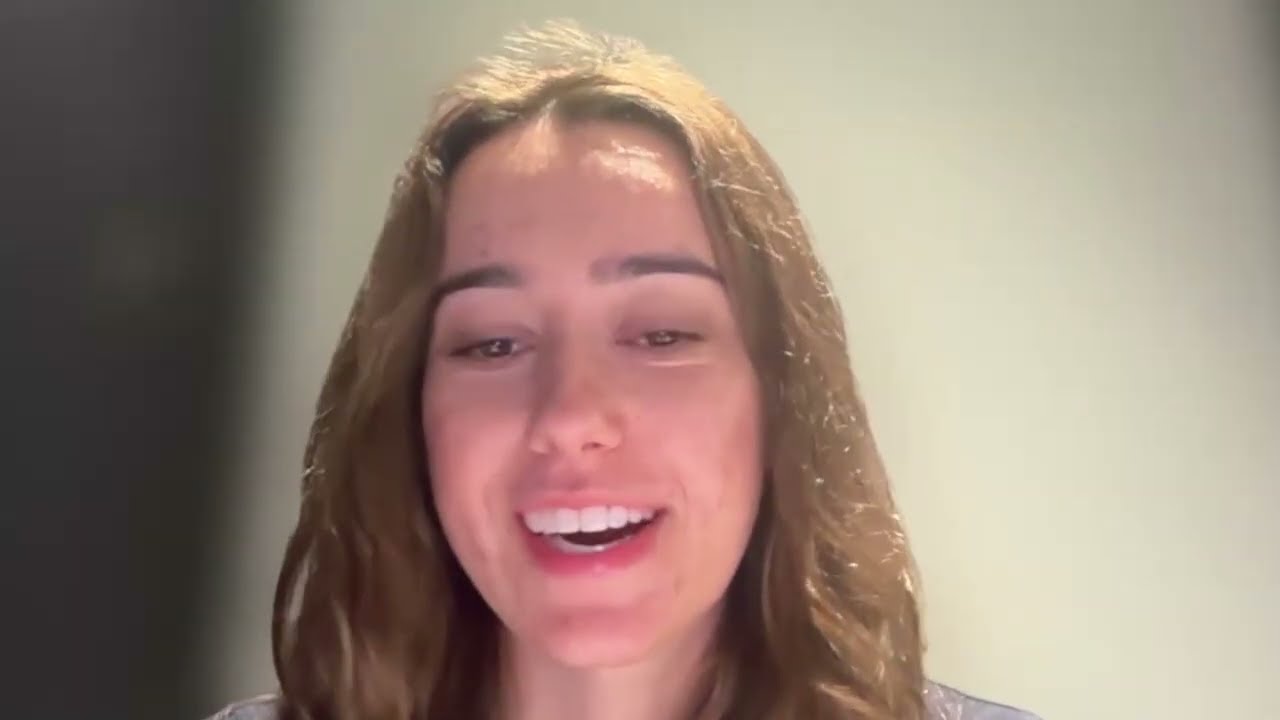
Kalshi Targets $25 Billion Volume as Institutional Traders Join
NYU Stern
Kalshi plans to reach $25 billion in monthly notional volume within three months as institutional market makers and corporate hedgers expand beyond traditional financial proxies into direct event risk.
## Background
Published on YouTube by NYU Stern on May 13, 2026, this video captures a segment from the March 6, 2026 NYU Stern Fintech Conference titled "Betting on the Future." Hosted by Professor Kathleen DeRose, the presentation features Nicole Kagan, Lead at Kalshi Research, discussing the evolution, regulation, and market mechanics of CFTC-regulated event contracts.
## TL;DR
Nicole Kagan outlines Kalshi's trajectory as a CFTC-regulated prediction exchange, clarifying that its monthly trading volume sits around $11 billion. She explains how event contracts allow investors to gain direct exposure to real-world political, economic, and cultural events without the noise of traditional financial proxies. Kagan detail Kalshi's strict CFTC compliance framework, market integrity mechanisms, and low-volume calibration accuracy, while sharing the broader vision of establishing an "everything exchange" for institutional hedging and real-time probability estimates.
## Atmosphere & style
The fireside chat has an intellectually rigorous, polished academic atmosphere combined with sharp industry expertise. Professor DeRose and Nicole Kagan maintain a dynamic, collegial dialogue that seamlessly balances high-level financial concepts with accessible real-world examples, like reality TV and sports markets. Kagan speaks with clear, analytical enthusiasm about macro trading and regulatory mechanics, giving the session an authoritative yet engaging energy that captures a forward-looking fintech conference.
## Key takeaways
- [00:07](https://www.youtube.com/watch?v=PTIzcA33Khc&t=7s) Professor Kathleen DeRose opens the final segment of the 2026 NYU Stern Fintech Conference featuring Nicole Kagan, Lead at Kalshi Research.
- [00:07](https://www.youtube.com/watch?v=PTIzcA33Khc&t=7s) Kalshi's current monthly notional volume across all markets is approximately $11 billion, with expectations to reach $25 billion per month within two to three months.
- [02:18](https://www.youtube.com/watch?v=PTIzcA33Khc&t=138s) Nicole Kagan's macro trading experience at Bridgewater led her to recognize that event contracts allow investors to take direct positions on political and economic outcomes without market noise.
- [05:01](https://www.youtube.com/watch?v=PTIzcA33Khc&t=301s) As a CFTC-regulated Designated Contract Market under the Commodity Exchange Act, Kalshi is strictly prohibited from listing contracts related to war, terrorism, death, assassination, or illegal gaming.
- [07:19](https://www.youtube.com/watch?v=PTIzcA33Khc&t=439s) Platform trading is anchored by institutional quantitative market makers, including Susquehanna and Jump Trading.
- [10:25](https://www.youtube.com/watch?v=PTIzcA33Khc&t=625s) Kalshi Research calibration data shows high forecast accuracy under Brier scores, outperforming sell-side analyst consensus without requiring massive volume.
- [14:25](https://www.youtube.com/watch?v=PTIzcA33Khc&t=865s) Kalshi contracts are self-certified with the CFTC, feature explicit predefined payout criteria, and execute via central order books.
- [16:46](https://www.youtube.com/watch?v=PTIzcA33Khc&t=1006s) To ensure market integrity, Kalshi mandates KYC compliance, sets a $25,000 baseline position limit, uses third-party sports surveillance networks, and enforces trading bans on insiders.
- [19:43](https://www.youtube.com/watch?v=PTIzcA33Khc&t=1183s) Institutional investors use prediction markets to hedge non-tradable macroeconomic risks and calibrate qualitative bank research against real-time market probabilities.
- [23:26](https://www.youtube.com/watch?v=PTIzcA33Khc&t=1406s) Kalshi plans to expand beyond finance into corporate KPI tracking, biotech clinical trial milestones, FDA approvals, and epidemiological tracking.
- [25:37](https://www.youtube.com/watch?v=PTIzcA33Khc&t=1537s) Despite achieving multi-billion dollar scale, Kalshi maintains extreme operational efficiency with under 20 employees by leveraging internal AI automation and hosting autonomous AI trading bots.
- [25:37](https://www.youtube.com/watch?v=PTIzcA33Khc&t=1537s) Kalshi's value proposition relies on three pillars: federal CFTC regulation, aggressive market integrity enforcement, and modernizing historically rooted economic contracts into institutional instruments.
## Detailed walkthrough
### [00:07](https://www.youtube.com/watch?v=PTIzcA33Khc&t=7s) Introduction and Panel Setup
Professor Kathleen DeRose opens the final segment of the 2026 NYU Stern Fintech Conference, introducing a fireside chat with Nicole Kagan, Lead at Kalshi Research. DeRose highlights Kalshi’s milestone status as the first CFTC-regulated exchange for event contracts, with markets spanning macroeconomics, elections, sports, weather, and pop culture.
After welcoming Kagan, DeRose notes her multifaceted background—spanning hedge fund management and academic research—as an inspiring trajectory for fintech students. DeRose contextualizes the discussion within the morning's themes (stablecoins, tokenization, and prediction markets) and brings up recent growth numbers, asking Kagan to clarify current volume figures.
- **Market Volume:** DeRose mentions media estimates suggesting monthly notional volume across prediction markets reached $25 billion per month. Kagan clarifies that across all markets, Kalshi's volume is currently closer to **$11 billion per month**, though she anticipates reaching the higher figure within two to three months.
- **Kalshi Research Role:** Kagan leads both the research arm (academic/institutional analysis) and sits on the markets team, directly designing and certifying event contracts.
[02:18](https://www.youtube.com/watch?v=PTIzcA33Khc&t=138s) Nicole Kagan's Career Path and the "Aha Moment"
Kagan recounts her early career as a macro investor at Bridgewater Associates, where she analyzed over 20 emerging markets. While trading short-term interest rates (predicting where policy rates would sit in 3 to 12 months), she realized that her core edge was actually forecasting political and electoral outcomes—especially in nations like Turkey or Brazil, where central banks lack total independence from the government.
She often questioned why macro traders had to express these views indirectly through noisy public financial markets rather than trading the political event directly. After leaving Bridgewater, Kagan pursued a master's degree at Oxford intended for academia, but quickly realized her preference for industry and data. She joined Kalshi about a year prior when it was much smaller, recognizing it as the exact direct-exposure vehicle she had wished for on the trading desk. DeRose refers to this broad addressable universe of tradeable real-world events as an "everything TAM."
- **Macro Distortions:** Traditional asset classes (rates, equities, FX) suffer from market noise and passive flow disruptions, making event-driven thesis execution indirect and inefficient.
- **Direct Event Exposure:** Kalshi was designed to bypass financial proxies, allowing market participants to take direct binary positions on rates, elections, and cultural milestones.
[05:01](https://www.youtube.com/watch?v=PTIzcA33Khc&t=301s) Unconventional Event Markets and Regulatory Boundaries
When asked about the most surprising contracts traded on the platform, Kagan points to reality television outcomes. While superficially categorized as "frivolous," Kagan argues these cultural moments directly drive multi-billion-dollar industries—influencing consumer beauty trends, cosmetic surgery demand, and broader entertainment commerce.
DeRose pivots to asking about Kalshi's regulatory navigation and contract certification framework under its CFTC oversight. Kagan details how Kalshi's status as a Designated Contract Market (DCM) enforces strict structural guardrails under the Commodity Exchange Act (CEA).
- **Prohibited Categories:** Under the CEA, Kalshi is federally barred from listing contracts tied to war, terrorism, death, assassination, illegal gaming, or actions violating state/federal laws.
- **Offshore Comparison:** Kagan stresses that this strict statutory barrier is a key structural differentiator between Kalshi and offshore, unregulated prediction platforms.
[07:19](https://www.youtube.com/watch?v=PTIzcA33Khc&t=439s) Category Evolution, Institutional Trading, and "Mention" Contracts
Discussing market evolution, Kagan notes that demand shifts cyclically based on news cycles and macro events. A year prior, macroeconomic releases dominated platform activity; currently, sports events (Super Bowl, Olympics, NBA, collegiate sports) drive significant retail engagement. However, institutional participation is surging; for example, Kalshi's market on the next Federal Reserve Chair has generated approximately **$200 million in total volume**.
Kagan introduces high-utility specialized instruments, such as "mention markets," where traders bet on whether specific words or phrases will be spoken during public addresses or corporate earnings calls. She notes that equity analysts can use these contracts as precision hedges against executive commentary risks. Furthermore, major institutional market makers are expanding liquidity across the platform.
- **Key Market Makers:** Platform liquidity is anchored by major quantitative trading firms, specifically **Susquehanna** and **Jump Trading**.
- **Hedging Use Case:** Mention contracts act as event-specific insurance for corporate announcements and political speeches.
[10:25](https://www.youtube.com/watch?v=PTIzcA33Khc&t=625s) Forecast Accuracy, Calibration Data, and the Wisdom of Crowds
Kagan highlights early empirical findings from Kalshi Research (launched in December 2025). Platform calibration metrics demonstrate world-leading forecast accuracy according to Brier scores—outperforming standard consensus estimates. She points to third-party tools like *Calibration City* and recent academic publications, including a Federal Reserve research paper, that validate Kalshi's superior information value over traditional survey consensus.
Addressing DeRose's question on the "wisdom of crowds" requirement for independent viewpoints, Kagan emphasizes that prediction markets realign participant incentives: traders trade to be *right*, not to protect their professional reputation. Unlike sell-side analysts who fear consensus deviation, market participants face financial consequences that punish herd behavior.
- **Brier Score Calibration:** Empirical testing shows Kalshi contract prices closely track real-world event probabilities across midpoints and trading cycles.
- **Liquidity Thresholds:** Kalshi Research findings reveal that high predictive accuracy does not require massive volume; markets with single-to-double-digit numbers of active traders and liquidity ranging from **thousands to low tens of thousands of dollars** still display remarkably high calibration accuracy.
[14:25](https://www.youtube.com/watch?v=PTIzcA33Khc&t=865s) Event Contract Mechanics and Design Pipeline
DeRose asks Kagan to explain the structural life cycle of a Kalshi market from inception to settlement. Kagan outlines the initial design phase: ideas originate from news, data, and user demand. The team evaluates whether an existing contract template applies or if a new rule structure must be written from scratch. Every market requires explicit, unambiguous payout criteria to define the precise trigger conditions before listing.
<FollowUp label="Want me to walk through Part 2 of this transcript when available?" query="Walk through Part 2 of the transcript for the 2026 NYU Stern Fintech Conference featuring Nicole Kagan."/>
[15:40](https://www.youtube.com/watch?v=PTIzcA33Khc&t=940s) How Kalshi Markets Go Live and Trade via Order Books
Nicole Kagan explains the process of launching a market once Kalshi completes its self-certification rules with the Commodity Futures Trading Commission (CFTC). The exchange focuses on framing contracts to capture immediate public interest, zeroing in on the most topically relevant political and economic developments where public and investor attention is concentrated.
Upon listing, liquidity is typically provided by market-making partners to kickstart trading. The markets function identically to traditional equity exchanges: orders are processed through a central order book where buyers and sellers transact up or down the book. Position holders retain full flexibility to trade into or out of their positions at any time prior to event resolution.
- Markets are self-certified with the CFTC before going live.
- Seed liquidity is supplied by market-making partners.
- Trading operates via an order book mechanism matching buyers and sellers.
- Positions can be liquidated or adjusted anytime prior to contract expiration.
---
[16:46](https://www.youtube.com/watch?v=PTIzcA33Khc&t=1006s) Source Agencies and Rigorous Market Surveillance
Addressing market integrity and resolution accuracy, Kagan details how settlement sources are predefined during CFTC self-certification. Kalshi explicitly lists the designated source agencies in contract specifications prior to listing to guarantee transparency. To combat illegal activity, Kalshi operates as a federally regulated exchange with mandatory Know Your Customer (KYC) compliance for every account holder.
The platform enforces market-specific trading prohibitions to preserve fairness—such as banning professional athletes or team staff from betting on their own games. For sports markets, Kalshi collaborates with specialized third-party surveillance partners used by major sportsbooks to catch rogue activity. Suspicious or anomalous trades trigger alerts for an internal compliance team, which conducts formal reviews that can lead to internal penalties, financial fines, or direct referrals to judicial authorities.
- **Resolution Sources:** Pre-specified source agencies are hardcoded into CFTC filings.
- **Identity Verification:** Mandatory KYC requirements apply across all platform accounts.
- **Sports Surveillance:** Leverages third-party surveillance networks standard across major sportsbooks.
- **Position Limits:** Baseline position accountability limits are capped at $25,000 across most markets.
- **Public Disclosures:** Kagan notes Kalshi recently took public action against two traders flagged for anomalous activity.
---
[19:43](https://www.youtube.com/watch?v=PTIzcA33Khc&t=1183s) Macro Hedging and Credibility Layers for Wall Street
Moving beyond regulatory mechanics, Kathleen DeRose asks how sophisticated investors and hedge funds utilize prediction markets. Kagan highlights political and macroeconomic contracts—such as tariff implementations, rate shifts, and potential repeals—as critical tools for replacing subjective advisory estimates with market-implied probabilities.
> "Traditionally in finance, you're receiving some kind of research from a few analysts that work at different kinds of banks... But realistically, a lot of this, in the nicest possible way, is finger-in-the-wind analysis. Having a market-based estimate to corroborate that with is a really, really powerful thing."
Prediction markets synthesize broad consensus into real-time probability estimates, filtering out pure political rhetoric. Institutional actors increasingly combine disparate prediction contracts (e.g., inflation readings, GDP growth, and unemployment metrics) to structure macro scenarios. Kagan cites institutional user **Arrived**, which purchased protection on the expected duration of a U.S. government shutdown to hedge against operational losses caused by federal agency closures.
- **Hedging Non-Tradable Risk:** Direct exposure to raw indicators like unemployment rates, which traditionally lack direct financial derivatives.
- **Corporate Real-World Case:** Property platform Arrived hedged corporate operational risks tied to government shutdown lengths.
- **Institutional Edge:** Moves past traditional bank research by creating a live, market-priced consensus filter.
---
[23:26](https://www.youtube.com/watch?v=PTIzcA33Khc&t=1406s) Expanding Beyond Finance: Corporate KPIs, Biotech, and the "Everything Exchange"
DeRose notes that prediction market applications naturally spill over into corporate strategy, R&D allocation, and operational risk. Kagan explains that equity prices are often noisy and detached from corporate performance on a day-to-day basis. Kalshi's vehicle metrics—such as tracking Tesla vehicle delivery counts—allow analysts to trade direct exposure to underlying Key Performance Indicators (KPIs) rather than broad stock volatility.
Looking toward future vertical expansions, Kalshi is exploring clinical trial success rates, FDA approvals, and epidemiological tracking (such as measles outbreaks). Discussing the long-term vision articulated by founders Tarek Mansour and Luana Lopes Lara, Kagan states that Kalshi aims to become the "everything exchange"—a master venue where global market participants price real-world belief disputes.
- **KPI Trading:** Direct contract exposure on corporate metrics like vehicle delivery volumes.
- **Biotech & Healthcare:** Expansion plans into FDA approval outcomes, clinical trial milestones, and disease tracking.
- **Corporate Vision:** Co-founders Tarek Mansour and Luana Lopes Lara envision Kalshi as an "everything exchange."
---
[25:37](https://www.youtube.com/watch?v=PTIzcA33Khc&t=1537s) Enterprise Scale, AI Integration, and the Three Core Pillars
The discussion turns to technological infrastructure and artificial intelligence. Kagan points out that despite Kalshi reaching an **$11 billion valuation**, the exchange maintains extreme operational efficiency with **fewer than 20 employees**. AI integrations automate internal administrative tasks, enabling a lean team to manage nationwide operations.
Externally, third-party developers, academic labs, and institutional research groups are deploying autonomous AI trading agents on Kalshi. Active traders rely on custom AI layers to audit contract probabilities in real time and evaluate pricing inefficiencies.
Kagan synthesizes the takeaway for investors into three foundational points:
1. **Federal Regulation:** Kalshi operates as a fully licensed derivatives exchange under CFTC oversight, avoiding non-regulated or illicit market categories.
2. **Aggressive Integrity Enforcement:** The platform treats insider trading as an existential risk, using real-time surveillance tools in tandem with federal regulators.
3. **Deep Historical Roots:** Event contracts are not a novel gimmick; economic dispute contracts have existed for centuries. Kalshi modernizes them into institutional-grade financial instruments.
- **Corporate Lean Matrix:** Over $11 billion valuation powered by under 20 full-time employees.
- **AI Ecosystem:** Widespread deployment of automated trading bots and real-time probability screeners.
- **Historical Precedent:** Event contracts extend centuries-old economic resolution mechanisms into modern regulated markets.
---
[28:43](https://www.youtube.com/watch?v=PTIzcA33Khc&t=1723s) Closing Remarks and Conference Wrap-Up
Kathleen DeRose concludes the session by thanking Kagan for detailing Kalshi's regulatory architecture and market vision. DeRose then delivers closing remarks for the broader NYU Stern Fintech Conference, emphasizing fintech's evolving role at the intersection of international technology and capital markets.
- **Conference Host:** Professor Kathleen DeRose (Fintech Director, Fubon Center; Academic Director, MS in Fintech Program).
- **Special Acknowledgment:** Dedicated recognition given to event organizer Ruby and the NYU technology infrastructure team.
- **Event:** NYU Stern Fintech Conference: *Betting on the Future*.
<ElicitationsGroup message="Explore related topics from the NYU Stern Fintech Conference:">
<Elicitation label="Analyze Kalshi's regulatory history with the CFTC" query="Provide a detailed background on Kalshi's regulatory battle and self-certification process with the CFTC."/>
<Elicitation label="Compare prediction markets vs. traditional equity derivatives" query="What are the structural differences between event prediction markets like Kalshi and traditional equity option derivatives?"/>
</ElicitationsGroup>
## Notable quotes
> [19:43](https://www.youtube.com/watch?v=PTIzcA33Khc&t=1183s) Traditionally in finance, you're receiving some kind of research from a few analysts that work at different kinds of banks... But realistically, a lot of this, in the nicest possible way, is finger-in-the-wind analysis. Having a market-based estimate to corroborate that with is a really, really powerful thing. — Nicole Kagan
## Mentioned
Nicole Kagan, Kathleen DeRose, NYU Stern, NYU Stern Fintech Conference, Kalshi, Kalshi Research, Fubon Center, Bridgewater Associates, Commodity Futures Trading Commission, CFTC, Commodity Exchange Act, Susquehanna, Jump Trading, Calibration City, Federal Reserve, Arrived, Tesla, Tarek Mansour, Luana Lopes Lara
At the 2026 NYU Stern Fintech Conference, Kalshi Research Lead Nicole Kagan argued that federally regulated prediction markets provide institutional participants with precision tools to directly trade and hedge real-world events rather than relying on noisy financial proxies or subjective analyst forecasts.
Direct Event Exposure and Predictive Calibration (2:18)
Drawing on her background as an emerging-markets macro investor at Bridgewater Associates, Kagan argued that traditional asset classes such as short-term interest rates, foreign exchange, and equities introduce market noise and passive flow distortions when traders attempt to express specific political or economic views. Prediction markets bypass these financial proxies by offering direct binary contracts on underlying events. Furthermore, Kagan contended that prediction markets realign participant incentives toward accuracy rather than career preservation, avoiding the herd behavior common among sell-side analysts who fear consensus deviation.
To substantiate predictive accuracy, Kagan pointed to empirical findings from Kalshi Research and third-party tools like Calibration City, alongside a Federal Reserve research paper validating the platform's calibration against Brier scores. According to Kagan, research indicates that high calibration accuracy does not require massive liquidity pools; event markets with modest participation and liquidity ranging between thousands and low tens of thousands of dollars consistently exhibit high predictive calibration.
Federal Regulatory Safeguards and Surveillance Architecture (5:01)
As a Designated Contract Market regulated by the Commodity Futures Trading Commission (CFTC), Kalshi operates under strict statutory constraints established by the Commodity Exchange Act (CEA). Kagan stressed that federal law explicitly bars the exchange from listing contracts associated with war, terrorism, death, assassination, or unlawful gaming—distinguishing it from unregulated offshore platforms. Contract listings require unambiguous trigger conditions and predetermined, federally filed source agencies to govern event settlement.
To preserve market integrity, Kalshi mandates platform-wide Know Your Customer (KYC) identity verification and sets a baseline position accountability limit capped at $25,000 across most markets. The exchange collaborates with specialized third-party sports surveillance partners to detect anomalous trading, prohibits professional athletes and team personnel from trading on their own sports events, and utilizes internal compliance reviews that can trigger fines or referrals to judicial authorities. Kagan noted that Kalshi has already taken public enforcement actions against flagged accounts.
Institutional Hedging from Macro to Corporate KPIs (19:43)
Kagan observed that institutional participants and hedge funds are increasingly using prediction markets to convert political rhetoric and narrative forecasts into market-implied probabilities. Institutional applications range from high-volume contracts—such as the next Federal Reserve Chair market, which reached roughly $200 million in total volume—to specialized 'mention markets' that enable equity analysts to hedge against executive commentary risks during earnings calls or public speeches.
Beyond macroeconomic releases, event contracts enable institutions to hedge non-tradable operational risks. For example, property platform Arrived purchased contracts on the duration of a U.S. government shutdown to offset operational costs caused by agency closures. Kagan also highlighted Key Performance Indicator (KPI) contracts, such as Tesla vehicle delivery numbers, which allow analysts to isolate operational execution without exposure to broader equity volatility.
Exchange Infrastructure, AI Adoption, and Future Expansion (25:37)
Kalshi operates a central limit order book where liquidity is anchored by institutional quantitative market makers, including Susquehanna and Jump Trading. Addressing trading activity, Kagan clarified that Kalshi processes approximately $11 billion in monthly notional volume, forecasting that platform volume will reach $25 billion per month within two to three months as retail and institutional adoption expands.
Operationally, the exchange supports its multi-billion-dollar valuation with fewer than 20 full-time employees by integrating artificial intelligence into internal administrative workflows. Externally, third-party developers, academic labs, and institutional traders deploy autonomous AI trading agents to evaluate pricing inefficiencies in real time. Looking ahead, Kagan stated that co-founders Tarek Mansour and Luana Lopes Lara envision Kalshi as an 'everything exchange,' with vertical expansion planned into healthcare metrics, clinical trial milestones, and FDA approvals.
Kagan concluded that prediction contracts modernize centuries-old dispute resolution mechanisms into regulated financial instruments, though platform expansion relies on maintaining strict regulatory compliance, managing insider-trading risks through real-time surveillance, and continually broadening contract liquidity beyond cyclical macro and sports events.
## Background
本视频由纽约大学斯特恩商学院(NYU Stern)于 2026 年 5 月 13 日发布在 YouTube 平台上。视频记录了 2026 年 3 月 6 日举行的 NYU Stern 金融科技大会“Betting on the Future”的收官对话,由 Fubon 金融科技中心主任 Kathleen DeRose 教授主持,专访了 Kalshi Research 负责人 Nicole Kagan,旨在探讨预测市场的崛起、监管合规及行业应用。
## TL;DR
对话深入剖析了事件合约交易所 Kalshi 的业务模式与预测市场的未来图景。Nicole Kagan 分享了她从桥水基金宏观投资人转向预测市场研究的历程,阐述了 Kalshi 作为受 CFTC 监管的合法交易所与离岸平台的区别。讨论涵盖了群体智慧的精准度校准、事件合约的全生命周期管理、反内幕交易风控、宏观风险对冲场景,以及 Kalshi 利用 AI 保持精干团队并打造“万物交易所”的五年愿景。
## Atmosphere & style
整场对话专业、高效且充满前瞻性洞察,学术研讨氛围与实务操作视角交织。Kathleen DeRose 教授提问精准有力,引导着流畅的节奏;Nicole Kagan 则以其跨对冲基金与学术界背景,展现出自信、干练且富有激情的谈吐。现场既有对宏观金融理论的严谨探讨,也有对流行文化和企业实务的诙谐举例,令人清晰感受到预测市场这一新兴金融科技领域的勃勃生机与严谨规范。
## Key takeaways
- [00:07](https://www.youtube.com/watch?v=PTIzcA33Khc&t=7s) Kalshi 是美国 CFTC 严格监管的首家事件合约交易所,全预测市场交易量正快速朝月均 250 亿美元迈进。
- [00:54](https://www.youtube.com/watch?v=PTIzcA33Khc&t=54s) Nicole Kagan 分享其从桥水基金宏观投资人转向预测市场的经历,指出传统金融工具难以直接对选举等宏观核心变量下注。
- [04:37](https://www.youtube.com/watch?v=PTIzcA33Khc&t=277s) 预测市场拥有“万物总可寻址市场(TAM)”的愿景,即便像真人秀结果这类文化杠杆事件背后也有巨大的经济影响力和交易需求。
- [06:06](https://www.youtube.com/watch?v=PTIzcA33Khc&t=366s) 作为合规 DCM 交易所,Kalshi 受到 CFTC 严格限制,结构性禁售涵盖战争、死亡、暗杀、博彩及违法事项的合约,与离岸平台有本质区别。
- [07:19](https://www.youtube.com/watch?v=PTIzcA33Khc&t=439s) 预测市场具有明显的周期性,美联储主席人选合约交易量已达 2 亿美元;Susquehanna 和 Jump Trading 等华尔街机构已入驻提供流动性。
- [10:25](https://www.youtube.com/watch?v=PTIzcA33Khc&t=625s) 学术研究与美联储论文证实,Kalshi 的预测准确度超越传统共识预测,展现出极高的校准精准度和群体智慧。
- [12:00](https://www.youtube.com/watch?v=PTIzcA33Khc&t=720s) 研究表明,预测市场无需海量资金,仅需数千至数万美元交易量及个位数到数十名参与者,即可实现极高的预测精度。
- [15:40](https://www.youtube.com/watch?v=PTIzcA33Khc&t=940s) 所有新事件合约上线前必须向 CFTC 提交自主备案(Self-Certification),并在合约开发之初就向公众明确公布预设的官方结算数据源。
- [15:40](https://www.youtube.com/watch?v=PTIzcA33Khc&t=940s) Kalshi 采用订单薄撮合机制,支持用户在事件发展过程中随时买入和卖出,实现灵活的建仓与平仓。
- [17:26](https://www.youtube.com/watch?v=PTIzcA33Khc&t=1046s) 通过全员实名认证(KYC)、持仓责任限制($25,000 美元上限)及高敏感度实时监控系统,Kalshi 坚决打击并惩戒内幕交易与操纵行为。
- [19:43](https://www.youtube.com/watch?v=PTIzcA33Khc&t=1183s) 相比传统的机构研报,预测市场汇集真金白银提供真实的“市场隐含概率”,帮助投资者通过对冲失业率或关税政策等宏观指标来管理风险。
- [23:30](https://www.youtube.com/watch?v=PTIzcA33Khc&t=1410s) 预测市场正在向企业领域延伸,投资者可通过特斯拉交付量等核心 KPI 合约或生物医药 FDA 审批/临床试验合约避开股市短期噪音直接对冲风险。
- [25:09](https://www.youtube.com/watch?v=PTIzcA33Khc&t=1509s) Kalshi 致力于成为“万物交易所”,在估值达 110 亿美元的同时依靠 AI 工具将团队控制在 20 人以内,并积极探索 AI Agent 自动交易与决策辅助。
- [26:54](https://www.youtube.com/watch?v=PTIzcA33Khc&t=1614s) Nicole Kagan 总结预测市场的三个核心认知:联邦合规监管的安全性、对内幕交易零容忍,以及预测契约本质上是延续数百年的风险管理工具。
## Detailed walkthrough
### [00:07](https://www.youtube.com/watch?v=PTIzcA33Khc&t=7s) 对话开场与 Kalshi 的业务背景介绍
纽约大学斯特恩商学院(NYU Stern)金融科技主任 Kathleen DeRose 教授主持了本届金融科技峰会的收官对话,受邀嘉宾为 Kalshi 研究部门(Kalshi Research)负责人 Nicole Kagan。
Kathleen 介绍称,Kalshi 是美国商品期货交易委员会(CFTC)监管的首家事件合约(Event Contracts)交易所。Nicole Kagan 在 Kalshi 负责学术与机构研究部门,同时兼任市场团队工作,设计并认证涵盖宏观经济数据、选举、体育、天气及流行文化等领域的事件合约。
* **预测市场规模**: 针对 Kathleen 提及的“预测市场月未平仓名义本金(Notional Volume)已跃升至 250 亿美元”的预估,Nicole 修正了数据,指出目前全市场的实际月交易量约在 110 亿美元左右,但随着市场扩张,预计两到三个月内将轻松突破 250 亿美元。
---
### [00:54](https://www.youtube.com/watch?v=PTIzcA33Khc&t=54s) Nicole Kagan 的职业轨迹与“Aha Moment”
Kathleen 盛赞了 Nicole 的学术与行业背景,认为这对在场探索金融科技职业方向的学生极具启发性。Nicole 分享了自己从宏观投资人转变到预测市场领域的个人经历:
Nicole 的职业生涯始于全球最大对冲基金桥水基金(Bridgewater Associates),担任宏观投资经理,期间研究过 20 多个新兴市场。在交易短期利率(Short Rates,即预测政策利率在 3 个月、6 个月或 1 年后的走向)时,她发现利率变动往往不取决于独立的经济逻辑,而是取决于大选结果。以土耳其和巴西为例,其中央银行并非独立于政府,表达对短端利率的看法本质上是在押注当地的大选结局及其对央行政策立场的改写。
> Nicole 回忆起当时的疑惑:"Why can't I just trade directly on this? Why is there no macro instrument that would let me take a position on the thing that I actually understand, and not the thing that really is a step removed?"
传统公开金融市场充满噪音,受主动与被动交易等多重因素干扰,难以直接且稳健地对单一关键变量下注。离开桥水后,Nicole 前往牛津大学攻读经济学硕士,原本立志成为经济学教授,但很快意识到自己更希望回归实业与数据打交道。一年前加入 Kalshi 时,平台规模远小于当下,但当她听到“可以直接对大选、宏观利率及文化话题下注”的商业设想时,立刻意识到这就是自己在机构交易端时梦寐以求的产品,从而迎来了决定性的“Aha Moment”。
---
### [04:37](https://www.youtube.com/watch?v=PTIzcA33Khc&t=277s) 预测市场的“万物总可寻址市场(TAM)”与真人秀市场
Kathleen 将 Kalshi 的商业蓝图形容为“一切皆可交易”(Everything TAM),即针对可信事件构筑无限庞大的目标市场。在被问及平台交易过最出乎意料的市场时,Nicole 提出了**真人秀节目结果(Reality TV Outcomes)**。
虽然部分人会将真人秀归类为琐碎甚至轻浮的话题,但 Nicole 强调,此类节目背后支撑着数亿美元级别的庞大产业。它们重塑了社会大众关注的文化焦点、审美趋势乃至整形手术的选择标准。预测市场为真正关注这些文化杠杆点(Cultural Influence)的群体提供了表达观点的交易场所。
---
### [06:06](https://www.youtube.com/watch?v=PTIzcA33Khc&t=366s) 合规监管框架与 CFTC 禁令边界
针对 Kathleen 提出的关于合规环境及合约设计的研究,Nicole 详细阐述了 Kalshi 的监管属性与合规底线:
* **交易所资质**: Kalshi 是受 CFTC 严格监管的指定合约市场(Designated Contract Market, DCM),属于合法的联邦注册及持牌衍生品交易所。
* **禁售类别限制**: 根据美国《商品交易法》(CEA)规定,Kalshi 被结构性禁止或需接受额外审查的敏感类别包括:**战争(War)**、**死亡(Death)**、**暗杀(Assassination)**、**赌博/博彩(Gaming)**以及**违反州或联邦法律的违法事项**。
* **与离岸平台的区别**: Nicole 指出,这是 Kalshi 作为合规交易所与离岸预测市场平台(Offshore Platforms)最根本的区别所在。
---
### [07:19](https://www.youtube.com/watch?v=PTIzcA33Khc&t=439s) 市场品类的周期性演变与机构做市商的引入
探讨到预测市场品类的演变趋势,Nicole 表示,预测市场的交易焦点呈现出明显的周期性(Cyclicality)。当重大选举、经济数据发布或政治经济领域出现剧烈震荡时,公众和机构就会涌向 Kalshi 寻找答案:
* **美联储主席市场**: 针对下一任美联储主席人选的预测合约交易量已达 **2 亿美元**。
* **体育赛事爆发**: 伴随超级碗(Super Bowl)、奥运会、NBA 及大学联赛的开幕,体育品类天然吸引着全美极高的关注度与经济效应。
* **提及词/特定措辞市场(Mentions Markets)**: 平台开设了对公开演讲或致辞中特定词汇发布频率的预测 strike。Nicole 举例称,股票分析师在听财报电话会(Earnings Call)时,可以通过此类合约下注高管是否会说出某些特定敏感词,从而有效对冲对公司未来业绩产生冲击的风险。
* **华尔街机构参与**: 目前Susquehanna 和 Jump Trading 等头部华尔街做市商已入驻 Kalshi 平台提供流动性。随着交易量产生雪球效应,传统金融领域的分析师正以更有试验性的方式回归并重塑这些传统宏观与金融预测品类。
---
### [10:25](https://www.youtube.com/watch?v=PTIzcA33Khc&t=625s) 校准精准度、Wisdom of Crowds 与学术验证
关于预测市场的预测质量与数据准确度,Nicole 分享了 Kalshi Research 自上一年度 12 月成立以来的最新学术突破:
* **布里尔分数(Brier Score)验证**: Kalshi 市场的校准精准度(Calibration Accuracy)处于世界领先水平。虽然并非完美的“预言机”(Oracle),但已极度接近,实时展现了“群体智慧”(Wisdom of Crowds)的威力。
* **第三方与美联储论文背书**: 包括 Calibration City 等第三方工具在市场中点及各阶段对 Kalshi 的准确率进行了验证。Kalshi 发布的首份研究报告表明其准确度超越了市场共识(Consensus);美联储(Fed)近期发表的学术论文同样证实了 Kalshi 预测市场相较于传统共识预测具备更高的信息价值(Information Value)与准确率。
Kathleen 补充指出,预测市场多年来虽然在学术界被广泛研究,但受制于过去的监管环境一直未能真正落地。
针对 Kathleen 关于“群体智慧依赖于独立观测(Independent Observations),如何避免从众效应并保持视角多样性”的追问,Nicole 剖析了预测市场的底层激励机制:
* **核心激励不同**: 预测市场参与者的根本目标是“猜对”(To be right),而不是“看起来得体”(To look good)。相比之下,专业预测员(Professional Forecasters)面临严重的声誉风险(Reputational Risks),即使观点正确,在当下也不敢轻易发表脱离同业共识的激进言论。
* **极低流动性下的高校准度**: Nicole 透露了 Kalshi Research 即将发布的研究发现:引发高精度预测所需的流动性门槛和参与人数其实非常低。交易额仅需在**几千到几万美元**之间、参与交易者仅需**个位数到数十人**,市场就能展现出极高的校准精度。这再次证明了经济激励机制本身对真实信息表达的决定性作用。
---
### [14:25](https://www.youtube.com/watch?v=PTIzcA33Khc&t=865s) 事件合约的全生命周期管理流程
Nicole 详细拆解了一个事件合约从孕育到上市交易的完整内部流程:
* **立案与合约撰写**: 市场创意来自内部及外部多种渠道。收到创意后,团队会评估现有规则模板是否适用,或是否需要拟定全新的衍生品合约。
* **规则细则定义**: Kalshi 的每一份合约背后都有严格的法律规则文本,明确规定了赔付条件(Payout Conditions)、触发时机以及判定依据。简单示例包括“某人是否会在颁奖礼上获奖”等标准模板,若遇突发的新型社会事件,则需重新开发专门的规则。
### [15:40](https://www.youtube.com/watch?v=PTIzcA33Khc&t=940s) 上市流程、流动性与市场撮合机制
在完成规则撰写并在美国商品期货交易委员会(CFTC)进行自主备案(Self-Certification)后,预测市场便正式上线。上线阶段的重点在于如何通过恰当的市场框架设计来吸引参与者,这需要紧密围绕当时最受关注的政治和经济热点。当一个新市场启动时,通常会由合作的市场做市商(Market Makers)注入初始流动性,以确保交易的顺畅进行。
预测市场的运作机制与传统股票市场高度相似,均基于订单薄(Order Book)进行撮合交易。投资者可以根据买卖方向在订单薄中吃单或挂单。在市场开盘至最终结算(Resolution)之间的任何时间节点,交易者都可以根据事件的发展动态自由建仓或平仓,实现极高的资金灵活性。
- **CFTC 自主备案**:所有新推出的事件合约必须向 CFTC 提交自我认证备案后方可上线。
- **预设结算数据源**:为确保市场透明度与公正性,结算所依赖的官方数据源/机构列表在合约备案及上线之初即已向公众明确公布。
- **订单薄交易机制**:采用与股票交易所一致的订单薄撮合模式,支持随时买入和卖出以管理风险或锁定利润。
### [17:26](https://www.youtube.com/watch?v=PTIzcA33Khc&t=1046s) 市场合规、反内幕交易与监控惩戒
对于市场诚信(Market Integrity)与内幕交易问题,Kalshi 作为一家获得联邦牌照的合规交易所,拥有极其严格的监管与监控体系。得益于全员实名认证(KYC)机制,平台能精准掌握每位用户的身份信息。针对不同类型的事件合约,Kalshi 会提前制定明确的禁售规则,禁止相关利益方参与交易。
为了捕捉异常交易行为,Kalshi 部署了高敏感度的实时监控系统,并与第三方专业监控机构合作(此类机构同样服务于主流体育博彩公司)。一旦发现异常的定向大单或涉嫌利用非公开信息的交易,监控系统会立即触发警报并移交合规团队调查。对于违规行为,交易所拥有行使罚款、限制账户以及向司法机关移交诉讼等多种惩戒权力。
> "我们拥有极其精准且敏感的监控系统,能够第一时间向监控团队警示异常情况。" — Nicole Kagan
- **KYC 实名制**:所有平台用户均须完成严格的身份认证,从根本上消除了匿名内幕交易的死角。
- **特定岗位交易禁令**:例如在体育类预测合约中,严禁相关球队成员、教练及赛事工作人员参与投注。
- **持仓责任限制(Position Accountability Limits)**:绝大多数预测市场的持仓上限设定为 $25,000 美元,有效抑制了单一资金对市场的操纵风险。
- **公开执法案例**:在大会前一至两周,Kalshi 正式对外公布了一起针对两名存在异常交易行为的交易者的惩戒措施。
### [19:43](https://www.youtube.com/watch?v=PTIzcA33Khc&t=1183s) 对冲基金视角下的宏观风险管理与场景组合
从对冲基金和机构投资者的视角来看,预测市场最大的价值在于其提供的“市场隐含概率”(Market-Implied Estimate)。传统金融分析往往依赖于少数投资银行或政治咨询公司的初级分析师报告, Nicole Kagan 幽默地将其比喻为某种“伸出手指测风向”(Finger in the wind)的粗略估计。相比之下,预测市场汇集了广泛市场参与者的真金白银与真实信息,形成了一个极具说服力的“诚信过滤层”(Credibility Layer)。
随着全球地缘政治风险加剧,传统的风险管理方法(仅依靠历史数据推演未来)已难以应对极高的不确定性。现在的投资者越来越倾向于利用预测市场构建“事件场景组合”(Scenario Building)。例如,将通货膨胀率、GDP 增长率、失业率等宏观经济指标,与关税政策的实施时间或取消节点等政治动态组合建仓,从而对冲复杂的宏观风险。
> "传统金融分析很多时候就像是‘伸出手指测风向’,而基于市场交易得出的概率估计提供了一个极其强有力的印证工具。" — Nicole Kagan
- **直接交易宏观指标**:像失业率报告这类传统上难以直接投资的经济数据,在预测市场上可以作为独立标的直接进行风险对冲。
- **真实企业对冲案例**:一家名为 Arrived 的公司曾在平台上针对“美国政府停摆持续时间”进行对冲下注,以此抵消政府机构关闭给其业务带来的潜在经济损失。
- **政治信用过滤**:鉴于政客常有言行不一的情况,关税等政策是否真正落实或取消的预测合约,能提供比单纯看新闻报道更真实可靠的概率参考。
### [23:30](https://www.youtube.com/watch?v=PTIzcA33Khc&t=1410s) 业务场景拓宽:从企业 KPI 到医疗科技
预测市场的应用场景正在迅速超越传统金融和大选政治领域,向企业战略、研发(R&D)资金配置以及医疗健康等更广阔的实体经济领域渗透。以企业分析为例,虽然 Kalshi 不直接提供传统的财报盈利预测合约,但会推出诸如“特斯拉(Tesla)季度交付量”等核心运营 KPI 合约。由于股票价格极易受短期市场噪音干扰,对企业基本面有深入研究的分析师可以通过这类 KPI 合约直接表达其专业见解,而无需承担股价随机波动的风险。
在未来,此类应用将延伸至生物医药和公共卫生领域。企业和研究机构可以针对临床试验成功率、FDA 药品审批进展,甚至是麻疹等流行病爆发风险进行对冲与预测,将预测市场转化为企业风险管理的重要辅助工具。
- **聚焦核心 KPI**:允许投资者直接就交付量、活跃用户数等关键运营指标进行交易,排除股市短期噪音的干扰。
- **生物医药前景**:即将推出的新市场涵盖临床试验结果、FDA 审批动态以及全球流行病走势等领域。
### [25:09](https://www.youtube.com/watch?v=PTIzcA33Khc&t=1509s) 五年愿景:“万物交易所”与 AI 的深度融合
谈及 Kalshi 的长期发展目标,创始人 Tarik and Luana 提出了将 Kalshi 打造成“万物交易所”(Everything Exchange)的宏伟愿景——让每一个认知分歧和世界观表达,都能通过高效的市场机制找到价值锚点。令人瞩目的是,尽管 Kalshi 的估值已高达 **$110 亿美金**,但其团队规模至今仍控制在 **20 人以内**。这背后的超高人效,在很大程度上得益于新技术与 AI 工具对繁琐日常工作的替代。
在平台交易层面,学术界和机构实验室正在积极探索 AI Agent(人工智能智能体)在预测市场中的应用,包括代表用户自动执行交易以及提供市场决策辅助。目前甚至有开发者推出了基于 AI 的市场分析图层,能够自动解读预测合约当前的概率是否合理,并详细拆解背后的逻辑支撑。
> "我们的目标是成为‘万物交易所’——一个人们能够将想法落地,并通过市场机制来表达自身世界观与认知争端的地方。" — Nicole Kagan
- **高估值与精干团队**:凭借现代科技与 AI 的赋能,Kalshi 在估值达 $110 亿美金的同时,员工人数始终保持在 20 人以下。
- **AI Agent 应用**:包括自动化交易智能体、AI 决策辅助工具,以及能够自动解析合约概率合理性的分析图层。
### [26:54](https://www.youtube.com/watch?v=PTIzcA33Khc&t=1614s) 预测市场的三个核心认知
在对谈的尾声,Nicole Kagan 总结了她希望公众和投资者了解的关于 Kalshi 及预测市场的三大核心要点:
1. **联邦监管合规性**:Kalshi 是一个受联邦法律监管的衍生品交易所(Federally Licensed Derivatives Exchange)。坚守合规路线意味着平台不会触碰禁止或受限的合约类别,能为机构与散户提供充分的制度保障与信任基础。
2. **零容忍打击内幕交易**:内幕交易是所有金融市场的共性风险。Kalshi 与 CFTC 等监管机构保持密切合作,通过严格的规则和监控体系共同维护市场纪律。
3. **百年历史的演变**:预测市场并非现代人的凭空发明,人类利用契约合约来解决认知分歧和对冲风险的做法已有数百年的历史。Kalshi 所做的是将其推向极致,演变为正规化、标准化且可交易的金融衍生品。
主持人 Kathleen DeRose 教授在总结致辞中高度赞扬了 Nicole Kagan 的分享,并指出 FinTech 正在持续推动全球金融技术的创新与变革。DeRose 教授向所有与会嘉宾、赞助商、纽约大学(NYU)的技术团队以及会议核心协调人 Ruby 表达了诚挚谢意,为 2026 年 NYU Stern 金融科技大会画上了圆满句号。
<FollowUp label="想要了解更多关于 Kalshi 如何在 CFTC 监管下定义与备案预测合约的细节吗?" query="请详细介绍 Kalshi 是如何在 CFTC 监管框架下进行预测合约的自我认证(Self-Certification)与合规设计的?"/>
## Notable quotes
> [00:54](https://www.youtube.com/watch?v=PTIzcA33Khc&t=54s) Why can't I just trade directly on this? Why is there no macro instrument that would let me take a position on the thing that I actually understand, and not the thing that really is a step removed? — Nicole Kagan
> [17:26](https://www.youtube.com/watch?v=PTIzcA33Khc&t=1046s) 我们拥有极其精准且敏感的监控系统,能够第一时间向监控团队警示异常情况。 — Nicole Kagan
> [19:43](https://www.youtube.com/watch?v=PTIzcA33Khc&t=1183s) 传统金融分析很多时候就像是‘伸出手指测风向’,而基于市场交易得出的概率估计提供了一个极其强有力的印证工具。 — Nicole Kagan
> [25:09](https://www.youtube.com/watch?v=PTIzcA33Khc&t=1509s) 我们的目标是成为‘万物交易所’——一个人们能够将想法落地,并通过市场机制来表达自身世界观与认知争端的地方。 — Nicole Kagan
## Mentioned
Kathleen DeRose, Nicole Kagan, Kalshi, Kalshi Research, NYU Stern, Fubon Center, CFTC, Bridgewater Associates, University of Oxford, Susquehanna, Jump Trading, Calibration City, Federal Reserve, Arrived, Tesla, FDA, Tarik, Luana, Ruby
[Source](https://www.youtube.com/watch?v=PTIzcA33Khc)
Source quotes
[0:54] Nicole Kagan: Why can't I just trade directly on this? Why is there no macro instrument that would let me take a position on the thing that I actually understand, and not the thing that really is a step removed?
[17:26] Nicole Kagan: 我们拥有极其精准且敏感的监控系统,能够第一时间向监控团队警示异常情况。
[19:43] Nicole Kagan: 传统金融分析很多时候就像是‘伸出手指测风向’,而基于市场交易得出的概率估计提供了一个极其强有力的印证工具。
[25:09] Nicole Kagan: 我们的目标是成为‘万物交易所’——一个人们能够将想法落地,并通过市场机制来表达自身世界观与认知争端的地方。
Source quotes
[19:43] Nicole Kagan: Traditionally in finance, you're receiving some kind of research from a few analysts that work at different kinds of banks... But realistically, a lot of this, in the nicest possible way, is finger-in-the-wind analysis. Having a market-based estimate to corroborate that with is a really, really powerful thing.
Original transcript
[0:07] [GENTLE MUSIC]
KATHLEEN DEROSE: I'm really looking forward to the next segment, which is going to wrap up the conference here
[0:11] for us. And we're going to end with a fireside chat with Nicole Kagan. So Nicole Kagan leads
[0:18] Kalshi Research, which is the academic and institutional research arm of Kalshi.
[0:22] And so, of course, we know now Kalshi is the first CFTC regulated exchange for event contracts.
[0:28] And she also serves on Kalshi's markets team, where she designs and certifies the contracts
[0:33] that power Kalshi's markets. And this spans, as you've heard, everything from macroeconomic data,
[0:39] elections, sports, weather, and culture. And so Nicole and I are going to have what I think is
[0:43] going to be a really, really interesting conversation. And I thank her greatly for
[0:48] being here to talk about Kalshi. Welcome, Nicole.
NICOLE KAGAN: Hi, thank you so much for having me. Thank you
[0:54] for such a wonderfully kind introduction. Oh, yeah. Well, it's fantastic to have you here.
[0:59] You have an amazing background, actually. You worked at a hedge fund. You have a really
[1:03] interesting academic background. I think that's really inspiring to students in our audience who
[1:08] are thinking about what's next in fintech and might see you as a role model because you've
[1:12] done some really interesting things. That's very nice. Yeah, yeah. No, it's great to have you here.
[1:19] And we've had a really interesting tour this morning of many of the latest innovations in
[1:24] markets and market structure from stable coins to tokenization to prediction markets.
[1:29] And so it's kind of a wonderful capper, actually, to have this conversation with you.
[1:33] And so I started the morning with just noting, and you can probably correct me on what the latest
[1:37] number is, that notional volume on places like Kalshi and prediction markets in general has
[1:43] jumped to something like $25 billion a month or something. It's a huge number and growing really
[1:48] fast. And so it really merits the attention that it's getting. And so we're really happy
[1:54] to have a chance to talk to a true expert like yourself here. Yeah, it's great to be here. I
[1:59] mean, that's a very generous estimate about volume. I think we're doing somewhere closer
[2:03] to about $11 billion a month. But hopefully, you know, two, three months from now. Yeah,
[2:08] across all markets and hopefully two, three months from now, we'll be hitting those numbers
[2:11] easily. Yeah. So maybe kind of an opener for you. What was sort of the moment when you said,
[2:18] hey, I'm really excited about prediction markets and I want to go work at Kalshi?
[2:22] Yeah, so that's a great question. So just to give you a little bit of context on my background. So
[2:26] I started my career at Bridgewater Associates where I was a macro investor. And, you know,
[2:33] in my scene at Bridgewater, I would look at all of these emerging markets. I looked at 20 plus
[2:36] emerging markets, and all of them are very different. But I think in trading what I was
[2:41] trading, which at the time was short rates, which is where a policy or an interest rate might be in
[2:45] three months, six months or a year. The real thing that I found that I had a view on was the
[2:50] outcome of an election, right, not actually where the rate would move independently, you know,
[2:55] because there are certain countries that exist in the world today where the central bank is,
[2:59] in fact, not independent of the government. So Turkey is a great example of that. And really,
[3:02] when you're expressing a view on short rates, you're expressing a view on the electoral outcomes
[3:06] in Turkey in a given year, and how that might shift the policy stance of the central bank.
[3:11] The same can be true in countries like Brazil. And so the thing that I was left wondering always
[3:17] when I was a macro investor there was, well, why can't I just trade directly on this? Like,
[3:21] why is there no macro instrument that would let me take a position on the thing that I actually
[3:25] understand, and not the thing that really is a step removed, right? Because markets, financial
[3:30] markets, public markets are very noisy, right? There are lots of different things that can drive
[3:33] market behavior, some passive, some active, that make it a little bit more difficult to identify
[3:38] which way it's going to move at any given point in time. And I think that that makes it a lot more
[3:43] difficult to take a very clear, robust position. And so back when I was at Bridgewater, I decided,
[3:49] listen, like, this is something that's really interesting. And I think for a while, I didn't
[3:52] really think very much of it. I ended up leaving Bridgewater. I pursued a master's at Oxford.
[3:57] I thought I was going to be a professor of economics. I very clearly, very quickly realized
[4:01] that I, in fact, did not want to be a professor of economics, that I wanted to go back into industry
[4:05] and work with data. And at the time that I was finishing up my degree, this opportunity at
[4:09] Kalshi came up. And Kalshi still, about a year ago when I joined, was much, much smaller than it is
[4:15] today. But when I heard the pitch, which was, well, you can take direct positions on things like
[4:20] elections, on things like macro rates, on things like topics in culture, I thought, well, that's
[4:26] perfect. This is the idea that I wish had been around when I was still, you know, at an institutional
[4:31] desk. And so that was the big aha moment for me.
KATHLEEN DEROSE: Yeah. I mean, I started describing it as kind
[4:37] of everything TAM, meaning an enormous and unlimited target market of credible stuff.
[4:46] And maybe one question, so you just gave a really good kind of finance-motivated answer that
[4:50] these markets, especially as they deepen, are going to be really interesting places to either
[4:55] place bets, you know, on the trade or hedge things. What's the most surprising market that's
[5:01] traded on Kalshi that you never expected to see? The most surprising market that has traded on
[5:06] Kalshi?
NICOLE KAGAN: I mean, we now have markets on reality TV outcomes, which I love. And I think that the
[5:12] funny thing is, is like, you know, there are categories, you know, that on face seem what some
[5:17] people would call frivolous, you know, things like reality TV. But in reality, like there are
[5:22] multi-billion dollar industries that are built on the back of the results of those shows that
[5:25] shape things like what we care about in culture, what kinds of beauty trends we go and follow as
[5:31] society, what kinds of surgeries we might undertake, because those are the standards that are set for
[5:36] us in society. And so I think that actually, they have this very strong point of cultural influence
[5:41] that we don't tend to stop and think about very often. And so it's really cool to have these kinds
[5:46] of categories and these kinds of markets live on our platform to allow people who really do care
[5:51] about it to trade on it.
KATHLEEN DEROSE: Yeah, I think that's an interesting distinction. And, you know, there's
[5:57] lots of things being traded there from things with economic underpinnings to, as you just described,
[6:01] things that are more cultural moments or whatever. Could you share a little bit with us the
[6:06] research you guys do on, you know, how to navigate the regulatory environment and what contracts
[6:12] are going to be OK or not OK or whatever, and how you think about the form of regulation, what that
[6:18] should be, especially with your economics background? I think that might be interesting for people to hear.
[6:23] NICOLE KAGAN: Yeah, absolutely. And so I think as a baseline, it's worth outlining that we are a DCM, we're
[6:28] regulated by the CFTC, as you mentioned earlier. So we are a formally federally registered and
[6:33] licensed derivatives exchange, which means that we operate within the constraints of what the CFTC
[6:38] allows us to do. And so if you go to the CFTC website, you'll see that under the CEA, the
[6:43] Commodities Exchange Act, there are certain categories that we are restricted from listing
[6:47] that are subject to additional review. So these are categories like war, death, assassination,
[6:52] gaming, things that are illegal under state and federal law. And what you'll find, and I think a
[6:56] big point of difference between us and other platforms that are offshore but often also grouped
[7:00] in with us, is that we don't offer those markets because we're structurally barred from offering
[7:04] those markets. So I think at a very high level, the regulatory landscape, I think, is quite fair.
[7:10] You know, it's pretty open with exceptional carve-outs for things that would be clearly
[7:14] detrimental to society, I think, for us to list at this point in time.
[7:19] KATHLEEN DEROSE: And how do you see the kind of the nature of these categories evolving? Like right now,
[7:24] it's evolving where there's a lot of sports betting. And is that something that you see
[7:28] continuing or as this expands to other types of categories, and maybe talk a little bit about
[7:34] some of the professional investors that are coming there, especially market makers that are
[7:37] maybe going to change the landscape?
NICOLE KAGAN: Yeah, absolutely. And so I think, you know, as CalXi has grown,
[7:43] the interest in different types of markets has changed. And so, you know, a year ago, we were
[7:47] having the same conversation that we're having about sports, in fact, about economics, right?
[7:50] Like, that was a particularly dominant category for us. And so I think, on one hand, there's an
[7:55] element of cyclicality here, you know, when a large election happens, when a big economic
[7:59] release happens, when a large displacement happens, that's something or a large dislocation somewhere
[8:04] in the political or economic sphere happens, people look to CalXi for answers about that.
[8:08] So for instance, our market on the next Fed chair has about $200 million in volume on it,
[8:13] you know, because that's something that people are interested in. And so I think,
[8:17] sports by that token is something that people are naturally very interested in. And it makes
[8:21] a lot of sense. It's a multibillion dollar industry. You know, people care a lot about
[8:25] the teams that come from their home city, there's a tremendous amount of economic impact that comes
[8:28] from that. And so I think that right now, especially with big sporting events that are
[8:32] happening, like the Super Bowl, like the Olympics, like the NBA season, the collegiate season about
[8:37] to start, I think these are all just points of focus and attention that captivate America anyway,
[8:43] right, regardless of whether they're on our platform or not. So it makes sense for us to
[8:46] list them. As we gain more institutional traction, I would expect personally that we see a lot of
[8:51] movement in our economic and financial markets, but also in other markets, you know, like we
[8:55] have markets on mentions, which I think is one of our more interesting categories where
[9:00] we will set up strikes for what people will say in a given speech or an address.
[9:03] And you can imagine, you know, if you're an equity analyst, you're listening to an earnings call,
[9:07] you might actually really want to hedge out your risk for a company executive saying something
[9:11] that you know is going to potentially have some impact on the success of that company going
[9:15] forward.
KATHLEEN DEROSE: I fear that you might have been quite scripted then in this conversation,
[9:20] if there's people maybe betting on what you're saying.
NICOLE KAGAN: Oh my God, no, no, no, no, no, no.
[9:29] But what I'll say there is like, you know, as we gain this institutional traction,
[9:32] we already have some large market makers on our platform. You know, we have Susquehanna,
[9:35] we have jump trading, we're always expanding to more. And I think that we're
[9:40] gaining platforms of distribution as we go along. And as this volume snowballs for us,
[9:45] I think that we'll see potentially a shift back to more traditional categories,
[9:49] but maybe in a more experimental way for the analysts that have traditionally represented
[9:54] those categories and traded.
KATHLEEN DEROSE: Yeah, yeah. Well, I think it was interesting that you
[9:57] characterized the mention thing actually as a way of kind of hedging against an earnings
[10:01] appointment, a new way of doing that as an example. And it really did catch my attention
[10:05] that folks like Susquehanna are there and obviously they have best viewpoints to express.
[10:09] And this is one way of doing that and creating liquidity and stuff. And I imagine also you're
[10:16] accumulating a lot of really interesting data about the quality of these predictions and it's
[10:21] turning out to be, they're turning out to be pretty interesting. So do you, could you share
[10:25] some insights about that, about how accurate the predictions are on Kalshi?
NICOLE KAGAN: Yes. So this is
[10:31] something, so Kalshi research, just for some background is an academic and institutional
[10:35] research on that we started at Kalshi back in December last year. And so it's still relatively
[10:39] new. That said, the early data on calibration accuracy is looking really, really good for us.
[10:44] So we know, for instance, that our calibration by Briar score is world-leading. We know that
[10:52] across all of the markets, when we do the analysis of how well calibrated they are,
[10:57] they come across exceptionally well. We're not quite a perfect Oracle,
[11:01] but we're pretty close. And I think that there's something very special in there. I think we're
[11:06] seeing a real-time manifestation of the wisdom of the crowds. And there are tools that have been
[11:12] built by third parties like Calibration City, for example, that showcase our calibration at
[11:16] market midpoint and at various market stages, alongside our own research that we've published,
[11:22] both in our own first research study that looks at our calibration and our accuracy relative to
[11:26] consensus. And then also, of course, validated by a recent Fed paper that found the same thing.
[11:32] So the information value of Kalshi markets and also their accuracy relative to consensus
[11:37] with Kalshi markets coming out on top. So there is definitely more research to be done there,
[11:41] and there'll be a lot put out on our front about that, of course, too. But I think the external
[11:45] research is saying good things.
KATHLEEN DEROSE: Yeah, because I mean, I think that this was kind of the hope
[11:49] for outcome for prediction markets, which were pretty widely studied over many years, but never
[11:53] really realized because the regulatory environment didn't support them. And I guess the hope always
[11:58] was that this wisdom of crowds would hold true. I mean, maybe one question around that is that
[12:03] wisdom of crowds rests on a couple assumptions. And one of the biggies is that people's
[12:09] observations are independent of each other. So that's how you get to the accurate guess of how
[12:14] many jelly beans in the jar or the accurate prediction on Kalshi. And so how do you guys
[12:19] think about that in terms of what information folks are relying on to make their bets? And
[12:24] how do we ensure that that diversity of viewpoints is really getting expressed?
[12:29] NICOLE KAGAN: Well, so I think to start this conversation, it's worth talking about the incentives of the
[12:33] participation in a prediction market, right? Like ultimately, your incentive is to be right.
[12:37] It's not to look good. And I think this is one of the main points of difference between us
[12:41] and consensus estimates, right? Because of course, like if you're a professional forecaster,
[12:45] there are reputational risks that accompany stepping out of line. You might eventually be
[12:50] right, but at that moment, you might not want to step out of line to say something that is going
[12:54] to be controversial or so different from your peers. And so I think that the fundamental
[12:57] incentive structure underlying a prediction market like ours is just very different.
[13:03] The second thing to say there is, and this will be a forthcoming release to preview from the
[13:07] Kalshi research perspective is we've actually been looking into this. So what level of liquidity
[13:11] do you need in a market to get a calibration that is really good? How many traders do you
[13:16] need in that market to have some kind of reliable outcome? And I think the reality is actually the
[13:21] numbers are pretty small, right? Like we're talking about the thousands to the low tens
[13:25] of thousands of dollars, depending on the category. We're talking about within the tens,
[13:30] if not the single digits of traders participating in those markets. And I think part of that also
[13:35] goes back to this incentive construction piece, right? Which by nature just differentiates the
[13:39] market from other ways that we have a proxying of what is going to happen in the future.
[13:43] So you're describing a situation where there's a lot of small bets leading to this
[13:47] wisdom of crowds outcome. Yeah. I mean, I think that it's definitely plausible to say
[13:55] that there is a world in which, and of course there's an active investigation that we're
[13:59] undertaking, but I think that the early flags to us show that even in low liquidity markets,
[14:05] you can have decently high calibration and rates of accuracy and prediction.
[14:09] And I think that that is really a by-product of incentive construction.
[14:13] KATHLEEN DEROSE: Okay. I think this is what was kind of a core element of earlier hopes actually,
[14:18] that when people had to put money down, they tend to be more correct in aggregate.
KATHLEEN DEROSE: So yeah,
[14:25] that makes a lot of sense. I wonder if you could walk us through, because the previous speaker
[14:29] explained how a bet works on a prediction market, and I'm wondering if you could actually help us
[14:35] also just to understand the whole process. So there's the bet, but there's also the liquidity
[14:39] underneath, there's the settlement. So talk a little bit about how all that works and maybe
[14:45] some things you guys think about, about how to make this all work successfully in the future.
[14:51] NICOLE KAGAN: Yeah, absolutely. So let me run you through the process of the end-to-end of a market,
[14:56] going live, being traded and what that is like from our perspective and also from a
[15:00] trader's perspective. So from our perspective, in terms of the germination of a market,
[15:04] we have lots of ideas come from a variety of different sources that inform what we might
[15:07] list a market on. We then take those ideas and we think about whether we already have
[15:11] some kind of contract in place that will account for them or whether we need to write a new one.
[15:15] And by contract, what I mean is every market on Kalshi has a set of rules that underlie that
[15:21] market that define how it pays out, when it pays out, and what would be considered to trigger that
[15:26] payout condition. And so sometimes we have generic contracts that will fit many different things.
[15:32] So for instance, like will a person win an award at an awards show? But sometimes we come up with
[15:36] some novel idea, something new happens in the world, we have to develop something. That then
[15:40] gets taken from our perspective once we write these rules and self-certify with the CFTC,
[15:45] and then it goes live. When it goes live, we think a lot about the way that we can frame markets to
[15:52] make them interesting to people. We think a lot about the kinds of things that the participants
[15:57] in our markets care about. So these are, what are the most topically relevant political events that
[16:01] are happening? What are the most topically relevant economic events that are happening?
[16:05] Where are people paying attention? And we take those ideas back. And as a market participant,
[16:11] what you'll see is the market will go live. Usually there is some liquidity sewn into the
[16:15] market by our market making partners. And then you can trade on that market the same way that
[16:20] you would trade on an equity market. So there's an order book and you place trades through an order
[16:24] book. And in the same way that in an equity market, you would kind of feed up the order book,
[16:29] feed down the order book, depending on which direction you're buying or selling in. You're
[16:34] going to transact at a certain price. And then at any point between that point and when that market
[16:39] ends up closing or when that event happens or finishes, you can sell in and out of that position.
[16:46] KATHLEEN DEROSE: Makes sense. Yeah, no, that's quite clear. So it's quite a careful calibration to figure out
[16:50] the source of data that you're going to use to close out the contract.
[16:55] Exactly. And so these, and by the way, so on the source agency piece, we usually define them when
[17:00] we certify this contract with, we self-certify this contract with the CFTC. We have a list of
[17:05] agencies that are always defined in advance. And certainly when the market is listed, we define
[17:09] the source agencies that we would use for resolution. And I think that that's really
[17:12] important for market integrity from our perspective too. Yeah. Yeah. I mean, I think this is a key thing
[17:18] because there's a lot of talk right now about, yeah, exactly how they all function, but also
[17:22] who is trading on there and what information they're relying upon and things like that.
[17:26] So how do you, on the market integrity point, how do you guys sort of police things and
[17:32] oversee, you have a panopticon of what everything, everybody's doing, but how do you oversee that?
[17:36] And what do you, what actions do you take when you see something that doesn't look right?
[17:40] NICOLE KAGAN: Absolutely. Yeah. So we take insider trading very seriously. And I think that we're privileged
[17:44] in that, you know, of course we're a federally licensed exchange. And I think that the point
[17:49] of difference there is that we have KYC information on everybody that is using our platform, right?
[17:53] So we know who our users are and there are two levels here. So every market will come with a set
[17:58] of trading prohibitions where we will enumerate the categories of people that are not allowed
[18:03] to trade in those markets. So for example, if we have a sports contract, if you're on a team that
[18:08] is participating in an event, obviously you can't trade on that event. We, we, and we know who you
[18:12] are, right. And you know, for sports in particular, we have surveillance partners, but all of the
[18:16] sports books actually also use that we've seen be very successful in catching this kind of behavior
[18:22] recently across the leagues. We've seen all of that in the news over the past few months.
[18:25] From our perspective, we have an extremely well calibrated, very sensitive surveillance system
[18:31] that flags occurrences to our surveillance team that goes and reviews them. In terms of what we
[18:36] then do with that information. So part of this of course is a confidential process that I can't
[18:41] reveal the consequence of, but there are penalties that we're able to enforce. So there are fines
[18:47] that we're able to enact. There are referrals to judicial proceedings that we're able to follow
[18:54] up with. And these are things that we have pursued. And in fact, I think last week or the
[18:58] week prior, we made a public statement about two traders that we saw anomalous activity from
[19:04] that we did end up taking action against. But of course, like there are many more that the public
[19:08] is not going to hear about. Yeah, of course. Do you guys, do you guys impose things like
[19:14] trading limits on folks? And there's a function of like what types of things they're trading
[19:17] or how does that all work? So we have position accountability limits on all of our markets.
[19:22] On most markets, that position accountability limit is $25,000. But as it comes to market
[19:29] moving behavior or insider trading, of course, like if somebody is taking a very clear directional
[19:32] position that is very large, that is going to be flagged by our surveillance system. It's
[19:36] something that we're going to investigate.
KATHLEEN DEROSE: Yeah, that makes sense. I'm wondering if you've seen
[19:43] some like, and I'm not talking about like things that you would discourage. I'm talking about more
[19:48] creative ways you've seen people use Kalshi and especially drawing on your hedge fund background.
[19:51] Like if you were back in hedge fund days, what would, what would you wanting to be do?
[19:56] What would, sorry, what would you want to be doing on Kalshi?
NICOLE KAGAN: What would I want to be doing
[20:01] on Kalshi? Well, so I think that our politics categories are really robust. And so I think
[20:07] what I would want to look at is what is the probabilistic estimate of an event actually
[20:13] happening, right? And I, and I think this market implied estimate is really, really powerful
[20:17] because we have it across a range of things. So things like tariff implementation, you know,
[20:21] rates of tariffs, whether tariffs will be revealed, sorry, repealed at some point in time,
[20:25] in addition to whether they will be brought up. Because of course, like, you know,
[20:30] politicians in many countries say many things and then they don't do them. And so I think that what
[20:35] prediction markets uniquely add is they add this credibility layer. And I actually think that that's
[20:39] one of the most valuable things that they offer. They add this credibility layer on top of whatever
[20:44] we're seeing in news. So they have this ultimate filter that they put on and that is market based,
[20:49] so you have a broad base of participants weighing that information. And the reason I think that's
[20:54] particularly powerful is like, you know, traditionally in finance, you're receiving
[20:57] some kind of research from a few analysts that work at different kinds of banks, right? Sometimes
[21:01] you have political consulting firms, but at the end of the day, you're talking really to like two
[21:05] or three junior analysts at each of these institutions and you hope that they know what
[21:09] they're talking about. But realistically, like a lot of this in the nicest possible way is like
[21:13] finger in the wind analysis. And so I think that having a market-based estimate to corroborate
[21:17] that with is a really, really powerful thing to have on your side.
KATHLEEN DEROSE: Yeah, I was going to maybe pick
[21:22] up on that. And one of the, I think one of the concerns about investors is there's, you know,
[21:28] heightened geopolitical risk around the world. And so the traditional ways of risk management were,
[21:32] you know, you look at the past, you find familiar settings and you kind of project it to the future,
[21:37] kind of typical risk analysis, but you need to increase the component that you might place on
[21:42] uncertainty or doing scenarios. And I'm wondering if you've seen anybody kind of start to build
[21:46] scenarios. So it's combinations of these bets that you just described, especially on
[21:51] economic or geopolitical things that might together create a certain scenario that they might want to
[21:56] place a bet on.
NICOLE KAGAN: Yeah, absolutely. I mean, I think people express their worldviews in different ways
[22:01] using our markets. Sometimes they'll combine markets. Sometimes they'll take multiple
[22:06] positions in a single market. I think that, you know, the really cool thing about prediction
[22:13] markets is that they do allow you to bundle markets that suit your worldview. So in this
[22:19] case, if you think that there's heightened geopolitical risk, you can take a position
[22:22] on inflation, on GDP, on unemployment. And by the way, you know, many of these aren't actually
[22:27] tradable indicators that we have right now. So for example, something like unemployment,
[22:32] right, is a report that comes out that informs that your estimates of other tradable financial
[22:37] instruments, but traditionally has been harder to trade in and of itself. And so I think that you
[22:42] might express this macro worldview across not only this economic domain, but also this political
[22:46] domain. And so you can imagine inflation goes up. Also, you might have a position on whether
[22:50] tariffs will be implemented and when they'll be implemented, and you can start to combine them.
[22:54] And we are seeing that come through. In fact, I think like one of the more interesting institutional
[22:58] use cases that we've had on our platform is there's a company called Arrived that actually
[23:04] would take a position on how long the government shutdown would last, because they realized that,
[23:09] of course, like the longer it went on, the more of a cost it imposed. And so they wanted to hedge
[23:13] out any risk that was going to come from, you know, the closure of basically all the federal
[23:17] agencies. And so I think we are beginning to see that kind of behavior on our platform. I think that
[23:22] that's really encouraging. It's honestly really cool to see these diverse worldviews be expressed.
[23:26] KATHLEEN DEROSE: Yeah. So you're actually kind of expanding into other areas. So we have these kind of financial
[23:30] use cases that you've clearly articulated and really drawing on your background from, but then
[23:34] there's many other potential use cases here like corporate strategy or which projects to fund with
[23:40] your research and development. Are you seeing any of those kinds of interesting new applications?
[23:46] NICOLE KAGAN: Yes, yes, that's right. So one thing that I think is interesting is, you know, we don't offer markets
[23:52] on earnings, strictly defined, but we might offer a market on something like Tesla deliveries.
[23:57] And when you're an analyst, right, when you're adjudicating a company structure or, you know,
[24:03] its success, you actually probably have a view on the KPIs of the company more so than you have a
[24:07] view on the stock price of the company, because as we said earlier, the stock price can be very
[24:11] noisy in the way that it moves. You might be, you know, right on the KPIs and wrong with the way
[24:14] that the stock price moves on any given day. And so it allows you to get this direct exposure to
[24:19] the things that you actually care the most about, and that applies across industries. So this is true
[24:23] of, you know, tech and their KPIs, but this is also potentially true of new markets that we're
[24:30] looking at launching in, you know, say the biotech space, when we're talking about clinical trials
[24:34] and the success of those trials, the failure of those trials, FDA approvals or disapprovals,
[24:39] or, you know, things like epidemic pandemic cases, measles, all of these kinds of things
[24:44] form part of a worldview or a reality of the world that people have to hedge out the risk of.
[24:52] KATHLEEN DEROSE: Yeah, no, it's kind of when you start thinking about it, it does expand.
[24:57] Yes.
[24:58] Yeah, yeah. So how about sort of, where will, where will Kalshi be in five years? It's growing
[25:02] so fast. What's that ambitious vision that you guys have for the future of this, this company?
[25:09] NICOLE KAGAN: Look, I mean, I think the way that Tarik and Luana have articulated this in the past is that
[25:13] we would like to be the everything exchange. You know, we want to be the place where people
[25:17] take their ideas, but people are able to, you know, from a market-based position, express
[25:22] their worldviews, you know, and have those contentions expressed through a market basis
[25:26] as opposed to any other. And I think that there is a reality in which that happens. And I think
[25:30] that that's a really exciting one.
KATHLEEN DEROSE: Yeah. I mean, yes, definitely. And then we've got to, we've got
[25:37] to bring up AI because it's, it's a hot topic and I'm sure you're seeing it and using it. And I'm
[25:41] wondering if you're just a little bit about, about both, like what are people, how are people using
[25:45] AI on the platform and then how are you guys thinking about it internally?
NICOLE KAGAN: Well, internally,
[25:51] I mean, I think AI is making us more productive, right? Like more, like most workplaces, I think
[25:55] it gets rid of a lot of the tedious, menial tasks that we would otherwise be bogged down in doing
[25:58] and lets us focus on accelerating. And I think that, you know,
[26:02] Kalshi is now an $11 billion company, but we have fewer than 204 years. And I think that that's quite
[26:08] rare. And I think that part of that of course is enabled by advances in technology that allow us
[26:13] to do our job better than we were able to do it a few years ago. And then in terms of how people are
[26:17] using AI, I mean, you know, there are different test grounds that have been started by different
[26:24] organizations, by different labs around the US, both academic and institutional that have looked
[26:28] into AI agents actually trading on Kalshi on behalf of users and advising on markets.
[26:35] And I think that our traders are really creative. We see them develop lots of really cool things
[26:39] every week. One of the calls that I've recently seen is, you know, an AI screen on top of any
[26:43] market that tells you whether that probability estimate makes sense and breaking down why we
[26:47] might see it the way that it is. And I think we'll see more use cases as the technology develops too.
[26:54] KATHLEEN DEROSE: Super, super interesting. So maybe just like broaden it out in the last few minutes we have
[27:00] here together. And what do you think is, or what do you want people to understand about Kalshi that
[27:06] we haven't touched on so far? Like, do we miss anything in this conversation? And what would
[27:10] you like to share with our audience?
NICOLE KAGAN: I mean, I think that there are probably three things,
[27:16] right? The first thing is we are a federally regulated derivatives exchange, right? We are
[27:22] federally licensed derivatives exchange. And that regulatory background is really important,
[27:27] right? That means that we act within institutional rules. We don't list markets on prohibited or
[27:33] restricted categories that we're very, very careful to do the right thing by the regulators
[27:37] and by our users. And so I think that there's a substantial amount of institutional protection
[27:41] and trust that comes from having that background and always having sought the regulated path
[27:46] into what we're doing. The second thing is that we take insider trading very seriously.
[27:52] Insider trading, candidly, of course, is a risk in all financial markets, right? It's something
[27:56] that the SEC deals with, the CFTC deals with. The CFTC is a large and robust industry body,
[28:02] and we work in partnership with our regulators to make sure that we're policing insider trading,
[28:06] that we're creating rules. And then the third thing is prediction markets aren't new.
[28:13] The expression of your thoughts in this way is not something that Kalshi invented though. Of course,
[28:18] we did take it to the logical extreme of becoming a licensed derivatives exchange that offers it.
[28:24] But in fact, these kinds of contracts have been around for hundreds of years. They've been the
[28:27] way that people have resolved disputes in their views and markets for a very, very long time.
[28:31] And now is really when we're seeing the extension of that into becoming real,
[28:36] realizable financial instruments that people are able to trade. So I think those are the
[28:39] big three things.
KATHLEEN DEROSE: Yeah, no, I think that's a wonderful note to end on. And I want to thank
[28:43] you for being here because I'm sure you're very busy doing all these exciting things.
[28:47] And I think I see a great future ahead for you and the business because there's going to be so
[28:52] many exciting research projects that you can imagine from this cool new area. So thank you
[28:58] for being here. It was an amazing discussion. I really appreciate it. We covered so much ground
[29:02] and you're absolutely a great guest. So really, really terrific to have you here. Thank you.
[29:06] Thank you so much. Thank you for having me. Great. Of course. Thank you all for being here. And I
[29:10] hope you have seen FinTech continues to be at the forefront of technology, innovation,
[29:15] and development around the world and creating many opportunities and challenges.
[29:20] I trust you enjoyed today's sessions, which provided an amazing mix of critical insights,
[29:25] pragmatic advice, and inspiring wisdom. And to close the session, I want to thank our speakers,
[29:31] including those who came from quite far away and traveled in this environment. And so I want to
[29:38] thank all of our speakers, our audience, our donor. And I also want to give a special shout out to
[29:43] Ruby, without whom this conference would not be possible, and to our tech team at NYU. So thank
[29:50] you all very much. With that, I want to wish you all good luck in your FinTech future. Thanks for
[29:55] being with us today.
[GENTLE MUSIC]