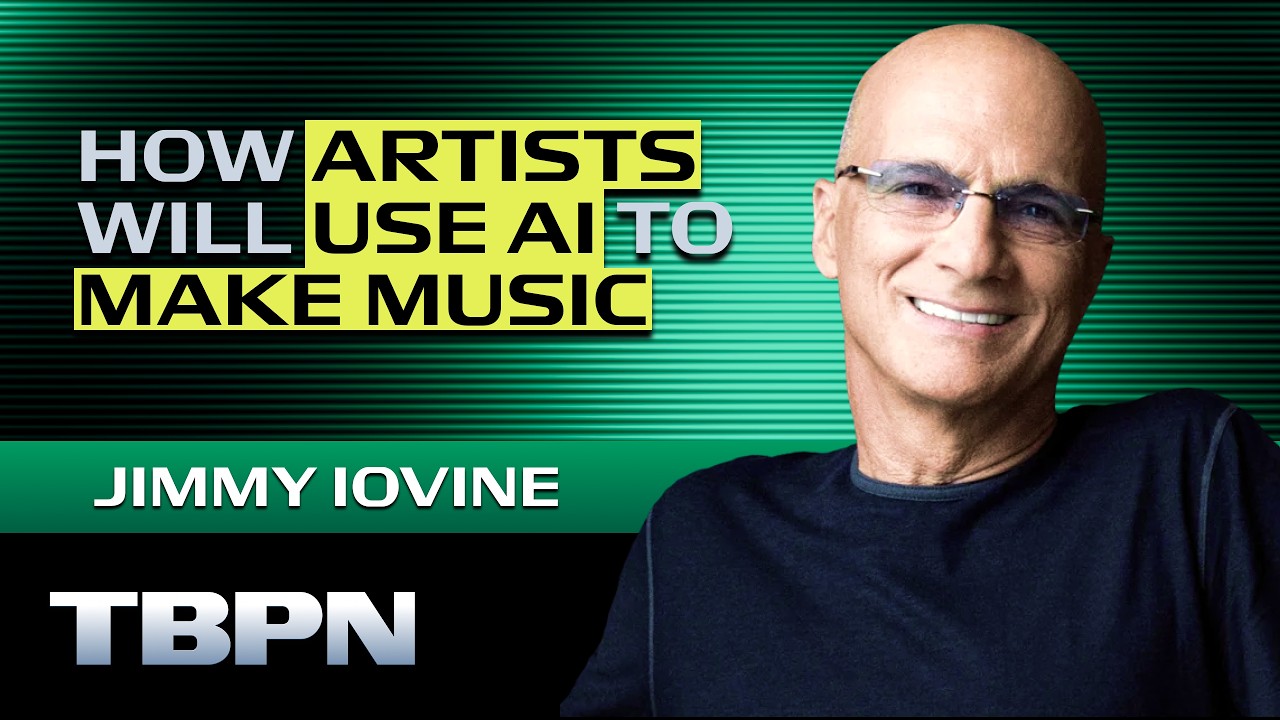
Iovine Says Streaming Business Model Nears Obsolete Without Social Tools
TBPN
Music industry veteran Jimmy Iovine warns that platforms like Spotify and Apple Music will become obsolete unless they integrate social tools directly connecting artists with fans.
## Background
Published on YouTube by TBPN on September 2, 2026, this full interview features music industry legend Jimmy Iovine. According to the show notes, the discussion covers why he and Dr. Dre co-founded their academy at USC, how they built Beats into a global brand, his experiences with Steve Jobs, the mechanics of hardware and software integration, and how AI will transform music and streaming.
## TL;DR
Jimmy Iovine reflects on his storied career in the music and tech industries, detailing the origins of Beats, his collaboration with Steve Jobs, and the founding of the USC Iovine and Young Academy to foster cross-disciplinary innovation. He offers sharp critiques of current streaming economics and social media trends, highlighting how platforms like Spotify lack essential social interaction for artists. Looking ahead to the future of AI, Iovine argues that generative tools will not replace human emotion and artistry, predicting instead that visionary creators and labels will harness AI to revolutionize music production and establish new business models.
## Atmosphere & style
The interview has an candid, authoritative, and energetic tone, driven by Iovine's sharp Brooklyn wit and decades of high-level industry experience. The conversational dynamic between the hosts and Iovine feels intimate and respectful, blending lighthearted banter about Malibu neighbors with deep, unfiltered critiques of major tech giants and streaming services. A sense of visionary realism permeates the discussion, balancing a clear-eyed analysis of the music industry's past mistakes with an enthusiastic, forward-looking confidence in creative talent.
## Key takeaways
- [00:00](https://www.youtube.com/watch?v=p2HMa-RQr-A&t=0s) Jimmy Iovine and Dr. Dre co-founded the USC Iovine and Young Academy to solve the deep siloes between engineering, design, and business that plagued companies like Beats and Apple.
- [03:24](https://www.youtube.com/watch?v=p2HMa-RQr-A&t=204s) Modern social media encourages obsessive anxiety over external validation, whereas success requires putting on 'blinders' to focus on your own work with cross-disciplinary empathy.
- [06:30](https://www.youtube.com/watch?v=p2HMa-RQr-A&t=390s) Software companies struggle to build consumer hardware because they operate by committee and lack the interdisciplinary integration pioneered by Steve Jobs at Apple.
- [06:30](https://www.youtube.com/watch?v=p2HMa-RQr-A&t=390s) Jimmy Iovine and Dr. Dre personally wrote a $70 million check to establish the USC Academy, despite having no background in higher education administration.
- [12:19](https://www.youtube.com/watch?v=p2HMa-RQr-A&t=739s) Developing artistic taste and executive judgment comes from leaving ego at the door, recognizing superior talent, and being of service to that talent.
- [16:16](https://www.youtube.com/watch?v=p2HMa-RQr-A&t=976s) Beats Electronics was created out of frustration with low-quality bundled plastic earbuds that degraded the studio-quality sound producers like Dr. Dre spent days perfecting.
- [17:10](https://www.youtube.com/watch?v=p2HMa-RQr-A&t=1030s) Despite initial industry skepticism about a $300 headphone, Beats relied on cultural influence and studio-quality sound to build massive consumer demand.
- [20:00](https://www.youtube.com/watch?v=p2HMa-RQr-A&t=1200s) Technological shifts in music have historically been driven by studio gear, with artists like Prince and Steve Jobs transforming drum machines and digital distribution into cultural movements.
- [23:32](https://www.youtube.com/watch?v=p2HMa-RQr-A&t=1412s) Generative AI cannot replace human artistry because true creative depth stems from authentic human struggle, emotion, and life experience.
- [26:13](https://www.youtube.com/watch?v=p2HMa-RQr-A&t=1573s) Unlicensed AI training models face inevitability of legal blowback, warranting strict regulatory oversight and prompt-level royalty monetization for artists.
- [34:09](https://www.youtube.com/watch?v=p2HMa-RQr-A&t=2049s) Living artists can use AI as a creative pre-visualization tool, but deceased artists' estates must be compensated when their catalogs are ingested as training data.
- [36:46](https://www.youtube.com/watch?v=p2HMa-RQr-A&t=2206s) Live performances remain an irreplaceable 'proof of humanity' that holograms and synthetic audio cannot replicate.
- [39:36](https://www.youtube.com/watch?v=p2HMa-RQr-A&t=2376s) Beats disrupted legacy audio competitors like Bose by marketing headphones as stylish, high-energy fashion accessories rather than silent medical equipment.
- [41:26](https://www.youtube.com/watch?v=p2HMa-RQr-A&t=2486s) Music streaming platforms like Spotify and Apple Music risk obsolescence unless they integrate native social tools for direct artist-to-fan interaction.
- [50:48](https://www.youtube.com/watch?v=p2HMa-RQr-A&t=3048s) Current family plan streaming payout structures are fundamentally warped, unfairly shifting revenue from legacy music away from the subscriber's actual taste toward high-volume repeat plays by kids.
- [53:30](https://www.youtube.com/watch?v=p2HMa-RQr-A&t=3210s) By licensing their catalogs to third-party tech platforms, music labels built streaming tech giants whose valuations now dwarf the labels themselves.
- [55:02](https://www.youtube.com/watch?v=p2HMa-RQr-A&t=3302s) The traditional business model of record labels is not built to last forever, making AI the next critical catalyst for restructuring distribution and technology ownership.
## Detailed walkthrough
### [00:00](https://www.youtube.com/watch?v=p2HMa-RQr-A&t=0s) Malibu Commutes and Launching the Iovine and Young Academy
Jimmy Iovine joins the hosts in-studio, joking about the long drive down to the set from Malibu. The group bonds over their shared Malibu connection, calling it a "podcast dynasty" alongside neighbors like Andrew Huberman and Ben Taub. The conversation transitions into Jimmy’s work at the University of Southern California (USC), where he and Dr. Dre co-founded the USC Iovine and Young Academy (IYA). Jimmy explains that the school grew directly out of the friction they experienced when building Beats and selling it to Apple in 2014. At Beats, they struggled to find employees who could cross boundaries and collaborate effectively across engineering, design, and business. Moving into Apple magnified this problem: despite Apple being a top-tier company, Jimmy noticed that operational mindsets and internal communications remained deeply siloed.
Realizing that this compartmentalized thinking stems from higher education, Jimmy called Dr. Dre to propose a solution. He noted that the formative years between ages 19 and 26 leave a permanent imprint on how people solve problems. When young adults enter traditional colleges, they are immediately pigeonholed—engineers only train alongside engineers, and business students only sit with accountants. The host agrees, sharing that at age 37, his own early career required him to teach himself programming, economics, video production, and marketing simultaneously to build a cross-disciplinary toolkit.
- **Founding Context:** Beats Electronics and Beats Music were acquired by Apple in 2014.
- **Core Problem:** The inability of specialists (designers, software developers, corporate strategists) to speak a common professional language or grasp each other's "why."
---
[03:24](https://www.youtube.com/watch?v=p2HMa-RQr-A&t=204s) Running Your Own Race and Cross-Disciplinary Empathy
When asked how interdisciplinary collaboration fits with putting "blinders" on to focus, Jimmy explains that his advice about blinders is aimed at modern social media culture. Today, people are obsessively anxious about public perception, constantly asking what strangers think of their posts or mundane everyday choices. For Jimmy, wearing blinders simply means tuning out the noise to "run your own race," while entering that race with empathy and insight into other fields. Modern corporate environments suffer when extreme engineering mindsets cannot communicate with creative design teams. Bringing 300 creative employees from Beats into Apple highlighted this division, even inside an exceptional organization.
Jimmy shares that when they surveyed major corporations while designing the academy, the single most requested trait for incoming talent was "collaborative innovation." Originally launched in 2012 as a literal mix of technology, design, and business, the academy was built to break down corporate division. While traditional universities try to claim they offer interdisciplinary studies by allowing an engineering major to take a single elective across the hall, Jimmy dismisses that approach as an inadequate "joke."
- **Social Media Critique:** Jimmy notes people spend all day seeking external validation for trivial things: *"Would you go to a grocery store and ask everybody what they think?"*
- **Corporate Capability Survey:** Companies identified cross-functional, collaborative innovation as their absolute highest hiring priority.
---
[06:30](https://www.youtube.com/watch?v=p2HMa-RQr-A&t=390s) Why Software Companies Fail at Hardware and Steve Jobs's Legacy
Jimmy offers a direct critique of the tech industry, posing a challenge: why have so few software companies successfully built and launched commercial consumer hardware? While tech giants possess immense envy for hardware products, they routinely fail because they operate by committee and lack true cross-disciplinary integration. Even when companies like Meta release hardware—such as their smart glasses—they have to partner with established eyewear brands like Ray-Ban.
Jimmy attributes Apple’s unique success in making both world-class software and hardware to Steve Jobs’s foundational vision. Jobs was the ultimate embodiment of the intersection between technology and the liberal arts. Jimmy recalls visiting Apple Headquarters for the first time in 2003 after visiting five other major companies to discuss digital piracy. Within 30 seconds of meeting Steve Jobs and Eddy Cue, Jimmy realized Apple was the only company that truly understood culture and feel. He immediately called Universal Music Chairman Doug Morris and urged him to license Universal's catalog to Jobs.
- **The Big Question:** Software giants routinely fail at consumer electronics because their internal divisions prevent genuine collaboration.
- **Founding Donation:** Jimmy and Dr. Dre personally wrote a $70 million check within a month to establish the USC Iovine and Young Academy, despite having no formal background in higher education administration.
- **Steve Jobs Quote:** *"Tech meets liberal arts"* was not just a marketing slogan, but coded into Apple’s corporate DNA, passing down through leaders like Tim Cook and Eddy Cue.
---
[12:19](https://www.youtube.com/watch?v=p2HMa-RQr-A&t=739s) Developing Taste, Overcoming Dyslexia, and Servicing Genius
Reflecting on his own schooling, Jimmy candidly discusses his early struggles with severe dyslexia and attention issues, admitting he likely would have dropped out of his own academy. Lacking formal academic focus, he threw himself into recording engineering because it forced him to master the technical mechanics of consoles and microphones in service of his passion for music. When the host shares how hard it was to recognize his own creativity after failing early school art classes, Jimmy emphasizes that taste and artistic judgment can be learned and cultivated over time.
Jimmy shares his personal journey of acquiring taste. Arriving at New York's Record Plant studio in 1973 as a teenager from Red Hook, Brooklyn—the son of a longshoreman—he had zero artistic sophistication. However, after engineering three albums for John Lennon, two for Bruce Springsteen, and one for Patti Smith, he emerged with world-class taste. The key lesson for any executive or founder, Jimmy explains, is to leave ego out of the room, recognize superior talent, and focus entirely on being of service to that talent to earn their loyalty.
- **Early Studio Credentials:** Worked directly with John Lennon, Bruce Springsteen, and Patti Smith during his formative engineering years in the 1970s.
- **On Developing Taste:** *"I had zero taste when I walked into the Record Plant... I went from three albums with him [Lennon], two albums with Springsteen, and one album with Patti Smith, and I left with taste."*
- **Executive Philosophy:** Never defend your own ignorance; instead, identify gifted people, surrounding yourself with them, and make their lives as great as possible.
---
[16:16](https://www.youtube.com/watch?v=p2HMa-RQr-A&t=976s) The Origin Story of Beats Headphones
Addressing the common misconception that his background in music made building hardware easy, Jimmy laughs off the idea. He points out that being a great musician does not make you an engineer: *"If you gave Bruce Springsteen two pieces of wood, he's not coming out with a guitar."* To build Beats, he and Dr. Dre had to seek out top-tier engineering talent and combine that technical skill with their own understanding of what was fundamentally broken in the music ecosystem.
The core motivation behind Beats was simple: an entire generation of young listeners was consuming music through cheap, white plastic earbuds bundled with Apple devices. Dr. Dre became frustrated that he would spend days perfecting sound fidelity in the studio, only for his kids to listen to the final product through terrible speakers. Realizing the gap in the market, they set out to build hardware that could reproduce the true emotion and bass of the recording studio.
- **Earbud Problem:** An entire generation was listening to compressed music on free, low-quality earbuds supplied with smartphones and MP3 players.
- **Dr. Dre's Studio Frustration:** Dr. Dre lamented to Jimmy that his children were listening to his meticulously produced tracks on "ridiculous things," sparking the initial vision for Beats Electronics.
[17:10](https://www.youtube.com/watch?v=p2HMa-RQr-A&t=1030s) Overcoming Doubt to Launch Beats and Embracing Unapologetic Risk
When Jimmy Iovine and Dr. Dre set out to create Beats headphones, they were met with widespread skepticism. Industry insiders insisted that consumers would never pay $300 for premium over-ear headphones, given that Apple and Samsung were already handing out earbuds for free with their devices. Unfazed by the pushback, Iovine and Dre focused entirely on product experience and cultural immersion: their strategy was simply to get the headphones onto people's heads. They knew that once listeners experienced the rich, studio-quality sound, there would be no going back. By leveraging cultural clout and targeting young consumers who began demanding Beats for Christmas, they created a massive cultural phenomenon.
When asked about the high financial stakes—including famous anecdotes like paying out-of-pocket to advertise songs—Iovine admits he simply doesn't worry about risk. He relies on intuition, moving fast and prioritizing what is right for the creative vision over corporate budgets or corporate politics. Whenever institutional friction threatened his freedom, his solution was straightforward: walk away and keep doing what he wants to do.
- **Retail Price Point:** The market believed a $300 headphone could not compete against free bundled earbuds from Apple and Samsung.
- **Core Strategy:** Drive product adoption by utilizing cultural influences to get headphones on listeners' ears, relying on sound quality to turn them into buyers.
- **Philosophy on Risk:** Iovine explicitly states he "doesn't know how to spell risk," choosing instead to act on gut instinct and protect his creative autonomy.
[18:39](https://www.youtube.com/watch?v=p2HMa-RQr-A&t=1119s) Evaluating Strategic Partnerships and Building the USC Academy
Reflecting on how he chooses business partners, Iovine describes himself as an optimist who approaches new relationships by giving people the benefit of the doubt. Rather than being overly protective or rigid upfront, he tests new ideas rapidly; if a partnership or concept fails to show promise early on, he cleanly cuts his losses and moves forward. Once a direction proves itself, however, he commits fully.
This willingness to embrace the unknown was central to founding the Jimmy Iovine and Andre Young Academy at the University of Southern California (USC). Despite knowing nothing about higher education at the start, Iovine and Dr. Dre leaned into the challenge without fear, resulting in what Iovine considers one of the premier interdisciplinary programs in the country.
- **Partnership Philosophy:** Grant initial benefit of the doubt, iterate quickly, drop non-viable projects immediately, and double down on what works.
- **USC Academy:** Co-founded by Iovine and Dr. Dre despite having no background in academia, developing it into a top-tier program for art, technology, and business.
[20:00](https://www.youtube.com/watch?v=p2HMa-RQr-A&t=1200s) Lessons from Music’s Technological Shifts: Stereo, Drum Machines, and iTunes
Looking back across decades in the recording industry, Iovine notes that technological transitions were historically driven by expensive, professional studio gear before reaching consumers. He recalls early innovations like the phaser effect used by Jimi Hendrix, or the Beatles discovering stereo mixing at Abbey Road. Paul McCartney famously recalled walking into the studio, seeing two speakers instead of one, and initially assuming it was just meant to play music twice as loud.
Iovine also witnessed the birth of the electronic drum machine firsthand while working with creator Roger Linn, who brought an early prototype computer into a recording session. While Linn created it, it was Prince who boldly elevated the technology to a mainstream pop phenomenon. For an elite musician surrounded by world-class players to deliberately simplify his sound with a drum machine was a risky, brilliant move that transformed popular music.
Transitioning into the digital revolution, Iovine points to Steve Jobs and Eddy Cue at Apple as visionaries who saved music during the rampant MP3 piracy era. While record labels hesitated to license digital tracks and artists resisted selling songs for $1 each, Jobs understood the cultural soul of music. In early meetings with Iovine, Jobs focused on artists like John Lennon, Bob Dylan, and Joan Baez, bridging tech elegance—via iTunes and the iPod—with true cultural respect. Later, as streaming emerged, Spotify’s Daniel Ek shifted the landscape again, leading Iovine to launch Beats Music at Interscope, which eventually served as the foundation for Apple Music after its acquisition.
- **Early Innovations:** The phaser (Jimi Hendrix), stereo audio (the Beatles), and drum machines (Roger Linn).
- **Prince's Innovation:** Prince revolutionized the drum machine by substituting traditional live studio drummers with automated rhythms on major records.
- **The Steve Jobs Connection:** Early discussions between Steve Jobs and Jimmy Iovine focused heavily on musical artists like Bob Dylan and John Lennon rather than raw tech, driving the consumer success of iTunes and the iPod.
- **Evolution to Streaming:** Beats Music was developed under Interscope and acquired by Apple to build the foundation for Apple Music.
[23:32](https://www.youtube.com/watch?v=p2HMa-RQr-A&t=1412s) How Social Media and AI Are Reshaping Music Production
Addressing how technology shapes music, Iovine draws a sharp distinction between streaming and social media. While streaming altered distribution, social media platforms like TikTok, Instagram, and SoundCloud fundamentally altered creative decision-making. These platforms gave artists unprecedented direct-to-fan marketing power, but they also forced artists and label executives into chasing viral short-form trends.
In discussing AI, Iovine pushes back against the belief that generative AI tools will make it impossible for new talent to break through. While platforms like Suno allow anyone to generate a full song in 10 seconds, Iovine emphasizes that true artistry comes from human experience. AI cannot replicate growing up in a broken home, suffering a broken heart, or matching the raw vocal soul of singers like Saint Harrison or Dolly Parton.
- **Impact of Social Media:** Platforms like TikTok provided direct artist marketing, but incentivized chasing short-form viral trends over deep artistic development.
- **AI Generation Speed:** Acknowledged tools like Suno generating complete audio tracks in under 10 seconds.
- **Human Element in Art:** Great artists—such as Kendrick Lamar, Olivia Dean, and Saint Harrison—rely on authentic human struggle and emotion that AI algorithms cannot replicate.
[26:13](https://www.youtube.com/watch?v=p2HMa-RQr-A&t=1573s) The AI Copyright Battle, Label Strategy, and the Future of Music Production
Iovine addresses the controversy surrounding AI music companies training models on massive catalog databases without permission. He compares companies scraping 60 million unlicensed tracks to the "kazoo of this moment," warning that unregulated scraping will lead to copyright battles and legal blowback. He advocates for strict government regulation and prompt-level royalty monetization—ensuring that when an AI system uses specific artists as stylistic prompts or training inputs, those original creators are fairly compensated.
Iovine defends major record labels in their legal stance against uncompensated AI scraping. Drawing parallels to YouTube's early copyright disputes—which eventually forced a sale to Google and the creation of strict revenue-sharing systems—he notes that labels and artists are aligned in defending their intellectual property. However, he warns that if AI systems are restricted to overly safe, dumbs-down training datasets due to licensing lockouts, consumer-facing generative AI tools will yield lower-quality outputs.
Ultimately, Iovine views AI not as a threat, but as a powerful creative tool for visionary producers. Just as early stereo mixing initially produced awkward track pans before producers learned to blend sound, modern hitmakers—like Swizz Beatz, Pharrell Williams, Dr. Dre, Timbaland, will.i.am, and Polow da Don—will learn to harness AI to break through creative blockages and craft future masterpieces.
- **Unlicensed Training Data:** AI models trained on ~60 million unlicensed tracks face inevitable legal and regulatory pushback.
- **Prompt Monetization:** Proposes that artists whose names or styles are used in AI generation prompts must receive direct financial compensation.
- **Label Strategy:** Major labels are legally protecting original master recordings, drawing parallels to YouTube's early copyright resolution.
- **AI as Pre-Visualization:** Top record producers use AI tools primarily to break creative blockages and pre-visualize arrangements before final recording.
- **Interscope Producers Mentioned:** Swizz Beatz, Pharrell Williams, Dr. Dre, Timbaland, will.i.am, and Polow da Don.
<FollowUp label="Want to continue with Part 3 of the Jimmy Iovine interview transcript?" query="Please provide the detailed walkthrough for Part 3 of the Jimmy Iovine interview transcript."/>
[034:09] AI Model Training: Fair Use vs. Artist Compensation
Jimmy Iovine dives into the contentious debate surrounding AI technology and copyright in the music industry. While pirating music is an unquestionable, objective wrong—taking an artist and label's product and consuming it without paying—AI training presents a far more complex grey area. Tech companies argue that training models on massive catalogs of existing music to generate brand-new works falls under "fair use," comparing it to human artists like The Beatles drawing inspiration from their influences. On the other hand, artists and record labels strongly disagree, viewing it as unauthorized exploitation of their life's work. Iovine points out the underlying economic dynamic: tech platforms are making billions selling software tools that let users create music, while some of those creators return to the traditional label ecosystem to monetize their AI-assisted songs.
Although living musicians might benefit from using these AI tools to make new music, deceased legends cannot. Iovine uses soul legend Wilson Pickett as a prime example: Pickett is not around to go into the studio and make another record, so if AI models are trained on his catalog, his estate deserves to be financially compensated. The same principle applies to living artists—whenever their work is used to power or prompt an AI model, they ought to receive a payout. Recognizing that policing and monitoring AI usage across vast digital networks will be an uphill battle, Iovine remains confident that the industry will eventually iron out the mechanics. Referring to the legal precedents set by social media addiction trials—where massive class-action settlements arrived decades later benchmarked to corporate revenue—Iovine emphasizes that the court system moves slowly, but deals must and will be struck to make things right.
- **Fair Use Debate:** Tech companies argue AI model training is non-infringing fair use; labels and artists argue it is uncompensated exploitation.
- **Wilson Pickett Example:** Deceased artists like Wilson Pickett cannot utilize AI tools themselves; thus, their estates must be compensated when their catalogs are used as training data.
- **Living Artists & Prompts:** Living musicians whose work is ingested or referenced to train models or generate prompts should receive royalties.
- **Legal Horizon:** Drawing parallels to delayed social media addiction settlements, Iovine expects AI compensation structures to be resolved via revenue-linked legal settlements down the road.
[036:46] Live Music, Human Proof, and the Fate of Multi-Disciplinary Artists
When asked about the future of live music in an era dominated by synthetic audio and AI-generated tracks, Iovine remains unfazed, asserting that authentic human performance is irreplaceable. Drawing on insights from his close friend Michael Rapino (CEO of Live Nation) as well as a lifetime spent touring with rock legends, Iovine believes fans will always choose a living, breathing artist "spilling their guts on the stage" over a static hologram. Live shows serve as the ultimate "proof of humanity" and talent. Huge cultural phenomena like Taylor Swift’s Eras Tour demonstrate that live concerts remain indispensable, high-demand cultural touchstones where entire generations converge.
Iovine maintains that every major technology cycle follows the exact same playbook: a disruptive technology emerges, initial panic ensues, licensing frameworks and royalty structures are negotiated, and ultimately, "the great talent and the great artists are going to show the world how to use it." The true power of this tech revolution lies in fostering multi-disciplinary thinkers. To thrive in the modern landscape, young creatives cannot afford to stay compartmentalized in traditional silos—such as attending specialized schools like Juilliard or Berklee just to play guitar all day. Instead, the future belongs to those who bridge the gap by thoroughly mastering both technology and creative expression.
- **Michael Rapino & Live Nation:** Iovine cites Live Nation CEO Michael Rapino when discussing the resilience of the live concert ecosystem.
- **The Human Element:** Holograms cannot replicate the raw emotion and vulnerability of a performer pouring their heart out on stage.
- **The Eras Tour:** Highlighted as a prime example of a massive American cultural "shelling point" that unifies millions around a live event.
- **Siloed Education:** Critiques classical institutions like Juilliard or Berklee for focusing too narrowly on single skills rather than educating multi-disciplinary innovators.
[039:36] Building Beats: Hardware, Software, and the "Hole in the Market"
Reflecting on how he and Dr. Dre built Beats Electronics into the world's leading headphone brand, Iovine explains that their success stemmed directly from being creative record producers who understood hardware from their backgrounds as recording engineers. Building physical hardware is extraordinarily difficult—which is precisely why most software companies fail at it. When Beats was acquired by Apple in 2014, it was the number-one headphone brand across 50 countries. That achievement inspired Iovine and Dre to establish the Jimmy Iovine and Andre Young Academy at USC, aiming to tear down the walls between design, engineering, and technology. Most tech companies suffer from a massive breakdown in communication where designers and engineers simply do not understand each other's "why."
To illustrate this systemic disconnect, Iovine recalls visiting major computer manufacturers prior to Beats where the audio budget for an entire computer speaker setup was a laughable 50 cents. Computers were designed with speakers pointing straight down into the table, even though consumers were using them primarily to listen to music. Furthermore, incumbents like Bose were marketing $300 noise-canceling headphones with silent ads aimed at helping travelers sleep on airplanes. Sensing an immense "hole in the market," Iovine and Dre realized Bose was selling the exact opposite of music. Beats flipped the narrative on its head: instead of medical-looking devices designed for quiet isolation, they built stylish, high-energy headphones designed to "rock your head."
- **Beats Scale:** Beats was the top headphone brand in 50 countries at the time of its sale to Apple.
- **50-Cent Audio Budgets:** Legacy PC manufacturers allocated as little as $0.50 for internal computer speakers, ignoring how people consumed music.
- **Bose vs. Beats Strategy:** Legacy audio companies treated headphones like medical equipment meant for sleep; Beats marketed them as vibrant, bass-heavy fashion accessories.
- **Steve Jobs Comparison:** Iovine modestly refrains from comparing himself to Steve Jobs, noting Jobs had a much bolder attitude and was "much smarter than me when we were hanging out together," yet points out that even Jobs didn't invent the phone—he redefined its attitude.
[041:26] Meta's Smart Glasses, Lateral Moves, and the Misguided Streaming Model
Analyzing tech hardware attempts, Iovine comments on Meta’s smart glasses partnership with Ray-Ban. While Meta sold around 2 million units—a decent figure, but far from a massive mainstream hit compared to selling "2 million headphones in Brooklyn alone"—Iovine credits Meta for keeping the product simple rather than over-engineering it. However, he questions whether tech companies truly possess the internal cultural DNA to empower top hardware executives to build culturally dominant consumer hardware.
Iovine argues that traditional music companies must learn to move laterally to survive. When tech shifted the culture away from traditional record labels—a shift Akio Morita and Norio Ohga at Sony presaged with the Walkman and Columbia acquisition before losing their lead to Apple—Iovine responded by building Beats and Beats Music directly inside Interscope Records, eventually creating a subsidiary bigger than the record label itself. Today, Iovine is applying this lateral philosophy through his involvement with Complex, working alongside figures like Marc Ecko, Aaron Levant, and his son Jamie Iovine. Complex is developing proprietary AI products so the music and media industries can "own the enterprise of AI" rather than passively licensing their valuable assets to third-party tech platforms.
Finally, Iovine pulls no punches regarding the state of music streaming services like Spotify and Apple Music, stating that streaming is "minutes away from being obsolete" if it fails to adapt. The fundamental flaw of major streaming platforms is their total lack of direct social interaction between artists and fans. Artists are forced to divert their audiences to external platforms like Instagram and TikTok just to communicate. While Iovine understands why Apple avoids building social features—recalling how he and Trent Reznor unsuccessfully tried to convince Apple to acquire Musical.ly (which later became TikTok)—he insists that streaming platforms must fix this disconnect or risk losing their cultural relevance entirely.
- **Meta Ray-Ban Glasses:** Sold roughly 2 million units by keeping design simple, though Iovine views it as a modest start rather than a true breakout hit.
- **Sony's Legacy:** Sony co-founder Akio Morita and successor Norio Ohga pioneered the intersection of music and hardware via the Walkman, but lost momentum, allowing Steve Jobs and Apple to dominate.
- **Complex & AI Enterprise:** Partnering with Marc Ecko, Aaron Levant, and Jamie Iovine at Complex to build native AI platforms, urging labels to own the tech enterprise rather than just licensing content.
- **The TikTok / Musical.ly Miss:** While at Apple Music, Iovine and Trent Reznor brought the founders of Musical.ly to Apple twice in an attempt to buy it, but Apple ultimately passed due to its corporate stance against social media networks.
- **Streaming's Critical Flaw:** Spotify and Apple Music lack native social tools, forcing artists to rely on third-party platforms to build relationships with their fanbases.
<ElicitationsGroup message="Explore further details from this interview:">
<Elicitation label="Go to Part 1" query="Provide a detailed walkthrough for Part 1 of this transcript."/>
<Elicitation label="Go to Part 2" query="Provide a detailed walkthrough for Part 2 of this transcript."/>
<Elicitation label="Go to Part 4" query="Provide a detailed walkthrough for Part 4 of this transcript."/>
</ElicitationsGroup>
[50:48](https://www.youtube.com/watch?v=p2HMa-RQr-A&t=3048s) The Flawed Economics of Streaming and the Missing Social Element
Jimmy Iovine pulls no punches when breaking down why modern streaming pay structures are fundamentally broken. He walks through a real-world scenario with the host, pointing to his ring to establish that he has a family. Under a typical family streaming plan, parents pay the bill, but their kids listen disproportionately, "leaning on the button all day." If the parent listens to Yeat, Fleetwood Mac, and Madonna while the kids spam Taylor Swift, Kendrick Lamar, or Elmo, the revenue distribution ends up completely warped—Elmo ends up "raking it in" while legacy acts like Fleetwood Mac receive next to nothing from the subscriber paying the bill.
Despite the system's current flaws, Iovine praises Spotify executives like Daniel Ek and Alex Norström as brilliant operators who are constantly thinking of new paradigms to evolve the space. However, Iovine emphasizes that every current streaming platform is fundamentally missing a core social component. He reveals that he is actively working with a team on a unique, confidential project alongside a major tech company to fix this gap and build a better model for artists and labels alike. When the host mentions Spotify's efforts to connect top listeners with concert tickets, Iovine dismisses third-party control, arguing that artists should interact directly with fans without relying on middleman platforms.
- A family plan subscriber pays the monthly fee, but streaming payouts disproportionately reward whatever content kids play on repeat (like Elmo or top pop hits) rather than the parent's actual taste (like Fleetwood Mac).
- Jimmy Iovine is currently collaborating with a core team and a major company on a new project designed to address the missing social layer in streaming.
- Iovine argues that record labels and artists do not inherently need third parties to deliver music or curate fan perks—the entire distribution paradigm should evolve with artists at the forefront.
[53:30](https://www.youtube.com/watch?v=p2HMa-RQr-A&t=3210s) How Hollywood and Music Created Streaming Monsters
Drawing parallels to Hollywood, Iovine outlines how media companies inadvertently undermined their own value. When Netflix first emerged, it came to town carrying "a big checkbook." Hollywood studios—driven by the pressure of quarterly public reporting—licensed their prime content to meet short-term revenue goals. In doing so, they created a massive monster that they are now desperately spending billions to compete against via proprietary services like Disney+ and Hulu.
The music industry fell into the exact same trap by licensing their catalogs to Spotify, Apple Music, and Amazon. As a result, Spotify is now worth more than all the major record labels combined, despite owning virtually zero intellectual property. Iovine points out that while Hollywood eventually realized its mistake and launched its own direct-to-consumer platforms, music labels have yet to take back control. He sees the rise of AI as the ultimate catalyst for music labels and platforms to restructure their business models.
- Netflix used massive payouts to license Hollywood's content, creating a tech giant that traditional studios are now struggling to catch up to.
- Music labels licensed their entire catalogs to tech platforms, leading to a situation where Spotify's valuation exceeds all major record labels combined despite owning zero IP.
- AI presents the critical opening for music companies to evolve beyond being passive content licensors.
[55:02](https://www.youtube.com/watch?v=p2HMa-RQr-A&t=3302s) "Not Every Industry Was Made to Last Forever": Lessons from Intel and Steve Jobs
Recalling a pivotal moment from 2002, Iovine shares how the rise of music piracy forced him to seek out tech leaders for answers. During a meeting at Intel, a senior executive offered him a chilling reality check regarding the plight of recording studios and young artists: "Jimmy, what a fabulous story... but not every industry was made to last forever." That statement struck Iovine deeply, forcing him to accept that while music itself is timeless, the traditional *business* of music had run its course.
This realization drove him straight to Steve Jobs and Eddy Cue at Apple, recognizing that tech-enabled integration was the undisputed next step. Reflecting on company structures, Iovine stresses that being a mere "licensor of music" is boring and disconnected from other creative disciplines. True industry-defining companies—exemplified by Sony under Akio Morita and Apple under Steve Jobs—succeed because they blend multiple disciplines from top to bottom.
- In 2002, a high-level Intel executive told Iovine that the traditional record industry was not built to last forever, shifting Iovine's approach toward tech partnerships.
- Akio Morita (Sony) and Steve Jobs (Apple) are cited as the prime historic examples of leaders who successfully blended technology, culture, and hardware/software disciplines.
- Iovine notes that while everyone strives to be "the new Steve Jobs," most miss his core philosophy: standing at the intersection of technology and the liberal arts.
[57:33](https://www.youtube.com/watch?v=p2HMa-RQr-A&t=3453s) The AI Horizon, Apple Culture, and the Mission of the USC Academy
When asked if Steve Jobs would have liked AI, Iovine refrains from speaking directly for his late friend, though he highlights Jobs's inner circle—including Laurene Powell Jobs and Jony Ive—and reiterates that AI represents the ultimate intersection of technology and liberal arts. He acknowledges the debate surrounding AI's role in creative tools, comparing its potential to the democratization seen during the launch of Apple's GarageBand.
Addressing the dynamics inside tech behemoths, Iovine explains that large companies naturally resist letting "the tail wag the dog." While he doesn't expect record labels to launch competing streaming services in the immediate future, he firmly believes AI will give birth to an entirely new business layer that will reshape the relationships between Spotify, labels, and artists.
Closing on his legacy, Iovine reiterates why he and Dr. Dre co-founded the Jimmy Iovine and Andre Young Academy at USC. Although it quickly became an entrepreneurial hub for students aiming to build the next big startup, its primary purpose was to train interdisciplinary thinkers who can enter major tech and entertainment companies to bridge the divide between corporate tech and creative culture. He points to major shifts in media ownership—referencing Skydance's David Ellison leading the Paramount takeover—as proof that the future belongs to those who understand where media and technology cross.
- Steve Jobs famously disliked streaming, but Iovine notes that tech giants must continually morph, with AI offering the next major technological leap.
- The Jimmy Iovine and Andre Young Academy at USC was designed specifically to train students to work across technology, design, and business within major corporations.
- Iovine highlights David Ellison's acquisition of Paramount as a key example of modern leadership bridging tech and traditional media entertainment.
## Notable quotes
> [03:24](https://www.youtube.com/watch?v=p2HMa-RQr-A&t=204s) Would you go to a grocery store and ask everybody what they think? — Jimmy Iovine
> [06:30](https://www.youtube.com/watch?v=p2HMa-RQr-A&t=390s) Tech meets liberal arts — Steve Jobs
> [12:19](https://www.youtube.com/watch?v=p2HMa-RQr-A&t=739s) I had zero taste when I walked into the Record Plant... I went from three albums with him, two albums with Springsteen, and one album with Patti Smith, and I left with taste. — Jimmy Iovine
> [16:16](https://www.youtube.com/watch?v=p2HMa-RQr-A&t=976s) If you gave Bruce Springsteen two pieces of wood, he's not coming out with a guitar. — Jimmy Iovine
> [17:10](https://www.youtube.com/watch?v=p2HMa-RQr-A&t=1030s) doesn't know how to spell risk — Jimmy Iovine
> [36:46](https://www.youtube.com/watch?v=p2HMa-RQr-A&t=2206s) the great talent and the great artists are going to show the world how to use it. — Jimmy Iovine
> [39:36](https://www.youtube.com/watch?v=p2HMa-RQr-A&t=2376s) much smarter than me when we were hanging out together — Jimmy Iovine
> [41:26](https://www.youtube.com/watch?v=p2HMa-RQr-A&t=2486s) 2 million headphones in Brooklyn alone — Jimmy Iovine
> [41:26](https://www.youtube.com/watch?v=p2HMa-RQr-A&t=2486s) own the enterprise of AI — Jimmy Iovine
> [41:26](https://www.youtube.com/watch?v=p2HMa-RQr-A&t=2486s) minutes away from being obsolete — Jimmy Iovine
> [50:48](https://www.youtube.com/watch?v=p2HMa-RQr-A&t=3048s) raking it in — Jimmy Iovine
> [53:30](https://www.youtube.com/watch?v=p2HMa-RQr-A&t=3210s) a big checkbook — Jimmy Iovine
> [55:02](https://www.youtube.com/watch?v=p2HMa-RQr-A&t=3302s) Jimmy, what a fabulous story... but not every industry was made to last forever. — Intel Executive
> [55:02](https://www.youtube.com/watch?v=p2HMa-RQr-A&t=3302s) licensor of music — Jimmy Iovine
> [57:33](https://www.youtube.com/watch?v=p2HMa-RQr-A&t=3453s) the tail wag the dog — Jimmy Iovine
## Mentioned
Jimmy Iovine, Dr. Dre, Steve Jobs, Andrew Huberman, Ben Taub, Eddy Cue, Doug Morris, John Lennon, Bruce Springsteen, Patti Smith, Jimi Hendrix, Paul McCartney, Roger Linn, Prince, Daniel Ek, Suno, Saint Harrison, Dolly Parton, Kendrick Lamar, Olivia Dean, Swizz Beatz, Pharrell Williams, Timbaland, will.i.am, Polow da Don, Wilson Pickett, Michael Rapino, Taylor Swift, Bose, Akio Morita, Norio Ohga, Marc Ecko, Aaron Levant, Jamie Iovine, Trent Reznor, Alex Norström, Elmo, Madonna, Yeat, Laurene Powell Jobs, Jony Ive, David Ellison, TBPN, USC Iovine and Young Academy, Beats Electronics, Beats Music, Apple, Meta, Ray-Ban, Universal Music, Record Plant, iTunes, iPod, Spotify, TikTok, Instagram, SoundCloud, YouTube, Google, Interscope Records, Live Nation, Juilliard, Berklee, Complex, Sony, Columbia, Musical.ly, Netflix, Disney+, Hulu, Amazon, Intel, GarageBand, Skydance, Paramount, Ramp, Public, Cisco, Console, CrowdStrike, Figma, MongoDB, NYSE, Railway, Shopify, Codex, Eras Tour
Iovine称流媒体商业模式若无社交工具将趋于淘汰
音乐行业资深人士Jimmy Iovine警告称,除非Spotify和Apple Music等平台整合能直接连接艺术家与粉丝的社交工具,否则将被时代淘汰。
Jimmy Iovine回顾了他在音乐与科技行业的传奇职业生涯,详述了Beats的创立起因、与Steve Jobs的合作,以及为促进跨学科创新而创立USC Iovine and Young Academy的过程。他对当前的流媒体经济模式和社交媒体趋势提出了尖锐批评,指出Spotify等平台缺乏艺术家所必需的社交互动功能。展望AI的未来,Iovine认为生成式工具不会取代人类的情感与艺术才华,并预测有远见的创作者和唱片公司将利用AI革新音乐制作并建立全新的商业模式。
Jimmy Iovine 与 Dr. Dre 个人出资 7000 万美元在南加州大学创立学院,旨在打破高等教育中工程、设计与商业相互割裂的壁垒,培养跨学科协作人才。 (6:30)
针对软件巨头普遍在硬件领域受挫的现象,Iovine 指出委员会决策模式缺乏交叉整合,而 Steve Jobs 则是将科技与人文艺术深度融合的典范。 (6:30)
因不满附赠劣质耳塞对录音室音质的损耗,Iovine 与 Dr. Dre 顶住业内对 300 美元定价的质疑创立 Beats,通过文化影响力和高保真体验打造出风靡全球的耳机品牌。 (16:16)
谈及生成式 AI,Iovine 强调机器无法替代真实的人类情感与艺术灵魂,并呼吁出台严格的版权监管,对基于特定艺术家风格的 Prompt 进行直接版税补偿。 (26:13)
Iovine 批评当前流媒体平台的收益分配模型存在严重扭曲,且极度缺乏艺术家与粉丝的原生社交互动,若不演进为直连生态将面临过时风险。 (50:48)
Reading summary
Music executive and entrepreneur Jimmy Iovine argues that while technological shifts continually disrupt media, cultural and commercial longevity depends on cross-disciplinary thinkers who bridge technology, business, and human artistry. Drawing on the trajectory of Beats, Apple, and the recording industry, he contends that emerging generative artificial intelligence will follow past technology cycles, requiring both regulatory copyright frameworks and visionary artists to define its ultimate value.
Breaking Academic and Corporate Silos (0:00)
Iovine and Dr. Dre co-founded the USC Iovine and Young Academy with a personal $70 million donation after experiencing severe operational friction while scaling Beats Electronics and integrating roughly 300 creative employees into Apple following its 2014 acquisition. Iovine observed that even world-class corporations suffer from departmental silos where software engineers, industrial designers, and business strategists fail to grasp each other's priorities or speak a shared professional language.
Tracing this dysfunction to higher education, Iovine contends that traditional universities pigeonhole students between ages 19 and 26 into rigid specializations. While universities often frame single electives as interdisciplinary learning, Iovine rejects this as inadequate. He notes that a corporate capability survey conducted while designing the academy identified cross-functional 'collaborative innovation' across technology, design, and business as the single most requested trait for incoming talent.
Cultural Intuition in Hardware and Design (6:30)
Iovine argues that software companies routinely fail to produce commercially successful consumer hardware because they design by committee and lack integrated cultural intuition. Even tech firms launching wearable hardware, such as Meta with its smart glasses, must rely on legacy brand partnerships like Ray-Ban. While Meta sold roughly two million units by keeping the design simple, Iovine views that volume as modest compared to true consumer hardware scale.
Beats capitalized on a systemic market blind spot after Dr. Dre expressed frustration that his studio productions were being played back on cheap white earbuds bundled with smartphones. Legacy audio manufacturers like Bose treated headphones as functional, medical-style equipment marketed with silent advertisements to help travelers sleep. Recognizing that incumbent PC makers allocated as little as 50 cents toward internal speakers, Beats repositioned headphones into stylish, bass-heavy fashion accessories, eventually becoming the top headphone brand across 50 countries before selling to Apple.
AI Copyright Battles and Creative Pre-Visualization (26:13)
Regarding the legal controversy surrounding artificial intelligence models trained on roughly 60 million unlicensed tracks, Iovine dismisses tech platform defenses of fair use. Drawing parallels to early YouTube copyright battles and delayed social media addiction litigation, he forecasts that unauthorized scraping will face severe regulatory pushback and revenue-linked settlements. He advocates for prompt-level royalty monetization that compensates both living artists and the estates of deceased legends, such as Wilson Pickett, whose catalogs are ingested to generate new material.
Despite the emergence of tools like Suno that generate complete audio tracks in ten seconds, Iovine rejects fears that synthetic music will eliminate breakthrough artists. In his view, algorithms cannot replicate authentic human vulnerability, suffering, and lived experience. Instead, he expects elite producers—such as Dr. Dre, Pharrell Williams, and Timbaland—to harness AI as an arrangement tool to break creative blocks, mirroring how artists historically adapted to stereo mixing and electronic drum machines.
Streaming Traps and Missing Social Architecture (50:48)
Iovine warns that major music streaming services like Spotify and Apple Music are on the verge of obsolescence if they fail to adapt. Their primary operational flaw is a total absence of native social interaction, which forces artists to divert audiences to third-party networks like TikTok and Instagram. He also critiques subscription economics, pointing out that under standard family plans, high-frequency listening by children disproportionately skews royalty payouts toward novelty tracks at the expense of adult subscribers' preferences.
More broadly, Iovine argues that record labels repeated Hollywood's mistake with Netflix by licensing their primary assets to digital distributors for short-term gains. This concession allowed Spotify's valuation to surpass that of the major record labels combined, despite owning virtually zero intellectual property. To reverse this dependency, Iovine argues that media organizations must own native technological infrastructure—such as his current efforts building proprietary AI tools at Complex—rather than remaining passive content licensors.
Iovine recalls a 2002 meeting where an Intel executive cautioned him that the traditional record industry was not built to last forever, reinforcing his belief that while delivery systems change, authentic human performance remains irreplaceable. Even as generative tools advance, he asserts that live concerts—such as Taylor Swift's Eras Tour—will endure as the definitive proof of humanity, while the future of media will be led by operators who blend technology with creative expression.
精炼阅读摘要
音乐制作人与企业家 Jimmy Iovine 认为,虽然生成式人工智能正在剧烈冲击版权规则与音乐制作,但真正的艺术核心依然源于不可替代的人类体验与现场共鸣;传统唱片与流媒体行业若想避免沦为被动的版权出租方,必须打破工程与创意的学科壁垒,主动掌握技术架构与商业平台的主导权。
跨学科鸿沟与高等教育的解构 (0:00)
Jimmy Iovine 指出,多数软件巨头在研发消费级硬件时屡遭挫败,根源在于企业内部部门割裂、依赖委员会决策,缺乏将工程技术与创意设计真正融合的跨学科协作能力。即使在苹果这样具备卓越设计传统的高科技公司,2014 年收购 Beats 时引入的 300 名创意人才依然遭遇了深层的职能壁垒。他回顾 2003 年初访苹果总部会见 Steve Jobs 与 Eddy Cue 时的经历,认为苹果之所以能在硬件与软件上同时取得成功,关键在于 Jobs 确立了科技与人文交汇的企业基因。
为了从源头上改变专业隔阂,Iovine 与 Dr. Dre 共同向南加州大学(USC)捐资 7000 万美元创办了 Iovine and Young Academy。Iovine 强调,19 至 26 岁是塑造个体问题解决思维的关键时期,传统高校将工程、商学与艺术专业完全切分的教学体制已无法匹配现代商业需求;调研显示企业招聘时最看重跨职能的“协同创新”能力,而让工程专业学生单纯选修一门艺术通识课只是流于表面的应对之策。
发现市场盲点:Beats的硬件突围
谈及 Beats Electronics 的崛起,Iovine 澄清这并非单纯依靠音乐名声,而是源于对消费级音频硬件严重退化的洞察。当时个人电脑厂商在内部扬声器上的预算甚至低至 50 美分,且喇叭方向朝下;苹果与三星随设备附赠廉价塑料耳塞,导致整整一代年轻群体习惯于低保真度的压缩音频。Dr. Dre 看到自己的孩子用劣质耳塞聆听录音室数日精心混音的作品,深感沮丧。与此同时,Bose 等老牌厂商将 300 美元的降噪耳机做成如同医疗器械、主打助眠的产品,在 Iovine 看来这完全是在售卖“音乐的反面”。
Beats 敏锐捕捉到这一市场盲区,将耳机从孤立的静音工具重塑为充满力量感、还原录音室低音质感的潮流文化配饰。尽管行业最初断言消费者绝不可能为 300 美元的耳机买单,但 Iovine 与 Dre 依靠敏锐直觉推进文化渗透,直接让产品进入年轻人的耳朵,引发广泛消费风潮。到 2014 年被苹果收购时,Beats 已经成为覆盖全球 50 个国家的第一大耳机品牌。
AI版权争议与提示词版税机制 (26:13)
针对当前生成式人工智能模型未经授权抓取约 6000 万首音轨进行训练的现状,Iovine 发出警告,认为无监管的抓取将面临激烈的法律诉讼与行业反弹。虽然科技公司主张抓取现有曲库属于“合理使用”,将其类比为人类创作者汲取灵感,但唱片公司与音乐人认为这是未获补偿的商业剥削。科技平台通过向大众出售 AI 工具获取了数十亿美元收入,而这些工具生成音乐的根基正是艺术家的毕生创作。
Iovine 主张政府必须实施严格监管,并推行提示词(Prompt)级别的版税机制。他举例指出,像已故灵魂乐传奇 Wilson Pickett 这类大师无法亲自使用现代 AI 工具,其遗产管理方必须在曲库被用于模型训练时获得经济补偿;在世艺术家若被用作风格提示词或输入源,也理应获得直接分成。他将此冲突类比为早年 YouTube 的版权纠纷,预测双方最终将通过与平台收入挂钩的法律协议确立规则。对于顶级制作人而言,AI 并非竞争对手,而是用于突破创作瓶颈和前期编曲可视化的强大辅助工具。
流媒体经济缺陷与横向产业扩张 (50:48)
Iovine 严厉批评了当前流媒体服务的商业模式与分成结构。在现行的家庭套餐中,虽然父母承担订阅费用,但收入分配却严重倾向于被儿童整天循环播放的内容,导致诸如 Elmo 这类高频单曲分走大量收入,而付费成年人真正喜爱的传统经典乐手却收益微薄。更为致命的是,Spotify 与 Apple Music 普遍缺乏原生的社交互动功能,迫使艺术家必须借助 TikTok 或 Instagram 与粉丝建立联系。Iovine 透露,当年他与 Trent Reznor 曾两度试图说服苹果收购 Musical.ly(TikTok 前身),但苹果因回避社交网络战略而错失良机。
他指出,音乐产业正在重蹈好莱坞当年的覆辙:传统电影制片厂因季度财报压力将优质内容廉价授权给 Netflix,亲手养成了日后吞噬自己的巨头;各大唱片公司将曲库全盘授权给科技平台,致使 Spotify 在不拥有任何核心 IP 的情况下,市值却超过了所有主流唱片公司的总和。Iovine 认为,单纯充当“内容授权方”将使行业陷入死胡同,流媒体若不改革与淘汰仅有一步之遥。他呼吁音乐产业必须学会“横向拓展”,正如他参与 Complex 开发专有 AI 产品一样,音乐行业应当亲自拥有 AI 工具与技术企业的主权,而非被动等待第三方平台的分成。
现场演出的“人性证明”与技术驯化
尽管 Suno 等平台已经能够在 10 秒内生成完整的音频曲目,但 Iovine 坚信算法永远无法复制真实的人类体验。他强调,在破碎家庭中成长的痛苦、经历心碎的情感创伤,以及像 Kendrick Lamar、Olivia Dean 或 Dolly Parton 那样直击灵魂的人声质感,绝非生成式代码所能合成。援引 Live Nation 首席执行官 Michael Rapino 的行业洞察,Iovine 指出静态全息投影绝不可能取代在舞台上倾注心血的真人表演,现场音乐会依然是不可替代的“人性证明”,Taylor Swift 的 Eras 巡演更是证明了数百万观众对现场真实情感连接的极度渴求。
回顾录音技术的发展史,从 Jimi Hendrix 使用的移相效果器、The Beatles 在 Abbey Road 对双声道混音的早期探索,到 Roger Linn 发明鼓机后由 Prince 大胆将其融入主流流行乐,音乐历史上的每一次重大技术演进都遵循着相似的轨迹:颠覆性工具问世、行业产生广泛恐慌、随后通过博弈建立授权框架,最终“伟大的艺术家将向世界展示该如何使用它”。在 Iovine 看来,面对当前的 AI 浪潮,未来的主导权依然属于那些能够同时精通技术语言与艺术表达的跨界人才。
Iovine 论证的核心在于,算法生成并不会消解伟大艺术家的价值,但传统娱乐产业若继续固守被动的内容授权模式,将在新一轮技术浪潮中彻底丧失商业主导权。本期节目的核心遗留问题在于:面对大型科技平台在算力与分发通道上的先发垄断,以及司法系统对版权保护判决的长期滞后,唱片工业与内容创作者是否具备足够的组织动力与资本耐心,在流媒体模式走向停滞前真正完成向“技术所有者”的横向突围。
Detailed notes — zh
## Background
本期节目由科技商业播客频道 TBPN 于 2026 年 9 月 2 日发布在 YouTube 平台。视频为针对音乐与科技界传奇人物吉米·艾文(Jimmy Iovine)的完整深度专访,节目简介指出双方探讨了他与 Dr. Dre 创办南加大艾文与杨学院(USC IYA)的初衷、打造全球顶尖耳机品牌 Beats 的历程、从史蒂夫·乔布斯身上获得的启示、纯软件公司跨界硬件屡遭挫折的根源,以及 AI 与流媒体机制对音乐产业未来的深远影响。
## TL;DR
吉米·艾文在访谈中深度剖析了科技、设计与商业之间的脱节断层,指出纯软件大厂造不出优秀硬件的关键在于内部缺乏跨学科协同与共情能力。他认为 AI 尽管生成速度惊人,但永远无法替代源于真实生活创伤与心碎的人类灵魂表达,然而伟大的艺术家最终会向世界示范如何驾驭这一工具,同时版权方必须坚决捍卫数据训练的付费底线。此外,他尖锐批评了 Spotify 和 Apple Music 缺乏原生社交生态以及按播放比例切分资金池的畸形收益分配模式,警告唱片公司切勿重蹈好莱坞被 Netflix 绑架的覆辙。最后,他重申了创办南加大跨学科学院的使命——培养兼具艺术直觉与工程认知的复合型人才,自内而外重构科技与娱乐交汇的产业未来。
## Atmosphere & style
整场对话洋溢着老派音乐工业巨擘的犀利率真与加州海滩式的从容自如。吉米·艾文操着鲜明的布鲁克林口音,谈吐间毫无上位者的繁文缛节与商业自负,时而拿录音棚太远和早年阅读障碍自嘲打趣,时而用毫不客气的行业真相刺破科技大厂的硬件幻想与流媒体泡沫。主持人带着对传奇的崇敬与年轻从业者的敏锐层层推展话题,令对谈既有回溯列侬、乔布斯时代的温情与敬畏,又激荡着对生成式 AI 狂野西部时代的冷峻审视,听来酣畅淋漓、极具思想穿透力。
## Bulletin
- [04:49](https://www.youtube.com/watch?v=p2HMa-RQr-A&t=289s) Jimmy Iovine 指出纯软件巨头普遍患有“硬件嫉妒症”,但由于内部缺乏硬工程、工业设计与文化感知的跨学科协同机制,始终难以造出优秀的消费级硬件;Meta 与雷朋的智能眼镜虽售出约 200 万副,但仍未达到大众爆款门槛。
- [34:00](https://www.youtube.com/watch?v=p2HMa-RQr-A&t=2040s) 在音乐 AI 版权争议上,Iovine 坚决驳斥“模型训练属于合理使用”的辩词,主张用于提示词与数据训练的源头艺人及已故艺人遗产委员会(如 Wilson Pickett)必须获得足额商业授权报酬,数据绝非免费午餐。
- [48:04](https://www.youtube.com/watch?v=p2HMa-RQr-A&t=2884s) 流媒体生态长期缺失原生社交属性,Jimmy Iovine 透露自己与 Trent Reznor 在苹果任职期间曾两度力推收购短视频鼻祖 Musical.ly(TikTok 前身),但苹果因坚守“不做社交”的企业基因而予以否决。
- [52:34](https://www.youtube.com/watch?v=p2HMa-RQr-A&t=3154s) 传统唱片公司重蹈了好莱坞全盘授权 Netflix 的覆辙,亲手将零原创音乐 IP 的 Spotify 喂养成了市值超越全球主流唱片公司总和的平台;在 AI 时代,内容方必须转型为技术实体的拥有者,而非被动的版权许可方。
## Key takeaways
- [00:38](https://www.youtube.com/watch?v=p2HMa-RQr-A&t=38s) 创立南加州大学艾文与杨学院(IYA):打破传统高等教育将工程、商科与艺术划分为“孤岛”(silos)的旧模式,培养具备跨界沟通同理心与协同创新能力的复合型人才。
- [03:17](https://www.youtube.com/watch?v=p2HMa-RQr-A&t=197s) 赛马的“眼罩”哲学:在被社交媒体评头论足绑架的现代社会中专注跑好自己的赛道,同时带着对技术、设计与商业底层逻辑(the why)的深刻理解与跨界同理心进入协作。
- [04:49](https://www.youtube.com/watch?v=p2HMa-RQr-A&t=289s) 纯软件公司的硬件困境:无法建立设计、文化感知与硬工程之间的跨界协同机制,是绝大多数软件大厂难以成功涉足消费级电子硬件的核心根源。
- [07:34](https://www.youtube.com/watch?v=p2HMa-RQr-A&t=454s) 史蒂夫·乔布斯的跨学科基因:乔布斯代表了技术与人文艺术交汇的终极范式,正是其对音乐文化的敏锐感知促成了 iTunes 在数字盗版危机中挽救正版音乐产业。
- [13:31](https://www.youtube.com/watch?v=p2HMa-RQr-A&t=811s) 审美品味可以后天习得:放下企业家的个人自负,承认他人所长,以服务姿态赋能顶级艺术与技术天才,方能建立起极度忠诚的长青商业组织。
- [16:02](https://www.youtube.com/watch?v=p2HMa-RQr-A&t=962s) Beats 的破局逻辑:面对传统 PC 厂商仅为扬声器投入 50 美分预算、Bose 贩卖入眠寂静的市场真空,Beats 赋予耳机潮流态度与震撼低音,以 300 美元售价颠覆全球音频硬件格局。
- [20:31](https://www.youtube.com/watch?v=p2HMa-RQr-A&t=1231s) 技术驱动与艺术胆识的历史规律:从立体声声场拓展到罗杰·林恩发明鼓机并由王子(Prince)推向极致,历史证明每当技术爆发,真正的伟大艺术家总能向世界展示如何将其转化为划时代工具。
- [26:58](https://www.youtube.com/watch?v=p2HMa-RQr-A&t=1618s) AI 无法取代人类灵魂表达:生成式工具能在数秒内炮制出套路化歌曲,但 AI 无法经历贫困创伤与心碎感,永远无法替代多莉·帕顿或肯德里克·拉马尔等真实艺术家的生命叙事。
- [34:00](https://www.youtube.com/watch?v=p2HMa-RQr-A&t=2040s) 数据训练绝非“合理使用”:AI 创业者不能借由“吸收灵感与反哺生态”的借口无偿爬取音乐数据,无论是已故传奇还是在世艺人,被用于模型训练提示词均应获得版税分账。
- [40:34](https://www.youtube.com/watch?v=p2HMa-RQr-A&t=2434s) 软件巨头做硬件的权力错位:Meta 联名雷朋智能眼镜虽有亮点,但在以软件为主导的企业文化下,硬件部门主管往往难以获得足够的放权与内部跨团队理解。
- [45:29](https://www.youtube.com/watch?v=p2HMa-RQr-A&t=2729s) 从被动许可方转为 AI 实体所有者:Beats 在 6 年内商业体量反超母公司 Interscope,证明了横向跨界的重要性;各大唱片公司在生成式 AI 浪潮中必须亲自掌控技术实体,摆脱单一版税依赖。
- [48:04](https://www.youtube.com/watch?v=p2HMa-RQr-A&t=2884s) 流媒体的原生社交断层:因苹果恪守企业 DNA 否决了收购 Musical.ly 的提议,主流流媒体平台退化为缺乏社交互动的单向播放器,迫使艺人只能在 TikTok、Instagram 等外部平台兜售音乐。
- [50:47](https://www.youtube.com/watch?v=p2HMa-RQr-A&t=3047s) 家庭套餐池化分账的结构性畸形:现行流媒体按照总播放次数切分收益池,导致儿童高频单曲循环儿歌 IP 瓜分了绝大部分资金,使全额买单父母所喜爱的经典或小众艺人收益微薄。
- [52:34](https://www.youtube.com/watch?v=p2HMa-RQr-A&t=3154s) 全盘授权的流媒体反噬:唱片业全盘授权流媒体重演了影视巨头壮大 Netflix 的悲剧,致使 Spotify 市值远超主流唱片公司总和;生成式 AI 构成了内容方打破受制于人局面的唯一新战场。
- [54:52](https://www.youtube.com/watch?v=p2HMa-RQr-A&t=3292s) 英特尔高管的残酷警醒:2002 年盗版泛滥之际英特尔高管指出“并非每个行业都注定长青”,让 Iovine 顿悟传统音乐商业模式的终结,从而坚定转向拥抱文理交汇的新商业范式。
- [01:00:47](https://www.youtube.com/watch?v=p2HMa-RQr-A&t=3647s) 以跨界人才自内而外重构产业:南加大 IYA 学院的核心目标并非凭空制造空想创业者,而是输送大批理解艺术语言与工程逻辑的年轻人打入巨头内部,推动科技与娱乐深度融合。
## Detailed walkthrough
### [00:00](https://www.youtube.com/watch?v=p2HMa-RQr-A&t=0s) 马里布的早间通勤与播客邻里寒暄
节目开场,主持人热情迎来了 Interscope Records 的联合创始人、音乐与科技界传奇人物吉米·艾文(Jimmy Iovine)。吉米一落座便半开玩笑地抱怨录音棚离自己家太远,一路从马里布(Malibu)赶过来着实不易。巧合的是,主持人也住在马里布,每天跑同样的通勤路线,并打趣说马里布如今俨然形成了一个“播客王朝”——安德鲁·休伯曼(Andrew Huberman)和本·塔夫特(Ben Taft)等知名播客主与创业者都聚居在这一带。吉米听后欣然表示要交换电话号码,气氛在轻松的加州生活闲聊中拉开序幕。
### [00:38](https://www.youtube.com/watch?v=p2HMa-RQr-A&t=38s) 创立 USC 艾文与杨学院:打破传统教育的人才孤岛
主持人切入正题,询问吉米与传奇制作人 Dr. Dre 在南加州大学(USC)联合创办的“艾文与杨学院”(USC Jimmy Iovine and Andre Young Academy,简称 IYA)近况如何。吉米回顾了这所创新学院的创立初衷:2014年他们将 Beats 耳机和 Beats Music 以30亿美元出售给苹果,但在创立 Beats 的整个历程中,他们始终面临一个巨大痛点——市场上根本找不到能够按照他和 Dre 所期望的方式进行跨界协同的人才。工程师、设计师与商业团队之间仿佛隔着天堑,各方完全无法使用同一种语言沟通,更无法理解对方决策背后的深层逻辑(“the why”)。
进入苹果后,这种部门割裂的现象不仅没有缓解,反而在更大体量下被成倍放大。吉米强调苹果已经是世界上最优秀、最顶尖的企业,但即便是这样的巨头,内部各个职能之间依然是高度孤立的“深井”(silos)。吉米和 Dre 本身都没怎么正经上过大学,但吉米敏锐地意识到问题的根源出在高等教育体制上。19岁到26岁是人生最重要的塑型期,而现行的高校体系却在一开始就把年轻人关进各自的孤岛:学工科的每天只跟60个工程师待在一起,进沃顿商学院的整天只跟45个会计师打交道,这种教育范式从根本上切断了跨学科理解的可能。
```mermaid
flowchart TD
accTitle: 传统孤岛教育与 IYA 协同创新模式对比
accDescr: 对比传统大学按学科分立的培养模式与艾文与杨学院融合科技、设计与商业的创新模式。
subgraph Traditional["传统高校:学科深井(Silos)"]
T1["工程学院<br/>(仅与工程师沟通)"]
T2["商学院<br/>(仅与商科生沟通)"]
T3["艺术/设计学院<br/>(仅与创意人员沟通)"]
end
subgraph IYA["IYA 学院:协同创新模式"]
M1["技术 (Tech)"]
M2["设计 (Design)"]
M3["商业 (Business)"]
M1 --- M2
M2 --- M3
M3 --- M1
M4["具备跨界同理心的人才"]
M1 & M2 & M3 --> M4
end
Traditional -.->|"沟通障碍 / 缺乏协同"| F1["跨界硬件与消费级创新受阻"]
IYA -->|"共同语境 / 协同创新"| S1["跨领域突破与软硬件融合"]
```
- 核心痛点:无论是初创时期的 Beats 还是并入后的苹果,极端技术团队与极端创意设计团队之间始终存在沟通壁垒。
- 青年发展阶段:19到26岁的大学及早期职业阶段决定了一个人的思维烙印,若缺乏多学科交叉体验,日后极难建立跨领域的同理心。
### [03:17](https://www.youtube.com/watch?v=p2HMa-RQr-A&t=197s) 赛马的“眼罩”哲学:专注于自己的赛道,但保持跨界同理心
针对主持人在成长过程中自学编程、做视频、跑营销的通才经验,吉米指出,虽然现代年轻人有更多机会接触多元领域,但整个社会环境却被社交媒体推向了另一个极端。主持人问起吉米常提到的赛马“眼罩(blinders)”哲学,吉米解释道:赛马之所以戴眼罩,是因为今天的世界比以往任何时候都糟糕,所有人都在过度在乎他人的看法——“人们整天在想:他们怎么看我的帖子?怎么看我的橙子?怎么看我的橙汁?谁在乎啊!你会跑到杂货店里去问所有人对自己买的东西有什么看法吗?”
在吉米看来,“戴上眼罩”的核心含义非常简单,那就是“跑属于你自己的比赛”(Run your own race)。但这并不意味着闭目塞听;恰恰相反,在专注于自己目标的同时,必须带着对其他学科的深刻理解与同理心进入赛场。当年他们将300多名极具个性的创意业务人员带入苹果这样严密的体系中,这种跨界碰撞让他愈发确信:技术与设计、商业如果缺乏同理心,任何公司内部的协作都会演变成一场灾难。
### [04:49](https://www.youtube.com/watch?v=p2HMa-RQr-A&t=289s) 为何软件巨头做不出硬件?“协同创新”的缺失
在谈到报考 IYA 的学生群体时,吉米表示这些年轻人很清楚市场上几乎没有其他大学能契合他们的特质。早在2012年创校之初,南加大曾做过专项企业调研,探寻各大企业究竟最渴求什么样的毕业生,结果排名第一的能力正是“协同创新”(collaborative innovation)。虽然当下许多传统大学也宣称提供跨学科选修,但吉米对此嗤之以鼻,认为“工科生跨院系去听一门设计课”根本不是真正的融合,纯属做表面文章。
为了佐证科技界在跨界协同上的严重断层,吉米抛出了一个极具穿透力的论据:“为什么极少有纯软件公司能够成功打造出畅销的消费级电子硬件?”面对主持人的猜测(如缺乏创始人坐镇、委员会决策等),吉米给出了直截了当的定论:因为他们缺乏跨领域协同的能力。几乎所有软件巨头都患有强烈的“硬件嫉妒症”(hardware envy),渴望拥有属于自己的物理终端,但最终都折戟沉沙;哪怕是 Meta 近期推出的智能眼镜,核心也是借助了传统眼镜巨头雷朋(Ray-Ban)的力量,而非自身单打独斗的成果。
- 学院初创命名:学院最初全称为“艾文与杨艺术、技术与商业创新学院”,特意把每个词直白地挂出来,就是要像“用石头砸向脑门一样”让外界立刻理解其跨界属性。
- 软件公司的硬件困局:缺乏设计、文化感知与硬工程之间的深度协作机制,是软件大厂做不出优秀消费电子产品的根本死穴。
### [07:34](https://www.youtube.com/watch?v=p2HMa-RQr-A&t=454s) 乔布斯的基因、7000万美元支票与面向 AI 时代的学院
在吉米眼中,唯一真正打破软硬件与文理壁垒的标杆就是苹果,其核心基因完全源于史蒂夫·乔布斯(Steve Jobs)。吉米盛赞乔布斯是“终极的跨学科人类”,骨子里流淌着“科技与人文交汇”的血液。吉米回忆起自己在2003年为解决音乐盗版危机拜访苹果的经历:此前他拜访了五家科技公司皆无功而返,但走进苹果总部见到乔布斯和埃迪·库伊(Eddy Cue)的头30秒,他就立刻意识到“真正的核心在这里”。他随即回去劝说环球音乐(Universal Music)的掌舵人道格·莫里斯(Doug Morris)必须授权给苹果,因为乔布斯团队不仅懂科技,更拥有全行业罕见的“艺术直觉与触感”(feel)。
USC 艾文与杨学院正是以当年那次历史性会面的精神为蓝图建立的。创校的过程极具吉米与 Dre 的个人风格:吉米一天早晨醒来给 Dre 打电话提议办一所打破学科界限的学校,Dre 随性地回了句“Hell yeah”,两人甚至对正规教育体制一无所知,就在一个月内开出了一张7000万美元的巨额支票。
对话最后,主持人探讨在如今 AI 等底层技术变得极其抽象、高达七层架构的技术演进下,艺术家与技术的距离是否被进一步拉大。吉米坦率幽默地承认:“在2012年我们创校的时候,我连‘AI’这两个字母怎么拼都不知道;但我们打造的这所融合型学院,恰恰是迎接这个 AI 时代最完美的基础设施。”
- 创办效率:吉米与 Dr. Dre 在未涉足过高等教育的情况下,从构想到敲定仅凭极简信念,一个月内向 USC 捐资7000万美元。
- 青年职业建议:针对学生是否会被大厂“套路化”的疑虑,吉米认为22岁进入苹果等顶级大厂积累实战经验不仅没有坏处,反而至关重要——即便是乔布斯当年也是从打工起步的,关键在于是否拥有改变世界的底层跨界视角。
### [10:34](https://www.youtube.com/watch?v=p2HMa-RQr-A&t=634s) 跨学科的碰撞:为什么软件公司做不好硬件?
吉米·艾欧文(Jimmy Iovine)强调,企业内部不同部门之间必须深刻理解彼此专业的“底层逻辑”(the why),否则各专业撞车就是必然的灾难。在他看来,这就是为什么苹果公司能够持续制造出顶级的软件与顶级的硬件——这种融合的基因已经深植于其核心领导层的血液中。无论是蒂姆·库克(Tim Cook)、埃迪·库伊(Eddy Cue),还是像约翰·特纳斯(John Ternus)这样在公司深耕多年的高管,都是在同一种跨界融合的文化学校中成长起来的。
话题随之引向科技界一个极具争议的核心难题:为什么几乎所有尝试涉足硬件制造的软件公司最终都会遭遇惨败?面对主持人的附和与感叹,吉米打趣道,软件公司做硬件失败的原因众说纷纭,“但我给出的解释比任何人都管用”,而这个解释恰恰是他和 Dr. Dre 在南加州大学(USC)创办学院的核心立足点——软件与硬件、艺术与技术的思维方式存在根本性鸿沟,缺乏跨界语言与认知互通,便注定失败。
- **跨学科协作的核心壁垒**:许多科技巨头在跨界硬件时折戟,根本原因在于缺乏兼通设计、技术与工程逻辑的人才基因。
- **苹果的核心优势**:库克与库伊等高管长期维系着软硬件高度统一的组织基因,避免了部门之间的认知割裂。
---
### [11:33](https://www.youtube.com/watch?v=p2HMa-RQr-A&t=693s) 早期成长与教育反思:从读写障碍到录音室工程
谈及成功企业家是否应该回母校授课以帮助年轻一代少走弯路,吉米十分赞同回馈教育的理念。他提到许多南加州大学的校友向学校捐赠数亿美元并亲自回校分享,而他自己也把大量时间精力投入到校园中。当主持人半开玩笑地问吉米如果是当下的年轻人会不会从自己创办的学院退学时,吉米坦率承认,年轻时的自己若想正常上学,必须先接受大量的心理咨询来应对严重的“阅读障碍症”(dyslexia)和注意力涣散问题。
吉米幽默地调侃,如果那个年代有百忧解(Prozac),自己或许还能集中精神读书。然而,命运让他走上了另一条路——因为对音乐纯粹的热爱,他一头扎进了录音室工程的领域。作为一名录音工程师,为了操作调音台、维修调试麦克风并处理繁杂的声学设备,他被迫去理解底层技术的基本原理。这段无心插柳的经历,实际上让他在二十岁出头就完成了技术与艺术的早期结合。他直言,现行教育只有在能够“激发你的创造力和真实自我”的环境下才有价值,绝不能把人拘束在某一个刻板的格子里。
---
### [13:31](https://www.youtube.com/watch?v=p2HMa-RQr-A&t=811s) 审美品味可以习得:放下自负,服务于天才
针对主持人提到自己童年因不会画画而误以为自己毫无创造力的经历,吉米明确指出:创造力与审美品味完全是可以后天学习和培养的。他拿自己当年的切身经历举例:1973 年他初次走进纽约著名录音室 The Record Plant 参与约翰·列侬(John Lennon)的专辑制作时,自嘲“毫无品味可言”(zero taste)。然而,在连续为约翰·列侬制作三张专辑、为布鲁斯·斯普林斯汀(Bruce Springsteen)制作两张专辑、为帕蒂·史密斯(Patti Smith)制作一张专辑之后,他在这些巨匠的耳濡目染下彻底重塑了审美体系。
```mermaid
flowchart TD
accTitle: 吉米的审美与人才赋能飞轮
accDescr: 展示吉米·艾欧文从结识巨匠培养品味,到放下自我、赋能天才的人才飞轮机制。
subgraph S1["品味习得阶段"]
A["录音工程师学徒<br/>(1973年零审美认知)"] --> B["与 Lennon、Springsteen 等<br/>顶尖艺术家高强度共事"]
B --> C["吸收建立顶级艺术品味"]
end
subgraph S2["人才赋能阶段"]
C --> D["精准识别最具天赋的人才<br/>(Eye for talent)"]
D --> E["放下个人自负与虚荣<br/>(Leave ego out)"]
E --> F["竭尽全力为其服务赋能<br/>(Be of service)"]
F --> G["建立深度忠诚与长青商业体系"]
end
```
如果一个人具备鉴赏力但缺乏亲自创作出绝妙作品的天赋,吉米开出的处方是:**放下虚荣心,找到真正拥有天赋的人,并让自己为他们服务。** 他回忆起自己 19 岁时的顿悟:当时自己还住在纽约布鲁克林雷德胡克(Red Hook)的母亲家里,父亲是一名码头装卸工(longshoreman)。当他在录音室遇到列侬和斯普林斯汀之后,他对自己说:“只要我能遇到这样的人,我的人生就会好起来,我唯一要做的就是确保自己别被赶出房间。”
- **放下企业家的自负**:“在经营公司时,把你的自负(ego)抛在脑后,承认别人在某些方面比你强,不要去维护你自己的无知。”
- **服务于天才的策略**:即便对方是你的员工,也要抱着“我来为你提供服务”的态度,尽一切可能让天才的工作和生活变得更顺畅,从而换取对方对团队的极致忠诚。
---
### [16:02](https://www.youtube.com/watch?v=p2HMa-RQr-A&t=962s) Beats 的诞生:把 300 美元的耳机戴在年轻人头上
当外界以为吉米与 Dr. Dre 来自音乐行业、理所应当懂怎么做耳机时,吉米嗤之以鼻:“你给布鲁斯·斯普林斯汀或基思·理查兹(Keith Richards)两块木头,他们绝不可能给你做出把吉他来。”他们两人并不懂硬件工程制造,但他们懂得识别短板并寻觅行业内最顶尖的技术人才,更关键的是,他们敏锐捕捉到了整个音乐行业的巨大病灶。
当时,整整一代年轻人都习惯用苹果和三星随手机附赠的小白耳塞听歌。Dr. Dre 对吉米抱怨道:“兄弟,我在录音棚里泡了一整天精心打磨声音,结果我的孩子们就用这种破烂玩意儿听歌。”于是他们决定打造高品质耳机。当时业界一片冷嘲热讽,认为售价 300 美元的高端零售耳机毫无出路,因为手机巨头们都在免费赠送耳机。然而吉米与 Dre 认准了一条铁律:耳机的音质差异只要真正戴在头上试听过,用户就再也无法忍受原先的劣质耳塞。
```mermaid
flowchart LR
accTitle: Beats 商业破局路径
accDescr: 展示 Beats 从洞察行业痛点到借助文化引爆高端耳机市场的逻辑。
A["核心痛点:<br/>新生代使用劣质免费耳塞<br/>听损音乐细节"] --> B["产品策略:<br/>组建顶级工程团队<br/>打造 300 美元高音质耳机"]
B --> C["破局策略:<br/>依托流行文化与名人效应<br/>把耳机戴到用户头上体验"]
C --> D["消费转化:<br/>形成试听后不可逆的体验降级<br/>引爆年轻人圣诞送礼热潮"]
```
借助无与伦比的潮流文化影响力,Beats 成功把耳机戴到了年轻人的头上,并在极短时间内转变为年轻一代梦寐以求的圣诞礼物。谈及早年不惜砸重金投放广告、在艺人尚未彻底爆红前就激进下注的往事,吉米坦言:“我甚至连‘风险’(risk)这两个字都不知道怎么拼。”他从来不靠精密的风险模型决策,每天清晨醒来全凭直觉和常识做事,只要认定对项目是正确的就绝不妥协,即使遭遇大公司的预算规制,他也宁可离开体系去坚持自己的判断。
---
### [18:39](https://www.youtube.com/watch?v=p2HMa-RQr-A&t=1119s) 直觉驱动与商业合伙:从不计风险到创办顶尖学院
回顾多年的创业生涯,在选择新的商业合伙人时,吉米有着一套基于乐观主义的高效筛选法。他总是先给予新伙伴充分的信任并尝试合作,通常极短时间内就能判断出彼此能否契合。如果合不来,就体面地道声抱歉并迅速抽身;如果行得通,就全力以赴深耕。
吉米将这种“绝不固步自封、看准后全力倾注”的心态同样应用在办学上。在与 Dr. Dre 创立南加州大学艾欧文与杨艺术、技术与商业创新学院(USC Iovine and Young Academy)之初,他们对传统高等教育体系的运作模式一无所知。但正是这种不受陈规束缚的决绝与探索精神,使得他们打破了商科、工程学与艺术设计的学科围墙,成功打造出全美在跨界交叉学科领域最顶尖的标杆学院。
---
### [19:47](https://www.youtube.com/watch?v=p2HMa-RQr-A&t=1187s) 音乐技术的演进史:从多轨录音、立体声到 Napster
当主持人将话题切向当前 AI 正在带来的技术巨变,并询问吉米在流媒体乃至 Napster 之前所经历的第一次音乐技术剧变时,吉米的思绪被拉回到了数十年前的模拟音频时代。
对于经历过数十载行业风云的吉米而言,早在互联网与数字音乐颠覆唱片业之前,立体声(stereo)的普及以及多轨录音技术(multi-track recording)的出现就已经彻底重塑了音乐的生产范式。与后来直接面向大众分发的互联网软件不同,早期的录音室技术革命往往由于设备极其昂贵,最初完全是由幕后的专业工程技术人员推动并在行业内部消化采用的,随后才悄然颠覆了终端消费者的听觉体验。
### [20:31](https://www.youtube.com/watch?v=p2HMa-RQr-A&t=1231s) 从移相器、立体声到鼓机:音乐技术的演进与艺术家的胆识
Jimmy Iovine 回顾了音乐技术史上的几次关键技术飞跃。从吉米·亨德里克斯(Jimi Hendrix)唱片中早期移相器(phaser)的惊艳亮相,到披头士乐队(The Beatles)首次在录音室接触立体声(stereo)设备。Iovine 提到自己认识披头士的成员,保罗·麦卡特尼(Paul McCartney)曾亲口对人讲过,当他们走进录音室看到两只音箱而不是一只时,最初还天真地以为“这声音会比以前大一倍”,但实际上立体声开启的是前所未有的声场空间与艺术维度。随后,鼓机(drum machine)的诞生再次重塑了音乐制作格局。Iovine 回忆自己非常幸运,当年 LinnDrum 鼓机的发明者罗杰·林恩(Roger Linn)曾是一名吉他手,正好在 Iovine 的录音工作阶段弹奏吉他;当时 Linn 带着电脑泡在录音室里研发鼓机原型,Iovine 因而亲眼见证了这项技术的诞生。
然而,技术的出现只是序曲,真正让其风靡全球的是艺术家的果敢。王子(Prince)在拥有顶尖乐手阵容的前提下,依然毅然选择“做减法”,全面拥抱鼓机制作音乐。主持人询问这在当时是否算一种巨大风险,Iovine 直言这并非单纯的冒险,而是“极致的果敢(bold)与天才之举”。王子凭借出色的音乐才华将鼓机推向了全世界,证明了历史上每当立体声、鼓机或合成器等新技术出现时,真正的艺术家总能凭借非凡的胆识将其转化为划时代的表达工具。
```mermaid
flowchart LR
accTitle: 音乐技术演进与代表性艺术突破
accDescr: 展示从立体声、鼓机到流媒体与AI的技术演化及代表性突破。
subgraph S1["硬件与声学创新"]
A["立体声 (Stereo)<br/>披头士扩展声场"] --> B["鼓机 (Drum Machine)<br/>Roger Linn发明 / Prince引爆"]
end
subgraph S2["数字与分发变革"]
B --> C["iTunes 与数字下载<br/>Steve Jobs 推动单曲购买"]
C --> D["流媒体与社交媒体<br/>Spotify / TikTok 重塑传播"]
end
subgraph S3["人工智能时代"]
D --> E["生成式 AI<br/>作为创作工具与版权博弈"]
end
```
### [22:10](https://www.youtube.com/watch?v=p2HMa-RQr-A&t=1330s) 从 iTunes 到流媒体:史蒂夫·乔布斯对音乐文化的理解
谈到向数字时代的转变时,Iovine 指出,向流媒体跨越的前提必须先追溯到 iTunes 的诞生。当时这也是一次极其大胆的尝试:唱片工业极度抗拒授权,音乐人们也不愿意把自己的歌曲以每首 99 美分的价格单卖,然而后门处盗版 MP3 早已泛滥成灾。史蒂夫·乔布斯(Steve Jobs)和埃迪·库伊(Eddy Cue)提出了一个绝佳的构想,用一套优雅的软件与 iPod 完美匹配并大获成功。
更核心的原因在于乔布斯真正读懂了音乐文化。Iovine 回忆道,自己当年和乔布斯最初的五次交谈,话题全都在聊约翰·列侬(John Lennon)和鲍勃·迪伦(Bob Dylan);乔布斯甚至曾与琼·贝兹(Joan Baez)约会过,他打心底里在乎且能感知到音乐的文化脉搏。随后,丹尼尔·埃克(Daniel Ek)开创了 Spotify 的流媒体新时代;而 Iovine 与 Dr. Dre 则在 Interscope 旗下创办了 Beats Music,最终出售给苹果并协助打造了 Apple Music。
- **iTunes 的破局**:在盗版 MP3 肆虐背景下,通过优雅的软硬件闭环说服抗拒单曲售卖的唱片业提供正版授权。
- **乔布斯的人文底色**:对 Bob Dylan、John Lennon 等艺术家的深刻理解,让苹果的产品与流行文化产生深度共鸣。
- **流媒体演进**:从 Daniel Ek 推动的订阅制,到 Beats Music 最终融入并演化为 Apple Music。
### [23:32](https://www.youtube.com/watch?v=p2HMa-RQr-A&t=1412s) 算法与社交媒体对音乐创作的异化
面对主持人关于“流媒体是否导致专辑曲目变长、以便在算法中博取更多病毒式传播机会”的提问,Iovine 澄清这并非流媒体造成的,罪魁祸首是社交媒体(如 TikTok)。他认为 TikTok 固然为艺术家提供了直接宣传自身、获取控制权的平台,这也是音乐人梦寐以求的能力;但硬币的另一面是,大批艺术家和唱片公司高管开始盲目跟风当下 TikTok 上的潮流,这种追逐热点的行为时常显得滑稽荒谬。
Iovine 指出,相比流媒体,社交媒体对音乐的声音形态和艺术创造力造成了更深层次的扭曲。至于“单张专辑塞入更多歌曲”的现象,其真正源头在于 SoundCloud、TikTok 以及 Instagram 等平台无休止发布内容的消费生态,使行业陷入了被流量算法牵着鼻子走的被动境地。
### [24:42](https://www.youtube.com/watch?v=p2HMa-RQr-A&t=1482s) 门槛降低与泛滥危机:AI 时代的创作困境
主持人谈到自己一位曾制作过数十首公告牌(Billboard)冠军单曲的资深制作人好友。这位制作人几十年来一直坚持亲自听新人的 Demo 寻找潜力股,但过去一年却发现几乎无法判断谁有真正的才华——因为借助 Suno 等 AI 工具,任何普通人在短短 10 秒内就能做出一首听起来有模有样、甚至带有不错动机的歌曲。主持人担忧这会导致未来真正的新人更难脱颖而出。
Iovine 回应道,任何技术最终看的还是真实的天赋(talent)。如果创作者确实有才华,AI 就会成为一把极佳的工具,正如立体声成就了《Sgt. Pepper's Lonely Hearts Club Band》、鼓机成就了王子的经典专辑一样。至于门槛降低,可能会让某些只是长得好看、会跳舞博眼球的网红更轻易地炮制出一首歌,但“过去有垃圾,现在有垃圾,未来也一样会有垃圾,充其量只是垃圾变得更有趣了一点罢了”。
### [26:58](https://www.youtube.com/watch?v=p2HMa-RQr-A&t=1618s) 为什么 AI 无法替代真正的灵魂:苦难、心碎与版权底线
Iovine 强调,AI 无论多发达,也永远无法替代真正的顶级艺术家,例如肯德里克·拉马尔(Kendrick Lamar)、艾丽西亚·凯斯(Alicia Keys)、奥利维亚·迪恩(Olivia Dean)或是山姆·汉森(Sam Henshaw)等年轻一代实力唱将。“AI 唱不出那个叫 Sam Henshaw 的孩子的嗓音”,更关键的是:**“AI 没法在一个糟糕破败的家庭里长大,AI 也不可能体会心碎的感觉,AI 永远成不了多莉·帕顿(Dolly Parton)。”** 艺术的核心永远是真实的人生旅程、故事与情感来源。
```mermaid
flowchart TD
accTitle: AI 与真正艺术表达的本质分野
accDescr: 对比生成式AI的技术生成能力与人类艺术家独特的情感生活体验。
subgraph AI["生成式 AI 的局限"]
A1["海量无授权数据学习"]
A2["10秒生成套路化歌曲"]
A3["缺乏真实生命体验与心碎感"]
end
subgraph Human["顶级艺术家的核心壁垒"]
B1["Kendrick Lamar / Dolly Parton"]
B2["贫困家境与人生创伤"]
B3["无法被算法替代的情感与叙事"]
end
AI -.->|"仅能作为生产工具"| B1
```
在版权与行业治理方面,Iovine 严厉批判了当前许多 AI 音乐公司在未获授权的情况下,直接扒取 6000 万首音乐数据进行模型训练的做法,称其行径就像当年的 Kazaa(早期知名盗版 P2P 软件),必须引入严格的行业规则或政府监管。他旗帜鲜明地主张“提示词创作者与被汲取影响的源头艺术家必须获得报酬”(Prompts should get paid):
- **从披头士到当下**:披头士当年虽受小理查德(Little Richard)和巴迪·霍利(Buddy Holly)影响,但并未因此支付版权费;但在现代版权体系下,如果 AI 借鉴了披头士或 Dr. Dre 的作品风格并生成内容,原作者必须得到应得的报酬。
- **唱片公司的维权立场**:外界总喜欢苛责各大唱片巨头(labels),但 Iovine 认为唱片公司这次在版权侵权初期就积极应对、严防死守的做法完全正确。
- **对艺术家的敬畏**:Iovine 动情地表示,自己人生前 18 年是靠音乐人的作品支撑走过来的,音乐改变了他和身边无数人的人生,因此这些音乐理应得到全额回报,绝不能任由技术公司随意盗用、践踏创作者的权益。
### [30:50](https://www.youtube.com/watch?v=p2HMa-RQr-A&t=1850s) 早期技术淘金热与版权许可的链式反应
谈话从 YouTube 早期卖给 Google 的历史背景切入——当时平台为了规避和应对海量版权诉讼,不得不支付巨额资金并寻求被大公司收购。Jimmy Iovine 指出,如今的 AI 领域正在经历一模一样的情形。尽管钱最终会流入行业,但这引发了一种令人担忧的“链式反应”:版权持有方出于保护意识,会在授权时变得极度保守与收缩(shrink what they give out),从而导致市面上那些被广泛宣传、看似让人兴奋的授权 AI 音乐产品严重被“降级弱化”(dumbed down)。
在 Iovine 看来,AI 真正大放异彩的时刻,绝不是靠这些被阉割的玩具级授权产品,而是取决于顶级制作人何时真正学会驾驭这项技术。他打了个生动的比方:正如当年立体声(stereo)技术刚问世时,极端的混音曾导致披头士乐队(The Beatles)的唱片里出现“鼓声全在右声道、人声全在左声道”的生硬局面,直到后来制作人们摸透了声场融合的诀窍。如今许多制作人已经开始把 AI 当作突破创作瓶颈的催化剂,用来打破思维僵局("it breaks a log jam in your head")。
- 早期技术平台往往在面临版权巨额赔付压力时选择出售(如 YouTube 出售给 Google)。
- 过于严苛的商业授权协议反倒可能导致当下的消费级 AI 音乐产品功能被缩水与低幼化。
- 技术的爆发点在于专业从业者掌握其融合规律,类似音乐界从单声道跨越到立体声早期的探索过程。
---
### [32:13](https://www.youtube.com/watch?v=p2HMa-RQr-A&t=1933s) 制作人的视角与 Interscope 的基因:真正的杰作由伟大艺术家开创
作为传奇唱片制作人出身的行业元老,Iovine 坦言自己始终与一线制作人群体保持紧密联系,因为他深知他们的心路历程。回溯当年他掌舵的 Interscope 唱片,整个公司的成功正是由 Swizz Beatz、Pharrell Williams、Dr. Dre、Timbaland、will.i.am 以及 Polow da Don 等顶尖金牌制作人驱动的。在他眼中,制作人是新工具最早的探索者。
面对 AI 是否会充斥垃圾音乐的质疑,Iovine 表现得十分坦然与通透。他直言:“现在乐坛里就有一帮人连《祝你生日快乐》都唱不全(can barely sing happy birthday)。”平庸、无聊的口水歌在过去也从未缺席。技术门槛的降低或许会让不会唱歌的人也能做歌,但决定上限的依然是人——伟大的艺术家和伟大的制作人会受到新技术的启发,创作出真正的传世杰作。因此他对 AI 本身抱持非常积极(pro-AI)的态度,眼下的混沌不过是任何新技术初期的“狂野西部”(wild west)阶段,而这一次,唱片公司高管与艺术家的利益立场是高度一致的。
```mermaid
flowchart LR
accTitle: AI in Music Production Evolution
accDescr: Diagram showing how AI serves as creative previsualization leading to artistic masterworks.
subgraph EarlyStage["初期混沌阶段"]
A["狂野西部 / 侵权争议"] --> B["思维碰撞 / 打破灵感僵局"]
end
subgraph ProducerRole["专业制作人介入"]
B --> C["如当年掌握立体声一样掌握AI"]
C --> D["Interscope式制作人驱动"]
end
subgraph Outcome["最终分野"]
D --> E["平庸作品流于表面"]
D --> F["伟大艺术家创造传世杰作"]
end
```
---
### [34:00](https://www.youtube.com/watch?v=p2HMa-RQr-A&t=2040s) 合理使用之争与逝者版税:数据训练绝不能是“免费的午餐”
主持人抛出了 AI 创业者们的辩护观点:流媒体盗版是未经授权直接消费成品质料,属于客观违法;而 AI 只是把海量音乐当作训练数据来“学习”并生成新作品,类似于披头士吸收前人养分汲取灵感,因此创业者主张这属于“合理使用”(Fair Use)。此外,创业者认为他们只是在售卖创作工具,并且最终孵化的新音乐也会回流到唱片工业与流媒体系统中变现,因此版权方也是受益者。
Iovine 对此坚决反驳,一针见血地指出各方屁股决定脑袋:“艺术家和厂牌认为这不是合理使用,而靠做新公司大发横财的人则坚称这是合理使用。”他特别以已故传奇灵魂乐歌手 Wilson Pickett 为例发问:Pickett 已经不在人世,不可能再进棚录制新歌并从生态回流中获益,如果 AI 模型从他的作品中汲取特征进行训练,他的遗产委员会(estate)就必须获得应得的报酬。无论是已故老将还是在世歌手,只要其风格与内容被用于模型训练提示词(prompts),就必须被计价付费。他承认版税追踪与监管会极其困难,但行业迟早会解决这一难题;AI 是绝妙的技术,但“数据绝不是免费的,必须老老实实达成商业授权交易”。
- 创业者辩称 AI 训练属于“合理使用”且能反哺生态,但无法掩盖版权汲取的商业实质。
- 已故艺人(如 Wilson Pickett)无法从后续创作中受益,若其作品用于模型训练,其遗产继承方应享有分账权。
- 司法体系往往滞后(参考社交媒体成瘾诉讼在数十年后才达成基于营收的巨额和解),但商业契约的建立是必经之路。
---
### [36:46](https://www.youtube.com/watch?v=p2HMa-RQr-A&t=2206s) 现场演出的纯粹性与“伟大艺术家将教会世界如何使用它”
针对 AI 时代现场演出的未来,主持人提出疑问:巡演是否会成为检验歌手“人性真实度”与真正唱功的试金石(Proof of Humanity)?Iovine 引用了挚友——Live Nation 首席执行官 Michael Rapino 的行业洞察,并结合自己与现场乐手共同成长的经历给出了肯定的回答。他认为现场演出的本质无法被替代:“你是想看一个真人在台上掏心掏肺、倾尽所有(spilling their guts on the stage),还是想看一个全息投影?”
在他看来,科技与现场的魅力并不冲突,正如泰勒·斯威夫特(Taylor Swift)的 Eras 巡演所展现的那样,现场演出是能够凝聚全社会的文化核心聚焦点(shelling points)。Iovine 总结了贯穿历史的技术演进哲学:“出现一项新技术——它很棒,未来会更棒——人们开始使用它,伴随而来的将是授权许可与付酬机制的确立,随后,伟大的天才与艺术家会向全世界展示该如何使用它(the great artists will show the world how to use it)。”每一次技术浪潮无不如此。
---
### [38:27](https://www.youtube.com/watch?v=p2HMa-RQr-A&t=2307s) 跨学科教育的必要性:从制作人到 Beats 耳机的破界之路
Iovine 强调,这一切最终都回到了他与 Dr. Dre 一直提倡的核心理念:跨学科(multi-disciplinary)综合能力。在技术与创意并驾齐驱的时代,年轻人绝不能被困在学术象牙塔的单一筒仓(siloed)里。“你不能去上一所整天除了弹吉他什么都不教的学校,”他直言虽然茱莉亚音乐学院(Juilliard)或伯克利音乐学院(Berklee)很有名声,但那不是未来的方向。
当主持人询问 AI 是否能降低创意人制造硬件的技术壁垒时,Iovine 用 Beats 耳机的辉煌战绩作出了回应。他指出,他和 Dre 本质上都是唱片制作人与录音工程师,是彻底的创意人,但他们一手打造出了全球最大的耳机品牌,在出售给苹果公司(Apple)时,Beats 在全球 50 个国家稳居耳机销量第一。他们之所以能跨越鸿沟,正因为硬件工程极其艰难,而他们兼备录音室技术认知与非传统跨界思维("non-wall background")。这也正是他们当年在南加州大学(USC)捐资创办跨学科创新学院的根本原因——唯有打破艺术、技术与商业的围墙,创意人才能真正驾驭新时代的工具。
- Beats 在出售给 Apple 时已成为全球 50 个国家排名第一的耳机品牌。
- Jimmy Iovine 与 Dr. Dre 凭借录音工程师的技术底色与跨学科思维打破了硬件门槛。
- 传统的单一专业艺术院校(如 Juilliard、Berklee)模式已无法满足未来科技与创意高度融合的产业需求。
### [40:34](https://www.youtube.com/watch?v=p2HMa-RQr-A&t=2434s) 软件巨头的硬件困境与 Meta 的智能眼镜尝试
Jimmy Iovine 再次抛出了困扰消费电子与科技界的核心难题:为什么实力雄厚的纯软件公司,往往做不出真正取得巨大商业成功的消费级硬件产品?在他看来,当今绝大多数科技巨头内部,技术工程与工业设计之间存在着严重的沟通脱节与相互不理解。尽管主持人试图以 Meta 与 Ray-Ban 联名推出的智能眼镜为例进行辩驳——指出该产品之所以成功,正是因为没有盲目“重新发明轮子”,只是做了一副外观漂亮、同时内置摄像头的眼镜——但 Jimmy 对此并不以为然。
Jimmy 毫不客气地用数据打破了这种乐观论调:“他们只卖了 200 万副,而当年我们在布鲁克林一个地方就能卖出 200 万副耳机,这还远远称不上超级大爆款。”虽然 Jimmy 坦承自己也买了一副并且觉得戴着挺好玩,但这远未形成划时代的商业神话。他透露自己清楚 Meta 聘请的硬件部门主管非常优秀,但核心症结在于:在一家典型的软件基因公司里,管理层和其他团队是否真的能与硬件负责人同频沟通,并给予他充分的放权?尽管马克·扎克伯格(Mark Zuckerberg)才华横溢、Meta 也是一家伟大的公司,但软件巨头跨界硬件的文化鸿沟依然难以轻易弥合。
- Meta 的 Ray-Ban 智能眼镜销量达到约 200 万副,在主持人看来已是阶段性成功,但 Jimmy 认为对于主流消费级硬件而言,这个量级远未达到真正的质变门槛。
- 软件公司做硬件的最大障碍在于内部沟通机制与文化基因的错位,顶尖的硬件主管往往难以在软件主导的架构下获得足够的权能与理解。
---
### [42:26](https://www.youtube.com/watch?v=p2HMa-RQr-A&t=2546s) 重新定义品类:Beats 对标 Bose 与计算机声学设计的粗制滥造
对话随后切入到创业与创新的本质。主持人指出,Jimmy 和 Dr. Dre 创办的南加州大学学院(USC Iovine and Young Academy)应当给年轻一代烙下一个深刻理念:创业并不意味着必须凭空发明全新的品类,Beats 并没有发明耳机,却创造了前所未有的消费欲望与顶级体验。Jimmy 幽默地回应称自己绝不敢自比史蒂夫·乔布斯(Steve Jobs),“乔布斯比我聪明得多,对生活的态度也比我更大胆得多;当年每次我们混在一起,有人问我俩有啥区别,我都会说:区别很简单,他比我聪明多了。”但 Jimmy 强调,做消费品确实不强求发明全新技术,耳机早已存在,真正革命性的是 Beats 赋予耳机的全新“态度”。
当时高端降噪耳机的霸主是 Bose,其商业诉求是“花 300 美元买我们的耳机,我们帮你安睡”。Jimmy 调侃这种广告宣传的完全是“寂静”,是音乐的反面,而且产品外观笨拙得就像医疗器械。对于深谙音乐魅力的 Jimmy 和 Dre 而言,击败这样的对手就像“从婴儿手里抢糖吃一样简单”——Beats 的宣言截然相反:“我们绝不帮你睡觉,我们要用音乐震撼你的脑袋(rock your head)。”
```mermaid
flowchart TD
accTitle: 传统音频与 Beats 创新模式对比
accDescr: 对比传统音频设备保守、重功能轻体验的路线与 Beats 融合设计、态度与文化的横向扩张模式
subgraph Legacy["传统硬件设计思维"]
A["Bose 降噪策略<br/>强调寂静 / 医疗器械外观"]
B["PC 厂商声学设计<br/>扬声器朝下 / 成本仅 50 美分"]
end
subgraph Disruption["Beats 颠覆模式"]
C["重塑产品态度<br/>重低音震撼 / 时尚潮流属性"]
D["跨界设计融合<br/>技术、设计与商业跨学科理解"]
end
A -.->|"形成市场真空"| C
B -.->|"暴露体验劣势"| D
```
创作者的核心任务是发现市场真空。除了降噪耳机的死气沉沉,Jimmy 和 Dre 还敏锐发现当时绝大多数个人电脑的扬声器竟然全都面朝桌面发声,音质沉闷不堪。Jimmy 曾走访多家非苹果的 PC 大厂,亲眼目睹工程部门分配给电脑扬声器的预算竟然只有区区 50 美分。用户明明在电脑上高频播放音乐,厂商却只肯为声音付出几毛钱的成本,工程与设计的剧烈冲突直接牺牲了用户体验。这正是 Jimmy 极力倡导跨学科教育的根源所在:未来的工程师、设计师与创业者必须从根本上理解彼此领域的“底层逻辑(the why)”,才能彻底打破这种产品荒谬性。
- 当年传统 PC 厂商在整机中给内置扬声器划拨的硬件预算仅为 50 美分左右,导致音频回放体验极度劣质。
- Bose 当时主打 300 美元价位、以“帮助入睡”和“消除噪音”为卖点;Beats 则反其道而行之,以澎湃低频、潮流外观与强烈的情感共鸣打开百亿美元级市场。
---
### [45:29](https://www.youtube.com/watch?v=p2HMa-RQr-A&t=2729s) 唱片公司的横向跨界与掌控 AI 事业的主动权
做 Beats 耳机的初衷,源自 Jimmy 对传统唱片业日渐式微的深刻焦虑。曾经的唱片业是全球流行文化当之无愧的灯塔,但当 Jimmy 结识乔布斯那批硅谷先锋后,他清晰地嗅到时代风向变了——“酷(cool)”的阵地已经不可逆转地向科技产业迁移。历史上,索尼创始人盛田昭夫(Akio Morita)凭借 Walkman 曾完美演绎过科技与音乐的融合,其继任者大贺典雄(Norio Ohga)收购哥伦比亚唱片与哥伦比亚影业也是顺理成章的野心布局;然而索尼后续的战略失误,为苹果和乔布斯奉上了反超的绝佳契机。
看到这一幕后,Jimmy 坚定地认为企业必须学会“横向移动(move laterally)”,唱片公司尤其需要跨界生存。正因如此,他和团队直接在 Interscope 唱片公司内部孵化了 Beats 硬件以及 Beats Music 流媒体服务,并在短短 6 年时间内让 Beats 的体量超越了母公司 Interscope。
如今,在青年文化平台 Complex,Jimmy 联合重归业务的 Marc Ecko、Aaron Levant 以及儿子 Jamie Iovine,正在再次推行这种跨界融合模式,开发并行的 AI 产品。Jimmy 对当下音乐产业发出警告:各大唱片公司手握大量历史版权,自身实际上早已是科技企业的一部分,面对生成式 AI 的浪潮,唱片业绝不能像过去那样仅仅充当被动的“版权许可方(licensor)”,而必须亲自入局,成为掌控 AI 商业实体的所有者(own the enterprise of AI)。
- 索尼当年由盛田昭夫和大贺典雄主导,曾通过 Walkman 与影视音乐收购(Columbia Pictures / Columbia Records)站在软硬件融合巅峰,但后续的执行脱节为苹果 iPod 与 iTunes 留出了切入窗口。
- Beats 与 Beats Music 最初孕育于 Interscope 唱片公司内部,仅用 6 年时间便在商业体量上全面超越了母唱片公司。
- Jimmy 团队在 Complex 推进 AI 项目,极力主张内容版权方在 AI 时代必须转型为技术实体的拥有者,打破单纯依靠版税授权的落后模式。
---
### [48:04](https://www.youtube.com/watch?v=p2HMa-RQr-A&t=2884s) 流媒体的脱节危机:为什么 Apple Music 与 Spotify 缺乏社交基因?
随着话题转入音乐流媒体生态,主持人指出音乐产业在历史上长期存在断层——艺人与终端消费者之间的关系始终被中介层层阻隔。Jimmy 对此感同身受并直呼“这完全不可理喻”。当代所有音乐人都极度渴望与听众建立直接交流,但令人费解的是,无论是 Spotify 还是 Apple Music,至今都没有建立起真正有效的原生社交生态。艺人们被迫像玩滑稽的游戏一样,跨平台跑到 Instagram、TikTok 等社交网络上去兜售音乐、联络粉丝。
这也是为什么 Jimmy 不久前公开表示“当前的流媒体距离被淘汰只差几分钟(minutes away from being obsolete)”。他强调,如果流媒体平台不能迅速转型以匹配艺人的真实诉求,极具应变能力的音乐人们一定会自寻出路,而传统唱片巨头若不适应自身作为科技公司的角色,下场也将极其惨淡。
谈及流媒体为何缺乏社交属性时,Jimmy 驳斥了“Spotify 早期因深度绑定 Facebook 协议而放弃社交”的普遍推论,并揭秘了苹果内部的一段往事。当年 Jimmy 和九寸钉乐队(Nine Inch Nails)的主唱兼 Beats 高管 Trent Reznor 在苹果任职期间,两人(尤其是 Trent)本能地意识到流媒体必须具备社交属性。为此,他们曾两次把短视频鼻祖 Musical.ly(TikTok 前身)的创始团队带到苹果高层面前极力促成收购。然而,苹果骨子里始终坚持“我们不做社交,也不该做社交”的产品哲学。Jimmy 用“尾巴摇狗(the tail wagging the dog)”自嘲自己当时无法撼动苹果主干体系的战略意志,尽管他理解并尊重苹果对自身 DNA 的坚守,但也正因如此,流媒体生态至今留下了难以修补的体验断层。
- Jimmy 曾两度带领短视频社交应用 Musical.ly(后演变为 TikTok)团队与苹果高层接洽,试图让 Apple Music 引入社交基因,但苹果因坚守自身企业文化 DNA 最终否决了该项收购。
- Trent Reznor 在 Apple Music 建设期便已前瞻性地指出,缺乏原生社交互动的流媒体产品在未来将面临巨大的增长与粘性上限。
- 艺人目前必须借助 TikTok、Instagram 等外部第三方平台维系粉丝群体,流媒体若不做出敏捷变革、提供直连工具,将面临被下一代产品颠覆并迅速沦为过时设施的危机。
### [50:47](https://www.youtube.com/watch?v=p2HMa-RQr-A&t=3047s) 流媒体畸形的支付机制与缺失的社交属性
音乐行业眼下并没有给予艺术家他们真正想要的东西,现行的流媒体薪酬分成机制存在着严重的结构性畸形。吉米·艾欧文(Jimmy Iovine)通过家庭套餐(family plan)形象地拆解了这一荒谬现状:主持人和孩子共用一个流媒体账号,主持人平时爱听饶舌歌手 Yeat,偶尔也听 Fleetwood Mac 和麦当娜(Madonna),但家里的孩子们却整天把播放键按住不放,循环播放泰勒·斯威夫特(Taylor Swift)、肯德里克·拉马尔(Kendrick Lamar)或者《芝麻街》里的艾摩(Elmo)儿歌。结果显而易见——虽然是父母在全额掏钱包买单,但因为分成是按照总播放次数的比例切分蛋糕,艾摩和流行顶流赚得盆满钵满,而小众或老牌艺人却几乎分文未得。
流媒体不仅在商业回报机制上存在缺陷,吉米指出,作为亲手打造过流媒体平台(Beats Music 及后来的 Apple Music)的先行者,现有的平台“全都丢失了社交属性”(they're all missing social)。尽管 Spotify 的丹尼尔·埃克(Daniel Ek)和联席总裁亚历克斯·诺斯特伦(Alex Norström)极为聪敏能干,或许正在构思某种常人尚无法理解的新范式,但现阶段的流媒体体验依旧是不完整的。为此,吉米正带领着一支精干的团队与行业内一家核心大厂密切合作,研发一套全新的方案,力图真正兼顾艺术家与唱片公司的利益。
- **流媒体池化分成悖论**:家庭套餐中哪怕父母贡献了全部订阅费,流媒体分成却完全被未成年人海量单曲循环的主流艺人和儿歌 IP 稀释,资深艺人无法从真正热爱他们的核心听众那里获得应有的回报。
- **社交维度的彻底缺失**:目前各大流媒体平台退化为了单向播放工具,缺少深度的粉丝社区互动与社交生态支持。
```mermaid
flowchart TD
accTitle: 流媒体分成机制失衡对比
accDescr: 展示现有流媒体分成机制中订阅费流向与实际听众偏好的错位。
subgraph 现有分账模式
A["家庭账户付费者<br/>(喜爱老歌/小众艺人)"] -->|支付订阅费| B["流媒体资金池"]
C["儿童/高频用户<br/>(高频循环艾摩/热门金曲)"] -->|贡献绝对多数播放量| B
B -->|按总播放比例结算| D["艾摩/顶级主流艺人<br/>(拿走绝大部分收益)"]
B -.->|微薄收益| E["独立/经典艺人<br/>(几乎分不到钱)"]
end
```
---
### [52:34](https://www.youtube.com/watch?v=p2HMa-RQr-A&t=3154s) 养虎为患:从好莱坞到音乐流媒体的版权困局
当主持人提到 Spotify 尝试根据听歌时长给核心铁粉优先派发演唱会门票时,吉米直言不讳地指出这带有极强的“利己性质”(self-serving)。这类维系乐迷关系的事情理应由艺人自主发起,唱片公司和音乐人根本不需要依赖第三方平台指手画脚。回溯音乐流媒体的演进,唱片公司犯下了与好莱坞电影巨头面对 Netflix 时如出一辙的致命错误:当年 Netflix 带着开满巨额支票的支票簿进军好莱坞,各家上市公司为了季度财报数字好看,欣然交出自己的版权内容进行授权,亲手把 Netflix 喂成了无可撼动的行业怪兽;如今迪士尼(Disney+)和 Hulu 拼死追赶早已步履维艰。
音乐产业同样重演了这一幕惨剧。唱片公司将整个音乐宝库全盘授权给 Spotify、Apple Music 和 Amazon,如今 Spotify 的市值甚至超过了全球所有主流唱片公司的总和,讽刺的是,Spotify 自身持有的原创音乐 IP 实际为零。电影业虽然醒悟得晚,但好歹夺回了部分主动权;而音乐版权方要想扭转自己沦为纯粹“内容授权方”(licensor)的被动地位,AI 就是他们绝地反击的最佳切入点。如果平台不想被时代抛弃,Spotify 也必须顺应这股技术浪潮被迫蜕变。
---
### [54:52](https://www.youtube.com/watch?v=p2HMa-RQr-A&t=3292s) 英特尔高管的当头棒喝与文理交汇的乔布斯哲学
回顾自己的职业生涯,吉米分享了一段令他终生难忘的历史转折。2002 年互联网盗版音乐肆虐时,他为了挽救录音室和幕后底层年轻从业者,四处奔走游说硅谷三大科技巨头。在英特尔(Intel),一位高管听完吉米对录音室困境的慷慨陈词后,平静地给了他当头一棒:“吉米,故事讲得很精彩,但并不是每一个行业都注定能长盛不衰的。”这句话深深刺痛了他,也让他猛然顿悟:音乐这种艺术形式不会消亡,但旧有的“音乐商业模式”气数已尽。
正是带着这份警醒,吉米随后结识了史蒂夫·乔布斯(Steve Jobs)和埃迪·库伊(Eddy Cue),立刻意识到他们所代表的正是行业的“下一个台阶”。乔布斯和索尼创始人盛田昭夫(Akio Morita)之所以不可复制,正是因为他们彻底洞悉了企业必须将多种跨领域学科深度交融的道理——正如乔布斯反复强调的“科技与文科的交汇点”(where technology and liberal arts meet)。吉米坦言,外界总喜欢随意给科技创业者冠以“新乔布斯”的称号,但世上从未有过第二个乔布斯。AI 如今恰恰站在了人文艺术与底层算法的最前沿,将这场文理融合推向了前所未有的极限。
- **英特尔高管的残酷断言**:颠覆了传统音乐人对版权秩序的幻想,宣告实体唱片工业时代的黄昏。
- **伟大的企业范式**:索尼的盛田昭夫与苹果的史蒂夫·乔布斯,展现了自上而下融合工程技术与文化审美的领导力。
---
### [58:18](https://www.youtube.com/watch?v=p2HMa-RQr-A&t=3498s) 覆水难收的流媒体现状与 AI 重构的新商业生态
探讨到大型组织内的跨界变革时,吉米坦承,在苹果或大型科技企业这类庞然大物面前,指望小团队“尾巴摇狗”(the tail wagging the dog)是不切实际的。但这并不妨碍人们另辟蹊径,既然唱片公司自建流媒体服务已是“覆水难收”(a hard bell to unring),短期内不可能掀翻现存的流媒体格局,那么真正的战场就在于构建全新的 AI 原生商业生态。
这个全新的 AI 赛道需要 Spotify、各大唱片公司与艺术家重新界定利益分配和协作方式。吉米与 Dr. Dre 在南加州大学(USC)创办学院的初心同样植根于此:学校建立的目的从不是制造飘在空中的空想创业者,而是为了培养能够真正进入行业内部、用跨学科思维驱动产业系统性转型的务实人才。
- **版权方无法倒退历史**:现行的流媒体订阅服务已形成网络效应,唱片公司无法强行撤回授权另起炉灶。
- **AI 是唯一的破局增量**:流媒体商业化已达天花板,围绕生成式技术和新型互动消费构建的 AI 商业模式,是下一代音乐产业唯一的全新增量。
- **USC 艾欧文-杨学院(Iovine and Young Academy)的立足点**:培养兼具商业、技术与艺术感知力的实干家,通过“打入产业内部”(transform inside the industry)获取工作岗位并推动结构性变革。
### [01:00:47](https://www.youtube.com/watch?v=p2HMa-RQr-A&t=3647s) 创办学院的初心:培养跨界人才,打破科技与娱乐的壁垒
谈及与 Dr. Dre 在南加州大学(USC)创办的“艾欧文与杨创新学院”(USC Iovine and Young Academy),Jimmy Iovine 表示虽然它逐渐演变成了一个充满创业精神的地方,并且赶上了人人都想成为马克·扎克伯格(Mark Zuckerberg)这类科技巨头的时代浪潮,但这所学校最初的创立初衷是为了解决根本性的沟通鸿沟。科技巨头们(如苹果等)正在全方位接管并重塑整个娱乐产业,然而科技界与艺术界之间长期存在严重的认知壁垒与沟通障碍。
Jimmy Iovine 感慨道,这两大行业的深度融合或许很难在他有生之年彻底完成,但他们的核心目标是尽可能多地培养出兼具科技素养与艺术审美的复合型人才。他希望这批年轻人能够“渗透”到这些巨头企业内部,推动科技与娱乐融为一体,而不是让技术成为“尾巴摇狗”(tail wagging a dog)的被动附庸。谈到当下的行业变局与大宗并购,他特别提到了大卫·埃里森(David Ellison,天空之舞传媒收购派拉蒙等资本整合动作),并高度评价大卫·埃里森非常聪明,精准理解科技与娱乐的交叉点,期待未来能借此诞生出真正优秀的融合成果。
- **USC 学院的愿景与演变**:原本旨在打破传统科技与艺术学科的界限,顺应了创业潮,成为孵化新生代创新者的摇篮。
- **让科技与娱乐合二为一**:防止娱乐业在科技巨头的扩张下沦为边缘附属,通过输出大量理解艺术语言与科技逻辑的复合型人才,自内而外重构产业生态。
- **看好新生代领军者**:盛赞大卫·埃里森深谙科技与娱乐交叉点的精髓,具备在全新商业与媒介格局下整合传统娱乐IP与现代技术的能力。
---
### [01:01:36](https://www.youtube.com/watch?v=p2HMa-RQr-A&t=3696s) 节目录制尾声:距离太远的幽默吐槽与演播室打趣
在访谈收尾阶段,主持人对 Jimmy Iovine 的到访表达了由衷的感谢,盛赞这是一场极大的荣幸与愉悦体验。Jimmy Iovine 同样表示这次对话非常有趣,并在主持人提议“未来多办几次这样的对谈”时,笑着开启了吐槽模式。他坦言自己很乐意再聊,但主持人的演播室实在“离我家太远了”,并开玩笑提议:“下次不如你们直接来我家,咱们在那儿录。”主持人也欣然应允。
离席之际,Jimmy Iovine 打量起 TBPN 的演播室环境,感叹背景中宏大的屏幕世界以及专业的布光布置,夸赞道:“这布景真不错,看看这些灯光!”主持人则半开玩笑地回应道:“我们这是在重塑电视(We reinvent television)。”最终,节目在一片轻松欢快的氛围中正式收尾,主持人按惯例向观众预告了次日上午 11 点整的下一期直播。
## Notable quotes
> [03:17](https://www.youtube.com/watch?v=p2HMa-RQr-A&t=197s) 人们整天在想:他们怎么看我的帖子?怎么看我的橙子?怎么看我的橙汁?谁在乎啊!你会跑到杂货店里去问所有人对自己买的东西有什么看法吗? — 吉米·艾文
> [07:34](https://www.youtube.com/watch?v=p2HMa-RQr-A&t=454s) 在2012年我们创校的时候,我连‘AI’这两个字母怎么拼都不知道;但我们打造的这所融合型学院,恰恰是迎接这个 AI 时代最完美的基础设施。 — 吉米·艾文
> [13:31](https://www.youtube.com/watch?v=p2HMa-RQr-A&t=811s) 在经营公司时,把你的自负(ego)抛在脑后,承认别人在某些方面比你强,不要去维护你自己的无知。 — 吉米·艾文
> [13:31](https://www.youtube.com/watch?v=p2HMa-RQr-A&t=811s) 只要我能遇到这样的人,我的人生就会好起来,我唯一要做的就是确保自己别被赶出房间。 — 吉米·艾文
> [16:02](https://www.youtube.com/watch?v=p2HMa-RQr-A&t=962s) 兄弟,我在录音棚里泡了一整天精心打磨声音,结果我的孩子们就用这种破烂玩意儿听歌。 — Dr. Dre(吉米·艾文转述)
> [16:02](https://www.youtube.com/watch?v=p2HMa-RQr-A&t=962s) 我甚至连‘风险’(risk)这两个字都不知道怎么拼。 — 吉米·艾文
> [24:42](https://www.youtube.com/watch?v=p2HMa-RQr-A&t=1482s) 过去有垃圾,现在有垃圾,未来也一样会有垃圾,充其量只是垃圾变得更有趣了一点罢了。 — 吉米·艾文
> [26:58](https://www.youtube.com/watch?v=p2HMa-RQr-A&t=1618s) AI 没法在一个糟糕破败的家庭里长大,AI 也不可能体会心碎的感觉,AI 永远成不了多莉·帕顿(Dolly Parton)。 — 吉米·艾文
> [32:13](https://www.youtube.com/watch?v=p2HMa-RQr-A&t=1933s) 现在乐坛里就有一帮人连《祝你生日快乐》都唱不全。 — 吉米·艾文
> [36:46](https://www.youtube.com/watch?v=p2HMa-RQr-A&t=2206s) 出现一项新技术——它很棒,未来会更棒——人们开始使用它,伴随而来的将是授权许可与付酬机制的确立,随后,伟大的天才与艺术家会向全世界展示该如何使用它。 — 吉米·艾文
> [42:26](https://www.youtube.com/watch?v=p2HMa-RQr-A&t=2546s) 我们绝不帮你睡觉,我们要用音乐震撼你的脑袋(rock your head)。 — 吉米·艾文
> [54:52](https://www.youtube.com/watch?v=p2HMa-RQr-A&t=3292s) 吉米,故事讲得很精彩,但并不是每一个行业都注定能长盛不衰的。 — 英特尔高管(吉米·艾文转述)
## Mentioned
吉米·艾文 (Jimmy Iovine), Dr. Dre, 史蒂夫·乔布斯 (Steve Jobs), 埃迪·库伊 (Eddy Cue), 蒂姆·库克 (Tim Cook), 丹尼尔·埃克 (Daniel Ek), 特伦特·雷诺 (Trent Reznor), 马克·扎克伯格 (Mark Zuckerberg), 约翰·列侬 (John Lennon), 布鲁斯·斯普林斯汀 (Bruce Springsteen), 多莉·帕顿 (Dolly Parton), 肯德里克·拉马尔 (Kendrick Lamar), 泰勒·斯威夫特 (Taylor Swift), 王子 (Prince), 盛田昭夫 (Akio Morita), 大卫·埃里森 (David Ellison), 苹果 (Apple), Beats by Dre, Beats Music, Apple Music, USC 艾文与杨学院 (USC Jimmy Iovine and Andre Young Academy), Interscope Records, Spotify, Meta, 雷朋 (Ray-Ban), Bose, 英特尔 (Intel), Musical.ly, TikTok, Complex, LinnDrum, Suno
## Video description
This is our full interview with Jimmy Iovine.
We discuss why he and Dr. Dre started a school at USC, how they built Beats into the world's biggest headphone company, what he learned from Steve Jobs, why software companies struggle to build great hardware, how AI will transform music, what's broken about Spotify and streaming, and more.
TBPN is made possible by:
Ramp - https://ramp.com
Public - https://public.com
Cisco - https://www.cisco.com
Console - https://www.console.com
CrowdStrike - https://www.crowdstrike.com
Figma - https://www.figma.com
MongoDB - https://www.mongodb.com
NYSE - https://www.nyse.com
Railway - https://railway.com
Shopify - https://www.shopify.com/
Codex - http://openAI.com/codex
Sign up for TBPN’s daily newsletter at TBPN.com
Follow TBPN:
https://TBPN.com
https://x.com/tbpn
https://open.spotify.com/show/2L6WMqY3GUPCGBD0dX6p00?si=674252d53acf4231
https://podcasts.apple.com/us/podcast/technology-brothers/id1772360235
https://www.youtube.com/@TBPNLive
[Source](https://www.youtube.com/watch?v=p2HMa-RQr-A)
[3:24] Jimmy Iovine: Would you go to a grocery store and ask everybody what they think?
[6:30] Steve Jobs: Tech meets liberal arts
[12:19] Jimmy Iovine: I had zero taste when I walked into the Record Plant... I went from three albums with him, two albums with Springsteen, and one album with Patti Smith, and I left with taste.
[16:16] Jimmy Iovine: If you gave Bruce Springsteen two pieces of wood, he's not coming out with a guitar.
[17:10] Jimmy Iovine: doesn't know how to spell risk
[36:46] Jimmy Iovine: the great talent and the great artists are going to show the world how to use it.
[39:36] Jimmy Iovine: much smarter than me when we were hanging out together
[41:26] Jimmy Iovine: 2 million headphones in Brooklyn alone
[41:26] Jimmy Iovine: own the enterprise of AI
[41:26] Jimmy Iovine: minutes away from being obsolete
[50:48] Jimmy Iovine: raking it in
[53:30] Jimmy Iovine: a big checkbook
[55:02] Intel Executive: Jimmy, what a fabulous story... but not every industry was made to last forever.
[55:02] Jimmy Iovine: licensor of music
[57:33] Jimmy Iovine: the tail wag the dog
Original transcript
[0:00] Up next we have Jimmy Ivine in person.
[0:02] >> Nice to see you.
[0:03] >> He is the co-founder Inner Scope
[0:05] Records.
[0:05] >> How you doing, man?
[0:06] >> We're doing fantastically. How are you?
[0:08] >> Good. Good. Yeah.
[0:09] >> Thank you so much for coming on down.
[0:10] >> Hey, it wasn't easy. You're far from my
[0:13] house, but it's cool.
[0:14] >> Coming in from uh
[0:16] >> uh Malibu.
[0:17] >> There we go. I do that drive. I do that
[0:19] drive every day, too.
[0:20] >> Are you out?
[0:21] >> Yeah, exactly.
[0:22] >> Yeah.
[0:22] >> Wow.
[0:23] >> Senra, me Hubberman, you know, we got
[0:26] little uh podcast dynasty out there. Oh,
[0:29] great. Great. I'll give you my number.
[0:31] We're out there. Me and my family. Yeah.
[0:32] Yeah. Yeah.
[0:33] >> And Ben, too. Ben Taff.
[0:35] >> Really?
[0:35] >> Yeah. Yeah.
[0:35] >> Fantastic. That's great.
[0:37] >> We're all out there.
[0:37] >> That's great.
[0:38] >> How are things going at USC?
[0:40] >> Uh, well, you know, uh, we started this,
[0:44] we started the school, you know, it's
[0:45] called IYA
[0:47] >> and it's really a school of innovation.
[0:49] What happened was uh
[0:52] in 2014
[0:55] we sold uh Beats headphones to uh and
[0:58] Beats music to Apple.
[1:00] >> Yeah.
[1:01] >> And at Beats we had a similar experience
[1:04] where we couldn't find people that could
[1:07] collaborate the way Dre and I wanted
[1:10] them to collaborate.
[1:12] >> The way Dre and I wanted them to
[1:14] collaborate,
[1:15] >> you know. So
[1:18] we kind of got into that just we would
[1:20] it was very very difficult either an
[1:22] engineer design business it just
[1:26] >> they couldn't speak the same language
[1:27] they didn't understand the why of the
[1:29] other person
[1:31] >> so when we went to Apple it was that on
[1:35] steroids for us you know they're great
[1:37] company the best company you know but we
[1:39] found that at every company we went to
[1:42] that everything was very silos and
[1:44] communication
[1:46] understanding was siloed.
[1:48] >> Not some not just people but
[1:50] understanding
[1:52] >> and um so one day I woke up and I just
[1:56] called Dre. I said Dre you know the
[1:57] problems that we're having you know Dre
[2:00] and I really didn't go to school much
[2:01] you know and um I said but I got a
[2:05] feeling that this is a problem in
[2:06] education.
[2:08] People are learning in a siloed way. You
[2:10] see 19 to 25 and 26 I don't know about
[2:14] you guys. But that puts a big imprint on
[2:16] your life.
[2:17] >> Yeah.
[2:18] >> You know, it's like
[2:20] >> you learn a lot in the formative years.
[2:22] Those are really important. They were
[2:23] really important for me. And I guess
[2:25] that's kind of why the age of college
[2:27] >> and getting like varied experiences I
[2:29] feel is so important when I think about
[2:30] my era from 20 from 19 to 26. I studied
[2:34] economics. I learned a program. I
[2:36] started a business. I filmed videos. Did
[2:39] marketing. I it blend it helps to blend
[2:41] all these things together.
[2:43] >> How old are you? I'm 37.
[2:45] >> Yeah. So, you're you are you're you're
[2:47] young enough
[2:49] >> to grow up
[2:50] >> in a really multid-disciplinary
[2:53] environment.
[2:54] >> But importantly, like a lot of that was
[2:55] on my own. I just had to go work. I had
[2:58] to do it myself.
[2:59] >> That's my point. So now when you come
[3:00] out of high school,
[3:01] >> they silo you.
[3:02] >> Yeah. Totally.
[3:03] >> Okay. You're going to go work with 60
[3:05] engineers every day. You're going to go
[3:07] with go to Wharton, but you're going to
[3:08] be with 45 accountants every day.
[3:11] >> Yeah. And um there's something wrong
[3:14] with that.
[3:14] >> Yeah.
[3:15] >> So, you know, we uh stepped in, went to
[3:17] USC, and uh
[3:20] >> how do you map that to or match that
[3:22] with this idea of putting on the
[3:24] blinders? Why does a raceh horse wear
[3:26] blinders? Right.
[3:27] >> Well, um because every we live in a
[3:30] world now, it's worse than ever with
[3:32] social media. Everyone cares so much
[3:35] about what somebody else thinks.
[3:37] >> Oh, that's interesting. I mean, you
[3:39] guys, we have people just
[3:41] >> all day. What do they think of my post?
[3:43] What do they think of my orange? What do
[3:45] they think of my orange juice? Who
[3:47] cares?
[3:49] >> You know what I mean? Would you go to a
[3:50] grocery store and ask everybody what
[3:52] they think? You know, so anyway, I'm an
[3:55] older guy, so it doesn't make any sense
[3:56] to me. But, you know, but that's the
[3:59] blinders. The blinders are very simple.
[4:02] >> Run your own race.
[4:04] >> Yeah.
[4:05] But
[4:06] enter that race with the understanding
[4:09] and the empathy of other disciplines.
[4:13] >> Yes,
[4:13] >> we all have that problem in any company.
[4:15] You have the extreme tech side and the
[4:20] extreme design side have trouble
[4:22] communicating.
[4:23] >> Yeah,
[4:23] >> maybe not everyone at every company, but
[4:26] most people at most companies. And then
[4:29] when you, you know, remember we brought
[4:31] 300 people from the creative business
[4:34] into Apple basically, you know, uh, and
[4:37] uh, Apple's an incredible company, but
[4:42] it's um, and it's the best of them, by
[4:44] the way,
[4:45] >> by the way,
[4:46] >> but it's all somewhat siloed.
[4:49] >> Do you think entrepreneurial people know
[4:52] that they're entrepreneurial for the
[4:53] most part? And I asked that because do
[4:55] you find with the school there's people
[4:57] that maybe that that aren't applying to
[5:00] be a part of the program but you
[5:02] actually want to go and find those
[5:03] people or or generally are these people
[5:06] like self- selecting and they and they
[5:08] just know they want to be a part of it?
[5:09] >> Well, they know that there aren't many
[5:12] schools that fit who they are,
[5:14] >> right? And a lot we get a lot of
[5:18] applicants and that's because we fit
[5:21] we're speaking their language you know
[5:23] and think about this we started this in
[5:26] 2012
[5:28] >> now a lot of schools are saying okay we
[5:30] offer multiddisciplinary like you know
[5:33] they say okay you're in an engineering
[5:35] school but you could go take one course
[5:37] across the hall and say you know that's
[5:40] not the joke
[5:41] >> the the what it is is what companies
[5:43] want actually we did research uh at USC
[5:48] to find what um what type of students
[5:52] they want. Number one came back
[5:54] collaborative innovation.
[5:55] >> Yeah.
[5:56] >> And that's the found you know our school
[5:57] is really Ivan Young Academy for
[6:00] innovation. We put in the beginning tech
[6:04] design and I'll show you because we
[6:07] wanted to explain it.
[6:08] >> Yeah. We wanted to make it literal like
[6:10] you know rock to the forehead kind of uh
[6:14] you know messaging. So but now it's
[6:18] fundamentally the Ivan Young Academy of
[6:21] Innovation and because people can't you
[6:24] need to collaborate to innovate and you
[6:28] know look I'll give you an example.
[6:30] People say how do you know there are
[6:32] problems at
[6:33] >> at these companies like this? because
[6:35] I've been to a lot of them. But I have
[6:37] proof. Here's my proof. Why is it that
[6:42] so few I'm going to be generous. So few
[6:46] software companies have built successful
[6:49] commercial hardware consumer
[6:50] electronics.
[6:51] >> Yeah.
[6:52] >> Why is that?
[6:53] >> No founders in the seats.
[6:55] >> They
[6:56] >> run by committee
[6:57] >> because No, they can't collaborate.
[6:58] >> Can't collaborate.
[6:59] >> They can't collaborate.
[7:01] >> Yeah. you know,
[7:03] now, you know, I mean, Meta's gotten the
[7:05] this this piece of hardware out there
[7:07] right now, but they went to I mean,
[7:10] looks like it looks like they went to
[7:12] Rayban, you know, I mean, and it's cool.
[7:14] It'll do okay, you know, it'll do fine,
[7:16] whatever. They're a great company, but
[7:18] none of these companies can make
[7:20] hardware, and they all have hardware
[7:22] envy.
[7:22] >> Yeah.
[7:23] >> All of them. Yeah.
[7:24] >> You know, and um
[7:26] >> so there's a reason for that.
[7:28] My and my thesis and mine and Dre's
[7:31] thesis is that this is why
[7:33] >> Yeah.
[7:34] >> because what was so great about what is
[7:36] so great about Apple because it's still
[7:38] in their DNA
[7:39] >> is they had Steve Jobs.
[7:41] >> Yeah.
[7:42] >> He was the ultimate
[7:45] crossdisiplinary
[7:46] human being.
[7:48] >> That was his in his DNA
[7:51] where tech meets liberal arts. And when
[7:54] I went the first time I went up there in
[7:56] 2003,
[7:58] I got it in 30 seconds because I had
[8:00] gone to five other companies before that
[8:02] I talked to them about piracy and all
[8:04] that stuff. I was on a a kick about
[8:07] that, you know, and
[8:10] I was the the minute at Hello I met him
[8:13] and ADQ, I said, "Okay, this is where
[8:15] the party is, you know, and I just went
[8:18] back. I told the people at Doug Morris
[8:20] at Universal who was in charge of the
[8:22] place I said license this guy.
[8:24] >> Yeah.
[8:24] >> Because they they know a lot more about
[8:27] this than anybody in our business and
[8:29] they have feel.
[8:31] Okay. So this this school is truly
[8:35] designed behind that meeting.
[8:38] >> I know it sounds simple but look we had
[8:40] an idea. I woke up one day and I called
[8:43] Dre. I said Dre what about what about
[8:44] starting a school like this?
[8:47] Hell yeah. You know that's by the way he
[8:49] really talks like that.
[8:51] >> So we wrote a check for $70 million in a
[8:54] month.
[8:55] >> It's crazy.
[8:56] >> Just on one line knowing nothing about
[8:58] education
[8:59] >> and we built what I consider a fabulous
[9:02] school.
[9:02] >> Yeah. Do you think that there is a
[9:05] there's a trap to be avoided with the
[9:08] school around
[9:09] students becoming tracked like they've
[9:11] done the interdisiplinary work and they
[9:14] see this as the best way to get a job at
[9:16] Apple or the best way to get a job at a
[9:18] startup and in fact they should be sort
[9:20] of laying back and watching opportunity
[9:22] come to them during this period.
[9:24] >> Well, first of all, they're 22 years
[9:26] old. They can go get a job at Apple and
[9:28] still go change the world.
[9:30] >> That's true.
[9:30] >> You know, Steve Steve Jobs had a job.
[9:32] Yeah.
[9:33] >> Poor Apple, right? So, you know, nothing
[9:36] wrong with getting experience. Uh I I
[9:38] think it's actually good.
[9:40] >> Yeah.
[9:40] >> But it's more important. I mean, look,
[9:43] even the engineering degree, you could
[9:46] see is trying to expand. They get it.
[9:48] You know what I mean? Yeah.
[9:49] >> You can't just
[9:51] >> It's really not a good environment to
[9:54] work where people just don't understand
[9:56] each other fundamentally. It's it's
[9:59] empathy. Do you think that as technology
[10:02] grows and technology progresses that is
[10:05] creating like a natural widening force
[10:08] because it used to be the the instrument
[10:11] was technology but it was understandable
[10:14] by an artist and now the technology
[10:17] might be seven layers deep in some AI
[10:20] thing that's so abstract and so obscure
[10:23] that that creates
[10:24] >> look in 2012 I couldn't spell AI you
[10:28] know So I had no idea but it's we built
[10:31] a school that's perfect for it you know
[10:34] >> and um because it's what it it makes so
[10:38] much common sense
[10:40] >> inside these companies if you understand
[10:43] the why of the other discipline
[10:46] >> otherwise you're walking it's a crash
[10:49] >> you know and u that's why Apple can
[10:52] still make great software and great
[10:54] hardware
[10:55] >> that that DNA is in those people. It's
[10:59] in Tim Cook. It's in Eddie Q, you know,
[11:02] >> and now I don't know this fellow, John,
[11:04] but I'm sure he was brought up in the
[11:06] same school.
[11:07] >> Yeah. No, he's been there a long time.
[11:08] >> But that's a question that should be
[11:11] >> Yeah.
[11:11] >> asked and will probably never be
[11:13] answered. But why do software companies
[11:16] fail when they go to make hardware?
[11:18] >> Yeah, it's tricky. A lot of them have
[11:20] tried. A lot of them have tried.
[11:21] >> Are you kidding?
[11:22] >> Yeah. Yes.
[11:23] >> Basically all of them.
[11:23] >> But there has to be a reason, right?
[11:25] Yeah.
[11:25] >> So my reason is better than anybody
[11:27] else. Maybe somebody else come up with a
[11:28] better idea, but my reason is very
[11:30] convenient for my school.
[11:32] >> Yeah. Yeah.
[11:32] >> So
[11:33] >> that's good. Uh do you think do you
[11:35] think more entrepreneurs should go back
[11:37] to the to the university that that they
[11:39] graduated from and teach a course like
[11:42] something that's uh uh there's so many
[11:45] lessons that I didn't learn in school
[11:46] and I I I won't claim to be an expert on
[11:49] on many things but if I even had to put
[11:51] together like 90 minutes I feel like I
[11:53] could
[11:54] >> uh save my younger self a lot of time
[11:57] and it's maybe
[11:58] >> I think they should everyone should give
[11:59] back. I mean I think a lot of people do.
[12:02] I see it at USC all the time. I mean,
[12:04] they have um they have alumni giving
[12:07] hundreds of millions of dollars to these
[12:09] schools, you know, and I show I'm sure
[12:11] they go back and talk at them and
[12:12] everything. I spend a lot of time at the
[12:14] school. I try to uh be very involved,
[12:17] you know. Uh I do.
[12:19] >> Do you think you would have dropped out
[12:20] of your own school? Like the younger
[12:23] version of your
[12:23] >> You know, uh here's the thing. uh if
[12:26] they was I'd have to go for a lot of
[12:29] therapy on dealing with dyslexia first.
[12:32] >> Sure.
[12:32] >> You know, I had a lot of trouble reading
[12:35] uh and paying attention. So, I don't
[12:37] know what they call that as a there's a
[12:39] names for them, you know, but uh
[12:42] >> I don't know, maybe if there was a lot
[12:43] of Prozac back then, maybe I could have
[12:45] focused. But no, I got into I I I
[12:49] just what I got into is I got into I
[12:52] loved music, right? So I got into music
[12:55] and engineering which is sort of
[12:58] technology side right. So I started as a
[13:00] recording engineer.
[13:01] >> Yeah.
[13:01] >> So you have to understand the basic pre
[13:03] principles of technology in order to run
[13:06] a console and yeah
[13:07] >> you know fix microphones and do whatever
[13:09] you have to do you know. So I got lucky.
[13:12] I didn't know what I didn't know I was
[13:13] doing that then. But um
[13:15] >> you know I don't know that not everybody
[13:18] can do that. So school is a great thing,
[13:21] but only if you're in an environment
[13:24] that's going to
[13:27] enhance your creativity and who you are,
[13:29] not take one part of it and put it in a
[13:31] box.
[13:31] >> Yeah. The funny thing for me is I it
[13:34] took me until I was an adult to realize
[13:36] that I was creative because I remember
[13:38] my like pretty formative experience was
[13:41] was in early early school when I'd be in
[13:45] an art class and I'd be told draw this
[13:47] or do that or whatever. I just was not
[13:49] good at drawing. I never was good at
[13:51] drawing. And in my head, like creativity
[13:53] and art was all about drawing, right?
[13:55] Because that was my first time like
[13:56] doing anything creative in a school
[13:58] setting. So I then I went like almost
[14:01] probably 15 years thinking I'm not
[14:02] creative, right? And so it took me to
[14:04] being an adult to realize that
[14:05] creativity can have all these other
[14:08] forms, right? It's not just like can you
[14:09] draw a pretty picture, right? Right.
[14:11] Well, you could also you could learn you
[14:13] could learn creativity. You could learn
[14:16] taste. You could learn all those things.
[14:18] It's somewhere in you. But you could
[14:20] learn it.
[14:20] >> Cool.
[14:21] >> Absolutely. I had no taste when I walked
[14:23] into the record plant in John Lennon
[14:26] studio in 1973. I had zero taste. I went
[14:30] from three albums with him, two albums
[14:33] with Springsteen, and one album with
[14:34] Patty Smith, and I left with taste.
[14:38] you but but I often find that a lot of
[14:41] people have great taste but they don't
[14:43] have the ability to create things that
[14:45] meet their taste level
[14:47] >> like taste can taste can be inherent in
[14:51] some people
[14:52] >> you know what you do then is you have an
[14:55] eye for people that do have the gift
[14:58] >> and you surround yourself with them
[15:00] >> you know I learned that at 19 years old
[15:03] I I came from I was living in my
[15:04] mother's house in Brooklyn in Red Hook
[15:06] Brooklyn my father was a Lone Shoreman
[15:09] and I met John Lennon and Bruce
[15:11] Springsteen. I did those records and I
[15:13] got an apartment. I said, "Okay, I meet
[15:17] people like this, my life is going to be
[15:19] okay. I just got to make sure that I
[15:21] don't get thrown out of the room."
[15:22] >> Yeah.
[15:23] >> So, when you're running a company,
[15:27] leave your ego out of it and realize
[15:30] somebody does something better than you.
[15:32] And don't defend anything. Don't defend
[15:34] your ignorance, you know? just go for it
[15:37] and just say, "Okay, this person is
[15:38] great. I'm going to
[15:40] >> be of service to this person."
[15:42] >> Yeah.
[15:43] >> Even if they work for you.
[15:44] >> Yeah.
[15:45] >> To get them loyal to your company and
[15:47] loyal to you. And um you know, that's
[15:52] what I always do. I just I got a pretty
[15:54] good eye for seeing who's gifted and I
[15:57] make try to make their life as great as
[15:59] possible.
[16:02] >> Yeah. Yeah. that that resonates on a
[16:04] smaller scale where I I knew I would I'm
[16:06] not great at I'm not great at design.
[16:08] I'm not great at, you know, drawing out
[16:09] a logo, for example, but I can find
[16:11] people that can make great logos and and
[16:14] I realize I could uh at least work with
[16:16] >> headphones.
[16:17] >> Yeah,
[16:17] >> I Yeah, we we come out of music, me and
[16:20] Dre. So, people used to go, "Well, of
[16:22] course you guys are in the recording
[16:23] studio. Of course you knew how to make
[16:25] headphones." Are you kidding me?
[16:27] >> Where would you
[16:28] >> If you gave If you gave Bruce
[16:29] Springsteen two pieces of wood,
[16:31] >> he's not coming out with a guitar.
[16:33] >> No way.
[16:34] >> Okay. Or Keith Richard.
[16:35] >> Yeah.
[16:36] >> So, we had to go and learn. What we did
[16:38] was we found people that really were
[16:40] good at this
[16:41] >> and bring them in and and we just added
[16:46] >> the idea of what was wrong. What was
[16:48] wrong is that everyone was listening to
[16:50] music, an entire generation, including
[16:53] yours and yours, on those little free
[16:56] earbuds that Apple would give out.
[16:57] >> That's right.
[16:59] >> So Dre said to me, "Man, that's I spend
[17:01] all day in the studio and my kids are
[17:03] listening on these ridiculous things."
[17:07] So we said, "Okay." So then we decide
[17:10] we're going to make a headphone. Then
[17:12] everyone tells us you can't to a great
[17:15] headphone. they'd be like $300 at
[17:17] retail. They said, "Well, that's not
[17:19] going to work because Apple gives them
[17:20] away for free and so does Samsung."
[17:23] >> We said, "Okay, our job is to get them
[17:26] on people's head."
[17:28] >> Once they hear it,
[17:31] they're not going back. And that's what
[17:34] we did. So, we brought culture and we
[17:37] got them on people's head to try them.
[17:39] >> And then once young people started
[17:41] trying them, they wanted it for
[17:43] Christmas.
[17:44] >> Was that expensive? I remember the story
[17:46] of you paying to advertise Ging, right?
[17:50] >> That was a song that was a song. That
[17:52] was a song. So, but but it was a
[17:54] contrarian move because I feel like uh
[17:56] pulling the trigger on a big ad spend
[17:59] before an artist has really broken
[18:01] through is risky. But how did that
[18:03] change?
[18:04] >> I I don't I don't know how to spell risk
[18:06] either. You know what I mean? I just I
[18:08] just I do I wake up in the morning and I
[18:11] do what I feel.
[18:12] >> Yeah.
[18:13] >> And I do what makes sense. I talk to the
[18:15] people that are around me and I don't
[18:17] care about the risk. I really don't. I
[18:19] never did. I just do what's right for
[18:21] the project.
[18:22] >> And sometimes, you know, you cut a lot
[18:24] of flack because, you know, when you're
[18:26] at a big company or something, they
[18:28] >> budgets and things like that, but I I I
[18:30] I just get myself in situations where I
[18:33] leave them if I can't just do what I
[18:35] want to do, you know?
[18:36] >> Sure.
[18:37] >> I try to made a life of just doing what
[18:39] I want to do.
[18:39] >> Yeah. Over the years, how how did you
[18:42] think about bringing in new business
[18:46] partners? You have some early success
[18:48] working with some set of people. You
[18:50] start meeting other great people. In
[18:53] your mind, how are you deciding whether
[18:55] to spend time and partner with
[18:58] >> new people versus sticking with the
[19:00] band?
[19:00] >> I'm very I'm very positive person. So, I
[19:03] always give people the benefit of the
[19:05] doubt and try it, you know, and you
[19:07] could tell pretty quick if something's
[19:09] going to work or it's not. If it's not,
[19:11] say sorry. And if it does, go in
[19:13] further. I try a lot of things, you
[19:16] know. I'm not It's
[19:18] >> I'm not precious about anything. Once I
[19:21] figure what I'm doing, I'm precious
[19:22] about that.
[19:23] >> Yeah.
[19:24] >> But as far as the education and learning
[19:26] how to get Look, we would have never
[19:28] done this school.
[19:30] >> Yeah. I mean, you know, if we were
[19:33] nervous about things, I mean, we knew
[19:35] nothing about what we were doing.
[19:37] >> Yeah.
[19:37] >> And I think we have one of the best, if
[19:40] not the best school in this area in the
[19:43] country.
[19:43] >> Yeah.
[19:44] >> You know,
[19:45] >> so that's a good thing.
[19:47] >> There's a obviously a big technological
[19:51] transition in music with AI. Going back
[19:54] maybe before streaming, what was the
[19:57] first technological shift you remember
[19:59] in the music industry?
[20:00] >> You mean nap Napster? You mean?
[20:02] >> Yeah. Yeah. Before before Napster even
[20:04] was that
[20:04] >> Well, before I mean we look I go back a
[20:08] long time, you know, uh
[20:10] >> stereo. Okay.
[20:11] >> You know, multi-track recording, you
[20:14] know, where do you want to start? It
[20:15] just
[20:16] >> Yeah. But what was that like? Was there
[20:18] a discussion about it or was it
[20:20] something that just you know was adopted
[20:23] behind the scenes and the consumer of
[20:25] music? always it's always the because
[20:27] the stuff like that it was expensive was
[20:29] always the professionals you know like
[20:31] you could hear the first time um a
[20:34] phaser one of the first times a phaser
[20:37] was used on a record and Jimmyi Hendris
[20:39] you know you could hear when the Beatles
[20:41] got stereo they walked in the studio one
[20:43] day because I knew those guys and and
[20:44] there was two speakers instead of one
[20:46] yeah you know Paul will tell you he has
[20:48] told people that he said okay they
[20:51] thought at the beginning oh twice as
[20:52] loud you know but
[20:54] >> there's more to it
[20:55] >> there's more to it. So, you know, it
[20:56] gone all the way to his drum machines.
[20:58] Drum machine was big.
[20:59] >> Yeah.
[21:00] >> You know, I I I was fortunate because
[21:03] Roger Lynn used to be a guitar player
[21:05] and he was playing on one of my sessions
[21:06] when he was creating this thing. He had
[21:08] the computer in there with him. He was
[21:10] creating a drum machine.
[21:11] >> Yeah.
[21:11] >> So, uh I got to see that really early
[21:14] on, but then Prince exploded it.
[21:15] >> Yeah.
[21:16] >> You know, so
[21:18] AI is, you know, uh it's a little
[21:21] different.
[21:22] >> Do you think people thought it was a
[21:24] risk? I mean I know risk is not in your
[21:26] vocabulary but uh for prints to adopt
[21:28] the drum machine.
[21:29] >> It was bold.
[21:30] >> Bold.
[21:31] >> It was very bold because uh remember
[21:33] this guy
[21:35] >> is a great great musician that had the
[21:38] greatest musicians playing around him.
[21:40] >> Yeah.
[21:40] >> So he said I'm going to simplify. I'm
[21:42] going to go to a drum machine. Yeah.
[21:44] >> That's bold
[21:46] >> and brilliant. And he he was one of the
[21:48] guys that exploded it, you know, that
[21:50] really took it uh went all the way.
[21:52] >> Yeah. the boldness that feels like
[21:54] that's an there like when you're
[21:56] thinking about stereo or the drum
[21:58] machine or synthesizers there's the an
[22:01] opportunity for boldness on the side of
[22:03] the musician
[22:05] >> did that same opportunity for boldness
[22:07] exist in the streaming transition in the
[22:09] social media era in the AI era
[22:10] >> streaming okay let's go to to streaming
[22:13] right streaming you have to go to iTunes
[22:15] first
[22:17] >> that was very bold
[22:18] >> because the record industry didn't want
[22:22] a license it.
[22:23] >> You know, musicians didn't want to sell
[22:25] their songs at a dollar a time, but but
[22:27] on the other but out the back door, they
[22:29] were being given away on MP3, you know,
[22:32] all day, right? So, what Steve and Eddie
[22:35] had was a really good idea, an elegant
[22:38] way to match their iPod,
[22:41] >> you know, they had a piece of software
[22:42] that was really elegant and
[22:46] it worked and these guys understood the
[22:49] culture. Steve. My first five
[22:52] conversations with Steve Job was about
[22:54] John Lennon and Bob Dylan. He really
[22:58] cared and understood. Hey, understood.
[23:00] Hey, you went out with Joan Bayz, right?
[23:02] So, he understood
[23:05] the the culture.
[23:07] >> Yeah.
[23:07] >> And he understood he had a feel for it,
[23:10] you know. So, that was a big step.
[23:13] >> And then streaming
[23:16] was another big step. Daniel Ek was a
[23:18] brilliant guy, you know. Uh we came to
[23:21] the market, we had Beats Music and at
[23:24] Innercope and we sold to Apple and that
[23:27] and then we started we worked with the
[23:28] guys up there and and made Apple Music.
[23:32] >> How do you think streaming changed music
[23:35] production or the decisions that
[23:38] musicians make? I mean, I've heard at
[23:41] least anecdotal evidence that uh albums
[23:44] got longer or there's more songs because
[23:47] that gives you more shots to go viral in
[23:48] the algorithm. All these caused all that
[23:50] was social media.
[23:51] >> Okay.
[23:52] >> Social media, unfortunately, like a
[23:55] thing like Tik Tok.
[23:57] >> Uh it's it's in a lot of ways it's great
[24:00] because it gave artists power
[24:03] >> and a platform to market themselves,
[24:05] which is what artists want and need and
[24:07] should have. But it also made a lot of
[24:11] artists and record company people chase
[24:13] that.
[24:14] >> Sure.
[24:14] >> Whatever the latest tick tock thing is
[24:16] and that could be pretty ridiculous at
[24:18] times, right?
[24:20] >> So I think that affected music more
[24:23] sonically and creatively
[24:27] >> than uh streaming did personally. Maybe
[24:30] more songs or whatever. Yeah. Great. But
[24:32] >> even that more songs thing came out of
[24:35] Soundcloud.
[24:36] >> Yeah. and uh Tik Tok and and Instagram
[24:39] just putting stuff out, you know.
[24:42] >> I was uh I was talking to a buddy uh of
[24:46] mine in uh in Malibu and he's produced
[24:51] 20 30 Billboard number ones, like really
[24:54] really impressive career. and he's for
[24:58] decades now received people will send
[25:00] him demos and he he always says he likes
[25:02] to listen because he wants to be working
[25:04] with you know upand cominging talent and
[25:06] he said over the last year it's become
[25:10] harder to judge who's who's got
[25:12] potential and who doesn't because
[25:14] because of AI because anybody can make a
[25:17] song that sounds at least decent and
[25:19] maybe there's a thread of a good idea in
[25:21] there and so he said it's just become
[25:22] impossible to understand um and to me
[25:26] that signals that it's going to become
[25:27] even harder to break into the music
[25:29] business because
[25:31] >> and suddenly anyone can make a song,
[25:33] right? Like Sunno shockingly quickly in
[25:36] about takes in my experience about 10
[25:39] seconds to make something.
[25:41] >> Uh and there's patterns you can if you
[25:44] >> Where do you want to start with this?
[25:46] You just covered a lot of ground. Okay.
[25:48] >> Yeah. Yeah. But but I guess my my main
[25:50] question is like does it become these
[25:52] previous technology trends in music the
[25:56] professionals the existing professionals
[25:58] got access to them first they were
[26:00] expensive to adopt things like that now
[26:02] with AI anybody in the entire world can
[26:05] get access to it and I'm wondering does
[26:07] that mean you're going to have a lot
[26:08] more people breaking into the music
[26:10] industry or or less just because
[26:12] competition is like
[26:13] >> well do you want to talk about the
[26:15] licensing of AI the actual
[26:18] use of AI or the production of AI where
[26:21] do you want to where do you want to
[26:23] start right you know where where
[26:26] >> well well specifically what is it what
[26:28] do you think it means for emerging uh
[26:31] talent
[26:32] >> well let's use the word talent if you
[26:35] really have talent it'll help you it'll
[26:37] help you create as a tool you know what
[26:39] I mean it's like you asked the right
[26:41] question stereo
[26:43] >> it made Sergeant Pepper better
[26:45] >> okay
[26:46] >> uh the drum machine made Prince's first
[26:49] album fantastic, you know, or second
[26:51] album, whatever that was, you know. So,
[26:54] I think as a tool, it's going to be
[26:56] fabulous, you know. Uh, a lot of these
[26:59] companies that are creating AI music
[27:01] right now are doing so on unlicensed
[27:05] music in mass, like 60 million tracks or
[27:08] something like that.
[27:09] >> Well, those in my opinion, those are
[27:12] going to be like the kuzah of this
[27:15] moment. It's got to get under control to
[27:18] a certain extent that there should be I
[27:21] mean in this particular case there
[27:22] there's going to be some kind of
[27:23] government regulations or there should
[27:25] be something right uh
[27:27] >> for proper licensing if you use these
[27:29] three influences in the creation of this
[27:32] AI song. Those three artists get
[27:33] compensated.
[27:34] >> That's right. The prompts the prompts
[27:36] should get paid. Yes. Right. Yeah. So,
[27:38] but there's a lot of cowboys and they're
[27:41] gonna run around doing this stuff, you
[27:42] know, but that's not I don't think
[27:45] that's where the it's going to shine,
[27:47] you know, like can people make songs,
[27:50] you know, easier. Can somebody who was
[27:53] Instagram influencer go out and make a
[27:56] song because they know how to dance and
[27:57] jump around and get people's attention?
[27:59] Possibly. But there's crap now. There'll
[28:02] be crap then, there'll be crap now.
[28:04] Maybe the crap will get more
[28:05] interesting. Who knows? But as far as
[28:07] the great artists, you know, Kendrick
[28:09] Lamar, Alicia, Olivia Dean, um, you
[28:15] know, some great people that are Semat,
[28:17] some of these young artists that are
[28:18] just fant, you know, St. Harrison, some
[28:21] of these great great that kid saying
[28:23] Harrison, there ain't no AI that can
[28:25] sing like that kid, you know. So
[28:29] something like that, you know, is um
[28:33] you know, not not they're going to be
[28:35] there because you what AI can't do is
[28:38] grow up in a terrible home.
[28:41] >> AI can't have a broken heart.
[28:43] >> Yeah.
[28:44] >> You know, so you know, AI is not going
[28:46] to be Dolly Parton.
[28:47] >> Art has always been about stories. You
[28:50] look at a modern art museum and there's
[28:52] the constant refrain, my kid could have
[28:54] drawn that, but you didn't. and there's
[28:56] not provenence and there's not a journey
[28:59] and a story.
[28:59] >> I don't I'm not afraid of AI and I met a
[29:02] lot of the people that are working on it
[29:03] and none of them truly scare me, you
[29:05] know, it's just
[29:06] >> or should scare anyone for that matter.
[29:09] And um you know, so I think it's a tool.
[29:12] I think Dre said last week on some
[29:14] interview that it's a tool and that's
[29:16] what it is. But the the licensing, the
[29:19] artist that it's learning off of, the
[29:21] way this product is. Look, when the
[29:23] Beatles came out, they were influenced
[29:24] by Rich by Little Richard. Yeah.
[29:26] >> And um and Buddy Holly, right?
[29:29] >> Yeah.
[29:30] >> They didn't get paid, but now if you're
[29:32] influenced by the Beatles and um and Dr.
[29:35] Dre, they will get paid if the live and
[29:38] I got to tell you this. I you everyone's
[29:40] always tough on the labels, but I think
[29:43] I'm watching the labels closely and I
[29:45] talked to the guys that are running it
[29:46] quite a bit because I've known them all
[29:48] for years.
[29:48] >> Yeah.
[29:49] >> I think they're handling this problem
[29:51] right in the beginning because
[29:53] >> they have to the the the things that are
[29:56] out there just randomly licensing, not
[29:59] licensing, ignoring it. Yeah.
[30:01] >> And thinking that they're gonna I think
[30:03] that's I I don't think that works.
[30:06] >> It most certainly doesn't. I grew up I
[30:08] grew up for the first 18 years of my
[30:11] life relying on musical artists. Yeah.
[30:14] >> They changed my life and a lot of
[30:15] people's around me's life. So
[30:19] that music deserves to be paid.
[30:22] >> Yep.
[30:22] >> You don't just come in and think I don't
[30:24] believe I don't believe that. So I but
[30:26] I'm an older guy. I I uh you know I've
[30:29] been around a long time so some things
[30:30] are good about that. Some things get a
[30:32] little stale.
[30:32] >> Yeah. But I believe that how the labels
[30:36] are handling those particular cases is
[30:39] the right way.
[30:40] >> Yeah. Yeah. I mean, the technology
[30:41] should be able to help here. Of course,
[30:42] there needs to be legal precedent. But,
[30:44] uh, I mean, if you look at the way
[30:46] YouTube's handled it, if I upload a
[30:48] video with a Dr. Dre song on it, that's
[30:50] that that that any money that I earn
[30:52] from that's going to route. But in the
[30:53] beginning, it wasn't.
[30:54] >> Yes. Yes, it wasn't. But pretty but
[30:56] pretty quickly. And why they sold to
[30:57] Google was they had to pay out a bunch
[30:59] of money.
[30:59] >> Well, because that's going to happen
[31:00] here, too.
[31:01] >> Exactly. You know, but but
[31:03] >> the money will flow though.
[31:04] >> But what but the chain reaction that
[31:08] this causes unfortunately
[31:10] >> is the license the people that are
[31:12] giving out licenses
[31:14] >> shrink, meaning they shrink what they're
[31:16] going to they they lessen what they're
[31:18] going to do and it's going to cause a
[31:20] lot of this product everybody's excited
[31:21] about to really be dumbed down.
[31:23] >> Oh yeah. Yeah.
[31:24] >> All right. So, you know, there couple of
[31:27] companies have gotten licensed. I
[31:28] guarantee you, I don't know, but I
[31:30] guarantee you in my opinion that those
[31:34] um that product would be dumbed down.
[31:37] >> Yeah.
[31:38] >> You know, so where the thing will shine
[31:40] is when you get producers that learn how
[31:44] to do this.
[31:45] >> Yeah.
[31:45] >> You know, when when stereo first came
[31:47] out in Extreme, there were records a
[31:50] Beatle record where the drums were on
[31:52] the right and the vocal was on the left.
[31:54] >> All right. But then people learn how to
[31:57] >> blend things together.
[31:58] >> So a lot of producers are using AI right
[32:00] now and it's really helping them. Sure.
[32:03] >> I mean they what they do is they they
[32:05] even copy the AI. You know the the idea
[32:08] what's going to break it'll break a log
[32:11] >> it breaks a log jam in your head.
[32:13] >> Is that the best way that you see
[32:15] artists using AI as uh essentially
[32:19] previsisualization like what would
[32:21] happen?
[32:21] >> That's what I see. the guys that I know,
[32:23] you know, the producers that I know, I
[32:25] talk to them, you know, and
[32:26] >> I I I keep in touch with a lot of
[32:28] producers because I was a producer and I
[32:30] relate in the record business. I'm I
[32:32] really relate to record producers and
[32:34] their journey and stuff, you know.
[32:36] >> So, and when I was at Innercope, it was
[32:38] driven by record producers, you know,
[32:40] Swiss Beats, Farel, Dre, Timberland, you
[32:43] know, uh, Will I Am, uh, Polo to Don,
[32:46] all these guys were at Innercope at one
[32:49] time or another. Hope I didn't leave
[32:50] anybody out. I'm sure I didn't. I'm
[32:52] sorry.
[32:53] >> But um you know they they are learning
[32:57] how to use this. They it will come from
[32:59] them.
[33:00] >> Mhm.
[33:01] >> And yeah, they'll be look there there
[33:05] are artists out now that can barely sing
[33:07] happy birthday.
[33:09] >> Okay.
[33:10] >> Okay. So So what's if you can barely
[33:14] sing happy birthday if you can't sing
[33:15] happy birthday at all. Right. So that
[33:18] there will always be boring, silly,
[33:21] you know,
[33:22] >> yeah,
[33:22] >> records like that, right? But the great
[33:25] artists and the great producers will
[33:27] maybe
[33:28] >> create real masterpieces, you know,
[33:31] because of this, it'll spark something.
[33:34] So I'm very pro AI. I just think that
[33:37] >> in the beginning there's always
[33:40] >> the wild west in anything like this. you
[33:42] just got you've seen it enough you just
[33:43] go okay it'll but I I I the guys that
[33:46] are running the labels are really trying
[33:48] to do the right thing here and uh I
[33:51] think in this particular case the artist
[33:53] and the labels are aligned
[33:56] >> yeah that's a good point
[33:57] >> yeah what do you think so so
[34:00] knowing some of these entrepreneurs that
[34:02] are building in the space they would
[34:04] push back and say the in with within
[34:07] streaming if somebody was illegally
[34:09] streaming or pirating a song they are
[34:11] taking a product that a that an artist
[34:13] and a label produced and they're just
[34:15] consuming that product without without
[34:17] paying. That is objectively wrong. Uh in
[34:21] this situation, they are training on a
[34:24] bunch of music to create something
[34:27] entirely new off of that. And they would
[34:30] argue that
[34:31] >> that's fair use.
[34:32] >> They would argue they would argue that
[34:33] that's fair use in the way that like you
[34:35] said the Beatles, you know, had their
[34:37] own inspiration.
[34:38] >> I know. But that that's that's the
[34:39] argument, right? Is it fair use or isn't
[34:41] it fair use? The artist and the labels
[34:43] think it's not fair use and somebody
[34:45] who's making a lot of money on a new
[34:47] company thinks it is fair use. Right.
[34:49] >> But but here's butient arguments.
[34:52] >> Yeah. Yeah. And you know the these
[34:54] companies are making money providing a
[34:58] tool. And I'm not I'm actually not
[35:00] taking aside one way or another, but
[35:01] they're making an AR they make money
[35:03] from selling a tool that lets you create
[35:05] music.
[35:07] And but the the what's also happening is
[35:11] people are creating that music and then
[35:13] they're going back to the labels and
[35:15] they're going back to artists and
[35:16] they're making new music that then gets
[35:18] listened to and monetized the the normal
[35:22] way. So I would ar I would argue in some
[35:23] ways that the music industry and artists
[35:25] are yes they their their music is being
[35:29] used to train models that that then
[35:32] create other music but they are also
[35:35] beneficiaries of that. Yeah, but there
[35:37] are some people that are dead.
[35:38] >> Sure.
[35:39] >> Yeah.
[35:40] >> So, you know, Wilson Picket is not going
[35:42] to go out and make a new record. So, if
[35:44] you're learning on Wilson Picket, I
[35:46] believe that his estate should make
[35:48] money. I believe that if you're learning
[35:50] on, you know, uh some some somebody
[35:54] who's around today, George, not George
[35:57] Harrison, uh you know, like u um any of
[36:00] the artists that are around today where
[36:02] you're learning from their music, they
[36:03] should get the prompts should get uh
[36:05] paid. Yeah.
[36:06] >> It's going to be hard to monitor, hard
[36:08] to police, and all that stuff, but but
[36:09] they'll figure that out, you know. I
[36:11] just don't think that it's I don't think
[36:12] it's fair use. I don't think it's free.
[36:15] >> Yeah. You know, I just don't that's
[36:17] >> we saw this with the social media
[36:18] addiction trials. Like big settlements
[36:20] can come decades down the road and be
[36:24] basically benchmark to revenue and uh
[36:27] and the money can flow, but it takes a
[36:28] long time to go through the court
[36:29] system. That's just the way things, you
[36:31] know, it's so what? But it has to be
[36:34] done right. And uh it's a wonderful
[36:37] technology for music. It's fantastic.
[36:40] >> Um but
[36:42] >> you know, there's got to be deals made.
[36:44] Yeah, of course, of course. Always. Uh,
[36:46] what do you think about the future of
[36:48] live performances in the age of AI? It
[36:51] feels like it could be a really
[36:53] important proof of humanity, proof of
[36:55] talent. I went to the show. Sure, maybe
[36:58] there was some autotune in the loop, but
[37:00] I watched them perform. And if they can
[37:03] perform to a certain level, that gives
[37:06] me more confidence in the rest of their
[37:07] library.
[37:07] >> Well, I happen to be uh fortunate. I
[37:09] have a really good friend in that
[37:10] business named Michael Rapino. He's he's
[37:12] the he's the CEO of Live Nation. I I
[37:15] learn a lot about the live business from
[37:17] him. Plus, I grew up my friends playing
[37:19] live all the time, you know.
[37:20] >> So,
[37:22] >> I I think live is live, you know. Do do
[37:24] you want to see somebody performing live
[37:27] spilling their guts on the stage or do
[37:28] you want to see um um a hologram or
[37:33] something, you know? I don't know. I'd
[37:34] rather see the person live because they
[37:36] just more exciting. So, I don't know. I
[37:39] don't think there's any problem with I
[37:40] don't think there's I don't think it
[37:42] crosses. I just don't see it. You know,
[37:43] I don't see it. I don't know the future.
[37:45] I have no idea. I'm not going to be here
[37:46] anyway. So, uh but but it's um you know,
[37:51] I don't know. I have no idea.
[37:53] >> I would just expect it to to to grow. I
[37:56] don't know. It feels like the the errors
[37:58] tour was such a moment uh and there's
[38:00] these certain moments that happen in
[38:02] American culture where shelling points,
[38:04] everyone comes together around a certain
[38:06] thing.
[38:06] >> Look, you know, it to me it's simple.
[38:08] Yeah,
[38:09] >> you got a new technology.
[38:10] >> It's going to be great. It is great and
[38:12] it's going to be even better. People are
[38:14] going to use it, but there's going to be
[38:16] licenses and there's going to be have to
[38:17] people get paid for it.
[38:19] >> And then the great talent and the great
[38:21] artists are going to show the world how
[38:23] to use it.
[38:24] >> Yeah.
[38:25] >> It's that simple to me.
[38:27] >> It happens every time. Yeah. You know,
[38:30] so I'm not I I I it all comes down to
[38:33] what we talked about first, which is
[38:36] which is what's great about this is it's
[38:39] teaching young people. That's where
[38:41] multid-disciplinary behavior comes in.
[38:43] This is technology,
[38:45] >> and you're creative,
[38:47] >> right? So when you really understand
[38:50] technology and you really understand the
[38:52] creative,
[38:54] >> you're going to really do well.
[38:55] >> Yeah. So, but you so you shouldn't be
[38:57] siloed in school.
[38:59] >> Yeah.
[39:00] >> You shouldn't go to a school where all
[39:01] you do is play the guitar all day. You
[39:03] know what I mean? It just to me that
[39:05] doesn't work. It uh I mean Giuliard's a
[39:08] nice place and I'm glad it exists, but
[39:09] or Berkeley, whatever, you know, but
[39:11] it's not
[39:12] >> it's not where I see the world going.
[39:15] And not if anybody cares, but me
[39:17] personally, I'm on this show, at least
[39:19] you two guys care. Yeah. So,
[39:21] >> do you think AI can help bridge that
[39:23] original gap that we were talking about?
[39:25] When I think about uh what it takes for
[39:27] a creative person to build a hardware
[39:31] product, for example, there's a lot of
[39:32] technical hurdles that can now be broken
[39:36] down.
[39:36] >> Before there were things to break it
[39:38] down. Let's put it this way. Dre and I
[39:40] had a record company. Okay? We're
[39:43] creative people. We're both record
[39:44] producers. We built the biggest
[39:46] headphone company in the world. That's
[39:48] hardware. Okay? Yeah.
[39:49] >> And the reason why it's hard because
[39:51] it's goddamn hard. Okay. That's why not
[39:53] not everybody does it. So we did it,
[39:55] >> right? We're creative guys that built a
[39:57] piece of hardware. That's why we started
[39:59] the school.
[40:00] >> Yeah.
[40:00] >> It it's all needs to be
[40:03] >> working together.
[40:04] >> Yeah.
[40:05] >> You know, and um we we built the number
[40:08] one Beats was the number one headphone
[40:10] in 50 countries when we sold to Apple.
[40:13] >> Yeah. So we did it
[40:16] >> and um because we live in a
[40:20] multid-disciplinary world. We were both
[40:22] recording engineers, me and Dre.
[40:24] >> Yeah.
[40:25] >> And so we come from the nonwall
[40:28] background.
[40:29] >> You know, and um so that's why we built
[40:33] the school.
[40:34] >> Yeah.
[40:34] >> It's that's it. And you know, it's uh
[40:38] but when I go when you go look at these
[40:40] these most companies right now
[40:45] technology design, engineering, design.
[40:48] >> Yep.
[40:51] >> There there there's a lack of
[40:52] communication and a lack of
[40:53] understanding. Yeah. Again, I asked the
[40:55] question again in case somebody just
[40:56] tuned in. Why? Why cons software
[41:00] companies not build really successful
[41:04] consumer products?
[41:05] >> Yeah, it there has to be an I don't have
[41:08] the answer, but you guys are really
[41:09] smart. You talk to everybody in the
[41:10] world. I don't know why.
[41:12] >> Yeah, it's tough.
[41:14] >> Yeah.
[41:14] >> You know, but there has to be something
[41:16] at the core of what's going on that
[41:19] challenges that. No one can say, "No,
[41:22] he's wrong." No, I'm right.
[41:23] >> No, you're
[41:24] >> Yeah. Well, you know, one of the things
[41:26] you brought up you brought up meta. You
[41:28] brought up meta. One of one of the I
[41:29] think one of the reasons that's been
[41:30] successful is they didn't try to
[41:32] reinvent too many things. They just made
[41:34] a goodlooking pair of glasses that also
[41:36] had a camera in it. And that was not
[41:38] that's been enough.
[41:38] >> Well, they sold 2 million. Yeah,
[41:40] >> they didn't sell 20 million. We sold 2
[41:41] million headphones in Brooklyn. You
[41:43] know, it's not a really it's not a
[41:46] massively successful
[41:47] >> acquired Oculus to get the to get
[41:50] >> by the way. In fairness,
[41:51] >> I would argue that different
[41:52] >> I have a pair and I enjoy using it. It's
[41:55] fun,
[41:55] >> but that does not a story make yet.
[41:59] >> Yeah,
[42:00] >> they make it. Now, I know who they hired
[42:02] to the head of the hardware division and
[42:04] he's really good. So, but are there
[42:08] people at that company that can really
[42:10] communicate and and empower him and that
[42:14] type of stuff? I don't know, right? I
[42:16] don't know. Meta is a great company.
[42:17] Mark Zuckerberg is brilliant.
[42:19] >> Yeah.
[42:19] >> But do I know
[42:21] >> about that? I don't know. They did
[42:22] they've done a good job at getting that
[42:25] product out.
[42:26] >> Yeah. do is is uh
[42:31] I feel like one of the big the big
[42:33] lessons that uh people in the school
[42:36] should should hopefully should hopefully
[42:38] be imprinted on their minds is that you
[42:40] can be wildly successful in business
[42:42] without creating anything that's exactly
[42:45] new, right? Like you you guys didn't
[42:47] create you created desire and you
[42:49] created an amazing product, but you
[42:51] didn't create the headphone. And I think
[42:54] that when a lot of people think about
[42:56] entrepreneurship and creativity and
[42:57] business, they think, I need to come up
[42:59] with some totally novel idea, right?
[43:02] >> Well, he starts out by
[43:05] >> I don't think I'm Steve Jobs.
[43:07] >> Okay.
[43:08] >> But even Steve didn't he didn't create
[43:09] the he didn't create the phone.
[43:10] >> No, but he he had a much bolder attitude
[43:13] towards life than I did. He's much
[43:15] smarter than I am. Right. Somebody asked
[43:16] me, "What's the difference between you
[43:17] and Steve Jolly?" I said, "Very simply,
[43:18] smarter than me when we were hanging out
[43:20] together." Right? So, um, but no, you
[43:25] don't have to invent something new. I
[43:26] mean, headphones weren't new, but the
[43:28] attitude of headphone was new.
[43:30] >> Bose was out there saying, "Buy my
[43:32] headphone for $300
[43:34] and we're going to help you sleep."
[43:37] >> We were like, "This is taking candy from
[43:39] a baby,
[43:40] >> right?"
[43:41] >> We are not going to help you sleep.
[43:43] >> Yeah.
[43:44] >> You know, we are going to rock your
[43:45] head.
[43:45] >> The ads were silence, not music. The
[43:48] opposite of music.
[43:48] >> Exactly. So, we had a real edge there.
[43:50] Yeah.
[43:51] >> And they all look like medical
[43:52] equipment.
[43:53] >> So your job as an entrepreneur is to
[43:55] find that hole in the market, right?
[43:58] >> Where's there a hole? We knew there was
[44:00] a hole there because Dre, first of all,
[44:02] most computers had their speakers facing
[44:05] the table.
[44:06] >> Yeah.
[44:06] >> So that was like, okay, great. Let's
[44:08] face them up.
[44:10] >> You know, we're geniuses. Let's go, you
[44:12] know. Right. So,
[44:14] >> no, there's so there's so many times in
[44:16] in when you're looking at different
[44:17] categories, specifically with I I find
[44:20] it with consumer products where you're
[44:21] like, is there like a law that says that
[44:24] it has to be done this way?
[44:26] >> Uh, and often times you do a little bit
[44:29] of research and you realize
[44:30] >> going back to the to understanding each
[44:34] other,
[44:34] >> right?
[44:35] >> Computers like I went to a couple of
[44:37] computer companies, not Apple, right?
[44:39] And I witnessed this firsthand to where
[44:42] engineering
[44:44] audio the audio budget in a speed in a
[44:47] computer at the time was 50 cents.
[44:50] >> Wow.
[44:51] >> Okay.
[44:51] >> Wow.
[44:51] >> It's nothing,
[44:53] >> right? So you want to know why? And
[44:55] music was being played through it.
[44:56] >> Yeah.
[44:57] >> Yeah.
[44:57] >> Guess what? That's not enough.
[44:59] >> Yeah.
[44:59] >> You know, so
[45:01] >> but that's where the breakdown is.
[45:03] >> Yeah.
[45:04] >> Because design and engineering clash.
[45:08] >> Yeah. And that's where I keep saying it
[45:11] over and over again, but it's true.
[45:12] That's where our school
[45:14] >> Yeah.
[45:15] >> comes in to help training people that
[45:17] are going to that are going to become
[45:18] the new engineers and the new designers
[45:20] and the new entrepreneurs to understand
[45:23] the why of each other's discipline. You
[45:26] know, it sounds like kumbaya, but it's
[45:28] not.
[45:28] >> You know, it's real.
[45:29] >> Yeah. Was there anything else you looked
[45:32] at in terms of product ideas, business
[45:34] ideas before settling on headphones or
[45:36] was it
[45:37] >> Yeah. Well, well, it came out of a real
[45:38] frustration of the record business
[45:40] because the record business again the
[45:42] record business at a time was really
[45:45] cool and you know, music was the right
[45:48] thing to do and all that. But when when
[45:51] when I met Steve and those guys,
[45:55] cool had moved the technology and I felt
[45:58] it,
[45:59] >> you know, I I felt the shift and I said,
[46:01] "Okay, the first guy that was really
[46:04] cool with technology was Marita from
[46:06] Sony,
[46:07] >> the original founder of Sony. He had the
[46:09] Walkman, you know, he really got it.
[46:13] Oga, who replaced him, really got it.
[46:15] They he bought Columbia Pictures and
[46:17] Columbia Records."
[46:18] >> That's right.
[46:18] >> Right. And then they kind of screwed it
[46:21] up because they got that gave ste that
[46:22] gave Apple the opening.
[46:24] >> Sure.
[46:25] >> To go take that idea.
[46:27] >> Yeah.
[46:27] >> Which Steve has said many times
[46:29] publicly.
[46:30] >> And um so when I saw that
[46:35] I said we have to learn a new trick. We
[46:38] have to move lat. I believe companies
[46:40] need to move laterally.
[46:42] >> I do. I felt the in I felt record
[46:45] companies especially needed to move
[46:47] laterally. That's why we created Beats
[46:49] and Beats music inside of Innercope.
[46:52] >> We did it at the company.
[46:55] >> So we built a company in Beats that was
[46:57] bigger than Innercope in six years,
[46:59] right?
[47:00] >> So obviously
[47:02] tech and design and creativity all
[47:06] belongs in the same box. It's all just
[47:08] moving your company L. Like we have a
[47:11] company called Complex right now.
[47:13] >> Uh and what we're trying to do there, we
[47:16] brought back Mark Ekko. We have Aaron
[47:17] Leavant, my son Jamie's there, and we're
[47:20] trying, we have a really a lot of really
[47:22] good people, and we're trying to mix
[47:24] disciplines in it. And we are creating
[47:26] an AI product alongside of it
[47:29] >> that will blend all these things
[47:33] together and um not all of them, but the
[47:36] things that we have together because
[47:39] we're firm believers in that you you
[47:40] know, the record industry needs to move
[47:42] laterally. They need to own the
[47:44] enterprise of AI, not just license to
[47:47] everyone.
[47:48] That's, you know,
[47:49] >> Oh, yeah. Interesting.
[47:51] >> They should own the enterprise. Why not?
[47:53] You know, there's no reason why not
[47:55] instead of licensing to everyone.
[47:57] >> Yeah.
[47:58] >> Own the enterprise yourself.
[47:59] >> Yeah.
[48:00] >> Right. We own Beats.
[48:03] >> Yeah.
[48:04] Why is there so much historical
[48:07] sort of disagregation in the music
[48:09] industry? Like the the actual
[48:10] relationship between the artists and the
[48:12] end consumer, it's always been
[48:14] intermediated and it feels like that's
[48:15] been a problem.
[48:16] >> It's insane and it's ridiculous. Okay.
[48:18] All artists want to be able to
[48:20] communicate with their audience.
[48:21] >> Yeah.
[48:22] >> And ask me why
[48:26] Spotify and Apple Music
[48:29] don't have social.
[48:30] >> Yeah. Uh, I know why Apple Music doesn't
[48:35] and I don't know why Spotify doesn't,
[48:37] but that's why I said on an interview
[48:39] once recently that streaming is is
[48:42] minutes away from being obsolete. What I
[48:43] meant by that is
[48:45] >> unless they adapt to what artists really
[48:48] want,
[48:49] >> the artists are very resourceful.
[48:52] >> Right now, they got to go to Instagram,
[48:53] Tik Tok, you know, it's like it's like a
[48:55] silly game.
[48:56] >> And um,
[48:58] >> that has to be fixed. That has to be
[49:01] fixed quickly because and the labels
[49:05] who have all this historic music need to
[49:09] be in the loop. They whether they like
[49:11] it or not, they are a tech company
[49:16] >> and they have to adjust to that. And if
[49:18] they don't,
[49:21] I believe it's not going to be great for
[49:23] them.
[49:23] >> Yeah. Yeah. The the the Spotify story is
[49:27] interesting. I mean Sean Parker
[49:28] obviously in both involved in both
[49:29] Facebook and Spotify and so I think they
[49:32] had this like delicate truce because if
[49:34] you remember in the early days of
[49:36] Spotify everything you'd listen to would
[49:37] be shared on Facebook and that was a
[49:39] huge growth driver for
[49:41] >> but that's not why Spotify is not
[49:42] social. I don't believe that. That's why
[49:45] Apple's not social. Apple Musicals they
[49:48] don't we look when we were there we
[49:49] wanted to buy musically.
[49:51] >> Oh yeah. you know.
[49:54] >> Yeah, we we we we brought those guys up
[49:56] there twice, but Apple doesn't do social
[49:58] and they shouldn't do social. I get why
[50:01] they shouldn't.
[50:02] >> I was on the tail.
[50:03] >> I was on the tail wagging the dog. You
[50:06] know what I mean?
[50:07] >> Um I was on the tail. So, you know, I
[50:09] understand why they didn't do it.
[50:11] >> Yeah.
[50:12] >> But we Trent Resnner and I instinctively
[50:15] knew
[50:17] >> especially Trent that we needed social.
[50:20] >> Yeah. And it's going to be limited
[50:24] without that. Yeah. So,
[50:27] you know,
[50:29] look, Apple,
[50:31] I so far out of all the companies I
[50:33] found, they they're still the most
[50:35] interesting, you know, because they
[50:36] still have that DNA in them. They just
[50:38] said we're not going to we don't do
[50:39] social. Fine.
[50:41] >> They don't. So, that was not a good fit,
[50:44] you know. So, but that's cool, but
[50:47] doesn't mean that music doesn't need it.
[50:48] Right now, you're not giving the artists
[50:51] what they want.
[50:51] >> Yeah.
[50:52] >> And the pay structure in streaming is
[50:54] all screwed up.
[50:56] >> Mhm.
[50:56] >> So, if you're m I see you're married,
[50:59] you got a ring on your fingers. So,
[51:00] maybe you have kids. If you have two or
[51:01] three kids, you have the family plan.
[51:03] >> Oh, yeah.
[51:04] >> If you listen to What's your favorite
[51:07] music?
[51:08] >> Uh, my favorite artist is Yeet.
[51:12] >> Yeets.
[51:12] >> Yeah.
[51:13] >> Oh, great. Okay. So, you listen to that
[51:15] and your kids listen to
[51:18] >> Elmo
[51:19] >> or their babies. Okay. Well, let's say
[51:21] they listen to Taylor Swift and Kendrick
[51:24] Lamar and you listen to Fleetwood Mack
[51:26] and
[51:27] >> Yeah. Yeah.
[51:27] >> and Madonna, right?
[51:28] >> I'm paying, but the kids are listening
[51:30] disproportionately.
[51:31] >> Yes. They lean on the button all day.
[51:34] >> So, guess who gets paid? You pay the
[51:36] bill.
[51:36] >> Gets paid.
[51:37] >> Crazy.
[51:38] >> But Fleetwood Mac doesn't get any.
[51:39] >> Elmo's raking it in.
[51:41] >> Yeah. Exactly. Oh, seriously.
[51:42] >> Exactly. But that's that. So the
[51:44] structure so streaming is flawed. Yeah.
[51:47] >> And not complete. But
[51:50] >> Daniel's brilliant. Alex is really
[51:52] talented. Those guys at Spotify. So
[51:55] they're going to figure a lot out. They
[51:56] may be thinking a whole other paradigm
[51:58] that I don't even understand. Right.
[52:00] >> So, but
[52:01] >> someone who helped
[52:03] >> bring a streaming service to to light,
[52:07] >> I can tell you
[52:08] >> that they're all missing social.
[52:10] >> Yeah.
[52:11] >> Period. And um that's why
[52:16] I have a crew of guys and girls that I
[52:18] work with. We're looking at something
[52:20] right now that's really interesting. Uh
[52:23] we're doing it with one of the one of
[52:25] the main companies and we have an idea
[52:28] that we believe is unique and good and
[52:30] great for the artist and great for the
[52:32] labels and uh that's what we're going to
[52:34] do. Yeah, we have uh we've had some guys
[52:38] from Spotify on and I think that one of
[52:41] the interactions I was most excited
[52:42] about that they've been working on and
[52:44] working towards is making sure that the
[52:47] people that are listening to artists the
[52:48] most get access to the concert tickets,
[52:51] right? Because an artist doesn't
[52:52] necessarily benefit if they
[52:53] >> Yeah. But that's that's self- serving,
[52:55] you know. I mean, I get it, but the
[52:57] artist should be doing that.
[52:58] >> Sure.
[52:59] >> Yeah.
[53:00] >> You again, you don't need third parties
[53:02] to do a lot of this stuff. You know why?
[53:04] Why do the labels
[53:07] need
[53:09] third parties to deliver their music?
[53:13] I'll tell you why. They don't,
[53:16] >> right?
[53:17] >> But they do, right? So that all should
[53:20] evolve
[53:21] with the artist in the front of the
[53:24] paradigm, you know, making the money and
[53:26] doing great and communicating. So, um,
[53:29] >> lit up very differently in in Hollywood
[53:31] with with Disney Plus and and Hulu.
[53:34] >> Well, well, hang on. No.
[53:37] >> Yes and no. And I'll tell you why.
[53:39] Because when Netflix came to town Oh,
[53:41] yeah.
[53:41] >> They came to town with a big checkbook.
[53:44] And unfortunately, all these companies
[53:45] are public. Now, this I'm going to make
[53:47] this official. This is my opinion, okay?
[53:50] But
[53:51] >> they all licensed them their music. At
[53:53] least most of them did. Why? because
[53:56] they got big checks and they helped make
[53:57] their numbers. Well, guess what? They
[54:00] created a monster.
[54:02] >> All right. And now they're trying to
[54:03] catch up, right? So, music business is
[54:06] the same thing.
[54:08] >> They licensed their music to Spotify,
[54:10] Apple Music, and Amazon.
[54:12] >> Well, Spotify is worth more than all the
[54:15] labels together.
[54:16] >> Yeah.
[54:17] >> Guess guess how much IP they own? Zero.
[54:22] somebody's podcast maybe or something,
[54:24] you know, maybe I don't know, but
[54:28] >> but that's but that's the point. So the
[54:29] movie business didn't get it. They they
[54:32] got it late, but at least they got it.
[54:34] And I think that's going to happen in
[54:35] music. I think the music companies
[54:38] >> are are going to be more involved
[54:41] >> and AI is the opening to do it. Mhm.
[54:45] >> AI is the road to doesn't mean Spotify
[54:47] is not, but Spotify is going to have to
[54:50] morph as well.
[54:52] >> Okay. Again, just no ride goes forever.
[54:55] When I was a kid, not a kid, I'm sorry,
[54:57] I wasn't a kid. It was 2002. I was
[55:00] nowhere near
[55:01] >> the spring chicken.
[55:02] >> I was nowhere near a kid in 2002. But
[55:05] when I saw piracy, I went and met with
[55:07] three tech companies. And one of the
[55:09] tech companies, the very high up guy at
[55:11] Intel,
[55:12] >> said to me, "Jimmy, this is a great I
[55:14] started talking about the recording
[55:16] studio and the people that are suffering
[55:18] and you know, it's not the big stars,
[55:20] it's the kids in the studios." And he
[55:22] said, "What a fabulous story." He said,
[55:23] "Jimmy, but not every
[55:26] industry was made to last forever."
[55:29] >> That was powerful,
[55:31] >> right?
[55:32] >> I said, "He's right.
[55:33] >> Sorry, this music thing had a good run."
[55:35] >> And the rest of my but it's not music.
[55:37] It's the business of music and what that
[55:39] looks like. Right.
[55:41] >> So
[55:42] >> I I carried that with me.
[55:44] >> Yeah.
[55:44] >> And then when I met Steve and Eddie
[55:46] after that, I said, "Holy these
[55:48] guys,
[55:49] >> they're the next step." Right.
[55:50] >> So there is a next step now. And and
[55:53] Spotify may grab it.
[55:55] >> You know, they have all the tools
[55:56] available and the money, the capital,
[55:58] and everything.
[55:59] >> So they could recreate their business
[56:02] >> all the time. And you got a guy like
[56:04] Alex running it who's really, really
[56:06] talented. The people at Apple are really
[56:07] talented. You got Oliver and that team
[56:09] over there. They're all really good. So
[56:12] maybe they'll morph the company into
[56:14] something that it needs to be. Or maybe
[56:16] the labels will figure it out and
[56:18] they'll do more of what this new model
[56:22] needs to be.
[56:23] >> But to have to be just a lens sore of
[56:27] music to me first of all is boring.
[56:31] >> Second of all has nothing to do with any
[56:33] other discipline in the world.
[56:36] It doesn't.
[56:37] >> Yeah.
[56:38] >> And it and you need to to have a proper
[56:41] company today. You have to
[56:45] have blend of disciplines inside your
[56:48] company.
[56:48] >> Proven by two great great people. Marita
[56:52] from Sony and Steve Jobs at Apple. Yeah.
[56:55] >> Period.
[56:56] >> Yeah.
[56:57] >> They got it top to bottom. And they set
[56:59] the tone. Who out there doesn't want to
[57:01] be Steve Jobs, right? They, you know,
[57:03] they everybody's every he's the new
[57:05] Steve Jobs. This is he's the old Steve
[57:07] Jobs. You know, he's not Steve Jobs. He
[57:09] is Steve Jobs.
[57:10] >> But
[57:10] >> yeah, and it's saying something I've
[57:11] never everyone wants to be. And yet I've
[57:14] never seen someone and thought,
[57:16] >> "Wow,
[57:16] >> damn, they're the new Steve Jobs."
[57:18] >> They're missing what Steve was. Steve
[57:21] was the ultimate. He knew it. He knew
[57:25] the goal was where technology and the
[57:27] liberal arts meet. And there's nothing
[57:30] more evident in that than in AI.
[57:33] >> Yeah.
[57:33] >> You know, so
[57:35] >> do you think you would have liked AI?
[57:37] >> I don't know. I I can't I never tried. I
[57:39] was a friend of mine. I He has an
[57:41] incredible wife, Loren Powell Jobs,
[57:43] who's an incredible human being.
[57:45] >> Yeah.
[57:46] >> And Johnny IV was
[57:47] >> Yeah.
[57:48] >> Incredible people. Uh I can't speak for
[57:51] them for Steve. He he was his own guy,
[57:54] but uh you know
[57:55] >> Yeah. Yeah. a f a friend of the show uh
[57:58] was trying to compare AI messaging to
[58:02] the launch of GarageBand and
[58:03] democratization of creative tools and uh
[58:06] I thought I I I thought there were some
[58:08] good points there.
[58:09] >> Although he didn't like streaming.
[58:11] >> Yeah.
[58:12] >> He was very public about that. But who
[58:14] knows what
[58:15] >> maybe he was right. I don't know.
[58:16] >> You mentioned the tail wagging the dog
[58:18] at Apple. If you're a tail, should you
[58:22] try and wag the dog? Is that advice that
[58:24] you would give to someone who works in a
[58:25] large organization if they're
[58:27] interdisciplinary?
[58:28] >> Well, when you what I was saying what I
[58:30] was saying is that look, there's no
[58:31] there's no hiding it. Big companies
[58:33] music
[58:35] outside of music companies
[58:37] you nobody wants to tail wagging the
[58:40] dog.
[58:40] >> But is it a fool's errand to try?
[58:42] >> Um
[58:46] I I don't know. I don't know. Uh I don't
[58:48] know. But but I always use Apple an
[58:52] example because I think it's run really
[58:54] well and
[58:55] >> they blend it as well as you could blend
[58:58] it. You know, Steve was a big music guy
[59:00] and so is Eddie.
[59:02] >> So they do it really well, but you know,
[59:04] it's I don't I think I think the record
[59:08] company should do it.
[59:09] >> I really do. I I I don't get it. I I
[59:12] think that they should do it. They
[59:15] should take it on themselves. And
[59:17] Spotify is a music company. They they
[59:19] can do it. Live Nation.
[59:21] >> Isn't there some interesting positioning
[59:22] that the record companies, at least if
[59:24] they banded together, could work with
[59:27] the artists to say, "Hey, you have an if
[59:28] you work with if you if you subscribe to
[59:30] Apple Music or Spotify, Spotify and
[59:34] Apple Music are taking a big cut. If you
[59:36] work with us, a lot more revenue is
[59:38] actually going to the artists." Is that
[59:39] is that like how you position?
[59:40] >> I don't I don't I don't I don't know. I
[59:42] don't know if that's if that's right. I
[59:45] just because it's it's it's a hard bell
[59:47] to unring.
[59:48] >> Yeah,
[59:48] >> I'm not I'm not looking at streaming
[59:50] that happened already. I don't think the
[59:52] labels are going to start streaming
[59:53] services, you know, not in any time
[59:55] short in the next few years anyway.
[59:58] >> But I do think there could be a new AI
[60:00] business.
[60:01] >> Yeah.
[60:02] >> And that's where the opportunity lies.
[60:04] And you have Spotify, you have the
[60:07] labels, you have the artists here. So,
[60:09] there's something in there that needs to
[60:13] evolve out of this
[60:15] that makes more sense, you know, and uh
[60:19] I I see I see it all together. I But I
[60:22] always have. That's why we That's why we
[60:24] started the school we started.
[60:25] >> Yeah.
[60:25] >> It's just all goes back to that. It's
[60:27] just the way people think. That's how we
[60:29] think.
[60:29] >> Yeah. I I mean obviously the answer is
[60:31] probably both but I would it'd be
[60:32] interested to see if you're more
[60:34] optimistic about uh the entrepreneurship
[60:37] that comes out of your school or the
[60:39] transformation within within industry.
[60:41] >> No, the school was built to transform
[60:43] inside the industry.
[60:44] >> Okay.
[60:45] >> Yeah, it was it was built for jobs. It
[60:47] turned into an entrepreneurial place
[60:49] >> of course
[60:49] >> you know u
[60:50] >> I guess we caught that wave you know
[60:52] everybody wanting to be like one of
[60:54] these guys Zuckerberg or something
[60:56] >> but it was made
[60:58] >> to help communication inside Apple
[61:03] all these giant companies that are
[61:05] taking over the entertainment business
[61:08] literally.
[61:08] >> Yeah. So, it's not going to happen in my
[61:11] lifetime, but we wanted to build as many
[61:13] people as possible to infiltrate and
[61:16] help make that
[61:18] all one thing rather than have to be a
[61:20] tail wagging a dog, you know? I mean,
[61:22] look, uh, Intel's buying Paramount and
[61:24] Warner, right? I mean, fundamentally, I
[61:27] mean, and David Ellson is terrific, you
[61:29] know, he's a really smart and and and
[61:32] understands where these two things
[61:34] cross. So, hopefully there'll be some
[61:36] great stuff there.
[61:36] >> Yeah, it's going to be exciting. Well,
[61:39] thank you so much for coming on the
[61:40] show. Dick. It's
[61:42] >> been an honor and pleasure. It was fun.
[61:44] >> Let's do it again. More of these plays.
[61:46] >> Oh, I know. But uh it was You're very
[61:49] far from my house.
[61:51] >> Maybe if you come to my house, we can do
[61:52] it.
[61:53] >> Yeah, we'll do it over there. That's
[61:54] >> But anyway, thanks. Oh, there's a big
[61:56] world behind me. I see that. Nice set.
[61:59] Look at all the lighting. It's all
[62:01] >> We reinvent television.
[62:02] >> Well, uh we will see you tomorrow at 11.
[62:06] Sharp.