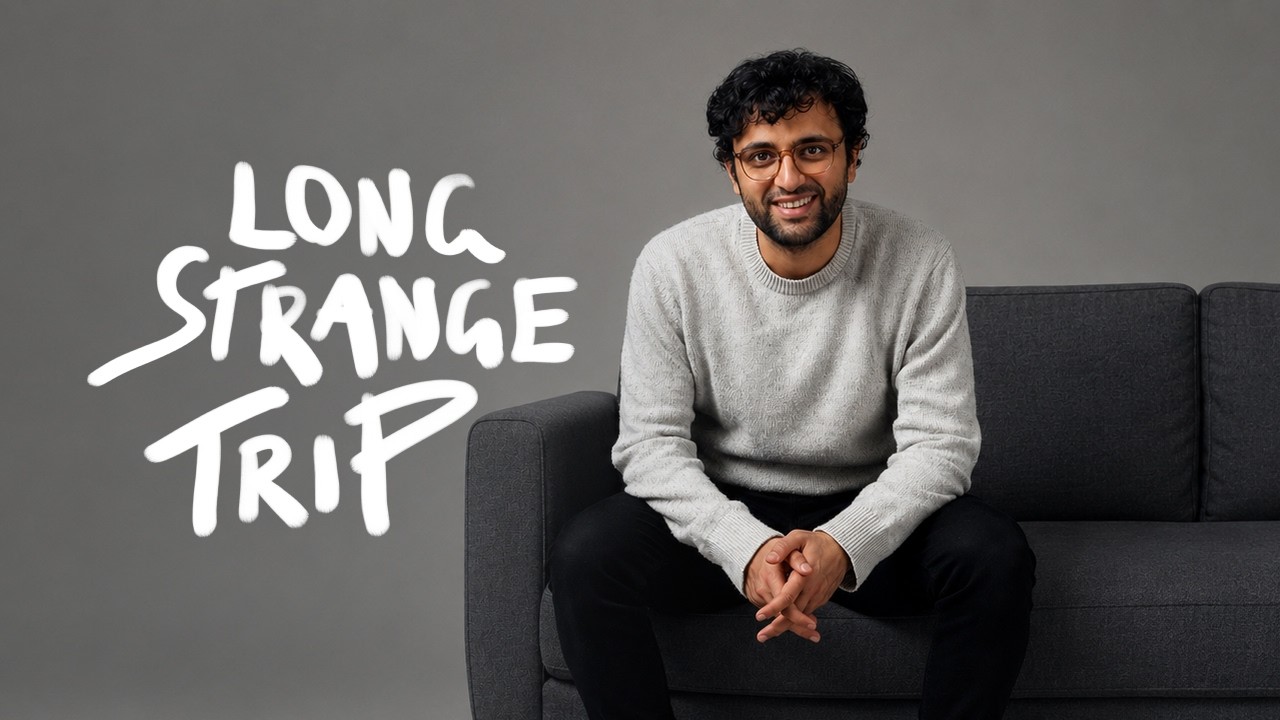
Kalshi Beats CFTC in Court to Secure 95% US Prediction Market Share
Sequoia Capital
Betting the company on a high-stakes federal lawsuit proved to be the single decision that allowed Kalshi to survive regulatory blockade and dominate American event contracts.
## Background
Publicado por Sequoia Capital en YouTube el 9 de julio de 2026, el video cuenta con la participación de Tarek Mansour, cofundador de Kalshi. La descripción de la página detalla cómo Mansour, un gestor de riesgos paranoico, arriesgó su empresa al demandar a su propio regulador (la CFTC) para conseguir la aprobación de los mercados de predicción antes de las elecciones de 2024, explorando además la dinámica única con su cofundadora Luana Lopes Lara y sus inusuales filosofías operativas.
## TL;DR
Tarek Mansour detalla el caótico e inusual camino de Kalshi para convertirse en la plataforma dominante de mercados de predicción en EE. UU. Tras años de bloqueos regulatorios por parte de la CFTC, despidos y crisis internas, los cofundadores tomaron la arriesgada decisión de demandar al gobierno federal, logrando una victoria histórica a tres semanas de las elecciones de 2024. Mansour explica la estructura operativa de la empresa —donde casi 130 personas les reportan directamente a él y a su cofundadora—, la importancia del 'marketing de oportunidad cultural', la diferencia fundamental entre un mercado financiero y un casino, y cómo su enfoque paranoico en el riesgo se complementa con el optimismo irracional de Luana Lopes Lara.
## Atmosphere & style
El episodio transmite una sensación de honestidad descarnada, intensidad y energía analítica, distanciándose por completo de las entrevistas corporativas tradicionales. Tarek Mansour habla con una franqueza desarmante, combinando la mentalidad calculadora de un jugador de póquer o gestor de riesgos con la pasión casi obsesiva de un fundador 'misionero'. La conversación fluye entre momentos de vulnerabilidad sobre los periodos oscuros de la empresa y reflexiones estratégicas incisivas, reflejando un ambiente de dinamismo, resiliencia e inconformismo donde el caos se abraza como una ventaja competitiva.
## Key takeaways
- [00:00](https://www.youtube.com/watch?v=l_Boz3KRtBQ&t=0s) Kalshi was founded in 2018 not to start a business for its own sake, but specifically to bring the concept of an 'everything exchange' and non-traditional event contracts into reality.
- [01:34](https://www.youtube.com/watch?v=l_Boz3KRtBQ&t=94s) Tarek Mansour and Luana Lopes Lara employ an unconventional 'disagree by design' leadership structure, balancing Mansour's paranoid risk management with Lopes Lara's optimistic operational drive.
- [13:34](https://www.youtube.com/watch?v=l_Boz3KRtBQ&t=814s) Rather than utilizing traditional corporate management pyramids, nearly the entire 150-person company reports directly to the two co-founders, creating an intentionally chaotic system designed for dynamic adaptability.
- [20:39](https://www.youtube.com/watch?v=l_Boz3KRtBQ&t=1239s) Mansour adheres to the 'hole in the ship' rule, asserting that a founder must personally act as the directly responsible individual for the company's single most existential threat rather than delegating it to middle management.
- [23:31](https://www.youtube.com/watch?v=l_Boz3KRtBQ&t=1411s) By enduring years of strict regulatory compliance while competitors launched without licenses, Kalshi positioned itself to capture a 95% share of the U.S. prediction market.
- [26:52](https://www.youtube.com/watch?v=l_Boz3KRtBQ&t=1612s) The co-founders rejected pivoting during dark regulatory periods because they were motivated by the necessity of the idea itself, recognizing that founder surrender—not lack of capital—is the primary killer of startups.
- [33:08](https://www.youtube.com/watch?v=l_Boz3KRtBQ&t=1988s) For consumer marketing and brand positioning, Mansour rejects the 80/20 rule, believing that the entirety of a brand's game-changing impact resides in the final 10% of precision and execution polish.
- [36:08](https://www.youtube.com/watch?v=l_Boz3KRtBQ&t=2168s) Kalshi's growth strategy relies on cultural hijacking—preparing full ad campaigns in advance and deploying them within hours of real-world events to capture maximum cultural relevance.
- [38:51](https://www.youtube.com/watch?v=l_Boz3KRtBQ&t=2331s) Tarek hires non-traditional talent directly from non-corporate backgrounds (such as recruiting the creator of the @InverseCramer account off Twitter) to maintain an agile and culturally resonant brand voice.
- [42:33](https://www.youtube.com/watch?v=l_Boz3KRtBQ&t=2553s) Evaluating decisions through expected value versus outcome variance allows founders to maintain strategic conviction through periods of severe negative external variance.
- [45:04](https://www.youtube.com/watch?v=l_Boz3KRtBQ&t=2704s) Despite board warnings that suing a regulator was corporate suicide, Kalshi bet the company on a lawsuit against the CFTC over election markets and won three and a half weeks before the 2024 U.S. election.
- [54:22](https://www.youtube.com/watch?v=l_Boz3KRtBQ&t=3262s) Unlike house-backed casinos that profit directly from customer losses, Kalshi operates as a neutral exchange taking a fixed 1% transaction fee, structurally aligning its business with trader accuracy and market liquidity.
- [56:34](https://www.youtube.com/watch?v=l_Boz3KRtBQ&t=3394s) To address underage trading and protect platform integrity, Kalshi self-regulates with strict account throttling and introduced a dedicated 'Parent Portal' to block minor credential misuse.
- [59:08](https://www.youtube.com/watch?v=l_Boz3KRtBQ&t=3548s) Starting a company solely for money, autonomy, or prestige is a flaw in reasoning, as founder autonomy decreases with scale and true long-term survival requires an authentic expression of core identity.
## Detailed walkthrough
Here is a detailed, faithful walkthrough covering Part 1 of the transcript.
---
[00:00](https://www.youtube.com/watch?v=l_Boz3KRtBQ&t=0s) Building the "Everything Exchange" and the Spark Behind Kalshi
Tarek Mansour describes how Kalshi was defined from the outset by a singular vision rather than a series of pivots. The name itself comes from the Arabic word for "everything," reflecting their original goal to build an "everything exchange" capable of listing a wide variety of non-traditional assets. Mansour emphasizes that he and co-founder Luana Lopes Lara did not build Kalshi merely to start a business; rather, they founded a company specifically to bring this exact financial concept to life. He reflects that under normal circumstances, if he were to "re-roll the dice" on his life multiple times, he would likely be a trader or a risk manager rather than an entrepreneur. However, the potential of the prediction market concept was so glaring that they felt compelled to pursue it.
---
[00:49](https://www.youtube.com/watch?v=l_Boz3KRtBQ&t=49s) Overview of Kalshi’s Journey and Growth
The host introduces Tarek Mansour, describing him as a "gem" and highlighting Kalshi’s dramatic trajectory. The company endured years of adversity—effectively "walking through the desert" and navigating periods where growth went sideways—before making the risky decision to sue their federal regulator, the Commodity Futures Trading Commission (CFTC). Kalshi won the lawsuit, triggering a surge in momentum. The host notes that Kalshi has experienced growth rates on par with leading AI companies like OpenAI and Anthropic, albeit a few years behind in its timeline. Recalling a recent CEO dinner at investor Kevin O'Leary's house where he first met Mansour, the host points out that Mansour holds unconventional operational ideas that set him apart from traditional executives.
---
[01:34](https://www.youtube.com/watch?v=l_Boz3KRtBQ&t=94s) Co-Founder Dynamics: High-Level Strategy, Low-Level Details, and Disagreeing by Design
Mansour explains the unique, semi-co-CEO operational structure between himself and co-founder Luana Lopes Lara. While they previously struggled to provide a neat, traditional explanation for how they divide responsibilities, Mansour now views their unconventional arrangement as a core strength. He operates at both extremes of the business: setting ultra-high-level strategy (evaluating global trends, identifying rights to win, and long-term positioning) while remaining deep in granular execution. He focuses heavily on low-level detail such as marketing copy, brand perception, and consumer experience, alongside external responsibilities including regulatory affairs, policy, and fundraising. Meanwhile, Lopes Lara manages the entire day-to-day internal operation, ensuring the company actually runs.
Addressing how they resolve internal friction, Mansour reveals that he and Lopes Lara "disagree by design" and intentionally take opposite sides of decisions. Rather than treating continuous disagreement as an antipattern, they use it to balance the delicate tension between regulatory risk and innovation. Mansour acts as the cautious counterweight in team settings—often highlighting how plans could fail—while Lopes Lara brings intense optimism. This constant tension keeps the company grounded near the optimal path without swinging to destructive extremes. Mansour also notes that having an equal co-founder provides an honest sounding board with aligned incentives, preventing the echo-chamber trap where non-founder employees hesitate to tell a CEO the truth.
---
[04:36](https://www.youtube.com/watch?v=l_Boz3KRtBQ&t=276s) Risk Aversion vs. Irrational Optimism
Expanding on their psychological contrast, Mansour describes Lopes Lara as a faith-based, "super irrational optimist" whose belief in the company's ultimate success often initially defied mathematical logic, previously causing him frustration. Over time, however, Mansour has come to believe that her long-horizon optimism proves correct. Conversely, Mansour describes himself as a paranoid risk manager who thinks in terms of probabilities, expected values, and potential failure points. This paranoid demeanor serves as an essential forcing function within Kalshi to navigate complex financial rules and execute regulatory compliance properly. While admitting he is disorganized, a procrastinator, and "very bad at a lot of things," Mansour relies on Lopes Lara to orchestrate company operations, while he applies intense obsession to master specific focus areas like marketing copy.
---
[06:43](https://www.youtube.com/watch?v=l_Boz3KRtBQ&t=403s) Growing Up in Beirut and the Mindset of Uncompromising Resilience
Mansour attributes his extreme risk awareness and intense drive to his upbringing in Beirut, Lebanon. Raised alongside his brother by a single mother after his father left when he was six years old, Mansour experienced the constant volatility of Lebanon—a country he describes not as a non-stop war zone, but as an environment defined by rapid, unpredictable swings between normal life and crisis. His mother acted as an intense "tiger mom" who sacrificed her own career so her children could return to the United States (where Mansour was born) and attend top institutions. Her uncompromising standard demanded absolute excellence in everything from academics to sports, treating second-place finishes as failures.
- **Lebanese Volatility:** Shaped Mansour's probabilistic risk assessment; he notes he can instinctively list 20 ways a hot air balloon or flight could go wrong before takeoff.
- **Locus of Control:** Mansour rejects the standard division between things inside and outside a leader's control, arguing that determined founders can expand their influence over seemingly fixed external factors (comparing this mindset to Elon Musk's philosophy that anything not violating physics is achievable).
---
[10:24](https://www.youtube.com/watch?v=l_Boz3KRtBQ&t=624s) Unconventional Leadership Philosophy and the New York Talent Edge
Discussing his approach to executive management, Mansour states that he and Lopes Lara are "entrepreneurially illiterate" in the traditional sense, having skipped standard startup playbooks, podcasts, and self-help business advice. Instead of following a single template, he observes distinct traits from notable leaders:
- **Elon Musk:** Extreme boldness and ability to attract top talent.
- **Tony Hsieh (Zappos):** Exceptional operational discipline and execution in a notoriously difficult operational model.
- **Quant / Market-Making Firms:** The ability of top quantitative call centers and market-making firms to cultivate a compelling brand aura that draws world-class talent to build complex financial infrastructure.
Mansour emphasizes that Kalshi relies on rapid iteration and trial-and-error—adjusting hires, marketing approaches, and messaging quickly based on real-time feedback. Finally, he attributes part of Kalshi's success to being headquartered in New York City rather than Silicon Valley. While New York insulated them from Bay Area groupthink that might have talked them out of unconventional ideas, its primary advantage was recruiting. The mission of "rebuilding Wall Street" and constructing a global, public-facing exchange resonated far more cleanly with New York's financial and engineering talent base than it would have in an AI-heavy Silicon Valley ecosystem.
<ElicitationsGroup message="Explore more details from this interview:">
<Elicitation label="Cover the CFTC lawsuit and 2024 election market victory" query="Walk me through the details of Kalshi's lawsuit against the CFTC and how they won election markets."/>
<Elicitation label="Detail Kalshi's direct report structure and management style" query="Explain how Tarek and Luana manage 150 people with direct reports and intentionally chaotic operations."/>
</ElicitationsGroup>
[13:34](https://www.youtube.com/watch?v=l_Boz3KRtBQ&t=814s) Managing standard flat orgs and adaptability through intentional chaos
Tarek Mansour describes Kalshi’s flat organizational setup as "beyond unusual," noting that roughly 130 direct reports feed straight into him and his co-founder, Luana Lopes Lara. Rather than running a traditional corporate pyramid, almost the entire 150-person company reports directly to the two co-founders. While Mansour readily acknowledges that this structure feels chaotic, he argues that this intentional dynamic affords the organization continuous and frictionless adaptability. In a world accelerating so fast that major strategic realignments are required every month or two rather than every few years, an overly structured hierarchy acts as an unnatural friction point.
The conversation touches on how different iconic tech CEOs approach organizational architecture, noting that there is no single playbook for running a high-growth company. The host contrasts Mansour's model with emergent management models proposed by leaders like Brian Armstrong and Jack Dorsey, who envision AI-centric organizational structures without traditional org charts. Mansour admits he is simply "making it up as we go," drawing a humorous picture of how absurd it would be to swap leaders across industries—such as dropping NVIDIA's Jensen Huang into Citadel or placing Citadel's Ken Griffin at the helm of OpenAI.
- Kalshi operates with approximately 130 direct reports split between two co-founders out of a total headcount of around 150 people.
- Mansour views traditional corporate structures as rigid barriers that prevent rapid, monthly strategic realignments.
- "What you get out of chaos is like continuous constant adaptability... you want to constantly reorient and reassemble around the biggest challenges or biggest opportunities for the company."
[16:53](https://www.youtube.com/watch?v=l_Boz3KRtBQ&t=1013s) Dynamic planning, board management, and rapid market pivots
When asked how Kalshi plans for the future or presents strategies to board members like Sequoia's Alfred Lin, Mansour reveals that he deliberately avoids heavy structure and remains unobsessed with traditional non-product corporate metrics. While Kalshi tracks risk and product margin metrics with extreme rigor, overall decision-making is guided by customer feedback, pockets of market demand, and identifying where the company has a clear "right to win."
Mansour outlines an intense 18-month sequence of rapid strategic shifts that demonstrate this dynamic planning style. Following the initial catalyst of the election markets, Kalshi focused on creating a network effect to boost overall market liquidity. Next, they spent six months building out a B2B infrastructure layer to enable third-party brokers, which quickly boomed to account for 80% of their revenue. To eliminate single-point dependency on those broker partners, Kalshi then aggressively pivoted back to scaling its direct-to-consumer business, ultimately reducing broker concentration down to 10% of total volume as direct trading surged.
- Mansour minimizes traditional corporate board deck structures in favor of addressing the single biggest operational bottleneck at any given time.
- Kalshi executed major pivots across direct-to-consumer, B2B enterprise broker infrastructure, sports, and financial markets within an 8-month period.
- Broker distribution rapidly shifted from driving 80% of Kalshi's revenue down to representing roughly 10% of overall volume as the direct product expanded.
[20:39](https://www.youtube.com/watch?v=l_Boz3KRtBQ&t=1239s) The "hole in the ship" rule and navigating regulatory headwinds
As a breakout company hits mainstream adoption, society and regulators naturally push back to understand and inspect the business model. Mansour notes that mainstream visibility inevitably brings a "reckoning," drawing comparisons to the regulatory path cleared by companies like Uber, Airbnb, and various AI firms. Following public scrutiny surrounding competitors like Polymarket, Kalshi has prioritized positioning itself as a safe, regulatory-first actor.
Mansour introduces his core management philosophy: the "hole in the ship" rule. In any company, there is always a critical, high-stakes problem that leaks water. Mansour strongly believes that one of the co-founders must act as the Directly Responsible Individual (DRI) who stares directly into that painful leak every day. Less effective organizations assign these critical vulnerabilities to mid-level managers who merely throw a "rug on top of the hole" to hide the problem until it eventually sinks the ship. For Kalshi, Mansour spends 80% of his time directly tackling the industry-wide reputation issue by differentiating Kalshi's regulated, onshore exchange from unregulated offshore prediction platforms that face insider trading concerns.
- Mansour rejects delegating core existential threats, believing a founder must personally oversee the company's single biggest vulnerability.
- Kalshi allocates roughly 80% of Mansour's day to regulatory strategy, public education, and establishing onshore market standards.
- Mansour views offshore, unregulated prediction platforms as a negative force that harms the entire industry's reputation with regulators and the general public.
[23:31](https://www.youtube.com/watch?v=l_Boz3KRtBQ&t=1411s) Competition, abundance, and capturing 95% US market share
Reflecting on market competition, Mansour argues that rivals are rarely true "company killers" in large, expanding markets. Drawing an analogy to HubSpot’s rivalry with Salesforce, the host notes that standard playbook wisdom dictates "zagging" whenever a competitor "zigs." Mansour agrees, emphasizing a mindset of abundance where constant product shipping unlocks brand-new, untapped addressable markets rather than squabbling over fixed market segments.
Despite starting behind competitors in terms of early media headlines, Kalshi has built a dominant presence in the United States, commanding 95% market share. Mansour attributes this trajectory to their dogmatic adherence to regulatory compliance. While competitors launched early in 2019 without licenses, Kalshi deliberately waited through years of regulatory process before launching fully to the public. Mansour defends this slow, compliance-first approach on two fronts: financial services cannot afford the move-fast-and-break-things ethos because failures are catastrophic, and he was fundamentally motivated to build a lasting institution—a next-generation New York Stock Exchange—from within the US financial system.
- Kalshi currently holds a 95% market share among US prediction markets.
- Founded in 2018, Kalshi delayed its full public launch until late 2022 and late 2024 to secure proper CFTC regulatory approvals for major event markets.
- Mansour intentionally rejected the offshore model, preferring to spend years navigating regulatory hurdles to create institutional-grade infrastructure.
- "In financial services and healthcare, I don't think you can cut too many corners... when things go wrong, they go wrong bad."
[26:11](https://www.youtube.com/watch?v=l_Boz3KRtBQ&t=1571s) Trust, Superior Execution, and the "Parabolic" Growth Curve
Tarek Mansour describes how Kalshi focused on building an exceptionally strong product, bulletproof market infrastructure, and a robust regulatory foundation. Rather than taking shortcuts, they deliberately invested in earning user trust so that customers would feel completely secure putting their money on the platform. Mansour emphasizes that if a founder truly believes they are heading toward a massive market, taking time to build a solid foundation without explosive early growth is completely fine. Once Kalshi secured regulatory approval, its trajectory went parabolic—a surge he attributes to pairing that initial foundation with relentless execution on product and growth.
The conversation turns to sports betting when an interviewer mentions putting money on the Boston Red Sox the previous night as they beat the New York Yankees. Mansour reiterates that long-term success comes down to compounding advantages over time: when superior product design and user trust compound faster than the competition, the financial and market share results eventually become undeniable.
- Kalshi focused heavily on institutional-grade infrastructure and regulatory compliance to earn deep customer trust.
- Mansour believes early-stage companies do not need immediate hypergrowth if they are laying the groundwork for a massive market.
- Post-regulation growth hit a parabolic curve due to compounding execution across product and marketing.
---
[26:52](https://www.youtube.com/watch?v=l_Boz3KRtBQ&t=1612s) Wandering Through the Desert: "We Didn't Build Kalshi to Build a Company"
Reflecting on the company’s origins in 2018, the conversation turns to the brutal years spent "wandering through the desert" while the CFTC (Commodity Futures Trading Commission) and federal regulators actively tried to shut them down. Mansour admits he cannot pinpoint a single lowest point because the experience was a continuous state of grief and desperation, full of disheartening regulatory mirages. Despite the pressure, Kalshi never pivoted. Named after the Arabic word *Kalshi* (meaning "everything"), the vision was always to create the ultimate exchange for all asset classes and prediction markets.
Mansour highlights a core distinction in founder motivation: he and co-founder Luana Lopes Lara did not set out to build a generic company—they started a company specifically to bring the *idea* of Kalshi into existence. Mansour confesses that if his life were re-rolled multiple times, he would likely be a trader or risk manager rather than an entrepreneur. Because they were dragged forward by the sheer power and necessity of the idea itself, giving up or pivoting was never an option.
- Kalshi was founded in 2018 and spent years fighting severe regulatory pushback from the CFTC.
- The company's name stems from the Arabic word for "everything," reflecting their goal to build an "everything exchange."
- Mansour notes he never harbored a desire to be an entrepreneur for its own sake; he felt compelled to build Kalshi specifically to realize the product.
---
[28:16](https://www.youtube.com/watch?v=l_Boz3KRtBQ&t=1696s) The Dip, Co-Founder Dynamics, and "Deserts vs. Storms"
Referencing Ben Horowitz's *The Hard Thing About Hard Things* and Seth Godin's *The Dip*, the discussion delves into why leading an early-stage startup through constant existential dread is so mentally grueling. Mansour admits that he woke up almost every day asking himself, "What am I doing?" during the darkest regulatory stretches. However, his co-founder Luana Lopes Lara served as an unyielding anchor, frequently telling him to stop complaining and keep pushing forward. Mansour believes the ultimate risk to any startup is simply giving up, as runway can almost always be extended.
When discussing whether founders *should* give up to avoid immense opportunity costs, Mansour outlines why starting a company for the wrong reasons—like the post-success pedigree or perceived glamour—leads to burnout. Success does not lead to an idyllic "oasis"; it merely transitions a founder from a dry desert into a chaotic storm. While scaling brings better resources, the gut-wrenching stress never truly disappears.
> "Luana had a lot more than you know, 'Stop being a little bitch,' basically. Like, you know, life is fine, whatever—let's move on."
- Mansour believes the single biggest killer of companies is founders giving up, rather than simply running out of money, which can often be managed.
- The dynamic between Tarek and Luana balanced his paranoid risk management with her relentless stubbornness and toughness.
- Entrepreneurship rarely grants a peaceful "oasis"; scaling simply replaces the desert of obscurity with the storm of high-stakes operational pressure.
---
[31:16](https://www.youtube.com/watch?v=l_Boz3KRtBQ&t=1876s) The Un-Glamorous Reality of a 15-Hour Workday
Dispelling the myth that leading a high-flying "rocket ship" startup is glamorous, Mansour outlines his relentless daily schedule. He wakes up at 7:00 AM, arrives at the office by 8:00 AM, leaves around 10:00 PM, and does additional work at home before unwinding for 30 minutes on Instagram Reels. He works through almost every weekend, spending both Saturdays and Sundays in the office.
Mansour expresses immense gratitude for his partner of over four years, acknowledging the heavy personal sacrifices she has made to support him through both the brutal regulatory drought and the equally intense hypergrowth phase. Regarding company culture, he emphasizes that weekend work is never forced on the 150-person team through top-down mandates. Instead, the founders lead by example; employees naturally choose to drop in on Saturdays because the quieter environment allows them to sit directly next to the founders and brainstorm high-level strategy.
- Mansour maintains a daily work routine from 8:00 AM to 10:00 PM, working seven days a week.
- He shuns rigid corporate mandates like "24/7 crunch time," relying instead on founder-led modeling to inspire employees.
- Team members often show up voluntarily on weekends for unstructured, low-friction access to the founders.
---
[33:08](https://www.youtube.com/watch?v=l_Boz3KRtBQ&t=1988s) Scaling Without Middle Management and the Obsession with Perfection
With Kalshi reaching roughly 150 employees—a threshold famously known as Dunbar's number—the conversation turns to how to scale operations without succumbing to corporate bloat or unnecessary middle management. Mansour notes that non-linear operations can be managed with tiny teams; for example, Kalshi serves millions of active customers with fewer than ten support personnel by leveraging heavy automation. He looks up to founders like William Hockey at Calm, who deliberately keep headcounts around 130 to maintain agility and high quality density.
Mansour attributes his obsessive attention to detail and perfectionism to his mother and his own OCD tendencies. Rejecting the common business mantra of the "80/20 rule," he argues that in brand building and marketing, 100% of the game-changing value sits in the final 10% of polish. Finding the exact "resonant frequency" in marketing copy, product design, and creative assets requires a level of relentless iteration that non-founder employees rarely have the patience to execute.
- Kalshi manages millions of users with under 10 customer support employees through aggressive technology automation.
- Mansour strongly rejects the 80/20 rule for consumer branding, contending that "all the results are in the last 10%."
- Drawing comparisons to his mother's influence, Mansour cites his personal obsession with detail as a key competitive advantage.
---
[35:19](https://www.youtube.com/watch?v=l_Boz3KRtBQ&t=2119s) Real-Time Times Square Billboards and the Art of Viral Marketing
To illustrate his obsession with perfectionism and cultural resonance, Mansour shares two major marketing campaigns. During the 2024 U.S. Presidential Election, when Kalshi first broke into the mainstream, Mansour conceived a campaign featuring real-time, API-driven digital billboards across Times Square in New York and major locations in Los Angeles. The billboards were designed to mirror the exact UI of the Kalshi app, updating live every single time a trade occurred on the exchange.
Getting the design right required over 20 painful iterations that exhausted designers and engineers alike. Mansour insisted on absolute precision so that onlookers would build a daily habit of checking real-time election odds via Kalshi. The campaign proved wildly successful, establishing the platform as the default public benchmark for real-time probability data.
- Times Square and LA billboards were directly wired to Kalshi’s trading API to display real-time order book changes during the 2024 election.
- The campaign underwent roughly 20 full iterations before launch to ensure maximum readability and visual impact.
- The goal was to embed Kalshi into the public consciousness as the definitive authority for live event odds.
---
[36:08](https://www.youtube.com/watch?v=l_Boz3KRtBQ&t=2168s) Cultural Hijacking: Timing Messi, Timothée Chalamet, and AI Ads
Mansour reveals his core philosophy on growth: consumers do not inherently care about a startup or its product—they care about what is happening in culture right now. Rather than trying to force-feed a product message, a brand must seamlessly attach itself to cultural flashpoints at their exact moment of peak relevance. To execute this, Kalshi holds fully prepped campaigns in reserve and waits for the precise trigger event before releasing them to achieve a "100x outcome."
He highlights several high-profile examples of this strategy in action:
* **Lionel Messi:** Kalshi launched its partnership exactly two days before the opening match of Messi's final World Cup run, catching global sports attention at its absolute peak.
* **Timothée Chalamet:** A completed ad spot was kept on ice and dropped within 12 hours of viral news breaking involving Chalamet and the New York Knicks.
* **Giannis Antetokounmpo:** Kalshi announced its partnership with the NBA star the day after major news broke regarding his team commitment, capitalizing on a massive news cycle.
* **AI Ads & Media Partners:** Kalshi released a viral AI-generated commercial right when debates around AI-versus-human art were peak news. Similarly, integrations with CNN, CNBC, and Fox News were timed around heated national debates over the modernization of traditional news.
> "People don't care about us... You have to basically bring Kalshi to whatever is happening in the wild, not try to push whatever you're offering to people."
- Mansour believes timing dictates whether a marketing campaign gets a 1x or 100x return on investment.
- The company routinely prepares complete ad campaigns months in advance and waits to deploy them within hours of a relevant news trigger.
- Mansour notes that cultural trends move so fast that formats like AI-generated ads quickly go from cutting-edge to cliché, requiring constant cultural awareness.
<ElicitationsGroup message="To explore more from this interview series:">
<Elicitation label="Read the walkthrough for Part 4" query="Provide a detailed, faithful walkthrough of Part 4 of this Kalshi Tarek Mansour transcript."/>
<Elicitation label="Analyze Kalshi's regulatory strategy" query="Analyze Kalshi's legal and regulatory fight against the CFTC based on the podcast context."/>
</ElicitationsGroup>
Here is a detailed, faithful walkthrough of this section of the interview.
[038:51] Growth Tactics and Unconventional Hires
Tarek explains why Kalshi avoids hiring traditional corporate marketing executives. If a company hires a head of partnerships who insists on spending three weeks planning out a formal structure, that slow pace will completely cripple the business. While Kalshi has a CMO—Alan, who is described as incredible at managing high-ROI, performance-driven capital allocation—the rest of their marketing structure is intentionally non-traditional.
The person leading Kalshi's brand operates with zero direct reports, traveling around the country to execute culturally relevant stunts. Tarek reveals that this brand lead originally ran the famous "@InverseCramer" Twitter account, which tracked and inverted stock picks made by CNBC host Jim Cramer. Tarek recruited him directly off social media to manage Kalshi’s channels. That single hire brought a unique knack for esoteric, zeitgeist-driven ideas (including originating Kalshi's AI market concepts). Tarek notes that while critics might assume financial institutions want ultra-buttoned-up corporate communication, this culturally attuned, top-of-mind brand strategy works equally well for both retail consumers and institutional Wall Street clients.
- Kalshi's CMO, Alan, focuses on quantitative, high-ROI paid acquisition and spend efficiency.
- The head of brand operates without a team or direct reports to maintain speed and agility.
- Tarek hired the brand lead directly from Twitter after following his "@InverseCramer" account.
---
[040:21] The Decision to Sue the CFTC
The discussion turns back to Kalshi's difficult "desert years" and the decision to take legal action against its primary regulator, the Commodity Futures Trading Commission (CFTC). Tarek calls the idea of a tiny startup suing a federal regulatory agency "actually crazy," even in hindsight. The government wields absolute power over private companies; by the time a startup holds an agency accountable in court, the immense legal costs and time delay usually kill the business first.
Providing historical context, Tarek explains that Kalshi began engaging with regulators regarding election prediction markets back in late 2021, long before their public launch. Despite assurances from officials, the CFTC repeatedly delayed approval month after month. Ultimately, the agency "pocket-vetoed" Kalshi ahead of the 2022 midterm elections—never issuing a formal "no," but stalling until the event had passed. This forced Kalshi to launch with a severely restricted suite of non-election markets, rendering it nearly impossible to build trading volume and liquidity.
- Kalshi first approached the CFTC about election markets in late 2021.
- The CFTC used stall tactics to "pocket veto" the company's planned launch ahead of the November 2022 midterms.
- The regulatory blockade severely restricted Kalshi's launch offering, leading to low trading volume.
---
[042:33] Internal Collapse, Expected Outcomes, and the Poker Mindset
The regulatory ban triggered severe internal consequences at Kalshi: a wave of employee resignations followed by painful company layoffs. Reflecting on this dark period, Tarek dives into a philosophical framework around "expected outcome versus outcome." Expected outcome is what a founder can control through logic and execution, whereas final outcome contains high variance driven by external world events. The world only rewards outcomes, meaning that when a bad variance event hits, external observers incorrectly label the company's strategy as flawed.
Tarek draws a direct comparison to the 2022 World Cup. The day after Argentina won, French fans wanted to fire their coach, Didier Deschamps—a legend who had won the previous World Cup and led France back to a penalty shootout in the final. Tarek emphasizes that penalty shootouts are a coin flip; Deschamps executed the correct strategy, but bad variance turned the public against him. Tarek applies this same lesson to startup founders: top poker players and elite founders like Elon Musk or Vlad Tenev at Robinhood stay disciplined during bad variance because they trust the expected value of their decisions over time.
- The CFTC's blockade caused widespread internal loss of confidence, employee departures, and mandatory layoffs.
- Tarek frames decision-making through expected value versus outcome variance, comparing startup risk to high-stakes poker.
- Reference: Didier Deschamps leading France to the 2022 World Cup final, losing on a penalty shootout coin flip.
---
[045:04] Betting the Farm: Filing the Lawsuit
After the 2022 midterm rejection, Kalshi reset its strategy and tried once more to get election markets approved. By the end of 2023, the CFTC officially rejected their application, pushing the company from a low point to an even deeper crisis. When Luana suggested suing the CFTC, investors and board members—including Sequoia's Alfred Lin—strongly advised against it. Alfred warned Tarek that small startups never win against their own regulators; even if Kalshi prevailed legally, the government could easily destroy the business through enforcement actions, audits, or revoking their clearinghouse license.
Tarek admits to oscillating wildly between fear and determination during this period, keeping his anxiety hidden while contemplating personal and corporate ruin. The turning point came the night before filing. During a tense meeting, Luana pushed back hard against Tarek's hesitation, declaring "fuck this, we should just do it, we're wasting time." Driven by a "missionary feeling" that they had come too far to give up, the team decided to bet the entire company with no Plan B.
- The CFTC formally rejected Kalshi's election market application at the end of 2023.
- Board members warned that suing a direct regulator carried near-certain corporate death.
- Key regulators held the power to yank Kalshi's legal clearinghouse status or execute "death by a thousand paper cuts."
- Co-founder Luana Lopes Lara provided the final push the night before filing to go to "full-on war."
---
[048:02] The Victory Call and Regulatory Retaliation
Kalshi hired litigator Yakov Roth to lead the case against the government because Roth brought a "missionary" mindset to checking federal authority. Tarek describes the intense anxiety during the lawsuit, instructing Roth never to call his phone unless a final decision had been reached. While competitors like Polymarket were capturing headlines and the CFTC was subjecting Kalshi to painful retaliatory tactics—such as dragging 10-day routine audits out over 9 months and launching continuous enforcement actions—Kalshi stayed the course.
In the summer of 2024, Roth's name popped up on Tarek's phone. Paralyzed with fear, Tarek answered, only for Roth to deliver the news: "We won." The Kalshi office erupted into wild celebration, with employees throwing chairs and smashing office furniture in sheer catharsis after years of regulatory warfare.
- Litigator Yakov Roth led Kalshi's legal team against the CFTC.
- During the litigation, the government dragged standard 10-day audits out to 9 months and launched continuous enforcement actions.
- The legal victory was handed down roughly three and a half weeks before the November 2024 U.S. presidential election.
---
[050:18] Compounding the Win Ahead of the Election
Winning the lawsuit just 3.5 weeks before the 2024 presidential election gave Kalshi a narrow window to capitalize on its legal victory. Tarek acknowledges the role of luck in the timing, quoting a favorite phrase about expanding one's "luck surface area" over five or six years of relentless survival so that when luck strikes, the company is prepared to capture it.
The immediate aftermath was not an instant viral explosion; business momentum had to be built brick by brick. Tarek rallied the entire company, putting everyone on an intense sprint to pull off what he called a massive operational push to make prediction markets mainstream within 25 days.
- Kalshi secured its legal win three and a half weeks prior to the 2024 U.S. election.
- Initial volume did not skyrocket on day one; growth required rapid compounding and aggressive marketing execution.
- Tarek instituted an all-hands, in-office operational sprint, with team members working around the clock to capitalize on the election news cycle.
<ElicitationsGroup message="Explore more from this interview:">
<Elicitation label="Analyze Kalshi's legal strategy against the CFTC" query="Analyze Kalshi's legal strategy and regulatory fight against the CFTC based on Tarek Mansour's interview."/>
<Elicitation label="Summarize Tarek Mansour's views on startup marketing" query="Summarize Tarek Mansour's approach to marketing, viral moments, and hiring non-traditional growth talent at Kalshi."/>
</ElicitationsGroup>
[51:12](https://www.youtube.com/watch?v=l_Boz3KRtBQ&t=3072s) Breaking Through the Desert and the Grind of Launching
Tarek Mansour describes the intense, relentless push it took to get Kalshi off the ground after years of stagnant effort. He recounts feeling so focused on taking his shot that he only slept about once every four days, declaring, "I don't care about anything. This is my shot." Though progress initially felt painfully slow, momentum gradually built until the entire growth engine took off on its own.
The host brings up a personal concern, sharing that his 21-year-old son and his friends are all active on Kalshi. While acknowledging Tarek's distinction between financial trading and gambling, the host expresses anxiety that young users might become addicted, pointing out that both activities stem from similar behavioral impulses. Tarek validates the host's perspective, emphasizing that he personally thinks about parent concerns deeply and cares about avoiding harm. He notes that with any breakthrough technology—from home sharing to artificial intelligence—unintended consequences and misuse are inevitable, making it essential to address safety concerns proactively.
[52:01](https://www.youtube.com/watch?v=l_Boz3KRtBQ&t=3121s) Backlash, Incumbents, and the Historical Legacy of Trading
Tarek breaks down the socio-political lifecycle that consumer companies undergo when they reach mainstream adoption. He explains that any massive consumer breakout naturally attracts "haters" and skeptics who fear what they do not yet understand. Furthermore, new platforms inevitably disrupt legacy incumbents who fight back aggressively. To illustrate this pattern, Tarek points out that taxi industries fought Uber by highlighting kidnapping risks rather than admitting their profit margins were threatened, and the hotel industry amplified horror stories about Airbnb through the media.
In Kalshi's case, critics rely on the low-hanging fruit of calling prediction markets "gambling." Tarek highlights that nearly every modern financial trading product faced identical accusations during its inception. In the early 1900s, state governments attempted to outlaw grain futures as illegal gambling, forcing a landmark Supreme Court case. The Supreme Court eventually ruled that while speculation visually resembles gambling, open exchanges provide critical price discovery, defining them firmly as financial markets.
- **Supreme Court Precedent:** The Supreme Court recognized commodity futures as legitimate financial instruments because open order books create public price discovery.
- **Age Limits:** The legal age threshold to trade commodity futures in the United States has historically been set at 18.
- **Modern Speculative Alternatives:** Younger generations have shifted speculative behavior toward crypto assets, meme coins, and prediction markets rather than traditional physical commodities.
[54:22](https://www.youtube.com/watch?v=l_Boz3KRtBQ&t=3262s) Exchange Business Models vs. Casino Incentives
Tarek draws a sharp contrast between the business model of a house-backed casino and that of a neutral derivatives exchange like Kalshi. In traditional gambling, a casino’s revenue equals the direct losses of its customers. Consequently, casinos ban profitable, analytical card sharks and use promotional incentives to keep continuously losing players hooked. Because casinos profit directly off customer harm, they have no structural incentive to curb addictive behavior.
By contrast, Kalshi operates strictly as a neutral market venue, charging a standard 1% fee on trades regardless of who wins or loses. Because user losses flow to counter-parties rather than to Kalshi, the platform actively encourages smart, research-driven traders who improve market liquidity and forecast accuracy. Tarek emphasizes that while competitive markets naturally produce winners and losers, Kalshi's incentive is to provide tools that help traders make well-informed decisions rather than exploiting bad habits.
- **Fee Structure:** Kalshi collects a fixed 1% fee on market transactions, completely decoupling its revenue from trader losses.
- **Casino Model vs. Exchange Model:** Casinos ban systematic winners to protect house margins, whereas prediction markets actively seek analytical traders to improve forecast accuracy and liquidity.
- **Market Dynamics:** Active short-term trading in stocks or options results in 75% to 80% of retail participants losing money, reflecting the inherently competitive nature of speculative markets.
[56:34](https://www.youtube.com/watch?v=l_Boz3KRtBQ&t=3394s) Platform Guardrails, Throttling, and Mitigating Risk
To mitigate excessive trading behaviors, Kalshi self-regulates beyond what baseline federal regulations mandate. Although data does not indicate radically different behavior in 18-to-20-year-old traders, Kalshi proactively imposes stricter account throttling, daily loss limits, and additional identity verification steps to introduce friction when users exhibit unhealthy patterns. Tarek notes that parents often appreciate how prediction markets force young adults to learn real-world dynamics instead of absorbing polarizing "brain rot" on social media.
Kalshi has also tackled the issue of minors circumventing Know Your Customer (KYC) checks using stolen family credentials. The company built a dedicated "Parent Portal," allowing parents to submit their credentials specifically to freeze them from being used for account creation across the platform—a measure Tarek claims resolves 95% of underage attempt issues. Kalshi's internal data indicates that the percentage of users showing excessive loss patterns on its platform is lower than in retail options trading or daily stock flipping.
- **Parent Portal:** A custom security tool where parents register their government IDs to preemptively block minors from opening fraudulent accounts.
- **Account Throttling:** Automated system controls that limit position sizes and mandate added verification steps for young or high-volatility accounts.
- **Truth vs. Social Media:** Prediction markets financially reward calibrated, well-reasoned takes, acting as a counterweight to the outrage algorithms of traditional social media.
[59:08](https://www.youtube.com/watch?v=l_Boz3KRtBQ&t=3548s) The Truth About Founding a Company
When asked for advice for founders navigating dark periods or "the desert," Tarek urges aspiring entrepreneurs to rigorously question their underlying motivations. He argues that pursuing a startup for fame, glamour, or money makes little sense, as the risk-adjusted returns and lifestyle sacrifices make founderhood an "unattractive move" compared to joining a fast-growing tech firm.
Addressing a hypothetical scenario where a younger brother asks to start a company, Tarek states he would push back and ask, "Why?" He dispels the common myth of "being your own boss," pointing out that founders are actually the least free people in an organization because they answer to board members, employees, customers, and platform users alike. Freedom decreases as the company scales. Tarek emphasizes that a startup must be an authentic expression of the founder's core identity—it is nearly impossible to market or build a product that does not align with who you genuinely are.
- "Be yourself. Everyone else is taken." — Oscar Wilde quote brought up by the host to describe Tarek's authentic approach to building Kalshi.
- **Founder Autonomy Myth:** Scaling a startup reduces personal freedom, shifting the founder into a role where they serve employees, investors, and customers.
[01:01:48](https://www.youtube.com/watch?v=l_Boz3KRtBQ&t=3708s) Host Takeaways: Mission, Patience, and Founder Dynamics
Following the interview, the host reflects on his core takeaways from the conversation with Tarek. He highlights Tarek's intense, obsessive, mission-driven focus, noting that Kalshi was built to fulfill a specific vision of how the world should work rather than just to start a business. The host draws a direct comparison to the early days of HubSpot, which was founded around the core mission of transforming marketing from outbound to inbound before turning into a corporate entity.
The host praises Kalshi and SpaceX for making massive, foundational long-term bets and remaining patient through grueling setbacks until those bets paid off. He contrasts this approach with the tendency among modern startup founders to chase short-term clout on social media. Finally, the host notes the compelling dynamic between Tarek and his co-founder, Luana Lopes Lara: Tarek is risk-averse and chaotic, while Luana is risk-seeking and highly organized. Their complementary, "1 + 1 = 3" relationship reminded the host of his own partnership with Dharmesh Shah at HubSpot.
- **Foundational Patience:** Long-term success comes from sticking through years of hardship to validate high-conviction structural bets, akin to the trajectories of Kalshi and SpaceX.
- **Co-Founder Dynamics:** Kalshi's co-founders balance each other through opposing traits—Luana Lara is structured and risk-seeking, while Tarek Mansour is risk-averse and chaotic.
## Notable quotes
> [13:34](https://www.youtube.com/watch?v=l_Boz3KRtBQ&t=814s) What you get out of chaos is like continuous constant adaptability... you want to constantly reorient and reassemble around the biggest challenges or biggest opportunities for the company. — Tarek Mansour
> [23:31](https://www.youtube.com/watch?v=l_Boz3KRtBQ&t=1411s) In financial services and healthcare, I don't think you can cut too many corners... when things go wrong, they go wrong bad. — Tarek Mansour
> [28:26](https://www.youtube.com/watch?v=l_Boz3KRtBQ&t=1706s) Luana had a lot more than you know, 'Stop being a little bitch,' basically. Like, you know, life is fine, whatever—let's move on. — Tarek Mansour
> [36:08](https://www.youtube.com/watch?v=l_Boz3KRtBQ&t=2168s) People don't care about us... You have to basically bring Kalshi to whatever is happening in the wild, not try to push whatever you're offering to people. — Tarek Mansour
> [45:04](https://www.youtube.com/watch?v=l_Boz3KRtBQ&t=2704s) fuck this, we should just do it, we're wasting time. — Luana Lopes Lara
> [48:50](https://www.youtube.com/watch?v=l_Boz3KRtBQ&t=2930s) We won. — Yakov Roth
> [51:12](https://www.youtube.com/watch?v=l_Boz3KRtBQ&t=3072s) I don't care about anything. This is my shot. — Tarek Mansour
> [59:08](https://www.youtube.com/watch?v=l_Boz3KRtBQ&t=3548s) Be yourself. Everyone else is taken. — Oscar Wilde
## Mentioned
Kalshi, Tarek Mansour, Luana Lopes Lara, CFTC, Commodity Futures Trading Commission, Sequoia Capital, Alfred Lin, New York Stock Exchange, Uber, Airbnb, Polymarket, Didier Deschamps, Yakov Roth, Jim Cramer, InverseCramer, Messi, Timothée Chalamet, Giannis Antetokounmpo, CNN, CNBC, Fox News, Elon Musk, Tony Hsieh, Zappos, Brian Armstrong, Jack Dorsey, Jensen Huang, NVIDIA, Ken Griffin, Citadel, OpenAI, William Hockey, Calm, Dharmesh Shah, HubSpot, SpaceX
Tarek Mansour argues that Kalshi's emergence as the dominant United States prediction market relied on an uncompromising regulatory strategy, an intentionally chaotic organizational structure, and cultural marketing. By choosing to navigate federal oversight rather than operating offshore, Mansour and co-founder Luana Lopes Lara accepted years of stagnation and legal risk to build an enduring financial exchange.
Litigation and Onshore Market Dominance
Kalshi was founded in 2018 to create an 'everything exchange' within the legal perimeter of the US financial system, rather than launching quickly offshore without licenses. This approach led to years of regulatory resistance from the Commodity Futures Trading Commission (CFTC). In late 2022, the CFTC pocket-vetoed Kalshi's planned launch of election prediction markets, which triggered internal resignations and layoffs. Despite warnings from board members that suing a direct regulator carried near-certain corporate death, Kalshi filed suit against the CFTC in late 2023, driven by co-founder Luana Lopes Lara's push to bet the entire company without a fallback plan.
Represented by litigator Yakov Roth, Kalshi endured prolonged audits and enforcement actions until winning the lawsuit roughly three and a half weeks before the November 2024 presidential election. The ruling permitted domestic election trading, unlocking a parabolic growth curve. Mansour reports that Kalshi captured 95% of the US prediction market share. Under his 'hole in the ship' management philosophy, founders must personally oversee existential threats rather than delegating them; Mansour consequently spent roughly 80% of his time directly managing regulatory and reputational risk.
Co-Founder Friction and Flat Organizational Architecture (1:34)
Kalshi operates under a non-traditional leadership division where Mansour and Lopes Lara intentionally disagree by design. Mansour characterizes himself as a disorganized, paranoid risk manager shaped by his upbringing amid Lebanon's unpredictable volatility. In contrast, he describes Lopes Lara as a relentless, highly structured optimist who handles daily execution and internal momentum. Mansour focuses on macro-strategy, regulatory policy, and granular consumer messaging, using this intentional internal tension to keep the business balanced between compliance and innovation.
Rather than adopting a corporate hierarchy, Kalshi maintains a flat organizational structure where roughly 130 of its 150 employees report directly to the two co-founders. Mansour argues that corporate pyramids create rigid barriers during phases requiring monthly strategic pivots. This fluid architecture enabled Kalshi to rapidly shift its commercial mix over an 18-month sequence: after expanding a B2B broker infrastructure that reached 80% of revenue, the company pivoted aggressively back to its direct-to-consumer platform, successfully reducing broker volume concentration down to approximately 10%.
Cultural Hijacking and Precision Product Polish (36:08)
Mansour's growth philosophy contends that consumers do not inherently care about a product pitch; instead, platforms must attach themselves to existing cultural flashpoints at their exact moment of peak relevance. Kalshi prepares marketing campaigns months in advance and deploys them immediately after relevant news breaks. Historical examples include launching an integration with Lionel Messi two days before his final World Cup run, and releasing a pre-produced ad featuring Timothée Chalamet within 12 hours of viral news involving the actor and the New York Knicks.
Rejecting standard business advice like the 80/20 rule, Mansour asserts that in consumer brand building, full resonance depends entirely on the final 10% of detail. For the 2024 election, Kalshi executed over 20 design iterations for digital billboards in Times Square and Los Angeles that connected live to the exchange's trading API to display real-time odds. To maintain agility, Mansour avoids hiring traditional corporate marketers, choosing instead to hire unconventional talent directly from social media—such as recruiting the operator behind the '@InverseCramer' account to lead brand initiatives.
Exchange Economics Versus Casino Betting Models (54:22)
Mansour rejects comparisons between prediction markets and gambling platforms, distinguishing an exchange's economic model from a casino's incentives. Casinos generate revenue directly from customer losses, which incentivizes them to ban skilled card players and promote continuous losses. By contrast, Kalshi operates as a neutral exchange taking a fixed 1% fee per transaction. Because user losses transfer to trade counterparties rather than to the house, Kalshi actively benefits from analytical traders who supply liquidity and increase forecast accuracy.
Addressing parental and regulatory concerns regarding speculative trading behaviors, Mansour cites early 20th-century US Supreme Court precedent establishing that speculation on commodity exchanges produces legitimate public price discovery. Kalshi implements safeguards exceeding federal baselines, such as automated position throttling and daily loss limits. Additionally, the company established a 'Parent Portal' allowing guardians to preemptively lock their credentials, which Mansour states resolved approximately 95% of underage account creation attempts.
Kalshi's courtroom victory enabled an onshore prediction market within the US, yet the broader sector continues to navigate public scrutiny regarding speculative excess and competition from offshore platforms. Mansour maintains that scaling an exchange requires enduring long periods of regulatory resistance and aligning operations with founder conviction, rather than pursuing shortcuts or conventional corporate playbooks.
[13:34] Tarek Mansour: What you get out of chaos is like continuous constant adaptability... you want to constantly reorient and reassemble around the biggest challenges or biggest opportunities for the company.
[23:31] Tarek Mansour: In financial services and healthcare, I don't think you can cut too many corners... when things go wrong, they go wrong bad.
[28:26] Tarek Mansour: Luana had a lot more than you know, 'Stop being a little bitch,' basically. Like, you know, life is fine, whatever—let's move on.
[36:08] Tarek Mansour: People don't care about us... You have to basically bring Kalshi to whatever is happening in the wild, not try to push whatever you're offering to people.
[45:04] Luana Lopes Lara: fuck this, we should just do it, we're wasting time.
[48:50] Yakov Roth: We won.
[51:12] Tarek Mansour: I don't care about anything. This is my shot.
[59:08] Oscar Wilde: Be yourself. Everyone else is taken.
Original transcript
[0:00] The thing that was unique about us is we
[0:01] never pivoted. It was always Kalshi. I
[0:03] mean, Kalshi is everything in Arabic.
[0:04] Like, we always wanted to build the
[0:05] everything exchange, the exchange for
[0:06] all these different assets.
[0:08] And we didn't build Kalshi to build a
[0:10] company. We built the company to build
[0:11] Kalshi. It It's a It's a bit different.
[0:13] >> I see.
[0:13] >> We were dragged by the idea. I I I
[0:14] wasn't the type that wanted to be an
[0:16] entrepreneur or Like, I I think if you
[0:18] re-rolled the dice multiple times, I'd
[0:19] probably just be a trader or risk
[0:21] manager. Like, I would not be an
[0:22] entrepreneur.
[0:23] >> Got it.
[0:23] >> But, the idea was so like glaring in
[0:25] front of us that we just had to do it.
[0:27] Like, we we felt that we had to do it.
[0:29] And so, the whole point of doing this
[0:30] whole thing is the idea.
[0:35] >> [music]
[0:39] [music]
[0:49] >> Hey everybody. Today we have Tarek on
[0:50] from Kalshi. He is a gem. This is a
[0:53] really good episode.
[0:55] They walked through the desert for many,
[0:57] many years in this company and went
[1:00] sideways. Then they made a very risky
[1:03] bet to sue the federal government and
[1:05] won. And this thing has ripped ever
[1:07] since. It's growing
[1:10] you know, similar rates to OpenAI and
[1:12] Anthropic, but a few years behind. I
[1:15] think you're going to like it. I'll be
[1:16] back at the end for my takeaways.
[1:18] We just met for the first time a couple
[1:19] weeks ago at Kevin O'Leary's house and
[1:22] it was a CEO dinner.
[1:24] And you had some very unusual ideas
[1:27] about CEO-ing. This is why I wanted to
[1:29] have you on the pod.
[1:30] >> Yeah.
[1:30] >> And so, I want to get into those. Let's
[1:32] just start with your co-founder.
[1:34] >> Yeah.
[1:35] >> It sounded like it's a semi-co-CEO
[1:37] relationship. How do you two run the
[1:40] company? How do you split it up?
[1:43] >> Yeah, it's interesting. You know, we've
[1:45] over the years you know, constantly been
[1:46] been asked this this question and and
[1:48] and um we never really had a very clean
[1:50] answer to this. And we always thought it
[1:51] was sort of like a weakness. And our
[1:53] perspective on that has changed. I mean,
[1:55] dramatically. I actually think whatever
[1:56] model works for us works for us. Great,
[1:58] you know, and then if you figure that
[2:00] out then, you know,
[2:00] >> Yeah.
[2:01] >> Um and you know, the way the best way to
[2:03] describe it is I I think
[2:06] like I operate at the very high-level
[2:09] strategy,
[2:11] make sure that we're going in the right
[2:12] direction. Where's the world heading?
[2:13] Where are rights to win?
[2:15] And just thinking, a lot of thinking
[2:17] continuously.
[2:18] And then I'm very very low in the
[2:20] details.
[2:21] >> Okay, you're high and low.
[2:23] >> Yeah, extremely high.
[2:24] >> Head in the sky, feet in the ground.
[2:25] >> Yeah.
[2:26] >> Okay.
[2:26] >> But very very low. I'm talking like
[2:28] >> Coding?
[2:30] >> Yeah, and more specifically like like
[2:31] marketing and the copy and the details
[2:33] and like everything around how we're
[2:35] marketing something.
[2:36] >> Yeah. How we're talking about the
[2:37] product, all these little things that
[2:39] like the end consumer, whether it's
[2:40] someone looking at a billboard or
[2:41] someone who's like in the product is
[2:43] going to experience. Like what are they
[2:44] going to feel?
[2:45] And everything else that is actually
[2:47] running the company is Luana.
[2:49] >> Okay.
[2:49] >> That's basically, you know, I think one
[2:51] of the best way to describe it. And then
[2:52] I do the external stuff, the regulatory,
[2:53] the policy, you know, the the and fund
[2:55] rate all the other external aspects of
[2:57] the job that tie to marketing and sales.
[2:59] But the the day-to-day running of the
[3:00] company, like making sure that the
[3:02] company's actually run, is Luana.
[3:04] >> How do you dis- You must disagree about
[3:06] stuff.
[3:06] >> a lot, like all the time.
[3:07] >> So, how's that play out?
[3:09] >> I actually think we kind of disagree by
[3:10] design. Like we we have this thing this
[3:11] dynamic over time
[3:13] it's become a thing where like we
[3:15] essentially will always take the
[3:16] opposite side of the argument.
[3:18] >> Are you a contrarian?
[3:20] >> I'm the guy in the room that will be
[3:21] sort of the negative, like everybody's
[3:23] pumped about a plan, I'm like, oh, here
[3:25] here's how it's going to fail and how
[3:26] and all the issues. I have, you know,
[3:28] But but we tend to sort of just like
[3:30] disagree with each other often.
[3:33] And I think also like, you know, again,
[3:34] it's a people like, oh, you know, how
[3:35] you disagree and it it disagreement like
[3:37] continuous disagreement is a is an
[3:38] antipattern, but for us it ended up
[3:39] being a pattern because we're we're
[3:40] coming to we're this very complicated
[3:41] company that has this constant
[3:43] continuous delicate balancing between
[3:45] how much risk to take
[3:47] on the regulatory front and like, you
[3:48] know, innovation and regulatory. And you
[3:49] have to always balance those two those
[3:50] two things out.
[3:52] And you see it now in our safety and
[3:53] innovation all of that. And like
[3:55] that sort of debate
[3:57] could could is a continuous force to
[3:59] drive us to the middle. We end up
[4:00] getting, you know, not always the right
[4:01] answer, but we're not too far from the
[4:03] right answer. And we never oscillate
[4:05] between the two extremes. And I think
[4:06] that's one of the powers of having like
[4:07] two equally powerful like co- two
[4:09] co-founders in an organization.
[4:12] Because if you're if you're the only
[4:13] one, you know, anyone like anyone that
[4:15] reports you or whatever, like anyone
[4:16] that you hire that is not a founder
[4:18] it it it's inevitable that they won't
[4:20] always tell you the truth. It's
[4:21] inevitable. Like no matter what culture
[4:23] you build, etc. Like
[4:25] there's different incentive structure
[4:26] than someone who's a founder that owns
[4:27] as much equity as you, etc.
[4:29] And so you can stray.
[4:31] Right? And and and here it's very hard
[4:33] for either of us to stray.
[4:34] >> So I talked to Luana to prepare for the
[4:36] interview. It sounds like you're kind of
[4:38] the more conservative of the two.
[4:41] >> Yeah.
[4:42] >> And maybe you're on the regulatory side
[4:43] and she's on the innovation side. Is
[4:45] that the way it sort of plays out?
[4:47] >> More often than not, yeah.
[4:48] >> Okay.
[4:48] >> Luana is very faith-based
[4:51] like optimist. Sometimes I would say
[4:52] like over like incre- like I super
[4:54] irrational optimistic. Like she she she
[4:56] sometimes doesn't really do the
[4:58] the math on how something is going to
[4:59] work out. Like like on why it's going to
[5:01] work out. And that's And continuously
[5:03] happened at Kalshi. And that used to fr-
[5:05] I mean throughout for years it
[5:06] frustrated me. I was like this is like
[5:07] this really like
[5:09] it doesn't make any sense. And I'm the
[5:11] other side. I'm like I I'm I'm a risk
[5:14] matcher. I'm par- I'm I have a paranoid
[5:15] demeanor and and and
[5:17] which is also usually an anti-pattern
[5:18] for a founder.
[5:20] I'm I I think about risk and expected
[5:23] values and like I I think
[5:24] probabilistically about the world. And
[5:25] here's all the things that could go
[5:26] wrong.
[5:28] And I think that sort of that tension
[5:30] has led to
[5:32] all the decisions that we've made over
[5:33] time. But it's interesting because you
[5:35] know, like Lu- Luana's
[5:38] uh approach to things
[5:41] and now I now believe that given enough
[5:42] time horizon is going to end up being
[5:43] true. No matter how irrational it
[5:45] sounds. It's kind of it's kind of
[5:46] amazing. But I think
[5:48] my side is the thing that like for right
[5:50] you know for a company it has to get
[5:51] regulatory right. You have to make sure
[5:53] that like you
[5:54] uh you're doing things the right way.
[5:56] Like I'm kind of that forcing function
[5:58] in the company. And again so I think we
[6:00] land somewhere in the middle where we
[6:01] managed to achieve the results where
[6:02] we've achieved. I'm actually very bad at
[6:04] a lot of things.
[6:05] >> Okay.
[6:05] >> It's actually shocking. Like if if you
[6:06] see my day-to-day
[6:07] >> Cuz you're obsessive. You're very good
[6:08] at a couple things.
[6:10] >> Exactly.
[6:10] >> You're a lot of founders are obsessive.
[6:12] >> Yeah, but I'm I'm kind of a
[6:13] procrastinator.
[6:14] >> Huh.
[6:14] >> Like I'm so disorganized. Like if if
[6:17] like people that work around me ask them
[6:18] it's just like such a show. But
[6:20] like Luana like orchestrates everything.
[6:22] >> She's organized.
[6:23] >> Very and like she drops. But like I'm
[6:25] like the opposite of what you imagine
[6:26] for an operator.
[6:28] But I can get so obsessed with certain
[6:30] things that I want to get good at that I
[6:31] can get good at pretty fast and I like
[6:33] get good.
[6:34] So I don't think I'm a good marketer. I
[6:35] just like obsessed about it for long
[6:36] enough that I you
[6:37] >> It's how it worked with my co-founder.
[6:38] He's very obsessive and he goes very
[6:40] deep down a rabbit hole and you can't
[6:41] get him out of that rabbit hole.
[6:43] You've had a long strange
[6:45] growing up in Beirut.
[6:47] >> Yeah.
[6:47] >> Uh certainly an unusual childhood. Is
[6:49] the risk aversion sort of rooted in
[6:53] growing up in such an unusual place?
[6:55] >> For sure. I mean you most most things
[6:57] right that end up sticking with you are
[6:58] are really how you grew up. Um this
[7:00] definitely applies here. I mean so I
[7:02] grew up with a single mom
[7:03] and I grew up in Lebanon. And in Lebanon
[7:05] you know it's it's not a
[7:06] I feel like often times the headline
[7:07] make it sound like a
[7:10] >> Sounds like a constant war zone if you
[7:11] read the New York Times.
[7:12] >> Yeah, it's not. It's actually more of a
[7:14] volatile
[7:15] >> Yeah. country.
[7:15] >> Yeah. Like the word is volatility. It's
[7:17] a lot of ups, a lot of downs. You can
[7:18] have a lot of fun, great life and then
[7:20] all of a sudden you're like you know
[7:21] running from a So so the mix of those
[7:24] two, my mom was paranoid. She she she
[7:25] would she was always afraid we would
[7:27] sort of take a lot of issues that would
[7:29] be thrown at us to the extreme and we
[7:30] would carry them as like and I was
[7:32] really young and I'm I'm the eldest
[7:33] child. We're two brothers.
[7:35] And that doesn't leave you. So so my my
[7:37] brain is wired to think about all the
[7:39] ways that something is going to you know
[7:41] go wrong.
[7:42] Right? Like if I get on a a hot air
[7:44] balloon, I I I can like list you all
[7:47] >> Like any Yeah, on a flight, too. Like I
[7:48] can list you immediately all the 20 ways
[7:50] this thing is going to go south, right?
[7:52] >> Okay.
[7:52] >> Um but it's important for our company.
[7:54] We're coming at take, you know, that has
[7:55] financial risk involved, regulatory I
[7:56] mean all these different things. But
[7:57] that has helped us over time really
[7:59] become very hyper tuned to what exactly
[8:02] is our risk in a variety of different
[8:04] ways and where we can take risk and
[8:05] where we can't.
[8:05] >> Okay, I've heard you on other pods bring
[8:07] your mom up.
[8:09] Just can you just give us some more
[8:10] paragraphs on her and
[8:12] like riff on your mom?
[8:14] >> she's a like she's definitely a tiger
[8:15] mom like and that, you know, so tiger
[8:18] mom very intense. Like very very
[8:21] intense. My way or
[8:22] >> too.
[8:23] >> Yeah, I am very intense, too. Yeah, but
[8:24] yeah, my way or the highway.
[8:26] Uh we're like uncom- completely
[8:28] uncompromising.
[8:30] Completely. And then
[8:31] it was a sort of thing where like So,
[8:33] what happened is I think she had to
[8:34] basically sacrifice a lot of her life to
[8:36] to because my my dad left us at age six
[8:38] kind of and she had to sacrifice a lot
[8:40] of like her career, everything she was
[8:42] wanted to do to basically make sure that
[8:44] we're okay and she wanted us to have the
[8:45] best life we could and come back, you
[8:46] know, come back to America. So, I was
[8:47] born in California. I went to Lebanon
[8:48] and she wanted us to come back and get
[8:50] to a top school, etc.
[8:52] And so, what happened is I think like a
[8:53] lot of her personal pride ended up being
[8:55] attributed to her kids. Like my kids'
[8:56] success are going to be what I deliver
[8:58] in life.
[8:59] And so, so her bar was so high on us.
[9:03] Everything. Like we would do a sport,
[9:04] like go play tennis or play soccer and
[9:06] you have to win. And if you come silver,
[9:07] like it's bad.
[9:09] So, it it just creates like a hyper
[9:11] comp- competitive um
[9:13] uh a nature, but also there's this this
[9:15] feeling of like
[9:17] there's always an answer. Like, you
[9:18] know, whenever we had like a financial
[9:20] issue or like
[9:22] you know, like you don't give up. You
[9:23] you bang your head against the wall, you
[9:25] go up, you go left, you go right, you
[9:27] you go down. I mean, it doesn't really
[9:28] matter. You're going to figure something
[9:29] out.
[9:30] All of that I think ends up, you know,
[9:31] now like, you know, decades later,
[9:33] right? Like it it's all in me and it it
[9:37] it matters because there's a sort of
[9:38] higher gear sometimes that like so most
[9:40] people have this thing of like well
[9:42] there's certain things that are within
[9:43] my control and certain things are not.
[9:45] I don't really believe that in that
[9:47] dichotomy. I think it depends on the
[9:48] person.
[9:49] Like some people can just
[9:51] make a significantly larger subset
[9:54] of the universe of things that are like
[9:56] >> I feel like you can make things happen
[9:58] maybe irrational.
[9:59] >> Yeah. You can make you can bring more
[10:01] things into the control
[10:03] >> Yes.
[10:04] >> if you have you know it's like some some
[10:06] people just think like okay like I
[10:08] >> I can do it.
[10:08] >> Yeah and it could the scale of the
[10:10] problem can even become big I mean it's
[10:12] I mean Elon has a little bit of it
[10:13] right? Like
[10:13] >> He's a lot.
[10:14] >> Yeah. Like I I feel like Elon sometimes
[10:16] and I'm not you know my sense is like as
[10:18] long as it doesn't break the laws of
[10:19] physics like we probably can make it
[10:20] happen. It's in our control.
[10:21] >> Yeah.
[10:22] >> Yeah.
[10:23] >> Uh we're going to get into some more CEO
[10:24] stuff. We just heard uh Ken Griffin from
[10:27] Citadel
[10:28] uh speak at this conference we're at.
[10:31] And he talked about picking best
[10:33] practices from different companies and
[10:35] sort of assembling his CEO playbook from
[10:37] other people he learned from Jack Welch
[10:39] etc. etc. Do you look up to one CEO or
[10:43] do are you following a playbook or you
[10:45] just I'm going to make it up as I go?
[10:47] >> I have a lot of I'm going to make it up
[10:48] as I go.
[10:49] >> Yeah.
[10:49] >> So you know and I think that applies to
[10:50] Luana too like both of us we're probably
[10:53] very sort of like entrepreneurially
[10:55] illiterate. Like we haven't read all the
[10:57] books we haven't watched all the
[10:58] podcasts.
[11:00] >> I I do Twitter a bunch just because a
[11:01] lot of our users are on Twitter but not
[11:03] not like in the sort of like here are
[11:05] the four steps to build a company
[11:06] >> Okay.
[11:07] >> uh sense. Um
[11:09] >> Okay. You're not in that ecosystem.
[11:10] >> have I have I look up to like there's a
[11:12] lot of aspects a little bit like Ken
[11:14] honestly like a lot of aspects of CEOs I
[11:16] look up to like I I I think the extreme
[11:18] boldness of Elon and his ability to
[11:20] attract talent is amazing. I think
[11:22] Tony Hsieh I always go back to because I
[11:23] think
[11:25] his operational discipline and execution
[11:26] I think is
[11:27] honestly is one of the best.
[11:29] Uh his business is so hard.
[11:31] >> Mhm so hard. So is yours by the way.
[11:33] Yeah, was our business is hard in
[11:35] marketplace and all these issues. I
[11:36] mean, but I I think those are two names
[11:38] that consistently come to mind. But
[11:39] there's everyone like there's so many
[11:40] people I mean like the call centers have
[11:41] done such a great job at like creating
[11:44] this sort of brand aura around their
[11:46] company to attract like incredibly like
[11:48] talented people to to you know build
[11:49] build something that just goes beyond
[11:51] what the company is exactly building.
[11:52] And so I observe a lot of these
[11:54] different things and figure out like
[11:55] what I can take. But then after that
[11:57] it's continuous iteration. Like what we
[12:00] do well I think is like we just try and
[12:03] we try fast. And we're continuously like
[12:05] did this work didn't work? Okay, like
[12:07] change it fast. Whether it's a hire
[12:08] whether it's our approach to things
[12:09] whether it's my own voice what whatever
[12:11] it is. I think we do this you know and
[12:13] and I think that's the best way to find
[12:14] the right answer because often times
[12:15] these things are very like
[12:18] I'm going to say company dependent but
[12:19] as I was saying that it's very like CEO
[12:21] or founder dependent. Like it's to your
[12:24] image. It's very hard you know to market
[12:27] even your product if it it's not coming
[12:29] truly from what you're
[12:31] from who you are.
[12:32] Because the company is going to be to
[12:34] your image no matter what you do. And
[12:35] your your headquarters in New York do
[12:37] you think if you were based here you
[12:39] would be more in the mold of every other
[12:41] company?
[12:42] Probably. I also think it would have
[12:44] been harder because
[12:46] >> You would have been talked out of some
[12:47] of your crazy ideas.
[12:48] >> Yeah, maybe to some extent.
[12:51] The the harder piece I was thinking is
[12:52] just recruiting. I mean one of the
[12:53] reasons we moved at the time
[12:55] What I like about New York is for our
[12:57] company's mission which is you know like
[12:59] figuring out how to build this idea of
[13:01] infinite market the next generation
[13:03] exchange like fundamentally rebuilding
[13:05] Wall Street like this new Wall Street
[13:06] that is more like global more for the
[13:08] people. Um
[13:11] It it attracts it has a a stronger let's
[13:14] call it like
[13:15] market fit with the talent in New York.
[13:17] >> Yeah.
[13:18] Much better.
[13:19] >> Much better and then and there I felt
[13:20] confident we could hire the the top 1%
[13:22] of talent whereas here
[13:24] maybe but I don't see it it doesn't feel
[13:27] like it burns as cleanly. I think here
[13:28] it's really AI right now and and I think
[13:30] even if I mean we didn't necessarily
[13:32] know that in 2020, but like even if it
[13:34] wasn't AI it was going to be something
[13:35] that is not finance, right?
[13:37] >> Yeah. Okay, you and Luana have I think
[13:39] it's 130
[13:41] sort of direct reports. Have I got that
[13:42] about right?
[13:43] >> Yeah. Yeah, pretty much. I mean, there's
[13:46] some functions that like
[13:47] we sort of let them do the like what
[13:49] they do.
[13:50] And but pretty much most of the company
[13:52] reports to between the two of us.
[13:54] >> Okay, that's unusual.
[13:55] >> Yeah, it's beyond unusual.
[13:56] >> Uh
[13:58] five years from now are you
[14:00] It's unusual cuz it's small and it's
[14:01] unusual cuz it's zero hierarchy and it's
[14:03] unusual because they report to both of
[14:04] you.
[14:05] Um how does that actually work? How is
[14:07] it not chaos?
[14:09] >> It's kind of chaotic.
[14:09] >> Okay.
[14:10] >> But I I I think you could build an
[14:11] organization that's somewhat okay with
[14:13] that. Because what you get out of chaos
[14:14] is like continuous constant
[14:16] adaptability. It's very easy for a
[14:18] company to adapt, very easy. I mean Sam
[14:20] talked about pivoting and I I I pivoting
[14:22] feels like a bit of a strong word, but
[14:23] like the point is like
[14:25] you want to constantly reorient and
[14:27] reassemble around the biggest challenges
[14:29] or biggest opportunities for the company
[14:31] and you want to be able to do that with
[14:33] no friction.
[14:34] That's inherently chaotic.
[14:36] >> How do you
[14:36] >> That's a complex right? Like it's a
[14:37] complex system like it's like organisms
[14:39] and cells are sort of moving around and
[14:40] like floating in the ether and then they
[14:42] you know what I mean?
[14:43] >> Yeah.
[14:43] >> And so
[14:44] like that's a like the world is
[14:46] inherently chaotic system so so you know
[14:49] what I mean? And so we're trying to
[14:50] impose structure that is unnatural given
[14:52] how the world is moving and in a world
[14:53] that's accelerating over time.
[14:56] You kind of have to be more sensitive to
[14:58] the fact that it's increasingly more
[14:59] chaotic and so your structure needs to
[15:01] be as adaptable as possible.
[15:02] >> Okay, this is sort of the crux of the
[15:03] podcast because the CEO playbook that I
[15:06] grew up with
[15:07] like handed down through the
[15:09] generations, I think it's getting a big
[15:10] rethink.
[15:12] Um
[15:13] and like Brian Armstrong and Jack Dorsey
[15:15] are talking a lot about this new way to
[15:17] organize where it's not a pyramid, it's
[15:19] a circle. AI's in the middle. You're
[15:21] training the AI. All your systems are
[15:23] legible, your people are feeding the AI,
[15:25] and the AI makes more and more
[15:26] decisions. Work chart's gone,
[15:28] compensation's different, all the things
[15:31] are getting thrown out. Are you
[15:33] following along with any of that, or are
[15:35] you just kind of making it up as you go?
[15:36] >> Making it up as we go.
[15:38] I didn't even know about that. I never
[15:39] heard about that. But like um
[15:41] it's interesting.
[15:42] >> One of the things I've learned by the
[15:43] way about all this, I've interviewed all
[15:44] these CEOs, there's no one way to do it.
[15:47] You know what I mean?
[15:47] >> Yeah, it's
[15:47] >> You look at the way Jensen does it,
[15:48] totally different than Elon, totally
[15:50] different from
[15:50] >> Yeah, it's
[15:51] Imagine Jensen running Citadel.
[15:53] >> Yeah, totally.
[15:54] >> [laughter]
[15:54] >> That would be nuts. And you know, or or
[15:57] you know, so I don't know. I mean, I
[15:59] think that like um
[16:00] or like even funnier, like imagine Ken
[16:02] getting dropped into Open AI to run it.
[16:04] Like it it would
[16:05] >> [laughter]
[16:05] >> it would be so crazy. But like um
[16:10] I I don't know. I I'm actually curious
[16:11] to hear your thoughts. I mean, like the
[16:12] the
[16:14] the world is more interconnected
[16:18] than ever.
[16:19] And I think just things are
[16:20] accelerating.
[16:21] Like the rate of learning, the rate of
[16:23] change is like if it used to be I mean,
[16:25] maybe like you have to readjust
[16:26] fundamentally every three to four years,
[16:29] then every year. I mean, I honestly
[16:30] think you have to readjust fundamentally
[16:31] what every month or two now.
[16:32] >> I kind of agree. I'm learning so much
[16:33] faster than I used to learn. I'm picking
[16:35] up skills so much faster than I used to
[16:37] learn. Um yeah, the world has changed.
[16:40] >> to today, it like what it's it's so
[16:41] crazy. I mean, it like how it's it's
[16:44] hard for me to imagine
[16:46] making a certain set of decisions in
[16:47] January.
[16:49] >> Okay.
[16:49] >> that truly applies still today.
[16:51] >> Okay, so how do you plan?
[16:53] >> Dynamically, right?
[16:55] >> Okay. So but it's the end of December,
[16:56] you got a board meeting, Alfred Lin's on
[16:58] your board. What do you actually even
[17:00] present to the board?
[17:00] >> Yeah, it's it's kind of like hazy a bit,
[17:02] like it's you know, the the board used
[17:03] to be like, oh, it's not structured
[17:04] enough. But now I think it's they
[17:06] they're kind of used to it.
[17:07] >> What is it?
[17:08] >> It's usually So look, I I I yeah, yeah,
[17:10] it's a good question.
[17:12] I tend to not have too much structure.
[17:14] And I and and one other thing actually I
[17:15] can actually we're not super metricsy.
[17:17] >> Okay. Oh my god, I thought you'd be the
[17:20] opposite.
[17:20] >> No, we're metricsy very hardcore on like
[17:22] risk, like how much margin you're giving
[17:24] to customers, like things that are like
[17:26] go directly into the product. But in
[17:28] terms of decision-making,
[17:30] um
[17:31] it's it's it's we should be a little bit
[17:34] more and we will probably get to to
[17:35] there a little bit more over time, but
[17:36] it's it's really more like, what are the
[17:38] customers saying?
[17:39] What are the pockets of demand that like
[17:41] basically the energy is about and where
[17:42] is where can we basically be first or be
[17:44] most aggressive or have a right to win?
[17:46] That's all the conversation where it's
[17:48] at, right? And then there's usually like
[17:50] one or two key challenges that tend to
[17:52] be the single most important challenges
[17:54] in the organizations. Like
[17:56] >> And yeah, like what?
[17:57] >> let me give you the last sort of like uh
[18:00] maybe 18 months. So, off of the election
[18:02] the all the conversations what are we
[18:03] going to do about election? How are you
[18:04] going to cross-sell people? Are they
[18:05] going to stick?
[18:06] >> Yep.
[18:07] >> And I was saying at the time it was
[18:07] like, well, let's prove that this sort
[18:09] of this network effect engine now that
[18:10] we had we had a massive growth catalyst
[18:12] that it is going to create the chain
[18:13] reaction. Let's figure out how to like
[18:15] make sure that people are, you know,
[18:16] adopting other products and like get
[18:18] going. And that worked. Like we really
[18:20] we really created that network network
[18:21] effect where we used that new demand to
[18:23] attract more liquidity which boosted all
[18:24] the other markets and then the houses
[18:26] get demanded at a lower cost. And then
[18:27] we basically compounded there. Then
[18:29] after that, it was essentially like,
[18:30] okay, we we need to prove our broker
[18:32] strategy is working. So, we had the
[18:33] direct-to-consumer that was growing
[18:35] pretty well, but we wanted to make this
[18:36] bet that um becoming an infrastructure
[18:39] layer like all traditional financial
[18:40] markets that we enable a bunch of
[18:43] brokers to basically go and like could
[18:45] we prove that we can do both at once and
[18:46] that one was going a little bit slower.
[18:47] So, the next six months we're like
[18:48] scaling that. We got a bunch of brokers
[18:50] that sort of really started working out.
[18:52] Then the next challenge was actually
[18:53] proving that we're not too dependent on
[18:55] the brokers.
[18:55] >> Okay.
[18:56] >> Cuz those became or too well. They
[18:58] became 80% of our revenue. Okay. So, all
[18:59] of a sudden it's like, oh, amazing, the
[19:01] revenue like ripped, but like now you're
[19:03] super dependent on a bunch of the your
[19:05] big bro broker partners.
[19:07] So, what are you going to do now? It's
[19:08] like, okay, now we have to go back to
[19:09] focus on the direct and like really
[19:10] scale that now that we have an extremely
[19:12] liquid ecosystem because the brokers
[19:13] brought more demand, more liquidity. The
[19:14] whole thing is flowing now.
[19:16] Now the brokers are like 10% of our
[19:18] volume.
[19:19] >> Okay, all the way back to 10.
[19:20] >> Yeah, so so that
[19:21] and I I I want to talk a little bit
[19:22] about this adapt- adaptability thing
[19:24] because all of these were very I mean,
[19:25] we're talking about like going from like
[19:27] elections and like sports then we got
[19:29] into financials then you went to a
[19:31] consumer business and then a B2B
[19:32] enterprise motion and we went back and
[19:34] we did all these in the span of like,
[19:35] you know what? Like 8 months, right?
[19:37] And then it was like a lot of the policy
[19:38] stuff and and we should talk about that
[19:40] a little bit but like, you know, you're
[19:41] like exciting exciting exciting all the
[19:42] way to till you get mainstream and when
[19:44] you get mainstream, society all of a
[19:46] sudden is like, "Whoa, whoa, stop. Stop
[19:48] right there. Let's figure out what this
[19:49] is. We don't understand it, you know."
[19:50] Now you have the grandmas and the moms.
[19:53] >> Yes, exactly. It's been going on for 6
[19:54] months but like in AI, you know, AI is
[19:56] battling with it like
[19:57] Airbnb, Uber, all of them at some point
[20:00] you get a reckoning. And and now like
[20:02] number one priority since January and I
[20:04] think we've done a great job at sort of
[20:05] positioning ourselves as a safe
[20:06] responsible actor but
[20:08] >> Uh particularly right now after all the
[20:10] news about Polymarket recently.
[20:11] >> Yeah, I think we've done a good really
[20:12] good job at always being kind of
[20:14] regulatory first do the right thing but
[20:15] but we had to kind of tell that story
[20:16] and that's also hard and comes with all
[20:17] these challenges. But I mean, think
[20:19] about that, right? Like it's it's
[20:21] completely different functions like you
[20:23] know,
[20:24] even if I build the best
[20:26] consumer marketing company, how's that
[20:27] going to help me with the brokers? And
[20:28] if I build the best sales function,
[20:29] how's it going to help me you know, and
[20:32] and so it goes back to like I I think
[20:34] okay, how do we resolve these problems?
[20:35] You know,
[20:36] um
[20:37] generally
[20:39] there needs to be at least one founder
[20:40] in any of these
[20:42] big meaty
[20:43] problems that we need to get right.
[20:45] I I really strongly like I I
[20:47] affirmatively strongly believe in that.
[20:49] >> And so is there one of you that's the
[20:50] DRI on these big hairy issues? Okay.
[20:53] >> Like like it the responsibility, the
[20:55] person that you that is going to get
[20:56] grilled is one of Luana and I on these
[20:58] top issues, these things that we need to
[21:00] get right. And I I cannot I and I may be
[21:03] wrong and I maybe over time as the
[21:05] company gets more mature, I may change.
[21:07] So maybe in in a few years we should
[21:08] have another chat and and see what I
[21:10] think. But, in my in this sort of level
[21:12] like this growth phase and all and and
[21:14] all that like
[21:17] it's my analogy to this is a bit and I
[21:19] think honestly this applies to any
[21:20] company at any scale. I really really
[21:21] think so.
[21:23] It's like you're like on this big ship
[21:25] and you're driving, you know, the ship
[21:26] as fast as you can. You're trying to win
[21:27] this but there's always a hole in the
[21:29] ship.
[21:31] And that hole is leaking. There's water
[21:32] coming out of it.
[21:34] And I mean, there's two types of
[21:36] organizations.
[21:37] One where the CEO or the founders are
[21:40] straight up staring at the hole all day
[21:42] every day, which is brutal. It's
[21:43] painful. It's like you're
[21:44] >> That was me.
[21:45] >> Yeah, it's you, right? I think you
[21:46] talked about that, you know.
[21:47] And and the other type of organization
[21:49] that like sort of either gives it to
[21:51] someone
[21:51] >> Yes.
[21:53] >> And generally that what that someone is
[21:54] going to do I mean, it's very painful.
[21:55] Why would they why would they take
[21:56] through all that pain? I mean, you you
[21:57] know how painful it is, right? It's
[21:58] constant pain. It's like it's
[21:59] essentially like
[22:01] continuous torture, right?
[22:02] >> Yep.
[22:03] >> So, they add like a rug on top of the
[22:04] hole. You know, I like it you know, like
[22:06] we're good. You know, things are growing
[22:08] and then but I I inevitably that hole at
[22:10] some point is going to start sinking the
[22:11] ship. Inevitably. And whether this is
[22:14] your Google and AI is coming after you
[22:15] or, you know, your AI and like 90% of
[22:19] America hates you or like you know what
[22:21] I mean? Like and that's
[22:22] >> What's your hole now? What what what
[22:23] hole have we got?
[22:25] >> I think in January what I would say our
[22:26] big hole was like we need to
[22:27] differentiate ourselves with the
[22:28] unregulated stuff and the insider
[22:29] trading issue.
[22:30] Cuz you've always taken it seriously but
[22:31] like you know, you poll people and they
[22:33] no idea. They have no idea what the
[22:34] difference is. You know, like the
[22:36] regulated onshore market prediction
[22:37] market like calcium Robinhood and others
[22:39] and so on like Polly and others are
[22:40] doing it offshore and that was really
[22:42] bad for the industry. So, so we had this
[22:44] we had to kind of kind of like clean up
[22:46] the industry's reputation and I would
[22:49] say we've made a significant amount of
[22:50] progress but that hole is not fully
[22:52] covered yet. Like we still have work to
[22:53] do in terms of like explaining that like
[22:55] look, there is the the right solution to
[22:57] all these things is get it regulated, do
[22:58] it the right way and there are people
[22:59] doing it the right way and here's how.
[23:01] Like with all things, right? There's a
[23:02] right solution for AI. You don't
[23:03] decelerate AI. You you you add the right
[23:05] guardrails. And I think figure out what
[23:06] those guardrails are and figure out how
[23:08] to communicate effectively and figure
[23:09] out why they're the right ones
[23:11] is the whole. And um that's where I
[23:14] spend pretty much like 80% of my time in
[23:16] right now.
[23:17] >> Okay, the whole is an interesting spot
[23:18] and your competitor
[23:20] has been called out by the Wall Street
[23:21] Journal for their marketing practices
[23:23] and Congress is taking them up on it.
[23:24] You're used to all this stuff.
[23:26] Is this
[23:27] thing that's happening to Poly market at
[23:29] this moment good for you or bad for you?
[23:31] >> it's bad for us.
[23:32] >> I think it is, too.
[23:33] >> Yeah, for sure. Like I I think you know,
[23:35] when you start competing, you realize
[23:36] competition is actually
[23:38] really never real problem.
[23:41] I really think so.
[23:43] I mean, unless
[23:45] unless you're in a small market. Unless
[23:46] maybe that's a that's a problem. But if
[23:48] you're in a small market, then you
[23:48] figure out the next big market and
[23:50] figure out how to go take it and split
[23:51] it with the competition. It's okay.
[23:52] >> We used to always say at HubSpot, we
[23:54] compete with salesforce.com.
[23:56] And every time Salesforce would like
[23:57] move the ship a little bit, everyone in
[23:59] the company would be like, "We got to
[23:59] move the ship in the exact same
[24:00] direction." I would say. "Every time
[24:02] they zig, we got to zag."
[24:03] >> Yeah, yeah. There's always I mean, but I
[24:05] I just think I don't think that's a
[24:07] and maybe let me like say it maybe a
[24:09] slightly like more nuanced way. Like I
[24:11] don't think competition will be like a
[24:13] is ever a true sort of like company
[24:17] killer. Like I I I I you know, it's like
[24:19] if you're in a big market, you're going
[24:20] to have a big piece of the pie. And if
[24:22] you're not, you should probably be in a
[24:23] like should be constantly iterating and
[24:24] shipping product and finding new
[24:26] untapped markets to basically go and win
[24:27] in. And and you know, it like there's I
[24:31] I I believe in abundance. I mean, it's
[24:32] hard not to believe in abundance, right?
[24:33] Like look at the last like 5 years. It's
[24:35] crazy.
[24:35] >> And so
[24:37] you were you were well behind them and
[24:39] you've
[24:40] from what I can tell you, passed them a
[24:42] lot of it in sports, like really
[24:44] crushing that.
[24:45] >> We're we're bigger than across I mean,
[24:46] we're like in the US 95% market share
[24:48] now.
[24:49] >> Okay. So, like how across the board?
[24:50] >> How'd you do it?
[24:51] >> I mean, I think it's like
[24:52] >> You were way behind, right?
[24:54] >> We were way way behind in the headlines,
[24:56] like maybe. But like so we started the
[24:58] company in 2018. It's been a long time,
[25:00] eight years, right? Like
[25:02] But we didn't relaunch the general
[25:03] public until end of '22 and I think our
[25:05] proper launch was end of '24 when we
[25:06] were allowed to do the markets that
[25:07] people really want, which is the
[25:08] election and other markets and and
[25:11] they launched in 2019, a year later, or
[25:13] started the company and then they
[25:14] launched immediately without a license.
[25:16] So they were the brand that sort of did
[25:18] it, but we were very dogmatic in our
[25:19] approach, which was we're going to do it
[25:20] the right way.
[25:21] >> Why?
[25:21] >> I think there's two reasons. One that is
[25:23] practical, which I I think in financial
[25:25] services and health care,
[25:27] I don't think you can cut too many
[25:28] corners.
[25:28] >> I see.
[25:29] >> I don't really believe in that. Like I
[25:31] know in Silicon Valley it's like move
[25:32] fast and break things and figure out how
[25:33] to regulate later. Like not in financial
[25:35] services. I think in financial services
[25:36] inevitably things go wrong and when they
[25:37] go wrong, they go wrong bad.
[25:39] Uh and so I if you want to build true
[25:42] mainstream adoption and true like
[25:44] institutional adoption and like all of
[25:45] that, these people will care. Like how
[25:46] are you doing things? Are you regulated?
[25:48] What like so they they will care. And
[25:49] and I think so that was one.
[25:51] Number two is honestly like it's a bit
[25:52] it's a bit more philosophical. I was
[25:53] excited about changing the system,
[25:56] fundamentally like building the next
[25:57] generation New York Stock Exchange
[25:59] from within. Like change the system no
[26:00] matter how hard it is, than going
[26:02] offshore and building something on the
[26:03] side and you know, like that was just
[26:05] not exciting to me. I I I didn't feel
[26:06] like I'm I'm pumped about doing that. So
[26:09] and we were we stayed dogmatic about
[26:11] that approach, but what we were doing is
[26:13] building an incredibly great product and
[26:14] great infrastructure and and great
[26:16] regulatory infrastructure that like like
[26:18] the word trust, like I think people
[26:19] trust us more. Like when they put their
[26:21] money, they're they feel good about
[26:22] putting money with us. They feel good
[26:23] there's not to be
[26:24] >> Put some money on the Red Sox last
[26:25] night. They beat the Yankees. Yes.
[26:27] >> Oh, nice. Great.
[26:28] >> [laughter]
[26:28] >> But I but I think that was that. I think
[26:30] when we did get regulated and like we
[26:31] got approved, our our trajectory just
[26:33] went, you know, really parabolic and I
[26:35] think it's a mix of that sort of
[26:37] foundation laying that we've done for a
[26:38] while, which I really believed in. I
[26:39] think if you if you believe in that
[26:40] you're going towards a good market,
[26:42] building a solid foundation,
[26:43] even if you're not growing is okay. And
[26:45] then I think we just have superior
[26:46] execution on product and and growth. We
[26:48] were we we compound at a much much
[26:50] faster rate and give it enough time, the
[26:52] results start showing.
[26:52] >> While you're there, 2018, you start the
[26:55] company. You wandered through the desert
[26:56] for a long, long time.
[26:59] >> time, yeah.
[26:59] >> Uh CFTC was smacking you, saying no.
[27:03] >> Yeah, the government was trying to kill
[27:04] us.
[27:04] >> Yes. It was must have been brutal. Did
[27:06] you What was the lowest point?
[27:09] >> Honestly, I don't even remember. It was
[27:10] basically like it was it was truly like
[27:12] just sort of like it was bad. Like it I
[27:15] mean it was it was so bad. And and
[27:17] it's like you're constantly in a state
[27:18] of grief, and then you start like
[27:21] you know, you're like in this desert,
[27:21] and you start seeing like you lit-
[27:24] literally start like you're so desperate
[27:26] you start seeing fake
[27:27] >> mirages.
[27:28] >> Mirages, yeah. You you you know, you you
[27:30] see something, oh, here's here it is,
[27:31] finally, and then it's not true, and
[27:32] it's disheartening, and
[27:34] it's just hard. But the thing that was
[27:36] unique about us is we never pivoted. It
[27:38] was always Kalshi. I mean, Kalshi is
[27:39] everything in Arabic. Like we always
[27:40] wanted to build the everything exchange
[27:41] exchange for all these different assets.
[27:44] And we always stayed sort of because
[27:46] part of it and looking back and when I
[27:48] was thinking about it we didn't build
[27:50] Kalshi to build a company. We built a
[27:51] company to build Kalshi. It's a it's a
[27:53] it's a bit different.
[27:54] >> I see.
[27:54] >> We were dragged by the idea. I I I
[27:56] wasn't the type that wanted to be an
[27:57] entrepreneur or
[27:58] like I I think if you re-rolled the dice
[28:00] multiple times, I'd probably just be a
[28:01] trader or risk manager. Like I would not
[28:03] be an entrepreneur.
[28:04] >> Got it.
[28:05] >> But the idea was so like glaring in
[28:07] front of us that we just had to do it.
[28:08] Like we we felt that we had to do it.
[28:10] And so the whole point of doing this
[28:11] whole thing is the idea.
[28:13] >> Okay.
[28:13] >> that's the case, then like if you lose
[28:15] the idea, then you know
[28:16] >> A lot of people listening to this are
[28:17] walking through that desert.
[28:19] >> Yeah.
[28:19] >> And I I I read this book a long time
[28:21] ago. It was called The Dip. And you're
[28:22] cruising along, you get down in the dip,
[28:24] and you don't know if you're about to
[28:25] hit the bottom and come out, or if it
[28:27] keeps going.
[28:29] You Everyone thinks you're delusional.
[28:31] >> Yeah.
[28:31] >> Advice for the CEOs out there walking
[28:33] through the desert.
[28:35] >> You know, the book what is is it is it
[28:36] Ben Horowitz wrote a lot about the
[28:39] >> Hard Thing About Hard Things.
[28:40] >> Yeah, that there's that that that
[28:41] paragraph that's so good about it, which
[28:42] is like the the reason why it's hard is
[28:44] not like you're lifting something heavy
[28:45] or whatever. It's it's it's it's like no
[28:47] one can reassure you that it's going to
[28:48] end, right? Like what I feel firmly
[28:50] believe, and I really do, is the number
[28:52] one risk
[28:52] >> Did you want to give up?
[28:54] >> For sure. Every day you wake up and
[28:55] you're like, "What am I doing?"
[28:56] >> And was Luana like, "No, we're sticking
[28:57] with it." Like what was the dynamic?
[28:58] >> we
[28:59] both had our points. Luana was
[29:00] definitely much more stubborn.
[29:02] >> Okay.
[29:02] >> Continuously.
[29:04] Like Luana is is just like, "Yeah, you
[29:05] you know, like
[29:06] Luana had a lot more than you know, stop
[29:08] being a little bitch." Basically, like
[29:09] you know, just just life is fine,
[29:11] whatever. Like let's move on.
[29:13] >> Yeah.
[29:13] >> And what I believe is basically, if you
[29:16] give yourself enough of a time horizon,
[29:18] you inevitably win.
[29:19] >> Or you run out of out of money.
[29:21] >> Yeah, but I think that's like a
[29:23] I don't think it's a real killer of
[29:24] companies.
[29:25] >> Okay.
[29:25] >> You can always extend your runway and
[29:27] like it's not that hard to raise money
[29:28] these days.
[29:28] >> Nowadays, yes.
[29:29] >> And you can pivot with a new idea and
[29:30] like
[29:30] >> Nowadays.
[29:31] >> It's It's really the number one risk is
[29:32] giving up, right? And And so but But
[29:34] then But that It's interesting because
[29:36] when I say that, to me the message
[29:37] should not be like, "Oh, I should like
[29:38] do it at all costs."
[29:39] >> I see a lot of founders and they're
[29:41] walking through the desert. I think they
[29:42] should give up cuz there's opportunity
[29:43] cost.
[29:44] >> Yes.
[29:44] >> If you're 35, you're going to spend the
[29:46] next four years walking through the
[29:47] desert,
[29:48] start something new.
[29:49] >> I think just ask yourself why you're
[29:50] doing it, right? Right? So So it goes
[29:51] back I mean, you know that you know
[29:52] this. Like to me
[29:54] maybe like there's a few buckets.
[29:55] There's like the idea is something that
[29:57] you're really passionate about, you
[29:58] should keep going.
[29:59] Right? Because you're going to regret.
[30:00] There's I think it's hard. I mean, maybe
[30:02] you're not, but like
[30:03] then there's a a second bucket that's
[30:05] sort of all the things
[30:07] that people believe to be true after you
[30:10] make it.
[30:11] And I think that's a bad re- I really
[30:13] think that's a bad reason. I I like
[30:15] because
[30:15] I mean, you know this. Like it's it's
[30:18] it's a career, right? It doesn't end.
[30:21] You have all sorts of different issues
[30:22] over time. That like thing in your gut
[30:24] stays there. It never leaves you, right?
[30:26] You're always stressed. You have to make
[30:28] sacrifices on your Like like Like
[30:30] entrepreneurs don't have a a good life
[30:33] in the traditional sense of the term,
[30:34] right? You You don't get to that oasis
[30:36] that you thought you were going to get
[30:37] to, right? You actually just get into
[30:38] different deserts.
[30:40] And those deserts get maybe less There's
[30:42] some water in the desert, but like
[30:44] >> [laughter]
[30:44] >> Okay, I like this.
[30:45] >> But but maybe maybe it's better analogy
[30:46] is like you go from a desert to like uh
[30:49] like a storm.
[30:51] And that storm sometimes is like very
[30:52] clean water, sometimes it's storm,
[30:53] sometimes it's like, you know, and then,
[30:55] you know, but it's a different type of,
[30:57] you know, craziness. I or or and and
[30:59] maybe it's more motivating day-to-day.
[31:01] It's stress and it's not just like
[31:02] depression, but like but it's not the
[31:04] life that you like oh you you you
[31:05] finally made it, you're successful,
[31:07] you're on the pedestal, like
[31:08] >> Okay, so what do people think about what
[31:10] the life of a rocket ship CEO is like
[31:13] versus the reality? What do people have
[31:15] wrong?
[31:16] >> It it's just like a like a
[31:17] >> Is it glamorous?
[31:19] >> No, no.
[31:20] I mean, you especially if you do I mean,
[31:21] look, some people I think I I see it
[31:23] sometimes it's like when you get to that
[31:24] and it's finally made like they're all
[31:26] really going to enjoy life, but it never
[31:27] be then like the company is going to go
[31:28] sideways.
[31:29] >> What's your life like?
[31:30] >> I work a lot, all the time. I mean,
[31:33] um
[31:34] >> Are you married? Do you have kids?
[31:36] >> I I have a partner that it's been like
[31:37] four four years and some and
[31:40] >> Complains a lot?
[31:41] >> Uh
[31:42] no, she's honestly great, but like it's
[31:43] tough, right? She sacrificed a lot also
[31:45] to for for me to get here because
[31:47] she supported me in the hard times, she
[31:48] supported me in the in in the good
[31:49] times, which are also hard.
[31:50] >> Keep her.
[31:51] >> Right. Yeah, yeah, she's she's like
[31:52] she's the best. I mean, I think the the
[31:54] but there's sacrifice on that front. I
[31:56] think that
[31:57] I I travel a lot. I I wake up so
[32:00] basically I wake up every day at 7:00.
[32:02] Uh I'm usually at the office by 8:00 and
[32:04] I work I leave the office usually at
[32:06] 10:00.
[32:07] Uh
[32:08] I work a little bit at home.
[32:11] I usually like maybe like waste time on
[32:13] Instagram reels for like 30 minutes and
[32:14] I go to bed.
[32:15] >> What's What's the weekend like?
[32:18] >> Um
[32:19] I usually try to like go out for dinner
[32:22] one of Friday or Saturday.
[32:24] Um
[32:25] Generally Saturday. If it's Friday, I'm
[32:26] so tired, like I I just need to rest.
[32:29] And if I'm not tra-
[32:30] like if I'm I'm basically in the office
[32:31] Saturday, Sunday. Like I go to the
[32:32] office Saturday. So I kind of like being
[32:33] in the office.
[32:35] >> Is everybody in the way, you're getting
[32:36] >> most people like
[32:37] >> They're in there.
[32:38] >> Yeah, I mean but it's not forced. It's
[32:39] not like oh, you know, like the hardcore
[32:41] >> Yep.
[32:42] >> I we try to do it in a way of like so no
[32:44] one is ever kind of like slapped or
[32:46] there's no expectation you need to be in
[32:47] the office at these hours. I don't
[32:49] believe in that sort of like put
[32:50] everyone in the office 24/7 hardcore
[32:52] grind. That's that's going to I I do
[32:55] believe the founders can do it because
[32:56] we have the most incentive to do it. And
[32:57] if the founders do it naturally others
[32:59] are like motivated. They want to be next
[33:00] like they like coming on Saturday
[33:01] because there maybe a little bit less
[33:02] people and they can sit next to you and
[33:03] ideate about a bunch of things. And
[33:05] hopefully you got the right people that
[33:06] would show up but they don't have to,
[33:08] you know.
[33:08] >> Okay, let's just get back to the CEO-ing
[33:10] since we're there.
[33:12] 100 What do we say? 130 150 direct 130
[33:15] to
[33:15] >> 150 now. We grew a little bit.
[33:16] >> 150. You're
[33:19] And like 150 is an interesting number
[33:21] because it's Dunbar's number. It's hard
[33:23] to keep track of anything north of 150.
[33:25] It's hard to interview those people.
[33:27] Most companies start hiring middle
[33:28] managers.
[33:30] What is Is it Is it like 170 3 years
[33:34] from now? Is it 500? Are you like
[33:37] William I I'm friends with William
[33:38] Hockey at Calm and he's like at 130.
[33:41] He's like at staying at 130. Is that
[33:43] you?
[33:44] >> Uh
[33:46] William is very good. I think he's done
[33:47] a great job. I I don't know. I mean um
[33:50] I'm just thinking about the things that
[33:51] scale linearly. So historically support
[33:53] We have less than 10 support people. We
[33:55] have you know, obviously millions of
[33:56] customers.
[33:56] >> You can automate a lot of that.
[33:57] >> Yeah, it works really well. Honestly
[33:59] like if you train the right it's it's
[34:00] amazing, honestly.
[34:02] Um So that's that's a linear thing
[34:04] that's gone. I mean as we scale our
[34:06] instructional side I think potentially
[34:07] sales could scale somewhat linearly but
[34:11] I don't know. You know, I'm kind of a
[34:12] believer in my I'm actually curious what
[34:14] you think but I'm kind of believer in
[34:15] like a strong marketing and brand
[34:17] marketing as a as a fundamental enabler
[34:19] of sales and like enabler enabler of top
[34:21] of funnel.
[34:22] >> Yeah. Where is it going to go? Yeah.
[34:23] >> Yeah, if you do that very well I
[34:25] I think people will just sort of follow
[34:27] each other.
[34:27] >> Where does that come from from you? You
[34:28] mentioned that a couple times like
[34:29] you're really detailed in the copy and
[34:31] all that. You didn't grow up You grew up
[34:33] as a kind of mass CS
[34:35] guy. Where's that come from?
[34:38] And is it all got feel or just
[34:39] >> but the perfectionism that came from my
[34:41] mom like I I'm I'm like I I tend to have
[34:43] OCD and obsessive with these things and
[34:44] I want things to be really perfect like
[34:46] as perfect as possible. And actually,
[34:47] this is
[34:48] It really matters. This is the key
[34:50] thing. Like the all the results are in
[34:52] the last
[34:54] 10%. Like most people 80/20 it. That
[34:56] doesn't work. Everybody's an 80/20.
[34:58] >> Okay.
[34:59] >> It has to be perfect.
[35:00] >> Okay.
[35:01] >> And if you it's like this sort of
[35:03] especially with marketing, there's like
[35:04] this sort of like a resonant frequency
[35:06] that you have to
[35:07] >> mom Rick talking right now.
[35:08] >> But but it's This resonant frequency
[35:10] concept is very interesting because I
[35:11] think when you hit it, you get these
[35:13] dramatically improved results, right?
[35:16] And
[35:16] and like
[35:17] >> an example.
[35:19] >> You know the the There's so many of them
[35:21] but I I'll do I'll give two separate
[35:22] ones specifically on marketing. So one
[35:24] is like
[35:25] So when we first went mainstream was
[35:27] during the 24 election. And one of the
[35:28] ideas I had is like we should do
[35:29] billboards across the country. And the
[35:31] billboards are basically the product. It
[35:33] has to be the exact same as the product
[35:34] and it's live and it has to be piped
[35:35] with the API and every time a trade
[35:37] happens
[35:38] on the app, it's going to be projected
[35:39] out in Times Square and in LA and all
[35:41] these billboards in real time.
[35:43] That had to be perfect.
[35:45] So that every time people look up, they
[35:47] build a habit of like I want to see the
[35:48] odds and like Calshi is there for me to
[35:50] see the odds.
[35:51] And if it is, then you get the viral
[35:52] mechanism and like, you know, all of it
[35:54] works. And it worked. And but it took
[35:56] maybe something like 20 iterations of
[35:58] putting it out there, retaking it back
[36:00] and to get it right.
[36:01] >> Okay.
[36:01] >> It's brutal. Like your designer get
[36:02] exhausted the time, the engineer gets I
[36:04] mean everyone is exhausted.
[36:05] >> Yes.
[36:06] >> And but that's sort of stuff that no
[36:08] one's going to do other than the
[36:08] founder. The other thing I think I
[36:10] believe strongly in marketing is
[36:12] the timing needs to be
[36:14] like exactly right. It really matters.
[36:17] And you know, people always you know,
[36:19] even when for example, they
[36:19] >> What do you mean? What rem what?
[36:22] >> Pretty much everything. The more
[36:24] important like people don't care
[36:27] about us. People don't care about
[36:28] anything. Like they just care about what
[36:29] themselves and then what they're reading
[36:30] on any given I mean used to be any given
[36:32] month and week
[36:34] day and maybe now every every few hours
[36:36] that changes. They forget. There's so
[36:37] much stuff going on all the time.
[36:39] You have to basically bring calcium to
[36:41] whatever is happening or
[36:42] yourself to whatever happening in the
[36:43] wild not try to kind of push whatever
[36:45] you're offering to people. And so what I
[36:47] mean by that like so in the last few
[36:48] months if you look at all the marketing
[36:49] integration we do a lot like we partner
[36:51] with this and that. So we did Messi two
[36:53] days before his first game of his last
[36:55] World Cup. Why? Because well it's two
[36:56] days before his last game. I mean he's
[36:58] peak relevance right now, right? Timothy
[36:59] Chalamet we launched that commercial
[37:03] 12 hours after the whole thing that
[37:04] happened with the Knicks. Why? Because
[37:06] everyone was talking about Timothy
[37:07] Chalamet at the time. Right? If we had
[37:09] done it now
[37:10] >> You also did the AI video before anyone
[37:12] did the AI video.
[37:12] >> Yeah, because it was a time where you
[37:13] know the artist there was a whole debate
[37:15] about the like you know the artist are
[37:17] they going to go now it's not cool to do
[37:18] >> Because that's you. You're obsessive
[37:20] about that kind of thing and nailing
[37:21] that kind of thing.
[37:22] >> And always knowing what But now if you
[37:23] do the AI video like you should not do
[37:25] AI videos anymore now. It's done. Now
[37:26] it's cool to do real things.
[37:27] >> Yes.
[37:28] >> Right? But that that's so the timing
[37:31] with these things is like
[37:32] >> Okay, that's what you mean by that. The
[37:34] the Messi timing was incredible and the
[37:37] Timothy Chalamet timing was incredible.
[37:39] I assume you had that in process with
[37:41] >> Yeah, but we were always waiting. I mean
[37:43] Yiannis when we announced him as an
[37:44] >> Like the Knicks get knocked out in the
[37:46] earlier round. You're still going live
[37:47] with that.
[37:48] >> Yes, but we we're waiting for the right
[37:50] So we were used to think we were going
[37:51] to do it at the Oscars but then we
[37:52] waited.
[37:53] >> I see.
[37:53] >> And so we were waiting for the perfect
[37:54] moment because then that's when you get
[37:56] the 100x outcome, right? When Yiannis
[37:59] when we announce Yiannis the basketball
[38:00] player was essentially a day after he
[38:03] announced that he's not going to leave
[38:04] uh his team there was all Yeah, exactly.
[38:09] >> Now he's going to Miami. He's peak
[38:10] relevance at the time and now he's peak
[38:12] relevance again. But um [snorts]
[38:14] but that applies to everything the AI
[38:16] ads I think we've done a lot of work on
[38:18] the um uh like a when we did the news
[38:21] integrations back in in the fall, we
[38:24] announced CNN and CNBC and Fox. All of
[38:26] these were like we really wanted to time
[38:27] them at peak moments where people were
[38:29] talking about this debate between is the
[38:31] news sort of like
[38:33] uh gone? Is it like a thing of the past?
[38:35] And for us the angle was never like,
[38:36] "Oh, Cathie Partners." It was like the
[38:37] news is actually modernizing.
[38:39] >> How how did you I know you want to time
[38:40] it well, but does Timothy care? Does CNN
[38:44] care? Does The New York Times care? Do
[38:45] the Do the counter
[38:46] >> You have to battle battle all these
[38:47] different things and you cannot have too
[38:48] much processing and you have to break
[38:49] down their own processes. You know, it's
[38:51] all of the same that we discussed.
[38:52] fight.
[38:53] >> If you have a head of partnership that's
[38:55] doing, you know, a whole structure and
[38:57] they plan for 3 weeks, you can't do
[38:58] that.
[38:58] >> Did you hire any professional marketing
[39:00] person inside your company?
[39:02] >> Not like a head in any way. I I could
[39:04] not in any I mean, we have a CMO, Alan
[39:06] is incredible. So, Alan takes care of
[39:08] all the scientific pieces, very good at
[39:10] spending money to basically with high
[39:11] ROI. Um and then the rest is like, you
[39:15] know, so the person that leads our brand
[39:17] or leads is doesn't have any direct
[39:18] reports. They're just sort of flying
[39:19] around the country and like doing cool
[39:21] stuff.
[39:22] And he he ran a Twitter account before.
[39:24] The You know the inverse Cramer?
[39:25] >> That wait, that's where he started?
[39:27] >> He was in He's the inverse Cramer
[39:28] account.
[39:29] >> Remind me I I I I don't know
[39:31] >> know the inverse like Jim Cramer when he
[39:33] every time he picks a stock, it goes
[39:34] down.
[39:34] >> So, he's like the inverse Cramer like
[39:36] index or whatever.
[39:37] >> betting against Cramer.
[39:37] >> Yeah, exactly. So, and like I thought he
[39:39] was like
[39:39] >> was him?
[39:40] >> Yeah. And I hired him. I was like, "You
[39:41] want to come and do our social?" He
[39:42] started doing our social and
[39:44] and he had like a knack for He came up
[39:45] with the AI idea.
[39:47] Um he he has a knack for these sort of
[39:49] like
[39:51] weird
[39:52] esoteric ways to just like be part of
[39:54] the zeitgeist. And And you know what's
[39:56] interesting?
[39:57] That has worked equally for consumers
[40:00] and for institutions.
[40:01] >> Okay, I didn't expect you to say that.
[40:03] >> you you people would think like, "Oh,
[40:05] you know, institutions want sort of
[40:06] this." They do and like they want to
[40:09] they want to be able to talk to your
[40:10] chief risk guy and like they they will
[40:11] and we have all of that. Like we have a
[40:12] very strong robust foundation. But being
[40:14] top of mind just matters.
[40:16] Continuously top of mind very important.
[40:18] >> a knack, I'll give you that. Um okay, I
[40:21] want to wind the clock back cuz we
[40:22] haven't
[40:23] completely finished the desert story.
[40:26] At some point the conversation happened
[40:28] inside of the company. Hey, we should
[40:32] sue the CFTC. Whose idea was that and
[40:35] what was the reaction?
[40:36] >> I mean
[40:37] um
[40:39] >> What did you say?
[40:40] >> They mean it's crazy, right? Like the I
[40:42] mean it is crazy. It is actually crazy
[40:44] and all I mean ended up being crazy all
[40:46] of it even though we won. I mean the
[40:47] because like um it's so much more than
[40:50] just being right. Like it's so much more
[40:51] than just the law being, you know,
[40:52] right? It's unfortunately, but it's the
[40:54] truth. A lot of things are political and
[40:56] depends on how the winds are shifting
[40:58] and um
[40:59] and
[41:01] the government is truly all powerful.
[41:03] Like they they can just do things for
[41:04] private to private companies or or
[41:06] probably or companies just like
[41:07] companies in the private sector because
[41:09] um
[41:10] by the time you help hold the government
[41:12] accountable to that thing, you probably
[41:14] will be dead.
[41:15] Basically. Or the cost would be so
[41:17] enormous. And you know, the government
[41:18] doesn't really incur any cost. They're
[41:19] protected from any cost.
[41:20] >> Okay, but take me in the room when she
[41:21] brought it up.
[41:22] >> So so so so you know,
[41:24] there's a little of context there
[41:24] because we started trying and this goes
[41:26] back to how much foundation we built.
[41:28] Like people always think overnight
[41:29] success always been 2 years, but it
[41:30] hasn't. All of this has been like part
[41:32] of a very long-term plan. A bit like
[41:34] Jensen, right? Like he's built such a
[41:36] foundation for so long and that's how
[41:37] these things go.
[41:39] And
[41:40] we started engaging by the election
[41:41] market before we even launched to
[41:42] general public in the end of '21.
[41:44] So I started telling the government
[41:45] saying we want to do this. It's very
[41:46] important. Here's why it's going to
[41:48] work. It's going to be the most accurate
[41:49] gauge. And here's how it's legal, which
[41:51] it is.
[41:52] Um and they're like, "Okay, fine. We'll
[41:53] work with you."
[41:55] You know, whatever.
[41:56] Month after month they wouldn't give it
[41:57] to us. They wouldn't give it to us. I
[41:59] had bet all of them company on like the
[42:00] election market for '22 the '22
[42:01] midterms. That was what we're aiming
[42:03] towards. The board is ready for it, etc.
[42:05] And they keep like delaying delaying
[42:07] delaying up until they pushed it after
[42:08] the midterms. So they pocket vetoed.
[42:10] Like they didn't say no, they just
[42:11] managed to
[42:12] politely delay us enough that it didn't
[42:14] happen. So that was heartbreaking.
[42:16] You know, it's been like so we started
[42:17] 2018, we finally got to 2021, finally
[42:20] excited about launching and they're not
[42:21] letting
[42:22] >> company was excited. Everyone's excited
[42:23] >> they let us launch and all the issue
[42:25] about launch so we work with the
[42:26] election market and it gets banned at
[42:27] the end of 22. So now we launch with a
[42:29] very limited set of things that's going
[42:30] to be very hard to get them exchange
[42:31] running but they banned us.
[42:33] We lost a lot of the team over it. And
[42:35] you know with these situations what's
[42:36] what's really hard about these
[42:37] situations
[42:37] >> push them out or they left?
[42:39] >> A bunch of people left.
[42:41] >> Did you do a layoff?
[42:42] >> And then we had to do a layoff.
[42:43] Uh
[42:44] And and what because what happens in
[42:46] these situations is that
[42:48] I'm going to go on a tangent. I think
[42:49] it's an interesting thing.
[42:49] >> Let it rip.
[42:50] >> So there's this concept of expected
[42:52] outcome and outcome.
[42:53] >> Yep.
[42:53] >> And they're often often times not the
[42:55] not the same. There's a variance for the
[42:56] outcome and the expected outcome is, you
[42:57] know, based on your decision-making
[42:59] where it should land and then there's a
[43:00] bunch of variance in the world that
[43:01] pushes you in either direction.
[43:03] Um
[43:04] The world doesn't reward you for
[43:06] expected outcomes. They reward you for
[43:07] outcomes. Expected outcome is what you
[43:09] have control over. It's like the work
[43:10] you do.
[43:11] And it's interesting because I think at
[43:12] that point like the coin flip landed
[43:13] against us and the entire world is like
[43:15] wrong strategy, wrong execution, etc.
[43:17] And it's interesting because that was
[43:18] the same time where I I'm a big Messi
[43:20] fan. So so Argentina won the World Cup,
[43:21] I was super happy.
[43:23] But you know, the day after Argentina
[43:24] won the World Cup, I don't know if you
[43:25] you know know this but the French
[43:28] you know, the the the the France, the
[43:30] country really, the population wanted to
[43:32] kick out the French coach.
[43:34] Deschamps
[43:36] who is an absolute legend. Like the guy
[43:38] won them the prior World Cup in
[43:39] incredible performance.
[43:41] Got them to the final of the next World
[43:42] Cup and to the to the penalties.
[43:45] And obviously penalties are a coin flip.
[43:46] I mean um and they blamed him.
[43:49] And you know, it's you know how hard it
[43:50] like the the number of teams that made
[43:51] it past the sort of group stage after
[43:53] having won a World Cup is basically
[43:54] trivial. It's very hard you know,
[43:55] usually the team is very hard it's very
[43:57] hard to get a go twice in a row.
[43:59] So
[44:00] And it was an interesting thing which is
[44:01] like he he he flipped the coin landed
[44:03] against him and people wanted to ask him
[44:04] immediately, right?
[44:05] And so we lived through that.
[44:07] >> Did any
[44:08] >> Did they want else to you?
[44:09] >> No, I think but like people lost
[44:11] confidence is like we should pivot and
[44:12] like it's the wrong strategy, wrong
[44:13] strategy, wrong execution, all of that.
[44:15] Like we were not doing a good job,
[44:16] basically. It's on us. And it's fine.
[44:18] You you should hold the fire the
[44:19] founders accountable. But the key
[44:21] learning with that, what's interesting,
[44:24] a little bit with poker, the best poker
[44:25] players, they know when they're playing
[44:27] a good hand and they're okay with the
[44:28] variance. They can lose a lot but
[44:29] they'll stick to their game. And then
[44:31] they know that over time the variance is
[44:32] going to come back and with enough plays
[44:33] they're going to get to, you know,
[44:34] they're going to win over time.
[44:36] And you'll see with Elon, you'll see
[44:37] with with some of these founders that
[44:38] can take these extreme risks
[44:40] as long as they know that expected
[44:41] outcome and they can intake the variance
[44:43] over time.
[44:43] >> Yep.
[44:44] >> And I think there's a lot of alpha in
[44:45] there.
[44:45] >> Yep.
[44:46] >> Because and for founders that have gone
[44:48] through that multiple times, I see it
[44:49] with Vlad at Robinhood, I see it
[44:51] over time they they gain a certain level
[44:52] of confidence
[44:53] >> Yes.
[44:54] >> that is hard to describe but it's like I
[44:55] I've gone through it. I'm okay with the
[44:56] fluctuation.
[44:57] >> this making sense in the rearview mirror
[44:59] or or is that making sense at the time?
[45:02] >> No, not at the time.
[45:03] >> Okay.
[45:03] >> But now in the rearview mirror. Because
[45:04] okay, so 22 happens and we So, our
[45:06] answer at the time
[45:07] a whole we got to reset, we're going to
[45:09] do something else. We're going to figure
[45:11] out what to do. But again, we're so we
[45:12] want to build Kalshi, that's what we
[45:13] want to build.
[45:14] And we cannot do it without the election
[45:15] markets, so we're going to try again.
[45:16] >> Okay.
[45:17] >> So, you go back to the board, we're
[45:17] going to try again. Everyone's like, I
[45:19] mean, okay, these guys are starting to
[45:20] get delusional.
[45:22] We try till the end another year, end of
[45:23] 23, now they say no.
[45:25] They reject us.
[45:26] >> Okay.
[45:27] >> So again, you know, it's like it goes
[45:28] from a low to a lower.
[45:29] >> Yes.
[45:30] >> And this was, you know, we're in the
[45:31] room, it's like, oh, what do we do
[45:32] again?
[45:33] >> Roller coaster.
[45:35] >> You know what? This time we'll sue them.
[45:36] You know, so it's like
[45:38] >> Like was it How did it actually work?
[45:40] Like you got the email that It's like,
[45:41] no. And then right away she's like, we
[45:43] should sue them.
[45:43] >> You want to and that summer was like,
[45:44] we're probably going to get a no again,
[45:45] so we should start preparing the
[45:46] lawsuit.
[45:47] >> Okay.
[45:47] >> should sue them and start talking to the
[45:49] board. Now, we had a lot of conversation
[45:50] with Alfred, you know, Michael's at the
[45:52] board at the time.
[45:52] >> And what did Alfred say the first time
[45:54] you pitched him on it?
[45:55] >> He's like, it's a crazy idea. Like
[45:56] you're a tiny startup, even if you win
[45:58] you're probably going to like incur a
[45:59] significant loss. You're probably going
[46:00] to lose. And he's right that we we were
[46:01] probably going to lose. And he's like,
[46:04] "Coming of your size, even if for bigger
[46:05] companies, you never win against the
[46:06] government. It doesn't, you know, it's
[46:07] your own They have all power over you.
[46:09] They're your own regulators. Suing them
[46:10] is going to Like they're going to kill
[46:11] you."
[46:12] And
[46:14] and when I was super dogmatic, I was
[46:16] sort of battling it, etc.
[46:18] But then there's a few things that sort
[46:19] of came out of that. Like one one I was
[46:20] sort of complete no-brainer. It was
[46:22] pretty much I mean, I I would oscillate
[46:23] all the time. I would just be like,
[46:24] "This is crazy. I mean, they're going to
[46:26] going to come after us. They're going to
[46:26] come after us personally."
[46:27] >> CEOs are going to love this because I
[46:29] oscillate all the time on stuff like
[46:30] that.
[46:31] >> I oscillate a lot. Which I think is
[46:32] okay.
[46:32] >> I I hid my oscillation as much as I
[46:34] could, but it definitely showed up.
[46:35] >> Yeah. And I think it's okay, honestly.
[46:37] Like I I I because it's hard to have the
[46:39] right I mean, the the so complicated,
[46:41] right? And but um
[46:43] and I would oscillate, etc. And I
[46:44] remember we got to a meeting at some
[46:45] point and like I was still oscillating
[46:47] and like, you know, it's the night
[46:48] before we're going to file, etc. And
[46:49] like Yona was like, "Are you
[46:50] me?" Like, you know, it was basically
[46:51] it's She like went so hard and
[46:53] said, you know, "Fuck this. Like, you
[46:54] know, like we should just do it. Like
[46:55] we're wasting time."
[46:57] And
[46:58] and I was like everyone else in the
[47:00] room, but there was this sort of feeling
[47:02] that the missionary feeling, you could
[47:03] feel it of like
[47:05] you know, we came so far.
[47:06] Like it.
[47:08] Let's just go full-on war. Let's bet
[47:09] everything, you know.
[47:11] >> head, were you like, "There's probably a
[47:12] 20% chance this will work. There's a 1%
[47:14] chance."
[47:15] >> It was so hard to prize, but I I thought
[47:17] through all of it, which was basically
[47:18] and like Alpha was right in many ways,
[47:19] but like
[47:22] they could kill us because they could
[47:24] essentially yank the clearinghouse from
[47:25] under us
[47:26] and kill the company. We would die.
[47:29] Maybe even before we even get the
[47:30] result, which is a risk. They would
[47:33] They could like death by a thousand
[47:34] paper cuts. They can start doing a bunch
[47:35] of things for you.
[47:36] But then I was like, "If it does work,
[47:38] the outcome is so big and the expected
[47:40] value seems pretty attractive, actually.
[47:42] Even at low percentage odds of success,
[47:44] the outcome is so big."
[47:46] >> Were you Okay, so obviously
[47:48] >> bet. It's a It's a big one. We bet the
[47:49] farm and we're like, "Let's see what
[47:51] happens. No plan B."
[47:52] >> In the moment you the timing was
[47:53] extremely good on on winning.
[47:56] What was Was it an email? Did someone
[47:59] call you? And what was the What was
[48:01] going on in Where were you?
[48:02] >> Yeah, so you know, I the litigator Yakov
[48:05] Roth who who led this and you know, we
[48:08] interviewed everybody. I picked him
[48:09] because he's extremely smart, but the
[48:11] thing that I felt he was really good at
[48:12] he like
[48:14] he had a missionary
[48:15] like This man wakes up in the morning
[48:17] and thinks about how to put the federal
[48:19] government in check.
[48:20] >> Okay.
[48:21] >> You know, you want that person just sort
[48:22] of
[48:23] so it's like he's an amazing litigator,
[48:25] but like
[48:26] in the summer of 24
[48:29] you know, usually we text and all that.
[48:31] He called me. And I got really anxious.
[48:33] I thought that the court hearing came.
[48:35] Like I I was like what like you know
[48:37] He's like what's up? And he like talked
[48:38] to me about something you know and like
[48:39] I was like dude, my heart dropped. Don't
[48:41] ever call me.
[48:42] Like you should only call me once you
[48:44] have the court decision. Like never call
[48:46] me ever again. Text me. I don't want you
[48:47] to call me because you know, in the 10
[48:49] seconds where I have to pick up the
[48:50] phone, my heart dropped.
[48:52] He's like okay, fine. I won't call you
[48:53] until the decision. And I was sitting,
[48:55] you know, on my desk I remember like
[48:56] Rainer one of our engineers sitting next
[48:58] to me and like his name pops up on my
[49:00] phone.
[49:00] >> Okay.
[49:01] >> And like I could like my entire body
[49:03] like I just could feel you know, you
[49:06] know these moments where you feel your
[49:07] entire body just sort of like paralyzed
[49:08] like oh And so I pick up the phone
[49:11] and I was I was like why are you calling
[49:12] me? You know, and then he's like we won.
[49:15] And after that I I don't remember. Like
[49:16] we was throwing like chairs in the
[49:18] office. I mean yeah, we were throwing
[49:19] chairs in the office. We like we like
[49:21] basically destroyed the office. You
[49:22] [laughter] know, it's like
[49:23] it was unbelievable because you know,
[49:25] it's like you want and in that year we
[49:27] suffered so much.
[49:29] Cuz you had like the competitor like
[49:31] we're you know, Poly was getting the
[49:32] brand and we were staying true to our
[49:33] strategy. We're going to stick with it.
[49:35] The government was yanking the
[49:36] clearinghouse from under us.
[49:38] Um
[49:39] enforcement action after the other. They
[49:41] were finding random things to just like
[49:43] create actions against us.
[49:45] Audits, you know, the audits that
[49:46] usually take 10 days they were
[49:49] mailed to 9 months. It was just sort of
[49:52] like truly painful. Like, you know, the
[49:55] the whole like warfare thing?
[49:57] It truly happened.
[49:59] And they make your life miserable. And
[50:01] not just the company, you own
[50:02] personally. It's like kind of this
[50:03] intimidation tactic up until you cave,
[50:05] up until it they, you know, you're so
[50:07] exhausted.
[50:08] And
[50:10] And it was just so vindicating. It was
[50:11] so nice, right? Like that And finally,
[50:13] like we find It felt like we finally had
[50:15] the opportunity to just sort of like
[50:17] win. For the first time.
[50:19] >> Okay, you win. And of course, you knew
[50:21] this was going to work. Did it work like
[50:24] way better than you thought?
[50:27] >> Not in the first few days.
[50:29] >> Oh, really?
[50:29] >> Yeah, it's like all things. You have to
[50:31] build a motion and you have to build a
[50:32] brand and you have to So, we But this is
[50:34] the thing, you win and then you're like,
[50:35] "Oh, let's launch it." And then nothing
[50:37] happens.
[50:38] >> By the way, the time you won this case
[50:39] like a
[50:40] >> Four weeks like three weeks and a half
[50:41] before the election.
[50:42] >> Was that random
[50:43] timing?
[50:44] >> Yeah.
[50:46] You got to get it sometimes, you know.
[50:47] >> Fascinating.
[50:48] >> No, Tony says it sometimes, like you You
[50:50] need luck sometimes.
[50:51] >> Yeah.
[50:52] >> Is it because we're just lucky? I think
[50:53] part of it. Yeah, you need to be You
[50:54] need to get lucky, but I think
[50:55] >> You took risk.
[50:56] >> And we took 5 6 years of expanding that
[50:58] luck surface area so at some point we
[51:00] could
[51:00] >> But it didn't work even better than you
[51:01] imagined.
[51:02] >> After we started compounding. So, it
[51:04] takes time. Everything takes time. But
[51:05] in those three weeks and a half, we're
[51:06] like, "Look, we have three weeks and a
[51:07] half to make this go mainstream.
[51:09] Everybody's in the office. I don't care
[51:10] I like basically, honestly, would shower
[51:12] maybe like once every four days. Like, I
[51:13] was just like, "I don't care about
[51:14] anything. This is my shot."
[51:16] And so, we worked so hard in those four
[51:18] days. It was slow slow slow, but then it
[51:20] started upticking and then the machine
[51:21] started going. And then when it started
[51:22] going, it was beautiful. It was amazing.
[51:25] >> I got a 21-year-old son, and he and all
[51:27] his friends use Cal Chat.
[51:29] >> Yeah.
[51:30] >> And I know you're going to say it's
[51:32] trading, not gambling,
[51:35] but I'm a little afraid
[51:37] some of them are going to get addicted
[51:39] and
[51:39] >> They're similar impulses. I mean, look,
[51:40] I I think there's a few ways to think
[51:42] about it. So, so, let's talk about the
[51:43] policy and then actually what we're
[51:44] doing. Because I care about Like, I
[51:45] think about that a lot and I care about
[51:46] that.
[51:47] >> Yeah.
[51:47] >> Um
[51:48] That's like my parent would bring. I
[51:49] don't want people to get hurt. And with
[51:51] all technologies, people inevitably get
[51:52] hurt. They will use it in a bad way,
[51:54] right? This is true for Airbnb and you
[51:56] know
[51:56] >> And are you hearing from others?
[51:57] >> Yeah, and and actually it's mixed
[51:59] because so let me kind of walk through a
[52:01] few things. So, first the policy
[52:02] aspects. I think
[52:04] and this is important for everyone. At
[52:05] some point you're going to build
[52:06] something very big,
[52:08] especially in consumer. And when it
[52:09] truly hits mainstream, you're going to
[52:11] get haters.
[52:13] There's going to be a bucket of society
[52:14] that's going to be worried because they
[52:14] don't understand it or they don't get it
[52:16] and they're worried about the risks and
[52:17] they don't see the like a lot of people
[52:19] don't see the point of AI. Why? Why lose
[52:20] our jobs over someone something that can
[52:22] do our homework better. I think they're
[52:24] missing the point, obviously, but you
[52:25] need to educate that part of society.
[52:27] And then you have incumbents because
[52:28] inevitably if you go mainstream, you're
[52:29] going to be taking it for someone.
[52:31] And those incumbents will go very hard
[52:32] after you. When the taxis went after
[52:34] Uber, they didn't go after them saying,
[52:35] "Hey, our margins are not threatened.
[52:36] That's why you should shut it down."
[52:38] What did they say? They said, "It's
[52:39] unsafe and kids are getting hurt and
[52:42] kidnapped." And Airbnb was the same
[52:44] thing with the hotels. Like they would
[52:45] find one case of one person
[52:47] that, you know, had a very terrible bad
[52:49] experience or something really horrible
[52:50] happened and they would blow it up in
[52:52] the New York Times.
[52:53] And on and the press likes scandals and
[52:55] drama and, you know, so
[52:57] for us the easy
[52:59] low-hanging fruit is to call it
[53:00] gambling.
[53:02] And it's interesting because pretty much
[53:04] all trading products that has ever come
[53:06] to society
[53:07] have come through a fight
[53:09] like have basically emerged through a
[53:11] fight of them being called gambling.
[53:12] So, grain futures were actually
[53:14] legalized with the Supreme Court
[53:15] decision in the 1900s. Like futures is a
[53:17] boring commodity futures market. At the
[53:20] time, the states were were suing and
[53:23] there was lots of
[53:24] >> is not trading commodity futures in that
[53:26] market.
[53:26] >> used to be.
[53:27] >> Fine.
[53:28] >> The farmers were.
[53:29] >> but kids were.
[53:30] >> No, I That's not true. Like I I mean
[53:32] >> it really? I I don't know anything
[53:33] >> were 20 in 18. By the way, the the age
[53:36] to trade futures is 18.
[53:38] >> Okay.
[53:38] >> Right? It's It's actually
[53:40] you know, that's what it is. I mean, now
[53:42] there's other more interesting
[53:43] >> Maybe my son runs in a different crowd,
[53:45] but none of them
[53:46] >> by the way, I want to address it No, no,
[53:47] but I [laughter] want to address this.
[53:47] But I'm saying but that's because
[53:49] society evolved. Like there's now crypto
[53:50] and meme coins and all these other
[53:52] things, right? Like at the time there
[53:53] was nothing else. That that's this was
[53:55] the primary mechanism of speculation.
[53:56] That's what everybody was doing. But the
[53:57] claim at the time was like this is
[53:59] gambling and we should basically
[54:00] regulate as gambling and not as a
[54:01] financial market. And Supreme Court said
[54:04] speculation does look like gambling
[54:05] because it does.
[54:06] >> Yeah.
[54:06] >> You're speculating
[54:07] >> stock market.
[54:07] >> Yes, exactly. But
[54:10] there's a price discovery aspect to this
[54:12] where you're on an open transparent
[54:14] exchange where people are trading
[54:15] against each other that makes it a
[54:16] financial market. And that's why we need
[54:18] to regulate as a financial market and so
[54:19] on and so forth. Pass over to us.
[54:22] There's a few things are very important.
[54:24] One, the incentive structure in the
[54:25] model.
[54:26] Gambling, I don't gamble. I you know, I
[54:28] I don't like I I I don't really like
[54:30] gambling. I I like trading.
[54:32] Gambling is a business model where like
[54:33] the revenue of the company is equal to
[54:35] customer's losses. So over time you
[54:37] block the winners, which is what they
[54:38] do. They don't want the smart
[54:40] mathematically oriented people that are
[54:41] doing research. And they want the people
[54:42] that continuously lose. And those people
[54:43] they give them promos to come back and
[54:45] that's how you create these addictions
[54:46] and
[54:47] but they cannot really solve the problem
[54:48] of addiction because the revenues are
[54:49] equal to the losses. So over time, what
[54:51] do you do? Well, you have to increase
[54:52] the losses. That's what you do. You have
[54:54] to create those types of behaviors or at
[54:56] least not throttle them too much.
[54:58] The losses don't go to me on Kalshi.
[55:00] >> Yes.
[55:00] >> That's the beauty of a of a of a
[55:01] derivative market and the market fee.
[55:02] >> yeah.
[55:03] >> Yeah, I take a 1% fee whether somebody
[55:05] lose or not. So when someone is
[55:06] exhibiting bad patterns, that those
[55:07] losses are going to someone else.
[55:08] I have all the incentive in the world
[55:11] to basically throttle them and figure
[55:12] out how to get it right.
[55:12] >> So But let me just push back a little
[55:14] bit on that. In the casino
[55:16] um they try to block the the card
[55:18] sharks. Um
[55:20] >> Yeah.
[55:21] >> But in your world, there's a lot of card
[55:23] sharks betting against my son's friend
[55:25] who
[55:26] >> For sure, but that's like
[55:27] >> who's going on a gut feel.
[55:28] >> Yeah, that that's absolutely right. Like
[55:31] absolutely. That No. It depends on the
[55:32] incentive structure. I want
[55:34] I want smart trading. I want to
[55:36] incentivize people to do research
[55:37] because the more liquid
[55:39] the better the forecast, the more
[55:40] truthful my forecast, the more people
[55:42] look at it, the more my total funnel
[55:43] increases. I want the smart traders,
[55:46] which is a very different structure from
[55:46] the casino, which is like you don't want
[55:48] the smart behavior. You want trust
[55:51] >> Yep.
[55:51] >> the excessive money-losing, continuously
[55:54] money-losing behavior, right? So, there
[55:55] is that. Now, it's important to
[55:57] understand not everybody wins on Kalshi.
[56:01] >> Of course.
[56:02] >> Not everybody wins in the stock market,
[56:04] not everybody wins in the options
[56:05] market, not everybody wins
[56:07] in athletic competitions. Not everybody
[56:08] wins in competitive environments, in
[56:10] highly competitive environments, right?
[56:11] It's a highly competitive It's a
[56:12] competition. It's a highly competitive
[56:14] activity in nature.
[56:16] And in every bit there's going to be
[56:17] some people that win and win more. Like
[56:18] how many people win the NBA finals or
[56:20] how many people win, you know, the
[56:21] Champions League? It's a small
[56:22] percentage of participants. Now, here's
[56:24] what's interesting.
[56:25] Everybody can win.
[56:27] It's a fair and neutral platform and my
[56:29] incentive is to give as many tools as
[56:30] possible for people to do the right
[56:31] thing and do research and do all of
[56:33] that.
[56:34] And what we do and what we do really
[56:35] well is we do take this sort of issue of
[56:38] excessive behaviors pretty seriously.
[56:39] So,
[56:40] for for example, the 18 to 20 buckets, I
[56:43] think, um
[56:45] the data doesn't show dramatically
[56:46] different behaviors, but society tends
[56:47] to be worried about that. We add a lot
[56:49] more throttling to the accounts.
[56:50] >> What does that mean?
[56:51] >> Like you cannot basically lose too much
[56:53] in excess. We add throttling and we
[56:54] start asking for additional verification
[56:56] that makes it so hard add a lot of
[56:57] friction for you to keep going or to
[56:59] keep going going in this success.
[57:01] And the reason we do that because
[57:02] the positive sides of this, so when I I
[57:04] ask to parents in the mom question and
[57:06] their 25-year-old is trading on Kalshi,
[57:07] what they get excited about is like
[57:09] they're actually getting smarter about
[57:10] the future. They're sm- smarter about
[57:12] the world because the alternative is
[57:13] they're spending time on
[57:14] Instagram and social media where it's
[57:16] like
[57:17] extremist and all the hate and
[57:19] constant brain rot and all these
[57:20] different things. Whereas here
[57:22] >> And they get addicted to that, of
[57:24] course, but they can't lose all their
[57:25] money on it.
[57:26] >> I mean, they're losing a lot more in the
[57:27] brain.
[57:28] >> their They can you They turn their brain
[57:29] off.
[57:29] >> I think I sometimes I'm losing my brain
[57:31] on that. I mean, you know, but like I
[57:32] think there's all sorts of other issues
[57:33] there. But my point here is like
[57:36] they're spending time getting smarter
[57:37] about the world, which I think is the
[57:38] whole premise of what we're building.
[57:40] Like
[57:41] I think this is going to be the ultimate
[57:42] antidote to a lot of the polarization
[57:44] and extremism we're seeing.
[57:45] Because, you know, these
[57:48] these calibrated well-reasoned takes are
[57:51] not getting rewarded on social media,
[57:52] but they get rewarded in prediction
[57:53] markets.
[57:54] And that trains people over time to get
[57:55] a little bit smarter. And I want it to
[57:57] be a tool for that, especially for
[57:58] younger people, rather than a tool that
[57:59] will I'm losing all my money and I'm
[58:01] doing excessive behaviors. And there's
[58:02] easy ways to do that, which is like you
[58:03] can cap how much people are doing. You
[58:05] can throttle these accounts.
[58:07] Um you know, one of the things we do
[58:08] very well, I think better than even some
[58:09] of the financial brokers or traditional
[58:11] brokers,
[58:12] um we think we self-regulate. We don't
[58:14] just do what regulation requires us to
[58:16] do. We go above and beyond because I
[58:17] think about all the risks. So, minors,
[58:18] for example, we obviously they're banned
[58:20] and we do KYC and all these different
[58:21] things.
[58:22] But the way that minors access all these
[58:24] platforms is they use their parents'
[58:25] IDs. So, one of the things is we created
[58:26] is a parent portal where moms and
[58:28] parents can give us their ID and tell us
[58:29] don't let anyone use it. That solves 95%
[58:32] of the issue.
[58:33] And I I think we're doing a great job
[58:35] and the numbers show like you know, the
[58:37] percentage of people that show these
[58:39] signs of these patterns of excessive
[58:40] behaviors or losing excessively or
[58:42] losing in general on Kalshi is actually
[58:43] lower than
[58:45] um options trading. And it's lower than
[58:47] any active trading of stocks. So, if you
[58:49] buy a stock and hold it for 5 years,
[58:50] that's investing. But if you're trading
[58:52] it on a daily basis, etc.,
[58:54] 75-80% of people lose.
[58:56] And I think people have not come to
[58:57] terms that there there are irresponsible
[59:00] behaviors in all these markets and we
[59:02] the way to do it is basically you have
[59:03] to
[59:04] figure out how to flag these behaviors
[59:05] and basically get better at throttling
[59:07] them.
[59:08] >> Okay. I guess my last question, this
[59:10] this
[59:11] this pod is a lot of CEOs and founders
[59:13] listen to it. You've had a really
[59:16] unusual like really long strange trip.
[59:19] >> Yeah.
[59:20] >> One last piece of advice or tips for
[59:22] folks going through going through the
[59:24] desert.
[59:25] >> I I think that like
[59:26] I
[59:27] I would say a few things but like one
[59:29] like really question
[59:31] really hard why you're doing it.
[59:34] You know, because the thing that you're
[59:35] like if it's not for the company itself
[59:37] the thing that you're hoping to get
[59:39] I don't know if it's really there.
[59:42] Which is a glamorous
[59:43] >> Yeah.
[59:44] >> You know.
[59:45] >> I never found it the least obviously
[59:48] financially rewarding at some point
[59:49] after the very
[59:50] >> There's many ways to do that these days.
[59:51] The opportunity cost is very high,
[59:52] right? Like if you I mean you can join a
[59:55] fast growing company. I mean there's so
[59:56] many ways to do that, right? Um so I
[59:58] just think the monetary reward just
[60:01] feels like uh
[60:03] um
[60:04] >> Risk adjusted is probably a stupid move.
[60:06] >> Yes. And if you adjust also for
[60:08] lifestyle and amount of pain
[60:10] >> Yeah.
[60:11] >> It gets pretty unattractive, right?
[60:14] >> So
[60:14] >> Okay, your little brother comes to you
[60:16] and says I want to start a company, what
[60:17] do you say?
[60:18] >> I just say why?
[60:19] >> You push back.
[60:20] >> Yeah, why? Like what like like explain.
[60:23] What is it? Like Oh, I want to be my own
[60:25] boss.
[60:25] >> Mhm.
[60:26] You're not really your own boss. You've
[60:28] got a board. You've got you work for all
[60:29] your employees and your customers,
[60:31] right?
[60:31] >> users. I mean if you're good to all your
[60:33] basically
[60:33] >> You work for everybody.
[60:34] >> Yeah, I I mean I don't think it's that
[60:36] sort of sense of freedom is real in any
[60:38] way. Actually you're you're the least
[60:39] free, right? And the more it grows the
[60:40] less free you are, right?
[60:41] >> I
[60:42] >> You know, so [laughter] like
[60:44] the second thing is like
[60:46] Um
[60:47] I really believe in the sort of theory
[60:50] like I really strongly believe in the in
[60:52] the in the theory of like um it has to
[60:54] be true to you.
[60:56] Like it's going to be very hard to build
[60:58] a a company, market a product, build a
[61:01] product that is not you.
[61:03] It's very hard. I don't I honestly don't
[61:05] see how that works. And it's so because
[61:07] every time you see a big company and
[61:09] then you meet the founder or the CEO of
[61:10] that company
[61:12] You'd probably agree with me on this
[61:13] like it's shocking yes
[61:16] >> The office is them.
[61:18] >> Like you meet them and you're like oh
[61:18] it's it's I now totally understand why
[61:21] that company is the way it is.
[61:23] Right? And and so and I I feel like
[61:25] people I don't know. I feel like that's
[61:27] not
[61:29] put into practice enough.
[61:31] Does that make sense? Like I think
[61:32] people just try to, you know, figure out
[61:35] all the right ways to do things. I just
[61:37] I mean, I wish there was, but I if there
[61:39] was then everybody would do
[61:40] >> good quote, "Be yourself. Everyone else
[61:42] is taken." You're definitely yourself.
[61:44] Thanks for coming on the pod.
[61:45] >> lot for having me. It's great.
[61:49] >> Okay, hope everybody liked that. I
[61:50] really enjoyed talking to him.
[61:52] Uh it's the second time I met him. Uh
[61:54] he's a gem. Couple of my takeaways, holy
[61:57] crap is he mission driven. He had a a
[62:00] mission out of how he wanted to see the
[62:02] world change. And the company was just
[62:05] like, "Okay, we're going to build a
[62:06] company to pull that mission off."
[62:08] People talk about mission a lot. Very
[62:10] much in his case. It rhymes with kind of
[62:13] how HubSpot started. Our vision mission
[62:15] was we wanted to change marketing from
[62:17] outbound to inbound and we just were
[62:19] like, "Oh, we need to create a company
[62:21] to pull that off." It wasn't originally
[62:22] a company. It was an idea. So, I like
[62:25] that and I like founders who are
[62:28] he's very obsessive and very mission
[62:31] driven. I feel like today with startups
[62:33] everyone's trying to win
[62:35] win Twitter for the day and sometimes
[62:37] making short-term decisions. The thing I
[62:39] like about Cal Shi and the thing I
[62:41] really like about SpaceX
[62:43] is they made some big foundational bets
[62:46] and were super patient and were really
[62:48] rewarded once those things paid off. And
[62:51] I think more founders can learn from
[62:52] that. Last thing I would say is he's got
[62:55] a unique relationship with Luana, his
[62:57] co-founder. Luana's the kind of
[62:59] organized one
[63:01] and very risk-seeking.
[63:04] And he's a little bit all over the place
[63:07] and he's risk-averse. It was the exact
[63:09] opposite of what I thought those two
[63:11] relationship with were.
[63:13] Uh but it's very much 1 + 1 = 3. It's
[63:15] reminded me of my relationship with
[63:18] Garrosh and how complimentary the two
[63:20] are.
[63:21] Hope you liked it.
[63:23] >> [music]