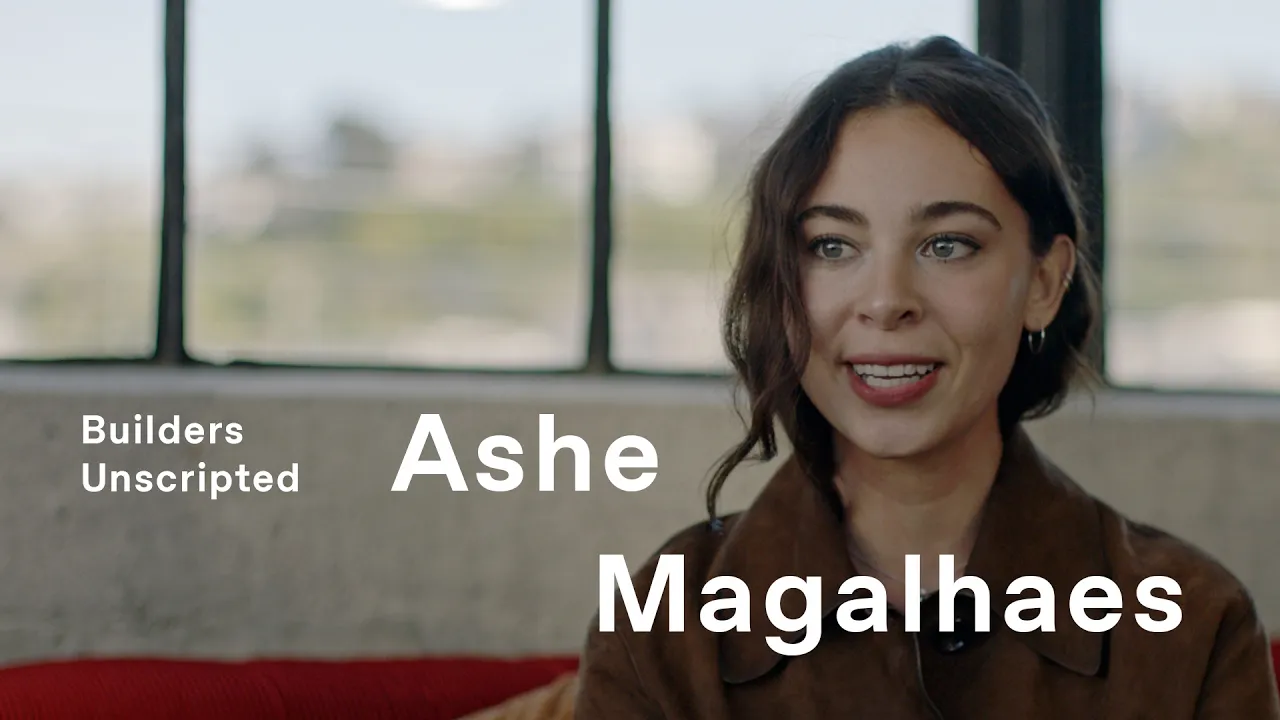
Hearth AI Founder Automates Daily Operations With Codex Agent System
OpenAI
Ashe Magalhaes argues that automated AI agents and personal taste will replace traditional long-hour software engineering as models master production code.
## Background
This episode was published by OpenAI on YouTube on April 10, 2026. According to the page description, Head of Developer Experience Romain Huet speaks with Ashe Magalhaes, founder of Hearth AI, about building rapidly with Codex, finding beauty in software tools, and using agentic personal operating systems to feel more present, connected, and intentional.
## TL;DR
Ashe Magalhaes shares her transition from Stanford hardware engineer and solar-car racer to early LLM builder and founder of Hearth AI. She discusses her philosophy of relational intelligence, explaining how software should deepen human connection rather than increase screen time. Magalhaes demonstrates her personal agentic OS in Slack and her rapid prototyping workflow using tools like Codex 5.4, GPT-4, and OpenClaw to extract projects like aesthetic.video. She encourages modern builders to treat software development as artistic expression, lean into personal taste, and embrace creative vulnerability.
## Atmosphere & style
The dialogue feels like an intimate, visionary meeting of minds between a lab representative and a frontier builder. The tone is deeply reflective yet energetic, blending high-level technical tradecraft with philosophical discussions about art, Bernini, and human connection. Ashe's genuine passion and willingness to share raw workflows create an inspiring, forward-looking atmosphere that frames software engineering as an expressive, high-velocity creative movement.
## Key takeaways
- [00:00](https://www.youtube.com/watch?v=flweA_I-VKE&t=0s) Hearth AI was founded in 2022 as an early agentic CRM using GPT-3.5, requiring custom workarounds for structured outputs and non-deterministic model behavior before native API support existed.
- [01:43](https://www.youtube.com/watch?v=flweA_I-VKE&t=103s) Ashe's background in hardware, including driving a student-built solar car across the Australian Outback for the Bridgestone World Solar Challenge, instilled a strong discipline for engineering safety and rigor.
- [03:15](https://www.youtube.com/watch?v=flweA_I-VKE&t=195s) The builder archetype is fundamentally equivalent to an artist, utilizing engineering mediums like code, satellites, hardware, or video to express ideas.
- [03:52](https://www.youtube.com/watch?v=flweA_I-VKE&t=232s) Early AI product development in 2023 suffered from high stack churn and a lack of user mental models regarding two-way conversational agents.
- [05:43](https://www.youtube.com/watch?v=flweA_I-VKE&t=343s) Hearth AI is anchored in 'relational intelligence'—the concept that AI should act as a second brain to deepen human connections rather than replace them.
- [08:03](https://www.youtube.com/watch?v=flweA_I-VKE&t=483s) Ashe practices 'building in public' by rapid-prototyping back-end features on her personal site (ashe.ai) using OpenAI Codex 5.4 and extracting validated ideas into standalone tools.
- [10:01](https://www.youtube.com/watch?v=flweA_I-VKE&t=601s) She maintains observability and error-monitoring across her autonomous background agents through partitioned, dedicated channels within a personal Slack workspace.
- [12:17](https://www.youtube.com/watch?v=flweA_I-VKE&t=737s) The aesthetic.video platform showcases advanced agentic orchestration, combining multi-modal Gemini embeddings for temporal video search with Claude Opus 4.6 and Codex 5.4.
- [17:56](https://www.youtube.com/watch?v=flweA_I-VKE&t=1076s) As AI models automate production code writing, builders must rely on creativity, personal taste, and authentic vulnerability as their primary North Star.
- [21:09](https://www.youtube.com/watch?v=flweA_I-VKE&t=1269s) Software development is shifting toward extreme personalization, serving as a reflection of individual creator taste and attunement rather than purely market-driven scale.
- [22:02](https://www.youtube.com/watch?v=flweA_I-VKE&t=1322s) Agentic workflows like OpenClaw enable autonomous, platform-native content distribution while specialized personal agents minimize human screen time to maximize real-world presence.
- [24:30](https://www.youtube.com/watch?v=flweA_I-VKE&t=1470s) Future wearable hardware and ambient intelligence layers require clear physical interaction cues and social etiquette to preserve consent and user trust.
- [27:12](https://www.youtube.com/watch?v=flweA_I-VKE&t=1632s) Modern engineering workflows are moving away from monotonous hours of manual coding toward rapid, high-intensity creative sprints paired with high-level AI tools.
- [30:02](https://www.youtube.com/watch?v=flweA_I-VKE&t=1802s) Curiosity, fun, and the willingness to embrace the discomfort of public vulnerability remain the most durable guideposts for modern software builders.
## Detailed walkthrough
### [00:00](https://www.youtube.com/watch?v=flweA_I-VKE&t=0s) Early Agents and the Founding of Hearth AI
Host Romain Huet (Head of Developer Experience at OpenAI) welcomes Ashe Magalhaes, founder of Hearth AI, reminiscing about their initial meeting at the OpenAI office when Ashe was pioneering early agentic systems. Ashe founded Hearth AI in 2022 as the "first agentic CRM." Building in early 2023 using GPT-3.5 required kicking off complex agentic workflows while the underlying model infrastructure was still fragile. Romain recalls Ashe pushing the limits of OpenAI’s early API—attempting structured outputs and retrieval with JSON schemas long before those features were natively supported.
Reflecting on her transition from machine learning engineer to early LLM builder, Ashe contrasts traditional deep learning with LLM-based development. Machine learning had traditionally been deterministic, but non-deterministic LLMs required stabilizing product experiences for end-users who cared about real-world flexibility rather than model novelty.
- **Founding Date:** Hearth AI was founded in 2022.
- **Early Tech Stack:** Utilized GPT-3.5 in early 2023 for agentic workflows before native structured outputs existed.
- **Developer Challenge:** Managing non-deterministic model behaviors while maintaining reliable user product experiences.
[01:43](https://www.youtube.com/watch?v=flweA_I-VKE&t=103s) Frontier Tech: Racing Solar-Powered Cars in the Outback
Ashe traces her technical foundation back to hardware and frontier technology at Stanford, where she spent two years on the Stanford Solar Car Project—a team with deep ties to Tesla and SpaceX. She worked across multiple engineering domains including telemetry, CAD modeling, meshing, and autocross driving, undergoing rigorous driver training in clinics throughout California.
The project culminated in shipping their custom solar car to Australia for the Bridgestone World Solar Challenge, a five-day, 3,000-kilometer race from Darwin to Adelaide. Ashe spent three months prepping and camping in the Australian Outback, eventually driving the vehicle in six-hour shifts at speeds of 90 km/h (~60 mph). The extreme physical risk—highlighted by competing teams like Cambridge crashing—instilled a deep sense of engineering rigor and safety that carried into her later work at NASA (satellites), Airbnb (ML engineering), and as a founder.
> "I was very aware that I had spent two years building something with a team that I would put my body into... how do you make safe decisions and also really push the bounds of what's technically possible?"
- ** Stanford Solar Car Team:** Spent two years on CAD modeling, telemetry, meshing, and autocross driver training.
- **Bridgestone World Solar Challenge:** 5-day race spanning from Darwin to Adelaide across the Australian Outback.
- **Driving Specs:** 6-hour shifts driving at 90 km/h (~60 mph) in a custom student-built solar vehicle.
[03:15](https://www.youtube.com/watch?v=flweA_I-VKE&t=195s) The Builder Archetype as an Artist
When asked what initially drove her toward engineering and entrepreneurship, Ashe describes a fundamental curiosity and a desire to bring ideas into physical or digital reality. She equates the "builder archetype" directly to the artist archetype, viewing engineering as an expressive tool for creation across diverse mediums—ranging from satellites, solar vehicles, and code to poetry and video production.
[03:52](https://www.youtube.com/watch?v=flweA_I-VKE&t=232s) Navigating the Friction of Early AI Product Development
Reflecting on building AI products three years prior, Ashe notes that the constant disruption of tech norms presented major execution challenges. Traditional machine learning workflows involved spending a year laying data pipelines before building predictive features. In contrast, early agentic development required tearing down and rebuilding the core tech stack every couple of weeks.
Beyond backend engineering friction, consumer behavior for AI agents did not yet exist in 2023. For instance, when Hearth deployed agents inside Slack, users did not realize a Slack bot could engage in two-way conversations, assuming it was only capable of outbound pings. Romain adds that during the era of NanoGPT and BabyAGI, most people outside frontier AI circles failed to grasp agent capabilities. Both emphasize that strong peer relationships among builders and direct lines to AI labs were essential for sharing operational tricks and keeping early products functional.
- **Stack Churn:** Teams frequently tore down and rebuilt their agentic stacks every few weeks.
- **User Education Gap:** In 2023, users lacked mental models for conversational AI agents inside messaging channels like Slack.
- **Builder Ecosystem:** Peer transparency and close connections with AI research labs were vital for troubleshooting.
[05:43](https://www.youtube.com/watch?v=flweA_I-VKE&t=343s) AI and Human Connection: Relational Intelligence
Despite her deep background in complex engineering systems, Ashe's core product philosophy focuses on human relationships and personal connection. She recalls an impactful moment at Stanford when Dr. Paul Kalanithi, author of *When Breath Becomes Air*, spoke to her neuroscience class about facing a terminal illness after achieving top academic and professional accolades.
This encounter sparked soul-searching regarding what truly matters long-term. Ashe concluded that beyond technical achievements like solar cars or satellites, what endures is self-connection, presence, and shared human relationships. Modern humans are connected to more people than ever before yet face unprecedented loneliness and difficulty maintaining relationships. Hearth AI was built around "relational intelligence"—the belief that AI should act as a second brain to extend human reasoning around social networks, aiding mutual connection and capital/opportunity matching.
> "The arc of human progress bends towards love and connection and innovation, and AI, I believe, should push the needle on that."
- **Key Influence:** Paul Kalanithi’s memoir *When Breath Becomes Air* shaped her focus on human connection over purely technical metrics.
- **Thesis of Relational Intelligence:** AI should augment the human brain's ability to track, nurture, and reason about personal and professional relationships.
[08:03](https://www.youtube.com/watch?v=flweA_I-VKE&t=483s) The "Second Brain" and Building in Public
Ashe defines a "second brain" as a symbiotic relationship between an individual and AI tools, creating a continuous feedback loop on one's stream of consciousness where the AI serves as a "bird's-eye intelligence."
To execute this vision today, Ashe embraces "building in public" rather than operating in a founder silo. Her primary workflow revolves around her public site (`ashe.ai`), which conceals a hidden back-end "secrets page" where she rapidly prototypes ideas using tools like Codex 5.4.
- **Public Hub & Secrets Page:** Uses `ashe.ai` as a public portfolio and production portal, backed by a private portal for rapid prototyping.
- **Development Engine:** Drives development using OpenAI Codex 5.4 to iterate on product concepts at high speed.
- **Extracting Products:** Validates ideas on X (Twitter) or personal workflows; if an idea gets traction, she instructs Codex to extract it into a standalone product or open-source repo.
[10:01](https://www.youtube.com/watch?v=flweA_I-VKE&t=601s) Rapid Prototyping and Workflow Observability
Emphasizing speed and reliable software foundations, Ashe highlights how recent model advancements enable her to ship full platforms—such as `aesthetic.video`, a video editing and collaboration platform for interview guests—without the fragility typically associated with "vibe coding."
To keep track of multiple parallel projects, Ashe integrates her systems directly with Slack. Her `ashe.ai` Slack workspace features dedicated channels for every active agentic workflow, providing real-time instrumentation, observability, and error logging to ensure users experience seamless functionality.
- **Aesthetic Video Platform:** Built `aesthetic.video` as a custom hub for video hosting, agentic clips, auto-generated video guides, and timestamped collaborative feedback.
- **Slack Observability Engine:** Monitors all running background agents and web applications through partitioned Slack channels.
[12:17](https://www.youtube.com/watch?v=flweA_I-VKE&t=737s) Demo: Inside Ashe’s Agentic OS and `aesthetic.video`
Ashe gives Romain a tour of her personal operating system inside Slack and `ashe.ai`:
1. **Slack Error Management:** Spotting an error notification on the `aesthetic.video` channel, Ashe prompts Codex 5.4 directly through Slack: *"Kick off a task to fix the infinite load on the drafts page."*
2. **The Secrets Page:** Demonstrates her private dashboard containing shared UI templates (e.g., Stripe integrations, custom animations), hardware integrations (Oura ring tracking), and early product drafts.
3. **Product Extraction (`aesthetic.video`):** Shows how she built a video collaboration tool on her secret page, received requests from users on X to open-source or productize it, and instructed Codex 5.4 in a single prompt to split the code out into a standalone repository.
4. **Advanced Model Orchestration:** Demonstrates features inside `aesthetic.video`, including multi-modal video search using Gemini embeddings (e.g., searching for timestamps where people are "laughing"), Google Cloud Storage integration, an automated agentic clipper for short-form social reels, and switching between model backends like Claude Opus 4.6 and Codex 5.4 for specific tasks.
- **One-Shot Extraction:** Successfully instructed Codex to separate complex video workflows from `ashe.ai` into `aesthetic.video` in a single prompt.
- **Multi-Model Stack:** Combines Google Cloud Storage, Gemini embeddings for temporal video search, Opus 4.6 for conversational interaction, and Codex 5.4 for background code maintenance.
[15:00](https://www.youtube.com/watch?v=flweA_I-VKE&t=900s) High-Velocity Building and Modern Creative Authenticity
Reflecting on her speed as a solo founder, Ashe links her rapid iteration style back to her autocross driving training—aiming to move fast while maintaining a solid, non-fragile foundation. She shares an example: after syncing her Oura ring API to display her 5:00 AM wake-up times on her public goals page, a user suggested building a social accountability leaderboard. Thanks to Codex 5.4, she was able to immediately sprint on the feature.
Ashe and Romain conclude by discussing the evolving role of developers. As technical execution becomes faster and cheaper, building converges with art. In a landscape increasingly saturated with generic AI-generated content, Ashe stresses the necessity of building with personal authenticity, vulnerability, and direct connection with users.
- **Oura Ring Integration:** Publicly tracks 5:00 AM wake-up goals via the Oura API, spinning up features based on community feedback.
- **Creative Authenticity:** Asserts that in an era of abundant AI-generated media, successful builders must inject genuine personal vulnerability and real human utility into their software.
<ElicitationsGroup message="Explore related topics or dive deeper into the transcript:">
<Elicitation label="Tell me about Part 2 of this episode" query="Can you summarize Part 2 of this podcast episode with Ashe Magalhaes and Romain Huet?"/>
<Elicitation label="How does Ashe's second brain workflow function?" query="Explain in detail how Ashe Magalhaes uses Slack, Codex 5.4, and her website as an agentic operating system."/>
<Elicitation label="What is the thesis of relational intelligence?" query="What is relational intelligence according to Hearth AI, and how does it apply to modern software?"/>
</ElicitationsGroup>
[17:56](https://www.youtube.com/watch?v=flweA_I-VKE&t=1076s) Embracing the Renaissance Moment and Creativity as a North Star
Ashe Magalhaes reflects on her personal journey toward living an aligned life, emphasizing that building tools for relational intelligence requires practicing relational intelligence in daily interactions. Having deep, present, and curious conversations around frontier tech makes her feel like she is stepping directly into a "Renaissance moment" filled with excitement and abundance. While acknowledging the valid fear in the world, she argues that the current wave of unlocked human creativity offers far more reason to be optimistic.
Romain Huet brings up the shifting landscape for software engineers, noting that models like GPT-4 are now capable of writing high-quality production code, which creates a sense of grief alongside excitement as the traditional role of an engineer changes. In response, Ashe advises builders to lean into creativity as their ultimate North Star. Drawing a historical parallel to the Italian sculptor Gian Lorenzo Bernini, who worked diligently for four hours a day and spent the rest of his time socialising, dancing, and enjoying life, she notes that having fun provides a genuine competitive edge. Because the internet is flooded with AI-generated content, automated tools, and sales pitches, the true premium today lies in vulnerability and risking something of oneself to build an authentic "trust layer" with users.
- Ashe emphasizes living aligned with relational intelligence by being deeply present in everyday conversations.
- Historical reference: Italian artist Bernini focused intensely for short blocks (~4 hours) and spent the rest of his time engaging with the world, which fueled his creative work.
- Romain notes that models like GPT-4 can write production-ready code, changing the traditional engineering dynamic.
- "I think this is the moment to lean into creativity as the North Star."
- Building trust requires vulnerability: users demand authentic human connection rather than purely AI-generated text or impersonal content.
---
[21:09](https://www.youtube.com/watch?v=flweA_I-VKE&t=1269s) Personalized Software and the Shift to Individual Taste
When asked about how engineer roles are blending as AI tools empower everyone across teams, Ashe highlights the necessity of individual self-attunement. Rather than building solely for broad target markets as in previous software eras, the current era of personalized software serves as a mirror back to the creator, urging them to ask: "What is beautiful to me?", "What is impactful to me?", and "What am I here to put out into the world?"
- Builders are encouraged to attune to their personal taste first before seeking market-driven features or widespread scale.
- Software is becoming hyper-personalized, enabling individuals to craft systems tailored directly to their internal values and vision.
---
[22:02](https://www.youtube.com/watch?v=flweA_I-VKE&t=1322s) Agentic Workflows, OpenClaw, and the All-Agent Slack System
Discussing her operational workflow, Ashe explains how she leverages OpenClaw and state-of-the-art AI systems to build distribution pipelines and personal operating setups. Lacking a traditional marketing background, she relies on OpenClaw to take content posted on X (formerly Twitter) and adapt it for platforms like Reddit using the distinct language of each community. These agents generate prompt, natural responses without appearing spammy, freeing her to remain present with the core ideas rather than managing multiple social channels.
Beyond distribution, Ashe organizes her entire life through a private, single-user Slack workspace where specialized agents act as dedicated team members. Structured across dedicated channels, these agents actively manage her schedule and commitments to help minimize her screen time and maximize her present, real-world interactions.
- **OpenClaw distribution**: Converts single posts on X into platform-native, authentic engagements across Reddit and other channels.
- **Slack Workspace Setup**: Contains distinct channels for various domains, including:
- News
- Birthdays
- Goals
- Money / Finance
- **The Core Goal of Agents**: Managing the user, reducing screen time, and facilitating presence in the real world.
- Anecdote: Ashe shared her all-agent Slack workspace with someone at a bar who laughed and asked, "Are you the only person on this Slack workspace?" to which she responded, "Yes... It's me and my agents. I'm not alone!"
---
[24:30](https://www.youtube.com/watch?v=flweA_I-VKE&t=1470s) Hardware, Wearables, and Future Social Etiquette
Ashe discusses her work on wearable hardware, driven by a desire to remain fully present during face-to-face interactions while keeping phone and desktop usage to a minimum. Addressing the complexities of "ambient intelligence" and constant recording, she stresses the need for elegant social etiquette when capturing continuous streams of conversation for a "second brain." She envisions physical gestures—such as touching a part of one's body—to signal agreement that a statement will be recorded into a second brain, while giving the other person the explicit opportunity to opt out.
Human memory is inherently limited, yet relationships require tracking who someone is and how the dynamic evolves over time. Ashe views this upcoming intelligence layer as a mirror that enhances awareness of the richness in personal relationships rather than distracting from them.
- Focuses on hardware design that avoids invasive ambient recording and replaces it with intuitive, respectful interaction norms.
- Envisions a "second brain for my people" that tracks facts and nuances across personal relationships.
- Uses physical interaction cues (e.g., body touches) as prospective social signals for memory capture and consent.
---
[27:12](https://www.youtube.com/watch?v=flweA_I-VKE&t=1632s) Aesthetics in Software and Working in Creative Bursts with Codex
Ashe highlights aesthetic intentionality, sharing her desire for every system, agent interface, hardware component, and circuit board design to feel like a inspiring piece of art. Reflecting on her experience using coding tools like Codex, Cursor, and Claude Code, she describes a transition away from traditional 11-hour repetitive engineering days toward functioning like an artist who operates in sudden creative bursts.
Using her project `the aesthetic.video` as an example, Ashe recalls pairing it immediately with OpenAI's GPT-4 because the model reliably handled complex product infrastructure—such as user authentication and Stripe payment integration—in one continuous sprint.
- **Tooling Ecosystem**: Switches fluidly between Codex, Cursor, and Claude Code depending on the task.
- **Project Example**: Built `the aesthetic.video` in a single rapid sprint using GPT-4 to implement end-to-end features, including user auth and Stripe integration.
- Shift in the engineering mindset: Moving away from monotonous 11-hour coding sessions toward short, high-intensity creative sprints followed by real-world exposure and iteration.
---
[30:02](https://www.youtube.com/watch?v=flweA_I-VKE&t=1802s) Advice for Builders: Cultivating Curiosity, Taste, and Discomfort
Addressing what traits matter most for modern builders, Ashe points to self-attunement, presence, and leaning into personal taste. She encourages creators to aggressively pursue their genuine interests—whether in film, photography, or software—and to embrace the inherent discomfort of sharing their work publicly. Using Peter's OpenClaw project as a prominent example, she notes how putting vulnerable, authentic work out into the world creates unexpected feedback loops and vibrant communities (such as users wearing lobster hats and crafting personal agents).
In her closing advice for early-stage builders, Ashe highlights curiosity and fun as the foundational pillars of engineering. As technical tools evolve rapidly, honoring one's natural curiosity and willingness to take risks remains the ultimate constant.
- "Anytime I've put something out there that has a little piece of me in it, it is scary and there is discomfort and I'm risking something by being seen. But it's so worth it to build that reflex and that muscle..."
- OpenClaw community highlight: The unexpected, emergent culture of developers embracing personal agents and wearing lobster hats.
- Final takeaway: Curiosity and having fun remain the most durable guideposts for navigating new technology.
## Notable quotes
> [01:43](https://www.youtube.com/watch?v=flweA_I-VKE&t=103s) I was very aware that I had spent two years building something with a team that I would put my body into... how do you make safe decisions and also really push the bounds of what's technically possible? — Ashe Magalhaes
> [05:43](https://www.youtube.com/watch?v=flweA_I-VKE&t=343s) The arc of human progress bends towards love and connection and innovation, and AI, I believe, should push the needle on that. — Ashe Magalhaes
> [12:17](https://www.youtube.com/watch?v=flweA_I-VKE&t=737s) Kick off a task to fix the infinite load on the drafts page. — Ashe Magalhaes
> [17:56](https://www.youtube.com/watch?v=flweA_I-VKE&t=1076s) I think this is the moment to lean into creativity as the North Star. — Ashe Magalhaes
> [21:09](https://www.youtube.com/watch?v=flweA_I-VKE&t=1269s) What is beautiful to me? — Ashe Magalhaes
> [21:09](https://www.youtube.com/watch?v=flweA_I-VKE&t=1269s) What is impactful to me? — Ashe Magalhaes
> [21:09](https://www.youtube.com/watch?v=flweA_I-VKE&t=1269s) What am I here to put out into the world? — Ashe Magalhaes
> [22:02](https://www.youtube.com/watch?v=flweA_I-VKE&t=1322s) Are you the only person on this Slack workspace? — Unidentified person
> [22:02](https://www.youtube.com/watch?v=flweA_I-VKE&t=1322s) Yes... It's me and my agents. I'm not alone! — Ashe Magalhaes
> [30:02](https://www.youtube.com/watch?v=flweA_I-VKE&t=1802s) Anytime I've put something out there that has a little piece of me in it, it is scary and there is discomfort and I'm risking something by being seen. But it's so worth it to build that reflex and that muscle... — Ashe Magalhaes
## Mentioned
Ashe Magalhaes, Romain Huet, Hearth AI, OpenAI, Codex, Codex 5.4, GPT-3.5, GPT-4, Stanford Solar Car Project, Tesla, SpaceX, Bridgestone World Solar Challenge, NASA, Airbnb, Paul Kalanithi, When Breath Becomes Air, NanoGPT, BabyAGI, Slack, X, aesthetic.video, Gemini, Google Cloud Storage, Claude Opus 4.6, Oura ring, Stripe, Gian Lorenzo Bernini, OpenClaw, Reddit, Cursor, Claude Code
Hearth AI founder Ashe Magalhaes argues that as frontier models commoditize mechanical coding, software development must pivot toward high-taste personal expression and 'relational intelligence'—using agentic systems to nurture human relationships and reduce digital screen time.
From Fragile Pipelines to Agentic Sprints (0:00)
Building early agentic systems in 2022 and 2023 required managing non-deterministic model behaviors while rebuilding unstable technical stacks every few weeks. When Magalhaes founded Hearth AI as an agentic CRM on GPT-3.5, native structured JSON outputs and robust retrieval frameworks did not yet exist, requiring builders to invent ad hoc schemas while guiding users who lacked any mental model for conversational agents in workspaces like Slack.
Modern model developments have dramatically compressed this product development lifecycle. Using tools such as OpenAI Codex 5.4, GPT-4, Cursor, and Claude Code, Magalhaes observes that developers no longer spend months laying traditional data pipelines. Builders can now handle end-to-end infrastructure sprints—including authentication and Stripe payment integration—or extract prototypes from private dashboards into standalone open-source repositories through single prompts.
Relational Intelligence and Minimizing Screen Time (5:43)
Grounded in Dr. Paul Kalanithi’s memoir When Breath Becomes Air, Magalhaes's core product philosophy centers on 'relational intelligence.' Despite living in an era of unprecedented social connectivity, individuals face record levels of isolation and struggle to maintain deep networks. She contends that AI should function as a cognitive second brain that aids in tracking, reasoning about, and deepening human relationships rather than capturing user screen time.
To translate this philosophy into hardware, Magalhaes is exploring wearable ambient intelligence designed to operate unobtrusively during in-person interactions. To address privacy and consent concerns surrounding continuous recording, she advocates developing clear social etiquette, such as using deliberate physical gestures to explicitly signal when conversational details are being committed to a memory system.
The Single-User Agentic Operating System (22:02)
To maintain high-velocity execution as an independent founder, Magalhaes organizes her technical and personal workflows inside a private, single-user Slack workspace where specialized agents act as dedicated team members. Partitioned channels monitor distinct domains, including finances, news, birthdays, personal goals, and production error logs. When an operational error occurs—such as an infinite loading bug on her video platform aesthetic.video—she prompts Codex directly inside Slack to deploy a fix.
This setup also automates distribution and audience engagement. Through OpenClaw agents, content originally published on X is autonomously adapted into the native formats and communication styles of communities on platforms like Reddit. By coupling internal Slack observability with public sites like ashe.ai, she tests experimental features—such as tracking 5:00 AM wake-ups via the Oura ring API—and converts active community requests into shipped software.
Engineering as an Expressive, Taste-Driven Craft (17:56)
Magalhaes roots her development velocity in the engineering discipline gained from the Stanford Solar Car Project, where driving student-engineered solar vehicles for 3,000 kilometers across the Australian Outback at 90 km/h demanded balancing extreme technical risk with safety. She views this balance as a foundation for viewing engineering through the lens of an artist rather than a traditional task-based programmer.
Drawing parallels to the sculptor Gian Lorenzo Bernini, who structured his life around four-hour deep work blocks balanced by social engagement, Magalhaes asserts that developers no longer need repetitive 11-hour programming routines. As automated models increasingly generate baseline code and content, she argues that human taste, personal vulnerability, and curiosity represent the most durable assets for building authentic software.
While Magalhaes demonstrates that multi-model agentic workflows allow solo developers to operate at the speed of full teams, the broader viability of her model relies on whether ambient recording etiquette can gain social acceptance and whether hyper-personalized agentic tools can meaningfully reverse digital isolation.
[1:43] Ashe Magalhaes: I was very aware that I had spent two years building something with a team that I would put my body into... how do you make safe decisions and also really push the bounds of what's technically possible?
[5:43] Ashe Magalhaes: The arc of human progress bends towards love and connection and innovation, and AI, I believe, should push the needle on that.
[12:17] Ashe Magalhaes: Kick off a task to fix the infinite load on the drafts page.
[17:56] Ashe Magalhaes: I think this is the moment to lean into creativity as the North Star.
[21:09] Ashe Magalhaes: What is beautiful to me?
[21:09] Ashe Magalhaes: What is impactful to me?
[21:09] Ashe Magalhaes: What am I here to put out into the world?
[22:02] Unidentified person: Are you the only person on this Slack workspace?
[22:02] Ashe Magalhaes: Yes... It's me and my agents. I'm not alone!
[30:02] Ashe Magalhaes: Anytime I've put something out there that has a little piece of me in it, it is scary and there is discomfort and I'm risking something by being seen. But it's so worth it to build that reflex and that muscle...
Original transcript
[0:10] Hey, Ashe. So great to see you. Thank you for doing this.
[0:13] Thank you for having me it’s awesome to be here.
[0:15] I actually remember the very first time we met was
in this OpenAI office.
[0:20] And at the time, you were building Hearth, right?
[0:23] Can you tell us a bit more about what it was?
[0:25] Yes. Hearth AI was founded in 2022,
[0:28] and it was the first agentic CRM. So 2023, we're using GPT 3.5, and we were trying to kick off all these agentic workflows
[0:36] when the underlying systems were still pretty fragile. So I was trying to wrangle you and other people.
[0:41] And I remember, you had great feedback for the API at the time. And one of the things that you were trying to get done was like structured outputs
[0:48] before we even had them. You were trying to do like retrieval with JSON schemas.
[0:52] You were so early. What was it at the time to like build in AI?
[0:56] Yeah. So, I mean, my history was as an ML engineer.
[0:59] So I had been studying and I really rode the wave of deep learning and the commercialization of deep learning.
[1:05] And then when kind of agentic infrastructure, and LLMs came out for the first time, it was totally different, right?
[1:10] It was non-deterministic, and it was seeing what we could stabilize within a product experience
[1:16] because our users didn't care that, like LLMs were new, they wanted to see the flexibility of what was just then possible.
[1:23] Yeah.
[1:23] That's amazing. And speaking of your ML background,
[1:26] I think what I find fascinating about you is the wide range of like, life technical experiences you've had.
[1:32] Like you were an ML engineer at Airbnb, you worked on satellites at NASA,
[1:37] but you also started by building a solar powered racing car. Like, I want to hear that story.
[1:43] Yeah. So I really try to stay within frontier tech and Stanford has a solar car team with strong ties to like Tesla and SpaceX.
[1:51] So for two years I was building, heads down, a solar powered car with that team.
[1:57] I was on telemetry, CAD modeling, meshing, and then autocross. I was one of the drivers, so I was training within autocross clinics throughout California.
[2:05] That's crazy. And so did you actually, like, race in that car that you built?
[2:10] So we shipped the car to Australia. Every two years Australia has an international solar car competition, the Bridgestone World Solar Challenge,
[2:18] and we spent three months there prepping. We were camping in the Australian Outback,
[2:23] and then I would drive for six hours at a time through the outback, and then we did the race, which was five days from Darwin to Adelaide.
[2:31] Wow, was that scary?
[2:32] Yeah, we were going 90 Kph, which is around 60 miles an hour, and we built the car end to end,
[2:39] so it wasn't like a company came in and did it. And teams were crashing,
[2:43] Cambridge's team had crashed. And so I was very aware that I had spent two years building something with a team that I would put my body into
[2:51] and that level of rigor, like really played into later experiences.
[2:55] Right? Because like that level of risk and like rigor that you need to have is extremely high.
[3:00] Yeah, but it was so amazing because I think that was a form of like frontier tech to really be in the weeds with a team
[3:06] where you know, it is your body on the line, it's your teammates body on the line. How do you make safe decisions and also really push the bounds of what's technically possible?
[3:14] Amazing.
[3:15] And so what got you into building in the first place, starting on that project all the way to like being a founder?
[3:21] Yeah, I think just a lot of curiosity and really interested in, bringing things to life.
[3:27] So I view the builder archetype as quite close to the artist archetype.
[3:31] I think I'm happiest viewing myself as like a conduit for creativity. And I think engineering for me has always felt like a tool
[3:39] for creating and incarnating and to be able to do it with satellites and cars and code.
[3:45] But also like, you know, poetry and videos and other mediums. That is such an energizing way to spend every day.
[3:52] Incredible. And so when you were so early building like an AI product, like three years ago,
[3:58] when you look back now, like, how do you think about that experience? Like what were the hardest parts or the things you did not expect.
[4:05] Yeah, I think there were so many norms that were being disrupted.
[4:09] So the fact that our team was tearing down our like agentic stack every couple of weeks,
[4:15] that was really hard to maybe explain to folks around us because the history of tech had been, okay an ML you maybe spend a year laying the data pipes,
[4:23] and then and only then can you do something predictive and interesting with the ML product.
[4:28] And for us, it was like, no we want to surface an experience to users that is flexible,
[4:33] but it was so open world that there wasn't consumer behavior yet around querying an agent.
[4:37] So for example, like folks didn't know in 2023 that in Slack, the Slack bot could respond.
[4:44] They just thought that it was an outbound ping so there was a lot of new behavior from the eng. side, but also from the user side to educate them on.
[4:51] And I remember, on my side, I was trying to build agents too, before joining OpenAI.
[4:56] And, you know, this was the era of NanoGPT, BabyGPT, people were like trying to find like the early incarnation of what an agent would be.
[5:05] But most people outside of the space would not really understand and grasp, what an agent could do.
[5:10] And I think for me it underlined the importance of having relationships with other builders.
[5:16] You know, we were really all in the same plane of learning this stuff for the first time and to have friends that were like open and transparent and we were sharing tricks
[5:24] and also friends within AI labs that really made the difference with creating products that worked in some capacity.
[5:31] And so you've worked on very deep tech and very deep systems, right?
[5:36] What got you to think about like this human connections, human relationship which is kind of like the core thesis of Hearth right.
[5:43] Yeah. There is this amazing book, “When Breath Becomes Air”, written by Paul Kalanithi. And I didn't realize it, but he had sat in on a neuroscience class that I was in,
[5:55] and he was presented as this guest that had a terminal illness. And he was like, you get to ask this person anything. And, you know, he has this terminal illness and how is he viewing life?
[6:04] And, what he talks about is all achieving all of these accolades and making it to the top of the mountain and essentially looking around and being like, and now what?
[6:12] And I think from a young age I had all of this access to like really interesting frontier tech, but I was realizing I kind of missed that like spiritual footing.
[6:21] And for me, after some soul searching, I think like for so many people, what do I think I'll care about on my deathbed?
[6:28] You know, the satellites are amazing, the solar cars are amazing, all the ML stuff is cool.
[6:31] But I think what I'm going to care about is how connected I was to myself and to other people in my life, and how much presence and love I exchanged.
[6:41] And then it became obvious I want to push the needle on that, on connection.
[6:45] And I think, I say this a lot, but the arc of human progress bends towards love and connection and innovation.
[6:52] And AI I believe, should push the needle on that.
[6:55] And do you think now that like what you were exploring a few years ago with like this like AI agentic CRM
[7:02] was the first kind of manifestation of something like broader that you were gonna explore basically now?
[7:08] Yeah. And, you know, even before that I had been working on teams where they had an external network of people,
[7:15] and the task was to mine that network to match people with other people or opportunities or capital.
[7:21] And so it's kind of this age old problem of as modern humans, we are connected to so many more people than ever before,
[7:29] and maybe feeling lonelier and less able to act on it, both individually and as part of any cooperative team.
[7:35] And so I've been fixated on this for so many years. And the agentic CRM was a multiplayer pass at it.
[7:43] But, you know, my thesis is on relational intelligence. Its this belief that AI should augment the human experience
[7:50] and allow us to feel more connected in the time that we have, and that AI should extend our brain's ability to reason on who we’re connected to and why.
[7:57] And speaking of brain, I see you mentioned a few times like, on your post, like the idea of a second brain.
[8:03] Can you tell us more about this and how you think about it?
[8:05] I love the phrase second brain because it's a little bit less technical.
[8:09] So I think anyone in the world can maybe visualize what a second brain looks like.
[8:14] And it's this idea that we will have a symbiotic relationship with our AI products,
[8:20] and have a relationship with the product is the key word. So it will be this continuous feedback loop,
[8:26] on our stream of consciousness in which the AI is trusted as maybe this bird's eye intelligence to guide us, to see farther than we could with our own cognitive limitations.
[8:36] So one thing that I find very interesting, as you're exploring these topics now,
[8:39] and maybe compared to what you were building a few years ago, is that the tools have changed drastically.
[8:44] And I'd love to hear more about, like, what's your workflow today? Like the way you approach, like new ideas, following your own creativity, like what's Ashe's workflow?
[8:57] So a big thing I'm leaning into this year is really building while connected.
[9:03] And I think for so many years as a founder I built in more of a silo and I'm very excited to be building in public to be connecting with folks on these different agentic workflows or products
[9:15] and leaning into the variance that you get when you build in public and you allow all of these folks to comment on what you're putting out there.
[9:24] And so something I've enjoyed doing is I have my Ashe.ai public facing website, which you could go on,
[9:30] but there's a whole back-end system that is behind a secrets page.
[9:35] Where I will, if I have a product idea, I'll kick it off.
[9:40] Now I'm using Codex 5.4 but, you know, I'm driving really fast to like test what I should be experimenting with, and then I'll have it within ashe.ai.
[9:48] I'll put it on on X, and if people are reacting to it, I'll have 5.4 extract it into a standalone product
[9:54] quite quickly, which is cool, or open source a part of it, because a lot of folks are asking for like an open source version to pull into their own personalized software.
[10:00] That's super cool.
[10:01] So you are exploring different ideas in parallel. You're putting them on your own personal website,
[10:08] using Codex to build many of these ideas.
[10:11] But then as you see them kind of getting traction, you're extracting them into complete products.
[10:16] Yeah. So the name of the game is speed.
[10:17] And I think the key thing is you could build so much software nowadays, but what will you build that you yourself use every day
[10:25] that you find to be a beautiful and elegant experience, and that you can surface to users in a way that is sustainable
[10:31] and isn't just breaking with the fragility of maybe a vibe coded product.
[10:36] And so to be able to drive 5.4 and Codex really fast, but still have kind of a reliable, foundation, which is new, I think this is new as of the past two months.
[10:49] Has let me put out, like aesthetic video as a platform where I'm doing a lot of video editing.
[10:55] And I'll have guests, but I want them to have access to everything they say in case any part is sensitive.
[11:00] And I was able to really quickly put out that platform. And I use it every day and guests use it every time I film something
[11:06] for collaborating for agentic clips. And that's just one example.
[11:10] That's awesome. And is there anything like surprising to you or in your workflow, like the way you use Codex, anything that has been like, fascinating to you?
[11:20] I think the speed is really important where I want to be able to drive the agent very fast in productizing, because I need to still validate it with a user base.
[11:34] Like just because you can build many things nowadays doesn't mean it will be a product that users understand or could come on, or that you yourself will want to use every day.
[11:44] So being able to have that rapid feedback loop building in public has been very important.
[11:49] And the other layers instrumentation.
[11:51] So I have my Ashe.ai system on Slack and then I have all my agentic workflows broken up by channels.
[11:57] For every product that I put out, I have a layer of instrumentation and observability so I can validate are people using the tool in the way that I expect,
[12:06] let alone like any errors or things that are worth me, like quickly trying to patch.
[12:11] That's awesome. I would love to see it. Do you want to show it to me?
[12:13] Yeah.
[12:17] Okay, so this is my Ashe.ai Slack workspace. And you can see with all of my channels, these are all agentic workflows that I have here.
[12:24] And I'll get alerts and up manage throughout the day. And I have all of these errors for aesthetic.video.
[12:30] So I should probably kick off something because I do have people on this.
[12:34] And I think I know what this is.
[12:35] “Kick off a task to fix the infinite load on the drafts page.”
[12:40] So I trust 5.4 will figure that out.
[12:44] And yeah, so this is Ashe.ai. This is public.
[12:47] This has kind of my portfolio and products and also goals. But then I have a secrets page,
[12:53] and this is where I have everything from different templates.
[12:56] So I'll reuse the same Stripe template. I have these animations,
[13:00] to prototyping potential products.
So I have my Oura integration here.
[13:04] Videos was the start of aesthetic.video.
And then I got enough validation where I went ahead
and built this out as a standalone product.
[13:13] So here I built it out and then told 5.4 “hey, like break off this chunk.”
[13:17] But obviously we have so much happening in Ashe.ai and put it on aesthetic.video.
[13:22] And then from here, this is how I organize the content that I'm putting out. I have an automatic X integration.
[13:28] And then when I want to collaborate with my interview guests
I will have the video here. They can add comments
and it'll be time stamped.
[13:35] I have an auto generated video guide. I even have an agentic clipper to get those fun reels.
[13:42] Wow, that's really cool.
[13:43] I loved, like seeing your video hub on X did you, simply just ask, Codex to extract all of the prototype and make it a
standalone product,
[13:52] like in one shot?
[13:53] Yeah. So actually it did really well with one shot.
[13:56] So I had my template here and I need to use this for myself. So I tried it out with Ashe.ai. I posted it, I had enough people be like “hey can you open source this, can you put this out?”
[14:06] And after getting that validation, I told it to to break off a chunk.
[14:09] I let it, let it go. And then I had a good bit here and then I've added things to it.
[14:16] So I have like Google storage for all my videos. I pulled in, the Gemini embeddings too, to do some smart things with
searching on videos.
[14:26] So I have like search over here and I could search for
people laughing.
[14:30] Yeah. And then I play with it, like I have my chat here.
[14:33] Sometimes I'll use Opus 4.6 for the chat, sometimes I'll use 5.4
[14:36] it's really fun in this moment to pull in all of these different agentic tools and model providers.
[14:41] Cool. I guess, like I need to, ship more video content and use the hub for myself too.
[14:46] We can put this video on here.
[14:48] Exactly. We should. Amazing.
[14:50] Wow, thank you so much for showing me that. That's really, really cool.
[14:53] And what I love too is that you were a solo founder before, and, like, you were able to build so much by yourself one more time.
[15:00] Like, this is incredible. Like, how have the tools, like, changed to help you build all of this?
[15:06] Yeah. So I think what's interesting is, as an engineer, kind of one of my defining attributes was speed.
[15:12] And I've always really valued running at a problem.
And then instead of living in my head for so long,
getting real world feedback loops
[15:20] to kind of coalesce my vision with reality and the magic of this moment is being able to drive like 5.4 incredibly fast.
[15:28] And obviously I also have that like autocross training.
I want to go fast
[15:30] and trust that it's going to kind of have a
foundation that isn't so fragile that I’ll
[15:35] to spend a ton of time redoing it, and then having that,
building in public kind of feedback loop where I can
put things out into the world
[15:43] and see the variants and creativity that comes back in.
[15:46] So, for example, maybe last week I had my Oura ring and I pulled the Oura API,
[15:51] and on my Ashe.aI goals page, I put up my wakeup times because I really love waking up at 5 a.m.
[15:57] and someone commented like, ‘hey, you should create a social version of this where we can all have a level of accountability for waking up at 5 a.m’.
[16:04] and the magic of this is now I can quickly sprint at this without it taking up so much time.
[16:10] And I think what's been cool about 5.4 specifically around productizing is I'll have my whole Ashe.ai system, I'll build the prototype,
[16:17] I'll see if I actually use it, because that's important.
[16:20] And then if it's validated in some way, I'll tell 5.4
hey go split this off into an open source repo,
[16:26] or go split this off into its own standalone product.
[16:29] And I'm seeing it do it quite reliably.
[16:31] Like I think that's kind of a huge difference, even,
[16:35] going back like six weeks ago.
[16:37] That's incredible.
[16:38] I have an Oura ring too. So I guess
I should look at the leaderboard,
[16:41] but I'm not sure if I'm if I'm waking up early enough to be up there.
[16:45] That's really, really cool. And I love the fact that now that, like, we can build so much,
[16:49] it's really down to the creativity and the process you have around capturing your ideas and bringing them to life.
[16:56] And I love how you're describing the fact that you have this kind of secret space where you can experiment freely,
[17:02] and then you're waiting for a sign or a signal that, like things are picking up to then extract them, do well, is that right?
[17:07] Yeah. And I think, you know, our time is is zero sum. And I think especially as the builder archetype moves closer and closer to the creative archetype or to the artist archetype,
[17:17] You want to channel kind of your full self
into what it is that you're building.
[17:22] Otherwise maybe why would people resonate with it?
[17:24] I think there's a real moment right now in which folks are inundated with AI generated content
[17:30] and have like maybe a repulsion to, to that video or to that product.
[17:36] And so I'm asking myself a lot, hey, what does it look like to step into this new world in which I'm building with my full self
[17:42] and being vulnerable enough to share that with other builders or potential users?
[17:47] And one of the things like, speaking of builders, that I love about your process is how much you're building in public, right?
[17:54] Like you're learning as you go it looks like.
[17:56] And you are also talking to a lot of builders
making your own videos.
[18:00] What have you learned in that process?
[18:02] Has that helped you, like, build better products and
get better ideas?
[18:06] Yeah. So a big thing for me is I want to live a very
aligned life in day to day.
[18:12] And, the thing I'm trying to improve upon is, for a while I
built feeling quite disconnected.
[18:18] And so if I'm building for relational intelligence, I want to live relational intelligence.
[18:23] And I have found that having these conversations where I'm really present and really curious, I mean it feels amazing.
[18:31] I think we're wired as humans to be connected and to kind of bring that into conversations around frontier tech feels like
[18:40] I'm stepping into the Renaissance moment that exists right now, and I feel very excited
[18:46] and I feel very abundant. And I know that there's a lot of fear in the world which is validated, which is which is valid.
[18:52] But, I think we have so many reasons to feel excited with the new wave of creativity being unlocked.
[18:58] I agree, I think like there's so much like exciting, so many exciting things we can build now.
[19:04] So for us engineers and for, like, all the builders watching, like you're mentioning these like Renaissance moment, how do you think they should grab it?
[19:13] Like there is so much potential. There's also some grief in some ways about like the work changing so much
[19:22] because now there's models that like GPT 5.4 are so good at writing very high quality production code.
[19:29] The role of being an engineer is changing. Like, what's your view on all of this?
[19:33] Yeah, I think this is the moment to lean into creativity
as the North Star.
[19:38] I mean, if we go back to the Italian sculptor Bernini, he worked very diligently for like four hours and spent the rest of the day strolling or going to drinks or dancing or like really being having fun.
[19:51] And I know, like Peter talked a lot about the competitive edge, being having fun.
[19:55] And I think the, the exciting part of this moment is, you are incentivized to bring your full self to the table as a builder.
[20:03] And I think in part that's because there's so much noise with so many people trying to maybe sell you something when you go on X
[20:10] or, vibe code their own internal tool, or create AI generated content or AI generated movies.
[20:17] I think the premium now is on risking something by being vulnerable, by sharing and creating kind of a trust layer, or more relationships with folks
[20:28] for why they should engage with you
not only as a builder to use your tool,
[20:33] but like as a human that they trust with,
their data and whatever else.
[20:38] Yeah. And attention really because, I think this was in the news,
[20:42] but this question of putting out an article that's like AI written, I think a lot of users felt a lot of readers felt disrespected.
[20:49] And I think the premium is on feeling authentically connected to the person on the other end in this moment.
[20:55] And that's a call for all of us to share more, I think, about ourselves.
[20:59] And when you think about engineers and builders, do you think that naturally they should have more taste and interest for the customers
[21:09] and like, kind of like the role starting to blend when you work on the team, right.
[21:13] Because those tools are giving super powers to everyone.
[21:16] Like what do you see kind of the interplay between different roles and different teammates?
[21:21] Yeah, I think this is a moment to really
attune to yourself individually first
[21:27] and to ask yourself, what is beautiful to me,
[21:31] what is impactful to me?
[21:32] What am I here to put out into the world? And have that individuality and creativity and from that place, then cooperate and build.
[21:44] I think we had a previous era in which, we were building for so many people in the world that we're in ourselves, maybe addressing markets first.
[21:53] I think the era of personalized software is now a mirror back to us to really figure out, okay, what is it that I want to bring to life?
[22:01] Absolutely.
[22:02] And you were mentioning Peter from OpenClaw that we had for this first episode.
[22:06] And it sounds like when you're working on your projects,
you're no longer just working in projects.
You're also working in systems. Right?
[22:13] That's something very interesting.
I'd love to hear more about your workflow.
[22:16] Sounds like you're also using OpenClaw
to build a system around your distribution.
[22:21] I would love to hear how you're thinking through that.
[22:23] So I'm very quick to pull out whatever
state of the art thing comes out into my full agentic stack
and all of the different workflows that exist.
[22:33] So I went deep into OpenClaw. And for me, you know, I don't have a marketing background, let alone like distribution across all of these different platforms.
[22:43] I will say the area that OpenClaw kind of shined for me was to figure out distribution for, you know maybe I'm really present on X and put out a post there
[22:53] to be able to then lean on OpenClaw and agents to re-share that on Reddit and what other platforms.
[23:01] Not in a way that feels spammy. And this is a really fine line,
[23:05] but in a way that allows me to get that idea out there
in the language that is specific to that platform,
because they are all different.
[23:11] So it was able to do this pretty impressively on Reddit, with seemingly human responses back pretty quickly.
[23:21] So I think for anyone that's looking to figure out distribution,
which I certainly am,
[23:25] it's an interesting moment of like, okay, maybe I don't need to spend all this time on Reddit, on LinkedIn, on Instagram, whatever else.
[23:32] Maybe I can have my agents help me out
so that I can be present with the idea.
[23:36] That's very cool. Any favorite way to talk to your OpenClaw?
Where do you have it set up?
[23:40] So I will say I'm a big Slack person
[23:43] and OpenClaw is one piece in my full agentic system.
[23:47] So I do love Slack for naturally breaking up
my agentic workflows by channel.
[23:53] So I have like a news channel, a birthdays channel,
a goals channel, a money channel,
[23:57] basically anything in my life that I'm doing repeatedly there's a channel on slack with agents tied to it,
[24:04] and the important thing is the agents are up managing me
to try to like, reduce my screen time
and let me be really present with people.
[24:11] That's incredible. I love that.
[24:13] Really, really cool. I need to like, upgrade my setup. It gives me some ideas now.
[24:17] Yeah, I'll show you. I showed someone at a bar once and they were like, are you the only person on this Slack workspace?
[24:22] I was like, yes. And they started laughing. But it's the future!
[24:25] It’s you and your agents.
[24:26] Using all my agents. I'm not alone.
[24:27] You have a whole team with you. That's really cool.
[24:30] One thing that I love, that we don't, I don't think
we have talked about yet, is the fact that, like,
as you think through these systems for yourself
[24:38] and as you're going to pursue this thread around connections across humans in this AI era, you also thinking about wearables and hardware a lot, right?
[24:46] And you're working on one.
Tell me more about like why that matters.
[24:52] Yeah. So I am very driven by I think, a life that feels present and that feels connected.
[25:02] And I want to be across from someone looking at them,
fully present with them.
[25:07] And I really do want to minimize my screen time, my time on my phone and my time on my desktop.
[25:12] And so I'm excited. First about the social etiquette layer.
[25:16] I don't like ambient recording. I do think we will need a stream of consciousness that is systematized for our second brain.
[25:24] When I think a lot about a second brain for my people,
I think there will be some social etiquette around
you saying something really interesting.
[25:31] You seeing me touch a part of my body and agree that that will be put into my second brain, or pull me back and say, actually, hey, I'm not comfortable with that.
[25:39] So first I want to play with what might the future social etiquette be in a way that feels elegant and not gauche?
[25:46] And then second, just an analog experience that lets me have that second brain for my people so I can focus on really listening to what the other person's saying.
[25:57] So being fully present, but also thinking through the social norms of what that means to have such ambient intelligence almost.
[26:04] Yeah. And I think when it comes to our relational landscape, the human brain is naturally pretty limited.
[26:11] So if you think about each person in your life, there are so many facts and dimensions to who they are. Because a relationship is, who am I?
[26:20] Who is this person and who are they to me, over time? And relationships are mirrors back to ourselves.
[26:25] And so I'm excited for an intelligence layer that
[26:30] guides me on the abundance of who I'm connected to.
[26:33] That's really great. And so in this era of like building being easier and you exploring the frontier of the intersection of like software, hardware and wearables,
[26:44] very, very exciting.
[26:45] How do you foresee like, you own part in this journey and like,
[26:50] like in some ways influencing other builders to follow, that journey and that same like, that same chain of thought almost like,
[26:59] do you think engineers will also have to explore a lot more like that software to hardware frontier,
[27:05] or do you think they need to bring their own taste and their own vantage point to the solutions, like how you thinking through that?
[27:12] Well, first I want to lean into my own sense of self.
[27:16] And I think what's nice about this moment is the way it's empowering people to build their own personalized software layers,
[27:25] but hopefully present more authentically,
with that building in public layer.
[27:30] And so I think a lot about aesthetic for example,
and visuals and beauty.
[27:36] And I think anything I build in the future, I want to interact with it in a way that feels beautiful to me, even down to managing my agents.
[27:46] And we've talked about this, but part of what was cool about Codex is it feels like a really beautiful experience to start to manage all of these different agents and sub agents that are being kicked off.
[27:56] And I think what's exciting looking ahead is that you can imagine every touchpoint with agents in the future,
[28:03] or these systems that you're building or hardware or hopefully board design feels like a piece of art,
[28:08] feels like something that feels resonant
and inspiring to interact with.
[28:12] Yeah, and it's amazing how fast we've transitioned from, you know, AI systems that were able to, like, write a bit of code
[28:21] all the way to like AI systems that can reliably take on, like a huge chunk of work, in your case
[28:27] like extracting an entire prototype and turning it in one shot into a complete product.
[28:32] Is there anything that has like, surprised you or delighted you along the way as you've been using like Codex?
[28:39] I assume you're using the Codex app now?
[28:41] I'm using the app. I switch between all of these different systems, all the time.
[28:46] So still using Cursor, still using Claude Code, using Codex, using all of these different systems.
[28:52] And I think what's defining about this moment is no two days are the same, like the whole ecosystem is moving too fast,
[28:58] that I really feel like a creative operating in bursts.
[29:02] So you know like, I'll have a product like the aesthetic.video and right away saw 5.4 was like the right partner for that
[29:10] because it was moving really fast but reliably with understanding okay, there was going to be like a user authentication layer,
[29:16] like this was going to be a product I put out. There was going to be a Stripe layer to this.
[29:18] and then having that like sprint for however many hours
and then pausing and putting it out into the world
and doing videos and doing something different
[29:25] and having a lot of variance in my day and workflows. And that feels really new to this moment.
[29:31] I think in the past, as an engineer, you know, I would be doing really similar things for like 11 hours or like day in and day out.
[29:38] And now I know I keep mentioning the artist archetype,
[29:41] but I'm best served by, okay, when am I most creative versus like just sprint, just like a marathon?
[29:48] Yeah.
[29:48] so now builders can truly build anything with these tools, like Codex.
[29:53] Do you think like there’s any, quality, like maybe like thinking through taste or the curiosity that matters more these days?
[30:02] Like what? What would be like, top of mind?
[30:05] I think the call is for folks to be really present within themselves, within their bodies.
[30:10] I do think there is a pull in the direction of what you want to create and what you want, what is resonant to you,
[30:18] whether that's film, whether that's photography,
whether that's like products,
[30:22] whatever that pull is, I think aggressively pursue it
and curate things that are similar.
[30:29] And, for me, the advice I would give my younger self is to be uncomfortable, you know, like there is discomfort in growth or in putting yourself out there.
[30:38] You know, anytime I've put something out there that has a little piece of me in it, it is scary and there is discomfort and I'm risking something by being seen.
[30:47] But it's so worth it to build that reflex and that muscle,
because that's what's meaningful.
[30:52] And that's also what lets you pull in the variance of real world feedback and get more creative and keep, you know, building.
[30:59] Just to talk about Peter and OpenClaw one more time.
[31:02] I think that was an amazing example of putting something out into the world in which so many people poured energy back into it,
[31:10] and it had this emergent quality of growing
beyond what anyone would have guessed.
[31:15] Right? And I think that's kind of the magic of what's possible now, when you have these relationships and feedback loops with all of these other builders.
[31:23] Yeah. And I think what has like, really, amazed me with OpenClaw was not just the unique insight that Peter had to put something amazing out there.
[31:33] It's also the community around it, like the number of people now, like wearing lobster hats and like really passionate about making their own personal agents.
[31:42] That's quite special.
[31:43] Yeah, yeah. So back to your question about taste. I think that's really a question on self attunement and individuality.
[31:52] And if something is resonant to you that's worth passionately pursuing and sharing and let it like go out into the world,
[32:00] let it breathe and allow there to be a surprise in what could happen.
[32:05] Right? And maybe as we wrap, you were talking about advice for your younger self.
[32:09] Yeah.
[32:10] You've had like all these experiences from being an ML engineer,
[32:13] like building satellites, those racing cars that we talked about.
[32:17] You've been the founder a couple times and you're now kind of embracing these tools every day.
[32:22] What would be your advice for builders around the world like
[32:25] that maybe like earlier in their journey, just starting to explore these AI tools like how should they approach this brave new world?
[32:33] First, curiosity, you know, and having fun, I think is great advice.
[32:39] And really honoring that curiosity, you know, if we have these desires, I think it's for a reason.
[32:46] And to let those pulls guide us and to to take that risk because you want to know what happens.
[32:53] You know, I think curiosity is such a magical part of the history of being an engineer.
[32:59] And I think as everything is changing, that is the same pillar.
[33:04] It's to be driven by curiosity, to bring something to life
that is newly possible.
[33:09] And I love how it's a very similar advice to what Peter shared.
[33:13] Also, trying to have fun along the way and trying to follow your passion, your curiosity.
[33:17] That's awesome. Well, I think it's a great way to end.
[33:20] Thank you so, so much for spending time together,
[33:23] and I can't wait to see what you build next with all of these great ideas that you're putting on X, every day.
[33:29] And, can't wait to see the device too, that you're working on.
[33:32] Thank you so much. This was so fun.