## Background
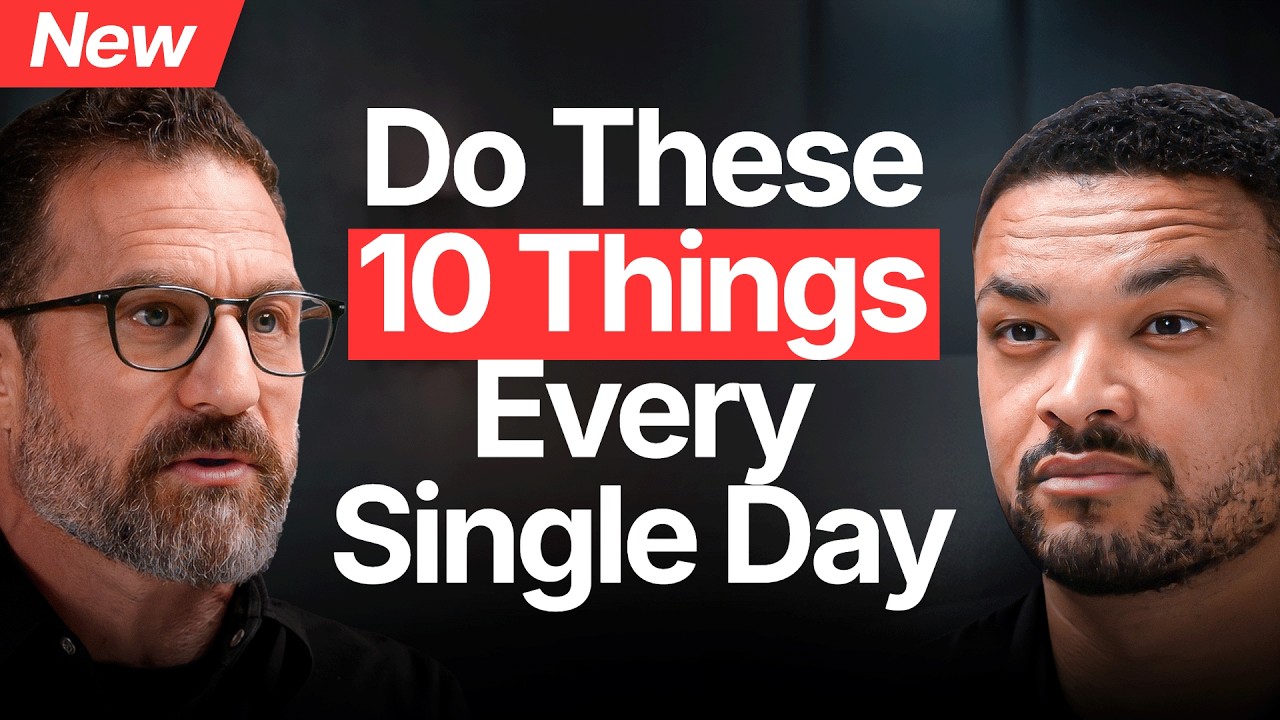
This episode of The Diary Of A CEO, hosted by Steven Bartlett and published on YouTube on September 3, 2026, features Stanford neuroscientist Dr. Andrew Huberman. According to the page description, Huberman discusses his 10 daily protocols for optimizing sleep, stress, focus, and health, while sharing insights on GLP-1s, peptides, morning cortisol, and the connection between neuroscience and spirituality.
## TL;DR
Dr. Andrew Huberman outlines a science-backed operational framework designed to optimize mental and physical health through daily behavioral protocols. He reframes morning cortisol as a necessary driver of circadian rhythm and energy, emphasizing zero-cost habits such as early sunlight exposure, proper hydration, light-wavelength exposure, and structured exercise. The discussion also covers the nuance of stress regulation, the mechanics of neuroplasticity and focus, the role of peptides and emerging metabolic drugs, and how brain biology intersects with spirituality, purpose, and healthy aging.
## Atmosphere & style
The conversation carries an intense, intellectually rigorous, and deeply personal tone that balances cutting-edge neuroscience with practical human experience. Steven Bartlett acts as an engaged and thoughtful interlocutor, allowing Huberman's energetic, authoritative explanations to unfold into expansive dialogues about biological mechanisms and personal discipline. The dialogue seamlessly shifts between precise scientific breakdowns and reflective, intimate revelations on faith, drive, and mental health, creating a captivating balance of actionable health advice and profound philosophical inquiry.
## Key takeaways
- [00:00](https://www.youtube.com/watch?v=MGxcosNuC8k&t=0s) Late-night exposure to artificial light after 6:00 p.m. negatively impacts lifespans, metabolic health, and cancer risk, creating a widespread health crisis for younger generations.
- [04:04](https://www.youtube.com/watch?v=MGxcosNuC8k&t=244s) Cortisol is a crucial 'preparation hormone'; maximizing the morning Cortisol Awakening Response (CAR) within 60 minutes of waking optimizes daily energy and minimizes late-day stress.
- [08:15](https://www.youtube.com/watch?v=MGxcosNuC8k&t=495s) Viewing direct natural sunlight or 10,000 lux light early in the morning activates the brain's master clock to optimize circadian rhythm and boost long-term health.
- [13:38](https://www.youtube.com/watch?v=MGxcosNuC8k&t=818s) Exposure to long-wavelength red and near-infrared light enhances mitochondrial efficiency, helps suppress glucose spikes, and can reverse age-related vision decline when used in the morning.
- [24:18](https://www.youtube.com/watch?v=MGxcosNuC8k&t=1458s) A balanced fitness routine combining early morning compound weight lifting and varied cardio builds overall physical resilience without triggering chronic cortisol elevation.
- [28:40](https://www.youtube.com/watch?v=MGxcosNuC8k&t=1720s) The anterior mid-cingulate cortex (aMCC) acts as the brain's hub for tenacity and grit, physically growing when engaging in difficult, non-reflexive challenges.
- [31:40](https://www.youtube.com/watch?v=MGxcosNuC8k&t=1900s) Acute stress briefly suppresses the prefrontal cortex, impairing logical decision-making, but can be rapidly mitigated in real time using the physiological sigh.
- [43:50](https://www.youtube.com/watch?v=MGxcosNuC8k&t=2630s) Consuming starchy carbohydrates in the evening helps buffer nighttime cortisol output, facilitating easier sleep onset and improved sleep continuity.
- [01:04:34](https://www.youtube.com/watch?v=MGxcosNuC8k&t=3874s) Microdosing GLP-1 agonists offers significant therapeutic benefits for metabolic health and appetite regulation by leveraging body-wide metabolic pathways.
- [01:18:45](https://www.youtube.com/watch?v=MGxcosNuC8k&t=4725s) Scientific and biological systems operate within finite boundaries that do not contradict spiritual faith; human longing for transcendent meaning reflects deep neural design.
- [01:40:30](https://www.youtube.com/watch?v=MGxcosNuC8k&t=6030s) A sleep-optimized environment relies on pitch darkness, reduced temperature, and avoiding screen interactions before bed or immediately upon waking.
- [01:41:58](https://www.youtube.com/watch?v=MGxcosNuC8k&t=6118s) Optimal adult neuroplasticity and skill retention require intense focus paired with a target 15% error rate during practice sessions.
- [01:42:55](https://www.youtube.com/watch?v=MGxcosNuC8k&t=6175s) Self-testing immediately after learning is far more effective for long-term memory retention than passive re-reading or note-taking.
- [01:55:05](https://www.youtube.com/watch?v=MGxcosNuC8k&t=6905s) Sleeping on your side with the head slightly elevated enhances glymphatic system drainage, accelerating the clearance of metabolic waste from the brain.
- [01:59:16](https://www.youtube.com/watch?v=MGxcosNuC8k&t=7156s) A foundational supplement stack featuring targeted magnesium, omega-3 EPAs, Vitamin D3, Alpha-GPC, and creatine supports cognitive performance and cellular resilience.
- [02:04:22](https://www.youtube.com/watch?v=MGxcosNuC8k&t=7462s) Light physical activity, such as a 5-to-10-minute walk or soleus push-ups after meals, significantly reduces blood glucose spikes and preserves metabolic health with age.
## Detailed walkthrough
### [00:00](https://www.youtube.com/watch?v=MGxcosNuC8k&t=0s) Intro & The Dangers of "Bright Nights"
The walkthrough opens with a sobering warning regarding the modern habits that disrupt human biology. Andrew Huberman highlights how artificial light exposure after 6:00 p.m. dramatically shortens lifespans, increases cancer rates, and compromises metabolic health. The threat is particularly acute for a whole generation of children attached to screens and iPads, creating a widespread crisis of metabolic sickness. Most contemporary environments are engineered to nudge people away from health-promoting behaviors.
Against this backdrop, Steven Bartlett introduces Huberman's long-awaited book, *Protocols: An Operating Manual for the Human Body*, emphasizing its actionable roadmap. Huberman isolates ten core daily protocols designed to optimize mental health, physical health, and high performance without requiring costly interventions.
- Artificial LED screen exposure after 6:00 p.m. is linked to shorter lifespans, higher cancer rates, and metabolic dysfunction.
- The 10 core daily protocols focus on moving the needle across mental health, physical health, and overall performance.
- All 10 protocols can be performed at zero cost or within an existing budget.
[02:41](https://www.youtube.com/watch?v=MGxcosNuC8k&t=161s) Introducing Protocols: A Synergistic Operating Manual
Huberman describes his protocols as an interconnected system where each step builds directly upon the previous one. Except for a single rest day per week for one specific practice, Huberman executes these protocols every single day. The sequencing throughout the day is intentional: sleep quality from the prior night directly dictates daytime energy, which in turn sets up the subsequent night's sleep.
Rather than relying primarily on pharmacology or supplements, Huberman views these daily routines as mechanical gears within a larger biological clock. When one gear turns, the others shift in tandem.
- *Protocols: An Operating Manual for the Human Body* contains roughly 50 total protocols spanning seven core categories: sleep, exercise, stress control, nutrition, light, focus/motivation/learning, and personal growth.
- The 10 daily protocols are designed to be performed in chronological order from morning to night.
- Huberman executes 9 of the 10 protocols daily, taking just one day off per week for one specific practice.
[04:04](https://www.youtube.com/watch?v=MGxcosNuC8k&t=244s) When High Cortisol Is A Good Thing: The Cortisol Awakening Response
Huberman draws out the daily hormonal architecture to debunk a pervasive health myth: the idea that cortisol is inherently evil. Cortisol is fundamentally a "preparation hormone" that readies the body for both adversity and positive challenges. Waking up naturally—often just one minute before an alarm goes off—is driven by the Cortisol Awakening Response (CAR), a biological mechanism heavily entrainable to external cues.
```
HEALTHY 24-HOUR CORTISOL CURVE
High ^ /--- Cortisol Peak (First 60 mins)
| / \
C | / \
O | / \___ Brief Stress Bouts
R | / \ (Quick recovery)
T |/ \
I +----------------\----------------> Low
S | \___ Night Trough
O | (Required for Sleep)
L Low +------------------------------------->
06:00 12:00 18:00 24:00
```
To establish robust focus, elevated mood, and sharp learning capacity, one should aim to peak morning cortisol as high as possible within the first 60 minutes of waking. Counterintuitively, this strong morning peak is precisely what drives cortisol down into a deep trough by late afternoon and night, which is a hard requirement for falling and staying asleep. When morning cortisol is muted or flat, daytime stress events cause prolonged, damaging spikes that ride on top of a high baseline, wrecking sleep and hindering disease recovery.
- High morning cortisol promotes elevated mood, focus, mental clarity, and optimal learning capacity.
- A strong morning cortisol peak guarantees the low nighttime cortisol levels necessary for melatonin production and deep sleep.
- A flat morning cortisol curve leads to reduced lifespan, slower recovery from illness, and amplified, long-lasting stress responses.
- Severe morning-to-night cortisol dysfunction is associated with conditions like Cushing's syndrome, though most people simply suffer from a misaligned daily rhythm.
[07:02](https://www.youtube.com/watch?v=MGxcosNuC8k&t=422s) Protocol 1: Hydration & The Vagus Nerve Pathway
The very first protocol Huberman executes upon waking is hydration. Proper fluid intake immediately sharpens cognitive function and directly reinforces the morning cortisol surge. Waking up with a full bladder and subsequently emptying it triggers an ascending neural pathway along the vagus nerve that acts as a natural wake-up signal for the brain.
To maintain optimal physiological balance without disrupting sleep later, fluid intake should be front-loaded in the earlier hours of the day and tapered off toward the evening.
- Drink 16 to 32 ounces (roughly 0.5 to 1 liter) of clean water immediately upon waking; adding high-quality electrolytes is optional but beneficial.
- Target a total daily intake of approximately 80 ounces (~2.4 liters) of water, concentrating the bulk of it during the first half of the day.
- The stretch and emptying of the bladder activates ascending pathways along the vagus nerve, alerting the brain and increasing morning arousal.
The second critical protocol involves viewing natural sunlight—or a 10,000 lux artificial light source—within 30 to 60 minutes of waking. Huberman explains that when low solar angle light (sun low on the horizon) enters the eyes, it strikes specialized cells called intrinsically photosensitive retinal ganglion cells (ipRGCs). These cells contain the photopigment melanopsin and send direct axonal projections into the suprachiasmatic nucleus (SCN), the master circadian clock located in the hypothalamus.
Low solar angle sunlight is enriched with specific wavelengths that look golden, orange, or reddish, providing the optimal stimulus to signal to the brain that the day has begun. Viewing this light within the first hour triggers two distinct neural pathways: one via the traditional hypothalamic-pituitary-adrenal (HPA) axis, and an alternate spinal pathway that drives the adrenals to release the healthy cortisol peak. This morning light spike strengthens immune defenses, boosts metabolism, elevates mood, and ensures low nighttime cortisol.
- View low-angle sunlight or 10,000 lux artificial light within 30 to 60 minutes of waking to trigger the master clock in the suprachiasmatic nucleus (SCN).
- On overcast days, step outside for longer; even cloud-filtered daylight delivers significantly more lux than indoor lighting.
- Never try to get this morning light through a window or car windshield, as glass filters out key beneficial light spectrums.
- According to data from the UK Biobank, bright days paired with dark nights significantly reduce all-cause mortality and improve overall mental health.
- Low solar angle light carries a far lower UV index due to Rayleigh scattering, minimizing risks of eye damage or sunburn while maximizing circadian stimulation.
- Digital screens are a double-edged sword: they are not bright enough in the morning to trigger the beneficial cortisol surge, yet they are bright enough at night to disrupt sleep by spiking cortisol during its delicate trough.
[13:38](https://www.youtube.com/watch?v=MGxcosNuC8k&t=818s) Light Exposure and Red Light Blood Sugar Modulation
Responding to Steven's query about whether light must hit the eyes or the body, Huberman references groundbreaking research from Glen Jeffery's laboratory at University College London (UCL). The study demonstrates that shining long-wavelength red light directly onto the body can dramatically alter metabolic responses. In fasting glucose tolerance tests, targeted exposure to red light significantly flattens blood sugar spikes following carbohydrate intake, proving that light affects systemic physiology through both ocular and skin-surface pathways.
- Research from Glen Jeffery's lab at UCL shows that red light (long-wavelength light) exposure directly influences systemic glucose metabolism.
- In clinical glucose tolerance tests, shining red light on the skin suppressed post-prandial blood sugar spikes, demonstrating that light impacts cellular function beyond visual pathways.
<ElicitationsGroup message="Explore the remaining protocols from Andrew Huberman's routine:">
<Elicitation label="Summarize Protocols 3 through 10 from the interview" query="Provide a detailed breakdown of protocols 3 through 10 mentioned in Andrew Huberman's interview with Steven Bartlett."/>
<Elicitation label="Explain the eye-movement trick for falling asleep" query="How does the eye-movement trick described by Andrew Huberman help lower stress and assist in falling back to sleep?"/>
</ElicitationsGroup>
[14:10](https://www.youtube.com/watch?v=MGxcosNuC8k&t=850s) The Physics of Light and Mitochondria
Andrew Huberman breaks down the light spectrum to explain why red and infrared wavelengths are critical for cellular health. Red light falls roughly between 580 and 700 nanometers, while infrared extends further into the 800s and 1000s. Unlike short-wavelength blue or ultraviolet light, long-wavelength red and near-infrared light can penetrate deep into human tissue—up to 8 centimeters—and even pass entirely through the body. He cites a study where long-wavelength light was shone directly on participants' backs during a glucose tolerance test, resulting in a over 25% reduction in the peak blood sugar spike alongside a buffered rate of glucose rise.
This metabolic enhancement occurs because long-wavelength light causes conformational changes in mitochondrial function. It allows mitochondria to handle electrons more efficiently, acting as a physical boost to cellular energy production. Huberman emphasizes that while we need ultraviolet light on our skin to produce Vitamin D, we must avoid excessive UV burn and short-wavelength light in the absence of long wavelengths. The ideal source is natural sunlight in the early or late parts of the day when the UV index is low.
```
Sunlight Spectrum & Mitochondrial Effects
├── Short Wavelengths (UV/Blue): Vitamin D synthesis, early-day alertness
└── Long Wavelengths (Red/Near-Infrared): Penetrates up to 8 cm, enhances mitochondrial electron transport
```
In addition to systemic mitochondrial benefits, long-wavelength light releases cellular antioxidants. While pineal gland melatonin makes us sleepy at night, almost every individual cell in the body contains its own internal melatonin that acts as an antioxidant. Long-wavelength light effectively liberates this cellular melatonin, protecting tissue from oxidative stress and cell damage.
- **Glucose Buffer:** Shining red light on the back (even through a t-shirt) reduced peak glucose spikes by more than 25% during a glucose tolerance test.
- **Deep Penetration:** Infrared and red light wavelengths penetrate up to 8 centimeters into tissue, influencing deep organ systems and cellular machinery.
- **Indoor Lighting Hazard:** Research from Glen Jeffery's lab at UCL suggests prolonged exposure to artificial indoor LED lights—lacking long wavelengths—may actively damage mitochondria.
---
[16:40](https://www.youtube.com/watch?v=MGxcosNuC8k&t=1000s) Vision Restoration and Early-Morning Light Sensitivity
Turning to practical applications of vision science, Huberman references groundbreaking research from Dr. Glen Jeffery's laboratory. Photo-receptors in the eye—the specialized cells that convert light into electrical signals—are the most metabolically active and mitochondrial-rich cells in the human body. Because they consume massive amounts of ATP, they suffer heavy oxidative wear over time. Experiments demonstrate that exposing eyes to specific long-wavelength red light for 1 to 3 minutes a couple of times a week can significantly reverse age-related vision decline in individuals over 40.
```
Glen Jeffery Protocol for Eye Health
├── Target Audience: Adults aged 40+ with age-related vision loss
├── Dosage: 1–3 minutes of long-wavelength light exposure, 2–3 times per week
└── Timing Window: MUST be performed within the first 3 hours after waking
```
Crucially, this protocol comes with two non-negotiable caveats: it only benefits people over age 40, and it **must** be performed within the first 3 hours of waking. Your eyes, brain, and systemic sensitivity change dramatically across the three distinct thirds of your day. Bright light exposure in the first third is immensely beneficial and necessary, whereas bright light sensitivity increases after sundown and disrupts circadian rhythm.
Huberman clarifies that buying an expensive red light device isn't necessary for most health goals—nature provides all of it for free through natural sunlight. Basking in full-spectrum sunlight early or late in the day delivers necessary UV exposure while avoiding sunburn. UVB exposure on the skin stimulates sex hormone production, boosting both testosterone and estrogen in men and women, which enhances libido and reinforces romantic attachment.
- **Photoreceptor Energy:** Photoreceptors possess the highest density of mitochondria in the body, making them extremely susceptible to age-related oxidative stress.
- **Greenery Reflection:** Dense green foliage and tree canopies reflect long-wavelength red and infrared light down onto you, which is why sitting under a tree feels cooler while delivering high amounts of beneficial infrared radiation.
- **Sunlight Longevity:** A notable Swedish epidemiological study revealed that increased sunlight exposure correlated directly with longer lifespan; heavy sun-exposed smokers in the study actually outlived non-smokers who avoided the sun.
---
[21:14](https://www.youtube.com/watch?v=MGxcosNuC8k&t=1274s) Night Shift Hazards and the Evening "Netflix Inoculation"
The conversation shifts to the severe metabolic consequences of shift work and late-night artificial lighting. Night shift workers statistically face shortened lifespans, higher cancer rates, and profound metabolic dysfunction. Steven Bartlett and Huberman point out that millions of modern workers qualify as "de facto" night shift workers simply by using laptops, phones, and bright LED lighting past 6:00 p.m. instead of winding down, causing widespread metabolic issues in adults and teenagers alike.
To combat evening light toxicity, Huberman introduces a protocol he calls the "Netflix inoculation." By getting outdoor daylight into your eyes in the late afternoon or early evening (the last third of your waking day), you lower the eye's sensitivity to late-night artificial light. This late-afternoon sun exposure buffers retinal cells, preserving night-time melatonin levels, stabilizing blood sugar, and protecting sleep quality even if you use screens later at night.
However, Huberman warns that this buffering effect fails in adolescents. Teens who spend their evenings glued to smartphones suffer significant late-night cortisol spikes, which directly suppresses their ability to produce a healthy morning cortisol peak. This leaves teenagers chronically fatigued upon waking and reliant on night-time screens to cope, creating a vicious circadian cycle.
- **Evening Buffer:** Viewing natural light without sunglasses during the late afternoon / last third of the day prevents screen light at 9:00 or 10:00 p.m. from destroying night-time melatonin.
- **Teen Screen Vulnerability:** Adolescents do not get the protective buffer from late-afternoon light; late-night screen exposure causes night-time cortisol surges and morning adrenal sluggishness.
- **Overcast Viewing:** Outdoor light on a cloudy, overcast day is still significantly brighter and more effective for circadian alignment than standing under bright indoor office lighting.
---
[24:18](https://www.youtube.com/watch?v=MGxcosNuC8k&t=1458s) Optimizing Exercise Routines for All-Around Fitness
Addressing protocol number three, Huberman outlines his recommended routine for general strength, muscle definition, and cardiovascular endurance. Exercising within the first 3 to 4 hours of waking creates a healthy, elevated cortisol spike that aligns with natural circadian biology. For individuals who do not wish to be specialized bodybuilders or marathon runners, he presents a balanced 6-day split alternating between resistance training and cardiovascular work.
```
Huberman's 6-Day Hybrid Training Split
├── Mon/Wed/Fri (Lifting): 3 days total, warm-up + 2–3 heavy work sets, compound movements
├── Tue/Thu/Sat (Cardio): 3 days total (1 long/slow ~60m, 1 moderate ~30m, 1 max-effort HIIT)
└── Rest Day: Scheduled immediately following heavy leg training
```
His resistance program emphasizes compound movements over isolation exercises, using exercises like pull-ups, rows, dips, squats, hack squats, and deadlifts to train multiple joints and muscle groups at once. The lifting days consist of a 5-minute cardio warm-up followed by low-volume, high-intensity work sets (typically 2 to 3 work sets per movement) taken close to failure.
For the three cardiovascular days, Huberman structures the intensity across three distinct modalities:
- **Long Slow Distance:** One 60-minute low-intensity endurance session per week.
- **Moderate Intensity:** One 30-minute moderate-intensity cardio session per week.
- **Max-Effort HIIT:** One high-intensity interval session on an air bike (e.g., 1-minute easy pedal, followed by 30-second all-out sprints paired with 10-second rests).
- **Training History:** Huberman shares that he has consistently resistance trained since he was 16 years old and feels great heading into his 51st birthday.
- **Rest Day Placement:** Always schedule a complete rest day immediately following leg day to allow nervous system and muscle recovery.
---
[26:17](https://www.youtube.com/watch?v=MGxcosNuC8k&t=1577s) Dispelling Ice Bath Myths and Managing Evening Exercise
Huberman passionately addresses common internet misconceptions surrounding deliberate cold exposure. He firmly debunks claims that ice baths cause chronically elevated cortisol, challenging critics by asserting that cold exposure causes only trivial, temporary changes in cortisol. Instead, cold plunges trigger massive, beneficial surges in epinephrine, norepinephrine, and dopamine—neurochemicals essential for sustained daily focus, energy, and alertness.
The primary physiological trigger for a proper, healthy cortisol peak is acute physical or psychological exertion—such as a 45-minute heavy lifting session or a 30-minute hard run. If schedule constraints force you to exercise late in the day, Huberman recommends specific protocols to drop your heart rate and core body temperature prior to sleep:
- **Long-Exhale Breathing:** Perform extended-exhale breathing right after late workouts to rapidly downshift the sympathetic nervous system.
- **The Hot Shower Paradox:** Taking a hot bath or shower after late exercise heats up the surface skin, causing the brain's medial preoptic area (the body's internal thermostat) to signal a rapid drop in core body temperature, accelerating sleep onset.
- **Cortisol Entrainment:** Consistently exercising during the first 3 hours of the day for just two consecutive days recalibrates the suprachiasmatic nucleus (SCN), making you naturally feel more motivated and alert at that time on subsequent mornings.
- **Catecholamine Surge:** Cold plunge exposure drives intense releases of dopamine and norepinephrine without triggering an unhealthy stress hormone response.
- **Thermostat Physiology:** Heating the skin causes the medial preoptic area of the brain to cool down core body temperature—the same mechanism behind why wearing warm socks to bed helps people fall asleep faster.
---
<ElicitationsGroup message="Where would you like to go next?">
<Elicitation label="Break down the light exposure protocols" query="Can you list out all of Andrew Huberman's light exposure protocols from this video, including specific times of day and durations?"/>
<Elicitation label="Detail the weekly 6-day exercise split" query="Provide a detailed breakdown of Andrew Huberman's 6-day alternating fitness split, including set counts, cardio types, and recovery guidelines."/>
</ElicitationsGroup>
[28:40](https://www.youtube.com/watch?v=MGxcosNuC8k&t=1720s) Anticipatory Signals and the Brain's Tenacity Center
The body operates on internal synchronization, running on predictable clocks that govern when hormones are released. For example, ghrelin surges on a schedule to generate a food anticipatory signal that makes a person feel hungry before a expected meal. Similarly, when someone consistently exercises around the same time early in the day, the brain anticipates the coming workout. In the 15 minutes leading up to that habitual exercise window, people often feel a physical stirring or a surge in energy as the nervous system prepares for movement.
Moving beyond routine physical preparation, the conversation pivots to one of the most remarkable structures in neuroscience: the **anterior mid-cingulate cortex (aMCC)**. Located deep within the brain, the aMCC acts as the neural center for tenacity and willpower. Research led by Dr. Josef Parvizi at Stanford demonstrated that electrically stimulating this area causes patients to report a feeling that a major challenge is approaching along with an immediate desire to "lean into it" rather than back down. The aMCC receives inputs from reward pathways and across the brain, tracking when a person experiences social or physical pressure and whether they choose to push through or give up.
Crucially, the anterior mid-cingulate cortex exhibits remarkable neural plasticity. When individuals engage in activities that require overcoming intense internal or external resistance—such as sticking to a strict diet or forcing themselves to complete daily mobility work—the aMCC physically increases in size and activity. Engaging in effortful tasks that you do not reflexively want to do expands this structure, directly building the mental stamina required to tackle even harder challenges in the future.
- **Ghrelin & Food Anticipation:** Ghrelin releases on a cyclic schedule to trigger hunger in anticipation of regular meal times.
- **aMCC Location & Role:** Situated in the cingulate region; acts as the primary hub for tenacity, grit, and leaning into challenge.
- **Dr. Josef Parvizi's Discovery:** Electrical stimulation of the aMCC induces a subjective sensation of preparing to confront and overcome impending hardship.
- **Plasticity:** The aMCC grows larger and becomes more active when people successfully diet or force themselves through difficult, non-reflexive routines like mobility work or cold water immersion.
[31:38](https://www.youtube.com/watch?v=MGxcosNuC8k&t=1898s) Cold Exposure, Arousal, and Prefrontal Cortex Shutdown
Deliberate cold exposure—such as entering a cold shower or an ice bath—serves as a practical tool to train emotional regulation under acute stress. Entering cold water triggers an immediate surge of adrenaline and norepinephrine. Because the human body relies on a single unified stress system rather than separate pathways for different stressors, learning to remain calm while flooded with adrenaline in an ice bath directly translates to keeping a clear head during real-world conflicts or unexpected high-pressure events.
To explain this dynamic, the autonomic nervous system functions like a seesaw balancing sympathetic tone (alertness/stress) and parasympathetic tone (rest/sleep). Arousal simply describes a spectrum ranging from a deep coma to full-blown panic. Navigating stress effectively requires controlling the "tightness of the hinge" on this seesaw.
A critical biological reality occurs during the first 20 to 30 seconds of acute stress: activity in the **prefrontal cortex (PFC)**—the area behind the forehead responsible for strategic planning, context, and logic—is heavily suppressed. During this brief window, human judgment is functionally impaired, leaving individuals prone to impulsive reactions. This phenomenon explains why late-night emotional stress feels far harder to handle: as the body tires, prefrontal cortex activity naturally declines, severely weakening top-down impulse control.
- **Prefrontal Cortex (PFC):** Responsible for strategic thinking, logic, making meaning, and executing top-down inhibition over emotional impulses.
- **The "20-to-30 Second" Window:** Acute stress temporarily disables normal PFC function, making immediate verbal or physical reactions dangerous; the best default response is silence or removing oneself from immediate harm.
- **Top-Down Inhibition:** The capability to feel a strong impulse but suppress it. This core executive function can be trained (analogous to teaching a dog a "wait" command before eating).
- **Impact of Fatigue:** Exhaustion, alcohol, and late-night hours diminish PFC activity, compounding emotional reactivity and eroding self-control.
[36:08](https://www.youtube.com/watch?v=MGxcosNuC8k&t=2168s) The Comfort Crisis, Convenience, and Building Mental Capacity
Modern society systematically optimizes life for maximum comfort and convenience, but this constant trade-off carries a steep neurological cost. Quoting entrepreneur Jack Dorsey, the dialogue highlights that whenever people trade their money or time for convenience—such as ordering food through delivery apps like DoorDash—they often sacrifice experiences that build mental resilience. While convenience is not inherently bad, individuals must remain conscious of what they give up and ensure they intentionally use saved time to pursue meaningful effort.
True fulfillment and meaning stem from active striving, which inherently requires encountering struggle. Over-optimization that eliminates all friction runs the risk of stripping life of its vitality. While some individuals can thrive in chaos without structured protocols, the majority of people experience substantial improvements in physical and mental well-being by intentionally introducing small, effortful challenges into their day.
- **The Trade-Off of Convenience:** Relying on convenience apps reduces the natural friction that builds psychological stamina.
- **Striving and Meaning:** Sustained well-being relies on pushing through struggle; avoiding all discomfort leads to neurological and psychological stagnation.
- **Voluntary Hard Tasks:** Engaging in deliberate challenges—whether cognitive (learning a language, learning to dance) or physical (cold exposure, weightlifting)—acts as an investment in future mental capacity.
[38:52](https://www.youtube.com/watch?v=MGxcosNuC8k&t=2332s) Optimal Nutrition, Protein Ratios, and the Seed Oil Debate
Nutrition often becomes overly complicated by dogma, but a healthy dietary baseline focuses on caloric balance, adequate fiber, and nutrient density. A key framework for evaluating food quality is the **complete protein-to-calorie ratio**. While essential amino acids can be obtained from plant sources like beans and rice, acquiring 30 grams of complete protein from those foods requires consuming four to five times more calories than obtaining the same amount from a lean source like a chicken breast, fish, or eggs.
```
+--------------------------+---------------------------------+-----------------------------------+
| Protein Source | Complete Protein Target | Approximate Calories Required |
+--------------------------+---------------------------------+-----------------------------------+
| Chicken Breast / Fish | 30 g | ~130 - 160 kcal |
| Whole Eggs | 30 g | ~350 - 400 kcal |
| Beans & Rice Combination | 30 g | ~600 - 700+ kcal |
+--------------------------+---------------------------------+-----------------------------------+
```
Regarding dietary fiber and gut health, low-sugar fermented foods—such as sauerkraut, kimchi, and beet kvass—are highly effective at reducing markers of systemic inflammation, drawing on research by Dr. Justin Sonnenberg at Stanford. Conversely, drastically increasing fiber intake can actually elevate inflammatory markers and cause gastrointestinal distress in certain sensitive individuals.
Addressing the online discourse around seed oils, the conversation dismisses the dramatic internet debate as unscientific and unproductive. Most nutritional studies on seed oils fail to isolate variables, comparing ultra-processed diets to clean diets without proper controls. Rather than agonizing over seed oils, the most evidence-based choice is to default to high-quality extra virgin olive oil alongside modest amounts of butter.
- **Protein-to-Calorie Ratio:** Prioritize protein sources that deliver all essential amino acids with minimal surplus calories (e.g., lean meats, fish, eggs).
- **Dr. Justin Sonnenberg's Research:** Low-sugar fermented foods (kimchi, sauerkraut, beet kvass) significantly reduce the body's inflammatome.
- **Fiber Nuance:** While fiber from fruits and vegetables is beneficial for most, excessive fiber can be pro-inflammatory and irritating for some individuals.
- **Olive Oil Advantage:** High-grade extra virgin olive oil stands out in clinical literature as consistently beneficial for cardiovascular and metabolic health.
[41:48](https://www.youtube.com/watch?v=MGxcosNuC8k&t=2508s) How Starches Buffer Cortisol and Improve Sleep
A common mistake in low-carbohydrate and ketogenic diets is the total elimination of starches, which often leads to sleep disturbances and elevated anxiety. Carbohydrates and starches trigger a glucose response that directly lowers circulating cortisol levels. Contrary to popular belief, cortisol is not merely a "stress hormone"—its primary biological purpose is to mobilize stored energy and glucose throughout the body.
When blood glucose drops too low or remains chronically depleted, the adrenal glands secrete cortisol to release energy stores. By consuming a controlled portion of starches—such as sourdough bread, rice, pasta, or oatmeal—in the evening or with dinner, the resulting glucose intake buffers cortisol production. Keeping cortisol low at night is essential for falling asleep easily and staying asleep throughout the night.
Combining starches with high amounts of fats (such as heavily buttered bread) easily leads to overeating and caloric excess. However, consuming plain starches or modest combinations provides necessary glycogen for muscle and brain function while calming the central nervous system. For individuals suffering from chronic stress, night waking, or tremors, incorporating starches into late-day meals often restores psychological balance and promotes deep, restful sleep.
- **Cortisol's True Function:** Cortisol's primary role is energy mobilization; it surges when the body needs to free up glucose and fuel stores.
- **Starches as a Cortisol Buffer:** Consuming starches raises blood glucose, which directly signals the body to suppress cortisol output.
- **Late-Day Carbohydrate Strategy:** Including moderate starches (rice, potatoes, sourdough, oatmeal) in the final meal of the day reduces nighttime stress signaling, making it easier to fall and stay asleep.
- **Combating Autoimmune & Stress Symptoms:** Properly buffering cortisol with carbohydrates can alleviate chronic restlessness, night waking, and physical shaking caused by hyper-arousal.
[43:50](https://www.youtube.com/watch?v=MGxcosNuC8k&t=2630s) Cortisol Is Not "The Stress Hormone"
Steven brings the conversation back to Huberman's earlier diagram, asking whether checking stressful emails first thing in the morning would theoretically count as a "good" morning cortisol spike. Huberman explains that while it does spike cortisol, the fundamental problem with psychological stressors is **rumination**. Controlled physical stressors—such as an intense workout or a cold plunge—have a defined onset and offset. Even though physical stress lingers briefly, psychological stress bounces around the brain, resurfaces late at night, and triggers ongoing mental loops. Huberman boldly predicts that "2027 is going to be the year that we close the coffin on this 'cortisol is bad' thing."
Instead of viewing cortisol merely as a damage-causing stress marker, Huberman redefines it as an essential energy-mobilizing and preparation hormone. Cortisol elevates when preparing for a high-stakes moment—like stepping onto a stage in front of a massive audience—to get the mind and body ready for action. Citing foundational research by James McGaugh and Larry Cahill, Huberman notes that spiking cortisol before, during, or immediately after a learning event strongly locks that memory into place. Extreme trauma relies on this exact physiological mechanism to create indelible memories, requiring clinical effort later to decouple the emotional charge from the stored event.
- **Physical vs. Psychological Stress:** Physical stressors (workouts, cold water) have clear start/end times; psychological stressors persist through cognitive rumination.
- **Cortisol's Primary Function:** To mobilize energy and prepare the system for adversity or major performance demands.
- **Memory Consolidation Mechanism:** Elevating cortisol/adrenaline during or after an event signals to the brain that the experience is critical to retain.
---
[45:40](https://www.youtube.com/watch?v=MGxcosNuC8k&t=2740s) How Exercise Primes the Brain for Learning
Steven asks whether a listener exercising in the gym right now will retain this podcast better than someone listening while lounging in bed. Huberman confirms this, referencing a chapter from his book *Protocols* on learning, motivation, and neuroplasticity. Contrary to popular belief, exercise does not directly make a person "smarter"; rather, it dramatically heightens baseline arousal. Because optimal learning requires elevated adrenaline and cortisol to drive focus, the post-workout state provides ideal biological conditions for acquiring new information.
Huberman clarifies that not all exercise impacts cognitive priming equally. Long, slow cardio provides cardiovascular benefits but does relatively little for immediate brain plasticity. Conversely, an intense weightlifting session or High-Intensity Interval Training (HIIT) creates a potent 4-hour window where the brain is exceptionally primed to absorb and retain material. When Steven asks how a podcaster or performer can optimize cognitive performance in real time, Huberman explains the **inverted-U performance curve**: if arousal is too low, you are sluggish; if too high, you become scattered. The goal is remaining at the peak of the curve—alert, focused, yet calm.
- **4-Hour Learning Window:** High-intensity exercise or heavy resistance training primes the brain for focused learning for up to 4 hours afterward.
- **Cardio vs. High-Intensity:** Long, slow endurance cardio does not produce the same spike in neuro-stimulatory molecules as intense strength or interval training.
- **Inverted-U Curve:** Cognitive performance requires balancing arousal—too little leads to apathy, while too much causes panic and uncoordinated thought.
---
[46:40](https://www.youtube.com/watch?v=MGxcosNuC8k&t=2800s) How to Reduce Stress Fast: The Physiological Sigh
To help manage real-time stress when arousal moves past the optimal peak, Huberman introduces the **physiological sigh**. While long-term stress buffers like good sleep, proper nutrition, and social connection are vital, they cannot immediately stop acute physiological panic (shaking hands, racing heart, disorganized thoughts). In 2016, Huberman shifted a major portion of his Stanford laboratory to research real-time stress-mitigation tools. He studied elite performers, including Navy SEALs and neurosurgeons like his childhood friend Dr. Eddie Chang—Chair of Neurosurgery at UCSF—who performs complex awake-brain surgeries where a sub-millimeter mistake can be fatal.
Huberman collaborated with Dr. David Spiegel and lead researcher Melis Yilmaz Balban to conduct a study testing roughly 100 participants equipped with continuous heart rate, HRV, and sleep trackers across four distinct 5-minute daily breathwork/meditation protocols:
1. **Mindfulness Meditation**
2. **Box Breathing:** 4-second inhale, 4-second hold, 4-second exhale, 4-second hold.
3. **Cyclic Hyperventilation:** Deep inhales with passive exhales (similar to Wim Hof or Tummo breathing), which rapidly spikes adrenaline and dumps carbon dioxide, producing high alertness.
4. **Cyclic Sighing (Physiological Sighs):** Repeated double-inhales followed by an extended, fully relaxed exhale.
The study revealed that while all groups derived benefits, the **physiological sigh** group experienced the most significant reductions in autonomic stress and the greatest improvements in daily mood and heart rate variability (HRV).
- **Anatomy of the Sigh:** Discovered in the 1930s and mapped by Jack Feldman at UCLA, the brain's *parafacial nucleus* generates double inhales to inflate collapsed alveoli (the tiny air sacs in the lungs).
- **Mechanism:** The second short "pop-up" inhale pops open collapsed lung sacs, maximizing the surface area available to offload carbon dioxide ($CO_2$) on the long, deliberate exhale.
- **Immediate Application:** A single physiological sigh—a deep inhale through the nose, a brief second top-off inhale, and a long exhale through the mouth until the lungs are empty—instantly slows the heart rate.
---
[52:29](https://www.youtube.com/watch?v=MGxcosNuC8k&t=3149s) Leveraging the Vagus Nerve and Increasing HRV
Huberman explains the physiological machinery behind why extended exhales slow down the heart rate, a phenomenon known as **respiratory sinus arrhythmia**. While the vagus nerve is frequently discussed as a purely sensory, parasympathetic pathway carrying signals from the body up to the brain (roughly 85% of its fibers are ascending), it also features descending pathways that act directly on the heart.
When you inhale, the diaphragm moves down, expanding the chest cavity and causing the heart to expand slightly. This slows blood flow through the heart's chambers. The brain senses this slowdown and signals to speed the heart up. When you exhale, the diaphragm moves up, compressing the chest cavity, shrinking the heart, and forcing blood to flow faster. The brain registers this increased flow rate and sends a signal back down via the vagus nerve to slow the heart rate down.
- **Respiratory Sinus Arrhythmia:** Inhaling temporarily increases heart rate; exhaling temporarily decreases heart rate.
- **Improving Heart Rate Variability (HRV):** Beyond high-intensity $VO_2$ max training, practicing deliberate, prolonged exhales throughout the day actively trains the parasympathetic "brake" on the heart, boosting both waking and sleeping HRV.
- **Stress Threshold Training:** Beyond acute down-regulation, exposure to controlled discomfort raises overall stress tolerance, allowing individuals to maintain an "alert but calm" state capable of picking up subtle interpersonal dynamics and maintaining clear decision-making during crises.
---
[56:04](https://www.youtube.com/watch?v=MGxcosNuC8k&t=3364s) The Eye-Movement Trick to Fall Back Asleep
Addresssing the extremely common issue of waking up at 2:00 or 3:00 AM with racing thoughts, Huberman outlines a specific protocol to reset the nervous system. While 10 long, deliberate exhales help quiet the physical body, falling asleep requires disconnecting the brain's tracking of body position and limb location (proprioception).
Huberman details the neural architecture connecting the eyes, brainstem, and **cerebellum** (the "mini-brain" at the back of the skull involved in balance, timing, motor error-correction, and proprioception). In nature, as an animal moves through space, the surrounding visual world glides past (optic flow). To prevent blurred vision, an ancient evolutionary circuit generates compensatory, automatic eye movements to offset this visual slip. By deliberately moving the eyes in a specific closed-eye pattern, one can disrupt the cerebellum's proprioceptive loop, effectively removing the brain's awareness of limb position and accelerating the transition into sleep.
- **Somatic Disconnection:** Falling asleep requires shutting down conscious awareness of body posture and limb placement.
- **The Closed-Eye Movement Sequence:**
1. Close the eyes completely.
2. Slowly roll the eyes all the way to one side, then to the other.
3. Move the eyes slowly up, then down.
4. Trace a slow, smooth counterclockwise circle with the eyes underneath the eyelids.
5. Trace a slow, smooth clockwise circle with the eyes.
- **Biological Effect:** "Turns off" proprioceptive processing in the cerebellum, signaling to the brainstem that physical motion has ceased, triggering rapid sleep onset.
[59:00](https://www.youtube.com/watch?v=MGxcosNuC8k&t=3540s) The Eye-Movement Trick to Fall Back to Sleep
Andrew Huberman describes a non-pharmacological technique to fall back asleep if you wake up in the middle of the night. With your eyes closed, you point them down toward your nostrils without crossing them, combined with a series of long, slow exhales. Doing this two or three times shuts down proprioceptive circuits and helps quiet the nervous system. Huberman notes that his routine when waking up at night is simply using the bathroom, returning to bed, and performing this protocol, which consistently allows him to drift back to sleep.
The conversation shifts to emerging technology from two MIT scientists who founded a company around these ocular mechanisms. They created a sleep mask equipped with an electrode behind the ear that stimulates extraocular muscles in precise patterns to induce sleep immediately. Beyond inducing sleep, this technology can directly monitor and modulate REM sleep. Huberman predicts that within 12 to 14 months, consumer devices will allow individuals to program specific sleep profiles—such as requesting two hours of deep sleep and two hours of REM within a six-hour window—by facilitating optimal eye-movement patterns.
- Proprioceptive circuit shutdown can be manually triggered using downward eye positioning and extended exhales.
- The MIT-derived sleep mask stimulates extraocular muscles to manipulate sleep architecture directly.
- Next-generation sleep wearables will move beyond passive tracking (like Eight Sleep or Whoop) to active stage manipulation.
---
[01:00:44](https://www.youtube.com/watch?v=MGxcosNuC8k&t=3644s) Sponsor Break: LinkedIn Ads & Function Health
Steven Bartlett takes a brief break to share sponsor messages tailored to business owners and health-conscious listeners. He highlights the frustration of wasted marketing budgets when ads hit the wrong target audience and positions LinkedIn Ads as the solution due to its precise targeting by job title, seniority, and industry. Bartlett then discusses Function Health, reflecting on his own test results which revealed low omega-3 levels and deficient vitamin D levels—a common issue for those working indoors. These insights prompted him to start his mornings with outdoor walks in the sunshine to boost vitamin D and reset his circadian rhythm.
- LinkedIn Ads targets specific decision-makers and offers a $250 credit on a second campaign after spending $250 at `[linkedin.com/diary](https://linkedin.com/diary)`.
- Function Health provides over 160 comprehensive lab tests for the equivalent of $1 per day, with code `DOAC25` offering a $25 credit at `[functionhealth.com/doac](https://functionhealth.com/doac)`.
---
[01:02:46](https://www.youtube.com/watch?v=MGxcosNuC8k&t=3766s) Peptides for REM Sleep and The Pinealon Protocol
Bartlett asks Huberman about a specific peptide mentioned in passing that supports REM sleep. Huberman clarifies that while he omits hormone therapies, peptides, and psychedelics from his book *Protocols*—sticking strictly to foundational, rock-solid behavioral tools—he personally experiments with these edge-case compounds as an adult. He highlights **Pinealon**, a short synthetic peptide, which he tested by taking a tiny dose every third night for a month. This protocol yielded massive increases in REM sleep on the night of ingestion as well as subsequent nights.
Referencing insights from Dr. Abud Bakri—whom Huberman considers one of the foremost expert physicians on peptide therapy—Huberman explains that Pinealon supports the health of the pineal gland, the brain structure responsible for producing melatonin. He advises using Pinealon sporadically rather than as a daily supplement. Describing himself as "peptide curious," Huberman notes his growing interest in very low-dose GLP-1 agonists while maintaining a healthy caution regarding unvetted protocols.
- **Pinealon**: Taken every third night to support pineal gland health and boost REM sleep duration.
- **Foundational Hierarchy**: Behavioral tools (sleep, sunlight, exercise, nutrition) must form the foundation before stacking peptide or hormone therapies.
---
[01:04:34](https://www.youtube.com/watch?v=MGxcosNuC8k&t=3874s) GLP-1 Agonists, Microdosing, and Chronic Conditions
Addressing the explosive popularity of GLP-1 weight-loss drugs like Tirzepatide, Semaglutide (Ozempic/Mounjaro), and Retatrutide (Eli Lilly's triple GIP/GLP-1/glucagon agonist), Huberman discusses the trend of "microdosing" these compounds. While high clinical doses lead to drastic weight loss (up to one-third of total body weight over a year in Phase 3 trials), microdosing allows individuals to bypass side effects and extreme costs while still deriving anti-inflammatory benefits and reduced cravings for sugar and alcohol.
Huberman shares an anecdote about a close friend with Chronic Fatigue Syndrome who was deeply skeptical of "biohacking nonsense." After consulting top physicians at Stanford and UCSF without relief, she began microdosing Tirzepatide once every 10 days. The result was a dramatic restoration of her energy levels and a noticeable decline in inflammatory markers. Huberman explains the biological origin of GLP-1s: they were discovered by studying the Heloderma suspectum (Gila monster), a reptile that eats only a few times a year because its venom contains *exendin-4*, a peptide homologous to human GLP-1 that induces powerful, long-lasting satiety.
> "The body has never seen this level of glucagon-like peptide in the history of humans... These drugs are ramping up levels of GLP a thousandfold or more."
- **Retatrutide**: An experimental Eli Lilly peptide targeting GLP-1, GIP, and glucagon receptors, achieving ~30% body weight loss in trials.
- **Mechanisms of Action**: GLP-1 agonists act on brain satiety centers to curb appetite and slow gastric emptying to keep the stomach feeling full.
- **Microdosing Benefits**: Anecdotal reports suggest microdosing reduces system-wide inflammation, blunts addictive compulsions, and boosts energy in autoimmune or fatigue syndromes.
---
[01:08:16](https://www.youtube.com/watch?v=MGxcosNuC8k&t=4096s) Growth Hormone Secretagogues, BPC-157, and Safety Dynamics
The conversation shifts to other popular peptide categories, including Growth Hormone Secretagogues (Tesamorelin, Ipamorelin, CJC-1295, Sertraline) and tissue-repair peptides. Huberman shares his personal experience testing secretagogues: while they drastically increased his deep sleep and reduced body fat, they completely "nuked" his REM sleep, leading him to abandon them.
He then breaks down **BPC-157** (Body Protection Compound 157), a sequence derived from gastric juices. While animal data clearly shows accelerated tendon, ligament, nerve, and vascular recovery, the primary theoretical concern is unwanted angiogenesis—the potential to feed or vascularize dormant tumors. Huberman advises that peptides should never be taken aimlessly; individuals must identify the specific physiological effect they are trying to achieve before considering compounds that sit in the grey zone between supplements and pharmaceuticals.
- **GH Secretagogues**: Boost deep sleep and lean muscle, but risk shutting down endogenous GH production and impairing REM sleep.
- **BPC-157**: Highly effective for soft tissue and nerve repair in animal models, though carries a theoretical risk of tumor vascularization.
- **Safety Profile**: BPC-157 features an extraordinarily high LD50, but lack of extensive human clinical trials warrants careful risk assessment.
---
[01:10:00](https://www.youtube.com/watch?v=MGxcosNuC8k&t=4200s) GLP-1s, Vision Loss, and Debunking Blindness Claims
Responding to long-term safety concerns around GLP-1 drugs, Huberman directly addresses comments made by Harvard researcher David Sinclair on the *Joe Rogan Experience*, where Sinclair warned that GLP-1s doubled the risk of blindness. Huberman, whose primary academic expertise is in ophthalmology and visual system neurobiology, dismantles the panic surrounding these claims.
He explains the exact anatomy: light passes through the cornea and lens onto the retina, where photoreceptors convert light into electrical signals via phototransduction. These signals pass to retinal ganglion cells, whose axons exit the back of the eye through the **optic nerve head** to reach the brain's circadian clock and visual cortex. In a small subset of people with a tight, structurally abnormal optic nerve head—a anatomy similar to that vulnerable to glaucoma—elevated pressure or fluid shifts caused by high-dose GLP-1s can pinch off these nerve fibers. However, for the vast majority of the population, GLP-1s do not cause blindness, making the widespread panic disproportionate to the actual clinical risk.
```
Cornea & Lens ──> Photoreceptors (Retina) ──> Retinal Ganglion Cells ──> Optic Nerve Head ──> Brain
│
(Risk point: tight structural size
can pinch axons under GLP-1 pressure)
```
- **Optic Nerve Head Anatomy**: The exit portal for retinal ganglion cell axons; tightly packed anatomy increases susceptibility to ischemic damage or glaucoma.
- **Diagnostic Action**: Anyone considering GLP-1 therapy should obtain an inexpensive eye pressure test and optical coherence tomography (OCT) scan from an optometrist or ophthalmologist to check their optic nerve head structure.
- Huberman forcefully rejects the claim that GLP-1s are causing widespread blindness, comparing the panic to old wives' tales while emphasizing proper screening.
[01:13:20](https://www.youtube.com/watch?v=MGxcosNuC8k&t=4400s) What Psychedelics Can Teach Us About Reality
The discussion opens with an exchange about psychedelics after Steven Bartlett brings up his past experiences. While Andrew Huberman notes that he does not discuss using psychedelics publicly, Steven reveals that he previously worked at a psychedelics company for about a year and was deeply compelled by the clinical data surrounding mental health treatments involving psilocybin, ibogaine, and DMT coming out of research institutions in London. Steven shares that he tried both psilocybin and DMT in legal settings abroad. Huberman clarifies that while he has never taken DMT, he has participated in clinical protocols with MDMA and psilocybin combined with therapy before, during, and after. Huberman emphasizes that he feels finished with those experiences, not because they were negative, but because he successfully obtained the psychological benefits he was seeking.
Steven describes how inhaling DMT altered his material reality so profoundly—feeling completely indistinguishable from baseline reality in its vividness—that it fundamentally shifted how he thought about existence. He reasons that if a single inhale of a chemical compound can instantly transform one's entire perception of reality, then our normal day-to-day material reality must simply be the result of an uninterrupted, delicate baseline balance of neurochemistry.
Huberman agrees with this underlying logic, explaining that biology is essentially "compartmentalized chemistry." He breaks down the only two fundamental mechanisms available to alter human brain function, behavior, and neurochemistry:
* **Mechanical forces:** Physical actions such as altering breathing patterns, getting a massage, or experiencing physical pain/trauma.
* **Chemical forces:** Direct pharmacological interventions, nutrients consumed through food, and endogenous neurotransmitters like serotonin.
Huberman highlights that recognizing these two drivers helps demystify psychological states; for instance, a stress response is fundamentally a specific cascade of chemicals occurring in targeted regions of the body and brain. However, he notes that while biology and psychology are extraordinarily capable, they have strict natural boundaries. Attempting to force human biology and psychology to fulfill existential needs beyond their evolutionary capacity leaves people missing out on profound meaning.
[01:18:45](https://www.youtube.com/watch?v=MGxcosNuC8k&t=4725s) Do You Believe in God as a Neuroscientist?
Huberman speaks openly about his personal journey toward faith and belief in God, explaining how adopting faith relieved him of the overwhelming burden of trying to control every internal and external variable in his life. He discusses how his perspectives were shaped both by his 50-plus years of life experience and his observations in neuroscience. Citing his friend Dr. Edward Chang—a neurosurgeon at UCSF who records brain activity in awake patients during tumor resections—Huberman reflects on how directly stimulating specific brain regions can instantaneously alter a patient's emotional state, perception, or responses. Observing this firsthand convinced him that human experience is not merely "meat and potatoes," but points to something deeper beyond pure material composition.
To illustrate the limitations of human logic, Huberman recalls a conversation on his podcast with his father, an 83-year-old theoretical physicist who worked on chaos theory and quantum mechanics. His father explained that one of the foundational lessons of quantum mechanics is that the human brain cannot intuitively comprehend quantum phenomena through everyday logic; one must rely strictly on the mathematical proofs. Anyone claiming to understand the quantum field without the underlying math is misrepresenting it. Huberman draws a direct parallel to faith: just as a scientist must accept that human logic alone cannot visualize quantum physics without mathematical formulations, an individual seeking God must realize that human logic cannot bridge every gap from A to B to C.
```
"Faith is the infrared goggles of human understanding about why we're here."
```
Huberman addresses the common neuroscientific critique that because specific brain regions trigger spiritual or "god-like" feelings when electrically stimulated, God must simply be an internal neural artifact. Citing author Arthur Brooks, Huberman counters with an analogy: the brain possesses dedicated neural circuits that generate the sensation of thirst, but the existence of a thirst circuit does not prove thirst is an illusion—it reflects an evolutionary design geared toward the reality of water. Similarly, human spiritual longing ("thirst") suggests an orientation toward a reality that transcends basic sensory inputs.
- **Perceptual Abstraction:** The brain constructs internal reality entirely out of raw sensory signals—photons entering the eye, sound waves striking the eardrum, mechanical pressure on the skin, and chemical odorants in the nose.
- **Sensor Constraints:** Pit vipers can detect infrared thermal signatures that humans cannot see simply because humans lack infrared sensory receptors. Lacking the physical hardware to perceive a stimulus does not mean the stimulus does not exist.
- **Daily Prayer Protocol:** Huberman shares that he has maintained a strict daily practice of praying every single night before sleep for nearly three years, getting out of bed to pray if he wakes up in the middle of the night.
- **Pre-Podcast Prayer:** Before recording interviews, Huberman kneels and prays to remove his ego from the room, maintain humility, seek clarity, and remain open to unexpected positive outcomes.
<ElicitationsGroup message="Explore related topics from this podcast transcript:">
<Elicitation label="Read about protocol for sleep and stress" query="What are Andrew Huberman's daily protocols for optimizing sleep, morning sunlight, and stress management?"/>
<Elicitation label="Examine the neuroscience of focus and effort" query="How does effortful work and friction build willpower and tenacity according to neurobiology?"/>
</ElicitationsGroup>
Here is a detailed, faithful walkthrough of the transcript segment.
---
[01:28:37](https://www.youtube.com/watch?v=MGxcosNuC8k&t=5317s) Religion, Meaning, and the Human Need for the Transcendent
Steven Bartlett reflects on how modern life—marked by individualism, loneliness, nihilism, and the low-level narcissism of chasing social media followers—has left people feeling like isolated islands. He shares his perspective on how human existence seems naturally structured around concentric circles of grounding and meaning: starting with oneself, moving to family, community, city, country, the planet, and ultimately anchoring to something above. Andrew Huberman enthusiastically encourages him to go even bigger, defining that highest realm as a nonhuman force in the universe that inherently desires goodness and exemplifies perfection.
Huberman contrasts the biological drive of our "animal brain"—which is easily drawn toward negative arousal like frustration and anger—with our conscious, thoughtful brain, emphasizing that ascending into a peaceful, controlled, and well-intentioned way of living takes deliberate effort. He shares that in his own life, relinquishing the need to obsessively control every outcome reduced friction and allowed things to flow better. Pointing to his background in neural development, Huberman argues that while science can map out cellular migration, mesoderm/ectoderm development, and biochemical signaling, there remains an undeniable magic and orchestration in how a single fertilized egg becomes a human being that transcends current scientific understanding. He invokes the concept of awe—referencing Dr. Dacher Keltner's work at UC Berkeley—explaining that shifting from a narrow daily "aperture" to a vast, transcendent "aperture" (like entering Stanford's Memorial Church with its soaring architecture and organ) inherently transforms a person's state of mind.
- **Neural Arousal Studies:** Huberman references classic brain stimulation experiments where subjects frequently chose to stimulate regions associated with frustration and anger over pleasurable or giddy sensations.
- **Defining Awe:** Awe occurs neurobiologically when shifting between small-aperture focus and large-aperture environmental perception.
- **Developmental Biology:** Huberman notes that despite knowing induction factors and cell migration, the complete orchestration of human development exceeds strict compartmentalized chemistry.
---
[01:32:43](https://www.youtube.com/watch?v=MGxcosNuC8k&t=5563s) Spiritual Anorexia, Atheism, and the Practice of Prayer
Addressing Steven's dilemma regarding which sacred text or religious narrative to believe, Huberman advises reading broadly to see what speaks to him, noting that even atheism may be the ultimate path for some. He introduces the concept of "spiritual anorexia," drawing a parallel to the psychiatric disorder. In clinical anorexia, neural reward circuits are inverted so that avoiding food provides a sense of reinforcement rather than eating—a direct counter to evolutionary survival. Similarly, just as the physical craving for food or water proves the existence of nourishment, the human desire for spiritual connection suggests a real underlying human need. Huberman observes that certain militant atheists develop a inverted form of spirituality centered entirely around *not* believing, causing them to functionally resemble religious fundamentalists on the opposite end of the spectrum.
Steven admits that hearing a scientifically rigorous neuroscientist talk openly about prayer gave him implicit "permission" to investigate it for himself. He reports that incorporating brief moments of prayer into his own life has yielded genuinely positive results. Huberman shares that his former chair and director of neurosciences at Stanford—a brilliant scientist whom he deeply respects—is a person of faith, which encouraged Huberman to speak at the Veritas Forum. Huberman presents an analogy comparing human spiritual maturity to a child's evolving view of their parents: adolescents eventually realize their parents are flawed and don't know everything, but mature adults realize that looking exclusively to flawed humans for ultimate perfection is futile. Embracing a transcendent power allows humans to accept their inherent flaws while striving for goodness.
- **Psychiatric Context:** Anorexia is noted as the most lethal psychiatric illness, driven by an inverted reinforcement loop regarding basic biological needs.
- **Veritas Forum:** Huberman reflects on his talk at the Veritas Forum, where he publicly addressed his own open-mindedness toward faith despite his background in rigorous science.
---
[01:37:03](https://www.youtube.com/watch?v=MGxcosNuC8k&t=5823s) Ad Break: The 1% Diary & Show Subscription
Steven Bartlett takes a brief break to address the audience directly about setting and achieving ambitious goals. He explains that staring at a massive, long-term objective can feel overwhelming—like standing at the foot of Mount Everest looking up. To overcome this psychological barrier, his team relies on a philosophy called "the 1%," which involves breaking down massive ambitions into tiny, manageable daily steps.
To help listeners apply this framework, Steven highlights the release of their newly updated "1% Diaries." After the previous production run sold out completely, his team introduced new colors and functional refinements. He encourages viewers who need a structured system and daily motivation to pick up a copy at *thediary.com* before stock runs out. He concludes the segment with a direct appeal to viewers to check their subscription status below the video, noting that subscribing significantly supports the production of the podcast.
- **Product Mention:** The 1% Diary by *The Diary Of A CEO*, designed around incremental goal achievement.
- **Platform Metric:** Steven notes that algorithmic data shows many regular viewers are not yet subscribed, encouraging them to hit the subscribe button.
---
[01:38:30](https://www.youtube.com/watch?v=MGxcosNuC8k&t=5910s) Protocol 7 & 8: Sleep Environment, Screen Time, and Co-Sleeping Dynamics
Returning to his core daily health protocols, Huberman details the essential guidelines for optimizing nighttime sleep. He stresses keeping the bedroom as pitch-black as possible, suggesting the use of a quality eye mask and earplugs. If waking up in the middle of the night occurs, he recommends resetting the nervous system using long-exhale breathing or specific rotational eye movements (looking side to side, up, and in counterclockwise/clockwise circles). He emphasizes that dimming lights at night is crucial not only because bright light suppresses melatonin, but because it triggers nighttime cortisol release, which wrecks sleep quality.
Regarding technology, Huberman advises turning off or dimming screens at least 30 minutes before sleep, suggesting setting smartphones to a red-screen filter via a triple-click shortcut. The first 30 minutes after waking should be dedicated to viewing natural sunlight, hydrating, and moving the body. When Steven jokes about kicking partners out of bed to improve sleep, Huberman notes that while co-sleeping can increase ambient body heat, he personally prefers sleeping close to his partner ("big spoon"). To combat the extra body heat generated by a partner who runs warm, Huberman relies on a temperature-controlled cooling mattress.
- **Cortisol vs. Melatonin:** Light exposure late at night negatively impacts sleep through two independent pathways: suppressing melatonin and actively elevating cortisol.
- **Phone Setup:** Recommends programming a red-tint display filter (accessible via triple-clicking the side button) to minimize circadian disruption if screens are viewed late.
- **Sleep Architecture:** Recommends zero screen exposure in the final 30 minutes before bed and zero screen exposure in the first 30 minutes after waking.
---
[01:40:07](https://www.youtube.com/watch?v=MGxcosNuC8k&t=6007s) Effortful Work, Phone Proximity, and the Science of Focus
Huberman outlines a critical daily protocol for cognitive longevity: engaging in a focused, high-effort mental work block lasting 90 minutes to two hours every day. Forcing the mind to tackle difficult, uncomfortable learning tasks is essential for maintaining and expanding cognitive capacity. He cites a study examining how smartphone proximity alters attention: participants had their phones either turned off face-down on the table, tucked away in a bag beneath their chair, or placed in an entirely separate room. While subjects could successfully focus in all three setups, having the phone anywhere in the same room significantly reduced their cognitive flexibility and increased the mental energy required to focus. Even when silent and face-down, the brain runs an unconscious background thread anticipating potential notifications.
Huberman also addresses visual field management, noting how narrowing one's field of vision (historically attempted via focus helmets or wearing a hoodie pulled low) naturally enhances concentration. However, modern smartphones condense the entire world into a tiny screen right in front of the face, making genuine deep focus harder. He explains that the mental friction felt when struggling to master something hard is the physical sensation of adrenaline release. Blocking adrenaline and its downstream signaling (for example, with beta-blockers like propranolol) impairs motor and cognitive learning.
- **Phone Distraction Study:** Having a smartphone inside the same room—even powered off or face down—degrades cognitive flexibility due to subliminal anticipation circuits.
- **Optimal Focus Block:** 90 to 120 minutes of uninterrupted, high-friction mental work per day.
- **Pharmacological Insight:** Propranolol (a beta-blocker) blocks adrenaline receptors, which directly inhibits the brain's ability to lock in new learning and neuroplastic changes.
---
[01:41:58](https://www.youtube.com/watch?v=MGxcosNuC8k&t=6118s) The 15% Error Rate and How Neuroplasticity Actually Works
Huberman debunks a widespread myth in public science education: the claim that "every single experience changes your brain." He clarifies that routine daily actions—like reaching out to grab a pen—do not induce neuroplasticity because the neural circuits required for the task are already fully established. True adult neuroplasticity requires intense deliberate effort, active focus, and crucially, making errors. When an adult attempts a novel task and fails, those errors trigger the release of neuromodulators that signal to the brain that its current wiring is inadequate, opening a window for structural adaptation.
Referencing computational learning models, Huberman notes that the optimal error rate for driving learning and neuroplasticity is roughly 15%. He distinguishes between two distinct forms of practice:
1. **Reinforcement Practice:** Performing skills you already know inside and out, where you aim for 100% perfection to solidify execution (like an elite dancer repeatedly drilling foundational movements).
2. **Plasticity Practice:** Attempting new languages, complex emotional skills, or unfamiliar physical movements where you deliberately operate at the edge of your capability and make mistakes roughly 15% of the time.
- **Optimal Error Rate:** Science shows a ~15% failure/error rate during practice sessions maximizes the rate of learning and neuroplastic adaptation.
- **Mechanism of Adult Plasticity:** Errors generate the visceral feeling of frustration (adrenaline/noradrenaline release), which acts as the mandatory chemical trigger for neural rewiring.
[01:42:55](https://www.youtube.com/watch?v=MGxcosNuC8k&t=6175s) How to Build and Maintain Knowledge Through Self-Testing
Andrew Huberman breaks down the biological conditions required for neuroplasticity—the brain’s ability to adapt and learn new skills. To trigger lasting neural changes, you first need alertness (achieved through behavioral tools, supplements, or pharmacology) and focused attention. Next comes the necessary friction of making errors: when you attempt a new task and fail, error signals travel to your cerebellum, triggering neural networks to alter their connections. Once that friction occurs, you must step away, rest, and return a couple of days later to reinforce what you learned.
Huberman highlights self-testing as the single best protocol to lock in knowledge over time. Using AI tools like ChatGPT, he generates Stanford-level neuroplasticity tests for himself to identify gaps in his memory. Steven Bartlett jumps on this idea, suggesting they turn this podcast episode's transcript into a quiz on Huberman’s protocols for listeners to take. Huberman points out that users can adjust AI prompts to target a specific error rate (such as a 15% failure rate) to optimize learning. He cites research comparing students who re-read material, highlight, or take notes against those who read a text once and self-test a week later: the self-testers retain the information significantly better six months and two years out.
* **Neuroplasticity Requirements:** Alertness, intense focus, error friction (signaled via the cerebellum), and rest.
* **The AI Testing Trick:** Prompting Large Language Models (LLMs) to generate graduate-level quizzes with a target ~15% error rate forces the brain to retrieve and solidify information.
* **Testing Study Findings:** Reading a passage once followed by a delayed self-test yields far superior long-term memory retention than repeated reading, highlighting, or standard note-taking.
* **Physical vs. Cognitive Learning:** While self-testing works for intellectual subjects, physical skills require direct physical testing and repetition.
---
[01:45:31](https://www.youtube.com/watch?v=MGxcosNuC8k&t=6331s) Writing Books, the Anterior Midcingulate Cortex, and Lifelong Learning
The conversation shifts to writing and authoring books. Huberman shares that he has recently been recording the audiobook for his own book, *Protocols: An Operating Manual for the Human Body*, asking Steven if he has done an audiobook. Steven admits that recording his own audiobook was "horrific." He reveals that he has already finished writing a new book titled *Just Do It*, named after testing hundreds of potential book covers with his audience. In it, Steven quotes Huberman's discussion regarding the anterior midcingulate cortex (aMCC)—the brain region associated with willpower and doing hard things—though Huberman modestly clarifies that while he talks about the structure frequently, he did not discover it.
Huberman emphasizes that engaging in effortful learning should not merely be about optimization, but about enriching one's life as a human being. Whether it is reading a dense historical biography like *The Prince of Medicine* (about the ancient physician Galen) or exploring new books on sunlight, tackling hard subjects builds cognitive resilience.
- **Steven Bartlett's Upcoming Book:** Titled *Just Do It*, inspired by audience feedback on various cover options, featuring insights on the anterior midcingulate cortex.
- **Academic References:** Galen's historical biography (*The Prince of Medicine*) cited as an example of challenging reading that enriches the mind.
---
[01:46:52](https://www.youtube.com/watch?v=MGxcosNuC8k&t=6412s) Preventing Dementia and Alternative Motivational Networks
When Steven asks if mental effort is linked to brain health and dementia prevention, Huberman confirms that keeping physically, mentally, and socially active significantly improves long-term outcomes. He mentions Oxford neurologist Masud Husain, who studies patients whose post-mortem brains show massive amyloid plaques and neurofibrillary tangles—the hallmark physical signatures of Alzheimer's—yet who never suffered from memory loss or clinical dementia while alive. These individuals stayed heavily engaged in physical exercise and continuous learning, demonstrating that cognitive reserve can decouple physical brain pathology from actual functional decline.
Huberman adds another intriguing neurological phenomenon shared by Dr. Husain: patients with severe Parkinson's disease who cannot initiate smooth voluntary movements can suddenly sprint out of a burning building if an emergency arises. Similarly, children with severe ADHD who struggle to focus on basic tasks can remain hyper-focused in a "tunnel" for two hours when playing a video game they love. These examples reveal that high-drive states tap into alternative motivational circuits in the brain, reinforcing that much of adult life comes down to forcing oneself to engage with tasks that aren't inherently entertaining.
- **Masud Husain's Research:** Oxford neurologist whose clinical observations show active, well-exercised individuals maintaining full cognitive function despite having brain tissue riddled with Alzheimer's plaques and tangles.
- **Parkinson's Emergency Movement:** Parkinson's patients can bypass motor deficits during life-threatening events (e.g., escaping a fire) due to surge activations in alternative motivational systems.
- **ADHD Hyperfocus:** Children with severe ADHD demonstrate intact attentional hardware when motivated by highly engaging stimuli like video games.
---
[01:48:30](https://www.youtube.com/watch?v=MGxcosNuC8k&t=6510s) Protocol 10: James Hollis, Role Fulfillment, and the Unconscious
Introducing his tenth and final protocol, Huberman discusses the closing chapter of his book, which focuses on personal development and one's relationship to self. He contrasts two popular self-help ideologies: the drive to accomplish external goals versus the push to honor one's "essential self" (a concept championed by author Martha Beck, who holds three degrees from Harvard). Huberman connects these ideas to a powerful conversation he had on his podcast with 84-year-old Jungian analyst James Hollis, author of *The Eden Project* and *Under Saturn's Shadow*.
Hollis outlined three fundamental rules for daily life:
1. **"Shut Up":** Stop complaining, recognize that others are suffering more, and cultivate a practice of giving and receiving gratitude.
2. **"Suit Up":** Take care of basic health, hygiene, and preparation. You cannot perform well in any domain if you haven't done your background homework.
3. **"Show Up":** Fulfill your external roles in society—whether as a parent, sibling, teacher, engineer, or podcaster.
However, Hollis warned that solely living in role fulfillment for decades leads to misery. To counteract this, individuals must spend time every day exiting the "stimulus-response mode." By sitting quietly, meditating, drawing, or walking without trying to accomplish a goal, you allow your unconscious mind to communicate your "deepest heart's desires" through emotions and analogies. Huberman agrees, noting that people rarely discover their true calling by sitting around waiting for it; rather, "You find it while working your butt off doing something else," gradually transitioning away from things you dislike toward work that aligns with your core self. Reflecting on his own life as he navigates the 50-to-55 age bracket, Huberman notes that while core habits like exercise, hydration, and faith remain constant, life unfolds in realistic 3-to-5-year blocks.
* **James Hollis's Core Framework:**
* **Shut Up:** Practice active gratitude and drop self-pity.
* **Suit Up:** Prepare yourself physically and mentally for daily duties.
* **Show Up:** Take responsibility and fulfill your societal and familial roles.
* **Exiting Stimulus-Response Mode:** Dedicate daily time away from goals, screens, and responsibilities to let the unconscious mind resurface authentic desires and emotional clarity.
* **Finding Your Calling:** Passion and purpose are uncovered through hard work and iteration, not passive contemplation.
---
[01:55:05](https://www.youtube.com/watch?v=MGxcosNuC8k&t=6905s) Side-Sleeping, Glymphatic Drainage, and Reducing Eye Bags
Steven brings up a technical question regarding sleep positions and brain health. Huberman explains that during sleep, the brain undergoes a critical clearance process via the glymphatic system, flushing out metabolic waste products and fluids. This process is essential for preventing neurodegenerative diseases like dementia, feeling fully rested, and reducing facial puffiness or dark eye bags.
To maximize glymphatic clearance and fluid drainage, current research suggests sleeping on your side with your head slightly elevated (updating previous theories that favored an inverted head position). When you wake up, activating the body's lymphatic system helps clear accumulated fluid. The lymphatic system consists of a network of one-way valves running from the feet up to the brain, which relies on physical movement to pump fluid back into blood circulation. Huberman shares that he uses an inversion table to hang upside down, but notes that simple movements like jumping rope, doing "the shaker," or general morning movement effectively jumpstart lymphatic drainage.
* **Glymphatic System:** The brain's waste clearance mechanism active during sleep, crucial for neuroprotection and clearing metabolic debris.
* **Optimal Sleep Position:** Sleeping on your side with the head slightly elevated improves glymphatic clearance and reduces fluid buildup around the eyes.
* **Lymphatic Activation:** Unlike the circulatory system, the lymphatic system relies on skeletal muscle movement and gravity (e.g., rebound exercise, shaking, or inversion) to pump fluid through its one-way valves.
[01:56:37](https://www.youtube.com/watch?v=MGxcosNuC8k&t=6997s) Glymphatic Clearance, Daytime Meditation, and Morning Routine
Dr. Andrew Huberman explains that while fluid accumulation in the lower limbs (such as lymphedema) requires body movement to squeeze lymph through one-way valves back into circulation, the brain lacks this mechanism. Instead, during sleep, glial cells called astrocytes create space between neural tissues, allowing waste products—known as glymph or the glymphatic system—to flow to the surface of the brain and drain out through shared pathways in the nose and the eyes. Beyond sleep, a study published in the *Proceedings of the National Academy of Sciences* (PNAS) revealed that short daytime meditations significantly increase daytime glymphatic clearance. For regular meditators, a daily 20-minute practice can potentially replace up to an hour of required sleep by clearing neural waste during waking hours.
Returning to his personal habits, Huberman shares his streamlined morning routine. Upon waking, he performs a brief 10-breath meditation as a test of self-discipline, reasoning that if he cannot maintain focus for 10 simple breaths, his focus for the rest of the day is compromised. After getting out of bed, he uses the bathroom, hydrates, gets outdoor sunlight, and takes his dog for a walk. Following the walk, he drinks caffeine, exercises, and begins his day. He emphasizes that human physiology is fundamentally anchored to these non-negotiable circadian rhythms of cortisol and melatonin.
- **Movement & Lymph:** Skeletal muscle contractions compress one-way valves in the lymphatic system to return fluid to circulation.
- **Glymphatic System:** Astrocytes expand intercellular space during sleep to flush brain waste out through pathways including the anterior chamber of the eye and nasal passages.
- **PNAS Study Finding:** A short 20-minute meditation session increases daytime glymphatic clearance, allowing regular meditators to shave up to an hour off their sleep needs.
- **10-Breath Baseline:** Huberman begins his day with 10 focused breaths to ground his concentration before checking his phone or engaging in work.
---
[01:59:16](https://www.youtube.com/watch?v=MGxcosNuC8k&t=7156s) Essential Daily Supplements and Strategic Nootropics
When asked to narrow his supplement regimen down to five daily essentials, Huberman begins by noting that anyone experiencing excellent sleep does not need a sleep supplement. However, for those seeking improved sleep quality, he recommends magnesium L-threonate or magnesium bisglycinate. His second non-negotiable is at least 1 gram per day of EPA omega-3 fatty acids, ideally via a high-concentration prescription like Lovaza to ensure purity from heavy metals while remaining inexpensive. His third essential is vitamin D3 at a dose of 5,000 to 10,000 IU daily. While conventional guidelines target bare-minimum RDAs, Huberman notes that higher doses yield tangible blood-work improvements in hormone health and broader systemic function.
For focus and cognitive performance, Huberman selects Alpha-GPC (600 to 900 mg) as his fourth supplement. Alpha-GPC boosts choline and acetylcholine levels to sharpen task-switching and concentration without destroying sleep architecture—and it can even increase REM sleep. To mitigate potential cardiovascular risks associated with TMAO elevation from Alpha-GPC, he combines it with a 600 mg odorless garlic capsule. Fifth on his list is creatine monohydrate at 5 to 10 grams per day, a supplement he has taken since age 17 or 18 to support muscle strength, cellular hydration, and cognitive performance under stress or sleep deprivation. Interspersed throughout, he praises daily caffeine consumption (200 to 400 mg) via yerba mate or coffee, citing observational data linking moderate intake to reduced risk of dementia.
| Supplement | Target Dosage | Primary Benefit & Protocol Notes |
|:--- |:--- |:--- |
| **Magnesium L-Threonate or Bisglycinate** | Standard nightly dose | Crosses the blood-brain barrier to enhance sleep quality. |
| **EPA Omega-3** | $\ge 1\text{ g/day}$ (EPA concentration) | Mental health, cardiovascular health, and lower inflammation; recommends prescription-grade Lovaza. |
| **Vitamin D3** | $5,000 - 10,000\text{ IU/day}$ | Optimized hormone panels and systemic physiological support beyond basic RDA levels. |
| **Alpha-GPC** | $600 - 900\text{ mg}$ | Boosts acetylcholine for intense focus and REM sleep; take with $600\text{ mg}$ odorless garlic to prevent TMAO spikes. |
| **Creatine Monohydrate** | $5 - 10\text{ g/day}$ | Enhances muscle strength, fluid retention in muscle tissue, and cognitive buffer during sleep loss. |
---
[02:04:22](https://www.youtube.com/watch?v=MGxcosNuC8k&t=7462s) Soleus Push-Ups, Post-Meal Walks, and the Truth About Aging Metabolism
Addressing one of his most widely shared clips, Huberman explains the profound metabolic benefits of walking shortly after eating. A 5-to-10-minute walk post-meal utilizes low-level, repetitive muscle contractions to clear and buffer blood glucose spikes, reducing insulin surges and preventing subsequent energy crashes. Highlighting a notable physiological study, he points to the soleus muscle in the calf—which makes up only about 1% of total body mass—as an unexpected, highly effective sink for glucose. Performing non-weighted, seated calf raises (termed "soleus push-ups") continuously engages this slow-twitch muscle, powerfully blunting blood glucose spikes even when sitting at a desk or stuck on an airplane.
Furthermore, Huberman debunks the popular myth that metabolic rate inevitably plummets purely due to chronological age. Citing research published in *Science*, he explains that age-related metabolic decline is primarily driven by a drop in spontaneous physical movement and a loss of muscle mass, rather than an inescapable biological clock. Unconscious non-exercise activity thermogenesis (NEAT)—such as pacing during phone calls, taking the stairs, or fidgeting—can burn anywhere from 1,000 to 1,800 extra calories per day.
To illustrate high-functioning longevity, Huberman highlights vibrant 70- and 80-year-olds like 83-year-old choreographer Twyla Tharp, who deadlifts, boxes, and trains two hours every morning at 5:00 AM, alongside his Stanford colleague Dr. Michael Snyder. These individuals remain remarkably lean and sharp because they move constantly, avoid systemic energy overload, and refrain from passive mouth-breathing. Drawing on insights from biochemist Dr. Jared Rutter and researcher Layne Norton, Huberman concludes that chronic caloric excess overloads cellular mitochondria, sickening the energy management systems of individual cells and ultimately degrading overall metabolic health.
- **Glucose Buffering:** 5 to 10 minutes of light walking post-meal flattens blood glucose peaks and reduces postprandial energy crashes.
- **Soleus Muscle Dynamics:** Despite representing ~1% of total body musculature, the soleus acts as an exceptionally powerful glucose sink during low-level contractions.
- **Squat Alternative:** Citing Dr. Rhonda Patrick's overview, performing 10 air squats every 45 minutes yields blood-glucose buffering benefits comparable to post-meal walks.
- **The *Science* Metabolism Study:** Age-related metabolic decline is largely driven by decreased physical activity and loss of lean muscle tissue, not a fixed biological slowdown.
- **NEAT Caloric Expenditure:** Spontaneous daily movements (fidgeting, pacing, taking stairs) can burn between 1,000 and 1,800 additional calories daily.
- **Mitochondrial Toxicity:** Chronic energy excess overloads cellular mitochondria, leading to cellular dysfunction across trillions of body tissues.
<ElicitationsGroup message="Explore related protocols and topics from Andrew Huberman:">
<Elicitation label="Review Huberman's exact morning light and cortisol protocol" query="Can you detail Andrew Huberman's specific recommendations for morning sunlight exposure, cortisol timing, and caffeine delay?"/>
<Elicitation label="Break down the full sleep stack and sleep environment rules" query="What is Andrew Huberman's complete sleep protocol, including specific supplement dosages, room temperature, and bedtime light management?"/>
<Elicitation label="Summarize the physical training and zone 2 exercise guidelines" query="What is Andrew Huberman's recommended weekly exercise routine for cardiovascular fitness, hyper-trophy, and strength?"/>
</ElicitationsGroup>
[02:10:53](https://www.youtube.com/watch?v=MGxcosNuC8k&t=7853s) Environmental Quality in the Studio and Scientific Rigor
As the conversation draws to a close, Steven Bartlett points out a small monitor in the studio. While Andrew Huberman initially mistakes it for a lux meter, Steven reveals it is a carbon dioxide monitor that the team keeps in the room to measure air quality. Steven notes that as studio ventilation is limited, high carbon dioxide levels directly correlate with feelings of fatigue. The reading had risen from 600 ppm at the start of the recording session up to 1,700 ppm. Steven references studies demonstrating that cognitive performance begins to decline when carbon dioxide levels exceed 1,000 ppm. Andrew jokes that if Steven's cognitive performance were to improve any further, everyone else would be in trouble, complimenting Steven's intellect and interviewing style.
Steven shares his deep respect for Andrew's scientific rigor, noting how rare it is for a speaker to cite scientific studies while consistently attributing the primary authors by name. Andrew credits this habit to his academic training and mentors who drilled into him the absolute necessity of giving proper attribution to researchers.
- The studio carbon dioxide levels rose from 600 ppm at the beginning of the interview to 1,700 ppm under short-wavelength lighting.
- Cognitive performance begins to decline when carbon dioxide levels surpass 1,000 ppm.
- Prior to entering the studio, the pair spent time outside receiving a blast of natural, full-spectrum sunlight.
[02:12:42](https://www.youtube.com/watch?v=MGxcosNuC8k&t=7962s) Celebrating the Release of *Protocols*
Steven expresses that Andrew's book, *Protocols: An Operating Manual for the Human Body*, is the single book he has been anticipating for years. Though Steven admits he usually struggles to finish books, he pledges to read *Protocols* cover-to-cover to build his anterior midcingulate cortex. Andrew reveals a significant milestone: the physical copy Steven is holding is the very first and only physical hardcover copy of the book in existence that Andrew himself has ever seen or touched. Andrew officially gifts this debut copy to Steven as a token of gratitude for his friendship, support, and collegiality.
Andrew praises Steven's authenticity, describing him as a warm, curious, and genuinely kind person who is identical both on and off camera. Steven flips through the book, admiring its clear structure and aesthetic design, jokingly comparing the elegant European/British jacket design favorably against typical American book designs. Andrew shares his personal appreciation for British fashion and attention to detail, citing brands like Ben Sherman and Fred Perry.
- "The copy you're holding in your hand is the first, the very first, and the only hardcover copy that I have or have touched or have seen. And I'm gifting it to you." — Andrew Huberman
- Steven notes that *Huberman Lab* serves as the primary "gateway drug" for health and science content that inspires topics and guest selections for *The Diary Of A CEO*.
- *Protocols* reaches readers in September, available globally for order and pre-order.
## Notable quotes
> [43:50](https://www.youtube.com/watch?v=MGxcosNuC8k&t=2630s) 2027 is going to be the year that we close the coffin on this 'cortisol is bad' thing. — Andrew Huberman
> [01:05:34](https://www.youtube.com/watch?v=MGxcosNuC8k&t=3934s) The body has never seen this level of glucagon-like peptide in the history of humans... These drugs are ramping up levels of GLP a thousandfold or more. — Andrew Huberman
> [01:18:45](https://www.youtube.com/watch?v=MGxcosNuC8k&t=4725s) Faith is the infrared goggles of human understanding about why we're here. — Andrew Huberman
> [01:41:27](https://www.youtube.com/watch?v=MGxcosNuC8k&t=6087s) The copy you're holding in your hand is the first, the very first, and the only hardcover copy that I have or have touched or have seen. And I'm gifting it to you. — Andrew Huberman
> the 1% — Steven Bartlett
> big spoon — Andrew Huberman
> every single experience changes your brain — Andrew Huberman
> Just Do It — Steven Bartlett
> Shut Up — James Hollis
> Suit Up — James Hollis
> Show Up — James Hollis
> You find it while working your butt off doing something else — Andrew Huberman
> soleus push-ups — Andrew Huberman
## Mentioned
Abud Bakri, Alpha-GPC, Anterior Mid-Cingulate Cortex (aMCC), Andrew Huberman, Arthur Brooks, BPC-157, Ben Sherman, ChatGPT, Cortisol Awakening Response (CAR), Dacher Keltner, David Sinclair, David Spiegel, DoorDash, Eddie Chang, Eight Sleep, Fred Perry, Function Health, Galen, Glen Jeffery, HPA Axis, Huberman Lab, Jack Dorsey, Jack Feldman, James Hollis, James McGaugh, Jared Rutter, Josef Parvizi, Justin Sonnenberg, Larry Cahill, Layne Norton, LinkedIn Ads, Lovaza, Martha Beck, Masud Husain, Melis Yilmaz Balban, Michael Snyder, Pinealon, Protocols: An Operating Manual for the Human Body, Retatrutide, Rhonda Patrick, Semaglutide, Stanford University, Stanford University School of Medicine, Steven Bartlett, Suprachiasmatic Nucleus (SCN), The Diary Of A CEO, Tirzepatide, Twyla Tharp, UC Berkeley, UCLA, UCSF, UK Biobank, University College London (UCL), Veritas Forum, Whoop
Huberman概述优化健康与专注力的10项方案
通过阳光照射与补水最大化清晨皮质醇水平,可促进昼夜节律同步、代谢效率及长期健康。
Dr. Andrew Huberman概述了一套以科学为依据的行动框架,旨在通过日常行为方案优化身心健康。他将清晨皮质醇重新定义为昼夜节律与精力的必要驱动因素,重点强调了清晨接受阳光照射、充分补水、特定波长光线照射以及结构化锻炼等零成本习惯。此外,讨论还涉及压力调节的细节、神经可塑性与专注力的机制、多肽及新兴代谢药物的作用,以及大脑生物学如何与精神世界、人生目标和健康老龄化产生交集。
晚间6点后暴露于人工LED光线下会严重破坏代谢健康并增加疾病风险;而在醒后30至60分钟内注视低角度阳光或10,000勒克斯光线,可激活视交叉上核(SCN)以优化昼夜节律。 (8:15)
皮质醇本质上是一种“准备荷尔蒙”,在醒后60分钟内激发出强劲的皮质醇觉醒反应(CAR),既能提升日间专注与情绪,也能确保夜间皮质醇降至低谷以保障深度睡眠。 (4:04)
长波长红光与近红外光可深入组织并改善线粒体效率,将葡萄糖峰值降低25%以上;40岁以上人群在醒后3小时内接触特定红光,还能显著逆转年龄相关的视力退化。 (14:10)
前中扣带皮层(aMCC)是大脑顽强意志力的核心中枢,当人们主动克服阻力去执行困难且非反射性的任务时,该结构在物理上会增大并强化心理韧性。 (28:40)
急性压力发作的前20至30秒内前额叶皮层功能会被暂时抑制而损害决策;而在晚间适量摄入淀粉类碳水化合物有助于缓冲夜间皮质醇,促进顺利入睡与维持睡眠质量。 (31:38)
Detailed notes — zh
## Background
该视频由知名访谈频道《The Diary Of A CEO》于 2026 年 9 月 3 日发布在 YouTube 平台上。视频简介指出,斯坦福大学神经生物学终身教授 Andrew Huberman 重返节目,揭示有关 GLP-1、多肽和睾酮水平的真相,并深入拆解了他每日用于改善睡眠、压力与专注力的核心行为法则(Protocols),内容同时探讨了早晨皮质醇的作用、助眠眼球技巧、饭后平抑血糖法以及神经科学家视角下的祈祷与信仰。
## TL;DR
Huberman 博士在此次对谈中澄清了 GLP-1 受体激动剂引发失明的解剖学误区,并罕见地从神经科学视角剖析了祈祷与超然信仰如何充当认知的“红外夜视仪”,帮助个体卸下掌控执念与对抗现代孤独。在脑力提升方面,他指出手机后台对注意力的隐形侵蚀,提倡通过维持 15% 的犯错摩擦感激活成人神经可塑性,并借助锻炼前中扣带回皮层(aMCC)构建抗痴呆的认知储备。围绕身体恢复与生理优化,他详述了侧卧睡眠促进胶质淋巴排毒、核心补剂清单(镁、高纯 Omega-3 与维生素 D)、饭后活动比目鱼肌平抑血糖的机制,以及通过提升非运动性活动产热(NEAT)打破代谢随衰老断崖式下滑的科学方案。
## Atmosphere & style
整场对话在硬核精密的生理机制剖析与深沉内敛的人性哲学探讨之间自如流转,兼具严密的理性锋芒与宽厚的情感张力。Huberman 与主持人 Steven Bartlett 配合默契,从微观的视网膜神经轴突一路畅聊至量子力学、宇宙神圣感与清晨下跪祈祷,科学家坦然袒露放下“小我”的过程极具感染力。整期节目节奏沉稳而信息密集,既给听众带来立刻可落地的行为指导,又传递出一种在纷扰高压世界中重新寻获内心秩序与敬畏感的笃定氛围。
## Bulletin
- [01:41:49](https://www.youtube.com/watch?v=MGxcosNuC8k&t=6109s) 神经可塑性最佳触发区间为 15% 错误率:成年人大脑重塑依赖面对阻力与犯错时释放的肾上腺素,利用 ChatGPT 自适应生成维持在 85% 成功率的主动自测题,长期记忆留存率显著优于被动重读与划线。
- [01:55:05](https://www.youtube.com/watch?v=MGxcosNuC8k&t=6905s) 侧卧睡眠与微抬头部可使大脑星形胶质细胞间隙在夜间扩大约 60%,最大化胶质淋巴系统的脑脊液冲洗效率以清除代谢废物;PNAS 研究亦证实白天 20 分钟冥想同样具备促进脑内排毒的效果。
- [01:40:07](https://www.youtube.com/watch?v=MGxcosNuC8k&t=6007s) 视线内放置手机即使倒扣且静音,大脑仍会持续分配潜意识后台资源导致认知灵活性下降;每日安排 90 至 120 分钟将手机物理隔离至隔壁房间,是保护深度专注力最立竿见影的手段。
- [02:07:59](https://www.youtube.com/watch?v=MGxcosNuC8k&t=7679s) 自然衰老并不直接导致基础代谢断崖式下跌,维持代谢活性的核心在于肌肉量与非运动性活动产热(NEAT);常年精瘦者通过高频微动作每日可额外消耗 1,000 至 1,800 kcal,饭后散步 5 至 10 分钟或激活比目鱼肌能有效削平血糖峰值。
## Key takeaways
- [01:10:27](https://www.youtube.com/watch?v=MGxcosNuC8k&t=4227s) 澄清 GLP-1 致盲传闻:视网膜神经节细胞轴突穿过视神经乳头进入大脑,青光眼由眼压过高挤压神经引起;GLP-1 相关的视力损伤仅限于极少数神经通道狭窄等解剖异常者,常规眼压及眼底筛查即可排除风险。
- [01:13:16](https://www.youtube.com/watch?v=MGxcosNuC8k&t=4396s) 生物学本质是被分隔包装的化学过程,重塑大脑功能和行为的途径仅有两大类:机械性物理刺激(呼吸、触碰)与化学性药理力量(营养、药物与神经递质)。
- [01:16:15](https://www.youtube.com/watch?v=MGxcosNuC8k&t=4575s) 科学探索的尽头与臣服:人类有限的生物心智无法凭逻辑解决终极问题,放下对万事万物的绝对掌控执念并接纳信仰,能够卸下内在的控制枷锁并带来持久的心理释怀。
- [01:23:06](https://www.youtube.com/watch?v=MGxcosNuC8k&t=4986s) 信仰是认知维度的“红外夜视仪”:人脑感知的现实受制于内源神经传感器,正如响尾蛇能看见红外线而人类不能;信仰为有限的理智提供了感知更高维度与存在意义的认知透镜。
- [01:26:54](https://www.youtube.com/watch?v=MGxcosNuC8k&t=5214s) 祈祷的非功利性本质:祈祷不应是索取现实利益的工具,其核心在于驱除小我膨胀、祈求行正确之事与服务他人的能量,并在敬畏未知化学反应中化解焦虑。
- [01:38:30](https://www.youtube.com/watch?v=MGxcosNuC8k&t=5910s) 环境与激素调控睡眠基准:睡前 30 分钟远离电子屏幕、保持卧室极致黑暗以防夜间皮质醇异常飙升;半夜醒来可借助延长呼气或特定眼球运动快速诱导副交感神经放松。
- [01:40:07](https://www.youtube.com/watch?v=MGxcosNuC8k&t=6007s) 物理隔离消除数字注意力损耗:手机在场会持续对潜意识施加唤醒负荷,将其放置在另一房间是实现 90 至 120 分钟高难度智力产出的最有效物理干预。
- [01:41:49](https://www.youtube.com/watch?v=MGxcosNuC8k&t=6109s) 神经可塑性由认知摩擦感触发:轻而易举的活动无法重构神经回路,将挑战难度锚定在 15% 错误率时,释放的肾上腺素与小脑误差信号协同作用,能最大化激活全脑重构网络。
- [01:43:42](https://www.youtube.com/watch?v=MGxcosNuC8k&t=6222s) 大语言模型赋能的主动检索学习:利用 AI 动态调整出题难度进行自测,其在 6 个月至 2 年后的长期记忆保持率远超反复阅读与划重点等被动吸收方式。
- [01:45:42](https://www.youtube.com/watch?v=MGxcosNuC8k&t=6342s) 挑战阻力锻炼前中扣带回皮层(aMCC):主动做难事能够积攒强大的神经储备,使长期保持高认知挑战与社交刺激的人,即便大脑布满阿尔茨海默病病理斑块亦可不表现出临床痴呆症状。
- [01:48:34](https://www.youtube.com/watch?v=MGxcosNuC8k&t=6514s) 荣格生活铁律与潜意识对话:践行“闭嘴感恩、硬核自律、到场履责”的同时,必须留出非功利性的独处空间退出“刺激-反应”生存模式,借由情绪与意象校准内在真实渴求。
- [01:55:05](https://www.youtube.com/watch?v=MGxcosNuC8k&t=6905s) 胶质淋巴系统排毒与微震荡驱动:侧卧微抬头部入睡能最大化脑脊液冲洗效率以清除淀粉样蛋白废弃物;清晨通过跳绳、抖动身体等机械震荡有助于泵动淋巴回流并消退水肿。
- [01:59:16](https://www.youtube.com/watch?v=MGxcosNuC8k&t=7156s) 每日基础健康补剂策略:首选 L-苏糖酸镁或双甘氨酸镁优化睡眠,每日补充至少 1,000 mg 纯 EPA 保护心脑健康,补充 5,000 至 10,000 IU 维生素 D 维持最优激素状态。
- [02:02:14](https://www.youtube.com/watch?v=MGxcosNuC8k&t=7334s) 脑力与认知补剂协同:摄入 Alpha-GPC 可促进乙酰胆碱合成提升专注与 REM 睡眠(配合大蒜胶囊阻断 TMAO 升高),肌酸能在睡眠剥夺与高压状态下直接为神经元提供快速能量储备。
- [02:04:22](https://www.youtube.com/watch?v=MGxcosNuC8k&t=7462s) 比目鱼肌控糖与餐后散步益处:仅占全身肌肉 1% 的比目鱼肌具备超高葡萄糖氧化速率,通过坐姿提踵或餐后步行 5 至 10 分钟能迅速削平血糖峰值,防止胰岛素过量释放引发的餐后嗜睡。
- [02:07:59](https://www.youtube.com/watch?v=MGxcosNuC8k&t=7679s) 非运动性活动产热(NEAT)与线粒体保护:代谢不随衰老必然衰退,常年保持自发性微动作与踱步每日可增加多达 1,800 kcal 消耗;避免热量过剩能防止其对细胞线粒体产生生化毒性。
## Detailed walkthrough
### [00:00](https://www.youtube.com/watch?v=MGxcosNuC8k&t=0s) 序幕:夜间强光的危险与《健康法则》的精髓
访谈在触目惊心的警告中拉开序幕:夜间暴露在明亮光线下会对健康造成毁灭性打击。大量严谨的研究表明,傍晚六点之后长时间使用电子设备、接受人造 LED 光照射的人群,过早死亡的风险急剧攀升。这些人不仅预期寿命显著缩短、癌症发病率明显上升,在新陈代谢层面也极不健康。更令人担忧的是,整整一代孩子如今正面临严重的代谢问题,他们整天抱着 iPad 和各类屏幕不放。现代社会的大多数设计都在诱导人们背离真正有益身心健康的生活方式,而这一危机至今未得到足够的重视。
作为当今全球最具信誉的健康倡导者之一,斯坦福大学神经生物学与眼科学终身教授安德鲁·休伯曼(Andrew Huberman)带来了让公众期待已久的重磅心血——《健康法则:人体操作手册》(*Protocols: An Operating Manual for the Human Body*)。在这期对话中,休伯曼提炼出十项经过严密科学验证、能够最大限度改善精神健康、身体素质与日常表现的核心日常法则。他用快节奏的预告为整场对话定下了基调:从每天让皮肤接触阳光以提升男女体内睾酮、雌激素和性欲,到在几分钟内快速化解急性压力的神经调节技巧;从进行 45 分钟力竭力量训练虽然会使皮质醇飙升三至四倍、却恰恰是为身心迎接逆境与成就打下基础的“准备激素”,到每天只需坚持五分钟就能显著提升心身健康的神秘技巧;再到通过侧卧睡眠促进脑淋巴排毒、抵御阿尔茨海默病并消除眼袋。休伯曼甚至感慨,当他真正将这些底层习惯贯彻到日常后,生活发生了翻天覆地的转变,甚至迎来了“堪称奇迹”的变化。
随后,主持人斯蒂芬·巴特利特(Steven Bartlett)穿插了一段诚恳的频道寄语。后台数据显示,不少经常观看节目的忠实观众因算法等未知原因被系统自动取消了关注。随着频道即将迎来里程碑式的订阅数字,巴特利特恳请大家花一秒钟确认是否点击了订阅按钮,并郑重承诺团队将一如既往全力以赴,为观众带来更多重量级嘉宾与高含金量的深度对话。
---
### [02:41](https://www.youtube.com/watch?v=MGxcosNuC8k&t=161s) 打造人体操作手册:为何精选十项核心法则
斯蒂芬向休伯曼手中厚实的新书表示由衷赞叹,并指出全书系统性地总结了大约 50 项法则,覆盖了七大生命支柱:睡眠、运动、压力控制、营养、光线、专注与动力及学习、以及个人成长。斯蒂芬好奇地询问,休伯曼为何从中专门挑出这十项作为本次分享的核心。休伯曼坦言,这十项法则正是对心理状态、生理机能以及“巅峰表现”影响最深远、撬动效果最大的杠杆。只要踏实践行它们,普通人的生活质量就会迎来质的跃升。
当被问及这些法则是否需要昂贵的金钱投入时,休伯曼明确表示,绝大多数法则不仅完全零成本,或者仅需依托普通家庭现有的生活预算即可完成。除了一项每周固定休息一天的运动法则外,休伯曼自己每天都严格遵循其余所有法则。更关键的是,这十项法则绝非孤立的清单,而是按照一天从早到晚的时间轴精密咬合的连锁齿轮。
```mermaid
flowchart LR
accTitle: 法则之间的系统齿轮联动效应
accDescr: 展示前一晚睡眠、晨间行为与日间精力如何像齿轮一样层层啮合与相互赋能
subgraph S1["底层循环"]
A["前夜睡眠质量"] --> B["晨间皮质醇释放"]
end
subgraph S2["日间传动"]
B --> C["精力与专注提升"]
C --> D["抗压能力增强"]
end
subgraph S3["晚间闭环"]
D --> E["褪黑素顺畅分泌"]
E --> A
end
```
休伯曼强调,生物节律具有强烈的协同增效(synergize)特征,它们像棘轮一样层层推进:前一晚的睡眠深度决定了今早醒来时的体感与神经递质状态,而白天的行为又直接决定了当晚的入睡难度。药物和营养补剂固然有其一席之地,但决定整套生命大厦坚固程度的核心“齿轮”,始终取决于人类自身主动采取的行为动作。
---
### [04:04](https://www.youtube.com/watch?v=MGxcosNuC8k&t=244s) 破除皮质醇迷思:晨间峰值为何是健康与睡眠的基石
休伯曼现场展示了一张手绘图表,用直观的生物节律曲线揭示了一天从清晨苏醒到夜晚就寝期间的荷尔蒙变动规律。他首先澄清了一个流传甚广的健康误区:公众普遍认为皮质醇是一种“有害的压力荷尔蒙”,必须不惜一切代价将其压低;尤其许多女性常被误导认为皮质醇升高必然导致内脏脂肪堆积、满月脸等症状(虽然极度罕见的库欣综合征确实会导致皮质醇病理性暴增,但绝大多数普通人完全不属于此列)。休伯曼严肃纠正,人体早晨自然苏醒的根本驱动力正是皮质醇浓度的急剧抬升,在医学上被称为“皮质醇觉醒反应”(Cortisol Awakening Response, CAR)。如果有人经常能在闹钟响前一分钟自然醒来,正是因为这一觉醒节律具有极强的神经可训练性(entrainable),能够精准与外部环境和时间线对齐。
```mermaid
flowchart TD
accTitle: 24小时健康皮质醇与睡眠荷尔蒙曲线
accDescr: 展现晨间高皮质醇峰值如何促成夜晚低皮质醇与褪黑素正常分泌
subgraph Morning["清晨阶段 (醒来最初60分钟)"]
M1["皮质醇觉醒反应 (CAR) 迎来全天最高峰"]
M2["褪黑素降至最低点"]
M3["腺苷水平归零 (基于良好睡眠)"]
end
subgraph Daytime["日间阶段"]
D1["精力、情绪、注意力与学习能力处于高位"]
D2["面对偶发压力源快速反应并迅速回落"]
D3["细胞消耗 ATP,腺苷逐渐积累睡眠压力"]
end
subgraph Night["夜晚阶段"]
N1["皮质醇降至全天低谷 (谷底)"]
N2["褪黑素顺利飙升,诱发困意"]
N3["高腺苷 + 高褪黑素 = 深度睡眠"]
end
Morning --> Daytime --> Night
```
健康的生理图景恰恰要求在醒来的最初 60 分钟内,让皮质醇达到全天最高峰。晨间这一剧烈脉冲是驱动日间高昂情绪、聚焦力、注意力与快速学习能力的生理先决条件;更为关键的是,正是早晨这个高耸的波峰,在生理反馈机制上决定了傍晚和夜间皮质醇能够顺利沉降到谷底。夜晚维持极低的皮质醇水平,是机体顺利分泌褪黑素(melatonin,睡眠激素)、产生困意并维持整夜深度睡眠的刚性要求。此外,随着大脑和身体全天持续运转并消耗细胞能量货币 ATP,代谢副产物腺苷(adenosine)会在体内不断积聚,形成深沉的“睡眠驱动压力”。
休伯曼进一步指出,如果早晨未能通过有效行为拉高皮质醇,导致所谓的“皮质醇曲线扁平化”(flattening of the cortisol curve),健康将遭受重创:
- **压力无法自愈**:在扁平的曲线上,体内的基线皮质醇整日偏高。一旦白天收到一封令人抓狂的邮件或短信,引发的压力脉冲会变得极其巨大且久久无法平息。
- **寿命与免疫力骤降**:长期扁平的皮质醇曲线与更短的寿命、更差的抗病康复能力直接相关。
- **夜晚严重失眠**:皮质醇与褪黑素之间存在微妙的拮抗与交互机制;日间基线过高会导致褪黑素在夜晚无法正常启动,从而引发严重的睡眠障碍。
现代人普遍面临的悲剧在于:绝大多数人的晨间皮质醇偏低、昏昏沉沉,而午后和夜间的皮质醇却居高不下,彻底颠倒了自然的生命韵律。
---
### [07:02](https://www.youtube.com/watch?v=MGxcosNuC8k&t=422s) 法则一:晨起补水与迷走神经的觉醒机制
斯蒂芬询问科学家是如何确证这些生物规律的。休伯曼解释,研究人员通过在 24 小时周期内每隔一段时间进行连续抽血化验,测定了人体标准的激素波动图谱,并系统分析了咖啡因、冷水浸浴、力量训练与阳光照射对该曲线的即时扰动。
基于这一生理基础,休伯曼正式公布了十项法则的第一条:**晨起立即补水**。
充足的水分供应能以立竿见影的方式提升大脑的敏锐度,并有效协助启动晨间皮质醇脉冲。休伯曼解释了其中极富趣味的神经解剖学回路:
- 人体早晨醒来后通常会排空充盈的膀胱,随后摄入水分;
- 在排泄与补水的生理转换中,沿迷走神经(vagus nerve)向上传导的上行神经通路会被即刻激活,向大脑中枢发出强烈的觉醒信号;
- 这种机制在半夜也同样生效——当夜间膀胱胀满时,身体正是受到这一生理唤醒机制(arousal phenomenon)的驱使而自然从梦乡中醒来去上洗手间。
在补水细节上,休伯曼建议醒来后立即饮用 16 到 32 盎司(约 470 至 950 毫升)纯净水,大致相当于一大马克杯的容量;若有条件,适量添加电解质也极有裨益。他建议成年人全天的饮水量应维持在约 80 盎司(约 2.4 升)左右,但核心原则是“前重后轻”——将全天大部分饮水任务集中在早晨与白天完成,随着夜幕降临逐步减少饮水量,以防夜尿频繁打断深度睡眠。在理顺晨起补水对中枢神经的唤醒作用后,休伯曼紧接着引出了接下来更为关键的法则。
### [08:17](https://www.youtube.com/watch?v=MGxcosNuC8k&t=497s) 清晨低角度阳光与视网膜下丘脑通路的激活
在清晨醒来后,首要且至关重要的习惯是去观察自然阳光,或者使用 10,000 勒克斯(lux)的人造光源。当阳光进入眼睛时,会引发一系列极为精妙的生物学连锁反应:光线会激活视网膜内的一类特殊细胞——内源性光敏视网膜神经节细胞(ipRGCs,含有视黑素 melanopsin)。这类细胞并不负责形成视觉图像,而是直接伸出如同实体导线一般的轴突,跨越脑区连接至下丘脑。下丘脑中坐落着人体的“主昼夜节律钟”——视交叉上核(suprachiasmatic nucleus, SCN)。
清晨太阳处于低仰角状态,由于物理学上的瑞利散射(Rayleigh scattering)效应,大量紫外线在穿透厚重的大气层时被散射稀释,到达地面的光线中蓝光和紫外线比例相对降低,呈现出柔和的黄色、橙色甚至红色调。这也是为什么人们可以相对轻松地直视清晨或傍晚的朝霞夕阳,却难以直视正午刺眼天光的原因。太阳低垂时所特有的特定波长组合,恰恰构成了刺激视网膜视黑素神经节细胞的最理想信号,能够以最直接的方式向下丘脑中央生物钟发出指令:“该醒来了,新的一天已经开始。”
### [09:20](https://www.youtube.com/watch?v=MGxcosNuC8k&t=560s) 觉醒窗口中的皮质醇峰值与两套神经通路
在醒来后的前 30 到 60 分钟内接收强光照射,会在神经内分泌层面触发一段极其特殊的生理机制。大脑生物钟唤醒机体主要依靠两套截然不同的解剖通路:第一套是常规通路,视交叉上核通过释放神经肽与神经电信号激活下丘脑-垂体-肾上腺轴(HPA 轴),促使肾上腺释放肾上腺素和基础皮质醇;而第二套通路则仅存在于醒后大约一小时的短暂敏感窗口期内,视交叉上核能通过一条直接沿脊髓向下延伸的神经旁路,绕过常规反馈机制直接刺激肾上腺,引发额外而急促的皮质醇释放。
```mermaid
flowchart TD
accTitle: 晨光激活中枢生物钟与肾上腺的双重通路
accDescr: 展示光线进入眼睛后,通过视交叉上核沿常规HPA轴及脊髓直达通路分别诱发皮质醇释放的过程。
subgraph RetinaStage ["视网膜信号传导"]
A["清晨低角度阳光"] --> B["视黑素神经节细胞 (ipRGCs)"]
B --> C["下丘脑主生物钟 (SCN)"]
end
subgraph DualPathways ["觉醒后60分钟内的双重驱动机制"]
C --> D["常规 HPA 轴通路\n(下丘脑 ➔ 垂体 ➔ 肾上腺)"]
C --> E["脊髓直达旁路\n(信号沿脊柱下行直达肾上腺)"]
end
subgraph HormonalOutput ["生理输出与全天效应"]
D --> F["清晨健康皮质醇脉冲峰值"]
E --> F
F --> G["白天:压制异常应激反应 & 激活免疫力"]
F --> H["夜间:皮质醇探底 & 褪黑素正常分泌"]
end
```
如果清晨没有在第一小时内接受充足光照,这个健康且陡峭的皮质醇清晨峰值就会被削平或延后,导致一整天的应激反应变得更加剧烈、迟钝且拖沓。反之,利用清晨光线主动促成皮质醇在醒后迅速冲顶,能为全天的生理节奏锚定基准线:不仅能让白天的免疫系统瞬间进入戒备状态以抵御外界病原体,还能确保到了深夜皮质醇降至最低谷,为睡眠相关激素的高效分泌铺平道路。
- **醒后关键窗口**:醒来后的 30 至 60 分钟内是利用光线重置下丘脑与肾上腺通路的黄金期。
- **健康应激缓冲**:清晨的锐利皮质醇高峰反而能提高全天对压力的耐受度,避免全天处于慢性、游离的应激焦虑状态。
- **免疫与代谢联动**:清晨光照引发的激素脉冲能同步调动全天的新陈代谢、学习记忆能力以及白细胞抗感染机能。
### [10:22](https://www.youtube.com/watch?v=MGxcosNuC8k&t=622s) 阴天、人造光源与英国生物样本库的昼夜明暗法则
谈到晒太阳,高纬度或多阴雨地区的居民(比如英国听众)经常抱怨本地根本见不到太阳。对此必须澄清:“日照”(Sunlight)实质上指的是“白昼环境光”(Daylight)。即便是在 12 月中旬英国早晨 8 点大雾弥漫、层云密布的天空下,室外的天然光线强度也远远压倒深夜的人造室内光。隔着普通窗户或汽车挡风玻璃,大量有益的光子会被厚玻璃过滤折射,因此必须走到阳台、推开窗户或在车内摇下车窗。
如果在日出之前数小时就已经起床,或者长期身处极度缺乏日光的高纬度极夜环境,可以使用 10,000 勒克斯的日光灯箱。这类强光设备已被多项临床研究证实能显著缓解季节性情绪失调(SAD)。英国生物样本库(UK Biobank)的一项大规模人群流行病学研究揭示了一条近乎残酷的法则:**白天尽可能明亮,夜晚尽可能黑暗**,这两者对健康的保护效应是可叠加的。
夜间暴露在明亮光线下会导致全因早期死亡风险急剧飙升。具有讽刺意味的是,智能手机和电脑屏幕的亮度在清晨远不足以激活神经回路以产生健康的皮质醇脉冲;但到了深夜,当体内的皮质醇本应处于最低谷的脆弱状态时,这些屏幕发出的冷光却足以粗暴地激增夜间皮质醇并彻底破坏生物钟节律。
- **光照的累积性补偿**:如果某天因为起晚或天气极端恶劣错过了户外光照,第二天可以在户外停留双倍的时间来进行神经节律补偿。
- **环境照度监测**:可以使用手机上的测光表(Light Meter)应用程序来量化当前环境的勒克斯(lux)数值,直观感受室内外光照强度的巨大差距。
- **隔窗衰减问题**:玻璃会过滤关键光谱并大幅降低光子通量,直接处于户外未受阻挡的空气中采光效果最佳。
### [13:39](https://www.youtube.com/watch?v=MGxcosNuC8k&t=819s) 红光与近红外光:从降血糖到线粒体能量代谢
光线的作用并不仅限于眼睛,让尽可能多的皮肤暴露在阳光下(在社交礼仪允许的范围内)对机体同样具有深远的系统性调节作用。伦敦大学学院(UCL)的视觉与神经科学家格伦·杰弗里(Glen Jeffery)实验室开展了一项令人震撼的研究:研究人员让受试者在禁食后进行口服葡萄糖耐量测试(OGTT),并在他们喝下高浓度葡萄糖溶液的同时,使用长波长光(红光及近红外光,红光波长约为 580 至 700 纳米,近红外光向后延伸至 800 至 1000 纳米以上)照射其背部。
实验结果表明,仅仅是通过照射背部(无论是直接裸露皮肤还是隔着薄薄的 T 恤),受试者的血糖峰值就下降了超过 25%,血糖上升的速率也明显被平抑,整体代谢率显著提高。
| 光谱波段 | 大致波长范围 | 组织穿透能力 | 主要生理与生物物理学作用 |
|:--- |:--- |:--- |:--- |
| **中短波长光**(蓝光/绿光/部分黄光) | ~400 – 580 nm | 极浅(主要被表皮与黑色素吸收) | 刺激视网膜视黑素细胞,抑制松果体褪黑素,维持清醒度 |
| **紫外线**(UV) | < 400 nm | 浅层皮肤 | 促进皮肤合成维生素 D,过量易引发红斑晒伤与光老化 |
| **长波长红光**(Red Light) | ~580 – 700 nm | 可深入组织达 8 厘米 | 穿透真皮与肌肉,诱发线粒体构象改变并释放细胞储备褪黑素 |
| **近红外光**(Infrared Light) | > 750 – 1000+ nm | 可贯穿深层组织甚至穿透身体 | 表现为深层温热感,大幅优化线粒体电子传递链效率,缓解氧化应激 |
长波长红光与近红外光之所以能起到这种代谢缓冲作用,是因为它们能够深入人体内部约 8 厘米,近红外光甚至能完全穿透身体组织。在穿透过程中,长波长光子会引起细胞内线粒体的构象改变,直接优化呼吸链复合物在电子传递过程中的工作状态,让线粒体更高效、更顺畅地产生能量并消耗底物。
### [15:40](https://www.youtube.com/watch?v=MGxcosNuC8k&t=940s) 细胞内褪黑素的抗氧化防护与视力改善协议
人体不仅需要紫外线在皮肤表层合成维生素 D,更需要广谱且平衡的光环境。正午阳光由于短波长与长波长光均等充沛,而清晨和黄昏时段则自然富含长波长光且紫外线指数极低,是人体吸收光能最安全的时段。相比之下,现代人长期身处的室内冷白 LED 光源则极不自然——它充斥着单一波段的短波长蓝光,完全缺乏起缓冲保护作用的长波长近红外光谱。杰弗里实验室的研究指出,长期暴露于这种缺乏长波长补偿的刺眼室内 LED 灯下,可能会直接加剧线粒体的氧化应激与机能损伤。
传统认知通常认为褪黑素是由大脑松果体释放、诱导夜晚睡意的激素,但实际上人体绝大部分细胞内都存在褪黑素。这些细胞内的“非松果体褪黑素”并不进入血液循环诱导睡眠,而是作为细胞内最强大的局部抗氧化剂,时刻待命以清除自由基。而将这些抗氧化褪黑素从细胞结合状态中释放激活的关键钥匙,正是长波长红光与近红外光。
针对伴随衰老而出现的退行性变化,杰弗里博士团队进行了一项极为实用的视力干预临床试验。他们让 40 岁以上出现退行性视力减退的受试者,在清晨近距离注视特定波段的深红光灯设备,每次仅需 1 至 3 分钟,每周进行数次。试验发现,这种简单的红光干预显著改善了老年受试者视网膜感光细胞的能量代谢与视敏度。杰弗里教授是一位严谨纯粹的资深视觉科学家,"他不是生物黑客,对售卖商业产品毫无兴趣",这项源自严谨实验室的成果,为利用非侵入性光谱逆转神经细胞衰老提供了扎实的证据支持。
### [17:06](https://www.youtube.com/watch?v=MGxcosNuC8k&t=1026s) 感光细胞的高代谢需求与清晨长波长光对视力的保护
视网膜中的感光细胞(Photoreceptors)承担着将光线转化为电信号、使大脑能够看见万物的重要功能,它们也是整个人体中线粒体最丰富、代谢最活跃的细胞。生物学家们常常争辩人体哪个部位代谢最旺盛,但事实表明感光细胞对能量的需求极其庞大。在生成大量三磷酸腺苷(ATP)的过程中,感光细胞也伴生了大量的下游氧化副产物,因此它们必须抵抗极高的氧化应激损伤。研究发现,长波长光(红光和近红外光)正是保护这些感光细胞免受氧化损伤的关键因素。
每周照射几次长波长光能够显著改善视力,但这一效应有两个非常严苛的前提条件:第一,这种改善效果几乎只出现在40岁以上的人群中;第二,必须在每天醒来的前3小时内照射。这一发现令主持人感到十分震惊,但从昼夜节律神经生物学的角度来看完全合情合理。人的眼睛、身体和大脑在一天中的前半段、中段、后半段以及夜间的生理状态截然不同。日落之后,视网膜对强光刺激的敏感度会逐渐增加,夜间强光会给身体带来严重的负面破坏;而清晨或醒来的前三分之一时间内,眼睛对明亮光线的需求却极其迫切。如果某一天错过了晨光,第二天务必尽早到室外补充光照。
```mermaid
flowchart TD
accTitle: 清晨光照对感光细胞与视力的保护机制
accDescr: 展示醒后前3小时接受长波长光照如何降低线粒体氧化损伤并改善40岁以上人群视力。
subgraph S1["视网膜感光细胞特征"]
A["高密度线粒体与超高代谢率"] --> B["ATP产生伴随氧化应激"]
end
subgraph S2["干预机制与时间窗口"]
C["醒后前3小时接受长波长光照"] --> D["中和氧化损伤 / 激活细胞保护"]
end
subgraph S3["生理结果"]
B & D --> E["提升感光细胞存活能力"]
E --> F["40岁以上人群视力显著改善"]
end
```
针对将阳光照射在身体其他皮肤部位的问题,这种做法虽然无法替代进入眼睛来校准中枢生物钟的光信号,但只要在紫外线指数(UV Index)较低时(通常是清晨或傍晚)每周进行两到三次,对身体健康同样具有巨大的益处。接受阳光照射时并不一定需要完全裸露或穿泳装,哪怕只穿着普通的T恤,长波长光也能够直接穿透纤维织物。正如研究员 Glenn Jeffery 与知名内科医生 Roger Seheult 所指出的,皮肤接受适度阳光照射能够有效辅助疾病康复、促进免疫系统功能。
- 细胞特异性:感光细胞是全身线粒体密度最高、代谢率最高的细胞类型。
- 视力改善条件:长波长光对视力的显著提升仅针对40岁以上人群,且必须严格限制在起床后的前3小时内完成。
- 织物穿透性:红光与近红外等长波长光谱具有强穿透力,普通衣物不会完全阻断其对皮肤的保护效应。
---
### [19:10](https://www.youtube.com/watch?v=MGxcosNuC8k&t=1150s) 红光仪与天然阳光:红外线反射、激素调节与长寿益处
面对市场上铺天盖地的家用红光治疗仪,普通人完全没有必要花费昂贵的费用去专门购买灯具。天然阳光本就是最完美的全光谱光源,就像 Pink Floyd 经典专辑封面上通过三棱镜折射出的彩虹光谱一样,自然光涵盖了从红、橙、黄、绿、蓝、靛、紫全部可见光波段,同时还包含不可见的紫外线与红外线。每天让皮肤接受适量含中波紫外线(UVB)的自然日照,能够显著促进男性和女性体内的睾酮与雌激素水平,增强性欲,并通过生理层面的吸引力及内分泌改善加固伴侣之间的亲密关系。
大自然不仅提供直接光照,绿色植被更是巨大的“红外线反射器”。如果戴上夜视红外滤镜观察森林或草木,所有植物都会呈现出刺眼的白色辉光,因为叶绿体和植物组织会强烈反射红外线与长波长红光。人们炎炎夏日坐在树荫下会感到格外凉爽,不仅是因为树木遮挡了直射紫外线,更因为树冠将大量的红外热辐射反射散射到了周围空间。置身于大自然中散步时,这些被植被弹射的长波长光线会无形中穿透人体组织,提供强大的抗氧化与线粒体支持。因此,不论是生活在钢筋水泥城市的白领还是普通上班族,都应当多去户外,脱下帽檐遮光的帽子,让自然光落到面庞和皮肤上。
很多人过度恐惧紫外线会加速皮肤光老化,但这绝不等于整天在强烈阳光下暴晒至皮肤灼伤。瑞典有一项涉及大规模人群的知名流行病学研究,揭示了日照量与寿命之间的惊人联系:接受日照越多的人群体内全因死亡率更低、寿命更长。甚至该研究中暴露出的一个极具争议的数据点显示,经常晒太阳的吸烟者,其预期寿命竟然超过了日照极度匮乏的非吸烟者。尽管这绝不是鼓励人们去吸烟,但它从侧面极为震撼地证明了充足日光对生命机能的不可替代性。
- 激素平衡:适度UVB接触能双向调节男性与女性的睾酮和雌激素分泌,对性欲与亲密关系稳定有生理促进作用。
- 绿植红外散射:植物表面大量反射长波长近红外线,身处林荫和绿地能够自然吸收这种全方位散射的抗炎修复光谱。
- 瑞典长寿研究:日照暴露量与全因死亡率呈强负相关,充足日照带来的系统性健康效益甚至能在数据统计层面抵消部分极度不良习惯的影响。
---
### [21:16](https://www.youtube.com/watch?v=MGxcosNuC8k&t=1276s) 隐性“夜班族”与傍晚阳光的“Netflix 免疫针”效应
传统意义上的夜班工作已被医学界反复证实对健康极具毁灭性:夜班工人平均寿命缩短、癌症发病率明显上升,且普遍伴有严重的代谢综合征,其生理退化极难完全通过常规手段代偿。然而令人不寒而栗的现实是,当今社会绝大多数普通人实际上都符合医学研究中定义的“夜班工作者”。许多夜间工作研究的核心界定标准,仅仅是在晚间6点以后仍旧暴露于人造LED屏幕的光线下,或者在除进餐、家庭社交和入睡准备之外继续对着屏幕加班处理事务。只要晚上在家对着电脑或手机工作,从神经内分泌的视角来看,机体就已经被推入了夜班模式。
为了对抗屏幕人造光源对代谢和昼夜节律的摧残,第六项行为协议应运而生:在傍晚或一天当中的最后三分之一时间,主动走出户外接收晚霞与傍晚的天光。如果下午不得不长期伏案工作,应尽量坐在窗边,或者利用工间休息去阳台、楼外走廊散步几分钟,不戴墨镜观察傍晚的光线环境。这道傍晚自然光就像是一剂“Netflix 免疫针”(Netflix inoculation),它能有效调整视网膜神经节细胞的敏感阈值,为眼睛筑起一道抗光屏障。接受了傍晚自然光的个体,即便在夜间9点或10点使用电脑或看电视,褪黑素的抑制程度也会大幅降低,睡眠和血糖的波动都会被显著减弱。
```mermaid
flowchart LR
accTitle: 傍晚自然光的神经缓冲机制
accDescr: 傍晚自然光如何改变视网膜敏感度并抵御夜间电子屏幕产生的有害皮质醇激增。
A["傍晚接触自然天光<br>(日落前后)"] --> B["校准视网膜感光细胞敏感阈值"]
B --> C["形成夜间抗光缓冲<br>('Netflix 免疫针')"]
C --> D["夜间蓝光对褪黑素抑制减轻"]
C --> E["夜间血糖稳态紊乱减小"]
C --> F["避免深夜异常皮质醇激增"]
```
然而,这一光照保护机制存在一个重大例外——青少年与未成年人群体。临床观察显示,这种傍晚光线缓冲对青少年几乎不起作用,夜间屏幕蓝光暴露会对青少年的内分泌系统造成毁灭性冲击,直接导致夜间皮质醇异常飙升。许多人误以为只要在玩完手机或平板后“能够睡着”就代表没有问题,但他们忽略了看不见的代谢指标恶化:夜间屏幕刺激严重破坏了血糖调节功能,并压制了次日清晨本应出现的皮质醇峰值。夜间高皮质醇反向导致清晨皮质醇低落,使青少年清晨挣扎疲倦、长期代谢失常。由于手机和平板是青少年社交的核心载体,就像猎犬紧咬不放的磨牙玩具一样难以强行剥夺,父母与教育者必须尽最大努力引导他们在阴天或傍晚也出门散步几分钟,以温和的方式缓冲睡眠质量受损。
- 隐性夜班定义:晚间6点后持续接受人造LED冷光源照射并从事高负荷脑力劳动,即已触发夜班级别的内分泌紊乱。
- 神经缓冲效应:在醒后最后三分之一阶段(日落时分)直视户外自然光,可显著缓冲深夜人造光对褪黑素分泌与血糖平衡的破坏。
- 青少年脆弱性:青少年神经系统缺乏对抗夜间屏幕光刺激的自愈缓冲阈值,夜间使用屏幕会直接打乱昼夜皮质醇节律,表现为夜晚皮质醇高企而清晨皮质醇不足。
---
### [24:20](https://www.youtube.com/watch?v=MGxcosNuC8k&t=1460s) 协议三:清晨高效复合运动体系的构建
第三项每日核心协议聚焦于运动。尽管理论上下午运动也同样有效,但若将心血管耐力训练(Cardio)或抗阻力量训练(Resistance Training)安排在醒来的前3至4小时内,人体生物钟与激素节律将获得无与伦比的增益。对于既不想成为臃肿健美者、又渴望拥有清晰肌肉线条和坚实力量,既不追求打破马拉松极限记录、又希望具备优秀心肺耐力和中短程爆发冲刺能力的普通大众,科学构建运动计划的关键在于追求“最高性价比”。
这套运动架构的核心是抗阻训练与有氧耐力隔日交替进行。每周安排总计3天的力量训练,其核心原则为低容量、高强度与高效率:
1. **热身与组数控制**:充分活动关节后,每个训练动作只安排2至3组正式工作组(Work Sets),杜绝无意义的垃圾训练量堆叠。
2. **复合动作优先(Compound Movements)**:舍弃牧师凳弯举(Preacher Curls)或肱三头肌后屈伸等单关节孤立动作,将全部精力集中在能够调动多个关节与多肌群协同工作的经典动作上。
3. **关键动作库**:
- 上肢拉力:引体向上(Pull-ups)、划船(Rows);
- 上肢推力:双杠臂屈伸(Dips)及推举;
- 髋关节与下肢驱动(Hip Hinge):深蹲(Squats)、哈克深蹲(Hack Squats)以及各式硬拉(Deadlifts)。
在多年的实践与总结中,虽然自谦并非运动生理学专家,但从16岁开始系统进行力量训练并持续至今即将年满51岁,这套精简的高强度复合动作体系已被证明能长久保持极高水平的体能活力与身体构造成果。针对力量训练与有氧训练的具体编排顺序,如果是进行抗阻训练的当天,心血管训练应放在力量训练前进行轻微激活,抑或完全移至专门的有氧训练日进行,以避免训练信号相互干扰。
- 训练时间窗口:晨起后3至4小时内完成运动能够将体温升高与神经激活最大化,强化一整天的精力分配。
- 容量控制原则:抗阻训练每项复合动作仅执行2至3个正式工作组,以高神经募集效率取代过度肌肉疲劳。
- 核心复合动作:以多关节协同动作(引体向上、俯卧/双杠臂屈伸、划船、深蹲、硬拉)构建全身力量与形体基础,放弃低性价比孤立器械。
### [25:46](https://www.youtube.com/watch?v=MGxcosNuC8k&t=1546s) 训练日程与被误解的冷水浸泡:皮质醇的真相
安德鲁·休伯曼(Andrew Huberman)详细拆解了他个人的有氧运动与力量训练安排。在进行抗阻力量训练前,他通常会做 5 分钟的有氧热身,但主要的有氧运动被安排在力量训练的交替日,每周总共进行三天有氧。这三天的形式各有侧重:第一天是约 1 小时的低强度长距离慢速有氧;第二天是 30 分钟左右的中等强度有氧;第三天则是极限心率训练(HIIT),例如他当天清晨做的高强度间歇——骑风阻动感单车(Air Bike),轻松踩踏 1 分钟后,全力冲刺 30 秒,接着慢踩 10 秒,如此反复进行“30秒全力冲刺 / 10秒恢复”,几组之后立刻结束。此外,休伯曼特别强调,在高质量的“练腿日”次日,必须彻底安排一天休息。
谈及日常恢复手段,休伯曼直接向网络上流行的错误认知开炮:“你们想听点颠覆认知的吗?我愿意在网上或现实中和任何人当面对质:刻意冷水暴露(Deliberate Cold Exposure)根本不会明显升高皮质醇!”他直言,许多健身博主一边推荐中高强度运动,一边声称冷水浴会破坏性地拉高皮质醇,这种说法在科学事实上完全站不住脚。临床和实验室数据在男性与女性受试者中都极其一致:冷水暴露引起的皮质醇上升微乎其微(trivial increases),但它会引发肾上腺素、去甲肾上腺素和多巴胺等儿茶酚胺(Catecholamines)的大幅爆发。这些神经递质才是让人一整天保持敏锐、警觉和专注的核心驱动力。
真正促使皮质醇产生大幅峰值的,其实是心理压力,以及诸如 45 分钟力竭力量训练或 30 分钟剧烈跑步这样的生理刺激。休伯曼指出,如果把这类训练安排在醒来后的前三个小时内,所触发的高峰值皮质醇正是人体清晨所需要的生理信号。而对于因作息安排只能在傍晚或夜间训练的人,则需要通过延长呼气的呼吸法来降低心率,或者冲一个热水澡。休伯曼解释道,洗热水澡会加热身体表面,大脑内侧视前区(Medial Preoptic Area)作为核心体温调节中枢,感知到体表温热后便会发出指令冷却身体核心温度,这种核心体温的下降正是让人顺利入眠的生理前提。主持人史蒂文·巴特利特(Steven Bartlett)打趣提到睡前按摩是否也有此功效,并透露自己的未婚妻曾做过多年专业按摩师,引来休伯曼一阵羡慕的笑声。
- **休伯曼的有氧三分法**:每周 3 天,包含 1 次 60 分钟低强度耐力、1 次 30 分钟中强度跑步/骑行、1 次短时间最大心率间歇冲刺(30 秒竭尽全力 / 10 秒轻踩交替)。
- **冷水暴露的激素真相**:冷水澡或冰浴带来的皮质醇上升幅度极小,但会带来持久、剧烈的去甲肾上腺素与多巴胺飙升;真正诱发大量皮质醇的是剧烈运动与心理压力。
- **体温中枢机制**:热水澡通过加热体表,激活大脑内侧视前区的降温代偿反应,进而降低核心体温并助眠,原理类似于“穿袜子入睡效应”。
---
### [28:15](https://www.youtube.com/watch?v=MGxcosNuC8k&t=1695s) 昼夜节律校准与身体对运动的“生物钟预热”
当一个人连续数日在早晨的前三个小时内完成运动后,随后的清晨往往会自然而然地产生更强烈的运动冲动。休伯曼指出,这并不单纯是主观心理意志力的提升,本质是大脑的“皮质醇夹带机制”(Cortisol Entrainment)与生物钟发生了重构。下丘脑的视交叉上核(Suprachiasmatic Nucleus, SCN)无时无刻不在记录日常行为的时间戳。这就像一个人如果习惯在早上 9 点、中午 12 点、下午 3 点和晚上 6 点半进食,体内就会形成食物预期信号,胃饥饿素(Ghrelin)会在特定时刻准时分泌并让人饥肠辘辘。
人体是由无数内部时钟构成的精密仪器,各时钟的同步运转至关重要。如果在每天大致相同的时间段(尤其是一天的早期)进行规律锻炼,大脑和身体便会学会提前预判运动的到来。在运动开始前的 15 分钟左右,体内就会自发开始生化动员,让人感到坐立不安、充满动能,准备好投入消耗。这种早起运动的动力并非单纯来自认知层面的自律,而是神经内分泌系统在精准校准后,为身体提前做好的生理预热。
---
### [29:09](https://www.youtube.com/watch?v=MGxcosNuC8k&t=1749s) 前中扣带皮层(aMCC):用意志力重塑大脑韧性
面对现场准备的大脑解剖模型,休伯曼欣然指出了一个神经科学领域的重磅结构——前中扣带皮层(Anterior Mid-Cingulate Cortex, aMCC)。休伯曼将其誉为近几十年来神经科学最令人兴奋的发现之一。当人们面临令人厌恶的生理剧痛、严苛挑战或巨大的社交压力,却依然咬紧牙关决定“我要迎难而上、死磕到底”时,aMCC 区域的神经元就会疯狂放电。休伯曼在斯坦福的神经外科同事约瑟夫·帕尔维齐(Josef Parvizi)曾通过电刺激该脑区证实:当 aMCC 被人为激活时,清醒的患者会瞬间体验到一种“严峻挑战即将来临,但我已下定决心直面它”的本能豪情。
```mermaid
flowchart TD
accTitle: aMCC 与神经可塑性回路
accDescr: 展示主动做抗拒之事如何通过激活 aMCC 实现大脑意志力回路的物理增厚
subgraph StressInput["压力与阻力输入"]
A["身体疲惫 / 严苛自律"] --> C["产生心理抵触"]
B["社交压力 / 冰水刺激"] --> C
end
subgraph NeuralResponse["大脑核心响应"]
C -->|"强行推进行动 / Leaning in"| D["前中扣带皮层<br>(aMCC 剧烈放电)"]
D --> E["神经可塑性重塑<br>(体积增大、连接增强)"]
end
subgraph BehavioralOutcome["长远行为跃升"]
E --> F["对未来高压环境产生耐受"]
E --> G["心智韧性迁移至其他困难领域"]
end
```
更令人振奋的是,aMCC 具有高度的神经可塑性。临床研究发现,成功克服饥饿感控制饮食的人,以及在训练中强制加入自己平时最讨厌的项目(例如休伯曼为了克服僵硬而强迫自己做拉伸与关节活动度训练)的人,其 aMCC 的物理体积都会变大,功能活性也会显著提升。简而言之,只要你持续强迫自己去做那些“你不想做、无法凭下意识完成的困难之事”,你的 aMCC 就会增厚。它广泛连接着全脑的奖赏系统与执行回路,这构成了未来应对各种生活重压的底层神经基石。
- **意志力的大脑中枢**:aMCC 是人类坚韧意志(Tenacity)与迎难而上态度的核心物理载体。
- **刺激实验印证**:电刺激帕尔维齐教授患者的 aMCC,会诱发受试者面对未知风暴时“全力以赴一战”的强大主观信念。
- **越挑战越强大**:唯有克服内部阻力(去做不想做但正确的事),aMCC 才会增长体积;顺从舒适区只会导致该区域退化。
---
### [31:38](https://www.youtube.com/watch?v=MGxcosNuC8k&t=1898s) 神经系统天平与“前30秒脑损伤”定律
为了通俗阐明人体对压力的调控,休伯曼利用自主神经系统(Autonomic Nervous System)的“跷跷板”模型进行解释:交感神经系统如同油门,主导警觉、应激与行动(交感张力上升);副交感神经系统则如同刹车,主导放松、消化与入眠(副交感张力上升)。所谓能够优雅地应对压力,本质上取决于一个人调节跷跷板中央“铰链松紧度”(tightness of this hinge)的能力。如果平时主动在冷水浸泡等安全情境下,训练自己在全身充满肾上腺素的惊涛骇浪中保持呼吸平稳和思维镇定,那么当生活中突发不可控的危机时,大脑便能迅速识别并调用这种淡定自若的状态。
休伯曼由此提出了一个至关重要的生理学忠告:“在遭遇任何急性压力的前 20 到 30 秒内,你基本上处于脑损伤状态(You are brain damaged)。”当极度严寒或突发危机降临,负责高级逻辑分析、策略制定和意义建构的前额叶皮层(Prefrontal Cortex, PFC)会被瞬间抑制,进入瘫痪状态。在这失控的半分钟里,人完全被底层杏仁核与反射神经主导,极易做出过激反应。这虽然能在车祸或遭遇袭击瞬间救人一命,但在现代社会的人际交往中往往是毁灭性的。休伯曼强调,在这致命的前 30 秒内,最理智的做法就是闭上嘴巴、绝不表态,等待前额叶皮层重新“联网加载”。
```mermaid
flowchart LR
accTitle: 急性应激与前额叶抑制时间轴
accDescr: 展示突发压力下前额叶皮层先休克后恢复的过程及应对策略
subgraph Phase1["第 0 - 30 秒:本能主导期"]
S1["遭遇突发应激/冰水刺激"] --> S2["肾上腺素暴增<br>前额叶皮层 (PFC) 活性受抑"]
S2 --> S3["处于暂时性'脑损伤'状态<br>⚠️ 绝对不要开口说话或回消息"]
end
subgraph Phase2["30 秒之后:理性回归期"]
S3 --> S4["深长呼气平复心率"]
S4 --> S5["前额叶皮层重新上线"]
S5 --> S6["恢复逻辑分析与策略制定"]
end
```
休伯曼笑称这绝对是一条终身受益的“亲密关系维系秘诀”。他分享了自己前一晚的切身经历:在临睡前刷社交平台时,他偶然看到了一条既令人费解又颇为刺眼的言论,当下心生怒气想要立刻发短信质问。但他随即意识到,深夜时分大脑前额叶皮层的代谢机能本身就处于低谷,人们在夜晚面对压力之所以脆弱且容易失控,正是因为缺乏前额叶的强力纠偏。于是他克制住冲动,做了几次长呼气放松入眠。次日清晨醒来,前额叶恢复活力后重新核对,才发现那条推文完全是一场误会。这再次验证了一个铁律:当神经系统亮起红灯时,永远不要在前额叶宕机的状态下做出草率决定。
### [34:43](https://www.youtube.com/watch?v=MGxcosNuC8k&t=2083s) 前额叶皮层与自上而下的抑制力
人类额头后方的前额叶皮层(Prefrontal Cortex)相较于其他哺乳动物经历了极其显著的扩张。其他动物并非所谓“低等”,但它们拥有的前额叶皮层面积要小得多,因而行为更容易被本能与冲动所驱动。无论是儿童的成长还是成年人的心智健全,最不可思议且必须培养的核心能力之一就是“自上而下的抑制”(Top-down inhibition)——即当你内心产生某种本能冲动时,大脑高位中枢能够强行遏制这种冲动。
Andrew Huberman 分享了他训练爱犬 Strummer 的亲身经历来佐证这一神经机制。早在 Strummer 仅有 9 周大时,他就在狗狗面前放下一块美味的食物,幼犬天生对食物毫无抵抗力,必然会扑上前去。此时 Huberman 就会发出“等等”(Wait)的指令,教它坐在原地并直视主人的眼睛。经过严格的抑制训练,如今即使让 Strummer 朝着食物走去,只要 Huberman 一声令下,哪怕鼻尖距离食物只有几厘米,它也会立刻定格刹车。这并非为了用食物折磨宠物,而是在系统化地建立它主动压制自身神经生理唤醒水平(Arousal)的能力。
这种自控力是人类最宝贵的生存机能之一。一旦人类的前额叶受损,个体就会彻底丧失这种抑制能力,往往表现出无法自控的暴力倾向或当众发表不合时宜的言论。即使大脑结构完好,在极度疲惫、压力过载或醉酒的状态下,前额叶皮层的神经活性也会被大幅压制。这就是为什么人在疲惫时往往会做出蠢事或失言,此时的冲动控制力会跌入谷底。Huberman 幽默地拿冷水淋浴打比方:刚冲进去的前 20 到 30 秒,你会觉得脑子瞬间被冻短路了,感觉自己像是带着残缺的大脑站在那里;但只要熬过那几十秒,前额叶皮层重新接管控制权,你就会对自己说:“我能撑过去。”
---
### [36:08](https://www.youtube.com/watch?v=MGxcosNuC8k&t=2168s) 前中扣带皮层、意志力塑造与现代“舒适危机”
Steven Bartlett 提到,过去听到 Huberman 讲解前中扣带皮层(Anterior Midcingulate Cortex, aMCC)就像是大脑中的“坚韧力肌肉”(Tenacity muscle)时,彻底重塑了他对做痛苦之事的认知。这让人在概念层面意识到,生活中克服的每一件难事,就像在健身房做肱二头肌弯举一样,是在为大脑进行神经学投资,让明天的自己拥有更强大的神经通路去迎接更大的挑战。Huberman 明确指出,这种构建不仅局限于冷水浸泡等物理挑战,也完全可以是认知层面的,例如强迫自己学一门新语言,或者在感到紧张局促的情况下去学习跳舞——只要这件事能在大脑内部制造阻抗感(Internal resistance),它就能深度激活并强化这一紧密连接认知与情绪调控的脑区。
```mermaid
flowchart TD
accTitle: 前中扣带皮层强化机制
accDescr: 面对主动选择的困难阻抗如何通过aMCC塑造神经坚韧力
subgraph Trigger ["阻抗触发"]
A["遭遇具有内在阻力的挑战<br/>(冷水浴 / 认知学习 / 社交不适)"]
end
subgraph NeuralResponse ["神经回路应激"]
B["自上而下抑制本能回避冲动"]
C["前中扣带皮层 (aMCC) 激活"]
end
subgraph Adaptation ["长效适应"]
D["增强意志力与坚韧力回路储备"]
E["提升面对未来压力情境的抗逆力"]
end
A --> B
B --> C
C --> D
D --> E
```
然而,现代社会的运行法则却在不断将人们推向绝对的舒适与便利。对此,Huberman 引用了 Twitter 联合创始人 Jack Dorsey 曾在一场小型演讲中的深刻观点:人类只要用自己的金钱或时间去换取便利,几乎不可避免地会在神经生物学层面上剥离掉某些本对我们至关重要的机能。便利本身并不可耻,Huberman 坦言自己没有太多时间做饭,因此也会在 DoorDash 上点外卖以节省时间投入其他工作,关键在于你是否清醒地意识到这种“神经代价”,以及腾出的时间最终被用于何处。
过度优化生活以至于让人脱离真实生活的做法是不可取的,但为了更充沛的精力去主动奋斗与优化却是必要的。正如 Arthur Brooks 所强调的,人类的生命意义本质上来源于“奋斗”(Striving)——奋斗必然伴随着挣扎与阵痛,而从挣扎中解脱出来的那一刻,能带来极高的大脑满足感。Huberman 概括了不同人群的体质差异:
- 对于一部分人而言,每天只要花 5 分钟去践行两项微小的健康习惯(如清晨喝水、晒太阳),身心健康就会迎来立竿见影的飞跃。
- 另一些人则像“废品收购站的猛犬”(Junkyard dogs),哪怕通宵盯着屏幕、靠吃含糖松饼度日,依然能精神抖擞地继续运转。
- 无论个人起点如何,每个人都可以审视当前的日常习惯,通过主动承受适度阻抗,让自身的状态向更充沛的精力、幸福与内心平静推进。
---
### [38:52](https://www.youtube.com/watch?v=MGxcosNuC8k&t=2332s) 营养学真相:蛋白质比率、过度摄入纤维的隐患与种子油闹剧
当被问及停止某些行为是否会让人对其变得更敏感时,Huberman 将话题引向了饮食营养领域。虽然他在新书与资料卡中详尽梳理了从纯肉饮食(Carnivore)到纯素饮食(Vegan)的各类文献,但对于绝大多数人而言,一套普适且健康的饮食底层逻辑并不复杂:
* **热量平衡**:摄入量与个体消耗相匹配,既不过多也不过少。
* **高“完全蛋白质/热量比”**:人体必须获取全部必需氨基酸,植物来源(如豆类搭配米饭)虽然能凑齐完全蛋白质,但要摄入 30 克完全蛋白质,吃豆子和米饭所伴随摄入的热量,大约是吃一块鸡胸肉的 4 到 5 倍。因此,鸡蛋、瘦肉、鱼类是效率极高的优质蛋白质来源。
* **纤维与发酵食品的真相**:尽管果蔬能提供关键微量元素与纤维,但盲目推崇纤维并不科学。斯坦福大学 Justin Sonnenberg 教授的研究明确发现,低糖发酵食品(如未经巴氏杀菌的酸菜、韩式泡菜、甜菜克瓦斯 beet kvass)能极其显著地下调体内的“炎症组”(Inflammatome);相反,当实验中一部分人大幅增加膳食纤维摄入时,其体内的炎症指标反而急剧上升。过量纤维对某些特定肠道环境的人群具有刺激性,纯素食倡导者往往极力回避这一事实。
* **关于种子油(Seed Oils)的激烈争端**:Huberman 毫不留情地讽刺道:“在我看来,参与种子油争论是已知杀死脑细胞最快的方式。”目前的营养学文献在这方面充斥着低质量研究,要么拿包含种子油的高度加工垃圾食品与健康饮食对比,要么拿优质种子油去对比加工肉类,变量完全失控。他对普通人的建议极为干脆:根本无需在这上面浪费精力,直接选用经受住时间检验的优质特级初榨橄榄油,烹饪时搭配少量黄油即可。
---
### [41:48](https://www.youtube.com/watch?v=MGxcosNuC8k&t=2508s) 淀粉类碳水化合物、皮质醇缓冲与睡眠机制
许多人为了追求极端控糖而彻底戒断淀粉,结果往往伴随着严重的睡眠障碍和神经系统功能紊乱。淀粉类碳水化合物是补充肌肉糖原和为大脑提供稳定燃料的基石,人们之所以容易碳水过量,通常是因为在吃淀粉的同时混入了大量脂肪或精制糖。例如,纯天然的酸酵母面包(Sourdough bread)是极佳的碳水来源,涂抹少量优质黄油风味更佳,但若涂抹的黄油重量快赶上面包本身,就会带来代谢和热量负担。
```mermaid
flowchart LR
accTitle: 淀粉摄入与皮质醇调节通路
accDescr: 晚间摄入淀粉如何通过葡萄糖升高缓冲皮质醇从而促进睡眠
subgraph Ingestion ["摄入阶段"]
A["晚间摄入适量复合淀粉<br/>(米饭 / 意面 / 燕麦)"]
end
subgraph MetabolicBuffering ["代谢应答"]
B["血糖稳定小幅上升"]
C["下调并缓冲皮质醇释放"]
end
subgraph NightEffect ["生理效应"]
D["避免夜间低血糖唤醒"]
E["自主神经系统平复"]
F["顺利入睡与维持深层睡眠"]
end
A --> B
B --> C
C --> D
C --> E
D & E --> F
```
针对夜间饮食对睡眠的影响,Huberman 纠正了一个大众对皮质醇的根本误解:
* **皮质醇的真实功能**:皮质醇常被通俗地冠以“压力荷尔蒙”之名,但它的生物学本质并不是“制造或应对压力”,而是一种**动员体内能源的荷尔蒙**。当身体感知到压力或燃料不足时,皮质醇水平飙升,强行分解并动员葡萄糖及其他能量储备。
* **淀粉缓冲皮质醇机制**:能够提升葡萄糖水平的食物可以直接抑制并缓冲皮质醇的分泌。为了保障优质睡眠,人体的皮质醇必须在夜间降至低谷。极度饥饿或严格控碳会导致夜间皮质醇处于高位动员能量,从而促使神经系统持续处于亢奋警觉状态,破坏入睡和维持睡眠的进程。
* **对心理与自身免疫的益处**:那些长期不敢碰碳水的人,在晚餐中加入一碗米饭、一份意大利面,或在午餐及早餐时摄入适量燕麦后,通常会发现心理情绪明显平稳许多,身体耐力提升;有些长期处于慢性压力下而身体不由自主震颤的人停止了发抖,甚至部分自身免疫疾病患者的症状也因皮质醇得到有效缓冲而逐渐平息。
### [43:43](https://www.youtube.com/watch?v=MGxcosNuC8k&t=2623s) 皮质醇是“能量动员剂”而非单纯的压力荷尔蒙
史蒂文提出疑问:既然休伯曼先前强调早晨皮质醇升高是一件好事,那如果一个人醒来第一件事就是拿起手机查看最糟糕的工作邮件并感到焦虑,这种引发皮质醇飙升的方式是否也能带来同样的好处?休伯曼半开玩笑地回应:“单从刺激皮质醇激增的角度来看,这确实管用,但你能不能试着在户外边晒太阳边看?”随后他严肃地指出了关键分歧:**身体压力与心理压力的核心区别在于“反刍思考”(Rumination)**。
像高强度健身或冷水浸泡(Cold Plunge)这类由自主控制的物理应激源,拥有非常明确的开始与结束节点;虽然生理压力的消退比爆发慢,但它并不会演变成无休止的精神内耗。然而,心理压力源却会在大脑中反复回荡,往往深更半夜还会卷土重来。休伯曼大胆预测,到 2027 年,科学界和公众对“皮质醇是有害物质”这一陈旧观念的盲目迷信将被彻底终结。
休伯曼强调,皮质醇的本质是“能量动员荷尔蒙”(Energy-mobilizing hormone),它的作用是调动体内的能量以供即时使用。晚上睡觉时机体需要休息与重置,因此不需要调动能量;但当一个人准备走上舞台面对众多听众,或是面对未知挑战时,皮质醇水平必然会上升。它不仅是在为逆境做准备,也是在为即将到来的重大事件进行身心筹备。
- **物理应激源与心理应激源的差异**:冷水浸泡和力量训练具备清晰的启停边界,而糟糕邮件带来的心理应激会伴随无止境的反刍思考,长期侵蚀神经系统。
- **皮质醇的生理使命**:调动葡萄糖与能量储备,为接下来的行动与挑战提供动力支持,而非单纯导致身心受损的毒素。
---
### [45:17](https://www.youtube.com/watch?v=MGxcosNuC8k&t=2717s) 唤醒水平与学习:为什么高强度锻炼能启动大脑可塑性
神经科学经典研究表明,记忆与学习的发生与压力荷尔蒙紧密相连。休伯曼引用了詹姆斯·麦高(James McGaugh)与拉里·卡希尔(Larry Cahill)的开创性研究:如果你想让人牢固地学会某件事,在学习之前、期间或刚刚结束时人为拉升他们的皮质醇,记忆巩固效果将大幅提升。心理创伤(Trauma)之所以能让人一生铭记,正是因为创伤瞬间伴随极其强烈的皮质醇与肾上腺素激增,以至于大脑永远无法将其遗忘,后续治疗往往只能致力于剥离那段记忆上的情绪负荷。
史蒂文随即追问:这是否意味着在健身房一边举铁一边听播客的人,会比躺在床上听播客的人拥有更好的知识吸收率?休伯曼给出了肯定的解释:运动本身并不直接让你“变聪明”,而是大幅提升了机体的**唤醒水平(Arousal level)**。人类必须处于高度警觉状态才能有效学习与改变大脑结构,而这种警觉依赖于肾上腺素和皮质醇的释放。
认知表现与唤醒水平之间遵循一条“倒 U 型曲线”(Yerkes-Dodson 定律):唤醒不足时无精打采,无法学习;过度焦虑亢奋时思维混乱,同样无法学习。只有处于倒 U 型的顶端,大脑才能达到最优工作状态。休伯曼指出,耐力运动爱好者可能不太喜欢这个事实——长时间的低强度慢速有氧运动对提升大脑警觉度和学习能力收效甚微;相反,一次高强度力量训练或高强度间歇训练(HIIT)之后的 4 小时内,体内充斥着各类刺激性分子,注意力高度集中,正是大脑吸收新知识的最佳黄金窗口。
```mermaid
flowchart TD
accTitle: 运动强度与大脑学习状态关系图
accDescr: 展示不同运动形式如何影响神经唤醒度以及随后对学习记忆效率的影响
subgraph ExerciseType["运动形式与生理反应"]
A1["长时间慢速有氧运动<br/>(低强度持续刺激)"] -->|唤醒度维持常态| B1["大脑警觉度平稳<br/>对神经突触重塑效果有限"]
A2["高强度力量训练 / HIIT<br/>(高强度爆发)"] -->|刺激性分子激增| B2["肾上腺素 & 皮质醇短期飙升"]
end
subgraph BrainState["认知窗口表现"]
B2 --> C["倒 U 型曲线顶点<br/>(Optimal Arousal)"]
C --> D["训练后 4 小时黄金窗口<br/>极高专注度与突触可塑性 (Learning & Memory)"]
end
```
---
### [47:14](https://www.youtube.com/watch?v=MGxcosNuC8k&t=2834s) 实时减压工具:从特种部队到神经外科医生的极限镇定
当人在日常工作中因突发事件导致心跳失控、双手发颤、思维断片时,平时积累的健康缓冲手段往往鞭长莫及。冥想、充足的睡眠、按摩、社交支持以及良好的营养水分,都是构建抗压底线的“蓄水池”,但一旦神经系统越过阈值、滑向极度亢奋甚至恐慌的一侧,这些常规习惯无法在几秒钟内挽救局面。因此,必须拥有**实时减压工具(Real-time stress mitigation tools)**。
为了找到最有效的实时干预机制,休伯曼在 2016 年将实验室重心转向这一课题。他深入调研了海豹突击队等特种作战部队的高压训练日常,以及长期在高压生死边缘作业的顶级群体——神经外科医生。休伯曼谈到了自己的发小、加州大学旧金山分校(UCSF)神经外科系主任埃迪·张博士(Dr. Eddie Chang)。张医生不仅利用脑机接口与 AI 让闭锁综合征患者重新说话,更能保持极致的心态平静。
休伯曼曾亲临张医生的手术室,亲眼目睹他在患者完全清醒的状态下,精准切除其前脑中一个高尔夫球大小的脑肿瘤。在那种环境下,手术刀稍有不到一毫米的偏差,就可能彻底剥夺患者的生命或语言功能。顶尖专业人士都掌握着在瞬间调控自主神经系统的底层生理技术。
- **预防性缓冲 vs. 实时调控**:睡眠与冥想提升整体压力阈值,但面对突发性急性应激,只有能够直接干预呼吸与自主神经的实时工具才能快速降速。
- **极端环境的神经控制样本**:特战队员在冰冷水域中的耐受训练,以及神经外科医生在清醒开颅手术中的毫米级定力,揭示了生理调控并非抽象意念,而是可习得的生理通路。
---
### [49:03](https://www.youtube.com/watch?v=MGxcosNuC8k&t=2943s) 呼吸实验与生理性叹息的神经回路
休伯曼随后与斯坦福大学精神病学副主任大卫·斯皮格尔博士(Dr. David Spiegel)以及实验室研究员梅利斯·耶尔马兹·巴尔班(Melis Yilmaz Balban)展开临床试验,为 100 多名受试者佩戴监测心率、心率变异性(HRV)和睡眠的设备,并将其分为四组,每天进行 5 分钟的呼吸或心智干预:
1. **正念冥想组**:每天静心冥想 5 分钟。
2. **盒式呼吸组(Box Breathing)**:吸气 4 秒、屏息 4 秒、呼气 4 秒、屏息 4 秒(亦可利用二氧化碳耐受度测试评估控制能力)。
3. **循环过度换气组(Cyclic Hyperventilation)**:即类似 Wim Hof、Tummo 呼吸法的大吸气加被动呼气,持续 5 分钟;该方式能剧烈飙升肾上腺素并大幅排出二氧化碳,让机体处于高度警觉状态,但并不会显著提升皮质醇。
4. **生理性叹息组(Physiological Sigh)**:进行连续双重吸气接一次漫长缓慢的呼气。
加州大学洛杉矶分校(UCLA)的杰克·费尔德曼(Jack Feldman)早在动物与人类放松时便注意到了这一奇异呼吸模式。费尔德曼实验室发现,哺乳动物大脑中存在两个专司呼吸的核心神经核团:一个是负责节奏性吸气呼气交替的**前包钦格复合群(pre-Bötzinger complex)**,另一个则是**面神经旁核(Parafacial nucleus)**。
面神经旁核专门负责生成双吸气、双呼气,并在说话、唱歌、进食时协调呼吸节奏。当环境缺氧、密闭幽闭或身体承受巨大压力导致血液中二氧化碳浓度升高时,面神经旁核会触发身体的“喘息反射”(Gasp reflex)。肺部由数以亿计的微小肺泡构成,如同儿童派对上被挤瘪的潮湿气球,内部因表面张力和黏液黏附而萎缩塌陷。普通单次深吸气无法将它们彻底撑开;唯有在第一次深吸气后再叠加一次短促吸气,才能强行冲开肺泡壁的表面张力,使肺泡完全复张,从而在随后漫长彻底的呼气中,将体内积蓄的过量二氧化碳以最大效率排出体外。
```mermaid
flowchart TD
accTitle: 生理性叹息的神经反射机制
accDescr: 描述大脑面神经旁核如何感知二氧化碳升高并触发肺泡复张的双吸长呼过程
subgraph Trigger["触发诱因"]
T1["高压急性应激 / 缺氧"] --> T2["血液中 CO2 浓度攀升"]
end
subgraph NeuralControl["脑干神经调节中枢"]
T2 --> N1["面神经旁核<br/>(Parafacial Nucleus) 感知激活"]
N2["前包钦格复合群<br/>(pre-Bötzinger Complex)"] -.->|日常节律调控| N1
end
subgraph RespiratoryAction["肺泡物理复张与气体交换"]
N1 --> R1["第一口深长吸气<br/>(主气道进气)"]
R1 --> R2["第二口短促补吸<br/>(打破肺泡表面张力,肺泡完全复张)"]
R2 --> R3["漫长缓慢的被动呼气<br/>(最大限度排出 CO2)"]
end
subgraph SystemOutcome["神经系统结果"]
R3 --> S["副交感神经激活,心率迅速回落<br/>机体即刻从过度警觉中恢复冷静"]
end
```
### [52:33](https://www.youtube.com/watch?v=MGxcosNuC8k&t=3153s) 呼吸性窦性心律不齐与迷走神经的双向机制
Andrew Huberman 深入剖析了如何通过“呼吸性窦性心律不齐”(respiratory sinus arrhythmia)来主动拉低心率,并直言这是每一个关注压力、运动、睡眠和整体健康的人都必须掌握的核心生理机制。当下大众都在热烈讨论迷走神经(vagus nerve),通常只把它当成一条负责收集内脏感觉与化学信号、向上发送至大脑并介导副交感平静状态的“单向传感器”。然而 Huberman 指出,迷走神经的真实运作远比人们想象的复杂得多。在神经外科手术中,当医生需要在实验中唤醒患者时,他们会电刺激迷走神经;在抑郁症治疗中,迷走神经刺激同样被用来让患者变得更加警觉与清醒——因为迷走神经本质上是一根“混合神经”。
迷走神经中大约 85% 的神经纤维属于传入纤维(向大脑上传信息),但极其关键的另一条通路则是下行传导。下行通路直通心脏,掌控着呼气时心率减缓的制动机制。所谓的心率变异性(HRV),本质上就是呼气时心率发生减慢的变化幅度。针对大众常问的“如何提高 HRV”,除了常规建议的高强度间歇训练(HIIT)或最大摄氧量(VO2 max)训练外,最直接的方法就是在白天进行几次有意识的深长呼气,激活副交感迷走神经向下压制心率。
```mermaid
flowchart TD
accTitle: 迷走神经与心率调节机制
accDescr: 解释迷走神经的双向传导及其对警觉度与心率的调节
subgraph VagusNerve["迷走神经 (混合神经)"]
UpPath["85% 传入通路 (从内脏上传至大脑)"]
DownPath["15% 下行通路 (副交感分支通向心脏)"]
end
subgraph Functions["生理效应"]
Alert["提高警觉度 / 抗抑郁 (外部电刺激)"]
SlowHeart["呼气时减缓心率 (心率变异性 HRV)"]
end
UpPath --> Alert
DownPath --> SlowHeart
```
---
### [54:12](https://www.youtube.com/watch?v=MGxcosNuC8k&t=3252s) 生理学叹气与快速减压的底层逻辑
在 Huberman 团队与 Melis Yilmaz Balban 等学者合作发表的科研论文中,对比了各种干预措施,结果显示练习“生理学叹气”(physiological sighs)的受试群体获益最大。Huberman 在进一步探索其降心率速度时惊讶地发现:人们甚至不需要连续做满 5 分钟,仅仅做一次就能立竿见影。无论是因为登台演讲、等待体检报告、筹备婚礼,还是单纯因睡眠不足感到精神紧绷、警觉度过高,只要在肺部吸满后补吸一口气,然后缓缓将气体彻底吐空,神经系统就会瞬间恢复平静。
这类实时工具的意义并不仅限于事后减压,更在于日常通过承受轻微不适来拉高个体的“压力耐受阈值”(stress threshold),从而使生活中的琐事不再显得不可承受。Huberman 强调,这种心理韧性训练绝非让人逆来顺受去容忍痛苦和虐待,其底层逻辑完全是出于自我保护与安全感。当一个人处于既警觉又沉静(alert but calm)的高阶状态时,才能敏锐捕捉到周围环境与人际交往中的细微波动——清晰看清谁真正需要关照,谁在消耗自己,并能在危急的求生关头冷静理清逃生步骤与决策优先级。
---
### [56:04](https://www.youtube.com/watch?v=MGxcosNuC8k&t=3364s) 凌晨惊醒后的眼球运动入睡法与小脑本体感觉机制
许多人常在凌晨两三点莫名惊醒,随后脑子开始反刍焦虑、无法再次入眠。Huberman 指出,除了连续做 10 次深长呼气之外,还有一个他在新书《Protocols》中总结、基于间接科学证据支持的极速助眠技巧:要入睡或重新入睡,大脑必须彻底停止对自身身体姿态和四肢位置的感知。
人类的眼球运动与小脑(cerebellum)之间存在着一条专门的神经环路。被称作“小脑”的结构表面布满极细密褶皱(hyperfoliated lobes),它不仅掌管平衡与身体本体感觉(proprioception),更通过计算“预期动作”与“实际动作”之间的误差信号来驱动运动学习。正如日本一项经典研究所揭示的,父母以特定节奏轻轻摇晃婴儿走动时,婴儿会迅速睡着,这是因为身体移动时产生的视流(optic flow)会引发眼球的代偿性微动。所有有颌脊椎动物体内都保留着这套极为古老的视眼动补偿机制,而特定模式的眼动能够直接关闭小脑中的本体感觉回路,让人瞬间“遗忘”四肢的位置,从而迅速滑入睡眠状态。
具体的实操眼动步骤如下:
1. 闭上双眼,眼球在眼睑下缓慢向一侧转动,随后缓慢转至另一侧。
2. 眼球缓慢向上转动,随后缓慢向下转动。
3. 眼球逆时针缓慢画圈转动一次,接着顺时针缓慢画圈转动一次。
4. 保持闭眼状态,将双眼视线朝鼻尖/鼻孔方向微收(不要斗鸡眼),同时配合一次深长缓慢的呼气。
Huberman 分享自己半夜醒来上厕所后就会照此操作两三次,通常下一秒有意识时已经是隔天清晨。他更透露,基于麻省理工学院(MIT)两位科学家的研究成果,已有初创公司开发出配备耳后电极的睡眠面罩,能直接刺激眼外肌诱发此类眼动,不仅让人极速入睡,还能精确监测并引导快速眼动(REM)睡眠。他预测在未来 12 到 14 个月内,科技将允许人们在一整晚 6 小时的紧凑睡眠中,通过外源眼动干预精准编排 2 小时深睡眠与 2 小时 REM 睡眠。
- 小脑的褶皱(folia)在解剖学上是极其致密的折叠结构,核心功能涵盖平衡控制、动作误差信号纠正与本体感知。
- 视流(optic flow)与眼球代偿运动是演化自所有有颌类动物的古老生存反射。
- 闭眼做特定方位的平移与旋转眼动,能够直接阻断小脑对四肢位置的神经表征。
---
### [01:00:44](https://www.youtube.com/watch?v=MGxcosNuC8k&t=3644s) 商业赞助环节:LinkedIn Ads 的 B2B 精准营销
主持人 Steven Bartlett 插播赞助商信息,谈及过去十年自己创业与投资公司的经历。他指出多数企业营销预算审批通过后却拿不到结果,根本原因不在于创意文案或产品本身,而在于广告受众严重错配——广告被推送给了缺乏购买力、决策权或推荐能力的无关人群。作为播客赞助商,LinkedIn Ads 能够让投放者依据职位头衔、资历级别、公司规模、行业背景及专业技能等核心维度进行精准定向,从而在主流广告网络中斩获最高的 B2B 广告支出回报率(ROAS)。新用户访问特定活动链接并在首期投放消费满 250 美元,即可获得 250 美元的广告抵扣券。紧接着,Steven 结合自己 21 岁创立第一家公司的亲身经历,向正在收听节目的企业主倾诉承担决策重压所面临的巨大心理挑战。
### [01:01:57](https://www.youtube.com/watch?v=MGxcosNuC8k&t=3717s) 赞助商与个人健康监测:Function Health 的启示
主持人 Steven 谈及体内那些不易察觉、在暗中侵蚀健康的生理负荷。他通过节目赞助商 Function Health 进行了全面的生物标志物检测,结果发现自己的 Omega-3 脂肪酸水平偏低,维生素 D 更是达到了严重匮乏的程度——这很可能是因为他整天待在昏暗的录影室内工作所致。
这次检测彻底颠覆并重构了他的日常生活作息。现在每天清晨起床后,他做的第一件事就是出门在阳光下散步,这不仅能促进体内维生素 D 的合成,更能帮助重置昼夜节律(circadian rhythm)。Function Health 提供了超过 160 项实验室检测,覆盖大脑健康、衰老迹象与压力水平等指标,每天的花费相当于仅需一美元,同时会员还能以优惠价格享受高级影像筛查服务。
- **生活方式调整**:晨间散步兼顾补充维生素 D 与校准昼夜节律。
- **健康检测数据**:Function 提供超 160 项生理指标检测,让不可见的内部代谢与压力状态显形。
---
### [01:02:46](https://www.youtube.com/watch?v=MGxcosNuC8k&t=3766s) 改善快速眼动睡眠的肽类物质:Pinealon
对话切入肽类(peptides)的前沿话题。Steven 询问是否存在一种能够改善快速眼动睡眠(REM sleep)的肽类。Andrew Huberman 坦承确实存在一种名为 Pinealon 的小分子肽,但他首先强调自己与该产品没有任何商业利益关联,并在新书《Protocols》中刻意避开了激素替代疗法、肽类和迷幻药(psychedelics)。他解释说,书籍应该立足于“确凿无疑的科学共识”,而肽类和迷幻药目前处于生命科学的最前沿,属于探索性领域。
作为一名成年人,Huberman 喜欢在自己身上做严谨的“自我实验”。他曾进行过为期一个月的实验:每隔三天摄入极微量的 Pinealon。结果令人惊讶,他不仅在用药当晚获得了极高比例的 REM 睡眠,而且这种促进效果甚至延续到了随后几天。Huberman 曾邀请肽类研究领域的权威医生 Abud Bakri 博士做客自己的播客;Bakri 博士指出,现存数据支持 Pinealon 有助于维护松果体(pineal gland)的健康。由于松果体负责分泌褪黑素并调控多种内分泌节律,因此 Huberman 认为 Pinealon 是一个适合偶尔、零星使用的工具,但他并不主张长期常规摄入。
---
### [01:04:07](https://www.youtube.com/watch?v=MGxcosNuC8k&t=3847s) 肽类的本质与基础健康行为的底色
面对当前市场上“万物皆可肽”的狂热风潮,自称来自旧金山湾区、“对肽类保持好奇(peptide-curious)”的 Huberman 给出了十分理性的冷思考。针对 Steven 对注射给药的恐惧感以及对肽类概念泛滥的疑惑,Huberman 确立了一个核心底层逻辑:基础行为习惯才是不可动摇的基石。
```mermaid
flowchart TD
accTitle: 行为基石与肽类药物的金字塔结构
accDescr: 展示行为习惯作为底层基石,与肽类和前沿药物作为上层增益的关系
subgraph Foundation ["底层基石(决定长期生命质量)"]
B1["充足睡眠"]
B2["充分水合"]
B3["晨间阳光"]
B4["规律运动"]
B5["均衡营养"]
end
subgraph Edge ["顶层干预(前沿探索与加速器)"]
P1["GLP-1 受体激动剂"]
P2["促生长激素释放肽"]
P3["组织修复肽 (如 BPC-157)"]
end
Foundation --> Edge
```
睡眠、水分摄入、日光照射、运动锻炼与精准营养是健康大厦的地基。若没有稳固的地基,单纯依靠外源性肽类或药物,其效果不仅短暂,甚至容易崩塌;但若能在坚实的行为基础上,由有经济实力且有探索意愿的人合理叠加肽类干预,则能产生极为出色的增益效果。
---
### [01:05:08](https://www.youtube.com/watch?v=MGxcosNuC8k&t=3908s) GLP-1 药物的革命、微剂量趋势与生物学起源
在形形色色的肽类中,最引人瞩目的是以 GLP-1(胰高血糖素样肽-1)类药物为代表的代谢调节剂。Huberman 重点提到了由礼来(Eli Lilly)斥巨资研发并已完成临床三期试验的三靶点激动剂 Retatrutide。它不仅激活 GLP-1,还同时靶向 GIP(葡萄糖依赖性促胰岛素多肽)和胰高血糖素(glucagon)通路,能让受试者在约一年时间内减掉大约三分之一的体重。
然而,这种强效减重并非适合所有人。受迷幻药领域的启发,人群中悄然兴起了“微剂量(microdosing)使用 GLP 类药物”的趋势,旨在规避严重副作用并降低用药成本。Huberman 分享了一个身边朋友的真实案例:该女性朋友是坚定的循证医学支持者,对未经 FDA 批准的“生物黑客把戏”嗤之以鼻,但她长期饱受慢性疲劳综合征(Chronic Fatigue Syndrome)的折磨,在斯坦福和加州大学旧金山分校(UCSF)求医无果后陷入绝境。在尝试每 10 天使用极低剂量的 Tirzepatide(替尔泊肽)后,她的精力奇迹般恢复,炎症指标大幅下降,生活质量获得显著改善。
- **超生理剂量的冲击**:现代 GLP-1 药物将人体内的 GLP 浓度提升至自然生理状态的 1000 倍以上,这是人类演化史上从未经历过的水平。
- **毒蜥的演化启示**:GLP-1 药物的灵感源于生物学家对吉拉毒蜥(Gila monster)的研究。这种蜥蜴一年仅需进食数次,原因在于其体内分泌的 Exendin 肽(与人类 GLP-1 同源)浓度极高,使其大脑始终处于强烈的饱腹状态。
- **机制与顾虑**:GLP-1 一方面激活脑内饱食中枢,另一方面延缓胃排空带来饱腹感(伴随恶心等副作用)。它在抑制食欲的同时能显著减少对酒精、糖分乃至其他刺激物的渴望,但超量使用可能导致冷漠(apathy)情绪;眼部具有特定解剖结构异常的患者还存在潜在的视力受损风险。
---
### [01:08:16](https://www.youtube.com/watch?v=MGxcosNuC8k&t=4096s) 从促生长激素释放剂到 BPC-157:功能细分与安全边界
Huberman 梳理了目前流行的几大肽类分支及其生理机制与潜在代价:
| 肽类分类 | 代表物质 | 主要声称功效 | 潜在风险与负面反馈 |
|:--- |:--- |:--- |:--- |
| **生物节律 / DNA 修复** | Pinealon, Epitalon | 改善 REM 睡眠、促进松果体健康;DNA 修复(Epitalon) | 数据尚处于前沿,缺乏大规模随机双盲临床试验。 |
| **促生长激素释放肽 (GH Secretagogues)** | Tesamorelin, Ipamorelin, CJC-1295, Sermorelin | 促进深度睡眠、体脂分解、提升胰岛素敏感性 | 存在**负反馈调节**(抑制自体生长激素分泌);Huberman 自测发现这类物质会严重摧毁自身的 REM 睡眠。 |
| **组织再生修复** | BPC-157 (Body Protection Compound 157) | 加速跟腱、韧带、神经再生及组织血管化 | 促进血管新生存在**诱发或加速潜在肿瘤血管化**的理论风险;缺乏充分的人体临床试验。 |
针对风靡运动与康复圈的 BPC-157,Huberman 表示在动物模型中(如跟腱离断、韧带撕裂和神经损伤),其促进血管化和组织愈合的数据极为确凿。尽管 BPC-157 的半数致死量(LD50)极高、急性毒性极低,但他明确表示自己目前没有伤病,绝不会盲目使用。他指出,大众不该跟风提问“我该不该打肽类”,而应首先明确“你试图在生命中解决什么具体问题”。
当 Steven 表达对 GLP-1 类药物长期未知风险的普遍担忧时,Huberman 犀利地反问:“你是想做对照组,还是想做实验组?”对于患有严重肥胖症甚至面临死亡威胁的人群而言,使用 Tirzepatide、Ozempic 或 Retatrutide 等药物迅速逆转代谢衰退能够挽救生命,其获益远大于潜在未知的远期副作用。面对前沿医学干预,本质上是一场基于个体健康现状的精准风险收益权衡。
### [01:10:27](https://www.youtube.com/watch?v=MGxcosNuC8k&t=4227s) 澄清 GLP-1 与致盲传言:视神经乳头的解剖学真相
谈及热门的抗衰老与减重药物时,Andrew Huberman 直截了当地回应了近期闹得沸沸扬扬的恐慌传闻。哈佛大学遗传学教授 David Sinclair 此前在 Joe Rogan 的播客节目中称,使用 GLP-1 类受体激动剂(如司美格鲁肽)使失明风险翻倍,此言一出引发了大众的极大恐慌。作为斯坦福大学眼科学与神经生物学教授,Huberman 明确表示视觉是他的专业“主场”,他不打算拐弯抹角,并准备找机会与 David Sinclair 当面探讨。他解释道,某些人确实存在先天或特定的眼部结构异常,但把 GLP-1 概括成“导致大众失明”完全是对风险的夸大其词,这种说法“其可信度大概就像说手淫会导致失明一样”。
为了让听众彻底理解其机制,Huberman 拆解了眼睛精妙的解剖生理路径:光线穿过角膜,经晶状体聚焦投射到眼球后部如派皮般薄而精密的视网膜上。视网膜仅有三个细胞层厚,感光细胞通过光电传导(phototransduction)将光信号转化为电信号,随后向前传递给视网膜内侧的视网膜神经节细胞(Retinal Ganglion Cells)。这些细胞延伸出的轴突(神经线缆)汇集成束,穿过视神经乳头(Optic Nerve Head)离开眼球进入大脑,不仅构建了视觉,还直通生物钟调节昼夜节律和激素分泌。
问题的关键恰恰在于视神经乳头这个“出口通道”。如果通道的尺寸和形态适宜,轴突便能顺畅通行;但如果管道过于狭窄或存在结构畸形,神经纤维就会遭到物理性挤压与截断。青光眼(全球第二大致盲疾病)正是由于眼内压升高压迫轴突导致神经细胞坏死。极少数眼部存在特定解剖结构异常的人群在服用 GLP-1 时,确实可能增加这些轴突受压迫绞窄的风险,医学上也确有罕见病例报告,但这绝非常态。Sinclair 自身虽然致力于研发前沿的青光眼视力修复技术,但公开发表夸大言论吓坏大众显然并不恰当。Huberman 建议所有人都可以前往眼科医生或验光师处做一次快速的眼压与眼底成像筛查,这项检查简单且通常由保险覆盖,能完全排除潜在的结构风险。
- 视网膜神经节细胞(RGC)的轴突汇聚成视神经,负责连接视网膜与大脑深处的视交叉上核(生物钟)及视觉皮层。
- 视神经乳头过窄或存在先天异常,是青光眼及少数药物诱发神经病变的核心物理风险点。
- 建议大众常规进行眼压测试(Eye Pressure Test)与眼底视神经扫描,防患于未然。
---
### [01:13:16](https://www.youtube.com/watch?v=MGxcosNuC8k&t=4396s) 迷幻体验与现实本质:生物学只是区隔化的化学反应
随后话题切入迷幻剂对意识与心理健康的影响。Steven Bartlett 分享了自己曾在迷幻剂初创公司工作一年的经历,并提到伦敦开展的一系列前沿临床研究(涵盖裸盖菇素、伊博格碱及 DMT 治疗心理疾患的数据)。Steven 透露自己曾因好奇而在合法地区体验过裸盖菇素和 DMT,那种吸入极少量烟雾便让现实彻底重塑的震撼感,让他陷入沉思:既然微量的化学分子就能完全覆盖清醒世界的质感与真实度,那么我们日常所谓的“物质现实”,本质上是否只是一套微量内源化学物质在未受打扰下的生化平衡?
Huberman 对此深表认同,并坦承自己未曾尝试过 DMT,但在临床监督下做过 MDMA 与裸盖菇素(Psilocybin)的联合辅助治疗,并配合了严格的前期准备、过程引导与后期整合心理咨询。他认为该体验对自己带来了巨大的益处,但他现在已经不需要再去重复。Huberman 用一个极为凝练的神经科学模型剖析了现实与生理的本质:**几乎整个生物学,归根结底都是被分隔包装的化学过程(Compartmentalized Chemistry)**。无论是大脑回路中激发坚韧品质的电信号,还是记忆与学习,本质上都是在特定生理管道内被引导的化学反应。
改变大脑功能、行为与生化状态的手段只有两类,不存在第三种途径:
1. **机械性物理力量(Mechanical Forces)**:例如呼吸模式的改变、接受身体按摩、外部触碰刺激或损伤。
2. **化学性药理力量(Chemical Forces)**:包括摄入的食物、药物补充剂,以及体内的血清素、多巴胺等神经递质。
当理解了应激反应和日常感知不过是特定脑区在特定时刻发生的一堆生化反应时,人们反而能跳出无谓的思维陷阱。
```mermaid
flowchart LR
accTitle: 改变大脑功能与生理状态的生物学途径
accDescr: 展示机械刺激与化学刺激如何作用于分隔化的生化系统,最终影响行为与感知
subgraph Inputs["干预来源"]
A["机械性途径<br/>(呼吸改变 / 物理触觉 / 按摩)"]
B["化学性途径<br/>(药理 / 摄入营养 / 内源神经递质)"]
end
subgraph Core["生物基础"]
C["区隔化化学反应<br/>(Compartmentalized Chemistry)"]
end
subgraph Outputs["最终表现"]
D["神经回路电活动"]
E["感知、行为与意识状态"]
end
A --> C
B --> C
C --> D
D --> E
```
---
### [01:16:15](https://www.youtube.com/watch?v=MGxcosNuC8k&t=4575s) 科学家的信仰之问:为何向内掌控需要臣服于更高的力量
在剖析完生化机制后,Huberman 将讨论升华至意识之外的形而上层面。他坦言,作为一名在世上生活了五十余年的神经科学家,他深刻认识到人类的心理与生理机制固然精巧,在解决具体生存问题上无比强大,但它们终究存在极限。如果人类强求自己的有限生物心智去满足那些它根本无法解决的终极问题,人生必然会陷入巨大的空虚与痛苦。
Huberman 直言,当他决定在人生中真正接纳对上帝(God)或超越人类理解的更高力量的信仰时,他整个人生的一切都变好了。**这种信念最大的解脱在于,它彻底卸下了他试图在内部和外部掌控一切的沉重枷锁**。他不迷信人类自身的技术造物,比如人工智能(AI)——AI 固然卓越,但它依然是人类意志的延伸,怎能指望仅凭人类制造之物来拯救人类自身?在他看来,真正的信仰并非盲信,而是“伴随着怀疑,但依然坚持践行其仪式与祈祷”。
当 Steven 追问他是否真的相信上帝时,Huberman 毫不犹豫地回答:“绝对相信(Absolutely)。”他回忆说,神性意识很早就进入了他的生命,但在年轻时,他极其擅长在理性上压抑这种感觉,只敢在暗中独自祈祷。直到他经历了足够多的生活磨砺,见证了无数人间苦难,并且在实验室里亲手触摸过无数大脑后,这种认知才彻底扭转。特别是当他看到好友、著名神经外科医生 Eddie Chang 在清醒开颅手术中精准记录人类大脑信号、切除肿瘤拯救生命,并用电极刺激特定脑区触发相应行为时,他更加确信:人类的大脑如此精微神圣,我们绝不可能仅凭自己的单打独斗去参透与解决这世间的一切。
### [01:19:32](https://www.youtube.com/watch?v=MGxcosNuC8k&t=4772s) 量子力学与人类逻辑的局限性
安德鲁·休伯曼(Andrew Huberman)谈到,当观察一个人的内在感受与反应时,你会意识到人类远不止是由“肉体与土豆”构成的机械结构,其背后显然存在着更深层的东西。为了阐明人类认知与未知力量的关系,他分享了自己与父亲的一段对话。他的父亲现年 83 岁,依然思维活跃、精力充沛,是一位深耕混沌理论与量子计算的理论物理学家。父子俩早年关系曾颇多波折,但如今非常融洽。当休伯曼邀请父亲上播客向大众解释量子力学与相对论时,父亲直截了当地指出,学习量子力学最核心的一点在于必须尽早认清:人类大脑的逻辑与常识根本无法理解量子力学,探索它唯一的依凭就是数学。
父亲警告道,任何大谈“量子领域”却无法给出数学公式和严谨证明的人都是在信口开河,特别是冥想或灵修圈子里常常随意滥用“量子”这一词汇,但实际上极少有人真正懂得量子生物学。数学不会撒谎,但在人类认知逻辑与底层物理规律之间存在着巨大的鸿沟。休伯曼的父亲借此引申到对上帝与超自然力量的信仰:如果一个人决定相信某种更高维度的力量,就必须放弃那种认为人类逻辑可以严丝合缝从 A 推导到 B 再到 C 的执念。在量子力学中,虽然常理无法理解,但基于严格的数学推导,人类可以在现实世界中建造出芯片、红外发射器乃至火箭;而信仰亦是如此,它超越了常态逻辑的推演范畴。
- 休伯曼的父亲现年 83 岁,为理论物理学家,研究领域涵盖混沌理论与量子计算。
- 父亲强调人类直觉逻辑无法真正理解量子力学,一切必须基于数学推导与证明;冥想界滥用“量子”术语多缺乏数学支撑。
- 对更高力量(God)的信仰,同样需要跳脱出单线逻辑(A 到 B 到 C)的束缚。
---
### [01:21:23](https://www.youtube.com/watch?v=MGxcosNuC8k&t=4883s) 祈祷的实践、掌控感的放下与日常“奇迹”
针对史蒂文·巴特利特(Steven Bartlett)关于是否有证据证明上帝存在的追问,休伯曼坦言没有任何数学公式能够证明上帝的存在,他也不认为人类应该为此而苦恼自虐。在他看来,真正值得尝试并能带来无尽美感的是拥抱祈祷的实践。他建议哪怕只是将观念的“光圈”打开十秒钟,试着体验一下相信上帝的感觉。休伯曼发现,当他开始尝试祈祷时,他内心深处体会到了一种前所未有的安宁与美感,那是放下对自身以及他人无法控制之事的执念后所获得的释怀。
随着持续践行,休伯曼开始经历他称之为“奇迹”的体验:每当他在某些迷茫、不知何去何从的事情上祈求指引时,往往在两三天后,一件看似毫不相干的事情就会发生,并在其中暗藏着他所寻求的答案。这种体验彻底锁定了他内心的坚持。休伯曼是一个极有自律性的人,他立下规矩每天睡前必做祈祷;如果中途睡着了,半夜醒来哪怕爬下床也要补上。近三年来,他没有中断过哪怕一个夜晚。
前不久,休伯曼受邀前往斯坦福大学与知名学者阿瑟·布鲁克斯(Arthur Brooks)同台演讲。布鲁克斯是一名终身天主教徒,每天早晨都会参加弥撒,两人对于宗教和上帝的背景差异巨大。休伯曼在讲台上坦率承认自己是全场对宗教知识了解最浅的人,但他能够真诚分享的,正是祈祷带给他的切身体会,以及主动向信仰敞开心扉后在自身身上观察到的真实转变。
- 休伯曼已坚持每晚睡前祈祷近 3 年,从未中断过一天;半夜醒来也会爬起来补上祈祷。
- 他定义的“奇迹”并非违背物理常理的超现实魔术,而是在祈求指引后数天内,答案借由看似无关的外在事件巧妙显现。
- 在斯坦福与每日参与弥撒的天主教徒阿瑟·布鲁克斯同台交流,以神经科学家兼虔诚践行者的身份探讨祈祷的现实意义。
---
### [01:23:06](https://www.youtube.com/watch?v=MGxcosNuC8k&t=4986s) 感知的神经生物学滤镜:“信仰即红外夜视仪”
促成休伯曼参与斯坦福对谈的契机,是斯坦福神经科学前主任的一封来信。这位主任曾主导了神经科学史上关于神经元活动与感知觉关联的最关键实验之一。其实验证实:只要精准刺激大脑特定脑区,哪怕客观现实毫无变化,受试者的感知也会发生彻底扭转。例如在视野中播放向上移动的点阵,当研究人员刺激特定脑区时,受试者会坚定地认为点阵正在向下移动;关闭刺激后,受试者又会恢复正常感知。休伯曼借此说明,人类对现实世界的所有理解,不过是头骨内部对外界物理输入(视网膜接收的光子、耳蜗接收的声波、皮肤承受的机械力、口鼻吸入的化学分子)进行神经电信号转换后构建出的“抽象概念”。
```mermaid
flowchart TD
accTitle: 神经感知与信仰滤镜模型
accDescr: 展示人类神经系统如何提取外界信号,以及信仰如何充当超越固有生理滤镜的认知通道。
subgraph SensoryInput ["外在物理世界"]
A["物理刺激:光子 / 声波 / 机械压力 / 化学分子"]
end
subgraph BrainAbstraction ["大脑神经抽象"]
B["感官受体过滤提取"]
C["颅内抽象投射与主观现实建构"]
B --> C
end
subgraph PerceptionTools ["感知滤镜扩展"]
D["物理局限:无红外受体 (响尾蛇拥有)"]
E["科学工具:红外夜视仪"]
F["终极意义:信仰 (认知的精神夜视仪)"]
end
A --> B
C --> D
D --> E
D --> F
```
物理定律规范了这些信号的转换属性,而人类的大脑抽象精度恰好能支持我们在三维世界中精准拿起一支笔而不失误。人类之所以看不到房间里的红外线,仅仅是因为我们缺乏对应的生物传感器,而响尾蛇却能看得到。不能直接看到红外线并不代表红外线不存在;虽然这不能直接推导出上帝存在,但证明了人类只能感知到内在生理滤镜允许提取的物理事实。休伯曼指出:“技术上我们可以戴上红外夜视仪去观察不可见光,但世界上永远不会有一副物理层面的‘上帝夜视仪’。信仰,就是人类用来理解我们为何存在于世的红外夜视仪。”
- **神经刺激实验**:刺激特定脑区(如视觉 MT 区)可彻底逆转人类对物理运动方向的主观感知,说明“现实”是大脑神经电信号构建的内部抽象。
- **感知滤镜限制**:响尾蛇天生具备感知红外线的能力,而人类受限于感受器,必须借助仪器才能观测不可见波段。
- **信仰的比喻**:信仰是认知层面的“红外夜视仪”("Faith is the infrared goggles of human understanding about why we're here"),它补足了肉体感官无法提取的精神维度信息。
---
### [01:25:12](https://www.youtube.com/watch?v=MGxcosNuC8k&t=5112s) 对宗教的三种态度与“精神厌食症”
休伯曼观察到,人们对待宗教通常可以归入三种典型心态:第一类是在成长过程中被强迫灌输宗教,体验恶劣,因而对宗教充满厌恶;第二类是平生从未以温和、自然的方式接触过信仰,或者将传教视为打扰;第三类则是理智上坚信更高力量绝对不可能存在,休伯曼将这种状态形容为一种“精神厌食症”(spiritual anorexia)。
在科学界,常有人提出:既然刺激特定脑区会让人产生体验到上帝或超然存在的感受,这就说明那“不过是大脑回路的虚构活动而已”。对此,休伯曼引用阿瑟·布鲁克斯精妙的哲学论据进行了有力反驳:人类大脑中同样存在主管“口渴”的神经回路,而口渴回路的存在,恰恰在哲学与生物学层面上反向证明了“水”是客观存在的。同理,人类大脑中演化出了对生命终极意义、对死后世界探求理解的“渴求回路”,这本身就暗示了其所指向的客体具有现实对应物。
- **三类人群**:因童年强制灌输而反感宗教者、缺乏柔性接触契机者、以及陷入“精神厌食症”坚决否认超自然可能性的绝对理性派。
- **布鲁克斯的口渴理论**:大脑内存在感受口渴的神经回路,从本源上证明了现实中存在着“水”;大脑中对超然与神圣存在渴望的回路,同样指向某种对应维度的真实性。
- 休伯曼决定向这种内在的“渴求”敞开心扉,承认自己无法单凭逻辑思考或肉体五官去直接提取这种终极现实,正如理论物理学家无法单凭常识想象量子力学一样。
---
### [01:26:54](https://www.youtube.com/watch?v=MGxcosNuC8k&t=5214s) 祈祷的具体方式:放下自我与敬畏未知
休伯曼进一步分享了自己祈祷的底层逻辑与具体内容。他的祈祷从不是功利性地向神索取事物(“请为我做这个”),而是请求赐予力量与内在能量:“神啊,请赐予我能量,让我今天能去做正确的事,让我拥有服务他人的力量,帮我化解心中的焦虑。”他发现,当焦虑袭来时,真诚的祈祷能有效阻止负面情绪在体内长期淤积。
在录制本期播客节目之前,休伯曼同样遵循自己的仪式双膝跪地进行祈祷。他详细复述了当时内心的祈求:
1. **驱除小我(Ego)**:“请帮我把自私与虚荣的‘小我’移出这个房间。”
2. **利他与传播**:祈求录制的内容能够传递真正有用的信息,切实帮助到听众,并促使听众愿意将有价值的知识传播出去。
3. **谦逊与清晰**:请求神帮助自己在对谈中时刻保持谦逊,竭尽全力追求表达的清晰度。
4. **敬畏未知**:祈求神促成他与史蒂文之间发生某些他们未曾预料、无法全盘预设、但神所期盼展开的对话与化学反应。休伯曼笑着打趣道,两人此时此刻聊到上帝与信仰,或许正是神回应这一祈祷的印证。
作为一个终日研究神经递质、大脑回路、受体机制与生物分子通路的神经科学家,休伯曼由衷地感到,生活中保留这样一块无法完全用科学拆解、纯粹用于探索未知的精神领地是无比充实的。科学的核心在于直面谜团、解开谜团,但同时也在于学会对宏大的未知抱以由衷的敬畏。他直言自己在信仰上“全力以赴”(All in),但他绝不会以道德警察的姿态对别人指手画脚。接纳信仰是他人生中经历过的最美好、最释怀的事物之一。
### [01:28:32](https://www.youtube.com/watch?v=MGxcosNuC8k&t=5312s) 现代孤独与锚定超越个体的力量
Steven Bartlett 提到,在过去几十年中,社会结构催生了普遍的个人主义、孤独感与虚无主义,人们沉迷于物质成功、社交媒体上的低级自恋(如疯狂争夺粉丝数量),每个人都活成了一座孤岛。因此,对上帝、宗教与意义的追寻,正在成为越来越多人渴望的解药。Steven 认为人类天然需要被锚定:先锚定在自我与家庭,再到社区、城市、国家、地球,最终指向某种更高维度的存在。
Andrew Huberman 鼓励他将视野放得更远更大:"格局要更大,老兄。存在一种非人类的宇宙力量,它渴望善良,并且象征着完美。" Huberman 指出,人类的大脑构造十分复杂——著名的脑刺激实验表明,当给予受试者自主电刺激不同脑区的机会时,许多人频繁刺激的居然是引发挫败感与愤怒(arousal)的区域,而非美感、愉悦甚至微醺感。这并非因为人性本恶,而是我们的大脑既包含原始的动物性回路,也包含负责深度思考与意识的回路。
```mermaid
flowchart TD
accTitle: Levels of Human Anchoring
accDescr: A visual representation of how humans expand their scope of anchoring from the self to a transcendent force.
subgraph Grounded["人际与世俗锚定"]
A["个人与家庭 (Self & Family)"] --> B["社区与城市 (Community & City)"]
B --> C["国家与地球 (Nation & Planet)"]
end
subgraph Transcendent["超越性认知"]
C --> D["非人类的宇宙力量 (Higher Power / God)"]
D --> E["追求至善与敬畏心 (Awe & Goodness)"]
end
```
### [01:30:05](https://www.youtube.com/watch?v=MGxcosNuC8k&t=5405s) 神经发育中的神迹与敬畏感
Huberman 谈到,人类要想"跃升"(ascend)并达到平静、节制且善待他人的境界,需要付出巨大努力。他从个人经验中领悟到,真正的平和源于放下对每个细节的控制欲。作为长期研究神经发育的科学家,他熟悉受精卵分裂、细胞迁移、轴突引导、胚层分化等发育生物学机制,但他坚信,即便分子生物学解释了化学机制,其中展现的精妙协同(orchestration)依然超越了现有科学的理解,堪称奇迹。
此外,加州大学伯克利分校的 Dacher Keltner 教授曾阐释敬畏感(awe)的神经机制:当人类的认知视野从狭窄的光圈骤然切换到宏大光圈,或者反向收缩时,敬畏感便会油然而生。Huberman 分享了漫步进入斯坦福大学纪念教堂(Memorial Church)的震撼体验:当人们从日常的世俗光圈步入高耸穹顶、管风琴回响的圣殿时,瞬间切入"神圣光圈",整个人的状态都会发生质的转变。
### [01:32:43](https://www.youtube.com/watch?v=MGxcosNuC8k&t=5563s) 精神厌食症与祈祷的力量
面对 Steven 对各类宗教经典和故事(例如诺亚方舟)的困惑,Huberman 建议他可以广泛阅读,寻找最能引起共鸣的信仰,即便最终选择无神论也没关系。Huberman 提出了"精神厌食症"(Spiritual Anorexia)的概念:在精神病学中,神经性厌食症极其致命,患者的大脑奖赏回路发生倒错,从拒绝进食中获得强化;同理,正如哲学家 Arthur Brooks 所言,人类对食物的渴求证明了食物的存在,口渴证明了水的存在。而某些极端的无神论者,其精神寄托反而是"不信神",这种对信仰的刻意剥离与狂热信徒在回路机制上如出一辙,形成了一种倒错的闭环。
Steven 坦言,正是听到 Huberman 这样的严谨神经科学家公开谈论祷告,才给予了自己尝试祈祷的"心理许可"(permission),并在实践中真切体会到了祈祷带来的心境改善。Huberman 回应,斯坦福大学前神经科学系主任同样是一位极具威望且兼具坚定信仰的学者。
Huberman 用成长阶段类比人们对完美的理解:
- **孩提时代**:盲目崇拜父母,认为父母无所不知、绝不会犯错。
- **青少年时期**:发现父母的谎言与局限,陷入叛逆,认为大人一无所知。
- **青年确立自主阶段**:建立起个人哲学,误以为自己洞悉了一切真相。
- **成年成熟期**:彻底意识到所有人类都是不完美且存在缺陷的,不再向凡人苛求终极完美,从而转向外在更伟大的力量,以谦卑之心拥抱生而为人的喜怒哀乐。
### [01:37:04](https://www.youtube.com/watch?v=MGxcosNuC8k&t=5824s) 目标分解与 1% 微步法则
在对话间隙,Steven 分享了针对奋斗者与高目标群体的执行心法。当一个人设立了过于庞大宏伟的目标时,极易产生巨大的心理不适感,犹如孤身站在珠穆朗玛峰脚下仰望顶峰般令人畏缩。解决这种心理压力的核心策略在于化整为零:将庞大的愿景拆解为触手可及的微小行动,团队内部将其命名为"1% 法则",通过持续积累微小的进步来最终达成目标。
### [01:37:32](https://www.youtube.com/watch?v=MGxcosNuC8k&t=5852s) “1% 日记”与频道订阅互动
史蒂文·巴特利特(Steven Bartlett)首先分享了他们团队能够取得成功的核心哲学,并介绍了他们为了帮助观众实现宏大目标而推出的“1% 日记”(1% Diary)。去年这本日记一经推出便迅速售罄,应团队和观众的强烈要求,他们不仅重新上架,还推出了全新的配色,并对内部细节做出了优化升级。他推荐有大目标且需要清晰框架、流程与行动动力的观众前往 thediary.com 选购。紧接着,史蒂文指着屏幕下方提醒观众检查订阅状态:如果按钮显示为“Subscribed”,说明已经订阅;如果显示为“Subscribe”,则希望观众能顺手点一下,因为算法数据显示有大量常客观看节目却尚未订阅,而每一次订阅都对播客的成长有着至关重要的帮助。
### [01:38:30](https://www.youtube.com/watch?v=MGxcosNuC8k&t=5910s) 睡眠环境的深度优化:暗光与皮质醇的真实关系
随后两人回到了日常健康方案(Protocols)的梳理上,回顾并展开了此前未详述的第七与第八项方案。安德鲁·休伯曼(Andrew Huberman)强调,夜间入睡后的环境必须保持极致的黑暗,一副高品质的眼罩和一副隔音耳塞往往非常实用;如果半夜醒来,可以通过延长呼气或特定的眼球运动(向上看、向侧面看、顺时针与逆时针转动)来促使身体重新放松。休伯曼特别澄清了一个常见的健康误区:人们总以为夜间调暗灯光只是为了避免抑制褪黑素(Melatonin),但这仅仅是一半的真相——夜间的强光实际上会刺激皮质醇(Cortisol)的大量释放,而在夜间人体极度需要维持低皮质醇状态。
针对睡前使用手机和蓝光的问题,休伯曼建议可以直接将屏幕调暗,或者利用快捷键设置(例如连按三次侧边键)切换为全局红屏。他提出了一个切实可行的作息基准:
- **睡前 30 分钟**:严格远离所有电子屏幕。
- **醒后 30 分钟**:主动接受清晨阳光照射,进行补水与适度身体活动。
谈及伴侣同床睡眠对睡眠质量的干扰,史蒂文打趣称自己是个喜欢“抱睡”(Spooner)的人,休伯曼也笑着表示赞同,称自己也是习惯充当“大勺子”(Big spoon)抱人入睡,尽管科学研究表明与他人同床可能会稍微影响部分睡眠指标,但休伯曼笑称“谁在乎呢”。不过休伯曼提到,控温床垫(Bed cooling system)对他帮助巨大,因为他体温偏高,而伴侣睡在身边就像一个巨大的“热水袋”,降温床垫完美平衡了这一点。
### [01:40:07](https://www.youtube.com/watch?v=MGxcosNuC8k&t=6007s) 每日 90 分钟的费力工作与手机的“隐形注意力消耗”
休伯曼强调,每个人每天都应该安排一段 90 分钟到 2 小时的专注时段,去全力学习新知识或完成具有智力挑战的高难度任务。这种每日费力的脑力活动是保持和提升专注力的绝对核心。针对手机对注意力的破坏机制,休伯曼引用了一项极其经典的行为学研究:
- **手机倒扣在桌上**
- **手机放在椅子下方的包里**
- **手机放置在隔壁的另一个房间**
实验发现,在这三种状态下人们表面上都能完成专注任务,但只要手机处在同一个房间内,受试者在处理复杂材料时的“认知灵活性”(Cognitive flexibility)就会显著下降。换言之,即便手机没有响起铃声或弹出通知,大脑后台也一直在静默运行着一段“副程序”,潜意识中不断预期手机随时可能会找上门来。休伯曼指出:“即使手机没有真正呼叫你,它也在持续召唤着你的注意力。”因此,提升专注力最简单有效的方法就是把手机物理隔离到另一个房间。此外,通过戴兜帽缩小视觉视野等物理手段,也能有效阻隔环境干扰、聚拢精神。
```mermaid
flowchart TD
accTitle: 手机物理距离对认知资源的后台消耗机制
accDescr: 展示手机在同一房间与物理隔离两种状态下对大脑认知资源分配的不同影响路径。
subgraph PhoneInRoom ["手机处于同一房间(桌上/包中)"]
P1["手机静音倒扣 / 置于包内"] --> P2["大脑潜意识运行后台副程序"]
P2 --> P3["持续预期通知与外部联系"]
P3 --> P4["认知灵活性显著下降,耗费更多脑力维持专注"]
end
subgraph PhoneIsolated ["手机彻底移出房间"]
I1["手机放置于隔壁房间"] --> I2["切断潜在感知与预期回路"]
I2 --> I3["释放大脑后台工作负荷"]
I3 --> I4["全额认知资源投入深度学习"]
end
```
### [01:41:49](https://www.youtube.com/watch?v=MGxcosNuC8k&t=6109s) 神经可塑性的神经生物学机制:摩擦感、错误与 15% 错误率
休伯曼驳斥了大众科普中一个广泛流传的谎言——“每一次经历都会改变你的大脑架构”。作为专门研究并讲授神经可塑性(Neuroplasticity)的学者,他明确指出,日常轻而易举的动作(比如顺手拿起桌上的笔)根本无法重塑成人大脑。真正诱发神经可塑性的生理开关在于“尝试克服困难却遭遇失败”的那种认知摩擦感:
- **肾上腺素的启动作用**:学习新东西时感到的吃力、受挫与阻力,其本质就是肾上腺素(Adrenaline)的释放。如果用普萘洛尔(Propranolol)等药物阻断肾上腺素及其下游通路,学习过程就会被直接扼杀。
- **警觉与犯错的双重刺激**:处于警觉状态并带着明确意图去尝试,随后产生真正的错误。
- **小脑(Cerebellum)的信号传递**:计算模型表明,最适宜诱导神经可塑性的难度是将错误率控制在 **15% 左右**(即成功率维持在 85%)。小脑在接收到错误反馈信号后,会向整个大脑网络广播“必须做出改变”的重塑指令。
休伯曼总结道,练习已经熟练掌握的技能(如顶级舞者的基本功训练)追求的是 100% 的准确度与巩固强化;但如果要学习一门新语言、新情绪应对方式或全新的认知技能,就必须容忍失败,并在引发神经重塑后及时停止休息,隔一两天再回来复习巩固。
### [01:43:42](https://www.youtube.com/watch?v=MGxcosNuC8k&t=6222s) 利用大语言模型进行主动自测(Self-Testing)
为了最高效地巩固神经突触重塑的成果,休伯曼极力推崇“主动自测”(Self-testing)这一基于认知科学的学习策略,而现代生成式人工智能(LLM)正是实践该策略的绝佳工具。例如在 ChatGPT 中输入指令:“生成一份斯坦福大学研究生水平的神经可塑性简短测试题”,在答题过程中精准识别出自己遗忘或掌握薄弱的盲点,这比盲目重复看书有效得多。
针对这一概念,史蒂文现场提议团队可以把本期节目涉及的 10 个健康方案整理成一份自测测试卷,供观众点击简介链接自测掌握情况。休伯曼高度认可这一想法,并指出甚至可以在 Prompt 中让 AI 自动调节难度,要求它设计出预期错误率刚好在 15% 左右的高质量测试题。
相关的长期认知实验充分证明了自测的优越性:
- 对比反复阅读同一文本 2 至 4 遍并做荧光笔标记或记笔记的学生,只阅读文本一次、不做任何笔记、仅在一周后进行一次**主动自测**的学生,在 6 个月乃至 2 年后的远期记忆留存测试中,表现出了远高得多的稳定性和准确率。
- 尽管该记忆巩固逻辑不完全适用于必须反复进行物理动作修正的体能或运动训练,但在知识习得与认知拓展方面,阅读后主动自测是公认的最佳路径。对话尾声,休伯曼分享了自己近期在录制播客和有声书的经历,史蒂文也随之大倒苦水,直言自己之前录制有声书的过程简直是一场“可怕的折磨”。
### [01:45:42](https://www.youtube.com/watch?v=MGxcosNuC8k&t=6342s) 挑战性的学习、前扣带回皮层与大脑韧性
Steven 提到自己去年已经完成了一本名为《Just Do It》的书,书名是他向受众展示了数百个候选封面后投票选出来的。这本书的核心是拆解“如何去付诸行动”,其中专门有一章探讨了前中扣带回皮层(anterior midcingulate cortex, aMCC),并在书中引用了 Andrew Huberman 在播客中关于该脑区功能的阐述。Huberman 笑着澄清自己并非该脑区的发现者,但非常乐意向大家阐释其不可思议的潜能。
Huberman 指出,主动去做困难的事情并不单单是为了所谓的“自我优化”(optimization),更关乎作为人类的完整体验——经历付出努力的过程,随后获得学习与内在奖赏。哪怕去涉猎一些短期内看似没有直接实用价值的硬核知识,也是在极大丰富自己的心智。比如对医学史感兴趣,可以去读关于古代医学家盖伦(Galen)的艰深著作《医学王子》(*The Prince of Medicine*);或者去翻阅关于阳光与人体机制的专业书籍。
面对 Steven 关于这是否与脑健康和预防认知障碍有关的提问,Huberman 确认了这一关联,并引用了牛津大学杰出神经病学家 Masud Husain 的临床观察:
- **无症状的阿尔茨海默病病理**:许多长期保持高强度体育锻炼、积极沉浸于学习并拥有丰富社交的人,即便大脑解剖结构上布满了淀粉样蛋白斑块和神经原纤维缠结(阿尔茨海默病的标志性病变),但在生前从未表现出记忆丧失或痴呆症状。这表明大脑的物理病变与最终的临床神经功能损伤在一定程度上是可以解耦的。
- **帕金森病患者的动机系统**:有些严重帕金森病患者平时无法自主发起平滑协调的肢体动作,但一旦身处火灾等需要逃离险境的极端紧急状态,却能够迅速奔跑逃生。
- **ADHD 的专注隧道**:重度 ADHD 儿童平时很难集中注意力,但一旦玩起自己钟爱的电子游戏,便能“全副武装”(locked and loaded),连续两小时沉浸在高度专注的隧道视野中。这证明其专注机制并未损毁,只是生活要求我们在很多时候必须逼迫自己把注意力倾注在不想做的事情上。
```mermaid
flowchart TD
accTitle: 认知储备与动机系统的解耦机制
accDescr: 展示环境刺激与动机如何抵御神经病理改变并调动潜在神经通路
subgraph Pathology["神经病理变化"]
P1["阿尔茨海默病理<br/>(斑块与缠结)"]
P2["多巴胺通路受损<br/>(帕金森病症状)"]
end
subgraph Protective["行为与动机调节"]
B1["持续学习 + 体育锻炼 + 社交"]
B2["高唤醒生存危机 / 极度兴趣"]
end
subgraph Outcome["临床神经功能输出"]
R1["保留完整认知<br/>(无痴呆表现)"]
R2["激活备用运动通路<br/>(成功避险逃生)"]
end
P1 & B1 --> R1
P2 & B2 --> R2
```
---
### [01:48:34](https://www.youtube.com/watch?v=MGxcosNuC8k&t=6514s) 个人成长的两面与荣格分析师的“三大准则”
Huberman 转向其书中的第 10 项核心法则(也是全书的终章——个人成长)。在构思时,他曾纠结是否写人际关系,但最终决定聚焦于“与自我的关系”。纵观市面上铺天盖地的个人成长理论,他发现大致可以归入两个阵营:一类教导人们如何明确目标、履行社会角色并对世界有所建树;另一类则警示人们不要过度陷入角色的追逐,以免背离哈佛学者 Martha Beck 所称的“本质自我”(essential self)。
随后,Huberman 分享了邀请 84 岁的知名荣格学派分析师 James Hollis(著有探讨亲密关系的《伊甸园计划》*The Eden Project* 及男性创伤疗愈的《在土星的阴影下》*Under Saturn's Shadow*)做客播客时的震撼体验。Hollis 建议每个人把生活准则贴在冰箱上,并提出了极具冲击力的前三条生活铁律:
1. **闭嘴(Shut up)**:世上永远有人承受着比你更深重的苦难。人必须建立感恩的实践。真正的科学感恩不仅是罗列生活中的美好清单,其神经机制的核心在于**表达感恩与接收感恩**的互动闭环。
2. **准备妥当(Suit up)**:在踏入生活的竞技场前必须做好充分准备。晨起照料好身体、洗漱、打理整洁、把事情安排得井井有条。就像如果不做功课就绝不可能在考试、职场或关系中胜出一样,这是一种极具现实力量的硬核自律。
3. **到场履责(Show up)**:人类不可能脱离外界而独活,健康快乐的人都积极承担着向外的社会角色——为人父母、手足、工程师、技工、教师或播客主持人。人必须为世界做事,绝不能只做坐享其成的搭便车者(freeload)。
---
### [01:52:36](https://www.youtube.com/watch?v=MGxcosNuC8k&t=6756s) 退出“刺激-反应”模式:每天与潜意识对话
James Hollis 紧接着给出了关键的警示:如果一个人在长达十几年或几十年的岁月里仅仅践行上述三条,一味沉溺于准备、感恩和履行社会角色,其最终往往会陷入极度的空虚与痛苦。
为了抵消这种异化,第 10 条法则的核心补充在于:**每天必须安排一段专属时间,彻底脱离角色的履行,退出“刺激-反应”(stimulus-response)的被动生存模式**。
- **非功利性状态**:这种状态可以通过静坐冥想、信手涂鸦、聆听音乐、跑步或徒步露营来实现。关键在于这一刻不带着任何“要达成某种成就”的目的,不再扮演好员工、好教练或完美父母的角色。
- **潜意识的独特语言**:潜意识不会在你生硬逼问“我长大后到底想做什么”时给出直接答案。它通过情绪波澜、意象和隐喻与显意识沟通。
- **校准“心之深处所向”**:每天给自己一片安静的空间,与核心自我产生连结,能让潜意识向你传递关于“内心深处真正渴望”(deepest heart's desires)的信号。这种日常练习能让人在重返真实世界时,敏锐察觉新的连结,以契合自我本性的方式做出最真实的选择,明辨何为真正的喜欢与厌恶。
### [01:54:04](https://www.youtube.com/watch?v=MGxcosNuC8k&t=6844s) 寻找天职的误区与按“五年周期”规划人生
对话由寻找人生“天职”(calling)或“激情”(passion)的话题切入。安德鲁·胡伯曼(Andrew Huberman)和主持人史蒂文·巴特利特(Steven Bartlett)达成共识:许多人总是问“我该如何找到我的天职”,但真相是——你必须在拼命做别的事情的过程中才能发现它,绝不可能整天干坐着顿悟出来。史蒂文补充道,现实往往是你拼命干某件事却很讨厌它,于是换成一件稍微不那么讨厌的事,如此一步步向前推移,最终才会被真正契合自我的核心事业所吸引。
两人还剖析了“寻找激情”这一说法的误区:因为“激情”(passion)在英语中是个单数名词,极具误导性,让人误以为它像个隐藏的复活节彩蛋,非得满世界寻找那唯一的一颗。胡伯曼分享了自己的经历,他习惯以“五年为一个周期”来规划生活。这源于他多年来攻读学位、做博士后等学术生涯的节奏(每个阶段大约三到五年)。如今他正处于从50岁迈向55岁的阶段,他清楚自己会坚持并带入下一阶段的基石(如规律锻炼、信仰、水合补水等),但坦然承认无法预测更远的未来,毕竟自己“从未体验过60岁的人生”。
---
### [01:55:05](https://www.youtube.com/watch?v=MGxcosNuC8k&t=6905s) 侧卧睡眠与脑部胶质淋巴排毒(Glymphatic System)
谈及具体生活习惯时,史蒂文提出关于睡姿与大脑健康的问题。胡伯曼解释,人在睡眠期间,大脑会经历一次废弃物的“冲洗”与清除。这一过程对于预防认知障碍症(阿尔茨海默病等痴呆症)、恢复充沛精力至关重要。还有一个立竿见影的好处:消除眼袋。胡伯曼开玩笑说,只要经历过一个糟糕透顶的失眠之夜,第二天照镜子就会发现自己惨不忍睹;而连续两晚睡个好觉,整个人又会容光焕发。眼袋的浮肿,本质上就是淋巴液、体液与废弃物在眼周的淤积。
睡眠中发生的这一清除机制被称为胶质淋巴系统(Glymphatic System)。研究表明,**侧卧且头部微微垫高**的姿势,能轻微但显著地提升胶质淋巴的清除效率(过去曾认为微微倒置更好,现在修正为微垫高)。身体层面的淋巴系统全靠一连串单向阀门从足部一路通到脑下,运动和肌肉收缩能像挤压阀门一样把淋巴液泵回主血液循环中;但大脑本身没有骨骼肌去挤压,因此在睡眠时,大脑中的星形胶质细胞(Astrocytes)会神奇地退缩、留出额外的细胞间隙,使脑脊液和脑部废弃物(Glymph)顺畅流向大脑表面并排出。这些排毒通道与眼睛前房互通,甚至有一部分会经由鼻腔排出。
```mermaid
flowchart TD
accTitle: 胶质淋巴系统夜间排毒机制
accDescr: 展示星形胶质细胞退缩、体液冲洗废弃物并排出大脑的过程。
subgraph SleepState["睡眠状态(侧卧且头部微抬)"]
A["星形胶质细胞退缩"] --> B["细胞间隙扩大约 60%"]
end
subgraph Clearance["废弃物流动与清除"]
B --> C["脑脊液冲洗脑组织"]
C --> D["脑部废弃物 (Glymph) 排出"]
end
subgraph DrainageOutlets["排出通道与外在表现"]
D --> E["经由鼻腔及淋巴循环排出"]
D --> F["减轻眼袋浮肿与眼部浑浊"]
D --> G["降低神经退行性疾病风险"]
end
```
- **晨间促排方法**:清晨起床后做身体抖动、跳绳、拍打,或者使用倒立机(Inversion Table)等动作,虽然看起来略显古怪,但能有效利用重力和物理震荡推动淋巴循环。
- **冥想可提升胶质淋巴清除**:胡伯曼引用了发表在《美国国家科学院院刊》(PNAS)上的一项研究,白天的短暂冥想(约20分钟)也能促进脑内胶质淋巴的清除。这解释了为何长期规律冥想的人往往每晚可以少睡约1小时却依然精力充沛。
- **生病多睡的原因**:生病期间身体对胶质淋巴清除的需求剧增,这也是驱动人体延长睡眠的重要因素之一。
- **胡伯曼的晨间10次呼吸冥想法**:早晨醒来的第一件事是做10次专注的呼吸冥想。他告诫自己,如果连10次呼吸都无法专注、任由思绪飘忽,一整天的心态便难以驾驭。随后他会遵循固定顺序:如厕、补充水分、照晒阳光、带狗散步、摄入咖啡因、开始锻炼,以此锚定昼夜节律。
---
### [01:59:16](https://www.youtube.com/watch?v=MGxcosNuC8k&t=7156s) 每日补剂策略与核心推荐:睡眠、Omega-3 与维生素 D
针对主持人关于“如果一辈子只能选5种补剂,你会选哪5样”的追问,胡伯曼首先澄清,他其实经常深入科普各类补剂机制(如 Alpha-GPC、L-酪氨酸、茶氨酸搭配低剂量咖啡因提升任务切换能力,以及改善睡眠的酸樱桃、芹菜素、达利雷生等食欲素受体拮抗剂)。对于核心必选清单,他给出了详细剖析:
1. **改善睡眠(若有睡眠障碍)**:
- 睡眠质量优异者无需额外补充;若睡眠不佳,首选**L-苏糖酸镁(Magnesium L-Threonate)**或**双甘氨酸镁(Magnesium Bisglycinate)**,二者在改善睡眠质量上效果相当、可互换。
2. **高纯度 Omega-3 脂肪酸(EPA)**:
- 目标是每天至少摄入 **1 克(1000 mg)纯 EPA**。
- 他特别推崇处方级高纯鱼油 **Lovaza(通用名制剂)**,原因在于其价格极具性价比,EPA 浓度极高,且完全去除了汞等重金属杂质。
- 胡伯曼打趣道,获得处方的挑战在于如何说服医生:“如果医生不给开,你就说你只能去买一堆成分不明的市售品,搞不好会汞中毒。”他强调 Omega-3 对大脑健康、心血管系统及抗炎必不可少,而他个人极少吃高脂海鱼(除了偶尔吃三文鱼寿司)。
3. **高剂量维生素 D(Vitamin D)**:
- 胡伯曼推荐并坚持的每日摄入量为 **5,000 至 10,000 IU**。
- 针对外界“剂量超标、需严格遵从每日建议摄入量(RDA)”的质疑,胡伯曼直言,RDA 只是维持不发生缺乏症的底线,而他追求的是在安全范围内获得最大生理益处。
- 血液检测数据证实,当他的每日摄入量从 3,000 IU 提升至 5,000 IU 时,在其他变量均未改变的情况下,其激素健康水平和各项血液指标均出现显著改善。
- **核心补充原则**:理性追求“超越基础标准”的额外生理增益,而非盲目滥用超大剂量(例如他明确表示不主张每天吃 25,000 IU 的极高剂量)。此时对话正过渡到第4和第5种补剂——主要涉及日间晚期高强度运动或脑力工作时的营养支持。
### [02:02:14](https://www.youtube.com/watch?v=MGxcosNuC8k&t=7334s) 认知增强与补剂组合:Alpha-GPC、咖啡因与肌酸
在谈到如何提升专注力与日常能量时,Andrew Huberman 强调,世界上大约 90% 的人每天都在摄入咖啡因,这已是不争的常态。但若想在咖啡因之外寻求进一步的认知提振,相比直接使用处方类兴奋剂或尼古丁,他极其推崇 Alpha-GPC(甘油磷酰胆碱)。他通常会摄入 600 至 900 毫克,这一成分能有效提升体内的胆碱水平,进而促进乙酰胆碱的合成。乙酰胆碱对大脑集中注意力的能力至关重要。Huberman 指出,极少有物质能在增强专注和活力的同时完全不破坏睡眠,而 Alpha-GPC 甚至被证实能够增加快速眼动(REM)睡眠时间。不过,它存在一个关键的附带隐患:长期摄入可能会升高氧化三甲胺(TMAO)水平,从而增加心血管疾病风险。为了对冲这一负面影响,他的应对方案非常简单——同时搭配服用 600 毫克无异味的大蒜胶囊(garlic capsule),可以在当天的任意时间随同摄入。
在此基础上,Huberman 梳理了核心的日常补剂清单:甘氨酸镁或苏糖酸镁(用于神经放松与睡眠)、高品质 Omega-3 脂肪酸、维生素 D,以及用于认知专注的 Alpha-GPC(搭配大蒜提取物)。而在能量与脑力方面,咖啡因本身就具备极为扎实的研究数据:每天摄入 200 至 400 毫克咖啡因与显著降低认知障碍症(痴呆症)风险高度相关。Huberman 笑称自己会雷打不动地继续饮用马黛茶和黑咖啡。至于清单中的最后一项,他首推肌酸(Creatine)。研究表明,当人体处于轻度睡眠匮乏或高压状态时,肌酸对认知功能的提升效果最为亮眼。Huberman 透露自己从 17、18 岁起就开始每天补充 5 到 10 克肌酸,肌酸能够将水分锁进肌纤维内部,切实提升力量与爆发力,对于维持骨骼肌质量具有不可替代的益处。
- **Alpha-GPC 机制**:剂量 600–900 mg,促进乙酰胆碱生成以增强注意力,并能延长 REM 睡眠;搭配 600 mg 大蒜提取物以抑制 TMAO 升高带来的心血管隐患。
- **咖啡因抗衰数据**:每日摄入 200–400 mg 咖啡因与降低痴呆症发病率呈显著相关性。
- **肌酸的多重价值**:每日 5–10 g,不仅能为骨骼肌储水增力,更能在睡眠不足与疲劳压力下为大脑神经元快速供能。
---
### [02:04:22](https://www.youtube.com/watch?v=MGxcosNuC8k&t=7462s) 饭后散步与比目鱼肌:平抑血糖峰值的生理学机制
当主持人提到 Huberman 全网播放量最高的爆款切片之一是关于“饭后散步”时,Huberman 强调,行走对于健康而言是“必要但不充分的”(necessary but not sufficient)。普通人并不需要强迫自己每天必须刷满一万步,但将目标设定在 7,000 到 8,000 步是非常理想且切实可行的。Huberman 分享了自己的日常习惯:接打电话时在房间里来回踱步,录制完播客后拉着团队外出散步,出行在机场时永远选择走楼梯而不是乘电扶梯,哪怕背着沉重的行李包大汗淋漓地赶飞机,也是一种极佳的负重徒步(Rucking)。
行走之所以具有不可思议的健康效益,在于其低强度、重复性的肌肉收缩能像海绵一样快速吸收并平抑餐后的血糖波动。Huberman 重点援引了一项针对比目鱼肌(Soleus muscle)的硬核生理学研究。比目鱼肌位于腓肠肌深层,虽然仅占全身肌肉总量的约 1%,却拥有惊人不成比例的葡萄糖利用率。研究中设计了一种被称为“比目鱼肌俯卧撑”(Soleus push-ups)的动作,即在坐姿状态下反复进行无负重的提踵动作。数据表明,这种极低强度的持续收缩能极其强效地缓冲餐后血糖飙升的峰值。Huberman 调侃道,那些平日里坐着总爱抖腿的人其实是在无意识地帮自己调节代谢。
```mermaid
flowchart TD
accTitle: 进食后肌肉收缩调节血糖代谢机制
accDescr: 展示餐后进食引起的血糖波动,以及通过饭后散步或比目鱼肌收缩平抑血糖峰值、改善胰岛素反应并维持能量稳定的生理过程。
subgraph INTAKE["餐后血糖变化"]
A["摄入餐食"] --> B["血液葡萄糖急剧上升"]
B --> C{"是否进行低强度活动?"}
end
subgraph SEDENTARY["久坐不动模式"]
C -- "完全静坐" --> D["血糖出现陡峭峰值"]
D --> E["胰岛素超额过量分泌"]
E --> F["餐后疲惫与能量暴跌 (Crash)"]
end
subgraph ACTIVE["轻度肌肉活动模式"]
C -- "散步 5-10 分钟 或 比目鱼肌收缩" --> G["比目鱼肌等慢肌纤维持续收缩"]
G --> H["大通量汲取血液葡萄糖(葡萄糖火炉)"]
H --> I["平抑血糖峰值与胰岛素分泌"]
I --> J["全天精力稳定,保护长期代谢健康"]
end
```
这种机制的核心逻辑在于,餐后人体血糖上升会促使胰腺分泌胰岛素以调控糖分。如果放任血糖冲上过高尖峰,随之而来的往往是胰岛素过量与剧烈的能量崩塌(energy crash),让人昏昏欲睡。只需在餐后进行 5 到 10 分钟的轻松散步,就能抚平血糖波动曲线。Huberman 还提到了 Rhonda Patrick 博士曾讨论的一项对照试验:每隔 45 分钟站起来做 10 次自重深蹲,其调控血糖的效果甚至可能略优于散步。但 Huberman 风趣地指出,从生活可行性来看,“我不可能在纽约的高档餐厅吃完饭后,当着大家的面在餐桌旁做深蹲;离开餐厅后,最自然、最惬意的做法永远是和朋友一起在街头散步。”
- **比目鱼肌特性**:仅占人体肌群约 1%,但属于高耐力慢肌纤维,堪称隐形的“葡萄糖燃烧熔炉”,坐姿轻微提踵即可启动。
- **平抑血糖曲线**:餐后 5–10 分钟步行即可阻断血糖剧烈峰值,防止胰岛素大起大落导致的餐后嗜睡。
- **步数基准**:建议每日保持在 7,000–8,000 步,利用碎片时间(打电话踱步、走楼梯负重)自然累积。
---
### [02:07:59](https://www.youtube.com/watch?v=MGxcosNuC8k&t=7679s) NEAT、新陈代谢与衰老真相:运动量与线粒体能量过载
关于“随着年龄增长新陈代谢必然大幅下滑”的普遍共识,Huberman 援引发表在顶级期刊《科学》(*Science*)上的里程碑式论文予以反驳:真正的生理代谢率并不会随着自然衰老而不可逆地断崖式下跌。大多数人所谓的“代谢变慢”,本质上是因为伴随衰老而来的肌肉量萎缩以及日常自发性身体活动的急剧减少。早在大学本科研究代谢生理学时,学者 Rothwell 与 Stock 等人的经典实验就证实,有一类人食量惊人却常年保持精瘦,核心原因就在于其庞大的“非运动性活动产热”(NEAT)。这类人全天微动作极多,仅仅依靠不经意的肢体动作、踱步和身体微晃,每天就能额外消耗 1,000 到 1,800 大卡的热量。
Huberman 分享了自己观察长寿老人的切身体会。他在许多八十多岁老人身上观察到两个极其危险的共性表征:自发性身体活动全面停滞,以及在静息状态下频繁地张嘴呼吸(mouth breathing)。静息状态下的口呼吸会导致脑部供氧不足与自主神经失调。相反,那些在耄耋之年依然思维极其敏锐、体态紧实精瘦的楷模——例如年逾八旬的传奇编舞家 Twyla Tharp(每天清晨 5 点起床进行两小时高强度训练,包括硬拉与拳击),或是他在斯坦福大学医学院年过七旬的同事 Mike Snyder——无一例外都保持着极高的活动频率。他们始终在活动,体态挺拔,大脑全速运转。
最后,Huberman 结合代谢学者 Layne Norton 以及近期做客其播客的全球线粒体权威专家 Jared Rutter 的观点指出,热量过剩绝不仅仅是体脂增多、影响外表美观的问题,其本质是“能量过载引发的细胞毒性”(toxicity of energy excess)。当机体长期摄入过量能量且缺乏肌肉活动来消耗时,细胞内的线粒体会不堪重负,整个细胞的能量管理中枢都会陷入病态失衡。保持持续的身体微运动,不仅是在燃烧卡路里,更是在底层拯救线粒体与细胞代谢系统。
- **衰老与代谢谬误**:发表于《科学》的研究证实,在中老年期,若能维持肌肉量与日常活动度,基础代谢率并不会必然萎缩。
- **NEAT 产热潜能**:自发性微运动(小幅度肢体动作、站立、踱步)每天可带来高达 1,000–1,800 kcal 的能量消耗差。
- **线粒体毒性警告**:能量过载会直接击垮线粒体的生化运作机能;保持日常高频活动与肌肉收缩,是防止细胞能量代谢中枢“中毒”的根本防线。
### [02:10:47](https://www.youtube.com/watch?v=MGxcosNuC8k&t=7847s) 代谢机制与录音室内的二氧化碳危机
Andrew Huberman 解释道,人们通常所说的“代谢”本质上是体内数以万亿计细胞的集体生理构成的反映。如果向这些细胞塞入过多的能量燃料,它们就无法良好运转;适时的热量限制(Caloric Restriction)可能是有益的,在维持热量平衡的基础上偶尔增加或减少一点都是合理的策略,关键在于通过运动实现“摄入与消耗”的动态平衡。
此时,Steven Bartlett 突然拿出一个小仪器,Huberman 半开玩笑地以为是提醒录音时间到了,或者是测光用的照度计(Lux Meter),但 Steven 指出这是一个二氧化碳监测仪(CO2 Monitor)。录音室内的通风条件并不理想,读数已经从开录时的 600 ppm 一路飙升到了 1,700 ppm。Steven 提到,当他察觉到自己容易发困时便养成了在棚里放监测仪的习惯,因为研究显示,当二氧化碳浓度超过 1,000 ppm 时,人的认知能力就会开始下滑。Huberman 幽默地调侃道,录制前两人特地去室外沐浴了全光谱太阳光,但如果 Steven 在这种缺氧环境下认知表现还能再提高,“那我们其他人可就全彻底没救了(we're all hosed)”。
- 身体代谢是体内数万亿细胞的集合体现,过度填塞能量会阻碍其正常运作。
- 录音室内的二氧化碳浓度从最初的 600 ppm 飙升至 1,700 ppm。
- 科学研究表明,室内 CO2 浓度超过 1,000 ppm 时人的认知功能便会显著下降。
---
### [02:11:55](https://www.youtube.com/watch?v=MGxcosNuC8k&t=7915s) 赠送全球首本《Protocols》精装样书与彼此的敬意
Steven 表达了对 Huberman 深切的敬意与由衷感谢。他坦言自己平时并不是一个会翘首以盼某本书出版的人,但 Huberman 的新书《Protocols: An Operating Manual for the Human Body》是他这几年来唯一苦苦等待的著作。Steven 赞叹 Huberman 的科学严谨性、对细节与细微差别的把握,以及其近乎神奇的记忆力——在整个对谈中,Huberman 引用每一项研究时几乎都能精准报出论文作者的名字。Huberman 对此解释道,这是多年科研训练的结果,导师们一直向他灌输“标明出处归属(attribution)至关重要”的理念。
```mermaid
flowchart TD
accTitle: Protocols 实体书赠送与交流流程
accDescr: 展示 Huberman 与 Steven 在录音结束时赠送全球首本样书以及彼此致敬的互动流。
subgraph Book_Gift ["第一本实体精装样书"]
A["Huberman 带来《Protocols》第一本精装样书"] --> B["全书首印独家样本"]
B --> C["正式赠送给 Steven Bartlett 作为谢礼"]
end
subgraph Mutual_Respect ["相互致敬与认可"]
D["Steven 赞叹作者严谨的科学记忆与归属传统"]
E["Huberman 赞扬 Steven 的善良、真诚与求知心"]
D <--> E
end
C --- Mutual_Respect
```
当 Steven 开玩笑提到自己平时不擅长啃大部头、但为了锻炼前扣带回皮层(aMCC)也必须把这本书从头到尾读完时,Huberman 宣布了一个令全场惊喜的消息:Steven 手中拿的正是全球印出的第一本《Protocols》实体精装书,也是 Huberman 自己目前唯一拥有、抚摸并看过的拷贝,他决定将这本唯一的样书正式赠送给 Steven。Huberman 感性地表示,Steven 在镜头前和镜头后完全是一模一样的人——真诚、善良、充满好奇心、对身边的人和世界充满爱意。Steven 笑着打趣说,自己原本都已经在盘算录完音怎么把这本书“偷”回家了,如今能获赠这本独一无二的样书是极大的荣耀。
- Huberman 强调,引述研究时始终指出作者姓名归属,源自学术生涯中导师严苛的专业训练。
- Steven 手中拿到的精装版《Protocols》是全球第一本印制出厂的样品书,Huberman 当场将其作为礼物赠予 Steven。
- Huberman 高度赞扬 Steven 的人品与为人,称其无论在镜头前还是私底下都始终如一,充满善意与好奇心。
---
### [02:14:32](https://www.youtube.com/watch?v=MGxcosNuC8k&t=8072s) 设计美学、节目联动与尾声
谈及书籍本身,Steven 盛赞该书篇幅控制得恰到好处,内容极其通俗易懂,让即便是非科学专业的人也能毫无门槛地汲取营养,而且视觉装帧极具设计感。两人还趣味性地聊起了英美两国的审美差异:Huberman 调侃英国版图书通常设计得非常优雅讲究,而美国版有时略显粗糙;他本人非常欣赏英国人的穿搭风格,例如 Ben Sherman 和 Fred Perry 等品牌的精细做工,赞叹英国人在细节处展现出的利落考究(smart)。
Steven 还分享了他如何将《Huberman Lab》播客作为解决生活中各种疑难杂症的“宝典”,甚至《The Diary Of A CEO》许多重量级科学嘉宾都是他从 Huberman 的播客中发现并邀请而来的,戏称《Huberman Lab》简直是这档节目的“引流前置站(gateway drug)”。随着播客临近尾声,Steven 呼吁大家订阅 Huberman 的频道,并大力推荐预购或购买将于 9 月正式上市的权威之作《Protocols》。最后,Steven 向听众告别,并调侃 YouTube 的推荐算法已经基于 AI 为每个人量身匹配了下一个必看视频,欢迎大家点击收看。
## Notable quotes
> [01:24:40](https://www.youtube.com/watch?v=MGxcosNuC8k&t=5080s) Faith is the infrared goggles of human understanding about why we're here — Andrew Huberman
> [01:28:32](https://www.youtube.com/watch?v=MGxcosNuC8k&t=5312s) 格局要更大,老兄。存在一种非人类的宇宙力量,它渴望善良,并且象征着完美。 — Andrew Huberman
> [01:40:50](https://www.youtube.com/watch?v=MGxcosNuC8k&t=6050s) 即使手机没有真正呼叫你,它也在持续召唤着你的注意力。 — Andrew Huberman
## Mentioned
Andrew Huberman, Steven Bartlett, David Sinclair, Joe Rogan, Eddie Chang, Arthur Brooks, Dacher Keltner, James Hollis, Martha Beck, Masud Husain, Rhonda Patrick, Layne Norton, Jared Rutter, Twyla Tharp, Mike Snyder, BPC-157, GLP-1, Tirzepatide, Ozempic, Retatrutide, MDMA, Psilocybin, DMT, Ibogaine, Alpha-GPC, Lovaza, Omega-3, Creatine, Magnesium L-Threonate, Magnesium Bisglycinate, Vitamin D, Protocols: An Operating Manual for the Human Body, The Eden Project, Under Saturn's Shadow, The Prince of Medicine, Just Do It, 1% Diary, Huberman Lab, The Diary Of A CEO, Stanford University, Harvard University, University of Oxford, University of California, Berkeley, Science, PNAS, ChatGPT, Ben Sherman, Fred Perry
## Video description
Stanford Neuroscientist Andrew Huberman returns to reveal the truth about GLP-1s, peptides, and the testosterone collapse, and the 10 protocols he uses every day to fix his sleep, stress, and focus!
Andrew Huberman, Ph.D., is a neuroscientist and tenured professor in the Departments of Neurobiology and Ophthalmology at Stanford University School of Medicine. He is host of the world's No. 1 health podcast 'Huberman Lab', and is also the author of his upcoming book, 'Protocols: An Operating Manual for the Human Body'.
He explains:
■ His 10 protocols to become the healthiest version of yourself
■ Why high cortisol first thing in the morning is actually good for you
■ The eye-movement trick to fall asleep instantly
■ A neuroscientist's take on God, prayer, and religion
■ The simple trick that lowers your blood sugar spikes after you eat
00:00:00 Intro
00:02:41 Introducing Protocols
00:04:04 When High Cortisol Is A Good Thing
00:07:02 Why Hydration Matters
00:08:15 Why Morning Sunlight Matters
00:13:38 How Light Can Boost Metabolism
00:19:09 Why Sunlight Is A Powerful Health Tool
00:21:14 How To Offset Night Shifts And Screen Time
00:24:18 The Best Exercise Routine For All-Round Fitness
00:26:17 Do Ice Baths Raise Cortisol?
00:29:09 How To Build Willpower And Tenacity
00:31:38 What Does Calming Your Nervous System Mean?
00:36:08 The Comfort Crisis: Do Hard Things
00:38:52 What Should You Actually Eat?
00:41:48 How Starchy Foods Can Calm Stress
00:43:50 Cortisol Is Not The Stress Hormone
00:46:40 How To Reduce Stress Fast
00:52:29 How To Increase Your HRV
00:56:04 The Eye Movement Trick To Fall Back To Sleep
01:00:44 Ads
01:02:46 Could A Peptide Improve REM Sleep?
01:04:07 The Truth About Peptides
01:13:15 What Psychedelics Can Teach Us About Reality
01:18:45 Do You Believe In God As A Neuroscientist?
01:28:34 Could Religion Be An Antidote To Modern Suffering?
01:37:03 Ads
01:38:30 How To Create The Ideal Sleep Environment
01:40:07 You Need To Do Effortful Work Daily
01:48:30 How To Tap Into Your Unconscious
01:55:05 Glymphatic Drainage: Can It Reduce Eye Bags?
01:59:16 Do You Really Need Supplements?
02:04:22 The Benefits Of A Post-Meal Walk
02:07:59 Why Metabolism Doesn't Have To Decline With Age
Follow Andrew Huberman:
X - https://link.thediaryofaceo.com/DExmJwB
Instagram - https://link.thediaryofaceo.com/1ACSEfP
Huberman Lab Podcast - https://link.thediaryofaceo.com/3mXpbNy
You can pre-order 'Protocols: An Operating Manual for the Human Body', here: https://link.thediaryofaceo.com/9j6yBxC
The Diary Of A CEO:
◼ Join DOAC circle here - https://doaccircle.com/
◼ Buy The Diary Of A CEO book here - https://link.thediaryofaceo.com/BWjLTZK
◼ Shop The Diary Of A CEO collection: https://thediary.com/collections/shop
◼ Get email updates - https://link.thediaryofaceo.com/5IB1H6E
◼ Follow Steven - https://link.thediaryofaceo.com/AGU9QP4
Sponsors:
LinkedIn Marketing - https://www.linkedin.com/DIARY
Function Health - https://functionhealth.com/DOAC
[Source](https://www.youtube.com/watch?v=MGxcosNuC8k)
Source quotes
[84:40] Andrew Huberman: Faith is the infrared goggles of human understanding about why we're here
[88:32] Andrew Huberman: 格局要更大,老兄。存在一种非人类的宇宙力量,它渴望善良,并且象征着完美。
[100:50] Andrew Huberman: 即使手机没有真正呼叫你,它也在持续召唤着你的注意力。
Source quotes
[43:50] Andrew Huberman: 2027 is going to be the year that we close the coffin on this 'cortisol is bad' thing.
[65:34] Andrew Huberman: The body has never seen this level of glucagon-like peptide in the history of humans... These drugs are ramping up levels of GLP a thousandfold or more.
[78:45] Andrew Huberman: Faith is the infrared goggles of human understanding about why we're here.
[101:27] Andrew Huberman: The copy you're holding in your hand is the first, the very first, and the only hardcover copy that I have or have touched or have seen. And I'm gifting it to you.
Steven Bartlett: the 1%
Andrew Huberman: big spoon
Andrew Huberman: every single experience changes your brain
Steven Bartlett: Just Do It
James Hollis: Shut Up
James Hollis: Suit Up
James Hollis: Show Up
Andrew Huberman: You find it while working your butt off doing something else
Andrew Huberman: soleus push-ups
Original transcript
[0:00] Here's the diabolical thing. The risk of
[0:02] dying early if you have bright nights
[0:04] goes up immensely. There have been a lot
[0:06] of studies on people after 6 p.m. on
[0:08] devices getting artificial LED exposure.
[0:11] They live shorter lives. Cancer rates go
[0:13] [music] up. They're metabolically
[0:14] unhealthy. But here's the really scary
[0:16] thing. We have a generation of kids that
[0:18] are metabolically sick. [music] They
[0:20] cling to their iPads. They're on
[0:21] devices. But the problem is most things
[0:23] are designed to make people do [music]
[0:25] less of what's good for them. And we
[0:26] don't talk about this enough. And
[0:28] Andrew, you're one of the most trusted
[0:29] voices in health today. And we've waited
[0:32] many, many years for this protocols, an
[0:34] operating manual for the human body.
[0:36] These 10 protocols are well established.
[0:38] They're the ones that are going to move
[0:40] the needle the most in terms of one's
[0:41] mental health, physical health, and
[0:43] performance. Okay, so let's get into it.
[0:45] So protocol number one, you want [music]
[0:46] to get sunlight because exposure each
[0:48] day to the skin, increases testosterone
[0:50] and estrogen in both women and men, and
[0:52] is important for libido. [music]
[0:53] And then the second, and this is really
[0:55] key, is to reduce stress fast. And I'll
[0:56] explain how to do that in a moment. And
[0:58] then number three, working out with
[0:59] weights for 45 minutes, taking your sets
[1:01] near to failure. It will triple or
[1:03] quadruple your cortisol levels. But a
[1:04] lot of people have been told, don't
[1:05] spike your cortisol. It's the stress
[1:07] hormone, but it's a preparation hormone.
[1:09] You're preparing for adversity, but also
[1:11] great things. The next thing, and this
[1:12] is one of the most valuable skills. If
[1:14] you do it for 5 minutes per day, you
[1:16] will experience a significant
[1:17] improvement in mental and physical
[1:18] health. And then sleeping on your side,
[1:20] very important for [music] offsetting
[1:21] dementia, getting rid of bags under your
[1:23] eyes. But Stephen, the number one thing
[1:25] that you need to know about is the
[1:27] moment I started, my life got so much
[1:29] better [music] and I really started to
[1:31] see what I could only describe as
[1:32] miracles. Andrew, I have this
[1:34] outstanding question that I have to ask
[1:35] you. You don't really talk in depth
[1:36] about supplements. I Oh, I do. I go ham.
[1:39] >> So, you can only do five for the rest
[1:40] [music] of your life.
[1:40] >> Oh gosh. I highly recommend getting a
[1:47] >> This is super interesting to me. My team
[1:49] given me this report to show me how many
[1:50] of you that watch this show subscribe.
[1:52] And some of you have told us according
[1:53] to this that you are unsubscribed from
[1:55] the channel randomly. So favor to ask
[1:57] all of you, please could you check right
[1:59] now if you've hit the subscribe button
[2:00] if you are a regular viewer of the show
[2:02] and you like what we do here. We're
[2:03] approaching quite a significant landmark
[2:05] on this show in terms of a subscriber
[2:06] number. So if there was one simple free
[2:09] thing that you could do to help us, my
[2:11] team, everyone here to keep this show
[2:13] free, to keep it improving year over
[2:15] year and week over week, it is just to
[2:16] hit that subscribe button and to double
[2:18] check if you've hit it. Only thing I'll
[2:19] ever ask of you, do we have a deal? If
[2:21] you do it, I'll tell you what I'll do.
[2:23] I'll make sure every single week, every
[2:25] single month, we fight harder and harder
[2:27] and harder and harder to bring you the
[2:28] guests and conversations that you want
[2:29] to hear. I've stayed true to that
[2:31] promise since the very beginning of the
[2:32] Dio, and I will not let you down. Please
[2:35] help us. Really appreciate it. Let's get
[2:37] on with the show.
[2:39] [music]
[2:41] Andrew Huberman, um, we've waited many,
[2:44] many years for this and now it has
[2:47] arrived. This is your long-awaited book
[2:49] called Protocols, an operating manual
[2:51] for the human body. And inside this
[2:53] book, I counted roughly 50 different
[2:56] protocols split across seven different
[2:59] areas. Um, sleep, exercise, stress
[3:01] control, nutrition, light, focus,
[3:03] motivation, and learning, and personal
[3:05] growth. You've written 10 of the
[3:07] protocols you want to focus on sharing
[3:08] today. Can I ask why did you choose
[3:10] those 10?
[3:12] They're the ones that are going to move
[3:13] the needle the most in terms of one's
[3:16] mental health, physical health, and
[3:18] quote unquote performance. Your life
[3:20] will be so much better if you do them.
[3:22] >> And do they cost a lot of money to do
[3:23] the 10 that you've picked?
[3:25] >> No, they could be done either at
[3:26] completely zero cost or on a existing
[3:29] budget.
[3:29] >> And do you do these 10 things
[3:31] >> every day?
[3:32] >> Every day.
[3:32] >> There's one on there that I don't do
[3:34] every single day. I take off one day per
[3:36] week, but every single day without fail.
[3:38] And when you wrote them, did you write
[3:40] them in order of sequencing?
[3:42] >> Yeah. Throughout the day, from from
[3:43] start to finish throughout because this
[3:45] is the other thing. Protocols synergize.
[3:48] They ratchet together. How well you
[3:49] slept last night is dictating how well
[3:51] you feel now.
[3:52] >> These are gears in a larger system. One
[3:54] moves, the other ones move. And while
[3:57] there is a place for pharmarmacology and
[3:59] supplements and things that you take,
[4:01] >> ultimately these gears fit together
[4:03] based on what you do.
[4:04] >> Okay. So, let's get into it. What was
[4:05] the first uh thing that you drew? cuz I
[4:07] saw there was a picture there.
[4:08] >> Okay, so in my unelegant drawing, but I
[4:11] I am a you know biologist, so we're
[4:13] allowed to do this. I mean, this is
[4:14] essentially a plot of where you wake up
[4:16] in the morning and then where you go to
[4:17] sleep at night, you know, and these are
[4:19] not hours of the day. These are the
[4:21] different protocols. 1 2 3 4 5 6 7 8 9
[4:24] 10. Okay, so um this line represents the
[4:28] healthy cortisol curve. Most people
[4:30] don't realize that, but you wake up
[4:32] because of a rise in cortisol. It's
[4:33] literally called the cortisol awakening
[4:35] response. If you've ever woken up 1
[4:37] minute before your alarm clock, it's
[4:38] because the cortisol awakening response
[4:40] is heavily entrainable, meaning it can
[4:42] be matched to external stimulant. You
[4:45] want this peak in cortisol as high as
[4:47] possible in the first 60 minutes of your
[4:49] day.
[4:51] Everyone thinks you want low cortisol,
[4:53] but here's the deal. High cortisol in
[4:55] the early part of your day is what
[4:56] provides for elevated mood, focus,
[4:59] attention, your ability to learn. It's
[5:01] also what establishes low cortisol in
[5:04] the afternoon and at night which is a
[5:06] requirement for falling and staying
[5:08] asleep.
[5:09] >> So this peak sets up this trough. So you
[5:13] want high morning cortisol, low
[5:16] nighttime cortisol. These represent
[5:19] melatonin, the hormone of sleepiness. As
[5:21] we know, if you slept the night before,
[5:23] then melatonin essentially is low at
[5:25] morning. And the dash line is adenosine,
[5:27] which is a downstream product of of the
[5:29] use of ATP in your cells. The more
[5:31] you're awake, the more activities you
[5:32] do, the more you think, adenosine builds
[5:34] up. That's why you get sleepy.
[5:36] [clears throat]
[5:36] >> So, what's very interesting is that when
[5:38] you spike your morning cortisol, and
[5:40] I'll explain how to do that in a moment.
[5:42] And you do that within the first hours
[5:43] of your day, you also establish a case
[5:46] where these little blips are stress,
[5:49] stressful text, stressful event, but
[5:50] they're brief. We always hear that
[5:52] cortisol is bad, but our ability to have
[5:54] big inflections in cortisol, stress out,
[5:56] and then they come back down to normal
[5:58] is very very good. If this peak was
[6:01] high, if this peak is not as high, and
[6:04] this is kind of a like a medium or or
[6:06] flat what they call a flattening of the
[6:07] cortisol curve, you see shorter
[6:10] lifespan, less recovery from every kind
[6:12] of illness, and and these stress bouts
[6:14] last a very long time because they're
[6:16] riding on a higher baseline. So if your
[6:18] morning cortisol level is lower or flat,
[6:21] >> right,
[6:22] >> then if I get that stressful text during
[6:24] the day, it will be a longer cortisol
[6:27] spike. More stress,
[6:28] >> bigger and longer.
[6:29] >> Oh wow.
[6:30] >> And not only that, but there's an
[6:32] indirect but very important interaction
[6:34] between cortisol and melatonin. Your
[6:35] sleepiness hormone doesn't come on and
[6:37] function as well.
[6:39] >> And so sleep gets very disrupted. So a
[6:41] lot of people think, "Oh, I don't want
[6:42] my morning cortisol high." And a lot of
[6:44] women in particular have been told,
[6:45] "Don't spike your cortisol. that's going
[6:46] to lead to excess visceral fat, moon
[6:48] face, etc. There's this a condition
[6:50] called Cushing syndrome, which is a
[6:51] massive overp production of cortisol.
[6:54] Very rare condition. I mean, it happens,
[6:55] but most people are not dealing with
[6:57] that, right? Most people's morning
[6:59] cortisol is too low and their afternoon
[7:01] and nighttime cortisol is too high.
[7:02] >> How do they know this stuff? Like, how
[7:04] do they test this?
[7:05] >> This healthy curve, as it's called, um,
[7:07] was measured through just consistent
[7:09] blood draws around the 24-hour cycle.
[7:10] And then it's been looked at in response
[7:12] to everything from caffeine to cold
[7:14] plunges to exercise to sunlight. And
[7:17] there's this very So protocol number one
[7:20] is hydrate. Your mind is exceedingly
[7:23] more sharp when you're well hydrated.
[7:25] And it actually helps boost your morning
[7:27] cortisol. There's a very interesting
[7:29] interaction between when the bladder
[7:31] being emptied as usually after people
[7:33] wake up, they use the the restroom, they
[7:34] urinate, and then hydrating. And there's
[7:36] an I'll talk about this a few times, but
[7:38] there's an ascending pathway along the
[7:41] vagus nerve that serves to wake up the
[7:43] brain. And part of that has to do with
[7:44] hydration first thing in the morning.
[7:46] You awake from bed to urinate in the
[7:48] middle of the night because of an
[7:49] arousal phenomenon of hydration and the
[7:51] bladder being full.
[7:52] >> When you say hydrate, do you mean
[7:54] electrolytes or just water?
[7:55] >> 16 to 32 ounces of good clean water is
[7:57] fine. If you want to add electrolytes,
[7:59] great.
[7:59] >> How much is that? Is that a cup or is
[8:01] that?
[8:01] >> Um, this is 16 ounces. Maybe 18 ounces.
[8:04] >> Okay. So, like a big a big mug. You want
[8:06] to consume about 80 ounces of water
[8:08] throughout your day. It's a lot, but you
[8:09] don't want to cons basically everything
[8:11] you want to do in the early part of the
[8:12] day, you want to do less in the evening
[8:14] part of your day. The next thing, and
[8:16] this is really key, it could have gone
[8:17] first, but you want to view sunlight or
[8:19] 10,000 lux artificial light. I could
[8:22] spend 3 hours talking about this, but
[8:23] I'll keep it really brief. When you view
[8:25] sunlight, there's this beautiful
[8:27] phenomenon. It activates these
[8:29] melanopsin intrinsically photosensitive
[8:30] ganglen cells. You know, the major focus
[8:33] of my work for many, many years. So I'll
[8:35] resist saying more. They literally
[8:37] extend physical wires that we call axons
[8:39] into your hypothalamus. Your master
[8:41] circadian clock resides there. We call
[8:42] that your super chaismatic nucleus. And
[8:45] when you view low solar angle sunlight,
[8:48] sun low in the sky, there's an abundance
[8:50] of yes UV, but it's lower when it's low
[8:53] in the sky. You actually can look at the
[8:54] morning sun more easily than you can the
[8:55] overhead sun. Why? The morning sun looks
[8:58] more yellow, orange, or even some red
[8:59] tones
[9:00] >> compared to the overhead sky. Well, the
[9:02] light coming from the sky is the same,
[9:04] right? But the specific wavelengths of
[9:07] light, as we call them, that are coming
[9:08] from the sun when it's low in the sky
[9:10] are the optimal stimulus for these
[9:12] melanops and intrinsically
[9:13] photosensitive cells that tell your
[9:15] central clock it's time to wake up. The
[9:17] day is beginning. Okay. There's also
[9:20] something incredible that happens if you
[9:22] get bright light in your eyes in that
[9:23] first ideally 30 minutes but even 60
[9:26] minutes of your day which it there are
[9:28] two pathways by which your brain
[9:30] circadian clock wakes you up. One is it
[9:33] sends signals through peptides it
[9:35] releases and neural signals but it's
[9:37] able to activate what we call the HPA
[9:39] axis hypothalamus pituitary gland which
[9:41] is sort of hangs outside the brain and
[9:43] then adrenals you release adrenaline
[9:46] there's a unique window that passes
[9:48] after about an hour following waking
[9:51] where your supercismatic clock can
[9:53] trigger an alternate pathway that
[9:55] literally goes down your spinal column
[9:57] and triggers your adrenals to release
[10:00] additional cortisol. In fact, viewing
[10:02] sunlight in the first hour of your day
[10:04] takes this peak. Here's what it would
[10:05] look like if you didn't view bright
[10:07] light in the first hour of your day. It
[10:10] would be here, which is bad. And your
[10:12] stress responses then would be bigger
[10:14] and longer.
[10:16] This
[10:17] increase in cortisol is driven by
[10:19] viewing sunlight. Now, when I say
[10:22] sunlight, people say, especially in the
[10:23] UK, they'll say there's no sun where I
[10:24] live. Okay, this could easily see say
[10:27] daylight. Why? Because there's always
[10:30] daylight out. If you look at how bright
[10:33] it is on an overcast day in the middle
[10:35] of December, even in the UK at 8:00 a.m.
[10:38] versus midnight the night before, it's
[10:41] different.
[10:42] >> Mhm.
[10:42] >> You know, it's obvious when there's
[10:44] overcast skies, less of the long
[10:46] wavelength light, the oranges and reds
[10:47] are coming through. But you want
[10:50] daylight in your eyes in the first hours
[10:51] of your day. Go out on your balcony if
[10:53] that's all you can do. If you're in a
[10:54] car, roll down the window. It's not good
[10:56] to try and do this through a window or
[10:57] windshield. There's so much data showing
[11:00] that spiking your morning cortisol this
[11:02] way establishes low cortisol and high
[11:05] sleepiness hormones let's call them at
[11:07] night which is great buffers stress and
[11:10] moreover kickstarts your immune system
[11:12] to protect you against bacteria and
[11:14] viruses you can encounter during the day
[11:16] it is great for your metabolism mood
[11:18] ability to learn and on and on and in
[11:20] the book I explain a number of different
[11:21] ways how this peak relates to this
[11:23] trough if people are interested but if
[11:26] you don't have access to sunlight or
[11:28] daylight light. Having a using a 10,000
[11:30] lux artificial light can be very
[11:31] beneficial. These 10,000 lux lights have
[11:34] been shown to significantly
[11:37] offset the symptoms of seasonal
[11:39] effective disorder, etc. But what we're
[11:41] finding from this huge study from the UK
[11:43] bio bank is that you want bright days
[11:46] and you want dark nights and they're
[11:49] additive. So having bright days is great
[11:51] for your mental health and physical
[11:52] health along a huge number of
[11:54] parameters. Significantly improves them.
[11:56] But having dark, even if you were in dim
[11:58] light all day, making it dark at night,
[12:01] people are healthier. The risk of dying
[12:03] early, if you have bright nights, goes
[12:05] up immensely. And we don't talk about
[12:07] this enough. If you don't have access to
[12:09] enough daylight, like you wake up before
[12:11] the sun comes out and you're up for 2
[12:12] hours, let's say before the sun comes
[12:14] out. I highly recommend getting a 10,000
[12:16] lux artificial light.
[12:17] >> And last time we spoke, you took me
[12:18] outside after the conversation and you
[12:20] had an app on your phone,
[12:21] >> right? Light meter. I have no relation
[12:23] to the app, but I use it. And that is
[12:25] able to tell you how much lux of light
[12:27] you're getting at the moment.
[12:28] >> But it's additive. So one thing that's
[12:29] important to note is let's say you miss
[12:31] a day, right? The next day get outside
[12:33] for twice as long. How long should you
[12:35] do it on a very clear morning with the
[12:37] sun rising? And by the way, you don't
[12:38] need to see the sun cross the horizon.
[12:40] You can just wait till it's elevated but
[12:42] it's low in the sky. People who are
[12:45] concerned about UV damage should know
[12:47] that when the sun is low in the sky, the
[12:48] UV index is much lower. And there's a
[12:51] reason for that. It's a phenomenon
[12:52] called relay scattering. Sunrises and
[12:55] sunsets are very beautiful and colorful.
[12:56] When the sun's overhead, it's hard to
[12:57] look at. It's this big ball of light.
[12:59] It's so bright because you're getting
[13:01] all the wavelengths, the UV all the way
[13:03] out to the infrared coming at you in
[13:05] more or less equal intensities. When the
[13:07] sun is low in the sky, the UV is it's
[13:10] not completely scattered, but not as
[13:13] much of that is is reaching your eyes.
[13:14] Much lower risk of sunburn, much lower
[13:16] risk of eye damage, and so on. So,
[13:18] here's the diabolical thing. Your
[13:20] screens are not nearly bright enough to
[13:23] kickstart this increase in cortisol in
[13:25] the morning, but they are very capable
[13:28] of increasing your cortisol levels at
[13:30] night because the this low level of
[13:32] cortisol makes you vulnerable to big
[13:35] increases in cortisol. It's a little bit
[13:36] of a detail that I explain in the book,
[13:38] but
[13:39] >> I was going to say on this point, is it
[13:40] just exposing my eyes to the light or
[13:42] does my body need to be exposed to it?
[13:44] >> Great point. And one of the protocols in
[13:46] there, it's not one of the 10 I listed,
[13:47] is about the importance of getting
[13:49] sunlight on as much of your skin as
[13:50] possible as is socially appropriate. Uh,
[13:53] beautiful work from Glen Jeffy's lab at
[13:55] University College London. You know, I
[13:56] can believe this. They do a glucose
[13:58] tolerance test. So they fast people,
[13:59] they have them drink a glucose drink.
[14:00] They measure how fast a blood sugar
[14:02] rises. And if they shine red light, so
[14:06] long wavelength is red is long
[14:08] wavelength light
[14:09] >> like that. Like that.
[14:10] >> Yeah. Like this would be medium
[14:11] wavelength because it's yellow. A red
[14:13] would be um so this is probably I'm
[14:15] guessing somewhere between 500 and 600
[14:18] nanometers of light and red would be
[14:20] probably somewhere between 580 and 700
[14:23] and then infrared goes out further you
[14:25] know into the 800s and thousand. The sun
[14:27] emits all of those. Okay, so this is
[14:29] long wavelength light. Okay. So, they
[14:31] shine a long wavelength light on
[14:33] people's backs and they do the glucose
[14:34] tolerance test and and they observe a
[14:37] more than 25% reduction in the peak and
[14:41] they also look at the rate of rise of
[14:42] blood glucose. It's buffering blood
[14:44] glucose rise which we know is a good
[14:45] thing.
[14:46] >> Just to summarize, they shine red light
[14:48] on someone's back while they have a
[14:49] glucose shot and their glucose spike is
[14:51] lower.
[14:52] >> That's right. And you can do this onto
[14:53] bare skin or you can do it through a
[14:54] t-shirt. Turns out that these people's
[14:56] metabolism rose significantly. Why? How?
[15:00] Well, long wavelength light can actually
[15:03] go into and through your body. It can it
[15:06] gets absorbed and it can go about 8
[15:08] centimeters into the body. Red light
[15:11] wavelength light of infrared can pass
[15:12] all the way through the body. They show
[15:14] that beautifully in this study. So
[15:16] that's not good. No, it's fantastic
[15:18] because along the way it makes
[15:20] confirmational changes in the way that
[15:22] your mitochondria handle the electrons.
[15:25] Basically this long wavelength infrared
[15:27] light that comes from the sun. It's the
[15:29] heat that you feel from the sun or from
[15:30] a long wavelength light device allows is
[15:34] so amazing. It actually allows your
[15:36] mitochondria to to function more
[15:39] effectively, more efficiently. Now, it's
[15:41] not to say that short wavelength light,
[15:43] blues and greens and ultraviolet light
[15:45] are bad. We need ultraviolet light. We
[15:47] need it on our skin to make vitamin D.
[15:49] What you want is full spectrum balanced
[15:51] light, but not so much UV that you get a
[15:54] sunburn. And you don't want a lot of
[15:56] shortwavelength light in the absence of
[15:58] long wavelength light. Best way to do
[16:00] that, sunlight in the early and later
[16:01] part of the day because the UV index is
[16:03] low. You're getting the full spectrum.
[16:06] Indoor LED lights like this, which we
[16:07] all spend a lot of time under. There's
[16:09] now evidence from from Glen Jeffy's lab
[16:11] and others that it actually may damage
[16:13] the mitochondria. We talked about
[16:15] melatonin coming coming from the pineal
[16:17] gland that makes you sleepy at night.
[16:18] You also have melatonin in most all of
[16:20] the cells of your body. And there it
[16:22] doesn't make you sleepy. serves as an
[16:24] antioxidant but it's sort of captured
[16:26] and the way to liberate it is through
[16:29] long wavelength light. So you have a
[16:30] protective mechanism that's kicked on
[16:32] with long wavelength light that protects
[16:34] you protects you against the oxidative
[16:36] stress and damage to cells
[16:38] >> and this has many many positive effects.
[16:41] So Glenn's lab has done experiments
[16:43] where they literally take in a light
[16:44] like this and they have people look at
[16:45] it like this for one to three minutes a
[16:48] couple times a week. They look at people
[16:50] different ages, different eye
[16:51] conditions. He's a serious vision
[16:53] scientist, right? He's not he's not a
[16:54] biohacker. He's not he's has no interest
[16:56] in commercial products actually,
[16:59] although sometimes I wish he did. People
[17:02] over 40 who experience age related
[17:04] vision loss, we all do a little bit,
[17:06] experience improvements in vision when
[17:08] they do this simple thing. And why would
[17:10] that be? Well, it turns out that your
[17:12] photo receptors, which absorb light and
[17:14] convert it into electrical signals that
[17:15] allow you to see, are the most
[17:17] mitochondrial rich and metabolically
[17:19] active cells in your entire body. Now,
[17:21] biologists love to play this game where
[17:23] they go, "Your tongue is the most
[17:25] metabolically active." Then they go,
[17:27] "No, you're you." Everyone makes a claim
[17:28] on this. The photo receptors, my
[17:30] friends, are the most metabolically
[17:32] active cells in your entire body. So,
[17:33] they have a ton of mitochondria, and
[17:36] they need to protect themselves against
[17:37] the oxidative damage that comes with
[17:39] generating a bunch of downstream
[17:41] products from ATP. So, long wavelength
[17:44] light is what protects us in this. So
[17:46] you can see significant improvements in
[17:47] vision for people that view long
[17:49] wavelength light couple times a week.
[17:51] But only in people older than 40. And
[17:53] get this, only in people that do that in
[17:56] the first 3 hours of their day.
[17:58] >> What?
[17:59] >> Yes. Your eyes and your body and brain
[18:01] are not the same at this first third of
[18:04] your day versus this middle third of
[18:05] your day versus the last third of your
[18:07] day and at night. They're not. Your
[18:10] sensitivity to bright light causing bad
[18:13] effects on you after sundown increases.
[18:16] Not immediately, but it increases
[18:18] gradually. Your need for bright light in
[18:20] your eyes in the early part of the of
[18:22] the day is immense. You need this. You
[18:26] you want this. And if you miss a day,
[18:27] get out the next day and view some more
[18:29] light. You asked, will light to other
[18:30] parts of the body work? Not for setting
[18:33] this system in motion, but it's a great
[18:35] idea to get out two to three times per
[18:37] week when the UV index is low. you can
[18:38] just look on your phone what's the UV
[18:40] index and in general be the early or the
[18:42] or the later half of your day when the
[18:44] UV index is lower and to get out and get
[18:46] some light onto your skin. You don't
[18:48] have to be naked or in a swimsuit. Great
[18:50] if you are and that's appropriate, but
[18:52] you can also just wear a t-shirt because
[18:53] the long wavelength light will go all
[18:55] the way through. So Glenn Jeffrey and
[18:56] Robert Roger Schwelt, he's a physician
[18:59] who talks about the immense benefits of
[19:01] getting sunlight onto the skin for
[19:05] getting over disease for state for
[19:07] enhancing immune system function and on
[19:09] and on.
[19:10] >> Can you because there's going to be a
[19:11] lot of people right now that are going
[19:12] to go buy a red light lamp.
[19:13] >> Not necessary.
[19:14] >> Not necessary.
[19:15] >> No. Sunlight. Pink Floyd. Pink Floyd
[19:17] album.
[19:18] >> Pass sunlight through a prism. It bends
[19:21] the light and you see the rainbow. Red,
[19:23] orange, yellow, green, blue, indigo,
[19:24] violet. But also in that sunlight is
[19:27] ultraviolet light, some UVB exposure
[19:29] each day to the skin, increases
[19:31] testosterone and estrogen in both women
[19:33] and men and is important for libido. It
[19:36] actually reinforces romantic
[19:38] relationships for reasons other than uh
[19:40] sexual interactions, um attractiveness,
[19:43] etc. Strong effects. So sunlight has it
[19:45] all. What you don't want is to go
[19:47] outside when there's so much UV that you
[19:48] get a sunburn. And you don't want to
[19:52] think that, you know, red light's the
[19:54] only light you need. You want that
[19:55] warmth from from the sun. And it gets
[19:57] better because and notice I'm I'm sort
[19:58] of like it gets better like a salesman.
[20:00] I'm selling nature. Okay, I'm telling
[20:02] you when you go outside and there's a
[20:04] lot of greenery. Greenery reflects long
[20:08] wavelength red and infrared light. Throw
[20:10] on some infrared goggles and you're not
[20:12] going to do this, but you look and they
[20:13] all that stuff would be glowing white in
[20:15] those goggles. Greenery reflects down
[20:19] infrared light. How do you know it
[20:20] reflects light? I'm stealing Roger's
[20:23] words as I say this, but where's the
[20:24] coolest place to be on a hot day? Under
[20:26] a tree. Why is that? Because it's
[20:28] reflecting the heat, the infrared light.
[20:30] But when you're out in greenery, you're
[20:32] getting all that long wavelength light,
[20:34] and it bounces around and it goes
[20:36] through you. So, get out into nature,
[20:37] walk outside. If you work and live in a
[20:40] city, get outside, take off a brimmed
[20:42] hat because you do want the the sun
[20:43] getting down onto your onto your face.
[20:45] People are so terrified about
[20:47] accelerating aging based on UV, but
[20:49] we're not talking about baking yourself
[20:50] in UV light all day. The the health
[20:53] benefits of this are immense. There's a
[20:55] Swedish study that actually showed that
[20:56] the more sunlight people got, the longer
[20:58] they lived, in fact, smokers who got a
[21:01] lot of sunlight, this isn't my favorite
[21:03] study, but um but we have to admit it's
[21:05] there, lived longers than non-smokers
[21:08] who didn't get enough sunlight. There
[21:09] and there are other things too like
[21:11] exercise, etc., but don't smoke, but get
[21:13] sunlight. There'll be a lot of night
[21:14] shift workers listening.
[21:16] >> I have a section specifically for night
[21:17] shift workers because
[21:20] here are the two scariest things. Night
[21:23] shift workers
[21:24] live shorter lives. Cancer rates go up.
[21:27] They're metabolically unhealthy. And
[21:30] it's very hard to mitigate. But I
[21:32] provide some tools specifically for
[21:33] night shift workers and for jet lag, by
[21:35] the way, because people travel. Here's
[21:38] the really scary thing. you and I
[21:41] qualify as night shift workers because
[21:43] the studies on night shift work, barring
[21:45] some of the more extreme ones, was most
[21:47] of them were on how many people after
[21:50] 6:00 p.m., right, are on devices getting
[21:54] artificial LED exposure or doing
[21:56] activities besides eating and
[21:58] socializing with their family or in bed.
[22:00] If you work at night at home, you're
[22:02] still a night shift worker. You don't
[22:03] have to work all night to be a night
[22:05] shift worker. So, we have a generation
[22:07] of kids that are metabolically sick. And
[22:10] I don't like to be one of these like
[22:11] fearmonger people, but here's the cool
[22:14] thing. I'm going to skip because we're
[22:15] on to this. I'm going to skip to number
[22:17] six.
[22:18] >> Okay.
[22:18] >> Okay. As the sun is going down, you
[22:21] don't have to watch the sunset. That
[22:23] would be cool to watch the sun. Everyone
[22:24] loves sunsets.
[22:25] >> But try and get some daylight in your
[22:27] eyes in the late afternoon or evening.
[22:29] If you're going to be working indoors
[22:31] from like after lunch until nightfall,
[22:33] try and get near a window. Do your best.
[22:34] Go out on a balcony, take a quick walk
[22:36] around the building, do what you can to
[22:37] get some sunlight in your eyes without
[22:39] sunglasses. When you get some sunlight
[22:41] in your eyes in the late part of your
[22:43] day, let's just say in the last third of
[22:45] your day, and the clock times don't
[22:47] matter here cuz we all get up and go to
[22:48] sleep at different times. You buffer
[22:51] those cells in your eye against the
[22:54] negative effects of artificial light at
[22:56] night. This is your Netflix o
[22:58] inoculation, as I call it. Like you can
[23:01] be on your computer at 9 or 10 at night
[23:03] without it damaging your melatonin
[23:05] levels quite as much, without it
[23:06] disrupting your blood glucose levels and
[23:08] your sleep if you get some bright light
[23:10] in your eyes in the later part of your
[23:12] day. But there's one population of
[23:14] people for whom this doesn't work and it
[23:16] seems to be adolescence. You can't
[23:18] buffer them against the negative effects
[23:20] of screen light at night. What happens
[23:21] if you use screen light at night? You
[23:23] get big bumps in cortisol and people
[23:25] say, "Well, I can fall asleep just fine
[23:27] after being on my iPad or screen." True,
[23:30] some people don't have as much of a
[23:31] negative effect from blue light at
[23:33] night, but the blood glucose effects and
[23:36] the next morning cortisol effects are
[23:39] the problem. Remember I said high
[23:40] cortisol sets you up for low cortisol.
[23:42] >> Yeah.
[23:43] >> Low cortisol sets you up for high
[23:44] cortisol. So you've got a population of
[23:47] people, kids who have their cortisol is
[23:49] slightly but significantly higher in the
[23:50] evening and at night because they're on
[23:52] devices and the next morning their
[23:54] cortisol levels are struggling to get
[23:56] up. M
[23:58] >> you know this is a tough one because
[24:00] teens socialize that way and you don't
[24:02] want to take their phones away and they
[24:03] cling to their iPads like you know like
[24:05] my new bulldog strummer clings to a chew
[24:08] toy you know it's like you can take it
[24:10] away from them but like they hate you
[24:11] for it. So I said view daylight cuz you
[24:13] can't always see the sun but even if
[24:15] it's overcast just get out for a few
[24:16] minutes and take a walk your sleep will
[24:18] be better.
[24:18] >> I feel like I'm [clears throat] giving a
[24:19] lecture in class.
[24:20] >> That's amazing. That's what I want.
[24:21] >> So we said hydrate sunlight. And then
[24:23] number three, I know everyone's heard
[24:25] it, but if you can exercise in the first
[24:28] 3 to four hours of your day, you could
[24:30] do it in the afternoon without problem,
[24:32] but there's a huge advantage to doing
[24:34] cardiovascular resistance training in
[24:35] the first 3 hours of your day.
[24:37] >> Cardiovascular or resistance training.
[24:39] >> Yeah. And in the book, I devote an
[24:41] entire chapter, chapter 2, to exercise.
[24:43] And I explain what I think personally is
[24:45] the best way to structure an exercise
[24:46] program for somebody who doesn't want to
[24:48] be the most jacked, but wants muscle and
[24:50] definition and strength. somebody that
[24:53] doesn't need to run a marathon for a
[24:54] record time, but wants endurance.
[24:56] Somebody who wants to be able to sprint
[24:58] reasonably fast and has middle distance
[25:00] ability, too. And it's basically
[25:02] structured. You either lift or do cardio
[25:04] on alternating days, three days total of
[25:06] lifting. Warm up reasonably low volume
[25:09] of work sets, two to three work sets per
[25:11] exercise, emphasizing compound
[25:14] movements. So, not a like a preacher
[25:16] curl or a tricep kickback. Those are
[25:18] fine, but you're going to get a lot more
[25:20] bang for your buck if you're doing
[25:22] pull-ups, rows, dips,
[25:24] >> multiple muscles at once,
[25:25] >> multiple joints moving at once as
[25:27] compound. Um, some hip hinge movement.
[25:29] So, could be squat, hack squat, some
[25:31] deadlifts, and I talk about how to get
[25:33] specific aesthetic effects in there,
[25:35] too. I mean, I'm by no means an exercise
[25:37] physiologist, but I've been resistance
[25:38] training since I was 16. I'm I'm now 50.
[25:40] I'll be 51 in a month, so I feel great.
[25:43] cardio at the start if you're doing
[25:44] resistance training or not at all.
[25:46] >> I warm up for 5 minutes of cardio and
[25:47] then resistance train, but I do the
[25:49] cardio on alternate days. Three days
[25:51] total of cardio. One day of cardio is
[25:53] long and slow for about an hour. One is
[25:54] about 30 minutes at moderate intensity.
[25:56] One is a short one like I did this
[25:58] morning. Jumped on the air bike, pedal
[26:01] easy for a minute, then go all out for
[26:02] 30 seconds, easy for 10, 30, 10, 30, 10,
[26:06] 30, 10, and then you're off the bike.
[26:07] Basically max heart rate training. Yeah.
[26:09] >> And the day after leg day, if you do
[26:11] your legs right, take a rest day.
[26:13] >> Yeah. But the here's the interesting
[26:15] thing about exercise. You notice I
[26:17] didn't say deliberate cold exposure.
[26:20] >> You [clears throat] want to blow some
[26:21] minds? I will go toe-to-toe with anybody
[26:24] on the internet or off the internet.
[26:26] Deliberate cold exposure does not raise
[26:28] cortisol.
[26:30] This much. It's amazing to me that the
[26:33] same people that are suggesting moderate
[26:34] to high-intensity exercise are saying
[26:36] that deliberate cold exposure raises
[26:38] cortisol. is simply not true. Not true
[26:40] for women cuz a lot of people said, "Is
[26:42] your book going to be for women and
[26:43] men?" I distinguish between data when
[26:45] there are data showing that it's
[26:46] different for women and men. I
[26:47] acknowledge when there's no data in
[26:48] women and the data are very clear in
[26:51] women and men, trivial increases in
[26:53] cortisol, magnificent huge increases in
[26:56] adrenaline, norepinephrine, and dopamine
[26:58] from deliberate cold exposure. And that
[27:01] those so so-called catakolamines are
[27:03] great to have rolling into your day.
[27:04] They're the things of alertness and
[27:05] focus. The appropriate stressor for
[27:07] cortisol, appropriate meaning the one
[27:09] that you want, is a psychological
[27:10] stressor. We know that.
[27:12] >> Working out with weights for 45 minutes,
[27:14] taking your sets near to failure, going
[27:16] for a run for 30 minutes. So, the point
[27:19] being, if you do this exercise in the
[27:22] first three hours of your day, you're
[27:24] getting a big inflection in cortisol.
[27:26] Again, this is what you want. Now, some
[27:29] people can't exercise first thing in the
[27:30] day. They either don't want to or they
[27:33] can't by way of schedule. And if you go
[27:35] into exercise in the later part of your
[27:37] day, that's fine. Your cortisol will
[27:38] come back down. You can do some long
[27:39] exhale breathing to slow your heart
[27:41] rate. Andy Galpin talks about that. Take
[27:43] a hot shower, which paradoxically lowers
[27:46] your core body temperature. And then
[27:47] helps you sleep. When you heat up the
[27:49] surface of your body,
[27:50] >> you have a thermostat in your brain
[27:51] called the medial preoptic area, and it
[27:53] goes, "Oh, the surface of my body is
[27:56] warm. I should probably cool my core
[27:57] body temperature down." And you fall
[27:58] asleep better. You know, this is like
[28:00] the the putting socks on effect or the
[28:02] hot bath effect, right? I assume a
[28:04] massage or something like that also.
[28:05] >> Great. You have access to that in the
[28:07] last hour of your day. Like uh we need
[28:09] to learn more about your life.
[28:10] [laughter]
[28:11] >> My fiance used to be a masseuse for many
[28:13] years. So she
[28:14] >> awesome.
[28:15] >> So when you exercise for a few days
[28:18] early in the first three hours of your
[28:20] day, let's say you do that two times.
[28:22] The next morning you wake up feeling a
[28:25] little bit more willing to exercise. Did
[28:26] your willpower change? Well, in some
[28:28] sense, yes. But what happened was your
[28:30] cortisol entrainment mechanisms changed.
[28:32] Your superc kaismatic nucleus all day is
[28:35] clocking what you're doing. Let's say
[28:36] you eat like 9, 12, snack at 3 and 6:30.
[28:40] You have a food anticipatory signal. You
[28:42] have ghrein is secreted makes you
[28:44] hungry. We are clocks and the
[28:46] synchronization of those clocks is very
[28:48] very important. When you exercise at
[28:49] roughly the same time of day, early in
[28:51] the day, you will have more energy to
[28:53] exercise in the first 15 minutes before
[28:55] that. You'll notice you kind of start
[28:57] stirring around. Yes, part of it is
[28:58] cognitive, but a lot of it actually is
[29:01] your brain is anticipating
[29:04] exercises coming. Oh, cool. That's why I
[29:06] I teach neuro anatomy, so this is fun.
[29:09] >> I have a a brain here in front of me. It
[29:11] does open up in case you want to open it
[29:12] up. But you just reminded me of
[29:14] something.
[29:15] >> You reminded me of something that I saw
[29:16] you talk about, which was the anterior
[29:18] mid-sulate cortex.
[29:20] >> And I think you described this as being
[29:22] one of the most interesting
[29:24] >> discoveries of neuroscience. So
[29:26] singulate cortex I mean it's not
[29:28] directly exposed here but the anterior
[29:31] mids singulate cortex would sit
[29:32] somewhere like there this is an amazing
[29:36] structure right I mean just to remind
[29:39] people like when we feel some sort of
[29:42] pressure social pressure physical
[29:44] pressure that we hate and we decide I'm
[29:49] going to lean into this like I'm going
[29:50] to compete or I'm going to push through
[29:52] this internal or external resistance
[29:55] neurons in the anterior midsulate cortex
[29:57] are just firing away and if that area is
[29:59] stimulated my colleague Joe Parvevesy at
[30:02] Stanford showed this he's a neurosurgeon
[30:04] people say I feel like a challenge is
[30:06] coming on and I'm going to lean into it
[30:08] this is the brain area of tenacity
[30:11] and the amazing thing is it has
[30:13] connections all over the brain with
[30:15] reward systems etc so it's collecting
[30:17] information about when it gets activated
[30:20] what's going on in the world that makes
[30:22] you feel pressure when you feel like
[30:23] pushing back when you don't but the Best
[30:25] part is it is highly subject to
[30:27] plasticity. People who diet successfully
[30:31] their anterior mids singulate cortex
[30:33] gets bigger and more active. People who
[30:36] embark on a new exercise program adding
[30:39] some component of exercise. For me it's
[30:40] mobility work because I've got a little
[30:42] stiff over the years. I know. So when
[30:44] you do something that you don't want to
[30:47] do, that you don't reflexively do, your
[30:49] anterior midsulate cortex gets bigger
[30:51] and more willing to engage in
[30:53] challenging things going forward.
[30:54] >> Yeah. So that's the key point, which is
[30:56] that sets you up to be able to do more
[30:58] challenging things in the future.
[31:00] >> That's right. Why would you do
[31:02] deliberate cold exposure? I'll tell you
[31:04] why. Because your ability to sit calmly
[31:08] or even not so calmly when your system
[31:10] is flooded with adrenaline and
[31:11] norepinephrine and to be able to trigger
[31:13] that with cold water safely like cold
[31:15] shower, getting into a cold ice bath,
[31:17] it's safe as long as it's not so cold.
[31:18] As long as you're not hyperventilating
[31:19] beforehand on purpose, that carries over
[31:22] to your ability to keep your head
[31:24] straight when other things trigger
[31:26] adrenaline. You don't get 10 stress
[31:28] systems, you get one. And stress looks
[31:30] like your adrenaline goes and it comes
[31:33] down slowly. This is a hallmark of
[31:34] stress. Cortisol goes up goes down.
[31:37] Right? So the Oh, you are prepared, my
[31:39] friend. My goodness, you should be a
[31:41] university professor. You want to teach
[31:43] with me at Stanford? So I came up with a
[31:45] model for arousal, right? People hear
[31:47] arousal and they think, "Oh, it's got to
[31:48] be romantic arousal." It can be, but
[31:50] arousal is really just how alert or
[31:52] sleepy you are. So you can be really
[31:54] sleepy, like in a coma, or you can be in
[31:56] full-blown panic. Nobody wants that. But
[31:58] a seesaw is the right analogy here
[32:00] because we have this thing called the
[32:01] autonomic nervous system. And the
[32:03] autonomic nervous system is made up of
[32:06] two parts, parasympathetic and the
[32:09] sympathetic nervous system. They're in
[32:11] different parts of the body. They both
[32:13] connect to most every organ. But in
[32:15] general, when you are relaxed, that's
[32:18] what we call the reflection of
[32:20] parasympathetic tone going up. When
[32:22] you're stressed, it's the reflection of
[32:24] sympathetic tone going up. But as you
[32:26] get sleepy, your parasympathetic nervous
[32:29] system starts to dominate a bit. And as
[32:31] you get really sleepy, it dominates more
[32:34] when you wake up in the morning. And
[32:35] then if you do the right things like
[32:37] hydrate, get sunlight and some exercise,
[32:39] well then your cortisol goes up and
[32:41] you're going to be more alert. The
[32:43] ability to navigate stress of all kinds
[32:48] depends on your ability to do what I
[32:49] call is control the tightness of this
[32:52] hinge. When you train your ability to
[32:56] think, breathe, stay calm, when your
[32:59] system is flooded with adrenaline and
[33:01] that happens later in a way that was
[33:03] nonvoluntary, something happened that
[33:05] you didn't want to happen, your brain
[33:07] immediately flits to the understanding
[33:09] of that place and you are able to
[33:11] maintain thoughtfulness. You can know to
[33:14] not speak. That's often the best thing
[33:15] you can do. You know to react or not
[33:17] react. In fact, when you get into a cold
[33:20] plunge, one of the beautiful things
[33:21] about cold is that your prefrontal
[33:23] cortex that's involved in strategy
[33:25] setting and making meaning out of what's
[33:27] going on, its activity is greatly
[33:30] suppressed for the first 20 to 30
[33:32] seconds. Know this about every stressful
[33:35] circumstance. In the first 20 to 30
[33:37] seconds, you are brain damaged. You are
[33:40] brain damaged. You're you are in that
[33:42] mode of like you could react physically.
[33:44] Sometimes that can save your life, but
[33:46] most times you just don't want to do
[33:48] anything. Step out of the way of the
[33:50] car, get away from the aggressor,
[33:51] whatever. But most times you're best off
[33:53] not saying a darn thing. And then your
[33:56] prefrontal cortex slowly starts coming
[33:57] back online. And then you're back again
[33:59] cuz you're ruminating, you know? And
[34:00] >> this is good relationship advice.
[34:02] >> Very good relationship advice.
[34:02] [laughter] I wish I had learned it long
[34:04] ago. Right. Actually, last night I
[34:06] looked on Twitter and I saw something
[34:07] that was both perplexing and a little
[34:08] bit upsetting to me. And I went to sleep
[34:10] like, I know how to deal with this. Some
[34:12] long exhale breathing, which will slow
[34:13] your heart rate. and we'll talk about
[34:14] that. But I woke up this morning, turns
[34:16] out it was a complete misunderstanding
[34:19] and everything was reversed. But last
[34:20] night I thought about sending a text,
[34:23] but I thought later at night the
[34:25] prefrontal cortex is already diminished.
[34:27] This is why stress feels so much harder
[34:29] to deal with at night
[34:30] >> and prefrontal cortex. We should
[34:32] describe that logic and stuff.
[34:34] >> So um frontal cortex, so here it's
[34:36] logical. You have the frontal and motor
[34:39] areas here. And your prefrontal cortex
[34:41] is basically a big patch of real estate
[34:43] behind your forehead that in humans is
[34:45] greatly expanded compared to in other
[34:49] mammals. I don't like calling them
[34:50] lower, but they have less prefrontal
[34:52] cortex. So, they're more driven by their
[34:53] impulses. One of the most incredible
[34:55] things that every child and adult needs
[34:58] to develop is what's called top- down
[34:59] inhibition. You feel an impulse, but you
[35:03] resist the impulse. M
[35:05] >> in fact the way I've mostly trained my
[35:07] dog strummer because it works is I
[35:10] taught him at 9 weeks of age put down a
[35:12] piece of food of course he goes for it
[35:14] he loves food and you teach him wait and
[35:16] he sits there and you teach him to look
[35:18] at you and then now he I can have him
[35:20] moving toward a piece of food and I say
[35:22] wait and his nose can be this far and
[35:24] he'll just stop. He has great top- down
[35:26] inhibition. Is it about food? No. Am I
[35:28] trying to torture him? Of course not.
[35:30] It's so that if I say wait, he can
[35:32] suppress his arousal.
[35:35] >> This is one of the most valuable skills.
[35:37] And people with frontal damage show an
[35:39] inability to do that, which is why
[35:40] sometimes they're violent or they say
[35:42] inappropriate things. People who are
[35:44] tired, stressed, drunk, prefrontal
[35:47] cortex activity is suppressed. Get in a
[35:50] cold shower. First 20, 30 seconds, it's
[35:52] kind of fun. You're you're like, here I
[35:54] am with less of a brain than I had
[35:57] getting in. And then 30 seconds later
[36:00] you're like, I can do this.
[36:01] >> This explains why you do things tired.
[36:03] >> Don't do things tired. Don't say things
[36:05] tired. Impulse control is way worse.
[36:08] >> So when I heard you talk about the
[36:09] anterior mids singular cortex and that
[36:10] there was this part of the brain that
[36:12] was kind of like the willpower or you
[36:14] described it then as the tenacity
[36:15] muscle. It completely changed my
[36:18] relationship with hard things because it
[36:20] made me realize at some sort of like I
[36:22] guess some conceptual level that every
[36:24] hard thing I overcome is better
[36:27] equipping me like when I you know curl
[36:29] weights in the gym to do harder things
[36:32] tomorrow.
[36:32] >> Yes.
[36:32] >> When I heard other oh there's like a
[36:34] neurological I'm making a neurological
[36:36] investment in my future and then you
[36:38] talked there about doing voluntary
[36:40] difficult things like the cold plunge
[36:42] whatever
[36:43] >> or learning a new language. It can be
[36:45] cognitive in nature. It can be learning
[36:47] to dance if that's stressful for you.
[36:49] And it can be anything that creates some
[36:52] resistance for you, internal resistance,
[36:55] anything of that sort. This is a a
[36:57] beautiful structure because it's wired
[36:58] into cognitive capacities and our
[37:01] ability to build them and challenges
[37:02] with that to emotional challenges.
[37:04] >> We're kind of optimizing our lives
[37:05] towards comfort though, aren't we?
[37:07] That's like a winning formula is more
[37:09] comfortable things.
[37:11] >> I think Jack Dorsey said it best.
[37:12] There's this great video of him online.
[37:14] It was it was a small lecture that he
[37:16] was giving where he said anytime we
[37:18] exchange ourselves, our money, our time
[37:20] for convenience, we are almost always
[37:22] giving up something that's like
[37:23] fundamentally useful for us
[37:25] neurologically. And it's okay to do. I
[37:28] order food on Door Dash cuz there's
[37:30] great food and I don't have a lot of
[37:32] time to cook. I'd like to devote my time
[37:33] to other things. I'm trading for
[37:35] convenience. But if you're aware of the
[37:37] trade-off, you're much better off. And
[37:40] the real question is what you're going
[37:42] to do with that additional time. While
[37:43] I'm against, you know, overoptimization
[37:46] to the point that it pulls you out of
[37:47] life, like it diminishes life, I am all
[37:49] for striving and optimization quote
[37:52] unquote in ways that allow you to lean
[37:54] into the rest of your life with more
[37:55] vigor. I think Arthur Brooks says it
[37:57] best. You know I mean we are wired and
[37:59] meaning comes from striving and within
[38:02] striving is some struggle and within
[38:04] struggle is also the release from
[38:06] struggle and that's also very uh
[38:09] satisfying. Here's the overoptimization
[38:12] thing to me in a nutshell which is
[38:15] there are people for whom doing two of
[38:18] the things I described for 5 minutes
[38:20] each per day will experience a
[38:22] significant improvement in their mental
[38:23] and physical health. There are people
[38:24] for whom they're sort of like junkyard
[38:26] dogs. They can live on anything. They
[38:28] have a ton of vigor and they're going be
[38:29] like, "Yeah, I didn't feel that much
[38:30] from like drinking some water and
[38:31] getting sunlight." Cool. I got you.
[38:33] You're one of those people who can fall
[38:34] asleep in front of the screen, get up,
[38:35] and just keep going on a, you know,
[38:37] sugary muffin and something like great.
[38:40] >> But everyone can afford to take a look
[38:42] at what they're doing now and try and
[38:44] move the needle toward more vigor,
[38:47] well-being,
[38:49] happiness, peace by doing certain
[38:51] things.
[38:51] >> Do you become more sensitive to the
[38:53] thing when you stop doing the thing?
[38:55] >> Depends on the thing. So, for instance,
[38:57] if people like I talk about nutrition in
[39:00] there and all we it's one of the cards I
[39:02] actually cover everything from the all
[39:03] meat diet to vegan diets to I really go
[39:06] into the literature so people can choose
[39:08] but really if you look at what most
[39:10] people could benefit from doing and you
[39:12] could do this with vegan or vegetarian
[39:14] it's a little harder but the best diet
[39:15] is going to be the following right not
[39:18] too many calories not too few that's
[39:20] individual you can calculate that it's
[39:22] an easy thing to do but I provide a way
[39:23] to do that you need to get what's what
[39:25] are high complete protein to calorie
[39:28] ratio proteins. This is a concept I came
[39:31] up with because if you look at the
[39:32] literature, yes, we need the essential
[39:33] amino acids. So that's a complete
[39:35] protein, but you can get that from beans
[39:38] and rice, but to get 30 g of complete
[39:43] protein from beans and rice, you're
[39:44] going to consume about four to five
[39:45] times as many calories as is required if
[39:48] you get it from a chicken breast.
[39:49] >> So this is the the factor that's kind of
[39:51] obvious, but no one ever talks about. So
[39:53] you want to eat some high complete
[39:54] protein to calorie ratio protein. So you
[39:57] know eggs, lean meat, fish and then
[39:59] everyone knows you need fiber,
[40:01] >> right? So vegetables and fruits. But
[40:03] what I will say is that many people who
[40:06] remove us starches entirely.
[40:08] >> Mhm. [clears throat]
[40:08] >> Or remove vegetables entirely will find
[40:10] that they their autoimmune issues
[40:12] resolve and there are reasons for that
[40:14] and we have to acknowledge that. But
[40:16] most people should be eating some
[40:18] vegetables and fruit for micronutrients
[40:20] and fiber. Low sugar fermented food.
[40:22] very clear Justin Sonnenberg's work from
[40:24] Stanford very clear lowers the
[40:26] inflammatome in fact when they had
[40:28] people eat more fiber for many people
[40:31] inflammatory markers went up no one
[40:33] likes to talk about that especially not
[40:35] the vegans but too much fiber can be
[40:38] noxious for some people and
[40:40] pro-inflammatory so low sugar fermented
[40:42] foods like sauerkraut kimchi beet kvass
[40:45] is delicious problem is they tend to be
[40:47] expensive but you can make your own and
[40:49] there's recipes online to do these
[40:50] things I don't want to get into the seed
[40:53] oil debate. Just eat just use olive oil.
[40:55] It's delicious. It's relatively
[40:57] inexpensive nowadays to get real olive
[40:59] oil. Small amounts of butter. Okay. Like
[41:02] like why are we even debating seed oils?
[41:04] It's so dumb. It's like the the seed oil
[41:06] debate is like the fastest way to kill
[41:07] neurons that I'm aware of. You know,
[41:09] it's like so dumb. It's like because the
[41:11] studies are not well done. You're
[41:13] comparing a processed food diet that
[41:15] includes seed oils versus or you're
[41:16] talking clean seed oils versus a high
[41:19] meat diet with processed meat. It's a
[41:20] it's a mess. It's like as a scientist,
[41:22] you just look at this and you go like
[41:23] this field sucks.
[41:25] >> Like it someone wants to have a
[41:27] magnificent career in science. Go into
[41:29] the field of nutrition and do some
[41:31] really good studies because the studies
[41:34] are a little lousy. 90% of them like you
[41:37] can look at it. You don't even have to
[41:38] be trained in nutrition. You go there
[41:39] five different variables here and four
[41:41] over here. This is like what you would
[41:42] call a bad experiment.
[41:44] >> So olive oil the data are great. It's
[41:47] impressive. And then starches are great
[41:50] for fueling muscles and glycogen and
[41:53] brain, but you don't want to overdo
[41:55] them. And the way that people tend to
[41:56] overdo starches is by eating starches
[41:59] combined with a lot of fats. So
[42:02] sourdough bread is great. Sourdough
[42:03] bread with butter is even better if you
[42:06] ask me. Sourdough bread with equal
[42:08] amounts of butter and bread, you're
[42:09] starting to get into problems. It's very
[42:11] hard for people to go from like to
[42:13] overeat starches unless they have a lot
[42:15] of fats with them or sugar with them. on
[42:17] starches. Is there an impact? I think
[42:19] I've heard you talk about an impact on
[42:20] your sleep with what you eat late at
[42:22] night.
[42:23] >> Many people who don't eat enough
[42:24] starches find that they have sleep
[42:26] issues. And there are reasons for this
[42:28] because we talk about comfort foods.
[42:31] >> Typically, people think junk foods when
[42:33] they think comfort foods, but foods that
[42:36] increase glucose lower cortisol. H,
[42:39] that's weird. Starches lower cortisol.
[42:42] And you want your cortisol low at night.
[42:44] Helps you fall and stay asleep. Now, you
[42:46] don't want to eat too close to bedtime.
[42:47] You also don't want to have gnawing
[42:49] hunger at bedtime. We talked about that.
[42:51] But here's the interesting thing. What
[42:52] is cortisol? We I should have mentioned
[42:54] this earlier. What is cortisol? Is it a
[42:56] stress hormone? No. It's a hormone
[42:58] that's released during stress. But
[43:01] cortisol's job is not to deal with
[43:05] stress. Cortisol's job is to mobilize
[43:07] energy in the body. When cortisol goes
[43:10] up, glucose is mobilized and other
[43:12] fuels, too. So when you eat starches,
[43:15] you buffer cortisol.
[43:17] There's a very clear relationship here.
[43:20] So people who are not eating enough
[43:22] starches who then allow themselves that
[43:24] bowl of rice or a bowl of pasta in their
[43:26] final meal of the day or a little bit at
[43:27] lunch and at dinner, maybe even a bowl
[43:29] of oatmeal breakfast, they feel more
[43:32] even psychologically. They have more
[43:34] physical energy. Sometimes people with
[43:36] chronic stress issues notice they stop
[43:38] shaking. People with autoimmune issues
[43:40] sometimes resolve those because your
[43:41] cortisol is buffered. Mhm.
[43:43] >> Because your blood glucose is elevated
[43:44] and so your body isn't tapping into the
[43:46] survival system to try and mobilize
[43:48] glucose. So
[43:50] >> I have this outstanding question that I
[43:51] have to ask you. It goes back to the
[43:52] picture that you drew of the graph.
[43:54] Where is that one? You said high
[43:55] cortisol in the morning is a good thing.
[43:58] >> Yep.
[43:58] >> So what if I pick up my phone first
[44:02] thing in the morning and I look at my
[44:03] worst emails
[44:04] >> in some sense from the perspective of
[44:06] spiking your cortisol? Like it's a good
[44:08] thing. But can you do it outside while
[44:10] getting sunlight? I was wondering if it
[44:12] matters like how the cortisol comes
[44:13] because what if I stress myself out in
[44:14] the morning? I I really
[44:16] >> doesn't matter. The problem is the
[44:17] rumination that comes with stress,
[44:19] right? So, you know, the nice thing
[44:21] about physical stressors that we control
[44:23] like a workout or a cold plunge is that
[44:27] they have an onset and an offset. And
[44:29] yes, they start faster than they end,
[44:31] right? You have stress and it kind of
[44:33] carries over. You ruminate. But
[44:34] psychological stressors tend to bang
[44:37] around in our brain a lot and late at
[44:39] night and they tend to come back. I will
[44:40] say this, I think 2027 is going to be
[44:43] the year that we close the coffin on
[44:46] this cortisol is bad thing.
[44:48] >> So, how should I think about cort
[44:49] cortisol? Because right now, I think of
[44:50] it as the stress hormone.
[44:52] >> It's to mobilize energy,
[44:53] >> okay?
[44:54] >> So, you can use it,
[44:55] >> okay?
[44:55] >> And if you're going to sleep at night,
[44:56] you don't need to mobilize energy so you
[44:58] can use it. You need to rest and reset
[44:59] your body.
[45:00] >> Okay?
[45:01] >> Cortisol is an energyromoting
[45:04] hormone. So if I walk up on stage, my
[45:06] cortisol level, like before I go up on
[45:07] stage and there's a big audience,
[45:08] whatever, my cortisol level is going to
[45:09] go up then.
[45:10] >> Yeah. If you're stressed about it, maybe
[45:12] a little bit more, but it's it's it's a
[45:13] preparation hormone. You're preparing
[45:15] for adversity, but also great things.
[45:17] There are these beautiful studies from a
[45:19] guy named James McGaw and Larry Cahill,
[45:21] which showed do you know that if you
[45:23] want somebody to learn something, you
[45:24] know what you do? You spike their
[45:25] cortisol before, during, or after that
[45:27] thing should work. Why not? Trauma does
[45:30] that and you never forget. All you do is
[45:33] work on trying to remove the emotional
[45:34] load of that traumatic thing.
[45:36] >> Wait, so if does that mean that someone
[45:38] who's listening to this podcast right
[45:39] now in the gym
[45:41] >> is going to have better knowledge recall
[45:42] of what we talked about than someone
[45:43] who's listening in bed?
[45:44] >> Great question. So I have a a chapter
[45:46] that's all about learning motivation and
[45:48] plasticity. And we've all heard exercise
[45:51] makes your brain better. How? Why? Turns
[45:55] out it's very important to understand.
[45:56] There are two ways it does it or at
[45:58] least two. One is it raises your levels
[46:00] of arousal. Exercise doesn't make you
[46:03] smarter. Exercise makes you more alert
[46:05] coming out of the exercise so you can go
[46:07] learn things because it turns out you
[46:08] have to be alert to learn things. In
[46:10] particular, you need adrenaline and
[46:12] cortisol elevated to learn things. So
[46:15] when people say, you know, weightlifting
[46:17] makes is good for your brain. Cardio is
[46:19] good for your brain. Turns out long slow
[46:21] cardio, my endurance friends aren't
[46:23] going to like this. Not that great for
[46:25] your brain. It's not bad for your brain,
[46:26] but it's not that great for your brain.
[46:28] Turns out an intense weightlifting
[46:30] session or high-intensity interval
[46:31] training session in the 4 hours after
[46:33] that you are primed for learning. Why?
[46:36] You got a lot of stimulatory molecules
[46:39] in your body and you can focus better.
[46:41] >> What about if I'm a podcaster and I want
[46:42] to be able to ask good questions and use
[46:44] my mouth and my brain uh in that context
[46:47] not not necessarily just learning but
[46:48] performance of my sort of cognition.
[46:50] >> So the performance curve basically is
[46:52] inverted to you. If you're not alert
[46:54] enough, you can't do what you need to
[46:55] do. If you're too alert, you can't do
[46:57] what you need to do or learn. So, you
[46:59] want to be at the top of that inverted
[47:00] U. And a lot of what learning is about
[47:03] and a lot of what the intermedulate
[47:05] cortex is about is getting from I don't
[47:07] want to do it up to the top of that U.
[47:10] Then it's usually about not getting too
[47:11] stressed. Now, I learned the best trick
[47:14] for this, like the two best tricks. And
[47:16] in fact, that will take us to number
[47:18] five. You can use any time of of day,
[47:20] which is use physiological size to
[47:22] reduce stress fast. Okay. Okay. So, I
[47:24] have a a chapter on stress mitigation
[47:25] and it's got essentially two components.
[47:27] One is how to limit stress in the
[47:29] moment.
[47:30] >> Okay.
[47:30] >> Very very important to know how to limit
[47:32] stress in the moment. And here,
[47:33] >> why is it so important?
[47:35] >> Oh gosh. Because meditation, great
[47:37] night's sleep, massage,
[47:40] social relations, being wellfed,
[47:42] hydrated, all of that helps you buffer
[47:44] stress. But when something happens and
[47:47] your heart rate is too high or you're
[47:49] shaking and you can't organize your
[47:50] thoughts in the way you want, none of
[47:52] that helps. you've gone over the line.
[47:55] You're too far on the arousal spectrum
[47:57] towards alert.
[47:59] And it was about 2016 that I realized
[48:03] I'm going to take a significant portion
[48:04] of my lab and work on this problem. I
[48:06] want to find real time tools for
[48:08] mitigating stress. So I started hanging
[48:09] around with people from special
[48:10] operations who sit in ice baths and cold
[48:12] water. And they don't actually do ice
[48:13] baths by the way in the SEAL teams. They
[48:15] spend a lot of time in cold water during
[48:16] their training. And I started talking to
[48:18] people in performance fields in
[48:19] particular neurosurgeons, people who
[48:21] deal with life or death circumstances
[48:23] for many, many years and maintain
[48:24] immense calm. One of my closest
[48:26] childhood friends, he's you should have
[48:28] him on this podcast. It's his name is
[48:30] Dr. Eddie Chang and he's a neurosurgeon
[48:32] at UCSF. He's the chair of neurosurgery
[48:34] and he's brought people out of lockin
[48:36] syndrome to speak through AI. He's also
[48:38] a bioengineer. He's also been my friend
[48:40] since we were 7 years old. And we talk
[48:42] three times a week these days about
[48:45] science. And I actually visited his
[48:46] laboratory and got to see him take a
[48:48] golf ballized tumor out of a guy's
[48:49] forebrain while the guy was awake.
[48:51] >> Wow.
[48:52] >> Eddie is the calmst guy you'll ever
[48:55] meet. Why? Because a movement of less
[48:57] than a millimeter in the wrong direction
[48:58] for him could cost a patient's life.
[49:01] People have ways to calm down in real
[49:03] time. So I teamed up with a colleague,
[49:05] his name is David Spiegel. He's our uh
[49:07] at that time he was our associate chair
[49:08] of psychiatry and he studies hypnosis
[49:11] but clinical hypnosis for smoking
[49:13] sessation pain management and anxiety
[49:15] and I should say mainly Malise Yilz
[49:19] Balban in my lab did the study she built
[49:21] this stress lab with VR and stress and
[49:25] that's a whole other thing and then we
[49:26] did this study where about a hundred or
[49:29] so subjects were fixed with um trackers
[49:31] that measured heart rate and heart rate
[49:33] variability and sleep and people were in
[49:36] one of four groups. They either
[49:38] meditated for 5 minutes a day or they
[49:40] did box breathing. Inhale, hold, exhale,
[49:42] hold for 5 minutes. Okay?
[49:44] >> Like 4 seconds each or something.
[49:45] >> There's a way you can measure it, which
[49:46] is the carbon dioxide tolerance test.
[49:48] Like how well you can control an exhale
[49:50] will tell you a little bit about how
[49:52] stressed you are. When you're stressed,
[49:53] you tend to blow off carbon dioxide very
[49:55] quickly. And when you're less stressed,
[49:56] it tends to shift towards long exhales
[49:58] become easier. So one of the groups, and
[50:01] then I'll say what the mechanism is, did
[50:03] cyclic hyperventilation.
[50:05] Some people call this Wimhof breathing,
[50:06] tumo breathing, pranayyama breathing.
[50:09] It's big inhales,
[50:11] passive exhales. Repeat it for five
[50:13] minutes. [snorts]
[50:15] [sighs]
[50:16] Massively spikes adrenaline, which isn't
[50:19] a bad thing. You're controlling it
[50:20] anyway. Does not spike cortisol very
[50:22] much, incidentally.
[50:24] And when you do those exhales, you're
[50:26] blowing off a lot of carbon dioxide, so
[50:28] it shifts your internal state and tends
[50:29] to make people very alert. or they did
[50:32] there was a fourth condition where they
[50:33] did a double inhale long exhale repeat
[50:37] the so-called physiological sigh. So
[50:39] Jack Feldman at UCLA and some other
[50:41] folks in the 30 1930s had observed that
[50:46] animals and people when they're very
[50:48] relaxed would do this kind of strange
[50:49] pattern of breathing where they would go
[50:52] [sighs]
[50:52] [gasps]
[50:54] it's a double inhale long exhale.
[50:57] Jack's lab discovers there's a brain
[50:59] area called the parapacial nucleus which
[51:01] is specifically there to generate this
[51:04] double inhale exhale pattern in animals
[51:06] and in humans wild nature doesn't make
[51:10] mistakes like that okay turns out there
[51:12] are two breathing centers one is in
[51:15] called the pre-bot singer complex named
[51:16] after a bottle of wine [gasps]
[51:20] pattern of breathing where you inhale
[51:21] exhale what that you alternate this
[51:24] other structure the parapacial nucleus
[51:26] which we all have is involved in anytime
[51:28] you double up the inhales or exhales.
[51:29] And it's involved in breathing while you
[51:31] speak or sing or eat. And it generates
[51:34] these physiological size which it turns
[51:36] out get triggered in environments where
[51:39] there's not enough oxygen or when you
[51:41] get claustrophobic or when you get very
[51:43] stressed, carbon dioxide goes up. Your
[51:46] brain senses that and it triggers the
[51:49] gas reflex. That double inhale maximally
[51:52] inflates the millions, hundreds of
[51:54] millions of little sacks in the lungs.
[51:56] And then when you exhale, you offload
[51:58] the greatest amount of carbon dioxide.
[52:00] So if you just go,
[52:02] you're not offloading as much carbon
[52:03] dioxide. But if you [snorts]
[52:07] [sighs and gasps]
[52:08] second short inhale
[52:10] takes these little sacks in your lungs,
[52:12] which are like balloons at a kids party,
[52:14] and they're empty, but they're fluid
[52:16] lined on the so there's some surface
[52:18] tension inside them. they're sticking
[52:20] together. So, you go, it's the double
[52:23] inhale that opens those up and then you
[52:25] offload the carbon dioxide. Now, that's
[52:28] great. But the real magic of deliberate
[52:30] long exhales is that they slow your
[52:33] heart rate down through a process called
[52:35] respiratory sinus arrhythmia. This is
[52:38] like the most important thing for anyone
[52:40] exed stress, exercise, sleep, and
[52:43] wellness because the wild thing is we
[52:46] have this Vegas nerve. Everyone likes
[52:48] talk about the vagus nerve. It's a
[52:50] massive nerve bundle that collects
[52:52] sensory information and chemical
[52:54] information from the organs of the body
[52:56] and sends it up to the brain. Cool. And
[52:58] it's classified as parasympathetic
[53:01] calming. But you know what's funny?
[53:03] Neuroscientists when they want to wake
[53:05] up and a person during an experiment
[53:07] like a neurosurgery experiment, they
[53:09] stimulate the vagus. A treatment for for
[53:12] depression is to stimulate the Vegas.
[53:15] Guess what that does? makes people more
[53:17] alert. So, it's a mixed nerve. But the
[53:20] really cool part about the vagus is that
[53:22] it's not all ascending.
[53:25] The 85% of the information is going up
[53:27] from the body through the vagus. But
[53:29] there's another pathway too and it goes
[53:31] down and it goes down to your heart and
[53:35] it controls the slowing of the heart
[53:38] rate when you exhale. Heart rate
[53:41] variability is the slowing of your heart
[53:44] rate when you exhale.
[53:47] You want to increase your HRV, do a few
[53:49] deliberate exhales during the day.
[53:52] People go, "How do I get my HRV up?"
[53:54] Well, yeah, you do some V2 max training,
[53:56] right? Like, you know, obviously you do
[53:57] some max heart rate training, some HIT
[53:59] workouts, etc. You really want to
[54:01] increase your HRV in sleep and while
[54:02] waking, just do some deliberate exhales
[54:04] during the day because that's the
[54:06] parasympathetic, the calming arm of the
[54:08] Vegas pushing down
[54:12] on your heart rate. And all of the
[54:14] groups I described saw benefits, but it
[54:16] was the people who did these
[54:17] physiological size that benefited the
[54:19] most. So then I started exploring, well,
[54:22] how fast does heart rate slow down with
[54:24] physiological size? And it turns out you
[54:26] don't need to do it for 5 minutes. Do it
[54:28] once. You just go, "Okay, you're feeling
[54:29] stressed. You're going on stage. You're
[54:31] waiting for a diagnosis. You're you
[54:33] don't feel you feel too alert relative
[54:35] to how you want to feel for whatever
[54:37] reason, good or bad. You're about to get
[54:39] married, right? You whatever.
[54:41] >> You just
[54:44] [sighs]
[54:44] [gasps]
[54:47] until your lungs are empty and it's
[54:49] immediate."
[54:51] And I for me that was immensely
[54:53] gratifying. Yes. Because it's fun to
[54:55] publish papers. if we publish it and
[54:56] sell reports and Meliss gets let's the
[54:58] lion share the credit for that there
[55:00] were other people on the paper but she
[55:01] did so much hard work from that and
[55:02] analysis I was so gratified because I'm
[55:05] like ah finally like if I didn't sleep
[55:07] well or if I something stressful even
[55:09] though I slept well I can calm myself
[55:11] down like like that
[55:13] >> I thought real time tools for stress are
[55:16] what we all need the interesting thing
[55:19] is that you can also raise your stress
[55:21] threshold and a lot of the stress
[55:23] mitigation chapter is also about how to
[55:24] do that we need to train for discomfort
[55:28] so that the little things don't feel so
[55:30] big.
[55:30] >> Yeah,
[55:31] >> this is also important in survival
[55:32] situations, right? You need to be able
[55:34] to think very clearly about what order
[55:37] of operations to take, what direction to
[55:39] escape through. This is not about like
[55:42] setting yourself to tolerate more pain
[55:44] and abuse. This is about the exact
[55:46] opposite. So, this is about safety. This
[55:48] is about self-p protection. And this is
[55:50] about noticing when you're when we're
[55:52] alert but calm. We can notice the subtle
[55:55] ripples in people around us who needs
[55:58] [clears throat] our attention who we
[55:59] really don't like
[56:01] >> but we never really realized it. You can
[56:03] notice that stuff.
[56:04] >> A lot of people they wake up at like 2
[56:05] 3:00 a.m. in the morning.
[56:06] >> Yeah.
[56:07] >> In the middle of the night and they
[56:08] don't really know why. They don't know
[56:09] how to get back to bed. They start
[56:10] worrying and remuner remunerating.
[56:12] >> Very very common.
[56:13] >> Yeah. So what they can use this as a
[56:15] tool in that moment
[56:16] >> definitely 10 long long deliberate
[56:18] exhales. There's also this really crazy
[56:20] trick that I put in the book has
[56:22] indirect scientific support. You want it
[56:24] like best way to fall back asleep. You
[56:25] want to hear this crazy this is so nuts.
[56:27] To fall asleep or to fall back asleep,
[56:29] you need to stop thinking about your
[56:31] body position. H turns out there's a
[56:35] direct relationship through a few steps,
[56:37] but there's a dedicated circuit I should
[56:39] say between your eyes, their movements,
[56:42] and your cerebellum, which is involved
[56:44] in propriception and balance and a
[56:46] number of other things. We call we call
[56:47] the cerebellum the mini brain, but it's
[56:49] this this guy back here. We really get
[56:52] nerdy. These hyperfoliated loes back
[56:54] here. Foliators are just folds. It's
[56:56] just nerd speak for foldy bumpy. It's
[56:58] involved in balance. It's involved in
[57:00] learning. It's actually very important
[57:02] for generating and responding to the
[57:04] error signals between what you're trying
[57:05] to do and what you can do. That error
[57:08] signal turns out to be one of the most
[57:10] important things for generating learning
[57:12] to make errors through genuine attempts.
[57:14] And your cerebellum is critical for
[57:15] that. It's also involved in timing. So,
[57:17] you need to kind of turn off your
[57:21] recognition of your own limbs to fall
[57:23] asleep. How do you do that? You know
[57:25] what works with babies? Walk back and
[57:27] forth at a particular pace. And this was
[57:29] defined in this Japanese study. And have
[57:31] people swing the baby back and forth
[57:33] just gently as they do it. And the baby
[57:35] falls asleep. Guess what? Parents figure
[57:37] out the exact cadence with a very small
[57:41] margin of error through trial and error
[57:43] to figure out how to get their kid to
[57:44] sleep. It's like a natural experiment.
[57:46] It's been looked at in the lab.
[57:48] >> Turns out when you rock back and forth,
[57:51] your eyes move. This is a very, very
[57:54] ancient system that exists in all jawed
[57:56] animals, including us, that as we move
[57:58] through space, walking, running,
[58:00] swimming, whatever. The world is gliding
[58:01] by, what we call optic flow. You would
[58:04] see the world blurry. But you have a
[58:07] compensatory eye movement that
[58:09] unbeknownst to you because of a
[58:11] connection between your eyes and these
[58:14] brain stem areas whose names aren't
[58:16] important right now and your cerebellum
[58:19] creates a visual slip error and your
[58:21] eyes automatically offset that error. So
[58:24] when I go like this,
[58:26] the world seems stable. And it turns out
[58:29] there's a pattern of eye movement that
[58:31] can shut down the propriceptive circuits
[58:33] in the cerebellum make you forget your
[58:36] limb position and it greatly facilitates
[58:40] the speed at which you fall back asleep.
[58:43] >> Okay. You're going to close your eyes.
[58:45] Great. You're going to move your eyes
[58:47] slowly to one side underneath your
[58:49] eyelids, then to the other side.
[58:51] >> Mhm.
[58:52] >> Then up, then down. Now you're going to
[58:55] move them counterclockwise in a
[58:57] circleish
[58:59] and then clockwise in a circleish. And
[59:00] now still with your eyes closed, you're
[59:02] going to kind of point them towards your
[59:04] nostrils. You're not going to cross your
[59:05] eyes and you're going to do a long
[59:06] exhale.
[59:09] Great. That done two or three times
[59:12] generally has people waking up the next
[59:13] morning and like wild. What happens?
[59:17] What happened is your propriceptive
[59:19] circuits are shut down. Now, that's kind
[59:21] of fun to do and you'll see and it costs
[59:23] nothing and it generally works. Some
[59:25] people, if they're really, really
[59:27] stressed, it might not work, but this is
[59:28] what I do if I wake up in the middle of
[59:29] the night. I usually go to the bathroom,
[59:32] get back in bed, do long exhale
[59:33] breathing, and I do that and I wake up
[59:34] the next morning. It really works well.
[59:37] So well, in fact, that there's a company
[59:39] based on work done from two MIT
[59:42] scientists. They have a sleep mask that
[59:45] generates this pattern of eye movements
[59:48] through a little electrode behind the
[59:50] ear. It just like and it stimulates the
[59:54] extraocular muscles in just the right
[59:55] patterns. And I tried it and you fall
[59:57] right asleep.
[59:58] >> You're joking.
[59:59] >> No.
[60:00] >> And it monitors REM.
[60:02] >> No, you know, we monitor REM through
[60:03] like an eight sleep or a Whoop or some
[60:05] other device through changes in heart
[60:07] rate and breathing. This is direct
[60:10] monitoring of REM.
[60:12] It's wild. And it can control your eye
[60:16] movements to induce more REM if you want
[60:18] more REM. There will be a time very soon
[60:20] like within the next 12 to 14 months
[60:22] when because of devices like the one
[60:24] they and others are making when you're
[60:26] going to be able to say, you know what,
[60:27] I want 2 hours of deep sleep. I want 2
[60:30] hours of REM across a 6-hour night
[60:33] because I can't afford to sleep my
[60:34] ration of eight. And you will be
[60:36] generating those eye movements during
[60:38] sleep in order to facilitate, not force,
[60:40] but facilitate those patterns of sleep.
[60:44] I've spent the last decade building and
[60:46] investing in companies. And so often the
[60:48] conversation around marketing budgets
[60:49] follows the exact same pattern. The
[60:51] budget gets approved, but then the
[60:53] results don't come back. And most of the
[60:54] time, the creative pitch and the offer
[60:57] is fine. The problem lies with the
[60:59] audience. Ads reach people who will
[61:01] never buy or refer, nor do they have the
[61:04] power to sign off anything at all. And
[61:06] this is why so much budget gets wasted.
[61:08] LinkedIn Ads, who are sponsor of this
[61:10] podcast, lets you reach them
[61:11] specifically by job title, seniority,
[61:14] company size, industry, the skills that
[61:17] they have, and much more. You're no
[61:19] longer hoping your ad reaches the right
[61:20] person. Instead, you're defining exactly
[61:23] who sees it. And LinkedIn Ads drives the
[61:25] highest B2B return on ad spend across
[61:28] all major ad networks. Give them a try
[61:30] at linkedin.com/diary.
[61:33] And if you spend $250 on your first
[61:35] campaign, you'll get a $250 credit for
[61:38] your next one just by going to
[61:40] linkedin.com/diary.
[61:42] Keep this to yourself. Terms and
[61:44] conditions apply. I want to speak to the
[61:46] business owners listening and watching
[61:48] right now. I know what it's like to be
[61:49] personally responsible for every
[61:51] decision. I founded my first company at
[61:52] 21 years old and honestly the pressure
[61:55] can be immense. It's the kind of mental
[61:57] load that takes its toll below the
[61:59] surface. I recently did some tests
[62:00] through our sponsor function which got
[62:02] me thinking about that invisible impact.
[62:04] I found that I had low levels of
[62:06] omega-3s. I had deficient levels of
[62:09] vitamin D probably because I sit inside
[62:12] this dark room all day. And that has
[62:14] totally changed how I construct my day
[62:16] going forward. I get up in the morning
[62:17] and the first thing I now do is I go for
[62:19] a walk outside in the sunshine. in part
[62:21] to help my vitamin D levels increase,
[62:22] but also because it helps to reset my
[62:25] circadian rhythm. With Function, you can
[62:27] check your brain health, your aging,
[62:28] your stress, and so much more. They
[62:30] provide over 160 lab tests for what is
[62:33] equal to a dollar a day and member
[62:36] pricing on advanced imaging. Head to
[62:38] functionalth.com/doac
[62:41] to join and use code DOAC25
[62:44] for a $25 credit. Did I hear you say
[62:47] that there's a peptide that can help
[62:48] your REM sleep? Yes, I have no
[62:50] affiliation to to it because um it's
[62:52] called pinealon. I I will tell you in
[62:54] the book I do not talk about hormone
[62:57] therapies, peptides or psychedelics.
[62:59] The book is about what I know for sure.
[63:02] Hormones, peptide therapies and
[63:03] psychedelics are at the front edge right
[63:06] now. I'm very much involved in
[63:09] looking at the research, talking to the
[63:10] people that are doing these things. And
[63:11] yes, I I dabble in these things, right?
[63:13] I'm very interested. I experiment on
[63:15] myself and I'm an adult. I can do that.
[63:17] So, pinealon is very interesting because
[63:21] I found that if I took an itty bitty bit
[63:24] every third night, I tried this
[63:26] experiment for about a month. I got
[63:28] massive amounts of REM sleep that night,
[63:30] but also on subsequent nights. I hosted
[63:33] a Dr. Abud Bakri on my podcast who's in
[63:36] my view is the most knowledgeable
[63:39] physician on the topic of peptides.
[63:41] >> Oh, I saw that episode. It's amazing.
[63:43] >> He's amazing. And I think you guys would
[63:44] have an even better conversation,
[63:46] frankly. But in any event, he tells me
[63:49] that pinealon is potentially involved.
[63:52] There are some data supporting its use
[63:53] for encouraging pinealy health. So the
[63:57] actual health of the pineal pineal
[63:59] gland.
[63:59] >> Yeah. The pineal gland which makes
[64:00] melatonin and it does other things too.
[64:02] So I think pinealon is a great tool to
[64:04] use sporadically. I don't use it
[64:07] regularly. You know as long as we're
[64:08] talking about peptides I do think that
[64:09] there's I mean I'm peptide curious is
[64:12] you know I'm from the Bay Area called
[64:13] peptide [laughter] curious. I have not
[64:15] tried any GLPS yet, but I'm getting
[64:17] curious about very very low dose
[64:19] tepatide or reatrite.
[64:20] >> I'm peptide curious, but I'm scared.
[64:23] >> Yeah,
[64:23] >> I'm scared because I don't You've got to
[64:25] inject most of them, right?
[64:27] >> It's a tiny little thing, you know. Um,
[64:29] >> what's your take on peptides as like a c
[64:31] It's a big category, isn't it? Bloody
[64:33] everything seems to be a peptide these
[64:34] days.
[64:34] >> Here's my opinion. It will be popular
[64:36] with some people, unpopular with others,
[64:38] but
[64:41] obviously as with hormone therapies or
[64:43] anything else or supplements like sleep,
[64:45] hydration, sunlight, exercises,
[64:47] nutrition, like you need all that stuff.
[64:49] The behavioral tools are the foundation.
[64:51] >> Great things can happen when you build
[64:53] on a foundation.
[64:55] Okay, things can happen when you build
[64:57] on non-foundation, but it doesn't last
[64:58] long. But the combination of the two can
[65:00] be pretty awesome, especially if
[65:01] somebody has the means and the interest.
[65:03] So the GLPS
[65:06] >> Mhm.
[65:07] >> which are the weight loss drugs.
[65:08] >> The weight loss drugs. I think Redat
[65:09] True Tide is amazing. It's not just a
[65:11] GLP. It also hits the glucagon and GIP
[65:13] pathway. This is the one that Lily
[65:15] invested. Eli Lily invested hundreds of
[65:18] millions of dollars if not more into
[65:19] researching and it's went through phase
[65:21] three. People lost onethird
[65:23] approximately of their body weight in
[65:26] about a year or so.
[65:27] >> Is that a is that a good thing for
[65:29] everybody?
[65:29] >> No. So what's happening is people are
[65:32] Okay. So the psychedelic
[65:34] community talked about micro doing
[65:37] >> that micro doing phrase has been now
[65:40] incorporated into GLPs and people
[65:42] realized they could bypass a lot of the
[65:44] side effects and the cost by micro doing
[65:48] GLPs. These are anecdotes so I want to
[65:50] be clear and I'm not pushing peptides or
[65:52] selling peptides. I say quite
[65:54] comfortably. I have a friend who's very
[65:55] very skeptical about anything that's not
[65:57] fully FDA approved. I don't want to hear
[65:59] about your biohacking nonsense. this
[66:01] kind of thing, but she has chronic
[66:02] fatigue syndrome. And she talked to me
[66:04] about like what can I do? She's seen all
[66:06] these physicians. Mind you, these are
[66:07] physicians at Stanford. These are
[66:09] physicians at UCSF. Like she's and she's
[66:11] a very smart, nuanced person, but she
[66:14] has a wall there.
[66:16] She's started taking a very low, very
[66:20] low dose of tratide once every 10 days.
[66:22] >> And trite is
[66:23] >> it's one of the GLP drugs. So we could
[66:25] talk about Mjarompic, but it's it's not
[66:28] >> it's not touching GIP or glucagon. It's
[66:30] mainly just increasing levels of of
[66:33] glucagon like peptide which is this
[66:35] thing that suppresses hunger and
[66:36] appetite but also seems to lower
[66:38] inflammation. Yes, there are concerns
[66:40] about vision loss in people who have
[66:41] certain structural abnormalities of the
[66:43] eye. Yes, there are concerns about
[66:44] apathy if people take too much of them.
[66:46] You know, it seems to reduce alcohol
[66:48] craving for people that like alcohol
[66:50] >> and sugar craving more generally. And it
[66:52] can reduce craving for everything if you
[66:54] take enough of it.
[66:55] >> Yeah. Keep in mind these drugs are
[66:57] ramping up levels of GLP a thousandfold
[66:59] or more. Thousandfold or more. The body
[67:03] has never seen this level of of glucagon
[67:06] like peptide in the history of humans.
[67:08] And remember this whole thing was
[67:10] discovered because a smart biologist was
[67:11] studying why helila monsters, these
[67:14] reptiles that I think are ugly, he
[67:15] probably thinks they're beautiful, only
[67:17] have to eat a couple times a year. It's
[67:19] because they make a peptide called
[67:20] extendin which turns out to be
[67:21] homologous to glucagon like peptide one
[67:24] in humans. The reason these reptiles
[67:26] don't have to eat very often is because
[67:28] they always feel satiated. Why? Because
[67:29] they have very high levels of glucagon
[67:31] like peptide circulating. We don't. And
[67:34] it works through two mechanisms. Tells
[67:37] the brain mechanisms for satiety to ramp
[67:40] up their activity. And so your brain is
[67:41] telling you, I don't really want food.
[67:43] And it also makes people feel full,
[67:44] which is the basis of some of the side
[67:46] effects of nausea and other things. So
[67:48] she will tell you, oh my god, my
[67:50] energy's back. My inflammation markers
[67:52] are way lower. I I'm not cured, but I
[67:55] feel so much better. Very, very hard to
[67:58] dispute that kind of experience if
[68:00] you're the patient. We could talk about
[68:02] safety and sourcing and, you know, etc.
[68:04] But anyway, so people are starting to
[68:07] realize they can micro dose stuff, but
[68:09] you won't see randomized control trials
[68:11] that are going to push this kind of
[68:12] notion. You can tell it's terrible for
[68:14] business, right?
[68:16] >> So then there are things like pinealon
[68:18] for sleep, epalon perhaps for DNA
[68:20] repair. I haven't dabbled with that one
[68:22] yet. And then there are the so-called
[68:24] growth hormone secrets. So we're talking
[68:26] about tessamellin, hypermearin, cjc1 uh
[68:29] 1295. These will promote more growth
[68:32] hormone release and sleep. They will
[68:35] have a negative feedback effect where
[68:37] they're going to shut down some of your
[68:38] own production and people get a bit
[68:41] leaner and they claim their deep sleep
[68:42] is better and it can increase insulin
[68:45] sensitivity. I'll tell you, I've tried
[68:46] serellin. I've tried a few of these
[68:48] other ones. They nuke my REM sleep. They
[68:51] give me a ton of deep sleep. I don't
[68:53] like them. I've tried pineal and I'll
[68:54] take it now and again. I don't do it
[68:56] right now. And BPC is the one that gets
[68:58] everybody talking because body
[69:00] protection compound 157 is made in the
[69:02] gut. People claim, and I do think their
[69:05] claims are accurate, that they feel,
[69:08] notice what I said right there, is they
[69:09] feel as if their recovery from injury
[69:11] was accelerated. And I believe them
[69:14] because I've spent a lot of time with
[69:15] the animal data whether it's an Achilles
[69:17] tendon transsection or nerve regrowth or
[69:20] or tendon or ligament regrowth and
[69:22] vascular. Yes, it does seem to
[69:24] accelerate healing across the board. But
[69:25] the concern is you could vascularize
[69:27] tumors. Now
[69:29] would I take it? No, I don't have an
[69:30] injury right now. I don't have any
[69:32] reason to take it. So I don't think
[69:34] people should say should I take
[69:35] peptides. You should ask what effect in
[69:37] your life are you trying to achieve?
[69:39] Right? And then maybe BPC makes sense.
[69:42] Maybe it doesn't. You're not going to
[69:44] find many clinical trials on it. It has
[69:46] a very very high maybe infinite, you
[69:49] know, LD50, meaning no one has really
[69:51] figured out how much can kill you. But
[69:53] that's not a good kind of way to run
[69:55] your life. And
[69:57] you know, it's somewhere between a drug
[69:59] and a supplement.
[70:00] >> I think this is one of the concerns or
[70:01] one of the conversations I often hear
[70:03] around JLPs at the moment is that
[70:04] they've just not been long around long
[70:06] enough for us to know the side effect
[70:08] profile over a long period of time. Is
[70:09] there any truth to that?
[70:11] Well, do you want to be in the
[70:13] experiment or out of the you want to be
[70:14] in the control group or you want to be
[70:15] in the experimental group? Well, for
[70:16] somebody who has like serious obesity
[70:18] issues, the tepatides and mjaros and
[70:21] ompics and reatride could potentially
[70:24] save their life. Okay. Vision loss is a
[70:27] serious consideration. Although, I'll go
[70:29] on record, you know, vision is my home
[70:32] and I'll just be direct. I don't tap
[70:35] dance at all and I'm not trying to start
[70:36] any battles and David and I can talk
[70:38] about it uh directly. David Sinclair
[70:40] recently went on Rogan and said, you
[70:42] know, the amount of of blindness caused
[70:43] by GLPs has doubled which scared
[70:46] everybody.
[70:47] >> I heard that.
[70:48] >> But there's a structural abnormality in
[70:49] the eye of a subset of people for whom
[70:51] that's true. And it's a great idea to
[70:53] get your eyes scanned. But yeah, so as
[70:55] the ah comes apart.
[70:56] >> Yeah.
[70:56] >> Oh man, this is fun. It's a good thing
[70:58] only come on here every once in a while
[71:00] because I do this I do this all day
[71:01] every day. So you know, light obviously
[71:03] comes in. You got that cornea on the
[71:05] outside of the eye and the lens focuses
[71:07] the the light onto your retina which is
[71:09] this
[71:10] pie crust like structure that lines the
[71:12] back of your eyes. It's an amazing
[71:14] structure you know three cell layers
[71:16] thick catches light absorbs light. The
[71:20] photo receptors turn that into
[71:22] electricity through photo transduction.
[71:24] Amazing. Then that electricity is cast
[71:27] forward to a set of cells that line the
[71:29] inner part of the retina that we call
[71:31] retinal ganglion cells. And then they
[71:32] send their wires, their so-called axons
[71:34] out the optic nerve into your brain.
[71:36] They course along the bottom of the
[71:38] brain and they enter your brain,
[71:40] including your circadian clock. You get
[71:43] vision, you get sleepwake rhythms, you
[71:46] get hormone regulation by light. You get
[71:48] it's just incredible. Well, where they
[71:50] exit the eye is called the optic nerve
[71:52] head. And if the optic nerve head is a
[71:55] nice nicely shaped and sized tube for
[71:58] them to exit, great. Too big, that's not
[72:00] good. But too tight's not good either
[72:02] because those wires get pinched off.
[72:04] This is part of what happens in the
[72:06] disease glaucoma which is the eye
[72:08] pressure goes up and those axons die
[72:10] away. These cells die away and people
[72:12] it's the second leading cause of
[72:13] blindness in the world. So in some
[72:16] people who have a structural
[72:17] abnormality, a structural feature of the
[72:20] optic nerve head here where these these
[72:22] wires leave the eye, it does seem that
[72:25] the GLPS put them at greater risk for
[72:27] causing some cinching off of those of
[72:30] those cells and and there have been
[72:31] cases of blindness. But the thing that
[72:34] wasn't really cool, David, is this. He
[72:37] is developing some very potentially
[72:40] impressive tools to rescue vision in
[72:42] glaucoma, etc. But meanwhile, GLPS are
[72:45] not making many people go blind. Okay?
[72:48] You know, that's about as true as
[72:49] masturbation is making people go blind.
[72:52] I'm not saying you should do either one.
[72:54] That's your personal choice. But the
[72:56] point here is that he scared the
[72:59] daylights out of people, pun intended,
[73:03] telling them that they can make you go
[73:04] blind. But everyone should get this area
[73:06] of their eye image. And it turns out
[73:08] it's very easy. You can go to your
[73:09] opthalmologist or optometrist, ask for
[73:11] an eye pressure test. Usually insurance
[73:13] covers it, but definitely worth paying
[73:15] for.
[73:16] >> That was number five.
[73:17] >> Number five,
[73:18] >> we got into peptides. Yeah.
[73:19] >> Yeah. We've done a question.
[73:20] >> Good thing we're not talking about
[73:20] psychedelics. We'll do that another
[73:22] time. We won't do them another time. Um
[73:24] I don't do psychedelics publicly.
[73:26] >> Listen, I'm open-minded. I did DM. I
[73:28] don't care.
[73:28] >> Not as openminded as you be if we do
[73:30] psychedelics. No.
[73:31] >> True.
[73:31] >> Uh you took you took DMT
[73:33] >> in a far away land where it was very
[73:35] legal cuz you know, I sit here and talk
[73:37] about these things and psychedelics. And
[73:38] I actually did work in a psychedelics
[73:39] company for about a year. But it was
[73:40] deeply deeply fascinating. And I the
[73:42] reason I was compelled by it is the
[73:44] efficacy as it relates to mental health
[73:46] and the studies being done out of London
[73:48] >> around things like, you know, psilocybin
[73:50] and ibeane and
[73:52] >> DMT treatments. And I just thought, wow,
[73:54] you know, it's unbelievable some of the
[73:55] clinical data. I'd love to learn more.
[73:57] So I did a psilocybin and then I did DMT
[74:00] and it was really just
[74:02] >> I've not done DMT.
[74:03] >> You've never done DMT?
[74:04] >> No. No. I've done um clinical um MDMA
[74:08] and psilocybin. I think I'm done with
[74:10] that. Not because I had a negative
[74:11] experience, but I got what I wanted out
[74:13] of it and um I found it to be immensely
[74:15] beneficial.
[74:17] >> The combination of therapy going in,
[74:19] therapy during and therapy coming out of
[74:21] of combination MDMAs psilocybin.
[74:24] >> Do you know what it it's one of the
[74:25] things that made me think a lot about
[74:27] religion?
[74:28] >> Mhm. [clears throat] was having a DMT
[74:30] experience where what I experienced felt
[74:32] indistinguishable from this reality in
[74:33] terms of the vividness and the the
[74:35] realness of it and me just pondering
[74:37] this this concept that a tiny little
[74:39] inhale of smoke could completely change
[74:42] my material reality. So therefore I
[74:44] concluded that my material reality is is
[74:47] literally but I mean tell me if my
[74:49] logic's wrong is a small amount of
[74:51] chemicals being uninterrupted. Does that
[74:55] make logical sense?
[74:56] >> Yeah. So I I think about this way too
[74:58] much. I guess we are going to talk about
[74:59] psychedelics, [laughter] reality and
[75:00] religion. Um couple short statements
[75:02] about this. You're I fascinated by this.
[75:05] I'd love to hear you talk more about it.
[75:06] But here are a couple ways that I think
[75:08] about it in a non um dismissive way.
[75:12] Most all of biology is just
[75:15] compartmentalized chemistry. So whether
[75:17] or not it's the flow of electricity
[75:19] along neural circuits to generate
[75:21] tenacity for instance or learning,
[75:23] you're just guiding chemistry in
[75:25] particular ways. Okay, that's not a way
[75:26] to trivialize it. It's kind of a way to
[75:28] think about it. There are two ways that
[75:30] you can change brain function, behavior,
[75:33] and chemistry. One is mechanical.
[75:36] I can breathe differently. I can get a
[75:40] massage, right? I could poke myself with
[75:42] a knife. Okay? So, there are mechanical
[75:44] forces that change our physiology. And
[75:47] then there are chemical forces,
[75:48] pharmarmacology, things we eat, and
[75:50] chemicals within us, serotonin, etc.
[75:52] That's really it. There's no other
[75:54] thing. In many ways, you're absolutely
[75:57] right. It's compartmentalized chemistry
[75:59] and mechanics and other chemicals are
[76:01] what control that chemistry. And
[76:04] I think organizing one's thoughts
[76:07] sometimes in that way can be helpful
[76:09] because you realize the stress response
[76:11] is really just a bunch of chemicals
[76:12] happening in certain places and so on. I
[76:15] personally am intrigued about the idea
[76:18] of things outside of our conscious
[76:20] understanding in biology that maybe
[76:23] things like DMT give us access to or
[76:25] maybe just prayer gives us access to or
[76:27] faith gives us access to. And it comes
[76:29] from my recognition both as a
[76:32] neuroscientist and just a human who's
[76:33] been alive for 50 years and some change
[76:36] that our biology and psychology, let's
[76:40] mold those together, are
[76:44] extraordinarily good at accomplishing
[76:46] certain things.
[76:48] But there are certain things that are
[76:50] outside the abilities of our psychology
[76:54] and biology. And if we are asking our
[76:59] psychology and biology to satisfy
[77:02] something that our psychology and
[77:04] biology simply cannot satisfy, we're
[77:07] going to miss out on a lot of potential
[77:08] meaning in life. And what I to be very
[77:11] direct about it like at the point where
[77:12] I decide to really embrace the idea of
[77:15] faith of a god, right? That there are
[77:18] powers outside of human understanding
[77:21] that can be very useful.
[77:24] everything got better. It It relieved me
[77:27] of the pressure to control everything
[77:29] internally and externally. And I find it
[77:32] not just intriguing, but absolutely
[77:35] captivating that
[77:38] a force outside of us, some people call
[77:40] it God, the universe, right? Some people
[77:44] might think it's Jesus. Some people
[77:45] might think it's something else might
[77:48] actually hold some power in how we could
[77:53] potentially behave, be better, be
[77:55] Wouldn't it be wonderful if there's this
[77:56] thing planted in us or some of us, which
[77:59] is a question about things outside of us
[78:02] that if we were to embrace
[78:04] could allow us to get to a better place
[78:06] as a species? Why would we think that a
[78:09] a technology like AI would do that? AI
[78:11] is wonderful, but why would we think
[78:12] that it would come from computers?
[78:14] That's of us, right? Why would we think
[78:16] it would come from anything that humans
[78:18] and only humans could do? To me, the
[78:20] embracing the notion of a God and having
[78:22] faith, which by the way is about having
[78:25] doubt, but still doing the the things,
[78:27] the practices, prayer is like to me one
[78:30] of the most liberating and educating
[78:34] thing not just about stuff of God in the
[78:38] universe, but about the human brain.
[78:40] Okay, I've got some questions.
[78:41] >> Yeah, I mean it's like we're not meant
[78:43] to solve this on our own.
[78:45] >> Do you believe in God?
[78:46] >> Absolutely.
[78:47] >> When did God come into your life?
[78:50] >> Very early, but I was very
[78:54] good at suppressing the notion that it
[78:56] was real. Like I would pray in private.
[79:00] I would hide it and um and not just in
[79:03] bad times. And then I think I lived
[79:06] enough and observed enough hardship.
[79:08] We've talked about some of this on a
[79:09] previous podcast. I talk a little bit
[79:11] about that in the book, but but I
[79:12] observed it out there, too, not just in
[79:14] my own life that I I started to realize,
[79:17] especially if you stick your hands in
[79:19] enough brains. And you see my good
[79:22] friend Eddie Chang record from the brain
[79:24] of a awake human and remove a tumor and
[79:27] save that person's life. And you also
[79:29] realize that brain areas are controlling
[79:31] things because when they're stimulated,
[79:32] that person feels and responds in a
[79:34] certain way. You realize that we're not
[79:36] all meat and potatoes in there. there's
[79:38] something
[79:40] else. But I'm not sure that it all comes
[79:43] from us. It's it's sort of hard to
[79:44] explain. The the best way I kind of
[79:46] wriggle out of this is that I I brought
[79:49] my dad on my podcast. My dad and I for
[79:52] many years had a choppy relationship. We
[79:54] have a great relationship now. He's 83
[79:55] years old. He's super vigorous. He loves
[79:58] ideas. He's into quantum, you know,
[80:01] quantum computing. And he he's a
[80:04] theoretical physicist, right? And I
[80:07] asked him to explain quantum mechanics.
[80:08] I go, "Okay, like tell my audience how
[80:10] relativity works." He worked on chaos
[80:12] theory. Okay, tell us how chaos works.
[80:14] And he said, "I'll do that, but you have
[80:17] to understand that one of the most
[80:18] important things about understanding
[80:20] quantum mechanics is that early on you
[80:23] are told and you learn that the human
[80:26] brain can't wrap its head around quantum
[80:28] mechanics with logic, with the with
[80:30] human understanding. You have to rely on
[80:32] the math." And he says anyone who talks
[80:35] about the quantum field who can't show
[80:36] you the math, can't show you the proofs,
[80:38] is lying. He loves it when people are
[80:40] like, "Oh, the quantum this and the
[80:41] quantum that is often is in like the
[80:43] meditative communities, but others too."
[80:45] And he goes, "People throw this word
[80:46] around because very few people actually
[80:48] understand quantum biology. There's gaps
[80:50] in there's some logic, but there's gaps
[80:52] in their logic that the math doesn't
[80:53] line up with.
[80:54] >> And the math doesn't lie." So what he
[80:57] was saying and we were having a
[80:58] discussion about God and he said yeah at
[81:01] some point if you're going to have faith
[81:02] in a higher power God you have to depart
[81:06] this notion that your logical brain can
[81:08] go from A to B to C and boom you're
[81:10] there but in quantum mechanics it's the
[81:13] same thing but on the basis of quantum
[81:15] mechanics you can build stuff you can
[81:16] engineer stuff in the real world like
[81:18] that red light or a rocket
[81:21] >> are you saying but you don't know all of
[81:23] this
[81:23] >> there's no math to prove this thing that
[81:26] I call my the existence of God. There's
[81:29] no math and it's not worth torturing
[81:32] yourself over. What I believe is worth
[81:34] torturing yourself over. And there's
[81:37] also great beauty in there is embracing
[81:40] the practice of prayer, embracing the
[81:42] questions and the like opening the
[81:44] aperture of your beliefs just for a
[81:46] moment going maybe I'm going to just
[81:47] believe in God for 10 seconds.
[81:49] >> See what that's like. And I started to
[81:51] experience beauty and experience um
[81:54] peace around not trying to control
[81:57] things that obviously were not under my
[81:59] control, not just within me, but in
[82:00] other people. And I really started to
[82:02] see what I could only describe as
[82:04] miracles. And by miracles, I mean I
[82:08] would pray for some indication of what
[82:11] the right path might be on something
[82:13] where it wasn't clear to me. And then
[82:16] two or three days later something would
[82:18] happen which would like seem almost
[82:21] completely unrelated and the answer
[82:22] would come in that thing. And then I
[82:24] just locked in. I'm like listen I'm a
[82:26] disciplined guy when I really want to
[82:28] be. I'm going to pray every night before
[82:30] I go to sleep. If I fall asleep I'll get
[82:32] out of bed and pray when I if I wake up
[82:34] in the middle of the night. I've not
[82:35] missed a night in nearly 3 years. I was
[82:37] recently invited up to Stanford to give
[82:38] a talk with Arthur Brooks who's a
[82:40] lifetime Catholic. He's in mass every
[82:42] morning. You know, he and I have very
[82:43] different experiences of God and
[82:45] religion. My family was mixed religion.
[82:47] I got to sit up there and just say,
[82:48] "Listen, I'm gonna tell you that I for
[82:51] sure am the person who's least
[82:53] knowledgeable, least versed in this
[82:54] room. But what I can tell you is my
[82:56] experience with prayer. What I can tell
[82:58] you is what I've observed in myself when
[83:03] I open the aperture for faith. The
[83:06] reason I did that talk is because our
[83:08] former director of neurosciences at
[83:09] Stanford um had written to me and said,
[83:12] 'I think you should consider talking to
[83:13] this group. And he did some of the most
[83:15] important experiments in the history of
[83:17] neuroscience linking neuronal activity
[83:19] to perception. He really showed that if
[83:21] you stimulate certain brain areas,
[83:22] people perceive things a certain way
[83:24] regardless of what's happening out in
[83:25] the world. Mhm.
[83:26] >> Like there's a brain area I could
[83:27] trigger right now and I could show you a
[83:29] movie of a bunch of dots moving up and
[83:32] everyone here would be like, "They're
[83:33] moving up." And if I tickled the right
[83:34] neuron in your brain, you'd say,
[83:36] "They're going down." And like that's
[83:38] wild. Then I turn it off and you say,
[83:39] "Oh yeah, of course they're going up."
[83:41] Your understanding of the world is an
[83:44] abstraction
[83:45] that occurs inside your skull on the
[83:47] basis of photons that come in through
[83:49] your eyes, sound waves that hit your
[83:51] ears, mechanical forces that hit your
[83:53] skin, and chemicals that go in your
[83:55] nostrils and in your mouth. And then you
[83:57] create you abstract reality in here.
[84:01] Now, the laws of physics dictate how
[84:04] those things like photons have
[84:06] properties, sound waves have properties,
[84:08] and those are converted. they're
[84:10] transformed into signals. But then you
[84:12] abstract the world with enough
[84:13] accuracies that I can pick up this pen,
[84:15] >> okay, and not miss it, at least for now.
[84:20] So
[84:21] if you understand neuroscience that way,
[84:24] and then you go, we don't see infrared
[84:26] in this room because we don't have the
[84:28] sensors,
[84:29] >> but a pit viper does, does that mean
[84:31] that there's a god? No, not necessarily.
[84:34] That alone doesn't prove that. But what
[84:37] it does prove is that we only have
[84:38] access to the physical events in the
[84:42] world that we have the filters within us
[84:45] to extract which is a kind of
[84:47] mealymouthed way of saying you can't see
[84:51] it cuz you can't see it.
[84:53] >> You don't have the sensors. You can
[84:54] throw on infrared goggles and then you
[84:56] can see it. But that's a technology
[84:58] there. I don't think there will ever be
[84:59] the god goggles. The emotional goggles
[85:02] so to speak come from this thing that we
[85:03] call faith. Faith is the infrared
[85:07] goggles of of human understanding about
[85:10] why we're here. And the the challenge
[85:12] for people is I feel like people come in
[85:14] three categories. They they either at
[85:16] least three. They either would force
[85:18] religion in a bad way so they hate it.
[85:21] They never had access to it in a way
[85:24] that made them gently pulled toward it
[85:26] or you know they were like it was like
[85:28] people knocking on their door. It felt
[85:30] like a disturbance. And I, you know, I'm
[85:31] not against proilitizing if it's done
[85:33] kindly and with, you know, delicately.
[85:36] Or they are absolutely convinced that it
[85:39] can't be, which I look at as sort of a
[85:41] spiritual anorexia. You know, there are
[85:43] regions of the brain that when
[85:44] stimulated, people get a godlike exper
[85:46] the experience of God, not as
[85:48] themselves, but they feel it. You had
[85:50] this idea. And so people have said, "Oh,
[85:52] well then there's a God region of the
[85:53] brain, and it's just a brain region.
[85:54] It's just a brain region. That can't
[85:56] be." But we have brain regions. Arthur
[86:00] says this much more eloquently than I
[86:01] could. There are brain regions for
[86:03] thirst which in the philosophical
[86:07] way again this is coming from him not me
[86:09] would say well that proves the existence
[86:11] of water. The thirst proves the
[86:14] existence of water right. So I have a
[86:17] thirst circuit for gaining understanding
[86:21] of this thing that we call life and
[86:24] whatever comes after it. And in that
[86:27] thirst, I decided to open the aperture
[86:30] to the idea that it's that the thing,
[86:33] the stimulus, the water, the photons,
[86:36] I'm not able to extract that through
[86:38] thought, through my eyes, through my
[86:41] ears.
[86:43] Just like my dad couldn't come to
[86:45] understand quantum mechanics by thinking
[86:46] really hard about it, you have to do the
[86:48] math. And there are gaps in the in my
[86:50] reasoning here. Like it's not a perfect
[86:52] one to one, but also life's just so much
[86:54] better, man. I don't think anxiety
[86:57] sticks in us very long. If we we're
[86:59] feeling anxious, he pray God please like
[87:01] help me remove help me remove this. It's
[87:03] not do this for me. It's help me
[87:06] put energy in me to do the right things
[87:08] today. Put energy in me to serve people.
[87:11] I prayed before I came in here
[87:13] >> on get on my knees before every podcast
[87:16] guest or host and I prayed. I prayed for
[87:18] I just said please help me move my ego
[87:21] out of the room. We all have an ego.
[87:24] help me move my ego out of the room. I I
[87:26] would hope that people could learn
[87:27] useful information that might help them
[87:28] and that they would propagate that
[87:30] information. Please make sure that I
[87:33] maintain humility, maintain like help me
[87:36] help me strive for clarity and I also
[87:40] said and help Stephen and I do something
[87:43] that we're not predicting that would
[87:44] happen but you want us to happen that we
[87:46] don't understand. And maybe that's this
[87:48] part of the conversation, [laughter]
[87:49] right? Like you know, I don't know. And
[87:52] the point is not to know. It's also fun
[87:54] as a scientist who loves mechanisms and
[87:55] cells and circuits and neurom modulators
[87:57] and it's enriching to have a part of
[87:59] life that like I can just
[88:02] explore in like it's I like mysteries
[88:06] like science is about mysteries and it's
[88:08] about solving mysteries but it's also
[88:09] about being in awe of the the mystery
[88:12] and um I'm all in man. I mean I'm
[88:15] different allin than
[88:18] other people talk about being allin and
[88:20] I don't tell people what to do morally.
[88:22] I'm I'm really just trying to navigate
[88:24] my own my own path. But it is uh it's
[88:28] like one of the best things that ever
[88:29] happened to me. It's so liberating and
[88:32] life is still plenty hard. But I love
[88:34] it.
[88:35] >> It seems to be an antidote that a lot of
[88:37] people are reaching for now based on the
[88:39] way that we've kind of designed our
[88:40] lives over the last couple of decades.
[88:41] the sort of individualism, the
[88:43] loneliness, the I don't know nihilism,
[88:45] the me me, the material success, the you
[88:50] could say like low-level narcissism of
[88:51] being on social media and trying to get
[88:54] as many followers as you can. And we've
[88:57] become islands. And I I've been thinking
[88:59] a lot about this idea of like God and
[89:01] meaning because it does appear to me
[89:03] that we are meant to be like anchored
[89:06] to, you know, ourselves and our family
[89:09] and then like, I don't know, our
[89:10] community and then maybe our city and
[89:12] then maybe our country and then maybe
[89:14] the planet and then something above.
[89:16] >> I mean, you're an ambitious guy. Go
[89:18] bigger, man. I'm not trying to push you
[89:19] like No, no, please.
[89:20] >> Bigger. The biggest thing is that the
[89:22] that is a nonhuman force in the universe
[89:27] that wants goodness
[89:29] and can exemplify perfection
[89:32] and you and I if I may by virtue of
[89:35] being human by virtue of having circuits
[89:38] that I mean the famous studies like
[89:39] people get to stimulate different areas
[89:41] of their brain you know the area that
[89:42] people like to stimulate a lot the area
[89:44] that generates frustration and anger
[89:46] that arousal I saw that result and I was
[89:48] like oh man that's disappointing why not
[89:50] beauty, giddiness or even feelings of
[89:53] being drunk. Though they found that too,
[89:54] but they were not as interested in that.
[89:56] You know, are we bad? No, we're not bad.
[89:58] We we are wired with an animal part of
[90:01] our brain and we are wired with a
[90:02] conscious thoughtful part of our brain.
[90:05] And it's a lot of work to ascend. I know
[90:09] that word is like it in the looks maxing
[90:12] thing now but like it's a to ascend as a
[90:15] human to a place where you're living in
[90:18] a controlled and thoughtful and peaceful
[90:21] way with yourself and with your pursuits
[90:24] and you're putting trying striving to
[90:26] put goodness in the world and take care
[90:28] of people and and to do that uh with a
[90:32] little less friction. I know from
[90:34] experience that comes from trying not to
[90:37] control every aspect of every process
[90:39] and somehow everything just goes much
[90:41] better. So, you know, people will be
[90:45] like, "Oh, he really drank the
[90:46] Kool-Aid." Like, I don't know. I I
[90:48] actually think that this was pumping in
[90:50] my veins from go. Yes, I worked on a lot
[90:53] of topics um stress, vision, etc. But I
[90:55] studied neural development for a long
[90:57] time and you know sperm meets egg and
[91:02] cells start dividing and you get a human
[91:04] and um yes we understand induction
[91:08] factors. I teach developmental robotics
[91:09] cell migration axon guidance you know
[91:12] misoderm ectoerm etc.
[91:14] Great. Like compartmentalized chemistry
[91:18] can give you a human, but there are gaps
[91:22] in our understanding and there's magic
[91:25] in that orchestration that goes beyond
[91:29] what the science can even begin to
[91:30] understand. And it's nothing short of
[91:34] spectacular. You just like also who
[91:37] doesn't want more awe in their life?
[91:38] It's like Dr. Kelner is like the the awe
[91:41] guy at Berkeley like he said. Yeah. Awe
[91:43] is when you go from small aperture to
[91:46] big aperture and from big aperture to
[91:47] small aperture. That transition induces
[91:50] awe and you can hear it in sound too.
[91:52] Like when you walk in off the street and
[91:53] you go into like Stanford has this
[91:56] incredible church. Memorial church is
[91:58] unbelievably beautiful with this giant
[92:00] organ and you walk in there and people
[92:02] change. Not just because it's a you like
[92:05] there's this high ceiling and you're
[92:07] like wow like this is incredible. Of
[92:09] course, I know humans made it. Like I'm
[92:10] not an idiot, but
[92:13] day aperture to
[92:16] holy aperture. The like these and you
[92:19] can get this other ways, right? I'm not
[92:20] saying you can't get this other ways,
[92:22] but I like the idea that if we dial out
[92:24] really far
[92:26] >> that there's something much greater than
[92:28] us. And and I don't know what it exactly
[92:30] what form it takes or exactly what shape
[92:32] it takes or exactly what ways that it um
[92:36] God would exert
[92:38] uh influence over our minds. But
[92:42] >> you don't need to
[92:42] >> you don't need to.
[92:43] >> This is the thing that I have to I think
[92:45] I have to come to terms with is I I go,
[92:47] okay, this is really interesting.
[92:48] There's lots of meaning and benefits to
[92:50] my life. You know, if we're just
[92:51] thinking about benefits, right? And then
[92:53] I go, okay, so which which Bible have I
[92:55] got to believe? And then I start looking
[92:57] at the Bibles and I'm like, "Okay,
[92:58] Noah's arc."
[92:59] >> Look at a bunch of them. I think one
[93:00] will call to you more than the others.
[93:02] Listen, it may end up being atheism for
[93:04] some people. But when I said um when I
[93:06] said spiritual anorexia earlier,
[93:09] anorexia is the most deadly of the
[93:10] psychiatric illnesses.
[93:13] It's like it's incredibly deadly. And
[93:15] it's a something happens to the neural
[93:17] circuits where people with true anorexia
[93:21] feel reward some sort of sense of quote
[93:24] unquote reinforcement is better than
[93:26] reward. Reinforcement from avoiding food
[93:27] as opposed to eating it. So that's very
[93:29] like runs against our evolution as a
[93:32] species, right? And our health. But the
[93:36] desire for food, as Arthur would say,
[93:39] proves the existence of food, right? The
[93:40] desire of thirst proves the existence of
[93:42] water. And there are atheists who are
[93:45] like, "Yeah, I don't need it. Not for
[93:47] me." And then there are atheists who are
[93:48] who have a kind of spiritual anorexia.
[93:50] It's almost like they get their
[93:52] spirituality is not believing in a god.
[93:55] And I look at them and I go, "Well,
[93:56] you're kind of on the like the same like
[93:58] extreme. It's almost like it wraps
[94:00] around so far that you you the the truly
[94:02] religious people and the atheists kind
[94:03] of meet right here. They both have the
[94:05] same sort of thing, but there's kind of
[94:06] an inversion of the circuit right there.
[94:08] And so I don't know someone will work
[94:10] out the neuroscience or not. I'm going
[94:12] to keep praying because my life is that
[94:14] much better.
[94:15] >> When you when I heard you talk about it,
[94:16] I started praying a little bit.
[94:18] >> Oh, right on.
[94:18] >> Not all the time, but there there's
[94:20] several moments where I thought, do you
[94:22] know what? Now would be a good time to
[94:23] just pray. And someone like you saying
[94:26] that you do it gives a lot of other
[94:28] people permission to try and to
[94:31] investigate for themselves because you
[94:33] know you like if I'm in the human camp
[94:35] maybe I'm someone that really cares
[94:36] about scientific rigor and precision and
[94:38] and then if you if that if you change
[94:40] that camp to also be open-minded to
[94:42] spirituality and religion and these sort
[94:44] of other pursuits I can still [laughter]
[94:47] be sort of ideologically who I believe I
[94:49] am while also investigating these other
[94:51] things. So when I it was really
[94:53] impactful for me to hear you talk about
[94:54] prayer because it impacted my
[94:56] >> it gave me permission I should say at
[94:58] some weird level to also investigate and
[95:01] yeah like I report the same findings as
[95:03] you that
[95:04] >> it helps. [laughter]
[95:05] >> Yeah it helps. My former chair and
[95:08] director of neurosciences at Stanford
[95:09] who encouraged me to do that talk at
[95:11] Veraritoss where I mostly talked about
[95:12] how ignorant and naive I am on these
[95:15] topics. He's a brilliant neuroscientist.
[95:18] He has faith
[95:20] >> and I respect him and I respect his
[95:21] mind. I also think there's maybe a kind
[95:24] of fun analogy here that just came to
[95:25] mind. You know, it happens in every
[95:27] dimension like audience and podcasters
[95:29] or but this happened during the pandemic
[95:32] with the with the health community and
[95:33] we're seeing the the long tale of that
[95:35] now. But you know, when you're a kid,
[95:37] you think your parents are everything.
[95:39] you think they can do no wrong and then
[95:41] there's this thing called being an
[95:42] adolescent teenager and you catch them
[95:45] doing like lying or saying things
[95:47] occasionally or doing things you go wait
[95:49] you said that and and it's like this and
[95:51] all of a sudden you're like you don't
[95:53] know anything
[95:55] >> then you gain some hopefully some agency
[95:58] and some philosophy in life and you get
[96:00] to this point where you think you know
[96:02] everything and you accept that they
[96:03] don't but you're really the one that
[96:05] understands
[96:08] I think that as adults, we eventually
[96:11] get to the place after that where we go,
[96:13] "Oh, wait. It's outside of me. I'm got
[96:15] to look outside of me." And then you go,
[96:16] "No, every like all these adults, we
[96:18] were all they went through it and we
[96:20] went through it." And the real like it's
[96:22] going, "Oh, wait. No, no. I'm looking at
[96:24] humans for something that doesn't isn't
[96:26] going to come from human beings. We're
[96:27] all flawed. We're all we're all
[96:30] imperfect." And so the the notion the
[96:33] belief that there's the perfection
[96:35] exists outside us and that we can strive
[96:38] for certain things through works through
[96:40] practices
[96:42] that's not just compelling that's just
[96:44] like downright fantastic to me because
[96:47] it you fully embrace the the woes and
[96:51] the the beauty of being human in
[96:54] embracing God. It's kind of a weird
[96:56] thing. So listen, more power to the
[96:57] atheists if they if they can pull it off
[96:59] without all that. Great. But you know,
[97:00] meanwhile, I'm going to keep at it.
[97:02] >> Amen.
[97:04] >> This is something that I've made for
[97:06] you. I realize that the DEO audience are
[97:08] striv
[97:12] goals that we want to accomplish. And
[97:13] one of the things I've learned is that
[97:15] when you aim at the big big goal, it can
[97:18] feel incredibly psychologically
[97:21] uncomfortable because it's kind of like
[97:22] being stood at the foot of Mount Everest
[97:24] and looking upwards. The way to
[97:26] accomplish your goals is by breaking
[97:28] them down into tiny small steps. And we
[97:30] call this in our team the 1%. And
[97:32] actually this philosophy is highly
[97:34] responsible for much of our success
[97:36] here. So what we've done so that you at
[97:38] home can accomplish any big goal that
[97:40] you have is we've made these 1% diaries
[97:44] and we released these last year and they
[97:45] all sold out. So I asked my team over
[97:48] and over again to bring the diaries back
[97:49] but also to introduce some new colors
[97:51] and to make some minor tweaks to the
[97:52] diary. Now, we have a better range for
[97:57] you. So, if you have a big goal in mind
[97:59] and you need a framework and a process
[98:01] and some motivation, then I highly
[98:03] recommend you get one of these diaries
[98:05] before they all sell out once again. And
[98:07] you can get yours at the diary.com.
[98:10] And if you want the link, the link is in
[98:11] the description below. There should be a
[98:13] button just down below here. And if it
[98:15] says subscribed, you're already
[98:17] subscribed. If it says subscriber, that
[98:19] means you're not yet. And if you're not
[98:21] subscribed, please could you do us a
[98:22] favor and hit that button? It helps the
[98:23] show more than you know. And according
[98:25] to the algorithm, you're someone that
[98:27] watches our show, but you haven't yet
[98:28] hit that button. Thank you so much.
[98:30] >> Okay, so we haven't done number seven
[98:32] and we And what's number eight then? We
[98:34] haven't done number eight.
[98:34] >> Yeah.
[98:35] >> And we haven't done
[98:36] >> Well, we sort of did this. So, at night
[98:38] once you're asleep, try and keep your
[98:39] sleeping environment as dark as
[98:40] possible. A good eye mask is useful.
[98:42] Some people like earplugs, too. If you
[98:44] wake up in the middle of the night, do
[98:45] some long exhale breathing or do the,
[98:48] you know, the this wacky eyes to the
[98:50] side, eyes up and then, you know,
[98:52] counterclockwise and clockwise. So, at
[98:54] night, dim the lights. Why? Bright
[98:56] lights stimulate cortisol release. You
[98:58] want your cortisol low at night.
[98:59] Everyone says, "Yeah, dim the lights to
[99:01] because it suppresses melatonin." That's
[99:03] true,
[99:04] >> but that's just half of the story. The
[99:05] other reason is it increases cortisol
[99:07] and you want your cortisol low at night.
[99:09] >> What about this whole conversation
[99:10] around phones at night?
[99:11] >> Yeah. And blue light. Okay.
[99:13] >> Dim dim your phone or or triple click
[99:15] program it to the go to the red screen.
[99:17] Oh yeah.
[99:18] >> Yeah. Just do that.
[99:19] >> I I think in the last let's be
[99:22] reasonable. The last 30 minutes before
[99:24] sleep. No screens. First 30 minutes
[99:26] after waking you should be looking at
[99:28] the sun and exercising, hydrating, and
[99:30] doing that kind of thing.
[99:31] >> And chuck the partner out of the bed.
[99:32] I've had I've had some
[99:34] >> really sleeping. They've been joking.
[99:36] >> I'm the opposite. I'm I'm a spooner.
[99:38] >> So am I. I read some studies.
[99:40] >> I sleep best as big spoon. Yeah, I have
[99:42] no choice. I don't get Yeah.
[99:44] >> Yeah. [laughter]
[99:46] No, but I I did hear a study that, you
[99:48] know, it does impact sleep, but who
[99:50] cares?
[99:50] >> I don't know. I mean, uh the the bed
[99:53] cooling thing is very helpful because I
[99:54] tend to run warm. So, having another
[99:55] person in there is like really warm.
[99:57] Like it it's like sleeping with a
[99:59] >> That's so funny.
[100:00] >> I don't want to diminish into a giant
[100:02] hot water bottle, but she runs really
[100:03] warm. So, having the cooling mattress
[100:05] helps. But, okay. You really want to do
[100:08] these two things. These actually go very
[100:10] well together.
[100:11] You need to do a bout of work of 90
[100:13] minutes to two hours. You like you got
[100:14] to strive and try and learn something.
[100:16] Do something hard every day mentally.
[100:18] This is critical for your ability to
[100:20] focus. And by the way, you you asked
[100:22] about phones. Awesome study came out.
[100:25] They had people with their phone off
[100:27] upside down on the table or in their bag
[100:29] underneath their chair or in the
[100:30] opposite room, a separate room. And what
[100:32] they found is people can focus just fine
[100:34] in all three conditions. But if the
[100:37] phone is anywhere in the room, the
[100:40] amount of cognitive flexibility they
[100:42] have with the material they're focusing
[100:43] on is diminished. In other words,
[100:45] requires more energy to focus. Even if
[100:48] they're not getting calls and
[100:49] notifications, there's a subscript
[100:51] running in the brain apparently that's
[100:53] anticipating that this thing is going to
[100:55] reach for me. It's going to call me. So,
[100:57] it's calling you even if it's not
[100:59] calling you, which is pretty cool. And
[101:01] so the way to increase focus and
[101:03] cognitive capacity is actually to just
[101:05] get the phone out of the room. That's a
[101:06] big part of it. And actually visual
[101:08] field matter matters a lot too. You know
[101:11] like the the kid in school with the
[101:12] hoodie who's not asleep like that
[101:13] actually is helpful. I talk about some
[101:15] of the the history of tools for focus
[101:17] pharmarmacology but also physical
[101:18] devices. You know they used to design
[101:20] helmets for kids to like try and focus
[101:23] the kids that had troubles f problem is
[101:25] now with the with the phone you've moved
[101:27] the whole world right in front of you.
[101:29] So focusing just here doesn't work but
[101:32] get the phone out of the room and do
[101:34] some effortful learning bout and it
[101:36] should feel like a fight. Keep in mind
[101:37] the friction you feel trying to learn
[101:40] something that's adrenaline. The
[101:43] remember how do we block learning? We
[101:45] block adrenaline and its downstream
[101:47] effects with propranolol.
[101:49] being alert but calm or a little
[101:52] stressed and making errors through
[101:54] deliberate attempts to do something, not
[101:56] just throwaway errors.
[101:58] That's how you learn. Why? If I can
[102:00] reach out and grab this pen, my brain
[102:03] doesn't change. One of the biggest lies
[102:05] in public education about neuroscience
[102:07] is that every experience changes your
[102:08] brain. By the time I'm done saying this,
[102:10] your brain will be different. No, that's
[102:11] absolutely not true. That's a bunch of
[102:13] hoie. I studied neuroplasticity. I teach
[102:15] neuroplasticity. I'll tell you, you know
[102:16] what induces neuroplasticity? being a
[102:18] baby who's trying to learn or being an
[102:20] adult who's forcing yourself to try and
[102:22] learn and you can't do the thing the
[102:25] error is what stimulates the plasticity.
[102:28] So if you and the the appropriate level
[102:30] of difficulty say the computational
[102:33] modeling is somewhere around 15% on
[102:35] average. Now what does that mean?
[102:36] There's two kinds of practice. One is
[102:39] practicing doing things I already know
[102:40] how to do. There you're aiming for 100%
[102:43] performance, right? You're reinforcing
[102:44] what you already know how to do. talk to
[102:46] a great dancer and they'll tell you they
[102:47] drill drill drill drill the things they
[102:49] already know how to do. But when you're
[102:51] trying to learn the new language, the
[102:53] new emotional skill, the new physical
[102:55] skill, the new cognitive emotional
[102:56] skill, you need to make genuine attempts
[103:00] and you need to fail some of the time.
[103:02] And those failure signals are relayed to
[103:04] your cerebellum and your cerebellum
[103:07] propagates through networks that say
[103:09] change.
[103:10] >> So there's a set of conditions in the
[103:12] chapter on plasticity that say you need
[103:14] to be alert. So I talk about all the
[103:16] ways you can get alert including
[103:18] pharmarmacology supplements and
[103:20] behavioral tools. Then you need to be
[103:22] focused. I talk about all the tools for
[103:24] focus which you can devote to anything
[103:26] not just learning. And then I talk about
[103:28] the conditions for plasticity and you
[103:30] need to get this friction and these
[103:33] errors and then you need to stop. You
[103:36] need to come back a day or two later do
[103:38] it again and then you need to make sure
[103:40] that you reinforce what you learned. The
[103:42] beet here's where AI is going to be a
[103:43] wonderful tool already is a wonderful
[103:45] tool. The best way to learn is to not
[103:47] forget meaning
[103:50] if you test yourself mentally or you
[103:53] could use any one of the LLMs but I'll
[103:55] go into chat GBT and I'll just say um
[103:58] generate a short test of a graduate
[104:00] student at Stanford level questions
[104:02] about neuroplasticity and I and I and I
[104:05] go and I remember this this is there's
[104:06] this one thing I don't remember. That's
[104:08] how you maintain and build knowledge
[104:10] over time. Self- testing. Self- testing.
[104:13] People hear the word test, they think of
[104:14] external tester. You're the test taker.
[104:17] Self- testing.
[104:18] >> That's a really interesting idea for
[104:19] this podcast episode, which we should
[104:21] definitely run. Team,
[104:22] >> should we generate a quiz?
[104:24] >> Yeah. So, we can take the transcript and
[104:25] we can turn it into a a test.
[104:28] >> Cool.
[104:28] >> Of the 10 protocols that you've talked
[104:30] through and we'll link it below if you
[104:33] want to take the test.
[104:34] >> Awesome.
[104:35] >> JBT is great at doing this. you can
[104:38] change the difficulty and you can
[104:39] actually say I'm a professor of
[104:41] neuroscience and I want a 15% error rate
[104:44] on average [laughter]
[104:46] and it so it's pretty cool you know the
[104:49] the study I love that really backs this
[104:52] up is that there have been a lot of
[104:53] studies of learning where they have
[104:54] students read the same passage one two
[104:56] three or four times and then they also
[104:58] have them highlight or take notes or
[105:00] they just have them read it once and
[105:02] self test and they look 6 months and two
[105:04] years later reading it once no notes
[105:06] notes, no highlighting and self-
[105:08] testing, you know, about a week later
[105:12] and looking up what you got couldn't
[105:14] remember or got wrong led to much more
[105:16] stable learning over time. Awesome. Now,
[105:19] this doesn't work so well for physical
[105:20] endeavors cuz there you have to like
[105:22] actually do the physical thing. You have
[105:23] to test yourself physically. But I love
[105:26] that set of experiments um because tells
[105:29] us everything we should be doing. So, I
[105:31] think in doing this for me, it could be
[105:32] a book. It could be. Lately, I've been
[105:35] podcasting and recording my audio book.
[105:38] Have you done a a book?
[105:39] >> Yes. And I did the audio book, which was
[105:41] horrific.
[105:41] >> Are you due for another one?
[105:42] >> I am. I've I've actually written it
[105:44] already. I wrote it. I finished writing
[105:45] it last year, but I
[105:46] >> Oh, man. What's it about?
[105:48] >> It's called Just Do It. I asked
[105:50] the audience multiple times what I
[105:51] showed them multiple covers of books,
[105:53] hundreds of them, and asked them what
[105:54] they wanted,
[105:55] >> and that was the one that most of them
[105:56] tried to buy. And so, it's really just a
[105:58] it's really a breakdown of how to do the
[106:00] thing. And actually I referenced you in
[106:01] that in the chapter about the anterior
[106:03] mids singular cortex and what you said
[106:04] about it. And
[106:06] >> so
[106:06] >> well to be clear I didn't discover that
[106:08] structure but I'm happy to u to expound
[106:11] on all its incredible abilities.
[106:13] >> I just quote what I heard you say about
[106:15] it in your podcast but I'll show you
[106:16] what I what I wrote. Um
[106:17] >> cool. I'll get a copy. I'm late to the
[106:19] train obviously. [laughter]
[106:20] >> So I think it's it's it's enriching as a
[106:23] person. It's not about optimization
[106:25] per se. A it's it's about being a human
[106:27] being and learning and effort that's
[106:29] followed by learning and reward
[106:30] especially for things that you might
[106:32] well including things that may not
[106:35] immediately benefit you but just to
[106:36] enrich your mind is is cool like if
[106:38] you're interested in the history of
[106:39] medicine read a hard book the prince of
[106:41] medicine about Galen. If you're
[106:43] interested in light, there are a bunch
[106:45] of cool books about sunlight coming out
[106:47] now from people other than me about how
[106:49] cool sunlight is. And there's just like
[106:51] cool books out there.
[106:52] >> But this is this is linked to brain
[106:53] health and dementia, these kind of
[106:55] things. No,
[106:56] >> to some extent. Yeah. I mean, the data
[106:58] on dementia say that people who stay
[107:00] mentally and physically active and are
[107:02] socially enriched um do very do much
[107:05] better. In fact, Massud Hussein uh who
[107:08] is this brilliant neurologist from
[107:10] Oxford um has been talking about
[107:12] patients who it turns out live a very
[107:15] long time, have lots of plaques and
[107:16] tangles, the signature anatomical
[107:18] features of Alzheimer's dementia, but no
[107:20] dementia.
[107:21] >> Oh yeah.
[107:22] >> And these people are exercisers and they
[107:24] are people who stay very avidly engaged
[107:27] in learning. So there are a lot more
[107:28] people with quote unquote al with
[107:30] Alzheimer's walking around. they have
[107:32] all the diagnostic features of
[107:33] Alzheimer's except the memory loss and
[107:35] dementia. So this says that to some
[107:37] extent the physical
[107:39] ramifications of Alzheimer's and the
[107:42] consequence of those changes in neurons
[107:45] are somewhat somewhat separable. We want
[107:48] to be fair. I mean he also told me that
[107:49] there are patients who have Parkinson's
[107:51] who can't generate smooth movement but
[107:53] if they have to escape a burning
[107:54] building they can which is
[107:58] interesting a little frustrating as a
[108:00] message because it sort of sends could
[108:02] potentially send the wrong message like
[108:03] they're just not motivated enough but it
[108:05] points to the fact that if motivational
[108:07] systems are high enough that there may
[108:10] be alternate motivational systems in the
[108:12] same way that kids with very severe ADHD
[108:15] if you give them a video game they love
[108:16] they are locked and loaded.
[108:18] They're in they're in a focus tunnel
[108:20] like this for two hours which tells you
[108:22] they can focus but not on things they
[108:24] they're not really interested in. And a
[108:26] lot of life is about forcing yourself to
[108:28] be interested in things you don't really
[108:29] want to do.
[108:30] >> So that's number four. We got one left.
[108:32] Number 10 is it?
[108:33] >> Yeah. You said they were linked.
[108:34] >> Number 10 to frame this a little bit.
[108:37] The last chapter of my book is on
[108:38] personal development. I thought a lot
[108:40] like am I going to write a book the last
[108:42] chapter on like relationships? That
[108:44] seemed like a no. Not because I haven't
[108:46] had them or not because I haven't had
[108:48] some great ones. Um but because I think
[108:50] people who like work on that as their
[108:53] academics, you know, fundamentally
[108:55] should do that. Then again, I had a
[108:56] chapter on nutrition and exercise. But
[108:58] um in any event, I decided to write
[109:00] about relationship to self.
[109:03] And then I thought, no, personal
[109:04] development is something we're all
[109:05] trying to do. And here's the key
[109:07] question set up at the beginning. I talk
[109:09] about grief and what the science of
[109:11] grief is and and how to navigate grief.
[109:13] But early on in that the chapter on
[109:15] personal development, I sort of set it
[109:16] up the following way. I look out on the
[109:18] landscape of all the personal,
[109:20] psychological, and relationship
[109:22] development stuff out there online, in
[109:24] books, in papers, etc. And it looks like
[109:26] there's sort of a two bins. One is how
[109:32] to
[109:33] find what's important to you, do what's
[109:35] best for you, and be the person you're
[109:38] supposed to be for the world and maybe
[109:42] for you also. And then there's this
[109:44] other bin which is that we need to be
[109:46] very careful about pursuing things and
[109:48] fulfilling roles because we can get very
[109:50] far off track from our core like what
[109:52] Martha Beck would call our essential
[109:54] self. and I'm a huge fan of her work if
[109:56] in no small part because she talked
[109:58] about that in her books which were very
[110:00] very impactful for me. But she also has
[110:03] three degrees from Harvard. So this
[110:04] isn't somebody who like can't get stuff
[110:06] done and she's a mom and she's navigated
[110:08] complicated life landscapes.
[110:11] So I was like, "Okay, this is this kind
[110:12] of it." And then I I hosted um James
[110:15] Hollis, this 84 year old Yungian analyst
[110:17] on my podcast. And um he just wowed the
[110:22] heck out of all of us. And he basically
[110:25] said this, here's a really good life.
[110:26] Mind you, this guy's written books like
[110:28] the Eden Project on on relationships.
[110:30] He's written books like Under Saturn
[110:32] Shadow on the healing and trauma of men.
[110:34] He's a he's a brilliant thinker. And he
[110:36] said, "Look, there's three things you
[110:39] got to do every day." And he encourages
[110:42] his patients to write this on their
[110:44] refrigerator or carry it around with
[110:45] them. He says, "First, shut up." I'm
[110:47] like, "What? I thought it was gonna be
[110:49] like this like nice young analyst."
[110:50] Like, he goes, "Shut up." There's always
[110:53] somebody suffering more than you. You
[110:55] have to have gratitude. You have to have
[110:57] a gratitude practice. So, I spent some
[110:59] time talking about what that really
[111:01] looks like because there's a science of
[111:02] gratitude and then there's the common
[111:04] understanding about what that is. It's
[111:05] really about
[111:07] receiving gratitude or yes having a
[111:10] gratitude practice of all the things
[111:12] that are good in your life, but really
[111:13] it's about giving gratitude and
[111:14] receiving gratitude. And that's a I talk
[111:17] about that and how to accomplish that.
[111:19] The second thing he he said, so I go,
[111:21] okay, now he'll kind of soften up and he
[111:22] goes, he says, um, suit up. You're not
[111:25] going to be able to do well in anything
[111:27] in life unless you prepare. Get up in
[111:29] the morning, take care of your health,
[111:31] do what you need to to shower, brush
[111:32] your teeth, get organized. This sounds a
[111:34] little bit like Jordan Peterson's Clean
[111:35] Your Room, but it was even like edgier
[111:38] than that. It was like, how in the world
[111:40] could you perform well on an exam or in
[111:42] a relationship or in a sport or at work
[111:45] if you don't actually do your homework?
[111:46] I was like, oh man, this guy's like some
[111:48] like boomer knowledge right here. And
[111:50] then he says, "And show up." He said,
[111:53] "Happy people fulfill outward roles
[111:57] for the world. They fulfill roles.
[111:59] Father, mother, sister, brother. They
[112:02] look at themselves and this is not the
[112:04] totality of it but they look at
[112:05] themselves as somebody who needs to
[112:07] fulfill roles. Teacher,
[112:10] mechanic, whatever, engineer, podcaster,
[112:14] but you have to shut up, suit up and
[112:16] show up. You need to fulfill roles.
[112:17] There is no human being that doesn't get
[112:21] doesn't have to do stuff for the world.
[112:23] You can't freload. But then he said
[112:25] there's this other bin which is if you
[112:28] carry on like that for 10 20 30 years
[112:31] you can end up [clears throat] quite
[112:32] happy but most of the time if people
[112:34] just do those things they end up pretty
[112:35] miserable.
[112:36] >> And I was like oh man like and he said
[112:39] the other piece is once a day you need
[112:42] to get out of role fulfillment. You need
[112:45] to get out of preparation suit up and
[112:48] you need to get out of trying to be more
[112:49] grateful.
[112:51] You still need to do that, but you need
[112:52] to get out of that and you need to go
[112:53] into what he called exiting the stimulus
[112:56] response mode of being, which could be
[112:59] sitting quietly in meditation. It could
[113:01] be drawing, listening to music. You're
[113:03] not trying to accomplish anything. And
[113:06] you're just letting your unconscious
[113:07] mind feed you information about what he
[113:10] called your deepest heart's desires.
[113:13] And I was like, "Yes,
[113:16] this is why we go camping." He said,
[113:18] "Yes, you can take longer extended
[113:20] breaks. You can go backpacking. You can
[113:21] run. You can do that. You can allow this
[113:23] to happen in any number of ways. But
[113:24] once a day, take some space for yourself
[113:28] and just touch in with self. Now, if
[113:30] you're sitting there going, "Okay, what
[113:31] do I want to be when I grow up? It
[113:32] should happen." It's not the way it
[113:33] works. Your unconscious mind speaks to
[113:35] you in emotions, in analogies, and it
[113:38] sets you up to go back into life to be
[113:40] able to see connections and start
[113:42] navigating in new and interesting ways,
[113:45] ways that are unique to your heart's
[113:47] desires about what you like and what you
[113:49] don't like. and to know that those
[113:51] choices are in goodness and in keeping
[113:53] with who you are. I can't tell you what
[113:55] your deepest heart's desires are. Only
[113:57] you can come to that clarity, but you
[113:59] need to do it through a practice where
[114:00] you're not trying to be the football
[114:02] coach, the mom, the best this. You need
[114:04] to listen to yourself, but you also need
[114:06] to keep fulfilling those roles because
[114:07] he and I both agree, and I mentioned
[114:09] this several times because I get asked
[114:10] all the time, how do I find my calling?
[114:13] You find it while working your butt off
[114:15] doing something else. That's how you
[114:17] don't sit around going that's my
[114:19] calling.
[114:20] >> You work your butt off doing that
[114:21] something else and you hate it. So you
[114:22] do something that you hate a little less
[114:24] and you do something you hate a little
[114:24] less maybe and eventually you get pulled
[114:26] forward to this thing that is your key
[114:29] self
[114:29] >> and there's not necessarily a sing cuz
[114:31] people often when they talk about
[114:32] finding a find your passion passion is a
[114:35] word happens to be singular which can be
[114:36] somewhat
[114:37] >> distorting. Yeah. Because then you think
[114:39] almost like an Easter egg I have to go I
[114:40] have to go search for it and there's
[114:42] going to be one of them somewhere.
[114:43] >> I can handle fiveyear chunks. Maybe this
[114:45] just reflects my years and years of like
[114:47] getting degrees where it's like 3 to 5
[114:49] years for this then 3 to 5 years for
[114:50] that posttock, graduate school, etc. I'm
[114:52] navigating from 50 to 55 now. That's
[114:55] what I know. I know what I'm going to
[114:56] carry forward. Exercise, faith,
[115:00] hydration. I know what I'm going to
[115:01] carry forward, but I don't know what's
[115:02] coming next. I've never been 60 before.
[115:05] >> So, the end of the day, and there were
[115:07] two questions that I had for you here
[115:08] based on some of the research. Um, the
[115:10] first is I'll say it's a technical one,
[115:12] but sleeping on your side. I heard
[115:15] there's um there's different outcomes
[115:17] for your brain based on how you sleep at
[115:19] night.
[115:20] >> When you sleep, you have a wash out of
[115:22] waste products from the brain.
[115:24] >> Very important for offsetting dementia.
[115:26] Very important for feeling rested. And
[115:27] if that's not enough incentive, very
[115:29] important for for getting rid of bags
[115:30] under your eyes. You know, in the
[115:32] morning when you're Have you ever seen
[115:33] yourself after one night's shitty sleep?
[115:35] >> Oh my gosh.
[115:36] >> Right. Sleep two nights well. You see
[115:37] yourself?
[115:38] >> Yeah. Yeah. What the hell?
[115:38] >> Yeah. You're handsome self again,
[115:40] Stephen.
[115:41] >> You know, so what is that? That's
[115:43] accumulation of of lymph and other
[115:45] fluids and waste products here. This
[115:47] >> one flushed out.
[115:48] >> Yeah.
[115:48] >> Really?
[115:49] >> So during sleep, there's this lymphatic
[115:51] clearance. Um, and it does seem it can
[115:54] be slightly but significantly improved
[115:57] by sleeping on your side with your head
[115:58] slightly elevated. We used to think it
[116:01] was slightly inverted. Now we think it's
[116:02] slightly elevated. When you get up in
[116:04] the morning, I'm actually a big fan.
[116:06] I've got one of these inversion tables,
[116:07] but most people won't, you know, where
[116:09] you lie back and you go upside down. No,
[116:10] you hang upside down. This feels good on
[116:12] my back. But some people get the shaker.
[116:14] Some people do some jump rope. You can
[116:16] just kind of shake out and move because
[116:17] the lymphatic system is really
[116:19] incredible. It's one-way valves stacked
[116:21] up from your feet all the way up to your
[116:23] brain. The people think about the the
[116:25] role of lymph and lymph nodes in immune
[116:27] checkpoints and immune system. That's
[116:29] all true of course, but the lymph system
[116:31] is taking liquid and it's dumping it
[116:34] back into your blood circulation and it
[116:37] can accumulate when you're lying or when
[116:39] you're you know this is lympadeema is
[116:41] you know swelling of the lower limbs
[116:42] etc. you so you need to move when you
[116:45] move the you essentially squeezing the
[116:47] lymph in these one-way valves up to dump
[116:50] back into the general circulation. Your
[116:51] brain doesn't have that mechanism. So
[116:54] miraculously in sleep you get the
[116:57] aststerytes the gal cells actually
[116:59] create a bit of extra space in the brain
[117:02] between neural tissue that allows the
[117:05] waste products the glimp as we call it
[117:07] ga lymph glymph to flow up and out
[117:10] towards the surface of the brain and
[117:12] then it dumps out of the brain
[117:15] still in the body of course and down and
[117:17] out actually the puffiness of the eyes
[117:20] the anterior chamber of the eye some of
[117:21] the cloudiness of the eye these systems
[117:23] are shared and actually some of it
[117:25] actually comes out through the nose
[117:27] which is wild but get upright move
[117:31] around there's a a bunch of ways of like
[117:34] you know these like tapping shaking it
[117:36] looks silly it looks kind of crazy looks
[117:38] like you've been in California too long
[117:39] if you do these things but it can help
[117:41] move lymph out but sleeping does that
[117:43] clears glimp the other thing that's
[117:45] there's a recent study published in
[117:46] proceedings in the national academy of
[117:48] sciences that I do detail in the book
[117:50] which is a short meditation
[117:53] believe it or not, increases glimpy
[117:55] clearance in the daytime. Now, this is
[117:57] super interesting because folks like you
[118:00] and me always want to figure out how we
[118:02] can get by with less sleep and still
[118:03] feel awesome and not short circuit our
[118:05] health. Turns out that the regular
[118:06] meditators are probably able to shave an
[118:10] hour off their sleep, 20 minutes a day
[118:12] meditation, because they're getting the
[118:14] glimp clearance during their meditation.
[118:17] And so in sleep, the timing of sleep and
[118:19] how long you sleep has a lot to do with
[118:21] body temperature, but also there seems
[118:23] to be a drive for glimp clearance that
[118:25] says you need to sleep longer, which is
[118:27] why one of the reasons why when you're
[118:29] sick, you sleep a lot more. One of them.
[118:31] There are others as well. So short, I'm
[118:33] now back to meditating. And my
[118:35] meditation practice is pretty feeble
[118:38] compared to many. But here's what I do.
[118:39] I wake up in the morning and the first
[118:41] thing I do is 10 breaths of meditation.
[118:44] I tell myself if I can't concentrate for
[118:46] 10 breaths without my mind going
[118:48] elsewhere, what kind of day am I going
[118:49] to have? And also, what kind of human am
[118:51] I if I can't organize myself for 10
[118:53] breaths? Then I get out of bed, I
[118:55] usually go straight to the bathroom,
[118:57] pee, then I go hydrate, then I get
[119:00] sunlight, then I try and get some
[119:01] movement. Although these days I because
[119:03] of the dog, I get a walk in, then I come
[119:04] back, drink some caffeine, exercise,
[119:07] >> and the 10 step starts and it starts all
[119:10] over again. We are this rhythm. No human
[119:12] being has ever escaped these circadian
[119:14] influences in cortisol and melatonin.
[119:16] >> Do you take uh you don't really talk in
[119:18] depth about supplements or recommend
[119:20] supplements?
[119:20] >> Oh, I do. I always get asked what should
[119:22] I take? I talk about alpha GPC,
[119:24] elyroine. I talk about theine. I talk
[119:26] about theine's use with lowdose caffeine
[119:29] for enhanced task switching, which is a
[119:32] very interesting literature. I talk
[119:34] about um ways to improve sleep.
[119:37] Everything from tart cherry to apagenine
[119:40] to queivic um which is one of the doras
[119:42] one of these uh orrexin drugs I talk I
[119:45] oh I
[119:46] >> but what do you take every day
[119:47] >> you got another three hours really is a
[119:50] lot
[119:50] >> n not really
[119:51] >> what are you like if you had to pick
[119:52] five if they said to you can only do
[119:55] five for the rest of your life
[119:56] >> what five supplements would it be
[119:58] >> well if somebody's sleeping terrifically
[120:00] well I'd say nothing for sleep if
[120:01] they're not sleeping terrifically well I
[120:03] would suggest they they try magnesium 3
[120:05] and8 or magnesium and bislycinate.
[120:08] They're interchangeable for sleep. Okay,
[120:09] that's one. I'm a big believer in
[120:12] getting at least one gram per day of EPA
[120:15] omega-3.
[120:16] >> Okay,
[120:17] >> I suggest getting it because it's now
[120:18] available generic and cheap, but
[120:21] prescription form, Lovaza,
[120:22] >> EPA, would
[120:24] >> that form of of omega-3 that's that you
[120:27] want for brain health, probably also for
[120:29] cardiovascular health and reduced
[120:30] inflammation.
[120:31] >> How do I know if that's the omega-3 that
[120:32] I have?
[120:33] >> You need a prescription. Oh, you need a
[120:34] prescription.
[120:35] >> But here's what's awesome about it. It's
[120:36] very high concentration EPA and it's
[120:38] cleared of all heavy metals.
[120:40] >> Okay?
[120:41] >> And it's very very inexpensive. So the
[120:45] challenge is getting a doctor to
[120:46] prescribe it for you. Just tell them you
[120:47] want Lavaza or else you're going to take
[120:49] a bunch of stuff over the counter. You
[120:50] might get mercury poisoning. There you
[120:52] go.
[120:52] >> Don't threaten your doctor, but you get
[120:54] the idea. So that's for mental health,
[120:56] physical health. Big believer in
[120:58] boosting omega-3s. Also, I don't eat
[120:59] fatty fish. I don't like salmon unless
[121:02] it's sushi and like I'm just not good at
[121:03] eating seafood. Um, so that's two
[121:07] vitamin D.
[121:08] >> Vitamin D.
[121:08] >> 5,000 to 10,000 IUs per day. People be
[121:10] like, "Oh, you don't know that. You need
[121:12] to blood test. You don't want to over
[121:13] Okay, don't take 25,000." But most
[121:16] people are underdosing vitamin D. And
[121:19] also, I'm not I know it pisses people
[121:22] off, but I'm not trying to like hit the
[121:24] RDA, okay? Just like I
[121:26] >> the recommended daily loss.
[121:28] >> Yeah. I'm not just trying to hit the
[121:29] RDA. I'm also not trying to like blow a
[121:31] gasket by taking too much. Like, let's
[121:33] be rational here, right? I'm trying to
[121:35] get to a point where I can derive
[121:38] safety but additional benefits. And it's
[121:40] clear that dosing of 5,000 IU per day
[121:43] has some additional benefits that go way
[121:45] beyond conventional benefits of vitamin
[121:48] D that are discussed. For instance,
[121:50] hormone health. Like I can see my bloods
[121:53] getting better when I take 5,000 as
[121:55] opposed to 3,000 IU of vitamin D. And
[121:57] I'm not changing anything else. So
[121:59] vitamin D and I get sunlight. Maybe
[122:02] 10,000 was a little high, but I take
[122:03] five to 10. Um, so that's three. And
[122:06] then the other two would be if you're
[122:08] going to exercise or work intensely late
[122:12] in the day or if you're going to if you
[122:14] really want a stimulant to go with your
[122:16] caffeine. By the way, 90% of the world
[122:18] consumes caffeine every day. So that's a
[122:20] foregone conclusion that they're already
[122:22] taking it. I am a big fan of alpha GPC.
[122:25] I am 600 milligrams or 900 milligrams of
[122:28] of it. It increases choline which
[122:31] increases acetylcholine.
[122:32] >> Oh, I feel like acetylcholine in the
[122:34] cupboard.
[122:34] >> Yeah. Which can increase your ability to
[122:36] focus. I'm a big believer in this in not
[122:39] for everyone, but rather than going
[122:41] straight to a a prescription stimulant.
[122:43] And I'll tell you why. There are very
[122:45] very few things that can increase focus
[122:47] and energy that don't damage your sleep.
[122:50] But even better, alpha GPC gives you
[122:52] more REM sleep. Nobody wants to hear
[122:55] this, but it's absolutely true. But the
[122:56] other thing, the important caveat is
[122:58] that it can increase something called
[123:00] TMAO, which can increase cardiovascular
[123:02] risk. So, a simple way to mitigate that
[123:04] is you take 600 milligrams of of of a
[123:08] garlic capsule, and it doesn't smell
[123:09] like garlic. So, I kind of tuck that in
[123:10] with it. And you can take it anytime,
[123:12] same day.
[123:13] >> Is that five?
[123:14] >> That's five cuz I threw garlic in there.
[123:16] No, because we said it was um magnesium
[123:18] bislycinator 3 and 8. We said um
[123:21] omega-3. We said vitamin D and then we
[123:23] said alpha GPC would be my preferable
[123:27] thing to nicotine or prescription
[123:30] stimulants and I'm but caffeine is great
[123:32] great data on caffeine um in fact 200 to
[123:35] 400 milligrams of caffeine per day has
[123:38] been shown to offset dementia in
[123:40] meaningful ways meaningful ways it's not
[123:43] causal it's correlative but those data
[123:45] are covered in there as well so I'm I'm
[123:46] going to continue drinking my yerba mate
[123:48] and my coffee and then the so I suppose
[123:51] the Last one
[123:53] >> I have,
[123:53] >> you know, that's kind of like you Oh,
[123:56] creatine.
[123:56] >> Yeah.
[123:57] >> Yeah. So, I was going to say dealer's
[123:58] choice, but creatine seems to work best
[124:00] for cognitive enhancement when you're a
[124:01] bit sleepd deprived or stressed. This
[124:03] kind of thing. I don't know. I've been
[124:04] taking creatine since I was 17 or 18,
[124:07] somewhere in there. 5 to 10 grams per
[124:09] day. I like it because it I mean, I'm
[124:12] trying to maintain or build strength and
[124:14] it puts water in your muscles. It makes
[124:16] you stronger and it feels good to be
[124:18] strong. and you got you got trained, but
[124:21] that's why I take it.
[124:22] >> Okay. The last thing I want to ask you
[124:23] about is um I saw a clip, I think it was
[124:24] one of your most viral clips um of all
[124:26] time where you just talked about how
[124:28] going for a walk after you eat can have
[124:31] a really big impact on your body.
[124:34] >> Yes.
[124:34] >> That most people don't realize.
[124:36] >> Most people don't realize. There's a
[124:37] section I think walking is necessary but
[124:40] not sufficient for health. You know, I
[124:42] don't think you need to count 10,000
[124:44] steps per day, but I I think 7,000 to
[124:46] 8,000 steps per day should be the goal.
[124:48] You can do it. I'll pace while I'm on
[124:50] calls. I take every when I finish a
[124:53] podcast with my team, we take a walk. I
[124:55] I'm always trying to take stairs. When I
[124:57] travel, I take stairs, not the
[124:59] escalator. You arrive a little sweatier
[125:01] to your plane, but you're also rucking
[125:03] your bags and this kind of thing. So
[125:05] walking is is incredible because those
[125:08] low-level repeated muscle contractions
[125:10] really help buffer blood glucose
[125:12] especially after a meal. But there's
[125:14] this wild study where the solius muscle
[125:17] the one that gives the calf width width
[125:20] you know when you do seated calf raises
[125:22] right you're it's this muscle underneath
[125:24] the gastro nemius right
[125:26] >> that muscle is about 1% of your total
[125:29] musculature
[125:30] >> but it has an outsized and significant
[125:32] glucose utilization interesting so in
[125:35] this study which is not practical they
[125:38] had people do what they called soius
[125:39] push-ups which are basically
[125:41] non-weighted seated calf raises while
[125:43] sitting and they had them do it
[125:44] repeatedly and they looked at blood
[125:46] glucose regulation and that powerfully
[125:49] regulated blood glucose increases. It
[125:51] buffered the peaks and it turns out that
[125:54] this is related to walking. So I'm not
[125:55] suggesting unless perhaps you're stuck
[125:57] on a plane or while while in the office
[125:59] that you you know if you're a knee
[126:00] bouncer rejoice. You know you're doing
[126:03] yourself good. Um but this movement
[126:06] really seems to help blood glucose
[126:09] management. Now some people say, "Oh
[126:10] yeah, this is so silly. They're talking
[126:11] about all day you're going to do this.
[126:13] Yeah, some people probably accuse us of
[126:14] this. No, what I'm saying is walk
[126:15] because when you walk, you're getting
[126:17] that low-level repeated muscle
[126:18] contraction. It's a slow twitch muscle
[126:20] and it seems to be I don't want to call
[126:22] it a sink, but it seems to be an
[126:24] unsuspected um furnace for glucose
[126:28] utilization.
[126:29] >> And why does that matter?
[126:31] >> You don't want big peaks in glucose. You
[126:32] can manage them. I mean, you get more
[126:34] insulin will be secreted if you have a
[126:36] big peak in in glucose. That's why
[126:37] insulin's there to make sure that um
[126:39] glucose is managed. You don't want it
[126:41] too high. You don't want to be
[126:42] hypoglycemic. In fact, that can be
[126:43] deadly. You don't want to be
[126:44] hypoglycemic. But when people eat, they
[126:48] experience an increase in blood glucose.
[126:49] And while the peaks are manageable, if
[126:52] you're buffering them, so you're you're
[126:53] you're sort of flattening out those
[126:55] peaks with, you know, 5 to 10 minutes of
[126:56] walking after a meal, you will have
[127:00] fewer energy crashes. In theory, over
[127:03] time, your metabolic health can be
[127:06] better or at least cannot get worse. And
[127:09] you know there's Dr. Rhonda Patrick has
[127:11] has pointed out there's a sort of a
[127:13] comparison study where people either
[127:15] walked after meals were for 30 minutes
[127:17] or or so on per day or they did you know
[127:20] 10 air squats every 45 minutes or so
[127:22] just stand up and do air and it looks
[127:24] like they were comparable. Maybe the air
[127:26] squats were better. I don't know about
[127:27] you but I'm not going to stand up and do
[127:29] air squats in a restaurant or when I get
[127:31] out into the street of New York if I
[127:33] have the great, you know, experience of
[127:35] having dinner with you and James Ston
[127:37] again. the last time you shared a meal
[127:38] like I'm not going to do air squats. Oh,
[127:40] we're going to walk. So, I think I'm not
[127:42] being disparaging of of Rhonda. I think
[127:44] she was pointing out a a mechanistic
[127:46] feature, not not a not a a protocol, but
[127:50] necessarily, but if you're stuck on a
[127:51] plane, you could do some air squats. You
[127:53] could you could, you know, bounce your
[127:54] knee. And, you know, non exercise um
[127:56] induced thermogenesis is a massive
[127:59] calorie burn. You know, people who move
[128:00] a lot tend to be rather thin. They tend
[128:03] to be lean. it the studies on those like
[128:06] I go back to my undergraduate days when
[128:08] we worked on metabolism and physiology
[128:10] like Rothwell and Stock and some other
[128:12] folks these scientists who figured out
[128:14] that there were people who could eat a
[128:16] lot more than you would think they
[128:18] needed but they always stayed lean turns
[128:20] out they're moving a lot during the day
[128:22] burning up to 1,800 calories a day. Now,
[128:25] that's extreme, but some people who just
[128:27] move a bit more at a thousand calories
[128:30] per day. And there's this paper
[128:31] published in the journal Science, which
[128:33] is a great journal, not as great as
[128:34] nature, but the Brits get the cake
[128:37] there. And people will argue, but it's
[128:38] true. That the decline in metabolism
[128:41] that we all associate with aging, like,
[128:43] oh, metabolism slows as you age. Turns
[128:44] out that's not true. Turns out that if
[128:47] people maintain muscle mass, that
[128:48] doesn't happen. And you say, okay, well,
[128:50] then aging is muscle mass loss is
[128:52] reduction in metabolism. Actually, no.
[128:54] people are moving less and I've been as
[128:57] everyone else has been absorbed with
[128:58] this longevity thing. I look at older
[129:01] people and in particular people in their
[129:03] 80s and you know what I see a lot of a
[129:06] lot less spontaneous movement and a lot
[129:08] of mouth breathing [gasps]
[129:11] [panting and sighs] which at rest is not
[129:12] good. We know this that deprivives the
[129:15] brain of oxygen. It's not good. You can
[129:16] mouth breathe during exercise,
[129:18] physiological size, etc. But you don't
[129:20] want to be a mouth breather in sleep or
[129:21] in wakefulness. And then you host people
[129:23] like James Hollis or Twyla Tharp who's I
[129:28] don't know her exact age. I think she's
[129:29] in her early 80s, but choreographer,
[129:30] world-class dancer who deadlifts a lot
[129:35] and works out for 2 hours a day at 5 in
[129:37] the morning, who boxes, who
[129:39] choreographs. They're so mentally sharp.
[129:42] They're physically lean. There are other
[129:44] examples I could rattle off and you go,
[129:46] "What is happening?" Mike Snyder, my
[129:47] colleague at Stanford, who's not that
[129:49] old, but he's in his 70s. You look at
[129:50] them, you go, "What's going on?" And
[129:52] they're moving all the time. They're
[129:54] moving. They're mentally active. They
[129:56] have posture like you. They're
[129:57] exercising, sure, but they are moving,
[129:59] moving, moving. The spontaneous movement
[130:01] is burning calories. That's one piece,
[130:03] but it's also the glucose regulation.
[130:05] It's the fact that they're not sitting
[130:07] stagnant in their own it, you know,
[130:10] there's Bla Norton has pointed out quite
[130:13] beautifully actually that what's the
[130:15] problem with caloric excess? Okay,
[130:17] there's the fat aesthetic piece, right?
[130:18] body fat aesthetic piece. But that
[130:20] aside, it's that you have a toxicity of
[130:24] over of of energy. The world's expert in
[130:27] mitochondria came on my podcast
[130:29] recently, Jared Ruer. I mean, he's
[130:31] phenom in the the biochemistry and the
[130:34] the genetics of mitochondria, and he
[130:36] will tell you, he's like, when you
[130:38] overload a system and therefore a cell
[130:41] with calories, the mitochondria, the
[130:43] whole system gets sick. the energy
[130:45] management system of a cell gets sick
[130:47] and your metabolism, this thing that you
[130:49] call your metabolism is the collective
[130:51] makeup of all these trillions of cells.
[130:53] So you jam too much fuel in there, like
[130:57] they don't work as well.
[130:59] >> And caloric restriction at times might
[131:01] be beneficial. Cloric maintenance maybe
[131:03] a little bit more, at times a little bit
[131:04] less. This is good. So movement,
[131:06] movement, movement because it's
[131:08] obviously calories in, calories out.
[131:10] >> You know what this is, right?
[131:11] >> You're telling me I need to stop.
[131:13] >> No, no, no, no, no. This is not a clock.
[131:15] This is a
[131:16] This is a This is a CO2 monitor.
[131:19] >> I thought it was a lux meter. Okay.
[131:20] Okay. How high Oh, we have a lot of CO2
[131:22] in here.
[131:23] >> Yeah. It's It's something that we always
[131:24] have in the studio because I I think I
[131:25] learned over time that the higher this
[131:26] got, the more sort of tired I felt.
[131:28] >> And obviously because there's not great
[131:30] ventilation in this studio here. We
[131:31] started at 600 and we're now at 1,700.
[131:34] >> And we're under short wavelength light.
[131:36] But before we came in here, what did we
[131:37] do? We went outside and we had a blast
[131:39] of full spectrum
[131:41] >> sunlight.
[131:42] >> Sunlight. Yeah. Yeah, I always I Yeah, I
[131:44] think about this a lot now when I'm
[131:45] trying to do good cognitive work. I read
[131:46] some studies that if this gets above a
[131:48] thousand parts per million, cognitive
[131:50] performance starts to go down. So,
[131:51] >> well, if your cognitive performance gets
[131:52] any better, we're all hosed cuz you're
[131:55] >> you're very kind, Andrew. Thank you so
[131:57] much for so many reasons. It's such an
[131:59] honor to get to learn from you. But I
[132:01] you know, there's I'll be honest,
[132:03] there's no books that I'm waiting for.
[132:04] There's no books that I've been waiting
[132:06] for. Is there any book in my life that
[132:07] I've been waiting for? No, there's not.
[132:09] This is the only book in my life that
[132:11] I've been waiting for for years now. And
[132:14] um I say that to say because I I I
[132:16] believe in your approach. I believe in
[132:18] your approach, your scientific rigor,
[132:19] the nuance you apply, the stories that
[132:21] you tell, the experiences you've had,
[132:22] the unbelievable almost like mesmerizing
[132:25] ability you have to remember things,
[132:27] remember name. You didn't reference one
[132:29] study without referencing like the
[132:30] author of the study. And I've like never
[132:32] seen I was thinking how the has he
[132:33] done that? Like how do you know all the
[132:35] names of all these people? years of
[132:36] years of training and advisers who
[132:39] drilled into me that attribution is
[132:41] important.
[132:42] >> It's remarkable. There's so much
[132:44] information out there around health and
[132:46] all the things that we've graced today.
[132:48] But um I was waiting for your book
[132:50] because I'm not very good at reading
[132:51] books, right?
[132:52] >> Well, there's an audio version too if
[132:54] you prefer. [laughter] It'll be a long
[132:55] run.
[132:56] >> No, I'm trying to build the anter and
[132:57] mids singular cortex, Andrew. I'm going
[132:59] to I was I I always said to myself
[133:00] whenever he whenever he publishes that
[133:01] bloody book, I will read the whole thing
[133:04] from cover to cover and uh this is the
[133:06] first book in the world I believe that's
[133:08] been printed.
[133:08] >> Yeah. Can this is an opportunity to say
[133:11] what I've been waiting this entire
[133:12] podcast to say the copy you're holding
[133:13] in your hand is the first the very first
[133:16] and the only hardcover copy that I have
[133:19] or have touched or have seen. And I'm
[133:21] gifting it to you if and I'm gifting it
[133:23] to you. I want you to have the book.
[133:24] Seriously, I want you to have it. and um
[133:27] and I'll sign it if you want or not sign
[133:29] it if you don't. But um it would be an
[133:31] honor for me uh to be able to do that
[133:34] because I've learned so much from you.
[133:36] You've been an amazing colleague and
[133:38] friend and and supporter, but also just
[133:42] really a you're an amazing human being.
[133:44] You're a truly good human being. And I'm
[133:46] I've spent time with you on and off Mike
[133:49] and you know the number one thing that
[133:51] you need to know about Stephen is he is
[133:53] who he appears to be. He's a super kind,
[133:57] curious, loving person. Flawed like the
[134:00] rest of us,
[134:02] >> albeit less flawed than me. That's
[134:04] clear. Um, but you really are a a great
[134:08] human being and you're trying to do
[134:09] great things in the world, for everyone
[134:11] around you and for the world. So, um,
[134:14] it's a vastly lesser token of of my
[134:17] gratitude to you for all those things
[134:18] than than it it could be or should be,
[134:21] but I'd like to give it to you.
[134:22] >> No, it's such an honor. I was like
[134:23] thinking of ways to steal it. So
[134:25] [laughter] so glad.
[134:25] >> Well, I'm gifting it to you. I'm gifting
[134:27] it to you and and um and now I'm gonna
[134:30] go read your book and I look forward to
[134:32] your next book.
[134:32] >> Yeah. Yeah. Thank you so much. It's such
[134:35] a such a beautiful book and I I'm really
[134:38] glad that it netted out at the size that
[134:39] it did as well. It is I think the
[134:41] perfect size and I think you've you've
[134:43] done a wonderful job throughout as I was
[134:44] flicking through as you're speaking and
[134:45] jumping to different sections. I think
[134:47] you've done a wonderful job of making it
[134:48] really accessible because, you know, I'm
[134:50] not the smartest cookie as it relates to
[134:52] science, but I was able to understand
[134:54] everything and I think that's a really
[134:56] remarkable thing. It is also gorgeous.
[134:58] >> Um, I dare I say, and I'll probably get
[135:01] up for this, but I think uh
[135:02] sometimes the the British version of
[135:04] books is is good-looking and then the
[135:06] American versions, I always wonder why
[135:07] they're a little bit uglier.
[135:08] >> The the aesthetics in Britain, you know,
[135:10] um like
[135:12] >> people dress really well in Britain.
[135:14] They take care. They like pay attention
[135:16] to these little details like in their
[135:17] shoes and things like what do you call
[135:18] it? Smart. Like they dress really smart,
[135:20] right? I'm a big fan of like Ben Sherman
[135:22] and Fred Perry clothes and things like
[135:24] that and like the the details are what
[135:26] make those look so cool.
[135:28] >> Well, this felt like a very sort of
[135:30] European designed beautiful book and uh
[135:32] and also your podcast is incredible. I,
[135:34] you know, I have to say so many of the
[135:36] guests that I've had on here are because
[135:37] I listen to your show and I get mind
[135:39] blown by the guests that you have on
[135:41] your show and then I'm like to my team,
[135:43] "Oh my god, this person is unbelievable.
[135:44] He said this one." And I'm sending your
[135:46] podcast all around whenever my someone
[135:47] in my life is really struggling with
[135:48] something. I go out and search usually
[135:51] on YouTube and then I stumble across
[135:52] your channel and find an episode that
[135:54] you've done about that particular thing
[135:55] and I'm always sending them around. So I
[135:56] highly recommend anyone that subscribes
[135:58] to my channel to go and subscribe over
[135:59] on um your show as well. I'll link it
[136:01] below so everyone can get it. So, it
[136:03] turns out Huberman Lab is the sort of
[136:05] gateway drug to Diary of the [laughter]
[136:06] CEO for science and health content.
[136:09] >> Literally, legally, it's worth being
[136:11] honest about it. Um, and you've got to
[136:12] get the book. It's finally here. Um,
[136:15] comes out September. So, this episode
[136:17] will will air in September. So, it
[136:18] should be out now for pre-order or
[136:20] order. You've got to go get it. It's
[136:22] it's the for me the definitive book on
[136:24] this subject. Thank you so much, Andrew.
[136:25] >> Thank you, Stephen.
[136:26] >> Love this conversation. I hope to have
[136:28] another conversation sometime soon.
[136:29] >> Yes.
[136:29] >> Thank you. YouTube have this new crazy
[136:31] algorithm where they know exactly what
[136:33] video you would like to watch next based
[136:35] on AI and all of your viewing behavior.
[136:38] And the algorithm says that this video
[136:41] is the perfect video for you. It's
[136:43] different for everybody looking right
[136:44] now. Check this video out and I bet you
[136:46] you might love it.