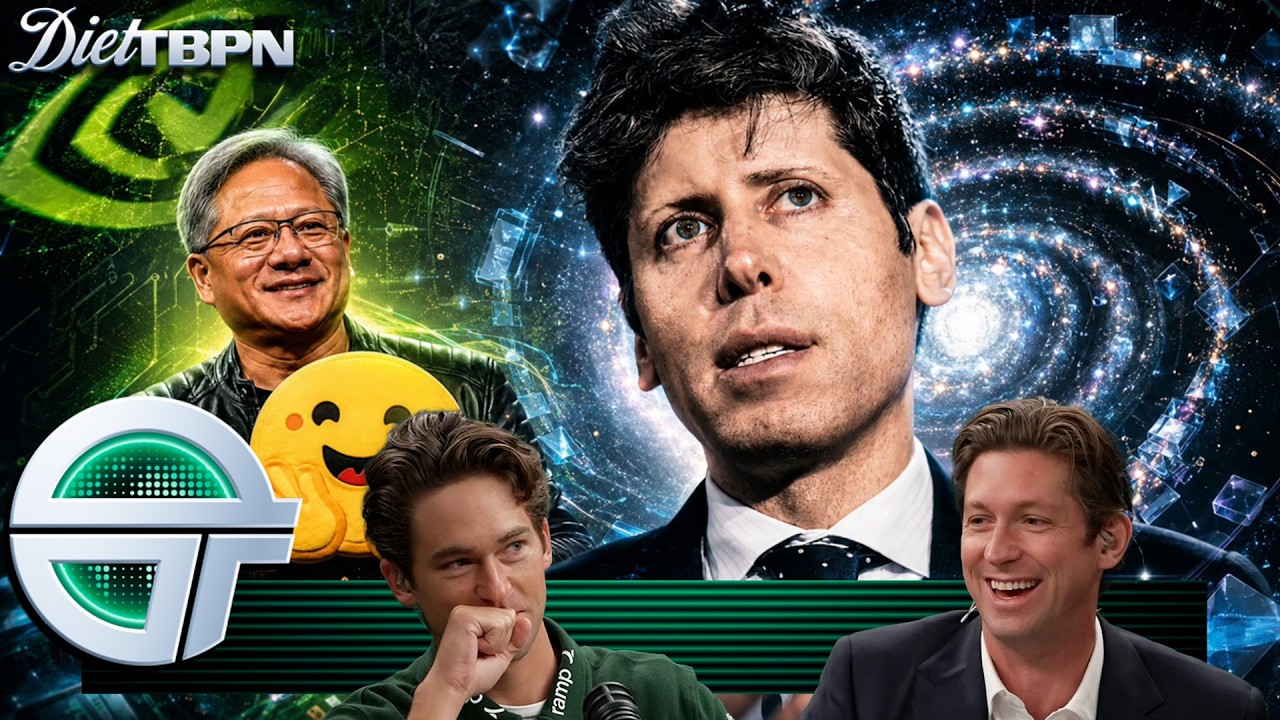
Nvidia Buys Hugging Face for $12.9B as OpenAI Drops GPT-6 Astra
TBPN
Nvidia acquired Hugging Face to lock in open-source AI developers on its hardware, while enterprise spending concentrates as 80% of revenue comes from just 1% of customers.
## Background
This video was published on YouTube by the TBPN channel on September 4, 2026. According to the page description, it is an episode of Diet TBPN—a 30-minute daily recap delivering the highlights of TBPN, a live tech talk show hosted by John Coogan and Jordi Hays that covers major news across Silicon Valley and the AI industry.
## TL;DR
The hosts cover a chaotic week of AI model releases, simultaneous platform outages, and shifting benchmarks, discussing new releases like Anthropic's Claude Fable 5.1 and Google's Gemini 3.8 Flash. They break down data from Ramp showing that 80% of enterprise AI revenue is concentrated in just 1% of corporate clients. A major highlight is Nvidia's acquisition of Hugging Face for $12.89 billion, detailing its origins from a teenage companion bot to becoming the core open-source AI hub. Finally, they react to OpenAI's official launch of GPT-6 Astra, its near-perfect ARC-AGI-3 benchmark scores, and the rising benchmark standards for AGI.
## Atmosphere & style
The show carries a high-energy, fast-paced, and banter-filled tech podcast vibe with lighthearted humor and banter between the hosts. The dynamic is conversational and witty, blending analytical breakdowns of massive financial deals and enterprise metrics with comedic tangents about childhood emails, workplace communication, and bizarre subway ads. The emotional arc transitions from chaotic excitement over 'model mayhem' to insightful industry analysis, ending on a hyped, triumphant note with the sudden release of GPT-6 Astra.
## Key takeaways
- [00:00](https://www.youtube.com/watch?v=NirTU9CZ--M&t=0s) A simultaneous wave of major AI model releases and announcements across the industry triggered widespread excitement alongside temporary outages on multiple platforms.
- [03:00](https://www.youtube.com/watch?v=NirTU9CZ--M&t=180s) Industry experts and hosts argue that user trust in formal benchmarks is waning due to bench-hacking, shifting focus toward qualitative testing and internal evaluations.
- [03:00](https://www.youtube.com/watch?v=NirTU9CZ--M&t=180s) Anthropic replaced its 'No Zero Data Retention' policy with Enterprise Frontier Safeguards to address enterprise demands for data sovereignty and monitoring.
- [05:00](https://www.youtube.com/watch?v=NirTU9CZ--M&t=300s) Google launched Gemini 3.8 Flash and Meta released MuSpark 1.3, both demonstrating high token speeds and strong competitive benchmark performance.
- [05:00](https://www.youtube.com/watch?v=NirTU9CZ--M&t=300s) Ramp Economics Lab data reveals extreme enterprise AI spend concentration, with 80% of OpenAI and Anthropic's revenue originating from just 1% of corporate clients.
- [10:00](https://www.youtube.com/watch?v=NirTU9CZ--M&t=600s) Nvidia officially acquired Hugging Face for $12.89 billion, solidifying its dominant position in open-source AI development and infrastructure.
- [13:00](https://www.youtube.com/watch?v=NirTU9CZ--M&t=780s) Hugging Face evolved from an emotional consumer chatbot into a neutral, highly capital-efficient developer platform host to millions of models and datasets.
- [23:00](https://www.youtube.com/watch?v=NirTU9CZ--M&t=1380s) SuperGrok's retirement of romantic AI companions marks the shift of AI industry investment away from consumer companion bots toward massive enterprise software markets.
- [26:00](https://www.youtube.com/watch?v=NirTU9CZ--M&t=1560s) OpenAI launched GPT-6 Astra, achieving near-saturation scores across key benchmarks like ARC-AGI-3.
- [26:00](https://www.youtube.com/watch?v=NirTU9CZ--M&t=1560s) Following GPT-6 Astra's performance, ARC-AGI creators announced ARC-AGI-4, shifting AGI criteria toward requiring models to invent new physics and science.
## Detailed walkthrough
Here is a detailed, faithful walkthrough of the transcript segment provided.
---
[00:00](https://www.youtube.com/watch?v=NirTU9CZ--M&t=0s) Model Mayhem and the AI Outage Mystery
The episode kicks off with high energy as the hosts declare "model mayhem" following a massive, simultaneous wave of AI model releases across the entire industry. They joke that the leaders of all the major AI labs must have met up and agreed to give the public even more AI all in the same week just to make everyone happy. The sheer volume of announcements—from Gemini 3.8 Flash to OpenAI's teasers for "Astra" (with fans obsessing over a video where the letter 'S' is replaced by a '6', sparking GPT-6 rumors)—has left enthusiasts overwhelmed after returning from summer vacations.
However, the excitement coincided with widespread downtime across multiple major platforms, including Grok and Claude. The hosts discuss whether this was a "crowdstrike-level" or "de-flock" moment for AI, questioning why everything went down simultaneously. While AWS issues in US-East-1 often take down large portions of the internet, they note that Google's Gemini remained online and unaffected. They extend a quick "good luck" to the Amazon engineers fighting the good fight to restore services.
- **Upcoming Events & Milestones:**
- The hosts celebrate Chamath Palihapitiya's 50th birthday, breaking into a full rendition of "Happy Birthday."
- They mention the upcoming All-In Conference in Los Angeles, jokingly noting they are still waiting for their invites (or at least the invitation to pay and attend).
- The "TBPN Road to Christmas" countdown sits at 112 days. The hosts note they are eager to hit the 99-day mark—only 13 days away from double digits—where people can "basically start a really big advent calendar."
---
[00:03](https://www.youtube.com/watch?v=NirTU9CZ--M&t=3s) Benchmark Skepticism, Anthropic's Fable 5.1, and Data Retention
The discussion turns to the specific model releases and the shifting landscape of how AI capabilities are evaluated. Anthropic launched Claude Fable 5.1 alongside a restricted Claude Mythos 5.1, while Google released Gemini 3.8 Flash (and a specialized cybersecurity variant), and Meta launched MuSpark 1.3. On the Artificial Analysis Intelligence Index—the composite bar chart heavily shared across social media—Anthropic's Fable 5.1 claimed the highest score ever recorded at 66, surpassing Opus 5 (63) and standard Fable (62).
Despite these record scores, the hosts argue that the industry is approaching "the end of the benchmark era." Due to widespread accusations of "bench-hacking" and hard-to-interpret metrics, user trust in formal benchmarks is at an all-time low. Instead, users rely on their own internal benchmarks, social proof, trusted reviewers, and creative qualitative tests—such as asking the model to render a "pelican on a bicycle" or write novel math code.
- **Anthropic's Policy Shift:**
- Fable 5.1 is touted as cheaper and faster thanks to an improved caching system.
- Anthropic is replacing its controversial "No Zero Data Retention" (no-ZDR) policy with **Enterprise Frontier Safeguards (EFS)**.
- The shift comes after tech leaders like Alex Karp and Satya Nadella publicly warned against strict corporate "data sovereignty." Enterprise customers demanded that data remain on infrastructure they own while still allowing monitoring for hostile usage, leading Anthropic to pivot in response to user feedback.
---
[00:05](https://www.youtube.com/watch?v=NirTU9CZ--M&t=5s) Gemini 3.8 Flash, Meta MuSpark 1.3, and Enterprise Spend Concentration
Google's Gemini 3.8 Flash marks the company's third "Flash" release in just six weeks. Generating roughly 300 tokens per second, it offers an extremely cheap, fast alternative that performs exceptionally well on coding tasks, scoring 73.7 on the DeepSuite benchmark—just behind Opus 5 and competitive with models costing several times as much. Meanwhile, Meta's MuSpark 1.3 delivered strong results, scoring 75.4% higher than Gemini 3.8 Flash on DeepSuite and beating Opus 5 and GPT-5.6 SOL on certain tasks, while reaching a 62 on the Intelligence Index.
The conversation shifts to enterprise adoption dynamics, citing data from Ara Kharazian at the Ramp Economics Lab. Kharazian’s research reveals a staggering level of revenue concentration: **80% of enterprise AI revenue for OpenAI and Anthropic comes from just 1% of their corporate customers**.
- **Analyzing the 1% / 80% Concentration Dynamic:**
- Unlike traditional SaaS categories (like CRM or databases), AI spend does not cleanly scale with total employee headcount. While the top 1% of U.S. businesses employ 65% of the total workforce, AI spend aligns much more closely with **total corporate revenue**.
- The top 1% of U.S. companies generate 80% of all business revenue. Because enterprise AI usage is billed on a consumption basis rather than a $20 or $200 per-seat flat rate, large enterprises treat AI as a variable operational line item proportional to their overall top-line revenue.
- With total corporate AI spend hovering around $150 billion annually, AI consumption accounts for roughly 0.25% of total U.S. business revenue. Analysts at Ramp view this statistic as a "Rorschach test": skeptics see dangerous revenue concentration, while bulls see massive uncapped upside as adoption expands.
---
[10:00](https://www.youtube.com/watch?v=NirTU9CZ--M&t=600s) Nvidia Acquires Hugging Face for $12.89 Billion
The biggest news of the day is Nvidia's official acquisition of Hugging Face, bringing an end to weeks of leaks and industry rumors. Nvidia agreed to pay **$12.89303 billion** for the platform. The exact figure is an intentional easter egg: `1289303` is the decimal Unicode character code for the Hugging Face emoji (🤗), and converted into a hex color code, it yields a shade of green matching Nvidia’s iconic branding.
The hosts marvel at the scale of modern tech liquidity events. Where Instagram's $1 billion acquisition once shocked Silicon Valley during the social media boom, multi-billion-dollar "decacorn" exits are now happening regularly. For Nvidia CEO Jensen Huang—a vocal advocate for open-source AI—owning Hugging Face secures Nvidia's role as the central hub for open-source AI development. While Nvidia sells chips directly to closed-source labs (who are increasingly trying to build their own custom ASICs), controlling Hugging Face ensures that independent developers using open-source models will default to racking Nvidia GPUs.
- **Hugging Face by the Numbers:**
- **18+ million** active developers.
- **200,000** enterprise customers using the platform.
- **3 million** hosted AI models and over **500,000** datasets.
- Functioning effectively as the "GitHub of AI," Hugging Face provides the core infrastructure (and its "Spaces" product for live demos) without spending massive capital to train flagship frontier models itself.
---
[13:00](https://www.youtube.com/watch?v=NirTU9CZ--M&t=780s) The Origin Story: From Tamagotchi AI to the "Switzerland of AI"
The trajectory of Hugging Face represents a classic "10-year overnight success." Founded in 2016 by Clem Delangue (a former employee at French computer vision startup Moodstocks) alongside a mathematician and a patent-law scientist, the company originally had nothing to do with developer tools. Post-Siri and Alexa, their original vision was to build an emotional, chatbot "best friend" for bored teenagers—a digital Tamagotchi that users could name, text, send selfies to, and exchange emojis with.
By 2018, the consumer app was generating over **1 million messages a day** and had accumulated over **100 million total messages**, attracting early venture backing from figures like NBA star Kevin Durant. However, it struggled to turn into a durable consumer business. The true pivot happened in 2018 when Google published the research paper for BERT. Google released BERT in TensorFlow, but the developer community preferred PyTorch. The Hugging Face team converted BERT to PyTorch and released it for free. The overwhelming developer adoption proved to be their growth flywheel, prompting them to abandon the consumer app and become the neutral "picks and shovels" platform for all AI models.
- **Funding History & Financial Discipline:**
- **2019 (Series A):** Lux Capital leads a $15 million round.
- **2021 (Series B):** Raised $40 million.
- **2022 (Series C):** Raised $100 million at a $2 billion valuation (led by Lux, Sequoia, and Coatue).
- **August 2023 (Series D):** Raised $235 million at a $4.5 billion valuation, featuring a "murderer's row" of strategic investors including Salesforce, Google, Amazon, Nvidia, AMD, Intel, Qualcomm, and IBM.
- By maintaining a strict "Switzerland of AI" neutrality across competing chips, clouds, and frameworks, Hugging Face achieved extreme capital efficiency. Total capital raised remained under $400 million. The company reached profitability in 2025 while still holding half of its raised capital in the bank.
- Prior to the acquisition, Hugging Face reportedly turned down a $10 billion buyout offer, holding out for a complete takeover that culminated in Nvidia's $12.89 billion deal.
---
<ElicitationsGroup message="To explore these topics further:">
<Elicitation label="Summarize Part 2 of this episode" query="Summarize Part 2 of this TBPN episode."/>
<Elicitation label="Analyze Nvidia's Hugging Face acquisition strategy" query="Analyze Nvidia's strategy behind acquiring Hugging Face for $12.89B and its impact on open-source AI."/>
<Elicitation label="Break down the Ramp enterprise AI spend report" query="Break down the data from the Ramp Economics Lab regarding enterprise AI spending concentration."/>
</ElicitationsGroup>
Here is a detailed, faithful walkthrough of the transcript section:
[20:00](https://www.youtube.com/watch?v=NirTU9CZ--M&t=1200s) NVIDIA’s Open Source Strategy, Astra Leaks, and Workplace Communication
The discussion opens with an analysis of NVIDIA's strategic acquisition of Hugging Face and its broader impact on the open-source ecosystem. The hosts highlight how seamless the user pipeline is: developers build on Hugging Face and then naturally turn to NVIDIA to buy chips, compute, or inference capabilities. Beyond compute sales, NVIDIA is sending a massive signal to the tech world that developers can build major open-source companies with great outcomes and retention packages.
Attention then turns to leaked benchmarks for GPT-6 Astra shared by the user Lisan Al-Gaib. These numbers suggest near-saturation across major benchmarks, including an ARC-AGI-3 score of 98.6% (following earlier teasers asking if people were ready for a "nuke" to hit ARC-AGI-3), a FrontierMath Tier 4 v2 score of 97.6%, DeepSweep at 74.1%, and ExploitBench at a fully saturated 100%.
The conversation shifts to a lighthearted tangent sparked by John Palmer’s post suggesting that "Snapchat for work" could be a viable enterprise communication tool. This triggers a nostalgic look back at early internet communication platforms. While producer Tyler is mocked for not knowing what Internet Relay Chat (IRC) is, the hosts reflect on their own childhood experiences. Neither used IRC, but they recall early email stress—such as spending a pre-teen summer stressing outdoors in the grass about long emails filling up Hotmail and Gmail inboxes. The hosts joke about adopting Snapchat for work using selfie videos and dog filters, though they acknowledge that short 2-minute demo videos or screen recordings are genuinely effective work tools.
[23:00](https://www.youtube.com/watch?v=NirTU9CZ--M&t=1380s) The Wind-Down of Romantic AI Companions and Out-of-Home Marketing
The hosts declare that "official hot bot summer is over" as SuperGrok moves to retire its romantic AI companions. Reflecting on past debates about AI companions, the hosts compare the hype cycle to the launch of OpenAI's Sora—where predictions swung between unstoppable, addictive dominance and total market erasure within six months. While apps like Replika achieved some scale, the total addressable market for romantic AI was wildly overestimated. When Elon Musk initially leaned into adult entertainment for Grok, it seemed like a viable play to hit single-digit billions in revenue. However, as the broader AI market aggressively pivoted toward massive enterprise software opportunities—evidenced by shocking numbers like $13 trillion to $20 trillion in market size cited in SpaceX's S-1 filing—consumer companion bots were left behind.
Next, the hosts critique a confusing New York City subway billboard placed by Fish.audio. Tech commentator Heshy Brody offered "$100 for anyone that can explain what this company does without looking it up." The advertisement reads: "We put voice AI on a silent sign." The irony of advertising an audio/voice AI product on a silent billboard sparks debate over whether it is a brilliant tongue-in-cheek joke to drive site traffic or a poorly executed prank. A quick site visit reveals Fish.audio builds text-to-speech, speech-to-text, audio separation, and voice-changing tools, partnering with platforms like HeyGen and retail/gaming companies, including Clout Kitchen.
[26:00](https://www.youtube.com/watch?v=NirTU9CZ--M&t=1560s) OpenAI Launches GPT-6 Astra and ARC-AGI-4 Goalposts
OpenAI officially drops the blog post for GPT-6 Astra with the tagline "To the stars." The early benchmark figures confirm massive leaps in AI capabilities. Most notably, Astra scores a staggering 99.9% on ARC-AGI-3, effectively beating the video-game-style benchmark and rendering global player rankings obsolete. Beyond ARC-AGI, Astra achieves 64.6% on TerminalBench Science (at max reasoning effort costing $26) and 0% on ExploitGym Honeypot (where lower scores indicate better safety and containment). The hosts joke about testing its computer-use capabilities in a 1v1 match in *Rust*, demanding to know if the model can noscope.
Meanwhile, the launch timeline on X remains chaotic, with OpenAI releasing the blog post before any official social media announcement. As Sam Altman prepares to appear on Bloomberg with Ed Ludlow to discuss the launch, Mike at ARC-AGI officially moves the goalposts. Congratulating OpenAI on achieving a new state-of-the-art result that represents a "qualitatively large leap towards AGI," Mike notes that open-ended invention remains unsolved. Consequently, ARC-AGI-4 will be established around requiring models to invent new physics and science to prove true AGI. The episode wraps up with promises of special guest coverage tomorrow, alongside reminders to leave five-star reviews on Apple Podcasts and Spotify and sign up for the newsletter at TBPN.com.
> [05:00](https://www.youtube.com/watch?v=NirTU9CZ--M&t=300s) 80% of enterprise AI revenue for OpenAI and Anthropic comes from just 1% of their corporate customers — Ara Kharazian
> [05:00](https://www.youtube.com/watch?v=NirTU9CZ--M&t=300s) Rorschach test
> [10:00](https://www.youtube.com/watch?v=NirTU9CZ--M&t=600s) GitHub of AI
TBPN hosts argue that a simultaneous wave of frontier model releases, benchmark saturation, and Nvidia's $12.89 billion acquisition of Hugging Face reflect a decisive industry transition away from consumer experiments and toward enterprise infrastructure and compute monetization.
Nvidia Acquires Hugging Face for $12.89 Billion (10:00)
Nvidia agreed to acquire Hugging Face for $12.89303 billion—an intentional easter egg corresponding to the decimal Unicode value for the Hugging Face emoji and a hex color matching Nvidia's corporate green. The hosts emphasized that the transaction establishes Nvidia as the core distribution layer for open-source AI. While frontier closed-source labs are developing in-house application-specific integrated circuits (ASICs) to curb hardware dependency, owning Hugging Face ensures that independent and open-source developers default to provisioning Nvidia GPUs and inference infrastructure across the platform's 18 million active developers, 3 million hosted models, and 200,000 enterprise accounts.
Founded in 2016 as an interactive chatbot companion for teenagers, Hugging Face pivoted in 2018 after converting Google's TensorFlow-based BERT into PyTorch for the developer community. By operating as a neutral platform across competing cloud providers, chipmakers, and frameworks, the company maintained exceptional capital discipline, raising under $400 million, turning profitable in 2025, and reportedly rejecting a $10 billion buyout before agreeing to Nvidia's offer.
Benchmark Saturation and Shifting Frontiers with GPT-6 Astra (26:00)
OpenAI published the release details for GPT-6 Astra, logging benchmark results that indicate near-total saturation of standard industry evaluations. Astra registered a 99.9% score on the ARC-AGI-3 test, alongside 64.6% on TerminalBench Science (at maximum reasoning effort costing $26) and 0% on ExploitGym Honeypot. Earlier benchmark leaks attributed to user Lisan Al-Gaib had reported scores of 97.6% on FrontierMath Tier 4 v2 and 100% on ExploitBench. In response to Astra effectively solving ARC-AGI-3, benchmark organizer Mike announced the creation of ARC-AGI-4, moving evaluation criteria toward requiring models to independently invent new science and physics to demonstrate genuine AGI.
At the same time, the hosts noted that user confidence in formal leaderboards is collapsing under allegations of 'bench-hacking.' Despite Anthropic’s Claude Fable 5.1 achieving a record 66 on the Artificial Analysis Intelligence Index and Google's Gemini 3.8 Flash posting a 73.7 on DeepSuite, developers and enterprise clients increasingly disregard standardized metrics, relying instead on proprietary internal workloads, qualitative prompts, and trusted peer reviews.
Enterprise AI Revenue Concentrates in Top Corporate Spenders
Analysis by Ara Kharazian at Ramp Economics Lab indicates that 80% of enterprise AI revenue for OpenAI and Anthropic is generated by just 1% of their enterprise client base. Unlike conventional software-as-a-service (SaaS) products that scale per seat against employee headcounts, enterprise AI spending is billed on consumption and tracks aggregate corporate revenue. While the top 1% of U.S. businesses account for 65% of the national workforce, they generate approximately 80% of all business revenue.
With total enterprise AI expenditure hovering around $150 billion annually, consumption represents roughly 0.25% of total U.S. business revenue. According to Ramp analysts, these figures present a stark interpretative divide: industry skeptics interpret the numbers as an alarming revenue concentration among very few clients, while market bulls view the modest overall percentage of business revenue as proof of massive uncapped headroom for corporate adoption.
The Reallocation of Capital from Consumer Bots to Enterprise (23:00)
Market demand is pivoting sharply away from consumer companion bots, punctuated by SuperGrok's decision to wind down its romantic AI features. The hosts observed that the initial hype around AI companions suffered from grossly inflated total addressable market projections. Although adult entertainment and romantic chatbots appeared to offer single-digit billions in near-term revenue, capital allocation has moved decisively toward enterprise software opportunities, which the hosts noted were estimated at $13 trillion to $20 trillion in SpaceX's S-1 documentation.
This enterprise orientation has forced AI model providers to adapt their security and governance policies to commercial demands. Following public criticism of strict corporate data sovereignty by tech executives including Satya Nadella and Alex Karp, Anthropic abandoned its strict 'No Zero Data Retention' posture in favor of Enterprise Frontier Safeguards (EFS), allowing institutional clients to retain customer data on private infrastructure while permitting safety monitoring for hostile activities.
As frontier models max out existing evaluations and ARC-AGI moves the goalposts toward novel scientific discovery, the AI industry's commercial future remains tethered to whether extreme enterprise revenue concentration broadens into the wider corporate economy.
## Background
本期节目由科技播客频道 TBPN 于 2026 年 9 月 4 日发布在 YouTube 平台。视频属于《Diet TBPN》系列,旨在用约 30 分钟的时间浓缩科技脱口秀当天的主题内容,节目曾被《纽约时报》誉为“硅谷的新执念”,由 John Coogan 和 Jordi Hays 共同主持,探讨当天的重磅 AI 资讯与行业内幕。
## TL;DR
本期节目全方位盘点了科技界爆发的“模型大混战”,包括 Anthropic 推出新模型并为企业妥协调整数据保留政策、Gemini 3.8 Flash 与 Meta MuSpark 1.3 的性能角逐,以及 Ramp 报告揭示的 enterprise AI 支出极端集中现象。随后节目深度剖析了 NVIDIA 斥资 128.93 亿美元收购 Hugging Face 背后的开源生态闭环与商业意图,并讨论了 AI 伴侣退潮与语音 AI 广告风波。最后,节目聚焦 OpenAI 突然发布的 GPT-6 Astra 及其在 ARC-AGI-3 上高达 99.9% 的屠榜表现,以及评测发起人随后“移杆”宣布设立 ARC-AGI-4 的行业震荡。
## Atmosphere & style
整场节目节奏飞快、幽默风趣且极具信息密度,完美融合了硅谷内部人士的硬核技术洞察与早间电台式的调侃闲聊。两位主持人默契十足,在即兴为风投大佬唱生日歌、插科打诨制作人“丢掉 ARC 冠军头衔”的同时,又能一针见血地拆解百亿美元收购案与基准测试背后的博弈。演播室氛围在突发官宣 GPT-6 Astra 时被彻底点燃,兼具对前沿科技突破的狂热兴奋与对 AGI 终极标准的理性审视,让听众如同置身于硅谷技术爆炸风暴眼的茶水间。
## Bulletin
- [26:38](https://www.youtube.com/watch?v=NirTU9CZ--M&t=1598s) OpenAI 突击上线“奔向繁星”博客正式发布 GPT-6 Astra,在衡量自适应通用推理的 ARC-AGI-3 基准测试中斩获 99.9% 的近乎满分表现,创下多项前沿新纪录。
- [10:00](https://www.youtube.com/watch?v=NirTU9CZ--M&t=600s) NVIDIA 斥资 128.9303 亿美元全资收购 Hugging Face,收购价格巧妙对应该 Emoji 的 Unicode 编码,旨在掌控拥有 1800 万开发者与 300 万模型的开源生态总入口。
- [06:21](https://www.youtube.com/watch?v=NirTU9CZ--M&t=381s) Ramp 经济学实验室报告披露,全美企业每年 AI 支出达 1500 亿美元,且 OpenAI 与 Anthropic 80% 的企业端收入仅由头部 1% 的企业客户贡献,呈现极端的按量消耗集中度。
- [03:09](https://www.youtube.com/watch?v=NirTU9CZ--M&t=189s) Anthropic 推出综合智能指数创纪录获 66 分的 Claude Fable 5.1,并正式以 EFS(企业前沿防护)架构取代争议极大的 No ZDR 策略,将数据主权交还企业客户。
## Key takeaways
- [00:00](https://www.youtube.com/watch?v=NirTU9CZ--M&t=0s) 夏季休假结束后各大 AI 实验室扎堆发布模型引发“模型大混战”,随之而来的瞬时流量峰值叠加 AWS 美东机房故障,导致 Grok 与 Claude 等大面积宕机。
- [03:09](https://www.youtube.com/watch?v=NirTU9CZ--M&t=189s) Claude Fable 5.1 跑分登顶,但行业正面临“基准测试脱敏与信任危机”,用户与开发者愈发转向代码落地演示、真实 Demo 以及私有化场景评测。
- [03:09](https://www.youtube.com/watch?v=NirTU9CZ--M&t=189s) 为打破企业客户对核心数据外泄的顾虑,Anthropic 妥协废除无零数据保留(No ZDR)政策,改用企业前沿防护(EFS)机制将数据留存在客户私有设施中。
- [05:00](https://www.youtube.com/watch?v=NirTU9CZ--M&t=300s) Gemini 3.8 Flash 与 Meta MuSpark 1.3 在 DeepSWE 编程测试中表现强势,凭借每秒 300 token 的高吞吐量与极致性价比形成实用型 AI 阵营。
- [06:21](https://www.youtube.com/watch?v=NirTU9CZ--M&t=381s) 企业 AI 消费高度匹配全美商业收入格局:全美排名前 1% 的巨头掌控 80% 的销售总额,同样贡献了主流大模型实验室 80% 的企业端营收。
- [06:21](https://www.youtube.com/watch?v=NirTU9CZ--M&t=381s) 企业级 AI 软件彻底跳脱出传统 SaaS 按员工人头(Seat-based)收费的定价模式,转变为直接与公司总营收规模挂钩的纯按量消耗型(Consumption-based)预算。
- [10:00](https://www.youtube.com/watch?v=NirTU9CZ--M&t=600s) NVIDIA 以包含 Emoji 编码(128930)彩蛋的 128.93 亿美元天价收购 Hugging Face,标志着 AI 赛道并购退出从过去的 10 亿美元量级跃升至百亿美元时代。
- [12:15](https://www.youtube.com/watch?v=NirTU9CZ--M&t=735s) 面对闭源大模型客户暗中自研定制 ASIC 芯片的潜在威胁,黄仁勋重注 Hugging Face,将开发者生态锁死在 NVIDIA 底层算力与软件栈中。
- [13:30](https://www.youtube.com/watch?v=NirTU9CZ--M&t=810s) Hugging Face 从早期的青少年聊天伴侣应用起家,凭借 2018 年将 Google BERT 移植开源至 PyTorch 的关键转折,成功蜕变为全球 AI 界的 GitHub。
- [16:00](https://www.youtube.com/watch?v=NirTU9CZ--M&t=960s) Hugging Face 凭借不到 4 亿美元的累计融资便在 2025 年实现全面盈利,以极高的资本效率维持中立地位,并促成各大芯片与云厂商巨头的入局。
- [20:00](https://www.youtube.com/watch?v=NirTU9CZ--M&t=1200s) NVIDIA 跑通商业闭环:全球开发者在 Hugging Face 平台共享、调试与路由开源模型,其最终规模化部署的算力需求皆全数流向 NVIDIA 硬件集群。
- [23:04](https://www.youtube.com/watch?v=NirTU9CZ--M&t=1384s) xAI 下线虚拟伴侣功能标志着“AI 辣妹之夏”终结,消费级情感陪伴因市场天花板过低而退场,主流巨头全面转战体量达数十万亿美元的企业级市场。
- [26:38](https://www.youtube.com/watch?v=NirTU9CZ--M&t=1598s) OpenAI 正式发布 GPT-6 Astra,不仅在 ARC-AGI-3 上打出 99.9% 的惊人成绩,在电脑操控(Computer Use)及安全诱捕基准上也展现出断层级优势。
- [28:38](https://www.youtube.com/watch?v=NirTU9CZ--M&t=1718s) ARC 评测发起人 Mike Knoop 针对 Astra 刷榜迅速将评测终点移杆(Moving the goalposts),宣布将研发 ARC-AGI-4 并重点考核未解的“开放式发明能力”。
## Detailed walkthrough
### [00:00](https://www.youtube.com/watch?v=NirTU9CZ--M&t=0s) 模型大混战与云服务宕机风波
科技圈迎来了一场名副其实的“模型大混战”(Model Mayhem)。各大 AI 实验室的领头人似乎在夏天休假结束后达成了一种默契,不约而同地选择在同一周扎堆发布最新成果,誓要让所有人都有新玩具可玩。这一波更新浪潮不仅包括了 Google 发布的 Gemini 3.8 Flash,还有 OpenAI 针对代号 Astra 的神秘预热——社区敏锐地在宣传视频中捕捉到字母“S”被替换为了数字“6”,引发了外界关于 GPT-6 呼之欲出的疯狂猜想。
然而,大批新模型上线带来的海量需求瞬间引发了基础设施的雪崩。当天早晨,Grok、Claude 等主流模型相继遭遇宕机,甚至有人戏称这可能是 AI 领域的“去中心化锁定崩溃”(Deflock moment)。两位主持人讨论起背后的元凶,发现根源很可能是亚马逊 AWS 位于美东(US-East-1)的数据中心出现故障,波及了一大批依赖该云服务的平台;但 Gemini 却始终稳如泰山,完全未受影响。这也让主持人不禁感叹,亚马逊依然牢牢掌控着全球互联网的命脉,向在机房一线抢修的 AWS 工程师们致以敬意。
### [02:05](https://www.youtube.com/watch?v=NirTU9CZ--M&t=125s) 闲聊插曲:Chamath 五十大寿与圣诞倒计时
在紧绷的技术盘点之余,节目进入了标志性的闲聊节奏。首先是为风投圈顶流 Chamath Palihapitiya 庆祝 50 岁大寿,两位主持人当场默契地唱起了完整的《生日快乐歌》。随后话题顺势转到了即将在洛杉矶举办的 All-In Conference,两人调侃虽然大会临近,但他们目前依然“还在苦等赠票”,大概率只能自掏腰包买票入场。
紧接着是 TBPN 经典且充满仪式感的“圣诞倒计时”板块。距离圣诞节还有 112 天,主持人打趣说目前的节奏显得有些漫长,但再过 13 天倒计时就将破百、迈入“两位数大关”,届时各家各户就可以正式掏出超大号的倒计时日历(Advent Calendar),迎接年底的节日氛围。
### [03:09](https://www.youtube.com/watch?v=NirTU9CZ--M&t=189s) 跑分时代的终结与 Anthropic 的企业级妥协
回到严肃的技术发布,Anthropic 本次推出了 Claude Fable 5.1 以及处于受限状态的 Claude Mythos 5.1。在 Artificial Analysis 的综合智能指数图表上,Fable 5.1 砍下了创纪录的 66 分,力压 Opus 5 的 63 分与上一代 Fable 的 62 分,拔得头筹。得益于全新的缓存系统,该模型不仅速度更快,推理成本也显著降低。不过主持人指出,整个行业似乎正在走向“跑分时代的终结”——基准测试造假(Bench hacking)和难以解释的测试集让公众对跑分的信任度跌入谷底,相比看图表,用户现在更愿意看实测演示(比如经典的“鹈鹕骑自行车”Pelican on the bicycle),或者用自己手头的实际任务建立内心专属的“内部基准测试”。
除性能外,Anthropic 的策略转向同样引发热议。正如科技分析师 Ben Thompson 所指出的,此前 Fable 虽然性能拔尖,但在企业端的普及速度却不如预期,核心症结在于企业对数据主权的强硬诉求——大公司绝不希望闭源 AI 实验室顺手吸走自身的核心机密。为此,此前被 Alex Karp 和 Satya Nadella 等行业巨头警告过的“无零数据保留”(No Zero Data Retention, No ZDR)政策正式被取缔,取而代之的是全新的“企业前沿防护”(Enterprise Frontier Safeguards, 简称 EFS)。该机制允许企业将数据留存在自有服务器和基础设施中,在保持恶意使用监控的同时,确保数据不再直通 Anthropic 的中心数据库。
- **Claude Fable 5.1**:在 Artificial Analysis 综合智能指数中获得创纪录的 66 分,超越 Opus 5(63 分)。
- **企业级政策调整**:废除引起企业反感的 No ZDR 策略,改推 EFS 架构,将数据主权交还企业私有设施。
- **评测信任危机**:社区对通用基准跑分普遍脱敏,更看重实际代码编写、真实游戏构建 demo 与意见领袖的实测口碑。
### [05:00](https://www.youtube.com/watch?v=NirTU9CZ--M&t=300s) Gemini 3.8 Flash、MuSpark 1.3 与百花齐放的性能比拼
Google 在本次混战中同样攻势凶猛,推出了 Gemini 3.8 Flash 以及一款专门面向网络安全领域的特化版本。这是 Google 在短短六周内发布的第三款 Flash 系列模型,展现出极高的迭代节奏。在编程基准 DeepSWE 测试中,Gemini 3.8 Flash 拿下了 73.7 分,仅微弱落后于顶级的 Opus 5,却在价格上拥有成倍的优势;尽管其综合智能评分仅为 59 分,算不上绝对的前沿顶峰,但其生成吞吐量高达每秒 300 个 token(tokens/sec),极高的性价比与极快的响应速度使其成为编程和高频任务中的杀手级选项。
与此同时,Meta 推出的 MuSpark 1.3 表现同样亮眼。其在 DeepSWE 上得分高达 75.4%,一举超越了 Gemini 3.8 Flash,甚至在多项指标上比肩 GPT-5.6 与 Opus 5。尽管在专业办公和计算机控制(Computer Use)等复杂场景下仍不及 Opus,但 MuSpark 1.3 凭借在智能指数上的 62 分,紧咬在 Claude 最新系列的身后,构成了开源与商业模型前沿交错的竞争格局。
### [06:21](https://www.youtube.com/watch?v=NirTU9CZ--M&t=381s) Ramp 经济学实验室报告:1% 客户贡献 80% 营收的 AI 集中度之谜
企业在 AI 上的真金白银到底流向了何处?Ramp 经济学实验室的 Ara Kharazian 披露了一组极其耐人寻味的数据:OpenAI 和 Anthropic 目前在企业级市场呈现出极端的分化——**仅 1% 的顶层企业客户,贡献了两家实验室整整 80% 的企业端营收**。在常规的企业软件领域(如 CRM、数据库),这种“1% 产生 80%”的极度倾斜是非常罕见的。
```mermaid
flowchart TD
accTitle: Enterprise AI Spend vs Corporate US Metrics
accDescr: A comparison showing how the top 1% of US companies correlate to workforce, total revenue, and AI enterprise spend.
subgraph Comparison["全美前 1% 大型企业在各项指标中的占比"]
A["全美就业岗位占比: 65%"]
B["全美商业销售总营收: 80%"]
C["OpenAI & Anthropic 企业端收入: 80%"]
end
B -.->|"高度吻合的消耗机制"| C
```
为了解释这种极端现象,主持人探讨了两个对照视角:
1. **替代人力假说**:如果 AI 是员工的直接替代品,其支出应当与企业员工规模强相关。然而全美前 1% 的大型巨头虽然掌握了巨大的就业盘子,但雇佣的总劳动力仅占全美劳动人口的 65%,与 80% 的集中度存在明显缺口。
2. **挂钩销售收入假说**:从销售端来看,全美营收排名前 1% 的企业,刚好斩获了全美商业总收入的 80%。这与 AI 营收 80% 来自 1% 企业的数据呈现出惊人的吻合。
目前全美企业总营收中,整体 AI 支出约为每年 1500 亿美元,大约占全美商业总收入的 0.25%。由于大型企业采用 AI 绝非购买 20 美元或 200 美元的按人头订阅(Seat-based SaaS),而是走纯粹的按量计费(Consumption-based),企业很可能已经将 AI 支出视为与总收入成正比的动态预算,就像营销推广费一样随着业务体量浮动。Ramp 的研究员精辟地将这一现象评价为针对 AI 看法的“罗夏墨迹测验”(Rorschach test)——乐观者视其为巨头重注布局的星辰大海,悲观者则认为这预示着狂欢仅限于少数寡头的泡沫游戏。在讨论的尾声,节目顺势切入了赞助商 Codex 的推荐,介绍了这款涵盖代码编写、数据分析与自动化工作流的 AI Agent 工作台。
- **极端集中度**:OpenAI 和 Anthropic 80% 的企业营收仅源自 1% 的企业客户。
- **体量对比**:全美前 1% 企业拥有 65% 的劳动力,但贡献 80% 的商业总收入,AI 支出结构与企业收入结构完美契合。
- **宏观规模**:全美企业每年的 AI 支出总额约为 1500 亿美元,约占全美商业总收入的 0.25%。
- **商业模式重构**:企业级 AI 摆脱了传统 SaaS 软件按人头计费的逻辑,转变为与公司整体营收紧密相连的纯按量消耗型资产。
### [10:00](https://www.youtube.com/watch?v=NirTU9CZ--M&t=600s) 闲聊插曲与官宣:NVIDIA 价值 128 亿的“Emoji 密码”收购
节目开场伴随着一段体育八卦式的轻松闲聊。两位主播调侃稍后 11:30 体育媒体人巴勃罗·托雷(Pablo Torre)将连线探讨洛杉矶快船队(LA Clippers)与球星科怀·伦纳德(Kawhi Leonard)的纠葛。主播打趣称快船队的名字就像是洛杉矶街头那些整天把直播切片剪碎发到 TikTok 和 Instagram 的“切片工(clippers)”,还顺带拿快船老板史蒂夫·鲍尔默(Steve Ballmer)的发音开涮,自嘲因为觉得跟鲍尔默“太熟了”所以把名字末尾的音都省掉了。
随后话题迅速切入当天轰动科技圈的重磅头条:开源 AI 阵营展现出前所未有的强势,就在各大闭源巨头激烈搏杀之际,传闻数周的超级交易终于正式官宣——NVIDIA 斥巨资收购了 Hugging Face。这笔交易被主播形容为典型的“十年一剑的突然成功(10-year overnight success)”。最令人津津乐道的是两家公司在收购金额上玩的极客幽默:NVIDIA 最终同意支付的收购价格是 128.9303 亿美元($12.89303 billion),这个数字恰好是代表公司标志的“🤗 拥抱脸(Hugging Face)”Emoji 的精确十进制编码(Unicode Decimal Code 128930);更绝的是,若将该数字转换成颜色代码,刚好能呈现出一种致敬 NVIDIA 品牌色的绿色。
主播感叹道,以前在社交网络爆发的黄金年代,Instagram 的 10 亿美元收购案就曾被整个创投圈视为天方夜谭;而如今的人工智能热潮中,市场每隔几周就会冒出一个估值超百亿美元的“超级独角兽(decacorn)”变现神话。两人不禁笑着感慨:“三到七年前如果投资了 AI,那真是一段躺赢的神仙岁月。”
- **收购金额**:128.9303 亿美元,隐藏彩蛋对应 Hugging Face Emoji 的十进制编码及 NVIDIA 品牌绿。
- **行业对比**:从移动互联网时代轰动一时的 Instagram 10 亿美元退出,升级到当前百亿美元级独角兽的频繁清算套现。
---
### [12:15](https://www.youtube.com/watch?v=NirTU9CZ--M&t=735s) 黄仁勋的开源棋局与 Hugging Face 的“AI 界的 GitHub”定位
这笔天价收购在业内其实早有端倪,逻辑极为顺畅。NVIDIA CEO 黄仁勋(Jensen Huang)一直是硅谷科技巨头中为开源摇旗呐喊最为卖力的人,此前就曾牵头发布多位大佬联署的开源公开信。主播分析指出,黄仁勋的核心诉求是捍卫 NVIDIA 在整个 AI 生态中的霸权地位。眼下闭源模型实验室虽然挥金如土采购 GPU,但随着时间推移,各大巨头都在暗自研发专属定制芯片(ASIC),双方始终存在拉扯与博弈;因此,掌握开源开发者生态就成了 NVIDIA 不容有失的第二阵地——老黄希望所有企业和开发者在挑选模型的第一刻,就进入 NVIDIA 的阵营,最终将模型部署到 NVIDIA 的硬件服务器上。
最简洁的行业概括就是:Hugging Face 是当之无愧的“AI 界的 GitHub”。尽管它涉及的技术深度与基础设施复杂度远比当年微软收购 GitHub 要庞大得多,但其商业逻辑如出一辙。Hugging Face 自己从不追求训练最顶尖的基座大模型,甚至刻意避开这种烧钱的军备竞赛;然而,它构筑了不可替代的开源核心枢纽(Nexus),成为全球 AI 创作者上传、发现、调试与改造模型的唯一默认首选。
```mermaid
flowchart TD
accTitle: Hugging Face Platform Ecosystem
accDescr: Hugging Face 连接闭源与开源基础设施及全球开发者的枢纽架构
subgraph Hardware["基础设施与芯片生态"]
NV["NVIDIA GPUs"]
Others["AMD / Intel / ASIC 竞争芯片"]
end
subgraph Hub["Hugging Face 枢纽平台"]
Repo["模型仓库 (300万+ 模型)"]
Data["数据集中心 (50万+ 数据集)"]
Demo["Spaces 应用演示空间"]
end
subgraph Community["开发者与商业网络"]
Devs["1800 万名注册开发者"]
Corps["20 万家企业客户"]
end
Hardware --> Hub
Hub --> Community
Community --> Hub
```
- **平台规模**:注册开发者突破 1800 万人,付费与活跃企业客户超 20 万家。
- **生态资源**:收录超过 300 万个开源模型以及超过 50 万个高质量数据集。
- **商业定位**:不做最聪明的模型训练者,只做生态吸聚力最强的重力场中心。
---
### [13:30](https://www.youtube.com/watch?v=NirTU9CZ--M&t=810s) 起源传奇:从青少年电子宠物伴侣到 BERT 转译 PyTorch 的神级转向
鲜有人知的是,Hugging Face 最初的创业方向与现在的代码托管平台南辕北辙。其创始人早年在法国一家名为 Moodstocks 的计算机视觉初创公司工作(该公司后来被 Google 收购)。2016 年,他联合了一位数学家和一位兼具科研与专利法背景的技术专家共同创业。在 Siri 和 Alexa 已经普及但只能查天气、定闹钟的年代,他们决定打造一款能够无所不聊的情感 AI 伴侣——其定位类似于新时代的“电子宠物(Tamagotchi)”,主打软萌逗趣,这也是“🤗 拥抱脸”名称与 Emoji 头像的由来。
这款面向无聊青少年群体打造的聊天软件,允许用户给机器人起名、发自拍、互发表情包,并迅速在年轻群体中走红。到 2018 年,该 App 的日消息量已突破 100 万条,累计沉淀了超 1 亿条对话记录,甚至吸引到了 NBA 超级巨星凯文·杜兰特(Kevin Durant)的投资。然而,团队很快意识到这很难成为一个基业长青、具备防御壁垒的消费级商业帝国。
转折点发生在 2018 年底 Google 正式发布突破性自然语言处理模型 BERT。彼时 Google 仅发表了学术论文,且代码只基于自家 TensorFlow 框架实现;而当时开源社区的广大开发者更青睐 PyTorch。Hugging Face 团队敏锐地捕捉到了这一开发者痛点,迅速将 BERT 移植转译为 PyTorch 版本并面向全网完全免费开放。这一开源举动瞬间引爆了全球机器学习社区,成为平台获取早期开发者的超级增长飞轮。团队毅然决然砍掉原本的单一社交应用,全力转型为面向 AI 开发者的“卖水人(picks and shovels)”,正式开启从代码库到全球模型基础设施的蜕变。
- **早年数据**:2018 年青少年情感陪伴机器人日消息量达 100 万条,累计对话量超 1 亿条。
- **关键转折**:免费开源 Google BERT 的 PyTorch 重构版本,一战奠定开发者心智。
- **产品拓展**:随后推出 Spaces 在线应用演示托管、数据集版本管理、模型微调与私有模型库(类似 GitHub 组织私有代码库机制)。
---
### [16:00](https://www.youtube.com/watch?v=NirTU9CZ--M&t=960s) “AI 界的瑞士”:全明星资方阵容与极度节俭的资本效率
随着飞轮效应不断加速,模型的复刻、微调与派生均沉淀在平台上,Hugging Face 确立了自己作为“AI 领域的瑞士”的中立地位。顶级风投机构迅速入局:2019 年 Lux Capital 领投了 1500 万美元的 A 轮融资;2021 年完成 4000 万美元 B 轮融资;2022 年由红杉资本(Sequoia)和 Coatue 领投了 1 亿美元的 C 轮融资,投后估值达到 20 亿美元;到了 2023 年 8 月,公司更是在 D 轮一口气融资 2.35 亿美元,估值跃升至 45 亿美元。
值得玩味的是,其 D 轮投资名单堪称整个科技圈潜在收购方的“修罗场(murderer's row)”:Salesforce、Google、Amazon、NVIDIA、AMD、Intel、Qualcomm 和 IBM 齐聚股东花名册。当时 Hugging Face 刻意营造出多方制衡的中立格局,标榜自己既支持跑在 NVIDIA 上的模型,也兼容 AMD、Intel 与高通架构,力求成为全行业和平共处的中立地带。
然而在资本效率层面,Hugging Face 堪称硅谷神迹:在取得 128 亿美元并购成果之前,公司历年累计融资总额甚至不到 4 亿美元。由于他们本质上只负责代码与权重的索引托管,并不亲自大量堆砌算力或承担端到端庞大的模型推理成本,因此公司运营成本极低。公司不仅在 2025 年便实现了全面盈利,在最终被收购时,账面上居然还完整保留着历次融资拿到的一半以上的现金储备。
| 融资轮次 | 时间节点 | 融资金额 | 估值情况 | 主要投资方与战略意义 |
|:--- |:--- |:--- |:--- |:--- |
| **A 轮** | 2019 年 | 1500 万美元 | 未公开 | Lux Capital 独具慧眼早期下注 |
| **B 轮** | 2021 年 | 4000 万美元 | 未公开 | 进一步拓展模型库与工具链建设 |
| **C 轮** | 2022 年 | 1 亿美元 | 20 亿美元 | 红杉资本、Coatue 入局,网络效应爆发 |
| **D 轮** | 2023 年 8 月 | 2.35 亿美元 | 45 亿美元 | NVIDIA、AMD、Intel、Google 等全明星芯片与云厂商结盟 |
| **并购退出** | 2026 年 | 128.93 亿美元 | — | NVIDIA 全资收购,实现百亿美元级退出与盈利变现 |
---
### [18:30](https://www.youtube.com/watch?v=NirTU9CZ--M&t=1110s) 闭源内卷下的入口防线:模型路由与开源生态的未来
在分析最后,主播抛出了一个关键问题:黄仁勋收购 Hugging Face 后的真正意图究竟是什么?如今的 Hugging Face 已经在提供模型路由(Model Routing)功能,并对主流推理服务商(Inference Providers)的表现进行动态排名。未来 Hugging Face 是否会在这类智能分发路由上,与 OpenRouter 以及各类自动化路由工具展开正面对撞?
主播指出,这笔收购的核心逻辑主要包含两个维度:一方面,闭源大模型领域已经变成高风险的存量博弈,各大头部的闭源实验室虽然仍在采购 GPU,但也在加速秘密研发专属 ASIC 芯片,两者的利益捆绑存在裂缝;而在另一面,开源模型社区呈现出繁荣发展的喷涌之势。如果 NVIDIA 能够牢牢掌控开源模型分发与调用的“总门户(front door)”,让全球所有工程师在寻找最佳模型结构、挑选最合适开源权重的第一步都必须经过它,那么后续无论如何调度与部署,整个计算底层都将自然而然地被锁死在 NVIDIA 的软件框架与硬件生态之中。
### [20:00](https://www.youtube.com/watch?v=NirTU9CZ--M&t=1200s) NVIDIA 收购 Hugging Face 的生态逻辑与 Astra 基准泄露
主持人深入剖析了 NVIDIA 布局 Hugging Face 背后严密而流畅的商业闭环:开发者和研究人员在 Hugging Face 社区构建、微调模型,而一旦进入规模化部署阶段,自然需要采购算力芯片或推理计算服务,此时伫立在终点线的正是 NVIDIA。对于 NVIDIA 而言,任何能让开源生态变得更加强大、更具吸引力,甚至让开发者在此建立事业并获得丰厚回报的举措,最终都将反哺其底层算力帝国。Hugging Face 团队规模小巧,NVIDIA 借此向全球开源界传递出一个极其响亮的信号——投身开源同样能成就伟大的商业奇迹并获得顶格回报。
```mermaid
flowchart LR
accTitle: NVIDIA与Hugging Face生态流转闭环
accDescr: 展示开源开发者从Hugging Face模型构建到采购NVIDIA算力的完整转化链路
subgraph HF["开源生态孵化"]
A["开发者在 Hugging Face 社区构建与微调模型"]
B["沉淀开源资产与顶尖开发人才"]
end
subgraph NV["商业与算力变现"]
C["算力需求爆发:购买芯片、计算集群与推理服务"]
D["NVIDIA 承接算力变现并反哺开源生态"]
end
A --> B
B --> C
C --> D
```
在消化这起重磅收购的同时,社区的注意力迅速被代号为 Astra 的大模型爆料所吸引。知名爆料账号 Lisan Al-Gaib 在社交媒体上发布了一系列令人瞠目结舌的基准测试成绩,并曾发出“准备好迎接核弹袭击 ARC-AGI-3 了吗”的惊人预告。泄露的数据显示:
- **ARC-AGI-3**:得分高达 98.6%,几乎彻底饱和该项基准;
- **FrontierMath(Tier 4 V2)**:斩获 97.6% 的高分;
- **SWE-bench(Deep SWE)**:拿下 74.1%;
- **ExploitBench**:直接达到 100% 的满分饱和。
---
### [21:28](https://www.youtube.com/watch?v=NirTU9CZ--M&t=1288s) “职场版 Snapchat” 与互联网社交的代沟幽默
话题转向社交时间线上的奇思妙想,投资者 John Palmer 提出一个观点:“在当今的大型企业中,打造一款‘职场版 Snapchat’或许是个极好的方向;我一贯的策略就是紧跟十年前青少年在玩的东西。”这番言论立刻在演播室引爆了一场关于代际数字鸿沟的爆笑闲聊。制作人 Tyler 完全不知道什么是 IRC(Internet Relay Chat),甚至得当场搜索;而主持人则回忆起自己连 AIM(AOL 即时通讯)都没赶上,人生第一个线上沟通工具竟然是早已被时代遗忘的 Hotmail 邮箱。
主持人深情吐槽了童年时期的“邮件焦虑”——有一年夏天,同龄的小孩们刚刚学会使用电子邮件,便开始疯狂发送巨幅长文,导致自己哪怕在户外草地上玩耍,脑子里也满是“天哪,我必须回去查收未读邮件”的压力。回到严肃讨论,短视频通讯确实具有独特的效率:通过短小的自拍视频快速同步进展,甚至戴上搞怪的狗狗滤镜或热狗滤镜。如果退一步看,录制一段两分钟的屏幕共享演示视频来展示工作进度,早已成为高效异步协作的标准范式。
---
### [23:04](https://www.youtube.com/watch?v=NirTU9CZ--M&t=1384s) AI 伴侣热潮退场与企业级市场的现实转移
“AI 辣妹之夏”(Hot Bot Summer)正式宣告终结,xAI 旗下的 SuperGrok 开始下线虚拟伴侣功能。演播室回顾了此前关于“浪漫伴侣/成人内容究竟能否撑起万亿美元大生意”的辩论。尽管 Replika 等早期玩家曾积累了一定用户规模,但成人娱乐和情感伴侣的天花板非常明显,其真实市场体量充其量在个位数数十亿美元级别,绝不可能支撑起万亿级科技巨头的估值预期。
这种戏剧性反转与 Sora 的舆论周期如出一辙:起初所有人都惊呼它将是世界上最强大的造物、人们会沉迷其中不可自拔,却几乎没有人预料到,短短六个月后此类功能就可能被悄然边缘化甚至关停。马斯克在早期或许曾寄希望于通过激进的成人/伴侣路线为 Grok 杀出一条生路,但整个 AI 竞赛的重心早已无可争议地倒向了企业级市场。正如 SpaceX 在 S-1 文件中所描绘的,企业端蕴含着 13 万亿乃至 20 万亿美元的惊人商业蓝海,巨头们逐步剥离伴侣这种争议大、上限低的副业,全力押注高净值的企业级软件,是合乎商业理性的必然选择。
---
### [25:00](https://www.youtube.com/watch?v=NirTU9CZ--M&t=1500s) Fish.audio 的无声地铁广告风波
语音 AI 公司 Fish.audio 在纽约地铁投放的一则户外看板广告引发了科技圈的热议与困惑。推特用户 Heshi Brody 发起了一项“谁能在不搜索的情况下解释这家公司是干什么的就给 100 美元”的挑战。这块广告牌赫然写着一行极简文案:“我们将语音 AI 印在了无声的招牌上(We put voice AI on a silent sign)。”
演播室内的主持人也对这则广告的真实意图展开了争论:这究竟是一场高级的自嘲式逆向营销,还是一个讽刺科技广告的恶搞恶作剧?从逻辑上讲,在绝对无法发出声音的物理看板上推销声音产品,天然存在荒谬的割裂感;但从营销传播学来看,它成功激起了好奇心,诱导人们主动搜索并访问其官网。深入探究后可以发现,Fish.audio 是一家与 ElevenLabs 直接竞争的专业音频技术公司,业务涵盖文本转语音(TTS)、语音转文本(STT)、音轨分离、变声器及跨语言翻译,合作伙伴包括 HeyGen 以及面向创作者的 Clout Kitchen 等企业。
---
### [26:38](https://www.youtube.com/watch?v=NirTU9CZ--M&t=1598s) GPT-6 Astra 正式发布:刷爆 ARC-AGI-3 与全新基准
在没有任何官方社交媒体预热的混乱节奏中,OpenAI 突然在官网低调上线了主题为“奔向繁星(To the stars)”的技术博客,宣告 GPT-6 Astra 正式发布。整个演播室的氛围瞬间被点燃,首当其冲引爆全场的就是刷新纪录的基准得分:Astra 在 ARC-AGI-3 上的最终得分达到了不可思议的 99.9%,几乎将这套用于测试模型适应性通用推理的“游戏级”基准彻底打通。此前曾短暂在 ARC-AGI-3 上挤进全球排名的制作人 Tyler 被主持人当场打趣:“你失业了 Tyler,赶紧摘掉你的 ARC 冠军帽吧。”
除了 ARC-AGI-3 之外,博文中披露的其他前沿能力数据同样极具震慑力:
- **Terminal-Bench Science**:在最大推理预算(Reasoning Effort Max)模式下跑出 64.6% 的成绩,单次运行成本约为 26 美元;
- **ExploitGym Honeypot**:安全指标上斩获 0% 的完美表现(该指标越低越好,代表完全规避攻击陷阱);
- **世界顶尖的电脑操控模型(Computer Use)**:主持人调侃要立即拿它在游戏《Rust》里来一场一对一决斗,看看它能不能精准无开镜盲狙(no-scope);
- **Agent's Last Exam**:同样展现了全面超越以往基准的亮眼成绩。
随着 Sam Altman 即将登上彭博电视台接受 Ed Ludlow 的专访,这颗投向 AI 领域的重磅炸弹瞬间将全球科技圈的注意力彻底吸干。
---
### [28:38](https://www.youtube.com/watch?v=NirTU9CZ--M&t=1718s) ARC 移杆:ARC-AGI-4 与“未解的发明能力”
面对 Astra 对 ARC-AGI-3 的压倒性统治,ARC 评测的发起人 Mike Knoop 毫不犹豫地选择当场“移动球门”(moving the goalposts)。Mike 迅速发文确认:Astra 毫无疑问是 ARC-AGI-3 上的全新绝对王者(State of the Art),代表了通往通用人工智能(AGI)进程中质的飞跃,其进化迭代的速度甚至超出预期。
然而,Mike 明确指出,即便如此依然缺乏足够证据将其定性为真正的 AGI。人类在认知领域的深层鸿沟尚未被填平,尤其是“开放式发明能力”(Open-ended Invention)仍未被攻克。这一全新的能力断层将直接确立为下一代基准——ARC-AGI-4 的核心考核基石。换言之,AI 不能仅仅停留在高效通关既有规则的电子游戏上,而必须具备像顶尖科学家那样凭空发明全新物理学理论、开辟未知科学疆界的能力,Astra 必须真正做到“肉身奔向繁星”。主持人高度赞赏了这种永不妥协的评测态度,戏称“只有当 Mike 点头说这是 AGI 时,AGI 才算真正到来”。节目最后预告了次日将邀请多位重磅嘉宾深度实测拆解 Astra,并呼吁听众五星好评并订阅 TBPN 每日通讯。
## Notable quotes
> [10:00](https://www.youtube.com/watch?v=NirTU9CZ--M&t=600s) 三到七年前如果投资了 AI,那真是一段躺赢的神仙岁月。
> [10:00](https://www.youtube.com/watch?v=NirTU9CZ--M&t=600s) 十年一剑的突然成功(10-year overnight success)
> [06:21](https://www.youtube.com/watch?v=NirTU9CZ--M&t=381s) 1% 的顶层企业客户,贡献了两家实验室整整 80% 的企业端营收 — Ara Kharazian
> [21:28](https://www.youtube.com/watch?v=NirTU9CZ--M&t=1288s) 在当今的大型企业中,打造一款‘职场版 Snapchat’或许是个极好的方向;我一贯的策略就是紧跟十年前青少年在玩的东西。 — John Palmer
> [25:00](https://www.youtube.com/watch?v=NirTU9CZ--M&t=1500s) 我们将语音 AI 印在了无声的招牌上(We put voice AI on a silent sign)
> [20:00](https://www.youtube.com/watch?v=NirTU9CZ--M&t=1200s) 准备好迎接核弹袭击 ARC-AGI-3 了吗 — Lisan Al-Gaib
> [26:38](https://www.youtube.com/watch?v=NirTU9CZ--M&t=1598s) 你失业了 Tyler,赶紧摘掉你的 ARC 冠军帽吧。
> [26:38](https://www.youtube.com/watch?v=NirTU9CZ--M&t=1598s) 奔向繁星(To the stars)
> [28:38](https://www.youtube.com/watch?v=NirTU9CZ--M&t=1718s) 只有当 Mike 点头说这是 AGI 时,AGI 才算真正到来
## Mentioned
TBPN, John Coogan, Jordi Hays, Chamath Palihapitiya, All-In Conference, Alex Karp, Satya Nadella, Ben Thompson, Ara Kharazian, Ramp, Pablo Torre, Steve Ballmer, Jensen Huang, Kevin Durant, John Palmer, Tyler, Heshi Brody, Sam Altman, Ed Ludlow, Mike Knoop, OpenAI, GPT-6 Astra, Google, Gemini 3.8 Flash, BERT, Anthropic, Claude Fable 5.1, Claude Mythos 5.1, Opus 5, AWS, Grok, SuperGrok, xAI, Meta, MuSpark 1.3, NVIDIA, Hugging Face, Lux Capital, Sequoia Capital, Coatue, Salesforce, AMD, Intel, Qualcomm, IBM, Fish.audio, ElevenLabs, HeyGen, Clout Kitchen, SpaceX, Sora, Codex, ARC-AGI-3, ARC-AGI-4, DeepSWE, FrontierMath, SWE-bench, Terminal-Bench Science, ExploitGym Honeypot, Agent's Last Exam
## Video description
Sign up for TBPN’s daily newsletter at TBPN.com
Diet TBPN delivers the best of today’s TBPN episode in 30 minutes. TBPN is a live tech talk show hosted by John Coogan and Jordi Hays, streaming weekdays 11–2 PT on X and YouTube, with each episode posted to podcast platforms right after.
Described by The New York Times as “Silicon Valley’s newest obsession,” the show has recently featured Mark Zuckerberg, Sam Altman, Mark Cuban, and Satya Nadella.
TBPN is made possible by:
Ramp - https://ramp.com
Public - https://public.com
Cisco - https://www.cisco.com
Console - https://www.console.com
CrowdStrike - https://www.crowdstrike.com
Figma - https://www.figma.com
MongoDB - https://www.mongodb.com
NYSE - https://www.nyse.com
Railway - https://railway.com
Shopify - https://www.shopify.com/
Follow TBPN:
https://TBPN.com
https://x.com/tbpn
https://open.spotify.com/show/2L6WMqY3GUPCGBD0dX6p00?si=674252d53acf4231
https://podcasts.apple.com/us/podcast/technology-brothers/id1772360235
https://www.youtube.com/@TBPNLive
[Source](https://www.youtube.com/watch?v=NirTU9CZ--M)
Source quotes
[10:00] 三到七年前如果投资了 AI,那真是一段躺赢的神仙岁月。
[10:00] 十年一剑的突然成功(10-year overnight success)
[6:21] Ara Kharazian: 1% 的顶层企业客户,贡献了两家实验室整整 80% 的企业端营收
[21:28] John Palmer: 在当今的大型企业中,打造一款‘职场版 Snapchat’或许是个极好的方向;我一贯的策略就是紧跟十年前青少年在玩的东西。
[25:00] 我们将语音 AI 印在了无声的招牌上(We put voice AI on a silent sign)
[20:00] Lisan Al-Gaib: 准备好迎接核弹袭击 ARC-AGI-3 了吗
[26:38] 你失业了 Tyler,赶紧摘掉你的 ARC 冠军帽吧。
[26:38] 奔向繁星(To the stars)
[28:38] 只有当 Mike 点头说这是 AGI 时,AGI 才算真正到来
Source quotes
[0:00] crowdstrike-level
[3:00] the end of the benchmark era
[3:00] pelican on a bicycle
[3:00] No Zero Data Retention
[3:00] Enterprise Frontier Safeguards (EFS)
[5:00] Ara Kharazian: 80% of enterprise AI revenue for OpenAI and Anthropic comes from just 1% of their corporate customers
[5:00] Rorschach test
[10:00] GitHub of AI
[13:00] 10-year overnight success
[13:00] Switzerland of AI
[20:00] John Palmer: Snapchat for work
[23:00] official hot bot summer is over
[23:00] We put voice AI on a silent sign.
[26:00] To the stars.
[26:00] Mike: qualitatively large leap towards AGI
Original transcript
[0:00] It's model mayhem, folks. It's model mayhem. We got tons and tons of new AI model releases. It's a great week to be into AI. I think all the lab leaders, they got together, they said, you know what? People just love AI. Let's give them more. Even more. Let's all team up to launch new AI for them the same week so that everyone has something just to be happy about. That's right. Gemini 3.8 Flash, OpenAI's Tees and Astra. Is it GPT-6? There's a 6 where the S goes in one of the videos. People will figure it out. But the model mayhem is continuing. Everyone got back from their long summers, their vacations. They said, we've got to launch something new. Time to ship. We've got to update this stuff. And Grok, Claude. Yeah. Oh, yeah, the old one you've done. We're all down this morning. So much demand. - People thought Astra might have escaped. - Kind of a deflock moment for AI maybe? What do you think's going on? - Possibly. - Do we actually understand why all of the different models went down at the same time? Because it's easy if it's like, AWS went down and it took down a bunch of stuff. Yeah, it was East... Yeah, but why is Gemini down? I think it was U.S. East 1. Why is Gemini down then? No, no, Gemini wasn't down. Oh, Gemini was never down. Oh, okay, okay. Amazon, clearly very critical to the global Internet. Good luck to the folks over at Amazon that are fighting the good fight. A couple big announcements. One. - Which we got? - It's Shemaat's birthday. - It is. - Big 5-0. - Should we sing full happy birthday? - I think full happy birthday. - Happy birthday to you. Happy birthday to you. Happy birthday dear Shemaat. Happy birthday to you. - Fantastic. - And almost-- - The All In Conference is coming to Los Angeles, I believe. A couple weeks. Very exciting. Sign up. Get tickets. - Still waiting for our invites. Still waiting for our invites. I think we've been invited to pay and go if you want to go. Good to know. Equally important, TBPN's road to Christmas. How many days have we got? 112 days out. I've got to say, it's feeling like it's going a little slow. I wish I was feeling more pace. Think about it this way. We're only... 13 days away from double digits. That's a big moment. That's a moment everyone's going to be talking about on the road to Christmas. When we get to 99 days until Christmas, that's when you can start a countdown. That's big. If you get a really big advent calendar, You can basically start that. Let me give you the roundup on the model mayhem that's going on. So, uh, Anthropic launched Claude Fable 5.1 alongside the restricted Claude Mythos 5.1. Google released Gemini 3.8 Flash and a cybersecurity focused version. That's good news. Meta released MuSpark 1.3. So, uh, it might not be that much of a surprise that Anthropic seems to have the strongest model of the three with Fable 5.1 scoring 66 on the, uh, artificial intelligence index. That is the bar chart that everyone has been posting in this cycle. It feels like we're sort of maybe getting to the end of the benchmark era. It feels like when these models are released, it's much better to solve a novel math problem or do something else. The Pelican on the – Pelican on the bicycle is still one of my favorites. Yeah. I love that one. But it changes everything. It does. But the benchmarks, you know, they've been accusations of bench hacking, odd, hard to interpret. I just think people have very, very low trust in benchmarks. They do. At this point, everyone has had enough experience using various models. They have their own sort of internal benchmark. Yeah. And so the demos of like, I built this game, I did this thing with it. And then also just the trusted voices of people who, you know, use a bunch of these models and they kind of give you the breakdown of what they like, what they don't. you where people lean a lot more. But the artificial intelligence, the artificial analysis intelligence index, this bar chart that you see, has been a good way to kind of compress down a bunch of benchmarks into one meta benchmark. So Fable 5.1 got the highest result ever on the index. The scores also have Opus 5, which got 63 and Fable, which got a 62. Anthropic says Fable 5.1 is also cheaper and more efficient made possible by an improved caching system should make ordinary says. That's good news. And as Ben Thompson pointed out, Anthropic is also sort of dropping its no zero data retention policy, which there was a whole news cycle around a few weeks ago. People were saying, you know, why is Fable not taking off in adoption? It's a really great model. And there were a bunch of different explanations. One of them was companies demand zero data retention. They don't want closed source AI labs to be hoovering up their private information. - It doesn't allow for-- - Data retention, but it's on servers and infrastructure
[5:00] the company owns. Yeah. So you do keep some of the data. You still are monitored for hostile usage, but It's not going straight into Anthropics databases. So Alex Karp and Satinadella both warned against this idea that companies should have data sovereignty. So the policy is going to be replaced. The no zero data retention, no ZDR, is going to be replaced with something called EFS, Enterprise Frontier Safeguards. And that may have contributed to lower Fable adoption among enterprises. And it sounds like it was a direct response to user feedback. you know the people spoke and the companies listened so uh over in google world gemini 3.8 flash is the company's third flash release in six weeks they are flashing out these flash releases and scored 73.7 on deep swi just behind opus 5 and competitive with models that cost several times more uh independent testing gave it a 59 intelligence score which isn't the absolute frontier but it's a great result for a model generating roughly 300 tokens per second so very very cheap, and very good at coding, at least on this particular benchmark, DeepSuite. We'll see what adoption looks like and where enterprise spend goes. Ara Karazian has some very interesting data from the Ramp Economics Lab you can go check out. He also has a new post that's very interesting that we can talk about in a second. But last model, MetaMuseSpark1.3. Did very well in benchmarks, scoring 75.4% higher than Gemini 3.8 Flash on DeepSuite, 5 and GPT 5.6 SOL. It didn't sweep the board. Opus still beats it on several professional work and computer use evaluations, but it got 62 on the intelligence index, which is only behind the newest Claude models. Tons of stuff to think about and discuss here. So, the interesting post from R. Karazi, and I don't know if we have it in the timeline, if we can pull it up, but he was saying that there's a lot of concentration in the enterprise AI revenues right now. Open AI and Anthropic 80% of their enterprise revenue comes from just 1% of the companies. And I was like, 1%? That seems crazy. And he notes that this is uncommon for software categories. Like, if you look at CRM, if you look at databases, if you look at all sorts of different software spend, typically you don't see as much concentration. You don't see 1% driving 80% of the spend. exist and you might go to hiring. Is AI a drop-in replacement for hiring? Is it going to be proportional to hiring? In fact, 1%, the top 1% of biggest companies in America, they do hire a ton of people. The top 1% of American businesses employ 65% of the total workspace, workforce, not 80%. But interestingly... The concentration risk there, John. 65% of jobs are tied to just 1% of companies. There is. Yeah, there is. And I mean, yeah, you definitely see that. Although the top 1% companies tend to be pretty lindy. You're talking about the government and whatnot. But the interesting 1% 80% correlation comes from sales. So the top 1% of American companies buy sales generate 80% of total revenue. And so there's this weird dynamic where I don't know exactly how correlated it is, how causal it is, but there is an interesting dynamic there where it feels like if you look at the total AI spend, it's around 150 billion a year, something like that. And then you look at total revenue for all US businesses, AI is roughly a quarter of a percent of of total U.S. business revenue. And it tracks fairly closely to the revenues of those individual firms. So you see that 1% of the top businesses... generate 80% of the revenue. They also spend 80%. They also generate 80% of the AI revenue. And so there's this interesting dynamic where because enterprise AI particularly, you're not going to be on the $20 plan. You're not going to be on the $200 plan. You're going to be consumption-based, and you're going to look at it a lot more like a marketing line item that's proportional to your revenue, potentially. That's at least one interpretation of this. Another fellow over at Ramp said that this is a Rorschach test for how you feel about AI. Either you look you're like, it's great. Or you look at it as like, it's over. But fun, fun, fun, fun chart to dig into. Anything else on this, you guys? Read anything else? Let me tell you about Codex. I just was realizing-- Codex is a powerful workspace for getting work done with AI agents. Whether you're writing code, analyzing data, creating content, or automating business workflows, Codex helps you move projects forward from start to finish.
[10:00] We forgot to cover. Pablo Torre joining at 11:30 to talk about the Clippers and Kawhi Leonard. So these are people that go and watch live streams and they clip them and they put them out on social media? Exactly. Yeah, I think that's what the team-- why they named the team that. Yeah, yeah, yeah. Kind of an homage, because there's a lot of clipping that happens in LA. TikTok clips, Instagram clips, so they call them-- But yeah, this whole Balmer, Kawhi Leonard thing. You had an interesting pronunciation of Kawhi's name earlier because I don't think you'd ever heard of it. Well, I was calling him Steve Balmay. I dropped the R because I thought he was a friend. Oh, nice. No? Yeah. So the other big story in the news, the open source community is stronger than ever. You saw three, four, who knows, five closed source releases. All the big labs are duking it out. for hugging face all over the timeline. This was leaked a couple weeks ago, I feel like, rumored. What are you laughing at? No, just every single day, I would see a headline about NVIDIA hugging face. Yeah. I think, okay, now it's official. Yeah, no. Now it's official. Today is the day they can talk about it. They can explain it. And there's a lot that makes sense. There's not too many questions. It's just a great outcome generally. But it's an interesting story because it's a true 10-year overnight success. And they're having fun. with the acquisition price, NVIDIA agreed to pay 12.8 $9303 billion for Hugging Face, which just happens to be the exact decimal code for the Hugging Face emoji, which of course is the icon used by the company. And then also if you take that number and you turn it into a color code, I think you get a green that sort of hints at NVIDIA. So they're having fun both ways, like, "Yeah, this was always in the plan." Symbolism. It's just funny to be having fun with a price this big, I remember... the Instagram acquisition and the idea of a billion dollar outcome is being insane during the social media boom. And now we're seeing like you deck a corn liquidity events every couple of weeks. I'm, of course, thinking of open router. It's honestly an incredible time to be investing in AI seven years ago. Yes, yes. Three to seven years ago was an amazing time to be investing in AI. It was. And so obviously this is, this shouldn't come as that much of a surprise because Jensen has been probably the loudest voice on open source. He put out that open letter that everyone signed on to. And he wants to maintain NVIDIA's dominant position in the AI ecosystem, both selling chips to closed source labs, who might wind up making their own chips as well. And there's a whole process. tug of war there, but for open source AI development, he wants to be the place where developers and companies go to pick their models and then hopefully rack them on NVIDIA GPUs. The simple distillation is just Hugging Face is the GitHub of AI. It's a little more complicated than the Microsoft GitHub deal, but it still makes a lot of sense. So Hugging Face doesn't own the smartest models. They don't even try to build them, and there's some interesting financial dynamics there about how capital efficient they were BUT THEY CREATED THIS NEXUS. for people to upload, discover, test, modify models and the numbers are good. They have over 18 million developers, 200,000 companies using the product, 3 million models and over half a million data sets. And so they have certainly created this vortex of activity that's really valuable. How strong is the network effect? It's certainly cooking and it's certainly driving a lot of value here. So the interesting thing about Hugging Face is that it did not start as an AI GitHub for AI. It started as a completely different idea. the founder worked at a French computer vision startup called Moodstocks that was eventually acquired by Google. And in 2016, he teamed up with two co-founders, one who was a mathematician and the other one who was a scientist who had worked in patent law, apparently. And they started building an AI that could basically talk about everything. So this was post Siri, post Alexa. But instead of focusing on like, tell me the weather and be an assistant, set a timer. He wanted just to be able to talk to you. Still not solved, by the way. Wait, which one? Siri. Yeah, yeah, yeah. So, yes, it's pretty good at setting timers. But so the goal was to build something like a Tamagotchi, something very cute. Hence the hugging face icon. A funny, emotional, digital friend targeted teenagers. The app let their name let users name the bot, text it, send selfies, trade emojis. It was explicitly marketed as an AI best friend for bored teenagers. And they scaled it. It was doing a million.
[15:00] In messages a day, they have more than 100 million messages in total by 2018. That seems pretty significant. That doesn't seem like you're languishing in the App Store with no downloads because how many messages a day can... a bored teenager possibly put up with an AI agent. Even if it's like 1,000, you still have... I guess a thousand users, power users, I don't know, probably the average user is doing 20 messages a day. So you're seeing pretty significant adoption. And so they were able to raise a series of financing rounds. The big one that grabbed headlines was Kevin Durant. Durant for three! 2018, this is pre-GPT3, and it didn't become a durable consumer business. So in 2018, Google released BERT, which was sort of the first language model, very primitive, but people were really excited about it. It wasn't delivered just as weights that you could download on the Internet. It was delivered as a paper from Google, and the paper was implemented in Google's TensorFlow framework, and people liked PyTorch, so the Hugging Face team converted BERT from TensorFlow to PyTorch and released the conversion for free, and so developers really liked that, and that became sort of like the initial go-to-market flywheel for developer adoption. but when you think about all the forks and fine tunes, it makes sense. Eventually the team stopped trying to build this one application and focused on building tools, became the picks and shovels trade. So instead of trying to pick a winner, you just host every model. They became the Switzerland of AI to some degree. And so the flywheel started compounding more models, more developers, more model creators, more companies. And it was the same basic network effect as GitHub. The, you know, GitHub was the default home for open source software. Hugging face very quickly became a the default home for AI models. Over time, Hugging Face grew from a code library to a place where developers could publish models, version them, attach datasets, discuss changes, and they even allowed them to build demos. Hugging Face eventually launched a Spaces product where you could demo the different models. Companies could maintain private repositories, same GitHub strategy. So 2019, Lux comes in with $15 million. - Whoa. - Then, yeah, Lux got in early, Series A. 15 mil. They also came back for the Series C in 2022. That was 100 million at a $2 billion valuation. Sequoia and KOTU were in that round. There was also a Series B in 2021. That was 40 mil. And then the big step up was in August of 2023. Hugging Face raised $235 million at a $4.5 billion valuation. And it's a murderer's row of potential acquirers. You got Salesforce, Google, Amazon, NVIDIA, AMD, Intel, Qualcomm, and IBM. So it's not like they were doing a road show to sell the company, but it's very much like we want to be the Switzerland of AI. We want good partnerships with everything. We're going to be chip agnostic. So yes, we have NVIDIA on our cap table, but we also have AMD and Intel and Qualcomm. So, you know, you can count on Hugging Face as being like an independent place. We're not purely NVIDIA-backed, which is maybe one of the things they'll have to deal with now, but they're not purely NVIDIA-backed at that time. So it's very much like, oh, yeah, we'll host a model that runs well on AMD. We'll host a model that runs well on NVIDIA. We'll host models that are from Google, from Amazon, et cetera. And so it looked like this like peace treaty moment from the major AI infrastructure companies. You get everyone around the table, everyone's aligned with the mission, and Hugging Face becomes this neutral territory where it supported competing clouds, chips, frameworks, models, no single company could control the platform. And so even though they did a number of rounds, Huggy Face, I'm going to say only raised under $400 million, which is a lot of money, but not at a $12 billion outcome. And it's pretty small considering the outcome. And it was very capital efficient because they weren't actually buying chips or serving models directly. And they had this flywheel that sort of spurred growth through the network effect naturally. So not a lot of cost in the business. They became profitable in 2025, still had half the money that they raised. valuation, but they turnt it down. Whoa. Turnt it down because they said, hey, if we're going to go deeper with one particular area, it's got to be the whole shebang. And so that's what wound up happening. So. Pretty high revenue. My question. My question is, I wonder what Jensen's vision for Hugging Face is. They do offer model routing. and they rank a bunch of inference providers. Is this something that could we see Hugging Face and Open Router and Ramps Router competing more and more? Yeah, sure. I think it's two things. I think one is closed source is already its own business line, sell chips to the labs, but the labs are building ASICs, they're doing a lot of stuff, and there's this whole back-and-forth tug-of-war there. But on the flip side, you have open source, which is continuing to grow, and if you can be sort of the front door to that and then say, hey, you found your best model, your frame,
[20:00] work on hugging face and now you're ready to go and buy chips or buy inference or buy compute and nvidia is right there that is a very logical flow and anything that they can do to make open source powerful exciting a place where where you can build a career have a great outcome i think that's beneficial to nvidia because a lot of people will see this and say yeah like you can go and build a great company and have a fantastic outcome i mean the retention packages are They're a pretty small team. And so if NVIDIA is just trying to send a massive signal to the world that you can make it in the open source world. That's a really good signal to send, and it feels like it's landing loud and clear, especially today. What else is on your mind regarding Hugging Face and NVIDIA? People are still waiting for an official launch from... of Astra. Lisan Al-Gaib is sharing some Astra benchmarks. Arc AGI 3 98.6. He had previously said, are you ready for a nuke to hit Arc AGI 3? So almost... Fully saturated. Frontier Math, Tier 4 V2 gets a 97.6. Deep Swee 74.1. Explate Bench also saturated at 100%. Wow. Seems pretty good. Let's go through what else is in the timeline. What is John Palmer saying these days? He says, "I actually think Snapchat for work might be a good idea in today's big companies. Work platforms, work communication platforms. I've always followed what teenagers were doing 10 years ago. I did use IRC when I was a teenager. Tyler has to look it up. He doesn't know what internet relay chat is. Wow. For what it's worth, I didn't use IRC either. No. Did you use AOL? You didn't use AIM? AOL Instant Messenger? Wow. Young man. What was your first communication platform on the Internet? Email. Email. Gmail or Yahoo? I remember being inundated with emails. I remember there was like a summer. There was a summer. He's laughing at me because I had a hotmail. Wow. Rude. I remember spending a summer as like not even a teenager yet just being super stressed about my inbox because like every kid had just started using email. Yeah. And so they were just sending these super long emails. And I would be thinking. I'd just be like playing outside in the grass and thinking, man, I got to check my email. Do you think there's anything actually to this? It sounds like he's being serious. The most efficient form of communication is just short videos of yourself speaking. What do you think? I would love to use Snapchat for work. So if we said, hey, as a team, we're going to communicate through Short selfie videos. Yeah with the filters with the you gotta have the dog filter here. Whatever the hot dog filter He says he's serious a two-minute demo video Yeah, I guess I guess in terms of actually just taking a video of your screen showing people what you're working on You know, there's a lot of different things you can do it's official hot bot summer is over Super grok is saying goodbye to companions. I remember we were debating, you know romantic companions but we were more discussing just like is there actually a business here once you break the seal of like okay i'm we're doing it he did it um would it actually be successful because replica has seemed to get to scale there's been other products that have played in this world and and seemingly a reached adoption and scale but this is the same thing as the sora discourse where be the most powerful thing ever, and we're not gonna be able to stop watching it, or it's gonna be good and so fun, and it's gonna be amazing and dominant, but no one was counting just like, "Oh, it might just go away in six months." And it's the same thing here. I don't know. I think I was... saying it was going to go away just because I thought it was going to be a tool. Yeah, and I think we benchmarked the market for this. Like if you look at other romantic stuff, there's just not a trillion dollars in revenue. When Elon first said, okay, I'm going all in on adult entertainment, I did think it was a potential path for Grok to get into the… single digit billions. I probably overestimated overestimated the market there. But it felt like one of the plays that he had to get back in the game at the time. But again, this was last year. And back then, if you could get into the single digit billions, you were doing pretty well. And then the game obviously really shifted to enterprise. Yeah, it makes sense to wind it down, focus on enterprise software. That was what was in the SpaceX S1 was the – what was it? $13 trillion market he was going after, something like that. It was in the – it was a shocking, shocking number, maybe $20 trillion or something. Absolutely huge. huge numbers and it makes sense. There's a lot
[25:00] value in the enterprise, much less in this controversial topic. Well, Fish.audio ran a billboard campaign. We love out of home. This one sort of confused people. Heshi Brody says, $100 for anyone that can explain what this company does without looking it up. This is on the New York City subway today. And we'll read it to you, and you can take a guess. Fish.audio says, we put voice AI on a silent sign. You see the problem. Is this one of those jokes though? Because there's-- I think it's a joke. I think this is an 11 labs competitor. But is this a real ad from a real company, or is this a prankster making fun of tech ads? I think it just makes you think. It really makes you think. It made me go to the website. Okay. They make text-to-speech, speech-to-text, audio separation, voice changers, translation. And they partner with Global Innovators, John. They're working with HeyGen.com. Okay. Retail. A bunch of games companies, it looks like. Clout Kitchen. You ever heard of Cloud Kitchen, John? No. You ever been in the kitchen cooking clout? Okay, so isn't it like they put voice AI on a silent sign? You can't, like... If you have a... Billboard, you can't listen to it. But their product is audio. So you can't listen to the Billboard. That's the problem. Yeah. Right? I guess I would expect-- Your explanation is a problem. GPT-6 Astra has landed. The blog post is up. You can go check it out on openai.com. To the stars. To the stars. And the headline, I believe, good performance on a bunch of things. But the RKGI 3. Number is crazy. The score is 99.9% so it feels like they just don't Beat that. They just... beat ArcGi V3. So that's the video games, the ones that Tyler was briefly... Globally ranked. Globally ranked. You're out of a job, Tyler. Say goodbye. Hang up your ArcGi V3 hat. Don't worry. The team over at ArcGi is working on V4. We're going to move the goalpost soon. We're going to move the goalpost soon. But this is very impressive if you've played around with ArcGi V3. It requires to actually learn how the games work, how to be efficient. What else is sticking out? Has anyone been able to monitor the timeline at all? Very chaotic launch. Okay. Yeah. I think it's hard to get a real reaction yet. Tyler, what are you seeing? Yeah, I mean, there's still no actual post on OpenAI's, like, X account. It's just a blog post that's now live. Okay. But, I mean, there's a bunch of benchmarks in there that are... Yeah. Terminal Bench Science, we're going over into the world of science. GPT-6 Astra scored 64.6% on reasoning effort, max. Costs 26 bucks. I'm sure there will be a lot more. Also, the Exploit Jim Honeypot Lower is the better, GPT-6 Astra, 0%, so good performance there. The world's best computer use model, I'm putting that to the test ASAP. Let's see if it can 1v1 me on Rust. Because if it's good at using the computer, You should be able to know scope, right? That's the bar. That's where my goalposts are. Agent's last exam, good performance. So you can go check it all out. I'm sure there will be more. Sam is going to be on Bloomberg in just a few minutes over with our buddy Ed Ludlow. So that will be fun. So we'll be digging into this and we have some special guests lined up to talk more once we've been able to digest, take it for a spin, and have a lot of fun with it. Mike over at ARC is moving the goalposts. Moving the goalposts. They're moving. Thank you. Let's do it. Thank you for not waiting to move the goalposts either, you know. side. He said, "Astra is the new state of the art on ARC AGI 3. It's a qualitatively large leap towards AGI, and the pace of progress is frankly surprising. That said, we lack evidence to call this AGI yet. While we are still studying the human capability gaps, we believe open-ended invention is unsolved, and this will form the new basis for ARC-AGI-4. So now it's like you've got to invent new physics, new science. You've got to go to that. Astra has to actually go to the stars. Yeah, he really said, what have you done for me lately? I love it. I love it. AGI when Mike says it's AGI. It's a good time. Anyway, very interesting. You can dig into his post. He gives a lot more context there about RKGI B3, Benchmarks, Astra. You can go check it all out. And of course, we'll be discussing it tomorrow. We have a bunch of special guests. So have a great day. We'll see you tomorrow. Leave us five stars on Apple Podcasts and Spotify. Sign for a newsletter at tbpn.com. And we will see you tomorrow.
[30:00] so