Dell, Nvidia Executives See Local AI Cutting Enterprise Token Costs
Ai4
Enterprise AI adoption hinges on deploying smaller local models to eliminate recurring API spend while maintaining human-in-the-loop oversight to enforce security compliance.
## Background
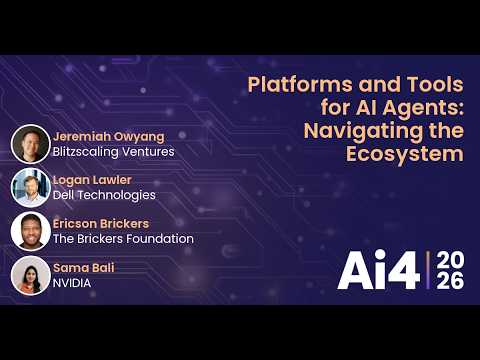
Published on YouTube by the Ai4 channel on August 22, 2026, this video captures a panel discussion titled "Platforms and Tools for AI Agents: Navigating the Ecosystem." Moderated by Jeremiah Owyang, the session brings together experts from Blitzscaling Ventures, The Brickers Foundation, NVIDIA, Dell Technologies, and Redwood Trust, Inc. to explore key platforms, technologies, and strategies for deploying, managing, and scaling enterprise AI agents.
## TL;DR
Panelists explore the practical realities of selecting and integrating AI agent frameworks within both non-profit and large enterprise environments. The conversation addresses critical selection criteria, including governance, security compliance, local versus cloud deployment, and strategies to mitigate "token anxiety." Additionally, the speakers discuss managing agents like human employees with structured guardrails and procedural logging, while reflecting on the broader cultural impacts, risks of cognitive atrophy, and parenting in the upcoming age of AGI.
## Atmosphere & style
The panel delivers a pragmatic, candid, and engaging dynamic that balances high-level executive strategy with relatable real-world humor. The tone is conversational yet highly informative, shifting smoothly from technical enterprise hurdles to personal anecdotes about parenting and offline travel struggles. Readers and listeners experience a thoughtful dialogue that feels grounded in practical experience rather than uncritical hype, grounding hyper-modern AI concepts in genuine human values.
## Key takeaways
- [04:20](https://www.youtube.com/watch?v=cjZDPhpzZs0&t=260s) AI agent architectures rely on combining underlying foundation models with orchestration and safety harnesses, as reflected in NVIDIA's formulation where an AI agent equals model plus harness.
- [07:16](https://www.youtube.com/watch?v=cjZDPhpzZs0&t=436s) Enterprise tool adoption typically spans a continuum between total unmonitored wild west usage, total lockdown, and a managed middle ground using standardized enterprise applications.
- [12:00](https://www.youtube.com/watch?v=cjZDPhpzZs0&t=720s) Key enterprise selection criteria for AI platforms prioritize trust, security, compliance, and multi-region flexibility over pure throughput or token speed.
- [14:10](https://www.youtube.com/watch?v=cjZDPhpzZs0&t=850s) Enterprises and venture-backed startups diverge sharply on priorities: enterprises demand governance and verifiable accuracy, whereas startups prioritize iteration speed to reach revenue.
- [13:40](https://www.youtube.com/watch?v=cjZDPhpzZs0&t=820s) Inserting continuous canary test prompts with pre-determined answers into agent workflows allows organizations to benchmark drift and prevent hallucinations.
- [16:40](https://www.youtube.com/watch?v=cjZDPhpzZs0&t=1000s) Maintaining human-in-the-loop checkpoints across the pipeline is essential to prevent autonomous agents from drifting away from core truths and code baselines.
- [18:50](https://www.youtube.com/watch?v=cjZDPhpzZs0&t=1130s) To mitigate ballooning cloud API costs, organizations map a continuum between edge/local execution and frontier models, offloading routine actions to smaller local models.
- [21:13](https://www.youtube.com/watch?v=cjZDPhpzZs0&t=1273s) Scaling enterprise agents requires treating them like human employees by establishing clear operational roles, structured logging, and procedural spot-checks.
- [25:10](https://www.youtube.com/watch?v=cjZDPhpzZs0&t=1510s) Automating external communication risks removing essential personal authenticity, making human discretion critical for sensitive outreach like donor or non-profit relations.
- [26:20](https://www.youtube.com/watch?v=cjZDPhpzZs0&t=1580s) Over-reliance on automated AI tools creates a risk of cognitive atrophy, making it important to draft initial work manually before using AI for refinement.
- [29:50](https://www.youtube.com/watch?v=cjZDPhpzZs0&t=1790s) Local model execution eliminates cost-per-token metering anxiety and public network security risks, creating a frictionless environment for developer experimentation.
- [33:16](https://www.youtube.com/watch?v=cjZDPhpzZs0&t=1996s) Organizations evaluating local models start with incremental pilot implementations, such as onboarding workflows, before expanding to enterprise-wide operations.
- [34:19](https://www.youtube.com/watch?v=cjZDPhpzZs0&t=2059s) Enterprise teams are increasingly requiring software and CRM vendors to support Model Context Protocol (MCP) to ensure reliable data access for local AI integrations.
- [35:55](https://www.youtube.com/watch?v=cjZDPhpzZs0&t=2155s) Legal and compliance evaluations, including Data Processing Agreements (DPAs), must be conducted concurrently with technical testing to avoid pilot failures late in the process.
- [37:57](https://www.youtube.com/watch?v=cjZDPhpzZs0&t=2277s) Preparing future generations for AGI requires emphasizing human connection, teaching independent critical thinking, and treating AI as a supplement rather than a replacement.
## Detailed walkthrough
### [00:04](https://www.youtube.com/watch?v=cjZDPhpzZs0&t=4s) Introductions and Panel Overview
The session opens with moderator Jeremiah Owyang welcome-addressing the audience about the ecosystem of platforms and tools for AI agents. Introducing the diverse panel, Owyang brings up Eric Brickers, founder of the Brickers Foundation in Washington, D.C., Daniel Lee, a senior software product manager at NVIDIA based in Silicon Valley focusing on client AI platforms, and Logan Lawler, who leads Dell Precision AI strategy out of Austin, Texas. Owyang introduces himself as a partner at Blitzscaling Ventures and highlights firm co-author Chris Yeh sitting in the audience, mentioning their 20-year relationship dating back to Web 2.0. Owyang notes Blitzscaling's investments in AI platform startups, including Composio—a tool designed to connect diverse AI agents.
```
AI4 PANEL: AGENT PLATFORMS & TOOLS
┌──────────────────────────────────────────────────────────────────┐
│ Jeremiah Owyang (Moderator) — Partner, Blitzscaling Ventures │
├──────────────────────────────────────────────────────────────────┤
│ Eric Brickers — Founder, The Brickers Foundation │
│ Daniel Lee — Sr. Software PM, NVIDIA │
│ Logan Lawler — Dell Precision AI Strategy, Dell │
└──────────────────────────────────────────────────────────────────┘
```
The speakers share their backgrounds:
- **Eric Brickers** details his transition from years in government program management to founding a community-focused nonprofit. His organization acts as a connector, supporting initiatives ranging from financial literacy to tech and youth sports.
- **Daniel Lee** explains his role at NVIDIA overseeing system software for AI client products, where he works backward from target user personas to build foundational software that avoids setup friction and ensures smooth initial agent deployment.
- **Logan Lawler** shares a humorous moment about his 20-year tenure at Dell—having joined on July 24, 2006—joking that he has done "pretty much everything except be Michael Dell's chief of staff." Having transitioned to Dell's Client Solutions Group (CSG) workstations side, Lawler admits candidly that he knew nothing about AI until taking his current role two years prior, forcing him to become self-taught alongside many early adopters in the space.
- **Foundational Concept**: Daniel Lee notes NVIDIA's internal equation for an AI agent: $\text{Agent} = \text{Model} + \text{Harness}$ (referencing NeMo Guardrails / client agent harnesses as a key piece).
- **Conference Context**: Owyang and Lee compare AI4's scale to NVIDIA GTC, calling them two of the premier global AI events.
---
[05:16](https://www.youtube.com/watch?v=cjZDPhpzZs0&t=316s) Business Objectives and Current AI Workflows
The panelists dive into how their respective organizations currently use AI tools to solve concrete business challenges. Brickers outlines how the Brickers Foundation operates as a 100% virtual, global organization. To streamline volunteer onboarding across time zones, the foundation coordinates across Google Workspace, job platforms (LinkedIn, Indeed), and Slack. To reduce manual burden when volunteers rotate out, his team is currently in discovery mode building an HR database and evaluating automated tooling.
Lee discusses user experience priorities, noting that AI remains intimidating even for veterans. He highlights his persona-first approach: preventing user exit by enabling quick wins with minimal friction. Lee uses frontier cloud models like Claude and OpenAI Codex while simultaneously benchmarking smaller local models to evaluate output quality and latency.
Lawler describes Dell's operational landscape, categorizing enterprise tool adoption into three buckets: total wild west, complete lockdown, or a managed middle ground. Dell operates in the middle, consolidating on standardized enterprise tools like Jasper for marketing creative writing, while building internal retrieval-augmented generation (RAG) sales bots and automated RFP response systems.
- **Enterprise Scale Constraints**: Lawler points out that Dell employs roughly 85,000 people globally across 10 to 30 major delivery centers operating in multiple languages.
- **Role-Based Differences**: Tailoring agent workflows remains difficult when roles sound similar on paper but differ sharply in execution across distinct ISVs, products, and partner ecosystems.
---
[12:00](https://www.youtube.com/watch?v=cjZDPhpzZs0&t=720s) Selection Criteria for Enterprise AI Platforms
Shifting to platform evaluation criteria, Lawler emphasizes strict policy and compliance requirements at Dell. While expressing personal enthusiasm for open-source frameworks like Hermes ("I will die on that hill about how much I love Hermes"), Lawler notes it cannot easily pass enterprise security compliance or scale to non-technical users in marketing who require turnkey interfaces rather than raw code. Key enterprise criteria include security, local vs. cloud deployment flexibility, compliance, and multi-region scalability.
Owyang shares that Blitzscaling bet heavily on CrewAI alongside LangChain as leading orchestration layer platforms in the enterprise space. He mentions NVIDIA's forward-leaning organizational moves, referencing a job posting for a "Head of Agents for Marketing."
Lee highlights **trust** as the paramount metric over raw throughput. While hardware engineers often focus on tokens per second or end-to-end latency, enterprise clients consistently report they do not mind waiting longer if the output is reliable and verifiable. Lee advocates keeping a human-in-the-loop and using "canary" test prompts—asking the agent questions with known answers—to continually calibrate accuracy.
Owyang contrasts this corporate caution with Silicon Valley's startup mindset. Where enterprise panels at AI4 focus heavily on governance, trust, and token optimization, Silicon Valley venture-backed startups prioritize speed above all else to reach revenue before running out of runway.
- **Key Trade-off**: Enterprise requirements prioritize governance and verifiable accuracy, whereas venture-backed startups prioritize raw iteration speed.
- **Testing Methodology**: Inserting prompts with predetermined answers directly into agent workflows acts as an ongoing validation test for drift and hallucinations.
<ElicitationsGroup message="Explore related AI platform discussions:">
<Elicitation label="Analyze enterprise agent framework trade-offs" query="Compare CrewAI and LangChain for enterprise AI agent deployment, focusing on architecture, security, and scalability."/>
</ElicitationsGroup>
[16:30](https://www.youtube.com/watch?v=cjZDPhpzZs0&t=990s) Pragmatic Tool Selection and Balancing Fast Innovation with Governance
Addressing the challenge of selecting technology, Ericson Brickers explains that his organization focuses heavily on identifying specific pain points and gap areas before evaluating tools. Rather than rushing into platforms blindly, they gather collective feedback from team members on their experiences with tools like Microsoft Copilot and Anthropic's Claude. Coming from an executive perspective with less technical background, Brickers emphasizes the necessity of listening to user teams to determine which tools truly address operational hurdles.
Jeremiah Owyang shifts the focus to enterprise-wide AI innovation, bringing up the tension between strict corporate governance and the rapid pace of startup development. With legal departments stepping in to curb "shadow AI," large enterprises risk falling behind fast-moving frontier models from OpenAI or Anthropic if approval processes lag. Addressing how to keep organizations moving fast while maintaining safety, Sama Bali highlights that keeping a human in the loop is indispensable. Because autonomous agents naturally evolve, adapt, and can drift away from core truths, enterprises cannot remove human checkpoints entirely across the journey from prototyping to production.
- **Human-in-the-Loop Checkpoints:** Necessary to perform regular benchmarks, run system checks, and monitor model updates to catch code breakages or behavioral drift before agents stray too far.
- **Shadow AI Dynamics:** As corporate legal and compliance teams lock down unsanctioned tool usage, companies must actively design safe pathways so employees don't fall behind external innovation.
---
[18:50](https://www.youtube.com/watch?v=cjZDPhpzZs0&t=1130s) Managing Token Spend: Frontier Models vs. Local AI
The conversation turns to managing the financial cost of large language models, contrasting "token maxing" with aggressive token optimization. Sama Bali points out that enterprise users rapidly hit a financial tipping point when relying exclusively on frontier models for every single task. To solve this, organizations are mapping out a continuum ranging from edge/local AI to high-end frontier models. By identifying exact decision points where a request can be offloaded to a smaller or local model, companies can scale back massive cloud token expenses without compromising operational efficacy.
Logan Lawler offers a candid look at corporate access, observing that while Nvidia has been publicly comfortable with heavy token consumption, companies like Dell Technologies tend to be far more conservative. Most employees receive limited or no token budgets, while only specific teams get high-volume allocations. To test software safely without exposing proprietary data or burning budget, Lawler advocates for running models completely off-network on local hardware.
- **Local Infrastructure for Testing:** Non-sensitive enterprise data (such as public product spec sheets or unclassified knowledge bases) can be safely processed locally off-network to learn and "fail fast."
- **Enterprise RFP Limits:** Lawler notes that corporate decision-makers choosing AI platforms are rarely domain experts themselves, relying instead on external panel opinions or RFPs rather than hands-on testing.
---
[21:13](https://www.youtube.com/watch?v=cjZDPhpzZs0&t=1273s) Scaling Enterprise Agents and Managing Them Like Employees
Looking ahead to scaling autonomous agents across enterprise functions—from volunteer management to marketing, sales, customer support, and finance—the panel discusses how to maintain oversight when humans can no longer review every interaction. Brickers argues that scaling agents requires treating them very much like human employees. Organizations must establish clear processes, policies, roles, responsibilities, and operational schedules defining exactly what an agent is expected to do at any given time.
Sharing a practical example, Lawler details how he built an internal agent to synthesize and track complex AI terminology like "multi-headed attention." To monitor the agent without manually checking every single action, he structures the workflow procedurally and has the agent email him step-by-step logs summarizing its output. Over time, as trust builds through spot-checking, management can become hands-off. Bali adds that while agents are analogous to humans, they differ fundamentally because "they never stop working." Information cannot simply be handed to an agent in human-designed formats; it must be structured specifically for machine consumption.
- **Agent-Friendly Content:** When NVIDIA launched its DGX Station product line, they initially created human-oriented web playbooks for setting up diffusion models. Transitioning to an agentic paradigm requires re-architecting these playbooks so autonomous agents can parse and execute them directly.
- **Procedural Logging:** Designing agents to output structured step-by-step task summaries allows managers to perform quick spot-checks before granting full autonomy.
---
[25:10](https://www.youtube.com/watch?v=cjZDPhpzZs0&t=1510s) Enterprise AI Culture, Human Touch, and the Risk of Cognitive Atrophy
Discussing internal corporate culture surrounding AI adoption, speakers reveal a spectrum ranging from enthusiasm to caution. Brickers shares that in non-profit and foundation operations, using AI to draft outreach emails or create marketing graphics can sometimes backfire. Sent letters can sound sterile or machine-generated, stripping away the necessary warmth needed for donor or non-profit relationships, while AI-generated graphics can alienate audiences looking for authenticity. Consequently, while automated onboarding is welcomed, personalized correspondence requires strict human discretion.
Bali draws an analogy between AI dependency and reliance on car GPS systems over the past 20 years. Just as drivers stopped memorizing street names and route directions because GPS handles navigation, relying entirely on AI risks degrading core cognitive skills and muscle memory. To preserve sharp thinking and personal voice, Bali recommends always drafting initial concepts manually before asking AI to challenge, expand, or refine the work.
- **Selective Automation:** Onboarding procedures and repetitive administrative tasks are ideal for full automation, whereas personal outreach letters and sensitive donor communications demand a human touch.
- **The "Wall-E" Fear:** Lawler mentions his concerns as a parent of a 12-year-old, drawing parallels to the movie *Wall-E* regarding generational reliance on technology.
- **Parental Homework Rule:** Rather than allowing kids to use AI to generate direct answers, Lawler enforces a rule where students must attempt assignments first and use AI only to explain mistakes and clarify why an answer was incorrect.
---
[29:50](https://www.youtube.com/watch?v=cjZDPhpzZs0&t=1790s) Local AI vs. Cloud: Overcoming "Token Anxiety"
Examining the architecture choice between local compute and cloud platforms, Lawler acknowledges that while cloud services like Anthropic's Claude offer a low barrier to entry with just a credit card, local execution provides significant advantages. He likens model capabilities to workplace roles: a high-end cloud model like Claude 3.5 Sonnet or Opus is like a seasoned marketing executive capable of high-level strategy, whereas smaller local models function like recent graduates who can follow sequential step-by-step instructions. As small, local models grow more capable, that gap is rapidly closing.
Bali strongly advocates for local AI because it removes "metering anxiety" or "token anxiety." When developers or hobbyists know a clock is ticking and every API call costs money, their creativity becomes transactional and restricted to minimal necessary actions. In contrast, local execution allows developers to experiment freely, run tests overnight, and explore secondary ideas without financial friction, fostering deeper innovation and technical breakthroughs.
- **Financial Friction:** Metered cloud APIs make developer experimentation transactional; local hardware eliminates cost-per-token fears, encouraging continuous trial-and-error.
- **Local Integration:** Dell and other hardware manufacturers are actively embedding local AI capabilities directly into end-user devices to support local execution natively.
<ElicitationsGroup message="Where would you like to go next?">
<Elicitation label="Explore strategies for reducing LLM token costs" query="What are the best enterprise strategies for optimizing LLM token spend and choosing between local and cloud models?"/>
<Elicitation label="Examine framework design for human-in-the-loop AI agents" query="How should enterprises structure human-in-the-loop workflows and guardrails for autonomous AI agents?"/>
</ElicitationsGroup>
Here is the detailed, faithful walkthrough of the provided transcript section:
[33:16](https://www.youtube.com/watch?v=cjZDPhpzZs0&t=1996s) Exploring Local AI Models vs. Cloud Solutions
Jeremiah Owyang opens by framing himself as an enthusiastic AI advocate who is fine with cloud access if necessary, though relying solely on it causes an underlying "token anxiety." He turns to Ericson Brickers to ask if he has a preference between local or cloud deployment. Ericson explains that the Brickers Foundation is currently in a discovery phase, taking all options into account. Their primary goal is figuring out what makes practical sense for their specific operations. He emphasizes a strategy of starting small—taking a small slice of a larger workflow, such as the onboarding process, running it locally to evaluate its effectiveness, and scaling up from there.
Jeremiah then shares his personal preference in response to his own question, expressing a strong desire to run powerful local models on mobile devices. He recounts his own frustrating experience at the Venetian, where he could not get a reliable cellular ISP signal in his room and refused to connect to public Wi-Fi due to security concerns. Having an offline local AI model would allow functionality regardless of cloud availability or poor network connections, noting that tech giants like Apple and Google are actively developing these capabilities.
- Jeremiah highlights security concerns regarding public Wi-Fi as a major reason to favor local device execution.
- Ericson's pragmatic approach centers on incremental testing to match operational needs before committing to broad deployment.
[34:19](https://www.youtube.com/watch?v=cjZDPhpzZs0&t=2059s) Audience Q&A: Connector Quality and Model Context Protocol (MCP)
Jeremiah transitions to audience Q&A, asking attendees to state their names and ensure their contributions are actual questions. Archit from Composio asks the panel about their experience with integrations and connector quality, specifically inquiring how well self-built integrations to external enterprise software perform when connecting local models. Logan Lawler candidly rates the experience as "hit or miss," noting that while some integrations work adequately, others are completely useless ("trash"). He highlights that enterprise teams at Dell are increasingly pressing software and CRM vendors to provide Model Context Protocol (MCP) support to ensure proper data accessibility for go-to-market strategies.
Sama Bali highlights that local AI's chief strength lies in rapid iteration. By testing and comparing various setup options locally without worrying about token costs or network latency, organizations can navigate compatibility hurdles and determine if a tool achieves the desired objective.
- Archit's question focuses on the reliability of connector frameworks when linking local AI models to enterprise ecosystems.
- Logan notes that evaluating CRM vendor MCP availability has become a priority requirement during vendor discussions at Dell.
[35:55](https://www.youtube.com/watch?v=cjZDPhpzZs0&t=2155s) Audience Q&A: Navigating Enterprise Legal, Compliance, and DPAs
Colin Lyons asks the panel about how and when they integrate legal and compliance evaluations into their tool selection process. He shares a painful experience where a pilot project failed at the finish line because the vendor refused to compromise on the Data Processing Agreement (DPA). Logan acknowledges that legal approval at Dell can be a "tough bear," explaining that while legal review is not the very first step, it is run concurrently with technical evaluation because the process takes so long. He admits that Dell has lost numerous vendor deals due to legal deadlocks over data storage locations, compliance standards, corporate leadership backgrounds, and privacy terms. He agrees that establishing pre-approved vendor lists or pre-vetted compliance frameworks up front would prevent wasted effort on pilot builds.
Sama and Ericson strongly agree that legal considerations must be integrated right at the start rather than treated as an afterthought. Sama notes that legal feasibility is baked directly into their initial research process by investigating vendors' past issues and track records. Logan suggests a quick litmus test: check if companies of similar size and industry (jokingly referencing competitors like HP) are already using the vendor, as they likely share similar legal and compliance requirements.
- Colin's anecdote illustrates the operational risk of delaying DPA negotiations until after building a proof-of-concept.
- Pre-vetting vendors against industry peers serves as a practical heuristic to gauge legal approval likelihood.
[37:57](https://www.youtube.com/watch?v=cjZDPhpzZs0&t=2277s) Parenting and Human Connection in the Approaching Age of AGI
Jeremiah poses a final, overarching question to the panel: how should parents raise children in an age where Artificial General Intelligence (AGI) is expected to arrive within the next several years? Logan candidly admits he does not have a definitive answer, comparing the transition to previous technological shifts—such as his parents introducing the first home computer or getting a cell phone—which completely altered everyday life. Despite the uncertainty, he expresses confidence in humanity's historical resilience and ability to adapt to massive technological shifts.
Sama emphasizes the need to place a "premium on humanity" and maintain deep personal connections. In an AGI-integrated world, parents must help children discern when human judgment is necessary versus when AGI input is acceptable, establishing decision-making frameworks where the two intersect through open communication about implications and consequences. Ericson concludes the panel by advising everyone to stay grounded in why they use AI—treating it not as a replacement for human thought, but as a supplement. He stresses the importance of teaching children to think independently first and critically challenge AI outputs rather than accepting them at face value.
- Logan draws a parallel between raising kids alongside AGI and earlier technological milestones like home internet and mobile phones.
- Sama highlights open communication and human-centric decision-making as crucial strategies for guiding children.
- Ericson emphasizes using AI as a cognitive supplement while actively encouraging kids to question and challenge AI-generated responses.
## Notable quotes
> [04:00](https://www.youtube.com/watch?v=cjZDPhpzZs0&t=240s) pretty much everything except be Michael Dell's chief of staff. — Logan Lawler
> [12:00](https://www.youtube.com/watch?v=cjZDPhpzZs0&t=720s) I will die on that hill about how much I love Hermes — Logan Lawler
> [21:13](https://www.youtube.com/watch?v=cjZDPhpzZs0&t=1273s) they never stop working. — Sama Bali
> [34:19](https://www.youtube.com/watch?v=cjZDPhpzZs0&t=2059s) hit or miss — Logan Lawler
> [37:57](https://www.youtube.com/watch?v=cjZDPhpzZs0&t=2277s) premium on humanity — Sama Bali
## Mentioned
Jeremiah Owyang, Ericson Brickers, Daniel Lee, Sama Bali, Logan Lawler, Chris Yeh, Archit, Colin Lyons, Blitzscaling Ventures, The Brickers Foundation, NVIDIA, Dell Technologies, Redwood Trust, Inc., Composio, NeMo Guardrails, Google Workspace, LinkedIn, Indeed, Slack, Claude, OpenAI Codex, Jasper, Hermes, CrewAI, LangChain, OpenAI, Anthropic, Claude 3.5 Sonnet, Opus, Apple, Google, HP, DGX Station, Model Context Protocol (MCP), Wall-E
## Video description
Jeremiah Owyang — VC, Blitzscaling Ventures
Ericson Brickers — Executive Director, The Brickers Foundation
Sama Bali — Sr Manager, AI Solutions Product Marketing, NVIDIA
Logan Lawler — Dell Pro Precision AI Strategy, Dell Technologies
Abhinav Asthana — Chief Technology Officer, Redwood Trust, Inc.
Selecting the right platforms and tools is critical for deploying and managing effective AI agents. In this session, panelists will explore the current AI agent ecosystem, discussing key platforms, tools, and technologies that facilitate deployment, management, and optimization. Learn how to strategically evaluate and select solutions that align with your organizational needs, ensuring your AI initiatives are robust, scalable, and deliver maximum business value.
Enterprise deployment of autonomous AI agents requires balancing rapid innovation against rigorous compliance, token economics, and structured human oversight. While agentic frameworks offer substantial operational leverage, practitioners stress that scalable implementation depends on hybrid local-cloud architectures, standardized protocols, and managing agents with the same procedural boundaries applied to human employees.
Enterprise Governance and Legal Compliance Hurdles (12:00)
Integrating AI agents into enterprise workflows faces steep security and compliance barriers that startup ecosystems often bypass. Logan Lawler of Dell—an enterprise operating with approximately 85,000 employees across 10 to 30 global delivery centers—explains that while lightweight open-source frameworks like Hermes offer developer appeal, enterprise adoption requires turnkey tools that pass stringent security audits. Organizations frequently discard promising pilot tools because vendors fail to agree on Data Processing Agreements (DPAs), privacy terms, or data storage standards. To mitigate friction, panel members recommend running legal assessments concurrently with technical evaluations and using the vendor choices of industry peers as an initial compliance benchmark.
Simultaneously, enterprises must actively manage 'shadow AI' without paralyzing internal progress. While orchestration layers such as CrewAI and LangChain gain traction, enterprises must deploy manageable environments—such as Dell's use of Jasper for standardized creative writing alongside internally built retrieval-augmented generation (RAG) tools for sales and RFP responses—rather than allowing unregulated experimentation or enforcing total operational lockdowns.
Cost Management and Local Versus Cloud Deployments (18:50)
Relying exclusively on frontier cloud models like Claude or OpenAI Codex introduces financial friction and 'metering anxiety,' which restricts developer experimentation to narrow, transactional queries. Sama Bali notes that enterprises reach a cost tipping point when routing every query to high-end hosted models. Running smaller models locally on enterprise hardware eliminates token consumption costs, allowing teams to run overnight tests, debug workflows, and fail quickly using public or unclassified company data without exposing proprietary assets.
Panelists conceptualize model selection as an organizational hierarchy: frontier cloud models act like seasoned strategic executives handling complex reasoning, whereas small, local models function like recent graduates executing discrete, sequential instructions. Furthermore, local device execution resolves physical connectivity constraints, enabling offline productivity in environments with insecure public networks or poor cellular connections. However, Lawler notes that local integrations remain hit-or-miss, driving enterprise demand for standardized frameworks like Anthropic's Model Context Protocol (MCP) from CRM and software vendors.
Structuring and Supervising Agents as Workforce Units (21:13)
Scaling autonomous agents across functions such as HR onboarding, customer support, and sales requires treating them like structured human personnel. Daniel Lee of NVIDIA defines an agent through the equation of Model plus Harness, emphasizing that autonomous systems require explicit policies, assigned roles, and machine-readable instructions. Playbooks designed for human readability must be systematically re-architected into structured formats that machine agents can parse and execute autonomously.
To manage systems that operate continuously without manual oversight for every action, organizations rely on procedural reporting and verification checkpoints. Lawler illustrates this by configuring internal research agents to deliver structured, step-by-step summary logs via email, establishing trust through periodic spot-checks. Additionally, Lee advocates inserting 'canary prompts'—test inputs with predetermined factual answers—directly into active production workflows to continually benchmark accuracy and identify behavioral drift before hallucinations affect core business operations.
Authenticity Boundaries and Mitigating Cognitive Atrophy (25:10)
Despite productivity gains, panel members emphasize strict boundaries regarding where automation should be applied. Eric Brickers observes that in non-profit operations, automating donor outreach letters or promotional imagery often backfires; sterile, synthetic communication alienates communities that require authentic human connection. Consequently, repetitive administrative logistics such as volunteer onboarding are delegated to automated pipelines, while sensitive relationship-building remains strictly human-driven.
More broadly, speakers caution against over-reliance on generative systems, comparing excessive AI dependence to the loss of basic navigation skills caused by automotive GPS. To prevent cognitive atrophy and the loss of individual voice, Bali and Lawler recommend drafting conceptual frameworks independently before employing AI to challenge, refine, or critique the work. In educational and workforce contexts, this translates to utilizing AI strictly as an analytical sparring partner to diagnose errors rather than an automated solution engine.
While AI agents are transitioning from experimental scripts into operational enterprise tools, significant bottlenecks persist around software connector reliability, vendor compliance deadlocks, and token budget governance. The panel concludes that long-term organizational success relies on maintaining human-in-the-loop checkpoints, ensuring that autonomous tools supplement rather than supplant independent critical thinking.
精炼阅读摘要
在 Ai4 大会上,来自投资机构、硬件厂商与非营利组织的行业代表指出,企业部署 AI 智能体(AI Agents)必须在快速创新与严苛治理之间寻求平衡,通过人机协同、本地化算力分流以及前置合规审查来降低成本与信任风险。
企业与初创公司的选型分歧 (12:00)
企业引入 AI 智能体平台时面临的核心矛盾是创新速度与合规信任的取舍。Blitzscaling Ventures 合伙人 Jeremiah Owyang 指出,风投支持的硅谷初创公司将迭代速度置于一切之上,力求在资金耗尽前实现盈利;而大型企业则更看重合规、信任与长效治理。NVIDIA 高级软件产品经理 Daniel Lee 强调,在企业应用场景中,输出结果的可靠性和可验证性远比每秒生成 Token 数或端到端延迟等原始吞吐量指标更重要,企业客户宁愿等待更长时间以确保准确度。为此,NVIDIA 提出“智能体 = 模型 + 框架套件(Harness)”的内部架构,并主张在工作流中插入具有已知答案的“金丝雀(Canary)”测试提示词,以持续校准并监控模型漂移与幻觉。
本地算力与前沿云端模型的协同与成本控制 (18:50)
完全依赖高阶前沿云端模型进行各类任务会导致巨额 Token 账单,并引发开发人员的“计量焦虑”或“Token 焦虑”。嘉宾分析认为,云端模型按调用收费会限制开发者的试错意愿,促使实验过程变得功利化;而离线或本地硬件运行则允许团队无成本负担地进行通宵测试与底层探索。Dell Precision AI 战略负责人 Logan Lawler 指出,Dell 对 Token 预算采取相对保守的管理策略,大部分员工额度有限,因此他提倡利用本地硬件处理公开规格书等非敏感数据以实现低成本试错。企业当前的务实策略是将任务划分为阶梯式连续体,结合高阶云端模型(如 Claude 3.5 Sonnet)处理高级战略规划,同时将遵循循序执行指令的具体任务转移给小型本地模型,以在控制开支的同时兼顾效率与离线安全性。
像管理员工一样规范智能体与流程设计 (21:13)
随着智能体扩展至人力管理、营销、销售等复杂职能,维持有效监督要求企业建立类似于管理人类员工的制度框架。Brickers Foundation 创始人 Eric Brickers 主张,扩展智能体规模必须为其设立明确的业务流程、合规政策、职责范围与排班表。Lawler 结合其构建内部术语追踪智能体的实践指出,管理者可以通过程序化日志让智能体定期发送步骤摘要,先通过抽检建立信任,再逐步放权。同时专家指出,智能体“从不休假”且无法直接高效消化面向人类编写的操作指南,企业需要将传统的业务知识重构为机器专用的结构化格式,以实现自动化解析与执行。
法务前置与接口标准应对集成阻碍 (34:19)
企业落地外部工具和本地模型时,合规审查与接口质量往往成为关键瓶颈。在现场问答中,Lawler 直言自建集成方案连通企业软件的表现参差不齐,Dell 正在推动 CRM 等软件供应商支持模型上下文协议(MCP),以确保数据的无缝对接。此外,针对数据处理协议(DPA)谈判破裂导致试点项目搁浅的痛点,与会者一致认为必须将法务与合规审查从流程末端移至最前线,与技术评估同步推进。通过在初期背景调查中筛查供应商过往记录,或参考同行大型企业的采购先例,有助于团队提前规避法务僵局并减少资源浪费。
人际温度保留与认知退化防范 (25:10)
普及 AI 工具引发了企业内部文化与长期认知能力的深层思考。Brickers 结合非营利组织运作经历指出,完全由 AI 生成的捐赠者联络邮件往往缺乏温度,AI 生成的营销素材也容易显得虚假,因此在推进流程自动化的同时,涉及情感联结的关键环节必须保留人工介入。专家进一步以汽车 GPS 导航导致驾驶员丧失记路能力为喻,警告全盘依赖 AI 存在削弱人类核心认知思考能力的风险,建议在工作中坚持先由人工完成初始概念构思,再利用 AI 进行补充与校正;在家庭教育中也应引导下一代独立思考并对 AI 生成内容保持审辨态度。
当前企业应用 AI 智能体正从野蛮生长走向精细化运营,但在实际推行中,企业决策层往往缺乏深层技术背景,仍普遍依赖外部咨询与 RFP 流程而非亲自上手测试,技术供应商的 MCP 支持进度与跨国合规壁垒也仍是尚未彻底解决的实施阻碍。
Detailed notes — zh
## Background
本内容由 Ai4 于 2026 年 8 月 22 日发布在 YouTube 平台上。视频记录了一场关于“AI Agent 的平台与工具:探索生态系统”的圆桌讨论,汇集了来自投资机构 Blitzscaling Ventures、NVIDIA、Dell Technologies、Redwood Trust 及 The Brickers Foundation 的多位行业专家,共同探讨部署、管理与优化 AI 智能体的关键平台、前沿工具及企业落地策略。
## TL;DR
圆桌讨论围绕 AI Agent 在不同组织架构中的落地实务展开,重点剖析了从初创团队到跨国巨头在工具选型、定制化瓶颈及并发扩展中的核心挑战。嘉宾们深入对比了本地离线推理与云端大模型的混合架构,指出本地化试错能有效消除开发者的“Token 计量焦虑”并保障数据合规。此外,讨论高度强调了“人机协同(Human-in-the-Loop)”与严谨治理机制的重要性,主张像管理员工一样规范 Agent 职责,并在教育下一代与实际应用中始终坚守人类的批判性思考与人实质温度。
## Atmosphere & style
整场研讨会气氛活跃且务实,主持人的风趣引导与嘉宾们直言不讳的行业洞察形成了极佳的互动张力。来自硬件巨头、前沿科技企业与非营利组织的代表在观点碰撞中兼顾幽默自嘲与深度反思,既有对底层算力、法务合规阵痛的硬核拆解,也有关于 AGI 时代人类认知退化与家庭教育的温情探讨,让观众在严谨求真的技术交流中感受到鲜明的现实温度与思想启发。
## Key takeaways
- [08:17](https://www.youtube.com/watch?v=cjZDPhpzZs0&t=497s) 用户体验(UX)是决定 AI 平台能否成功落地的核心,若产品初次使用门槛过高,用户会因挫败感而放弃,因此工具设计需以最少阻力让用户获得成就感。
- [10:05](https://www.youtube.com/watch?v=cjZDPhpzZs0&t=605s) 大型企业在规模化部署 AI Agent 时面临高度碎片化的上下文挑战,现有工具难以低成本为数万名员工快速定制并横向扩展个性化工作流。
- [12:00](https://www.youtube.com/watch?v=cjZDPhpzZs0&t=720s) 企业级 Agent 工具的选型首重安全与合规红线,同时必须兼顾非技术人员的低门槛定制能力与全球高并发扩展性。
- [14:05](https://www.youtube.com/watch?v=cjZDPhpzZs0&t=845s) 相比单纯追求生成速度(Tokens per second),企业业务方更重视 Agent 输出的真实度与无幻觉,可通过随机插入已知答案的基准测试题来建立信任机制。
- [17:18](https://www.youtube.com/watch?v=cjZDPhpzZs0&t=1038s) 构建“本地轻量模型(SLM)+ 云端前沿大模型”的连续谱系分流架构,结合人机协同(Human-in-the-Loop)审核,可有效防范 Agent 行为偏移并控制 Token 成本爆炸。
- [19:41](https://www.youtube.com/watch?v=cjZDPhpzZs0&t=1181s) 在本地断网环境下利用公开非涉密数据进行压力测试,是企业低成本、安全验证 AI 工具崩溃点与边界缺陷的最佳路径。
- [21:07](https://www.youtube.com/watch?v=cjZDPhpzZs0&t=1267s) 管理大规模 AI Agent 与管理人高度相似,需明确岗位职责与流程规范,并通过分步汇报与人工抽检逐步建立自主运行的信任。
- [23:28](https://www.youtube.com/watch?v=cjZDPhpzZs0&t=1408s) 人类操作手册(Playbook)无法直接适配 Agent 高效消费,企业在规模化应用时必须对底层信息供给与数据格式进行 Agent 友好化重构。
- [27:04](https://www.youtube.com/watch?v=cjZDPhpzZs0&t=1624s) 为防止过度依赖自动化导致人类认知与思考能力退化,应坚持“人类先独立思考构思,再借助 AI 校验与挑战论点”的协作原则。
- [29:49](https://www.youtube.com/watch?v=cjZDPhpzZs0&t=1789s) 云端顶级大模型如同经验丰富的战略主管,而本地端侧小模型如同按步骤执行的基层新人,两者结合构成了兼顾深度推理与成本效益的混合架构。
- [31:52](https://www.youtube.com/watch?v=cjZDPhpzZs0&t=1912s) 纯云端 API 的计费模式会给开发者带来“Token 焦虑”并扼杀探索意愿,而本地无计量成本的运行环境能彻底释放通宵实验与反复试错的自由。
- [34:29](https://www.youtube.com/watch?v=cjZDPhpzZs0&t=2069s) 企业引入 AI 工具时法务与数据合规审查必须与技术验证前置并行,建立预核准白名单并参照同体量竞品的采纳先例可大幅降低项目流产风险。
- [37:57](https://www.youtube.com/watch?v=cjZDPhpzZs0&t=2277s) 面对未来 AGI 的普及,教育的核心在于守护“人性的溢价”,培养孩子辨别机器与人类情感边界的能力,将 AI 视为思考的辅助而非替代品。
- [40:10](https://www.youtube.com/watch?v=cjZDPhpzZs0&t=2410s) 在 AI Agent 体系的日常应用中,持续审视并批判性质疑输入数据与输出结果的真实合理性,是确保系统可靠交付的最终防线。
## Detailed walkthrough
### [00:04](https://www.youtube.com/watch?v=cjZDPhpzZs0&t=4s) 圆桌开场与嘉宾介绍
在 Ai4 峰会的这场座谈中,主持人兼硅谷 Blitzscaling Ventures 风险投资人 Jeremiah Owyang 热情开场,宣布本场主题为“AI Agent 的平台与工具:探索生态系统”(Platforms and Tools for AI Agents: Navigating the Ecosystem)。他直言台上各位嘉宾背景各异,观点碰撞激烈,“他们不会在所有事情上达成一致”。随后,Jeremiah 依次介绍了三位嘉宾:来自华盛顿特区 The Brickers Foundation 的 Ericson Brickers、来自硅谷 NVIDIA 负责客户端 AI 平台系统软件的产品经理 Daniel Lee,以及来自德克萨斯州奥斯汀 Dell 负责 Dell Precision AI 战略的 Logan Lawler。
Jeremiah 简要介绍了自己的背景:作为 Blitzscaling Ventures 的早期 AI 投资人,该基金由撰写知名商业书籍《闪电式扩张》(Blitzscaling)的 Chris Yeh 联合创立,而 Chris 当天也恰好坐在台下。Jeremiah 提到两人相识 20 年,共同经历了 Web 2.0 时代,如今全力布局 AI。在平台工具方面,他们投资了包括用于连接整合各类 AI Agent 的 Composio 在内的多家初创公司。
随后嘉宾们轮流做自我介绍:
- **Ericson Brickers**:拥有多年的政府项目管理经验,后创办非营利组织 The Brickers Foundation。机构定位为“连接器”,通过金融知识普及、科技和体育等多元化举措赋能社区。当被问及对 AI 改善社区的态度时,Ericson 明确表示自己持“乐观态度”。
- **Daniel Lee**:在 NVIDIA 负责 AI 客户端产品的系统软件。其工作核心是基于目标用户画像进行逆向工程,确保底层软件组件能为用户提供开箱即用的优质体验,降低部署首个 Agent 的挫败感。谈及 NVIDIA 自身的工具生态时,他提到团队是 NeMo 的使用者,并给出了一个公式:“模型 + 框架底盘 = Agent”(Model + Harness = Agent),而 NeMo 正是其中不可或缺的一环。Daniel 与主持人均认为 AI4 和 GTC 是全球规模最大的两个 AI 盛会。
- **Logan Lawler**:自 2006 年 7 月 24 日加入 Dell,供职已达 20 年之久。他戏称自己是台上“最令人失望的人”,幽默地表示自己“除了没当过 Michael Dell 的幕僚长,在 Dell 几乎干遍了所有岗位”——涵盖市场、服务、产品管理、技术营销,甚至在 2006 年创立了社交媒体舆情监听团队。过去两年中,他专注于 Dell 客户端解决方案(CSG)部门下的工作站(Workstation)硬件战略与 Go-To-Market 规划。Logan 还坦诚爆料自己在两年前接手该岗位之前对 AI 完全是一无所知,全靠自学摸索。
---
### [05:12](https://www.youtube.com/watch?v=cjZDPhpzZs0&t=312s) 非营利组织的全球分布式运营与 AI 探索
Jeremiah 将话题切入正题,询问各家机构引入 AI 平台的业务目标与实际落地场景。Ericson Brickers 分享了 The Brickers Foundation 的运营现状:该基金会是一家 100% 线上远程办公的组织,团队成员和对接的非营利组织分布在世界各地。这种全球跨时区协作虽然带来了挑战,但也实现了全天候 24 小时运转。
为了支撑运转,团队必须高度依赖标准化工具链,但多系统的割裂带来了明显的协作摩擦与运营痛点:
```mermaid
flowchart LR
accTitle: 非营利组织志愿者流转与工具链全景
subgraph S1["招募渠道"]
A["LinkedIn / Indeed 招聘"]
end
subgraph S2["协同中枢"]
B["Google Workspace 邮件"]
C["Slack 实时沟通"]
end
subgraph S3["痛点与规划"]
D["手动流程与人员缺勤风险"]
E["自建 HR 数据库集成 AI"]
end
A --> B
B --> C
C --> D
D -.-> E
```
Ericson 指出,志愿者完全因认同组织使命而来,工作时间极具弹性,一旦某位志愿者临时缺勤,多岗位交接的业务流就可能停滞。因此,团队正将政府与企业级流程改进的经验引入基金会,试图通过自建 HR 数据库并探索自动化机器人(Bot)与 AI 工具,接管繁琐的人员入职(Onboarding)和跨平台信息同步,从而将人力从枯燥的流程中解放出来。
---
### [08:17](https://www.youtube.com/watch?v=cjZDPhpzZs0&t=497s) 以用户体验为先:降低 AI 使用门槛与工具选型
针对 AI 平台与工具的落地,Daniel Lee 强调了“用户体验(UX)”的决定性地位。他表示,AI 的复杂性往往令人望而生畏,即便是深入行业两三年的专业人员依然会感到其门槛之高。如果产品不能在第一时间让用户体验到顺畅与成就感,用户就会产生“这不适合我,等以后变简单了我再来”的退却心理。因此,不论是 NVIDIA 打造底层软件,还是企业内部开发 AI 解决方案,核心都应围绕“如何让用户以最少的挫折感获得成功”。
在工具选择上,Daniel 表示 NVIDIA 保持极度开放的态度,并不拘泥于纯自研:
- **前沿模型探索**:日常重度使用 Claude 和 Codex 等前沿云端模型,以此摸清最顶尖能力边界。
- **本地部署与降级验证**:逐步将任务“降级”至本地可部署的小模型,细致对比输出质量、体验差异与本地推理表现,提炼出可落地的最佳实践。
随后,Logan Lawler 接过话茬,准备从 Dell 极为精简精细(Lean)的运营视角,深入解析企业在引入外部工具时普遍面临的“三种状态”(其中第一种便是无论需要什么都能随意获取的“野蛮生长状态”)。
### [10:05](https://www.youtube.com/watch?v=cjZDPhpzZs0&t=605s) 戴尔内部的企业级 AI 落地与 Agent 定制化困境
Logan Lawler 深入分享了戴尔科技(Dell Technologies)在 AI 工具应用上的内部策略与现状。在大型企业内部,AI 工具的采纳往往处于“随意使用”与“全盘禁止”这两个极端之间,而戴尔则通过中央团队统筹各业务部门利益相关方,力求在工具整合与标准化之间找到平衡。在 Agent 出现之前,戴尔已经广泛部署了诸如营销团队专用的 Jasper,以及自主研发的 RAG 销售智能问答系统(索引海量产品与服务信息)和自动化 RFP(标书)应答系统,这些传统 AI 场景已平稳运行多时。
然而,迈入 AI Agent 时代后,戴尔面临着全新的结构性挑战。虽然跨部门的工作流程表面上非常相似,但具体业务语境差异极大。例如,AI 战略团队与负责其他领域的同行虽然职能类似,但所对接的生态企业、ISV 独立软件开发商、行业活动以及沟通对象完全不同。现有的 Agent 工具很难让企业以极低成本为 85,000 名员工快速定制并横向扩展个性化工作流。如果把针对某个具体岗位打造的 Agent 直接交给另一位员工,其实用价值几乎为零。
```mermaid
flowchart TD
accTitle: 戴尔企业级 AI 工具演进与挑战
subgraph PreAgent["传统 AI 应用阶段(已规模化)"]
A["营销创意写作(Jasper 等)"]
B["RAG 销售知识库检索"]
C["海量 RFP 标书自动化处理"]
end
subgraph AgentEra["Agent 落地挑战(85,000 人规模)"]
D["业务流程表面相似"] --> E["上下文语境高度碎片化(ISV/客户/行业不同)"]
E --> F["痛点:缺乏兼顾低代码定制与全员扩展的平台"]
end
```
---
### [12:00](https://www.youtube.com/watch?v=cjZDPhpzZs0&t=720s) 企业级 Agent 平台的选型标准与前沿生态
围绕“企业挑选 AI Agent 工具和供应商的核心标准”,Logan Lawler 明确指出了戴尔的严苛红线:安全、合规与数据政策永远排在首位。尽管他个人非常喜欢类似 Hermes 这样的开源开源模型/工具(直言“愿为其据理力争”),但受限于终端用户的技术门槛,这类工具很难在全员层面推广。戴尔绝大多数营销或业务人员不具备手动调试和编写 Agent 的能力,因此理想的企业级平台必须具备极高的易用性,让终端用户能够自行定制,同时还必须具备跨全球 10 到 30 个交付中心、支持多语言及 85,000 名员工的高并发扩展能力。
主持人 Jeremiah Owyang 对此补充了资本与生态视角的观察。他在调研企业级 Agent 市场后,押注了 CrewAI,并指出 CrewAI 与 LangChain 是目前该赛道最核心的两大领头羊。此外,Jeremiah 还透露了英伟达(NVIDIA)在组织架构上的前沿动作——英伟达市场团队近期正在招聘“营销 Agent 负责人”(Head of Agents for Marketing)。这一全新职位的设立,标志着一线科技巨头已开始在核心业务部门设立专属的 Agentic 战略岗位。
- **合规与安全性**:企业级部署的首要红线,决定了私有化本地运行与云端托管的架构决策。
- **易用性与终端可定制性**:让非技术人员也能灵活微调工作流,避免技术孤岛。
- **超大规模并发与全球化支持**:跨数十个交付中心、支持多语言及数万名员工的扩展能力。
---
### [14:05](https://www.youtube.com/watch?v=cjZDPhpzZs0&t=845s) “信任”与“速度”的博弈:硅谷创业公司与大型企业的认知鸿沟
当英伟达的 Sama Bali 被问及企业整合 Agent 平台的核心考量时,他将“信任”(Trust)列为最关键的因素。从硬件和底层算力视角出发,技术人员往往执着于性能指标,如每秒生成的 Token 数(Tokens per second)以及端到端响应时间;然而与实际业务方沟通后发现,用户宁愿多等待几秒,也必须拿到真实、可用且无幻觉的结果。为了建立这种信任,Sama Bali 提出了类似“测谎”的验证机制:在日常交互中随机掺入已知答案的基准测试题,以此检验 Agent 输出的准确性。
Jeremiah Owyang 就此引发了关于“信任与治理”的现场互动,台下观众反响热烈。但他同时指出了传统大型企业与硅谷创业圈之间的鲜明文化冲突:硅谷奉行的是“唯快不破”(Speed),初创企业为了在 12 个月内验证商业模式并获得收入必须全速狂奔,治理与信任往往被置于次要位置;而大型企业则极度关注风险控制与治理。The Brickers Foundation 的 Ericson Brickers 也从非纯技术管理者的视角指出,他们在评估 Copilot、Claude 等工具时,高度依赖同行的实际口碑与真实反馈,通过找准业务痛点并匹配成熟工具来规避踩坑风险。
---
### [17:18](https://www.youtube.com/watch?v=cjZDPhpzZs0&t=1038s) 人机协同(Human-in-the-Loop)与端到端 Token 成本优化
随着法务合规部门收紧对“影子 AI”(Shadow AI)的管控,企业面临着既要确保安全合规又要保持敏捷创新的两难处境。Sama Bali 强调,破局的关键依然在于**人机协同(Human-in-the-Loop)**。由于自主 Agent 具备持续演化和自适应的特性,企业绝不能完全放任其独立决策,而是必须在从原型设计(Prototyping)到生产上线(Production)的全生命周期中,设立周期性基准测试与检查点,防止 Agent 的行为发生偏离。
针对近期业界高度关注的“Token 滥用 vs Token 优化”议题,Sama Bali 阐述了英伟达及众多企业的成本控制策略。面对顶级前沿模型(Frontier Models)高昂的 API 调用成本,企业不能在所有场景下一味调用超大模型,而是需要构建从“本地部署/小型模型(SLM)”到“云端前沿大模型”的连续谱系架构。通过在工作流中建立智能分流决策点,将通用或低复杂度任务分流给本地小模型,仅在关键复杂节点调用前沿模型,从而在成本爆炸前实现精细化的 Token 预算管理与能效优化。
```mermaid
flowchart LR
accTitle: 本地与前沿模型的 Token 智能分流架构
A["任务输入"] --> B{"任务复杂度与安全分流决策点"}
subgraph CostEffective["高性价比 / 本地层"]
B -- "低复杂度 / 高隐私任务" --> C["本地小型模型 (SLM)"]
end
subgraph FrontierTier["高性能 / 前沿层"]
B -- "高复杂度 / 关键决策任务" --> D["云端前沿大模型 (Frontier Models)"]
end
C --> E["人机协同审核 (Human-in-the-Loop)"]
D --> E
E --> F["最终业务输出"]
```
### [19:41](https://www.youtube.com/watch?v=cjZDPhpzZs0&t=1181s) 本地化测试与安全试错:快速验证 AI 工具的最佳路径
关于企业内部 Token 额度的分配与使用策略,各家科技巨头呈现出截然不同的风格。NVIDIA 在内部非常鼓励 Token 消耗与算力支出,而 Dell Technologies 的态度则相对保守——很多普通员工几乎分不到额度,少数人拥有少量配额,仅有特定核心团队才能获得大量 Token。
针对平台选型与数据安全,Logan Lawler 提出了非常务实的个人观点:企业内负责技术选型和采购决策的人员,往往并非这些平台的真正一线专家,通常只是依赖外部顾问意见或 RFP 评审委员会的建议。因此,探索和验证新工具最安全、最高效的方式是**本地化运行(Run locally)**。通过将模型完全断网运行,并输入企业公开的非机密数据(例如官网公开的产品规格书、常规非涉密知识库等)进行压力测试,团队可以在不泄露专有数据的前提下迅速发现系统的缺陷与崩溃点,实现低成本的“快速失败与快速学习”。
```mermaid
flowchart TD
accTitle: 本地化断网测试流程
subgraph S1["数据准备"]
A["选择公开/非敏感数据<br/>(如产品规格书、公开知识库)"]
end
subgraph S2["隔离测试"]
B["本地化运行 AI 平台/模型<br/>(完全断开网络连接)"]
end
subgraph S3["验证评估"]
C["观察系统行为与崩溃点"] --> D["低成本快速试错与定型"]
end
A --> B
B --> C
```
- **Token 策略差异**:NVIDIA 鼓励大规模 Token 试错与消耗;Dell 采取阶梯式保守分配策略。
- **本地化试错优势**:断网环境下使用非敏感公开数据(dell.com 即可查到的规格参数)测试,能最快暴露边缘异常。
---
### [21:07](https://www.youtube.com/watch?v=cjZDPhpzZs0&t=1267s) 规模化管理智能体:像管理人一样设定职责与流程
当主持人 Jeremiah Owyang 设想未来企业全员或大量志愿者都被 AI Agent 替代(覆盖营销、销售、客户关怀、财务等各职能),探讨该如何实现规模化管理与监管时,嘉宾们达成了一个共识:**管理 AI Agent 在很大程度上与管理真实员工高度相似**。
Ericson Brickers 指出,管理 Agent 必须建立起严密的流程、制度和规范,明确定义每个 Agent 的角色定位、具体职责、运行时间表以及评估标准。Logan Lawler 分享了自己构建 Agent 的实际操作:为了追踪专业 AI 术语(如 multi-head attention 等底层概念)并沉淀知识库,他设计了一套结构化、按步骤执行的 Agent 工作流。每次任务执行完毕,Agent 会自动发送一封电子邮件汇报“步骤一、步骤二、步骤三分别做了什么”,他会通过抽检确认结果无误,直到建立足够信任后才逐步放手实现免干预运行。
```mermaid
flowchart LR
accTitle: Agent 执行与抽检工作流
A["触发工作任务"] --> B["分步执行<br/>(步骤 1 → 步骤 2 → 步骤 3)"]
B --> C["发送执行明细邮件"]
C --> D{"人工抽检验证"}
D -- "逐步建立信任" --> E["免干预自主运行"]
```
---
### [23:28](https://www.youtube.com/watch?v=cjZDPhpzZs0&t=1408s) 人机行为差异与内容重构:从人类 Playbook 到 Agent 友好格式
Sama Bali 进一步补充,虽然 Agent 在组织分工上与人类相似,但它们的**行为模式与人类有着本质区别**——Agent 是永不停歇运行的,更重要的是,专为人类编写的培训材料和操作手册并不能直接无缝适配给 Agent 高效消费。
以 NVIDIA 推出 DGX Spark 产品时的真实案例为例,团队最初在官网上提供了详尽的 Playbook(包含搭建扩散模型、微调模型等前 5 分钟上手指南),旨在帮助人类开发者降低使用门槛。然而在 Agent 时代,用户更希望 Agent 直接代为执行这些任务。这就迫使团队重新审视并重构底层内容:是将现有的 Playbook 原样喂给 Agent,还是必须重新设计一套“Agent 友好(Agent-friendly)”的架构与数据格式?企业在规模化部署 Agent 时,必须对信息输入的供给方式进行针对性改造。
---
### [25:11](https://www.youtube.com/watch?v=cjZDPhpzZs0&t=1511s) 企业内部文化与真实温度:AI 生成内容的边界把控
当谈及组织内部对 AI 的接纳程度时,各机构展现出了微妙的温度差异与分歧。The Brickers Foundation 整体高度认可 AI 的价值,但在具体业务落地中保持着谨慎的个案分析(Case-by-case)原则。
该基金会的市场负责人对 AI 生成内容就持有严格的警惕态度:
1. **商务与伙伴信件**:使用 AI 起草发给非营利组织或潜在合作伙伴的沟通信件时,AI 生成的语气往往缺乏“人情味”和温度,容易被读者察觉为冰冷的机器公文,反而可能带来负面反馈。
2. **视觉设计与素材**:对于社交媒体图像,设计团队若直接采用明显的 AI 生成图,往往显得缺乏诚意与真实感。
3. **分场景采纳**:基金会非常乐意将标准化的新员工入职培训(Onboarding)交由机器人打理,但在涉及核心关系维护的个性化信函、录取信等关键场景,依然坚持人工深度参与。
---
### [27:04](https://www.youtube.com/watch?v=cjZDPhpzZs0&t=1624s) 保持认知锋芒与防退化:从车机导航到“家庭 AI 家规”
对于 AI 是否会导致人类智力退化的担忧,嘉宾们引发了深刻的共鸣与讨论。Sama Bali 以车载 GPS 导航做类比:十多二十年前人们能记住每一个街角和高速路口,而现在即使去岳母家几十次也记不住路名,正是因为自动化工具削弱了人类的基础感知与记忆技能。为了防止自身技能退化,他坚持在工作中“自己先起步构思(Start first)”,保留人类的声音与思考肌理,仅把 AI 用作内容扩充、挑战论点和精简表达的辅助伙伴。
Logan Lawler 同样对下一代的成长深感焦虑。面对自己 12 岁的女儿使用 AI 直接做作业的现象,他在家里制定了严格的“AI 使用家规”:
- **禁止直接索取答案**:严禁直接要求 AI 给出作业题目的解答。
- **倒逼逻辑复盘**:学生必须独立完成作答,AI 仅用于事后校验;当出现错误时,要求 AI 解释“为什么会做错”,帮助孩子真正理解背后的逻辑。
Logan 坦言,如果放任下一代完全依赖 AI 而丧失了人类特有的好奇心与探索精神,现实世界可能会滑向类似电影《机器人总动员》(*Wall-E*)中人类在太空飞船上丧失行动力与自主思考能力的退化困境。
### [29:49](https://www.youtube.com/watch?v=cjZDPhpzZs0&t=1789s) 本地 AI 与云端大模型的权衡:分层架构与“资深主管 vs 应届生”隐喻
主持人 Jeremiah Owyang 将话题转向本地运行 AI 与依赖云端基础设施的对比,并打趣道台上有来自戴尔(Dell)和英伟达(NVIDIA)的代表,大家肯定期待硬件厂商极力推销本地算力。Dell 的 Logan Lawler 随即笑称,本地 AI 爆发自然让硬件公司股价大涨、收益颇丰,但他给出的看法却十分客观。在云端使用 Claude 等模型非常容易,只要输入信用卡号就能立刻上手;相比之下,本地部署需要自行采购硬件、解决安装配置与维护问题,门槛显著偏高。
不过在构建自主智能体(Agents)时,Logan 倾向于本地与云端混合模式。他日常先使用本地开源模型跑通业务流程,当本地模型无法应对复杂推理时,再将关键模块切换到 Anthropic 的顶级云端大模型。他提出了一个生动的职场比喻:Claude 3 Opus 就像一名深谙市场战略、经验丰富的资深市场营销副总裁,能全盘运筹规划;而本地轻量化小模型则像刚毕业一两年的职场新人,虽然制定不出宏观战略,但执行具体清晰的“第一步、第二步、第三步”任务毫无压力。随着端侧小模型参数效率和推理能力迅速提升,这一代际差距正在加速缩小。
```mermaid
flowchart TD
accTitle: 混合式 AI 智能体架构决策模型
accContext: 展示任务如何在本地模型与云端大模型之间分流分级执行
subgraph LocalLayer ["本地轻量模型 (类似应届新人)"]
L1["按步骤执行确定性工作流 (Step 1-5)"]
L2["日常敏感数据/无计量成本调试"]
end
subgraph CloudLayer ["云端顶级模型 (如 Claude Opus, 类似资深总监)"]
C1["制定宏观战略与高阶决策"]
C2["复杂多步推理与容错规划"]
end
TaskRouter{"任务类型与复杂度判定"} -->|基础流程/日常任务| L1
TaskRouter -->|高阶战略/疑难攻坚| C1
L1 -.->|遇到瓶颈向上升级| C2
```
- **云端优势与局限**:门槛极低,绑卡即用;但需清晰掌控数据流向与应用场景。
- **本地硬件支持**:Dell 设备正在加速原生搭载并直接运行本地模型,端侧部署已成进行时。
---
### [31:52](https://www.youtube.com/watch?v=cjZDPhpzZs0&t=1912s) 告别“Token 焦虑”:本地推理释放探索与试错自由
与会嘉宾深度探讨了纯云端 API 调用对开发者心态造成的隐形压制。按调用量计费的模式会给技术人员套上心理枷锁,产生持续的“计量焦虑(metering anxiety)”与“Token 焦虑(Token anxiety)”。由于每一次报错、重构或推倒重来都在真金白银地扣费,新手和开发者往往不敢放手试错,行动变得高度“事务化(transactional)”——做完预定的三件事就必须迅速关掉接口,从而在无形中锁死了创新的上限。
相比之下,本地 AI 彻底解除了这一束缚。模型一旦在本地部署完毕,开发者不仅能执行既定任务,还能顺着灵感派生出新想法,甚至让机器通宵达旦地跑实验或做自动化验证。这种无计费压力的沙盒环境让学习与技术突破的概率成倍放大。
The Brickers Foundation 的 Ericson Brickers 指出,对于预算和经验有限的机构而言,本地 AI 非常适合“由小切入”的探索模式。例如企业无需一上来就重构全部入职流程,而是先切出其中一个环节在本地离线试水。主持人 Jeremiah Owyang 则表达了自己的迫切需求:在威尼斯人酒店等大型展会场所,公共 Wi-Fi 往往存在严重的信号差和安全隐患,他极度渴望手机端能原生运行强悍的离线大模型,无需依赖网络信号便能即开即用,这也正是苹果(Apple)和谷歌(Google)目前重点角逐的方向。
- **计量焦虑的危害**:让探索停留在事务性完成阶段,遏制横向扩展与反复迭代的意愿。
- **本地推理的核心价值**:零边际调用成本,支持长时间、大规模自动化实验与自主试错。
---
### [34:29](https://www.youtube.com/watch?v=cjZDPhpzZs0&t=2069s) 现场问答:企业级连接器(Connectors/MCP)与合规审查阵痛
现场进入互动提问环节,来自 Composio 的观众 RJ 率先提问,询问嘉宾在本地运行智能体时,与外部服务或企业软件搭建连接器(Connectors)集成的真实体验。Dell 的 Logan 坦率回应称,目前的现状可以说是“参差不齐(hit or miss)”,市场上有些工具堪称优秀,有些完全是垃圾(trash)。在 Dell 内部,业务团队对接销售等外部 CRM 供应商时,已开始强制问询对方是否提供标准化的模型上下文协议(MCP)接口以拉取核心数据。本地环境的最大长处在于可以低成本横向比对不同连接器的吞吐和兼容性,直到筛选出可用方案。
```mermaid
flowchart LR
accTitle: 企业引入 AI 工具的评估与法务流转
accContext: 说明技术验证与法务审查并行推進的过程及前置优选策略
subgraph EvalProcess ["评估流程优化"]
direction TB
A["传统模式:技术 Pilot 完成"] --> B["移交法务 (DPA/隐私/属地)"]
B -->|严苛卡死/耗时漫长| C["项目流产"]
D["推荐模式:法务与合规并行启动"] --> E["建立 Pre-approved 白名单"]
E --> F["对标竞品 (如 HP) 合规先例快速定型"]
end
```
随后,观众 Colin Lions 提出了一个让在场企业管理者深有共鸣的困境:他的团队辛辛苦苦做完了 Pilot 概念验证,最后却被法务和数据处理协议(DPA)全盘卡死,工具选型中合规考量到底该放在哪一步?Logan 直言法务合规在 Dell 内部就像一只“难缠的熊(tough bear)”,过往不知有多少技术方案因为数据存储位置、厂商注册地、CEO 背景以及隐私条款谈不拢而最终夭折。因此在实践中:
- **法务审查前置并行**:绝不能等技术概念验证做完才提请审查,必须在评估首日即与技术测试同步并发启动。
- **建立预核准白名单(Pre-approved list)**:推动法务部门提前筛选合格供应商,避免技术团队耗费数月做无用功。
- **行业标杆对照法**:评估新工具时,最有效的经验法则(litmus test)是看同体量竞争对手(如惠普 HP)是否已完成采纳;若同行业巨头已过审,通常意味着其合规与法律风险处于可承受区间。
---
### [37:57](https://www.youtube.com/watch?v=cjZDPhpzZs0&t=2277s) 终极问题:当 AGI 走进现实,我们该如何教育下一代?
在圆桌闭幕前,主持人提出了一个发人深省的压轴问题:“未来几年内 AGI 即将到来,我们究竟该如何教育孩子?” 这一问题瞬间引发了全场深思。Logan 感慨道,没有人确切知道标准答案,但这很像当年婴儿潮一代的父母经历计算机和互联网初次进家门时的震撼;科技虽然天翻地覆,但人类在历史上历经多次技术冲击并始终成功适应,应当对人性的适应力保持信心。
与会嘉宾一致认为,面对 AGI,最核心的策略是守护“人性的溢价(premium on humanity)”。教育下一代的核心要点包括:
- **明晰机器与人类边界**:帮助孩子建立清醒的认知框架,准确甄别哪些场景需要人类独特的同理心与温度,哪些事务可以完全放手给 AGI 代劳。
- **保持开放的情感沟通**:家庭教育中要坦诚沟通技术带来的后果与影响,依靠深层的人际连接建立心理韧性。
- **定位为补充而非替代**:Ericson 强调必须坚守使用 AI 的初心,做功课或日常思考时,决不能让 AI 剥夺孩子的独立思考能力;必须坚持“人先思考,再去质疑和挑战 AI 输出(think first and then challenge the AI)”。
### [40:10](https://www.youtube.com/watch?v=cjZDPhpzZs0&t=2410s) 审视输入与质疑结果:圆桌研讨会圆满收官
在研讨会的尾声,发言者对 AI Agent 的实际应用提出了最后的关键警示:从业者与用户不能盲目信任系统,而必须保持严谨的审视态度,主动核查输入内容与数据逻辑并提出质疑,思考其“是否真正正确”("look at the input and challenge it and say, is this right?")。这一强调“人类介入”(Human-in-the-loop)与批判性验证的观点,为整场围绕 AI Agent 平台架构、工具生态与落地挑战的深入探讨画上了点睛之笔。
随着核心议题分享完毕,主持人号召现场所有参会人员为台上的各位专家嘉宾献上热烈的掌声("please give this panel a round of applause"),并向全场听众的参与表示诚挚感谢,盛赞嘉宾们的精彩输出("Thank you all for being here. Great job, guys."),全场研讨会在融洽的掌声与致谢中正式结束。
- **核心观点**:在构建和运行 AI Agent 体系时,持续审视并质疑输入信息的准确性与合理性是确保系统可靠交付的关键防线。
- **研讨总结**:主持人致辞感谢全场观众与来自 Blitzscaling Ventures、NVIDIA、Dell Technologies、Redwood Trust 及 The Brickers Foundation 的各位专家,圆桌会议圆满闭幕。
## Notable quotes
> [00:04](https://www.youtube.com/watch?v=cjZDPhpzZs0&t=4s) 他们不会在所有事情上达成一致 — Jeremiah Owyang
> [00:04](https://www.youtube.com/watch?v=cjZDPhpzZs0&t=4s) 模型 + 框架底盘 = Agent — Daniel Lee
> [08:17](https://www.youtube.com/watch?v=cjZDPhpzZs0&t=497s) 这不适合我,等以后变简单了我再来 — Daniel Lee
> [12:00](https://www.youtube.com/watch?v=cjZDPhpzZs0&t=720s) 愿为其据理力争 — Logan Lawler
> [34:29](https://www.youtube.com/watch?v=cjZDPhpzZs0&t=2069s) 参差不齐 — Logan Lawler
> [34:29](https://www.youtube.com/watch?v=cjZDPhpzZs0&t=2069s) 难缠的熊 — Logan Lawler
> [37:57](https://www.youtube.com/watch?v=cjZDPhpzZs0&t=2277s) 人先思考,再去质疑和挑战 AI 输出 — Ericson Brickers
> [40:10](https://www.youtube.com/watch?v=cjZDPhpzZs0&t=2410s) look at the input and challenge it and say, is this right? — Logan Lawler
> [40:10](https://www.youtube.com/watch?v=cjZDPhpzZs0&t=2410s) please give this panel a round of applause — Jeremiah Owyang
> [40:10](https://www.youtube.com/watch?v=cjZDPhpzZs0&t=2410s) Thank you all for being here. Great job, guys. — Jeremiah Owyang
## Mentioned
Jeremiah Owyang, Ericson Brickers, Daniel Lee, Sama Bali, Logan Lawler, Abhinav Asthana, Chris Yeh, Michael Dell, RJ, Colin Lions, Blitzscaling Ventures, The Brickers Foundation, NVIDIA, Dell Technologies, Redwood Trust, Inc., Ai4, Composio, NeMo, Jasper, Hermes, CrewAI, LangChain, Claude, Claude 3 Opus, Codex, Copilot, DGX Spark, HP, Apple, Google, Slack, Google Workspace, LinkedIn, Indeed, MCP, 《机器人总动员》
## Video description
Jeremiah Owyang — VC, Blitzscaling Ventures
Ericson Brickers — Executive Director, The Brickers Foundation
Sama Bali — Sr Manager, AI Solutions Product Marketing, NVIDIA
Logan Lawler — Dell Pro Precision AI Strategy, Dell Technologies
Abhinav Asthana — Chief Technology Officer, Redwood Trust, Inc.
Selecting the right platforms and tools is critical for deploying and managing effective AI agents. In this session, panelists will explore the current AI agent ecosystem, discussing key platforms, tools, and technologies that facilitate deployment, management, and optimization. Learn how to strategically evaluate and select solutions that align with your organizational needs, ensuring your AI initiatives are robust, scalable, and deliver maximum business value.
[Source](https://www.youtube.com/watch?v=cjZDPhpzZs0)
Source quotes
[0:04] Jeremiah Owyang: 他们不会在所有事情上达成一致
[0:04] Daniel Lee: 模型 + 框架底盘 = Agent
[8:17] Daniel Lee: 这不适合我,等以后变简单了我再来
[12:00] Logan Lawler: 愿为其据理力争
[34:29] Logan Lawler: 参差不齐
[34:29] Logan Lawler: 难缠的熊
[37:57] Ericson Brickers: 人先思考,再去质疑和挑战 AI 输出
[40:10] Logan Lawler: look at the input and challenge it and say, is this right?
[40:10] Jeremiah Owyang: please give this panel a round of applause
[40:10] Jeremiah Owyang: Thank you all for being here. Great job, guys.
Source quotes
[4:00] Logan Lawler: pretty much everything except be Michael Dell's chief of staff.
[12:00] Logan Lawler: I will die on that hill about how much I love Hermes
[21:13] Sama Bali: they never stop working.
[34:19] Logan Lawler: hit or miss
[34:19] Logan Lawler: trash
[35:55] Logan Lawler: tough bear
[37:57] Sama Bali: premium on humanity
Original transcript
[0:04] All right, guys. I know everybody's excited to
come to this session. So, thank you for showing
[0:08] up. We're going to talk about platforms and
tools for AI agents navigating the ecosystem.
[0:14] And they're not going to agree on everything where
we have a a really interesting set of panelists
[0:17] here today. Okay. We have Eric Brickers from the
Brickers Foundation based out of DC. Welcome,
[0:23] Eric. We have Daniel Lee from Nvidia head based
in Silicon Valley. He's a senior software product
[0:30] manager focused on client AI platforms. And we
have Logan Lawauer lawyer law. It's close butchers
[0:39] that it's Logan Lawer of Dell Dell precision AI
strategy based out of Austin, Texas. Please give
[0:46] this panelist a round of applause. Thank you.
Hello every now we're going to do some quick
[0:51] introductions. I'll introduce myself. I'm a VC at
Blitzcaling Ventures. We invest in early stage AI
[0:57] startups. In fact, the author of Blitzcaling, who
it's based, the firm is based off a famous book is
[1:02] Chris Yay, and he happens to be in the audience
right now. Chris, hey. Uh Chris and I have been
[1:09] friends for 20 years. We've worked together in web
2 and uh and now we're investing in AI startups.
[1:15] Um and speaking of platforms, uh we've invested
in many platforms. Some of them on the showroom
[1:21] floor, but also one of them is Composio, where
you can connect your AI agents into one thing. So,
[1:26] Archid is right here. if you ever want
to learn about Composio. So that's me,
[1:29] AI investor in Silicon Valley. All right. I would
love for you to please introduce yourselves. We
[1:34] just go down the line. Y Eric, take it away.
Yes. Uh afternoon, everybody. I'm Eric Brickers.
[1:39] Uh I founded a nonprofit not long ago. Um I my
background is program management. So I started
[1:44] in the government space, been in the government
for multiple years. Um, and then I transitioned
[1:48] into starting a nonprofit where uh we're providing
support to communities, ensuring that communities
[1:53] have uh what they need to to be successful, to
thrive. Um, and so we focus on nonprofits that are
[1:59] doing some really good stuff in the communities.
Uh, we focus on a plethora of initiatives to do
[2:03] that. Financial literacy, um, a tech for example,
sports. So things that brings community together,
[2:09] uplifts community, that's what we do. We're a
connector. So um, yeah, happy to be here. And so
[2:14] you're optimistic or pessimistic about AI helping
communities? I am optimistic. You're optimistic.
[2:19] Okay. All right. Y Hi, good afternoon everyone.
My name is Daniel Lee and I'm a software product
[2:25] manager at Nvidia. And my team looks after the
system software for AI client products. And so
[2:31] um what I'm typically focused on is looking at
our target users uh their profile of the users
[2:38] or personas and then working backwards to ensure
that we have the right software components at
[2:43] the foundation to deliver those experiences. So
what I'm really um uh thinking about these days
[2:48] is how do I ensure that the users will have that
good experience when they power on the system.
[2:53] So in this uh rapidly changing landscape, that
means how do they get to that first successful
[2:58] agent being deployed or how do they um avoid
getting frustrated by going through all of
[3:04] the system setup procedures and just want to get
through and have that uh experience of fun with
[3:08] their system when they start. Are you involved
with uh Nemo Claw at all local client? Yeah. So
[3:15] uh we don't my team doesn't actually build it but
we're consumers of it. So when we talk to people
[3:19] about agents and agents are typically we had this
equation of like you have the model with a harness
[3:24] put those together that gives you your agent and
Nemo claw is an important part of that equation.
[3:28] Yeah. Um I was at GTC and I've been a panelist
there before. I think AI4 and GTC are the two
[3:34] largest AI conferences in the world. What do you
think Daniel? Absolutely. This is my first time
[3:39] here. So, I am uh just blown away by all of the
people I'm meeting, all the information that I'm
[3:44] uh learning, and most importantly, I just want to
get a sense for where people are at in their AI
[3:48] journeys and taking that back to my team so that
we can feed that back into our product decisions.
[3:53] So, a fantastic experience so far. Logan,
introduce yourself. Thank you. I'm probably
[3:58] the most disappointing person on this panel.
Okay, so somehow I've been at Dell for 20 years,
[4:04] believe it or not. July 24th, 2006. I've been
there for a long time. Amazing. I've done pretty
[4:10] much everything except be Michael Dell's uh chief
of staff. I've done marketing, I've done services,
[4:15] I've done product management, technical marketing.
I even started a social media listening team when
[4:20] that was a thing back in 2006. Like I've done
kind of it all. Um the last two years I've led
[4:26] uh you can think of Dell of two sides of the
coin. You have the ISG side, so server, storage,
[4:30] networking. I know about it, but it's not what
I focus on or what I cover. Then there's CSG,
[4:34] which is client solutions. So think laptops,
desktops within that. If anyone's heard the
[4:38] term workstation, y that's me. So I get to plan
out kind of go to market, what is our strategy,
[4:46] what's our hardware strategy. So it's a bit of a
mix of product planning, it's a mix of marketing,
[4:51] go to market stuff. And the fun fact is I'm going
to share a secret. I didn't know [ __ ] about AI
[4:56] until about two years ago when I got in this job.
And I've had to teach myself. So I've kind of
[5:01] self-taught across everything. I think that's many
people here. We're all kind of early adopters,
[5:07] right? I mean, there's very even few glasses
on generative AI. So, thank you for that
[5:12] transparency. All right, let's talk about AI
platforms and what you guys have rolled out in
[5:16] your companies or what you're seeing with those
that you're working with. Tell me [snorts] about
[5:20] some of the goals and why you are using AI like
talk to me about your business goals first. I'll
[5:27] go. Yeah. So, uh I'll talk about the foundation.
So a lot of things that we do um well first of
[5:33] all we're 100% virtual. So that within itself it
makes it a little difficult but it also makes it
[5:39] easy at the same time because we're able to do a
lot of stuff around the clock. So our our people
[5:44] are pretty much around the globe um working on
different schedules to to get things accomplished
[5:48] which means we can hit different nonprofits that
are all over the globe. So we do that by using
[5:55] technology right technology is what we use. Uh so
I'm taking that program management sense of what
[6:00] I've been using and trying to incorporate into
the corporate world into government um and and
[6:05] you know process improvement and how do we speed
things up in that space bringing a lot of that
[6:10] that that lessons learned over to here. So it's
not it speeds stuff up a little bit. I don't have
[6:16] to deal with the the push back because this is how
we started. We started with you know automation.
[6:21] We started with a lot of these things, but we're
always looking for ways to improve. And so,
[6:25] um, you know, one of the biggest things is
onboarding. So, when we onboard our volunteers,
[6:30] we're going through different multiple systems
to do that. Um, so we we use Google Workspace,
[6:35] uh, to to obviously with email. Um, but then how
we outreach to volunteers to find our volunteers,
[6:41] we're we're using, you know, LinkedIn, Indeed,
so those job sites and and then when we bring
[6:46] them in, there's there's a Slack tool that we
use to communicate to kind of keep everybody
[6:50] um on the same page. So there's different and
that's that's just three. Um there's others
[6:54] also to kind of keep operations moving but um how
do we incorporate AI to you know there's multiple
[7:01] hands that are that are doing these things and you
know how do we ensure that things are continuously
[7:05] moving um if a volunteer is out because we we work
around people's availability you know so that's a
[7:11] that's another challenge but we use it as a you
know we work with it right because we have no
[7:17] choice people come to us because it's it's not the
money it's because of the mission right people are
[7:21] gravitating who wanted to see communities thrive.
Um, even their own communities perhaps. Um,
[7:28] but we're we're trying to be smart of how we do
things. And so there's a lot of manual things
[7:33] uh to kind of keep things running. But every
so often we take a step back and say, okay,
[7:36] wait a second. You know, this onboarding stuff, I
know it feels like it feels like there's a there's
[7:42] a pain or there's a pain point with it just
because it's it's it's a lot of work. People don't
[7:47] like doing it, right? I mean, somebody has to
do it. But what kind of AI are you using for the
[7:51] onboarding or if a volunteer steps out? Yeah, so
we're we are looking at um we're actually building
[7:56] an HR database to kind of incorporate some of the
AI tools. So we're looking at some some stuff out
[8:01] there now of some robots. Can you say some of the
tools you're looking at? Um I think we're kind of
[8:05] in discovery mode at the moment. Okay. Yeah,
there's only 400 options on the expo floor,
[8:11] but I'm listening to taking them all back to
the team. Cool. Thank you for sharing that. All
[8:17] right. What are you guys doing with AI and the
platforms? Yeah, I think for me what's really
[8:21] important is to lean into the user experience
and AI is intimidating and just like Logan,
[8:26] I didn't know much about it a few years ago
and it's still intimidating today after doing
[8:30] uh AI for probably day-to-day on probably
two to three years now. And so I think it's
[8:36] really important for us to make sure that the user
doesn't get frustrated and exit or quit because um
[8:42] they might feel like oh this is not for me. I'll
I'll come back to it when it's easier. And we want
[8:46] to make it easy from the get- go. And I think from
a product manager perspective, of course, you want
[8:52] the user to feel delighted, to feel successful, to
feel empowered. But I think as product developers
[8:58] out there such as yourselves in the audience or
people designing um solutions for the enterprise,
[9:03] I think that's also important as you think about
like how is the user going to use this? Is it
[9:07] going to be frustrating? Uh is it simple to use?
And I think the most important thing is just for
[9:11] people to feel successful with at less possible.
Okay. So any external tools or platforms that you
[9:20] guys are using or is it only build it yourself?
No, we're um we're open to everything and we want
[9:26] to learn best practices from others. So personally
I use uh Claude and and Codex a lot and I want to
[9:31] see what the frontier models are able to provide
and then from there I step down and look at other
[9:36] models that I can deploy locally and see what the
differences in quality and experience in uh output
[9:42] and so I'm open to everything. All right [clears
throat] answer let's hear it long and complicated.
[9:49] Um, so first thing I'll say about Dell is that
we run pretty lean. But in terms of like bringing
[9:55] on tools and stuff, I think companies that
regardless of the tool kind of fall into one
[10:00] of three buckets is one, it's the wild freaking
west. You can get whatever you want whenever you
[10:05] want. That's not Dell. Then there's, hey, you're
getting nothing. And then there's somewhere in
[10:11] between. And where we have found success at Dell
is sometimes is standardizing on one tool, right?
[10:18] like what whatever that may be right we use Jasper
like marketing uses Jasper for creative writing
[10:24] there's other tools we've used some things
we build inhouse right so there's a central
[10:27] team that kind of ultimately decides and there's
stakeholders from every part of the business you
[10:32] know across Dell because you know Jasper doesn't
really work for me but we try to consolidate as
[10:37] much as we can so pretty much every let's say
pre- aent thing that has happened whether it's
[10:44] hey we have a rag sales chat that we built that
indexes is more information you could possibly
[10:49] manage about our products and services, making
it easy for sales. We have that like we answer
[10:54] thousands of RFPs. We use AI for that. All of
those pre kind of agent style use cases we're
[11:02] already doing at Dell and we have for a while. But
with agents, it's very interesting and I'll get
[11:06] into this because we haven't really decided on a
platform. There's a few that are being, you know,
[11:10] evaluated. But the the thing that I think I don't
know if we're going to get into struggles, but
[11:15] I'm going to tell you where we're struggling cuz
I'm just going to go is that a lot of workflows
[11:19] at Dell are very similar. And what I'll say about
that is I lead AI strategy. There's someone who's
[11:24] a peer of mine who does me and very similar,
right? Like in terms of what we do in our job,
[11:29] but me and is so much different than AI. Different
companies, different ISVS, different events,
[11:34] different people, different things. And that's
where we haven't necessarily found out at Dell
[11:39] the the right tool that'll allow us to quickly
build and scale for those little adjustments. Do
[11:45] you know what I mean? Because at the end of the
day, if you handed something off to me that was
[11:49] really built around Cindy, it's going to provide
me zero value. It's how do you find something that
[11:53] can be customized for everyone at scale across
85,000 people. So I mean that's the next question
[12:00] is talking about the criteria on what you guys
are looking for for AI tools and vendors. So
[12:06] you just said something that can be customized for
thousands of people. What are some other criteria
[12:11] that you guys are looking for? I mean D everybody.
Yeah, it's a great question. I mean Dell is pretty
[12:17] I won't say restrictive um but we take uh policy
and compliance obviously very seriously. So as
[12:25] much as I love Hermes and I will die on that
hill about how much I love Hermes and using it.
[12:30] That's something we will never implement at
Del just because it's not I'm not gonna say
[12:34] what if it was on a local um Dell server like but
like one that's not necessarily scalable across
[12:41] like for example you have to realize like I am
capable of building an agent for myself and I
[12:46] can tweak it and customize it but like most people
in marketing have no idea how to do it. So it has
[12:50] to be something that can quickly scale and easily
be done by the end user. Like a good example we
[12:55] looked at able we looked at some other things but
criteria is obviously security and compliance two
[13:01] are we running locally are we running in the cloud
other thing is kind of comes down to scale like
[13:06] can you support 85,000 people on your platform
doing it globally across 10 to 30 different major
[13:14] delivery centers in a bunch of different languages
but that's not a challenge that everyone faces but
[13:18] that's a challenge that we face yes so I looked
carefully at the enterprise agent market and I
[13:22] found there was a leader and we bet on Crew AI.
Um they compete with Lang Chain just so those
[13:27] are the two leaders in the space and you can find
them actually on the show floor. Um they're both
[13:31] there. So that's who um that's who we bet on.
But what else are you guys looking at? Um oh by
[13:36] the way I got to tell you. So I'm friends with
the marketing team at Nvidia and they just ran
[13:41] the latest job description by me, the latest job
post. It's the head of agents for marketing. So
[13:47] that's a new role. That's like I haven't heard of
a company that has an agentic marketing director,
[13:52] right? So, of course, Nvidia is going to lead
that. And so, I reviewed the JD and gave some
[13:56] and I shared it online. And so, like that's
amazing to see some of the business units are
[14:01] getting really serious. But back to you, Daniel.
What kind of criteria are going to be needed for
[14:05] you guys to integrate any of these platforms with
Nvidia? I think trust and that's something I've
[14:11] learned a lot about over the last couple of days
talking to people and uh just trying to understand
[14:15] where they are in their journey. Uh what are
some of the things that they're worried about?
[14:19] And I when we bring products to market from the
hardware side, we're always thinking performance,
[14:24] you know, how do we get the most tokens per second
out? What's the end to end time to results? And
[14:29] um so when I bring those things up to people and
see if it resonates with them and they say trust,
[14:34] I don't mind waiting if it means that I'm going to
get an answer that I can actually use. And so when
[14:39] I think about that and contemplate over that,
I feel like um you know, we the tools that we
[14:44] choose have to be reliable. And how do we do that?
I think we just need to continue to have human in
[14:49] the loop and to make sure that those answers or
those results and the output make sense to you.
[14:54] And I remember um one of my previous jobs, the
managing director always told me like how do you
[14:59] tell if someone's telling the truth? And you ask
them a question that you already know the answer
[15:03] to. And so you kind of sprinkle that in there and
then you kind of do the same thing with agents and
[15:07] you sprinkle in some questions where you already
know the answer to and you see what the output
[15:11] is like and is that a trustworthy result? And I
think that's something that uh we'll continuously
[15:16] have to apply. We can't just rely on the agents
to do everything themselves. I see. All right.
[15:21] So that's like the positive flag test on those
agents there. I mean it's interesting. So at this
[15:26] conference I've noticed two themes. I'd love to
hear if the audience agrees. Um I've heard a lot
[15:30] of discussion around trust and governance. And
a subset of governance is accountability which
[15:36] is token optimization. Are you guys hearing the
same thing this at this conference? Yeah. Yeah.
[15:40] How about with the audience? Does that resonate
with you? Raise your hand. Trust in governing
[15:43] governance. Is that coming up a lot? Yes, it
is. Now that the funny thing is, so I've been in
[15:48] Silicon Valley for 29 years. Chris has been there
for 30. That's not what we talk about in Silicon
[15:53] Valley. We talk about speed. Mhm. Yep. Trust
actually doesn't come up like we just go like go
[16:02] as fast as you can because most of these startups
won't even last 12 months unless they get revenue,
[16:06] right? So it's a very different perspective and
from corporate to the startups that are serving
[16:11] um you know these companies. So over to you Eric.
Um what are some of the criteria that you're
[16:15] seeking? Yep. Yeah. I mean I'll pick it back off
of trust as well. So all these different tools
[16:20] that that come to the table. Uh the first question
I ask is who's heard of this before? Who's used
[16:25] it because I I like to hear their experience
with it. And if people say I don't like it,
[16:30] then I don't know if that's something we should go
with. I mean, you know, it's just getting feedback
[16:35] from people to understand their experience and
if if there's a collective feedback on one way we
[16:40] should go based on, you know, feedback, then I I
feel like that's the way we go because I honestly
[16:45] I'm I'm coming in probably the least experienced
in terms of AI, in terms of tech. Um, getting up,
[16:51] you're an executive, it's okay, right? You have
teams. I'm getting up to speed of learning,
[16:55] right? I mean, and and but I think what we do is
we we look at what the pain points are, where we
[17:01] have issues. Um, and then we look at tools that
kind of seem like they could fulfill that gap. Um,
[17:08] and then start asking those questions. Okay, going
on a list. Had you heard of this? What's your
[17:11] experience with C-Pilot? What's your experience
with Claude? What's your experience with,
[17:14] you know, the other names that the gentleman
mentioned? So, that's kind of our approach. So,
[17:18] let's talk about actual innovation in companies.
I mean, a lot of big companies assembled here at
[17:22] AI4. That's the majority of the cohort here.
How [clears throat] how can we make sure that
[17:26] we balance trust and governance which I heard
out of you guys and in and personalization at
[17:31] scale with moving fast and I was at some other
sessions today and people are saying um shadow
[17:38] AI is starting to die these people like because
the legal team is moving in like how can we ensure
[17:43] that the organization moves fast and don't forget
open AI and claude they're like not going to wait
[17:49] for your governance teams inside so like and
the startups and other places they're going to
[17:53] move at a different So, how do you make sure your
entities move quickly while being safe? I think I
[18:02] repeat what I said earlier. It's just human in
the loop. You can't fully trust the autonomous
[18:07] agents to make the right decisions. So, you have
to have the right checkpoints to make sure that
[18:11] the agents are on the right path and um I think
you know we can adjust how to insert the human in
[18:18] the loop but I don't think we can remove it fully.
like specific guidelines on on how frequently that
[18:24] has to happen or what does that actually look
like in a workflow? Yeah, I think it's going to
[18:29] be all across from prototyping to production. You
just want to make sure that you're uh not strained
[18:34] too far away from the truth. And so every once
in a while you have to run checks, benchmarks,
[18:39] um uh you're going to do updates, so make sure
that you're not going to find breakages or
[18:43] anything that's going to wander a little
bit too far because they are autonomous
[18:46] and they're going to adapt. They're going to
evolve and so you need to keep them in check.
[18:50] you know your organization was in the news around
like token maxing versus token optimization like
[18:56] how how do you guys manage now token spend yeah we
are um looking at and this is not like specific to
[19:04] Nvidia and I think when I talk to a lot of folks
here at the conference you know what's uh top of
[19:08] mind for them it's looking at this continuum of
local AI to frontier models and then figuring
[19:14] out how do you find that decision point of when to
switch off and you um quickly find that, you know,
[19:21] that the costs are going to come up and they're
going to start to really uh hit the esimation
[19:25] point when you're using all the frontier uh models
for everything and then so you scale back and you
[19:29] figure out what can I do locally or what can I do
with a smaller model and then you optimize around
[19:34] that. So are are are you given a budget um how
many tokens you can spend you and everybody here?
[19:41] Frankly, I haven't seen a a cap yet, but that's
not to say that we haven't seen a cap. And Nvidia
[19:47] has been very pro uh token spending. It's in the
news. Check it out. Dell's pretty conservative on
[19:53] the tokens and I'll be honest, most people don't
get anything. Some people get a little, certain
[19:58] people get a lot more. Um, and the thing about I
want to come back to the point about the safety
[20:04] thing is like when it comes to safety like unless
at the end of the day most of the time the it and
[20:10] this is my personal opinion not Dell Technologies
or anyone else's but most of the people making
[20:14] these decisions around what platforms especially
like that we work with are not experts in them
[20:20] necessarily. They're getting outside opinions from
other people that are maybe looking at RFPs that
[20:25] are like on the review panel but they're not the
experts. And I've always found the safest way to
[20:29] try something is trying it in selfish plug or
shameless plug here, but try it locally. Run it
[20:34] completely off network and just see what happens.
You can test and see what's going to happen pretty
[20:40] quickly and get an idea fairly quickly if
you're not connecting out to certain things
[20:43] or proprietary data sources. Companies have all
types of data that's not sensitive, right? Like
[20:48] I mean it could literally be our spec sheets of
products we've launched. That's not proprietary.
[20:52] Everyone knows it. You can go to dell.com and find
it. But yeah, you got knowledge bases that are
[20:56] not proprietary data. Check it out and see what
happens. And I think that's the quickest way to
[21:00] kind of learn and fail fast that we found that
works at Dell. Um because you're going to find
[21:05] breakages pretty quick ultimately. Um all right,
let's fast forward. Imagine you guys are rolling
[21:13] out agents internally and touching customers.
How how would you imagine that scales? And at
[21:19] some point it's really hard to have humans in the
loop actually looking at every agent interaction.
[21:24] How do you guys expect it to happen? Imagine you
you have volunteers that are now agents. Mhm.
[21:30] Right. Because you said sometimes volunteers don't
show up, right? And then at Dell you're going to
[21:34] have agents doing marketing, sales, customer care,
finance, right? Yep. Every single thing. Like how
[21:39] does that scale in the future? How will you manage
that? I think you manage it just like as you
[21:45] manage a person to be honest with you. Um I think
there has to be processes and and procedures and
[21:50] policies around around that just like how we would
a person. Um you know when does our agent what's
[21:58] what's what what does the agent do? What is what
is the you know what's the criteria of the agent?
[22:03] What's the what's the role and responsibilities?
What um what time is this agent supposed to do
[22:08] xyz? So I you know I would just manage it just
like a person to be honest with you. Okay. You
[22:14] want me to go? Yeah. I mean the stuff that I've
created I'll give you a perfect example um and I
[22:20] shared this in another one but actually I won't
share this one I'll share kind of a different
[22:23] one is AI is rapidly evolving right at the end of
the day this is not a proprietary use case but I
[22:30] was like man there are so many AI terms out there
harness you know multi-headed attention all these
[22:36] words that we throw around that probably I don't
know again anyone define multi-headed attention of
[22:42] what that means in the concept of AI intelligently
in here I know I couldn't until I built an agent
[22:47] that basically has built a repository of terms.
But the back to your question is how do I make
[22:52] sure it does? Every time these jobs run, I have
it send me a quick email saying and I kind of step
[22:58] out my agents very procedurally to say, "What
did you do? Step one, step two, step three,
[23:02] and I kind of spot check it to see if I get that
result." And then I know that it did it. And after
[23:06] a while, I feel comfortable to kind of hands off,
right? And that's kind of the way that I manage
[23:11] it personally. Is legal and compliance requiring
you to to do that? To me to do that? Yeah. No,
[23:16] I do it myself just because I'm morbidly curious
to see what the agent will do. Like because it
[23:21] might do something crazy and I'd like to know.
Yeah. Yeah. And I think um you know when you
[23:28] look at agents they're in a way they're analogous
to human beings and I totally agree that you got
[23:34] to treat them like humans. Um but they also
act very differently. So you kind of have to
[23:39] think about they never stop working. if they
never stop working and stop working like how
[23:42] do you track that right and so even like how do
you deliver information to an agent? You can't
[23:47] take information that's delivered or designed
for a human and expect the agent to consume it
[23:52] in a way that it's also efficient, successful and
and all the other metrics that come along with it.
[23:57] And so as you build out more agents, I think it
it requires you to pause and think about what is
[24:03] it that the agent needs to be successful. And then
is that the same criteria that I'm applying today
[24:09] or do I need to adjust? And the answer is probably
going to be I need to adjust. And as an example,
[24:13] you know, we have um when we first launched our
DJX Spark product, we wanted to guide people to
[24:18] have a successful experience within the first
5 minutes of unboxing their their product. So,
[24:24] we had a web page full of playbooks. And these
playbooks are step-by-step guides to show people
[24:30] how do you set up um a diffusion model, how do you
fine-tune a model, and so things that are pretty
[24:36] complicated, but we break it down so that people
can feel uh that they're able to accomplish that
[24:41] and feel that they're able to get into this world
of AI and feel that they're successful. However,
[24:47] now that we're getting into this kind of like
this paradigm of agents, people want agents
[24:51] to do it for them. And so now what does that mean
for these um playbooks? Do the agents consume the
[24:56] playbooks as they are verbatim or do we need to
rearchitect the playbooks in a way that makes it
[25:01] more agent friendly? And so I think those are the
things that you need to consider as you're looking
[25:05] at scaling out agents as they mature uh as they
tackle on different things that are um uh going
[25:10] to be critical to your enterprise. Let's shift
gears a bit. Let's talk about the culture inside.
[25:16] Would you say your organizations are pro AI or
indifferent or frankly a little scared? I think
[25:26] it depends for us. Um so I come in belief that
AI is great. Um but then there's a case by case,
[25:33] right? It depends on what what is the function
that we're trying to incorporate AI for. So,
[25:38] in a marketing sense, um our marketing manager
when we send out emails to nonprofits or uh to a
[25:44] potential partner, for example, um and then we're
we're using AI to draft the letter. Sometimes the
[25:49] letter doesn't come off as as personable. It might
sound like it's it's it might like sound like
[25:54] the machine did it. Um, and it takes the the, you
know, a person that's reading that could probably
[26:00] pick that up and and maybe it doesn't feel as warm
and maybe the the response that we were hoping to
[26:05] get, it might not, it might be the opposite
of that. So, she's she's very careful about,
[26:09] you know, what what we are using AI for, right?
So, letters perhaps maybe not the best case. Also,
[26:16] our graphics, right? So, um, you know, people
like to, you know, we look at the the social
[26:21] media these days and we say we see something that
we can't determine if it's AI or real. Um, so our
[26:27] graphics people, right, it's it's hard. U, but our
AI people, I mean, sometimes they they gravitate
[26:32] to the AI, but sometimes our marketing manager,
she looks at it and says, "Well, that's that's AI,
[26:37] and that doesn't look like you you you you did
it. It looks like a a computer did it." U, so she
[26:44] she's kind of adamant about that. There's there's
a there's a there's a little bit of wiggle in
[26:49] some, but you know, not much with her. Now, when
it comes to the onboarding, I mean, we we want a a
[26:54] robot to kind of do that onboarding stuff. Um, but
when it comes to like personal letters or offer
[26:59] letters, I mean, I think it's a case by case type
thing. So, yeah. What's the general culture like
[27:04] in your company's attitude, stories, AI? We love
it. [laughter] You guys kind of benefit from the
[27:12] movement. Yeah. But Jensen did say like he expects
there like hundreds of thousands of agents within
[27:17] the company. Right. That's right. That's going to
make some people feel a little bit Yeah. And and
[27:22] this is just my own personal approach and it's
kind of along the lines of what you're saying,
[27:26] Eric. I think about, you know, um GPS in a car. I
remember like 15 years ago, 20 years ago, I can go
[27:33] anywhere and exactly know what street that was,
what exit I take, what road to turn on. And now
[27:40] I don't like I can go to my mother-in-law's house
like 20 times and I still won't know the name of
[27:45] the street because GPS has just kind of made me
uh forget about those basic skills. And so when
[27:50] I look at AI, I use it more as a complimentary
or augment um to my workflows and I always start
[27:58] first. But what AI has allowed me to do is not
be comprehensive in my initial approach. I give
[28:04] it a running start or just maybe a head start,
maybe not a running start and then ask AI to
[28:08] help me bulk it up. And that way it allows me to
still go through that muscle memory of, you know,
[28:15] how do I write? How do I retain my voice? How do
I make sure that the content is along the lines
[28:19] of what I want to deliver, but then I ask AI
to help challenge my concepts and help me make
[28:25] sure that I'm concise or comprehensive. And so I
think, you know, for as long as I can do that and
[28:32] I can handle the the workload, I'll still be the
first one to initiate it. But of course, you know,
[28:36] the temptation is there to just ask AI to do
it for me. And and so, you know, there's this
[28:41] concern that the next generation, frankly, our
generation is going to get dumber from AI. So,
[28:45] how do we maintain our edge? Right. Right. Good
point. That's a great question. I'll answer that.
[28:50] I have a 12-year-old and I'm terrified of it.
I have a teen, too. Cuz I remember as an elder
[28:54] millennial, uh, anybody remember encyclopedias?
Mhm. Do you remember those things? Okay. So,
[29:00] you remember uh I remember doing research even
up until high school in encyclopedia and you know
[29:05] obviously being tech forward in the Lawler house
like I want to introduce my daughter to AI and
[29:10] stuff like that until I saw her doing her homework
completely with AI. And so our rule generally now
[29:16] is you're doing it first and then you can use AI
to validate. But you're not asking it to answer
[29:22] the question. you're asking it why you got
it wrong and to explain why you got it wrong
[29:28] so you can learn what you did wrong. And I'm not
the best approach, but it's it's something where
[29:32] it keeps the cognition going. Uh I think but I
am a little worried because like that skill of
[29:39] just human like I don't know it's being human and
curious and stuff like it could kind of go away.
[29:44] I don't know if anybody's ever seen uh Wall-E
when they're up in the ship like I'm like oh
[29:49] god I hope that doesn't happen. Yes, that that is
a good movie. All right, let's talk about um local
[29:57] AI versus cloud or something in between. Where do
you guys stand on that? I'd love to hear you have
[30:02] a particular take. Let me answer that question.
You guys love what and I won't give I won't give
[30:06] you the perspective you think that you have.
We have two hardware companies. Yeah, but no,
[30:10] I'm going to give you a different perspective
than you're probably expecting. Obviously,
[30:13] I love local. Obviously, benefits us quite a
bit. Our stock prices went up. It's fantastic.
[30:18] I think it's very easy to get started with Claude
or anything because you literally just put your
[30:23] credit card number in. It's so easy to get
started. There's a little bit of a barrier
[30:27] to entry to local because you got to buy the
hardware. You have to have access to it. You
[30:31] have to know like how do I install this? How do I
run this? But I'm not against but I will say that
[30:38] at the end of the day where your kind of compute
resides if you are going to use the cloud make
[30:44] sure you're using it in a way and it's not about
security or privacy. I'm a big fan of anthropic
[30:50] huge fan but I try to build my agents locally
using local models. Sometimes it does a great job.
[30:56] Sometimes it does a terrible job. And sometimes I
have to offshoot that. And I'll use that just for
[31:02] the bit to get my skills and everything right the
way I want it. Then it's kind of the analogy I use
[31:07] is like you hire someone seasoned in marketing
that knows how to run a marketing organization
[31:11] strategy. That's like Opus. That new hire maybe
one or two years out of college might not be able
[31:16] to come up with a strategy, but it can follow step
one 2 3 4 5 to the end. And I think that gap is
[31:24] going to close over time as models get smarter,
you know, like smaller, you know, more capable,
[31:30] etc. But I'm not against cloud or anything like
that. But use it wisely and just understand where
[31:35] your stuff is going and what you're building
with it. And that's it. Yeah, we'll probably
[31:40] see like a a local model on Dell devices. I'm
sure that's going to happen. Sure. It's already
[31:46] happening. I mean, yeah, it's already running. Oh,
please. Okay. Thanks, Eric. Um, and by the way,
[31:52] we're going to open up for questions in just after
this set. So, if you have questions, Jessica's
[31:57] going to run the mic. I think that um, local AI
really lifts that that metering anxiety off your
[32:04] shoulders because as a tinkerer or as a new user
or even as a developer, if you have this meter
[32:12] running and you're constantly thinking about,
oh, how much is this costing me? Token anxiety.
[32:16] Exactly. And so, um, it really lifts that that
shackle and takes it off and allows you to be,
[32:23] uh, free. And so, I think that's really critical
because if you're just learning AI, you're going
[32:28] to make mistakes. You're going to scrap everything
and do it all over again. But if it costs you
[32:32] money every time you do that, then you're going to
limit that. And if you limit that, you're going to
[32:36] limit your knowledge. And then so, um, the same
thing applies to developers. And I've talked to
[32:41] developers who feel like, okay, I'm on the meter.
So, my usage of compute resources is going to be
[32:47] very transactional. I have these three things I
need to do. I'm going to do those three things and
[32:51] I'm going to log off because I don't want to have
this meter run out of control. But imagine if you
[32:56] have local AI, you can not only do those three
things, but those three things spur off another
[33:01] three ideas that you can then experiment, have
it run overnight, have it run while you're not uh
[33:06] in front of your computer. the ability for you to
create, innovate, and um maybe have breakthroughs
[33:12] is gonna increase tremendously. And so I'm a
big advocate of local AI, but more than that,
[33:16] I'm just a big advocate of AI. So if you can only
access it through the cloud, that's totally fine,
[33:22] but then you're just going to have that anxiety,
I feel. Eric, any preference, local or cloud or
[33:27] indifferent? Yeah, I think we're in the uh we're
in the discovery phase. I mean, I'm here learning,
[33:32] right? So local AI versus the cloud. So we're
looking at all options here. Um our our thing is
[33:37] what what makes sense for our operation for what
we're trying to accomplish. Um but I I do like
[33:42] the idea of starting small. So if that means local
AI and you know we instead of the whole onboarding
[33:49] process maybe take a piece of that and see how
that works and and go from there. I think that's
[33:54] how we operate. So my preference I'm going to
answer my own question is I really wanted a very
[34:00] strong local model on my mobile phone. I don't
know about you but I wasn't getting Wi-Fi signal.
[34:05] ISP signal in my room near the Venetian and I
I generally don't connect to Wi-I public Wi-Fi
[34:11] for security reasons. I just wanted it to work
right and not to be dependent on the cloud. So
[34:15] that's what I want. And I know Apple's working
on that. Google's working on that. So all right,
[34:19] who has a question? Please raise your hand. We
would love right right up here in the front. And
[34:23] uh two uh guidelines I have is please introduce
your name. We'd love to hear who you are and
[34:29] please make sure your question is a question. Hi,
I'm RJ from Composio and uh I'm very curious. You
[34:36] guys seem to have a lot of experience, you know,
running local models and stuff like that. How
[34:40] has your experience been? I mean, Composio is a
connectors company. Do you think like the quality
[34:44] of connectors you guys have set up yourself?
Because I'm sure you've built integrations
[34:47] yourself to external services has [clears throat]
been good. Like what's your experience been like?
[34:52] I'm just very curious. Hit or miss. Are you
talking about like setting up MCPs and stuff
[34:58] like that? Yeah. um connecting agents, enterprise
software. Some are okay, some are trash, some are
[35:04] somewhere in between like and I think that's one
thing you I think we're asking a lot more at Dell
[35:09] is if we have certain softwares like certain CRM
vendors, won't name names um asking if they have
[35:15] MCPs or can we access this type of data because
it's very important and GTM and I think that
[35:21] question's becoming asked a lot more at Dell for
sure. Yeah. And I think the the power of local AI
[35:27] is the ability to iterate. And so you just take
one option, figure out if it works, compare with
[35:34] another one, and then you can then iterate and
compare. And then so then that's how you get
[35:37] around some of the um the issues of compatibility
if it's doing the um achieving the right objective
[35:43] that you're looking for. And so I think um having
doing that without the token anxiety of course is
[35:47] is really nice. Thank you, Archet. All right,
over to you. Hi, my name is Colin Lions. Uh,
[35:55] my question for you is when you guys are like
evaluating tools, where in the process are you
[36:01] guys considering like the legal incompliance
of it? Um, just had to go through a situation
[36:05] where basically the DPA's failed through the end
of like I mean I built the pilot and everything
[36:10] like that and the DPA they just would not budge
on it. So when you guys are evaluating your
[36:14] tools like how are you looking at is there any
frameworks or approved tool lists maybe that you
[36:19] uh you look at from that perspective? um how you
consider I guess the tool usage from that I legal
[36:28] is a tough bear at Dell sometimes um so it is
not the first thing we do but we do kick off the
[36:33] process with that in tangent like at the same time
it's concurrent task um with all of the evaluation
[36:40] because it takes a long time and I'll be honest
there many a deal that has been lost over Dell
[36:45] legal around where are they located compliance
like where are things stored um who the CEO was,
[36:52] will they agree to our privacy term, all the
things um and that is a very important step that
[36:58] I kind of wish we would do up front and kind of
prevet people before and have like a pre-approved
[37:04] list. It's a much better idea than us taking
for this, spending all this time researching
[37:08] them and then just to get You took the words
right out of my mouth. I was going to say you
[37:13] have to think about that upfront. Yeah. Don't let
that be an afterthought. Let that be as critical
[37:17] as your product design or your solution design.
and you have to have like legal um considerations
[37:23] up front. It's actually part of our research also
as we're looking for different tools to go after.
[37:28] We look at stuff like that to see what happened
in the past with these tools, you know, issues,
[37:33] all that stuff we take into consideration.
A good litmus test is what companies are
[37:36] they using and if they're using a company
that's a similar industry in the same size,
[37:41] I'm not going to name names HP. If they're using
them, probably similar legal concerns. So this is
[37:48] a good place to start is what I will normally do.
Thank you for that question. Any other questions?
[37:57] All right, I have an important question.
Um, this is the final question. How do
[38:03] you raise children in the age that AGI
is arriving in the next several years?
[38:15] I don't honestly I don't know. Yeah. I
think we all want to know the answer,
[38:19] right? I don't I don't know. I mean, I
guess it's you kind of liken it to I mean,
[38:23] I'm going to reference my boomer parents here.
Um, but when we first got a computer in the house,
[38:28] it was life-changing. It was like, "Oh my god,
you connect this thing to the internet." Like,
[38:32] it was it was freaking life-changing. I mean,
the first time my dad I won't tell you the story,
[38:37] but he got a cell phone. Didn't know how to send
a picture message. Anyways, long story, but that
[38:41] was life-changing, right? We've had experienced
these things. So, I don't know what's going to
[38:46] happen. I don't know how to handle it. But I am
confident in humanity to be able to handle it
[38:51] cuz we've handled it before. But maybe I'm way
wrong. I don't know. But I I feel confident in
[38:55] our ability to handle it. I think the premium that
you mentioned Jeremiah premium on humanity premium
[39:01] on humanity is going to be really important and
um just to stay connected and to make sure that
[39:09] you're able to discern between what requires human
input and what is acceptable from AGI input and
[39:17] then to make sure that where those intermingle
that um you have the right decision processes to
[39:23] see which path you should take and especially
with children just to open the communication
[39:28] um to understand what the consequences are or
what the implications are and then that premium
[39:34] on the human connection and human element I think
is going to be the way to navigate that. Y Eric
[39:39] the final word. Yep. I think just uh stay true
to why you're going after AI in the first place.
[39:44] Not because it's the thing to do, but how does it
tie into what you want to improve in your personal
[39:50] situation? So I think if you incorporate that,
you know, you talk to your kids uh the same way,
[39:55] right? whether it's homework, whether it's
anything really. Um, just what you know and
[39:59] and and then also use it as a as a not as a
substitute but as a supplement, right? So,
[40:04] we don't want to take away the thinking. Um,
but think first and then challenge the AI also,
[40:10] you know, look at the input and and
challenge it and say, is this right? So,
[40:14] please give this panel a round of applause.
Thank you all for being here. Great job, guys.