Houston-Galveston Planning Chief Accelerates AI Access for 550 Public Workers
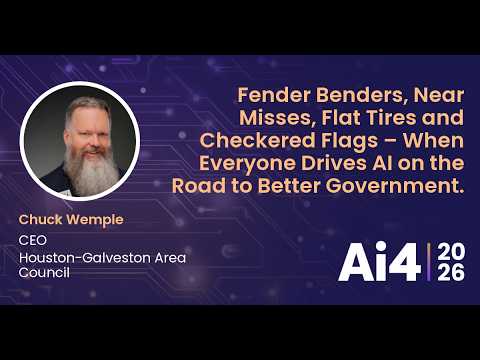
Fender Benders, Near Misses, Flat Tires and Checkered Flags - When Everyone Drives AI on the Road — Ai4

Ai4

Broad access to internal AI models reduces administrative backlogs in local government, but convenience friction continues to drive employees toward hazardous shadow AI apps.

AI-assisted summary of Fender Benders, Near Misses, Flat Tires and Checkered Flags - When Everyone Drives AI on the Road — original source. Check the original for full context.

Source published:

Detailed notes

## Background Published by Ai4 on YouTube on August 15, 2026, this video features a presentation by Chuck Wemple, CEO of the Houston-Galveston Area Council. The page description outlines how Wemple introduced generative AI to his entire regional government team using humor, playfulness, and an "AI Parking Lot" concept to overcome bureaucratic inertia, traditional IT restrictions, and shadow AI usage.

## TL;DR Chuck Wemple shares the Houston-Galveston Area Council's unconventional approach to deploying generative AI across a public sector agency serving 8.8 million Texans. Instead of locking down access or restricting tools to an elite technical group, H-GAC created a safe, gamified "AI Parking Lot" to encourage hands-on experimentation with multiple LLMs. The talk addresses real-world challenges including FOIA compliance risks, shadow AI missteps like alarmist bill analysis, and the humorous internal miscommunication surrounding an HR chatbot named "Rosie." Ultimately, Wemple demonstrates how executive prompting and intentional guardrails can bypass administrative friction to accelerate public service delivery.

## Atmosphere & style The presentation is engaging, lighthearted, and deeply pragmatic, balancing executive leadership insights with self-deprecating humor. Wemple adopts a warm, accessible narrative style—using driving metaphors and stage magic props—to demystify AI governance and ease employee anxieties. The tone transitions seamlessly between playful anecdotes about office miscommunications and serious reflections on public sector compliance, creating an authentic and candid atmosphere.

## Key takeaways - [00:04](https://www.youtube.com/watch?v=U5C93ISttsk&t=4s) The Houston-Galveston Area Council (H-GAC) serves 13 counties and 8.8 million residents through grant-funded programs with strict compliance requirements. - [00:35](https://www.youtube.com/watch?v=U5C93ISttsk&t=35s) Upon attempting to establish proactive AI governance, leadership discovered that employees were already actively using personal AI accounts for official tasks ("shadow AI"). - [00:35](https://www.youtube.com/watch?v=U5C93ISttsk&t=35s) Instead of imposing a strict IT lockdown, CEO Chuck Wemple advocated for an inclusive "access for all" strategy to empower frontline public service workers. - [02:45](https://www.youtube.com/watch?v=U5C93ISttsk&t=165s) H-GAC created an "AI Parking Lot" sandbox featuring ChatGPT, Claude, and Llama, using gamified scenarios to build AI literacy and lower employee anxiety. - [05:30](https://www.youtube.com/watch?v=U5C93ISttsk&t=330s) Unmonitored shadow AI poses significant legal and compliance risks, such as auto-transcription tools creating official records subject to FOIA and subpoenas. - [10:29](https://www.youtube.com/watch?v=U5C93ISttsk&t=629s) Executive leadership used AI models as strategic sounding boards to rethink program structures and overcome administrative inertia in regional planning. - [13:49](https://www.youtube.com/watch?v=U5C93ISttsk&t=829s) Poor internal communication during an HR chatbot rollout triggered widespread employee fear of AI-driven job displacement and caused accidental confusion with a human staff member. - [16:41](https://www.youtube.com/watch?v=U5C93ISttsk&t=1001s) To analyze complex legislation, H-GAC built a grounded internal AI system using only passed bill text and financial reports, preventing the false conclusions generated by unvetted public models. - [16:41](https://www.youtube.com/watch?v=U5C93ISttsk&t=1001s) Convenience friction—such as multi-step authentication for secure internal platforms—drives staff back toward risky, unsanctioned personal AI tools. - [19:24](https://www.youtube.com/watch?v=U5C93ISttsk&t=1164s) In local government, AI efficiency gains are focused on expanding service capacity and clearing constituent backlogs rather than immediate workforce reductions.

## Detailed walkthrough ### [00:04](https://www.youtube.com/watch?v=U5C93ISttsk&t=4s) Servicing 8.8 Million Texans Under Grant Governance

Chuck Wemple, CEO of the Houston-Galveston Area Council of Governments (H-GAC), opens by clarifying the vast scale of his organization—something even his own parents struggled to grasp. H-GAC serves 13 counties and approximately 120 cities along the upper Texas coast, representing a population of 8.8 million people. The regional planning body oversees diverse public services, including workforce development programs, major regional transportation projects, clean environment initiatives, broadband infrastructure expansion, and essential senior services such as delivering meals and providing new dentures.

Wemple highlights that H-GAC operates almost entirely on state and federal grant funding. This financial framework introduces strict compliance rules, heavy administrative regulations, and public transparency standards that dictate every operational move the organization makes.

- **Jurisdiction Size:** 13 counties and ~120 municipalities across the upper Texas coast. - **Population Reach:** ~8.8 million residents. - **Key Service Areas:** Workforce training, transportation planning, broadband deployment, environmental protection, and senior care (meals, medical transportation, dentures). - **Funding Structure:** Heavily reliant on state and federal grants with rigid oversight and auditing requirements.

---

[00:35](https://www.youtube.com/watch?v=U5C93ISttsk&t=35s) The Augmentation Revelation and "Shadow AI" Reality

About three years ago, Wemple attended an Institute for the Future webinar titled *Augmented Executive Directors and CEOs of the Future*. The presentation opened with a synthetic host created from cloned photographs and voice recordings. The core takeaway from the event was striking: the question facing organizational leadership was no longer *if* executives and staff would become AI-augmented, but *how much*. Wemple left the webinar with two immediate thoughts: "First, I wanted a synthetic Chuck that I could send to meetings—not to this, but to meetings—and second, that we needed to get guidance and guardrails and access in place as soon as we could."

Upon convening H-GAC leadership to establish proactive policies before staff began adopting AI tools, Wemple faced an unexpected reality check: "Oh, we're already using it." Employees were actively using personal accounts to draft letters to local elected officials and manage daily task workloads.

``` ┌───────────────────────────────────────────────┐ │ H-GAC Generative AI Governance Tension │ └───────────────────────┬───────────────────────┘ │ ┌──────────────┴──────────────┐ ▼ ▼ ┌───────────────────┐ ┌───────────────────┐ │ Traditional View │ │ Chuck Wemple's │ │ (Restrict & Lock) │ │ Preferred Path │ ├───────────────────┤ ├───────────────────┤ │ • Strict lock down│ │ • Access for all │ │ • Limit to 1 model│ │ • Inclusive play │ │ • Stifle innovation│ │ • Safe guardrails │ └───────────────────┘ └───────────────────┘ ```

Faced with a heavily regulated administrative environment, internal discussions initially leaned toward traditional corporate IT governance: clamping down completely and restricting access to a single vetted model. Wemple instead advocated for an inclusive "access for all" philosophy so those closest to the frontline administrative work could leverage AI to improve public services.

- **Trigger Event:** Institute for the Future webinar featuring synthetic AI hosts. - **Pre-existing Usage:** Staff were already using personal AI accounts to generate correspondence for city and county officials. - **Governance Crossroads:** Standard restrictive IT prohibition versus broad organizational rollout wrapped in security guardrails.

---

[02:45](https://www.youtube.com/watch?v=U5C93ISttsk&t=165s) Setting Up the "AI Parking Lot" for Safe Exploration

To make the technology approachable and ease employee anxieties about AI job displacement, H-GAC introduced the concept of an "AI Parking Lot"—a playful environment inspired by learning to drive in empty big-box store parking lots late at night. Wemple and Data Services CIO Viet took a lighthearted approach: Wemple put on a high-visibility safety vest, set up signs on top of the agency's parking garage, and produced a video featuring someone driving around and bumping into things to set a relaxed tone.

``` ┌─────────────────────────────────────────────────┐ │ H-GAC "AI PARKING LOT" │ │ (Safe Enterprise Testing Platform) │ └────────────────────────┬────────────────────────┘ │ ┌───────────────────────┼───────────────────────┐ ▼ ▼ ▼ ┌───────────────┐ ┌───────────────┐ ┌───────────────┐ │ ChatGPT │ │ Claude │ │ Llama │ └───────┬───────┘ └───────┬───────┘ └───────┬───────┘ │ │ │ └───────────────────────┼───────────────────────┘ │ ▼ ┌──────────────────────────────────────────────┐ │ Gamified Practice Prompts │ ├──────────────────────────────────────────────┤ │ • Turtle Nickname (5yo / Blue / Racecars) │ │ • $1,000 / 5-Day New York City Trip │ │ • Last-Minute Gluten-Free Dinner Guest │ └──────────────────────────────────────────────┘ ```

Staff were invited into a conference room with their laptops to test a secure enterprise platform containing three distinct AI "cars": ChatGPT, Claude, and Llama. To ensure employees focused on learning model behavior without immediate work pressure, initial gamified prompts included: * Helping a 5-year-old name a pet turtle (given that their favorite color was blue and they liked race cars). * Planning a 5-day trip to New York City capped at a $1,000 budget. * Redesigning a dinner menu on 3 hours' notice for an unexpected gluten-free guest.

Employee reactions varied widely across the workforce: "Some folks stalled out right away. Some kind of nudged along the parking lot, and others that were already using it... were racing around the parking lot saying, 'Give me a faster car, please!'"

---

[05:30](https://www.youtube.com/watch?v=U5C93ISttsk&t=330s) FOIA Risks, Shadow IT, and the Rollout Roadmap

The transition revealed urgent legal and compliance vulnerabilities tied to unmonitored "shadow" AI usage. In public sector organizations, generated documents and meeting logs are subject to Freedom of Information Act (FOIA) requests and legal subpoenas. In one instance involving a public records request for a controversial highway project, H-GAC discovered a former employee had used Otter.ai five months prior to transcribe meeting notes and create official records on a personal account—forcing the agency to track down and audit those external files.

``` ┌─────────────────────────────────────────────────────────────────┐ │ H-GAC AI ROADMAP │ ├─────────────┬───────────────────────────────────────────────────┤ │ Phase 1 │ AI Parking Lot Launch (May 2025) │ ├─────────────┼───────────────────────────────────────────────────┤ │ Phase 2 │ Work Application & Department Adaptation │ ├─────────────┼───────────────────────────────────────────────────┤ │ Phase 3 │ Internal Chatbot Deployment (Late 2025) │ ├─────────────┼───────────────────────────────────────────────────┤ │ Phase 4 │ Document Optimization & Processing (Current) │ ├─────────────┼───────────────────────────────────────────────────┤ │ Phase 5 │ External Chatbots & Predictive Analytics │ └─────────────┴───────────────────────────────────────────────────┘ ```

To balance safety with innovation, H-GAC established a multi-stage AI roadmap starting with the May 2025 Parking Lot launch. Early success stories were celebrated at all-staff meetings, where employees shared creative uses like converting video recordings into meeting minutes or drafting presentation outlines. However, a recurring problem emerged: staff continued using unvetted personal software outside the enterprise system due to speed requirements and government procurement hurdles.

Reflecting on the experience, Wemple noted that he would establish a formal "learner's permit" testing process before allowing employees onto the open road, as well as introduce more structured tracking for organic case studies.

- **FOIA & Subpoena Risk:** Auto-transcriptions (e.g., Otter.ai) created on personal accounts instantly become official agency records subject to public disclosure. - **Roadmap Milestones:** Progressed from the May 2025 Parking Lot to internal chatbots by late 2025, moving toward current document optimization and upcoming external-facing predictive tools. - **Hindsight Adjustments:** Implement a formal learner's permit verification process before granting access to advanced models, and impose stricter case-study documentation early on.

---

[10:29](https://www.youtube.com/watch?v=U5C93ISttsk&t=629s) Executive Prompting for Regional Strategy

Wemple discusses how generative AI personally changed his leadership workflow within a large bureaucracy, where standard operational ideas are frequently met with procedural "no's." When evaluating declining grant funding alongside a growing aging population requiring senior meals, medical transit, and dentures, Wemple queried Claude for strategic solutions. The model generated eight actionable ideas; while four were impractical, the remaining four provided fresh perspectives for program restructuring.

Similarly, when addressing regional broadband deployment bottlenecks, Wemple prompted AI to outline an ideal implementation team structure:

> "It came back and it gave me a team that looked pretty solid. Again, 12 positions—probably need seven of those, but those seven weren't the ones that we had. So, now we have a new conversation of how do we restructure our work to be more effective."

AI acted as an uncensored sounding board that helped bypass administrative inertia, allowing executive leadership to formulate strategy before bringing refined proposals to agency staff.

---

[12:02](https://www.youtube.com/watch?v=U5C93ISttsk&t=722s) Audience Participation: The Billet Selection

To decide which organizational anecdotes to share next, Wemple introduces a interactive audience segment using folded paper slips known as "billets"—a technique borrowed from mentalism and stage magic (noting with a smile that he is also a magician, though attendees looking for real magic should see Shin Lim downstairs at the Venetian).

Wemple brings his colleague Aiden into the crowd with a microphone to have two audience members select billets to determine the presentation order:

1. **Dr. Renea Anthony:** Physician and founder of *Momentum Park*, who selects the first billet. 2. **Sarah:** An audience member who selects the second remaining billet.

The first chosen billet, opened by Dr. Anthony, reads **"Rosie."**

---

[13:49](https://www.youtube.com/watch?v=U5C93ISttsk&t=829s) The Cautionary Tale of "Rosie" the HR Chatbot

The "Rosie" story illustrates an unexpected "fender bender" in organizational AI rollout. Eager to leverage AI after the Parking Lot training, H-GAC's HR Director developed the agency's very first internal chatbot to handle employee questions regarding holiday schedules, vacation accrual, grievance filing procedures, and job description drafting.

At an all-staff meeting, the HR Director proudly unveiled the bot, announcing: "Hi, I've created this chatbot, and her name is Rosie!" While the director named it after *Rosie the Robot* from *The Jetsons*, the cultural reference failed to land with many younger employees. Worse, the HR Director added during the presentation, "And maybe we'll need fewer people in HR"—instantly triggering panic among staff who feared AI-driven layoffs.

``` ┌──────────────────────────────┐ │ THE "ROSIE" MISCOMMUNICATION │ └──────────────┬───────────────┘ │ ┌────────────────────────┴────────────────────────┐ ▼ ▼ ┌───────────────────────────────┐ ┌───────────────────────────────┐ │ HR Director's Intent │ │ Workforce Perception │ ├───────────────────────────────┤ ├───────────────────────────────┤ │ • Named after Jetsons robot │ │ • "Rosie" from Jetsons missed │ │ • Streamline routine queries │ │ • Layoff anxiety triggered │ │ • "Fewer people needed in HR" │ │ • Targeted real human Rosie │ └───────────────────────────────┘ └───────────────────────────────┘ ```

The situation was compounded by a poignant human oversight: the single employee at H-GAC most terrified of being replaced by AI was the agency's human switchboard operator—whose actual name was **Rosie**. As the first face visitors met when entering the agency, human Rosie was a beloved fixture of the office. Staff misinterpreted the HR bot as an intentional effort to automate away their colleague's job, whispering, "Oh, Rosie, we're so sorry."

Realizing the blunder, executive leadership stepped in, reassured the team, clarified that the human operator was irreplaceable, and formally renamed the HR chatbot to eliminate confusion.

- **Objective:** First internal AI chatbot designed to automate HR policy inquiries and job description drafting. - **Messaging Misfire:** Casual remarks regarding head-count reduction sparked immediate layoff anxiety across the agency. - **The Human Element:** Unintentionally shared the name of the agency's switchboard operator, creating an accidental workplace drama that required immediate executive intervention and a product rebrand.

[16:41](https://www.youtube.com/watch?v=U5C93ISttsk&t=1001s) Analyzing the "Big Beautiful Bill": Internal AI vs. Shadow AI

Anxiety ran high at the agency when major federal legislation—referred to as the "Big Beautiful Bill"—was passing, prompting urgent requests for analysis on how it would impact operations. The Houston-Galveston Area Council operates with an annual budget of roughly $600 million, employs 550 staff members, and prioritizes over $1 billion annually in regional transportation funding, meaning the financial stakes were massive. Facing a document that was "thick as a brick" at 870 pages, employees were panicked that funding streams would dry up or critical public programs would shut down completely. To provide a grounded and accurate picture, Chuck Wemple worked directly with internal team members Viet and Khaled to build a dedicated AI workflow. They strictly restricted the input data, feeding the system only two authoritative sources: the final passed text of the legislation (excluding early drafts, podcasts, or media commentary) and the agency's official Annual Comprehensive Financial Report containing all funding streams. The custom AI analysis revealed reassuring results: the impact was far less severe than feared.

``` +--------------------------+ +--------------------------+ | Passed Bill Text Only | | Annual Comprehensive | | (870 Pages) | | Financial Report | +------------+-------------+ +------------+-------------+ | | +--------------+---------------+ | v +-------------------------------+ | Grounded Internal AI | | Analysis System | +---------------+---------------+ | v +-------------------------------+ | Reassuring, Accurate Impact | | Assessment (Low Severity) | +-------------------------------+ ```

The relief was briefly interrupted by a moment of panic when the agency's workforce director ran down the hallway screaming, waving her phone in distress. She claimed to have received an AI analysis proving the bill was "horrible" and would "destroy" the organization, and she was already preparing an email alert to the board chair. When questioned, she admitted she had run her own search using a free, unvetted AI app on her personal phone rather than logging into the agency's secure internal system. Investigating her results exposed classic shadow AI failure modes: the free model relied on a simple prompt, pulled unstructured web data including opinion pieces and outdated drafts, and utilized a knowledge cutoff date prior to the bill's final passage.

This dramatic contrast highlighted the agency's single biggest operational challenge with AI governance: convenience friction. Even when secure internal tools are fully functional, if logging into them requires a few extra clicks or navigating an authentication app, employees naturally default to personal devices and public open-system tools.

- **Agency Budget & Scope:** ~$600 million annual budget, 550 employees, and >$1 billion managed annually in transportation funds. - **Legislative Size:** 870 pages of federal bill text. - **Data Grounding Strategy:** Restricted inputs strictly to passed legislative text + official agency Annual Comprehensive Financial Report. - **Shadow AI Risks:** Free public models used unverified web sources, outdated draft information, and older data cutoffs, producing alarmist false conclusions. - **Adoption Friction:** Extra login steps drive staff toward unsanctioned personal tools ("shadow AI").

---

[19:24](https://www.youtube.com/watch?v=U5C93ISttsk&t=1164s) Q&A: Government Efficiency, Public Value, and Workforce Anxiety

In the closing audience Q&A, an attendee named Carson raised a fundamental question regarding public sector productivity: if AI enables a single government employee to accomplish the work of two or three people, shouldn't taxpayers expect local government to become leaner and more cost-efficient over time? Chuck Wemple fully agreed with the premise, emphasizing that public agencies must maintain a strong, lean customer-service orientation. However, he contextualized this expectation within the rapid expansion of regional needs. Over the preceding eight years, the agency's budget had more than doubled alongside growing staff levels because the volume of required public service had escalated significantly across a region of 8 million people.

Instead of immediate workforce reductions, the primary focus of AI adoption is clearing massive backlogs and accelerating service delivery. Many public programs suffer from long citizen waitlists simply because staff cannot process applications fast enough; utilizing AI allows the same number of team members to serve significantly more constituents faster and more efficiently. If service demands ever plateau and efficiency gains outpace workload growth, the agency will recalibrate. Wemple noted that addressing this efficiency dynamic requires navigating internal workforce anxiety, as some employees harbor deep hesitation about embracing AI out of fear that higher efficiency expectations will simply double their workload or eliminate their jobs entirely.

- **Taxpayer Expectation:** AI efficiency gains should logically lead to leaner, more cost-effective government operations. - **Agency Growth Context:** Budget more than doubled over eight years due to expanding regional service demands. - **Primary AI Goal:** Scaling output to eliminate long waitlists and accelerate service delivery using existing headcount. - **Workforce Resistance:** Employee reluctance often stems from fears of job displacement or unrealistically elevated workload expectations.

## Notable quotes > [00:35](https://www.youtube.com/watch?v=U5C93ISttsk&t=35s) Oh, we're already using it. — H-GAC leadership

> [00:35](https://www.youtube.com/watch?v=U5C93ISttsk&t=35s) First, I wanted a synthetic Chuck that I could send to meetings—not to this, but to meetings—and second, that we needed to get guidance and guardrails and access in place as soon as we could. — Chuck Wemple

> [02:45](https://www.youtube.com/watch?v=U5C93ISttsk&t=165s) Some folks stalled out right away. Some kind of nudged along the parking lot, and others that were already using it... were racing around the parking lot saying, 'Give me a faster car, please!' — Chuck Wemple

> [10:29](https://www.youtube.com/watch?v=U5C93ISttsk&t=629s) It came back and it gave me a team that looked pretty solid. Again, 12 positions—probably need seven of those, but those seven weren't the ones that we had. So, now we have a new conversation of how do we restructure our work to be more effective. — Chuck Wemple

> [17:09](https://www.youtube.com/watch?v=U5C93ISttsk&t=1029s) Hi, I've created this chatbot, and her name is Rosie! — HR Director

> [17:09](https://www.youtube.com/watch?v=U5C93ISttsk&t=1029s) And maybe we'll need fewer people in HR — HR Director

> [17:09](https://www.youtube.com/watch?v=U5C93ISttsk&t=1029s) Oh, Rosie, we're so sorry. — H-GAC staff

## Mentioned Ai4, Chuck Wemple, Houston-Galveston Area Council, H-GAC, Institute for the Future, ChatGPT, Claude, Llama, Otter.ai, Viet, Aiden, Dr. Renea Anthony, Momentum Park, Sarah, Shin Lim, The Venetian, Rosie the Robot, The Jetsons, Khaled, Carson

## Video description Chuck Wemple - CEO, Houston-Galveston Area Council

I'll share our unconventional approach to giving our entire team access to GenAI —why humor and a sense of play helped, what the “fails” taught us, how we are overcoming “shadow” Ai usage when traditional IT governance slowed adoption, and our next steps in transforming public service for our region of 8 million people.

Local and regional governments are under pressure to move faster, produce better outcomes, and do more with fewer resources. Generative Ai is an important part of transforming the public service sector, but can stall out when it collides with bureaucracy, old ways of thinking, and traditional IT governance.

Come learn how we flipped the script and made AI tools accessible to our entire team instead of starting small and only giving access to an elite group.

What happens when everyone gets a set of keys to the Ai car but not everyone wants to drive, or maybe your boss drives like your grandma, or the new hires drive like the Indy 500? I’ll share a few near misses, fender benders, and when our team was first over the line and grabbed the trophy.

I'll also talk about how humor and a sense of play helped reduce employee anxiety about being replaced by Ai. And hopefully we'll have a little fun.

[Source](https://www.youtube.com/watch?v=U5C93ISttsk)

中文简报

休斯敦-加尔维斯顿规划负责人为550名公职人员加速普及AI 广泛开放内部AI模型减少了地方政府的行政积压,但使用便利性上的阻力仍促使员工转向存在风险的影子AI应用。 Chuck Wemple分享了休斯敦-加尔维斯顿地区委员会(H-GAC)在服务880万得州居民的公共机构中部署生成式AI的非常规做法。H-GAC并未封锁访问权限或仅限少数技术精英使用工具,而是创建了一个安全且游戏化的“AI停车场”(AI Parking Lot),以鼓励员工动手体验多种大语言模型。演讲探讨了现实面临的诸多挑战,包括《信息自由法》(FOIA)合规风险、危言耸听式法案分析等影子AI失误,以及围绕名为“Rosie”的人事聊天机器人发生的趣味性内部误解。最终,Wemple展示了管理层的提示引导与针对性安全防护栏如何消除行政阻力,进而加快公共服务的交付。 面对员工已私下使用个人工具办公的“影子 AI”现状,休斯顿-加尔维斯顿地区委员会(H-GAC)放弃了传统 IT 封锁,转而推出集成 ChatGPT、Claude 和 Llama 的“AI 停车场”测试沙箱,通过趣味场景普及 AI 应用并缓解员工焦虑。 (2:45) 公立机构未受监管的“影子 AI”潜藏严重法律风险,如员工使用个人 Otter.ai 生成的会议记录等官方文档,均属于《信息自由法》(FOIA)和司法传票的调取监管范围。 (5:30) H-GAC 推出的首个 HR 聊天机器人“Rosie”因沟通失误引发轩然大波,不仅伴随可能减少人手的言论引发裁员恐慌,还意外与机构中备受欢迎的真人总机接线员同名,最终促使高层介入澄清并重命名系统。 (13:49) 在解读长达 870 页的联邦重大法案时,H-GAC 通过仅投喂法案终稿与官方财务报告构建了精准的内部 AI 系统,有效避免了员工使用抓取过时草案和网络舆论的外部免费 AI 所造成的恐慌误判。 (16:41)

Reading summary

Chuck Wemple, CEO of the Houston-Galveston Area Council of Governments (H-GAC), argues that public agencies must proactively provide accessible, secure AI environments rather than imposing bans, as unmonitored shadow AI exposes public bodies to severe compliance, legal, and misinformation risks. Successfully integrating AI requires coupling technical guardrails with culturally sensitive communication to resolve constituent service backlogs without triggering workforce panic. Safe Sandboxing to Counter Shadow IT Risks (2:45) Serving 8.8 million residents across 13 counties and roughly 120 municipalities under strict grant governance, H-GAC discovered employees were already using personal accounts to draft official correspondence before formal policies existed. Traditional IT instincts favored locking down systems to a single vetted tool, but leadership chose broad access within guardrails to prevent unmonitored adoption. In May 2025, H-GAC launched the 'AI Parking Lot,' an enterprise sandbox providing staff with access to ChatGPT, Claude, and Llama to complete gamified prompts—such as planning a budget-capped trip or adjusting a dinner menu—to demystify model behaviors without high-stakes operational pressure. Wemple stressed that unmanaged shadow AI creates severe compliance exposure. Because public sector communications are subject to the Freedom of Information Act (FOIA) and subpoenas, H-GAC previously had to audit an external personal Otter.ai account when meeting transcriptions for a contentious highway project were classified as official public records. While staff adoption progressed across distinct tiers, procurement hurdles and speed requirements continued to tempt employees to bypass internal tools. Avoiding Layoff Panic in Workforce Communications (13:49) Internal automation initiatives can trigger immediate employee pushback if organizational messaging is poorly framed. Following the initial sandbox training, H-GAC's human resources director launched 'Rosie,' an internal chatbot built to resolve policy inquiries and assist with drafting job descriptions. Although intended as a benign reference to the robot in The Jetsons, the name missed younger demographics, and an offhand remark during an all-staff unveiling that 'maybe we'll need fewer people in HR' provoked immediate fears of AI-driven layoffs. The anxiety escalated because H-GAC's switchboard operator was a human employee named Rosie who had previously voiced fears of AI displacement. Colleagues mistakenly assumed the chatbot was commissioned to replace her, requiring executive leadership to step in, reassure the workforce of her job security, and officially rebrand the tool. Wemple noted that this cultural misstep demonstrated the necessity of establishing clear, reassuring human-centric communication prior to deploying internal automations. Data Grounding Mitigates Flawed Legislative Analysis (16:41) When evaluating an 870-page federal measure termed the 'Big Beautiful Bill,' H-GAC had to assess financial risks across its roughly $600 million annual operating budget and more than $1 billion in prioritized regional transportation funds. The internal analytics team built a strictly bounded AI workflow, feeding the system only the final enacted bill text and the agency's official Annual Comprehensive Financial Report. This grounded analysis determined that the real-world operational impact was manageable and far less severe than anticipated. Concurrently, the agency's workforce director sparked internal alarm by running an unvetted consumer AI app on her personal phone, which generated catastrophic predictions based on unstructured web commentary and outdated drafts predating the bill's passage. Wemple identified convenience friction—such as navigating authentication hurdles on secure agency systems—as the primary driver leading staff toward inaccurate public tools, emphasizing that internal tools must match consumer software in accessibility to ensure data integrity. Clearing Public Backlogs Rather Than Cutting Headcount (19:24) Addressing taxpayer expectations that AI productivity should shrink government payrolls, Wemple acknowledged the need for lean public management but argued that near-term efficiency gains must focus on expanding capacity. Over the preceding eight years, H-GAC's budget more than doubled to match rapid regional population growth. Rather than cutting its 550-person workforce, the agency is leveraging AI to eliminate processing bottlenecks and clear citizen waitlists in senior care, transit, and environmental infrastructure. Wemple noted that public agency leaders must actively manage employee apprehension regarding productivity targets. Reluctance to adopt AI often stems from fears that demonstrated efficiency will either eliminate positions or result in doubled workloads without operational support. Wemple concludes that while AI serves as an effective strategic sounding board and operational accelerator, regional agencies must implement formal testing mechanisms, structured case tracking, and low-friction enterprise access. The primary unresolved hurdle remains reducing login and procurement friction so staff naturally choose verified, grounded enterprise systems over risky consumer alternatives.

精炼阅读摘要

休斯敦-加尔维斯顿地区规划委员会(H-GAC)首席执行官 Chuck Wemple 指出,公共机构引入人工智能不能依靠全面封禁,而应建立具备合规防护的开放式试验机制,以应对“影子 AI”风险并化解员工的替代焦虑。 从自发使用到“AI 停车场”沙盒 (0:04) H-GAC 为得克萨斯州上沿海地区 13 个县、约 120 个城市及 880 万居民提供区域交通、宽带与养老等服务,高度依赖州与联邦拨付的专项资金,面临严格的合规审计要求。Wemple 在意识到 AI 增强趋势后本想提前设立规范,却发现基层员工已开始使用个人账户起草发给民选官员的信函。面对完全禁用单一模型的传统 IT 管控思路,管理层最终选择采取“人人皆可用”的包容路径。 低风险演练与系统化推进路线 (2:45) 为了消除员工对技术替代的恐惧,H-GAC 设立了“AI 停车场”(AI Parking Lot)作为安全的企业级测试平台,集成 ChatGPT、Claude 和 Llama 三款模型。机构先让员工处理给宠物龟起名、千元预算纽约游、临时调整无麸质晚宴菜单等游戏化任务,观察不同人员的适应节奏。按规划,机构于 2025 年 5 月启动停车场项目,并在 2025 年底前部署内部聊天机器人,逐步推进至文档处理与外部预测分析工具。 影子 IT 的合规隐患与使用摩擦 (5:30) 非受控的 AI 使用在公共部门带来了严峻的法律与信息公开风险。在一次涉及争议高速公路项目的公共记录调取中,机构发现一名离职员工五个月前曾使用 Otter.ai 的个人账户转录会议纪要,迫使机构追查并审计外部文件。此外,当面对长达 870 页的联邦法案时,技术团队通过严格限定法案最终文本与官方财务报告生成了平稳可控的研判结果;然而一名部门主管却因使用手机免费个人 AI 应用抓取过时草案和网络评论,得出了机构将面临毁灭性打击的虚假警报。Wemple 坦言,哪怕企业内部工具更安全,只要登录和认证步骤多出几步,员工就会因为便利性摩擦倒向未经审核的公开工具。 内部沟通失误与自动化信任危机 (13:49) 技术落地过程中的沟通不慎容易演变成组织危机。人力资源主管在上线首个政策答疑机器人时,将其命名为卡通角色“Rosie”,并脱口提及“也许以后 HR 需要的人手会变少”,立刻引发了全员对裁员的恐慌。更糟糕的是,机构总机接线员的名字恰好也是 Rosie,且本人原本就最担忧被 AI 淘汰,导致同事误以为机构意图针对并替换该员工。管理层最终介入澄清总机岗位不可替代,并为机器人重新命名以平息风波。该事件表明,如果缺乏周密的组织沟通与同理心,自动化提效极易激化一线员工的抵触情绪。 纳税人效率预期与业务积压释放 (19:24) 针对 AI 是否应该促使地方政府精简人员并缩减开支的提问,Wemple 表达了认同,但他解释称 H-GAC 过去八年的预算因区域服务需求激增而翻倍,目前年预算约为 6 亿美元,全职员工 550 人,每年管理超 10 亿美元的交通资金。现阶段应用 AI 的核心诉求并非直接裁员,而是利用现有编制加快行政审批速度、清理大量积压的申请排队。如果未来服务需求平稳且效率增益超过负荷增长,机构会再作人员调整,目前则必须谨慎疏导员工因担心“效率提升只会招致工作量翻倍或失业”而产生的抗拒心态。 H-GAC 的经验显示,公共部门部署 AI 的关键不在于模型算力,而在于降低安全工具的接入摩擦,并防止员工因考核标准与失业预期而产生抵触。未来如何在严守信息公开法案的前提下建立起正式的“驾照式”准入机制,仍是该机构需要解决的管理课题。

Detailed notes — zh

## Background 该视频由 YouTube 频道 Ai4 于 2026 年 8 月 15 日发布。休斯敦-加尔维斯顿地区政府委员会(H-GAC)执行主任 Chuck Wemple 在演讲中分享了该机构打破传统 IT 官僚限制、面向全员普及生成式 AI 的非常规实践,阐述了如何通过幽默与玩乐心态化解员工被替代的焦虑、治理“影子 AI”并重塑服务 880 万人口的公共服务效能。 ## TL;DR 面对公共部门严苛的合规审查与自发蔓延的“影子 AI”风险,H-GAC 放弃了精英专享或一刀切封禁的传统路线,创设了包含 ChatGPT、Claude 与 Llama 的“AI 停车场”沙盒,让全员在生活化趣味任务中脱敏并熟悉工具。Chuck 坦诚复盘了推行过程中的险情与教训——包括 HR 聊天机器人因命名撞车前台接线员引发的裁员恐慌,以及个别业务人员私用公网 AI 误读 870 页“超级法案”带来的虚惊。他强调,公共部门应用 AI 的最终目标并非简单削减人员编制,而是打破官僚阻力、消化海量民生积压,在团队规模不变的前提下倍增公共服务的供给质量与响应速度。 ## Atmosphere & style 整场演讲风趣幽默、坦率接地气且极具自嘲精神,主讲人将严谨的政府治理转型生动比作“停车场新手学车与公路飙车”,甚至在现场借助业余近景魔术的“字条盲盒”互动来决定踩坑事故的讲述顺序。在诙谐生动的叙事之下,贯穿着对基层公务人员失业焦虑的深层共情与敏锐关怀,既有直面官僚惯性阻力与治理失控风险的清醒反思,也传递出务实推动公共服务现代化的坚定担当。 ## Key takeaways - [00:04](https://www.youtube.com/watch?v=U5C93ISttsk&t=4s) 休斯敦-加尔维斯顿地区委员会(H-GAC)服务 880 万人口且高度依赖政府专项拨款,对合规有严苛要求,管理层在筹划规则时发现员工早已在私下使用个人账户起草公文(影子 AI 现状)。 - [02:00](https://www.youtube.com/watch?v=U5C93ISttsk&t=120s) 面对传统官僚的封禁倾向,机构选择推行“全员可用”(Access for All)策略,坚信让业务一线掌握工具才能真正释放创造力并改善公共服务。 - [02:00](https://www.youtube.com/watch?v=U5C93ISttsk&t=120s) 借鉴学车经验,机构创建了“AI 停车场”(AI Parking Lot)机制,通过自制趣味撞车视频和幽默自嘲的方式,化解公共部门员工对被技术淘汰的恐惧心理。 - [04:11](https://www.youtube.com/watch?v=U5C93ISttsk&t=251s) 技术团队搭建了集成 ChatGPT、Claude 和 Llama 的隔离试驾平台,首月严禁用于实际公务,而是通过宠物起名、预算旅行等生活化提示词引导员工脱敏上手。 - [05:47](https://www.youtube.com/watch?v=U5C93ISttsk&t=347s) 公共部门受《信息自由法案》(FOIA)严格监管,离职员工使用个人第三方 AI 工具记录敏感情报的案例,暴露了影子 AI 带来的巨大法律与合规地雷。 - [07:18](https://www.youtube.com/watch?v=U5C93ISttsk&t=438s) 面对员工因 AI 高效生成方案而产生的饭碗焦虑,管理层明确指出 AI 只是粗糙起点,人类的真正价值在于结合本地实情的深度打磨与落实执行。 - [07:18](https://www.youtube.com/watch?v=U5C93ISttsk&t=438s) 当官方工具因严苛缓慢的 IT 治理和采购审查而落后时,员工会再次流向外部野路子,反思表明应尽早设立“AI 学习者驾驶证”考核与分级进阶机制。 - [09:57](https://www.youtube.com/watch?v=U5C93ISttsk&t=597s) 大语言模型能够打破大型官僚机构“我们不能这么做”的推诿惯性,在老年人服务方案探索和宽带团队缺失职能重组中提供了破局依据。 - [13:49](https://www.youtube.com/watch?v=U5C93ISttsk&t=829s) 内部 HR 机器人因致敬老动画被命名为“Rosie”,且发布会宣称“能替代人工”,误伤并引发了与机器人同名的前台总机员工的失业恐慌,暴露出内部沟通与命名去人格化的重要性。 - [16:30](https://www.youtube.com/watch?v=U5C93ISttsk&t=990s) 面对 870 页的“超级大法案”,部门主管使用公网免费 AI 误采纳了过期草案引发全员恐慌,证明了受控 RAG 系统的必要性以及“官方工具多点两步就会滋生影子 AI”的交互瓶颈。 - [19:24](https://www.youtube.com/watch?v=U5C93ISttsk&t=1164s) AI 带来的政府“精益化”(Leaner)运作不应直接等同于裁员,而是在业务与服务需求翻倍扩张时放缓编制扩张,用技术消除长期积压并提速审批。 - [20:12](https://www.youtube.com/watch?v=U5C93ISttsk&t=1212s) 引入生成式 AI 的核心目标是以现有团队规模服务更多公众,但在落地过程中仍需关注员工对工作量激增及岗位替代的戒备心理。 ## Detailed walkthrough ### [00:04](https://www.youtube.com/watch?v=U5C93ISttsk&t=4s) 开启 AI 探索:从“合成演讲人”到政府层面的紧迫感 休斯敦-加尔维斯顿地区政府委员会(H-GAC, Houston-Galveston Area Council)执行主任 Chuck Wemple 首先介绍了该机构的庞大规模与使命。H-GAC 为得克萨斯州沿海北部地区约 120 个城市、13 个县以及 880 万人口提供服务,业务范围极其广泛,包括职业劳动力培训、大型交通改善工程、为老人提供餐饮与义齿资助、环境保护以及区域宽带建设等。最关键的是,该机构几乎完全依靠州政府和联邦政府的专项拨款资助运作,这种资金结构对后续的合规性要求极为严苛。 大约三年前,Chuck 参加了一场由未来研究所(Institute for the Future)举办的名为“未来的增强型执行总监与首席执行官”(Augmented Executive Directors and CEOs of the Future)的网络研讨会。研讨会一开始便提出了一个引人深思的核心论断:领导者未来“是否”会被 AI 增强已不再是问题,唯一的问题在于你将被增强“到何种程度”。研讨会甚至配备了一位合成数字主持人(由照片与声音样本合成),向与会者介绍当时的各类新型聊天机器人、实际应用场景以及潜在风险。 听完研讨会离开办公室时,Chuck 脑中浮现出两件事:第一件是开个玩笑——“我想要一个合成的 Chuck,代替我去参加那些冗长的日常会议”;第二件则是至关重要的现实决策:由于这些 AI 工具已经在外界泛滥,机构必须尽快建立指导规范、设置防护栏并推进合规接入。然而,当他召集管理层并提出“在大家开始使用前得先定好规矩”时,团队成员却面面相觑地告诉他一个惊人事实:员工们早就已经在用了。 - 服务覆盖:得州沿海上部 120 个城市、13 个县、880 万人口。 - 资金性质:几乎 100% 依赖州政府与联邦政府拨款,对合规有严苛要求。 - 影子使用现状:员工早已在用个人账户起草发给各市县民选官员的正式信函。 --- ### [02:00](https://www.youtube.com/watch?v=U5C93ISttsk&t=120s) 全员普及 vs. 严格封禁:空旷停车场里的学车哲学 面对庞大官僚体系带来的合规审查风险与效率提升需求之间的矛盾,机构内部展开了激烈讨论。传统做法通常是“全面封锁禁令”,要么严禁使用,要么极度严苛地限定极少数特定人员使用某一款单一模型。然而,Chuck 坚决选择了另一条道路——“全员可用”(Access for All)。他坚信,只有让最贴近实际业务一线的人亲自掌握这些工具,公共服务才能变得更高效、更具体民意关怀,同时也让员工在工作中释放更多创造力。 为了消除员工对于被 AI 取代的技术焦虑,Chuck 借鉴了自己年轻时的学车经历:“我还是个少年刚学开车时,周末深夜父亲会带我去大型仓储超市外空荡荡的大停车场。在那里你先学会打火起步,学会猛松离合导致熄火,学会急转弯并撞倒几个隔离桶,在真正开上马路前把这些错误先犯个遍。” 基于这个理念,H-GAC 创建了自己的“AI 停车场”(AI Parking Lot)。他们拒绝严肃古板的自上而下式宣讲,而是将“玩乐与幽默”(Play and Fun)作为核心切入点。Chuck 亲自套上荧光反光安全背心,与首席信息官 Viet 等技术团队成员一起,在机构停车场顶层拍摄了一段幽默视频,甚至在车库顶楼开车晃晃悠悠地撞击障碍物,用自嘲与轻松的方式化解公共部门员工对“AI 会抢饭碗”的紧绷恐惧。 ```mermaid flowchart TD accTitle: AI 落地策略对比 subgraph Conservative["传统官僚路线"] C1["全面封杀禁令"] --> C2["限制少数精英使用"] C2 --> C3["自下而上产生影子 AI 风险"] end subgraph HGAC["H-GAC 的全员练车场路线"] H1["全员开放访问权限"] --> H2["AI 停车场(离线安全玩具)"] H2 --> H3["趣味提示词脱敏练习"] H3 --> H4["渐进式过渡到真实业务工作"] end ``` --- ### [04:11](https://www.youtube.com/watch?v=U5C93ISttsk&t=251s) 三辆赛车与生活化练习:打破对技术的心理防线 在正式推行“AI 停车场”时,机构将所有员工召集到大型会议室,要求大家带上笔记本电脑进行现场教学。CIO Viet 和团队搭建了一个安全隔离的平台,并内置了合规防护栏,为员工提供了三款截然不同的“赛车”供自由挑选与试驾:ChatGPT、Claude 和 Llama。 在第一个月的“练车期”内,管理层严令禁止员工直接使用 AI 处理实际公务,而是通过一系列富有生活情趣、趣味横生的引导性提示词(Prompts)带领大家熟悉操作: 1. **取名任务**:“你现在需要帮一个 5 岁的孩子给他养的宠物乌龟起一个昵称,这个小孩最喜欢的颜色是蓝色,平时极度痴迷赛车。” 2. **预算旅行**:“规划一次纽约市之旅,预算总共只有 1,000 美元,你需要在那里待满 5 天,你该如何规划路线与游玩活动?” 3. **突发晚餐**:“家里晚上有客人来吃饭,提前 3 小时你突然得知其中一人对麸质过敏(Gluten-free),你必须重新制定晚餐菜单。” 员工在试驾过程中的表现千差万别:有人一上来就频繁“熄火”,完全不知从何下手;有人小心翼翼地在边缘慢慢挪动;还有早已私下上手的员工在场子里高速飙车,不断喊着“能不能给我换一辆更快的车,我马上就要!”。这种两极分化让管理层迅速意识到,既要满足重度用户的性能渴望,更得耐心照顾那些充满担忧与畏惧情绪的初学者。 --- ### [05:47](https://www.youtube.com/watch?v=U5C93ISttsk&t=347s) 影子 AI 撞击现实:信息公开法案与合规地雷 建立安全的统一沙盒并非仅仅出于教学目的,更是为了应对迫在眉睫的法律与公共治理危机。在公共部门,所有工作记录均受到《信息自由法案》(FOIA)的监管,随时可能被诉讼传票调阅。然而,在此之前已有员工在未受监管的情况下,使用个人账号处理敏感政务。 Chuck 举了一个极为惊险的现实案例:机构曾收到一份严肃的信息公开调查要求,要求调阅五个月前离职的一位前员工涉及某项极具争议的高速公路扩建项目的所有往来材料。调查后发现,该员工当时在个人设备上私自使用 Otter 语音转录工具记录会议纪要并撰写材料。由于这些文档已构成机构的正式法定公文,H-GAC 不得不在完全不清楚其内容是否包含敏感或合规瑕疵的情况下,全力在外部平台追踪并上缴这些文件。这让管理层清醒地认识到:在未受控的环境下,所谓的便利随时会化作合规与法律灾难。 为此,H-GAC 制定了一套清晰的 AI 演进路线图(AI Roadmap): - **第一阶段(2025 年 5 月)**:启动“AI 停车场”,给全员一个月时间纯粹探索与玩耍,不承接业务。 - **第二阶段**:将 AI 逐步导入实际工作场景,辅助日常任务。 - **第三阶段(2025 年末)**:构建内向型专属聊天机器人,完善内部文档优化与检索。 - **第四阶段(未来规划)**:进一步推向外向型公众服务聊天机器人与深度数据预测。 --- ### [07:18](https://www.youtube.com/watch?v=U5C93ISttsk&t=438s) 饭碗焦虑、成功故事与采购撞墙的“驾照反思” 在停车场实践过程中,一名员工违背了“先玩一个月”的规则,尝试处理业务并产生剧烈焦虑。他向 Chuck 坦白:“我正在负责为得州‘清洁城市’编制改善空气质量、缓解拥堵的规划方案。我试着用 ChatGPT 生成了一份,结果发现它写得相当出色……Chuck,我是不是快要被它淘汰了?”面对在公开大厅内的提问,Chuck 当众给出了定心丸:“绝不会。AI 给出的方案只是一个粗糙的起点,真正的专业价值在于后续的校对、推敲、扩充,以及结合本地实情的深度打磨;最重要的是,过去写方案占了你大部分精力,现在你可以将宝贵的时间投入到落实执行该规划上去。” 随后,机构开始在全员大会上表扬 AI 赋能的标杆案例:有团队使用 AI 将大量的长会议视频自动转化为极高精度的会议纪要;有人快速生成精美的演示文稿框架,把更多时间用于打磨演讲思路;还有团队实现了 120 个城市的会议议程自动化扫描对比与差旅报销自动化。 然而,表彰背后却暴露了新的裂痕:很多惊艳的案例竟然不是在官方搭建的合规沙盒里做出来的,而是员工嫌官方工具速度慢、限制多,依然在外部“走野路子”。当强烈的业务需求与政府极其严苛缓慢的 IT 治理、安全准则及采购审查机制发生正面冲撞时,官方平台迭代缓慢,导致员工再次绕过规则寻找替代品。 回顾这段历程,Chuck 坦言自己的热情推着全员跑得太快,如果可以重来,他一定会设置一个正式的**“AI 学习者驾驶证”(Learner's Permit)考核机制**:“大家不能在没有经过最基本的测试前,就随随便便把车从停车场开上真正的马路。” ### [09:57](https://www.youtube.com/watch?v=U5C93ISttsk&t=597s) 领导者的反思与 AI 破局官僚壁垒 如果可以重新来过,休斯敦-加尔维斯顿地区委员会(H-GAC)在 AI 推行策略上会做出一些关键调整。首先是建立更明确的工具分级与进阶机制——“如果你需要一辆更快的车,并且能证明自己具备驾驭更快赛车的能力并拿出成果,我们就会为你提供更强大的工具。”其次,机构内部各业务线虽自发涌现了许多优秀的案例,但早期缺乏顶层设计与系统性规划,未来需要从一开始就更具前瞻性和结构化。 在大型政府官僚机构中担任领导者时,提出新想法往往会撞上“我们不能这么做”的惯性阻力,追问原因也往往只能得到“我们就是不能做,再讨论讨论吧”这类推诿。大语言模型(如 Claude)的引入打破了这种僵局。例如,在面对老年人服务项目资金缩减、但老龄化人口激增(对餐食、假牙、就医接送等服务需求剧增且志愿者人数减少)的困境时,向 AI 咨询应对方案,模型迅速给出了 8 条建议,其中有 4 条极具启发性与实操价值。在宽带基础设施落地受阻时,向 AI 询问“要完成这项工作需要组建什么样的团队”,模型输出了一套包含 12 个职位的架构建议;经过评估,团队筛选出关键的 7 个核心岗位,而这 7 个职能恰恰是现有编制中缺失的。AI 赋予了管理者不受传统官僚惯性阻拦的全新思考维度,并为后续团队重组与流程优化提供了坚实的事实依据。 ```mermaid flowchart TD accTitle: AI 赋能公共决策与团队重组流程 subgraph S1["现实困境与痛点"] A1["老龄服务:预算缩减 vs 需求激增"] A2["区域宽带:项目推进停滞"] A3["官僚阻力:惯性拒绝 '无法实施'"] end subgraph S2["AI 深度探索与推演"] B1["Claude 方案生成与多轮审视"] B2["职能架构推演:输出 12 岗位模型"] end subgraph S3["落地重组与决策"] C1["提炼 4 项关键可行举措"] C2["锁定 7 项核心缺失职能"] C3["打破官僚壁垒,重构业务流程"] end A1 --> B1 A2 --> B2 A3 --> B1 B1 --> C1 B2 --> C2 C1 --> C3 C2 --> C3 ``` - 传统官僚机构的惯性痛点:提出创新构想时常遭遇无实质理由的否定与拖延。 - 老年人服务矛盾:外部资金削减 vs 银发浪潮对生活保障(送餐、医疗出行等)需求高涨及志愿者短缺。 - 宽带团队架构重塑:AI 规划出 12 人团队模型,管理层精准锁定其中现存团队未覆盖的 7 个关键岗位。 --- ### [12:02](https://www.youtube.com/watch?v=U5C93ISttsk&t=722s) 现场互动与“字条盲盒” 为了分享推行 AI 过程中的真实教训、惊险时刻(Near Misses)与“爆胎翻车”经历,演讲者利用自己的业余魔术师技能在现场设置了互动环节。他拿出了魔术心理学读心术中常用的特制折叠小字条(Billets),并开玩笑表示如果想看真正的顶级魔术,可以去威尼斯人酒店楼下看申林(Shin Lim)的专场演出。 在助手 Aiden 的协助下,两位现场观众被随机选中抽取字条,以此决定案例的讲述顺序。第一位抽取者是 Momentum Park 创始人 Renea Anthony 医生;第二位抽取者是现场观众 Sarah。两人分别拆开了写有“Rosie”与“Big Beautiful Bill”(超级大法案)的字条,引出了两段极具警示意义的踩坑实录。 --- ### [13:49](https://www.youtube.com/watch?v=U5C93ISttsk&t=829s) “小事故”案例一:误伤前台的 HR 聊天机器人 Rosie 第一个“险些翻车”的故事源于人力资源总监的过度热情。作为早期急于踩油门“飙车”的代表,HR 总监迫不及待地打造了全机构第一个内部聊天机器人,旨在自动解答员工关于总统日放假、年假累积、投诉流程以及宽带团队岗位描述撰写等日常咨询。在全员大会上,她兴奋地上台介绍这款新工具,并自豪地宣布它的名字叫“Rosie”。 然而,现场气氛瞬间陷入尴尬与恐慌。HR 总监本意是致敬经典科幻动画《杰森一家》(*The Jetsons*)中的机器人女仆 Rosie,但年轻一代和不同背景的员工完全无法理解这个梗。更灾难的是,总监在台上随口补充了一句:“未来它将接管大量工作,也许我们 HR 部门就不需要这么多人了。”台下顿时一片死寂。全机构上下对“被 AI 替代”最感到焦虑的员工,恰恰是每天在大厅第一线热情接待访客的总机接线员——而她的真实名字就叫 Rosie。员工们误以为 HR 专门做了一个名为“Rosie”的机器人来取代接线员 Rosie,纷纷向她投去同情与安慰。管理层随后迅速介入澄清,将聊天机器人彻底改名,并与接线员 Rosie 进行了深入沟通,重申人类前台温情服务的不可替代性,才化解了这场因命名和沟通不当引发的内部信任危机。 - **命名冲突引发恐慌**:AI 机器人与最焦虑被裁的基层核心员工重名(Rosie),造成严重的裁员误解。 - **管理层沟通原则违背**:演讲者此前向全员保证“AI 不会替代现有员工”,但中层在发布产品时的口误险些破坏管理信任。 - **纠偏举措**:立即对内部机器人进行去人格化重命名,对关键岗位员工进行心理疏导与价值确认。 --- ### [16:30](https://www.youtube.com/watch?v=U5C93ISttsk&t=990s) “小事故”案例二:870 页“超级大法案”与影子 AI 的恐慌 休斯敦-加尔维斯顿地区委员会管理着庞大的公共资源:全职员工约 550 人,年运作预算达 6 亿美元,每年还负责统筹分配超过 10 亿美元的交通专项资金。因此,联邦与州层面的最新法案对机构运作具有决定性影响。当一份长达 870 页、厚如砖头的“超级大法案”(Big Beautiful Bill)正式通过时,全员对资金链断裂和项目关停的焦虑达到了顶峰。 为了快速评估影响,技术团队(Viet 与 Khaled)搭建了一套严格受控的检索增强与分析系统:系统仅导入最终正式通过的 870 页法案文本以及机构权威的《年度财务报告》(CAFR),杜绝一切草案、播客评论与未经证实的媒体文章。严谨分析得出的结论是:法案对机构的影响远没有外界传言的那样悲观。 就在管理层审阅这份安心报告时,走廊里突然传来了劳动力发展部门负责人的尖叫。她一边挥舞手机一边慌乱地准备给董事会主席及全员发邮件示警,坚称“超级法案将彻底摧毁我们的业务”。追问后发现,她自行在手机上使用了公开免费版 AI 工具,输入了粗糙的提示词进行提问。该公网模型不仅混入了大量早期草案、主观评论和过时信息,且其知识库截止日期甚至在法案正式通过之前,直接得出了完全失真的悲观结论。这起事件凸显了“影子 AI”(Shadow AI)的巨大风险——如果官方合规系统的登录流程哪怕只多出两三次点击,业务人员就会转而使用未受监管的个人工具。 ```mermaid flowchart TD accTitle: 官方受控 AI 与影子 AI 分析对比 subgraph Official["官方受控 RAG 系统(精准客观)"] O1["870 页最终通过法案文本"] O2["机构认证年度财务报告 (CAFR)"] O3["受控分析流水线"] O4["结论:冲击有限,业务平稳"] O1 --> O3 O2 --> O3 O3 --> O4 end subgraph Shadow["个人手机免费版 AI(影子 AI 风险)"] S1["早期草案 + 网络主观评论"] S2["过时知识库(法案通过前)"] S3["简单模糊提示词"] S4["结论:严重失真,引发全员恐慌"] S1 --> S3 S2 --> S3 S3 --> S4 end ``` - 机构基本盘数据:年预算约 6 亿美元,员工 550 人,每年统筹逾 10 亿美元交通基金。 - 影子 AI 的核心缺陷:数据源不可控(混入媒体猜测与早期废弃草案)、知识库截止时间滞后于立法节点。 - 落地瓶颈:合规工具的交互门槛(多余的点击与登录步骤)是导致员工流向影子 AI 的最大诱因。 --- ### [19:24](https://www.youtube.com/watch?v=U5C93ISttsk&t=1164s) 问答环节:AI 增效与政府“精益化”运作 在最后的现场提问环节,观众 Carson 提出了一个尖锐的公共管理问题:“如果 AI 能让一名公共部门员工完成过去两到三人的工作量,纳税人是否有权期望政府随之变得更精简(Leaner)、财政成本更低?” 演讲者对此表示百分之百认同,但结合实际情况指出了公共服务的现实矛盾: 1. **服务体量急剧膨胀**:在过去 8 年中,H-GAC 的管理预算翻了一倍以上,业务规模与公众需求以更快速度扩张。 2. **存量积压严重**:许多民生项目长期存在长长的排队等待名单(Waiting lists),核心原因在于基层审批与处理通量不足。 3. **精益化的真实体现**:AI 带来的精简不应单纯理解为直接裁员,而是在业务翻倍扩张期减缓编制扩张速度(Taper off hiring),利用技术消除积压、加速审批流程,用现有的人力规模交付更高质量、更敏捷的公共服务。 ### [20:12](https://www.youtube.com/watch?v=U5C93ISttsk&t=1212s) 提升公共服务效能与应对员工的顾虑与阻力 Chuck Wemple 强调,引入生成式 AI 的核心出发点在于能否让整个团队变得“反应更敏捷、响应更迅速并切实改善服务交付”("get more responsive and faster and improve delivery of service")。对于地方与区域政府部门而言,这意味着在保持现有团队规模不变的前提下,能够帮助更多公众,以相同的人力资源撬动更大规模、更高质量的公共服务。然而,他也明确指出,如果未来发现技术的落地并未带来预期的效能提升,组织就必须保持清醒,及时进行审视与重新评估。 与此同时,这一转型过程并非毫无阻力。组织内部在拥抱 AI 的过程中出现了一定的顾虑与抵触情绪:部分员工之所以对 AI 的全面普及心存戒备,一方面是担心工作节奏被进一步压缩、被迫承担远超以往的工作量;另一方面,则是深层担忧自己的岗位价值被削弱,甚至最终面临被 AI 取代的失业风险。 - **核心价值定位**:以相同团队规模服务更多公众("delivering more service with the same"),聚焦于提速与优化公共服务交付。 - **员工心理顾虑**:面对新工具的涌入,部分团队成员产生了抵触与不安,主要源于对“工作量激增”以及“潜在失业风险”的担忧。 ## Notable quotes > [00:04](https://www.youtube.com/watch?v=U5C93ISttsk&t=4s) 领导者未来“是否”会被 AI 增强已不再是问题,唯一的问题在于你将被增强“到何种程度”。 — Chuck Wemple > [00:04](https://www.youtube.com/watch?v=U5C93ISttsk&t=4s) 我想要一个合成的 Chuck,代替我去参加那些冗长的日常会议 — Chuck Wemple > [00:04](https://www.youtube.com/watch?v=U5C93ISttsk&t=4s) 在大家开始使用前得先定好规矩 — Chuck Wemple > [02:00](https://www.youtube.com/watch?v=U5C93ISttsk&t=120s) 我还是个少年刚学开车时,周末深夜父亲会带我去大型仓储超市外空荡荡的大停车场。在那里你先学会打火起步,学会猛松离合导致熄火,学会急转弯并撞倒几个隔离桶,在真正开上马路前把这些错误先犯个遍。 — Chuck Wemple > [04:11](https://www.youtube.com/watch?v=U5C93ISttsk&t=251s) 能不能给我换一辆更快的车,我马上就要! > [07:18](https://www.youtube.com/watch?v=U5C93ISttsk&t=438s) 我正在负责为得州‘清洁城市’编制改善空气质量、缓解拥堵的规划方案。我试着用 ChatGPT 生成了一份,结果发现它写得相当出色……Chuck,我是不是快要被它淘汰了? > [07:18](https://www.youtube.com/watch?v=U5C93ISttsk&t=438s) 绝不会。AI 给出的方案只是一个粗糙的起点,真正的专业价值在于后续的校对、推敲、扩充,以及结合本地实情的深度打磨;最重要的是,过去写方案占了你大部分精力,现在你可以将宝贵的时间投入到落实执行该规划上去。 — Chuck Wemple > [07:18](https://www.youtube.com/watch?v=U5C93ISttsk&t=438s) 大家不能在没有经过最基本的测试前,就随随便便把车从停车场开上真正的马路。 — Chuck Wemple > [09:57](https://www.youtube.com/watch?v=U5C93ISttsk&t=597s) 如果你需要一辆更快的车,并且能证明自己具备驾驭更快赛车的能力并拿出成果,我们就会为你提供更强大的工具。 — Chuck Wemple > [13:49](https://www.youtube.com/watch?v=U5C93ISttsk&t=829s) 未来它将接管大量工作,也许我们 HR 部门就不需要这么多人了。 > [16:30](https://www.youtube.com/watch?v=U5C93ISttsk&t=990s) 超级法案将彻底摧毁我们的业务 > [19:24](https://www.youtube.com/watch?v=U5C93ISttsk&t=1164s) 如果 AI 能让一名公共部门员工完成过去两到三人的工作量,纳税人是否有权期望政府随之变得更精简(Leaner)、财政成本更低? — Carson > [20:12](https://www.youtube.com/watch?v=U5C93ISttsk&t=1212s) get more responsive and faster and improve delivery of service — Chuck Wemple > [20:12](https://www.youtube.com/watch?v=U5C93ISttsk&t=1212s) delivering more service with the same — Chuck Wemple ## Mentioned Chuck Wemple, 休斯敦-加尔维斯顿地区政府委员会 (H-GAC), 未来研究所 (Institute for the Future), Viet, ChatGPT, Claude, Llama, Otter, 《信息自由法案》 (FOIA), Aiden, Renea Anthony, Momentum Park, Sarah, 申林 (Shin Lim), 《杰森一家》 (The Jetsons), Rosie, Khaled, Carson ## Video description Chuck Wemple - CEO, Houston-Galveston Area Council I'll share our unconventional approach to giving our entire team access to GenAI —why humor and a sense of play helped, what the “fails” taught us, how we are overcoming “shadow” Ai usage when traditional IT governance slowed adoption, and our next steps in transforming public service for our region of 8 million people. Local and regional governments are under pressure to move faster, produce better outcomes, and do more with fewer resources. Generative Ai is an important part of transforming the public service sector, but can stall out when it collides with bureaucracy, old ways of thinking, and traditional IT governance. Come learn how we flipped the script and made AI tools accessible to our entire team instead of starting small and only giving access to an elite group. What happens when everyone gets a set of keys to the Ai car but not everyone wants to drive, or maybe your boss drives like your grandma, or the new hires drive like the Indy 500? I’ll share a few near misses, fender benders, and when our team was first over the line and grabbed the trophy. I'll also talk about how humor and a sense of play helped reduce employee anxiety about being replaced by Ai. And hopefully we'll have a little fun. [Source](https://www.youtube.com/watch?v=U5C93ISttsk)

Source quotes

[0:04] Chuck Wemple: 领导者未来“是否”会被 AI 增强已不再是问题,唯一的问题在于你将被增强“到何种程度”。 [0:04] Chuck Wemple: 我想要一个合成的 Chuck,代替我去参加那些冗长的日常会议 [0:04] Chuck Wemple: 在大家开始使用前得先定好规矩 [2:00] Chuck Wemple: 我还是个少年刚学开车时,周末深夜父亲会带我去大型仓储超市外空荡荡的大停车场。在那里你先学会打火起步,学会猛松离合导致熄火,学会急转弯并撞倒几个隔离桶,在真正开上马路前把这些错误先犯个遍。 [4:11] 能不能给我换一辆更快的车,我马上就要! [7:18] 我正在负责为得州‘清洁城市’编制改善空气质量、缓解拥堵的规划方案。我试着用 ChatGPT 生成了一份,结果发现它写得相当出色……Chuck,我是不是快要被它淘汰了? [7:18] Chuck Wemple: 绝不会。AI 给出的方案只是一个粗糙的起点,真正的专业价值在于后续的校对、推敲、扩充,以及结合本地实情的深度打磨;最重要的是,过去写方案占了你大部分精力,现在你可以将宝贵的时间投入到落实执行该规划上去。 [7:18] Chuck Wemple: 大家不能在没有经过最基本的测试前,就随随便便把车从停车场开上真正的马路。 [9:57] Chuck Wemple: 如果你需要一辆更快的车,并且能证明自己具备驾驭更快赛车的能力并拿出成果,我们就会为你提供更强大的工具。 [13:49] 未来它将接管大量工作,也许我们 HR 部门就不需要这么多人了。 [16:30] 超级法案将彻底摧毁我们的业务 [19:24] Carson: 如果 AI 能让一名公共部门员工完成过去两到三人的工作量,纳税人是否有权期望政府随之变得更精简(Leaner)、财政成本更低? [20:12] Chuck Wemple: get more responsive and faster and improve delivery of service [20:12] Chuck Wemple: delivering more service with the same

Source quotes

[0:35] H-GAC leadership: Oh, we're already using it. [0:35] Chuck Wemple: First, I wanted a synthetic Chuck that I could send to meetings—not to this, but to meetings—and second, that we needed to get guidance and guardrails and access in place as soon as we could. [2:45] Chuck Wemple: Some folks stalled out right away. Some kind of nudged along the parking lot, and others that were already using it... were racing around the parking lot saying, 'Give me a faster car, please!' [10:29] Chuck Wemple: It came back and it gave me a team that looked pretty solid. Again, 12 positions—probably need seven of those, but those seven weren't the ones that we had. So, now we have a new conversation of how do we restructure our work to be more effective. [17:09] HR Director: Hi, I've created this chatbot, and her name is Rosie! [17:09] HR Director: And maybe we'll need fewer people in HR [17:09] H-GAC staff: Oh, Rosie, we're so sorry.

Original transcript

[0:04] I'm Chuck Wimple. I lead the Houston  Galveastston area Council of Governments. [0:08] Even my parents didn't know what that  was, right? We serve about 120 cities [0:13] on the upper Texas coast, 13 counties, about  8.8 million people. We do workforce training. [0:18] We do big transportation improvement projects.  We help seniors get meals and new dentures. [0:24] We help keep the environment clean. We do a lot of  broadband uh work as well too in the region. We do [0:29] a lot of stuff and we're almost entirely funded  by state and federal grants and that'll become [0:35] important in just a minute. And so about three  years ago, I found out about this webinar [0:42] and it was called augmented executive directors  and CEOs of the future. And I'm like what's [0:48] that about? It's AI. And the question wasn't if  you're going to be AI augmented, but how much? [0:55] And so I went to this webinar for the Institute  for the Future and they had this synthetic host. [1:00] They like taken photos and recorded a voice  and the synthetic host welcomed us there and [1:04] they talked about all the new chat bots that  were out back then, how things were being done, [1:09] what some of the dangers are. And I left my office  right after the webinar and I knew two things. [1:17] First, I wanted a synthetic truck that I could  send to meetings, not to this, but to meetings. [1:22] and second that we needed to get guidance and  guard rails and access in place as soon as we [1:28] could because these tools are already out there.  So I convened leaders in the organization. I got [1:32] together. I told them about where we're at with  all this stuff that I just learned and I said, [1:37] you know, we got to get some guidance in place  before folks start using it. And they looked at me [1:42] and I went, oh, we're already using it. They  said, yeah, we kind of are. People are using [1:47] their own personal accounts. They're already  using this stuff. They're using it to create [1:51] letters to elected officials at the counties and  cities that we serve. I'm like, "Oh boy, let's be [1:55] careful with that. They're using it for all sorts  of tasks out there." And so, we had a moment where [2:00] we could talk about what should we do? There's  risks involved. We want to make our work better. [2:05] We're a big bureaucracy with a lot of compliance  requirements, follow state and federal grants. [2:09] We want to be more efficient and more effective.  How are we going to go about this? And there was [2:14] conversation about a more traditional approach of  clamping everything down. Don't let people use it. [2:20] Only let them use one model, whatever it might  be. But my approach that I wanted to have us [2:25] go after, and we eventually did at the agency,  is I really wanted to have access for all. [2:30] I wanted to have access for everybody to  learn how these tools work so the people [2:34] closest to the work can make that work better,  more efficient, more public serviceoriented, [2:40] and actually more creative for them as well, too.  I got think about how we might roll that out. And [2:45] I remember when I was a teenager and I learned how  to drive, I got taken to a great big parking lot [2:52] at a big old big box store on a weekend late at  night. And it's like, learn how to drive your [2:58] car out here. And so my dad took me out there.  I got to learn how to start the car. I learned [3:03] how to pop the clutch and stall it. I learned how  to swerve around and bump into a couple things. [3:09] And I figured all that out before I got on the  road. And so we decided to go ahead and start [3:13] our own parking lot at the Houston Galveastston  Council. Now, if you're if you're from around [3:18] here, it's not the parking lot of the Vanderpump  Hotel down the street. If you want to go see that [3:22] one, go see that. But in the meantime, the Houston  Galvary Council parking lot was something like [3:27] this. So, we wanted to emphasize play and fun. And  don't worry about the QR code. There'll be one at [3:32] the end that has all the stuff in. I'm going  to talk about this was take you to the video. [3:36] We wanted to have an AI parking lot. So, I dressed  up in a safety vest and we had some people, our [3:40] data services CIO, Dvette, who's here in the front  row, was there. He was part of it as well, too. We [3:45] had signs put up on the top of our parking garage.  We had someone in a car driving around, bumping [3:50] into things, having a little bit of fun, getting  folks to relax because folks were pretty nervous [3:55] about what AI could do to their jobs in the public  sector at the Houston Galveistston Council. So, [4:01] we wanted to loosen folks up, have a little fun,  talk about the AI parking lot. We had a little bit [4:06] of fun. Got out there, had play involved. And when  we started it up, we had everyone come meet us in [4:11] the conference room and bring your laptops and  we're going to walk you through. And so Viet and [4:17] the team set up a platform uh for us and we had  safeguard rails and we had three different cars. [4:24] We had chat GPT, Claude, and Llama. You could  pick whatever you want to and play around. And [4:28] we had prompts set up that were meant to be fun  and engaging. Don't worry about work. You're only [4:33] in the parking lot right now. So, we had simple  prompts like, "You are responsible for helping [4:40] um a 5-year-old child come up with a nickname  for a pet turtle and their favorite color is blue [4:45] and they like race cars." And so, people play  around with that a little bit. Nothing about [4:49] the work that they do. And then we add in a few  other things to change that prompt up and have [4:53] some fun with that. We had plan a trip. You're  going to New York City. You only have $1,000. [4:58] You're going to be there for 5 days. How you  going to get around? What are you going to do? [5:01] Right? We had one where you're cooking. You have  guests coming over for dinner. You found out three [5:05] hours ago that one of them is gluten-free and  you have to come up with a new option for dinner. [5:10] How do you use chat GPT or Claude or Llama to  help have fun through that as well too? Now, [5:15] some folks stalled out right away. Some kind  of nudged along the parking lot and others that [5:21] were already using it. They were racing around  the parking lot saying, "Give me a faster car, [5:25] please. I need one immediately." So,  we started to go through this process [5:30] of our parking lot and we found out really quickly  that um we were already having some issues on [5:36] being able to meet the demand but also provide  training and opportunity for the folks that [5:42] were worried about it or apprehensive about it. It  was really important that we start this right away [5:47] because I found out we were already using  some of these models in the public sector. [5:52] We were already creating documents that would  be subject to a freedom of information request [5:57] or perhaps subpoenaed in a lawsuit. And we  had people doing this on their own accounts. [6:02] And sometimes we get a request, hey, we want to  have all the records of so and so who used to [6:06] work here five years ago, not five years ago,  that was CHPT, five months ago, excuse me, [6:11] and we want everything on this controversial  highway project. And we found out that person [6:15] was using Otter to transcribe meeting notes  and prepare documents. They're now official [6:20] documents of our agency and we had to s find a  way to find those, surrender them over. Didn't [6:26] know what they had in them until we saw them. All  those things were real risks um for us. So the [6:31] idea of the parking lot was meant to kind of get  everyone on board and also provide a safe space [6:36] where they could work, explore, have some fun,  don't worry about work for the first month or so, [6:42] but also have the respect for the guard  rails and the security that we had to have. [6:46] We developed a HAC AI roadmap that's in  front of you there. Phase one, we started the [6:51] the parking lot um early on in May 2025. We went  pretty quickly. You have a month in the parking [6:57] lot to have a little bit of fun. Check it out.  And then start applying it for your own work. [7:02] And then phase three around the end of 2025,  internal chat bots. Wanted to have them internal [7:06] before they're external facing. And then document  opt optimization is where we're at now. And then [7:11] we're about to go into external chat bots and data  prediction a little further. uh down the road. [7:18] So, the access for all was um super important for  everyone to have. And during some of the parking [7:25] lot exercises, someone started doing their work  instead of playing, which is fine. And they said, [7:31] "Wow, you know, I have a question, Chuck. I  just uh I have to develop this plan for clean [7:36] cities and improving air quality and reducing  traffic." And I asked Chat GPT to prepare a plan, [7:41] and it's a pretty good plan. and I'm wondering  if I should if I'm going to be replaced by this [7:46] and we had in a big open environment as opposed to  one-on-one. I'm like, "No, don't worry about being [7:50] replaced." That plan is the start. You need  to proof it. You need to refine it. You need [7:55] to expand upon it. Make it what we need. And now  you're going to be spending more time implementing [7:59] that plan. So, the plan is the first part. Don't  worry about losing your job. That's going to allow [8:03] you to do better work. Um, as we go forward, we  started to celebrate success stories at our all [8:09] staff meetings. We wanted folks to know, we want  to hear how you're using AI. And we had folks [8:14] lining up and they were telling us all this great  stuff that they were doing. They were converting [8:18] video recordings into meeting minutes for some  of the many, many meetings that we have. And they [8:23] were incredibly accurate and good. And someone  was creating quick PowerPoint style presentations [8:29] and allowing them more time to think about what  they want to speak about. And those were really, [8:32] really good. And then we found out that those  weren't being done in our safe system. They [8:36] were still being done in their own programs. And  so we had this tension start between governance [8:42] and being able to use um those programs. Some  great stories were within the system. We have [8:47] travel expense that are now uh better and  more more automated um that we go along. We [8:53] an overview of meeting agendas from across 120  cities that we can scan. We have a lot of really [8:59] good um opportunities there there. And so we  left the parking lot and then we pretty quickly [9:06] had a collision with demand, high demand, our  governance structure keeping things safe and also [9:12] our procurement because at the government level  we have very complex procurement requirements [9:17] and we couldn't move quite fast enough. So  all of a sudden had these workarounds starting [9:22] within our system as opposed to staying in the  safe zone. folks are starting to work outside [9:28] and now we're trying to take those  early concerns that are still there [9:31] and bring them back with a lot of clarity.  And if I had it to if I had to do again, [9:38] I'd probably institute a formal learner  permit process in the parking lot. [9:43] Didn't really have one. You can probably tell I'm  excited about this stuff. Folks, have fun. Let's [9:47] get going. Get on the road. Here we go. But we  never really tested people before we let them out [9:52] of the parking lot, right? So somewhere along the  lines of a little learner's permit test might be [9:57] good. If you need a faster car and you can drive  a faster car and you can document it and show it, [10:01] then we'll give you the faster car for example.  Those are some things that if I had to do over and [10:05] those are some shifts that we're going to start  making now at the Houston Galveistston Council. [10:10] And then one other thing I would do is I would uh  take our case studies that we did which developed [10:18] organically across our entire agency. all those  programs that I mentioned, I'd put more structure [10:23] and be more intentional about those um  early on instead of later in the process. [10:29] As a leader myself, I found it interesting  because um when you work in a large bureaucracy [10:35] uh and you have an idea, you get told a  lot of times um well, we can't do that. [10:40] It's like really, why not? Well, we really just  can't do that. Let's talk about it some more. [10:45] And when I was able [clears throat] to go pull  up Claude and talk about our program for senior [10:50] citizens and now we have declining funding and now  we have not only declined funding but a a growing [10:56] aging population that needs more service, more  dentures, more meals, more rights to the doctor. [11:02] We have fewer volunteers. How  do we work through some of that? [11:05] And then all of a sudden I get these great ideas  come out and there's like eight things in there [11:08] and four of them are really interesting and the  rest maybe not so much. And you kind of continue [11:12] to interrogate like we do. And as a leader,  all of a sudden, I have these new ideas and [11:16] no one told me no, which is a little dangerous,  right? No one told me no. But then I was able to [11:22] engage the team and provide some opportunity for  them then to take some of these and explore them [11:28] a bit more. I mentioned broadband earlier.  We're struggling to get broadband implemented [11:32] across our region. And I just kind of put our  program in. So, what type of team do you need [11:37] to get this work done? You're in charge of  developing a great team. and it came back [11:42] and it gave me a team that looked pretty solid.  Again, 12 positions, probably need seven of those, [11:49] but those seven weren't the ones that we had.  So, now we have a new conversation of how do [11:54] we restructure our work to be more effective. So,  super super helpful for me. And um I want to share [12:02] um a couple of examples of some uh stories,  some of the hits and misses and flat tires [12:09] along the way. And so I think  we have enough time for probably [12:14] two of these, if not three. We'll save the third  one. And this is where you get to help me out. [12:19] So there's you know what these are? These are  called billets. They're little folded pieces of [12:23] paper with something written on them. Magicians  use them for mentalism. I'm also a magician. [12:31] But we're not going to do a magic trick today. If  you want to see a magic, go see Shin Limb. He's [12:34] playing downstairs tonight at the Venetian.  Right. So on this are two pieces of paper. [12:39] You're going to pick the order that we go in for  the stories. Aiden's gonna help us out. Aiden, [12:43] come on. Let's go find some folks to pick these  billets. How we doing? How's Oh, we got a happy [12:47] volunteer over here. And uh you want to tell  us your name? I'm Dr. Renea Anthony, physician, [12:53] founder of Momentum Park, where moms come first  and every moment matters. I'm going to say doctor. [12:59] Doctor, have we met before? Never. We  practice this. No. No is the right answer. [13:04] You want to pick one of these, too? Any  one you want? I'm not going to force [13:06] it on you. You sure you want that one?  You want to change your mind? No. Okay, [13:09] hold on to it. Don't Don't open it yet. Okay,  let's go find one more. We got one left. It's [13:13] going to be easier this time. How are we  going? Someone's not making eye contact. [13:19] Should we do the no eye contact with the eager  person? She's like, please pick the eager person. [13:23] No, she says, "Hi, how are you?" Doing well.  How are you? Name. Good. Thank you. Your name is [13:27] Sarah. Sarah, how are you? Still great. How are  you? Still great. Good. That's good to know you're [13:31] following along. So, you want to pick a pill? You  want to pick one of these? Isn't there only one? [13:35] Yes, there is just one. [laughter] You want to  change your mind? No. Okay. Okay. Very good. So, [13:39] we got two folks are going to pick the two stories  that we have. Clock is ticking. Thanks, Aiden, [13:43] for helping us out. Let's go and start with the  doctor. Doctor, what's on the piece of paper? [13:49] Rosie. Rosie. Wow. Our HR director was one of  those folks early in the parking lot who was [13:56] super excited, tried to drive a little faster than  maybe she should have, and she wanted to create [14:00] an internal chatbot for HR. Want when folks have  questions about, do we have President's Day off? [14:07] Yes or no? Well, how much vacation ac cruel do I  have? What's the policy for filing a complaint? [14:12] How do I develop a good job description so I can  get a better team for that broadband group for [14:17] example? How can you help me out? And so she  was so excited. So she developed a chatbot, [14:23] internal chatbot, the very first one we rolled  out. And we're getting ready for that all staff [14:26] meeting I'm talking about. And she gets up  and she says, "Hi, I've created this chatbot." [14:33] And her name is Rosie. Now, how many of you  know who Rosie? What comes to mind with Rosie? [14:42] The Jetsons. Is that what someone said?  Yeah, the Jetsons, right? But but we have [14:45] all sorts of people of different ages and  backgrounds at her agency and most of them, [14:49] you know, Vietn um no offense, but we are, but  uh you know, it's like some folks like, "What? [14:56] What are you talking about?" And she's like,  "Yeah." And she meant to say Rosie the maid and [14:59] the Jetsons. If you Google it, you'll see what  it's all about if you don't know. Um, and she's [15:05] like, "I want this to be, you know, the future  and technology and it's going to do all this [15:10] stuff and maybe," and then she says, "And maybe  we'll need fewer people in HR." And I'm like, [15:14] "Oh, I've been telling people we're not going to  replace people." And people kind of get quiet. [15:21] And I talk to the person afterwards because  there's one person at our agency who is the [15:27] most worried about being replaced by AI. She's  our switchboard operator that I mentioned earlier. [15:33] To me, she's incredibly important. A human needs  to do this stuff. We have automation for rallying [15:37] calls, but she welcomes people. She's the first  people the first people person someone meets at [15:41] our agency. She's super important, really great  at what she does. Doesn't need to worry about [15:46] her job, but she is freaked out that she's  going to be replaced. And her name is Rosie. [15:55] Everyone knows who Rosie that Rosie is. So  they hear there's a chatbot named Rosie in HR [16:01] and we need fewer people and people like, "Oh,  Rosie, we're so sorry." Right? And it's like, [16:04] "No, no, no." And Rosie works in HR. So  the HR director named her chatbot Rosie, [16:12] not being conscious of the person that's  most worried about HR is on our team [16:16] and also named Rosie. So we renamed it just  to let you know it's not called Rosie anymore. [16:20] Rosie had a great chat. She's not worried  as much about things anymore going forward. [16:25] That's one of our vendor benders nearby  misses. Let's come back. Your name again? [16:30] Sarah. Sarah. Sarah, what you got? Big beautiful  bill. Big beautiful bill. Who knows what that is? [16:37] So, I mentioned we do a lot of federal and state  funding. A lot of grants. We're very concerned [16:41] about um what might come out of the big  beautiful bill legislation that comes our [16:45] way. And folks wanted to have quick analysis.  How's it going to affect this big group that [16:49] has all this funding? We have an annual budget  of about $600 million a year. 550 employees. [16:55] We also prioritize over a billion a year in  transportation funds. A lot at stake. And [17:01] when you see the legislation, it's 870 pages. It's  thick as a brick, right? It's it's a big deal. [17:10] And people want quick response. How's it going to  affect us? Are our programs going to shut down? [17:14] What's going on? People are very anxious. And so  we worked with with Viet and Khaled here in in my [17:20] group and we developed a system to where we could  take just the actual legislation that passed, [17:27] not the earlier drafts, not podcasts and articles,  just the actual legislation and feed it into AI. [17:34] And then we took our certified annual financial  report, which has all of our funding streams. [17:38] only those two documents went  in and we had to do an analysis [17:42] and we found out that it really wasn't  as bad as people thought it might be, [17:48] which was great news for us. And as I'm reviewing  this result, I hear this noise down the hallway. [17:54] Ah. [screaming] And our workforce director comes  out and she's waving her phone. She's like, "Ah, [18:00] it's horrible. It's horrible. The big beautiful  bill just passed. It's going to destroy us." [18:04] And I'm like, "What do you mean? We just did this  now." She's like, "It's going to destroy us." [18:07] I'm already getting an email already to the  board chair and everybody else about how bad [18:10] this is going to be. I'm like, "Hold on,  hold on." I'm like, "What are you talking [18:13] about?" She's like, "Well, I did a I did  a AI review of the big beautiful bill." [18:18] And I'm like, "Did you go to our She's holding her  phone. Did you go to our system?" She's like, "No, [18:22] I used mine on my phone." And I'm  like, "Really? Well, we just did one. [18:28] What did you do?" Well, I fed it in and it  gave me all this stuff back and it's horrible. [18:33] And we looked into it more. I'm like, "I don't  think you have a great analysis." So what we found [18:36] out was first of all it was a free version open  system simple prompt and it pulled from everywhere [18:44] opinion pieces and early drafts and everything and  it painted a pretty grim picture for us and the [18:52] end date of the fresh data was before the bill had  passed. So it didn't actually consider the final [18:59] legislation. So, we had a moment there. Talked  about how important it is not to do that. But [19:03] this is so hard for us to control because if you  have to log into the system e even with an app, [19:10] if there's a couple extra clicks, folks just go  their own. That's probably our biggest challenge [19:15] that we have right now. So, I'll leave you  with those few examples. Be happy to take [19:18] any quick questions in the 30 seconds that  we have left. Anyone have any questions? [19:24] Thank you. Hi, my name's Carson. Um, if AI allows  one public sector employee to do far more work, [19:31] the work of two or three, shouldn't taxpayers  rightfully expect government to become leaner [19:38] and more costefficient over time? Yeah, great  question. Fantastic question. So, um, yes. So, [19:44] um, absolutely. And I'm with you 100%. Now, the  important thing to realize is that over the last [19:52] eight years at at our agency, our budget has more  than doubled and our staff has grown. So, there's [19:57] more work to do than ever before. Do we taper off  now on the hiring? Do we get more effective in [20:03] what we do, more efficient what we do? That's part  of that leaner customer service approach. Some [20:07] of our programs have a lot of people on waiting  lists because we just can't process stuff enough. [20:12] So if we can focus on can our team get more  responsive and faster and and improve delivery [20:19] of service then we're actually helping more  people with the same number of team members. [20:23] Right? Right. So, we're delivering more  service with the same. If we hit a point [20:27] though where we're not doing that, then we got to  be able to to look at it. And there's been some [20:32] um there's been a little bit of resistance.  some folks being too excited about using [20:37] um AI because they're worried that they'll have to  do a lot more work or their or their job might go