20VC’s Codorniou Backs Young European Tech to Outpace Global Rivals
Stripe
Europe is undergoing an upward tech breakout driven by rapid ARR scaling and returning diaspora talent, though local enterprise adoption remains a critical hurdle compared to US markets.
## Background
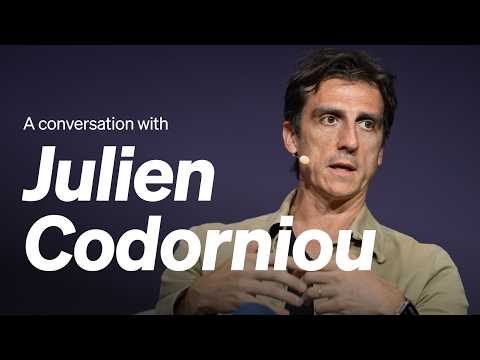
Published on June 24, 2025, by Stripe on YouTube, this video features a conversation with Julien Codorniou, General Partner at 20VC. The video description highlights a discussion between Codorniou and Emily Glassberg Sands, Stripe's head of information, exploring the European startup landscape, the integration of AI in founding new ventures, and the strategic value of community as a competitive advantage.
## TL;DR
Julien Codorniou outlines an "upward breakout" in European tech, driven by elite returning talent, fast-scaling AI companies, and structural initiatives like Project Europe for young founders. Using historical examples like the Kelkoo diaspora and the fast enterprise growth of Pigment, he emphasizes Europe's growing self-reinforcing tech ecosystem. Codorniou also highlights the rise of hyper-efficient "one-employee unicorns," a massive unserved SaaS market for frontline workers, and how progressive regulatory policies like the French Tech Visa give Europe a distinct competitive advantage over the US and UK.
## Atmosphere & style
The conversation carries a high-energy, optimistic, and pragmatic vibe, balancing seasoned operational wisdom with forward-looking enthusiasm. Julien Codorniou brings an authentic, insider perspective to the dialogue, blending humorous personal anecdotes—like a failed Facebook real-money gambling experiment—with sharp corporate critiques regarding European enterprise procurement. The dynamic between the speakers feels like a collaborative, intellectual peer exchange, moving smoothly from structured ecosystem analysis to a lighthearted, rapid-fire game that reinforces a core message of tech optimism.
## Key takeaways
- [00:01](https://www.youtube.com/watch?v=BLfVarSUQkU&t=1s) Europe is experiencing an "upward breakout" in tech, characterized by a high caliber of experienced founders entering seed stages and startups scaling at unprecedented speeds.
- [00:01](https://www.youtube.com/watch?v=BLfVarSUQkU&t=1s) European startups like DeepL, ElevenLabs, Lovable, and Nabla are scaling from zero to 10 or 15 million in ARR in just 12 to 24 months, supported by a robust diaspora of returning talent and a mature funding value chain.
- [00:20](https://www.youtube.com/watch?v=BLfVarSUQkU&t=20s) Project Europe was co-founded to support founders under 25 with early capital and access to 150 successful tech entrepreneurs to act as local role models across diverse regions.
- [04:40](https://www.youtube.com/watch?v=BLfVarSUQkU&t=280s) The long-term impact of the Kelkoo diaspora demonstrates how a single major European success story can seed and reinforce an entire startup ecosystem over decades.
- [06:41](https://www.youtube.com/watch?v=BLfVarSUQkU&t=401s) France possesses unmatched engineering talent from elite institutions, but historically struggled with distribution and marketing, a gap that is closing with modern software distribution models.
- [06:41](https://www.youtube.com/watch?v=BLfVarSUQkU&t=401s) AI and modern product-led growth are enabling the rise of highly profitable "one-employee unicorns" or very small teams running global businesses, particularly in gaming and SaaS.
- [10:45](https://www.youtube.com/watch?v=BLfVarSUQkU&t=645s) In the "Flappy Bird era of SaaS," where small AI-native teams scale rapidly but face the threat of fast replication, building a loved brand and a cult-like developer community serves as a vital moat.
- [10:45](https://www.youtube.com/watch?v=BLfVarSUQkU&t=645s) AI should be viewed as an productivity-multiplying assistant that removes blind spots and enhances human decision-making, rather than a dystopian replacement for humans.
- [14:13](https://www.youtube.com/watch?v=BLfVarSUQkU&t=853s) A massive SaaS revolution is beginning for the 2 to 2.5 billion underserved frontline and deskless workers who lack corporate email addresses but benefit from AI-driven mobile solutions.
- [15:38](https://www.youtube.com/watch?v=BLfVarSUQkU&t=938s) European enterprise buyers have a highly risk-averse corporate culture that views software as a cost rather than an investment, leading to prolonged sales cycles for local startups compared to the US.
- [15:38](https://www.youtube.com/watch?v=BLfVarSUQkU&t=938s) In contrast to large corporations, French small and medium-sized businesses (SMBs) are fast, pragmatic adopters of local software that simply focus on what works.
- [18:16](https://www.youtube.com/watch?v=BLfVarSUQkU&t=1096s) Meta's successful 2012 mobile pivot and its massive metaverse investments illustrate the structural advantages gained when founder-controlled companies make large, conviction-driven bets.
- [18:16](https://www.youtube.com/watch?v=BLfVarSUQkU&t=1096s) The psychological safety to fail fast and publicly—evidenced by the rapid cancellation of Facebook's underperforming 2012 real-money bingo experiment—is essential to a great corporate culture.
- [20:53](https://www.youtube.com/watch?v=BLfVarSUQkU&t=1253s) Montpellier is identified as the most underrated tech hub for 2025 due to its strong quality of life, transport connectivity, and existing corporate success stories.
- [20:53](https://www.youtube.com/watch?v=BLfVarSUQkU&t=1253s) The fragmented and complex European regulatory framework surrounding employee stock options is a significant pain point that hinders startups from aligning worker and shareholder interests.
- [20:53](https://www.youtube.com/watch?v=BLfVarSUQkU&t=1253s) The French Tech Visa represents a highly effective regulatory win that streamlines international talent acquisition, creating a competitive edge over the more restrictive UK and US pathways.
- [22:20](https://www.youtube.com/watch?v=BLfVarSUQkU&t=1340s) Xavier Niel's 15-year contribution of venture funding, educational institutions, and physical infrastructure like Station F has been foundational to the existence of the modern French startup ecosystem.
## Detailed walkthrough
### [00:01](https://www.youtube.com/watch?v=BLfVarSUQkU&t=1s) The Upward Breakout of European Tech
Julian, who recently joined 20VC as a general partner, brings a wealth of experience as both an investor and an operator, having spent time at Microsoft and Facebook, and investing in prominent French AI startups like Nabla. He argues that Europe is moving much faster than pundits admit, entering an "upward breakout." Rather than pointing to a single metric, Julian highlights a series of unprecedented anecdotes and trends, particularly in France. The caliber of founders entering the seed and pre-seed stages is at an all-time high, featuring individuals who have spent years at Stripe or Facebook, or who are on their second or third companies.
Furthermore, European startups are scaling at a pace never seen before in the region. Companies like DeepL, ElevenLabs, Lovable, and Nabla are scaling from zero to 10 or 15 million in ARR in just 12 to 24 months. This rapid growth is fueled by a robust diaspora of returning talent—such as founders leaving Stripe and OpenAI to start Dust in France—unlimited access to capital, and a fully matured local value chain spanning from angel investors and incubators to seed and growth funds.
[00:20](https://www.youtube.com/watch?v=BLfVarSUQkU&t=20s) Empowering the Next Generation: Project Europe
To inspire and support the next generation of tech talent, Julian co-founded Project Europe alongside Point Nine and Adjacent. The initiative backs founders under the age of 25 with €200,000 in exchange for 6.66% equity. However, the program is less about the capital and more about providing "the entourage" and inspiration. They have brought together 150 highly successful European tech entrepreneurs to act as role models and connect with students aged 16 to 25.
This initiative aims to bridge the gap for young people who want to start businesses but lack role models or live in countries with unsophisticated venture ecosystems. Julian expresses immense excitement about the quality of applicants, noting that they see 18-year-olds obsessed with solving massive problems in fields like neuroscience, cybersecurity, robotics, and AI. He notes that while historical figures like Bill Gates, Mark Zuckerberg, and the Collison brothers (Stripe) started incredibly young, modern teenagers need more visible local role models. Storytelling in Europe, and France in particular, needs to be pushed further, as many of these inspiring stories are only available in English, making them inaccessible to a kid in Ukraine or other non-English speaking regions.
[04:40](https://www.youtube.com/watch?v=BLfVarSUQkU&t=280s) The Legacy of Kelkoo and the Power of Diasporas
Reflecting on his 2005 book about Kelkoo, Julian describes a vastly different era of French tech. Founded around 1999, Kelkoo was a French comparison shopping engine ("shopbot") that was acquired by Yahoo for half a billion dollars, marking the first major European internet acquisition after the "nuclear winter" of the dot-com bubble burst in 2000. If he were to write a sequel today, it would focus on the incredible long-term impact of the Kelkoo diaspora.
The trajectory of Kelkoo's alumni illustrates how a single success story can seed an entire ecosystem over decades:
- **Dominique Vidal**: Co-founder and CFO of Kelkoo, who later became a VC at Index Ventures. His first investment there was Criteo, helping them pivot to an advertising model and eventually go public.
- **Criteo's Founder**: Went on to found Pigment, which is currently one of the fastest-growing companies in Europe.
- **Pierre Chappaz**: Co-founder of Kelkoo, who later started Teads and sold it for a massive sum to Altice.
This self-reinforcing cycle of successful founders becoming angel investors, starting new ventures, and mentoring the next generation is a phenomenon Silicon Valley has enjoyed for generations, and it is now fully taking root in Europe.
[06:41](https://www.youtube.com/watch?v=BLfVarSUQkU&t=401s) French Strengths, Weaknesses, and the "One-Employee Unicorn"
When comparing France to the rest of Europe, Julian asserts that France is unmatched at training the "top 0.1% of technical talents," whether through elite institutions like École Normale Supérieure and Polytechnique, or self-taught, hacker-style software developers. Historically, however, French companies suffered from excellent engineering paired with poor distribution and marketing. "When you see a French entrepreneur pitching, usually you don't tell yourself you've met [Cheryl] Sandberg or Marc Benioff," Julian jokes, but rather fantastic scientists. While this distribution gap is closing—pioneered early on by Bernard Liautaud at Business Objects—the ease of modern software distribution via product-led growth and AI makes great product design the ultimate starting point.
This shift aligns with Sam Altman's concept of the "one-employee unicorn." Julian, who focuses on seed and pre-seed investing to catch these hyper-efficient companies early, believes we will see highly profitable, global businesses run by teams of just one to three people. This is already common in the gaming industry and is now transitioning to SaaS. While some of these companies may never need to raise venture capital past their initial stages, others will seek capital to scale globally. This environment favors "operator VCs" who can deeply connect with and assist founders, a trend that is slowly changing the European VC landscape, which has historically been dominated by career VCs and bankers. The massive potential of the European market is further validated by top-tier US firms like Sequoia, IVP, and NEA establishing a strong physical presence in Europe.
[10:45](https://www.youtube.com/watch?v=BLfVarSUQkU&t=645s) The "Flappy Bird" Era of SaaS and the Star Wars Vision of AI
Julian describes the current landscape as the "Flappy Bird era of SaaS," where AI-native teams of just 25 people can rapidly scale to $40 million or even $100 million in ARR, yet face the constant threat of "instaclones" and clever wrappers replicated overnight. To build a durable moat in this environment, founders must focus on building a brand that people love and trust, alongside cultivating a cult-like community of developers and users. He points to Lovable as a prime example: they scaled from zero to $50 million in ARR almost instantly because they fostered a highly engaged developer community that chose them over dozens of competitors.
When asked about the future of developers in a world of semi-autonomous AI, Julian rejects the dystopian "Terminator Skynet" scenario where machines replace humans. Instead, he prefers a *Star Wars* analogy:
> "I think of AI as a robot on your side that can help you to remove blind spots, to make better, faster decisions, but that cannot replace you... It's Luke Skywalker who makes the decisions and who ends up shooting the Death Star."
He shares an anecdote from Scott Wu, co-founder of Cognition, who noted that every one of their 15 engineers has roughly 15 of their AI agents (Devin) working for them at any given moment, multiplying human productivity fifteen-fold.
[14:13](https://www.youtube.com/watch?v=BLfVarSUQkU&t=853s) The Frontline SaaS Revolution
While Microsoft's Satya Nadella recently proclaimed that "SaaS is dead," Julian argues the opposite: we are on the cusp of a massive SaaS revolution, particularly for historically underserved frontline workers. Julian discovered this market by accident while at Facebook, where he created Workplace (a corporate communication platform). While they expected only tech companies to buy it, their earliest and largest customers turned out to be companies with massive deskless workforces, such as Walmart, Starbucks, Heineken, Club Med, and Danone.
There is a "blue ocean market" of 2 to 2.5 billion blue-collar and frontline workers who do not have a corporate email address or a desk, yet desperately need software to augment their daily tasks. AI is uniquely positioned to revolutionize their workflows because it bypasses the need for expensive traditional software seats, enabling seamless mobile-first solutions for:
- Shift management
- Inventory management
- Paid Time Off (PTO) tracking
Julian concludes that SaaS is far from dead; rather, it is just getting started for the vast majority of the global workforce.
[15:38](https://www.youtube.com/watch?v=BLfVarSUQkU&t=938s) The Corporate Mindset Shift: Buying Local Software in Europe
European and French founders face a steep uphill battle when trying to sell their software to large local corporates. While US Fortune 500 companies view software as an investment designed to yield a return, European enterprises often treat it strictly as a cost to be minimized. This risk-averse corporate culture means decision-makers hesitate to buy from local startups because "you don't get fired for going IBM."
To illustrate this disparity, Julian shares the experience of Eléonore Crespo, the CEO of Pigment, which builds highly sophisticated planning software that competes directly with giants like Oracle, Anaplan, and Workday. It took Pigment just six months to close a contract with Coca-Cola's global headquarters in the US. Meanwhile, she has been trying to sell to a major French corporate for more than two years. This delay is highly illogical given that Pigment is a French company located just ten minutes away, offering direct access to the product builders and the leadership team.
Interestingly, French small and medium-sized businesses (SMBs) behave very differently from their enterprise counterparts. They buy significantly more local software because they are pragmatic and "just want something that works." To shift the enterprise mindset, Julian suggests that policy changes are less effective than cultural recognition; the ecosystem needs to actively highlight, encourage, and celebrate corporate leaders who take the leap to buy local software.
- **Pigment vs. Legacy Giants:** Pigment competes globally against Oracle, Anaplan, and Workday.
- **Sales Cycle Disparity:** 6 months to sign Coca-Cola HQ in the US versus over 2 years of unsuccessful pitching to a local French corporate.
- **SMB Pragmatism:** French SMBs are much faster adopters of local software than large French enterprises because they prioritize utility over brand reputation.
[18:16](https://www.youtube.com/watch?v=BLfVarSUQkU&t=1096s) Lessons from Meta: Pivots, Resilience, and the "License to Try"
Meta stands out as a unique, founder-controlled company capable of making massive, long-term bets. During Facebook's pivot to mobile in 2012, the public and Wall Street were highly skeptical, with many investors actively shorting the stock. Internally, the team knew mobile was the future, but they had to patiently prove it to the market quarter by quarter on earnings calls. By 2014 and 2015, the transition was complete, and Facebook had successfully become a mobile-first company.
Even when Meta's massive bets do not pan out as intended, they often yield unexpected structural advantages. For instance, while Julian does not believe the metaverse was a great investment on its own merits, the massive capital expenditure poured into it laid the physical and computational infrastructure that now powers Meta's cutting-edge AI initiatives. This resilience is driven by Mark Zuckerberg's willingness to go incredibly big on his convictions.
Julian shares a humorous personal anecdote from his time at Facebook to illustrate the company's internal "license to try." In 2012, he became convinced that the future of the Facebook platform lay in real-money gambling. He successfully persuaded Sheryl Sandberg and the executive team to let him launch real-money Bingo and slot machines on the web platform. Despite generating massive press coverage and a feature article, the project made a grand total of about €200 in its first month. They killed the project immediately, but Julian emphasizes that having the psychological safety to fail fast and publicly is what makes a company great to work for.
- **The Mobile Pivot:** Initiated in 2012 amidst heavy market skepticism and short-selling, fully realized by 2014–2015.
- **The Bingo Experiment:** A real-money gaming initiative championed by Julian in 2012 that was shut down after one month for making only €200.
- **Infrastructure Reuse:** Meta's heavy investments in the metaverse directly accelerated their current AI infrastructure capabilities.
[20:53](https://www.youtube.com/watch?v=BLfVarSUQkU&t=1253s) Rapid-Fire: Montpellier, Stock Options, and the Tech Visa
In a rapid-fire segment, Julian identifies Montpellier as the most underrated city to start a company in 2025. Located in the sunny south of France near the Mediterranean beach, the city is only three and a half hours from Paris by train, boasts a great airport, and is already home to successful companies like Septio and Swile.
When asked which European regulation he would scrap tomorrow, Julian targets the fragmented and complex rules surrounding employee stock options. The regulatory framework is a "nightmare" that varies wildly between countries like France and Germany, making it incredibly difficult for startups to align the financial interests of employees with those of shareholders.
Conversely, Julian highlights the French Tech Visa and its accompanying immigration policy as a regulation that should be scaled globally. France has made it remarkably easy to bring top international tech talent into the country. This stands in stark contrast to the UK and the US, where immigration pathways have become increasingly difficult and uncertain, presenting a massive competitive opportunity for Europe.
- **Underrated Tech Hub:** Montpellier, France, featuring a strong quality of life and existing success stories like Septio and Swile.
- **Regulatory Pain Point:** European stock option regulations, which Julian describes as a "mess" that hinders talent compensation.
- **Regulatory Win:** The French Tech Visa, which serves as a streamlined talent acquisition pipeline.
- **20VC Side Project:** Julian reveals he is currently incubating a secret company at 20VC that will be publicly announced in a few months.
[22:20](https://www.youtube.com/watch?v=BLfVarSUQkU&t=1340s) Tech Legends and the Verdict on Paris vs. London
Faced with a tech-edition "Start, Bench, Sell" game featuring Steve Ballmer, Mark Zuckerberg, and Xavier Niel, Julian notes that a successful startup actually needs the traits of all three: a relentless sales leader, a dedicated CTO/CPO, and a visionary CEO. However, he singles out Xavier Niel as his top choice due to his foundational impact on the French tech scene.
Julian asserts that the very existence of a vibrant, high-performing startup ecosystem in France today is due to Niel's tireless work over the last 15 years. "You see his DNA's fingerprints on every company that is doing very well in France right now." Niel did not just provide venture funding; he built the physical and educational infrastructure—such as Station F and specialized schools—to empower an entire generation of entrepreneurs.
To close the conversation, Julian shares his preference for his two home bases, choosing "Paris for vacation, London for work." The discussion wraps up with a appreciation of Julian's sharp, grounded insights and his reminder that building software is ultimately a bet on optimism and conviction.
## Notable quotes
> [06:41](https://www.youtube.com/watch?v=BLfVarSUQkU&t=401s) When you see a French entrepreneur pitching, usually you don't tell yourself you've met [Cheryl] Sandberg or Marc Benioff — Julien Codorniou
> [10:45](https://www.youtube.com/watch?v=BLfVarSUQkU&t=645s) I think of AI as a robot on your side that can help you to remove blind spots, to make better, faster decisions, but that cannot replace you... It's Luke Skywalker who makes the decisions and who ends up shooting the Death Star. — Julien Codorniou
> [14:13](https://www.youtube.com/watch?v=BLfVarSUQkU&t=853s) SaaS is dead — Satya Nadella
> [15:38](https://www.youtube.com/watch?v=BLfVarSUQkU&t=938s) you don't get fired for going IBM — Julien Codorniou
> [18:16](https://www.youtube.com/watch?v=BLfVarSUQkU&t=1096s) license to try — Julien Codorniou
> [22:20](https://www.youtube.com/watch?v=BLfVarSUQkU&t=1340s) Paris for vacation, London for work. — Julien Codorniou
## Mentioned
Julien Codorniou, Emily Glassberg Sands, 20VC, Stripe, Microsoft, Facebook, Nabla, DeepL, ElevenLabs, Lovable, ARR, OpenAI, Dust, Project Europe, Point Nine, Adjacent, Bill Gates, Mark Zuckerberg, Collison brothers, Kelkoo, Yahoo, Dominique Vidal, Index Ventures, Criteo, Pigment, Pierre Chappaz, Teads, Altice, Silicon Valley, École Normale Supérieure, Polytechnique, Cheryl Sandberg, Marc Benioff, Bernard Liautaud, Business Objects, Sam Altman, Sequoia, IVP, NEA, Scott Wu, Cognition, Devin, Satya Nadella, Workplace, Walmart, Starbucks, Heineken, Club Med, Danone, Eléonore Crespo, Oracle, Anaplan, Workday, Coca-Cola, Meta, Bingo, Sheryl Sandberg, Montpellier, Septio, Swile, French Tech Visa, Steve Ballmer, Xavier Niel, Station F, London, Paris
Julien Codorniou argues that European tech has entered an "upward breakout" driven by elite technical talent, returning diaspora, and hyper-lean AI architectures. However, he contends that capitalizing fully on this shift requires overcoming risk-averse enterprise procurement habits and fragmented cross-border equity regulations.
European Tech Breakout and Generational Diasporas (0:01)
Codorniou observes that European startups are scaling at unprecedented speeds, citing companies like DeepL, ElevenLabs, Lovable, and Nabla reaching $10 million to $15 million in ARR within 12 to 24 months. He attributes this momentum to an increasingly mature value chain and an experienced diaspora returning from companies like Stripe and OpenAI to launch ventures such as Dust in France. He points to historical precedent: the alumni of early French comparison shopping engine Kelkoo later seeded the ecosystem by funding or founding major companies including Criteo, Pigment, and Teads.
To expand the talent pipeline, Codorniou co-founded Project Europe, which invests €200,000 for 6.66% equity in founders under 25 and connects them with 150 European tech mentors. While France produces elite technical talent from institutions like École Normale Supérieure and Polytechnique, Codorniou emphasizes that the region still needs better localized storytelling and visible role models beyond the English-speaking sphere.
Lean AI Architectures and Defensible Communities (10:45)
Characterizing current software dynamics as the "Flappy Bird era of SaaS," Codorniou notes that AI-native startups with only 25 people can rapidly reach $40 million to $100 million in ARR, citing Lovable's rapid growth to $50 million ARR. However, because basic software wrappers face instant replication, he argues that defensibility hinges on cultivating high-trust brands and devoted user communities. He also aligns with predictions of "one-employee unicorns," forecasting that profitable global software businesses run by one to three people will migrate from gaming into B2B SaaS.
Rejecting dystopian predictions that AI will replace developers entirely, Codorniou compares autonomous agents to assistive copilots—drawing a Star Wars analogy where human operators retain ultimate decision-making authority. He points to Cognition's internal workflow as an operational template, where 15 human engineers orchestrate roughly 15 Devin AI agents each to achieve a fifteen-fold productivity gain.
Frontline Workers as Software's Untapped Market (14:13)
Disputing Microsoft CEO Satya Nadella's assertion that SaaS is dead, Codorniou argues that software adoption is entering a major expansion wave focused on frontline workers. Drawing on his experience launching Workplace at Facebook—where adoption was driven by deskless employers like Walmart, Starbucks, Club Med, and Danone rather than tech firms—he identifies a global market of 2 to 2.5 billion blue-collar workers who lack corporate email addresses or desks.
Codorniou asserts that generative and mobile-first AI uniquely addresses this segment by bypassing expensive per-seat software models. This allows enterprises to deploy automated workflows for shift scheduling, inventory tracking, and paid time off management directly to frontline employees.
Enterprise Procurement Hesitancy and Regulatory Friction (15:38)
Codorniou identifies corporate conservatism as a major structural hurdle for European software. While US Fortune 500 enterprises treat software purchases as investments aimed at generating returns, European corporations often treat software strictly as a cost to be minimized, deferring to legacy vendors under the logic that "you don't get fired for going IBM." To illustrate, he notes that French planning software startup Pigment closed a global contract with Coca-Cola's US headquarters in six months, but spent over two years attempting to secure a contract with a corporate buyer in France. In contrast, he notes that French SMBs adopt local software much faster due to operational pragmatism.
On policy, Codorniou criticizes Europe's fragmented employee stock option frameworks as an administrative nightmare that hinders cross-border talent compensation. Conversely, he highlights the French Tech Visa as an effective immigration pathway that provides continental Europe a recruitment edge over the more restrictive visa environments in the US and UK.
While Codorniou sees European tech benefiting from superior technical talent, capital access, and hyper-lean AI models, the ecosystem's ultimate trajectory remains constrained by enterprise procurement inertia and fragmented intra-European compensation rules.
[6:41] Julien Codorniou: When you see a French entrepreneur pitching, usually you don't tell yourself you've met [Cheryl] Sandberg or Marc Benioff
[10:45] Julien Codorniou: I think of AI as a robot on your side that can help you to remove blind spots, to make better, faster decisions, but that cannot replace you... It's Luke Skywalker who makes the decisions and who ends up shooting the Death Star.
[14:13] Satya Nadella: SaaS is dead
[15:38] Julien Codorniou: you don't get fired for going IBM
[18:16] Julien Codorniou: license to try
[22:20] Julien Codorniou: Paris for vacation, London for work.
Original transcript
[0:01] Julian, thank you so much for being
[0:02] here. My pleasure. Thanks for having me.
[0:04] Um, you need little introduction, but
[0:07] Julian recently joined 20VC as a general
[0:10] partner and he has a wealth of
[0:12] experience in tech, both as an investor
[0:14] and of course also as an operator. Um,
[0:17] you were at Microsoft, you were at
[0:19] Facebook, um, you have been an investor
[0:21] in some of the most exciting French AI
[0:24] startups including Knobless. So very
[0:26] excited to get your thoughts today on
[0:28] the tech ecosystem. Awesome. Um, let's
[0:30] dive in. You have recently argued that
[0:32] Europe is moving faster than many
[0:35] pundits admit. Yeah. Uh, and you know,
[0:38] cheerleading aside, I'm curious one
[0:41] metric or data point that you look at
[0:43] that gives you conviction that Europe
[0:45] has generally entered this kind of
[0:47] upward breakout. It's not so much one
[0:49] metric. It's a series of anecdotes um,
[0:51] and things we are starting to see in
[0:53] Europe and in France in particular that
[0:56] we never saw before. So we just for us
[0:58] at 20VC I work with the the seed and
[1:00] preed funds. So we try to invest as
[1:02] early as possible in amazing funders and
[1:05] the caliber and the quality of the
[1:06] people we see is just at an all-time
[1:08] high. People who've worked at Stripe for
[1:10] a few years, people who worked at
[1:12] Facebook, people who had one or two
[1:13] exceeds before, people who've seen the
[1:15] movie doing their second, sometimes
[1:17] third company, which is great. But also
[1:20] we see you know companies like deeper 11
[1:22] labs lovable Nabla going from zero to 10
[1:25] from 10 to 15 in just 12 months 18
[1:28] months two years we did not have that.
[1:30] So that diaspora of talent access to
[1:33] capital that is almost unlimited plus
[1:35] the experience and the whole value chain
[1:37] from angel incubator seed funds to
[1:39] growth fund all all in Europe right now.
[1:41] It's it's a reason to to be hopeful.
[1:43] Truly remarkable. I got to have lunch
[1:45] today with about 60 French founders uh
[1:48] including some that you have invested in
[1:50] and just before this was meeting with
[1:51] dust which is uh a couple of uh stripes
[1:56] uh are are are in their founder group.
[1:58] So really and open AI but that's a very
[2:00] good example y one from stripe one from
[2:02] openai coming back to France to start a
[2:04] business there like it's it's a dream
[2:06] come true for an investor. Yeah. Let's
[2:08] talk about um some of the the young
[2:10] founders. So, Project Europe uh is
[2:13] backing founders under 25 uh with I
[2:17] think it's 200,000 euro and 6.66%
[2:20] equity. I'm curious what problem are you
[2:23] trying to solve with that? It's it's
[2:25] both for inspiration. We want people to
[2:27] uh be exposed to amazing funders which
[2:29] is what we do with project Europe. We
[2:31] funded it ourselves with our friends
[2:33] from point 9 and adjacent but we also
[2:35] brought
[2:36] 150 entrepreneurs people who really made
[2:38] it big in tech in Europe and we connect
[2:40] them with students people who are
[2:42] between 16 and 25 who do want to start a
[2:45] business but they need a role model
[2:47] sometimes they don't know where to start
[2:49] sometimes they live in countries where
[2:50] the ecosystem of angels or VC is not
[2:53] very sophisticated so we're just trying
[2:55] to fill that gap so it's about the money
[2:57] a bit but more importantly the entourage
[3:00] the inspir ation that we provide with
[3:01] access to these funders and you would
[3:03] not believe the quality of the stuff we
[3:05] see like we we see people in
[3:07] neuroscience, cyber security, robotics,
[3:10] AI, of course, kids who are 18 years old
[3:12] who want to change the world obsessed by
[3:14] the problem they're going after, but
[3:16] they just don't know where to find some
[3:17] money. So that that's that's why we
[3:19] created it's you know it's
[3:20] hyperconistent. I did some back channels
[3:22] on you and um and the founders that work
[3:25] with you say how much they value that
[3:26] you're truly an operator, right? that
[3:28] the steers you give them are deeply
[3:30] rooted in decades of experience in tech.
[3:33] So, I love that you are scaling that
[3:35] operator view and and bringing along
[3:37] that entourage. It's a very nice way to
[3:39] say I'm old.
[3:41] Decades in a good way. Um, you talked
[3:43] about, you know, teens able to do
[3:45] amazing things. Certainly, we all know
[3:46] Bill Gates and Zuck and actually even um
[3:49] Patrick and John. Why do you think there
[3:51] are fewer teen founders today? I think
[3:54] they they need role models. They need
[3:56] inspiration. I think everybody realizes,
[3:58] especially with what's happening with AI
[4:00] and the whole, you know, new world of
[4:02] software we live in, that they can start
[4:04] something, they can build something
[4:06] amazing from scratch with AI in just a
[4:08] few few hours or a few days and make a
[4:10] living from it. But I think they just
[4:12] need role models and we don't share
[4:13] these stories enough. I'm sure many
[4:15] people don't know that the the founders
[4:17] of Stripe started a company where they
[4:18] were, you know, they're very young. Same
[4:20] thing for Facebook. So, uh, the
[4:22] storytelling in Europe, I would I would
[4:24] say in France in particular, needs to be
[4:26] pushed, I think, a bit, um, a bit more.
[4:28] People don't know these stories or
[4:31] sometimes it's in English only. So, if
[4:32] you are a kid in Ukraine, maybe you
[4:34] don't know about these these guys and
[4:35] how they made it and how you also could
[4:37] make it. I want to come back to Ukraine
[4:40] in a bit. In your 2005 Kelku book, you
[4:44] chronicled a very different era of
[4:45] French tech. And I'm curious if you were
[4:48] to write a bit of an epilogue, maybe a
[4:50] couple sentence, one paragraph epilogue
[4:52] today, what would you add?
[4:55] I would I thought about it. I thought
[4:57] about writing uh the sequel to uh to uh
[5:00] to the book. And actually, what's
[5:01] fascinating is to see what happened to
[5:03] the people who built or contributed to
[5:06] the the building of Kelku. Kelku was a
[5:08] for for people who were there in 1999 or
[5:11] 2000, it was a French company, a shopbot
[5:13] that got acquired by Yahoo for half a
[5:15] billion dollars. It was a very
[5:17] profitable company. They acquired a
[5:19] bunch of companies across Europe. And
[5:20] they it was the first big internet
[5:22] acquisition after the the nuclear winter
[5:24] of the the internet bubble who exploded
[5:27] in 2000. And so I wanted to tell that
[5:29] story. If you look what happened to the
[5:31] main um people who worked at Kelku, who
[5:34] created Kelku, uh you see them in some
[5:37] of the most amazing companies that we
[5:38] have today. For example, Dominic Videl
[5:41] was the co-founder and CFO of Kelku.
[5:43] Then he became a VC at index. First
[5:45] company he backs at index is CTO. He
[5:48] helps CTO to pivot to the advertising
[5:50] model. They go public and the founder of
[5:52] CTO after KTO becomes the founder of
[5:54] Pigmont which is one of the fastest
[5:56] growing company we have there and in
[5:57] Europe. You see the impact of having one
[6:00] success story of having that diaspora
[6:02] many many years later. Most of them
[6:04] became angels. Some of them started
[6:06] something again like Papaz after Kel
[6:08] started TIDS that he sold for a fortune
[6:10] to I think
[6:13] Ali Altis and Patrick. So it shows
[6:17] something that you you've had in the
[6:18] Silicon Valley forever for many
[6:21] generation. But it shows the impact of
[6:22] having one success story that creates a
[6:25] generation of talents who can invest,
[6:27] who can start something new and help the
[6:29] rest of the ecosystem. So that's what we
[6:31] need more of, but this is also what we
[6:33] start to see more and more in Europe. So
[6:35] not an epilog, but a full sequel. Full
[6:36] sequel. Full sequel. We're ready for it.
[6:38] Maybe a movie. Yeah, we'll tell Ashley
[6:41] Vance. Um, from your vantage point as
[6:43] both an investor and also an operator,
[6:46] where do you think the French ecosystem
[6:49] really outperforms broader Europe? And
[6:52] where is the hype perhaps a bit ahead of
[6:54] the substance? I think we're we're
[6:57] probably the best. I'm going to be
[6:59] humble there. Full stop. He just leaves
[7:01] it there. No, we're we're amazing at at
[7:03] training the top 01% of technical
[7:06] talents. Whether it's people who go to
[7:08] eomal superior poly technique or people
[7:10] who just learn on their own, you know,
[7:12] hacker style uh how how to how to uh
[7:15] develop software. I think we we have
[7:18] extraordinary developers. What we did
[7:20] not have back then was the ability to
[7:22] distribute and market this product. So
[7:24] that's why you see a lot of great French
[7:26] companies with amazing products poorly
[7:29] distributed. I think with the new world
[7:31] of software we live in product growth AI
[7:34] you know stripe and all of that it's
[7:35] easier than ever to distribute software
[7:37] everywhere but I think it's still a
[7:39] skill set we need to develop when you
[7:40] see a French entrepreneur pitching
[7:43] usually you don't tell yourself you've
[7:44] met Cherberg or Mark Benov you've met
[7:47] fantastic scientists or developers but
[7:49] we need that that ability to show up to
[7:52] excite people and to sell a vision to
[7:54] sell you know the the the big picture to
[7:57] people who you know need to be convinced
[7:59] But that's a skill set we we really
[8:01] never had. I think Bernalo was the first
[8:03] to do it properly when he when he
[8:06] started enlisted business object. But I
[8:09] think we are working on it. But it gives
[8:10] me hope because we have great products.
[8:12] We just have to be good at distributing
[8:13] them. I I would not have to want I would
[8:16] not want to have the uh the opposite
[8:18] problem. Yeah. Speaking of being great
[8:20] at distribution and many things, Sam
[8:23] Alman has talked about kind of the one
[8:25] employee unicorn, right? sort of there's
[8:28] enough infrastructure and functionality
[8:30] including with AI lifting all boats that
[8:33] one employee can actually build a giant
[8:35] company. If this actually happens, how
[8:38] does venture capital need to reinvent
[8:40] itself?
[8:42] I think that's why I do seed and precede
[8:43] because I want to get as fast as as
[8:45] possible into these companies who might
[8:47] never raise money ever again. And we've
[8:49] seen that in gaming. We we know many
[8:51] gaming companies that have been
[8:52] completely self-funded, bootstrapped and
[8:54] who became, you know, unicorns and more.
[8:57] So that model that that model that we
[9:00] saw in gaming is happening in SAS right
[9:01] now. I think we'll have to adjust. Some
[9:03] of them will want to accelerate maybe
[9:05] the growth. We'll want to open offices.
[9:07] We want to go global. We want to and
[9:09] we'll need more developers. But I do
[9:11] believe that we'll start to see that
[9:12] more and more. maybe not, you know,
[9:14] billion-dollar businesses, but fantastic
[9:16] businesses, profitable businesses,
[9:18] global businesses with a team of of one
[9:20] or two or three people. Thanks to AI,
[9:23] but also thanks to the fact that
[9:25] building software cost nothing.
[9:26] Distributing software cost nothing. You
[9:28] know, Facebook ads and, you know,
[9:29] Instagram ads and Tik Tok ads really
[9:32] work. Uh, and monetizing software has
[9:34] never been easier. So, it's an
[9:36] opportunity for people who can build
[9:37] great products and who can use the
[9:39] latest tricks including AI to distribute
[9:41] them and and monetize them. That gives
[9:43] me a lot of hope. Yeah. Do you think
[9:45] this world will benefit more operator
[9:48] VCs and that dumb money will have a
[9:50] harder time if that's my bet.
[9:53] It needs to work. I don't know. I mean,
[9:54] if you look if you look in the US, the
[9:56] best VCs are former operators. uh if you
[9:58] look at you know the the the benchmark
[10:00] the Kleiner Perkins the USV um Sequuia
[10:04] you see a bunch of people who worked at
[10:06] great companies or started grand
[10:07] companies it's a bit different in Europe
[10:09] to be fair the best VCs in Europe uh are
[10:12] born VCs that's what they've done most
[10:14] of their lives or they are banker so I
[10:16] think that trend is changing I think
[10:17] you'll see more and more operator but
[10:19] more importantly entrepreneurs becoming
[10:21] investors and I think it helps to
[10:23] connect with founders it helps to try
[10:25] and you know modestly be be helpful
[10:28] But it's it's also changing. We also see
[10:30] all of that smart money from the US
[10:32] coming to Europe. I mean Sequua had
[10:34] nothing in Europe 5 years ago. Now they
[10:35] have an amazing office. We saw IVP
[10:37] coming in as well. NEA as well. So
[10:40] people realize that you can find amazing
[10:42] companies and talents in Europe. You've
[10:45] written about us entering the Flappy
[10:48] Bird era of SAS. Yeah. Um so you know AI
[10:51] native teams can hit 40 million or even
[10:54] 100 million in ARR with 25 people teams.
[10:58] Um but then they can face these kind of
[11:01] instaclones. And so I'm curious what are
[11:03] the durable moes that founders should be
[11:05] focused on building um given that any
[11:08] clever rapper can potentially be
[11:10] replicated overnight. I mean this is
[11:12] something that Stripe has done extremely
[11:13] well which is building a brand a brand
[11:15] that people love a brand that people
[11:17] trust. of course a great product uh that
[11:20] does the job better faster than anything
[11:22] else and when you have that you know if
[11:24] you can build a community around it
[11:26] almost a cult among developers and users
[11:28] this is I think how you can build a mode
[11:31] and again it's not a skill set we you
[11:33] know we usually have especially in
[11:34] Europe but I think it's changing look at
[11:36] lovable do you guys know lovable they
[11:39] went from zero to $50 million in no time
[11:42] everybody knows the brand they have 50
[11:44] competitors but people keep going back
[11:45] to lovable because they trust them they
[11:47] do a great job stimulating, fostering,
[11:49] managing that community of developers.
[11:51] And so that's why they they they they
[11:53] keep winning. But when you see these
[11:56] companies going from 0 to 10 in 24
[11:58] hours, it also means that someone else
[12:00] could come and do something better,
[12:01] cheaper, faster in no time. So the brand
[12:04] the the the the quality of the
[12:06] documentation of the or the support if
[12:08] you're in a platform company can make a
[12:10] a massive different a massive
[12:12] difference. There's a big premium to
[12:13] being able to build that community and
[12:15] that cult. Whoever named lovable was
[12:18] brilliant. If you want to be loved, just
[12:20] call yourself lovable. Like, full stop.
[12:22] Um, so AI systems are becoming
[12:25] semi-autonomous. I'm curious what you
[12:28] think the most valuable human skill that
[12:30] developers need to have and hone is in
[12:34] order for them to stay indispensable. I
[12:35] would say it's that it's being able to
[12:37] uh build the community, create that
[12:39] developer love in the ecosystem,
[12:41] especially if you're building a a
[12:43] platform or if you want to build a
[12:44] platform company. But not just build a
[12:47] great product but also build a great
[12:49] brand and a great community of people
[12:51] who love it, who use it, who pay for it,
[12:53] who recommend it to their friends. This
[12:55] is when when you when you can do that
[12:57] all at the same time, which of course is
[12:59] extremely hard. I think you can uh you
[13:01] can start to dream very big. But it's
[13:03] it's not easy when you come from a
[13:04] developer background. Do you think the
[13:06] machine will manage the developer or
[13:10] will it stay the other way around? No,
[13:12] I'm I'm I'm you know when AI when people
[13:15] started talking about AI, people talked
[13:17] about the Terminator Skynet scenario
[13:19] where the machine replaces the human.
[13:21] The what I the movie I prefer to think
[13:23] of is Star Wars and Air2-D2. So Air2-D2
[13:26] as you know is helping Luke to make the
[13:28] right decision is the robot is sharing
[13:30] important information with Luke but at
[13:32] the end of the day it's Luke Skywalker
[13:34] who makes the decisions and who ends up
[13:36] you know shooting the Death Star. So I
[13:38] think of AI as a robot on your side that
[13:40] can help you to to remove blind spots to
[13:42] make better faster decisions but that
[13:44] cannot replace you. That's my you know
[13:46] optimistic vision of the future of AI. I
[13:49] was talking to Scott Woo the co-founder
[13:52] of cognition uh about how they use Devon
[13:55] their agent internally and he told me
[13:57] every engineer there aren't that many
[14:00] engineers there 15 or something. Every
[14:02] engineer at cognition has 15 devans
[14:06] working for them at the average moment
[14:08] in time. Yeah, just if all of us could
[14:09] be 15x more productive, that would be
[14:11] would love to quite something. Um, Satia
[14:13] Nadella recently proclaimed that SAS is
[14:16] dead. Um, you've argued instead that
[14:19] we're heading towards a new SAS
[14:21] revolution, in particular for frontline
[14:24] workers who've historically been largely
[14:27] underserved. Um, how should those of us
[14:29] in this room reconcile those two
[14:31] perspectives? Well, I I've been obsessed
[14:34] by Frontline SAS for a while. When I was
[14:36] at Facebook, I I created a business
[14:38] called Workplace that is like Facebook
[14:40] for work or it's an internal
[14:41] communication platform that we thought
[14:43] only tech companies would use. The
[14:45] surprise we had is that the people who
[14:46] are buying workplace were companies like
[14:48] Walmart, Starbucks, Hineken, Club Med,
[14:50] Danon, companies with a lot of frontline
[14:52] employees and a lot of knowledge
[14:53] workers. And so I discovered by accident
[14:56] completely that market which is the blue
[14:59] collar frontline SAS market. So people
[15:01] who go to work every day, they don't
[15:03] have a desk, they don't have a PC, they
[15:05] don't have an email. And yet, just like
[15:07] you and me, they want to use software,
[15:08] they want to be augmented by AI. And so
[15:11] I think, you know, SAS is just getting
[15:13] started for these people. Again, they
[15:15] don't have an email because it's too
[15:16] expensive, but AI can do amazing things
[15:18] for them. Think, you know, shift
[15:20] management, inventory management, PTO
[15:22] management, and all of that. So I think
[15:24] there is that blue ocean market of two
[15:27] 2.5 billion people that have yet to be
[15:29] augmented and revolutionized by
[15:31] software. So I I don't think he means
[15:33] SAS is dead especially because he runs
[15:35] the biggest SAS company in the world.
[15:37] But I think there will be many
[15:38] opportunities in the most unexpected
[15:40] places and the most unexpected markets
[15:42] for people who want to start businesses
[15:44] or invest in these businesses.
[15:46] Um, you talked a little bit earlier
[15:48] about some French founders having a hard
[15:50] time getting the full distribution and
[15:52] reach and even many large European
[15:56] corporates still hesitate to buy local
[15:58] software until it's sort of quote
[16:00] impossible to get fired for I think were
[16:02] the words you used. So what are the
[16:04] concrete changes in in policy in
[16:07] procurement in incentives that need to
[16:11] change in order to flip that mindset?
[16:14] It's hard. I'm not sure a policy change
[16:16] would do would do much. Um, but to give
[16:18] you a real example, I was discussing
[16:20] with Elonor Krespo. She's the CEO of
[16:22] Pigmont. She sells big sophisticated
[16:24] complicated software competing against
[16:27] Oracle, Annaplan, uh, even workday. And
[16:31] so to give you an example, it took her
[16:33] six months to sign Coca-Cola, Coca-Cola
[16:35] Inc. like at the HQ. And I think she's
[16:38] been trying to sell to Katar company for
[16:40] more than two years. Hm. And it should
[16:43] not be this way. You know, it's a French
[16:45] company. The product is developed and
[16:47] it's 10 10 minutes from here. If you buy
[16:50] it, you have access to the people
[16:51] building it. You have access to the co
[16:53] if you want to give feedback. You have
[16:54] no reason to buy software built, you
[16:57] know, outside of outside of the country
[16:58] if you want the the best and the
[17:01] brightest thing. But people still do it
[17:03] because you don't want to be fired for
[17:04] betting on a startup. And I think in the
[17:06] US for example Fortune 500 companies
[17:09] they think of software as um as an
[17:11] investment and there will be a return on
[17:13] investment. I think in Europe and in
[17:15] France in particular big companies tend
[17:17] to think of it as a cost and so you have
[17:20] to reduce the cost to the minimum. You
[17:22] you don't think there will be a return
[17:23] on investment and so that needs to
[17:25] change and I think if anything we need
[17:26] to highlight and encourage people who do
[17:29] make this bet to buy local software and
[17:32] uh and make them look good.
[17:33] Surprisingly, French SMBs buy more local
[17:36] software than the big companies.
[17:38] That's fascinating. Because they just
[17:39] want something that works. They don't
[17:41] care, you know, where it's coming from.
[17:43] They just want something that works. And
[17:44] so if you have a local provider doing a
[17:46] good job at reaching out the longtail of
[17:48] SMBs with a great product, that's
[17:50] enough. They give people a chance. Big
[17:52] companies in France, again, you you
[17:55] don't get fired for for going IBM. And
[17:57] that's that's still a problem. The
[17:59] reputational bit is super interesting
[18:00] because in the US I think in some cases
[18:02] it's actually the reverse which is if
[18:04] you're at a large enterprise and you're
[18:05] not adopting cutting edge technology and
[18:07] you're say sitting in the IT
[18:09] organization you risk being stamped as
[18:11] sort of a lite right um and so that
[18:14] cultural shift is is striking um
[18:16] everyone loves to hate meta but they've
[18:19] been particularly impressive in their
[18:21] ability to be kind of constantly at the
[18:23] frontier of tech and in some cases it's
[18:25] worked out like mobile and AI and in
[18:27] other cases is less so like Libra and
[18:30] Metaverse, but you've lived through
[18:32] those pivots um from the inside. And so
[18:34] I'm curious, what are the lessons from
[18:36] Meta that you think established
[18:39] companies need to remember?
[18:42] It's hard because Meta is quite quite a
[18:44] unique company just because of the way
[18:45] it is run by the the founder who's still
[18:48] there who controls everything. And as
[18:50] you've seen, sometimes he make he makes
[18:52] big bets. That can work. Mobile is a
[18:55] good example, but I remember when when
[18:57] we when Facebook pivoted to mobile in
[18:59] 2012, uh people were still shorting
[19:01] Facebook, people did not understand that
[19:03] Facebook was doing it. So, we had the
[19:04] hardest time telling the market. We know
[19:06] mobile is coming. We're doing all the
[19:08] right things. It will take time. And
[19:10] then after the IPO, every three months
[19:12] at the Onyx call, you would see the
[19:14] market share of mobile versus web going
[19:16] up. And so, and next thing you know, in
[19:18] 2014, 2015, Facebook was a mobile first
[19:20] almost mobile only now company. Um, but
[19:23] sometimes they get it wrong. like I
[19:24] don't think the metaverse was a was a a
[19:27] great investment uh but some of the
[19:29] investments they've done in a metaverse
[19:30] help Meta to build the AI infrastructure
[19:32] that they have. So having a founder that
[19:34] is making build big long-term goals uh
[19:38] with the right people internally I think
[19:40] can make a difference but
[19:42] you know that very well but Meta has not
[19:44] always been right uh in the choices
[19:46] they've made but they've been resilient
[19:48] and when Zuck goes big it really goes
[19:51] big like he's doing right now in AI and
[19:52] so it's very inspiring to watch and even
[19:54] when it doesn't work you learn from it
[19:57] I've launched more stuff that failed
[19:59] very publicly at Facebook than stuff
[20:01] that worked but the conviction is
[20:03] striking. Yeah. Yeah. Yeah. I can give
[20:05] you a story if you want to. Yeah. I want
[20:06] to hear the story. In 2012, I thought
[20:08] the future of the Facebook platform was
[20:10] gambling on the Facebook platform. So, I
[20:13] convinced Cheril and the gang to
[20:15] basically let me launch Bingo, real
[20:17] money gaming on the Facebook platform on
[20:19] the web. We launched, made a lot of
[20:22] noise. There is an article of me in BF
[20:24] talking about the future of gaming on
[20:26] Facebook being bingo and slot machines.
[20:29] and and after a month we made like €200
[20:32] euros and we killed it. But I had the
[20:35] license to try I had the license to try.
[20:38] It was
[20:40] big very rapid failure. Thankfully it
[20:42] was it was not too long. Uh and we
[20:45] learned from it and so when you have a
[20:47] license to try new stuff like that uh
[20:49] you feel great as an employee and I
[20:50] think as a shareholder as well. Will you
[20:53] entertain a quick rapidfire closing?
[20:55] Let's do it. Okay. Most underrated city
[20:58] to start a company in 2025. Mier,
[21:04] I was an exchange student there for a
[21:05] hot second. Okay, what's the company?
[21:06] Sorry, it's supposed to be rapid fire,
[21:07] but I got to know. M it's in the it's
[21:09] home. It's in the south. It's sunny.
[21:11] You're very close to the Mediterranean
[21:13] beach and you have some great companies
[21:15] there like Septio or Sw. Amazing. And
[21:17] it's three hours and 30 minutes from
[21:19] Paris. Perfect. Good airport as well.
[21:22] You you wanted some some surprises. I
[21:24] love it. I love it. one European
[21:26] regulation that you'd scrap tomorrow. Uh
[21:29] probably regulations around, you know,
[21:31] stock options and in in Europe, it's a
[21:34] mess. It changes, you know, depends if
[21:36] you're in France or in Germany. It's
[21:38] it's a nightmare. We have to make it
[21:39] very easy to align the interest of the
[21:41] employees with the interest of the
[21:42] shareholders. One French regulation that
[21:45] you would scale globally, I would say
[21:47] the tech visa and the uh immigration
[21:49] policy. It's very easy to bring top
[21:51] talents in France. It's not that easy in
[21:53] the UK for example and in the US you
[21:55] know we don't even know if it will be
[21:57] possible to go and work there anymore
[21:58] but that's an opportunity for Europe.
[21:59] That's a massive opportunity for Europe.
[22:02] Uh your favorite under the radar side
[22:04] project. Uh it's it's a thing I it's a
[22:07] side project I'm doing at 20VC. It's a
[22:10] company I'm incubating uh that I will
[22:13] talk about in a in a few months. But
[22:14] that that's keeping me busy. So we're
[22:16] not just investing in companies, we're
[22:17] also incubating projects now.
[22:19] Fascinating. Um, okay. This is going to
[22:21] be a start bench cell. Yeah. Yeah. Okay.
[22:24] But tech edition. Go ahead. All right.
[22:26] Steve Balmer, Mark Zuckerberg, Savaniel.
[22:31] It's impossible to that question. Okay.
[22:34] I love I love them all.
[22:36] They're very different. I mean, they're
[22:37] very lovable. If you start a company,
[22:39] you need the three the three of them.
[22:41] You have the the sales guy, obviously.
[22:43] You know who it is. You have the CTO and
[22:45] the CPO. Uh, and one of them could be
[22:48] the CEO. But no, I worked for for all of
[22:51] them. I worked with Xavian at some
[22:52] boards. But uh all of the things we're
[22:54] discussing right now, the fact that we
[22:56] can do this and that there is such a
[22:57] vibrant ecosystem in France is because
[22:59] of everything Zean has done, you know,
[23:01] for the last 15 years. You see his DNA's
[23:04] fingerprints on every company that is
[23:06] doing very well in France right now. And
[23:08] he built not just, you know, the the the
[23:10] funds to to and the the st to do it, but
[23:14] just the infrastructure to uh to
[23:16] accelerate and to empower that new
[23:18] generation. So I would say I would
[23:20] choose Xavier.
[23:22] Last one. And I know you live between
[23:24] the two. Paris or London? Uh
[23:27] Paris for vacation, London for work.
[23:29] Wonderful. Well, thank you Julian for
[23:32] such sharp and grounded insights and for
[23:34] reminding us that software is a bet on
[23:36] optimism and conviction. So, um, thank
[23:39] you so much for joining us today. Thank
[23:40] you. Thank you.